The English Works of Thomas Hobbes of Malmesbury (3 of 11)
Whole book · 7 sections
THE ENGLISH WORKS OF THOMAS HOBBES
Transcriber’s Note:
Footnotes have been collected at the end of each chapter, and are
linked for ease of reference.
Marginal sidenotes which span multiple pages were often
repeated on each page. These have been removed.
Minor errors, attributable to the printer, have been corrected. Please
see the transcriber’s note at the end of this text
for details regarding the handling of any textual issues encountered
during its preparation.
The cover had no text, so the basic details of the title page
have been added, and, as so enhanced, is placed in the public domain.
Any corrections are indicated using an underline
highlight. Placing the cursor over the correction will produce the
original text in a small popup.
Any corrections are indicated as hyperlinks, which will navigate the
reader to the corresponding entry in the corrections table in the
note at the end of the text.
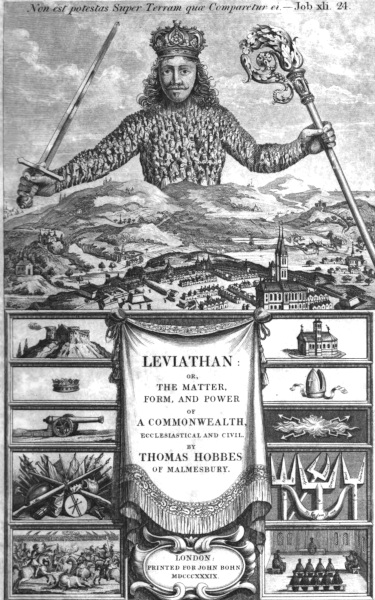
LEVIATHAN,
OR
THE MATTER, FORM, AND POWER
OF A
COMMONWEALTH
ECCLESIASTICAL AND CIVIL.
Non est potestas Super Terram quæ Comparetur ei.
I
OF MALMESBURY;
NOW FIRST COLLECTED AND EDITED
BY
SIR WILLIAM MOLESWORTH, BART.
VOL III.
LONDON:
JOHN BOHN,
HENRIETTA STREET, COVENT GARDEN.
MDCCCXXXIX.
IILONDON:
C. RICHARDS, PRINTER, ST. MARTIN’S LANE.
vTO MY MOST HONOR’D FRIEND
MR. FRANCIS GODOLPHIN,
OF GODOLPHIN.
Honor’d Sir,
Your most worthy brother, Mr. Sidney Godolphin,
when he lived, was pleased to think my studies something,
and otherwise to oblige me, as you know, with
real testimonies of his good opinion, great in themselves,
and the greater for the worthiness of his person. For
there is not any virtue that disposeth a man, either to
the service of God, or to the service of his country, to
civil society, or private friendship, that did not manifestly
appear in his conversation, not as acquired by necessity,
or affected upon occasion, but inherent, and shining in
a generous constitution of his nature. Therefore, in
honour and gratitude to him, and with devotion to yourself,
I humbly dedicate unto you this my discourse of
Commonwealth. I know not how the world will receive
it, nor how it may reflect on those that shall seem to
favour it. For in a way beset with those that contend,
on one side for too great liberty, and on the other side
for too much authority, ’tis hard to pass between the
points of both unwounded. But yet, methinks, the
viendeavour to advance the civil power, should not be by
the civil power condemned; nor private men, by reprehending
it, declare they think that power too great.
Besides, I speak not of the men, but, in the abstract,
of the seat of power, (like to those simple and unpartial
creatures in the Roman Capitol, that with their noise
defended those within it, not because they were they,
but there), offending none, I think, but those without,
or such within, if there be any such, as favour them.
That which perhaps may most offend, are certain texts
of Holy Scripture, alleged by me to other purpose than
ordinarily they use to be by others. But I have done it
with due submission, and also, in order to my subject,
necessarily; for they are the outworks of the enemy,
from whence they impugn the civil power. If notwithstanding
this, you find my labour generally decried,
you may be pleased to excuse yourself, and say, I am a
man that love my own opinions, and think all true I
say, that I honoured your brother, and honour you, and
have presumed on that, to assume the title, without your
knowledge, of being, as I am,
Nature, the art whereby God hath made and governs
the world, is by the art of man, as in many other things,
so in this also imitated, that it can make an artificial
animal. For seeing life is but a motion of limbs, the
beginning whereof is in some principal part within;
why may we not say, that all automata (engines that
move themselves by springs and wheels as doth a
watch) have an artificial life? For what is the heart,
but a spring; and the nerves, but so many strings;
and the joints, but so many wheels, giving motion to
the whole body, such as was intended by the artificer?
Art goes yet further, imitating that rational and most
excellent work of nature, man. For by art is created
that great Leviathan called a Commonwealth, or
State, in Latin Civitas, which is but an artificial
man; though of greater stature and strength than the
natural, for whose protection and defence it was intended;
and in which the sovereignty is an artificial
soul, as giving life and motion to the whole body; the
xmagistrates, and other officers of judicature and execution,
artificial joints; reward and punishment, by
which fastened to the seat of the sovereignty every
joint and member is moved to perform his duty, are
the nerves, that do the same in the body natural; the
wealth and riches of all the particular members, are the
strength; salus populi, the people’s safety, its business;
counsellors, by whom all things needful for it to
know are suggested unto it, are the memory; equity,
and laws, an artificial reason and will; concord, health;
sedition, sickness; and civil war, death. Lastly, the
pacts and covenants, by which the parts of this body
politic were at first made, set together, and united, resemble
that fiat, or the let us make man, pronounced
by God in the creation.
To describe the nature of this artificial man, I will
consider
First, the matter thereof, and the artificer; both
which is man.
Secondly, how, and by what covenants it is made;
what are the rights and just power or authority of a sovereign;
and what it is that preserveth or dissolveth it.
Thirdly, what is a Christian commonwealth.
Lastly, what is the kingdom of darkness.
Concerning the first, there is a saying much usurped
of late, that wisdom is acquired, not by reading of books,
xibut of men. Consequently whereunto, those persons,
that for the most part can give no other proof of being
wise, take great delight to show what they think they
have read in men, by uncharitable censures of one
another behind their backs. But there is another saying
not of late understood, by which they might learn
truly to read one another, if they would take the pains;
that is, nosce teipsum, read thyself: which was not
meant, as it is now used, to countenance, either the
barbarous state of men in power, towards their inferiors;
or to encourage men of low degree, to a saucy
behaviour towards their betters; but to teach us, that
for the similitude of the thoughts and passions of one
man, to the thoughts and passions of another, whosoever
looketh into himself, and considereth what he doth,
when he does think, opine, reason, hope, fear, &c. and
upon what grounds; he shall thereby read and know,
what are the thoughts and passions of all other men
upon the like occasions. I say the similitude of passions,
which are the same in all men, desire, fear, hope, &c.;
not the similitude of the objects of the passions, which
are the things desired, feared, hoped, &c.: for these
the constitution individual, and particular education, do
so vary, and they are so easy to be kept from our knowledge,
that the characters of man’s heart, blotted and
confounded as they are with dissembling, lying, counterfeiting,
xiiand erroneous doctrines, are legible only to
him that searcheth hearts. And though by men’s actions
we do discover their design sometimes; yet to do
it without comparing them with our own, and distinguishing
all circumstances, by which the case may come
to be altered, is to decypher without a key, and be for
the most part deceived, by too much trust, or by too
much diffidence; as he that reads, is himself a good or
evil man.
But let one man read another by his actions never so
perfectly, it serves him only with his acquaintance, which
are but few. He that is to govern a whole nation, must
read in himself, not this or that particular man; but
mankind: which though it be hard to do, harder than
to learn any language or science; yet when I shall have
set down my own reading orderly, and perspicuously,
the pains left another, will be only to consider, if he
also find not the same in himself. For this kind of
doctrine admitteth no other demonstration.
PART I. OF MAN. — CHAPTER I. OF SENSE. — CHAPTER II. OF IMAGINATION. — CHAPTER III. OF THE CONSEQUENCE OR TRAIN OF IMAGINATIONS. — CHAPTER IV. OF SPEECH. — CHAPTER V. OF REASON AND SCIENCE. — CHAPTER VI. — CHAPTER VII. OF THE ENDS, OR RESOLUTIONS OF DISCOURSE. — CHAPTER VIII. OF THE VIRTUES COMMONLY CALLED INTELLECTUAL; AND THEIR CONTRARY DEFECTS. — CHAPTER IX. OF THE SEVERAL SUBJECTS OF KNOWLEDGE. — CHAPTER X. OF POWER, WORTH, DIGNITY, HONOUR, AND WORTHINESS. — CHAPTER XI. OF THE DIFFERENCE OF MANNERS. — CHAPTER XII. OF RELIGION. — CHAPTER XIII. OF THE NATURAL CONDITION OF MANKIND AS CONCERNING THEIR FELICITY, AND MISERY. — CHAPTER XIV. OF THE FIRST AND SECOND NATURAL LAWS, AND OF CONTRACTS. — CHAPTER XV. OF OTHER LAWS OF NATURE. — CHAPTER XVI. OF PERSONS, AUTHORS, AND THINGS PERSONATED.
1
Sense.
Concerning the thoughts of man, I will consider
them first singly, and afterwards in train, or dependence
upon one another. Singly, they are every
one a representation or appearance, of some quality,
or other accident of a body without us, which is
commonly called an object. Which object worketh
on the eyes, ears, and other parts of a man’s body;
and by diversity of working, produceth diversity of
appearances.
The original of them all, is that which we call
SENSE, for there is no conception in a man’s mind,
which hath not at first, totally, or by parts, been
begotten upon the organs of sense. The rest are
derived from that original.
To know the natural cause of sense, is not very
necessary to the business now in hand; and I have
elsewhere written of the same at large. Nevertheless,
to fill each part of my present method, I
will briefly deliver the same in this place.
The cause of sense, is the external body, or object,
2which presseth the organ proper to each sense,
either immediately, as in the taste and touch; or
mediately, as in seeing, hearing, and smelling; which
pressure, by the mediation of the nerves, and other
strings and membranes of the body, continued inwards
to the brain and heart, causeth there a resistance,
or counter-pressure, or endeavour of the
heart to deliver itself, which endeavour, because
outward, seemeth to be some matter without. And
this seeming, or fancy, is that which men call sense;
and consisteth, as to the eye, in a light, or colour
figured; to the ear, in a sound; to the nostril, in
an odour; to the tongue and palate, in a savour;
and to the rest of the body, in heat, cold, hardness,
softness, and such other qualities as we discern by
feeling. All which qualities, called sensible, are in
the object, that causeth them, but so many several
motions of the matter, by which it presseth our
organs diversely. Neither in us that are pressed,
are they any thing else, but divers motions; for
motion produceth nothing but motion. But their
appearance to us is fancy, the same waking, that
dreaming. And as pressing, rubbing, or striking
the eye, makes us fancy a light; and pressing the
ear, produceth a din; so do the bodies also we see,
or hear, produce the same by their strong, though
unobserved action. For if those colours and sounds
were in the bodies, or objects that cause them, they
could not be severed from them, as by glasses, and
in echoes by reflection, we see they are; where we
know the thing we see is in one place, the appearance
in another. And though at some certain
distance, the real and very object seem invested
with the fancy it begets in us; yet still the object
3is one thing, the image or fancy is another. So
that sense, in all cases, is nothing else but original
fancy, caused, as I have said, by the pressure, that
is, by the motion, of external things upon our eyes,
ears, and other organs thereunto ordained.
But the philosophy-schools, through all the universities
of Christendom, grounded upon certain
texts of Aristotle, teach another doctrine, and say,
for the cause of vision, that the thing seen, sendeth
forth on every side a visible species, in English, a
visible show, apparition, or aspect, or a being
seen; the receiving whereof into the eye, is seeing.
And for the cause of hearing, that the thing heard,
sendeth forth an audible species, that is an audible
aspect, or audible being seen; which entering at
the ear, maketh hearing. Nay, for the cause of
understanding also, they say the thing understood,
sendeth forth an intelligible species, that is, an
intelligible being seen; which, coming into the understanding,
makes us understand. I say not this,
as disproving the use of universities; but because
I am to speak hereafter of their office in a commonwealth,
I must let you see on all occasions by
the way, what things would be amended in them;
amongst which the frequency of insignificant speech
is one.
Imagination.
That when a thing lies still, unless somewhat else
stir it, it will lie still for ever, is a truth that no
man doubts of. But that when a thing is in motion,
4it will eternally be in motion, unless somewhat else
stay it, though the reason be the same, namely,
that nothing can change itself, is not so easily assented
to. For men measure, not only other men,
but all other things, by themselves; and because
they find themselves subject after motion to pain,
and lassitude, think every thing else grows weary
of motion, and seeks repose of its own accord; little
considering, whether it be not some other motion,
wherein that desire of rest they find in themselves,
consisteth. From hence it is, that the schools say,
heavy bodies fall downwards, out of an appetite to
rest, and to conserve their nature in that place
which is most proper for them; ascribing appetite,
and knowledge of what is good for their conservation,
which is more than man has, to things inanimate,
absurdly.
When a body is once in motion, it moveth, unless
something else hinder it, eternally; and whatsoever
hindreth it, cannot in an instant, but in time, and
by degrees, quite extinguish it; and as we see in
the water, though the wind cease, the waves give
not over rolling for a long time after: so also it
happeneth in that motion, which is made in the
internal parts of a man, then, when he sees, dreams,
&c. For after the object is removed, or the eye
shut, we still retain an image of the thing seen,
though more obscure than when we see it. And
this is it, the Latins call imagination, from the
image made in seeing; and apply the same, though
improperly, to all the other senses. But the Greeks
call it fancy; which signifies appearance, and is as
proper to one sense, as to another. Imagination
therefore is nothing but decaying sense; and is
5found in men, and many other living creatures, as
well sleeping, as waking.
The decay of sense in men waking, is not the
decay of the motion made in sense; but an obscuring
of it, in such manner as the light of the
sun obscureth the light of the stars; which stars
do no less exercise their virtue, by which they are
visible, in the day than in the night. But because
amongst many strokes, which our eyes, ears, and
other organs receive from external bodies, the
predominant only is sensible; therefore, the
light of the sun being predominant, we are not
affected with the action of the stars. And any
object being removed from our eyes, though
the impression it made in us remain, yet other
objects more present succeeding, and working
on us, the imagination of the past is obscured,
and made weak, as the voice of a man is in the
noise of the day. From whence it followeth,
that the longer the time is, after the sight or sense
of any object, the weaker is the imagination. For
the continual change of man’s body destroys in
time the parts which in sense were moved: so that
distance of time, and of place, hath one and the
same effect in us. For as at a great distance of
place, that which we look at appears dim, and
without distinction of the smaller parts; and as
voices grow weak, and inarticulate; so also, after
great distance of time, our imagination of the past
is weak; and we lose, for example, of cities we
have seen, many particular streets, and of actions,
many particular circumstances. This decaying
sense, when we would express the thing itself, I
mean fancy itself, we call imagination, as I said
6before: but when we would express the decay,
and signify that the sense is fading, old, and past,
it is called memory. So that imagination and
memory are but one thing, which for divers considerations
hath divers names.
Memory.
Much memory, or memory of many things, is
called experience. Again, imagination being only
of those things which have been formerly perceived
by sense, either all at once, or by parts at several
times; the former, which is the imagining the
whole object as it was presented to the sense, is
simple imagination, as when one imagineth a man,
or horse, which he hath seen before. The other is
compounded; as when, from the sight of a man at
one time, and of a horse at another, we conceive
in our mind a Centaur. So when a man compoundeth
the image of his own person with the
image of the actions of another man, as when a
man imagines himself a Hercules or an Alexander,
which happeneth often to them that are much
taken with reading of romances, it is a compound
imagination, and properly but a fiction of the
mind. There be also other imaginations that rise
in men, though waking, from the great impression
made in sense: as from gazing upon the sun, the
impression leaves an image of the sun before our
eyes a long time after; and from being long and vehemently
attent upon geometrical figures, a man
shall in the dark, though awake, have the images
of lines and angles before his eyes; which kind of
fancy hath no particular name, as being a thing
that doth not commonly fall into men’s discourse.
Dreams.
The imaginations of them that sleep are those
we call dreams. And these also, as all other
7imaginations, have been before, either totally or by
parcels, in the sense. And because in sense, the
brain and nerves, which are the necessary organs
of sense, are so benumbed in sleep, as not easily to
be moved by the action of external objects, there
can happen in sleep no imagination, and therefore
no dream, but what proceeds from the agitation of
the inward parts of man’s body; which inward
parts, for the connexion they have with the brain,
and other organs, when they be distempered, do
keep the same in motion; whereby the imaginations
there formerly made, appear as if a man were
waking; saving that the organs of sense being
now benumbed, so as there is no new object,
which can master and obscure them with a more
vigorous impression, a dream must needs be more
clear, in this silence of sense, than our waking
thoughts. And hence it cometh to pass, that it is
a hard matter, and by many thought impossible, to
distinguish exactly between sense and dreaming.
For my part, when I consider that in dreams I do
not often nor constantly think of the same persons,
places, objects, and actions, that I do waking; nor
remember so long a train of coherent thoughts,
dreaming, as at other times; and because waking
I often observe the absurdity of dreams, but never
dream of the absurdities of my waking thoughts;
I am well satisfied, that being awake, I know I
dream not, though when I dream I think myself
awake.
And seeing dreams are caused by the distemper
of some of the inward parts of the body, divers
distempers must needs cause different dreams.
And hence it is that lying cold breedeth dreams of
8fear, and raiseth the thought and image of some
fearful object, the motion from the brain to the
inner parts and from the inner parts to the brain
being reciprocal; and that as anger causeth heat
in some parts of the body when we are awake, so
when we sleep the overheating of the same parts
causeth anger, and raiseth up in the brain the
imagination of an enemy. In the same manner,
as natural kindness, when we are awake, causeth
desire, and desire makes heat in certain other
parts of the body; so also too much heat in those
parts, while we sleep, raiseth in the brain an
imagination of some kindness shown. In sum, our
dreams are the reverse of our waking imaginations;
the motion when we are awake beginning at
one end, and when we dream at another.
Apparitions or visions.
The most difficult discerning of a man’s dream,
from his waking thoughts, is then, when by some
accident we observe not that we have slept: which
is easy to happen to a man full of fearful thoughts,
and whose conscience is much troubled; and that
sleepeth, without the circumstances of going to
bed or putting off his clothes, as one that noddeth
in a chair. For he that taketh pains, and industriously
lays himself to sleep, in case any uncouth
and exorbitant fancy come unto him, cannot easily
think it other than a dream. We read of Marcus
Brutus, (one that had his life given him by Julius
Cæsar, and was also his favourite, and notwithstanding
murdered him), how at Philippi, the
night before he gave battle to Augustus Cæsar, he
saw a fearful apparition, which is commonly related
by historians as a vision; but considering
the circumstances, one may easily judge to have
9been but a short dream. For sitting in his tent,
pensive and troubled with the horror of his rash
act, it was not hard for him, slumbering in the
cold, to dream of that which most affrighted him;
which fear, as by degrees it made him wake, so
also it must needs make the apparition by degrees
to vanish; and having no assurance that he slept,
he could have no cause to think it a dream, or any
thing but a vision. And this is no very rare accident;
for even they that be perfectly awake, if
they be timorous and superstitious, possessed with
fearful tales, and alone in the dark, are subject to
the like fancies, and believe they see spirits and
dead men’s ghosts walking in churchyards; whereas
it is either their fancy only, or else the knavery
of such persons as make use of such superstitious
fear, to pass disguised in the night, to places they
would not be known to haunt.
From this ignorance of how to distinguish
dreams, and other strong fancies, from vision and
sense, did arise the greatest part of the religion of
the Gentiles in time past, that worshipped satyrs,
fawns, nymphs, and the like; and now-a-days the
opinion that rude people have of fairies, ghosts,
and goblins, and of the power of witches. For as
for witches, I think not that their witchcraft is
any real power; but yet that they are justly
punished, for the false belief they have that they
can do such mischief, joined with their purpose to
do it if they can; their trade being nearer to a new
religion than to a craft or science. And for fairies,
and walking ghosts, the opinion of them has, I
think, been on purpose either taught or not confuted,
to keep in credit the use of exorcism, of
10crosses, of holy water, and other such inventions
of ghostly men. Nevertheless, there is no doubt,
but God can make unnatural apparitions; but that
he does it so often, as men need to fear such
things, more than they fear the stay or change of
the course of nature, which he also can stay, and
change, is no point of Christian faith. But evil
men under pretext that God can do any thing, are
so bold as to say any thing when it serves their
turn, though they think it untrue; it is the part of
a wise man, to believe them no farther, than right
reason makes that which they say, appear credible.
If this superstitious fear of spirits were taken
away, and with it, prognostics from dreams, false
prophecies, and many other things depending
thereon, by which crafty ambitious persons abuse
the simple people, men would be much more fitted
than they are for civil obedience.
And this ought to be the work of the schools:
but they rather nourish such doctrine. For, not
knowing what imagination or the senses are, what
they receive, they teach: some saying, that imaginations
rise of themselves, and have no cause;
others, that they rise most commonly from the
will; and that good thoughts are blown (inspired)
into a man by God, and evil thoughts by the
Devil; or that good thoughts are poured (infused)
into a man by God, and evil ones by the Devil.
Some say the senses receive the species of things,
and deliver them to the common sense; and the
common sense delivers them over to the fancy, and
the fancy to the memory, and the memory to the
judgment, like handing of things from one to
another, with many words making nothing understood.
Understanding.
11The imagination that is raised in man, or any
other creature indued with the faculty of imagining,
by words, or other voluntary signs, is that
we generally call understanding; and is common
to man and beast. For a dog by custom will understand
the call, or the rating of his master; and
so will many other beasts. That understanding
which is peculiar to man, is the understanding not
only his will, but his conceptions and thoughts, by
the sequel and contexture of the names of things
into affirmations, negations, and other forms of
speech; and of this kind of understanding I shall
speak hereafter.
By Consequence, or TRAIN of thoughts, I understand
that succession of one thought to another,
which is called, to distinguish it from discourse in
words, mental discourse.
When a man thinketh on any thing whatsoever,
his next thought after, is not altogether so casual as
it seems to be. Not every thought to every thought
succeeds indifferently. But as we have no imagination,
whereof we have not formerly had sense, in
whole, or in parts; so we have no transition from
one imagination to another, whereof we never had
the like before in our senses. The reason whereof
is this. All fancies are motions within us, relics
of those made in the sense: and those motions that
immediately succeeded one another in the sense,
12continue also together after sense: insomuch as
the former coming again to take place, and be predominant,
the latter followeth, by coherence of the
matter moved, in such manner, as water upon a
plane table is drawn which way any one part of it
is guided by the finger. But because in sense, to
one and the same thing perceived, sometimes one
thing, sometimes another succeedeth, it comes to
pass in time, that in the imagining of any thing,
there is no certainty what we shall imagine next;
only this is certain, it shall be something that succeeded
the same before, at one time or another.
Train of thoughts unguided.
This train of thoughts, or mental discourse, is of
two sorts. The first is unguided, without design,
and inconstant; wherein there is no passionate
thought, to govern and direct those that follow, to
itself, as the end and scope of some desire, or other
passion: in which case the thoughts are said to
wander, and seem impertinent one to another, as
in a dream. Such are commonly the thoughts of
men, that are not only without company, but also
without care of any thing; though even then their
thoughts are as busy as at other times, but without
harmony; as the sound which a lute out of tune
would yield to any man; or in tune, to one that
could not play. And yet in this wild ranging of
the mind, a man may oft-times perceive the way of
it, and the dependance of one thought upon another.
For in a discourse of our present civil war, what
could seem more impertinent, than to ask, as one
did, what was the value of a Roman penny? Yet
the coherence to me was manifest enough. For
the thought of the war, introduced the thought of
the delivering up the king to his enemies; the
13thought of that, brought in the thought of the delivering
up of Christ; and that again the thought
of the thirty pence, which was the price of that
treason; and thence easily followed that malicious
question, and all this in a moment of time; for
thought is quick.
Train of thoughts regulated.
The second is more constant; as being regulated
by some desire, and design. For the impression
made by such things as we desire, or fear, is strong,
and permanent, or, if it cease for a time, of quick
return: so strong it is sometimes, as to hinder and
break our sleep. From desire, ariseth the thought
of some means we have seen produce the like of
that which we aim at; and from the thought of
that, the thought of means to that mean; and so
continually, till we come to some beginning within
our own power. And because the end, by the
greatness of the impression, comes often to mind,
in case our thoughts begin to wander, they are
quickly again reduced into the way: which observed
by one of the seven wise men, made him
give men this precept, which is now worn out, Respice
finem; that is to say, in all your actions, look
often upon what you would have, as the thing that
directs all your thoughts in the way to attain it.
The train of regulated thoughts is of two kinds;
one, when of an effect imagined we seek the causes,
or means that produce it: and this is common to
man and beast. The other is, when imagining any
thing whatsoever, we seek all the possible effects,
that can by it be produced; that is to say, we imagine
what we can do with it, when we have it. Of
which I have not at any time seen any sign, but in
man only; for this is a curiosity hardly incident
14to the nature of any living creature that has no
other passion but sensual, such as are hunger, thirst,
lust, and anger. In sum, the discourse of the
mind, when it is governed by design, is nothing but
seeking, or the faculty of invention, which the Latins
called sagacitas, and solertia; a hunting out
of the causes, of some effect, present or past; or of
the effects, of some present or past cause. Sometimes
a man seeks what he hath lost; and from
that place, and time, wherein he misses it, his mind
runs back, from place to place, and time to time,
to find where, and when he had it; that is to say,
to find some certain, and limited time and place,
in which to begin a method of seeking. Again,
from thence, his thoughts run over the same places
and times, to find what action, or other occasion
might make him lose it. |Remembrance.| This we call remembrance,
or calling to mind: the Latins call it reminiscentia,
as it were a re-conning of our former
actions.
Prudence.
Sometimes a man knows a place determinate,
within the compass whereof he is to seek; and
then his thoughts run over all the parts thereof, in
the same manner as one would sweep a room, to
find a jewel; or as a spaniel ranges the field, till
he find a scent; or as a man should run over the
alphabet, to start a rhyme.
Sometimes a man desires to know the event of an
action; and then he thinketh of some like action
past, and the events thereof one after another;
supposing like events will follow like actions. As
he that foresees what will become of a criminal, re-cons
what he has seen follow on the like crime before;
having this order of thoughts, the crime, the
15officer, the prison, the judge, and the gallows.
Which kind of thoughts, is called foresight, and
prudence, or providence; and sometimes wisdom;
though such conjecture, through the difficulty of
observing all circumstances, be very fallacious.
But this is certain; by how much one man has
more experience of things past, than another, by
so much also he is more prudent, and his expectations
the seldomer fail him. The present only has
a being in nature; things past have a being in the
memory only, but things to come have no being at
all; the future being but a fiction of the mind, applying
the sequels of actions past, to the actions
that are present; which with most certainty is
done by him that has most experience, but not
with certainty enough. And though it be called
prudence, when the event answereth our expectation;
yet in its own nature, it is but presumption.
For the foresight of things to come, which is providence,
belongs only to him by whose will they
are to come. From him only, and supernaturally,
proceeds prophecy. The best prophet naturally is
the best guesser; and the best guesser, he that is
most versed and studied in the matters he guesses
at: for he hath most signs to guess by.
Signs.
A sign is the evident antecedent of the consequent;
and contrarily, the consequent of the
antecedent, when the like consequences have been
observed, before: and the oftener they have been
observed, the less uncertain is the sign. And
therefore he that has most experience in any kind of
business, has most signs, whereby to guess at the
future time; and consequently is the most prudent:
and so much more prudent than he that is new in
16that kind of business, as not to be equalled by any
advantage of natural and extemporary wit: though
perhaps many young men think the contrary.
Nevertheless it is not prudence that distinguisheth
man from beast. There be beasts, that at a
year old observe more, and pursue that which is
for their good, more prudently, than a child can
do at ten.
Conjecture of the time past.
As prudence is a presumption of the future, contracted
from the experience of time past: so there
is a presumption of things past taken from other
things, not future, but past also. For he that hath
seen by what courses and degrees a flourishing
state hath first come into civil war, and then to
ruin; upon the sight of the ruins of any other state,
will guess, the like war, and the like courses have
been there also. But this conjecture, has the same
uncertainty almost with the conjecture of the future;
both being grounded only upon experience.
There is no other act of man’s mind, that I can
remember, naturally planted in him, so as to need
no other thing, to the exercise of it, but to be born
a man, and live with the use of his five senses.
Those other faculties, of which I shall speak by
and by, and which seem proper to man only, are
acquired and increased by study and industry;
and of most men learned by instruction, and discipline;
and proceed all from the invention of words,
and speech. For besides sense, and thoughts, and
the train of thoughts, the mind of man has no other
motion; though by the help of speech, and method,
the same faculties may be improved to such a
height, as to distinguish men from all other living
creatures.
Infinite.
17Whatsoever we imagine is finite. Therefore
there is no idea, or conception of any thing we call
infinite. No man can have in his mind an image
of infinite magnitude; nor conceive infinite swiftness,
infinite time, or infinite force, or infinite
power. When we say any thing is infinite, we
signify only, that we are not able to conceive the
ends, and bounds of the things named; having no
conception of the thing, but of our own inability.
And therefore the name of God is used, not to make
us conceive him, for he is incomprehensible; and
his greatness, and power are unconceivable; but
that we may honour him. Also because, whatsoever,
as I said before, we conceive, has been perceived
first by sense, either all at once, or by parts;
a man can have no thought, representing any thing,
not subject to sense. No man therefore can
conceive any thing, but he must conceive it in
some place; and indued with some determinate
magnitude; and which may be divided into parts;
nor that any thing is all in this place, and all in
another place at the same time; nor that two, or
more things can be in one, and the same place at
once: for none of these things ever have, nor can
be incident to sense; but are absurd speeches,
taken upon credit, without any signification at all,
from deceived philosophers, and deceived, or deceiving
schoolmen.
18
Original of speech.
The invention of printing, though ingenious, compared
with the invention of letters, is no great
matter. But who was the first that found the use
of letters, is not known. He that first brought
them into Greece, men say was Cadmus, the son of
Agenor, king of Phœnicia. A profitable invention
for continuing the memory of time past, and the
conjunction of mankind, dispersed into so many,
and distant regions of the earth; and withal difficult,
as proceeding from a watchful observation
of the divers motions of the tongue, palate, lips,
and other organs of speech; whereby to make as
many differences of characters, to remember them.
But the most noble and profitable invention of all
other, was that of SPEECH, consisting of names or
appellations, and their connexion; whereby men
register their thoughts; recall them when they are
past; and also declare them one to another for
mutual utility and conversation; without which,
there had been amongst men, neither commonwealth,
nor society, nor contract, nor peace, no
more than amongst lions, bears, and wolves. The
first author of speech was God himself, that instructed
Adam how to name such creatures as he
presented to his sight; for the Scripture goeth no
further in this matter. But this was sufficient to
direct him to add more names, as the experience
and use of the creatures should give him occasion;
and to join them in such manner by degrees, as to
make himself understood; and so by succession of
19time, so much language might be gotten, as he had
found use for; though not so copious, as an orator
or philosopher has need of: for I do not find any
thing in the Scripture, out of which, directly or by
consequence, can be gathered, that Adam was taught
the names of all figures, numbers, measures, colours,
sounds, fancies, relations; much less the names of
words and speech, as general, special, affirmative,
negative, interrogative, optative, infinitive, all
which are useful; and least of all, of entity, intentionality,
quiddity, and other insignificant words
of the school.
But all this language gotten, and augmented by
Adam and his posterity, was again lost at the Tower
of Babel, when, by the hand of God, every man was
stricken, for his rebellion, with an oblivion of his
former language. And being hereby forced to disperse
themselves into several parts of the world, it
must needs be, that the diversity of tongues that
now is, proceeded by degrees from them, in such
manner, as need, the mother of all inventions, taught
them; and in tract of time grew everywhere more
copious.
The use of speech.
The general use of speech, is to transfer our
mental discourse, into verbal; or the train of our
thoughts, into a train of words; and that for two
commodities, whereof one is the registering of the
consequences of our thoughts; which being apt to
slip out of our memory, and put us to a new labour,
may again be recalled, by such words as they were
marked by. So that the first use of names is to
serve for marks, or notes of remembrance. Another
is, when many use the same words, to signify, by
their connexion and order, one to another, what
20they conceive, or think of each matter; and also
what they desire, fear, or have any other passion
for. And for this use they are called signs. Special
uses of speech are these; first, to register, what by
cogitation, we find to be the cause of any thing,
present or past; and what we find things present
or past may produce, or effect; which in sum, is
acquiring of arts. Secondly, to show to others
that knowledge which we have attained, which is,
to counsel and teach one another. Thirdly, to make
known to others our wills and purposes, that we
may have the mutual help of one another. Fourthly,
to please and delight ourselves and others, by playing
with our words, for pleasure or ornament, innocently.
Abuses of speech.
To these uses, there are also four correspondent
abuses. First, when men register their thoughts
wrong, by the inconstancy of the signification of
their words; by which they register for their conception,
that which they never conceived, and so
deceive themselves. Secondly, when they use words
metaphorically; that is, in other sense than that
they are ordained for; and thereby deceive others.
Thirdly, by words, when they declare that to be
their will, which is not. Fourthly, when they use
them to grieve one another; for seeing nature hath
armed living creatures, some with teeth, some with
horns, and some with hands, to grieve an enemy,
it is but an abuse of speech, to grieve him with the
tongue, unless it be one whom we are obliged to
govern; and then it is not to grieve, but to correct
and amend.
The manner how speech serveth to the remembrance
of the consequence of causes and effects,
21consisteth in the imposing of names, and the connexion
of them.
Names, proper and common.
Of names, some are proper, and singular to one
only thing, as Peter, John, this man, this tree;
and some are common to many things, man, horse,
tree; every of which, though but one name, is
nevertheless the name of divers particular things;
|Universal.| in respect of all which together, it is called an
universal; there being nothing in the world universal
but names; for the things named are every
one of them individual and singular.
One universal name is imposed on many things,
for their similitude in some quality, or other accident;
and whereas a proper name bringeth to mind
one thing only, universals recall any one of those
many.
And of names universal, some are of more, and
some of less extent; the larger comprehending
the less large; and some again of equal extent,
comprehending each other reciprocally. As for
example: the name body is of larger signification
than the word man, and comprehendeth it; and the
names man and rational, are of equal extent, comprehending
mutually one another. But here we
must take notice, that by a name is not always understood,
as in grammar, one only word; but sometimes,
by circumlocution, many words together.
For all these words, he that in his actions observeth
the laws of his country, make but one name, equivalent
to this one word, just.
By this imposition of names, some of larger, some
of stricter signification, we turn the reckoning of
the consequences of things imagined in the mind,
into a reckoning of the consequences of appellations.
22For example: a man that hath no use of speech at
all, such as is born and remains perfectly deaf and
dumb, if he set before his eyes a triangle, and by
it two right angles, such as are the corners of a
square figure, he may, by meditation, compare and
find, that the three angles of that triangle, are
equal to those two right angles that stand by it.
But if another triangle be shown him, different in
shape from the former, he cannot know, without a
new labour, whether the three angles of that also
be equal to the same. But he that hath the use of
words, when he observes, that such equality was
consequent, not to the length of the sides, nor to
any other particular thing in his triangle; but only
to this, that the sides were straight, and the angles
three; and that that was all, for which he named it
a triangle; will boldly conclude universally, that
such equality of angles is in all triangles whatsoever;
and register his invention in these general terms,
every triangle hath its three angles equal to two
right angles. And thus the consequence found in
one particular, comes to be registered and remembered,
as a universal rule, and discharges our
mental reckoning, of time and place, and delivers
us from all labour of the mind, saving the first,
and makes that which was found true here, and
now, to be true in all times and places.
But the use of words in registering our thoughts
is in nothing so evident as in numbering. A natural
fool that could never learn by heart the order
of numeral words, as one, two, and three, may observe
every stroke of the clock, and nod to it, or
say one, one, one, but can never know what hour
it strikes. And it seems, there was a time when
23those names of number were not in use; and men
were fain to apply their fingers of one or both hands,
to those things they desired to keep account of;
and that thence it proceeded, that now our numeral
words are but ten, in any nation, and in some but
five; and then they begin again. And he that can tell
ten, if he recite them out of order, will lose himself,
and not know when he has done. Much less will
he be able to add, and subtract, and perform all
other operations of arithmetic. So that without
words there is no possibility of reckoning of numbers;
much less of magnitudes, of swiftness, of force,
and other things, the reckonings whereof are necessary
to the being, or well-being of mankind.
When two names are joined together into a consequence,
or affirmation, as thus, a man is a living
creature; or thus, if he be a man, he is a living
creature; if the latter name, living creature, signify
all that the former name man signifieth, then
the affirmation, or consequence, is true; otherwise
false. For true and false are attributes of speech,
not of things. And where speech is not, there is
neither truth nor falsehood; error there may be,
as when we expect that which shall not be, or
suspect what has not been; but in neither case can
a man be charged with untruth.
Necessity of definitions.
Seeing then that truth consisteth in the right
ordering of names in our affirmations, a man that
seeketh precise truth had need to remember what
every name he uses stands for, and to place it accordingly,
or else he will find himself entangled in
words, as a bird in lime twigs, the more he struggles
the more belimed. And therefore in geometry,
which is the only science that it hath pleased
24God hitherto to bestow on mankind, men begin
at settling the significations of their words; which
settling of significations they call definitions, and
place them in the beginning of their reckoning.
By this it appears how necessary it is for any
man that aspires to true knowledge, to examine
the definitions of former authors; and either to
correct them, where they are negligently set down,
or to make them himself. For the errors of definitions
multiply themselves according as the
reckoning proceeds, and lead men into absurdities,
which at last they see, but cannot avoid, without
reckoning anew from the beginning, in which
lies the foundation of their errors. From whence
it happens, that they which trust to books do as
they that cast up many little sums into a greater,
without considering whether those little sums were
rightly cast up or not; and at last finding the
error visible, and not mistrusting their first
grounds, know not which way to clear themselves,
but spend time in fluttering over their books; as
birds that entering by the chimney, and finding
themselves enclosed in a chamber, flutter at the
false light of a glass window, for want of wit to
consider which way they came in. So that in the
right definition of names lies the first use of
speech; which is the acquisition of science: and
in wrong, or no definitions, lies the first abuse;
from which proceed all false and senseless tenets;
which make those men that take their instruction
from the authority of books, and not from their
own meditation, to be as much below the condition
of ignorant men, as men endued with true
science are above it. For between true science
25and erroneous doctrines, ignorance is in the middle.
Natural sense and imagination are not subject
to absurdity. Nature itself cannot err; and
as men abound in copiousness of language, so they
become more wise, or more mad than ordinary.
Nor is it possible without letters for any man to
become either excellently wise, or, unless his memory
be hurt by disease or ill constitution of
organs, excellently foolish. For words are wise
men’s counters, they do but reckon by them; but
they are the money of fools, that value them by
the authority of an Aristotle, a Cicero, or a Thomas,
or any other doctor whatsoever, if but a man.
Subject to names.
Subject to names, is whatsoever can enter into
or be considered in an account, and be added one
to another to make a sum, or subtracted one from
another and leave a remainder. The Latins called
accounts of money rationes, and accounting ratiocinatio;
and that which we in bills or books of
account call items, they call nomina, that is names;
and thence it seems to proceed, that they extended
the word ratio to the faculty of reckoning in all
other things. The Greeks have but one word,
λόγος, for both speech and reason; not that they
thought there was no speech without reason, but
no reasoning without speech: and the act of
reasoning they called syllogism, which signifieth
summing up of the consequences of one saying to
another. And because the same thing may enter
into account for divers accidents, their names are,
to show that diversity, diversly wrested and diversified.
This diversity of names may be reduced to
four general heads.
Names.
First, a thing may enter into account for matter26or body; as living, sensible, rational, hot, cold,
moved, quiet; with all which names the word
matter, or body, is understood; all such being
names of matter.
Secondly, it may enter into account, or be considered,
for some accident or quality which we
conceive to be in it; as for being moved, for being
so long, for being hot, &c.; and then, of the name
of the thing itself, by a little change or wresting,
we make a name for that accident, which we consider;
and for living put into the account life;
for moved, motion; for hot, heat; for long, length,
and the like: and all such names are the names of
the accidents and properties by which one matter
and body is distinguished from another. These
are called names abstract, because severed, not
from matter, but from the account of matter.
Thirdly, we bring into account the properties of
our own bodies, whereby we make such distinction;
as when anything is seen by us, we reckon not the
thing itself, but the sight, the colour, the idea of it
in the fancy: and when anything is heard, we
reckon it not, but the hearing or sound only, which
is our fancy or conception of it by the ear; and
such are names of fancies.
Use of names positive.
Fourthly, we bring into account, consider, and
give names, to names themselves, and to speeches:
for general, universal, special, equivocal, are
names of names. And affirmation, interrogation,
commandment, narration, syllogism, sermon, oration,
and many other such, are names of speeches.
And this is all the variety of names positive;
which are put to mark somewhat which is in
nature, or may be feigned by the mind of man, as
27bodies that are, or may be conceived to be; or of
bodies, the properties that are, or may be feigned
to be; or words and speech.
Negative names, with their uses.
There be also other names, called negative,
which are notes to signify that a word is not the
name of the thing in question; as these words,
nothing, no man, infinite, indocible, three want
four, and the like; which are nevertheless of use
in reckoning, or in correcting of reckoning, and
call to mind our past cogitations, though they be
not names of any thing, because they make us refuse
to admit of names not rightly used.
Words insignificant.
All other names are but insignificant sounds;
and those of two sorts. One when they are new,
and yet their meaning not explained by definition;
whereof there have been abundance coined by
schoolmen, and puzzled philosophers.
Another, when men make a name of two names,
whose significations are contradictory and inconsistent;
as this name, an incorporeal body, or,
which is all one, an incorporeal substance, and a
great number more. For whensoever any affirmation
is false, the two names of which it is composed,
put together and made one, signify nothing
at all. For example, if it be a false affirmation to
say a quadrangle is round, the word round quadrangle
signifies nothing, but is a mere sound.
So likewise, if it be false to say that virtue can be
poured, or blown up and down, the words in-poured
virtue, inblown virtue, are as absurd and
insignificant as a round quadrangle. And therefore
you shall hardly meet with a senseless and insignificant
word, that is not made up of some Latin
or Greek names. A Frenchman seldom hears our
28Saviour called by the name of parole, but by the
name of verbe often; yet verbe and parole differ
no more, but that one is Latin, the other French.
Understanding.
When a man, upon the hearing of any speech,
hath those thoughts which the words of that speech
and their connexion were ordained and constituted
to signify, then he is said to understand it; understanding
being nothing else but conception caused
by speech. And therefore if speech be peculiar to
man, as for aught I know it is, then is understanding
peculiar to him also. And therefore of absurd
and false affirmations, in case they be universal,
there can be no understanding; though many
think they understand then, when they do but repeat
the words softly, or con them in their mind.
What kinds of speeches signify the appetites,
aversions, and passions of man’s mind; and of
their use and abuse, I shall speak when I have
spoken of the passions.
Inconstant names.
The names of such things as affect us, that is,
which please and displease us, because all men be
not alike affected with the same thing, nor the
same man at all times, are in the common discourses
of men of inconstant signification. For
seeing all names are imposed to signify our conceptions,
and all our affections are but conceptions,
when we conceive the same things differently, we
can hardly avoid different naming of them. For
though the nature of that we conceive, be the same;
yet the diversity of our reception of it, in respect
of different constitutions of body, and prejudices of
opinion, gives every thing a tincture of our different
passions. And therefore in reasoning a man
must take heed of words; which besides the signification
29of what we imagine of their nature, have
a signification also of the nature, disposition, and
interest of the speaker; such as are the names of
virtues and vices; for one man calleth wisdom,
what another calleth fear; and one cruelty, what
another justice; one prodigality, what another
magnanimity; and one gravity, what another stupidity,
&c. And therefore such names can never
be true grounds of any ratiocination. No more
can metaphors, and tropes of speech; but these
are less dangerous, because they profess their inconstancy;
which the other do not.
Reason, what it is.
When a man reasoneth, he does nothing else but
conceive a sum total, from addition of parcels; or
conceive a remainder, from subtraction of one sum
from another; which, if it be done by words, is
conceiving of the consequence of the names of all
the parts, to the name of the whole; or from the
names of the whole and one part, to the name of
the other part. And though in some things, as in
numbers, besides adding and subtracting, men
name other operations, as multiplying and dividing,
yet they are the same; for multiplication, is
but adding together of things equal; and division,
but subtracting of one thing, as often as we can.
These operations are not incident to numbers only,
but to all manner of things that can be added together,
and taken one out of another. For as
30arithmeticians teach to add and subtract in numbers;
so the geometricians teach the same in lines,
figures, solid and superficial, angles, proportions,
times, degrees of swiftness, force, power, and the
like; the logicians teach the same in consequences
of words; adding together two names to make an
affirmation, and two affirmations to make a syllogism;
and many syllogisms to make a demonstration;
and from the sum, or conclusion of a syllogism,
they subtract one proposition to find the
other. Writers of politics add together pactions
to find men’s duties; and lawyers, laws and facts,
to find what is right and wrong in the actions of
private men. In sum, in what matter soever there
is place for addition and subtraction, there also is
place for reason; and where these have no place,
there reason has nothing at all to do.
Reason defined.
Out of all which we may define, that is to say
determine, what that is, which is meant by this
word reason, when we reckon it amongst the
faculties of the mind. For REASON, in this sense,
is nothing but reckoning, that is adding and subtracting,
of the consequences of general names
agreed upon for the marking and signifying of our
thoughts; I say marking them when we reckon by
ourselves, and signifying, when we demonstrate or
approve our reckonings to other men.
Right reason, where.
And, as in arithmetic, unpractised men must,
and professors themselves may often, err, and cast
up false; so also in any other subject of reasoning,
the ablest, most attentive, and most practised men
may deceive themselves, and infer false conclusions;
not but that reason itself is always right
reason, as well as arithmetic is a certain and infallible
31art: but no one man’s reason, nor the reason
of any one number of men, makes the certainty;
no more than an account is therefore well cast up,
because a great many men have unanimously approved
it. And therefore, as when there is a controversy
in an account, the parties must by their
own accord, set up, for right reason, the reason of
some arbitrator, or judge, to whose sentence they
will both stand, or their controversy must either
come to blows, or be undecided, for want of a right
reason constituted by nature; so is it also in all
debates of what kind soever. And when men that
think themselves wiser than all others, clamour and
demand right reason for judge, yet seek no more,
but that things should be determined, by no other
men’s reason but their own, it is as intolerable in
the society of men, as it is in play after trump is
turned, to use for trump on every occasion, that
suite whereof they have most in their hand. For
they do nothing else, that will have every of their
passions, as it comes to bear sway in them, to be
taken for right reason, and that in their own controversies
bewraying their want of right reason,
by the claim they lay to it.
The use of reason.
The use and end of reason, is not the finding of
the sum and truth of one, or a few consequences,
remote from the first definitions, and settled significations
of names, but to begin at these, and proceed
from one consequence to another. For there
can be no certainty of the last conclusion, without
a certainty of all those affirmations and negations,
on which it was grounded and inferred. As when
a master of a family, in taking an account, casteth
up the sums of all the bills of expense into one sum,
32and not regarding how each bill is summed up, by
those that give them in account; nor what it is he
pays for; he advantages himself no more, than if he
allowed the account in gross, trusting to every of the
accountants’ skill and honesty: so also in reasoning
of all other things, he that takes up conclusions on
the trust of authors, and doth not fetch them from
the first items in every reckoning, which are the
significations of names settled by definitions, loses
his labour; and does not know anything, but only
believeth.
Of error and absurdity.
When a man reckons without the use of words,
which may be done in particular things, as when
upon the sight of any one thing, we conjecture what
was likely to have preceded, or is likely to follow
upon it; if that which he thought likely to follow,
follows not, or that which he thought likely to have
preceded it, hath not preceded it, this is called
error; to which even the most prudent men are
subject. But when we reason in words of general
signification, and fall upon a general inference which
is false, though it be commonly called error, it is
indeed an absurdity, or senseless speech. For
error is but a deception, in presuming that somewhat
is past, or to come; of which, though it were
not past, or not to come, yet there was no impossibility
discoverable. But when we make a general
assertion, unless it be a true one, the possibility of
it is inconceivable. And words whereby we conceive
nothing but the sound, are those we call
absurd, insignificant, and nonsense. And therefore
if a man should talk to me of a round quadrangle;
or, accidents of bread in cheese; or, immaterial
substances; or of a free subject; a free will; or
33any free, but free from being hindered by opposition,
I should not say he were in an error, but that
his words were without meaning, that is to say,
absurd.
I have said before, in the second chapter, that a
man did excel all other animals in this faculty, that
when he conceived any thing whatsoever, he was
apt to inquire the consequences of it, and what
effects he could do with it. And now I add this
other degree of the same excellence, that he can by
words reduce the consequences he finds to general
rules, called theorems, or aphorisms; that is, he
can reason, or reckon, not only in number, but in
all other things, whereof one may be added unto,
or subtracted from another.
But this privilege is allayed by another; and that
is, by the privilege of absurdity; to which no living
creature is subject, but man only. And of men,
those are of all most subject to it, that profess philosophy.
For it is most true that Cicero saith of
them somewhere; that there can be nothing so
absurd, but may be found in the books of philosophers.
And the reason is manifest. For there
is not one of them that begins his ratiocination from
the definitions, or explications of the names they are
to use; which is a method that hath been used only
in geometry; whose conclusions have thereby been
made indisputable.
Causes of absurdity.
I. The first cause of absurd conclusions I ascribe
to the want of method; in that they begin not their
ratiocination from definitions; that is, from settled
significations of their words: as if they could cast
account, without knowing the value of the numeral
words, one, two, and three.
34And whereas all bodies enter into account upon
divers considerations, which I have mentioned in
the precedent chapter; these considerations being
diversely named, divers absurdities proceed from
the confusion, and unfit connexion of their names
into assertions. And therefore,
II. The second cause of absurd assertions, I ascribeascribe
to the giving of names of bodies to accidents;
or of accidents to bodies; as they do, that say,
faith is infused, or inspired; when nothing can be
poured, or breathed into anything, but body;
and that, extension is body; that phantasms are
spirits, &c.
III. The third I ascribe to the giving of the names
of the accidents of bodies without us, to the accidents
of our own bodies; as they do that say, the
colour is in the body; the sound is in the air, &c.
IV. The fourth, to the giving of the names of
bodies to names, or speeches; as they do that say,
that there be things universal; that a living creature
is genus, or a general thing, &c.
V. The fifth, to the giving of the names of accidents
to names and speeches; as they do that say,
the nature of a thing is its definition; a man’s
command is his will; and the like.
VI. The sixth, to the use of metaphors, tropes,
and other rhetorical figures, instead of words proper.
For though it be lawful to say, for example, in common
speech, the way goeth, or leadeth hither, or
thither; the proverb says this or that, whereas
ways cannot go, nor proverbs speak; yet in reckoning,
and seeking of truth, such speeches are not to
be admitted.
VII. The seventh, to names that signify nothing;
35but are taken up, and learned by rote from the
schools, as hypostatical, transubstantiate, consubstantiate,
eternal-now, and the like canting of
schoolmen.
To him that can avoid these things it is not easy
to fall into any absurdity, unless it be by the
length of an account; wherein he may perhaps forget
what went before. For all men by nature
reason alike, and well, when they have good principles.
For who is so stupid, as both to mistake
in geometry, and also to persist in it, when another
detects his error to him?
Science.
By this it appears that reason is not, as sense
and memory, born with us; nor gotten by experience
only, as prudence is; but attained by industry;
first in apt imposing of names; and secondly
by getting a good and orderly method in proceeding
from the elements, which are names, to assertions
made by connexion of one of them to another;
and so to syllogisms, which are the connexions of
one assertion to another, till we come to a knowledge
of all the consequences of names appertaining
to the subject in hand; and that is it, men call
SCIENCE. And whereas sense and memory are but
knowledge of fact, which is a thing past and
irrevocable. Science is the knowledge of consequences,
and dependance of one fact upon another:
by which, out of that we can presently do, we
know how to do something else when we will, or
the like another time; because when we see how any
thing comes about, upon what causes, and by what
manner; when the like causes come into our power,
we see how to make it produce the like effects.
Children therefore are not endued with reason
36at all, till they have attained the use of speech;
but are called reasonable creatures, for the possibility
apparent of having the use of reason in time
to come. And the most part of men, though they
have the use of reasoning a little way, as in numbering
to some degree; yet it serves them to little
use in common life; in which they govern themselves,
some better, some worse, according to their
differences of experience, quickness of memory,
and inclinations to several ends; but specially
according to good or evil fortune, and the errors
of one another. For as for science, or certain
rules of their actions, they are so far from it, that
they know not what it is. Geometry they have
thought conjuring: but for other sciences, they
who have not been taught the beginnings and
some progress in them, that they may see how
they be acquired and generated, are in this point
like children, that having no thought of generation,
are made believe by the women that their brothers
and sisters are not born, but found in the garden.
But yet they that have no science, are in better,
and nobler condition, with their natural prudence;
than men, that by mis-reasoning, or by trusting
them that reason wrong, fall upon false and absurd
general rules. For ignorance of causes, and of
rules, does not set men so far out of their way, as
relying on false rules, and taking for causes of
what they aspire to, those that are not so, but
rather causes of the contrary.
To conclude, the light of human minds is perspicuous
words, but by exact definitions first
snuffed, and purged from ambiguity; reason is the
pace; increase of science, the way; and the benefit
37of mankind, the end. And, on the contrary, metaphors,
and senseless and ambiguous words, are like
ignes fatui; and reasoning upon them is wandering
amongst innumerable absurdities; and their
end, contention and sedition, or contempt.
Prudence and sapience, with their difference.
As much experience, is prudence; so, is much
science sapience. For though we usually have one
name of wisdom for them both, yet the Latins did
always distinguish between prudentia and sapientia;
ascribing the former to experience, the latter
to science. But to make their difference appear
more clearly, let us suppose one man endued with
an excellent natural use and dexterity in handling
his arms; and another to have added to that dexterity,
an acquired science, of where he can offend,
or be offended by his adversary, in every possible
posture or guard: the ability of the former, would
be to the ability of the latter, as prudence to
sapience; both useful; but the latter infallible.
But they that trusting only to the authority of
books, follow the blind blindly, are like him that,
trusting to the false rules of a master of fence,
ventures presumptuously upon an adversary, that
either kills or disgraces him.
Signs of science.
The signs of science are some, certain and infallible;
some, uncertain. Certain, when he that pretendethpretendeth
the science of any thing, can teach the
same; that is to say, demonstrate the truth thereof
perspicuously to another; uncertain, when only
some particular events answer to his pretence, and
upon many occasions prove so as he says they must.
Signs of prudence are all uncertain; because to
observe by experience, and remember all circumstances
that may alter the success, is impossible.
38But in any business, whereof a man has not infallible
science to proceed by; to forsake his own
natural judgment, and be guided by general sentences
read in authors, and subject to many exceptions,
is a sign of folly, and generally scorned by
the name of pedantry. And even of those men
themselves, that in councils of the commonwealth
love to show their reading of politics and history,
very few do it in their domestic affairs, where
their particular interest is concerned; having prudence
enough for their private affairs: but in
public they study more the reputation of their own
wit, than the success of another’s business.
OF THE INTERIOR BEGINNINGS OF VOLUNTARY
MOTIONS; COMMONLY CALLED THE PASSIONS;
AND THE SPEECHES BY WHICH THEY ARE EXPRESSED.
Motion, vital and animal.
There be in animals, two sorts of motions peculiar
to them: one called vital; begun in generation,
and continued without interruption through their
whole life; such as are the course of the blood,
the pulse, the breathing, the concoction, nutrition,
excretion, &c. to which motions there needs no
help of imagination: the other is animal motion,
otherwise called voluntary motion; as to go, to
speak, to move any of our limbs, in such manner
as is first fancied in our minds. That sense is
motion in the organs and interior parts of man’s
body, caused by the action of the things we see,
hear, &c.; and that fancy is but the relics of the
39same motion, remaining after sense, has been already
said in the first and second chapters. And
because going, speaking, and the like voluntary
motions, depend always upon a precedent thought
of whither, which way, and what; it is evident,
that the imagination is the first internal beginning
of all voluntary motion. And although unstudied
men do not conceive any motion at all to be there,
where the thing moved is invisible; or the space it
is moved in is, for the shortness of it, insensible;
yet that doth not hinder, but that such motions
are. For let a space be never so little, that which
is moved over a greater space, whereof that little
one is part, must first be moved over that. |Endeavour.| These
small beginnings of motion, within the body of
man, before they appear in walking, speaking,
striking, and other visible actions, are commonly
called ENDEAVOUR.
Appetite. Desire.
This endeavour, when it is toward something
which causes it, is called APPETITE, or DESIRE;
the latter, being the general name; |Hunger. Thirst.| and the other
oftentimes restrained to signify the desire of food,
namely hunger and thirst.
|Aversion.| And when the endeavour
is fromward something, it is generally called
AVERSION. These words, appetite and aversion,
we have from the Latins; and they both of them
signify the motions, one of approaching, the other
of retiring. So also do the Greek words for the
same, which are ὁρμὴ and ἀφορμὴ. For nature itself
does often press upon men those truths, which
afterwards, when they look for somewhat beyond
nature, they stumble at. For the Schools find in
mere appetite to go, or move, no actual motion at
all: but because some motion they must acknowledge,
40they call it metaphorical motion; which is
but an absurd speech: for though words may be
called metaphorical; bodies and motions can not.
Love. Hate.
That which men desire, they are also said to
LOVE: and to HATE those things for which they
have aversion. So that desire and love are the
same thing; save that by desire, we always signify
the absence of the object; by love, most commonly
the presence of the same. So also by aversion, we
signify the absence; and by hate, the presence of
the object.
Of appetites and aversions, some are born with
men; as appetite of food, appetite of excretion,
and exoneration, which may also and more properly
be called aversions, from somewhat they feel in
their bodies; and some other appetites, not many.
The rest, which are appetites of particular things,
proceed from experience, and trial of their effects
upon themselves or other men. For of things we
know not at all, or believe not to be, we can have
no further desire, than to taste and try. But
aversion we have for things, not only which we
know have hurt us, but also that we do not know
whether they will hurt us, or not.
Contempt.
Those things which we neither desire, nor hate,
we are said to contemn; CONTEMPT being nothing
else but an immobility, or contumacy of the heart,
in resisting the action of certain things; and proceeding
from that the heart is already moved
otherwise, by other more potent objects; or from
want of experience of them.
And because the constitution of a man’s body is
in continual mutation, it is impossible that all the
same things should always cause in him the same
41appetites, and aversions: much less can all men
consent, in the desire of almost any one and the
same object.
Good.
But whatsoever is the object of any man’s appetite
or desire, that is it which he for his part calleth
good: |Evil.| and the object of his hate and aversion,
evil; and of his contempt, vile and inconsiderable.
For these words of good, evil, and contemptible,
are ever used with relation to the person that useth
them: there being nothing simply and absolutely
so; nor any common rule of good and evil, to be
taken from the nature of the objects themselves;
but from the person of the man, where there is no
commonwealth; or, in a commonwealth, from the
person that representeth it; or from an arbitrator
or judge, whom men disagreeing shall by consent
set up, and make his sentence the rule thereof.
Pulchrum.
Turpe.
The Latin tongue has two words, whose significations
approach to those of good and evil; but are
not precisely the same; and those are pulchrum
and turpe. Whereof the former signifies that,
which by some apparent signs promiseth good;
and the latter, that which promiseth evil. But in
our tongue we have not so general names to express
them by. But for pulchrum we say in some
things, fair; in others, beautiful, or handsome,
or gallant, or honourable, or comely, or amiable;
and for turpe, foul, deformed, ugly, base, nauseous,
and the like, as the subject shall require; all which
words, in their proper places, signify nothing else
but the mien, or countenance, that promiseth good
and evil. So that of good there be three kinds;
good in the promise, that is pulchrum; good in
effect, as the end desired, which is called jucundum,
42|Delightful. Profitable. Unpleasant. Unprofitable.|delightful; and good as the means, which is called
utile, profitable; and as many of evil: for evil in
promise, is that they call turpe; evil in effect, and
end, is molestum, unpleasant, troublesome; and
evil in the means, inutile, unprofitable, hurtful.
Delight. Displeasure.
As, in sense, that which is really within us, is, as
I have said before, only motion, caused by the action
of external objects, but in apparence; to the sight,
light and colour; to the ear, sound; to the nostril,
odour, &c.: so, when the action of the same object
is continued from the eyes, ears, and other organs
to the heart, the real effect there is nothing but
motion, or endeavour; which consisteth in appetite,
or aversion, to or from the object moving. But
the apparence, or sense of that motion, is that we
either call delight, or trouble of mind.
Pleasure.
This motion, which is called appetite, and for the
apparence of it delight, and pleasure, seemeth to
be a corroboration of vital motion, and a help
thereunto; and therefore such things as caused
delight, were not improperly called jucunda, à juvando,
from helping or fortifying; |Offence.| and the contrary,
molesta, offensive, from hindering, and troubling
the motion vital.
Pleasure therefore, or delight, is the apparence,
or sense of good; and molestation, or displeasure,
the apparence, or sense of evil. And consequently
all appetite, desire, and love, is accompanied with
some delight more or less; and all hatred and aversion,
with more or less displeasure and offence.
|Pleasures of sense.|
Of pleasures or delights, some arise from the
sense of an object present; and those may be called
pleasure of sense; the word sensual, as it is used
by those only that condemn them, having no place
till there be laws. Of this kind are all onerations
43and exonerations of the body; as also all that is
pleasant, in the sight, hearing, smell, taste, or
touch. Others arise from the expectation, that proceeds
from foresight of the end, or consequence of
things; whether those things in the sense please or
displease. |Pleasures of the mind.| And these are pleasures of the mind of
him that draweth those consequences,
|Joy.| and are generally
called JOY. In the like manner, displeasures
are some in the sense, |Pain.| and called PAIN; others in
the expectation of consequences, |Grief.| and are called
GRIEF.
These simple passions called appetite, desire,
love, aversion, hate, joy, and grief, have their
names for divers considerations diversified. As
first, when they one succeed another, they are diversely
called from the opinion men have of the
likelihood of attaining what they desire. Secondly,
from the object loved or hated. Thirdly, from the
consideration of many of them together. Fourthly,
from the alteration or succession itself.
Hope.
For appetite, with an opinion of attaining, is
called HOPE.
Despair.
The same, without such opinion, DESPAIR.
Fear.
Aversion, with opinion of HURT from the object,
FEAR.
Courage.
The same, with hope of avoiding that hurt by
resistance, COURAGE.
Anger.
Sudden courage, ANGER.
Confidence.
Constant hope, CONFIDENCE of ourselves.
Diffidence.
Constant despair, DIFFIDENCE of ourselves.
Indignation.
Anger for great hurt done to another, when we conceive
the same to be done by injury, INDIGNATION.
Benevolence.
Desire of good to another, BENEVOLENCE,
GOOD WILL, CHARITY. |Good nature.| If to man generally,
GOOD NATURE.
Covetousness.
44Desire of riches, COVETOUSNESS; a name used
always in signification of blame; because men contending
for them, are displeased with one another
attaining them; though the desire in itself, be to
be blamed, or allowed, according to the means by
which these riches are sought.
Ambition.
Desire of office, or precedence, AMBITION: a
name used also in the worse sense, for the reason
before mentioned.
Pusillanimity.
Desire of things that conduce but a little to
our ends, and fear of things that are but of little
hindrance, PUSILLANIMITY.
Magnanimity.
Contempt of little helps and hindrances, MAGNANIMITY.
Valour.
Magnanimity, in danger of death or wounds,
VALOUR, FORTITUDE.
Liberality.
Magnanimity in the use of riches, LIBERALITY.
Miserableness.
Pusillanimity in the same, WRETCHEDNESS,
MISERABLENESS, or PARSIMONY; as it is liked
or disliked.
Kindness.
Love of persons for society, KINDNESS.
Natural lust.
Love of persons for pleasing the sense only,
NATURAL LUST.
Luxury.
Love of the same, acquired from rumination, that
is, imagination of pleasure past, LUXURY.
The passion of love.
Jealousy.
Love of one singularly, with desire to be singularly
beloved, THE PASSION OF LOVE. The same,
with fear that the love is not mutual, JEALOUSY.
Revengefulness.
Desire, by doing hurt to another, to make him
condemn some fact of his own, REVENGEFULNESS.
Curiosity.
Desire to know why, and how, CURIOSITY; such
as is in no living creature but man: so that man is
distinguished, not only by his reason, but also
by this singular passion from other animals; in
whom the appetite of food, and other pleasures of
45sense, by predominance, take away the care of
knowing causes; which is a lust of the mind, that
by a perseverance of delight in the continual and
indefatigable generation of knowledge, exceedeth
the short vehemence of any carnal pleasure.
Religion.
Superstition.
True religion.
Fear of power invisible, feigned by the mind, or
imagined from tales publicly allowed, RELIGION;
not allowed, SUPERSTITION. And when the power
imagined, is truly such as we imagine, TRUE
RELIGION.
Panic terror.
Fear, without the apprehension of why, or what,
PANIC TERROR, called so from the fables, that make
Pan the author of them; whereas, in truth, there
is always in him that so feareth, first, some apprehension
of the cause, though the rest run away by
example, every one supposing his fellow to know
why. And therefore this passion happens to none
but in a throng, or multitude of people.
Admiration.
Joy, from apprehension of novelty, ADMIRATION;
proper to man, because it excites the appetite of
knowing the cause.
Glory.
Joy, arising from imagination of a man’s own
power and ability, is that exultation of the mind
which is called GLORYING: which if grounded upon
the experience of his own former actions, is the
same with confidence: |Vain-glory.| but if grounded on the flattery
of others; or only supposed by himself, for
delight in the consequences of it, is called VAIN-GLORY:
which name is properly given; because a
well grounded confidence begetteth attempt; whereas
the supposing of power does not, and is therefore
rightly called vain.
Dejection.
Grief, from opinion of want of power, is called
DEJECTION of mind.
The vain-glory which consisteth in the feigning
46or supposing of abilities in ourselves, which we
know are not, is most incident to young men, and
nourished by the histories, or fictions of gallant
persons; and is corrected oftentimes by age, and
employment.
Sudden glory.
Laughter.
Sudden glory, is the passion which maketh those
grimaces called LAUGHTER; and is caused either by
some sudden act of their own, that pleaseth them;
or by the apprehension of some deformed thing in
another, by comparison whereof they suddenly
applaud themselves. And it is incident most to
them, that are conscious of the fewest abilities in
themselves; who are forced to keep themselves in
their own favour, by observing the imperfections
of other men. And therefore much laughter at the
defects of others, is a sign of pusillanimity. For of
great minds, one of the proper works is, to help
and free others from scorn; and compare themselves
only with the most able.
Sudden dejection.
Weeping.
On the contrary, sudden dejection, is the passion
that causeth WEEPING; and is caused by such accidents,
as suddenly take away some vehement hope,
or some prop of their power: and they are most
subject to it, that rely principally on helps external,
such as are women, and children. Therefore some
weep for the loss of friends; others for their unkindness;
others for the sudden stop made to their
thoughts of revenge, by reconciliation. But in all
cases, both laughter, and weeping, are sudden motions;
custom taking them both away. For no
man laughs at old jests; or weeps for an old
calamity.
Shame. Blushing.
Grief, for the discovery of some defect of ability,
is SHAME, or the passion that discovereth itself in
47BLUSHING; and consisteth in the apprehension of
some thing dishonourable; and in young men, is a
sign of the love of good reputation, and commendable:
in old men it is a sign of the same; but because
it comes too late, not commendable.
Impudence.
The contempt of good reputation is called IMPUDENCE.
Pity.
Grief, for the calamity of another, is PITY; and
ariseth from the imagination that the like calamity
may befall himself; and therefore is called also
COMPASSION, and in the phrase of this present time
a FELLOW-FEELING: and therefore for calamity arriving
from great wickedness, the best men have
the least pity; and for the same calamity, those
hate pity, that think themselves least obnoxious to
the same.
Cruelty.
Contempt, or little sense of the calamity of others,
is that which men call CRUELTY; proceeding from
security of their own fortune. For, that any man
should take pleasure in other men’s great harms;
without other end of his own, I do not conceive it
possible.
Emulation.
Envy.
Grief, for the success of a competitor in wealth,
honour, or other good, if it be joined with endeavour
to enforce our own abilities to equal or exceed
him, is called EMULATION: but joined with
endeavour to supplant, or hinder a competitor,
ENVY.
Deliberation.
When in the mind of man, appetites, and aversions,
hopes, and fears, concerning one and the
same thing, arise alternately; and divers good and
evil consequences of the doing, or omitting the
thing propounded, come successively into our
thoughts; so that sometimes we have an appetite
48to it; sometimes an aversion from it; sometimes
hope to be able to do it; sometimes despair, or
fear to attempt it; the whole sum of desires, aversions,
hopes and fears continued till the thing be
either done, or thought impossible, is that we call
DELIBERATION.
Therefore of things past, there is no deliberation;
because manifestly impossible to be changed: nor
of things known to be impossible, or thought so;
because men know, or think such deliberation vain.
But of things impossible, which we think possible,
we may deliberate; not knowing it is in vain. And
it is called deliberation; because it is a putting an
end to the liberty we had of doing, or omitting,
according to our own appetite, or aversion.
This alternate succession of appetites, aversions,
hopes and fears, is no less in other living creatures
than in man: and therefore beasts also deliberate.
Every deliberation is then said to end, when that
whereof they deliberate, is either done, or thought
impossible; because till then we retain the liberty
of doing, or omitting; according to our appetite,
or aversion.
The will.
In deliberation, the last appetite, or aversion,
immediately adhering to the action, or to the omission
thereof, is that we call the WILL; the act, not
the faculty, of willing. And beasts that have deliberation,
must necessarily also have will. The
definition of the will, given commonly by the
Schools, that it is a rational appetite, is not good.
For if it were, then could there be no voluntary
act against reason. For a voluntary act is that,
which proceedeth from the will, and no other. But
if instead of a rational appetite, we shall say an
49appetite resulting from a precedent deliberation,
then the definition is the same that I have given
here. Will therefore is the last appetite in deliberating.
And though we say in common discourse,
a man had a will once to do a thing, that
nevertheless he forbore to do; yet that is properly
but an inclination, which makes no action voluntary;
because the action depends not of it, but of
the last inclination, or appetite. For if the intervenient
appetites, make any action voluntary; then
by the same reason all intervenient aversions,
should make the same action involuntary; and so
one and the same action, should be both voluntary
and involuntary.
By this it is manifest, that not only actions that
have their beginning from covetousness, ambition,
lust, or other appetites to the thing propounded;
but also those that have their beginning from aversion,
or fear of those consequences that follow the
omission, are voluntary actions.
Forms of speech, in passion.
The forms of speech by which the passions are
expressed, are partly the same, and partly different
from those, by which we express our thoughts.
And first, generally all passions may be expressed
indicatively; as I love, I fear, I joy, I deliberate,
I will, I command: but some of them have particular
expressions by themselves, which nevertheless
are not affirmations, unless it be when they serve
to make other inferences, besides that of the passion
they proceed from. Deliberation is expressed subjunctively;
which is a speech proper to signify
suppositions, with their consequences; as, if this
be done, then this will follow; and differs not from
the language of reasoning, save that reasoning is
50in general words; but deliberation for the most
part is of particulars. The language of desire, and
aversion, is imperative; as do this, forbear that;
which when the party is obliged to do, or forbear,
is command; otherwise prayer; or else counsel.
The language of vain-glory, of indignation, pity
and revengefulness, optative: but of the desire to
know, there is a peculiar expression, called interrogative;
as, what is it, when shall it, how is it
done, and why so? other language of the passions
I find none: for cursing, swearing, reviling, and
the like, do not signify as speech; but as the
actions of a tongue accustomed.
These forms of speech, I say, are expressions, or
voluntary significations of our passions: but certain
signs they be not; because they may be used arbitrarily,
whether they that use them, have such
passions or not. The best signs of passions present,
are either in the countenance, motions of the
body, actions, and ends, or aims, which we otherwise
know the man to have.
Good and evil apparent.
And because in deliberation, the appetites, and
aversions, are raised by foresight of the good and
evil consequences, and sequels of the action whereof
we deliberate; the good or evil effect thereof
dependeth on the foresight of a long chain of consequences,
of which very seldom any man is able
to see to the end. But for so far as a man seeth,
if the good in those consequences be greater than
the evil, the whole chain is that which writers call
apparent, or seeming good. And contrarily, when
the evil exceedeth the good, the whole is apparent,
or seeming evil: so that he who hath by experience,
or reason, the greatest and surest prospect of
51consequences, deliberates best himself; and is able
when he will, to give the best counsel unto others.
Felicity.
Continual success in obtaining those things
which a man from time to time desireth, that is to say,
continual prospering, is that men call FELICITY;
I mean the felicity of this life. For there is no
such thing as perpetual tranquillity of mind, while
we live here; because life itself is but motion, and
can never be without desire, nor without fear, no
more than without sense. What kind of felicity
God hath ordained to them that devoutly honour
Him, a man shall no sooner know, than enjoy;
being joys, that now are as incomprehensible, as
the word of school-men beatifical vision is unintelligible.
Praise.
The form of speech whereby men signify their
opinion of the goodness of any thing, is PRAISE.
|Magnification.| That whereby they signify the power and greatness
of any thing, is MAGNIFYING. |Μακαρισμός.| And that
whereby they signify the opinion they have of a
man’s felicity, is by the Greeks called Μακαρισμός,
for which we have no name in our tongue. And
thus much is sufficient for the present purpose,
to have been said of the PASSIONS.
Of all discourse, governed by desire of knowledge,
there is at last an end, either by attaining, or by
giving over. And in the chain of discourse, wheresoever
it be interrupted, there is an end for that
time.
52If the discourse be merely mental, it consisteth
of thoughts that the thing will be, and will not be;
or that it has been, and has not been, alternately.
So that wheresoever you break off the chain of a
man’s discourse, you leave him in a presumption of
it will be, or, it will not be; or, it has been, or,
has not been. All which is opinion. And that
which is alternate appetite, in deliberating concerning
good and evil; the same is alternate opinion,
in the enquiry of the truth of past, and future.
|Judgment, or sentence final.| And as the last appetite in deliberation, is called the
will; so the last opinion in search of the truth of
past, and future, is called the JUDGMENT, or resolute
and final sentence of him that discourseth.
And as the whole chain of appetites alternate, in
the question of good, or bad, is called deliberation;
|Doubt.| so the whole chain of opinions alternate, in the
question of true, or false, is called DOUBT.
No discourse whatsoever, can end in absolute
knowledge of fact, past, or to come. For, as for
the knowledge of fact, it is originally, sense; and
ever after, memory. And for the knowledge of
consequence, which I have said before is called
science, it is not absolute, but conditional. No
man can know by discourse, that this, or that, is,
has been, or will be; which is to know absolutely:
but only, that if this be, that is; if this has been,
that has been; if this shall be, that shall be: which
is to know conditionally; and that not the consequence
of one thing to another; but of one name
of a thing, to another name of the same thing.
Science.
And therefore, when the discourse is put into
speech, and begins with the definitions of words,
and proceeds by connexion of the same into general
53affirmations, and of these again into syllogisms; the
end or last sum is called the conclusion; and the
thought of the mind by it signified, is that conditional
knowledge, or knowledge of the consequence
of words, which is commonly called SCIENCE.
|Opinion.| But if the first ground of such discourse, be not
definitions; or if the definitions be not rightly
joined together into syllogisms, then the end or
conclusion, is again OPINION, namely of the truth
of somewhat said, though sometimes in absurd and
senseless words, without possibility of being understood.
|Conscious.| When two, or more men, know of one and
the same fact, they are said to be CONSCIOUS of it
one to another; which is as much as to know it
together. And because such are fittest witnesses of
the facts of one another, or of a third; it was, and
ever will be reputed a very evil act, for any man
to speak against his conscience: or to corrupt or
force another so to do: insomuch that the plea of
conscience, has been always hearkened unto very
diligently in all times. Afterwards, men made use
of the same word metaphorically, for the knowledge
of their own secret facts, and secret thoughts;
and therefore it is rhetorically said, that the conscience
is a thousand witnesses. And last of all,
men, vehemently in love with their own new opinions,
though never so absurd, and obstinately
bent to maintain them, gave those their opinions
also that reverenced name of conscience, as if they
would have it seem unlawful, to change or speak
against them; and so pretend to know they are
true, when they know at most, but that they
think so.
When a man’s discourse beginneth not at definitions,
54it beginneth either at some other contemplation
of his own, and then it is still called opinion;
or it beginneth at some saying of another, of whose
ability to know the truth, and of whose honesty in
not deceiving, he doubteth not; and then the discourse
is not so much concerning the thing, as the
person; |Belief. Faith.| and the resolution is called BELIEF, and
FAITH: faith, in the man; belief, both of the man,
and of the truth of what he says. So that in belief
are two opinions; one of the saying of the
man; the other of his virtue. To have faith in,
or trust to, or believe a man, signify the same thing;
namely, an opinion of the veracity of the man:
but to believe what is said, signifieth only an opinion
of the truth of the saying. But we are to observe
that this phrase, I believe in; as also the
Latin, credo in; and the Greek, πιστέυω ἐις, are never
used but in the writings of divines. Instead of
them, in other writings are put, I believe him; I
trust him; I have faith in him; I rely on him:
and in Latin, credo illi: fido illi: and in Greek,
πιστέυω αὐτω: and that this singularity of the ecclesiastic
use of the word hath raised many disputes
about the right object of the Christian faith.
But by believing in, as it is in the creed, is
meant, not trust in the person; but confession
and acknowledgment of the doctrine. For not
only Christians, but all manner of men do so believe
in God, as to hold all for truth they hear him
say, whether they understand it, or not; which is
all the faith and trust can possibly be had in any
person whatsoever: but they do not all believe the
doctrine of the creed.
From whence we may infer, that when we believe
55any saying whatsoever it be, to be true, from arguments
taken, not from the thing itself, or from the
principles of natural reason, but from the authority,
and good opinion we have, of him that hath said
it; then is the speaker, or person we believe in, or
trust in, and whose word we take, the object of our
faith; and the honour done in believing, is done to
him only. And consequently, when we believe
that the Scriptures are the word of God, having no
immediate revelation from God himself, our belief,
faith, and trust is in the church; whose word we
take, and acquiesce therein. And they that believe
that which a prophet relates unto them in the
name of God, take the word of the prophet, do
honour to him, and in him trust, and believe, touching
the truth of what he relateth, whether he be a
true, or a false prophet. And so it is also with all
other history. For if I should not believe all that
is written by historians, of the glorious acts of
Alexander, or Cæsar; I do not think the ghost of
Alexander, or Cæsar, had any just cause to be
offended; or any body else, but the historian. If
Livy say the Gods made once a cow speak, and
we believe it not; we distrust not God therein, but
Livy. So that it is evident, that whatsoever we
believe, upon no other reason, than what is drawn
from authority of men only, and their writings;
whether they be sent from God or not, is faith in
men only.
56
Intellectual virtue defined.
Virtue generally, in all sorts of subjects, is somewhat
that is valued for eminence; and consisteth
in comparison. For if all things were equal in all
men, nothing would be prized. And by virtues
intellectual, are always understood such abilities
of the mind, as men praise, value, and desire should
be in themselves; and go commonly under the
name of a good wit; though the same word wit,
be used also, to distinguish one certain ability from
the rest.
Wit, natural, or acquired.
These virtues are of two sorts; natural, and
acquired. By natural, I mean not, that which a
man hath from his birth: for that is nothing else
but sense; wherein men differ so little one from
another, and from brute beasts, as it is not to be
reckoned amongst virtues. |Natural wit.| But I mean, that wit,
which is gotten by use only, and experience; without
method, culture, or instruction. This NATURAL
WIT, consisteth principally in two things; celerity
of imagining, that is, swift succession of one thought
to another; and steady direction to some approved
end. On the contrary a slow imagination, maketh
that defect, or fault of the mind, which is commonly
called DULLNESS, stupidity, and sometimes by other
names that signify slowness of motion, or difficulty
to be moved.
Good wit, or fancy.
57And this difference of quickness, is caused by
the difference of men’s passions; that love and dislike,
some one thing, some another: and therefore
some men’s thoughts run one way, some another;
and are held to, and observe differently the things
that pass through their imagination. And whereas
in this succession of men’s thoughts, there is
nothing to observe in the things they think on,
but either in what they be like one another, or in
what they be unlike, or what they serve for, or
how they serve to such a purpose; those that observe
their similitudes, in case they be such as are
but rarely observed by others, are said to have a
good wit; by which, in this occasion, is meant a
good fancy. But they that observe their differences,
and dissimilitudes; which is called distinguishing,
and discerning, |Good judgment.| and judging between thing and
thing; in case, such discerning be not easy, are
said to have a good judgment: and particularly
in matter of conversation and business; wherein,
times, places, and persons are to be discerned, |Discretion.| this
virtue is called DISCRETION. The former, that is,
fancy, without the help of judgment, is not commended
as a virtue: but the latter which is judgment,
and discretion, is commended for itself, without
the help of fancy. Besides the discretion of
times, places, and persons, necessary to a good
fancy, there is required also an often application of
his thoughts to their end; that is to say, to some
use to be made of them. This done; he that hath
this virtue, will be easily fitted with similitudes,
that will please, not only by illustrations of his discourse,
and adorning it with new and apt metaphors;
but also, by the rarity of their invention. But
without steadiness, and direction to some end, a
58great fancy is one kind of madness; such as they
have, that entering into any discourse, are snatched
from their purpose, by every thing that comes in
their thought, into so many, and so long digressions,
and parentheses, that they utterly lose themselves:
which kind of folly, I know no particular name for:
but the cause of it is, sometimes want of experience;
whereby that seemeth to a man new and
rare, which doth not so to others: sometimes
pusillanimity; by which that seems great to him,
which other men think a trifle: and whatsoever is
new, or great, and therefore thought fit to be told,
withdraws a man by degrees from the intended way
of his discourse.
In a good poem, whether it be epic, or dramatic;
as also in sonnets, epigrams, and other pieces,
both judgment and fancy are required: but the
fancy must be more eminent; because they please
for the extravagancy; but ought not to displease
by indiscretion.
In a good history, the judgment must be eminent;
because the goodness consisteth, in the method,
in the truth, and in the choice of the actions
that are most profitable to be known. Fancy has
no place, but only in adorning the style.
In orations of praise, and in invectives, the fancy
is predominant; because the design is not truth,
but to honour or dishonour; which is done by
noble, or by vile comparisons. The judgment does
but suggest what circumstances make an action
laudable, or culpable.
In hortatives, and pleadings, as truth, or disguise
serveth best to the design in hand; so is the judgment,
or the fancy most required.
Discretion.
In demonstration, in counsel, and all rigorous
59search of truth, judgment does all, except sometimes
the understanding have need to be opened by
some apt similitude; and then there is so much use
of fancy. But for metaphors, they are in this case
utterly excluded. For seeing they openly profess
deceit; to admit them into counsel, or reasoning,
were manifest folly.
And in any discourse whatsoever, if the defect of
discretion be apparent, how extravagant soever the
fancy be, the whole discourse will be taken for a
sign of want of wit; and so will it never when the
discretion is manifest, though the fancy be never
so ordinary.
The secret thoughts of a man run over all things,
holy, profane, clean, obscene, grave, and light, without
shame, or blame; which verbal discourse cannot
do, farther than the judgment shall approve of
the time, place, and persons. An anatomist, or a
physician may speak, or write his judgment of unclean
things; because it is not to please, but profit:
but for another man to write his extravagant, and
pleasant fancies of the same, is as if a man, from
being tumbled into the dirt, should come and present
himself before good company. And it is the
want of discretion that makes the difference.
Again, in professed remissness of mind, and familiar
company, a man may play with the sounds, and
equivocal significations of words; and that many
times with encounters of extraordinary fancy: but
in a sermon, or in public, or before persons unknown,
or whom we ought to reverence; there is
no gingling of words that will not be accounted
folly: and the difference is only in the want of
discretion. So that where wit is wanting, it is not
60fancy that is wanting, but discretion. Judgment
therefore without fancy is wit, but fancy without
judgment, not.
Prudence.
When the thoughts of a man, that has a design
in hand, running over a multitude of things, observes
how they conduce to that design; or what
design they may conduce unto; if his observations
be such as are not easy, or usual, this wit of his is
called PRUDENCE; and depends on much experience,
and memory of the like things, and their consequences
heretofore. In which there is not so much
difference of men; as there is in their fancies and
judgment; because the experience of men equal in
age, is not much unequal, as to the quantity; but
lies in different occasions; every one having his
private designs. To govern well a family, and a
kingdom, are not different degrees of prudence;
but different sorts of business; no more than to
draw a picture in little, or as great, or greater than
the life, are different degrees of art. A plain husbandman
is more prudent in affairs of his own
house, than a privy-councillor in the affairs of another
man.
Craft.
To prudence, if you add the use of unjust, or
dishonest means, such as usually are prompted to
men by fear, or want; you have that crooked wisdom,
which is called CRAFT; which is a sign of pusillanimity.
For magnanimity is contempt of unjust,
or dishonest helps. And that which the Latins
call versutia, translated into English, shifting,
and is a putting off of a present danger or incommodity,
by engaging into a greater, as when a man
robs one to pay another, is but a shorter-sighted
craft, called versutia, from versura, which signifies
61taking money at usury for the present payment of
interest.
Acquired wit.
As for acquired wit, I mean acquired by method
and instruction, there is none but reason; which is
grounded on the right use of speech, and produceth
the sciences. But of reason and science I have
already spoken, in the fifth and sixth chapters.
The causes of this difference of wits, are in the
passions; and the difference of passions proceedeth,
partly from the different constitution of the body,
and partly from different education. For if the
difference proceeded from the temper of the brain,
and the organs of sense, either exterior or interior,
there would be no less difference of men in their
sight, hearing, or other senses, than in their fancies
and discretions. It proceeds therefore from the
passions; which are different, not only from the
difference of mens’ complexions; but also from their
difference of customs, and education.
The passions that most of all cause the difference
of wit, are principally, the more or less desire of
power, of riches, of knowledge, and of honour.
All which may be reduced to the first, that is, desire
of power. For riches, knowledge, and honour, are
but several sorts of power.
And therefore, a man who has no great passion
for any of these things; but is, as men term it, indifferent;
though he may be so far a good man, as
to be free from giving offence; yet he cannot possibly
have either a great fancy, or much judgment.
For the thoughts are to the desires, as scouts,
and spies, to range abroad, and find the way to the
things desired: all steadiness of the mind’s motion,
and all quickness of the same, proceeding from
62thence: for as to have no desire, is to be dead: |Giddiness.| so
to have weak passions, is dullness; and to have passions
indifferently for everything, GIDDINESS, and
distraction; |Madness.| and to have stronger and more vehement
passions for anything, than is ordinarily seen
in others, is that which men call MADNESS.
Whereof there be almost as many kinds, as of the
passions themselves. Sometimes the extraordinary
and extravagant passion, proceedeth from the evil
constitution of the organs of the body, or harm
done them; and sometimes the hurt, and indisposition
of the organs, is caused by the vehemence, or
long continuance of the passion. But in both cases
the madness is of one and the same nature.
The passion, whose violence, or continuance,
maketh madness, is either great vain-glory; which
is commonly called pride, and self-conceit; or great
dejection of mind.
Rage.
Pride, subjecteth a man to anger, the excess
whereof, is the madness called RAGE and FURY.
And thus it comes to pass that excessive desire of
revenge, when it becomes habitual, hurteth the organs,
and becomes rage: that excessive love, with
jealousy, becomes also rage: excessive opinion of
a man’s own self, for divine inspiration, for wisdom,
learning, form and the like, becomes distraction
and giddiness: the same, joined with envy, rage:
vehement opinion of the truth of anything, contradicted
by others, rage.
Melancholy.
Dejection subjects a man to causeless fears; which
is a madness, commonly called MELANCHOLY;
apparent also in divers manners as in haunting
of solitudes and graves; in superstitious behaviour;
and in fearing, some one, some another particular
63thing. In sum, all passions that produce strange
and unusual behaviour, are called by the general
name of madness. But of the several kinds of
madness, he that would take the pains, might enrol
a legion. |Madness.| And if the excesses be madness, there
is no doubt but the passions themselves, when
they tend to evil, are degrees of the same.
For example, though the effect of folly, in them
that are possessed of an opinion of being inspired,
be not visible always in one man, by any very extravagant
action, that proceedeth from such passion;
yet, when many of them conspire together, the rage
of the whole multitude is visible enough. For
what argument of madness can there be greater,
than to clamour, strike, and throw stones at our
best friends? Yet this is somewhat less than such
a multitude will do. For they will clamour, fight
against, and destroy those, by whom all their lifetime
before, they have been protected, and secured
from injury. And if this be madness in the multitude,
it is the same in every particular man. For
as in the midst of the sea, though a man perceive
no sound of that part of the water next him, yet he
is well assured, that part contributes as much to the
roaring of the sea, as any other part of the same
quantity; so also, though we perceive no great
unquietness in one or two men, yet we may be
well assured, that their singular passions, are parts
of the seditious roaring of a troubled nation. And
if there were nothing else that bewrayed their madness;
yet that very arrogating such inspiration to
themselves, is argument enough. If some man in
Bedlam should entertain you with sober discourse;
and you desire in taking leave, to know what he
64were, that you might another time requite his
civility; and he should tell you, he were God the
Father; I think you need expect no extravagant
action for argument of his madness.
This opinion of inspiration, called commonly,
private spirit, begins very often, from some lucky
finding of an error generally held by others; and
not knowing, or not remembering, by what conduct
of reason, they came to so singular a truth, (as they
think it, though it be many times an untruth they
light on) they presently admire themselves, as being
in the special grace of God Almighty, who hath
revealed the same to them supernaturally, by his
Spirit.
Again, that madness is nothing else, but too
much appearing passion, may be gathered out of
the effects of wine, which are the same with those
of the evil disposition of the organs. For the variety
of behaviour in men that have drunk too
much, is the same with that of madmen: some of
them raging, others loving, others laughing, all
extravagantly, but according to their several domineering
passions: for the effect of the wine, does
but remove dissimulation, and take from them the
sight of the deformity of their passions. For, I
believe, the most sober men, when they walk alone
without care and employment of the mind, would
be unwilling the vanity and extravagance of their
thoughts at that time should be publicly seen;
which is a confession, that passions unguided, are
for the most part mere madness.
The opinions of the world, both in ancient and
later ages, concerning the cause of madness, have
been two. Some deriving them from the passions;
65some, from demons, or spirits, either good or bad,
which they thought might enter into a man, possess
him, and move his organs in such strange and uncouth
manner, as madmen use to do. The former
sort therefore, called such men, madmen: but the
latter, called them sometimes demoniacs, that is,
possessed with spirits; sometimes enurgumeni, that
is, agitated or moved with spirits; and now in
Italy they are called, not only pazzi, madmen; but
also spiritati, men possessed.
There was once a great conflux of people in
Abdera, a city of the Greeks, at the acting of the
tragedy of Andromeda, upon an extreme hot day;
whereupon, a great many of the spectators falling
into fevers, had this accident from the heat, and
from the tragedy together, that they did nothing
but pronounce iambics, with the names of Perseus
and Andromeda; which, together with the fever,
was cured by the coming on of winter; and this
madness was thought to proceed from the passion
imprinted by the tragedy. Likewise there reigned
a fit of madness in another Grecian city, which
seized only the young maidens; and caused many
of them to hang themselves. This was by most
then thought an act of the Devil. But one that
suspected, that contempt of life in them, might
proceed from some passion of the mind, and supposing
that they did not contemn also their honour,
gave counsel to the magistrates, to strip such as
so hanged themselves, and let them hang out naked.
This, the story says, cured that madness. But on
the other side, the same Grecians, did often ascribe
madness to the operation of Eumenides, or Furies;
and sometimes of Ceres, Phœbus, and other gods;
66so much did men attribute to phantasms, as to think
them aëreal living bodies; and generally to call
them spirits. And as the Romans in this, held the
same opinion with the Greeks, so also did the Jews;
for they called madmen prophets, or, according as
they thought the spirits good or bad, demoniacs:
and some of them called both prophets and demoniacs,
madmen; and some called the same man both
demoniac, and madman. But for the Gentiles it is
no wonder, because diseases and health, vices and
virtues, and many natural accidents, were with
them termed, and worshipped as demons. So that
a man was to understand by demon, as well, sometimes
an ague, as a devil. But for the Jews to have
such opinion, is somewhat strange. For neither
Moses nor Abraham pretended to prophecy by possession
of a spirit; but from the voice of God;
or by a vision or dream: nor is there anything
in his law, moral or ceremonial, by which they
were taught, there was any such enthusiasm, or any
possession. When God is said, (Numb. xi. 25) toto
take from the spirit that was in Moses, and give
to the seventy elders, the Spirit of God (taking it
for the substance of God) is not divided. The
Scriptures, by the Spirit of God in man, mean a
man’s spirit, inclined to godliness. And where it is
said, (Exod. xxiii. 8) “whom I have filled with the
spirit of wisdom to make garments for Aaron,”
is not meant a spirit put into them, that can make
garments, but the wisdom of their own spirits
in that kind of work. In the like sense, the spirit
of man, when it produceth unclean actions, is ordinarily
called an unclean spirit, and so other spirits,
though not always, yet as often as the virtue or vice
67so styled, is extraordinary, and eminent. Neither
did the other prophets of the old Testament pretend
enthusiasm; or, that God spake in them; but
to them, by voice, vision, or dream; and the
burthen of the Lord was not possession, but command.
How then could the Jews fall into this
opinion of possession? I can imagine no reason, but
that which is common to all men; namely, the want
of curiosity to search natural causes: and their
placing felicity in the acquisition of the gross pleasures
of the senses, and the things that most immediately
conduce thereto. For they that see any
strange, and unusual ability, or defect, in a man’s
mind; unless they see withal, from what cause it
may probably proceed, can hardly think it natural;
and if not natural, they must needs think it supernatural;
and then what can it be, but that either
God or the Devil is in him? And hence it came
to pass, when our Saviour (Mark iii. 21) was
compassed about with the multitude, those of the
house doubted he was mad, and went out to hold
him: but the Scribes said he had Beelzebub, and
that was it, by which he cast out devils; as if the
greater madman had awed the lesser: and that
(John x. 20) some said, he hath a devil, and is mad;
whereas others holding him for a prophet, said,
these are not the words of one that hath a devil.
So in the old Testament he that came to anoint
Jehu, (2 Kings ix. 11) was a prophet; but some of
the company asked Jehu, what came that madman
for? So that in sum, it is manifest, that whosoever
behaved himself in extraordinary manner, was
thought by the Jews to be possessed either with a
good, or evil spirit; except by the Sadducees, who
68erred so far on the other hand, as not to believe
there were at all any spirits, which is very near to
direct atheism; and thereby perhaps the more provoked
others, to term such men demoniacs, rather
than madmen.
But why then does our Saviour proceed in the
curing of them, as if they were possessed; and not
as if they were mad? To which I can give no
other kind of answer, but that which is given to
those that urge the Scripture in like manner against
the opinion of the motion of the earth. The Scripture
was written to shew unto men the kingdom
of God, and to prepare their minds to become his
obedient subjects; leaving the world, and the philosophy
thereof, to the disputation of men, for the
exercising of their natural reason. Whether the
earth’s, or sun’s motion make the day, and night;
or whether the exorbitant actions of men, proceed
from passion, or from the devil, so we worship him
not, it is all one, as to our obedience, and subjection
to God Almighty; which is the thing for which
the Scripture was written. As for that our Saviour
speaketh to the disease, as to a person; it is the
usual phrase of all that cure by words only, as
Christ did, and enchanters pretend to do, whether
they speak to a devil or not. For is not Christ also
said (Matt. viii. 26) to have rebuked the winds?
Is not he said also (Luke iv. 39) to rebuke a fever?
Yet this does not argue that a fever is a devil.
And whereas many of the devils are said to confess
Christ; it is not necessary to interpret those places
otherwise, than that those madmen confessed him.
And whereas our Saviour (Matt. xii. 43) speaketh
of an unclean spirit, that having gone out of a man,
69wandereth through dry places, seeking rest, and
finding none, and returning into the same man,
with seven other spirits worse than himself; it is
manifestly a parable, alluding to a man, that after
a little endeavour to quit his lusts, is vanquished by
the strength of them; and becomes seven times
worse than he was. So that I see nothing at all in
the Scripture, that requireth a belief, that demoniacs
were any other thing but madmen.
Insignificant speech.
There is yet another fault in the discourses of
some men; which may also be numbered amongst
the sorts of madness; namely, that abuse of words,
whereof I have spoken before in the fifth chapter,
by the name of absurdity. And that is, when men
speak such words, as put together, have in them no
signification at all; but are fallen upon by some,
through misunderstanding of the words they have
received, and repeat by rote; by others from intention
to deceive by obscurity. And this is incident
to none but those, that converse in questions of
matters incomprehensible, as the School-men; or in
questions of abstruse philosophy. The common
sort of men seldom speak insignificantly, and are
therefore, by those other egregious persons counted
idiots. But to be assured their words are without
any thing correspondent to them in the mind, there
would need some examples; which if any man require,
let him take a School-man in his hands and
see if he can translate any one chapter concerning
any difficult point, as the Trinity; the Deity; the
nature of Christ; transubstantiation; free-will, &c.
into any of the modern tongues, so as to make the
same intelligible; or into any tolerable Latin, such
as they were acquainted withal, that lived when
70the Latin tongue was vulgar. What is the meaning
of these words, The first cause does not necessarily
inflow any thing into the second, by force of the
essential subordination of the second causes, by
which it may help it to work? They are the translation
of the title of the sixth chapter of Suarez’
first book, Of the concourse, motion, and help of
God. When men write whole volumes of such
stuff, are they not mad, or intend to make others
so? And particularly, in the question of transubstantiation;
where after certain words spoken;
they that say, the whiteness, roundness, magnitude,
quality, corruptibility, all which are incorporeal, &c.
go out of the wafer, into the body of our blessed
Saviour, do they not make those nesses, tudes, and
ties, to be so many spirits possessing his body?
For by spirits, they mean always things, that being
incorporeal, are nevertheless moveable from one
place to another. So that this kind of absurdity,
may rightly be numbered amongst the many sorts
of madness; and all the time that guided by clear
thoughts of their worldly lust, they forbear disputing,
or writing thus, but lucid intervals. And
thus much of the virtues and defects intellectual.
71
Knowledge.
There are of KNOWLEDGE two kinds; whereof one
is knowledge of fact: the other knowledge of the
consequence of one affirmation to another. The
former is nothing else, but sense and memory, and
is absolute knowledge; as when we see a fact
doing, or remember it done: and this is the knowledge
required in a witness. The latter is called
science; and is conditional; as when we know,
that, if the figure shown be a circle, then any
straight line through the centre shall divide it
into two equal parts. And this is the knowledge
required in a philosopher; that is to say, of him
that pretends to reasoning.
The register of knowledge of fact is called history.
Whereof there be two sorts: one called natural
history; which is the history of such facts,
or effects of nature, as have no dependence on
man’s will; such as are the histories of metals,
plants, animals, regions, and the like. The other,
is civil history; which is the history of the voluntary
actions of men in commonwealths.
The registers of science, are such books as contain
the demonstrations of consequences of one
affirmation, to another; and are commonly called
books of philosophy; whereof the sorts are many,
according to the diversity of the matter; and may
be divided in such manner as I have divided them
in the following table.
72
SCIENCE, that is, knowledge of consequences; which is called also Philosophy.
Consequences from the accidents of bodies natural; which is called Natural Philosophy.
Consequences from the accidents common to all bodies natural; which are quantity, and motion.
Consequences from the qualities of bodies transient, such as sometimes appear, sometimes vanish, Meteorology.
Physics or consequences from qualities.
Consequences from the qualities of the stars.
Consequences from the qualities of bodies permanent.
Consequences of the qualities from liquid bodies, that fill the space between the stars; such as are the air, or substances ethereal.
Consequences from the qualities of bodies terrestrial.
Consequences from the accidents of politic bodies; which is called Politics, and Civil Philosophy.
1. Of consequences from the institution of Commonwealths, to the rights, and duties of the body politic or sovereign.
2. Of consequences from the same, to the duty and right of the subjects.
73
Consequences from quantity, and motion indeterminate; which being the principles or first foundation of philosophy, is called
Philosophia Prima.
Consequences from motion and quantity determined.
Consequences from quantity, and motion determined.
By Figure.
Mathematics.
Geometry.
By Number.
Arithmetic.
Consequences from the motion, and quantity of bodies in special.
Consequences from the motion and quantity of the greater parts of the world, as the earth and stars.
Cosmography.
Astronomy.
Geography.
Consequences from the motions of special kinds, and figures of body.
Mechanics. Doctrine of weight.
Science of Engineers. Architecture. Navigation.
Consequences from the light of the stars. Out of this, and the motion of the sun, is made the science of
Sciography.
Consequences from the influences of the stars
Astrology.
Consequences from the parts of the earth, that are without sense.
Consequences from the qualities of minerals, as stones, metals, &c.
Consequences from the qualities of vegetables.
Consequences from the qualities of animals in general.
Consequences from vision
Optics.
Consequences from sounds
Music.
Consequences from the rest of the senses.
Consequences from the qualities of animals.
Consequences from the qualities of men in special.
Consequences from the passions of men.
Ethics.
Consequences from speech.
In magnifying, vilifying, &c.
Poetry.
In persuading,
Rhetoric.
In reasoning
Logic.
In contracting.
The Science of Just and Unjust.
74
Power.
The POWERof a man, to take it universally, is his
present means; to obtain some future apparent
good; and is either original or instrumental.
Natural power, is the eminence of the faculties
of body, or mind: as extraordinary strength, form,
prudence, arts, eloquence, liberality, nobility. Instrumental
are those powers, which acquired by
these, or by fortune, are means and instruments to
acquire more: as riches, reputation, friends, and
the secret working of God, which men call good
luck. For the nature of power, is in this point,
like to fame, increasing as it proceeds; or like the
motion of heavy bodies, which the further they go,
make still the more haste.
The greatest of human powers, is that which is
compounded of the powers of most men, united by
consent, in one person, natural, or civil, that has
the use of all their powers depending on his will;
such as is the power of a common-wealth: or depending
on the wills of each particular; such as is
the power of a faction or of divers factions leagued.
Therefore to have servants, is power; to have
friends, is power: for they are strengths united.
Also riches joined with liberality, is power; because
it procureth friends, and servants: without
liberality, not so; because in this case they defend
not; but expose men to envy, as a prey.
Reputation of power, is power; because it draweth
with it the adherence of those that need protection.
So is reputation of love of a man’s country, called
popularity, for the same reason.
75Also, what quality soever maketh a man beloved,
or feared of many; or the reputation of such quality,
is power; because it is a means to have the
assistance, and service of many.
Good success is power; because it maketh reputation
of wisdom, or good fortune; which makes
men either fear him, or rely on him.
Affability of men already in power, is increase
of power; because it gaineth love.
Reputation of prudence in the conduct of peace
or war, is power; because to prudent men, we
commit the government of ourselves, more willingly
than to others.
Nobility is power, not in all places, but only in
those commonwealths, where it has privileges:
for in such privileges, consisteth their power.
Eloquence is power, because it is seeming prudence.
Form is power; because being a promise of good,
it recommendeth men to the favour of women and
strangers.
The sciences, are small power; because not eminent;
and therefore, not acknowledged in any
man; nor are at all, but in a few, and in them, but
of a few things. For science is of that nature, as
none can understand it to be, but such as in a good
measure have attained it.
Arts of public use, as fortification, making of
engines, and other instruments of war; because
they confer to defence, and victory, are power:
and though the true mother of them, be science,
namely the mathematics; yet, because they are
brought into the light, by the hand of the artificer,
they be esteemed, the midwife passing with the
vulgar for the mother, as his issue.
Worth.
76The value, or WORTH of a man, is as of all other
things, his price; that is to say, so much as would
be given for the use of his power: and therefore is
not absolute; but a thing dependant on the need
and judgment of another. An able conductor of
soldiers, is of great price in time of war present, or
imminent; but in peace not so. A learned and uncorrupt
judge, is much worth in time of peace; but
not so much in war. And as in other things, so in
men, not the seller, but the buyer determines the
price. For let a man, as most men do, rate themselves
at the highest value they can; yet their true
value is no more than it is esteemed by others.
The manifestation of the value we set on one
another, is that which is commonly called honouring,
and dishonouring. To value a man at a high
rate, is to honour him; at a low rate, is to dishonour
him. But high, and low, in this case, is to
be understood by comparison to the rate that each
man setteth on himself.
Dignity.
The public worth of a man, which is the value
set on him by the commonwealth, is that which
men commonly call DIGNITY. And this value of
him by the commonwealth, is understood, by
offices of command, judicature, public employment;
or by names and titles, introduced for distinction
of such value.
To pray to another, for aid of any kind, is toHONOUR; because a sign we have an opinion he has
power to help; and the more difficult the aid is,
the more is the honour.
To honour and dishonour.
To obey, is to honour, because no man obeys them,
whom they think have no power to help, or hurt
them. And consequently to disobey, is to dishonour.
To give great gifts to a man, is to honour him;
77because it is buying of protection, and acknowledging
of power. To give little gifts, is to dishonour;
because it is but alms, and signifies an opinion of
the need of small helps.
To be sedulous in promoting another’s good;
also to flatter, is to honour; as a sign we seek his
protection or aid. To neglect, is to dishonour.
To give way, or place to another, in any commodity,
is to honour; being a confession of greater
power. To arrogate, is to dishonour.
To show any sign of love, or fear of another, is
to honour; for both to love, and to fear, is to value.
To contemn, or less to love or fear, than he expects,
is to dishonour; for it is undervaluing.
To praise, magnify, or call happy, is to honour;
because nothing but goodness, power, and felicity
is valued. To revile, mock, or pity, is to dishonour.
To speak to another with consideration, to appear
before him with decency, and humility, is to
honour him; as signs of fear to offend. To speak
to him rashly, to do any thing before him obscenely,
slovenly, impudently, is to dishonour.
To believe, to trust, to rely on another, is to
honour him; sign of opinion of his virtue and
power. To distrust, or not believe, is to dishonour.
To hearken to a man’s counsel, or discourse of
what kind soever is to honour; as a sign we think
him wise, or eloquent, or witty. To sleep, or go
forth, or talk the while, is to dishonour.
To do those things to another, which he takes
for signs of honour, or which the law or custom
makes so, is to honour; because in approving the
honour done by others, he acknowledgeth the power
which others acknowledge. To refuse to do them,
is to dishonour.
78To agree with in opinion, is to honour; as being
a sign of approving his judgment, and wisdom.
To dissent, is dishonour, and an upbraiding of
error; and, if the dissent be in many things, of
folly.
To imitate, is to honour; for it is vehemently to
approve. To imitate one’s enemy, is to dishonour.
To honour those another honours, is to honour
him; as a sign of approbation of his judgment.
To honour his enemies, is to dishonour him.
To employ in counsel, or in actions of difficulty,
is to honour; as a sign of opinion of his wisdom,
or other power. To deny employment in the same
cases, to those that seek it, is to dishonour.
All these ways of honouring, are natural; and
as well within, as without commonwealths. But
in commonwealths, where he, or they that have
the supreme authority, can make whatsoever they
please, to stand for signs of honour, there be other
honours.
A sovereign doth honour a subject, with whatsoever
title, or office, or employment, or action,
that he himself will have taken for a sign of his will
to honour him.
The king of Persia, honoured Mordecai, when he
appointed he should be conducted through the
streets in the king’s garment, upon one of the king’s
horses, with a crown on his head, and a prince before
him, proclaiming, thus shall it be done to him
that the king will honour. And yet another king
of Persia, or the same another time, to one that demanded
for some great service, to wear one of the
king’s robes, gave him leave so to do; but with
this addition, that he should wear it as the king’s
fool; and then it was dishonour. So that of civil
79honour, the fountain is in the person of the commonwealth,
and dependeth on the will of the
sovereign; and is therefore temporary, and called
civil honour; such as magistracy, offices, titles;
and in some places coats and scutcheons painted:
and men honour such as have them, as having so
many signs of favour in the commonwealth; which
favour is power.
Honourable.
Honourable is whatsoever possession, action, or
quality, is an argument and sign of power.
Dishonourable.
And therefore to be honoured, loved, or feared
of many, is honourable; as arguments of power.
To be honoured of few or none, dishonourable.
Dominion, and victory is honourable; because
acquired by power; and servitude, for need, or
fear, is dishonourable.
Good fortune, if lasting, honourable; as a sign
of the favour of God. Ill fortune, and losses, dishonourable.
Riches, are honourable; for they are
power. Poverty, dishonourable. Magnanimity,
liberality, hope, courage, confidence, are honourable;
for they proceed from the conscience of power.
Pusillanimity, parsimony, fear, diffidence, are dishonourable.
Timely resolution, or determination of what a
man is to do, is honourable; as being the contempt
of small difficulties, and dangers. And irresolution,
dishonourable; as a sign of too much valuing of
little impediments, and little advantages: for when
a man has weighed things as long as the time permits,
and resolves not, the difference of weight is
but little; and therefore if he resolve not, he overvalues
little things, which is pusillanimity.
Honourable & Dishonourable.
All actions, and speeches, that proceed, or seem
to proceed, from much experience, science, discretion,
80or wit, are honourable; for all these are
powers. Actions, or words that proceed from
error, ignorance, or folly, dishonourable.
Gravity, as far forth as it seems to proceed from
a mind employed on something else, is honourable;
because employment is a sign of power. But if it
seem to proceed from a purpose to appear grave, it
is dishonourable. For the gravity of the former, is
like the steadiness of a ship laden with merchandize;
but of the latter, like the steadiness of a ship
ballasted with sand, and other trash.
To be conspicuous, that is to say, to be known,
for wealth, office, great actions, or any eminent
good, is honourable; as a sign of the power for
which he is conspicuous. On the contrary, obscurity,
is dishonourable.
To be descended from conspicuous parents, is
honourable; because they the more easily attain
the aids, and friends of their ancestors. On the
contrary, to be descended from obscure parentage,
is dishonourable.
Actions proceeding from equity, joined with loss,
are honourable; as signs of magnanimity: for magnanimity
is a sign of power. On the contrary,
craft, shifting, neglect of equity, is dishonourable.
Covetousness of great riches, and ambition of
great honours, are honourable; as signs of power
to obtain them. Covetousness, and ambition, of
little gains, or preferments, is dishonourable.
Nor does it alter the case of honour, whether an
action, so it be great and difficult, and consequently
a sign of much power, be just or unjust:
for honour consisteth only in the opinion of power.
Therefore the ancient heathen did not think they
dishonoured, but greatly honoured the Gods, when
81they introduced them in their poems, committing
rapes, thefts, and other great, but unjust, or unclean
acts: insomuch as nothing is so much celebrated
in Jupiter, as his adulteries; nor in Mercury,
as his frauds, and thefts: of whose praises, in a
hymn of Homer, the greatest is this, that being
born in the morning, he had invented music at
noon, and before night, stolen away the cattle of
Apollo, from his herdsmen.
Also amongst men, till there were constituted
great commonwealths, it was thought no dishonour
to be a pirate, or a highway thief; but rather a
lawful trade, not only amongst the Greeks, but
also amongst all other nations; as is manifest by
the histories of ancient time. And at this day, in
this part of the world, private duels are, and always
will be honourable, though unlawful, till such time
as there shall be honour ordained for them that
refuse, and ignominy for them that make the challenge.
For duels also are many times effects of
courage; and the ground of courage is always
strength or skill, which are power; though for the
most part they be effects of rash speaking, and of
the fear of dishonour, in one, or both the combatants;
who engaged by rashness, are driven into the
lists to avoid disgrace.
Coats of arms.
Scutcheons, and coats of arms hereditary, where
they have any eminent privileges, are honourable;
otherwise not: for their power consisteth either in
such privileges, or in riches, or some such thing
as is equally honoured in other men. This kind of
honour, commonly called gentry, hath been derived
from the ancient Germans. For there never was
any such thing known, where the German customs
82were unknown. Nor is it now any where in use,
where the Germans have not inhabited. The
ancient Greek commanders, when they went to
war, had their shields painted with such devices as
they pleased; insomuch as an unpainted buckler
was a sign of poverty, and of a common soldier;
but they transmitted not the inheritance of them.
The Romans transmitted the marks of their families:
but they were the images, not the devices of
their ancestors. Amongst the people of Asia,
Africa, and America, there is not, nor was ever,
any such thing. The Germans only had that custom;
from whom it has been derived into England,
France, Spain, and Italy, when in great numbers
they either aided the Romans, or made their own
conquests in these western parts of the world.
For Germany, being anciently, as all other countries,
in their beginnings, divided amongst an infinite
number of little lords, or masters of families,
that continually had wars one with another; those
masters, or lords, principally to the end they might,
when they were covered with arms, be known by
their followers; and partly for ornament, both
painted their armour, or their scutcheon, or coat,
with the picture of some beast, or other thing; and
also put some eminent and visible mark upon the
crest of their helmets. And this ornament both of
the arms, and crest, descended by inheritance to
their children; to the eldest pure, and to the rest
with some note of diversity, such as the old master,
that is to say in Dutch, the Here-alt thought fit.
But when many such families, joined together,
made a greater monarchy, this duty of the Herealt,
to distinguish scutcheons, was made a private office
83apart. And the issue of these lords, is the great
and ancient gentry; which for the most part bear
living creatures, noted for courage, and rapine; or
castles, battlements, belts, weapons, bars, palisadoes,
and other notes of war; nothing being then
in honour, but virtue military. Afterwards, not
only kings, but popular commonwealths, gave divers
manners of scutcheons, to such as went forth
to the war, or returned from it, for encouragement,
or recompense to their service. All which, by an
observing reader, may be found in such ancient
histories, Greek and Latin, as make mention of the
German nation and manners, in their times.
Titles of honour.
Titles of honour, such as are duke, count, marquis,
and baron, are honourable; as signifying the
value set upon them by the sovereign power of the
commonwealth: which titles, were in old time
titles of office, and command, derived some from
the Romans, some from the Germans and French:
dukes, in Latin duces, being generals in war:
counts, comites, such as bear the general company
out of friendship, and were left to govern and defend
places conquered, and pacified: marquises,
marchiones, were counts that governed the marches,
or bounds of the empire. Which titles of duke,
count, and marquis, came into the empire, about
the time of Constantine the Great, from the customs
of the German militia. But baron, seems to
have been a title of the Gauls, and signifies a great
man; such as were the king’s, or prince’s men,
whom they employed in war about their persons;
and seems to be derived from vir, to ber, and bar,
that signified the same in the language of the
Gauls, that vir in Latin; and thence to bero, and
84baro: so that such men were called berones, and
after barones; and, in Spanish, varones. But he
that would know more particularly the original of
titles of honour, may find it, as I have done this,
in Mr. Selden’s most excellent treatise of that subject.
In process of time these offices of honour, by
occasion of trouble, and for reasons of good and
peaceable government, were turned into mere titles;
serving for the most part, to distinguish the precedence,
place, and order of subjects in the commonwealth: and
men were made dukes, counts, marquises,
and barons of places, wherein they had
neither possession, nor command: and other titles
also, were devised to the same end.
Worthiness.
Worthiness, is a thing different from the worth,
or value of a man; and also from his merit, or
desert, and consisteth in a particular power, or ability
for that, whereof he is said to be worthy: |Fitness.|
which particular ability, is usually named FITNESS,
or aptitude.
For he is worthiest to be a commander, to be a
judge, or to have any other charge, that is best
fitted, with the qualities required to the well discharging
of it; and worthiest of riches, that has
the qualities most requisite for the well using of
them: any of which qualities being absent, one
may nevertheless be a worthy man, and valuable
for something else. Again, a man may be worthy
of riches, office, and employment, that nevertheless,
can plead no right to have it before another; and
therefore cannot be said to merit or deserve it.
For merit presupposeth a right, and that the thing
deserved is due by promise: of which I shall say
more hereafter, when I shall speak of contracts.
85
What is here meant by manners.
By MANNERS, I mean not here, decency of behaviour;
as how one should salute another, or how
a man should wash his mouth, or pick his teeth
before company, and such other points of the small
morals; but those qualities of mankind, that concern
their living together in peace, and unity. To
which end we are to consider, that the felicity of
this life, consisteth not in the repose of a mind
satisfied. For there is no such finis ultimus, utmost
aim, nor summum bonum, greatest good, as is
spoken of in the books of the old moral philosophers.
Nor can a man any more live, whose desires
are at an end, than he, whose senses and imaginations
are at a stand. Felicity is a continual progress
of the desire, from one object to another; the
attaining of the former, being still but the way to
the latter. The cause whereof is, that the object
of man’s desire, is not to enjoy once only, and for
one instant of time; but to assure for ever, the way
of his future desire. And therefore the voluntary
actions, and inclinations of all men, tend, not only
to the procuring, but also to the assuring of a contented
life; and differ only in the way: which
ariseth partly from the diversity of passions, in
divers men; and partly from the difference of the
knowledge, or opinion each one has of the causes,
which produce the effect desired.
A restless desire of power in all men.
So that in the first place, I put for a general inclination
of all mankind, a perpetual and restless
86desire of power after power, that ceaseth only in
death. And the cause of this, is not always that
a man hopes for a more intensive delight, than he
has already attained to; or that he cannot be content
with a moderate power: but because he cannot
assure the power and means to live well, which
he hath present, without the acquisition of more.
And from hence it is, that kings, whose power is
greatest, turn their endeavours to the assuring it
at home by laws, or abroad by wars: and when
that is done, there succeedeth a new desire; in
some, of fame from new conquest; in others, of
ease and sensual pleasure; in others, of admiration,
or being flattered for excellence in some art, or
other ability of the mind.
Love of contention from competition.
Competition of riches, honour, command, or
other power, inclineth to contention, enmity, and
war: because the way of one competitor, to the
attaining of his desire, is to kill, subdue, supplant,
or repel the other. Particularly, competition of
praise, inclineth to a reverence of antiquity. For
men contend with the living, not with the dead;
to these ascribing more than due, that they may
obscure the glory of the other.
Civil obedience from love of ease.
Desire of ease, and sensual delight, disposeth men
to obey a common power: because by such desires,
a man doth abandon the protection that might be
hoped for from his own industry, and labour. |From fear of death, or wounds.| Fear
of death, and wounds, disposeth to the same; and
for the same reason. On the contrary, needy men,
and hardy, not contented with their present condition;
as also, all men that are ambitious of
military command, are inclined to continue the
causes of war; and to stir up trouble and sedition:
87for there is no honour military but by war;
nor any such hope to mend an ill game, as by
causing a new shuffle.
And from love of arts.
Desire of knowledge, and arts of peace, inclineth
men to obey a common power: for such desire,
containeth a desire of leisure; and consequently
protection from some other power than their own.
Love of virtue from love of praise.
Desire of praise, disposeth to laudable actions,
such as please them whose judgment they value;
for of those men whom we contemn, we contemn
also the praises. Desire of fame after death does
the same. And though after death, there be no
sense of the praise given us on earth, as being joys,
that are either swallowed up in the unspeakable
joys of Heaven, or extinguished in the extreme
torments of hell: yet is not such fame vain; because
men have a present delight therein, from the foresight
of it, and of the benefit that may redound
thereby to their posterity: which though they now
see not, yet they imagine; and anything that is
pleasure to the sense, the same also is pleasure in
the imagination.
Hate, from difficulty of requiting great benefits.
To have received from one, to whom we think
ourselves equal, greater benefits than there is hope
to requite, disposeth to counterfeit love; but really
secret hatred; and puts a man into the estate of a
desperate debtor, that in declining the sight of his
creditor, tacitly wishes him there, where he might
never see him more. For benefits oblige, and
obligation is thraldom; and unrequitable obligation
perpetual thraldom; which is to one’s equal,
hateful. But to have received benefits from one,
whom we acknowledge for superior, inclines to
love; because the obligation is no new depression:
88and cheerful acceptation, which men call gratitude,
is such an honour done to the obliger, as is taken
generally for retribution. Also to receive benefits,
though from an equal, or inferior, as long as there
is hope of requital, disposeth to love: for in the
intention of the receiver, the obligation is of aid
and service mutual; from whence proceedeth an
emulation of who shall exceed in benefiting; the
most noble and profitable contention possible;
wherein the victor is pleased with his victory, and
the other revenged by confessing it.
And from conscience of deserving to be hated.
To have done more hurt to a man, than he can,
or is willing to expiate, inclineth the doer to hate
the sufferer. For he must expect revenge, or forgiveness;
both which are hateful.
Promptness to hurt, from fear.
Fear of oppression, disposeth a man to anticipate,
or to seek aid by society: for there is no
other way by which a man can secure his life
and liberty.
And from distrust of their own wit.
Men that distrust their own subtlety, are, in tumult
and sedition, better disposed for victory, than
they that suppose themselves wise, or crafty. For
these love to consult, the other, fearing to be circumvented,
to strike first. And in sedition, men
being always in the precincts of battle, to hold together,
and use all advantages of force, is a better
stratagem, than any that can proceed from subtlety
of wit.
Vain undertaking from vain-glory.
Vain-glorious men, such as without being conscious
to themselves of great sufficiency, delight in
supposing themselves gallant men, are inclined only
to ostentation; but not to attempt: because when
danger or difficulty appears, they look for nothing
but to have their insufficiency discovered.
89Vain-glorious men, such as estimate their sufficiency
by the flattery of other men, or the fortune
of some precedent action, without assured ground
of hope from the true knowledge of themselves, are
inclined to rash engaging; and in the approach of
danger, or difficulty, to retire if they can: because
not seeing the way of safety, they will rather hazard
their honour, which may be salved with an excuse;
than their lives, for which no salve is sufficient.
Ambition, from opinion of sufficiency.
Men that have a strong opinion of their own
wisdom in matter of government, are disposed to
ambition. Because without public employment in
council or magistracy, the honour of their wisdom
is lost. And therefore eloquent speakers are inclined
to ambition; for eloquence seemeth wisdom,
both to themselves and others.
Irresolution, from too great valuing of small matters.
Pusillanimity disposeth men to irresolution, and
consequently to lose the occasions, and fittest opportunities
of action. For after men have been in
deliberation till the time of action approach, if it
be not then manifest what is best to be done, it is
a sign, the difference of motives, the one way and
the other, are not great: therefore not to resolve
then, is to lose the occasion by weighing of trifles;
which is pusillanimity.
Frugality, though in poor men a virtue, maketh
a man unapt to atchieve such actions, as require
the strength of many men at once: for it weakeneth
their endeavour, which is to be nourished and kept
in vigour by reward.
Confidence in others, from ignorance of the marks of wisdom and kindness.
Eloquence, with flattery, disposeth men to confide
in them that have it; because the former is
seeming wisdom, the latter seeming kindness. Add
to them military reputation, and it disposeth men
90to adhere, and subject themselves to those men
that have them. The two former having given
them caution against danger from him; the latter
gives them caution against danger from others.
And from ignorance of natural causes.
Want of science, that is, ignorance of causes,
disposeth, or rather constraineth a man to rely on
the advice, and authority of others. For all men
whom the truth concerns, if they rely not on their
own, must rely on the opinion of some other, whom
they think wiser than themselves, and see not why
he should deceive them.
And from want of understanding.
Ignorance of the signification of words, which
is want of understanding, disposeth men to take
on trust, not only the truth they know not; but also
the errors; and which is more, the nonsense of them
they trust: for neither error nor nonsense, can without
a perfect understanding of words, be detected.
From the same it proceedeth, that men give different
names, to one and the same thing, from the
difference of their own passions: as they that approve
a private opinion, call it opinion; but they
that mislike it, heresy: and yet heresy signifies no
more than private opinion; but has only a greater
tincture of choler.
From the same also it proceedeth, that men cannot
distinguish, without study and great understanding,
between one action of many men, and
many actions of one multitude; as for example,
between one action of all the senators of Rome in
killing Cataline, and the many actions of a number
of senators in killing Cæsar; and therefore are
disposed to take for the action of the people, that
which is a multitude of actions done by a multitude
of men, led perhaps by the persuasion of one.
Adherence to custom, from ignorance of the nature of right and wrong.
91Ignorance of the causes, and original constitution
of right, equity, law, and justice, disposeth a
man to make custom and example the rule of his
actions; in such manner, as to think that unjust
which it hath been the custom to punish; and that
just, of the impunity and approbation whereof they
can produce an example, or, as the lawyers which
only use this false measure of justice barbarously
call it, a precedent; like little children, that have
no other rule of good and evil manners, but the
correction they receive from their parents and
masters; save that children are constant to their
rule, whereas, men are not so; because grown old,
and stubborn, they appeal from custom to reason,
and from reason to custom, as it serves their turn;
receding from custom when their interest requires
it, and setting themselves against reason, as oft
as reason is against them: which is the cause, that
the doctrine of right and wrong, is perpetually
disputed, both by the pen and the sword: whereas
the doctrine of lines, and figures, is not so; because
men care not, in that subject, what be truth, as a
thing that crosses no man’s ambition, profit or lust.
For I doubt not, but if it had been a thing contrary
to any man’s right of dominion, or to the interest
of men that have dominion, that the three angles
of a triangle, should be equal to two angles of a
square; that doctrine should have been, if not disputed,
yet by the burning of all books of geometry,
suppressed, as far as he whom it concerned was
able.
Adherence to private men, from ignorance of the causes of peace.
Ignorance of remote causes, disposeth men to
attribute all events, to the causes immediate, and
instrumental: for these are all the causes they perceive.
92And hence it comes to pass, that in all
places, men that are grieved with payments to the
public, discharge their anger upon the publicans,
that is to say, farmers, collectors, and other officers
of the public revenue; and adhere to such as find
fault with the public government; and thereby,
when they have engaged themselves beyond hope of
justification, fall also upon the supreme authority, for
fear of punishment, or shame of receiving pardon.
Credulity, from ignorance of nature.
Ignorance of natural causes, disposeth a man to
credulity, so as to believe many times impossibilities:
for such know nothing to the contrary, but
that they may be true; being unable to detect the
impossibility. And credulity, because men like to
be hearkened unto in company, disposeth them to
lying: so that ignorance itself without malice, is
able to make a man both to believe lies, and tell
them; and sometimes also to invent them.
Curiosity to know, from care of future time.
Anxiety for the future time, disposeth men to
inquire into the causes of things: because the
knowledge of them, maketh men the better able to
order the present to their best advantage.
Natural religion from the same.
Curiosity, or love of the knowledge of causes,
draws a man from the consideration of the effect,
to seek the cause; and again, the cause of that
cause; till of necessity he must come to this thought
at last, that there is some cause, whereof there
is no former cause, but is eternal; which is it
men call God. So that it is impossible to make
any profound inquiry into natural causes, without
being inclined thereby to believe there is one God
eternal; though they cannot have any idea of him
in their mind, answerable to his nature. For as a
man that is born blind, hearing men talk of warming
93themselves by the fire, and being brought to
warm himself by the same, may easily conceive,
and assure himself, there is somewhat there, which
men call fire, and is the cause of the heat he
feels; but cannot imagine what it is like; nor have
an idea of it in his mind, such as they have that
see it: so also by the visible things in this world,
and their admirable order, a man may conceive
there is a cause of them, which men call God; and
yet not have an idea, or image of him in his mind.
And they that make little, or no inquiry into
the natural causes of things, yet from the fear that
proceeds from the ignorance itself, of what it is
that hath the power to do them much good or
harm, are inclined to suppose, and feign unto themselves,
several kinds of powers invisible; and to
stand in awe of their own imaginations; and in
time of distress to invoke them; as also in the
time of an expected good success, to give them
thanks; making the creatures of their own fancy,
their gods. By which means it hath come to pass,
that from the innumerable variety of fancy, men
have created in the world innumerable sorts of
gods. And this fear of things invisible, is the
natural seed of that, which every one in himself
calleth religion; and in them that worship, or fear
that power otherwise than they do, superstition.
And this seed of religion, having been observed
by many; some of those that have observed it,
have been inclined thereby to nourish, dress, and
form it into laws; and to add to it of their own invention,
any opinion of the causes of future events,
by which they thought they should be best able
to govern others, and make unto themselves the
greatest use of their powers.
94
Religion in man only.
Seeing there are no signs, nor fruit of religion,
but in man only; there it no cause to doubt, but
that the seed of religion, is also only in man; and
consisteth in some peculiar quality, or at least in
some eminent degree thereof, not to be found in
any other living creatures.
First, from his desire of knowing causes.
And first, it is peculiar to the nature of man,
to be inquisitive into the causes of the events
they see, some more, some less; but all men so
much, as to be curious in the search of the causes
of their own good and evil fortune.
From the consideration of the beginning of things.
Secondly, upon the sight of anything that hath
a beginning, to think also it had a cause, which
determined the same to begin, then when it did,
rather than sooner or later.
From his observation of the sequel of things.
Thirdly, whereas there is no other felicity of
beasts, but the enjoying of their quotidian food,
ease, and lusts; as having little or no foresight of
the time to come, for want of observation, and
memory of the order, consequence, and dependence
of the things they see; man observeth how one
event hath been produced by another; and remembereth
in them antecedence and consequence; and
when he cannot assure himself of the true causes
of things, (for the causes of good and evil fortune
for the most part are invisible,) he supposes causes
of them, either such as his own fancy suggesteth;
or trusteth the authority of other men, such as he
thinks to be his friends, and wiser than himself.
The natural cause of religion, the anxiety of the time to come.
95The two first, make anxiety. For being assured
that there be causes of all things that have arrived
hitherto, or shall arrive hereafter; it is impossible
for a man, who continually endeavoureth to secure
himself against the evil he fears, and procure the
good he desireth, not to be in a perpetual solicitude
of the time to come; so that every man, especially
those that are over provident, are in a state like
to that of Prometheus. For as Prometheus, which
interpreted, is, the prudent man, was bound to the
hill Caucasus, a place of large prospect, where, an
eagle feeding on his liver, devoured in the day, as
much as was repaired in the night: so that man,
which looks too far before him, in the care of future
time, hath his heart all the day long, gnawed on by
fear of death, poverty, or other calamity; and has
no repose, nor pause of his anxiety, but in sleep.
Which makes them fear the power of invisible things.
This perpetual fear, always accompanying mankind
in the ignorance of causes, as it were in the
dark, must needs have for object something. And
therefore when there is nothing to be seen, there
is nothing to accuse, either of their good, or evil
fortune, but some power, or agent invisible: in
which sense perhaps it was, that some of the old
poets said, that the gods were at first created by
human fear: which spoken of the gods, that is to
say, of the many gods of the Gentiles, is very true.
But the acknowledging of one God, eternal, infinite,
and omnipotent, may more easily be derived, from
the desire men have to know the causes of natural
bodies, and their several virtues, and operations;
than from the fear of what was to befall them in
time to come. For he that from any effect he
seeth come to pass, should reason to the next and
96immediate cause thereof, and from thence to the
cause of that cause, and plunge himself profoundly
in the pursuit of causes; shall at last come to this,
that there must be, as even the heathen philosophers
confessed, one first mover; that is, a first,
and an eternal cause of all things; which is that
which men mean by the name of God: and all this
without thought of their fortune; the solicitude
whereof, both inclines to fear, and hinders them
from the search of the causes of other things; and
thereby gives occasion of feigning of as many gods,
as there be men that feign them.
And suppose them incorporeal.
And for the matter, or substance of the invisible
agents, so fancied; they could not by natural cogitation,
fall upon any other conceit, but that it was
the same with that of the soul of man; and that
the soul of man, was of the same substance, with
that which appeareth in a dream, to one that sleepeth;
or in a looking-glass, to one that is awake;
which, men not knowing that such apparitions are
nothing else but creatures of the fancy, think to be
real, and external substances; and therefore call
them ghosts; as the Latins called them imagines,
and umbræ; and thought them spirits, that is, thin
aerial bodies; and those invisible agents, which they
feared, to be like them; save that they appear, and
vanish when they please. But the opinion that
such spirits were incorporeal, or immaterial, could
never enter into the mind of any man by nature;
because, though men may put together words of
contradictory signification, as spirit, and incorporeal;
yet they can never have the imagination of
any thing answering to them: and therefore, men
that by their own meditation, arrive to the acknowledgment
97of one infinite, omnipotent, and eternal
God, chose rather to confess he is incomprehensible,
and above their understanding, than to define his
nature by spirit incorporeal, and then confess their
definition to be unintelligible: or if they give him
such a title, it is not dogmatically, with intention
to make the divine nature understood; but piously,
to honour him with attributes, of significations, as
remote as they can from the grossness of bodies
visible.
But know not the way how they effect anything.
Then, for the way by which they think these invisible
agents wrought their effects; that is to say,
what immediate causes they used, in bringing
things to pass, men that know not what it is that
we call causing, that is, almost all men, have no
other rule to guess by, but by observing, and remembering
what they have seen to precede the
like effect at some other time, or times before, without
seeing between the antecedent and subsequent
event, any dependence or connexion at all: and
therefore from the like things past, they expect the
like things to come; and hope for good or evil
luck, superstitiously, from things that have no part
at all in the causing of it: as the Athenians did
for their war at Lepanto, demand another Phormio;
the Pompeian faction for their war in Africa, another
Scipio; and others have done in divers other
occasions since. In like manner they attribute
their fortune to a stander by, to a lucky or unlucky
place, to words spoken, especially if the name of
God be amongst them; as charming and conjuring,
the liturgy of witches; insomuch as to believe,
they have power to turn a stone into bread, bread
into a man, or any thing into any thing.
But honour them as they honour men.
98Thirdly, for the worship which naturally men
exhibit to powers invisible, it can be no other,
but such expressions of their reverence, as they
would use towards men; gifts, petitions, thanks,
submission of body, considerate addresses, sober
behaviour, premeditated words, swearing, that is,
assuring one another of their promises, by invoking
them. Beyond that reason suggesteth nothing;
but leaves them either to rest there; or for
further ceremonies, to rely on those they believe
to be wiser than themselves.
And attribute to them all extraordinary events.
Lastly, concerning how these invisible powers
declare to men the things which shall hereafter
come to pass, especially concerning their good or
evil fortune in general, or good or ill success in any
particular undertaking, men are naturally at a
stand; save that using to conjecture of the time to
come, by the time past, they are very apt, not only
to take casual things, after one or two encounters,
for prognostics of the like encounter ever after,
but also to believe the like prognostics from other
men, of whom they have once conceived a good
opinion.
Four things, natural seeds of religion.
And in these four things, opinion of ghosts, ignorance
of second causes, devotion towards what men
fear, and taking of things casual for prognostics,
consisteth the natural seed of religion; which by
reason of the different fancies, judgments, and passions
of several men, hath grown up into ceremonies
so different, that those which are used by
one man, are for the most part ridiculous to another.
Made different by culture.
For these seeds have received culture from two
sorts of men. One sort have been they, that have
nourished, and ordered them, according to their
99own invention. The other have done it, by God’s
commandment, and direction: but both sorts have
done it, with a purpose to make those men that
relied on them, the more apt to obedience, laws,
peace, charity, and civil society. So that the religion
of the former sort, is a part of human politics;
and teacheth part of the duty which earthly kings
require of their subjects. And the religion of the
latter sort is divine politics; and containeth precepts
to those that have yielded themselves subjects
in the kingdom of God. Of the former sort, were
all the founders of common-wealths, and the lawgivers
of the Gentiles: of the latter sort, were
Abraham, Moses, and our blessed Saviour; by
whom have been derived unto us the laws of the
kingdom of God.
The absurd opinion of Gentilism.
And for that part of religion, which consisteth
in opinions concerning the nature of powers invisible,
there is almost nothing that has a name, that
has not been esteemed amongst the Gentiles, in one
place or another, a god, or devil; or by their poets
feigned to be inanimated, inhabited, or possessed
by some spirit or other.
The unformed matter of the world, was a god,
by the name of Chaos.
The heaven, the ocean, the planets, the fire, the
earth, the winds, were so many gods.
The absurd opinion of Gentilism.
Men, women, a bird, a crocodile, a calf, a dog, a
snake, an onion, a leek, were deified. Besides that,
they filled almost all places, with spirits called
demons: the plains, with Pan, and Panises, or Satyrs;
the woods, with Fawns, and Nymphs; the
sea, with Tritons, and other Nymphs; every river,
and fountain, with a ghost of his name, and with
100Nymphs; every house with its Lares, or familiars;
every man with his Genius; hell with ghosts, and
spiritual officers, as Charon, Cerberus, and the
Furies; and in the night time, all places with
larvæ, lemures, ghosts of men deceased, and a
whole kingdom of fairies and bugbears. They have
also ascribed divinity, and built temples to meer
accidents, and qualities; such as are time, night, day,
peace, concord, love, contention, virtue, honour,
health, rust, fever, and the like; which when they
prayed for, or against, they prayed to, as if there
were ghosts of those names hanging over their
heads, and letting fall, or withholding that good,
or evil, for, or against which they prayed. They
invoked also their own wit, by the name of Muses;
their own ignorance, by the name of Fortune; their
own lusts by the name of Cupid; their own rage,
by the name of Furies; their own privy members,
by the name of Priapus; and attributed their pollutions,
to Incubi, and Succubæ: insomuch as there
was nothing, which a poet could introduce as a
person in his poem, which they did not make either
a god, or a devil.
The same authors of the religion of the Gentiles,
observing the second ground for religion, which is
men’s ignorance of causes; and thereby their aptness
to attribute their fortune to causes, on which
there was no dependence at all apparent, took occasion
to obtrude on their ignorance, instead of
second causes, a kind of second and ministerial
gods; ascribing the cause of fecundity, to Venus; the
cause of arts, to Apollo; of subtlety and craft, to
Mercury; of tempests and storms, to Æolus; and
of other effects, to other gods; insomuch as there
101was amongst the heathen almost as great variety of
gods, as of business.
And to the worship, which naturally men conceived
fit to be used towards their gods, namely,
oblations, prayers, thanks, and the rest formerly
named; the same legislators of the Gentiles have
added their images, both in picture, and sculpture;
that the more ignorant sort, that is to say, the most
part or generality of the people, thinking the gods
for whose representation they were made, were
really included, and as it were housed within them,
might so much the more stand in fear of them: and
endowed them with lands, and houses, and officers,
and revenues, set apart from all other human uses;
that is, consecrated, and made holy to those their
idols; as caverns, groves, woods, mountains, and
whole islands; and have attributed to them, not
only the shapes, some of men, some of beasts, some
of monsters; but also the faculties, and passions of
men and beasts: as sense, speech, sex, lust, generation,
and this not only by mixing one with another,
to propagate the kind of gods; but also by mixing
with men, and women, to beget mongrel gods, and
but inmates of heaven, as Bacchus, Hercules, and
others; besides anger, revenge, and other passions
of living creatures, and the actions proceeding from
them, as fraud, theft, adultery, sodomy, and any
vice that may be taken for an effect of power, or a
cause of pleasure; and all such vices, as amongst
men are taken to be against law, rather than against
honour.
Lastly, to the prognostics of time to come; which
are naturally, but conjectures upon experience of
time past; and supernaturally, divine revelation;
102the same authors of the religion of the Gentiles,
partly upon pretended experience, partly upon pretended
revelation, have added innumerable other
superstitious ways of divination; and made men
believe they should find their fortunes, sometimes
in the ambiguous or senseless answers of the priests
at Delphi, Delos, Ammon, and other famous oracles;
which answers, were made ambiguous by design,
to own the event both ways; or absurd, by the
intoxicating vapour of the place, which is very frequent
in sulphurous caverns: sometimes in the
leaves of the Sybils; of whose prophecies, like those
perhaps of Nostradamus (for the fragments now
extant seem to be the invention of later times), there
were some books in reputation in the time of the
Roman republic: sometimes in the insignificant
speeches of madmen, supposed to be possessed with
a divine spirit, which possession they called enthusiasm;
and these kinds of foretelling events, were
accounted theomancy, or prophecy: sometimes in
the aspect of the stars at their nativity; which was
called horoscopy, and esteemed a part of judiciary
astrology: sometimes in their own hopes and fears,
called thumomancy, or presage: sometimes in the
prediction of witches, that pretended conference
with the dead; which is called necromancy, conjuring,
and witchcraft; and is but juggling and
confederate knavery: sometimes in the casual flight,
or feeding of birds; called augury: sometimes in
the entrails of a sacrificed beast; which was aruspicina:
sometimes in dreams: sometimes in croaking
of ravens, or chattering of birds: sometimes in
the lineaments of the face; which was called metoposcopy;
or by palmistry in the lines of the
103hand; in casual words, called omina: sometimes in
monsters, or unusual accidents; as eclipses, comets,
rare meteors, earthquakes, inundations, uncouth
births, and the like, which they called portenta,
and ostenta, because they thought them to portend,
or foreshow some great calamity to come; sometimes,
in mere lottery, as cross and pile; counting
holes in a sieve; dipping of verses in Homer, and
Virgil; and innumerable other such vain conceits.
So easy are men to be drawn to believe any thing,
from such men as have gotten credit with them;
and can with gentleness, and dexterity, take hold
of their fear, and ignorance.
The designs of the authors of the religion of the heathen.
And therefore the first founders, and legislators
of commonwealths among the Gentiles, whose ends
were only to keep the people in obedience, and
peace, have in all places taken care; first, to imprint
in their minds a belief, that those precepts
which they gave concerning religion, might not be
thought to proceed from their own device, but
from the dictates of some god, or other spirit; or
else that they themselves were of a higher nature
than mere mortals, that their laws might the more
easily be received: so Numa Pompilius pretended
to receive the ceremonies he instituted amongst
the Romans, from the nymph Egeria: and the first
king and founder of the kingdom of Peru, pretended
himself and his wife to be the children of
the Sun; and Mahomet, to set up his new religion,
pretended to have conferences with the Holy Ghost,
in form of a dove. Secondly, they have had a care,
to make it believed, that the same things were displeasing
to the gods, which were forbidden by the
laws. Thirdly, to prescribe ceremonies, supplications,
104sacrifices, and festivals, by which they were
to believe, the anger of the gods might be appeased;
and that ill success in war, great contagions of sickness,
earthquakes, and each man’s private misery,
came from the anger of the gods, and their anger
from the neglect of their worship, or the forgetting,
or mistaking some point of the ceremonies required.
And though amongst the ancient Romans, men were
not forbidden to deny, that which in the poets is
written of the pains, and pleasures after this life:
which divers of great authority, and gravity in that
state have in their harangues openly derided; yet
that belief was always more cherished, than the
contrary.
And by these, and such other institutions, they
obtained in order to their end, which was the peace
of the commonwealth, that the common people in
their misfortunes, laying the fault on neglect, or
error in their ceremonies, or on their own disobedience
to the laws, were the less apt to mutiny
against their governors; and being entertained
with the pomp, and pastime of festivals, and public
games, made in honour of the gods, needed nothing
else but bread to keep them from discontent, murmuring,
and commotion against the state. And
therefore the Romans, that had conquered the
greatest part of the then known world, made no
scruple of tolerating any religion whatsoever in
the city of Rome itself; unless it had something in
it, that could not consist with their civil government;
nor do we read, that any religion was there
forbidden, but that of the Jews; who, being the
peculiar kingdom of God, thought it unlawful to
acknowledge subjection to any mortal king or state
105whatsoever. And thus you see how the religion of
the Gentiles was a part of their policy.
The true religion and the laws of God’s kingdom the same.
But where God himself, by supernatural revelation,
planted religion; there he also made to himself
a peculiar kingdom: and gave laws, not only of
behaviour towards himself, but also towards one
another; and thereby in the kingdom of God, the
policy, and laws civil, are a part of religion; and
therefore the distinction of temporal, and spiritual
domination, hath there no place. It is true, that
God is king of all the earth: yet may he be king
of a peculiar, and chosen nation. For there is no
more incongruity therein, than that he that hath
the general command of the whole army, should
have withal a peculiar regiment, or company of his
own. God is king of all the earth by his power:
but of his chosen people, he is king by covenant.
But to speak more largely of the kingdom of God,
both by nature, and covenant, I have in the following
discourse assigned another place (chapter XXXV.)
From the propagation of religion, it is not hard
to understand the causes of the resolution of the
same into its first seeds, or principles; which are
only an opinion of a deity, and powers invisible,
and supernatural; that can never be so abolished
out of human nature, but that new religions may
again be made to spring out of them, by the culture
of such men, as for such purpose are in reputation.
The causes of change in religion.
For seeing all formed religion, is founded at first,
upon the faith which a multitude hath in some one
person, whom they believe not only to be a wise
man, and to labour to procure their happiness,
but also to be a holy man, to whom God himself
vouchsafeth to declare his will supernaturally; it
106followeth necessarily, when they that have the government
of religion, shall come to have either the
wisdom of those men, their sincerity, or their love
suspected; or when they shall be unable to show
any probable token of divine revelation; that the
religion which they desire to uphold, must be suspected
likewise; and, without the fear of the civil
sword, contradicted and rejected.
Enjoining belief of impossibilities.
That which taketh away the reputation of wisdom,
in him that formeth a religion, or addeth to
it when it is already formed, is the enjoining of a
belief of contradictories: for both parts of a contradiction
cannot possibly be true: and therefore
to enjoin the belief of them, is an argument of
ignorance; which detects the author in that; and
discredits him in all things else he shall propound
as from revelation supernatural: which revelation
a man may indeed have of many things above, but
of nothing against natural reason.
Doing contrary to the religion they establish.
That which taketh away the reputation of sincerity,
is the doing or saying of such things, as
appear to be signs, that what they require other
men to believe, is not believed by themselves; all
which doings, or sayings are therefore called scandalous,
because they be stumbling blocks, that make
men to fall in the way of religion; as injustice,
cruelty, profaneness, avarice, and luxury. For who
can believe, that he that doth ordinarily such actions
as proceed from any of these roots, believeth there
is any such invisible power to be feared, as he
affrighteth other men withal, for lesser faults?
That which taketh away the reputation of love,
is the being detected of private ends: as when the
belief they require of others, conduceth or seemeth
107to conduce to the acquiring of dominion, riches,
dignity, or secure pleasure, to themselves only, or
specially. For that which men reap benefit by to
themselves, they are thought to do for their own
sakes, and not for love of others.
Want of the testimony of miracles.
Lastly, the testimony that men can render of
divine calling, can be no other, than the operation
of miracles; or true prophecy, which also is a
miracle; or extraordinary felicity. And therefore,
to those points of religion, which have been received
from them that did such miracles; those that are
added by such, as approve not their calling by some
miracle, obtain no greater belief, than what the
custom and laws of the places, in which they be
educated, have wrought into them. For as in natural
things, men of judgment require natural signs,
and arguments; so in supernatural things, they require
signs supernatural, which are miracles, before
they consent inwardly, and from their hearts.
All which causes of the weakening of men’s faith,
do manifestly appear in the examples following.
First, we have the example of the children of Israel;
who when Moses, that had approved his calling to
them by miracles, and by the happy conduct of
them out of Egypt, was absent but forty days, revolted
from the worship of the true God, recommended
to them by him; and setting up (Exod.
xxxiii. 1, 2) a golden calf for their god, relapsed
into the idolatry of the Egyptians; from whom they
had been so lately delivered. And again, after
Moses, Aaron, Joshua, and that generation which
had seen the great works of God in Israel, (Judges
ii. 11) were dead; another generation arose, and
served Baal. So that miracles failing, faith also
failed.
108Again, when the sons of Samuel, (1 Sam. viii. 3)
being constituted by their father judges in Bersabee,
received bribes, and judged unjustly, the people of
Israel refused any more to have God to be their
king, in other manner than he was king of other people;
and therefore cried out to Samuel, to choosechoose
them a king after the manner of the nations. So
that justice failing, faith also failed: insomuch, as
they deposed their God, from reigning over them.
And whereas in the planting of Christian religion,
the oracles ceased in all parts of the Roman empire,
and the number of Christians increased wonderfully
every day, and in every place, by the preaching
of the Apostles, and Evangelists; a great part of
that success, may reasonably be attributed, to the
contempt, into which the priests of the Gentiles of
that time, had brought themselves, by their uncleanness,
avarice, and juggling between princes.
Also the religion of the church of Rome, was partly,
for the same cause abolished in England, and many
other parts of Christendom; insomuch, as the failing
of virtue in the pastors, maketh faith fail in the
people: and partly from bringing of the philosophy,
and doctrine of Aristotle into religion, by the
Schoolmen; from whence there arose so many contradictions,
and absurdities, as brought the clergy
into a reputation both of ignorance, and of fraudulent
intention; and inclined people to revolt from
them, either against the will of their own princes,
as in France and Holland; or with their will, as in
England.
Lastly, amongst the points by the church of
Rome declared necessary for salvation, there be so
many, manifestly to the advantage of the Pope, and
109of his spiritual subjects, residing in the territories of
other Christian princes, that were it not for the
mutual emulation of those princes, they might without
war, or trouble, exclude all foreign authority,
as easily as it has been excluded in England. For
who is there that does not see, to whose benefit it
conduceth, to have it believed, that a king hath not
his authority from Christ, unless a bishop crown
him? That a king, if he be a priest, cannot marry?
That whether a prince be born in lawful marriage,
or not, must be judged by authority from Rome?
That subjects may be freed from their allegiance,
if by the court of Rome, the king be judged an
heretic? That a king, as Chilperic of France,
may be deposed by a pope, as Pope Zachary, for
no cause; and his kingdom given to one of his
subjects? That the clergy and regulars, in what
country soever, shall be exempt from the jurisdiction
of their king in cases criminal? Or who does
not see, to whose profit redound the fees of private
masses, and vales of purgatory; with other signs of
private interest, enough to mortify the most lively
faith, if, as I said, the civil magistrate, and custom
did not more sustain it, than any opinion they
have of the sanctity, wisdom, or probity of their
teachers? So that I may attribute all the changes
of religion in the world, to one and the same
cause; and that is, unpleasing priests; and those
not only amongst Catholics, but even in that church
that hath presumed most of reformation.
110
Men by nature equal.
Nature hath made men so equal, in the faculties
of the body, and mind; as that though there be
found one man sometimes manifestly stronger in
body, or of quicker mind than another; yet when
all is reckoned together, the difference between
man, and man, is not so considerable, as that one
man can thereupon claim to himself any benefit, to
which another may not pretend, as well as he. For
as to the strength of body, the weakest has strength
enough to kill the strongest, either by secret machination,
or by confederacy with others, that are
in the same danger with himself.
And as to the faculties of the mind, setting aside
the arts grounded upon words, and especially that
skill of proceeding upon general, and infallible rules,
called science; which very few have, and but in
few things; as being not a native faculty, born
with us; nor attained, as prudence, while we look
after somewhat else, I find yet a greater equality
amongst men, than that of strength. For prudence,
is but experience; which equal time, equally bestows
on all men, in those things they equally apply
themselves unto. That which may perhaps make
such equality incredible, is but a vain conceit of
one’s own wisdom, which almost all men think they
have in a greater degree, than the vulgar; that is,
than all men but themselves, and a few others,
whom by fame, or for concurring with themselves,
111they approve. For such is the nature of men, that
howsoever they may acknowledge many others to
be more witty, or more eloquent, or more learned;
yet they will hardly believe there be many so wise
as themselves; for they see their own wit at hand,
and other men’s at a distance. But this proveth
rather that men are in that point equal, than unequal.
For there is not ordinarily a greater sign
of the equal distribution of any thing, than that
every man is contented with his share.
From equality proceeds diffidence.
From this equality of ability, ariseth equality of
hope in the attaining of our ends. And therefore
if any two men desire the same thing, which nevertheless
they cannot both enjoy, they become enemies;
and in the way to their end, which is principally
their own conservation, and sometimes their
delectation only, endeavour to destroy, or subdue
one another. And from hence it comes to pass,
that where an invader hath no more to fear, than
another man’s single power; if one plant, sow,
build, or possess a convenient seat, others may probably
be expected to come prepared with forces
united, to dispossess, and deprive him, not only of
the fruit of his labour, but also of his life, or liberty.
And the invader again is in the like danger of
another.
From diffidence war.
And from this diffidence of one another, there is
no way for any man to secure himself, so reasonable,
as anticipation; that is, by force, or wiles, to
master the persons of all men he can, so long, till
he see no other power great enough to endanger
him: and this is no more than his own conservation
requireth, and is generally allowed. Also because
there be some, that taking pleasure in contemplating
112their own power in the acts of conquest,
which they pursue farther than their security requires;
if others, that otherwise would be glad to
be at ease within modest bounds, should not by invasion
increase their power, they would not be able,
long time, by standing only on their defence, to
subsist. And by consequence, such augmentation of
dominion over men being necessary to a man’s
conservation, it ought to be allowed him.
Again, men have no pleasure, but on the contrary
a great deal of grief, in keeping company,
where there is no power able to over-awe them all.
For every man looketh that his companion should
value him, at the same rate he sets upon himself:
and upon all signs of contempt, or undervaluing,
naturally endeavours, as far as he dares, (which
amongst them that have no common power to keep
them in quiet, is far enough to make them destroy
each other), to extort a greater value from his contemners,
by damage; and from others, by the
example.
So that in the nature of man, we find three principal
causes of quarrel. First, competition; secondly,
diffidence; thirdly, glory.
The first, maketh men invade for gain; the second,
for safety; and the third, for reputation.
The first use violence, to make themselves masters
of other men’s persons, wives, children, and cattle;
the second, to defend them; the third, for trifles,
as a word, a smile, a different opinion, and any
other sign of undervalue, either direct in their persons,
or by reflection in their kindred, their friends,
their nation, their profession, or their name.
Out of civil states, there is always war of every one against every one.
Hereby it is manifest, that during the time men
113live without a common power to keep them all in
awe, they are in that condition which is called war;
and such a war, as is of every man, against every
man. For WAR, consisteth not in battle only, or
the act of fighting; but in a tract of time, wherein
the will to contend by battle is sufficiently known:
and therefore the notion of time, is to be considered
in the nature of war; as it is in the nature of weather.
For as the nature of foul weather, lieth not
in a shower or two of rain; but in an inclination
thereto of many days together: so the nature of
war, consisteth not in actual fighting; but in the
known disposition thereto, during all the time there
is no assurance to the contrary. All other time is
PEACE.
The incommodities of such a war.
Whatsoever therefore is consequent to a time of
war, where every man is enemy to every man; the
same is consequent to the time, wherein men live
without other security, than what their own strength,
and their own invention shall furnish them withal.
In such condition, there is no place for industry;
because the fruit thereof is uncertain: and consequently
no culture of the earth; no navigation, nor
use of the commodities that may be imported by
sea; no commodious building; no instruments of
moving, and removing, such things as require much
force; no knowledge of the face of the earth; no
account of time; no arts; no letters; no society;
and which is worst of all, continual fear, and danger
of violent death; and the life of man, solitary,
poor, nasty, brutish, and short.
It may seem strange to some man, that has not
well weighed these things; that nature should thus
dissociate, and render men apt to invade, and destroy
114one another: and he may therefore, not
trusting to this inference, made from the passions,
desire perhaps to have the same confirmed by experience.
Let him therefore consider with himself,
when taking a journey, he arms himself, and
seeks to go well accompanied; when going to
sleep, he locks his doors; when even in his house
he locks his chests; and this when he knows there
be laws, and public officers, armed, to revenge all
injuries shall be done him; what opinion he has of
his fellow-subjects, when he rides armed; of his
fellow citizens, when he locks his doors; and of
his children, and servants, when he locks his chests.
Does he not there as much accuse mankind by his
actions, as I do by my words? But neither of us
accuse man’s nature in it. The desires, and other
passions of man, are in themselves no sin. No
more are the actions, that proceed from those passions,
till they know a law that forbids them:
which till laws be made they cannot know: nor
can any law be made, till they have agreed upon
the person that shall make it.
It may peradventure be thought, there was never
such a time, nor condition of war as this; and I
believe it was never generally so, over all the
world: but there are many places, where they live
so now. For the savage people in many places of
America, except the government of small families,
the concord whereof dependeth on natural lust,
have no government at all; and live at this day in
that brutish manner, as I said before. Howsoever,
it may be perceived what manner of life there
would be, where there were no common power to
fear, by the manner of life, which men that have
115formerly lived under a peaceful government, use to
degenerate into, in a civil war.
But though there had never been any time,
wherein particular men were in a condition of war
one against another; yet in all times, kings, and
persons of sovereign authority, because of their
independency, are in continual jealousies, and in
the state and posture of gladiators; having their
weapons pointing, and their eyes fixed on one another;
that is, their forts, garrisons, and guns upon
the frontiers of their kingdoms; and continual
spies upon their neighbours; which is a posture of
war. But because they uphold thereby, the industry
of their subjects; there does not follow from it,
that misery, which accompanies the liberty of particular
men.
In such a war nothing is unjust.
To this war of every man, against every man,
this also is consequent; that nothing can be unjust.
The notions of right and wrong, justice and injustice
have there no place. Where there is no common
power, there is no law: where no law, no injustice.
Force, and fraud, are in war the two cardinal virtues.
Justice, and injustice are none of the faculties
neither of the body, nor mind. If they were,
they might be in a man that were alone in the
world, as well as his senses, and passions. They
are qualities, that relate to men in society, not in
solitude. It is consequent also to the same condition,
that there be no propriety, no dominion, no
mine and thine distinct; but only that to be every
man’s, that he can get; and for so long, as he
can keep it. And thus much for the ill condition,
which man by mere nature is actually placed
in; though with a possibility to come out of it,
116consisting partly in the passions, partly in his
reason.
The passions that incline men to peace.
The passions that incline men to peace, are fear
of death; desire of such things as are necessary to
commodious living; and a hope by their industry
to obtain them. And reason suggesteth convenient
articles of peace, upon which men may be drawn
to agreement. These articles, are they, which
otherwise are called the Laws of Nature: whereof I
shall speak more particularly, in the two following
chapters.
Right of nature what.
The RIGHT OF NATURE, which writers commonly
call jus naturale, is the liberty each man hath, to
use his own power, as he will himself, for the preservation
of his own nature; that is to say, of his
own life; and consequently, of doing any thing,
which in his own judgment, and reason, he shall
conceive to be the aptest means thereunto.
Liberty what.
By LIBERTY, is understood, according to the
proper signification of the word, the absence of external
impediments: which impediments, may oft
take away part of a man’s power to do what he
would; but cannot hinder him from using the
power left him, according as his judgment, and
reason shall dictate to him.
A law of nature what.
A LAW OF NATURE, lex naturalis, is a precept
or general rule, found out by reason, by which a
117man is forbidden to do that, which is destructive
of his life, or taketh away the means of preserving
the same; and to omit that, by which he thinketh
it may be best preserved. For though they that
speak of this subject, use to confound jus, and lex,
right and law: |Difference of right and law.| yet they ought to be distinguished;
because RIGHT, consisteth in liberty to do, or to
forbear; whereas LAW, determineth, and bindeth
to one of them: so that law, and right, differ as
much, as obligation, and liberty; which in one and
the same matter are inconsistent.
Naturally every man has right to every thing.
And because the condition of man, as hath been
declared in the precedent chapter, is a condition of
war of every one against every one; in which case
every one is governed by his own reason; and
there is nothing he can make use of, that may not
be a help unto him, in preserving his life against
his enemies; it followeth, that in such a condition,
every man has a right to every thing; even to one
another’s body. And therefore, as long as this natural
right of every man to every thing endureth,
there can be no security to any man, how strong
or wise soever he be, of living out the time, which
nature ordinarily alloweth men to live. |The fundamental law of nature.| And consequently
it is a precept, or general rule of reason,
that every man, ought to endeavour peace, as far
as he has hope of obtaining it; and when he cannot
obtain it, that he may seek, and use, all helps,
and advantages of war. The first branch of which
rule, containeth the first, and fundamental law of
nature; which is, to seek peace, and follow it.
The second, the sum of the right of nature; which
is, by all means we can, to defend ourselves.
The second law of nature.
From this fundamental law of nature, by which
118men are commanded to endeavour peace, is derived
this second law; that a man be willing, when
others are so too, as far-forth, as for peace, and
defence of himself he shall think it necessary, to
lay down this right to all things; and be contented
with so much liberty against other men, as
he would allow other men against himself. For as
long as every man holdeth this right, of doing any
thing he liketh; so long are all men in the condition
of war. But if other men will not lay down
their right, as well as he; then there is no reason
for any one, to divest himself of his: for that were
to expose himself to prey, which no man is bound
to, rather than to dispose himself to peace. This
is that law of the Gospel; whatsoever you require
that others should do to you, that do ye to them.
And that law of all men, quod tibi fieri non vis,
alteri ne feceris.
What it is to lay down a right.
To lay down a man’s right to any thing, is to
divest himself of the liberty, of hindering another
of the benefit of his own right to the same. For
he that renounceth, or passeth away his right,
giveth not to any other man a right which he had
not before; because there is nothing to which
every man had not right by nature: but only
standeth out of his way, that he may enjoy his own
original right, without hindrance from him; not
without hindrance from another. So that the
effect which redoundeth to one man, by another
man’s defect of right, is but so much diminution of
impediments to the use of his own right original.
Renouncing a right, what it is.
Right is laid aside, either by simply renouncing
it; or by transferring it to another. By simplyRENOUNCING; when he cares not to whom the
119benefit thereof redoundeth. |Transferring right what. Obligation.| By TRANSFERRING;
when he intendeth the benefit thereof to some certain
person, or persons. And when a man hath in
either manner abandoned, or granted away his
right; then is he said to be OBLIGED, or BOUND,
not to hinder those, to whom such right is granted,
or abandoned, from the benefit of it: and that he
ought, |Duty.| and it is his DUTY, not to make void that
voluntary act of his own: |Injustice.| and that such hindrance
is INJUSTICE, and INJURY, as being sine jure;
the right being before renounced, or transferred.
So that injury, or injustice, in the controversies of
the world, is somewhat like to that, which in the
disputations of scholars is called absurdity. For
as it is there called an absurdity, to contradict
what one maintained in the beginning: so in the
world, it is called injustice, and injury, voluntarily
to undo that, which from the beginning he had
voluntarily done. The way by which a man either
simply renounceth, or transferreth his right, is a
declaration, or signification, by some voluntary and
sufficient sign, or signs, that he doth so renounce,
or transfer; or hath so renounced, or transferred
the same, to him that accepteth it. And these
signs are either words only, or actions only; or,
as it happeneth most often, both words, and actions.
And the same are the BONDS, by which
men are bound, and obliged: bonds, that have
their strength, not from their own nature, for nothing
is more easily broken than a man’s word, but
from fear of some evil consequence upon the
rupture.
Not all rights are alienable.
Whensoever a man transferreth his right, or renounceth
it; it is either in consideration of some
120right reciprocally transferred to himself; or for
some other good he hopeth for thereby. For it is
a voluntary act: and of the voluntary acts of every
man, the object is some good to himself. And
therefore there be some rights, which no man can
be understood by any words, or other signs, to
have abandoned, or transferred. As first a man
cannot lay down the right of resisting them, that
assault him by force, to take away his life; because
he cannot be understood to aim thereby, at any
good to himself. The same may be said of wounds,
and chains, and imprisonment; both because there
is no benefit consequent to such patience; as there
is to the patience of suffering another to be wounded,
or imprisoned: as also because a man cannot tell,
when he seeth men proceed against him by violence,
whether they intend his death or not. And
lastly the motive, and end for which this renouncing,
and transferring of right is introduced, is
nothing else but the security of a man’s person, in
his life, and in the means of so preserving life, as
not to be weary of it. And therefore if a man by
words, or other signs, seem to despoil himself of
the end, for which those signs were intended; he
is not to be understood as if he meant it, or that it
was his will; but that he was ignorant of how such
words and actions were to be interpreted.
Contract what.
The mutual transferring of right, is that which
men call CONTRACT.
There is difference between transferring of right
to the thing; and transferring, or tradition, that is
delivery of the thing itself. For the thing may be
delivered together with the translation of the right;
as in buying and selling with ready-money; or exchange
121of goods, or lands: and it may be delivered
some time after.
Covenant what.
Again, one of the contractors, may deliver the
thing contracted for on his part, and leave the
other to perform his part at some determinate time
after, and in the mean time be trusted; and then
the contract on his part, is called PACT, or COVENANT:
or both parts may contract now, to perform
hereafter: in which cases, he that is to perform in
time to come, being trusted, his performance is
called keeping of promise, or faith; and the failing
of performance, if it be voluntary, violation of
faith.
Free-gift.
When the transferring of right, is not mutual:
but one of the parties transferreth, in hope to gain
thereby friendship, or service from another, or from
his friends; or in hope to gain the reputation of
charity, or magnanimity; or to deliver his mind
from the pain of compassion; or in hope of reward
in heaven; this is not contract, but GIFT, FREE-GIFT,
GRACE: which words signify one and the
same thing.
Signs of contract express.
Signs of contract, are either express, or by inference.
Express, are words spoken with understanding
of what they signify: and such words are
either of the time present, or past; as, I give, I
grant, I have given, I have granted, I will that
this be yours: or of the future; as, I will give, I
will grant: |Promise.| which words of the future are called
PROMISE.
Signs of contract by inference.
Signs by inference, are sometimes the consequence
of words; sometimes the consequence of
silence; sometimes the consequence of actions;
sometimes the consequence of forbearing an action:
122and generally a sign by inference, of any contract,
is whatsoever sufficiently argues the will of the
contractor.
Free gift passeth by words of the present or past.
Words alone, if they be of the time to come, and
contain a bare promise, are an insufficient sign of
a free-gift, and therefore not obligatory. For if
they be of the time to come, as to-morrow I will
give, they are a sign I have not given yet, and
consequently that my right is not transferred, but
remaineth till I transfer it by some other act. But
if the words be of the time present, or past, as, I
have given, or, do give to be delivered to-morrow,
then is my to-morrow’s right given away to day;
and that by the virtue of the words, though there
were no other argument of my will. And there is
a great difference in the signification of these
words, volo hoc tuum esse cras, and cras dabo;
that is, between I will that this be thine to-morrow,
and, I will give it thee to-morrow: for
the word I will, in the former manner of speech,
signifies an act of the will present; but in the
latter, it signifies a promise of an act of the will to
come: and therefore the former words, being of
the present, transfer a future right; the latter, that
be of the future, transfer nothing. But if there be
other signs of the will to transfer a right, besides
words; then, though the gift be free, yet may the
right be understood to pass by words of the future:
as if a man propound a prize to him that comes
first to the end of a race, the gift is free; and
though the words be of the future, yet the right
passeth: for if he would not have his words so be
understood, he should not have let them run.
Signs of contract are words both of the past, present, and future.
In contracts, the right passeth, not only where
123the words are of the time present, or past, but also
where they are of the future: because all contract
is mutual translation, or change of right; and
therefore he that promiseth only, because he hath
already received the benefit for which he promiseth,
is to be understood as if he intended the right
should pass: for unless he had been content to
have his words so understood, the other would not
have performed his part first. And for that cause,
in buying, and selling, and other acts of contract,
a promise is equivalent to a covenant; and therefore
obligatory.
Merit what.
He that performeth first in the case of a contract,
is said to MERIT that which he is to receive
by the performance of the other; and he hath it as
due. Also when a prize is propounded to many,
which is to be given to him only that winneth; or
money is thrown amongst many, to be enjoyed by
them that catch it; though this be a free gift; yet
so to win, or so to catch, is to merit, and to have it
as DUE. For the right is transferred in the propounding
of the prize, and in throwing down the
money; though it be not determined to whom,
but by the event of the contention. But there is
between these two sorts of merit, this difference,
that in contract, I merit by virtue of my own power,
and the contractor’s need; but in this case of free
gift, I am enabled to merit only by the benignity
of the giver: in contract, I merit at the contractor’s
hand that he should depart with his right; in this
case of gift, I merit not that the giver should part
with his right; but that when he has parted with
it, it should be mine, rather than another’s. And
this I think to be the meaning of that distinction
124of the Schools, between meritum congrui, and
meritum condigni. For God Almighty, having
promised Paradise to those men, hoodwinked with
carnal desires, that can walk through this world
according to the precepts, and limits prescribed by
him; they say, he that shall so walk, shall merit
Paradise ex congruo. But because no man can
demand a right to it, by his own righteousness, or
any other power in himself, but by the free grace
of God only; they say, no man can merit Paradise
ex condigno. This I say, I think is the meaning
of that distinction; but because disputers do not
agree upon the signification of their own terms of
art, longer than it serves their turn; I will not
affirm any thing of their meaning: only this I say;
when a gift is given indefinitely, as a prize to be
contended for, he that winneth meriteth, and may
claim the prize as due.
Covenants of mutual trust, when invalid.
If a covenant be made, wherein neither of the
parties perform presently, but trust one another;
in the condition of mere nature, which is a condition
of war of every man against every man, upon
any reasonable suspicion, it is void: but if there be
a common power set over them both, with right
and force sufficient to compel performance, it is
not void. For he that performeth first, has no assurance
the other will perform after; because the
bonds of words are too weak to bridle men’s ambition,
avarice, anger, and other passions, without
the fear of some coercive power; which in the condition
of mere nature, where all men are equal, and
judges of the justness of their own fears, cannot
possibly be supposed. And therefore he which
performeth first, does but betray himself to his
125enemy; contrary to the right, he can never abandon,
of defending his life, and means of living.
But in a civil estate, where there is a power set
up to constrain those that would otherwise violate
their faith, that fear is no more reasonable; and
for that cause, he which by the covenant is to perform
first, is obliged so to do.
The cause of fear, which maketh such a covenant
invalid, must be always something arising after the
covenant made; as some new fact, or other sign of
the will not to perform: else it cannot make the
covenant void. For that which could not hinder a
man from promising, ought not to be admitted as
a hindrance of performing.
Right to the end, containeth right to the means.
He that transferreth any right, transferreth the
means of enjoying it, as far as lieth in his power.
As he that selleth land, is understood to transfer
the herbage, and whatsoever grows upon it: nor
can he that sells a mill turn away the stream that
drives it. And they that give to a man the right
of government in sovereignty, are understood to
give him the right of levying money to maintain
soldiers; and of appointing magistrates for the
administration of justice.
No covenant with beasts.
To make covenants with brute beasts, is impossible;
because not understanding our speech, they
understand not, nor accept of any translation of
right; nor can translate any right to another: and
without mutual acceptation, there is no covenant.
Nor with God without special revelation.
To make covenant with God, is impossible, but
by mediation of such as God speaketh to, either by
revelation supernatural, or by his lieutenants that
govern under him, and in his name: for otherwise
we know not whether our covenants be accepted,
126or not. And therefore they that vow anything
contrary to any law of nature, vow in vain; as
being a thing unjust to pay such vow. And if it
be a thing commanded by the law of nature, it is
not the vow, but the law that binds them.
No covenant, but of possible and future.
The matter, or subject of a covenant, is always
something that falleth under deliberation; for to
covenant, is an act of the will; that is to say, an
act, and the last act of deliberation; and is therefore
always understood to be something to come;
and which is judged possible for him that covenanteth,
to perform.
And therefore, to promise that which is known
to be impossible, is no covenant. But if that prove
impossible afterwards, which before was thought
possible, the covenant is valid, and bindeth, though
not to the thing itself, yet to the value; or, if that
also be impossible, to the unfeigned endeavour of
performing as much as is possible: for to more no
man can be obliged.
Covenants how made void.
Men are freed of their covenants two ways; by
performing; or by being forgiven. For performance,
is the natural end of obligation; and forgiveness,
the restitution of liberty; as being a retransferring
of that right, in which the obligation consisted.
Covenants extorted by fear are valid.
Covenants entered into by fear, in the condition
of mere nature, are obligatory. For example, if I
covenant to pay a ransom, or service for my life,
to an enemy; I am bound by it: for it is a contract,
wherein one receiveth the benefit of life; the other
is to receive money, or service for it; and consequently,
where no other law, as in the condition
of mere nature, forbiddeth the performance, the
127covenant is valid. Therefore prisoners of war, if
trusted with the payment of their ransom, are
obliged to pay it: and if a weaker prince, make a
disadvantageous peace with a stronger, for fear;
he is bound to keep it; unless, as hath been said
before, there ariseth some new, and just cause of
fear, to renew the war. And even in commonwealths,
if I be forced to redeem myself from a
thief by promising him money, I am bound to pay
it, till the civil law discharge me. For whatsoever
I may lawfully do without obligation, the same I
may lawfully covenant to do through fear: and
what I lawfully covenant, I cannot lawfully break.
The former covenant to one, makes void the later to another.
A former covenant, makes void a later. For a
man that hath passed away his right to one man
to-day, hath it not to pass to-morrow to another:
and therefore the later promise passeth no right,
but is null.
A man’s covenant not to defend himself is void.
A covenant not to defend myself from force, by
force, is always void. For, as I have showed before,
no man can transfer, or lay down his right to
save himself from death, wounds, and imprisonment,
the avoiding whereof is the only end of laying
down any right; and therefore the promise of not
resisting force, in no covenant transferreth any
right; nor is obliging. For though a man may
covenant thus, unless I do so, or so, kill me; he
cannot covenant thus, unless I do so, or so, I will
not resist you, when you come to kill me. For
man by nature chooseth the lesser evil, which is
danger of death in resisting; rather than the
greater, which is certain and present death in not
resisting. And this is granted to be true by all
men, in that they lead criminals to execution, and
128prison, with armed men, notwithstanding that such
criminals have consented to the law, by which they
are condemned.
No man obliged to accuse himself.
A covenant to accuse oneself, without assurance
of pardon, is likewise invalid. For in the condition
of nature, where every man is judge, there is no
place for accusation: and in the civil state, the accusation
is followed with punishment; which being
force, a man is not obliged not to resist. The
same is also true, of the accusation of those, by
whose condemnation a man falls into misery; as of
a father, wife, or benefactor. For the testimony
of such an accuser, if it be not willingly given, is
presumed to be corrupted by nature; and therefore
not to be received: and where a man’s testimony
is not to be credited, he is not bound to give it.
Also accusations upon torture, are not to be reputed
as testimonies. For torture is to be used
but as means of conjecture, and light, in the further
examination, and search of truth: and what
is in that case confessed, tendeth to the ease of him
that is tortured; not to the informing of the torturers:
and therefore ought not to have the credit of
a sufficient testimony: for whether he deliver himself
by true, or false accusation, he does it by the
right of preserving his own life.
The end of an oath.
The force of words, being, as I have formerly
noted, too weak to hold men to the performance of
their covenants; there are in man’s nature, but
two imaginable helps to strengthen it. And those
are either a fear of the consequence of breaking
their word; or a glory, or pride in appearing not
to need to break it. This latter is a generosity too
rarely found to be presumed on, especially in the
129pursuers of wealth, command, or sensual pleasure;
which are the greatest part of mankind. The passion
to be reckoned upon, is fear; whereof there
be two very general objects: one, the power of
spirits invisible; the other, the power of those men
they shall therein offend. Of these two, though
the former be the greater power, yet the fear of the
latter is commonly the greater fear. The fear of
the former is in every man, his own religion: which
hath place in the nature of man before civil society.
The latter hath not so; at least not place enough,
to keep men to their promises; because in the
condition of mere nature, the inequality of power
is not discerned, but by the event of battle. So
that before the time of civil society, or in the interruption
thereof by war, there is nothing can
strengthen a covenant of peace agreed on, against
the temptations of avarice, ambition, lust, or other
strong desire, but the fear of that invisible power,
which they every one worship as God; and fear as
a revenger of their perfidy. All therefore that can
be done between two men not subject to civil
power, is to put one another to swear by the God
he feareth: |The form of an oath.| which swearing, or OATH, is a form of
speech, added to a promise; by which he that
promiseth, signifieth, that unless he perform, he
renounceth the mercy of his God, or calleth to
him for vengeance on himself. Such was the heathen
form, Let Jupiter kill me else, as I kill this
beast. So is our form, I shall do thus, and thus,
so help me God. And this, with the rites and ceremonies,
which every one useth in his own religion,
that the fear of breaking faith might be the greater.
No oath but by God.
By this it appears, that an oath taken according
130to any other form, or rite, than his, that sweareth,
is in vain; and no oath: and that there is no
swearing by any thing which the swearer thinks
not God. For though men have sometimes used to
swear by their kings, for fear, or flattery; yet they
would have it thereby understood, they attributed
to them divine honour. And that swearing unnecessarily
by God, is but prophaning of his name:
and swearing by other things, as men do in common
discourse, is not swearing, but an impious
custom, gotten by too much vehemence of talking.
An oath adds nothing to the obligation.
It appears also, that the oath adds nothing to
the obligation. For a covenant, if lawful, binds in
the sight of God, without the oath, as much as with
it: if unlawful, bindeth not at all; though it be
confirmed with an oath.
The third law of nature, justice.
From that law of nature, by which we are obliged
to transfer to another, such rights, as being retained,
hinder the peace of mankind, there followeth
a third; which is this, that men perform their
covenants made: without which, covenants are in
vain, and but empty words; and the right of all
men to all things remaining, we are still in the
condition of war.
Justice and injustice what.
And in this law of nature, consisteth the fountain
and original of JUSTICE. For where no covenant
hath preceded, there hath no right been transferred,
and every man has right to every thing; and consequently,
no action can be unjust. But when a
covenant is made, then to break it is unjust: and
131the definition of INJUSTICE, is no other than the
not performance of covenant. And whatsoever is
not unjust, is just.
Justice and propriety begin with the constitution of commonwealth.
But because covenants of mutual trust, where
there is a fear of not performance on either part,
as hath been said in the former chapter, are invalid;
though the original of justice be the making
of covenants; yet injustice actually there can be
none, till the cause of such fear be taken away;
which while men are in the natural condition of
war, cannot be done. Therefore before the names
of just, and unjust can have place, there must be
some coercive power, to compel men equally to the
performance of their covenants, by the terror of
some punishment, greater than the benefit they
expect by the breach of their covenant; and to
make good that propriety, which by mutual contract
men acquire, in recompense of the universal
right they abandon: and such power there is none
before the erection of a commonwealth. And this
is also to be gathered out of the ordinary definition
of justice in the Schools: for they say, that justice
is the constant will of giving to every man his
own. And therefore where there is no own, that is
no propriety, there is no injustice; and where there
is no coercive power erected, that is, where there
is no commonwealth, there is no propriety; all
men having right to all things: therefore where
there is no commonwealth, there nothing is unjust.
So that the nature of justice, consisteth in keeping
of valid covenants: but the validity of covenants
begins not but with the constitution of a civil power,
sufficient to compel men to keep them: and then
it is also that propriety begins.
Justice not contrary to reason.
132The fool hath said in his heart, there is no such
thing as justice; and sometimes also with his
tongue; seriously alleging, that every man’s conservation,
and contentment, being committed to his
own care, there could be no reason, why every man
might not do what he thought conduced thereunto:
and therefore also to make, or not make; keep, or
not keep covenants, was not against reason, when
it conduced to one’s benefit. He does not therein
deny, that there be covenants; and that they are
sometimes broken, sometimes kept; and that such
breach of them may be called injustice, and the
observance of them justice: but he questioneth,
whether injustice, taking away the fear of God, for
the same fool hath said in his heart there is no God,
may not sometimes stand with that reason, which
dictateth to every man his own good; and particularly
then, when it conduceth to such a benefit, as
shall put a man in a condition, to neglect not only
the dispraise, and revilings, but also the power of
other men. The kingdom of God is gotten by violence:
but what if it could be gotten by unjust
violence? were it against reason so to get it, when it
is impossible to receive hurt by it? and if it be not
against reason, it is not against justice; or else
justice is not to be approved for good. From such
reasoning as this, successful wickedness hath obtained
the name of virtue: and some that in all
other things have disallowed the violation of faith;
yet have allowed it, when it is for the getting of a
kingdom. And the heathen that believed, that
Saturn was deposed by his son Jupiter, believed
nevertheless the same Jupiter to be the avenger of
injustice: somewhat like to a piece of law in Coke’s
Commentaries on Littleton; where he says, if the
133right heir of the crown be attainted of treason;
yet the crown shall descend to him, and eo instante
the attainder be void: from which instances a man
will be very prone to infer; that when the heir
apparent of a kingdom, shall kill him that is in
possession, though his father; you may call it injustice,
or by what other name you will; yet it can
never be against reason, seeing all the voluntary
actions of men tend to the benefit of themselves;
and those actions are most reasonable, that conduce
most to their ends. This specious reasoning is
nevertheless false.
For the question is not of promises mutual,
where there is no security of performance on either
side; as when there is no civil power erected over
the parties promising; for such promises are no
covenants: but either where one of the parties has
performed already; or where there is a power to
make him perform; there is the question whether
it be against reason, that is, against the benefit of
the other to perform, or not. And I say it is not
against reason. For the manifestation whereof, we
are to consider; first, that when a man doth a
thing, which notwithstanding any thing can be
foreseen, and reckoned on, tendeth to his own destruction,
howsoever some accident which he could
not expect, arriving may turn it to his benefit; yet
such events do not make it reasonably or wisely
done. Secondly, that in a condition of war, wherein
every man to every man, for want of a common
power to keep them all in awe, is an enemy, there
is no man who can hope by his own strength, or wit,
to defend himself from destruction, without the
help of confederates; where every one expects the
same defence by the confederation, that any one else
134does: and therefore he which declares he thinks it
reason to deceive those that help him, can in reason
expect no other means of safety, than what
can be had from his own single power. He therefore
that breaketh his covenant, and consequently
declareth that he thinks he may with reason do so,
cannot be received into any society, that unite
themselves for peace and defence, but by the error
of them that receive him; nor when he is received,
be retained in it, without seeing the danger of
their error; which errors a man cannot reasonably
reckon upon as the means of his security: and
therefore if he be left, or cast out of society, he
perisheth; and if he live in society, it is by the
errors of other men, which he could not foresee,
nor reckon upon; and consequently against the
reason of his preservation; and so, as all men that
contribute not to his destruction, forbear him only
out of ignorance of what is good for themselves.
As for the instance of gaining the secure and
perpetual felicity of heaven, by any way; it is frivolous:
there being but one way imaginable; and
that is not breaking, but keeping of covenant.
And for the other instance of attaining sovereignty
by rebellion; it is manifest, that though the
event follow, yet because it cannot reasonably be
expected, but rather the contrary; and because by
gaining it so, others are taught to gain the same
in like manner, the attempt thereof is against reason.
Justice therefore, that is to say, keeping of
covenant, is a rule of reason, by which we are forbidden
to do any thing destructive to our life; and
consequently a law of nature.
There be some that proceed further; and will
not have the law of nature, to be those rules which
135conduce to the preservation of man’s life on earth;
but to the attaining of an eternal felicity after
death; to which they think the breach of covenant
may conduce; and consequently be just and reasonable;
such are they that think it a work of
merit to kill, or depose, or rebel against, the sovereign
power constituted over them by their own
consent. But because there is no natural knowledge
of man’s estate after death; much less of the
reward that is then to be given to breach of faith;
but only a belief grounded upon other men’s saying,
that they know it supernaturally, or that they know
those, that knew them, that knew others, that
knew it supernaturally; breach of faith cannot be
called a precept of reason, or nature.
Covenants not discharged by the vice of the person to whom they are made.
Others, that allow for a law of nature, the keeping
of faith, do nevertheless make exception of certain
persons; as heretics, and such as use not to
perform their covenant to others: and this also is
against reason. For if any fault of a man, be sufficient
to discharge our covenant made; the same
ought in reason to have been sufficient to have
hindered the making of it.
Justice of men and justice of actions what.
The names of just, and injust, when they are attributed
to men, signify one thing; and when they
are attributed to actions, another. When they are
attributed to men, they signify conformity, or inconformity
of manners, to reason. But when they
are attributed to actions, they signify the conformity,
or inconformity to reason, not of manners, or
manner of life, but of particular actions. A just
man therefore, is he that taketh all the care he
can, that his actions may be all just: and an unjust
man, is he that neglecteth it. And such men
are more often in our language styled by the names
136of righteous, and unrighteous; than just, and unjust;
though the meaning be the same. Therefore
a righteous man, does not lose that title, by one,
or a few unjust actions, that proceed from sudden
passion, or mistake of things, or persons: nor does
an unrighteous man, lose his character, for such
actions, as he does, or forbears to do, for fear;
because his will is not framed by the justice, but
by the apparent benefit of what he is to do. That
which gives to human actions the relish of justice,
is a certain nobleness or gallantness of courage,
rarely found, by which a man scorns to be beholden
for the contentment of his life, to fraud, or
breach of promise. This justice of the manners,
is that which is meant, where justice is called a
virtue; and injustice a vice.
But the justice of actions denominates men, not
just, but guiltless: and the injustice of the same,
which is also called injury, gives them but the
name of guilty.
Justice of manners, and justice of actions.
Again, the injustice of manners, is the disposition,
or aptitude to do injury; and is injustice before
it proceed to act; and without supposing any
individual person injured. But the injustice of an
action, that is to say injury, supposeth an individual
person injured; namely him, to whom the covenant
was made: and therefore many times the injury
is received by one man, when the damage redoundeth
to another. As when the master commandeth
his servant to give money to a stranger;
if it be not done, the injury is done to the master,
whom he had before covenanted to obey; but the
damage redoundeth to the stranger, to whom he
had no obligation; and therefore could not injure
him. And so also in commonwealths, private men
137may remit to one another their debts; but not
robberies or other violences, whereby they are endamaged;
because the detaining of debt, is an injury
to themselves; but robbery and violence, are
injuries to the person of the commonwealth.
Nothing done to a man by his own consent can be injury.
Whatsoever is done to a man, conformable to
his own will signified to the doer, is no injury to
him. For if he that doeth it, hath not passed
away his original right to do what he please, by
some antecedent covenant, there is no breach of
covenant; and therefore no injury done him. And
if he have; then his will to have it done being
signified, is a release of that covenant: and so
again there is no injury done him.
Justice commutative and distributive.
Justice of actions, is by writers divided into
commutative, and distributive: and the former
they say consisteth in proportion arithmetical; the
latter in proportion geometrical. Commutative
therefore, they place in the equality of value of the
things contracted for; and distributive, in the distribution
of equal benefit, to men of equal merit.
As if it were injustice to sell dearer than we buy;
or to give more to a man than he merits. The
value of all things contracted for, is measured by
the appetite of the contractors: and therefore the
just value, is that which they be contented to give.
And merit, besides that which is by covenant,
where the performance on one part, meriteth the
performance of the other part, and falls under justice
commutative, not distributive, is not due by justice;
but is rewarded of grace only. And therefore
this distinction, in the sense wherein it useth to be
expounded, is not right. To speak properly, commutative
justice, is the justice, of a contractor;
that is, a performance of covenant, in buying, and
138selling; hiring, and letting to hire; lending, and
borrowing; exchanging, bartering, and other acts
of contract.
And distributive justice, the justice of an arbitrator;
that is to say, the act of defining what is
just. Wherein, being trusted by them that make
him arbitrator, if he perform his trust, he is said
to distribute to every man his own: and this is indeed
just distribution, and may be called, though
improperly, distributive justice; but more properly
equity; which also is a law of nature, as shall be
shown in due place.
The fourth law of nature, gratitude.
As justice dependeth on antecedent covenant;
so does GRATITUDE depend on antecedent grace;
that is to say, antecedent free gift: and is the
fourth law of nature; which may be conceived in
this form, that a man which receiveth benefit
from another of mere grace, endeavour that he
which giveth it, have no reasonable cause to repent
him of his good will. For no man giveth,
but with intention of good to himself; because
gift is voluntary; and of all voluntary acts, the object
is to every man his own good; of which if men
see they shall be frustrated, there will be no beginning
of benevolence, or trust; nor consequently
of mutual help; nor of reconciliation of one man
to another; and therefore they are to remain still
in the condition of war; which is contrary to the
first and fundamental law of nature, which commandeth
men to seek peace. The breach of this law,
is called ingratitude; and hath the same relation to
grace, that injustice hath to obligation by covenant.
The fifth mutual accommodation, or complaisance.
A fifth law of nature, is COMPLAISANCE; that
is to say, that every man strive to accommodate
himself to the rest. For the understanding whereof,
139we may consider, that there is in men’s aptness
to society, a diversity of nature, rising from their
diversity of affections; not unlike to that we see
in stones brought together for building of an edifice.
For as that stone which by the asperity, and
irregularity of figure, takes more room from others,
than itself fills; and for the hardness, cannot be
easily made plain, and thereby hindereth the building,
is by the builders cast away as unprofitable,
and troublesome: so also, a man that by asperity
of nature, will strive to retain those things which
to himself are superfluous, and to others necessary;
and for the stubbornness of his passions, cannot be
corrected, is to be left, or cast out of society, as
cumbersome thereunto. For seeing every man,
not only by right, but also by necessity of nature,
is supposed to endeavour all he can, to obtain that
which is necessary for his conservation; he that
shall oppose himself against it, for things superfluous,
is guilty of the war that thereupon is to
follow; and therefore doth that, which is contrary
to the fundamental law of nature, which commandeth
to seek peace. The observers of this law,
may be called SOCIABLE, the Latins call them
commodi; the contrary, stubborn, insociable, froward,
intractable.
The sixth, facility to pardon.
A sixth law of nature, is this, that upon caution
of the future time, a man ought to pardon
the offences past of them that repenting, desire it.
For PARDON, is nothing but granting of peace;
which though granted to them that persevere in
their hostility, be not peace, but fear; yet not
granted to them that give caution of the future
time, is sign of an aversion to peace; and therefore
contrary to the law of nature.
The seventh, that in revenges, men respect only the future good.
140A seventh is, that in revenges, that is, retribution
of evil for evil, men look not at the greatness
of the evil past, but the greatness of the good to
follow. Whereby we are forbidden to inflict punishment
with any other design, than for correction
of the offender, or direction of others. For this
law is consequent to the next before it, that commandeth
pardon, upon security of the future time.
Besides, revenge without respect to the example,
and profit to come, is a triumph, or glorying in the
hurt of another, tending to no end; for the end is
always somewhat to come; and glorying to no end,
is vain-glory, and contrary to reason, and to hurt
without reason, tendeth to the introduction of war;
which is against the law of nature; and is commonly
styled by the name of cruelty.
The eighth, against contumely.
And because all signs of hatred, or contempt,
provoke to fight; insomuch as most men choose
rather to hazard their life, than not to be revenged;
we may in the eighth place, for a law of nature,
set down this precept, that no man by deed, word,
countenance, or gesture, declare hatred, or contempt
of another. The breach of which law, is
commonly called contumely.
The ninth, against pride.
The question who is the better man, has no
place in the condition of mere nature; where, as
has been shewn before, all men are equal. The
inequality that now is, has been introduced by the
laws civil. I know that Aristotle in the first book
of his Politics, for a foundation of his doctrine,
maketh men by nature, some more worthy to command,
meaning the wiser sort, such as he thought
himself to be for his philosophy; others to serve,
meaning those that had strong bodies, but were
not philosophers as he; as if master and servant
141were not introduced by consent of men, but by
difference of wit: which is not only against reason;
but also against experience. For there are very
few so foolish, that had not rather govern themselves,
than be governed by others: nor when the
wise in their own conceit, contend by force, with
them who distrust their own wisdom, do they always,
or often, or almost at any time, get the victory.
If nature therefore have made men equal,
that equality is to be acknowledged: or if nature
have made men unequal; yet because men that
think themselves equal, will not enter into conditions
of peace, but upon equal terms, such equality
must be admitted. And therefore for the ninth
law of nature, I put this, that every man acknowledge
another for his equal by nature. The breach
of this precept is pride.
The tenth, against arrogance.
On this law, dependeth another, that at the
entrance into conditions of peace, no man require
to reserve to himself any right, which he is not
content should be reserved to every one of the
rest. As it is necessary for all men that seek
peace, to lay down certain rights of nature; that
is to say, not to have liberty to do all they list: so
is it necessary for man’s life, to retain some; as
right to govern their own bodies; enjoy air, water,
motion, ways to go from place to place; and all
things else, without which a man cannot live, or
not live well. If in this case, at the making of
peace, men require for themselves, that which they
would not have to be granted to others, they do
contrary to the precedent law, that commandeth
the acknowledgment of natural equality, and therefore
also against the law of nature. The observers
of this law, are those we call modest, and the
142breakers arrogant men. The Greeks call the violation
of this law πλεονεξία; that is, a desire of
more than their share.
The eleventh, equity.
Also if a man be trusted to judge between man
and man, it is a precept of the law of nature, that
he deal equally between them. For without that,
the controversies of men cannot be determined but
by war. He therefore that is partial in judgment,
doth what in him lies, to deter men from the use of
judges, and arbitrators; and consequently, against
the fundamental law of nature, is the cause of war.
The observance of this law, from the equal distribution
to each man, of that which in reason belongeth
to him, is called EQUITY, and, as I have
said before, distributive justice: the violation, acception
of persons, προσωποληψία.
The twelfth, equal use of things common.
And from this followeth another law, that such
things as cannot be divided, be enjoyed in common,
if it can be; and if the quantity of the thing permit,
without stint; otherwise proportionably to the
number of them that have right. For otherwise the
distribution is unequal, and contrary to equity.
The thirteenth, of lot.
But some things there be, that can neither be
divided, nor enjoyed in common. Then, the law
of nature, which prescribeth equity, requireth, that
the entire right; or else, making the use alternate,
the first possession, be determined by lot.
For equal distribution, is of the law of nature; and
other means of equal distribution cannot be imagined.
The fourteenth, of primogeniture, and first seizing.
Of lots there be two sorts, arbitrary, and natural.
Arbitrary, is that which is agreed on by the
competitors: natural, is either primogeniture,
which the Greek calls κληρονομία, which signifies,
given by lot; or first seizure.
143And therefore those things which cannot be enjoyed
in common, nor divided, ought to be adjudged
to the first possessor; and in some cases to
the first born, as acquired by lot.
The fifteenth, of mediators.
It is also a law of nature, that all men that
mediate peace, be allowed safe conduct. For the
law that commandeth peace, as the end, commandeth
intercession, as the means; and to intercession
the means is safe conduct.
[Illustration: The sixteenth,
of submission
to arbitrement.]
And because, though men be never so willing to
observe these laws, there may nevertheless arise
questions concerning a man’s action; first, whether
it were done, or not done; secondly, if done,
whether against the law, or not against the law;
the former whereof, is called a question of fact;
the latter a question of right, therefore unless the
parties to the question, covenant mutually to stand
to the sentence of another, they are as far from
peace as ever. This other to whose sentence they
submit is called an ARBITRATOR. And therefore
it is of the law of nature, that they that are at
controversy, submit their right to the judgment of
an arbitrator.
The seventeenth, no man is his own judge.
And seeing every man is presumed to do all
things in order to his own benefit, no man is a fit
arbitrator in his own cause; and if he were never
so fit; yet equity allowing to each party equal
benefit, if one be admitted to be judge, the other is
to be admitted also; and so the controversy, that is,
the cause of war, remains, against the law of nature.
The eighteenth, no man to be judge, that has in him a natural cause of partiality.
For the same reason no man in any cause ought
to be received for arbitrator, to whom greater
profit, or honour, or pleasure apparently ariseth
out of the victory of one party, than of the other:
144for he hath taken, though an unavoidable bribe,
yet a bribe; and no man can be obliged to trust him.
And thus also the controversy, and the condition of
war remaineth, contrary to the law of nature.
The nineteenth of witnesses.
And in a controversy of fact, the judge being to
give no more credit to one, than to the other, if
there be no other arguments, must give credit to a
third; or to a third and fourth; or more: for else
the question is undecided, and left to force, contrary
to the law of nature.
These are the laws of nature, dictating peace,
for a means of the conservation of men in multitudes;
and which only concern the doctrine of
civil society. There be other things tending to the
destruction of particular men; as drunkenness,
and all other parts of intemperance; which may
therefore also be reckoned amongst those things
which the law of nature hath forbidden; but are
not necessary to be mentioned, nor are pertinent
enough to this place.
A rule, by which the laws of nature may easily be examined.
And though this may seem too subtle a deduction
of the laws of nature, to be taken notice of by
all men; whereof the most part are too busy in
getting food, and the rest too negligent to understand;
yet to leave all men inexcusable, they have
been contracted into one easy sum, intelligible
even to the meanest capacity; and that is, Do not
that to another, which thou wouldest not have
done to thyself; which sheweth him, that he has
no more to do in learning the laws of nature, but,
when weighing the actions of other men with his
own, they seem too heavy, to put them into the
other part of the balance, and his own into their
place, that his own passions, and self-love, may
145add nothing to the weight; and then there is none
of these laws of nature that will not appear unto
him very reasonable.
The laws of nature oblige in conscience always, but in effect then only when there is security.
The laws of nature oblige in foro interno;
that is to say, they bind to a desire they should
take place: but in foro externo; that is, to the
putting them in act, not always. For he that
should be modest, and tractable, and perform all
he promises, in such time, and place, where no
man else should do so, should but make himself a
prey to others, and procure his own certain ruin,
contrary to the ground of all laws of nature, which
tend to nature’s preservation. And again, he that
having sufficient security, that others shall observe
the same laws towards him, observes them not
himself, seeketh not peace, but war; and consequently
the destruction of his nature by violence.
And whatsoever laws bind in foro interno, may
be broken, not only by a fact contrary to the law,
but also by a fact according to it, in case a man
think it contrary. For though his action in this
case, be according to the law; yet his purpose was
against the law; which, where the obligation is in
foro interno, is a breach.
The laws of nature are eternal.
The laws of nature are immutable and eternal;
for injustice, ingratitude, arrogance, pride, iniquity,
acception of persons, and the rest, can never be
made lawful. For it can never be that war shall
preserve life, and peace destroy it.
And yet easy.
The same laws, because they oblige only to a
desire, and endeavour, I mean an unfeigned and
constant endeavour, are easy to be observed. For
in that they require nothing but endeavour, he
146that endeavoureth their performance, fulfilleth
them; and he that fulfilleth the law, is just.
The science of these laws, is the true moral philosophy.
And the science of them, is the true and only
moral philosophy. For moral philosophy is nothing
else but the science of what is good, and
evil, in the conversation, and society of mankind.
Good, and evil, are names that signify our appetites,
and aversions; which in different tempers,
customs, and doctrines of men, are different: and
divers men, differ not only in their judgment, on
the senses of what is pleasant, and unpleasant to
the taste, smell, hearing, touch, and sight; but also
of what is conformable, or disagreeable to reason,
in the actions of common life. Nay, the same man,
in divers times, differs from himself; and one time
praiseth, that is, calleth good, what another time
he dispraiseth, and calleth evil: from whence arise
disputes, controversies, and at last war. And
therefore so long as a man is in the condition of
mere nature, which is a condition of war, as private
appetite is the measure of good, and evil: and
consequently all men agree on this, that peace is
good, and therefore also the way, or means of
peace, which, as I have shewed before, are justice,
gratitude, modesty, equity, mercy, and the rest of
the laws of nature, are good; that is to say;
moral virtues; and their contrary vices, evil. Now
the science of virtue and vice, is moral philosophy;
and therefore the true doctrine of the laws of
nature, is the true moral philosophy. But the
writers of moral philosophy, though they acknowledge
the same virtues and vices; yet not seeing
wherein consisted their goodness; nor that they
come to be praised, as the means of peaceable,
147sociable, and comfortable living, place them in a
mediocrity of passions: as if not the cause, but the
degree of daring, made fortitude; or not the cause,
but the quantity of a gift, made liberality.
These dictates of reason, men used to call by the
name of laws, but improperly: for they are but
conclusions, or theorems concerning what conduceth
to the conservation and defence of themselves;
whereas law, properly, is the word of him,
that by right hath command over others. But yet
if we consider the same theorems, as delivered in
the word of God, that by right commandeth all
things; then are they properly called laws.
A person what.
A PERSON, is he, whose words or actions are considered,
either as his own, or as representing the
words or actions of another man, or of any other
thing, to whom they are attributed, whether truly
or by fiction.
Person natural, and artificial.
When they are considered as his own, then is he
called a natural person: and when they are considered
as representing the words and actions of
another, then is he a feigned or artificial person.
The word person, whence.
The word person is Latin: instead whereof the
Greeks have πρόσωπον, which signifies the face, as
persona in Latin signifies the disguise, or outward
appearance of a man, counterfeited on the stage;
and sometimes more particularly that part of it,
which disguiseth the face, as a mask or vizard:
148and from the stage, hath been translated to any
representer of speech and action, as well in tribunals,
as theatres. So that a person, is the same
that an actor is, both on the stage and in common
conversation; and to personate, is to act, or represent
himself, or another; and he that acteth
another, is said to bear his person, or act in his
name; in which sense Cicero useth it where he
says, Unus sustineo tres personas; mei, adversarii,
et judicis: I bear three persons; my own, my
adversary’s, and the judge’s; and is called in divers
occasions, diversly; as a representer, or representative,
a lieutenant, a vicar, an attorney, a deputy,
a procurator, an actor, and the like.
Of persons artificial, some have their words and
actions owned by those whom they represent. |Actor.| And
then the person is the actor; |Author.| and he that owneth his
words and actions, is the AUTHOR: in which case the
actor acteth by authority. For that which in speaking
of goods and possessions, is called an owner, and
in Latin dominus, in Greek κύριος speaking of actions,
is called author. And as the right of possession,
is called dominion; |Authority.| so the right of doing any action,
is called AUTHORITY. So that by authority, is
always understood a right of doing any act; and
done by authority, done by commission, or licence
from him whose right it is.
Covenants by authority, bind the author.
From hence it followeth, that when the actor
maketh a covenant by authority, he bindeth thereby
the author, no less than if he had made it himself;
and no less subjecteth him to all the consequences of
the same. And therefore all that hath been said
formerly, (chap. XIV) of the nature of covenants
between man and man in their natural capacity, is
149true also when they are made by their actors, representers,
or procurators, that have authority from
them, so far forth as is in their commission, but
no further.
And therefore he that maketh a covenant with
the actor, or representer, not knowing the authority
he hath, doth it at his own peril. For no man is
obliged by a covenant, whereof he is not author;
nor consequently by a covenant made against, or
beside the authority he gave.
But not the actor.
When the actor doth anything against the law of
nature by command of the author, if he be obliged
by former covenant to obey him, not he, but the
author breaketh the law of nature; for though the
action be against the law of nature; yet it is not
his: but contrarily, to refuse to do it, is against the
law of nature, that forbiddeth breach of covenant.
The authority is to be shown.
And he that maketh a covenant with the author,
by mediation of the actor, not knowing what authority
he hath, but only takes his word; in case such
authority be not made manifest unto him upon demand,
is no longer obliged: for the covenant made
with the author, is not valid, without his counter-assurance.
But if he that so covenanteth, knew
beforehand he was to expect no other assurance,
than the actor’s word; then is the covenant valid;
because the actor in this case maketh himself the
author. And therefore, as when the authority is
evident, the covenant obligeth the author, not the
actor; so when the authority is feigned, it obligeth
the actor only; there being no author but himself.
Things personated, inanimate.
There are few things, that are incapable of being
represented by fiction. Inanimate things, as a
church, an hospital, a bridge, may be personated by
a rector, master, or overseer. But things inanimate,
150cannot be authors, nor therefore give authority to
their actors: yet the actors may have authority to
procure their maintenance, given them by those
that are owners, or governors of those things. And
therefore, such things cannot be personated, before
there be some state of civil government.
Irrational.
Likewise children, fools, and madmen that have
no use of reason, may be personated by guardians,
or curators; but can be no authors, during that
time, of any action done by them, longer than,
when they shall recover the use of reason, they
shall judge the same reasonable. Yet during the
folly, he that hath right of governing them, may
give authority to the guardian. But this again has
no place but in a state civil, because before such
estate, there is no dominion of persons.
False gods.
An idol, or mere figment of the brain, may be
personated; as were the gods of the heathen: which
by such officers as the state appointed, were personated,
and held possessions, and other goods, and
rights, which men from time to time dedicated,
and consecrated unto them. But idols cannot be
authors: for an idol is nothing. The authority
proceeded from the state: and therefore before introduction
of civil government, the gods of the
heathen could not be personated.
The true God.
The true God may be personated. As he was;
first, by Moses; who governed the Israelites, that
were not his, but God’s people, not in his own
name, with hoc dicit Moses; but in God’s name,
with hoc dicit Dominus. Secondly, by the Son
of man, his own Son, our blessed Saviour Jesus
Christ, that came to reduce the Jews, and induce
all nations into the kingdom of his father; not as
of himself, but as sent from his father. And thirdly,
151by the Holy Ghost, or Comforter, speaking, and
working in the Apostles: which Holy Ghost, was
a Comforter that came not of himself; but was sent,
and proceeded from them both.
A multitude of men, how one person.
A multitude of men, are made one person, when
they are by one man, or one person, represented;
so that it be done with the consent of every one of
that multitude in particular. For it is the unity of
the representer, not the unity of the represented,
that maketh the person one. And it is the representer
that beareth the person, and but one person:
and unity, cannot otherwise be understood in multitude.
Every one is author.
And because the multitude naturally is not one,
but many; they cannot be understood for one;
but many authors, of every thing their representative
saith, or doth in their name; every man giving
their common representer, authority from himself
in particular; and owning all the actions the representer
doth, in case they give him authority without
stint: otherwise, when they limit him in what,
and how far he shall represent them, none of them
owneth more than they gave him commission to act.
An actor may be many men made one by plurality of voices.
And if the representative consist of many men,
the voice of the greater number, must be considered
as the voice of them all. For if the lesser
number pronounce, for example, in the affirmative,
and the greater in the negative, there will be negatives
more than enough to destroy the affirmatives;
and thereby the excess of negatives, standing uncontradicted,
are the only voice the representative hath.
Representatives, when the number is even, unprofitable.
And a representative of even number, especially
when the number is not great, whereby the contradictory
voices are oftentimes equal, is therefore
oftentimes mute, and incapable of action. Yet in
152some cases contradictory voices equal in number,
may determine a question; as in condemning, or
absolving, equality of votes, even in that they condemn
not, do absolve; but not on the contrary
condemn, in that they absolve not. For when a
cause is heard; not to condemn, is to absolve: but
on the contrary, to say that not absolving, is condemning,
is not true. The like it is in a deliberation
of executing presently, or deferring till
another time: for when the voices are equal, the
not decreeing execution, is a decree of dilation.
Negative voice.
Or if the number be odd, as three, or more, men
or assemblies; whereof every one has by a negative
voice, authority to take away the effect of all
the affirmative voices of the rest, this number is no
representative; because by the diversity of opinions,
and interests of men, it becomes oftentimes, and in
cases of the greatest consequence, a mute person,
and unapt, as for many things else, so for the government
of a multitude, especially in time of war.
Of authors there be two sorts. The first simply
so called; which I have before defined to be him,
that owneth the action of another simply. The
second is he, that owneth an action, or covenant of
another conditionally; that is to say, he undertaketh
to do it, if the other doth it not, at, or before
a certain time. And these authors conditional, are
generally called SURETIES, in Latin, fidejussores,
and sponsores; and particularly for debt, prædes;
and for appearance before a judge, or magistrate,
vades.
PART II. OF COMMONWEALTH. — CHAPTER XVII. OF THE CAUSES, GENERATION, AND DEFINITION OF A COMMONWEALTH. — CHAPTER XVIII. OF THE RIGHTS OF SOVEREIGNS BY INSTITUTION. — CHAPTER XIX. OF THE SEVERAL KINDS OF COMMONWEALTH BY INSTITUTION, AND OF SUCCESSION TO THE SOVEREIGN POWER. — CHAPTER XX. OF DOMINION PATERNAL, AND DESPOTICAL. — CHAPTER XXI. OF THE LIBERTY OF SUBJECTS. — CHAPTER XXII. OF SYSTEMS SUBJECT, POLITICAL, AND PRIVATE. — CHAPTER XXIII. OF THE PUBLIC MINISTERS OF SOVEREIGN POWER. — CHAPTER XXIV. OF THE NUTRITION, AND PROCREATION OF A COMMONWEALTH. — CHAPTER XXV. OF COUNSEL. — CHAPTER XXVI. OF CIVIL LAWS. — CHAPTER XXVII. OF CRIMES, EXCUSES, AND EXTENUATIONS. — CHAPTER XXVIII. OF PUNISHMENTS AND REWARDS. — CHAPTER XXIX. OF THOSE THINGS THAT WEAKEN, OR TEND TO THE DISSOLUTION OF A COMMONWEALTH. — CHAPTER XXX. OF THE OFFICE OF THE SOVEREIGN REPRESENTATIVE. — CHAPTER XXXI. OF THE KINGDOM OF GOD BY NATURE.
153
The end of commonwealth, particular security:
The final cause, end, or design of men, who naturally
love liberty, and dominion over others, in the
introduction of that restraint upon themselves, in
which we see them live in commonwealths, is the
foresight of their own preservation, and of a more
contented life thereby; that is to say, of getting
themselves out from that miserable condition of
war, which is necessarily consequent, as hath been
shown in chapter XIII, to the natural passions of
men, when there is no visible power to keep them
in awe, and tie them by fear of punishment to the
performance of their covenants, and observation of
those laws of nature set down in the fourteenth
and fifteenth chapters.
Which is not to be had from the law of nature:
For the laws of nature, as justice, equity, modesty,
mercy, and, in sum, doing to others, as we
would be done to, of themselves, without the terror
of some power, to cause them to be observed, are
contrary to our natural passions, that carry us to
154partiality, pride, revenge, and the like. And covenants,
without the sword, are but words, and of no
strength to secure a man at all. Therefore notwithstanding
the laws of nature, which every one
hath then kept, when he has the will to keep them,
when he can do it safely, if there be no power
erected, or not great enough for our security;
every man will, and may lawfully rely on his own
strength and art, for caution against all other men.
And in all places, where men have lived by small
families, to rob and spoil one another, has been a
trade, and so far from being reputed against the
law of nature, that the greater spoils they gained,
the greater was their honour; and men observed
no other laws therein, but the laws of honour; that
is, to abstain from cruelty, leaving to men their
lives, and instruments of husbandry. And as small
families did then; so now do cities and kingdoms
which are but greater families, for their own security,
enlarge their dominions, upon all pretences of
danger, and fear of invasion, or assistance that may
be given to invaders, and endeavour as much as
they can, to subdue, or weaken their neighbours,
by open force, and secret arts, for want of other
caution, justly; and are remembered for it in after
ages with honour.
Nor from the conjunction of a few men or families:
Nor is it the joining together of a small number
of men, that gives them this security; because in
small numbers, small additions on the one side
or the other, make the advantage of strength so
great, as is sufficient to carry the victory; and
therefore gives encouragement to an invasion. The
multitude sufficient to confide in for our security,
is not determined by any certain number, but by
155comparison with the enemy we fear; and is then
sufficient, when the odds of the enemy is not of so
visible and conspicuous moment, to determine the
event of war, as to move him to attempt.
Nor from a great multitude, unless directed by one judgment:
And be there never so great a multitude; yet if
their actions be directed according to their particular
judgments, and particular appetites, they can
expect thereby no defence, nor protection, neither
against a common enemy, nor against the injuries
of one another. For being distracted in opinions
concerning the best use and application of their
strength, they do not help but hinder one another;
and reduce their strength by mutual opposition
to nothing: whereby they are easily, not
only subdued by a very few that agree together;
but also when there is no common enemy, they
make war upon each other, for their particular
interests. For if we could suppose a great multitude
of men to consent in the observation of justice,
and other laws of nature, without a common
power to keep them all in awe; we might as well
suppose all mankind to do the same; and then
there neither would be, nor need to be any civil
government, or Commonwealth at all; because
there would be peace without subjection.
And that continually.
Nor is it enough for the security, which men
desire should last all the time of their life, that
they be governed, and directed by one judgment,
for a limited time; as in one battle, or one war.
For though they obtain a victory by their unanimous
endeavour against a foreign enemy; yet
afterwards, when either they have no common
enemy, or he that by one part is held for an enemy,
is by another part held for a friend, they must
156needs by the difference of their interests dissolve,
and fall again into a war amongst themselves.
Why certain creatures without reason, or speech, do nevertheless live in society, without any coercive power.
It is true, that certain living creatures, as bees,
and ants, live sociably one with another, which are
therefore by Aristotle numbered amongst political
creatures; and yet have no other direction, than
their particular judgments and appetites; nor
speech, whereby one of them can signify to another,
what he thinks expedient for the common
benefit: and therefore some man may perhaps
desire to know, why mankind cannot do the same.
To which I answer,
First, that men are continually in competition
for honour and dignity, which these creatures are
not; and consequently amongst men there ariseth
on that ground, envy and hatred, and finally war;
but amongst these not so.
Secondly, that amongst these creatures, the common
good differeth not from the private; and being
by nature inclined to their private, they procure
thereby the common benefit. But man, whose joy
consisteth in comparing himself with other men,
can relish nothing but what is eminent.
Thirdly, that these creatures, having not, as man,
the use of reason, do not see, nor think they see
any fault, in the administration of their common
business; whereas amongst men, there are very
many, that think themselves wiser, and abler to
govern the public, better than the rest; and these
strive to reform and innovate, one this way, another
that way; and thereby bring it into distraction
and civil war.
Fourthly, that these creatures, though they have
some use of voice, in making known to one another
157their desires, and other affections; yet they want
that art of words, by which some men can represent
to others, that which is good, in the likeness
of evil; and evil, in the likeness of good; and
augment, or diminish the apparent greatness of
good and evil; discontenting men, and troubling
their peace at their pleasure.
Fifthly, irrational creatures cannot distinguish
between injury and damage; and therefore as
long as they be at ease, they are not offended with
their fellows: whereas man is then most troublesome,
when he is most at ease: for then it is that
he loves to shew his wisdom, and control the actions
of them that govern the commonwealth.
Lastly, the agreement of these creatures is natural;
that of men, is by covenant only, which is
artificial: and therefore it is no wonder if there be
somewhat else required, besides covenant, to make
their agreement constant and lasting; which is a
common power, to keep them in awe, and to direct
their actions to the common benefit.
The generation of a commonwealth.
The only way to erect such a common power, as
may be able to defend them from the invasion of
foreigners, and the injuries of one another, and
thereby to secure them in such sort, as that by their
own industry, and by the fruits of the earth, they
may nourish themselves and live contentedly; is,
to confer all their power and strength upon one
man, or upon one assembly of men, that may reduce
all their wills, by plurality of voices, unto one
will: which is as much as to say, to appoint one
man, or assembly of men, to bear their person; and
every one to own, and acknowledge himself to be
author of whatsoever he that so beareth their person,
158shall act, or cause to be acted, in those things
which concern the common peace and safety; and
therein to submit their wills, every one to his will,
and their judgments, to his judgment. This is
more than consent, or concord; it is a real unity
of them all, in one and the same person, made by
covenant of every man with every man, in such
manner, as if every man should say to every man,
I authorise and give up my right of governing
myself, to this man, or to this assembly of men,
on this condition, that thou give up thy right to
him, and authorize all his actions in like manner.
This done, the multitude so united in one person,
is called a COMMONWEALTH, in Latin CIVITAS.
This is the generation of that great LEVIATHAN, or
rather, to speak more reverently, of that mortal
god, to which we owe under the immortal God,
our peace and defence. For by this authority,
given him by every particular man in the commonwealth,
he hath the use of so much power and
strength conferred on him, that by terror thereof,
he is enabled to perform the wills of them all, to
peace at home, and mutual aid against their enemies
abroad. |The definition of a commonwealth.| And in him consisteth the essence
of the commonwealth; which, to define it, is one
person, of whose acts a great multitude, by mutual
covenants one with another, have made themselves
every one the author, to the end he may use the
strength and means of them all, as he shall think
expedient, for their peace and common defence.
Sovereign, and subject, what.
And he that carrieth this person, is called
SOVEREIGN, and said to have sovereign power;
and every one besides, his SUBJECT.
The attaining to this sovereign power, is by two
159ways. One, by natural force; as when a man
maketh his children, to submit themselves, and
their children to his government, as being able to
destroy them if they refuse; or by war subdueth
his enemies to his will, giving them their lives on
that condition. The other, is when men agree
amongst themselves, to submit to some man, or
assembly of men, voluntarily, on confidence to be
protected by him against all others. This latter,
may be called a political commonwealth, or commonwealth
by institution; and the former, a commonwealth
by acquisition. And first, I shall speak
of a commonwealth by institution.
The act of instituting a commonwealth, what.
A commonwealth is said to be instituted, when
a multitude of men do agree; and covenant, every
one, with every one, that to whatsoever man, or
assembly of men, shall be given by the major part,
the right to present the person of them all, that
is to say, to be their representative; every one, as
well he that voted for it, as he that voted against
it, shall authorize all the actions and judgments,
of that man, or assembly of men, in the same manner,
as if they were his own, to the end, to live
peaceably amongst themselves, and be protected
against other men.
The consequences to such institution, are.
From this institution of a commonwealth are
derived all the rights, and faculties of him, or
them, on whom sovereign power is conferred by
the consent of the people assembled.
1. The subjects cannot change the form of government.
160First, because they covenant, it is to be understood,
they are not obliged by former covenant to
anything repugnant hereunto. And consequently
they that have already instituted a commonwealth,
being thereby bound by covenant, to own the actions,
and judgments of one, cannot lawfully make
a new covenant, amongst themselves, to be obedient
to any other, in any thing whatsoever, without
his permission. And therefore, they that are subjects
to a monarch, cannot without his leave cast
off monarchy, and return to the confusion of a disunited
multitude; nor transfer their person from
him that beareth it, to another man, or other
assembly of men: for they are bound, every man
to every man, to own, and be reputed author of
all, that he that already is their sovereign, shall do,
and judge fit to be done: so that any one man
dissenting, all the rest should break their covenant
made to that man, which is injustice: and they
have also every man given the sovereignty to him
that beareth their person; and therefore if they
depose him, they take from him that which is his
own, and so again it is injustice. Besides, if he
that attempteth to depose his sovereign, be killed,
or punished by him for such attempt, he is author
of his own punishment, as being by the institution,
author of all his sovereign shall do: and because
it is injustice for a man to do anything, for which
he may be punished by his own authority, he is
also upon that title, unjust. And whereas some
men have pretended for their disobedience to their
sovereign, a new covenant, made, not with men,
but with God; this also is unjust: for there is no
covenant with God, but by mediation of somebody
161that representeth God’s person; which none doth
but God’s lieutenant, who hath the sovereignty under
God. But this pretence of covenant with God,
is so evident a lie, even in the pretenders’ own
consciences, that it is not only an act of an unjust,
but also of a vile, and unmanly disposition.
2. Sovereign power cannot be forfeited.
Secondly, because the right of bearing the person
of them all, is given to him they make sovereign,
by covenant only of one to another, and not of him
to any of them; there can happen no breach of
covenant on the part of the sovereign; and consequently
none of his subjects, by any pretence of
forfeiture, can be freed from his subjection. That
he which is made sovereign maketh no covenant
with his subjects beforehand, is manifest; because
either he must make it with the whole multitude,
as one party to the covenant; or he must make
a several covenant with every man. With the
whole, as one party, it is impossible; because as
yet they are not one person: and if he make so
many several covenants as there be men, those
covenants after he hath the sovereignty are void;
because what act soever can be pretended by any
one of them for breach thereof, is the act both of himself,
and of all the rest, because done in the person,
and by the right of every one of them in particular.
Besides, if any one, or more of them, pretend a
breach of the covenant made by the sovereign at
his institution; and others, or one other of his
subjects, or himself alone, pretend there was no
such breach, there is in this case, no judge to decide
the controversy; it returns therefore to the sword
again; and every man recovereth the right of protecting
himself by his own strength, contrary to the
162design they had in the institution. It is therefore
in vain to grant sovereignty by way of precedent
covenant. The opinion that any monarch receiveth
his power by covenant, that is to say, on condition,
proceedeth from want of understanding this easy
truth, that covenants being but words and breath,
have no force to oblige, contain, constrain, or protect
any man, but what it has from the public
sword; that is, from the untied hands of that man,
or assembly of men that hath the sovereignty, and
whose actions are avouched by them all, and performed
by the strength of them all, in him united.
But when an assembly of men is made sovereign;
then no man imagineth any such covenant to have
passed in the institution; for no man is so dull as
to say, for example, the people of Rome made a
covenant with the Romans, to hold the sovereignty
on such or such conditions; which not performed,
the Romans might lawfully depose the Roman
people. That men see not the reason to be alike
in a monarchy, and in a popular government, proceedeth
from the ambition of some, that are kinder
to the government of an assembly, whereof they
may hope to participate, than of monarchy, which
they despair to enjoy.
3. No man can without injustice protest against the institution of the sovereign declared by the major part.
Thirdly, because the major part hath by consenting
voices declared a sovereign; he that dissented
must now consent with the rest; that is, be
contented to avow all the actions he shall do, or else
justly be destroyed by the rest. For if he voluntarily
entered into the congregation of them that were
assembled, he sufficiently declared thereby his will,
and therefore tacitly covenanted, to stand to what
the major part should ordain: and therefore if he
163refuse to stand thereto, or make protestation against
any of their decrees, he does contrary to his covenant,
and therefore unjustly. And whether he be
of the congregation, or not; and whether his consent
be asked, or not, he must either submit to
their decrees, or be left in the condition of war he
was in before; wherein he might without injustice
be destroyed by any man whatsoever.
4. The sovereign’s actions cannot be justly accused by the subject.
Fourthly, because every subject is by this institution
author of all the actions, and judgments of
the sovereign instituted; it follows, that whatsoever
he doth, it can be no injury to any of his subjects;
nor ought he to be by any of them accused of injustice.
For he that doth anything by authority
from another, doth therein no injury to him by
whose authority he acteth: but by this institution
of a commonwealth, every particular man is author
of all the sovereign doth: and consequently he that
complaineth of injury from his sovereign, complaineth
of that whereof he himself is author; and
therefore ought not to accuse any man but himself;
no nor himself of injury; because to do injury to
one’s self, is impossible. It is true that they that
have sovereign power may commit iniquity; but
not injustice, or injury in the proper signification.
5. Whatsoever the sovereign doth is unpunishable by the subject.
Fifthly, and consequently to that which was said
last, no man that hath sovereign power can justly
be put to death, or otherwise in any manner by his
subjects punished. For seeing every subject is
author of the actions of his sovereign; he punisheth
another for the actions committed by himself.
6. The sovereign is judge of what is necessary for the peace and defence of his subjects.
And because the end of this institution, is the
peace and defence of them all; and whosoever has
right to the end, has right to the means; it belongeth
164of right, to whatsoever man, or assembly
that hath the sovereignty, to be judge both of the
means of peace and defence, and also of the hindrances,
and disturbances of the same; and to do
whatsoever he shall think necessary to be done,
both beforehand, for the preserving of peace and
security, by prevention of discord at home, and
hostility from abroad; and, when peace and security
are lost, for the recovery of the same. And
therefore,
And judge of what doctrines are fit to be taught them.
Sixthly, it is annexed to the sovereignty, to be
judge of what opinions and doctrines are averse, and
what conducing to peace; and consequently, on what
occasions, how far, and what men are to be trusted
withal, in speaking to multitudes of people; and
who shall examine the doctrines of all books before
they be published. For the actions of men proceed
from their opinions; and in the well-governing
of opinions, consisteth the well-governing of men’s
actions, in order to their peace, and concord. And
though in matter of doctrine, nothing ought to be
regarded but the truth; yet this is not repugnant
to regulating the same by peace. For doctrine
repugnant to peace, can no more be true, than
peace and concord can be against the law of nature.
It is true, that in a commonwealth, where by
the negligence, or unskilfulness of governors, and
teachers, false doctrines are by time generally received;
the contrary truths may be generally offensive.
Yet the most sudden, and rough bursting in
of a new truth, that can be, does never break the
peace, but only sometimes awake the war. For
those men that are so remissly governed, that they
dare take up arms to defend, or introduce an opinion,
165are still in war; and their condition not peace, but
only a cessation of arms for fear of one another;
and they live, as it were, in the precincts of battle
continually. It belongeth therefore to him that
hath the sovereign power, to be judge, or constitute
all judges of opinions and doctrines, as a thing
necessary to peace; thereby to prevent discord
and civil war.
7. The right of making rules; whereby the subjects may every man know what is so his own, as no other subject can without injustice take it from him.
Seventhly, is annexed to the sovereignty, the
whole power of prescribing the rules, whereby every
man may know, what goods he may enjoy, and
what actions he may do, without being molested
by any of his fellow-subjects; and this is it men
call propriety. For before constitution of sovereign
power, as hath already been shown, all men had
right to all things; which necessarily causeth war:
and therefore this propriety, being necessary to
peace, and depending on sovereign power, is the act
of that power, in order to the public peace. These
rules of propriety, or meum and tuum, and of good,
evil, lawful, and unlawful in the actions of subjects,
are the civil laws; that is to say, the laws of each
commonwealth in particular; though the name of
civil law be now restrained to the ancient civil
laws of the city of Rome; which being the head of
a great part of the world, her laws at that time
were in these parts the civil law.
8. To him also belongeth the right of judicature and decision of controversy.
Eighthly, is annexed to the sovereignty, the right
of judicature; that is to say, of hearing and deciding
all controversies, which may arise concerning
law, either civil, or natural; or concerning fact.
For without the decision of controversies, there is
no protection of one subject, against the injuries of
another; the laws concerning meum and tuum are
in vain; and to every man remaineth, from the
166natural and necessary appetite of his own conservation,
the right of protecting himself by his private
strength, which is the condition of war, and contrary
to the end for which every commonwealth is
instituted.
9. And of making war, and peace, as he shall think best.
Ninthly, is annexed to the sovereignty, the right
of making war and peace with other nations, and
commonwealths; that is to say, of judging when it
is for the public good, and how great forces are to
be assembled, armed, and paid for that end; and
to levy money upon the subjects, to defray the
expenses thereof. For the power by which the
people are to be defended, consisteth in their armies;
and the strength of an army, in the union of
their strength under one command; which command
the sovereign instituted, therefore hath;
because the command of the militia, without other
institution, maketh him that hath it sovereign.
And therefore whosoever is made general of an
army, he that hath the sovereign power is always
generalissimo.
10. And of choosing all counsellors and ministers, both of peace & war.
Tenthly, is annexed to the sovereignty, the choosing
of all counsellors, ministers, magistrates, and
officers, both in peace, and war. For seeing the
sovereign is charged with the end, which is the
common peace and defence, he is understood to
have power to use such means, as he shall think
most fit for his discharge.
11. And of rewarding and punishing, and that (where no former law hath determined the measure of it) arbitrarily.
Eleventhly, to the sovereign is committed the
power of rewarding with riches, or honour, and
of punishing with corporal or pecuniary punishment,
or with ignominy, every subject according to
the law he hath formerly made; or if there be no
law made, according as he shall judge most to conduce
to the encouraging of men to serve the commonwealth,
167or deterring of them from doing disservice
to the same.
12. And of honour and order.
Lastly, considering what value men are naturally
apt to set upon themselves; what respect they look
for from others; and how little they value other
men; from whence continually arise amongst them,
emulation, quarrels, factions, and at last war, to
the destroying of one another, and diminution of
their strength against a common enemy; it is necessary
that there be laws of honour, and a public
rate of the worth of such men as have deserved, or
are able to deserve well of the commonwealth; and
that there be force in the hands of some or other,
to put those laws in execution. But it hath already
been shown, that not only the whole militia,
or forces of the commonwealth; but also the judicature
of all controversies, is annexed to the
sovereignty. To the sovereign therefore it belongeth
also to give titles of honour; and to appoint
what order of place, and dignity, each man shall
hold; and what signs of respect, in public or private
meetings, they shall give to one another.
These rights are indivisible.
These are the rights, which make the essence of
sovereignty; and which are the marks, whereby a
man may discern in what man, or assembly of men,
the sovereign power is placed, and resideth. For
these are incommunicable, and inseparable. The
power to coin money; to dispose of the estate and
persons of infant heirs; to have præemption in
markets; and all other statute prerogatives, may
be transferred by the sovereign; and yet the power
to protect his subjects be retained. But if he
transfer the militia, he retains the judicature in
vain, for want of execution of the laws: or if he
grant away the power of raising money; the militia168is in vain; or if he give away the government of
doctrines, men will be frighted into rebellion with
the fear of spirits. And so if we consider any
one of the said rights, we shall presently see,
that the holding of all the rest will produce no
effect, in the conservation of peace and justice, the
end for which all commonwealths are instituted.
And this division is it, whereof it is said, a kingdom
divided in itself cannot stand: for unless
this division precede, division into opposite armies
can never happen. If there had not first been an
opinion received of the greatest part of England,
that these powers were divided between the King,
and the Lords, and the House of Commons, the
people had never been divided and fallen into this
civil war; first between those that disagreed in
politics; and after between the dissenters about
the liberty of religion; which have so instructed
men in this point of sovereign right, that there be
few now in England that do not see, that these
rights are inseparable, and will be so generally
acknowledged at the next return of peace; and so
continue, till their miseries are forgotten; and no
longer, except the vulgar be better taught than
they have hitherto been.
And can by no grant pass away without direct renouncing of the sovereign power.
And because they are essential and inseparable
rights, it follows necessarily, that in whatsoever
words any of them seem to be granted away, yet if
the sovereign power itself be not in direct terms
renounced, and the name of sovereign no more
given by the grantees to him that grants them, the
grant is void: for when he has granted all he can,
if we grant back the sovereignty, all is restored, as
inseparably annexed thereunto.
The power and honour of subjects vanisheth in the presence of the power sovereign.
This great authority being indivisible, and inseparably
169annexed to the sovereignty, there is little
ground for the opinion of them, that say of sovereign
kings, though they be singulis majores, of
greater power than every one of their subjects, yet
they be universis minores, of less power than them
all together. For if by all together, they mean not
the collective body as one person, then all together,
and every one, signify the same; and the speech
is absurd. But if by all together, they understand
them as one person, which person the sovereign
bears, then the power of all together, is the same
with the sovereign’s power; and so again the speech
is absurd: which absurdity they see well enough,
when the sovereignty is in an assembly of the
people; but in a monarch they see it not; and
yet the power of sovereignty is the same in whomsoever
it be placed.
And as the power, so also the honour of the
sovereign, ought to be greater, than that of any,
or all the subjects. For in the sovereignty is the
fountain of honour. The dignities of lord, earl,
duke, and prince are his creatures. As in the presence
of the master, the servants are equal, and
without any honour at all; so are the subjects, in
the presence of the sovereign. And though they
shine some more, some less, when they are out of
his sight; yet in his presence, they shine no more
than the stars in the presence of the sun.
Sovereign power not so hurtful as the want of it, and the hurt proceeds for the greatest part from not submitting readily to a less.
But a man may here object, that the condition of
subjects is very miserable; as being obnoxious to
the lusts, and other irregular passions of him, or
them that have so unlimited a power in their hands.
And commonly they that live under a monarch,
think it the fault of monarchy; and they that live
170under the government of democracy, or other sovereign
assembly, attribute all the inconvenience to
that form of commonwealth; whereas the power in
all forms, if they be perfect enough to protect them,
is the same: not considering that the state of man
can never be without some incommodity or other;
and that the greatest, that in any form of government
can possibly happen to the people in general,
is scarce sensible, in respect of the miseries, and
horrible calamities, that accompany a civil war,
or that dissolute condition of masterless men, without
subjection to laws, and a coercive power to tie
their hands from rapine and revenge: nor considering
that the greatest pressure of sovereign
governors, proceedeth not from any delight, or
profit they can expect in the damage or weakening
of their subjects, in whose vigour, consisteth their
own strength and glory; but in the restiveness of
themselves, that unwillingly contributing to their
own defence, make it necessary for their governors
to draw from them what they can in time of peace,
that they may have means on any emergent occasion,
or sudden need, to resist, or take advantage
on their enemies. For all men are by nature provided
of notable multiplying glasses, that is their
passions and self-love, through which, every little
payment appeareth a great grievance; but are destitute
of those prospective glasses, namely moral
and civil science, to see afar off the miseries that
hang over them, and cannot without such payments
be avoided.
171
The different forms of commonwealths but three.
The difference of commonwealths, consisteth in the
difference of the sovereign, or the person representative
of all and every one of the multitude. And
because the sovereignty is either in one man, or
in an assembly of more than one; and into that
assembly either every man hath right to enter, or
not every one, but certain men distinguished from
the rest; it is manifest, there can be but three
kinds of commonwealth. For the representative
must needs be one man, or more: and if more, then
it is the assembly of all, or but of a part. When
the representative is one man, then is the commonwealth
a MONARCHY: when an assembly of all
that will come together, then it is a DEMOCRACY,
or popular commonwealth: when an assembly of a
a part only, then it is called an ARISTOCRACY.
Other kind of commonwealth there can be none:
for either one, or more, or all, must have the sovereign
power, which I have shown to be indivisible,
entire.
Tyranny and oligarchy, but different names of monarchy, and aristocracy.
There be other names of government, in the
histories, and books of policy; as tyranny, and oligarchy:
but they are not the names of other forms
of government, but of the same forms misliked.
For they that are discontented under monarchy,
call it tyranny; and they that are displeased with
aristocracy, call it oligarchy: so also, they which
172find themselves grieved under a democracy, call it
anarchy, which signifies want of government; and
yet I think no man believes, that want of government,
is any new kind of government: nor by the
same reason ought they to believe, that the government
is of one kind, when they like it, and another,
when they mislike it, or are oppressed by the
governors.
Subordinate representatives dangerous.
It is manifest, that men who are in absolute
liberty, may, if they please, give authority to one
man, to represent them every one; as well as give
such authority to any assembly of men whatsoever;
and consequently may subject themselves, if they
think good, to a monarch, as absolutely, as to any
other representative. Therefore, where there is
already erected a sovereign power, there can be no
other representative of the same people, but only
to certain particular ends, by the sovereign limited.
For that were to erect two sovereigns; and every
man to have his person represented by two actors,
that by opposing one another, must needs divide
that power, which, if men will live in peace, is indivisible;
and thereby reduce the multitude into
the condition of war, contrary to the end for which
all sovereignty is instituted. And therefore as it is
absurd, to think that a sovereign assembly, inviting
the people of their dominion, to send up their
deputies, with power to make known their advice,
or desires, should therefore hold such deputies,
rather than themselves, for the absolute representatives
of the people: so it is absurd also, to think
the same in a monarchy. And I know not how
this so manifest a truth, should of late be so little
observed; that in a monarchy, he that had the
173sovereignty from a descent of six hundred years,
was alone called sovereign, had the title of Majesty
from every one of his subjects, and was unquestionably
taken by them for their king, was notwithstanding
never considered as their representative;
the name without contradiction passing for the
title of those men, which at his command were
sent up by the people to carry their petitions, and
give him, if he permitted it, their advice. Which
may serve as an admonition, for those that are the
true, and absolute representative of a people, to
instruct men in the nature of that office, and to
take heed how they admit of any other general
representation upon any occasion whatsoever, if
they mean to discharge the trust committed to
them.
Comparison of monarchy, with sovereign assemblies.
The difference between these three kinds of
commonwealth, consisteth not in the difference of
power; but in the difference of convenience, or
aptitude to produce the peace, and security of the
people; for which end they were instituted. And
to compare monarchy with the other two, we may
observe; first, that whosoever beareth the person
of the people, or is one of that assembly that bears
it, beareth also his own natural person. And
though he be careful in his politic person to procure
the common interest; yet he is more, or no
less careful to procure the private good of himself,
his family, kindred and friends; and for the most
part, if the public interest chance to cross the private,
he prefers the private: for the passions of
men, are commonly more potent than their reason.
From whence it follows, that where the public and
private interest are most closely united, there is
174the public most advanced. Now in monarchy, the
private interest is the same with the public. The
riches, power, and honour of a monarch arise only
from the riches, strength and reputation of his
subjects. For no king can be rich, nor glorious,
nor secure, whose subjects are either poor, or
contemptible, or too weak through want or dissention,
to maintain a war against their enemies:
whereas in a democracy, or aristocracy, the public
prosperity confers not so much to the private
fortune of one that is corrupt, or ambitious, as
doth many times a perfidious advice, a treacherous
action, or a civil war.
Secondly, that a monarch receiveth counsel of
whom, when, and where he pleaseth; and consequently
may hear the opinion of men versed in the
matter about which he deliberates, of what rank
or quality soever, and as long before the time of
action, and with as much secrecy, as he will. But
when a sovereign assembly has need of counsel,
none are admitted but such as have a right thereto
from the beginning; which for the most part are
of those who have been versed more in the acquisition
of wealth than of knowledge; and are to
give their advice in long discourses, which may,
and do commonly excite men to action, but not
govern them in it. For the understanding is by
the flame of the passions, never enlightened, but
dazzled. Nor is there any place, or time, wherein
an assembly can receive counsel with secrecy, because
of their own multitude.
Thirdly, that the resolutions of a monarch, are
subject to no other inconstancy, than that of human
nature; but in assemblies, besides that of nature,
175there ariseth an inconstancy from the number.
For the absence of a few, that would have the resolution
once taken, continue firm, which may happen
by security, negligence, or private impediments, or
the diligent appearance of a few of the contrary
opinion, undoes to-day, all that was concluded
yesterday.
Fourthly, that a monarch cannot disagree with
himself, out of envy, or interest; but an assembly
may; and that to such a height, as may produce a
civil war.
Fifthly, that in monarchy there is this inconvenience;
that any subject, by the power of one man,
for the enriching of a favourite or flatterer, may be
deprived of all he possesseth; which I confess is a
great and inevitable inconvenience. But the same
may as well happen, where the sovereign power is
in an assembly: for their power is the same; and
they are as subject to evil counsel, and to be
seduced by orators, as a monarch by flatterers;
and becoming one another’s flatterers, serve one
another’s covetousness and ambition by turns.
And whereas the favourites of monarchs, are few,
and they have none else to advance but their own
kindred; the favourites of an assembly, are many;
and the kindred much more numerous, than of any
monarch. Besides, there is no favourite of a monarch,
which cannot as well succour his friends, as
hurt his enemies: but orators, that is to say,
favourites of sovereign assemblies, though they
have great power to hurt, have little to save. For
to accuse, requires less eloquence, such is man’s
nature, than to excuse; and condemnation, than
absolution more resembles justice.
176Sixthly, that it is an inconvenience in monarchy,
that the sovereignty may descend upon an infant,
or one that cannot discern between good and evil:
and consisteth in this, that the use of his power,
must be in the hand of another man, or of some
assembly of men, which are to govern by his right,
and in his name; as curators, and protectors of his
person, and authority. But to say there is inconvenience,
in putting the use of the sovereign power,
into the hand of a man, or an assembly of men; is
to say that all government is more inconvenient,
than confusion, and civil war. And therefore all
the danger that can be pretended, must arise from
the contention of those, that for an office of so
great honour, and profit, may become competitors.
To make it appear, that this inconvenience, proceedeth
not from that form of government we call
monarchy, we are to consider, that the precedent
monarch hath appointed who shall have the tuition
of his infant successor, either expressly by testament,
or tacitly, by not controlling the custom in
that case received: and then such inconvenience,
if it happen, is to be attributed, not to the monarchy,
but to the ambition, and injustice of the subjects;
which in all kinds of government, where the
people are not well instructed in their duty, and the
rights of sovereignty, is the same. Or else the precedent
monarch hath not at all taken order for such
tuition; and then the law of nature hath provided
this sufficient rule, that the tuition shall be in him,
that hath by nature most interest in the preservation
of the authority of the infant, and to whom
least benefit can accrue by his death, or diminution.
For seeing every man by nature seeketh his own
177benefit, and promotion; to put an infant into the
power of those, that can promote themselves by
his destruction, or damage, is not tuition, but
treachery. So that sufficient provision being taken,
against all just quarrel, about the government under
a child, if any contention arise to the disturbance
of the public peace, it is not to be attributed
to the form of monarchy, but to the ambition of
subjects, and ignorance of their duty. On the
other side, there is no great commonwealth, the
sovereignty whereof is in a great assembly, which
is not, as to consultations of peace, and war, and
making of laws, in the same condition, as if the
government were in a child. For as a child wants
the judgment to dissent from counsel given him,
and is thereby necessitated to take the advice of
them, or him, to whom he is committed: so an
assembly wanteth the liberty, to dissent from the
counsel of the major part, be it good, or bad. And
as a child has need of a tutor, or protector, to preserve
his person and authority: so also, in great
commonwealths, the sovereign assembly, in all
great dangers and troubles, have need of custodes
libertatis; that is of dictators, or protectors of
their authority; which are as much as temporary
monarchs, to whom for a time, they may commit
the entire exercise of their power; and have, at
the end of that time, been oftener deprived thereof,
than infant kings, by their protectors, regents, or
any other tutors.
Definition of monarchy, and other forms.
Though the kinds of sovereignty be, as I have
now shown, but three; that is to say, monarchy,
where one man has it; or democracy, where the
general assembly of subjects hath it; or aristocracy,
178where it is in an assembly of certain persons nominated,
or otherwise distinguished from the rest:
yet he that shall consider the particular commonwealths
that have been, and are in the world, will
not perhaps easily reduce them to three, and may
thereby be inclined to think there be other forms,
arising from these mingled together. As for example,
elective kingdoms; where kings have the
sovereign power put into their hands for a time;
or kingdoms, wherein the king hath a power
limited: which governments, are nevertheless by
most writers called monarchy. Likewise if a popular,
or aristocratical commonwealth, subdue an
enemy’s country, and govern the same, by a president,
procurator, or other magistrate; this may
seem perhaps at first sight, to be a democratical,
or aristocratical government. But it is not so.
For elective kings, are not sovereigns, but ministers
of the sovereign; nor limited kings, sovereigns,
but ministers of them that have the sovereign
power: nor are those provinces which are in subjection
to a democracy, or aristocracyaristocracy of another
commonwealth, democratically or aristocratically
governed, but monarchically.
And first, concerning an elective king, whose
power is limited to his life, as it is in many places
of Christendom at this day; or to certain years or
months, as the dictator’s power amongst the Romans;
if he have right to appoint his successor, he
is no more elective but hereditary. But if he have
no power to elect his successor, then there is some
other man, or assembly known, which after his decease
may elect anew, or else the commonwealth
dieth, and dissolveth with him, and returneth to
179the condition of war. If it be known who have
the power to give the sovereignty after his death,
it is known also that the sovereignty was in them
before: for none have right to give that which
they have not right to possess, and keep to themselves,
if they think good. But if there be none
that can give the sovereignty, after the decease of
him that was first elected; then has he power, nay
he is obliged by the law of nature, to provide, by
establishing his successor, to keep those that had
trusted him with the government, from relapsing
into the miserable condition of civil war. And
consequently he was, when elected, a sovereign
absolute.
Secondly, that king whose power is limited, is
not superior to him, or them that have the power
to limit it; and he that is not superior, is not
supreme; that is to say not sovereign. The sovereignty
therefore was always in that assembly which
had the right to limit him; and by consequence
the government not monarchy, but either democracy,
or aristocracy; as of old time in Sparta;
where the kings had a privilege to lead their
armies; but the sovereignty was in the Ephori.
Thirdly, whereas heretofore the Roman people
governed the land of Judea, for example, by a president;
yet was not Judea therefore a democracy;
because they were not governed by any assembly,
into the which, any of them, had right to enter;
nor an aristocracy; because they were not governed
by any assembly, into which, any man
could enter by their election: but they were
governed by one person, which, though as to the
people of Rome, was an assembly of the people, or
180democracy; yet as to the people of Judea, which had
no right at all of participating in the government,
was a monarch. For though where the people are
governed by an assembly, chosen by themselves
out of their own number, the government is called
a democracy, or aristocracy; yet when they are
governed by an assembly, not of their own choosing,
it is a monarchy; not of one man, over another
man; but of one people, over another people.
Of the right of succession.
Of all these forms of government, the matter
being mortal, so that not only monarchs, but also
whole assemblies die, it is necessary for the conservation
of the peace of men, that as there was
order taken for an artificial man, so there be order
also taken, for an artificial eternity of life; without
which, men that are governed by an assembly,
should return into the condition of war in every
age; and they that are governed by one man, as
soon as their governor dieth. This artificial eternity,
is that which men call the right of succession.
There is no perfect form of government, where
the disposing of the succession is not in the present
sovereign. For if it be in any other particular
man, or private assembly, it is in a person subject
and may be assumed by the sovereign at his pleasure;
and consequently the right is in himself.
And if it be in no particular man, but left to a new
choice; then is the commonwealth dissolved; and
the right is in him that can get it; contrary to
the intention of them that did institute the commonwealth,
for their perpetual, and not temporary
security.
In a democracy, the whole assembly cannot fail,
unless the multitude that are to be governed fail.
181And therefore questions of the right of succession,
have in that form of government no place at all.
In an aristocracy, when any of the assembly
dieth, the election of another into his room belongeth
to the assembly, as the sovereign, to whom
belongeth the choosing of all counsellors and
officers. For that which the representative doth,
as actor, every one of the subjects doth, as author.
And though the sovereign assembly may give
power to others, to elect new men, for supply of
their court; yet it is still by their authority, that
the election is made; and by the same it may,
when the public shall require it, be recalled.
The present monarch hath right to dispose of the succession.
The greatest difficulty about the right of succession,
is in monarchy: and the difficulty ariseth
from this, that at first sight, it is not manifest who
is to appoint the successor; nor many times, who
it is whom he hath appointed. For in both these
cases, there is required a more exact ratiocination,
than every man is accustomed to use. As to the
question, who shall appoint the successor, of a
monarch that hath the sovereign authority; that is
to say, who shall determine of the right of inheritance,
(for elective kings and princes have not the
sovereign power in propriety, but in use only), we
are to consider, that either he that is in possession,
has right to dispose of the succession, or else that
right is again in the dissolved multitude. For the
death of him that hath the sovereign power in propriety,
leaves the multitude without any sovereign
at all; that is, without any representative in whom
they should be united, and be capable of doing any
one action at all: and therefore they are incapable
of election of any new monarch; every man having
182equal right to submit himself to such as he thinks
best able to protect him; or if he can, protect
himself by his own sword; which is a return to
confusion, and to the condition of a war of every
man against every man, contrary to the end for
which monarchy had its first institution. Therefore
it is manifest, that by the institution of monarchy,
the disposing of the successor, is always
left to the judgment and will of the present
possessor.
And for the question, which may arise sometimes,
who it is that the monarch in possession,
hath designed to the succession and inheritance of
his power; it is determined by his express words,
and testament; or by other tacit signs sufficient.
Succession passeth by express words;
By express words, or testament, when it is
declared by him in his lifetime, viva voce, or by writing;
as the first emperors of Rome declared who
should be their heirs. For the word heir does not
of itself imply the children, or nearest kindred of
a man; but whomsoever a man shall any way declare,
he would have to succeed him in his estate.
If therefore a monarch declare expressly, that such
a man shall be his heir, either by word or writing,
then is that man immediately after the decease of
his predecessor, invested in the right of being
monarch.
Or, by not controlling a custom;
But where testament, and express words are
wanting, other natural signs of the will are to be
followed: whereof the one is custom. And therefore
where the custom is, that the next of kindred
absolutely succeedeth, there also the next of kindred
hath right to the succession; for that, if the
will of him that was in possession had been otherwise,
183he might easily have declared the same in his
life-time. And likewise where the custom is, that
the next of the male kindred succeedeth, there
also the right of succession is in the next of the
kindred male, for the same reason. And so it is
if the custom were to advance the female. For
whatsoever custom a man may by a word control,
and does not, it is a natural sign he would have
that custom stand.
Or, by presumption of natural affection.
But where neither custom, nor testament hath
preceded, there it is to be understood, first, that a
monarch’s will is, that the government remain
monarchical; because he hath approved that
government in himself. Secondly, that a child of
his own, male, or female, be preferred before any
other; because men are presumed to be more inclined
by nature, to advance their own children,
than the children of other men; and of their own,
rather a male than a female; because men, are
naturally fitter than women, for actions of labour
and danger. Thirdly, where his own issue faileth,
rather a brother than a stranger; and so still the
nearer in blood, rather than the more remote; because
it is always presumed that the nearer of kin,
is the nearer in affection; and it is evident that a
man receives always, by reflection, the most honour
from the greatness of his nearest kindred.
To dispose of the succession, though to a king of another nation, not unlawful.
But if it be lawful for a monarch to dispose of
the succession by words of contract, or testament,
men may perhaps object a great inconvenience:
for he may sell, or give his right of governing to a
stranger; which, because strangers, that is, men
not used to live under the same government, nor
speaking the same language, do commonly undervalue
184one another, may turn to the oppression of
his subjects; which is indeed a great inconvenience:
but it proceedeth not necessarily from the
subjection to a stranger’s government, but from the
unskilfulness of the governors, ignorant of the
true rules of politics. And therefore the Romans
when they had subdued many nations, to make
their government digestible, were wont to take
away that grievance, as much as they thought
necessary, by giving sometimes to whole nations,
and sometimes to principal men of every nation
they conquered, not only the privileges, but also
the name of Romans; and took many of them into
the senate, and offices of charge, even in the Roman
city. And this was it our most wise king,
king James, aimed at, in endeavouring the union
of his two realms of England and Scotland. Which
if he could have obtained, had in all likelihood
prevented the civil wars, which make both those
kingdoms, at this present, miserable. It is not
therefore any injury to the people, for a monarch
to dispose of the succession by will; though by the
fault of many princes, it hath been sometimes
found inconvenient. Of the lawfulness of it, this
also is an argument, that whatsoever inconvenience
can arrive by giving a kingdom to a stranger, may
arrive also by so marrying with strangers, as the
right of succession may descend upon them: yet
this by all men is accounted lawful.
185
A commonwealth by acquisition.
A COMMONWEALTHby acquisition, is that, where
the sovereign power is acquired by force; and it
is acquired by force, when men singly, or many
together by plurality of voices, for fear of death,
or bonds, do authorize all the actions of that man,
or assembly, that hath their lives and liberty in his
power.
Wherein different from a commonwealth by institution.
And this kind of dominion, or sovereignty,
differeth from sovereignty by institution, only in
this, that men who choose their sovereign, do it for
fear of one another, and not of him whom they institute:
but in this case, they subject themselves,
to him they are afraid of. In both cases they do
it for fear: which is to be noted by them, that
hold all such covenants, as proceed from fear of
death or violence, void: which if it were true, no
man, in any kind of commonwealth, could be
obliged to obedience. It is true, that in a commonwealth
once instituted, or acquired, promises proceeding
from fear of death or violence, are no
covenants, nor obliging, when the thing promised
is contrary to the laws; but the reason is not, because
it was made upon fear, but because he that
promiseth, hath no right in the thing promised.
Also, when he may lawfully perform, and doth not,
it is not the invalidity of the covenant, that absolveth
him, but the sentence of the sovereign. Otherwise,
whensoever a man lawfully promiseth, he unlawfully
breaketh: but when the sovereign, who is
186the actor, acquitteth him, then he is acquitted by
him that extorted the promise, as by the author of
such absolution.
The rights of sovereignty the same in both.
But the rights, and consequences of sovereignty,
are the same in both. His power cannot, without
his consent, be transferred to another: he cannot
forfeit it: he cannot be accused by any of his subjects,
of injury: he cannot be punished by them:
he is judge of what is necessary for peace; and
judge of doctrines: he is sole legislator; and supreme
judge of controversies; and of the times,
and occasions of war, and peace: to him it belongeth
to choose magistrates, counsellors, commanders,
and all other officers, and ministers; and to
determine of rewards, and punishments, honour,
and order. The reasons whereof, are the same
which are alleged in the precedent chapter, for
the same rights, and consequences of sovereignty
by institution.
Dominion paternal how attained.
Dominion is acquired two ways; by generation,
and by conquest. The right of dominion by generation,
is that, which the parent hath over his
children; and is called PATERNAL. |Not by generation, but by contract;| And is not so
derived from the generation, as if therefore the
parent had dominion over his child because he
begat him; but from the child’s consent, either
express, or by other sufficient arguments declared.
For as to the generation, God hath ordained to man
a helper; and there be always two that are equally
parents: the dominion therefore over the child,
should belong equally to both; and he be equally
subject to both, which is impossible; for no man
can obey two masters. And whereas some have
attributed the dominion to the man only, as being
187of the more excellent sex; they misreckon in it.
For there is not always that difference of strength,
or prudence between the man and the woman, as
that the right can be determined without war. In
commonwealths, this controversy is decided by the
civil law; and for the most part, but not always,
the sentence is in favour of the father; because for
the most part commonwealths have been erected
by the fathers, not by the mothers of families.
But the question lieth now in the state of mere
nature; where there are supposed no laws of matrimony;
no laws for the education of children; but
the law of nature, and the natural inclination of
the sexes, one to another, and to their children.
In this condition of mere nature, either the parents
between themselves dispose of the dominion over
the child by contract; or do not dispose thereof at
all. If they dispose thereof, the right passeth according
to the contract. We find in history that
the Amazons contracted with the men of the neighbouring
countries, to whom they had recourse for
issue, that the issue male should be sent back, but
the female remain with themselves: so that the
dominion of the females was in the mother.
Or education;
If there be no contract, the dominion is in the
mother. For in the condition of mere nature,
where there are no matrimonial laws, it cannot be
known who is the father, unless it be declared by
the mother: and therefore the right of dominion
over the child dependeth on her will, and is consequently
hers. Again, seeing the infant is first in
the power of the mother, so as she may either
nourish, or expose it; if she nourish it, it oweth
its life to the mother; and is therefore obliged to
188obey her, rather than any other; and by consequence
the dominion over it is hers. But if she
expose it, and another find and nourish it, the
dominion is in him that nourisheth it. For it
ought to obey him by whom it is preserved; because
preservation of life being the end, for which
one man becomes subject to another, every man is
supposed to promise obedience, to him, in whose
power it is to save, or destroy him.
Or precedent subjection of one of the parents to the other.
If the mother be the father’s subject, the child,
is in the father’s power: and if the father be the
mother’s subject, as when a sovereign queen marrieth
one of her subjects, the child is subject to the
mother; because the father also is her subject.
If a man and woman, monarchs of two several
kingdoms, have a child, and contract concerning
who shall have the dominion of him, the right of
the dominion passeth by the contract. If they contract
not, the dominion followeth the dominion of
the place of his residence. For the sovereign of each
country hath dominion over all that reside therein.
He that hath the dominion over the child, hath
dominion also over the children of the child; and
over their children’s children. For he that hath
dominion over the person of a man, hath dominion
over all that is his; without which, dominion were
but a title, without the effect.
The right of succession followeth the rules of the right of possession.
The right of succession to paternal dominion,
proceedeth in the same manner, as doth the right
of succession of monarchy; of which I have already
sufficiently spoken in the precedent chapter.
Despotical dominion attained.
Dominion acquired by conquest, or victory in
war, is that which some writers call DESPOTICAL,
from Δεσπότης, which signifieth a lord, or master;
189and is the dominion of the master over his servant.
And this dominion is then acquired to the victor,
when the vanquished, to avoid the present stroke
of death, covenanteth either in express words, or
by other sufficient signs of the will, that so long as
his life, and the liberty of his body is allowed him,
the victor shall have the use thereof, at his pleasure.
And after such covenant made, the vanquished
is a SERVANT, and not before: for by the
word servant, whether it be derived from servire,
to serve, or from servare, to save, which I leave to
grammarians to dispute, is not meant a captive,
which is kept in prison, or bonds, till the owner of
him that took him, or bought him of one that did,
shall consider what to do with him: for such men,
commonly called slaves, have no obligation at all;
but may break their bonds, or the prison; and kill,
or carry away captive their master, justly: but one,
that being taken, hath corporal liberty allowed him;
and upon promise not to run away, nor to do violence
to his master, is trusted by him.
Not by the victory, but by the consent of the vanquished.
It is not therefore the victory, that giveth the
right of dominion over the vanquished, but his own
covenant. Nor is he obliged because he is conquered;
that is to say, beaten, and taken, or put
to flight; but because he cometh in, and submitteth
to the victor; nor is the victor obliged by an
enemy’s rendering himself, without promise of life,
to spare him for this his yielding to discretion;
which obliges not the victor longer, than in his own
discretion he shall think fit.
And that which men do, when they demand, as
it is now called, quarter, which the Greeks called
Ζωγρία, taking alive, is to evade the present fury
190of the victor, by submission, and to compound for
their life, with ransom, or service: and therefore
he that hath quarter, hath not his life given, but
deferred till farther deliberation; for it is not a
yielding on condition of life, but to discretion. And
then only is his life in security, and his service due,
when the victor hath trusted him with his corporal
liberty. For slaves that work in prisons; or
fetters, do it not of duty, but to avoid the cruelty
of their task-masters.
The master of the servant, is master also of all
he hath: and may exact the use thereof; that is to
say, of his goods, of his labour, of his servants, and
of his children, as often as he shall think fit. For
he holdeth his life of his master, by the covenant
of obedience; that is, of owning, and authorizing
whatsoever the master shall do. And in case the
master, if he refuse, kill him, or cast him into
bonds, or otherwise punish him for his disobedience,
he is himself the author of the same; and
cannot accuse him of injury.
In sum, the rights and consequences of both
paternal and despotical dominion, are the very
same with those of a sovereign by institution; and
for the same reasons: which reasons are set down
in the precedent chapter. So that for a man that
is monarch of divers nations, whereof he hath, in
one the sovereignty by institution of the people assembled,
and in another by conquest, that is by the
submission of each particular, to avoid death or
bonds; to demand of one nation more than of the
other, from the title of conquest, as being a conquered
nation, is an act of ignorance of the rights
of sovereignty; for the sovereign is absolute over
191both alike; or else there is no sovereignty at all;
and so every man may lawfully protect himself, if
he can, with his own sword, which is the condition
of war.
Difference between a family and a kingdom.
By this it appears; that a great family, if it be
not part of some commonwealth, is of itself, as to
the rights of sovereignty, a little monarchy: whether
that family consist of a man and his children;
or of a man and his servants; or of a man, and his
children, and servants together: wherein the father
or master is the sovereign. But yet a family
is not properly a commonwealth; unless it be of
that power by its own number, or by other opportunities,
as not to be subdued without the hazard
of war. For where a number of men are manifestly
too weak to defend themselves united, every
one may use his own reason in time of danger, to
save his own life, either by flight, or by submission
to the enemy, as he shall think best; in the same
manner as a very small company of soldiers, surprised
by an army, may cast down their arms, and
demand quarter, or run away, rather than be put
to the sword. And thus much shall suffice, concerning
what I find by speculation, and deduction,
of sovereign rights, from the nature, need, and designs
of men, in erecting of commonwealths, and
putting themselves under monarchs, or assemblies,
entrusted with power enough for their protection.
The rights of monarchy from Scripture.
Let us now consider what the Scripture teacheth
in the same point. To Moses, the children of
Israel say thus: Speak thou to us, and we will
hear thee; but let not God speak to us, lest we
die. (Exod. xx. 19.) This is absolute obedience
to Moses. Concerning the right of kings, God
192himself by the mouth of Samuel, saith, (1 Sam. viii.
11, 12, &c.) This shall be the right of the king
you will have to reign over you. He shall take
your sons, and set them to drive his chariots, and
to be his horsemen, and to run before his chariots;
and gather in his harvest; and to make his engines
of war, and instruments of his chariots;
and shall take your daughters to make perfumes,
to be his cooks, and bakers. He shall take your
fields, your vine-yards, and your olive-yards, and
give them to his servants. He shall take the
tithe of your corn and wine, and give it to the
men of his chamber, and to his other servants.
He shall take your man-servants, and your maid-servants,
and the choice of your youth, and employ
them in his business. He shall take the tithe of
your flocks; and you shall be his servants. This
is absolute power, and summed up in the last words,
you shall be his servants. Again, when the people
heard what power their king was to have, yet
they consented thereto, and say thus, (verse 10)
we will be as all other nations, and our king shall
judge our causes, and go before us, to conduct
our wars. Here is confirmed the right that sovereigns
have, both to the militia, and to all judicature;
in which is contained as absolute power, as
one man can possibly transfer to another. Again,
the prayer of king Solomon to God, was this (1
Kings, iii. 9): Give to thy servant understanding,
to judge thy people, and to discern between good
and evil. It belongeth therefore to the sovereign
to be judge, and to prescribe the rules of discerning
good and evil: which rules are laws; and
therefore in him is the legislative power. Saul
193sought the life of David; yet when it was in his
power to slay Saul, and his servants would have
done it, David forbad them, saying, (1 Sam. xxiv. 6)
God forbid I should do such an act against my
Lord, the anointed of God. For obedience of servants
St. Paul saith; (Col. iii. 22) Servants obey
your masters in all things; and, (Col. iii. 20)
children obey your parents in all things. There
is simple obedience in those that are subject to
paternal, or despotical dominion. Again, (Matt.
xxiii. 2, 3) The Scribes and Pharisees sit in Moses’
chair, and therefore all that they shall bid you
observe, that observe and do. There again is simple
obedience. And St. Paul, (Titus iii. 2) Warn
them that they subject themselves to princes, and
to those that are in authority, and obey them.
This obedience is also simple. Lastly, our Saviour
himself acknowledges, that men ought to pay such
taxes as are by kings imposed, where he says, give
to Cæsar that which is Cæsar’s; and paid such
taxes himself. And that the king’s word, is sufficient
to take anything from any subject, when
there is need; and that the king is judge of that
need: for he himself, as king of the Jews, commanded
his disciples to take the ass, and ass’s colt
to carry him into Jerusalem, saying, (Matth. xxi.
2, 3) Go into the village over against you, and you
shall find a she ass tied, and her colt with her,
untie them, and bring them to me. And if any
man ask you, what you mean by it, say the Lord
hath need of them: and they will let them go.
They will not ask whether his necessity be a sufficient
title; nor whether he be judge of that necessity;
but acquiesce in the will of the Lord.
194To these places may be added also that of
Genesis, (iii. 5) Ye shall be as gods, knowing
good and evil. And (verse 11) Who told thee
that thou wast naked? hast thou eaten of the tree,
of which I commanded thee thou shouldest not
eat? For the cognizance or judicature of good
and evil, being forbidden by the name of the fruit
of the tree of knowledge, as a trial of Adam’s obedience;
the devil to inflame the ambition of the
woman, to whom that fruit already seemed beautiful,
told her that by tasting it, they should be as
gods, knowing good and evil. Whereupon having
both eaten, they did indeed take upon them God’s
office, which is judicature of good and evil; but
acquired no new ability to distinguish between
them aright. And whereas it is said, that having
eaten, they saw they were naked; no man hath so
interpreted that place, as if they had been formerly
blind, and saw not their own skins: the meaning
is plain, that it was then they first judged their
nakedness, wherein it was God’s will to create
them, to be uncomely; and by being ashamed,
did tacitly censure God himself. And thereupon
God saith; Hast thou eaten, &c. as if he should say,
doest thou that owest me obedience, take upon
thee to judge of my commandments? Whereby it
is clearly, though allegorically, signified, that the
commands of them that have the right to command,
are not by their subjects to be censured, nor
disputed.
Sovereign power ought in all commonwealths to be absolute.
So that it appeareth plainly, to my understanding,
both from reason, and Scripture, that the
sovereign power, whether placed in one man, as in
monarchy, or in one assembly of men, as in popular,
195and aristocratical commonwealths, is as great,
as possibly men can be imagined to make it. And
though of so unlimited a power, men may fancy
many evil consequences, yet the consequences of
the want of it, which is perpetual war of every man
against his neighbour, are much worse. The condition
of man in this life shall never be without inconveniences;
but there happeneth in no commonwealth
any great inconvenience, but what proceeds
from the subject’s disobedience, and breach of
those covenants, from which the commonwealth
hath its being. And whosoever thinking sovereign
power too great, will seek to make it less,
must subject himself, to the power, that can limit
it; that is to say, to a greater.
The greatest objection is, that of the practice;
when men ask, where, and when, such power has
by subjects been acknowledged. But one may ask
them again, when, or where has there been a kingdom
long free from sedition and civil war. In
those nations, whose commonwealths have been
long-lived, and not been destroyed but by foreign
war, the subjects never did dispute of the sovereign
power. But howsoever, an argument from
the practice of men, that have not sifted to the
bottom, and with exact reason weighed the causes,
and nature of commonwealths, and suffer daily
those miseries, that proceed from the ignorance
thereof, is invalid. For though in all places of the
world, men should lay the foundation of their
houses on the sand, it could not thence be inferred,
that so it ought to be. The skill of making, and
maintaining commonwealths, consisteth in certain
rules, as doth arithmetic and geometry; not, as
196tennis-play, on practice only: which rules, neither
poor men have the leisure, nor men that have had
the leisure, have hitherto had the curiosity, or the
method to find out.
Liberty what.
Liberty, or FREEDOM, signifieth, properly, the
absence of opposition; by opposition, I mean external
impediments of motion; and may be applied
no less to irrational, and inanimate creatures, than
to rational. For whatsoever is so tied, or environed,
as it cannot move but within a certain
space, which space is determined by the opposition
of some external body, we say it hath not liberty to
go further. And so of all living creatures, whilst
they are imprisoned, or restrained, with walls, or
chains; and of the water whilst it is kept in by
banks, or vessels, that otherwise would spread
itself into a larger space, we use to say, they are
not at liberty, to move in such manner, as without
those external impediments they would. But when
the impediment of motion, is in the constitution of
the thing itself, we use not to say; it wants the
liberty; but the power to move; as when a stone
lieth still, or a man is fastened to his bed by
sickness.
What it is to be free.
And according to this proper, and generally
received meaning of the word, a FREEMAN, is he,
that in those things, which by his strength and
wit he is able to do, is not hindered to do what he
197has a will to. But when the words free, and
liberty, are applied to any thing but bodies, they
are abused; for that which is not subject to motion,
is not subject to impediment: and therefore, when
it is said, for example, the way is free, no liberty
of the way is signified, but of those that walk in it
without stop. And when we say a gift is free,
there is not meant any liberty of the gift, but of
the giver, that was not bound by any law or covenant
to give it. So when we speak freely, it is
not the liberty of voice, or pronunciation, but of
the man, whom no law hath obliged to speak otherwise
than he did. Lastly, from the use of the
word free-will, no liberty can be inferred of the
will, desire, or inclination, but the liberty of the
man; which consisteth in this, that he finds no
stop, in doing what he has the will, desire, or inclination
to do.
Fear and liberty are consistent.
Fear and liberty are consistent; as when a man
throweth his goods into the sea for fear the ship
should sink, he doth it nevertheless very willingly,
and may refuse to do it if he will: it is therefore
the action of one that was free: so a man sometimes
pays his debt, only for fear of imprisonment,
which because nobody hindered him from detaining,
was the action of a man at liberty. And
generally all actions which men do in commonwealths,
for fear of the law, are actions, which the
doers had liberty to omit.
Liberty and necessity consistent.
Liberty, and necessity are consistent: as in the
water, that hath not only liberty, but a necessity
of descending by the channel; so likewise in the
actions which men voluntarily do: which, because
they proceed from their will, proceed from liberty;
198and yet, because every act of man’s will, and every
desire, and inclination proceedeth from some cause,
and that from another cause, in a continual chain,
whose first link is in the hand of God the first of all
causes, proceed from necessity. So that to him
that could see the connexion of those causes, the
necessity of all men’s voluntary actions, would
appear manifest. And therefore God, that seeth,
and disposeth all things, seeth also that the liberty
of man in doing what he will, is accompanied with
the necessity of doing that which God will, and no
more, nor less. For though men may do many
things, which God does not command, nor is therefore
author of them; yet they can have no passion,
nor appetite to anything, of which appetite God’s
will is not the cause. And did not his will assure
the necessity of man’s will, and consequently of all
that on man’s will dependeth, the liberty of men
would be a contradiction, and impediment to the
omnipotence and liberty of God. And this shall
suffice, as to the matter in hand, of that natural
liberty, which only is properly called liberty.
Artificial bonds, or covenants.
But as men, for the attaining of peace, and conservation
of themselves thereby, have made an
artificial man, which we call a commonwealth; so
also have they made artificial chains, called civil
laws, which they themselves, by mutual covenants,
have fastened at one end, to the lips of that man,
or assembly, to whom they have given the sovereign
power; and at the other end to their own
ears. These bonds, in their own nature but weak,
may nevertheless be made to hold, by the danger,
though not by the difficulty of breaking them.
Liberty of subjects consisteth in liberty from covenants.
In relation to these bonds only it is, that I am to
199speak now, of the liberty of subjects. For seeing
there is no commonwealth in the world, wherein there
be rules enough set down, for the regulating of all the
actions, and words of men; as being a thing impossible:
it followeth necessarily, that in all kinds of
actions by the laws prætermitted, men have the
liberty, of doing what their own reasons shall suggest,
for the most profitable to themselves. For if
we take liberty in the proper sense, for corporal
liberty; that is to say, freedom from chains and
prison; it were very absurd for men to clamour as
they do, for the liberty they so manifestly enjoy.
Again, if we take liberty, for an exemption from
laws, it is it no less absurd, for men to demand as
they do, that liberty, by which all other men may
be masters of their lives. And yet, as absurd as it
is, this is it they demand; not knowing that the laws
are of no power to protect them, without a sword
in the hands of a man, or men, to cause those laws
to be put in execution. The liberty of a subject,
lieth therefore only in those things, which in regulating
their actions, the sovereign hath prætermitted:
such as is the liberty to buy, and sell, and
otherwise contract with one another; to choose
their own abode, their own diet, their own trade
of life, and institute their children as they themselves
think fit; and the like.
Liberty of the subject consistent with the unlimited power of the sovereign.
Nevertheless we are not to understand, that by
such liberty, the sovereign power of life and death,
is either abolished, or limited. For it has been
already shown, that nothing the sovereign representative
can do to a subject, on what pretence
soever, can properly be called injustice, or injury;
because every subject is author of every act the
200sovereign doth; so that he never wanteth right to
anything, otherwise, than as he himself is the subject
of God, and bound thereby to observe the laws
of nature. And therefore it may, and doth often
happen in commonwealths, that a subject may be
put to death, by the command of the sovereign
power; and yet neither do the other wrong: as
when Jephtha caused his daughter to be sacrificed:
in which, and the like cases, he that so dieth, had
liberty to do the action, for which he is nevertheless,
without injury put to death. And the same
holdeth also in a sovereign prince, that putteth to
death an innocent subject. For though the action
be against the law of nature, as being contrary to
equity, as was the killing of Uriah, by David; yet
it was not an injury to Uriah, but to God. Not to
Uriah, because the right to do what he pleased
was given him by Uriah himself: and yet to God,
because David was God’s subject, and prohibited
all iniquity by the law of nature: which distinction,
David himself, when he repented the fact,
evidently confirmed, saying, To thee only have
I sinned. In the same manner, the people of
Athens, when they banished the most potent of
their commonwealth for ten years, thought they
committed no injustice; and yet they never questioned
what crime he had done; but what hurt he
would do: nay they commanded the banishment
of they knew not whom; and every citizen bringing
his oystershell into the market place, written with
the name of him he desired should be banished,
without actually accusing him, sometimes banished
an Aristides, for his reputation of justice; and sometimes
a scurrilous jester, as Hyperbolus, to make a
201jest of it. And yet a man cannot say, the sovereign
people of Athens wanted right to banish them; or
an Athenian the liberty to jest, or to be just.
The liberty which writers praise, is the liberty of sovereigns; not of private men.
The liberty, whereof there is so frequent and
honourable mention, in the histories, and philosophy
of the ancient Greeks, and Romans, and in
the writings, and discourse of those that from them
have received all their learning in the politics, is not
the liberty of particular men; but the liberty of the
commonwealth: which is the same with that which
every man then should have, if there were no civil
laws, nor commonwealth at all. And the effects
of it also be the same. For as amongst masterless
men, there is perpetual war, of every man against
his neighbour; no inheritance, to transmit to the
son, nor to expect from the father; no propriety of
goods, or lands; no security; but a full and absolute
liberty in every particular man: so in states,
and commonwealths not dependent on one another,
every commonwealth, not every man, has an absolute
liberty, to do what it shall judge, that is to say,
what that man, or assembly that representeth it,
shall judge most conducing to their benefit. But
withal, they live in the condition of a perpetual
war, and upon the confines of battle, with their
frontiers armed, and cannons planted against their
neighbours round about. The Athenians, and Romans
were free; that is, free commonwealths: not
that any particular men had the liberty to resist
their own representative; but that their representative
had the liberty to resist, or invade other people.
There is written on the turrets of the city of
Lucca in great characters at this day, the word LIBERTAS;
yet no man can thence infer, that a particular
202man has more liberty, or immunity from the
service of the commonwealth there, than in Constantinople.
Whether a commonwealth be monarchical,
or popular, the freedom is still the same.
But it is an easy thing, for men to be deceived,
by the specious name of liberty; and for want of
judgment to distinguish, mistake that for their private
inheritance, and birth-right, which is the right
of the public only. And when the same error is
confirmed by the authority of men in reputation for
their writings on this subject, it is no wonder if it
produce sedition, and change of government. In
these western parts of the world, we are made to
receive our opinions concerning the institution, and
rights of commonwealths, from Aristotle, Cicero,
and other men, Greeks and Romans, that living
under popular states, derived those rights, not from
the principles of nature, but transcribed them into
their books, out of the practice of their own commonwealths,
which were popular; as the grammarians
describe the rules of language, out of the
practice of the time; or the rules of poetry, out
of the poems of Homer and Virgil. And because
the Athenians were taught, to keep them from desire
of changing their government, that they were
freemen, and all that lived under monarchy were
slaves; therefore Aristotle puts it down in his Politics,
(lib. 6. cap. ii.) In democracy, LIBERTYis to
be supposed: for it is commonly held, that no man
isFREEin any other government. And as Aristotle;
so Cicero, and other writers have grounded their
civil doctrine, on the opinions of the Romans, who
were taught to hate monarchy, at first, by them that
having deposed their sovereign, shared amongst them
203the sovereignty of Rome; and afterwards by their
successors. And by reading of these Greek, and
Latin authors, men from their childhood have gotten
a habit, under a false show of liberty, of favouring
tumults, and of licentious controlling the actions
of their sovereigns, and again of controlling those
controllers; with the effusion of so much blood, as
I think I may truly say, there was never any thing
so dearly bought, as these western parts have bought
the learning of the Greek and Latin tongues.
Liberty of subjects how to be measured.
To come now to the particulars of the true liberty
of a subject; that is to say, what are the things,
which though commanded by the sovereign, he may
nevertheless, without injustice, refuse to do; we are
to consider, what rights we pass away, when we
make a commonwealth; or, which is all one, what
liberty we deny ourselves, by owning all the actions,
without exception, of the man, or assembly we make
our sovereign. For in the act of our submission, consisteth
both our obligation, and our liberty; which
must therefore be inferred by arguments taken from
thence; there being no obligation on any man,
which ariseth not from some act of his own; for
all men equally, are by nature free. And because
such arguments, must either be drawn from the
express words, I authorize all his actions, or from
the intention of him that submitteth himself to his
power, which intention is to be understood by the
end for which he so submitteth; the obligation, and
liberty of the subject, is to be derived, either from
those words, or others equivalent; or else from the
end of the institution of sovereignty, namely, the
peace of the subjects within themselves, and their
defence against a common enemy.
Subjects have liberty to defend their own bodies, even against them that lawfully invade them.
204First therefore, seeing sovereignty by institution,
is by covenant of every one to every one; and
sovereignty by acquisition, by covenants of the vanquished
to the victor, or child to the parent; it is
manifest, that every subject has liberty in all those
things, the right whereof cannot by covenant be
transferred. I have shewn before in the 14th chapter,
that covenants, not to defend a man’s own body,
are void. Therefore,
Are not bound to hurt themselves.
If the sovereign command a man, though justly
condemned, to kill, wound, or maim himself; or not
to resist those that assault him; or to abstain from
the use of food, air, medicine, or any other thing,
without which he cannot live; yet hath that man
the liberty to disobey.
If a man be interrogated by the sovereign, or his
authority, concerning a crime done by himself, he
is not bound, without assurance of pardon, to confess
it; because no man, as I have shown in the
same chapter, can be obliged by covenant to accuse
himself.
Again, the consent of a subject to sovereign power,
is contained in these words, I authorize, or take
upon me, all his actions; in which there is no restriction
at all, of his own former natural liberty:
for by allowing him to kill me, I am not bound to
kill myself when he commands me. It is one thing
to say, kill me, or my fellow, if you please; another
thing to say, I will kill myself, or my fellow.
It followeth therefore, that
No man is bound by the words themselves, either
to kill himself, or any other man; and consequently,
that the obligation a man may sometimes have, upon
the command of the sovereign to execute any dangerous,
205or dishonourable office, dependeth not on
the words of our submission; but on the intention,
which is to be understood by the end thereof. When
therefore our refusal to obey, frustrates the end for
which the sovereignty was ordained; then there is
no liberty to refuse: otherwise there is.
Nor to warfare, unless they voluntarily undertake it.
Upon this ground, a man that is commanded as
a soldier to fight against the enemy, though his sovereign
have right enough to punish his refusal with
death, may nevertheless in many cases refuse, without
injustice; as when he substituteth a sufficient
soldier in his place: for in this case he deserteth not
the service of the commonwealth. And there is
allowance to be made for natural timorousness; not
only to women, of whom no such dangerous duty is
expected, but also to men of feminine courage. When
armies fight, there is on one side, or both, a running
away; yet when they do it not out of treachery,
but fear, they are not esteemed to do it unjustly, but
dishonourably. For the same reason, to avoid battle,
is not injustice, but cowardice. But he that inrolleth
himself a soldier, or taketh imprest money,
taketh away the excuse of a timorous nature; and
is obliged, not only to go to the battle, but also not
to run from it, without his captain’s leave. And
when the defence of the commonwealth, requireth
at once the help of all that are able to bear arms,
every one is obliged; because otherwise the institution
of the commonwealth, which they have not the
purpose, or courage to preserve, was in vain.
To resist the sword of the commonwealth, in defence
of another man, guilty, or innocent, no man
hath liberty; because such liberty, takes away from
the sovereign, the means of protecting us; and is
206therefore destructive of the very essence of government.
But in case a great many men together, have
already resisted the sovereign power unjustly, or
committed some capital crime, for which every one
of them expecteth death, whether have they not the
liberty then to join together, and assist, and defend
one another? Certainly they have: for they but
defend their lives, which the guilty man may as
well do, as the innocent. There was indeed injustice
in the first breach of their duty; their bearing
of arms subsequent to it, though it be to maintain
what they have done, is no new unjust act. And if
it be only to defend their persons, it is not unjust
at all. But the offer of pardon taketh from them,
to whom it is offered, the plea of self-defence, and
maketh their perseverance in assisting, or defending
the rest, unlawful.
The greatest liberty of subjects, dependeth on the silence of the law.
As for other liberties, they depend on the silence
of the law. In cases where the sovereign has prescribed
no rule, there the subject hath the liberty
to do, or forbear, according to his own discretion.
And therefore such liberty is in some places more,
and in some less; and in some times more, in other
times less, according as they that have the sovereignty
shall think most convenient. As for example,
there was a time, when in England a man might
enter into his own land, and dispossess such as
wrongfully possessed it, by force. But in aftertimes,
that liberty of forcible entry, was taken away
by a statute made, by the king, in parliament. And
in some places of the world, men have the liberty
of many wives: in other places, such liberty is not
allowed.
If a subject have a controversy with his sovereign,
207of debt, or of right of possession of lands or goods,
or concerning any service required at his hands, or
concerning any penalty, corporal, or pecuniary,
grounded on a precedent law; he hath the same
liberty to sue for his right, as if it were against a
subject; and before such judges, as are appointed
by the sovereign. For seeing the sovereign demandeth
by force of a former law, and not by virtue
of his power; he declareth thereby, that he requireth
no more, than shall appear to be due by
that law. The suit therefore is not contrary to the
will of the sovereign; and consequently the subject
hath the liberty to demand the hearing of his cause;
and sentence, according to that law. But if he demand,
or take anything by pretence of his power;
there lieth, in that case, no action of law; for all
that is done by him in virtue of his power, is done
by the authority of every subject, and consequently
he that brings an action against the sovereign, brings
it against himself.
If a monarch, or sovereign assembly, grant a
liberty to all, or any of his subjects, which grant
standing, he is disabled to provide for their safety,
the grant is void; unless he directly renounce, or
transfer the sovereignty to another. For in that he
might openly, if it had been his will, and in plain
terms, have renounced, or transferred it, and did not;
it is to be understood it was not his will, but that
the grant proceeded from ignorance of the repugnancy
between such a liberty and the sovereign
power; and therefore the sovereignty is still retained;
and consequently all those powers, which are necessary
to the exercising thereof; such as are the power
of war, and peace, of judicature, of appointing
208officers, and councillors, of levying money, and the
rest named in the 18th chapter.
In what cases subjects are absolved of their obedience to their sovereign.
The obligation of subjects to the sovereign, is
understood to last as long, and no longer, than the
power lasteth, by which he is able to protect them.
For the right men have by nature to protect themselves,
when none else can protect them, can by no
covenant be relinquished. The sovereignty is the soul
of the commonwealth; which once departed from
the body, the members do no more receive their
motion from it. The end of obedience is protection;
which, wheresoever a man seeth it, either in
his own, or in another’s sword, nature applieth his
obedience to it, and his endeavour to maintain it.
And though sovereignty, in the intention of them
that make it, be immortal; yet is it in its own nature,
not only subject to violent death, by foreign
war; but also through the ignorance, and passions
of men, it hath in it, from the very institution, many
seeds of a natural mortality, by intestine discord.
In case of captivity.
If a subject be taken prisoner in war; or his person,
or his means of life be within the guards of the
enemy, and hath his life and corporal liberty given
him, on condition to be subject to the victor, he
hath liberty to accept the condition; and having
accepted it, is the subject of him that took him;
because he had no other way to preserve himself.
The case is the same, if he be detained on the same
terms, in a foreign country. But if a man be held
in prison, or bonds, or is not trusted with the liberty
of his body; he cannot be understood to be bound
by covenant to subjection; and therefore may, if
he can, make his escape by any means whatsoever.
In case the sovereign cast off the government from himself and his heirs.
209If a monarch shall relinquish the sovereignty, both
for himself, and his heirs; his subjects return to the
absolute liberty of nature; because, though nature
may declare who are his sons, and who are the
nearest of his kin; yet it dependeth on his own
will, as hath been said in the precedent chapter, who
shall be his heir. If therefore he will have no heir,
there is no sovereignty, nor subjection. The case is
the same, if he die without known kindred, and
without declaration of his heir. For then there can
no heir be known, and consequently no subjection
be due.
In case of banishment.
If the sovereign banish his subject; during the
banishment, he is not subject. But he that is sent
on a message, or hath leave to travel, is still subject;
but it is, by contract between sovereigns, not by
virtue of the covenant of subjection. For whosoever
entereth into another’s dominion, is subject to
all the laws thereof; unless he have a privilege by
the amity of the sovereigns, or by special licence.
In case the sovereign render himself subject to another.
If a monarch subdued by war, render himself
subject to the victor; his subjects are delivered from
their former obligation, and become obliged to the
victor. But if he be held prisoner, or have not the
liberty of his own body; he is not understood to
have given away the right of sovereignty; and therefore
his subjects are obliged to yield obedience to
the magistrates formerly placed, governing not in
their own name, but in his. For, his right remaining,
the question is only of the administration; that
is to say, of the magistrates and officers; which, if
he have not means to name, he is supposed to
approve those, which he himself had formerly appointed.
210
The divers sorts of systems of people.
Having spoken of the generation, form, and power
of a commonwealth, I am in order to speak next
of the parts thereof. And first of systems, which
resemble the similar parts, or muscles of a body
natural. By SYSTEMS, I understand any numbers
of men joined in one interest, or one business. Of
which, some are regular, and some irregular.
Regular are those, where one man, or assembly of
men, is constituted representative of the whole
number. All other are irregular.
Of regular, some are absolute, and independent,
subject to none but their own representative: such
are only commonwealths; of which I have spoken
already in the five last precedent chapters. Others
are dependent; that is to say, subordinate to some
sovereign power, to which every one, as also their
representative is subject.
Of systems subordinate, some are political, and
some private. Political, otherwise called bodies politic,
and persons in law, are those, which are made
by authority from the sovereign power of the commonwealth.
Private, are those, which are constituted
by subjects amongst themselves, or by authority
from a stranger. For no authority derived
from foreign power, within the dominion of another,
is public there, but private.
And of private systems, some are lawful; some
unlawful. Lawful, are those which are allowed by
211the commonwealth: all other are unlawful. Irregular
systems, are those which having no representative,
consist only in concourse of people; which if
not forbidden by the commonwealth, nor made on
evil design, such as are conflux of people to markets,
or shows, or any other harmless end, are lawful.
But when the intention is evil, or (if the number be
considerable), unknown, they are unlawful.
In all bodies politic the power of the representative is limited.
In bodies politic, the power of the representative
is always limited: and that which prescribeth the
limits thereof, is the power sovereign. For power unlimited,
is absolute sovereignty. And the sovereign
in every commonwealth, is the absolute representative
of all the subjects; and therefore no other can
be representative of any part of them, but so far
forth, as he shall give leave. And to give leave to a
body politic of subjects, to have an absolute representative
to all intents and purposes, were to abandon
the government of so much of the commonwealth,
and to divide the dominion, contrary to their peace
and defence; which the sovereign cannot be understood
to do, by any grant, that does not plainly, and
directly discharge them of their subjection. For
consequences of words, are not the signs of his will,
when other consequences are signs of the contrary;
but rather signs of error, and misreckoning; to
which all mankind is too prone.
The bounds of that power, which is given to the
representative of a body politic, are to be taken
notice of, from two things. One is their writ, or
letters from the sovereign: the other is the law of
the commonwealth.
By letters patent:
For though in the institution or acquisition of a
commonwealth, which is independent, there needs
212no writing, because the power of the representative
has there no other bounds, but such as are set out
by the unwritten law of nature; yet in subordinate
bodies, there are such diversities of limitation necessary,
concerning their businesses, times, and places,
as can neither be remembered without letters, nor
taken notice of, unless such letters be patent, that
they may be read to them, and withal sealed, or
testified, with the seals, or other permanent signs
of the authority sovereign.
And the laws.
And because such limitation is not always easy, or
perhaps possible to be described in writing; the ordinary
laws, common to all subjects, must determine
what the representative may lawfully do, in all cases,
where the letters themselves are silent. And therefore,
When the representative is one man, his unwarranted acts are his own only.
In a body politic, if the representative be one
man, whatsoever he does in the person of the body,
which is not warranted in his letters, nor by the
laws, is his own act, and not the act of the body,
nor of any other member thereof besides himself:
because further than his letters, or the laws limit,
he representeth no man’s person, but his own. But
what he does according to these, is the act of every
one: for of the act of the sovereign every one is
author, because he is their representative unlimited;
and the act of him that recedes not from the letters
of the sovereign, is the act of the sovereign, and
therefore every member of the body is author of it.
When it is an assembly, it is the act of them that assented only.
But if the representative be an assembly; whatsoever
that assembly shall decree, not warranted by
their letters, or the laws, is the act of the assembly,
or body politic, and the act of every one by whose
vote the decree was made; but not the act of any
213man that being present voted to the contrary; nor
of any man absent, unless he voted it by procuration.
It is the act of the assembly, because voted
by the major part; and if it be a crime, the assembly
may be punished, as far forth as it is capable,
as by dissolution, or forfeiture of their letters (which
is to such artificial, and fictitious bodies, capital) or,
if the assembly have a common stock, wherein none
of the innocent members have propriety, by pecuniary
mulct. For from corporal penalties nature hath
exempted all bodies politic. But they that gave
not their vote, are therefore innocent, because the
assembly cannot represent any man in things unwarranted
by their letters, and consequently are not
involved in their votes.
When the representative is one man, if he borrow money, or owe it, by contract, he is liable only, the members not.
If the person of the body politic being in one
man, borrow money of a stranger, that is, of one
that is not of the same body, (for no letters need
limit borrowing, seeing it is left to men’s own inclinations
to limit lending), the debt is the representative’s.
For if he should have authority from his
letters, to make the members pay what he borroweth,
he should have by consequence the sovereignty
of them; and therefore the grant were
either void, as proceeding from error, commonly
incident to human nature, and an insufficient sign
of the will of the granter; or if it be avowed by
him, then is the representer sovereign, and falleth
not under the present question, which is only of
bodies subordinate. No member therefore is obliged
to pay the debt so borrowed, but the representative
himself: because he that lendeth it, being a stranger
to the letters, and to the qualification of the body,
understandeth those only for his debtors, that are
214engaged: and seeing the representer can engage
himself, and none else, has him only for debtor;
who must therefore pay him, out of the common
stock, if there be any, or, if there be none, out of
his own estate.
If he come into debt by contract, or mulct, the
case is the same.
When it is an assembly, they only are liable that have assented.
But when the representative is an assembly, and
the debt to a stranger; all they, and only they are
responsible for the debt, that gave their votes to
the borrowing of it, or to the contract that made
it due, or to the fact for which the mulct was imposed;
because every one of those in voting did
engage himself for the payment: for he that is
author of the borrowing, is obliged to the payment,
even of the whole debt; though when paid by any
one, he be discharged.
If the debt be to one of the assembly, the body only is obliged.
But if the debt be to one of the assembly, the
assembly only is obliged to the payment, out of
their common stock, if they have any: for having
liberty of vote, if he vote the money shall be
borrowed, he votes it shall be paid; if he vote it
shall not be borrowed, or be absent, yet because in
lending, he voteth the borrowing, he contradicteth
his former vote, and is obliged by the latter, and
becomes both borrower and lender, and consequently
cannot demand payment from any particular
man, but from the common treasure only;
which failing he hath no remedy, nor complaint,
but against himself, that being privy to the acts of
the assembly, and to their means to pay, and not
being enforced, did nevertheless through his own
folly lend his money.
Protestation against the decrees of bodies politic sometimes lawful, but against sovereign power never.
It is manifest by this, that in bodies politic subordinate,
215and subject to a sovereign power, it is
sometimes not only lawful, but expedient, for a
particular man to make open protestation against
the decrees of the representative assembly, and
cause their dissent to be registered, or to take witness
of it; because otherwise they may be obliged
to pay debts contracted, and be responsible for
crimes committed by other men. But in a sovereign
assembly, that liberty is taken away, both
because he that protesteth there, denies their sovereignty;
and also because whatsoever is commanded
by the sovereign power, is as to the subject,
though not so always in the sight of God,
justified by the command: for of such command
every subject is the author.
Bodies politic for government of a province, colony, or town
The variety of bodies politic, is almost infinite:
for they are not only distinguished by the several
affairs, for which they are constituted, wherein
there is an unspeakable diversity; but also by the
times, places, and numbers, subject to many limitations.
And as to their affairs, some are ordained
for government; as first, the government of a province
may be committed to an assembly of men,
wherein all resolutions shall depend on the votes
of the major part; and then this assembly is a
body politic, and their power limited by commission.
This word province signifies a charge, or
care of business, which he whose business it is,
committeth to another man, to be administered for,
and under him; and therefore when in one commonwealth
there be divers countries, that have
their laws distinct one from another, or are far
distant in place, the administration of the government
being committed to divers persons, those
216countries where the sovereign is not resident, but
governs by commission, are called provinces. But
of the government of a province, by an assembly
residing in the province itself, there be few examples.
The Romans who had the sovereignty of
many provinces; yet governed them always by
presidents, and prætors; and not by assemblies, as
they governed the city of Rome, and territories
adjacent. In like manner, when there were colonies
sent from England, to plant Virginia, and
Sommer-islands; though the governments of them
here, were committed to assemblies in London, yet
did those assemblies never commit the government
under them to any assembly there, but did to each
plantation send one governor. For though every
man, where he can be present by nature, desires to
participate of government; yet where they cannot
be present, they are by nature also inclined, to
commit the government of their common interest
rather to a monarchical, than a popular form of
government: which is also evident in those men
that have great private estates; who when they are
unwilling to take the pains of administering the
business that belongs to them, chuse rather to trust
one servant, than an assembly either of their friends
or servants. But howsoever it be in fact, yet we
may suppose the government of a province, or
colony committed to an assembly: and when it is,
that which in this place I have to say, is this; that
whatsoever debt is by that assembly contracted;
or whatsoever unlawful act is decreed, is the act
only of those that assented, and not of any that
dissented, or were absent, for the reasons before
alleged. Also that an assembly residing out of
217the bounds of that colony whereof they have the
government, cannot execute any power over the
persons, or goods of any of the colony, to seize on
them for debt, or other duty, in any place without
the colony itself, as having no jurisdiction, nor
authority elsewhere, but are left to the remedy,
which the law of the place alloweth them. And
though the assembly have right, to impose a mulct
upon any of their members, that shall break the
laws they make; yet out of the colony itself, they
have no right to execute the same. And that
which is said here, of the rights of an assembly, for
the government of a province, or a colony, is
appliable also to an assembly for the government
of a town, an university, or a college, or a church,
or for any other government over the persons of
men.
And generally, in all bodies politic, if any particular
member conceive himself injured by the body
itself, the cognizance of his cause belongeth to the
sovereign, and those the sovereign hath ordained
for judges in such causes, or shall ordain for that
particular cause; and not to the body itself. For
the whole body is in this case his fellow-subject,
which in a sovereign assembly, is otherwise: for
there, if the sovereign be not judge, though in his
own cause, there can be no judge at all.
Bodies politic for ordering of trade.
In a body politic, for the well ordering of foreign
traffic, the most commodious representative is an
assembly of all the members; that is to say, such
a one, as every one that adventureth his money,
may be present at all the deliberations, and resolutions
of the body, if they will themselves. For
proofproof whereof, we are to consider the end, for
218which men that are merchants, and may buy and
sell, export, and import their merchandize, according
to their own discretions, do nevertheless bind
themselves up in one corporation. It is true, there
be few merchants, that with the merchandize they
buy at home, can freight a ship, to export it; or
with that they buy abroad, to bring it home;
and have therefore need to join together in one
society; where every man may either participate
of the gain, according to the proportion of his adventure;
or take his own, and sell what he transports,
or imports, at such prices as he thinks fit.
But this is no body politic, there being no common
representative to oblige them to any other law,
than that which is common to all other subjects.
The end of their incorporating, is to make their
gain the greater; which is done two ways; by sole
buying, and sole selling, both at home, and abroad.
So that to grant to a company of merchants to be
a corporation, or body politic, is to grant them a
double monopoly, whereof one is to be sole buyers;
another to be sole sellers. For when there is a
company incorporate for any particular foreign
country, they only export the commodities vendible
in that country; which is sole buying at
home, and sole selling abroad. For at home there
is but one buyer, and abroad but one that selleth:
both which is gainful to the merchant, because
thereby they buy at home at lower, and sell abroad
at higher rates: and abroad there is but one buyer
of foreign merchandize, and but one that sells them
at home; both which again are gainful to the
adventurers.
Of this double monopoly one part is disadvantageous
219to the people at home, the other to foreigners.
For at home by their sole exportation
they set what price they please on the husbandry,
and handy-works of the people; and by the sole
importation, what price they please on all foreign
commodities the people have need of; both which
are ill for the people. On the contrary, by the
sole selling of the native commodities abroad, and
sole buying the foreign commodities upon the
place, they raise the price of those, and abate the
price of these, to the disadvantage of the foreigner:
for where but one selleth, the merchandize is the
dearer; and where but one buyeth, the cheaper.
Such corporations therefore are no other than
monopolies; though they would be very profitable
for a commonwealth, if being bound up into one
body in foreign markets they were at liberty at
home, every man to buy, and sell at what price he
could.
The end then of these bodies of merchants, being
not a common benefit to the whole body, which
have in this case no common stock, but what is
deducted out of the particular adventures, for
building, buying, victualling and manning of ships,
but the particular gain of every adventurer, it is
reason that every one be acquainted with the employment
of his own; that is, that every one be of
the assembly, that shall have the power to order
the same; and be acquainted with their accounts.
And therefore the representative of such a body
must be an assembly, where every member of the
body may be present at the consultations, if he will.
If a body politic of merchants, contract a debt
to a stranger by the act of their representative
220assembly, every member is liable by himself for the
whole. For a stranger can take no notice of their
private laws, but considereth them as so many particular
men, obliged every one to the whole payment,
till payment made by one dischargeth all
the rest: but if the debt be to one of the company,
the creditor is debtor for the whole to himself, and
cannot therefore demand his debt, but only from
the common stock, if there be any.
If the commonwealth impose a tax upon the
body, it is understood to be laid upon every member
proportionably to his particular adventure in
the company. For there is in this case no other
common stock, but what is made of their particular
adventures.
If a mulct be laid upon the body for some unlawful
act, they only are liable by whose votes the
act was decreed, or by whose assistance it was executed;
for in none of the rest is there any other
crime but being of the body; which if a crime, because
the body was ordained by the authority of
the commonwealth, is not his.
If one of the members be indebted to the body,
he may be sued by the body; but his goods cannot
be taken, nor his person imprisoned by the authority
of the body; but only by authority of the commonwealth:
for if they can do it by their own authority,
they can by their own authority give judgment that
the debt is due; which is as much as to be judge
in their own cause.
A body politic for counsel to be given to the sovereign.
Those bodies made for the government of men,
or of traffic, be either perpetual, or for a time prescribed
by writing. But there be bodies also whose
times are limited, and that only by the nature of
221their business. For example, if a sovereign monarch,
or a sovereign assembly, shall think fit to
give command to the towns, and other several parts
of their territory, to send to him their deputies,
to inform him of the condition, and necessities of
the subjects, or to advise with him for the making
of good laws, or for any other cause, as with one
person representing the whole country, such deputies,
having a place and time of meeting assigned
them, are there, and at that time, a body politic,
representing every subject of that dominion; but
it is only for such matters as shall be propounded
unto them by that man, or assembly, that by the
sovereign authority sent for them; and when it shall
be declared that nothing more shall be propounded,
nor debated by them, the body is dissolved. For
if they were the absolute representatives of the
people, then were it the sovereign assembly; and
so there would be two sovereign assemblies, or two
sovereigns, over the same people; which cannot
consist with their peace. And therefore where
there is once a sovereignty, there can be no absolute
representation of the people, but by it. And
for the limits of how far such a body shall represent
the whole people, they are set forth in the
writing by which they were sent for. For the
people cannot choose their deputies to other intent,
than is in the writing directed to them from
their sovereign expressed.
A regular private body, lawful as a family.
Private bodies regular, and lawful, are those that
are constituted without letters, or other written
authority, saving the laws common to all other
subjects. And because they be united in one person
representative, they are held for regular; such
as are all families, in which the father, or master
222ordereth the whole family. For he obligeth his
children, and servants, as far as the law permitteth,
though not further, because none of them are bound
to obedience in those actions, which the law hath
forbidden to be done. In all other actions, during
the time they are under domestic government, they
are subject to their fathers, and masters, as to their
immediate sovereigns. For the father and master,
being before the institution of commonwealth, absolute
sovereigns in their own families, they lose
afterward no more of their authority, than the law
of the commonwealth taketh from them.
Private bodies regular, but unlawful.
Private bodies regular, but unlawful, are those
that unite themselves into one person representative,
without any public authority at all; such as
are the corporations of beggars, thieves and gipsies,
the better to order their trade of begging and stealing;
and the corporations of men, that by authority
from any foreign person, unite themselves in
another’s dominion, for the easier propagation of
doctrines, and for making a party, against the power
of the commonwealth.
Systems irregular, such as are private leagues.
Irregular systems, in their nature but leagues,
or sometimes mere concourse of people, without
union to any particular design, not by obligation
of one to another, but proceeding only from a similitude
of wills and inclinations, become lawful, or
unlawful, according to the lawfulness, or unlawfulness
of every particular man’s design therein: and
his design is to be understood by the occasion.
The leagues of subjects, because leagues are commonly
made for mutual defence, are in a commonwealth,
which is no more than a league of all the
subjects together, for the most part unnecessary,
and savour of unlawful design; and are for that
223cause unlawful, and go commonly by the name of
factions, or conspiracies. For a league being a
connexion of men by covenants, if there be no power
given to any one man or assembly, as in the condition
of mere nature, to compel them to performance,
is so long only valid, as there ariseth no just
cause of distrust: and therefore leagues between
commonwealths, over whom there is no human
power established, to keep them all in awe, are not
only lawful, but also profitable for the time they
last. But leagues of the subjects of one and the
same commonwealth, where every one may obtain
his right by means of the sovereign power, are unnecessary
to the maintaining of peace and justice,
and, in case the design of them be evil or unknown
to the commonwealth, unlawful. For all uniting
of strength by private men, is, if for evil intent,
unjust; if for intent unknown, dangerous to the
public, and unjustly concealed.
Secret cabals.
If the sovereign power be in a great assembly,
and a number of men, part of the assembly, without
authority, consult apart, to contrive the guidance
of the rest; this is a faction, or conspiracy unlawful,
as being a fraudulent seducing of the assembly
for their particular interest. But if he, whose private
interest is to be debated and judged in the
assembly, make as many friends as he can; in him
it is no injustice; because in this case he is no part
of the assembly. And though he hire such friends
with money, unless there be an express law against
it, yet it is not injustice. For sometimes, as men’s
manners are, justice cannot be had without money;
and every man may think his own cause just, till
it be heard, and judged.
Feuds of private families.
224In all commonwealths, if private men entertain
more servants, than the government of his estate,
and lawful employment he has for them requires,
it is faction, and unlawful. For having the protection
of the commonwealth, he needeth not the
defence of private force. And whereas in nations
not thoroughly civilized, several numerous families
have lived in continual hostility, and invaded one
another with private force; yet it is evident enough,
that they have done unjustly; or else they had no
commonwealth.
Factions for government.
And as factions for kindred, so also factions for government
of religion, as of Papists, Protestants, &c.
or of state, as patricians, and plebeians of old time
in Rome, and of aristocraticals and democraticals
of old time in Greece, are unjust, as being contrary
to the peace and safety of the people, and a taking
of the sword out of the hand of the sovereign.
Concourse of people.
Concourse of people is an irregular system, the
lawfulness, or unlawfulness, whereof dependeth on
the occasion, and on the number of them that are assembled.
If the occasion be lawful, and manifest, the
concourse is lawful; as the usual meeting of men at
church, or at a public show, in usual numbers: for if
the numbers be extraordinarily great, the occasion is
not evident; and consequently he that cannot render
a particular and good account of his being amongst
them, is to be judged conscious of an unlawful, and
tumultuous design. It may be lawful for a thousand
men, to join to a petition to be delivered to a
judge, or magistrate; yet if a thousand men come
to present it, it is a tumultuous assembly; because
there needs but one or two for that purpose. But
in such cases as these, it is not a set number that
225makes the assembly unlawful, but such a number,
as the present officers are not able to suppress, and
bring to justice.
Concourse of people.
When an unusual number of men, assemble
against a man whom they accuse; the assembly is
an unlawful tumult; because they may deliver their
accusation to the magistrate by a few, or by one
man. Such was the case of St. Paul at Ephesus;
where Demetrius and a great number of other men,
brought two of Paul’s companions before the magistrate,
saying with one voice, Great is Diana of
the Ephesians; which was their way of demanding
justice against them for teaching the people such doctrine,
as was against their religion, and trade. The
occasion here, considering the laws of that people,
was just; yet was their assembly judged unlawful,
and the magistrate reprehended them for it in these
words (Acts xix. 38-40.) If Demetrius and the other
workmen can accuse any man, of any thing, there
be pleas, and deputies, let them accuse one another.
And if you have any other thing to demand, your
case may be judged in an assembly lawfully called.
For we are in danger to be accused for this day’s
sedition; because there is no cause by which any
man can render any reason of this concourse of
people. Where he calleth an assembly, whereof
men can give no just account, a sedition, and such
as they could not answer for. And this is all I shall
say concerning systems, and assemblies of people,
which may be compared, as I said, to the similar
parts of man’s body; such as be lawful, to the
muscles; such as are unlawful, to wens, biles, and
apostems, engendered by the unnatural conflux of
evil humours.
226
In the last chapter I have spoken of the similar
parts of a commonwealth: in this I shall speak of
the parts organical, which are public ministers.
Public minister who.
A PUBLIC MINISTER, is he, that by the sovereign,
whether a monarch or an assembly, is employed
in any affairs, with authority to represent in that
employment, the person of the commonwealth. And
whereas every man, or assembly that hath sovereignty,
representeth two persons, or, as the more
common phrase is, has two capacities, one natural,
and another politic: as a monarch, hath the person
not only of the commonwealth, but also of a man;
and a sovereign assembly hath the person not only
of the commonwealth, but also of the assembly:
they that be servants to them in their natural capacity,
are not public ministers; but those only that
serve them in the administration of the public business.
And therefore neither ushers, nor sergeants,
nor other officers that wait on the assembly, for no
other purpose, but for the commodity of the men
assembled, in an aristocracy, or democracy; nor
stewards, chamberlains, cofferers, or any other
officers of the household of a monarch, are public
ministers in a monarchy.
Ministers for the general administration.
Of public ministers, some have charge committed
to them of a general administration, either of the
whole dominion, or of a part thereof. Of the whole,
as to a protector, or regent, may be committed by
227the predecessor of an infant king, during his minority,
the whole administration of his kingdom.
In which case, every subject is so far obliged to
obedience, as the ordinances he shall make, and the
commands he shall give be in the king’s name, and
not inconsistent with his sovereign power. Of a
part, or province; as when either a monarch, or a
sovereign assembly, shall give the general charge
thereof to a governor, lieutenant, præfect, or viceroy:
and in this case also, every one of that province
is obliged to all he shall do in the name of
the sovereign, and that not incompatible with the
sovereign’s right. For such protectors, viceroys,
and governors, have no other right, but what depends
on the sovereign’s will; and no commission
that can be given them, can be interpreted for a
declaration of the will to transfer the sovereignty,
without express and perspicuous words to that purpose.
And this kind of public ministers resembleth
the nerves, and tendons that move the several limbs
of a body natural.
For special administration, as for economy.
Others have special administration; that is to
say, charges of some special business, either at home,
or abroad: as at home, first, for the economy of a
commonwealth, they that have authority concerning
the treasure, as tributes, impositions, rents, fines,
or whatsoever public revenue, to collect, receive,
issue, or take the accounts thereof, are public ministers:
ministers, because they serve the person
representative, and can do nothing against his command,
nor without his authority: public, because
they serve him in his political capacity.
Secondly, they that have authority concerning
the militia; to have the custody of arms, forts,
228ports; to levy, pay, or conduct soldiers; or to
provide for any necessary thing for the use of war,
either by land or sea, are public ministers. But a
soldier without command, though he fight for the
commonwealth, does not therefore represent the
person of it; because there is none to represent it
to. For every one that hath command, represents
it to them only whom he commandeth.
For instruction of the people.
They also that have authority to teach, or to
enable others to teach the people their duty to the
sovereign power, and instruct them in the knowledge
of what is just, and unjust, thereby to render
them more apt to live in godliness, and in peace
amongst themselves, and resist the public enemy,
are public ministers: ministers, in that they do it
not by their own authority, but by another’s; and
public, because they do it, or should do it, by no
authority but that of the sovereign. The monarch,
or the sovereign assembly only hath immediate authority
from God, to teach and instruct the people;
and no man but the sovereign, receiveth his power
Dei gratiâ simply; that is to say, from the favour
of none but God: all other, receive theirs from the
favour and providence of God, and their sovereigns;
as in a monarchy Dei gratiâ et regis; or Dei
providentiâ et voluntate regis.
For judicature.
They also to whom jurisdiction is given, are public
ministers. For in their seats of justice they
represent the person of the sovereign; and their
sentence, is his sentence: for, as hath been before
declared, all judicature is essentially annexed to the
sovereignty; and therefore all other judges are but
ministers of him or them that have the sovereign
power. And as controversies are of two sorts,
229namely of fact, and of law; so are judgments, some
of fact, some of law: and consequently in the same
controversy, there may be two judges, one of fact,
another of law.
And in both these controversies, there may arise
a controversy between the party judged, and the
judge; which because they be both subjects to the
sovereign, ought in equity to be judged by men
agreed on by consent of both; for no man can be
judge in his own cause. But the sovereign is already
agreed on for judge by them both, and is therefore
either to hear the cause, and determine it himself,
or appoint for judge such as they shall both agree
on. And this agreement is then understood to be
made between them divers ways; as first, if the
defendant be allowed to except against such of his
judges, whose interest maketh him suspect them,
(for as to the complainant, he hath already chosen his
own judge), those which he excepteth not against,
are judges he himself agrees on. Secondly, if he
appeal to any other judge, he can appeal no further;
for his appeal is his choice. Thirdly, if he appeal
to the sovereign himself, and he by himself, or by
delegates which the parties shall agree on, give
sentence; that sentence is final: for the defendant is
judged by his own judges, that is to say, by himself.
These properties of just and rational judicature
considered, I cannot forbear to observe the excellent
constitution of the courts of justice, established
both for Common, and also for Public Pleas in England.
By Common Pleas, I mean those, where both
the complainant and defendant are subjects: and
by public, which are also called Pleas of the Crown,
those where the complainant is the sovereign. For
230whereas there were two orders of men, whereof one
was Lords, the other Commons; the Lords had this
privilege, to have for judges in all capital crimes,
none but Lords; and of them, as many as would be
present; which being ever acknowledged as a privilege
of favour, their judges were none but such
as they had themselves desired. And in all controversies,
every subject, (as also in civil controversies
the Lords), had for judges, men of the country
where the matter in controversy lay; against which
he might make his exceptions, till at last twelve
men without exception being agreed on, they were
judged by those twelve. So that having his own
judges, there could be nothing alleged by the party,
why the sentence should not be final. These public
persons, with authority from the sovereign power,
either to instruct, or judge the people, are such
members of the commonwealth, as may fitly be
compared to the organs of voice in a body natural.
For execution.
Public ministers are also all those, that have authority
from the sovereign, to procure the execution
of judgments given; to publish the sovereign’s
commands; to suppress tumults; to apprehend,
and imprison malefactors; and other acts tending
to the conservation of the peace. For every act
they do by such authority, is the act of the commonwealth;
and their service, answerable to that
of the hands, in a body natural.
Public ministers abroad, are those that represent
the person of their own sovereign, to foreign states.
Such are ambassadors, messengers, agents, and
heralds, sent by public authority, and on public
business.
But such as are sent by authority only of some
231private party of a troubled state, though they be
received, are neither public, nor private ministers
of the commonwealth; because none of their actions
have the commonwealth for author. Likewise, an
ambassador sent from a prince, to congratulate,
condole, or to assist at a solemnity; though the
authority be public; yet because the business is private,
and belonging to him in his natural capacity;
is a private person. Also if a man be sent into
another country, secretly to explore their counsels,
and strength; though both the authority, and the
business be public; yet because there is none to
take notice of any person in him, but his own; he
is but a private minister; but yet a minister of the
commonwealth; and may be compared to an eye
in the body natural. And those that are appointed
to receive the petitions or other informations of the
people, and are as it were the public ear, are public
ministers, and represent their sovereign in that
office.
Councillors without other employment than to advise are not public ministers.
Neither a councillor, nor a council of state, if we
consider it with no authority of judicature or command,
but only of giving advice to the sovereign
when it is required, or of offering it when it is not
required, is a public person. For the advice is addressed
to the sovereign only, whose person cannot
in his own presence, be represented to him, by
another. But a body of councillors, are never
without some other authority, either of judicature,
or of immediate administration: as in a monarchy,
they represent the monarch, in delivering his commands
to the public ministers: in a democracy,
the council, or senate propounds the result of their
deliberations to the people, as a council; but when
232they appoint judges, or hear causes, or give audience
to ambassadors, it is in the quality of a minister
of the people: and in an aristocracy, the council
of state is the sovereign assembly itself; and gives
counsel to none but themselves.
The nourishment of a commonwealth consisteth in the commodities of sea and land.
The NUTRITION of a commonwealth consisteth, in
the plenty, and distribution of materials conducing
to life: in concoction, or preparation; and,
when concocted, in the conveyance of it, by convenient
conduits, to the public use.
As for the plenty of matter, it is a thing limited
by nature, to those commodities, which from the
two breasts of our common mother, land and sea,
God usually either freely giveth, or for labour
selleth to mankind.
For the matter of this nutriment, consisting in
animals, vegetals, and minerals, God hath freely
laid them before us, in or near to the face of the
earth; so as there needeth no more but the labour,
and industry of receiving them. Insomuch as
plenty dependeth, next to God’s favour, merely on
the labour and industry of men.
This matter, commonly called commodities, is
partly native, and partly foreign: native, that
which is to be had within the territory of the commonwealth:
foreign, that which is imported from
without. And because there is no territory under
the dominion of one commonwealth, except it be
233of very vast extent, that produceth all things needful
for the maintenance, and motion of the whole
body; and few that produce not some thing more
than necessary; the superfluous commodities to be
had within, become no more superfluous, but supply
these wants at home, by importation of that
which may be had abroad, either by exchange, or
by just war, or by labour. For a man’s labour also,
is a commodity exchangeable for benefit, as well as
any other thing: and there have been commonwealths
that having no more territory, than hath
served them for habitation, have nevertheless, not
only maintained, but also encreased their power,
partly by the labour of trading from one place to another,
and partly by selling the manufactures whereof
the materials were brought in from other places.
And the right distribution of them.
The distribution of the materials of this nourishment,
is the constitution of mine, and thine, and
his; that is to say, in one word propriety; and
belongeth in all kinds of commonwealth to the
sovereign power. For where there is no commonwealth,
there is, as hath been already shown, a
perpetual war of every man against his neighbour;
and therefore every thing is his that getteth it, and
keepeth it by force; which is neither propriety,
nor community; but uncertainty. Which is so
evident, that even Cicero, a passionate defender of
liberty, in a public pleading, attributeth all propriety
to the law civil. Let the civil law, saith he,
be once abandoned, or but negligently guarded,
not to say oppressed, and there is nothing, that
any man can be sure to receive from his ancestor,
or leave to his children. And again; Take away
the civil law, and no man knows what is his own,
234and what another man’s. Seeing therefore the
introduction of propriety is an effect of commonwealth,
which can do nothing but by the person
that represents it, it is the act only of the sovereign; and
consisteth in the laws, which none can
make that have not the sovereign power. And
this they well knew of old, who called that Νόμος,
that is to say, distribution, which we call law; and
defined justice, by distributing to every man his
own.
All private estates of land proceed originally from the arbitrary distribution of the sovereign.
In this distribution, the first law, is for division
of the land itself: wherein the sovereign assigneth
to every man a portion, according as he, and not
according as any subject, or any number of them,
shall judge agreeable to equity, and the common
good. The children of Israel, were a commonwealth
in the wilderness; but wanted the commodities
of the earth, till they were masters of the
Land of Promise; which afterward was divided
amongst them, not by their own discretion, but by
the discretion of Eleazar the Priest, and Joshua
their General, who, when there were twelve tribes,
making them thirteen by subdivision of the tribe
of Joseph, made nevertheless but twelve portions
of the land; and ordained for the tribe of Levi no
land; but assigned them the tenth part of the
whole fruits; which division was therefore arbitrary.
And though a people coming into possession
of a land by war, do not always exterminate the
ancient inhabitants, as did the Jews, but leave to
many, or most, or all of them their estates; yet it
is manifest they hold them afterwards, as of the
victors’ distribution; as the people of England held
all theirs of William the Conqueror.
Propriety of subject excludes not the dominion of the sovereign, but only of another subject.
235From whence we may collect, that the propriety
which a subject hath in his lands, consisteth in a
right to exclude all other subjects from the use of
them; and not to exclude their sovereign, be it
an assembly, or a monarch. For seeing the sovereign,
that is to say, the commonwealth, whose
person he representeth, is understood to do nothing
but in order to the common peace and security,
this distribution of lands, is to be understood as
done in order to the same: and consequently,
whatsoever distribution he shall make in prejudice
thereof, is contrary to the will of every subject,
that committed his peace, and safety to his discretion,
and conscience; and therefore by the will of
every one of them, is to be reputed void. It is
true, that a sovereign monarch, or the greater part
of a sovereign assembly, may ordain the doing of
many things in pursuit of their passions, contrary
to their own consciences, which is a breach of
trust, and of the law of nature; but this is not
enough to authorize any subject, either to make
war upon, or so much as to accuse of injustice, or
any way to speak evil of their sovereign; because
they have authorized all his actions, and in bestowing
the sovereign power, made them their own.
But in what cases the commands of sovereigns are
contrary to equity, and the law of nature, is to be
considered hereafter in another place.
The public is not to be dieted.
In the distribution of land, the commonwealth
itself, may be conceived to have a portion, and possess,
and improve the same by their representative;
and that such portion may be made sufficient, to
sustain the whole expense to the common peace,
236and defence necessarily required. Which were very
true, if there could be any representative conceived
free from human passions, and infirmities. But
the nature of men being as it is, the setting forth
of public land, or of any certain revenue for the commonwealth,
is in vain; and tendeth to the dissolution
of government, and to the condition of mere
nature, and war, as soon as ever the sovereign
power falleth into the hands of a monarch, or of an
assembly, that are either too negligent of money,
or too hazardous in engaging the public stock into
a long or costly war. Commonwealths can endure
no diet: for seeing their expense is not limited by
their own appetite, but by external accidents, and
the appetites of their neighbours, the public riches
cannot be limited by other limits, than those which
the emergent occasions shall require. And whereas
in England, there were by the Conqueror, divers
lands reserved to his own use, besides forests and
chases, either for his recreation, or preservation of
woods, and divers services reserved on the land he
gave his subjects; yet it seems they were not reserved
for his maintenance in his public, but in his
natural capacity. For he, and his successors did for
all that, lay arbitrary taxes on all subjects’ land,
when they judged it necessary. Or if those public
lands, and services, were ordained as a sufficient
maintenance of the commonwealth, it was contrary
to the scope of the institution; being, as it appeared
by those ensuing taxes, insufficient, and, as
it appears by the late small revenue of the crown,
subject to alienation and diminution. It is therefore
in vain, to assign a portion to the commonwealth;
which may sell, or give it away; and does
237sell and give it away, when it is done by their
representative.
The places and matter of traffic depend, as their distribution, on the sovereign.
As the distribution of lands at home; so also to
assign in what places, and for what commodities,
the subject shall traffic abroad, belongeth to the
sovereign. For if it did belong to private persons
to use their own discretion therein, some of them
would be drawn for gain, both to furnish the enemy
with means to hurt the commonwealth, and hurt it
themselves, by importing such things, as pleasing
men’s appetites, be nevertheless noxious, or at least
unprofitable to them. And therefore it belongeth
to the commonwealth, that is, to the sovereign only,
to approve, or disapprove both of the places, and
matter of foreign traffic.
The laws of transferring propriety belong also to the sovereign.
Further, seeing it is not enough to the sustentation
of a commonwealth, that every man have a
propriety in a portion of land, or in some few commodities,
or a natural property in some useful art,
and there is no art in the world, but is necessary
either for the being, or well being almost of every
particular man; it is necessary, that men distribute
that which they can spare, and transfer their propriety
therein, mutually one to another, by exchange,
and mutual contract. And therefore it belongeth
to the commonwealth, that is to say, to the sovereign,
to appoint in what manner all kinds of contract
between subjects, as buying, selling, exchanging,
borrowing, lending, letting, and taking to hire, are
to be made; and by what words and signs they
shall be understood for valid. And for the matter,
and distribution of the nourishment, to the several
members of the commonwealth, thus much, considering
the model of the whole work, is sufficient.
Money the blood of a commonwealth.
238By concoction, I understand the reducing of all
commodities, which are not presently consumed,
but reserved for nourishment in time to come, to
something of equal value, and withal so portable,
as not to hinder the motion of men from place to
place; to the end a man may have in what place
soever, such nourishment as the place affordeth.
And this is nothing else but gold, and silver, and
money. For gold and silver, being, as it happens,
almost in all countries of the world highly valued,
is a commodious measure of the value of all things
else between nations; and money, of what matter
soever coined by the sovereign of a commonwealth,
is a sufficient measure of the value of all things else,
between the subjects of that commonwealth. By
the means of which measures, all commodities,
moveable and immoveable, are made to accompany
a man to all places of his resort, within and
without the place of his ordinary residence; and
the same passeth from man to man, within the
commonwealth; and goes round about, nourishing,
as it passeth, every part thereof; in so much as
this concoction, is as it were the sanguification of
the commonwealth: for natural blood is in like
manner made of the fruits of the earth; and circulating,
nourisheth by the way every member of
the body of man.
And because silver and gold have their value
from the matter itself; they have first this privilege,
that the value of them cannot be altered by
the power of one, nor of a few commonwealths; as
being a common measure of the commodities of all
places. But base money, may easily be enhanced,
or abased. Secondly, they have the privilege to
239make commonwealths move, and stretch out their
arms, when need is, into foreign countries: and
supply, not only private subjects that travel, but
also whole armies with provision. But that coin,
which is not considerable for the matter, but for
the stamp of the place, being unable to endure
change of air, hath its effect at home only; where
also it is subject to the change of laws, and thereby
to have the value diminished, to the prejudice many
times of those that have it.
The conduits and way of money to the public use.
The conduits, and ways by which it is conveyed
to the public use, are of two sorts: one, that conveyeth
it to the public coffers; the other, that
issueth the same out again for public payments. Of
the first sort, are collectors, receivers, and treasurers; of
the second, are the treasurers again, and
the officers appointed for payment of several public
or private ministers. And in this also, the artificial
man maintains his resemblance with the natural;
whose veins receiving the blood from the several
parts of the body, carry it to the heart; where being
made vital, the heart by the arteries sends it out
again, to enliven, and enable for motion all the
members of the same.
The children of a commonwealth colonies.
The procreation or children of a commonwealth,
are those we call plantations, or colonies; which
are numbers of men sent out from the commonwealth,
under a conductor, or governor, to inhabit
a foreign country, either formerly void of inhabitants,
or made void then by war. And when a
colony is settled, they are either a commonwealth
of themselves, discharged of their subjection to their
sovereign that sent them, as hath been done by
many commonwealths, of ancient time, in which
240case the commonwealth from which they went, was
called their metropolis or mother, and requires no
more of them, than fathers require of the children,
whom they emancipate and make free from their
domestic government, which is honour, and friendship;
or else they remain united to their metropolis,
as were the colonies of the people of Rome; and
then they are no commonwealths themselves, but
provinces, and parts of the commonwealth that sent
them. So that the right of colonies, saving honour
and league with theirwith their metropolis, dependeth wholly
on their licence or letters, by which their sovereign
authorized them to plant.
Counsel what.
How fallacious it is to judge of the nature of things
by the ordinary and inconstant use of words, appeareth
in nothing more, than in the confusion of
counsels, and commands, arising from the imperative
manner of speaking in them both, and in many
other occasions besides. For the words do this,
are the words not only of him that commandeth;
but also of him that giveth counsel; and of him
that exhorteth; and yet there are but few, that
see not that these are very different things, or
that cannot distinguish between them, when they
perceive who it is that speaketh, and to whom the
speech is directed, and upon what occasion. But
finding those phrases in men’s writings, and being
not able, or not willing to enter into a consideration
241of the circumstances, they mistake sometimes
the precepts of counsellors, for the precepts
of them that command; and sometimes the contrary;
according as it best agreeth with the conclusions
they would infer, or the actions they approve.
To avoid which mistakes, and render to
those terms of commanding, counselling and exhorting,
their proper and distinct significations, I
define them thus.
Differences between command and counsel.
Command is, where a man saith, do this, or do
not this, without expecting other reason than the
will of him that says it. From this it followeth
manifestly, that he that commandeth, pretendeth
thereby his own benefit: for the reason of his
command is his own will only, and the proper object
of every man’s will, is some good to himself.
Counsel, is where a man saith, do, or do not
this, and deduceth his reasons from the benefit that
arriveth by it to him to whom he saith it. And
from this it is evident, that he that giveth counsel,
pretendeth only, whatsoever he intendeth, the good
of him, to whom he giveth it.
Therefore between counsel and command, one
great difference is, that command is directed to a
man’s own benefit; and counsel to the benefit of
another man. And from this ariseth another difference,
that a man may be obliged to do what he
is commanded; as when he hath covenanted to
obey: but he cannot be obliged to do as he is
counselled, because the hurt of not following it, is
his own; or if he should covenant to follow it, then
is the counsel turned into the nature of a command.
A third difference between them is, that
no man can pretend a right to be of another man’s
242counsel; because he is not to pretend benefit by it
to himself: but to demand right to counsel another,
argues a will to know his designs, or to gain
some other good to himself: which, as I said before,
is of every man’s will the proper object.
This also is incident to the nature of counsel;
that whatsoever it be, he that asketh it, cannot in
equity accuse, or punish it: for to ask counsel of
another, is to permit him to give such counsel as
he shall think best; and consequently, he that
giveth counsel to his sovereign, whether a monarch,
or an assembly, when he asketh it, cannot in equity
be punished for it, whether the same be conformable
to the opinion of the most, or not, so it be
to the proposition in debate. For if the sense of
the assembly can be taken notice of, before the
debate be ended, they should neither ask, nor take
any further counsel; for the sense of the assembly,
is the resolution of the debate, and end of all deliberation.
And generally he that demandeth counsel,
is author of it; and therefore cannot punish
it; and what the sovereign cannot, no man else
can. But if one subject giveth counsel to another,
to do anything contrary to the laws, whether that
counsel proceed from evil intention, or from ignorance
only, it is punishable by the commonwealth;
because ignorance of the law is no good excuse,
where every man is bound to take notice of the
laws to which he is subject.
Exhortation and dehortation what.
Exhortation and DEHORTATION is counsel, accompanied
with signs in him that giveth it, of vehement
desire to have it followed: or to say it more
briefly, counsel vehemently pressed. For he that exhorteth,
doth not deduce the consequences of what
243he adviseth to be done, and tie himself therein to the
rigour of true reasoning; but encourages him he
counselleth to action: as he that dehorteth, deterreth
him from it. And, therefore, they have in
their speeches, a regard to the common passions
and opinions of men, in deducing their reasons;
and make use of similitudes, metaphors, examples,
and other tools of oratory, to persuade their hearers
of the utility, honour, or justice of following their
advice.
From whence may be inferred, first, that exhortation
and dehortation is directed to the good of him
that giveth the counsel, not of him that asketh it,
which is contrary to the duty of a counsellor; who,
by the definition of counsel, ought to regard not
his own benefit, but his whom he adviseth. And
that he directeth his counsel to his own benefit, is
manifest enough, by the long and vehement urging,
or by the artificial giving thereof; which being not
required of him, and consequently proceeding from
his own occasions, is directed principally to his
own benefit, and but accidentally to the good of
him that is counselled, or not at all.
Secondly, that the use of exhortation and dehortation
lieth only where a man is to speak to a
multitude; because when the speech is addressed
to one, he may interrupt him, and examine his
reasons more rigorously than can be done in a
multitude; which are too many to enter into dispute,
and dialogue with him that speaketh indifferently
to them all at once.
Thirdly, that they that exhort and dehort, where
they are required to give counsel, are corrupt counsellors,
and as it were bribed by their own interest.
244For though the counsel they give be never so good;
yet he that gives it, is no more a good counsellor,
than he that giveth a just sentence for a reward, is
a just judge. But where a man may lawfully command,
as a father in his family, or a leader in an
army, his exhortations and dehortations, are not
only lawful, but also necessary, and laudable. But
then they are no more counsels, but commands;
which when they are for execution of sour labour,
sometimes necessity, and always humanity requireth
to be sweetened in the delivery, by encouragement,
and in the tune and phrase of counsel, rather than
in harsher language of command.
Examples of the difference between command
and counsel, we may take from the forms of speech
that express them in Holy Scripture. Have no
other Gods but me; make to thyself no graven
image; take not God’s name in vain; sanctify
the sabbath; honour thy parents; kill not; steal
not, &c. are commands; because the reason for
which we are to obey them, is drawn from the will
of God our king, whom we are obliged to obey.
But these words, Sell all thou hast; give it to the
poor; and follow me, are counsel; because the
reason for which we are to do so, is drawn from our
own benefit; which is this, that we shall have treasure
in Heaven. These words, Go into the village
over against you, and you shall find an ass tied,
and her colt; loose her, and bring her to me, are
a command: for the reason of their fact is drawn
from the will of their Master: but these words,
Repent and be baptized in the name of Jesus, are
counsel; because the reason why we should so do,
tendeth not to any benefit of God Almighty, who
245shall still be king in what manner soever we rebel;
but of ourselves, who have no other means of avoiding
the punishment hanging over us for our sins.
Differences of fit and unfit counsellors.
As the difference of counsel from command, hath
been now deduced from the nature of counsel, consisting
in a deducing of the benefit, or hurt that
may arise to him that is to be counselled, by the
necessary or probable consequences of the action
he propoundeth; so may also the differences between
apt and inept counsellors be derived from
the same. For experience, being but memory of the
consequences of like actions formerly observed, and
counsel but the speech whereby that experience is
made known to another; the virtues, and defects of
counsel, are the same with the virtues, and defects
intellectual: and to the person of a commonwealth,
his counsellors serve him in the place of memory,
and mental discourse. But with this resemblance
of the commonwealth, to a natural man, there is
one dissimilitude joined, of great importance; which
is, that a natural man receiveth his experience, from
the natural objects of sense, which work upon him
without passion, or interest of their own; whereas
they that give counsel to the representative person
of a commonwealth, may have, and have often their
particular ends and passions, that render their counsels
always suspected, and many times unfaithful.
And therefore we may set down for the first condition
of a good counsellor, that his ends, and interests,
be not inconsistent with the ends and interests
of him he counselleth.
Secondly, because the office of a counsellor, when
an action comes into deliberation, is to make manifest
the consequences of it, in such manner, as he
246that is counselled may be truly and evidently informed;
he ought to propound his advice, in such
form of speech, as may make the truth most evidently
appear; that is to say, with as firm ratiocination,
as significant and proper language, and as
briefly, as the evidence will permit. And therefore
rash and unevident inferences, such as are fetched
only from examples, or authority of books, and are
not arguments of what is good, or evil, but witnesses
of fact, or of opinion; obscure, confused,
and ambiguous expressions, also all metaphorical
speeches, tending to the stirring up of passion,
(because such reasoning, and such expressions, are
useful only to deceive, or to lead him we counsel
towards other ends than his own) are repugnant
to the office of a counsellor.
Thirdly, because the ability of counselling proceedeth
from experience, and long study; and no
man is presumed to have experience in all those
things that to the administration of a great commonwealth
are necessary to be known, no man is
presumed to be a good counsellor, but in such
business, as he hath not only been much versed in,
but hath also much meditated on, and considered.
For seeing the business of a commonwealth is this,
to preserve the people in peace at home, and defend
them against foreign invasion, we shall find, it
requires great knowledge of the disposition of mankind,
of the rights of government, and of the nature
of equity, law, justice, and honour, not to be attained
without study; and of the strength, commodities,
places, both of their own country, and their neighbours;
as also of the inclinations, and designs of
all nations that may any way annoy them. And
247this is not attained to, without much experience.
Of which things, not only the whole sum, but
every one of the particulars requires the age, and
observation of a man in years, and of more than
ordinary study. The wit required for counsel, as I
have said before (chap. VIII.) is judgment. And the
differences of men in that point come from different
education, of some to one kind of study or business,
and of others to another. When for the doing of
any thing, there be infallible rules, as in engines
and edifices, the rules of geometry, all the experience
of the world cannot equal his counsel, that has
learnt, or found out the rule. And when there is
no such rule, he that hath most experience in that
particular kind of business, has therein the best
judgment, and is the best counsellor.
Fourthly, to be able to give counsel to a commonwealth,
in a business that hath reference to another
commonwealth, it is necessary to be acquainted
with the intelligences, and letters that come from
thence, and with all the records of treaties, and
other transactions of state between them; which
none can do, but such as the representative shall
think fit. By which we may see, that they who
are not called to counsel, can have no good counsel
in such cases to obtrude.
Fifthly, supposing the number of counsellors
equal, a man is better counselled by hearing them
apart, than in an assembly; and that for many
causes. First, in hearing them apart, you have
the advice of every man; but in an assembly many
of them deliver their advice with aye, or no, or with
their hands, or feet, not moved by their own sense,
but by the eloquence of another, or for fear of displeasing
248some that have spoken, or the whole
assembly, by contradiction; or for fear of appearing
duller in apprehension, than those that have
applauded the contrary opinion. Secondly, in an
assembly of many, there cannot choose but be some
whose interests are contrary to that of the public;
and these their interests make passionate, and passion
eloquent, and eloquence draws others into the
same advice. For the passions of men, which
asunder are moderate, as the heat of one brand; in
an assembly are like many brands, that inflame one
another, especially when they blow one another
with orations, to the setting of the commonwealth
on fire, under pretence of counselling it. Thirdly,
in hearing every man apart, one may examine,
when there is need, the truth, or probability of his
reasons, and of the grounds of the advice he gives,
by frequent interruptions, and objections; which
cannot be done in an assembly, where, in every
difficult question, a man is rather astonied, and
dazzled with the variety of discourse upon it, than
informed of the course he ought to take. Besides,
there cannot be an assembly of many, called together
for advice, wherein there be not some, that
have the ambition to be thought eloquent, and also
learned in the politics; and give not their advice
with care of the business propounded, but of the
applause of their motley orations, made of the divers
coloured threds, or shreads of authors; which is
an impertinence at least, that takes away the time
of serious consultation, and in the secret way of
counselling apart, is easily avoided. Fourthly, in
deliberations that ought to be kept secret, whereof
there be many occasions in public business, the
249counsels of many, and especially in assemblies, are
dangerous; and therefore great assemblies are necessitated
to commit such affairs to lesser numbers,
and of such persons as are most versed, and in
whose fidelity they have most confidence.
To conclude, who is there that so far approves
the taking of counsel from a great assembly of
counsellors, that wisheth for, or would accept of
their pains, when there is a question of marrying
his children, disposing of his lands, governing his
household, or managing his private estate, especially
if there be amongst them such as wish not his prosperity?
A man that doth his business by the help
of many and prudent counsellors, with every one
consulting apart in his proper element, does it best,
as he that useth able seconds at tennis play, placed
in their proper stations. He does next best, that
useth his own judgment only; as he that has no
second at all. But he that is carried up and down
to his business in a framed counsel, which cannot
move but by the plurality of consenting opinions,
the execution whereof is commonly, out of envy or
interest, retarded by the part dissenting, does it
worst of all, and like one that is carried to the ball,
though by good players, yet in a wheel-barrow, or
other frame, heavy of itself, and retarded also by
the inconcurrent judgments, and endeavours of
them that drive it; and so much the more, as they
be more that set their hands to it; and most of all,
when there is one, or more amongst them, that
desire to have him lose. And though it be true,
that many eyes see more than one; yet it is not to
be understood of many counsellors; but then only,
when the final resolution is in one man. Otherwise,
250because many eyes see the same thing in
divers lines, and are apt to look asquint towards
their private benefit; they that desire not to miss
their mark, though they look about with two eyes,
yet they never aim but with one; and therefore no
great popular commonwealth was ever kept up, but
either by a foreign enemy that united them; or by
the reputation of some eminent man amongst them;
or by the secret counsel of a few; or by the mutual
fear of equal factions; and not by the open consultations
of the assembly. And as for very little
commonwealths, be they popular, or monarchical,
there is no human wisdom can uphold them, longer
than the jealousy lasteth of their potent neighbours.
Civil law what.
By CIVIL LAWS, I understand the laws, that men are
therefore bound to observe, because they are members,
not of this, or that commonwealth in particular,
but of a commonwealth. For the knowledge of particular
laws belongeth to them, that profess the
study of the laws of their several countries; but
the knowledge of civil law in general, to any man.
The ancient law of Rome was called their civil law,
from the word civitas, which signifies a commonwealth:
and those countries, which having been under
the Roman empire, and governed by that law,
retain still such part thereof as they think fit, call
that part the civil law, to distinguish it from the
rest of their own civil laws. But that is not it I
251intend to speak of here; my design being not to
show what is law here, and there; but what is
law; as Plato, Aristotle, Cicero, and divers others
have done, without taking upon them the profession
of the study of the law.
And first it is manifest, that law in general, is not
counsel, but command; nor a command of any
man to any man; but only of him, whose command
is addressed to one formerly obliged to obey him.
And as for civil law, it addeth only the name of the
person commanding, which is persona civitatis,
the person of the commonwealth.
Which considered, I define civil law in this
manner. Civil law, is to every subject, those
rules, which the commonwealth hath commanded
him, by word, writing, or other sufficient sign of
the will, to make use of, for the distinction of
right, and wrong; that is to say, of what is contrary,
and what is not contrary to the rule.
In which definition, there is nothing that is not
at first sight evident. For every man seeth, that
some laws are addressed to all the subjects in
general; some to particular provinces; some to
particular vocations; and some to particular men;
and are therefore laws, to every of those to whom
the command is directed, and to none else. As
also, that laws are the rules of just, and unjust;
nothing being reputed unjust, that is not contrary
to some law. Likewise, that none can make laws
but the commonwealth; because our subjection is
to the commonwealth only: and that commands,
are to be signified by sufficient signs; because a
man knows not otherwise how to obey them. And
therefore, whatsoever can from this definition by
252necessary consequence be deduced, ought to be
acknowledged for truth. Now I deduce from it
this that followeth.
The sovereign is legislator.
1. The legislator in all commonwealths, is only
the sovereign, be he one man, as in a monarchy,
or one assembly of men, as in a democracy, or aristocracy.
For the legislator is he that maketh the
law. And the commonwealth only prescribes, and
commandeth the observation of those rules, which
we call law: therefore the commonwealth is the
legislator. But the commonwealth is no person,
nor has capacity to do anything, but by the representative,
that is, the sovereign; and therefore the
sovereign is the sole legislator. For the same
reason, none can abrogate a law made, but the
sovereign; because a law is not abrogated, but
by another law, that forbiddeth it to be put in
execution.
And not subject to civil law.
2. The sovereign of a commonwealth, be it an
assembly, or one man, is not subject to the civil
laws. For having power to make, and repeal laws,
he may when he pleaseth, free himself from that
subjection, by repealing those laws that trouble him,
and making of new; and consequently he was free
before. For he is free, that can be free when he
will: nor is it possible for any person to be bound
to himself; because he that can bind, can release;
and therefore he that is bound to himself only, is
not bound.
Use, a law not by virtue of time, but of the sovereign’s consent.
3. When long use obtaineth the authority of a
law, it is not the length of time that maketh the
authority, but the will of the sovereign signified by
his silence, for silence is sometimes an argument of
consent; and it is no longer law, than the sovereign
253shall be silent therein. And therefore if the sovereign
shall have a question of right grounded, not
upon his present will, but upon the laws formerly
made; the length of time shall bring no prejudice
to his right; but the question shall be judged by
equity. For many unjust actions, and unjust sentences,
go uncontrolled a longer time than any man
can remember. And our lawyers account no customs
law, but such as are reasonable, and that evil
customs are to be abolished. But the judgment of
what is reasonable, and of what is to be abolished,
belongeth to him that maketh the law, which is the
sovereign assembly, or monarch.
The law of nature, and the civil law contain each other.
4. The law of nature, and the civil law, contain
each other, and are of equal extent. For the laws
of nature, which consist in equity, justice, gratitude,
and other moral virtues on these depending,
in the condition of mere nature, as I have said before
in the end of the fifteenth chapter, are not
properly laws, but qualities that dispose men to
peace and obedience. When a commonwealth is
once settled, then are they actually laws, and not
before; as being then the commands of the commonwealth;
and therefore also civil laws: for it is
the sovereign power that obliges men to obey them.
For in the differences of private men, to declare,
what is equity, what is justice, and what is moral
virtue, and to make them binding, there is need of
the ordinances of sovereign power, and punishments
to be ordained for such as shall break them; which
ordinances are therefore part of the civil law. The
law of nature therefore is a part of the civil law in
all commonwealths of the world. Reciprocally also,
the civil law is a part of the dictates of nature.
254For justice, that is to say, performance of covenant,
and giving to every man his own, is a dictate of
the law of nature. But every subject in a commonwealth,
hath convenanted to obey the civil law;
either one with another, as when they assemble to
make a common representative, or with the representative
itself one by one, when subdued by the
sword they promise obedience, that they may receive
life; and therefore obedience to the civil law
is part also of the law of nature. Civil, and natural
law are not different kinds, but different parts of
law; whereof one part being written, is called civil,
the other unwritten, natural. But the right of
nature, that is, the natural liberty of man, may by
the civil law be abridged, and restrained: nay, the
end of making laws, is no other, but such restraint;
without the which there cannot possibly be any
peace. And law was brought into the world for
nothing else, but to limit the natural liberty of particular
men, in such manner, as they might not
hurt, but assist one another, and join together
against a common enemy.
Provincial laws are not made by custom, but by the sovereign power.
5. If the sovereign of one commonwealth, subdue
a people that have lived under other written
laws, and afterwards govern them by the same laws,
by which they were governed before; yet those
laws are the civil laws of the victor, and not of the
vanquished commonwealth. For the legislator is
he, not by whose authority the laws were first made,
but by whose authority they now continue to be
laws. And therefore where there be divers provinces,
within the dominion of a commonwealth,
and in those provinces diversity of laws, which
commonly are called the customs of each several
255province, we are not to understand that such customs
have their force, only from length of time;
but that they were anciently laws written, or otherwise
made known, for the constitutions, and
statutes of their sovereigns; and are now laws, not
by virtue of the prescription of time, but by the
constitutions of their present sovereigns. But if
an unwritten law, in all the provinces of a dominion,
shall be generally observed, and no iniquity
appear in the use thereof; that law can be no other
but a law of nature, equally obliging all mankind.
Some foolish opinions of lawyers concerning the making of laws.
6. Seeing then all laws, written and unwritten,
have their authority and force, from the will of the
commonwealth; that is to say, from the will of the
representative; which in a monarchy is the monarch,
and in other commonwealths the sovereign
assembly; a man may wonder from whence proceed
such opinions, as are found in the books of
lawyers of eminence in several commonwealths,
directly, or by consequence making the legislative
power depend on private men, or subordinate
judges. As for example, that the common law,
hath no controller but the parliament; which is
true only where a parliament has the sovereign
power, and cannot be assembled, nor dissolved, but
by their own discretion. For if there be a right in
any else to dissolve them, there is a right also to
control them, and consequently to control their
controllings. And if there be no such right, then
the controller of laws is not parliamentum, but rex
in parliamento. And where a parliament is sovereign,
if it should assemble never so many, or so
wise men, from the countries subject to them, for
whatsoever cause; yet there is no man will believe,
256that such an assembly hath thereby acquired to
themselves a legislative power. Item, that the two
arms of a commonwealth, are force and justice;
the first whereof is in the king; the other deposited
in the hands of the parliament. As if a
commonwealth could consist, where the force were
in any hand, which justice had not the authority to
command and govern.
Sir Edw. Coke upon Littleton, lib. 2, ch. 6, fol. 97, b.
7. That law can never be against reason, our
lawyers are agreed; and that not the letter, that
is every construction of it, but that which is according
to the intention of the legislator, is the law.
And it is true: but the doubt is of whose reason it
is, that shall be received for law. It is not meant
of any private reason; for then there would be as
much contradiction in the laws, as there is in the
Schools; nor yet, as Sir Edward Coke makes it, an
artificial perfection of reason, gotten by long
study, observation, and experience, as his was.
For it is possible long study may increase, and confirm
erroneous sentences: and where men build on
false grounds, the more they build, the greater is
the ruin: and of those that study, and observe
with equal time and diligence, the reasons and
resolutions are, and must remain discordant: and
therefore it is not that juris prudentia, or wisdom
of subordinate judges; but the reason of this our
artificial man the commonwealth, and his command,
that maketh law: and the commonwealth being
in their representative but one person, there cannot
easily arise any contradiction in the laws; and
when there doth, the same reason is able, by interpretation,
or alteration, to take it away. In all
courts of justice, the sovereign, which is the person
257of the commonwealth, is he that judgeth: the
subordinate judge, ought to have regard to the
reason, which moved his sovereign to make such
law, that his sentence may be according thereunto;
which then is his sovereign’s sentence; otherwise
it is his own, and an unjust one.
Law made, if not also made known, is no law.
8. From this, that the law is a command, and a
command consisteth in declaration, or manifestation
of the will of him that commandeth, by voice,
writing, or some other sufficient argument of the
same, we may understand, that the command of
the commonwealth is law only to those, that have
means to take notice of it. Over natural fools,
children, or madmen, there is no law, no more
than over brute beasts; nor are they capable of
the title of just, or unjust; because they had never
power to make any covenant, or to understand the
consequences thereof; and consequently never took
upon them to authorize the actions of any sovereign,
as they must do that make to themselves a
commonwealth. And as those from whom nature
or accident hath taken away the notice of all laws
in general; so also every man, from whom any
accident, not proceeding from his own default, hath
taken away the means to take notice of any particular
law, is excused, if he observe it not: and to
speak properly, that law is no law to him. It is
therefore necessary, to consider in this place, what
arguments, and signs be sufficient for the knowledge
of what is the law; that is to say, what is
the will of the sovereign, as well in monarchies, as
in other forms of government.
Unwritten laws are all of them laws of nature.
And first, if it be a law that obliges all the subjects
without exception, and is not written, nor
258otherwise published in such places as they may take
notice thereof, it is a law of nature. For whatsoever
men are to take knowledge of for law, not
upon other men’s words, but every one from his
own reason, must be such as is agreeable to the
reason of all men; which no law can be, but the
law of nature. The laws of nature therefore need
not any publishing, nor proclamation; as being
contained in this one sentence, approved by all the
world, Do not that to another, which thou thinkest
unreasonable to be done by another to thyself.
Secondly, if it be a law that obliges only some
condition of men, or one particular man, and be
not written, nor published by word, then also it is
a law of nature; and known by the same arguments,
and signs, that distinguish those in such a
condition, from other subjects. For whatsoever law
is not written, or some way published by him that
makes it law, can be known no way, but by the
reason of him that is to obey it; and is therefore
also a law not only civil, but natural. For example,
if the sovereign employ a public minister, without
written instructions what to do; he is obliged to
take for instructions the dictates of reason; as if
he make a judge, the judge is to take notice, that
his sentence ought to be according to the reason of
his sovereign, which being always understood to be
equity, he is bound to it by the law of nature: or
if an ambassador, he is, in all things not contained
in his written instructions, to take for instruction
that which reason dictates to be most conducing
to his sovereign’s interest; and so of all other ministers
of the sovereignty, public and private. All
which instructions of natural reason may be comprehended
259under one name of fidelity; which is a
branch of natural justice.
The law of nature excepted, it belongeth to the
essence of all other laws, to be made known, to
every man that shall be obliged to obey them, either
by word, or writing, or some other act, known to
proceed from the sovereign authority. For the
will of another cannot be understood, but by his
own word, or act, or by conjecture taken from his
scope and purpose; which in the person of the
commonwealth, is to be supposed always consonant
to equity and reason. And in ancient time, before
letters were in common use, the laws were many
times put into verse; that the rude people taking
pleasure in singing, or reciting them, might the
more easily retain them in memory. And for the
same reason Solomon (Prov. vii. 3) adviseth a man,
to bind the ten commandments upon his ten fingers.
And for the law which Moses gave to the
people of Israel at the renewing of the covenant
(Deut. xi. 19), he biddeth them to teach it their
children, by discoursing of it both at home, and
upon the way; at going to bed, and at rising from
bed; and to write it upon the posts, and doors of
their houses; and (Deut. xxxi. 12) to assemble the
people, man, woman, and child, to hear it read.
Nothing is law where the legislator cannot be known.
Nor is it enough the law be written, and published;
but also that there be manifest signs, that
it proceedeth from the will of the sovereign. For
private men, when they have, or think they have
force enough to secure their unjust designs, and
convoy them safely to their ambitious ends, may
publish for laws what they please, without, or
against the legislative authority. There is therefore
260requisite, not only a declaration of the law, but also
sufficient signs of the author and authority. The
author, or legislator is supposed in every commonwealth
to be evident, because he is the sovereign,
who having been constituted by the consent of
every one, is supposed by every one to be sufficiently
known. And though the ignorance and security
of men be such, for the most part, as that
when the memory of the first constitution of their
commonwealth is worn out, they do not consider,
by whose power they used to be defended against
their enemies, and to have their industry protected,
and to be righted when injury is done them; yet
because no man that considers, can make question
of it, no excuse can be derived from the ignorance
of where the sovereignty is placed. And it is a
dictate of natural reason, and consequently an evident
law of nature, that no man ought to weaken
that power, the protection whereof he hath himself
demanded, or wittingly received against others.
Therefore of who is sovereign, no man, but by his
own fault, (whatsoever evil men suggest,) can make
any doubt. |Difference between verifying & authorizing.| The difficulty consisteth in the evidence
of the authority derived from him; the removing
whereof, dependeth on the knowledge of
the public registers, public counsels, public ministers,
and public seals; by which all laws are sufficiently
verified; verified, I say, not authorized:
for the verification, is but the testimony and record,
not the authority of the law; which consisteth in
the command of the sovereign only.
The law verified by the subordinate judge.
If therefore a man have a question of injury, depending
on the law of nature; that is to say, on
common equity; the sentence of the judge, that
261by commission hath authority to take cognizance
of such causes, is a sufficient verification of the law
of nature in that individual case. For though the
advice of one that professeth the study of the law,
be useful for the avoiding of contention; yet it is
but advice: it is the judge must tell men what is
law, upon the hearing of the controversy.
By the public registers.
But when the question is of injury, or crime,
upon a written law; every man by recourse to the
registers, by himself or others, may, if he will, be
sufficiently informed, before he do such injury, or
commit the crime, whether it be an injury, or not:
nay he ought to do so: for when a man doubts
whether the act he goeth about, be just, or unjust;
and may inform himself, if he will; the doing is
unlawful. In like manner, he that supposeth himself
injured, in a case determined by the written
law, which he may, by himself or others, see and
consider; if he complain before he consults with
the law, he does unjustly, and bewrayeth a disposition
rather to vex other men, than to demand his
own right.
By letters patent and public seal.
If the question be of obedience to a public officer;
to have seen his commission, with the public seal,
and heard it read; or to have had the means to
be informed of it, if a man would, is a sufficient
verification of his authority. For every man is
obliged to do his best endeavour, to inform himself
of all written laws, that may concern his own
future actions.
The interpretation of the law dependeth on the sovereign power.
The legislator known; and the laws, either by
writing, or by the light of nature, sufficiently published;
there wanteth yet another very material
circumstance to make them obligatory. For it is
262not the letter, but the intendment, or meaning,
that is to say, the authentic interpretation of the
law (which is the sense of the legislator), in which
the nature of the law consisteth; and therefore the
interpretation of all laws dependeth on the authority
sovereign; and the interpreters can be none
but those, which the sovereign, to whom only the
subject oweth obedience, shall appoint. For else,
by the craft of an interpreter, the law may be made
to bear a sense, contrary to that of the sovereign:
by which means the interpreter becomes the legislator.
All laws need interpretation.
All laws, written, and unwritten, have need of
interpretation. The unwritten law of nature,
though it be easy to such, as without partiality
and passion, make use of their natural reason, and
therefore leaves the violators thereof without excuse;
yet considering there be very few, perhaps
none, that in some cases are not blinded by self-love,
or some other passion; it is now become of
all laws the most obscure, and has consequently
the greatest need of able interpreters. The written
laws, if they be short, are easily misinterpreted,
from the divers significations of a word, or two: if
long, they be more obscure by the divers significations
of many words: insomuch as no written law,
delivered in few, or many words, can be well understood,
without a perfect understanding of the
final causes, for which the law was made; the
knowledge of which final causes is in the legislator.
To him therefore there cannot be any knot in the
law, insoluble; either by finding out the ends, to
undo it by; or else by making what ends he will,
as Alexander did with his sword in the Gordian
263knot, by the legislative power; which no other interpreter
can do.
The authentical interpretation of law is not that of writers.
The interpretation of the laws of nature, in a
commonwealth, dependeth not on the books of
moral philosophy. The authority of writers, without
the authority of the commonwealth, maketh
not their opinions law, be they never so true. That
which I have written in this treatise, concerning
the moral virtues, and of their necessity for the
procuring, and maintaining peace, though it be
evident truth, is not therefore presently law; but
because in all commonwealths in the world, it is
part of the civil law. For though it be naturally
reasonable; yet it is by the sovereign power that
it is law: otherwise, it were a great error, to call
the laws of nature unwritten law; whereof we see
so many volumes published, and in them so many
contradictions of one another, and of themselves.
The interpreter of the law is the judge giving sentence viva voce in every particular case.
The interpretation of the law of nature, is the
sentence of the judge constituted by the sovereign
authority, to hear and determine such controversies,
as depend thereon; and consisteth in the application
of the law to the present case. For in
the act of judicature, the judge doth no more but
consider, whether the demand of the party, be
consonant to natural reason, and equity; and the
sentence he giveth, is therefore the interpretation
of the law of nature; which interpretation is authentic;
not because it is his private sentence;
but because he giveth it by authority of the sovereign,
whereby it becomes the sovereign’s sentence;
which is law for that time, to the parties pleading.
The sentence of a judge does not bind him, or another judge to give like sentence in like cases ever after.
But because there is no judge subordinate, nor
sovereign, but may err in a judgment of equity; if
264afterward in another like case he find it more consonant
to equity to give a contrary sentence, he is
obliged to do it. No man’s error becomes his own
law; nor obliges him to persist in it. Neither, for
the same reason, becomes it a law to other judges,
though sworn to follow it. For though a wrong
sentence given by authority of the sovereign, if he
know and allow it, in such laws as are mutable, be
a constitution of a new law, in cases, in which
every little circumstance is the same; yet in laws
immutable, such as are the laws of nature, they are
no laws to the same or other judges, in the like
cases for ever after. Princes succeed one another;
and one judge passeth, another cometh; nay, heaven
and earth shall pass; but not one tittle of the
law of nature shall pass; for it is the eternal law
of God. Therefore all the sentences of precedent
judges that have ever been, cannot altogether
make a law contrary to natural equity: nor any
examples of former judges, can warrant an unreasonable
sentence, or discharge the present judge of
the trouble of studying what is equity, in the case
he is to judge, from the principles of his own natural
reason. For example sake, it is against the law
of nature, to punish the innocent; and innocent is
he that acquitteth himself judicially, and is acknowledged
for innocent by the judge. Put the case
now, that a man is accused of a capital crime, and
seeing the power and malice of some enemy, and
the frequent corruption and partiality of judges,
runneth away for fear of the event, and afterwards
is taken, and brought to a legal trial, and maketh
it sufficiently appear, he was not guilty of the
crime, and being thereof acquitted, is nevertheless
265condemned to lose his goods; this is a manifest
condemnation of the innocent. I say therefore,
that there is no place in the world, where this can
be an interpretation of a law of nature, or be made
a law by the sentences of precedent judges, that
had done the same. For he that judged it first,
judged unjustly; and no injustice can be a pattern
of judgment to succeeding judges. A written law
may forbid innocent men to fly, and they may be
punished for flying: but that flying for fear of injury,
should be taken for presumption of guilt,
after a man is already absolved of the crime judicially,
is contrary to the nature of a presumption,
which hath no place after judgment given. Yet
this is set down by a great lawyer for the common
law of England. If a man, saith he, that is innocent,
be accused of felony, and for fear flyeth for
the same; albeit he judicially acquitteth himself
of the felony; yet if it be found that he fled for
the felony, he shall notwithstanding his innocency,
forfeit all his goods, chattels, debts, and duties.
For as to the forfeiture of them, the law will admit
no proof against the presumption in law,
grounded upon his flight. Here you see, an innocent
man judicially acquitted, notwithstanding
his innocency, when no written law forbad him to
fly, after his acquittal, upon a presumption in law,
condemned to lose all the goods he hath. If the
law ground upon his flight a presumption of the
fact, which was capital, the sentence ought to have
been capital: if the presumption were not of the
fact, for what then ought he to lose his goods?
This therefore is no law of England; nor is the
condemnation grounded upon a presumption of
266law, but upon the presumption of the judges. It
is also against law, to say that no proof shall be
admitted against a presumption of law. For all
judges, sovereign and subordinate, if they refuse to
hear proof, refuse to do justice: for though the
sentence be just, yet the judges that condemn
without hearing the proofs offered, are unjust
judges; and their presumption is but prejudice;
which no man ought to bring with him to the seat
of justice, whatsoever precedent judgments, or examples
he shall pretend to follow. There be other
things of this nature, wherein men’s judgments
have been perverted, by trusting to precedents:
but this is enough to show, that though the sentence
of the judge, be a law to the party pleading,
yet it is no law to any judge, that shall succeed
him in that office.
In like manner, when question is of the meaning
of written laws, he is not the interpreter of them,
that writeth a commentary upon them. For commentaries
are commonly more subject to cavil, than
the text; and therefore need other commentaries;
and so there will be no end of such interpretation.
And therefore unless there be an interpreter authorized
by the sovereign, from which the subordinate
judges are not to recede, the interpreter can be no
other than the ordinary judges, in the same manner,
as they are in cases of the unwritten law; and their
sentences are to be taken by them that plead, for
laws in that particular case; but not to bind other
judges, in like cases to give like judgments. For
a judge may err in the interpretation even of written
laws; but no error of a subordinate judge, can
change the law, which is the general sentence of
the sovereign.
The difference between the letter and sentence of the law.
267In written laws, men use to make a difference
between the letter, and the sentence of the law:
and when by the letter, is meant whatsoever can
be gathered from the bare words, it is well distinguished.
For the significations of almost all words,
are either in themselves, or in the metaphorical use
of them, ambiguous; and may be drawn in argument,
to make many senses; but there is only one
sense of the law. But if by the letter, be meant
the literal sense, then the letter, and the sentence
or intention of the law, is all one. For the literal
sense is that, which the legislator intended, should
by the letter of the law be signified. Now the intention
of the legislator is always supposed to be equity:
for it were a great contumely for a judge to think
otherwise of the sovereign. He ought therefore,
if the word of the law do not fully authorize a reasonable
sentence, to supply it with the law of nature;
or if the case be difficult, to respite judgment till
he have received more ample authority. For example,
a written law ordaineth, that he which is
thrust out of his house by force, shall be restored
by force: it happens that a man by negligence
leaves his house empty, and returning is kept out
by force, in which case there is no special law ordained.
It is evident that this case is contained in
the same law: for else there is no remedy for him
at all; which is to be supposed against the intention
of the legislator. Again, the word of the law
commandeth to judge according to the evidence:
a man is accused falsely of a fact, which the judge
himself saw done by another, and not by him that
is accused. In this case neither shall the letter of
the law be followed to the condemnation of the innocent,
268nor shall the judge give sentence against
the evidence of the witnesses; because the letter of
the law is to the contrary: but procure of the sovereign
that another be made judge, and himself
witness. So that the incommodity that follows the
bare words of a written law, may lead him to the intention
of the law, whereby to interpret the same the
better; though no incommodity can warrant a sentence
against the law. For every judge of right,
and wrong, is not judge of what is commodious,
or incommodious to the commonwealth.
The abilities required in a judge.
The abilities required in a good interpreter of
the law, that is to say, in a good judge, are not the
same with those of an advocate; namely the study
of the laws. For a judge, as he ought to take
notice of the fact, from none but the witnesses; so
also he ought to take notice of the law from nothing
but the statutes, and constitutions of the sovereign,
alleged in the pleading, or declared to him by
some that have authority from the sovereign power
to declare them; and need not take care beforehand,
what he shall judge; for it shall be given
him what he shall say concerning the fact, by witnesses;
and what he shall say in point of law, from
those that shall in their pleadings show it, and by
authority interpret it upon the place. The Lords
of parliament in England were judges, and most
difficult causes have been heard and determined by
them; yet few of them were much versed in the
study of the laws, and fewer had made profession
of them: and though they consulted with lawyers,
that were appointed to be present there for that
purpose; yet they alone had the authority of giving
sentence. In like manner, in the ordinary trials of
269right, twelve men of the common people, are the
judges, and give sentence, not only of the fact, but
of the right; and pronounce simply for the complainant,
or for the defendant; that is to say, are
judges, not only of the fact, but also of the right:
and in a question of crime, not only determine
whether done, or not done; but also whether it
be murder, homicide, felony, assault, and the like,
which are determinations of law: but because they
are not supposed to know the law of themselves,
there is one that hath authority to inform them of
it, in the particular case they are to judge of. But
yet if they judge not according to that he tells them,
they are not subject thereby to any penalty; unless
it be made appear, that they did it against their
consciences, or had been corrupted by reward.
The things that make a good judge, or good interpreter
of the laws, are, first, a right understanding
of that principal law of nature called
equity; which depending not on the reading of
other men’s writings, but on the goodness of a man’s
own natural reason, and meditation, is presumed
to be in those most, that have had most leisure,
and had the most inclination to meditate thereon.
Secondly, contempt of unnecessary riches, and
preferments. Thirdly, to be able in judgment to
divest himself of all fear, anger, hatred, love,
and compassion. Fourthly, and lastly, patience to
hear; diligent attention in hearing; and memory
to retain, digest and apply what he hath heard.
Divisions of law.
The difference and division of the laws, has been
made in divers manners, according to the different
methods, of those men that have written of them.
For it is a thing that dependeth not on nature, but
270on the scope of the writer; and is subservient to
every man’s proper method. In the Institutions of
Justinian, we find seven sorts of civil laws:
1. The edicts, constitutions, and epistles of the
prince, that is, of the emperor; because the whole
power of the people was in him. Like these, are
the proclamations of the kings of England.
2. The decrees of the whole people of Rome,
comprehending the senate, when they were put to
the question by the senate. These were laws, at
first, by the virtue of the sovereign power residing
in the people; and such of them as by the emperors
were not abrogated, remained laws, by the authority
imperial. For all laws that bind, are understood
to be laws by his authority that has power
to repeal them. Somewhat like to these laws, are
the acts of parliament in England.
3. The decrees of the common people, excluding
the senate, when they were put to the question by
the tribune of the people. For such of them as
were not abrogated by the emperors, remained
laws by the authority imperial. Like to these, were
the orders of the House of Commons in England.
4. Senatus consulta, the orders of the senate;
because when the people of Rome grew so numerous,
as it was inconvenient to assemble them; it
was thought fit by the emperor, that men should
consult the senate, instead of the people; and these
have some resemblance with the acts of council.
5. The edicts of prætors, and in some cases of
ædiles: such as are the chief justices in the courts
of England.
6. Responsa prudentum; which were the sentences,
and opinion of those lawyers, to whom the
271emperor gave authority to interpret the law, and to
give answer to such as in matter of law demanded
their advice; which answers, the judges in giving
judgment were obliged by the constitutions of the
emperor to observe: and should be like the reports
of cases judged, if other judges be by the law of England
bound to observe them. For the judges of the
common law of England, are not properly judges,
but juris consulti; of whom the judges, who are
either the lords, or twelve men of the country, are
in point of law to ask advice.
7. Also, unwritten customs, which in their own
nature are an imitation of law, by the tacit consent
of the emperor, in case they be not contrary to the
law of nature, are very laws.
Another division of law.
Another division of laws, is into natural and
positive. Natural are those which have been laws
from all eternity; and are called not only natural,
but also moral laws; consisting in the moral virtues,
as justice, equity, and all habits of the mind
that conduce to peace, and charity; of which I
have already spoken in the fourteenth and fifteenth
chapters.
Positive, are those which have not been from
eternity; but have been made laws by the will of
those that have had the sovereign power over
others; and are either written, or made known to
men, by some other argument of the will of their
legislator.
Again, of positive laws some are human, some
divine; and of human positive laws, some are distributive,
some penal. Distributive are those that
determine the rights of the subjects, declaring to
every man what it is, by which he acquireth and
272holdeth a propriety in lands, or goods, and a right
or liberty of action: and these speak to all the
subjects. Penal are those, which declare, what
penalty shall be inflicted on those that violate the
law; and speak to the ministers and officers ordained
for execution. For though every one ought
to be informed of the punishments ordained beforehand
for their transgression; nevertheless the
command is not addressed to the delinquent, who
cannot be supposed will faithfully punish himself,
but to public ministers appointed to see the penalty
executed. And these penal laws are for the most
part written together with the laws distributive;
and are sometimes called judgments. For all laws
are general judgments, or sentences of the legislator;
as also every particular judgment, is a law to
him, whose case is judged.
Divine positive law how made known to be law.
Divine positive laws (for natural laws being eternal,
and universal, are all divine), are those, which
being the commandments of God, not from all
eternity, nor universally addressed to all men, but
only to a certain people, or to certain persons, are
declared for such, by those whom God hath authorized
to declare them. But this authority of man
to declare what be these positive laws of God, how
can it be known? God may command a man by a
supernatural way, to deliver laws to other men.
But because it is of the essence of law, that he who
is to be obliged, be assured of the authority of him
that declareth it, which we cannot naturally take
notice to be from God, how can a man without
supernatural revelation be assured of the revelation
received by the declarer? and how can he be
bound to obey them? For the first question, how
273a man can be assured of the revelation of another,
without a revelation particularly to himself, it is
evidently impossible. For though a man may be
induced to believe such revelation, from the miracles
they see him do, or from seeing the extraordinary
sanctity of his life, or from seeing the
extraordinary wisdom, or extraordinary felicity of
his actions, all which are marks of God’s extraordinary
favour; yet they are not assured evidences
of special revelation. Miracles are marvellous
works: but that which is marvellous to one, may
not be so to another. Sanctity may be feigned;
and the visible felicities of this world, are most
often the work of God by natural, and ordinary
causes. And therefore no man can infallibly know
by natural reason, that another has had a supernatural
revelation of God’s will; but only a belief;
every one, as the signs thereof shall appear greater
or lesser, a firmer or a weaker belief.
But for the second, how can he be bound to
obey them; it is not so hard. For if the law declared,
be not against the law of nature, which is
undoubtedly God’s law, and he undertake to obey
it, he is bound by his own act; bound I say to
obey it, but not bound to believe it: for men’s
belief, and interior cogitations, are not subject to
the commands, but only to the operation of God,
ordinary, or extraordinary. Faith of supernatural
law, is not a fulfilling, but only an assenting to the
same; and not a duty that we exhibit to God, but
a gift which God freely giveth to whom he pleaseth;
as also unbelief is not a breach of any of his laws;
but a rejection of them all, except the laws natural.
But this that I say, will be made yet clearer, by the
274examples and testimonies concerning this point in
holy Scripture. The covenant God made with
Abraham, in a supernatural manner, was thus, (Gen.
xvii. 10) This is the covenant which thou shalt observe
between me and thee and thy seed after thee.
Abraham’s seed had not this revelation, nor were
yet in being; yet they are a party to the covenant,
and bound to obey what Abraham should declare
to them for God’s law; which they could not be, but
in virtue of the obedience they owed to their
parents; who, if they be subject to no other
earthly power, as here in the case of Abraham,
have sovereign power over their children and servants.
Again, where God saith to Abraham, In thee
shall all nations of the earth be blessed; for I
know thou wilt command thy children, and thy
house after thee to keep the way of the Lord, and
to observe righteousness and judgment, it is manifest,
the obedience of his family, who had no revelation,
depended on their former obligation to obey
their sovereign. At Mount Sinai Moses only went
up to God; the people were forbidden to approach
on pain of death; yet they were bound to obey all
that Moses declared to them for God’s law. Upon
what ground, but on this submission of their own,
Speak thou to us, and we will hear thee; but let
not God speak to us, lest we die? By which two
places it sufficiently appeareth, that in a commonwealth,
a subject that has no certain and assured
revelation particularly to himself concerning the
will of God, is to obey for such, the command of
the commonwealth: for if men were at liberty, to
take for God’s commandments, their own dreams
and fancies, or the dreams and fancies of private
275men; scarce two men would agree upon what is
God’s commandment; and yet in respect of them,
every man would despise the commandments of the
commonwealth. I conclude therefore, that in all
things not contrary to the moral law, that is to
say, to the law of nature, all subjects are bound to
obey that for divine law, which is declared to be
so, by the laws of the commonwealth. Which also
is evident to any man’s reason; for whatsoever is
not against the law of nature, may be made law in
the name of them that have the sovereign power;
and there is no reason men should be the less
obliged by it, when it is propounded in the name
of God. Besides, there is no place in the world
where men are permitted to pretend other commandments
of God, than are declared for such by
the commonwealth. Christian states punish those
that revolt from the Christian religion, and all other
states, those that set up any religion by them forbidden.
For in whatsoever is not regulated by the
commonwealth, it is equity, which is the law of
nature, and therefore an eternal law of God, that
every man equally enjoy his liberty.
Another division of laws.
There is also another distinction of laws, into
fundamental and not fundamental; but I could
never see in any author, what a fundamental law
signifieth. Nevertheless one may very reasonably
distinguish laws in that manner.
A fundamental law, what.
For a fundamental law in every commonwealth
is that, which being taken away, the commonwealth
faileth, and is utterly dissolved; as a building
whose foundation is destroyed. And therefore
a fundamental law is that, by which subjects are
bound to uphold whatsoever power is given to the
276sovereign, whether a monarch, or a sovereign assembly,
without which the commonwealth cannot
stand; such as is the power of war and peace, of
judicature, of election of officers, and of doing whatsoever
he shall think necessary for the public good.
Not fundamental is that, the abrogating whereof,
draweth not with it the dissolution of the commonwealth;
such as are the laws concerning controversies
between subject and subject. Thus much
of the division of laws.
Difference between law and right.
I find the words lex civilis, and jus civile, that
is to say law and right civil, promiscuously used for
the same thing, even in the most learned authors;
which nevertheless ought not to be so. For right
is liberty, namely that liberty which the civil law
leaves us: but civil law is an obligation, and takes
from us the liberty which the law of nature gave
us. Nature gave a right to every man to secure
himself by his own strength, and to invade a suspected
neighbour, by way of prevention: but the
civil law takes away that liberty, in all cases where
the protection of the law may be safely stayed for.
Insomuch as lex and jus, are as different as obligation
and liberty.
And between a law and a charter.
Likewise laws and charters are taken promiscuously
for the same thing. Yet charters are donations
of the sovereign; and not laws, but exemptions
from law. The phrase of a law is, jubeo,
injungo, I command and enjoin: the phrase of a
charter is, dedi, concessi, I have given, I have
granted: but what is given or granted, to a man,
is not forced upon him, by a law. A law may be
made to bind all the subjects of a commonwealth:
a liberty, or charter is only to one man, or some
277one part of the people. For to say all the people
of a commonwealth, have liberty in any case whatsoever,
is to say, that in such case, there hath
been no law made; or else having been made, is
now abrogated.
Sin, what.
A SIN, is not only a transgression of a law, but
also any contempt of the legislator. For such contempt,
is a breach of all his laws at once. And
therefore may consist, not only in the commission
of a fact, or in speaking of words by the laws forbidden,
or in the omission of what the law commandeth,
but also in the intention, or purpose to
transgress. For the purpose to break the law, is
some degree of contempt of him, to whom it belongeth
to see it executed. To be delighted in the
imagination only, of being possessed of another
man’s goods, servants, or wife, without any intention
to take them from him by force or fraud, is
no breach of the law, that saith, Thou shalt not
covet: nor is the pleasure a man may have in imagining
or dreaming of the death of him, from
whose life he expecteth nothing but damage, and
displeasure, a sin; but the resolving to put some
act in execution, that tendeth thereto. For to be
pleased in the fiction of that, which would please a
man if it were real, is a passion so adherent to the
nature both of man, and every other living creature,
as to make it a sin, were to make sin of being
a man. The consideration of this, has made me
278think them too severe, both to themselves, and
others, that maintain, that the first motions of the
mind, though checked with the fear of God, be
sins. But I confess it is safer to err on that hand,
than on the other.
A crime, what.
A crime, is a sin, consisting in the committing,
by deed or word, of that which the law forbiddeth,
or the omission of what it hath commanded. So
that every crime is a sin; but not every sin a
crime. To intend to steal, or kill, is a sin, though
it never appear in word, or fact: for God that
seeth the thoughts of man, can lay it to his charge:
but till it appear by something done, or said, by
which the intention may be argued by a human
judge, it hath not the name of crime: which distinction
the Greeks observed, in the word ἁμάρτημα,
and ἔγκλημα, or ἀιτία; whereof the former, which
is translated sin, signifieth any swerving from the
law whatsoever; but the two latter, which are
translated crime, signify that sin only, whereof
one man may accuse another. But of intentions,
which never appear by any outward act, there is
no place for human accusation. In like manner
the Latins by peccatum, which is sin, signify all
manner of deviation from the law; but by crimen,
which word they derive from cerno, which signifies
to perceive, they mean only such sins, as may
be made appear before a judge; and therefore are
not mere intentions.
Where no civil law is, there is no crime.
From this relation of sin to the law, and of crime
to the civil law, may be inferred, first, that where
law ceaseth, sin ceaseth. But because the law of
nature is eternal, violation of covenants, ingratitude,
arrogance, and all facts contrary to any
279moral virtue, can never cease to be sin. Secondly,
that the civil law ceasing, crimes cease: for there
being no other law remaining, but that of nature,
there is no place for accusation; every man being
his own judge, and accused only by his own conscience,
and cleared by the uprightness of his own
intention. When therefore his intention is right,
his fact is no sin: if otherwise, his fact is sin; but
not crime. Thirdly, that when the sovereign power
ceaseth, crime also ceaseth; for where there is no
such power, there is no protection to be had from
the law; and therefore every one may protect himself
by his own power: for no man in the institution
of sovereign power can be supposed to give
away the right of preserving his own body; for
the safety whereof all sovereignty was ordained.
But this is to be understood only of those, that
have not themselves contributed to the taking away
of the power that protected them; for that was a
crime from the beginning.
Ignorance of the law of nature excuseth no man.
The source of every crime, is some defect of the
understanding; or some error in reasoning; or
some sudden force of the passions. Defect in the
understanding, is ignorance; in reasoning, erroneous
opinion. Again, ignorance is of three sorts;
of the law, and of the sovereign, and of the penalty.
Ignorance of the law of nature excuseth no man;
because every man that hath attained to the use of
reason, is supposed to know, he ought not to do to
another, what he would not have done to himself.
Therefore into what place soever a man shall come,
if he do anything contrary to that law, it is a crime.
If a man come from the Indies hither, and persuade
men here to receive a new religion, or teach
280them anything that tendeth to disobedience of the
laws of this country, though he be never so well
persuaded of the truth of what he teacheth, he
commits a crime, and may be justly punished for
the same, not only because his doctrine is false,
but also because he does that which he would not
approve in another, namely, that coming from
hence, he should endeavour to alter the religion
there. But ignorance of the civil law, shall excuse
a man in a strange country, till it be declared to
him; because, till then no civil law is binding.
Ignorance of the civil law excuseth sometimes.
In the like manner, if the civil law of a man’s
own country, be not so sufficiently declared, as he
may know it if he will; nor the action against the
law of nature; the ignorance is a good excuse: in
other cases ignorance of the civil law, excuseth
not.
Ignorance of the sovereign excuseth not.
Ignorance of the sovereign power, in the place
of a man’s ordinary residence, excuseth him not;
because he ought to take notice of the power, by
which he hath been protected there.
Ignorance of the penalty excuseth not.
Ignorance of the penalty, where the law is declared,
excuseth no man: for in breaking the law,
which without a fear of penalty to follow, were not
a law, but vain words, he undergoeth the penalty,
though he know not what it is; because, whosoever
voluntarily doth any action, accepteth all
the known consequences of it; but punishment is
a known consequence of the violation of the laws,
in every commonwealth; which punishment, if it
be determined already by the law, he is subject to
that; if not, then he is subject to arbitrary punishment.
For it is reason, that he which does injury,
without other limitation than that of his own will,
281should suffer punishment without other limitation,
than that of his will whose law is thereby violated.
Punishments declared before the fact, excuse from greater punishments after it.
But when a penalty, is either annexed to the
crime in the law itself, or hath been usually inflicted
in the like cases; there the delinquent is
excused from a greater penalty. For the punishment
foreknown, if not great enough to deter men
from the action, is an invitement to it: because
when men compare the benefit of their injustice,
with the harm of their punishment, by necessity of
nature they chuse that which appeareth best for
themselves: and therefore when they are punished
more than the law had formerly determined, or
more than others were punished for the same crime;
it is the law that tempted, and deceiveth them.
Nothing can be made a crime by a law made after the fact.
No law, made after a fact done, can make it
a crime: because if the fact be against the law of
nature, the law was before the fact; and a positive
law cannot be taken notice of, before it be made;
and therefore cannot be obligatory. But when the
law that forbiddeth a fact, is made before the fact
be done; yet he that doth the fact, is liable to the
penalty ordained after, in case no lesser penalty
were made known before, neither by writing, nor
by example, for the reason immediately before
alleged.
False principles of right & wrong causes of crime.
From defect in reasoning, that is to say, from
error, men are prone to violate the laws, three
ways. First, by presumption of false principles:
as when men, from having observed how in all
places, and in all ages, unjust actions have been
authorized, by the force, and victories of those who
have committed them; and that potent men, breaking
through the cobweb laws of their country, the
282weaker sort, and those that have failed in their
enterprises, have been esteemed the only criminals;
have thereupon taken for principles, and grounds
of their reasoning, that justice is but a vain word:
that whatsoever a man can get by his own industry,
and hazard, is his own: that the practice of
all nations cannot be unjust: that examples of
former times are good arguments of doing the
like again; and many more of that kind: which
being granted, no act in itself can be a crime, but
must be made so, not by the law, but by the success
of them that commit it; and the same fact be
virtuous, or vicious, as fortune pleaseth; so that
what Marius makes a crime, Sylla shall make
meritorious, and Cæsar, the same laws standing,
turn again into a crime, to the perpetual disturbance
of the peace of the commonwealth.
False teachers mis-interpreting the law of nature.
Secondly, by false teachers, that either misinterpret
the law of nature, making it thereby repugnant
to the law civil; or by teaching for laws,
such doctrines of their own, or traditions of former
times, as are inconsistent with the duty of a
subject.
And false inferences from true principles, by teachers.
Thirdly, by erroneous inferences from true principles;
which happens commonly to men that are
hasty, and precipitate in concluding, and resolving
what to do; such as are they, that have both a
great opinion of their own understanding, and
believe that things of this nature require not time
and study, but only common experience, and a
good natural wit; whereof no man thinks himself
unprovided: whereas the knowledge, of right and
wrong, which is no less difficult, there is no man
will pretend to, without great and long study.
283And of those defects in reasoning, there is none
that can excuse, though some of them may extenuate,
a crime in any man, that pretendeth to the
administration of his own private business; much
less in them that undertake a public charge;
because they pretend to the reason, upon the want
whereof they would ground their excuse.
By their passions.
Of the passions that most frequently are the
causes of crime, one, is vain glory, or a foolish overrating
of their own worth; as if difference of
worth, were an effect of their wit, or riches, or
blood, or some other natural quality, not depending
on the will of those that have the sovereign
authority. From whence proceedeth a presumption
that the punishments ordained by the laws,
and extended generally to all subjects, ought not
to be inflicted on them, with the same rigour they
are inflicted on poor, obscure, and simple men,
comprehended under the name of the vulgar.
Presumption of riches,
Therefore it happeneth commonly, that such as
value themselves by the greatness of their wealth,
adventure on crimes, upon hope of escaping punishment,
by corrupting public justice, or obtaining
pardon by money, or other rewards.
And friends.
And that such as have multitude of potent kindred;
and popular men, that have gained reputation
amongst the multitude, take courage to
violate the laws, from a hope of oppressing the
power, to whom it belongeth to put them in
execution.
Wisdom.
And that such as have a great, and false opinion
of their own wisdom, take upon them to reprehend
the actions, and call in question the authority of
them that govern, and so to unsettle the laws with
284their public discourse, as that nothing shall be
a crime, but what their own designs require should
be so. It happeneth also to the same men, to be
prone to all such crimes, as consist in craft, and
in deceiving of their neighbours; because they
think their designs are too subtle to be perceived.
These I say are effects of a false presumption of
their own wisdom. For of them that are the first
movers in the disturbance of commonwealth, which
can never happen without a civil war, very few are
left alive long enough, to see their new designs
established: so that the benefit of their crimes
redoundeth to posterity, and such as would least
have wished it: which argues they were not so
wise, as they thought they were. And those that
deceive upon hope of not being observed, do commonly
deceive themselves, the darkness in which
they believe they lie hidden, being nothing else
but their own blindness; and are no wiser than
children, that think all hid, by hiding their own
eyes.
And generally all vain-glorious men, unless they
be withal timorous, are subject to anger; as being
more prone than others to interpret for contempt,
the ordinary liberty of conversation: and there
are few crimes that may not be produced by anger.
Hatred, lust, ambition, covetousness, causes of crime
As for the passions, of hate, lust, ambition, and
covetousness, what crimes they are apt to produce,
is so obvious to every man’s experience and understanding,
as there needeth nothing to be said of
them, saving that they are infirmities, so annexed
to the nature, both of man, and all other living
creatures, as that their effects cannot be hindered,
but by extraordinary use of reason, or a constant
285severity in punishing them. For in those things
men hate, they find a continual, and unavoidable
molestation; whereby either a man’s patience must
be everlasting, or he must be eased by removing the
power of that which molesteth him. The former is
difficult; the latter is many times impossible, without
some violation of the law. Ambition, and
covetousness are passions also that are perpetually
incumbent, and pressing; whereas reason is not
perpetually present, to resist them: and therefore
whensoever the hope of impunity appears, their
effects proceed. And for lust, what it wants in the
lasting, it hath in the vehemence, which sufficeth
to weigh down the apprehension of all easy, or uncertain
punishments.
Fear sometimes cause of crime, as when the danger is neither present nor corporeal.
Of all passions, that which inclineth men least to
break the laws, is fear. Nay, excepting some generous
natures, it is the only thing, when there is
apparence of profit or pleasure by breaking the
laws, that makes men keep them. And yet in many
cases a crime may be committed through fear.
For not every fear justifies the action it produceth,
but the fear only of corporeal hurt, which we
call bodily fear, and from which a man cannot see
how to be delivered, but by the action. A man is
assaulted, fears present death, from which he sees
not how to escape, but by wounding him that assaulteth
him: if he wound him to death, this is no
crime; because no man is supposed at the making
of a commonwealth, to have abandoned the defence
of his life, or limbs, where the law cannot arrive
time enough to his assistance. But to kill a man,
because from his actions, or his threatenings, I may
argue he will kill me when he can, seeing I have
286time, and means to demand protection, from the
sovereign power, is a crime. Again, a man receives
words of disgrace or some little injuries, for which
they that made the laws, had assigned no punishment,
nor thought it worthy of a man that hath the
use of reason, to take notice of, and is afraid, unless
he revenge it, he shall fall into contempt, and
consequently be obnoxious to the like injuries from
others; and to avoid this, breaks the law, and protects
himself for the future, by the terror of his private
revenge. This is a crime: for the hurt is not
corporeal, but phantastical, and, though in this
corner of the world, made sensible by a custom not
many years since begun, amongst young and vain
men, so light, as a gallant man, and one that is assured
of his own courage, cannot take notice of.
Also a man may stand in fear of spirits, either
through his own superstition, or through too much
credit given to other men, that tell him of strange
dreams and visions; and thereby be made believe
they will hurt him, for doing, or omitting divers
things, which nevertheless, to do, or omit, is contrary
to the laws; and that which is so done, or
omitted, is not to be excused by this fear; but is a
crime. For, as I have shown before in the second
chapter, dreams be naturally but the fancies remaining
in sleep, after the impressions our senses
had formerly received waking; and when men are
by any accident unassured they have slept, seem to
be real visions; and therefore he that presumes to
break the law upon his own, or another’s dream,
or pretended vision, or upon other fancy of the
power of invisible spirits, than is permitted by the
commonwealth, leaveth the law of nature, which is
287a certain offence, and followeth the imagery of his
own, or another private man’s brain, which he can
never know whether it signifieth any thing or nothing,
nor whether he that tells his dream, say true,
or lie; which if every private man should have leave
to do, as they must by the law of nature, if any one
have it, there could no law be made to hold, and
so all commonwealth would be dissolved.
Crimes not equal.
From these different sources of crimes, it appears
already, that all crimes are not, as the Stoics of
old time maintained, of the same allay. There is
place, not only for EXCUSE, by which that which
seemed a crime, is proved to be none at all; but
also for EXTENUATION, by which the crime, that
seemed great, is made less. For though all crimes
do equally deserve the name of injustice, as all deviation
from a straight line is equally crookedness,
which the Stoics rightly observed: yet it does not
follow that all crimes are equally unjust, no more
than that all crooked lines are equally crooked;
which the Stoics not observing, held it as great a
crime, to kill a hen, against the law, as to kill one’s
father.
Total excuses.
That which totally excuseth a fact, and takes
away from it the nature of a crime, can be none
but that, which at the same time, taketh away the
obligation of the law. For the fact committed once
against the law, if he that committed it be obliged
to the law, can be no other than a crime.
The want of means to know the law, totally excuseth.
For the law whereof a man has no means
to inform himself, is not obligatory. But the want
of diligence to inquire, shall not be considered as
a want of means; nor shall any man, that pretendeth
288to reason enough for the government of
his own affairs, be supposed to want means to
know the laws of nature; because they are known
by the reason he pretends to: only children, and
madmen are excused from offences against the law
natural.
Where a man is captive, or in the power of the
enemy (and he is then in the power of the enemy,
when his person, or his means of living, is so), if
it be without his own fault, the obligation of the
law ceaseth; because he must obey the enemy, or
die; and consequently such obedience is no crime:
for no man is obliged, when the protection of the
law faileth, not to protect himself, by the best
means he can.
If a man, by the terror of present death, be
compelled to do a fact against the law, he is
totally excused; because no law can oblige a man
to abandon his own preservation. And supposing
such a law were obligatory; yet a man would
reason thus, If I do it not, I die presently; if I
do it, I die afterwards; therefore by doing it,
there is time of life gained; nature therefore
compels him to the fact.
When a man is destitute of food, or other thing
necessary for his life, and cannot preserve himself
any other way, but by some fact against the law; as
if in a great famine he take the food by force, or
stealth, which he cannot obtain for money nor
charity; or in defence of his life, snatch away
another man’s sword; he is totally excused, for the
reason next before alleged.
Excuses against the author.
Again, facts done against the law by the authority
of another, are by that authority excused
289against the author; because no man ought to
accuse his own fact in another, that is but his
instrument: but it is not excused against a third
person thereby injured; because in the violation
of the law, both the author and actor are criminals.
From hence it followeth that when that
man, or assembly, that hath the sovereign power,
commandeth a man to do that which is contrary
to a former law, the doing of it is totally excused:
for he ought not to condemn it himself, because he
is the author; and what cannot justly be condemned
by the sovereign, cannot justly be punished by any
other. Besides, when the sovereign commandeth
anything to be done against his own former law, the
command, as to that particular fact, is an abrogation
of the law.
If that man, or assembly, that hath the sovereign
power, disclaim any right essential to the
sovereignty, whereby there accrueth to the subject,
any liberty inconsistent with the sovereign power,
that is to say, with the very being of a commonwealth,
if the subject shall refuse to obey the command
in anything contrary to the liberty granted,
this is nevertheless a sin, and contrary to the duty
of the subject: for he ought to take notice of what
is inconsistent with the sovereignty, because it
was erected by his own consent and for his own
defence; and that such liberty as is inconsistent
with it, was granted through ignorance of the evil
consequence thereof. But if he not only disobey,
but also resist a public minister in the execution
of it, then it is a crime; because he might have
been righted, without any breach of the peace,
upon complaint.
290The degrees of crime are taken on divers scales,
and measured, first, by the malignity of the source,
or cause; secondly, by the contagion of the
example; thirdly, by the mischief of the effect;
and fourthly, by the concurrence of times, places,
and persons.
Presumption of power aggravateth.
The same fact done against the law, if it proceed
from presumption of strength, riches, or
friends to resist those that are to execute the law, is
a greater crime than if it proceed from hope of not
being discovered, or of escape by flight: for presumption
of impunity by force, is a root, from
whence springeth, at all times, and upon all temptations,
a contempt of all laws; whereas in the
latter case, the apprehension of danger, that makes
a man fly, renders him more obedient for the future.
A crime which we know to be so, is greater than
the same crime proceeding from a false persuasion
that it is lawful; for he that committeth it against
his own conscience, presumeth on his force, or other
power, which encourages him to commit the same
again: but he that doth it by error, after the error
is shewn him, is conformable to the law.
Evil teachers extenuate.
He, whose error proceeds from the authority of
a teacher, or an interpreter of the law publicly
authorized, is not so faulty as he whose error proceedeth
from a peremptory pursuit of his own
principles and reasoning: for what is taught by
one that teacheth by public authority, the commonwealth
teacheth, and hath a resemblance of
law, till the same authority controlleth it; and in
all crimes that contain not in them a denial of the
sovereign power, nor are against an evident law,
excuseth totally: whereas he that groundeth his
291actions on his private judgment, ought, according
to the rectitude, or error thereof, to stand or
fall.
Examples of impunity extenuate.
The same fact, if it have been constantly punished
in other men, is a greater crime, than if there have
been many precedent examples of impunity. For
those examples are so many hopes of impunity, given
by the sovereign himself: and because he which furnishes
a man with such a hope and presumption
of mercy, as encourageth him to offend, hath his
part in the offence; he cannot reasonably charge
the offender with the whole.
Premeditation aggravateth.
A crime arising from a sudden passion, is not so
great, as when the same ariseth from long meditation:
for in the former case there is a place for
extenuation, in the common infirmity of human
nature: but he that doth it with premeditation,
has used circumspection, and cast his eye on the
law, on the punishment, and on the consequence
thereof to human society; all which, in committing
the crime, he hath contemned and postposed to his
own appetite. But there is no suddenness of passion
sufficient for a total excuse: for all the time
between the first knowing of the law, and the
commission of the fact, shall be taken for a time of
deliberation; because he ought by meditation of
the law, to rectify the irregularity of his passions.
Where the law is publicly, and with assiduity,
before all the people read and interpreted, a fact
done against it, is a greater crime, than where
men are left without such instruction, to enquire of
it with difficulty, uncertainty, and interruption of
their callings, and be informed by private men:
for in this case, part of the fault is discharged
292upon common infirmity; but, in the former, there
is apparent negligence, which is not without some
contempt of the sovereign power.
Tacit approbation of the sovereign extenuates.
Those facts which the law expressly condemneth,
but the law-maker by other manifest signs of his
will tacitly approveth, are less crimes, than the
same facts, condemned both by the law and law-maker.
For seeing the will of the law-maker is a
law, there appear in this case two contradictory
laws; which would totally excuse, if men were
bound to take notice of the sovereign’s approbation,
by other arguments than are expressed by his
command. But because there are punishments
consequent, not only to the transgression of his
law, but also to the observing of it, he is in part a
cause of the transgression, and therefore cannot
reasonably impute the whole crime to the delinquent.
For example, the law condemneth duels;
the punishment is made capital: on the contrary
part, he that refuseth duel, is subject to contempt
and scorn, without remedy; and sometimes by the
sovereign himself thought unworthy to have any
charge, or preferment in war. If thereupon he
accept duel, considering all men lawfully endeavour
to obtain the good opinion of them that
have the sovereign power, he ought not in reason
to be rigorously punished; seeing part of the
fault may be discharged on the punisher: which
I say, not as wishing liberty of private revenges,
or any other kind of disobedience; but a care
in governors, not to countenance anything obliquely,
which directly they forbid. The examples
of princes, to those that see them, are, and ever
have been, more potent to govern their actions,
293than the laws themselves. And though it be
our duty to do, not what they do, but what they
say; yet will that duty never be performed, till it
please God to give men an extraordinary, and supernatural
grace to follow that precept.
Comparison of crimes from their effects.
Again, if we compare crimes by the mischief of
their effects; first, the same fact, when it redounds
to the damage of many, is greater, than when it
redounds to the hurt of few. And therefore, when
a fact hurteth, not only in the present, but also,
by example, in the future, it is a greater crime,
than if it hurt only in the present: for the former,
is a fertile crime, and multiplies to the hurt of
many; the latter is barren. To maintain doctrines
contrary to the religion established in the commonwealth,
is a greater fault, in an authorized preacher,
than in a private person: so also is it, to live profanely,
incontinently, or do any irreligious act
whatsoever. Likewise in a professor of the law,
to maintain any point, or do any act, that tendeth
to the weakening of the sovereign power, is a
greater crime, than in another man: also in a man
that hath such reputation for wisdom, as that his
counsels are followed, or his actions imitated by
many, his fact against the law, is a greater crime,
than the same fact in another: for such men not
only commit crime, but teach it for law to all other
men. And generally all crimes are the greater, by
the scandal they give; that is to say, by becoming
stumbling-blocks to the weak, that look not so
much upon the way they go in, as upon the light
that other man carry before them.
Læsa Majestas.
Also facts of hostility against the present state
294of the commonwealth, are greater crimes, than the
same acts done to private men: for the damage
extends itself to all: such are the betraying of the
strengths, or revealing of the secrets of the commonwealth
to an enemy; also all attempts upon
the representative of the commonwealth, be it a
monarch, or an assembly; and all endeavours by
word, or deed, to diminish the authority of the
same, either in the present time, or in succession:
which crimes the Latins understand by crimina
læsæ majestatis, and consist in design, or act, contrary
to a fundamental law.
Bribery and false testimony.
Likewise those crimes, which render judgments
of no effect, are greater crimes, than injuries done
to one, or a few persons; as to receive money to
give false judgment, or testimony, is a greater
crime, than otherwise to deceive a man of the like,
or a greater sum; because not only he has wrong,
that falls by such judgments; but all judgments
are rendered useless, and occasion ministered to
force, and private revenges.
Depeculation.
Also robbery, and depeculation of the public
treasure, or revenues, is a greater crime, than the
robbing, or defrauding of a private man; because
to rob the public, is to rob many at once.
Counterfeiting authority.
Also the counterfeit usurpation of public ministry,
the counterfeiting of public seals or public
coin, than counterfeiting of a private man’s person,
or his seal; because the fraud thereof, extendeth
to the damage of many.
Crimes against private men compared.
Of facts against the law, done to private men,
the greater crime, is that, where the damage in the
common opinion of men, is most sensible. And
therefore
295To kill against the law, is a greater crime, than
any other injury, life preserved.
And to kill with torment, greater, than simply
to kill.
And mutilation of a limb, greater, than the spoiling
a man of his goods.
And the spoiling a man of his goods, by terror
of death, or wounds, than by clandestine surreption.
And by clandestine surreption, than by consent
fraudulently obtained.
And the violation of chastity by force, greater,
than by flattery.
And of a woman married, than of a woman not
married.
For all these things are commonly so valued:
though some men are more, and some less sensible
of the same offence. But the law regardeth not
the particular, but the general inclination of mankind.
And therefore the offence men take, from contumely,
in words, or gesture, when they produce
no other harm, than the present grief of him that
is reproached, hath been neglected in the laws of
the Greeks, Romans, and other both ancient and
modern commonwealths; supposing the true cause
of such grief to consist, not in the contumely,
which takes no hold upon men conscious of their
own virtue, but in the pusillanimity of him that is
offended by it.
Also a crime against a private man, is much
aggravated by the person, time, and place. For
to kill one’s parent, is a greater crime, than to kill
another: for the parent ought to have the honour
296of a sovereign, though he surrendered his power to
the civil law; because he had it originally by nature.
And to rob a poor man, is a greater crime,
than to rob a rich man; because it is to the poor a
more sensible damage.
And a crime committed in the time or place
appointed for devotion, is greater, than if committed
at another time or place: for it proceeds
from a greater contempt of the law.
Many other cases of aggravation, and extenuation
might be added: but by these I have set down,
it is obvious to every man, to take the altitude of
any other crime proposed.
Public crimes what.
Lastly, because in almost all crimes there is an injury
done, not only to some private men, but also to
the commonwealth; the same crime, when the accusation
is in the name of the commonwealth, is called
public crime: and when in the name of a private
man, a private crime; and the pleas according
thereunto called public, judicia publica, Pleas of
the Crown; or Private Pleas. As in an accusation
of murder, if the accuser be a private man, the
plea is a Private Plea; if the accuser be the sovereign,
the plea is a Public Plea.
297
The definition of punishment.
A PUNISHMENT, is an evil inflicted by public authority,
on him that hath done, or omitted that
which is judged by the same authority to be a
transgression of the law; to the end that the will
of men may thereby the better be disposed to
obedience.
Right to punish whence derived:
Before I infer any thing from this definition,
there is a question to be answered, of much importance;
which is, by what door the right or
authority of punishing in any case, came in. For
by that which has been said before, no man is supposed
bound by covenant, not to resist violence;
and consequently it cannot be intended, that he
gave any right to another to lay violent hands upon
his person. In the making of a commonwealth,
every man giveth away the right of defending
another; but not of defending himself. Also he
obligeth himself, to assist him that hath the sovereignty,
in the punishing of another; but of himself
not. But to covenant to assist the sovereign,
in doing hurt to another, unless he that so covenanteth
have a right to do it himself, is not to give
him a right to punish. It is manifest therefore that
the right which the commonwealth, that is, he, or
they that represent it, hath to punish, is not grounded
on any concession, or gift of the subjects. But
I have also showed formerly, that before the institution
of commonwealth, every man had a right to
298every thing, and to do whatsoever he thought
necessary to his own preservation; subduing, hurting,
or killing any man in order thereunto. And
this is the foundation of that right of punishing,
which is exercised in every commonwealth. For
the subjects did not give the sovereign that right;
but only in laying down theirs, strengthened him
to use his own, as he should think fit, for the preservation
of them all: so that it was not given, but
left to him, and to him only; and (excepting the
limits set him by natural law) as entire, as in the
condition of mere nature, and of war of every one
against his neighbour.
Private injuries & revenges no punishments:
From the definition of punishment, I infer, first,
that neither private revenges, nor injuries of private
men, can properly be styled punishment; because
they proceed not from public authority.
Nor denial of preferment:
Secondly, that to be neglected, and unpreferred
by the public favour, is not a punishment; because
no new evil is thereby on any man inflicted; he is
only left in the estate he was in before.
Nor pain inflicted without public hearing;
Thirdly, that the evil inflicted by public authority,
without precedent public condemnation, is
not to be styled by the name of punishment; but
of an hostile act; because the fact for which a man
is punished, ought first to be judged by public authority,
to be a transgression of the law.
Nor pain inflicted by usurped power;
Fourthly, that the evil inflicted by usurped
power, and judges without authority from the sovereign,
is not punishment; but an act of hostility;
because the acts of power usurped, have not for
author, the person condemned; and therefore are
not acts of public authority.
Nor pain inflicted without respect to the future good.
Fifthly, that all evil which is inflicted without
299intention, or possibility of disposing the delinquent,
or, by his example, other men, to obey the laws,
is not punishment; but an act of hostility: because
without such an end, no hurt done is contained
under that name.
Natural evil consequences no punishments.
Sixthly, whereas to certain actions, there be
annexed by nature, divers hurtful consequences;
as when a man in assaulting another, is himself
slain, or wounded; or when he falleth into sickness
by the doing of some unlawful act; such hurt,
though in respect of God, who is the author of nature,
it may be said to be inflicted, and therefore
a punishment divine; yet it is not contained in the
name of punishment in respect of men, because it
is not inflicted by the authority of man.
Hurt inflicted, if less than the benefit of transgressing, is not punishment.
Seventhly, if the harm inflicted be less than the
benefit, or contentment that naturally followeth
the crime committed, that harm is not within the
definition; and is rather the price, or redemption,
than the punishment of a crime: because it is of
the nature of punishment, to have for end, the disposing
of men to obey the law; which end, if it be
less than the benefit of the transgression, it attaineth
not, but worketh a contrary effect.
Where the punishment is annexed to the law, a greater hurt is not punishment, but hostility.
Eighthly, if a punishment be determined and
prescribed in the law itself, and after the crime
committed, there be a greater punishment inflicted,
the excess is not punishment, but an act of hostility.
For seeing the aim of punishment is not a
revenge, but terror; and the terror of a great
punishment unknown, is taken away by the declaration
of a less, the unexpected addition is no
part of the punishment. But where there is no
punishment at all determined by the law, there
300whatsoever is inflicted, hath the nature of punishment.
For he that goes about the violation of a
law, wherein no penalty is determined, expecteth
an indeterminate, that is to say, an arbitrary punishment.
Hurt inflicted for a fact done before the law, no punishment.
Ninthly, harm inflicted for a fact done before
there was a law that forbade it, is not punishment,
but an act of hostility: for before the law, there
is no transgression of the law: but punishment
supposeth a fact judged, to have been a transgression
of the law; therefore harm inflicted before
the law made, is not punishment, but an act of
hostility.
The representative of the commonwealth unpunishable.
Tenthly, hurt inflicted on the representative of
the commonwealth, is not punishment, but an act
of hostility: because it is of the nature of punishment,
to be inflicted by public authority, which is
the authority only of the representative itself.
Hurt to revolted subjects is done by right of war, not by way of punishment.
Lastly, harm inflicted upon one that is a declared
enemy, falls not under the name of punishment:
because seeing they were either never subject
to the law, and therefore cannot transgress it; or
having been subject to it, and professing to be no
longer so, by consequence deny they can transgress
it, all the harms that can be done them, must be
taken as acts of hostility. But in declared hostility,
all infliction of evil is lawful. From whence it
followeth, that if a subject shall by fact, or word,
wittingly, and deliberately deny the authority of
the representative of the commonwealth (whatsoever
penalty hath been formerly ordained for treason)
he may lawfully be made to suffer whatsoever the
representative will. For in denying subjection, he
denies such punishment as by the law hath been
301ordained; and therefore suffers as an enemy of the
commonwealth; that is, according to the will of
the representative. For the punishments set down
in the law, are to subjects, not to enemies; such
as are they, that having been by their own acts
subjects, deliberately revolting, deny the sovereign
power.
The first, and most general distribution of punishments,
is into divine, and human. Of the former
I shall have occasion to speak, in a more convenient
place hereafter.
Human, are those punishments that be inflicted
by the commandment of man; and are either corporal,
or pecuniary, or ignominy, or imprisonment,
or exile, or mixed of these.
Punishments corporal.
Corporal punishment is that, which is inflicted
on the body directly, and according to the intention
of him that inflicteth it: such as are stripes,
or wounds, or deprivation of such pleasures of the
body, as were before lawfully enjoyed.
Capital.
And of these, some be capital, some less than
capital. Capital, is the infliction of death; and
that either simply, or with torment. Less than
capital, are stripes, wounds, chains, and any other
corporal pain, not in its own nature mortal. For
if upon the infliction of a punishment death follow
not in the intention of the inflictor, the punishment
is not to be esteemed capital, though the harm
prove mortal by an accident not to be foreseen;
in which case death is not inflicted, but hastened.
Pecuniary punishment, is that which consisteth
not only in the deprivation of a sum of money, but
also of lands, or any other goods which are usually
302bought and sold for money. And in case the law,
that ordaineth such a punishment, be made with
design to gather money, from such as shall transgress
the same, it is not properly a punishment,
but the price of privilege and exemption from the
law, which doth not absolutely forbid the fact, but
only to those that are not able to pay the money:
except where the law is natural, or part of religion;
for in that case it is not an exemption from the law,
but a transgression of it. As where a law exacteth
a pecuniary mulct, of them that take the name of
God in vain, the payment of the mulct, is not the
price of a dispensation to swear, but the punishment
of the transgression of a law indispensable.
In like manner if the law impose a sum of money
to be paid, to him that has been injured; this is but
a satisfaction for the hurt done him; and extinguisheth
the accusation of the party injured, not
the crime of the offender.
Ignominy.
Ignominy, is the infliction of such evil, as is made
dishonourable; or the deprivation of such good, as
is made honourable by the commonwealth. For
there be some things honourable by nature; as the
effects of courage, magnanimity, strength, wisdom,
and other abilities of body and mind: others made
honourable by the commonwealth; as badges, titles,
offices, or any other singular mark of the sovereign’s
favour. The former, though they may fail by nature,
or accident, cannot be taken away by a law;
and therefore the loss of them is not punishment.
But the latter, may be taken away by
the public authority that made them honourable,
and are properly punishments: such are degrading
303men condemned, of their badges, titles, and offices;
or declaring them incapable of the like in time to
come.
Imprisonment.
Imprisonment, is when a man is by public authority
deprived of liberty; and may happen from two
divers ends; whereof one is the safe custody of a
man accused; the other is the inflicting of pain on
a man condemned. The former is not punishment;
because no man is supposed to be punished, before
he be judicially heard, and declared guilty. And
therefore whatsoever hurt a man is made to suffer
by bonds, or restraint, before his cause be heard,
over and above that which is necessary to assure
his custody, is against the law of nature. But the
latter is punishment, because evil, and inflicted by
public authority, for somewhat that has by the
same authority been judged a transgression of the
law. Under this word imprisonment, I comprehend
all restraint of motion, caused by an external
obstacle, be it a house, which is called by the general
name of a prison; or an island, as when men
are said to be confined to it; or a place where
men are set to work, as in old time men have
been condemned to quarries, and in these times
to galleys; or be it a chain, or any other such
impediment.
Exile.
Exile (banishment) is when a man is for a crime,
condemned to depart out of the dominion of the
commonwealth, or out of a certain part thereof:
and during a prefixed time, or for ever, not to return
into it: and seemeth not in its own nature,
without other circumstances, to be a punishment;
but rather an escape, or a public commandment to
avoid punishment by flight. And Cicero says, there
304was never any such punishment ordained in the
city of Rome; but calls it a refuge of men in danger.
For if a man banished, be nevertheless permitted to
enjoy his goods, and the revenue of his lands, the
mere change of air is no punishment, nor does it
tend to that benefit of the commonwealth, for which
all punishments are ordained, that is to say, to the
forming of men’s wills to the observation of the
law; but many times to the damage of the commonwealth.
For a banished man, is a lawful enemy
of the commonwealth that banished him; as being
no more a member of the same. But if he be
withal deprived of his lands, or goods, then the
punishment lieth not in the exile, but is to be
reckoned amongst punishments pecuniary.
The punishment of innocent subjects is contrary to the law of nature.
All punishments of innocent subjects, be they
great or little, are against the law of nature; for
punishment is only for transgression of the law, and
therefore there can be no punishment of the innocent.
It is therefore a violation, first, of that law
of nature, which forbiddeth all men, in their revenges,
to look at anything but some future good:
for there can arrive no good to the commonwealth,
by punishing the innocent. Secondly, of that,
which forbiddeth ingratitude: for seeing all sovereign
power, is originally given by the consent of
every one of the subjects, to the end they should
as long as they are obedient, be protected thereby;
the punishment of the innocent, is a rendering of
evil for good. And thirdly, of the law that commandeth
equity; that is to say, an equal distribution
of justice; which in punishing the innocent is not
observed.
But the harm done to innocents in war not so.
But the infliction of what evil soever, on an innocent
305man, that is not a subject, if it be for the
benefit of the commonwealth, and without violation
of any former covenant, is no breach of the
law of nature. For all men that are not subjects,
are either enemies, or else they have ceased from
being so by some precedent covenants. But
against enemies, whom the commonwealth judgeth
capable to do them hurt, it is lawful by the original
right of nature to make war; wherein the sword
judgeth not, nor doth the victor make distinction
of nocent, and innocent, as to the time past nor
has other respect of mercy, than as it conduceth to
the good of his own people. |Nor that which is done to declared rebels.| And upon this ground
it is, that also in subjects, who deliberately deny
the authority of the commonwealth established, the
vengeance is lawfully extended, not only to the
fathers, but also to the third and fourth generation
not yet in being, and consequently innocent of the
fact, for which they are afflicted: because the
nature of this offence, consisteth in the renouncing
of subjection; which is a relapse into the condition
of war, commonly called rebellion; and they
that so offend, suffer not as subjects, but as enemies.
For rebellion, is but war renewed.
Reward is either salary or grace.
Reward, is either of gift, or by contract. When
by contract, it is called salary, and wages; which
is benefit due for service performed, or promised.
When of gift, it is benefit proceeding from the
grace of them that bestow it, to encourage, or enable
men to do them service. And therefore when
the sovereign of a commonwealth appointeth a salary
to any public office, he that receiveth it, is bound
in justice to perform his office; otherwise, he is
bound only in honour, to acknowledgment, and
306an endeavour of requital. For though men have
no lawful remedy, when they be commanded to
quit their private business, to serve the public,
without reward or salary; yet they are not bound
thereto, by the law of nature, nor by the institution
of the commonwealth, unless the service cannot
otherwise be done; because it is supposed the sovereign
may make use of all their means, insomuch
as the most common soldier, may demand the
wages of his warfare, as a debt.
Benefits bestowed for fear are not rewards.
The benefit which a sovereign bestoweth on a
subject, for fear of some power and ability he hath
to do hurt to the commonwealth, are not properly
rewards; for they are not salaries; because there
is in this case no contract supposed, every man
being obliged already not to do the commonwealth
disservice: nor are they graces; because they be
extorted by fear, which ought not to be incident to
the sovereign power: but are rather sacrifices,
which the sovereign, considered in his natural person,
and not in the person of the commonwealth,
makes, for the appeasing the discontent of him he
thinks more potent than himself; and encourage
not to obedience, but on the contrary, to the continuance,
and increasing of further extortion.
Salaries certain and casual.
And whereas some salaries are certain, and proceed
from the public treasure; and others uncertain,
and casual, proceeding from the execution of
the office for which the salary is ordained; the
latter is in some cases hurtful to the commonwealth;
as in the case of judicature. For where the benefit
of the judges, and ministers of a court of justice
ariseth from the multitude of causes that are brought
to their cognizance, there must needs follow two
307inconveniences: one, is the nourishing of suits; for
the more suits, the greater benefit: and another
that depends on that, which is contention
about jurisdiction; each court drawing to itself, as
many causes as it can. But in offices of execution
there are not those inconveniences; because their
employment cannot be increased by any endeavour
of their own. And thus much shall suffice for the
nature of punishment and reward; which are, as it
were, the nerves and tendons, that move the limbs
and joints of a commonwealth.
Hitherto I have set forth the nature of man,
whose pride and other passions have compelled
him to submit himself to government: together
with the great power of his governor, whom I compared
to Leviathan, taking that comparison out of
the two last verses of the one-and-fortieth of Job;
where God having set forth the great power of Leviathan,
calleth him king of the proud. There is
nothing, saith he, on earth, to be compared with
him. He is made so as not to be afraid. He
seeth every high thing below him; and is king of
all the children of pride. But because he is
mortal, and subject to decay, as all other earthly
creatures are; and because there is that in heaven,
though not on earth, that he should stand in fear
of, and whose laws he ought to obey; I shall in
the next following chapters speak of his diseases,
and the causes of his mortality; and of what laws
of nature he is bound to obey.
308
Dissolution of commonwealths proceedeth from their imperfect institution.
Though nothing can be immortal, which mortals
make; yet, if men had the use of reason they pretend
to, their commonwealths might be secured, at
least from perishing by internal diseases. For by
the nature of their institution, they are designed
to live, as long as mankind, or as the laws of
nature, or as justice itself, which gives them life.
Therefore when they come to be dissolved, not by
external violence, but intestine disorder, the fault
is not in men, as they are the matter; but as they
are the makers, and orderers of them. For men,
as they become at last weary of irregular jostling,
and hewing one another, and desire with all their
hearts, to conform themselves into one firm and
lasting edifice: so for want, both of the art of
making fit laws, to square their actions by, and
also of humility, and patience, to suffer the rude
and cumbersome points of their present greatness
to be taken off, they cannot without the help of a
very able architect, be compiled into any other
than a crazy building, such as hardly lasting out
their own time, must assuredly fall upon the heads
of their posterity.
Amongst the infirmities therefore of a commonwealth,
I will reckon in the first place, those that
arise from an imperfect institution, and resemble
309the diseases of a natural body, which proceed from
a defectuous procreation.
Want of absolute power.
Of which, this is one, that a man to obtain a
kingdom, is sometimes content with less power,
than to the peace, and defence of the commonwealth
is necessarily required. From whence it
cometh to pass, that when the exercise of the
power laid by, is for the public safety to be resumed,
it hath the resemblance of an unjust act;
which disposeth great numbers of men, when occasion
is presented, to rebel; in the same manner as
the bodies of children, gotten by diseased parents,
are subject either to untimely death, or to purge
the ill quality, derived from their vicious conception,
by breaking out into biles and scabs. And
when kings deny themselves some such necessary
power, it is not always, though sometimes, out of
ignorance of what is necessary to the office they
undertake; but many times out of a hope to recover
the same again at their pleasure. Wherein
they reason not well; because such as will hold
them to their promises, shall be maintained against
them by foreign commonwealths; who in order to
the good of their own subjects let slip few occasions
to weaken the estate of their neighbours. So
was Thomas Becket, archbishop of Canterbury,
supported against Henry the Second, by the Pope;
the subjection of ecclesiastics to the commonwealth,
having been dispensed with by William the Conqueror
at his reception, when he took an oath, not
to infringe the liberty of the church. And so were
the barons, whose power was by William Rufus,
to have their help in transferring the succession
from his elder brother to himself, increased to a
310degree inconsistent with the sovereign power,
maintained in their rebellion against king John,
by the French.
Nor does this happen in monarchy only. For
whereas the style of the ancient Roman commonwealth,
was, the senate and people of Rome; neither
senate, nor people pretended to the whole
power; which first caused the seditions, of Tiberius
Gracchus, Caius Gracchus, Lucius Saturninus,
and others; and afterwards the wars between the
senate and the people, under Marius and Sylla;
and again under Pompey and Cæsar, to the extinction
of their democracy, and the setting up of
monarchy.
The people of Athens bound themselves but from
one only action; which was, that no man on pain
of death should propound the renewing of the war
for the island of Salamis; and yet thereby, if Solon
had not caused to be given out he was mad, and
afterwards in gesture and habit of a madman, and
in verse, propounded it to the people that flocked
about him, they had had an enemy perpetually in
readiness, even at the gates of their city; such
damage, or shifts, are all commonwealths forced to,
that have their power never so little limited.
Private judgment of good and evil.
In the second place, I observe the diseases of a
commonwealth, that proceed from the poison of
seditious doctrines, whereof one is, That every
private man is judge of good and evil actions.
This is true in the condition of mere nature, where
there are no civil laws; and also under civil government,
in such cases as are not determined by the
law. But otherwise, it is manifest, that the measure
of good and evil actions, is the civil law; and
311the judge the legislator, who is always representative
of the commonwealth. From this false doctrine,
men are disposed to debate with themselves,
and dispute the commands of the commonwealth;
and afterwards to obey, or disobey them, as in
their private judgments they shall think fit; whereby
the commonwealth is distracted and weakened.
Erroneous conscience.
Another doctrine repugnant to civil society, is,
that whatsoever a man does against his conscience,
is sin; and it dependeth on the presumption
of making himself judge of good and evil. For a
man’s conscience, and his judgment is the same
thing, and as the judgment, so also the conscience
may be erroneous. Therefore, though he that is
subject to no civil law, sinneth in all he does against
his conscience, because he has no other rule to
follow but his own reason; yet it is not so with
him that lives in a commonwealth; because the
law is the public conscience, by which he hath already
undertaken to be guided. Otherwise in such
diversity, as there is of private consciences, which
are but private opinions, the commonwealth must
needs be distracted, and no man dare to obey the
sovereign power, further than it shall seem good in
his own eyes.
Pretence of inspiration.
It hath been also commonly taught, that faith
and sanctity, are not to be attained by study and
reason, but by supernatural inspiration, or infusion.
Which granted, I see not why any man
should render a reason of his faith; or why every
Christian should not be also a prophet; or why any
man should take the law of his country, rather than
his own inspiration, for the rule of his action. And
thus we fall again in the fault of taking upon us to
312judge of good and evil; or to make judges of it,
such private men as pretend to be supernaturally
inspired, to the dissolution of all civil government.
Faith comes by hearing, and hearing by those accidents,
which guide us into the presence of them
that speak to us; which accidents are all contrived
by God Almighty; and yet are not supernatural,
but only, for the great number of them that concur
to every effect, unobservable. Faith and sanctity,
are indeed not very frequent; but yet they
are not miracles, but brought to pass by education,
discipline, correction, and other natural ways, by
which God worketh them in his elect, at such times
as he thinketh fit. And these three opinions, pernicious
to peace and government, have in this part
of the world, proceeded chiefly from the tongues,
and pens of unlearned divines, who joining the
words of Holy Scripture together, otherwise than
is agreeable to reason, do what they can, to make
men think, that sanctity and natural reason, cannot
stand together.
Subjecting the sovereign power to civil laws.
A fourth opinion, repugnant to the nature of a
commonwealth, is this, that he that hath the sovereign
power is subject to the civil laws. It is
true, that sovereigns are all subject to the laws of
nature; because such laws be divine, and cannot
by any man, or commonwealth be abrogated. But
to those laws which the sovereign himself, that is,
which the commonwealth maketh, he is not subject.
For to be subject to laws, is to be subject to
the commonwealth, that is to the sovereign representative,
that is to himself; which is not subjection,
but freedom from the laws. Which error,
because it setteth the laws above the sovereign,
313setteth also a judge above him, and a power to
punish him; which is to make a new sovereign;
and again for the same reason a third, to punish
the second; and so continually without end, to the
confusion, and dissolution of the commonwealth.
Attributing of absolute propriety to subjects.
A fifth doctrine, that tendeth to the dissolution
of a commonwealth, is, that every private man has
an absolute propriety in his goods; such, as excludeth
the right of the sovereign. Every man
has indeed a propriety that excludes the right of
every other subject: and he has it only from the
sovereign power; without the protection whereof,
every other man should have equal right to the
same. But if the right of the sovereign also be
excluded, he cannot perform the office they have
put him into; which is, to defend them both from
foreign enemies, and from the injuries of one another;
and consequently there is no longer a commonwealth.
And if the propriety of subjects, exclude not the
right of the sovereign representative to their goods;
much less to their offices of judicature, or execution,
in which they represent the sovereign himself.
Dividing of the sovereign power.
There is a sixth doctrine, plainly, and directly
against the essence of a commonwealth; and it is
this, that the sovereign power may be divided.
For what is it to divide the power of a commonwealth,
but to dissolve it; for powers divided
mutually destroy each other. And for these doctrines,
men are chiefly beholding to some of those,
that making profession of the laws, endeavour to
make them depend upon their own learning, and
not upon the legislative power.
Imitation of neighbour nations.
And as false doctrine, so also oftentimes the
314example of different government in a neighbouring
nation, disposeth men to alteration of the form already
settled. So the people of the Jews were
stirred up to reject God, and to call upon the prophet
Samuel, for a king after the manner of the
nations: so also the lesser cities of Greece, were
continually disturbed, with seditions of the aristocratical,
and democratical factions; one part of almost
every commonwealth, desiring to imitate the
Lacedemonians; the other, the Athenians. And I
doubt not, but many men have been contented to
see the late troubles in England, out of an imitation
of the Low Countries; supposing there needed
no more to grow rich, than to change, as they had
done, the form of their government. For the constitution
of man’s nature, is of itself subject to desire
novelty. When therefore they are provoked to
the same, by the neighbourhood also of those that
have been enriched by it, it is almost impossible
for them, not to be content with those that solicit
them to change; and love the first beginnings,
though they be grieved with the continuance of
disorder; like hot bloods, that having gotten the
itch, tear themselves with their own nails, till they
can endure the smart no longer.
Imitation of the Greeks and Romans.
And as to rebellion in particular against monarchy;
one of the most frequent causes of it, is the
reading of the books of policy, and histories of the
ancient Greeks, and Romans; from which, young
men, and all others that are unprovided of the antidote
of solid reason, receiving a strong, and
delightful impression, of the great exploits of war,
achieved by the conductors of their armies, receive
withal a pleasing idea, of all they have done besides;
315and imagine their great prosperity, not to
have proceeded from the emulation of particular
men, but from the virtue of their popular form of
government: not considering the frequent seditions,
and civil wars, produced by the imperfection
of their policy. From the reading, I say, of such
books, men have undertaken to kill their kings, because
the Greek and Latin writers, in their books,
and discourses of policy, make it lawful, and laudable,
for any man so to do; provided, before he do
it, he call him tyrant. For they say not regicide,
that is, killing a king, but tyrannicide, that is, killing
of a tyrant is lawful. From the same books,
they that live under a monarch conceive an opinion,
that the subjects in a popular commonwealth
enjoy liberty; but that in a monarchy they are all
slaves. I say, they that live under a monarchy
conceive such an opinion; not they that live under
a popular government: for they find no such matter.
In sum, I cannot imagine, how anything can
be more prejudicial to a monarchy, than the allowing
of such books to be publicly read, without present
applying such correctives of discreet masters,
as are fit to take away their venom: which venom
I will not doubt to compare to the biting of a mad
dog, which is a disease the physicians call hydrophobia,
or fear of water. For as he that is so
bitten, has a continual torment of thirst, and yet
abhorreth water; and is in such an estate, as if the
poison endeavoured to convert him into a dog: so
when a monarchy is once bitten to the quick, by
those democratical writers, that continually snarl
at that estate; it wanteth nothing more than a
strong monarch, which nevertheless out of a certain
316tyrannophobia, or fear of being strongly
governed, when they have him, they abhor.
The opinion that there be more sovereigns than one in the commonwealth.
As there have been doctors, that hold there be
three souls in a man; so there be also that think
there may be more souls, that is, more sovereigns,
than one, in a commonwealth; and set up a supremacy
against the sovereignty; canons against
laws; and a ghostly authority against the civil;
working on men’s minds, with words and distinctions,
that of themselves signify nothing, but bewray
by their obscurity; that there walketh, as
some think, invisibly another kingdom, as it were
a kingdom of fairies, in the dark. Now seeing it
is manifest, that the civil power, and the power of
the commonwealth is the same thing; and that supremacy,
and the power of making canons, and
granting faculties, implieth a commonwealth; it
followeth, that where one is sovereign, another
supreme; where one can make laws, and another
make canons; there must needs be two commonwealths,
of one and the same subjects; which is a
kingdom divided in itself, and cannot stand. For
notwithstanding the insignificant distinction of
temporal, and ghostly, they are still two kingdoms,
and every subject is subject to two masters. For
seeing the ghostly power challengeth the right to
declare what is sin, it challengeth by consequence
to declare what is law, sin being nothing but the
transgression of the law; and again, the civil
power challenging to declare what is law, every
subject must obey two masters, who both will have
their commands be observed as law; which is impossible.
Or, if it be but one kingdom, either the
civil, which is the power of the commonwealth,
317must be subordinate to the ghostly, and then there
is no sovereignty but the ghostly; or the ghostly
must be subordinate to the temporal, and then
there is no supremacy but the temporal. When
therefore these two powers oppose one another, the
commonwealth cannot but be in great danger of
civil war and dissolution. For the civil authority
being more visible, and standing in the clearer
light of natural reason, cannot choose but draw to
it in all times a very considerable part of the people:
and the spiritual, though it stand in the
darkness of School distinctions, and hard words,
yet because the fear of darkness and ghosts, is
greater than other fears, cannot want a party sufficient
to trouble, and sometimes to destroy a commonwealth.
And this is a disease which not unfitly
may be compared to the epilepsy, or falling sickness,
which the Jews took to be one kind of possession
by spirits, in the body natural. For as in this
disease, there is an unnatural spirit, or wind in the
head that obstructeth the roots of the nerves, and
moving them violently, taketh away the motion
which naturally they should have from the power
of the soul in the brain, and thereby causeth violent,
and irregular motions, which men call convulsions,
in the parts; insomuch as he that is seized
therewith, falleth down sometimes into the water,
and sometimes into the fire, as a man deprived of
his senses; so also in the body politic, when the
spiritual power, moveth the members of a commonwealth,
by the terror of punishments, and hope of
rewards, which are the nerves of it, otherwise than
by the civil power, which is the soul of the commonwealth,
they ought to be moved; and by
318strange, and hard words suffocates their understanding,
it must needs thereby distract the people,
and either overwhelm the commonwealth with oppression,
or cast it into the fire of a civil war.
Mixed government.
Sometimes also in the merely civil government,
there be more than one soul; as when the power
of levying money, which is the nutritive faculty,
has depended on a general assembly; the power of
conduct and command, which is the motive faculty,
on one man; and the power of making laws, which
is the rational faculty, on the accidental consent,
not only of those two, but also of a third; this endangereth
the commonwealth, sometimes for want
of consent to good laws; but most often for want
of such nourishment, as is necessary to life, and
motion. For although few perceive, that such government,
is not government, but division of the
commonwealth into three factions, and call it
mixed monarchy; yet the truth is, that it is not
one independent commonwealth, but three independent
factions; nor one representative person,
but three. In the kingdom of God, there may be
three persons independent, without breach of unity
in God that reigneth; but where men reign, that
be subject to diversity of opinions, it cannot be so.
And therefore if the king bear the person of the
people, and the general assembly bear also the
person of the people, and another assembly bear
the person of a part of the people, they are not one
person, nor one sovereign, but three persons, and
three sovereigns.
To what disease in the natural body of man, I
may exactly compare this irregularity of a commonwealth,
I know not. But I have seen a man,
319that had another man growing out of his side,
with a head, arms, breast, and stomach, of his
own: if he had had another man growing out
of his other side, the comparison might then have
been exact.
Want of money.
Hitherto I have named such diseases of a commonwealth,
as are of the greatest, and most present
danger. There be other not so great; which nevertheless
are not unfit to be observed. As first, the
difficulty of raising money, for the necessary uses
of the commonwealth; especially in the approach
of war. This difficulty ariseth from the opinion,
that every subject hath a propriety in his lands and
goods, exclusive of the sovereign’s right to the use
of the same. From whence it cometh to pass, that
the sovereign power, which foreseeth the necessities
and dangers of the commonwealth, finding the
passage of money to the public treasury obstructed,
by the tenacity of the people, whereas it ought to
extend itself, to encounter, and prevent such dangers
in their beginnings, contracteth itself as long
as it can, and when it cannot longer, struggles with
the people by stratagems of law, to obtain little
sums, which not sufficing, he is fain at last violently
to open the way for present supply, or perish;
and being put often to these extremities, at last
reduceth the people to their due temper; or else
the commonwealth must perish. Insomuch as we
may compare this distemper very aptly to an ague;
wherein, the fleshy parts being congealed, or by
venomous matter obstructed, the veins which by
their natural course empty themselves into the heart,
are not, as they ought to be, supplied from the arteries,
whereby there succeedeth at first a cold contraction,
320and trembling of the limbs; and afterward
a hot, and strong endeavour of the heart, to force
a passage for the blood; and before it can do that,
contenteth itself with the small refreshments of such
things as cool for a time, till, if nature be strong
enough, it break at last the contumacy of the parts
obstructed, and dissipateth the venom into sweat;
or, if nature be too weak, the patient dieth.
Monopolies, and abuses of publicans.
Again, there is sometimes in a commonwealth,
a disease, which resembleth the pleurisy; and that
is, when the treasure of the commonwealth, flowing
out of its due course, is gathered together in too
much abundance, in one, or a few private men, by
monopolies, or by farms of the public revenues;
in the same manner as the blood in a pleurisy,
getting into the membrane of the breast, breedeth
there an inflammation, accompanied with a fever,
and painful stitches.
Popular men.
Also the popularity of a potent subject, unless
the commonwealth have very good caution of his
fidelity, is a dangerous disease; because the people,
which should receive their motion from the authority
of the sovereign, by the flattery and by the
reputation of an ambitious man are drawn away
from their obedience to the laws, to follow a man,
of whose virtues, and designs they have no knowledge.
And this is commonly of more danger in a
popular government, than in a monarchy; because
an army is of so great force, and multitude, as it
may easily be made believe, they are the people.
By this means it was, that Julius Cæsar, who was
set up by the people against the senate, having won
to himself the affections of his army, made himself
master both of senate and people. And this proceeding
321of popular, and ambitious men, is plain
rebellion; and may be resembled to the effects of
witchcraft.
Excessive greatness of a town, multitude of corporations.
Another infirmity of a commonwealth, is the immoderate
greatness of a town, when it is able to
furnish out of its own circuit, the number, and expense
of a great army: as also the great number of
corporations; which are as it were many lesser
commonwealths in the bowels of a greater, like
worms in the entrails of a natural man. |Liberty of disputing
against sovereign power.| To which
may be added, the liberty of disputing against absolute
power, by pretenders to political prudence;
which though bred for the most part in the lees of
the people, yet animated by false doctrines, are
perpetually meddling with the fundamental laws,
to the molestation of the commonwealth; like the
little worms, which physicians call ascarides.
We may further add, the insatiable appetite, or
βουλιμια, of enlarging dominion; with the incurable
wounds thereby many times received from the
enemy; and the wens, of ununited conquests, which
are many times a burthen, and with less danger
lost, than kept; as also the lethargy of ease, and
consumption of riot and vain expense.
Dissolution of the commonwealth.
Lastly, when in a war, foreign or intestine, the
enemies get a final victory; so as, the forces of the
commonwealth keeping the field no longer, there is
no further protection of subjects in their loyalty;
then is the commonwealth DISSOLVED, and every
man at liberty to protect himself by such courses
as his own discretion shall suggest unto him. For
the sovereign is the public soul, giving life and
motion to the commonwealth; which expiring, the
members are governed by it no more, than the carcase
322of a man, by his departed, though immortal,
soul. For though the right of a sovereign monarch
cannot be extinguished by the act of another; yet
the obligation of the members may. For he that
wants protection, may seek it any where; and when
he hath it, is obliged, without fraudulent pretence
of having submitted himself out of fear, to protect
his protection as long as he is able. But when the
power of an assembly is once suppressed, the right
of the same perisheth utterly; because the assembly
itself is extinct; and consequently, there is no possibility
for the sovereignty to re-enter.
The procuration of the good of the people.
The office of the sovereign, be it a monarch or
an assembly, consisteth in the end, for which he was
trusted with the sovereign power, namely the procuration
of the safety of the people; to which he
is obliged by the law of nature, and to render an
account thereof to God, the author of that law, and
to none but him. But by safety here, is not meant
a bare preservation, but also all other contentments
of life, which every man by lawful industry, without
danger, or hurt to the commonwealth, shall acquire
to himself.
By instruction and laws.
And this is intended should be done, not by care
applied to individuals, further than their protection
from injuries, when they shall complain; but by a
general providence, contained in public instruction,
both of doctrine, and example; and in the making
323and executing of good laws, to which individual
persons may apply their own cases.
Against thethe duty of a sovereign to relinquish any essential right of sovereignty.
And because, if the essential rights of sovereigntysovereignty,
specified before in the eighteenth chapter, be taken
away, the commonwealth is thereby dissolved, and
every man returneth into the condition, and calamity
of a war with every other man, which is the
greatest evil that can happen in this life; it is the
office of the sovereign, to maintain those rights
entire; and consequently against his duty, first, to
transfer to another, or to lay from himself any of
them. For he that deserteth the means, deserteth
the ends; and he deserteth the means, that being
the sovereign, acknowledgeth himself subject to the
civil laws; and renounceth the power of supreme
judicature; or of making war, or peace by his own
authority; or of judging of the necessities of the
commonwealth; or of levying money and soldiers,
when, and as much as in his own conscience he
shall judge necessary; or of making officers, and
ministers both of war and peace; or of appointing
teachers, and examining what doctrines are conformable,
or contrary to the defence, peace, and
good of the people. |Or not to see the people taught the grounds of them.| Secondly, it is against his
duty, to let the people be ignorant, or misinformed
of the grounds, and reasons of those his essential
rights; because thereby men are easy to be seduced,
and drawn to resist him, when the commonwealth
shall require their use and exercise.
And the grounds of these rights, have the rather
need to be diligently, and truly taught; because
they cannot be maintained by any civil law, or
terror of legal punishment. For a civil law, that
shall forbid rebellion, (and such is all resistance to
324the essential rights of the sovereignty), is not, as a
civil law, any obligation, but by virtue only of the
law of nature, that forbiddeth the violation of faith;
which natural obligation, if men know not, they cannot
know the right of any law the sovereign maketh.
And for the punishment, they take it but for an
act of hostility; which when they think they have
strength enough, they will endeavour by acts of
hostility, to avoid.
Objection of those that say there are no principles of reason for absolute sovereignty.
As I have heard some say, that justice is but a
word, without substance; and that whatsoever a
man can by force, or art, acquire to himself, not
only in the condition of war, but also in a commonwealth,
is his own, which I have already showed to
be false: so there be also that maintain, that there
are no grounds, nor principles of reason, to sustain
those essential rights, which make sovereignty absolute.
For if there were, they would have been
found out in some place, or other; whereas we see,
there has not hitherto been any commonwealth,
where those rights have been acknowledged, or
challenged. Wherein they argue as ill, as if the
savage people of America, should deny there were
any grounds, or principles of reason, so to build a
house, as to last as long as the materials, because
they never yet saw any so well built. Time, and
industry, produce every day new knowledge. And
as the art of well building is derived from principles
of reason, observed by industrious men, that
had long studied the nature of materials, and the
divers effects of figure, and proportion, long after
mankind began, though poorly, to build: so, long
time after men have begun to constitute commonwealths,
imperfect, and apt to relapse into disorder,
325there may principles of reason be found out, by
industrious meditation, to make their constitution,
excepting by external violence, everlasting. And
such are those which I have in this discourse set
forth: which whether they come not into the sight
of those that have power to make use of them, or
be neglected by them, or not, concerneth my particular
interests, at this day, very little. But supposing
that these of mine are not such principles
of reason; yet I am sure they are principles from
authority of Scripture; as I shall make it appear,
when I shall come to speak of the kingdom of God,
administered by Moses, over the Jews, his peculiar
people by covenant.
Objection from the incapacity of the vulgar.
But they say again, that though the principles be
right, yet common people are not of capacity enough
to be made to understand them. I should be glad,
that the rich and potent subjects of a kingdom, or
those that are accounted the most learned, were no
less incapable than they. But all men know, that
the obstructions to this kind of doctrine, proceed
not so much from the difficulty of the matter, as
from the interest of them that are to learn. Potent
men, digest hardly any thing that setteth up a power
to bridle their affections; and learned men, any
thing that discovereth their errors, and thereby lesseneth
their authority: whereas the common people’s
minds, unless they be tainted with dependance
on the potent, or scribbled over with the opinions
of their doctors, are like clean paper, fit to receive
whatsoever by public authority shall be imprinted
in them. Shall whole nations be brought to acquiesce
in the great mysteries of the Christian religion,
which are above reason, and millions of men
326be made believe, that the same body may be in
innumerable places at one and the same time,
which is against reason; and shall not men be
able, by their teaching, and preaching, protected
by the law, to make that received, which is so consonant
to reason, that any unprejudicated man,
needs no more to learn it, than to hear it? I
conclude therefore, that in the instruction of the
people in the essential rights which are the natural
and fundamental laws of sovereignty, there is
no difficulty, whilst a sovereign has his power
entire, but what proceeds from his own fault, or
the fault of those whom he trusteth in the administration
of the commonwealth; and consequently,
it is his duty, to cause them so to be instructed;
and not only his duty, but his benefit also, and
security against the danger that may arrive to
himself in his natural person from rebellion.
Subjects are to be taught not to affect change of government.
And, to descend to particulars, the people are to
be taught, first, that they ought not to be in love
with any form of government they see in their
neighbour nations, more than with their own, nor,
whatsoever present prosperity they behold in nations
that are otherwise governed than they, to
desire change. For the prosperity of a people
ruled by an aristocratical, or democratical assembly,
cometh not from aristocracy, nor from democracy,
but from the obedience, and concord of
the subjects: nor do the people flourish in a monarchy,
because one man has the right to rule them,
but because they obey him. Take away in any
kind of state, the obedience, and consequently the
concord of the people, and they shall not only not
flourish, but in short time be dissolved. And they
327that go about by disobedience, to do no more than
reform the commonwealth, shall find they do
thereby destroy it; like the foolish daughters of
Peleus, in the fable; which desiring to renew the
youth of their decrepid father, did by the counsel
of Medea, cut him in pieces, and boil him, together
with strange herbs, but made not of him a new
man. This desire of change, is like the breach of
the first of God’s commandments: for there God
says, Non habebis Deos alienos; Thou shalt not
have the Gods of other nations; and in another
place concerning kings, that they are Gods.
Nor adhere, against the sovereign, to popular men.
Secondly, they are to be taught, that they ought
not to be led with admiration of the virtue of any
of their fellow-subjects, how high soever he stand,
or how conspicuously soever he shine in the commonwealth;
nor of any assembly, except the sovereign
assembly, so as to defer to them any obedience,
or honour, appropriate to the sovereign only,
whom, in their particular stations, they represent;
nor to receive any influence from them, but such
as is conveyed by them from the sovereign authority.
For that sovereign cannot be imagined to
love his people as he ought, that is not jealous of
them, but suffers them by the flattery of popular
men, to be seduced from their loyalty, as they
have often been, not only secretly, but openly, so
as to proclaim marriage with them in facie
ecclesiæ by preachers, and by publishing the same
in the open streets: which may fitly be compared
to the violation of the second of the ten commandments.
Nor to dispute the sovereign power.
Thirdly, in consequence to this, they ought to be
informed, how great a fault it is, to speak evil of
328the sovereign representative, whether one man, or
an assembly of men; or to argue and dispute his
power; or any way to use his name irreverently,
whereby he may be brought into contempt with his
people, and their obedience, in which the safety of
the commonwealth consisteth, slackened. Which
doctrine the third commandment by resemblance
pointeth to.
And to have days set apart to learn their duty.
Fourthly, seeing people cannot be taught this,
nor when it is taught, remember it, nor after one
generation past, so much as know in whom the
sovereign power is placed, without setting apart
from their ordinary labour, some certain times, in
which they may attend those that are appointed to
instruct them; it is necessary that some such
times be determined, wherein they may assemble
together, and, after prayers and praises given to
God, the sovereign of sovereigns, hear those their
duties told them, and the positive laws, such as
generally concern them all, read and expounded,
and be put in mind of the authority that maketh
them laws. To this end had the Jews every
seventh day, a sabbath, in which the law was read
and expounded; and in the solemnity whereof
they were put in mind, that their king was God;
that having created the world in six days, he rested
the seventh day; and by their resting on it from
their labour, that that God was their king, which
redeemed them from their servile, and painful
labour in Egypt, and gave them a time, after they
had rejoiced in God, to take joy also in themselves,
by lawful recreation. So that the first table of the
commandments, is spent all in setting down the
sum of God’s absolute power; not only as God,
329but as king by pact, in peculiar, of the Jews; and
may therefore give light, to those that have sovereign
power conferred on them by the consent of
men, to see what doctrine they ought to teach their
subjects.
And to honour their parents.
And because the first instruction of children,
dependeth on the care of their parents, it is necessary
that they should be obedient to them, whilst
they are under their tuition; and not only so, but
that also afterwards, as gratitude requireth, they
acknowledge the benefit of their education, by external
signs of honour. To which end they are to
be taught, that originally the father of every man
was also his sovereign lord, with power over him
of life and death; and that the fathers of families,
when by instituting a commonwealth, they resigned
that absolute power, yet it was never intended,
they should lose the honour due unto them
for their education. For to relinquish such right,
was not necessary to the institution of sovereign
power; nor would there be any reason, why any
man should desire to have children, or take the
care to nourish and instruct them, if they were
afterwards to have no other benefit from them,
than from other men. And this accordeth with
the fifth commandment.
And to avoid doing of injury.
Again, every sovereign ought to cause justice to
be taught, which, consisting in taking from no man
what is his, is as much as to say, to cause men to
be taught not to deprive their neighbours, by violence
or fraud, of any thing which by the sovereign
authority is theirs. Of things held in propriety,
those that are dearest to a man are his own life,
and limbs; and in the next degree, in most men,
330those that concern conjugal affection; and after
them, riches and means of living. Therefore the
people are to be taught, to abstain from violence to
one another’s person, by private revenges; from
violation of conjugal honour; and from forcible
rapine, and fraudulent surreption of one another’s
goods. For which purpose also it is necessary they
be showed the evil consequences of false judgment,
by corruption either of judges or witnesses, whereby
the distinction of propriety is taken away, and
justice becomes of no effect: all which things are
intimated in the sixth, seventh, eighth, and ninth
commandments.
And to do all this sincerely from the heart.
Lastly, they are to be taught, that not only the
unjust facts, but the designs and intentions to do
them, though by accident hindered, are injustice;
which consisteth in the pravity of the will, as well
as in the irregularity of the act. And this is the
intention of the tenth commandment, and the sum
of the second table; which is reduced all to this
one commandment of mutual charity, thou shalt
love thy neighbour as thyself: as the sum of the
first table is reduced to the love of God; whom
they had then newly received as their king.
The use of universities.
As for the means, and conduits, by which the
people may receive this instruction, we are to search,
by what means so many opinions, contrary to the
peace of mankind, upon weak and false principles,
have nevertheless been so deeply rooted in them.
I mean those, which I have in the precedent chapter
specified: as that men shall judge of what is
lawful and unlawful, not by the law itself, but by
their own consciences; that is to say, by their own
private judgments: that subjects sin in obeying the
331commands of the commonwealth, unless they themselves
have first judged them to be lawful: that
their propriety in their riches is such, as to exclude
the dominion, which the commonwealth hath over
the same: that it is lawful for subjects to kill such,
as they call tyrants: that the sovereign power may
be divided, and the like; which come to be instilled
into the people by this means. They whom
necessity, or covetousness keepeth attent on their
trades, and labour; and they, on the other side,
whom superfluity, or sloth carrieth after their sensual
pleasures; which two sorts of men take up the
greatest part of mankind; being diverted from the
deep meditation, which the learning of truth, not
only in the matter of natural justice, but also of all
other sciences necessarily requireth, receive the
notions of their duty, chiefly from divines in the
pulpit, and partly from such of their neighbours
or familiar acquaintance, as having the faculty of
discoursing readily, and plausibly, seem wiser and
better learned in cases of law and conscience, than
themselves. And the divines, and such others as
make show of learning, derive their knowledge from
the universities, and from the schools of law, or
from the books, which by men, eminent in those
schools and universities, have been published. It
is therefore manifest, that the instruction of the
people, dependeth wholly, on the right teaching of
youth in the universities. But are not, may some
man say, the universities of England learned enough
already to do that? or is it you, will undertake to
teach the universities? Hard questions. Yet to
the first, I doubt not to answer; that till towards
the latter end of Henry the Eighth, the power of
332the Pope, was always upheld against the power of
the commonwealth, principally by the universities;
and that the doctrines maintained by so many
preachers, against the sovereign power of the king,
and by so many lawyers, and others, that had their
education there, is a sufficient argument, that though
the universities were not authors of those false doctrines,
yet they knew not how to plant the true.
For in such a contradiction of opinions, it is most
certain, that they have not been sufficiently instructed;
and it is no wonder, if they yet retain a
relish of that subtle liquor, wherewith they were
first seasoned, against the civil authority. But to
the latter question, it is not fit, nor needful for me
to say either aye, or no: for any man that sees what
I am doing, may easily perceive what I think.
The safety of the people, requireth further, from
him, or them that have the sovereign power, that
justice be equally administered to all degrees of
people; that is, that as well the rich and mighty,
as poor and obscure persons, may be righted of the
injuries done them; so as the great, may have no
greater hope of impunity, when they do violence,
dishonour, or any injury to the meaner sort, than
when one of these, does the like to one of them:
for in this consisteth equity; to which, as being a
precept of the law of nature, a sovereign is as much
subject, as any of the meanest of his people. All
breaches of the law, are offences against the commonwealth:
but there be some, that are also against
private persons. Those that concern the commonwealth
only, may without breach of equity be pardoned;
for every man may pardon what is done
against himself, according to his own discretion.
333But an offence against a private man, cannot in
equity be pardoned, without the consent of him
that is injured; or reasonable satisfaction.
The inequality of subjects, proceedeth from the
acts of sovereign power; and therefore has no more
place in the presence of the sovereign, that is to
say, in a court of justice, than the inequality between
kings and their subjects, in the presence of the
King of kings. The honour of great persons, is to
be valued for their beneficence and the aids they
give to men of inferior rank, or not at all. And
the violences, oppressions, and injuries they do, are
not extenuated, but aggravated by the greatness of
their persons; because they have least need to commit
them. The consequences of this partiality
towards the great, proceed in this manner. Impunity
maketh insolence; insolence, hatred; and
hatred, an endeavour to pull down all oppressing
and contumelious greatness, though with the ruin
of the commonwealth.
Equal taxes.
To equal justice, appertaineth also the equal imposition
of taxes; the equality whereof dependeth
not on the equality of riches, but on the equality
of the debt that every man oweth to the commonwealth
for his defence. It is not enough, for a
man to labour for the maintenance of his life; but
also to fight, if need be, for the securing of his
labour. They must either do as the Jews did after
their return from captivity, in re-edifying the temple,
build with one hand, and hold the sword in the
other; or else they must hire others to fight for
them. For the impositions, that are laid on the
people by the sovereign power, are nothing else
but the wages, due to them that hold the public
334sword, to defend private men in the exercise of their
several trades, and callings. Seeing then the benefit
that every one receiveth thereby, is the enjoyment
of life, which is equally dear to poor and rich;
the debt which a poor man oweth them that defend
his life, is the same which a rich man oweth for the
defence of his; saving that the rich, who have the
service of the poor, may be debtors not only for
their own persons but for many more. Which considered,
the equality of imposition, consisteth rather
in the equality of that which is consumed, than of
the riches of the persons that consume the same.
For what reason is there, that he which laboureth
much, and sparing the fruits of his labour, consumeth
little, should be more charged, than he that
living idly, getteth little, and spendeth all he gets;
seeing the one hath no more protection from the
commonwealth, than the other? But when the
impositions, are laid upon those things which men
consume, every man payeth equally for what he
useth: nor is the commonwealth defrauded by the
luxurious waste of private men.
Public charity.
And whereas many men, by accident inevitable,
become unable to maintain themselves by their
labour; they ought not to be left to the charity of
private persons; but to be provided for, as far forth
as the necessities of nature require, by the laws of
the commonwealth. For as it is uncharitableness
in any man, to neglect the impotent; so it is in the
sovereign of a commonwealth, to expose them to
the hazard of such uncertain charity.
Prevention of idleness.
But for such as have strong bodies, the case is
otherwise: they are to be forced to work; and to
avoid the excuse of not finding employment, there
335ought to be such laws, as may encourage all manner
of arts; as navigation, agriculture, fishing, and all
manner of manufacture that requires labour. The
multitude of poor, and yet strong people still increasing,
they are to be transplanted into countries
not sufficiently inhabited: where nevertheless, they
are not to exterminate those they find there; but
constrain them to inhabit closer together, and not
to range a great deal of ground, to snatch what
they find; but to court each little plot with art and
labour, to give them their sustenance in due season.
And when all the world is overcharged with inhabitants,
then the last remedy of all is war; which
provideth for every man, by victory, or death.
Good laws, what.
To the care of the sovereign, belongeth the making
of good laws. But what is a good law? By a
good law, I mean not a just law: for no law can be
unjust. The law is made by the sovereign power,
and all that is done by such power, is warranted,
and owned by every one of the people; and that
which every man will have so, no man can say is
unjust. It is in the laws of a commonwealth, as in
the laws of gaming: whatsoever the gamesters all
agree on, is injustice to none of them. A good law
is that, which is needful, for the good of the people,
and withal perspicuous.
Such as are necessary.
For the use of laws, which are but rules authorized,
is not to bind the people from all voluntary
actions; but to direct and keep them in such a
motion, as not to hurt themselves by their own
impetuous desires, rashness or indiscretion; as
hedges are set, not to stop travellers, but to keep
them in their way. And therefore a law that is not
needful, having not the true end of a law, is not
good. A law may be conceived to be good, when
336it is for the benefit of the sovereign; though it be
not necessary for the people; but it is not so. For
the good of the sovereign and people, cannot be
separated. It is a weak sovereign, that has weak subjects;
and a weak people, whose sovereign wanteth
power to rule them at his will. Unnecessary laws
are not good laws; but traps for money: which
where the right of sovereign power is acknowledged,
are superfluous; and where it is not acknowledged,
insufficient to defend the people.
Such as are perspicuous.
The perspicuity, consisteth not so much in the
words of the law itself, as in a declaration of the
causes, and motives for which it was made. That
is it, that shows us the meaning of the legislator;
and the meaning of the legislator known, the law
is more easily understood by few, than many words.
For all words, are subject to ambiguity; and therefore
multiplication of words in the body of the law,
is multiplication of ambiguity: besides it seems to
imply, by too much diligence, that whosoever can
evade the words, is without the compass of the law.
And this is a cause of many unnecessary processes.
For when I consider how short were the laws of
ancient times; and how they grew by degrees still
longer; methinks I see a contention between the
penners, and pleaders of the law; the former seeking
to circumscribe the latter; and the latter to
evade their circumscriptions; and that the pleaders
have got the victory. It belongeth therefore to the
office of a legislator, (such as is in all commonwealths
the supreme representative, be it one man,
or an assembly), to make the reason perspicuous,
why the law was made; and the body of the law
itself, as short, but in as proper, and significant
terms, as may be.
Punishments.
337It belongeth also to the office of the sovereign,
to make a right application of punishments, and
rewards. And seeing the end of punishing is not
revenge, and discharge of choler; but correction,
either of the offender, or of others by his example;
the severest punishments are to be inflicted for those
crimes, that are of most danger to the public; such
as are those which proceed from malice to the government
established; those that spring from contempt
of justice; those that provoke indignation
in the multitude; and those, which unpunished,
seem authorized, as when they are committed by
sons, servants, or favourites of men in authority.
For indignation carrieth men, not only against the
actors, and authors of injustice; but against all
power that is likely to protect them; as in the case
of Tarquin; when for the insolent act of one of his
sons, he was driven out of Rome, and the monarchy
itself dissolved. But crimes of infirmity; such as are
those which proceed from great provocation, from
great fear, great need, or from ignorance whether
the fact be a great crime, or not, there is place
many times for lenity, without prejudice to the
commonwealth; and lenity, when there is such place
for it, is required by the law of nature. The punishment
of the leaders and teachers in a commotion,
not the poor seduced people, when they are
punished, can profit the commonwealth by their
example. To be severe to the people, is to punish
that ignorance, which may in great part be imputed
to the sovereign, whose fault it was, that they were
no better instructed.
Rewards.
In like manner it belongeth to the office, and
duty of the sovereign, to apply his rewards always
338so, as there may arise from them benefit to the
commonwealth; wherein consisteth their use, and
end; and is then done, when they that have well
served the commonwealth, are with as little expense
of the common treasure, as is possible, so well recompensed,
as others thereby may be encouraged,
both to serve the same as faithfully as they can,
and to study the arts by which they may be enabled
to do it better. To buy with money, or preferment,
from a popular ambitious subject, to be
quiet, and desist from making ill impressions in the
minds of the people, has nothing of the nature of
reward; (which is ordained not for disservice, but
for service past;) nor a sign of gratitude, but of
fear; nor does it tend to the benefit, but to the
damage of the public. It is a contention with ambition,
like that of Hercules with the monster Hydra,
which having many heads, for every one that was
vanquished, there grew up three. For in like manner,
when the stubbornness of one popular man, is
overcome with reward, there arise many more, by
the example, that do the same mischief, in hope of
like benefit: and as all sorts of manufacture, so also
malice encreaseth by being vendible. And though
sometimes a civil war, may be deferred by such
ways as that, yet the danger grows still the greater,
and the public ruin more assured. It is therefore
against the duty of the sovereign, to whom the
public safety is committed, to reward those that
aspire to greatness by disturbing the peace of their
country, and not rather to oppose the beginnings
of such men, with a little danger, than after a longer
time with greater.
Counsellors.
Another business of the sovereign, is to choose
339good counsellors; I mean such, whose advice he is
to take in the government of the commonwealth.
For this word counsel, consilium, corrupted from
considium, is of a large signification, and comprehendeth
all assemblies of men that sit together,
not only to deliberate what is to be done hereafter,
but also to judge of facts past, and of law for the
present. I take it here in the first sense only: and
in this sense, there is no choice of counsel, neither
in a democracy, nor aristocracy; because the persons
counselling are members of the person counselled.
The choice of counsellors therefore is proper
to monarchy; in which, the sovereign that
endeavoureth not to make choice of those, that in
every kind are the most able, dischargeth not his
office as he ought to do. The most able counsellors,
are they that have least hope of benefit by
giving evil counsel, and most knowledge of those
things that conduce to the peace, and defence of
the commonwealth. It is a hard matter to know
who expecteth benefit from public troubles; but
the signs that guide to a just suspicion, is the soothing
of the people in their unreasonable, or irremediable
grievances, by men whose estates are not
sufficient to discharge their accustomed expenses,
and may easily be observed by any one whom it
concerns to know it. But to know, who has most
knowledge of the public affairs, is yet harder; and
they that know them, need them a great deal the
less. For to know, who knows the rules almost of
any art, is a great degree of the knowledge of the
same art; because no man can be assured of the
truth of another’s rules, but he that is first taught
to understand them. But the best signs of knowledge
340of any art, are, much conversing in it, and
constant good effects of it. Good counsel comes
not by lot, nor by inheritance; and therefore there
is no more reason to expect good advice from the
rich or noble, in matter of state, than in delineating
the dimensions of a fortress; unless we shall
think there needs no method in the study of the
politics, as there does in the study of geometry, but
only to be lookers on; which is not so. For the
politics is the harder study of the two. Whereas
in these parts of Europe, it hath been taken for a
right of certain persons, to have place in the highest
council of state by inheritance; it is derived from
the conquests of the ancient Germans; wherein
many absolute lords joining together to conquer
other nations, would not enter into the confederacy,
without such privileges, as might be marks of difference
in time following, between their posterity,
and the posterity of their subjects; which privileges
being inconsistent with the sovereign power, by the
favour of the sovereign, they may seem to keep; but
contending for them as their right, they must needs
by degrees let them go, and have at last no further
honour, than adhereth naturally to their abilities.
And how able soever be the counsellors in any
affair, the benefit of their counsel is greater, when
they give every one his advice, and the reasons of
it apart, than when they do it in an assembly, by
way of orations; and when they have premeditated,
than when they speak on the sudden; both because
they have more time, to survey the consequences
of action; and are less subject to be carried away
to contradiction, through envy, emulation, or other
passions arising from the difference of opinion.
341The best counsel, in those things that concern
not other nations, but only the ease and benefit
the subjects may enjoy, by laws that look only inward,
is to be taken from the general informations,
and complaints of the people of each province, who
are best acquainted with their own wants, and
ought therefore, when they demand nothing in derogation
of the essential rights of sovereignty, to
be diligently taken notice of. For without those
essential rights, as I have often before said, the
commonwealth cannot at all subsist.
Commanders.
A commander of an army in chief, if he be not
popular, shall not be beloved nor feared as he
ought to be by his army; and consequently, cannot
perform that office with good success. He
must therefore be industrious, valiant, affable,
liberal and fortunate, that he may gain an opinion
both of sufficiency, and of loving his soldiers. This
is popularity, and breeds in the soldiers both desire,
and courage, to recommend themselves to his favour;
and protects the severity of the general in punishing,
when need is, the mutinous, or negligent soldiers.
But this love of soldiers, if caution be not
given of the commander’s fidelity, is a dangerous
thing to sovereign power; especially when it is in
the hands of an assembly not popular. It belongeth
therefore to the safety of the people, both that
they be good conductors, and faithful subjects, to
whom the sovereign commits his armies.
But when the sovereign himself is popular; that
is, reverenced and beloved of his people, there is
no danger at all from the popularity of a subject.
For soldiers are never so generally unjust, as to
342side with their captain though they love him,
against their sovereign, when they love not only
his person, but also his cause. And therefore
those, who by violence have at any time suppressed
the power of their lawful sovereign, before they
could settle themselves in his place, have been always
put to the trouble of contriving their titles,
to save the people from the shame of receiving
them. To have a known right to sovereign power,
is so popular a quality, as he that has it needs no
more, for his own part, to turn the hearts of his
subjects to him, but that they see him able absolutely
to govern his own family: nor, on the part
of his enemies, but a disbanding of their armies.
For the greatest and most active part of mankind,
has never hitherto been well contented with the
present.
Concerning the offices of one sovereign to another,
which are comprehended in that law, which
is commonly called the law of nations, I need not
say anything in this place; because the law of
nations, and the law of nature, is the same thing.
And every sovereign hath the same right, in procuring
the safety of his people, that any particular
man can have, in procuring the safety of his own
body. And the same law, that dictateth to men
that have no civil government, what they ought to
do, and what to avoid in regard of one another,
dictateth the same to commonwealths, that is, to
the consciences of sovereign princes and sovereign
assemblies; there being no court of natural justice,
but in the conscience only; where not man, but
God reigneth; whose laws, such of them as oblige
343all mankind, in respect of God, as he is the author
of nature, are natural; and in respect of the same
God, as he is King of kings, are laws. But of the
kingdom of God, as King of kings, and as King also
of a peculiar people, I shall speak in the rest of
this discourse.
The scope of the following chapters.
That the condition of mere nature, that is to say,
of absolute liberty, such as is theirs, that neither
are sovereigns, nor subjects, is anarchy, and the
condition of war: that the precepts, by which men
are guided to avoid that condition, are the laws of
nature: that a commonwealth, without sovereign
power, is but a word without substance, and cannot
stand: that subjects owe to sovereigns, simple
obedience, in all things wherein their obedience is
not repugnant to the laws of God, I have sufficiently
proved, in that which I have already
written. There wants only, for the entire knowledge
of civil duty, to know what are those laws of
God. For without that, a man knows not, when
he is commanded any thing by the civil power,
whether it be contrary to the law of God, or not:
and so, either by too much civil obedience, offends
the Divine Majesty; or through fear of offending
God, transgresses the commandments of the commonwealth.
To avoid both these rocks, it is necessary
to know what are the laws divine. And
seeing the knowledge of all law, dependeth on the
344knowledge of the sovereign power, I shall say
something in that which followeth, of the Kingdom
of God.
Who are subjects in the kingdom of God.
God is king, let the earth rejoice, saith the
psalmist, (xcvii. 1). And again, (Psalm xcix. 1)
God is king, though the nations be angry; and
he that sitteth on the cherubims, though the
earth be moved. Whether men will or not, they
must be subject always to the divine power. By
denying the existence, or providence of God, men
may shake off their ease, but not their yoke. But
to call this power of God, which extendeth itself
not only to man, but also to beasts, and plants, and
bodies inanimate, by the name of kingdom, is but
a metaphorical use of the word. For he only is
properly said to reign, that governs his subjects
by his word, and by promise of rewards to those
that obey it, and by threatening them with punishment
that obey it not. Subjects therefore in the
kingdom of God, are not bodies inanimate, nor
creatures irrational; because they understand no
precepts as his: nor atheists, nor they that believe
not that God has any care of the actions of
mankind; because they acknowledge no word for
his, nor have hope of his rewards or fear of his
threatenings. They therefore that believe there is
a God that governeth the world, and hath given
precepts, and propounded rewards, and punishments
to mankind, are God’s subjects; all the rest,
are to be understood as enemies.
A threefold word of God, reason, revelation, prophecy.
To rule by words, requires that such words be
manifestly made known; for else they are no laws:
for to the nature of laws belongeth a sufficient, and
345clear promulgation, such as may take away the excuse
of ignorance; which in the laws of men is but
of one only kind, and that is, proclamation, or promulgation
by the voice of man. But God declareth
his laws three ways; by the dictates of natural
reason, by revelation, and by the voice of some
man, to whom by the operation of miracles, he
procureth credit with the rest. From hence there
ariseth a triple word of God, rational, sensible,
and prophetic: to which correspondeth a triple
hearing; right reason, sense supernatural, and
faith. As for sense supernatural, which consisteth
in revelation or inspiration, there have not been
any universal laws so given, because God speaketh
not in that manner but to particular persons, and
to divers men divers things.
A twofold kingdom of God, natural and prophetic.
From the difference between the other two kinds
of God’s word, rational, and prophetic, there may
be attributed to God, a twofold kingdom, natural,
and prophetic: natural, wherein he governeth as
many of mankind as acknowledge his providence,
by the natural dictates of right reason; and prophetic,
wherein having chosen out one peculiar
nation, the Jews, for his subjects, he governed
them, and none but them, not only by natural reason,
but by positive laws, which he gave them by
the mouths of his holy prophets. Of the natural
kingdom of God I intend to speak in this chapter.
The right of God’s sovereignty is derived from his omnipotence.
The right of nature, whereby God reigneth over
men, and punisheth those that break his laws, is to
be derived, not from his creating them, as if he required
obedience as of gratitude for his benefits;
but from his irresistible power. I have formerly
346shown, how the sovereign right ariseth from pact:
to show how the same right may arise from nature,
requires no more, but to show in what case it is
never taken away. Seeing all men by nature had
right to all things, they had right every one to
reign over all the rest. But because this right
could not be obtained by force, it concerned the
safety of every one, laying by that right, to set up
men, with sovereign authority, by common consent,
to rule and defend them: whereas if there had
been any man of power irresistible, there had been
no reason, why he should not by that power have
ruled and defended both himself, and them, according
to his own discretion. To those therefore
whose power is irresistible, the dominion of all
men adhereth naturally by their excellence of
power; and consequently it is from that power,
that the kingdom over men, and the right of
afflicting men at his pleasure, belongeth naturally
to God Almighty; not as Creator, and gracious;
but as omnipotent. And though punishment be
due for sin only, because by that word is understood
affliction for sin; yet the right of afflicting,
is not always derived from men’s sin, but from
God’s power.
Sin not the cause of all affliction.
This question, why evil men often prosper, and
good men suffer adversity, has been much disputed
by the ancient, and is the same with this of ours,
by what right God dispenseth the prosperities
and adversities of this life; and is of that difficulty,
as it hath shaken the faith, not only of the
vulgar, but of philosophers, and which is more, of
the Saints, concerning the Divine Providence.
347How good, saith David, (Psalm lxxiii. 1, 2, 3)
is the God of Israel to those that are upright
in heart; and yet my feet were almost gone, my
treadings had well-nigh slipt; for I was grieved
at the wicked, when I saw the ungodly in such
prosperity. And Job, how earnestly does he expostulate
with God, for the many afflictions he suffered,
notwithstanding his righteousness? This
question in the case of Job, is decided by God himself,
not by arguments derived from Job’s sin, but
his own power. For whereas the friends of Job
drew their arguments from his affliction to his sin,
and he defended himself by the conscience of his
innocence, God himself taketh up the matter, and
having justified the affliction by arguments drawn
from his power, such as this, (Job xxxviii. 4)
Where wast thou, when I laid the foundations of
the earth? and the like, both approved Job’s innocence,
and reproved the erroneous doctrine of his
friends. Conformable to this doctrine is the sentence
of our Saviour, concerning the man that was
born blind, in these words, Neither hath this man
sinned, nor his fathers; but that the works of
God might be made manifest in him. And though
it be said, that death entered into the world by
sin, (by which is meant, that if Adam had never
sinned, he had never died, that is, never suffered
any separation of his soul from his body,) it follows
not thence, that God could not justly have afflicted
him, though he had not sinned, as well as he
afflicteth other living creatures, that cannot sin.
Divine laws.
Having spoken of the right of God’s sovereignty,
as grounded only on nature; we are to consider
348next, what are the Divine laws, or dictates of natural
reason; which laws concern either the natural
duties of one man to another, or the honour naturally
due to our Divine Sovereign. The first are
the same laws of nature, of which I have spoken
already in the fourteenth and fifteenth chapters of
this treatise; namely, equity, justice, mercy, humility,
and the rest of the moral virtues. It remaineth
therefore that we consider, what precepts are dictated
to men, by their natural reason only, without
other word of God, touching the honour and worship
of the Divine Majesty.
Honour and worship, what.
Honour consisteth in the inward thought, and
opinion of the power, and goodness of another;
and therefore to honour God, is to think as highly
of his power and goodness, as is possible. And of
that opinion, the external signs appearing in the
words and actions of men, are called worship;
which is one part of that which the Latins understand
by the word cultus. For cultus signifieth
properly, and constantly, that labour which a man
bestows on anything, with a purpose to make
benefit by it. Now those things whereof we make
benefit, are either subject to us, and the profit they
yield, followeth the labour we bestow upon them,
as a natural effect; or they are not subject to us,
but answer our labour, according to their own wills.
In the first sense the labour bestowed on the earth,
is called culture; and the education of children, a
culture of their minds. In the second sense,
where men’s wills are to be wrought to our purpose,
not by force, but by complaisance, it signifieth
as much as courting, that is, a winning of
349favour by good offices; as by praises, by acknowledging
their power, and by whatsoever is pleasing
to them from whom we look for any benefit. And
this is properly worship: in which sense Publicola,
is understood for a worshipper of the people; and
cultus Dei, for the worship of God.
Several signs of honour.
From internal honour, consisting in the opinion
of power and goodness, arise three passions; love,
which hath reference to goodness; and hope, and
fear, that relate to power: and three parts of external
worship; praise, magnifying, and blessing:
the subject of praise, being goodness; the subject
of magnifying and blessing, being power, and the
effect thereof felicity. Praise, and magnifying are
signified both by words, and actions: by words,
when we say a man is good, or great: by actions,
when we thank him for his bounty, and obey his
power. The opinion of the happiness of another,
can only be expressed by words.
Worship natural and arbitrary.
There be some signs of honour, both in attributes
and actions, that be naturally so; as amongst
attributes, good, just, liberal, and the like; and
amongst actions, prayers, thanks, and obedience.
Others are so by institution, or custom of men;
and in some times and places are honourable; in
others, dishonourable; in others, indifferent: such
as are the gestures in salutation, prayer, and
thanksgiving, in different times and places, differently
used. The former is natural; the latter arbitrary
worship.
Worship commanded and free.
And of arbitrary worship, there be two differences:
for sometimes it is a commanded, sometimes
voluntary worship: commanded, when it is
350such as he requireth, who is worshipped: free,
when it is such as the worshipper thinks fit. When
it is commanded, not the words, or gesture, but
the obedience is the worship. But when free, the
worship consists in the opinion of the beholders:
for if to them the words, or actions by which we
intend honour, seem ridiculous, and tending to
contumely, they are no worship, because no
signs of honour; and no signs of honour, because
a sign is not a sign to him that giveth it, but to
him to whom it is made, that is, to the spectator.
Worship public and private.
Again, there is a public, and a private worship.
Public, is the worship that a commonwealth performeth,
as one person. Private, is that which a private
person exhibiteth. Public, in respect of the whole
commonwealth, is free; but in respect of particular
men, it is not so. Private, is in secret free;
but in the sight of the multitude, it is never without
some restraint, either from the laws, or from
the opinion of men; which is contrary to the
nature of liberty.
The end of worship.
The end of worship amongst men, is power.
For where a man seeth another worshipped, he
supposeth him powerful, and is the readier to obey
him; which makes his power greater. But God
has no ends: the worship we do him, proceeds
from our duty, and is directed according to our
capacity, by those rules of honour, that reason
dictateth to be done by the weak to the more potent
men, in hope of benefit, for fear of damage, or
in thankfulness for good already received from them.
Attributes of divine honour.
That we may know what worship of God is
taught us by the light of nature, I will begin with
351his attributes. Where, first, it is manifest, we
ought to attribute to him existence. For no man
can have the will to honour that, which he thinks
not to have any being.
Secondly, that those philosophers, who said the
world, or the soul of the world was God, spake unworthily
of him; and denied his existence. For by
God, is understood the cause of the world; and to
say the world is God, is to say there is no cause of
it, that is, no God.
Thirdly, to say the world was not created, but
eternal, seeing that which is eternal has no cause,
is to deny there is a God.
Fourthly, that they who attributing, as they
think, ease to God, take from him the care of mankind;
take from him his honour: for it takes away
men’s love, and fear of him; which is the root of
honour.
Fifthly, in those things that signify greatness,
and power; to say he is finite, is not to honour
him: for it is not a sign of the will to honour God,
to attribute to him less than we can; and finite, is
less than we can; because to finite, it is easy to
add more.
Therefore to attribute figure to him, is not honour;
for all figure is finite:
Nor to say we conceive, and imagine, or have an
idea of him, in our mind: for whatsoever we conceive
is finite:
Nor to attribute to him parts, or totality; which
are the attributes only of things finite:
Nor to say he is in this, or that place: for whatsoever
is in place, is bounded, and finite:
352Nor that he is moved, or resteth: for both these
attributes ascribe to him place:
Nor that there be more Gods than one; because
it implies them all finite: for there cannot be more
than one infinite:
Nor to ascribe to him, (unless metaphorically,
meaning not the passion but the effect,) passions
that partake of grief; as repentance, anger,
mercy: or of want; as appetite, hope, desire; or
of any passive faculty: for passion, is power limited
by somewhat else.
And therefore when we ascribe to God a will, it
is not to be understood, as that of man, for a
rational appetite; but as the power, by which he
effecteth every thing.
Likewise when we attribute to him sight, and
other acts of sense; as also knowledge, and understanding;
which in us is nothing else, but a tumult
of the mind, raised by external things that
press the organical parts of man’s body: for there
is no such thing in God; and being things that depend
on natural causes, cannot be attributed to him.
He that will attribute to God, nothing but what
is warranted by natural reason, must either use
such negative attributes, as infinite, eternal, incomprehensible;
or superlatives, as most high,
most great, and the like; or indefinite, as good,
just, holy, creator; and in such sense, as if he
meant not to declare what he is, (for that were to
circumscribe him within the limits of our fancy,)
but how much we admire him, and how ready we
would be to obey him; which is a sign of humility,
and of a will to honour him as much as we can.
353For there is but one name to signify our conception
of his nature, and that is, I am: and but one name
of his relation to us, and that is, God; in which is
contained Father, King, and Lord.
Actions that are signs of divine honour.
Concerning the actions of divine worship, it is a
most general precept of reason, that they be signs
of the intention to honour God; such as are, first,
prayers. For not the carvers, when they made
images, were thought to make them gods; but the
people that prayed to them.
Secondly, thanksgiving; which differeth from
prayer in divine worship, no otherwise, than that
prayers precede, and thanks succeed the benefit;
the end, both of the one and the other, being to
acknowledge God, for author of all benefits, as well
past, as future.
Thirdly, gifts, that is to say, sacrifices and oblations,
if they be of the best, are signs of honour:
for they are thanksgivings.
Fourthly, not to swear by any but God, is naturally
a sign of honour: for it is a confession that
God only knoweth the heart; and that no man’s
wit or strength can protect a man against God’s
vengeance on the perjured.
Fifthly, it is a part of rational worship, to speak
considerately of God; for it argues a fear of him,
and fear is a confession of his power. Hence followeth,
that the name of God is not to be used
rashly, and to no purpose; for that is as much, as in
vain: and it is to no purpose, unless it be by way of
oath, and by order of the commonwealth, to make
judgments certain; or between commonwealths, to
avoid war. And that disputing of God’s nature is
contrary to his honour: for it is supposed, that in
354this natural kingdom of God, there is no other way
to know anything, but by natural reason, that is,
from the principles of natural science; which are
so far from teaching us any thing of God’s nature,
as they cannot teach us our own nature, nor the
nature of the smallest creature living. And therefore,
when men out of the principles of natural
reason, dispute of the attributes of God, they but
dishonour him: for in the attributes which we give
to God, we are not to consider the signification of
philosophical truth; but the signification of pious intention,
to do him the greatest honour we are able.
From the want of which consideration, have proceeded
the volumes of disputation about the nature
of God, that tend not to his honour, but to the
honour of our own wits and learning; and are
nothing else but inconsiderate and vain abuses of
his sacred name.
Sixthly, in prayers, thanksgivings, offerings,
and sacrifices, it is a dictate of natural reason, that
they be every one in his kind the best, and most
significant of honour. As for example, that prayers
and thanksgiving, be made in words and phrases,
not sudden, nor light, nor plebeian; but beautiful,
and well composed. For else we do not God as much
honour as we can. And therefore the heathens
did absurdly, to worship images for gods: but their
doing it in verse, and with music, both of voice
and instruments, was reasonable. Also that the
beasts they offered in sacrifice, and the gifts they
offered, and their actions in worshipping, were full
of submission, and commemorative of benefits received,
was according to reason, as proceeding from
an intention to honour him.
355Seventhly, reason directeth not only to worship
God in secret; but also, and especially, in public,
and in the sight of men. For without that, that
which in honour is most acceptable, the procuring
others to honour him, is lost.
Lastly, obedience to his laws, that is, in this case
to the laws of nature, is the greatest worship of all.
For as obedience is more acceptable to God than
sacrifice; so also to set light by his commandments,
is the greatest of all contumelies. And these are
the laws of that divine worship, which natural reason
dictateth to private men.
Public worship consisteth in uniformity.
But seeing a commonwealth is but one person, it
ought also to exhibit to God but one worship; which
then it doth, when it commandeth it to be exhibited
by private men, publicly. And this is public
worship; the property whereof, is to be uniform:
for those actions that are done differently, by different
men, cannot be said to be a public worship.
And therefore, where many sorts of worship be
allowed, proceeding from the different religions of
private men, it cannot be said there is any public
worship, nor that the commonwealth is of any religion
at all.
All attributes depend on the laws civil.
And because words, and consequently the attributes
of God, have their signification by agreement
and constitution of men, those attributes are to be
held significative of honour, that men intend shall
so be; and whatsoever may be done by the wills
of particular men, where there is no law but reason,
may be done by the will of the commonwealth, by
laws civil. And because a commonwealth hath no
will, nor makes no laws, but those that are made
by the will of him, or them that have the sovereign
356power; it followeth that those attributes which
the sovereign ordaineth, in the worship of God, for
signs of honour, ought to be taken and used for
such, by private men in their public worship.
Not all actions.
But because not all actions are signs by constitution,
but some are naturally signs of honour,
others of contumely; these latter, which are those
that men are ashamed to do in the sight of them
they reverence, cannot be made by human power
a part of Divine worship; nor the former, such as
are decent, modest, humble behaviour, ever be separated
from it. But whereas there be an infinite
number of actions and gestures of an indifferent
nature; such of them as the commonwealth shall
ordain to be publicly and universally in use, as
signs of honour, and part of God’s worship, are to
be taken and used for such by the subjects. And
that which is said in the Scripture, It is better to
obey God than man, hath place in the kingdom of
God by pact, and not by nature.
Natural punishments.
Having thus briefly spoken of the natural kingdom
of God, and his natural laws, I will add only
to this chapter a short declaration of his natural
punishments. There is no action of man in this
life, that is not the beginning of so long a chain of
consequences, as no human providence is high
enough, to give a man a prospect to the end. And
in this chain, there are linked together both pleasing
and unpleasing events; in such manner, as he
that will do anything for his pleasure, must engage
himself to suffer all the pains annexed to it; and these
pains, are the natural punishments of those actions,
which are the beginning of more harm than good.
And hereby it comes to pass, that intemperance is
357naturally punished with diseases; rashness, with
mischances; injustice, with the violence of enemies;
pride, with ruin; cowardice, with oppression; negligent
government of princes, with rebellion; and
rebellion, with slaughter. For seeing punishments
are consequent to the breach of laws; natural
punishments must be naturally consequent to the
breach of the laws of nature; and therefore follow
them as their natural, not arbitrary effects.
The conclusion of the second part.
And thus far concerning the constitution, nature,
and right of sovereigns, and concerning the duty
of subjects, derived from the principles of natural
reason. And now, considering how different this
doctrine is, from the practice of the greatest part of
the world, especially of these western parts, that
have received their moral learning from Rome and
Athens; and how much depth of moral philosophy
is required, in them that have the administration of
the sovereign power; I am at the point of believing
this my labour, as useless, as the commonwealth
of Plato. For he also is of opinion that it
is impossible for the disorders of state, and change
of governments by civil war, ever to be taken away,
till sovereigns be philosophers. But when I consider
again, that the science of natural justice, is
the only science necessary for sovereigns and their
principal ministers; and that they need not be
charged with the sciences mathematical, as by
Plato they are, farther than by good laws to encourage
men to the study of them; and that
neither Plato, nor any other philosopher hitherto,
hath put into order, and sufficiently or probably
proved all the theorems of moral doctrine, that
men may learn thereby, both how to govern, and
358how to obey; I recover some hope, that one time
or other, this writing of mine may fall into the
hands of a sovereign, who will consider it himself,
(for it is short, and I think clear,) without the help
of any interested, or envious interpreter; and by
the exercise of entire sovereignty, in protecting the
public teaching of it, convert this truth of speculation,
into the utility of practice.
PART III. OF A CHRISTIAN COMMONWEALTH. — CHAPTER XXXII. OF THE PRINCIPLES OF CHRISTIAN POLITICS. — CHAPTER XXXIII. OF THE NUMBER, ANTIQUITY, SCOPE, AUTHORITY AND INTERPRETERS OF THE BOOKS OF HOLY SCRIPTURE. — CHAPTER XXXIV. OF THE SIGNIFICATION OF SPIRIT, ANGEL, AND INSPIRATION IN THE BOOKS OF HOLY SCRIPTURE. — CHAPTER XXXV. OF THE SIGNIFICATION IN SCRIPTURE OF KINGDOM OF GOD, OF HOLY, SACRED, AND SACRAMENT. — CHAPTER XXXVI. OF THE WORD OF GOD, AND OF PROPHETS. — CHAPTER XXXVII. OF MIRACLES, AND THEIR USE. — CHAPTER XXXVIII. OF THE SIGNIFICATION IN SCRIPTURE OF ETERNAL LIFE, HELL, SALVATION, THE WORLD TO COME, AND REDEMPTION. — CHAPTER XXXIX. OF THE SIGNIFICATION IN SCRIPTURE OF THE WORD CHURCH. — CHAPTER XL. OF THE RIGHTS OF THE KINGDOM OF GOD, IN ABRAHAM, MOSES, THE HIGH-PRIESTS, AND THE KINGS OF JUDAH. — CHAPTER XLI. OF THE OFFICE OF OUR BLESSED SAVIOUR. — CHAPTER XLII. OF POWER ECCLESIASTICAL. — CHAPTER XLIII. OF WHAT IS NECESSARY FOR A MAN’S RECEPTION INTO THE KINGDOM OF HEAVEN.
359
The word of God delivered by prophets is the main principle of Christian politics.
I have derived the rights of sovereign power,
and the duty of subjects, hitherto from the principles
of nature only; such as experience has found
true, or consent concerning the use of words has
made so; that is to say, from the nature of men,
known to us by experience, and from definitions
of such words as are essential to all political reasoning,
universally agreed on. But in that I am
next to handle, which is the nature and rights of a
Christian Commonwealth, whereof there dependeth
much upon supernatural revelations of the
will of God; the ground of my discourse must be,
not only the natural word of God, but also the
prophetical.
Yet is not natural reason to be renounced.
Nevertheless, we are not to renounce our senses,
and experience; nor, that which is the undoubted
word of God, our natural reason. For they are
the talents which he hath put into our hands to
negotiate, till the coming again of our blessed
Saviour; and therefore not to be folded up in the
360napkin of an implicit faith, but employed in the purchase
of justice, peace, and true religion. For
though there be many things in God’s word above
reason; that it is to say, which cannot by natural
reason be either demonstrated, or confuted; yet
there is nothing contrary to it; but when it seemeth
so, the fault is either in our unskilful interpretation,
or erroneous ratiocination.
Therefore, when anything therein written is too
hard for our examination, we are bidden to captivate
our understanding to the words; and not to
labour in sifting out a philosophical truth by logic,
of such mysteries as are not comprehensible,
nor fall under any rule of natural science. For it
is with the mysteries of our religion, as with wholesome
pills for the sick; which swallowed whole,
have the virtue to cure; but chewed, are for the
most part cast up again without effect.
What it is to captivate the understanding.
But by the captivity of our understanding, is not
meant a submission of the intellectual faculty to
the opinion of any other man; but of the will to
obedience, where obedience is due. For sense,
memory, understanding, reason, and opinion are
not in our power to change; but always, and necessarily
such, as the things we see, hear, and consider
suggest unto us; and therefore are not effects
of our will, but our will of them. We then captivate
our understanding and reason, when we forbear
contradiction; when we so speak, as by lawful
authority we are commanded; and when we
live accordingly; which, in sum, is trust and
faith reposed in him that speaketh, though the
mind be incapable of any notion at all from the
words spoken.
How God speaketh to men.
361When God speaketh to man, it must be either
immediately; or by mediation of another man, to
whom he had formerly spoken by himself immediately.
How God speaketh to a man immediately,
may be understood by those well enough, to whom
he hath so spoken; but how the same should be
understood by another, is hard, if not impossible
to know. For if a man pretend to me, that God
hath spoken to him supernaturally and immediately,
and I make doubt of it, I cannot easily
perceive what argument he can produce, to oblige
me to believe it. It is true, that if he be my sovereign,
he may oblige me to obedience, so, as not by
act or word to declare I believe him not; but not
to think any otherwise than my reason persuades
me. But if one that hath not such authority over
me, should pretend the same, there is nothing that
exacteth either belief, or obedience.
For to say that God hath spoken to him in the
Holy Scripture, is not to say God hath spoken to
him immediately, but by mediation of the prophets,
or of the apostles, or of the church, in such manner
as he speaks to all other Christian men. To
say he hath spoken to him in a dream, is no more
than to say he dreamed that God spake to him;
which is not of force to win belief from any man,
that knows dreams are for the most part natural,
and may proceed from former thoughts; and such
dreams as that, from self-conceit, and foolish arrogance,
and false opinion of a man’s own godliness,
or other virtue, by which he thinks he hath
merited the favour of extraordinary revelation. To
say he hath seen a vision, or heard a voice, is to
say, that he hath dreamed between sleeping and
362waking: for in such manner a man doth many
times naturally take his dream for a vision, as not
having well observed his own slumbering. To say
he speaks by supernatural inspiration, is to say he
finds an ardent desire to speak, or some strong
opinion of himself, for which he can allege no
natural and sufficient reason. So that though God
Almighty can speak to a man by dreams, visions,
voice, and inspiration; yet he obliges no man to
believe he hath so done to him that pretends it;
who, being a man, may err, and, which is more,
may lie.
By what marks prophets are known.
How then can he, to whom God hath never revealed
his will immediately, saving by the way of
natural reason, know when he is to obey, or not to
obey his word, delivered by him that says he is a
prophet? Of four hundred prophets, of whom the
king of Israel asked counsel, concerning the war he
made against Ramoth Gilead, (1 Kings, xxii.) only
Micaiah was a true one. The prophet that was sent
to prophecy against the altar set up by Jeroboam,
(1 Kings, xiii.) though a true prophet, and that by
two miracles done in his presence, appears to be a
prophet sent from God, was yet deceived by another
old prophet, that persuaded him as from the
mouth of God, to eat and drink with him. If one
prophet deceive another, what certainty is there of
knowing the will of God, by other way than that of
reason? To which I answer out of the Holy Scripture,
that there be two marks, by which together,
not asunder, a true prophet is to be known. One
is the doing of miracles; the other is the not teaching
any other religion than that which is already
established. Asunder, I say, neither of these is sufficient.
363If a prophet rise amongst you, or a dreamer
of dreams, and shall pretend the doing of a miracle
and the miracle come to pass; if he say, Let
us follow strange Gods, which thou hast not known,
thou shalt not hearken to him, &c. But that prophet
and dreamer of dreams shall be put to death,
because he hath spoken to you to revolt from
the Lord your God. (Deut. xiii. 1-5.) In which
words two things are to be observed; first, that
God will not have miracles alone serve for arguments,
to approve the prophet’s calling; but, as it
is in the third verse, for an experiment of the constancy
of our adherence to himself. For the works
of the Egyptian sorcerers, though not so great as
those of Moses, yet were great miracles. Secondly,
that how great soever the miracle be, yet if it tend
to stir up revolt against the king, or him that
governeth by the king’s authority, he that doth
such miracle, is not to be considered otherwise
than as sent to make trial of their allegiance. For
these words, revolt from the Lord your God, are
in this place equivalent to revolt from your king.
For they had made God their king by pact at the
foot of Mount Sinai; who ruled them by Moses
only; for he only spake with God, and from time
to time declared God’s commandments to the people.
In like manner, after our Saviour Christ had
made his disciples acknowledge him for the Messiah,
(that is to say, for God’s anointed, whom the
nation of the Jews daily expected for their king,
but refused when he came,) he omitted not to advertise
them of the danger of miracles. There
shall arise, saith he, false Christs, and false prophets,
and shall do great wonders and miracles,
364even to the seducing, if it were possible, of the
very elect. (Matt. xxiv. 24.) By which it appears,
that false prophets may have the power of miracles;
yet are we not to take their doctrine for God’s
word. St. Paul says farther to the Galatians, (Gal.
i. 8.) that if himself, or an angel from heaven
preach another gospel to them, than he had
preached, let him be accursed. That gospel was,
that Christ was King; so that all preaching against
the power of the king received, in consequence to
these words, is by St. Paul accursed. For his speech
is addressed to those, who by his preaching had
already received Jesus for the Christ, that is to say,
for King of the Jews.
The marks of a prophet in the old law, miracles, and doctrine comformable to the law.
And as miracles, without preaching that doctrine
which God hath established; so preaching the true
doctrine, without the doing of miracles, is an insufficient
argument of immediate revelation. For
if a man that teacheth not false doctrine, should
pretend to be a prophet without showing any
miracle, he is never the more to be regarded for his
pretence, as is evident by Deut. xviii. v. 21, 22,
If thou say in thy heart, How shall we know that
the word (of the prophet) is not that which the
Lord hath spoken? when the prophet shall have
spoken in the name of the Lord, that which shall
not come to pass, that is the word which the Lord
hath not spoken, but the prophet has spoken it
out of the pride of his own heart, fear him not.
But a man may here again ask, when the prophet
hath foretold a thing, how shall we know whether
it will come to pass or not? For he may foretell
it as a thing to arrive after a certain long time,
longer than the time of man’s life; or indefinitely,
365that it will come to pass one time or other: in
which case this mark of a prophet is unuseful; and
therefore the miracles that oblige us to believe a
prophet, ought to be confirmed by an immediate,
or a not long deferred event. So that it is manifest,
that the teaching of the religion which God hath
established, and the showing of a present miracle,
joined together, were the only marks whereby the
Scripture would have a true prophet, that is to
say, immediate revelation, to be acknowledged;
neither of them being singly sufficient to oblige
any other man to regard what he saith.
Miracles ceasing, prophets cease, and the Scripture supplies their place.
Seeing therefore miracles now cease, we have
no sign left, whereby to acknowledge the pretended
revelations or inspirations of any private man;
nor obligation to give ear to any doctrine, farther
than it is conformable to the Holy Scriptures,
which since the time of our Saviour, supply the
place, and sufficiently recompense the want of all
other prophecy; and from which, by wise and
learned interpretation, and careful ratiocination,
all rules and precepts necessary to the knowledge
of our duty both to God and man, without enthusiasm
or supernatural inspiration, may easily be
deduced. And this Scripture is it, out of which I
am to take the principles of my discourse, concerning
the rights of those that are the supreme governors
on earth of Christian commonwealths; and
of the duty of Christian subjects towards their
sovereigns. And to that end, I shall speak in the
next chapter, of the books, writers, scope and authority
of the Bible.
366
Of the books of Holy Scripture.
By the Books of Holy Scripture, are understood
those, which ought to be the canon, that is to say,
the rules of Christian life.
And because all rules of life, which men are in
conscience bound to observe, are laws; the question
of the Scripture, is the question of what is law
throughout all Christendom, both natural and civil.
For though it be not determined in Scripture, what
laws every Christian king shall constitute in his own
dominions; yet it is determined what laws he shall
not constitute. Seeing therefore I have already
proved, that sovereigns in their own dominions are
the sole legislators; those books only are canonical,
that is, law, in every nation, which are established
for such by the sovereign authority. It is true,
that God is the sovereign of all sovereigns; and
therefore, when he speaks to any subject, he ought
to be obeyed, whatsoever any earthly potentate
command to the contrary. But the question is
not of obedience to God, but of when and what God
hath said; which to subjects that have no supernatural
revelation, cannot be known, but by that
natural reason, which guideth them, for the obtaining
of peace and justice, to obey the authority
of their several commonwealths, that is to say, of
their lawful sovereigns. According to this obligation,
I can acknowledge no other books of the Old
367Testament, to be Holy Scripture, but those which
have been commanded to be acknowledged for
such, by the authority of the Church of England.
What books these are, is sufficiently known, without
a catalogue of them here; and they are the
same that are acknowledged by St. Jerome, who
holdeth the rest, namely, the Wisdom of Solomon,
Ecclesiasticus, Judith, Tobias, the first and the
second of Maccabees, (though he had seen the first
in Hebrew,) and the third and fourth of Esdras, for
Apocrypha. Of the canonical, Josephus, a learned
Jew, that wrote in the time of the emperor Domitian,
reckoneth twenty-two, making the number
agree with the Hebrew alphabet. St. Jerome does
the same, though they reckon them in different
manner. For Josephus numbers five Books of
Moses, thirteen of Prophets that writ the history
of their own times, (which how it agrees with the
prophets’ writings contained in the Bible we shall
see hereafter,) and four of hymns and moral precepts.
But St. Jerome reckons five books of
Moses, eight of Prophets, and nine of other Holy
Writ, which he calls of ἁγιόγραφα. The Septuagint,
who were seventy learned men of the Jews,
sent for by Ptolemy, king of Egypt, to translate the
Jewish law out of the Hebrew into the Greek, have
left us no other for Holy Scripture in the Greek
tongue, but the same that are received in the
Church of England.
Their antiquity.
As for the Books of the New Testament, they
are equally acknowledged for canon by all Christian
churches, and by all sects of Christians, that admit
any books at all for canonical.
Who were the original writers of the several
Books of Holy Scripture, has not been made evident
368by any sufficient testimony of other history,
which is the only proof of matter of fact; nor can
be, by any arguments of natural reason: for reason
serves only to convince the truth, not of fact, but,
of consequence. The light therefore that must
guide us in this question, must be that which is
held out unto us from the books themselves: and
this light, though it show us not the writer of
every book, yet it is not unuseful to give us knowledge
of the time, wherein they were written.
The Pentateuch not written by Moses.
And first, for the Pentateuch, it is not argument
enough that they were written by Moses, because
they are called the five Books of Moses; no more
than these titles, the Book of Joshua, the Book of
Judges, the Book of Ruth, and the Books of the
Kings, are arguments sufficient to prove, that they
were written by Joshua, by the Judges, by Ruth,
and by the Kings. For in titles of books, the subject
is marked, as often as the writer. The history
of Livy, denotes the writer; but the history of
Scanderberg, is denominated from the subject. We
read in the last chapter of Deuteronomy, verse 6th,
concerning the sepulchre of Moses, that no man
knoweth of his sepulchre to this day, that is, to
to the day wherein those words were written. It
is therefore manifest, that those words were written
after his interment. For it were a strange interpretation,
to say Moses spake of his own sepulchre,
though by prophecy, that it was not found to that
day, wherein he was yet living. But it may perhaps
be alleged, that the last chapter only, not the
whole Pentateuch, was written by some other man,
but the rest not. Let us therefore consider that
which we find in the book of Genesis, (xii. 6.)
And Abraham passed through the land to the
369place of Sichem, unto the plain of Moreh, and the
Canaanite was then in the land; which must needs
be the words of one that wrote when the Canaanite
was not in the land; and consequently, not of
Moses, who died before he came into it. Likewise
Numbers, xxi. 14, the writer citeth another
more ancient book, entitled, The Book of the Wars
of the Lord, wherein were registered the acts of
Moses, at the Red Sea, and at the brook of Arnon.
It is therefore sufficiently evident, that the five
Books of Moses were written after his time, though
how long after it be not so manifest.
But though Moses did not compile those books
entirely, and in the form we have them; yet he
wrote all that which he is there said to have written:
as for example, the Volume of the Law, which
is contained, as it seemeth, in the xith. of Deuteronomy,
and the following chapters to the xxviith.
which was also commanded to be written on stones,
in their entry into the land of Canaan. And this also
did Moses himself write, (Deut. xxxi. 9, 10) and delivered
to the priests and elders of Israel, to be read
every seventh year to all Israel, at their assembling
in the Feast of Tabernacles. And this is that law
which God commanded, that their kings, when they
should have established that form of government,
should take a copy of from the priests and Levites:
and which Moses commanded the priests and Levites
to lay in the side of the ark, (Deut. xxxi. 26);
and the same which having been lost, was long time
after found again by Hilkiah, and sent to king
Josias (2 Kings xxii. 8) who causing it to be read
to the people, (2 Kings xxiii. 1, 2, 3) renewed the
covenant between God and them.
The book of Joshua written after his time.
370That the book of Joshua was also written long
after the time of Joshua, may be gathered out of
many places of the book itself. Joshua had set up
twelve stones in the midst of Jordan, for a monument
of their passage; of which the writer saith
thus, They are there unto this day (Josh. iv. 9);
for unto this day, is a phrase that signifieth a time
past, beyond the memory of man. In like manner,
upon the saying of the Lord, that he had rolled off
from the people the reproach of Egypt, the writer
saith, The place is called Gilgal unto this day
(Josh. v. 9); which to have said in the time of
Joshua had been improper. So also the name of
the valley of Achor, from the trouble that Achan
raised in the camp, the writer saith, remaineth unto
this day (Josh. vii. 26); which must needs be
therefore long after the time of Joshua. Arguments
of this kind there be many other; as Josh. viii. 29,
xiii. 13, xiv. 14, xv. 63.
The books of Judges and Ruth written long after the captivity.
The same is manifest by like arguments of the
book of Judges, chap. i. 21, 26, vi. 24, x. 4, xv. 19,
xvii. 6, and Ruth i. 1; but especially Judg. xviii. 30,
where it is said, that Jonathan and his sons were
priests to the tribe of Dan, until the day of the
captivity of the land.
The like of the books of Samuel.
That the books of Samuel were also written after
his own time, there are the like arguments, 1 Sam.
v. 5, vii. 13, 15; xxvii, 6, and xxx. 25, where, after
David had adjudged equal part of the spoils, to
them that guarded the ammunition, with them that
fought, the writer saith, He made it a statute and
an ordinance to Israel to this day. Again, when
David, displeased, that the Lord had slain Uzzah,
for putting out his hand to sustain the ark, called
371the place Perez-Uzzah, the writer saith, (2 Sam.
vi. 8) it is called so to this day: the time therefore
of the writing of that book, must be long
after the time of the fact; that is, long after the
time of David.
The books of the Kings, and the Chronicles.
As for the two books of the Kings, and the two
books of the Chronicles, besides the places which
mention such monuments, as the writer saith, remained
till his own days; such as are 1 Kings ix.
13, ix. 21, x. 12, xii. 19. 2 Kings ii. 22, viii. 22,
x. 27, xiv. 7, xvi. 6, xvii. 23, xvii. 34, xvii. 41, and
1 Chron. iv. 41, v. 26: it is argument sufficient they
were written after the captivity in Babylon, that
the history of them is continued till that time. For
the facts registered are always more ancient than
the register; and much more ancient than such
books as make mention of, and quote the register;
as these books do in divers places, referring the
reader to the Chronicles of the Kings of Judah, to
the Chronicles of the Kings of Israel, to the Books
of the prophet Samuel, of the prophet Nathan, of
the prophet Ahijah; to the Vision of Jehdo, to the
books of the prophet Serveiah, and of the prophet
Addo.
Ezra and Nehemiah.
The books of Ezra and Nehemiah were written
certainly after their return from captivity; because
their return, the re-edification of the walls and
houses of Jerusalem, the renovation of the covenant,
and ordination of their policy, are therein
contained.
Esther.
The history of Queen Esther is of the time of
the captivity; and therefore the writer must have
been of the same time, or after it.
Job.
The book of Job hath no mark in it of the time
372wherein it was written; and though it appear sufficiently
(Ezekiel xiv. 14, and James v. 11) that he
was no feigned person; yet the book itself seemeth
not to be a history, but a treatise concerning a
question in ancient time much disputed, why wicked
men have often prospered in this world, and
good men have been afflicted; and this is the more
probable, because from the beginning, to the third
verse of the third chapter, where the complaint of
Job beginneth, the Hebrew is, as St. Jerome testifies,
in prose; and from thence to the sixth verse
of the last chapter, in hexameter verses; and the
rest of that chapter again in prose. So that the
dispute is all in verse; and the prose is added, but
as a preface in the beginning, and an epilogue in
the end. But verse is no usual style of such, as
either are themselves in great pain, as Job; or of
such as come to comfort them, as his friends; but
in philosophy, especially moral philosophy, in ancient
time frequent.
The Psalter.
The Psalms were written the most part by David,
for the use of the quire. To these are added some
songs of Moses, and other holy men; and some of
them after the return from the captivity, as the
137th and the 126th, whereby it is manifest that the
Psalter was compiled, and put into the form it now
hath, after the return of the Jews from Babylon.
The Proverbs.
The Proverbs, being a collection of wise and
godly sayings, partly of Solomon, partly of Agur,
the son of Jakeh, and partly of the mother of king
Lemuel, cannot probably be thought to have been
collected by Solomon, rather than by Agur, or the
mother of Lemuel; and that, though the sentences
be theirs, yet the collection or compiling them into
373this one book, was the work of some other godly
man, that lived after them all.
Ecclesiastes and the Canticles.
The books of Ecclesiastes and the Canticles have
nothing that was not Solomon’s, except it be the
titles, or inscriptions. For The Words of the
Preacher, the son of David, king in Jerusalem;
and, The Song of Songs, which is Solomon’s, seem
to have been made for distinction’s sake, then,
when the Books of Scripture were gathered into
one body of the law; to the end, that not the
doctrine only, but the authors also might be
extant.
Prophets.
Of the prophets, the most ancient, are Zephaniah,
Jonah, Amos, Hosea, Isaiah, and Michah, who
lived in the time of Amaziah and Azariah, otherwise
Ozias, kings of Judah. But the book of Jonah
is not properly a register of his prophecy; for that
is contained in these few words, Forty days and
Niniveh shall be destroyed; but a history or narration
of his frowardness and disputing God’s commandments;
so that there is small probability he
should be the author, seeing he is the subject of it.
But the book of Amos is his prophecy.
Jeremiah, Obadiah, Nahum, and Habakkuk prophecied
in the time of Josiah.
Ezekiel, Daniel, Haggai, and Zechariah, in the
captivity.
When Joel and Malachi prophecied, is not evident
by their writings. But considering the inscriptions,
or titles of their books, it is manifest
enough, that the whole Scripture of the Old Testament,
was set forth in the form we have it, after
the return of the Jews from their captivity in
Babylon, and before the time of Ptolomæus Philadelphus,
374that caused it to be translated into Greek
by seventy men, which were sent him out of Judea
for that purpose. And if the books of Apocrypha,
which are recommended to us by the church,
though not for canonical, yet for profitable books
for our instruction, may in this point be credited,
the Scripture was set forth in the form we have it
in, by Esdras: as may appear by that which he
himself saith, in the second book, (chapter xiv.
verse 21, 22, &c.) where speaking to God, he saith
thus, Thy law is burnt; therefore no man knoweth
the things which thou hast done, or the works
that are to begin. But if I have found grace
before thee, send down the holy spirit into me,
and I shall write all that hath been done in the
world, since the beginning, which were written in
thy law, that men may find thy path, and that
they which will live in the latter day, may live.
And verse 45: And it came to pass when the
forty days were fulfilled, that the highest spake,
saying, The first that thou hast written, publish
openly, that the worthy and unworthy may read
it; but keep the seventy last, that thou mayest
deliver them only to such as be wise among the
people. And thus much concerning the time of
the writing of the books of the Old Testament.
The New Testament.
The writers of the New Testament lived all in
less than an age after Christ’s ascension, and had
all of them seen our Saviour, or been his disciples,
except St. Paul, and St. Luke; and consequently
whatsoever was written by them, is as ancient as
the time of the apostles. But the time wherein
the books of the New Testament were received,
and acknowledged by the church to be of their
375writing, is not altogether so ancient. For, as the
books of the Old Testament are derived to us,
from no other time than that of Esdras, who by the
direction of God’s spirit retrieved them, when they
were lost: those of the New Testament, of which
the copies were not many, nor could easily be all
in any one private man’s hand, cannot be derived
from a higher time, than that wherein the governors
of the church collected, approved, and recommended
them to us, as the writings of those apostles
and disciples, under whose names they go.
The first enumeration of all the books, both of the
Old and New Testament, is in the canons of the
apostles, supposed to be collected by Clement, the
first (after St. Peter) bishop of Rome. But because
that is but supposed, and by many questioned, the
Council of Laodicea is the first we know, that recommended
the Bible to the then Christian churches,
for the writings of the prophets and apostles:
and this Council was held in the 364th year after
Christ. At which time, though ambition had so
far prevailed on the great doctors of the church, as
no more to esteem emperors, though Christian, for
the shepherds of the people, but for sheep; and
emperors not Christian, for wolves; and endeavoured
to pass their doctrine, not for counsel and
information, as preachers; but for laws, as absolute
governors; and thought such frauds as tended to
make the people the more obedient to Christian
doctrine, to be pious; yet I am persuaded they did
not therefore falsify the Scriptures, though the
copies of the books of the New Testament, were
in the hands only of the ecclesiastics; because if they
had had an intention so to do, they would surely
376have made them more favourable to their power
over Christian princes, and civil sovereignty, than
they are. I see not therefore any reason to doubt
but that the Old and New Testament, as we have
them now, are the true registers of those things,
which were done and said by the prophets and
apostles. And so perhaps are some of those books
which are called apocrypha, and left out of the
canon, not for inconformity of doctrine with the
rest, but only because they are not found in the
Hebrew. For after the conquest of Asia by Alexander
the Great, there were few learned Jews, that
were not perfect in the Greek tongue. For the
seventy interpreters that converted the Bible into
Greek, were all of them Hebrews; and we have
extant the works of Philo and Josephus, both Jews,
written by them eloquently in Greek. |Their scope.| But it is
not the writer, but the authority of the church,
that maketh the book canonical. And although
these books were written by divers men, yet it is
manifest the writers were all indued with one and
the same spirit, in that they conspire to one and
the same end, which is setting forth of the rights
of the kingdom of God, the Father, Son, and Holy
Ghost. For the book of Genesis, deriveth the
genealogy of God’s people, from the creation of the
world, to the going into Egypt: the other four
books of Moses contain the election of God for
their king, and the laws which he prescribed for
their government: the books of Joshua, Judges,
Ruth, and Samuel, to the time of Saul, describe
the acts of God’s people, till the time they cast off
God’s yoke, and called for a king, after the manner
of their neighbour nations. The rest of the history
377of the Old Testament derives the succession of the
line of David, to the captivity, out of which line
was to spring the restorer of the kingdom of God,
even our blessed Saviour God the Son, whose
coming was foretold in the books of the prophets,
after whom the Evangelists write his life, and actions,
and his claim to the kingdom, whilst he lived
on earth: and lastly, the Acts, and Epistles of the
Apostles, declare the coming of God the Holy
Ghost, and the authority he left with them and
their successors, for the direction of the Jews, and
for the invitation of the Gentiles. In sum, the
histories and the prophecies of the Old Testament,
and the gospels and epistles of the New Testament,
have had one and the same scope, to convert men
to the obedience of God; I., in Moses, and the
Priests; II., in the man Christ; and III., in the
Apostles and the successors to apostolical power.
For these three at several times did represent the
person of God: Moses, and his successors the High
Priests, and Kings of Judah, in the Old Testament:
Christ himself, in the time he lived on earth: and
the Apostles, and their successors, from the day of
Pentecost, when the Holy Ghost descended on
them, to this day.
The question of the authority of the Scriptures stated.
It is a question much disputed between the divers
sects of Christian religion, from whence the Scriptures
derive their authority; which question is
also propounded sometimes in other terms, as, how
we know them to be the word of God, or, why we
believe them to be so: and the difficulty of resolving
it, ariseth chiefly from the improperness of the
words wherein the question itself is couched. For
it is believed on all hands, that the first and original
378author of them is God; and consequently the
question disputed, is not that. Again, it is manifest,
that none can know they are God’s word, (though
all true Christians believe it,) but those to whom
God himself hath revealed it supernaturally; and
therefore the question is not rightly moved, of our
knowledge of it. Lastly, when the question is
propounded of our belief; because some are moved
to believe for one, and others for other reasons;
there can be rendered no one general answer for
them all. The question truly stated is, by what
authority they are made law.
Their authority and interpretation.
As far as they differ not from the laws of nature,
there is no doubt, but they are the law of
God, and carry their authority with them, legible
to all men that have the use of natural reason:
but this is no other authority, than that of all other
moral doctrine consonant to reason; the dictates
whereof are laws, not made, but eternal.
If they be made law by God himself, they are of
the nature of written law, which are laws to them
only to whom God hath so sufficiently published
them, as no man can excuse himself, by saying, he
knew not they were his.
He therefore to whom God hath not supernaturally
revealed that they are his, nor that those that
published them, were sent by him, is not obliged to
obey them, by any authority, but his, whose commands
have already the force of laws; that is to
say, by any other authority, than that of the commonwealth,
residing in the sovereign, who only has
the legislative power. Again, if it be not the legislative
authority of the commonwealth, that giveth
them the force of laws, it must be some other
379authority derived from God, either private, or
public: if private, it obliges only him, to whom in
particular God hath been pleased to reveal it. For
if every man should be obliged, to take for God’s
law, what particular men, on pretence of private
inspiration, or revelation, should obtrude upon him,
in such a number of men, that out of pride and
ignorance, take their own dreams, and extravagant
fancies, and madness, for testimonies of God’s
spirit; or out of ambition, pretend to such divine
testimonies, falsely, and contrary to their own consciences,
it were impossible that any divine law
should be acknowledged. If public, it is the authority
of the commonwealth, or of the church. But
the church, if it be one person, is the same thing
with a commonwealth of Christians; called a commonwealth,
because it consisteth of men united in
one person, their sovereign; and a church, because
it consisteth in Christian men, united in one Christian
sovereign. But if the church be not one person,
then it hath no authority at all: it can neither
command, nor do any action at all; nor is capable
of having any power, or right to anything: nor
has any will, reason nor voice; for all these qualities
are personal. Now if the whole number of Christians
be not contained in one commonwealth, they
are not one person; nor is there an universal
church that hath any authority over them; and
therefore the Scriptures are not made laws, by the
universal church: or if it be one commonwealth,
then all Christian monarchs and states are private
persons, and subject to be judged, deposed, and
punished by an universal sovereign of all Christendom.
So that the question of the authority of the
380Scriptures, is reduced to this, whether Christian
kings, and the sovereign assemblies in Christian
commonwealths, be absolute in their own territories,
immediately under God; or subject to one
vicar of Christ, constituted of the universal
church; to be judged, condemned, deposed, and
put to death, as he shall think expedient, or necessary
for the common good.
Which question cannot be resolved, without a
more particular consideration of the Kingdom of
God; from whence also, we are to judge of the authority
of interpreting the Scripture. For, whosoever
hath a lawful power over any writing, to make
it law, hath the power also to approve, or disapprove
the interpretation of the same.
Body and spirit how taken in the Scripture.
Seeing the foundation of all true ratiocination, is
the constant signification of words; which in the
doctrine following, dependeth not, as in natural
science, on the will of the writer, nor, as in common
conversation, on vulgar use, but on the sense
they carry in the Scripture; it is necessary, before
I proceed any further, to determine, out of the
Bible, the meaning of such words, as by their ambiguity,
may render what I am to infer upon them,
obscure, or disputable. I will begin with the words
BODY and SPIRIT, which in the language of the
Schools are termed, substances, corporeal, and
incorporeal.
Body and spirit how taken in the Scripture.
381The word body, in the most general acceptation,
signifieth that which filleth, or occupieth some certain
room, or imagined place; and dependeth not
on the imagination, but is a real part of that we
call the universe. For the universe, being the
aggregate of all bodies, there is no real part thereof
that is not also body; nor any thing properly a
body, that is not also part of that aggregate of all
bodies, the universe. The same also, because bodies
are subject to change, that is to say, to variety of
apparence to the sense of living creatures, is
called substance, that is to say, subject to various
accidents: as sometimes to be moved; sometimes
to stand still; and to seem to our senses sometimes
hot, sometimes cold, sometimes of one colour, smell,
taste, or sound, sometimes of another. And this
diversity of seeming, produced by the diversity of
the operation of bodies on the organs of our sense,
we attribute to alterations of the bodies that operate,
and call them accidents of those bodies. And
according to this acceptation of the word, substance
and body signify the same thing; and
therefore substance incorporeal are words, which
when they are joined together, destroy one another,
as if a man should say, an incorporeal body.
But in the sense of common people, not all the
universe is called body, but only such parts thereof
as they can discern by the sense of feeling, to resist
their force, or by the sense of their eyes, to hinder
them from a farther prospect. Therefore in the
common language of men, air, and aerial substances,
use not to be taken for bodies, but (as
often as men are sensible of their effects) are called
wind, or breath, or (because the same are called in
382the Latin spiritus) spirits; as when they call that
aerial substance, which in the body of any living
creature gives it life and motion, vital and animal
spirits. But for those idols of the brain, which
represent bodies to us, where they are not, as in a
looking-glass, in a dream, or to a distempered brain
waking, they are, as the apostle saith generally of
all idols, nothing; nothing at all, I say, there where
they seem to be; and in the brain itself, nothing
but tumult, proceeding either from the action of
the objects, or from the disorderly agitation of the
organs of our sense. And men, that are otherwise
employed, than to search into their causes, know
not of themselves, what to call them; and may
therefore easily be persuaded, by those whose knowledge
they much reverence, some to call them bodies,
and think them made of air compacted by a
power supernatural, because the sight judges them
corporeal; and some to call them spirits, because
the sense of touch discerneth nothing in the place
where they appear, to resist their fingers: so that
the proper signification of spirit in common speech,
is either a subtle, fluid, and invisible body, or a
ghost, or other idol or phantasm of the imagination.
But for metaphorical significations, there be
many: for sometimes it is taken for disposition or
inclination of the mind; as when for the disposition
to controul the sayings of other men, we say, a
spirit of contradiction; for a disposition to uncleanness,
an unclean spirit; for perverseness, a
froward spirit; for sullenness, a dumb spirit; and
for inclination to godliness and God’s service, the
Spirit of God: sometimes for any eminent ability
or extraordinary passion, or disease of the mind, as
383when great wisdom is called the spirit of wisdom;
and madmen are said to be possessed with
a spirit.
Other signification of spirit I find nowhere any;
and where none of these can satisfy the sense of
that word in Scripture, the place falleth not under
human understanding; and our faith therein consisteth
not in our opinion, but in our submission; as
in all places where God is said to be a Spirit; or
where by the Spirit of God, is meant God himself.
For the nature of God is incomprehensible; that is
to say, we understand nothing of what he is, but
only that he is; and therefore the attributes we
give him, are not to tell one another, what he is,
nor to signify our opinion of his nature, but our
desire to honour him with such names as we conceive
most honourable amongst ourselves.
The spirit of God taken in the Scripture sometimes for a wind, or breath.
Gen. i. 2. The Spirit of God moved upon the
face of the waters. Here if by the Spirit of God
be meant God himself, then is motion attributed to
God, and consequently place, which are intelligible
only of bodies, and not of substances incorporeal;
and so the place is above our understanding, that
can conceive nothing moved that changes not place,
or that has not dimension; and whatsoever has dimension,
is body. But the meaning of those words
is best understood by the like place, (Gen. viii. 1.)
where when the earth was covered with waters, as
in the beginning, God intending to abate them, and
again to discover the dry land, useth the like words,
I will bring my Spirit upon the earth, and the
waters shall be diminished: in which place, by
Spirit is understood a wind, that is an air or spirit
moved, which might be called, as in the former
384place, the Spirit of God, because it was God’s
work.
Secondly, for extraordinary gifts of the understanding.
Gen. xli. 38, Pharoah calleth the Wisdom of
Joseph, the Spirit of God. For Joseph having
advised him to look out a wise and discreet man,
and to set him over the land of Egypt, he saith
thus, Can we find such a man as this is, in whom
is the Spirit of God? And Exod. xxviii. 3, Thou
shalt speak, saith God, to all the wise hearted,
whom I have filled with the spirit of wisdom, to
make Aaron garments, to consecrate him: where
extraordinary understanding, though but in making
garments, as being the gift of God, is called the
Spirit of God. The same is found again, Exod. xxxi.
3, 4, 5, 6, and xxxv. 31. And Isaiah xi. 2, 3, where
the prophet speaking of the Messiah, saith, the
Spirit of the Lord shall abide upon him, the
spirit of wisdom and understanding, the spirit of
counsel and fortitude, and the spirit of the fear
of the Lord. Where manifestly is meant, not so
many ghosts, but so many eminent graces that God
would give him.
Thirdly, for extraordinary affections.
In the book of Judges, an extraordinary zeal
and courage in the defence of God’s people, is
called the Spirit of God; as when it excited Othniel,
Gideon, Jephtha, and Sampson to deliver them
from servitude, Judges, iii. 10, vi. 34, xi. 29, xiii. 25,
xiv. 6, 19. And of Saul, upon the news of the
insolence of the Ammonites towards the men of
Jabesh Gilead, it is said, (1 Sam. xi. 6) that the
Spirit of God came upon Saul, and his anger, (or,
as it is in the Latin, his fury), was kindled greatly.
Where it is not probable was meant a ghost, but
an extraordinary zeal to punish the cruelty of the
385Ammonites. In like manner by the Spirit of God,
that came upon Saul, when he was amongst the
prophets that praised God in songs and music,
(1 Sam. xix. 23), is to be understood, not a ghost,
but an unexpected and sudden zeal to join with
them in their devotion.
Fourthly, for the gift of prediction by dreams and visions.
The false prophet Zedekiah saith to Micaiah
(1 Kings xxii. 24), which way went the Spirit of
the Lord from me to speak to thee? Which can
not be understood of a ghost; for Micaiah declared
before the kings of Israel and Judah, the
event of the battle, as from a vision, and not as
from a spirit speaking in him.
In the same manner it appeareth in the books
of the Prophets, that though they spake by the
spirit of God, that is to say, by a special grace of
prediction; yet their knowledge of the future,
was not by a ghost within them, but by some supernatural
dream or vision.
Fifthly, for life.
Gen. ii. 7, it is said, God made man of the dust
of the earth, and breathed into his nostrils (spiraculum
vitæ) the breath of life, and man was
made a living soul. There the breath of lifeinspiredinspired
by God, signifies no more, but that God gave
him life; and (Job xxvii. 3) as long as the Spirit of
God is in my nostrils, is no more than to say, as
long as I live. So in Ezek. i. 20, the spirit of
life was in the wheels, is equivalent to, the wheels
were alive. And, (Ezek. ii. 2) the Spirit entered
into me, and set me on my feet, that is, I recovered
my vital strength; not that any ghost or incorporeal
substance entered into, and possessed his body.
Sixthly, for a subordination to authority.
In the xith chap. of Numbers, v. 17, I will take,
saith God, of the Spirit, which is upon thee, and
386will put it upon them, and they shall bear the
burthen of the people with thee; that is, upon the
seventy elders: whereupon two of the seventy are
said to prophecy in the camp; of whom some complained,
and Joshua desired Moses to forbid them;
which Moses would not do. Whereby it appears,
that Joshua knew not that they had received authority
so to do, and prophecied according to the
mind of Moses, that is to say, by a spirit, or authority
subordinate to his own.
In the like sense we read, (Deut. xxxiv. 9) that
Joshua was full of the spirit of wisdom, because
Moses had laid his hands upon him: that is because
he was ordained by Moses, to prosecute the
work he had himself begun, namely the bringing
of God’s people into the promised land, but prevented
by death, could not finish.
In the like sense it is said, (Rom. viii. 9) If any
man have not the Spirit of Christ, he is none of
his: not meaning thereby the ghost of Christ, but a
submission to his doctrine. As also, (1 John iv. 2)
Hereby you shall know the Spirit of God; every
spirit that confesseth that Jesus Christ is come in
the flesh, is of God; by which is meant the spirit
of unfeigned Christianity, or submission to that
main article of Christian faith, that Jesus is the
Christ; which cannot be interpreted of a ghost.
Likewise these words, (Luke iv. 1) And Jesus full
of the Holy Ghost, (that is, as it is expressed, Matt.
iv. 1, and Mark i. 12, of the Holy Spirit,) may be
understood, for zeal to do the work for which he
was sent by God the Father: but to interpret it of
a ghost, is to say, that God himself, for so our
Saviour was, was filled with God; which is very
387improper and insignificant. How we came to
translate spirits, by the word ghosts, which signifieth
nothing, neither in heaven, nor earth, but the
imaginary inhabitants of man’s brain, I examine
not: but this I say, the word spirit in the text
signifieth no such thing; but either properly a real
substance, or metaphorically, some extraordinary
ability or affection of the mind, or of the body.
Seventhly, for aerial bodies.
The disciples of Christ, seeing him walking upon
the sea, (Matt. xiv. 26, and Mark vi. 49) supposed
him to be a Spirit, meaning thereby an aerial body,
and not a phantasm; for it is said, they all saw
him; which cannot be understood of the delusions
of the brain, (which are not common to many at
once, as visible bodies are; but singular, because
of the differences of fancies,) but of bodies only. In
like manner, where he was taken for a spirit, by
the same apostles, (Luke xxiv. 37): so also (Acts
xii. 15) when St. Peter was delivered out of prison,
it would not be believed; but when the maid said
he was at the door, they said it was his angel; by
which must be meant a corporeal substance, or we
must say, the disciples themselves did follow the
common opinion of both Jews and Gentiles, that
some such apparitions were not imaginary, but real,
and such as needed not the fancy of man for their
existence. These the Jews called spirits, and angels,
good or bad; as the Greeks called the same by the
name of demons. And some such apparitions may
be real, and substantial; that is to say, subtle
bodies, which God can form by the same power, by
which he formed all things, and make use of, as of
ministers, and messengers, that is to say, angels,
to declare his will, and execute the same when he
388pleaseth, in extraordinary and supernatural manner.
But when he hath so formed them, they are substances,
endued with dimensions, and take up
room, and can be moved from place to place, which
is peculiar to bodies; and therefore are not ghosts
incorporeal, that is to say, ghosts that are in no
place; that is to say, that are no where; that is
to say, that seeming to be somewhat, are nothing.
But if corporeal be taken in the most vulgar manner,
for such substances as are perceptible by our
external senses; then is substance incorporeal, a
thing not imaginary, but real; namely, a thin substance
invisible, but that hath the same dimensions
that are in grosser bodies.
Angel, what.
By the name of ANGEL, is signified generally, a
messenger; and most often, a messenger of God;
and by a messenger of God, is signified, any thing
that makes known his extraordinary presence;
that is to say, the extraordinary manifestation of
his power, especially by a dream or vision.
Concerning the creation of angels, there is
nothing delivered in the Scriptures. That they
are spirits, is often repeated: but by the name of
spirit, is signified both in Scripture, and vulgarly,
both amongst Jews and Gentiles, sometimes thin
bodies: as the air, the wind, the spirits vital and
animal of living creatures; and sometimes the
images that rise in the fancy in dreams and
visions; which are not real substances, nor last
any longer than the dream, or vision they appear
in; which apparitions, though no real substances,
but accidents of the brain; yet when God raiseth
them supernaturally, to signify his will, they are
not improperly termed God’s messengers, that is to
say, his angels.
389And as the Gentiles did vulgarly conceive the
imagery of the brain, for things really subsistent
without them, and not dependent on the fancy;
and out of them framed their opinions of demons,
good and evil; which because they seemed to subsist
really, they called substances; and, because
they could not feel them with their hands, incorporeal:
so also the Jews, upon the same ground,
without any thing in the Old Testament that constrained
them thereunto, had generally an opinion,
except the sect of the Sadducees, that those apparitions,
which it pleased God sometimes to produce
in the fancy of men, for his own service, and therefore
called them his angels, were substances, not
dependent on the fancy, but permanent creatures
of God; whereof those which they thought were
good to them, they esteemed the angels of God,
and those they thought would hurt them, they
called evil angels, or evil spirits; such as was the
spirit of Python, and the spirits of madmen, of lunatics
and epileptics: for they esteemed such as
were troubled with such diseases, demoniacs.
But if we consider the places of the Old Testament
where angels are mentioned, we shall find,
that in most of them, there can nothing else be understood
by the word angel, but some image raised,
supernaturally, in the fancy, to signify the presence
of God in the execution of some supernatural work;
and therefore in the rest, where their nature is
not expressed, it may be understood in the same
manner.
For we read, (Gen. xvi.) that the same apparition
is called, not only an angel, but God; where that
which (verse 7) is called the angel of the Lord, in
the tenth verse, saith to Agar, I will multiply thy
390seed exceedingly; that is, speaketh in the person
of God. Neither was this apparition a fancy
figured, but a voice. By which it is manifest, that
angel signifieth there, nothing but God himself,
that caused Agar supernaturally to apprehend a
voice from heaven; or rather, nothing else but a
voice supernatural, testifying God’s special presence
there. Why therefore may not the angels
that appeared to Lot, and are called (Gen. xix. 12)
men; and to whom, though they were two, Lot
speaketh (verse 18) as but to one, and that one, as
God, (for the words are, Lot said unto them, Oh
not so my Lord), be understood of images of men,
supernaturally formed in the fancy; as well as before
by angel was understood a fancied voice?
When the angel called to Abraham out of heaven,
to stay his hand (Gen. xxii. 11) from slaying Isaac,
there was no apparition, but a voice; which nevertheless
was called properly enough a messenger or
angel of God, because it declared God’s will supernaturally,
and saves the labour of supposing any
permanent ghosts. The angels which Jacob saw
on the ladder of Heaven, (Gen. xxviii. 12) were a
vision of his sleep; therefore only fancy, and a
dream; yet being supernatural, and signs of God’s
special presence, those apparitions are not improperly
called angels. The same is to be understood,
(Gen. xxxi. 11) where Jacob saith thus, The Angel
of the Lord appeared to me in my sleep. For an
apparition made to a man in his sleep, is that which
all men call a dream, whether such dream be
natural, or supernatural: and that which there
Jacob calleth an angel, was God himself; for the
same angel saith, verse 13, I am the God of Bethel.
Also (Exod. xiv. 19) the angel that went before
391the army of Israel to the Red Sea, and then came
behind it, is, (verse 24) the Lord himself; and he
appeared, not in the form of a beautiful man, but
in form, (Exod. xiii. 21) by day, of a pillar of cloud,
and, by night, in form of a pillar of fire; and yet
this pillar was all the apparition and angel promised
to Moses, (Exod. xxxiii. 2) for the army’s
guide: for this cloudy pillar (Exod. xxxiii. 9) is
said to have descended, and stood at the door of
the Tabernacle, and to have talked with Moses.
There you see motion and speech, which are
commonly attributed to angels, attributed to a
cloud, because the cloud served as a sign of God’s
presence; and was no less an angel, than if it had
had the form of a man, or child of never so great
beauty; or wings, as usually they are painted, for
the false instruction of common people. For it is
not the shape; but their use that makes them
angels. But their use is to be significations of God’s
presence in supernatural operations; as when
Moses (Exod. xxxiii. 14) had desired God to go
along with the camp, as he had done always before
the making of the golden calf, God did not answer,
I will go, nor, I will send an angel in my stead;
but thus, My presence shall go with thee.
To mention all the places of the Old Testament
where the name of angel is found, would be too
long. Therefore to comprehend them all at once,
I say, there is no text in that part of the Old Testament,
which the Church of England holdeth for
canonical, from which we can conclude, there is,
or hath been created, any permanent thing, understood
by the name of spirit or angel, that hath
not quantity; and that may not be by the understanding
392divided; that is to say, considered by
parts; so as one part may be in one place, and the
next part in the next place to it; and, in sum,
which is not (taking body for that, which is somewhat
or some where,) corporeal; but in every place,
the sense will bear the interpretation of angel, for
messenger; as John Baptist is called an angel, and
Christ the Angel of the Covenant; and as, according
to the same analogy, the dove and the fiery
tongues, in that they were signs of God’s special
presence, might also be called angels. Though we
find in Daniel two names of angels, Gabriel and
Michael; yet it is clear out of the text itself, (Dan.
xii. 1) that by Michael is meant Christ, not as an
angel, but as a prince: and that Gabriel, as the like
apparitions made to other holy men in their sleep,
was nothing but a supernatural phantasm, by which
it seemed to Daniel, in his dream, that two saints
being in talk, one of them said to the other, Gabriel,
Let us make this man understand his vision: for
God needeth not to distinguish his celestial servants
by names, which are useful only to the short
memories of mortals. Nor in the New Testament
is there any place, out of which it can be proved,
that angels, except when they are put for such men
as God hath made the messengers and ministers of
his word or works, are things permanent, and withal
incorporeal. That they are permanent, may be
gathered from the words of our Saviour himself,
(Matt. xxv. 41) where he saith, it shall be said to
the wicked in the last day, Go ye cursed into everlasting
fire prepared for the Devil and his angels:
which place is manifest for the permanence of evil
angels, (unless we might think the name of Devil
393and his angels may be understood of the Church’s
adversaries and their ministers); but then it is repugnant
to their immateriality; because everlasting
fire is no punishment to impatible substances, such
as are all things incorporeal. Angels therefore
are not thence proved to be incorporeal. In like
manner where St. Paul says, (1 Cor. vi. 3) Know
ye not that we shall judge the angels? and 2 Pet.
ii. 4, For if God spared not the angels that sinned,
but cast them down into hell: and (Jude i.
6) And the angels that kept not their first estate,
but left their own habitation, he hath reserved
in everlasting chains under darkness unto
the judgment of the last day: though it prove
the permanence of angelical nature, it confirmeth
also their materiality. And (Matt. xxii. 30) In
the resurrection men do neither marry nor give in
marriage, but are as the angels of God in heaven:
but in the resurrection men shall be permanent,
and not incorporeal; so therefore also are the
angels.
There be divers other places out of which may
be drawn the like conclusion. To men that understand
the signification of these words, substance,
and incorporeal; as incorporeal is taken, not for
subtle body, but for not body; they imply a contradiction:
insomuch as to say, an angel or spirit is
in that sense an incorporeal substance, is to say in
effect, there is no angel nor spirit at all. Considering
therefore the signification of the word angel
in the Old Testament, and the nature of dreams
and visions that happen to men by the ordinary
way of nature; I was inclined to this opinion, that
angels were nothing but supernatural apparitions
394of the fancy, raised by the special and extraordinary
operation of God, thereby to make his presence
and commandments known to mankind, and
chiefly to his own people. But the many places of
the New Testament, and our Saviour’s own words,
and in such texts, wherein is no suspicion of corruption
of the Scripture, have extorted from my
feeble reason, an acknowledgment and belief, that
there be also angels substantial, and permanent.
But to believe they be in no place, that is to say,
no where, that is to say, nothing, as they, though
indirectly, say, that will have them incorporeal,
cannot by Scripture be evinced.
Inspiration, what.
On the signification of the word spirit, dependeth
that of the word INSPIRATION; which must either
be taken properly; and then it is nothing but the
blowing into a man some thin and subtle air or
wind, in such manner as a man filleth a bladder
with his breath; or if spirits be not corporeal, but
have their existence only in the fancy, it is nothing
but the blowing in of a phantasm; which is improper
to say, and impossible; for phantasms are
not, but only seem to be, somewhat. That word
therefore is used in the Scripture metaphorically
only: as (Gen. ii. 7) where it is said that God inspired
into man the breath of life, no more is meant,
than that God gave unto him vital motion. For we
are not to think that God made first a living breath
and then blew it into Adam after he was made,
whether that breath were real, or seeming; but
only as it is, (Acts xvii. 25) that he gave him life,
and breath; that is, made him a living creature.
And where it is said, (2 Tim. iii. 16) all Scripture
is given by inspiration from God, speaking there
395of the Scripture of the Old Testament, it is an easy
metaphor, to signify, that God inclined the spirit
or mind of those writers, to write that which should
be useful, in teaching, reproving, correcting, and
instructing men in the way of righteous living.
But where St. Peter, (2 Pet. i. 21) saith, that
Prophecy came not in old time by the will of man,
but the holy men of God spake as they were moved
by the Holy Spirit, by the Holy Spirit is meant
the voice of God in a dream or vision supernatural,
which is not inspiration. Nor, when our Saviour
breathing on his disciples, said, Receive the Holy
Spirit, was that breath the Spirit, but a sign of
the spiritual graces he gave unto them. And though
it be said of many, and of our Saviour himself, that
he was full of the Holy Spirit; yet that fulness
is not to be understood for infusion of the substance
of God, but for accumulation of his gifts,
such as are the gift of sanctity of life, of tongues,
and the like, whether attained supernaturally, or
by study and industry; for in all cases they are
the gifts of God. So likewise where God says
(Joel ii. 28) I will pour out my Spirit upon all
flesh, and your sons and your daughters shall
prophecy, your old men shall dream dreams, and
your young men shall see visions, we are not to
understand it in the proper sense, as if his Spirit
were like water, subject to effusion or infusion;
but as if God had promised to give them prophetical
dreams, and visions. For the proper use of
the word infused, in speaking of the graces of God,
is an abuse of it; for those graces are virtues,
not bodies to be carried hither and thither, and to
be poured into men as into barrels.
396In the same manner, to take inspiration in the
proper sense, or to say that good spirits entered
into men to make them prophecy, or evil spirits into
those that became phrenetic, lunatic, or epileptic,
is not to take the word in the sense of the Scripture;
for the Spirit there is taken for the power of God,
working by causes to us unknown. As also (Acts
ii. 2) the wind, that is there said to fill the house
wherein the apostles were assembled on the day of
Pentecost, is not to be understood for the Holy
Spirit, which is the Deity itself; but for an external
sign of God’s special working on their hearts, to
effect in them the internal graces, and holy virtues
he thought requisite for the performance of their
apostleship.
The kingdom of God taken by divines metaphorically, but in the Scriptures properly.
The Kingdom of God in the writings of divines,
and specially in sermons and treatises of devotion,
is taken most commonly for eternal felicity, after
this life, in the highest heaven, which they also
call the kingdom of glory; and sometimes for the
earnest of that felicity, sanctification, which they
term the kingdom of grace; but never for the
monarchy, that is to say, the sovereign power of
God over any subjects acquired by their own consent,
which is the proper signification of kingdom.
To the contrary, I find the kingdom of God
to signify, in most places of Scripture, a kingdom
397properly so named, constituted by the votes of the
people of Israel in peculiar manner; wherein they
chose God for their king by covenant made with
him, upon God’s promising them the possession of
the land of Canaan; and but seldom metaphorically;
and then it is taken for dominion over sin;
(and only in the New Testament;) because such a
dominion as that, every subject shall have in the
kingdom of God, and without prejudice to the
sovereign.
From the very creation, God not only reigned
over all men naturally by his might; but also had
peculiar subjects, whom he commanded by a voice,
as one man speaketh to another. In which manner
he reigned over Adam, and gave him commandment
to abstain from the tree of cognizance of good
and evil; which when he obeyed not, but tasting
thereof, took upon him to be as God, judging between
good and evil, not by his creator’s commandment,
but by his own sense, his punishment
was a privation of the estate of eternal life, wherein
God had at first created him: and afterwards God
punished his posterity for their vices, all but eight
persons, with an universal deluge; and in these
eight did consist the then kingdom of God.
The original of the kingdom of God.
After this it pleased God to speak to Abraham,
and (Gen. xvii. 7, 8) to make a covenant with him in
these words, I will establish my covenant between
me, and thee, and thy seed after thee in their
generations, for an everlasting covenant, to be a
God to thee, and to thy seed after thee; and I
will give unto thee, and to thy seed after thee,
the land wherein thou art a stranger, all the land
of Canaan for an everlasting possession. In this
398covenant Abraham promiseth for himself and his
posterity, to obey as God, the Lord that spake to
him; and God on his part promiseth to Abraham
the land of Canaan for an everlasting possession.
And for a memorial, and a token of this covenant, he
ordaineth (Gen. xvii. 11) the sacrament of circumcision.
This is it which is called the old covenant
or testament; and containeth a contract between
God and Abraham; by which Abraham obligeth
himself, and his posterity, in a peculiar manner to
be subject to God’s positive law; for to the law
moral he was obliged before, as by an oath of allegiance.
And though the name of King be not yet
given to God, nor of kingdom to Abraham and his
seed: yet the thing is the same; namely, an institution
by pact, of God’s peculiar sovereignty over
the seed of Abraham; which in the renewing of
the same covenant by Moses, at Mount Sinai, is
expressly called a peculiar kingdom of God over
the Jews: and it is of Abraham, not of Moses, St.
Paul saith (Rom. iv. 11) that he is the father of
the faithful; that is, of those that are loyal, and
do not violate their allegiance sworn to God,
then by circumcision, and afterwards in the new
covenant by baptism.
That the kingdom of God is properly his civil sovereignty over a peculiar people by pact.
This covenant, at the foot of Mount Sinai, was
renewed by Moses, (Exod. xix. 5) where the Lord
commandeth Moses to speak to the people in this
manner, If you will obey my voice indeed, and
keep my covenant, then ye shall be a peculiar
people to me, for all the earth is mine; and ye
shall be unto me a sacerdotal kingdom, and an
holy nation. For a peculiar people, the vulgar
Latin hath peculium de cunctis populis: the English
399translation, made in the beginning of the reign
of King James, hath a peculiar treasure unto me
above all nations; and the Geneva French, the
most precious jewel of all nations. But the truest
translation is the first, because it is confirmed by
St. Paul himself (Tit. ii. 14) where he saith, alluding
to that place, that our blessed Saviour gave
himself for us, that he might purify us to himself,
a peculiar, that is, an extraordinary, people: for
the word is in the Greek περιούσιος, which is opposed
commonly to the word ἐπιούσιος: and as this
signifieth ordinary, quotidian, or, as in the Lord’s
Prayer, of daily use; so the other signifieth that
which is overplus, and stored up, and enjoyed in
a special manner; which the Latins call peculium:
and this meaning of the place is confirmed
by the reason God rendereth of it, which followeth
immediately, in that he addeth, For all the earth
is mine, as if he should say, All the nations of the
world are mine; but it is not so that you are
mine, but in a special manner: for they are all
mine, by reason of my power; but you shall be
mine, by your own consent, and covenant; which
is an addition to his ordinary title, to all nations.
The same is again confirmed in express words in
the same text, Ye shall be to me a sacerdotal
kingdom, and an holy nation. The vulgar Latin
hath it, regnum sacerdotale, to which agreeth
the translation of that place (1 Pet. ii. 9) Sacerdotium
regale, a regal priesthood; as also the
institution itself, by which no man might enter
into the Sanctum Sanctorum, that is to say, no
man might enquire God’s will immediately of God
himself, but only the high-priest. The English
400translation before mentioned, following that of
Geneva, has, a kingdom of priests; which is either
meant of the succession of one high-priest after
another, or else it accordeth not with St. Peter,
nor with the exercise of the high-priesthood: for
there was never any but the high-priest only, that
was to inform the people of God’s will; nor any
convocation of priests ever allowed to enter into
the Sanctum Sanctorum.
Again, the title of a holy nation confirms the
same: for holy signifies, that which is God’s by
special, not by general right. All the earth, as is
said in the text, is God’s; but all the earth is not
called holy, but that only which is set apart for his
especial service, as was the nation of the Jews. It
is therefore manifest enough by this one place,
that by the kingdom of God, is properly meant a
commonwealth, instituted, by the consent of those
which were to be subject thereto, for their civil
government, and the regulating of their behaviour,
not only towards God their king, but also towards
one another in point of justice, and towards other
nations both in peace and war; which properly
was a kingdom wherein God was king, and the
high-priest was to be, after the death of Moses, his
sole viceroy or lieutenant.
But there be many other places that clearly
prove the same. As first (1 Samuel, viii. 7) when
the Elders of Israel, grieved with the corruption of
the sons of Samuel, demanded a king, Samuel displeased
therewith, prayed unto the Lord, and the
Lord answering said unto him, Hearken unto the
voice of the people, for they have not rejected
thee, but they have rejected me, that I should not
401reign over them. Out of which it is evident, that
God himself was then their king; and Samuel did
not command the people, but only delivered to
them that which God from time to time appointed
him.
Again, (1 Sam. xii. 12) where Samuel saith to
the people, When ye saw that Nahash, king of
the children of Ammon, came against you, ye
said unto me, Nay, but a king shall reign over us;
when the Lord your God was your king. It is
manifest that God was their king, and governed
the civil state of their commonwealth.
And after the Israelites had rejected God, the
prophets did foretell his restitution; as (Isaiah,
xxiv. 23) Then the moon shall be confounded,
and the sun ashamed, when the Lord of hosts
shall reign in Mount Zion, and in Jerusalem;
where he speaketh expressly of his reign in Zion
and Jerusalem; that is, on earth. And (Micah,
iv. 7) And the Lord shall reign over them in
Mount Zion: this Mount Zion is in Jerusalem,
upon the earth. And (Ezek. xx. 33) As I live,
saith the Lord God, surely with a mighty hand,
and a stretched out arm, and with fury poured
out, I will rule over you; and (verse 37) I will
cause you to pass under the rod, and I will bring
you into the bond of the covenant; that is, I will
reign over you, and make you to stand to that
covenant which you made with me by Moses, and
brake in your rebellion against me in the days of
Samuel, and in your election of another king.
And in the New Testament, the angel Gabriel
saith of our Saviour (Luke i. 32, 33) He shall be
great, and be called the Son of the most High,
402and the Lord shall give unto him the throne of his
father David; and he shall reign over the house
of Jacob for ever; and of his kingdom there
shall be no end. This is also a kingdom upon
earth; for the claim whereof, as an enemy to
Cæsar, he was put to death; the title of his cross,
was, Jesus of Nazareth, King of the Jews; he
was crowned in scorn with a crown of thorns; and
for the proclaiming of him, it is said of the disciples
(Acts xvii. 7) That they did all of them
contrary to the decrees of Cæsar, saying there
was another king, one Jesus. The kingdom therefore
of God is a real, not a metaphorical kingdom;
and so taken, not only in the Old Testament, but
in the New; when we say, For thine is the kingdom,
the power, and glory, it is to be understood of
God’s kingdom, by force of our covenant, not by
the right of God’s power; for such a kingdom God
always hath; so that it were superfluous to say in
our prayer, Thy kingdom come, unless it be meant
of the restoration of that kingdom of God by Christ,
which by revolt of the Israelites had been interrupted
in the election of Saul. Nor had it been
proper to say, The kingdom of heaven is at hand;
or to pray, Thy kingdom come, if it had still continued.
There be so many other places that confirm this
interpretation, that it were a wonder there is no
greater notice taken of it, but that it gives too
much light to Christian kings to see their right of
ecclesiastical government. This they have observed,
that instead of a sacerdotal kingdom,
translate, a kingdom of priests; for they may as
well translate a royal priesthood, as it is in St.
403Peter, into a priesthood of kings. And whereas,
for a peculiar people, they put a precious jewel,
or treasure, a man might as well call the special
regiment, or company of a general, the general’s
precious jewel, or his treasure.
In short, the kingdom of God is a civil kingdom;
which consisted, first, in the obligation of the people
of Israel to those laws, which Moses should bring
unto them from Mount Sinai; and which afterwards
the high-priest for the time being, should
deliver to them from before the cherubims in the
sanctum sanctorum; and which kingdom having
been cast off in the election of Saul, the prophets
foretold, should be restored by Christ; and the restoration
whereof we daily pray for, when we say
in the Lord’s Prayer, Thy kingdom come; and
the right whereof we acknowledge, when we add,
For thine is the kingdom, the power, and glory,
for ever and ever, Amen; and the proclaiming
whereof, was the preaching of the apostles; and
to which men are prepared, by the teachers of the
Gospel; to embrace which Gospel, that is to say,
to promise obedience to God’s government, is to be
in the kingdom of grace, because God hath gratis
given to such the power to be the subjects, that is
children, of God hereafter, when Christ shall come
in majesty to judge the world, and actually to govern
his own people, which is called the kingdom
of glory. If the kingdom of God, called also the
kingdom of heaven, from the gloriousness and admirable
height of that throne, were not a kingdom
which God by his lieutenants, or vicars, who deliver
his commandments to the people, did exercise
on earth; there would not have been so much contention,
404and war, about who it is, by whom God
speaketh to us; neither would many priests have
troubled themselves with spiritual jurisdiction, nor
any king have denied it them.
Holy, what.
Out of this literal interpretation of the kingdom
of God, ariseth also the true interpretation of the
word Holy. For it is a word, which in God’s
kingdom answereth to that, which men in their
kingdoms use to call public, or the king’s.
The king of any country is the public person, or
representative of all his own subjects. And God
the king of Israel was the Holy One of Israel. The
nation which is subject to one earthly sovereign, is
the nation of that sovereign, that is, of the public
person. So the Jews, who were God’s nation, were
called (Exod. xix. 6) a holy nation. For by holy,
is always understood either God himself, or that
which is God’s in propriety; as by public is always
meant, either the person of the commonwealth
itself, or something that is so the commonwealth’s,
as no private person can claim any propriety
therein.
Therefore the Sabbath, God’s day, is a holy day;
the temple, God’s house, a holy house; sacrifices,
tithes, and offerings, God’s tribute, holy duties;
priests, prophets, and anointed kings, under Christ,
God’s ministers, holy men; the celestial ministering
spirits, God’s messengers, holy angels; and the
like: and wheresoever the word holy is taken properly,
there is still something signified of propriety,
gotten by consent. In saying, Hallowed be thy
name, we do but pray to God for grace to keep the
first commandment, of having no other Gods but
him. Mankind is God’s nation in propriety: but
405the Jews only were a holy nation. Why, but because
they became his propriety by covenant?
Sacred, what.
And the word profane, is usually taken in the
Scripture for the same with common; and consequently
their contraries, holy and proper, in the
kingdom of God, must be the same also. But figuratively,
those men also are called holy, that led
such godly lives, as if they had forsaken all worldly
designs, and wholly devoted and given themselves
to God. In the proper sense, that which is made
holy by God’s appropriating or separating it to his
own use, is said to be sanctified by God, as the
seventh day in the fourth commandment; and as
the elect in the New Testament were said to be
sanctified, when they were endued with the spirit
of godliness. And that which is made holy by the
dedication of men, and given to God, so as to be
used only in his public service, is called also
SACRED, and said to be consecrated, as temples,
and other houses of public prayer, and their utensils,
priests, and ministers, victims, offerings, and
the external matter of sacraments.
Degrees of sanctity.
Of holiness there be degrees: for of those things
that are set apart for the service of God, there
may be some set apart again, for a nearer and
more especial service. The whole nation of the
Israelites were a people holy to God; yet the tribe
of Levi was amongst the Israelites a holy tribe;
and amongst the Levites, the priests were yet more
holy; and amongst the priests, the high-priest
was the most holy. So the land of Judea was the
Holy Land; but the holy city wherein God was to
be worshipped, was more holy; and again the
Temple more holy than the city, and the sanctum
sanctorum more holy than the rest of the Temple.
Sacrament.
406A SACRAMENT, is a separation of some visible
thing from common use; and a consecration of it
to God’s service, for a sign either of our admission
into the kingdom of God, to be of the number of
his peculiar people, or for a commemoration of the
same. In the Old Testament, the sign of admission
was circumcision; in the New Testament,
baptism. The commemoration of it in the Old
Testament, was the eating, at a certain time which
was anniversary, of the Paschal Lamb; by which
they were put in mind of the night wherein they
were delivered out of their bondage in Egypt; and
in the New Testament, the celebrating of the
Lord’s Supper; by which, we are put in mind of
our deliverance from the bondage of sin, by our
blessed Saviour’s death upon the cross. The sacraments
of admission, are but once to be used,
because there needs but one admission; but because
we have need of being often put in mind of
our deliverance, and of our allegiance, the sacraments
of commemoration have need to be reiterated.
And these are the principal sacraments, and as it
were the solemn oaths we make of our allegiance.
There be also other consecrations, that may be
called sacraments, as the word implieth only consecration
to God’s service; but as it implies an oath,
or promise of allegiance to God, there were no
other in the Old Testament, but circumcision, and
the passover; nor are there any other in the New
Testament, but baptism and the Lord’s Supper.
407
Word, what.
When there is mention of the word of God, or
of man, it doth not signify a part of speech, such
as grammarians call a noun, or a verb, or any
simple voice, without a contexture with other
words to make it significative; but a perfect speech
or discourse, whereby the speaker affirmeth, denieth,
commandeth, promiseth, threateneth, wisheth,
or interrogateth. In which sense it is not
vocabulum, that signifies a word; but sermo, (in
Greek λόγος) that is, some speech, discourse, or
saying.
The words spoken by God, and concerning God, both are called God’s word in Scripture.
Again, if we say the word of God, or of man,
it may be understood sometimes of the speaker: as
the words that God hath spoken, or that a man
hath spoken; in which sense, when we say, the
Gospel of St. Matthew, we understand St. Matthew
to be the writer of it: and sometimes of the subject;
in which sense, when we read in the Bible,
the words of the days of the kings of Israel, or
Judah, it is meant, that the acts that were done
in those days, were the subject of those words; and
in the Greek, which, in the Scripture, retaineth
many Hebraisms, by the word of God is oftentimes
meant, not that which is spoken by God, but concerning
God, and his government; that is to say,
the doctrine of religion: insomuch, as it is all one,
to say λόγος Θεοῦ, and theologia; which is, that
doctrine which we usually call divinity, as is manifest
408by the places following, (Acts xiii.xiii. 46) Then
Paul and Barnabas waxed bold, and said, it was
necessary that the word of God should first have
been spoken to you, but seeing you put it from
you, and judge yourselves unworthy of everlasting
life, lo, we turn to the Gentiles. That which
is here called the word of God, was the doctrine of
Christian religion; as it appears evidently by that
which goes before. And (Acts v. 20) where it is
said to the apostles by an angel, Go stand and
speak in the Temple, all the words of this life;
by the words of this life, is meant, the doctrine of
the Gospel; as is evident by what they did in the
Temple, and is expressed in the last verse of the
same chapter, Daily in the Temple, and in every
house they ceased not to teach and preach Christ
Jesus: in which place it is manifest, that Jesus
Christ was the subject of this word of life; or,
which is all one, the subject of the words of this
life eternal, that our Saviour offered them. So
(Acts xv. 7) the word of God, is called the word of
the Gospel, because it containeth the doctrine of
the kingdom of Christ; and the same word (Rom.
x. 8, 9) is called the word of faith; that is, as
is there expressed, the doctrine of Christ come, and
raised from the dead. Also (Matth. xiii. 19) When
any one heareth the word of the kingdom; that
is, the doctrine of the kingdom taught by Christ.
Again, the same word, is said (Acts xii. 24) to
grow and to be multiplied; which to understand
of the evangelical doctrine is easy, but of the voice or
speech of God, hard and strange. In the same sense
(1 Tim. iv. 1) the doctrine of devils signifieth not
the words of any devil, but the doctrine of heathen
409men concerning demons, and those phantasms
which they worshipped as gods.
The word of God metaphorically used, first, for the decrees and power of God.
Considering these two significations of the word
of God, as it is taken in Scripture, it is manifest in
this latter sense, where it is taken for the doctrine of
Christian religion, that the whole Scripture is the
word of God: but in the former sense, not so. For
example, though these words, I am the Lord thy
God, &c. to the end of the Ten Commandments,
were spoken by God to Moses; yet the preface,
God spake these words and said, is to be understood
for the words of him that wrote the holy history.
The word of God, as it is taken for that
which he hath spoken, is understood sometimes
properly, sometimes metaphorically. Properly,
as the words he hath spoken to his prophets:
metaphorically, for his wisdom, power, and eternal
decree, in making the world; in which sense,
those fiats, Let there be light, Let there be a
firmament, Let us make man, &c. (Gen. i.) are
the word of God. And in the same sense it is said
(John i. 3) All things were made by it, and
without it was nothing made that was made: and
(Heb. i. 3) He upholdeth all things by the word
of his power; that is, by the power of his word;
that is, by his power: and (Heb. xi. 3) The
worlds were framed by the word of God; and
many other places to the same sense: as also
amongst the Latins, the name of fate, which signified
properly the word spoken, is taken in the
same sense.
Secondly, for the effect of his word.
Secondly, for the effect of his word; that is to
say, for the thing itself, which by his word is
affirmed, commanded, threatened, or promised; as
410(Psalm cv. 19) where Joseph is said to have been
kept in prison, till his word was come; that is,
till that was come to pass which he had foretold
to Pharaoh’s butler (Gen. xl. 13) concerning his
being restored to his office: for there, by his word
was come, is meant, the thing itself was come to
pass. So also (1 Kings xviii. 36) Elijah saith to
God, I have done all these thy words, instead
of I have done all these things at thy word, or
commandment; and (Jer. xvii. 15) Where is the
word of the Lord, is put for, Where is the evil
he threatened. And (Ezek. xii. 28) There shall
none of my words be prolonged any more: by
words are understood those things, which God
promised to his people. And in the New Testament
(Matth. xxiv. 35) heaven and earth shall
pass away, but my words shall not pass away;
that is, there is nothing that I have promised or
foretold, that shall not come to pass. And in this
sense it is, that St. John the Evangelist, and, I
think, St. John only, calleth our Saviour himself as
in the flesh the word of God, as (John i. 14) the
word was made flesh; that is to say, the word, or
promise that Christ should come into the world;
who in the beginning was with God; that is to
say, it was in the purpose of God the Father, to
send God the Son into the world, to enlighten men
in the way of eternal life; but it was not till then
put in execution, and actually incarnate. So that
our Saviour is there called the word, not because
he was the promise, but the thing promised. They
that taking occasion from this place, do commonly
call him the verb of God, do but render the text
more obscure. They might as well term him the
411noun of God: for as by noun, so also by verb,
men understand nothing but a part of speech, a
voice, a sound, that neither affirms, nor denies,
nor commands, nor promiseth, nor is any substance
corporeal, or spiritual; and therefore it cannot be
said to be either God, or man; whereas our Saviour
is both. And this word, which St. John in
his gospel saith was with God, is (in his first Epistle,
verse 1) called the word of life; and (verse 2) the
eternal life, which was with the Father. So that
he can be in no other sense called the word, than
in that, wherein he is called eternal life; that is,
he that hath procured us eternal life, by his
coming in the flesh. So also (Apocalypse xix. 13)
the apostle speaking of Christ, clothed in a garment
dipped in blood, saith, his name is the word
of God; which is to be understood, as if he had
said his name had been, He that was come according
to the purpose of God from the beginning,
and according to his word and promises delivered
by the prophets. So that there is nothing here of
the incarnation of a word, but of the incarnation
of God the Son, therefore called the word, because
his incarnation was the performance of the promise;
in like manner as the Holy Ghost is called
(Acts i. 4; Luke xxiv. 49) the promise.
Thirdly, for the words of reason and equity.
There are also places of the Scripture, where,
by the word of God, is signified such words as are
consonant to reason and equity, though spoken
sometimes neither by prophet, nor by a holy man.
For Pharaoh-Necho was an idolater; yet his words
to the good king Josiah, in which he advised him
by messengers, not to oppose him in his march
against Charchemish, are said to have proceeded
412from the mouth of God; and that Josiah, not
hearkening to them, was slain in the battle; as is
to be read (2 Chron. xxxv. 21, 22, 23.) It is true,
that as the same history is related in the first book
of Esdras, not Pharaoh, but Jeremiah, spake these
words to Josiah, from the mouth of the Lord. But
we are to give credit to the canonical Scripture,
whatsoever be written in the Apocrypha.
The word of God, is then also to be taken for
the dictates of reason and equity, when the same
is said in the Scriptures to be written in man’s
heart; as Psalm xxxvii. 31; Jer. xxxi. 33; Deut.
xxx. 11, 14, and many other like places.
Divers acceptions of the word prophet.
The name of PROPHET signifieth in Scripture,
sometimes prolocutor; that is, he that speaketh
from God to man, or from man to God: and sometimes
predictor, or a foreteller of things to come:
and sometimes one that speaketh incoherently, as
men that are distracted. It is most frequently
used in the sense of speaking from God to the people.
So Moses, Samuel, Elijah, Isaiah, Jeremiah,
and others were prophets. And in this sense the
high-priest was a prophet, for he only went into
the sanctum sanctorum, to enquire of God; and
was to declare his answer to the people. And
therefore when Caiphas said, it was expedient that
one man should die for the people, St. John saith
(chapter xi. 51) that He spake not this of himself,
but being high-priest that year, he prophesied
that one man should die for the nation. Also they
that in Christian congregations taught the people,
(1 Cor. xiv. 3) are said to prophecy. In the like
sense it is, that God saith to Moses (Exod. iv. 16)
concerning Aaron, He shall be thy spokesman to
413the people; and he shall be to thee a mouth, and
thou shalt be to him instead of God: that which
here is spokesman, is (Exod. vii. 1) interpreted
prophet; See, saith God, I have made thee a God
to Pharaoh, and Aaron thy brother shall be thy
prophet. In the sense of speaking from man to
God, Abraham is called a prophet (Gen. xx. 7)
where God in a dream speaketh to Abimelech in
this manner, Now therefore restore the man his
wife, for he is a prophet, and shall pray for thee;
whereby may be also gathered, that the name of
prophet may be given, not unproperly, to them that
in Christian churches, have a calling to say public
prayers for the congregation. In the same sense,
the prophets that came down from the high place,
or hill of God, with a psaltery, and a tabret, and a
pipe, and a harp (1 Sam. x. 5, 6, and 10), Saul
amongst them, are said to prophecy, in that they
praised God in that manner publicly. In the like
sense, is Miriam (Exod. xv. 20) called a prophetess.
So is it also to be taken (1 Cor. xi. 4, 5),
where St. Paul saith, Every man that prayeth or
prophecieth with his head covered, &c., and every
woman that prayeth or prophecieth with her head
uncovered: for prophecy, in that place, signifieth
no more, but praising God in psalms and holy
songs; which women might do in the church,
though it were not lawful for them to speak to the
congregation. And in this signification it is, that
the poets of the heathen, that composed hymns and
other sorts of poems in the honour of their gods,
were called vates, prophets; as is well enough
known by all that are versed in the books of the
Gentiles, and as is evident (Tit. i. 12), where St.
414Paul saith of the Cretians, that a prophet of their
own said, they were liars; not that St. Paul held
their poets for prophets, but acknowledgeth that
the word prophet was commonly used to signify
them that celebrated the honour of God in verse.
Prediction of future contingents, not always prophecy.
When by prophecy is meant prediction, or foretelling
of future contingents; not only they were
prophets, who were God’s spokesmen, and foretold
those things to others, which God had foretold
to them; but also all those impostors, that pretend,
by help of familiar spirits, or by superstitious divination
of events past, from false causes, to foretel
the like events in time to come: of which, as I
have declared already in the twelfth chapter of this
discourse, there be many kinds, who gain in the
opinion of the common sort of men, a greater reputation
of prophecy, by one casual event that may be
but wrested to their purpose, than can be lost again
by never so many failings. Prophecy is not an art,
nor, when it is taken for prediction, a constant vocation;
but an extraordinary, and temporary employment
from God, most often of good men, but
sometimes also of the wicked. The woman of
Endor, who is said to have had a familiar spirit,
and thereby to have raised a phantasm of Samuel,
and foretold Saul his death, was not therefore a
prophetess; for neither had she any science, whereby
she could raise such a phantasm; nor does it appear
that God commanded the raising of it; but only
guided that imposture to be a means of Saul’s terror
and discouragement, and by consequent, of the
discomfiture by which he fell. And for incoherent
speech, it was amongst the Gentiles taken for one
sort of prophecy, because the prophets of their oracles,
415intoxicated with a spirit or vapour from the
cave of the Pythian oracle at Delphi, were for the
time really mad, and spake like madmen; of whose
loose words a sense might be made to fit any event,
in such sort, as all bodies are said to be made of
materia prima. In Scripture I find it also so taken
(1 Sam. xviii. 10) in these words, And the evil
spirit came upon Saul, and he prophecied in the
midst of the house.
The manner how God hath spoken to the prophets.
And although there be so many significations in
Scripture of the word prophet; yet is that the
most frequent, in which it is taken for him, to
whom God speaketh immediately that which the
prophet is to say from him, to some other man, or
to the people. And hereupon a question may be
asked, in what manner God speaketh to such a
prophet. Can it, may some say, be properly said,
that God hath voice and language, when it cannot
be properly said, he hath a tongue, or other organs,
as a man? The prophet David argueth thus, (Psalm
xciv. 9) Shall he that made the eye, not see? or he
that made the ear, not hear? But this may be spoken,
not as usually, to signify God’s nature, but to signify
our intention to honour him. For to see, and hear,
are honourable attributes, and may be given to God,
to declare, as far as our capacity can conceive, his
almighty power. But if it were to be taken in the
strict and proper sense, one might argue from his
making of all other parts of man’s body, that he
had also the same use of them which we have; which
would be many of them so uncomely, as it would
be the greatest contumely in the world to ascribe
them to him. Therefore we are to interpret God’s
speaking to men immediately, for that way, whatsoever
416it be, by which God makes them understand
his will. And the ways whereby he doth this, are
many, and to be sought only in the Holy Scripture:
where though many times it be said, that God spake
to this, and that person, without declaring in what
manner; yet there be again many places, that deliver
also the signs by which they were to acknowledge
his presence, and commandment; and by
these may be understood, how he spake to many
of the rest.
To the extraordinary prophets of the Old Testament he spake by dreams, or visions.
In what manner God spake to Adam, and Eve,
and Cain, and Noah, is not expressed; nor how he
spake to Abraham, till such time as he came out
of his own country to Sichem in the land of Canaan;
and then (Gen. xii. 7) God is said to have
appeared to him. So there is one way, whereby
God made his presence manifest; that is, by an
apparition, or vision. And again, (Gen. xv. 1) the
word of the Lord came to Abraham in a vision;
that is to say, somewhat, as a sign of God’s presence,
appeared as God’s messenger, to speak to
him. Again, the Lord appeared to Abraham (Gen.
xviii. 1) by an apparition of three angels; and to
Abimelech (Gen. xx. 3) in a dream: to Lot (Gen.
xix. 1) by an apparition of two angels: and to
Agar (Gen. xxi. 17) by the apparition of one
angel: and to Abraham again (Gen. xxii. 11) by
the apparition of a voice from heaven: and (Gen.
xxvi. 24) to Isaac in the night, that is, in his sleep,
or by dream: and to Jacob (Gen. xxviii. 12) in a
dream; that is to say, as are the words of the text,
Jacob dreamed that he saw a ladder, &c.: and
(Gen. xxxii. 1) in a vision of angels: and to Moses
(Exod. iii. 2) in the apparition of a flame of fire out
417of the midst of a bush. And after the time of
Moses, where the manner how God spake immediately
to man in the Old Testament is expressed, he
spake always by a vision, or by a dream; as to
Gideon, Samuel, Eliah, Elisha, Isaiah, Ezekiel, and
the rest of the prophets; and often in the New
Testament, as to Joseph, to St. Peter, to St. Paul,
and to St. John the Evangelist in the Apocalypse.
Only to Moses he spake in a more extraordinary
manner in Mount Sinai, and in the Tabernacle;
and to the high-priest in the Tabernacle,
and in the sanctum sanctorum of the Temple.
But Moses, and after him the high-priests, were
prophets of a more eminent place and degree in
God’s favour; and God himself in express words
declareth, that to other prophets he spake in
dreams and visions, but to his servant Moses, in
such manner as a man speaketh to his friend. The
words are these (Numb. xii. 6, 7, 8) If there be a
prophet among you, I the Lord will make myself
known to him in a vision, and will speak unto him
in a dream. My servant Moses is not so, who is
faithful in all my house; with him I will speak
mouth to mouth, even apparently, not in dark
speeches; and the similitude of the Lord shall he
behold. And (Exod. xxxiii. 11) The Lord spake
to Moses face to face, as a man speaketh to his
friend. And yet this speaking of God to Moses,
was by mediation of an angel, or angels, as appears
expressly, Acts vii. 35 and 53, and Gal. iii. 19;
and was therefore a vision, though a more clear
vision than was given to other prophets. And conformable
hereunto, where God saith (Deut. xiii. 1)
If there arise amongst you a prophet, or dreamer
418of dreams, the latter word is but the interpretation
of the former. And (Joel, ii. 28) Your sons and
your daughters shall prophecy; your old men
shall dream dreams, and your young men shall
see visions; where again, the word prophecy is
expounded by dream, and vision. And in the same
manner it was, that God spake to Solomon, promising
him wisdom, riches, and honour; for the text
saith, (1 Kings iii. 15) And Solomon awoke, and
behold it was a dream; so that generally the
prophets extraordinary in the Old Testament took
notice of the word of God no otherwise than from
their dreams, or visions; that is to say, from the
imaginations which they had in their sleep, or in an
extasy: which imaginations in every true prophet
were supernatural; but in false prophets were
either natural or feigned.
The same prophets were nevertheless said to
speak by the spirit; as (Zech. vii. 12); where the
prophet speaking of the Jews, saith, They made
their hearts hard as adamant, lest they should
hear the law, and the words which the Lord of
Hosts hath sent in his Spirit by the former prophets.
By which it is manifest, that speaking by the
spirit, or inspiration, was not a particular manner
of God’s speaking, different from vision, when they,
that were said to speak by the Spirit, were extraordinary
prophets, such as for every new message,
were to have a peculiar commission, or, which is
all one, a new dream, or vision.
To prophets of perpetual calling, and supreme, God spake in the Old Testament from the mercy seat, in a manner not expressed in the Scripture.
Of prophets, that were so by a perpetual calling
in the Old Testament, some were supreme, and
some subordinate: supreme were first Moses;
and after him the high-priests, every one for his
419time, as long as the priesthood was royal; and
after the people of the Jews had rejected God,
that he should no more reign over them, those
kings which submitted themselves to God’s government,
were also his chief prophets; and the high-priest’s
office became ministerial. And when God
was to be consulted, they put on the holy vestments,
and enquired of the Lord, as the king commanded
them, and were deprived of their office,
when the king thought fit. For king Saul (1 Sam.
xiii. 9) commanded the burnt offering to be brought,
and (1 Sam. xiv. 18) he commands the priests to
bring the ark near him; and (v. 19) again to let it
alone, because he saw an advantage upon his enemies.
And in the same chapter (v. 37) Saul asketh
counsel of God. In like manner king David, after his
being anointed, though before he had possession of
the kingdom, is said to enquire of the Lord (1 Sam.
xxiii. 2) whether he should fight against the Philistines
at Keilah; and (verse 9) David commandeth
the priest to bring him the ephod, to enquire
whether he should stay in Keilah, or not. And
king Solomon (1 Kings ii. 27) took the priesthood
from Abiathar, and gave it (verse 35) to Zadok.
Therefore Moses, and the high-priests, and the pious
kings, who enquired of God on all extraordinary
occasions, how they were to carry themselves, or
what event they were to have, were all sovereign
prophets. But in what manner God spake unto
them is not manifest. To say that when Moses
went up to God in Mount Sinai, it was a dream or
vision, such as other prophets had, is contrary to
that distinction which God made between Moses
and other prophets (Numb. xii. 6, 7, 8). To say
420God spake or appeared as he is in his own nature,
is to deny his infiniteness, invisibility, incomprehensibility.
To say he spake by inspiration, or infusion
of the Holy Spirit, as the Holy Spirit signifieth
the Deity, is to make Moses equal with Christ,
in whom only the Godhead (as St. Paul speaketh,
Col. ii. 9) dwelleth bodily. And lastly, to say he
spake by the Holy Spirit, as it signifieth the graces
or gifts of the Holy Spirit, is to attribute nothing
to him supernatural. For God disposeth men to
piety, justice, mercy, truth, faith, and all manner
of virtue, both moral and intellectual, by doctrine,
example, and by several occasions, natural and
ordinary.
And as these ways cannot be applied to God in
his speaking to Moses, at Mount Sinai; so also,
they cannot be applied to him, in his speaking to
the high-priests, from the mercy-seat. Therefore
in what manner God spake to those sovereign
prophets of the Old Testament, whose office it was
to enquire of him, is not intelligible. In the time
of the New Testament, there was no sovereign
prophet, but our Saviour; who was both God that
spake, and the prophet to whom he spake.
To prophets of perpetual calling, but subordinate, God spake by the spirit.
To subordinate prophets of perpetual calling, I
find not any place that proveth God spake to them
supernaturally; but only in such manner, as naturally
he inclineth men to piety, to belief, to righteousness,
and to other virtues all other Christian
men. Which way, though it consist in constitution,
instruction, education, and the occasions and
invitements men have to Christian virtues; yet it
is truly attributed to the operation of the Spirit of
God, or Holy Spirit, which we in our language call
421the Holy Ghost: for there is no good inclination,
that is not of the operation of God. But these
operations are not always supernatural. When
therefore a prophet is said to speak in the spirit, or
by the spirit of God, we are to understand no
more, but that he speaks according to God’s will,
declared by the supreme prophet. For the most
common acceptation of the word spirit, is in the
signification of a man’s intention, mind, or disposition.
In the time of Moses, there were seventy men
besides himself, that prophecied in the camp of the
Israelites. In what manner God spake to them, is
declared in Numbers, chap. xi. verse 25. The
Lord came down in a cloud, and spake unto
Moses, and took of the spirit that was upon him,
and gave it to the seventy elders. And it came
to pass, when the spirit rested upon them, they
prophecied and did not cease. By which it is
manifest, first, that their prophecying to the people
was subservient and subordinate to the prophecying
of Moses; for that God took of the
spirit of Moses, to put upon them; so that they
prophecied as Moses would have them: otherwise
they had not been suffered to prophecy at all.
For there was (verse 27) a complaint made against
them to Moses; and Joshua would have Moses to
have forbidden them; which he did not, but said to
Joshua, be not jealous in my behalf. Secondly,
that the spirit of God in that place signifieth nothing
but the mind and disposition to obey and
assist Moses in the administration of the government.
For if it were meant they had the substantial
spirit of God; that is, the divine nature,
422inspired into them, then they had it in no less
manner than Christ himself, in whom only the
spirit of God dwelt bodily. It is meant therefore
of the gift and grace of God, that guided them to
cooperate with Moses; from whom their spirit
was derived. And it appeareth (Numb. xi. 16) that
they were such as Moses himself should appoint
for elders and officers of the people: for the words
are, Gather unto me seventy men, whom thou
knowest to be elders and officers of the people:
where, thou knowest, is the same with thou appointest,
or hast appointed to be such. For we
are told before (Exod. xviii. 24) that Moses following
the counsel of Jethro, his father-in-law, did
appoint judges and officers over the people, such
as feared God; and of these were those seventy,
whom God, by putting upon them Moses’ spirit, inclined
to aid Moses in the administration of the
kingdom: and in this sense the spirit of God is
said (1 Sam. xvi. 13, 14) presently upon the anointing
of David, to have come upon David, and left
Saul; God giving his graces to him he chose to
govern his people, and taking them away from
him he rejected. So that by the spirit is meant
inclination to God’s service; and not any supernatural
revelation.
God sometimes also spake by lots.
God spake also many times by the event of lots;
which were ordered by such as he had put in
authority over his people. So we read that God
manifested by the lots which Saul caused to be
drawn (1 Sam. xiv. 43) the fault that Jonathan had
committed, in eating a honey-comb, contrary to
the oath taken by the people. And (Josh. xviii.
10) God divided the land of Canaan amongst the
423Israelites, by the lots that Joshua did cast before
the Lord in Shiloh. In the same manner it seemeth
to be, that God discovered (Joshua vii. 16, &c.)
the crime of Achan. And these are the ways
whereby God declared his will in the Old Testament.
All which ways he used also in the New Testament.
To the Virgin Mary, by a vision of an angel:
to Joseph in a dream: again, to Paul, in the way
to Damascus, in a vision of our Saviour: and to
Peter in the vision of a sheet let down from heaven,
with divers sorts of flesh; of clean, and unclean
beasts; and in prison, by vision of an angel: and
to all the apostles, and writers of the New Testament,
by the graces of his spirit; and to the apostles
again, at the choosing of Matthias in the place
of Judas Iscariot, by lot.
Every man ought to examine the probability of a pretended prophet’s calling.
Seeing then, all prophecy supposeth vision, or
dream, (which two, when they be natural, are the
same), or some especial gift of God so rarely observed
in mankind as to be admired where observed;
and seeing as well such gifts, as the most
extraordinary dreams and visions, may proceed
from God, not only by his supernatural, and immediate,
but also by his natural operation, and by
mediation of second causes; there is need of reason
and judgment to discern between natural, and
supernatural gifts, and between natural, and supernatural
visions or dreams. And consequently
men had need to be very circumspect and wary,
in obeying the voice of man, that pretending himself
to be a prophet, requires us to obey God in
that way, which he in God’s name telleth us to be
the way to happiness. For he that pretends to
teach men the way of so great felicity, pretends to
424govern them; that is to say, to rule and reign over
them; which is a thing, that all men naturally desire,
and is therefore worthy to be suspected of ambition
and imposture; and consequently, ought to be examined
and tried by every man, before he yield
them obedience; unless he have yielded it them
already, in the institution of a commonwealth; as
when the prophet is the civil sovereign, or by the
civil sovereign authorized. And if this examination
of prophets and spirits, were not allowed to every
one of the people, it had been to no purpose to set
out the marks, by which every man might be able
to distinguish between those, whom they ought, and
those whom they ought not to follow. Seeing
therefore such marks are set out (Deut. xiii. 1, &c.)
to know a prophet by; and (1 John iv. 1, &c.)
to know a spirit by: and seeing there is so much
prophecying in the Old Testament, and so much
preaching in the New Testament, against prophets;
and so much greater a number ordinarily of false
prophets, than of true; every one is to beware of
obeying their directions, at their own peril. And
first, that there were many more false than true
prophets, appears by this, that when Ahab (1 Kings
xxii.) consulted four hundred prophets, they were all
false impostors, but only one Micaiah. And a
little before the time of the captivity, the prophets
were generally liars. The prophets, (saith the
Lord, by Jeremiah, chapter xiv. 14) prophecy lies
in my name. I sent them not, neither have I commanded
them, nor spake unto them; they prophecy
to you a false vision, a thing of nought, and the
deceit of their heart. Insomuch as God commanded
the people by the mouth of the prophet
425Jeremiah (chapter xxiii. 16) not to obey them:
Thus saith the Lord of hosts, hearken not unto
the words of the prophets, that prophecy to you.
They make you vain, they speak a vision of their
own heart, and not out of the mouth of the Lord.
All prophecy but of the sovereign prophet, is to be examined by every subject.
Seeing then there was in the time of the Old
Testament, such quarrels amongst the visionary
prophets, one contesting with another, and asking,
when departed the Spirit from me, to go to thee?
as between Micaiah and the rest of the four hundred;
and such giving of the lie to one another,
(as in Jerem. xiv. 14) and such controversies in the
New Testament at this day, amongst the spiritual
prophets; every man then was, and now is bound
to make use of his natural reason, to apply to all
prophecy those rules which God hath given us, to
discern the true from false. Of which rules, in the
Old Testament, one was, conformable doctrine to
that which Moses the sovereign prophet had taught
them; and the other, the miraculous power of
foretelling what God would bring to pass, as I have
already showed out of Deut. xiii. 1, &c. And in the
New Testament there was but one only mark;
and that was the preaching of this doctrine, that
Jesus is the Christ, that is, king of the Jews,
promised in the Old Testament. Whosoever denied
that article, he was a false prophet, whatsoever
miracles he might seem to work; and he that
taught it was a true prophet. For St. John
(1 Epist. iv. 2, &c.) speaking expressly of the
means to examine spirits, whether they be of God,
or not; after he had told them that there would
arise false prophets, saith thus, Hereby know ye
the Spirit of God. Every spirit that confesseth
426that Jesus Christ is come in the flesh, is of God;
that is, is approved and allowed as a prophet of God:
not that he is a godly man, or one of the elect, for
this, that he confesseth, professeth, or preacheth
Jesus to be the Christ; but for that he is a prophet
avowed. For God sometimes speaketh by prophets,
whose persons he hath not accepted; as he
did by Balaam; and as he foretold Saul of his
death, by the Witch of Endor. Again in the next
verse, Every spirit that confesseth not that Jesus
Christ is come in the flesh, is not of Christ; and
this is the spirit of Anti-Christ. So that the rule
is perfect on both sides; that he is a true prophet,
which preacheth the Messiah already come, in the
person of Jesus; and he a false one that denieth
him come, and looketh for him in some future impostor,
that shall take upon him that honour falsely,
whom the apostle there properly calleth Anti-Christ.
Every man therefore ought to consider
who is the sovereign prophet; that is to say, who
it is, that is God’s vicegerent on earth; and hath
next under God, the authority of governing Christian
men; and to observe for a rule, that doctrine,
which in the name of God, he hath commanded to
be taught; and thereby to examine and try out the
truth of those doctrines, which pretended prophets
with miracle, or without, shall at any time advance:
and if they find it contrary to that rule, to do as
they did, that came to Moses, and complained that
there were some that prophecied in the camp,
whose authority so to do they doubted of; and
leave to the sovereign, as they did to Moses, to uphold,
or to forbid them, as he should see cause;
and if he disavow them, then no more to obey
427their voice; or if he approve them, then to obey
them, as men to whom God hath given a part of the
spirit of their sovereign. For when Christian men,
take not their Christian sovereign, for God’s prophet;
they must either take their own dreams, for
the prophecy they mean to be governed by, and
the tumor of their own hearts for the Spirit of
God; or they must suffer themselves to be led by
some strange prince; or by some of their fellow-subjects,
that can bewitch them, by slander of the
government, into rebellion, without other miracle
to confirm their calling, than sometimes an extraordinary
success and impunity; and by this means
destroying all laws, both divine and human, reduce
all order, government, and society, to the first
chaos of violence and civil war.
A miracle is a work that causeth admiration.
By miracles are signified the admirable works of
God: and therefore they are also called wonders.
And because they are for the most part, done, for
a signification of his commandment, in such occasions,
as without them, men are apt to doubt,
(following their private natural reasoning,) what he
hath commanded, and what not, they are commonly,
in holy Scripture, called signs, in the same
sense, as they are called by the Latins, ostenta,
and portenta, from showing and fore-signifying
that, which the Almighty is about to bring to pass.
And must therefore be rare, and whereof there is no natural cause known.
To understand therefore what is a miracle, we
must first understand what works they are, which
428men wonder at, and call admirable. And there be but
two things which make men wonder at any event:
the one is, if it be strange, that is to say, such as
the like of it hath never, or very rarely been produced:
the other is, if when it is produced, we
cannot imagine it to have been done by natural
means, but only by the immediate hand of God.
But when we see some possible, natural cause of
it, how rarely soever the like has been done, or if
the like have been often done, how impossible soever
it be to imagine a natural means thereof, we
no more wonder, nor esteem it for a miracle.
Therefore, if a horse or cow should speak, it
were a miracle; because both the thing is strange,
and the natural cause difficult to imagine. So also
were it to see a strange deviation of nature, in the
production of some new shape of a living creature.
But when a man, or other animal, engenders his
like, though we know no more how this is done,
than the other; yet because it is usual, it is no
miracle. In like manner, if a man be metamorphosed
into a stone, or into a pillar, it is a miracle;
because strange: but if a piece of wood be so
changed; because we see it often, it is no miracle:
and yet we know no more by what operation of
God, the one is brought to pass, than the other.
The first rainbow that was seen in the world,
was a miracle, because the first; and consequently
strange; and served for a sign from God, placed
in heaven, to assure his people, there should be no
more any universal destruction of the world by
water. But at this day, because they are frequent,
they are not miracles, neither to them that know
their natural causes, nor to them who know them
429not. Again, there be many rare works produced
by the art of man: yet when we know they are
done; because thereby we know also the means
how they are done, we count them not for miracles,
because not wrought by the immediate hand
of God, but of human industry.
That which seemeth a miracle to one man, may seem otherwise to another.
Furthermore, seeing admiration and wonder are
consequent to the knowledge and experience, wherewith
men are endued, some more, some less; it
followeth, that the same thing may be a miracle to
one, and not to another. And thence it is, that
ignorant and superstitious men make great wonders
of those works, which other men, knowing
to proceed from nature, (which is not the immediate,
but the ordinary work of God), admire not
at all: as when eclipses of the sun and moon have
been taken for supernatural works, by the common
people; when nevertheless, there were others, who
could from their natural causes have foretold the
very hour they should arrive: or, as when a man,
by confederacy and secret intelligence, getting
knowledge of the private actions of an ignorant,
unwary man, thereby tells him what he has done
in former time; it seems to him a miraculous
thing; but amongst wise, and cautelous men, such
miracles as those, cannot easily be done.
The end of miracles.
Again, it belongeth to the nature of a miracle,
that it be wrought for the procuring of credit to
God’s messengers, ministers, and prophets, that
thereby men may know, they are called, sent, and
employed by God, and thereby be the better inclined
to obey them. And therefore, though the
creation of the world, and after that the destruction
of all living creatures in the universal deluge,
430were admirable works; yet because they were not
done to procure credit to any prophet, or other
minister of God, they use not to be called miracles.
For how admirable soever any work be, the admiration
consisteth not in that it could be done; because
men naturally believe the Almighty can do
all things; but because he does it at the prayer or
word of a man. But the works of God in Egypt,
by the hand of Moses, were properly miracles;
because they were done with intention to make
the people of Israel believe, that Moses came unto
them, not out of any design of his own interest,
but as sent from God. Therefore, after God had
commanded him to deliver the Israelites from the
Egyptian bondage, when he said (Exod. iv. 1) They
will not believe me, but will say, the Lord hath not
appeared unto me, God gave him power, to turn the
rod he had in his hand into a serpent, and again
to return it into a rod; and by putting his hand
into his bosom, to make it leprous; and again by
putting it out, to make it whole; to make the children
of Israel believe (as it is inis in verse 5) that the God
of their fathers had appeared unto him: and if that
were not enough, he gave him power to turn their
waters into blood. And when he had done these
miracles before the people, it is said (verse 31)
that they believed him. Nevertheless, for fear
of Pharaoh, they durst not yet obey him. Therefore
the other works which were done to plague
Pharaoh and the Egyptians, tended all to make
the Israelites believe in Moses, and were properly
miracles. In like manner if we consider all
the miracles done by the hand of Moses, and all
the rest of the prophets, till the captivity; and
431those of our Saviour, and his apostles afterwards;
we shall find, their end was always to beget or
confirm belief, that they came not of their own
motion, but were sent by God. We may farther
observe in Scripture, that the end of miracles, was
to beget belief, not universally in all men, elect
and reprobate; but in the elect only; that is
to say, in such as God had determined should become
his subjects. For those miraculous plagues
of Egypt, had not for their end, the conversion of
Pharaoh; for God had told Moses before, that he
would harden the heart of Pharoah, that he should
not let the people go: and when he let them go
at last, not the miracles persuaded him, but the
plagues forced him to it. So also of our Saviour,
it is written (Matth. xiii. 58), that he wrought not
many miracles in his own country, because of their
unbelief; and (in Mark vi. 5) instead of, He
wrought not many, it is, He could work none. It
was not because he wanted power; which to say,
were blasphemy against God; nor that the end of
miracles was not to convert incredulous men to
Christ; for the end of all the miracles of Moses, of
the prophets, of our Saviour, and of his apostles
was to add men to the church: but it was, because
the end of their miracles, was to add to the church,
not all men, but such as should be saved; that is
to say, such as God had elected. Seeing therefore
our Saviour was sent from his Father, he could not
use his power in the conversion of those, whom his
Father had rejected. They that expounding this
place of St. Mark, say, that this word, He could
not, is put for, He would not, do it without example
in the Greek tongue: where would not, is put
432sometimes for could not, in things inanimate, that
have no will; but could not, for would not never:
and thereby lay a stumbling block before weak
Christians; as if Christ could do no miracles, but
amongst the credulous.
The definition of a miracle.
From that which I have here set down, of the
nature and use of a miracle, we may define it thus:
A MIRACLEis a work of God, (besides his operation
by the way of nature, ordained in the creation)
done, for the making manifest to his elect, the
mission of an extraordinary minister for their
salvation.
And from this definition, we may infer; first,
that in all miracles, the work done, is not the effect
of any virtue in the prophet; because it is the effect
of the immediate hand of God; that is to say God
hath done it, without using the prophet therein,
as a subordinate cause.
Secondly, that no devil, angel, or other created
spirit, can do a miracle. For it must either be by
virtue of some natural science, or by incantation,
that is, by virtue of words. For if the enchanters
do it by their own power independent, there is some
power that proceedeth not from God; which all
men deny: and if they do it by power given them,
then is the work not from the immediate hand
of God, but natural, and consequently no miracle.
There be some texts of Scripture, that seem to
attribute the power of working wonders, equal to
some of those immediate miracles wrought by God
himself, to certain arts of magic and incantation.
As for example, when we read that after the rod of
Moses being cast on the ground became a serpent,
(Exod. vii. 11) the magicians of Egypt did the
433like by their enchantments; and that after Moses
had turned the waters of the Egyptian streams,
rivers, ponds, and pools of water into blood, (Exod.
vii. 22) the magicians did so likewise with their
enchantments; and that after Moses had by the
power of God brought frogs upon the land, (Exod.
viii. 7) the magicians also did so with their enchantments,
and brought up frogs upon the land
of Egypt; will not a man be apt to attribute miracles
to enchantments; that is to say, to the efficacy
of the sound of words; and think the same
very well proved out of this, and other such places?
And yet there is no place of Scripture, that telleth
us what an enchantment is. If therefore enchantment
be not, as many think it, a working of strange
effects by spells and words; but imposture and delusion,
wrought by ordinary means; and so far from
supernatural, as the impostors need not the study so
much as of natural causes, but the ordinary ignorance,
stupidity, and superstition of mankind, to do
them; those texts that seem to countenance the
power of magic, witchcraft, and enchantment, must
needs have another sense, than at first sight they
seem to bear.
For it is evident enough, that words have no
effect, but on those that understand them; and
then they have no other, but to signify the intentions
or passions of them that speak; and thereby
produce hope, fear, or other passions or conceptions
in the hearer. Therefore when a rod seemeth
a serpent, or the waters blood, or any other miracle
seemeth done by enchantment; if it be not to the
edification of God’s people, not the rod, nor the
water, nor any other thing is enchanted; that is to
434say, wrought upon by the words, but the spectator.
So that all the miracle consisteth in this, that the
enchanter has deceived a man; which is no miracle,
but a very easy matter to do.
That men are apt to be deceived by false miracles.
For such is the ignorance and aptitude to error
generally of all men, but especially of them that
have not much knowledge of natural causes, and
of the nature and interests of men; as by innumerable
and easy tricks to be abused. What opinion
of miraculous power, before it was known there
was a science of the course of the stars, might a
man have gained, that should have told the people,
this hour or day the sun should be darkened? A
juggler by the handling of his goblets and other
trinkets, if it were not now ordinarily practised,
would be thought to do his wonders by the power
at least of the devil. A man that hath practised to
speak by drawing in of his breath, (which kind of
men in ancient time were called ventriloqui), and
so make the weakness of his voice seem to proceed,
not from the weak impulsion of the organs of
speech, but from distance of place, is able to make
very many men believe it is a voice from Heaven,
whatsoever he please to tell them. And for a
crafty man, that hath enquired into the secrets, and
familiar confessions that one man ordinarily maketh
to another of his actions and adventures past, to tell
them him again is no hard matter; and yet there
be many, that by such means as that obtain the
reputation of being conjurers. But it is too long a
business, to reckon up the several sorts of those
men, which the Greeks called θαυματουργοι, that
is to say, workers of things wonderful: and yet
these do all they do, by their own single dexterity.
435But if we look upon the impostures wrought by
confederacy, there is nothing how impossible soever
to be done, that is impossible to be believed.
For two men conspiring, one to seem lame, the
other to cure him with a charm, will deceive many:
but many conspiring, one to seem lame, another so
to cure him, and all the rest to bear witness, will
deceive many more.
Cautions against the imposture of miracles.
In this aptitude of mankind, to give too hasty belief
to pretended miracles, there can be no better,
nor I think any other caution, than that which God
hath prescribed, first by Moses, as I have said before
in the precedent chapter, in the beginning of
the xiiith and end of the xviiith of Deuteronomy;
that we take not any for prophets, that teach any
other religion, than that which God’s lieutenant,
which at that time was Moses, hath established;
nor any, though he teach the same religion, whose
prediction we do not see come to pass. Moses
therefore in his time, and Aaron and his successors
in their times, and the sovereign governor of
God’s people, next under God himself, that is to
say, the head of the Church, in all times, are to be
consulted, what doctrine he hath established, before
we give credit to a pretended miracle or prophet.
And when that is done, the thing they pretend to
be a miracle, we must both see it done, and use all
means possible to consider, whether it be really
done; and not only so, but whether it be such, as
no man can do the like by his natural power, but
that it requires the immediate hand of God. And
in this also we must have recourse to God’s lieutenant,
to whom in all doubtful cases, we have submitted
our private judgments. For example; if a
436man pretend, after certain words spoken over a
piece of bread, that presently God hath made it
not bread, but a god, or a man, or both, and nevertheless
it looketh still as like bread as ever it did;
there is no reason for any man to think it really
done, nor consequently to fear him, till he enquire
of God, by his vicar or lieutenant, whether it be
done, or not. If he say, not, then followeth that
which Moses saith (Deut. xviii. 22) he hath spoken
it presumptuously, thou shalt not fear him. If he
say, it is done, then he is not to contradict it. So
also if we see not, but only hear tell of a miracle,
we are to consult the lawful Church; that is to
say, the lawful head thereof, how far we are to
give credit to the relators of it. And this is
chiefly the case of men, that in these days live under
Christian sovereigns. For in these times, I
do not know one man, that ever saw any such wonderous
work, done by the charm, or at the word,
or prayer of a man, that a man endued but with a
mediocrity of reason would think supernatural: and
the question is no more, whether what we see done,
be a miracle; whether the miracle we hear, or
read of, were a real work, and not the act of a
tongue, or pen; but in plain terms, whether the
report be true, or a lie. In which question we are
not every one, to make our own private reason,
or conscience, but the public reason, that is, the
reason of God’s supreme lieutenant, judge; and
indeed we have made him judge already, if we have
given him a sovereign power, to do all that is necessary
for our peace and defence. A private man
has always the liberty, because thought is free, to
believe or not believe in his heart those acts that
437have been given out for miracles, according as he
shall see what benefit can accrue by men’s belief,
to those that pretend or countenance them, and
thereby conjecture whether they be miracles or
lies. But when it comes to confession of that faith,
the private reason must submit to the public; that
is to say, to God’s lieutenant. But who is this
lieutenant of God, and head of the Church, shall be
considered in its proper place hereafter.
The maintenance of civil society depending on
justice, and justice on the power of life and death,
and other less rewards and punishments, residing
in them that have the sovereignty of the commonwealth;
it is impossible a commonwealth should
stand, where any other than the sovereign hath
a power of giving greater rewards than life, and of
inflicting greater punishments than death. Now
seeing eternal life is a greater reward than the life
present; and eternal torment a greater punishment
than the death of nature; it is a thing worthy
to be well considered of all men that desire, by
obeying authority, to avoid the calamities of confusion
and civil war, what is meant in Holy Scripture,
by life eternal, and torment eternal; and
for what offences, and against whom committed,
men are to be eternally tormented; and for what
actions they are to obtain eternal life.
The place of Adam’s eternity, if he had not sinned, had been the terrestrial Paradise.
438And first we find that Adam was created in such
a condition of life, as had he not broken the commandment
of God, he had enjoyed it in the paradise
of Eden everlastingly. For there was the tree of
life, whereof he was so long allowed to eat, as he
should forbear to eat of the tree of knowledge of
good and evil; which was not allowed him. And
therefore as soon as he had eaten of it, God thrust
him out of Paradise, (Gen. iii. 22) lest he should put
forth his hand, and take also of the tree of life and
live for ever. By which it seemeth to me, (with submission
nevertheless both in this, and in all questions
whereof the determination dependeth on the Scriptures,
to the interpretation of the Bible authorized
by the commonwealth, whose subject I am), that
Adam, if he had not sinned, had had an eternal life on
earth, and that mortality entered upon himself and
his posterity by his first sin. Not that actual death
then entered; for Adam then could never have
had children; whereas he lived long after, and saw
a numerous posterity ere he died. But where it is
said, (Gen. ii. 17) In the day that thou eatest thereof,
thou shalt surely die, it must needs be meant of
his mortality, and certitude of death. Seeing then
eternal life was lost by Adam’s forfeiture in committing
sin, he that should cancel that forfeiture,
was to recover thereby that life again. Now Jesus
Christ hath satisfied for the sins of all that believe
in him; and therefore recovered to all believers,
that eternal life which was lost by the sin of Adam.
And in this sense it is that the comparison of St.
Paul holdeth, (Rom. v. 18, 19) As by the offence
of one, judgment came upon all men to condemnation,
even so by the righteousness of one, the
439free gift came upon all men to justification of
life; which is again (1 Cor. xv. 21, 22) more perspicuously
delivered in these words, For since by
man came death, by man came also the resurrection
of the dead. For as in Adam all die, even so
in Christ shall all be made alive.
Texts concerning the place of life eternal, for believers.
Concerning the place wherein men shall enjoy
that eternal life which Christ hath obtained for
them, the texts next before alleged seem to make
it on earth. For if as in Adam all die, that is, have
forfeited paradise and eternal life on earth, even so
in Christ all shall be made alive; then all men shall
be made to live on earth; for else the comparison
were not proper. Hereunto seemeth to agree
that of the psalmist (Psalm. cxxxiii. 3) upon
Zion God commanded the blessing, even life for
evermore: for Zion is in Jerusalem upon earth: as
also that of St. John (Rev. ii. 7) To him that
overcometh I will give to eat of the tree of life,
which is in the midst of the paradise of God.
This was the tree of Adam’s eternal life; but his
life was to have been on earth. The same seemeth
to be confirmed again by St. John (Rev. xxi. 2),
where he saith, I John saw the holy city, new
Jerusalem, coming down from God out of heaven,
prepared as a bride adorned for her husband:
and again (verse 10) to the same effect: as if he
should say, the new Jerusalem, the paradise of God,
at the coming again of Christ, should come down
to God’s people from heaven, and not they go up
to it from earth. And this differs nothing from
that, which the two men in white clothing, that is
the two angels, said to the apostles that were looking
upon Christ ascending (Acts i. 11) This same
440Jesus, who is taken up from you into heaven, shall
so come, as you have seen him go up into heaven.
Which soundeth as if they had said he should
come down to govern them under his Father eternally
here, and not take them up to govern them
in heaven; and is conformable to the restoration
of the kingdom of God instituted under Moses,
which was a political government of the Jews on
earth. Again, that saying of our Saviour (Matth.
xxii. 30), that in the resurrection they neither
marry, nor are given in marriage, but are as the
angels of God in heaven, is a description of an
eternal life, resembling that which we lost in Adam
in the point of marriage. For seeing Adam and
Eve, if they had not sinned, had lived on earth
eternally in their individual persons; it is manifest,
they should not continually have procreated
their kind; for if immortals should have generated
as mankind doth now, the earth in a small time
would not have been able to afford them place to
stand on. The Jews that asked our Saviour the
question, whose wife the woman that had married
many brothers should be in the resurrection, knew
not what were the consequences of life eternal:
and therefore our Saviour puts them in mind of
this consequence of immortality; that there shall
be no generation, and consequently no marriage,
no more than there is marriage or generation
among the angels. The comparison between that
eternal life which Adam lost, and our Saviour by
his victory over death hath recovered, holdeth
also in this; that as Adam lost eternal life by
his sin, and yet lived after it for a time, so the
faithful Christian hath recovered eternal life by
441Christ’s passion, though he die a natural death,
and remain dead for a time, namely, till the resurrection.
For as death is reckoned from the
condemnation of Adam, not from the execution;
so life is reckoned from the absolution, not from
the resurrection of them that are elected in Christ.
Ascension into heaven.
That the place wherein men are to live eternally,
after the resurrection, is the heavens, (meaning by
heaven, those parts of the world, which are the
most remote from earth, as where the stars are, or
above the stars, in another higher heaven, called
cœlum empyreum, whereof there is no mention in
Scripture, nor ground in reason), is not easily to be
drawn from any text that I can find. By the Kingdom
of Heaven, is meant the kingdom of the King
that dwelleth in heaven; and his kingdom was the
people of Israel, whom he ruled by the prophets,
his lieutenants; first Moses, and after him Eleazar,
and the sovereign priests, till in the days of Samuel
they rebelled, and would have a mortal man for
their king, after the manner of other nations. And
when our Saviour Christ, by the preaching of his
ministers, shall have persuaded the Jews to return,
and called the Gentiles to his obedience, then shall
there be a new kingdom of heaven; because our
king shall then be God, whose throne is heaven:
without any necessity evident in the Scripture,
that man shall ascend to his happiness any higher
than God’s footstool the earth. On the contrary,
we find written (John iii. 13) that no man hath
ascended into heaven, but he that came down from
heaven, even the son of man, that is in heaven.
Where I observe by the way, that these words are
not, as those which go immediately before, the
442words of our Saviour, but of St. John himself; for
Christ was then not in heaven, but upon the earth.
The like is said of David (Acts ii. 34) where
St. Peter, to prove the ascension of Christ, using the
words of the Psalmist (Psalm xvi. 10), Thou wilt not
leave my soul in hell, nor suffer thine holy one to
see corruption, saith, they were spoken, not of
David, but of Christ; and to prove it, addeth this
reason, For David is not ascended into heaven.
But to this a man may easily answer, and say, that
though their bodies were not to ascend till the
general day of judgment, yet their souls were in
heaven as soon as they were departed from their
bodies; which also seemeth to be confirmed by the
words of our Saviour (Luke xx. 37, 38), who proving
the resurrection out of the words of Moses,
saith thus, That the dead are raised, even Moses
shewed at the bush, when he calleth the Lord, the
God of Abraham, and the God of Isaac, and the
God of Jacob. For he is not a God of the dead,
but of the living; for they all live to him. But
if these words be to be understood only of the immortality
of the soul, they prove not at all that
which our Saviour intended to prove, which was
the resurrection of the body, that is to say, the immortality
of the man. Therefore our Saviour
meaneth, that those patriarchs were immortal; not
by a property consequent to the essence and nature
of mankind; but by the will of God, that was
pleased of his mere grace, to bestow eternal life
upon the faithful. And though at that time the
patriarchs and many other faithful men were dead,
yet as it is in the text, they lived to God; that is,
they were written in the Book of Life with them
443that were absolved of their sins, and ordained to life
eternal at the resurrection. That the soul of man is
in its own nature eternal, and a living creature independent
on the body, or that any mere man is immortal,
otherwise than by the resurrection in the last
day, except Enoch and Elias, is a doctrine not apparent
in Scripture. The whole of the xivth chapter
of Job, which is the speech not of his friends, but
of himself, is a complaint of this mortality of nature;
and yet no contradiction of the immortality at the
resurrection. There is hope of a tree, saith he,
(verse 7) if it be cast down. Though the root
thereof wax old, and the stock thereof die in the
ground, yet when it scenteth the water it will bud,
and bring forth boughs like a plant. But man dieth
and wasteth away, yea, man giveth up the ghost,
and where is he? And (verse 12) Man lieth
down, and riseth not, till the heavens be no more.
But when is it, that the heavens shall be no more?
St. Peter tells us, that it is at the general resurrection.
For in his 2nd Epistle, chap. iii. verse 7,
he saith, that the heavens and the earth that are
now, are reserved unto fire against the day of
judgment, and perdition of ungodly men, and
(v. 12) looking for, and hasting to the coming of
God, wherein the heavens shall be on fire and
shall be dissolved, and the elements shall melt
with fervent heat. Nevertheless, we according
to the promise look for new heavens, and a new
earth, wherein dwelleth righteousness. Therefore
where Job saith, man riseth not till the heavens
be no more; it is all one, as if he had said,
the immortal life, (and soul and life in the Scripture
do usually signify the same thing,) beginneth not in
444man, till the resurrection and day of judgment;
and hath for cause, not his specifical nature and
generation, but the promise. For St. Peter says,
not We look for new heavens and a new earth,
from nature, but from promise.
Lastly, seeing it hath been already proved out of
divers evident places of Scripture, in chap. xxxv.
of this book, that the kingdom of God is a civil
commonwealth, where God himself is sovereign, by
virtue first of the old, and since of the new covenant,
wherein he reigneth by his vicar or lieutenant;
the same places do therefore also prove, that after
the coming again of our Saviour in his majesty
and glory, to reign actually and eternally, the
kingdom of God is to be on earth. But because
this doctrine, though proved out of places of Scripture
not few nor obscure, will appear to most men a
novelty, I do but propound it; maintaining nothing
in this, or any other paradox of religion; but attending
the end of that dispute of the sword, concerning
the authority, not yet amongst my countrymen
decided, by which all sorts of doctrine are to be approved
or rejected; and whose commands, both in
speech and writing, whatsoever be the opinions of
private men, must by all men, that mean to be protected
by their laws, be obeyed. For the points of
doctrine concerning the kingdom of God, have so
great influence on the kingdom of man, as not to
be determined, but by them, that under God have
the sovereign power.
The place after judgment of those who were never in the kingdom of God, or having been in, are cast out.
As the kingdom of God, and eternal life, so also
God’s enemies, and their torments after judgment,
appear by the Scripture to have their place on earth.
The name of the place, where all men remain till
445the resurrection, that were either buried, or swallowed
up of the earth, is usually called in Scripture,
by words that signify under ground; which the
Latins read generally infernus, and inferi, and the
Greek ἃδης, that is to say, a place where men cannot
see; and containeth as well the grave, as any
any other deeper place. But for the place of the
damned after the resurrection, it is not determined,
neither in the Old nor New Testament, by any note
of situation; but only by the company: as that it
shall be, where such wicked men were, as God in former
times, in extraordinary and miraculous manner,
had destroyed from off the face of the earth: |Tartarus.| as for
example, that they are in Inferno, in Tartarus, or
in the bottomless pit; because Corah, Dathan, and
Abiron, were swallowed up alive into the earth.
Not that the writers of the Scripture would have
us believe, there could be in the globe of the earth,
which is not only finite, but also, compared to the
height of the stars, of no considerable magnitude,
a pit without a bottom, that is, a hole of infinite
depth, such as the Greeks in their demonology, (that
is to say, in their doctrine concerning demons), and
after them the Romans, called Tartarus; of which
Virgil (Æn. vi. 578, 579) says,
Bis patet in præceps tantum, tenditque sub umbras,
Quantus ad ætherium cœli suspectus Olympum:
for that is a thing the proportion of earth to heaven
cannot bear: but that we should believe them there,
indefinitely, where those men are, on whom God
inflicted that exemplary punishment.
The congregation of giants.
Again, because those mighty men of the earth, that
lived in the time of Noah, before the flood, (which
446the Greeks call heroes, and the Scripture giants,
and both say were begotten by copulation of the
children of God with the children of men,) were for
their wicked life destroyed by the general deluge;
the place of the damned, is therefore also sometimes
marked out, by the company of those deceased
giants; as Proverbs xxi. 16, The man that
wandereth out of the way of understanding, shall
remain in the congregation of the giants; and
Job xxvi. 5, Behold the giants groan under water,
and they that dwell with them. Here the place
of the damned is under the water. And Isaiah
xiv. 9, Hell is troubled how to meet thee (that is,
the King of Babylon) and will displace the giants
for thee: and here again the place of the damned,
if the sense be literal, is to be under water. |Lake of fire.| Thirdly,
because the cities of Sodom and Gomorrah, by the
extraordinary wrath of God, were consumed for
their wickedness with fire and brimstone, and together
with them the country about made a stinking
bituminous lake: the place of the damned is sometimes
expressed by fire, and a fiery lake, as in the
Apocalypse, xxi. 8, But the timorous, incredulous,
and abominable, and murderers, and whoremongers,
and sorcerers, and idolaters, and all liars,
shall have their part in the lake that burneth with
fire and brimstone; which is the second death.
So that it is manifest, that hell fire, which is here
expressed by metaphor from the real fire of Sodom,
signifieth not any certain kind or place of torment;
but is to be taken indefinitely, for destruction, as it
is in Rev. xx. 14, where it is said, that death and
hell were cast into the lake of fire; that is to say,
were abolished and destroyed; as if after the day
447of judgment, there shall be no more dying, nor no
more going into hell; that is, no more going to
Hades, (from which word perhaps our word Hell is
derived,) which is the same with no more dying.
Utter darkness.
Fourthly, from the plague of darkness inflicted
on the Egyptians, of which it is written (Exod.
x. 23) They saw not one another, neither rose
any man from his place for three days; but all
the children of Israel had light in their dwellings;
the place of the wicked after judgment, is called
utter darkness, or, as it is in the original, darkness
without. And so it is expressed (Matth. xxii.
13) where the king commanded his servants, to
bind hand and foot the man that had not on
his wedding garment, and to cast him out, εἰςεἰς τὸ
σκοτος τὸ ἐξώτερον, into external darkness, or darkness
without: which though translated utter darkness,
does not signify how great, but where that darkness
is to be; namely, without the habitation of
God’s elect.
Gehenna, and Tophet.
Lastly, whereas there was a place near Jerusalem,
called the Valley of the Children of Hinnon;
in a part whereof, called Tophet, the Jews had committed
most grievous idolatry, sacrificing their
children to the idol Moloch; and wherein also God
had afflicted his enemies with most grievous punishments;
and wherein Josiah had burned the priests
of Moloch upon their own altars, as appeareth at
large in the 2nd of Kings, chap. xxiii.: the place
served afterwards to receive the filth and garbage
which was carried thither out of the city; and
there used to be fires made from time to time, to
purify the air, and take away the stench of carrion.
From this abominable place, the Jews used
ever after to call the place of the damned, by the
448name of Gehenna, or Valley of Hinnon. And this
Gehenna, is that word which is usually now translated
HELL; and from the fires from time to time
there burning, we have the notion of everlasting
and unquenchable fire.
Of the literal sense of the Scripture concerning hell.
Seeing now there is none, that so interprets
the Scripture, as that after the day of judgment,
the wicked are all eternally to be punished in
the Valley of Hinnon; or that they shall so rise
again, as to be ever after under ground or under
water; or that after the resurrection, they shall no
more see one another, nor stir from one place to
another: it followeth, methinks, very necessarily,
that that which is thus said concerning hell fire, is
spoken metaphorically; and that therefore there is
a proper sense to be enquired after, (for of all metaphors
there is some real ground, that may be expressed
in proper words,) both of the place of hell,
and the nature of hellish torments, and tormenters.
Satan, Devil, not proper names, but appellatives.
And first for the tormenters, we have their nature
and properties, exactly and properly delivered
by the names of, the Enemy, or Satan; the Accuser,
or Diabolus; the Destroyer, or Abaddon.
Which significant names, Satan, Devil, Abaddon,
set not forth to us any individual person, as
proper names use to do; but only an office, or
quality; and are therefore appellatives; which
ought not to have been left untranslated, as they
are in the Latin and modern Bibles; because
thereby they seem to be proper names of demons;
and men are the more easily seduced to believe the
doctrine of devils; which at that time was the religion
of the Gentiles, and contrary to that of Moses
and of Christ.
449And because by the Enemy, the Accuser, and
Destroyer, is meant the enemy of them that shall
be in the kingdom of God; therefore if the kingdom
of God after the resurrection, be upon the
earth, as in the former chapter I have shown by
Scripture it seems to be, the Enemy and his kingdom
must be on earth also. For so also was it, in
the time before the Jews had deposed God. For
God’s kingdom was in Palestine; and the nations
round about, were the kingdoms of the Enemy;
and consequently by Satan, is meant any earthly
enemy of the Church.
Torments of hell.
The torments of hell, are expressed sometimes,
by weeping, and gnashing of teeth, as Matth. viii.
12. Sometimes by the worm of conscience; as
Isaiah lxvi. 24, and Mark ix. 44, 46, 48: sometimes,
by fire, as in the place now quoted, where the
worm dieth not, and the fire is not quenched, and
many places beside: sometimes by shame and contempt,
as Dan. xii. 2, And many of them that sleep
in the dust of the earth, shall awake; some to
everlasting life; and some to shame, and everlasting
contempt. All which places design metaphorically
a grief and discontent of mind, from
the sight of that eternal felicity in others, which
they themselves through their own incredulity
and disobedience have lost. And because such
felicity in others, is not sensible but by comparison
with their own actual miseries; it followeth
that they are to suffer such bodily pains, and calamities,
as are incident to those, who not only live
under evil and cruel governors, but have also for
enemy the eternal king of the saints, God Almighty.
And amongst these bodily pains, is to be reckoned
450also to every one of the wicked a second death.
For though the Scripture be clear for an universal
resurrection; yet we do not read, that to any of
the reprobate is promised an eternal life. For
whereas St. Paul (1 Cor. xv. 42, 43) to the question
concerning what bodies men shall rise with again,
saith, that The body is sown in corruption, and
is raised in incorruption; it is sown in dishonour,
it is raised in glory; it is sown in weakness, it is
raised in power. Glory and power cannot be applied
to the bodies of the wicked: nor can the
name of second death be applied to those that can
never die but once: and although in metaphorical
speech, a calamitous life everlasting, may be
called an everlasting death, yet it cannot well be
understood of a second death.
The fire prepared for the wicked, is an everlasting
fire: that is to say, the estate wherein no man
can be without torture, both of body and mind,
after the resurrection, shall endure for ever; and
in that sense the fire shall be unquenchable, and
the torments everlasting: but it cannot thence
be inferred, that he who shall be cast into that
fire, or be tormented with those torments, shall
endure and resist them so as to be eternally
burnt, and tortured, and yet never be destroyed,
nor die. And though there be many places
that affirm everlasting fire and torments, into
which men may be cast successively one after another
as long as the world lasts, yet I find none
that affirm there shall be an eternal life therein of
any individual person; but to the contrary, an
everlasting death, which is the second death: (Rev.
xx. 13, 14) For after death and the grave shall
451have delivered up the dead which were in them,
and every man be judged according to his works;
death and the grave shall also be cast into the
lake of fire. This is the second death. Whereby
it is evident that there is to be a second death of
every one that shall be condemned at the day of
judgment, after which he shall die no more.
The joys of life eternal, and salvation, the same thing.
Salvation from sin, and from misery, all one.
The joys of life eternal, are in Scripture comprehended
all under the name of SALVATION, or being
saved. To be saved, is to be secured, either respectively,
against special evils, or absolutely,
against all evils, comprehending want, sickness,
and death itself. And because man was created
in a condition immortal, not subject to corruption,
and consequently to nothing that tendeth to the
dissolution of his nature; and fell from that happiness
by the sin of Adam; it followeth, that to be
saved from sin, is to be saved from all the evil and
calamities that sin hath brought upon us. And
therefore in the holy Scripture, remission of sin,
and salvation from death and misery, is the same
thing, as it appears by the words of our Saviour,
who having cured a man sick of the palsy, by
saying, (Matth. ix. 2) Son be of good cheer, thy
sins be forgiven thee; and knowing that the
Scribes took for blasphemy, that a man should pretend
to forgive sins, asked them (verse 5) whether
it were easier to say, Thy sins be forgiven thee,
or, Arise and walk; signifying thereby, that it
was all one, as to the saving of the sick, to say,
Thy sins are forgiven, and Arise and walk; and
that he used that form of speech, only to shew he
had power to forgive sins. And it is besides evident
in reason, that since death and misery were
452the punishments of sin, the discharge of sin must
also be a discharge of death and misery; that is to
say, salvation absolute, such as the faithful are to
enjoy after the day of judgment, by the power and
favour of Jesus Christ, who for that cause is called
our Saviour.
Concerning particular salvations, such as are understood,
(1 Sam. xiv. 39) as the Lord liveth that
saveth Israel, that is, from their temporary enemies,
and (2 Sam. xxii. 3) Thou art my Saviour,
thou savest me from violence; and, (2 Kings xiii.
5) God gave the Israelites a Saviour, and so
they were delivered from the hand of the Assyrians,
and the like, I need say nothing; there
being neither difficulty, nor interest to corrupt
the interpretation of texts of that kind.
The place of eternal salvation.
But concerning the general salvation, because it
must be in the kingdom of heaven, there is great
difficulty concerning the place. On one side, by
kingdom, which is an estate ordained by men for
their perpetual security against enemies and want,
it seemeth that this salvation should be on earth.
For by salvation is set forth unto us, a glorious
reign of our king, by conquest; not a safety by
escape: and therefore there where we look for
salvation, we must look also for triumph; and before
triumph, for victory; and before victory, for
battle; which cannot well be supposed, shall be
in heaven. But how good soever this reason may
be, I will not trust to it, without very evident
places of Scripture. The state of salvation is
described at large, Isaiah xxxiii. 20, 21, 22,
23, 24:
Look upon Zion, the city of our solemnities;
453thine eyes shall see Jerusalem a quiet habitation,
a tabernacle that shall not be taken down; not
one of the stakes thereof shall ever be removed,
neither shall any of the cords thereof be broken.
But there the glorious Lord will be unto us a
place of broad rivers and streams; wherein shall
go no galley with oars, neither shall gallant ship
pass thereby.
For the Lord is our Judge, the Lord is our
law-giver, the Lord is our king, he will save us.
Thy tacklings are loosed; they could not well
strengthen their mast; they could not spread the
sail: then is the prey of a great spoil divided;
the lame take the prey:
And the inhabitant shall not say, I am sick;
the people that shall dwell therein shall be forgiven
their iniquity.
In which words we have the place from whence
salvation is to proceed, Jerusalem, a quiet habitation;
the eternity of it, a tabernacle that shall not
be taken down, &c; the Saviour of it, the Lord,
their judge, their law-giver, their king, he will
save us; the salvation, the Lord shall be to them
as a broad moat of swift waters, &c; the condition
of their enemies, their tacklings are loose, their
masts weak, the lame shall take the spoil of them;
the condition of the saved, the inhabitant shall
not say, I am sick: and lastly, all this is comprehended
in forgiveness of sin, the people that
dwell therein shall be forgiven their iniquity.
By which it is evident, that salvation shall be on
earth, then, when God shall reign, at the coming
again of Christ, in Jerusalem; and from Jerusalem
shall proceed the salvation of the Gentiles that shall
454be received into God’s kingdom: as is also more expressly
declared by the same prophet, (Isaiah lxvi.
20, 21), And they (that is the Gentiles who had any
Jew in bondage) shall bring all your brethren,
for an offering to the Lord, out of all nations,
upon horses, and in chariots, and in litters,
and upon mules, and upon swift beasts, to my
holy mountain, Jerusalem, saith the Lord, as
the children of Israel bring an offering in a
clean vessel into the house of the Lord. And
I will also take of them for priests and for
Levites, saith the Lord. Whereby it is manifest,
that the chief seat of God’s kingdom, which is the
place from whence the salvation of us that were
Gentiles shall proceed, shall be Jerusalem: and
the same is also confirmed by our Saviour in his
discourse with the woman of Samaria, concerning
the place of God’s worship; to whom he saith
(John iv. 22) that the Samaritans worshipped they
knew not what, but the Jews worshipped what they
knew, for salvation is of the Jews (ex Judæis,
that is, begins at the Jews): as if he should say, you
worship God, but know not by whom he will save
you, as we do, that know it shall be by one of the
tribe of Judah; a Jew, not a Samaritan. And therefore
also the woman not impertinently answered
him again, We know the Messias shall come. So
that which our Saviour saith, Salvation is from the
Jews, is the same that Paul says (Rom. i. 16, 17)
The Gospel is the power of God to salvation to
every one that believeth: to the Jew first, and
also to the Greek. For therein is the righteousness
of God revealed from faith to faith; from
the faith of the Jew to the faith of the Gentile. In
455the like sense the prophet Joel describing the day
of Judgment, (chap. ii. 30, 31) that God would shew
wonders in heaven, and in earth, blood, and fire,
and pillars of smoke; the sun shall be turned
to darkness, and the moon into blood, before the
great and terrible day of the Lord come: he addeth,
(verse 32) and it shall come to pass, that whosoever
shall call upon the name of the Lord shall
be saved. For in Mount Zion and in Jerusalem
shall be salvation. And Obadiah, (verse 17) saith
the same, Upon Mount Zion shall be deliverance;
and there shall be holiness, and the house of Jacob
shall possess their possessions, that is the possessions
of the heathen, which possessions, he expresseth
more particularly in the following verses,
by the mount of Esau, the Land of the Philistines,
the fields of Ephraim, of Samaria, Gilead,
and the cities of the south, and concludes with
these words, the kingdom shall be the Lord’s.
All these places are for salvation, and the kingdom
of God, after the day of judgment, upon earth.
On the other side, I have not found any text that
can probably be drawn, to prove any ascension of
the saints into heaven; that is to say, into any
cœlum empyreum, or other ætherial region; saving
that it is called the kingdom of Heaven: which
name it may have, because God, that was king of
the Jews, governed them by his commands, sent to
Moses by angels from heaven; and after the revolt,
sent his Son from heaven to reduce them to
their obedience; and shall send him thence again
to rule both them, and all other faithful men, from
the day of judgment, everlastingly: or from that,
that the throne of this our great king is in heaven;
456whereas the earth is but his footstool. But that
the subjects of God should have any place as high
as his throne, or higher than his footstool, it seemeth
not suitable to the dignity of a king, nor can I
find any evident text for it in Holy Scripture.
The world to come.
From this that hath been said of the kingdom of
God, and of salvation, it is not hard to interpret
what is meant by the WORLD TO COME. There
are three worlds mentioned in Scripture, the old
world, the present world, and the world to come.
Of the first, St. Peter speaks, (2 Pet. ii. 5) If God
spared not the old world, but saved Noah the
eighth person, a preacher of righteousness, bringing
the flood upon the world of the ungodly, &c.
So the first world, was from Adam to the general
flood. Of the present world, our Saviour speaks
(John xviii. 36) My kingdom is not of this world.
For he came only to teach men the way of salvation,
and to renew the kingdom of his Father, by his
doctrine. Of the world to come, St. Peter speaks
(2 Pet. iii. 13) Nevertheless we according to his
promise look for new heavens, and a new earth.
This is that WORLD, wherein Christ coming down
from heaven in the clouds, with great power, and
glory, shall send his angels, and shall gather together
his elect, from the four winds, and from the
uttermost parts of the earth, and thenceforth reign
over them, under his Father, everlastingly.
Redemption.
Salvation of a sinner, supposeth a precedent REDEMPTION;
for he that is once guilty of sin, is obnoxious
to the penalty of the same; and must pay,
or some other for him, such ransom as he that is
offended, and has him in his power, shall require.
And seeing the person offended, is Almighty God,
457in whose power are all things; such ransom is to
be paid before salvation can be acquired, as God
hath been pleased to require. By this ransom, is
not intended a satisfaction for sin, equivalent to
the offence; which no sinner for himself, nor righteous
man can ever be able to make for another:
the damage a man does to another, he may make
amends for by restitution or recompense; but sin
cannot be taken away by recompense; for that
were to make the liberty to sin, a thing vendible.
But sins may be pardoned to the repentant, either
gratis, or upon such penalty as God is pleased to
accept. That which God usually accepted in the
Old Testament, was some sacrifice or oblation. To
forgive sin is not an act of injustice, though the
punishment have been threatened. Even amongst
men, though the promise of good, bind the promiser;
yet threats, that is to say, promises of evil, bind
them not; much less shall they bind God, who
is infinitely more merciful than men. Our Saviour
Christ therefore to redeem us, did not in that sense
satisfy for the sins of men, as that his death, of its
own virtue, could make it unjust in God to punish
sinners with eternal death; but did make that sacrifice
and oblation of himself, at his first coming,
which God was pleased to require for the salvation,
at his second coming, of such as in the meantime
should repent, and believe in him. And though
this act of our redemption, be not always in Scripture
called a sacrifice, and oblation, but sometimes
a price; yet by price we are not to understand
anything, by the value whereof, he could claim
right to a pardon for us, from his offended Father;
but that price which God the Father was pleased
in mercy to demand.
458
Church the Lord’s house.
The word Church, (Ecclesia) signifieth in the
books of Holy Scripture divers things. Sometimes,
though not often, it is taken for God’s house,
that is to say, for a temple, wherein Christians
assembled to perform holy duties, publicly, as
(1 Cor. xiv. 34) Let your women keep silence in
the Churches: but this is metaphorically put for
the congregation there assembled; and hath been
since used for the edifice itself, to distinguish between
the temples of Christians and idolaters. The
Temple of Jerusalem was God’s house, and the
house of prayer; and so is any edifice dedicated by
Christians to the worship of Christ, Christ’s house:
and therefore the Greek fathers call it Κυριακὴ, the
Lord’s house: and thence in our language it came
to be called kyrke, and church.
Ecclesia, properly what.
Church, when not taken for a house, signifieth
the same that ecclesia signified in the Grecian commonwealth,
that is to say, a congregation, or an
assembly of citizens, called forth to hear the magistrate
speak unto them; and which in the commonwealth
of Rome was called concio: as he
that spake was called ecclesiastes, and concionator.
And when they were called forth by lawful authority,
(Acts xix. 39) it was Ecclesia legitima, a
lawful Church, ἔννομος ἐκκλησία. But when they
were excited by tumultuous and seditious clamour,
then it was a Confused Church, ἐκκλησία συγκεχυμένη.
It is taken also sometimes for the men that have
right to be of the congregation, though not actually
459assembled, that is to say, for the whole multitude
of Christian men, how far soever they be dispersed:
as (Acts viii. 3) where it is said, that Saul made
havoc of the Church: and in this sense is Christ
said to be the head of the Church. And sometimes
for a certain part of Christians, as (Col. iv. 15)
Salute the Church that is in his house. Sometimes
also for the elect only; as (Eph. v. 27)
A glorious Church, without spot, or wrinkle,
holy, and without blemish; which is meant of the
Church triumphant, or Church to come. Sometimes,
for a congregation assembled of professors
of Christianity, whether their profession be true
or counterfeit; as it is understood, (Matth. xviii. 17)
where it is said, Tell it to the Church; and if he
neglect to hear the Church, let him be to thee as
a Gentile, or publican.
In what sense the church is one person.
Church defined.
And in this last sense only it is that the Church
can be taken for one person; that is to say, that it
can be said to have power to will, to pronounce, to
command, to be obeyed, to make laws, or to do
any other action whatsoever. For without authority
from a lawful congregation, whatsoever act be
done in a concourse of people, it is the particular
act of every one of those that were present, and
gave their aid to the performance of it; and not
the act of them all in gross, as of one body;
much less the act of them that were absent, or
that being present, were not willing it should be
done. According to this sense, I define a CHURCH
to be, a company of men professing Christian religion,
united in the person of one sovereign, at
whose command they ought to assemble, and without
whose authority they ought not to assemble.
460And because in all commonwealths, that assembly,
which is without warrant from the civil sovereign,
is unlawful; that Church also, which is assembled
in any commonwealth that hath forbidden them to
assemble, is an unlawful assembly.
A Christian commonwealth and a church all one.
It followeth also, that there is on earth, no such
universal Church, as all Christians are bound to
obey; because there is no power on earth, to which
all other commonwealths are subject. There are
Christians, in the dominions of several princes and
states; but every one of them is subject to that
commonwealth, whereof he is himself a member;
and consequently, cannot be subject to the commands
of any other person. And therefore a Church,
such a one as is capable to command, to judge,
absolve, condemn, or do any other act, is the same
thing with a civil commonwealth, consisting of
Christian men; and is called a civil state, for that
the subjects of it are men; and a Church, for that
the subjects thereof are Christians. Temporal and
spiritual government, are but two words brought
into the world, to make men see double, and mistake
their lawful sovereign. It is true, that the
bodies of the faithful, after the resurrection, shall
be not only spiritual, but eternal; but in this life
they are gross, and corruptible. There is therefore
no other government in this life, neither of
state, nor religion, but temporal; nor teaching of
any doctrine, lawful to any subject, which the governor
both of the state, and of the religion forbiddeth
to be taught. And that governor must be
one; or else there must needs follow faction and
civil war in the commonwealth, between the Church
and State; between spiritualists and temporalists;
461between the sword of justice, and the shield
of faith: and, which is more, in every Christian
man’s own breast, between the Christian, and the
man. The doctors of the Church, are called
pastors; so also are civil sovereigns. But if pastors
be not subordinate one to another, so as that there
may be one chief pastor, men will be taught contrary
doctrines; whereof both may be, and one must
be false. Who that one chief pastor is, according
to the law of nature, hath been already shown;
namely, that it is the civil sovereign: and to whom
the Scripture hath assigned that office, we shall
see in the chapters following.
The sovereign right of Abraham.
The father of the faithful, and first in the kingdom
of God by covenant, was Abraham. For with him
was the covenant first made; wherein he obliged
himself, and his seed after him, to acknowledge and
obey the commands of God; not only such, as he
could take notice of, (as moral laws,) by the light
of nature; but also such, as God should in special
manner deliver to him by dreams and visions. For
as to the moral law, they were already obliged, and
needed not have been contracted withal, by promise
of the land of Canaan. Nor was there any
contract, that could add to, or strengthen the obligation,
by which both they, and all men else were
bound naturally to obey God Almighty: and therefore
the covenant which Abraham made with God,
462was to take for the commandment of God, that
which in the name of God was commanded him in
a dream, or vision; and to deliver it to his family,
and cause them to observe the same.
Abraham had the sole power of ordering the religion of his own people.
In this contract of God with Abraham, we may
observe three points of important consequence in
the government of God’s people. First, that at the
making of this covenant, God spake only to Abraham;
and therefore contracted not with any of his
family, or seed, otherwise than as their wills, which
make the essence of all covenants, were before the
contract involved in the will of Abraham; who was
therefore supposed to have had a lawful power, to
make them perform all that he covenanted for
them. According whereunto (Gen. xviii. 18, 19)
God saith, All the nations of the earth shall be
blessed in him; for I know him that he will command
his children and his household after him,
and they shall keep the way of the Lord. From
whence may be concluded this first point, that
they to whom God hath not spoken immediately,
are to receive the positive commandments of God,
from their sovereign; as the family and seed of
Abraham did from Abraham their father, and Lord,
and civil sovereign. And consequently in every
commonwealth, they who have no supernatural revelation
to the contrary, ought to obey the laws of
their own sovereign, in the external acts and profession
of religion. As for the inward thought,
and belief of men, which human governors can
take no notice of, (for God only knoweth the heart),
they are not voluntary, nor the effect of the laws,
but of the unrevealed will and of the power of
God; and consequently fall not under obligation.
No pretence of private spirit against the religion of Abraham.
463From whence proceedeth another point, that it
was not unlawful for Abraham, when any of his
subjects should pretend private vision or spirit, or
other revelation from God, for the countenancing
of any doctrine which Abraham should forbid, or
when they followed or adhered to any such pretender,
to punish them; and consequently that it
is lawful now for the sovereign to punish any man
that shall oppose his private spirit against the laws:
for he hath the same place in the commonwealth,
that Abraham had in his own family.
Abraham sole judge and interpreter of what God spake.
There ariseth also from the same, a third point;
that as none but Abraham in his family, so none
but the sovereign in a Christian commonwealth,
can take notice what is, or what is not the word
of God. For God spake only to Abraham; and it
was he only, that was able to know what God said,
and to interpret the same to his family: and therefore
also, they that have the place of Abraham
in a commonwealth, are the only interpreters of
what God hath spoken.
The authority of Moses whereon grounded.
The same covenant was renewed with Isaac;
and afterwards with Jacob; but afterwards no
more, till the Israelites were freed from the Egyptians,
and arrived at the foot of Mount Sinai: and
then it was renewed by Moses, (as I have said before,
chap. xxxv.) in such manner, as they became
from that time forward the peculiar kingdom
of God; whose lieutenant was Moses, for his own
time: and the succession to that office was settled
upon Aaron, and his heirs after him, to be to God a
a sacerdotal kingdom for ever.
By this constitution, a kingdom is acquired to
God. But seeing Moses had no authority to govern
464the Israelites, as a successor to the right of
Abraham, because he could not claim it by inheritance;
it appeareth not as yet, that the people
were obliged to take him for God’s lieutenant,
longer than they believed that God spake unto him.
And therefore his authority, notwithstanding the
covenant they made with God, depended yet merely
upon the opinion they had of his sanctity, and of
the reality of his conferences with God, and the
verity of his miracles; which opinion coming to
change, they were no more obliged to take anything
for the law of God, which he propounded to
them in God’s name. We are therefore to consider,
what other ground there was, of their obligation
to obey him. For it could not be the commandment
of God that could oblige them; because God
spake not to them immediately, but by the mediation
of Moses himself: and our Saviour saith of
himself, (John v. 31) If I bear witness of myself,
my witness is not true; much less if Moses bear
witness of himself, especially in a claim of kingly
power over God’s people, ought his testimony to be
received. His authority therefore, as the authority
of all other princes, must be grounded on the consent
of the people, and their promise to obey him.
And so it was: for the people (Exod. xx. 18, 19)
when they saw the thunderings, and the lightenings,
and the noise of the trumpets, and the mountain
smoking, removed, and stood afar off. And
they said unto Moses, speak thou with us, and we
will hear, but let not God speak with us lest we
die. Here was their promise of obedience; and
by this it was they obliged themselves to obey
whatsoever he should deliver unto them for the
commandment of God.
Moses was, under God, sovereign of the Jews all his own time, though Aaron had the priesthood.
465And notwithstanding the covenant constituted
a sacerdotal kingdom, that is to say, a kingdom
hereditary to Aaron; yet that is to be understood
of the succession after Moses should be dead. For
whosoever ordereth and establisheth the policy, as
first founder of a commonwealth, be it monarchy,
aristocracy, or democracy, must needs have sovereign
power over the people all the while he is
doing of it. And that Moses had that power all
his own time, is evidently affirmed in the Scripture.
First, in the text last before cited, because the
people promised obedience, not to Aaron, but to him.
Secondly, (Exod. xxiv. 1, 2) And God said unto
Moses, Come up unto the Lord, thou and Aaron,
Nadab and Abihu, and seventy of the Elders of
Israel. And Moses alone shall come near the
Lord, but they shall not come nigh, neither shall
the people go up with him. By which it is plain,
that Moses, who was alone called up to God, (and
not Aaron, nor the other priests, nor the seventy
elders, nor the people who were forbidden to come
up,) was alone he, that represented to the Israelites
the person of God, that is to say, was their sole
sovereign under God. And though afterwards it be
said (verses 9, 10) Then went up Moses and Aaron,
Nadab and Abihu, and seventy of the elders of
Israel, and they saw the God of Israel, and there
was under his feet, as it were a paved work of a
sapphire stone &c; yet this was not till after Moses
had been with God before, and had brought to the
people the words which God had said to him. He
only went for the business of the people; the others,
as the nobles of his retinue, were admitted for
honour to that special grace, which was not allowed
466to the people; which was, as in the verse after appeareth,
to see God and live, God laid not his
hand upon them, they saw God and did eat and
drink, that is, did live: but did not carry any commandment
from him to the people. Again, it is
everywhere said, the Lord spake unto Moses, as
in all other occasions of government, so also in the
ordering of the ceremonies of religion, contained in
chapters xxv. xxvi. xxvii. xxviii. xxix. xxx. and xxxi.
of Exodus, and throughout Leviticus: to Aaron
seldom. The calf that Aaron made, Moses threw
into the fire. Lastly, the question of the authority
of Aaron, by occasion of his and Miriam’s mutiny
against Moses, was (Numb. xii.) judged by God himself
for Moses. So also in the question between
Moses and the people, who had the right of governing
the people, when Corah, Dathan, and Abiram,
and two hundred and fifty princes of the assembly,
gathered themselves together (Numb. xvi. 3) against
Moses, and against Aaron, and said unto them,
ye take too much upon you, seeing all the congregation
are holy, every one of them, and the Lord
is amongst them, why lift you up yourselves above
the congregation of the Lord? God caused the
earth to swallow Corah, Dathan, and Abiram, with
their wives and children, alive, and consumed those
two hundred and fifty princes with fire. Therefore
neither Aaron, nor the people, nor any aristocracy
of the chief princes of the people, but Moses alone
had next under God the sovereignty over the Israelites:
and that not only in causes of civil policy,
but also of religion: for Moses only spake with
God, and therefore only could tell the people what
it was that God required at their hands. No man
467upon pain of death might be so presumptuous as to
approach the mountain where God talked with
Moses. Thou shalt set bounds (saith the Lord,
Exod. xix. 12) to the people round about, and
say, Take heed to yourselves that you go not up
into the Mount, or touch the border of it; whosoever
toucheth the Mount shall surely be put to
death. And again (verse 21) Go down, charge
the people, lest they break through unto the Lord
to gaze. Out of which we may conclude, that whosoever
in a Christian commonwealth holdeth the
place of Moses, is the sole messenger of God, and
interpreter of his commandments. And according
hereunto, no man ought in the interpretation of the
Scripture to proceed further than the bounds which
are set by their several sovereigns. For the Scriptures,
since God now speaketh in them, are the
Mount Sinai; the bounds whereof are the laws
of them that represent God’s person on earth. To
look upon them, and therein to behold the wondrous
works of God, and learn to fear him, is
allowed; but to interpret them, that is, to pry into
what God saith to him whom he appointeth to
govern under him, and make themselves judges
whether he govern as God commandeth him, or not,
is to transgress the bounds God hath set us, and to
gaze upon God irreverently.
All spirits were subordinate to the spirit of Moses.
There was no prophet in the time of Moses, nor
pretender to the spirit of God, but such as Moses
had approved and authorized. For there were in
his time but seventy men, that are said to prophecy
by the spirit of God, and these were all of Moses
his election; concerning whom God said to Moses,
(Numb. xi. 16) Gather to me seventy of the elders
468of Israel, whom thou knowest to be the elders of
the people. To these God imparted his spirit; but
it was not a different spirit from that of Moses;
for it is said (verse 25) God came down in a cloud,
and took of the spirit that was upon Moses, and
gave it to the seventy elders. But as I have shown
before (chap. XXXVI.) by spirit, is understood the
mind; so that the sense of the place is no other
than this, that God endued them with a mind conformable
and subordinate to that of Moses, that
they might prophecy, that is to say, speak to the
people in God’s name, in such manner, as to set
forward, as ministers of Moses and by his authority,
such doctrine as was agreeable to Moses his
doctrine. For they were but ministers; and when
two of them prophecied in the camp, it was thought
a new and unlawful thing; and as it is in verses
27 and 28 of the same chapter, they were accused
of it, and Joshua advised Moses to forbid them, as
not knowing that it was by Moses his spirit that
they prophecied. By which it is manifest, that no
subject ought to pretend to prophecy, or to the
spirit, in opposition to the doctrine established by
him whom God hath set in the place of Moses.
After Moses the sovereignty was in the high priest.
Aaron being dead, and after him also Moses, the
kingdom, as being a sacerdotal kingdom, descended
by virtue of the covenant, to Aaron’s son Eleazar
the high-priest: and God declared him, next under
himself, for sovereign, at the same time that he appointed
Joshua for the General of their army. For
thus God saith expressly (Numb. xxvii. 21) concerning
Joshua: He shall stand before Eleazar
the priest, who shall ask counsel for him before
the Lord; at his word shall they go out, and at
469his word they shall come in, both he, and all the
children of Israel with him. Therefore the supreme
power of making war and peace, was in the
priest. The supreme power of judicature belonged
also to the high-priest: for the book of the law was
in their keeping; and the priests and Levites only
were the subordinate judges in causes civil, as appears
in Deut. xvii. 8, 9, 10. And for the manner
of God’s worship, there was never doubt made, but
that the high-priest till the time of Saul, had the
supreme authority. Therefore the civil and ecclesiastical
power were both joined together in one
and the same person, the high-priest; and ought
to be so, in whosoever governeth by divine right,
that is, by authority immediate from God.
Of the sovereign power between the time of Joshua and of Saul.
After the death of Joshua, till the time of Saul,
the time between is noted frequently in the Book
of Judges, That there was in those days no king in
Israel; and sometimes with this addition, that
every man did that which was right in his own
eyes. By which is to be understood, that where it
is said, there was no king, is meant, there was no
sovereign power in Israel. And so it was, if we
consider the act and exercise of such power. For
after the death of Joshua and Eleazar, there arose
another generation (Judges ii. 10, 11) that knew
not the Lord, nor the works which he had done for
Israel, but did evil in the sight of the Lord, and
served Baalim. And the Jews had that quality
which St. Paul noteth, to look for a sign, not only
before they would submit themselves to the government
of Moses, but also after they had obliged
themselves by their submission. Whereas signs and
miracles had for end to procure faith, not to keep
men from violating it, when they have once given
470it; for to that men are obliged by the law of nature.
But if we consider not the exercise, but the
right of governing, the sovereign power was still in
the high-priest. Therefore whatsoever obedience
was yielded to any of the judges, who were men
chosen by God extraordinarily to save his rebellious
subjects out of the hands of the enemy, it
cannot be drawn into argument against the right
the high-priest had to the sovereign power, in all
matters both of policy and religion. And neither the
judges nor Samuel himself had an ordinary, but an
extraordinary calling to the government; and were
obeyed by the Israelites, not out of duty, but out
of reverence to their favour with God, appearing
in their wisdom, courage, or felicity. Hitherto
therefore the right of regulating both the policy,
and the religion, were inseparable.
Of the rights of the kings of Israel.
To the judges succeeded kings: and whereas
before, all authority, both in religion and policy,
was in the high-priest; so now it was all in the
king. For the sovereignty over the people, which
was before, not only by virtue of the divine power,
but also by a particular pact of the Israelites, in
God, and next under him, in the high-priest, as his
vicegerent on earth, was cast off by the people, with
the consent of God himself. For when they said to
Samuel (1 Sam. viii. 5) Make us a king to judge
us like all the nations, they signified that they
would no more be governed by the commands that
should be laid upon them by the priest, in the name
of God; but by one that should command them in
the same manner that all other nations were commanded;
and consequently in deposing the high-priest
of royal authority, they deposed that peculiar
government of God. And yet God consented to it,
471saying to Samuel (1 Sam. viii. 7) Hearken unto the
voice of the people, in all that they shall say unto
thee; for they have not rejected thee, but they have
rejected me, that I should not reign over them.
Having therefore rejected God, in whose right the
priests governed, there was no authority left to the
priests, but such as the king was pleased to allow
them; which was more or less, according as the
kings were good or evil. And for the government
of civil affairs, it is manifest, it was all in the hands
of the king. For in the same chapter, (verse 20),
they say they will be like all the nations; that their
king shall be their judge, and go before them, and
fight their battles; that is, he shall have the whole
authority, both in peace and war. In which is contained
also the ordering of religion: for there was
no other word of God in that time, by which to regulate
religion, but the law of Moses, which was
their civil law. Besides, we read (1 Kings ii. 27)
that Solomon thrust out Abiathar from being
priest before the Lord: he had therefore authority
over the high-priest, as over any other subject;
which is a great mark of supremacy in religion.
And we read also, (1 Kings viii.) that he dedicated
the Temple; that he blessed the people; and that
he himself in person made that excellent prayer,
used in the consecration of all churches and houses
of prayer; which is another great mark of supremacy
in religion. Again, we read (2 Kings xxii.)
that when there was question concerning the Book
of the Law found in the Temple, the same was not
decided by the high-priest, but Josiah sent both him
and others to enquire concerning it, of Huldah, the
prophetess; which is another mark of supremacy
472in religion. Lastly, we read (1 Chron. xxvi. 30)
that David made Hashabiah and his brethren, Hebronites,
officers of Israel among them westward,
in all their business of the Lord, and in the service
of the king. Likewise (verse 32) that he made
other Hebronites, rulers over the Reubenites, the
Gadites, and the half tribe of Manasseh (these
were the rest of Israel that dwelt beyond Jordan)
for every matter pertaining to God, and affairs of
the king. Is not this full power, both temporal
and spiritual, as they call it that would divide it?
To conclude; from the first institution of God’s
kingdom, to the captivity, the supremacy of religion
was in the same hand with that of the civil
sovereignty; and the priest’s office after the election
of Saul, was not magisterial, but ministerial.
The practice of supremacy in religion was not, in the time of the kings, according to the right thereof.
Notwithstanding the government both in policy
and religion, were joined, first in the high-priests,
and afterwards in the kings, so far forth as concerned
the right; yet it appeareth by the same
holy history, that the people understood it not:
but there being amongst them a great part, and
probably the greatest part, that no longer than
they saw great miracles, or, what is equivalent to
a miracle, great abilities, or great felicity in the
enterprises of their governors, gave sufficient credit
either to the fame of Moses or to the colloquies
between God and the priests; they took occasion,
as oft as their governors displeased them, by
blaming sometimes the policy, sometimes the religion,
to change the government or revolt from
their obedience at their pleasure: and from thence
proceeded from time to time the civil troubles,
divisions, and calamities of the nation. As for example,
473after the death of Eleazar and Joshua, the
next generation which had not seen the wonders
of God, but were left to their own weak reason,
not knowing themselves obliged by the covenant
of a sacerdotal kingdom, regarded no more the
commandment of the priest nor any law of Moses,
but did every man that which was right in his own
eyes, and obeyed in civil affairs such men, as from
time to time they thought able to deliver them from
the neighbour nations that oppressed them; and
consulted not with God, as they ought to do, but
with such men or women, as they guessed to be
prophets by their predictions of things to come;
and though they had an idol in their chapel, yet if
they had a Levite for their chaplain, they made
account they worshipped the God of Israel.
And afterwards when they demanded a king
after the manner of the nations; yet it was not
with a design to depart from the worship of God
their king; but despairing of the justice of the
sons of Samuel, they would have a king to judge
them in civil actions; but not that they would
allow their king to change the religion which they
thought was recommended to them by Moses. So
that they always kept in store a pretext, either of
justice or religion, to discharge themselves of their
obedience, whensoever they had hope to prevail.
Samuel was displeased with the people, for that
they desired a king; for God was their king already,
and Samuel had but an authority under him; yet
did Samuel, when Saul observed not his counsel,
in destroying Agag as God had commanded, anoint
another king, namely David, to take the succession
from his heirs. Rehoboam was no idolater; but when
474the people thought him an oppressor, that civil pretence
carried from him ten tribes to Jeroboam an
idolater. And generally through the whole history
of the kings, as well of Judah as of Israel, there
were prophets that always controlled the kings, for
transgressing the religion; and sometimes also
for errors of state; as Jehosaphat was reproved
(2 Chron. xix. 2) by the prophet Jehu, for aiding the
king of Israel against the Syrians; and Hezekiah, by
Isaiah, (xxxix. 3-7) for shewing his treasures to the
ambassadors of Babylon. By all which it appeareth,
that though the power both of state and religion
were in the kings; yet none of them were uncontrolled
in the use of it, but such as were gracious for
their own natural abilities or felicities. So that from
the practise of those times, there can no argument
be drawn, that the right of supremacy in religion
was not in the kings, unless we place it in the prophets,
and conclude, that because Hezekiah praying
to the Lord before the cherubims, was not answered
from thence, nor then, but afterwards by
the prophet Isaiah, therefore Isaiah was supreme
head of the church; or because Josiah consulted
Huldah the prophetess, concerning the Book of the
Law, that therefore neither he nor the high-priest,
but Huldah the prophetess, had the supreme authority
in matter of religion; which I think is not the
opinion of any doctor.
After the captivity, the Jews had no settled commonwealth.
During the captivity, the Jews had no commonwealth
at all: and after their return, though they
renewed their covenant with God, yet there was no
promise made of obedience, neither to Esdras, nor
to any other: and presently after, they became
subjects to the Greeks, from whose customs and
475demonology, and from the doctrine of the Cabalists,
their religion became much corrupted: in
such sort as nothing can be gathered from their
confusion, both in state and religion, concerning
the supremacy in either. And therefore so far
forth as concerneth the Old Testament, we may
conclude, that whosoever had the sovereignty of
the commonwealth amongst the Jews, the same
had also the supreme authority in matter of God’s
external worship, and represented God’s person;
that is, the person of God the Father; though he
were not called by the name of Father, till such
time as he sent into the world his son Jesus Christ,
to redeem mankind from their sins, and bring them
into his everlasting kingdom, to be saved for evermore.
Of which we are to speak in the chapter
following.
Three parts of the office of Christ.
We find in Holy Scripture three parts of the
office of the Messiah: the first of a Redeemer or
Saviour; the second of a pastor, counsellor, or
teacher, that is, of a prophet sent from God to
convert such as God hath elected to salvation: the
third of a king, an eternal king, but under his
Father, as Moses and the high-priests were in their
several times. And to these three parts are correspondent
three times. For our redemption he
wrought at his first coming, by the sacrifice wherein
he offered up himself for our sins upon the cross:
476our conversion he wrought partly then in his own
person, and partly worketh now by his ministers,
and will continue to work till his coming again.
And after his coming again, shall begin that his
glorious reign over his elect, which is to last
eternally.
His office as a Redeemer.
To the office of a Redeemer, that is, of one that
payeth the ransom of sin, which ransom is death,
it appertaineth, that he was sacrificed, and thereby
bare upon his own head and carried away from us
our iniquities, in such sort as God had required.
Not that the death of one man, though without
sin, can satisfy for the offences of all men, in the
rigour of justice, but in the mercy of God, that
ordained such sacrifices for sin, as he was pleased
in his mercy to accept. In the old law (as we may
read, Levit. xvi.) the Lord required that there
should, every year once, be made an atonement
for the sins of all Israel, both priests and others;
for the doing whereof, Aaron alone was to sacrifice
for himself and the priests a young bullock;
and for the rest of the people, he was to receive from
them two young goats, of which he was to sacrifice
one; but as for the other, which was the scape-goat,
he was to lay his hands on the head thereof, and by a
confession of the iniquities of the people, to lay
them all on that head, and then by some opportune
man, to cause the goat to be led into the wilderness,
and there to escape, and carry away with him the
iniquities of the people. As the sacrifice of the one
goat was a sufficient, because an acceptable, price
for the ransom of all Israel; so the death of the
Messiah, is a sufficient price for the sins of all
mankind, because there was no more required.
477Our Saviour Christ’s sufferings seem to be here
figured, as clearly as in the oblation of Isaac, or
in any other type of him in the Old Testament.
He was both the sacrificed goat, and the scapegoat;
he was oppressed, and he was afflicted
(Isaiah liii. 7); he opened not his mouth; he is
brought as a lamb to the slaughter, and as a
sheep is dumb before the shearer, so he opened
not his mouth: here he is the sacrificed goat. He
hath borne our griefs (verse 4), and carried our
sorrows: and again, (verse 6), the Lord hath laid
upon him the iniquities of us all: and so he is the
scape-goat. He was cut off from the land of the
living (ver. 8) for the transgression of my people:
there again he is the sacrificed goat. And again,
(verse 11) he shall bear their sins: he is the
scape goat. Thus is the lamb of God equivalent
to both those goats; sacrificed, in that he died;
and escaping, in his resurrection; being raised
opportunely by his Father, and removed from the
habitation of men in his ascension.
Christ’s kingdom not of this world.
For as much therefore, as he that redeemeth
hath no title to the thing redeemed, before the
redemption, and ransom paid; and this ransom
was the death of the Redeemer; it is manifest,
that our Saviour, as man, was not king of those
that he redeemed, before he suffered death; that
is, during that time he conversed bodily on the
earth. I say, he was not then king in present, by
virtue of the pact, which the faithful make with
him in baptism. Nevertheless, by the renewing of
their pact with God in baptism, they were obliged to
obey him for king, under his Father, whensoever
he should be pleased to take the kingdom upon
478him. According whereunto, our Saviour himself
expressly saith, (John xviii. 36) My kingdom is
not of this world. Now seeing the Scripture
maketh mention but of two worlds; this that is
now, and shall remain unto the day of judgment,
which is therefore also called the last day; and
that which shall be after the day of judgment, when
there shall be a new heaven, and a new earth: the
kingdom of Christ is not to begin till the general
resurrection. And that is it which our Saviour
saith, (Matth. xvi. 27) The Son of man shall come
in the glory of his Father, with his angels; and
then he shall reward every man according to his
works. To reward every man according to his
works, is to execute the office of a king; and this
is not to be till he come in the glory of his Father,
with his angels. When our Saviour saith, (Matth.
xxiii. 2, 3) The Scribes and Pharisees sit in Moses’
seat; all therefore whatsoever they bid you
do, that observe and do; he declared plainly,
that he ascribed kingly power, for that time, not
to himself, but to them. And so he doth also,
where he saith (Luke xii. 14) Who made me a
judge or divider over you? And (John xii. 47)
I came not to judge the world, but to save the
world. And yet our Saviour came into this world
that he might be a king and a judge in the world
to come: for he was the Messiah, that is, the Christ,
that is, the anointed priest, and the sovereign
prophet of God; that is to say, he was to have all
the power that was in Moses the prophet, in the
high-priests that succeeded Moses, and in the kings
that succeeded the priests. And St. John says expressly
(chap. v. verse 22) the Father judgeth no
479man, but hath committed all judgment to the Son.
And this is not repugnant to that other place, I
came not to judge the world: for this is spoken of
the world present, the other of the world to come;
as also where it is said, that at the second coming
of Christ, (Matth. xix. 28) Ye that have followed
me in the regeneration, when the Son of Man
shall sit in the throne of his glory, ye shall also
sit on twelve thrones, judging the twelve tribes of
Israel.
The end of Christ’s coming was to renew the covenant of the kingdom of God, and to persuade the elect to embrace it, which was the second part of his office.
If then Christ, whilst he was on earth, had no
kingdom in this world, to what end was his first
coming? It was to restore unto God, by a new
covenant, the kingdom, which being his by the old
covenant, had been cut off by the rebellion of the
Israelites in the election of Saul. Which to do, he
was to preach unto them, that he was the Messiah,
that is, the king promised to them by the prophets;
and to offer himself in sacrifice for the sins of them
that should by faith submit themselves thereto;
and in case the nation generally should refuse him,
to call to his obedience such as should believe in
him amongst the Gentiles. So that there are two
parts of our Saviour’s office during his abode upon
the earth: one to proclaim himself the Christ;
and another by teaching, and by working of miracles,
to persuade and prepare men to live so, as to
be worthy of the immortality believers were to enjoy,
at such time as he should come in majesty to
take possession of his Father’s kingdom. And
therefore it is, that the time of his preaching is
often by himself called the regeneration; which
is not properly a kingdom, and thereby a warrant
to deny obedience to the magistrates that then
480were; for he commanded to obey those that sat
then in Moses’ chair, and to pay tribute to Cæsar;
but only an earnest of the kingdom of God that
was to come, to those to whom God had given the
grace to be his disciples, and to believe in him; for
which cause the godly are said to be already in the
kingdom of grace, as naturalized in that heavenly
kingdom.
The preaching of Christ not contrary to the then law of the Jews, nor of Cæsar.
Hitherto, therefore, there is nothing done or
taught by Christ, that tendeth to the diminution
of the civil right of the Jews or of Cæsar. For
as touching the commonwealth which then was
amongst the Jews, both they that bare rule amongst
them, and they that were governed, did all expect
the Messiah and kingdom of God; which they
could not have done, if their laws had forbidden
him, when he came, to manifest and declare himself.
Seeing therefore he did nothing, but by
preaching and miracles go about to prove himself
to be that Messiah, he did therein nothing against
their laws. The kingdom he claimed was to be in
another world: he taught all men to obey in the
mean time them that sat in Moses’ seat: he allowed
them to give Cæsar his tribute, and refused to take
upon himself to be a judge. How then could his
words or actions be seditious, or tend to the overthrow
of their then civil government? But God
having determined his sacrifice for the reduction
of his elect to their former covenanted obedience,
for the means, whereby he would bring the same to
effect, made use of their malice and ingratitude.
Nor was it contrary to the laws of Cæsar. For
though Pilate himself, to gratify the Jews, delivered
him to be crucified; yet before he did so, he pronounced
481openly, that he found no fault in him:
and put for title of his condemnation, not as the
Jews required, that he pretended to be king; but
simply, that he was king of the Jews; and notwithstanding
their clamour, refused to alter it;
saying, What I have written, I have written.
The third part of his office was to be king, under his Father, of the elect.
As for the third part of his office, which was to
be king, I have already shewn that his kingdom
was not to begin till the resurrection. But then
he shall be king, not only as God, in which sense
he is king already, and ever shall be, of all the
earth, in virtue of his omnipotence; but also peculiarly
of his own elect, by virtue of the pact they
make with him in their baptism. And therefore it
is, that our Saviour saith (Matth. xix. 28) that his
apostles should sit upon twelve thrones, judging the
twelve tribes of Israel, When the Son of Man shall
sit in the throne of his glory: whereby he signified
that he should reign then in his human
nature; and (Matth. xvi. 27) The Son of Man
shall come in the glory of his Father, with his
angels, and then he shall reward every man according
to his works. The same we may read,
Mark xiii. 26, and xiv. 62; and more expressly for
the time, Luke xxii. 29, 30, I appoint unto you a
kingdom, as my Father hath appointed to me,
that you may eat and drink at my table in my
kingdom, and sit on thrones judging the twelve
tribes of Israel. By which it is manifest, that
the kingdom of Christ appointed to him by his
Father, is not to be before the Son of Man shall
come in glory, and make his apostles judges of the
twelve tribes of Israel. But a man may here ask,
seeing there is no marriage in the kingdom of
482heaven, whether men shall then eat and drink?
What eating therefore is meant in this place? This
is expounded by our Saviour (John vi. 27), where
he saith, Labour not for the meat which perisheth,
but for that meat which endureth unto everlasting
life, which the Son of Man shall give you. So
that by eating at Christ’s table, is meant the eating
of the tree of life; that is to say, the enjoying of
immortality, in the kingdom of the Son of Man.
By which places and many more, it is evident
that our Saviour’s kingdom is to be exercised by
him in his human nature.
Christ’s authority in the kingdom of God, subordinate to that of his Father.
Again, he is to be king then, no otherwise than
as subordinate or vicegerent of God the Father, as
Moses was in the wilderness; and as the high-priests
were before the reign of Saul; and as the kings
were after it. For it is one of the prophecies concerning
Christ, that he should be like, in office, to
Moses: I will raise them up a prophet, saith the
Lord (Deut. xviii. 18) from amongst their brethren,
like unto thee, and will put my words into his
mouth; and this similitude with Moses, is also apparent
in the actions of our Saviour himself, whilst
he was conversant on earth. For as Moses chose
twelve princes of the tribes, to govern under him;
so did our Saviour choose twelve apostles, who
shall sit on twelve thrones, and judge the twelve
tribes of Israel. And as Moses authorized seventy
elders, to receive the Spirit of God, and to prophecy
to the people, that is, as I have said before,
to speak unto them in the name of God; so our
Saviour also ordained seventy disciples, to preach
his kingdom and salvation to all nations. And as
when a complaint was made to Moses, against
483those of the seventy that prophecied in the camp
of Israel, he justified them in it, as being subservient
therein to his government; so also our Saviour,
when St. John complained to him of a certain
man that cast out devils in his name, justified him
therein, saying, (Luke ix. 50) Forbid him not, for
he that is not against us, is on our part.
Christ’s authority in the kingdom of God, subordinate to that of his Father.
Again, our Saviour resembled Moses in the institution
of sacraments, both of admission into the
kingdom of God, and of commemoration of his deliverance
of his elect from their miserable condition.
As the children of Israel had for sacrament of their
reception into the kingdom of God, before the time
of Moses, the rite of circumcision, which rite
having been omitted in the wilderness, was again
restored as soon as they came into the Land of Promise;
so also the Jews, before the coming of our
Saviour, had a rite of baptizing, that is, of washing
with water, all those that being Gentiles embraced
the God of Israel. This rite St. John the
Baptist used in the reception of all them that gave
their names to the Christ, whom he preached to be
already come into the world; and our Saviour instituted
the same for a sacrament to be taken by
all that believed in him. From what cause the rite
of baptism first proceeded, is not expressed formally
in the Scripture; but it may be probably
thought to be an imitation of the law of Moses,
concerning leprosy; wherein the leprous man was
commanded to be kept out of the camp of Israel
for a certain time; after which time being judged
by the priest to be clean, he was admitted into
the camp after a solemn washing. And this may
therefore be a type of the washing in baptism;
484wherein such men as are cleansed of the leprosy
of sin by faith, are received into the Church with
the solemnity of baptism. There is another conjecture,
drawn from the ceremonies of the Gentiles,
in a certain case that rarely happens: and that is,
when a man that was thought dead chanced to recover,
other men made scruple to converse with
him, as they would do to converse with a ghost,
unless he were received again into the number of
men by washing, as children new-born were washed
from the uncleanness of their nativity; which was a
kind of new birth. This ceremony of the Greeks,
in the time that Judea was under the dominion
of Alexander and the Greeks his successors, may
probably enough have crept into the religion of the
Jews. But seeing it is not likely our Saviour
would countenance a heathen rite, it is most likely
it proceeded from the legal ceremony of washing
after leprosy. And for the other sacrament of
eating the Paschal lamb, it is manifestly imitated
in the sacrament of the Lord’s Supper; in which
the breaking of the bread, and the pouring out of
the wine, do keep in memory our deliverance from
the misery of sin, by Christ’s passion, as the eating
of the Paschal lamb kept in memory the deliverance
of the Jews out of the bondage of Egypt.
Seeing therefore the authority of Moses was but
subordinate, and he but a lieutenant of God; it
followeth that Christ, whose authority, as man,
was to be like that of Moses, was no more but subordinate
to the authority of his Father. The same
is more expressly signified, by that that he teacheth
us to pray, Our Father, let thy kingdom come;
and, For thine is the kingdom, the power and the
485glory; and by that it is said, that He shall come
in the glory of his Father; and by that which St.
Paul saith, (1 Cor. xv. 24) then cometh the end,
when he shall have delivered up the kingdom to
God, even the Father; and by many other most
express places.
One and the same God is the person represented by Moses and Christ.
Our Saviour, therefore, both in teaching and
reigning, representeth, as Moses did, the person of
God; which God from that time forward, but not
before, is called the Father; and being still one and
the same substance, is one person as represented
by Moses, and another person as represented by his
son the Christ. For person being a relative to a
representer, it is consequent to plurality of representers,
that there be a plurality of persons, though
of one and the same substance.
For the understanding of POWER ECCLESIASTICAL,
what, and in whom it is, we are to distinguish
the time from the ascension of our Saviour, into
two parts; one before the conversion of kings, and
men endued with sovereign civil power; the other
after their conversion. For it was long after the
ascension, before any king or civil sovereign embraced
and publicly allowed the teaching of Christian
religion.
Of the holy spirit that fell on the apostles.
And for the time between, it is manifest, that
the power ecclesiastical was in the apostles; and
after them in such as were by them ordained to
preach the gospel, and to convert men to Christianity,
486and to direct them that were converted in
the way of salvation; and after these, the power
was delivered again to others by these ordained,
and this was done by imposition of hands upon
such as were ordained; by which was signified the
giving of the Holy Spirit, or Spirit of God, to
those whom they ordained ministers of God, to advance
his kingdom. So that imposition of hands
was nothing else but the seal of their commission
to preach Christ, and teach his doctrine; and the
giving of the Holy Ghost by that ceremony of imposition
of hands, was an imitation of that which
Moses did. For Moses used the same ceremony to
his minister Joshua, as we read (Deut. xxxiv. 9)
And Joshua the son of Nun was full of the spirit
of wisdom; for Moses had laid his hands upon
him. Our Saviour therefore, between his resurrection
and ascension, gave his spirit to the apostles;
first, by breathing on them, and saying, (John xx.
22) Receive ye the Holy Spirit; and after his ascension
(Acts ii. 2, 3) by sending down upon them
a mighty wind, and cloven tongues of fire; and
not by imposition of hands; as neither did God
lay his hands on Moses: and his apostles afterward
transmitted the same spirit by imposition of
hands, as Moses did to Joshua. So that it is manifest
hereby, in whom the power ecclesiastical continually
remained, in those first times where there
was not any Christian commonwealth; namely,
in them that received the same from the apostles,
by successive laying on of hands.
Of the Trinity.
Here we have the person of God born now the
third time. For as Moses, and the high-priests,
were God’s representative in the Old Testament;
487and our Saviour himself, as man, during his abode
on earth: so the Holy Ghost, that is to say the
apostles and their successors, in the office of
preaching and teaching, that had received the
holy Spirit, have represented him ever since. But a
person, as I have shown before, (chap. XIII.) is he
that is represented, as often as he is represented;
and therefore God, who has been represented, that
is personated, thrice, may properly enough be said
to be three persons; though neither the word Person,
nor Trinity, be ascribed to him in the Bible.
St. John, indeed (1 Epist. v. 7) saith, There be
three that bear witness in heaven, the Father, the
Word, and the Holy Spirit; and these three are
One. But this disagreeth not, but accordeth fitly
with three persons in the proper signification of
persons; which is, that which is represented by
another. For so God the Father, as represented
by Moses, is one person; and as represented by
his Son, another person; and as represented by
the apostles, and by the doctors that taught by authority
from them derived, is a third person; and
yet every person here, is the person of one and the
same God. But a man may here ask, what it was
whereof these three bear witness. St. John therefore
tells us (verse 11) that they bear witness, that
God hath given us eternal life in his Son. Again,
if it should be asked, wherein that testimony appeareth,
the answer is easy; for he hath testified
the same by the miracles he wrought, first by Moses;
secondly, by his Son himself; and lastly by his
apostles, that had received the Holy Spirit; all
which in their times represented the person of
God, and either prophecied or preached Jesus
488Christ. And as for the apostles, it was the character
of the apostleship, in the twelve first and great
apostles, to bear witness of his resurrection; as appeareth
expressly (Acts i. 21, 22), where St. Peter,
when a new apostle was to be chosen in the place
of Judas Iscariot, useth these words, Of these men
which have companied with us all the time that
the Lord Jesus went in and out amongst us, beginning
at the baptism of John, unto that same
day that he was taken up from us, must one be
ordained to be a witness with us of his resurrection:
which words interpret the bearing of witness,
mentioned by St. John. There is in the
same place mentioned another Trinity of witnesses
in earth. For (1 John v. 8) he saith, there are three
that bear witness in earth, the Spirit, and the water,
and the blood, and these three agree in one: that
is to say, the graces of God’s spirit, and the two sacraments,
baptism, and the Lord’s supper, which
all agree in one testimony to assure the consciences
of believers, of eternal life; of which testimony
he saith (verse 10) He that believeth on the
Son of man hath the witness in himself. In this
Trinity on earth, the unity is not of the thing;
for the spirit, the water, and the blood, are not the
same substance, though they give the same testimony:
but in the Trinity of heaven, the persons
are the persons of one and the same God, though
represented in three different times and occasions.
To conclude, the doctrine of the Trinity, as far as
can be gathered directly from the Scripture, is in
substance this, that the God who is always one and
the same, was the person represented by Moses;
the person represented by his Son incarnate;
489and the person represented by the apostles. As
represented by the apostles, the Holy Spirit, by
which they spake, is God; as represented by his
Son, that was God and man, the Son is that God;
as represented by Moses and the high-priests, the
Father, that is to say, the Father of our Lord Jesus
Christ, is that God. From whence we may gather
the reason why those names Father, Son, and Holy
Spirit, in the signification of the Godhead, are
never used in the Old Testament: for they are
persons, that is, they have their names from representing;
which could not be, till divers men had
represented God’s person in ruling or in directing
under him.
Thus we see how the power ecclesiastical was
left by our Saviour to the apostles; and how they
were, to the end they might the better exercise
that power, endued with the Holy Spirit, which is
therefore called sometimes in the New Testament
paracletus, which signifieth an assister, or one
called to for help, though it be commonly translated
a comforter. Let us now consider the power
itself, what it was, and over whom.
The power ecclesiastical is but the power to teach.
Cardinal Bellarmine, in his third general controversy,
hath handled a great many questions concerning
the ecclesiastical power of the pope of
Rome; and begins with this, whether it ought to
be monarchical, aristocratical, or democratical:
all which sorts of power are sovereign and coercive.
If now it should appear, that there is no coercive
power left them by our Saviour, but only a
power to proclaim the kingdom of Christ, and to
persuade men to submit themselves thereunto; and
by precepts and good counsel, to teach them that
490have submitted, what they are to do, that they
may be received into the kingdom of God when it
comes; and that the apostles, and other ministers
of the Gospel, are our schoolmasters, and not our
commanders, and their precepts not laws, but
wholesome counsels: then were all that dispute in
vain.
An argument thereof, the power of Christ himself.
I have shown already, in the last chapter, that
the kingdom of Christ is not of this world: therefore
neither can his ministers, unless they be kings,
require obedience in his name. For if the supreme
king have not his regal power in this
world; by what authority can obedience be required
to his officers? As my Father sent me, so
saith our Saviour, (John xx. 21) I send you. But our
Saviour was sent to persuade the Jews to return to,
and to invite the Gentiles to receive, the kingdom
of his Father, and not to reign in majesty, no not
as his Father’s lieutenant, till the day of judgment.
From the name of regeneration.
The time between the ascension and the general
resurrection, is called, not a reigning, but a regeneration;
that is, a preparation of men for the
second and glorious coming of Christ, at the day
of judgment; as appeareth by the words of our
Saviour, (Matth. xix. 28,) You that have followed
me in the regeneration, when the Son of man shall
sit in the throne of his glory, you shall also sit
upon twelve thrones; and of St. Paul (Ephes. vi.
15) Having your feet shod with the preparation
of the gospel of peace.
From the comparison of it, with fishing, leaven, seed.
And is compared by our Saviour, to fishing, that
is, to winning men to obedience, not by coercion
and punishing, but by persuasion: and therefore
he said not to his apostles, he would make them so
491many Nimrods, hunters of men; but fishers of
men. It is compared also to leaven, to sowing of
seed, and to the multiplication of a grain of mustard-seed;
by all which compulsion is excluded;
and consequently there can in that time be no
actual reigning. The work of Christ’s ministers,
is evangelization; that is, a proclamation of Christ,
and a preparation for his second coming, as the
evangelization of John the Baptist was a preparation
to his first coming.
From the nature of faith.
Again, the office of Christ’s ministers in this
world, is to make men believe and have faith in
Christ; but faith hath no relation to, nor dependance
at all upon compulsion or commandment;
but only upon certainty or probability of arguments
drawn from reason, or from something men
believe already. Therefore the ministers of Christ
in this world, have no power, by that title, to punish
any man for not believing or for contradicting
what they say; they have I say no power by that
title of Christ’s ministers, to punish such; but if
they have sovereign civil power, by politic institution,
then they may indeed lawfully punish any
contradiction to their laws whatsoever: and St.
Paul, of himself and other the then preachers of
the gospel, saith in express words (2 Cor. i. 24),
We have no dominion over your faith, but are
helpers of your joy.
From the authority Christ hath left to civil princes.
Another argument, that the ministers of Christ
in this present world have no right of commanding,
may be drawn from the lawful authority which
Christ hath left to all princes, as well Christians
as infidels. St. Paul saith (Col. iii. 20) Children
obey your parents in all things; for this is well
492pleasing to the Lord: and (verse 22) Servants,
obey in all things your masters according to the
flesh; not with eye-service, as men-pleasers, but in
singleness of heart, as fearing the Lord; this is
spoken to them whose masters were infidels; and
yet they are bidden to obey them in all things.
And again, concerning obedience to princes (Rom.
xiii. the first six verses), exhorting to be subject to
the higher powers, he saith, that all power is ordained
of God; and that we ought to be subject
to them, not only for fear of incurring their wrath,
but also for conscience sake. And St. Peter
(1 Epistle ii. 13, 14, 15), Submit yourselves to
every ordinance of man, for the Lord’s sake, whether
it be to the king, as supreme; or unto governors,
as to them that be sent by him for the punishment
of evil doers, and for the praise of them
that do well; for so is the will of God. And
again St. Paul (Titus iii. 1), Put men in mind to be
subject to principalities and powers, and to obey
magistrates. These princes and powers, whereof
St. Peter and St. Paul here speak, were all infidels:
much more therefore we are to observe
those Christians, whom God hath ordained to have
sovereign power over us. How then can we be
obliged to obey any minister of Christ, if he should
command us to do anything contrary to the command
of the king, or other sovereign representant
of the commonwealth whereof we are members,
and by whom we look to be protected? It is
therefore manifest, that Christ hath not left to
his ministers in this world, unless they be also endued
with civil authority, any authority to command
other men.
What Christians may do to avoid persecution.
493But what, may some object, if a king, or a senate,
or other sovereign person forbid us to believe
in Christ? To this I answer, that such forbidding
is of no effect; because belief and unbelief never
follow men’s commands. Faith is a gift of God,
which man can neither give, nor take away by
promise of rewards, or menaces of torture. And
if it be further asked, what if we be commanded by
our lawful prince to say with our tongue, we believe
not; must we obey such command? Profession
with the tongue is but an external thing, and
no more than any other gesture whereby we signify
our obedience; and wherein a Christian, holdingholding
firmly in his heart the faith of Christ, hath the same
liberty which the prophet Elisha allowed to Naaman
the Syrian. Naaman was converted in his heart
to the God of Israel; for he saith (2 Kings v. 17, 18)
Thy servant will henceforth offer neither burnt
offering nor sacrifice unto other gods, but unto
the Lord. In this thing the Lord pardon thy
servant, that when my master goeth into the house
of Rimmon to worship there, and he leaneth on my
hand, and I bow myself in the house of Rimmon:
when I bow down myself in the house of Rimmon,
the Lord pardon thy servant in this thing.
This the prophet approved, and bid him Go in
peace. Here Naaman believed in his heart; but by
bowing before the idol Rimmon, he denied the true
God in effect, as much as if he had done it with his
lips. But then what shall we answer to our Saviour’s
saying, (Matth. x. 33) Whosoever denieth me before
men, I will deny him before my Father which is
in heaven. This we may say, that whatsoever a
subject, as Naaman was, is compelled to do in obedience
494to his sovereign, and doth it not in order
to his own mind, but in order to the laws of his
country, that action is not his, but his sovereign’s;
nor is it he that in this case denieth Christ before
men, but his governor, and the law of his country.
If any man shall accuse this doctrine, as repugnant
to true and unfeigned Christianity; I ask him, in
case there should be a subject in any Christian commonwealth,
that should be inwardly in his heart of
the Mahomedan religion, whether if his sovereign
command him to be present at the divine service of
the Christian church, and that on pain of death, he
think that Mahomedan obliged in conscience to
suffer death for that cause, rather than obey that
command of his lawful prince. If he say, he ought
rather to suffer death, then he authorizeth all private
men to disobey their princes in maintenance
of their religion, true or false: if he say, he ought to
be obedient, then he alloweth to himself that which
he denieth to another, contrary to the words of our
Saviour, (Luke vi. 31) Whatsoever you would that
men should do unto you, that do ye unto them; and
contrary to the law of nature, which is the indubitable
everlasting law of God, Do not to another,
that which thou wouldest not he should do unto thee.
Of martyrs.
But what then shall we say of all those martyrs we
read of in the history of the Church, that they have
needlessly cast away their lives? For answer hereunto,
we are to distinguish the persons that have
been for that cause put to death: whereof some
have received a calling to preach, and profess the
kingdom of Christ openly; others have had no such
calling, nor more has been required of them than
their own faith. The former sort, if they have
495been put to death, for bearing witness to this point,
that Jesus Christ is risen from the dead, were true
martyrs; for a martyr is, (to give the true definition
of the word) a witness of the resurrection of
Jesus the Messiah; which none can be but those
that conversed with him on earth, and saw him
after he was risen: for a witness must have seen
what he testifieth, or else his testimony is not good.
And that none but such can properly be called
martyrs of Christ, is manifest out of the words
of St. Peter, (Acts i. 21, 22) Wherefore of these
men which have companied with us all the time
that the Lord Jesus went in and out amongst us,
beginning from the baptism of John unto that same
day he was taken up from us, must one be ordained
to be a martyr (that is a witness) with us
of his resurrection: where we may observe, that
he which is to be a witness of the truth of the resurrection
of Christ, that is to say, of the truth of
this fundamental article of Christian religion, that
Jesus was the Christ, must be some disciple that
conversed with him, and saw him before and after
his resurrection; and consequently must be one of
his original disciples: whereas they which were
not so, can witness no more but that their antecessors
said it, and are therefore but witnesses of
other men’s testimony; and are but second martyrs,
or martyrs of Christ’s witnesses.
He, that to maintain every doctrine which he
himself draweth out of the history of our Saviour’s
life, and of the Acts or Epistles of the apostles, or
which he believeth upon the authority of a private
man, will oppose the laws and authority of the civil
state, is very far from being a martyr of Christ, or
a martyr of his martyrs. It is one article only,
496which to die for, meriteth so honourable a name;
and that article is this, that Jesus is the Christ;
that is to say, He that hath redeemed us, and shall
come again to give us salvation, and eternal life in
his glorious kingdom. To die for every tenet that
serveth the ambition or profit of the clergy, is not
required; nor is it the death of the witness, but
the testimony itself that makes the martyr: for the
word signifieth nothing else, but the man that
beareth witness, whether he be put to death for his
testimony, or not.
Also he that is not sent to preach this fundamental
article, but taketh it upon him of his
private authority, though he be a witness, and consequently
a martyr, either primary of Christ, or secondary
of his apostles, disciples, or their successors;
yet is he not obliged to suffer death for that
cause; because being not called thereto, it is not
required at his hands; nor ought he to complain,
if he loseth the reward he expecteth from those
that never set him on work. None therefore can
be a martyr, neither of the first nor second degree,
that have not a warrant to preach Christ come in
the flesh; that is to say, none, but such as are sent
to the conversion of infidels. For no man is a
witness to him that already believeth, and therefore
needs no witness; but to them that deny, or
doubt, or have not heard it. Christ sent his apostles,
and his seventy disciples, with authority to preach;
he sent not all that believed. And he sent them to
unbelievers; I send you, saith he, (Matth. x. 16) as
sheep amongst wolves; not as sheep to other sheep.
Argument from the points of their commission.
Lastly, the points of their commission, as they
are expressly set down in the gospel, contain, none
of them, any authority over the congregation.
To preach;
497We have first (Matth. x. 6, 7),6, 7), that the twelve
apostles were sent to the lost sheep of the house of
Israel, and commanded to preach that the kingdom
of God was at hand. Now preaching, in the
original, is that act, which a crier, herald, or other
officer useth to do publicly in proclaiming of a
king. But a crier hath not right to command any
man. And (Luke x. 2) the seventy disciples are
sent out as Labourers, not as Lords of the
harvest; and are bidden (verse 9) to say, The
kingdom of God is come nigh unto you; and by
kingdom here is meant, not the kingdom of grace,
but the kingdom of glory; for they are bidden (verse
11, 12) to denounce it to those cities which shall
not receive them, as a threatening that it shall be
more tolerable in that day for Sodom, than for
such a city. And (Matth. xx. 28) our Saviour
telleth his disciples, that sought priority of place,
their office was to minister, even as the son of
man came, not to be ministered unto, but to minister.
Preachers therefore have not magisterial,
but ministerial power: Be not called masters,
saith our Saviour, (Matth. xxiii. 10) for one is
your master, even Christ.
And teach;
Another point of their commission, is, to Teach
all nations; as it is in St. Matth. xxviii. 19, or as
in St. Mark, xvi. 15; Go into all the world, and
preach the gospel to every creature. Teaching
therefore, and preaching, is the same thing. For
they that proclaim the coming of a king, must
withal make known by what right he cometh, if
they mean men shall submit themselves unto him:
as St. Paul did to the Jews of Thessalonica, when
(Acts xvii. 2, 3) three Sabbath days he reasoned
498with them out of the Scriptures, opening, and alleging
that Christ must needs have suffered, and risen
again from the dead, and that this Jesus is Christ.
But to teach out of the Old Testament that Jesus
was Christ, that is to say, king, and risen from the
dead, is not to say that men are bound, after they
believe it, to obey those that tell them so, against
the laws and commands of their sovereigns; but
that they shall do wisely, to expect the coming of
Christ hereafter, in patience and faith, with obedience
to their present magistrates.
To baptize;
Another point of their commission, is to baptize,
in the name of the Father, and of the Son, and of
the Holy Ghost. What is baptism? Dipping into
water. But what is it to dip a man into the water
in the name of anything? The meaning of these
words of baptism is this. He that is baptized, is
dipped or washed, as a sign of becoming a new
man, and a loyal subject to that God, whose person
was represented in old time by Moses, and the
high-priests, when he reigned over the Jews; and
to Jesus Christ his Son, God and Man, that hath
redeemed us, and shall in his human nature represent
his Father’s person in his eternal kingdom
after the resurrection; and to acknowledge the
doctrine of the apostles, who, assisted by the spirit
of the Father and of the Son, were left for guides
to bring us into that kingdom, to be the only and
assured way thereunto. This being our promise
in baptism; and the authority of earthly sovereigns
being not to be put down till the day of
judgment; for that is expressly affirmed by St.
Paul (1 Cor. xv. 22, 23, 24) where he saith, As in
Adam all die, so in Christ all shall be made alive.
499But every man in his own order, Christ the first
fruits, afterward they that are Christ’s at his
coming; then cometh the end, when he shall have
delivered up the kingdom to God, even the Father,
when he shall have put down all rule, and all
authority and power: it is manifest, that we do not
in baptism constitute over us another authority, by
which our external actions are to be governed in
this life; but promise to take the doctrine of the
apostles for our direction in the way to life eternal.
And to forgive, and retain sins.
The power of remission and retention of sins,
called also the power of loosing and binding, and
sometimes the keys of the kingdom of heaven, is a
consequence of the authority to baptize, or refuse
to baptize. For baptism is the sacrament of allegiance
of them that are to be received into the
kingdom of God; that is to say, into eternal life;
that is to say, to remission of sin: for as eternal
life was lost by the committing, so it is recovered
by the remitting of men’s sins. The end of baptism
is remission of sins: and therefore St. Peter, when
they that were converted by his sermon on the day
of Pentecost, asked what they were to do, advised
them (Acts ii. 38) to repent, and be baptized in the
name of Jesus, for the remission of sins. And therefore,
seeing to baptize is to declare the reception of
men into God’s kingdom; and to refuse to baptize
is to declare their exclusion; it followeth, that the
power to declare them cast out, or retained in it,
was given to the same apostles, and their substitutes
and successors. And therefore after our Saviour
had breathed upon them, saying (John xx. 22)
Receive the Holy Ghost, he addeth in the next
verse, Whosesoever sins ye remit, they are remitted
500unto them; and whosesoever sins ye retain,
they are retained. By which words, is not granted
an authority to forgive or retain sins, simply and
absolutely, as God forgiveth or retaineth them, who
knoweth the heart of man, and truth of his penitence
and conversion; but conditionally, to the
penitent: and this forgiveness, or absolution, in
case the absolved have but a feigned repentance, is
thereby, without other act, or sentence of the absolved,
made void, and hath no effect at all to salvation,
but on the contrary to the aggravation of
his sin. Therefore the apostles, and their successors,
are to follow but the outward marks of repentance;
which appearing, they have no authority
to deny absolution; and if they appear not, they
have no authority to absolve. The same also is to
be observed in baptism: for to a converted Jew, or
Gentile, the apostles had not the power to deny
baptism; nor to grant it to the unpenitent. But
seeing no man is able to discern the truth of another
man’s repentance, further than by external marks,
taken from his words and actions, which are subject
to hypocrisy; another question will arise, who
it is that is constituted judge of those marks? And
this question is decided by our Saviour himself;
If thy brother, saith he, (Matth. xviii. 15, 16, 17)
shall trespass against thee, go and tell him his
fault, between thee and him alone; if he shall hear
thee, thou hast gained thy brother. But if he will
not hear thee, then take with thee one or two more.
And if he shall neglect to hear them, tell it unto
the Church; but if he neglect to hear the Church,
let him be unto thee as an heathen man and a publican.
By which it is manifest, that the judgment
501concerning the truth of repentance, belonged not
to any one man, but to the Church, that is, to the
assembly of the faithful, or to them that have authority
to be their representant. But besides the
judgment, there is necessary also the pronouncing
of sentence. And this belonged always to the apostle,
or some pastor of the Church, as prolocutor;
and of this our Saviour speaketh in the 18th verse,
Whatsoever ye shall bind on earth, shall be bound
in heaven; and whatsoever ye shall loose on earth,
shall be loosed in heaven. And conformable hereunto
was the practise of St. Paul, (1 Cor. v. 3, 4, 5)
where he saith, For I verily, as absent in body,
but present in spirit, have determined already,
as though I were present, concerning him that
hath so done this deed; in the name of our Lord
Jesus Christ, when ye are gathered together,
and my spirit, with the power of our Lord Jesus
Christ, to deliver such a one to Satan; that is to
say, to cast him out of the Church, as a man whose
sins are not forgiven. Paul here pronounceth the
sentence; but the assembly was first to hear the
cause, for St. Paul was absent, and by consequence
to condemn him. But in the same chapter (verses
11, 12),12), the judgment in such a case is more expressly
attributed to the assembly: But now I have
written unto you, not to keep company, if any man
that is called a brother be a fornicator, &c. with
such a one, no not to eat. For what have I to do
to judge them that are without? Do not ye judge
them that are within? The sentence therefore by
which a man was put out of the Church, was pronounced
by the apostle, or pastor; but the judgment
concerning the merit of the cause, was in the
502Church; that is to say, as the times were before
the conversion of kings, and men that had sovereign
authority in the commonwealth, the assembly
of the Christians dwelling in the same city: as in
Corinth, in the assembly of the Christians of Corinth.
Of excommunication.
This part of the power of the keys, by which men
were thrust out from the kingdom of God, is that
which is called excommunication; and to excommunicate,
is in the original, ἀποσυνάγωγον ποιεῖν, to cast
out of the synagogue; that is, out of the place of
divine service; a word drawn from the custom of
the Jews, to cast out of their synagogues such as
they thought, in manners or doctrine, contagious,
as lepers were by the law of Moses separated from
the congregation of Israel, till such time as they
should be by the priest pronounced clean.
The use of excommunication without civil power.
The use and effect of excommunication, whilst it
was not yet strengthened with the civil power, was
no more than that they, who were not excommunicate,
were to avoid the company of them that
were. It was not enough to repute them as heathen,
that never had been Christians; for with such they
might eat and drink; which with excommunicate
persons they might not do; as appeareth by the
words of St. Paul, (1 Cor. v. 9, 10, &c.) where he
telleth them, he had formerly forbidden them to
company with fornicators; but, because that could
not be without going out of the world, he restraineth
it to such fornicators, and otherwise vicious
persons, as were of the brethren; with such a one,
he saith, they ought not to keep company, no not
to eat. And this is no more than our Saviour saith
(Matth. xviii. 17), Let him be to thee as a heathen,
and as a publican. For publicans, which signifieth
503farmers and receivers of the revenue of the commonwealth,
were so hated and detested by the Jews
that were to pay it, as that publican and sinner
were taken amongst them for the same thing: insomuch,
as when our Saviour accepted the invitation
of Zacchæus a publican; though it were to
convert him, yet it was objected to him as a crime.
And therefore, when our Saviour to heathen added
publican, he did forbid them to eat with a man
excommunicate.
As for keeping them out of their synagogues, or
places of assembly, they had no power to do it, but
that of the owner of the place, whether he were
Christian, or heathen. And because all places are
by right in the dominion of the commonwealth;
as well he that was excommunicated, as he that
never was baptized, might enter into them by commission
from the civil magistrate; as Paul before
his conversion entered into their synagogues at
Damascus, (Acts ix. 2) to apprehend Christians,
men and women, and to carry them bound to Jerusalem,
by commission from the high-priest.
Of no effect upon an apostate;
By which it appears, that upon a Christian, that
should become an apostate, in a place where the
civil power did persecute, or not assist the Church,
the effect of excommunication had nothing in it,
neither of damage in this world, nor of terror: not
of terror, because of their unbelief; nor of damage,
because they are returned thereby into the favour of
the world; and in the world to come were to be in
no worse estate, than they which never had believed.
The damage redounded rather to the Church, by
provocation of them they cast out, to a freer execution
of their malice.
But upon the faithful only.
504Excommunication therefore had its effect only
upon those, that believed that Jesus Christ was to
come again in glory, to reign over and to judge
both the quick and the dead, and should therefore
refuse entrance into his kingdom to those whose
sins were retained, that is, to those that were excommunicated
by the Church. And thence it is,
that St. Paul calleth excommunication, a delivery
of the excommunicate person to Satan. For without
the kingdom of Christ, all other kingdoms, after
judgment, are comprehended in the kingdom of
Satan. This is it that the faithful stood in fear of,
as long as they stood excommunicate, that is to
say, in an estate wherein their sins were not forgiven.
Whereby we may understand, that excommunication,
in the time that Christian religion was
not authorized by the civil power, was used only
for a correction of manners, not of errors in opinion:
for it is a punishment, whereof none could be sensible
but such as believed, and expected the coming
again of our Saviour to judge the world; and they
who so believed, needed no other opinion, but only
uprightness of life, to be saved.
For what fault lieth excommunication.
There lieth excommunication for injustice; as
(Matth. xviii.), If thy brother offend thee, tell it
him privately; then with witnesses; lastly, tell the
Church; and then if he obey not, Let him be to
thee as an heathen man and a publican. And
there lieth excommunication for a scandalous life,
as (1 Cor. v. 11) If any man that is called a
brother, be a fornicator, or covetous, or an idolater,
or a drunkard, or an extortioner, with such
a one ye are not to eat. But to excommunicate
a man that held this foundation, that Jesus was the
505Christ, for difference of opinion in other points, by
which that foundation was not destroyed, there
appeareth no authority in the Scripture, nor example
in the apostles. There is indeed in St. Paul
(Titus iii. 10) a text that seemeth to be to the contrary;
A man that is an heretic, after the first and
second admonition, reject. For an heretic, is he,
that being a member of the Church, teacheth nevertheless
some private opinion, which the Church
has forbidden: and such a one, St. Paul adviseth
Titus, after the first and second admonition, to
reject. But to reject, in this place, is not to excommunicate
the man; but to give over admonishing
him, to let him alone, to set by disputing
with him, as one that is to be convinced only by
himself. The same apostle saith (2 Tim. ii. 23)
Foolish and unlearned questions avoid: the word
avoid in this place, and reject in the former, is the
same in the original, παραιτοῦ: but foolish questions
may be set by without excommunication. And
again, (Titus iii. 9) Avoid foolish questions, where
the original περιΐστασο (set them by) is equivalent to
the former word reject. There is no other place
that can so much as colourably be drawn, to countenance
the casting out of the Church faithful men,
such as believed the foundation, only for a singular
superstructure of their own, proceeding perhaps
from a good and pious conscience. But on the
contrary, all such places as command avoiding such
disputes, are written for a lesson to pastors, such
as Timothy and Titus were, not to make new articles
of faith, by determining every small controversy,
which oblige men to a needless burthen of
conscience, or provoke them to break the union of
the Church. Which lesson the apostles themselves
506observed well. St. Peter and St. Paul, though
their controversy were great, as we may read in
Gal. ii. 11, yet they did not cast one another out
of the Church. Nevertheless, during the apostles’
times, there were other pastors that observed it not;
as Diotrephes (3 John, 9, &c.) who cast out of the
Church such as St. John himself thought fit to be
received into it, out of a pride he took in preeminence.
So early it was, that vain glory and ambition
had found entrance into the Church of Christ.
Of persons liable to excommunication.
That a man be liable to excommunication, there
be many conditions requisite; as first, that he be a
member of some commonalty, that is to say, of
some lawful assembly, that is to say, of some Christian
Church, that hath power to judge of the cause
for which he is to be excommunicated. For where
there is no community, there can be no excommunication;
nor where there is no power to judge,
can there be any power to give sentence.
From hence it followeth, that one Church cannot
be excommunicated by another: for either they
have equal power to excommunicate each other, in
which case excommunication is not discipline, nor
an act of authority, but schism, and dissolution of
charity; or one is so subordinate to the other, as
that they both have but one voice; and then they
be but one Church; and the part excommunicated
is no more a Church, but a dissolute number of
individual persons.
And because the sentence of excommunication,
importeth an advice, not to keep company nor so
much as to eat with him that is excommunicate, if
a sovereign prince or assembly be excommunicate,
the sentence is of no effect. For all subjects are
bound to be in the company and presence of their
507own sovereign, when he requireth it, by the law of
nature; nor can they lawfully either expel him
from any place of his own dominion, whether profane
or holy; nor go out of his dominion without
his leave; much less, if he call them to that honour,
refuse to eat with him. And as to other princes
and states, because they are not parts of one and
the same congregation, they need not any other
sentence to keep them from keeping company with
the state excommunicate: for the very institution,
as it uniteth many men into one community, so it
dissociateth one community from another: so that
excommunication is not needful for keeping kings
and states asunder; nor has any further effect
than is in the nature of policy itself, unless it be to
instigate princes to war upon one another.
Nor is the excommunication of a Christian subject,
that obeyeth the laws of his own sovereign,
whether Christian or heathen, of any effect. For
if he believe that Jesus is the Christ, he hath the
Spirit of God (1 John v. 1): and God dwelleth in
him, and he in God (1 John iv. 15.) But he that
hath the spirit of God; he that dwelleth in God;
he in whom God dwelleth, can receive no harm
by the excommunication of men. Therefore, he
that believeth Jesus to be the Christ, is free from
all the dangers threatened to persons excommunicate.
He that believeth it not, is no Christian.
Therefore a true and unfeigned Christian is not
liable to excommunication: nor he also that is a
professed Christian, till his hypocrisy appear in his
manners, that is, till his behaviour be contrary to
the law of his sovereign, which is the rule of manners,
and which Christ and his apostles have commanded
508us to be subject to. For the Church cannot
judge of manners but by external actions, which
actions can never be unlawful, but when they are
against the law of the commonwealth.
If a man’s father, or mother, or master, be excommunicate,
yet are not the children forbidden
to keep them company, nor to eat with them: for
that were, for the most part, to oblige them not to
eat at all, for want of means to get food; and to
authorize them to disobey their parents and masters,
contrary to the precept of the apostles.
In sum, the power of excommunication cannot
be extended further than to the end for which the
apostles and pastors of the Church have their commission
from our Saviour; which is not to rule by
command and co-action, but by teaching and direction
of men in the way of salvation in the world
to come. And as a master in any science may
abandon his scholar, when he obstinately neglecteth
the practise of his rules; but not accuse him
of injustice, because he was never bound to obey
him: so a teacher of Christian doctrine may abandon
his disciples that obstinately continue in an
unchristian life; but he cannot say, they do him
wrong, because they are not obliged to obey him.
For to a teacher that shall so complain, may be applied
the answer of God to Samuel in the like place,
(1 Sam. viii. 7) They have not rejected thee, but
me. Excommunication therefore, when it wanteth
the assistance of the civil power, as it doth, when
a Christian state or prince is excommunicate by a
foreign authority, is without effect; and consequently
ought to be without terror. The name of
Fulmen excommunicationis, that is, the thunderbolt
509of excommunication, proceeded from an imagination
of the Bishop of Rome, which first used
it, that he was king of kings; as the heathen made
Jupiter king of the gods, and assigned him, in
their poems, and pictures, a thunderbolt, wherewith
to subdue and punish the giants, that should
dare to deny his power. Which imagination was
grounded on two errors; one, that the kingdom
of Christ is of this world, contrary to our Saviour’s
own words, (John xviii. 36) My kingdom is not of
this world; the other, that he is Christ’s vicar,
not only over his own subjects, but over all the
Christians of the world; whereof there is no ground
in Scripture, and the contrary shall be proved in
its due place.
Of the interpreter of the Scriptures, before civil sovereigns became Christians.
St. Paul coming to Thessalonica, where was a
Synagogue of the Jews, (Acts, xvii. 2, 3) as his
manner was, went in unto them, and three Sabbath
days reasoned with them out of the Scriptures,
opening and alleging, that Christ must needs
have suffered and risen again from the dead;
and that this Jesus whom he preached was the
Christ. The Scriptures here mentioned were the
Scriptures of the Jews, that is, the Old Testament.
The men, to whom he was to prove that Jesus was
the Christ and risen again from the dead, were
also Jews, and did believe already, that they were
the word of God. Hereupon (as it is in verse 4)
some of them believed, and (as it is in verse 5)
some believed not. What was the reason, when they
all believed the Scripture, that they did not all believe
alike; but that some approved, others disapproved
the interpretation of St. Paul that cited
them; and every one interpreted them to himself?
510It was this; St. Paul came to them without any
legal commission, and in the manner of one that
would not command, but persuade; which he must
needs do, either by miracles, as Moses did to the
Israelites in Egypt, that they might see his authority
in God’s works; or by reasoning from the
already received Scripture, that they might see the
truth of his doctrine in God’s word. But whosoever
persuadeth by reasoning from principles
written, maketh him to whom he speaketh judge,
both of the meaning of those principles, and also
of the force of his inferences upon them. If these
Jews of Thessalonica were not, who else was the
judge of what St. Paul alleged out of Scripture?
If St. Paul, what needed he to quote any places to
prove his doctrine? It had been enough to have
said, I find it so in Scripture, that is to say, in
your laws, of which I am interpreter, as sent by
Christ. The interpreter therefore of the Scripture,
to whose interpretation the Jews of Thessalonica
were bound to stand, could be none: every one
might believe, or not believe, according as the
allegation seemed to himself to be agreeable, or
not agreeable to the meaning of the places alleged.
And generally in all cases of the world, he that
pretendeth any proof, maketh judge of his proof
him to whom he addresseth his speech. And as to
the case of the Jews in particular, they were bound
by express words (Deut. xvii.) to receive the determination
of all hard questions, from the priests and
judges of Israel for the time being. But this is to be
understood of the Jews that were yet unconverted.
For the conversion of the Gentiles, there was no
use of alleging the Scriptures, which they believed
511not. The apostles therefore laboured by reason to
confute their idolatry; and that done, to persuade
them to the faith of Christ, by their testimony of
his life and resurrection. So that there could not
yet be any controversy concerning the authority to
interpret Scripture; seeing no man was obliged,
during his infidelity, to follow any man’s interpretation
of any Scripture, except his sovereign’s interpretation
of the laws of his country.
Let us now consider the conversion itself, and
see what there was therein that could be cause
of such an obligation. Men were converted to no
other thing than to the belief of that which the
apostles preached: and the apostles preached nothing,
but that Jesus was the Christ, that is to say,
the king that was to save them, and reign over
them eternally in the world to come; and consequently
that he was not dead, but risen again from
the dead, and gone up into heaven, and should come
again one day to judge the world, (which also
should rise again to be judged,) and reward every
man according to his works. None of them
preached that himself, or any other apostle, was
such an interpreter of the Scripture, as all that became
Christians, ought to take their interpretation
for law. For to interpret the laws, is part of the
administration of a present kingdom; which the
apostles had not. They prayed then, and all other
pastors ever since, let thy kingdom come; and exhorted
their converts to obey their then ethnic
princes. The New Testament was not yet published
in one body. Every of the evangelists was
interpreter of his own gospel; and every apostle
of his own epistle; and of the Old Testament our
512Saviour himself saith to the Jews (John v. 39)
Search the Scriptures; for in them ye think to
have eternal life, and they are they that testify
of me. If he had not meant they should interpret
them, he would not have bidden them take thence
the proof of his being the Christ: he would either
have interpreted them himself, or referred them to
the interpretation of the priests.
When a difficulty arose, the apostles and elders
of the Church assembled themselves together, and
determined what should be preached and taught,
and how they should interpret the Scriptures to the
people; but took not from the people the liberty
to read and interpret them to themselves. The
apostles sent divers letters to the Churches, and
other writings for their instruction; which had been
in vain, if they had not allowed them to interpret,
that is, to consider the meaning of them. And as
it was in the apostles’ time, it must be till such
time as there should be pastors, that could authorize
an interpreter, whose interpretation should
generally be stood to: but that could not be till
kings were pastors, or pastors kings.
Of the power to make Scripture, law.
There be two senses, wherein a writing may be
said to be canonical; for canon, signifieth a rule;
and a rule is a precept, by which a man is guided
and directed in any action whatsoever. Such precepts,
though given by a teacher to his disciple, or
a counsellor to his friend, without power to compel
him to observe them, are nevertheless canons;
because they are rules. But when they are given
by one, whom he that receiveth them is bound to
obey, then are those canons, not only rules, but
laws. The question therefore here, is of the power
513to make the Scriptures, which are the rules of
Christian faith, laws.
Of the ten commandments.
That part of the Scripture, which was first law,
was the Ten Commandments, written in two tables
of stone, and delivered by God himself to Moses;
and by Moses made known to the people. Before
that time there was no written law of God, who as
yet having not chosen any people to be his peculiar
kingdom, had given no law to men, but the
law of nature, that is to say, the precepts of natural
reason, written in every man’s own heart.
Of these two tables, the first containeth the law of
sovereignty; 1. That they should not obey, nor
honour the gods of other nations, in these words,
Non habebis deos alienos coram me, that is, thou
shalt not have for gods, the gods that other nations
worship, but only me: whereby they were
forbidden to obey, or honour, as their king and governor,
any other God, than him that spake unto
them then by Moses, and afterwards by the high-priest.
2. That they should not make any image
to represent him; that is to say, they were not to
choose to themselves, neither in heaven, nor in
earth, any representative of their own fancying,
but obey Moses and Aaron, whom he had appointed
to that office. 3. That they should not
take the name of God in vain; that is, they should
not speak rashly of their king, nor dispute his
right, nor the commissions of Moses and Aaron,
his lieutenants. 4. That they should every seventh
day abstain from their ordinary labour, and employ
that time in doing him public honour. The
second table containeth the duty of one man towards
another, as to honour parents; not to kill;
514not to commit adultery; not to steal; not to corrupt
judgment by false witness; and finally, not
so much as to design in their heart the doing of
any injury one to another. The question now is,
who it was that gave to these written tables the
obligatory force of laws. There is no doubt but
they were made laws by God himself: but because
a law obliges not, nor is law to any, but to them
that acknowledge it to be the act of the sovereign;
how could the people of Israel, that were forbidden
to approach the mountain to hear what God said
to Moses, be obliged to obedience to all those laws
which Moses propounded to them? Some of them
were indeed the laws of nature, as all the second
table; and therefore to be acknowledged for God’s
laws; not to the Israelites alone, but to all people:
but of those that were peculiar to the Israelites, as
those of the first table, the question remains; saving
that they had obliged themselves, presently
after the propounding of them, to obey Moses, in
these words (Exod. xx. 19), Speak thou to us, and
we will hear thee; but let not God speak to us,
lest we die. It was therefore only Moses then,
and after him the high-priest, whom, by Moses,
God declared should administer this his peculiar
kingdom, that had on earth the power to make this
short Scripture of the Decalogue to be law in the
commonwealth of Israel. But Moses, and Aaron,
and the succeeding high-priests, were the civil sovereigns.
Therefore hitherto, the canonizing or
making the Scripture law, belonged to the civil
sovereign.
Of the judicial and Levitical law.
The judicial law, that is to say, the laws that
God prescribed to the magistrates of Israel for the
515rule of their administration of justice, and of the
sentences or judgments they should pronounce in
pleas between man and man; and the Levitical
law, that is to say, the rule that God prescribed
touching the rites and ceremonies of the priests
and Levites, were all delivered to them by Moses
only; and therefore also became laws, by virtue of
the same promise of obedience to Moses. Whether
these laws were then written, or not written,
but dictated to the people by Moses, after his being
forty days with God in the Mount, by word of
mouth, is not expressed in the text; but they were
all positive laws, and equivalent to holy Scripture,
and made canonical by Moses the civil sovereign.
The second law.
After the Israelites were come into the plains of
Moab over against Jericho, and ready to enter into
the land of promise, Moses to the former laws added
divers others; which therefore are called Deuteronomy;
that is, second laws. And are, (as it is
written Deut. xxix. 1) the words of a covenant
which the Lord commanded Moses to make with
the children of Israel, besides the covenant which
he made with them in Horeb. For having explained
those former laws, in the beginning of the
book of Deuteronomy, he addeth others, that begin
at the xiith chapter, and continue to the end of the
xxvith of the same book. This law (Deut. xxvii. 3)
they were commanded to write upon great stones
plastered over, at their passing over Jordan: this
law also was written by Moses himself in a book,
and delivered into the hands of the priests, and to
the elders of Israel (Deut. xxxi. 9), and commanded
(verse 26) to be put in the side of the ark;
for in the ark itself was nothing but the ten commandments.
516This was the law, which Moses (Deut.
xvii. 18) commanded the kings of Israel should
keep a copy of: and this is the law, which having
been long time lost, was found again in the temple
in the time of Josiah, and by his authority received
for the law of God. But both Moses at the writing,
and Josiah at the recovery thereof, had both
of them the civil sovereignty. Hitherto therefore
the power of making Scripture canonical, was in
the civil sovereign.
Besides this book of the law, there was no other
book, from the time of Moses till after the Captivity,
received amongst the Jews for the law of God.
For the prophets, except a few, lived in the time of
the Captivity itself; and the rest lived but a little
before it; and were so far from having their prophecies
generally received for laws, as that their
persons were persecuted, partly by false prophets,
and partly by the kings which were seduced by
them. And this book itself, which was confirmed
by Josiah for the law of God, and with it all the
history of the works of God, was lost in the captivity
and sack of the city of Jerusalem, as appears
by that of 2 Esdras, xiv. 21, thy law is burnt;
therefore no man knoweth the things that are done
of thee, or the works that shall begin. And before
the captivity, between the time when the law
was lost, (which is not mentioned in the Scripture,
but may probably be thought to be the time of Rehoboam,
when (1 Kings xiv. 26) Shishak, king of
Egypt, took the spoil of the temple), and the time of
Josiah when it was found again, they had no written
word of God, but ruled according to their own
discretion, or by the direction of such as each of
them esteemed prophets.
The Old Testament when made canonical.
517From hence we may infer, that the Scriptures of
the Old Testament, which we have at this day, were
not canonical nor a law unto the Jews, till the renovation
of their covenant with God at their return
from the captivity, and restoration of their commonwealth
under Esdras. But from that time forward
they were accounted the law of the Jews, and for
such translated into Greek by seventy elders of
Judea, and put into the library of Ptolemy at Alexandria,
and approved for the word of God. Now
seeing Esdras was the high-priest, and the high-priest
was their civil sovereign, it is manifest that
the Scriptures were never made laws, but by the
sovereign civil power.
The New Testament began to be canonical under Christian sovereigns.
By the writings of the fathers that lived in the
time before that the Christian religion was received,
and authorized by Constantine the emperor, we may
find, that the books we now have of the New Testament
were held by the Christians of that time,
except a few, (in respect of whose paucity the rest
were called the Catholic Church, and others heretics),
for the dictates of the Holy Ghost, and consequently
for the canon or rule of faith: such was
the reverence and opinion they had of their teachers;
as generally the reverence, that the disciples
bear to their first masters in all manner of doctrine
they receive from them, is not small. Therefore
there is no doubt, but when St. Paul wrote to the
Churches he had converted; or any other apostle
or disciple of Christ, to those which had then embraced
Christ; they received those their writings
for the true Christian doctrine. But in that time,
when not the power and authority of the teacher,
but the faith of the hearer, caused them to receive
518it, it was not the apostles that made their own writings
canonical, but every convert made them so to
himself.
But the question here, is not what any Christian
made a law or canon to himself, which he might
again reject by the same right he received it; but
what was so made a canon to them, as without injustice
they could not do any thing contrary thereunto.
That the New Testament should in this sense be
canonical, that is to say a law, in any place where
the law of the commonwealth had not made it so,
is contrary to the nature of a law. For a law, as
has been already shown, is the commandment of
that man or assembly, to whom we have given
sovereign authority to make such rules for the direction
of our actions as he shall think fit, and
to punish us when we do any thing contrary to the
same. When therefore any other man shall offer
unto us any other rules, which the sovereign ruler
hath not prescribed, they are but counsel and
advice; which, whether good or bad, he that is
counselled, may without injustice refuse to observe;
and when contrary to the laws already established,
without injustice cannot observe, how good soever
he conceiveth it to be. I say, he cannot in this
case observe the same in his actions, nor in his discourse
with other men; though he may without
blame believe his private teachers, and wish he had
the liberty to practise their advice, and that it
were publicly received for law. For internal faith
is in its own nature invisible, and consequently exempted
from all human jurisdiction; whereas the
words and actions that proceed from it, as breaches
of our civil obedience, are injustice both before God
519and man. Seeing then our Saviour hath denied
his kingdom to be in this world, seeing he had said,
he came not to judge, but to save the world, he
hath not subjected us to other laws than those of
the commonwealth; that is, the Jews to the law of
Moses, which he saith (Matth. v. 17) he came not to
destroy, but to fulfil; and other nations to the laws
of their several sovereigns, and all men to the laws
of nature; the observing whereof, both he himself,
and his apostles, have in their teaching recommended
to us, as a necessary condition of being admitted
by him in the last day into his eternal kingdom,
wherein shall be protection, and life everlasting.
Seeing then our Saviour, and his apostles, left not
new laws to oblige us in this world, but new doctrine
to prepare us for the next; the books of the
New Testament, which contain that doctrine, until
obedience to them was commanded by them that
God had given power to on earth to be legislators,
were not obligatory canons, that is, laws, but only
good and safe advice, for the direction of sinners
in the way to salvation, which every man might
take and refuse at his own peril, without injustice.
Again, our Saviour Christ’s commission to his
apostles and disciples, was to proclaim his kingdom,
not present, but to come; and to teach all
nations, and to baptize them that should believe;
and to enter into the houses of them that should
receive them, and where they were not received, to
shake off the dust of their feet against them; but
not to call for fire from heaven to destroy them,
nor to compel them to obedience by the sword.
In all which there is nothing of power, but of persuasion.
He sent them out as sheep unto wolves,
520not as kings to their subjects. They had not in
commission to make laws; but to obey, and teach
obedience to laws made; and consequently they
could not make their writings obligatory canons,
without the help of the sovereign civil power. And
therefore the Scripture of the New Testament is
there only law, where the lawful civil power hath
made it so. And there also the king, or sovereign,
maketh it a law to himself; by which he subjecteth
himself, not to the doctor or apostle that converted
him, but to God himself and his Son Jesus
Christ, as immediately as did the apostles themselves.
Of the power of councils to make the Scriptures law.
That which may seem to give the New Testament,
in respect of those that have embraced Christian
doctrine, the force of laws, in the times and places
of persecution, is the decrees they made amongst
themselves in their synod. For we read (Acts xv.
28) the style of the council of the apostles, the
elders, and the whole Church, in this manner; It
seemed good to the Holy Ghost, and to us, to lay
upon you no greater burthen than these necessary
things, &c; which is a style that signifieth a power
to lay a burthen on them that had received their
doctrine. Now to lay a burthen on another, seemeth
the same as to oblige; and therefore the acts of
that council were laws to the then Christians.
Nevertheless, they were no more laws than are
these other precepts, Repent; be baptized; keep
the commandments; believe the gospel; come unto
me; sell all that thou hast; give it to the poor;
and, follow me; which are not commands, but invitations,
and callings of men to Christianity, like
that of Isaiah lv. 1; Ho, every man that thirsteth,
521come ye to the waters, come, and buy wine and
milk without money. For first, the apostles’ power
was no other than that of our Saviour, to invite
men to embrace the kingdom of God; which they
themselves acknowledged for a kingdom, not present,
but to come; and they that have no kingdom,
can make no laws. And secondly, if their acts of
council were laws, they could not without sin be disobeyed.
But we read not any where, that they who
received not the doctrine of Christ, did therein sin;
but that they died in their sins; that is, that their
sins against the laws to which they owed obedience,
were not pardoned. And those laws were the laws
of nature, and the civil laws of the state, whereto
every Christian man had by pact submitted himself.
And therefore by the burthen, which the apostles
might lay on such as they had converted, are not
to be understood laws, but conditions proposed to
those that sought salvation; which they might
accept or refuse at their own peril, without a new
sin, though not without the hazard of being condemned
and excluded out of the kingdom of God
for their sins past. And therefore of infidels, St.
John saith not, the wrath of God shall come upon
them, but (John iii. 36) the wrath of God remaineth
upon them; and not that they shall be condemned,
but that (John iii. 18) they are condemned already.
Nor can it be conceived, that the benefit of faith
is remission of sins, unless we conceive withal, that
the damage of infidelity is the retention of the
same sins.
But to what end is it, may some man ask, that
the apostles, and other pastors of the Church after
their time, should meet together to agree upon
522what doctrine should be taught, both for faith and
manners, if no man were obliged to observe their
decrees? To this may be answered, that the apostles
and elders of that council were obliged even by
their entrance into it, to teach the doctrine therein
concluded and decreed to be taught, so far forth,
as no precedent law, to which they were obliged to
yield obedience, was to the contrary; but not that
all other Christians should be obliged to observe
what they taught. For though they might deliberate
what each of them should teach; yet they
could not deliberate what others should do, unless
their assembly had had a legislative power; which
none could have but civil sovereigns. For though
God be the sovereign of all the world, we are not
bound to take for his law whatsoever is propounded
by every man in his name; nor anything contrary
to the civil law, which God hath expressly commanded
us to obey.
Seeing then the acts of council of the apostles,
were then no laws, but counsels; much less are
laws the acts of any other doctors or council since,
if assembled without the authority of the civil
sovereign. And consequently, the Books of the
New Testament, though most perfect rules of
Christian doctrine, could not be made laws by any
other authority than that of kings or sovereign
assemblies.
The first council, that made the Scriptures we
now have canon, is not extant: for that collection
of the canons of the apostles, attributed to
Clemens, the first bishop of Rome after St. Peter,
is subject to question. For though the canonical
books be there reckoned up; yet these words,
523sint vobis omnibus clericis et laicis libri venerandi,
etc. contain a distinction of clergy and laity,
that was not in use so near St. Peter’s time. The
first council for settling the canonical Scripture,
that is extant, is that of Laodicea, (Can. lix.) which
forbids the reading of other books than those in
the churches; which is a mandate that is not addressed
to every Christian, but to those only that
had authority to read any thing publicly in the
church; that is, to ecclesiastics only.
Of the right of constituting ecclesiastical officers in the time of the apostles.
Of ecclesiastical officers in the time of the apostles,
some were magisterial, some ministerial. Magisterial
were the offices of the preaching of the
gospel of the kingdom of God to infidels; of administering
the sacraments, and divine service; and
of teaching the rules of faith and manners to those
that were converted. Ministerial was the office of
deacons, that is, of them that were appointed to
the administration of the secular necessities of the
church, at such time as they lived upon a common
stock of money, raised out of the voluntary contributions
of the faithful.
Amongst the officers magisterial, the first and
principal were the apostles; whereof there were at
first but twelve; and these were chosen and constituted
by our Saviour himself; and their office
was not only to preach, teach, and baptize, but
also to be martyrs, witnesses of our Saviour’s resurrection.
This testimony was the specifical
and essential mark, whereby the apostleship was
distinguished from other magistracy ecclesiastical;
as being necessary for an apostle, either to have
seen our Saviour after his resurrection, or to
have conversed with him before, and seen his
524works, and other arguments of his divinity; whereby
they might be taken for sufficient witnesses.
And therefore at the election of a new apostle in
the place of Judas Iscariot, St. Peter saith (Acts
i. 21, 22) Of these men that have companied with
us, all the time that the Lord Jesus went in and
out amongst us, beginning from the baptism of
John unto that same day that he was taken up
from us, must one be ordained to be a witness
with us of his resurrection: where by this word
must, is implied a necessary property of an apostle,
to have companied with the first and prime apostles,
in the time that our Saviour manifested himself in
the flesh.
Matthias made apostle by the congregation.
The first apostle, of those which were not constituted
by Christ in the time he was upon the earth,
was Matthias, chosen in this manner. There were
assembled together in Jerusalem about one hundred
and twenty Christians (Acts i. 15). These
(verse 23) appointed two, Joseph the Just and Matthias,
and caused lots to be drawn; and (verse 26)
the lot fell on Matthias, and he was numbered
with the apostles. So that here we see the ordination
of this apostle was the act of the congregation,
and not of St. Peter nor of the eleven, otherwise
than as members of the assembly.
Paul and Barnabas made apostles by the Church of Antioch.
After him there was never any other apostle
ordained, but Paul and Barnabas; which was done
as we read (Acts xiii. 1, 2, 3) in this manner.
There were in the Church that was at Antioch,
certain prophets and teachers; as Barnabas,
and Simeon that was called Niger, and Lucius
of Cyrene, and Manaen; which had been brought
up with Herod the Tetrarch, and Saul. As they
525ministered unto the Lord, and fasted, the Holy
Ghost said, Separate me Barnabas and Saul for
the work whereunto I have called them. And
when they had fasted and prayed, and laid their
hands on them, they sent them away.
By which it is manifest, that though they were
called by the Holy Ghost, their calling was declared
unto them and their mission authorized by
the particular Church of Antioch. And that this
their calling was to the apostleship, is apparent by
that, that they are both called (Acts xiv. 14) apostles:
and that it was by virtue of this act of the
Church of Antioch, that they were apostles, St.
Paul declareth plainly (Rom. i. 1), in that he useth
the word, which the Holy Ghost used at his
calling: for he styleth himself, An apostle separated
unto the gospel of God; alluding to the
words of the Holy Ghost, Separate me Barnabas
and Saul, &c. But seeing the work of an apostle,
was to be a witness of the resurrection of Christ, a
man may here ask, how St. Paul, that conversed
not with our Saviour before his passion, could
know he was risen? To which is easily answered,
that our Saviour himself appeared to him in the
way to Damascus, from heaven, after his ascension;
and chose him for a vessel to bear his name
before the Gentiles, and kings, and children of
Israel: and consequently, having seen the Lord
after his passion, he was a competent witness of his
resurrection. And as for Barnabas, he was a disciple
before the passion. It is therefore evident
that Paul and Barnabas were apostles; and yet
chosen and authorized, not by the first apostles
alone, but by the Church of Antioch; as Matthias
526was chosen and authorized by the Church of
Jerusalem.
What offices in the church are magisterial.
Bishop, a word formed in our language out
of the Greek Επισκοπος, signifieth an overseer or
superintendent of any business, and particularly a
pastor or shepherd; and thence by metaphor was
taken, not only amongst the Jews that were originally
shepherds, but also amongst the heathen, to
signify the office of a king, or any other rulerruler or
guide of people, whether he ruled by laws or doctrine.
And so the apostles were the first Christian
bishops, instituted by Christ himself: in which
sense the apostleship of Judas is called (Acts i. 20)
his bishopric. And afterwards, when there were
constituted elders in the Christian Churches, with
charge to guide Christ’s flock by their doctrine
and advice; these elders were also called bishops.
Timothy was an elder, (which word elder, in the
New Testament, is a name of office, as well as of
age); yet he was also a bishop. And bishops were
then content with the title of elders. Nay St. John
himself, the apostle beloved of our Lord, beginneth
his second Epistle with these words, The elder to
the elect lady. By which it is evident, that bishop,
pastor, elder, doctor, that is to say, teacher, were
but so many divers names of the same office in the
time of the apostles; for there was then no government
by coercion, but only by doctrine and persuading.
The kingdom of God was yet to come,
in a new world: so that there could be no authority
to compel in any Church, till the commonwealth
had embraced the Christian faith: and consequently
no diversity of authority, though there
were diversity of employments.
527Besides these magisterial employments in the
Church, namely, apostles, bishops, elders, pastors,
and doctors, whose calling was to proclaim Christ
to the Jews and infidels, and to direct and to teach
those that believed, we read in the New Testament
of no other. For by the names of evangelists and
prophets, is not signified any office, but several
gifts, by which several men were profitable to the
Church: as evangelists, by writing the life and acts
of our Saviour, such as were St. Matthew and St.
John apostlesapostles, and St. Mark and St. Luke disciples,
and whosoever else wrote of that subject, (as St.
Thomas, and St. Barnabas are said to have done,
though the Church have not received the books
that have gone under their names): and as prophets,
by the gift of interpreting the Old Testament,
and sometimes by declaring their special
revelations to the Church. For neither these gifts,
nor the gifts of languages, nor the gift of casting
out devils, nor of curing other diseases, nor any
thing else, did make an officer in the Church, save
only the due calling and election to the charge of
teaching.
Ordination of teachers.
As the apostles, Matthias, Paul, and Barnabas,
were not made by our Saviour himself, but were
elected by the Church, that is, by the assembly of
Christians; namely, Matthias by the Church of
Jerusalem, and Paul and Barnabas by the Church
of Antioch; so were also the presbyters and pastors
in other cities, elected by the Churches of
those cities. For proof whereof let us consider,
first, how St. Paul proceeded in the ordination of
presbyters, in the cities where he had converted
men to the Christian faith, immediately after he
528and Barnabas had received their apostleship. We
read (Acts xiv. 23) that they ordained elders in
every Church; which at first sight may be taken
for an argument, that they themselves chose, and
gave them their authority: but if we consider the
original text, it will be manifest that they were
authorized and chosen by the assembly of the
Christians of each city. For the words there are,
χειροτονήσαντες ἀυτοῖς πρεσβυτέρους κατ’ ἐκκλησίαν, that is,
when they had ordained them elders by the holding
up of hands in every congregation. Now it
is well enough known, that in all those cities the
manner of choosing magistrates and officers, was
by plurality of suffrages; and, because the ordinary
way of distinguishing the affirmative votes
from the negatives, was by holding up of hands, to
ordain an officer in any of the cities, was no more
but to bring the people together, to elect them by
plurality of votes, whether it were by plurality of
elevated hands, or by plurality of voices, or plurality
of balls, or beans, or small stones, of which
every man cast in one, into a vessel marked for the
affirmative or negative; for divers cities had divers
customs in that point. It was therefore the assembly
that elected their own elders: the apostles
were only presidents of the assembly, to call them
together for such election, and to pronounce them
elected, and to give them the benediction which
now is called consecration. And for this cause,
they that were presidents of the assemblies, as in
the absence of the apostles the elders were, were
called προεστῶτες, and in Latin antistites; which
words signify the principal person of the assembly,
whose office was to number the votes, and to declare
529thereby who was chosen; and where the votes
were equal, to decide the matter in question, by
adding his own; which is the office of a president
in council. And, because all the Churches had their
presbyters ordained in the same manner, where the
word is constitute, (as Titus i. 5) ἵνα καταστησης κατα
πόλιν πρεσβυτέρους, For this cause left I thee in
Crete, that thou shouldest constitute elders in every
city, we are to understand the same thing, namely,
that he should call the faithful together, and ordain
them presbyters by plurality of suffrages. It had
been a strange thing, if in a town, where men perhaps
had never seen any magistrate otherwise
chosen than by an assembly, those of the town becoming
Christians should so much as have thought
on any other way of election of their teachers and
guides, that is to say, of their presbyters, (otherwise
called bishops) than this of plurality of suffrages,
intimated by St. Paul (Acts xiv. 23) in the word
χειροτονήσαντες. Nor was there ever any choosing
of bishops, before the emperors found it necessary
to regulate them, in order to the keeping of the
peace amongst them, but by the assemblies of the
Christians in every several town.
The same is also confirmed by the continual
practice, even to this day, in the election of the
bishops of Rome. For if the bishop of any place
had the right of choosing another, to the succession
of the pastoral office, in any city, at such times as
he went from thence to plant the same in another
place; much more had he had the right to appoint
his successors in that place, in which he last resided
and died: and we find not that ever any bishop of
Rome appointed his successor. For they were a
530long time chosen by the people, as we may see by
the sedition raised about the election between Damasus
and Ursicinus; which Ammianus Marcellinus
saith was so great, that Juventius the præfect,
unable to keep the peace between them, was forced
to go out of the city; and that there were above
an hundred men found dead upon that occasion in
the church itself. And though they afterwards
were chosen, first, by the whole clergy of Rome,
and afterwards by the cardinals; yet never any
was appointed to the succession by his predecessor.
If therefore they pretended no right to appoint
their own successors, I think I may reasonably conclude
they had no right to appoint the successors
of other bishops, without receiving some new power;
which none could take from the Church to bestow
on them, but such as had a lawful authority, not
only to teach, but to command the Church; which
none could do, but the civil sovereign.
Ministers of the Church, what.
The word minister, in the original Διάκονος, signifieth
one that voluntarily doth the business of
another man; and differeth from a servant only in
this, that servants are obliged by their condition, to
do what is commanded them; whereas ministers
are obliged only by their undertaking, and bound
therefore to no more than that they have undertaken:
so that both they that teach the word of
God, and they that administer the secular affairs of
the Church, are both ministers, but they are ministers
of different persons. For the pastors of the Church,
called (Acts vi. 4) the ministers of the word, are
ministers of Christ, whose word it is: but the ministry
of a deacon, which is called (verse 2 of the
same chapter) serving of tables, is a service done
531to the Church or congregation: so that neither any
one man, nor the whole church, could ever of their
pastor say, he was their minister: but of a deacon,
whether the charge he undertook were to serve
tables, or distribute maintenance to the Christians,
when they lived in each city on a common stock
or upon collections, as in the first times, or to take
a care of the house of prayer, or of the revenue, or
other worldly business of the Church, the whole
congregation might properly call him their minister.
For their employment, as deacons, was to serve
the congregation; though upon occasion they omitted
not to preach the gospel, and maintain the doctrine
of Christ, every one according to his gifts, as St.
Stephen did; and both to preach and baptize, as
Philip did. For that Philip, which (Acts viii. 5)
preached the gospel at Samaria, and (verse 38) baptized
the Eunuch, was Philip the deacon, not Philip
the apostle. For it is manifest (verse 1) that when
Philip preached in Samaria, the apostles were at
Jerusalem, and (verse 14) when they heard that Samaria
had received the word of God, sent Peter
and John to them; by imposition of whose hands,
they that were baptized (verse 15), received, which
before by the baptism of Philip they had not received,
the Holy Ghost. For it was necessary for
the conferring of the Holy Ghost, that their baptism
should be administered or confirmed by a
minister of the word, not by a minister of the
Church. And therefore to confirm the baptism of
those that Philip the deacon had baptized, the
apostles sent out of their own number from Jerusalem
to Samaria, Peter and John; who conferred
on them that before were but baptized, those graces
532that were signs of the Holy Spirit, which at that
time did accompany all true believers; which what
they were may be understood by that which St.
Mark saith (chap. xvi. 17), these signs follow them
that believe in my name; they shall cast out devils;
they shall speak with new tongues; they shall
take up serpents; and if they drink any deadly
thing, it shall not hurt them; they shall lay hands
on the sick, and they shall recover. This to do,
was it that Philip could not give; but the apostles
could, and, as appears by this place, effectually did
to every man that truly believed and was by a minister
of Christ himself baptized: which power
either Christ’s ministers in this age cannot confer,
or else there are very few true believers, or Christ
hath very few ministers.
And how chosen.
That the first deacons were chosen, not by the
apostles, but by a congregation of the disciples,
that is, of Christian men of all sorts, is manifest out
of Acts vi, where we read that the Twelve, after
the number of disciples was multiplied, called them
together, and having told them, that it was not fit
that the apostles should leave the word of God and
serve tables, said unto them, (verse 3) Brethren, look
you out among you seven men of honest report,
full of the Holy Ghost and of wisdom, whom we
may appoint over this business. Here it is manifest,
that though the apostles declared them
elected; yet the congregation chose them; which
also (verse 5) is more expressly said, where it is
written, that the saying pleased the whole multitude,
and they chose seven, &c.
Of ecclesiastical revenue, under the law of Moses.
Under the Old Testament, the tribe of Levi were
only capable of the priesthood, and other inferior
533offices of the Church. The land was divided
amongst the other tribes, Levi excepted, which, by
the subdivision of the tribe of Joseph into Ephraim
and Manasseh, were still twelve. To the tribe of
Levi were assigned certain cities for their habitation,
with the suburbs for their cattle: but for their portion,
they were to have the tenth of the fruits of
the land of their brethren. Again, the priests for
their maintenance had the tenth of that tenth, together
with part of the oblations and sacrifices.
For God had said to Aaron (Numb. xviii. 20) Thou
shalt have no inheritance in their land; neither
shalt thou have any part amongst them; I am thy
part and thine inheritance amongst the children
of Israel. For God being then king, and having
constituted the tribe of Levi to be his public ministers,
he allowed them for their maintenance
the public revenue, that is to say, the part that God
had reserved to himself; which were tithes and
offerings: and that is it which is meant, where God
saith, I am thine inheritance. And therefore to
the Levites might not unfitly be attributed the
name of clergy, from κλῆρος, which signifieth lot
or inheritance; not that they were heirs of the
kingdom of God, more than other; but that God’s
inheritance was their maintenance. Now, seeing
in this time God himself was their king, and Moses,
Aaron, and the succeeding high-priests, were his
lieutenants; it is manifest, that the right of tithes
and offerings was constituted by the civil power.
After their rejection of God in the demanding of
a king, they enjoyed still the same revenue; but
the right thereof was derived from that, that the
kings did never take it from them: for the public
534revenue was at the disposing of him that was the
public person; and that, till the Captivity, was the
king. And again, after the return from the Captivity,
they paid their tithes as before to the priest.
Hitherto therefore Church livings were determined
by the civil sovereign.
In our Saviour’s time, and after.
Of the maintenance of our Saviour and his apostles,
we read only they had a purse, which was
carried by Judas Iscariot; and that of the apostles,
such as were fishermen did sometimes use their
trade; and that when our Saviour sent the twelve
apostles to preach, he forbad them (Matth. x. 9,
10): to carry gold, and silver, and brass in their
purses, for that the workman is worthy of his hire.
By which it is probable, their ordinary maintenance
was not unsuitable to their employment; for their
employment was (verse 8) freely to give, because
they had freely received; and their maintenance
was the free gift of those that believed the good
tiding they carried about of the coming of the Messiah
their Saviour. To which we may add, that
which was contributed out of gratitude by such
as our Saviour had healed of diseases; of which are
mentioned (Luke viii. 2, 3) Certain women which
had been healed of evil spirits and infirmities;
Mary Magdalen, out of whom went seven devils;
and Joanna the wife of Chuza, Herod’s steward,
and Susanna, and many others, which ministered
unto him of their substance.
After our Saviour’s ascension, the Christians of
every city lived in common (Acts iv. 34,35) upon the
money which was made of the sale of their lands
and possessions, and laid down at the feet of the
apostles, of good will, not of duty; for, whilst the
535land remained, saith St. Peter to Ananias (Acts
v. 4), was it not thine? and after it was sold, was
it not in thy power? which sheweth he needed
not have saved his land nor his money by lying,
as not being bound to contribute any thing at all,
unless he had pleased. And as in the time of the
apostles, so also all the time downward, till after
Constantine the Great, we shall find that the
maintenance of the bishops and pastors of the
Christian Church was nothing but the voluntary
contribution of them that had embraced their doctrine.
There was yet no mention of tithes: but
such was in the time of Constantine and his sons
the affection of Christians to their pastors, as
Ammianus Marcellinus saith, describing the sedition
of Damasus and Ursicinus about the bishopric,
that it was worth their contention, in that the
bishops of those times, by the liberality of their
flock, and especially of matrons, lived splendidly,
were carried in coaches, and were sumptuous in
their fare and apparel.
The ministers of the Gospel lived on the benevolence of their flocks.
But here may some ask, whether the pastors were
then bound to live upon voluntary contribution,
as upon alms; For who, saith St. Paul (1 Cor. ix. 7)
goeth to war at his own charges? or who feedeth a
flock, and eateth not of the milk of the flock? And
again, (verse 13) Do ye not know that they which
minister about holy things, live of the things of the
temple; and they which wait at the altar, partake
with the altar; that is to say, have part of
that which is offered at the altar for their maintenance?
And then he concludeth, (verse 14) Even so
hath the Lord appointed, that they which preach
the gospel should live of the gospel. From which
place may be inferred indeed, that the pastors of
536the Church ought to be maintained by their flocks;
but not that the pastors were to determine, either
the quantity, or the kind of their own allowance,
and be, as it were, their own carvers. Their allowance
must needs therefore be determined, either
by the gratitude and liberality of every particular
man of their flock, or by the whole congregation.
By the whole congregation it could not be, because
their acts were then no laws; therefore the maintenance
of pastors before emperors and civil sovereigns
had made laws to settle it, was nothing but
benevolence. They that served at the altar lived
on what was offered. So may the pastors also
take what is offered them by their flock; but not
exact what is not offered. In what court should
they sue for it, who had no tribunals? Or, if they
had arbitrators amongst themselves, who should
execute their judgments, when they had no power
to arm their officers? It remaineth, therefore, that
there could be no certain maintenance assigned to
any pastors of the Church, but by the whole congregation;
and then only, when their decrees
should have the force, not only of canons, but also
of laws; which laws could not be made, but by
emperors, kings, or other civil sovereigns. The
right of tithes in Moses’ law, could not be applied
to the then ministers of the gospel; because Moses
and the high-priests were the civil sovereigns of
the people under God, whose kingdom amongst
the Jews was present; whereas the kingdom of
God by Christ is yet to come.
Hitherto hath been shewn what the pastors of
the Church are; what are the points of their commission,
as that they were to preach, to teach, to
537baptize, to be presidents in their several congregations;
what is ecclesiastical censure, viz. excommunication,
that is to say, in those places where
Christianity was forbidden by the civil laws, a
putting of themselves out of the company of the
excommunicate, and where Christianity was by the
civil law commanded, a putting the excommunicate
out of the congregations of Christians; who elected
the pastors and ministers of the Church, that it
was the congregation; who consecrated and
blessed them, that it was the pastor; what was
their due revenue, that it was none but their own
possessions, and their own labour, and the voluntary
contributions of devout and grateful Christians.
We are to consider now, what office in the
Church those persons have, who being civil sovereigns,
have embraced also the Christian faith.
That the civil sovereign, being a Christian, hath the right of appointing pastors.
And first, we are to remember, that the right of
judging what doctrines are fit for peace, and to be
taught the subjects, is in all commonwealths inseparably
annexed, as hath been already proved
(chapter XVIII.), to the sovereign power civil, whether
it be in one man, or in one assembly of men.
For it is evident to the meanest capacity, that
men’s actions are derived from the opinions they
have of the good or evil, which from those actions
redound unto themselves; and consequently, men
that are once possessed of an opinion, that their
obedience to the sovereign power will be more
hurtful to them than their disobedience, will disobey
the laws, and thereby overthrow the commonwealth,
and introduce confusion and civil war; for
the avoiding whereof, all civil government was ordained.
And therefore in all commonwealths of
538the heathen, the sovereigns have had the name of
pastors of the people, because there was no subject
that could lawfully teach the people, but by their
permission and authority.
This right of the heathen kings cannot be thought
taken from them by their conversion to the faith of
Christ; who never ordained that kings, for believing
in him, should be deposed, that is, subjected to any
but himself, or, which is all one, be deprived of
the power necessary for the conservation of peace
amongst their subjects, and for their defence against
foreign enemies. And therefore Christian kings
are still the supreme pastors of their people, and
have power to ordain what pastors they please, to
teach the Church, that is, to teach the people committed
to their charge.
Again, let the right of choosing them be, as before
the conversion of kings, in the Church; for so
it was in the time of the apostles themselves, as
hath been shown already in this chapter; even so
also the right will be in the civil sovereign, Christian.
For in that he is a Christian, he allows the teaching;
and in that he is the sovereign, which is as much
as to say, the Church by representation, the teachers
he elects are elected by the Church. And when
an assembly of Christians choose their pastor in a
Christian commonwealth, it is the sovereign that
electeth him, because it is done by his authority;
in the same manner, as when a town choose their
mayor, it is the act of him that hath the sovereign
power: for every act done, is the act of him, without
whose consent it is invalid. And therefore
whatsoever examples may be drawn out of history,
concerning the election of pastors by the people,
539or by the clergy, they are no arguments against
the right of any civil sovereign, because they that
elected them did it by his authority.
Seeing then in every Christian commonwealth,
the civil sovereign is the supreme pastor, to whose
charge the whole flock of his subjects is committed,
and consequently that it is by his authority that all
other pastors are made, and have power to teach,
and perform all other pastoral offices; it followeth
also, that it is from the civil sovereign that all
other pastors derive their right of teaching, preaching,
and other functions pertaining to that office,
and that they are but his ministers; in the same
manner as the magistrates of towns, judges in courts
of justice, and commanders of armies, are all but
ministers of him that is the magistrate of the whole
commonwealth, judge of all causes, and commander
of the whole militia, which is always the civil sovereign.
And the reason hereof, is not because they
that teach, but because they that are to learn, are
his subjects. For let it be supposed, that a Christian
king commit the authority of ordaining pastors
in his dominions to another king, as divers Christian
kings allow that power to the Pope; he doth not
thereby constitute a pastor over himself, nor a sovereign
pastor over his people; for that were to
deprive himself of the civil power; which, depending
on the opinion men have of their duty to him
and the fear they have of punishment in another
world, would depend also on the skill and loyalty
of doctors, who are no less subject, not only to
ambition, but also to ignorance, than any other sort
of men. So that where a stranger hath authority
to appoint teachers, it is given him by the sovereign
540in whose dominions he teacheth. Christian doctors
are our schoolmasters to Christianity; but kings
are fathers of families, and may receive schoolmasters
for their subjects from the recommendation of
a stranger, but not from the command; especially
when the ill teaching them shall redound to the
great and manifest profit of him that recommends
them: nor can they be obliged to retain them,
longer than it is for the public good; the care of
which they stand so long charged withal, as they
retain any other essential right of the sovereignty.
The pastoral authority of sovereigns only is jure divino; that of other pastors is jure civili.
If a man therefore should ask a pastor, in the
execution of his office, as the chief-priests and
elders of the people (Matth. xxi. 23) asked our
Saviour, By what authority doest thou these things,
and who gave thee this authority? he can make
no other just answer, but that he doth it by the
authority of the commonwealth, given him by the
king, or assembly that representeth it. All pastors,
except the supreme, execute their charges in the
right, that is by the authority of the civil sovereign,
that is, jure civili. But the king, and every other
sovereign, executeth his office of supreme pastor
by immediate authority from God, that is to say,
in God’s right or jure divino. And therefore
none but kings can put into their titles a mark of
their submission to God only, Dei gratiâ rex, &c.
Bishops ought to say in the beginning of their
mandates, By the favour of the King’s Majesty,
bishop of such a diocese; or as civil ministers, in
His Majesty’s name. For in saying, Divinâ providentiâ,
which is the same with Dei gratiâ, though
disguised, they deny to have received their authority
from the civil state; and slily slip off the collar
541of their civil subjection, contrary to the unity
and defence of the commonwealth.
Christian kings have power to execute all manner of pastoral function.
But if every Christian sovereign be the supreme
pastor of his own subjects, it seemeth that he hath
also the authority, not only to preach, which perhaps
no man will deny, but also to baptize and
to administer the sacrament of the Lord’s Supper:
and to consecrate both temples and pastors to God’s
service; which most men deny; partly because
they use not to do it, and partly because the administration
of sacraments, and consecration of
persons and places to holy uses, requireth the imposition
of such men’s hands, as by the like imposition
successively from the time of the apostles
have been ordained to the like ministry. For proof
therefore that Christian kings have power to baptize,
and to consecrate, I am to render a reason,
both why they use not to do it, and how, without
the ordinary ceremony of imposition of hands, they
are made capable of doing it when they will.
There is no doubt but any king, in case he were
skilful in the sciences, might by the same right of
his office read lectures of them himself, by which
he authorizeth others to read them in the universities.
Nevertheless, because the care of the sum
of the business of the commonwealth taketh up
his whole time, it were not convenient for him to
apply himself in person to that particular. A king
may also, if he please, sit in judgment to hear and
determine all manner of causes, as well as give
others authority to do it in his name; but that the
charge, that lieth upon him of command and government,
constrain him to be continually at the
helm, and to commit the ministerial offices to others
542under him. In the like manner our Saviour, who
surely had power to baptize, baptized none (John
iv. 2) himself, but sent his apostles and disciples to
baptize. So also St. Paul, by the necessity of
preaching in divers and far distant places, baptized
few: amongst all the Corinthians he baptized only
(1 Cor. i. 14, 16,) Crispus, Gaius, and Stephanas; and
the reason was, (1 Cor. i. 17) because his principal
charge was to preach. Whereby it is manifest,
that the greater charge, such as is the government
of the Church, is a dispensation for the less. The
reason therefore why Christian kings use not to
baptize, is evident, and the same for which at this
day there are few baptized by bishops, and by the
Pope fewer.
And as concerning imposition of hands, whether
it be needful for the authorising of a king to baptize
and consecrate, we may consider thus:
Imposition of hands, was a most ancient public
ceremony amongst the Jews, by which was designed,
and made certain, the person, or other
thing intended in a man’s prayer, blessing, sacrifice,
consecration, condemnation, or other speech.
So Jacob, in blessing the children of Joseph (Gen.
xlviii. 14), Laid his right hand on Ephraim the
younger, and his left hand on Manasseh the first
born; and this he did wittingly (though they were
so presented to him by Joseph, as he was forced in
doing it to stretch out his arms across) to design to
whom he intended the greater blessing. So also in
the sacrificing of the burnt offering, Aaron is commanded
(Exod. xxix. 10) to lay his hands on the
head of the bullock: and (verse 15) to lay his hand
on the head of the ram. The same is also said
543again Levit. i. 4, and viii. 14. Likewise Moses,
when he ordained Joshua to be captain of the Israelites,
that is, consecrated him to God’s service,
(Numb. xxvii. 23) Laid his hands upon him, and
gave him his charge, designing and rendering certain,
who it was they were to obey in war. And
in the consecration of the Levites (Numb. viii. 10),
God commanded that the children of Israel should
put their hands upon the Levites. And in the
condemnation of him that had blasphemed the
Lord (Levit. xxiv. 14), God commanded that all
that heard him should lay their hands on his head,
and that all the congregation should stone him.
And why should they only that heard him, lay their
hands upon him, and not rather a priest, Levite, or
other minister of justice, but that none else were
able to design and to demonstrate to the eyes of
the congregation, who it was that had blasphemed
and ought to die? And to design a man or any
other thing, by the hand to the eye, is less subject
to mistake, than when it is done to the ear by a
name.
And so much was this ceremony observed, that
in blessing the whole congregation at once, which
cannot be done by laying on of hands, yet Aaron
(Levit. ix. 22) did lift up his hands toward the
people when he blessed them. And we read also
of the like ceremony of consecration of temples
amongst the heathen, as that the priest laid his
hands on some post of the temple, all the while he
was uttering the words of consecration. So natural
it is to design any individual thing, rather by the
hand, to assure the eyes, than by words to inform
the ear, in matters of God’s public service.
544This ceremony was not therefore new in our
Saviour’s time. For Jairus (Mark v. 23), whose
daughter was sick, besought our Saviour, not to
heal her, but to lay his hands upon her that she
might be healed. And (Matthew xix. 13) they
brought unto him little children, that he should
put his hands on them, and pray.
According to this ancient rite, the apostles, and
presbyters, and the presbytery itself, laid hands
on them whom they ordained pastors, and withal
prayed for them that they might receive the Holy
Ghost; and that not only once, but sometimes
oftener, when a new occasion was presented: but
the end was still the same, namely a punctual and
religious designation of the person, ordained either
to the pastoral charge in general, or to a particular
mission. So (Acts vi. 6) The apostles prayed, and
laid their hands on the seven deacons; which was
done, not to give them the Holy Ghost, (for they
were full of the Holy Ghost before they were
chosen, as appeareth immediately before, verse 3)
but to design them to that office. And after Philip
the deacon had converted certain persons in Samaria,
Peter and John went down (Acts viii. 17),
and laid their hands on them, and they received
the Holy Ghost. And not only an apostle, but a
presbyter had this power: for St. Paul adviseth
Timothy (1 Tim. v. 22) Lay hands suddenly on no
man; that is, design no man rashly to the office of
a pastor. The whole presbytery laid their hands
on Timothy, as we read 1 Tim. iv. 14: but this is
to be understood, as that some did it by the appointment
of the presbytery, and most likely their
προεστὼς, or prolocutor, which it may be was St.
545Paul himself. For in his second Epistle to Timothy,
(chap. i. 6) he saith to him, Stir up the gift of God,
which is in thee by the laying on of my hands:
where note by the way, that by the Holy Ghost, is
not meant the third person in the Trinity, but the
gifts necessary to the pastoral office. We read also,
that St. Paul had imposition of hands twice; once
from Ananias at Damascus, (Acts ix. 17, 18) at
the time of his baptism; and again (Acts xiii. 3)
at Antioch, when he was first sent out to preach.
The use then of this ceremony, considered in the
ordination of pastors, was to design the person to
whom they gave such power. But if there had
been then any Christian, that had had the power of
teaching before; the baptizing of him, that is, the
making him a Christian, had given him no new
power, but had only caused him to preach true doctrine,
that is, to use his power aright; and therefore
the imposition of hands had been unnecessary;
baptism itself had been sufficient. But every sovereign,
before Christianity, had the power of teaching,
and ordaining teachers; and therefore Christianity
gave them no new right, but only directed
them in the way of teaching truth; and consequently
they needed no imposition of hands, besides
that which is done in baptism, to authorize them to
exercise any part of the pastoral function, as namely,
to baptize and consecrate. And in the Old Testament,
though the priest only had right to consecrate,
during the time that the sovereignty was in
the high-priest; yet it was not so when the sovereignty
was in the king. For we read (1 Kings
viii.) that Solomon blessed the people, consecrated
the Temple, and pronounced that public prayer
546which is the pattern now for consecration of all
Christian churches and chapels: whereby it appears,
he had not only the right of ecclesiastical
government, but also of exercising ecclesiastical
functions.
The civil sovereign, if a Christian, is head of the Church in his own dominions.
From this consolidation of the right politic and
ecclesiastic in Christian sovereigns, it is evident,
they have all manner of power over their subjects,
that can be given to man, for the government of
men’s external actions, both in policy and religion;
and may make such laws as themselves shall judge
fittest, for the government of their own subjects,
both as they are the commonwealth, and as they
are the Church; for both State and Church are the
same men.
If they please, therefore, they may, as many
Christian kings now do, commit the government of
their subjects in matters of religion to the Pope;
but then the Pope is in that point subordinate to
them, and exerciseth that charge in another’s dominion
jure civili, in the right of the civil sovereign;
not jure divino, in God’s right; and may
therefore be discharged of that office, when the
sovereign, for the good of his subjects, shall think
it necessary. They may also, if they please, commit
the care of religion to one supreme pastor, or
to an assembly of pastors; and give them what
power over the Church, or one over another, they
think most convenient; and what titles of honour,
as of archbishops, bishops, priests, or presbyters,
they will; and make such laws for their maintenance,
either by tithes or otherwise, as they please, so they
do it out of a sincere conscience, of which God
only is the judge. It is the civil sovereign that is
547to appoint judges and interpreters of the canonical
Scriptures; for it is he that maketh them laws.
It is he also that giveth strength to excommunications;
which but for such laws and punishments,
as may humble obstinate libertines, and reduce them
to union with the rest of the Church, would be
contemned. In sum, he hath the supreme power
in all causes, as well ecclesiastical as civil, as far as
concerneth actions and words, for those only are
known and may be accused; and of that which
cannot be accused, there is no judge at all but God,
that knoweth the heart. And these rights are
incident to all sovereigns, whether monarchs or
assemblies: for they that are the representants
of a Christian people, are representants of the
Church: for a Church, and a commonwealth of
Christian people, are the same thing.
Cardinal Bellarmine’s books, De Summo Pontifice considered.
Though this that I have here said, and in other
places of this book, seem clear enough for the asserting
of the supreme ecclesiastical power to
Christian sovereigns; yet because the Pope of
Rome’s challenge to that power universally, hath
been maintained chiefly, and I think, as strongly as
is possible, by Cardinal Bellarmine, in his controversy
De Summo Pontifice; I have thought it
necessary, as briefly as I can, to examine the
grounds and strength of his discourse.
The first book.
Of five books he hath written of this subject, the
first containeth three questions: one, which is
simply the best government, Monarchy, Aristocracy,
or Democracy; and concludeth for neither,
but for a government mixed of all three: another,
which of these is the best government of the Church;
and concludeth for the mixed, but which should
548most participate of monarchy: the third, whether
in this mixed monarchy, St. Peter had the place of
monarch. Concerning his first conclusion, I have
already sufficiently proved (chapter XVIII.) that all
governments which men are bound to obey, are
simple and absolute. In monarchy there is but
one man supreme; and all other men that have
any kind of power in the state, have it by his commission,
during his pleasure, and execute it in his
name: and in aristocracy and democracy, but one
supreme assembly, with the same power that in
monarchy belongeth to the monarch, which is not
a mixed, but an absolute sovereignty. And of the
three sorts, which is the best, is not to be disputed,
where any one of them is already established; but
the present ought always to be preferred, maintained,
and accounted best; because it is against
both the law of nature, and the divine positive law,
to do anything tending to the subversion thereof.
Besides, it maketh nothing to the power of any
pastor, unless he have the civil sovereignty, what
kind of government is the best; because their calling
is not to govern men by commandment, but to
teach them, and persuade them by arguments, and
leave it to them to consider whether they shall embrace,
or reject the doctrine taught. For monarchy,
aristocracy, and democracy, do mark out unto us
three sorts of sovereigns, not of pastors; or, as we
may say, three sorts of masters of families, not
three sorts of schoolmasters for their children.
And therefore the second conclusion, concerning
the best form of government of the Church, is
nothing to the question of the Pope’s power without
his own dominions. For in all other commonwealths
549his power, if he have any at all, is that of
the schoolmaster only, and not of the master of the
family.
For the third conclusion, which is, that St. Peter
was monarch of the Church, he bringeth for his
chief argument the place of St. Matthew (chap. xvi.
18, 19) Thou art Peter, and upon this rock I will
build my Church, &c. And I will give thee the
keys of heaven; whatsoever thou shalt bind on
earth, shall be bound in heaven, and whatsoever
thou shalt loose on earth, shall be loosed in
heaven. Which place, well considered, proveth no
more, but that the Church of Christ hath for foundation
one only article; namely, that which Peter in
the name of all the apostles professing, gave occasion
to our Saviour to speak the words here cited.
Which that we may clearly understand, we are to
consider, that our Saviour preached by himself, by
John the Baptist, and by his apostles, nothing but
this article of faith, that he was the Christ; all
other articles requiring faith no otherwise, than as
founded on that. John began first, (Matth. iii. 2)
preaching only this, the kingdom of God is at
hand. Then our Saviour himself (Matth. iv. 17)
preached the same: and to his twelve apostles,
when he gave them their commission, (Matth. x. 7),
there is no mention of preaching any other article
but that. This was the fundamental article, that
is the foundation of the Church’s faith. Afterwards
the apostles being returned to him, he (Matth.
xvi. 13) asketh them all, not Peter only, who men
said he was; and they answered, that some said he
was John the Baptist, some Elias, and others
Jeremiah, or one of the Prophets. Then (verse 15)
550he asked them all again, not Peter only, whom say
ye that I am? Therefore St. Peter answered for
them all, Thou art Christ, the Son of the living
God; which I said is the foundation of the faith
of the whole Church; from which our Saviour
takes the occasion of saying, upon this stone I will
build my Church: by which it is manifest, that by
the foundation-stone of the Church, was meant the
fundamental article of the Church’s faith. But
why then, will some object, doth our Saviour interpose
these words, thou art Peter? If the
original of this text had been rigidly translated,
the reason would easily have appeared. We are
therefore to consider, that the apostle Simon was
surnamed Stone, which is the signification of the
Syriac word Cephas, and of the Greek word Πετρος.
Our Saviour therefore, after the confession of that
fundamental article, alluding to his name, said (as if
it were in English) thus, Thou art Stone, and upon
this Stone I will build my Church: which is as much
as to say, this article, that I am the Christ, is the
foundation of all the faith I require in those that
are to be members of my Church. Neither is this
allusion to a name, an unusual thing in common
speech. But it had been a strange and obscure
speech, if our Saviour, intending to build his Church
on the person of St. Peter, had said, thou art a
stone, and upon this stone I will build my Church;
when it was so obvious, without ambiguity, to have
said, I will build my Church on thee; and yet
there had been still the same allusion to his name.
And for the following words, I will give thee the
keys of heaven, &c. it is no more than what our
Saviour gave also to all the rest of his disciples,
551(Matth. xviii. 18), Whatsoever ye shall bind on
earth, shall be bound in heaven: and whatsoever
ye shall loose on earth, shall be loosed in heaven.
But howsoever this be interpreted, there is no doubt
but the power here granted belongs to all supreme
pastors; such as are all Christian civil sovereigns
in their own dominions. In so much, as if St.
Peter, or our Saviour himself, had converted any of
them to believe him, and to acknowledge his kingdom;
yet, because his kingdom is not of this world,
he had left the supreme care of converting his subjects
to none but him; or else he must have deprived
him of the sovereignty, to which the right of
teaching is inseparably annexed. And thus much
in refutation of his first book, wherein he would
prove St. Peter to have been the monarch universal
of the Church, that is to say, of all the Christians
in the world.
The second book.
The second book hath two conclusions: one, that
St. Peter was bishop of Rome, and there died: the
other, that the Popes of Rome are his successors.
Both which have been disputed by others. But
supposing them true; yet if by Bishop of Rome,
be understood either the monarch of the Church,
or the supreme pastor of it; not Silvester, but
Constantine, who was the first Christian emperor,
was that bishop; and as Constantine, so all other
Christian emperors, were of right supreme bishops
of the Roman empire: I say, of the Roman empire,
not of all Christendom; for other Christian sovereigns
had the same right in their several territories,
as to an office essentially adherent to their
sovereignty. Which shall serve for answer to his
second book.
The third book.
552In the third book he handleth the question,
whether the Pope be Antichrist? For my part, I see
no argument that proves he is so, in that sense the
Scripture useth the name: nor will I take any
argument from the quality of Antichrist, to contradict
the authority he exerciseth, or hath heretofore
exercised, in the dominions of any other
prince or state.
It is evident that the prophets of the Old Testament
foretold, and the Jews expected a Messiah,
that is, a Christ, that should re-establish amongst
them the kingdom of God, which had been rejected
by them in the time of Samuel, when they required
a king after the manner of other nations. This
expectation of theirs made them obnoxious to the
imposture of all such, as had both the ambition to
attempt the attaining of the kingdom, and the art
to deceive the people by counterfeit miracles, by hypocritical
life, or by orations and doctrine plausible.
Our Saviour therefore, and his apostles, forewarned
men of false prophets and of false Christs. False
Christs are such as pretend to be the Christ, but are
not, and are called properly Antichrists; in such
sense, as when there happeneth a schism in the
Church, by the election of two Popes, the one calleth
the other Antipapa, or the false Pope. And therefore
Antichrist in the proper signification hath two essential
marks; one, that he denieth Jesus to be
Christ; and another that he professeth himself to be
Christ. The first mark is set down by St. John in
his first Epistle, iv. 3, Every Spirit that confesseth
not that Jesus Christ is come in the flesh, is not
of God; and this is the spirit of Antichrist.
The other mark is expressed in the words of our
553Saviour, (Matth. xxiv. 5) many shall come in my
name, saying, I am Christ; and again, (verse 23) If
any man shall say unto you, lo! here is Christ, there
is Christ, believe it not. And therefore Antichrist
must be a false Christ; that is, some one of them that
shall pretend themselves to be Christ. And out of
these two marks, to deny Jesus to be the Christ,
and to affirm himself to be the Christ, it followeth,
that he must also be an adversary of Jesus the
true Christ, which is another usual signification of
the word Antichrist. But of these many Antichrists,
there is one special one, ὁ Αντίχριστος, the Antichrist,
or Antichrist definitely, as one certain person; not
indefinitely an Antichrist. Now, seeing the Pope
of Rome neither pretendeth himself, nor denieth
Jesus to be the Christ, I perceive not how he can
be called Antichrist; by which word is not meant,
one that falsely pretendeth to be his lieutenant or
vicar-general, but to be He. There is also some
mark of the time of this special Antichrist, as
(Matth. xxiv. 15), when that abominable destroyer,
spoken of by Daniel (Dan. ix. 27) shall stand in the
Holy place, and such tribulation as was not since
the beginning of the world, nor ever shall be again,
insomuch as if it were to last long, (Matth. xxiv. 22)
no flesh could be saved; but for the elect’s sake
those days shall be shortened, made fewer. But
that tribulation is not yet come; for it is to be
followed immediately (verse 29) by a darkening of
the sun and moon, a falling of the stars, a concussion
of the heavens, and the glorious coming
again of our Saviour in the clouds. And therefore
the Antichrist is not yet come; whereas, many
Popes are both come and gone. It is true, the
554Pope, in taking upon him to give laws to all Christian
kings and nations, usurpeth a kingdom in this
world, which Christ took not on him: but he doth
it not as Christ, but as for Christ, wherein there
is nothing of the Antichrist.
Fourth book.
In the fourth book, to prove the Pope to be the
supreme judge in all questions of faith and manners,
which is as much as to be the absolute monarch
of all Christians in the world, he bringeth
three propositions: the first, that his judgments
are infallible: the second, that he can make very
laws, and punish those that observe them not: the
third, that our Saviour conferred all jurisdiction
ecclesiastical on the Pope of Rome.
Texts for the infallibility of the Pope’s judgment in points of faith.
For the infallibility of his judgments, he allegeth
the Scriptures: and first, that of Luke, xxii. 31, 32:
Simon, Simon, Satan hath desired you, that he may
sift you as wheat; but I have prayed for thee,
that thy faith fail not; and when thou art converted,
strengthen thy brethren. This, according
to Bellarmine’s exposition, is, that Christ gave here
to Simon Peter two privileges: one, that neither
his faith should fail, nor the faith of any of his
successors: the other, that neither he, nor any of
his successors, should ever define any point concerning
faith or manners erroneously, or contrary
to the definition of a former Pope: which is a
strange, and very much strained interpretation.
But he that with attention readeth that chapter,
shall find there is no place in the whole Scripture
that maketh more against the Pope’s authority, than
this very place. The Priests and Scribes seeking
to kill our Saviour at the Passover, and Judas possessed
with a resolution to betray him, and the day
555of killing the Passover being come, our Saviour
celebrated the same with his apostles, which he
said, till the kingdom of God was come he would
do no more; and withal told them, that one of
them was to betray him. Hereupon they questioned
which of them it should be; and withal, seeing the
next Passover their master would celebrate should
be when he was king, entered into a contention,
who should then be the greatest man. Our Saviour
therefore told them, that the kings of the
nations had dominion over their subjects, and are
called by a name in Hebrew, that signifies bountiful;
but I cannot be so to you, you must endeavour
to serve one another; I ordain you a kingdom,
but it is such as my Father hath ordained me;
a kingdom that I am now to purchase with my
blood, and not to possess till my second coming;
then ye shall eat and drink at my table, and sit on
thrones judging the twelve tribes of Israel. And
then addressing himself to St. Peter, he saith;
Simon, Simon, Satan seeks, by suggesting a present
domination, to weaken your faith of the future;
but I have prayed for thee, that thy faith shall not
fail; thou therefore note this, being converted, and
understanding my kingdom as of another world,
confirm the same faith in thy brethren. To which
St. Peter answered, as one that no more expected
any authority in this world, Lord, I am ready to
go with thee, not only to prison, but to death.
Whereby it is manifest, St. Peter had not only no
jurisdiction given him in this world, but a charge
to teach all the other apostles, that they also should
have none. And for the infallibility of St. Peter’s
sentence definitive in matter of faith, there is no
556more to be attributed to it out of this text, than
that Peter should continue in the belief of this
point, namely, that Christ should come again and
possess the kingdom at the day of judgment; which
was not given by this text to all his successors; for
we see they claim it in the world that now is.
The second place is that of Matth. xvi. 18, Thou art
Peter, and upon this rock I will build my Church,
and the gates of hell shall not prevail against it.
By which, as I have already shown in this chapter,
is proved no more, than that the gates of hell shall
not prevail against the confession of Peter, which
gave occasion to that speech; namely this, that
Jesus is Christ the Son of God.
The third text is John xxi. 16, 17: Feed my
sheep; which contains no more but a commission
of teaching. And if we grant the rest of the apostles
to be contained in that name of sheep; then it is
the supreme power of teaching: but it was only
for the time that there were no Christian sovereigns
already possessed of that supremacy. But I have
already proved, that Christian sovereigns are in
their own dominions the supreme pastors, and instituted
thereto, by virtue of their being baptized,
though without other imposition of hands. For
such imposition, being a ceremony of designing the
person, is needless, when he is already designed
to the power of teaching what doctrine he will,
by his institution to an absolute power over his
subjects. For as I have proved before, sovereigns
are supreme teachers, in general, by their office;
and therefore oblige themselves, by their baptism,
to teach the doctrine of Christ: and when they
suffer others to teach their people, they do it at the
557peril of their own souls; for it is at the hands of
the heads of families that God will require the account
of the instruction of his children and servants.
It is of Abraham himself, not of a hireling,
that God saith (Gen. xviii. 19) I know him that he
will command his children, and his household after
him, that they keep the way of the Lord, and do
justice and judgment.
The fourth place is that of Exod. xxviii. 30:
Thou shalt put in the breast-plate of judgment,
the Urim and the Thummim: which he saith is
interpreted by the Septuagint δήλωσιν κὰι ἀλήθειαν;
that is, evidence and truth: and thence concludeth,
God hath given evidence and truth, which is almost
infallibility, to the high-priest. But be it
evidence and truth itself that was given; or be it
but admonition to the priest to endeavour to inform
himself clearly, and give judgment uprightly; yet
in that it was given to the high-priest, it was given
to the civil sovereign; (for such next under God was
the high-priest in the commonwealth of Israel); and
is an argument for evidence and truth, that is, for
the ecclesiastical supremacy of civil sovereigns over
their own subjects, against the pretended power of
the Pope. These are all the texts he bringeth for
the infallibility of the judgment of the Pope in point
of faith.
Texts for the same, in point of manners.
For the infallibility of his judgment concerning
manners, he bringeth one text, which is that of
John xvi. 13: When the Spirit of truth is come,
he will lead you into all truth: where, saith he,
by all truth, is meant, at least all truth necessary
to salvation. But with this mitigation, he attributeth
no more infallibility to the Pope, than to any
558man that professeth Christianity and is not to be
damned. For if any man err in any point, wherein
not to err is necessary to salvation, it is impossible
he should be saved; for that only is necessary to
salvation, without which to be saved is impossible.
What points these are, I shall declare out of the
Scripture in the chapter following. In this place
I say no more, but that though it were granted,
the Pope could not possibly teach any error at all,
yet doth not this entitle him to any jurisdiction in
the dominions of another prince; unless we shall
also say, a man is obliged in conscience to set on
work upon all occasions the best workman, even
then also when he hath formerly promised his work
to another.
Besides the text, he argueth from reason, thus.
If the Pope could err in necessaries, then Christ
hath not sufficiently provided for the Church’s
salvation; because he hath commanded her to follow
the Pope’s directions. But this reason is invalid,
unless he shew when and where Christ commanded
that, or took at all any notice of a Pope.
Nay, granting whatsoever was given to St. Peter,
was given to the Pope; yet seeing there is in the
Scripture no command to any man to obey St. Peter,
no man can be just, that obeyeth him, when his
commands are contrary to those of his lawful sovereign.
Lastly, it hath not been declared by the Church,
nor by the Pope himself, that he is the civil sovereign
of all the Christians in the world; and therefore
all Christians are not bound to acknowledge
his jurisdiction in point of manners. For the civil
sovereignty, and supreme judicature in controversies
559of manners, are the same thing: and the makers of
civil laws, are not only declarers, but also makers
of the justice and injustice of actions; there being
nothing in men’s manners that makes them righteous
or unrighteous, but their conformity with the
law of the sovereign. And therefore, when the
Pope challengeth supremacy in controversies of
manners, he teacheth men to disobey the civil sovereign;
which is an erroneous doctrine, contrary
to the many precepts of our Saviour and his apostles,
delivered to us in the Scripture.
To prove the Pope has power to make laws, he
allegeth many places; as first, (Deut. xvii. 12),
The man that will do presumptuously, and will
not hearken unto the priest, that standeth to
minister there before the Lord thy God, or unto
the judge, even that man shall die; and thou shalt
put away the evil from Israel. For answer whereunto,
we are to remember that the high-priest,
next and immediately under God, was the civil
sovereign; and all judges were to be constituted
by him. The words alleged sound therefore thus:
The man that will presume to disobey the civil
sovereign for the time being, or any of his officers
in the execution of their places, that man shall
die, &c.; which is clearly for the civil sovereignty,
against the universal power of the Pope.
Secondly, he allegeth that of Matth. xvi. 19, Whatsoever
ye shall bind, &c. and interpreteth it for
such binding as is attributed (Matth. xxiii. 4) to
the Scribes and Pharisees, They bind heavy burthens,
and grievous to be borne, and lay them
on men’s shoulders; by which is meant, he says,
making of laws; and concludes thence, that the
560Pope can make laws. But this also maketh only
for the legislative power of civil sovereigns. For
the Scribes and Pharisees sat in Moses’ chair; but
Moses next under God was sovereign of the people
of Israel: and therefore our Saviour commanded
them to do all that they should say, but not all
that they should do: that is, to obey their laws,
but not follow their example.
The third place is John xxi. 16, Feed my sheep;
which is not a power to make laws, but a command
to teach. Making laws belongs to the lord of the family;
who by his own discretion chooseth his chaplain,
as also a schoolmaster to teach his children.
The fourth place (John xx. 21) is against him.
The words are, As my father sent me, so send I
you. But our Saviour was sent to redeem by his
death such as should believe, and by his own and
his apostles’ preaching to prepare them for their
entrance into his kingdom; which he himself saith,
is not of this world, and hath taught us to pray
for the coming of it hereafter, though he refused
(Acts i. 6, 7) to tell his apostles when it should
come; and in which, when it comes, the twelve
apostles shall sit on twelve thrones, every one perhaps
as high as that of St. Peter, to judge the twelve
tribes of Israel. Seeing then God the Father sent
not our Saviour to make laws in this present world,
we may conclude from the text, that neither did our
Saviour send St. Peter to make laws here, but to
persuade men to expect his second coming with a
steadfast faith; and in the mean time, if subjects,
to obey their princes; and if princes, both to believe
it themselves, and to do their best to make
their subjects do the same; which is the office of a
561bishop. Therefore this place maketh most strongly
for the joining of the ecclesiastical supremacy to
the civil sovereignty, contrary to that which Cardinal
Bellarmine allegeth it for.
The fifth place is Acts xv. 28, 29, It hath seemed
good to the Holy Spirit and to us, to lay upon you
no greater burthen, than these necessary things,
that ye abstain from meats offered to idols, and
from blood, and from things strangled, and from
fornication. Here he notes the word laying of
burthens for the legislative power. But who is
there, that reading this text, can say, this style of
the apostles may not as properly be used in giving
counsel, as in making laws? The style of a law is,
we command: but, we think good, is the ordinary
style of them, that but give advice; and they lay
a burthen that give advice, though it be conditional,
that is, if they to whom they give it, will attain
their ends: and such is the burthen of abstaining
from things strangled, and from blood; not absolute,
but in case they will not err. I have shown
before, (chapter XXV.) that law is distinguished from
counsel in this, that the reason of a law is taken
from the design and benefit of him that prescribeth
it; but the reason of a counsel, from the design
and benefit of him to whom the counsel is given.
But here, the apostles aim only at the benefit of the
converted Gentiles, namely their salvation; not at
their own benefit; for having done their endeavour,
they shall have their reward, whether they
be obeyed or not. And therefore the acts of this
council, were not laws, but counsels.
The sixth place is that of Rom. xiii, Let every
soul be subject to the higher powers, for there is
562no power but of God; which is meant, he saith,
not only of secular, but also of ecclesiastical princes.
To which I answer, first, that there are no ecclesiastical
princes but those that are also civil sovereigns;
and their principalities exceed not the
compass of their civil sovereignty; without those
bounds, though they may be received for doctors,
they cannot be acknowledged for princes. For if
the apostle had meant, we should be subject both
to our own princes, and also to the Pope, he had
taught us a doctrine, which Christ himself hath told
us is impossible, namely, to serve two masters. And
though the apostle say in another place, (2 Cor. xiii.
10) I write these things being absent, lest being
present I should use sharpness, according to the
power which the Lord hath given me; it is not, that
he challenged a power either to put to death, imprison,
banish, whip, or fine any of them, which are
punishments; but only to excommunicate, which,
without the civil power, is no more but a leaving
of their company, and having no more to do with
them than with a heathen man or a publican;
which in many occasions might be a greater pain
to the excommunicant, than to the excommunicate.
The seventh place is 1 Cor. iv. 21, Shall I come
unto you with a rod, or in love, and the spirit of
lenity? But here again, it is not the power of a
magistrate to punish offenders, that is meant by a
rod; but only the power of excommunication, which
is not in its own nature a punishment, but only a denouncing
of punishment, that Christ shall inflict
when he shall be in possession of his kingdom, at the
day of judgment. Nor then also shall it be properly
a punishment, as upon a subject that hath broken the
563law; but a revenge, as upon an enemy or revolter,
that denieth the right of our Saviour to the kingdom.
And therefore this proveth not the legislative power
of any bishop, that has not also the civil power.
The eighth place is 1 Timothy, iii. 2; A bishop
must be the husband of but one wife, vigilant,
sober, &c.: which he saith was a law. I thought
that none could make a law in the Church, but the
monarch of the Church, St. Peter. But suppose
this precept made by the authority of St. Peter;
yet I see no reason why to call it a law, rather than
an advice, seeing Timothy was not a subject, but a
disciple of St. Paul; nor the flock under the charge
of Timothy, his subjects in the kingdom, but his
scholars in the school of Christ. If all the precepts
he giveth Timothy be laws, why is not this also a
law, (1 Tim. v. 23) Drink no longer water, but
use a little wine for thy health’s sake. And why
are not also the precepts of good physicians so
many laws, but that it is not the imperative manner
of speaking, but an absolute subjection to a person,
that maketh his precepts laws?
In like manner, the ninth place, 1 Tim. v. 19,
Against an elder receive not an accusation, but
before two or three witnesses, is a wise precept,
but not a law.
The tenth place is Luke x. 16, He that heareth
you, heareth me; and he that despiseth you,
despiseth me. And there is no doubt, but he that
despiseth the counsel of those that are sent by
Christ, despiseth the counsel of Christ himself.
But who are those now that are sent by Christ, but
such as are ordained pastors by lawful authority?
And who are lawfully ordained, that are not ordained
564by the sovereign pastor? And who is ordained
by the sovereign pastor in a Christian commonwealth,
that is not ordained by the authority
of the sovereign thereof? Out of this place therefore
it followeth, that he which heareth his sovereign,
being a Christian, heareth Christ; and he
that despiseth the doctrine which his king, being a
Christian, authorizeth, despiseth the doctrine of
Christ: which is not that which Bellarmine intendeth
here to prove, but the contrary. But all
this is nothing to a law. Nay more, a Christian
king, as a pastor and teacher of his subjects, makes
not thereby his doctrines laws. He cannot oblige
men to believe; though as a civil sovereign he may
make laws suitable to his doctrine, which may
oblige men to certain actions, and sometimes to
such as they would not otherwise do, and which he
ought not to command; and yet when they are
commanded, they are laws; and the external actions
done in obedience to them, without the inward approbation,
are the actions of the sovereign, and not
of the subject, which is in that case but as an instrument,
without any motion of his own at all;
because God hath commanded to obey them.
The eleventh is every place where the apostle
for counsel putteth some word, by which men use
to signify command; or calleth the following of
his counsel by the name of obedience. And therefore
they are alleged out of 1 Cor. xi. 2, I commend
you for keeping my precepts as I delivered
them to you. The Greek is, I commend you for
keeping those things I delivered to you, as I delivered
them. Which is far from signifying that
they were laws, or anything else, but good counsel.
565And that of 1 Thess. iv. 2, You know what commandments
we gave you: where the Greek word
is παραγγελίας ἐδώκαμεν, equivalent to παρεδώκαμεν,
what we delivered to you, as in the place next
before alleged, which does not prove the traditions
of the apostles to be any more than counsels;
though as is said in the 8th verse, he that despiseth
them, despiseth not man, but God. For our Saviour
himself came not to judge, that is, to be king in
this world; but to sacrifice himself for sinners, and
leave doctors in his Church to lead, not to drive
men to Christ, who never accepteth forced actions,
(which is all the law produceth,) but the inward conversion
of the heart; which is not the work of laws,
but of counsel and doctrine.
And that of 2 Thess. iii. 14, If any man obey
not our word by this Epistle, note that man, and
have no company with him, that he may be ashamed:
where from the word obey, he would infer, that this
epistle was a law to the Thessalonians. The epistles
of the emperors were indeed laws. If therefore
the epistle of St. Paul were also a law, they were
to obey two masters. But the word obey, as it is
in the Greek ὑπακούει, signifieth hearkening to or
putting in practice, not only that which is commanded
by him that has right to punish, but also
that which is delivered in a way of counsel for our
good; and therefore St. Paul does not bid kill him
that disobeys; nor beat, nor imprison, nor amerce
him, which legislators may all do; but avoid his
company, that he may be ashamed: whereby it is
evident, it was not the empire of an apostle, but
his reputation amongst the faithful, which the
Christians stood in awe of.
566The last place is that of Heb. xiii. 17, Obey your
leaders, and submit yourselves to them; for they
watch for your souls, as they that must give account:
and here also is intended by obedience, a
following of their counsel. For the reason of our
obedience is not drawn from the will and command
of our pastors, but from our own benefit, as being
the salvation of our souls they watch for, and not
for the exaltation of their own power and authority.
If it were meant here, that all they teach were
laws, then not only the Pope, but every pastor in
his parish should have legislative power. Again,
they that are bound to obey their pastors, have no
power to examine their commands. What then
shall we say to St. John, who bids us (1 Epistle
iv. 1) Not to believe every spirit, but to try the
spirits whether they are of God; because many
false prophets are gone out into the world? It
is therefore manifest, that we may dispute the doctrine
of our pastors; but no man can dispute a law.
The commands of civil sovereigns are on all sides
granted to be laws: if any else can make a law
besides himself, all commonwealth, and consequently
all peace and justice must cease; which
is contrary to all laws both divine and human. Nothing
therefore can be drawn from these, or any
other places of Scripture, to prove the decrees of
the Pope, where he has not also the civil sovereignty,
to be laws.
The question of superiority between the Pope and other bishops.
The last point he would prove, is this, That our
Saviour Christ has committed ecclesiastical jurisdiction
immediately to none but the Pope. Wherein
he handleth not the question of supremacy between
the Pope and Christian kings, but between the Pope
567and other bishops. And first, he says, it is agreed
that the jurisdiction of bishops is at least in the
general de jure divino, that is, in the right of God;
for which he alleges St. Paul, Eph. iv. 11, where
he says, that Christ after his ascension into heaven,
gave gifts to men, some apostles, some prophets,
and some evangelists, and some pastors, and some
teachers; and thence infers, they have indeed
their jurisdiction in God’s right; but will not grant
they have it immediately from God, but derived
through the Pope. But if a man may be said to
have his jurisdiction de jure divino, and yet not
immediately; what lawful jurisdiction, though but
civil, is there in a Christian commonwealth, that is
not also de juro divino? For Christian kings have
their civil power from God immediately; and the
magistrates under him exercise their several charges
in virtue of his commission; wherein that which
they do, is no less de jure divino mediato, than
that which the bishops do in virtue of the Pope’s
ordination. All lawful power is of God, immediately
in the Supreme Governor, and mediately
in those that have authority under him: so that
either he must grant every constable in the state,
to hold his office in the right of God; or he must
not hold that any bishop holds his so, besides the
Pope himself.
But this whole dispute, whether Christ left the
jurisdiction to the Pope only, or to other bishops
also, if considered out of those places where the
Pope has the civil sovereignty, is a contention de
lana caprina: for none of them, where they are
not sovereigns, has any jurisdiction at all. For
jurisdiction is the power of hearing and determining
568causes between man and man; and can belong
to none but him that hath the power to prescribe
the rules of right and wrong; that is, to make laws;
and with the sword of justice to compel men to
obey his decisions, pronounced either by himself,
or by the judges he ordaineth thereunto; which
none can lawfully do but the civil sovereign.
Therefore when he allegeth out of chapter vi. of
Luke, that our Saviour called his disciples together,
and chose twelve of them, which he named apostles,
he proveth that he elected them (all, except Matthias,
Paul and Barnabas,) and gave them power
and command to preach, but not to judge of causes
between man and man: for that is a power which
he refused to take upon himself, saying, Who made
me a judge, or a divider, amongst you? and in
another place, My kingdom is not of this world.
But he that hath not the power to hear and determine
causes between man and man, cannot be said
to have any jurisdiction at all. And yet this hinders
not, but that our Saviour gave them power to
preach and baptize in all parts of the world, supposing
they were not by their own lawful sovereign
forbidden: for to our own sovereigns Christ himself,
and his apostles, have in sundry places expressly
commanded us in all things to be obedient.
The arguments by which he would prove, that
bishops receive their jurisdiction from the Pope
(seeing the Pope in the dominions of other princes
hath no jurisdiction himself,) are all in vain. Yet
because they prove, on the contrary, that all bishops
receive jurisdiction, when they have it, from their
civil sovereigns, I will not omit the recital of them.
The first is from chapter xi. of Numbers, where
569Moses not being able alone to undergo the whole
burthen of administering the affairs of the people
of Israel, God commanded him to choose seventy
elders, and took part of the spirit of Moses, to put
it upon those seventy elders: by which is understood,
not that God weakened the spirit of Moses;
for that had not eased him at all; but that they
had all of them their authority from him; wherein
he doth truly and ingenuously interpret that place.
But seeing Moses had the entire sovereignty in the
commonwealth of the Jews, it is manifest, that it is
thereby signified, that they had their authority from
the civil sovereign: and therefore that place proveth
that bishops in every Christian commonwealth have
their authority from the civil sovereign; and from
the Pope in his own territories only, and not in the
territories of any other state.
The second argument, is from the nature of monarchy;
wherein all authority is in one man, and
in others by derivation from him. But the government
of the Church, he says, is monarchical. This
also makes for Christian monarchs. For they are
really monarchs of their own people; that is, of
their own Church; for the Church is the same thing
with a Christian people; whereas the power of
the Pope, though he were St. Peter, is neither monarchy,
nor hath anything of archical, nor cratical,
but only of didactical; for God accepteth not
a forced, but a willing obedience.
The third, is from that the see of St. Peter is
called by St. Cyprian, the head, the source, the
root, the sun, from whence the authority of bishops
is derived. But by the law of nature, which is a
better principle of right and wrong than the word
570of any doctor that is but a man, the civil sovereign
in every commonwealth, is the head, the source,
the root, and the sun, from which all jurisdiction is
derived. And therefore the jurisdiction of bishops,
is derived from the civil sovereign.
The fourth, is taken from the inequality of their
jurisdictions. For if God, saith he, had given it
them immediately, he had given as well equality
of jurisdiction, as of order: but we see, some are
bishops but of one town, some of a hundred towns,
and some of many whole provinces; which differences
were not determined by the command of
God; their jurisdiction therefore is not of God, but
of man; and one has a greater, another a less, as
it pleaseth the Prince of the Church. Which argument,
if he had proved before, that the Pope had
an universal jurisdiction over all Christians, had
been for his purpose. But seeing that hath not
been proved, and that it is notoriously known, the
large jurisdiction of the Pope was given him by
those that had it, that is, by the emperors of Rome,
(for the patriarch of Constantinople, upon the same
title, namely of being bishop of the capital city of
the empire, and seat of the emperor, claimed to be
equal to him), it followeth, that all other bishops
have their jurisdiction from the sovereigns of the
place wherein they exercise the same. And as for
that cause they have not their authority de jure
divino; so neither hath the Pope his de jure divino,
except only where he is also the civil sovereign.
His fifth argument is this: if bishops have their
jurisdiction immediately from God, the Pope could
not take it from them, for he can do nothing contrary
to God’s ordination; and this consequence
571is good, and well proved. But, saith he, the Pope
can do this, and has done it. This also is granted,
so he do it in his own dominions, or in the dominions
of any other prince that hath given him that
power; but not universally, in right of the popedom:
for that power belongeth to every Christian
sovereign, within the bounds of his own empire,
and is inseparable from the sovereignty. Before
the people of Israel had, by the commandment of
God to Samuel, set over themselves a king, after
the manner of other nations, the high-priest had
the civil government; and none but he could make
or depose an inferior priest. But that power was
afterwards in the king, as may be proved by this
same argument of Bellarmine; for if the priest, be
he the high-priest or any other, had his jurisdiction
immediately from God, then the king could not
take it from him; for he could do nothing contrary
to God’s ordinance. But it is certain that
king Solomon (1 Kings ii. 26, 27) deprived Abiathar
the high-priest of his office, and placed Zadok
(verse 35) in his room. Kings therefore may in like
manner ordain and deprive bishops, as they shall
think fit for the well-governing of their subjects.
His sixth argument is this, if bishops have their
jurisdiction de jure divino, that is, immediately
from God, they that maintain it, should bring some
word of God to prove it: but they can bring none.
The argument is good; I have therefore nothing to
say against it. But it is an argument no less good,
to prove the Pope himself to have no jurisdiction
in the dominion of any other prince.
Lastly, he bringeth for argument the testimony
of two popes, Innocent and Leo; and I doubt not
572he might have alleged, with as good reason, the
testimonies of all the popes almost since St. Peter.
For considering the love of power naturally implanted
in mankind, whosoever were made Pope,
he would be tempted to uphold the same opinion.
Nevertheless, they should therein but do, as Innocent
and Leo did, bear witness of themselves, and
therefore their witness should not be good.
Of the Pope’s temporal power.
In the fifth book he hath four conclusions. The
first is, that the Pope is not lord of all the world:
the second, that the Pope is not the lord of all the
Christian world: the third, that the Pope, without
his own territory, has not any temporal jurisdictionDIRECTLY. These three conclusions are easily
granted. The fourth is, that the Pope has, in
the dominions of other princes, the supreme temporal
powerINDIRECTLY: which is denied; unless
he mean by indirectly, that he has gotten it by
indirect means, then is that also granted. But I
understand, that when he saith he hath it indirectly,
he means, that such temporal jurisdiction
belongeth to him of right, but that this right is but
a consequence of his pastoral authority, the which
he could not exercise unless he have the other
with it: and therefore to the pastoral power, which
he calls spiritual, the supreme power civil is necessarily
annexed; and that thereby he hath a right to
change kingdoms, giving them to one and taking
them from another, when he shall think it conduces
to the salvation of souls.
Before I come to consider the arguments by
which he would prove this doctrine, it will not be
amiss to lay open the consequences of it; that
princes and states, that have the civil sovereignty
573in their several commonwealths, may bethink themselves,
whether it be convenient for them, and conducing
to the good of their subjects, of whom they
are to give an account at the day of judgment, to
admit the same.
When it is said, the Pope hath not, in the territories
of other states, the supreme civil power
directly; we are to understand, he doth not challenge
it, as other civil sovereigns do, from the original
submission thereto of those that are to be
governed. For it is evident, and has already been
sufficiently in this treatise demonstrated, that the
right of all sovereigns is derived originally from
the consent of every one of those that are to be
governed; whether they that choose him, do it for
their common defence against an enemy, as when
they agree amongst themselves to appoint a man
or an assembly of men to protect them; or whether
they do it, to save their lives, by submission to a
conquering enemy. The Pope therefore, when he
disclaimeth the supreme civil power over other
states directly, denieth no more, but that his right
cometh to him by that way; he ceaseth not for all
that, to claim it another way; and that is, without
the consent of them that are to be governed, by a
right given him by God, which he calleth indirectly,
in his assumption to the papacy. But by what way
soever he pretend, the power is the same; and he
may, if it be granted to be his right, depose princes
and states, as often as it is for the salvation of souls,
that is, as often as he will; for he claimeth also the
sole power to judge whether it be to the salvation
of men’s souls or not. And this is the doctrine,
not only that Bellarmine here, and many other doctors,
574teach in their sermons and books, but also that
some councils have decreed, and the Popes have
accordingly, when the occasion hath served them,
put in practice. For the fourth council of Lateran,
held under Pope Innocent the Third, in the third
chapter De Hæreticis, hath this canon: If a king,
at the Pope’s admonition, do not purge his kingdom
of heretics, and being excommunicate for the
same, make not satisfaction within a year, his
subjects are absolved of their obedience. And
the practice hereof hath been seen on divers occasions;
as in the deposing of Chilperic, king of
France; in the translation of the Roman empire to
Charlemagne; in the oppression of John, king of
England; in transferring the kingdom of Navarre;
and of late years, in the league against Henry the
Third of France, and in many more occurrences.
I think there be few princes that consider not
this as unjust, and inconvenient; but I wish they
would all resolve to be kings or subjects. Men
cannot serve two masters. They ought therefore to
ease them, either by holding the reins of government
wholly in their own hands; or by wholly delivering
them into the hands of the Pope; that such
men as are willing to be obedient, may be protected
in their obedience. For this distinction of temporal
and spiritual power is but words. Power is as
really divided, and as dangerously to all purposes,
by sharing with another indirect power, as with a
direct one. But to come now to his arguments.
The first is this, The civil power is subject to the
spiritual: therefore he that hath the supreme
power spiritual, hath right to command temporal
princes, and dispose of their temporals in order
575to the spiritual. As for the distinction of temporal
and spiritual, let us consider in what sense it
may be said intelligibly, that the temporal or civil
power is subject to the spiritual. There be but
two ways that those words can be made sense.
For when we say, one power is subject to another
power, the meaning either is, that he which hath
the one, is subject to him that hath the other;
or that the one power is to the other, as the means
to the end. For we cannot understand, that one
power hath power over another power; or that
one power can have right or command over another.
For subjection, command, right, and power, are accidents,
not of powers, but of persons. One power
may be subordinate to another, as the art of a
saddler to the art of a rider. If then it be granted,
that the civil government be ordained as a means
to bring us to a spiritual felicity; yet it does not
follow, that if a king have the civil power, and the
Pope the spiritual, that therefore the king is bound
to obey the Pope, more than every saddler is bound
to obey every rider. Therefore as from subordination
of an art, cannot be inferred the subjection
of the professor; so from the subordination of
a government, cannot be inferred the subjection of
the governor. When therefore he saith, the civil
power is subject to the spiritual, his meaning is,
that the civil sovereign is subject to the spiritual
sovereign. And the argument stands thus, The
civil sovereign is subject to the spiritual; therefore
the spiritual prince may command temporal
princes. Where the conclusion is the same with
the antecedent he should have proved. But to prove
it, he allegeth first, this reason: Kings and popes,
576clergy and laity, make but one commonwealth;
that is to say, but one Church: and in all bodies
the members depend one upon another: but things
spiritual depend not of things temporal: therefore
temporal depend on spiritual, and therefore
are subject to them. In which argumentation
there be two gross errors: one is, that all Christian
kings, popes, clergy, and all other Christian men,
make but one commonwealth. For it is evident that
France is one commonwealth, Spain another, and
Venice a third, &c. And these consist of Christians;
and therefore also are several bodies of
Christians; that is to say, several Churches: and
their several sovereigns represent them, whereby
they are capable of commanding and obeying, of
doing and suffering, as a natural man; which no
general or universal Church is, till it have a representant;
which it hath not on earth: for if it had,
there is no doubt but that all Christendom were
one commonwealth, whose sovereign were that representant,
both in things spiritual and temporal.
And the Pope, to make himself this representant,
wanteth three things that our Saviour hath not
given him, to command, and to judge, and to
punish, otherwise than, by excommunication, to
run from those that will not learn of him. For
though the Pope were Christ’s only vicar, yet he
cannot exercise his government, till our Saviour’s
second coming: and then also it is not the Pope,
but St. Peter himself with the other apostles, that
are to be judges of the world.
The other error in this his first argument is,
that he says, the members of every commonwealth,
as of a natural body, depend one of another. It is
577true, they cohere together; but they depend only
on the sovereign, which is the soul of the commonwealth;
which failing, the commonwealth is dissolved
into a civil war, no one man so much as
cohering to another, for want of a common dependance
on a known sovereign; just as the members
of the natural body dissolve into earth, for want of
a soul to hold them together. Therefore there is
nothing in this similitude, from whence to infer a
dependance of the laity on the clergy, or of the
temporal officers on the spiritual; but of both on
the civil sovereign; which ought indeed to direct
his civil commands to the salvation of souls; but is
not therefore subject to any but God himself. And
thus you see the laboured fallacy of the first argument,
to deceive such men as distinguish not between
the subordination of actions in the way to
the end; and the subjection of persons one to another
in the administration of the means. For to
every end, the means are determined by nature, or
by God himself supernaturally: but the power to
make men use the means, is in every nation resigned,
by the law of nature, which forbiddeth men
to violate their faith given, to the civil sovereign.
His second argument is this; Every commonwealth,
because it is supposed to be perfect and
sufficient in itself, may command any other commonwealth
not subject to it, and force it to change
the administration of the government; nay, depose
the prince, and set another in his room, if it cannot
otherwise defend itself against the injuries he
goes about to do them: much more may a spiritual
commonwealth command a temporal one to change
the administration of their government, and may
578depose princes, and institute others, when they
cannot otherwise defend the spiritual good.
That a commonwealth, to defend itself against
injuries, may lawfully do all that he hath here said,
is very true; and hath already in that which hath
gone before been sufficiently demonstrated. And
if it were also true, that there is now in this world
a spiritual commonwealth, distinct from a civil
commonwealth, then might the prince thereof, upon
injury done him, or upon want of caution that
injury be not done him in time to come, repair
and secure himself by war; which is, in sum, deposing,
killing, or subduing, or doing any act of
hostility. But by the same reason, it would be no
less lawful for a civil sovereign, upon the like injuries
done, or feared, to make war upon the spiritual
sovereign; which I believe is more than Cardinal
Bellarmine would have inferred from his own
proposition.
But spiritual commonwealth there is none in this
world: for it is the same thing with the kingdom
of Christ, which he himself saith, is not of this
world; but shall be in the next world at the resurrection,
when they that have lived justly, and
believed that he was the Christ, shall, though they
died natural bodies, rise spiritual bodies; and then
it is, that our Saviour shall judge the world, and
conquer his adversaries, and make a spiritual commonwealth.
In the meantime, seeing there are no
men on earth whose bodies are spiritual, there can
be no spiritual commonwealth amongst men that
are yet in the flesh; unless we call preachers, that
have commission to teach, and prepare men for
their reception into the kingdom of Christ at the
579resurrection, a commonwealth; which I have proved
already to be none.
The third argument is this; It is not lawful for
Christians to tolerate an infidel, or heretical king,
in case he endeavour to draw them to his heresy
or infidelity. But to judge whether a king draw
his subjects to heresy or not, belongeth to the Pope.
Therefore hath the Pope right to determine
whether the prince be to be deposed, or not deposed.
To this I answer, that both these assertions are
false. For Christians, or men of what religion soever,
if they tolerate not their king, whatsoever law he
maketh, though it be concerning religion, do violate
their faith, contrary to the divine law, both natural
and positive: nor is there any judge of heresy
amongst subjects, but their own civil sovereign.
For heresy is nothing else but a private opinion
obstinately maintained, contrary to the opinion
which the public person, that is to say, the representant
of the commonwealth, hath commanded
to be taught. By which it is manifest, that an
opinion publicly appointed to be taught, cannot be
heresy; nor the sovereign princes that authorize
them, heretics. For heretics are none but private
men, that stubbornly defend some doctrine, prohibited
by their lawful sovereigns.
But to prove that Christians are not to tolerate
infidel or heretical kings, he allegeth a place in
Deut. xvii. 15, where God forbiddeth the Jews, when
they shall set a king over themselves, to choose a
stranger: and from thence inferreth, that it is unlawful
for a Christian to choose a king that is not
a Christian. And it is true, that he that is a
580Christian, that is, he that hath already obliged himself
to receive our Saviour, when he shall come, for
his king, shall tempt God too much in choosing for
king in this world, one that he knoweth will endeavour,
both by terror and persuasion, to make
him violate his faith. But it is, saith he, the same
danger, to choose one that is not a Christian, for
king, and not to depose him when he is chosen.
To this I say, the question is not of the danger of
not deposing; but of the justice of deposing him.
To choose him, may in some cases be unjust; but
to depose him when he is chosen, is in no case just.
For it is always violation of faith, and consequently
against the law of nature, which is the eternal law
of God. Nor do we read that any such doctrine
was accounted Christian in the time of the apostles;
nor in the time of the Roman emperors, till the
Popes had the civil sovereignty of Rome. But to
this he hath replied, that the Christians of old deposed
not Nero, nor Dioclesian, nor Julian, nor Valens
an Arian, for this cause only, that they wanted
temporal forces. Perhaps so. But did our Saviour,
who for calling for, might have had twelve legions
of immortal, invulnerable angels to assist him, want
forces to depose Cæsar, or at least Pilate, that unjustly,
without finding fault in him, delivered him
to the Jews to be crucified? Or if the apostles
wanted temporal forces to depose Nero, was it
therefore necessary for them, in their epistles to the
new made Christians, to teach them, as they did,
to obey the powers constituted over them, whereof
Nero in that time was one, and that they ought to
obey them, not for fear of their wrath, but for conscience
sake? Shall we say they did not only obey,
581but also teach what they meant not, for want of
strength? It is not therefore for want of strength,
but for conscience sake, that Christians are to
tolerate their heathen princes, or princes (for I cannot
call any one whose doctrine is the public doctrine,
an heretic) that authorize the teaching of an
error. And whereas for the temporal power of the
Pope, he allegeth further, that St. Paul (1 Cor. vi.)
appointed judges under the heathen princes of
those times, such as were not ordained by those
princes; it is not true. For St. Paul does but
advise them, to take some of their brethren to compound
their differences as arbitrators, rather than
to go to law one with another before the heathen
judges; which is a wholesome precept, and full of
charity, fit to be practised also in the best Christian
commonwealths. And for the danger that may arise
to religion, by the subjects tolerating of a heathen,
or an erring prince, it is a point of which a subject
is no competent judge; or if he be, the Pope’s temporal
subjects may judge also of the Pope’s doctrine.
For every Christian prince, as I have
formerly proved, is no less supreme pastor of his
own subjects, than the Pope of his.
The fourth argument, is taken from the baptism
of kings; wherein, that they may be made Christians,
they submit their sceptres to Christ; and
promise to keep and defend the Christian faith.
This is true; for Christian kings are no more but
Christ’s subjects: but they may, for all that, be the
Pope’s fellows; for they are supreme pastors of
their own subjects; and the Pope is no more but
king and pastor, even in Rome itself.
The fifth argument, is drawn from the words
582spoken by our Saviour, Feed my sheep; by which
was given all power necessary for a pastor; as the
power to chase away wolves, such as are heretics;
the power to shut up rams, if they be mad, or push
at the other sheep with their horns, such as are
evil, though Christian, kings; and power to give
the flock convenient food. From whence he inferreth,
that St. Peter had these three powers given
him by Christ. To which I answer, that the last
of these powers is no more than the power, or
rather command, to teach. For the first, which
is to chase away wolves, that is, heretics, the place
he quoteth is (Matth. vii. 15) Beware of false
prophets, which come to you in sheep’s clothing,
but inwardly are ravening wolves. But neither
are heretics false prophets, or at all prophets: nor,
admitting heretics for the wolves there meant,
were the apostles commanded to kill them, or if
they were kings, to depose them; but to beware
of, fly, and avoid them: nor was it to St. Peter,
nor to any of the apostles, but to the multitude of
the Jews that followed him into the mountain, men
for the most part not yet converted, that he gave
this counsel, to beware of false prophets: which
therefore, if it confer a power of chasing away
kings, was given, not only to private men, but to
men that were not at all Christians. And as to the
power of separating, and shutting up of furious
rams, by which he meaneth Christian kings that
refuse to submit themselves to the Roman pastor,
our Saviour refused to take upon him that power
in this world himself, but advised to let the corn
and tares grow up together till the day of judgment:
much less did he give it to St. Peter, or can St.
583Peter give it to the Popes. St. Peter, and all other
pastors, are bidden to esteem those Christians that
disobey the Church, that is, that disobey the Christian
sovereign, as heathen men, and as publicans.
Seeing then, men challenge to the Pope no authority
over heathen princes, they ought to challenge
none over those that are to be esteemed as heathen.
But from the power to teach only, he inferreth
also a coercive power in the Pope over kings.
The pastor, saith he, must give his flock convenient
food: therefore the Pope may, and ought to compel
kings to do their duty. Out of which it followeth,
that the Pope, as pastor of Christian men, is king
of kings: which all Christian kings ought indeed
either to confess, or else they ought to take upon
themselves the supreme pastoral charge, every one
in his own dominion.
His sixth and last argument, is from examples.
To which I answer, first, that examples prove nothing:
secondly, that the examples he allegeth
make not so much as a probability of right. The
fact of Jehoiada, in killing Athaliah, (2 Kings xi.)
was either by the authority of king Joash, or it
was a horrible crime in the high-priest, which ever
after the election of king Saul was a mere subject.
The fact of St. Ambrose, in excommunicating Theodosius
the emperor, if it were true he did so, was
a capital crime. And for the Popes, Gregory I,
Gregory II, Zachary, and Leo III, their judgments
are void, as given in their own cause; and the acts
done by them conformably to this doctrine, are the
greatest crimes, especially that of Zachary, that
are incident to human nature. And thus much of
Power Ecclesiastical; wherein I had been more
584brief, forbearing to examine these arguments of
Bellarmine, if they had been his as a private man,
and not as the champion of the Papacy against
all other Christian Princes and States.
The difficulty of obeying God and man both at once;
The most frequent pretext of sedition, and civil
war, in Christian commonwealths, hath a long time
proceeded from a difficulty, not yet sufficiently resolved,
of obeying at once both God and man,
then when their commandments are one contrary
to the other. It is manifest enough, that when a
man receiveth two contrary commands, and knows
that one of them is God’s, he ought to obey that, and
not the other, though it be the command even of
his lawful sovereign (whether a monarch, or a sovereign
assembly), or the command of his father.
The difficulty therefore consisteth in this, that men,
when they are commanded in the name of God,
know not in divers cases, whether the command be
from God, or whether he that commandeth do
but abuse God’s name for some private ends of his
own. For as there were in the Church of the
Jews, many false prophets, that sought reputation
with the people, by feigned dreams and visions;
so there have been in all times in the Church of
Christ, false teachers, that seek reputation with the
people, by fantastical and false doctrines; and by
such reputation, (as is the nature of ambition), to
govern them for their private benefit.
Is none to them that distinguish between what is, and what is not necessary to salvation.
585But this difficulty of obeying both God and the
civil sovereign on earth, to those that can distinguish
between what is necessary, and what is not
necessary for their reception into the kingdom of
God, is of no moment. For if the command of the
civil sovereign be such, as that it may be obeyed
without the forfeiture of life eternal; not to obey
it is unjust; and the precept of the apostle takes
place: Servants obey your masters in all things;
and Children obey your parents in all things;
and the precept of our Saviour, The Scribes and
Pharisees sit in Moses’ chair; all therefore they
shall say, that observe and do. But if the command
be such as cannot be obeyed, without being
damned to eternal death; then it were madness to
obey it, and the council of our Saviour takes place,
(Matth. x. 28), Fear not those that kill the body,
but cannot kill the soul. All men therefore that
would avoid, both the punishments that are to be
in this world inflicted, for disobedience to their
earthly sovereign, and those that shall be inflicted
in the world to come, for disobedience to God, have
need be taught to distinguish well between what
is, and what is not necessary to eternal salvation.
All that is necessary to salvation is contained in faith and obedience.
All that is NECESSARYto salvation, is contained
in two virtues, faith in Christ, and obedience to
laws. The latter of these, if it were perfect, were
enough to us. But because we are all guilty of
disobedience to God’s law, not only originally in
Adam, but also actually by our own transgressions,
there is required at our hands now, not only obedience
for the rest of our time, but also a remission
of sins for the time past; which remission is the
reward of our faith in Christ. That nothing else is
586necessarily required to salvation, is manifest from
this, that the kingdom of heaven is shut to none
but to sinners; that is to say, to the disobedient, or
transgressors of the law; nor to them, in case they
repent, and believe all the articles of Christian
faith necessary to salvation.
What obedience is necessary;
The obedience required at our hands by God,
that accepteth in all our actions the will for the
deed, is a serious endeavour to obey him; and is
called also by all such names as signify that endeavour.
And therefore obedience is sometimes
called by the names of charity and love, because
they imply a will to obey; and our Saviour himself
maketh our love to God, and to one another,
a fulfilling of the whole law: and sometimes by the
name of righteousness; for righteousness is but
the will to give to every one his own; that is to
say, the will to obey the laws: and sometimes by
the name of repentance; because to repent, implieth
a turning away from sin, which is the same
with the return of the will to obedience. Whosoever
therefore unfeignedly desireth to fulfil the commandments
of God, or repenteth him truly of his
transgressions, or that loveth God with all his heart,
and his neighbour as himself, hath all the obedience
necessary to his reception into the kingdom of God.
For if God should require perfect innocence, there
could no flesh be saved.
And to what laws.
But what commandments are those that God
hath given us? Are all those laws which were given
to the Jews by the hand of Moses, the commandments
of God? If they be, why are not Christians
taught to obey them? If they be not, what others are
so, besides the law of nature? For our Saviour Christ
587hath not given us new laws, but counsel to observe
those we are subject to; that is to say, the laws of
nature, and the laws of our several sovereigns: nor
did he make any new law to the Jews in his sermon
on the Mount, but only expounded the law of
Moses, to which they were subject before. The
laws of God therefore are none but the laws of
nature, whereof the principal is, that we should not
violate our faith, that is, a commandment to obey
our civil sovereigns, which we constituted over us
by mutual pact one with another. And this law of
God, that commandeth obedience to the law civil,
commandeth by consequence obedience to all the
precepts of the Bible; which, as I have proved in
the precedent chapter, is there only law, where the
civil sovereign hath made it so; and in other places,
but counsel; which a man at his own peril may
without injustice refuse to obey.
In the faith of a Christian, who is the person believed.
Knowing now what is the obedience necessary
to salvation, and to whom it is due; we are to
consider next concerning faith, whom, and why we
believe; and what are the articles, or points necessary
to be believed by them that shall be saved.
And first, for the person whom we believe, because
it is impossible to believe any person, before we
know what he saith, it is necessary he be one that
we have heard speak. The person, therefore, whom
Abraham, Isaac, Jacob, Moses, and the prophets,
believed, was God himself, that spake unto them
supernaturally: and the person, whom the apostles
and disciples that conversed with Christ believed,
was our Saviour himself. But of them, to whom
neither God the father, nor our Saviour, ever spake,
it cannot be said that the person whom they believed,
was God. They believed the apostles, and
588after them the pastors and doctors of the Church,
that recommended to their faith the history of the
Old and New Testament: so that the faith of Christians
ever since our Saviour’s time, hath had for
foundation, first, the reputation of their pastors,
and afterward, the authority of those that made
the Old and New Testament to be received for the
rule of faith; which none could do but Christian
sovereigns; who are therefore the supreme pastors,
and the only persons whom Christians now hear
speak from God; except such as God speaketh to
in these days supernaturally. But because there
be many false prophets gone out into the world,
other men are to examine such spirits, as St. John
adviseth us, (1st Epistle iv. 1) whether they be of
God, or not. And therefore, seeing the examination
of doctrines belongeth to the supreme pastor, the
person, which all they that have no special revelation
are to believe, is, in every commonwealth, the
supreme pastor, that is to say, the civil sovereign.
The causes of Christian faith.
The causes why men believe any Christian doctrine,
are various. For faith is the gift of God; and
he worketh it in each several man, by such ways as
it seemeth good unto himself. The most ordinary
immediate cause of our belief, concerning any point
of Christian faith, is, that we believe the Bible to
be the word of God. But why we believe the Bible
to be the word of God, is much disputed, as all questions
must needs be, that are not well stated. For
they make not the question to be, why we believe
it, but, how we know it; as if believing and knowing
were all one. And thence while one side ground
their knowledge upon the infallibility of the Church,
and the other side, on the testimony of the private
spirit, neither side concludeth what it pretends. For
589how shall a man know the infallibility of the Church,
but by knowing first the infallibility of the Scripture?
Or how shall a man know his own private
spirit to be other than a belief, grounded upon the
authority and arguments of his teachers, or upon
a presumption of his own gifts? Besides, there is
nothing in the Scripture, from which can be inferred
the infallibility of the Church; much less,
of any particular Church; and least of all, the infallibility
of any particular man.
Faith comes by hearing.
It is manifest therefore, that Christian men do
not know, but only believe the Scripture to be the
word of God; and that the means of making them
believe, which God is pleased to afford men ordinarily,
is according to the way of nature, that is to
say, from their teachers. It is the doctrine of St.
Paul concerning Christian faith in general (Rom.
x. 17), Faith cometh by hearing, that is, by hearing
our lawful pastors. He saith also, (verses 14, 15,
of the same chapter), How shall they believe in him
of whom they have not heard? and how shall
they hear without a preacher? and how shall
they preach, except they be sent? Whereby it is
evident, that the ordinary cause of believing that
the Scriptures are the word of God, is the same
with the cause of the believing of all other articles
of our faith, namely, the hearing of those that are
by the law allowed and appointed to teach us, as
our parents in their houses, and our pastors in the
churches. Which also is made more manifest by
experience. For what other cause can there be
assigned, why in Christian commonwealths all men
either believe, or at least profess the Scripture to
be the word of God, and in other commonwealths
scarce any; but that in Christian commonwealths
590they are taught it from their infancy; and in other
places they are taught otherwise?
But if teaching be the cause of faith, why do not
all believe? It is certain therefore that faith is the
gift of God, and he giveth it to whom he will.
Nevertheless, because to them to whom he giveth it,
he giveth it by the means of teachers, the immediate
cause of faith is hearing. In a school, where many
are taught, and some profit, others profit not, the
cause of learning in them that profit, is the master;
yet it cannot be thence inferred, that learning is
not the gift of God. All good things proceed from
God; yet cannot all that have them, say they are
inspired; for that implies a gift supernatural, and
the immediate hand of God; which he that pretends
to, pretends to be a prophet, and is subject
to the examination of the Church.
But whether men know, or believe, or grant the
Scriptures to be the word of God; if out of such
places of them, as are without obscurity, I shall
show what articles of faith are necessary, and only
necessary for salvation, those men must needs know,
believe, or grant the same.
The only necessary article of Christian faith;
The unum necessarium, only article of faith, which
the Scripture maketh simply necessary to salvation,
is this, that Jesus is the Christ. By the name
of Christ is understood the king, which God
had before promised by the prophets of the Old
Testament, to send into the world, to reign (over
the Jews, and over such of other nations as should
believe in him), under himself eternally; and to give
them that eternal life, which was lost by the sin of
Adam. Which when I have proved out of Scripture,
I will further show when, and in what sense, some
other articles may be also called necessary.
Proved from the scope of the Evangelists:
591For proof that the belief of this article, Jesus
is the Christ, is all the faith required to salvation,
my first argument shall be from the scope of the
Evangelists; which was by the description of the
life of our Saviour, to establish that one article,
Jesus is the Christ. The sum of St. Matthew’s
Gospel is this, that Jesus was of the stock of
David, born of a Virgin; which are the marks of
the true Christ: that the Magi came to worship
him as King of the Jews: that Herod for the
same cause sought to kill him: that John the
Baptist proclaimed him: that he preached by himself
and his apostles that he was that king: that
he taught the law, not as a scribe, but as a man of
authority: that he cured diseases by his word only,
and did many other miracles, which were foretold
the Christ should do: that he was saluted king
when he entered into Jerusalem: that he forewarned
them to beware of all others that should pretend
to be Christ: that he was taken, accused, and put
to death, for saying he was king: that the cause of
his condemnation written on the cross was, JESUS
OF NAZARETH, THE KING OF THE JEWS.
All which tend to no other end than this, that men
should believe that Jesus is the Christ. Such
therefore was the scope of St. Matthew’s Gospel.
But the scope of all the evangelists, as may appear
by reading them, was the same. Therefore the
scope of the whole Gospel was the establishing of
that only article. And St. John expressly makes
it his conclusion, (John xx. 31), These things are
written, that you may know that Jesus is the
Christ, the Son of the living God.
From the sermons of the apostles:
My second argument is taken from the subjects
of the sermons of the apostles, both whilst our
592Saviour lived on earth, and after his ascension.
The apostles, in our Saviour’s time, were sent, (Luke
ix. 2) to preach the kingdom of God. For neither
there, nor, Matth. x. 7, giveth he any commission
to them other than this, As ye go, preach, saying,
the kingdom of heaven is at hand; that is, that
Jesus is the Messiah, the Christ, the King which
was to come. That their preaching also after his
ascension was the same, is manifest out of Acts
xvii. 6, 7, They drew, saith St. Luke, Jason and
certain brethren unto the rulers of the city, crying,
these that have turned the world upside down are
come hither also, whom Jason hath received:
and these all do contrary to the decrees of Cæsar,
saying, that there is another king, one Jesus.
And out of the 2nd and 3rd verses of the same
chapter, where it is said, that St. Paul, as his manner
was, went in unto them; and three sabbath days
reasoned with them out of the Scriptures; opening
and alleging, that Christ must needs have suffered,
and risen again from the dead, and that this
Jesus, whom he preached, is Christ.
From the easiness of the doctrine:
The third argument is from those places of
Scripture, by which all the faith required to salvation
is declared to be easy. For if an inward
assent of the mind to all the doctrines concerning
Christian faith now taught, whereof the greatest
part are disputed, were necessary to salvation,
there would be nothing in the world so hard as to
be a Christian. The thief upon the cross, though
repenting, could not have been saved for saying,
Lord remember me when thou comest into thy
kingdom; by which he testified no belief of any
other article, but this, that Jesus was the king.
Nor could it be said (as it is, Matth. xi. 30), that
593Christ’s yoke is easy, and his burthen light: nor
that little children believe in him, as it is Matth.
xviii. 6. Nor could St. Paul have said, (1 Cor.
i. 21), It pleased God by the foolishness of
preaching, to save them that believe. Nor could St.
Paul himself have been saved, much less have been
so great a doctor of the Church so suddenly, that
never perhaps thought of transubstantiation nor
purgatory, nor many other articles now obtruded.
From formal and clear texts.
The fourth argument is taken from places express,
and such as receive no controversy of interpretation;
as first, John v. 39; Search the
Scriptures; for in them ye think ye have eternal
life; and they are they that testify of me. Our
Saviour here speaketh of the Scriptures only of the
Old Testament; for the Jews at that time could
not search the Scriptures of the New Testament,
which were not written. But the Old Testament
hath nothing of Christ, but the marks by which
men might know him when he came; as that he
should descend from David; be born at Bethlehem,
and of a Virgin; do great miracles, and the like.
Therefore to believe that this Jesus was He, was
sufficient to eternal life: but more than sufficient
is not necessary; and consequently no other article
is required. Again, (John xi. 26) Whosoever
liveth and believeth in me, shall not die eternally.
Therefore to believe in Christ, is faith sufficient to
eternal life; and consequently no more faith than
that is necessary. But to believe in Jesus, and to
believe that Jesus is the Christ, is all one, as appeareth
in the verses immediately following. For
when our Saviour (verse 26) had said to Martha,
Believest thou this? she answereth (verse 27),
Yea, Lord, I believe that thou art the Christ, the
594Son of God, which should come into the world.
Therefore this article alone is faith sufficient to life
eternal; and more than sufficient is not necessary.
Thirdly, John xx. 31: These things are written that
ye might believe, that Jesus is the Christ, the
Son of God, and that believing ye might have
life through his name. There, to believe that Jesus
is the Christ, is faith sufficient to the obtaining of
life; and therefore no other article is necessary.
Fourthly, 1 John iv. 2: Every spirit that confesseth
that Jesus Christ is come in the flesh,
is of God. And 1 John v. 1: Whosoever believeth
that Jesus is the Christ, is born of God. And
verse 5, Who is he that overcometh the world, but
he that believeth that Jesus is the Son of God?
Fifthly, Acts viii. 36, 37: See, saith the Eunuch,
here is water, what doth hinder me to be baptized?
And Philip said, if thou believest with all thy
heart, thou mayst. And he answered and said,
I believe that Jesus Christ is the Son of God.
Therefore this article believed, Jesus is the Christ,
is sufficient to baptism, that is to say, to our reception
into the kingdom of God, and by consequence,
only necessary. And generally in all
places where our Saviour saith to any man, Thy
faith hath saved thee, the cause he saith it, is some
confession, which directly, or by consequence, implieth
a belief, that Jesus is the Christ.
From that it is the foundation of all other articles.
The last argument is from the places, where this
article is made the foundation of faith: for he that
holdeth the foundation, shall be saved. Which places
are first, Matth. xxiv. 23, 24: If any man shall
say unto you, Lo here is Christ, or there, believe
it not; for there shall arise false Christs, and
false prophets, and shall shew great signs and
595wonders, &c. Here we see this article, Jesus is the
Christ, must be held, though he that shall teach
the contrary should do great miracles. The second
place is, Gal. i. 8: Though we, or an angel from
heaven, preach any other gospel unto you, than
that we have preached unto you, let him be accursed.
But the gospel which Paul, and the other
apostles, preached, was only this article, that Jesus
is the Christ: therefore for the belief of this article,
we are to reject the authority of an angel from
heaven; much more of any mortal man, if he teach
the contrary. This is therefore the fundamental
article of Christian faith. A third place is, 1 John,
iv. 1, 2: Beloved, believe not every spirit: hereby
ye shall know the Spirit of God; every spirit
that confesseth that Jesus Christ is come in the
flesh, is of God. By which it is evident, that this
article, is the measure and rule, by which to estimate
and examine all other articles; and is therefore
only fundamental. A fourth is Matth. xvi. 16,
18, where after St. Peter had professed this article,
saying to our Saviour, Thou art Christ the Son of
the living God, our Saviour answered, Thou art
Peter, and upon this rock I will build my Church;
from whence I infer, that this article is that, on
which all other doctrines of the Church are built, as
on their foundation. A fifth is 1 Cor. iii. 11, 12, &c.
Other foundation can no man lay, than that which
is laid, Jesus is the Christ. Now if any man build
upon this foundation, gold, silver, precious stones,
wood, hay, stubble; every man’s work shall be made
manifest; for the day shall declare it, because it
shall be revealed by fire, and the fire shall try
every man’s work of what sort it is. If any man’s
work abide, which he hath built thereupon, he shall
596receive a reward. If any man’s work shall be burnt,
he shall suffer loss; but he himself shall be saved,
yet so as by fire. Which words, being partly plain
and easy to understand, and partly allegorical and
difficult; out of that which is plain, maybe inferred,
that pastors that teach this foundation, that Jesus
is the Christ, though they draw from it false consequences,
which all men are sometimes subject
to, they may nevertheless be saved; much more
that they may be saved, who being no pastors, but
hearers, believe that which is by their lawful pastors
taught them. Therefore the belief of this article is
sufficient; and by consequence, there is no other
article of faith necessarily required to salvation.
Now for the part which is allegorical, as that
the fire shall try every man’s work, and that they
shall be saved, but so as by fire, or through fire,
(for the original is διὰ πυρὸς,) it maketh nothing
against this conclusion which I have drawn from
the other words, that are plain. Nevertheless,
because upon this place there hath been an argument
taken, to prove the fire of purgatory, I will
also here offer you my conjecture concerning the
meaning of this trial of doctrines, and saving of
men as by fire. The apostle here seemeth to allude
to the words of the prophet Zechariah, (xiii. 8, 9),
who speaking of the restoration of the kingdom of
God, saith thus; Two parts therein shall be cut
off, and die, but the third shall be left therein;
and I will bring the third part through the fire,
and will refine them as silver is refined, and will
try them as gold is tried; they shall call on the
name of the Lord, and I will hear them. The
day of judgment is the day of the restoration of
the kingdom of God; and at that day it is, that St.
597Peter tells us (2 Pet. iii. 7, 10, 12) shall be the conflagration
of the world, wherein the wicked shall
perish; but the remnant which God will save, shall
pass through that fire unhurt, and be therein, (as
silver and gold are refined by the fire from their
dross,) tried, and refined from their idolatry, and
be made to call upon the name of the true God.
Alluding whereto, St. Paul here saith, that the day,
that is, the day of judgment, the great day of our
Saviour’s coming to restore the kingdom of God in
Israel, shall try every man’s doctrine, by judging
which are gold, silver, precious stones, wood, hay,
stubble; and then they that have built false consequences
on the true foundation, shall see their doctrines
condemned; nevertheless they themselves
shall be saved, and pass unhurt through this universal
fire, and live eternally, to call upon the name
of the true and only God. In which sense there is
nothing that accordeth not with the rest of Holy
Scripture, or any glimpse of the fire of purgatory.
In what sense other articles may be called necessary.
But a man may here ask, whether it be not as
necessary to salvation, to believe, that God is omnipotent;
Creator of the world; that Jesus Christ
is risen; and that all men else shall rise again from
the dead at the last day; as to believe that Jesus
is the Christ. To which I answer, they are; and
so are many more articles: but they are such, as
are contained in this one, and may be deduced from
it, with more or less difficulty. For who is there
that does not see, that they who believe Jesus to be
the Son of the God of Israel, and that the Israelites
had for God the Omnipotent Creator of all things,
do therein also believe, that God is the Omnipotent
Creator of all things? Or how can a man believe,
that Jesus is the king that shall reign eternally,
598unless he believe him also risen again from the
dead? For a dead man cannot exercise the office
of a king. In sum, he that holdeth this foundation,
Jesus is the Christ, holdeth expressly all that he
seeth rightly deduced from it, and implicitly all
that is consequent thereunto, though he have not
skill enough to discern the consequence. And
therefore it holdeth still good, that the belief of this
one article is sufficient faith to obtain remission
of sins to the penitent, and consequently to bring
them into the kingdom of heaven.
That faith and obedience are both of them necessary to salvation.
Now that I have shown, that all the obedience
required to salvation, consisteth in the will to obey
the law of God, that is to say, in repentance; and
all the faith required to the same, is comprehended
in the belief of this article, Jesus is the Christ; I
will further allege those places of the Gospel, that
prove, that all that is necessary to salvation is contained
in both these joined together. The men to
whom St. Peter preached on the day of Pentecost,
next after the ascension of our Saviour, asked him,
and the rest of the apostles, saying, (Acts ii. 37),
Men and brethren, what shall we do? To whom
St. Peter answered (in the next verse) Repent, and
be baptized every one of you, for the remission of
sins, and ye shall receive the gift of the Holy
Ghost. Therefore repentance, and baptism, that
is, believing that Jesus is the Christ, is all that is
necessary to salvation. Again, our Saviour being
asked by a certain ruler (Luke xviii. 18), What shall
I do to inherit eternal life? answered, (verse 20)
Thou knowest the commandments, do not commit
adultery, do not kill, do not steal, do not bear false
witness, honour thy father and thy mother. Which
when he said he had observed, our Saviour added,
599(verse 22) Sell all thou hast, give it to the poor, and
come and follow me: which was as much as to say,
rely on me that am the king. Therefore to fulfil
the law, and to believe that Jesus is the king, is all
that is required to bring a man to eternal life.
Thirdly, St. Paul saith (Rom. i. 17), The just shall
live by faith; not every one, but the just; therefore
faith and justice (that is, the will to be just,
or repentance) are all that is necessary to life eternal.
And (Mark i. 15) our Saviour preached, saying,
The time is fulfilled, and the kingdom of God
is at hand, repent and believe the evangile, that
is, the good news that the Christ was come. Therefore,
to repent, and to believe that Jesus is the
Christ, is all that is required to salvation.
What each of them contributes thereunto
Seeing then it is necessary that faith and obedience,
implied in the word repentance, do both concur
to our salvation; the question by which of the
two we are justified, is impertinently disputed.
Nevertheless, it will not be impertinent, to make
manifest in what manner each of them contributes
thereunto; and in what sense it is said, that we are
to be justified by the one, and by the other. And
first, if by righteousness be understood the justice
of the works themselves, there is no man that can
be saved; for there is none that hath not transgressed
the law of God. And therefore when we
are said to be justified by works, it is to be understood
of the will, which God doth always accept
for the work itself, as well in good, as in evil men.
And in this sense only it is, that a man is called
just, or unjust; and that his justice justifies him,
that is, gives him the title, in God’s acceptation,
of just; and renders him capable of living by his
faith, which before he was not. So that justice
600justifies in that sense, in which to justify, is the
same as that to denominate a man just; and not in
the signification of discharging the law; whereby
the punishment of his sins should be unjust.
But a man is then also said to be justified, when
his plea, though in itself insufficient, is accepted;
as when we plead our will, our endeavour to fulfil
the law, and repent us of our failings, and God accepteth
it for the performance itself. And because
God accepteth not the will for the deed, but only
in the faithful; it is therefore faith that makes
good our plea; and in this sense it is, that faith
only justifies. So that faith and obedience are both
necessary to salvation; yet in several senses each
of them is said to justify.
Obedience to God and to the civil sovereign not inconsistent, whether Christian, or infidel.
Having thus shown what is necessary to salvation;
it is not hard to reconcile our obedience to
God, with our obedience to the civil sovereign; who
is either Christian, or infidel. If he be a Christian,
he alloweth the belief of this article, that Jesus is
the Christ; and of all the articles that are contained
in, or are by evident consequence deduced
from it: which is all the faith necessary to salvation.
And because he is a sovereign, he requireth
obedience to all his own, that is, to all the civil
laws; in which also are contained all the laws of
nature, that is all the laws of God: for besides the
laws of nature, and the laws of the Church, which
are part of the civil law, (for the Church that can
make laws is the commonwealth), there be no other
laws divine. Whosoever therefore obeyeth his
Christian sovereign, is not thereby hindered, neither
from believing, nor from obeying God. But suppose
that a Christian king should from this foundation
Jesus is the Christ, draw some false consequences,
601that is to say, make some superstructions
of hay or stubble, and command the teaching of
the same; yet seeing St. Paul says he shall be
saved; much more shall he be saved, that teacheth
them by his command; and much more yet, he
that teaches not, but only believes his lawful teacher.
And in case a subject be forbidden by the civil sovereign
to profess some of those his opinions, upon
what just ground can he disobey? Christian kings
may err in deducing a consequence, but who shall
judge? Shall a private man judge, when the question
is of his own obedience? Or shall any man
judge but he that is appointed thereto by the Church,
that is, by the civil sovereign that representeth it?
Or if the pope, or an apostle judge, may he not err
in deducing of a consequence? Did not one of the
two, St. Peter or St. Paul, err in a superstructure,
when St. Paul withstood St. Peter to his face?
There can therefore be no contradiction between
the laws of God, and the laws of a Christian commonwealth.
Or infidel.
And when the civil sovereign is an infidel, every
one of his own subjects that resisteth him, sinneth
against the laws of God, (for such are the laws of
nature), and rejecteth the counsel of the apostles,
that admonisheth all Christians to obey their princes,
and all children and servants to obey their
parents and masters in all things. And for their
faith, it is internal, and invisible; they have the
license that Naaman had, and need not put themselves
into danger for it. But if they do, they
ought to expect their reward in heaven, and not
complain of their lawful sovereign; much less make
war upon him. For he that is not glad of any just
602occasion of martyrdom, has not the faith he professeth,
but pretends it only, to set some colour
upon his own contumacy. But what infidel king is
so unreasonable, as knowing he has a subject, that
waiteth for the second coming of Christ, after the
present world shall be burnt, and intendeth then to
obey him, (which is the intent of believing that Jesus
is the Christ,) and in the mean time thinketh himself
bound to obey the laws of that infidel king,
(which all Christians are obliged in conscience to
do), to put to death or to persecute such a subject?
Conclusion.
And thus much shall suffice, concerning the kingdom
of God, and policy ecclesiastical. Wherein I
pretend not to advance any position of my own,
but only to show what are the consequences that
seem to me deducible from the principles of Christian
politics, (which are the holy Scriptures,) in confirmation
of the power of civil sovereigns, and the
duty of their subjects. And in the allegation of
Scripture, I have endeavoured to avoid such texts
as are of obscure or controverted interpretation;
and to allege none, but in such sense as is most
plain, and agreeable to the harmony and scope of
the whole Bible; which was written for the re-establishment
of the kingdom of God in Christ. For
it is not the bare words, but the scope of the writer,
that giveth the true light, by which any writing is
to be interpreted; and they that insist upon single
texts, without considering the main design, can
derive nothing from them clearly; but rather by
casting atoms of Scripture, as dust before men’s
eyes, make every thing more obscure than it is; an
ordinary artifice of those that seek not the truth,
but their own advantage.
PART IV. OF THE KINGDOM OF DARKNESS. — CHAPTER XLIV. OF SPIRITUAL DARKNESS, FROM MISINTERPRETATION OF SCRIPTURE. — CHAPTER XLV. OF DEMONOLOGY, AND OTHER RELICS OF THE RELIGION OF THE GENTILES. — CHAP. XLVI. OF DARKNESS FROM VAIN PHILOSOPHY, AND FABULOUS TRADITIONS. — CHAPTER XLVII. OF THE BENEFIT THAT PROCEEDETH FROM SUCH DARKNESS, AND TO WHOM IT ACCRUETH. — A REVIEW, AND CONCLUSION.
603
The kingdom of Darkness, what.
Besides these sovereign powers, divine, and human,
of which I have hitherto discoursed, there is
mention in Scripture of another power, namely,
(Eph. vi. 12) that of the rulers of the darkness of
this world; (Matth. xii. 26) the kingdom of Satan;
and (Matth. ix. 34) the principality of Beelzebub
over demons, that is to say, over phantasms that appear
in the air: for which cause Satan is also called,
(Eph. ii. 2) the prince of the power of the air; and,
because he ruleth in the darkness of this world,
(John xvi. 11) the prince of this world: and in consequence
hereunto, they who are under his dominion,
in opposition to the faithful, (who are the children
of the light,) are called the children of darkness.
For seeing Beelzebub is prince of phantasms,
inhabitants of his dominion of air and darkness, the
children of darkness, and these demons, phantasms,
or spirits of illusion, signify allegorically the same
thing. This considered, the kingdom of darkness,
604as it is set forth in these and other places of the
Scripture, is nothing else but a confederacy of deceivers,
that to obtain dominion over men in this
present world, endeavour by dark and erroneous
doctrines, to extinguish in them the light, both of
nature, and of the gospel; and so to disprepare
them for the kingdom of God to come.
The Church not yet fully freed of darkness.
As men that are utterly deprived from their nativity,
of the light of the bodily eye, have no idea at
all of any such light; and no man conceives in his
imagination any greater light, than he hath at some
time or other perceived by his outward senses: so
also is it of the light of the gospel, and of the light
of the understanding, that no man can conceive
there is any greater degree of it, than that which he
hath already attained unto. And from hence it
comes to pass, that men have no other means to acknowledge
their own darkness, but only by reasoning
from the unforeseen mischances, that befall them
in their ways. The darkest part of the kingdom of
Satan, is that which is without the Church of God;
that is to say, amongst them that believe not in
Jesus Christ. But we cannot say, that therefore the
Church enjoyeth, as the land of Goshen, all the light,
which to the performance of the work enjoined us
by God, is necessary. Whence comes it, that in
Christendom there has been, almost from the time
of the Apostles, such justling of one another out of
their places, both by foreign and civil war; such
stumbling at every little asperity of their own fortune,
and every little eminence of that of other men;
and such diversity of ways in running to the same
mark, felicity, if it be not night amongst us, or at
least a mist? We are therefore yet in the dark.
Four causes of spiritual darkness.
605The enemy has been here in the night of our natural
ignorance, and sown the tares of spiritual errors;
and that, first, by abusing, and putting out
the light of the Scriptures: for we err, not knowing
the Scriptures. Secondly, by introducing the demonology
of the heathen poets, that is to say, their
fabulous doctrine concerning demons, which are but
idols, or phantasms of the brain, without any real
nature of their own, distinct from human fancy;
such as are dead men’s ghosts, and fairies, and other
matter of old wives’ tales. Thirdly, by mixing with
the Scripture divers relics of the religion, and much
of the vain and erroneous philosophy, of the Greeks,
especially of Aristotle. Fourthly, by mingling with
both these, false, or uncertain traditions, and
feigned, or uncertain history. And so we come to
err, by giving heed to seducing spirits, and the
demonology of such as speak lies in hypocrisy; or
as it is in the original, (1 Tim. iv. 1, 2) of those that
play the part of liars, with a seared conscience,
that is, contrary to their own knowledge. Concerning
the first of these, which is the seducing of men
by abuse of Scripture, I intend to speak briefly in
this chapter.
Errors from misinterpreting the Scriptures, concerning the kingdom of God:
The greatest and main abuse of Scripture, and
to which almost all the rest are either consequent
or subservient, is the wresting of it, to prove that the
kingdom of God, mentioned so often in the Scripture,
is the present Church, or multitude of Christian
men now living, or that being dead, are to rise
again at the last day: whereas the kingdom of God
was first instituted by the ministry of Moses, over
the Jews only; who were therefore called his peculiar
people; and ceased afterward, in the election of
606Saul, when they refused to be governed by God any
more, and demanded a king after the manner of
the nations; which God himself consented unto,
as I have more at large proved before in chapter
XXXV. After that time, there was no other kingdom
of God in the world, by any pact, or otherwise,
than he ever was, is, and shall be king of all men,
and of all creatures, as governing according to his
will, by his infinite power. Nevertheless, he promised
by his prophets to restore this his government
to them again, when the time he hath in his
secret counsel appointed for it shall be fully come,
and when they shall turn unto him by repentance
and amendment of life. And not only so, but he invited
the Gentiles to come in, and enjoy the happiness
of his reign, on the same conditions of conversion
and repentance; and he promised also to send
his Son into the world, to expiate the sins of them all
by his death, and to prepare them by his doctrine,
to receive him at his second coming. Which second
coming not yet being, the kingdom of God is not yet
come, and we are not now under any other kings
by pact, but our civil sovereigns; saving only, that
Christian men are already in the kingdom of grace,
in as much as they have already the promise of
being received at his coming again.
As that the kingdom of God is the present Church
Consequent to this error, that the present Church
is Christ’s kingdom, there ought to be some one man,
or assembly, by whose mouth our Saviour, now in
heaven, speaketh, giveth law, and which representeth
his person to all Christians; or divers men,
or divers assemblies that do the same to divers parts
of Christendom. This power regal under Christ,
being challenged, universally by the Pope, and in
607particular commonwealths by assemblies of the
pastors of the place, (when the Scripture gives it to
none but to civil sovereigns,) comes to be so passionately
disputed, that it putteth out the light of
nature, and causeth so great a darkness in men’s
understanding, that they see not who it is to whom
they have engaged their obedience.
And that the Pope is his vicar general:
Consequent to this claim of the Pope to be vicar-general
of Christ in the present Church, (supposed
to be that kingdom of his to which we are addressed
in the gospel,) is the doctrine, that it is
necessary for a Christian king to receive his crown
by a bishop; as if it were from that ceremony, that
he derives the clause of Dei gratia in his title;
and that then only he is made king by the favour
of God, when he is crowned by the authority of
God’s universal vicegerent on earth; and that every
bishop, whosoever be his sovereign, taketh at his
consecration an oath of absolute obedience to the
Pope. Consequent to the same, is the doctrine of
the fourth Council of Lateran, held under Pope
Innocent the Third, (chap. III.De Hereticis), that
if a king at the Pope’s admonition, do not purge
his kingdom of heresies, and being excommunicate
for the same, do not give satisfaction within a
year, his subjects are absolved of the bond of their
obedience. Where, by heresies are understood all
opinions which the Church of Rome hath forbidden
to be maintained. And by this means, as often as
there is any repugnancy between the political
designs of the Pope, and other Christian princes,
as there is very often, there ariseth such a mist
amongst their subjects, that they know not a stranger
that thrusteth himself into the throne of their lawful
608prince, from him whom they had themselves
placed there; and in this darkness of mind, are
made to fight one against another, without discerning
their enemies from their friends, under the conduct
of another man’s ambition.
And that the pastors are the clergy.
From the same opinion, that the present Church
is the kingdom of God, it proceeds that pastors,
deacons, and all other ministers of the Church, take
the name to themselves of the clergy; giving to
other Christians the name of laity, that is, simply
people. For clergy signifies those, whose maintenance
is that revenue, which God having reserved
to himself during his reign over the Israelites,
assigned to the tribe of Levi, (who were to be his
public ministers, and had no portion of land set
them out to live on, as their brethren,) to be their
inheritance. The Pope therefore, pretending the
present Church to be, as the realm of Israel, the
kingdom of God, challenging to himself and his
subordinate ministers, the like revenue, as the inheritance
of God, the name of clergy was suitable to
that claim. And thence it is, that tithes, and other
tributes paid to the Levites, as God’s right, amongst
the Israelites, have a long time been demanded, and
taken of Christians, by ecclesiastics, jure divino,
that is, in God’s right. By which means, the people
every where were obliged to a double tribute; one
to the state, another to the clergy; whereof, that
to the clergy, being the tenth of their revenue, is
double to that which a king of Athens, and esteemed
a tyrant, exacted of his subjects for the defraying
of all public charges: for he demanded no more but
the twentieth part, and yet abundantly maintained
therewith the commonwealth. And in the kingdom
609of the Jews, during the sacerdotal reign of God, the
tithes and offerings were the whole public revenue.
And that the pastors are the clergy.
From the same mistaking of the present Church
for the kingdom of God, came in the distinction
between the civil and the canon laws: the civil
law being the acts of sovereigns in their own dominions,
and the canon law being the acts of the Pope
in the same dominion. Which canons, though they
were but canons, that is, rules propounded, and
but voluntarily received by Christian princes, till
the translation of the empire to Charlemagne; yet
afterwards, as the power of the Pope increased,
became rules commanded, and the emperors themselves,
to avoid greater mischiefs, which the people
blinded might be led into, were forced to let them
pass for laws.
From hence it is, that in all dominions where the
Pope’s ecclesiastical power is entirely received, Jews,
Turks, and Gentiles, are in the Roman Church tolerated
in their religion, as far forth, as in the exercise
and profession thereof they offend not against
the civil power: whereas in a Christian, though a
stranger, not to be of the Roman religion, is capital;
because the Pope pretendeth, that all Christians,
are his subjects. For otherwise it were as much
against the law of nations, to persecute a Christian
stranger, for professing the religion of his own
country, as an infidel; or rather more, in as much
as they that are not against Christ, are with him.
From the same it is, that in every Christian state
there are certain men, that are exempt, by ecclesiastical
liberty, from the tributes, and from the
tribunals of the civil state; for so are the secular
clergy, besides monks and friars, which in many
610places bear so great a proportion to the common
people, as if need were, there might be raised out
of them alone, an army, sufficient for any war the
Church militant should employ them in, against
their own, or other princes.
Error from mistaking consecration for conjuration.
A second general abuse of Scripture, is the turning
of consecration into conjuration, or enchantment.
To consecrate, is, in Scripture, to offer,
give, or dedicate, in pious and decent language and
gesture, a man, or any other thing to God, by separating
of it from common use; that is to say, to
sanctify, or make it God’s, and to be used only by
those, whom God hath appointed to be his public
ministers, (as I have already proved at large in the
XXXVth chapter,) and thereby to change, not the
thing consecrated, but only the use of it, from being
profane and common, to be holy, and peculiar to
God’s service. But when by such words, the nature
or quality of the thing itself, is pretended to be
changed, it is not consecration, but either an extraordinary
work of God, or a vain and impious
conjuration. But seeing, for the frequency of pretending
the change of nature in their consecrations,
it cannot be esteemed a work extraordinary, it is
no other than a conjuration or incantation, whereby
they would have men to believe an alteration of
nature that is not, contrary to the testimony of
man’s sight, and of all the rest of his senses. As
for example, when the priest, instead of consecrating
bread and wine to God’s peculiar service in the
sacrament of the Lord’s Supper, (which is but a separation
of it from the common use, to signify,
that is, to put men in mind of their redemption, by
the passion of Christ, whose body was broken, and
611blood shed upon the cross for our transgressions,)
pretends, that by saying of the words of our Saviour,
This is my body, and this is my blood, the nature
of bread is no more there, but his very body; notwithstanding
there appeareth not to the sight, or
other sense of the receiver, any thing that appeared
not before the consecration. The Egyptian conjurers,
that are said to have turned their rods to
serpents, and the water into blood, are thought but
to have deluded the senses of the spectators, by a
false show of things, yet are esteemed enchanters.
But what should we have thought of them, if there
had appeared in their rods nothing like a serpent,
and in the water enchanted, nothing like blood, nor
like any thing else but water, but that they had
faced down the king, that they were serpents that
looked like rods, and that it was blood that seemed
water? That had been both enchantment, and
lying. And yet in this daily act of the priest, they
do the very same, by turning the holy words into
the manner of a charm, which produceth nothing
new to the sense; but they face us down, that it
hath turned the bread into a man; nay more, into
a God; and require men to worship it, as if it
were our Saviour himself present God and man, and
thereby to commit most gross idolatry. For if it
be enough to excuse it of idolatry, to say it is no
more bread, but God; why should not the same
excuse serve the Egyptians, in case they had the
faces to say, the leeks and onions they worshipped,
were not very leeks and onions, but a divinity under
their species, or likeness. The words, This is my
body, are equivalent to these, this signifies, or represents
my body; and it is an ordinary figure of
612speech: but to take it literally, is an abuse; nor
though so taken, can it extend any further, than to
the bread which Christ himself with his own hands
consecrated. For he never said, that of what bread
soever, any priest whatsoever, should say, This is
my body, or, this is Christ’s body, the same should
presently be transubstantiated. Nor did the Church
of Rome ever establish this transubstantiation, till
the time of Innocent the Third; which was not above
500 years ago, when the power of popes was at the
highest, and the darkness of the time grown so
great, as men discerned not the bread that was
given them to eat, especially when it was stamped
with the figure of Christ upon the cross, as if they
would have men believe it were transubstantiated,
not only into the body of Christ, but also into the
wood of his cross, and that they did eat both together
in the sacrament.
Incantation in the ceremonies of baptism:
The like incantation, instead of consecration, is
used also in the sacrament of baptism: where the
abuse of God’s name in each several person, and in
the whole Trinity, with the sign of the cross at each
name, maketh up the charm. As first, when they
make the holy water, the priest saith, I conjure
thee, thou creature of water, in the name of God
the Father Almighty, and in the name of Jesus
Christ his only Son our Lord, and in virtue of the
Holy Ghost, that thou become conjured water, to
drive away all the powers of the enemy, and to
eradicate, and supplant the enemy, &c. And the
same in the benediction of the salt to be mingled
with it: That thou become conjured salt, that all
phantasms, and knavery of the devil’s fraud may
fly and depart from the place wherein thou art
613sprinkled; and every unclean spirit be conjured
by Him that shall come to judge the quick and the
dead. The same in the benediction of the oil;
That all the power of the enemy, all the host of
the devil, all assaults and phantasms of Satan,
may be driven away by this creature of oil. And
for the infant that is to be baptized, he is subject
to many charms: first, at the church door the priest
blows thrice in the child’s face, and says: Go out
of him unclean spirit, and give place to the Holy
Ghost the comforter. As if all children, till blown
on by the priest, were demoniacs. Again, before his
entrance into the church, he saith as before, I conjure
thee, &c. to go out, and depart from this servant
of God. And again the same exorcism is repeated
once more before he be baptized. These,
and some other incantations, are those that are used
instead of benedictions, and consecrations, in administration
of the sacraments of baptism, and the
Lord’s supper; wherein every thing that serveth
to those holy uses, except the unhallowed spittle of
the priest, hath some set form of exorcism.
And in marriage, in visitation of the sick, and in consecration of places.
Nor are the other rites, as of marriage, of extreme
unction, of visitation of the sick, of consecrating
churches and churchyards, and the like,
exempt from charms; inasmuch as there is in them
the use of enchanted oil and water, with the abuse
of the cross, and of the holy word of David,
asperges me Domine hyssopo, as things of efficacy
to drive away phantasms, and imaginary spirits.
Errors from mistaking eternal life, and everlasting death:
Another general error, is from the misinterpretation
of the words eternal life, everlasting
death, and the second death. For though we read
plainly in Holy Scripture, that God created Adam
614in an estate of living for ever, which was conditional,
that is to say, if he disobeyed not his commandment;
which was not essential to human nature, but consequent
to the virtue of the tree of life; whereof
he had liberty to eat, as long as he had not sinned;
and that he was thrust out of Paradise after he had
sinned, lest he should eat thereof, and live for ever;
and that Christ’s Passion is a discharge of sin to
all that believe on him; and by consequence, a
restitution of eternal life to all the faithful, and to
them only: yet the doctrine is now, and hath been
a long time far otherwise; namely, that every man
hath eternity of life by nature, inasmuch as his
soul is immortal. So that the flaming sword at the
entrance of Paradise, though it hinder a man from
coming to the tree of life, hinders him not from
the immortality which God took from him for his
sin; nor makes him to need the sacrificing of
Christ, for the recovering of the same; and consequently,
not only the faithful and righteous, but
also the wicked and the heathen, shall enjoy eternal
life, without any death at all; much less a second,
and everlasting death. To salve this, it is said,
that by second, and everlasting death, is meant a
second, and everlasting life, but in torments; a
figure never used but in this very case.
All which doctrine is founded only on some of
the obscurer places of the New Testament; which
nevertheless, the whole scope of the Scripture considered,
are clear enough in a different sense, and
unnecessary to the Christian faith. For supposing
that when a man dies, there remaineth nothing of
him but his carcass; cannot God, that raised inanimated
dust and clay into a living creature by
615his word, as easily raise a dead carcass to life
again, and continue him alive for ever, or make
him die again, by another word? The soul in
Scripture, signifieth always, either the life, or the
living creature; and the body and soul jointly, the
body alive. In the fifth day of the creation, God said:
Let the waters produce reptile animæ viventis, the
creeping thing that hath in it a living soul; the
English translate it, that hath life. And again,
God created whales, et omnem animam viventem;
which in the English is, every living creature.
And likewise of man, God made him of the dust of
the earth, and breathed in his face the breath of
life, et factus est homo in animam viventem, that
is, and man was made a living creature. And after
Noah came out of the ark, God saith, he will no
more smite omnem animam viventem, that is, every
living creature. And (Deut. xii. 23), Eat not the
blood, for the blood is the soul; that is, the life.
From which places, if by soul were meant a substance
incorporeal, with an existence separated
from the body, it might as well be inferred of any
other living creature as of man. But that the
souls of the faithful, are not of their own nature,
but by God’s special grace, to remain in their
bodies, from the resurrection to all eternity, I have
already, I think, sufficiently proved out of the
Scriptures, in chapter XXXVIII. And for the
places of the New Testament, where it is said that
any man shall be cast body and soul into hell fire,
it is no more than body and life; that is to say,
they shall be cast alive into the perpetual fire of
Gehenna.
As the doctrine of purgatory, and exorcisms, and invocation of saints.
This window it is, that gives entrance to the
616dark doctrine, first, of eternal torments; and afterwards
of purgatory, and consequently of the
walking abroad, especially in places consecrated,
solitary, or dark, of the ghosts of men deceased;
and thereby to the pretences of exorcism and
conjuration of phantasms; as also of invocation
of men dead; and to the doctrine of indulgences,
that is to say, of exemption for a time, or for ever,
from the fire of purgatory, wherein these incorporeal
substances are pretended by burning to be
cleansed, and made fit for heaven. For men being
generally possessed before the time of our Saviour,
by contagion of the demonology of the Greeks,
of an opinion, that the souls of men were substances
distinct from their bodies, and therefore that when
the body was dead, the soul of every man, whether
godly or wicked, must subsist somewhere by virtue
of its own nature, without acknowledging therein
any supernatural gift of God; the doctors of the
Church doubted a long time, what was the place,
which they were to abide in, till they should be
reunited to their bodies in the resurrection; supposing
for a while, they lay under the altars; but
afterward the Church of Rome found it more profitable
to build for them this place of purgatory;
which by some other Churches in this latter age
has been demolished.
The texts alleged for the doctrines aforementioned have been answered before.
Let us now consider what texts of Scripture
seem most to confirm these three general errors, I
have here touched. As for those which Cardinal
Bellarmine hath alleged, for the present kingdom
of God administered by the Pope, than which there
are none that make a better show of proof; I have
already answered them; and made it evident, that
617the kingdom of God, instituted by Moses, ended
in the election of Saul; after which time the priest
of his own authority never deposed any king.
That which the high-priest did to Athaliah, was
not done in his own right, but in the right of the
young king Joash her son: but Solomon in his own
right deposed the high-priest Abiathar, and set up
another in his place. The most difficult place to
answer, of all those that can be brought to prove
the kingdom of God by Christ is already in this
world, is alleged, not by Bellarmine, nor any other
of the Church of Rome; but by Beza, that will
have it to begin from the resurrection of Christ.
But whether he intend thereby, to entitle the Presbytery
to the supreme power ecclesiastical in the
commonwealth of Geneva, and consequently to
every presbytery in every other commonwealth, or
to princes, and other civil sovereigns, I do not
know. For the presbytery hath challenged the
power to excommunicate their own kings, and to
be the supreme moderators in religion, in the
places where they have that form of Church-government,
no less than the Pope challengeth it
universally.
Answer to the text on which Beza inferreth that the kingdom of Christ began at the resurrection.
The words are (Mark ix. 1), Verily I say unto
you, that there be some of them that stand here,
which shall not taste of death, till they have seen
the kingdom of God come with power. Which
words if taken grammatically, make it certain, that
either some of those men that stood by Christ at
that time, are yet alive; or else, that the kingdom
of God must be now in this present world. And
then there is another place more difficult. For when
the apostles, after our Saviour’s resurrection, and
618immediately before his ascension, asked our Saviour,
saying, (Acts i. 6), Wilt thou at this time restore
again the kingdom to Israel? he answered them,
It is not for you to know the times and the seasons,
which the Father hath put in his own power; but
ye shall receive power by the coming of the Holy
Ghost upon you, and ye shall be my (martyrs) witnesses
both in Jerusalem, and in all Judea, and in
Samaria, and unto the uttermost part of the
earth. Which is as much as to say, My kingdom is
not yet come, nor shall you foreknow when it shall
come; for it shall come as a thief in the night;
but I will send you the Holy Ghost, and by him
you shall have power to bear witness to all the
world, by your preaching, of my resurrection, and
the works I have done, and the doctrine I have
taught, that they may believe in me, and expect
eternal life, at my coming again. How does this
agree with the coming of Christ’s kingdom at the
resurrection? And that which St. Paul says (1 Thess.
i. 9, 10), That they turned from idols, to serve
the living and true God, and to wait for his Son
from heaven; where to wait for his Son from
heaven, is to wait for his coming to be king in
power; which were not necessary, if his kingdom
had been then present. Again, if the kingdom of
God began, as Beza on that place (Mark ix. 1)
would have it, at the resurrection; what reason
is there for Christians ever since the resurrection
to say in their prayers, Let thy kingdom come?
It is therefore manifest, that the words of St. Mark
are not so to be interpreted. There be some
of them that stand here, saith our Saviour, that
shall not taste of death till they have seen the
619kingdom of God come in power. If then this kingdom
were to come at the resurrection of Christ,
why is it said, some of them, rather than all? For
they all lived till after Christ was risen.
Explication of the place in Mark ix. 1.
But they that require an exact interpretation
of this text, let them interpret first the like words
of our Saviour to St. Peter, concerning St. John,
(chap. xxi. 22), If I will that he tarry till I come,
what is that to thee? upon which was grounded a
report that he should not die. Nevertheless the
truth of that report was neither confirmed, as well
grounded; nor refuted, as ill grounded on those
words; but left as a saying not understood. The
same difficulty is also in the place of St. Mark. And
if it be lawful to conjecture at their meaning, by
that which immediately follows, both here, and in
St. Luke, where the same is again repeated, it is
not improbable, to say they have relation to the
Transfiguration, which is described in the verses
immediately following: where it is said, that after
six days Jesus taketh with him Peter, and James,
and John (not all, but some of his disciples), and
leadeth them up into a high mountain apart by
themselves, and was transfigured before them:
and his raiment became shining, exceeding white
as snow; so as no fuller on earth can white them:
and there appeared unto them, Elias with Moses,
and they were talking with Jesus, &c. So that
they saw Christ in glory and majesty, as he is to
come; insomuch as they were sore afraid. And
thus the promise of our Saviour was accomplished
by way of vision. For it was a vision, as may probably
be inferred out of St. Luke, that reciteth the
same story (chap. ix. 28, &c.), and saith, that Peter
620and they that were with him, were heavy with sleep:
but most certainly out of Matth. xvii. 9, where the
same is again related; for our Saviour charged them,
saying, Tell no man the vision until the Son of
Man be risen from the dead. Howsoever it be,
yet there can from thence be taken no argument,
to prove that the kingdom of God taketh beginning
till the day of judgment.
Abuse of some other texts in defence of the power of the Pope.
As for some other texts, to prove the Pope’s
power over civil sovereigns, (besides those of Bellarmine,)
as that the two swords that Christ and his
apostles had amongst them, were the spiritual and
the temporal sword, which they say St. Peter had
given him by Christ: and, that of the two luminaries,
the greater signifies the Pope, and the lesser
the King; one might as well infer out of the first
verse of the Bible, that by heaven is meant the
Pope, and by earth the King. Which is not arguing
from Scripture, but a wanton insulting over princes,
that came in fashion after the time the Popes were
grown so secure of their greatness, as to contemn
all Christian kings; and treading on the necks of
emperors, to mock both them and the Scripture,
in the words of Psalm XCI. 13, Thou shalt tread
upon the lion and the adder; the young lion and
the dragon thou shalt trample under thy feet.
The manner of consecrations in the Scripture, was without exorcisms.
As for the rights of consecration, though they
depend for the most part upon the discretion and
judgment of the governors of the Church, and not
upon the Scriptures; yet those governors are
obliged to such direction, as the nature of the
action itself requireth; as that the ceremonies,
words, and gestures, be both decent and significant,
or at least conformable to the action. When
621Moses consecrated the tabernacle, the altar, and
the vessels belonging to them, (Exod. xl. 9), he
anointed them with the oil which God had commanded
to be made for that purpose: and they
were holy: there was nothing exorcised, to drive
away phantasms. The same Moses, the civil sovereign
of Israel, when he consecrated Aaron, the
high-priest, and his sons, did wash them with
water, not exorcised water, put their garments
upon them, and anointed them with oil; and they
were sanctified, to minister unto the Lord in the
priest’s office; which was a simple and decent
cleansing, and adorning them, before he presented
them to God, to be his servants. When king Solomon,
the civil sovereign of Israel, consecrated the
temple he had built, (1 Kings viii.), he stood before
all the congregation of Israel; and having blessed
them, he gave thanks to God, for putting into the
heart of his father to build it; and for giving to
himself the grace to accomplish the same; and
then prayed unto him, first, to accept that house,
though it were not suitable to his infinite greatness;
and to hear the prayers of his servants that
should pray therein, or, if they were absent, towards
it; and lastly, he offered a sacrifice of peace-offering,
and the house was dedicated. Here was
no procession; the king stood still in his first
place; no exorcised water; no Asperges me, nor
other impertinent application of words spoken
upon another occasion; but a decent and rational
speech, and such as in making to God a present of
his new-built house, was most conformable to the
occasion.
We read not that St. John did exorcise the
622water of Jordan; nor Philip the water of the river
wherein he baptized the Eunuch; nor that any
pastor in the time of the apostles, did take his
spittle, and put it to the nose of the person to be
baptized, and say, in odorem suavitatis, that is,
for a sweet savour unto the Lord; wherein neither
the ceremony of spittle, for the uncleanness;
nor the application of that Scripture for the levity,
can by any authority of man be justified.
The immortality of man’s soul, not proved by Scripture to be of nature, but of grace.
To prove that the soul separated from the body,
liveth eternally, not only the souls of the elect, by
especial grace, and restoration of the eternal life
which Adam lost by sin, and our Saviour restored
by the sacrifice of himself, to the faithful; but also
the souls of reprobates, as a property naturally
consequent to the essence of mankind, without
other grace of God, but that which is universally
given to all mankind; there are divers places,
which at the first sight seem sufficiently to serve
the turn: but such, as when I compare them with
that which I have before (chapter XXXVIII.) alleged
out of the 14th of Job, seem to me much
more subject to a diverse interpretation, than the
words of Job.
And first there are the words of Solomon (Eccles.
xii. 7), Then shall the dust return to dust, as it
was, and the spirit shall return to God that gave
it. Which may bear well enough, if there be no
other text directly against it, this interpretation,
that God only knows, but man not, what becomes
of a man’s spirit, when he expireth; and the same
Solomon, in the same book, (chapter iii. 20, 21)
delivereth the same sentence in the same sense I
have given it. His words are: All go, (man and
623beast), to the same place; all are of the dust, and
all turn to dust again; who knoweth that the
spirit of man goeth upward, and that the spirit
of the beast goeth downward to the earth? That
is, none knows but God; nor is it an unusual
phrase to say of things we understand not, God
knows what, and, God knows where. That of
(Gen. v. 24) Enoch walked with God, and he was
not; for God took him; which is expounded,
(Heb. xi. 5), He was translated, that he should
not die; and was not found, because God had
translated him. For before his translation, he
had this testimony, that he pleased God; making
as much for the immortality of the body, as of the
soul, proveth, that this his translation was peculiar
to them that please God; not common to them
with the wicked, and depending on grace, not on
nature. But on the contrary, what interpretation
shall we give besides the literal sense, of the words
of Solomon (Eccles. iii. 19), That which befalleth
the sons of men, befalleth beasts; even one thing
befalleth them; as the one dieth, so doth the
other; yea, they have all one breath, (one spirit);
so that a man hath no pre-eminence above a beast,
for all is vanity. By the literal sense, here is no
natural immortality of the soul; nor yet any repugnancy
with the life eternal, which the elect
shall enjoy by grace. And (Eccles. chap. iv. 3)
Better is he that hath not yet been, than both
they; that is, than they that live, or have lived;
which, if the soul of all them that have lived, were
immortal, were a hard saying; for then to have
an immortal soul, were worse than to have no soul
at all. And again, (chapter ix. 5), The living
624know they shall die, but the dead know not any
thing; that is, naturally, and before the resurrection
of the body.
Another place which seems to make for a
natural immortality of the soul, is that, where our
Saviour saith, that Abraham, Isaac, and Jacob, are
living: but this is spoken of the promise of God,
and of their certitude to rise again, not of a life
then actual; and in the same sense that God said
to Adam, that on the day he should eat of the forbidden
fruit, he should certainly die; from that
time forward he was a dead man by sentence; but
not by execution, till almost a thousand years after.
So Abraham, Isaac, and Jacob were alive by promise,
then, when Christ spake; but are not actually
till the resurrection. And the history of Dives
and Lazarus, makes nothing against this, if we take
it, as it is, for a parable.
But there be other places of the New Testament,
where an immortality seemeth to be directly attributed
to the wicked. For it is evident that they
shall all rise to judgment. And it is said besides
in many places, that they shall go into everlasting
fire, everlasting torments, everlasting punishments;
and that the worm of conscience never
dieth; and all this is comprehended in the word
everlasting death, which is ordinarily interpreted
everlasting life in torments. And yet I can find no
where that any man shall live in torments everlastingly.
Also, it seemeth hard, to say, that God who
is the father of mercies; that doth in heaven and
earth all that he will; that hath the hearts of all
men in his disposing; that worketh in men both to
do, and to will; and without whose free gift a man
625hath neither inclination to good, nor repentance of
evil, should punish men’s transgressions without any
end of time, and with all the extremity of torture,
that men can imagine, and more. We are therefore
to consider, what the meaning is, of everlasting
fire, and other the like phrases of Scripture.
I have showed already, that the kingdom of God
by Christ beginneth at the day of judgment: that
in that day the faithful shall rise again, with glorious
and spiritual bodies, and be his subjects in
that his kingdom, which shall be eternal: that they
shall neither marry nor be given in marriage, nor
eat and drink, as they did in their natural bodies;
but live for ever in their individual persons, without
the specifical eternity of generation: and that the
reprobates also shall rise again, to receive punishments
for their sins: as also, that those of the elect,
which shall be alive in their earthly bodies at that
day, shall have their bodies suddenly changed, and
made spiritual and immortal. But that the bodies
of the reprobate, who make the kingdom of Satan,
shall also be glorious, or spiritual bodies, or that
they shall be as the angels of God, neither eating,
nor drinking, nor engendering; or that their
life shall be eternal in their individual persons, as
the life of every faithful man is, or as the life of
Adam had been if he had not sinned, there is no
place of Scripture to prove it; save only these places
concerning eternal torments; which may otherwise
be interpreted.
From whence may be inferred, that as the elect
after the resurrection shall be restored to the estate,
wherein Adam was before he had sinned; so the
reprobate shall be in the estate, that Adam and his
posterity were in after the sin committed; saving
626that God promised a Redeemer to Adam, and such
of his seed as should trust in him, and repent; but
not to them that should die in their sins, as do the
reprobate.
Eternal torments, what.
These things considered, the texts that mention
eternal fire, eternal torments, or the worm that
never dieth, contradict not the doctrine of a second,
and everlasting death, in the proper and natural
sense of the word death. The fire, or torments prepared
for the wicked in Gehenna, Tophet, or in
what place soever, may continue for ever; and
there may never want wicked men to be tormented
in them; though not every, nor any one eternally.
For the wicked being left in the estate they were
in after Adam’s sin, may at the resurrection live as
they did, marry, and give in marriage, and have
gross and corruptible bodies, as all mankind now
have; and consequently may engender perpetually,
after the resurrection, as they did before: for there
is no place in Scripture to the contrary. For St.
Paul, speaking of the resurrection (1 Cor. xv.)
understandeth it only of the resurrection to life
eternal; and not the resurrection to punishment.
And of the first, he saith, that the body is sown
in corruption, raised in incorruption; sown in
dishonour, raised in honour; sown in weakness,
raised in power; sown a natural body, raised
a spiritual body. There is no such thing can
be said of the bodies of them that rise to punishment.
So also our Saviour, when he speaketh of
the nature of man after the resurrection, meaneth
the resurrection to life eternal, not to punishment.
The text is, Luke xx. verses 34, 35, 36, a fertile text:
The children of this world marry, and are given
in marriage; but they that shall be counted
627worthy to obtain that world, and the resurrection
from the dead, neither marry, nor are given
in marriage: neither can they die any more; for
they are equal to the angels, and are the children
of God, being the children of the resurrection.
The children of this world, that are in the
estate which Adam left them in, shall marry, and
be given in marriage; that is, corrupt, and generate
successively; which is an immortality of the kind,
but not of the persons of men: they are not worthy
to be counted amongst them that shall obtain the
next world, and an absolute resurrection from the
dead; but only a short time, as inmates of that
world; and to the end only to receive condign
punishment for their contumacy. The elect are the
only children of the resurrection; that is to say,
the sole heirs of eternal life: they only can die no
more, it is they that are equal to the angels, and
that are the children of God; and not the reprobate.
To the reprobate there remaineth after the resurrection,
a second and eternal death: between
which resurrection, and their second and eternal
death, is but a time of punishment and torment;
and to last by succession of sinners thereunto, as
long as the kind of man by propagation shall endure;
which is eternally.
Answer of the texts alleged for purgatory.
Upon this doctrine of the natural eternity of separated
souls, is founded, as I said, the doctrine of
purgatory. For supposing eternal life by grace only,
there is no life but the life of the body; and no
immortality till the resurrection. The texts for purgatory
alleged by Bellarmine out of the canonical
Scripture of the Old Testament, are, first, the fasting
of David for Saul and Jonathan, mentioned
6282 Sam. i. 12, and again, 2 Sam. iii. 35, for the death
of Abner. This fasting of David, he saith, was for
the obtaining of something for them at God’s hands,
after their death: because after he had fasted to
procure the recovery of his own child, as soon as
he knew it was dead, he called for meat. Seeing
then the soul hath an existence separate from the
body, and nothing can be obtained by men’s fasting
for the souls that are already either in heaven, or
hell, it followeth that there be some souls of dead
men, that are neither in heaven, nor in hell; and
therefore they must be in some third place, which
must be purgatory. And thus with hard straining,
he has wrested those places to the proof of a purgatory:
whereas it is manifest, that the ceremonies
of mourning, and fasting, when they are used for
the death of men, whose life was not profitable to
the mourners, they are used for honour’s sake to
their persons; and when it is done for the death of
them by whose life the mourners had benefit, it proceeds
from their particular damage. And so David
honoured Saul and Abner, with his fasting; and in
the death of his own child, recomforted himself, by
receiving his ordinary food.
In the other places, which he allegeth out of the
Old Testament, there is not so much as any show,
or colour of proof. He brings in every text wherein
there is the word anger, or fire, or burning, or
purging, or cleansing, in case any of the fathers
have but in a sermon rhetorically applied it to the
doctrine of purgatory, already believed. The first
verse of Psalm xxxvii; O Lord, rebuke me not in
thy wrath, nor chasten me in thy hot displeasure:
what were this to purgatory, if Augustine had not
applied the wrath to the fire of hell, and the displeasure629to that of purgatory? And what is it to
purgatory, that of Psalm lxvi. 12, We went through
fire and water, and thou broughtest us to a moist
place; and other the like texts, with which the
doctors of those times intended to adorn, or extend
their sermons, or commentaries, haled to their
purposes by force of wit?
Places of the New Testament for purgatory answered.
But he allegeth other places of the New Testament,
that are not so easy to be answered. And
first that of Matth. xii. 32: Whosoever speaketh
a word against the Son of man, it shall be forgiven
him; but whosoever speaketh against the
Holy Ghost, it shall not be forgiven him neither
in this world, nor in the world to come: where
he will have purgatory to be the world to come,
wherein some sins may be forgiven, which in this
world were not forgiven: notwithstanding that it
is manifest, there are but three worlds; one from
the creation to the flood, which was destroyed by
water, and is called in Scripture the old world;
another from the flood, to the day of judgment,
which is the present world, and shall be destroyed
by fire; and the third, which shall be from the
day of judgment forward, everlasting, which is
called the world to come; and in which it is
agreed by all, there shall be no purgatory: and
therefore the world to come, and purgatory, are
inconsistent. But what then can be the meaning
of those our Saviour’s words? I confess they are
very hardly to be reconciled with all the doctrines
now unanimously received: nor is it any shame, to
confess the profoundness of the Scripture to be
too great to be sounded by the shortness of human
understanding. Nevertheless, I may propound such
things to the consideration of more learned divines,
630as the text itself suggesteth. And first, seeing to
speak against the Holy Ghost, as being the third
person of the Trinity, is to speak against the
Church, in which the Holy Ghost resideth; it
seemeth the comparison is made, between the
easiness of our Saviour, in bearing with offences
done to him while he himself taught the world,
that is, when he was on earth, and the severity of
the pastors after him, against those which should
deny their authority, which was from the Holy
Ghost. As if he should say, you that deny my
power; nay you that shall crucify me, shall be
pardoned by me, as often as you turn unto me by
repentance: but if you deny the power of them
that teach you hereafter, by virtue of the Holy
Ghost, they shall be inexorable, and shall not forgive
you, but persecute you in this world, and
leave you without absolution, (though you turn to
me, unless you turn also to them), to the punishments,
as much as lies in them, of the world to
come. And so the words may be taken as a prophecy,
or prediction concerning the times, as they
have along been in the Christian Church. Or if this
be not the meaning, (for I am not peremptory in
such difficult places), perhaps there may be places
left after the resurrection, for the repentance of
some sinners. And there is also another place, that
seemeth to agree therewith. For considering the
words of St. Paul (1 Cor. xv. 29), What shall they
do which are baptized for the dead, if the dead
rise not at all? why also are they baptized for
the dead? a man may probably infer, as some
have done, that in St. Paul’s time, there was a
custom, by receiving baptism for the dead, (as men
that now believe, are sureties and undertakers for
631the faith of infants, that are not capable of believing),
to undertake for the persons of their deceased
friends, that they should be ready to obey, and receive
our Saviour for their king, at his coming
again; and then the forgiveness of sins in the
world to come, has no need of a purgatory. But
in both these interpretations, there is so much of
paradox, that I trust not to them; but propound
them to those that are thoroughly versed in the
Scripture, to inquire if there be no clearer place
that contradicts them. Only of thus much, I see
evident Scripture, to persuade me, that there is
neither the word, nor the thing of purgatory, neither
in this, nor any other text; nor any thing that
can prove a necessity of a place for the soul without
the body; neither for the soul of Lazarus
during the four days he was dead; nor for the
souls of them which the Roman Church pretend
to be tormented now in purgatory. For God, that
could give a life to a piece of clay, hath the same
power to give life again to a dead man, and renew
his inanimate, and rotten carcase, into a glorious,
spiritual, and immortal body.
Another place is that of 1 Cor. iii., where it is
said, that they which build stubble, hay, &c. on the
true foundation, their work shall perish; but they
themselves shall be saved, but as through fire:
this fire, he will have to be the fire of purgatory.
The words, as I have said before, are an allusion to
those of Zech. xiii. 9, where he saith, I will bring
the third part through the fire, and refine them
as silver is refined, and will try them as gold is
tried: which is spoken of the coming of the
Messiah in power and glory; that is, at the day of
judgment, and conflagration of the present world;
632wherein the elect shall not be consumed, but be
refined; that is, depose their erroneous doctrines
and traditions, and have them as it were singed off;
and shall afterwards call upon the name of the true
God. In like manner, the apostle saith of them,
that holding this foundation, Jesus is the Christ,
shall build thereon some other doctrines that be
erroneous, that they shall not be consumed in that
fire which reneweth the world, but shall pass
through it to salvation; but so as to see, and relinquish
their former errors. The builders, are the
pastors; the foundation, that Jesus is the Christ;
the stubble and hay, false consequences drawn
from it through ignorance, or frailty; the gold,
silver, and precious stones, are their true doctrines;
and their refining or purging, the relinquishing of
their errors. In all which there is no colour at
all for the burning of incorporeal, that is to say,
impatible souls.
Baptism for the dead, how understood.
A third place is that of 1 Cor. xv. 29, before mentioned,
concerning baptism for the dead: out of
which he concludeth, first, that prayers for the
dead are not unprofitable; and out of that, that
there is a fire of purgatory: but neither of them
rightly. For of many interpretations of the word
baptism, he approveth this in the first place, that
by baptism is meant, metaphorically, a baptism of
penance; and that men are in this sense baptized,
when they fast, and pray, and give alms: and so,
baptism for the dead, and prayer for the dead, is
the same thing. But this is a metaphor, of which
there is no example, neither in the Scripture, nor
in any other use of language; and which is also
discordant to the harmony, and scope of the Scripture.
The word baptism is used (Mark x. 38, and
633Luke xii. 50), for being dipped in one’s own blood,
as Christ was upon the cross, and as most of the
apostles were, for giving testimony of him. But it
is hard to say, that prayer, fasting, and alms, have
any similitude with dipping. The same is used
also Matth. iii. 11 (which seemeth to make somewhat
for purgatory) for a purging with fire. But
it is evident the fire and purging here mentioned,
is the same whereof the prophet Zechariah speaketh
(chapter xiii. 9) I will bring the third part through
the fire, and will refine them, &c. And St. Peter
after him (1 Epistle i. 7), That the trial of your
faith, which is much more precious than of gold
that perisheth, though it be tried with fire, might
be found unto praise, and honour, and glory at
the appearing of Jesus Christ; and St. Paul (1 Cor.
iii. 13), The fire shall try every man’s work of
what sort it is. But St. Peter and St. Paul speak
of the fire that shall be at the second appearing of
Christ; and the prophet Zechariah of the day of
judgment. And therefore this place of St. Matthew
may be interpreted of the same; and then there
will be no necessity of the fire of purgatory.
Another interpretation of baptism for the dead,
is that which I have before mentioned, which he
preferreth to the second place of probability: and
thence also he inferreth the utility of prayer for
the dead. For if after the resurrection, such as
have not heard of Christ, or not believed in him,
may be received into Christ’s kingdom; it is not in
vain, after their death, that their friends should pray
for them, till they should be risen. But granting
that God, at the prayers of the faithful, may convert
unto him some of those that have not heard
634Christ preached, and consequently cannot have rejected
Christ, and that the charity of men in that
point cannot be blamed; yet this concludeth nothing
for purgatory; because to rise from death to
life, is one thing; to rise from purgatory to life is
another; as being a rising from life to life, from a
life in torments to a life in joy.
A fourth place is that of Matth. v. 25, 26: Agree
with thine adversary quickly, whilst thou art in
the way with him, lest at any time the adversary
deliver thee to the judge, and the judge deliver
thee to the officer, and thou be cast into prison:
verily I say unto thee, thou shalt by no means
come out thence, till thou hast paid the uttermost
farthing. In which allegory, the offender is the
sinner; both the adversary and the judge is God;
the way is this life; the prison is the grave; the
officer, death; from which, the sinner shall not rise
again to life eternal, but to a second death, till he
have paid the utmost farthing, or Christ pay it for
him by his passion, which is a full ransom for all
manner of sins, as well lesser sins, as greater crimes;
both being made by the passion of Christ equally
venial.
The fifth place, is that of Matth. v. 22: Whosoever
is angry with his brother without a cause,
shall be guilty in judgment: and whosoever shall
say to his brother, Raca, shall be guilty in the
council: but whosoever shall say, thou fool, shall
be guilty to hell fire. From which words he inferreth
three sorts of sins, and three sorts of punishments;
and that none of those sins, but the last,
shall be punished with hell fire; and consequently,
that after this life, there is punishment of lesser
635sins in purgatory. Of which inference, there is
no colour in any interpretation that hath yet been
given of them. Shall there be a distinction after
this life of courts of justice, as there was amongst
the Jews in our Saviour’s time, to hear, and determine
divers sorts of crimes, as the judges, and the
council? Shall not all judicature appertain to
Christ and his apostles? To understand therefore
this text, we are not to consider it solitarily, but
jointly with the words precedent, and subsequent.
Our Saviour in this chapter interpreteth the law of
Moses; which the Jews thought was then fulfilled,
when they had not transgressed the grammatical
sense thereof, howsoever they had transgressed
against the sentence, or meaning of the legislator.
Therefore whereas they thought the sixth commandment
was not broken, but by killing a man:
nor the seventh, but when a man lay with a woman,
not his wife; our Saviour tells them the inward
anger of a man against his brother, if it be without
just cause, is homicide. You have heard, saith he,
the Law of Moses, Thou shalt not kill, and that
Whosoever shall kill, shall be condemned before
the judges, or before the session of the Seventy:
but I say unto you, to be angry with one’s brother
without cause, or to say unto him Raca, or Fool,
is homicide, and shall be punished at the day of
judgment, and session of Christ, and his apostles,
with hell fire. So that those words were not used to
distinguish between divers crimes, and divers courts
of justice, and divers punishments; but to tax the
distinction between sin and sin, which the Jews
drew not from the difference of the will in obeying
God, but from the difference of their temporal
636courts of justice; and to show them that he that
had the will to hurt his brother, though the effect
appear but in reviling, or not at all, shall be cast
into hell fire, by the judges, and by the session,
which shall be the same, not different, courts at the
day of judgment. This considered, what can be
drawn from this text, to maintain purgatory, I
cannot imagine.
The sixth place is Luke xvi. 9: Make ye friends
of the unrighteous Mammon; that when ye fail,
they may receive you into everlasting tabernacles.
This he alleges to prove invocation of saints departed.
But the sense is plain, that we should
make friends with our riches, of the poor; and
thereby obtain their prayers whilst they live. He
that giveth to the poor, lendeth to the Lord.
The seventh is Luke xxiii. 42: Lord, remember
me, when thou comest into thy kingdom. Therefore,
saith he, there is remission of sins after this
life. But the consequence is not good. Our Saviour
then forgave him; and at his coming again in glory,
will remember to raise him again to life eternal.
The eighth is Acts ii. 24, where St. Peter saith
of Christ, that God had raised him up, and loosed
the pains of death, because it was not possible he
should be holden of it: which he interprets to be
a descent of Christ into purgatory, to loose some
souls there from their torments: whereas it is manifest,
that it was Christ that was loosed; it was
he that could not be holden of death, or the grave;
and not the souls in purgatory. But if that which
Beza says, in his notes on this place, be well observed,
there is none that will not see, that instead
of pains, it should be bands; and then there is
no further cause to seek for purgatory in this text.
637
The original of demonology.
The impression made on the organs of sight by
lucid bodies, either in one direct line, or in many
lines, reflected from opaque, or refracted in the
passage through diaphanous bodies, produceth in
living creatures, in whom God hath placed such
organs, an imagination of the object, from whence
the impression proceedeth; which imagination is
called sight; and seemeth not to be a mere imagination,
but the body itself without us; in the same
manner, as when a man violently presseth his eye,
there appears to him a light without, and before
him, which no man perceiveth but himself; because
there is indeed no such thing without him, but only
a motion in the interior organs, pressing by resistance
outward, that makes him think so. And
the motion made by this pressure, continuing after
the object which caused it is removed, is that we
call imagination and memory; and, in sleep, and
sometimes in great distemper of the organs by
sickness or violence, a dream; of which things I
have already spoken briefly, in the second and third
chapters.
This nature of sight having never been discovered
by the ancient pretenders to natural knowledge;
much less by those that consider not things so
remote, as that knowledge is, from their present
use; it was hard for men to conceive of those images
in the fancy and in the sense, otherwise, than of
638things really without us: which some, because they
vanish away, they know not whither nor how, will
have to be absolutely incorporeal, that is to say
immaterial, or forms without matter; colour and
figure, without any coloured or figured body; and
that they can put on airy bodies, as a garment, to
make them visible when they will to our bodily
eyes; and others say, are bodies and living creatures,
but made of air, or other more subtle and ethereal
matter, which is, then, when they will be seen, condensed.
But both of them agree on one general
appellation of them, Demons. As if the dead of
whom they dreamed, were not inhabitants of their
own brain, but of the air, or of heaven, or hell; not
phantasms, but ghosts; with just as much reason
as if one should say, he saw his own ghost in a
looking-glass, or the ghosts of the stars in a river;
or call the ordinary apparition of the sun, of the
quantity of about a foot, the demon, or ghost of
that great sun that enlighteneth the whole visible
world: and by that means have feared them, as
things of an unknown, that is, of an unlimited power
to do them good or harm; and consequently, given
occasion to the governors of the heathen commonwealths
to regulate this their fear, by establishing
that DEMONOLOGY, (in which the poets, as principal
priests of the heathen religion, were specially employed
or reverenced,) to the public peace, and to
the obedience of subjects necessary thereunto; and
to make some of them good demons, and others
evil; the one as a spur to the observance, the other
as reins to withhold them from violation of the
laws.
What were the demons of the ancients.
What kind of things they were, to whom they
639attributed the name of demons, appeareth partly
in the genealogy of their gods, written by Hesiod,
one of the most ancient poets of the Grecians; and
partly in other histories; of which I have observed
some few before, in the twelfth chapter of this discourse.
How that doctrine was spread.
The Grecians, by their colonies and conquests,
communicated their language and writings into Asia,
Egypt, and Italy; and therein, by necessary consequence
their demonology, or, as St. Paul calls it,
(1 Tim. iv. 1) their doctrines of devils. And by that
means the contagion was derived also to the Jews,
both of Judea and Alexandria, and other parts, whereinto
they were dispersed. But the name of demon
they did not, as the Grecians, attribute to spirits
both good and evil; but to the evil only: and to the
good demons they gave the name of the spirit of
God; and esteemed those into whose bodies they
entered to be prophets. |How far received by the Jews.| In sum, all singularity, if
good, they attributed to the spirit of God; and if
evil, to some demon, but a κακοδάιμων, an evil demon,
that is a devil. And therefore, they called demoniacs,
that is possessed by the devil, such as we
call madmen or lunatics; or such as had the falling
sickness, or that spoke any thing which they, for
want of understanding, thought absurd. As also of
an unclean person in a notorious degree, they used
to say he had an unclean spirit; of a dumb man,
that he had a dumb devil; and of John the Baptist
(Matt. xi. 18), for the singularity of his fasting,
that he had a devil; and of our Saviour, because
he said, he that keepeth his sayings should not see
death in æternum, (John viii. 52), Now we know
thou hast a devil; Abraham is dead, and the
640prophets are dead: and again, because he said
(John vii. 20), They went about to kill him, the
people answered, Thou hast a devil; who goeth
about to kill thee? Whereby it is manifest, that the
Jews had the same opinions concerning phantasms,
namely, that they were not phantasms, that is, idols
of the brain, but things real, and independant on
the fancy.
Why our Saviour controlled it not.
Which doctrine, if it be not true, why, may some
say, did not our Saviour contradict it, and teach
the contrary? Nay, why does he use on divers occasions
such forms of speech as seem to confirm it?
To this I answer, that first, where Christ saith, (Luke
xxiv. 39) A spirit hath not flesh and bone, though
he show that there be spirits, yet he denies not that
they are bodies. And where St. Paul says, (1 Cor. xv.
44) we shall rise spiritual bodies, he acknowledgeth
the nature of spirits, but that they are bodily spirits;
which is not difficult to understand. For air and
many other things are bodies, though not flesh and
bone, or any other gross body to be discerned by the
eye. But when our Saviour speaketh to the devil,
and commandeth him to go out of a man, if by the
devil, he meant a disease, as phrensy, or lunacy, or
a corporeal spirit, is not the speech improper? Can
diseases hear? Or can there be a corporeal spirit
in a body of flesh and bone, full already of vital
and animal spirits? Are there not, therefore spirits,
that neither have bodies, nor are mere imaginations?
To the first I answer, that the addressing of our
Saviour’s command to the madness, or lunacy he
cureth, is no more improper than was his rebuking
of the fever, or of the wind and sea; for neither
do these hear; or than was the command of God,
641to the light, to the firmament, to the sun, and stars,
when he commanded them to be; for they could
not hear before they had a being. But those
speeches are not improper, because they signify the
power of God’s word; no more therefore is it improper,
to command madness, or lunacy, under the
appellation of devils by which they were then
commonly understood, to depart out of a man’s
body. To the second, concerning their being incorporeal,
I have not yet observed any place of Scripture,
from whence it can be gathered, that any man was
ever possessed with any other corporeal spirit, but
that of his own, by which his body is naturally moved.
The Scriptures do not teach that spirits are incorporeal.
Our Saviour, immediately after the Holy Ghost
descended upon him in the form of a dove, is said
by St. Matthew (chapter iv. 1), to have been led
up by the Spirit into the wilderness; and the
same is recited (Luke iv. 1) in these words, Jesus
being full of the Holy Ghost, was led in the
Spirit into the wilderness; whereby it is evident
that by spirit there, is meant the Holy Ghost.
This cannot be interpreted for a possession; for
Christ, and the Holy Ghost, are but one and the same
substance; which is no possession of one substance,
or body, by another. And whereas in the verses
following he is said to have been taken up by the
devil into the holy city, and set upon a pinnacle
of the temple, shall we conclude thence that he
was possessed of the devil, or carried thither by
violence? And again, carried thence by the devil
into an exceeding high mountain, who showed him
thence all the kingdoms of the world: wherein
we are not to believe he was either possessed,
or forced by the devil; nor that any mountain is
642high enough, according to the literal sense, to show
him one whole hemisphere. What then can be the
meaning of this place, other than that he went of
himself into the wilderness; and that this carrying
of him up and down from the wilderness to the
city, and from thence into a mountain, was a vision?
Conformable whereunto, is also the phrase of St.
Luke, that he was led into the wilderness, not by,
but in, the Spirit; whereas, concerning his being
taken up into the mountain, and unto the pinnacle
of the temple, he speaketh as St. Matthew doth:
which suiteth with the nature of a vision.
Again, where St. Luke (chap. xxii. 3, 4) says of
Judas Iscariot, that Satan entered into him, and
thereupon that he went and communed with the chief
priests, and captains, how he might betray Christ
unto them; it may be answered, that by the entering
of Satan, that is the enemy, into him, is meant, the
hostile and traitorous intention of selling his Lord
and Master. For as by the Holy Ghost, is frequently
in Scripture understood, the graces and good inclinations
given by the Holy Ghost; so by the entering
of Satan may be understood the wicked
cogitations, and designs of the adversaries of Christ,
and his disciples. For as it is hard to say, that the
devil was entered into Judas, before he had any such
hostile design; so it is impertinent to say, he was
first Christ’s enemy in his heart, and that the devil
entered into him afterwards. Therefore the entering
of Satan, and his wicked purpose, was one
and the same thing.
The Scriptures do not teach that spirits are incorporeal.
But if there be no immaterial spirit, or any possession
of men’s bodies by any spirit corporeal, it
may again be asked, why our Saviour and his
643apostles did not teach the people so; and in such
clear words, as they might no more doubt thereof.
But such questions as these, are more curious, than
necessary for a Christian man’s salvation. Men
may as well ask why Christ, that could have given
to all men faith, piety, and all manner of moral
virtues, gave it to some only, and not to all: and
why he left the search of natural causes, and sciences,
to the natural reason and industry of men, and did
not reveal it to all, or any man supernaturally; and
many other such questions. Of which nevertheless
there may be alleged probable and pious reasons.
For as God, when he brought the Israelites into the
land of Promise, did not secure them therein, by
subduing all the nations round about them; but
left many of them, as thorns in their sides, to
awaken from time to time their piety and industry:
so our Saviour, in conducting us toward his
heavenly kingdom, did not destroy all the difficulties
of natural questions; but left them to exercise
our industry, and reason; the scope of his preaching,
being only to show us this plain and direct way to
salvation, namely, the belief of this article, that
he was the Christ, the Son of the living God, sent
into the world to sacrifice himself for our sins,
and at his coming again, gloriously to reign over
his elect, and to save them from their enemies
eternally. To which, the opinion of possession by
spirits, or phantasms, is no impediment in the way;
though it be to some an occasion of going out of the
way, and to follow their own inventions. If we require
of the Scripture an account of all questions,
which may be raised to trouble us in the performance
of God’s commands, we may as well complain of
644Moses for not having set down the time of the
creation of such spirits, as well as of the creation of
the earth and sea, and of men and beasts. To conclude;
I find in Scripture that there be angels, and
spirits, good and evil; but not that they are incorporeal,
as are the apparitions men see in the dark, or
in a dream, or vision; which the Latins call spectra,
and took for demons. And I find that there are
spirits corporeal, though subtle and invisible; but
not that any man’s body was possessed or inhabited
by them; and that the bodies of the saints shall be
such, namely, spiritual bodies, as St. Paul calls
them.
The power of casting out devils, not the same it was in the primitive church.
Nevertheless, the contrary doctrine, namely, that
there be incorporeal spirits, hath hitherto so prevailed
in the Church, that the use of exorcism, that
is to say, of ejection of devils by conjuration, is
thereupon built; and, though rarely and faintly
practised, is not yet totally given over. That there
were many demoniacs in the primitive Church, and
few madmen, and other such singular diseases;
whereas in these times we hear of, and see many
madmen, and few demoniacs, proceeds not from the
change of nature, but of names. But how it comes
to pass that whereas heretofore the apostles, and
after them for a time, the pastors of the Church,
did cure those singular diseases, which now they
are not seen to do; as likewise, why it is not in the
power of every true believer now, to do all that the
faithful did then, that is to say, as we read (Mark
xvi. 17, 18), in Christ’s name to cast out devils,
to speak with new tongues, to take up serpents,
to drink deadly poison without harm-taking, and
to cure the sick by the laying on of their hands,
645and all this without other words, but in the name
of Jesus, is another question. And it is probable
that those extraordinary gifts were given to the
Church, for no longer a time, than men trusted
wholly to Christ, and looked for their felicity only
in his kingdom to come; and consequently, that
when they sought authority, and riches, and trusted
to their own subtlety for a kingdom of this world,
these supernatural gifts of God were again taken
from them.
Another relic of Gentilism, worshipping of images, left in the Church, not brought into it.
Another relic of Gentilism is, the worship of
images, neither instituted by Moses in the Old, nor
by Christ in the New Testament; nor yet brought
in from the Gentiles; but left amongst them after
they had given their names to Christ. Before our
Saviour preached, it was the general religion of the
Gentiles to worship for gods those apparences
that remain in the brain from the impression of
external bodies upon the organs of their senses,
which are commonly called ideas, idols, phantasms,
conceits, as being representations of those external
bodies which cause them, and have nothing in them
of reality, no more than there is in the things that
seem to stand before us in a dream. And this is the
reason why St. Paul says, (1 Cor. viii. 4) we know that
an idol is nothing; not that he thought that an
image of metal, stone, or wood, was nothing; but
that the thing which they honoured, or feared in the
image, and held for a god, was a mere figment,
without place, habitation, motion, or existence, but
in the motions of the brain. And the worship of
these with divine honour, is that which is in the
Scripture called idolatry, and rebellion against God.
For God being King of the Jews, and his lieutenant
646being first Moses, and afterward the high-priest;
if the people had been permitted to worship, and
pray to images, which are representations of their
own fancies, they had had no further dependance
on the true God, of whom there can be no similitude;
nor on his prime-ministers, Moses and the
high-priests; but every man had governed himself
according to his own appetite, to the utter eversion
of the commonwealth, and their own destruction
for want of union. And therefore the first law of
God was, they should not take for gods, Alienos
Deos, that is, the gods of other nations, but that
only true God, who vouchsafed to commune with
Moses, and by him to give them laws and directions,
for their peace, and for their salvation from their
enemies. And the second was, that they should
not make to themselves any image to worship, of
their own invention. For it is the same deposing
of a king, to submit to another king, whether he
be set up by a neighbour nation, or by ourselves.
Answer to certain seeming texts for images.
The places of Scripture pretended to countenance
the setting up of images, to worship them; or to
set them up at all in the places where God is worshipped,
are first, two examples; one of the cherubims
over the ark of God; the other of the brazen
serpent. Secondly, some texts whereby we are
commanded to worship certain creatures for their
relation to God; as to worship his footstool. And
lastly, some other texts, by which is authorized a
religious honouring of holy things. But before I
examine the force of those places, to prove that
which is pretended, I must first explain what is to
be understood by worshipping, and what by images
and idols.
What is worship.
647I have already shown in the XXth chapter of this
discourse, that to honour, is to value highly the
power of any person: and that such value is measured,
by our comparing him with others. But because
there is nothing to be compared with God in
power; we honour him not, but dishonour him by
any value less than infinite. And thus honour is
properly of its own nature, secret, and internal in
the heart. But the inward thoughts of men, which
appear outwardly in their words and actions, are
the signs of our honouring, and these go by the
name of worship; in Latin, cultus. Therefore, to
pray to, to swear by, to obey, to be diligent and
officious in serving: in sum, all words and actions
that betoken fear to offend, or desire to please, is
worship, whether those words and actions be sincere,
or feigned: and because they appear as signs
of honouring, are ordinarily also called honour.
Distinction between divine and civil worship.
The worship we exhibit to those we esteem to be
but men, as to kings, and men in authority, is civil
worship: but the worship we exhibit to that which
we think to be God, whatsoever the words, ceremonies,
gestures or other actions be, is divine worship.
To fall prostrate before a king, in him that
thinks him but a man, is but civil worship: and he
that putteth off his hat in the church, for this cause,
that he thinketh it the house of God, worshippeth
with divine worship. They that seek the distinction
of divine and civil worship, not in the intention of
the worshipper, but in the words δουλεία and λατρεία,
deceive themselves. For whereas there be two
sorts of servants: that sort, which is of those that
are absolutely in the power of their masters, as
slaves taken in war, and their issue, whose bodies
648are not in their own power, (their lives depending
on the will of their masters, in such manner as to
forfeit them upon the least disobedience), and that
are bought and sold as beasts, were called δουλοι, that
is, properly slaves, and their service δουλεία: the other,
which is of those that serve (for hire, or in hope of
benefit from their masters) voluntarily, are called
θῆτες; that is, domestic servants, to whose service
the masters have no further right, than is contained
in the covenants made betwixt them. These two
kinds of servants have thus much common to them
both, that their labour is appointed them by another:
and the word λάτρις, is the general name of both,
signifying him that worketh for another, whether
as a slave, or a voluntary servant. So that λατρεία
signifieth generally all service; but δουλεία the service
of bondmen only, and the condition of slavery:
and both are used in Scripture, (to signify our service
of God) promiscuously; δουλεία, because we are
God’s slaves; λατρεία, because we serve him. And
in all kinds of service is contained, not only obedience,
but also worship; that is, such actions, gestures,
and words, as signify honour.
An image, what.
An image, in the most strict signification of the
word, is the resemblance of something visible: |Phantasms.| in
which sense the phantastical forms, apparitions, or
seemings of visible bodies to the sight, are only
images; such as are the show of a man, or other
thing in the water, by reflection, or refraction; or
of the sun, or stars by direct vision in the air;
which are nothing real in the things seen, nor in
the place where they seem to be; nor are their
magnitudes and figures the same with that of the
object; but changeable, by the variation of the
649organs of sight, or by glasses, and are present oftentimes
in our imagination, and in our dreams, when
the object is absent; or changed into other colours
and shapes, as things that depend only upon the
fancy. And these are the images, which are originally
and most properly called ideas, and idols,
and derived from the language of the Grecians,
with whom the word εἴδω signifieth to see. They also
are called phantasms, which is in the same language,
apparitions. And from these images it is,
that one of the faculties of man’s nature, is called
the imagination. And from hence it is manifest,
that there neither is, nor can be, any image made
of a thing invisible.
It is also evident, that there can be, no image of
a thing infinite: for all the images, and phantasms
that are made by the impression of things visible,
are figured; but figure is a quantity every way determined.
And therefore there can be no image of
God; nor of the soul of man; nor of spirits; but
only of bodies visible; that is, bodies that have
light in themselves, or are by such enlightened.
Fictions.
And whereas a man can fancy shapes he never
saw; making up a figure out of the parts of divers
creatures; as the poets make their centaurs, chimeras,
and other monsters never seen: so can he
also give matter to those shapes, and make them in
wood, clay, or metal. |Material images.| And these are also called
images, not for the resemblance of any corporeal
thing, but for the resemblance of some phantastical
inhabitants of the brain of the maker. But in these
idols, as they are originally in the brain, and as they
are painted, carved, moulded, or moulten in matter,
there is a similitude of the one to the other, for
650which the material body made by art, may be said
to be the image of the fantastical idol made by
nature.
But in a larger use of the word image, is contained
also, any representation of one thing by another.
So an earthly sovereign may be called the
image of God: and an inferior magistrate, the
image of an earthly sovereign. And many times in
the idolatry of the Gentiles there was little regard
to the similitude of their material idol to the idol
in their fancy, and yet it was called the image of
it. For a stone unhewn has been set up for Neptune,
and divers other shapes far different from the
shapes they conceived of their gods. And at this
day we see many images of the Virgin Mary, and
other saints, unlike one another, and without correspondence
to any one man’s fancy; and yet serve
well enough for the purpose they were erected for;
which was no more but by the names only, to represent
the persons mentioned in the history; to
which every man applieth a mental image of his
own making, or none at all. And thus an image
in the largest sense, is either the resemblance, or
the representation of some thing visible; or both
together, as it happeneth for the most part.
But the name of idol is extended yet further in
Scripture, to signify also the sun, or a star, or any
other creature, visible or invisible, when they are
worshipped for gods.
Idolatry, what.
Having shown what is worship, and what an
image; I will now put them together, and examine
what that IDOLATRY is, which is forbidden in the
second commandment, and other places of the
Scripture.
651To worship an image, is voluntarily to do those
external acts, which are signs of honouring either
the matter of the image, which is wood, stone,
metal, or some other visible creature; or the phantasm
of the brain, for the resemblance, or representation
whereof, the matter was formed and
figured; or both together, as one animate body,
composed of the matter and the phantasm, as of a
body and soul.
To be uncovered, before a man of power and authority,
or before the throne of a prince, or in such
other places as he ordaineth to that purpose in his
absence, is to worship that man, or prince with civil
worship; as being a sign, not of honouring the
stool or place, but the person; and is not idolatry.
But if he that doth it, should suppose the soul of the
prince to be in the stool, or should present a petition
to the stool, it were divine worship, and
idolatry.
To pray to a king for such things, as he is able
to do for us, though we prostrate ourselves before
him, is but civil worship; because we acknowledge
no other power in him, but human: but voluntarily
to pray unto him for fair weather, or for any thing
which God only can do for us, is divine worship,
and idolatry. On the other side, if a king compel
a man to it by the terror of death, or other great
corporal punishment, it is not idolatry: for the
worship which the sovereign commandeth to be
done unto himself by the terror of his laws, is not
a sign that he that obeyeth him, does inwardly
honour him as a God, but that he is desirous to
save himself from death, or from a miserable life;
and that which is not a sign of internal honour, is
652no worship; and therefore no idolatry. Neither
can it be said, that he that does it, scandalizeth, or
layeth any stumbling block before his brother;
because how wise, or learned soever he be that
worshippeth in that manner, another man cannot
from thence argue, that he approveth it; but that
he doth it for fear; and that it is not his act, but
the act of his sovereign.
To worship God, in some peculiar place, or turning
a man’s face towards an image, or determinate
place, is not to worship, or honour the place, or
image; but to acknowledge it holy, that is to say,
to acknowledge the image, or the place to be set
apart from common use. For that is the meaning
of the word holy; which implies no new quality
in the place or image, but only a new relation by
appropriation to God; and therefore is not idolatry;
no more than it was idolatry to worship God before
the brazen serpent; or for the Jews, when they
were out of their own country, to turn their faces,
when they prayed, towards the temple of Jerusalem;
or for Moses to put off his shoes when he
was before the flaming bush, the ground appertaining
to Mount Sinai, which place God had chosen
to appear in, and to give his laws to the people of
Israel, and was therefore holy ground, not by inherent
sanctity, but by separation to God’s use; or
for Christians to worship in the churches, which
are once solemnly dedicated to God for that purpose,
by the authority of the king, or other true
representant of the Church. But to worship God,
as inanimating, or inhabiting such image, or place;
that is to say, in infinite substance in a finite place,
is idolatry: for such finite gods, are but idols of
653the brain, nothing real; and are commonly called
in the Scripture by the names of vanity, and lies,
and nothing. Also to worship God, not as inanimating,
or present in the place, or image; but to
the end to be put in mind of him, or of some works
of his, in case the place, or image be dedicated, or
set up by private authority, and not by the authority
of them that are our sovereign pastors, is idolatry.
For the commandment is, thou shalt not
make to thyself any graven image. God commanded
Moses to set up the brazen serpent; he did
not make it to himself; it was not therefore against
the commandment. But the making of the golden
calf by Aaron, and the people, as being done without
authority from God, was idolatry; not only
because they held it for God, but also because they
made it for a religious use, without warrant either
from God their sovereign, or from Moses, that was
his lieutenant.
The Gentiles worshipped for gods, Jupiter and
others; that living, were men perhaps that had
done great and glorious acts: and for the children
of God, divers men and women, supposing them
gotten between an immortal deity, and a mortal
man. This was idolatry, because they made them
so to themselves, having no authority from God,
neither in his eternal law of reason, nor in his positive
and revealed will. But though our Saviour was
a man, whom we also believe to be God immortal,
and the Son of God, yet this is no idolatry; because
we build not that belief upon our own fancy, or
judgment, but upon the Word of God revealed in
the Scriptures. And for the adoration of the Eucharist,
if the words of Christ, this is my body,
654signify, that he himself, and the seeming bread in
his hand, and not only so, but that all the seeming
morsels of bread that have ever since been,
and any time hereafter shall be consecrated by
priests, be so many Christ’s bodies, and yet all
of them but one body; then is that no idolatry, because
it is authorized by our Saviour: but if that
text do not signify that, (for there is no other that
can be alleged for it) then, because it is a worship
of human institution, it is idolatry. For it is not
enough to say, God can transubstantiate the bread
into Christ’s body: for the Gentiles also held
God to be omnipotent, and might upon that ground
no less excuse their idolatry, by pretending, as well
as others, a transubstantiation of their wood, and
stone into God Almighty.
Whereas there be, that pretend divine inspiration
to be the supernatural entering of the Holy Ghost
into a man, and not an acquisition of God’s graces,
by doctrine, and study; I think they are in a very
dangerous dilemma. For if they worship not the
man whom they believe to be so inspired, they fall
into impiety; as not adoring God’s supernatural
presence. And again, if they worship him, they
commit idolatry; for the apostles would never permit
themselves to be so worshipped. Therefore
the safest way is to believe, that by the descending
of the dove upon the apostles; and by Christ’s
breathing on them, when he gave them the Holy
Ghost; and by the giving of it by imposition of
hands, are understood the signs which God has
been pleased to use, or ordain to be used, of his
promise to assist those persons in their study to
preach his kingdom, and in their conversation,
655that it might not be scandalous, but edifying to
others.
Scandalous worship of images.
Besides the idolatrous worship of images, there
is also a scandalous worship of them; which is also
a sin, but not idolatry. For idolatry is to worship
by signs of an internal, and real honour: but scandalous
worship, is but seeming worship, and may
sometimes be joined with an inward, and hearty
detestation, both of the image, and of the phantastical
demon, or idol, to which it is dedicated; and
proceed only from the fear of death, or other grievous
punishment; and is nevertheless a sin in them
that so worship, in case they be men whose actions
are looked at by others, as lights to guide them
by; because following their ways, they cannot but
stumble, and fall in the way of religion: whereas
the example of those we regard not, works not on
us at all, but leaves us to our own diligence and
caution; and consequently are no causes of our
falling.
If therefore a pastor lawfully called to teach and
direct others, or any other, of whose knowledge
there is a great opinion, do external honour to an
idol for fear; unless he make his fear and unwillingness
to it, as evident as the worship; he scandalizeth
his brother, by seeming to approve idolatry.
For his brother arguing from the action of his
teacher, or of him whose knowledge he esteemeth
great, concludes it to be lawful in itself. And this
scandal is sin, and a scandal given. But if one
being no pastor, nor of eminent reputation for
knowledge in Christian doctrine, do the same, and
another follow him; this is no scandal given; for
he had no cause to follow such example: but is a
656pretence of scandal, which he taketh of himself for
an excuse before men. For an unlearned man, that
is in the power of an idolatrous king, or state, if
commanded on pain of death to worship before an
idol, he detesteth the idol in his heart, he doth
well; though if he had the fortitude to suffer death,
rather than worship it, he should do better. But
if a pastor, who as Christ’s messenger, has undertaken
to teach Christ’s doctrine to all nations, should
do the same, it were not only a sinful scandal, in
respect of other Christian men’s consciences, but a
perfidious forsaking of his charge.
The sum of that which I have said hitherto, concerning
the worship of images, is this, that he that
worshippeth in an image, or any creature, either
the matter thereof, or any fancy of his own, which
he thinketh to dwell in it; or both together; or
believeth that such things hear his prayers, or see
his devotions, without ears or eyes, committeth
idolatry: and he that counterfeiteth such worship
for fear of punishment, if he be a man whose example
hath power amongst his brethren, committeth
a sin. But he that worshippeth the Creator of the
world before such an image, or in such a place as
he hath not made, or chosen of himself, but taken
from the commandment of God’s word, as the Jews
did in worshipping God before the cherubims, and
before the brazen serpent for a time, and in, or
towards the Temple of Jerusalem, which was also
but for a time, committeth not idolatry.
Now for the worship of saints, and images, and
relics, and other things at this day practised in the
Church of Rome, I say they are not allowed by the
Word of God, nor brought into the Church of Rome,
657from the doctrine there taught; but partly left in
it at the first conversion of the Gentiles; and afterwards
countenanced, and confirmed, and augmented
by the bishops of Rome.
Answer to the argument from the cherubims, and brazen serpent.
As for the proofs alleged out of Scripture, namely,
those examples of images appointed by God to
be set up; they were not set up for the people,
or any man to worship, but that they should worship
God himself before them; as before the cherubims
over the ark, and the brazen serpent. For
we read not, that the priest, or any other did
worship the cherubims; but contrarily we read
(2 Kings xviii. 4) that Hezekiah brake in pieces
the brazen serpent which Moses had set up, because
the people burnt incense to it. Besides, those
examples are not put for our imitation, that we also
should set up images, under pretence of worshipping
God before them; because the words of the second
commandment, thou shalt not make to thyself any
graven image, &c. distinguish between the images
that God commanded to be set up, and those which
we set up to ourselves. And therefore from the
cherubims or brazen serpent, to the images of man’s
devising; and from the worship commanded by God,
to the will-worship of men, the argument is not
good. This also is to be considered, that as Hezekiah
brake in pieces the brazen serpent, because
the Jews did worship it, to the end they should
do so no more; so also Christian sovereigns ought
to break down the images which their subjects have
been accustomed to worship, that there be no more
occasion of such idolatry. For at this day, the
ignorant people, where images are worshipped, do
really believe there is a divine power in the images;
658and are told by their pastors, that some of them
have spoken; and have bled; and that miracles have
been done by them; which they apprehend as done
by the saint, which they think either is the image
itself, or in it. The Israelites, when they worshipped
the calf, did think they worshipped the God that
brought them out of Egypt; and yet it was idolatry,
because they thought the calf either was that God, or
had him in his belly. And though some man may
think it impossible for people to be so stupid, as to
think the image to be God, or a saint; or to worship
it in that notion; yet it is manifest in Scripture to
the contrary; where when the golden calf was made,
the people said, (Exod. xxxii. 4) These are thy
gods, O Israel; and where the images of Laban
(Gen. xxxi. 30) are called his gods. And we see
daily by experience in all sorts of people, that such
men as study nothing but their food and ease, are
content to believe any absurdity, rather than to
trouble themselves to examine it; holding their faith
as it were by entail unalienable, except by an express
and new law.
Painting of fancies no idolatry; but abusing them to religious worship is.
But they infer from some other places, that it is
lawful to paint angels, and also God himself: as
from God’s walking in the garden; from Jacob’s seeing
God at the top of the ladder; and from other visions,
and dreams. But visions, and dreams, whether
natural, or supernatural, are but phantasms: and
he that painteth an image of any of them, maketh
not an image of God, but of his own phantasm,
which is making of an idol. I say not, that to draw
a picture after a fancy, is a sin; but when it is
drawn, to hold it for a representation of God, is
against the second commandment; and can be of
659no use, but to worship. And the same may be said
of the images of angels, and of men dead; unless
as monuments of friends, or of men worthy remembrance.
For such use of an image, is not worship
of the image; but a civil honouring of the
person, not that is, but that was. But when it is
done to the image which we make of a saint, for
no other reason, but that we think he heareth our
prayers, and is pleased with the honour we do him,
when dead, and without sense, we attribute to him
more than human power; and therefore it is idolatry.
Seeing therefore there is no authority, neither in
the law of Moses, nor in the Gospel, for the religious
worship of images, or other representations of God,
which men set up to themselves; or for the worship
of the image of any creature in heaven or earth, or
under the earth: and whereas Christian kings, who
are living representants of God, are not to be worshipped
by their subjects, by any act that signifieth
a greater esteem of his power, than the nature of
mortal man is capable of; it cannot be imagined, that
the religious worship now in use, was brought into
the Church by misunderstanding of the Scripture.
It resteth therefore, that it was left in it, by not
destroying the images themselves, in the conversion
of the Gentiles that worshipped them.
How idolatry was left in the Church.
The cause whereof, was the immoderate esteem,
and prices set upon the workmanship of them,
which made the owners, though converted from
worshipping them as they had done religiously for
demons, to retain them still in their houses, upon
pretence of doing it in the honour of Christ, of the
Virgin Mary, and of the Apostles, and other the
pastors of the primitive Church; as being easy, by
660giving them new names, to make that an image of
the Virgin Mary, and of her son our Saviour, which
before perhaps was called the image of Venus, and
Cupid; and so of a Jupiter to make a Barnabas,
and of Mercury a Paul, and the like. And as
worldly ambition creeping by degrees into the pastors,
drew them to an endeavour of pleasing the
new-made Christians; and also to a liking of this
kind of honour, which they also might hope for
after their decease, as well as those that had already
gained it: so the worshipping of the images
of Christ and his apostles, grew more and more
idolatrous; save that somewhat after the time of
Constantine, divers emperors, and bishops, and general
councils, observed and opposed the unlawfulness
thereof; but too late, or too weakly.
Canonizing of saints.
The canonizing of saints, is another relic of Gentilism:
it is neither a misunderstanding of Scripture,
nor a new invention of the Roman Church,
but a custom as ancient as the commonwealth of
Rome itself. The first that ever was canonized at
Rome, was Romulus, and that upon the narration of
Julius Proculus, that swore before the senate, he
spake with him after his death, and was assured by
him, he dwelt in heaven, and was there called
Quirinus, and would be propitious to the state of
their new city: and thereupon the senate gave
public testimony of his sanctity. Julius Cæsar,
and other emperors after him, had the like testimony;
that is, were canonized for saints; for by
such testimony is CANONIZATION now defined;
and is the same with the ἀποθέωσις of the heathen.
The name of Pontifex.
It is also from the Roman Heathen, that the
Popes have received the name, and power of PONTIFEX
661MAXIMUS. This was the name of him that
in the ancient commonwealth of Rome, had the
supreme authority under the senate and people, of
regulating all ceremonies and doctrines concerning
their religion: and when Augustus Cæsar
changed the state into a monarchy, he took to
himself no more but this office, and that of tribune
of the people, that is to say, the supreme power
both in state, and religion; and the succeeding
emperors enjoyed the same. But when the emperor
Constantine lived, who was the first that professed
and authorized Christian religion, it was consonant
to his profession, to cause religion to be
regulated, under his authority, by the Bishop of
Rome: though it do not appear they had so soon
the name of Pontifex; but rather, that the succeeding
bishops took it of themselves, to countenance
the power they exercised over the bishops of the
Roman provinces. For it is not any privilege of
St. Peter, but the privilege of the city of Rome,
which the emperors were always willing to uphold,
that gave them such authority over other bishops;
as may be evidently seen by that, that the bishop
of Constantinople, when the emperor made that
city the seat of the empire, pretended to be equal
to the bishop of Rome; though at last, not without
contention, the Pope carried it, and became the
Pontifex Maximus; but in right only of the emperor;
and not without the bounds of the empire;
nor any where, after the emperor had lost his
power in Rome; though it were the Pope himself
that took his power from him. From whence we
may by the way observe, that there is no place for
the superiority of the Pope over other bishops, except
662in the territories whereof he is himself the
civil sovereign, and where the emperor having
sovereign power civil, hath expressly chosen the
Pope for the chief pastor under himself, of his
Christian subjects.
Procession of images.
The carrying about of images in procession, is
another relic of the religion of the Greeks, and
Romans. For they also carried their idols from
place to place, in a kind of chariot, which was
peculiarly dedicated to that use, which the Latins
called thensa, and vehiculum Deorum; and the
image was placed in a frame, or shrine, which they
called ferculum: and that which they called
pompa, is the same that now is named procession.
According whereunto, amongst the divine honours
which were given to Julius Cæsar by the senate,
this was one, that in the pomp, or procession, at
the Circæan games, he should have thensam et
ferculum, a sacred chariot and a shrine; which
was as much, as to be carried up and down as a
god: just as at this day the Popes are carried by
Switzers under a canopy.
Wax candles, and torches lighted.
To these processions also belonged the bearing
of burning torches, and candles, before the images
of the gods, both amongst the Greeks, and Romans.
For afterwards the emperors of Rome received the
same honour; as we read of Caligula, that at his
reception to the empire, he was carried from
Misenum to Rome, in the midst of a throng of
people, the ways beset with altars, and beasts for
sacrifice, and burning torches: and of Caracalla,
that was received into Alexandria with incense,
and with casting of flowers, and δαδοῦχίαις, that is,
with torches; for δαδοῦχοι were they that amongst
663the Greeks carried torches lighted in the processions
of their gods. And in process of time, the
devout, but ignorant people, did many times honour
their bishops with the like pomp of wax candles,
and the images of our Saviour, and the saints,
constantly, in the church itself. And thus came in
the use of wax candles; and was also established
by some of the ancient Councils.
The heathens had also their aqua lustralis,
that is to say, holy water. The Church of Rome
imitates them also in their holy days. They had
their bacchanalia; and we have our wakes, answering
to them: they their saturnalia, and we our
carnivals, and Shrove-Tuesday’s liberty of servants:
they their procession of Priapus; we our fetching
in, erection, and dancing about May-poles; and
dancing is one kind of worship: they had their
procession called Ambarvalia; and we our procession
about the fields in the Rogation-week. Nor
do I think that these are all the ceremonies that
have been left in the Church, from the first conversion
of the Gentiles; but they are all that I can for
the present call to mind; and if a man would well
observe that which is delivered in the histories,
concerning the religious rites of the Greeks and
Romans, I doubt not but he might find many
more of these old empty bottles of Gentilism, which
the doctors of the Roman Church, either by negligence
or ambition, have filled up again with the
new wine of Christianity, that will not fail in time
to break them.
664
What philosophy is.
By Philosophy is understood the knowledge acquired
by reasoning, from the manner of the generation
of any thing, to the properties: or from
the properties, to some possible way of generation
of the same; to the end to be able to produce, as
far as matter, and human force permit, such
effects, as human life requireth. So the geometrician,
from the construction of figures, findeth out
many properties thereof; and from the properties,
new ways of their construction, by reasoning; to
the end to be able to measure land, and water; and
for infinite other uses. So the astronomer, from
the rising, setting, and moving of the sun, and stars,
in divers parts of the heavens, findeth out the
causes of day, and night, and of the different seasons
of the year; whereby he keepeth an account of
time; and the like of other sciences.
Prudence no part of philosophy.
By which definition it is evident, that we are not
to account as any part thereof, that original knowledge
called experience, in which consisteth prudence;
because it is not attained by reasoning,
but found as well in brute beasts, as in man; and
is but a memory of successions of events in times
past, wherein the omission of every little circumstance
altering the effect, frustrateth the expectation
of the most prudent: whereas nothing is produced
by reasoning aright, but general, eternal,
and immutable truth.
No false doctrine is part of philosophy.
665Nor are we therefore to give that name to any
false conclusions: for he that reasoneth aright in
words he understandeth, can never conclude an
error:
No more is revelation supernatural.
Nor to that which any man knows by supernatural
revelation; because it is not acquired by
reasoning:
Nor learning taken upon credit of authors.
Nor that which is gotten by reasoning from the
authority of books; because it is not by reasoning
from the cause to the effect, nor from the effect to
the cause; and is not knowledge but faith.
Of the beginnings and progress of philosophy.
The faculty of reasoning being consequent to the
use of speech, it was not possible, but that there
should have been some general truths found out by
reasoning, as ancient almost as language itself. The
savages of America, are not without some good
moral sentences; also they have a little arithmetic,
to add, and divide in numbers not too great: but
they are not, therefore, philosophers. For as there
were plants of corn and wine in small quantity dispersed
in the fields and woods, before men knew
their virtue, or made use of them for their nourishment,
or planted them apart in fields and vineyards;
in which time they fed on acorns, and drank water:
so also there have been divers true, general, and
profitable speculations from the beginning; as
being the natural plants of human reason. But
they were at first but few in number; men lived
upon gross experience; there was no method; that
is to say, no sowing, nor planting of knowledge by
itself, apart from the weeds, and common plants of
error and conjecture. And the cause of it being the
want of leisure from procuring the necessities of
life, and defending themselves against their neighbours,
666it was impossible, till the erecting of great
commonwealths, it should be otherwise. Leisure
is the mother of philosophy; and Commonwealth,
the mother of peace and leisure. Where first were
great and flourishing cities, there was first the
study of philosophy. The Gymnosophists of India,
the Magi of Persia, and the Priests of Chaldea
and Egypt, are counted the most ancient philosophers;
and those countries were the most ancient of
kingdoms. Philosophy was not risen to the Grecians,
and other people of the west, whose commonwealths,
no greater perhaps than Lucca or Geneva,
had never peace, but when their fears of one
another were equal; nor the leisure to observe
anything but one another. At length, when war
had united many of these Grecian lesser cities, into
fewer, and greater; then began seven men, of several
parts of Greece, to get the reputation of
being wise; some of them for moral and politic
sentences; and others for the learning of the Chaldeans
and Egyptians, which was astronomy, and
geometry. But we hear not yet of any schools of
philosophy.
Of the schools of philosophy amongst the Athenians.
After the Athenians, by the overthrow of the
Persian armies, had gotten the dominion of the
sea; and thereby, of all the islands, and maritime
cities of the Archipelago, as well of Asia as Europe;
and were grown wealthy; they that had no
employment, neither at home nor abroad, had little
else to employ themselves in, but either (as St. Luke
says, Acts xvii. 21), in telling and hearing news,
or in discoursing of philosophy publicly to the
youth of the city. Every master took some place
for that purpose. Plato, in certain public walks
667called Academia, from one Academus: Aristotle
in the walk of the temple of Pan, called Lyceum:
others in the Stoa, or covered walk, wherein the
merchants’ goods were brought to land: others in
other places; where they spent the time of their
leisure, in teaching or in disputing of their opinions:
and some in any place, where they could get the
youth of the city together to hear them talk. And
this was it which Carneades also did at Rome, when
he was ambassador: which caused Cato to advise
the senate to dispatch him quickly, for fear of corrupting
the manners of the young men, that delighted
to hear him speak, as they thought, fine
things.
From this it was, that the place where any of
them taught, and disputed, was called schola,
which in their tongue signifieth leisure; and their
disputations, diatribæ, that is to say, passing of
the time. Also the philosophers themselves had
the name of their sects, some of them from these
their Schools: for they that followed Plato’s doctrine,
were called Academics; the followers of
Aristotle Peripatetics, from the walk he taught in;
and those that Zeno taught Stoics, from the Stoa;
as if we should denominate men from Moor-fields,
from Paul’s Church, and from the Exchange, because
they meet there often, to prate and loiter.
Nevertheless, men were so much taken with this
custom, that in time it spread itself over all Europe,
and the best part of Afric; so as there were schools
publicly erected and maintained, for lectures and
disputations, almost in every commonwealth.
Of the schools of the Jews.
There were also schools, anciently, both before
668and after the time of our Saviour, amongst the
Jews; but they were schools of their law. For
though they were called synagogues, that is to say,
congregations of the people; yet, inasmuch as the
law was every sabbath-day read, expounded, and
disputed in them, they differed not in nature, but
in name only, from public schools; and were not
only in Jerusalem, but in every city of the Gentiles,
where the Jews inhabited. There was such a school
at Damascus, whereinto Paul entered, to persecute.
There were others at Antioch, Iconium, and Thessalonica,
whereinto he entered to dispute: and
such was the synagogue of the Libertines, Cyrenians,
Alexandrians, Cilicians, and those of Asia;
that is to say, the school of Libertines, and of Jews
that were strangers in Jerusalem; and of this
school they were that disputed (Acts vi. 9) with
St. Stephen.
The schools of the Grecians unprofitable.
But what has been the utility of those schools?
What science is there at this day acquired by their
readings and disputings? That we have of geometry,
which is the mother of all natural science,
we are not indebted for it to the schools. Plato,
that was the best philosopher of the Greeks, forbad
entrance into his school to all that were not already
in some measure geometricians. There were many
that studied that science to the great advantage
of mankind: but there is no mention of their
schools; nor was there any sect of geometricians;
nor did they then pass under the name of philosophers.
The natural philosophy of those schools
was rather a dream than science, and set forth
in senseless and insignificant language; which cannot
be avoided by those that will teach philosophy,
669without having first attained great knowledge in
geometry. For nature worketh by motion; the
ways and degrees whereof cannot be known, without
the knowledge of the proportions and properties
of lines and figures. Their moral philosophy is
but a description of their own passions. For the
rule of manners, without civil government, is the
law of nature; and in it, the law civil, that determineth
what is honest and dishonest, what is
just and unjust, and generally what is good and
evil. Whereas they make the rules of good and bad,
by their own liking and disliking: by which means,
in so great diversity of taste, there is nothing generally
agreed on; but every one doth, as far as
he dares, whatsoever seemeth good in his own
eyes, to the subversion of commonwealth. Their
logic, which should be the method of reasoning,
is nothing else but captions of words, and inventions
how to puzzle such as should go about to pose
them. To conclude, there is nothing so absurd,
that the old philosophers, as Cicero saith, (who was
one of them,) have not some of them maintained.
And I believe that scarce anything can be more
absurdly said in natural philosophy, than that which
now is called Aristotle’s Metaphysics; nor more
repugnant to government, than much of that he
hath said in his Politics; nor more ignorantly, than
a great part of his Ethics.
The schools of the Jews unprofitable.
The school of the Jews was originally a school
of the law of Moses; who commanded (Deut. xxxi.
10) that at the end of every seventh year, at the
Feast of the Tabernacles, it should be read to all
the people, that they might hear and learn it.
Therefore the reading of the law, which was in
670use after the captivity, every Sabbath day, ought
to have had no other end, but the acquainting of
the people with the Commandments which they
were to obey, and to expound unto them the
writings of the prophets. But it is manifest, by
the many reprehensions of them by our Saviour,
that they corrupted the text of the law with their
false commentaries, and vain traditions; and so
little understood the prophets, that they did neither
acknowledge Christ, nor the works he did, of
which the prophets prophesied. So that by their
lectures and disputations in their synagogues, they
turned the doctrine of their law into a fantastical
kind of philosophy, concerning the incomprehensible
nature of God, and of spirits; which they compounded
of the vain philosophy and theology of
the Grecians, mingled with their own fancies, drawn
from the obscurer places of the Scripture, and
which might most easily be wrested to their purpose;
and from the fabulous traditions of their
ancestors.
University, what it is.
That which is now called an University, is a
joining together, and an incorporation under one
government, of many public schools, in one and the
same town or city. In which, the principal schools
were ordained for the three professions, that is to
say, of the Roman religion, of the Roman law, and
of the art of medicine. And for the study of philosophy,
it hath no otherwise place, than as a hand-maid
to the Roman religion: and since the authority
of Aristotle is only current there, that study
is not properly philosophy, (the nature whereof dependeth
not on authors,) but Aristotelity. And for
geometry, till of very late times it had no place at
671all; as being subservient to nothing but rigid truth.
And if any man by the ingenuity of his own nature,
had attained to any degree of perfection therein,
he was commonly thought a magician, and his art
diabolical.
Errors brought into religion from Aristotle’s metaphysics.
Now to descend to the particular tenets of vain
philosophy, derived to the Universities, and thence
into the Church, partly from Aristotle, partly from
blindness of understanding; I shall first consider
their principles. There is a certain philosophia
prima, on which all other philosophy ought to depend;
and consisteth principally, in right limiting
of the significations of such appellations, or names,
as are of all others the most universal; which limitations
serve to avoid ambiguity and equivocation
in reasoning; and are commonly called definitions;
such as are the definitions of body, time, place,
matter, form, essence, subject, substance, accident,
power, act, finite, infinite, quantity, quality, motion,
action, passion, and divers others, necessary to
the explaining of a man’s conceptions concerning
the nature and generation of bodies. The explication,
that is, the settling of the meaning, of
which, and the like terms, is commonly in the
Schools called metaphysics; as being a part of the
philosophy of Aristotle, which hath that for title.
But it is in another sense; for there it signifieth
as much as books written or placed after his
natural philosophy: but the schools take them
for books of supernatural philosophy: for the
word metaphysics will bear both these senses.
And indeed that which is there written, is for the
most part so far from the possibility of being understood,
and so repugnant to natural reason, that
672whosoever thinketh there is any thing to be understood
by it, must needs think it supernatural.
Errors concerning abstract essences.
From these metaphysics, which are mingled with
the Scripture to make school divinity, we are told,
there be in the world certain essences separated
from bodies, which they call abstract essences,
and substantial forms. For the interpreting of
which jargon, there is need of somewhat more than
ordinary attention in this place. Also I ask pardon
of those that are not used to this kind of discourse,
for applying myself to those that are. The
world, (I mean not the earth only, that denominates
the lovers of it worldly men, but the universe, that
is, the whole mass of all things that are), is corporeal,
that is to say, body; and hath the dimensions
of magnitude, namely, length, breadth, and
depth: also every part of body, is likewise body,
and hath the like dimensions; and consequently
every part of the universe, is body, and that which
is not body, is no part of the universe: and because
the universe is all, that which is no part of
it, is nothing; and consequently no where. Nor
does it follow from hence, that spirits are nothing:
for they have dimensions, and are therefore really
bodies; though that name in common speech be
given to such bodies only, as are visible, or palpable;
that is, that have some degree of opacity.
But for spirits, they call them incorporeal; which
is a name of more honour, and may therefore with
more piety be attributed to God himself; in whom
we consider not what attribute expresseth best his
nature, which is incomprehensible; but what best
expresseth our desire to honour Him.
To know now upon what grounds they say there
673be essences abstract, or substantial forms, we are
to consider what those words do properly signify.
The use of words, is to register to ourselves, and
make manifest to others the thoughts and conceptions
of our minds. Of which words, some are the
names of the things conceived; as the names of all
sorts of bodies, that work upon the senses, and
leave an impression in the imagination. Others are
the names of the imaginations themselves; that is
to say, of those ideas, or mental images we have of
all things we see, or remember. And others again
are names of names; or of different sorts of speech:
as universal, plural, singular, are the names of
names; and definition, affirmation, negation, true,
false, syllogism, interrogation, promise, covenant,
are the names of certain forms of speech. Others
serve to show the consequence, or repugnance of
one name to another; as when one saith, a man is
a body, he intendeth that the name of body is necessarily
consequent to the name of man; as being
but several names of the same thing, man; which
consequence is signified by coupling them together
with the word is. And as we use the verb is, so
the Latins use their verb est, and the Greeks their
Ἔστι through all its declinations. Whether all other
nations of the world have in their several languages
a word that answereth to it, or not, I cannot tell;
but I am sure they have not need of it. For the
placing of two names in order may serve to signify
their consequence, if it were the custom, (for custom
is it, that gives words their force,) as well as the
words is, or be, or are, and the like.
And if it were so, that there were a language
without any verb answerable to est, or is, or be;
674yet the men that used it would be not a jot the less
capable of inferring, concluding, and of all kind of
reasoning, than were the Greeks, and Latins. But
what then would become of these terms, of entity,
essence, essential, essentiality, that are derived
from it, and of many more than depend on these,
applied as most commonly they are? They are
therefore no names of things; but signs, by which
we make known, that we conceive the consequence
of one name or attribute to another: as when we
say, a man is a living body, we mean not that the
man is one thing, the living body another, and the
is, or being a third; but that the man, and the living
body, is the same thing; because the consequence,
if he be a man, he is a living body, is a
true consequence, signified by that word is. Therefore,
to be a body, to walk, to be speaking, to live,
to see, and the like infinitives; also corporeity,
walking, speaking, life, sight, and the like, that
signify just the same, are the names of nothing; as
I have elsewhere more amply expressed.
But to what purpose, may some man say, is such
subtlety in a work of this nature, where I pretend
to nothing but what is necessary to the doctrine of
government and obedience? It is to this purpose,
that men may no longer suffer themselves to be
abused, by them, that by this doctrine of separated
essences, built on the vain philosophy of Aristotle,
would fright them from obeying the laws of their
country, with empty names; as men fright birds
from the corn with an empty doublet, a hat, and a
crooked stick. For it is upon this ground, that
when a man is dead and buried, they say his soul,
that is his life, can walk separated from his body,
675and is seen by night amongst the graves. Upon the
same ground they say, that the figure, and colour,
and taste of a piece of bread, has a being, there,
where they say there is no bread. And upon the
same ground they say, that faith, and wisdom, and
other virtues, are sometimes poured into a man,
sometimes blown into him from Heaven, as if the
virtuous and their virtues could be asunder; and a
great many other things that serve to lessen the
dependance of subjects on the sovereign power of
their country. For who will endeavour to obey the
laws, if he expect obedience to be poured or blown
into him? Or who will not obey a priest, that can
make God, rather than his sovereign, nay than God
himself? Or who, that is in fear of ghosts, will not
bear great respect to those that can make the holy
water, that drives them from him? And this shall
suffice for an example of the errors, which are
brought into the Church, from the entities and
essences of Aristotle: which it may be he knew to
be false philosophy; but writ it as a thing consonant
to, and corroborative of their religion; and
fearing the fate of Socrates.
Being once fallen into this error of separated
essences, they are thereby necessarily involved in
many other absurdities that follow it. For seeing
they will have these forms to be real, they are
obliged to assign them some place. But because
they hold them incorporeal, without all dimension
of quantity, and all men know that place is dimension,
and not to be filled, but by that which
is corporeal; they are driven to uphold their credit
with a distinction, that they are not indeed anywhere
circumscriptivè, but definitivè; which terms
676being mere words, and in this occasion insignificant,
pass only in Latin, that the vanity of them may be
concealed. For the circumscription of a thing, is
nothing else but the determination, or defining of
its place; and so both the terms of the distinction
are the same. And in particular, of the essence
of a man, which, they say, is his soul, they affirm
it, to be all of it in his little finger, and all of it in
every other part, how small soever, of his body;
and yet no more soul in the whole body, than in
any one of those parts. Can any man think that
God is served with such absurdities? And yet all
this is necessary to believe, to those that will believe
the existence of an incorporeal soul, separated from
the body.
And when they come to give account how an
incorporeal substance can be capable of pain, and
be tormented in the fire of hell or purgatory, they
have nothing at all to answer, but that it cannot
be known how fire can burn souls.
Again, whereas motion is change of place, and
incorporeal substances are not capable of place,
they are troubled to make it seem possible, how a
soul can go hence, without the body, to heaven,
hell, or purgatory; and how the ghosts of men,
and I may add of their clothes which they appear
in, can walk by night in churches, churchyards,
and other places of sepulture. To which I know
not what they can answer, unless they will say,
they walk definitivè, not circumscriptivè, or spiritually,
not temporally: for such egregious distinctions
are equally applicable to any difficulty
whatsoever.
Nunc-stans.
For the meaning of eternity, they will not have
677it to be an endless succession of time; for then they
should not be able to render a reason how God’s
will, and preordaining of things to come, should
not be before his prescience of the same, as the
efficient cause before the effect, or agent before the
action; nor of many other their bold opinions concerning
the incomprehensible nature of God. But
they will teach us, that eternity is the standing still
of the present time, a nunc-stans, as the Schools
call it; which neither they, nor any else understand,
no more than they would a hic-stans for an
infinite greatness of place.
One body in many places, and many bodies in one place at once.
And whereas men divide a body in their thought,
by numbering parts of it, and, in numbering those
parts, number also the parts of the place it filled; it
cannot be, but in making many parts, we make also
many places of those parts; whereby there cannot
be conceived in the mind of any man, more, or
fewer parts, than there are places for: yet they will
have us believe, that by the Almighty power of God,
one body may be at one and the same time in many
places; and many bodies at one and the same time
in one place: as if it were an acknowledgment of
the Divine Power to say, that which is, is not; or
that which has been, has not been. And these are
but a small part of the incongruities they are forced
to, from their disputing philosophically, instead of
admiring, and adoring of the divine and incomprehensible
nature; whose attributes cannot signify
what he is, but ought to signify our desire to honour
him, with the best appellations we can think on.
But they that venture to reason of his nature, from
these attributes of honour, losing their understanding
in the very first attempt, fall from one inconvenience
678into another, without end, and without
number; in the same manner, as when a man ignorant
of the ceremonies of court, coming into the
presence of a greater person than he is used to
speak to, and stumbling at his entrance, to save
himself from falling, lets slip his cloak; to recover
his cloak, lets fall his hat; and with one disorder
after another, discovers his astonishment and
rusticity.
Absurdities in natural philosophy, as gravity the cause of heaviness.
Then for physics, that is, the knowledge of the
subordinate and secondary causes of natural events;
they render none at all, but empty words. If you
desire to know why some kind of bodies sink naturally
downwards toward the earth, and others
go naturally from it; the Schools will tell you out
of Aristotle, that the bodies that sink downwards,
are heavy; and that this heaviness is it that causes
them to descend. But if you ask what they mean
by heaviness, they will define it to be an endeavour
to go to the centre of the earth. So that the
cause why things sink downward, is an endeavour
to be below: which is as much as to say, that bodies
descend, or ascend, because they do. Or they will
tell you the centre of the earth is the place of rest,
and conservation for heavy things; and therefore
they endeavour to be there: as if stones and metals
had a desire, or could discern the place they would
be at, as man does; or loved rest, as man does not;
or that a piece of glass were less safe in the window,
than falling into the street.
Quantity put into body already made.
If we would know why the same body seems
greater, without adding to it, one time, than another;
they say, when it seems less, it is condensed;
when greater, rarified. What is that condensed,
679and rarified? Condensed, is when there is in the
very same matter, less quantity than before; and
rarified, when more. As if there could be matter,
that had not some determined quantity; when
quantity is nothing else but the determination of
matter; that is to say, of body, by which we say,
one body is greater or lesser than another, by thus,
or thus much. Or as if a body were made without
any quantity at all, and that afterwards more or
less were put into it, according as it is intended the
body should be more or less dense.
Pouring in of souls.
For the cause of the soul of man, they say,
creatur infundendo, and creando infunditur: that
is, it is created by pouring it in, and poured in by
creation.
Ubiquity of apparition.
For the cause of sense, an ubiquity of species;
that is, of the shows or apparitions of objects;
which when they be apparitions to the eye, is sight;
when to the ear, hearing; to the palate, taste; to
the nostril, smelling; and to the rest of the body,
feeling.
Will, the cause of willing.
For cause of the will, to do any particular action,
which is called volitio, they assign the faculty, that
is to say, the capacity in general, that men have,
to will sometimes one thing, sometimes another,
which is called voluntas; making the power the
cause of the act. As if one should assign for cause
of the good or evil acts of men, their ability to do
them.
Ignorance an occult cause.
And in many occasions they put for cause of natural
events, their own ignorance; but disguised in
other words: as when they say, fortune is the cause
of things contingent; that is, of things whereof
they know no cause: and as when they attribute
680many effects to occult qualities; that is, qualities
not known to them; and therefore also, as they
think, to no man else. And to sympathy, antipathy,
antiperistasis, specifical qualities, and other
like terms, which signify neither the agent that
produceth them, nor the operation by which they
are produced.
If such metaphysics, and physics as this, be not
vain philosophy, there was never any; nor needed
St. Paul to give us warning to avoid it.
One makes the things incongruent, another the incongruity.
And for their moral, and civil philosophy, it hath
the same, or greater absurdities. If a man do an
action of injustice, that is to say, an action contrary
to the law, God they say is the prime cause of the
law, and also the prime cause of that, and all other
actions; but no cause at all of the injustice; which
is the inconformity of the action to the law. This
is vain philosophy. A man might as well say, that
one man maketh both a straight line, and a crooked,
and another maketh their incongruity. And such
is the philosophy of all men that resolve of their
conclusions, before they know their premises; pretending
to comprehend, that which is incomprehensible;
and of attributes of honour to make attributes
of nature; as this dictinction was made to
maintain the doctrine of free-will, that is, of a will
of man, not subject to the will of God.
Private appetite the rule of public good.
Aristotle, and other heathen philosophers, define
good and evil, by the appetite of men; and well
enough, as long as we consider them governed every
one by his own law; for in the condition of men
that have no other law but their own appetites,
there can be no general rule of good, and evil actions.
But in a commonwealth this measure is
681false: not the appetite of private men, but the law,
which is the will and appetite of the state, is the
measure. And yet is this doctrine still practised;
and men judge the goodness or wickedness of their
own, and of other men’s actions, and of the actions
of the commonwealth itself, by their own passions;
and no man calleth good or evil, but that which is
so in his own eyes, without any regard at all to the
public laws; except only monks, and friars, that are
bound by vow to that simple obedience to their
superior, to which every subject ought to think
himself bound by the law of nature to the civil
sovereign. And this private measure of good, is a
doctrine, not only vain, but also pernicious to the
public state.
And that lawful marriage is unchastity.
It is also vain and false philosophy, to say the
work of marriage is repugnant to chastity, or continence,
and by consequence to make them moral
vices; as they do, that pretend chastity, and continence,
for the ground of denying marriage to the
clergy. For they confess it is no more, but a constitution
of the Church, that requireth in those
holy orders that continually attend the altar and
administration of the eucharist, a continual abstinence
from women, under the name of continual
chastity, continence, and purity. Therefore they
call the lawful use of wives, want of chastity and
continence; and so make marriage a sin, or at least
a thing so impure, and unclean, as to render a man
unfit for the altar. If the law were made because
the use of wives is incontinence, and contrary to
chastity, then all marriage is vice: if because it is
a thing too impure, and unclean, for a man consecrated
to God; much more should other natural,
682necessary, and daily works which all men do, render
men unworthy to be priests, because they are more
unclean.
But the secret foundation of this prohibition of
marriage of priests, is not likely to have been laid
so slightly, as upon such errors in moral philosophy;
nor yet upon the preference of single life, to the
estate of matrimony; which proceeded from the
wisdom of St. Paul, who perceived how inconvenient
a thing it was, for those that in those times
of persecution were preachers of the gospel, and
forced to fly from one country to another, to be
clogged with the care of wife and children; but
upon the design of the Popes, and priests of after
times, to make themselves the clergy, that is to
say, sole heirs of the kingdom of God in this world;
to which it was necessary to take from them the
use of marriage; because our Saviour saith, that at
the coming of his kingdom the children of God
shall neither marry, nor be given in marriage,
but shall be as the angels in heaven; that is to
say, spiritual. Seeing then they had taken on them
the name of spiritual, to have allowed themselves,
when there was no need, the propriety of wives,
had been an incongruity.
And that all government but popular is tyranny.
From Aristotle’s civil philosophy, they have
learned, to call all manner of commonwealths but
the popular, (such as was at that time the state of
Athens), tyranny. All kings they called tyrants;
and the aristocracy of the thirty governors set up
there by the Lacedemonians that subdued them,
the thirty tyrants. As also to call the condition of
the people under the democracy, liberty. A tyrant
originally signified no more simply, but a monarch.
683But when afterwards in most part of Greece that
kind of government was abolished, the name began
to signify, not only the thing it did before, but
with it, the hatred which the popular states bare
towards it. As also the name of king became odious
after the deposing of the kings in Rome, as being
a thing natural to all men, to conceive some great
fault to be signified in any attribute, that is given
in despite, and to a great enemy. And when the
same men shall be displeased with those that have
the administration of the democracy, or aristocracy,
they are not to seek for disgraceful names to express
their anger in; but call readily the one
anarchy, and the other oligarchy, or the tyranny
of a few. And that which offendeth the people,
is no other thing, but that they are governed, not
as every one of them would himself, but as the
public representant, be it one man, or an assembly
of men, thinks fit; that is, by an arbitrary government:
for which they give evil names to their superiors;
never knowing, till perhaps a little after
a civil war, that without such arbitrary government,
such war must be perpetual; and that it is
men, and arms, not words and promises, that make
the force and power of the laws.
That not men, but law governs.
And therefore this is another error of Aristotle’s
politics, that in a well-ordered commonwealth, not
men should govern, but the laws. What man, that
has his natural senses, though he can neither write
nor read, does not find himself governed by them
he fears, and believes can kill or hurt him when he
obeyeth not? Or that believes the law can hurt
him; that is, words and paper, without the hands
and swords of men? And this is of the number of
684pernicious errors: for they induce men, as oft as
they like not their governors, to adhere to those
that call them tyrants, and to think it lawful to
raise war against them: and yet they are many
times cherished from the pulpit, by the clergy.
Laws over the conscience.
There is another error in their civil philosophy,
which they never learned of Aristotle, nor Cicero,
nor any other of the heathen, to extend the power
of the law, which is the rule of actions only, to the
very thoughts and consciences of men, by examination,
and inquisition of what they hold, notwithstanding
the conformity of their speech and actions.
By which, men are either punished for answering
the truth of their thoughts, or constrained to answer
an untruth for fear of punishment. It is true,
that the civil magistrate, intending to employ a
minister in the charge of teaching, may enquire of
him, if he be content to preach such and such
doctrines; and in case of refusal, may deny him
the employment. But to force him to accuse himself
of opinions, when his actions are not by law
forbidden, is against the law of nature; and especially
in them, who teach, that a man shall be
damned to eternal and extreme torments, if he die
in a false opinion concerning an article of the
Christian faith. For who is there, that knowing
there is so great danger in an error, whom the
natural care of himself, compelleth not to hazard
his soul upon his own judgment, rather than that
of any other man that is unconcerned in his
damnation?
Private interpretation of law.
For a private man, without the authority of the
commonwealth, that is to say, without permission
from the representant thereof, to interpret the law
685by his own spirit, is another error in the politics:
but not drawn from Aristotle, nor from any other
of the heathen philosophers. For none of them
deny, but that in the power of making laws, is
comprehended also the power of explaining them
when there is need. And are not the Scriptures,
in all places where they are law, made law by the
authority of the commonwealth, and consequently,
a part of the civil law?
Of the same kind it is also, when any but the
sovereign restraineth in any man that power which
the commonwealth hath not restrained; as they do,
that impropriate the preaching of the gospel to one
certain order of men, where the laws have left it
free. If the state give me leave to preach, or teach;
that is, if it forbid me not, no man can forbid me.
If I find myself amongst the idolaters of America,
shall I that am a Christian, though not in orders,
think it a sin to preach Jesus Christ, till I have received
orders from Rome? Or when I have preached,
shall not I answer their doubts, and expound the
Scriptures to them; that is, shall I not teach?
But for this may some say, as also for administering
to them the sacraments, the necessity shall be esteemed
for a sufficient mission; which is true: but
this is true also, that for whatsoever, a dispensation
is due for the necessity, for the same there needs
no dispensation, when there is no law that forbids
it. Therefore to deny these functions to those, to
whom the civil sovereign hath not denied them, is
a taking away of a lawful liberty, which is contrary
to the doctrine of civil government.
Language of School divines.
More examples of vain philosophy, brought into
religion by the doctors of School-divinity, might be
686produced; but other men may if they please observe
them of themselves. I shall only add this,
that the writings of School-divines, are nothing else
for the most part, but insignificant trains of strange
and barbarous words, or words otherwise used,
than in the common use of the Latin tongue; such
as would pose Cicero, and Varro, and all the grammarians
of ancient Rome. Which if any man
would see proved, let him, as I have said once before,
see whether he can translate any School-divine
into any of the modern tongues, as French, English,
or any other copious language: for that which
cannot in most of these be made intelligible, is not
intelligible in the Latin. Which insignificancy of
language, though I cannot note it for false philosophy;
yet it hath a quality, not only to hide the
truth, but also to make men think they have it, and
desist from further search.
Errors from tradition.
Lastly, for the errors brought in from false, or
uncertain history, what is all the legend of fictitious
miracles, in the lives of the saints; and all the
histories of apparitions, and ghosts, alleged by the
doctors of the Roman Church, to make good their
doctrines of hell, and purgatory, the power of exorcism,
and other doctrines which have no warrant,
neither in reason, nor Scripture; as also all those
traditions which they call the unwritten word of
God: but old wives’ fables? Whereof, though
they find dispersed somewhat in the writings of the
ancient fathers; yet those fathers were men, that
might too easily believe false reports; and the
producing of their opinions for testimony of the
truth of what they believed, hath no other force
with them that, according to the counsel of St.
687John (1 Epist. iv. 1), examine spirits, than in all
things that concern the power of the Roman Church,
(the abuse whereof either they suspected not, or
had benefit by it), to discredit their testimony, in
respect of too rash belief of reports; which the
most sincere men, without great knowledge of natural
causes, such as the fathers were, are commonly
the most subject to. For naturally, the best men
are the least suspicious of fraudulent purposes.
Gregory the Pope, and St. Bernard have somewhat
of apparitions of ghosts, that said they were in
purgatory; and so has our Bede: but no where,
I believe, but by report from others. But if they,
or any other, relate any such stories of their own
knowledge, they shall not thereby confirm the more
such vain reports; but discover their own infirmity,
or fraud.
Suppression of reason.
With the introduction of false, we may join also
the suppression of true philosophy, by such men,
as neither by lawful authority, nor sufficient study,
are competent judges of the truth. Our own navigations
make manifest, and all men learned in
human sciences, now acknowledge there are antipodes:
and every day it appeareth more and more,
that years and days are determined by motions of
the earth. Nevertheless, men that have in their
writings but supposed such doctrine, as an occasion
to lay open the reasons for, and against it, have been
punished for it by authority ecclesiastical. But
what reason is there for it? Is it because such
opinions are contrary to true religion? That cannot
be, if they be true. Let therefore the truth be first
examined by competent judges, or confuted by
them that pretend to know the contrary. Is it
688because they be contrary to the religion established?
Let them be silenced by the laws of those, to whom
the teachers of them are subject; that is, by the
laws civil. For disobedience may lawfully be punished
in them, that against the laws teach even
true philosophy. Is it because they tend to disorder
in government, as countenancing rebellion,
or sedition? Then let them be silenced, and the
teachers punished by virtue of his power to whom
the care of the public quiet is committed; which
is the authority civil. For whatsoever power ecclesiastics
take upon themselves, (in any place where
they are subject to the state), in their own right,
though they call it God’s right, is but usurpation.
He that receiveth benefit by a fact, is presumed to be the author.
Cicero maketh honourable mention of one of the
Cassii, a severe judge amongst the Romans, for a
custom he had, in criminal causes, when the testimony
of the witnesses was not sufficient, to ask
the accusers, cui bono; that is to say, what profit,
honour, or other contentment, the accused obtained,
or expected by the fact. For amongst presumptions,
there is none that so evidently declareth
the author, as doth the benefit of the action. By
the same rule I intend in this place to examine,
who they may be that have possessed the people
so long in this part of Christendom, with these
doctrines, contrary to the peaceable societies of
mankind.
That the Church militant is the kingdom of God, was first taught by the Church of Rome:
689And first, to this error, that the present Church
now militant on earth, is the kingdom of God,
(that is, the kingdom of glory, or the land of promise;
not the kingdom of grace, which is but a
promise of the land), are annexed these worldly
benefits; first, that the pastors and teachers of
the Church, are entitled thereby, as God’s public
ministers, to a right of governing the Church; and
consequently, because the Church and commonwealth
are the same persons, to be rectors, and governors
of the commonwealth. By this title it is,
that the Pope prevailed with the subjects of all
Christian princes, to believe, that to disobey him,
was to disobey Christ himself; and in all differences
between him and other princes, (charmed
with the word power spiritual), to abandon their
lawful sovereigns; which is in effect an universal
monarchy over all Christendom. For though they
were first invested in the right of being supreme
teachers of Christian doctrine, by and under Christian
emperors, within the limits of the Roman empire,
as is acknowledged by themselves, by the title
of Pontifex Maximus, who was an officer subject
to the civil state; yet after the empire was divided,
and dissolved, it was not hard to obtrude upon the
people already subjected to them, another title,
namely, the right of St. Peter; not only to save
entire their pretended power; but also to extend
the same over the same Christian provinces, though
no more united in the empire of Rome. This benefit
of an universal monarchy, (considering the
desire of men to bear rule), is a sufficient presumption,
that the Popes that pretended to it, and for a
long time enjoyed it, were the authors of the doctrine,
690by which it was obtained; namely, that the
Church now on earth, is the kingdom of Christ.
For that granted, it must be understood, that
Christ hath some lieutenant amongst us, by whom
we are to be told what are his commandments.
After that certain Churches had renounced this
universal power of the Pope, one would expect in
reason, that the civil sovereigns in all those Churches,
should have recovered so much of it, as before they
had unadvisedly let it go, was their own right,
and in their own hands. And in England it was
so in effect; saving that they, by whom the kings
administered the government of religion, by maintaining
their employment to be in God’s right,
seemed to usurp, if not a supremacy, yet an independency
on the civil power: and they but seemed
to usurp it, inasmuch as they acknowledged a right
in the king, to deprive them of the exercise of
their functions at his pleasure.
And maintained also by the Presbytery.
But in those places where the presbytery took
that office, though many other doctrines of the
Church of Rome were forbidden to be taught;
yet this doctrine, that the kingdom of Christ is already
come, and that it began at the resurrection
of our Saviour, was still retained. But cui bono?
What profit did they expect from it? The same
which the Popes expected: to have a sovereign
power over the people. For what is it for men to
excommunicate their lawful king, but to keep him
from all places of God’s public service in his own
kingdom; and with force to resist him, when he
with force endeavoureth to correct them? Or what
is it, without authority from the civil sovereign, to
excommunicate any person, but to take from him
691his lawful liberty, that is, to usurp an unlawful
power over their brethren? The authors therefore
of this darkness in religion, are the Roman, and the
presbyterian clergy.
Infallibility.
To this head, I refer also all those doctrines,
that serve them to keep the possession of this spiritual
sovereignty after it is gotten, As first, that
the Pope in his public capacity cannot err. For
who is there, that believing this to be true, will
not readily obey him in whatsoever he commands?
Subjection of bishops.
Secondly, that all other bishops, in what commonwealth
soever, have not their right, neither
immediately from God, nor mediately from their
civil sovereigns, but from the Pope, is a doctrine,
by which there comes to be in every Christian commonwealth
many potent men, (for so are bishops),
that have their dependance on the Pope, and owe
obedience to him, though he be a foreign prince;
by which means he is able, as he hath done many
times, to raise a civil war against the state that submits
not itself to be governed accordingly to his
pleasure and interest.
Exemptions of the clergy.
Thirdly, the exemption of these, and of all other
priests, and of all monks, and friars, from the power
of the civil laws. For by this means, there is a
great part of every commonwealth, that enjoy the
benefit of the laws, and are protected by the power
of the civil state, which nevertheless pay no part of
the public expense; nor are liable to the penalties,
as other subjects, due to their crimes; and consequently,
stand not in fear of any man, but the
Pope; and adhere to him only, to uphold his universal
monarchy.
The names of sacerdotes, and sacrificers.
Fourthly, the giving to their priests, which is no
692more in the New Testament but presbyters, that
is, elders, the name of sacerdotes, that is, sacrificers,
which was the title of the civil sovereign, and his
public ministers, amongst the Jews, whilst God was
their king. Also, the making the Lord’s Supper a
sacrifice, serveth to make the people believe the
Pope hath the same power over all Christians, that
Moses and Aaron had over the Jews; that is to
say, all power, both civil and ecclesiastical, as the
high-priest then had.
The sacramentation of marriage.
Fifthly, the teaching that matrimony is a sacrament,
giveth to the clergy the judging of the lawfulness
of marriages; and thereby, of what children
are legitimate; and consequently, of the right of
succession to hereditary kingdoms.
The single life of priests.
Sixthly, the denial of marriage to priests, serveth
to assure this power of the Pope over kings. For
if a king be a priest, he cannot marry, and transmit
his kingdom to his posterity; if he be not a
priest, then the Pope pretendeth this authority
ecclesiastical over him, and over his people.
Auricular confession.
Seventhly, from auricular confession, they obtain,
for the assurance of their power, better intelligence
of the designs of princes, and great persons in the
civil state, than these can have of the designs of
the state ecclesiastical.
Canonization of saints, and declaring of martyrs.
Eighthly, by the canonization of saints, and declaring
who are martyrs, they assure their power,
in that they induce simple men into an obstinacy
against the laws and commands of their civil sovereigns
even to death, if by the Pope’s excommunication,
they be declared heretics or enemies to
the Church; that is, as they interpret it, to the
Pope.
Transubstantiation, penance, absolution.
693Ninthly, they assure the same, by the power they
ascribe to every priest, of making Christ; and by
the power of ordaining penance; and of remitting,
and retaining of sins.
Purgatory, indulgences, external works.
Tenthly, by the doctrine of purgatory, of justification
by external works, and of indulgences, the
clergy is enriched.
Demonology and exorcism.
Eleventhly, by their demonology, and the use of
exorcism, and other things appertaining thereto,
they keep, or think they keep, the people more in
awe of their power.
School divinity.
Lastly, the metaphysics, ethics, and politics of
Aristotle, the frivolous distinctions, barbarous
terms, and obscure language of the Schoolmen,
taught in the universities, which have been all
erected and regulated by the Pope’s authority, serve
them to keep these errors from being detected, and
to make men mistake the ignis fatuus of vain philosophy,
for the light of the Gospel.
The authors of spiritual darkness, who they be.
To these, if they sufficed not, might be added
other of their dark doctrines, the profit whereof
redoundeth manifestly, to the setting up of an unlawful
power over the lawful sovereigns of Christian
people; or for the sustaining of the same, when it
is set up; or to the worldly riches, honour, and
authority of those that sustain it. And therefore
by the aforesaid rule, of cui bono, we may justly
pronounce for the authors of all this spiritual darkness,
the Pope, and Roman clergy, and all those
besides that endeavour to settle in the minds of
men this erroneous doctrine, that the Church now
on earth, is that kingdom of God mentioned in the
Old and New Testament.
But the emperors, and other Christian sovereigns,
694under whose government these errors, and the like
encroachments of ecclesiastics upon their office, at
first crept in, to the disturbance of their possessions,
and of the tranquillity of their subjects, though they
suffered the same for want of foresight of the sequel,
and of insight into the designs of their teachers,
may nevertheless be esteemed accessories to their
own, and the public damage. For without their
authority there could at first no seditious doctrine
have been publicly preached. I say they might
have hindered the same in the beginning: but when
the people were once possessed by those spiritual
men, there was no human remedy to be applied,
that any man could invent. And for the remedies
that God should provide, who never faileth in his
good time to destroy all the machinations of men
against the truth, we are to attend his good pleasure,
that suffereth many times the prosperity of his
enemies, together with their ambition, to grow to
such a height, as the violence thereof openeth the
eyes, which the wariness of their predecessors had
before sealed up, and makes men by too much
grasping let go all, as Peter’s net was broken, by
the struggling of too great a multitude of fishes;
whereas the impatience of those, that strive to resist
such encroachment, before their subjects’ eyes
were opened, did but increase the power they resisted.
I do not therefore blame the emperor
Frederick for holding the stirrup to our countryman
Pope Adrian; for such was the disposition of his
subjects then, as if he had not done it, he was not
likely to have succeeded in the empire. But I blame
those, that in the beginning, when their power was
entire, by suffering such doctrines to be forged in
695the universities of their own dominions, have holden
the stirrup to all the succeeding Popes, whilst they
mounted into the thrones of all Christian sovereigns,
to ride, and tire, both them, and their people at
their pleasure.
But as the inventions of men are woven, so also
are they ravelled out; the way is the same, but the
order is inverted. The web begins at the first elements
of power, which are wisdom, humility, sincerity,
and other virtues of the Apostles, whom the
people, converted, obeyed out of reverence, not by
obligation. Their consciences were free, and their
words and actions subject to none but the civil
power. Afterwards the presbyters, as the flocks
of Christ increased, assembling to consider what they
should teach, and thereby obliging themselves to
teach nothing against the decrees of their assemblies,
made it to be thought the people were thereby
obliged to follow their doctrine, and when they refused,
refused to keep them company, (that was then
called excommunication), not as being infidels, but as
being disobedient: and this was the first knot upon
their liberty. And the number of presbyters increasing,
the presbyters of the chief city or province,
got themselves an authority over the parochial presbyters,
and appropriated to themselves the names of
bishops: and this was a second knot on Christian
liberty. Lastly, the bishop of Rome, in regard of
the imperial city, took upon him an authority, (partly
by the wills of the emperors themselves, and by
the title of Pontifex Maximus, and at last when
the emperors were grown weak, by the privileges
of St. Peter), over all other bishops of the empire:
which was the third and last knot, and the whole
synthesis and construction, of the pontificial power.
696And therefore the analysis, or resolution, is by
the same way; but beginneth with the knot that
was last tied; as we may see in the dissolution of
the præterpolitical Church government in England.
First, the power of the Popes was dissolved totally
by Queen Elizabeth; and the bishops, who before
exercised their functions in right of the Pope, did
afterwards exercise the same in right of the Queen
and her successors; though by retaining the phrase
of jure divino, they were thought to demand it by
immediate right from God: and so was untied the
third knot. After this, the presbyterians lately in
England obtained the putting down of episcopacy:
and so was the second knot dissolved. And almost
at the same time, the power was taken also from
the presbyterians: and so we are reduced to the
independancy of the primitive Christians, to follow
Paul, or Cephas, or Apollos, every man as he liketh
best: which, if it be without contention, and without
measuring the doctrine of Christ, by our affection
to the person of his minister, (the fault which
the apostle reprehended in the Corinthians), is perhaps
the best. First, because there ought to be no
power over the consciences of men, but of the Word
itself, working faith in every one, not always according
to the purpose of them that plant and
water, but of God himself, that giveth the increase.
And secondly, because it is unreasonable in them,
who teach there is such danger in every little error,
to require of a man endued with reason of his own,
to follow the reason of any other man, or of the
most voices of any other men, which is little better
than to venture his salvation at cross and pile. Nor
ought those teachers to be displeased with this loss
of their ancient authority. For there is none should
697know better than they, that power is preserved by
the same virtues by which it is acquired; that is to
say, by wisdom, humility, clearness of doctrine, and
sincerity of conversation; and not by suppression
of the natural sciences, and of the morality of natural
reason; nor by obscure language; nor by
arrogating to themselves more knowledge than they
make appear; nor by pious frauds; nor by such
other faults, as in the pastors of God’s Church are
not only faults, but also scandals, apt to make men
stumble one time or other upon the suppression of
their authority.
Comparison of the papacy with the kingdom of fairies.
But after this doctrine, that the Church now militant,
is the kingdom of God spoken of in the Old
and New Testament, was received in the world;
the ambition, and canvassing for the offices that belong
thereunto, and especially for that great office
of being Christ’s lieutenant, and the pomp of them
that obtained therein the principal public charges,
became by degrees so evident, that they lost the
inward reverence due to the pastoral function: insomuch
as the wisest men, of them that had any
power in the civil state, needed nothing but the
authority of their princes, to deny them any further
obedience. For, from the time that the Bishop of
Rome had gotten to be acknowledged for bishop universal,
by pretence of succession to St. Peter, their
whole hierarchy, or kingdom of darkness, may be
compared not unfitly to the kingdom of fairies;
that is, to the old wives’ fables in England, concerning
ghosts and spirits, and the feats they play
in the night. And if a man consider the original
of this great ecclesiastical dominion, he will easily
perceive, that the Papacy is no other than the ghost698of the deceased Roman empire, sitting crowned
upon the grave thereof. For so did the Papacy start
up on a sudden out of the ruins of that heathen
power.
The language also, which they use, both in the
churches, and in their public acts, being Latin,
which is not commonly used by any nation now in
the world, what is it but the ghost of the old Roman
language?
The fairies in what nation soever they converse,
have but one universal king, which some poets of
ours call King Oberon; but the Scripture calls
Beelzebub, prince of demons. The ecclesiastics
likewise, in whose dominions soever they be found,
acknowledge but one universal king, the Pope.
The ecclesiastics are spiritual men, and ghostly
fathers. The fairies are spirits, and ghosts. Fairies
and ghosts inhabit darkness, solitudes, and graves.
The ecclesiastics walk in obscurity of doctrine, in
monasteries, churches, and church-yards.
The ecclesiastics have their cathedral churches,
which, in what town soever they be erected, by
virtue of holy water, and certain charms called exorcisms,
have the power to make those towns,
cities, that is to say, seats of empire. The fairies
also have their enchanted castles, and certain gigantic
ghosts, that domineer over the regions round
about them.
The fairies are not to be seized on; and brought
to answer for the hurt they do. So also the ecclesiastics
vanish away from the tribunals of civil
justice.
The ecclesiastics take from young men the use
of reason, by certain charms compounded of metaphysics,
699and miracles, and traditions, and abused
Scripture, whereby they are good for nothing else,
but to execute what they command them. The
fairies likewise are said to take young children out
of their cradles, and to change them into natural
fools, which common people do therefore call elves,
and are apt to mischief.
In what shop, or operatory the fairies make their
enchantment, the old wives have not determined.
But the operatories of the clergy are well enough
known to be the universities, that received their
discipline from authority pontificial.
When the fairies are displeased with any body,
they are said to send their elves, to pinch them.
The ecclesiastics, when they are displeased with
any civil state, make also their elves, that is, superstitious,
enchanted subjects, to pinch their princes,
by preaching sedition; or one prince enchanted
with promises, to pinch another.
The fairies marry not; but there be amongst
them incubi, that have copulation with flesh and
blood. The priests also marry not.
The ecclesiastics take the cream of the land, by
donations of ignorant men, that stand in awe of
them, and by tithes. So also it is in the fable of
fairies, that they enter into the dairies, and feast
upon the cream, which they skim from the milk.
What kind of money is current in the kingdom
of fairies, is not recorded in the story. But the
ecclesiastics in their receipts accept of the same
money that we do; though when they are to make
any payment, it is in canonizations, indulgencies,
and masses.
To this, and such like resemblances between the
700papacy, and the kingdom of fairies, may be added
this, that as the fairies have no existence, but in
the fancies of ignorant people, rising from the
traditions of old wives, or old poets: so the spiritual
power of the Pope, without the bounds of his
own civil dominion, consisteth only in the fear that
seduced people stand in, of their excommunications;
upon hearing of false miracles, false traditions,
and false interpretations of the Scripture.
It was not therefore a very difficult matter, for
Henry VIII by his exorcism; nor for queen Elizabeth
by hers, to cast them out. But who knows
that this spirit of Rome, now gone out, and walking
by missions through the dry places of China, Japan,
and the Indies, that yield him little fruit, may not
return, or rather an assembly of spirits worse than
he, enter, and inhabit this clean swept house, and
make the end thereof worse than the beginning?
For it is not the Roman clergy only, that pretends
the kingdom of God to be of this world, and thereby
to have a power therein, distinct from that of the
civil state. And this is all I had a design to say,
concerning the doctrine of the POLITICS. Which
when I have reviewed, I shall willingly expose it to
the censure of my country.
701
Review, and conclusion.
From the contrariety of some of the natural faculties
of the mind, one to another, as also of one
passion to another, and from their reference to
conversation, there has been an argument taken, to
infer an impossibility that any one man should be
sufficiently disposed to all sorts of civil duty. The
severity of judgment, they say, makes men censorious,
and unapt to pardon the errors and infirmities
of other men: and on the other side, celerity
of fancy, makes the thoughts less steady than is necessary,
to discern exactly between right and wrong.
Again, in all deliberations, and in all pleadings, the
faculty of solid reasoning is necessary: for without
it, the resolutions of men are rash, and their sentences
unjust: and yet if there be not powerful
eloquence, which procureth attention and consent,
the effect of reason will be little. But these are
contrary faculties; the former being grounded upon
principles of truth; the other upon opinions already
received, true or false; and upon the passions and
interests of men, which are different, and mutable.
And amongst the passions, courage, (by which
I mean the contempt of wounds, and violent death)
inclineth men to private revenges, and sometimes
to endeavour the unsettling of the public peace:
and timorousness, many times disposeth to the desertion
702of the public defence. Both these, they say,
cannot stand together in the same person.
And to consider the contrariety of men’s opinions,
and manners, in general, it is, they say, impossible
to entertain a constant civil amity with all those,
with whom the business of the world constrains us
to converse: which business consisteth almost in
nothing else but a perpetual contention for honour,
riches, and authority.
To which I answer, that these are indeed great
difficulties, but not impossibilities: for by education,
and discipline, they may be, and are sometimes
reconciled. Judgment and fancy may have place
in the same man; but by turns; as the end which
he aimeth at requireth. As the Israelites in Egypt,
were sometimes fastened to their labour of making
bricks, and other times were ranging abroad to
gather straw: so also may the judgment sometimes
be fixed upon one certain consideration, and the
fancy at another time wandering about the world.
So also reason, and eloquence, though not perhaps
in the natural sciences, yet, in the moral, may stand
very well together. For wheresoever there is place
for adorning and preferring of error, there is much
more place for adorning and preferring of truth, if
they have it to adorn. Nor is there any repugnancy
between fearing the laws, and not fearing
a public enemy; nor between abstaining from injury,
and pardoning it in others. There is therefore
no such inconsistence of human nature, with
civil duties, as some think. I have known clearness
of judgment, and largeness of fancy; strength
of reason, and graceful elocution; a courage for
the war, and a fear for the laws, and all eminently in
703one man; and that was my most noble and honoured
friend, Mr. Sidney Godolphin; who hating no man,
nor hated of any, was unfortunately slain in the
beginning of the late civil war, in the public quarrel,
by an undiscerned and an undiscerning hand.
To the Laws of Nature, declared in Chapter
XV., I would have this added, that every man is
bound by nature, as much as in him lieth, to
protect in war the authority, by which he is himself
protected in time of peace. For he that pretendeth
a right of nature to preserve his own body,
cannot pretend a right of nature to destroy him,
by whose strength he is preserved: it is a manifest
contradiction of himself. And though this law may
be drawn by consequence, from some of those that
are there already mentioned; yet the times require
to have it inculcated, and remembered.
And because I find by divers English books lately
printed, that the civil wars have not yet sufficiently
taught men in what point of time it is, that a subject
becomes obliged to the conqueror; nor what
is conquest; nor how it comes about, that it obliges
men to obey his laws: therefore for further satisfaction
of men therein, I say, the point of time,
wherein a man becomes subject to a conqueror, is
that point, wherein having liberty to submit to him,
he consenteth, either by express words, or by other
sufficient sign, to be his subject. When it is that
a man hath the liberty to submit, I have showed
before in the end of Chapter XXI.; namely, that
for him that hath no obligation to his former
sovereign but that of an ordinary subject, it is then,
when the means of his life are within the guards
and garrisons of the enemy; for it is then, that he
704hath no longer protection from him, but is protected
by the adverse party for his contribution.
Seeing therefore such contribution is every where,
as a thing inevitable, notwithstanding it be an
assistance to the enemy, esteemed lawful; a total
submission, which is but an assistance to the enemy,
cannot be esteemed unlawful. Besides, if a man
consider that they who submit, assist the enemy
but with part of their estates, whereas they that
refuse, assist him with the whole, there is no reason
to call their submission, or composition, an assistance;
but rather a detriment to the enemy. But
if a man, besides the obligation of a subject, hath
taken upon him a new obligation of a soldier, then
he hath not the liberty to submit to a new power,
as long as the old one keeps the field, and giveth
him means of subsistence, either in his armies, or
garrisons: for in this case, he cannot complain of
want of protection, and means to live as a soldier.
But when that also fails, a soldier also may seek
his protection wheresoever he has most hope to
have it; and may lawfully submit himself to his
new master. And so much for the time when he
may do it lawfully, if he will. If therefore he do
it, he is undoubtedly bound to be a true subject:
for a contract lawfully made, cannot lawfully be
broken.
By this also a man may understand, when it is,
that men may be said to be conquered; and in
what the nature of conquest, and the right of a
conqueror consisteth: for this submission in itself
implieth them all. Conquest, is not the victory itself;
but the acquisition, by victory, of a right over
the persons of men. He therefore that isis slain, is
705overcome, but not conquered: he that is taken,
and put into prison, or chains, is not conquered,
though overcome; for he is still an enemy, and
may save himself if he can: but he that upon promise
of obedience, hath his life and liberty allowed
him, is then conquered, and a subject; and not
before. The Romans used to say, that their general
had pacified such a province, that is to say, in
English, conquered it; and that the country was
pacified by victory, when the people of it had promised
imperata facere, that is, to do what the
Roman people commanded them: this was to be
conquered. But this promise may be either express,
or tacit: express, by promise: tacit, by other
signs. As for example, a man that hath not been
called to make such an express promise, because
he is one whose power perhaps is not considerable;
yet if he live under their protection openly, he is
understood to submit himself to the government:
but if he live there secretly, he is liable to anything
that may be done to a spy, and enemy of the state.
I say not, he does any injustice; for acts of open
hostility bear not that name; but that he may be
justly put to death. Likewise, if a man, when his
country is conquered, be out of it, he is not conquered,
nor subject: but if at his return, he submit
to the government, he is bound to obey it. So
that conquest, to define it, is the acquiring of the
right of sovereignty by victory. Which right, is
acquired in the people’s submission, by which they
contract with the victor, promising obedience, for
life and liberty.
In Chapter XXIX., I have set down for one of the
causes of the dissolutions of commonwealths, their
706imperfect generation, consisting in the want of an
absolute and arbitrary legislative power; for want
whereof, the civil sovereign is fain to handle the
sword of justice unconstantly, and as if it were too
hot for him to hold. One reason whereof, which I
have not there mentioned, is this, that they will all
of them justify the war, by which their power was
at first gotten, and whereon, as they think, their
right dependeth, and not on the possession. As if,
for example, the right of the kings of England did
depend on the goodness of the cause of William the
Conqueror, and upon their lineal, and directest descent
from him; by which means, there would perhaps
be no tie of the subjects’ obedience to their
sovereign at this day in all the world: wherein
whilst they needlessly think to justify themselves,
they justify all the successful rebellions that ambition
shall at any time raise against them, and their
successors. Therefore I put down for one of the
most effectual seeds of the death of any state, that
the conquerors require not only a submission of
men’s actions to them for the future, but also an
approbation of all their actions past; when there
is scarce a commonwealth in the world, whose beginnings
can in conscience be justified.
And because the name of tyranny, signifieth
nothing more, nor less, than the name of sovereignty,
be it in one, or many men, saving that they that
use the former word, are understood to be angry
with them they call tyrants; I think the toleration
of a professed hatred of tyranny, is a toleration of
hatred to commonwealth in general, and another
evil seed, not differing much from the former. For
to the justification of the cause of a conqueror, the
707reproach of the cause of the conquered, is for the
most part necessary: but neither of them necessary
for the obligation of the conquered. And thus
much I have thought fit to say upon the review of
the first and second part of this discourse.
In Chapter XXXV., I have sufficiently declared
out of the Scripture, that in the commonwealth of
the Jews, God himself was made the sovereign, by
pact with the people; who were therefore called
his peculiar people, to distinguish them from the
rest of the world, over whom God reigned not by
their consent, but by his own power: and that in
this kingdom Moses was God’s lieutenant on earth;
and that it was he that told them what laws God
appointed them to be ruled by. But I have omitted
to set down who were the officers appointed to do
execution; especially in capital punishments; not
then thinking it a matter of so necessary consideration,
as I find it since. We know that generally
in all commonwealths, the execution of corporal
punishments, was either put upon the guards,
or other soldiers of the sovereign power; or given
to those, in whom want of means, contempt of
honour, and hardness of heart, concurred, to make
them sue for such an office. But amongst the Israelites
it was a positive law of God their sovereign,
that he that was convicted of a capital crime, should
be stoned to death by the people; and that the
witnesses should cast the first stone, and after the
witnesses, then the rest of the people. This was a
law that designed who were to be the executioners;
but not that any one should throw a stone at him
before conviction and sentence, where the congregation
was judge. The witnesses were nevertheless
708to be heard before they proceeded to execution,
unless the fact were committed in the presence of
the congregation itself, or in sight of the lawful
judges; for then there needed no other witnesses
but the judges themselves. Nevertheless, this manner
of proceeding being not thoroughly understood,
hath given occasion to a dangerous opinion, that
any man may kill another, in some cases, by a
right of zeal; as if the executions done upon offenders
in the kingdom of God in old time, proceeded
not from the sovereign command, but from
the authority of private zeal: which, if we consider
the texts that seem to favour it, is quite contrary.
First, where the Levites fell upon the people,
that had made and worshipped the Golden Calf, and
slew three thousand of them; it was by the commandment
of Moses, from the mouth of God; as is
manifest, Exod. xxxii. 27. And when the son of
a woman of Israel had blasphemed God, they that
heard it, did not kill him, but brought him before
Moses, who put him under custody, till God should
give sentence against him; as appears, Levit. xxiv.
11, 12. Again, (Numb. xxv. 6, 7), when Phinehas
killed Zimri and Cosbi, it was not by right of private
zeal: their crime was committed in the sight of
the assembly; there needed no witness; the law
was known, and he the heir-apparent to the sovereignty;
and, which is the principal point, the
lawfulness of his act depended wholly upon a subsequent
ratification by Moses, whereof he had no
cause to doubt. And this presumption of a future
ratification, is sometimes necessary to the safety of
a commonwealth; as in a sudden rebellion, any man
that can suppress it by his own power in the country
709where it begins, without express law or commission,
may lawfully do it, and provide to have it
ratified, or pardoned, whilst it is in doing, or after
it is done. Also Numb. xxxv. 30, it is expressly
said, Whosoever shall kill the murderer, shall kill
him upon the word of witnesses: but witnesses
suppose a formal judicature, and consequently condemn
that pretence of jus zelotarum. The law of
Moses concerning him that enticeth to idolatry,
that is to say, in the kingdom of God to a renouncing
of his allegiance, (Deut. xiii. 8, 9), forbids to
conceal him, and commands the accuser to cause him
to be put to death, and to cast the first stone at him;
but not to kill him before he be condemned. And
(Deut. xvii. 4, 5, 6, 7), the process against idolatry
is exactly set down: for God there speaketh to the
people, as judge, and commandeth them, when a
man is accused of idolatry, to enquire diligently of
the fact, and finding it true, then to stone him;
but still the hand of the witness throweth the first
stone. This is not private zeal, but public condemnation.
In like manner when a father hath a
rebellious son, the law is, (Deut. xxi. 18-21), that he
shall bring him before the judges of the town, and
all the people of the town shall stone him. Lastly,
by pretence of these laws it was, that St. Stephen
was stoned, and not by pretence of private zeal:
for before he was carried away to execution, he had
pleaded his cause before the high-priest. There is
nothing in all this, nor in any other part of the
Bible, to countenance executions by private zeal;
which being oftentimes but a conjunction of ignorance
and passion, is against both the justice and
peace of a commonwealth.
Review, and conclusion.
710In chapter XXXVI., I have said, that it is not declared
in what manner God spake supernaturally
to Moses: nor that he spake not to him sometimes
by dreams and visions, and by a supernatural voice,
as to other prophets: for the manner how he spake
unto him from the mercy-seat, is expressly set
down, Numbers vii. 89, in these words, From that
time forward, when Moses entered into the Tabernacle
of the congregation to speak with God,
he heard a voice which spake unto him from over
the mercy-seat, which is over the Ark of the testimony;
from between the cherubims he spake unto
him. But it is not declared in what consisteth the
preeminence of the manner of God’s speaking to
Moses, above that of his speaking to other prophets,
as to Samuel, and to Abraham, to whom he also
spake by a voice, (that is, by vision), unless the difference
consist in the clearness of the vision. For
face to face, and mouth to mouth, cannot be literally
understood of the infiniteness, and incomprehensibility
of the Divine nature.
And as to the whole doctrine, I see not yet, but
the principles of it are true and proper; and the
ratiocination solid. For I ground the civil right of
sovereigns, and both the duty and liberty of subjects,
upon the known natural inclinations of mankind,
and upon the articles of the law of nature;
of which no man, that pretends but reason enough
to govern his private family, ought to be ignorant.
And for the power ecclesiastical of the same sovereigns,
I ground it on such texts, as are both evident
in themselves, and consonant to the scope of the
whole Scripture. And therefore am persuaded,
that he that shall read it with a purpose only to be
711informed, shall be informed by it. But for those
that by writing, or public discourse, or by their
eminent actions, have already engaged themselves
to the maintaining of contrary opinions, they will
not be so easily satisfied. For in such cases, it is
natural for men, at one and the same time, both to
proceed in reading, and to lose their attention, in
the search of objections to that they had read before.
Of which in a time wherein the interests of men
are changed, (seeing much of that doctrine, which
serveth to the establishing of a new government,
must needs be contrary to that which conduced
to the dissolution of the old), there cannot choose
but be very many.
In that part which treateth of a Christian commonwealth,
there are some new doctrines, which,
it may be, in a state where the contrary were already
fully determined, were a fault for a subject
without leave to divulge, as being an usurpation of
the place of a teacher. But in this time, that men
call not only for peace, but also for truth, to offer
such doctrines as I think true, and that manifestly
tend to peace and loyalty, to the consideration of
those that are yet in deliberation, is no more, but
to offer new wine, to be put into new casks, that
both may be preserved together. And I suppose,
that then, when novelty can breed no trouble nor
disorder in a state, men are not generally so much
inclined to the reverence of antiquity, as to prefer
ancient errors, before new and well-proved truth.
There is nothing I distrust more than my elocution,
which nevertheless I am confident, excepting
the mischances of the press, is not obscure. That
I have neglected the ornament of quoting ancient
poets, orators, and philosophers, contrary to the
712custom of late time, whether I have done well or
ill in it, proceedeth from my judgment, grounded
on many reasons. For first, all truth of doctrine
dependeth either upon reason, or upon Scripture;
both which give credit to many, but never receive
it from any writer. Secondly, the matters in
question are not of fact, but of right, wherein there
is no place for witnesses. There is scarce any of
those old writers, that contradicteth not sometimes
both himself and others; which makes their testimonies
insufficient. Fourthly, such opinions as are
taken only upon credit of antiquity, are not intrinsically
the judgment of those that cite them, but
words that pass, like gaping, from mouth to mouth.
Fifthly, it is many times with a fraudulent design
that men stick their corrupt doctrine with the
cloves of other men’s wit. Sixthly, I find not that
the ancients they cite, took it for an ornament, to
do the like with those that wrote before them.
Seventhly, it is an argument of indigestion, when
Greek and Latin sentences unchewed come up
again, as they use to do, unchanged. Lastly,
though I reverence those men of ancient time, that
either have written truth perspicuously, or set us
in a better way to find it out ourselves; yet to
the antiquity itself I think nothing due. For if we
will reverence the age, the present is the oldest.
If the antiquity of the writer, I am not sure, that
generally they to whom such honour is given, were
more ancient when they wrote, than I am that am
writing. But if it be well considered, the praise of
ancient authors, proceeds not from the reverence
of the dead, but from the competition, and mutual
envy of the living.
Review, and conclusion.
To conclude, there is nothing in this whole discourse,
713nor in that I writ before of the same subject
in Latin, as far as I can perceive, contrary
either to the Word of God, or to good manners; or
to the disturbance of the public tranquillity. Therefore
I think it may be profitably printed, and more
profitably taught in the Universities, in case they
also think so, to whom the judgment of the same
belongeth. For seeing the Universities are the fountains
of civil and moral doctrine, from whence the
preachers, and the gentry, drawing such water as
they find, use to sprinkle the same (both from the
pulpit and in their conversation), upon the people,
there ought certainly to be great care taken, to
have it pure, both from the venom of heathen
politicians, and from the incantation of deceiving
spirits. And by that means the most men, knowing
their duties, will be the less subject to serve
the ambition of a few discontented persons, in their
purposes against the state; and be the less grieved
with the contributions necessary for their peace,
and defence; and the governors themselves have
the less cause, to maintain at the common charge
any greater army, than is necessary to make good
the public liberty, against the invasions and encroachments
of foreign enemies.
And thus I have brought to an end my Discourse
of Civil and Ecclesiastical Government, occasioned
by the disorders of the present time, without partiality,
without application, and without other design
than to set before men’s eyes the mutual
relation between protection and obedience; of
which the condition of human nature, and the laws
divine, both natural and positive, require an inviolable
observation. And though in the revolution of
714states, there can be no very good constellation for
truths of this nature to be born under, (as having
an angry aspect from the dissolvers of an old
government, and seeing but the backs of them that
erect a new), yet I cannot think it will be condemned
at this time, either by the public judge of
doctrine, or by any that desires the continuance of
public peace. And in this hope I return to my interrupted
speculation of bodies natural; wherein,
if God give me health to finish it, I hope the novelty
will as much please, as in the doctrine of this artificial
body it useth to offend. For such truth, as
opposeth no man’s profit, nor pleasure, is to all
men welcome.
FINIS.
C. RICHARDS, PRINTER, ST. MARTIN’S LANE.
BOOKS PUBLISHED BY JOHN BOHN.
THE ENGLISH WORKS
OF
THOMAS HOBBES, OF MALMESBURY,
NOW FIRST COLLECTED AND EDITED BY
SIR WILLIAM MOLESWORTH, BART. M. P.
VOL I.
CONTAINING
LOGIC: THE FIRST GROUNDS OF PHILOSOPHY:
THE PROPORTIONS OF MOTIONS AND MAGNITUDES:
AND PHYSICS, OR THE PHENOMENA OF NATURE:
ALSO,
THOMÆ HOBBES, MALMESBURIENSIS
OPERA PHILOSOPHICA,
QUÆ LATINE SCRIPSIT,
OMNIA.
VOL. I.
QUO CONTINENTUR
AUCTORIS VITA: ET ELEMENTORUM PHILOSOPHIÆ.
SECTIO PRIMA, DE CORPORE.
“The philosophical Public are much indebted to Sir William Molesworth
for this new edition.”--Spectator.
IN THE PRESS.
FIELD’S BOOK OF THE CHURCH;
A NEW EDITION, WITH NOTES,
BY
THE REV. JOHN S. BREWER.
THE DEATH OF DEMOSTHENES;
A DRAMATIC POEM;
BY GEORGE CROKER FOX, ESQ.
AN APOLOGY FOR CATHEDRAL SERVICE.
ARRIAN ON COURSING.
Translated from the Greek, with Classical and Practical Annotations, and a brief
Sketch of the Life of the Author. To which is added an Appendix, containing
some Account of the Canes Venatici of Classical Antiquity, royal 8vo. with 24
embellishments from the Antique, on India paper, extra boards, 1l. 11s. 6d.
BRYDGES’ (the Right Hon. Sir HARFORD JONES)
WORKS ON PERSIA.
The Dynasty of the Kajars, translated from the original Persian Manuscript presented
by His Majesty Faty Aly Shah to Sir Harford Jones Brydges, Bart. K.C. LLD.
late Envoy Extraordinary and Minister Plenipotentiary from his Britannic Majesty
to the Court of Teheran. To which is prefixed, a succinct Account of the
History of Persia previous to that Period, 8vo. with frontispiece and 3 maps,
boards, 1l. 4s.
An Account of the Transactions of His Majesty’s Mission to the Court of Persia in
the Years 1807-11, by Sir Harford Jones Brydges, Bart. To which is added a
brief History of the Wahauby, 2 vols. 8vo. plates, bds. 1l. 1s.
DANSEY’S (Rev. Wm.) WORK ON RURAL DEANS.
Horæ Decanicæ Rurales, being an Attempt to illustrate, by a Series of Notes and
Extracts, the Name and Title, the Origin, Appointment, and Functions of Rural
Deans, &c. 2 vols. 4to. half-bound morocco, uncut, top edges gilt, 1l. 11s. 6d.
Archdeacon Goddard, in his recent charge, strongly recommends this work
to the attentive perusal of every clergyman.
HIGGINS’ (GODFREY) CELTIC DRUIDS;
Or an Attempt to show that the Druids were the Priests of Oriental Colonies, who
emigrated from India, and were the Introducers of the first or Cadmean System
of Letters, and the Builders of Stonehenge, of Carnac, and of other Cyclopean
Works in Asia and Europe, 4to. map and numerous plates, bds. 3l.
Also, by the same Author,
Anacalypsis, an Attempt to draw aside the Veil of the Saitic Isis; or an Inquiry
into the Origin of Languages, Nations and Religions, 2 vols. 4to. plates, bds. 5l.
SEWELL’S (Rev. Professor) WORKS:
Essay on the Cultivation of the Intellect, by the Study of Dead Languages, crown
8vo. canvas boards, 9s.
Hora Philologica, or Conjectures of the Structure of the Greek Language, royal
8vo. boards, 7s.
Sermons on the Application of Christianity to the Human Heart, royal 8vo. canvas
boards, 12s.
Parochial Sermons, 12mo. boards, 5s.
TAYLOR’S (Bp. JEREMY) WORKS,
With Life by Bp. Heber, 15 vols. 8vo. bds. 7l. 17s. 6d.
THEATRE OF THE GREEKS.
A Series of Papers relating to the History and Criticism of the Greek Drama, 4th
edition, with a new Introduction and other Alterations by J. W. Donaldson,
8vo. boards, 15s.
WOODVILLE’S (Dr. WILLIAM) MEDICAL BOTANY;
Third Edition, materially enlarged and improved by Professor Sir
William Jackson Hooker, LLD. F.R.S. L.S. &c. and G. Spratt, Esq.
5 vols. 4to. 310 plates, engraved by Sowerby and Spratt, boards, 5l. 15s. 6d. or
with the plates FINELY COLOURED, 8l..
The impression is limited to 250 copies. A few of the additional volume have
been taken off separately, to accommodate Subscribers to former editions,
price 2l. 2s.plain, or 2l. 12s. 6d.coloured.
Transcriber’s Note
Internal references to specific articles in this text are linked
for easy of navigation. More general references to entire chapters
have not been linked.
Other errors deemed most likely to be the printer’s have been corrected, and
are noted here. The references are to the page and line in the original.