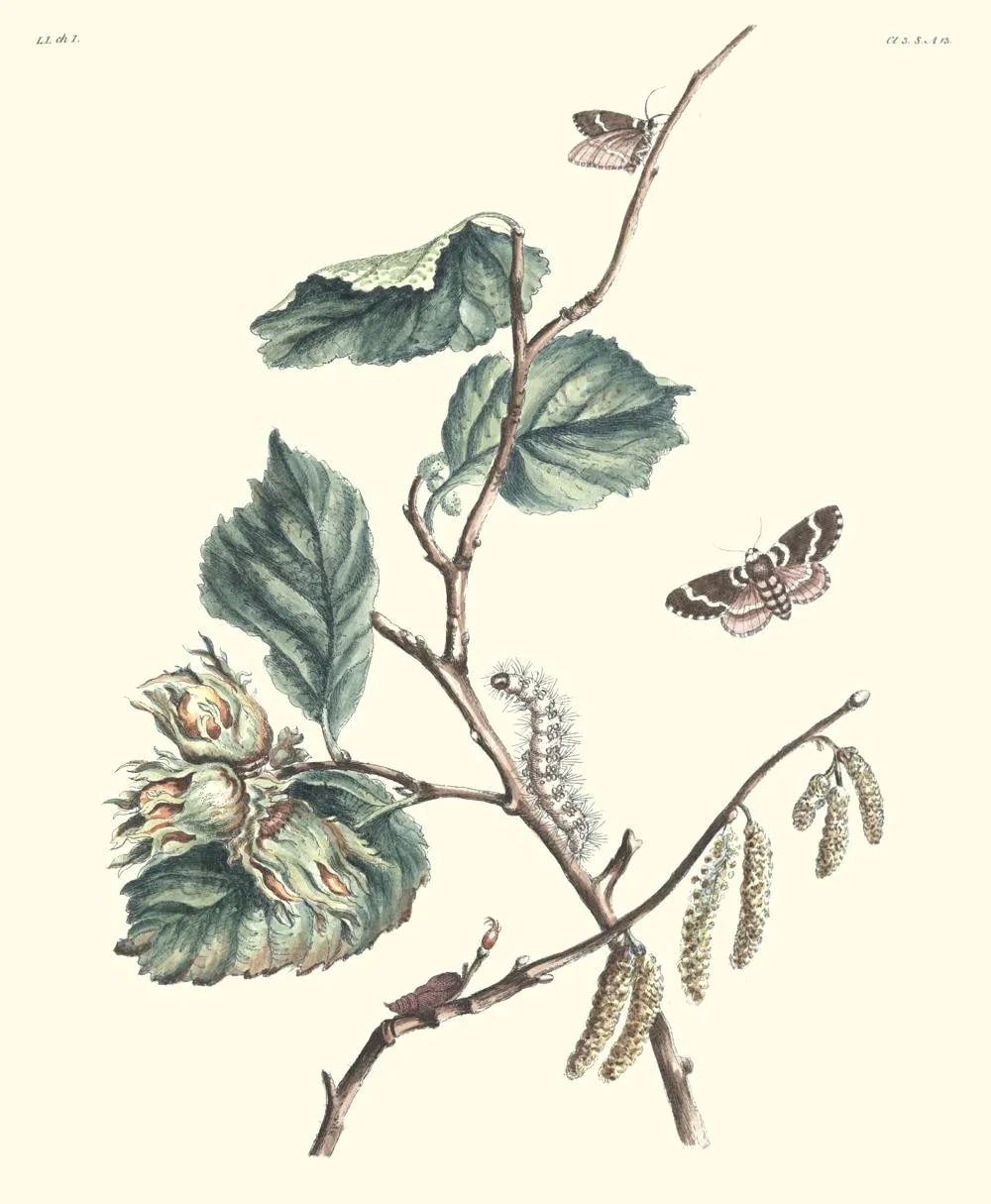
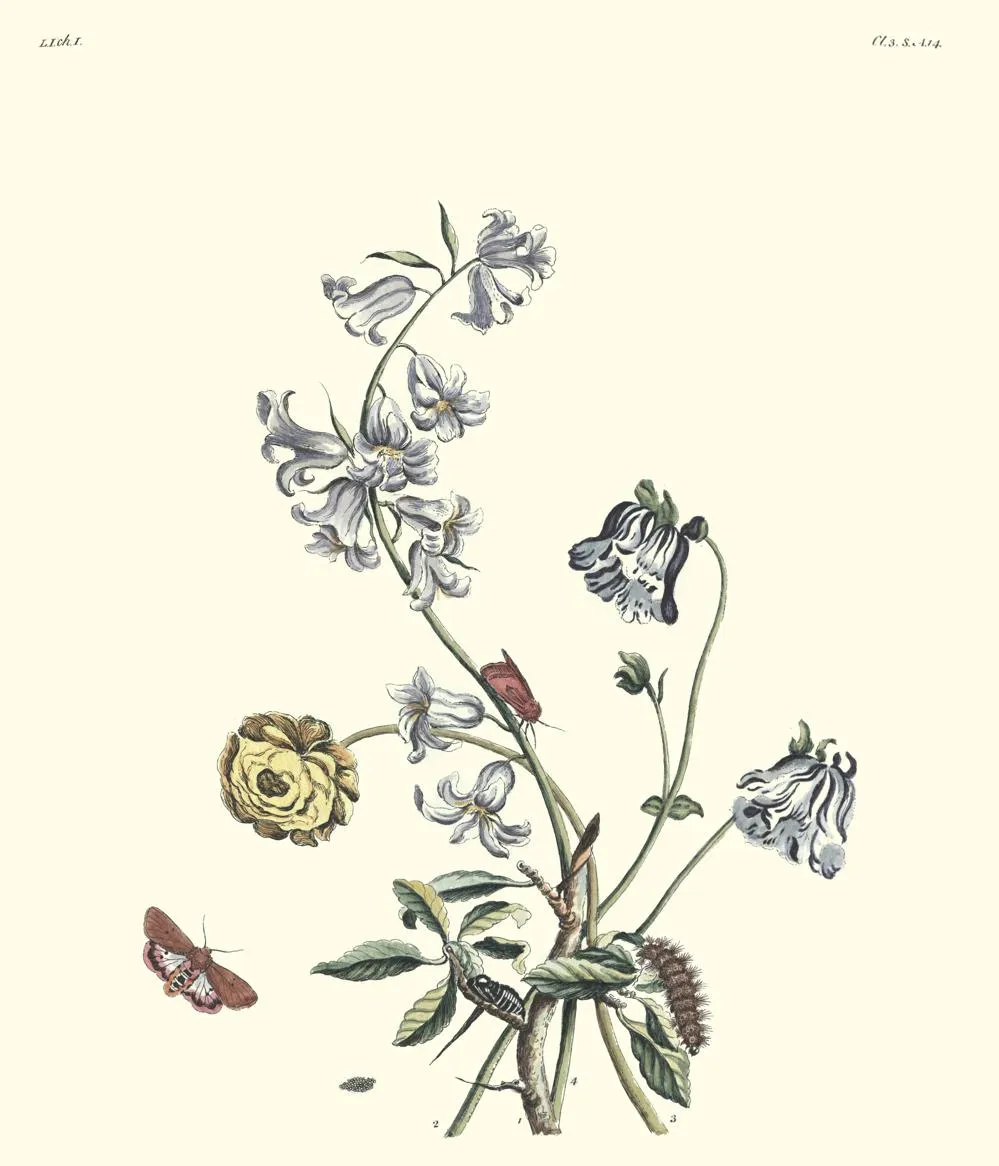
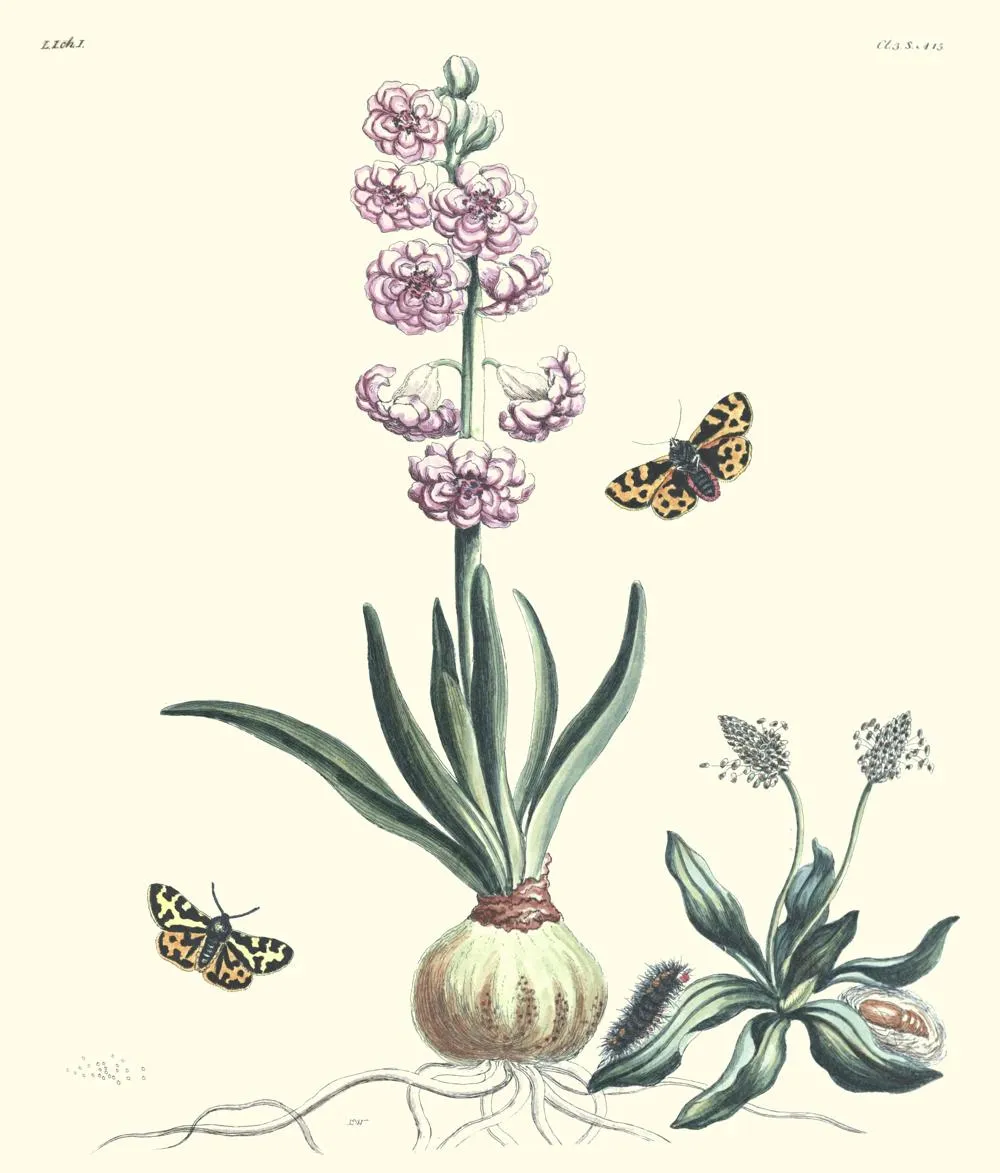
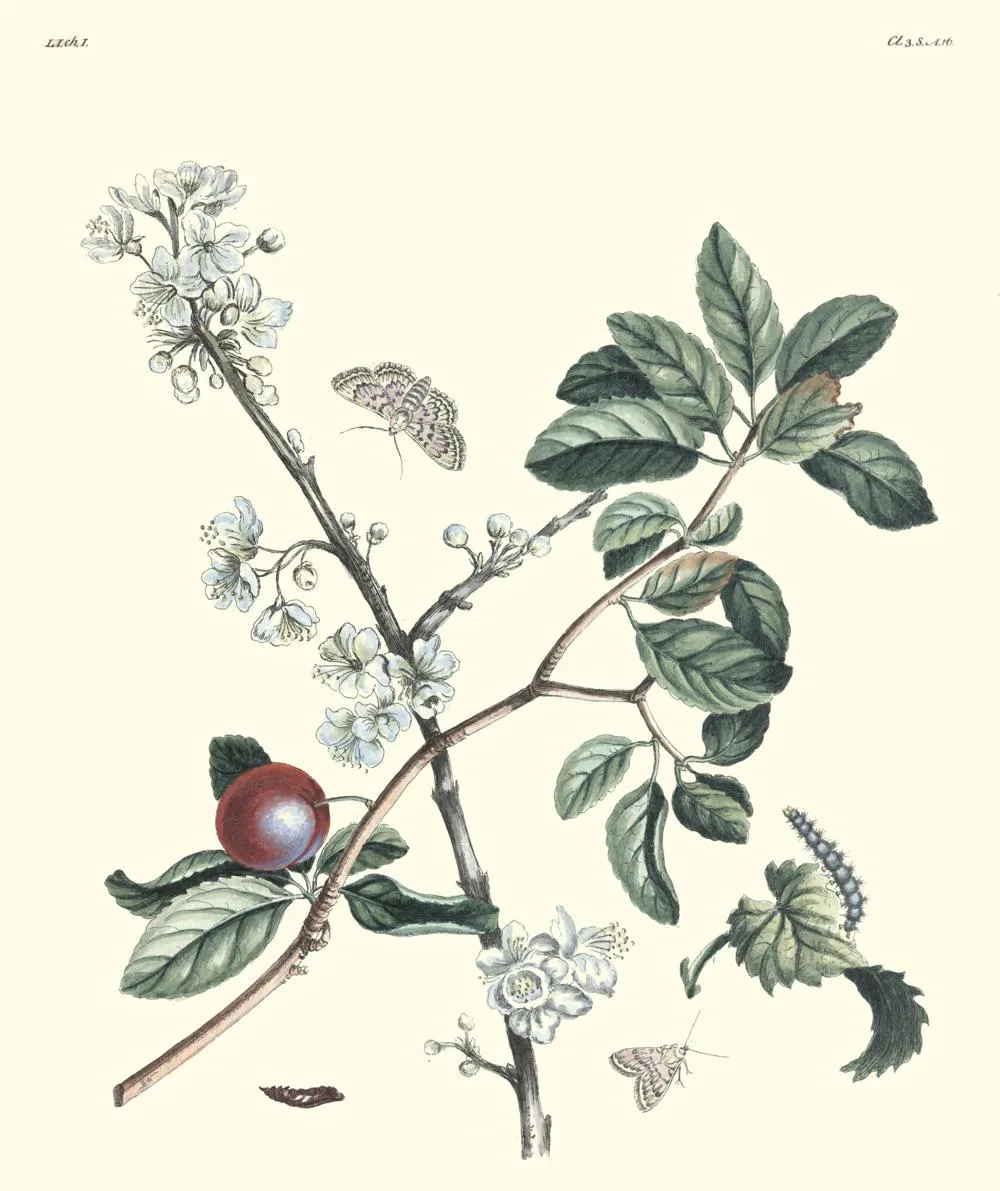
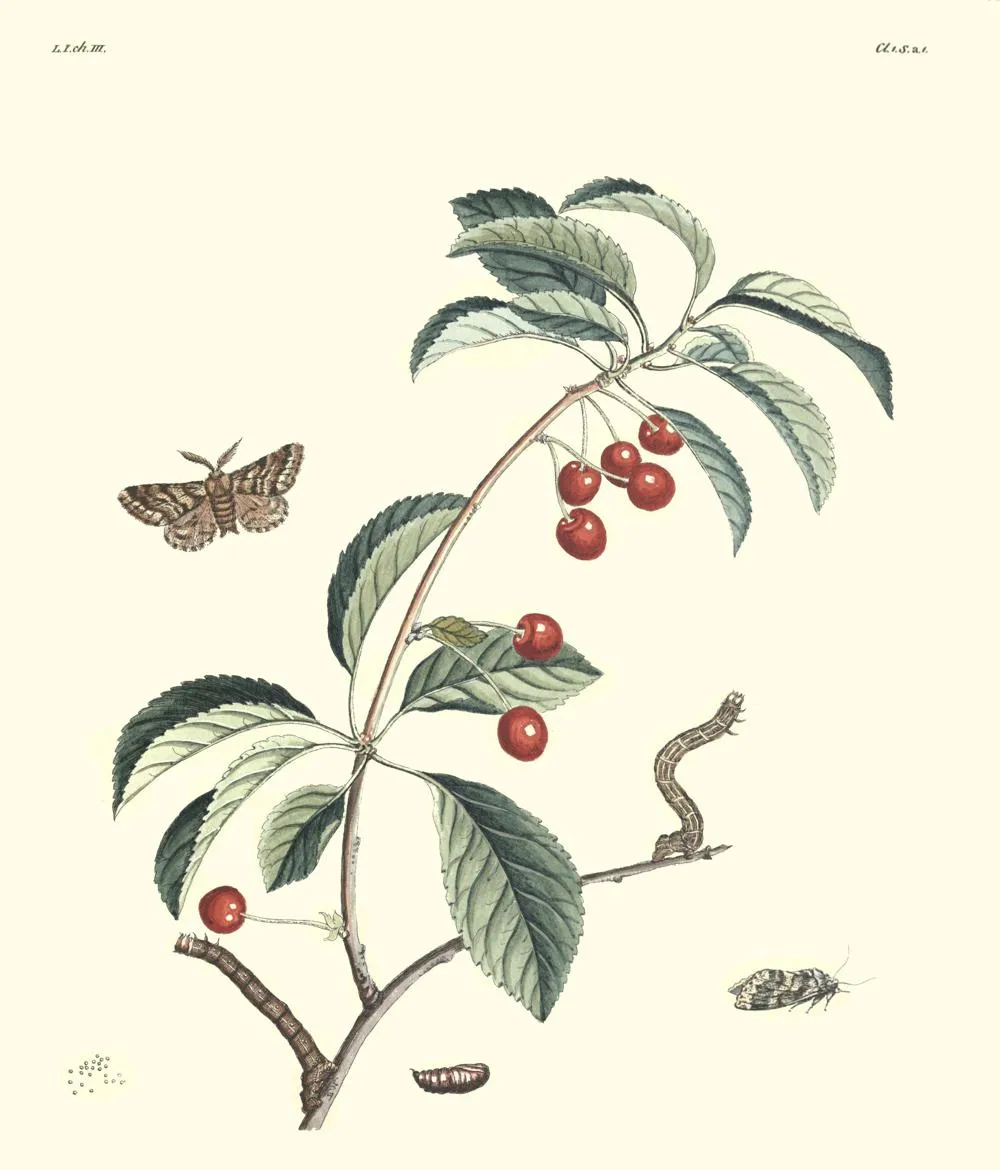
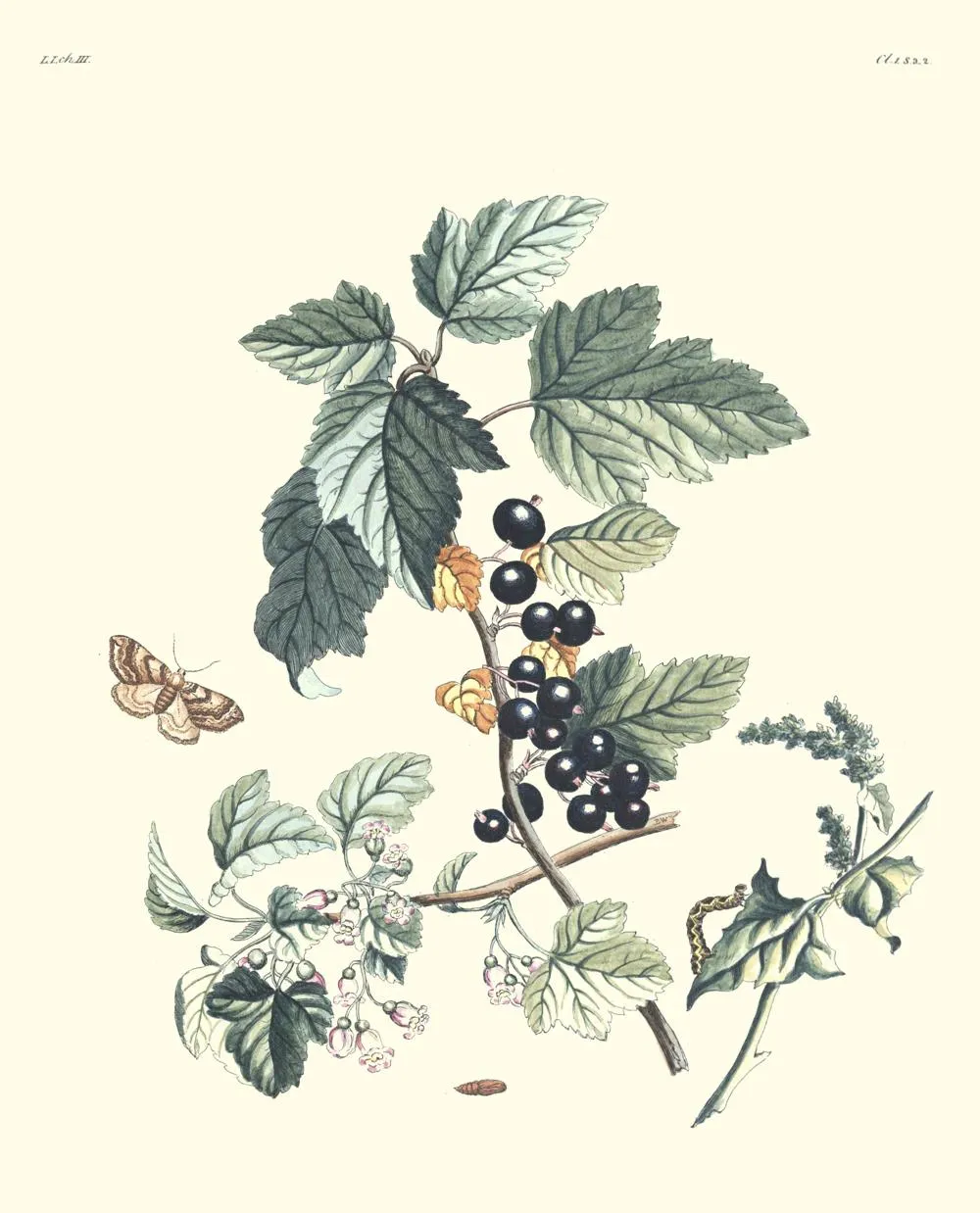
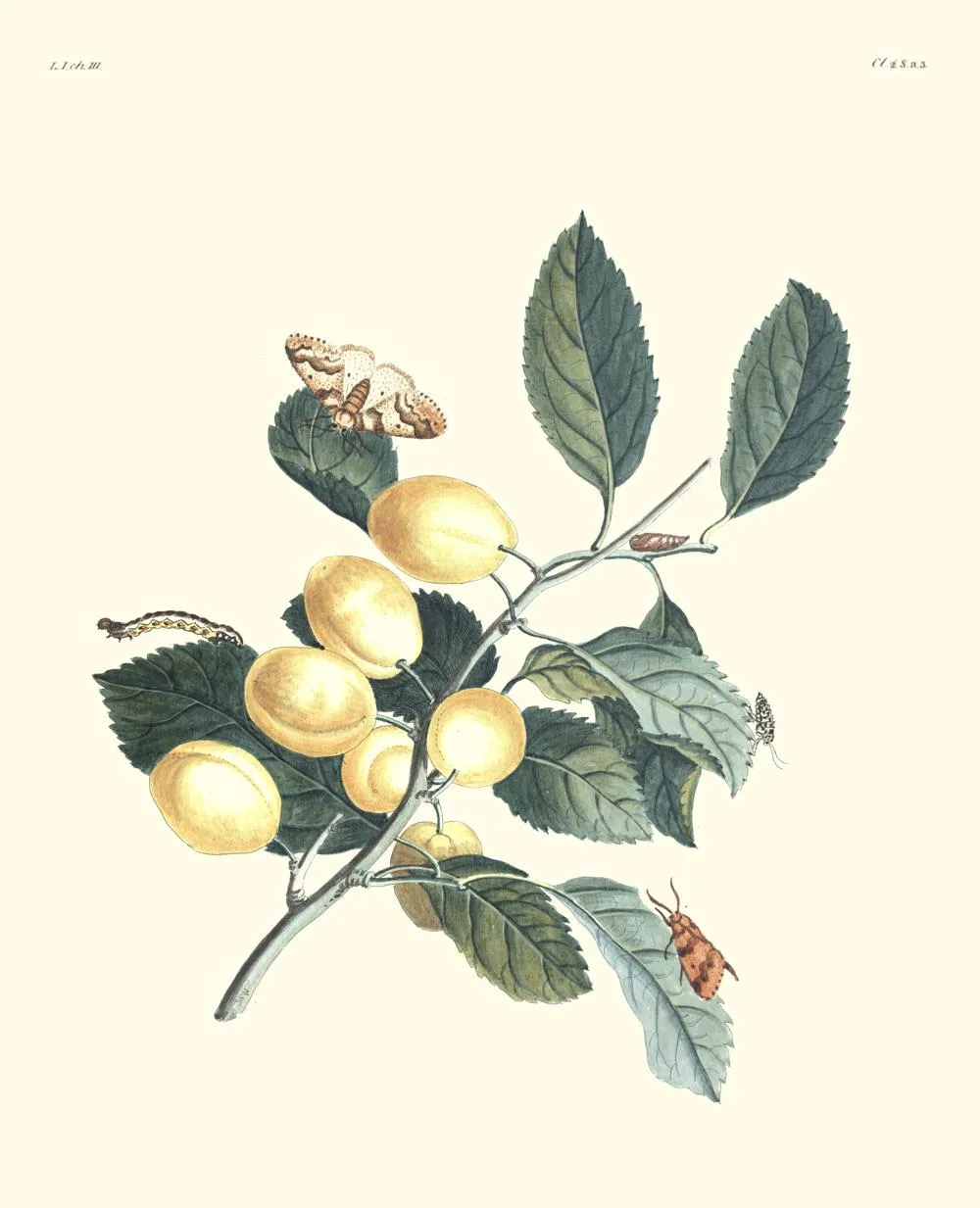
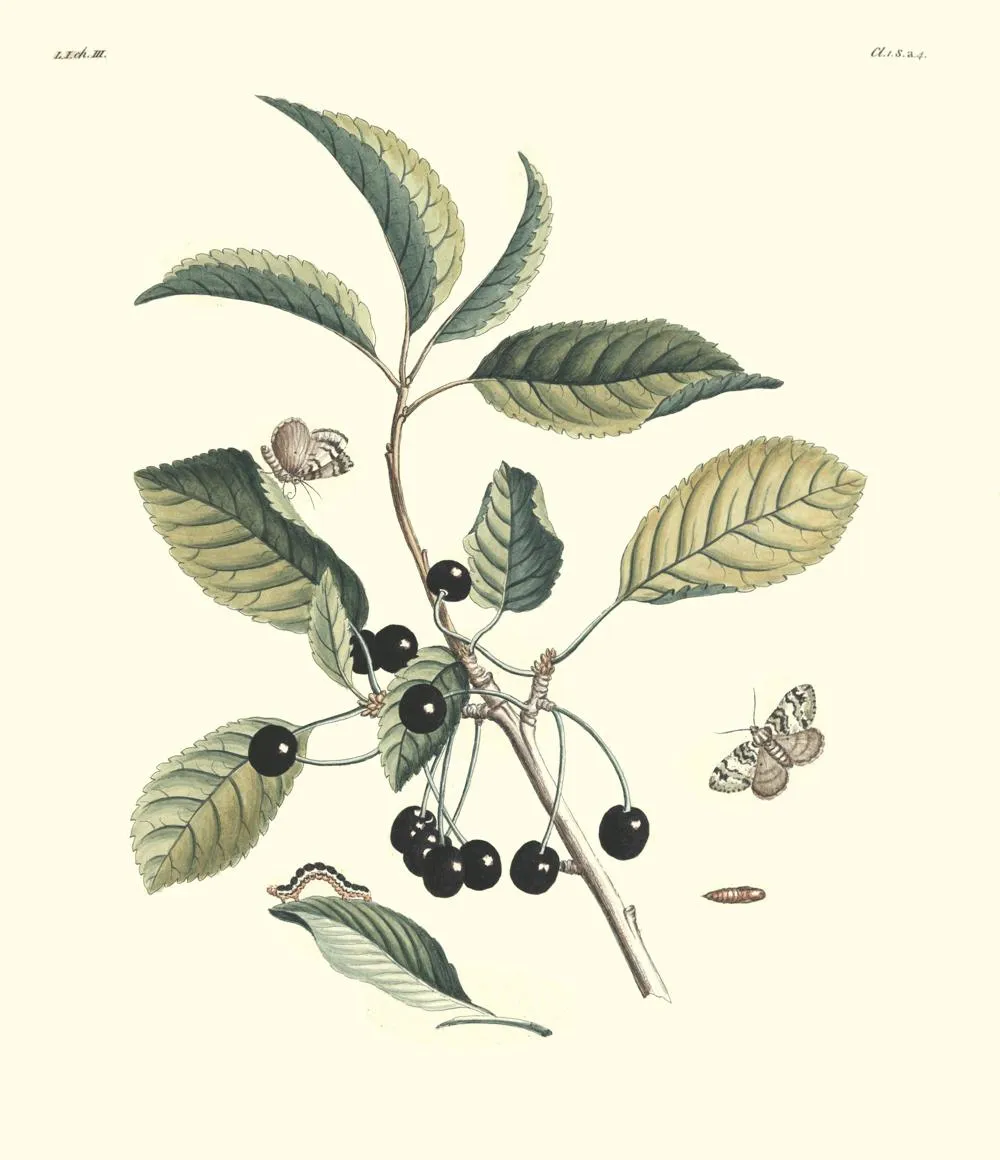
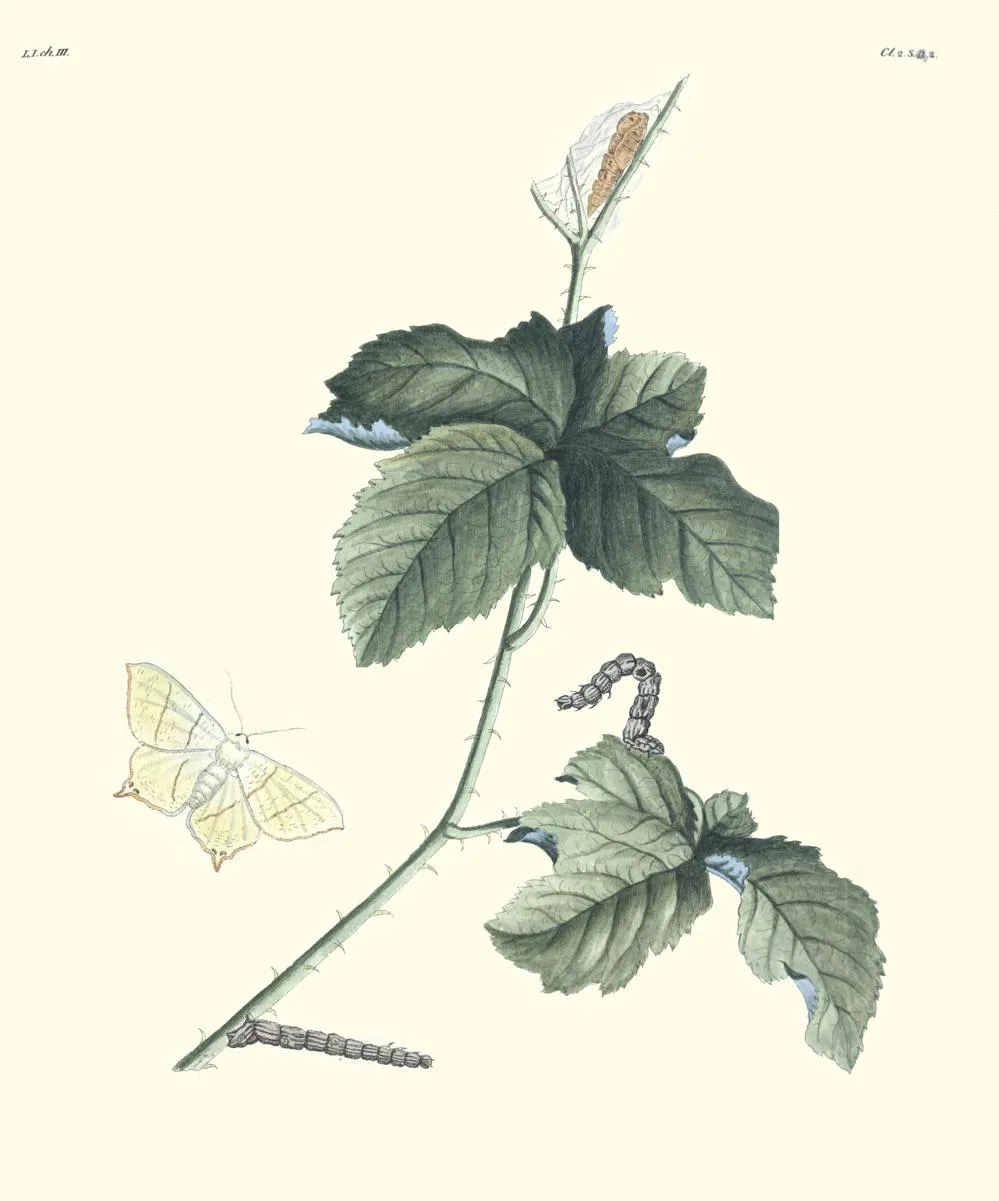
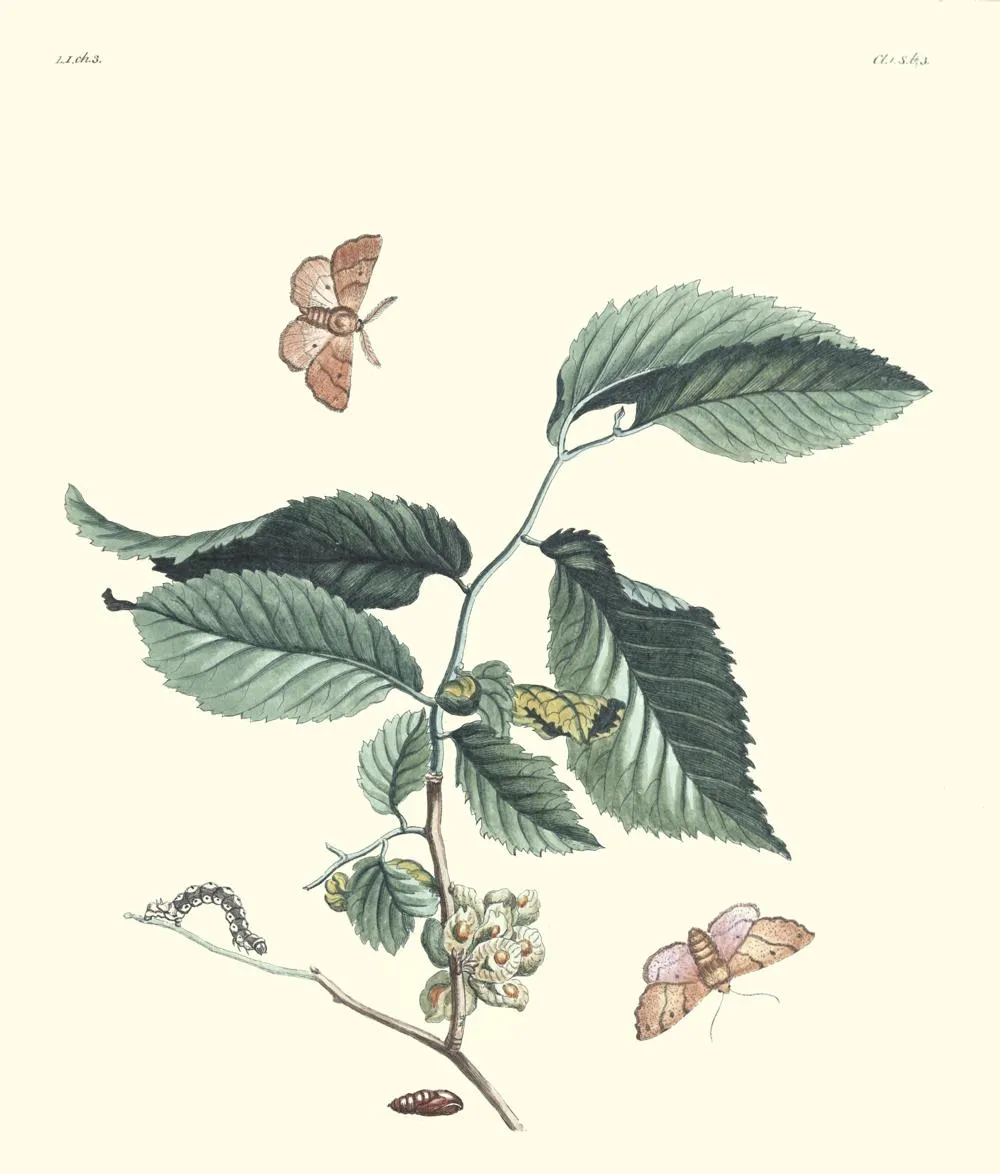
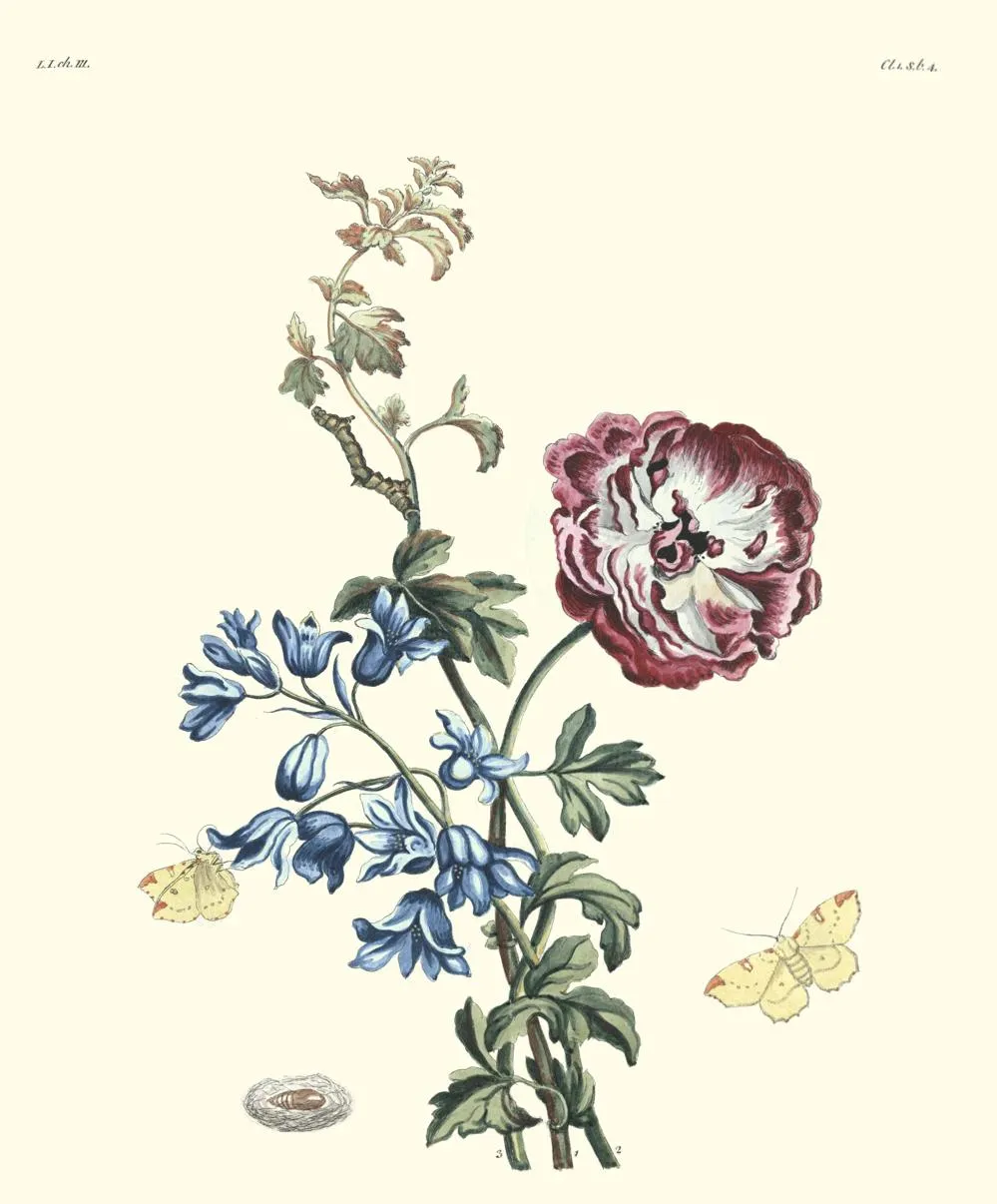
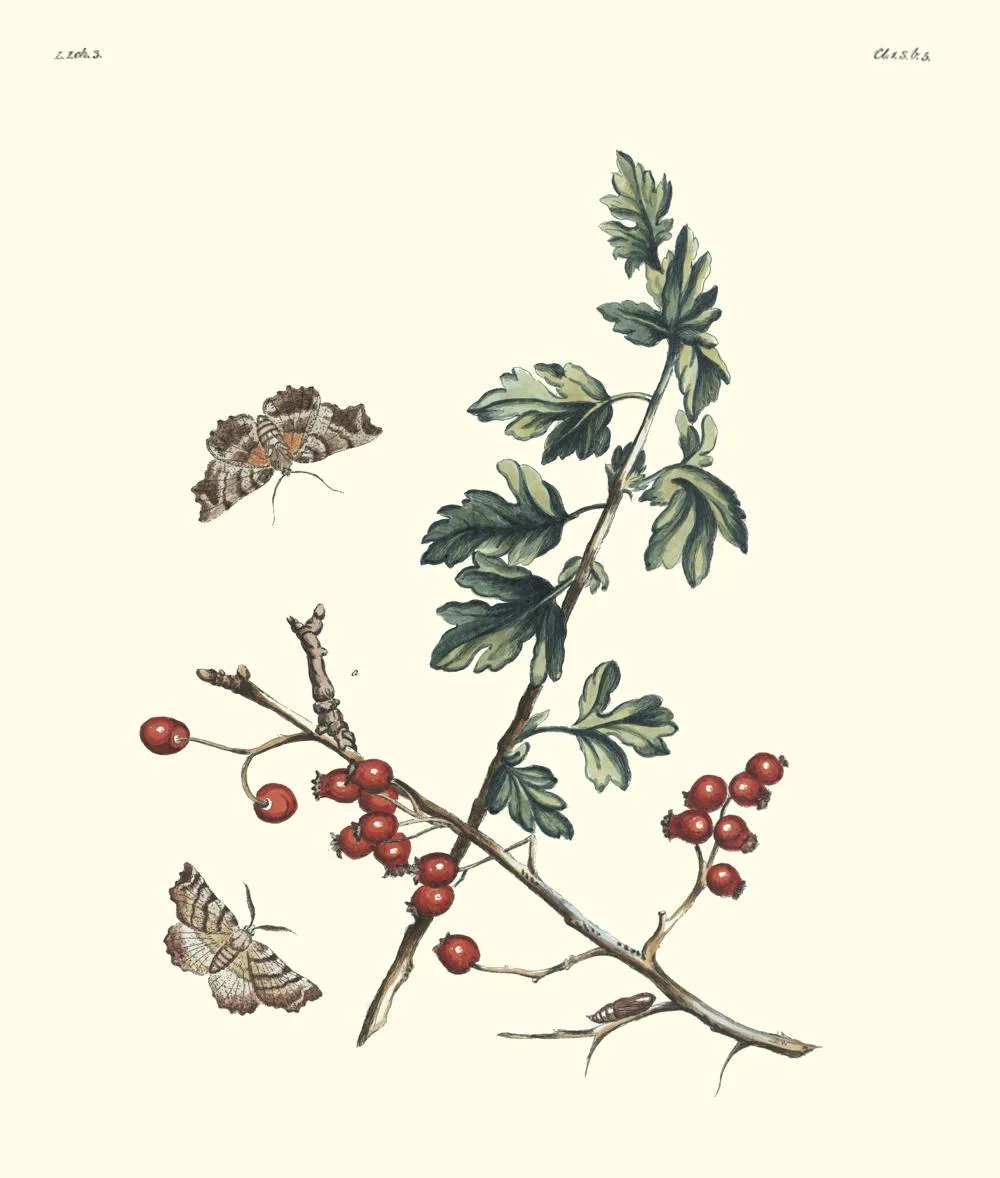
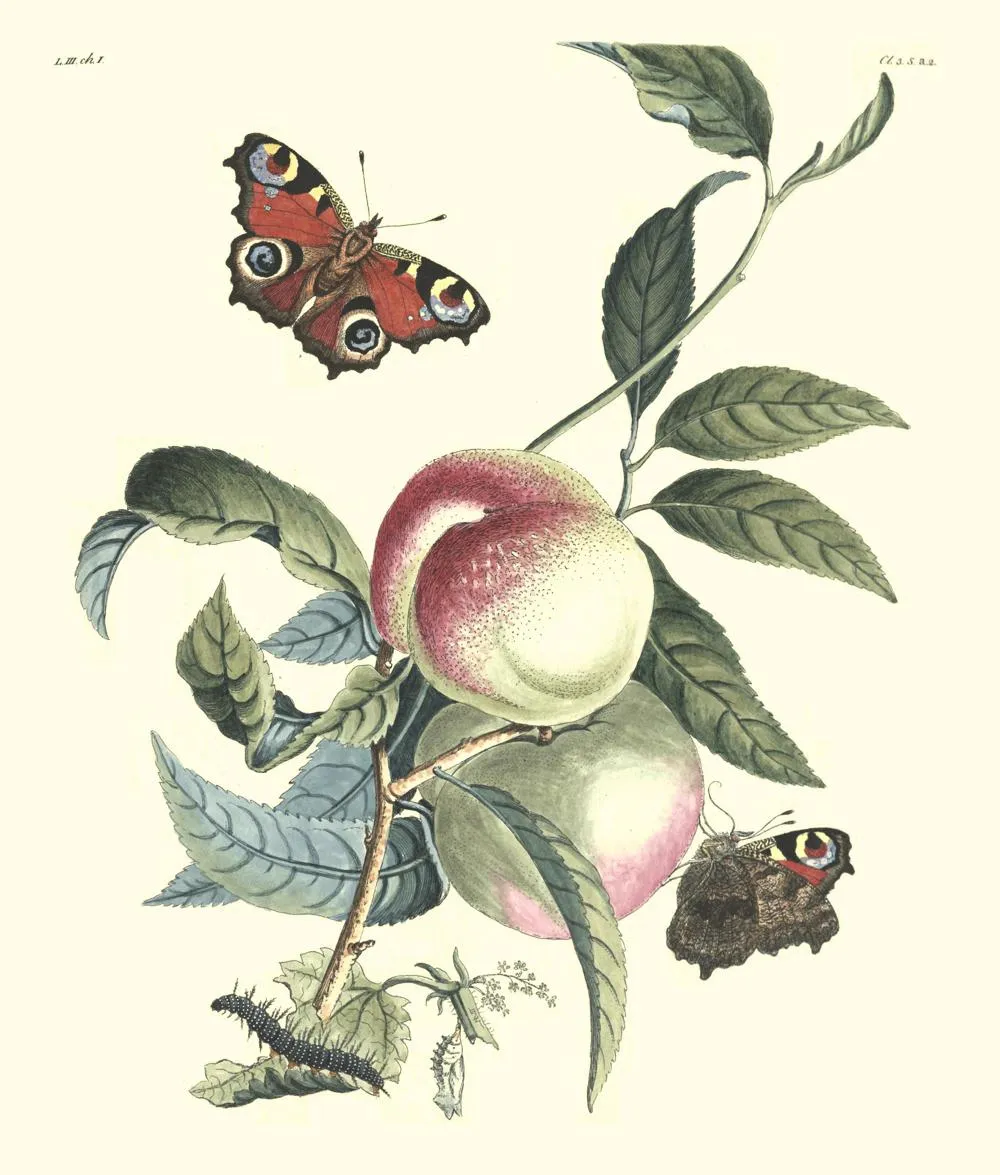
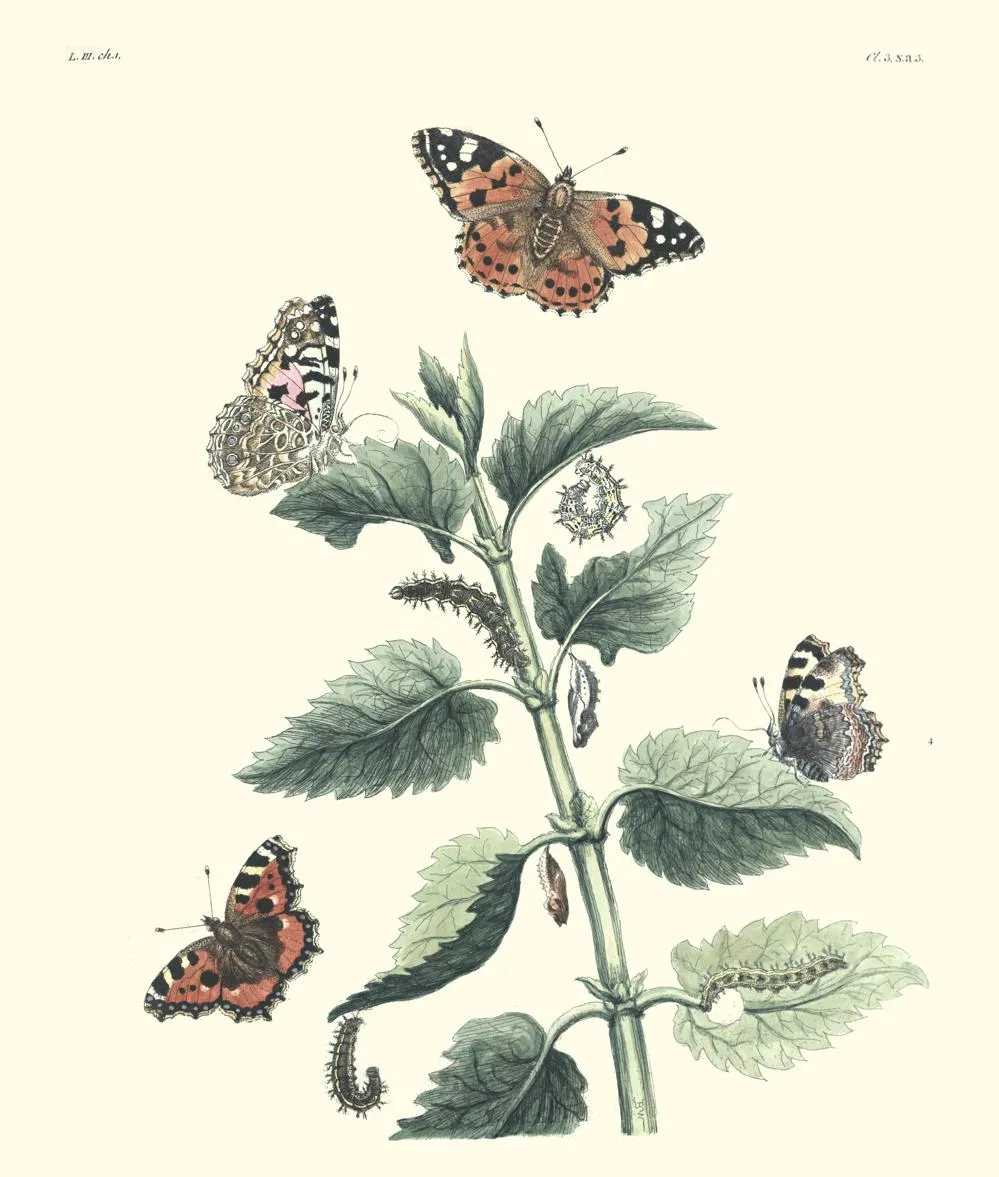
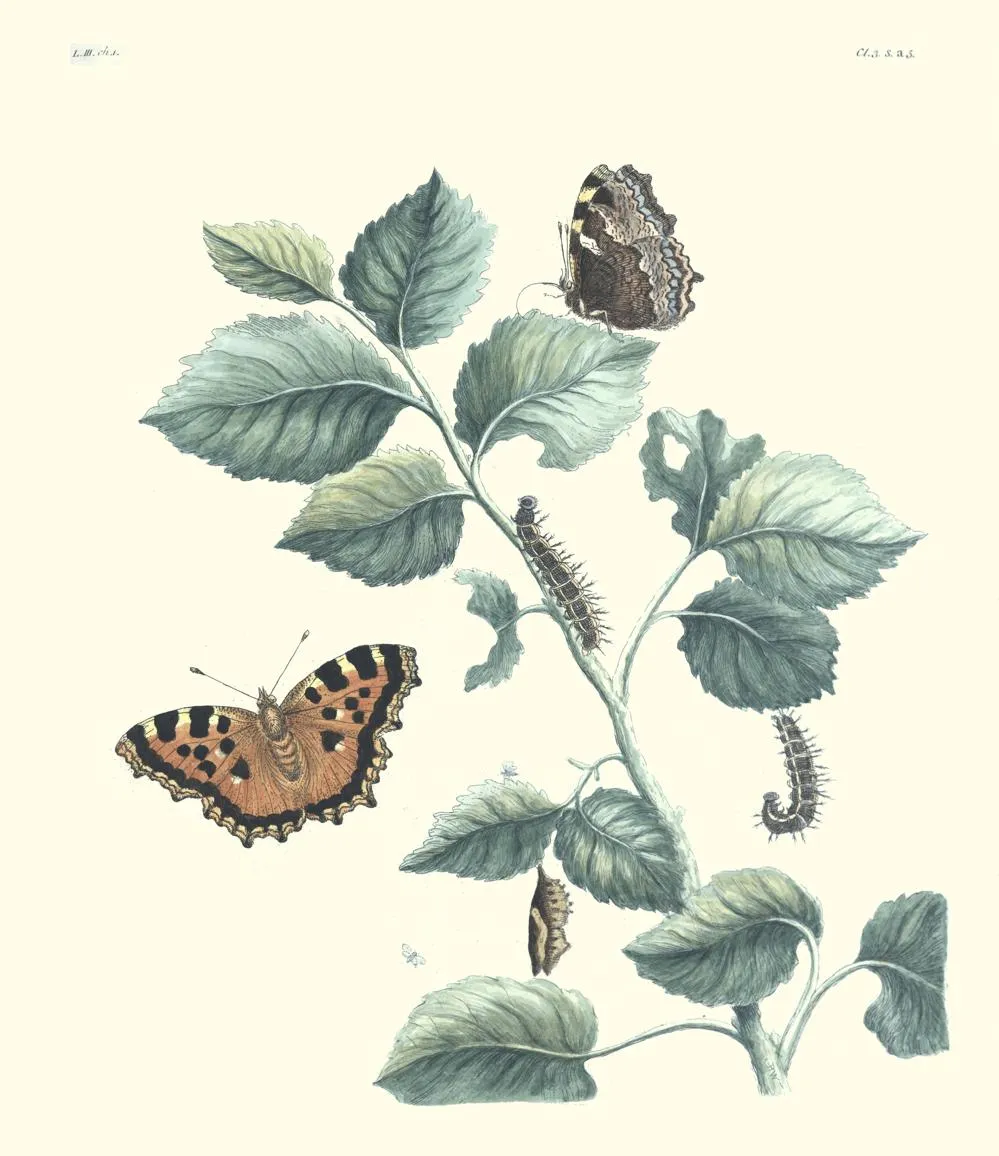
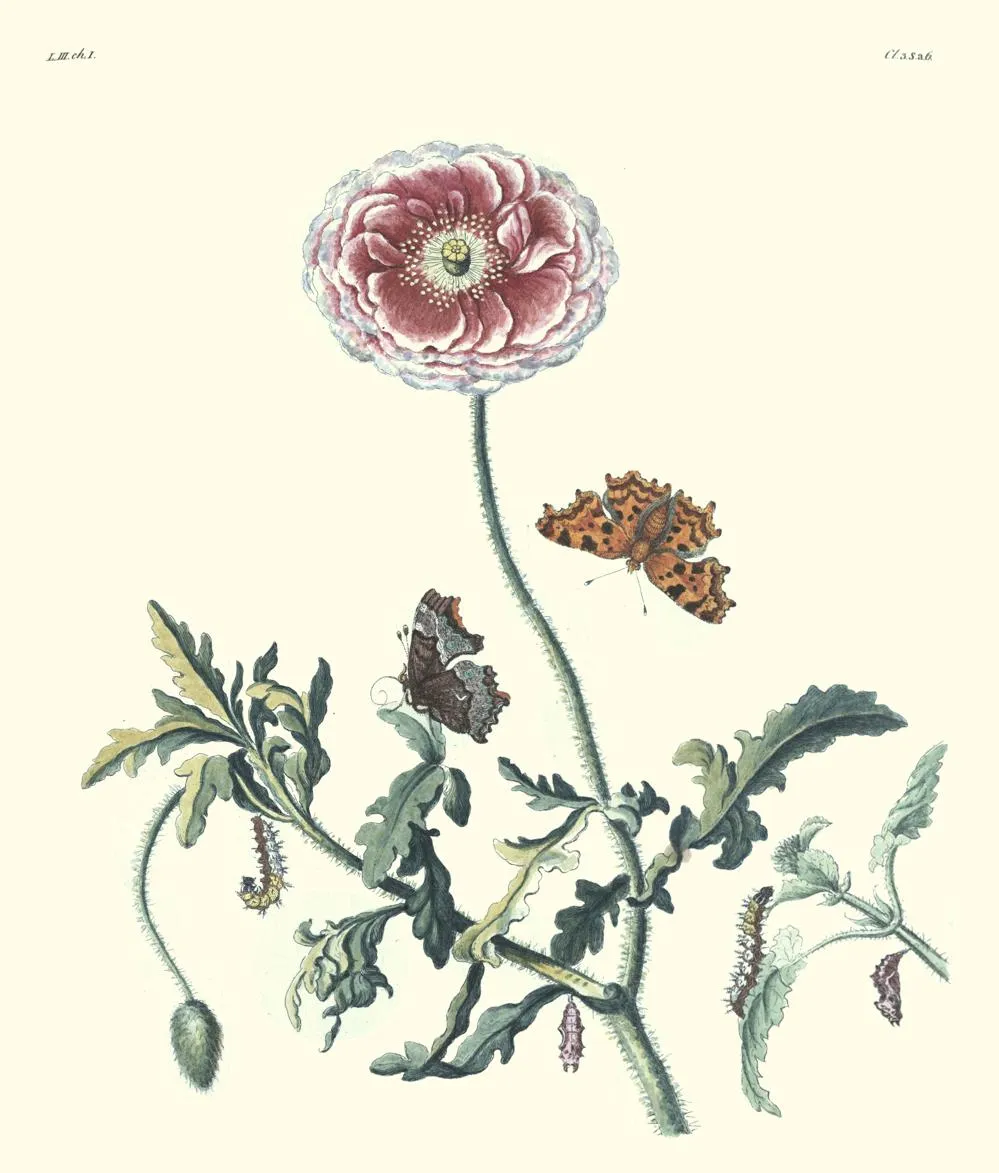
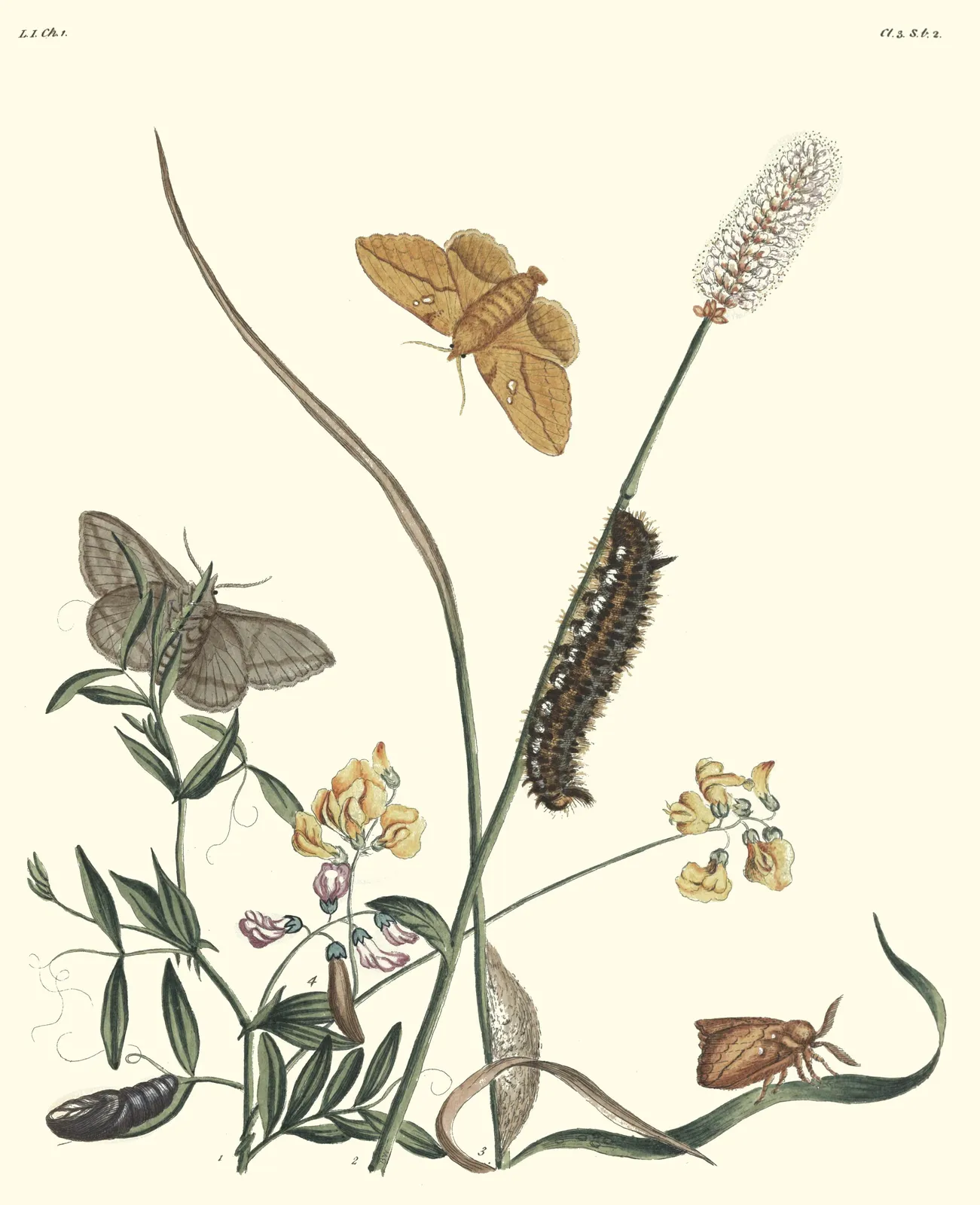
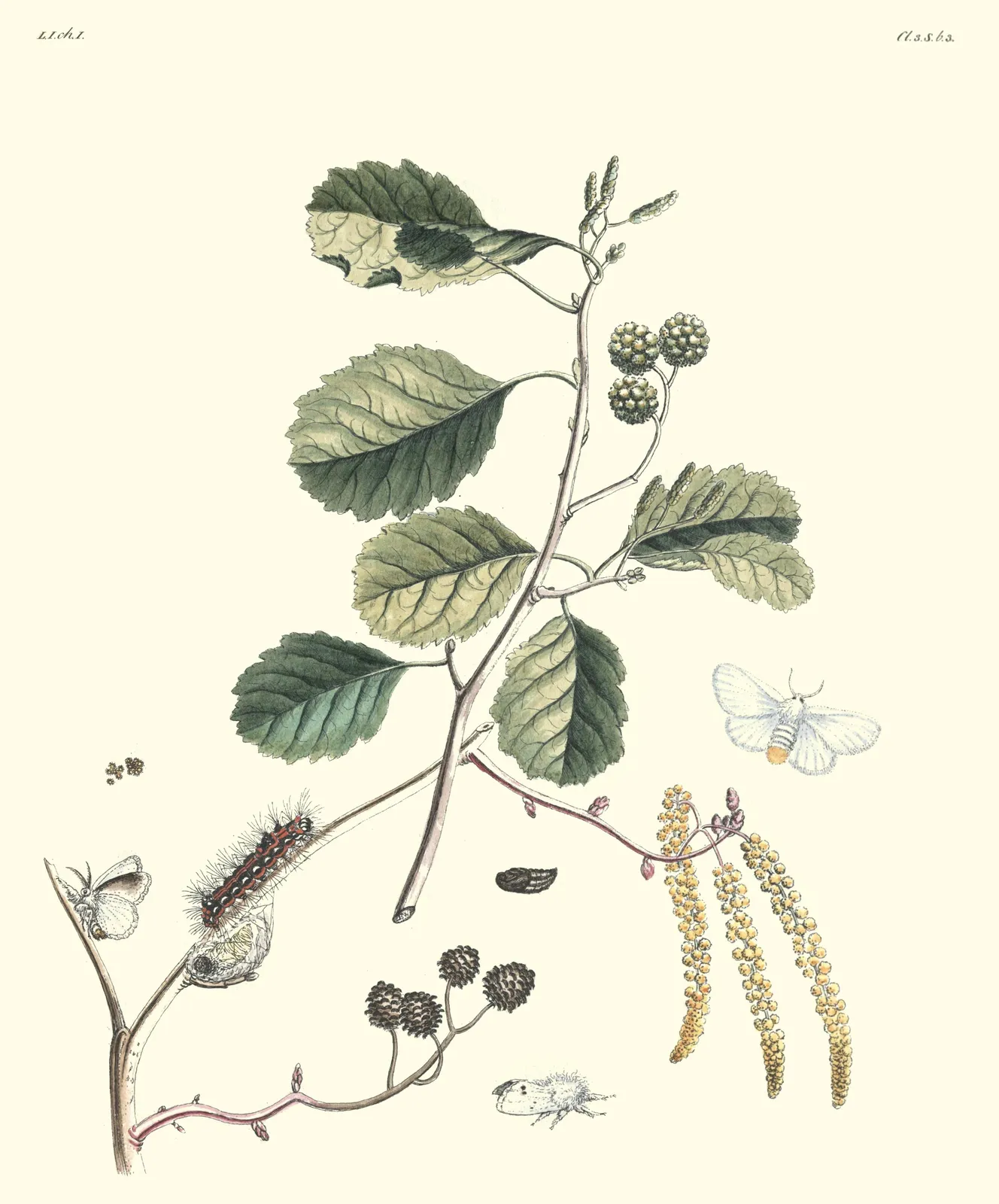
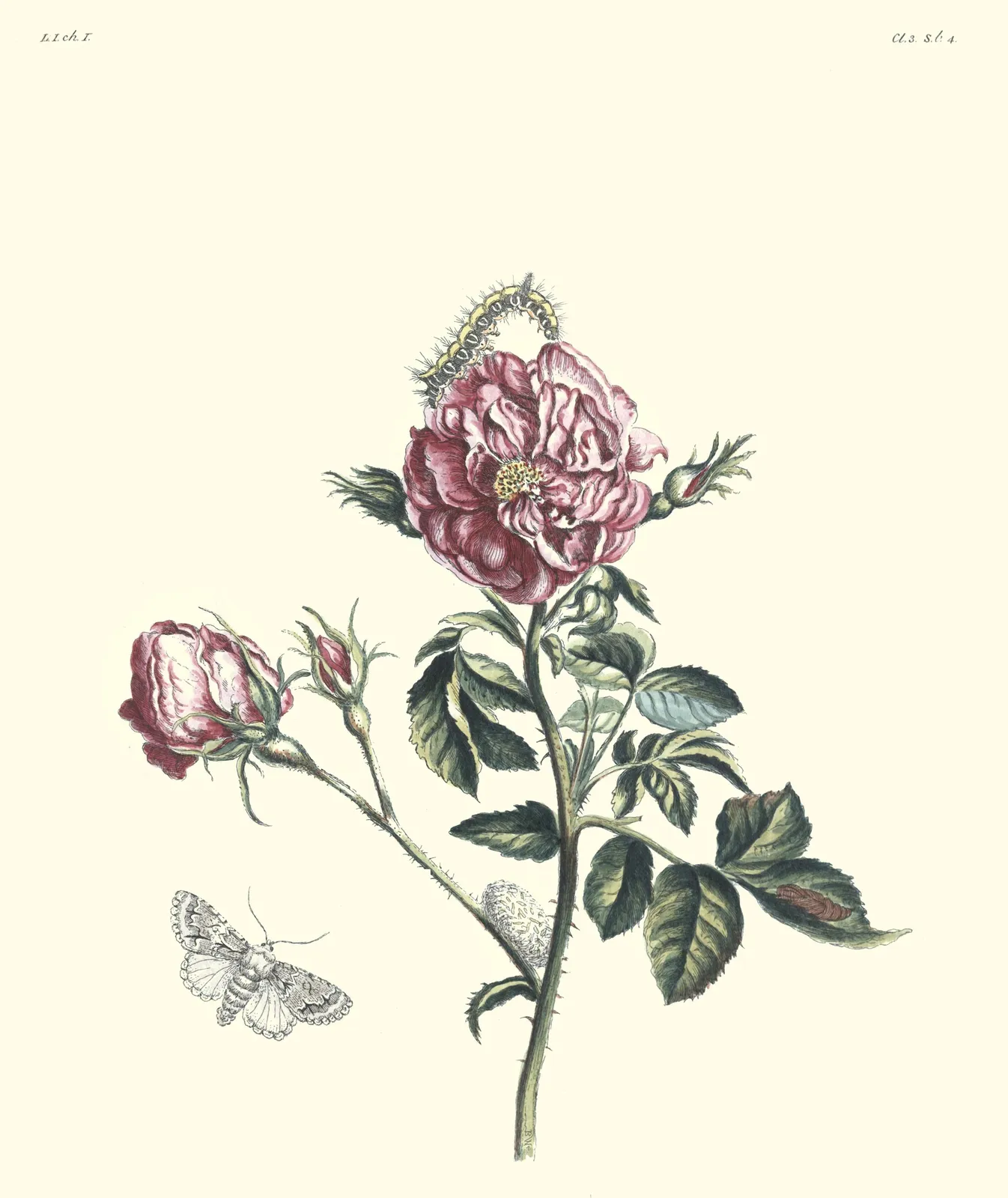
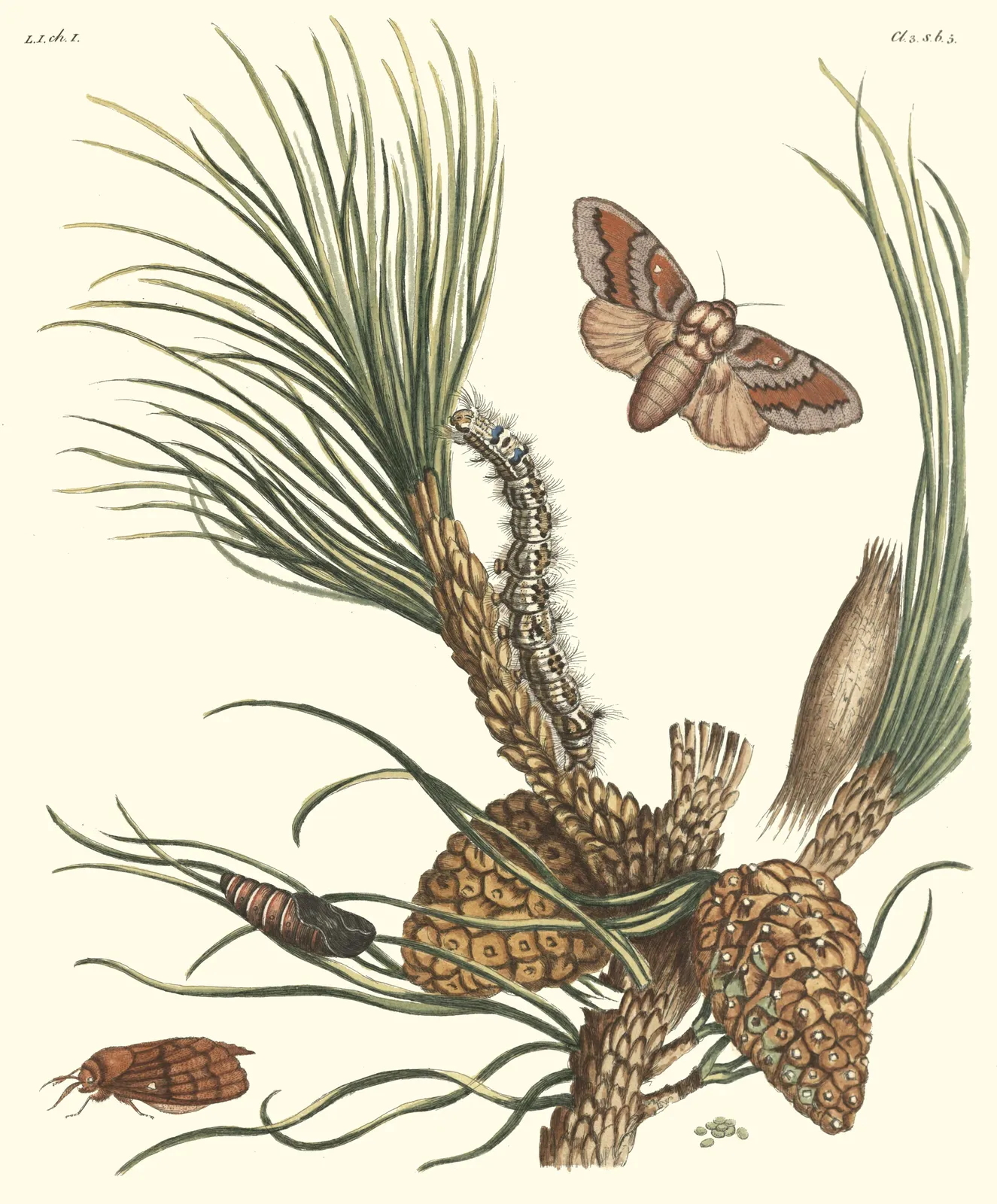
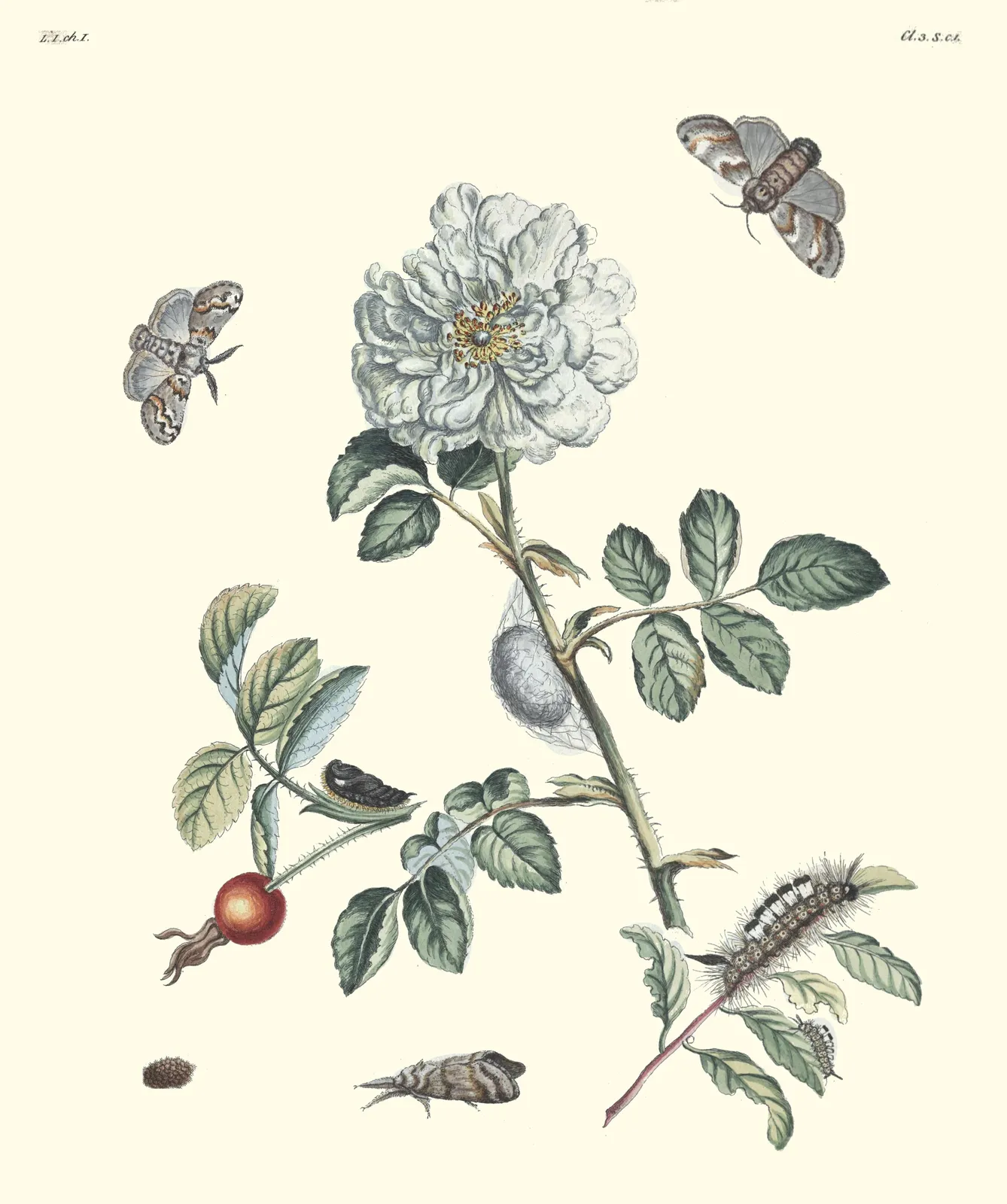
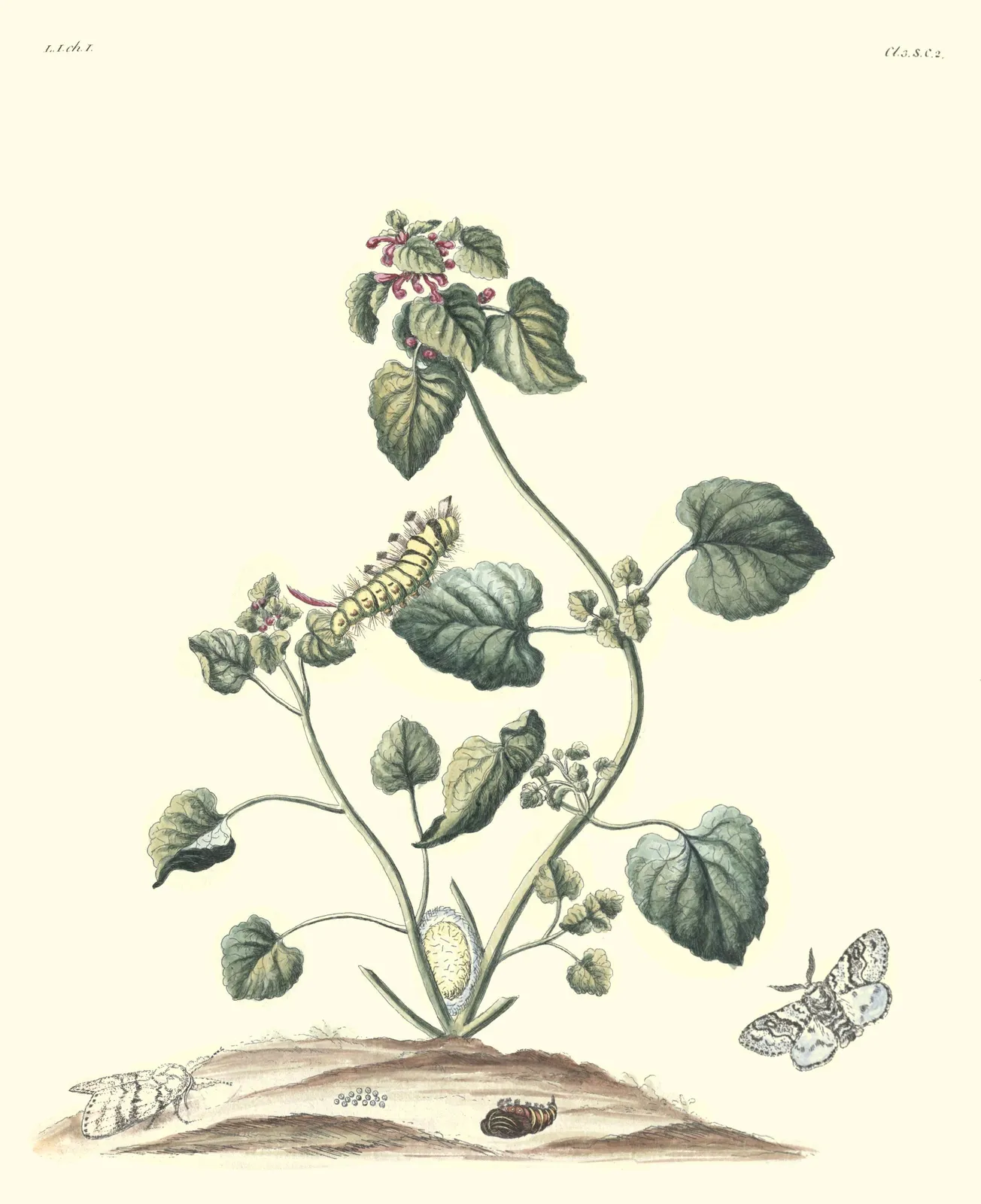
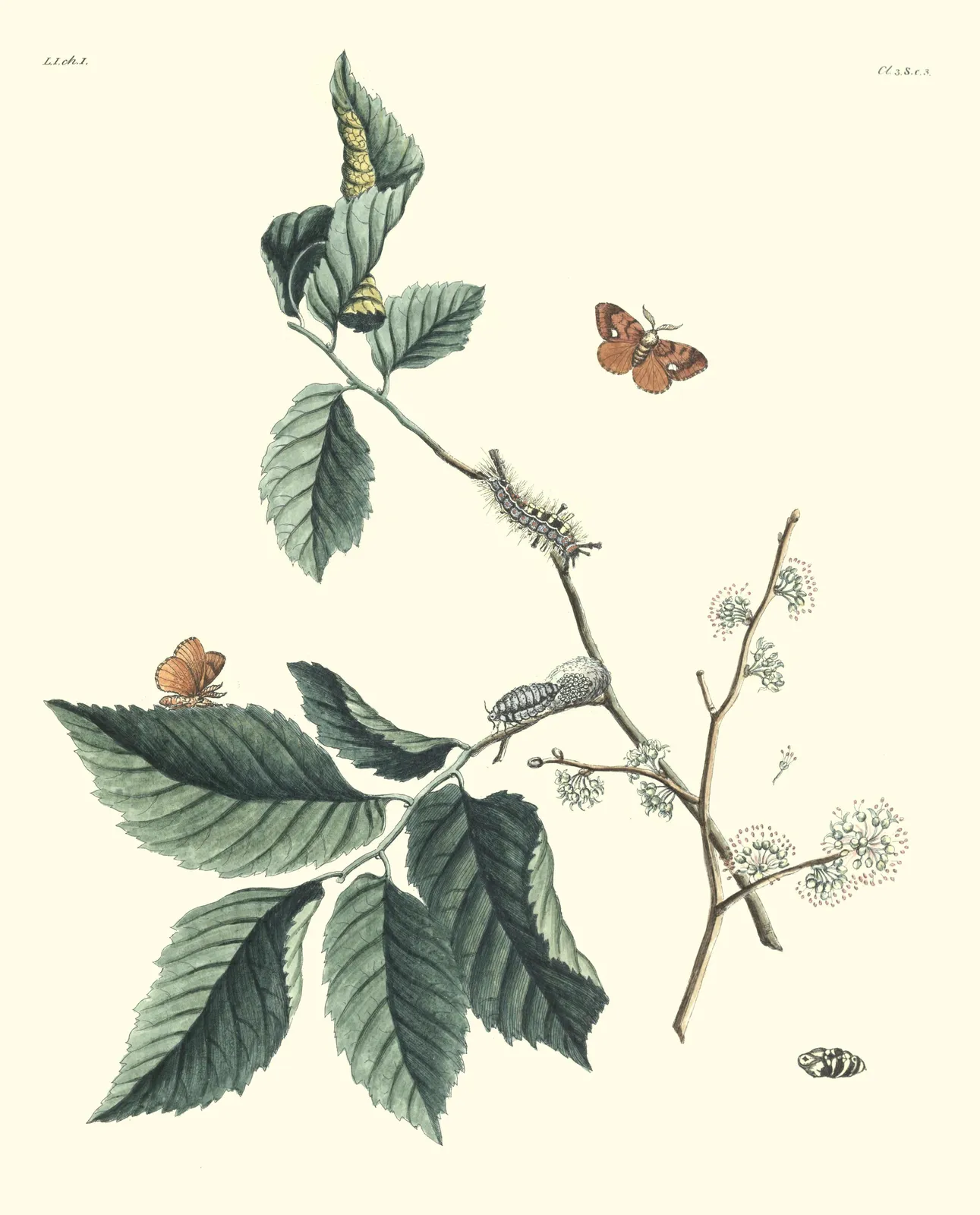
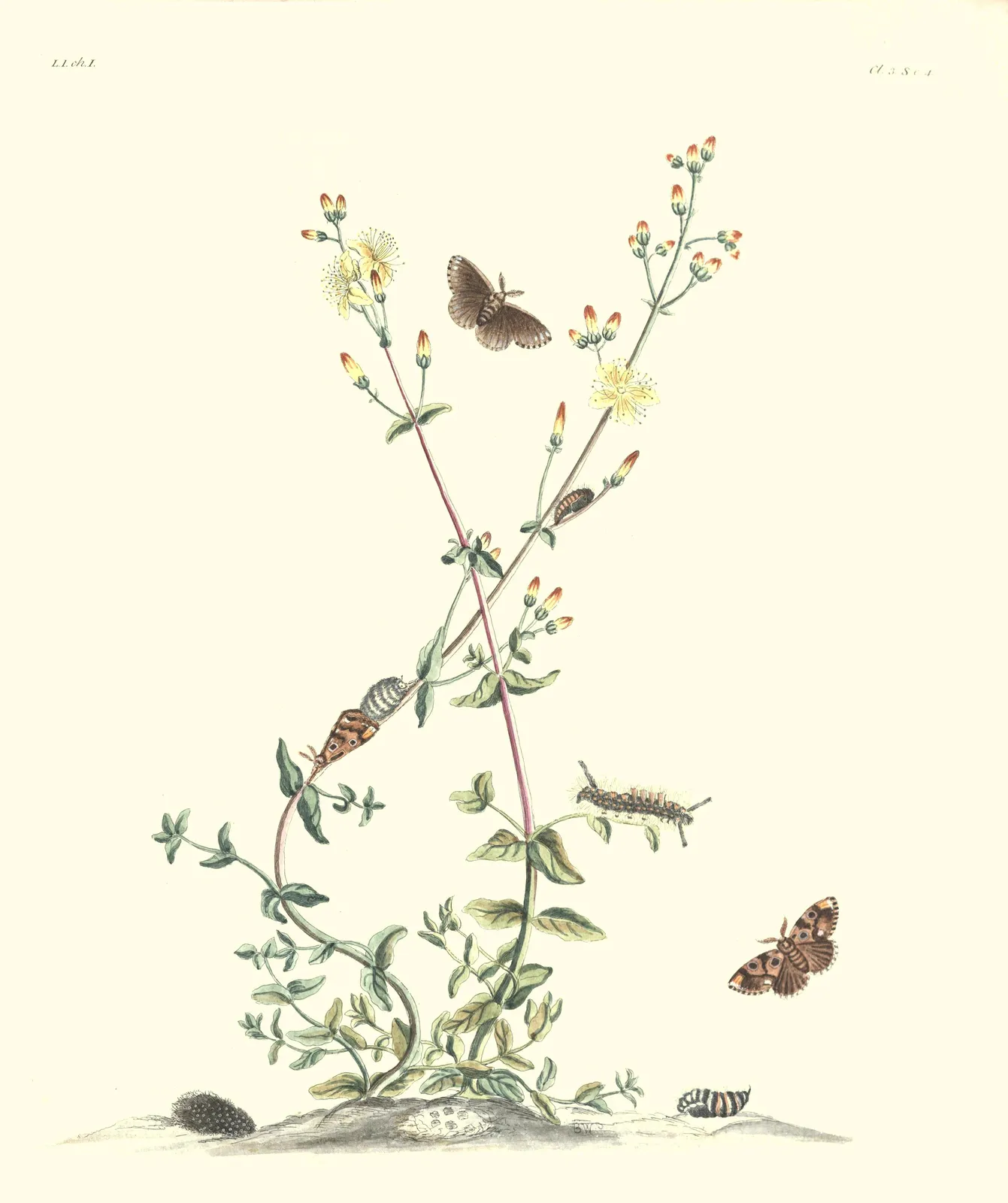
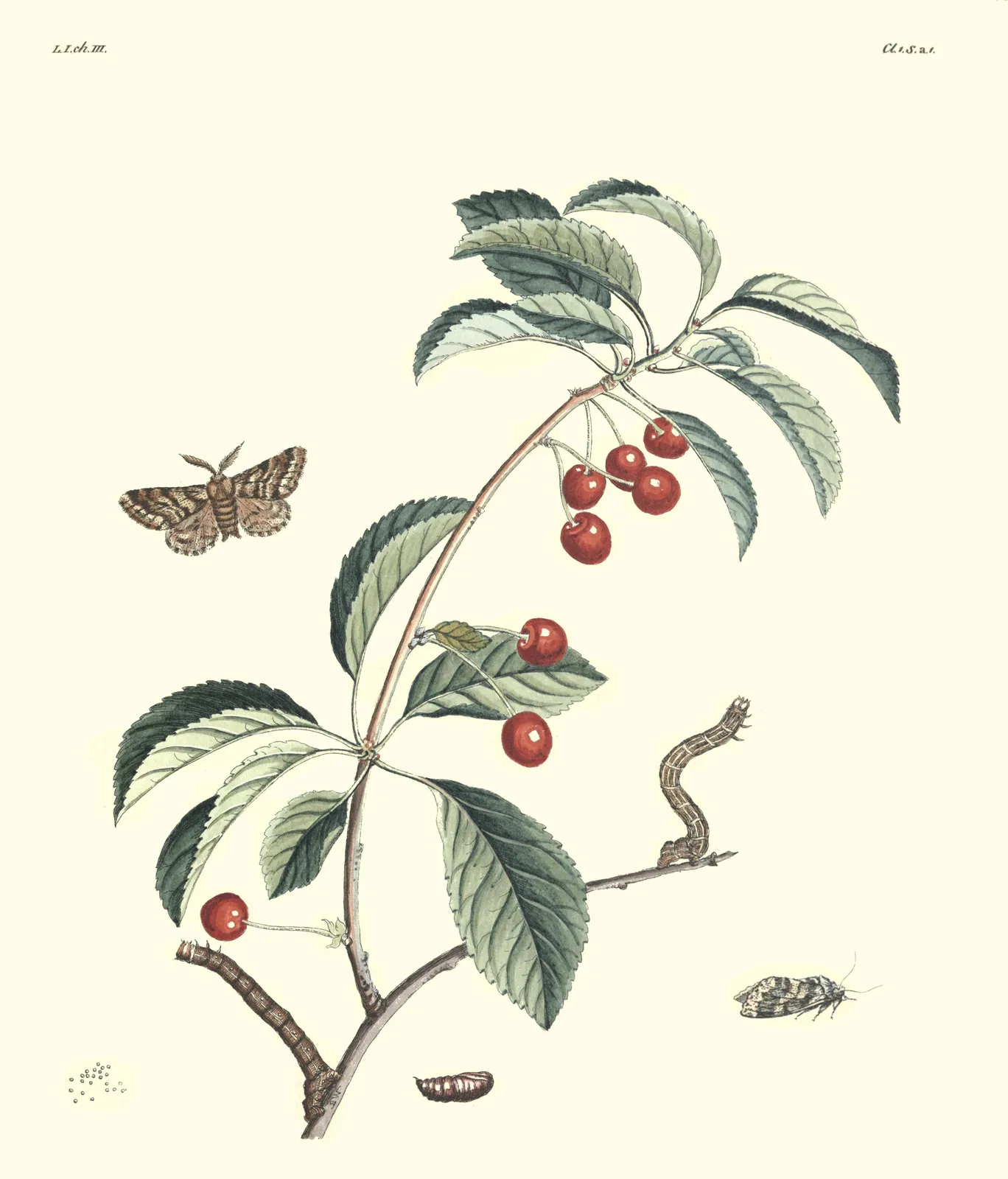
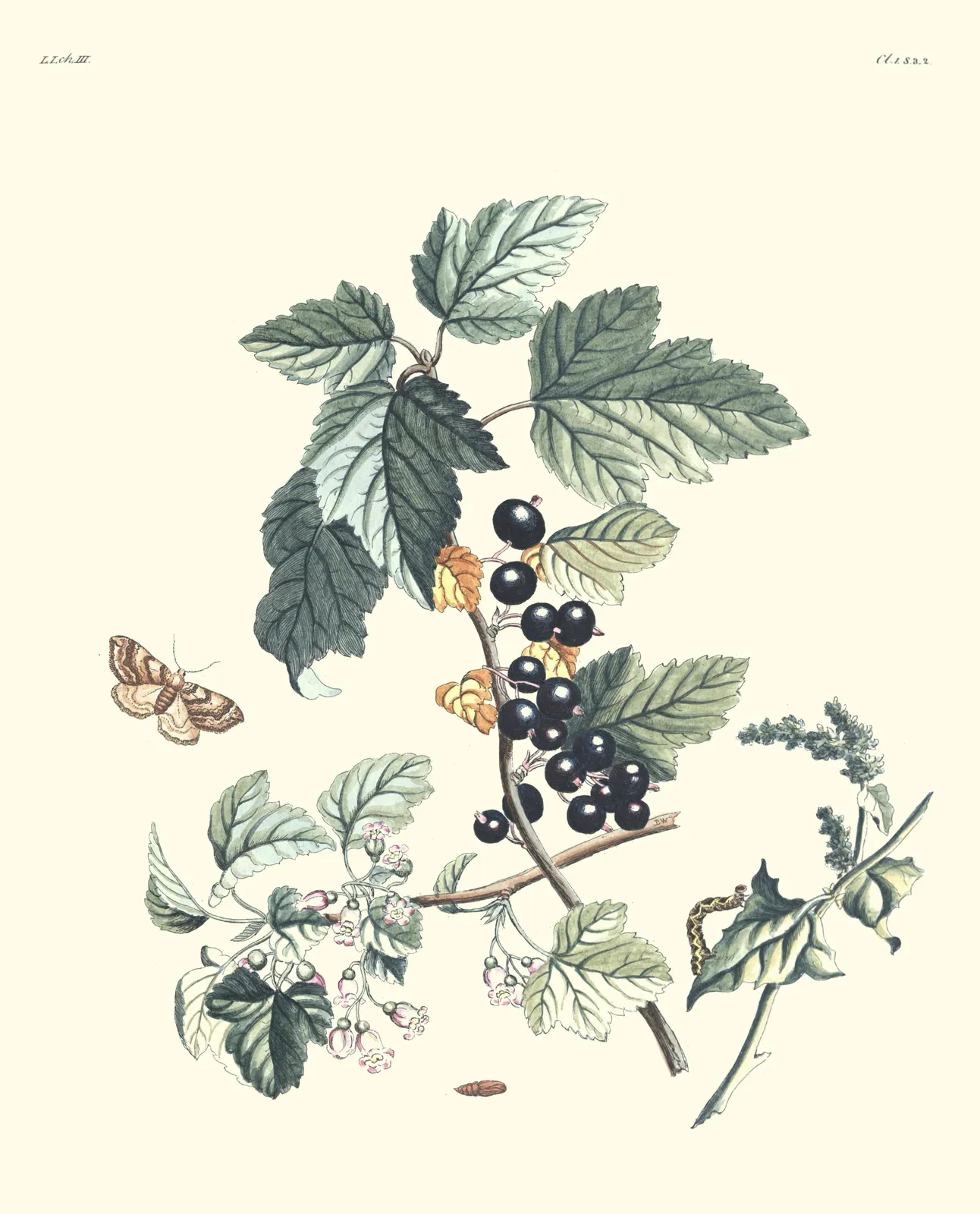
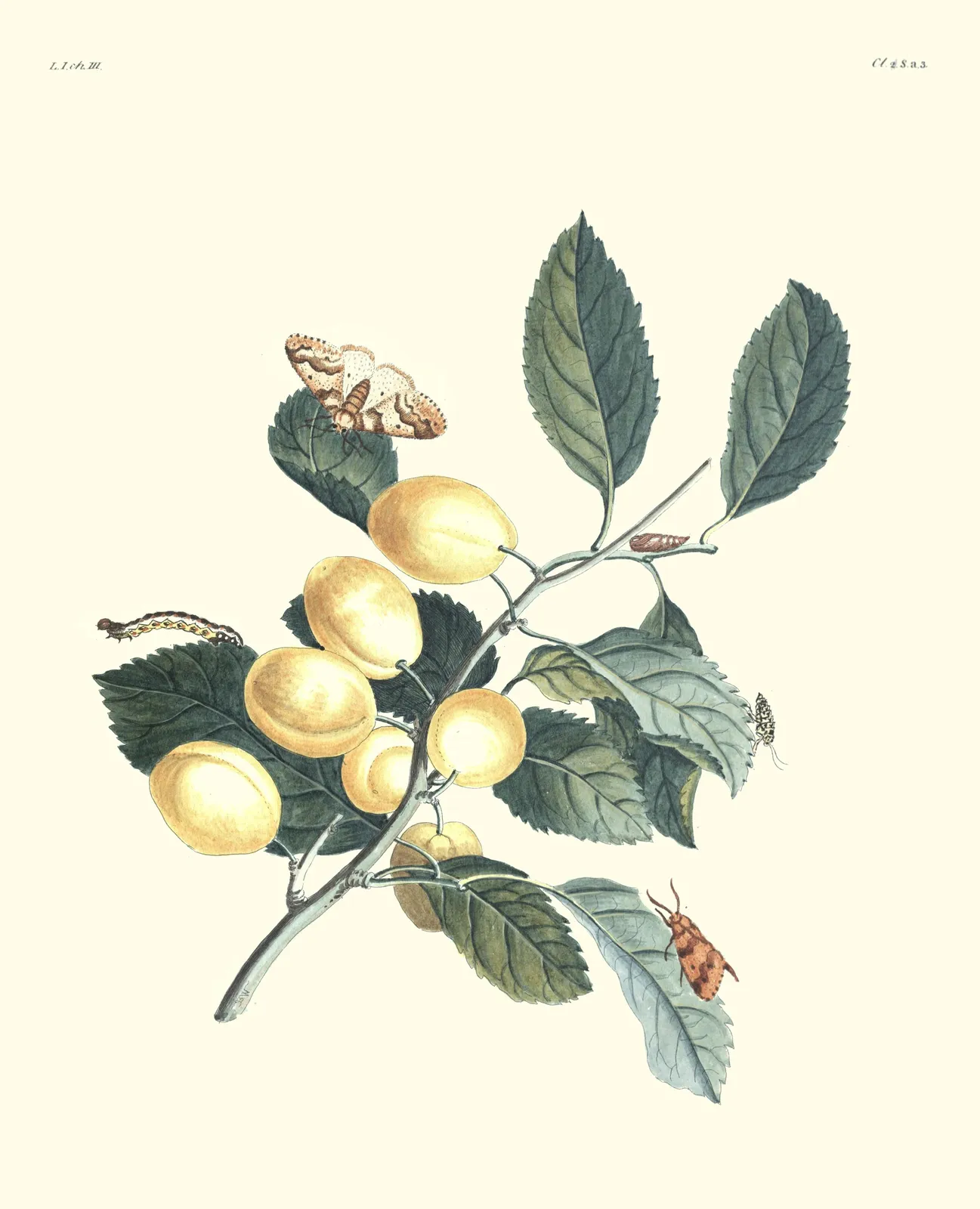
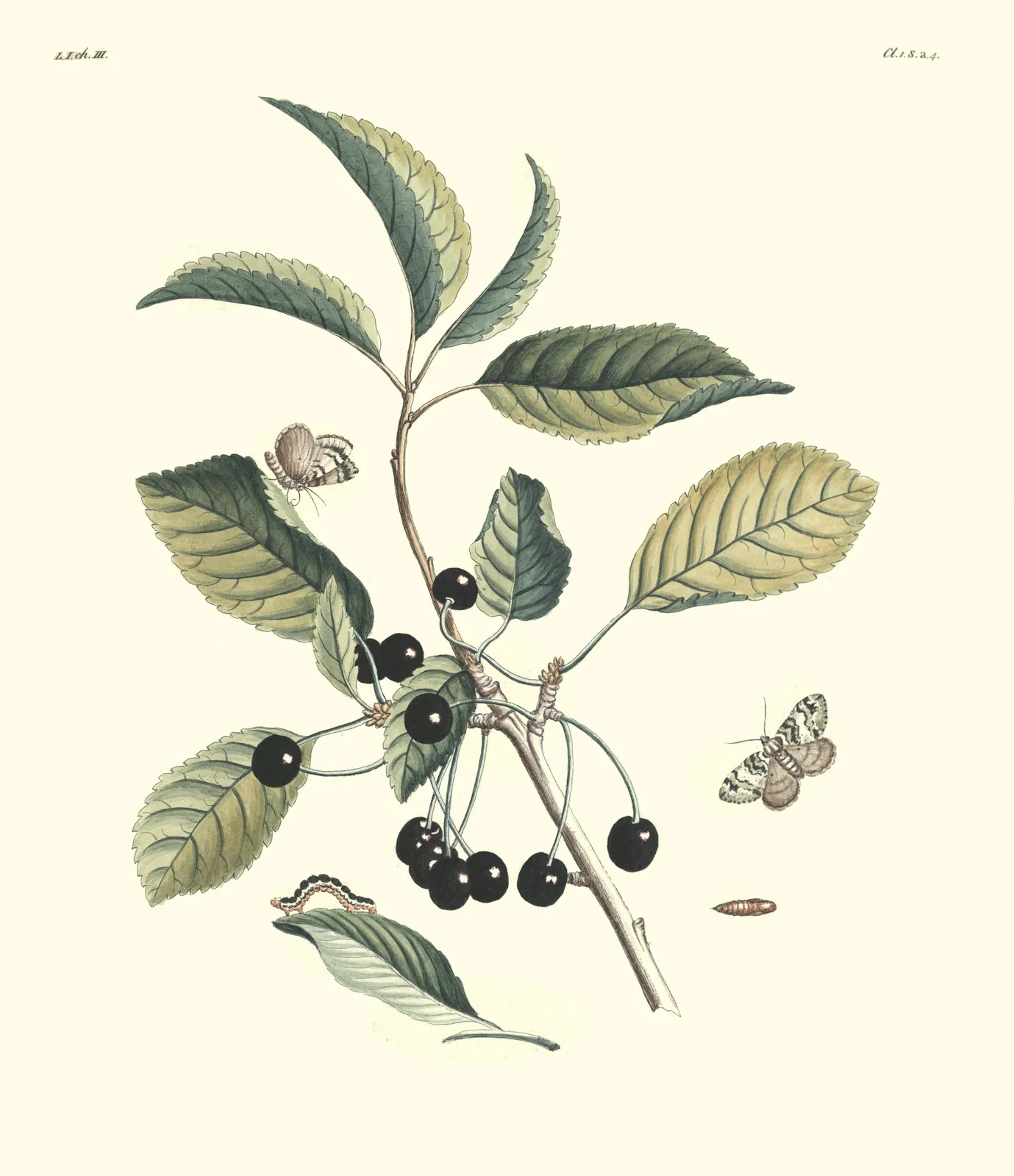
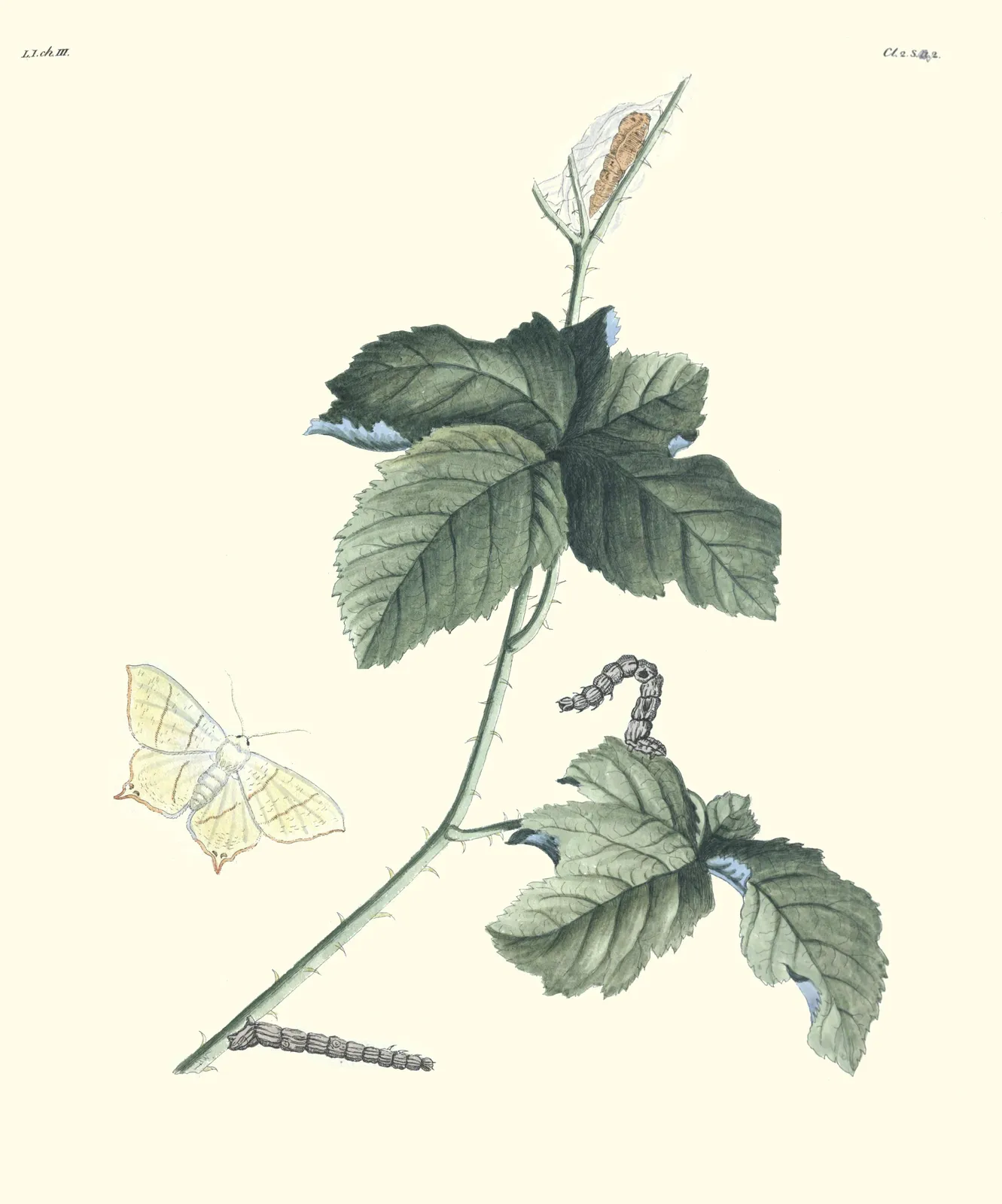
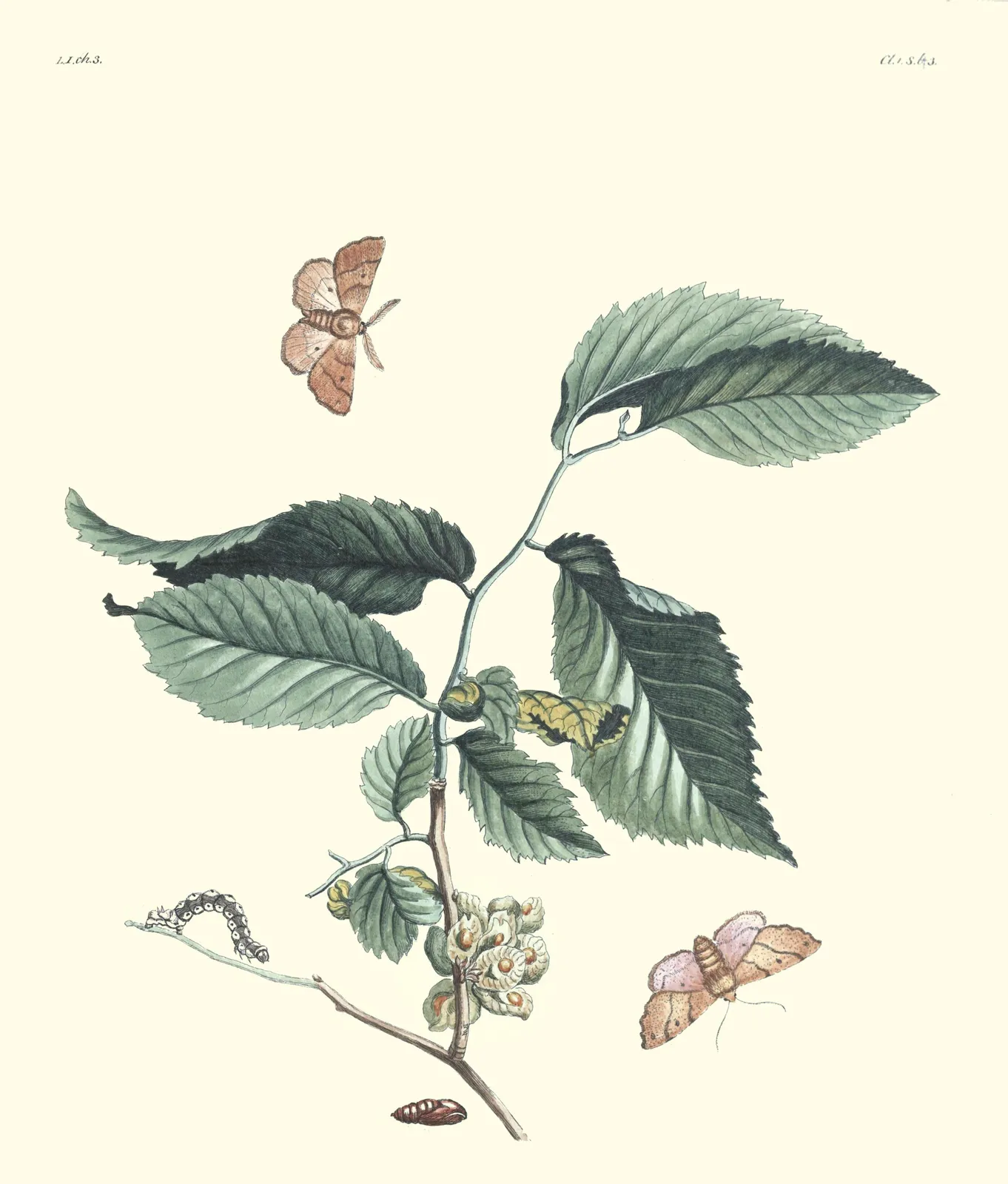
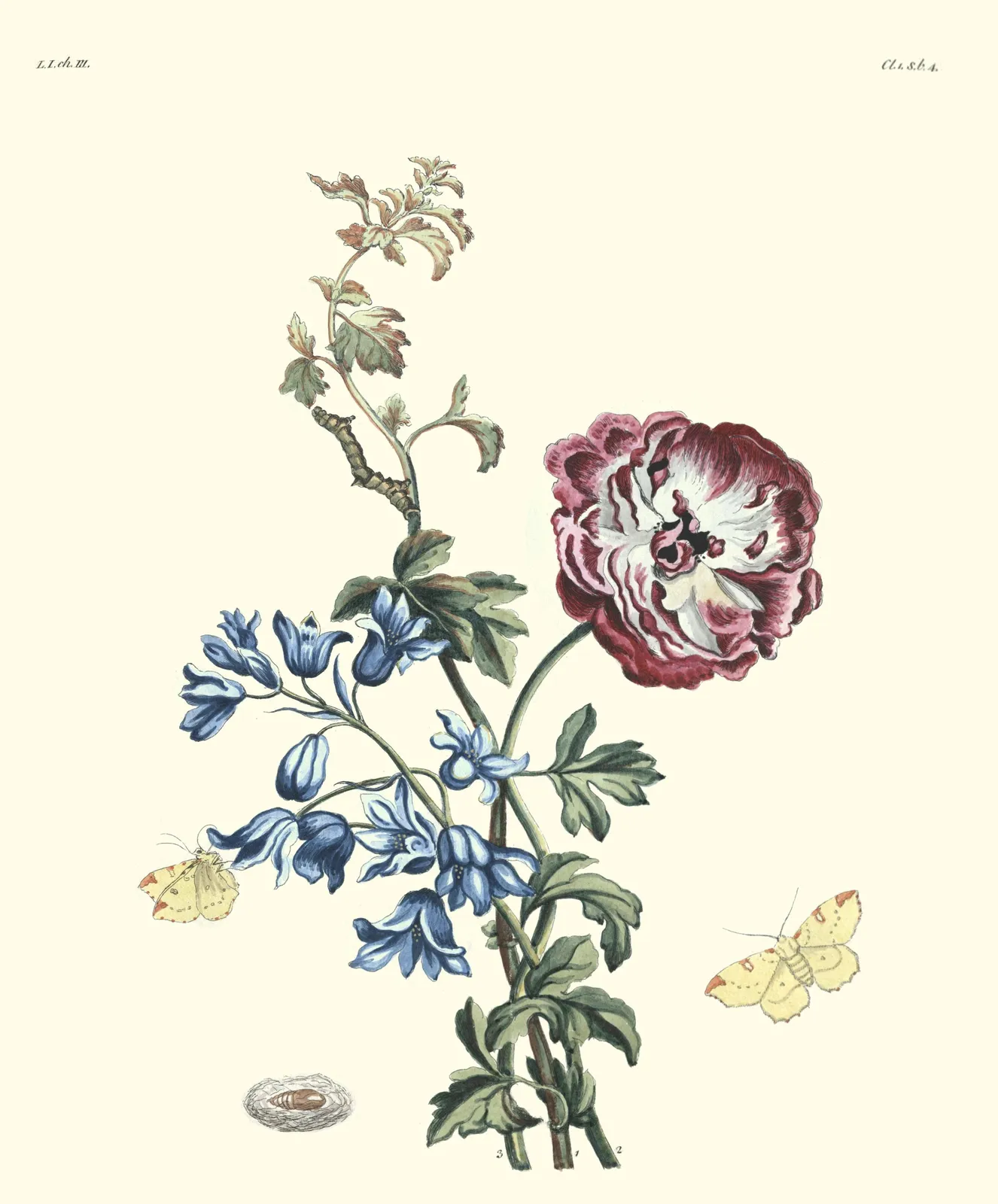
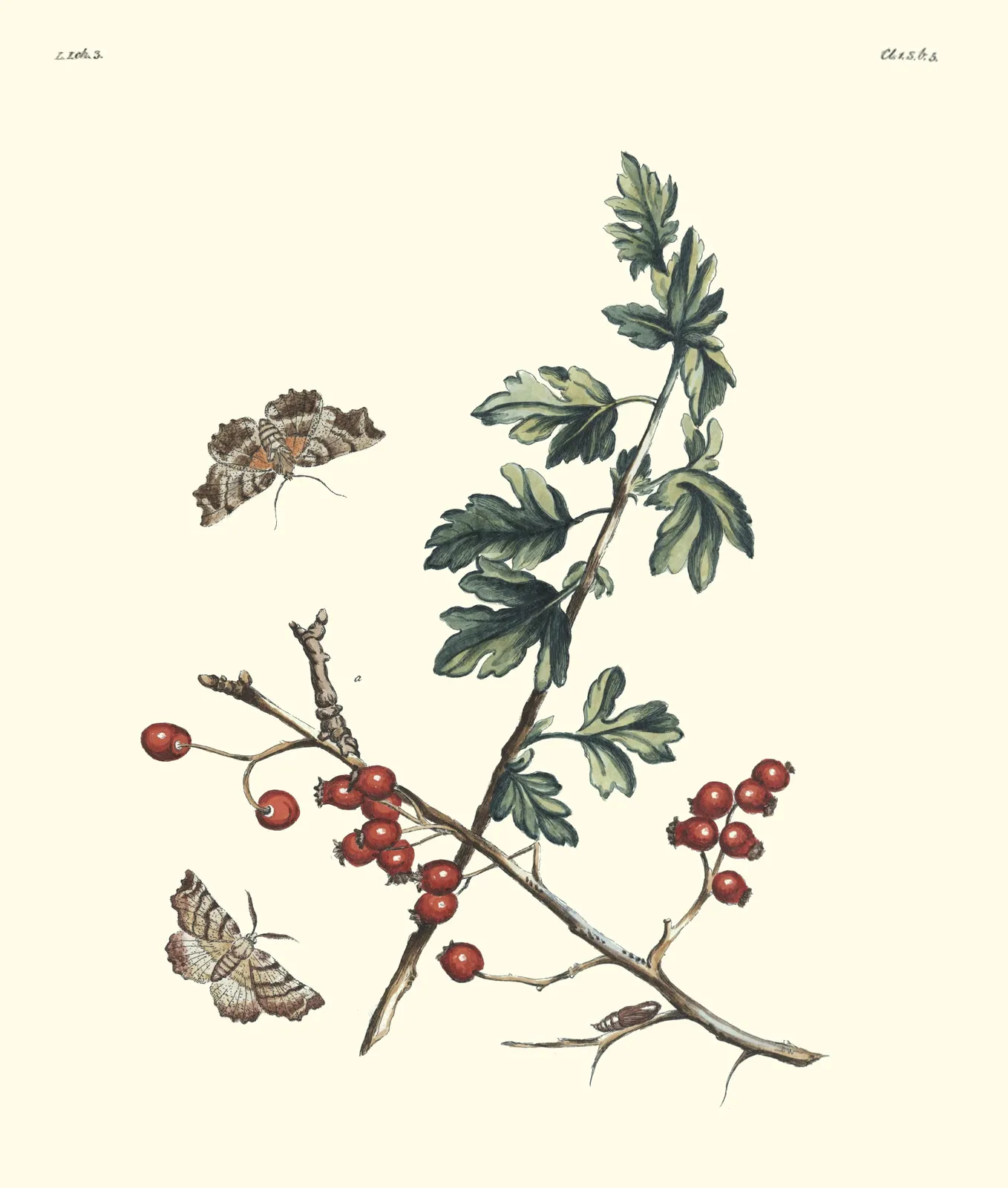
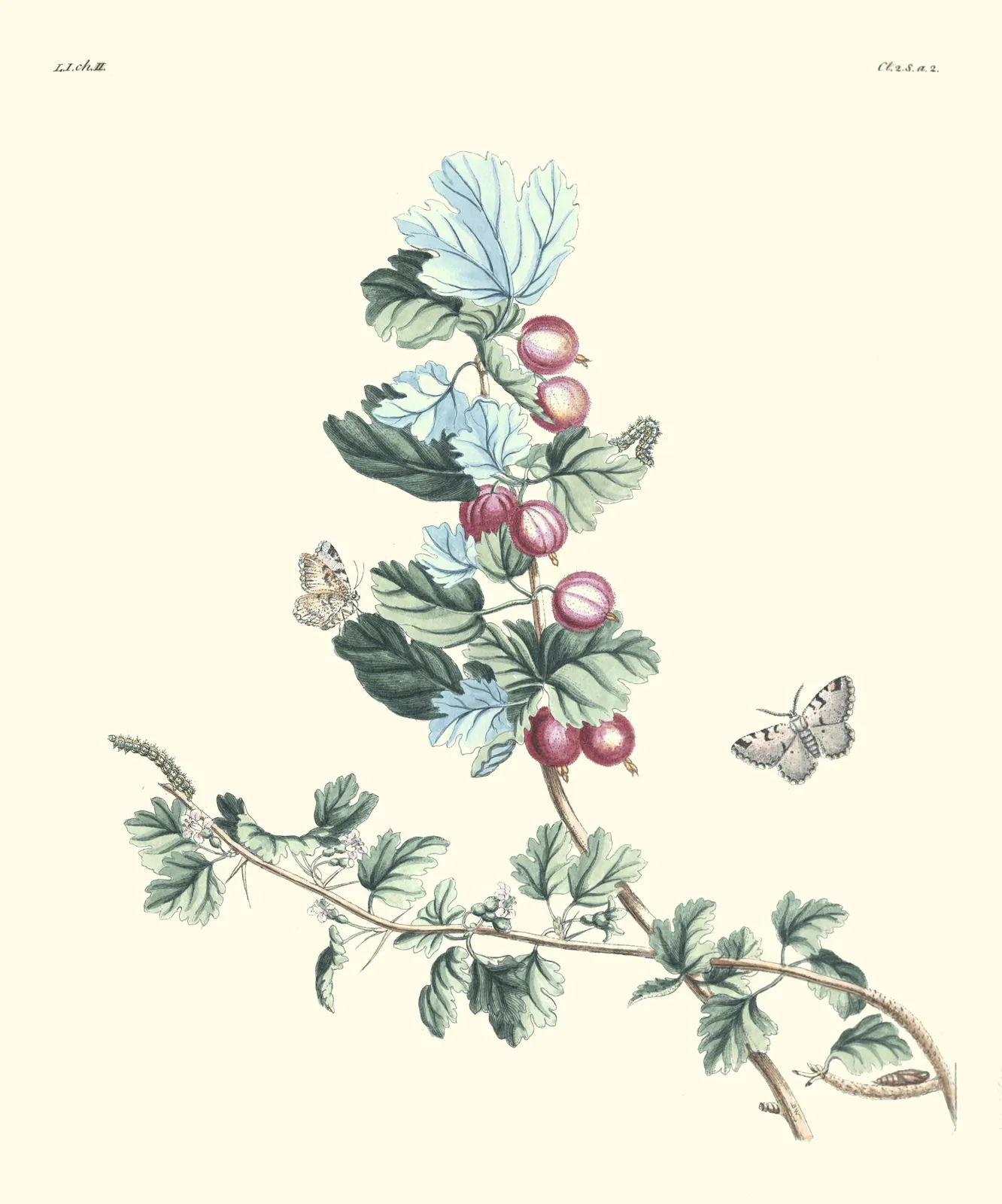
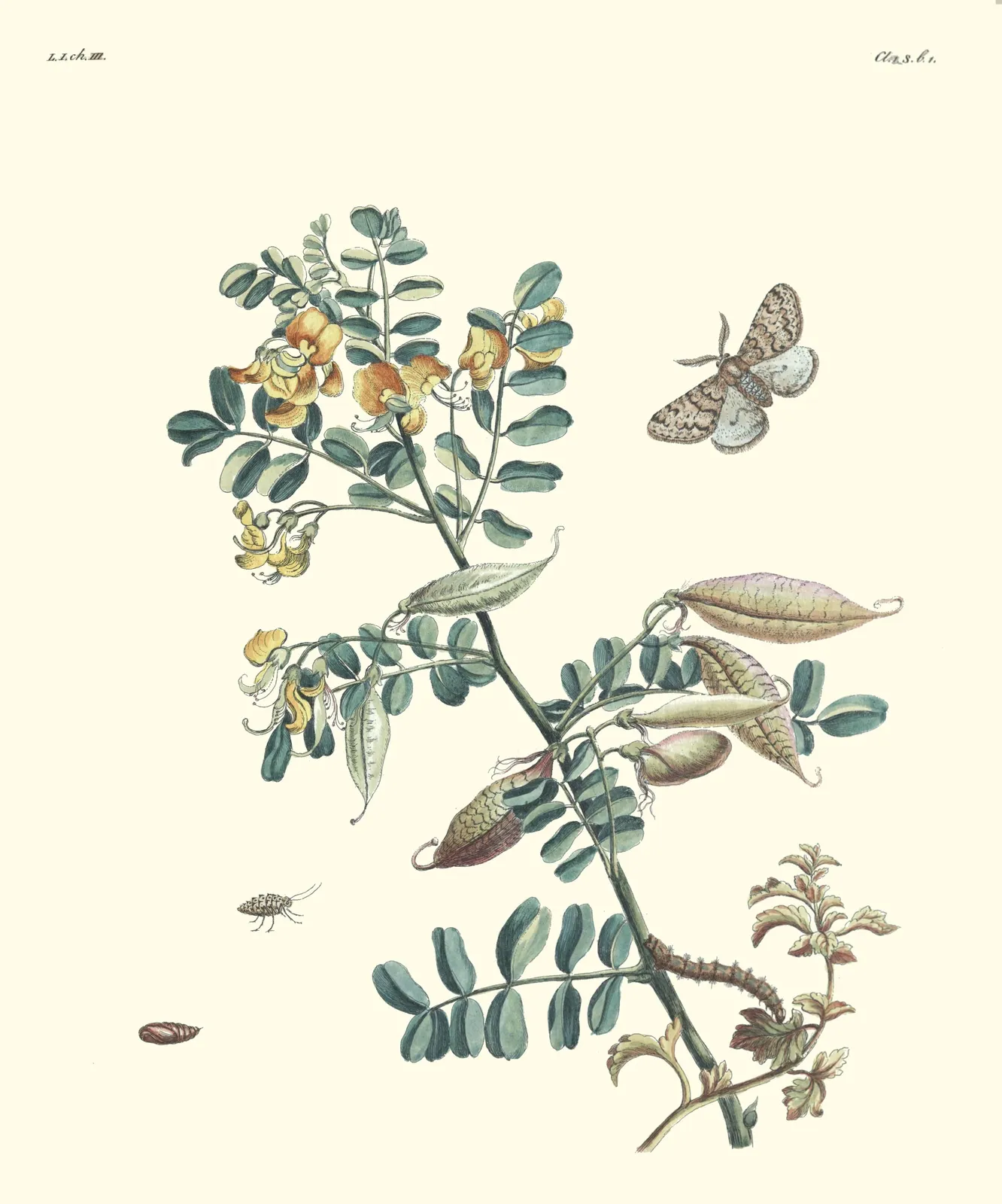
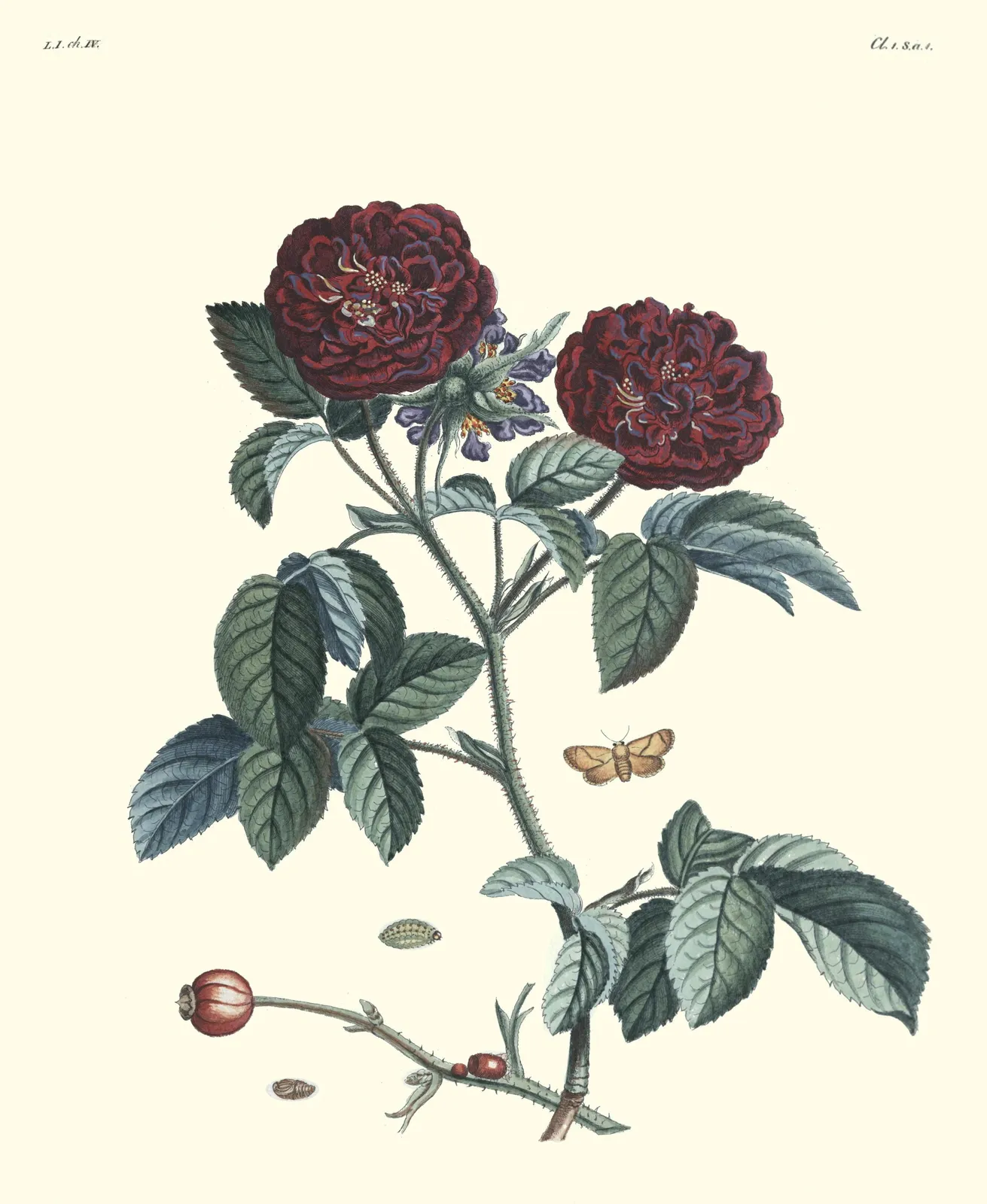
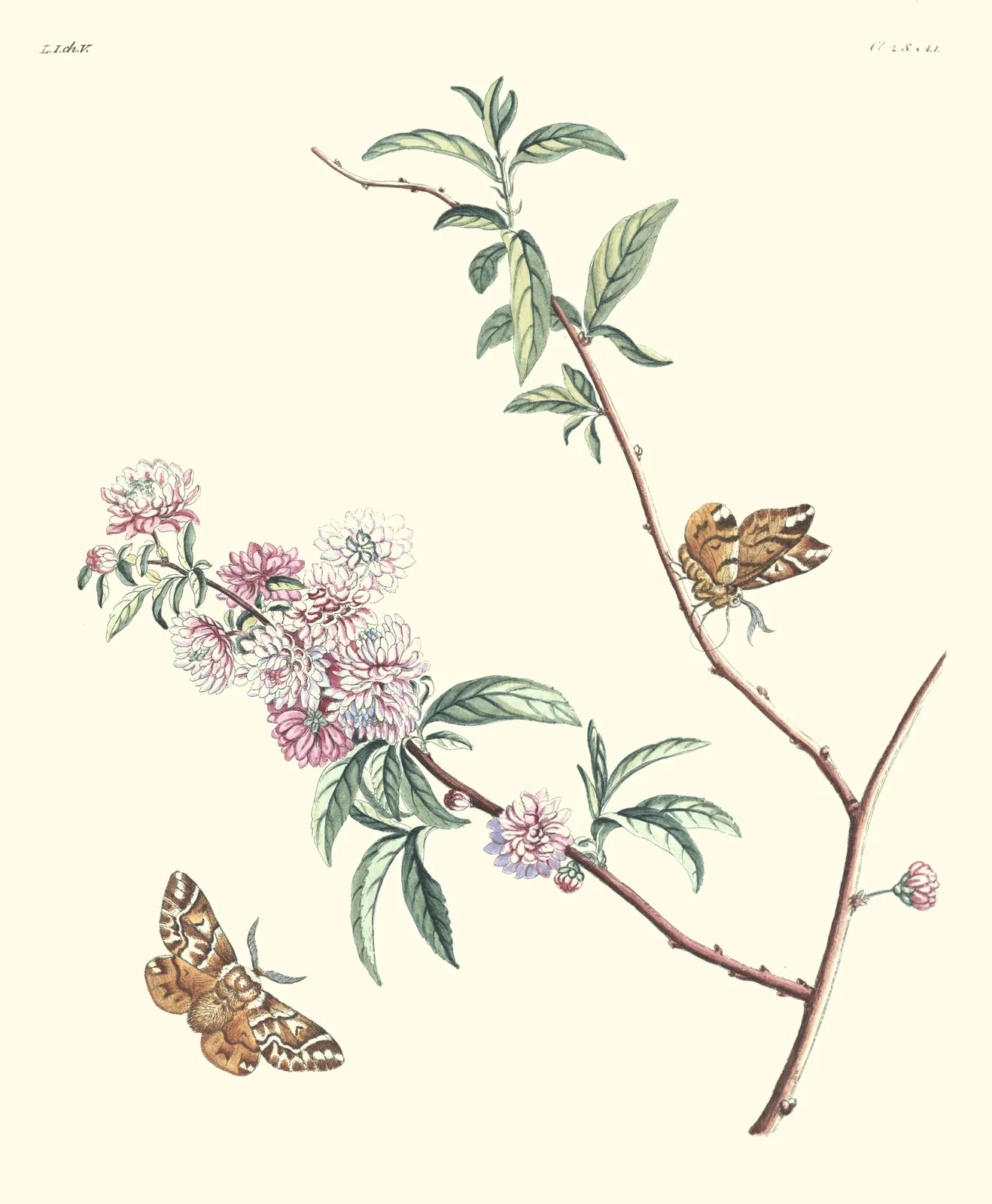
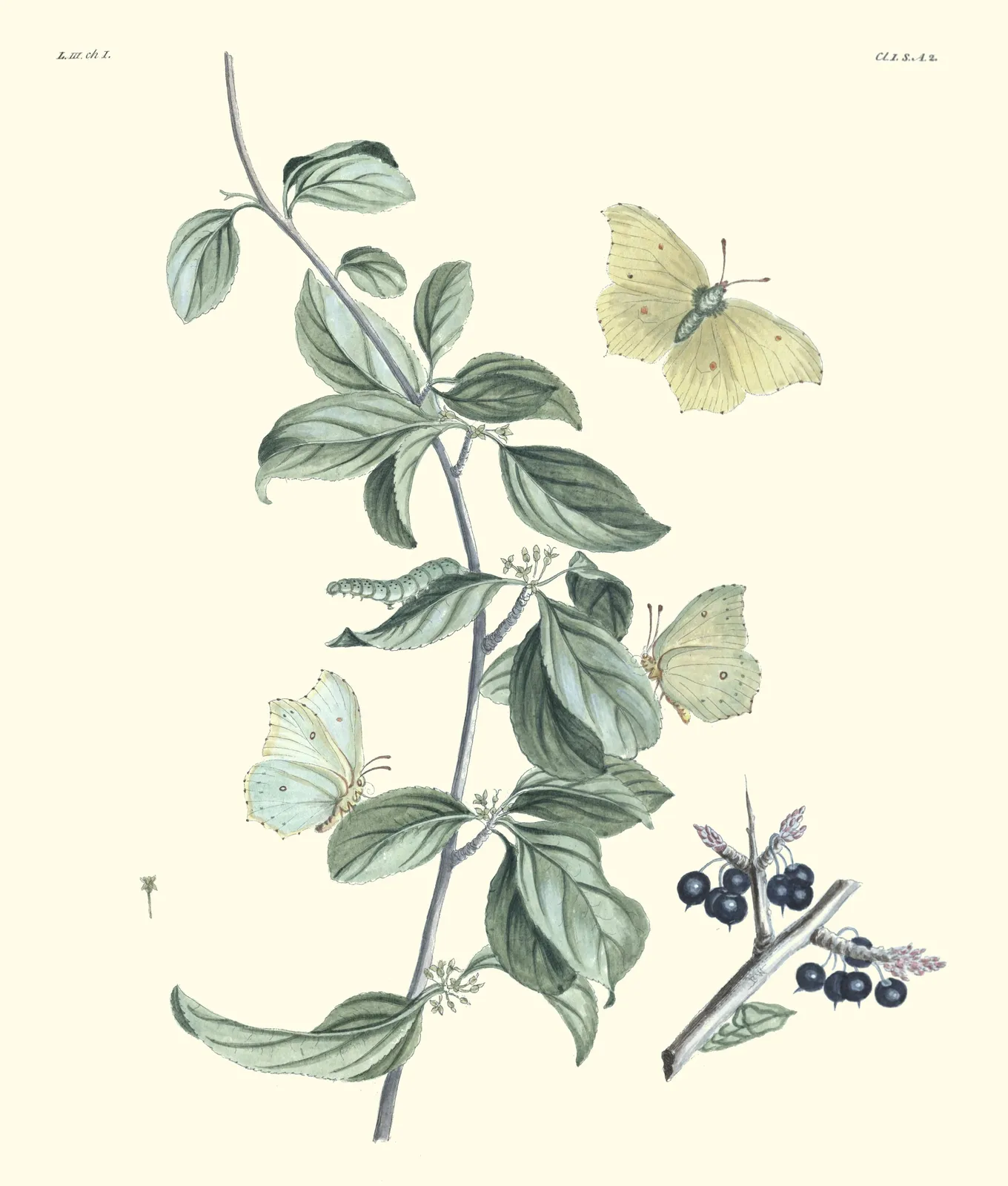
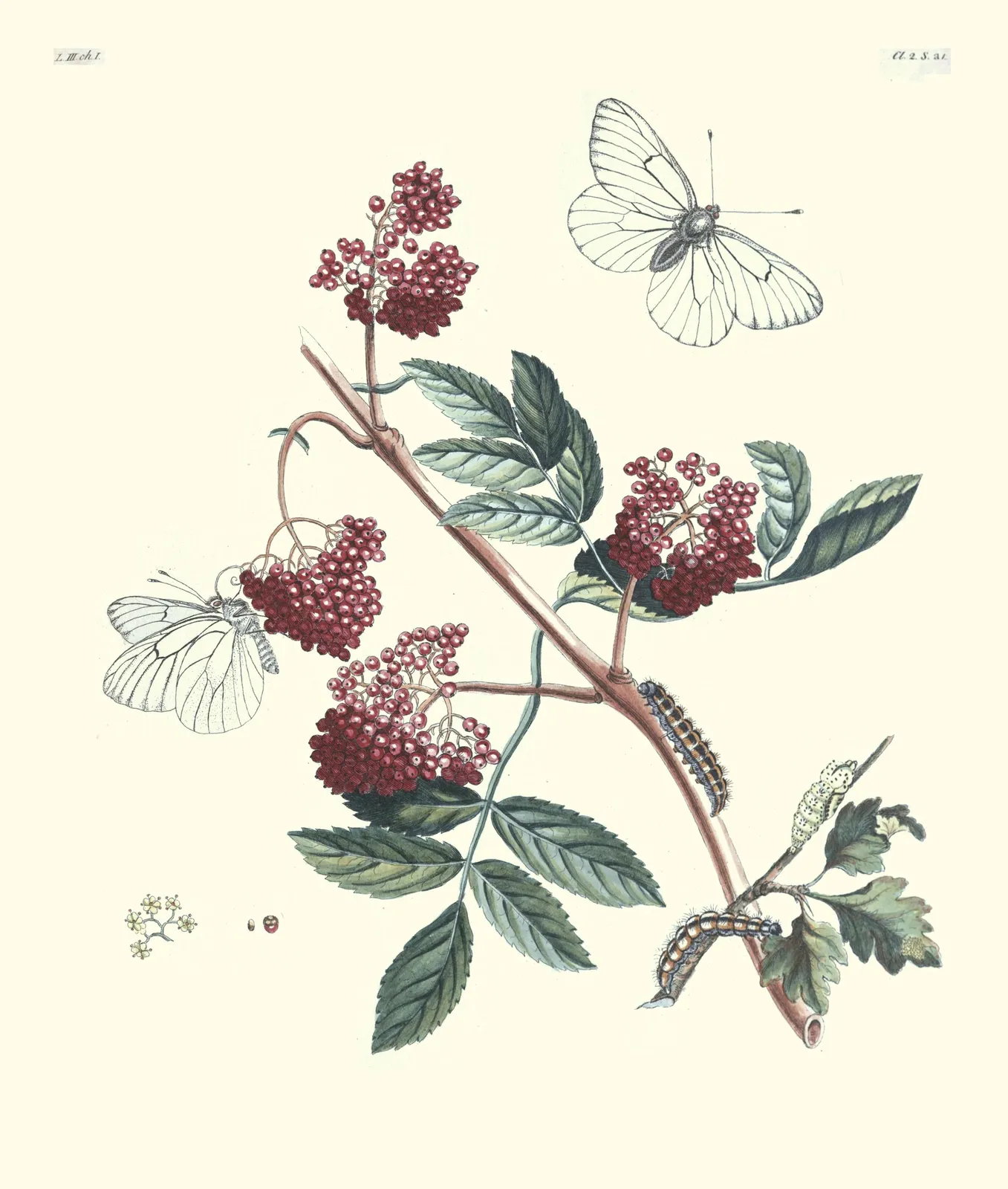
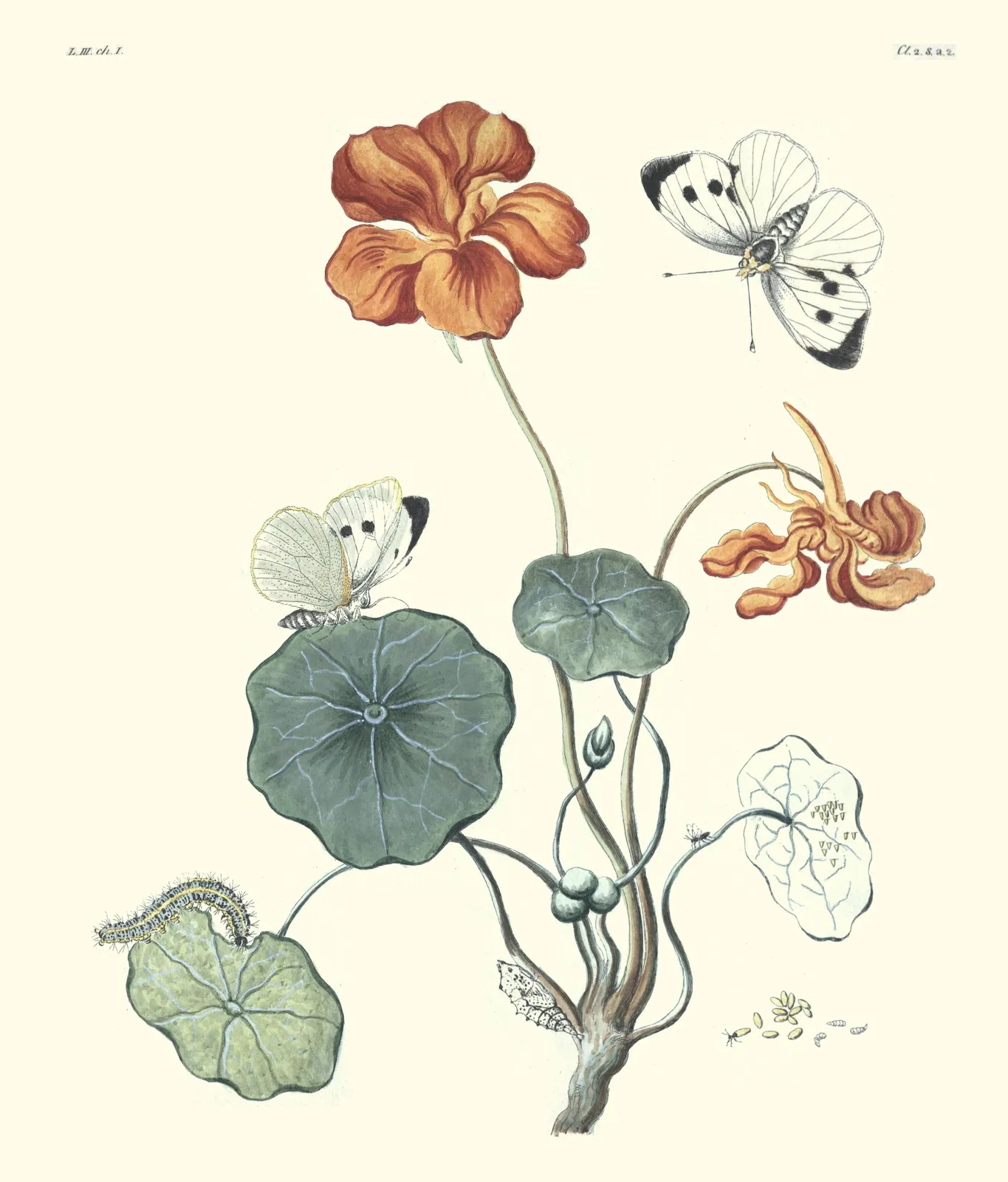
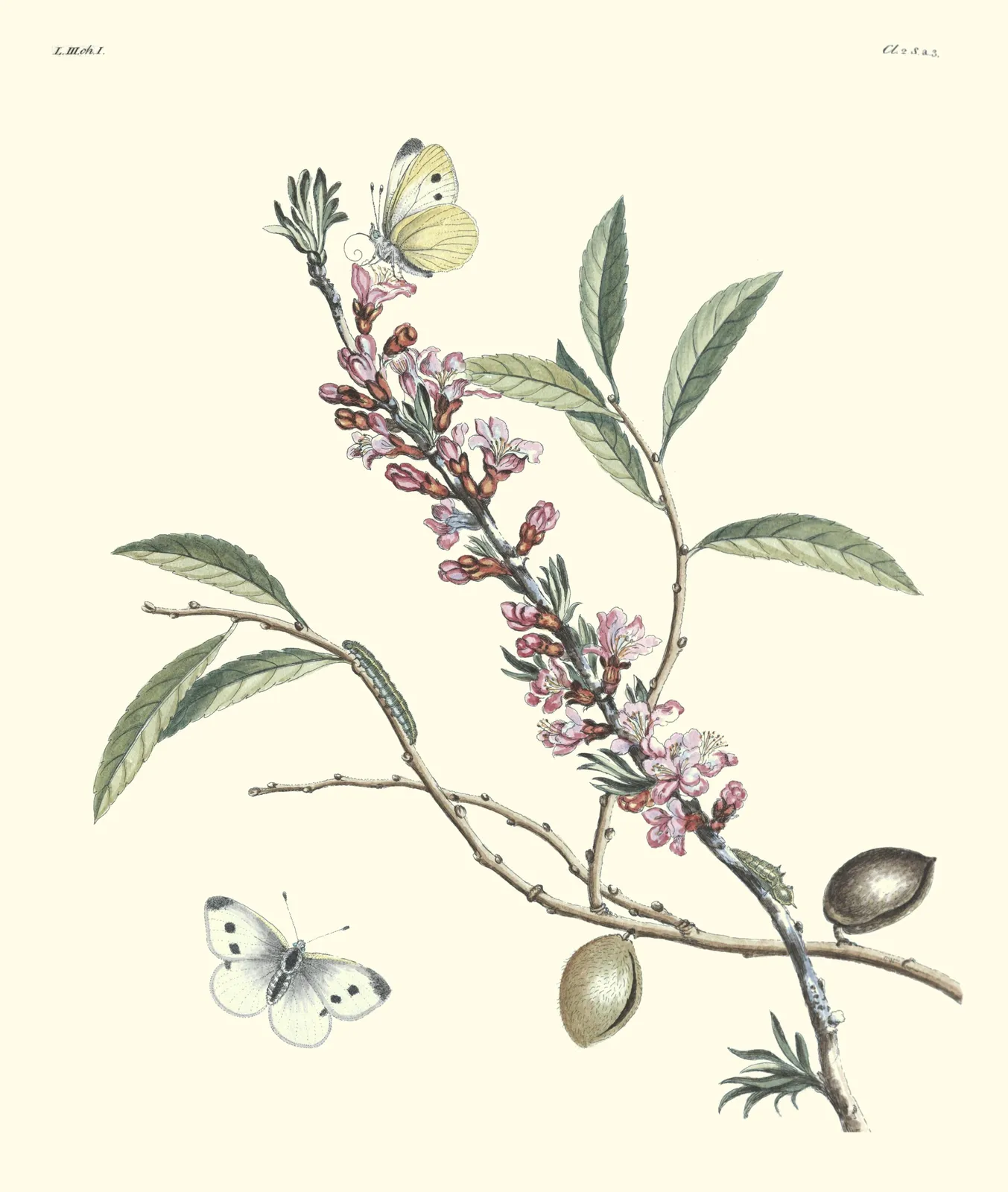
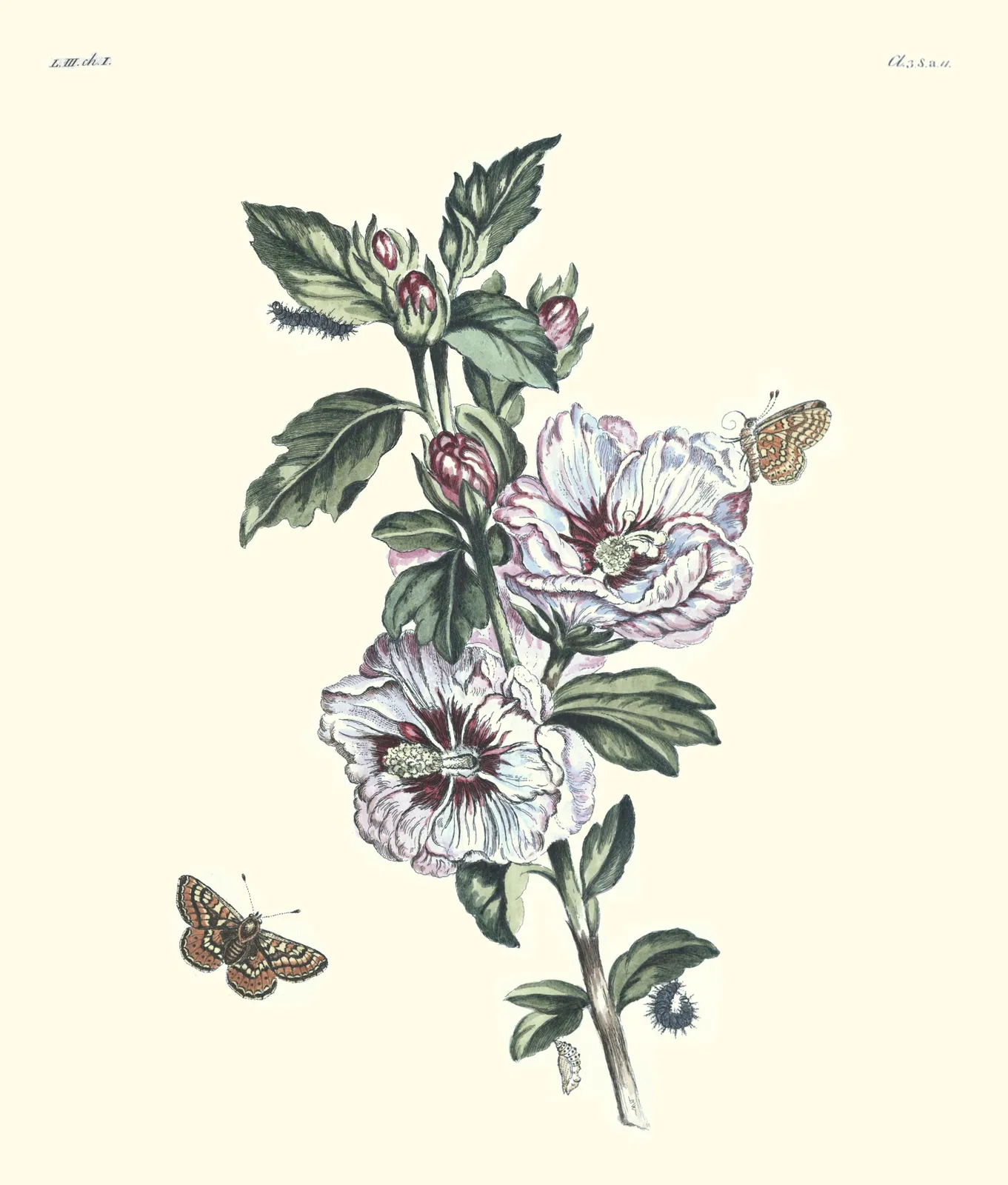
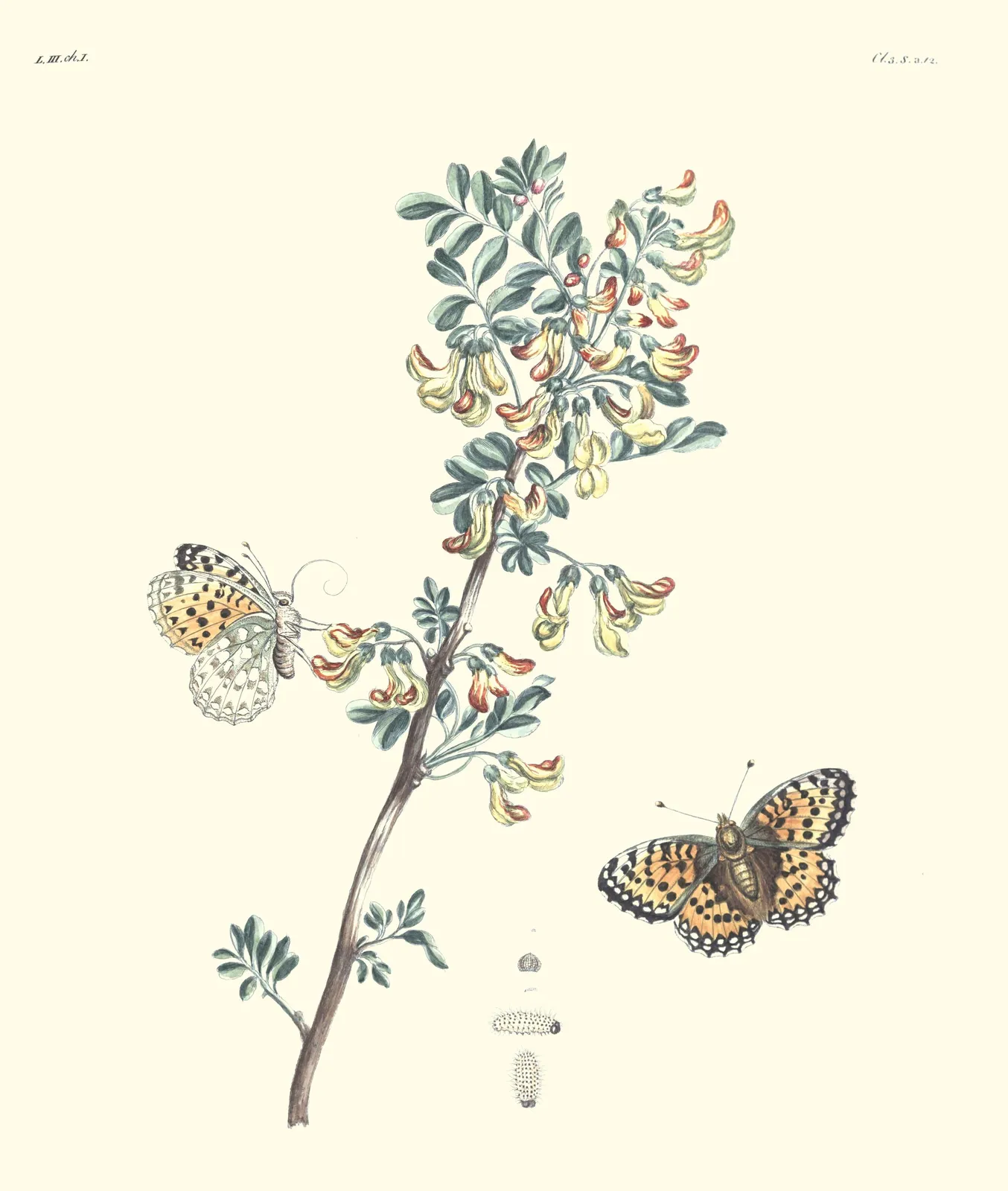
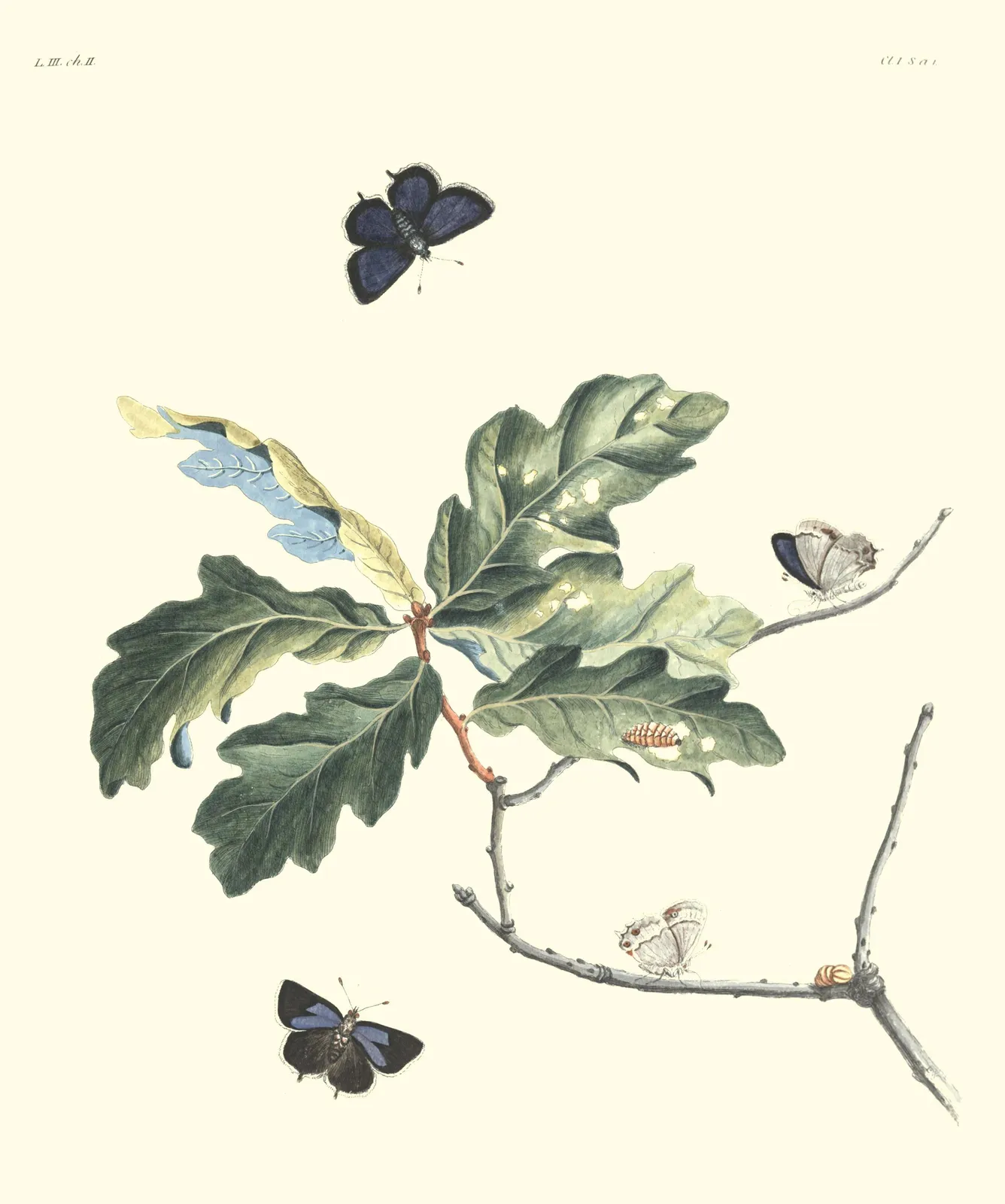
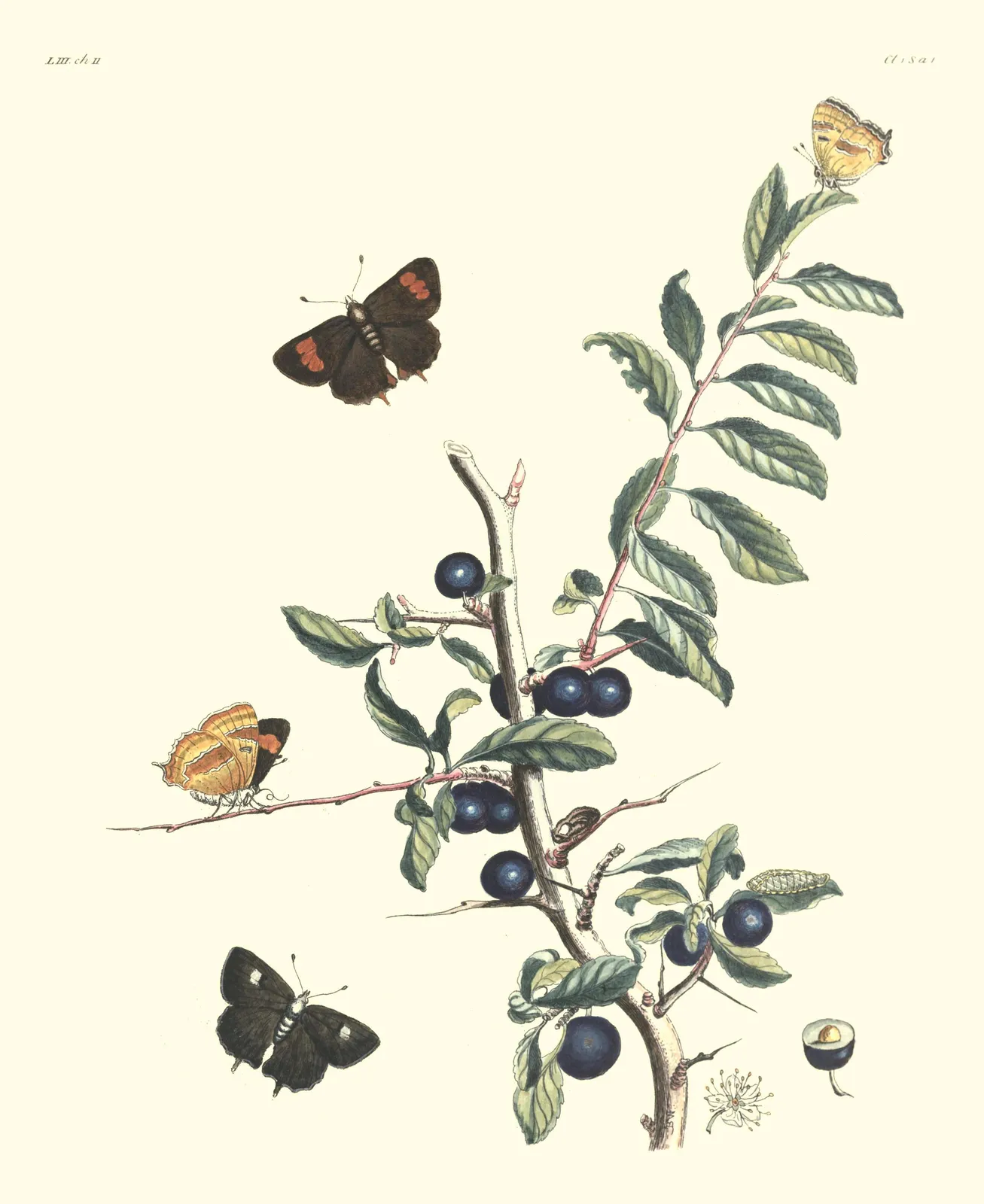
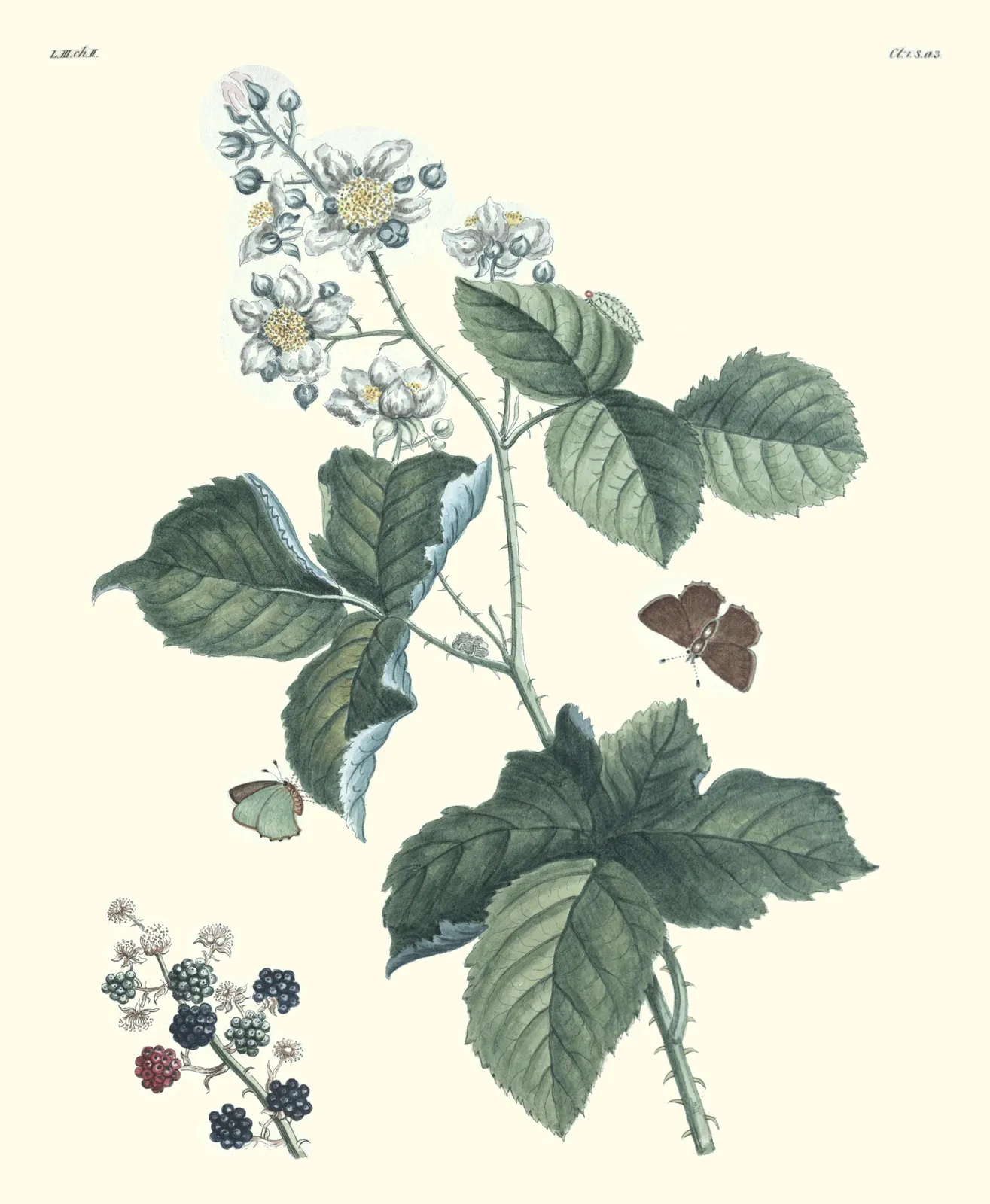
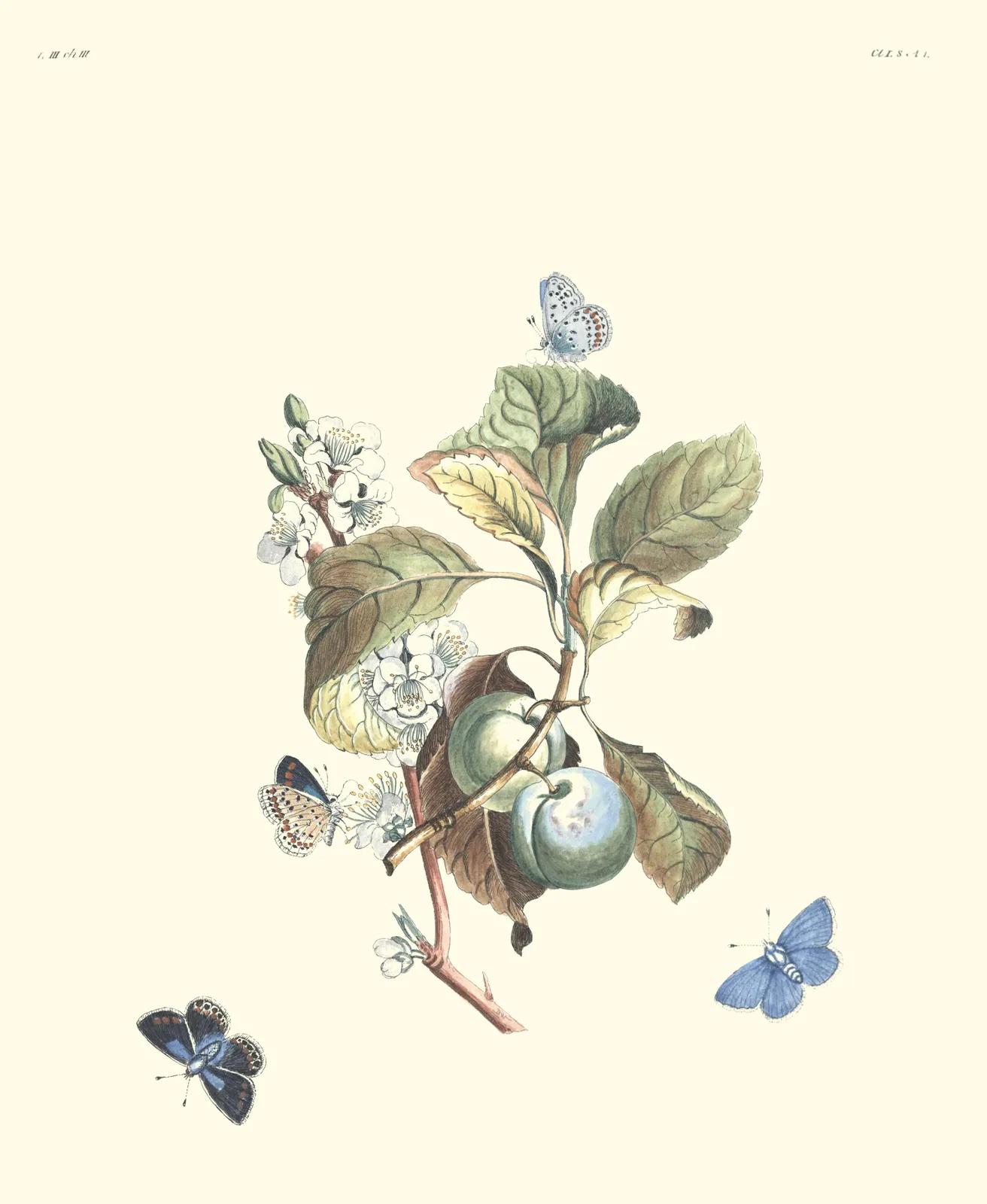
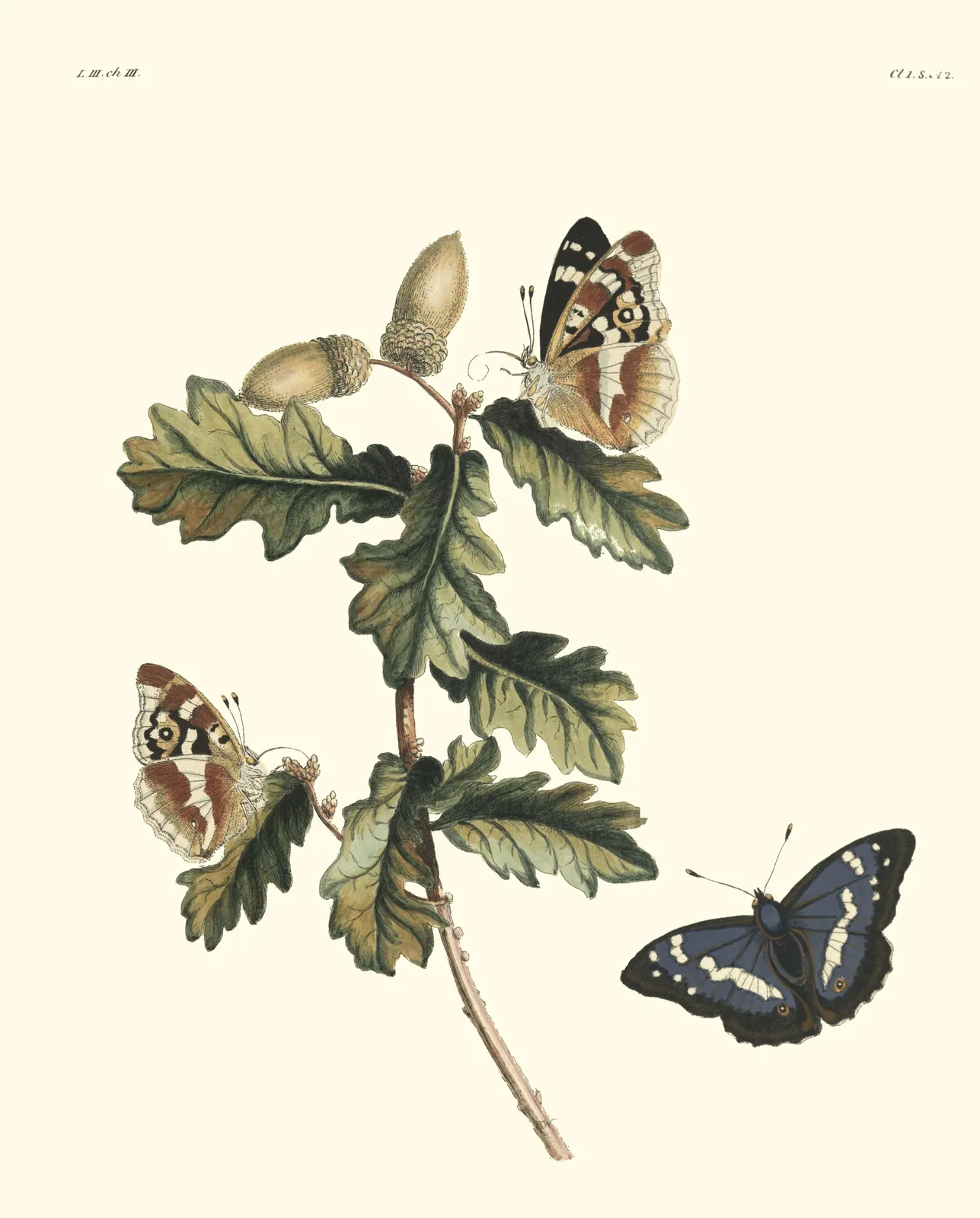
Some minor changes to the text are noted at the end of the book.
The new original cover art included with this eBook is granted to the public domain.
Errata listed in front matter have been applied to the book.
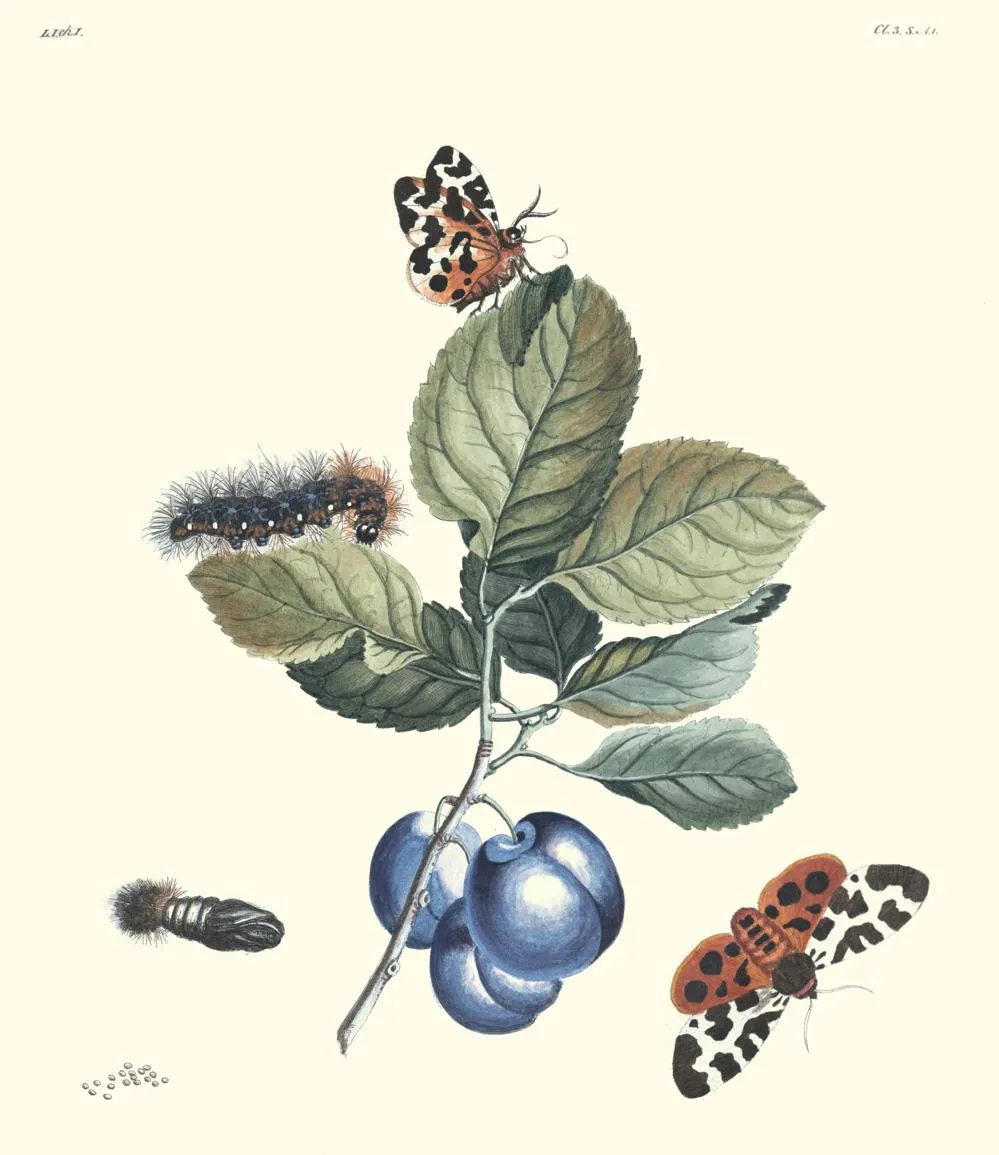
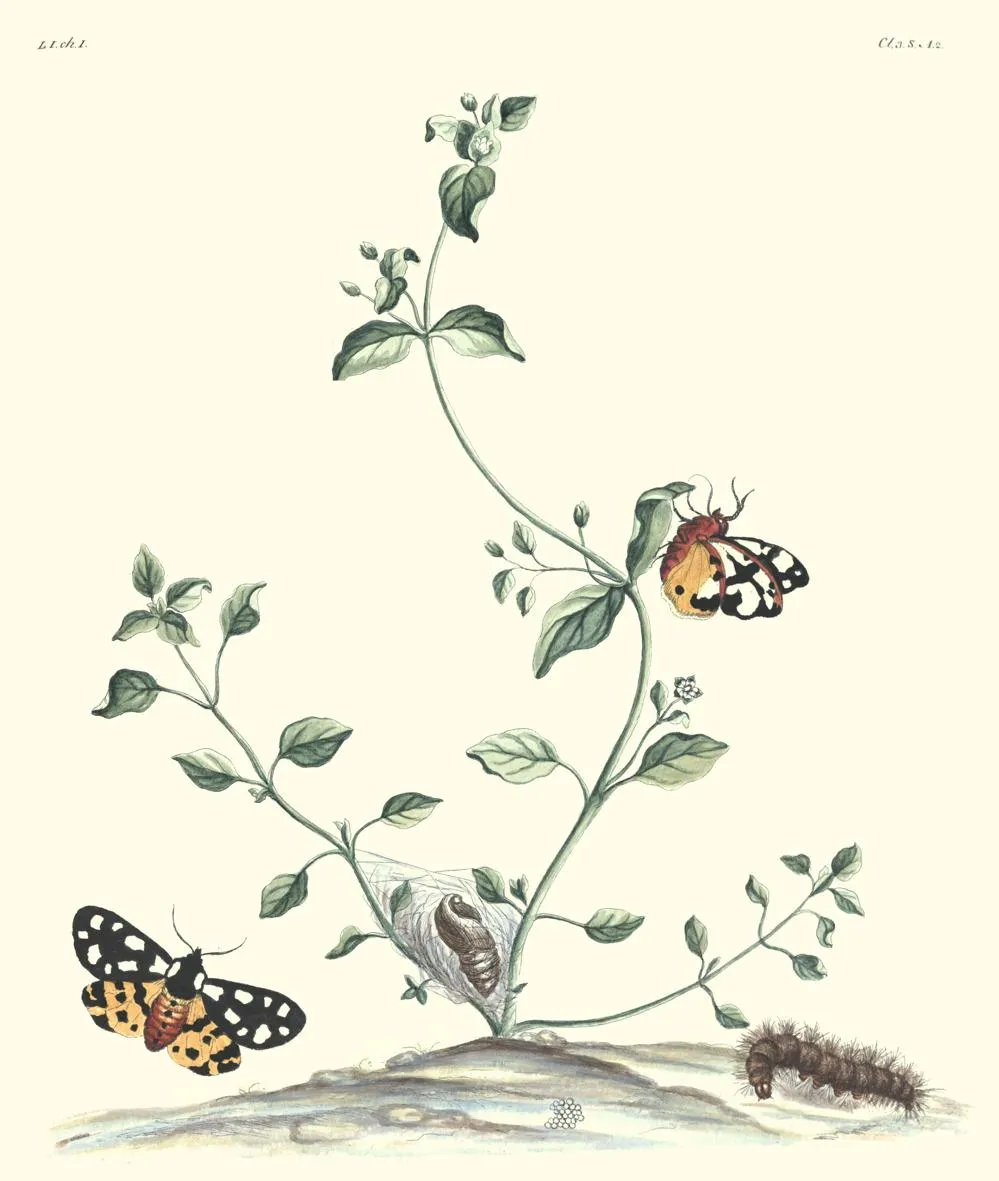
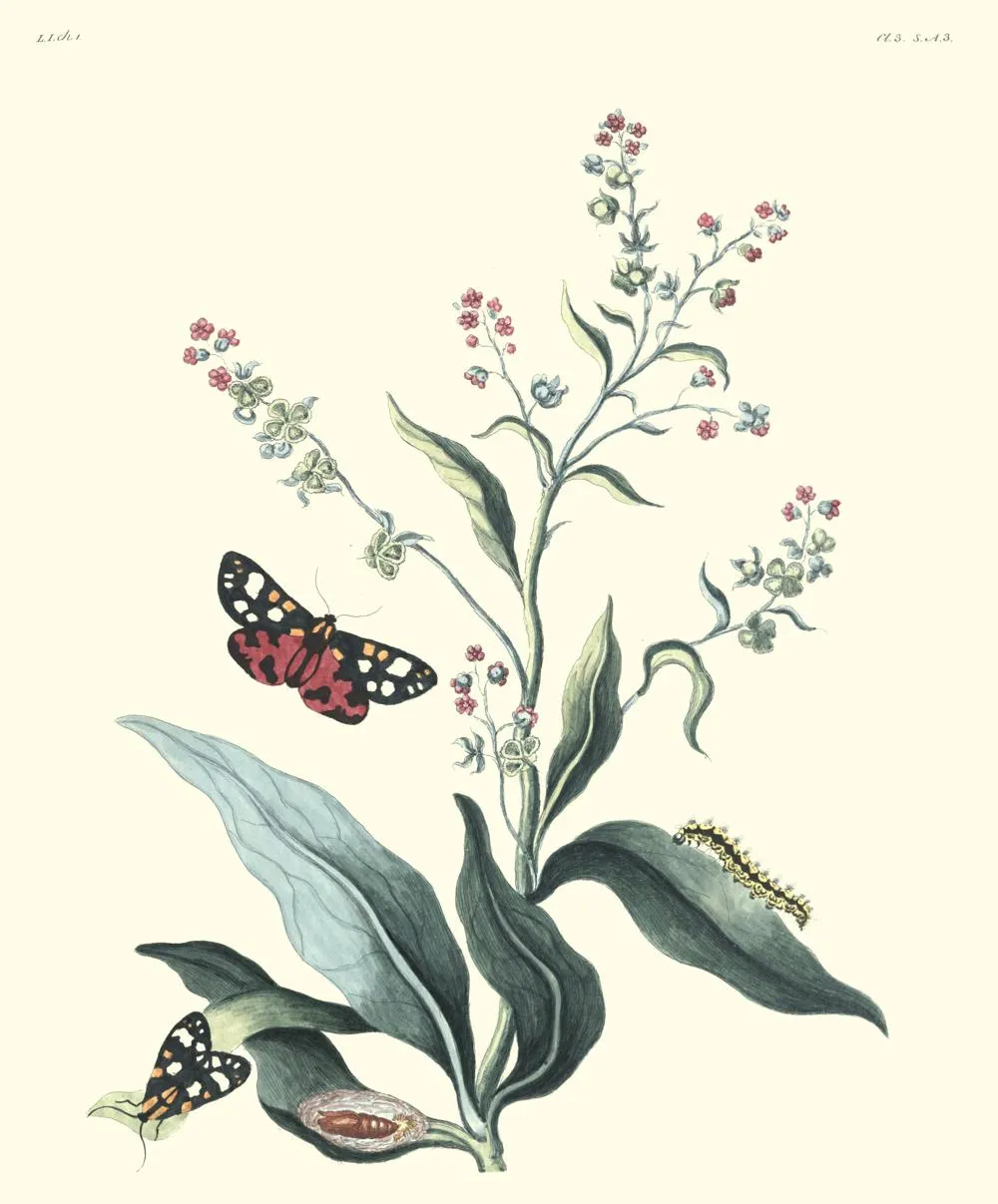
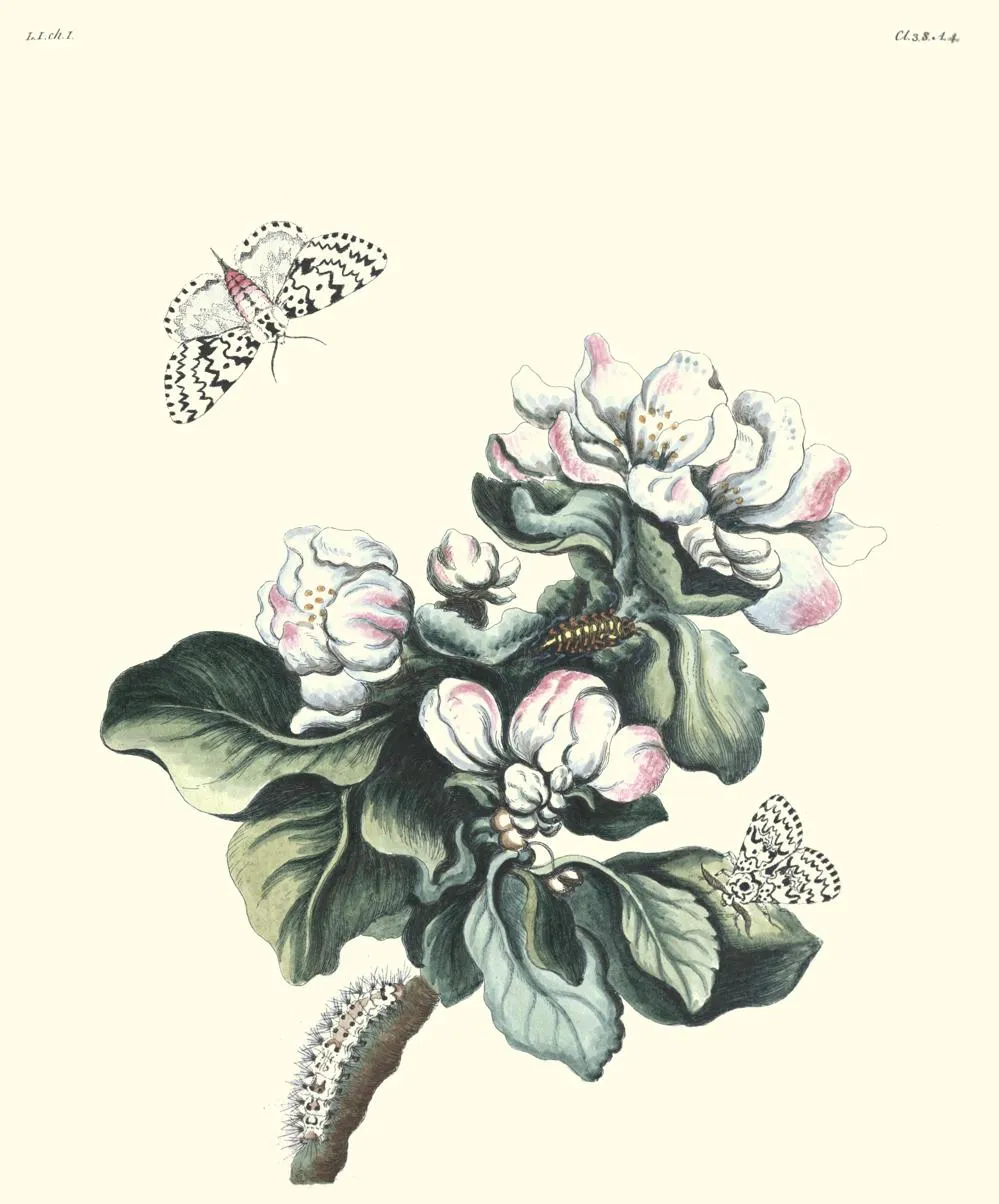
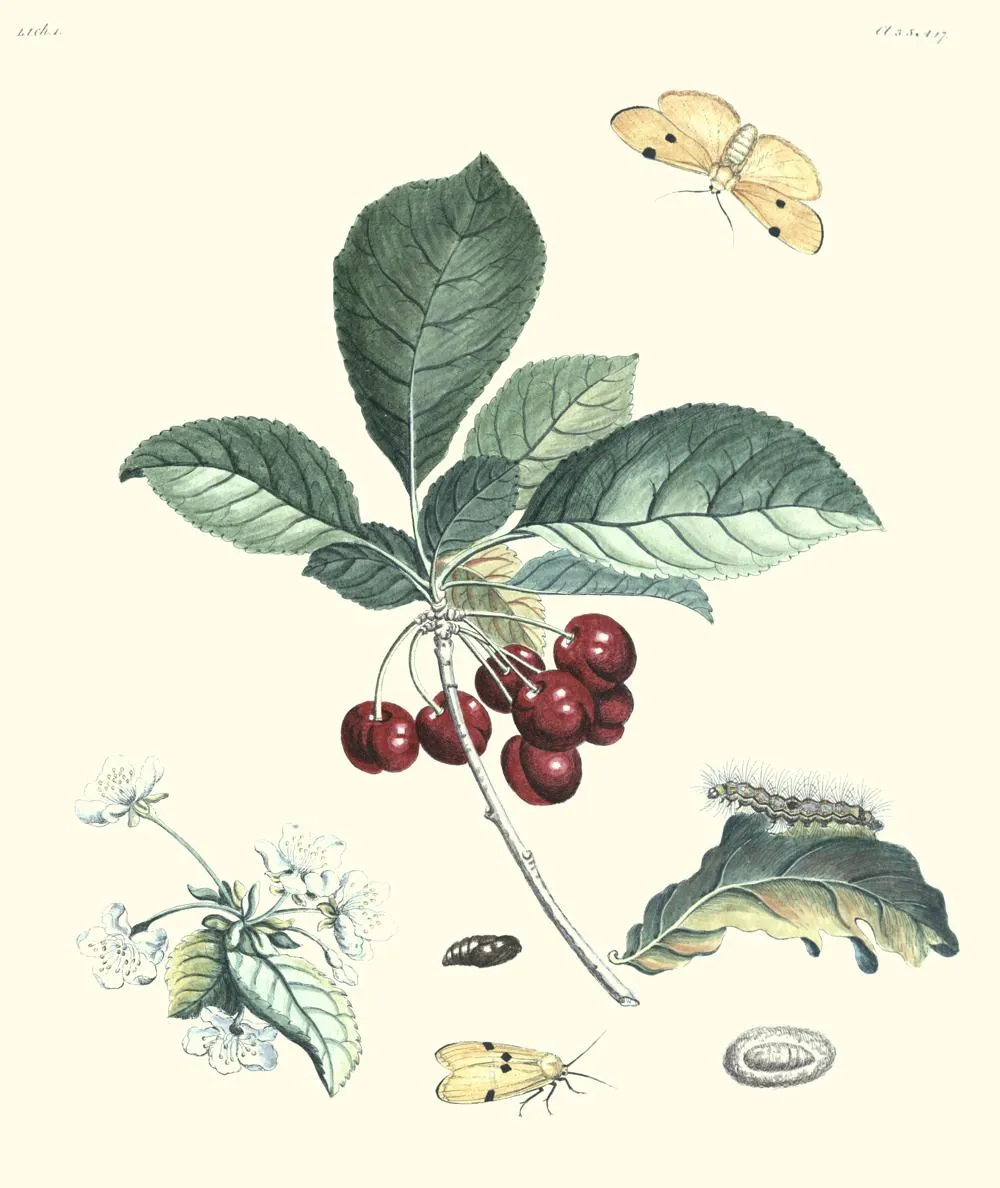
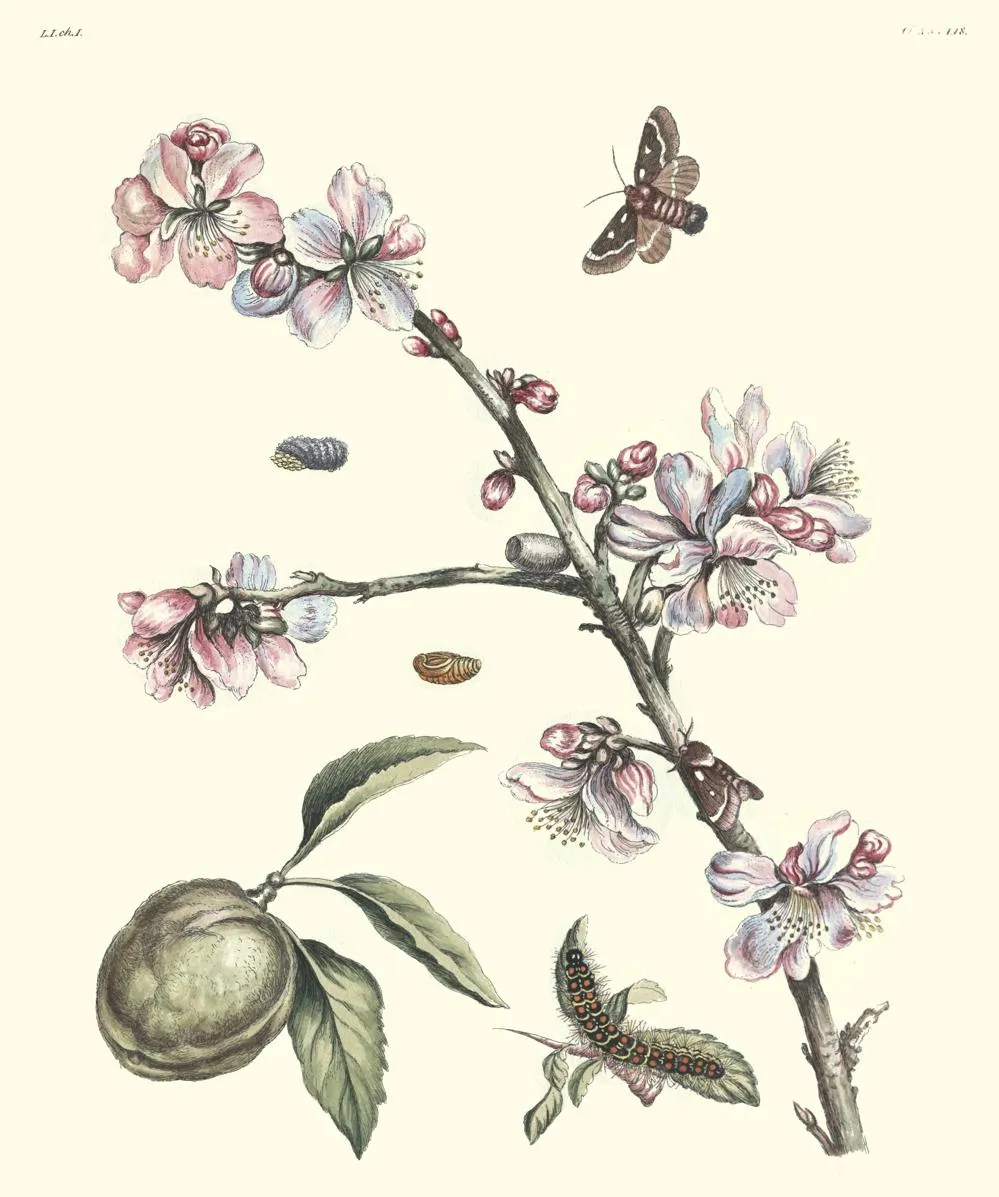
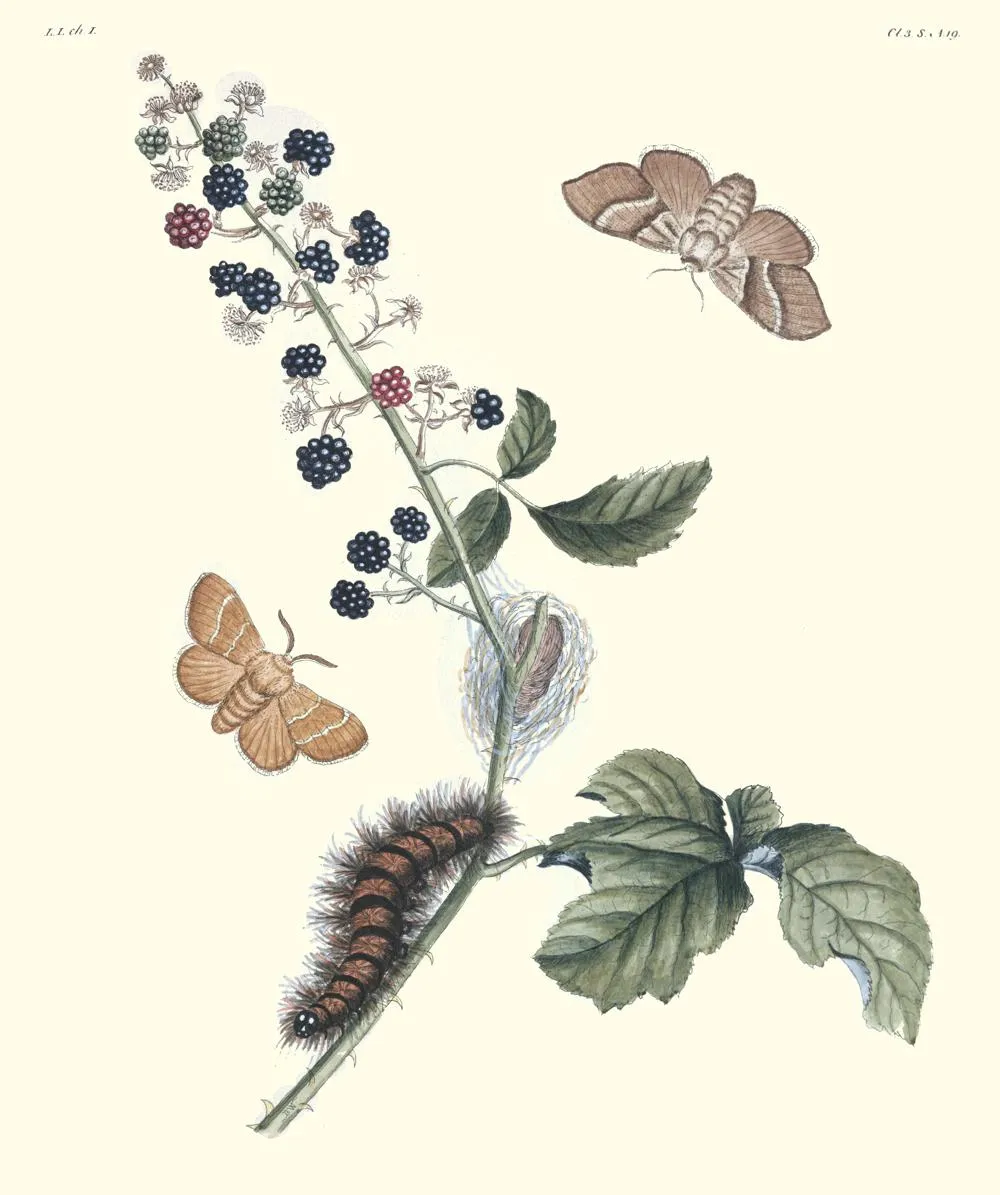
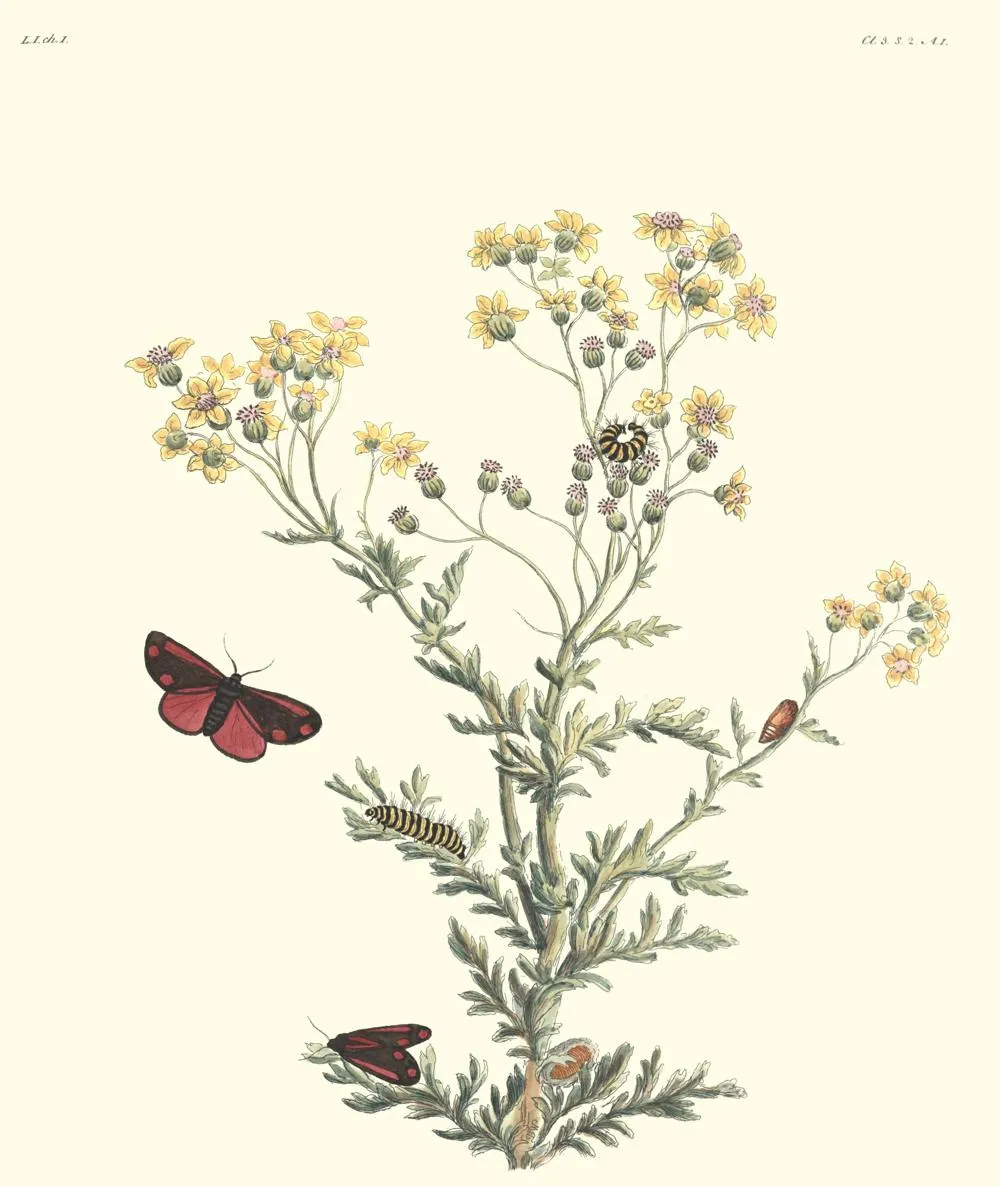
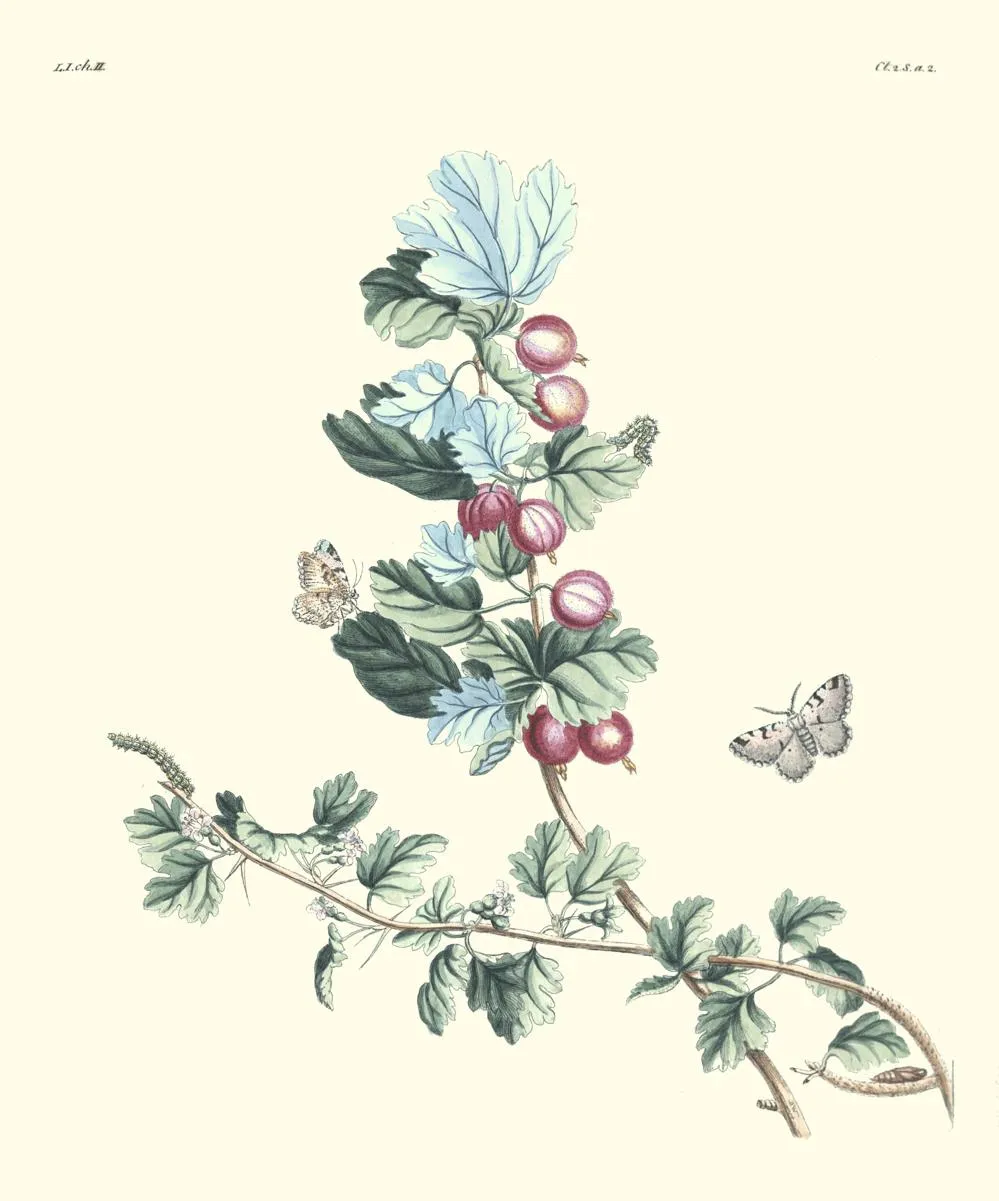
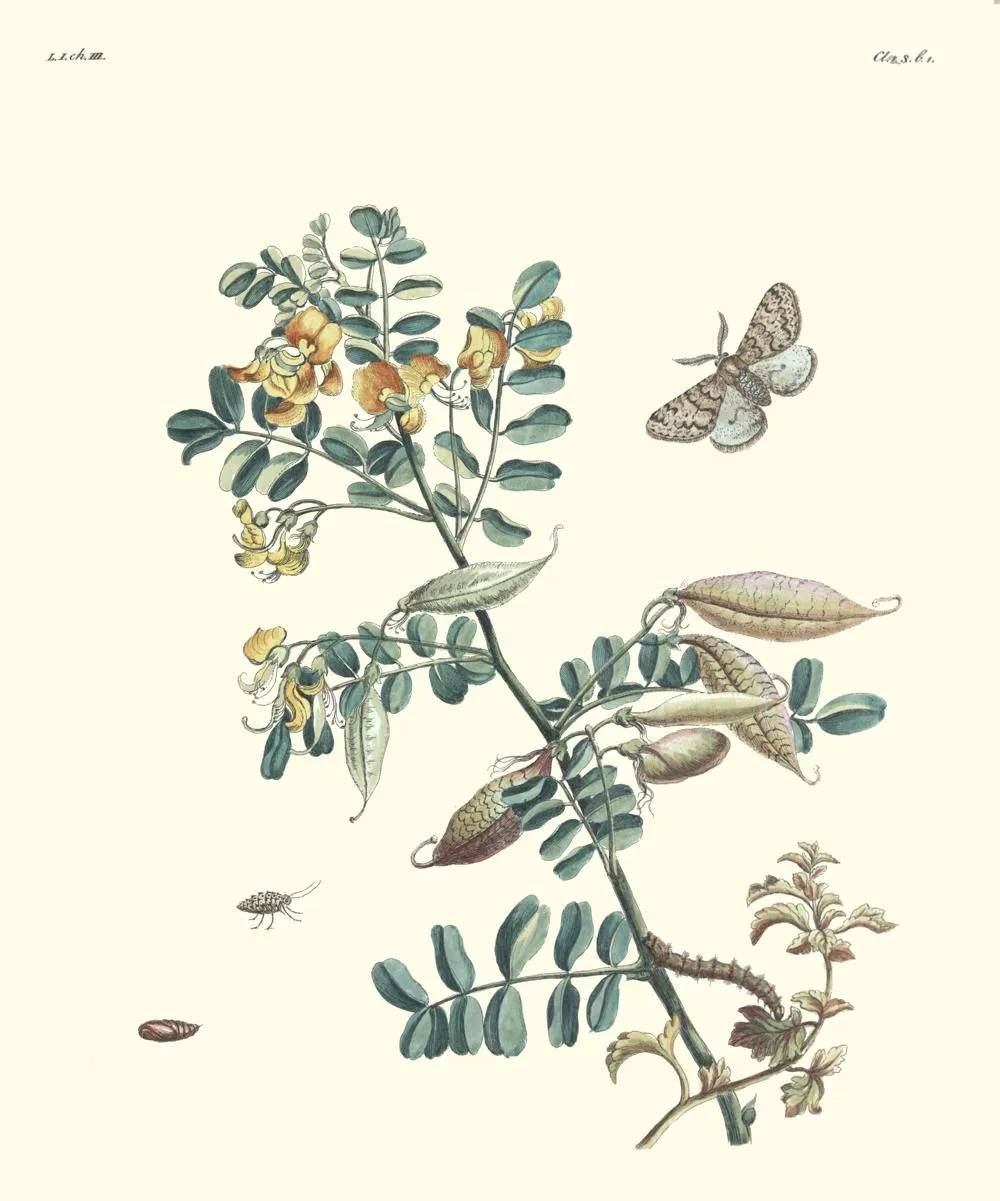
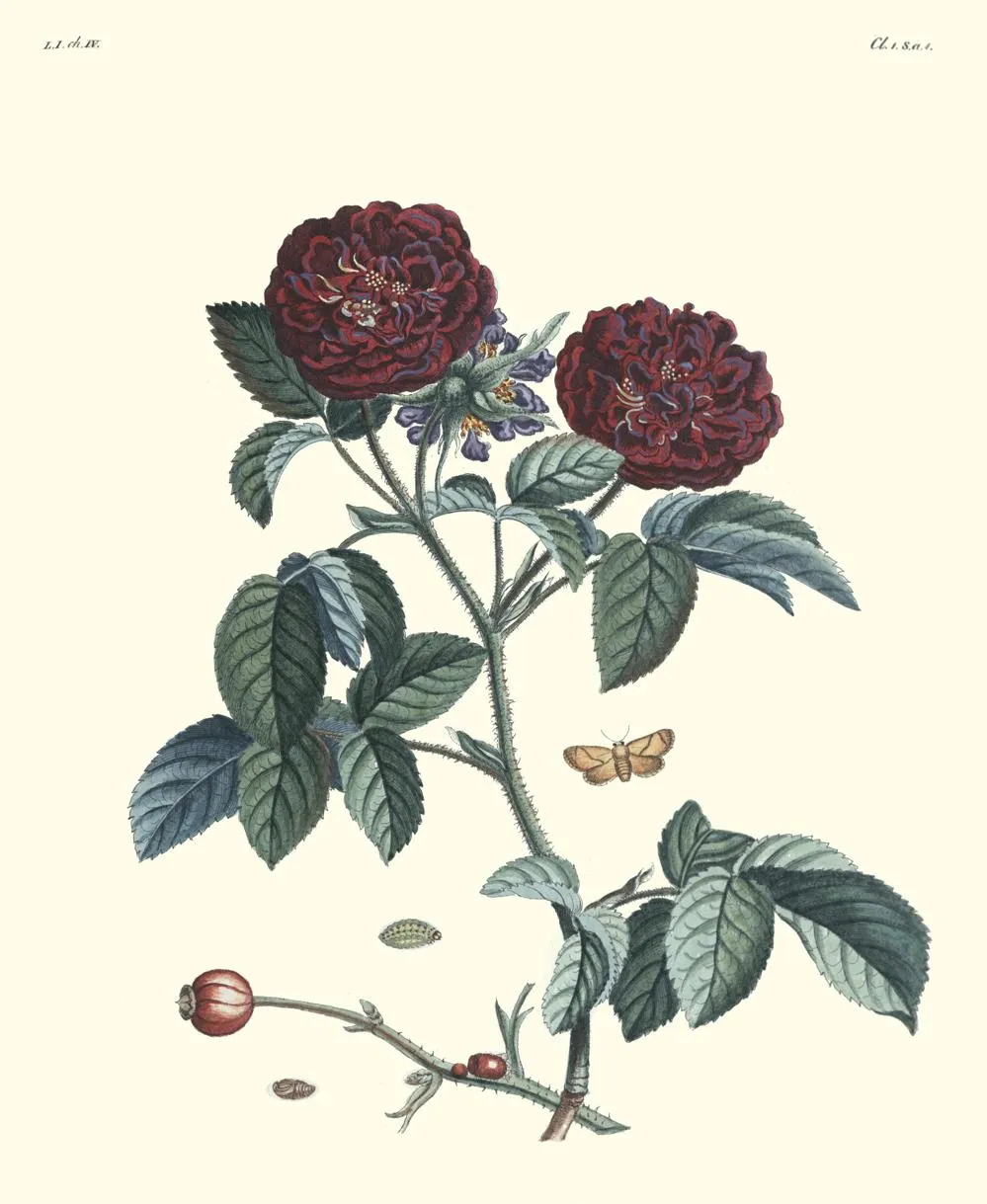
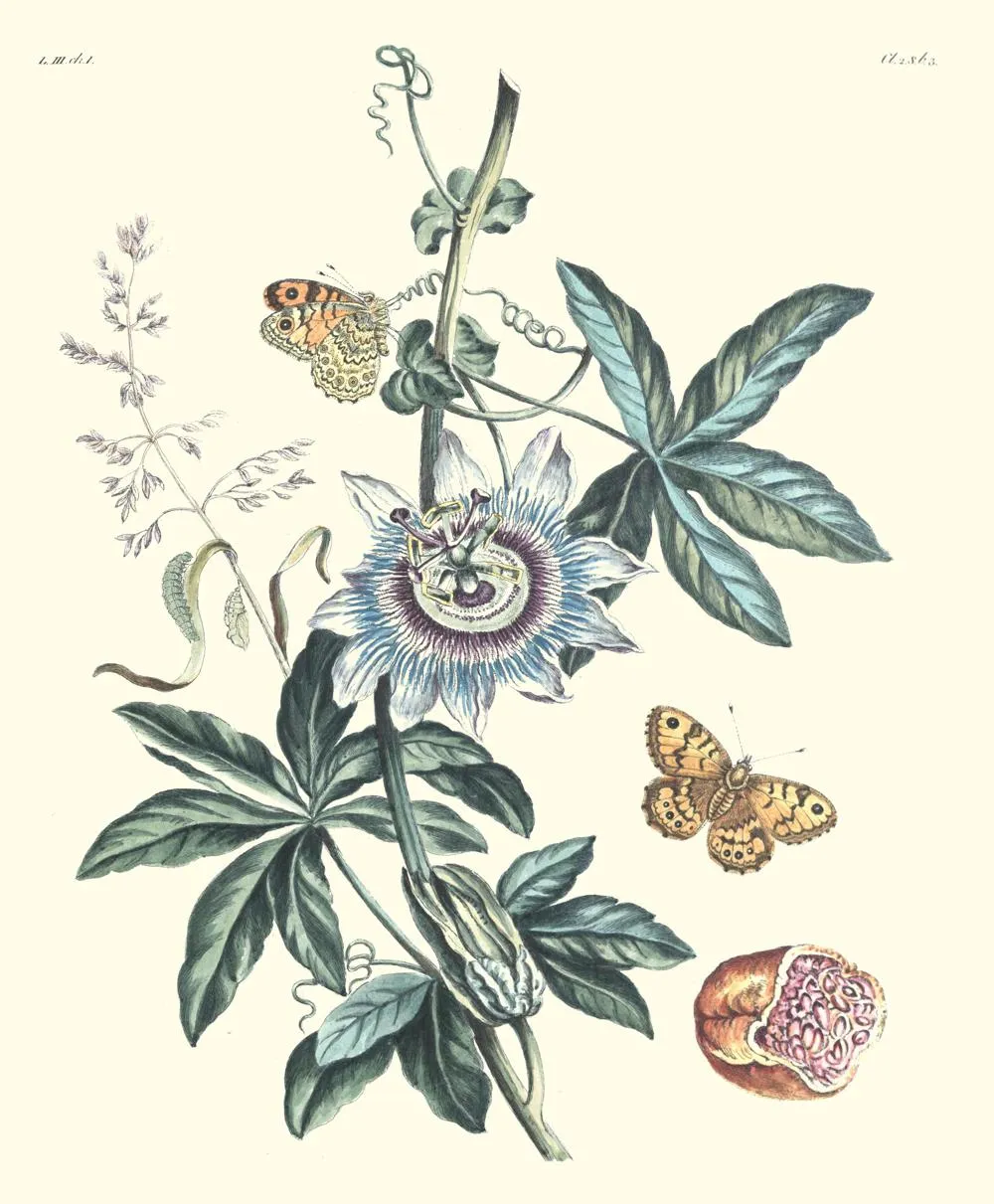
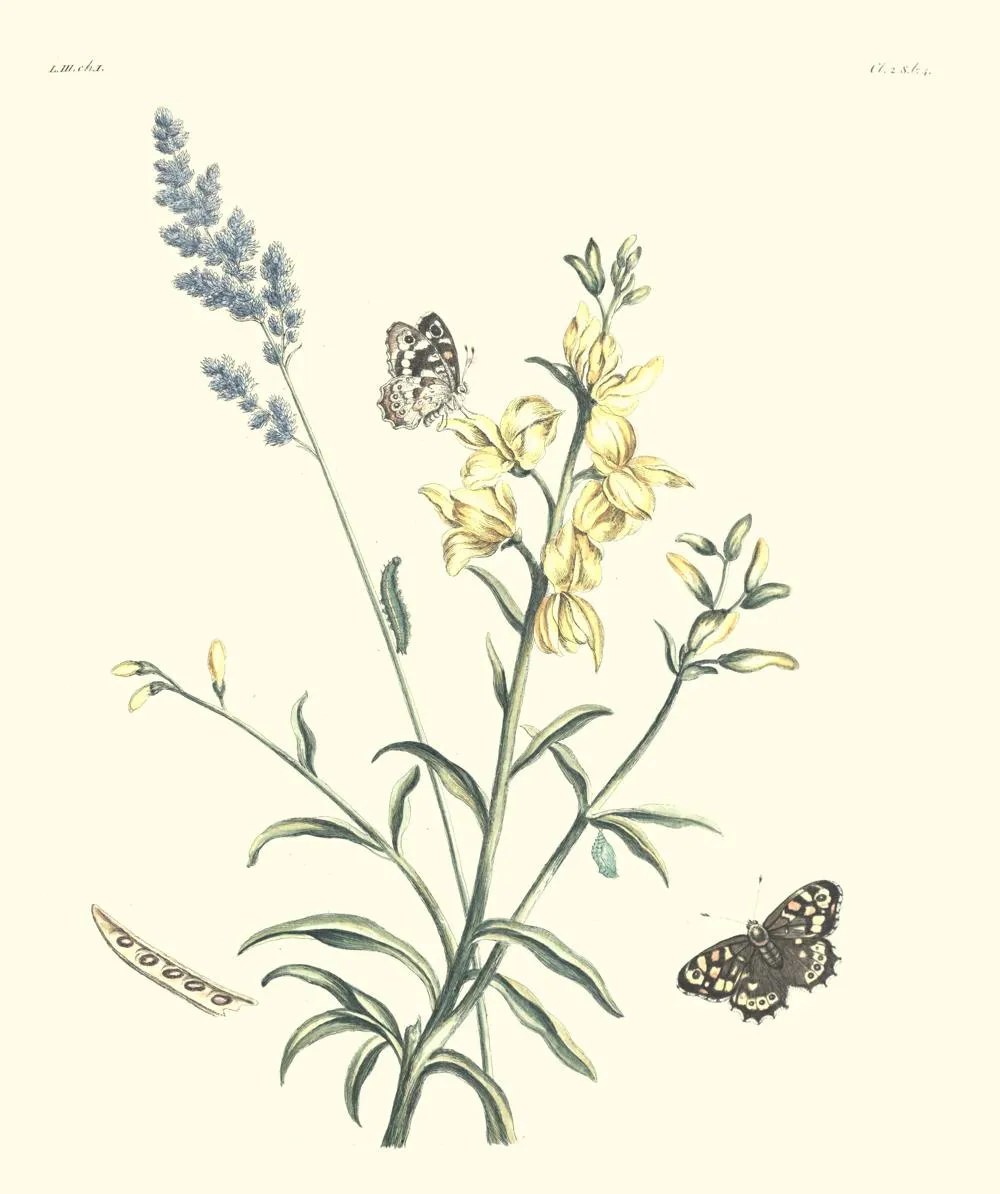
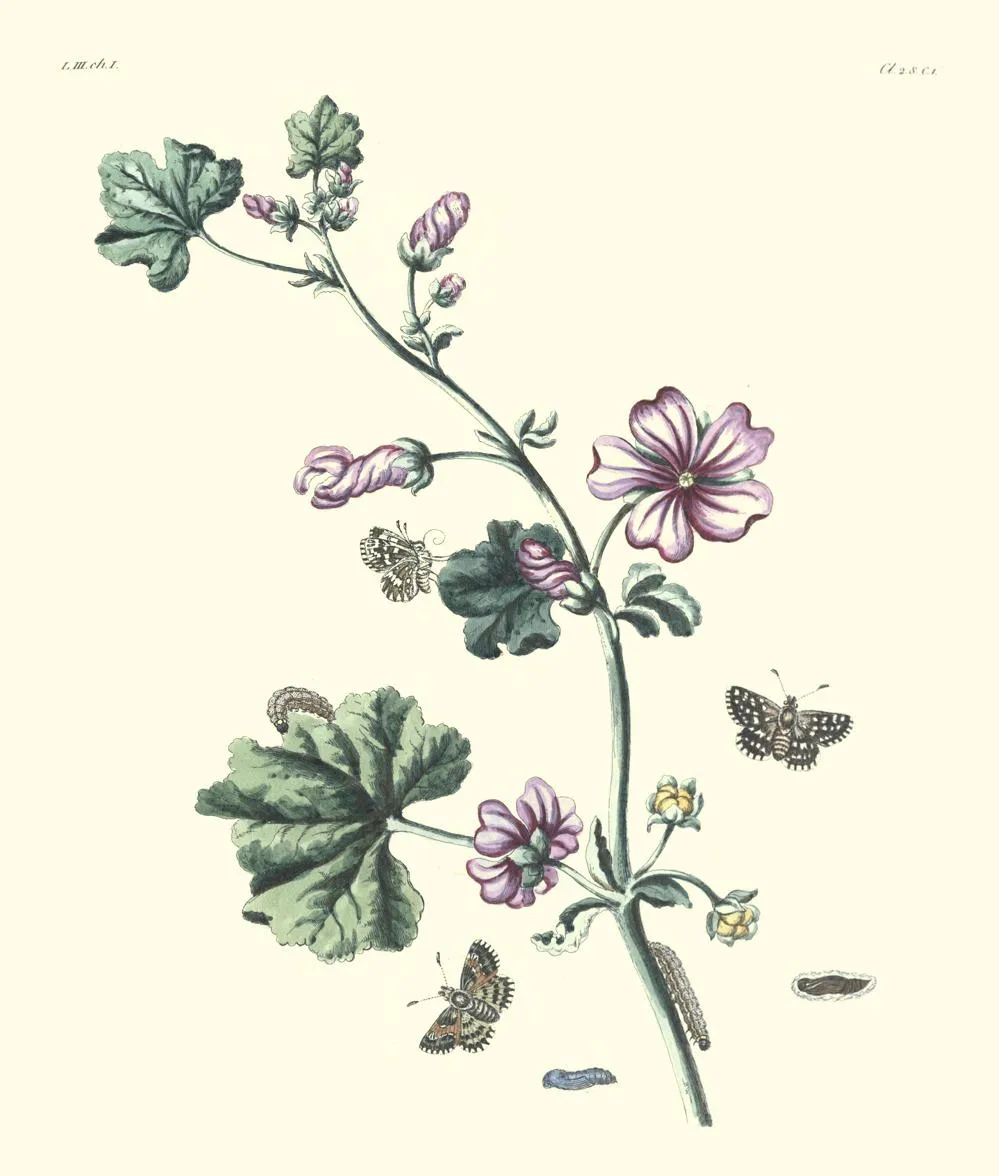
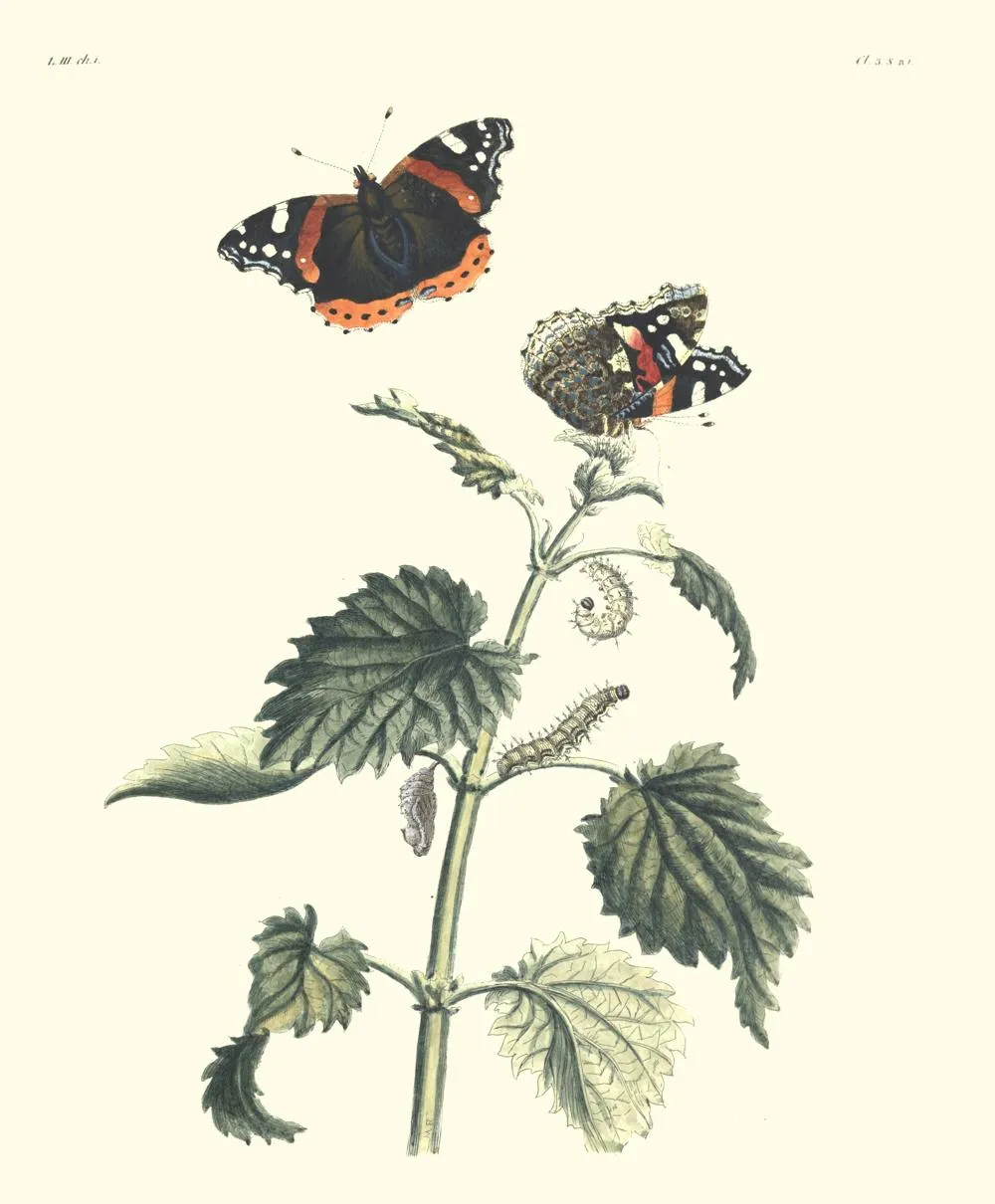
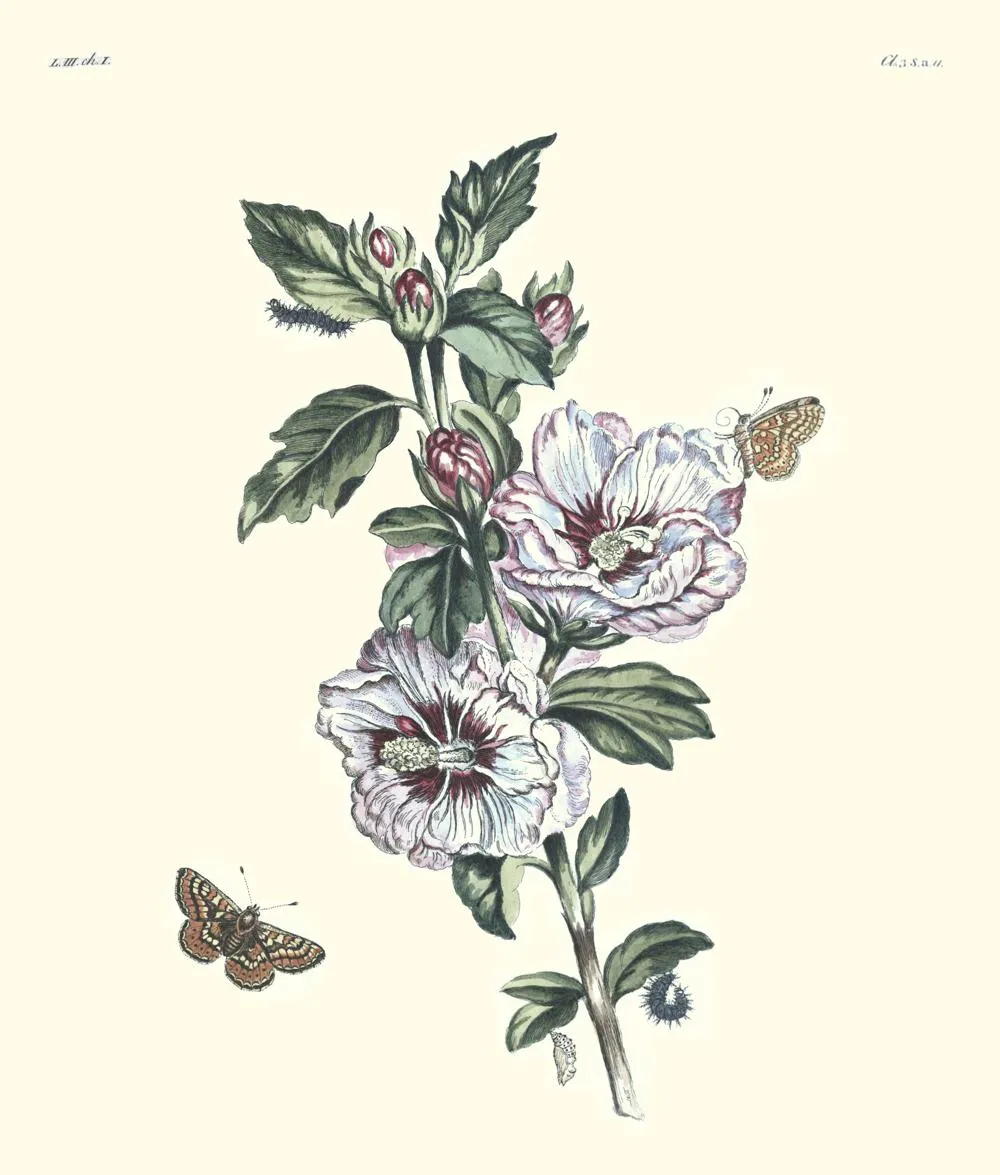
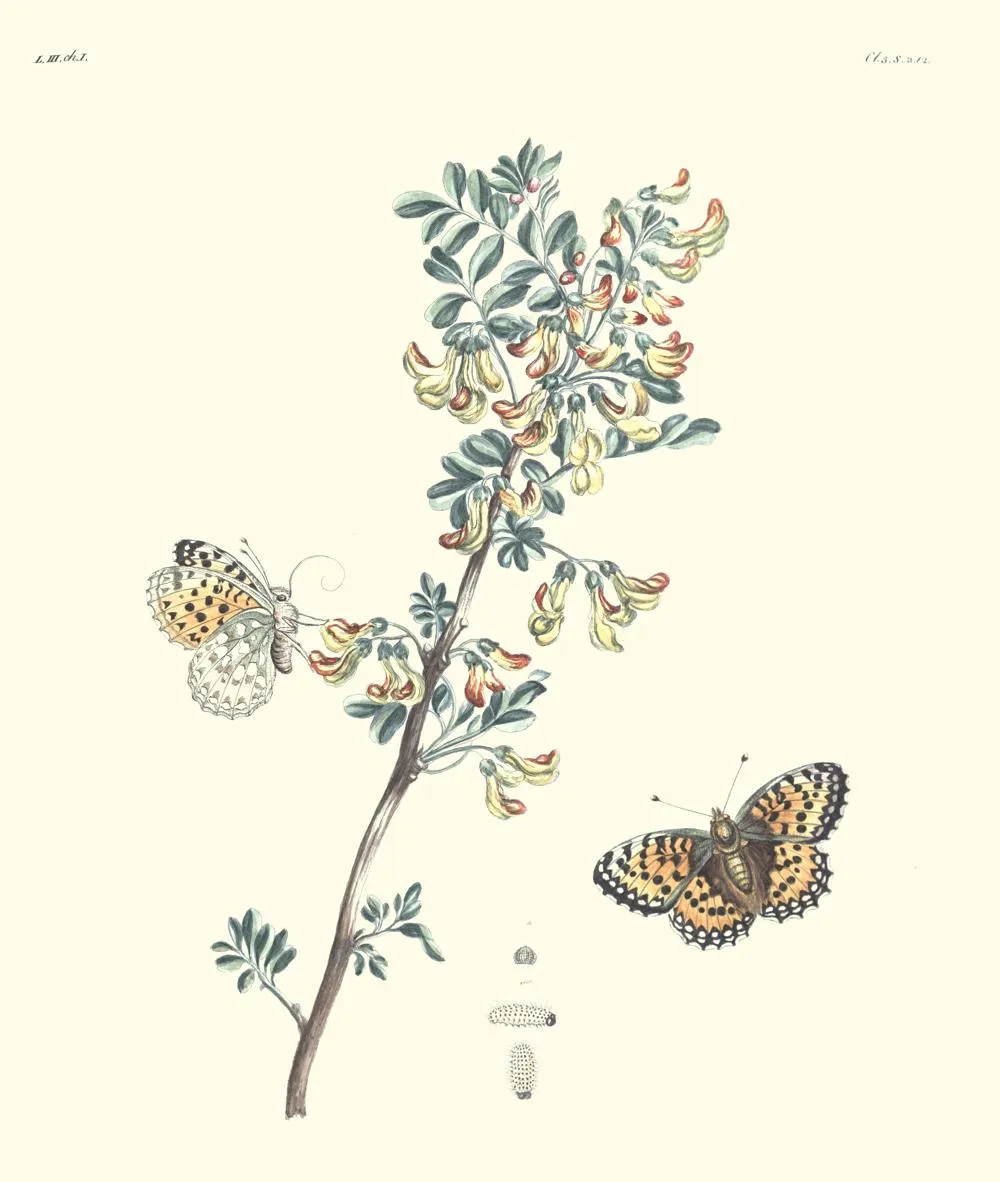
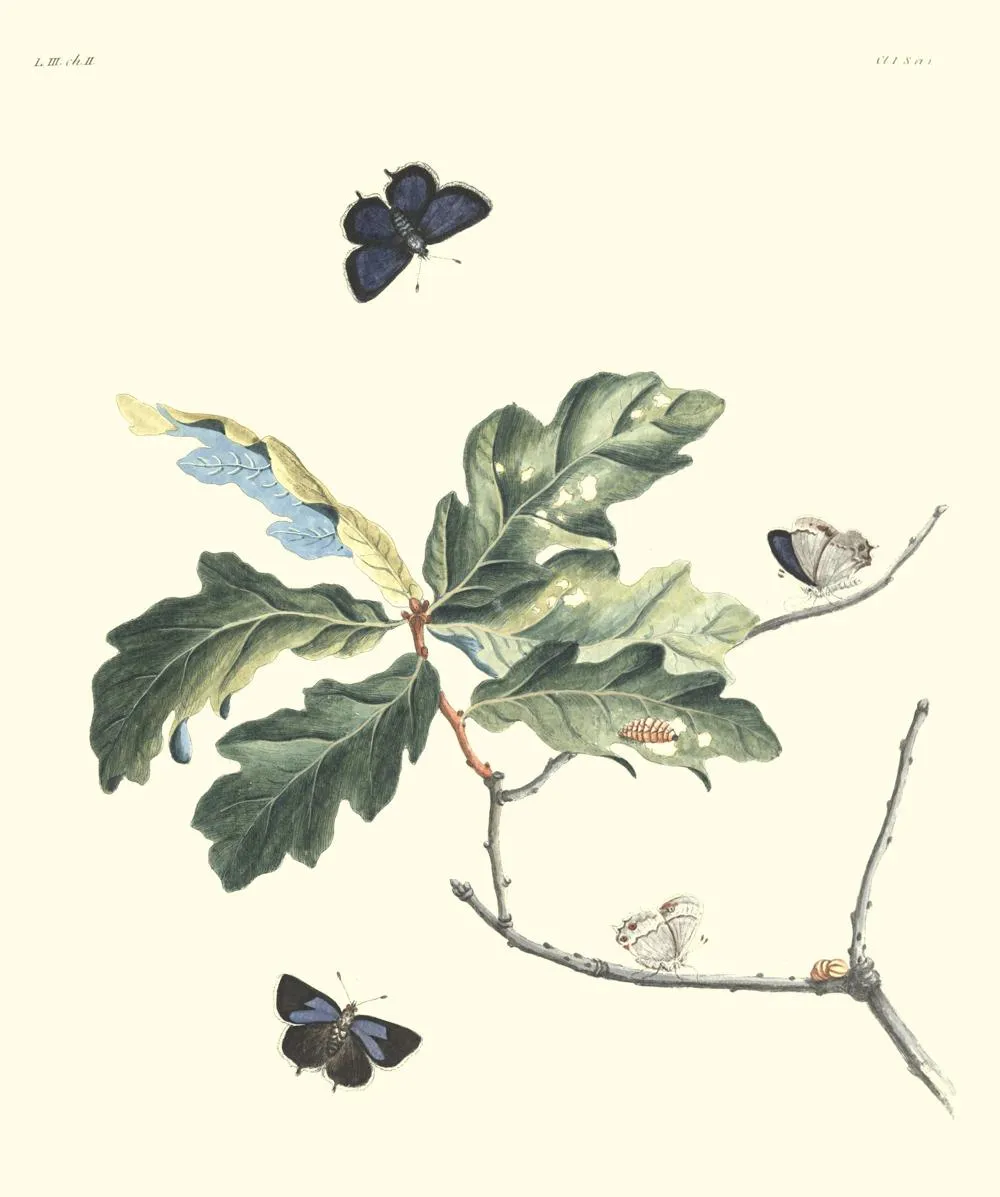
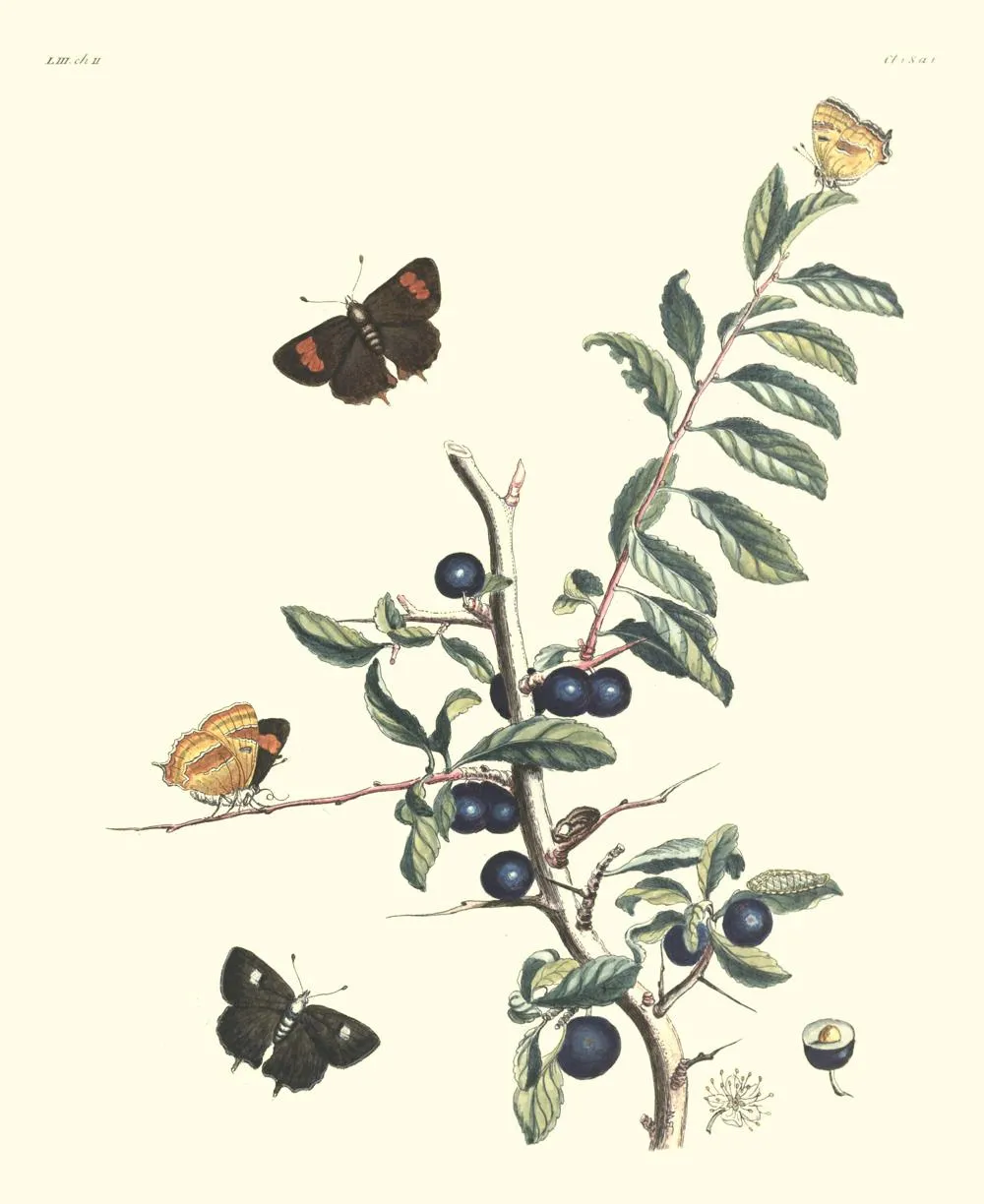
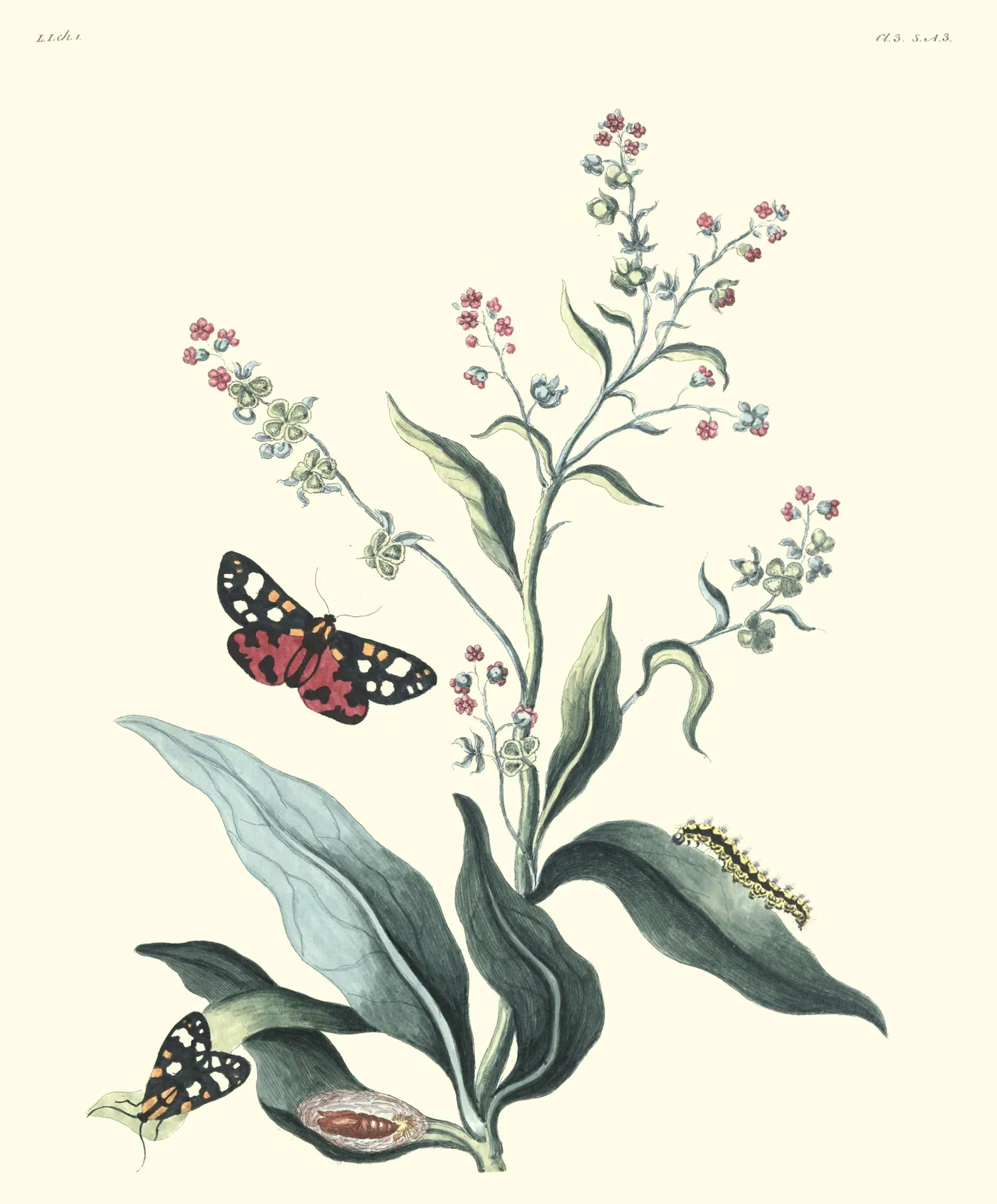
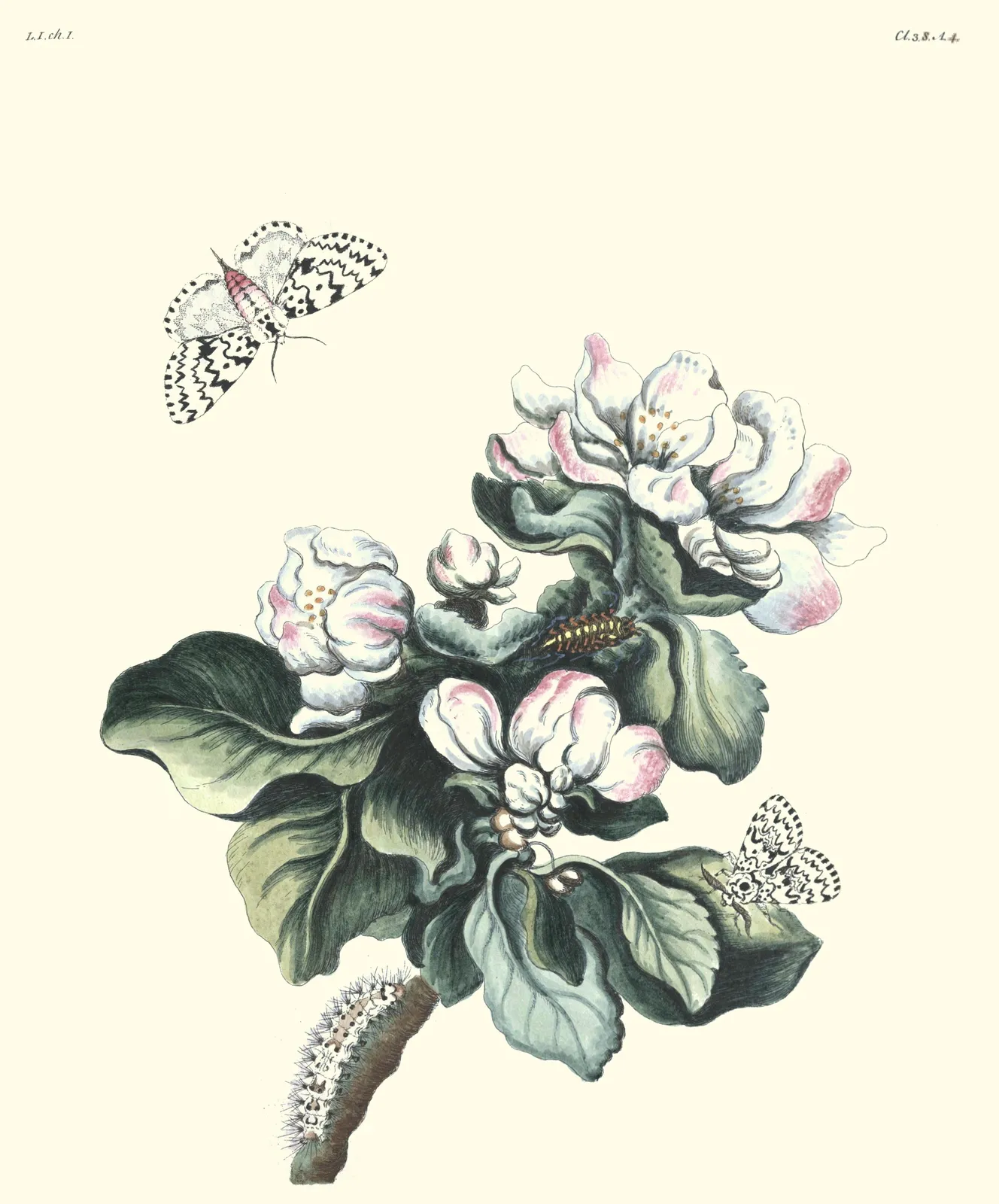
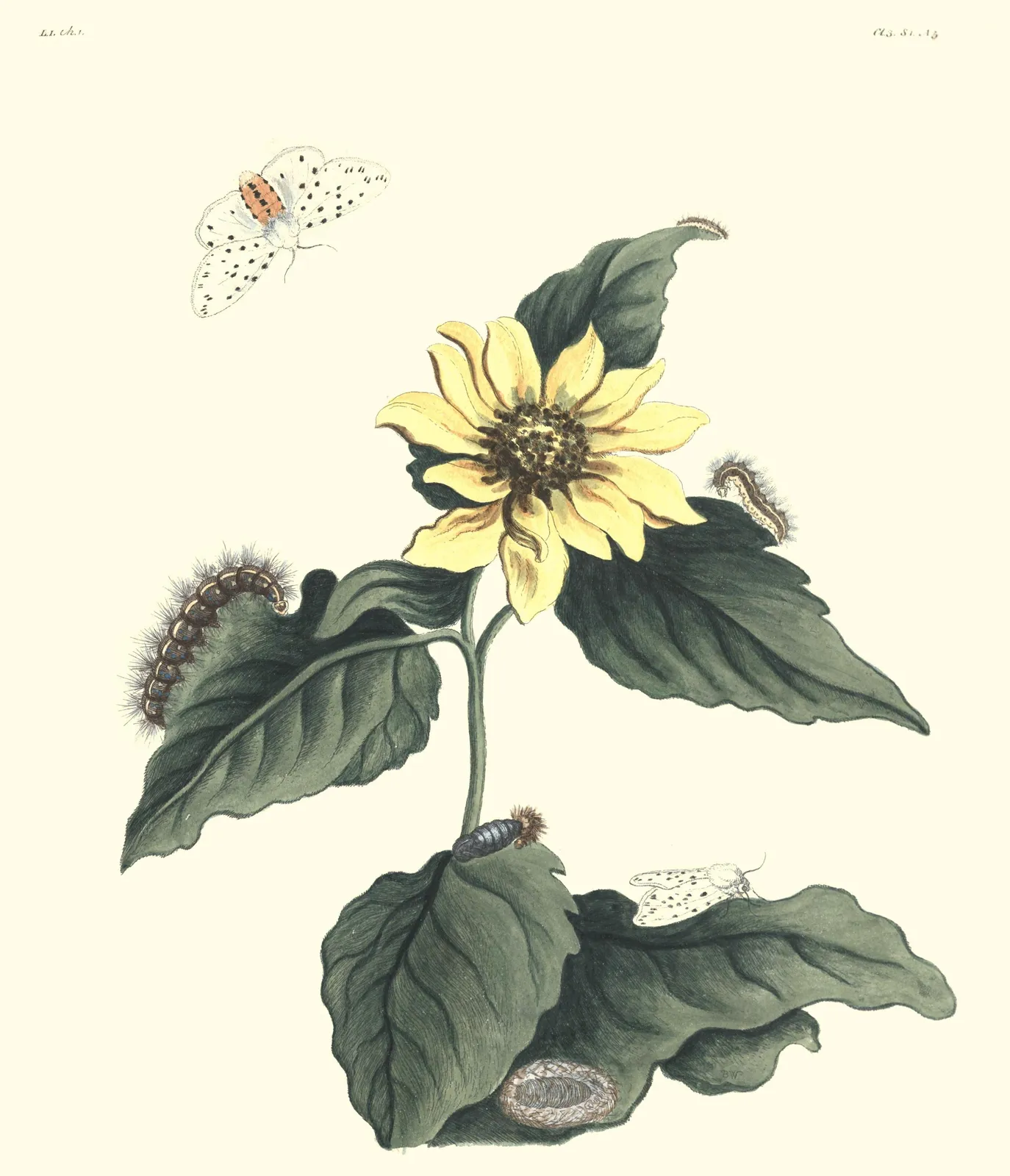
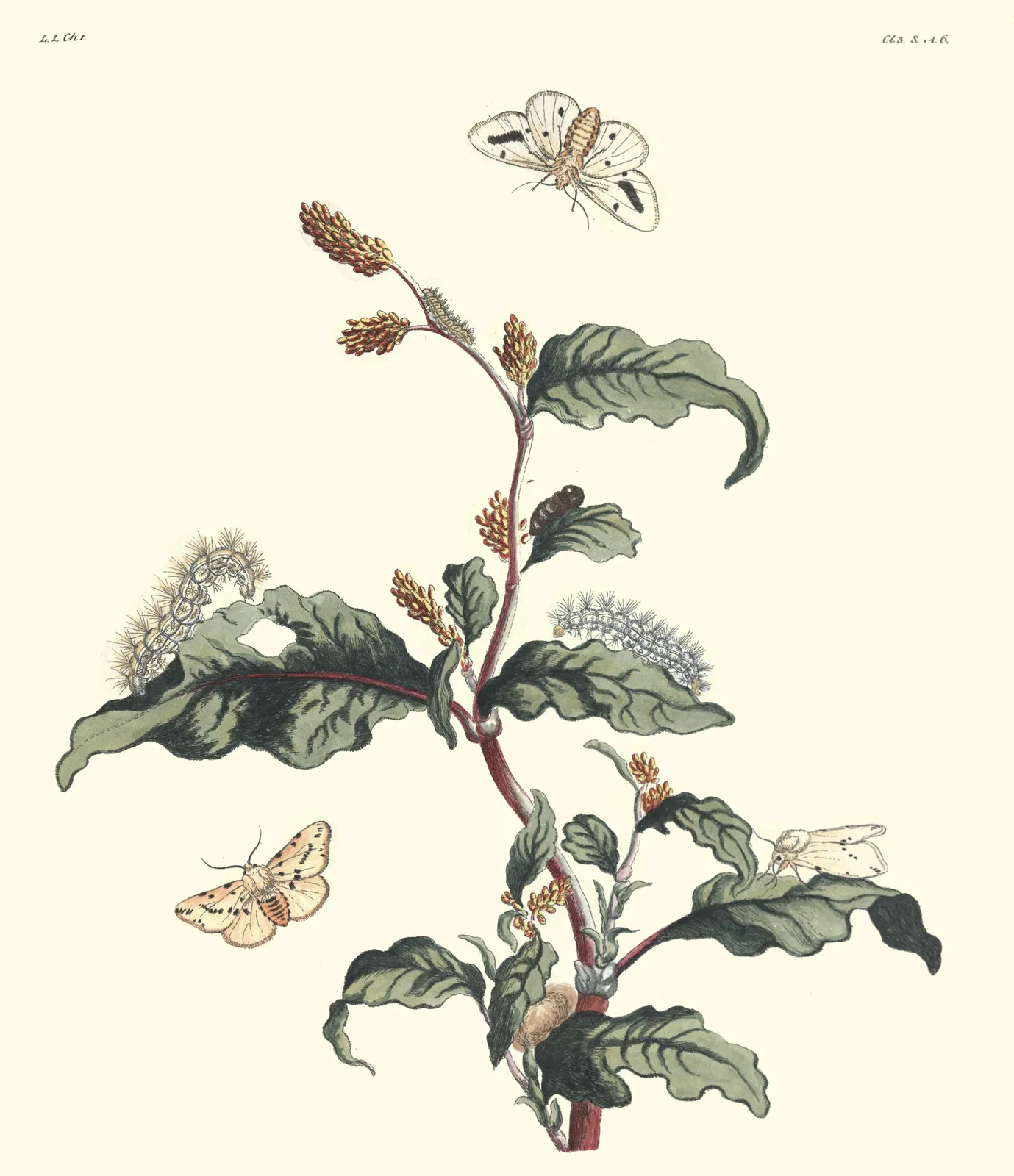
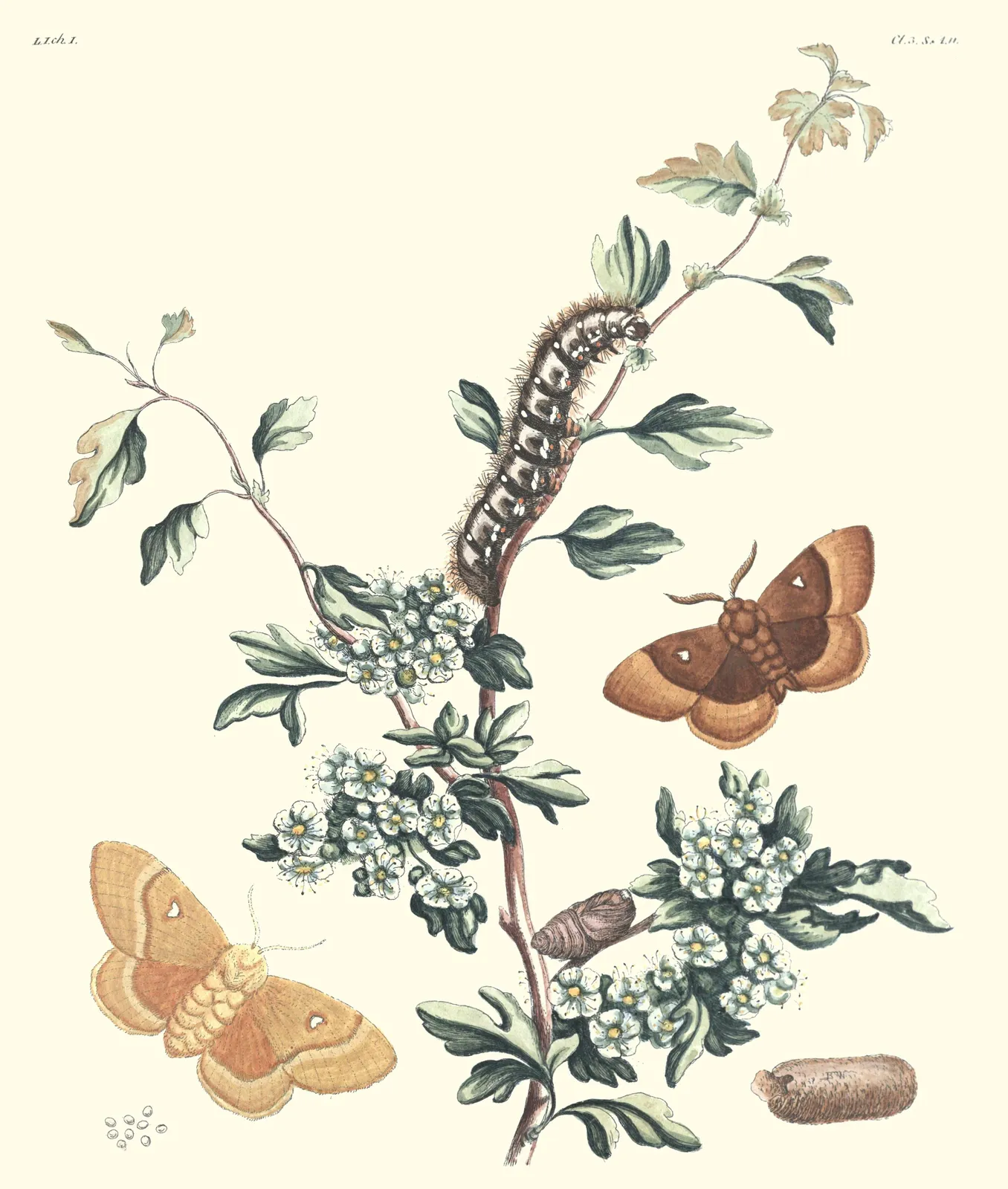
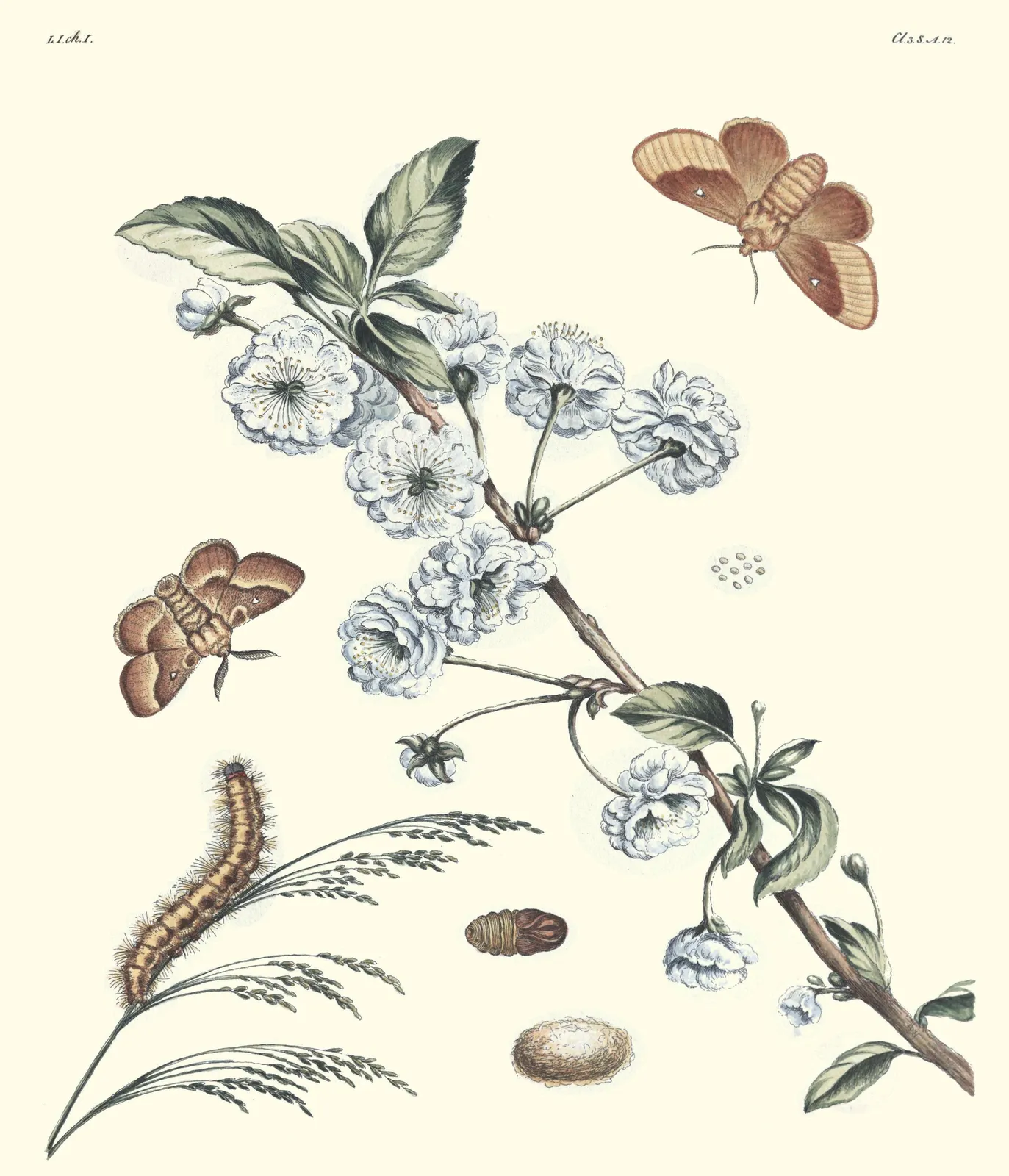
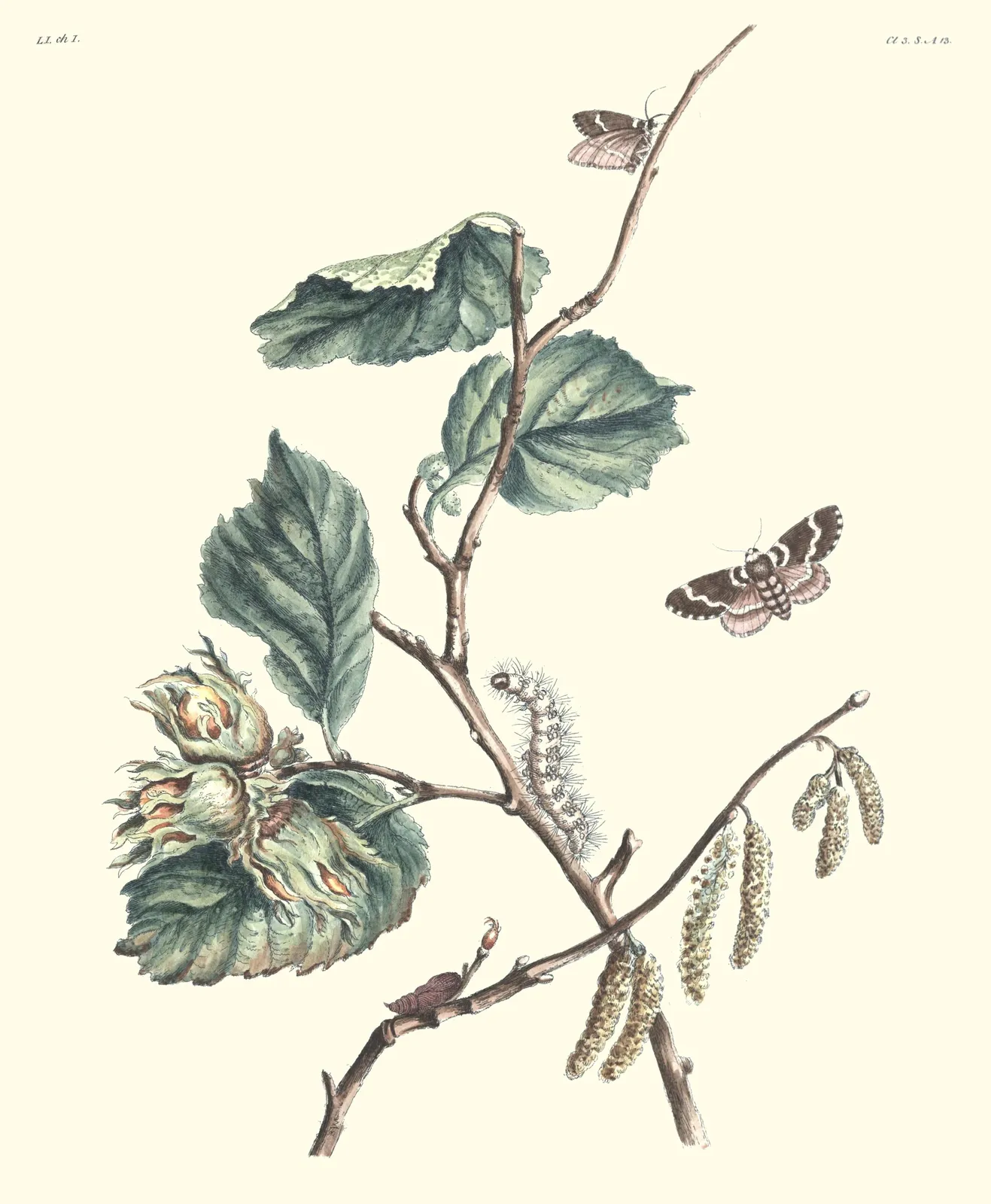
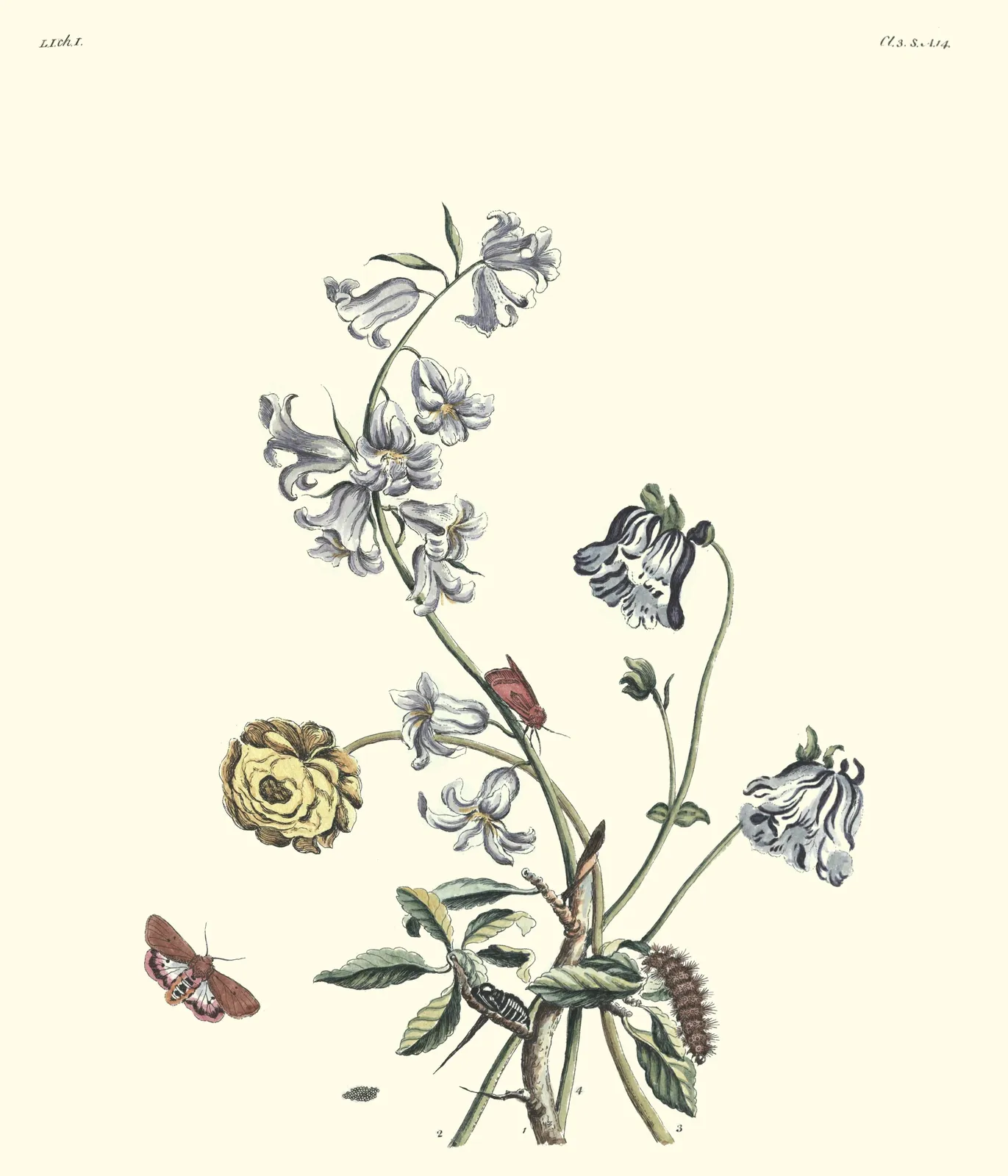
Plates have been moved to be adjacent to the
description of the species which they represent.
Larger, higher-resolution versions of the plates may be seen by
clicking (High Resolution Image) below them.
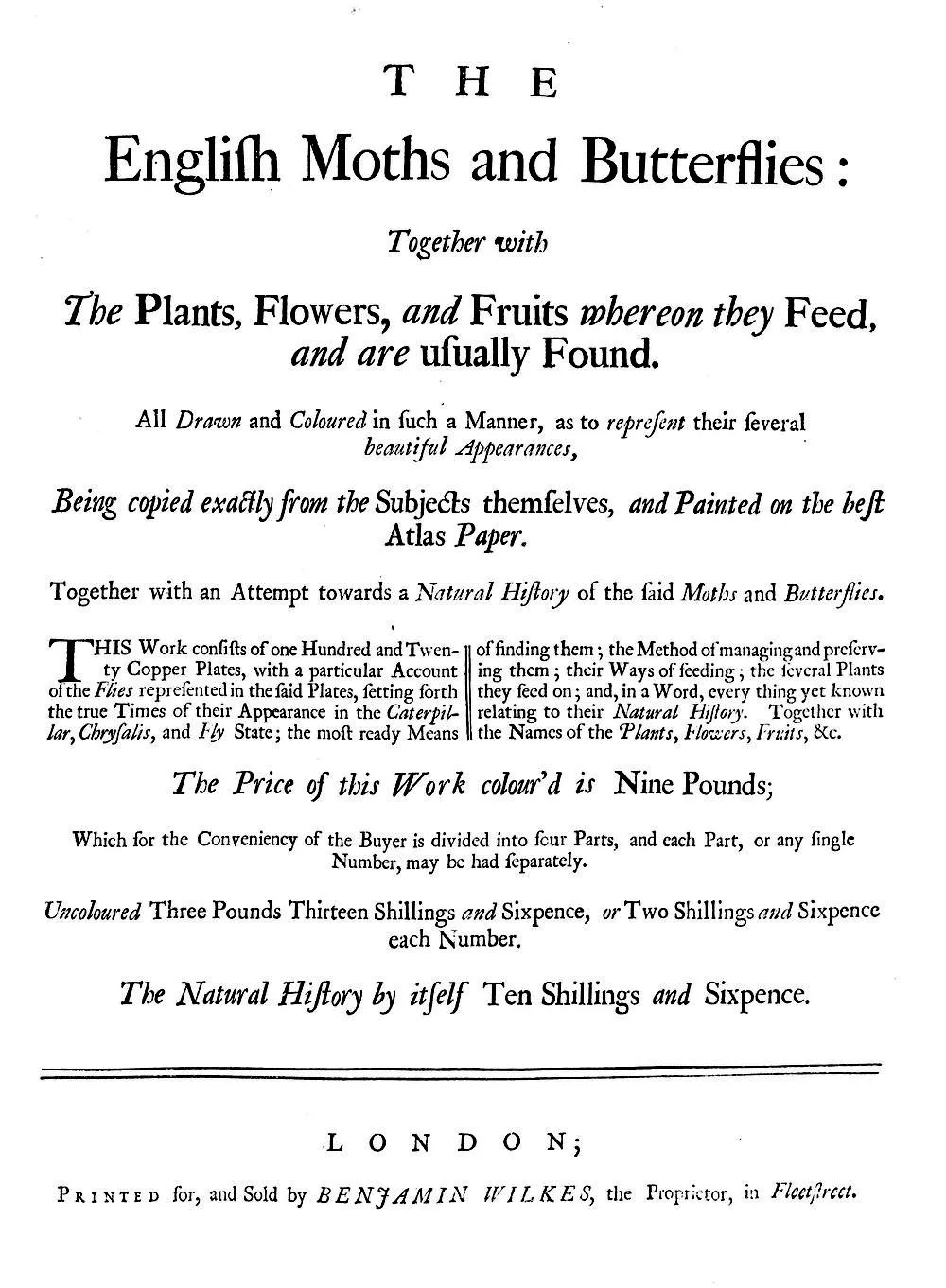
THE English Moths and Butterflies: Together with The Plants, Flowers, and Fruits whereon they Feed, and are usually Found.
All Drawn and Coloured in such a Manner, as to represent their several beautiful Appearances,
Being copied exactly from the Subjects themselves, and Painted on the best
Atlas Paper.
Together with an Attempt towards a Natural History of the said Moths and Butterflies.
This work consists of one Hundred and Twenty
Copper Plates, with a particular Account
of the Flies represented in the said Plates setting forth
the true Times of their Appearance in the Caterpillar,
Chrysalis, and Fly State; the most ready Means
of finding them; the Method of managing and preserving
them; their Ways of feeding; the several Plants
they feed on; and, in a Word, everything yet known
relating to their Natural History. Together with
the Names of the Plants, Flowers, Fruits &c.
The Price of thisWork colour’d isNine Pounds;
Which for the Conveniency of the Buyer is divided into four Parts, and each Part, or any single
Number, may be had separately.
Uncoloured Three Pounds Thirteen Shillings and Sixpence, or Two Shillings and Sixpence
each Number.
The Natural History by itself Ten Shillings and Sixpence.
LONDON;
Printed for, and Sold by BENJAMIN WILKES, the Proprietor, in Fleetstreet.
TO MARTIN FOLKES , Esq; President , And to the COUNCIL and FELLOWS of the ROYAL SOCIETY OF LONDO N.
Gentlemen,
I Humbly take the Liberty to address this Work to
You, and presume to hope, from Your exact Knowledge
of the Subjects it contains, and Your having
been pleased to countenance the several Parts of it,
as they were published, with Your Acceptance and
Approbation, that You will not, now they are put
together, deny them the Honour of Your Patronage.
The Institution of Your Society for the Improvement of Natural
Knowledge, must render it not improper to lay before You every Attempt
towards such Improvement. On the contrary, You have a
sort of Right to expect, that every Author in Natural History, should
submit his Labours to Your Examination, and think himself happy if
they will stand the Test of Your Judgment.
The Animal and Vegetable Parts of the Creation afford endless
Stores for the Enquiry and Entertainment of the curious Naturalist:
and some of the most beautiful of each Sort, are here presented to the
Eye, in their true Size, Form, and Colour. Nor will it be objected by
You, that too much Time and Pains has been bestowed on a Company of
Insects, which few People trouble themselves about; for true Philosophy
teaches, that the meanest thing God has made, is not below the
Dignity of the most exalted of mortal Men to consider. But the Creatures
here exhibited, are adorned with such a Variety of Beauty to engage
our Notice, and undergo such amazing Changes in their Form and
Appearance, that a thinking Mind can hardly avoid regarding them
with uncommon Pleasure and a more than ordinary Attention.
Little, perhaps, is wanting to make the Study of Nature universally
pursued, than to render it easy and intelligible; for, surely, the Understanding
God has given us, can never be more properly employed, than
in examining and considering those Proofs of his Divine Goodness and
Power, which are placed every where around us. This is a most reasonable
and satisfactory Entertainment; and I am fully persuaded, many
of You, Gentlemen, have often experienced more real Pleasure from
such Examinations, than those who know nothing of them can possibly
conceive.
My Attempt towards a Natural History of the English Moths and
Butterflies, (which is here added to the Paintings of them) wherein they
are divided into Classes, and their several Progressions and Changes from
the Egg to the Fly-state are described, (and that not from Books or
Conjectures, but from actual Experiments and close Observation) will,
I hope, meet with Your Approbation.
But not to be longer troublesome than to beg Pardon for this Presumption,
and with a continual increase of Prosperity and Honour to
the Royal Society of London, permit me to subscribe myself,
Gentlemen,
Your most obedient,
Humble Servant,
BENJAMIN WILKES.
THE PREFAC E.
The Painting of HISTORY PIECES and PORTRAITS in
Oyl being the Profession of the Author of this Work, he frequently found himself
at a Loss, in the Course of his Employment, to understand with Certainty
what Colours would contrast with and set off each other to the best Advantage;
and perhaps had still remained under the same Difficulties, had he
not been led by Accident into the Means of learning all this from Nature,
which undoubtedly is the best Instructor.
It happened that a Friend invited him one Evening, to bear him Company to a Society named
the Aurelian: the agreeable Purpose of which is, to become acquainted with that
Part of Natural Philosophy which relates to the Generation and Properties of Insects, of
which they have a fine Collection. And here he first saw such Specimens of Nature’s admirable
Skill in the Disposition, Arrangement, and contrasting of Colours (particularly amongst
the Moths and Butterflies) as struck him with Amazement, and convinced him, at the same
Time, that studying them would turn greatly to his Advantage.
With this View he desired to become a Member of the Aurelian Society, and
soon after had the Honour to be admitted; when, by his own Diligence, together with the genenerous
and kind Assistance of some Gentlemen of the Society, it was not long before he had acquired
a tolerable Collection of English Moths and Butterflies; and for ten Years
past his leisure Hours have chiefly been employed in the collecting and making Drawings of the
different English Caterpillars, Aureliæ or Chrysalides, Flies,
&c. that he could any Ways obtain;
and in making such Observations and Remarks thereon as shall now, with all Submission,
be laid before the Publick.
He has been greatly assisted in this Work by that well-known and ingenious Naturalist,
Mr. Joseph Dandridge; to whose noble Collection he had free Access during his Life-time,
and also the Liberty of making what Use he thought fit of his curious Remarks on these Subjects,
which were the Fruits of no less than forty Years Experience. And he is still favoured
in the like Manner by his Successors, as often as he finds Occasion.
Respect to the Memory of this valuable and worthy Man, will not suffer him to omit
this Opportunity of giving him the Character that is most justly his due, viz. That he was a
Person of unbounded Curiosity, and unwearied Application in his Researches into the Works of
Nature; in the Study of which all those Hours were employed that could be spared from his
immediate Business; by which Means, during a long Life, he had not only got together a great
Variety of the most rare natural Productions, but also from Time to Time had written down
his Observations thereon, which deserve the highest Regard, as his Judgment and Veracity
were both without Exception. And, as he loved these Studies himself, he was a zealous Encourager
of all that had the same Inclination, whom he was always ready to assist with his
laboriously acquired Knowledge.
But to proceed—He must also acknowledge, that in the Course of this Undertaking he
has made use of the Drawings of some Caterpillars and Flies which were published not long
ago in a curious Work of this Sort, by J. A. Rosel, at Norimburgh, in Germany: But he
has taken from him such only as are exactly of the same Species with what we have in England,
though we have not yet been so fortunate to meet with them under all their several Changes:
what Information that Gentleman has given, as to those Particularities concerning them which
we are yet unacquainted with, he therefore judged proper to insert.
As to the Plants, Flowers, and Fruits, he declares himself under the highest Obligation
to a most curious Naturalist, and worthy Member of the Royal Society of London, whose costly
and valuable Collection is known to the learned World, and esteemed as it deserves. This
Gentleman has generously permitted him to make use of many excellent Paintings of these Subjects,
which were taken from Nature by those two celebrated Artists Mr. George Dennis
Ehret, and Mr. Jacobus Van Heysum, and executed with the utmost Judgment and Command
of Pencil, so that he could hardly doubt but that true Copies of them would give great
Pleasure to the Lovers of Botany, whom he has endeavoured to entertain with all the Variety
he could introduce.
Some Ill-natured People, that love to find Fault with every Thing, have, he hears, objected
against the Liberty he has taken, in giving in several of his Plates, Plants, Flowers,
and Fruits, that are not in Reality the Food of the Caterpillars therein exhibited; but as the
greatest Part of the Caterpillars described in this Work feed chiefly on the Oak, Elm,
Black-Thorn,
White-Thorn, Willow, and Nettle, all which are separately represented in different
Plates, it was judged unnecessary (and would certainly have been tiresom) to repeat those Subjects,
as often as different Caterpillars are presented to which they serve for Food: and therefore,
instead of so doing, the Author has enriched his Undertaking with some of the most beautiful
Productions of Nature in the Vegetable Kingdom: But, however, has not forgot to place
the Caterpillars, in most of the Plates, on a small Specimen of the real Plant on which it feeds,
as will be properly explained in the Account of each Particular Fly:—and this Care, it is
hoped will be an Answer to all unreasonable Cavils.
ThePlates are all drawn and etched with his own Hand, in a quite new Manner;
whereby every Design, when coloured, appears like a regular Piece of Painting; and the Flies
are drawn and Painted with the utmost Exactness, from as fine and perfect Specimens as can
be bred. The common Method of amusing the Reader with long Accounts of the Colours and
Markings of each Fly is avoided in this Work, as entirely needless, when the Objects are
truly represented before his Eyes.
His Classing of the Caterpillars will be found of great Use; for if it be enquired what
Fly any Caterpillar that may happen to present itself will produce, by observing its Character
you will easily be satisfied (if it is in this Collection) and be likewise taught what its proper
Food is, &c. Names are absolutely necessary to distinguish one Fly from another, and enable
the Curious in this Study to communicate any Observations they may make; which, without
giving Names to the Flies, would be very difficult, if even possible to be done; as they must be
greatly at a Loss to make others perfectly understand what Flies they are treating of. The
worthy Members of the Aurelian Society, and several other ingenious Gentlemen, have
been so sensible of this, that they, from Time to Time, have thought proper to bestow some
Name on every Species that has come within their Knowledge.
Indeed Names are arbitrary, and if remembered, and the Intent of them well understood,
may, whatever they are, serve the Purpose of giving them: But here, as in every
Thing else, a Propriety is to be aimed at, and the Names given ought to denote some distinguishing
Particularity, and that the most obvious, in the Subject on which they are bestowed, so
as to make the Name, if possible, descriptive of the Thing: Which Rule has been followed as
strictly as might be in naming the Moths and Butterflies contained in this Work: that is to say,
the Shape, the Colour, the Marking, the Food, or the Place where found is what they are
named from. But in doing this, where the Author found them named to his Hands in this
descriptive Manner, he has gladly retained the Name they had already, and only presumes to
bestow Names himself on such as either had none at all, or which he thought not sufficiently
denotative of the particular Flies intended to be known by them.
The Division of the Work into Books and Chapters may need some Explanation, since
under some of the Divisions very few, or even but one single Fly is placed; the Reason whereof
is, that the Plan here laid down is intended for the Arranging of all the Moths and Butterflies,
whose Progression is known at present, or shall hereafter be discovered in England; of which,
as the Flies here given are but a small Part, this must be considered but as an Out-line to
be filled up occasionally.
It is hoped the Directions here given how to collect the Caterpillars or Chrysalides, how to
feed and take Care of them, how to preserve the Flies when bred, and where and at what Times
they may be found most easily, will prove both acceptable and useful to every curious Collector;
and as the Author thinks himself under great Obligations to the Subscribers to, and Encouragers
of this Undertaking, a List of their Names is added as a Memorial of his Gratitude.
These Things being premised, we come now to give a short Sketch of the Natural History
of the English Moths and Butterflies in general.
INTRODUCTIO N. — Of Moths and Butterflies in general. — On the different Manner of laying their Eggs. — Of the Eggs. — Of Caterpillars . — Of the Food of Caterpillars , and their Manner of Feeding. — Of the Forms of Caterpillars . — Of the Change of Caterpillars into the Chrysalis State. — Of the Chrysalis or Aurelia . — How the Aurelia or Chrysalis is secured. — Of the FLY . — The Distinction of Moths and Butterflies . — Concerning the Food of the Fly . — The Enemies of Moths and Butterflies .
The Opinion of Equivocal Generation however formerly received, has by the
present Age been deservedly rejected; since every Observation proves, that all
Creatures are produced by Parents of their own Kind, and that in general those
Parents are Male and Female; and the Production of every Moth and Butterfly
in this Manner, is I believe at present not doubted by any Body.
The Females, both of the Moth and Butterfly, lay their Eggs in a short Time after Copulation,
upon or contiguous to what will supply proper Food for the young Brood when
produced. After a certain Period the Infant Caterpillars included in the Eggs burst their
Shells, crawl forth, and feed upon the Provision ready prepared for them. And each of these
Caterpillars, having fed its appointed Time, becomes a Chrysalis or Aurelia; from which
State, after a while, it issues forth a Fly in the Likeness of its Parent.
Some Species of Butterflies breed twice a Year. Those that come forth in May lay their Eggs
soon after, which Eggs in about nine Days Time are hatched. The Caterpillars feed for about
six Weeks, then change to Chrysalis, lie in that State for about fourteen Days, and then the
Flies are bred. These lay their Eggs as the first Brood did, the Caterpillars change to Chrysalis
in September, and the Flies come forth in the following May.
The Variety of the Moth Kinds is so great, that perhaps there is scarce a Day in the Year
when some of them are not bred. The Time of their Continuance in the Chrysalis State will
be best known by attending to the Account of each Moth described in the following Plates.
Some Moths as well as Butterflies breed twice a Year.
It frequently happens, that the Fly does not come out at the usual Time, but continues in
the Chrysalis State till that Time Twelvemonth; so that the Creature remains in that Case
a Year and nine Months (and sometimes longer) in a State of Rest, without Nourishment
of any kind.
Thus much in general:—We descend now to particular Observations.
AllButterflies and Moths lay a great Number of Eggs, some even as far as two or
three Hundred. The Eggs of some Kinds are glutenous, or covered with a glewy
Moisture; but those of others are not so: The glutenous are fixt (sometimes singly) on Grass,
the Leaves of Trees, Shrubs, &c. and sometimes in Clusters after the same Manner. Some
Sorts of Eggs are laid naked or uncovered, and others are cloath’d with a sort of Down, &c.
Some Flies lay them in a Spiral Line, or Screw-like Figure, round a small Twigg, a Stalk of Grass,
&c. And these may be pulled off entire, in Fashion like a Cylindrical Tube, and as hard as
Horn: Others deposit theirs in the Chinks of the Barks of Trees, &c. &c. &c.
It is observeable, that the whole Process from the Egg, to the Fly, of many Species, is perform’d
in about sixty Days. But the Goat Moth is an Exception to this Rule, being reported
to be three Years proceeding from the Egg to the Fly State.
The Eggs are of various Forms; some are round, some are oval, and many of the Moth-Kind
flat, and perforated through the Middle; so that the Embrios or Caterpillars lie
curl’d up before they are hatch’d, as they frequently do afterwards when come to Maturity.
They are found of all manner of Colours, and many of them are extremely beautiful if view’d
with a Microscope; some being curiously rib’d and adorn’d with Protuberances, &c. like
the nicest carved Work; others marbled and spotted with an amazing Variety of delightful
colouring.
Caterpillars are usually divided into the Naked and Cloathed Kinds. Among
the Cloath’d some have only small Tufts of Hair or Down, others are cover’d all over
with it.
TheCaterpillars of all known Butterflies have six Hooks or Claws before, eight Feet
in the Middle of their Body, and two Holders behind. Those that produce Moths have
all six Hooks or Claws before, and Holders behind. Some have eight Feet in the Middle,
some four, and some only two next their Holders.
Some Species of Caterpillars always feed inclos’d or spun up in the Leaves they feed upon,
others take their Food openly and in Sight.
Some are sociable and herd together whilst young, but when they change their third Skin
they grow unsociable and feed separately.
Others are born unsociable, and feed separately from their Infancy.
Some Species spin a large Web that will contain an hundred Caterpillars, or more, from
which they never go far till they have eat up all the Leaves that are near thereto: Then they
spin a new Web, and so (shifting their Quarters) in a short Time, instead of the green Leaves
that they have devoured, leave the Tree, or Bush, covered only with their white Webs.
Some Sorts, when disturbed, let themselves down by a Thread like a Spider, by which
Means they avoid being devoured by other Insects that have not the Means of following
them, &c.
Their Food is almost general, but some Kinds will eat nothing except their own particular
Trees, or Plants.
Some Species feed upon Herbage, others live and feed upon the solid Parts of Trees, and
Barks.
Some dwell in the Earth, or other private Recesses in the Day-time, and at Night come
forth, and feed on Grass, Flowers, &c. Others again feed on the different Kinds of Mosses,
Heath, Broom, the Leaves of Trees, Shrubs, &c.
Some feed upon the Waters naked and exposed, and others make themselves Cases of Sticks,
Rushes, &c. in the Waters, where they get their Food.
The Variety and Beauty which present themselves to our Eyes in the Form and Colouring
of Caterpillars, are no less remarkable than the Flies themselves, as the Reader
will be satisfied by examining the following Plates.
When a Caterpillar has fed its appointed Time, and is come to full Maturity, it undergoes
a Change, and becomes a Body of a different Form, incrusted with a Shell,
and usually called a Chrysalis or Aurelia; the Shell of which is formed underneath the Skin
of the Caterpillar, which Skin comes off as soon as the Aurelia becomes perfect.
During its Continuance in the Chrysalis State, it seems to have no Sense but Feeling;
and some of them have even that in a very low Degree, for they may be touched
pretty roughly without moving.
TheChrysalides or Aureliæ of the Butterfly-Kind are all very beautiful; some of them look
as if they were studded with Gold; some are striped, others spotted, and others mottled with
all the various Colours of the Rainbow. But those of the Moth-Kind are not so; differing very
little from one another, either in Shape or Colour, except the Magpye, and some few besides.
Nothing in Nature is perhaps more deserving Notice, than the many different
Methods whereby Caterpillars conceal and secure themselves whilst in this helpless
and unactive Condition.
Some of them spin a large Case of Silk in Form of an Egg, wherein the Chrysalis lies concealed,
till the Time comes for the Fly to make its Appearance, which it does by piercing
through this Case.
Of such Cases there are several Sorts, different in Form and Colour:
Some are long, and drawn out to a Point at each End; others are more round.
The Texture of some is very thick and close.
Others are thin, like Gause, insomuch that the Chrysalis may be seen thorough them.
SomeAureliæ are white, some yellow, and others of different Hues; and most of the hairy
Caterpillars intermix their Hair amongst the Spinning.
SomeCaterpillars form a hard-crusted Case, composed of silk Threads glewed together, in
such Manner as to become hard like an Egg-shell, so that when the Fly comes out, a round
Hole like a Door appears.
The Silk-spinning Caterpillars are of various Kinds, and deposit their Aureliæ in different
Places, and in different Manners, viz. some fasten them on the Leaves and Stalks of Plants,
without any Covering; others spin the Leaves over them; others lodge them in Holes and Crevices;
and others in the Earth.
Many of the Moth-Kind place their Chrysalis in the Earth, about an Inch or two deep,
surrounding it with a Case of Earth lined with a glutenous Matter, that no Wet can penetrate:
And what is very surprizing, notwithstanding the extreme Delicacy and Tenderness
of the Fly when first bred, be the Ground never so hard, it makes its way thorough it without
ruffling a single Feather.
Few, if any, of the Butterfly-Kind form a Case or Spinning, except what fastens the Tail
and Body of the Chrysalis. Some hang perpendicularly downwards, and others in an horizontal
Position, being fastened by the Tail, with a Thread round the Back and on each Side. Some
are secured within the Leaves spun together; others are hid in the Hollows and Barks of
Trees; and others again under the Copings of Walls, in Houses, Sheds, &c.
After the Chrysalis has remained its due Time, the Fly bursts the Shell wherein it
was contained, and comes out formed perfectly in every Part, except the Wings, which
then appear too small to cover its Body. In this naked Condition it crawls up to some convenient
Place, where its Wings may hang down without any Hindrance: And when thus
disposed, the Wings begin to expand themselves so much, that in the Space of half an Hour,
the Wings (of Butterflies) are stretched commonly to their full Size; nay, even those of the
largest Moths seldom require above an Hour’s Time. At first they are flabby, like wet Paper,
but soon afterwards they become stiff, and capable of supporting them in their Airy Flights, &c.
In this Fly State their first Care seems to be the Propagation of their Species, for some of
them will copulate immediately if they can find a Mate; to seek which the Male Butterfly
takes Wing, as soon as his Wings are in a proper Condition: But few Moths, whether bred
in the Night Time or in the Day, ever offer to fly till the Night after their Birth, when
they go in Search of the Females.
The Females (especially of the Moth Kinds) seldom, if ever, take Wing till they have
been cocked: they often continue in Conjunction twelve Hours and more, after which the Female
lays her Eggs, flies about for a Time, and then dies.—The Females of some Kinds
are without Wings.
The Males (of some Species) have a surprizing Quickness and Distinction in their Sense of
Smelling, exceeding that of the Blood-Hound, or any other Creature yet known; for if a
Female be concealed in a Box, and there are any Males within half a Mile or more, they
will fly directly to the Place, and hover round it. By this Means a Dozen Male Egger-Moths
have been taken in an Hour’s Time, and that at about Twelve o’Clock at Noon, as
may be seen in the Account of the Egger-Moth.
Their Continuance in the Fly State depends greatly on the Weather, many Flies being destroyed
as soon as bred, by Storms of Hail, &c. but if the Season proves favourable, many
will live for a Fortnight, three Weeks, or longer, and some even all the Winter through.
MOTHS and BUTTERFLIES agree in their Progression from the Egg to the Fly State,
are different when in that State, in the following Particulars.
BUTTERFLIES have a Ball or Knob at the Extremity of each of their Antennæ, or Horns.
The Horns of MOTHS have not such Balls or Knobs, but are constantly threaded or
pointed: except the Males of some Species, whose Horns are ramified, or in the Form of Combs.
All BUTTERFLIES settle with their Wings erect, and generally keep them in that
Posture, unless when basking in the Sun.
Most MOTHS do not settle with their Wings erect, but place them horizontally, or inclining
to their Feet.
All BUTTERFLIES come abroad by Day-Light, and chiefly when the Sun shines bright.
MOTHS fly, some by Day-Light, some by Twilight, and some in the Dead of
Night.
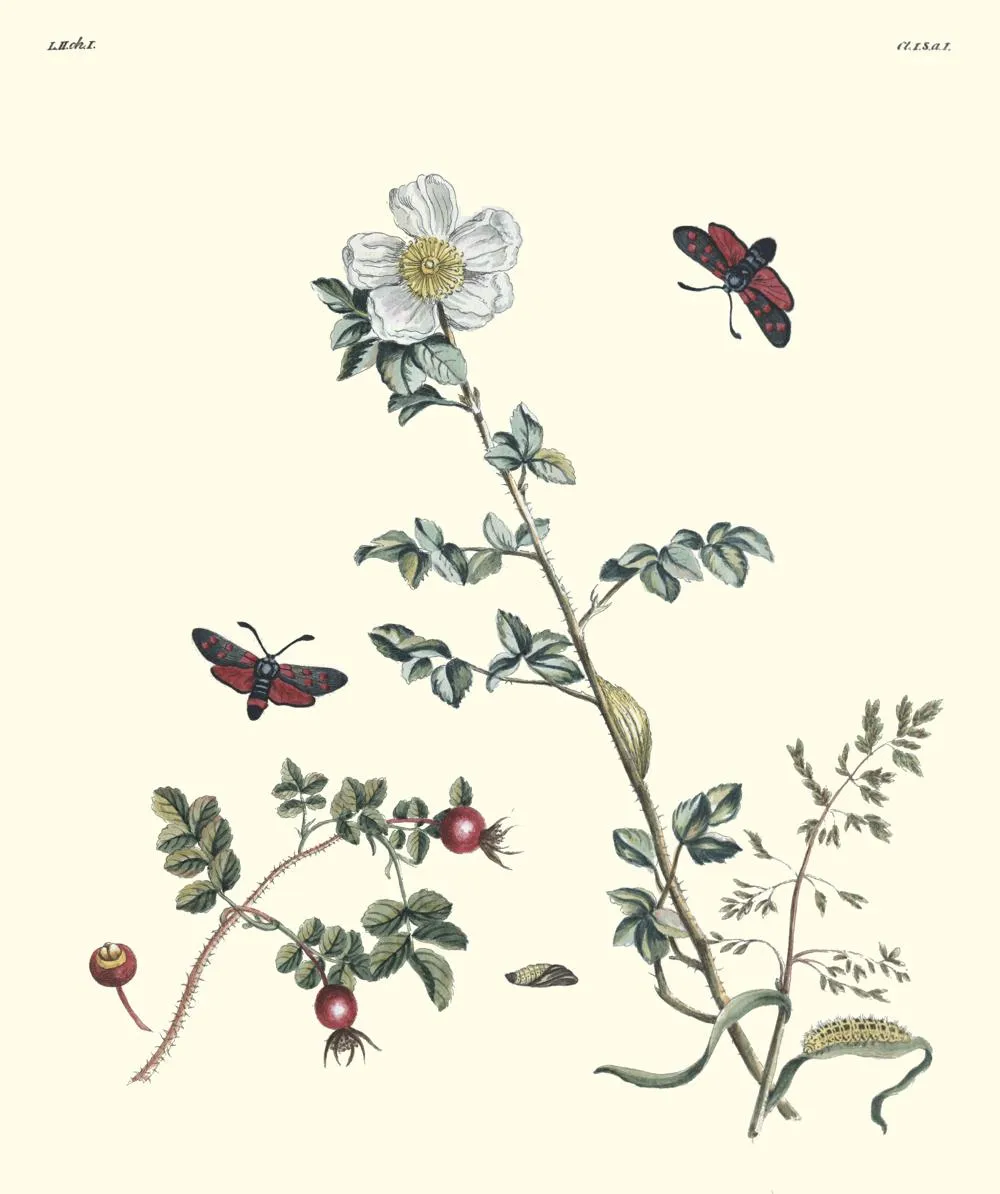
N. B.There is a Species of Fly betwixt the Moth and the Butterfly, whose Horns are
more flat and hollow; this is describ’d in the second Book of this Work, by the Name of
the Burnet.
The Food of these Creatures in the Fly State, is very different from what it was when
they were Caterpillars: Butterflies feed on all Kinds of Flowers, and on several sorts
of Fruits, and I have seen them extremely fond of the Juices that issue from the Bodies of several
Sorts of Trees.
MOTHS feed on the same Things, as also on the Honey-Dew that is found on the Leaves
of Limes, Elms, &c. The Moths, as well as the Butterflies, are furnished with a long Proboscis,
or Tongue, which lies curl’d up like a Watch-Spring, under the fore Part of the Head.
The Length of this Proboscis varies according to the Species of the Fly, and is from half an
Inch, to four Inches long.
Nature has been so abundant in the Production of these Creatures, that were it not
for the many Dangers they are exposed to, through every Stage of their Lives, the
whole World would be too small to contain their Offspring, in four or five Years; for, upon
Calculation, the Progeny of one Pair of large Butterflies, (supposing them to lay only 100
Eggs, whereas many of them lay 2 or 300, and that twice a Year) would be sufficient to cover
the whole Kingdom of England in about twelve Years.
While in the Egg, they are devoured in great Numbers by Birds and other Animals.
WhilstCaterpillars, they are a Prey to small Birds of all Kinds, being almost the only
Food wherewith such Birds nourish and rear their young ones.
CATERPILLARS likewise kill and devour one another; and, besides that, Numbers
of them die in shifting their Skins, and in changing into the Chrysalis State. But the greatest
Enemy they have in this State, is the Ichneumon Fly.
In the Aurelia State, such as have no Case are a Prey to Birds, &c. those in the Earth, to
Moles, Mice, and other subterraneous Animals; and besides, great Numbers are destroyed by
Frosts and Wet. In the Fly State they are a Prey to Birds, Batts, and many other Creatures.
There are four different Ways, in one or other of which all Animals of the Moth or Butterfly-Kind
subsist during the Winter Season, viz.
1. Some in the Egg State.
2. Some in the Caterpillar State.
3. Some in the Chrysalis State.
4. And some in the Fly State.
It is likewise to be observed, that the several Species of them chuse different Places for their
Residence
1. Some frequent Woods.
2. Some Plains and Heaths.
3. Some Hedges and Thickets.
4. Some Meads, and Mowing Grass.
5. And others marshy wet Grounds, &c.
Several Kinds of Caterpillars come forth of the Egg in July, August, September, and October,
remain in the Caterpillar State all the Winter, feed up in the Spring, then change into
the Chrysalis State, and produce Flies a few Weeks afterwards.
Others there are that continue in the Egg State all the Winter, are hatched in the
Spring, and feed up in about 45 Days: then change into the Chrysalis, and produce their Flies
in about 14 Days afterwards.
N. B. The Curious may be assured, that all these Observations are founded on real Facts,
and not on any Supposition or Conjecture.
And now, (as it seems exactly suitable to this Work) we shall beg Leave to close the Introduction
with a short Description of the Butterfly, taken from a Poem called The UNIVERSE,
which was written some Years ago
By Mr. Henry Baker.
SEE, to the Sun the Butterfly displays
Its glittering Wings, and wantons in his Rays:
In Life exulting, o’er the Meadows flies,
Sips from each Flow’r, and breathes the vernal Skies.
Its splendid Plumes, in grateful Order, show
The various Glories of the painted Bow.
Where Love directs, a Libertine it roves,
And courts the fair ones thro’ the verdant Groves.
How glorious now! How chang’d since Yesterday! }
When on the Ground, a crawling Worm it lay, }
Where ev’ry Foot might tread its Soul away! }
Who rais’d it thence? And bid it range the Skies?
Gave its rich Plumage, and its brilliant Dyes?
’Twas God:—Its God and thine, O Man, and He
}
In this thy Fellow-Creature lets thee see, }
The wond’rous Change which is ordain’d for thee. }
Thou too shalt leave thy reptile Form behind, }
And mount the Skies, a pure ethereal Mind, }
There range among the Stars, all bright and unconfin’d. }
An Account of those Places where some Gentlemen of the AURELIAN SOCIETY Have been used to collect Caterpillars , Chrysalides and Flies , In the following Months of the Year. — MARC H . — APRI L . — MA Y . — JUN E . — JUL Y . — AUGUS T . — SEPTEMBE R .
From the 15th to the 25th of this Month, a Moth called the Orange Under-Wing,
may be taken in Hornsey-Wood, and in the Fields close to the Sides
thereof. It flies in the Day-time, is an exceeding pretty Moth, and not to be met
with in such Plenty any where else, that I know of. The Oak-Beauty, and some
other Moths are bred in this Month, but are rarely met with in the Fly State.
In this Month a great Variety of Caterpillars and Chrysalides may be taken by the Method
already described. The Banks about the Chelsea Water-Works and such-like Places
are most likely to furnish the Chrysalides of the Hawk Tribe.
At the Roots of the Elm, Lime, Willow, and Poplar Trees, you will find in this Month a
Variety of Aureliæ, which will produce their Flies in the May and June following.
Be now diligent to collect Caterpillars from all kinds of Growths, which, if taken Care of,
will produce their Flies a few Months hence. Towards the End of this Month some Flies
may be taken in the Day-time, and some Moths in the Evening.
This delightful Month brings forth in the Woods and Meads a surprising Variety of
Flies. Hornsey, Cain, and Tottenham Woods; the Woods near Southgate; Hanging
Wood, by Charlton, in Kent; Oak of Honour Wood, by Dulwich; Comb Wood, by Kingstone,
in Surrey, and the Fields adjacent are all frequented by them in this Month in the Day-time
as well as in the Evening; and if the Weather be fine you will never fail of Sport.
Abundance of different Caterpillars are likewise to be found at this Time, such as those of
the Emperor-Moth, of the Lappit, Drinker, Egger, and of Numbers of other Sorts.
This Month adds greatly to the Number of Flies bred in May.—From the 20th to the
30th are usually produced: in Southgate, Comb, and Oak of Honour Woods, the Great
Fritillary and other fine Butterflies, with Plenty of Moths; all which may be taken in and
near the Woods already mentioned.
The first ten Days in this Month are the Time for taking the Purple Emperor-Butterfly
in Comb Wood; and the Fields adjacent can furnish such a charming Variety of Moths
and Butterflies, that I do not know any Place where an Aurelian can spend a Week with
more Satisfaction and Assurance of Success. As soon as the Purple Emperor-Butterfly begins to
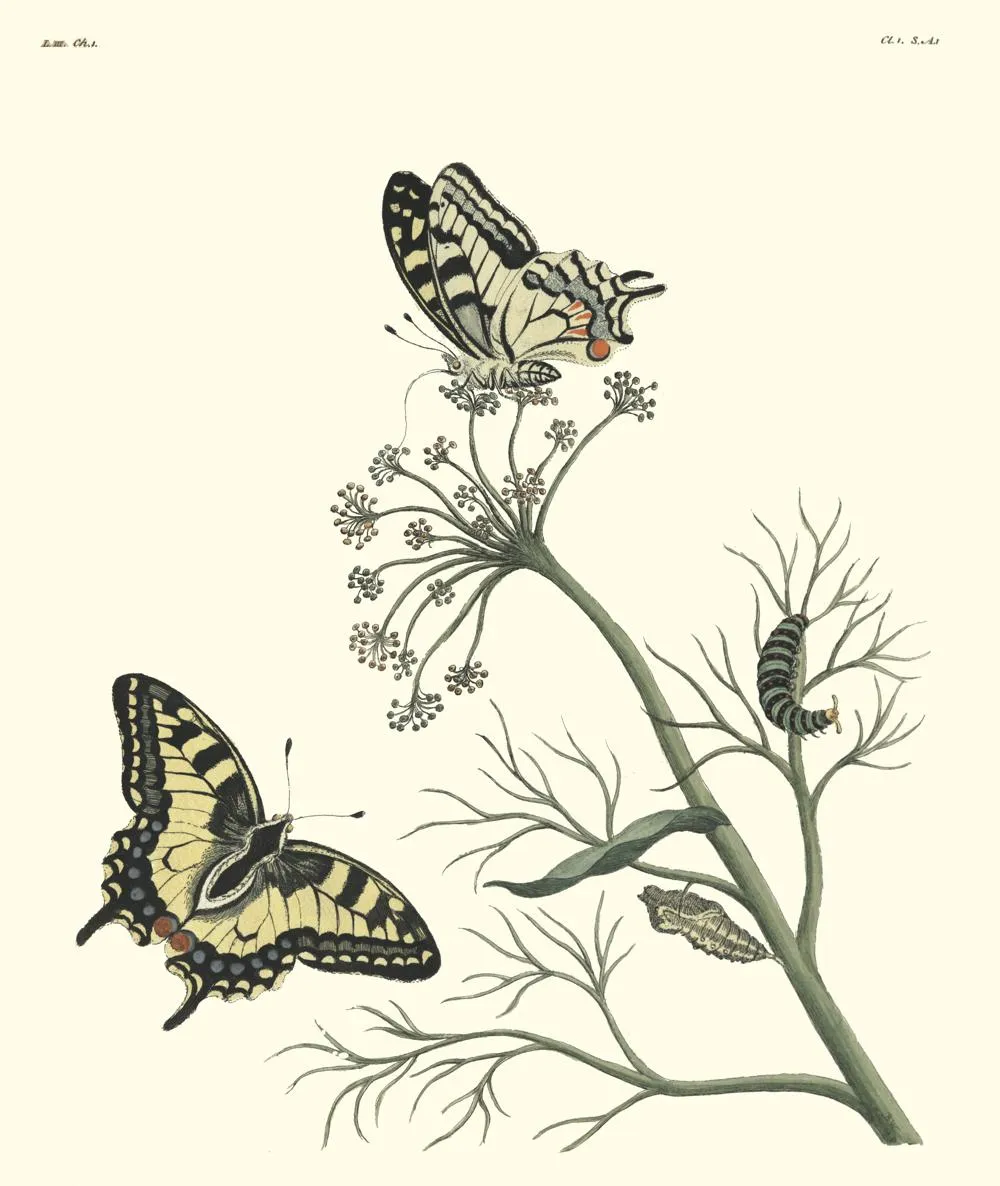
grow bad, the Time comes on when the second Breed of the Swallow-tail Butterfly is quite
fresh, as also the Great Tortoise-shell, Peacock Butterfly, &c. About the Middle of this Month
you may find the Great Red Underwing and the Goat-Moth standing against the Willow-Trees
which usually grow by the Sides of Ditches about the old Barge-House, Rotherhith,
Vauxhall, and likewise in other Places. Seek also for the Caterpillars that produce the Great
Elephant and Gold-Spot Moths: the most certain Places to find which, that I know of, are
by the Sides of the Ditches in Rotherhith Marshes. The Caterpillars that produce the Elephant
Moth feeds on the White Ladies Bedstraw, those of the Gold-Spot on the Great Water-Grass.
I have taken the Gold-Spot Chrysalis and Caterpillar likewise in the low Grounds by
Vauxhall in Surry.
At the Beginning of this Month may be found amongst the Willows, about the Banks by
the Chelsea Water-Works, the Caterpillars that produce the Eyed-Willow and Poplar-Hawks,
also the Buff-Tip-Puss, &c. and from the 20th to the 30th the Admirable Butterfly,
&c.
If this Month proves fine, a great many scarce Moths are to be taken in the Evenings, and
the second Brood of the Comma-Butterfly, as well as some other Flies, present themselves.
Caterpillars are likewise to be got in Plenty off the Oak, Black-Thorn, and a Variety of other
Foods; and these, if taken Care of, will produce scarce and valuable Flies in the succeeding
Spring. From the End of this Month to the Middle of March
there are but few Flies that frequent the Fields; altho’
I am of Opinion that some Moths are
bred in every Month of
the Year.
In order to oblige such persons as may be desirous To make a COLLECTION of MOTHS and BUTTERFLIES , Though unacquainted with the Manner how, It is judged proper to lay down the following DIRECTIONS .
Provide yourself with a Net made of Muschetto Gause, and in Shape like a
Bat-fowling Net; let its Length be one Ell, the Width at Bottom three Quarters
of a Yard, at Top half a Yard, and cut circular; this must be sewed to a
Tape or Ferret, that it may be fastened to a couple of Hasle or other Sticks five
Feet long each, the upper Part whereof should be bent circular to fit your Net.
You must likewise have a Stick of Hasle, or any other Wood, about five or six Feet in
Length, wherewith to put the Flies and Moths on the Wing, by beating the Boughs, Hedges,
Shrubs, or other Growths you are near, so that you may be better able to see and take them.
Furnish yourself likewise with Boxes of such Sizes as will go into your Pocket, let them
be lined at the Top and Bottom with Cork; be also provided with a Pin-cushion, well stock’d
with different Sorts of Pins.
These Things being in readiness, go into the Woods and Fields thereto adjacent (always
placing yourself where the Sun has most Power, and the Wind the least) also into Chalk-pits,
rough Grounds, Lanes, &c. In all which Places, if it is a fine Day, and a proper Season of
the Year, you’ll find Plenty of Sport.
When you have taken a Fly in your Net, lay the Net flat on the Ground, which will prevent
the Fly from fluttering, then put the Fore Finger of your Left Hand under the Fly, and
with the same Finger of your Right Hand give it a squeeze on the Back or Chest, and that
will kill it; be careful, however, not to press too hard, least you damage the Fly. This done
take a Pin and run it through the Body, betwixt the Wings, letting that Side be uppermost
which is most beautiful; then stick it in your Box, and look for more Sport.
Having collected such a Number of Flies as you think proper, and being returned home,
look into your Boxes, and observe which of them are fit to set: such as you find dead and not
stiff are so.
Then (having prepared before-hand two or three Boards covered with Cork, of about ten
Inches by sixteen in Size, or as you find most convenient to place your Flies in order on and
extend their Wings in the best manner: by the Assistance of little Braces made by cutting
a Card into Lengths or Slips, with a small Pin thrust through the End of each) proceed to
manage them as follows:
Take a Fly out of your Box: see if the Pin be run through it perpendicularly: if so, stick
it on one of your setting Boards, and with the Point of a Needle (which must be fixt into a
small Stick, or what else you like best) extend one Wing leisurely, till such Time as the
Point thereof is even with the Nose of the Fly you are setting. That done, fix one of your
Card Braces gently on that Wing, to prevent its giving way; serve the other Wing in the
same manner, and your Fly will appear extended as in the Paintings. Let the Braces remain
on the Wings of Butterflies a Fortnight, on those of great Moths a Month. Take Notice,
however, that a great Number of small Moths must be set in your Boxes in the Field, otherwise
your labour will be lost; you’ll presently know which these are, by observing them
to be dead and almost stiff; so that it is proper to carry always about you a little Box of Card
Braces for this Purpose.
The Way to preserve your Flies, after
you have taken them from your Setting Board.
If you put them in Drawers, Boxes, or Frames with Glasses before them, its proper to get
some Camphire, which inclose in small Muslin Bags, and fasten it to those Places where your
Flies are; by this Means you will destroy those Insects that would otherwise injure your
Flies; and by renewing now and then this Method, I am convinced your Flies may be preserved
several Years. The Months in England that produce the greatest Variety of Flies, are
April, May, June, July, and August, especially of the Butterfly Kind; and for Moths, I am
of Opinion, that there are many different Species produced all the Year round. The best
Time to take the greatest Variety of Moths, is for one Hour after Sun-set, and the properest
Places are in and by the Sides of Woods, Gardens, Green Lanes, &c. where with your Net
you’l seldom fail of Sport. Thus much seemed necessary to say in Respect to taking Insects
in the Fly State, and more would be superfluous.
But as it may be agreeable to some to breed the Flies themselves from the Caterpillars, I shall
likewise give the best Instructions I am able for that Purpose.
In the Spring and Autumn Season you may collect great Variety of Caterpillars, by spreading
a Sheet under Oak-Trees: then beating the Boughs, many Caterpillars will fall,
which if taken Care of, will produce scarce and valuable Moths; you may also obtain by the
same Means Caterpillars from the Black-Thorn, White-Thorn, Bramble, Chickweed, Willow,
and many other Growths.
When you have collected a Number of Caterpillars, and remark’d the Food you found
them on, put them into Boxes, which prepare as follows: Take a Deal or Wainscot Box, cut
a large Square out of the Top and Bottom, cover the Place cut out with a Piece of Crape
Hatband, glewing the same all round to prevent any Escape. This done, put your Caterpillars
into the Box, with some of the same Food you found them on, giving them, if you
can, fresh every Day. Here you’ll find them feed and thrive; and after changing their Skins
(some five and some six Times) they will go into the Aurelia State, and there remain for a
certain Time, some much longer than others; but in about fourteen Days from this last change
you may look into your Boxes, to see if you have any Flies bred; remembring that out of
such as are produced in this manner, much more perfect Flies may be chosen, than any that
can be caught; and as several Sorts of Caterpillars go down into the Earth, and there
change to Chrysalis, some Earth must be put into the Boxes for that Purpose, at least two or
three Inches deep. Never take the Chrysalides out of the Earth, nor disturb them till the
Flies are bred.
There is yet another Thing proper to be known, in order to compleat your Collection. A
great Number of Caterpillars go into the Earth, and there change to Aureliæ, whose Moths
are seldom upon the Wing till Night; these Aureliæ are to be got by digging with such a
Trowel as the Bricklayers use, about the Roots of Trees, such as Oaks, Elms, Limes, Poplars,
Willows, &c. also by the Sides of Walls and Pales. The usual Time to dig for them
is from September to March.
When you have obtain’d a Number of Aureliæ by digging, you must provide for them
thus: Get some Earth and scowering Sand, mix them well together, and put the Mixture
into some large Garden Pots; lay your Aureliæ thereon, covering them with Moss; then
sew a Piece of Crape Hatband round a small Hoop, and put such a Cover on each Pot, in
order to receive the Flies when bred, which will usually be in the Months of March, April,
May, and June. I have always kept my Pots of Aureliæ out in the open Air, and the Flies
have been produced with great Success; however it may be proper to place a Piece of Board
over each Pot, to prevent unforeseen Accidents.
Those who think proper to put these Directions in Practice, will, I am convinced, in a
short Time, be possessed of a great Number of valuable Flies. What Food the Caterpillars
mentioned in this Work chuse to feed on, the Time when they
change into Aureliæ, and when they issue forth
in the Fly State, may be seen
in the Description of
each Plate.
ERRATA.
Page.
Num.
Read.
Instead of
8
XVII
Chrysalis
Chrysalisis
11
VI
nigra
alba
18
II
Cl. 3. S. A. 2.
Cl. 3. S. E. 1.
20
VII
form
from
23
XIII
to
o
49
I
Sect. a.
51
V
Cl. 2. S. a. 5.
Cl. 2. S. a. 2.
52
I
4 The Great }
Fox-tail Grass.}
53
IV
Cl. 2. S. b. 4.
Cl. 2. S. a. 4.
62
III
Cl. 1. S. a. 3.
Cl. 2. S. a. 4.
63
of Butterflies
of Caterpillars
On the Plates.
38
I
Cl. 1. S. b. 1.
Cl. 1. S. a. 1.
38
II
Cl. 1. S. b. 2.
Cl. 1. S. a. 2.
42
I
Cl. 2. S. a. 1.
Cl. 2. S. 1. b. 1.
42
II
L. I. Ch. III.
L. I. Ch. II.
62
II
Cl. 1. S. a. 2.
Cl. 1. S. a. 1.
A Synoptical TABLE of the Moths and Butterflies contained in this Work.
CATERPILLARS.
Producing Moths.
Having circular Rings or Joints.
Naked.
Without Protuberances.
The great yellow Underwing. The Wild Arrach. The Angle
Shades. The Pease Blossom. The small green Oak Moth. The small Ermine Moth. The Broom Moth. The sallow Moth. The
Codling Moth. The Province Rose Moth. The Scallop-wing’d Oak Moth. The Black-thorn Moth. The green Moth with silver Lines.
The Ranunculus Moth. The Water-Betony Moth. The small
Elephant Moth. The Gold-spot Moth. The Sword-grass Moth.
With Horns on the Tail.
The Jessamine-Hawk Moth. The Unicorn, or Bindweed-Hawk Moth.
The Privet-Hawk. The Olive-shades, or Lime-Hawk. The Eyed
Willow-Hawk. The Poplar-Hawk. The Ladies Bedstraw, or
Elephant Moth.
With one Protuberance on the Rump.
The Ealing’s Glory.
With two or more Protuber.
The Ozier, or Pebble Moth.
With Shoulders rising into an Angle.
The Puss Moth. The Wild Rose Moth.
Having little Hair.
Without Protuberances.
The Goat Moth. The Emperor Moth. The Plumb-Tree Moth.
With Protuberances.
The Willow Red-Underwing.
Having much Hair.
Without Protuberances.
The Great Tyger. The Cream-Spot Tyger. The Scarlet Tyger. The
Black Arches. The Great Ermine Moth. The Spotted Buff Moth.
The Gipsey Moth. The Buff Tip. The White Satin Moth. The
Lacquey. The Great Egger. The Grass Egger. The December Moth.
The Spotted Red and White Underwing. The Wood Tyger. The
Mother of Pearl Moth. The Yellow July Oak Moth. The small
Egger. The Fox-coloured Moth.
Having Rings of different Colours.
The Cinnabar Moth.
Having indented Marks.
The Bramble Moth.
Having fleshy Protuberances on the Head, Back, or Tail.
The Lappit-Moth. The Drinker. The Yellow Tail. The Dagger Moth.
The Wild Pine Tree Lappit-Moth.
Having many Tufts of Hair.
The Black Tussock. The Yellow Tussock. The Red Spot Tussock. The
Orange Tussock. The Nut-Tree Tussock. The Sycamore Tussock.
Half Loopers.
Having 8 Feet, 2 Holders, 6 Claws, and with Protuberances.
The Crimson Underwing.
Having 4 Feet, 2 Holders, 6 Claws. Hairy.
The Silver Y Moth.
Loopers.
Naked.
Without Protuberances.
The Brindled Beauty. The July Arrach Moth. The Mottled Umber.
The July Sallow Moth. The Buff Argus. The Green Broom Moth.
The Lime Moss Moth.
With Protuberances.
The Spotted Elm Moth. The Swallow-Tail Moth. The October Moth.
The Brimstone Moth. The Scallop-winged Moth. The Richmond Beauty.
The Hawthorn Moth.
Hairy.
Without Protuberances.
The large Magpye, or Curran Moth. The Gooseberry Moth.
Having Tufts of Hair.
The Brindle Moth.
Shaped like Wood-lice.
Small Oak Egger-Moth.
Producing Moths whose Generation is unknown.
Glory of Kent. Cleifden Nonpareil.
Producing Flies between the Moth and Butterfly.
The Burnet Moth.
Producing Butterflies.
Smooth.
Without Protuberances.
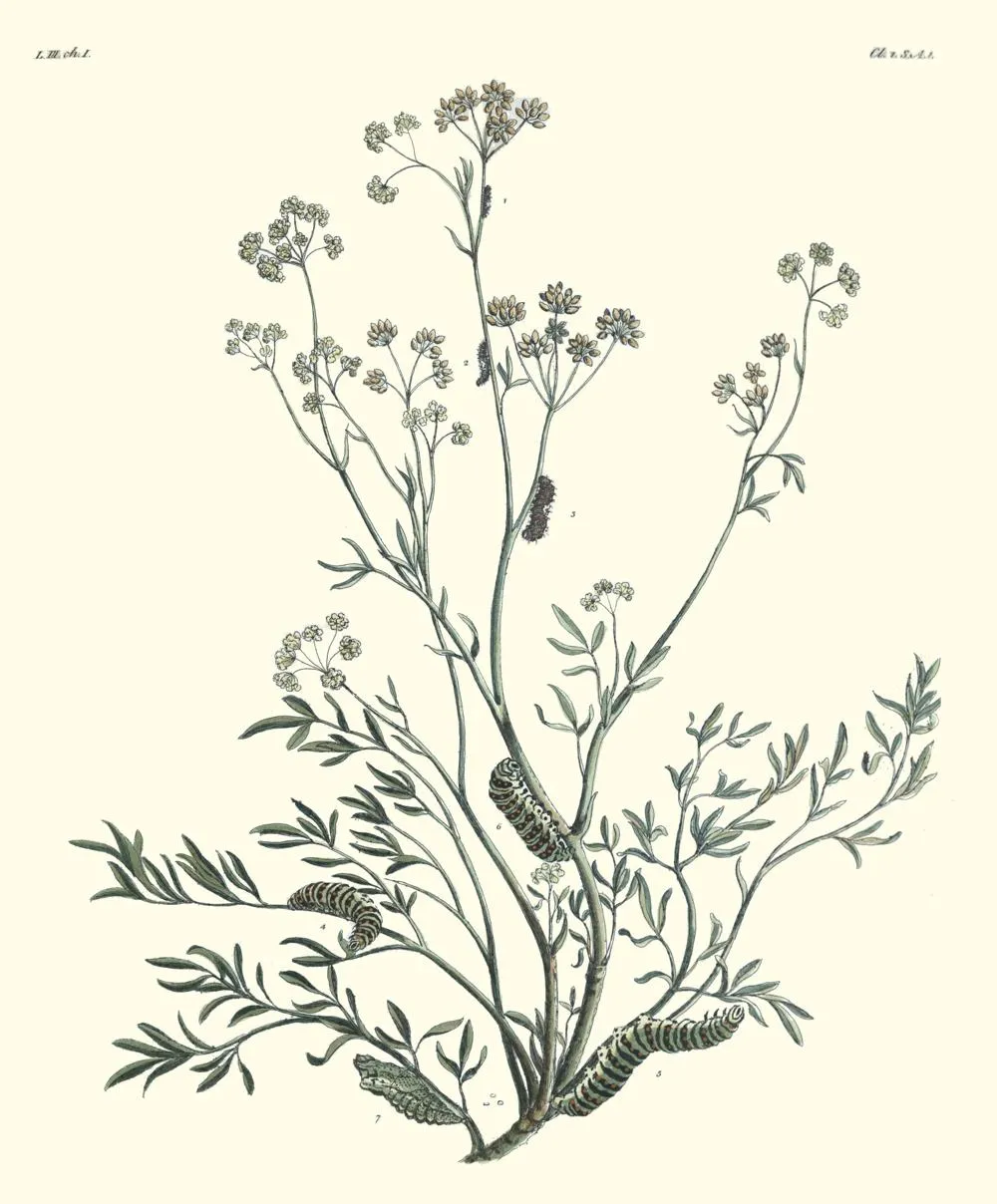
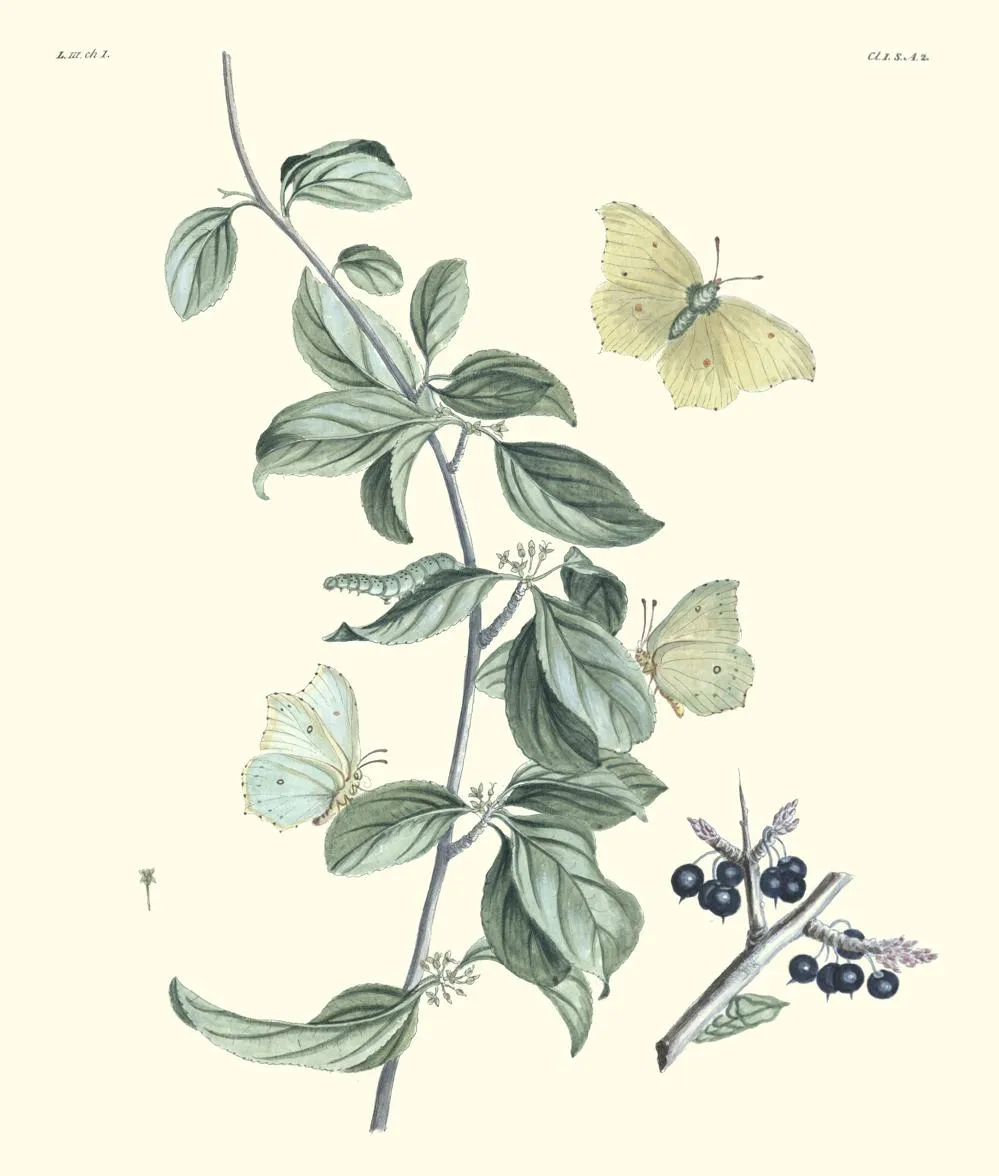
Swallow-Tail Butterfly. Brimstone Butterfly.
Having little Hair.
Producing round-winged Butterflies.
White Butterfly with black Veins. Large white Garden
Butterfly. Small white Garden Butterfly. White Butterfly with
green Veins. Orange Tip, or Lady of the Woods.
Producing scallop-wing’d Butterflies.
The Marmoris, or Marble Butterfly. The Meadow Brown. The Great
Argus, and Wood Argus.
Producing Butterflies with large Heads and Bodies.
The Grizzled Butterfly.
Armed with Spikes.
Whose Chrysalis hangs by the Tail.
The Admirable Butterfly. The Peacock Butterfly. The painted
Lady. The great Tortoise-shell. The Comma-Butterfly. The
Great Fritillary. The Plantain Fritillary. The Heath
Fritillary. The Willow Butterfly. The small Fritillary. The
great Fritillary, with silver Spots.
Shaped like Wood-lice.
The Purple Hair-streak Butterfly. The Brown Hair-streak. The
green Butterfly.
Producing Butterflies whose Generation is yet unknown.
The Blue Argus Butterfly. The Purple High-Flyer, or Emperor
of the Woods.
THE Names of the Subscribers to, and Encouragers of , Mr. WILKES ’s Attempt towards a Natural History of English Moths and Butterflies .
A.
His Grace the Duke of Argyle.
His Grace the Duke of Athol.
William Adams, Esq;
The Aurelian Society.
Mr. Stephen Austin.
B.
The Right Honourable the Earl of Bute.
Miss Jane Banister.
Richard Lovell Badcock, Esq;
William Berton, Esq;
John Browning, Esq;
William Bunberry, Esq;
Buckley, Esq;
Mr. Henry Baker.
Mr. Ephraim Bell.
Mr. Elias Brownsword.
Mr. Walter Blackett.
Mr. Brindly.
C.
The Right Honourable the Lord James Cavendish.
The Right Honourable the Lord Charles Cavendish.
The Honourable Alexander Hume Campbell, Esq;
Mr. Peter Collinson.
Mr. Philip Constable, Junior.
Mrs. Chandler.
Mr. Clements.
Mr. Chapple.
Mr. Chadwell.
D.
Richard Dashwood, Esq;
Peter Delme, Esq;
Mrs. Dellaval.
Mr. Davis.
Mr. Joseph Dandridge.
Mr. Dodesly, 4 books.
E.
Mrs. Susanna Eaton.
Mrs. Edwards.
F.
The Right Honourable the Lady Viscountess Fitz-Williams.
The Right Honourable the Lady Featherstone.
William Farington, Esq;
Mrs. Farmer, at Birmingham.
G.
His Grace the Duke of Gordon.
The Right Honourable the Lady Betty Germain.
John Gale, Esq;
Charles Godwin, Fellow of Balliol College in Oxford.
Captain John Godwin.
Mr. Thomas Grace.
H.
The Right Honourable the Lord Howard.
The Most Reverend Father in God Thomas, Lord Archbishop of Canterbury.
James Horne, Esq;
Henry Le Noy Hunter, Esq;
Mrs. Mary Vere-Hunt.
Mr. Samuel Hartley.
Mr. Hodges, 3 Books.
J.
Mr. Johnson.
Mr. Jackson in St. James’s Street, 3 Books.
K.
Mr. Thomas Knowlton.
L.
The Right Honourable the Earl of Londonderry, 2 Books.
William Lock, Esq;
Mr. James Lemon.
Mr. Samuel Lee.
M.
His Grace the Duke of Montagu.
Dr. Mead.
The Reverend Mr. Thomas Manningham.
Mr. Mauduit.
Mr. Daniel Marshal.
Mr. Miller.
N.
Her Grace the Duchess of Norfolk.
John Nicoll, Esq; of Coney-Hatch.
Miss Nicoll, at Southgate.
The Reverend Mr. John Newton, at Gloucester.
O.
Nathaniel Oldham, Esq;
Mr. Edmund Overall.
P.
Her Grace the Duchess of Portland.
Miss Phillips, Grosvenor-Street.
R.
Her Grace the Duchess of Richmond.
The Right Honourable the Lord Rolle.
The Royal Society of London.
S.
The Right Honourable the Countess of Shaftsbury.
The Right Honourable the Countess of Stamford.
The Right Honourable the Lady Diana Spencer.
The Right Honourable the Lady Elizabeth Spencer.
The Right Honourable the Lady Smithson.
Sir Francis St. John, Baronet.
Sir Hans Sloane, Baronet.
John Archer Shish, Esq;
Mrs. Smith, at Oxford.
T.
The Right Honourable the Lord Trevor.
The Honourable Mrs. Trevor.
James Theobald, Esq;
Doctor Christopher Jacob Trew, at Norimburg.
The Honourable Mr. Talbot.
James Tilson, Esq;
Miss Tasburgh.
W.
The Honourable Mrs. Walter.
Ralph Willett, Esq;
Taylor White, Esq;
Francis Whithead, Esq;
Horace Walpole Esq; of Arlington-Street.
Mr. William Wells.
Mr. Wollaston.
Mr. Woodhouse.
Mr. Whittle.
Mr. Ware.
Y.
The Honourable Mr. Yelverton, 3 Books.
BOOK I. PART I. — CHA P. I. — Class I. Such Caterpillars whose Bodies are Smooth .
TheCaterpillars, described in this Book, are such as produce Moths;
of which, as there is a great Variety, ’twas thought proper to range them
under the following Heads or Chapters.
TheCaterpillars belonging to this Chapter have six Hooks
or Claws before, eight Feet in the middle, and some have, and some
have not two Holders behind. Their Bodies are composed of
twelve circular Joints, or Rings, conjoined by a common Membrane,
which they are capable of contracting or expanding. When
they would move along, they dilate the muscular Skin that separates
the first Ring from the next; they advance the first Ring
to a certain Distance, and then, by contracting and expanding the
Skin of that Part, they move the second Ring: the same Method
moves the Third, and so the whole Body marches in Succession: the Motion of their
Feet and Claws corresponding with and assisting the progressive Motion of the Rings.
Vide Spectacle de la Nature, Dial.I.
The Caterpillars under this Head may likewise be divided into three Classes:
I. Naked or without Hair.
II. Having little Hair.
III. Having much Hair.
The FirstClass, or theNAKEDand withoutHair, may be subdivided in the following
Manner.
Sect. A.
Without Risings, or Protuberances
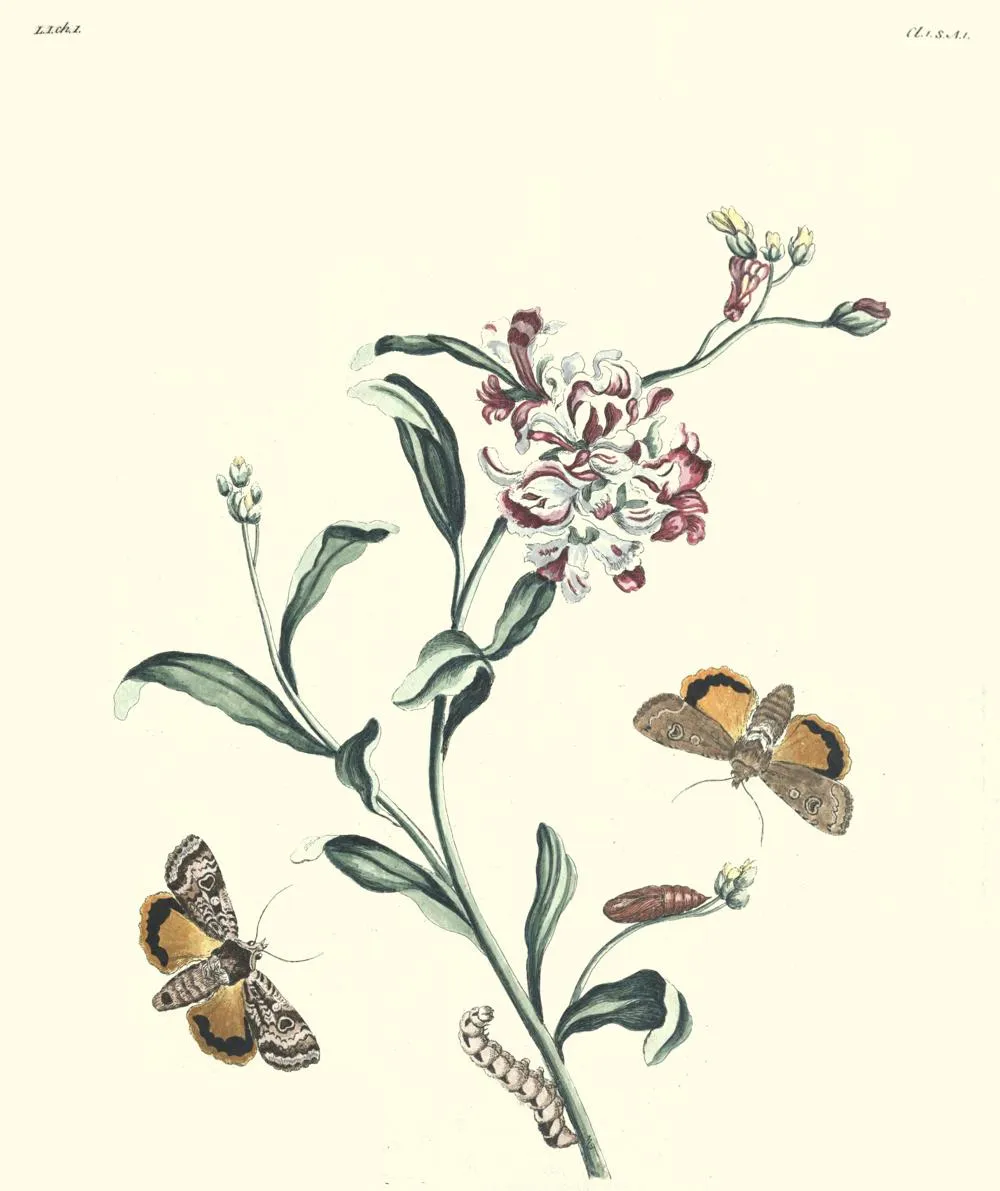
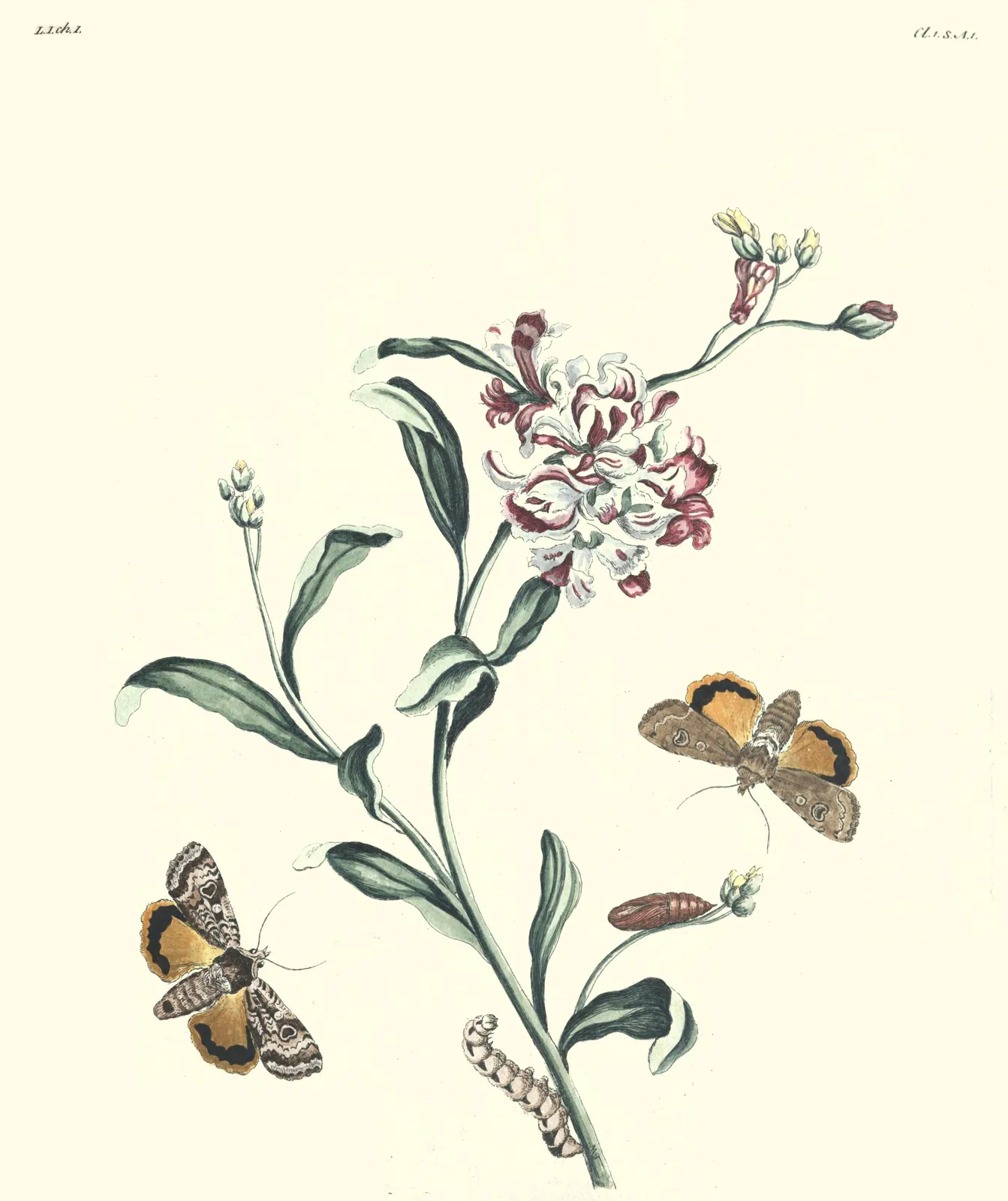
L. 1. Ch. 1.
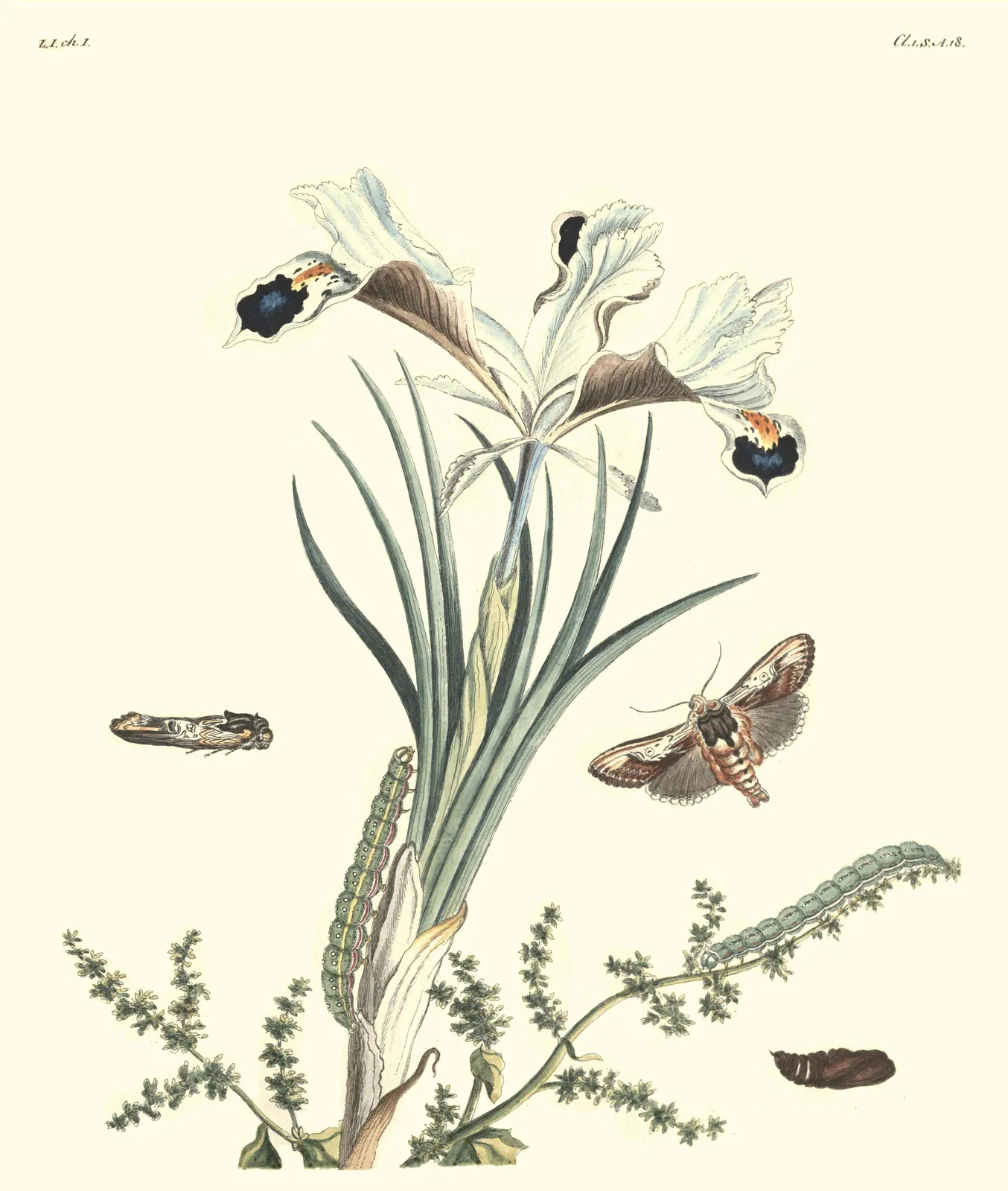
I.
Cl. 1. S. A. 1.
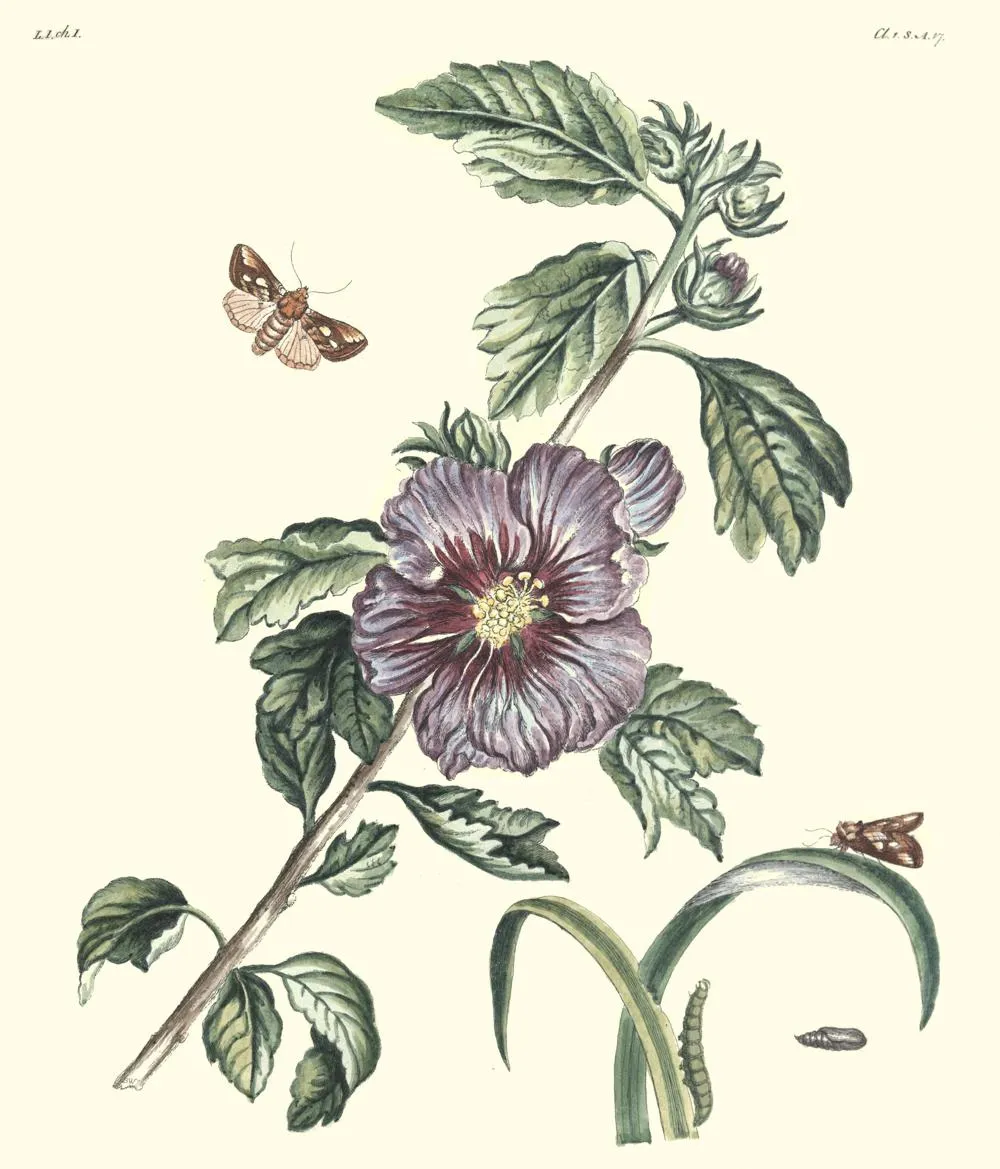
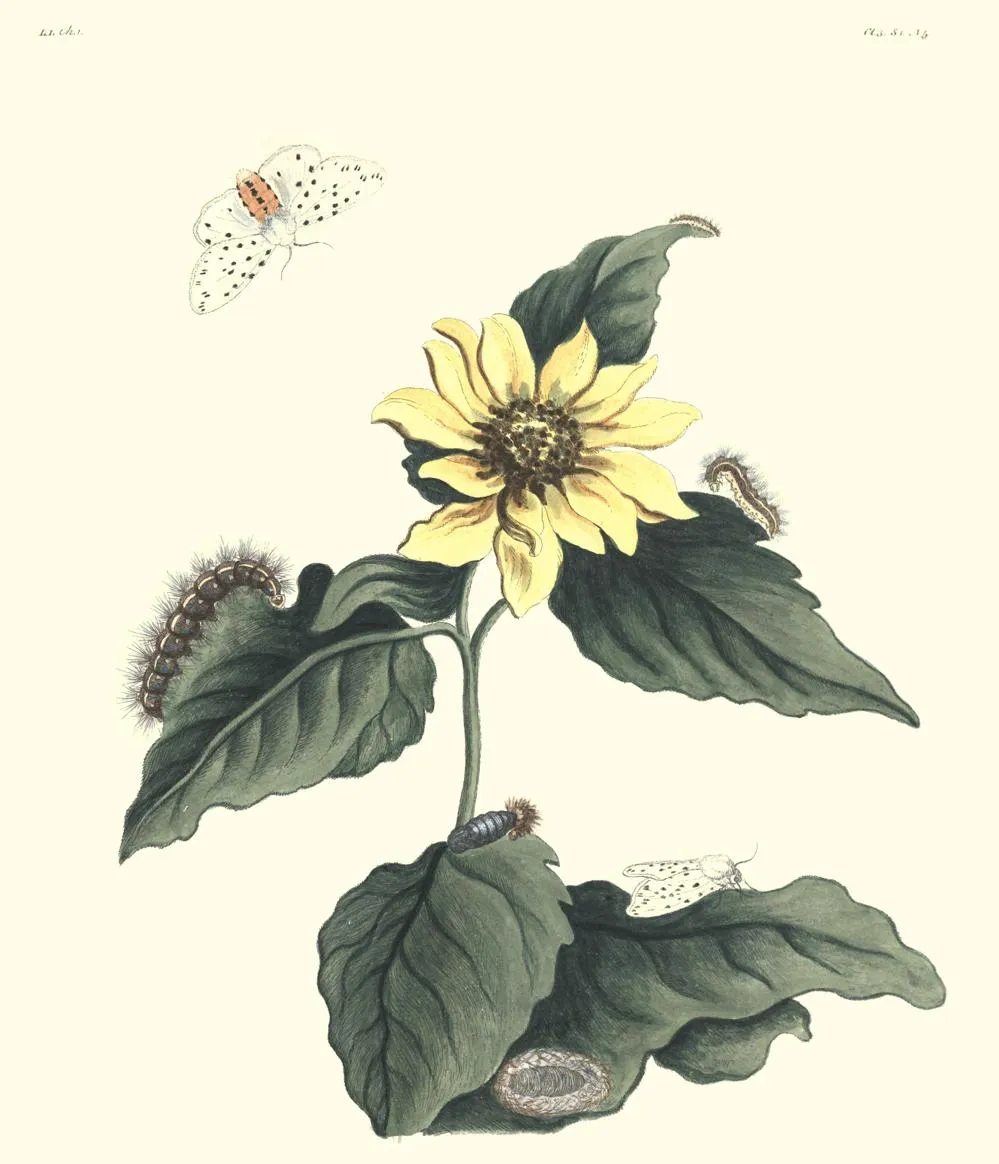
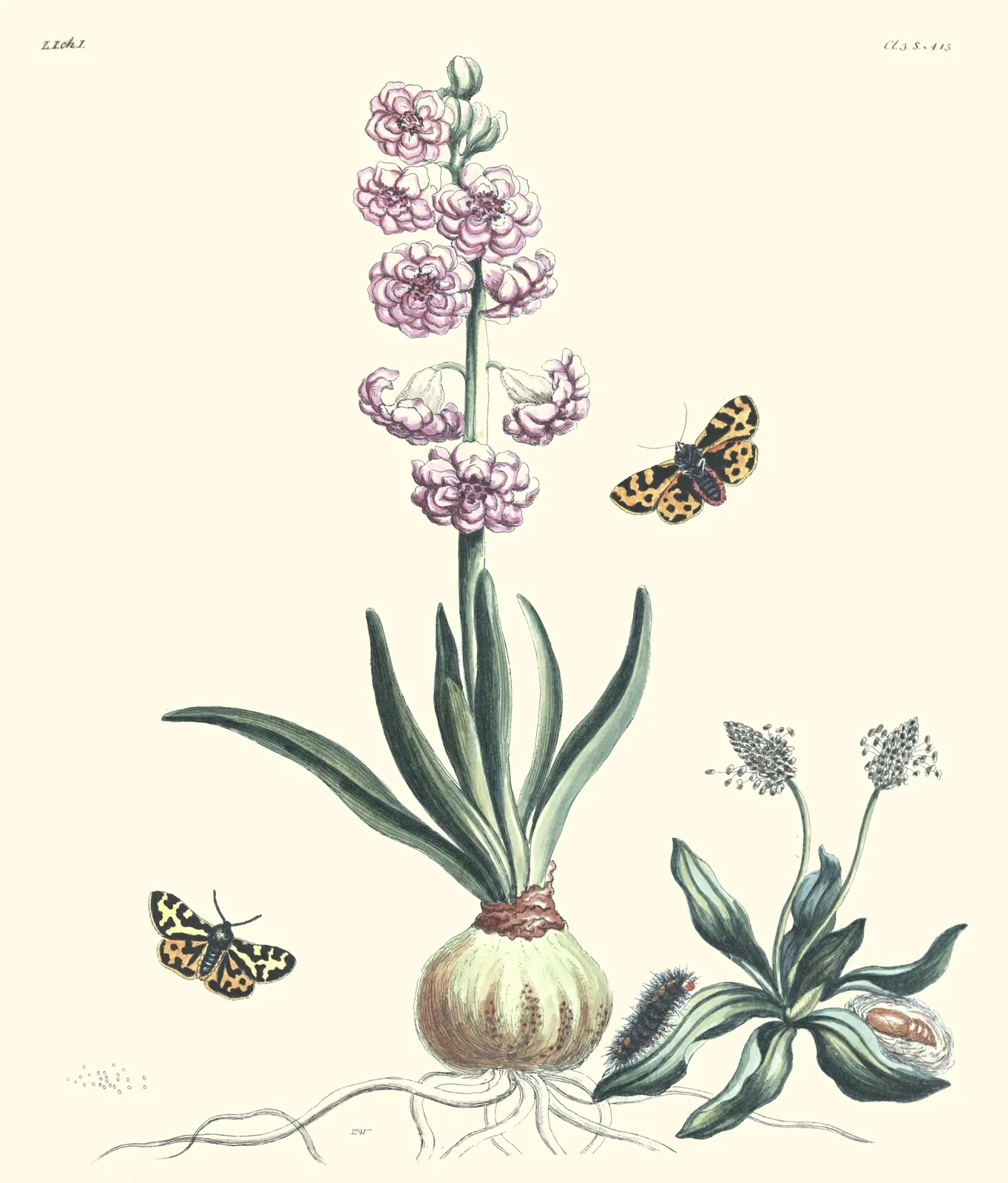
The Great Yellow-underwing Moth. The Caterpillar
of this Moth lives through the Winter, and comes to its full
Growth in May: It is found in Gardens, and other Places, and usually feeds in the
Night, as many other of the naked Caterpillars do. Indeed, were they to do otherwise,
they would soon be devoured by the Birds, which are much fonder of these Smooth
Caterpillars than of the HAIRY ones. In the Day, they hide themselves within the
Earth, and in other secret Recesses. They feed on the Leaves of the Stock-July and other
Flowers, as also on Grass, &c. They put on the Chrysalis Form, within the Earth, in May,
and the Moths are bred in June. Great Plenty of this Moth, and other Species of the
Yellow-Underwing, were taken feeding on the Honey Dew, on the Limes and other Trees,
in the Gardens of John Philips, Esq; at Layton in Essex; they were discovered, by the
Help of a Candle and Lanthorn, from Twelve o’Clock at Night till Two in the Morning;
and were so fearless, that they would suffer one to take them with the Hand. At
the same Time the Angle-Shade and several other Moths were taken.
See Lister on Godartius, P. 52. N. 41. Albin, P. 72. Reaumur, Pl. 14. Pag. 342. vol. 1.
Leucoium incanum, majus, variegatum, flore pleno. C. B. Pin. 201.
L. 1. Ch. 1.
II.
Cl. 1. S. A. 2.
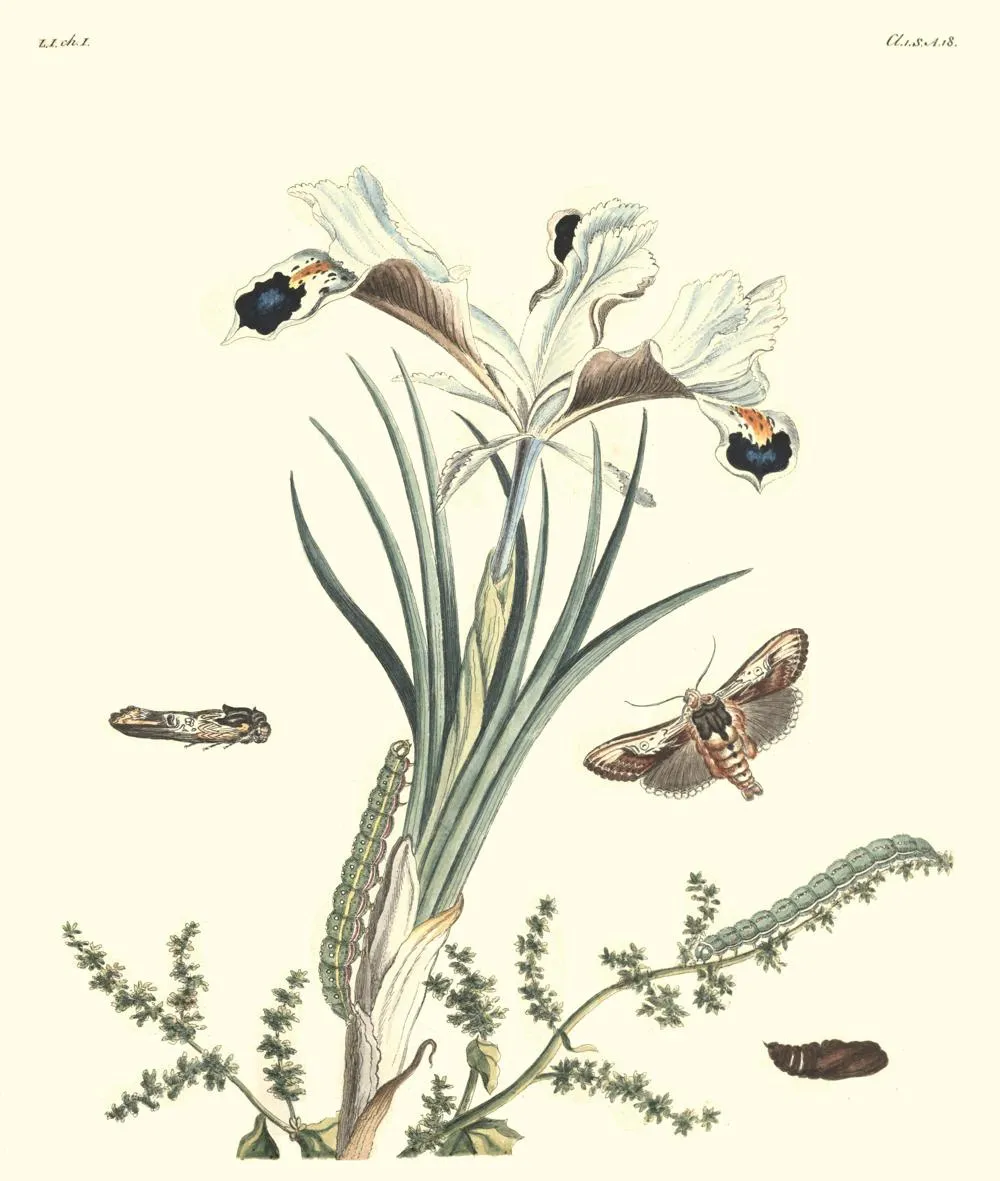
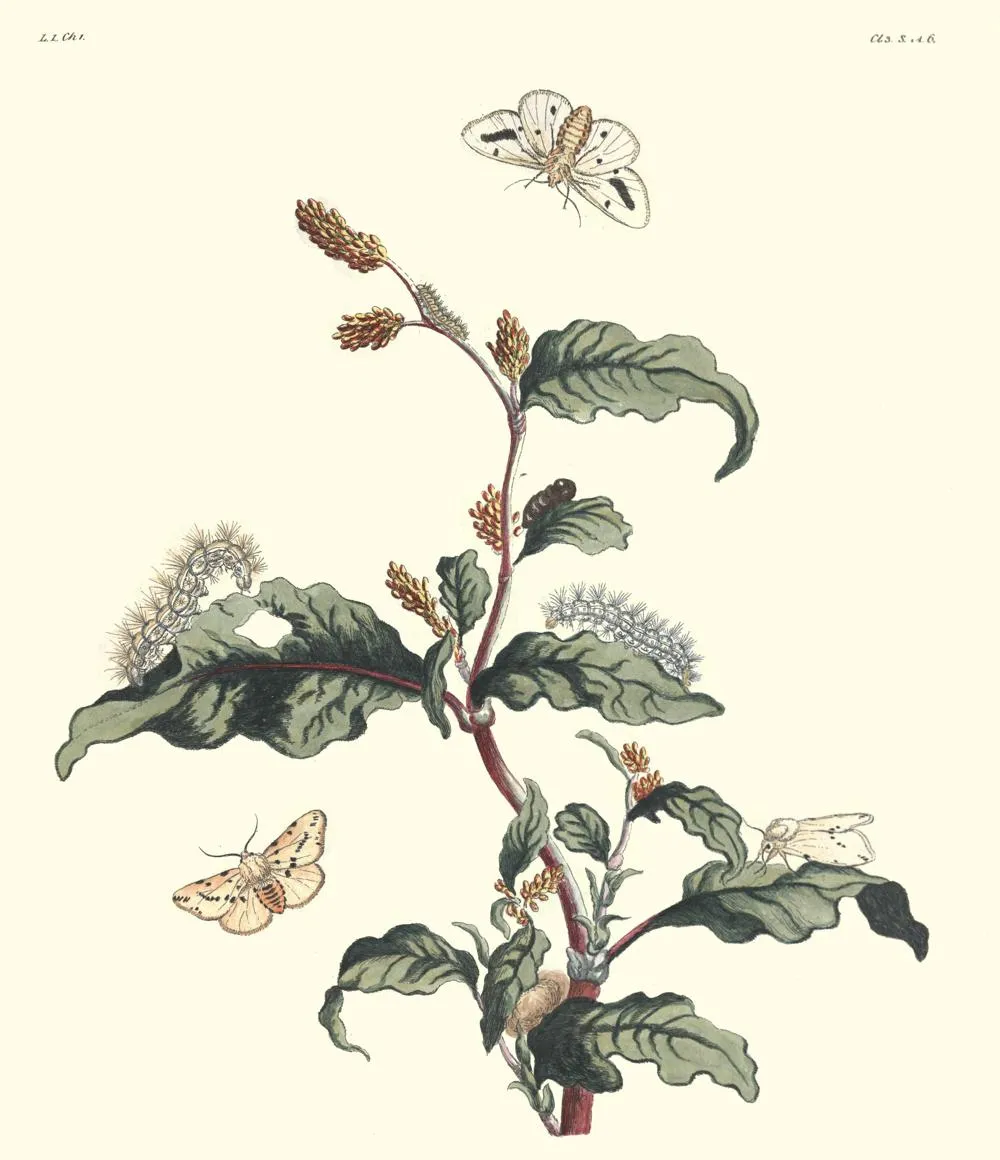
The WILD ARRACH MOTH, Mr. Rosel says, The Caterpillar feeds on
the Wild Arrach; that it changes to a Chrysalis, within the Earth, in September,
and that the Moth appears at the End of May following. I once took some of these Caterpillars
feeding on the Arrach in September, but had not the good Fortune to breed any Flies from
them. See Rosel, Cl. 2. Tab. 32.
The ANGLE-SHADES, a Moth. It is advisable to look for the Caterpillar
of this Fly on Nettles, altho’ some feed on Fruit Trees, Bramble Bushes, &c. It goes
into the Chrysalis State at the End of June, in a Web mixed with Earth, which it forms upon
the Ground; and thus it remains till the Beginning of September, when the Moth is produced.
There is an early Breed of this Moth in May, but, as I have not had the Caterpillar in the
Spring, I cannot relate its Progression. The Fly may be taken in the Evenings, in Gardens,
feeding on the Flowers; but I have not met with them very frequent.
See Godartius, Part 1. Tab. 56. Lister on Godartius P. 54. N. 44. Albin, Pl. 13. Reaumur,
Pl. 8. P. 258. Pl. 14. P. 342. Vol. 1.
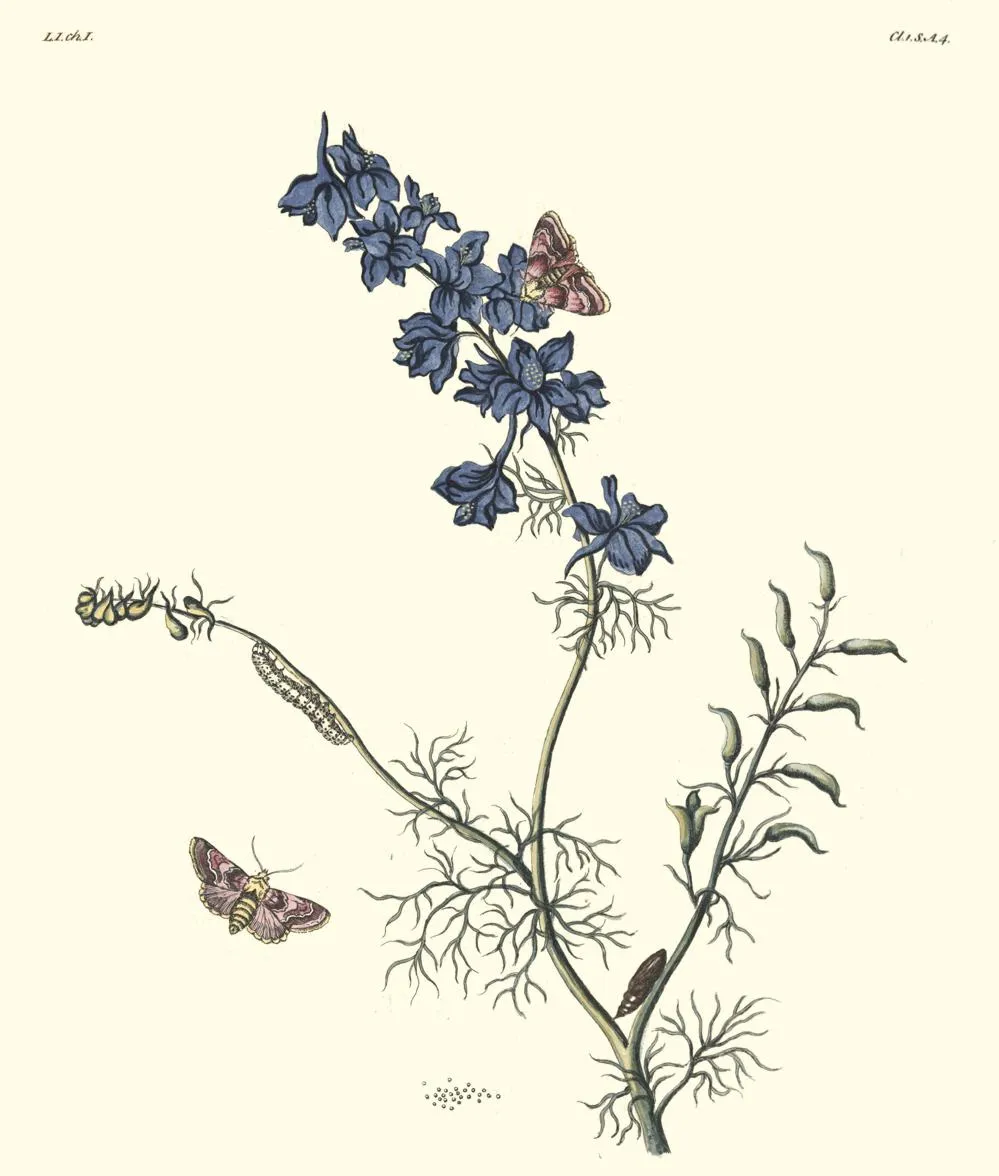
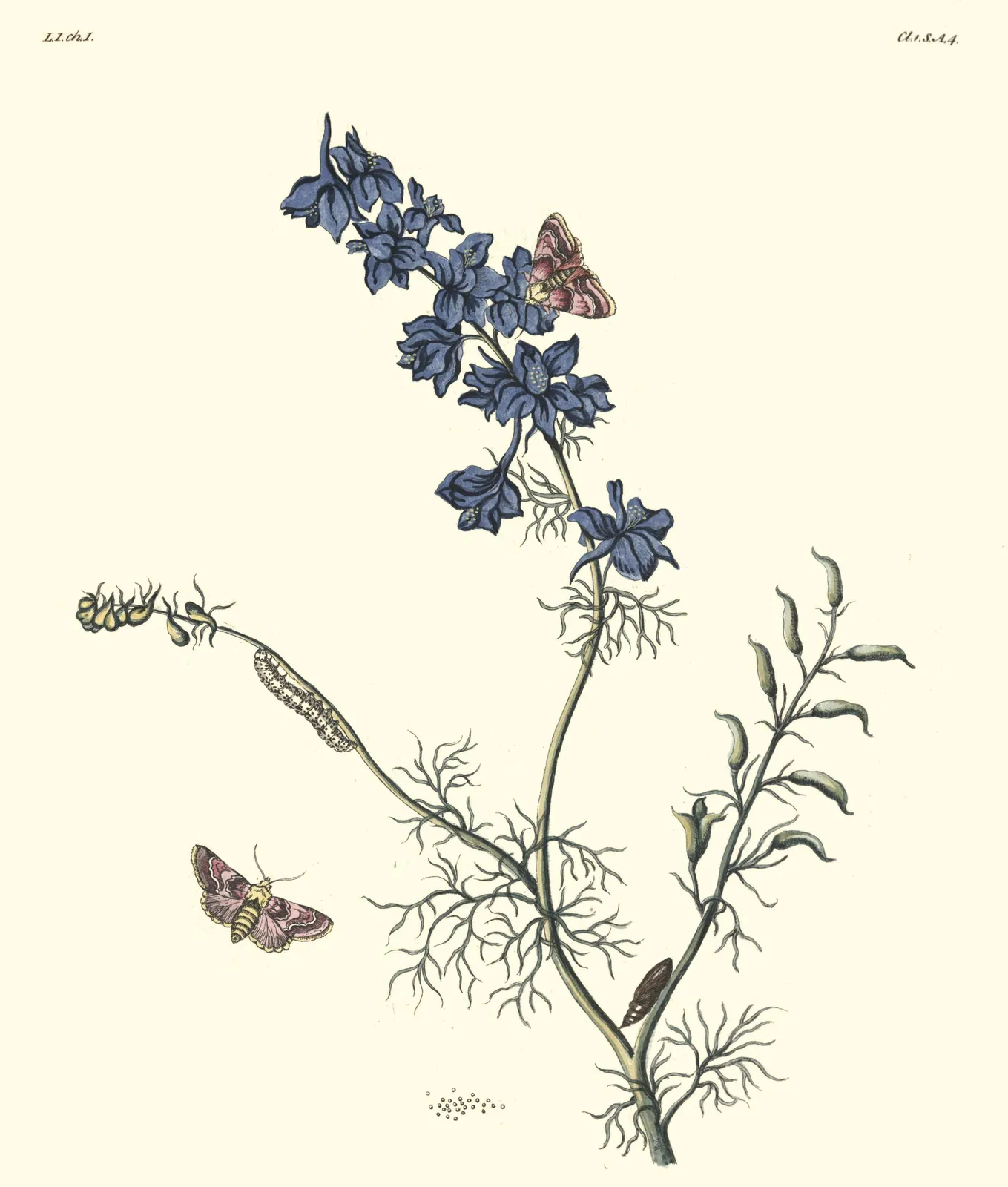
The PEASE-BLOSSOM, a Moth. Its Caterpillars are reported by Merian,
and Rosel, to feed upon the wild Lark-Spur that grows amongst Corn. They
are full fed at the Beginning of August, when they change to the Chrysalis, but appear not
in the Moth State till the June following. This Fly has been bred in England by the Honourable
Mrs. Walters, and by Nathaniel Oldham, Esq; but, at present, is very rare.
The SMALL GREEN OAK MOTH. The Caterpillar feeds on the
Oak, and sometimes such Numbers of them are produced at the Beginning of May,
that they, in a Manner, strip the Oak-trees of their Leaves. They are enabled, by the Help
of a Spining, which they fasten after the Manner of the Spider, to let themselves down from
one Bough to another, and from thence to the Ground, if they have a mind. They change
into the Chrysalis State in a curled Form within the Oak-leaves, (which they wrap over
them, and fasten together by their Web) and, after remaining so for about fourteen Days, the
Fly is bred. If you beat the Branches of the Oak-trees you may take Plenty of this
Moth in the Day-time.
The SMALL ERMINE MOTH. The Caterpillar that produces this
Moth is as common as those just mentioned. I have seen a Hedge-row of White-thorn,
at the End of May and at the Beginning of June, the Leaves of which have been eaten
almost up by these Caterpillars. They feed also on Black-thorn, Fruit-trees, &c. when
they are preparing to change to Chrysalis, they get together in Numbers, and spin a large
transparent Web, within which they fasten themselves by the Tail, and undergo their Change.
They remain in this Condition for about three Weeks: The Moths come forth in June
and July, and are very common about most Hedges.
See Albin, P. 70. Reaumur, Pl. 12. Pag. 208. Vol. 2.
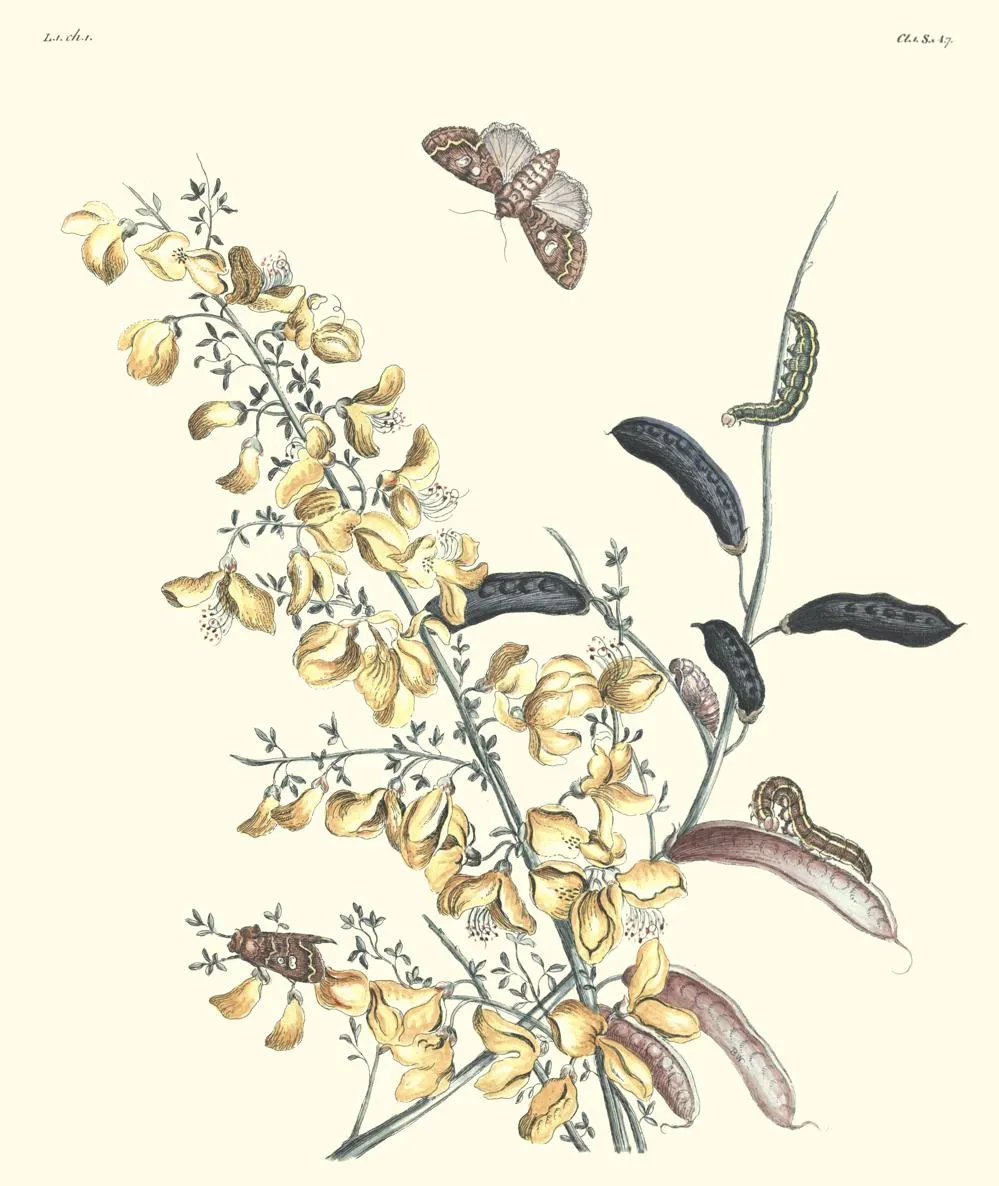
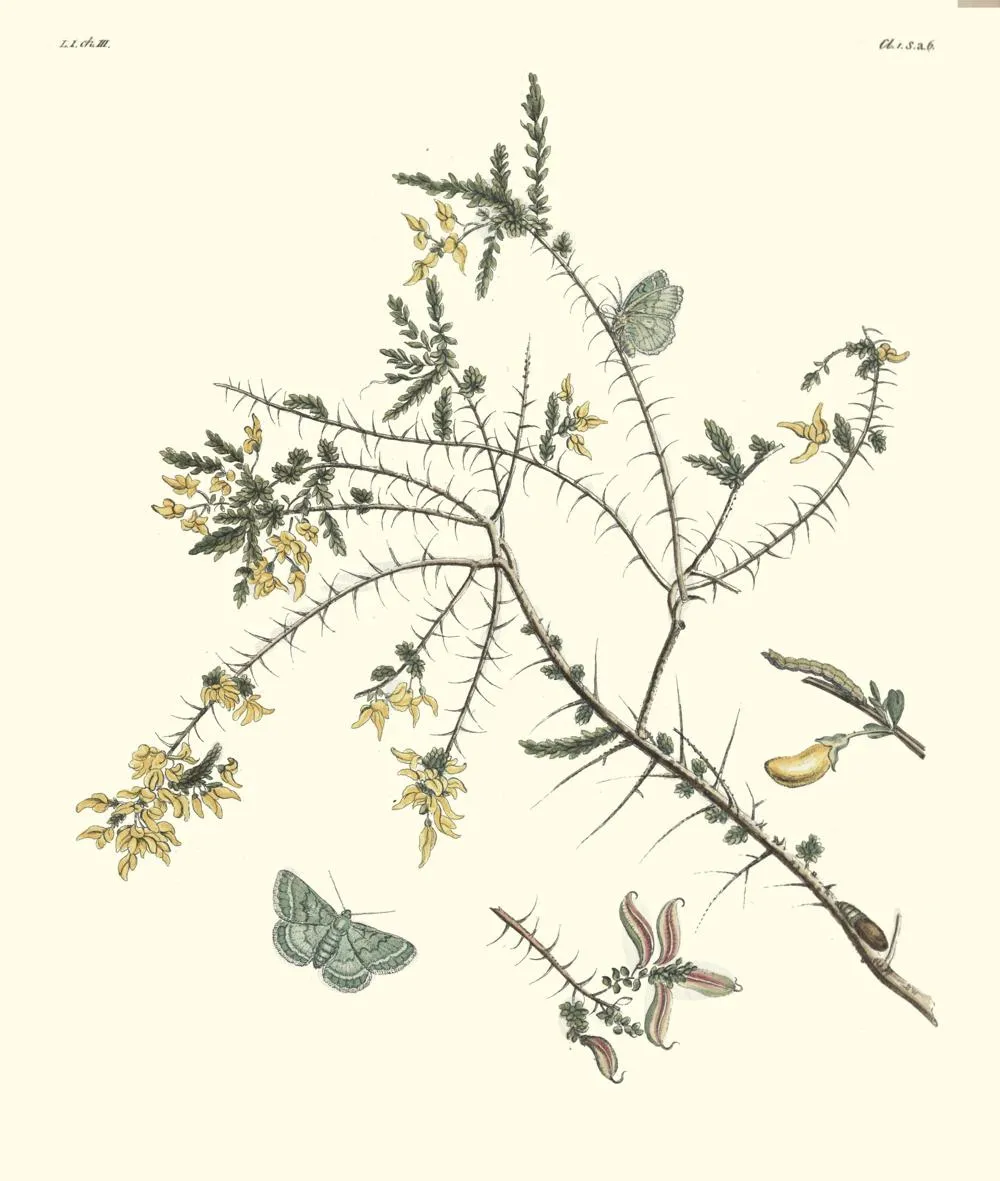
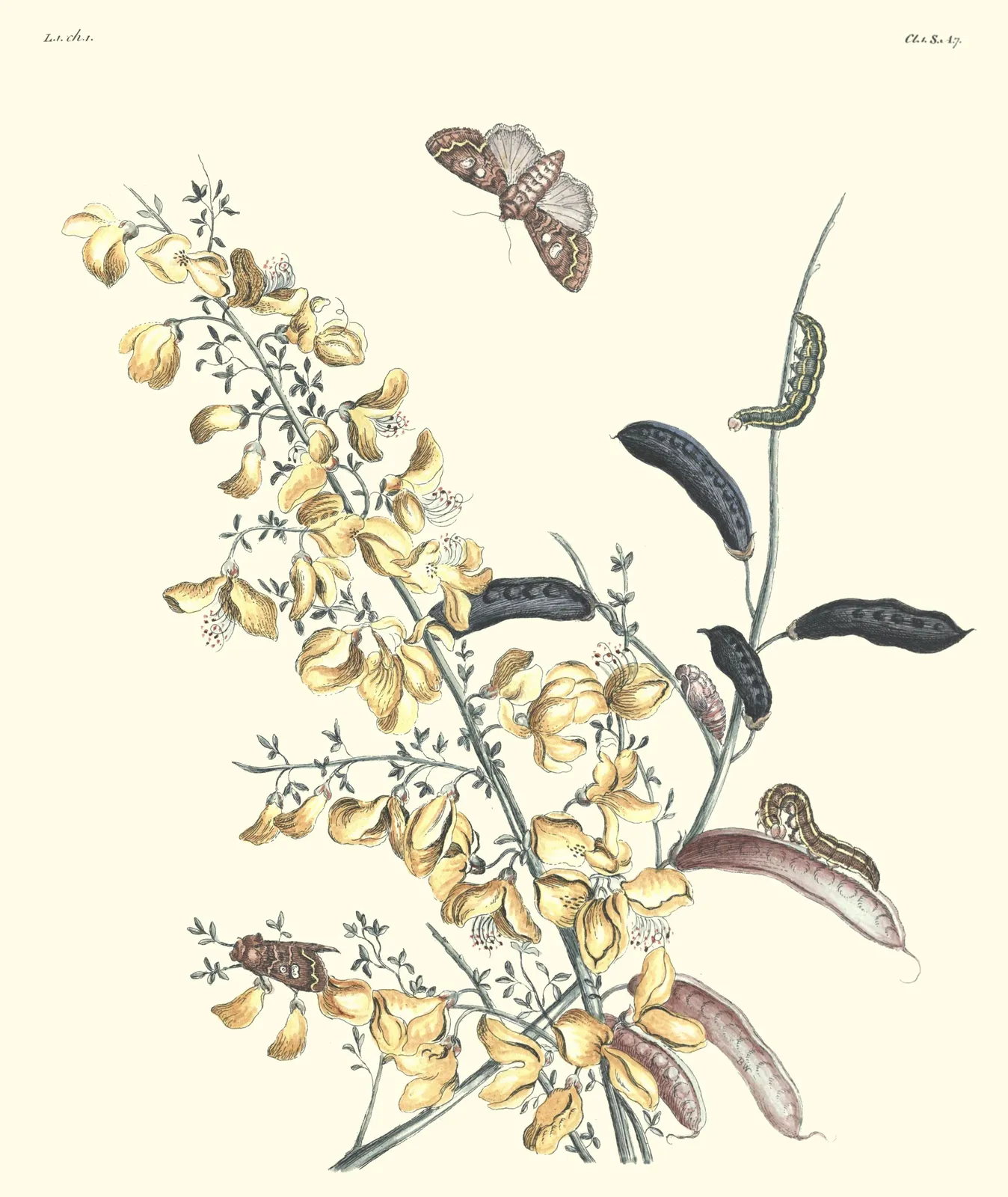
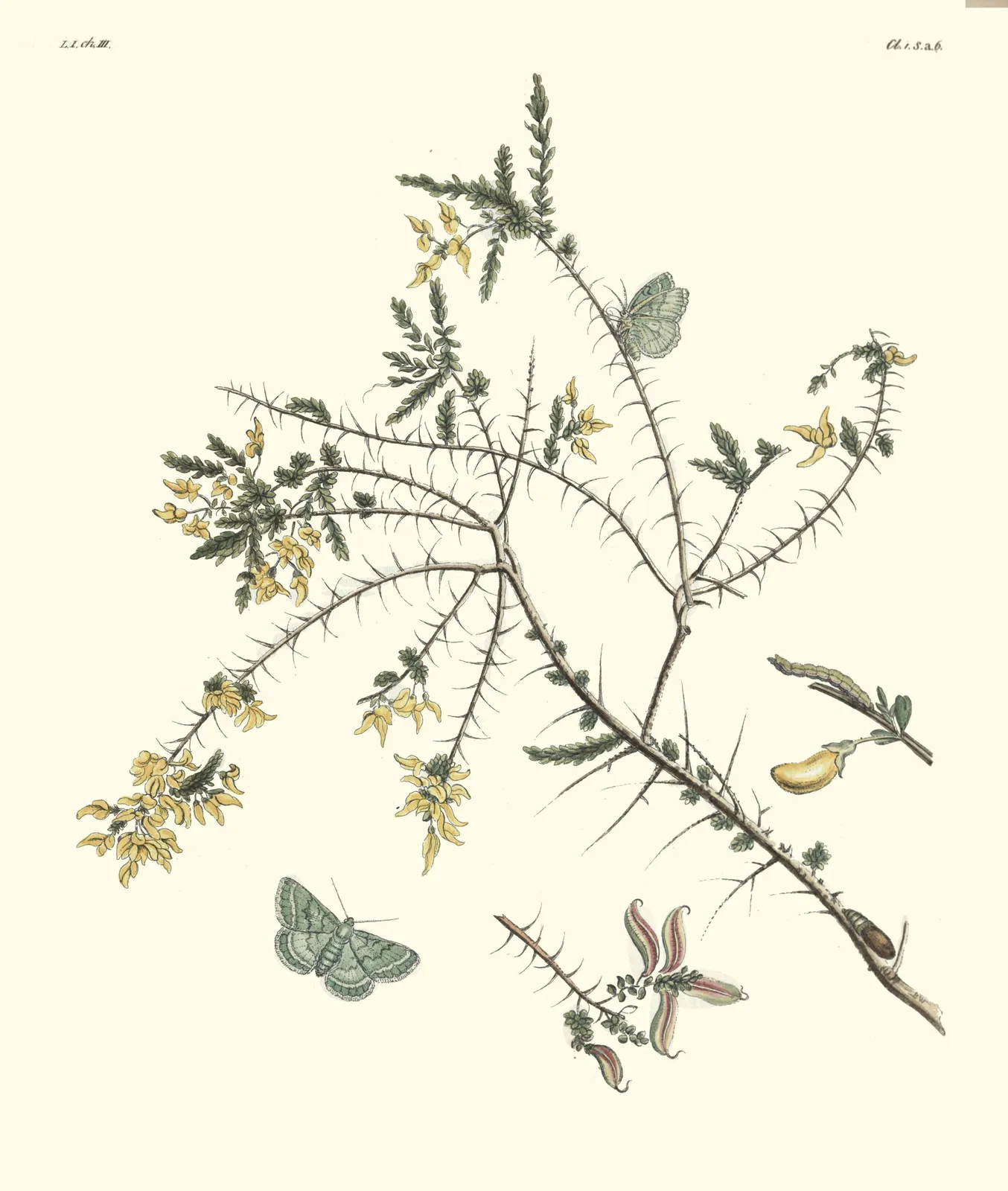
The BROOM-MOTH. The Food of this Caterpillar is the Leaves of Broom,
on which I found Plenty of them, from the 20th to the 30th of September, near Shooter’s
Hill in Kent; they were of the Bigness express’d in the Plate. The Green ones produced
male Flies. They all went into the Earth at the Beginning of October, and, at the Beginning
of May following, the Moths were bred. I never could take any of them in the Fly-state.
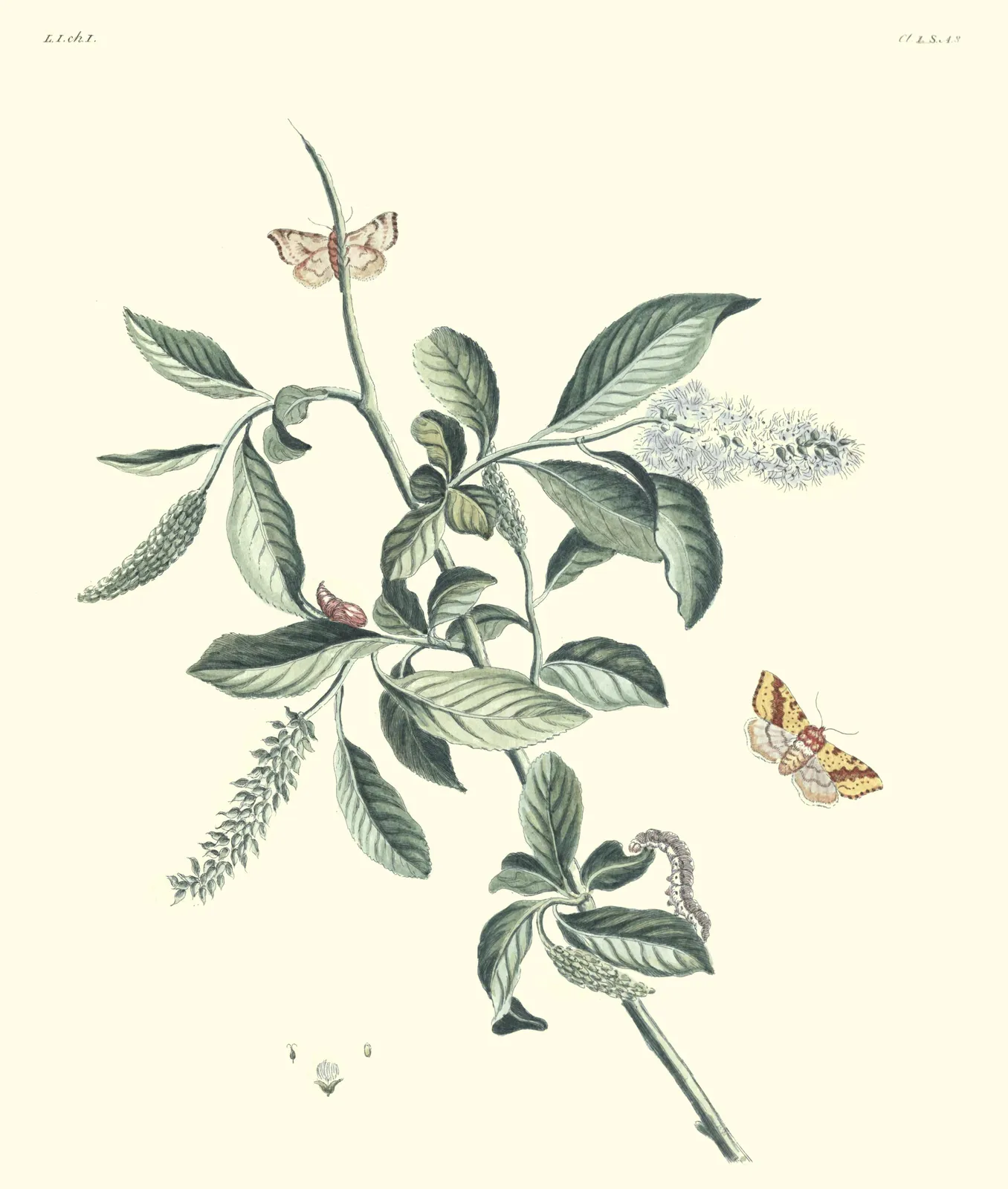
The SALLOW MOTH. The Caterpillar was fed by Mr. Dandridge on the
common Sallow, until it changed to a Chrysalis within the Earth, which was at the
Beginning of June. The Moth was produced about the Middle of September. These Moths
are not common; for, in all my Practice, I have not been able to take above three or four,
and that was in the Evening, near Shooter’s Hill, in the Month of September. The Caterpillars
are likewise very scarce.
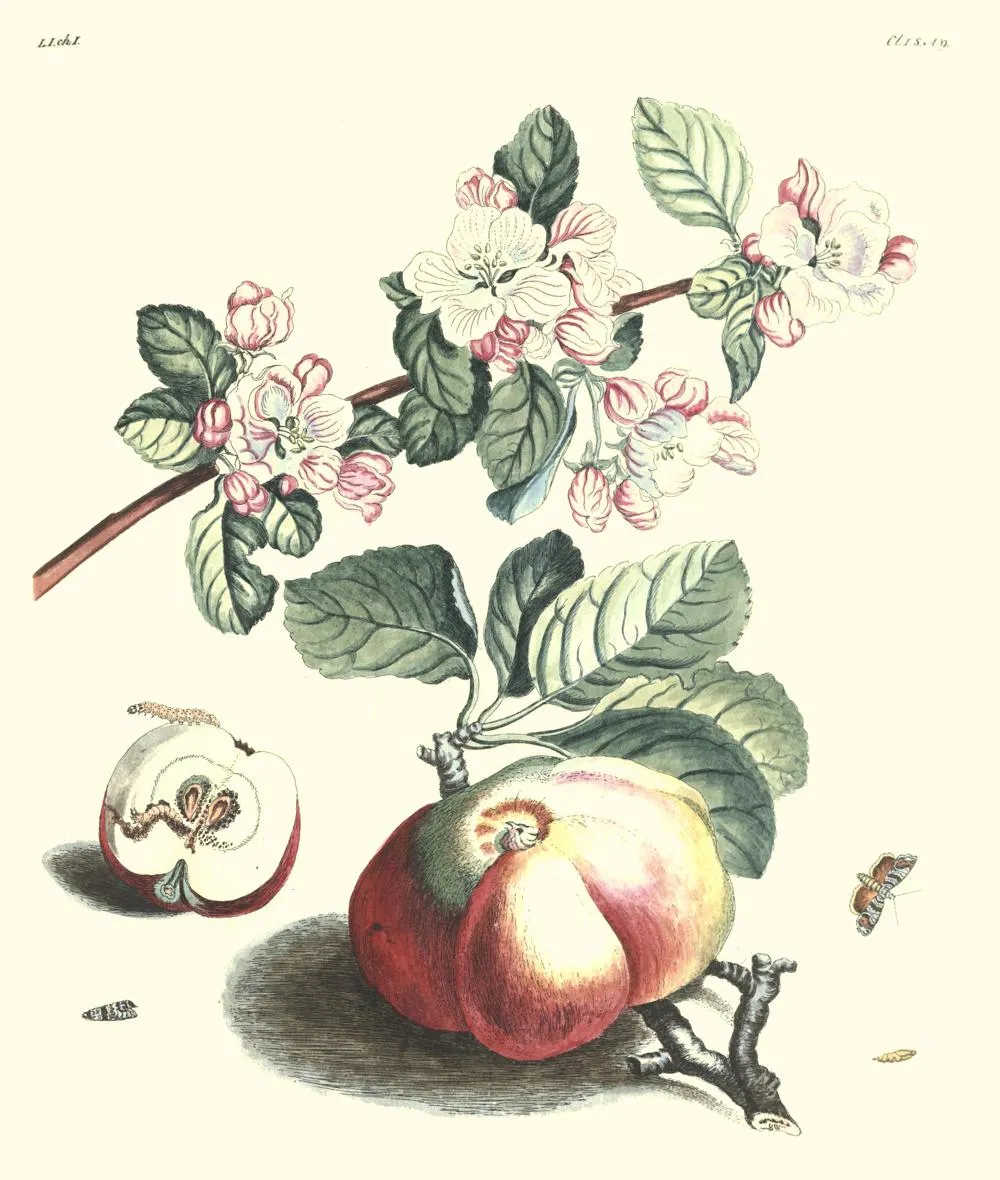
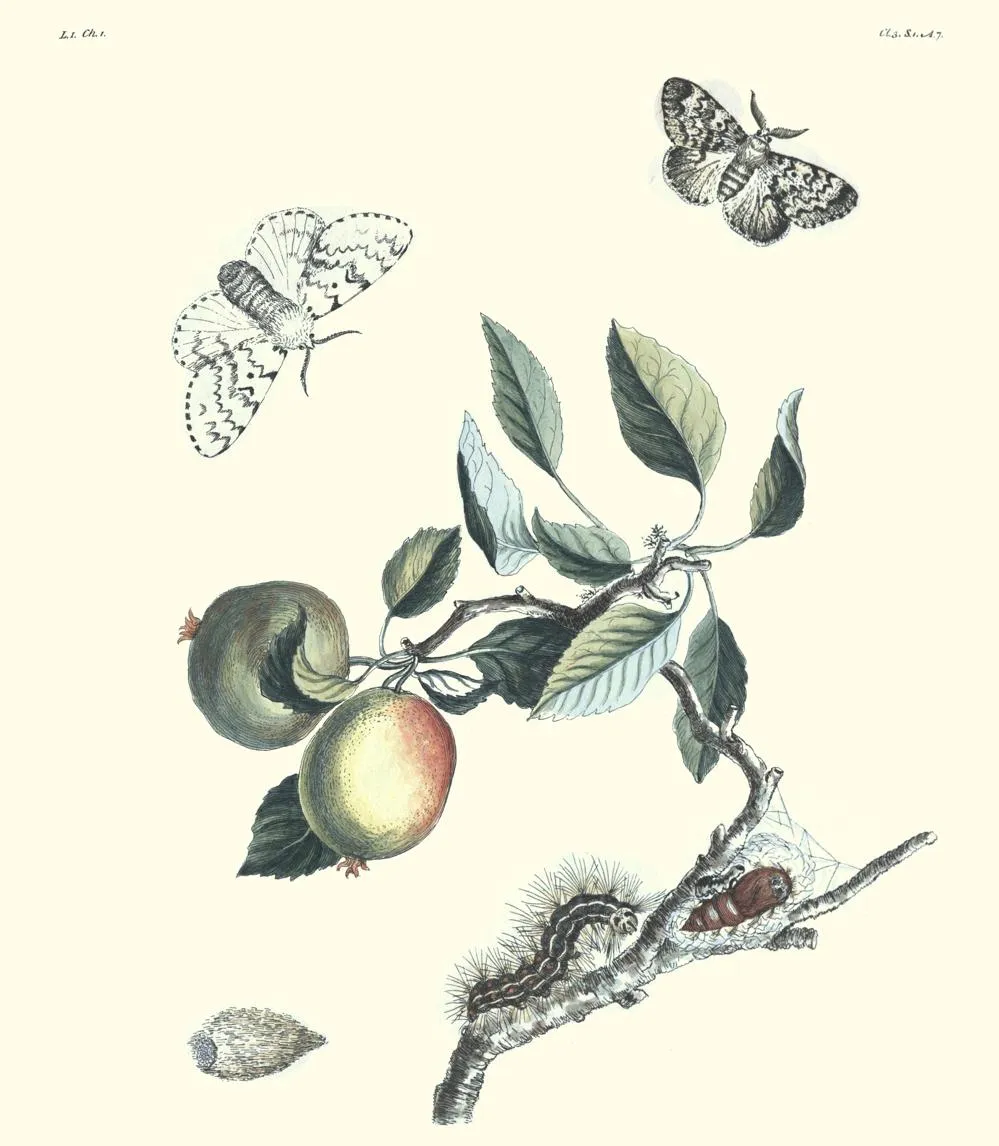
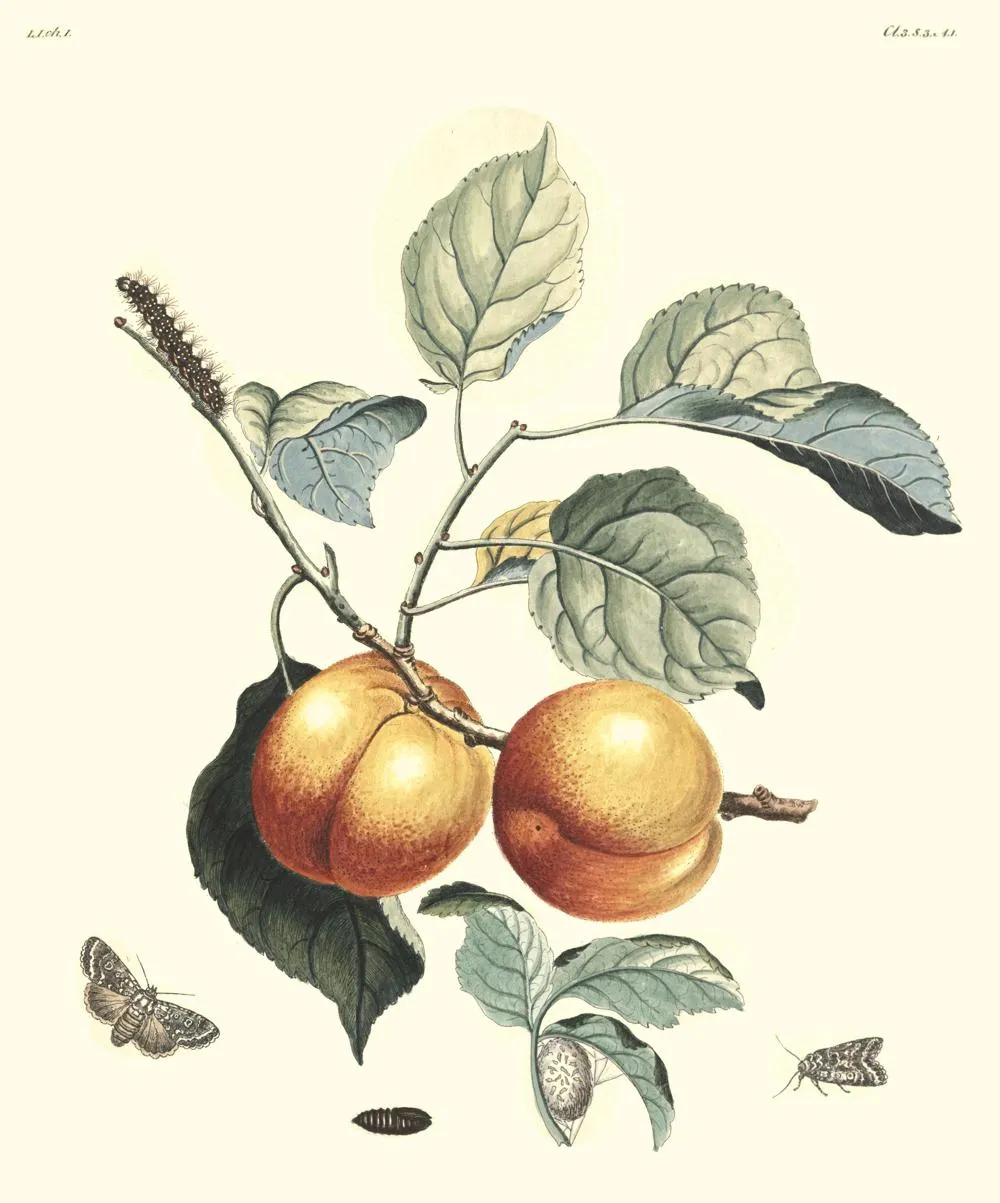
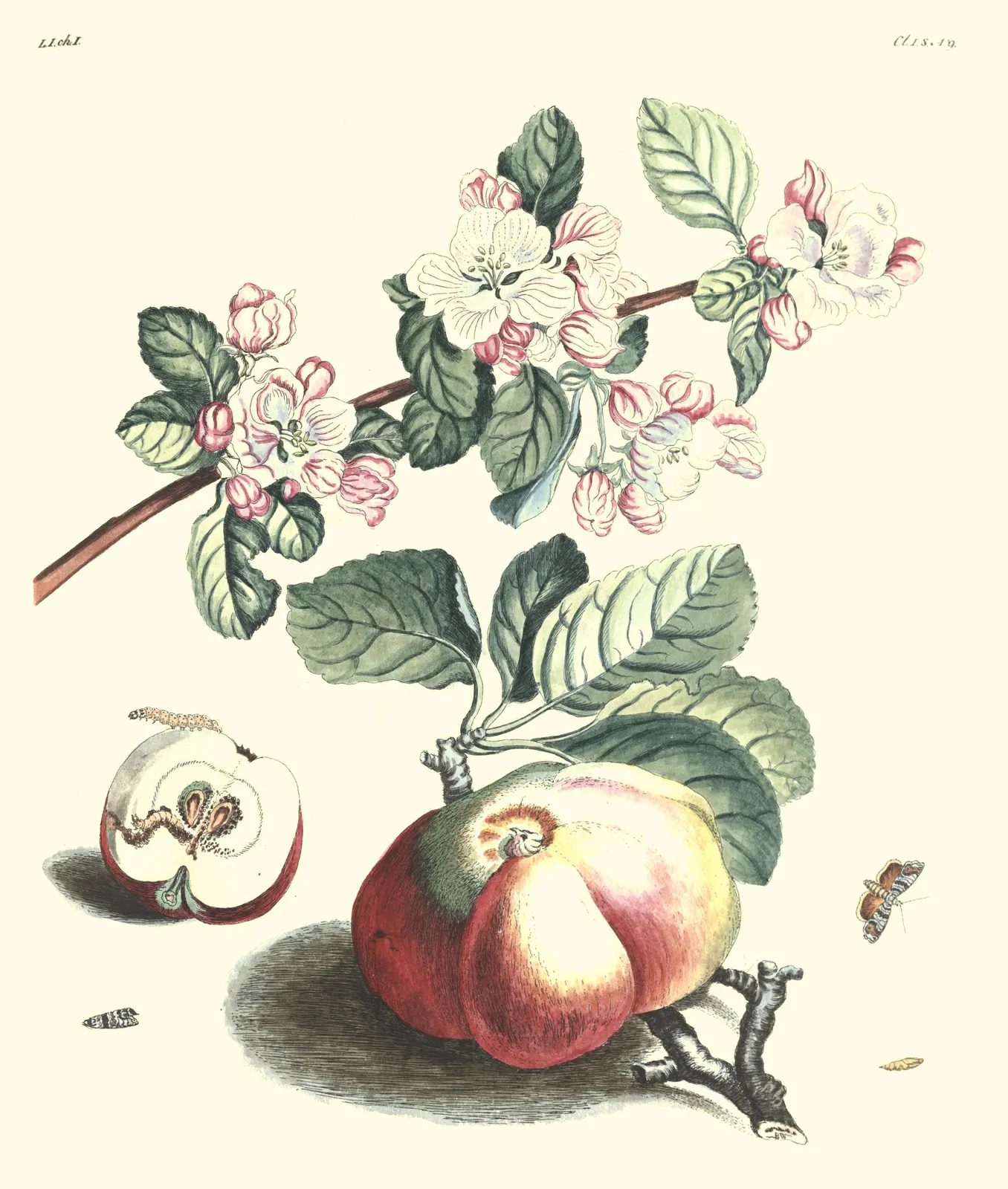
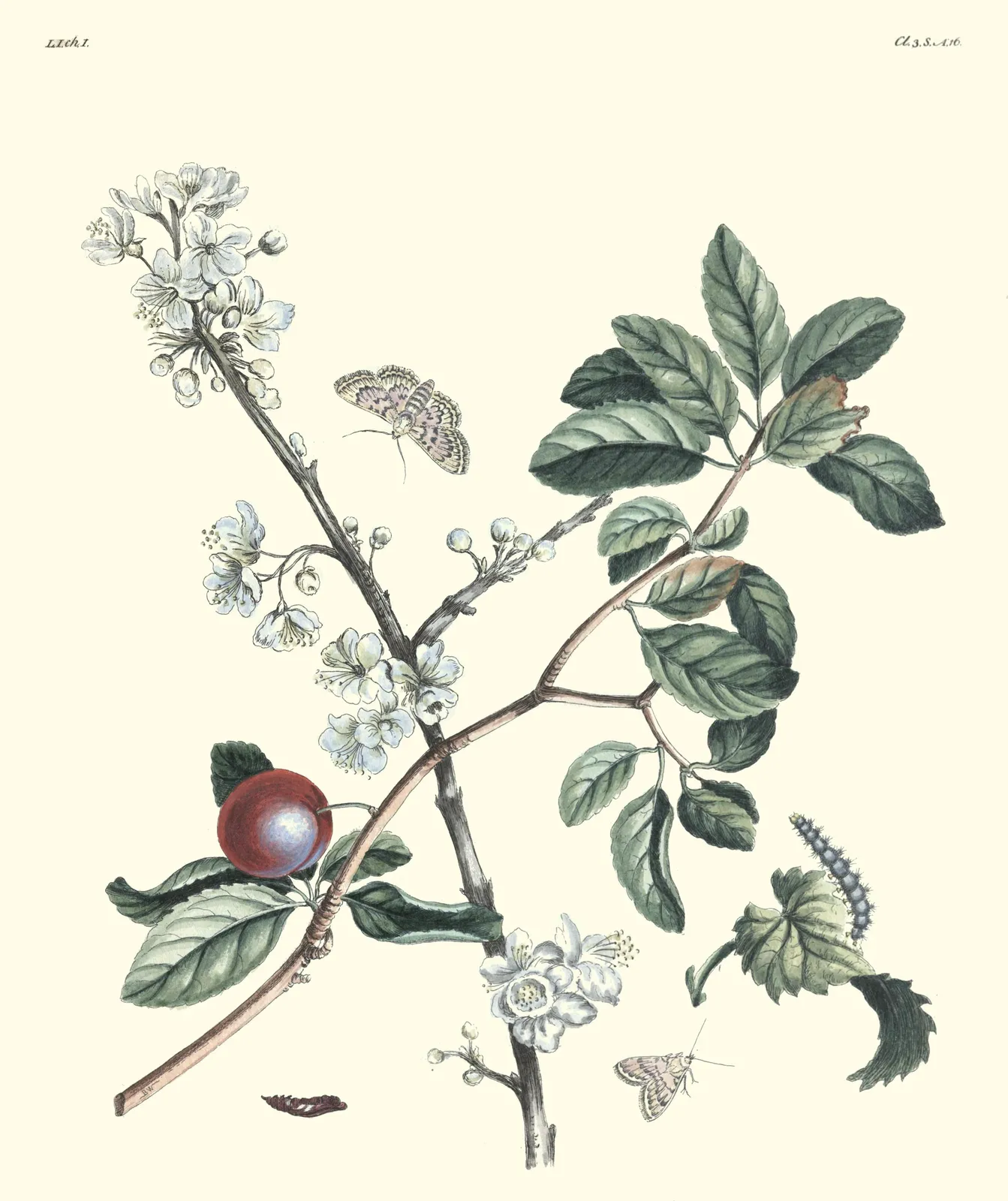
The CODLING MOTH. Mr. Rosel says, The Caterpillar of this Moth
feeds on the Kernels of Apples and Pears. The Moth lays her Eggs at the End of
June: Eight Days after the Caterpillars are bred; and, when full fed, they go out of the
Fruit and change to the Chrysalis under the Bark of the Tree. They remain there all the
Winter, and the Moths are bred in June following. I have, myself, found Plenty of these
Flies sticking on the Bark of the Oak-trees, in Richmond Park, at the End of June, in the
Day-time.
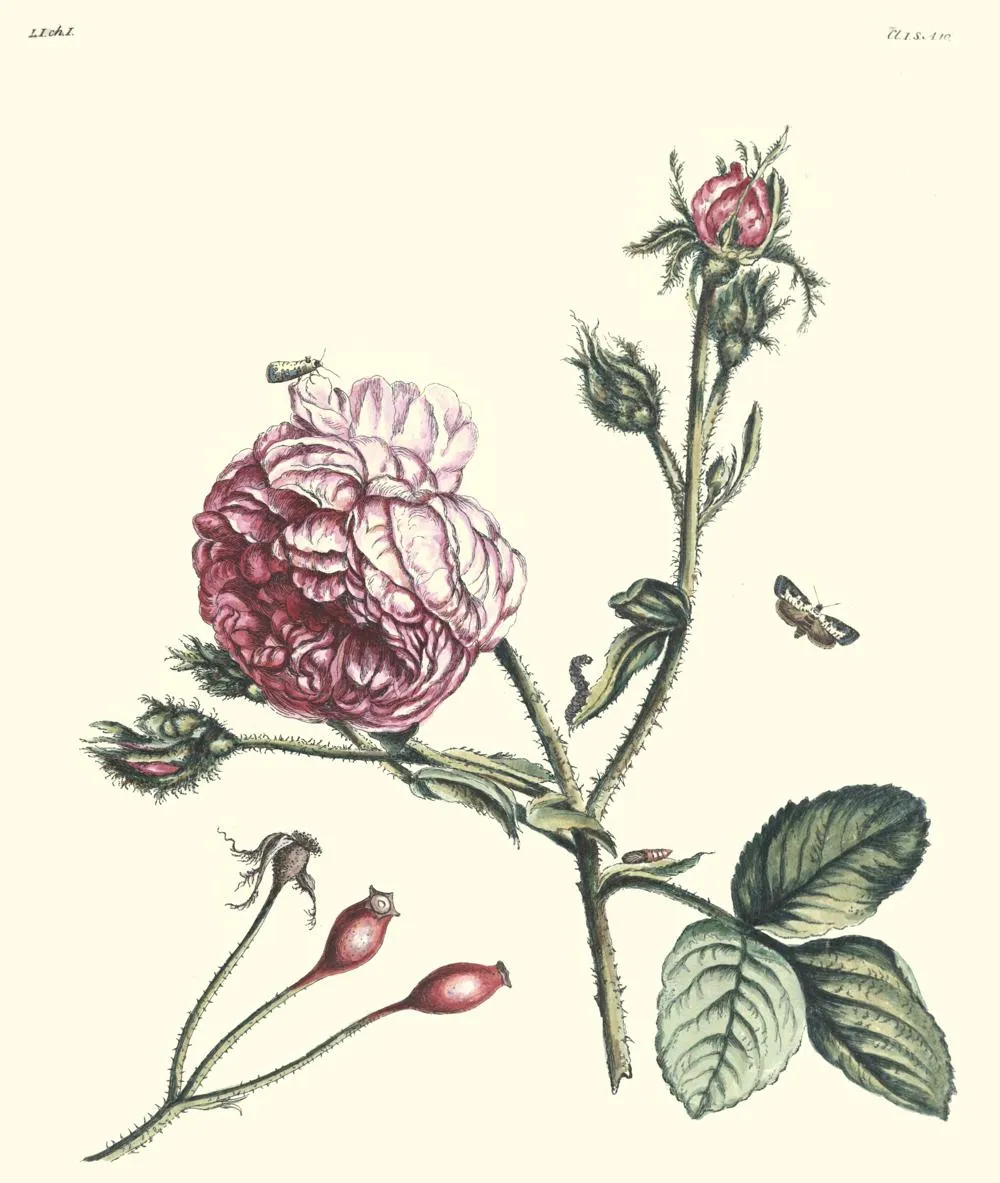
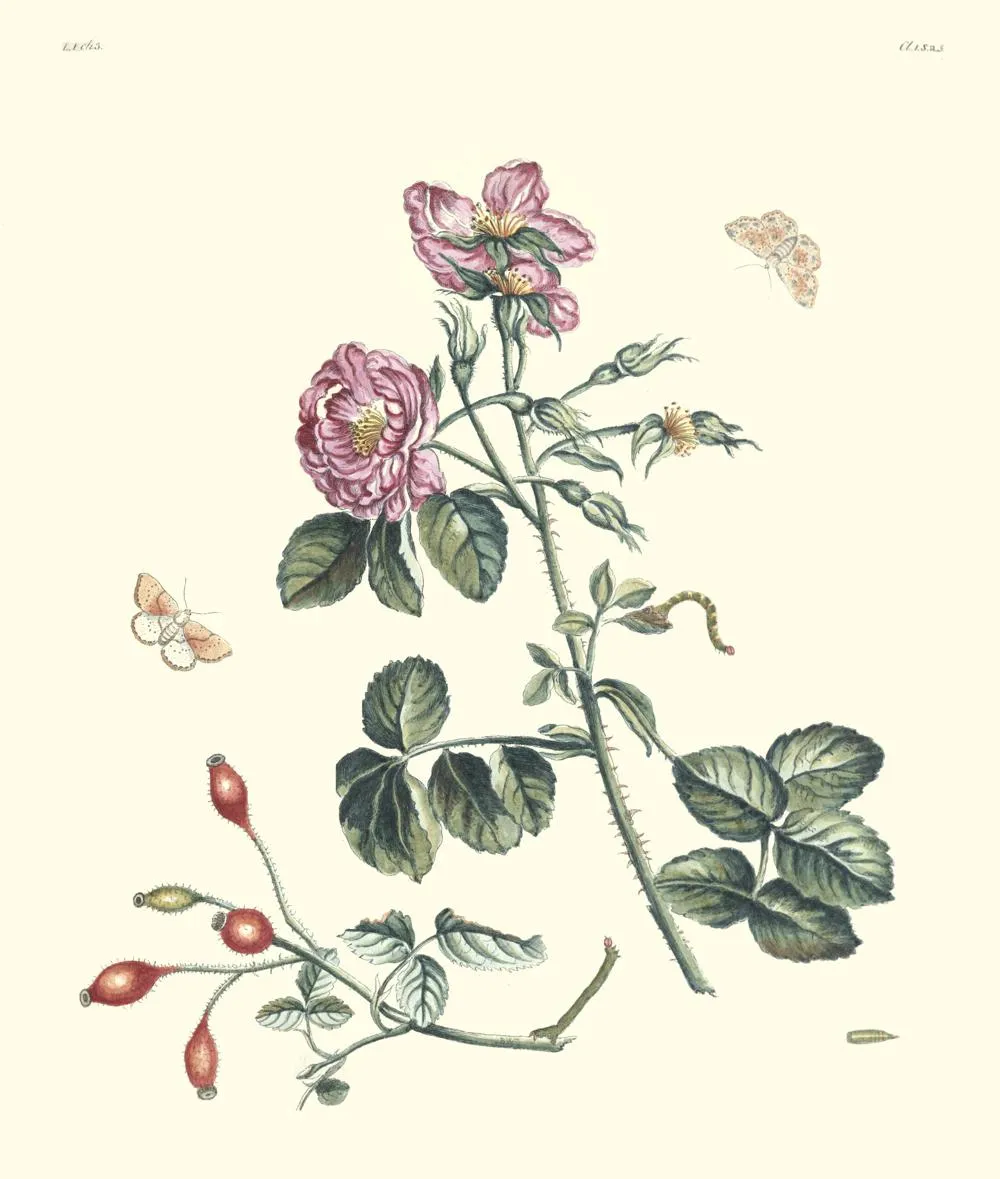
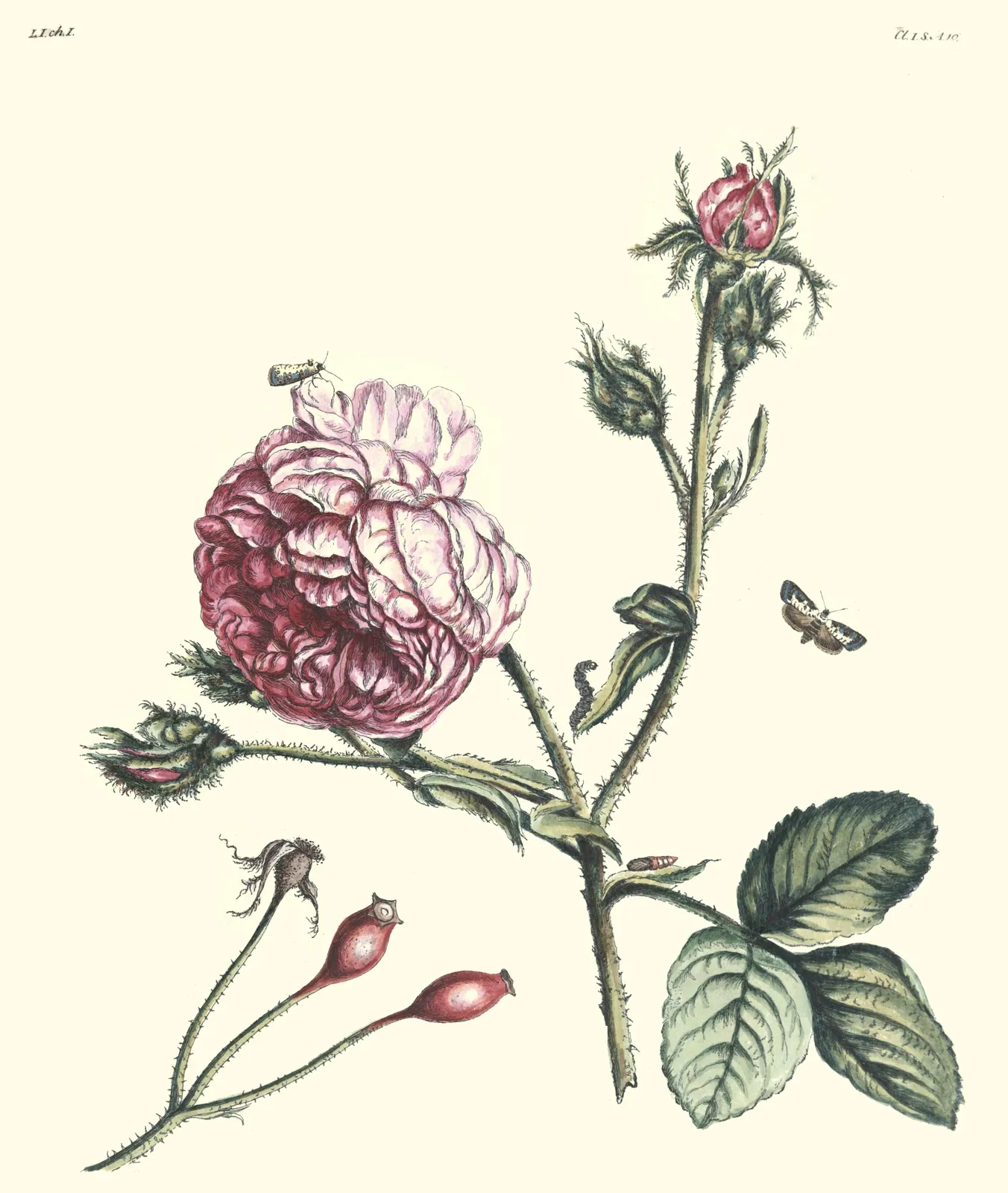
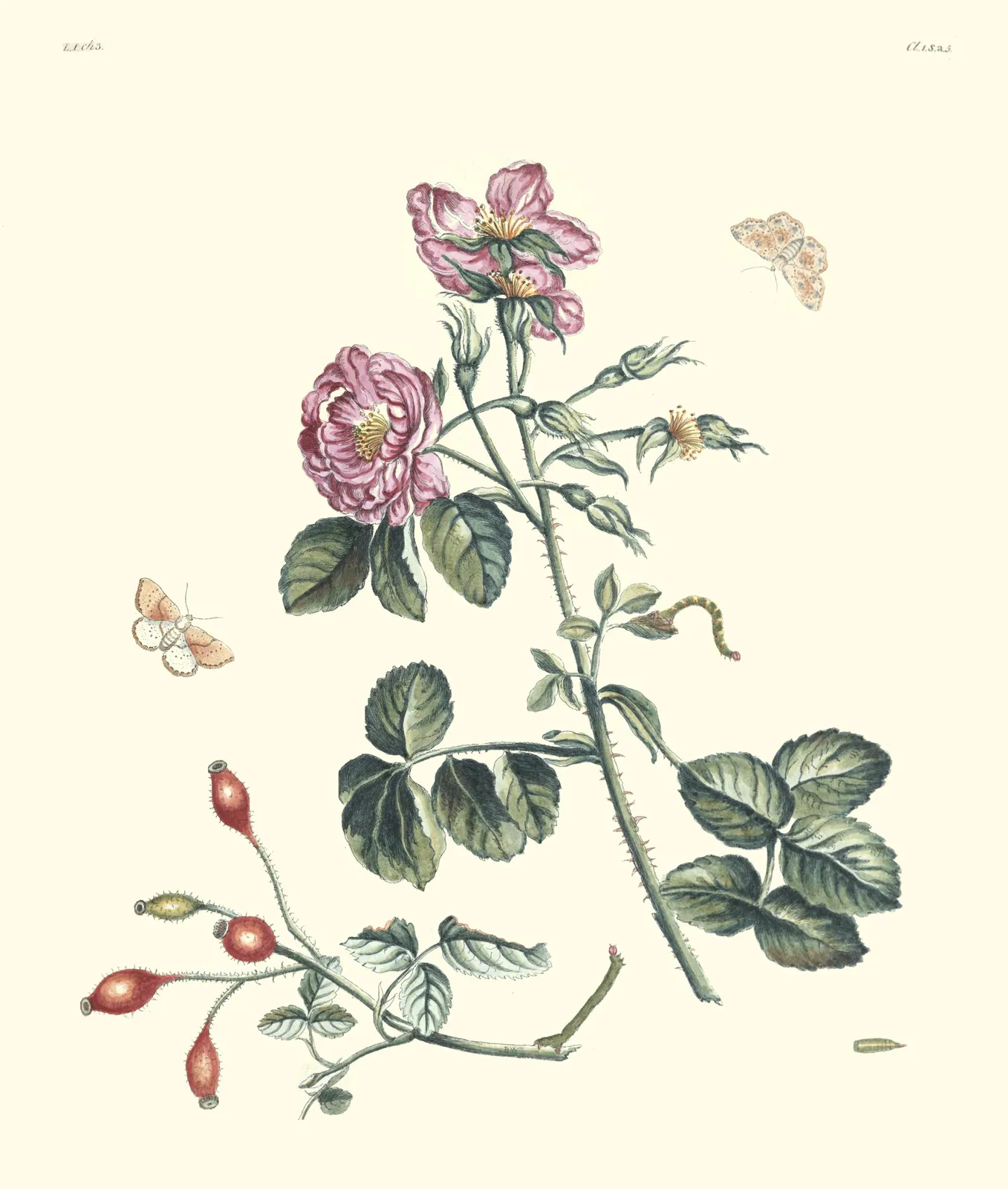
The PROVENCE ROSE MOTH. Rose Leaves are the Food of this Caterpillar.
In the Middle of May I had some of them that changed to the Chrysalis
folded in the Leaves; at the Beginning of June the Moths were bred. They may be taken
in Gardens in the Evening.
The SCOLLOP-WINGED OAK MOTH. I took the Caterpillar
of this Moth, feeding on Oak-leaves, about the 10th of June, at which Time it went
into the Chrysalis, spining itself up in a Leaf; and the Moth was bred on the 7th Day of July.
Both Moth and Caterpillar are very scarce.
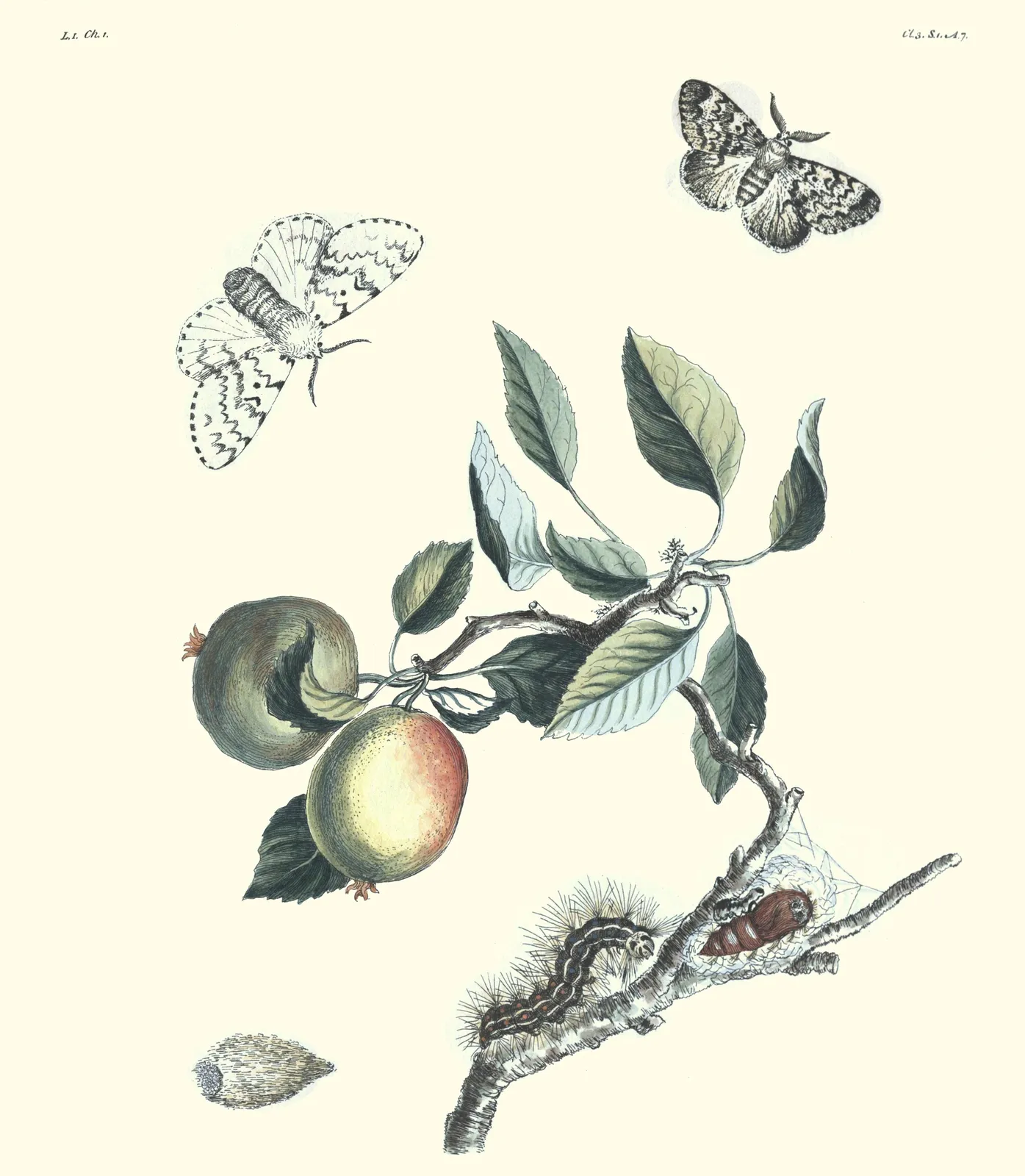
The BLACK-THORN MOTH, or, Figure of 8. The Caterpillar is easily
found, feeding on Black Thorn, White Thorn, Crab-tree, &c. towards the End of
May, at which Time it spins a hard Case against its Food, and changes to a Chrysalis;
the Moth is bred about the End of August, and is not commonly taken.
See Albin, P. 13. Rosel, Cl. 2. Tab. 16. Reaumur, Pl. 18. Pag. 342. Vol. 1.
The GREEN MOTH with SILVER LINES. I fed its Caterpillar
with Oak-leaves, on which it had been found. It work’d itself up in a dark brown
Case on the Back-side of one of the Leaves, and changed into a Chrysalis the 27th of September;
the Moth appeared the 20th of May following, and is difficult to meet with.
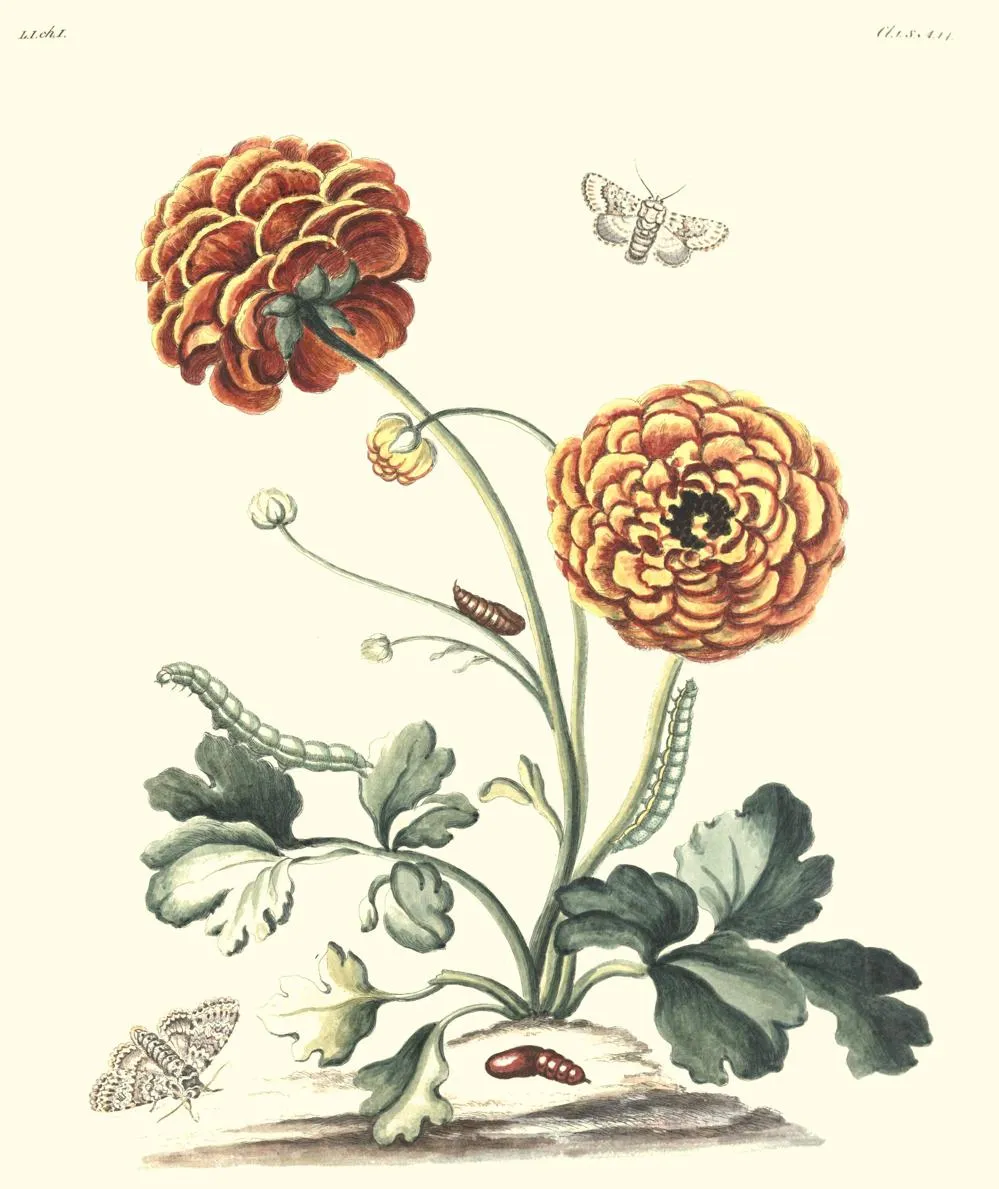
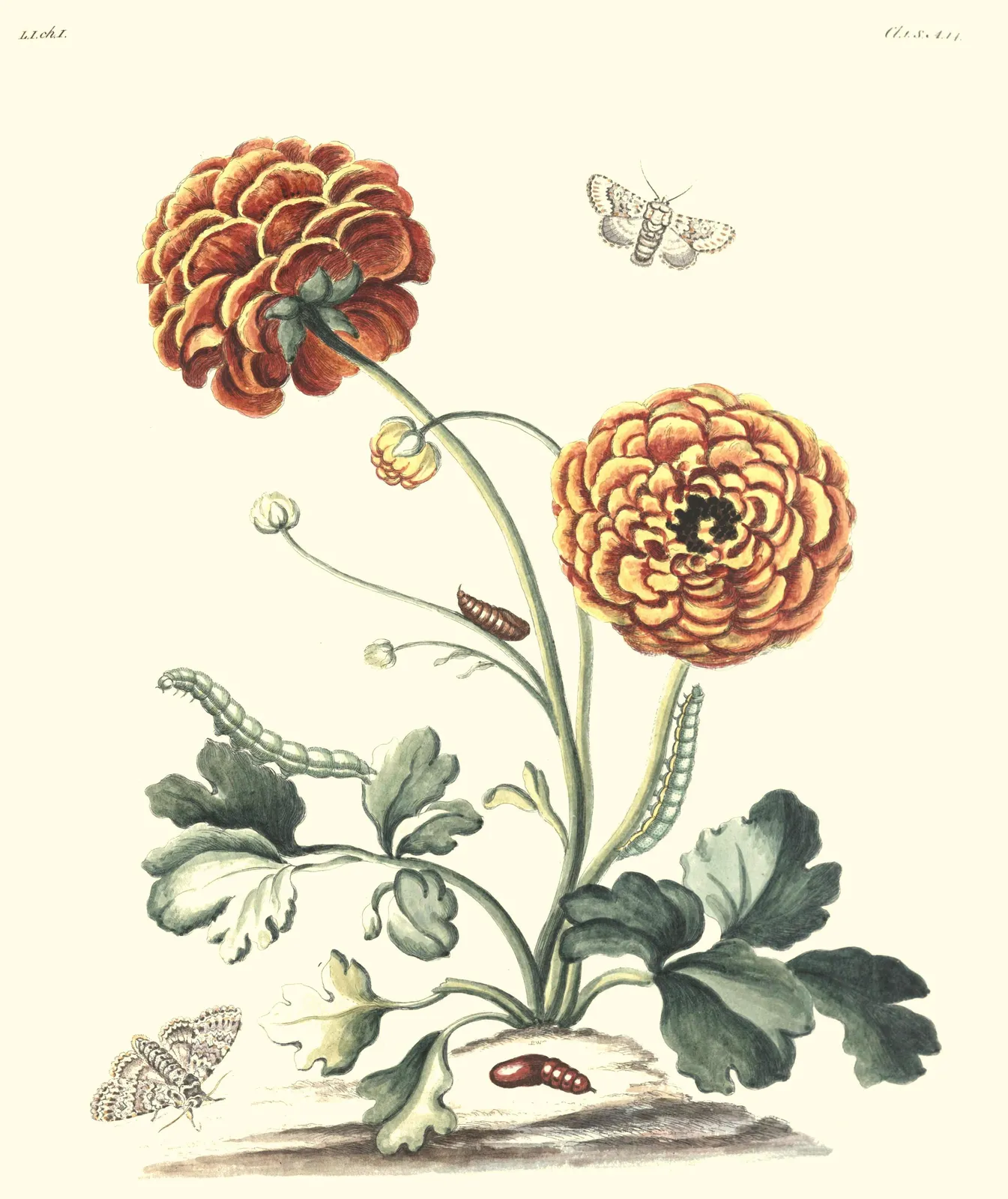
The RANUNCULUS MOTH. The Caterpillars represented in this
Plate were found feeding on the Ranunculus Flower about the Middle of June, at
which Time they were full fed, and soon changed to the Chrysalis within a Spining or Web;
and the Moths came out at the Beginning of September. The Caterpillar and Moth are both
very rare.
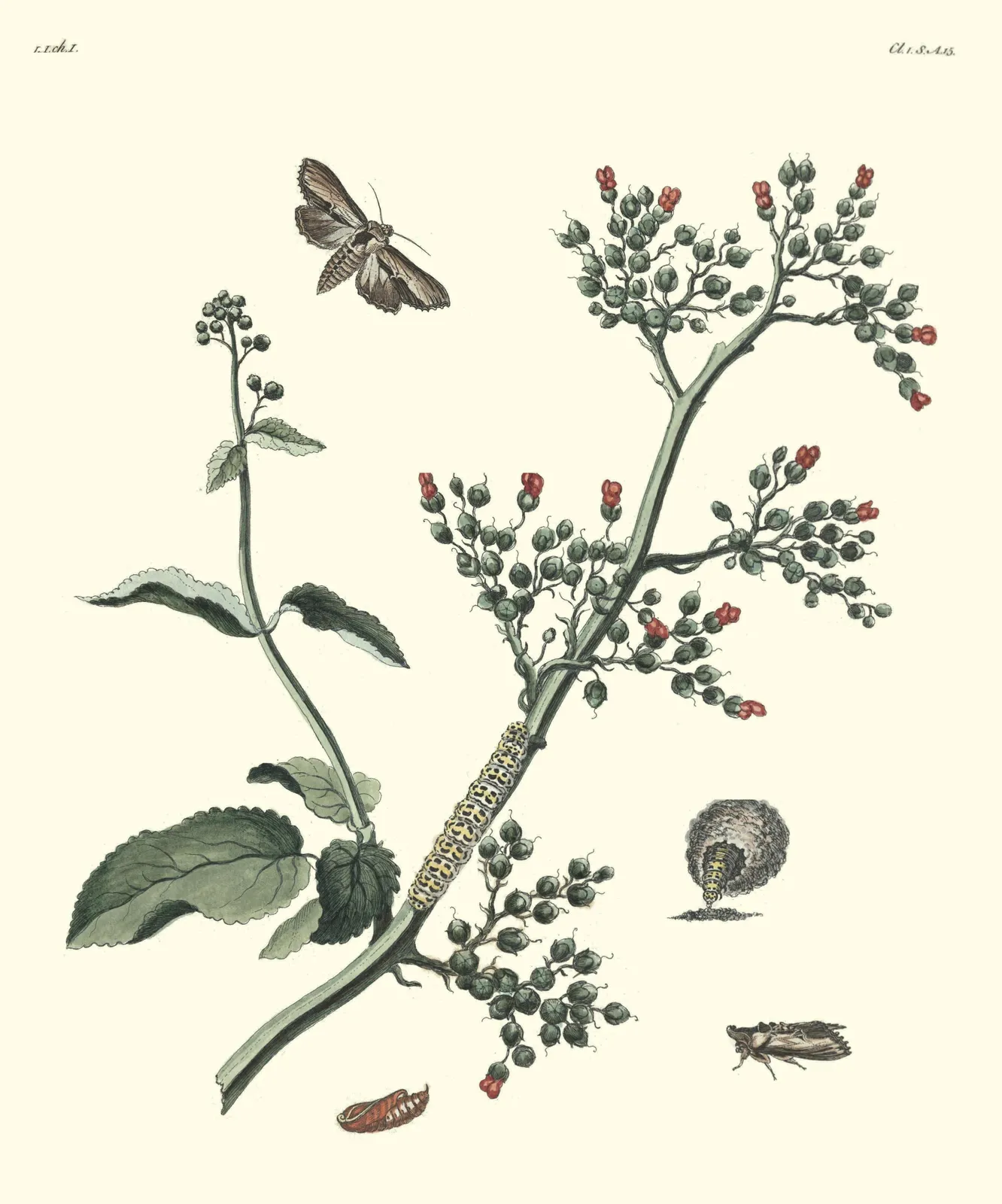
The WATER-BETONY MOTH. The Caterpillars are sociable, and
feed together. They may be found, towards the End of May, full fed, on the Water-Betony;
as also on the Mullein, which is their proper Food. They go into the Earth about
that Time, and change to the Chrysalis, within a Case composed of Earth and a webby Matter,
which they spin together. The Moth appears in March following; but it is not commonly
taken in its Fly-state.
See Raii Hist. Insect. P. 168. N. 25. Albin, Pl. 13. Rosel, Cl. 2. Tab. 22. Reaumur,
Pl. 43. P. 602.
Betonica Aquatica, Ger. 579. Scrophularia Aquatica major. C. B. Pin. 235.
L. 1. Ch. 1.
XVI.
Cl. 1. S. A. 16.
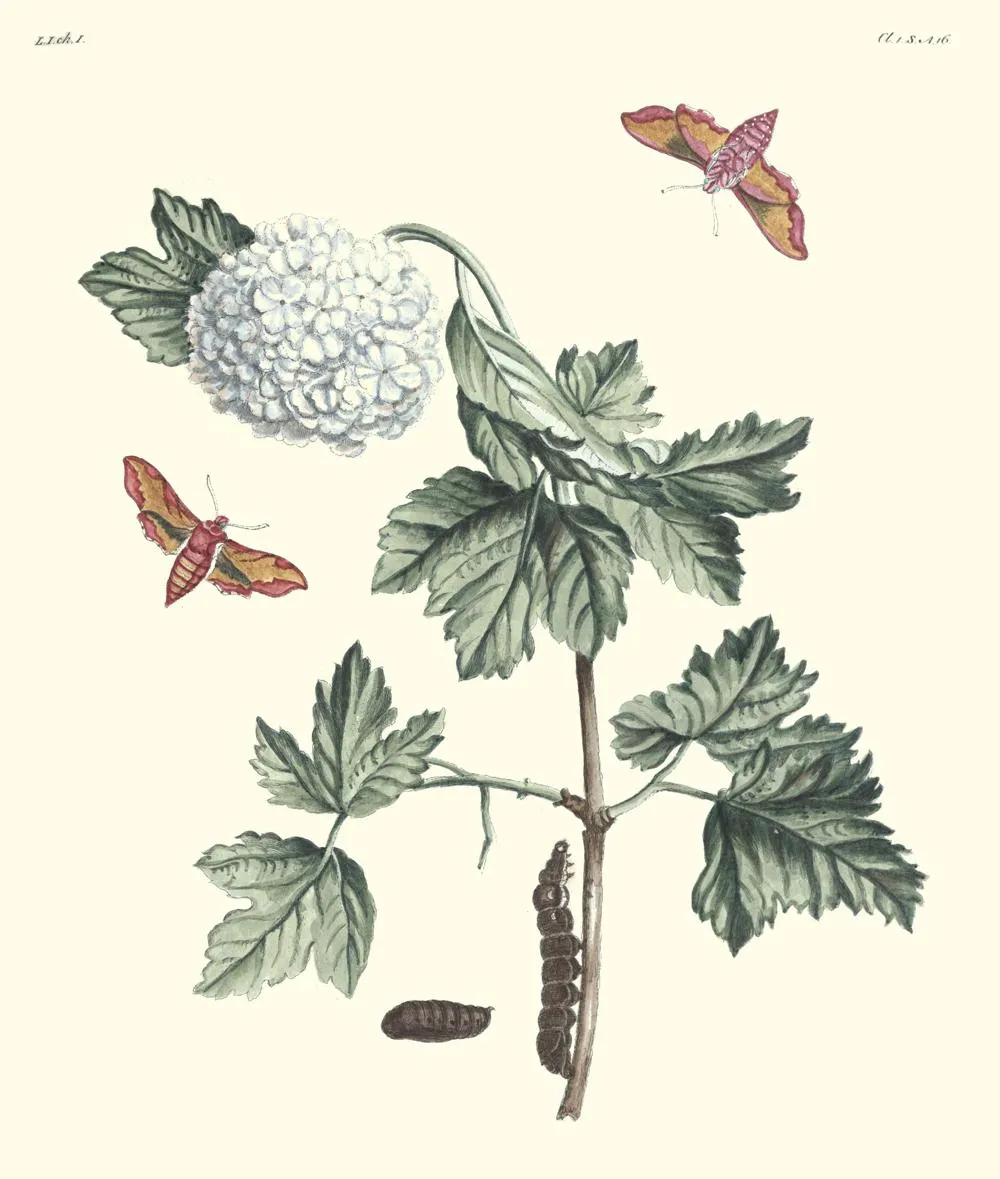
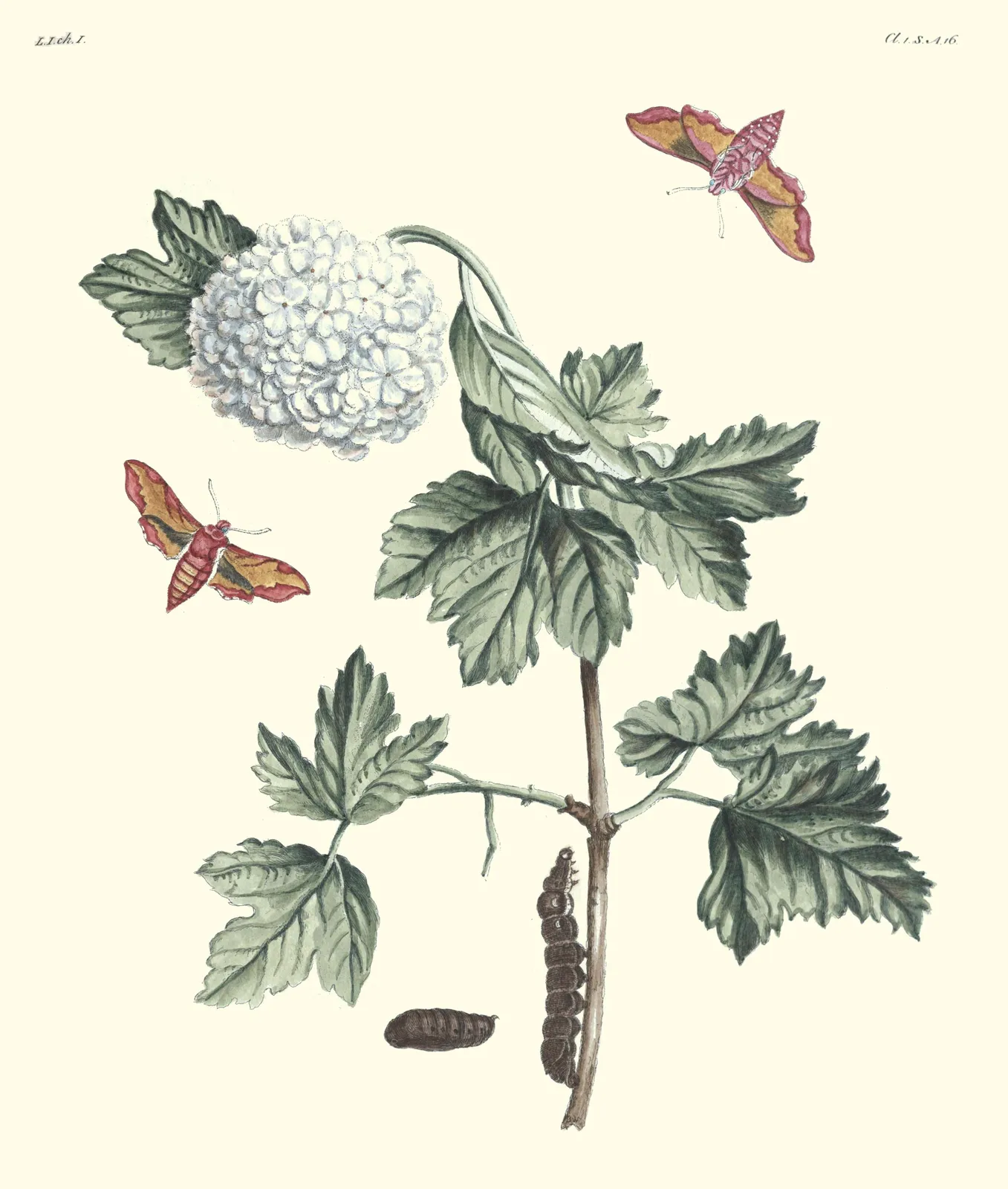
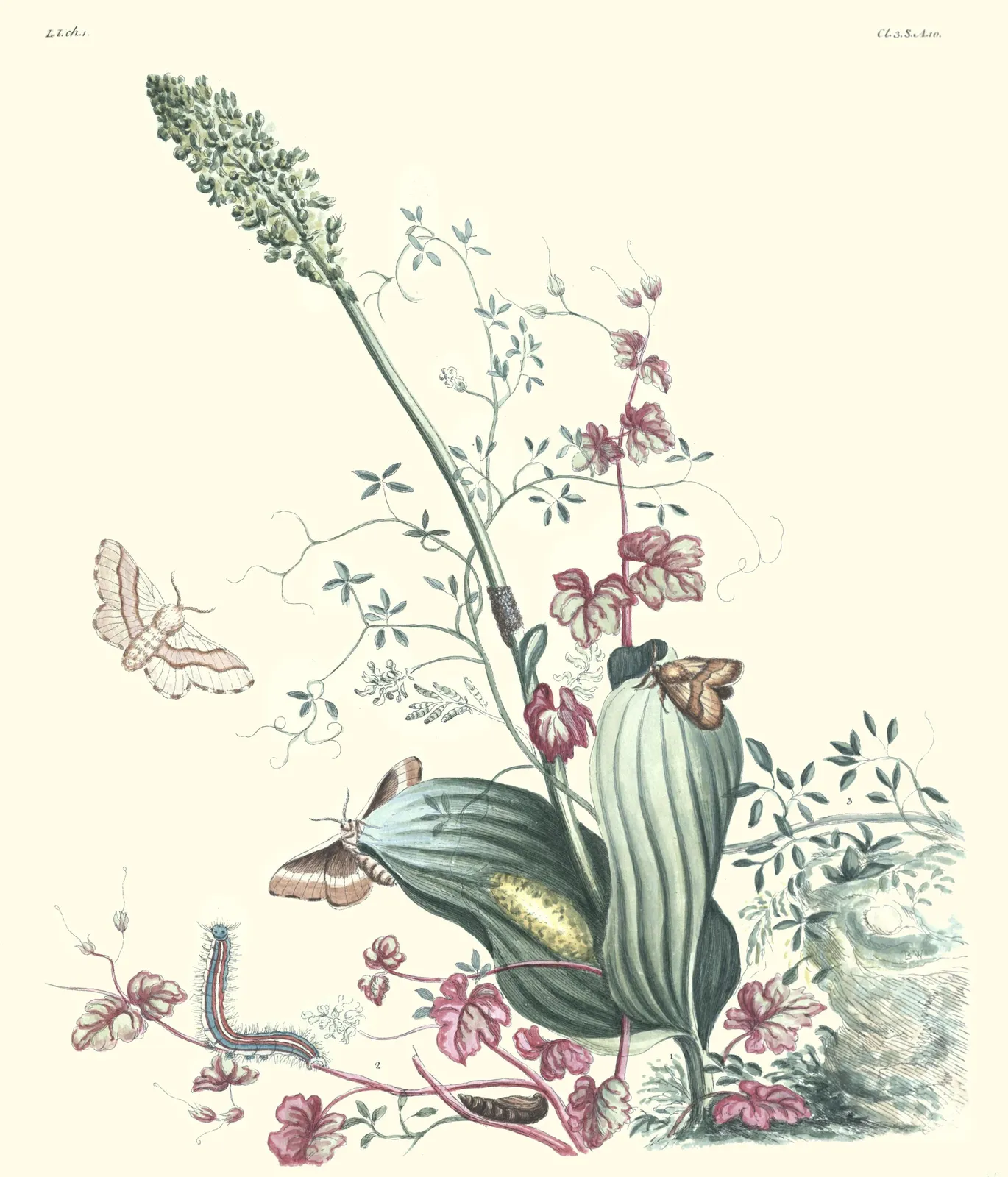
The SMALL ELEPHANT MOTH. Mr. Rosel informs us, That the
Caterpillar is to be found on the Grass in Meadows, in the Month of August; but
whether that be its favourite Food he does not know. It makes a Spining, and changes to a
Chrysalis towards the End of that Month. The Moth is bred about the End of May.
In the Year 1743, on the 28th of May, I took several of these Moths, in the Evening (after
Sun-set) as they were hovering about, and feeding on a Flower called The Batchelors
Button, by the Side of Osterly Wood, near Brentford. They are very swift in flight, and
therefore must be taken as soon as they approach the Flower. The Females layed their Eggs
freely, and, after seven Days, the Caterpillars were hatch’d, to the Number of about 300. I
took the utmost Pains to raise them; but, for want of their proper Food, they all died.
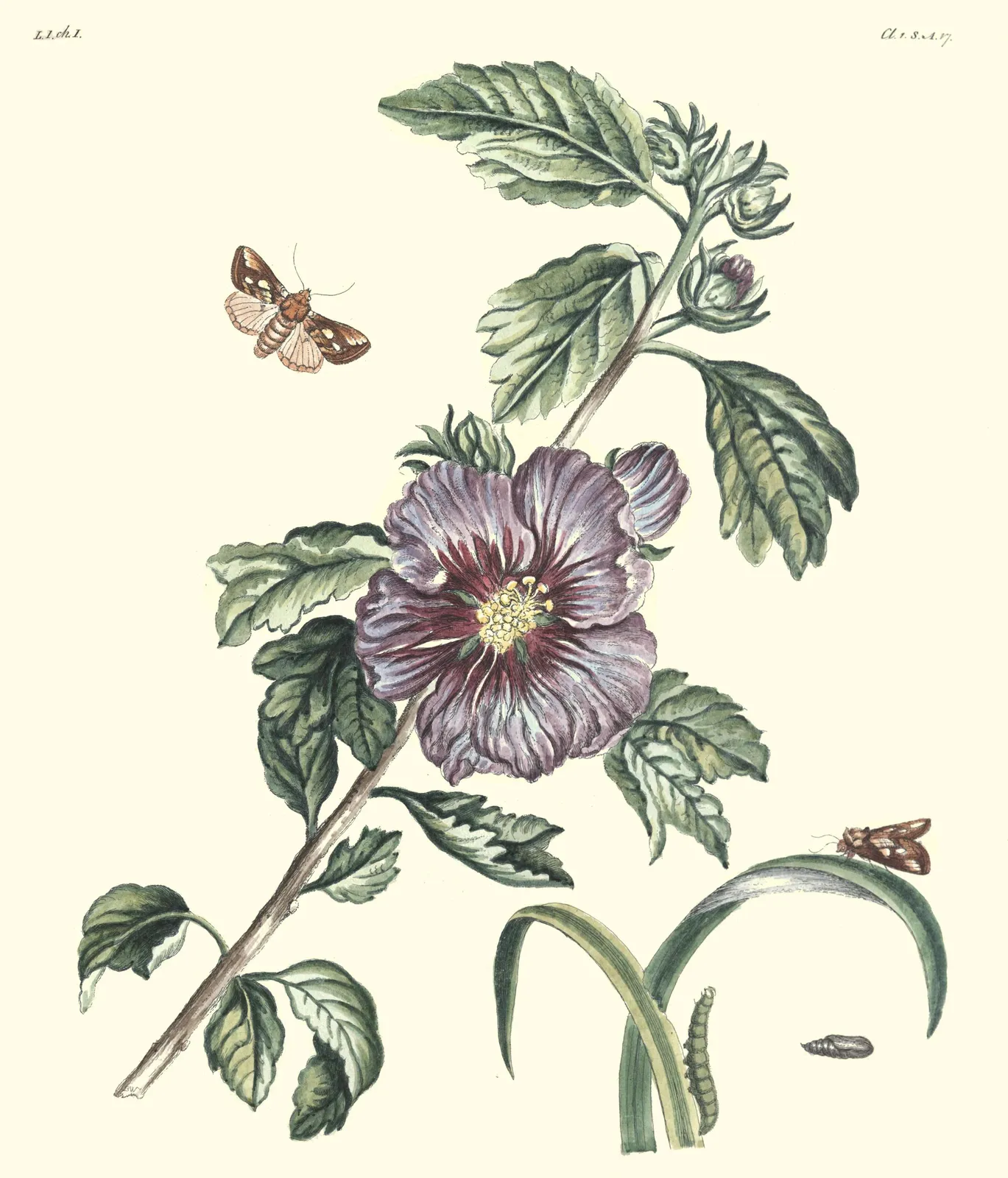
The GOLD-SPOT MOTH. The Caterpillar, whence this Moth is produced,
may be found about the End of July, full fed, in the Marshes about Rotherhith,
Vauxhall, and such like Places. It feeds on the Leaves of the great Water-grass, &c. but
the Caterpillar is not so easily found as the Spining which it makes to contain its
Chrysalis;
for that spining, being of a whitish Colour, may be seen at a good Distance, in Shape and
Manner as described in the Plate. It lies in the Chrysalis State about three Weeks, and the
Moth is bred from the Middle to the End of August; but it is seldom taken in the Fly-state.
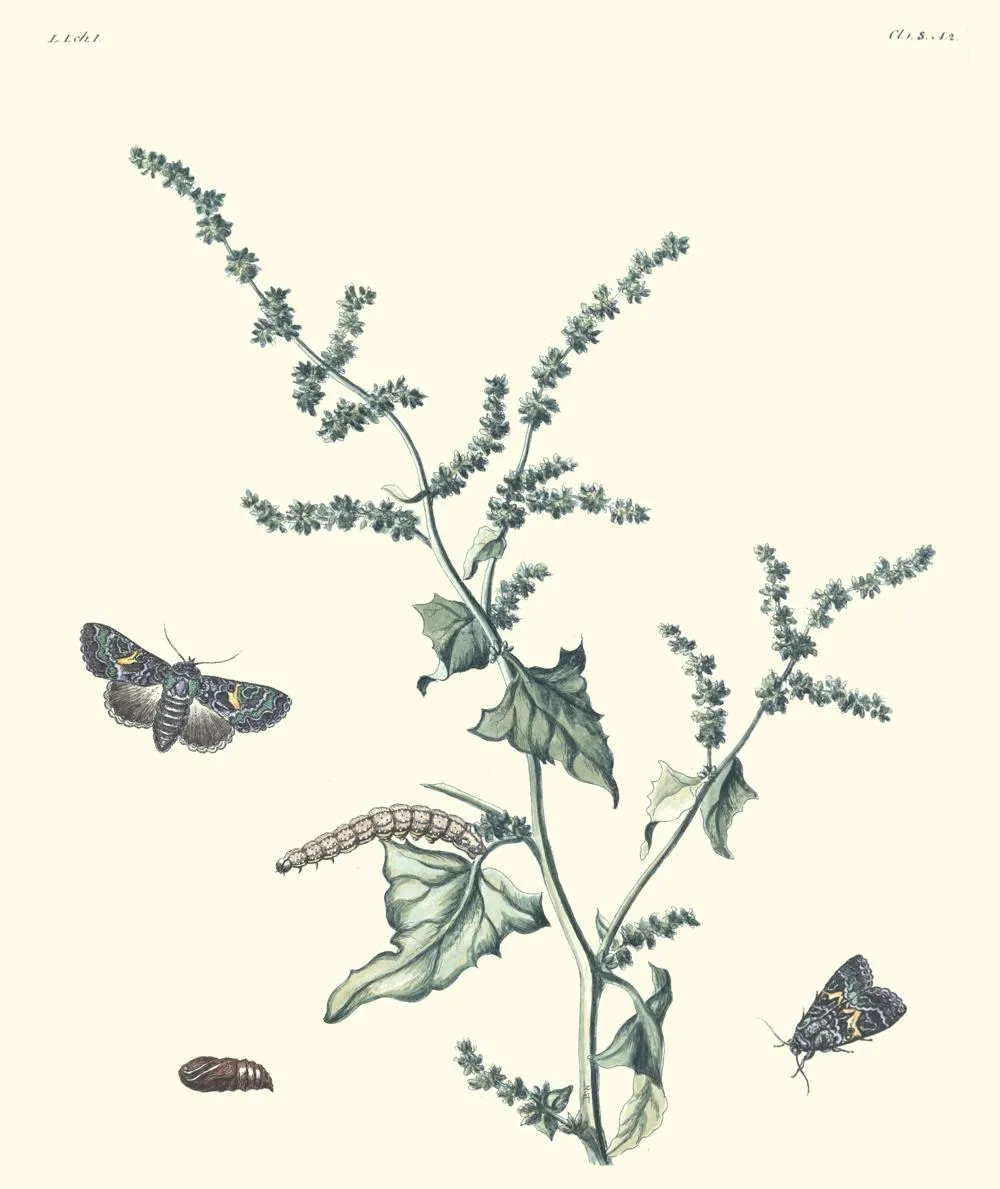
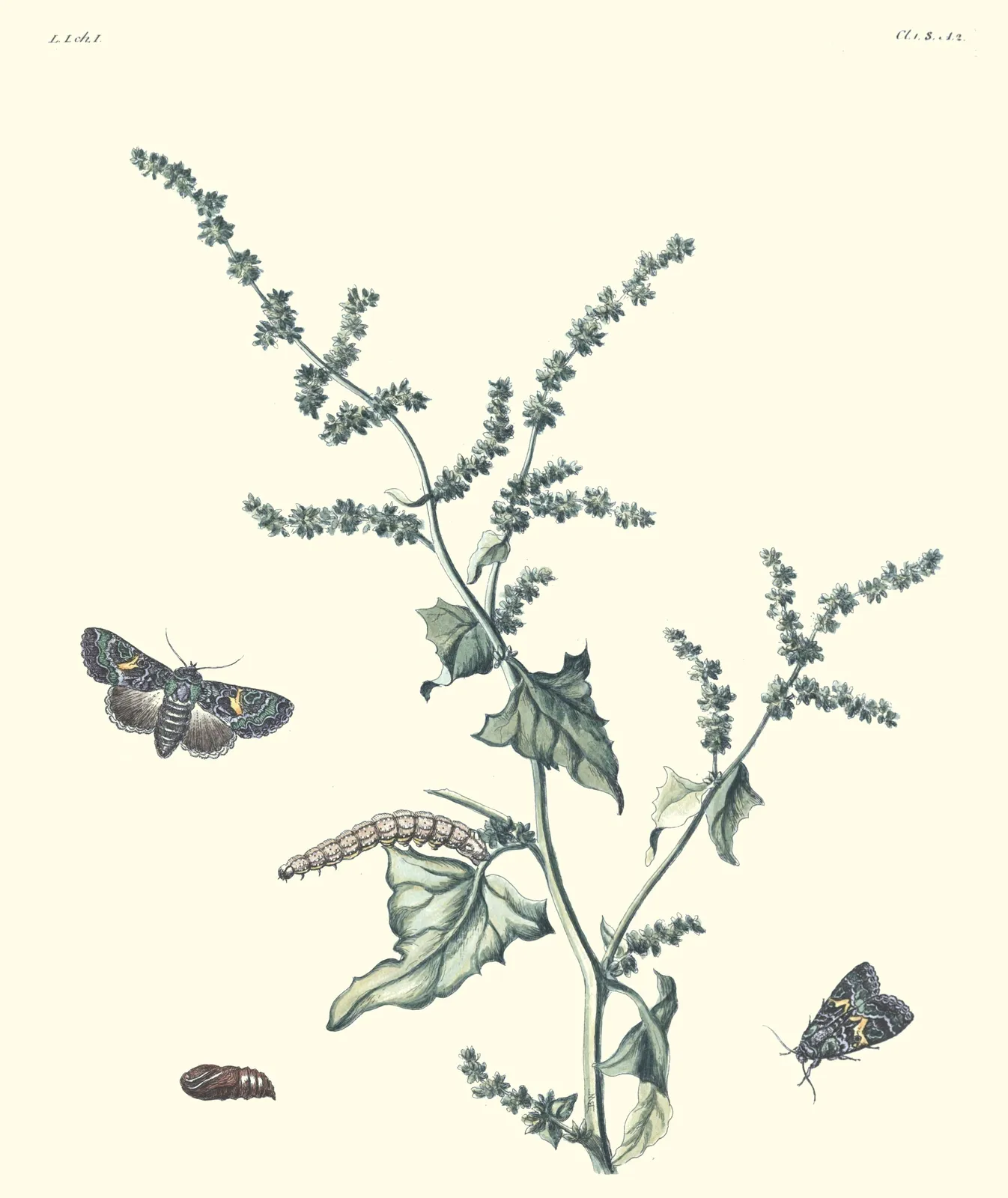
The SWORD-GRASS MOTH. Mr. Rosel informs us, That the Caterpillar
of this Fly feeds on the Orache; that, in June, it changed to a Chrysalis within
the Earth, in which State it remained three Weeks, and then the Moth was bred. I once
took one of these Caterpillars, full grown, feeding on the Sword-grass in the Marshes at Rotherhith;
but that was in the Month of August, and the Moth was bred with me at the End
of September. Both Caterpillar and Moth are very scarce.
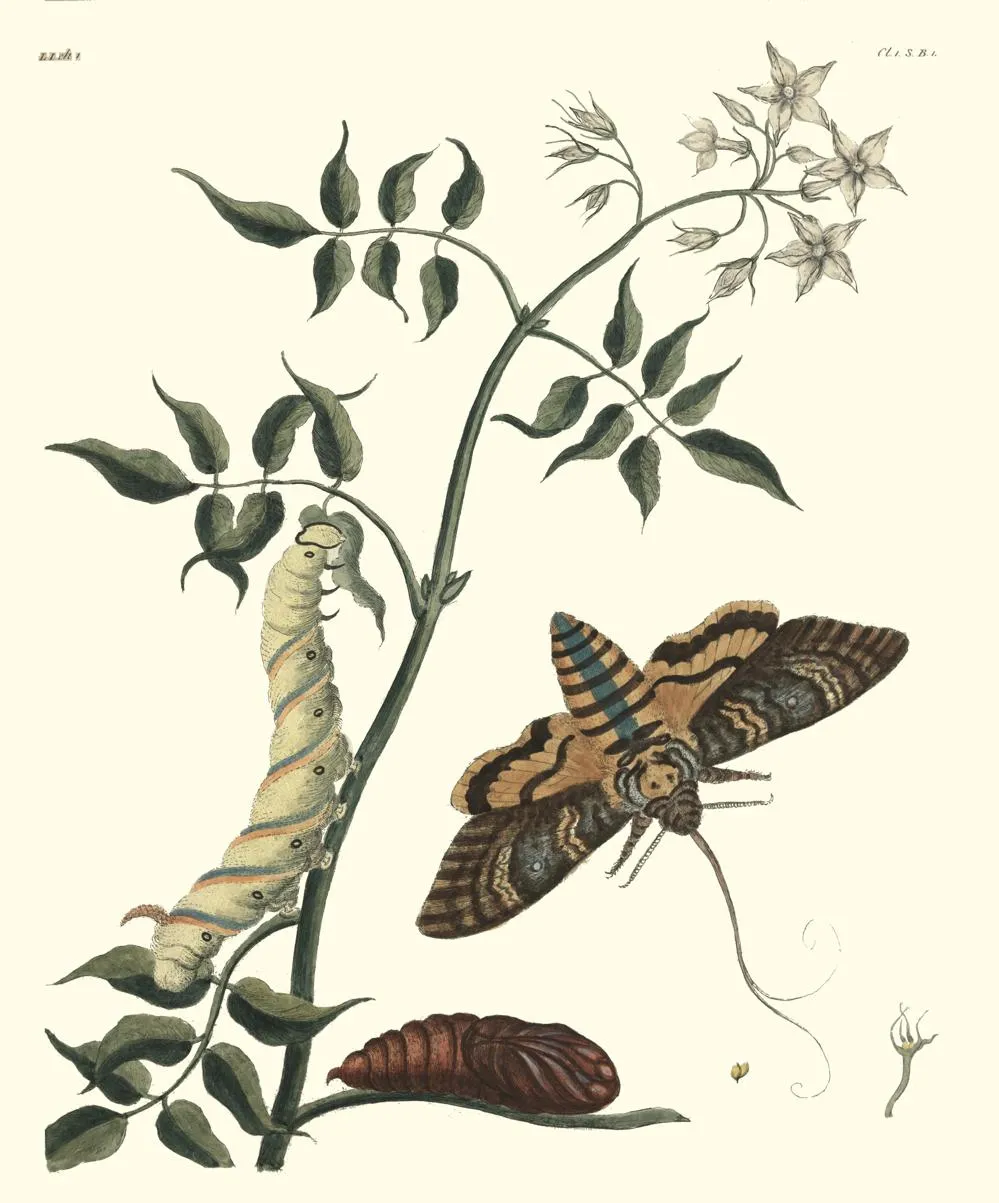
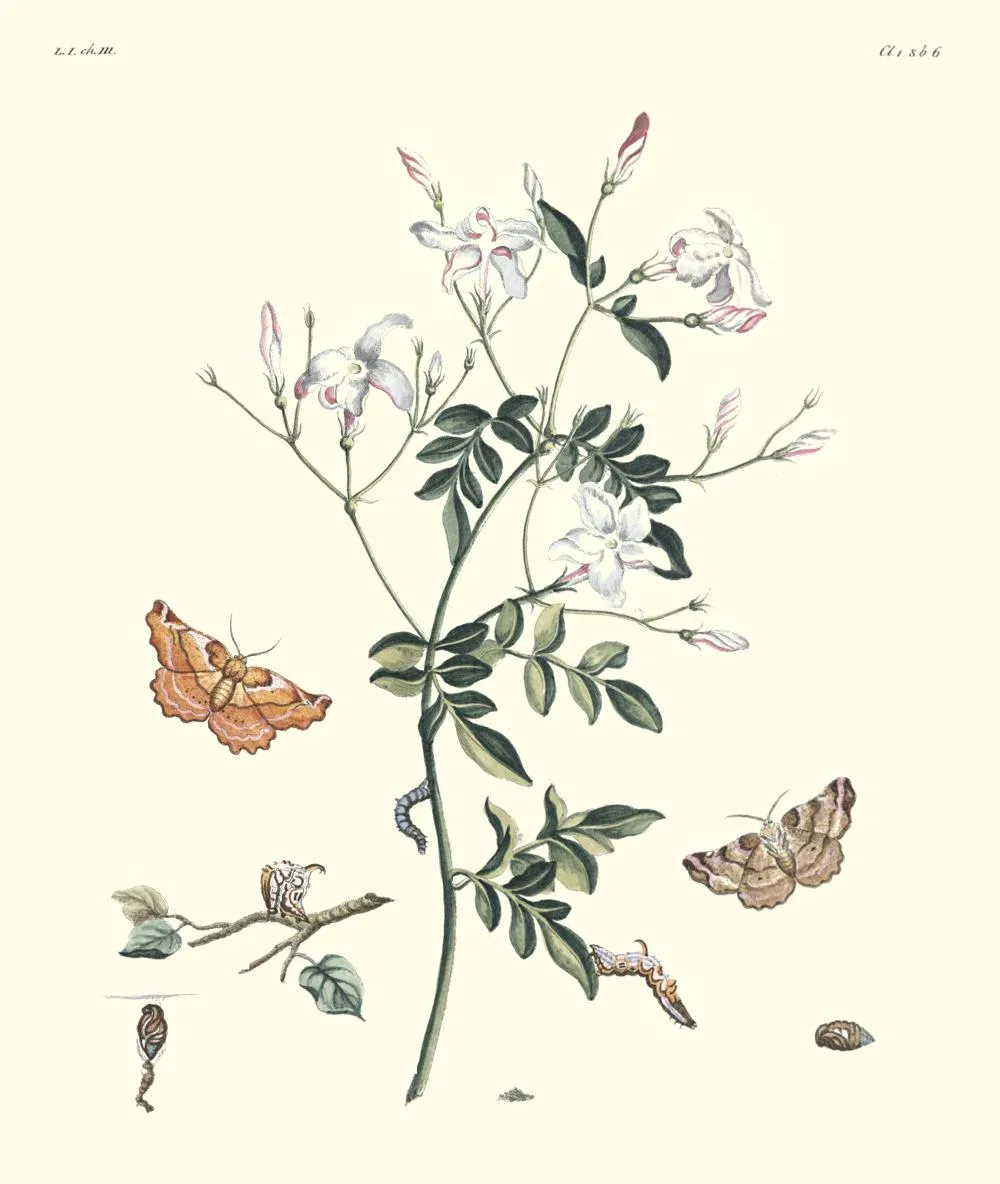
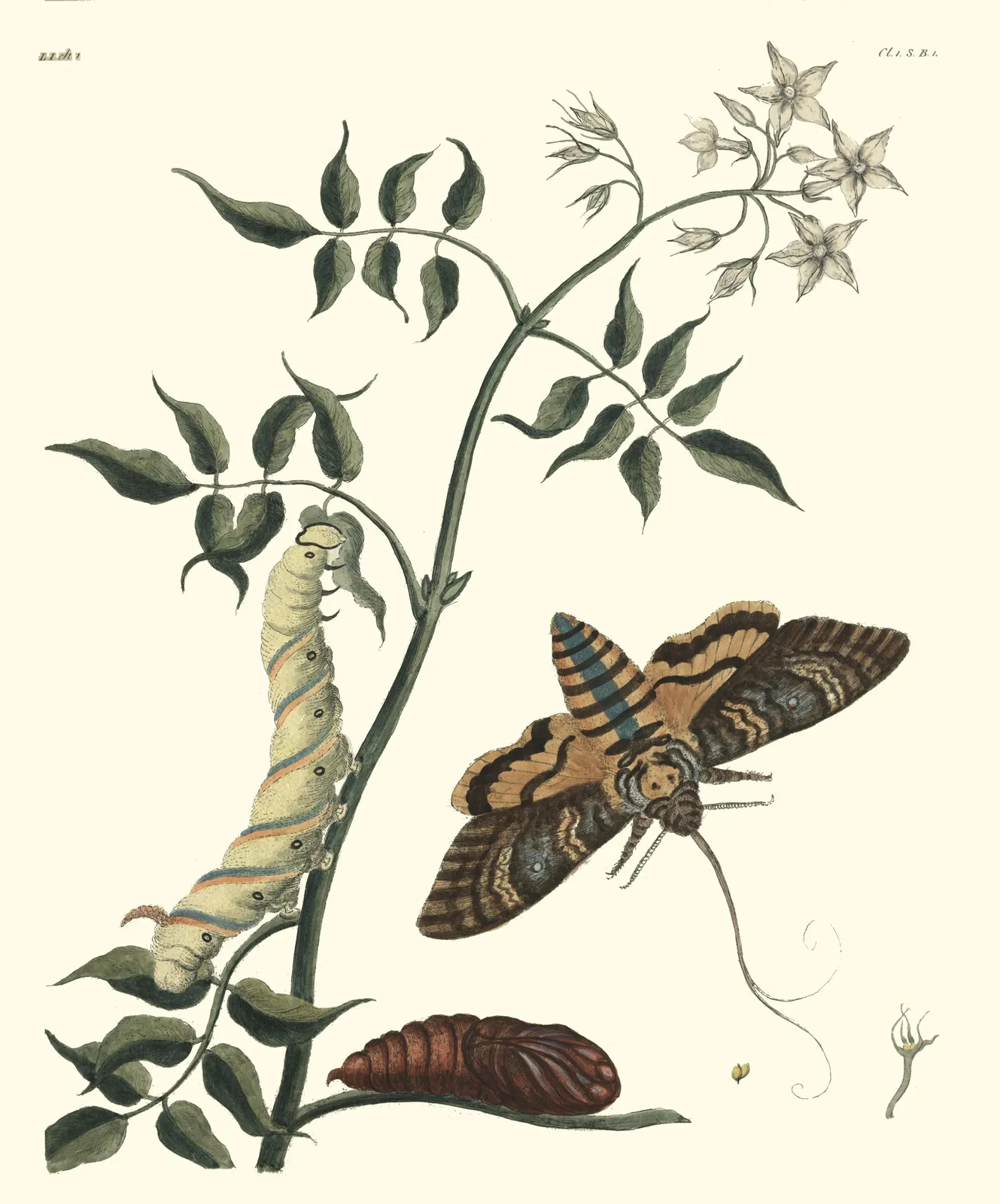
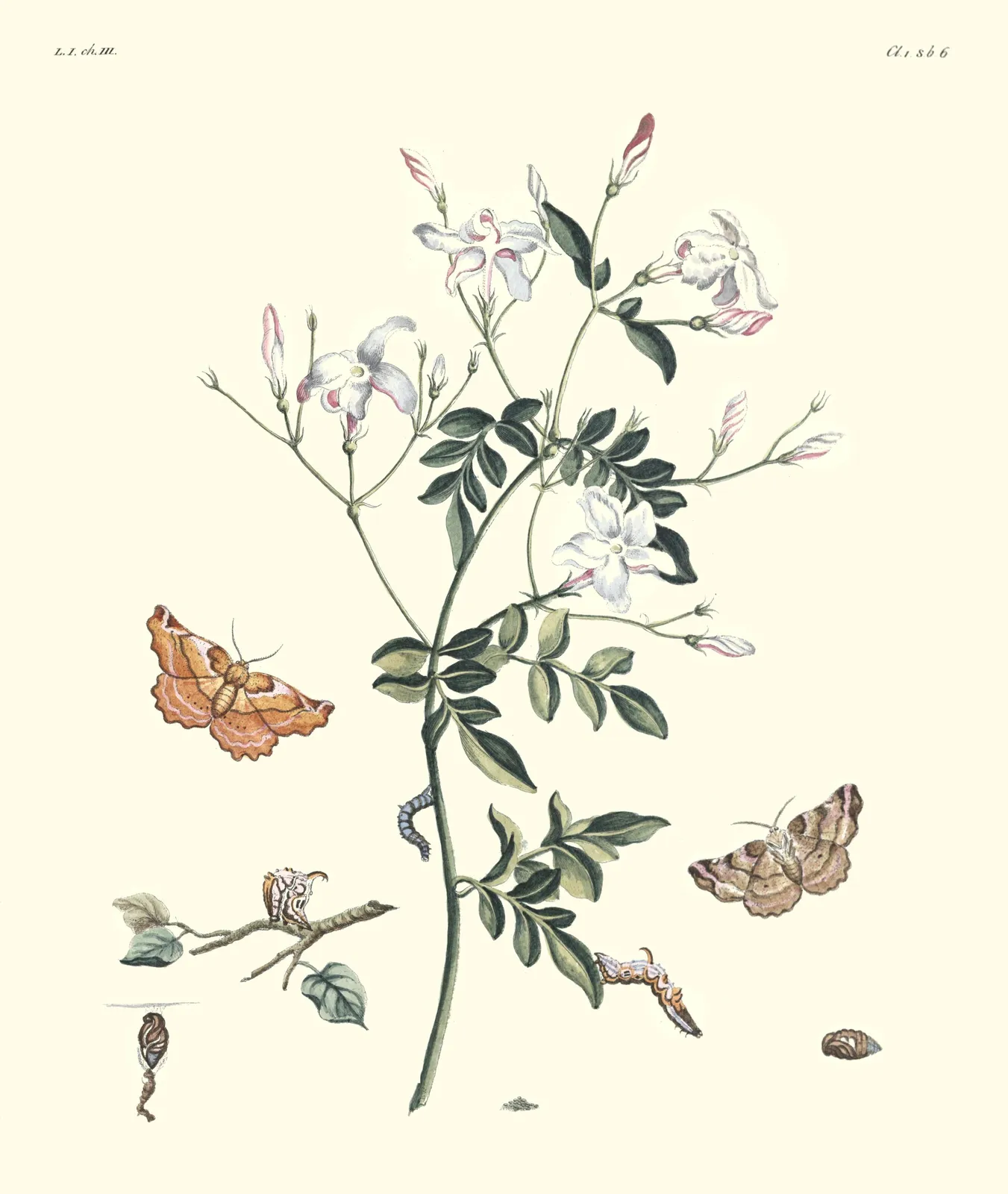
The JESSAMINE-HAWK MOTH. This Moth was bred in England
by Mr. Dandridge, who took the Caterpillar, at Hampton-Court, full fed,
on the Jessamine, about the Middle of July; at which Time it went into the
Ground, and changed to a Chrysalis, and the Moth came forth at the End of October. This
Gentleman had also five or six Caterpillars, of the same Kind, brought to him, that were
taken upon an Elder-tree in Goodman’s Fields, which likewise changed to Chrysalis in the
Ground in July; and the Moths were also bred in October: From whence I conclude that
to be the Time when the Fly is usually bred.
See Albin, P. 6. Reaumur, Pl. 14. Pag. 342. Vol. 1.
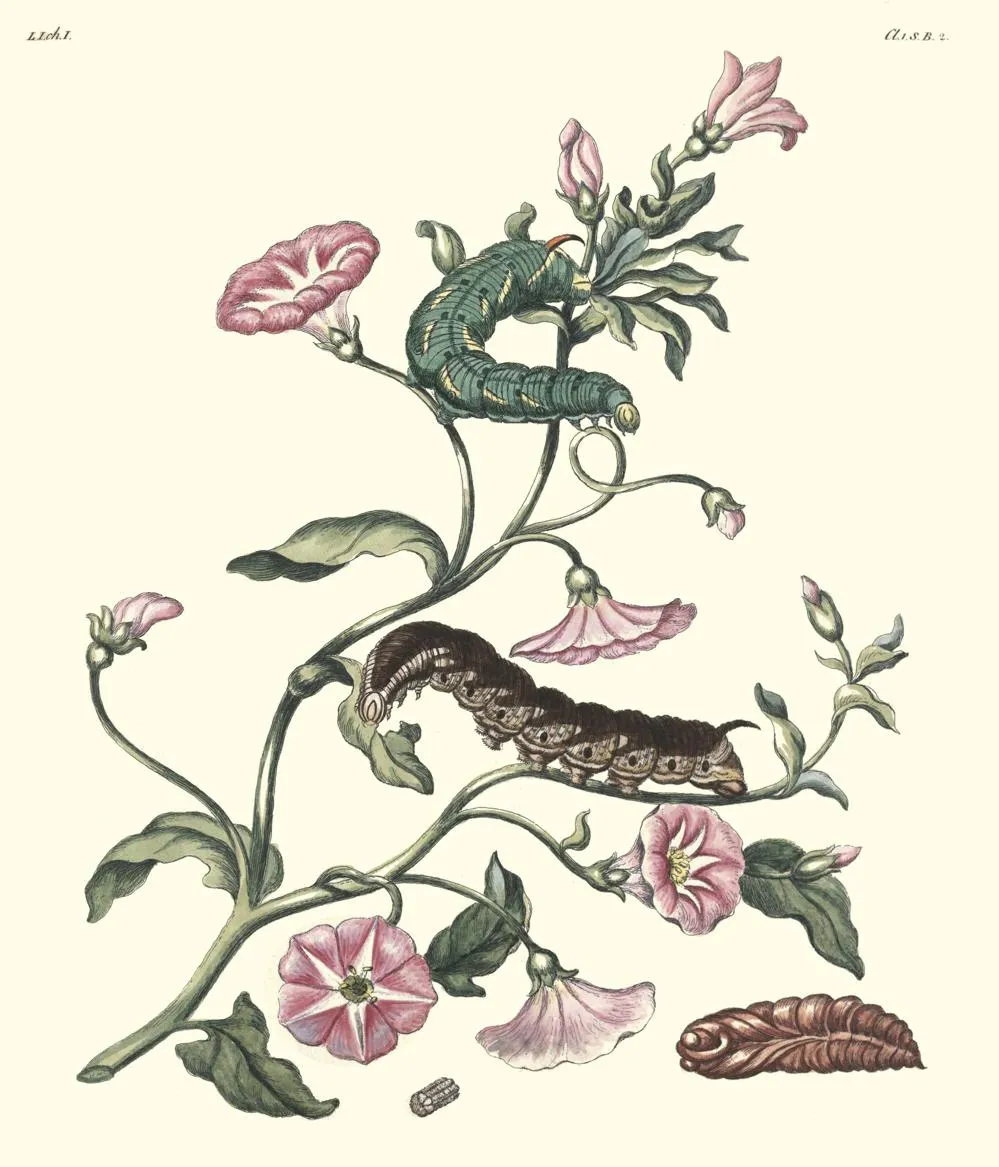
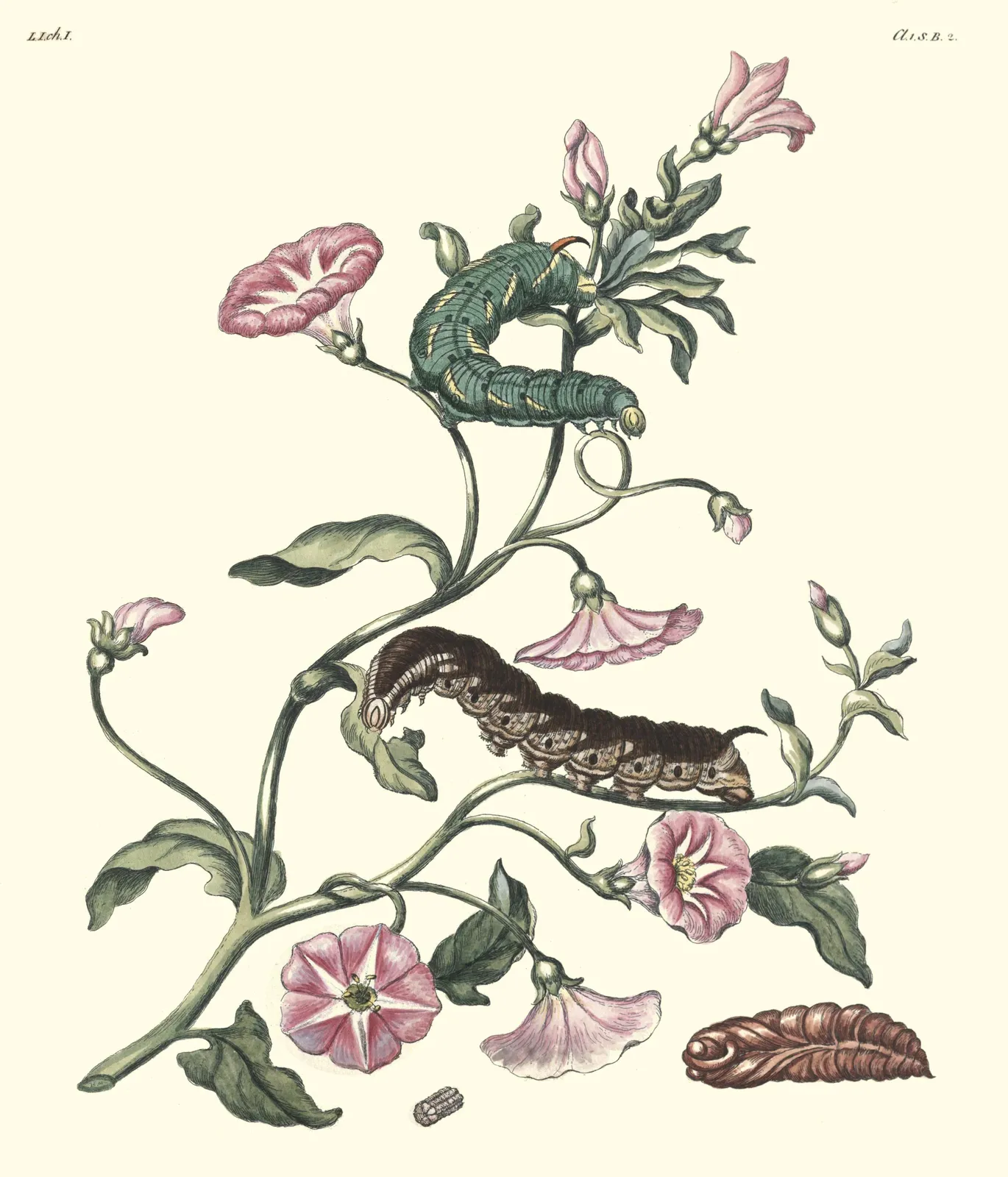
The UNICORN, or BINDWEED-HAWK MOTH. Mr. Rosel
reports this Caterpillar to feed in Corn-fields, on the Green-leaves of the Corn. At
the End of July it was full fed, and went into the Earth in order to change to its Chrysalis
State; and the Moth was bred in June following. Merian’s Account of this Fly is, That
the Caterpillar feeds on the Roots of the Lesser Purple-Bindweed, which grows amongst Corn;
that it went into the Ground, and changed to a Chrysalis at the End of July, and that the Moth
was bred in September.
I have not yet had the good Fortune to meet with this Caterpillar, but have seen several
of the Moths that have been bred and taken in England. The Dung of this Caterpillar is of
a very extraordinary Size and Figure; as well as some others that are expressed in the Plates.
See Rosel, Cl. 1. Tab. 7. Merian, Chap. 25. Reaumur, Pl. 24. Pag. 322. Vol. 2.
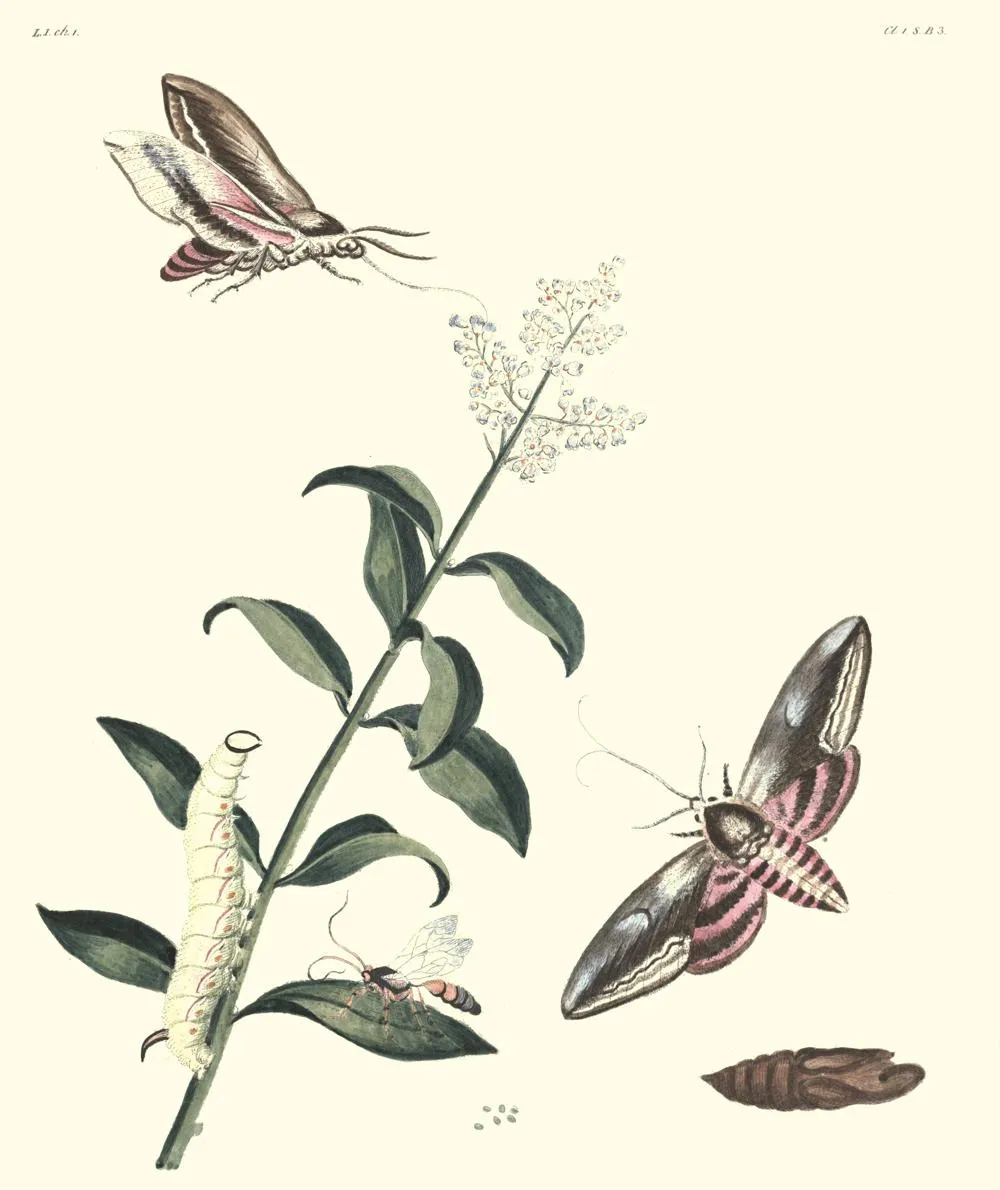
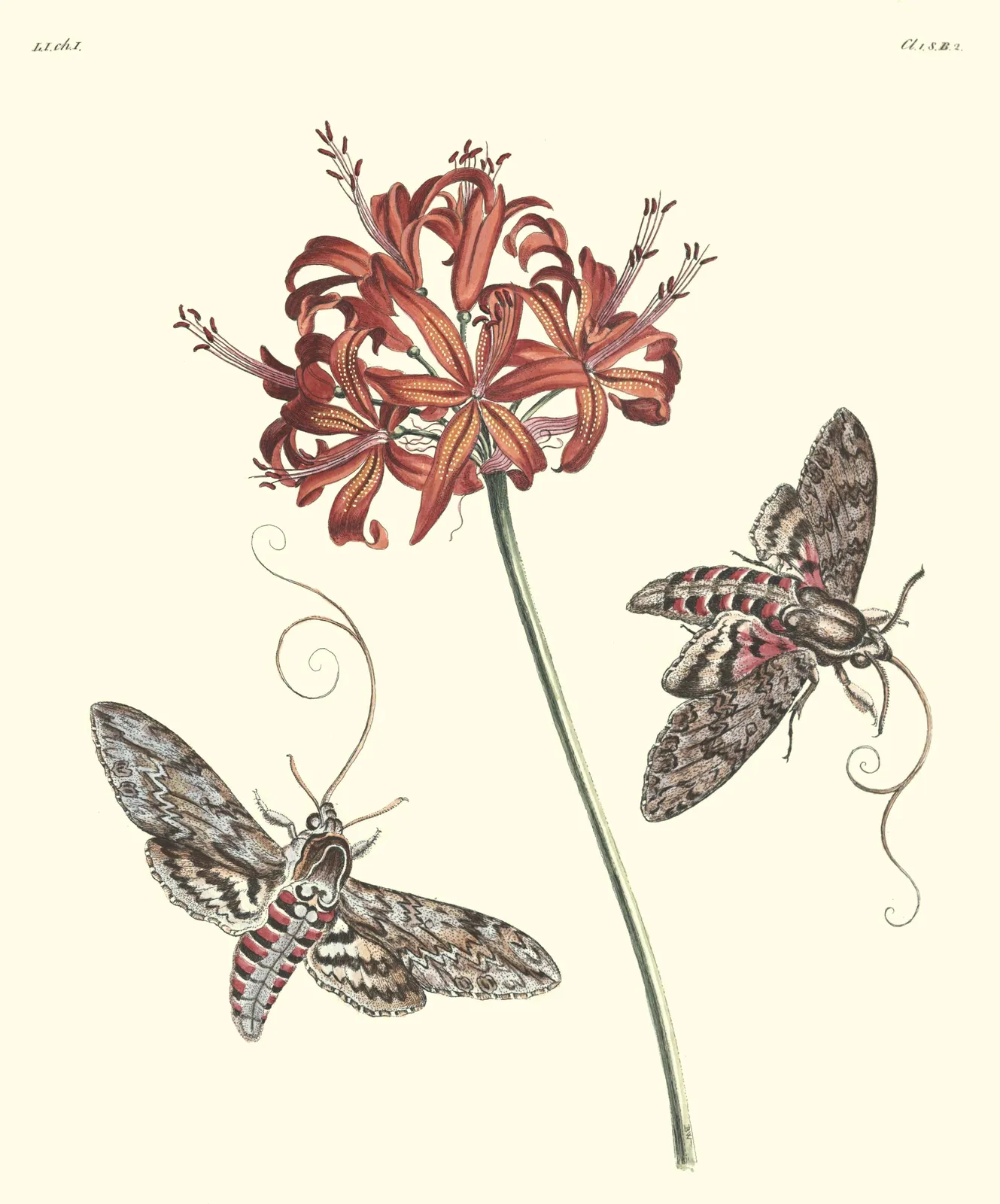
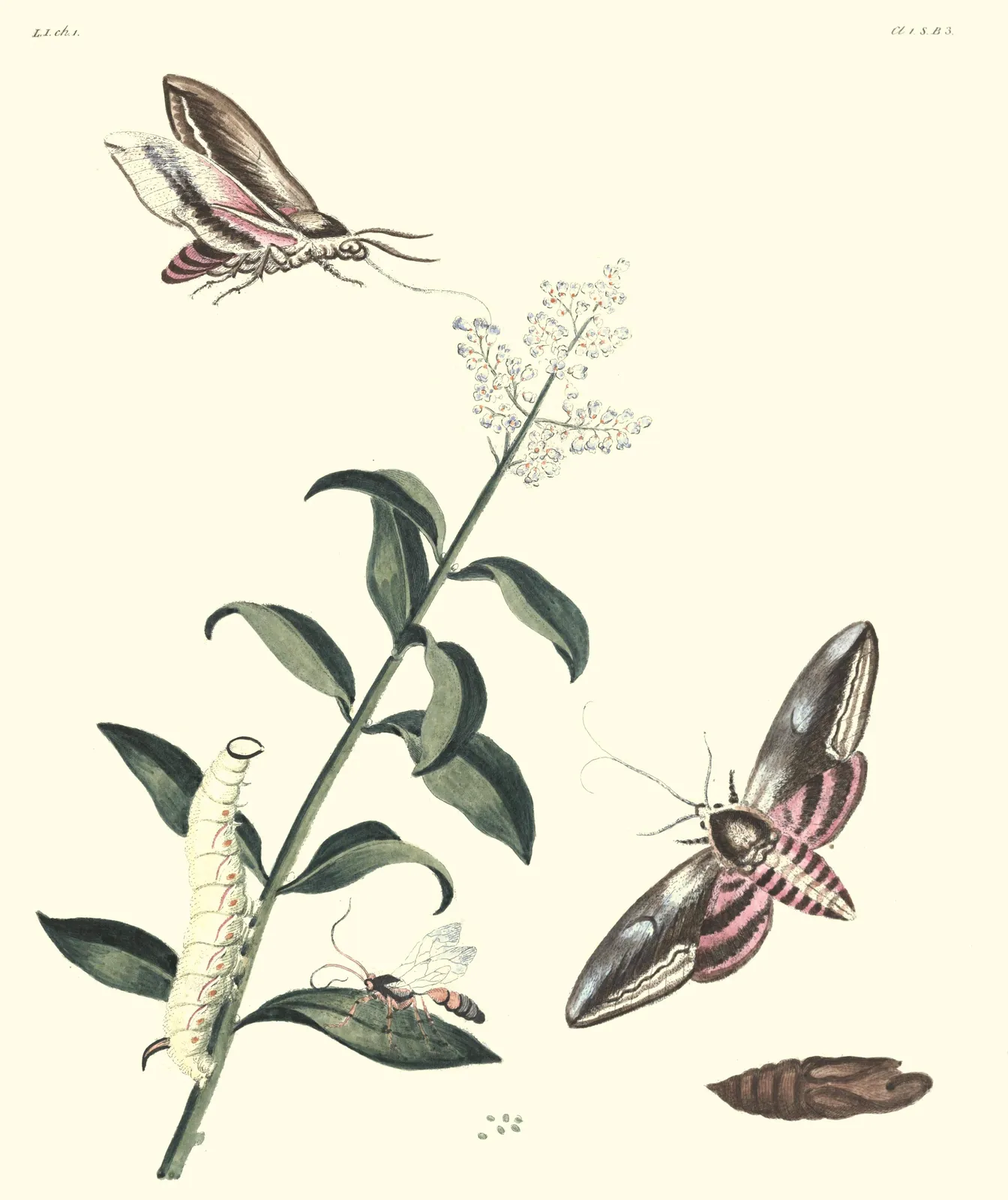
The PRIVET-HAWK MOTH. The Caterpillars feed on Privet, Lilac,
Holly, &c. and are to be found in Nurseries and Gardens. Look on the Ground under
such Trees; and if you discover any of their Dung, that will direct you to the Caterpillars
on the Trees above. They go into the Ground, and change to the Chrysalis State in August
and the Moth appears in June following. ’Tis not very common to take the Moth in the Fly-state.
See Raii Hist. Insect. P. 144. N. 1. Moufet. P. 91. N. 5. P. 182. Ch. 2. Albin, Pl. 7
Reaumur, Pl. 20. P. 282. Vol. 2.
Ligustrum; foliis majoribus, & magis acuminatis, toto anno folio retinens.
Pluk. Alm.
L. 1. Ch. 1.
IV.
Cl. 1. S. B. 4.
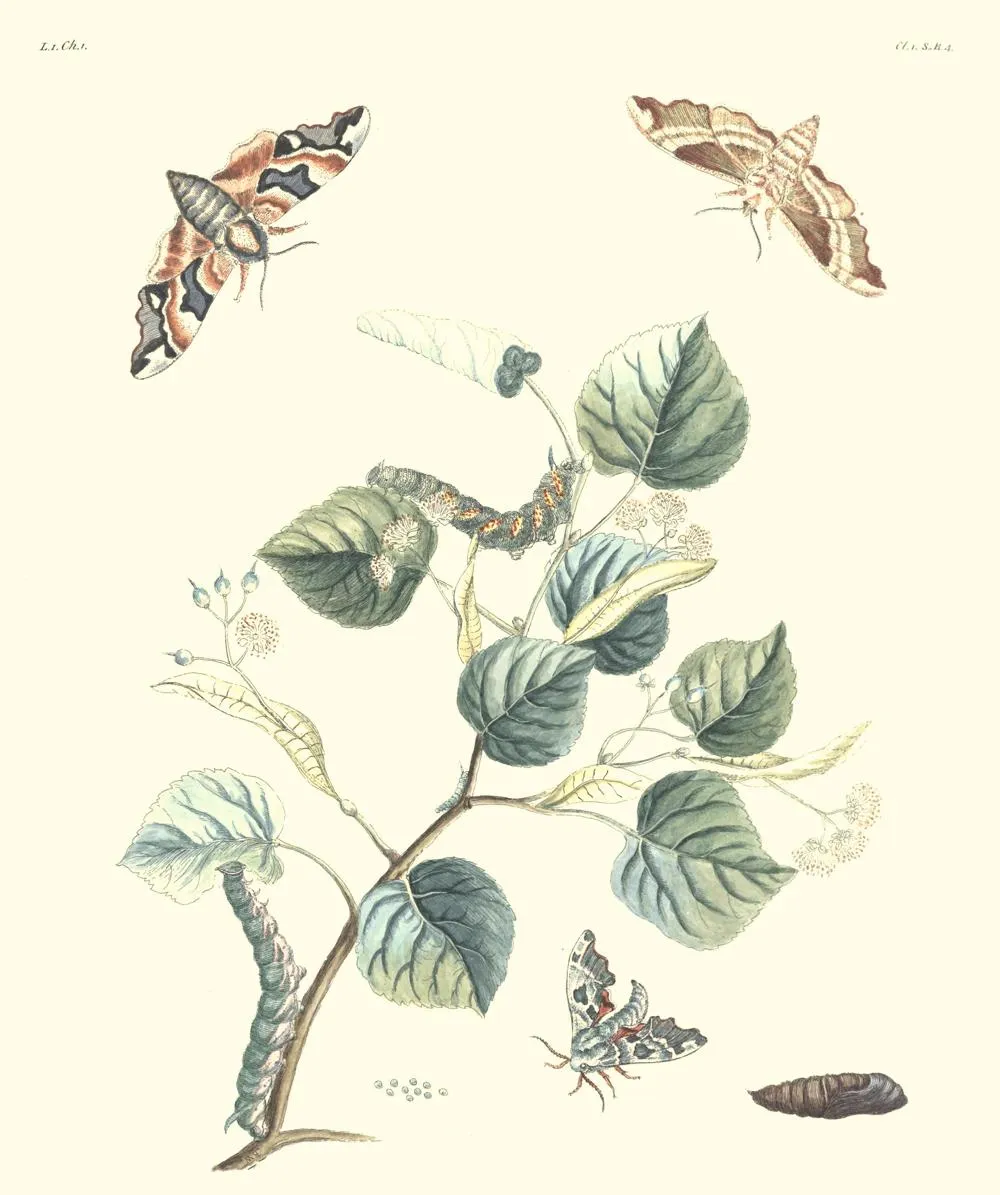
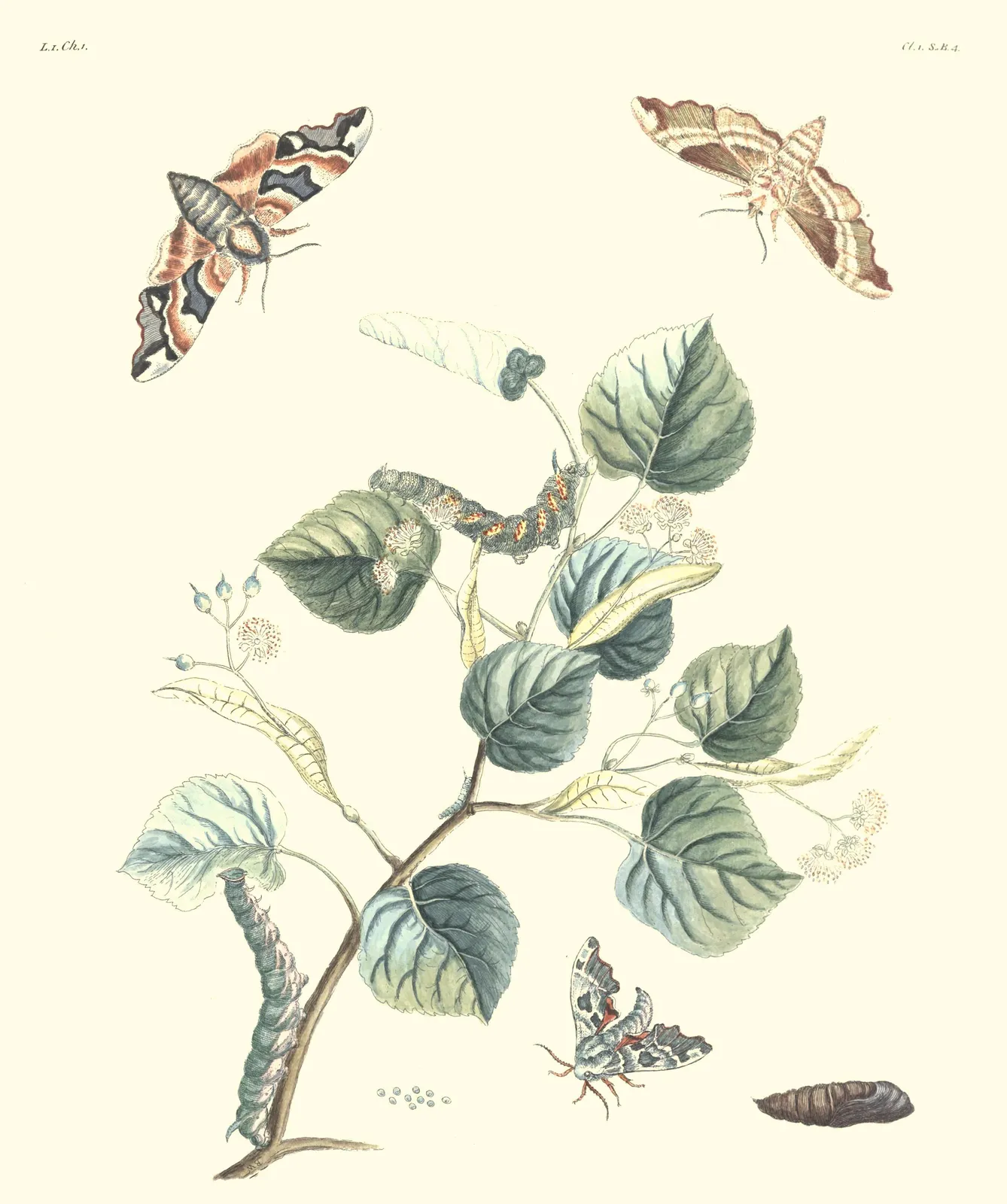
The OLIVE-SHADES, or LIME-HAWK MOTH. This Caterpillar
is to be got by beating the Boughs of the Lime and Elm Trees, in the Month
of August; at which Time it goes into the Earth, and there changes to a Chrysalis, and the
Moth is bred in May. By looking carefully about the Bodies of Lime and Elm Trees, in
May, these and other Moths may be found: For, if the Flies are bred in the Morning, or
any Part of the Day, they never offer to fly till Night. You may likewise get these Moths,
and many other Sorts, in the Chrysalis State, by digging with a Trowel about the Roots of
the Trees the Caterpillars feed on; and the best Time to dig for the Hawk Kind is the Month
of April. This Fly is seldom taken on the Wing.
See Merian, Vol. 2. Ch. 24. Albin, Pl. 10. Rosel, Cl. 1. Tab. 11.
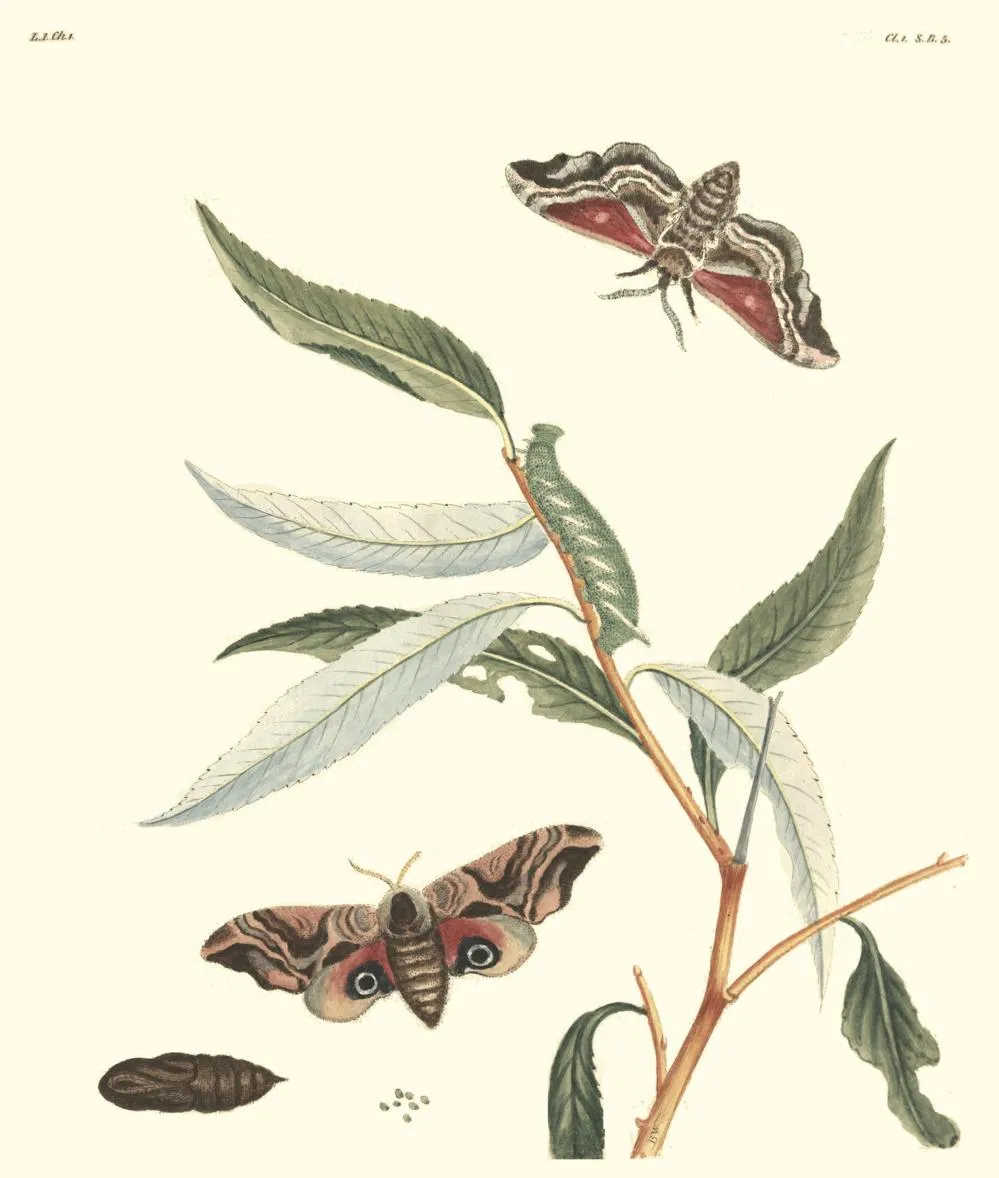
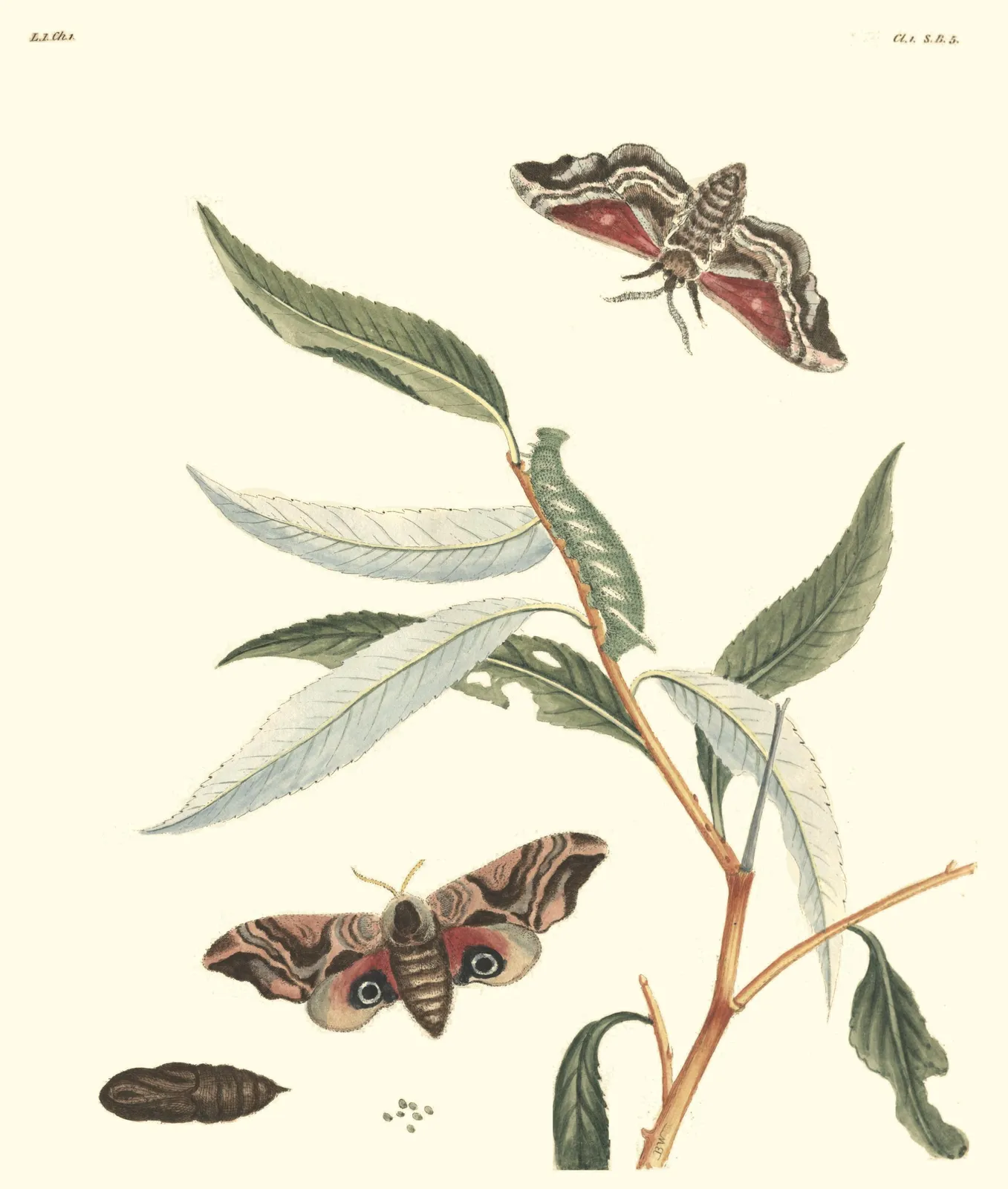
The EYED WILLOW-HAWK MOTH. The Caterpillars are to be
found on the Willows that grow about the Chelsea Water-works, and in most such
like Places. At the End of August, I have also found them in Gardens feeding on the Leaves
of Apple-trees. They put on the Chrysalis Form within the Earth in September, and the
Moths are produced in May. The Chrysalis and Moth may be got at the same Time as directed
for the Lime-Hawk.
See Lister’s Godart. N. 24. Merian. Vol. 2. Ch. 37. Raii. P. 148. N. 2. Moufet. P. 91.
N. 6. Albin, Pl. 8.
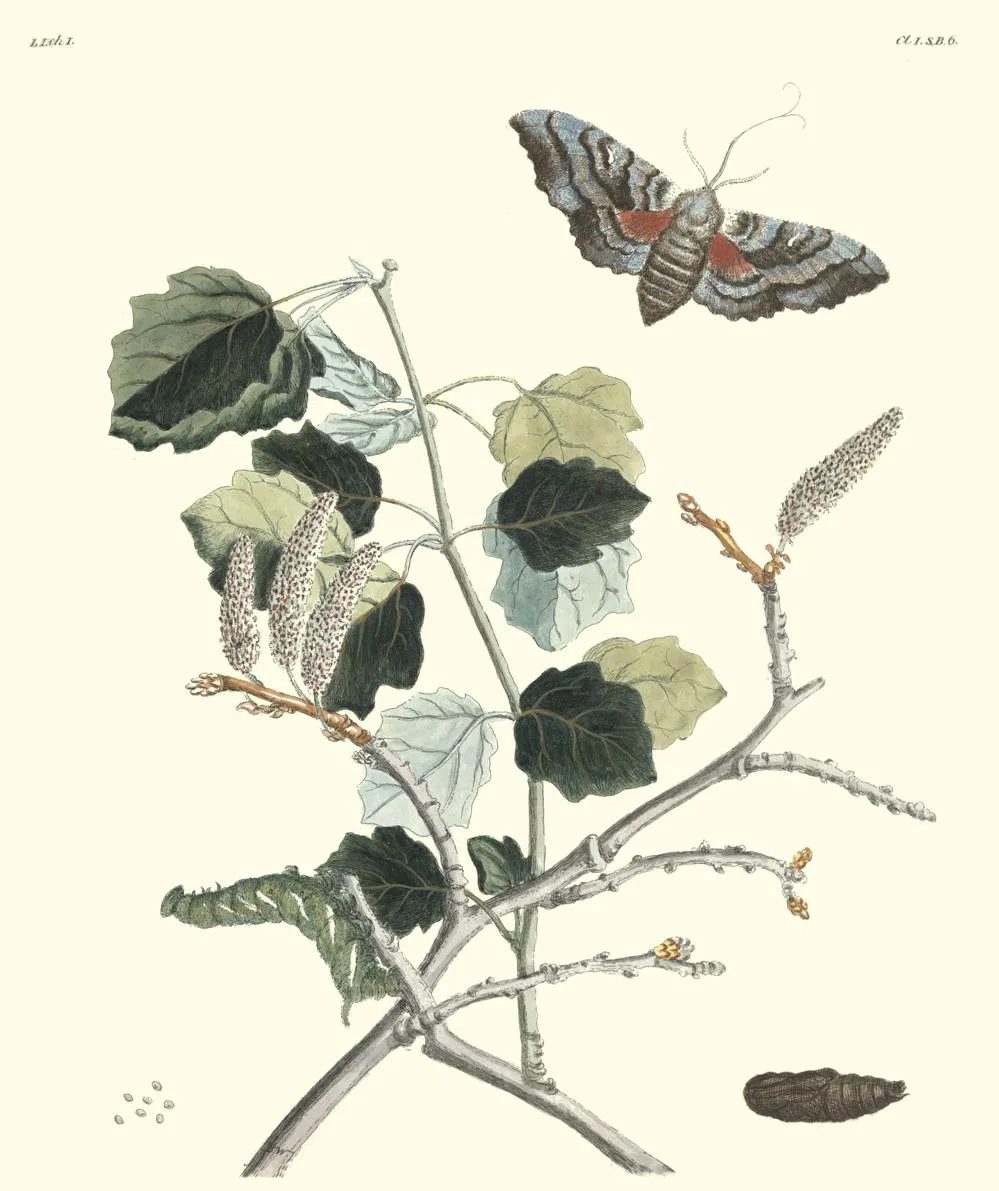
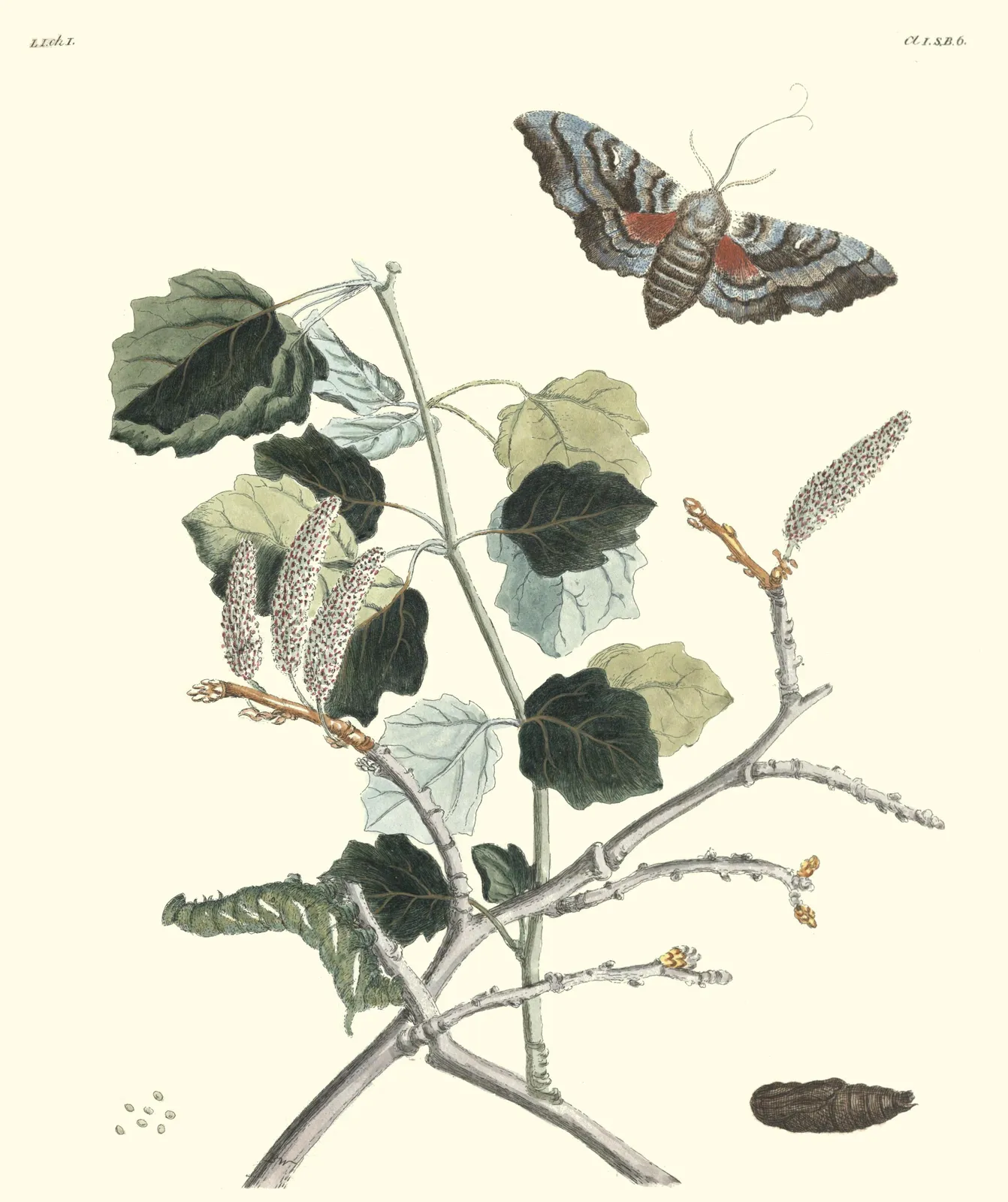
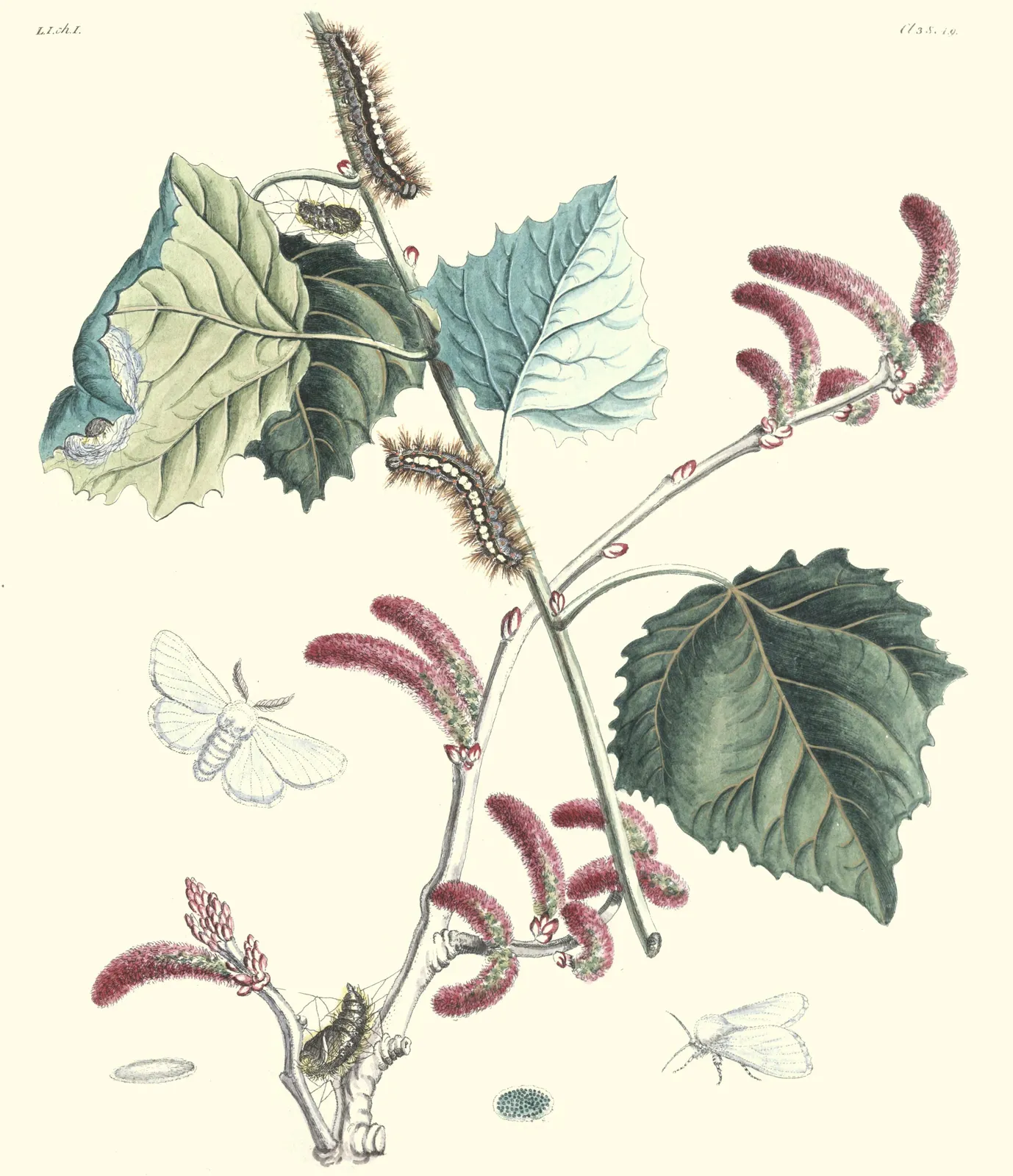
The POPLAR HAWK MOTH. The Caterpillar of this Moth feeds on
the Leaves of the Poplar Tree, as also on the Willow, and is to be found at the same
Times and Places as the Willow-Hawk Caterpillar. It becomes a Chrysalis in the Ground in
September, and the Moth appears in May. It is to be found in the Chrysalis and Fly-state
as the before mentioned. All the Hawk-tribe fly very swiftly, and I am inclined to believe
feed in wet marshy Places, by reason I have never taken them on the Wing in Places where I
have always met with Plenty of other Moths.
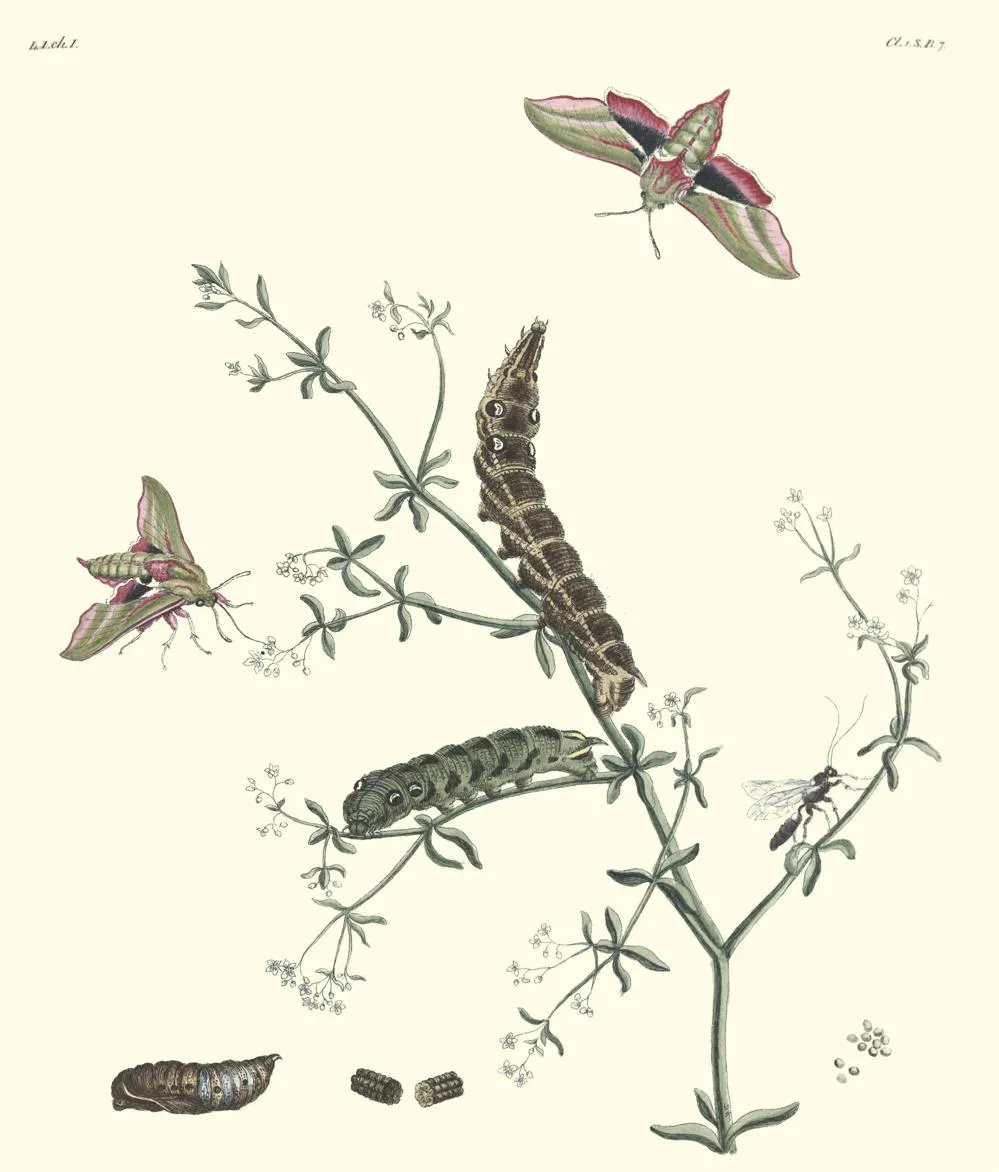
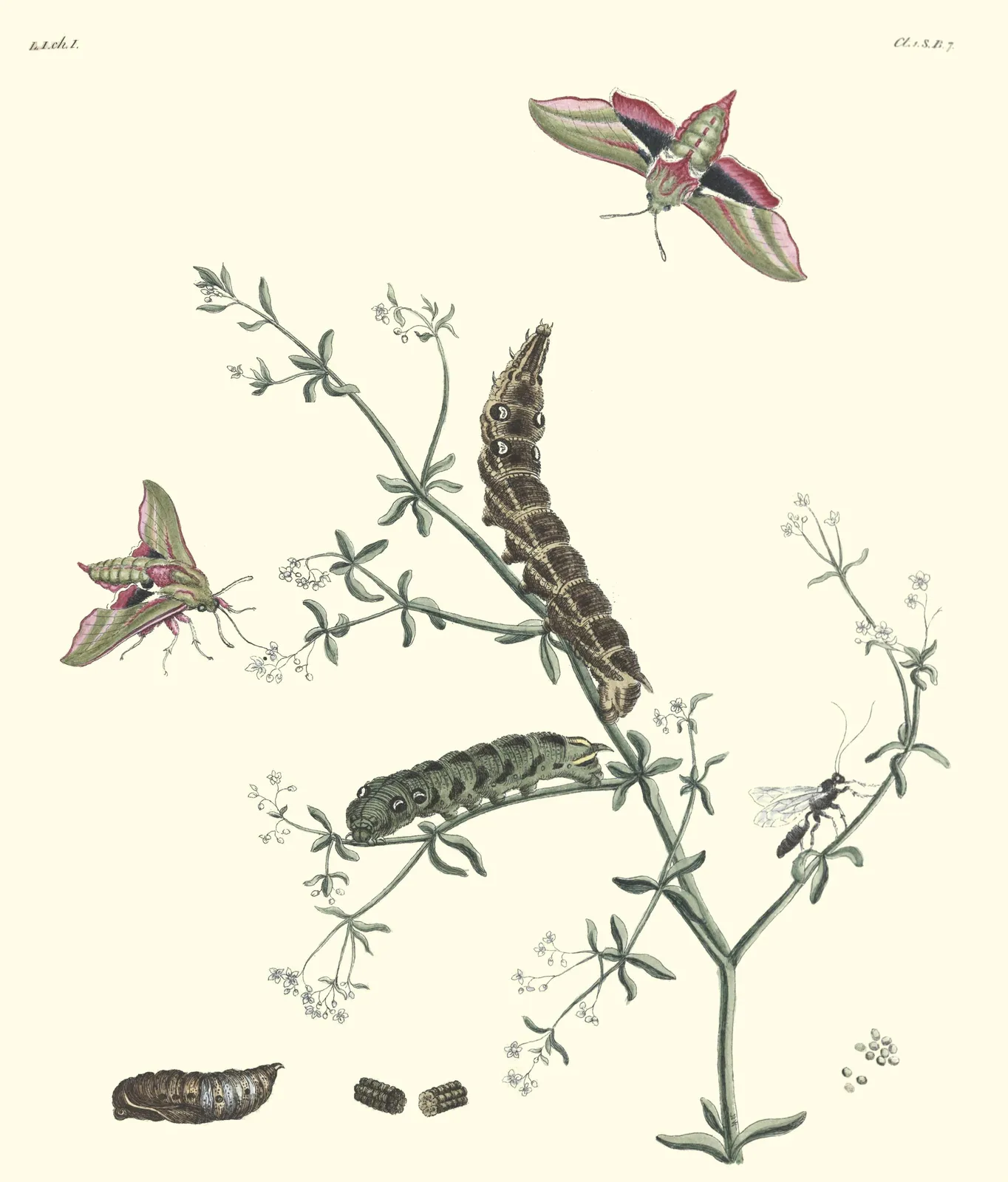
The LADIES BEDSTRAW, or ELEPHANT MOTH. The
Caterpillars are to be found in the Ditches in Rotherhith Marshes, and also by the
New River Side, near Hornsey. They feed on the White Ladies Bedstraw, and are full
grown at the End of July; at which Time they usually go into the Chrysalis State, by making
a light Spining amongst their Food, where they remain till the End of the following
May: At which Time the Moth is bred; but very seldom taken in the Fly-state. Mr. Albin
has mentioned something very remarkable of this Caterpillar, viz. its Dexterity in Swiming:
For, feeding commonly in or near the Water, if at any time it happens to fall in, it
turns itself on its Back, and swims, with its Head and Tail turned together, till it gets
hold on some Part of the Plant, by which it helps itself up again. It lies in the Egg-state
about nine Days.
See Raii Hist. Insect. P. 145. N. 2. Albin, Pl. 9.
Caterpillarshaving one Protuberance on the Rump, with indented
Markings.
L. 1. Ch. 1.
I.
Cl. 1. S. C. 1.
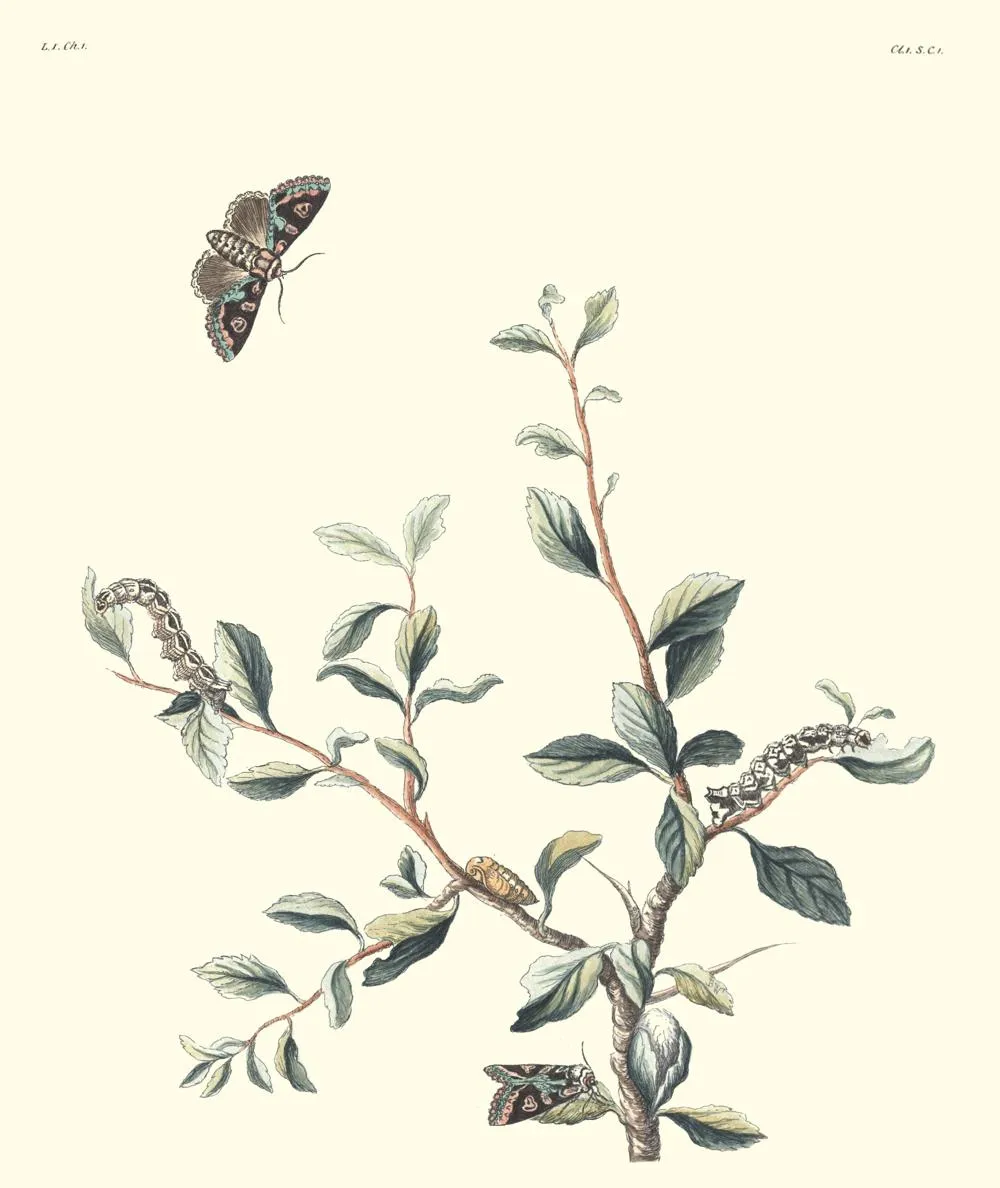
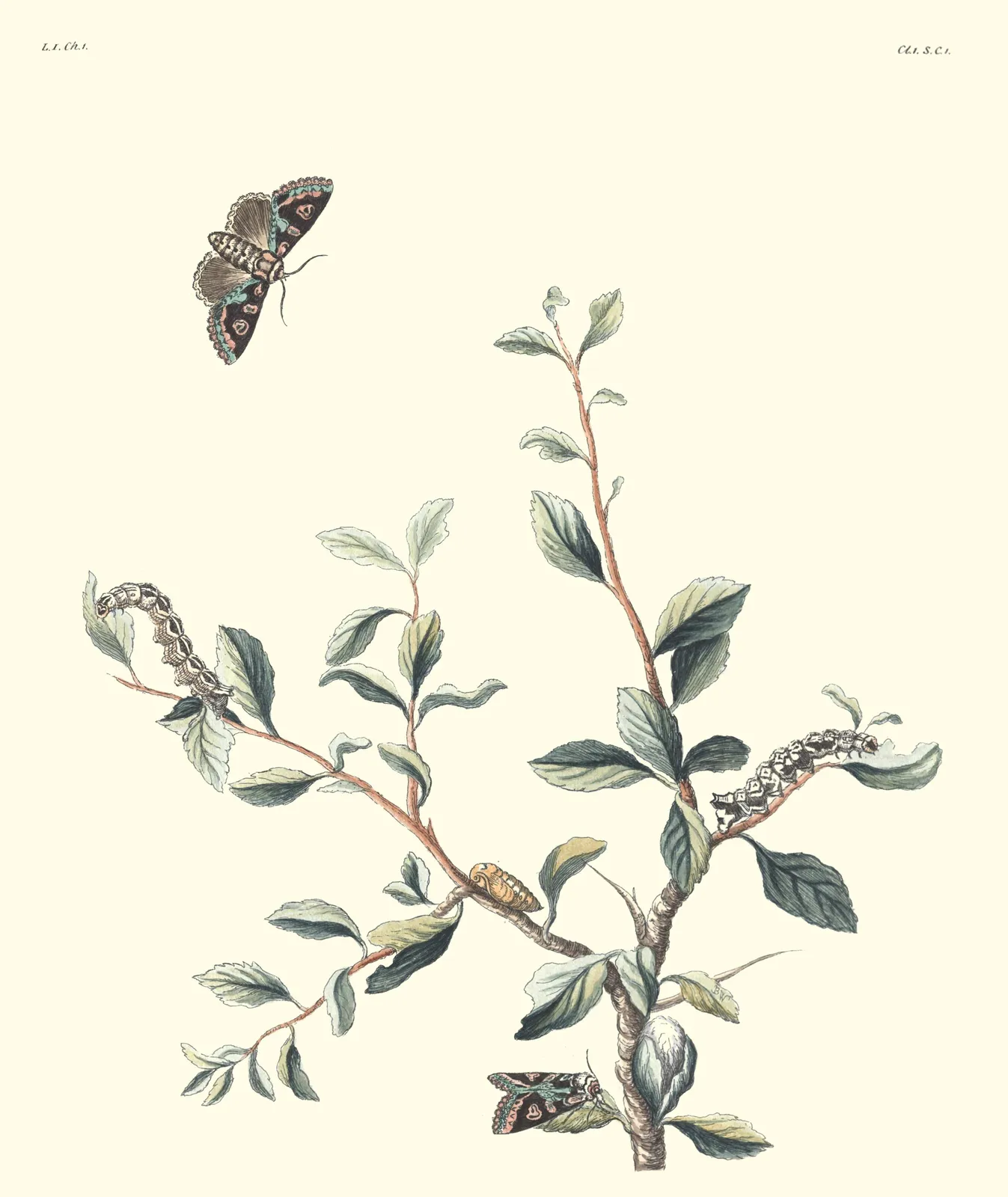
EALING’S GLORY, a MOTH. Its Caterpillar feeds on Black
Thorn, White Thorn, Crab-tree, &c. becomes a Chrysalis in the Earth in May, and
the Moth appears in September. Charles Lockyer, Esq; has bred great Numbers of
this Moth at his House at Ealing; but I have heard of no body else who has met with them
in any Plenty.
The OZIER, or PEBBLE MOTH. Mr. Dandridge found the Caterpillar
feeding on the Dutch Willow, in the Marshes near Rotherhith, about the
Middle of July; it changed to a Chrysalis within the Leaves spun together; and
at the Beginning of August came forth the Moth. This fly is very scarce.
See Albin, Pl. 14. Lister’s Godart. N. 21. Rosel, Cl. 11. Tab. 20. Reaumur, Pl. 22. P. 282.
Vol. 2.
Caterpillarswhose Shoulders rise into an angular Figure, having no
Holders behind.
L. 1. Ch. 1.
I.
Cl. 1. S. E. 1.
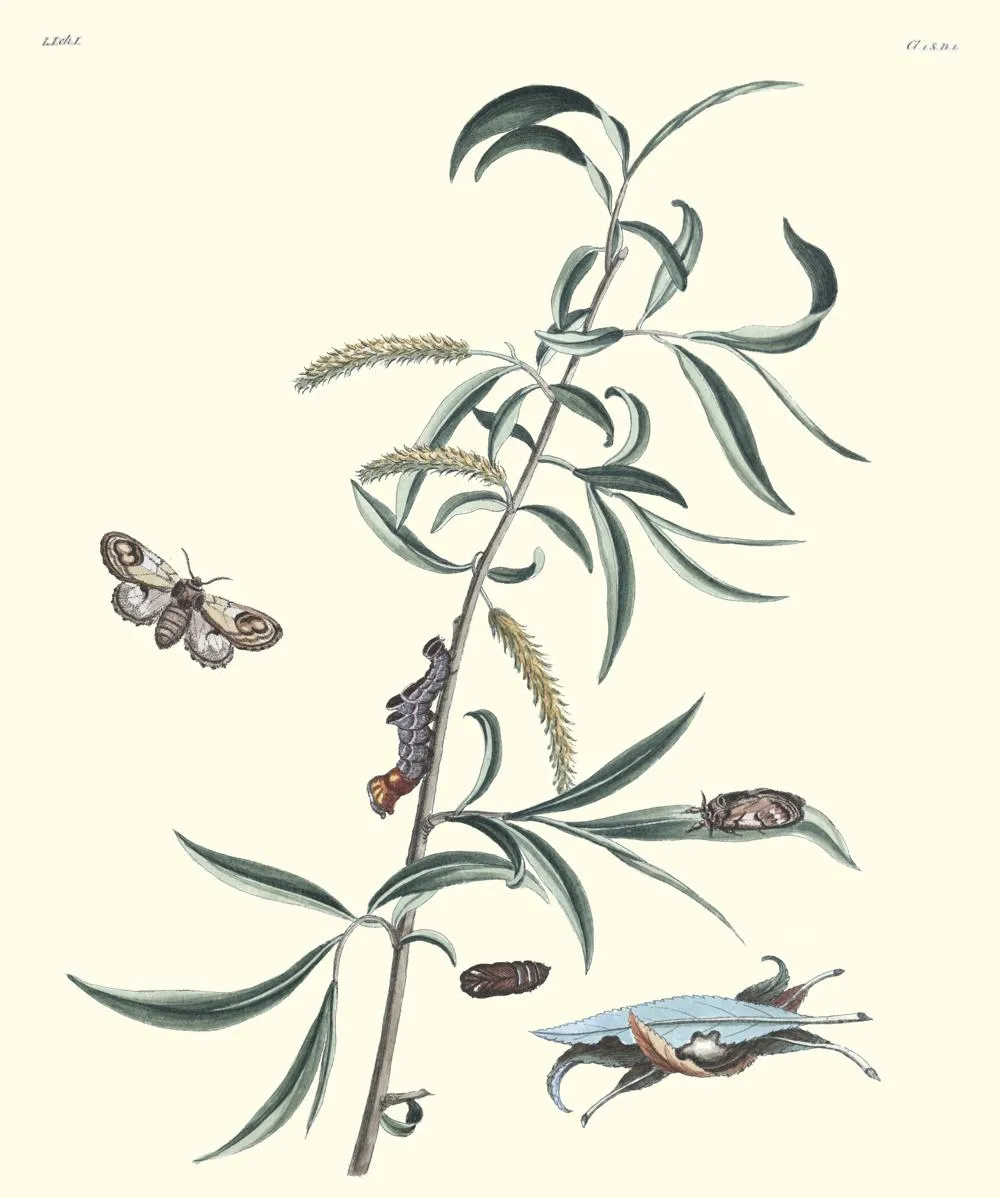
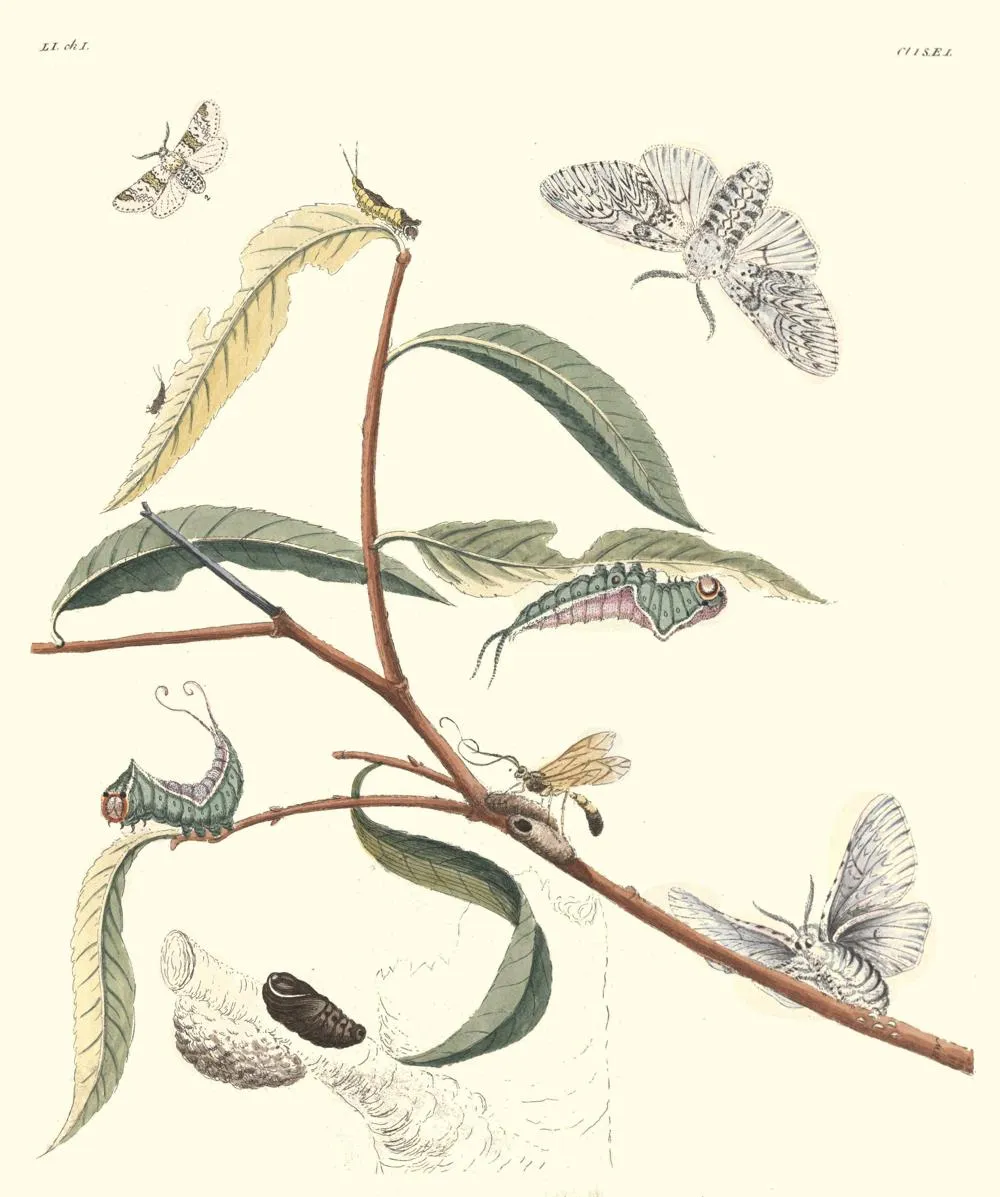
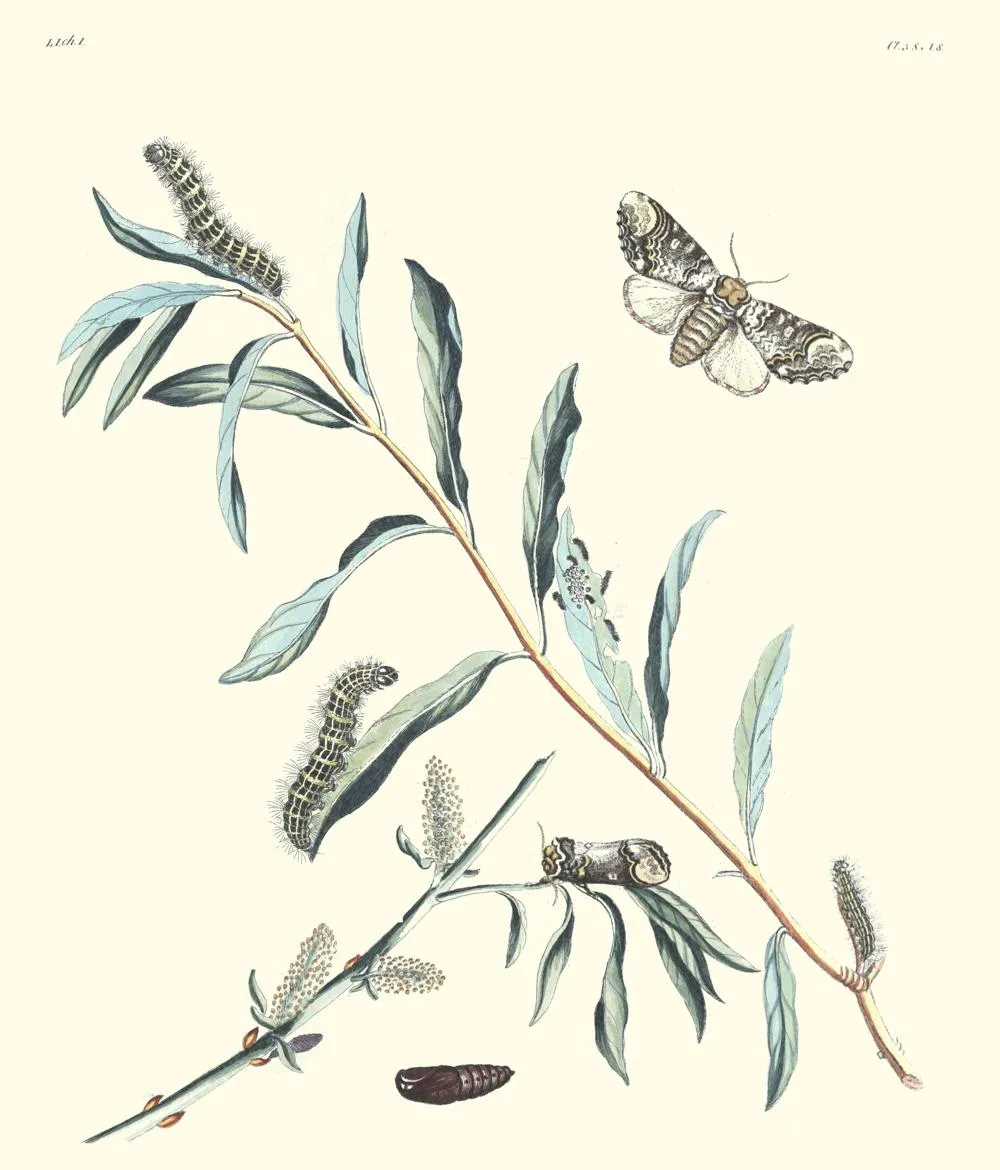
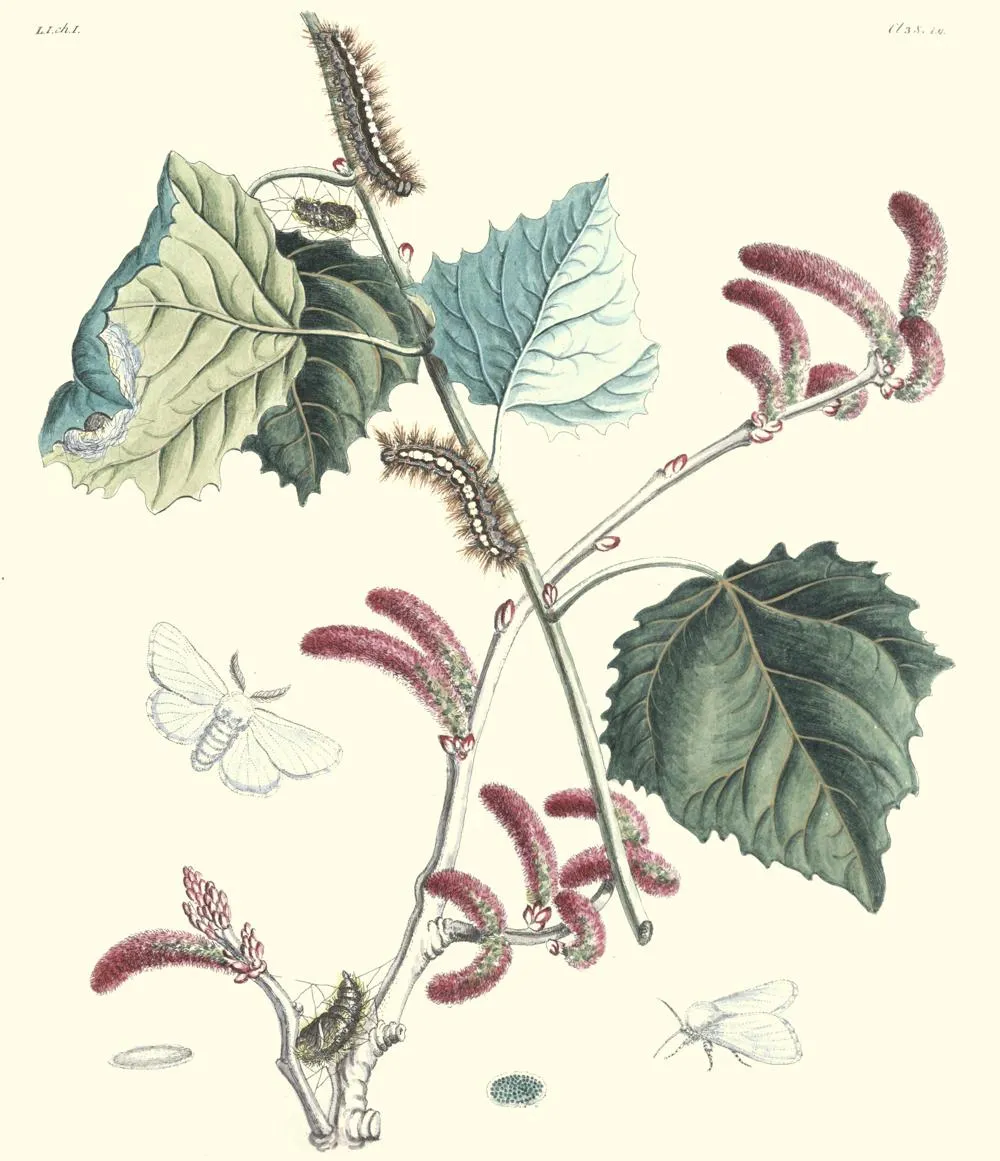
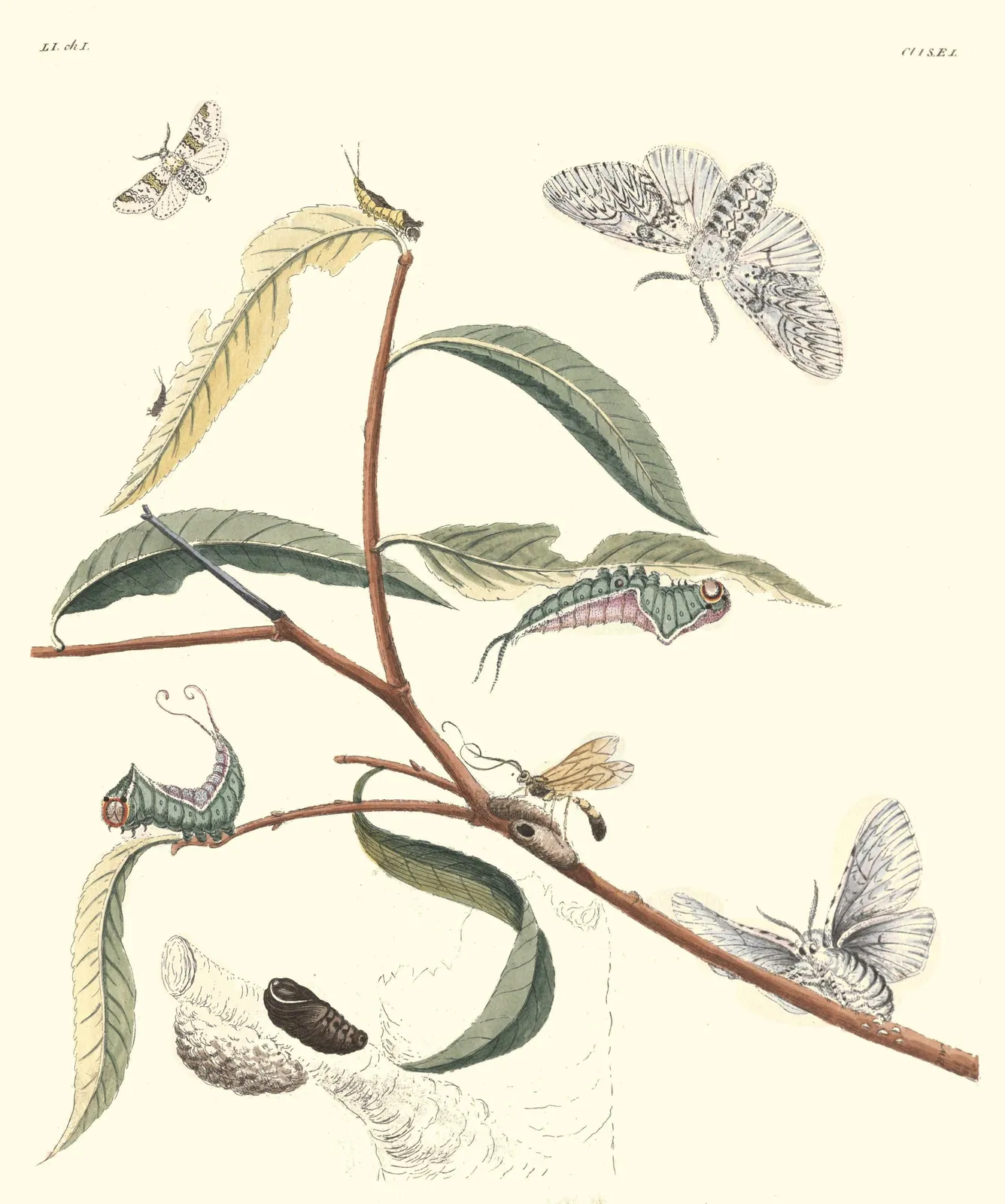
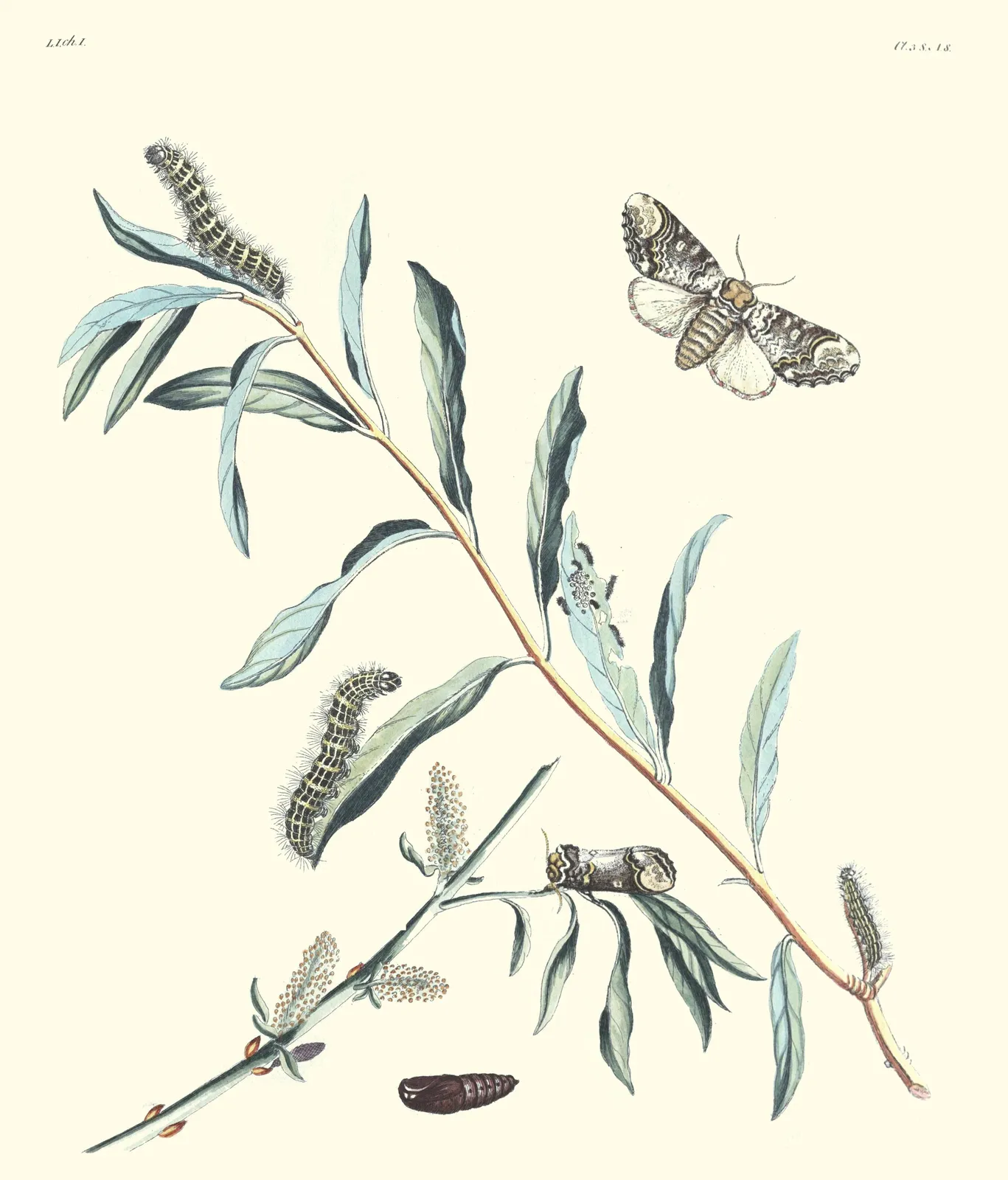
The PUSS-MOTH. Though the Caterpillar of this Fly seems most fond
of the Willow, it is often found on the Abele, or Poplar Tree. It has a Power
of stretching out, and putting back its Head, at Pleasure; which it seems to do as
it thinks itself more or less in Danger. It is armed with two Tubes at the End of the Tail,
and two others within those, of a Blood red Colour, which it nimbly, if touched by any
Thing, darts out: The Use of these is (as I apprehend) to prevent the Ichneumon Flies from
settling on them; but, notwithstanding those Flies are often able to remain long enough
to leave their Eggs behind: In such Case, the Moth is not produced, but, instead thereof,
the Ichneumon pictured in the Plate. Such Caterpillars as the Ichneumons have not fixed their
Eggs on, usually go into the Chrysalis State at the Beginning of August, on the Body of the
Tree, and generally near the Ground, the Caterpillar gnawing the Wood into a Kind of Sawdust;
which, mixing with a glutenous Matter, or Cement, that comes from its Mouth,
makes a hard Case, in which the Chrysalis is formed, on the outside of the Tree; the Moth
appears the May following. These Moths are seldom taken in the Fly-state; but may easily
be obtained by breeding the Caterpillars, which may be found at the same Time, and in the
same Places, where you take those that produce the Willow and Poplar Hawks.
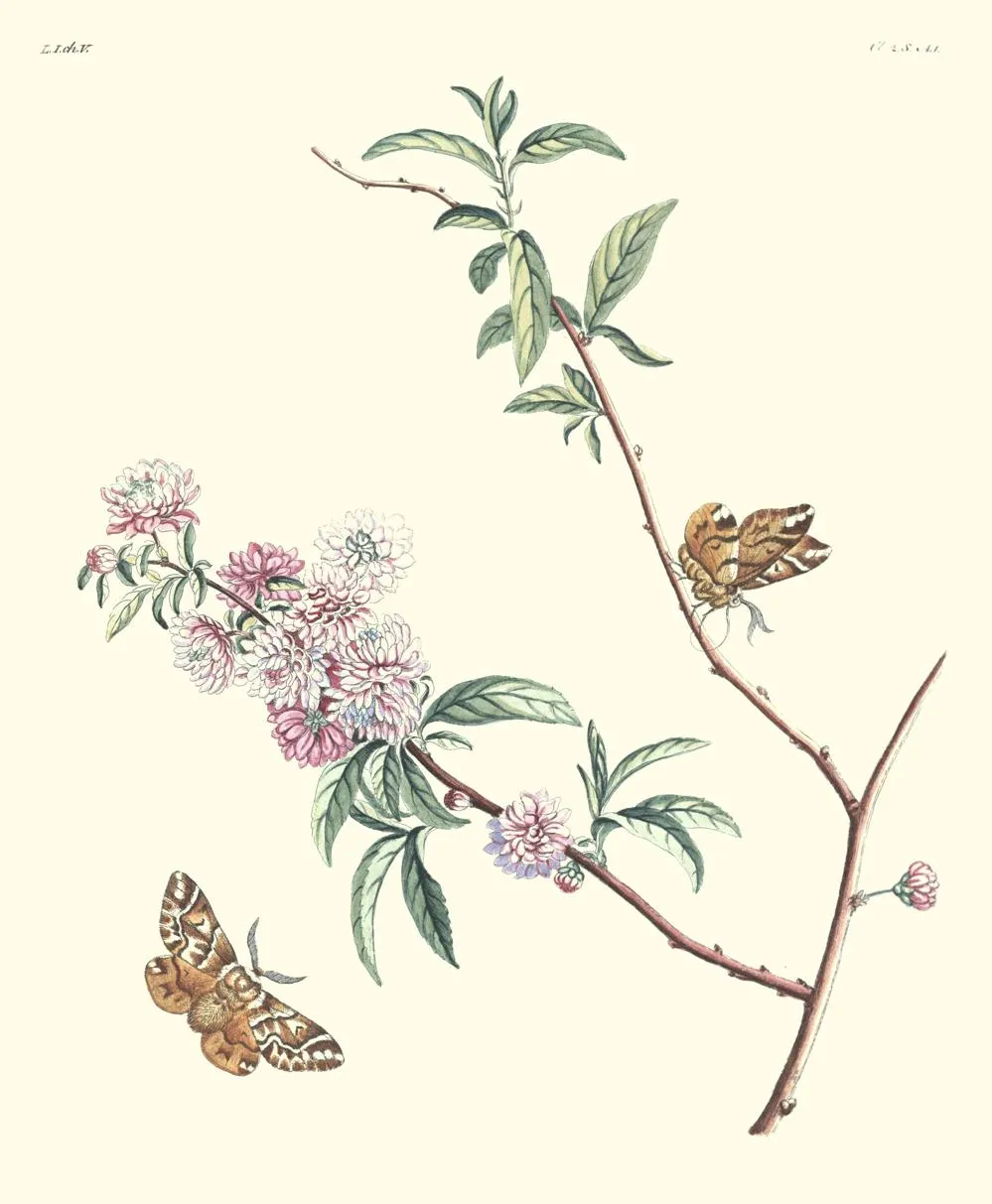
Figure 2. in the same Plate, represents a Moth called the KITTEN. The Caterpillar
feeds on Black Thorn, Willow, &c. becomes a Chrysalis at the Beginning of August, and the
Moth is bred in May. The Caterpillar and Fly are rarely to be met with.
See Lister’s Godart. N. 20. Moufet P. 183. Raii Hist. Insect. P. 153. Albin, Pl. 11.
Rosel, Cl. 11. Tab. 19. Reaumur, Pl. 21. Pag. 282. Vol. 2.
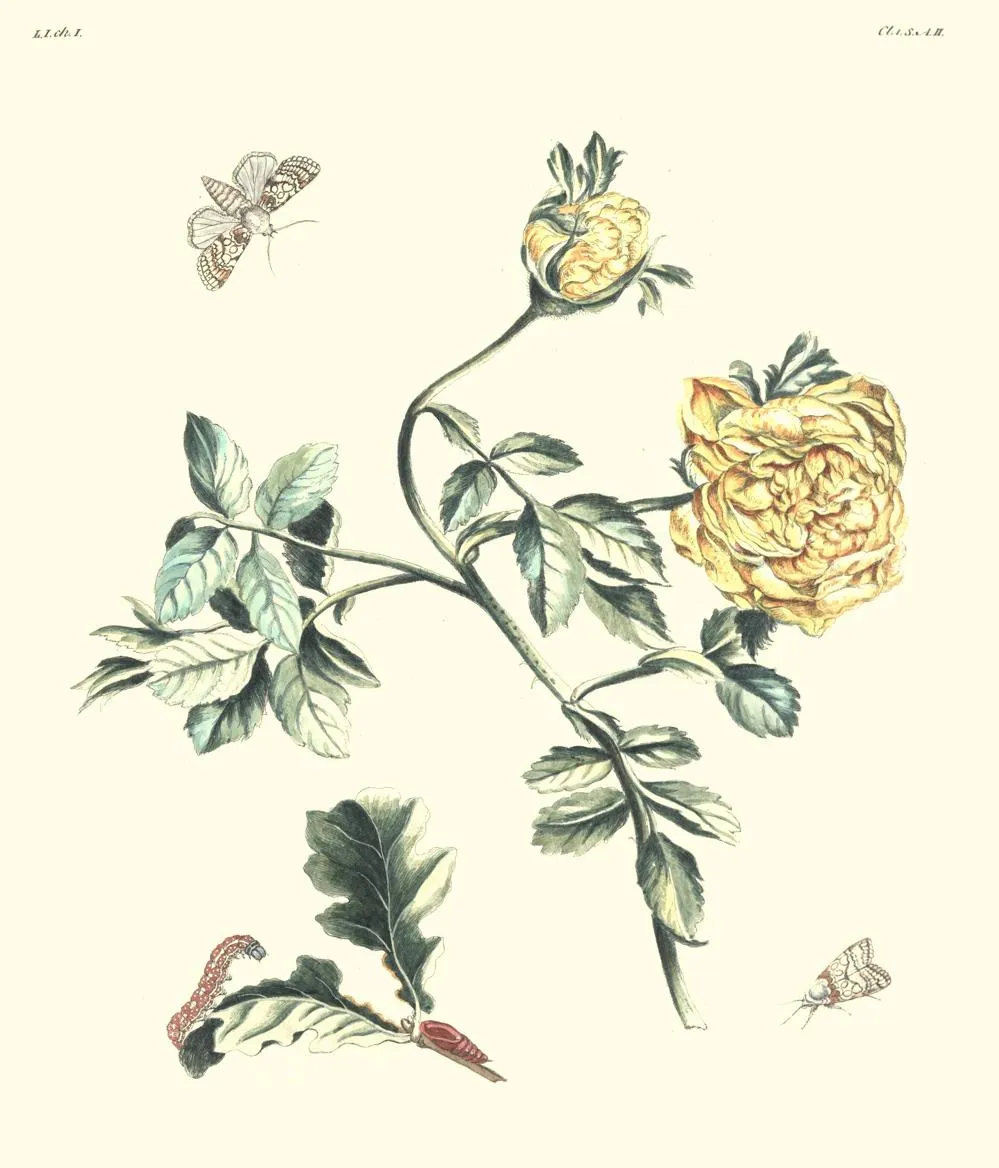
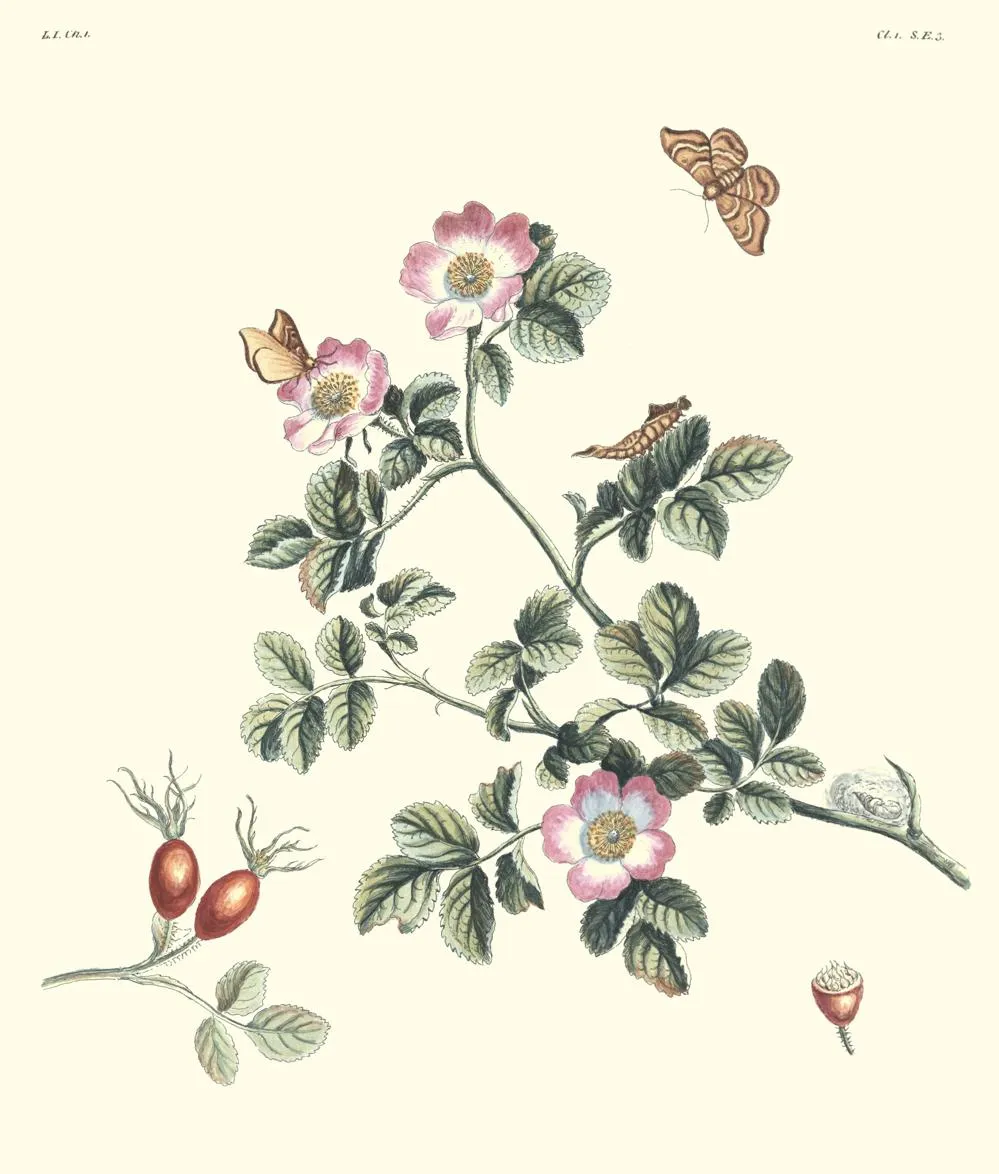
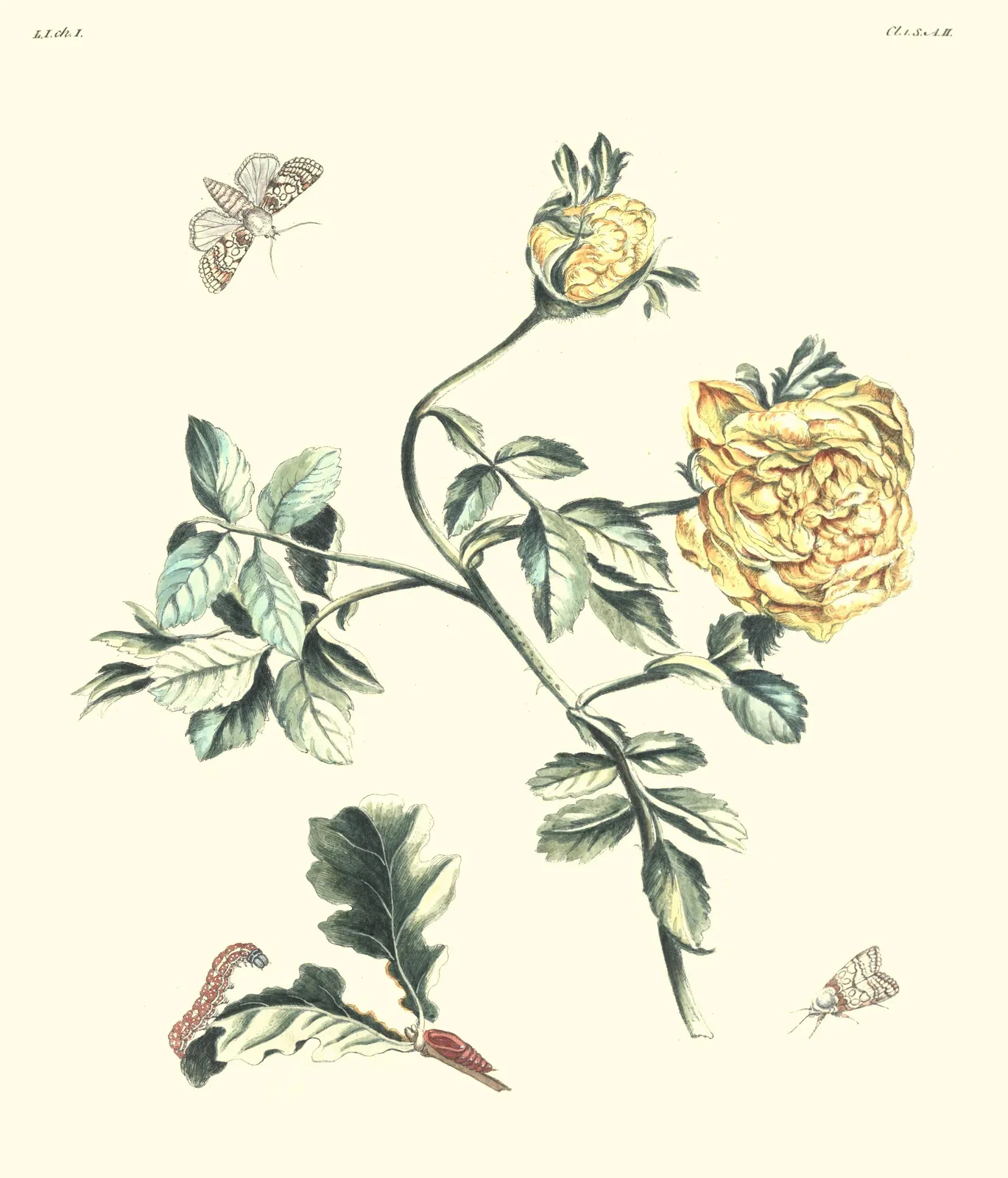
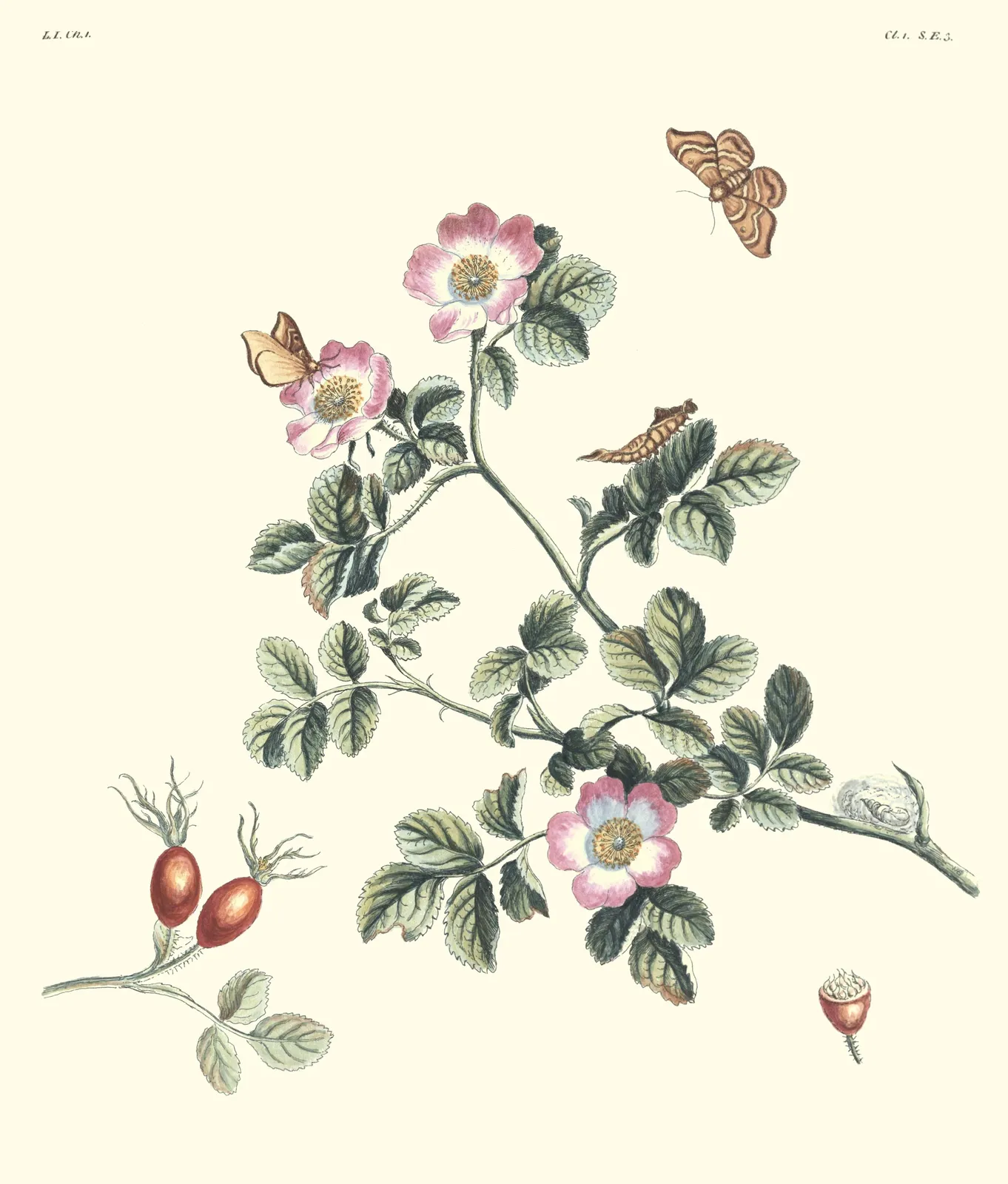
The WILD ROSE-MOTH. The Caterpillar feeds on the Sweet Briar sometimes,
but most commonly on the Oak; changes to a Chrysalis (within the Leaves of
such Trees fastened together by a Spining) at the End of September, and the Moth is bred in the
Middle of May. The Caterpillar and Fly are both scarce.
See Albin, P. 65. Reaumur, Pl. 22. Pag. 282. Vol. 2.
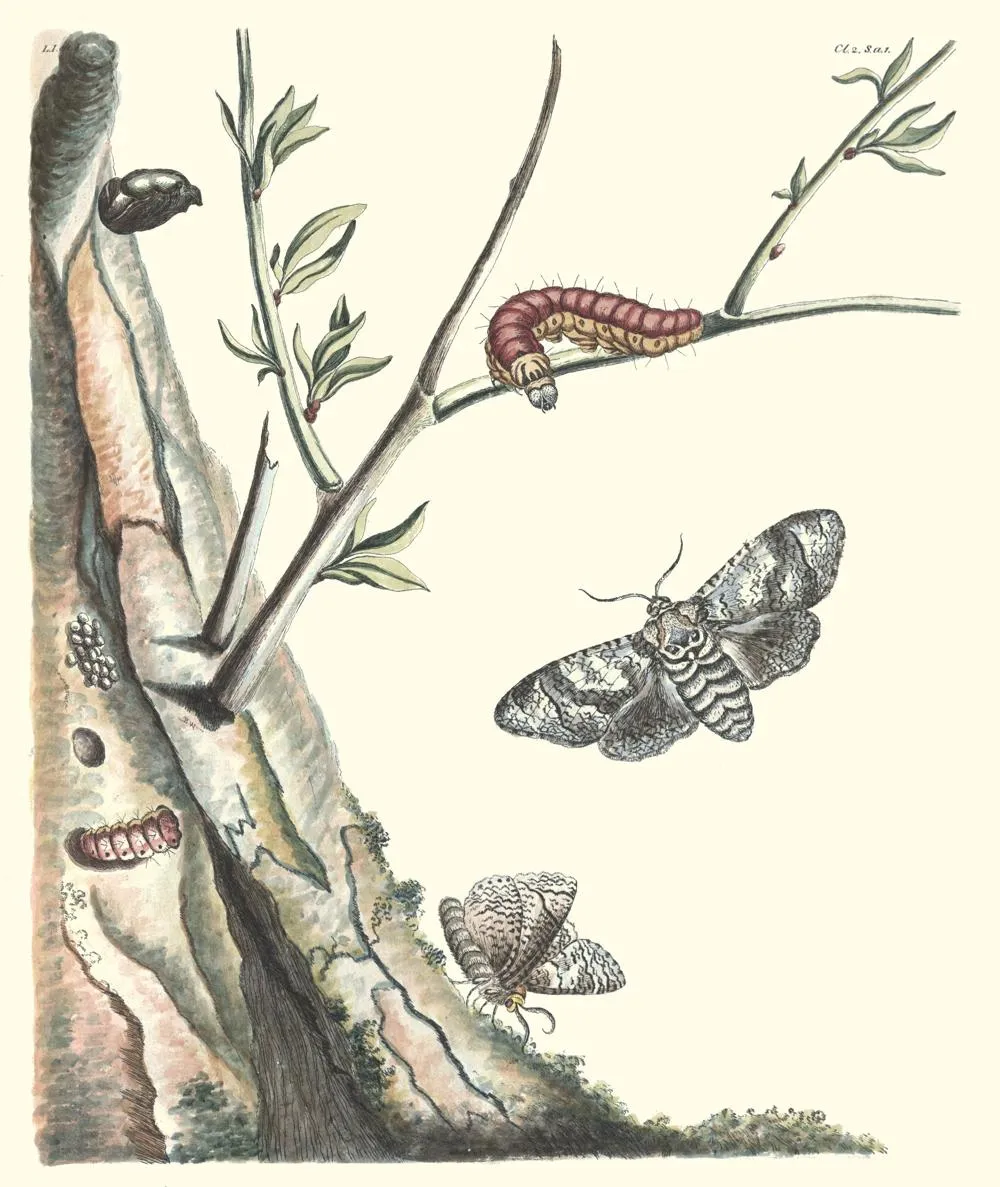
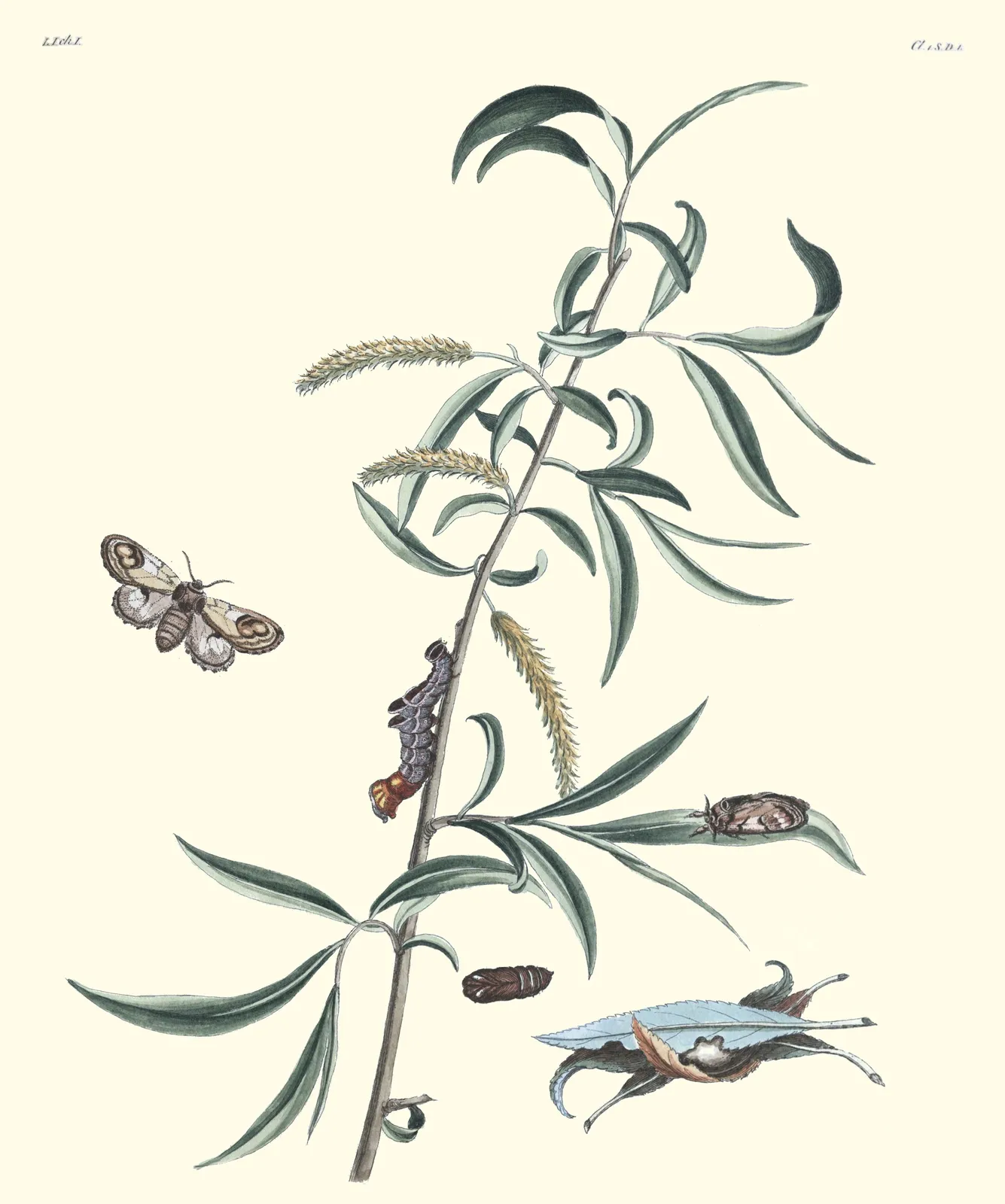
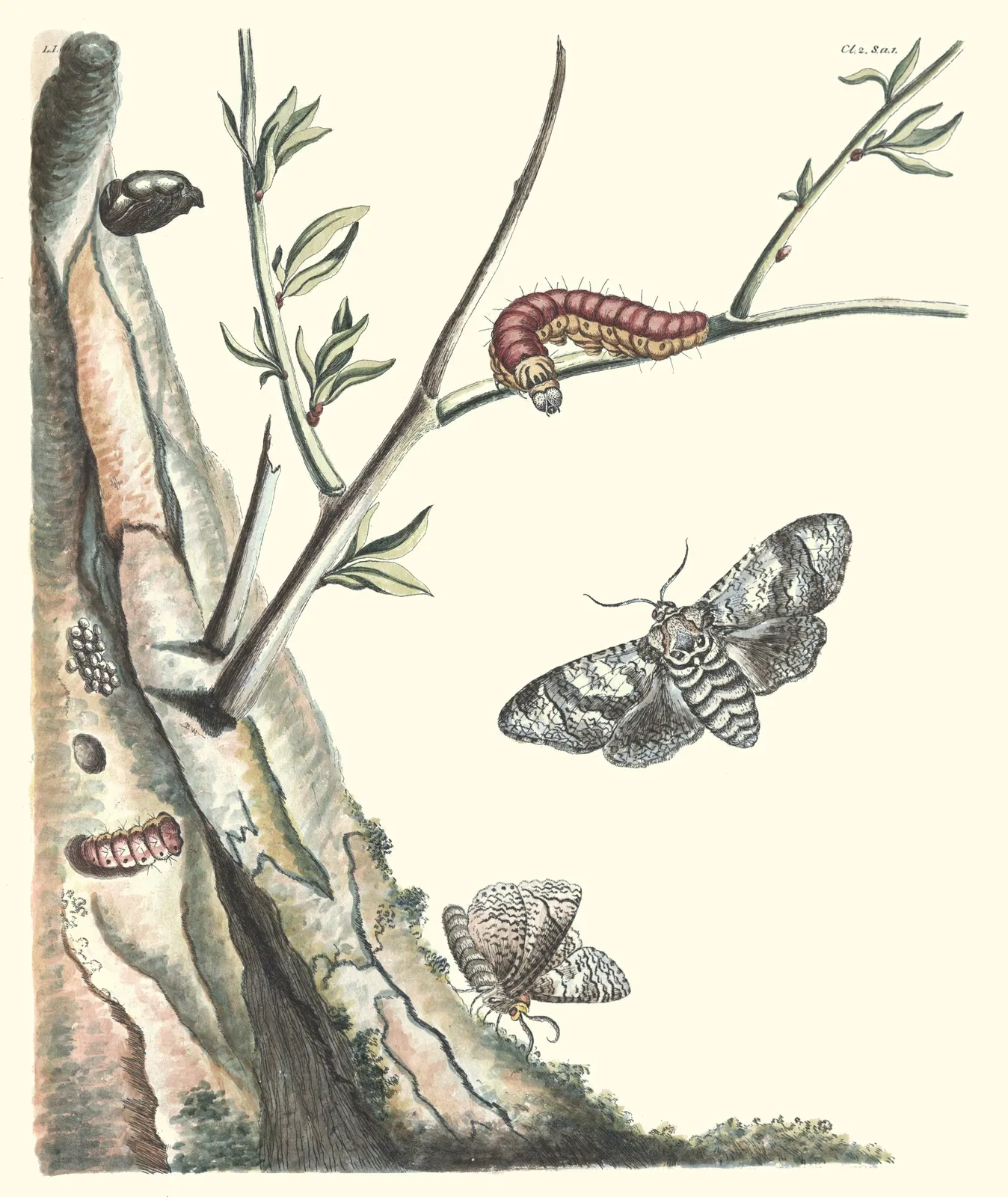
THE GOAT-MOTH. The most likely Means of obtaining the Caterpillars
is, to separate the Bark of some old Willow from the Body of the Tree by a
Chissel. Thus probably you may discover some of them: Put them into an earthen
Jar, and feed them with Willow Wood, which Food they seem most fond of; but cover the Jar
least they creep away. Do not keep them in a Box, or any Thing made of Wood, least
they eat their Way through it and be lost. These Caterpillars are full fed about the Middle
of May, at which Time they gnaw the Wood into a Kind of Sawdust, which, being mixed
with a glutenous Matter from their Mouths, makes a Case wherein they change to the Chrysalis.
They lye in that State for about six Weeks; after which the Moths appear, and may
be found on the Bodies of Willow Trees. This Chrysalis, by the Help of strong, short
Saw like Teeth round Part of each Joint, and pointing towards the Tail, is enabled to force
its Fore Part through the Body of the Tree, (as is expressed in the Plate), near which you’ll
find the Moth, if you chance to look that Day it is bred. They are reported to be three
Years proceeding from the Egg to the Fly; but this I have not myself experienced.
See Lister on Godart. P. 49. N. 39. Albin, Pl. 35. Rosel, Cl. 2. Tab. 18. Reaumur, Pl. 17.
Pag. 342. Vol. 1.
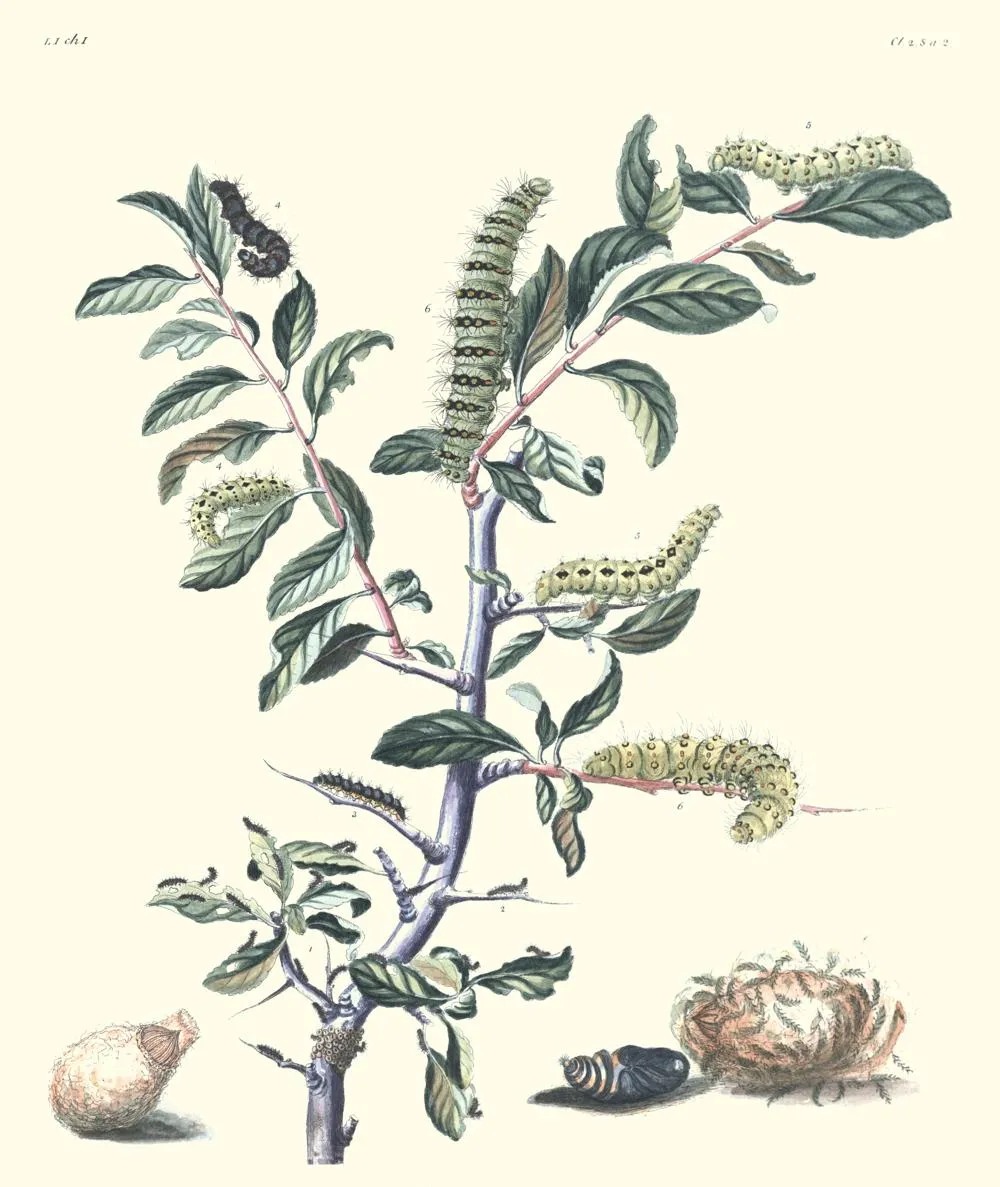
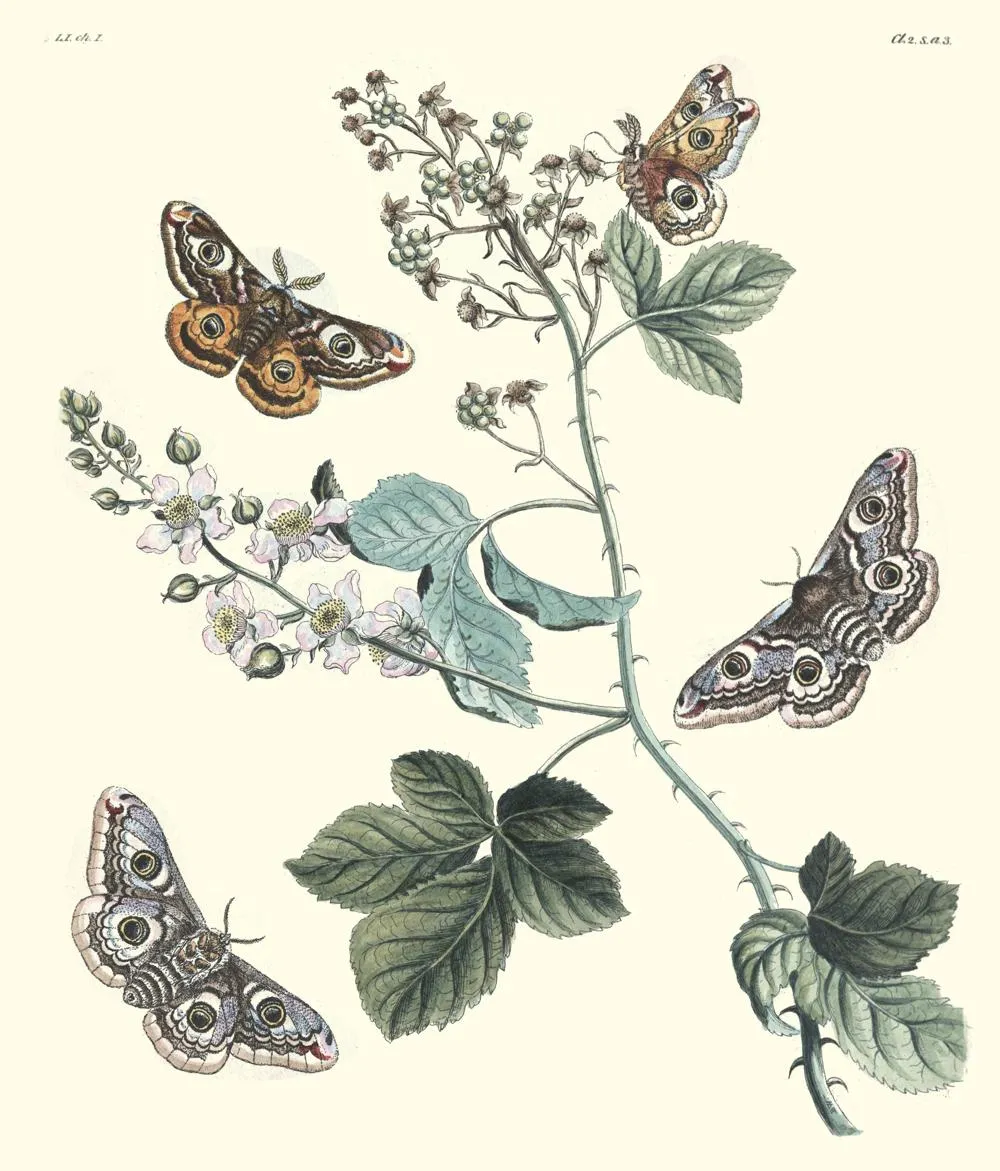
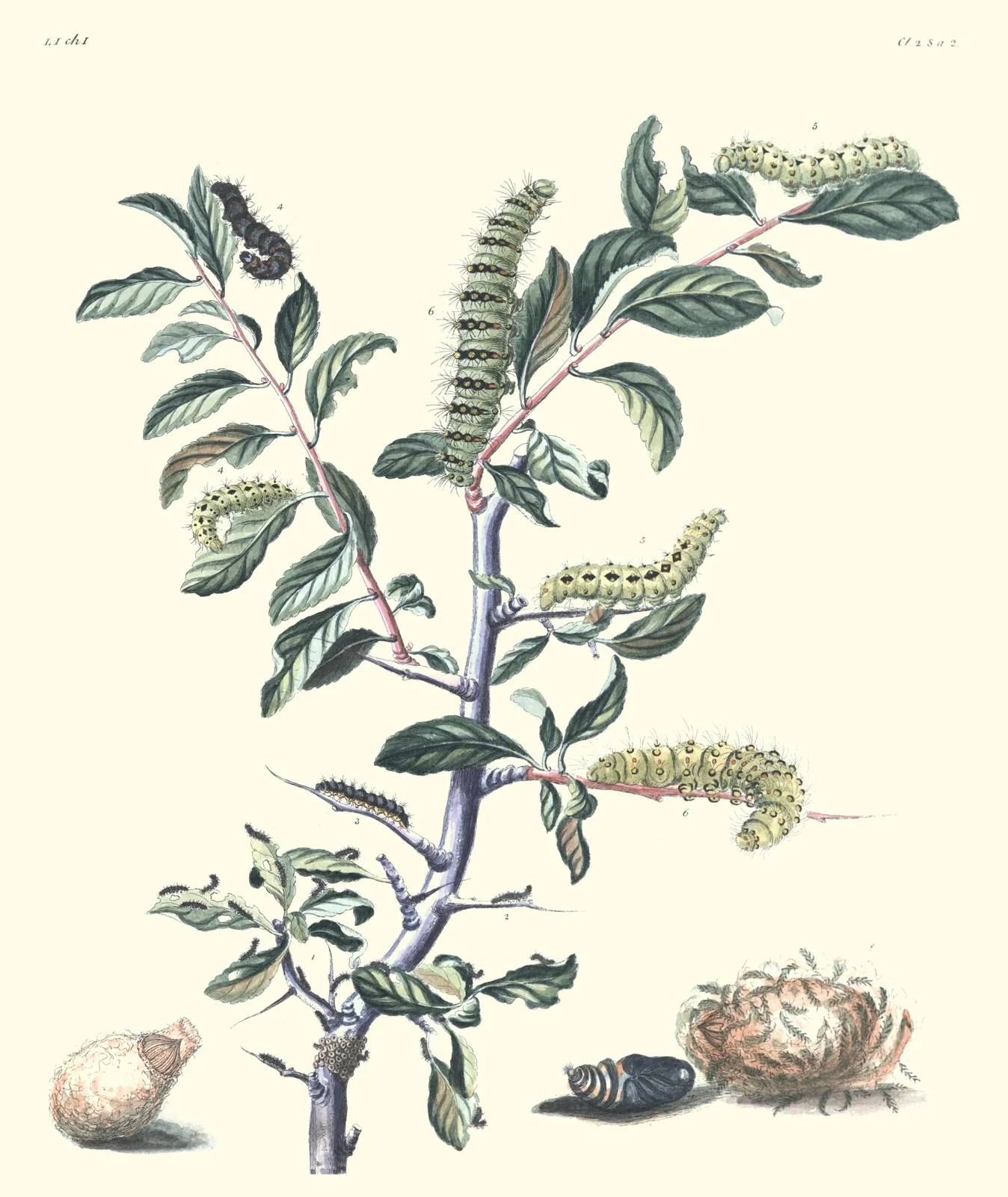
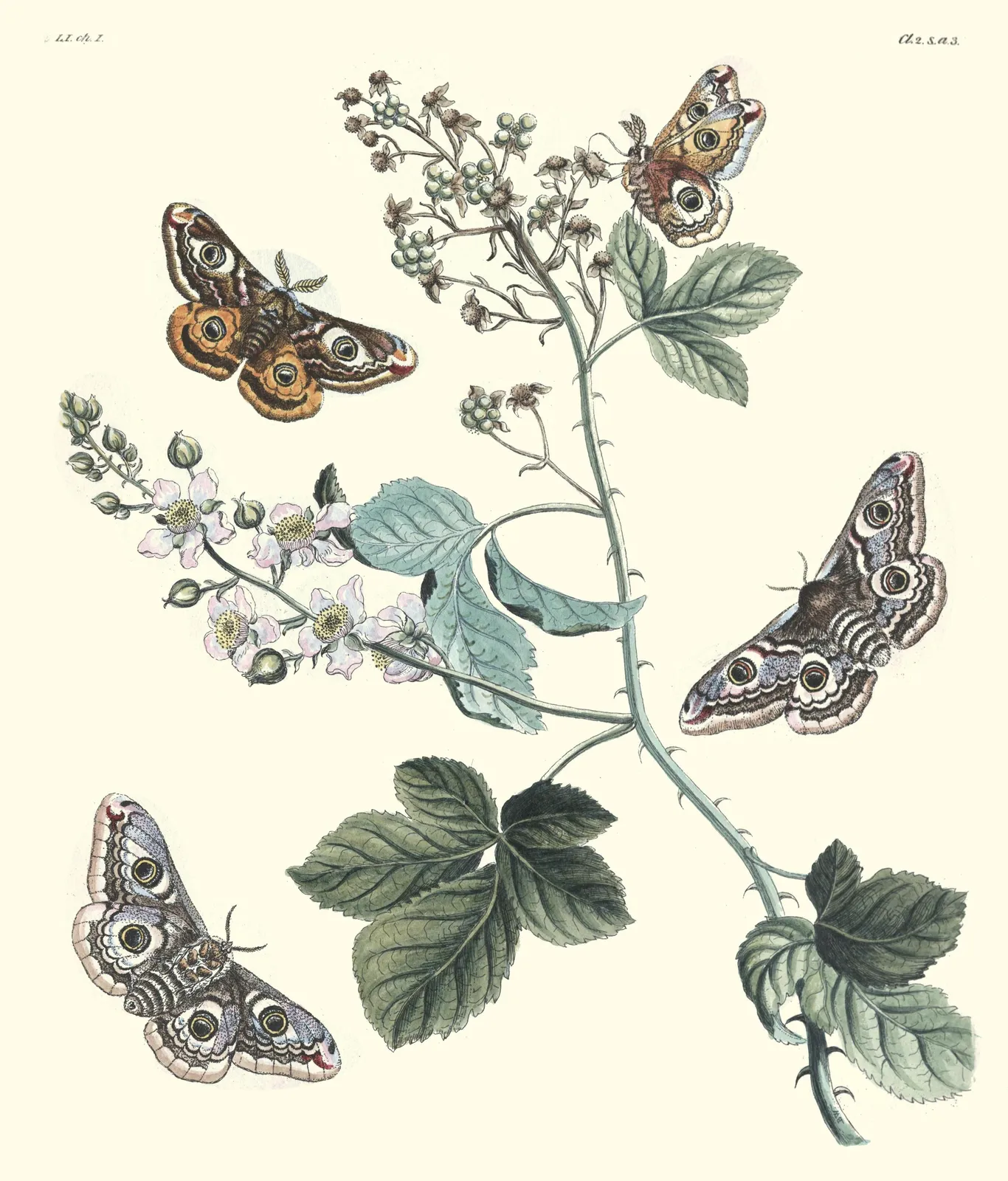
THE EMPEROR-MOTH. The best Way to be furnished with this fine
Moth is, to breed it from the Caterpillar, which may be found in its infant State during
the Month of May; but it is most adviseable to seek for them before the 20th. The Caterpillars,
when newly hatch’d, are sociable, and keep together for about three Weeks, after
which Time they separate and are difficult to be found. The most certain Food to take them
on is the Black Thorn, and of that such as is not of above two or three Years Growth. They are
usually found on Twigs about one or two Feet from the Ground, and (as I have observed)
herd in Clusters together, when they are in their first, second and third Skins.—On the 12th
of May 1745, I had about sixty Caterpillars hatched from such Sort of Eggs as are expressed
round the Black Thorn in the Plate: On the 19th they appeared in their second Skin; on the
25th, in their third; on the 18th of June, in their fourth, and, on the 22d, in their fifth.
The Caterpillars grew so much in this Skin in four Days, that they were three Times as big
as when full fed in their fourth Skin. On June the 30th, they shifted into their sixth and last
Skin; in which Skin (as well as in the former Skins) such as appear most Green are the female
Caterpillars. On the 12th of July some of them began to spin Cases, in order for their
Change into the Chrysalis State; and, on the 26th, the whole threescore had spun themselves
up. Thus they remained throughout the Winter, and, from the 16th to the 30th of April
following, I had forty of the Moths bred; but the Rest of the Aurelias did not produce their
Moths till the Year following: So that about twenty of my Number were in the Chrysalis
State near two Years; and yet produced Moths at last that were equally beautiful and large.
The Female lays from 250 to 300 Eggs, in such Manner as is represented in the Plate, and
these she hides in three or four different Places for the more certain Security of some of them.
The Case which contains the Chrysalis is well worthy Notice, being composed of a glutenous
Matter fit to resist all Kinds of Weather; and, for its greater Security, that Part which
I call the Mouth is doubly guarded: So that, if any Insect should chance to force the first
Fence, it will there meet with a second Resistance, and that of so strong a Nature, from its
particular make, that I am apt to believe few, if any, can ever enter; and thus the Chrysalis
is preserved in the most secure and wonderful Manner, as will be better understood by attending
to the Figure represented in the Plate. The Moth is very seldom taken in the
Fly State.
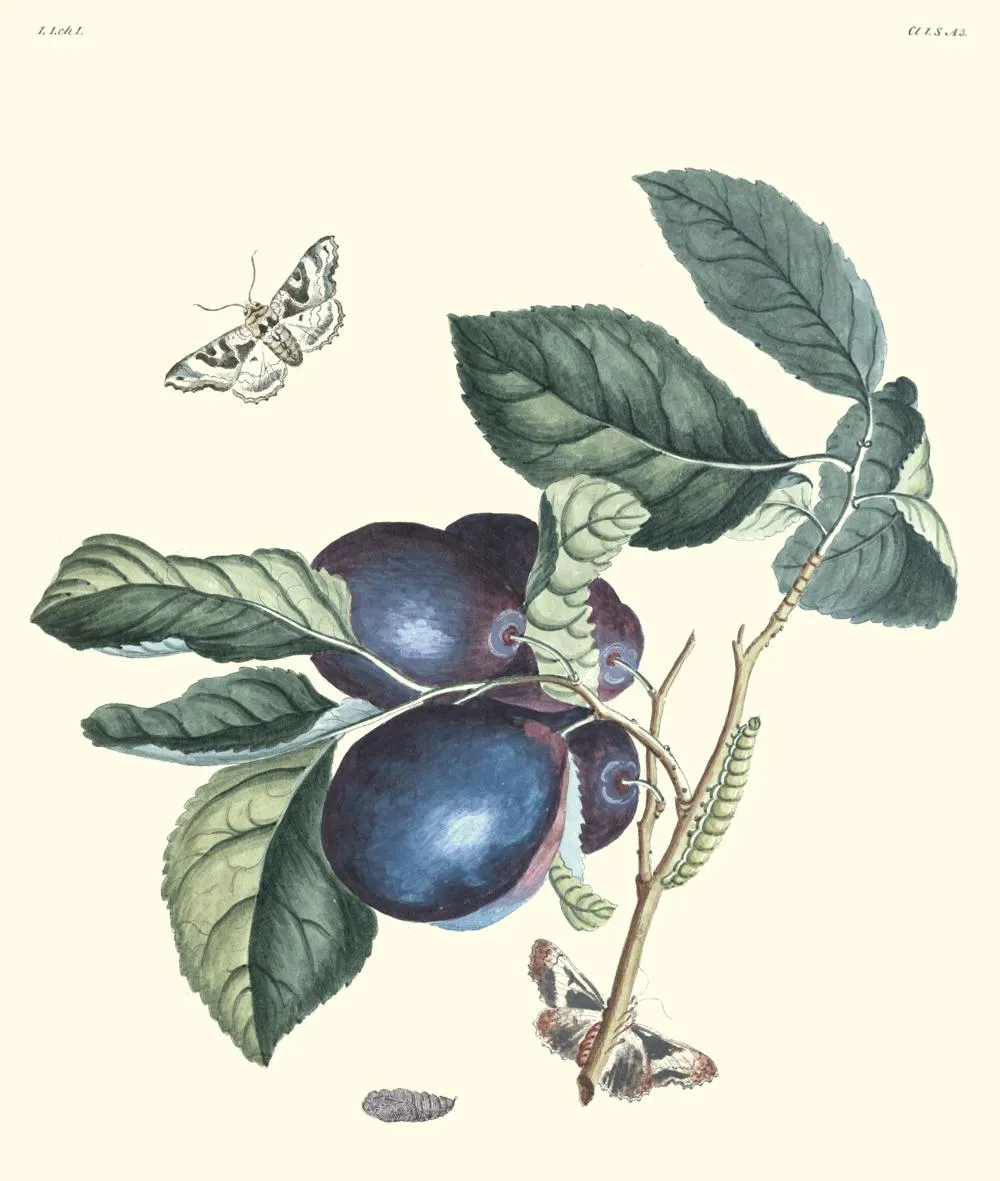
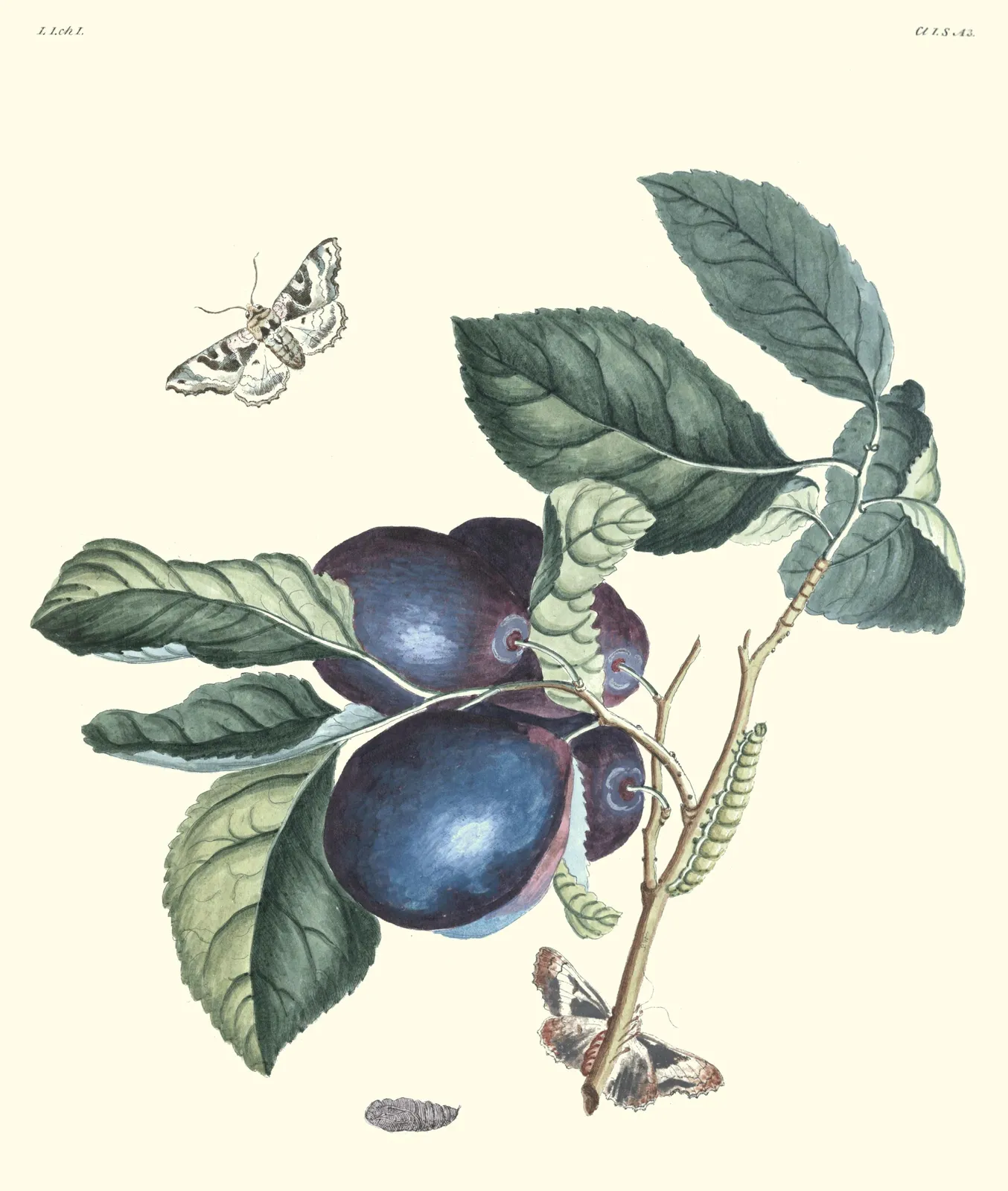
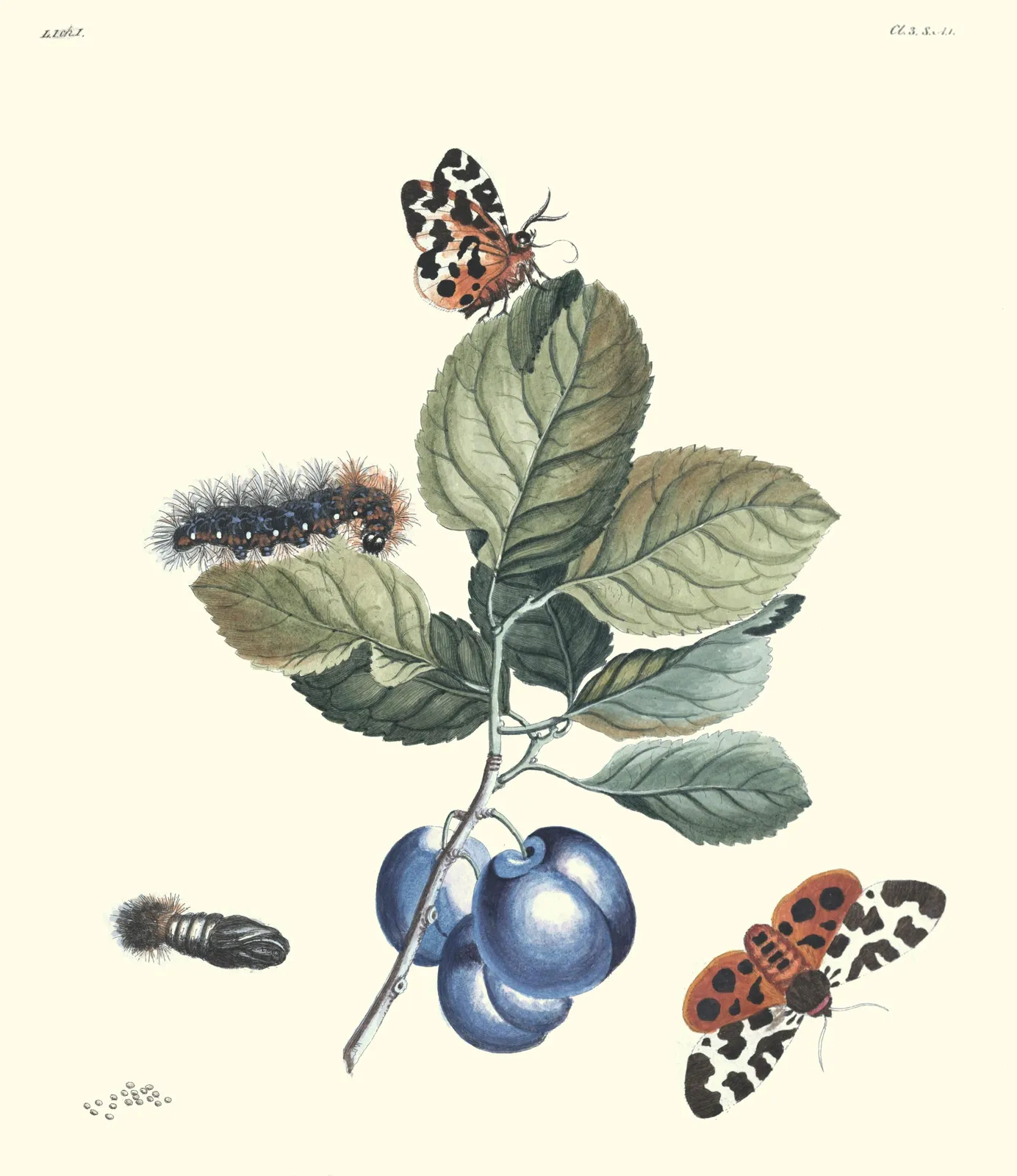
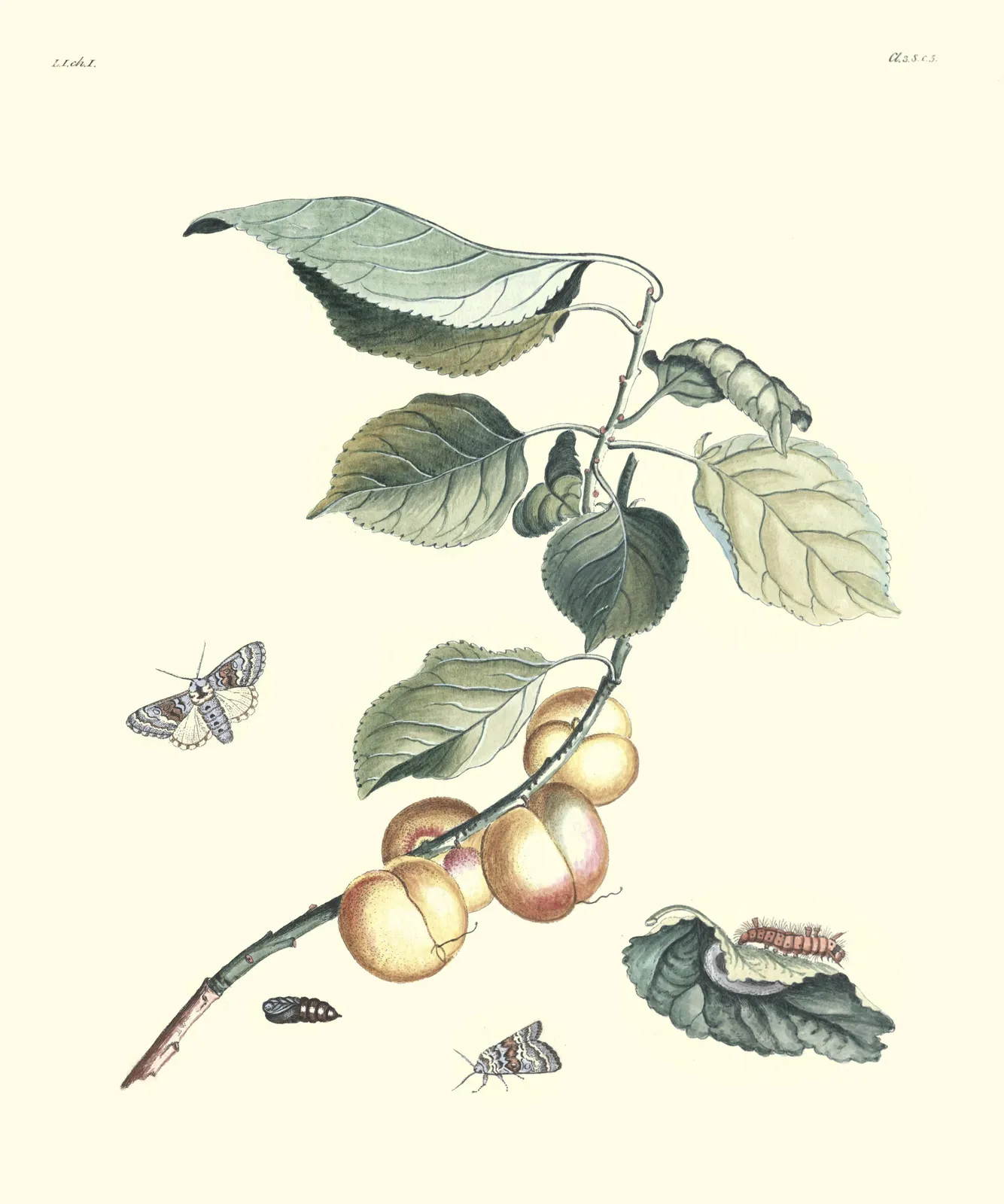
THE PLUMB-TREE MOTH. The Caterpillar feeds in Gardens on various
Fruit-trees: It changes to a Chrysalis about the End of May, within Leaves spun
together, and lies in that State till the Middle of June, when the Moth appears.
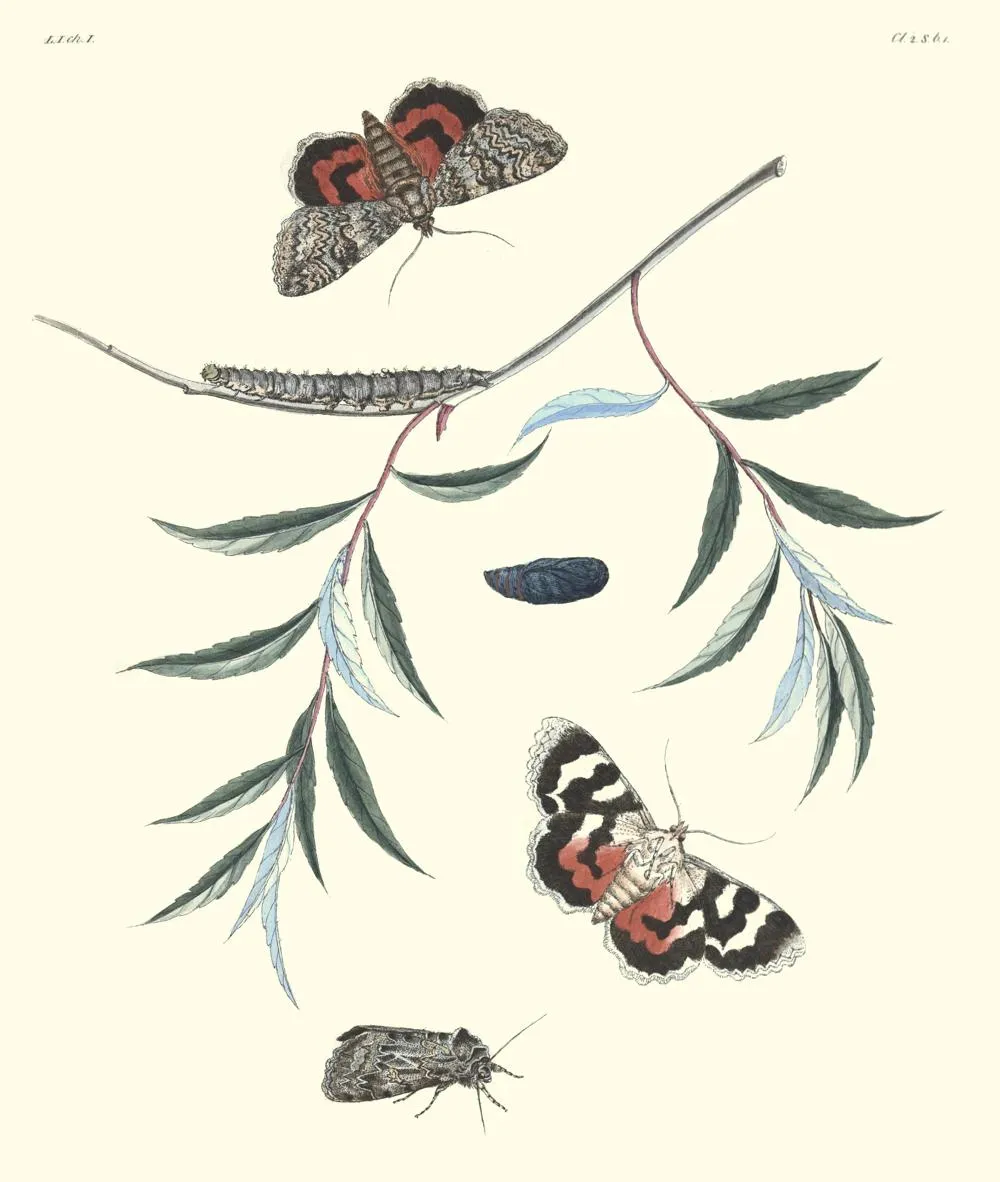
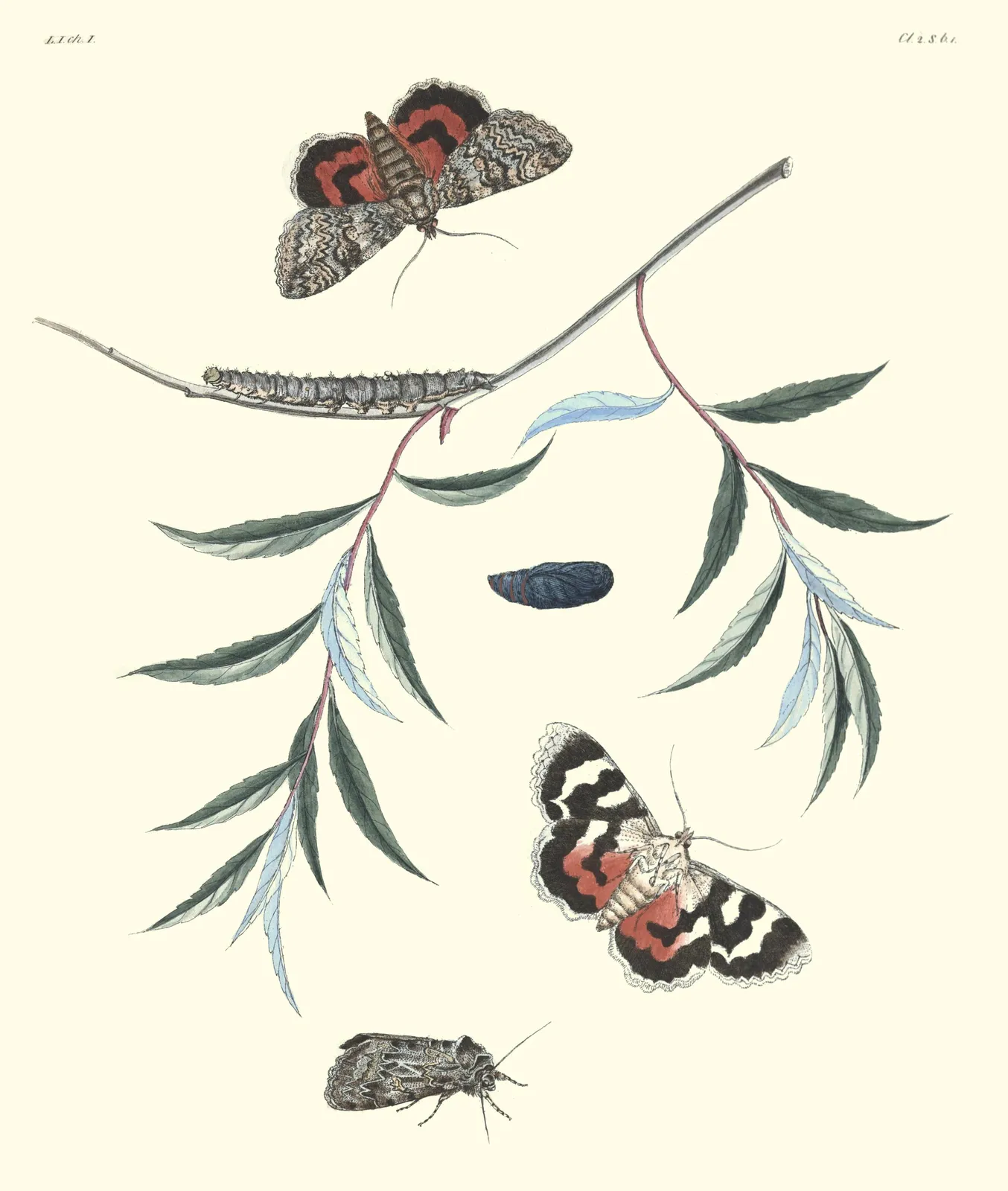
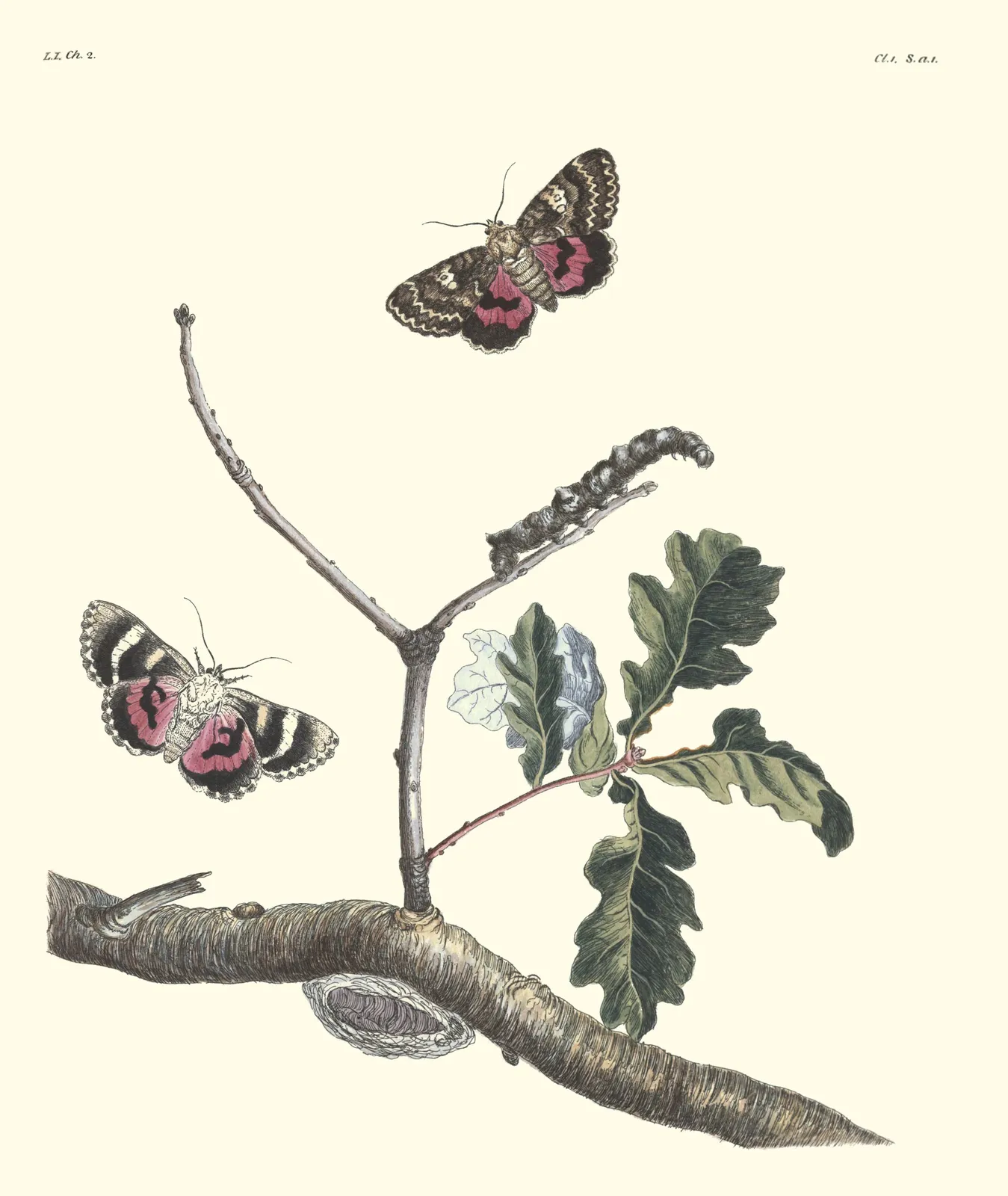
THE WILLOW RED-UNDERWING MOTH. The Caterpillar
feeds on Willow; changes to a Chrysalis, betwixt the Bark and Body of the
Willow Tree, about the Middle of June. The Moth is bred in the Middle of July,
and may be found at that Time on the Barks of Willows, and other Trees, as also against Walls,
Houses, Barns, &c. If the Weather proves very hot, the Moth will fly in the Day-time.
The Caterpillar is rarely found.
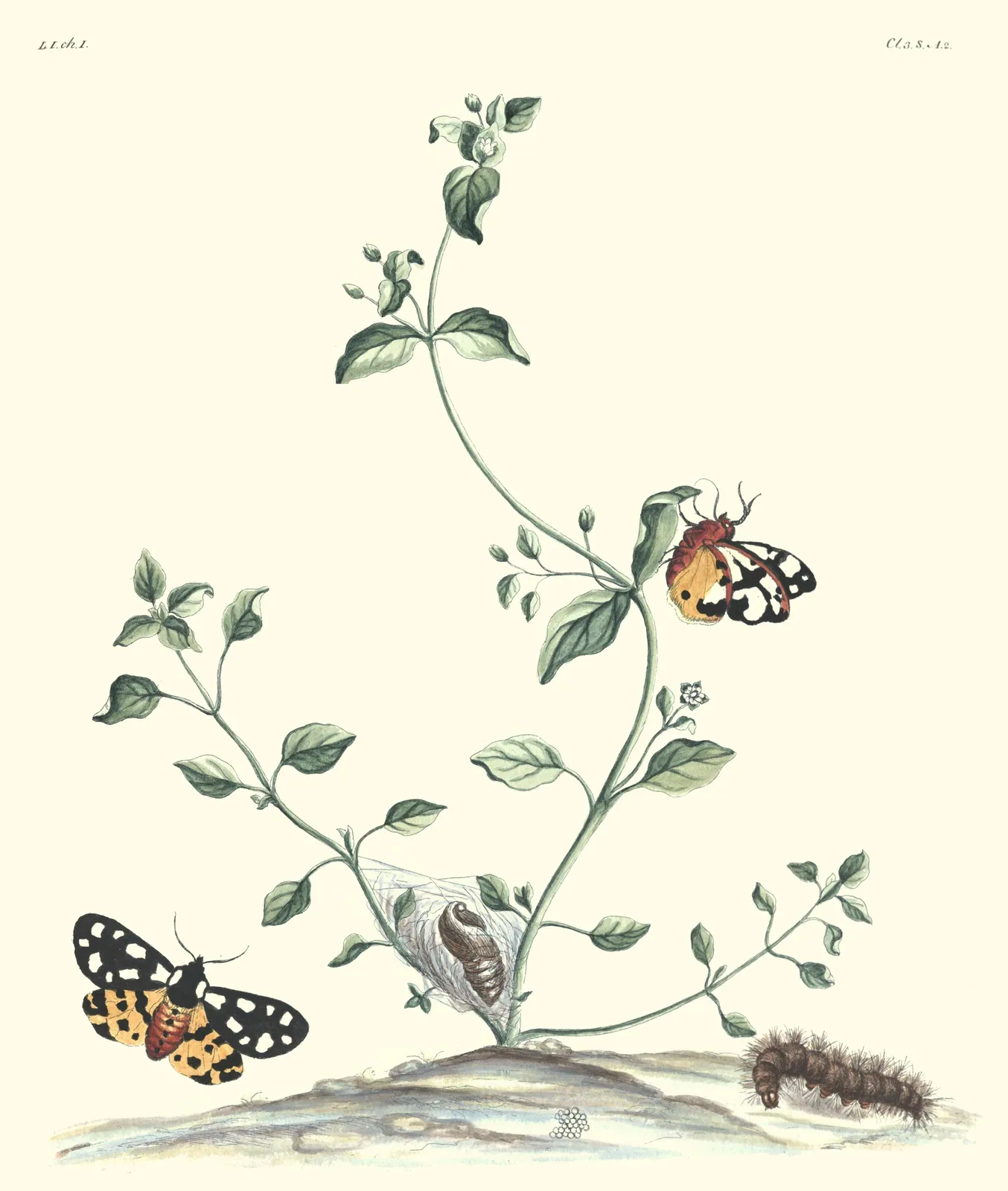
THE GREAT TYGER MOTH. The Caterpillars are hatch’d from
the Egg in August, and feed in their infant State on Nettles, Lettice, &c. till the
End of October; when, if the Weather be cold and bad, they find themselves a
Residence for the Winter in Holes and private Recesses, where they continue till the March
or April following, as the Spring is more or less forward. At their coming out of their Holes
they feed on the young Nettles, Chickweed, &c. that grows in dry Ditches and Gardens; and,
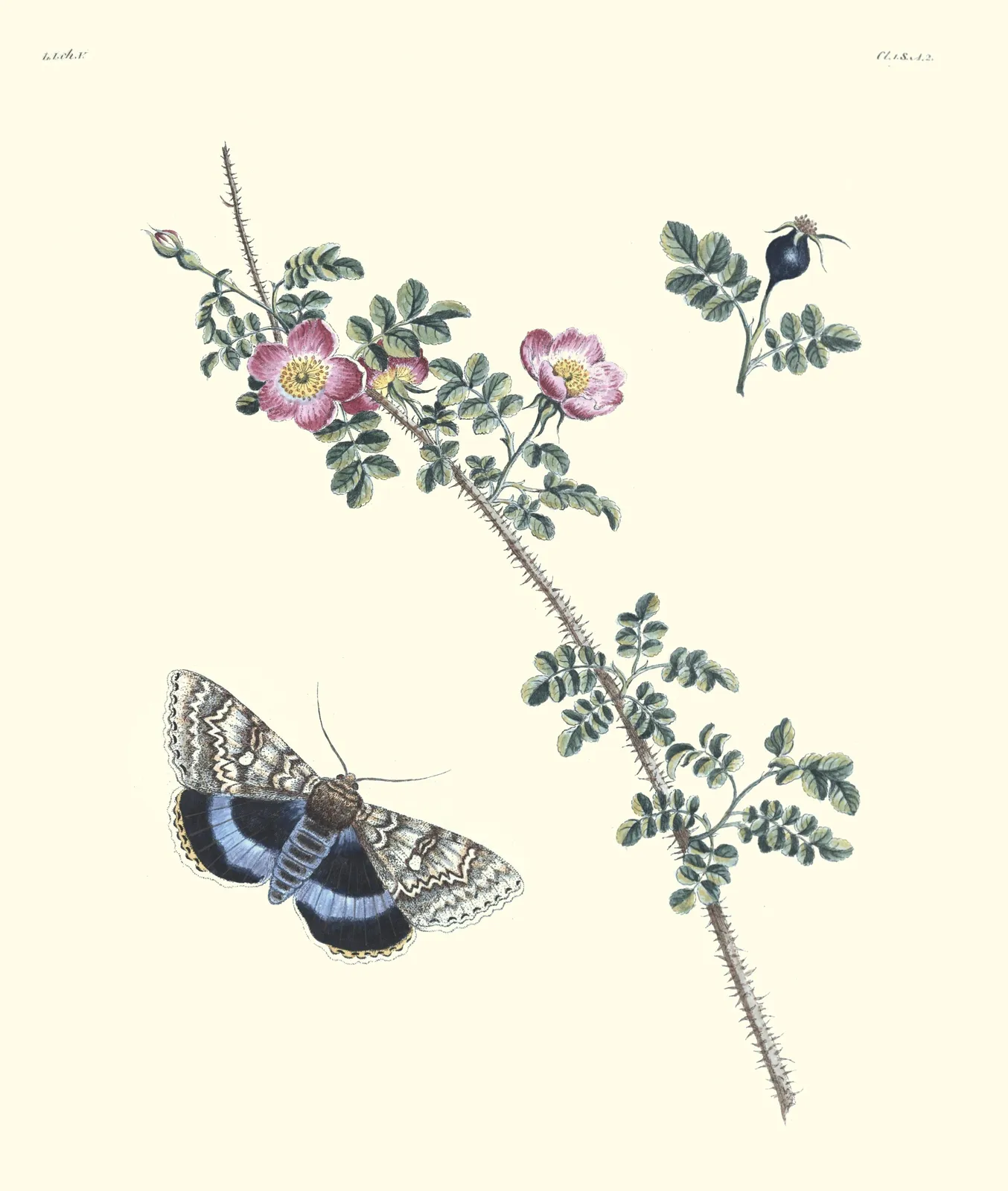
when they are in their last Skin, which is usually at the End of May, they may easily be
found in the Places already mentioned. At the Beginning of June they spin a Bag, and within
that change to the Chrysalis, in which State they lye for one Month, after which the Moths
come abroad and are very common. I have observed, that most of the hairy Caterpillars live
throughout the Winter, after the Manner above mentioned.
See Lister’s Godart. N. 99. Moufet. 15. P. 93. Raii Hist. Insect. P. 151. N. 3 and P.
152. N. 7. Merian, Vol. 1. Ch. 5. Albin. Pl. 20. Rosel, Cl. 2. Tab. 1. Reaumur, P. 534. Vol. 1.
THE CREAM-SPOT TYGER MOTH. Chickweed, Nettles, Lettice,
&c. are the Food of this Caterpillar, which is to be found on such Growths in dry
Ditches, in Woods, &c. at the End of April. It lives all Winter as the last mentioned, and
changes to a Chrysalis, within a Spinning, at the Beginning of May. The Moth is bred about
three Weeks after; flies in the Day-time, and is very common.
See Merian, Vol. 1. Ch. 6. Albin, Pl. 21. Reaumur, Pl. 31. Pag. 534. Vol. 1.
The SCARLET TYGER MOTH. The Caterpillar lives all Winter,
and is to be taken feeding on the Hounds-Tongue, Nettles, and White Archangel, at the
End of April. If you look for them from Charlton-Church, in Kent, down to the Road that
leads to Woolwich, there you will find them in Plenty. They make a Spinning in May amongst
the dead Leaves on the Ground, and there change to the Chrysalis. The Moths come
forth in June and fly by Day.
The BLACK ARCHES, a MOTH. The Caterpillar of this Fly remains
in Egg all Winter, and hatching about the Middle of April, feeds on the Leaves of
the Oak, Apple Trees, &c. A Caterpillar brought up by Mr. Cabrier came to its full Growth
near the Middle of June; at which Time it fastened itself, in the Corner of the Box, by a few
small Threads: The 14th it changed to a Chrysalis, and the Moth appeared the 4th of July.
The Caterpillar was fed, in its infant State, with Lettice, there being no Oak Leaves at that
Time. This Moth is to be found sticking on the Barks of the Oak Trees in Richmond, Bushey,
and other Parks, in July; but is not common.
The GREAT ERMINE MOTH. Its Caterpillar feeds on most Kinds
of Plants and Flowers; turns to a Chrysalis, within a Web on the Ground, in September:
The Moth is bred in the May following, and may be found sticking on the Barks of
Trees, on Pales, Walls, &c.
The SPOTTED BUFF-MOTH. The Caterpillars of this Moth are very
mischievous in Gardens, feeding on most Kind of Herbage; but may easily be shaken
off the Plants and killed. They change to the Chrysalis within a Web on the Ground, and
sometimes within the Ground, in September, and the Moths came out in May. Their Eggs
are of a light green Colour; and the Caterpillars, when first hatch’d, which is about the
Middle of June, are white and hairy. The Moth is frequently taken sticking on Houses,
Walls, Pales, &c.
The GIPSEY MOTH. The Caterpillars are very destructive to all Fruit-trees,
on which they are found in Swarms envelop’d with a Web like that of the Spider. In the
Day-time they disperse themselves over the whole Tree, but at Night come together again,
and retire to their Web. They put on the Chrysalis,
form
within a Spinning, at the Beginning
of July, and the Moth is bred about fourteen Days after. Their Eggs are covered with
a yellowish Down, whereby they are preserved from Cold throughout the Winter. This
Moth is very common in Germany, and was produced from a Nest of Eggs that were sent to
Mr. Peter Collinson, who gave them to Charles Lockyer, Esq; He bred Moths from them
as above mentioned; and, having turned Numbers of them wild (as I have been informed)
about Ealing near Brentford, in Middlesex, they are to be found there, but not any where
else that I have yet heard of.
The BUFF-TIP MOTH. The Caterpillar feeds on the Willow and Oak,
and may be easily found amongst the Willows growing about Chelsea, and in such like
Places. They may be taken full fed towards the End of August; at which Time Numbers
of them go into the Earth, and there Change to the Chrysalis, and the Moths appear in the
following May. It is not a very common Thing to take this Moth flying.
See Lister’s Godart, N. 95. Raii Hist. Insect. P. 162. N. 14. Albin, Pl. 23. Rosel, Cl. 2.
Tab. 14.
Salix folio longo subluteo, non auriculata, viminibus luteis. Raii. Syn.
L. 1. Ch. 1.
IX.
Cl. 3. S. A. 9.
The WHITE-SATIN MOTH. Its Caterpillar feeds on the White Poplar,
as also on Willow; changes to a hairy Chrysalis, within the Leaves spun together, in
June; lies in that State about twenty Days, and then the Moth flies abroad. You may take
these Flies by shaking the Boughs of the Trees they feed on. Their Eggs, when first laid,
are of a pale green Colour, which they cover with a Substance looking like Leaf-silver. They
continue about one Month in the Egg-state, and the Caterpillars live all Winter.
See Lister on Godart. P. 84. N. 87. Rosel, Cl. 2, Tab. 9. Reaumur, Pl. 34. Pag. 534.
Vol. 1.
The LACKEY-MOTH. The Caterpillars are very common, and feed on most
Kind of Herbage, especially Black Thorn, White Thorn, &c. about the Middle of June
they change to the Chrysalis within a Case, which they spin, and cover with a fine Dust of the
Colour of Brimstone. In this State they remain for about one Month; then the Moth appears,
and lays her Eggs, in a spiral Order, round the young Twigs of such Trees as are proper
Food for the infant Caterpillars. They hatch in the Spring, and keep together in a Web
while young. As these Caterpillars are destructive in Gardens to Fruit-trees, &c. its adviseable
to destroy them.
See Godartius, P. 1. Tab. 10. Albin, Pl. 19. Rosel, Cl. 2. Tab. 6. Reaumur, Vol. 2. Pl. 4.
Pag. 120.
Figure 1. Tway Blade. 2. The Crane’s Bill. 3. The Yellow-Vetchling.
1. Bifolium, vulg. C. B. 2. Geranium Robertianum. 3. Lathyrus luteus sylvestris
dumetorum. 1. B. II. 304.
L. 1. Ch. 1.
XI.
Cl. 3. S. A. 11.
The GREAT EGGER-MOTH. The Caterpillars of this Moth are to be
found, full grown, towards the End of May, feeding on Black Thorn and White Thorn.
At the Beginning of June, they spin a brown Case, in the Shape of an Egg, in which the
Chrysalis is formed: They remain in that State for about one Month; then the Moth is produced.
The Males fly swiftly in the Day-time, from 12 o’Clock to 5 in the Afternoon. The
Eggs are of an oval Shape, and usually hatch at the latter End of July. When the Caterpillars
are young, you may feed them with Black Thorn, or White Thorn, and, during the
Winter, with Bramble, Holly, Privet, &c. When you breed any female Egger-Moths, take
one of them and put it in a Box (covered with a Piece of Crape, to prevent its getting away),
carry the Box with you to the Sides of Woods and green Lanes; and, if the Day be
fair, and the Sun shines bright, put it upon the Ground: And, if there is a Breed of these
Moths near, the Males will come and endeavour to get at the Female. By this means I
have taken with my Net near twenty in an Hour. This Method of taking Flies is called
Simbling; and many other Kinds of Moths are to be catched the same Way.
See Godart. P. 1. Tab. 7. Lister’s Godart. N. 88. Merian, Vol. 1. Ch. 10. Moufet, P. 92
N. 9. Raii’s Hist. Insect. P. 142. N. 2. Albin, Pl. 18. Rosel, Cl. 2. Tab. 35. a. Reamur, Pl.
35. Pag. 534. Vol. 1.
The GRASS EGGER-MOTH. I took the Caterpillars of this Moth feeding
on Clover amongst Grass. They make a Spinning and Case, on the Surface of the
Earth, about the Middle of June, and therein turn to a Chrysalis. The Moth flies in the
Middle of August; but is not commonly met with.
The DECEMBER MOTH. Mr. Dandridge took some of its Caterpillars,
at the Beginning of June, on the Hasle; but, observing they eat but little, gave
them fresh Boughs that were wet with Rain, on which they fed greedily. The next Day he
gave them Water and Honey mixt together, of which they drank a good Quantity, and fell
to eating again very heartily. In this Manner he fed them every Day, and sometimes twice
a Day, till the Middle of the same Month, when they went into the Earth and changed into
Chrysalis. The Moths came out at the End of December. I took this Year (1748) two of
these Caterpillars on the Leaves of an Oak, wherewith I fed them till the Middle of June, when
they spun a dirty coloured Case which contained the Chrysalis; and the Moths were bred on the
24th October.
The SPOTTED RED and WHITE UNDERWING MOTH.
I found and fed the Caterpillar on Black Thorn: It made a Spinning, and changed to
Chrysalis in the Middle of April, and the Moth came abroad about the Middle of May. The
Caterpillar lives all Winter, and the Moth is rarely to be met with.
Figure 1. The Black Thorn. 2. The Columbine. 3. The Ranunculus.
4. The White Bells.
1. Prunus sylvestris. C. B. 2. Aquilegia vulgaris simplex. C. B. 3. Ranunculus.
4. Hyacinthus, flore albo. C. B.
L. 1. Ch. 1.
XV.
Cl. 3. S. A. 15.
The WOOD TYGER MOTH. This Moth I first discovered in Cain Wood.
The Caterpillar lives all Winter, feeds on Chickweed, Lettice, the Lesser Plantain, &c.
and is full grown about the Middle of April, when it changes to the Chrysalis within a Spinning:
The Moth is bred in the Middle of May, flies by Day, and may be taken in Cain or Tottenham
Woods; an Afternoon is the best Time.
Hyacinthus Belgicus Vredenrick dictus. Plantago minor. I. B.
L. 1. Ch. 1.
XVI.
Cl. 3. S. A. 16.
The MOTHER of PEARL MOTH. Nettles are the Food of the Caterpillar,
within the Leaves of which (folded together) it lives, and feeds till the Beginning
of June; when it puts on the Chrysalis Form wrapt up within a Leaf, whose Edges
are fastened by a Spinning: Fourteen Days after the Moth appears, and may be taken, very
commonly, in an Evening, amongst Nettles.
The YELLOW JULY OAK-MOTH. The Food of the Caterpillar
is the Leaves of the Oak Tree, on which it feeds till the Middle of June; then it
changes to a Chrysalis in some Chink or other that it meets with in the Bark of the said Tree,
over which Chink or Hole the Caterpillar spins a strong Web, which prevents any Bird or Insect
from getting at it in its Chrysalis State. The Moth is bred in the Middle of July, and
may, now and then, be found on the Barks of the Oak Trees in Richmond and other Parks,
about that Time; but it is not a common Fly.
The SMALL EGGER-MOTH. Black and White Thorn are the Food of
the Caterpillars, which are always found in Colonies; the whole Nest of them feeding
together till they are ready to change. When they are first hatch’d from the Egg, they
spin a Web to shelter themselves from the Weather; and, as they grow, enlarge it with several
Divisions. They seldom go from the Plant they are first hatched on, till they have eaten
it quite bare and want Food. They ordinarily spin a Thread from their main Web to guide
them Home again; this is very particular, and seems necessary to them. About the Beginning
of July you may find them full fed; then they spin a Web, within which a Case is formed,
shaped like an Egg, which contains the Chrysalis: In this State they remain all Winter,
and the Moths are bred in March. It is adviseable, if you feed the Caterpillars, to take the
whole Nest with the Web. I have seldom taken the Moths.
The FOX COLOURED MOTH. The Caterpillar is hatch’d in July,
lives all Winter, and feeds on Grass, Brambles, &c. I have seen them in September as
large as they are in the Middle of April, which is the Time they go to Chrysalis, within a
Spinning or Web. The Moth is bred in the Middle of May, and the Cock flies swiftly in an
Afternoon; but may be taken in a Net, by the Sides of Woods and green Lanes.
Caterpillarshaving Rings of different Colours surrounding them.
L. 1. Ch. 1.
I.
Cl. 3. S. 2 A. 1.
The CINNABAR-MOTH. The Caterpillars of this Fly are sociable
and feed together in Numbers on the Ragwort; in July they are full grown, and
then some go into the Earth, and others spin on the Surface of the Ground, in order
to their Change into the Chrysalis State. The Moths are produced in the May following, and
are common in Fields and Gardens.
See Lister on Godart. P. 61. N. 54. Albin, Pl. 34. Rosel, Cl. 2. Tab. 48. Reaumur,
Pl. 16. Pag. 342. Vol. 1.
The BRAMBLE MOTH. Its Caterpillar is to be found feeding on the
Bramble, on the Oak, &c. at the Beginning of September; and, towards the
Middle of the same Month, it changes to a Chrysalis, mixing its Hairs with the
Bag it spins: The Moth comes forth the May following, and is not very common.
Caterpillarshaving hairy, or fleshy Protuberances, on the Head, Back,
or Tail.
L. 1. Ch. 1.
I.
Cl. 3. S. b. 1.
The LAPPIT-MOTH. The Eggs of this Moth are laid about the Middle
of July, and remain in that State fourteen Days. I fed the Caterpillars, when first
hatch’d, with Black Thorn, and continued giving them the same Food till October;
at which Time they were in their fourth Skin, and appeared as represented at Letter a; They
there stretched themselves at full Length on the Twigs, and remained so till the April following,
without eating any thing that I could perceive, notwithstanding at different Times I put
in fresh green Food to try them. About the End of May the Caterpillars are full grown, in
which Condition b represents the Female; they then make a Spinning, within which the Chrysalis
is formed, and remains in that State for one Month, when the Moth is bred; though it is
rarely met with in the Fly-state. The Caterpillars are to be found, at the End of May,
sticking close to the Boughs of the Black Thorn, Bramble, &c. You must look for them about
a Foot or two from the Ground; but, as their Colour nearly resembles the Bark of their
Food, it is very difficult to see them.
See Albin, Pl. 16. Rosel, Cl. 2. Tab. 41. Merian, Vol. 1. Ch. 17. Reaumur, Pl. 23. Pag.
322. Vol. 2.
The DRINKER-MOTH. Its Eggs are usually laid about the Middle of July;
in about fourteen Days the Caterpillars come out: They feed in the Winter-season on
long Grass, &c. and change to Chrysalis at the End of May (within such a Case as is expressed
in the Plate) at which Time they are easily found upon the Grass, by the Sides of Fields and
Hedges. The Moths are bred at the End of June, and may be taken flying in an Evening,
in green Lanes and by the Sides of Woods.
See Lister’s Godart. N. 82. Albin, Pl. 17. Raii Hist. Insect. P. 142. N. 3. Rosel, Cl. 2.
Tab. 2.
Figure 1. The Yellow Vetchling. 2. Bistort. 3. The White
Darnel Grass. 4. The Wood-Pease.
1. Lathyrus sylvestris, dumetorum, flore luteo. C. B. 2. Bistorta major. I. B.
3. Gramen loliaceum spica longiori. C. B. 4. Astragalus sylvaticus. Ger.
Emac.
L. 1. Ch. 1.
III.
Cl. 3. S. b. 3.
The YELLOW-TAIL MOTH. The Caterpillar feeds on Elder, Oak,
Black Thorn, &c. upon all which Growths you may find them at the End of May. It
changes to a Chrysalis, within a Spinning, at the Beginning of June, and the Moth comes
forth at the End of the same Month. They may be found sticking against the Barks of the
Trees in Parks, and other Places, and also flying in the Evening. They lay Eggs of a pale
Colour, and cover them with a woolly Substance. The Caterpillars are hatch’d in August, and
will feed on Black Thorn till the End of October; at which Time they spin themselves little
Cases, and remain in them till the Spring following.
See Rosel, Cl. 2. Tab. 21. Reaumur, Pl. 16. Pag. 342. Vol. 1.
The DAGGER MOTH. The Caterpillar feeds on Rose Trees, Fruit-trees,
and Shrubs; becomes a Chrysalis within the Earth in October, and in May following
the Moth appears, and may be found sticking against Pales, Walls, Trees, &c. Their Eggs
are very small, and of a fine green Colour, and the Caterpillars are common in Gardens and
other Places. It is observed, that the Protuberance on the Back of the Caterpillar is of a
fleshy Substance, with Hair growing out of it.
See Albin, P. 86. Rosel, Cl. 2. Tab. 7. Reaumur, Pl. 42. Pag. 602.
The WILD PINE-TREE LAPPIT-MOTH. Mr. Rosel informs
us, That the Caterpillars of this curious Fly feed on the Pinus sylvestris, or Wild
Pine: That they are full fed in the Month of June, at which Time they change to Chrysalis,
within such a Spinning as is represented in the Plate; and, after lying in that State three
Weeks the Moths appear.
About the Middle of September, 1748, I took one of these Caterpillars upon a White Thorn
Bush, near Richmond Park; which is still alive this 20th Day of January 1748-9, though
it has eat nothing, that I know of, since it has been in my Custody. It remains stretched out,
in the Manner of the Lappit-Caterpillar represented at the Letter a of the first Plate of this
Section; and I do not think it will begin to feed until there are Buds of Black or White Thorn
to give it. This is the only Caterpillar of the Kind that I have known taken in England.—For
the Drawings exhibited in my Plate, I am obliged to Mr. Rosel.
Caterpillars, having many Tufts of Hair, producingTussock-moths.
L. 1. Ch. 1.
I.
Cl. 3. S. c. 1.
The BLACK TUSSOCK-MOTH. This Moth is bred about the
Middle of June; at which Time it lays Eggs of a light grey Colour, inclosed within
a woolly Substance; and thus they continue for about one Month. When the
infant Caterpillars appear, they feed on Black Thorn, White Thorn, Bramble, &c. They live
all the Winter in the Caterpillar State, and change to a hairy Chrysalis, within a Spinning,
about the Middle of May. The Caterpillars may be found, full fed, on Black Thorn that
grows by the Sides of Woods and Hedges; as for the Moth, it is not commonly taken in the
Fly-state.
The YELLOW TUSSOCK-MOTH. Its Caterpillar feeds on the Red
Archangel, Oak, Hasle, &c. towards the End of September. It makes a Spinning, within
which a hairy Chrysalis is formed, where it lives till the Middle of May following, and
then the Moth takes its flight; but it is not a very common Fly.
See Merian, Vol. 1. Ch. 47. Albin, Pl. 26. Rosel, Cl. 2. Tab. 38. Reaumur, Pl. 33.
Pag. 534. Vol. 1.
The RED-SPOT TUSSOCK-MOTH. The Caterpillars are very
common, feeding on most Elm and Lime Trees about Town. They make a Spinning
under the Copings of Walls, Pales, &c. at the End of May; and the Moth is bred at the
End of June and in July. The Females have no Wings; but, if you carry one or two of
them in a Box (where there is a Breed of this Moth) the Males will follow you in order to
get at them: So that, if you put the Box on the Ground, you may easily take the Cocks
with your Net. Several other Moths may be taken by the like Means.
See Albin, P. 89. Reaumur, Pl. 19. Pag. 342. Vol. 1.
The ORANGE TUSSOCK-MOTH. The Food of its Caterpillar is
Hasle, St. John’s Wort, Oak, &c. About the Middle of May it made a Spinning, and
changed to a Chrysalis, and the Moth came forth three Weeks after. It is very scarce, and
the Female has no Wings. I took one of these Caterpillars, feeding on Oak Leaves, on the
25th of September 1748; two Days after, it spun up in order to its Chrysalis State, and, on
the 8th of October, the Moth was bred: From whence I conclude, this Moth breeds twice
in a Year.
The NUT-TREE TUSSOCK-MOTH. The Caterpillar of this very
scarce Fly was fed upon the Hasle. About the Middle of September it spun up,
and changed into a Chrysalis, and the Moth was bred at the Beginning of April.
THE SYCAMORE TUSSOCK-MOTH. You may find the Caterpillars
on Sycamore Trees, and, towards the End of August, they are usually full fed;
at which Time they spin themselves up, intermixing their Hairs with the Web, and change
into the Chrysalis State. The Moths are bred in May and June, are not uncommon, and
may be found on the Bodies of the Trees in St. James’s Park, on Pales, Walls, &c.
See Albin, P. 83. Reaumur, Pl. 34. Pag. 534. Vol. 1.
CHA P. II. — Class I. Caterpillars having eight Feet, two Holders, and six Claws or Hooks, and having Protuberances. — Class II. Caterpillars which are hairy, having two Holders, four Feet, and six Hooks or Claws.
Caterpillars that perform their progressive Motion after a different
Manner, viz. by drawing up the Tail towards the Head, whereby their Bodies
become bent into the Form of a half Loop, on which Account they are called
Half-Loopers.
Sect.a.
L. 1. Ch. 2.
I.
Cl. 1. S. a. 1.
THE CRIMSON UNDERWING MOTH. The Caterpillar of this
Moth feeds on Oak-leaves, and becomes a Chrysalis, within some of the same
Leaves spun together, at the Beginning of June. The Moth appears at the Beginning
of July, and is extremely scarce, as is also the Caterpillar.
The SILVER Y MOTH. The Caterpillar feeds on Sage, Clover, Burdock,
&c. changes to a Chrysalis, within a slight Spinning, in August, and the Moth is bred
in September; is very common in most Fields and Gardens, and flies in the Day as well as
at Night. There is an early Breed of this Moth in May.
See Rosel, Cl. 2. Tab. 5. Albin, P. 79. Lister on Godart. P. 20. N. 14. Reaumur, Pl. 19.
Pag. 342. Vol. 1. Pl. 26. P. 348. Vol. 2.
TheCaterpillars of this Chapter have two Feet and two Holders, with six Hooks or
Claws; but have no Feet in the Middle Part of their Bodies like those already described.
Their progressive Motion is performed by fixing the Head-part, and drawing
up the Tail to it; so that each Step, forming a Loop, they are called Loopers.
They are provided with strong and sharp Claws in their Holders, by which they can fasten
themselves in such manner as to support the Rest of their Bodies, either perpendicularly or
horizontally, or in any other Posture they please, without any regard to the Center of Gravity
in their respective Bodies. They are able likewise, out of their own Viscera or Bowels, to
furnish themselves with Lines, whereby they can let themselves down from the Branches of
Trees, or other Heights, as they find Occasion.
Sect. a.
Having no Protuberances.
L. 1. Ch. 3.
I.
Cl. 1. S. a. 1.
The BRINDLED BEAUTY MOTH. The Caterpillar will feed on most
Fruit-trees, as also on the Willow, &c. Its Chrysalis is formed within the Earth towards
the End of June, and the Moth comes forth in April. I have taken Plenty
of them sticking on the Barks of the Willow Trees about the Water-works at Chelsea.
See Merian, Vol. 1. P. 75. Chap. 37. Albin, Pl. 39.
The JULY ARRACH MOTH. The Caterpillar may be found, full fed,
on the wild Arrach, about the Middle of September; at which Time it changes to a
Chrysalis in the Earth: The Moth is bred in July, and may be taken in an Evening in
and near the Gardens about Vauxhall and other Places.
The MOTTLED UMBER-MOTH. The Caterpillar feeds on Fruit-Trees,
Oak, Elm, Black-Thorn, &c. and turns to a Chrysalis, within the Earth, about
the Middle of May. The Moth comes forth in October, and may be found at that Time sticking
on the Bark of Trees in Parks, &c.
The JULY SALLOW MOTH. The Caterpillar feeds on the common
Sallow, in the Top-leaves of which (spun together) it lies concealed in the Day-time.
Some Leaves, thus spun together, looked as if they had been dead; but, on Examination,
Caterpillars of this Sort were found therein: They changed to a Chrysalis, spun amongst the
Leaves, at the End of May. The Moth is bred at the Beginning of July, and may be taken,
in the Evening, by the Sides of Woods, Hedges, &c.
Cerasus major ac sylvestris, fructu subdulci nigro colore inficiente. C. B. Pin.
L. 1. Ch. 3.
V.
Cl. 1. S. a. 5.
The BUFF ARGUS-MOTH. The two Caterpillars exhibited in this Plate
were taken by me upon the Oak, they feed likewise on the wild Briar, White-Thorn,
&c. They tied themselves up against the Leaves, after the Manner of the White Butterfly,
with their Heads upwards; changed into Chrysalis about the Middle of June, and the Moths
were bred about the Middle of July. These I suppose to be Male and Female of the same Species.
You may take them flying, in an Evening, by the Sides of Woods and Hedges, and in
green Lanes.
Rosa sylvestris odora, sive eglanteria, flore duplice. Park. Parad.
L. 1. Ch. 3.
VI.
Cl. 1. S. a. 6.
The GREEN BROOM-MOTH. The Caterpillar feeds on the Leaves of
the common Broom; and, about the Middle of June, changes to a Chrysalis in a thin
Spinning; in which State it continues for about three Weeks, then the Moth appears, and
may be taken in the Day-time, by beating the Furze and Broom, wherein they usually are found.
Genista minor Aspalathoides, vel Genista spinosa Anglica. C. B. Pin.
L. 1. Ch. 3.
VII.
Cl. 1. S. a. 7.
The LIME MOSS MOTH. The Eggs are of a greenish Colour, and are laid
in June; after being in that State about ten Days the Caterpillars are hatch’d. They
feed on the Moss that grows on Lime Trees; live and feed all the Winter in the Caterpillar State,
and about the Beginning of May, are full grown, at which Time they make a Spinning amongst
the Moss, and change to Chrysalis. The Moths are bred at the Beginning of June, and may
be taken in the Evenings, by the Sides of Woods, in green Lanes, &c.
The SPOTTED ELM-MOTH. Its Caterpillar is not very common,
altho’ it feeds on the Leaves of the Elm, Lime and Oak. It goes into the Earth,
and turns to a Chrysalis in August: The Moth appears in May, and is then to be
found sometimes, sticking on the Barks of the above Trees; but it is not common.
The SWALLOW-TAIL MOTH. The Caterpillar feeds on Bramble,
Oak Leaves, and other Growths; lives all the Winter: When it changes to a Chrysalis,
which it does in March, the Chrysalis is fastened by the Tail, and lies, with its Head
upwards, within a few fine Threads of its own spinning. The Moth is bred in May and June,
and may be taken flying in an Evening by the Sides of Woods, and in green Lanes.
The OCTOBER-MOTH. Its Caterpillar is to be found, full fed, at the
End of May, by beating the Boughs of the Oak, Elm, Black-Thorn, &c. which are
the Food it feeds upon. It changes to the Chrysalis State, within the Earth, about that
Time, and the Moth is bred in October, when it may be found sticking on the Bark of Trees,
in Parks and other Places.
The BRIMSTONE MOTH. The Caterpillar is found on the White-Thorn,
towards the Middle of September, when it is full fed, and changes to a Chrysalis,
within a Spinning, and the Moth is produced in the April and May following. It flies
slowly, and is easily taken in an Evening. This Moth breeds twice in a Year; the first
Time in April and May, the second in July and August.
The SCALLOP WINGED MOTH laid her Eggs on the 5th of August,
and eight Days after the Caterpillars appeared. I fed them with White-Thorn and
Privet, till the Beginning of October, at which Time several of them changed to the Chrysalis
betwixt the Leaves spun together. They remained in that State during the Winter, and
the Moths were bred in May following. This Moth is to be taken, in the Evening, by
the Sides of Woods, Hedges, &c.
Mespilus, Apii folio; sylvestris, sive oxyacantha. C. B. Pin. 458.
L. 1. Ch. 3.
VI.
Cl. 1. S. b. 6.
The RICHMOND-BEAUTY, a MOTH. Mr. Rosel assures us, that
the Caterpillars feed on the Leaves of the Pear Tree, &c. and is to be found at the
End of May and the Beginning of June. They change to the Chrysalis amongst the Pear
Leaves: They continue fourteen Days in that State, and the Moth appears about the End of
June. This Moth is to be taken in an Evening by the Sides of Woods, in green Lanes,
Gardens, &c.
The HAWTHORN MOTH. The Caterpillars that produce this Kind
of Moth are of various Colours, some being much lighter than others. I got several of
them by beating the Boughs of the White Thorn, about the Middle of September; at which
Time many of this Sort spin themselves amongst the Leaves and change to Chrysalis, and the
Moths are bred in the Middle of May following. This is a very scarce Fly.
Mespilus Caroliniana, Apii foliis volgari similis major fructu luteo. Millar.
L. 1. Ch. 3.
VIII.
Cl. 1. S. b. 8.
The ORANGE MOTH. The four different coloured Flies represented in the
Plate, were all produced from Caterpillars that were hatched from the Eggs of such a
Female as is represented at Fig. 1. The Eggs were of a pale green Colour, and were hatch’d
on the 13th July 1747; and the young Caterpillars were fed with the Leaves of Black-Thorn,
till about the 20th, when they changed their first Skin; on the second of August
they changed their Skin again, and, about the Middle of the same Month, they left off eating:
But, October the 25th, being put on Bramble Leaves, they began to eat again, and
changed their Skin a third Time, November the 28th; after which they remained pretty
quiet the whole Winter without eating. At the End of March they began to eat the fresh
Buds of the Black and White-Thorn, and changed their Skin for the fourth Time. About the
End of April, one that was separated from the Rest changed its Skin a fifth Time May the
10th: spun up May the 29th: and the Moth was produced June the 17th. Several others
spun up between May the 22d and June the 5th, and the Moths were produced between
June the 12th and 25th. One that did not change its Skin, for the last Time, till June the
26th, was given to the Proprietor of this Work; it spun up in the Leaves, on the 10th of
July, and the Moth, Fig. 2. was bred on the 1st of August. Of eight Moths that were produced,
three were Females of the common Orange Kind, and five were Males, one of which
only was all over of an Orange Colour. Amongst the Caterpillars there was one that changed
its fourth Skin, July the 4th, and fed for some Time; however, it has not yet changed its
fifth Skin, tho’ it continued alive, without eating, till December the 25th 1748, at which
Time it was put on Bramble Leaves, and has continued to feed thereon till the present 3d of
February 1748-9.——The Author of this Work was favoured with the preceeding Account
by a most skilful and exact observer, whose Name, had he leave to mention it, would do him
great Honour.
Salix pumila Alpina, rotundifolia repens, inferne subcinerea. C. B. Pin.
Class II. Hairy Loopers.
Sect.a.
Having no Protuberances.
L. 1. Ch. 3.
I.
Cl. 2. S. a. 1.
The LARGE MAGPYE, or CURRAN MOTH. Most Gardens
and Hedges abound with the Caterpillars of this Fly, which feed on Curran and
Gooseberry-Bushes, and also on the Black Thorn, &c. They change into the
Chrysalis State, hanging by the Tail, at the End of May, and the Moths appear in the Middle
of June. They are very common, and easily taken in an Evening in the Gardens, and
most other Places, and may likewise be catch’d in the Day-time, by beating the Hedges and
Bushes. The Caterpillar lives all Winter, and in the Spring begins to feed as soon as the
Buds are open.
See Lister on Godart, P. 13. N. 9. Merian, Vol. 1. Chap. 29. Albin, P. 43. Rosel,
Class 3. Tab. 2.
The GOOSEBERRY-MOTH. The Caterpillars are hatch’d at the latter
End of the Year, and live all Winter. About the Middle of May you may find
Plenty of them on the Gooseberry and Curran Bushes; about which Time they go into the
Ground, and turn to Chrysalis, and about the Middle of June the Moths appear. They are
common in most Gardens in the Evening, and may be taken in the Day-time, as the last.
See Lister on Godart, P. 19. N. 12. Merian, Vol. 1. Chap. 25. Albin P. 47. Rosel,
Class 3. Tab. 4.
The BRINDLE-MOTH. This Caterpillar, which is not common among
the Loopers, was found by Mr. Dandridge on the Hasle, at the Beginning of
June. It also feeds on Oak, &c. On the 14th of the same Month it went into
the Ground and changed into a Chrysalis, and at the Beginning of April following the Moth
came out. The Females have no Wings. I have had several of this Kind of Moth bred in
February from the Chrysalis, which I got by digging with a Trowel at the Root of Oak
Trees. The Moth is rarely taken in the Fly-state.
CHA P. IV. Caterpillars shaped like Wood-Lice. — Class I.
Sect. a.
L. 1. Ch. 4.
I.
Cl. 1. S. a. 1.
The SMALL OAK-EGGER-MOTH. This Caterpillar I took in
Hornsey-Wood on an Oak-Tree, at the Beginning October, soon after which
Time it chang’d to a Chrysalis, by fastening the Oak-Leaf close to the Bottom
of the Box I kept it in with a Spinning. Thus it remained through the Winter,
and the Moth was bred at the End of May. Both Caterpillar and Fly are very rare.
CHA P. V. Of Moths, whose Generation is not yet known. — Class I.
Sect.a.
L. 1. Ch. 5.
I.
Cl. 1. S. a. 1.
THE GLORY OF KENT, a Moth. This is the only Moth of the Kind
that I have yet heard was ever taken in England or elsewhere. It was found
about the Middle of April, 1741, flying in a Wood, in the Day-time, near
Cookham, by Westram, in Kent. It was taken by Mr. William Constable, who
lives near that Place; and the Moth is at present in the Collection of Mr. Charles Cabrier,
of London.
THE CLEIFDEN NONPAREIL, a Moth. This curious Fly was found
by Mr. Davenport, sticking against the Body of an Ash Tree, near Cleifden, in Buckinghamshire.
It was taken in the Month of July: Is at present in the Possession of Charles
Lockyer, Esq; and is the only one of the Sort that I have yet seen or heard of.
Rosa; pimpinella minor Scotica, floribus ex albo & corneo eleganter variegatis.
Pluk. Alm.
BOOK II. — CHA P. I. Caterpillars producing Flies , which resemble partly the Moth , and partly the Butterfly . — Class I.
Sect. a.
L. 2. Ch. 1.
I.
Cl. 1. S. a. 1.
The BURNET-MOTH. The Caterpillars are to be found
feeding on Hay-Grass about the Middle of May, at which Time many
of them go into the Chrysalis State, within such a Spinning as is expressed
in the Plate, and which they make fast to the Stalks of Grass,
about a Foot from the Ground. The Moths fly about the Middle of
June, in the Day-time, and are easily taken.
See Albin, P. 82. Rosel, Cl. 2. Tab. 57. Vol. 1. Reaumur, Pl. 12.
Pag. 284. Vol. 2. Pl. 2. Pag. 120.
Rosa pumila, spinosissima, foliis pimpinellæ, glabris, Flore albo. J. B.
BOOK III. — CHA P. I. Caterpillars , whose Bodies are Smooth , producing Butterflies . — Class I. — Class II.
Sect. a.
Caterpillarswithout any Protuberances, whose Chrysalis is fixed by the
Tail, and hangs in an Horizontal Position, by Means of a Thread fastened
round the Back and on each Side, and producingSwallow-Tail
Butterflies.
L. 3. Ch. 1.
I.
Cl. 1. S. a. 1.
The SWALLOW-TAIL BUTTERFLY is produced
twice a Year. The first Brood appears in May, the second towards
the End of July. Being in a Meadow near Cookham, in Kent,
on the 5th Day of August, 1748, I observed a Female Swallow-Tail
hovering over certain Plants, which taking particular Notice
of, I found to be the Meadow Saxifrage, and examining them
carefully, I discovered four Eggs just laid by the Fly, wherewith
I was highly pleased. On the 13th of the same Month these Eggs
produced Caterpillars, of Size and Colour as expressed at Figure 1.
On the 19th one of the Caterpillars shifted its Skin, and appeared like Figure 2. On the
23d it changed again to the Likeness of Figure 3. On the 4th of September it became like
Figure 4. On the 11th of the same Month it appeared in its fifth and last Skin, which
was extreamly beautiful, as expressed at Figure 5. On the 22d the Caterpillar was full
grown, and fixed itself in the Manner of Figure 6, in order to change into the Chrysalis 7,
which was produced on the 26th of September; in which State it remains, January 20,
1748-9. I fed the Caterpillar from its being first hatched with the green Leaves of the
common Carrot, which it eat plentifully. This fine Butterfly may be taken in the Meadows
and Clover Fields about Cookham, near Westram, in Kent, at the Times above-mentioned.
It flies so swiftly that it is in vain to follow it, you must therefore wait ’till it settles,
and then, if you are near, be nimble, and you may catch it without much Difficulty.
The Flies are represented in the next Plate numbered the same as this.
See Reaumur, Pl. 29. Pag. 486. Also Pl. 30. Vol. 1. Pag. 486.
The BRIMSTONE-BUTTERFLY lives in the Fly State all the Winter
Season, for very early in the Spring you will see them in the Woods flying about
and seeking out their Mates. The Food of the Caterpillar is reported by Mr. Dandridge to
be the Buck-Thorn, on which he fed it ’till the Middle of June, when it changed to a Chrysalis,
and the Fly was bred at the Beginning of August. The Caterpillars are rare to be met
with, although the Fly is common in Woods and Fields of Clover, in the Months of August
and September.
Fastening their Chrysalis as the last Sort, and producingRound-Winged
Butterflies.
L. 3. Ch. 1.
I.
Cl. 2. S. a. 1.
The WHITE-BUTTERFLY, with Black Veins. The Caterpillars
that produce this sort of Butterfly are sociable and feed together on the White-Thorn,
till about the Middle of May, at which Time they are full fed and change to the
Chrysalis. The Fly is bred in June, and is common among Hay-Grass.
See Merian, Vol. 2. Chap. 35. Moss. P. 103. Raii, Hist. Insect. P. 115, N. 5. Albin,
Plate 2. Rosel, Cl. 2. Tab. 3. Reaumur, Vol. 2. Pl. 2. P. 120.
The LARGE WHITE GARDEN-BUTTERFLY breeds twice a
Year. The Caterpillars thereof are well known in Gardens and other Places. Their
first Brood is in May, and the second about two Months after. The Chrysalis that produces
the second Brood is only fourteen Days in that State, and the Fly is bred in July. Those Caterpillars
that go to Chrysalis about September remain in that State all the Winter, and produce
their Flies in May. These Caterpillars are great Devourers of Cabbage and Colliflowers
from June to September, which last Month is the Time of their changing into the
Chrysalis State. In order to preserve your Cabbages, &c. ’tis worth while to destroy their
Chrysalides in the Winter, when they may commonly be found under the Coping of Garden
Walls, Pales, or any other Places a little shelter’d: Their Eggs likewise should be sought
after, and may be found in great Numbers together on the under Sides of the Leaves. Note,
The Swallow-Tail Butterfly is always bred at the same Time as this Fly is.
See Godart, Sec. 1. Num. 7. Merian, Vol. 1. Chap. 45. Moufet, P. 103. Raii, Hist.
Insect. p. 113. List. on God. P. 16. Fig. 7. Albin, Plate 1. Rosel, C. 2. Tab. 4.
The SMALL WHITE GARDEN-BUTTERFLY breeds twice a
Year: The first Brood is at the Beginning of May, and the second in July. The Caterpillar
feeds on Cabbage, Horse-Radish, Cresses, &c. Towards the End of June they tie
themselves up by the Tail with a Thread, which goes likewise cross their Middle. The Fly
comes forth in July, and is very common.
See Albin, P. 51. Rosel, Cl. 2. Tab. 5. Lister on Godart, P. 12. N. 8. Reaumur, Vol. 1.
Pl. 29. Pag. 486. Vol. 2. Pl. 2. Pag. 120.
The WHITE-BUTTERFLY with Green Veins. This also breeds
twice a Year: Its first Brood is in May, the second in July. The Caterpillar feeds on
Cabbage, &c. like the foregoing, ties itself up in the same Manner, and the Fly is bred in
July. It is very common, and may be taken in most Gardens.
THE ORANGE-TIP, or Lady of the Woods, A BUTTERFLY.
We are obliged to Mr. Rosel for the Discovery of the Progress of this and many other
curious Flies. He says the Caterpillar feeds on the Brassica Sylvestris, or Wild Cole, whereon
the Fly lays its Eggs. The Caterpillar is found in June and July, at which Time it
changes into a Chrysalis. It remains in that State through the Winter, and the Fly is produced
in May. It is very common in Fields and green Lanes, and breeds but once a Year.
Caterpillars, having little or no Hair, producing
Scallop-Winged Butterflies.
Sect. b.
L. 3. Ch. 1.
I.
Cl. 2. S. b. 1.
The MARMORIS, or MARBLE BUTTERFLY. On the 8th
of July, 1748. I took with my Net several Females of this sort of Fly, which is
very common amongst the Hay-Grass. I put them in a Box, taking Care to
hurt them as little as possible, with full Hopes that some of them would lay their Eggs; and
according to my Wishes the next Morning I had 160 Eggs, which, when first laid, were of a
fine yellow Colour, but in less than a Minute’s Time they became perfectly white, and are
not glutinous like many other Sorts. On the 27th and 28th of the same Month the young
Caterpillars appeared, and were put on common Grass to feed: They continued extremely
small for some Months, and, notwithstanding great Care was taken of them, only three Flies
were produced, the rest all dying in the Caterpillar State.
The different Changes observed in these three were as follows.
Caterpillars changed their Skins.
Went to Chrysalis.
The Flies were bred.
The
{
1st April,11
May 6
May 26
June — 14
July — 11
}
1748
{
2d April, 28
May 21
June 6
June — 30
July — 23
}
{
3d May, 1
May 21
June 9
July — 4
July — 27
}
The Caterpillars that produced these Flies changed to Chrysalis on the Ground, without
fastening themselves to any Thing, and were fed all the Time with common Grass, and it is
presumed changed their Skins twice before the 11th of April.
The MEADOW BROWN-BUTTERFLY. The Caterpillar was found
by Mr. Dandridge on the common Grass, with which he fed it ’till the 24th of May,
when it fastened itself up by the Tail, and changed into a short thick green Chrysalis streaked
with black, and on the 11th of June came out the Butterfly, which is one of the most common
sorts the Fields afford, and yet the Caterpillar is rarely found.
The GREAT ARGUS-BUTTERFLY breeds twice a Year: The first
Time is in May, the second in July. Merian says, the Caterpillar feeds on Grass,
and that it changes to a small green Chrysalis, from which proceeds this elegant Fly, adorned
with brown and black Spots, having two white Horns spotted with black, and Eyes of a
beautiful Colour. This Butterfly is very common; its Flight is not swift: It delights to
settle on dry Banks and Walls, and in Path-Ways, and is not difficult to take. Its Caterpillar
is seldom found.
The WOOD ARGUS-BUTTERFLY. This also breeds twice a Year:
The first Brood appears at the Beginning of May, the second at the Beginning of
July. It flies slowly, and is to be taken in Woods, green Lanes, &c.Reaumur informs
us, that the Caterpillar feeds on Grass; that it changed to a Chrysalis on the 19th of June,
and that ten Days after the Fly was bred.
Caterpillars
having little Hair, producing
Butterflies, whose Head and
Body are much larger (for their Size) than any other
Butterflies: Of which there
are several belonging to this Section, whose Caterpillars have not as yet been
discovered.
L. 3. Ch. 1.
I.
Cl. 2. S. c. 1.
The GRIZZLED BUTTERFLY. Mr. Rosel tells us, that the Caterpillar
of this Fly was found on the Mallow, with the Leaves of which he fed it till
the End of June, when it spun a Web amongst the Leaves, and changed to a Chrysalis,
the Butterfly of which was bred the May following. This Fly is to be taken in Woods and
Meads, at the Beginning of May: and although small, it flies swiftly, so that you must be very
quick to take it.
Whose Chrysalis hangs by the Tail perpendicularly downwards.
L. 3. Ch. 1.
I.
Cl. 3. S. a. 1.
The ADMIRABLE BUTTERFLY. The great Stinging Nettle is
the Food of this Caterpillar, which is to be found by observing where the Nettle-Leaves
appear to be folded or spun together, for within such Leaves the Caterpillar
feeds. It turns in August to a Chrysalis, hanging perpendicularly downwards by the Tail,
fourteen Days after the Chrysalis is formed the Fly appears. The Caterpillars shelter themselves
after this Manner, that they may be the better secured from the too great Heat of the
Sun, from Rain, Birds, and a small Ichneumon Fly, which often hinders their coming to
Perfection, by laying its Eggs therein, which Eggs are of such a glutenous Nature, that
they stick fast as soon as laid. Some of the Chrysalides appear as if gilded with burnished
Gold, but such usually produce not a Butterfly, but a Brood of small, though very beautiful
Ichneumons. The Fly may be taken in Gardens and other Places, it feeds on Fruit that lies
under Trees, &c. and is no uncommon Fly. It lives quite through the Winter.
See Goedart, Vol. 1. Tab. 26. Pag. 96. Fig. Opt. List. Fig. 4. Gr. V. 2. Pag. 81. Tab.
81. Fig. Opt. Moff. 100. Num. 6. An. Hoef. Tab. 12. Fig. 15. Raii, Hist. Insect. P.
126. Albin, Pl. 3. Reaumur, Pl. 10. Pag. 284, Vol. 1.
The PEACOCK-BUTTERFLY. You must look for the Caterpillar that
produces this Fly in the great Stinging-Nettle. They are sociable and feed together,
are very easy to find, and may be taken full fed towards the End of June, at which Time
many of them change to the Chrysalis, and about fourteen Days after the Fly appears. It is
very common, and may be taken on Thistles, Burdock, Clover, &c. The Chrysalis of
this Fly, as well as the preceding, sometimes looks as if gilt with Gold: but such fine outsides
usually produce Ichneumons. This Fly likewise lives all the Winter.
See Reaumur, Pl. 25. Pag. 446. Vol. 1. Goed. Vol. 1. P. 23. Fig. opt. 1. List. Fig. 1.
Graf. Vol. 1. Tab. 26. Pag. 53. Raii, Hist. Insect. Pag. 122. N. 14. Moufet, P. 99. N. 4.
Hoef. Tab. 12. Fig. opt. 9. Johns. Inst. 40. n. 4. Tab. 5. Albin, Pl. 4. Rosel, Cl. 1. T. 3.
The PAINTED-LADY-BUTTERFLY. In this Plate two Butterflies
are represented, the upper one of which is the Painted Lady. Its Caterpillar feeds on
the great Stinging-Nettle, Thistles, &c. changes to a Chrysalis within the Leaves folded together
in the Middle of June, is fourteen Days in that State, and then the Fly comes forth.
It may be taken on the same Growths as the last, but is not so common.
Figure 4 represents, the SMALL TORTOISE-SHELL-BUTTERFLY,
which is very common, and breeds twice a Year: The first Brood is towards the End of
June, the second about the End of August. The Caterpillar feeds on Nettles, is open and
sociable, and may be taken full fed about the Middle of June, and the Middle of August, and
is about fourteen Days in Chrysalis. This Butterfly out-lives the Winter.
See Lister on Goedart, Pag. 7. N. 5. Albin, Pl. 56. Fig. 4. Goed. Vol. 1. Pag. 90, Fig.
opt, 21. List. Fig. 2. Graf. Vol. 1. P. 89. Mouff, 101. N. 11, figured against N. 12. Hoef.
Tab. 2. Fig. opt. 16. Raii, Hist. Insect. Pag. 117. N. 1. Albin, Pl. 4. Rosel, Cl. 1. Tab. 4.
Reaumur, Pl. 26. Pag. 446. Vol. 1.
The GREAT TORTOISE-SHELL-BUTTERFLY. When the
Caterpillars of this Fly are young, they feed together on the Leaves of the Elm-Tree, &c.
About the Middle of June they are full fed, and usually tie themselves up by the Tail under
the Copings of Walls, or some such Shelter; in the Beginning of July the Fly comes out,
and delights to settle in dry Path-ways, as also on the Bodies of Trees, &c. is swift in its
Flight, and requires Nimbleness to take it. The Chrysalis is very apt to produce Ichneumons
instead of its own Butterfly, those Creatures having laid their Eggs therein. This Fly lives
all Winter.
See Reaumur, Pl. 23. Pag. 382. Vol. 1. List. on Goedart, Pag. 3. N. 3, Merian, Vol. 2.
Tab. 2. Albin, Pl. 55. Rosel, Cl. 1. Tab. 2.
Ulmus minor folio Angusto Scabro. Ger. Emac, 1480.
L. 3. Ch. 1.
VI.
Cl. 2. S. a. 6.
The COMMA-BUTTERFLY breeds twice a Year: The first Time towards
the End of June, and the second about the Beginning of September. The Caterpillar
feeds on Hop-Leaves, Nettles, &c. puts on the Chrysalis Form in June and August, and is
about fourteen Days in that State, when the Fly appears, which may be taken in Gardens, on
Blackberry Blossoms, by the Sides of Hedges, and in such like Places. The Colours of the
first Brood of this Butterfly are considerably lighter than as here represented.
The Double Wild Poppy, with a fiery-coloured Flower edged
with white.
Papaver, erraticum, flore pleno igneo marginibus candidis. H. L.
L. 3. Ch. 1.
VII.
Cl. 2. S. a. 7.
The GREAT FRITILLARY-BUTTERFLY. Mr. Rosel says, the Caterpillar
feeds on Nettles, in the private Recesses of Woods, that it changes into the
Chrysalis State at the End of May, and that the Fly is produced in June. This Butterfly is
very swift in Flight, and is best taken in the Forenoon, when it will settle and feed on Blackberry
Blossoms, Thistles, &c. They are most commonly found in Woods, and the Fields adjacent
to Woods.
The PLANTAIN FRITILLARY-BUTTERFLY. The Caterpillar
hereof feeds on Plantain, Clover, and Grass, changes to a Chrysalis, within a Web
of its own spinning, upon the Surface of the Ground, at the Beginning of May, and the Fly
appears fourteen Days after. The Caterpillars are sociable, and feed together. They appear
of a very timorous Nature, for if you move the Food on which they are, they immediately
quit their Hold and fall to the Ground, and there remain in a curl’d up Form till such Time
they think the Danger over. The Butterfly is swift in Flight, but may be taken if diligently
attended to, in Fields of Hay-Grass, at the Time above-mentioned.
1. Gramen asperum. J. B. 2. Plantago major vulg. C. B.
L. 3. Ch. 1.
IX.
Cl. 2. S. a. 9.
The HEATH FRITILLARY-BUTTERFLY. I found the Caterpillars
of this Fly feeding on common Heath in Tottenham-Wood, about the Middle of
May, 1745, and they are of the same fearful Nature as the last-mentioned. Six or seven of
them were feeding near each other, I observed their Manner of eating, which was extremely
quick, and when they moved it was at a great Rate. I fed them with common Heath for
three or four Days; at the End of which some of them changed into Chrysalis, in which
State they remained about fourteen Days, and then the Flies came forth. This Butterfly is
very common in most Woods, but its Caterpillar is very rarely found.
The WILLOW-BUTTERFLY. About the Middle of August, 1748, two
of this Species of Butterfly were taken near Camberwell, in Surry: But in all my
Practice I have never seen any of them in the Fields; so that they were look’d upon as very
great Rarities. They are very common in Germany, and Mr. Rosel tells us, the Caterpillar
feeds on Willow, and may be found all the Summer. The Caterpillar and Chrysalis, in the
Plate, are taken from a Draught by Mr. Rosel.
The SMALL FRITILLARY-BUTTERFLY. About the 10th of
April, 1741, I took upon the Ground upwards of one Hundred of these Caterpillars,
in Cain Wood. I gave them to eat a Variety of Growths (which I gathered on the Spot
where I found the Caterpillars) but they were so restless and uneasy under Confinement, that
they seemed in continual Motion, neither would they eat any of the Food I gave them. On
the 18th of April ten of the Caterpillars fastened themselves up by the Tail, in order to their
changing into the Chrysalis State, (the rest being dead or gone away) and on the 3d of May
following the Flies were bred. This Butterfly is to be taken in Woods and Grass-Fields adjacent
to Woods, in the Month of May.
The GREAT FRITILLARY-BUTTERFLY, with Silver Spots.
I take this Fly to be of the Class under Consideration. On the 15th of July, 1748,
I had three Eggs laid by such a Fly as is represented in the Plate at Fig. 1, and on the 5th of
August the young Caterpillars came forth; which, being examined with a Microscope, appeared
to be of the Size represented. They were of a Flesh Colour, with Rows of Black Spots on
each Joint like the Caterpillars of the Emperor Moth, and out of each Spot grew Hairs of a
sandy Colour. The Eggs were beautifully fluted down the Sides, were flat at the Bottom,
and had a glutenous Moisture upon them, which occasioned their sticking fast wherever the
Fly chose to leave them. The Caterpillars on this present 10th of February, 1748-9, seem to
be alive, but are very small, and, I believe, have eat nothing all the Winter, though they
have had Grass given them, which I take to be their proper Food. The Fly frequents
Woods and Meads, and loves to settle on Blackberry Blossoms, Thistles, &c. At the Beginning
of July they may be taken with your Net; but as no Butterfly is more swift in Flight,
you must attend till they settle, then be nimble and you may catch them.
CHA P. II. Caterpillars shaped like Wood-Lice. — Class I.
Sect. a.
L. 3. Ch. 2.
I.
Cl. 1. S. a. 1.
The PURPLE HAIR-STREAK-BUTTERFLY. The Caterpillar
feeds on Oak-Leaves, becomes a Chrysalis at the Beginning of June, and in
a Month after the Fly appears. This Butterfly is not so easily taken as some others,
for when it is not feeding it usually settles high. I have taken the greatest Numbers early in
a Morning, when I have found them feeding on the Blossoms of the Blackberry.
The BROWN HAIR-STREAK-BUTTERFLY. The Caterpillar of
this Butterfly is seldom found: which, I believe, is owing to the oddness of its Shape
and Colour, which are exactly represented in the Plate. I took four of them by beating the
Black-Thorn, and fed them on the same till the Middle of June, at which Time they changed
into the Chrysalis, and the Fly was bred in the Middle of August. This Butterfly delights
to settle on the Maple-Tree, &c. by beating the Branches whereof the Fly will rise, and may
be taken in your Net.
The GREEN BUTTERFLY. Mr. Dandridge took the Caterpillar of this
Fly at the Beginning of July, feeding on the inside of the Blackberry Buds, in which
it made a small Hole, whereby it entered, and eating all the inward Part, left the Buds
seemingly entire: It fed on them till the Middle of July, and then changed to a Chrysalis;
and in the Middle of April, the Year following, the Fly was bred. This Butterfly is most
common in and near Woods; it delights to settle on Boughs four or five Feet from the
Ground, by moving which the Fly will rise, and if not much frighted will settle on or near
the same Place again, by which Means you may take it with your Net. The best Time to
catch this Butterfly is from the first to the fifteenth of May.
CHA P. III. Of Butterflies whose Generation is not yet known. — Class I.
Sect. A.
L. 3. Ch. 3.
I.
Cl. 1. S. A. 1.
The BLUE ARGUS-BUTTERFLY breeds twice a Year: The
first Brood appears in May, the second at the End of July and Beginning of August.
This Fly is very common in most Hay-Fields at those Times, and is easily
taken. As for the Caterpillar and Chrysalis, I have never yet heard that they have been discovered
by any Body.
Prunus fructu rotundo e viridi flavescente, carne dura suavissima. Miller.
L. 3. Ch. 3.
II.
Cl. 1. S. A. 2.
The PURPLE HIGH-FLYER, or Emperor of the Woods.
Neither the Caterpillar nor Chrysalis of this charming Fly has been yet discovered, although
sought after with the utmost Diligence for several Years past. The Butterfly appears
at the End of June and Beginning of July, and may be taken in Comb-Wood in Surry,
about Westram in Kent, and in other Places. It flies like a Hawk, delighting to soar aloft
and skim in the Air. When it settles it is usually on some extreme Part of the Oak, Hasle,
or Ash-Tree: and what is very singular, I myself have seen twenty of them taken on the same
Branch one after another, for although the Fly seems to be extremely wild whilst on the
Wing, yet, when settled, you may lay your Net over it with little Trouble.
Plates in this eBook have been positioned to be
adjacent to the content that references them.
Illustrations without captions have had a
description added, this is denoted with parentheses.
The indexes were not checked for proper
alphabetization or correct page references.
Obvious typographical errors and punctuation
errors have been corrected after careful comparison with other
occurrences within the text and consultation of external sources.
Some hyphens in words have been silently removed,
some added, when a predominant preference was found in the original
book.
Except for those changes noted below, all
misspellings in the text, and inconsistent or archaic usage, have been
retained.