XXIII PLAYWRIGHTS — FOOTNOTES:
[Bibliographical Note.—The abundant literature of
the drama is more satisfactorily treated in the appendices
to F. E. Schelling, Elizabethan Drama (1908), and
vols. v and vi (1910) of the Cambridge History of English
Literature, than in R. W. Lowe, Bibliographical Account
of English Theatrical Literature (1888), K. L. Bates and
L. B. Godfrey, English Drama: a Working Basis (1896),
or W. D. Adams, Dictionary of the Drama (1904). There
is an American pamphlet on Materials for the Study of the
English Drama, excluding Shakespeare (1912, Newbery Library,
Chicago), which I have not seen. Periodical lists of new
books are published in the Modern Language Review, the
Beiblatt to Anglia, and the Bulletin of the
English Association, and annual bibliographies by the Modern
Humanities Research Association (from 1921) and in the
Shakespeare Jahrbuch. The bibliography by H. R. Tedder in
the Encyclopaedia Britannica (11th ed.) s.v. Shakespeare,
A. C. Shaw, Index to the Shakespeare Memorial Library
(1900–3), and W. Jaggard, Shakespeare Bibliography
(1911), on which, however, cf. C. S. Northup in J. G. P.
xi. 218, are also useful.
W. W. Greg, Notes on Dramatic Bibliographers (1911, M.
S. C. i. 324), traces from the publishers’ advertisements
of the Restoration a catena of play-lists in E.
Phillips, Theatrum Poetarum (1675), W. Winstanley,
Lives of the Most Famous English Poets (1687), G.
Langbaine, Momus Triumphans (1688) and Account of
the English Dramatick Poets (1691), C. Gildon, Lives
and Characters of the English Dramatick Poets (1698), W.
R. Chetwood, The British Theatre (1750), E. Capell,
Notitia Dramatica (1783), and the various editions of
the Biographica Dramatica from 1764 to 1812. More recent
are J. O. Halliwell-Phillipps, Dictionary of Old English
Plays (1860), and W. C. Hazlitt, Manual of Old English
Plays (1892); but all are largely superseded by W. W. Greg,
A List of English Plays (1900) and A List of Masques,
Pageants, &c. (1902). His account of Warburton’s collection
in The Bakings of Betsy (Library, 1911) serves as
a supplement. A few plays discovered later than 1900 appeared
in an Irish sale of 1906 (cf. Jahrbuch, xliii. 310) and
in the Mostyn sale of 1919 (cf. t.p. facsimiles in Sotheby’s
sale catalogue). For the problems of the early prints, the
Bibliographical Note to ch. xxii should be consulted.
I ought to add that the notices of the early prints of plays
in this and the following chapter lay no claim to minute
bibliographical erudition, and that all deficiencies in this
respect are likely to be corrected when the full results of Dr.
Greg’s researches on the subject are published.
The fundamental works on the history of the drama are A. W.
Ward, History of English Dramatic Literature (1875,
1899), F. G. Fleay, Biographical Chronicle of the English
Drama (1891), F. E. Schelling, Elizabethan Drama
(1908), the Cambridge History of English Literature,
vols. v and vi (1910), and W. Creizenach, Geschichte des
neueren Dramas, vols. iv, v (1909, 1916). These and others,
with the relevant periodicals, are set out in the General
Bibliographical Note (vol. i); and to them may be added
F. S. Boas, Shakspere and his Predecessors (1896), B.
Matthews, The Development of the Drama (1904), F. E.
Schelling, English Drama (1914), A. Wynne, The Growth
of English Drama (1914). Less systematic collections of
studies are L. M. Griffiths, Evenings with Shakespeare
(1889), J. R. Lowell, Old English Dramatists (1892), A.
H. Tolman, The Views about Hamlet (1904), C. Crawford,
Collectanea (1906–7), A. C. Swinburne, The Age of
Shakespeare (1908). The older critical work of Charles Lamb,
William Hazlitt, and others cannot be neglected, but need not be
detailed here.
Special dissertations on individual plays and playwrights
are recorded in the body of this chapter. A few of wider
scope may be roughly classified; as dealing with dramatic
structure, H. Schwab, Das Schauspiel im Schauspiel zur
Zeit Shakespeares (1896), F. A. Foster, Dumb Show in
Elizabethan Drama before 1620 (1911, E. S. xliv.
8); with types of drama, H. W. Singer, Das bürgerliche
Trauerspiel in England (1891), J. Seifert, Wit-und
Science Moralitäten (1892), J. L. McConaughty, The
School Drama (1913), E. N. S. Thompson, The English
Moral Plays (1910), R. Fischer, Zur Kunstentwickelung
der englischen Tragödie bis zu Shakespeare (1893), A. C.
Bradley, Shakespearean Tragedy (1904), F. E. Schelling,
The English Chronicle Play (1902), L. N. Chase, The
English Heroic Play (1903), C. G. Child, The Rise
of the Heroic Play (1904, M. L. N. xix), F. H.
Ristine, English Tragicomedy (1910), C. R. Baskervill,
Some Evidence for Early Romantic Plays in England
(1916, M. P. xiv. 229, 467), L. M. Ellison, The
Early Romantic Drama at the English Court (1917), H.
Smith, Pastoral Influence in the English Drama (1897,
M. L. A. xii. 355). A. H. Thorndike, The Pastoral
Element in the English Drama before 1605 (1900, M. L.
N. xiv. 228), J. Laidler, History of Pastoral Drama
in England (1905, E. S. xxxv. 193), W. W. Greg,
Pastoral Poetry and Pastoral Drama (1906); with types
of plot and characterization, H. Graf, Der Miles Gloriosus
im englischen Drama (1891), E. Meyer, Machiavelli and
the Elizabethan Drama (1897), G. B. Churchill, Richard
the Third up to Shakespeare (1900), L. W. Cushman, The
Devil and the Vice in the English Dramatic Literature before
Shakespeare (1900), E. Eckhardt, Die lustige Person im
älteren englischen Drama (1902), F. E. Schelling, Some
Features of the Supernatural as Represented in Plays of the
Reigns of Elizabeth and James (1903, M. P. i), H.
Ankenbrand, Die Figur des Geistes im Drama der englischen
Renaissance (1906), F. G. Hubbard, Repetition and
Parallelism in the Earlier Elizabethan Drama (1905, M.
L. A. xx), E. Eckhardt, Die Dialekt-und Ausländertypen
des älteren englischen Dramas (1910–11), V. O. Freeburg,
Disguise Plots in Elizabethan Drama (1915); with
Quellenforschung and foreign influences, E. Koeppel,
Quellen-Studien zu den Dramen Jonson’s, Marston’s, und
Beaumont und Fletcher’s (1895), Quellen-Studien zu den
Dramen Chapman’s, Massinger’s und Ford’s (1897), Zur
Quellen-Kunde der Stuarts-Dramen (1896, Archiv,
xcvii), Studien zur Geschichte der italienischen Novelle
in der englischen Litteratur des sechzehnten Jahrhunderts
(1892), L. L. Schücking, Studien über die stofflichen
Beziehungen der englischen Komödie zur italienischen bis
Lilly (1901), A. Ott, Die italienische Novelle im
englischen Drama von 1600 (1904), W. Smith, The Commedia
dell’ Arte (1912), M. A. Scott, Elizabethan Translations
from the Italian (1916), A. L. Stiefel, Die Nachahmung
spanischer Komödien in England unter den ersten Stuarts
(1890), Die Nachahmung spanischer Komödien in England
(1897, Archiv, xcix), L. Bahlsen, Spanische Quellen
der dramatischen Litteratur besonders Englands zu Shakespeares
Zeit (1893, Z. f. vergleichende Litteraturgeschichte,
N. F. vi), A. S. W. Rosenbach, The Curious Impertinent
in English Drama (1902, M. L. N. xvii), J.
Fitzmaurice-Kelly, Cervantes in England (1905), J. W.
Cunliffe, The Influence of Seneca on Elizabethan Tragedy
(1893), O. Ballweg, Das klassizistische Drama zur Zeit
Shakespeares (1909), O. Ballmann, Chaucers Einfluss
auf das englische Drama (1902, Anglia, xxv), R.
M. Smith, Froissart and the English Chronicle Play
(1915); with the interrelations of dramatists, A. H. Thorndike,
The Influence of Beaumont and Fletcher on Shakespeare
(1901), E. Koeppel, Studien über Shakespeares Wirkung auf
zeitgenössische Dramatiker (1905), Ben Jonson’s Wirkung
auf zeitgenössische Dramatiker (1906).
The special problem of the authorship of the so-called
Shakespeare Apocrypha is dealt with in the editions
thereof described below, and by Halliwell-Phillipps (ii. 413),
Ward (ii. 209), R. Sachs, Die Shakespeare zugeschriebenen
zweifelhaften Stücke (1892, Jahrbuch, xxvii), and
A. F. Hopkinson, Essays on Shakespeare’s Doubtful Plays
(1900). The analogous question of the possible non-Shakespearian
authorship of plays or parts of plays published as his is too
closely interwoven with specifically Shakespearian literature to
be handled here; J. M. Robertson, in Did Shakespeare Write
Titus Andronicus? (1905), Shakespeare and Chapman
(1917), The Shakespeare Canon (1922), is searching;
other dissertations are cited under the plays or playwrights
concerned. The attempts to use metrical or other ‘tests’ in the
discrimination of authorship or of the chronology of work have
been predominantly applied to Shakespeare, although Beaumont and
Fletcher (vide infra) and others have not been neglected.
The broader discussions of E. N. S. Thompson, Elizabethan
Dramatic Collaboration (1909, E. S. xl. 30) and E. H.
C. Oliphant, Problems of Authorship in Elizabethan Dramatic
Literature (1911, M. P. viii, 411) are of value.
To the general histories of Elizabethan literature named in the
General Bibliographical Note may be added Chambers’s
Cyclopaedia of English Literature (1901–3), E. Gosse,
Modern English Literature (1897), G. Saintsbury, Short
History of English Literature (1900), A. Lang, English
Literature from ‘Beowulf’ to Swinburne (1912), W. Minto,
Characteristics of English Poets from Chaucer to Shirley
(1874), G. Saintsbury, Elizabethan Literature (1887), E.
Gosse, The Jacobean Poets (1894), T. Seccombe and J. W.
Allen, The Age of Shakespeare (1903), F. E. Schelling,
English Literature during the Lifetime of Shakespeare
(1910); and for the international relations, G. Saintsbury,
The Earlier Renaissance (1901), D. Hannay, The Later
Renaissance (1898), H. J. C. Grierson, The First Half
of the Seventeenth Century (1906), C. H. Herford, The
Literary Relations of England and Germany in the Sixteenth
Century (1886), L. Einstein, The Italian Renaissance
in England (1902), S. Lee, The French Renaissance in
England (1910), J. G. Underhill, Spanish Literature in
the England of the Tudors (1899).
I append a chronological list of miscellaneous collections of
plays, covering those of more than one author. A few of minimum
importance are omitted.
(a) Shakespeare Apocrypha
1664. Mr William Shakespear’s Comedies, Histories, and
Tragedies. Published according to the true Original Copies.
The Third Impression. And unto this Impression is added seven
Playes, never before printed in Folio, viz. Pericles Prince
of Tyre. The London Prodigall. The History of Thomas Ld
Cromwell. Sir John Oldcastle Lord Cobham. The Puritan Widow.
A Yorkshire Tragedy. The Tragedy of Locrine. For P[hilip]
C[hetwinde]. [A second issue of the Third Folio (F3) of
Shakespeare. I cite these as ‘The 7 Plays’.]
1685. Mr William Shakespear’s Comedies, Histories, and
Tragedies.... The Fourth Edition. For H. Herringman, E.
Brewster, and R. Bentley. [The Fourth Folio (F4) of
Shakespeare, The 7 Plays.]
1709, 1714. N. Rowe, The Works of Sh. [The 7 Plays in
vol. vi of 1709 and vol. viii of 1714.]
1728, &c. A. Pope, The Works of Sh. [The 7 Plays in vol.
ix of 1728.]
1780. [E. Malone], Supplement to the Edition of Sh.’s Plays
published in 1778 by S. Johnson and G. Steevens. [The 7
Plays in vol. ii.]
1848, 1855. W. G. Simms, A Supplement to the Works of
Sh. (New York). [T. N. K. and the 7 Plays, except
Pericles.]
N.D. [1851?]. H. Tyrrell, The Doubtful Plays of
Sh. [The 7 Plays, T. A., Edward III, Merry
Devil of Edmonton, Fair Em, Mucedorus,
Arden of Feversham, Birth of Merlin, T. N.
K.]
1852, 1887. W. Hazlitt, The Supplementary Works of Sh.
[The 7 Plays, T. A.]
1854–74. N. Delius, Pseudo-Shakespere’sche Dramen.
[Edward III (1854), Arden of Feversham (1855),
Birth of Merlin (1856), Mucedorus (1874), Fair
Em (1874), separately.]
1869. M. Moltke, Doubtful Plays of Sh. (Tauchnitz).
[Edward III, Thomas Lord Cromwell, Locrine,
Yorkshire Tragedy, London Prodigal, Birth of
Merlin.]
1883–8. K. Warnke und L. Proescholdt, Pseudo-Shakespearian
Plays. [Fair Em (1883), Merry Devil of
Edmonton (1884), Edward III (1886), Birth of
Merlin (1887), Arden of Feversham (1888), separately,
with Mucedorus (1878) outside the series.]
1891–1914. A. F. Hopkinson, Sh.’s Doubtful Plays
(1891–5). Old English Plays (1901–2). Sh.’s Doubtful
Works (1910–11). [Under the above collective titles were
issued some, but not all, of a series of plays bearing separate
dates as follows: Thomas Lord Cromwell (1891, 1899),
Yorkshire Tragedy (1891, 1910), Edward III (1891,
1911), Merry Devil of Edmonton (1891, 1914), Warning
for Fair Women (1891, 1904), Locrine (1892), Birth
of Merlin (1892, 1901), London Prodigal (1893),
Mucedorus (1893), Sir John Oldcastle (1894),
Puritan (1894), T. N. K. (1894), Fair Em
(1895), Famous Victories of Henry V (1896), Contention
of York and Lancaster (1897), Arden of Feversham
(1898, 1907), True Tragedy of Richard III (1901), Sir
Thomas More (1902). My list may not be complete.]
1908. C. F. T. Brooke, The Sh. Apocrypha. [The 7 Plays
except Pericles, Arden of Feversham, Edward
III, Mucedorus, Merry Devil of Edmonton,
Fair Em, T. N. K., Birth of Merlin, Sir
Thomas More.]
(b) General Collections
1744. A Select Collection of Old Plays. 12 vols.
(Dodsley). [Cited as Dodsley1.]
1750. [W. R. Chetwood], A Select Collection of Old Plays
(Dublin).
1773. T. Hawkins, The Origin of the English Drama. 3 vols.
1779. [J. Nichols], Six Old Plays. 2 vols.
1780. A Select Collection of Old Plays. The Second
Edition ... by I. Reed. 12 vols. (Dodsley). [Cited as Dodsley2.]
1810. [Sir W. Scott], The Ancient British Drama. 3 vols.
(W. Miller). [Cited as A. B. D.]
1811. [Sir W. Scott], The Modern British Drama. 5 vols.
(W. Miller). [Cited as M. B. D.]
1814–15. [C. W. Dilke], Old English Plays. 6 vols. [Cited
as O. E. P.]
1825. The Old English Drama. 2 vols. (Hurst, Robinson,
& Co., and A. Constable). [Most of the plays have the separate
imprint of C. Baldwyn, 1824.]
1825–7. Select Collection of Old Plays. A new edition ...
by I. Reed, O. Gilchrist and [J. P. Collier]. 12 vols. [Cited as
Dodsley3.]
1830. The Old English Drama. 3 vols. (Thomas White).
1833. J. P. Collier, Five Old Plays (W. Pickering).
[Half-title has ‘Old Plays, vol. xiii’, as a supplement to
Dodsley.]
1841–53. Publications of the Shakespeare Society.
[Include, besides several plays of T. Heywood (q.v.), Dekker,
Chettle, and Haughton’s Patient Grissell, Munday’s
John a Kent and John a Cumber, Legge’s Richardus
Tertius, Norton and Sackville’s Gorboduc,
Merbury’s Marriage between Wit and Wisdom, and Sir
Thomas More, True Tragedy of Richard III, 1
Contention, True Tragedy of Richard Duke of York,
Taming of A Shrew, Timon, by various editors. Some
copies of these plays, not including Heywood’s, were bound up in
4 vols., with the general date 1853, as a Supplement to
Dodsley.]
1848. F. J. Child, Four Old Plays.
1851. J. P. Collier, Five Old Plays (Roxburghe Club).
1870. J. S. Keltie, The Works of the British Dramatists.
[Many of the collections enumerated above are obsolete, and I
have not usually thought it worth while to record here the plays
included in them. Lists of the contents of most of them are
given in Hazlitt; Manual, 267.]
1874–6. A Select Collection of Old English Plays: Fourth
Edition, now first Chronologically Arranged, Revised and
Enlarged; with the notes of all the Commentators, and New Notes,
by W. C. Hazlitt. Vols. i-ix (1874), x-xiv (1875), xv (1876).
[Cited as Dodsley, or Dodsley4; incorporates with Collier’s
edition of Dodsley the collections of 1833, 1848, 1851, and
1853.]
1875. W. C. Hazlitt, Shakespeare’s Library. Second
Edition. Part i, 4 vols.; Part ii, 2 vols. [Part i is based on
Collier’s Shakespeare’s Library (1844). Part ii, based
on the collections of 1779 and 1841–53, adds the dramatic
sources, Warner’s Menaechmi, True Tragedie of Richard
III, Legge’s Richardus Tertius, Troublesome Raigne
of John, Famous Victories of Henry the Fifth, 1
Contention of York and Lancaster, True Tragedy of Richard
Duke of York, Shakespeare’s Merry Wives of Windsor
(Q1), Whetstone’s Promos and Cassandra, King
Leire, Timon, Taming of A Shrew.]
1878. R. Simpson, The School of Shakspere. 2 vols.
[Captain Thomas Stukeley, Nobody and Somebody,
Histriomastix, Jack Drum’s Entertainment,
Warning for Fair Women, Fair Em, with A Larum
for London (1872) separately printed.]
1882–5. A. H. Bullen, A Collection of Old English
Plays. 4 vols. [Cited as Bullen, O. E. P. Maid’s
Metamorphosis, Noble Soldier, Sir Giles
Goosecap, Wisdom of Doctor Dodipoll, Charlemagne
or The Distracted Emperor, Trial of Chivalry,
Yarington’s Two Lamentable Tragedies, Costly
Whore, Every Woman in her Humour, with later plays.]
[1885]-91. 43 Shakspere Quarto Facsimiles. Issued under
the superintendence of F. J. Furnivall. [Photographic facsimiles
by W. Griggs and C. Praetorius, with introductions by various
editors, including, besides accepted Shakespearian plays,
Pericles (Q1, Q2), 1 Contention (Q1),
True Tragedy of Richard Duke of York (Q1), Whole
Contention (Q3), Famous Victories of Henry V
(Q1), Troublesome Raigne of John (Q1), Taming of
A Shrew (Q1).]
1888. Nero and other Plays (Mermaid Series). [Nero
(1624), Porter’s Two Angry Women of Abingdon, Day’s
Parliament of Bees and Humour Out of Breath,
Field’s Woman is a Weathercock and Amends for
Ladies, by various editors.]
1896–1905. The Temple Dramatists. [Cited as T. D.
Single plays by various editors, including, besides plays of
Beaumont and Fletcher, Dekker, Heywood, Jonson, Kyd, Marlowe,
Peele, Udall, Webster (q.v.), Arden of Feversham,
Edward III, Merry Devil of Edmonton,
Selimus, T. N. K., Return from Parnassus.]
1897. J. M. Manly, Specimens of the Pre-Shakspearean
Drama. 2 vols. issued. [Udall’s Roister Doister,
Gammer Gurton’s Needle, Preston’s Cambyses,
Norton and Sackville’s Gorboduc, Lyly’s Campaspe,
Greene’s James IV, Peele’s David and Bethsabe,
Kyd’s Spanish Tragedy in vol. ii; earlier plays in vol.
i.]
1897. H. A. Evans, English Masques (Warwick Library).
[Ten masks by Jonson (q.v.), Daniel’s Twelve Goddesses,
Campion’s Lords’ Mask, Beaumont’s Inner Temple
Mask, Mask of Flowers, and later masks.]
1897–1912. Jahrbuch der deutschen
Shakespeare-Gesellschaft, vols. xxxiii-xlviii. [Wilson’s
Cobbler’s Prophecy (1897), 1 Richard II (1899),
Wager’s The Longer Thou Livest, the More Fool Thou Art
(1900), The Wars of Cyrus (1901), Jonson’s E. M.
I. (1902), Lupton’s All for Money (1904), Wapull’s
The Tide Tarrieth No Man (1907), Lumley’s translation
of Iphigenia (1910), Caesar and Pompey, or
Caesar’s Revenge (1911, 1912), by various editors.]
1898. A. Brandl, Quellen des weltlichen Dramas in England
vor Shakespeare. Ein Ergänzungsband zu Dodsley’s Old
English Plays. (Quellen und Forschungen, lxxx.) [King
Darius, Misogonus, Horestes, Wilmot’s
Gismond of Salern, Common Conditions, and earlier
plays.]
1902–8. The Belles Lettres Series. Section iii. The
English Drama. General Editor, G. P. Baker. [Cited as
B. L. Plays of Beaumont and Fletcher, Chapman, Dekker,
Gascoigne, Jonson, Webster (q.v.), in separate volumes by
various editors.]
1902–14. Materialien zur Kunde des älteren englischen
Dramas ... begründet und herausgegeben von W. Bang. 44
vols. issued. (A. Uystpruyst, Louvain.) [Includes, with other
‘material’, text facsimile reprints of plays, &c., of Barnes,
Brewer, Daniel, Chettle and Day, Dekker, Heywood, Jonson, Mason,
Sharpham (q.v.), with How a Man may Choose a Good Wife from a
Bad, Sir Giles Goosecap, the Latin Victoria of
A. Fraunce and Pedantius, and translations from Seneca.]
1903, 1913, 1914. C. M. Gayley, Representative English
Comedies. 3 vols. [Plays of Udall, Lyly, Peele, Greene,
Porter, Jonson, and Dekker, with Gammer Gurton’s Needle,
Eastward Ho!, Merry Devil of Edmonton, and later
plays, by various editors.]
1905–8. J. S. Farmer, Publications of the Early English Drama
Society. [Modernized texts, mainly of little value, but
including a volume of Recently Recovered Plays, from the
quartos in the Irish sale of 1906.]
1907–20. Malone Society Reprints. 46 vols. issued. [In
progress; text-facsimile reprints of separate plays, by various
editors, under general editorship of W. W. Greg; cited as M.
S. R.]
1907–14. J. S. Farmer, The Tudor Facsimile Texts, with
a Hand List (1914). [Photographic facsimiles, mostly by R. B.
Fleming; cited as T. F. T. The Hand List states that 184
vols. are included in the collection, but I believe that some
were not actually issued before the editor’s death. Some or all
of these, with reissues of others, appear in Old English
Plays, Student’s Facsimile Edition; cited as S. F. T.]
1908–14. The Shakespeare Classics. General Editor, I.
Gollancz. (The Shakespeare Library). [Includes Warner’s
Menaechmi and Leire, Taming of A Shrew, and
Troublesome Reign of King John.]
1911. W. A. Neilson, The Chief Elizabethan Dramatists
excluding Shakespeare. [Plays by Lyly, Peele, Greene,
Marlowe, Kyd, Chapman, Jonson, Dekker, Marston, Heywood,
Beaumont, Fletcher, Webster, Middleton, and later writers; cited
as C. E. D.]
1911. R. W. Bond, Early Plays from the Italian.
[Gascoigne’s Supposes, Bugbears, Misogonus.]
1912. J. W. Cunliffe, Early English Classical Tragedies.
[Norton and Sackville’s Gorboduc, Gascoigne and
Kinwelmersh’s Jocasta, Wilmot’s Gismond of
Salerne, Hughes’s Misfortunes of Arthur.]
1912. Masterpieces of the English Drama. General Editor,
F. E. Schelling, [Cited as M. E. D. Plays of Marlowe,
Beaumont and Fletcher, Webster and Tourneur (q.v.), with
Massinger and Congreve, in separate volumes by various editors.]
1915. C. B. Wheeler, Six Plays by Contemporaries of
Shakespeare (World’s Classics). [Dekker’s
Shoemaker’s Holiday, Beaumont and Fletcher’s K. B.
P. and Philaster, Webster’s White Devil and
Duchess of Malfi, Massinger’s New Way to Pay Old
Debts.]
[In this chapter I give under the head of each playwright (a) a
brief sketch of his life in relation to the stage, (b) a list of
contemporary and later collections of his dramatic works, (c) a
list of dissertations (books, pamphlets, articles in journals) bearing
generally upon his life and works. Then I take each play, mask, &c., up
to 1616 and give (a) the MSS. if any; (b) the essential
parts of the entry, if any, on the Stationers’ Register, including
in brackets the name of any licenser other than an official of the
Company, and occasionally adding a note of any transfer of copyright
which seems of exceptional interest; (c) the essential parts
of the title-page of the first known print; (d) a note of
its prologues, epilogues, epistles, and other introductory matter;
(e) the dates and imprints of later prints before the end of
the seventeenth century with any new matter from their t.ps. bearing
on stage history; (f) lists of all important 18th-20th century
editions and dissertations, not of the collective or general type
already dealt with; (g) such notes as may seem desirable on
authorship, date, stage history and the like. Some of these notes are
little more than compilations; others contain the results of such work
as I have myself been able to do on the plays concerned. Similarly,
I have in some cases recorded, on the authority of others, editions
and dissertations which I have not personally examined. The section
devoted to each playwright concludes with lists of work not extant and
of work of which his authorship has, often foolishly, been conjectured.
I ought to make it clear that many of my title-pages are borrowed from
Dr. Greg, and that, while I have tried to give what is useful for
the history of the stage, I have no competence in matters of minute
bibliographical accuracy.]
WILLIAM ALABASTER (1567–1640)
Alabaster, or Alablaster, was born at Hadleigh, Suffolk, in 1567 and
entered Trinity College, Cambridge, from Westminster in 1583. His Latin
poem Eliseis is mentioned by Spenser in Colin Clout’s Come
Home Again (1591). He was incorporated M.A. of Oxford in 1592,
and went as chaplain to Essex in the Cadiz expedition of 1596. On 22
Sept. 1597 Richard Percival wrote to Sir Robert Cecil (Hatfield
MSS. vii. 394), ‘Alabaster has made a tragedy against the Church of
England’. Perhaps this is not to be taken literally, but only refers to
his conversion to Catholicism. Chamberlain, 7, 64, records that he was
‘clapt up for poperie’, had escaped from the Clink by 4 May 1598, but
was recaptured at Rochelle. This was about the beginning of Aug. 1599
(Hatfield MSS. ix. 282). Later he was reconverted and at his
death in 1640 held the living of Therfield, Herts. He wrote on mystical
theology, and a manuscript collection of 43 sonnets, mostly unprinted,
is described by B. Dobell in Athenaeum (1903), ii. 856.
Roxana. c. 1592
[MSS.] T. C. C. MS. (‘Authore Domino Alabaster’);
Camb. Univ. MS. Ff. ii. 9; Lambeth MS. 838 (‘finis
Roxanae Alabastricae’).
S. R. 1632, May 9 (Herbert). ‘A Tragedy in Latyn called Roxana
&c.’ Andrew Crooke (Arber, iv. 277).
1632. Roxana Tragædia olim Cantabrigiae, Acta in Col. Trin. Nunc primum
in lucem edita, summaque cum diligentia ad castigatissimum exemplar
comparata. R. Badger for Andrew Crook. [At end is Herbert’s
imprimatur, dated ‘1 March, 1632’.]
1632. Roxana Tragædia a plagiarii unguibus vindicata, aucta, & agnita
ab Authore Gulielmo Alabastro. William Jones. [Epistle by
Gulielmus Alabaster to Sir Ralph Freeman; commendatory verses by Hugo
Hollandius and Tho. Farnabius; engraved title-page, with representation
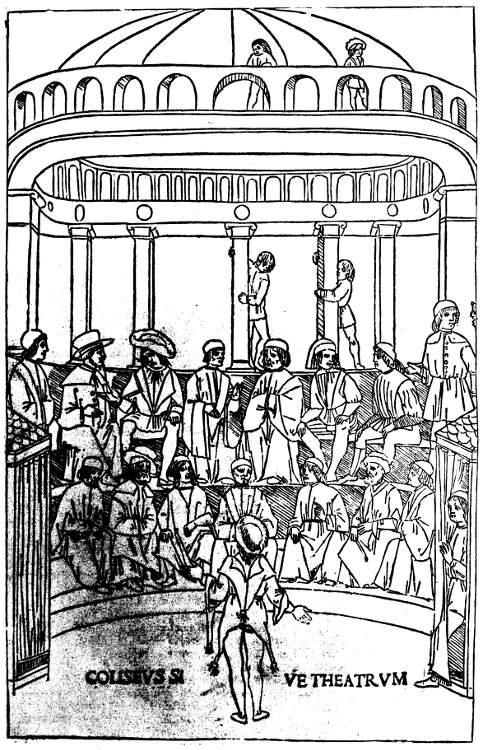
of a stage (cf. ch. xviii, Bibl. Note).]
The Epistle has ‘Ante quadraginta plus minus annos, morticinum
hoc edidi duarum hebdomadarum abortum, et unius noctis spectaculo
destinatum, non aevi integri’. The play is a Latin version of Luigi
Groto’s La Dalida (1567).
SIR WILLIAM ALEXANDER, EARL OF STIRLING (c. 1568–1640).
William Alexander of Menstrie, after an education at Glasgow and Leyden
and travel in France, Spain, and Italy, was tutor to Prince Henry
before the accession of James, and afterwards Gentleman extraordinary
of the Privy Chamber both to Henry and to Charles. He was knighted
about 1609, appointed a Master of Requests in 1614 and Secretary for
Scotland in 1626. He was created Earl of Stirling in 1633. He formed
literary friendships with Michael Drayton and William Drummond of
Hawthornden, but Jonson complained (Laing, 11) that ‘Sir W. Alexander
was not half kinde unto him, and neglected him, because a friend to
Drayton’. His four tragedies read like closet plays, and his only
connexion with the stage appears to be in some verses to Alleyn after
the foundation of Dulwich in 1619 (Collier, Memoirs of Alleyn,
178).
Collections
S. R. 1604, April 30 (by order of Court). ‘A booke Called The
Woorkes of William Alexander of Menstrie Conteyninge The Monarchicke
Tragedies, Paranethis to the Prince and Aurora.’ Edward Blunt
(Arber, iii. 260).
1604. The Monarchicke Tragedies. By William Alexander of Menstrie.
V. S. for Edward Blount. [Croesus and Darius (with
a separate t.p.).]
1607. The Monarchick Tragedies; Croesus, Darius, The Alexandraean,
Iulius Caesar, Newly enlarged. By William Alexander, Gentleman of
the Princes priuie Chamber. Valentine Simmes for Ed. Blount.
[New issue, with additions. Julius Caesar has separate t.p.
Commendatory verses, signed ‘Robert Ayton’.]
1616. The Monarchicke Tragedies. The third Edition. By Sr.
W. Alexander Knight. William Stansby. [Croesus,
Darius, The Alexandraean Tragedy, Julius Caesar,
in revised texts, the last three with separate t.ps.]
1637. Recreations with the Muses. By William Earle of Sterline. Tho.
Harper. [Croesus, Darius, The Alexandraean
Tragedy, Julius Caesar.]
1870–2. Poetical Works. 3 vols.
1921. L. E. Kastner and H. B. Charlton, The Poetical Works of
Sir William Alexander, Earl of Stirling. Vol. i. The Dramatic
Works.—Dissertations: C. Rogers, Memorials of the Earl of S.
and the House of A. (1877); H. Beumelburg, Sir W. A. Graf von
S., als dramatischer Dichter (1880, Halle diss.).
Darius > 1603
1603. The Tragedie of Darius. By William Alexander of Menstrie.
Robert Waldegrave. Edinburgh. [Verses to James VI;
Epistle to Reader; Commendatory verses by ‘Io Murray’ and ‘W. Quin’.]
1604. G. Elde for Edward Blount. [Part of Coll. 1604,
with separate t.p.; also in later Colls. Two sets of verses to
King at end.]
Croesus > 1604
1604. [Part of Coll. 1604; also in later Colls. Argument;
Verses to King at end.]
The Alexandraean Tragedy > 1607
1605? [Hazlitt, Manual, 7, and others cite a print of this date,
which is not confirmed by Greg, Plays, 1.]
1607. (Running Title). The Alexandraean Tragedie. [Part of
Coll. 1607; also in later Colls. Argument.]
Julius Caesar > 1607
1607. The Tragedie of Iulius Caesar. By William Alexander, Gentleman
of the Princes priuie Chamber. Valentine Simmes for Ed. Blount.
[Part of Coll. 1607, with separate t.p.; also in later
Colls. Argument.]
Edition in H. H. Furness, Julius Caesar (1913, New
Variorum Shakespeare, xvii).
WILLIAM ALLEY (c. 1510–70).
Alley’s Πτωχὸμυσεῖον. The Poore Mans Librarie (1565)
contains three and a half pages of dialogue between Larymos and
Phronimos, described as from ‘a certaine interlude or plaie intituled
Aegio. In the which playe ij persons interlocutorie do dispute,
the one alledging for the defence of destenie and fatall necessitie,
and the other confuting the same’. P. Simpson (9 N. Q. iii. 205)
suggests that Alley was probably himself the author. The book consists
of praelectiones delivered in 1561 at St. Paul’s, of which Alley
had been a Prebendary. He became Bishop of Exeter in 1560. On his
attitude to the public stage, cf. App. C. No. viii. It is therefore odd
to find the Lord Bishop’s players at Barnstaple and Plymouth in 1560–1
(Murray, ii. 78).
ROBERT AMERIE (c. 1610).
The deviser of the show of Chester’s Triumph (1610). See ch.
xxiv (C).
ROBERT ARMIN (> 1588–1610 <). For biography see Actors (ch. xv).
The Two Maids of Moreclacke. 1607–8 (?)
1609. The History of the two Maids of Moreclacke, With the life and
simple maner of Iohn in the Hospitall. Played by the Children of the
Kings Maiesties Reuels. Written by Robert Armin, seruant to the Kings
most excellent Maiestie. N. O. for Thomas Archer. [Epistle to
Reader, signed ‘Robert Armin’.]
Editions in A. B. Grosart, Works of R. A. Actor (1880,
Choice Rarities of Ancient English Poetry, ii), 63, and J.
S. Farmer (1913, S. F. T.). The epistle says that the play
was ‘acted by the boyes of the Reuels, which perchaunce in part was
sometime acted more naturally in the Citty, if not in the hole’, that
the writer ‘would haue againe inacted Iohn my selfe but ... I cannot
do as I would’, and that he had been ‘requested both of Court and
Citty, to show him in priuate’. John is figured in a woodcut on the
title-page, which is perhaps meant for a portrait of Armin. As a King’s
man, and no boy, he can hardly have played with the King’s Revels;
perhaps we should infer that the play was not originally written for
them. All their productions seem to date from 1607–8.
Doubtful Play
Armin has been guessed at as the R. A. of The Valiant Welshman.
THOMAS ASHTON (ob. 1578).
Ashton took his B.A. in 1559–60, and became Fellow of Trinity,
Cambridge. He was appointed Head Master of Shrewsbury School from 24
June 1561 (G. W. Fisher, Annals of Shrewsbury School, 4). To the
same year a local record, Robert Owen’s Arms of the Bailiffs
(17th c.), assigns ‘Mr Astons first playe upon the Passion of Christ’,
and this is confirmed by an entry in the town accounts (Owen and
Blakeway, Hist. of Shrewsbury, i. 353) of 20s. ‘spent upon
Mr Aston and a other gentellmane of Cambridge over pareadijs’ on 25
May 1561. Whitsuntide plays had long been traditional at Shrewsbury
(Mediaeval Stage, ii. 250, 394, where the dates require
correction). A local chronicle (Shropshire Arch. Soc. Trans.
xxxvii. 54) has ‘Elizabeth 1565 [i. e. 1566; cf. App. A], The Queen
came to Coventry intending for Salop to see Mr Astons Play, but it was
ended. The Play was performed in the Quarry, and lasted the Whitson
[June 2] hollydays’. This play is given in Mediaeval Stage, from
local historians, as Julian the Apostate, but the same chronicle
assigns that to 1556. Another chronicle (Taylor MS. of 16th-17th
c.) records for 1568–9 (Shropshire Arch. Soc. Trans. iii. 268),
‘This yeare at Whytsoontyde [29 May] was a notable stage playe playeed
in Shrosberie in a place there callyd the quarrell which lastid all
the hollydayes unto the which cam greate number of people of noblemen
and others the which was praysed greatlye and the chyff aucter therof
was one Master Astoon beinge the head scoolemaster of the freescole
there a godly and lernyd man who tooke marvelous greate paynes therin’.
Robert Owen, who calls this Aston’s ‘great playe’ of the Passion of
Christ, assigns it to 1568, but it is clear from the town accounts
that 1569 is right (Fisher, 18). This is presumably the play referred
to by Thomas Churchyard (q.v.) in The Worthiness of Wales (1587,
ed. Spenser Soc. 85), where after describing ‘behind the walles ...
a ground, newe made Theator wise’, able to seat 10,000, and used for
plays, baiting, cockfights, and wrestling, he adds:
At Astons Play, who had beheld this then,
Might well have seene there twentie thousand men.
In the margin he comments, ‘Maister Aston was a good and
godly Preacher’. A ‘ludus in quarell’ is noted in 1495, and this was
‘where the plases [? playes] have bine accustomyd to be usyd’ in 1570
(Mediaeval Stage, ii. 251, 255). Ashton resigned his Mastership
about 1571 and was in the service of the Earl of Essex at Chartley in
1573. But he continued to work on the Statutes of the school, which as
settled in 1578, the year of his death, provide that ‘Everie Thursdaie
the Schollers of the first forme before they goo to plaie shall for
exercise declame and plaie one acte of a comedie’ (Fisher, 17, 23; E.
Calvert, Shrewsbury School Register). It is interesting to note
that among Ashton’s pupils were Sir Philip Sidney and Fulke Greville,
Lord Brooke, who entered the school together on 16 Nov. 1564.
JAMES ASKE (c. 1588).
Author of Elizabetha Triumphans (1588), an account of
Elizabeth’s visit to Tilbury. See ch. xxiv (C).
THOMAS ATCHELOW (c. 1589).
The reference to him in Nashe’s Menaphon epistle (App. C, No.
xlii) rather suggests that he may have written plays.
FRANCIS BACON (1561–1626).
Bacon was son of Sir Nicholas Bacon, Lord Keeper, by Anne, daughter
of Sir Anthony Cooke. He was at Trinity, Cambridge, from April 1573
to March 1575, and entered Gray’s Inn in June 1576. He sat in the
Parliaments of 1584 and 1586, and about 1591 attached himself to the
rising fortunes of the Earl of Essex, who in 1595 gave him an estate
at Twickenham. His public employment began as a Queen’s Counsel about
1596. He was knighted on 23 July 1603, became Solicitor-General on 25
June 1607, Attorney-General on 27 Oct. 1613, Lord Keeper on 7 March
1617, and Lord Chancellor on 7 Jan. 1618. He was created Lord Verulam
on 12 July 1618, and Viscount St. Albans on 27 Jan. 1621. Later in the
same year he was disgraced for bribery. The edition of his Works
(with his Letters and Life) by J. Spedding, R. L. Ellis, and D.
D. Heath (1857–74) is exhaustive. Many papers of his brother Anthony
are at Lambeth, and are drawn on by T. Birch, Memoirs of the Reign
of Elizabeth (1754). F. J. Burgoyne, Facsimile of a Manuscript
at Alnwick (1904), reproduces the Northumberland MS. which
contains some of his writings, with others that may be his, and seems
once to have contained more. Apart from philosophy, his chief literary
work was The Essayes or Counsels, Civill and Morall, of which
10 appeared in 1597, and were increased to 38 in 1612 and 58 in 1625.
Essay xxxvii, added in 1625, is Of Masks and Triumphs, and,
although Bacon was not a writer for the public stage, he had a hand, as
deviser or patron, in several courtly shows.
(i) He helped to devise dumb-shows for Thomas Hughes’s Misfortunes
of Arthur (q.v.) given by Gray’s Inn at Greenwich on 28 Feb. 1588.
(ii) The list of contents of the Northumberland MS. (Burgoyne,
xii) includes an item, now missing from the MS., ‘Orations at Graies
Inne Revells’, and Spedding, viii. 342, conjectures that Bacon wrote
the speeches of the six councillors delivered on 3 Jan. 1595 as part of
the Gesta Grayorum (q.v.).
(iii) Rowland Whyte (Sydney Papers, i. 362) describes a device
on the Queen’s day (17 Nov.), 1595, in which the speeches turned on the
Earl of Essex’s love for Elizabeth, who said that, ‘if she had thought
there had been so much said of her, she would not have been there that
night’. A draft list of tilters, of whom the challengers were led by
the Earl of Cumberland and the defendants by the Earl of Essex, is in
Various MSS. iv. 163, and a final one, with descriptions of
their appearance, in the Anglorum Feriae of Peele (q.v.). They
were Cumberland, Knight of the Crown, Essex, Sussex, Southampton, as
Sir Bevis, Bedford, Compton, Carew, the three brothers Knollys, Dudley,
William Howard, Drury, Nowell, John Needham, Skydmore, Ratcliffe,
Reynolds, Charles Blount, Carey. The device took place partly in the
tiltyard, partly after supper. Before the entry of the tilters a page
made a speech and secured the Queen’s glove. A dialogue followed
between a Squire on one hand, and a Hermit, a Secretary, and a Soldier,
who on the entry of Essex tried to beguile him from love. A postboy
brought letters, which the Secretary gave to Essex. After supper,
the argument between the Squire and the three tempters was resumed.
Whyte adds, ‘The old man [the Hermit] was he that in Cambridg played
Giraldy; Morley played the Secretary; and he that plaid Pedantiq was
the soldior; and Toby Matthew acted the Squires part. The world makes
many untrue constructions of these speaches, comparing the Hermitt and
the Secretary to two of the Lords [Burghley and Robert Cecil?]; and the
soldier to Sir Roger Williams.’ The Cambridge reference is apparently
to Laelia (q.v.) and the performers of the Hermit and Soldier
were therefore George Meriton and George Mountaine, of Queen’s. Morley
might perhaps be Thomas Morley, the musician, a Gentleman of the Chapel.
Several speeches, apparently belonging to this device, are preserved.
Peele speaks of the balancing of Essex between war and statecraft as
indicated in the tiltyard by ‘His mute approach and action of his
mutes’, but they may have presented a written speech.
(a) Lambeth MS. v. 118 (copied by Birch in Sloane
MS. 4457, f. 32) has, in Bacon’s hand, a speech by the Squire in
the tiltyard, and four speeches by the Hermit, Soldier, Secretary, and
Squire ‘in the Presence’. These are printed by Birch (1763), Nichols,
Eliz. iii. 372, and Spedding, viii. 378.
(b) Lambeth MS. viii. 274 (copied by Birch in Addl.
MS. 4164, f. 167) has, in Bacon’s hand, the beginning of a speech
by the Secretary to the Squire, which mentions Philautia and Erophilus,
and a letter from Philautia to the Queen. These are printed in
Spedding, viii. 376.
(c) The Northumberland MS. ff. 47–53 (Burgoyne, 55)
has ‘Speeches for my Lord of Essex at the tylt’. These deal with the
attempts of Philautia to beguile Erophilus. Four of them are identical
with the four speeches ‘in the Presence’ of (a); the fifth is a
speech by the Hermit in the tiltyard. They were printed by Spedding,
separately, in 1870, as A Conference of Pleasure composed for some
festive occasion about the year 1592 by Francis Bacon; but 1592 is
merely a guess which Whyte’s letter corrects.
(d) S. P. D. Eliz. ccliv. 67, 68, docketed ‘A Device
made by the Earl of Essex for the Entertainment of her Majesty’, has
a speech by the Squire, distinct from any in the other MSS., a speech
by the Attendant on an Indian Prince, which mentions Philautia, and
a draft by Edward Reynolds, servant to Essex, of a French speech by
Philautia. The two first of these are printed by Spedding, viii.
388, and Devereux, Lives of the Earls of Essex, ii. 501. The
references to Philautia are rather against Spedding’s view that these
belong to some occasion other than that of 1595.
Sir Henry Wotton says of Essex (Reliquiae Wottonianae, 21), ‘For
his Writings, they are beyond example, especially in his ... things of
delight at Court ... as may be yet seen in his Impresses and Inventions
of entertainment; and above all in his darling piece of love, and self
love’. This, for what it is worth—and Wotton was secretary to Essex
in 1595, suggests that the Earl himself, rather than Bacon, was the
author of the speeches, which in fact none of the MSS. directly ascribe
to Bacon. But it is hard to distinguish the literary productions of a
public man from those of his staff.
(iv) The Northumberland MS. (Burgoyne, 65) has a speech of
apology for absence, headed ‘ffor the Earle of Sussex at ye tilt an:
96’, which might be Bacon’s, especially as he wrote from Gray’s Inn to
the Earl of Shrewsbury on 15 Oct. 1596, ‘to borrow a horse and armour
for some public show’ (Lodge, App. 79).
(v) Beaumont (q.v.) acknowledges his encouragement of the Inner Temple
and Gray’s Inn mask on 20 Feb. 1613, for the Princess Elizabeth’s
wedding.
(vi) He bore the expenses of the Gray’s Inn Mask of Flowers
(q.v.) on 6 Jan. 1614 for the Earl of Somerset’s wedding. To this
occasion probably belongs an undated letter signed ‘Fr. Bacon’, and
addressed to an unknown lord (M. S. C. i. 214 from Lansdowne
MS. 107, f. 13; Spedding, ii. 370; iv. 394), in which he expresses
regret that ‘the joynt maske from the fowr Innes of Cowrt faileth’,
and offers a mask for ‘this occasion’ by a dozen gentlemen of Gray’s
Inn, ‘owt of the honor which they bear to your lordship, and my lord
Chamberlayne, to whome at theyr last maske they were so much bownde’.
The last mask would be (v) above, and the then Lord Chamberlain was
Suffolk, prospective father-in-law of Somerset, to whom the letter may
be supposed to be addressed. But it is odd that the letter is endorsed
‘Mr’ Fr. Bacon, and bound up with papers of Burghley, and it is just
possible, although not, I think, likely, that the reference may be to
some forgotten Elizabethan mask.
(vii) A recent attempt has been made to assign to Bacon the academic
Pedantius (cf. App. K).
JOHN BADGER (c. 1575).
A contributor to the Kenilworth entertainment (cf. ch. xxiv, C).
Gascoigne calls him ‘Master Badger of Oxenforde, Maister of Arte, and
Bedle in the same Universitie’. A John Badger of Ch. Ch. took his M.A.
in 1555, and a superior bedel of divinity of the same name made his
will on 15 July 1577 (Foster, Alumni Oxonienses, i. 54).
WILLIAM BARKSTED.
For biography, cf. ch. xv (Actors), and for his share in The
Insatiate Countess, s.v. Marston.
There is no reason to regard him as the ‘William Buckstead, Comedian’,
whose name is at the end of a Prologue to a playe to the cuntry
people in Bodl. Ashm. MS. 38 (198).
BARNABE BARNES (c. 1569–1609).
Barnes was born in Yorkshire, the son of Richard Barnes, bishop of
Durham. He entered Brasenose College, Oxford, in 1586, but took no
degree, accompanied Essex to France in 1591, and dedicated his poems
Parthenophil and Parthenophe (1593) to William Percy (q.v.).
He was a friend of Gabriel Harvey and abused by Nashe and Campion.
In 1598 he was charged with an attempt at poison, but escaped from
prison (Athenaeum, 1904, ii. 240). His Poems were
edited by A. B. Grosart in Occasional Issues (1875). Hazlitt,
Manual, 23, states that a manuscript of a play by him with the
title The Battle of Hexham was sold with Isaac Reed’s books in
1807, but this, which some writers call The Battle of Evesham,
has not been traced. As Barnes was buried at Durham in Dec. 1609, it
is probable that The Madcap ‘written by Barnes’, which Herbert
licensed for Prince Charles’s men on 3 May 1624, was by another of the
name.
The Devil’s Charter. 2 Feb. 1607
S. R. 1607, Oct. 16 (Buck). ‘The Tragedie of Pope Alexander the
Sixt as it was played before his Maiestie.’ John Wright (Arber,
iii. 361).
1607. The Divils Charter: A Tragedie Conteining the Life and Death of
Pope Alexander the sixt. As it was plaide before the Kings Maiestie,
vpon Candlemasse night last: by his Maiesties Seruants. But more
exactly reuewed, corrected and augmented since by the Author, for the
more pleasure and profit of the Reader. G. E. for John Wright.
[Dedication by Barnabe Barnes to Sir William Herbert and Sir William
Pope; Prologue with dumb-show and Epilogue.]
Extracts by A. B. Grosart in Barnes’s Poems (1875), and
editions by R. B. McKerrow (1904, Materialien, vi) and J.
S. Farmer (1913, S. F. T.)—Dissertation: A. E. H. Swaen,
G. C. Moore Smith, and R. B. McKerrow, Notes on the D. C. by B.
B. (1906, M. L. R. i. 122).
DAVID, LORD BARRY (1585–1610).
David Barry was the eldest son of the ninth Viscount Buttevant, and
the ‘Lo:’ on his title-page represents a courtesy title of ‘Lord’, or
‘Lording’ as it is given in the lawsuit of Androwes v. Slater,
which arose out of the interest acquired by him in 1608 in the
Whitefriars theatre (q.v.). Kirkman’s play-lists (Greg, Masques,
ci) and Wood, Athenae Oxon. ii. 655, have him as ‘Lord’ Barrey,
which did not prevent Langbaine (1691) and others from turning him into
‘Lodowick’.—Dissertations: J. Q. Adams, Lordinge (alias
Lodowick) Barry (1912, M. P. ix. 567); W. J. Lawrence,
The Mystery of Lodowick Barry (1917, University of North
Carolina Studies in Philology, xiv. 52).
Ram Alley. 1607–8
S. R. 1610, Nov. 9 (Buck). ‘A booke called, Ramme Alley, or
merry trickes. Robert Wilson (Arber, iii. 448).
1611. Ram-Alley: Or Merrie-Trickes. A Comedy Diuers times heretofore
acted. By the Children of the Kings Reuels. Written by Lo: Barrey.
G. Eld for Robert Wilson. [Prologue and Epilogue.]
1636; 1639.
Editions in Dodsley4 (1875, x) and by W. Scott (1810, A. B.
D. ii) and J. S. Farmer (1913, S. F. T.).
Fleay, i. 31, attempts to place the play at the Christmas of 1609, but
it is improbable that the King’s Revels ever played outside 1607–8.
Archer’s play-list of 1656 gives it to Massinger. There are references
(ed. Dodsley, pp. 280, 348, 369) to the baboons, which apparently
amused London about 1603–5 (cf. s.v. Sir Giles Goosecap), and to
the Jacobean knightings (p. 272).
FRANCIS BEAUMONT (c. 1584–1616).
Beaumont was third son of Francis Beaumont, Justice of Common Pleas,
sprung from a gentle Leicestershire family, settled at Grace Dieu
priory in Charnwood Forest. He was born in 1584 or 1585 and had a
brother, Sir John, also known as a poet. He entered Broadgates Hall,
Oxford, in 1597, but took no degree, and the Inner Temple in 1600. In
1614 or 1615 he had a daughter by his marriage, probably recent, to
Ursula Isley of Sundridge Hall, Kent, and another daughter was born
after his death on 6 March 1616. He was buried in Westminster Abbey.
Beaumont contributed a humorous grammar lecture (preserved in Sloane
MS. 1709, f. 13; cf. E. J. L. Scott in Athenaeum for 27 Jan.
1894) to some Inner Temple Christmas revels of uncertain date. This has
allusions to ‘the most plodderly plotted shew of Lady Amity’ given ‘in
this ill-instructed hall the last Christmas’, and to seeing a play at
the Bankside for sixpence. His poetical career probably begins with the
anonymous Salmacis and Hermaphroditus of 1602. His non-dramatic
poems, of which the most important is an epistle to Elizabeth Countess
of Rutland in 1612, appeared after his death in volumes of 1618, 1640,
and 1653, which certainly ascribe to him much that is not his. His
connexion with the stage seems to have begun about 1606, possibly
through Michael Drayton, a family friend, in whose Eglogs of
that year he appears as ‘sweet Palmeo’. But his first play, The
Woman Hater, written independently for Paul’s, shows him under the
influence of Ben Jonson, who wrote him an affectionate epigram (lv),
told Drummond in 1619 that ‘Francis Beaumont loved too much himself
and his own verses’ (Laing, 10), and according to Dryden (Essay
on Dramatick Poesie) ‘submitted all his writings to his censure,
and, ’tis thought, used his judgment in correcting, if not contriving,
all his plots’. To Jonson’s Volpone (1607) commendatory verses
were contributed both by Beaumont, whose own Knight of the Burning
Pestle was produced in the same year, and by John Fletcher, whose
names are thus first combined. Jonson and Beaumont, in their turn,
wrote verses for Fletcher’s The Faithful Shepherdess, probably
written in 1608 or 1609 and published in 1609 or 1610. About 1608 or
1609 it may also be supposed that the famous literary collaboration
began. This, although it can only be proved to have covered some
half-dozen plays, left the two names so closely associated that when,
in 1647 and 1679, the actors and publishers issued collections of
fifty-three pieces, in all or most of which Fletcher had had, or was
supposed to have had, a hand, they described them all as ‘by Francis
Beaumont and John Fletcher’, and thus left to modern scholarship a task
with which it is still grappling. A contemporary protest by Sir Aston
Cockaine pointed out the small share of Beaumont and the large share
of Massinger in the 1647 volume; and the process of metrical analysis
initiated by Fleay and Boyle may be regarded as fairly successful
in fixing the characteristics of the very marked style of Fletcher,
although it certainly raises more questions than it solves as to the
possible shares not only of Massinger, but of Jonson, Field, Tourneur,
Daborne, Middleton, Rowley, and Shirley, as collaborators or revisers,
in the plays as they have come down to us. Since Fletcher wrote up to
his death in 1625, much of this investigation lies outside my limits,
and it is fortunate that the task of selecting the plays which may,
certainly or possibly, fall before Beaumont’s death in 1616 is one
in which a fair number of definite data are available to eke out the
slippery metrical evidence. It would seem that the collaboration began
about 1608 and lasted in full swing for about four or five years, that
in it Beaumont was the ruling spirit, and that it covered plays, not
only for the Queen’s Revels, for whom both poets had already written
independently, and for their successors the Lady Elizabeth’s, but
also, and concurrently, for the King’s. According to Dryden, two or
three plays were written ‘very unsuccessfully’ before the triumph
of Philaster, but these may include the independent plays,
of which we know that the Knight of the Burning Pestle and
the Faithful Shepherdess failed. The Folios contain a copy of
verses written by Beaumont to Jonson (ed. Waller, x. 199) ‘before he
and Mr. Fletcher came to London, with two of the precedent
Comedies then not finish’d, which deferr’d their merry meetings
at the Mermaid’, but this probably relates to a temporary
villeggiatura and cannot be precisely dated. It is no doubt to
this period of 1608–13 that we may refer the gossip of Aubrey, i. 96,
who learnt from Sir James Hales and others that Beaumont and Fletcher
‘lived together on the Banke-Side, not far from the Play-house, both
batchelors; lay together; had one wench in the house between them,
which they did so admire; the same cloathes and cloake, &c., betweene
them’. Obviously these conditions ended when Beaumont married an
heiress about 1613, and it seems probable that from this date onwards
he ceased to be an active playwright, although he contributed a mask to
the Princess Elizabeth’s wedding at Shrovetide of that year, and his
hand can be traced, perhaps later still, in The Scornful Lady.
At any rate, about 1613 Fletcher was not merely writing independent
plays—a practice which, unlike Beaumont, he may never have wholly
dropped—but also looking about for other contributors. There is
some converging evidence of his collaboration about this date with
Shakespeare; and Henslowe’s correspondence (Henslowe Papers, 66)
shows him quite clearly as engaged on a play, possibly The Honest
Man’s Fortune, with no less than three others, Daborne, Field, and
Massinger. It is not probable that, from 1616 onwards, Fletcher wrote
for any company but the King’s men. Of the fifty-two plays included
in the Ff., forty-four can be shown from title-pages, actor-lists,
licences by the Master of the Revels, and a Lord Chamberlain’s order
of 1641 (M. S. C. i. 364) to have belonged to the King’s, six
by title-pages and another Lord Chamberlain’s order (Variorum,
iii. 159) to have belonged to the Cockpit theatre, and two, Wit at
Several Weapons and Four Plays in One, together with The
Faithful Friends, which does not appear in the Ff., cannot be
assigned to any company. But some of the King’s men’s plays and some
or all of the Cockpit plays had originally belonged to Paul’s, the
Queen’s Revels, or the Lady Elizabeth’s, and it is probable that all
these formed part of the Lady Elizabeth’s repertory in 1616, and that
upon the reorganization of the company which then took place they were
divided into two groups, of which one passed with Field to the King’s,
while the other remained with his late fellows and was ultimately left
with Christopher Beeston when their occupation of the Cockpit ended in
1625.
I classify the plays dealt with in these notes as follows: (a)
Plays wholly or substantially by Beaumont—The Woman Hater,
The Knight of the Burning Pestle; (b) Plays of the
Beaumont-Fletcher collaboration—Philaster, A Maid’s
Tragedy, A King and No King, Four Plays in One,
Cupid’s Revenge, The Coxcomb, The Scornful Lady;
(c) Plays wholly or substantially by Fletcher—The Woman’s
Prize, The Faithful Shepherdess, Monsieur Thomas,
Valentinian, Bonduca, Wit Without Money;
(d) Plays of doubtful authorship and, in some cases,
period—The Captain, The Honest Man’s Fortune, The
Two Noble Kinsmen, The Faithful Friends, Thierry and
Theodoret, Wit at Several Weapons, Love’s Cure,
The Night Walker. Full treatment of The Two Noble
Kinsmen, as of Henry VIII, in which Fletcher certainly
had a hand, is only possible in relation to Shakespeare. I have not
thought it necessary to include every play which, or a hypothetical
version of which, an unsupported conjecture, generally from Mr.
Oliphant, puts earlier than 1616. The Queen of Corinth, The
Noble Gentleman, The Little French Lawyer, The Laws of
Candy, The Knight of Malta, The Fair Maid of the Inn,
The Chances, Beggar’s Bush, The Bloody Brother,
Love’s Pilgrimage, Nice Valour, and Rule a Wife and
Have a Wife are omitted on this principle, and I believe I might
safely have extended the same treatment to some of those in my class
(d).
Collections
S. R. 1646, Sept. 4 (Langley). ‘These severall Tragedies &
Comedies hereunder mencioned (vizt.) ... [thirty plays named] ...
by Mr. Beamont and Mr. Flesher.’ H. Robinson and H. Moseley
(Eyre, i. 244).
1660, June 29. ‘The severall Plays following, vizt.... [names] ... all
six copies written by Fra: Beamont & John Fletcher.’ H. Robinson and
H. Moseley (Eyre, ii. 268).
F1, 1647. Comedies and Tragedies Written by Francis Beaumont and
Iohn Fletcher Gentlemen. Never printed before, And now published by
the Authours Originall Copies. For H. Robinson and H. Moseley.
[Twenty-nine plays of the 1646 entry, excluding The Wildgoose
Chase, and the five plays and one mask of the 1660 entry, none
but the mask previously printed; Portrait of Fletcher by W. Marshall;
Epistle to Philip Earl of Pembroke and Montgomery, signed ‘John Lowin,
Richard Robinson, Eylaerd Swanston, Hugh Clearke, Stephen Hammerton,
Joseph Taylor, Robert Benfield, Thomas Pollard, William Allen,
Theophilus Bird’; Epistle to the Reader, signed ‘Ja. Shirley’; The
Stationer to the Readers, signed ‘Humphrey Moseley’ and dated ‘Feb.
14th 1646’; Thirty-seven sets of Commendatory verses, variously
signed; Postscript; cf. W. W. Greg in 4 Library, ii. 109.]
F2, 1679. Fifty Comedies and Tragedies. Written by Francis Beaumont
and John Fletcher, Gentlemen. All in one Volume. Published by the
Authors Original Copies, the Songs to each Play being added. J.
Macock, for John Martyn, Henry Herringman, Richard Marriot. [The
thirty-four plays and one mask of F1, with eighteen other plays,
all previously printed; Epistle by the Stationers to the Reader; Actor
Lists prefixed to many of the plays.]
1711. The Works of B. and F. 7 vols. Jacob Tonson.
Editions by Theobald, Seward and Sympson (1750, 10 vols.), G.
Colman (1778, 10 vols.; 1811, 3 vols.), H. Weber (1812, 14 vols.,
adding The Faithful Friends), G. Darley (1839, 2 vols.; 1862–6,
2 vols.), A. Dyce (1843–6, 11 vols.; 1852, 2 vols.).
1905–12. A. Glover and A. R. Waller. The Works of F. B. and J.
F. 10 vols. (C. E. C.). [Text of F2, with collations of
F1 and Qq.]
1904–12 (in progress). A. H. Bullen, The Works of F. B. and J. F.
Variorum Edition. 4 vols. issued. [Text based on Dyce; editions of
separate plays by P. A. Daniel, R. W. Bond, W. W. Greg, R. B. McKerrow,
J. Masefield, M. Luce, C. Brett, R. G. Martin, E. K. Chambers.]
Selections
1887. J. S. L. Strachey, The Best Plays of B. and F. 2
vols. (Mermaid Series). [Maid’s Tragedy, Philaster,
Thierry and Theodoret, K. B. P., King and No King,
Bonduca, Faithful Shepherdess, Valentinian, and
later plays.]
1912. F. E. Schelling, Beaumont and Fletcher (M. E. D.).
[Philaster, Maid’s Tragedy, Faithful Shepherdess,
Bonduca.]
Dissertations: A. C. Swinburne, B. and F. (1875–94,
Studies in Prose and Poetry), The Earlier Plays of B. and
F. (1910, English Review); F. G. Fleay, On Metrical
Tests as applied to Dramatic Poetry: Part ii, B., F., Massinger
(1874, N. S. S. Trans. 51, 23*, 61*, reprinted, 1876–8, with
alterations in Shakespeare Manual, 151), On the Chronology
of the Plays of F. and Massinger (1886, E. S. ix. 12), and
in B. C. (1891), i. 164; R. Boyle, B., F., and Massinger
(1882–7, E. S. v. 74, vii. 66, viii. 39, ix. 209, x. 383),
B., F., and Massinger (1886, N. S. S. Trans. 579), Mr.
Oliphant on B. and F. (1892–3, E. S. xvii. 171, xviii. 292),
Daborne’s Share in the B. and F. Plays (1899, E. S. xxvi.
352); G. C. Macaulay, F. B.: a Critical Study (1883), B. and
F. (1910, C. H. vi. 107); E. H. C. Oliphant, The Works
of B. and F. (1890–2, E. S. xiv. 53, xv. 321, xvi. 180); E.
Koeppel, Quellen-Studien zu den Dramen Ben Jonson’s, John Marston’s
und B. und F.’s (1895, Münchener Beiträge, xi); C. E.
Norton, F. B.’s Letter to Ben Jonson (1896, Harvard Studies
and Notes, v. 19); A. H. Thorndike, The Influence of B. and F.
on Shakspere (1901); O. L. Hatcher, J. F.: a Study in Dramatic
Method (1905); R. M. Alden, Introduction to B.’s Plays
(1910, B. L.); C. M. Gayley, F. B.: Dramatist (1914);
W. E. Farnham, Colloquial Contractions in B., F., Massinger and
Shakespeare as a Test of Authorship (1916, M. L. A. xxxi.
326).
Bibliographies: A. C. Potter, A Bibl. of B. and F. (1890,
Harvard Bibl. Contributions, 39); B. Leonhardt, Litteratur
über B. und F. (1896, Anglia, xix. 36, 542).
The Woman Hater, c. 1606
S. R. 1607, May 20 (Buck). ‘A booke called “The Woman Hater” as
it hath ben lately acted by the Children of Powles.’ Eleazar Edgar
and Robert Jackson (Arber, iii. 349). [A note ‘Sir George Buckes
hand alsoe to it’.]
1607. The Woman Hater. As it hath beene lately Acted by the Children of
Paules. Sold by John Hodgets. [Prologue in prose.]
1607. R. R. sold by John Hodgets. [A reissue.]
S. R. 1613, April 19. Transfer of Edgar’s share to John Hodgettes
(Arber, iii. 521).
1648.... As it hath beene Acted by his Majesties Servants with great
Applause. Written by John Fletcher Gent. For Humphrey Moseley.
1649. The Woman Hater, or the Hungry Courtier. A Comedy ... Written by
Francis Beamont and John Fletcher, Gent. For Humphrey Moseley.
[A reissue. Prologue in verse, said by Fleay, i. 177, to be Davenant’s,
and Epilogue, used also for The Noble Gentleman.]
Fleay, i. 177, and Gayley, 73, put the date in the spring of 1607,
finding a reference in ‘a favourite on the sudden’ (I. iii)
to the success of Robert Carr in taking the fancy of James at the
tilt of 24 March 1607, to which Fleay adds that ‘another inundation’
(III. i) recalls a flood of 20 Jan. 1607. Neither argument
is convincing, and it is not known that the Paul’s boys went on into
1607; they are last heard of in July 1606. The prologue expresses
the author’s intention not to lose his ears, perhaps an allusion to
Jonson’s and Chapman’s peril after Eastward Ho! in 1605. Gayley
notes in II. iii what certainly looks like a reminiscence of
Antony and Cleopatra, IV. xiv. 51 and xv. 87, but it is
no easier to be precise about the date of Antony and Cleopatra
than about that of The Woman Hater. The play is universally
regarded as substantially Beaumont’s and the original prologue only
speaks of a single author, but Davenant in 1649 evidently supposed
it to be Fletcher’s, saying ‘full twenty yeares, he wore the bayes’.
Boyle, Oliphant, Alden, and Gayley suggest among them III. i,
ii; IV. ii; V. i, ii, v as scenes to which Fletcher
or some other collaborator may have given touches.
The Knight of the Burning Pestle. 1607
1613. The Knight of the Burning Pestle. For Walter Burre.
[Epistle to Robert Keysar, signed ‘W. B.’, Induction with Prologue,
Epilogue.]
1635.... Full of Mirth and Delight. Written by Francis Beaumont and
Iohn Fletcher, Gent. As it is now Acted by Her Maiesties Servants at
the Private house in Drury Lane. N. O. for I. S. [Epistle to
Readers, Prologue (from Lyly’s Sapho and Phaon).]
1635.... Francis Beamont....
Editions by F. W. Moorman (1898, T. D.), H. S. Murch
(1908, Yale Studies, xxxiii), R. M. Alden (1910, B. L.),
W. A. Neilson (1911, C. E. D.).—Dissertations: R.
Boyle, B. and F.’s K. B. P. (1889, E. S. xiii. 156);
B. Leonhardt, Ueber B. und F.’s K. B. P. (1885, Annaberg
programme), Die Text-Varianten von B. und F.’s K. B. P.
(1896, Anglia, xix. 509).
The Epistle tells us that the play was ‘in eight daies ... begot and
borne’, ‘exposed to the wide world, who ... utterly reiected it’,
preserved by Keysar and sent to Burre, who had ‘fostred it priuately
in my bosome these two yeares’. The play ‘hopes his father will beget
him a yonger brother’. Burre adds, ‘Perhaps it will be thought to bee
of the race of Don Quixote: we both may confidently sweare, it is his
elder aboue a yeare’. The references to the actors in the induction as
boys and the known connexion of Keysar with the Queen’s Revels fix the
company. The date is more difficult. It cannot be earlier than 1607,
since the reference to a play at the Red Bull in which the Sophy of
Persia christens a child (IV. i. 46) is to Day’s Travels
of Three English Brothers of that year. With other allusions, not
in themselves conclusive, 1607 would agree well enough, notably with
Ind. 8, ‘This seuen yeares there hath beene playes at this house’, for
it was just seven years in the autumn of 1607 since Evans set up plays
at the Blackfriars. The trouble is IV. i. 73, ‘Read the play
of the Foure Prentices of London, where they tosse their pikes
so’, for this implies that the Four Prentices was not merely
produced but in print, and the earliest extant edition is of 1615. It
is, however, quite possible that the play may have been in print, even
as far back as 1594 (cf. s.v. Heywood). Others put it, and with it the
K. B. P., in 1610, in which case the production would have been
at the Whitefriars, the history of which can only be traced back two
or three years and not seven years before 1610. On the whole, I think
the reference to Don Quixote in the Epistle is in favour of
1607 rather than 1610. It is, of course, conceivable that Burre only
meant to claim that the K. B. P. was a year older than Thomas
Shelton’s translation of Don Quixote, which was entered in
S. R. on 19 Jan. 1611 and published in 1612. Even this brings
us back to the very beginning of 1610, and the boast would have been a
fairly idle one, as Shelton states in his preface that the translation
was actually made ‘some five or six yeares agoe’. Shelton’s editor,
Mr. Fitzmaurice-Kelly, has shown that it was based on the Brussels
edition of 1607. If we put it in 1608 and the K. B. P. in 1607
the year’s priority of the latter is preserved. Most certainly the
K. B. P. was not prior to the Spanish Don Quixote of
1605. Its dependence on Cervantes is not such as necessarily to imply
that Beaumont had read the romance, but he had certainly heard of its
general drift and of the particular episodes of the inn taken for a
castle and the barber’s basin. Fleay, Boyle, Moorman, Murch, and Alden
are inclined to assign to Fletcher some or all of the scenes in which
Jasper and Luce and Humphrey take part; but Macaulay, Oliphant and
Gayley regard the play, except perhaps for a touch or two, as wholly
Beaumont’s. Certainly the Epistle suggests that the play had but one
‘father’.
The Faithful Shepherdess. 1608–9
N.D. The Faithfull Shepherdesse. By John Fletcher. For R.
Bonian and H. Walley. [Commendatory verses by N. F. (‘Nath. Field’,
Q2), Fr. Beaumont, Ben Jonson, G. Chapman; Dedicatory verses to Sir
Walter Aston, Sir William Skipwith, Sir Robert Townsend, all signed
‘John Fletcher’; Epistle to Reader, signed ‘John Fletcher’.]
S. R. 1628, Dec. 8. Transfer from Walley to R. Meighen (Arber,
iv. 206).
1629.... newly corrected ... T. C. for R. Meighen.
1634.... Acted at Somerset House before the King and Queene on Twelfe
night last, 1633. And divers times since with great applause at the
Private House in Blacke-Friers, by his Majesties Servants.... A. M.
for Meighen. [Verses to Joseph Taylor, signed ‘Shakerley Marmion’,
and Prologue, both for the performance of 6 Jan. 1634.]
1656; 1665.
Editions by F. W. Moorman (1897, T. D.), W. W. Greg
(1908, Bullen, iii), W. A. Neilson (1911, C. E. D.).
Jonson told Drummond in the winter of 1618–19 (Laing, 17) that
‘Flesher and Beaumont, ten yeers since, hath written the Faithfull
Shipheardesse, a Tragicomedie, well done’. This gives us the date
1608–9, which there is nothing to contradict. The undated Q1 may
be put in 1609 or 1610, as Skipwith died on 3 May 1610 and the short
partnership of the publishers is traceable from 22 Dec. 1608 to 14 Jan.
1610. It is, moreover, in Sir John Harington’s catalogue of his plays,
which was made up in 1609 or 1610 (cf. ch. xxii). The presence of
Field, Chapman, and Jonson amongst the verse-writers and the mentions
in Beaumont’s verses of ‘the waxlights’ and of a boy dancing between
the acts point to the Queen’s Revels as the producers. It is clear also
from the verses that the play was damned, and that Fletcher alone, in
spite of Drummond’s report, was the author. This is not doubted on
internal grounds.
The Woman’s Prize, or, The Tamer Tamed. 1604 <
1647. The Womans Prize, or The Tamer Tam’d. A Comedy. [Part of F1.
Prologue and Epilogue.]
1679. [Part of F2.]
Fleay, i. 198, Oliphant, and Thorndike, 70, accumulate inconclusive
evidence bearing on the date, of which the most that can be said is
that an answer to The Taming of the Shrew would have more point
the nearer it came to the date of the original, and that the references
to the siege of Ostend in I. iii would be topical during or
not long after that siege, which ended on 8 Sept. 1604. On the other
hand, Gayley (R. E. C. iii, lxvi) calls attention to possible
reminiscences of Epicoene (1609) and Alchemist
(1610). I see no justification for supposing that a play written
in 1605 would undergo revision, as has been suggested, in 1610–14.
A revival by the King’s in 1633 got them into some trouble with
Sir Henry Herbert, who claimed the right to purge even an old play
of ‘oaths, prophaness, and ribaldrye’ (Variorum, iii. 208).
Possibly the play is also The Woman is too Hard for Him, which
the King’s took to Court on 26 Nov. 1621 (Murray, ii. 193). But the
original writing was not necessarily for this company. There is general
agreement in assigning the play to Fletcher alone.
Philaster > 1610
S. R. 1620, Jan. 10 (Taverner). ‘A Play Called Philaster.’
Thomas Walkley (Arber, iii. 662).
1620. Phylaster, Or Loue lyes a Bleeding. Acted at the Globe by his
Maiesties Seruants. Written by Francis Baymont and Iohn Fletcher. Gent.
For Thomas Walkley.
1622.... As it hath beene diuerse times Acted, at the Globe, and
Blacke-friers, by his Maiesties Seruants.... The Second Impression,
corrected, and amended. For Thomas Walkley. [Epistle to the
Reader by Walkley. Different text of I. i; V. iv, v.]
1628. A. M. for Richard Hawkins. [Epistle by the Stationer to
the Understanding Gentry.]
1634; 1639; 1652; N.D. [1663]; 1687.
Editions by J. S. L. Strachey (1887, Mermaid, i), F. S.
Boas (1898, T. D.), P. A. Daniel (1904, Variorum, i),
A. H. Thorndike (1906, B. L.), W. A. Neilson (1911, C. E.
D.).—Dissertations: B. Leonhardt, Über die Beziehungen
von B. und F.’s P. zu Shakespeare’s Hamlet und Cymbeline (1885,
Anglia, viii. 424) and Die Text-Varianten von B. und F.’s
P. (1896, Anglia, xix. 34).
The play is apparently referred to in John Davies of Hereford,
Scourge of Folly (S. R. 8 Oct. 1610), ep. 206:
To the well deseruing M^r John Fletcher.
Loue lies ableeding, if it should not proue
Her vttmost art to shew why it doth loue.
Thou being the Subiect (now) It raignes vpon:
Raign’st in Arte, Iudgement, and Inuention:
For this I loue thee: and can doe no lesse
For thine as faire, as faithfull Shepheardesse.
If so, the date 1608–10 is suggested, and I do not think
that it is possible to be more precise. No trustworthy argument can
be based with Gayley, 342, on the fact that Davies’s epigram follows
that praising Ostler as ‘Roscius’ and ‘sole king of actors’; and I fear
that the view of Thorndike, 65, that 1608 is a ‘probable’ conjecture is
biased by a desire to assume priority to Cymbeline. There were
two Court performances in the winter of 1612–13, and Fleay, i. 189,
suggests that the versions of I. i and V. iv, v which
appear in Q1 were made for these. The epistle to Q2 describes
them as ‘dangerous and gaping wounds ... received in the first
impression’. There is general agreement that most of the play, whether
Davies knew it or not, is Beaumont’s. Most critics assign V.
iii, iv and some the whole or parts of I. i, ii, II.
ii, iv, and III. ii to Fletcher.
The Coxcomb. 1608 < > 10
1647. The Coxcomb. [Part of F1. Prologue and Epilogue.]
1679. [Part of F2. ‘The Principal Actors were Nathan Field, Joseph
Taylor, Giles Gary, Emanuel Read, Rich. Allen, Hugh Atawell, Robert
Benfeild, Will Barcksted.’]
Dissertation: A. S. W. Rosenbach, The Curious Impertinent in
English Dramatic Literature (1902, M. L. N. xvii. 179).
The play was given at Court by the Queen’s Revels on 2 or 3 Nov.
1612. It passed, doubtless, through the Lady Elizabeth’s, to whom the
actor-list probably belongs, to the King’s, who took it to Court on 5
March 1622 (Murray, ii. 193) and again on 17 Nov. 1636 (Cunningham,
xxiv). There was thus more than one opportunity for the prologue, which
speaks of the play as having a mixed reception at first, partly because
of its length, then ‘long forgot’, and now revived and shortened. The
original date may be between the issue in 1608 of Baudouin’s French
translation of The Curious Impertinent from Don Quixote,
which in original or translation suggested its plot, and Jonson’s
Alchemist (1610), IV. vii. 39, ‘You are ... a Don
Quixote. Or a Knight o’ the curious coxcombe’. The prologue refers
to ‘makers’, and there is fair agreement in giving some or all of
I. iv, vi, II. iv, III. iii, and V.
ii to Beaumont and the rest to Fletcher. Fleay, Boyle, Oliphant, and
Gayley think that there has been revision by a later writer, perhaps
Massinger or W. Rowley.
The Maid’s Tragedy > 1611
S. R. 1619, April 28 (Buck). ‘A play Called The maides tragedy.’
Higgenbotham and Constable (Arber, iii. 647).
1619. The Maides Tragedy. As it hath beene divers times Acted at
the Blacke-friers by the King’s Maiesties Seruants. For Francis
Constable.
1622.... Newly perused, augmented, and inlarged, This second
Impression. For Francis Constable.
1630.... Written by Francis Beaumont, and Iohn Fletcher Gentlemen. The
Third Impression, Reuised and Refined. A. M. for Richard Hawkins.
1638; 1641; 1650 [1660?]; 1661.
Editions by J. S. L. Strachey (1887, Mermaid, i), P.
A. Daniel (1904, Variorum, i), A. H. Thorndike (1906, B.
L.), W. A. Neilson (1911, C. E. D.).—Dissertation:
B. Leonhardt, Die Text-Varianten in B. und F.’s M. T. (1900,
Anglia, xxiii. 14).
The play must have been known by 31 Oct. 1611 when Buck named the
Second Maiden’s Tragedy (q.v.) after it, and it was given
at Court during 1612–13. An inferior limit is not attainable and
any date within c. 1608–11 is possible. Gayley, 349, asks us
to accept the play as more mature than, and therefore later than,
Philaster. Fleay, i. 192, thinks that the mask in I.
ii was added after the floods in the winter of 1612, but you cannot
bring Neptune into a mask without mention of floods. As to authorship
there is some division of opinion, especially on II. ii
and IV. iii; subject thereto, a balance of opinion gives
I, II, III, IV. ii, iv and
V. iv to Beaumont, and only IV. i and V. i,
ii, iii to Fletcher.
An episode (I. ii) consists of a mask at the wedding of
Amintor and Evadne, with an introductory dialogue between Calianax,
Diagoras, who keeps the doors, and guests desiring admission. ‘The
ladies are all placed above,’ says Diagoras, ‘save those that come in
the King’s troop.’ Calianax has an ‘office’, evidently as Chamberlain.
‘He would run raging among them, and break a dozen wiser heads than his
own in the twinkling of an eye.’
The maskers are Proteus and other sea-gods; the presenters Night,
Cinthia, Neptune, Aeolus, Favonius, and other winds, who ‘rise’ or come
‘out of a rock’. There are two ‘measures’ between hymeneal songs, but
no mention of taking out ladies.
In an earlier passage (I. i. 9) a poet says of masks, ‘They
must commend their King, and speak in praise Of the Assembly, bless
the Bride and Bridegroom, In person of some God; th’are tyed to rules
Of flattery’.
A King and No King. 1611
S. R. 1618, Aug. 7 (Buck). ‘A play Called A king and noe kinge.’
Blount (Arber, iii. 631).
1619. A King and no King. Acted at the Globe, by his Maiesties
Seruants: Written by Francis Beamount and Iohn Flecher. For Thomas
Walkley. [Epistle to Sir Henry Nevill, signed ‘Thomas Walkley’.]
1625.... Acted at the Blacke-Fryars, by his Maiesties Seruants. And now
the second time Printed, according to the true Copie.... For Thomas
Walkley.
1631; 1639; 1655; 1661; 1676.
Editions by R. W. Bond (1904, Bullen, i), R. M. Alden
(1910, B. L.).—Dissertation: B. Leonhardt, Die
Text-Varianten von B.’s und F.’s A K. and No K. (1903,
Anglia, xxvi. 313).
This is a fixed point, both for date and authorship, in the history
of the collaboration. Herbert records (Var. iii. 263) that
it was ‘allowed to be acted in 1611’ by Sir George Buck. It was in
fact acted at Court by the King’s on 26 Dec. 1611 and again during
1612–13. A performance at Hampton Court on 10 Jan. 1637 is also
upon record (Cunningham, xxv). The epistle, which tells us that the
publisher received the play from Nevill, speaks of ‘the authors’ and of
their ‘future labours’; rather oddly, as Beaumont was dead. There is
practical unanimity in assigning I, II, III,
IV. iv, and V. ii, iv to Beaumont and IV. i,
ii, iii and V. i, iii to Fletcher.
Cupid’s Revenge > 1612
S. R. 1615, April 24 (Buck). ‘A play called Cupid’s revenge.’
Josias Harrison (Arber, iii. 566).
1615. Cupid’s Revenge. As it hath beene diuers times Acted by the
Children of her Maiesties Reuels. By Iohn Fletcher. Thomas Creede
for Josias Harrison. [Epistle by Printer to Reader.]
1630.... As it was often Acted (with great applause) by the Children
of the Reuells. Written by Fran. Beaumont & Io. Fletcher. The second
edition. For Thomas Jones.
1635.... The third Edition. A. M.
The play was given by the Queen’s Revels at Court on 5 Jan. 1612, 1
Jan. 1613, and either 9 Jan. or 27 Feb. 1613. It was revived by the
Lady Elizabeth’s at Court on 28 Dec. 1624, and is in the Cockpit list
of 1639. It cannot therefore be later than 1611–12, while no close
inferior limit can be fixed. Fleay, i. 187, argues that it has been
altered for Court, chiefly by turning a wicked king, queen, and prince
into a duke, duchess, and marquis. I doubt if this implies revision
as distinct from censorship, and in any case it does not, as Fleay
suggests, imply the intervention of a reviser other than the original
authors. The suggestion has led to chaos in the distribution of
authorship, since various critics have introduced Daborne, Field, and
Massinger as possible collaborators or revisers. The stationer speaks
of a single ‘author’, meaning Fletcher, but says he was ‘not acquainted
with him’. And the critics at least agree in finding both Beaumont and
Fletcher, pretty well throughout.
The Captain. 1609 < > 12
1647. The Captain. [Part of F1. Prologue and Epilogue.]
1679. The Captain. A Comedy. [Part of F2.] ‘The principal Actors
were, Richard Burbadge, Henry Condel, William Ostler, Alexander Cooke.’
The play was given by the King’s at Court during 1612–13, and
presumably falls between that date and the admission of Ostler to the
company in 1609. The 1679 print, by a confusion, gives the scene as
‘Venice, Spain’, but this hardly justifies the suggestion of Fleay, i.
195, that we have a version of Fletcher’s work altered for the Court
by Barnes. He had formerly conjectured collaboration between Fletcher
and Jonson (E. S. ix. 18). The prologue speaks of ‘the author’;
Fleay thinks that the mention of ‘twelve pence’ as the price of a seat
indicates a revival. Several critics find Massinger; Oliphant finds
Rowley; and Boyle and Oliphant find Beaumont, as did Macaulay, 196, in
1883, but apparently not in 1910 (C. H. vi. 137).
Two Noble Kinsmen. 1613
S. R. 1634, April 8 (Herbert). ‘A Tragicomedy called the two
noble kinsmen by John Fletcher and William Shakespeare.’ John
Waterson (Arber, iv. 316).
1634. The Two Noble Kinsmen: Presented at the Black-friers by the Kings
Maiesties servants, with great applause: Written by the memorable
Worthies of their time; Mr. John Fletcher, and Mr. William Shakspeare.
Gent. Tho. Cotes for Iohn Waterson. [Prologue and Epilogue.]
1679. [Part of F2 of Beaumont and Fletcher.]
Editions by W. W. Skeat (1875), H. Littledale (1876–85,
N. S. S.), C. H. Herford (1897, T. D.), J. S. Farmer
(1910, T. F. T.), and with Works of Beaumont and
Fletcher, Sh. Apocrypha, and sometimes Works of
Shakespeare.—Dissertations: W. Spalding, A Letter on Sh.’s
Authorship of T. N. K. (1833; 1876, N. S. S.); S. Hickson,
The Shares of Sh. and F. in T. N. K. (1847, Westminster
Review, xlvii. 59; 1874, N. S. S. Trans. 25*, with additions
by F. G. Fleay and F. J. Furnivall); N. Delius, Die angebliche
Autorschaft des T. N. K. (1878, Jahrbuch, xiii. 16); R.
Boyle, Sh. und die beiden edlen Vettern (1881, E. S. iv.
34), On Massinger and T. N. K. (1882, N. S. S. Trans.
371); T. Bierfreund, Palamon og Arcite (1891); E. H. C. Oliphant
(1892, E. S. xv. 323); B. Leuschner, Über das Verhältniss von
T. N. K. zu Chaucer’s Knightes Tale (1903, Halle diss.); O.
Petersen, The T. N. K. (1914, Anglia, xxxviii. 213); H.
D. Sykes, The T. N. K. (1916, M. L. R. xi. 136); A. H.
Cruickshank, Massinger and T. N. K. (1922).
The date of T. N. K. is fairly well fixed to 1613 by its
adaptation of Beaumont’s wedding mask of Shrovetide in that year;
there would be a confirmation in Jonson, Bartholomew Fair
(1614), iv. 3,
Quarlous. Well my word is out of the Arcadia, then: Argalus.
Win-wife. And mine out of the play, Palemon;
did not the juxtaposition of the Arcadia suggest that the
allusion may be, not to the Palamon of T. N. K. but to the
Palaemon of Daniel’s The Queen’s Arcadia (1606). In spite of the
evidence of the t.p. attempts have been made to substitute Beaumont,
or, more persistently, Massinger, for Shakespeare as Fletcher’s
collaborator. This question can only be discussed effectively in
connexion with Shakespeare.
The Honest Man’s Fortune. 1613
[MS.] Dyce MS. 9, formerly in Heber collection.
1647. The Honest Mans Fortune. [Part of F1. After play, verses ‘Upon
an Honest Mans Fortune. By Mr. John Fletcher’, beginning ‘You that can
look through Heaven, and tell the Stars’.]
1679. The Honest Man’s Fortune. A Tragicomedie. [Part of F2. ‘The
principal actors were Nathan Field, Joseph Taylor, Rob. Benfield, Will
Eglestone, Emanuel Read, Thomas Basse.’]
Dissertation: K. Richter, H. M. F. und seine Quellen
(1905, Halle diss.).
On the fly-leaf of the MS. is ‘The Honest Man’s Fortune, Plaide in the
yeare 1613’, and in another hand at the end of the text, ‘This Play,
being an olde one, and the Originall lost was reallow’d by mee this 8
Febru. 1624. Att the intreaty of Mr. .’ The last word
is torn off, but a third hand has added ‘Taylor’. The MS. contains
some alterations, partly by the licenser, partly by the stage-manager
or prompter. The latter include the names of three actors, ‘G[eorge]
Ver[non]’, ‘J: R Cro’ and ‘G. Rick’. The ending of the last scene in
the MS. differs from that of the Ff. The endorsement is confirmed
by Herbert’s entry in his diary (Variorum, iii. 229), ‘For
the King’s company. An olde play called The Honest Mans Fortune, the
originall being lost, was re-allowed by mee at Mr. Taylor’s intreaty,
and on condition to give mee a booke [The Arcadia], this 8 Februa.
1624.’ The actor-list suggests that the original performers were Lady
Elizabeth’s men, after the Queen’s Revels had joined them in March
1613. Fleay, i. 196, suggests that this is the play by Fletcher, Field,
Massinger, and Daborne which is the subject of some of Henslowe’s
correspondence and was finally delivered on 5 Aug. 1613 (Greg,
Henslowe Papers, 65, 90). Attempts to combine this indication
with stylistic evidence have led the critics to some agreement that
Fletcher is only responsible for V and that Massinger is to be
found in III, and for the rest into a quagmire of conjecture
amongst the names of Beaumont, Fletcher, Massinger, Field, Daborne,
Tourneur, and Cartwright. The appended verses of the Ff. are not in the
Dyce MS., but they are in Addl. MS. 25707, f. 66, and
Bodl. Rawlinson Poet. MS. 160, f. 20, where they are ascribed to
Fletcher, and in Beaumont’s Poems (1653).
Bonduca. 1609 < > 14
1647. Bonduca, A Tragedy. [Part of F1.]
1679. [Part of F2. ‘The Principal Actors were Richard Burbadge,
Henry Condel, William Eglestone, Nich. Toolie, William Ostler, John
Lowin, John Underwood, Richard Robinson.’]
Dissertations: B. Leonhardt, Die Text-Varianten von B. und
F.’s B. (1898, Anglia, xx. 421) and Bonduca (E.
S. xiii. 36).
The actor-list is of the King’s men between 1609–11 or between
1613–14, as these are the only periods during which Ecclestone and
Ostler can have played together. The authorship is generally regarded
as substantially Fletcher’s; and the occasional use of rhyme in
II. i and IV. iv hardly justifies Oliphant’s theory
of an earlier version by Beaumont, or the ascription by Fleay and
Macaulay of these scenes to Field, whose connexion with the King’s does
not seem to antedate 1616.
Monsieur Thomas. 1610 < > 16
S. R. 1639, Jan. 22 (Wykes). ‘A Comedy called Monsieur Thomas,
by master John Fletcher.’ Waterson (Arber, iv. 451).
1639. Monsieur Thomas. A Comedy. Acted at the Private House in Blacke
Fryers. The Author, Iohn Fletcher, Gent. Thomas Harper for John
Waterson. [Epistle to Charles Cotton, signed ‘Richard Brome’ and
commendatory verses by the same.]
N.D. [c. 1661]. Fathers Own Son. A Comedy. Formerly
Acted at the Private House in Black Fryers; and now at the Theatre in
Vere Street by His Majesties Servants. The Author John Fletcher Gent.
For Robert Crofts. [Reissue with fresh t.p.]
Edition by R. G. Martin (1912, Bullen,
iv).—Dissertations: H. Guskar, Fletcher’s Monsieur Thomas
und seine Quellen (1905, Anglia, xxviii. 397; xxix. 1); A.
L. Stiefel, Zur Quellenfrage von John Fletcher’s Monsieur Thomas
(1906, E. S. xxxvi. 238); O. L. Hatcher, The Sources of
Fletcher’s Monsieur Thomas (1907, Anglia, xxx. 89).
The title-page printed at the time of the revival by the King’s men
of the Restoration enables us to identify Monsieur Thomas with
the Father’s Own Son of the Cockpit repertory in 1639, and like
the other plays of the Beaumont and Fletcher series in that repertory
it was probably written by 1616, and either for the Queen’s Revels or
for the Lady Elizabeth’s. An allusion in II. iii. 104 to ‘all
the feathers in the Friars’ might indicate production at Porter’s Hall
in the Blackfriars about that year. The play cannot be earlier than
its source, Part ii (1610) of H. d’Urfé’s Astrée, and by 1610
the more permanent Blackfriars house had passed to the King’s, by whom
the performances referred to on the original title-page must therefore
have been given. Perhaps the explanation is that there had been some
misunderstanding about the distribution of the Lady Elizabeth’s men’s
plays between the King’s and the Cockpit, and that a revival by the
King’s in 1639 led the Cockpit managers to get the Lord Chamberlain’s
order of 10 Aug. 1639 (Variorum, iii. 159) appropriating their
repertory to them. The authorship is ascribed with general assent to
Fletcher alone.
Valentinian. 1610 < > 14
1647. The Tragedy of Valentinian. [Part of F1. Epilogue.]
1679. [Part of F2. ‘The principal Actors were, Richard Burbadge,
Henry Condel, John Lowin, William Ostler, John Underwood.’]
Edition by R. G. Martin (1912, Bullen, iv).
The actor-list is of the King’s men before the death of Ostler on 16
Dec. 1614, and the play must fall between this date and the publication
of its source, Part ii (1610) of H. d’Urfé’s Astrée. There is
general agreement in assigning it to Fletcher alone.
Wit Without Money, c. 1614
S. R. 1639, April 25 (Wykes). ‘These fiue playes ... Witt
without money.’ Crooke and William Cooke (Arber, iv. 464).
1639. Wit Without Money. A Comedie, As it hath beene Presented with
good Applause at the private house in Drurie Lane, by her Majesties
Servants. Written by Francis Beamount and John Flecher. Gent. Thomas
Cotes for Andrew Crooke and William Cooke.
1661.... The Second Impression Corrected. For Andrew Crooke.
Edition by R. B. McKerrow (1905, Bullen, ii).
Allusions to the New River opened in 1613 (IV. v. 61) and to
an alleged Sussex dragon of Aug. 1614 (II. iv. 53) suggest
production not long after the latter date. There is general agreement
in assigning the play to Fletcher alone. It passed into the Cockpit
repertory and was played there both by Queen Henrietta’s men and in
1637 by Beeston’s boys (Variorum, iii. 159, 239). Probably,
therefore, it was written for the Lady Elizabeth’s.
The Scornful Lady. 1613 < > 17
S. R. 1616, March 19 (Buck). ‘A plaie called The scornefull
ladie written by Francis Beaumont and John Fletcher.’ Miles
Partriche (Arber, iii. 585).
1616. The Scornful Ladie. A Comedie. As it was Acted (with great
applause) by the Children of Her Maiesties Reuels in the Blacke-Fryers.
Written by Fra. Beaumont and Io. Fletcher, Gent. For Miles
Partriche.
1625.... As it was now lately Acted (with great applause) by the Kings
Maiesties seruants, at the Blacke-Fryers.... For M. P., sold by
Thomas Jones.
1630, 1635, 1639, 1651 (bis).
Edition by R. W. Bond (1904, Bullen, i).
References to ‘talk of the Cleve wars’ (V. iii. 66) and
‘some cast Cleve captain’ (V. iv. 54) cannot be earlier than
1609 when the wars broke out after the death of the Duke of Cleves on
25 March, and there can hardly have been ‘cast’ captains until some
time after July 1610 when English troops first took part. Fleay, i.
181, calls attention to an allusion to the binding by itself of the
Apocrypha (I. ii. 46) which was discussed for the A. V. and
the Douay Version, both completed in 1610; and Gayley to a reminiscence
(IV. i. 341) of Epicoene which, however, was acted
in 1609, not, as Gayley thinks, 1610. None of these indications,
however, are of much importance in view of another traced by Gayley
(III. ii. 17):
I will style thee noble, nay, Don Diego;
I’ll woo thy infanta for thee.
Don Diego Sarmiento’s negotiations for a Spanish match with Prince
Charles began on 27 May 1613. The play must therefore be 1613–16. In
any case the ‘Blackfriars’ of the title-page must be the Porter’s Hall
house of 1615–17. Even if the end of 1609 were a possible date, Murray,
i. 153, is wrong in supposing that the Revels were then at Blackfriars.
There is fair unanimity in assigning I, the whole or part of
II, and V. ii to Beaumont, and the rest to Fletcher,
but Bond and Gayley suggest that III. i, at least, might be
Massinger’s.
Thierry and Theodoret (?)
1621. The Tragedy of Thierry King of France, and his Brother Theodoret.
As it was diuerse times acted at the Blacke-Friers by the Kings
Maiesties Seruants. For Thomas Walkley.
1648.... Written by John Fletcher Gent. For Humphrey Moseley.
1649.... Written by Fracis Beamont and John Fletcher Gent. For
Humphrey Moseley. [A reissue, with Prologue and Epilogue, not
written for the play; cf. Fleay, i. 205.]
Dissertation: B. Leonhardt, Die Text-Varianten von B. und
F.’s T. and T. (1903, Anglia, xxvi. 345).
Fleay, i. 205, dates the play c. 1617, supposing it to be a
satire on the French Court, and the name De Vitry to be that of the
slayer of the Maréchal d’Ancre. Thorndike, 79, has little difficulty
in disposing of this theory, although it may be pointed out that the
Privy Council did in fact intervene to suppress a play about the
Maréchal in 1617 (Gildersleeve, 113); but he is less successful in
attempting to show any special plausibility in a date as early as 1607.
A former conjecture by Fleay (E. S. ix. 21) that III
and V. i are fragments of the anonymous Branholt of the
Admiral’s in 1597 may also be dismissed with Greg (Henslowe,
ii. 188). Most critics find, in addition to Fletcher, Massinger, as
collaborator or reviser, according to the date given to the play, and
some add Field or Daborne. Oliphant and Thorndike find Beaumont. So did
Macaulay, 196, in 1883, but apparently not in 1910 (C. H. vi.
138).
The Nightwalker or The Little Thief (?)
S. R. 25 April 1639 (Wykes). ‘These fiue playes ... Night
walters.... Crooke and William Cooke (Arber, iv. 464).
1640. The Night-Walker, or the Little Theife. A Comedy, As it was
presented by her Majesties Servants, at the Private House in Drury
Lane. Written by John Fletcher. Gent. Tho. Cotes for Andrew Crooke
and William Cooke. [Epistle to William Hudson, signed ‘A. C.’.]
1661. For Andrew Crook.
Herbert licensed this as ‘a play of Fletchers corrected by Sherley’
on 11 May 1633 and it was played at Court by Queen Henrietta’s men on
30 Jan. 1634 (Variorum, iii. 236). The only justification for
placing Fletcher’s version earlier than 1616 is the suspicion that
the only plays of Beaumont or Fletcher which passed to the Cockpit
repertory were some of those written for the Queen’s Revels or the Lady
Elizabeth’s before that date.
Four Plays in One (?)
1647. Four Plays, or Moral Representations in One. [Part of F1.
Induction with 2 Prologues, The Triumph of Honour, the Triumph of Love
with Prologue, the Triumph of Death with Prologue, the Triumph of Time
with Prologue, Epilogue.]
Dissertation: W. J. Lawrence, The Date of F. P. in O.
(T. L. S. 11 Dec. 1919).
This does not seem to have passed to the King’s men or the Cockpit, and
cannot be assigned to any particular company. It has been supposed to
be a boys’ play, presumably because it has much music and dancing. It
has also much pageantry in dumb-shows and so forth and stage machinery.
Conceivably it might have been written for private performance in place
of a mask. Time, in particular, has much the form of a mask,
with antimask. But composite plays of this type were well known on the
public stage. There is no clear indication of date. Fleay, i. 179,
suggested 1608 because The Yorkshire Tragedy, printed that year,
is also described in its heading as ‘one of the Four Plays in One’, but
presumably it belonged to another series. Thorndike, 85, points out
that the antimask established itself in Court masks in 1608. Gayley,
301, puts Death and Time in 1610, because he thinks
that they fall stylistically between The Faithfull Shepherdess
and Philaster, and the rest in 1612, because he thinks they
are Field’s and that they cannot be before 1611, since they are not
mentioned, like Amends for Ladies, as forthcoming in the
epistle to Woman a Weathercock in that year. This hardly bears
analysis, and indeed Field is regarded as the author of the Induction
and Honour only by Oliphant and Gayley and of Love only
by Gayley himself. All these are generally assigned to Beaumont, and
Death and Time universally to Fletcher. Lawrence’s
attempt to attach the piece to the wedding festivities of 1612–13 does
not seem to me at all convincing.
Love’s Cure; or, The Martial Maid (?)
1647. Loves Cure, or the Martial Maid. [Part of F1. A Prologue at
the reviving of this Play. Epilogue.]
1679. Loves Cure, or the Martial Maid A Comedy. [Part of F2.]
Dissertation: A. L. Stiefel, Die Nachahmung spanischer
Komödien in England (1897, Archiv, xcix. 271).
The prologue, evidently later than Fletcher’s death in 1625, clearly
assigns the authorship to Beaumont and Fletcher, although the epilogue,
of uncertain date, speaks of ‘our author’. This is the only sound
reason for thinking that the original composition was in Beaumont’s
lifetime. The internal evidence for an early date cited by Fleay, i.
180, and Thorndike, 72, becomes trivial when we eliminate what merely
fixes the historic time of the play to 1604–9, and proves nothing as to
the time of composition. On the other hand, II. ii,
the cold Muscovite ...
That lay here lieger in the last great frost,
points to a date later than the winter of 1621, as I
cannot trace any earlier great frost in which a Muscovite embassy can
have been in London (S. P. D. Jac. I, cxxiii, 11, 100; cxxiv.
40). Further, the critics seem confident that the dominant hand in
the play as it exists is Massinger’s, and that Beaumont and Fletcher
show, if at all, faintly through his revision. The play belonged to the
repertory of the King’s men by 1641 (M. S. C. i. 364).
Wit at Several Weapons (?)
1647. Wit at several weapons. A Comedy. [Part of F1. The epilogue at
the reviving of this Play.]
1679. [Part of F2.]
The history of the play is very obscure. It is neither in the Cockpit
repertory of 1639 nor in that of the King’s in 1641, and the guesses of
Fleay, i. 218, that it may be The Devil of Dowgate or Usury Put to
Use, licensed by Herbert for the King’s on 17 Oct. 1623, and The
Buck is a Thief, played at Court by the same men on 28 Dec. 1623,
are unsupported and mutually destructive. The epilogue, clearly written
after the death of Fletcher, tells us that ‘’twas well receiv’d before’
and that Fletcher ‘had to do in’ it, and goes on to qualify this by
adding—
that if he but writ
An Act, or two, the whole Play rose up wit.
The critics find varying amounts of Fletcher, with
work of other hands, which some of them venture to identify as those
of Middleton and Rowley. Oliphant, followed by Thorndike, 87, finds
Beaumont, and the latter points to allusions which are not inconsistent
with, but certainly do not prove, 1609–10, or even an earlier date.
Macaulay, 196, also found Beaumont in 1883, but seems to have retired
upon Middleton and Rowley in 1910 (C. H. vi. 138).
The Faithful Friends (?)
[MS.] Dyce MS. 10, formerly in the Heber collection.
S. R. 1660, June 29. ‘The Faithfull Friend a Comedy, by Francis
Beamont & John Fletcher’. H. Moseley (Eyre, ii. 271).
Edition by A. Dyce in Works (1812).
Fleay in 1889 (E. S. xiii. 32) saw evidence of a date in 1614
in certain possible allusions (I. i. 45–52, 123–6) to the
Earl of Somerset and his wedding on 26 Dec. 1613, and suggested Field
and Daborne as the authors. In 1891 (i. 81, 201) he gave the whole to
Daborne, except IV. v, which he thought of later date, and
supposed it to be the subject of Daborne’s letter of 11 March 1614 to
Henslowe, which was in fact probably The Owl (Greg, Henslowe
Papers, 82). Oliphant thinks it a revision by Massinger and Field
in 1614 of a play by Beaumont and Fletcher, perhaps as early as 1604.
With this exception no critic seems much to believe in the presence of
Beaumont or Fletcher, and Boyle, who suggests Shirley, points out that
the allusion in I. i. 124 to the relation between Philip III
and the Duke of Lerma as in the past would come more naturally after
Philip’s death in 1621 or at least after Lerma’s disgrace in 1618. The
MS. is in various hands, one of which has made corrections. Some of
these seem on internal evidence to have been due to suggestions of the
censor, others to play-house exigencies.
Lost Play
Among plays entered in S. R. by Humphrey Moseley on 29 June 1660 (Eyre,
ii. 271) is ‘The History of Madon King of Brittain, by F. Beamont’.
Madan is a character in Locrine, but even Moseley can hardly
have ascribed that long-printed play to Beaumont.
Inner Temple and Gray’s Inn Mask. 20 Feb. 1613
S. R. 1613, Feb. 27 (Nidd). ‘A booke called the [description] of
the maske performed before the kinge by the gent. of the Myddle temple
and Lincolns Inne with the maske of Grayes Inne and the Inner Temple.’
George Norton (Arber, iii. 516).
N.D. The Masque of the Inner Temple and Grayes Inn: Grayes
Inne and the Inner Temple, presented before his Maiestie, the Queenes
Maiestie, the Prince, Count Palatine and the Lady Elizabeth their
Highnesses, in the Banquetting-house at Whitehall on Saturday the
twentieth day of Februarie, 1612. F. K. for George Norton.
[Epistle to Sir Francis Bacon and the Benchers.]
N.D. ... By Francis Beaumont, Gent. F. K. for George
Norton.
1647. [Part of F1.]
1653. Poems: by Francis Beaumont, Gent. [&c.] for Laurence
Blaiklock. [The Masque is included.]
1653. Poems ... for William Hope. [A reissue.]
1660. Poems. The golden remains of those so much admired dramatick
poets, Francis Beaumont & John Fletcher, Gent. [&c.] for William
Hope. [A reissue.]
1679. [Part of F2.]
The texts of 1647–79 give a shorter description than the original
Qq, and omit the epistle.
Edition in Nichols, James (1828), ii. 591.
For general notices of the wedding masks, see ch. xxiv and the account
of Campion’s Lords’ Mask; but it may be noted that the narrative
in the Mercure François gives a very inaccurate description of
Beaumont’s work as left to us, introducing an Atlas and an Aletheia who
find no places in the text.
The maskers, in carnation, were fifteen knights of Olympia; the
musicians twelve priests of Jove; the presenters Mercury and Iris.
There were two antimasks, Mercury’s of four Naiads, five Hyades, four
Cupids, and four Statues, ‘not of one kinde or liverie (because
that had been so much in use heretofore)’, and Iris’s of a ‘rurall
company’ consisting of a Pedant, a May Lord and Lady, a Servingman and
Chambermaid, a Country Clown or Shepherd and Country Wench, a Host
and Hostess, a He Baboon and She Baboon, and a He Fool and She Fool
‘ushering them in’.
The locality was the Banqueting House at Whitehall. The Hall was
originally appointed, and on Shrove-Tuesday, 16 Feb., the mask came
by water from Winchester House in the royal barge, attended by many
gentlemen of the Inns in other barges. They landed at the Privy Stairs,
watched by the King and princes from the Privy Gallery, and were
conducted to the Vestry. But the actual mask was put off until 20 Feb.,
in view of the press in the Hall, and then given in Banqueting House.
Beaumont’s description passes lightly over this contretemps, but
cf. infra.
The ‘fabricke’ was a mountain, with separate ‘traverses’ discovering
its lower and its higher slopes. From the former issued the presenters
and antimasks, whose ‘measures’ were both encored by the King, but
unluckily ‘one of the Statuaes by that time was undressed’. The latter
bore the ‘maine masque’ in two pavilions before the altar of Jupiter.
The maskers descended, danced two measures, then took their ladies to
dance galliards, durets, corantoes, &c., then danced ‘their parting
measure’ and ascended.
Phineas Pett, Master of the Shipwrights’ Company in 1613, relates
(Archaeologia, xii. 266) that he was
‘intreated by divers gentlemen of the inns of business, whereof
Sir Francis Bacon was chief, to attend the bringing of a mask
by water in the night from St. Mary Over’s to Whitehall in some
of the gallies; but the tide falling out very contrary and the
company attending the maskers very unruly, the project could not
be performed so exactly as was purposed and expected. But yet
they were safely landed at the plying stairs at Whitehall, for
which my paines the gentlemen gave me a fair recompence.’
Chamberlain (Birch, i. 227) says:
‘On Tuesday it came to Gray’s Inn and the Inner Temple’s turn to
come with their mask, whereof Sir Francis Bacon was the chief
contriver; and because the former came on horseback and in open
chariots, they made choice to come by water from Winchester
Place, in Southwark, which suited well with their device, which
was the marriage of the river of Thames to the Rhine; and their
show by water was very gallant, by reason of infinite store
of lights, very curiously set and placed, and many boats and
barges, with devices of light and lamps, with three peals of
ordnance, one at their taking water, another in the Temple
garden, and the last at their landing; which passage by water
cost them better than three hundred pounds. They were received
at the Privy Stairs, and great expectation there was that they
should every way excel their competitors that went before them;
both in device, daintiness of apparel, and, above all, in
dancing, wherein they are held excellent, and esteemed for the
properer men. But by what ill planet it fell out, I know not,
they came home as they went, without doing anything; the reason
whereof I cannot yet learn thoroughly, but only that the hall
was so full that it was not possible to avoid it, or make room
for them; besides that, most of the ladies were in the galleries
to see them land, and could not get in.
But the worst of all was, that the King was so wearied and
sleepy, with sitting up almost two whole nights before, that he
had no edge to it. Whereupon, Sir Francis Bacon adventured to
entreat of his majesty that by this difference he would not, as
it were, bury them quick; and I hear the King should answer,
that then they must bury him quick, for he could last no longer,
but withal gave them very good words, and appointed them to come
again on Saturday. But the grace of their mask is quite gone,
when their apparel hath been already showed, and their devices
vented, so that how it will fall out God knows, for they are
much discouraged and out of countenance, and the world says it
comes to pass after the old proverb, the properer man the worse
luck.’
In a later letter (Birch, i. 229) Chamberlain concludes
the story:
‘And our Gray’s Inn men and the Inner Templars were nothing
discouraged, for all the first dodge, but on Saturday last
performed their parts exceeding well and with great applause and
approbation, both from the King and all the company.’
In a third letter, to Winwood (iii, 435), he describes
the adventures of the mask more briefly, and adds the detail that the
performance was
‘in the new bankquetting house, which for a kind of amends was
granted to them, though with much repining and contradiction of
their emulators.’
Chamberlain refers to the ‘new’ room of 1607, and not
to that just put up for the wedding. This was used for the banquet.
Foscarini reports (V. P. xii. 532) that:
‘After the ballet was over their Majesties and their Highnesses
passed into a great Hall especially built for the purpose, where
were long tables laden with comfits and thousands of mottoes.
After the King had made the round of the tables, everything was
in a moment rapaciously swept away.’
The records of the Inns throw light on the finance and organization
of the mask. From those of the Inner Temple (Inderwick, ii. 72, 76,
81, 92, 99) we learn that the Inn’s share of the cost was ‘not so
little as 1200li’, that there were payments to Lewis Hele, Nicholas
Polhill, and Fenner, and for ‘scarlet for the marshal of the mask’,
that there was a rehearsal for the benchers at Ely House, and that
funds were raised up to 1616 by assessments of £2 and £1 and by
assigning the revenue derived from admission fees to chambers. Those
of Gray’s Inn (Fletcher, 201–8) contain an order for such things to
be bought ‘as Mr. Solicitor [Bacon] shall thinke fitt’. One Will
Gerrard was appointed Treasurer, and an assessment of from £1 to £4
according to status was to be made for a sum equal to that raised by
the Inner Temple. There was evidently some difficulty in liquidating
the bills. In May 1613 an order was made ‘that the gent. late actors in
the maske at the court shall bring in all ther masking apparrel wch
they had of the howse charge ... or else the value therof’. In June a
further order was drafted and then stayed, calling attention to the
‘sad contempts’ of those affected by the former, ‘albeit none of them
did contribute anything to the charge’. Each suit had cost 100 marks.
The offenders were to be discommonsed. In November and again in the
following February it was found necessary to appropriate admission fees
towards the debt.
RICHARD BERNARD (1568–1641).
The translator was born at Epworth, Lincolnshire, took his M.A. from
Christ’s, Cambridge, in 1598, and became incumbent successively of
Worksop, Notts., and Batcombe, Somerset.
Terence in English > 1598
1598. Terence in English. Fabulae comici facetissimi et elegantissimi
poetae Terentii omnes Anglice factae primumque hac nova forma nunc
editae: opera ac industria R. B. in Axholmiensi insula Lincolnsherii
Epwortheatis. John Legat, Cambridge. [Epistle to Christopher and
other sons of Sir W. Wray and nephews of Lady Bowes and Lady St. Paul,
signed by ‘Richard Bernard’, and dated from Epworth, 30 May; Epistle
to Reader. Includes Adelphi, Andria, Eunuchus,
Heautontimorumenus, Hecyra, Phormio.]
1607.... Secunda editio multo emendatior ... John Legat.
1614, 1629, 1641.
WILLIAM BIRD (>1597–1619<).
One of the Admiral’s men (cf. ch. xiii), who collaborated with S.
Rowley (q.v.) in Judas (1601) and in additions to Dr.
Faustus in 1602.
RICHARD BOWER (?-1561).
On his Mastership of the Chapel, cf. ch. xii. He has been supposed to
be the R. B. who wrote Apius and Virginia, and his hand has also
been sought in the anonymous Clyomon and Clamydes and Common
Conditions.
SAMUEL BRANDON (?-?).
Beyond his play, nothing is known of him.
The Virtuous Octavia. 1594 < > 8
S. R. 1598, Oct. 5. ‘A booke, intituled, The Tragicomoedye
of the vertuous Octavia, donne by Samuell Brandon.’ Ponsonby
(Arber, iii. 127).
1598. The Tragicomoedi of the vertuous Octauia. Done by Samuel
Brandon. For William Ponsonby. [Verses to Lady Lucia Audelay;
All’autore, signed ‘Mia’; Prosopopeia al libro, signed
‘S. B.’; Argument. After text, Epistle to Mary Thinne, signed ‘S. B.’;
Argument; verse epistles Octavia to Antonius and Antonius to
Octavia.’]
Editions by R. B. McKerrow (1909, M. S. R.) and J. S.
Farmer (1912, S. F. T.).
This is in the manner of Daniel’s Cleopatra (1594), and probably
a closet drama.
NICHOLAS BRETON (c. 1545–c. 1626).
A poet and pamphleteer, who possibly contributed to the Elvetham
entertainment (cf. ch. xxiv, C) in 1591.
ANTHONY BREWER (c. 1607).
Nothing is known of Brewer beyond his play, unless, as is possible, he
is the ‘Anth. Brew’ who was acting c. 1624 at the Cockpit (cf.
F. S. Boas, A Seventeenth Century Theatrical Repertoire in 3
Library for July 1917).
The Lovesick King. c. 1607
S. R. 1655, June 20. ‘A booke called The Lovesick King, an
English tragicall history with the life & death of Cartis Mundy the
faire Nunne of Winchester. Written by Anthony Brewer, gent.’ John
Sweeting (Eyre, i. 486).
1655. The Lovesick King, An English Tragical History: With The Life
and Death of Cartesmunda, the fair Nun of Winchester. Written by Anth.
Brewer, Gent. For Robert Pollard, and John Sweeting.
1680. The Perjured Nun.
Editions by W. R. Chetwood (1750, S. C.) and A. E. H.
Swaen (1907, Materialien, xviii).—Dissertation: A. E. H.
Swaen, The Date of B.’s L. K. (1908, M. L. R. iv. 87).
There are small bits of evidence, in the use of Danish names from
Hamlet and other Elizabethan plays, and in a jest on ‘Mondays
vein to poetize’ (l. 548), to suggest a date of composition long before
that of publication, but a borrowing from The Knight of the Burning
Pestle makes it improbable that this can be earlier than 1607.
The amount of Newcastle local colour and a special mention of ‘those
Players of Interludes that dwels at Newcastle’ (l. 534) led
Fleay, i. 34, to conjecture that it was acted in that town.
Doubtful Plays
Anthony Brewer has been confused with Thomas Brewer, or perhaps with
more than one writer of that name, who wrote various works of popular
literature, and to whom yet others bearing only the initials T. B.
are credited, between 1608 and 1656. Thus The Country Girl,
printed as by T. B. in 1647, is ascribed in Kirkman’s play-lists of
1661 and 1671 to Antony Brewer, but in Archer’s list of 1656 to Thomas.
Oliphant (M. P. viii. 422) points out that the scene is in part
at Edmonton, and thinks it a revision by Massinger of an early work by
Thomas, who published a pamphlet entitled The Life and Death of the
Merry Devil of Edmonton in 1608.
ARTHUR BROOKE (ob. 1563).
In 1562 he was admitted to the Inner Temple without fee ‘in
consideration of certain plays and shows at Christmas last set forth
by him’ (Inderwick, Inner Temple Records, i. 219). Possibly
he refers to one of these plays when he says in the epistle to his
Romeus and Juliet (1562), ‘I saw the same argument lately set
foorth on stage with more commendation then I can looke for: (being
there much better set forth then I have or can dooe)’; but if so, he
clearly was not himself the author.
SAMUEL BROOKE (c. 1574–1631).
Brooke was of a York family, and, like his brother Christopher, the
poet, a friend of John Donne, whose marriage he earned a prison by
celebrating in 1601. He entered Trinity, Cambridge, c. 1592,
took his B.A. in 1595 and his M.A. in 1598. He became chaplain to
Prince Henry, and subsequently Gresham Professor of Divinity and
chaplain successively to James and Charles. In 1629 he became Master of
Trinity, and in 1631, just before his death, Archdeacon of Coventry.
Adelphe. 27 Feb. 1613
[MSS.] T. C. C. MS. R. 3. 9. ‘Comoedia in Collegii Trin.
aula bis publice acta. Authore Dno Dre Brooke, Coll. Trin.’;
T. C. C. MS. R. 10. 4, with prologue dated 1662.
The play was produced on 27 Feb. 1613 and repeated on 2 March 1613
during the visit of Charles and the Elector Frederick to Cambridge.
Scyros. 3 March 1613
[MSS.] T. C. C. MS. R. 3. 9. ‘Fabula Pastoralis acta
coram Principe Charolo et comite Palatino mensis Martii 30 A.
D. 1612. Authore Dre Brooke Coll. Trin.’; T. C. C. MSS.
R. 3. 37; R. 10. 4; R. 17. 10; O. 3. 4; Emanuel, Cambridge, MS.
iii. i. 17; Cambridge Univ. Libr. MS. Ee. v. 16.
This also was produced during the visit of Charles and Frederick to
Cambridge. As pointed out by Greg, Pastoral, 251, the ‘Martii
30’ of the MSS. is an error for ‘Martii 3o’. The play is a version of
the Filli di Sciro (1607) of G. Bonarelli della Rovere.
Melanthe. 10 March 1615
1615, March 27. Melanthe Fabula pastoralis acta cum Jacobus, Magnae
Brit. Franc. & Hiberniae Rex, Cantabrigiam suam nuper inviseret,
ibidemque Musarum atque eius animi gratia dies quinque commoraretur.
Egerunt Alumni Coll. San. et Individuae Trinitatis. Cantabrigiae.
Cantrellus Legge.
The ascription to Brooke is due to the Dering MS. (Gent.
Mag. 1756, p. 223). Chamberlain (Birch, i. 304) says that the play
was ‘excellently well written, and as well acted’.
WILLIAM BROWNE (1591–1643?).
Browne was born at Tavistock, educated at the Grammar School there and
at Exeter College, Oxford, and entered the Inner Temple from Clifford’s
Inn in Nov. 1611. He is known as a poet, especially by Britannia’s
Pastorals (1613, 1616), but beyond his mask has no connexion with
the stage. In later life he was of the household of the Herberts at
Wilton.
Ulysses and Circe. 13 Jan. 1615
[MSS.] (a) Emmanuel College, Cambridge, with title, ‘The
Inner Temple Masque. Presented by the gentlemen there. Jan. 13, 1614.’
[Epistle to Inner Temple, signed ‘W. Browne’.]
(b) Collection of H. Chandos Pole-Gell, Hopton Hall, Wirksworth
(in 1894).
Editions with Browne’s Works by T. Davies (1772), W. C.
Hazlitt (1868), and G. Goodwin (1894).
The maskers, in green and white, were Knights; the first antimaskers,
with an ‘antic measure’, two Actaeons, two Midases, two Lycaons, two
Baboons, and Grillus; the second antimaskers, ‘to a softer tune’, four
Maids of Circe and three Nereids; the musicians Sirens, Echoes, a
Woodman, and others; the presenters Triton, Circe, and Ulysses.
The locality was the hall of the Inner Temple. Towards the lower end
was discovered a sea-cliff. The drawing of a traverse discovered a
wood, in which later two gates flew open, disclosing the maskers asleep
in an arbour at the end of a glade. Awaked by a charm, they danced
their first and second measures, took out ladies for ‘the old measures,
galliards, corantoes, the brawls, etc.’, and danced their last measure.
The Inner Temple records (Inderwick, ii. 99) mention an order of 21
April 1616 for recompense to the chief cook on account of damage to
his room in the cloister when it and its chimney were broken down at
Christmas twelvemonth ‘by such as climbed up at the windows of the hall
to see the mask’.
SIR GEORGE BUCK (ob. 1623).
He was Master of the Revels (cf. ch. iii). For a very doubtful
ascription to him, on manuscript authority alleged by Collier, of the
dumb-shows to Locrine, cf. ch. xxiv.
JAMES CALFHILL (1530?-1570).
Calfhill was an Eton and King’s College, Cambridge, man, who migrated
to Oxford and became Student of Christ Church in 1548 and Canon in
1560. He was in Orders and was Rector of West Horsley when Elizabeth
was there in 1559. After various preferments, he was nominated Bishop
of Worcester in 1570, but died before consecration.
On 6 July 1564 Walter Haddon wrote to Abp. Parker (Parker
Correspondence, 218) deprecating the tone of a sermon by Calfhill
before the Queen, and said ‘Nunquam in illo loco quisquam minus
satisfecit, quod maiorem ex eo dolorem omnibus attulit, quoniam admodum
est illis artibus instructus quas illius theatri celebritas postulat’.
No play by Calfhill is extant, but his Latin tragedy of Progne
was given before Elizabeth at Christ Church on 5 Sept. 1566 (cf. ch.
iv), and appears from Bereblock’s synopsis to have been based on an
earlier Latin Progne (1558) by Gregorio Corraro.
THOMAS CAMPION (1567–1620).
Thomas, son of John Campion, a Chancery clerk of Herts. extraction,
was born on 12 Feb. 1567, educated at Peterhouse, Cambridge, where he
took no degree, and admitted on 27 April 1586 to Gray’s Inn, where
he took part as Hidaspis and Melancholy in the comedy of 16 Jan.
1588 (cf. ch. vii). He left the law, and probably served in Essex’s
expedition of 1591 to France. He first appeared as a poet, anonymously,
in the appendix to Sidney’s Astrophel and Stella (1591), and
has left several books of songs written as airs for music, often of
his own composition, as well as a collection of Latin epigrams and
Observations in the Art of English Poesie (1602). I do not know
whether he can be the ‘Campnies’ who performed at the Gray’s Inn mask
of Shrovetide 1595 at Court (cf. s.v. Gesta Grayorum), but one
of the two hymns in that mask, A Hymn in Praise of Neptune is
assigned to him by Francis Davison, Poetical Rhapsody (1602),
sig. K 8, and it is possible that the second hymn, beginning ‘Shadows
before the shining sun do vanish’, which Davison does not himself
appear to claim, may also be his. By 1607 he had taken the degree
of M.D., probably abroad, and he practised as a physician. Through
Sir Thomas Monson he was entangled, although in no very blameworthy
capacity, in the Somerset scandals of 1613–15. On 1 March 1620 he died,
probably of the plague, naming as his legatee Philip Rosseter, with
whom he had written A Booke of Airs in 1601.
Campion is not traceable as a writer for the stage, although his
connexion with Monson and Rosseter would have made it not surprising
to find him concerned with the Queen’s Revels syndicate of 1610. But
his contribution to the Gesta Grayorum foreshadowed his place,
second only to Jonson’s, who wrote a Discourse of Poesie (Laing,
1), now lost, against him, in the mask-poetry of the Jacobean period.
In addition to his acknowledged masks he may also be responsible for
part or all of the Gray’s Inn Mountebanks Mask of 1618, printed
by Nichols, Eliz. iii. 320, as a second part of the Gesta
Grayorum, and by Bullen, Marston, iii. 417, although the
ascription to Marston is extremely improbable.
Collections
1828. J. Nichols. Progresses [&c.] of James the First, ii. 105,
554, 630, 707. [The four masks.]
1889. A. H. Bullen, Works of T. C. [English and Latin.]
1903. A. H. Bullen, Works of T. C. [English only.]
1907. P. Vivian, Poetical Works (in English) of T. C. (Muses’
Library).
1909. P. Vivian, C.’s Works.
Dissertation.—T. MacDonagh, T. C. and the Art of English
Poetry (1913).
Lord Hay’s Mask. 6 Jan. 1607
S. R. 1607, Jan. 26 (Gwyn). ‘A booke called the discription of A
maske presented before the Kings maiestie at Whitehall on Twelf-night
last in honour of the Lord Haies and his bryde Daughter and heire to
the right honorable the Lord Denny, their mariage havinge ben at Court
the same day solemnised.’ John Browne (Arber, iii. 337).
1607. The discription of a Maske, Presented before the Kinges Maiestie
at White-Hall, on Twelfth Night last, in honour of the Lord Hayes,
and his Bride, Daughter and Heire to the Honourable the Lord Dennye,
their Marriage hauing been the same Day at Court solemnized. To this
by occasion other small Poems are adioyned. Inuented and set forth by
Thomas Campion Doctor of Phisicke. John Windet for John Browne.
[Engraving of the maskers’ habit; Verses to James, Lord De Walden and
Lord and Lady Hay.]
The maskers, in carnation and silver, concealed at first in a ‘false
habit’ of green leaves and silver, were nine Knights of Apollo; the
torchbearers the nine Hours of Night; the presenters Flora, Zephyrus,
Night, and Hesperus; the musicians Sylvans, who, as the mask was
predominantly musical, were aided by consorts of instruments and voices
above the scene and on either side of the hall.
The locality was the ‘great hall’ at Whitehall. At the upper end were
the cloth and chair of state, with ‘scaffolds and seats on either side
continued to the screen’. Eighteen feet from the screen was a stage,
which stood three feet higher than the ‘dancing-place’ in front of
it, and was enclosed by a ‘double veil’ or vertically divided curtain
representing clouds. The Bower of Flora stood on the right and the
House of Night on the left at the ends of the screen, and between them
a grove, behind which, under the window, rose hills with a Tree of
Diana. In the grove were nine golden trees which performed the first
dance, and then, at the touch of Night’s wand, were drawn down by an
engine under the stage, and cleft to reveal the maskers. After two
more ‘new’ dances, they took out the ladies for ‘measures’. Then they
danced ‘their lighter dances as corantoes, levaltas and galliards’;
then a fourth ‘new’ dance; and then ‘putting off their vizards and
helmets, made a low honour to the King, and attended his Majesty to the
banqueting place’.
The mask was given, presumably by friends of the bridegroom, in honour
of the wedding of James Lord Hay and Honora, daughter of Lord Denny.
The maskers were Lord Walden, Sir Thomas Howard, Sir Henry Carey, Sir
Richard Preston, Sir John Ashley, Sir Thomas Jarret, Sir John Digby,
Sir Thomas Badger, and Mr. Goringe. One air for a song and one for a
song and dance were made by Campion, two for dances by Mr. Lupo, and
one for a dance by Mr. Thomas Giles.
Few contemporary references to the mask exist. It is probably that
described in a letter, which I have not seen, from Lady Pembroke to
Lord Shrewsbury, calendared among other Talbot MSS. of 1607 in
Lodge, App. 121. No ambassadors were invited—‘Dieu merci’—says
the French ambassador, and Anne, declaring herself ill, stayed away
(La Boderie, ii. 12, 30). Expenditure on preparing the hall appears in
the accounts of the Treasurer of the Chamber and the Office of Works
(Reyher, 520).
The Lords’ Mask. 14 Feb. 1613
1613. For John Budge. [Annexed to Caversham Entertainment
(q.v.).]
This was for the wedding of Elizabeth. The men maskers, in cloth of
silver, were eight transformed Stars, the women, also in silver,
eight transformed Statues; the torchbearers sixteen Fiery Spirits; the
antimaskers six men and six women Frantics; the presenters Orpheus,
Mania, Entheus, Prometheus, and Sibylla.
The locality was the Banqueting House at Whitehall. The lower part of
the scene, when discovered, represented a wood, with the thicket of
Orpheus on the right and the cave of Mania on the left. After the ‘mad
measure’ of the antimask, the upper part of the scene was discovered
‘by the fall of a curtain’. Here, amidst clouds, were eight Stars which
danced, vanishing to give place to the eight men maskers in the House
of Prometheus. The torchbearers emerged below, and danced. The maskers
descended on a cloud, behind which the lower part of the scene was
turned to a façade with four Statues in niches. These and then a second
four were transformed to women. Then the maskers gave their ‘first new
entering dance’ and their second dance, and took out the bridal pair
and others, ‘men women, and women men’. The scene again changed to a
prospective of porticoes leading to Sibylla’s trophy, an obelisk of
Fame. A ‘song and dance triumphant’ followed, and finally the maskers’
‘last new dance’ concluded all ‘at their going out’.
This was a mask of lords and ladies, at the cost of the Exchequer.
The only names on record are those of the Earls of Montgomery and
Salisbury, Lord Hay, and Ann Dudley (vide infra). Campion notes
the ‘extraordinary industry and skill’ of Inigo Jones in ‘the whole
invention’, and particularly his ‘neat artifice’ in contriving the
‘motion’ of the Stars.
The wedding masks were naturally of special interest to the Court
gossips. Chamberlain wrote to Winwood (iii. 421) on 9 Jan.: ‘It is
said the Lords and Ladyes about the court have appointed a maske
upon their own charge; but I hear there is order given for £1500 to
provide one upon the King’s cost, and a £1000 for fireworks. The Inns
of Court are likewise dealt with for two masks against that time, and
mean to furnish themselves for the service.’ On 29 Jan. he added (iii.
429), ‘Great preparations here are of braverie, masks and fireworks
against the marriage.’ On 14 Jan. one G. F. Biondi informed Carleton
(S. P. D. Jac. I, lxxii. 12) that the Earls of Montgomery and
Salisbury and Lord Hay were practising for the wedding mask. On 20
Jan. Sir Charles Montagu wrote to Sir Edward Montagu (H. M. C.
Buccleugh MSS. i. 239): ‘Here is not any news stirring, only much
preparations at this wedding for masks, whereof shall be three, one of
eight lords and eight ladies, whereof my cousin Ann Dudley one, and two
from the Inner Courts, who they say will lay it on.’
The Lords’ mask is certainly less prominent than those of the Inns of
Court (vide sub Beaumont and Chapman) in the actual descriptions
of the wedding. All three are recorded in Stowe, Annales, 916,
in Wilbraham’s Journal (Camden Misc. x), 110, in reports
of the Venetian ambassador (V. P. xii. 499, 532), and in the
contemporary printed accounts of the whole ceremonies (cf. ch. xxiv).
These do not add much to the printed descriptions of the mask-writers,
on which, indeed, they are largely based. The fullest unofficial
account was given by Chamberlain to Alice and Dudley Carleton in three
letters (Birch, i. 224, 229; S. P. D. Jac. I, lxxii. 30, 31,
48). On 18 Feb. he wrote: ‘That night [of the wedding] was the Lords’
mask, whereof I hear no great commendation, save only for riches, their
devices being long and tedious, and more like a play than a mask.’
This criticism he repeated in a letter to Winwood (iii. 435). To Alice
Carleton he added, after describing the bravery of the Inns of Court:
‘All this time there was a course taken, and so notified, that no
lady or gentlewoman should be admitted to any of these sights with a
vardingale, which was to gain the more room, and I hope may serve to
make them quite left off in time. And yet there were more scaffolds,
and more provision made for room than ever I saw, both in the hall and
banqueting room, besides a new room built to dine and dance in.’ On
25 February, when all was over, he reported: ‘Our revels and triumphs
within doors gave great contentment, being both dainty and curious
in devices and sumptuous in show, specially the inns of court, whose
two masks stood them in better than £4000, besides the gallantry and
expense of private gentlemen that were but ante ambul[at]ores
and went only to accompany them.... The next night [21 Feb.] the King
invited the maskers, with their assistants, to the number of forty, to
a solemn supper in the new marriage room, where they were well treated
and much graced with kissing her majesty’s hand, and every one having a
particular accoglienza from him. The King husbanded this matter
so well that this feast was not at his own cost, but he and his company
won it upon a wager of running at the ring, of the prince and his nine
followers, who paid £30 a man. The King, queen, prince, Palatine and
Lady Elizabeth sat at table by themselves, and the great lords and
ladies, with the maskers, above four score in all, sat at another long
table, so that there was no room for them that made the feast, but they
were fain to be lookers on, which the young Lady Rich took no great
pleasure in, to see her husband, who was one that paid, not so much
as drink for his money. The ambassadors that were at this wedding and
shows were the French, Venetian, Count Henry [of Nassau] and Caron
for the States. The Spaniard was or would be sick, and the archduke’s
ambassador being invited for the second day, made a sullen excuse; and
those that were present were not altogether so well pleased but that
I hear every one had some punctilio of disgust.’ John Finett, in a
letter of 22 Feb. to Carleton (S. P. D. Jac. I, lxxii. 32), says
the mask of the Lords was ‘rich and ingenious’ and those of the Inns
‘much commended’. His letter is largely taken up with the ambassadorial
troubles to which Chamberlain refers. Later he dealt with these in
Philoxenis (1656), 1 (cf. Sullivan, 79). The chief marfeast was
the archiducal ambassador Boiscot, who resented an invitation to the
second or third day, while in the diplomatic absence through sickness
of the Spaniard the Venetian ambassador was asked with the French for
the first day. Finett was charged with various plausible explanations.
James did not think it his business to decide questions of precedence.
It was customary to group Venice and France. The Venetian had brought
an extraordinary message of congratulation from his State, and had put
his retinue into royal liveries at great expense. The wedding was a
continuing feast, and all its days equally glorious. In fact, whether
at Christmas or Shrovetide, the last day was in some ways the most
honourable, and it had originally been planned to have the Lords’
mask on Shrove-Tuesday. But Boiscot could not be persuaded to accept
his invitation. The ambassadors who did attend were troublesome, at
supper, rather than at the mask. The French ambassador ‘made an offer
to precede the prince’. His wife nearly left because she was placed
below, instead of above, the Viscountesses. The Venetian claimed a
chair instead of a stool, and a place above the carver, but in vain.
His rebuff did not prevent him from speaking well of the Lords’ mask,
which he called ‘very beautiful’, specially noting the three changes of
scene.
Several financial documents relating to the mask are preserved (Reyher,
508, 522; Devon, 158, 164; Collier, i. 364; Hazlitt, E. D. S.
43; Archaeologia, xxvi. 380). In Abstract 14 the charges
are given as £400, but the total charges must have been much higher.
Chamberlain (vide supra) spoke of £1,500 as assigned to them.
A list of personal fees, paid through Meredith Morgan, alone (Reyher,
509) amounts to £411 6s. 8d. Campion had £66 13s.
4d., Jones £50, the dancers Jerome Herne, Bochan, Thomas Giles
and Confess £30 or £40 each, the musicians John Cooper, Robert Johnson,
and Thomas Lupo £10 or £20 each. One Steven Thomas had £15, ‘he that
played to ye boyes’ £6 13s. 4d., and ‘2 that played to
ye Antick Maske’ £11; while fees of £1 each went to 42 musicians, 12
mad folks, 5 speakers, 10 of the King’s violins and 3 grooms of the
chamber. The supervision of ‘emptions and provisions’ was entrusted to
the Lord Chamberlain and the Master of the Horse.
The Caversham Entertainment. 27–8 April 1613
1613. A Relation of the late royall Entertainment giuen by the Right
Honorable the Lord Knowles, at Cawsome-House neere Redding: to our
most Gracious Queene, Queene Anne, in her Progresse toward the Bathe,
vpon the seuen and eight and twentie dayes of Aprill. 1613. Whereunto
is annexed the Description, Speeches and Songs of the Lords Maske,
presented in the Banquetting-house on the Marriage night of the High
and Mightie, Count Palatine, and the Royally descended the Ladie
Elizabeth. Written by Thomas Campion. For John Budge.
On arrival were speeches, a song, and a dance by a Cynic, a Traveller,
two Keepers, and two Robin Hood men at the park gate; then speeches in
the lower garden by a Gardener, and a song by his man and boy; then a
concealed song in the upper garden.
After supper was a mask in the hall by eight ‘noble and princely
personages’ in green with vizards, accompanied by eight pages as
torchbearers, and presented by the Cynic, Traveller, Gardener, and
their ‘crew’, and Sylvanus. The maskers gave a ‘new dance’; then took
out the ladies, among whom Anne ‘vouchsafed to make herself the head
of their revels, and graciously to adorn the place with her personal
dancing’; ‘much of the night being thus spent with variety of dances,
the masquers made a conclusion with a second new dance’.
On departure were a speech and song by the Gardeners, and presents of a
bag of linen, apron, and mantle by three country maids.
Chamberlain wrote of this entertainment to Winwood (iii. 454) on 6 May,
‘The King brought her on her way to Hampton Court; her next move was
to Windsor, then to Causham, a house of the Lord Knolles not far from
Reading, where she was entertained with Revells, and a gallant mask
performed by the Lord Chamberlain’s four sons, the Earl of Dorset, the
Lord North, Sir Henry Rich, and Sir Henry Carie, and at her parting
presented with a dainty coverled or quilt, a rich carrquenet, and a
curious cabinet, to the value in all of 1500l.’ He seems to have
sent a similar account in an unprinted letter of 29 April to Carleton
(S. P. D. Jac. I, lxxii. 120). The four sons of Lord Chamberlain
Suffolk who appear in other masks are Theophilus Lord Walden, Sir
Thomas, Sir Henry, and Sir Charles Howard.
Lord Somerset’s Mask [Squires]. 26 Dec. 1613
1614. The Description of a Maske: Presented in the Banqueting roome at
Whitehall, on Saint Stephens night last, At the Mariage of the Right
Honourable the Earle of Somerset: And the right noble the Lady Frances
Howard. Written by Thomas Campion. Whereunto are annexed diuers choyse
Ayres composed for this Maske that may be sung with a single voyce to
the Lute or Base-Viall. E. A. for Laurence Lisle.
The maskers were twelve Disenchanted Knights; the first antimaskers
four Enchanters and Enchantresses, four Winds, four Elements, and four
Parts of the Earth; the second antimaskers twelve Skippers in red and
white; the presenters four Squires and three Destinies; the musicians
Eternity, Harmony, and a chorus of nine.
The locality was the banqueting room at Whitehall, of which the upper
part, ‘where the state is placed’, and the sides were ‘theatred’ with
pillars and scaffolds. At the lower end was a triumphal arch, ‘which
enclosed the whole works’ and behind it the scene, from which a curtain
was drawn. Above was a clouded sky; beneath a sea bounded by two
promontories bearing pillars of gold, and in front ‘a pair of stairs
made exceeding curiously in form of a scallop shell’, between two
gardens with seats for the maskers. After the first antimask, danced
‘in a strange kind of confusion’, the Destinies brought the Queen a
golden tree, whence she plucked a bough to disenchant the Knights,
who then appeared, six from a cloud, six from the golden pillars.
The scene changed, and ‘London with the Thames is very artificially
presented’. The maskers gave the first and second dance, and then
danced with the ladies, ‘wherein spending as much time as they held
fitting, they returned to the seats provided for them’. Barges then
brought the second antimask. After the maskers’ last dance, the Squires
complimented the royalties and bridal pair.
This was a wedding mask, by lords and gentlemen. The maskers were
the Duke of Lennox, the Earls of Pembroke, Dorset, Salisbury, and
Montgomery, the Lords Walden, Scroope, North, and Hay, Sir Thomas,
Sir Henry, and Sir Charles Howard. The ‘workmanship’ was undertaken
by ‘M. Constantine’ [Servi], ‘but he being too much of himself, and
no way to be drawn to impart his intentions, failed so far in the
assurance he gave that the main invention, even at the last cast, was
of force drawn into a far narrower compass than was from the beginning
intended’. One song was by Nicholas Lanier; three were by [Giovanni]
Coprario and were sung by John Allen and Lanier. G. F. Biondi informed
Carleton on 24 Nov. (S. P. D. Jac. I, lxxv. 25) of the ‘costly
ballets’ preparing for Somerset’s wedding. On 25 Nov. Chamberlain wrote
to Carleton (S. P. D. Jac. I, lxxv. 28; Birch, i. 278): ‘All
the talk is now of masking and feasting at these towardly marriages,
whereof the one is appointed on St. Stephen’s day, in Christmas,
the other for Twelfthtide. The King bears the charge of the first,
all saving the apparel, and no doubt the queen will do as much on
her side, which must be a mask of maids, if they may be found....
The maskers, besides the lord chamberlain’s four sons, are named to
be the Earls of Rutland, Pembroke, Montgomery, Dorset, Salisbury,
the Lords Chandos, North, Compton, and Hay; Edward Sackville, that
killed the Lord Bruce, was in the list, but was put out again; and
I marvel he would offer himself, knowing how little gracious he is,
and that he hath been assaulted once or twice since his return.’ The
Queen’s entertainment, which did not prove to be a mask, was Daniel’s
Hymen’s Triumph. The actual list of performers in the mask of 26
Dec. was somewhat differently made up. On 18 Nov. Lord Suffolk had sent
invitations through Sir Thomas Lake to the Earl of Rutland and Lord
Willoughby d’Eresby (S. P. D. Jac. I, lxxv. 15; Reyher, 505),
but apparently neither accepted. He also wrote to Lake on 8 Dec. (S.
P. D. Jac. I, lxxv. 37) hoping that Sackville might be allowed to
take part, not in the mask, but in the tilt (as in fact he did), at
his cousin’s wedding. On 30 Dec. Chamberlain sent Alice Carleton an
accurate list of the actual maskers (S. P. D. Jac. I, lxxv. 53;
Birch, i. 285), with the comment, ‘I hear little or no commendation
of the mask made by the lords that night, either for device or
dancing, only it was rich and costly’. The ‘great bravery’ and masks
at the wedding are briefly recorded by Gawdy, 175, and a list of the
festivities is given by Howes in Stowe, Annales (1615), 928.
He records five in all: ‘A gallant maske of Lords’ [Campion’s] on 26
Dec., the wedding night, ‘a maske of the princes gentlemen’ on 29 Dec.
and 3 Jan. [Jonson’s Irish Mask], ‘2 seuerall pleasant maskes’
at Merchant Taylors on 4 Jan. [including Middleton’s lost Mask of
Cupid], and a Gray’s Inn mask on 6 Jan. [Flowers].
The ambassadorial complications of the year are described by Finett,
12 (cf. Sullivan, 84). Spain had been in the background at the
royal wedding of the previous year, and as there was a new Spanish
ambassador (Sarmiento) this was made an excuse for asking him with
the archiducal ambassador on 26 Dec. and the French and Venetian
ambassadors on 6 Jan. By way of compensation these were also asked to
the Roxburghe-Drummond wedding on 2 Feb. They received purely formal
invitations to the Somerset wedding, and returned excuses for staying
away. The agents of Florence and Savoy were asked, and when they raised
the question of precedence were told that they were not ambassadors and
might scramble for places.
I am not quite clear whether the costs of this mask, as well as of
Jonson’s Irish Mask, fell on the Exchequer. Chamberlain’s notice
of 25 Nov. (vide supra) is not conclusive. Reyher, 523, assigns
most of the financial documents to the Irish Mask, but an
account of the Works for an arch and pilasters to the Lords’ mask; and
the payment to Meredith Morgan in Sept. 1614 (S. P. D. Jac. I,
lxxvii. 92), which he does not cite, appears from the Calendar to be
for more than one mask. The Irish Mask needed no costly scenery.
J[ohn] B[ruce], (Camden Misc. v), describes a late eighteenth
or early nineteenth century forgery, of unknown origin, purporting to
describe one of the masks at the Somerset wedding and other events. The
details used belong partly to 1613–14 and partly to 1614–15.
ELIZABETH, LADY CARY (1586–1639).
Mariam. 1602 < > 5.
I have omitted a notice of this closet play, printed in 1613, by a
slip, and can only add to the edition (M. S. C.) of 1914 that
Lady Cary was married in 1602 (Chamberlain, 199), not 1600. She wrote
an earlier play on a Syracusan theme.
SIR ROBERT CECIL, EARL OF SALISBURY (1563–1612).
But few details of the numerous royal entertainments given by Sir
William Cecil, Lord Burghley, and his sons Sir Thomas Cecil, Lord
Burghley and afterwards Earl of Exeter, and Sir Robert Cecil, Earl of
Salisbury, are upon record. It is, on the whole, convenient to note
here, rather than in ch. xxiv, those which have a literary element.
Robert Cecil contributed to that of 1594, and possibly to others.
i. Theobalds Entertainment of 1571 (William Lord Burghley).
Elizabeth was presented with verses and a picture of the newly-finished
house on 21 Sept. 1571 (Haynes-Murdin, ii. 772).
ii. Theobalds Entertainment of 1591 (William Lord Burghley).
Elizabeth came for 10–20 May 1591, and knighted Robert Cecil.
(a) Strype, Annals, iv. 108, and Nichols, Eliz.
iii. 75, print a mock charter, dated 10 May 1591, and addressed by
Lord Chancellor Hatton, in the Queen’s name, ‘To the disconsolate and
retired spryte, the Heremite of Tybole’, in which he is called upon to
return to the world.
(b) Collier, i. 276, followed by Bullen, Peele, ii.
305, prints from a MS. in the collection of Frederic Ouvry a Hermit’s
speech, subscribed with the initials G. P. and said by Collier to be in
Peele’s hand. This is a petition to the Queen for a writ to cause the
founder of the hermit’s cell to restore it. This founder has himself
occupied it for two years and a few months since the death of his
wife, and has obliged the hermit to govern his house. Numerous personal
allusions make it clear that the ‘founder’ is Burghley, and as Lady
Burghley died 4 April 1589, the date should be in 1591.
(c) Bullen, Peele, ii. 309, following Dyce, prints two
speeches by a Gardener and a Mole Catcher, communicated by Collier to
Dyce from another MS. The ascription to Peele is conjectural, and R.
W. Bond, Lyly, i. 417, claims them, also by conjecture, for
Lyly. However this may be, they are addressed to the Queen, who has
reigned thirty-three years, and introduce the gift of a jewel in a
box. Elizabeth had not reigned full thirty-three years in May 1591,
but perhaps near enough. That Theobalds was the locality is indicated
by a reference to Pymms at Edmonton, a Cecil property 6 miles from
Theobalds, as occupied by ‘the youngest son of this honourable old
man’. One is bound to mistrust manuscripts communicated by Collier,
but there is evidence that Burghley retired to ‘Colling’s Lodge’ near
Theobalds in grief at his wife’s death in 1589, and also that in 1591,
when he failed to establish Robert Cecil as Secretary, he made a
diplomatic pretence of giving up public life (Hume, The Great Lord
Burghley, 439, 446).
iii. Theobalds Entertainment of 1594 (William Lord Burghley).
The Hermit was brought into play again when Elizabeth next visited
Theobalds, in 1594 (13–23 June). He delivered an Oration, in which he
recalled the recovery of his cell at her last coming, and expressed
a fear that ‘my young master’ might wish to use it. No doubt the
alternative was that Robert Cecil should become Secretary. The oration,
‘penned by Sir Robert Cecill’, is printed by Nichols, Eliz. iii.
241, from Bodl. Rawlinson MS. D 692 (Bodl. 13464), f. 106.
iv. Wimbledon Entertainment of 1599 (Thomas Lord Burghley).
A visit of 27–30 July 1599 is the probable occasion for an address of
welcome, not mimetic in character, by a porter, John Joye, preserved
in Bodl. Tanner MS. 306, f. 266, and endorsed ‘The queenes
entertainment att Wimbledon 99’.
v. Cecil House Entertainment of 1602 (Sir Robert Cecil).
Elizabeth dined with Cecil on 6 Dec. 1602.
(a) Manningham, 99, records, ‘Sundry devises; at hir entraunce,
three women, a maid, a widdowe, and a wife, each commending their owne
states, but the Virgin preferred; an other, on attired in habit of a
Turke desyrous to see hir Majestie, but as a straunger without hope of
such grace, in regard of the retired manner of hir Lord, complained;
answere made, howe gracious hir Majestie in admitting to presence, and
howe able to discourse in anie language; whiche the Turke admired,
and, admitted, presents hir with a riche mantle.’ Chamberlain, 169,
adds, ‘You like the Lord Kepers devises so ill, that I cared not to get
Mr. Secretaries that were not much better, saving a pretty dialogue
of John Davies ’twixt a Maide, a widow, and a wife.’ A Contention
Betwixt a Wife, a Widdow, and a Maide was registered on 2 Apr. 1604
(Arber iii. 258), appeared with the initials I. D. in Francis Davison’s
Poetical Rhapsody (ed. 2, 1608) and is reprinted by Grosart in
the Poems of Sir John Davies (q.v.) from the ed. of 1621, where
it is ascribed to ‘Sir I. D.’.
(b) Nichols, Eliz. iii. 76, prints from Harl. MS.
286, f. 248, ‘A Conference betweene a Gent. Huisher and a Poet, before
the Queene, at Mr. Secretaryes House. By John Davies.’ He assigns it
to 1591, but Cecil was not then Secretary, and it probably belongs to
1602.
(c) Hatfield MSS. xii. 568 has verses endorsed ‘1602’ and
beginning ‘Now we have present made, To Cynthya, Phebe, Flora’.
vi. Theobalds Entertainment of 1606 (Earl of Salisbury).
See s.v. Jonson; also the mask described by Harington (ch. v).
vii. Theobalds Entertainment of 1607 (Earl of Salisbury).
See s.v. Jonson.
GEORGE CHAPMAN (c. 1560–1634).
Chapman was born in 1559 or 1560 near Hitchin in Hertfordshire.
Anthony Wood believed him to have been at Oxford, and possibly also at
Cambridge, but neither residence can be verified. It is conjectured
that residence at Hitchin and soldiering in the Low Countries may have
helped to fill the long period before his first appearance as a writer,
unless indeed the isolated translation Fedele and Fortunio
(1584) is his, with The Shadow of Night (1594). This shows him
a member of the philosophical circle of which the centre was Thomas
Harriot. The suggestion of W. Minto that he was the ‘rival poet’ of
Shakespeare’s Sonnets is elaborated by Acheson, who believes
that Shakespeare drew him as Holophernes and as Thersites, and accepted
by Robertson; it would be more plausible if any relation between the
Earl of Southampton and Chapman, earlier than a stray dedication shared
with many others in 1609, could be established. By 1596, and possibly
earlier, Chapman was in Henslowe’s pay as a writer for the Admiral’s.
His plays, which proved popular, included, besides the extant Blind
Beggar of Alexandria and Humorous Day’s Mirth, five others,
of which some and perhaps all have vanished. These were The Isle
of a Woman, afterwards called The Fount of New Fashions
(May–Oct. 1598), The World Runs on Wheels, afterwards called
All Fools but the Fool (Jan.–July 1599), Four Kings (Oct.
1598–Jan. 1599), a ‘tragedy of Bengemens plotte’ (Oct.–Jan. 1598;
cf. s.v. Jonson) and a pastoral tragedy (July 1599). His reputation
both for tragedy and for comedy was established when Meres wrote his
Palladis Tamia in 1598. During 1599 Chapman disappears from
Henslowe’s diary, and in 1600 or soon after began his series of plays
for the Chapel, afterwards Queen’s Revels, children. This lasted until
1608, when his first indiscretion of Eastward Ho! (1605), in
reply to which he was caricatured as Bellamont in Dekker and Webster’s
Northward Ho!, was followed by a second in Byron. He now
probably dropped his connexion with the stage, at any rate for many
years. After completing Marlowe’s Hero and Leander in 1598, he
had begun his series of Homeric translations, and these Prince Henry,
to whom he had been appointed sewer in ordinary at the beginning of
James’s reign, now bade him pursue, with the promise of £300, to which
on his death-bed in 1612 he added another of a life-pension. These
James failed to redeem, and Chapman also lost his place as sewer. His
correspondence contains complaints of poverty, probably of this or a
later date, and indications of an attempt, with funds supplied by a
brother, to mend his fortunes by marriage with a widow. He found a new
patron in the Earl of Somerset, wrote one of the masks for the wedding
of the Princess Elizabeth in 1613, and went on with Homer, completing
his task in 1624. He lived until 12 May 1634, and his tomb by Inigo
Jones still stands at St. Giles-in-the-Fields. In his later years he
seems to have touched up some of his dramatic work and possibly to have
lent a hand to the younger dramatist Shirley. Jonson told Drummond in
1619 that ‘next himself, only Fletcher and Chapman could make a mask’,
and that ‘Chapman and Fletcher were loved of him’ (Laing, 4, 12), and
some of Jonson’s extant letters appear to confirm the kindly relations
which these phrases suggest. But a fragment of invective against Jonson
left by Chapman on his death-bed suggests that they did not endure for
ever.
Collections
1873. [R. H. Shepherd.] The Comedies and Tragedies of George
Chapman. 3 vols. (Pearson reprints). [Omits Eastward
Ho!]
1874–5. R. H. Shepherd. The Works of George Chapman. 3 vols.
[With Swinburne’s essay. Includes The Second Maiden’s Tragedy
and Two Wise Men and All the Rest Fools.]
1895. W. L. Phelps. The Best Plays of George Chapman (Mermaid
Series). [All Fools, the two Bussy and the two
Byron plays.]
1910–14. T. M. Parrott. The Plays and Poems of George Chapman.
3 vols. [Includes Sir Giles Goosecap, The Ball,
Alphonsus Emperor of Germany, and Revenge for Honour. The
Poems not yet issued.]
Dissertations: F. Bodenstedt, C. in seinem Verhältniss zu
Shakespeare (1865, Jahrbuch, i. 300); A. C. Swinburne,
G. C.: A Critical Essay (1875); E. Koeppel, Quellen-Studien
zu den Dramen G. C.’s, &c. (1897, Quellen und Forschungen,
lxxxii); B. Dobell, Newly discovered Documents of the Elizabethan
and Jacobean Periods (1901, Ath. i. 369, 403, 433, 465); A.
Acheson, Shakespeare and the Rival Poet (1903); E. E. Stoll,
On the Dates of some of C.’s Plays (1905, M. L. N. xx.
206); T. M. Parrott, Notes on the Text of C.’s Plays (1907,
Anglia, xxx. 349, 501); F. L. Schoell, Chapman as a Comic
Writer (1911, Paris diss., unprinted, but used by Parrott);
J. M. Robertson, Shakespeare and C. (1917).
PLAYS
The Blind Beggar of Alexandria. 1596
S. R. 1598, Aug. 15. ‘A booke intituled The blynde begger
of Alexandrya, vppon Condicon thatt yt belonge to noe other man.’
William Jones (Arber, iii. 124).
1598. The Blinde begger of Alexandria, most pleasantly discoursing his
variable humours in disguised shapes full of conceite and pleasure.
As it hath beene sundry times publickly acted in London, by the right
honorable the Earle of Nottingham, Lord high Admirall his seruantes. By
George Chapman: Gentleman. For William Jones.
The play was produced by the Admiral’s on 12 Feb. 1596; properties
were bought for a revival in May and June 1601. P. A. Daniel shows in
Academy (1888), ii. 224, that five of the six passages under the
head of Irus in Edward Pudsey’s Notebook, taken in error
by R. Savage, Stratford upon Avon Notebooks, i. 7 (1888) to be
from an unknown play of Shakespeare, appear with slight variants in the
1598 text. This, which is very short, probably represents a ‘cut’ stage
copy. Pudsey is traceable as an actor (cf. ch. xv) in 1626.
An Humorous Day’s Mirth. 1597
1599. A pleasant Comedy entituled: An Numerous dayes Myrth. As it hath
beene sundrie times publikely acted by the right honourable the Earle
of Nottingham Lord high Admirall his seruants. By G. C. Valentine
Syms.
The 1598 inventories of the Admiral’s (Greg, Henslowe Papers,
115, 119) include Verone’s son’s hose and Labesha’s cloak, which
justifies Fleay, i. 55, in identifying the play with the comedy of
Humours produced by that company on 1 May 1597. It is doubtless
also the play of which John Chamberlain wrote to Dudley Carleton
(Chamberlain, 4) on 11 June 1597, ‘We have here a new play of humors
in very great request, and I was drawne along to it by the common
applause, but my opinion of it is (as the fellow saide of the shearing
of hogges), that there was a great crie for so litle wolle.’
The Gentleman Usher. 1602 (?)
[MS.] For an unverified MS. cf. s.v. Monsieur D’Olive.
S. R. 1605, Nov. 26 (Harsnett). ‘A book called Vincentio and
Margaret.’ Valentine Syms (iii. 305).
1606. The Gentleman Usher. By George Chapman. V. S. for Thomas
Thorpe.
Edition by T. M. Parrott (1907, B.
L.).—Dissertation: O. Cohn, Zu den Quellen von C.’s G.
U. (1912, Frankfort Festschrift, 229).
There is no indication of a company, but the use of a mask and songs
confirm the general probability that the play was written for the
Chapel or Revels. It was later than Sir Giles Goosecap (q.v.),
to the title-rôle of which II. i. 81 alludes, but of this also
the date is uncertain. Parrott’s ‘1602’ is plausible enough, but 1604
is also possible.
All Fools. 1604 (?)
1605. Al Fooles A Comedy, Presented at the Black Fryers, And lately
before his Maiestie. Written by George Chapman. For Thomas
Thorpe. [Prologue and Epilogue. The copies show many textual
variations.]
Editions in Dodsley2, 3 (1780–1827) and by W. Scott
(1810, A. B. D. ii) and T. M. Parrott (1907, B.
L.).—Dissertation: M. Stier, C.’s All Fools mit
Berücksichtigung seiner Quellen (1904, Halle diss.).
The Court performance was on 1 Jan. 1605 (cf. App. B), and the play
was therefore probably on the Blackfriars stage in 1604. There is a
reminiscence of Ophelia’s flowers in II. i. 232, and the
prologue seems to criticize the Poetomachia.
Who can show cause why th’ ancient comic vein
Of Eupolis and Cratinus (now reviv’d
Subject to personal application)
Should be exploded by some bitter spleens.
But in Jan.–July 1599 Henslowe paid Chapman £8 10s. on behalf
of the Admiral’s for The World Runs on Wheels. The last
entry is for ‘his boocke called the world Rones a whelles & now all
foolles but the foolle’. This seems to me, more clearly than to Greg
(Henslowe, ii. 203), to indicate a single play and a changed
title. I am less certain, however, that he is right in adopting the
view of Fleay, i. 59, that it was an earlier version of the Blackfriars
play. It may be so, and the date of ‘the seventeenth of November,
fifteen hundred and so forth’ used for a deed in IV. i. 331
lends some confirmation. But the change of company raises a doubt,
and there is no ‘fool’ in All Fools. An alternative conjecture
is that the Admiral’s reverted to the original title for their play,
leaving a modification of the amended one available for Chapman in
1604. Collier (Dodsley3) printed a dedicatory sonnet to Sir Thomas
Walsingham. This exists only in a single copy, in which it has been
printed on an inserted leaf. T. J. Wise (Ath. 1908, i. 788) and
Parrott, ii. 726, show clearly that it is a forgery.
Monsieur D’Olive. 1604
[MS.] See infra.
1606. Monsieur D’Olive. A Comedie, as it was sundrie times acted by her
Majesties children at the Blacke-Friers. By George Chapman. T. C.
for William Holmes.
Edition by C. W. Dilke (1814, O. E. P. iii).
The title-page suggests a Revels rather than a Chapel play, and Fleay,
i. 59, Stoll, and Parrott all arrive at 1604 for the date, which is
rendered probable by allusions to the Jacobean knights (I. i.
263; IV. ii. 77), to the calling in of monopolies (I.
i. 284), to the preparation of costly embassies (IV. ii. 114),
and perhaps to the royal dislike of tobacco (II. ii. 164).
There is a reminiscence of Hamlet, III. ii. 393, in
II. ii. 91:
our great men
Like to a mass of clouds that now seem like
An elephant, and straightways like an ox,
And then a mouse.
On the inadequate ground that woman’s ‘will’ is mentioned in
II. i. 89, Fleay regarded the play as a revision of one
written by Chapman for the Admiral’s in 1598 under the title of
The Will of a Woman. But Greg (Henslowe, ii. 194)
interprets Henslowe’s entry ‘the iylle of a woman’ as The Isle of
Women. The 1598 play seems to have been renamed The Fount of New
Fashions. Hazlitt, Manual, 89, 94, says part Heber’s sale
included MSS. both of The Fount of New Fashions, and of The
Gentleman Usher under the title of The Will of a Woman, but
Greg could not find these in the sale catalogue.
Bussy D’Ambois. 1604
S. R. 1607, June 3 (Buck). ‘The tragedie of Busye D’Amboise.
Made by George Chapman.’ William Aspley (Arber, iii. 350).
1607. Bussy D’Ambois. A Tragedie: As it hath been often presented at
Paules. For William Aspley.
1608. For William Aspley. [Another issue.]
1641. As it hath been often Acted with great Applause. Being much
corrected and amended by the Author before his death. A. N. for
Robert Lunne. [Prologue and Epilogue.]
1646. T. W. for Robert Lunne. [Another issue.]
1657.... the Author, George Chapman, Gent. Before his death. For
Joshua Kirton. [Another issue.]
Editions by C. W. Dilke (1814, O. E. P. iii), F.
S. Boas (1905, B. L.), W. A. Neilson (1911, C. E.
D.).—Dissertation: T. M. Parrott, The Date of C.’s B.
d’A. (1908, M. L. R. iii. 126).
The play was acted by Paul’s, who disappear in 1606. It has been
suggested that it dates in some form from 1598 or earlier, because Pero
is a female character, and an Admiral’s inventory of 1598 (Henslowe
Papers, 120) has ‘Perowes sewt, which Wm Sley were’. As Sly had
been a Chamberlain’s man since 1594, this must have been a relic of
some obsolete play. But the impossible theory seems to have left
a trace on the suggestion of Greg (Henslowe, ii. 198) that
Chapman may have worked on the basis of the series of plays on The
Civil Wars of France written by Dekker (q.v.) and others for the
Admiral’s at a later date in 1598 than that of the inventories. From
one of these plays, however, might come the reminiscence of a ‘trusty
Damboys’ in Satiromastix (1601), IV. i. 174. For
Bussy itself a jest on ‘leap-year’ (I. ii. 82) points
to either 1600 or 1604, and allusions to Elizabeth as an ‘old queen’
(I. ii. 12), to a ‘knight of the new edition’ (I.
ii. 124), with which may be compared Day, Isle of Gulls (1606),
i. 3, ‘gentlemen ... of the best and last edition, of the Dukes own
making’, and to a ‘new denizened lord’ (I. ii. 173) point
to 1604 rather than 1600. The play was revived by the King’s men and
played at Court on 7 April 1634 (Variorum, iii. 237), and to
this date probably belongs the prologue in the edition of 1641. Here
the actors declare that the piece, which evidently others had ventured
to play, was
known,
And still believed in Court to be our own.
They add that
Field is gone,
Whose action first did give it name,
and that his successor (perhaps Taylor) is prevented by his grey
beard from taking the young hero, which therefore falls to a ‘third
man’ who has been liked as Richard. Gayton, Festivous Notes on Don
Quixote (1654), 25, tells us that Eliard Swanston played Bussy;
doubtless he is the third man. The revision of the text, incorporated
in the 1641 edition, may obviously date either from this or for some
earlier revival. It is not necessary to assume that the performances
by Field referred to in the prologue were earlier than 1616, when he
joined the King’s. Parrott, however, makes it plausible that they might
have been for the Queen’s Revels at Whitefriars in 1609–12, about the
time when the Revenge was played by the same company. If so, the
Revels must have acquired Bussy after the Paul’s performances
ended in 1606. It is, of course, quite possible that they were only
recovering a play originally written for them, and carried by Kirkham
to Paul’s in 1605.
Eastward Ho! 1605
With Jonson and Marston.
S. R. 1605, Sept. 4 (Wilson). ‘A Comedie called Eastward Ho:’
William Aspley and Thomas Thorp (Arber, iii. 300).
1605. Eastward Hoe. As It was playd in the Black-friers. By The
Children of her Maiesties Reuels. Made by Geo: Chapman. Ben Ionson.
Ioh: Marston. For William Aspley. [Prologue and Epilogue. Two
issues (a) and (b). Of (a) only signatures E3
and E4 exist, inserted between signatures E2 and E3 of a
complete copy of (b) in the Dyce collection; neither Greg,
Masques, cxxii, nor Parrott, Comedies, 862, is quite
accurate here.]
1605. For William Aspley. [Another edition, reset.]
Editions in Dodsley1, 2, 3 (1744–1825), by W. R. Chetwood in
Memoirs of Ben Jonson (1756), W. Scott (1810, A. B. D.
ii), F. E. Schelling (1903, B. L.), J. W. Cunliffe (1913, R.
E. C. ii), J. S. Farmer (1914, S. F. T.); and with Marston’s
Works (q.v.).—Dissertations: C. Edmonds, The Original
of the Hero in the Comedy of E. H. (Athenaeum, 13 Oct.
1883); H. D. Curtis, Source of the Petronel-Winifred Plot in E.
H. (1907, M. P. v. 105).
Jonson told Drummond in 1619 (Laing, 20): ‘He was dilated by Sir James
Murray to the King, for writing something against the Scots, in a play
Eastward Hoe, and voluntarly imprissoned himself with Chapman and
Marston, who had written it amongst them. The report was, that they
should then [have] had their ears cut and noses. After their delivery,
he banqueted all his friends; there was Camden, Selden, and others;
at the midst of the feast his old Mother dranke to him, and shew him
a paper which she had (if the sentence had taken execution) to have
mixed in the prisson among his drinke, which was full of lustie strong
poison, and that she was no churle, she told, she minded first to have
drunk of it herself.’ The Hatfield MSS. contain a letter (i)
from Jonson (Cunningham, Jonson, i. xlix), endorsed ‘1605’, to
the Earl of Salisbury, created 4 May 1605. Another copy is in the
MS. described by B. Dobell, with ten other letters, of which Dobell,
followed by Schelling, prints three by Jonson, (ii) to an unnamed
lord, probably Suffolk, (iii) to an unnamed earl, (iv) to an unnamed
‘excellentest of Ladies’, and three by Chapman, (v) to the King, (vi)
to Lord Chamberlain Suffolk, (vii) to an unnamed lord, probably also
Suffolk. These, with four others by Chapman not printed, have no dates,
but all, with (i), seem to refer to the same joint imprisonment of
the two poets. In (i) Jonson says that he and Chapman are in prison
‘unexamined and unheard’. The cause is a play of which ‘no man can
justly complain’, for since his ‘first error’ and its ‘bondage’ [1597]
Jonson has ‘attempered my style’ and his books have never ‘given
offence to a nation, to a public order or state, or to any person of
honour or authority’. The other letters add a few facts. In (v) Chapman
says that the ‘chief offences are but two clawses, and both of them
not our owne’; in (vi) that ‘our unhappie booke was presented without
your Lordshippes allowance’; and in (vii) that they are grateful
for an expected pardon of which they have heard from Lord Aubigny.
Castelain, Jonson, 901, doubts whether this correspondence
refers to Eastward Ho!, chiefly because there is no mention of
Marston, and after hesitating over Sejanus, suggests Sir
Giles Goosecap (q.v.), which is not worth consideration. Jonson was
in trouble for Sejanus (q.v.), but on grounds not touched on in
these letters, and Chapman was not concerned. I feel no doubt that the
imprisonment was that for Eastward Ho! Probably Drummond was
wrong about Marston, who escaped. His ‘absence’ is noted in the t.p.
of Q2 of The Fawn (1606), and chaffed by A. Nixon, The
Black Year (1606): ‘Others ... arraign other mens works ... when
their own are sacrificed in Paul’s Churchyard, for bringing in the
Dutch Courtesan to corrupt English conditions and sent away westward
for carping both at court, city, and country.’ Evidently Jonson and
Chapman, justly or not, put the blame of the obnoxious clauses upon
him, and renewed acrimony against Jonson may be traced in his Epistles
of 1606. I am inclined to think that it was the publication of the play
in the autumn of 1605, rather than its presentation on the stage, that
brought the poets into trouble. This would account for the suppression
of a passage reflecting upon the Scots (III. iii. 40–7) which
appeared in the first issue of Q1 (cf. Parrott, ii. 862). Other
quips at the intruding nation, at James’s liberal knightings, and even
at his northern accent (I. ii. 50, 98; II. iii. 83;
IV. i. 179) appear to have escaped censure. Nor was the play
as a whole banned. It passed to the Lady Elizabeth’s, who revived it in
1613 (Henslowe Papers, 71) and gave it at Court on 25 Jan. 1614
(cf. App. B). There seems to be an allusion to Suffolk’s intervention
in Chapman’s gratulatory verses to Sejanus (1605):
Most Noble Suffolke, who by Nature Noble,
And judgement vertuous, cannot fall by Fortune,
Who when our Hearde, came not to drink, but trouble
The Muses waters, did a Wall importune,
(Midst of assaults) about their sacred River.
The imprisonment was over by Nov. 1605, when Jonson (q.v.) was employed
about the Gunpowder plot. I put it and the correspondence in Oct. or
Nov. The play may have been staged at any time between that and the
staging of Dekker and Webster’s Westward Hoe, late in 1604, to
which its prologue refers. Several attempts have been made to divide
up the play. Fleay, ii. 81, gives Marston I. i-II.
i, Chapman II. ii-IV. i, Jonson IV.
ii-V. iv. Parrott gives Marston I. i-II. ii,
IV. ii, V. i, Chapman II. iii-IV.
i, Jonson the prologue and V. ii-v. Cunliffe gives Marston
I, III. iii and V. i, the rest to Chapman,
and nothing to Jonson but plotting and supervision. All make
III. iii a Chapman scene, so that, if Chapman spoke the truth,
Marston must have interpolated the obnoxious clauses.
May Day. c. 1609
1611. May Day. A witty Comedie, diuers times acted at the Blacke
Fryers. Written by George Chapman. For John Browne.
Edition by C. W. Dilke (1814, O. E. P.
iv).—Dissertation: A. L. Stiefel, G. C. und das italienische
Drama (1899, Jahrbuch, xxxv. 180).
The chorus iuvenum with which the play opens fixes it to the
occupancy of the Blackfriars by the Chapel and Revels in 1600–9.
Parrott suggests 1602 on the ground of reminiscences of 1599–1601
plays, of which the most important is a quotation in IV. i.
18 of Marston’s 2 Antonio and Mellida (1599), V. ii.
20. But the force of this argument is weakened by the admission of a
clear imitation in I. i. 378 sqq. of ch. v. of Dekker’s
Gull’s Hornbook (1609), which it seems to me a little arbitrary
to explain by a revision. The other reasons given by Fleay, i. 57, for
a date c. 1601 are fantastic. So is his suggestion that the play
is founded on the anonymous Disguises produced by the Admiral’s
on 2 Oct. 1595, which, as pointed out by Greg (Henslowe, ii.
177), rests merely on the fact that the title would be appropriate.
The Widow’s Tears. 1603 < > 9
S. R. 1612, Apr. 17. John Browne [see The Revenge of
Bussy D’Ambois].
1612. The Widdowes Teares. A Comedie. As it was often presented in the
blacke and white Friers. Written by Geor: Chap. For John Browne.
[Epistle to Jo. Reed of Mitton, Gloucestershire, signed ‘Geo. Chapman’.]
Edition in Dodsley1, 2, 3 (1744–1827).
The play was given at Court on 27 Feb. 1613, but the reference on the
title-page to Blackfriars shows that it was originally produced by the
Chapel or Revels not later than 1609 and probably before Byron
(1608). Wallace, ii. 115, identifies it with the Chapel play seen by
the Duke of Stettin in 1602 (cf. ch. xii), but Gerschow’s description
in no way, except for the presence of a widow, fits the plot. The
reference to the ‘number of strange knights abroad’ (iv. 1. 28) and
perhaps also that to the crying down of monopolies (I. i. 125)
are Jacobean, rather than Elizabethan (cf. M. d’Olive). Fleay,
i. 61, and Parrott think that the satire of justice in the last act
shows resentment at Chapman’s treatment in connexion with Eastward
Ho!, and suggest 1605. It would be equally sound to argue that
this is just the date when Chapman would have been most careful to
avoid criticism of this kind. The Epistle says, ‘This poor comedy
(of many desired to see printed) I thought not utterly unworthy that
affectionate design in me’.
Charles, Duke of Byron. 1608
S. R. 1608, June 5 (Buck). ‘A booke called The Conspiracy and
Tragedie of Charles Duke of Byronn written by Georg Chapman.’ Thomas
Thorp (Arber, iii. 380).
1608. The Conspiracie, And Tragedie of Charles Duke of Byron, Marshall
of France. Acted lately in two playes, at the Black-Friers. Written
by George Chapman. G. Eld for Thomas Thorpe. [Epistle to Sir
Thomas and Thomas Walsingham, signed ‘George Chapman’, and Prologue.
Half-title to Part II, ‘The Tragedie of Charles Duke of Byron. By
George Chapman.’]
1625.... at the Blacke-Friers, and other publique Stages.... N. O.
for Thomas Thorpe. [Separate t.p. to Part II.]
Dissertation: T. M. Parrott, The Text of C.’s Byron
(1908, M. L. R. iv. 40).
There can be no doubt (cf. vol. ii, p. 53) that this is the play
denounced by the French ambassador, Antoine Lefèvre de la Boderie, in
the following letter to Pierre Brulart de Puisieux, Marquis de Sillery,
on 8 April 1608 (printed by J. J. Jusserand in M. L. R. vi. 203,
from Bibl. Nat. MS. Fr. 15984):
‘Environ la micaresme ces certains comédiens à qui j’avois
fait deffendre de jouer l’histoire du feu mareschal de Biron,
voyant toutte la cour dehors, ne laissèrent de le faire, et non
seulement cela, mais y introduisirent la Royne et Madame de
Verneuil, la première traitant celle-cy fort mal de paroles,
et luy donnant un soufflet. En ayant eu advis de-là à quelques
jours, aussi-tost je m’en allay trouver le Comte de Salsbury
et luy fis plainte de ce que non seulement ces compaignons-là
contrevenoient à la deffense qui leur avoit esté faicte, mais
y adjoustoient des choses non seulement plus importantes, mais
qui n’avoient que faire avec le mareschal de Biron, et au partir
de-là estoient toutes faulses, dont en vérité il se montra
fort courroucé. Et dès l’heure mesme envoya pour les prendre.
Toutteffois il ne s’en trouva que trois, qui aussi-tost furent
menez en la prison où ilz sont encore; mais le principal qui
est le compositeur eschapa. Un jour ou deux devant, ilz avoient
dépêché leur Roy, sa mine d’Escosse et tous ses Favorits d’une
estrange sorte; [in cipher car apres luy avoir fait
dépiter le ciel sur le vol d’un oyseau, et faict battre un
gentilhomme pour avoir rompu ses chiens, ilz le dépeignoient
ivre pour le moins une fois le jour. Ce qu’ayant sçu, je pensay
qu’il seroit assez en colère contre lesdits commédiens, sans
que je l’y misse davantage, et qu’il valoit mieux référer leur
châtiment à l’irrévérence qu’ilz lui avoient portée, qu’à ce
qu’ilz pourroient avoir dit desdites Dames], et pour ce, je
me résolus de n’en plus parler, mais considérer ce qu’ilz
firent. Quand ledit Sieur Roy a esté icy, il a tesmoigné estre
extrèmement irrité contre ces maraults-là, et a commandé qu’ilz
soient chastiez et surtout qu’on eust à faire diligence de
trouver le compositeur. Mesme il a fait deffense que l’on n’eust
plus à jouer de Comédies dedans Londres, pour lever laquelle
deffense quatre autres compagnies qui y sont encore, offrent
desja cent mille francs, lesquels pourront bien leur en redonner
la permission; mais pour le moins sera-ce à condition qu’ilz ne
représenteront plus aucune histoire moderne ni ne parleront des
choses du temps à peine de la vie. Si j’eusse creu qu’il y eust
eu de la suggestion en ce qu’avoient dit lesdits comédiens, j’en
eusse fait du bruit davantage; mais ayant tout subjet d’estimer
le contraire, j’ay pensay que le meilleur estoit de ne point le
remuer davantage, et laisser audit Roy la vengeance de son fait
mesme. Touttefois si vous jugez de-là, Monsieur; que je n’y aye
fait assez, il est encore temps.’
In M. L. Review, iv. 158, I reprinted a less good text from
Ambassades de M. De La Boderie (1750), iii. 196. The letter
is often dated 1605 and ascribed to De La Boderie’s predecessor, M.
de Beaumont, on the strength of a summary in F. L. G. von Raumer,
History of the Sixteenth and Seventeenth Centuries, ii. 219. The
text has been ruthlessly censored; in particular the peccant scene has
been cut out of Act II of Part ii, and most of Act IV
of Part i, dealing with Byron’s visit to England, has been suppressed
or altered. The Epistle offers ‘these poor dismembered poems’, and they
are probably the subject of two undated and unsigned letters printed
by Dobell in Ath. (1901), i. 433. The first, to one Mr. Crane,
secretary to the Duke of Lennox, inquires whether the writer can leave
a ‘shelter’ to which ‘the austeritie of this offended time’ has sent
him. The other is by ‘the poor subject of your office’ and evidently
addressed to the Master of the Revels, and complains of his strictness
in revising for the press what the Council had passed for presentment.
Worcester’s men had an anonymous play of Byron (Burone
or Berowne) in 1602, and Greg (Henslowe, ii. 231) thinks
that to this Chapman’s may have borne some relation. But Chapman’s
source was Grimeston, General Inventorie of the History of
France (1607).
The Revenge of Bussy D’Ambois. c. 1610
S. R. 1612, Apr. 17 (Buck). ‘Twoo play bookes, th’ one called,
The revenge of Bussy D’Amboys, beinge a tragedy, thother called, The
wydowes teares, beinge a Comedy, bothe written by George Chapman.’
Browne (Arber, iii. 481). [Only a 6d. fee charged for the
two.]
1613. The Revenge of Bussy D’Ambois. A Tragedie. As it hath beene often
presented at the priuate Play-house in the White-Fryers. Written by
George Chapman, Gentleman. T. S., sold by Iohn Helme. [Epistle
to Sir Thomas Howard, signed ‘Geo. Chapman’.]
Edition by F. S. Boas (1905, B. L.).
Boas has shown that Chapman used Grimeston, General Inventorie
of the History of France (1607). Probably the play was written
for the Queen’s Revels to accompany Bussy. But whether it was
first produced at Whitefriars in 1609–12, or at Blackfriars in 1608–9,
can hardly be settled. The title-page and the probability that the
Byron affair would render it judicious to defer further plays
by Chapman rather point to the Whitefriars. The Epistle commends the
play because ‘Howsoever therefore in the scenical presentation it might
meet with some maligners, yet considering even therein it passed with
approbation of more worthy judgments’.
Chabot Admiral of France, c. 1613 (?)
S. R. 1638, Oct. 24 (Wykes). ‘A Booke called Phillip Chalbott
Admirall of France and the Ball. By James Shirley. vjd.’ Crooke and
William Cooke (Arber, iv. 441).
1639. The Tragedie of Chabot Admirall of France. As it was presented by
her Majesties Servants, at the private House in Drury Lane. Written by
George Chapman, and James Shirly. Tho. Cotes for Andrew Crooke and
William Cooke.
Edition by E. Lehman (1906, Pennsylvania Univ. Publ.).
The play was licensed by Herbert as Shirley’s on 29 April 1635
(Variorum, iii. 232). But critics agree in finding much of
Chapman in it, and suppose Shirley to have been a reviser rather
than a collaborator. Parrott regards I. i, II.
iii, and V. ii as substantially Chapman; II. i and
III. i as substantially Shirley; and the rest as Chapman
revised. He suggests that Chapman’s version was for the Queen’s
Revels c. 1613. Fleay, ii. 241, put it in 1604, but it cannot
be earlier than the 1611 edition of its source, E. Pasquier, Les
Recherches de la France.
Caesar and Pompey, c. 1613 (?)
S. R. 1631, May 18 (Herbert). ‘A Playe called Caesar and Pompey
by George Chapman.’ Harper (Arber, iv. 253).
1631. The Warres of Pompey and Caesar. Out of whose euents is euicted
this Proposition. Only a iust man is a freeman. By G. C. Thomas
Harper, sold by Godfrey Emondson, and Thomas Alchorne. [Epistle to
the Earl of Middlesex, signed ‘Geo. Chapman’.]
1631.... Caesar and Pompey: A Roman Tragedy, declaring their Warres....
By George Chapman. Thomas Harper [&c.]. [Another issue.]
1653.... As it was Acted at the Black Fryers.... [Another issue.]
Chapman says that the play was written ‘long since’ and ‘never touched
at the stage’. Various dates have been conjectured; the last, Parrott’s
1612–13, ‘based upon somewhat intangible evidence of style and rhythm’
will do as well as another. Parrott is puzzled by the 1653 title-page
and thinks that, in spite of the Epistle, the play was acted. Might it
not have been acted by the King’s after the original publication in
1631? Plays on Caesar were so common that it is not worth pursuing the
suggestion of Fleay, i. 65, that fragments of the Admiral’s anonymous
Caesar and Pompey of 1594–5 may survive here.
Doubtful and Lost Plays
Chapman’s lost plays for the Admiral’s men of 1598–9 have already been
noted. Two plays, ‘The Fatall Love, a French Tragedy’, and ‘A Tragedy
of a Yorkshire Gentlewoman and her sonne’, were entered as his in the
S. R. by Humphrey Moseley on 29 June 1660 (Eyre, ii. 271). They
appear, without Chapman’s name, in Warburton’s list of burnt plays
(W. W. Greg in 3 Library, ii. 231). The improbable ascriptions
to Chapman of The Ball (1639) and Revenge for Honour
(1654) on their t.ps. and of Two Wise Men and All the Rest Fools
(1619) by Kirkman in 1661 do not inspire confidence in this late entry,
and even if they were Chapman’s, the plays were not necessarily of
our period. But it has been suggested that Fatal Love may be
the anonymous Charlemagne (q.v.). J. M. Robertson assigns to
Chapman A Lover’s Complaint, accepts the conjecture of Minto and
Acheson that he was the ‘rival poet’ of Shakespeare’s Sonnets,
believes him to be criticized in the Holophernes of L. L. L.
and regards him as the second hand of Timon of Athens, and with
varying degrees of assurance as Shakespeare’s predecessor, collaborator
or reviser, in Per., T. C., Tp., Ham.,
Cymb., J. C., T. of S., Hen. VI, Hen.
V, C. of E., 2 Gent., All’s Well, M.
W., K. J., Hen. VIII. These are issues which cannot
be discussed here. The records do not suggest any association between
Chapman and the Chamberlain’s or King’s men, except possibly in
Caroline days.
For other ascriptions to Chapman, see in ch. xxiv, Alphonsus,
Fedele and Fortunio, Sir Giles Goosecap,
Histriomastix, and Second Maiden’s Tragedy.
MASK
Middle Temple and Lincoln’s Inn Mask. 15 Feb. 1613
S. R. 1613, 27 Feb. (Nidd). ‘A booke called the [description] of
the maske performed before the kinge by the gent. of the Myddle temple
and Lincolns Inne with the maske of Grayes Inne and the Inner Temple.’
George Norton (Arber, iii. 516).
N.D. The Memorable Maske of the two Honorable Houses or Inns
of Court; the Middle Temple, and Lyncolnes Inne. As it was performed
before the King, at White-Hall on Shroue Munday at night; being
the 15. of February 1613. At the princely Celebration of the most
Royall Nuptialls of the Palsgraue, and his thrice gratious Princesse
Elizabeth, &c. With a description of their whole show; in the manner
of their march on horse-backe to the Court from the Maister of the
Rolls his house: with all their right Noble consorts, and most
showfull attendants. Inuented, and fashioned, with the ground, and
speciall structure of the whole worke, By our Kingdomes most Artfull
and Ingenious Architect Innigo Iones. Supplied, Aplied, Digested, and
Written, By Geo. Chapman. G. Eld for George Norton. [Epistle by
Chapman to Sir Edward Philips, Master of the Rolls, naming him and Sir
Henry Hobart, the Attorney-General, as furtherers of the mask; after
text, A Hymne to Hymen. R. B. McKerrow, Bibl. Evidence
(Bibl. Soc. Trans. xii. 267), shows the priority of this
edition. Parts of the description are separated from the speeches to
which they belong, with an explanation that Chapman was ‘prevented by
the unexpected haste of the printer, which he never let me know, and
never sending me a proofe till he had past their speeches, I had no
reason to imagine hee could have been so forward’.]
N.D. F. K. for George Norton.
Edition in Nichols, James (1828), ii. 566.
The maskers, in cloth of silver embroidered with gold, olive-coloured
vizards, and feathers on their heads, were Princes of Virginia; the
torchbearers also Virginians; the musicians Phoebades or Priests of
Virginia; the antimaskers a ‘mocke-maske’ of Baboons; the presenters
Plutus, Capriccio a Man of Wit, Honour, Eunomia her Priest, and Phemis
her Herald.
The locality was the Hall at Whitehall, whither the maskers rode
from the house of the Master of the Rolls, with their musicians
and presenters in chariots, Moors to attend their horses, and a
large escort of gentlemen and halberdiers. They dismounted in the
tiltyard, where the King and lords beheld them from a gallery. The
scene represented a high rock, which cracked to emit Capriccio, and
had the Temple of Honour on one side, and a hollow tree, ‘the bare
receptacle of the baboonerie’, on the other. After ‘the presentment’
and the ‘anticke’ dance of the ‘ante-maske’, the top of the rock
opened to disclose the maskers and torchbearers in a mine of gold
under the setting sun. They descended by steps within the rock. First
the torchbearers ‘performed another ante-maske, dancing with torches
lighted at both ends’. Then the maskers danced two dances, followed by
others with the ladies, and finally a ‘dance, that brought them off’ to
the Temple of Honour.
For general notices of the wedding masks, see ch. xxiv and the account
of Campion’s Lords’ mask. The German Beschreibung (1613) gives a
long abstract of Chapman’s (extract in Sh.-Jahrbuch, xxix. 172),
but this is clearly paraphrased from the author’s own description. It
was perhaps natural for Sir Edward Philips to write to Carleton on 25
Feb. (S. P. D. Jac. I, lxxii. 46) that this particular mask
was ‘praised above all others’. But Chamberlain is no less laudatory
(Birch, i. 226):
‘On Monday night, was the Middle Temple and Lincoln’s Inn mask
prepared in the hall at court, whereas the Lords’ was in the
banqueting room. It went from the Rolls, all up Fleet Street
and the Strand, and made such a gallant and glorious show,
that it is highly commended. They had forty gentlemen of best
choice out of both houses, and the twelve maskers, with their
torchbearers and pages, rode likewise upon horses exceedingly
well trapped and furnished, besides a dozen little boys, dressed
like baboons, that served for an antimask, and, they say,
performed it exceedingly well when they came to it; and three
open chariots, drawn with four horses apiece, that carried their
musicians and other personages that had parts to speak. All
which, together with their trumpeters and other attendants, were
so well set out, that it is generally held for the best show
that hath been seen many a day. The King stood in the gallery
to behold them, and made them ride about the Tilt-yard, and
then they were received into St. James’ Park, and so out, all
along the galleries, into the hall, where themselves and their
devices, which they say were excellent, made such a glittering
show, that the King and all the company were exceedingly
pleased, and especially with their dancing, which was beyond all
that hath been seen yet. The King made the masters [? maskers]
kiss his hand on parting, and gave them many thanks, saying, he
never saw so many proper men together, and himself accompanied
them at the banquet, and took care it should be well ordered,
and speaks much of them behind their backs, and strokes the
Master of the Rolls and Dick Martin, who were chief doers and
undertakers.’
Chamberlain wrote more briefly, but with equal commendation, to Winwood
(iii. 435), while the Venetian ambassador reported that the mask was
danced ‘with such finish that it left nothing to be desired’ (V.
P. xii. 532).
The mask is but briefly noticed in the published records of the Middle
Temple (Hopwood, 40, 42); more fully in those of Lincoln’s Inn (Walker,
ii. 150–6, 163, 170, 198, 255, 271). The Inn’s share of the cost was
£1,086 8s. 11d. and presumably that of the Middle Temple
as much. A levy was made of from £1 10s. to £4, according
to status, and some of the benchers and others advanced funds. A
dispute about the repayment of an advance by Lord Chief Justice
Richardson was still unsettled in 1634. An account of Christopher
Brooke as ‘Expenditour for the maske’ includes £100 to Inigo Jones
for works for the hall and street, £45 to Robert Johnson for music
and songs, £2 to Richard Ansell, matlayer, £1 to the King’s Ushers
of the Hall, and payments for a pair of stockings and other apparel
to ‘Heminge’s boy’, and for the services of John and Robert Dowland,
Philip Rosseter and Thomas Ford as musicians. The attitude of the young
lawyer may be illustrated from a letter of Sir S. Radcliffe on 1 Feb.
(Letters, 78), although I do not know his Inn: ‘I have taken
up 30s of James Singleton, which or ye greater part thereof is to
be paid toward ye great mask at ye marriage at Shrovetide. It is a
duty for ye honour of our Inn, and unto which I could not refuse to
contribute with any credit.’
A letter by Chapman, partly printed by B. Dobell in Ath. (1901),
i. 466, is a complaint to an unnamed paymaster about his reward for a
mask given in the royal presence at a date later than Prince Henry’s
death. While others of his faculty got 100 marks or £50, he is ‘put
with taylors and shoomakers, and such snipperados, to be paid by a
bill of particulars’. Dobell does not seem to think that this was the
wedding mask, but I see no clear reason why it should not have been.
HENRY CHEKE (c. 1561).
If the translator, as stated in D. N. B., was Henry the son
of Sir John Cheke and was born c. 1548, he must have been a
precocious scholar.
Free Will > 1561
S. R. 1561, May 11. ‘ij. bokes, the one called ... and the other
of Frewill.’ John Tysdayle (Arber, i. 156).
N.D. A certayne Tragedie wrytten fyrst in Italian, by F. N.
B. entituled, Freewyl, and translated into Englishe, by Henry Cheeke.
John Tisdale. [Epistles to Lady Cheyne, signed H. C., and to the
Reader. Cheyne arms on vo of t.p.]
The translation is from the Tragedia del Libero Arbitrio (1546)
of Francesco Nigri de Bassano. It is presumably distinct from that
which Sir Thomas Hoby in his Travaile and Life (Camden
Misc. x. 63) says he made at Augsburg in Aug.–Nov. 1550, and
dedicated to the Marquis of Northampton.
HENRY CHETTLE (c. 1560– > 1607).
Chettle was apprenticed, as the son of Robert Chettle of London, dyer,
to Thomas East, printer, on 29 Sept. 1577, and took up the freedom
of the Stationers’ Company on 6 Oct. 1584. During 1589–91 he was in
partnership as a printer with John Danter and William Hoskins. The
partnership was then dissolved, and Chettle’s imprint is not found on
any book of later date (McKerrow, Dictionary, 68, 84, 144). But
evidently his connexion with the press and with Danter continued, for
in 1596 Nashe inserted into Have With You to Saffron Walden
(Works, iii. 131) a letter from him offering to set up the book
and signed ‘Your old Compositer, Henry Chettle’. Nashe’s Strange
News (1592) and Terrors of the Night (1594) had come,
like Have With You to Saffron Walden itself, from Danter’s
press. The object of the letter was to defend Nashe against a charge
in Gabriel Harvey’s Pierce’s Supererogation (1593) of having
abused Chettle. He had in fact in Pierce Penilesse (1592) called
Greenes Groats-worth of Wit ‘a scald triuial lying pamphlet’,
and none of his doing. And of the Groats-worth Chettle had acted
as editor, as he himself explains in the Epistle to his Kind Hearts
Dream (cf. App. C, No. xlix), in which, however, he exculpates
Nashe from any share in the book. By 1595 he was married and had lost
a daughter Mary, who was buried at St. John’s, Windsor (E. Ashmole,
Antiquities of Berkshire, iii. 75). By 1598 he had taken to
writing for the stage, and in his Palladis Tamia of that
year Meres includes him in ‘the best for Comedy amongst vs’. Of all
Henslowe’s band of needy writers for the Admiral’s and Worcester’s
from 1598 to 1603, he was the most prolific and one of the neediest.
Of the forty-eight plays in which he had a hand during this period,
no more than five, or possibly six, survive. His personal loans from
Henslowe were numerous and often very small. Some were on account of
the Admiral’s; others on a private account noted in the margin of
Henslowe’s diary. On 16 Sept. 1598 he owed the Admiral’s £8 9s.
in balance, ‘al his boockes & recknynges payd’. In Nov. 1598 he had
loans ‘for to areste one with Lord Lester’. In Jan. 1599 he was in the
Marshalsea, and in May borrowed to avoid arrest by one Ingrome. On 25
Mar. 1602 he was driven, apparently in view of a payment of £3, to seal
a bond to write for the Admiral’s. This did not prevent him from also
writing for Worcester’s in the autumn. More than once his manuscript
had to be redeemed from pawn (Greg, Henslowe, ii. 250). His
England’s Mourning Garment, a eulogy of Elizabeth, is reprinted
in C. M. Ingleby, Shakespere Allusion-Books, Part i (N. S.
S. 1874), 77. Herein he speaks of himself as ‘courting it now and
than’, when he was ‘yong, almost thirtie yeeres agoe’, and calls on a
number of poets under fanciful names to sing the dead queen’s praise.
They are Daniel, Warner, Chapman (Coryn), Jonson (our English Horace),
Shakespeare (Melicert), Drayton (Coridon), Lodge (Musidore), Dekker
(Antihorace), Marston (Moelibee), and Petowe (?). Chettle was therefore
alive in 1603, but he is spoken of as dead in Dekker’s Knight’s
Conjuring (1607).
PLAYS
The Downfall of Robert Earl of Huntingdon. 1598
The Death of Robert Earl of Huntingdon. 1598
For Chettle’s relation to these two plays, see s.v. Munday.
Patient Grissel. 1600
With Dekker (q.v.) and Haughton.
1 Blind Beggar of Bethnal Green. 1600
With Day (q.v.).
Sir Thomas Wyatt. 1602
With Dekker (q.v.), Heywood, Smith, and Webster, as Lady Jane, or
The Overthrow of Rebels, but whether anything of Chettle’s survives
in the extant text is doubtful.
Hoffman or A Revenge for a Father. 1602 <
S. R. 1630, Feb. 26 (Herbert). ‘A play called Hoffman the
Revengfull ffather.’ John Grove (Arber, iv. 229).
1631. The Tragedy of Hoffman or A Reuenge for a Father, As it hath bin
diuers times acted with great applause, at the Phenix in Druery-lane.
I. N. for Hugh Perry. [Epistle to Richard Kiluert, signed ‘Hvgh
Perry’.]
Editions by H. B. L[eonard] (1852), R. Ackermann (1894), and J.
S. Farmer (1913, S. F. T.).—Dissertations: N. Delius,
C.’s H. und Shakespeare’s Hamlet (1874, Jahrbuch, ix.
166); A. H. Thorndike, The Relations of Hamlet to Contemporary
Revenge Plays (1902, M. L. A. xvii. 125).
Henslowe paid Chettle, on behalf of the Admiral’s, £1 in earnest of ‘a
Danyshe tragedy’ on 7 July 1602, and 5s. in part payment for a
tragedy of ‘Howghman’ on 29 Dec. It seems natural to take the latter,
and perhaps also the former, entry as relating to this play, although
it does not bear Chettle’s name on the title-page. But its completion
was presumably later than the termination of Henslowe’s record in 1603.
Greg (Henslowe, ii. 226) rightly repudiates the suggestion of
Fleay, i. 70, 291, that we are justified in regarding Hoffman
the unnamed tragedy of Chettle and Heywood in Jan. 1603, for which a
blank can of course afford no evidence. But ‘the Prince of the burning
crowne’ is referred to in Kempe’s Nine Daies Wonder, 22, not as
a ‘play’, but as a suggested theme for a ballad writer.
Doubtful and Lost Plays
Chettle’s hand has been suggested in the anonymous Trial of
Chivalry (vide infra) and The Weakest Goeth to the
Wall.
The following is a complete list of the plays, wholly or partly by
Chettle, recorded in Henslowe’s diary.
(a) Plays for the Admiral’s, 1598–1603
(i), (ii) 1, 2 Robin Hood.
With Munday (q.v.), Feb.–Mar. and Nov. 1598.
(iii) The Famous Wars of Henry I and the Prince of Wales.
With Dekker (q.v.) and Drayton, Mar. 1598.
(iv), (v) 1, 2 Earl Godwin and His Three Sons.
With Dekker, Drayton, and Wilson, March-June 1598.
(vi) Pierce of Exton.
With Dekker, Drayton, and Wilson, April 1598, but apparently not
finished.
(vii), (viii) 1, 2 Black Bateman of the North.
With Wilson, and for Part 1, Dekker and Drayton, May–July 1598.
(ix) The Funeral of Richard Cœur-de-Lion.
With Drayton, Munday, and Wilson, June 1598.
(x) A Woman’s Tragedy.
July 1598, but apparently unfinished.
(xi) Hot Anger Soon Cold.
With Jonson and Porter, Aug. 1598.
(xii) Chance Medley.
By Chettle or Dekker, Drayton, Munday, and Wilson, Aug. 1598.
(xiii) Catiline’s Conspiracy.
With Wilson, Aug. 1598, but apparently not finished.
(xiv) Vayvode.
Apparently an old play revised by Chettle, Aug. 1598.
(xv) 2 Brute.
Sept.–Oct. 1598.
(xvi) ’Tis no Deceit to Deceive the Deceiver.
Nov. 1598, but apparently not finished.
(xvii) Polyphemus, or Troy’s Revenge.
Feb. 1599.
(xviii) The Spencers.
With Porter, March 1599.
(xix) Troilus and Cressida.
With Dekker (q.v.), April 1599.
(xx) Agamemnon, or Orestes Furious.
With Dekker, May 1599.
(xxi) The Stepmother’s Tragedy.
With Dekker, Aug.–Oct. 1599.
(xxii) Robert II or The Scot’s Tragedy.
With Dekker, Jonson, and possibly Marston (q.v.), Sept. 1599.
(xxiii) Patient Grissell.
With Dekker (q.v.) and Haughton, Oct.–Dec. 1599.
(xxiv) The Orphan’s Tragedy.
Nov. 1599–Sept. 1601, but apparently not finished, unless Greg rightly
traces it in Yarington’s Two Lamentable Tragedies (q.v.).
(xxv) The Arcadian Virgin.
With Haughton, Dec. 1599, but apparently not finished.
(xxvi) Damon and Pythias.
Feb.–May 1600.
(xxvii) The Seven Wise Masters.
With Day, Dekker, and Haughton, March 1600.
(xxviii) The Golden Ass, or Cupid and Psyche.
With Day and Dekker, April-May 1600; on possible borrowings from this,
cf. s.v. Heywood, Pleasant Dialogues and Dramas.
(xxix) The Wooing of Death.
May 1600, but apparently not finished.
(xxx) 1 Blind Beggar of Bethnal Green.
With Day (q.v.), May 1600.
(xxxi) All Is Not Gold That Glisters.
March-April 1601.
(xxxii) King Sebastian of Portingale.
With Dekker, April-May 1601.
(xxxiii), (xxxiv) 1, 2 Cardinal Wolsey.
Apparently Chettle wrote a play on The Life of Cardinal Wolsey
in June–Aug. 1601, to which was afterwards prefixed a play on The
Rising of Cardinal Wolsey, by Chettle, Drayton, Munday, and Smith,
written in Aug.–Nov. 1601 (cf. Greg, Henslowe, ii. 218). Chettle
was ‘mendynge’ The Life in May–June 1602, and on 25 July Richard
Hadsor wrote to Sir R. Cecil of the attainder of the Earl of Kildare’s
grandfather ‘by the policy of Cardinal Wolsey, as it is set forth and
played now upon the stage in London’ (Hatfield MSS. xii. 248).
(xxxv) Too Good To Be True.
With Hathway and Smith, Nov. 1601–Jan. 1602; the alternative title ‘or
Northern Man’ in one of Henslowe’s entries is a forgery by Collier (cf.
Greg, Henslowe, i. xliii).
(xxxvi) Friar Rush and the Proud Women of Antwerp.
Written by Day and Haughton in 1601 and mended by Chettle in Jan. 1602.
(xxxvii) Love Parts Friendship.
With Smith, May 1602; identified by Bullen with the anonymous Trial
of Chivalry (q.v.).
(xxxviii) Tobias.
May–June 1602.
(xxxix) Hoffman.
July–Dec. 1602, but apparently not finished. Vide supra.
(xl) Felmelanco.
With Robensone (q.v.), Sept. 1602.
(xli), (xlii) 1, 2 The London Florentine.
Part 1 with Heywood, Dec. 1602–Jan. 1603; one payment had been made to
Chettle for Part 2 before the diary entries stopped.
(xliii) [Unnamed play].
‘for a prologe & a epyloge for the corte’, 29 Dec. 1602.
(b) Plays for Worcester’s, 1602–3
(xliv) [Unnamed play. Collier’s Robin Goodfellow is forged].
A tragedy, Aug. 1602, but perhaps not finished, unless identical,
as suggested by Greg (Henslowe, ii. 229), with the anonymous
Byron.
(xlv) 1 Lady Jane, or The Overthrow of Rebels.
With Dekker (q.v.), Heywood, Smith, and Webster, Oct. 1602.
(xlvi) Christmas Comes but Once a Year.
With Dekker, Heywood, and Webster, Nov. 1602.
(xlvii) [Unnamed play. Collier’s Like Quits Like is forged].
With Heywood, Jan. 1603, but apparently not finished, or possibly
identical, as suggested by Greg (Henslowe, ii. 235), with
(xlviii).
(xlviii) Shore.
With Day, May 1603, but not finished before the diary ended.
THOMAS CHURCHYARD (1520?-1604).
The best account of Churchyard is that by H. W. Adnitt in Shropshire
Arch. Soc. Trans. iii (1880), 1, with a bibliography of his
numerous poems. For his share in the devices of the Bristol
entertainment (1574) and the Suffolk and Norfolk progress
(1578), of both of which he published descriptions, cf. ch.
xxiv. He was also engaged by the Shrewsbury corporation to prepare a
show for an expected but abandoned royal visit in 1575 (Mediaeval
Stage, ii. 255). His A Handful of Gladsome Verses given to the
Queenes Maiesty at Woodstocke this Prograce (1592) is reprinted in
H. Huth and W. C. Hazlitt, Fugitive Tracts (1875), i. It is not
mimetic. His own account of his work in Churchyard’s Challenge
(1593) suggests that he took a considerable part in Elizabethan
pageantry. He says that he wrote:
‘The deuises of warre and a play at Awsterley. Her Highnes being
at Sir Thomas Greshams’,
and
‘The deuises and speeches that men and boyes shewed within many
prograces’.
And amongst ‘Workes ... gotten from me of some such noble
friends as I am loath to offend’ he includes:
‘A book of a sumptuous shew in Shrouetide, by Sir Walter Rawley,
Sir Robart Carey, M. Chidley, and M. Arthur Gorge, in which book
was the whole seruice of my L. of Lester mencioned that he and
his traine did in Flaunders, and the gentlemen Pencioners proued
to be a great peece of honor to the Court: all which book was in
as good verse as euer I made: an honorable knight, dwelling in
the Black-Friers, can witness the same, because I read it vnto
him.’
The natural date for this ‘shew’ is Shrovetide 1587. I do not know
why Nichols, Eliz. ii. 279, dates the Osterley device 1579.
Elizabeth was often there, but I find no evidence of a visit in 1579.
Lowndes speaks of the work as in print, but I doubt whether he has
any authority beyond Churchyard’s own notice, which does not prove
publication.
ANTHONY CHUTE (ob. c. 1595).
Nashe in his Have With You to Saffron Walden (1596,
Works, iii. 107), attacking Chute as a friend of Gabriel
Harvey, says, ‘he hath kneaded and daub’d vp a Commedie, called The
transformation of the King of Trinidadoes two Daughters, Madame
Panachaea and the Nymphe Tobacco; and, to approue his
Heraldrie, scutchend out the honorable Armes of the smoakie Societie’.
I hesitate to take this literally.
GEORGE CLIFFORD (1558–1605).
George Clifford was born 8 Aug. 1558, succeeded as third Earl of
Cumberland 8 Jan. 1570, and died 30 Oct. 1605. A recent biography is
G. C. Williamson, George, Third Earl of Cumberland (1920). He
married Margaret Russell, daughter of Francis, second Earl of Bedford,
on 24 June 1577. His daughter, Anne Clifford, who left an interesting
autobiography, married firstly Richard, third Earl of Dorset, and
secondly Philip, fourth Earl of Pembroke. Cumberland was prominent in
Elizabethan naval adventure and shone in the tilt. He is recorded as
appearing on 17 Nov. 1587 (Gawdy, 25) and 26 Aug. 1588 (Sp. P.
iv. 419). On 17 Nov. 1590 he succeeded Sir Henry Lee (q.v.) as Knight
of the Crown. Thereafter he was the regular challenger for the Queen’s
Day tilt, often with the assistance of the Earl of Essex. On 17 Nov.
1592 they came together armed into the privy chamber, and issued a
challenge to maintain against all comers on the following 26 Feb. ‘that
ther M. is most worthyest and most fayrest Amadis de Gaule’ (Gawdy,
67). Cumberland’s tiltyard speeches, as Knight of Pendragon Castle, in
1591 (misdated 1592) and 1593 are printed by Williamson, 108, 121, from
manuscripts at Appleby Castle.
His appearance as Knight of the Crown on 17 Nov. 1595 is noted in
Peele’s (q.v.) Anglorum Feriae. In F. Davison’s Poetical
Rhapsody (1602, ed. Bullen, ii. 128) is an ode Of Cynthia,
with the note ‘This Song was sung before her sacred Maiestie at a shew
on horse-backe, wherwith the right Honorable the Earle of Cumberland
presented her Highnesse on Maie day last’. This is reprinted by R.
W. Bond (Lyly, i. 414) with alternative ascriptions to Lyly
and to Sir John Davies. But Cumberland himself wrote verses. I do not
know why Bullen and Bond assume that the show was on 1 May 1600. The
Cumberland MSS. at Bolton, Yorkshire, once contained a prose
speech, now lost, in the character of a melancholy knight, headed ‘A
Copie of my Lord of Combrlandes Speeche to ye Queene, upon ye 17 day
of November, 1600’. This was printed by T. D. Whitaker, History
of Craven (1805, ed. Morant, 1878, p. 355), and reprinted by
Nichols, Eliz. iii. 522, and by Bond, Lyly, i. 415, with
a conjectural attribution to Lyly. In 1601 Cumberland conveyed to Sir
John Davies a suggestion from Sir R. Cecil that he should write a
‘speech for introduction of the barriers’ (Hatfield MSS. xi.
544), and in letters of 1602 he promised Cecil to appear at the tilt
on Queen’s Day, but later tried to excuse himself on the ground that a
damaged arm would not let him carry a staff (Hatfield MSS. xii.
438, 459, 574). Anne Clifford records ‘speeches and delicate presents’
at Grafton when James and Anne visited the Earl there on 27 June 1603
(Wiffen, ii. 71).
JO. COOKE (c. 1612).
Beyond his play, practically nothing is known of Cooke. It is not
even clear whether ‘Jo.’ stands for John, or for Joshua; the latter
is suggested by the manuscript ascription on a copy of the anonymous
How a Man may Choose a Good Wife from a Bad (q.v.). Can
Cooke be identical with the I. Cocke who contributed to Stephens’s
Characters in 1615 (cf. App. C, No. lx)? Collier, iii. 408,
conjectures that he was a brother John named, probably as dead, in the
will (3 Jan. 1614) of Alexander Cooke the actor (cf. ch. xv). There is
an entry in S. R. on 22 May 1604 of a lost ‘Fyftie epigrams written by
J. Cooke Gent’, and a ‘I. Cooke’ wrote commendatory verses to Drayton’s
Legend of Cromwell (1607).
Greenes Tu Quoque or The City Gallant. 1611
1614. Greene’s Tu quoque, or, The Cittie Gallant. As it hath beene
diuers times acted by the Queenes Maiesties Seruants. Written by Io.
Cooke, Gent. For John Trundle. [Epistle to the Reader, signed
‘Thomas Heywood’, and a couplet ‘Upon the Death of Thomas Greene’,
signed ‘W. R.’]
1622. For Thomas Dewe.
N.D. M. Flesher.
Editions in Dodsley1–4 (1744–1875) and by W. Scott (1810,
A. B. D. ii) and J. S. Farmer (1913, S. F. T.).
Heywood writes ‘to gratulate the love and memory of my worthy friend
the author, and my entirely beloved fellow the actor’, both of whom
were evidently dead. Satire of Coryat’s Crudities gives a date
between its publication in 1611 and the performances of the play by the
Queen’s men at Court on 27 Dec. 1611 and 2 Feb. 1612 (cf. App. B). In
Aug. 1612 died Thomas Greene, who had evidently played Bubble at the
Red Bull (ed. Dodsley, p. 240):
Geraldine. Why, then, we’ll go to the Red Bull: they say
Green’s a good clown.
Bubble. Green! Green’s an ass.
Scattergood. Wherefore do you say so?
Bubble. Indeed I ha’ no reason; for they say he is as
like me as ever he can look.
Chetwood’s assertion of a 1599 print is negligible.
The Queen of Bohemia’s men revived the play at Court on 6 Jan. 1625
(Variorum, iii. 228).
AQUILA CRUSO (c. 1610).
Author of the academic Euribates Pseudomagus (cf. App. K).
ROBERT DABORNE (?-1628).
Daborne claimed to be of ‘generous’ descent, and it has been
conjectured that he belonged to a family at Guildford, Surrey. Nothing
is known of him until he appears with Rosseter and others as a patentee
for the Queen’s Revels in 1610. Presumably he wrote for this company,
and when they amalgamated with the Lady Elizabeth’s in 1613 came into
relations with Henslowe, who acted as paymaster for the combination.
The Dulwich collection contains between thirty and forty letters,
bonds, and receipts bearing upon these relations. A few are undated;
the rest extend from 17 April 1613 to 4 July 1615. Most of them were
printed by Malone (Variorum, iii. 336), Collier (Alleyn
Papers, 56), and Swaen (Anglia, xx. 155), and all, with
a stray fragment from Egerton MS. 2623, f. 24, are in Greg,
Henslowe Papers, 65, 126. There and in Henslowe, ii. 141,
Dr. Greg attempts an arrangement of them and of the plays to which
they relate, which seems to me substantially sound. They show Daborne,
during the twelve months from April 1613, to which they mainly belong,
writing regularly for the Lady Elizabeth’s, but prepared at any moment
to sell a play to the King’s if he can get a better bargain. Lawsuits
and general poverty made him constantly desirous of obtaining small
advances from Henslowe, and on one occasion he was in the Clink. In
the course of the year he was at work on at least five plays (vide
infra), alone or in co-operation now with Tourneur, now with Field,
Massinger, and Fletcher. Modern conjectures have assigned him some
share in plays of the Beaumont and Fletcher series which there is no
external evidence to connect with his name. However this may be, it
is clear that, unless his activity in 1613–14 was abnormal, he must
have written much of which we know nothing. He is still traceable in
connexion with the stage up to 1616, giving a joint bond with Massinger
in Aug. 1615, receiving an acquittance of debts through his wife
Francisce from Henslowe on his death-bed in Jan. 1616 (Henslowe,
ii. 20), and witnessing the agreement between Alleyn and Meade and
Prince Charles’s men on the following 20 March. But he must have taken
orders by 1618, when he published a sermon, and he became Chancellor
of Waterford in 1619, Prebendary of Lismore in 1620, and Dean of
Lismore in 1621. On 23 March 1628 he ‘died amphibious by the ministry’
according to The Time Poets (Choice Drollery, 1656, sig.
B).
Collection
1898–9. A. E. H. Swaen in Anglia, xx. 153; xxi. 373.
Dissertation: R. Boyle, D.’s Share in the Beaumont and
Fletcher Plays (1899, E. S. xxvi. 352).
A Christian Turned Turk. 1609 < > 12
S. R. 1612, Feb. 1 (Buck). ‘A booke called A Christian turned
Turke, or the tragicall lyffes and deathes of the 2 famous pyrates Ward
and Danseker, as it hath bene publiquely acted written by Robert Daborn
gent.’ William Barrenger (Arber, iii. 476).
1612. A Christian turn’d Turke: or, The Tragicall Liues and Deaths
of the two Famous Pyrates, Ward and Dansiker. As it hath beene
publickly Acted. Written by Robert Daborn, Gentleman. For William
Barrenger. [Epistle by Daborne to the Reader, Prologue and
Epilogue.]
This may, as Fleay, i. 83, says, be a Queen’s Revels play, but he
gives no definite proof, and if it is the ‘unwilling error’ apologized
for in the epilogue to Mucedorus (1610), it is more likely to
proceed from the King’s men. It appears to be indebted to pamphlets
on the career of its heroes, printed in 1609. The Epistle explains
the publishing of ‘this oppressed and much martird Tragedy, not that
I promise to my selfe any reputation hereby, or affect to see my name
in Print, vsherd with new praises, for feare the Reader should call
in question their iudgements that giue applause in the action; for
had this wind moued me, I had preuented others shame in subscribing
some of my former labors, or let them gone out in the diuels name
alone; which since impudence will not suffer, I am content they passe
together; it is then to publish my innocence concerning the wrong of
worthy personages, together with doing some right to the much-suffering
Actors that hath caused my name to cast it selfe in the common rack of
censure’. I do not know why the play should have been ‘martir’d’, but
incidentally Daborne seems to be claiming a share in Dekker’s If It
be not Good, the Devil is in It (1612).
The Poor Man’s Comfort, c. 1617 (?)
[MS.] Egerton MS. 1994, f. 268.
[Scribal signature ‘By P. Massam’ at end.]
S. R. 1655, June 20. ‘A booke called The Poore Mans comfort,
a Tragicomedie written by Robert Dawborne, Mr of Arts.’ John
Sweeting (Eyre, i. 486).
1655. The Poor-Mans Comfort. A Tragi-Comedy, As it was diuers times
Acted at the Cockpit in Drury Lane with great applause. Written
by Robert Dauborne Master of Arts. For Rob: Pollard and John
Sweeting. [Prologue, signed ‘Per E. M.’]
The stage-direction to l. 186 is ‘Enter 2 Lords, Sands, Ellis’. Perhaps
we have here the names of two actors, Ellis Worth, who was with Anne’s
men at the Cockpit in 1617–19, and Gregory Sanderson, who joined
the same company before May, 1619. But there is also a James Sands,
traceable as a boy of the King’s in 1605. The performances named on the
title-page are not necessarily the original ones and the play may have
been produced by the Queen’s at the Red Bull, but 1617 is as likely a
date as another, and when a courtier says of a poor man’s suit (l. 877)
that it is ‘some suit from porters hall, belike not worth begging’,
there may conceivably be an allusion to attempts to preserve the
Porter’s Hall theatre from destruction in the latter year. In any case,
Daborne is not likely to have written the play after he took orders.
Doubtful and Lost Plays
The Henslowe correspondence appears to show Daborne as engaged between
17 April 1613 and 2 April 1614 on the following plays:
(a) Machiavel and the Devil (17 April-c. 25 June
1613), possibly, according to Fleay and Greg, Henslowe, ii. 152,
based on the old Machiavel revived by Strange’s men in 1592.
(b) The Arraignment of London, probably identical with
The Bellman of London (5 June–9 Dec. 1613), with Cyril Tourneur,
possibly, as Greg, Henslowe Papers, 75, suggests, based on
Dekker’s tract, The Bellman of London (1608).
(c) An unnamed play with Field, Massinger, and Fletcher, the
subject of undated correspondence (Henslowe Papers, 65 and
possibly 70, 84) and possibly also of dated letters of July 1613 (H.
P. 74).
(d) The Owl (9 Dec. 1613–28 March 1614). A comedy of this
name is in Archer’s list of 1656, but Greg, Masques, xcv, thinks
that Jonson’s Mask of Owls may be meant.
(e) The She Saint (2 April 1614).
Daborne has been suggested as a contributor to the Cupid’s
Revenge, Faithful Friends, Honest Man’s Fortune,
Thierry and Theodoret, and later plays of the Beaumont (q.v.)
and Fletcher series, and attempts have been made to identify more than
one of these with (c) above.
SAMUEL DANIEL (c. 1563–1619).
Daniel was born in Somerset, probably near Taunton, about 1563. His
father is said to have been John Daniel, a musician; he certainly had
a brother John, of the same profession. In 1579 he entered Magdalen
Hall, Oxford, but took no degree. He visited France about January 1585
and sent an account of political affairs from the Rue St. Jacques to
Walsingham in the following March (S. P. F. xix. 388). His first
work was a translation of the Imprese of Paulus Jovius (1585).
In 1586 he served Sir Edward Stafford, the English ambassador in Paris,
and as a young man visited Italy. He was domesticated at Wilton, and
under the patronage of Mary, Lady Pembroke, wrote his sonnets to Delia,
the publication of which, partial in 1591 and complete in 1592, gave
him a considerable reputation as a poet. The attempt of Fleay, i. 86,
to identify Delia with Elizabeth Carey, daughter of Sir George Carey,
afterwards Lord Hunsdon, breaks down. Nashe in The Terrors of the
Night (1594, ed. McKerrow, i. 342) calls her a ‘second Delia’,
and obviously the first was not, as Fleay suggests, Queen Elizabeth,
but the heroine of the sonnets. Delia dwelt on an Avon, but the fact
that in 1602 Lord Hunsdon took the waters at Bath does not give him a
seat on the Avon there. Lady Pembroke’s Octavia (q.v.) inspired
Daniel’s book-drama Cleopatra (1594). Other poems, notably
The History of the Civil Wars (1595), followed. Tradition makes
Daniel poet laureate after Spenser’s death in 1599. There was probably
no such post, but it is clear from verses prefixed to a single copy
(B.M.C. 21, 2, 17) of the Works of 1601, which are clearly
addressed to Elizabeth, and not, as Grosart, i. 2, says, Anne, that he
had some allowance at Court:
I, who by that most blessed hand sustain’d,
In quietnes, do eate the bread of rest.
(Grosart, i. 9.)
Possibly, however, this grant was a little later than
1599. Daniel acted as tutor to Anne Clifford, daughter of the Earl of
Cumberland, at Skipton Castle, probably by 1599, when he published
his Poetical Essays, which include an Epistle to Lady
Cumberland. It might have been either Herbert or Clifford influence
which brought him into favour with Lady Bedford and led to his
selection as poet for the first Queen’s mask at the Christmas of 1603.
No doubt this preference aroused jealousies, and to about this date one
may reasonably assign Jonson’s verse-letter to Lady Rutland (The
Forest, xii) in which he speaks of his devotion to Lady Bedford:
though she have a better verser got,
(Or Poet, in the court-account), than I,
And who doth me, though I not him envy.
In 1619 Jonson told Drummond that he had answered
Daniel’s Defence of Ryme (?1603), that ‘Samuel Daniel was a
good honest man, had no children; but no poet’, and that ‘Daniel was
at jealousies with him’ (Laing, 1, 2, 10). All this suggests to me
a rivalry at the Jacobean, rather than the Elizabethan Court, and I
concur in the criticisms of Small, 181, upon the elaborate attempts
of Fleay, i. 84, 359, to trace attacks on Daniel in Jonson’s earlier
comedies. Fleay makes Daniel Fastidious Brisk in Every Man Out of
his Humour, Hedon in Cynthia’s Revels, and alternatively
Hermogenes Tigellius and Tibullus in The Poetaster, as well as
Emulo in the Patient Grissel of Dekker and others. In most of
these equations he is followed by others, notably Penniman, who adds
(Poetaster, xxxvii) Matheo in Every Man In his Humour
and Gullio in the anonymous 1 Return from Parnassus. For
all this the only basis is that Brisk, Matheo, and Gullio imitate
or parody Daniel’s poetry. What other poetry, then, would affected
young men at the end of the sixteenth century be likely to imitate?
Some indirect literary criticism on Daniel may be implied, but this
does not constitute the imitators portraits of Daniel. Fleay’s
further identifications of Daniel with Littlewit in Bartholomew
Fair and Dacus in the Epigrams of Sir John Davies are
equally unsatisfactory. To return to biography. In 1604 Daniel, for
the first time so far as is known, became connected with the stage,
through his appointment as licenser for the Queen’s Revels by their
patent of 4 Feb. Collier, New Facts, 47, prints, as preserved
at Bridgewater House, two undated letters from Daniel to Sir Thomas
Egerton. One, intended to suggest that Shakespeare was a rival
candidate for the post in the Queen’s Revels, is a forgery, and this
makes it impossible to attach much credit to the other, in which the
writer mentions the ‘preferment of my brother’ and that he himself has
‘bene constrayned to live with children’. Moreover, the manuscript was
not forthcoming in 1861 (Ingleby, 247, 307). Daniel evidently took a
part in the management of the Revels company; the indiscretion of his
Philotas did not prevent him from acting as payee for their
plays of 1604–5. But his connexion with them probably ceased when
Eastward Ho! led, later in 1605, to the withdrawal of Anne’s
patronage. The irrepressible Mr. Fleay (i. 110) thinks that they then
satirized him as Damoetas in Day’s Isle of Gulls (1606). Daniel
wrote one more mask and two pastorals, all for Court performances.
By 1607 he was Groom of Anne’s Privy Chamber, and by 1613 Gentleman
Extraordinary of the same Chamber. In 1615 his brother John obtained
through his influence a patent for the Children of the Queen’s Chamber
of Bristol (cf. ch. xii). He is said to have had a wife Justina, who
was probably the sister of John Florio, whom he called ‘brother’ in
1611. The suggestion of Bolton Corney (3 N. Q. viii. 4, 40, 52)
that this only meant fellow servant of the Queen is not plausible;
this relation would have been expressed by ‘fellow’. He had a house
in Old Street, but kept up his Somerset connexion, and was buried at
Beckington, where he had a farm named Ridge, in Oct. 1619.
Collections
1599. The Poeticall Essayes of Sam. Danyel. Newly corrected
and augmented. P. Short for Simon Waterson. [Includes
Cleopatra.]
1601. The Works of Samuel Daniel Newly Augmented. For Simon
Waterson. [Cleopatra.]
1602. [Reissue of 1601 with fresh t.p.]
1605. Certaine Small Poems Lately Printed: with the Tragedie of
Philotas. Written by Samuel Daniel. G. Eld for Simon Waterson.
[Cleopatra, Philotas.]
1607. Certain Small Workes Heretofore Divulged by Samuel Daniel one of
the Groomes of the Queenes Maiesties priuie Chamber, and now againe
by him corrected and augmented. I. W. for Simon Waterson. [Two
issues. Cleopatra, Philotas, The Queen’s Arcadia.]
1611. Certain Small Workes.... I. L. for Simon Waterson. [Two
issues. Cleopatra, Philotas, The Queen’s Arcadia.]
1623. The Whole Workes of Samuel Daniel Esquire in Poetrie. Nicholas
Okes for Simon Waterson. [Cleopatra, Philotas, The
Queen’s Arcadia, Hymen’s Triumph, The Vision of the
Twelve Goddesses. This was edited by John Daniel.]
1635. Drammaticke Poems, written by Samuel Danniell Esquire, one of
the Groomes of the most Honorable Privie Chamber to Queene Anne. T.
Cotes for John Waterson. [Reissue of 1623 with fresh t.p.]
1718. For R. G. Gosling, W. Mears, J. Browne.
1885–96. The Complete Works in Verse and Prose of Samuel Daniel. Edited
by A. B. Grosart. 5 vols. [Vol. iii (1885) contains the plays and
masks.]
PLAYS
Cleopatra > 1593
S. R. 1593, Oct. 19. ‘A booke intituled The Tragedye of
Cleopatra.’ Symond Waterson (Arber, ii. 638).
1594. Delia and Rosamond augmented. Cleopatra. By Samuel Daniel.
James Roberts and Edward Allde for Simon Waterson. [Two
editions. Verse Epistle to Lady Pembroke.]
1595. James Roberts and Edward Allde for Simon Waterson.
1598. Peter Short for Simon Waterson.
Also in Colls. 1599–1635.
Edition by M. Lederer (1911, Materialien, xxxi).
The play is in the classical manner, with choruses. The Epistle speaks
of the play as motived by Lady Pembroke’s ‘well grac’d Antony’;
the Apology to Philotas shows that it was not acted. In 1607
it is described as ‘newly altered’, and is in fact largely rewritten,
perhaps under the stimulus of the production of Shakespeare’s Antony
and Cleopatra. The 1607 text is repeated in 1611, and the Epistle
to Lady Pembroke is rewritten. But the text of 1623 is the earlier
version again.
Philotas. 1604
S. R. 1604, Nov. 29 (Pasfield). ‘A Booke called the tragedie of
Philotus wrytten by Samuel Daniell.’ Waterson and Edward Blunt
(Arber, iii. 277).
1605. [Part of Coll. 1605. Verse Epistle to Prince Henry, signed
‘Sam. Dan.’; Apology.]
1607. The Tragedie of Philotas. By Sam. Daniel. Melch. Bradwood for
Edward Blount. [Shortened version of Epistle to Henry.]
Also in Colls. 1607–35.
The play is in the classical manner, with choruses. From the Apology,
motived by ‘the wrong application and misconceiving’ of it, I extract:
‘Above eight yeares since [1596], meeting with my deare friend
D. Lateware, (whose memory I reverence) in his Lords Chamber
and mine, I told him the purpose I had for Philotas:
who sayd that himselfe had written the same argument, and
caused it to be presented in St. John’s Colledge in Oxford;
where as I after heard, it was worthily and with great applause
performed.... And living in the Country, about foure yeares
since, and neere halfe a yeare before the late Tragedy of ours
(whereunto this is now most ignorantly resembled) unfortunately
fell out heere in England [Sept., 1600], I began the same,
and wrote three Acts thereof,—as many to whom I then shewed
it can witnesse,—purposing to have had it presented in Bath
by certaine Gentlemens sonnes, as a private recreation for
the Christmas, before the Shrovetide of that unhappy disorder
[Feb. 1601]. But by reason of some occasion then falling out,
and being called upon by my Printer for a new impression of my
workes, with some additions to the Civill Warres, I intermitted
this other subject. Which now lying by mee, and driven by
necessity to make use of my pen, and the Stage to bee the
mouth of my lines, which before were never heard to speake
but in silence, I thought the representing so true a History,
in the ancient forme of a Tragedy, could not but have had
an unreproveable passage with the time, and the better sort
of men; seeing with what idle fictions, and grosse follies,
the Stage at this day abused mens recreations.... And for any
resemblance, that thorough the ignorance of the History may be
applied to the late Earle of Essex, it can hold in no proportion
but only in his weaknesses, which I would wish all that love
his memory not to revive. And for mine owne part, having beene
perticularly beholding to his bounty, I would to God his errors
and disobedience to his Sovereigne might be so deepe buried
underneath the earth, and in so low a tombe from his other
parts, that hee might never be remembered among the examples
of disloyalty in this Kingdome, or paraleld with Forreine
Conspirators.’
The Apology is fixed by its own data to the autumn of
1604, and the performance was pretty clearly by the Queen’s Revels in
the same year. Daniel was called before the Privy Council on account of
the play, and used the name of the Earl of Devonshire in his defence.
The earl was displeased and a letter of excuse from Daniel is extant
(Grosart, i. xxii, from S. P. D. Jac. I, 1603–10, p. 18) in
which, after asserting that he had satisfied Lord Cranborne [Robert
Cecil], he says:
‘First I tolde the Lordes I had written 3 Acts of this tragedie
the Christmas before my L. of Essex troubles, as diuers in the
cittie could witnes. I saide the maister of the Revells had
pervsed it. I said I had read some parte of it to your honour,
and this I said having none els of powre to grace mee now in
Corte & hoping that you out of your knowledg of bookes, or
fauour of letters & mee, might answere that there is nothing
in it disagreeing nor any thing, as I protest there is not,
but out of the vniuersall notions of ambition and envie, the
perpetuall argumentes of books or tragedies. I did not say you
incouraged me vnto the presenting of it; yf I should I had beene
a villayne, for that when I shewd it to your honour I was not
resolud to haue had it acted, nor should it haue bene had not my
necessities ouermaistred mee.’
The Queen’s Arcadia. 1605
S. R. 1605, Nov. 26 (Pasfield). ‘A book called The Quenes
Arcadia. Presented by the university of Oxon in Christchurch.’
Waterson (Arber, iii. 305).
1606. The Queenes Arcadia. A Pastorall Trage-comedie presented to
her Maiestie and her Ladies, by the Vniuersitie of Oxford in Christs
Church, In August last. G. Eld for Simon Waterson. [Dedicatory
verses to the Queen.]
See Collections.
The performance was by Christ Church men on 30 Aug. 1605 during the
royal visit to Oxford (cf. ch. iv). The original title appears to have
been Arcadia Reformed. Chamberlain told Winwood (ii. 140) that
the other plays were dull, but Daniel’s ‘made amends for all; being
indeed very excelent, and some parts exactly acted’.
Hymen’s Triumph. 1614
[MS.] Drummond MS. in Edinburgh Univ. Library. [Sonnet
to Lady Roxborough, signed ‘Samuel Danyel’. The manuscript given to
the library by William Drummond of Hawthornden, a kinsman of Lady
Roxborough, in 1627, is fully described by W. W. Greg in M. L.
Q. vi. 59. It is partly holograph, and represents an earlier state
of the text than the quarto of 1615. A letter of 1621 from Drummond
to Sir Robert Ker, afterwards Earl of Ancrum, amongst the Lothian
MSS. (Hist. MSS. i. 116), expresses an intention of printing
what appears to have been the same manuscript.]
S. R. 1615, Jan. 13 (Buck). ‘A play called Hymens triumphes.’
Francis Constable (iii. 561), [The clerk first wrote ‘Hymens
pastoralls’.]
1615. Hymens Triumph. A Pastorall Tragicomaedie. Presented at the
Queenes Court in the Strand at her Maiesties magnificent intertainement
of the Kings most excellent Maiestie, being at the Nuptials of the Lord
Roxborough. By Samuel Daniel. For Francis Constable. [Dedicatory
verses to the Queen, signed ‘Sam. Daniel’, and Prologue.]
See Collections.
Robert Ker, Lord Roxborough, was married to Jean Drummond, daughter
of Patrick, third Lord Drummond, and long a lady of Anne’s household.
The wedding was originally fixed for 6 Jan. 1614, and the Queen meant
to celebrate it with ‘a masque of maids, if they may be found’ (Birch,
i. 279). It was, however, put off until Candlemas, doubtless to avoid
competition with Somerset’s wedding, and appears from the dedication
also to have served for a house-warming, to which Anne invited James
on the completion of some alterations to Somerset House. Finett
(Philoxenis, 16), who describes the complications caused by an
invitation to the French ambassador, gives the date as 2 Feb., which is
in itself the more probable; but John Chamberlain gives 3 Feb., unless
there is an error in the dating of the two letters to Carleton, cited
by Greg from Addl. MS. 4173, ff. 368, 371, as of 3 and 10 Feb.
In the first he writes, ‘This day the Lord of Roxburgh marries Mrs.
Jane Drummond at Somerset House, whither the King is invited to lie
this night; & shall be entertained with shews & devices, specially a
Pastoral, that shall be represented in a little square paved Court’;
and in the second, ‘This day sevennight the Lord of Roxburgh married
Mrs. Jane Drummond at Somerset House or Queen’s Court (as it must
now be called). The King tarried there till Saturday after dinner. The
Entertainment was great, & cost the Queen, as she says, above 3000£.
The Pastoral made by Samuel Daniel was solemn & dull; but perhaps
better to be read than represented.’ Gawdy, 175, also mentions the
‘pastoral’. There is nothing to show who were the performers.
Doubtful Play
Daniel has been suggested as the author of the anonymous Maid’s
Metamorphosis.
MASKS
The Vision of the Twelve Goddesses. 8 Jan. 1604
1604. The true discription of a Royall Masque. Presented at Hampton
Court, vpon Sunday night, being the eight of Ianuary, 1604. And
Personated by the Queenes most Excellent Majestie, attended by Eleuen
Ladies of Honour. Edward Allde.
1604. The Vision of the 12. Goddesses, presented in a Maske the 8 of
Ianuary, at Hampton Court: By the Queenes most Excellent Maiestie,
and her Ladies. T. C. for Simon Waterson. [A preface to
Lucy, Countess of Bedford, is signed by Daniel, who states that the
publication was motived by ‘the unmannerly presumption of an indiscreet
Printer, who without warrant hath divulged the late shewe ... and the
same very disorderly set forth’. Lady Bedford had ‘preferred’ Daniel to
the Queen ‘in this imployment’.]
See Collections.
Editions by Nichols, James, i. 305 (1828), E. Law (1880),
and H. A. Evans (1897, English Masques).
The maskers, in various colours and with appropriate emblems, were
twelve Goddesses, and were attended by torchbearers (cf. Carleton,
infra); the presenters, ‘for the introducing this show’, Night,
Sleep, Iris, Sibylla, and the Graces; the cornets, Satyrs.
The locality was the Hall at Hampton Court. At the lower end was a
mountain, from which the maskers descended, and in which the cornets
played; at the upper end the cave of Sleep and, on the left (Carleton),
a temple of Peace, in the cupola of which was ‘the consort music’,
while viols and lutes were ‘on one side of the hall’.
The maskers presented their emblems, which Sibylla laid upon the altar
of the temple. They danced ‘their own measures’, then took out the
lords for ‘certain measures, galliards, and corantoes’, and after a
‘short departing dance’ reascended the mountain.
This was a Queen’s mask, danced, according to manuscript notes in a
copy of the Allde edition (B.M. 161, a. 41) thought by Mr. Law to
be ‘in a hand very like Lord Worcester’s’ (vide infra), and
possibly identical with the ‘original MS. of this mask’ from which the
same names are given in Collier, i. 347, by the Queen (Pallas), the
Countesses of Suffolk (Juno), Hertford (Diana), Bedford (Vesta), Derby
(Proserpine), and Nottingham (Concordia), and the Ladies Rich (Venus),
Hatton (Macaria), Walsingham (Astraea), Susan Vere (Flora), Dorothy
Hastings (Ceres), and Elizabeth Howard (Tethys).
Anticipations of masks at Court during the winter of 1603–4 are to
be found in letters to Lord Shrewsbury from Arabella Stuart on 18
Dec. (Bradley, ii. 193), ‘The Queene intendeth to make a Mask this
Christmas, to which end my Lady of Suffolk and my Lady Walsingham hath
warrants to take of the late Queenes best apparell out of the Tower at
theyr discretion. Certain Noblemen (whom I may not yet name to you,
because some of them have made me of theyr counsell) intend another.
Certain gentlemen of good sort another’; from Cecil on 23 Dec. (Lodge,
iii. 81), ‘masks and much more’; and from Sir Thomas Edmondes on 23
Dec. (Lodge, iii. 83):
‘Both the King’s and Queen’s Majesty have a humour to have some
masks this Christmas time, and therefore, for that purpose, both
the young lords and chief gentlemen of one part, and the Queen
and her ladies of the other part, do severally undertake the
accomplishment and furnishing thereof; and, because there is
use of invention therein, special choice is made of Mr. Sanford
to direct the order and course for the ladies’;
also in the letters of Carleton to Chamberlain on 27 Nov.
(Birch, i. 24; Hardwicke Papers, i. 383), ‘many plays and shows
are bespoken, to give entertainment to our ambassadors’, and 22 Dec.
(S. P. D. Jac. I, v. 20; Law, 9):
‘We shall have a merry Christmas at Hampton Court, for both
male and female maskes are all ready bespoken, whereof the Duke
[of Lennox] is rector chori of th’ one side and the La:
Bedford of the other.’
I suppose Mr. Sanford to be Henry Sanford, who, like
Daniel, had been of the Wilton household (cf. Aubrey, i. 311) and may
well have lent him his aid.
The masks of lords on 1 Jan. and of Scots on 6 Jan. are not preserved.
The latter is perhaps most memorable because Ben Jonson and his friend
Sir John Roe were thrust out from it by the Lord Chamberlain (cf. ch.
vi). Arabella Stuart briefly told Shrewsbury on 10 Jan. that there were
three masks (Bradley, ii. 199). Wilbraham’s Journal (Camden
Misc. x), 66, records:
‘manie plaies and daunces with swordes: one mask by English
and Scottish lords: another by the Queen’s Maiestie and eleven
more ladies of her chamber presenting giftes as goddesses.
These maskes, especialli the laste, costes 2000 or 3000l, the
aparells: rare musick, fine songes: and in jewels most riche
20000l, the lest to my judgment: and her Maiestie 100,000l.
After Christmas was running at the ring by the King and 8 or
9 lordes for the honour of those goddesses and then they all
feasted together privatelie.’
But the fullest description was given by Carleton to
Chamberlain on 15 Jan. (S. P. D. Jac. I, vi. 21, printed by Law,
33, 45; Sullivan, 192).
‘On New yeares night we had a play of Robin goode-fellow
and a maske brought in by a magicien of China. There was a
heaven built at the lower end of the hall, owt of which our
magicien came downe and after he had made a long sleepy speech
to the King of the nature of the cuntry from whence he came
comparing it with owrs for strength and plenty, he sayde he had
broughte in cloudes certain Indian and China Knights to see
the magnificency of this court. And theruppon a trauers was
drawne and the maskers seen sitting in a voulty place with theyr
torchbearers and other lights which was no vnpleasing spectacle.
The maskers were brought in by two boyes and two musitiens who
began with a song and whilst that went forward they presented
themselves to the King. The first gave the King an Impresa in
a shield with a sonet in a paper to exprese his deuice and
presented a jewell of 40,000£ valew which the King is to buy of
Peter Van Lore, but that is more than euery man knew and it made
a faire shew to the French Ambassadors eye whose master would
have bin well pleased with such a maskers present but not at
that prise. The rest in theyr order deliuered theyr scutchins
with letters and there was no great stay at any of them saue
only at one who was putt to the interpretacion of his deuise. It
was a faire horse colt in a faire greene field which he meant
to be a colt of Busephalus race and had this virtu of his sire
that none could mount him but one as great at lest as Alexander.
The King made himself merry with threatening to send this colt
to the stable and he could not breake loose till he promised to
dance as well as Bankes his horse. The first measure was full
of changes and seemed confused but was well gone through with
all, and for the ordinary measures they tooke out the Queen,
the ladies of Derby, Harford, Suffolke, Bedford, Susan Vere,
Suthwell th’ elder and Rich. In the corantoes they ran over
some other of the young ladies, and so ended as they began with
a song; and that done, the magicien dissolved his enchantment,
and made the maskers appear in theyr likenes to be th’ Erle of
Pembroke, the Duke, Monsr. d’Aubigny, yong Somerset, Philip
Harbert the young Bucephal, James Hayes, Richard Preston,
and Sir Henry Godier. Theyr attire was rich but somewhat too
heavy and cumbersome for dancers which putt them besides ther
galliardes. They had loose robes of crimsen sattin embrodered
with gold and bordered with brood siluer laces, dublets and
bases of cloth of siluer; buskins, swordes and hatts alike and
in theyr hats ech of them an Indian bird for a fether with
some jewells. The twelfe-day the French Ambassador was feasted
publikely; and at night there was a play in the Queens presence
with a masquerado of certaine Scotchmen who came in with a sword
dance not vnlike a matachin, and performed it clenly.... The
Sunday following was the great day of the Queenes maske.’
This Carleton describes at length; I only note points
which supplement Daniel’s description.
‘The Hale was so much lessened by the workes that were in it,
so as none could be admitted but men of apparance, the one end
was made into a rock and in several places the waightes placed;
in attire like savages. Through the midst from the top came a
winding stayre of breadth for three to march; and so descended
the maskers by three and three; which being all seene on the
stayres at once was the best presentacion I have at any time
seene. Theyre attire was alike, loose mantles and petticotes but
of different colors, the stuffs embrodered sattins and cloth
of gold and silver, for which they were beholding to Queen
Elizabeth’s wardrobe.... Only Pallas had a trick by herself for
her clothes were not so much below the knee, but that we might
see a woman had both feete and legs which I never knew before.’
He describes the torchbearers as pages in white satin
loose gowns, although Daniel says they were ‘in the like several
colours’ to the maskers. The temple was ‘on the left side of the hall
towards the upper end’. For the ‘common measures’ the lords taken out
were Pembroke, Lennox, Suffolk, Henry Howard, Southampton, Devonshire,
Sidney, Nottingham, Monteagle, Northumberland, Knollys, and Worcester.
‘For galliardes and corantoes they went by discretion, and the
yong Prince was tost from hand to hand like a tennis bal. The
Lady Bedford and Lady Susan tooke owt the two ambassadors; and
they bestirred themselfe very liuely: speceally the Spaniard for
the Spanish galliard shewed himself a lusty old reueller.... But
of all for goode grace and goode footmanship Pallas bare the
bell away.’
The dancers unmasked about midnight, and then came a banquet in the
presence-chamber, ‘which was dispatched with the accustomed confusion’.
Carleton also mentions the trouble between the Spanish and French
ambassadors, which is also referred to in a letter of O. Renzo to G.
A. Frederico (S. P. D. Jac. I, vi. 37; cf. Sullivan, 195), and
is the subject of several dispatches by and to the Comte de Beaumont
(King’s MSS. cxxiv, ff. 328, 359v, 363, 373, 381, 383v, 389;
cf. Reyher, 519, Sullivan, 193–5). was the object of the Court not
to invite both ambassadors together, as this would entail an awkward
decision as to precedence. Beaumont was asked first, to the mask on 1
Jan. He hesitated to accept, expressing a fear that it was intended to
ask De Taxis to the Queen’s mask on Twelfth Night, ‘dernier jour des
festes de Noël selon la facon d’Angleterre et le plus honnorable de
tout pour la cérémonie qui s’y obserue de tout temps publiquement’.
After some negotiation he extracted a promise from James that, if the
Spaniard was present at all, it would be in a private capacity, and he
then dropped the point, and accepted his own invitation, threatening to
kill De Taxis in the presence if he dared to dispute precedence with
him. On 5 Jan. he learnt that Anne had refused to dance if De Taxis was
not present, and that the promise would be broken. He protested, and
his protest was met by an invitation for the Twelfth Night to which he
had attached such importance. But the Queen’s mask was put off until
8 Jan., a Scottish mask substituted on 6 Jan., and on 8 Jan. De Taxis
was present, revelling it in red, while Anne paid him the compliment of
wearing a red favour on her costume.
Reyher, 519, cites references to the Queen’s mask in the accounts
of the Treasurer of the Chamber and of the Office of Works. E. Law
(Hist. of Hampton Court, ii. 10) gives, presumably from one of
these, ‘making readie the lower ende with certain roomes of the hall at
Hampton Court for the Queenes Maiestie and ladies against their mask by
the space of three dayes’.
Allde’s edition must have been quickly printed. On 2 Feb. Lord
Worcester wrote to Lord Shrewsbury (Lodge, iii. 87): ‘Whereas your
Lordship saith you were never particularly advertised of the mask, I
have been at sixpence charge with you to send you the book, which will
inform you better than I can, having noted the names of the ladies
applied to each goddess; and for the other, I would likewise have sent
you the ballet, if I could have got it for money, but these books, as
I hear, are all called in, and in truth I will not take upon me to set
that down which wiser than myself do not understand.’
Tethys’ Festival. 5 June 1610
1610. Tethys Festiual: or the Queenes Wake. Celebrated at Whitehall,
the fifth day of June 1610. Deuised by Samuel Daniel, one of the
Groomes of her Maiesties most Honourable priuie Chamber. For John
Budge. [Annexed with separate title-page to The Creation of
Henry Prince of Wales (q.v.). A Preface to the Reader criticizes,
though not by name, Ben Jonson’s descriptions of his masks.]
Edition in Nichols, James (1828), ii. 346.
The maskers, in sky-blue and cloth of silver, were Tethys and thirteen
Nymphs of as many English Rivers; the antimaskers, in light robes
adorned with flowers, eight Naiads; the presenters Zephyrus and two
Tritons, whom with the Naiads Daniel calls ‘the Ante-maske or first
shew’, and Mercury. Torchbearers were dispensed with, for ‘they would
have pestered the roome, which the season would not well permit’.
The locality was probably the Banqueting Room at Whitehall. The scene
was supplemented by a Tree of Victory on a mount to the right of ‘the
state’. A ‘travers’ representing a cloud served for a curtain, and was
drawn to discover, within a framework borne on pilasters, in front
of which stood Neptune and Nereus on pedestals, a haven, whence the
‘Ante-maske’ issued. They presented on behalf of Tethys a trident to
the King, and a sword and scarf to Henry, and the Naiads danced round
Zephyrus. The scene was then changed, under cover of three circles of
moving lights and glasses, to show five niches, of which the central
one represented a throne for Tethys, with Thames at her feet, and the
others four caverns, each containing three Nymphs.
The maskers marched to the Tree of Victory, at which they offered their
flowers, and under which Tethys reposed between the dances. Of these
they gave two; then took out the Lords for ‘measures, corantos, and
galliardes’; and then gave their ‘retyring daunce’. Apparently as an
innovation, ‘to avoid the confusion which usually attendeth the desolve
of these shewes’, the presenters stayed the dissolve, and Mercury sent
the Duke of York and six young noblemen to conduct the Queen and ladies
back ‘in their owne forme’.
This was a Queen’s mask, and Daniel notes ‘that there were none of
inferior sort mixed among these great personages of state and honour
(as usually there have been); but all was performed by themselves
with a due reservation of their dignity. The maskers were the
Queen (Tethys), the Lady Elizabeth (Thames), Lady Arabella Stuart
(Trent), the Countesses of Arundel (Arun), Derby (Darwent), Essex
(Lee), Dorset (Air), and Montgomery (Severn), Viscountess Haddington
(Rother), and the Ladies Elizabeth Gray (Medway), Elizabeth Guilford
(Dulesse), Katherine Petre (Olwy), Winter (Wye), and Windsor (Usk).
The antimaskers were ‘eight little Ladies’. The Duke of York played
Zephyrus, and two gentlemen ‘of good worth and respect’ the Tritons.
‘The artificiall part’, says Daniel, ‘only speakes Master Inago Jones.’
On 13 Jan. 1610 Chamberlain wrote to Winwood (iii. 117, misdated
‘February’) that ‘the Queen would likewise have a mask against
Candlemas or Shrovetide’. Doubtless it was deferred to the Creation,
for which on 24 May the same writer (Winwood, iii. 175) mentions Anne
as preparing and practising a mask. Winwood’s papers (iii. 179) also
contain a description, unsigned, but believed by their editor to be
written by John Finett, as follows:
‘The next day was graced with a most glorious Maske, which
was double. In the first, came first in the little Duke of
Yorke between two great Sea Slaves, the cheefest of Neptune’s
servants, attended upon by twelve [eight] little Ladies, all
of them the daughters of Earls or Barons. By one of these
men a speech was made unto the King and Prince, expressing
the conceipt of the maske; by the other a sword worth 20,000
crowns at the least was put into the Duke of York’s hands,
who presented the same unto the Prince his brother from the
first of those ladies which were to follow in the next maske.
This done, the Duke returned into his former place in midst
of the stage, and the little ladies performed their dance to
the amazement of all the beholders, considering the tenderness
of their years and the many intricate changes of the dance;
which was so disposed, that which way soever the changes went
the little Duke was still found to be in the midst of these
little dancers. These light skirmishers having done their
devoir, in came the Princesses; first the Queen, next the
Lady Elizabeth’s Grace, then the Lady Arbella, the Countesses
of Arundell, Derby, Essex, Dorset, and Montgomery, the Lady
Hadington, the Lady Elizabeth Grey, the Lady Windsor, the Lady
Katherine Peter, the Lady Elizabeth Guilford, and the Lady Mary
[Anne] Wintour. By that time these had done, it was high time
to go to bed, for it was within half an hour of the sun’s, not
setting, but rising. Howbeit, a farther time was to be spent in
viewing and scrambling at one of the most magnificent banquets
that I have seen. The ambassadors of Spaine, of Venice, and of
the Low Countries were present at this and all the rest of these
glorious sights, and in truth so they were.’
Brief notices in Stowe’s Annales (902, paged 907
in error) and in letters by Carleton to Sir Thomas Edmondes (Birch, i.
114) and by John Noies to his wife (Hist. MSS. Various Colls.
iii. 261) add nothing to Finett’s account. There were no very serious
ambassadorial complications, as the death of Henri IV put an invitation
to the French ambassador out of the question (cf. Sullivan, 59). Correr
notes with satisfaction that, as ambassador from Venice, he had as
good a box as that of the Spanish ambassador, while, to please Spanish
susceptibilities, that of the Dutch ambassador was less good (V.
P. xi. 507).
The mask was ‘excessively costly’ (V. P. xii. 86). Several
financial documents relating to it are on record (Reyher, 507, 521;
Devon, 105, 127; Sullivan, 219, 221; S. P. D. Jac. I, liii.
4, 74; lix. 12), including a warrant of 4 March, which recites the
Queen’s pleasure that the Lord Chamberlain and Master of the Horse
‘shall take some paines to look into the emptions and provisions of all
things necessarie’, another of 25 May for an imprest to Inigo Jones,
an embroiderer’s bill for £55, and a silkman’s for £1,071 5s.,
with an endorsement by Lord Knyvet, referring the prices to the Privy
Council, and counter-signatures by the Lord Chamberlain and the Master
of the Horse. In this case the dresses of the maskers seem to have
been provided for them. An allusion in a letter of Donne to Sir Henry
Goodyere (Letters, i. 240) makes a sportive suggestion for a
source of revenue ‘if Mr. Inago Jones be not satisfied for his last
masque (because I hear say it cannot come to much)’.
JOHN DAVIDSON (1549?-1603).
A Regent of St. Leonard’s College, St. Andrew’s, and afterwards
minister of Liberton and a bitter satirist on behalf of the extreme
Kirk party in Scotland.
The Siege of Edinburgh Castle. 1571
James Melville writes s.a. 1571: ‘This yeir in the monethe of July,
Mr. Jhone Davidsone an of our Regents maid a play at the mariage of
Mr. Jhone Coluin, quhilk I saw playit in Mr. Knox presence, wherin,
according to Mr. Knox doctrine, the castell of Edinbruche was besiged,
takin, and the Captan, with an or two with him, hangit in effigie.’[656]
This was in intelligent anticipation of events. Edinburgh Castle was
held by Kirkcaldy of Grange for Mary in 1571. On 28 May 1573 it was
taken by the English on behalf of the party of James VI, and Kirkcaldy
was hanged.
Melville also records plays at the ‘Bachelor Act’ of 1573 at St.
Andrews.
SIR JOHN DAVIES (1569–1626).
Davies was a Winchester and Queen’s College, Oxford, man, who
entered the Middle Temple on 3 Feb. 1588, served successively as
Solicitor-General (1603–6) and Attorney-General (1606–19) in Ireland,
and was Speaker of the Irish Parliament in 1613. His principal poems
are Orchestra (1594) and Nosce Teipsum (1599). He was
invited by the Earl of Cumberland (q.v.) to write verses for ‘barriers’
in 1601, and contributed to the entertainments of Elizabeth by Sir
Thomas Egerton (cf. ch. xxiv) and Sir Robert Cecil (q.v.) in 1602.
Collections
Works by A. B. Grosart (1869–76, Fuller Worthies Library.
3 vols.).
Poems by A. B. Grosart (1876, Early English Poets. 2
vols.).
Dissertation: M. Seemann, Sir J. D., sein Leben und seine
Werke (1913, Wiener Beiträge, xli).
R. DAVIES (c. 1610).
Contributor to Chester’s Triumph (cf. ch. xxiv, C).
FRANCIS DAVISON (c. 1575–c. 1619).
He was son of William Davison, Secretary of State, and compiler of A
Poetical Rapsody (1602), of which the best edition is that of A. H.
Bullen (1890–1). He entered Gray’s Inn in 1593: for his contribution
to the Gray’s Inn mask of 1595, see s.v. Anon. Gesta
Grayorum.
JOHN DAY (c. 1574–c. 1640).
Day was described as son of Walter Dey, husbandman, of Cawston,
Norfolk, when at the age of eighteen he became a sizar of Gonville
and Caius, Cambridge, on 24 Oct. 1592; on 4 May 1593 he was expelled
for stealing a book (Venn, Caius, i. 146). He next appears in
Henslowe’s diary, first as selling an old play for the Admiral’s in
July 1598, and then as writing busily for that company in 1599–1603
and for Worcester’s in 1602–3. Most of this work was in collaboration,
occasionally with Dekker, frequently with Chettle, Hathway, Haughton,
or Smith. From this period little or nothing survives except The
Blind Beggar of Bethnal Green. Greg, Henslowe Papers, 126,
doubts whether an acrostic on Thomas Downton signed ‘John Daye’,
contributed by J. F. Herbert to Sh. Soc. Papers, i. 19, and
now at Dulwich, is to be ascribed to the dramatist. Day’s independent
plays, written about 1604–8, and his Parliament of Bees are of
finer literary quality than this early record would suggest. But Ben
Jonson classed him to Drummond in 1619 amongst the ‘rogues’ and ‘base
fellows’ who were ‘not of the number of the faithfull, i.e. Poets’
(Laing, 4, 11). He must have lived long, as John Tatham, who included
an elegy on him as his ‘loving friend’ in his Fancies Theater
(1640), was then only about twenty-eight. He appears to have been
still writing plays in 1623, but there is no trace of any substantial
body of work after 1608. Fleay, i. 115, suggests from the tone of his
manuscript pamphlet Peregrinatio Scholastica that he took orders.
Collection
1881. A. H. Bullen, The Works of John Day.
The Blind Beggar of Bethnal Green. 1600
S. R. 1657, Sept. 14. ‘A booke called The pleasant history of
the blind beggar of Bednall Greene, declaring his life and death &c.’
Francis Grove (Eyre, ii. 145).
1659. The Blind Beggar of Bednal-Green, with The merry humor of Tom
Strowd the Norfolk Yeoman, as it was divers times publickly acted by
the Princes Servants. Written by John Day. For R. Pollard and Tho.
Dring.
Editions by W. Bang (1902, Materialien, i) and J. S.
Farmer (1914, S. F. T.).
The Prince’s men of the title are probably the later Prince Charles’s
(1631–41), but these were the ultimate successors of Prince Henry’s,
formerly the Admiral’s, who produced, between May 1600 and Sept. 1601,
three parts of a play called indifferently by Henslowe The Blind
Beggar of Bethnal Green and Thomas Strowd. Payments were
made for the first part to Day and Chettle and for the other two to Day
and Haughton. On the assumption that the extant play is Part i, Bullen,
Introd. 8 and Fleay, i. 107, make divergent suggestions as to
the division of responsibility between Day and Chettle. At l. 2177 is
the s.d. ‘Enter Captain Westford, Sill Clark’; probably the performance
in which this actor took part was a Caroline one.
Law Tricks, or Who Would Have Thought It. 1604
S. R. 1608, March 28 (Buck). ‘A booke called A most wytty and
merry conceited comedie called who would a thought it or Lawetrykes.’
Richard Moore (Arber, iii. 372).
1608. Law-Trickes or, who would have Thought it. As it hath bene diuers
times Acted by the Children of the Reuels. Written by John Day. For
Richard More. [Epistle by the Book to the Reader; Epilogue.]
The name given to the company suggests that the play was on the stage
in 1605–6. But I think the original production must have been in 1604,
as the dispute between Westminster and Winchester for ‘terms’, in which
Winchester is said to have been successful, ‘on Saint Lukes day, coming
shalbe a twelue-month’ (ed. Bullen, p. 61) can only refer to the term
held at Winchester in 1603. An inundation in July is also mentioned (p.
61), and Stowe, Annales (1615), 844, has a corresponding record
for 1604, but gives the day as 3 Aug.
The Isle of Gulls. 1606
1606. The Ile of Guls. As it hath been often playd in the blacke
Fryars, by the Children of the Reuels. Written by Iohn Day. Sold by
John Hodgets. [Induction and Prologue.]
1606. For John Trundle, sold by John Hodgets.
1633. For William Sheares.
The play is thus referred to by Sir Edward Hoby in a letter of 7 March
1606 to Sir Thomas Edmondes (Birch, i. 59): ‘At this time (c.
15 Feb.) was much speech of a play in the Black Friars, where, in the
“Isle of Gulls”, from the highest to the lowest, all men’s parts were
acted of two divers nations: as I understand sundry were committed
to Bridewell.’ A passage in iv. 4 (Bullen, p. 91), probably written
with Eastward Ho! in mind, refers to the ‘libelling’ ascribed
to poets by ‘some Dor’ and ‘false informers’; and the Induction
defends the play itself against the charge that a ‘great mans life’ is
‘charactred’ in Damoetas. Nevertheless, Damoetas, the royal favourite,
‘a little hillock made great with others ruines’ (p. 13) inevitably
suggests Sir Robert Carr, and Fleay, i. 109, points out that the ‘Duke’
and ‘Duchess’ of the dramatis personae have been substituted for a
‘King’ and ‘Queen’. It may not be possible now to verify all the men
whose ‘parts’ were acted; evidently the Arcadians and Lacedaemonians
stand for the two ‘nations’ of English and Scotch. I do not see any
ground for Fleay’s attempt to treat the play, not as a political, but
as a literary satire, identifying Damoetas with Daniel, and tracing
allusions to Jonson, Marston, and Chapman in the Induction. Hoby’s
indication of date is confirmed by references to the ‘Eastward,
Westward or Northward hoe’ (p. 3; cf. s.vv. Chapman, Dekker), to the
quartering for treason on 30 Jan. 1606 (pp. 3, 51), and conceivably to
Jonson’s Volpone of 1605 or early 1606 (p. 88, ‘you wil ha my
humor brought ath stage for a vserer’).
The Travels of Three English Brothers. 1607
S. R. 1607, June 29 (Buck). ‘A playe called the trauailles of
the Three Englishe brothers as yt was played at the Curten.’ John
Wright (Arber, iii. 354).
1607. The Travailes of The three English Brothers.
Sir Thomas
Sir Anthony
Mr. Robert |
 |
Shirley. |
As it is now play’d by her Maiesties Seruants. For
John Wright. [Epistle to the Family of the Sherleys, signed ‘Iohn
Day, William Rowley, George Wilkins’, Prologue and Epilogue.]
The source was a pamphlet on the Sherleys by A. Nixon (S. R. 8 June
1607) and the play seems to have been still on the stage when it was
printed. Some suggestions as to the division of authorship are in
Fleay, ii. 277, Bullen, Introd. 19, and C. W. Stork, William
Rowley, 57. A scene at Venice (Bullen, p. 55) introduces Will
Kempe, who mentions Vennar’s England’s Joy (1602), and prepares
to play an ‘extemporall merriment’ with an Italian Harlaken. He has
come from England with a boy. The Epilogue refers to ‘some that fill up
this round circumference’.
Humour out of Breath. 1607–8
S. R. 1608, April 12 (Buck). ‘A booke called Humour out of
breathe.’ John Helme (Arber, iii. 374).
1608. Humour out of breath. A Comedie Diuers times latelie acted, By
the Children Of The Kings Reuells. Written by Iohn Day. For John
Helme. [Epistle to Signior Nobody, signed ‘Iohn Daye’.]
Editions by J. O. Halliwell (1860), A. Symons in Nero and
Other Plays (1888, Mermaid Series).
The date must be taken as 1607–8, since the King’s Revels are not
traceable before 1607. Fleay, i. 111, notes a reference in iii. 4 to
the ‘great frost’ of that Christmas. The Epistle speaks of the play
as ‘sufficiently featur’d too, had it been all of one man’s getting’,
which may be a hint of divided authorship.
The Parliament of Bees. 1608 < > 16
[MS.] Lansdowne MS. 725, with title. ‘An olde manuscript
conteyning the Parliament of Bees, found in a Hollow Tree in a garden
at Hibla, in a Strange Languadge, And now faithfully Translated into
Easie English Verse by John Daye, Cantabridg.’ [Epistles to William
Augustine, signed ‘John Day, Cant.’ and to the Reader, signed ‘Jo:
Daye’.]
S. R. 1641, March 23 (Hansley). ‘A booke called The Parliamt of
Bees, &c., by John Day.’ Will Ley (Eyre, i. 17).
1641. The Parliament of Bees, With their proper Characters. Or A
Bee-hive furnisht with twelve Honycombes, as Pleasant as Profitable.
Being an Allegoricall description of the actions of good and bad men in
these our daies. By John Daye, Sometimes Student of Caius Colledge in
Cambridge. For William Lee. [Epistle to George Butler, signed
‘John Day’, The Author’s Commission to his Bees, similarly signed, and
The Book to the Reader. The text varies considerably from that of the
manuscript.]
Edition by A. Symons in Nero and Other Plays (1888,
Mermaid Series).
This is neither a play nor a mask, but a set of twelve short
‘Characters’ or ‘Colloquies’ in dialogue. The existence of an edition
of 1607 is asserted in Gildon’s abridgement (1699) of Langbaine, but
cannot be verified, and is most improbable, since the manuscript
Epistle refers to an earlier work already dedicated by Day, as ‘an
unknowing venturer’, to Augustine, and this must surely be the
allegorical treatise Peregrinatio Scholastica printed by Bullen
(Introd. 35) from Sloane MS. 3150 with an Epistle by Day
to William Austin, who may reasonably be identified with Augustine. But
the Peregrinatio, although Day’s first venture in dedication,
was not a very early work, for Day admits that ‘I boast not that
gaudie spring of credit and youthfull florish of opinion as some other
filde in the same rancke with me’. Moreover, it describes (p. 50) an
‘ante-maske’, and this term, so far as we know, first came into use
about 1608 (cf. ch. vi). The Bees therefore must be later still.
On the other hand, it can hardly be later than about 1616, when died
Philip Henslowe, whom it is impossible to resist seeing with Fleay, i.
115, in the Fenerator or Usuring Bee (p. 63). Like Henslowe he is a
‘broaker’ and ‘takes up’ clothes; and
Most of the timber that his state repairs,
He hew’s out o’ the bones of foundred players:
They feed on Poets braines, he eats their breath.
Now of the twelve Characters of the Bees, five
(2, 3, 7, 8, 9) are reproduced, in many parts verbatim, subject to an
alteration of names, in The Wonder of a Kingdom, printed as
Dekker’s (q.v.) in 1636, but probably identical with Come See a
Wonder, licensed by Herbert as Day’s in 1623. Two others (4, 5) are
similarly reproduced in The Noble Soldier, printed in 1634 under
the initials ‘S. R.’, probably indicating Samuel Rowley, but possibly
also containing work by Dekker. The precise relation of Day to these
plays is indeterminate, but the scenes more obviously ‘belong’ to the
Bees than to the plays, and if the Bees was written but
not printed in 1608–16, the chances are that Day used it as a quarry of
material when he was called upon to work, as reviser or collaborator,
on the plays. Meanwhile, Austin, if he was the Southwark and Lincoln’s
Inn writer of that name (D. N. B.), died in 1634, and when the
Bees was ultimately printed in 1641 a new dedicatee had to be
found.
Lost and Doubtful Plays
For the Admiral’s, 1598–1603.
Day appears to have sold the company an old play 1 The Conquest
of Brute in July 1598, and to have subsequently written or
collaborated in the following plays:
1599–1600: Cox of Collumpton, with Haughton; Thomas
Merry, or Beech’s Tragedy, with Haughton; The Seven
Wise Masters, with Chettle, Dekker, and Haughton; Cupid and
Psyche, with Chettle and Dekker; 1 Blind Beggar of Bethnal
Green, with Chettle; and the unfinished Spanish Moor’s
Tragedy, with Dekker and Haughton.
1600–1: 2 Blind Beggar of Bethnal Green, with Haughton; Six
Yeomen of the West, with Haughton.
1601–2: The Conquest of the West Indies, with Haughton and
Smith; 3 Blind Beggar of Bethnal Green, with Haughton; Friar
Rush and The Proud Woman of Antwerp, with Chettle and Haughton;
The Bristol Tragedy; and the unfinished 2 Tom Dough, with
Haughton.
1602–3: Merry as May Be, with Hathway and Smith; The Boss of
Billingsgate, with Hathway and another.
For Worcester’s men.
1602–3: 1 and 2 The Black Dog of Newgate, with Hathway, Smith,
and another; The Unfortunate General, with Hathway, Smith, and a
third; and the unfinished Shore, with Chettle.
Of the above only The Blind Beggar of Bethnal Green and a note
of Cox of Collumpton (cf. ch. xiii, s.v. Admiral’s) survive;
for speculations as to others see Heywood, Pleasant Dialogues and
Dramas (Cupid and Psyche), Marlowe, Lust’s Dominion
(Spanish Moor’s Tragedy), Yarington, Two Lamentable
Tragedies (Thomas Merry), and the anonymous Edward IV
(Shore) and Fair Maid of Bristol (Bristow Tragedy).
Henslowe’s correspondence (Henslowe Papers, 56, 127) contains
notes from Day and others about some of the Admiral’s plays and a few
lines which may be from The Conquest of the Indies.
Day’s Mad Pranks of Merry Mall of the Bankside (S. R. 7 Aug.
1610) was probably a pamphlet (cf. Dekker, The Roaring Girl).
Bullen, Introd. 11, thinks the Guy Earl of Warwick
(1661), printed as ‘by B. J.’, too bad to be Day and Dekker’s Life
and Death of Guy of Warwick (S. R. 15 Jan. 1620). On 30 July 1623
Herbert licensed a Bellman of Paris by Day and Dekker for the
Prince’s (Herbert, 24). The Maiden’s Holiday by Marlowe (q.v.)
and Day (S. R. 8 April 1654) appears in Warburton’s list of burnt plays
(3 Library, ii. 231) as Marlowe’s.
For other ascriptions to Day see The Maid’s Metamorphosis and
Parnassus in ch. xxiv.
THOMAS DEKKER (c. 1572–c. 1632).
Thomas Dekker was of London origin, but though the name occurs in
Southwark, Cripplegate, and Bishopsgate records, neither his parentage
nor his marriage, if he was married, can be definitely traced. He
was not unlettered, but nothing is known of his education, and the
conjecture that he trailed a pike in the Netherlands is merely based on
his acquaintance with war and with Dutch. The Epistle to his English
Villanies, with its reference to ‘my three score years’, first
appeared in the edition of 1632; he was therefore born about 1572. He
first emerges, in Henslowe’s diary, as a playwright for the Admiral’s
in 1598, and may very well have been working for them during 1594–8,
a period for which Henslowe records plays only and not authors. The
further conjecture of Fleay, i. 119, that this employment went as
far back as 1588–91 is hazardous, and in fact led Fleay to put his
birth-date as far back as 1567. It was based on the fact that the
German repertories of 1620 and 1626 contain traces of his work, and
on Fleay’s erroneous belief (cf. ch. xiv) that all the plays in these
repertories were taken to Germany by Robert Browne as early as 1592.
But it is smiled upon by Greg (Henslowe, ii. 256) as regards
The Virgin Martyr alone. Between 1598 and 1602 Dekker wrote
busily, and as a rule in collaboration, first for the Admiral’s at
the Rose and Fortune, and afterwards for Worcester’s at the Rose.
He had a hand in some forty-four plays, of which, in anything like
their original form, only half a dozen survive. Satiromastix,
written for the Chamberlain’s men and the Paul’s boys in 1601, shows
that his activities were not limited to the Henslowe companies. This
intervention in the Poetomachia led Jonson to portray him as
Demetrius Fannius ‘the dresser of plays’ in The Poetaster; that
he is also Thersites in Troilus and Cressida is a not very
plausible conjecture. Long after, in 1619, Jonson classed him among
the ‘rogues’ (Laing, 4). In 1604, however, he shared with Jonson the
responsibility for the London devices at James’s coronation entry.
About this time began his career as a writer of popular pamphlets, in
which he proved the most effective successor of Thomas Nashe. These,
and in particular The Gull’s Hornbook (1609), are full of
touches drawn from his experience as a dramatist. Nor did he wholly
desert the stage, collaborating with Middleton for the Prince’s and
with Webster for Paul’s, and writing also, apparently alone, for the
Queen’s. In 1612 he devised the Lord Mayor’s pageant. In 1613 he fell
upon evil days. He had always been impecunious, and Henslowe (i. 83,
101, 161) had lent him money to discharge him from the Counter in 1598
and from an arrest by the Chamberlain’s in 1599. Now he fell into
the King’s Bench for debt, and apparently lay there until 1619. The
relationship of his later work to that of Ford, Massinger, Day, and
others, lies rather beyond the scope of this inquiry, but in view of
the persistent attempts to find early elements in all his plays, I
have made my list comprehensive. He is not traceable after 1632, and
is probably the Thomas Decker, householder, buried at St. James’s,
Clerkenwell, on 25 Aug. 1632. A Clerkenwell recusant of this name is
recorded in 1626 and 1628 (Middlesex County Records, iii. 12,
19).
Collections
1873. [R. H. Shepherd], The Dramatic Works of Thomas Dekker.
4 vols. (Pearson Reprints). [Contains 15 plays and 4
Entertainments.]
1884–6. A. B. Grosart, The Non-Dramatic Works of Thomas Dekker.
5 vols. (Huth Library). [Contains nearly all the pamphlets, with
Patient Grissell. A better edition of The Gull’s Hornbook
is that by R. B. McKerrow (1904); a chapter is in App. H.]
1887. E. Rhys, Thomas Dekker (Mermaid Series). [Contains
The Shoemaker’s Holiday, 1, 2 The Honest Whore, Old
Fortunatus, The Witch of Edmonton.]
Dissertations: M. L. Hunt, Thomas Dekker: A Study (1911,
Columbia Studies in English); W. Bang, Dekker-Studien
(1900, E. S. xxviii. 208); F. E. Pierce, The Collaboration of
Webster with Dekker (1909, Yale Studies, xxxvii) and The
Collaboration of Dekker and Ford (1912, Anglia, xxxvi, 141,
289); E. E. Stoll, John Webster (1905), ch. ii, and The
Influence of Jonson on Dekker (1906, M. L. N. xxi. 20); R.
Brooke, John Webster and the Elizabethan Drama (1916); F. P.
Wilson, Three Notes on Thomas Dekker (1920, M. L. R. xv.
82).
PLAYS
Old Fortunatus. 1599
S. R. 1600, Feb. 20. ‘A commedie called old Fortunatus in his
newe lyuerie.’ William Aspley (Arber, iii. 156).
1600. The Pleasant Comedie of Old Fortunatus. As it was plaied before
the Queenes Maiestie this Christmas, by the Right Honourable the Earle
of Nottingham, Lord high Admirall of England his Seruants. S. S. for
William Aspley. [Prologue at Court, another Prologue, and Epilogue
at Court; signed at end Tho. Dekker.]
Editions by Dilke (1814, O. E. P. iii), H. Scherer (1901,
Münchener Beiträge, xxi), O. Smeaton (1904, T. D.).
The Admiral’s revived, from 3 Feb. to 26 May 1596, ‘the 1 parte of
Forteunatus’. Nothing is heard of a second part, but during 9–30 Nov.
1599 Dekker received £6 on account of the Admiral’s for ‘the hole
history of Fortunatus’, followed on 1 Dec. by £1 for altering the
book and on 12 Dec. £2 ‘for the eande of Fortewnatus for the corte’.
The company were at Court on 27 Dec. 1599 and 1 Jan. 1600. The
Shoemaker’s Holiday was played on 1 Jan.; Fortunatus
therefore on 27 Dec. The Prologue (l. 21) makes it ‘a iust yeere’
since the speaker saw the Queen, presumably on 27 Dec. 1598. The S.
R. entry suggests that the 1599 play was a revision of the 1596 one.
Probably Dekker boiled the old two parts down into one play; the
juncture may, as suggested by Fleay, i. 126, and Greg (Henslowe,
ii. 179), come about l. 1315. The Court additions clearly include,
besides the Prologue and the Epilogue with its reference to Elizabeth’s
forty-second regnal year (1599–1600), the compliment of ll. 2799–834 at
the ‘eande’ of the play. The ‘small circumference’ of the theatrical
prologue was doubtless the Rose. Dekker may or may not have been
the original author of the two-part play; probably he was not, if
Fleay is right in assigning it to c. 1590 on the strength
of the allusions to the Marprelate controversy left in the 1600
text, e.g. l. 59. I should not wonder if Greene, who called his son
Fortunatus, were the original author. A Fortunatus play is traceable
in German repertories of 1608 and 1626 and an extant version in the
collection of 1620 owes something to Dekker’s (Herz, 97; cf. P. Harms,
Die deutschen Fortunatus-Dramen in Theatergeschichtliche
Forschungen, v). But Dekker’s own source, directly or indirectly,
was a German folk-tale, which had been dramatized by Hans Sachs as
early as 1553.
The Shoemaker’s Holiday. 1599
S. R. 1610, April 19. Transfer from Simmes to J. Wright of ‘A
booke called the shoomakers holyday or the gentle crafte’ subject to an
agreement for Simmes to ‘haue the workmanshipp of the printinge thereof
for the vse of the sayd John Wrighte duringe his lyfe, yf he haue a
printinge house of his owne’ (Arber, iii. 431).
1600. The Shomakers Holiday. Or The Gentle Craft. With the humorous
life of Simon Eyre, shoomaker, and Lord Maior of London. As it was
acted before the Queenes most excellent Maiestie on New yeares day at
night last, by the right honourable the Earle of Notingham, Lord high
Admirall of England, his seruants. Valentine Simmes. [Epistle to
Professors of the Gentle Craft and Prologue before the Queen.]
1610, 1618, 1624, 1631, 1657.
Editions by E. Fritsche (1862), K. Warnke and E. Proescholdt
(1886), W. A. Neilson (1911, C. E. D.), and A. F. Lange (1914,
R. E. C. iii).
Henslowe advanced £3 ‘to bye a boocke called the gentle Craft of Thomas
Dickers’ on 15 July 1599. Probably the hiatus in the Diary conceals
other payments for the play, and there is nothing in the form of the
entry to justify the suspicions of Fleay, i. 124, that it was not
new and was not by Dekker himself. Moreover, the source was a prose
tract of The Gentle Craft by T. D[eloney], published in 1598.
The Admiral’s were at Court on 1 Jan. 1600, but not on 1 Jan. 1601. A
writer signing himself Dramaticus, in Sh. Soc. Papers, iv. 110,
describes a copy in which a contemporary hand has written the names
‘T. Dekker, R. Wilson’ at the end of the Epistle, together with the
names of the actors in the margin of the text. A few of these are not
otherwise traceable in the Admiral’s. Fleay and Greg (Henslowe,
ii. 203) unite in condemning this communication as an obvious forgery;
but I rather wish they had given their reasons.
Patient Grissell. 1600
With Chettle and Haughton.
S. R. 1600, March 28. ‘The Plaie of Patient Grissell.’
Cuthbert Burby (Arber, iii. 158).
1603. The Pleasant Comodie of Patient Grissill. As it hath beene
sundrie times lately plaid by the right honorable the Earle of
Nottingham (Lord high Admirall) his seruants. For Henry Rocket.
Editions by J. P. Collier (1841, Sh. Soc.), A.
B. Grosart (1886, Dekker, v. 109), G. Hübsch (1893,
Erlanger Beiträge, xv), J. S. Farmer (1911, T. F.
T.).—Dissertations by A. E. H. Swaen in E. S.
xxii. 451, Fr. v. Westenholz, Die Griseldis-Sage in der
Literaturgeschichte (1888).
Henslowe paid £10 10s. to Dekker, Chettle, and Haughton for
the play between 16 Oct. and 29 Dec. 1599, also £1 for Grissell’s
gown on 26 Jan. 1600 and £2 ‘to staye the printing’ on 18 March 1600.
The text refers to ‘wonders of 1599’ (l. 2220) and to ‘this yeare’
as ‘leap yeare’ (l. 157). The production was doubtless c.
Feb.–March 1600. Fleay, i. 271, attempts to divide the work amongst
the three contributors; cf. Hunt, 60. I see nothing to commend the
theory of W. Bang (E. S. xxviii. 208) that the play was written
by Chettle c. 1590–4 and revised with Dekker, Haughton, and
Jonson. No doubt the dandy’s duel, in which clothes alone suffer, of
Emulo-Sir Owen resembles that of Brisk-Luculento in Every Man Out
of his Humour, but this may be due to a common origin in fact (cf.
Fleay, i. 361; Penniman, War, 70; Small, 43). Fleay, followed
by Penniman, identifies Emulo with Samuel Daniel, but Small, 42, 184,
satisfactorily disposes of this suggestion. There seems no reason to
regard Patient Grissell as part of the Poetomachia.
A ‘Comoedia von der Crysella’ is in the German repertory of 1626;
the theme had, however, already been dealt with in a play of
Griseldis by Hans Sachs (Herz, 66, 78).
Satiromastix. 1601
With Marston?
S. R. 1601, Nov. 11. ‘Vppon condicon that yt be lycensed to
be printed, A booke called the vntrussinge of the humorous poetes by
Thomas Decker.’ John Barnes (Arber, iii. 195).
1602. Satiromastix. Or The vntrussing of the Humorous Poet. As it
hath bin presented publikely, by the Right Honorable, the Lord
Chamberlaine his Seruants; and priuately, by the Children of Paules.
By Thomas Dekker. For Edward White. [Epistle to the World,
note Ad Lectorem of errata, and Epilogue. Scherer, xiv,
distinguishes two editions, but T. M. Parrott’s review in M. L.
R. vi. 398 regards these as only variant states of one edition.]
Editions by T. Hawkins (1773, O. E. D. iii), H. Scherer
(1907, Materialien, xx), J. H. Penniman (1913, B. L.).
The Epistle refers to the Poetomachia between ‘Horace’
and ‘a band of leane-witted Poetasters’, and on the place of
Satiromastix in this fray there is little to be added to Small,
119. Jonson is satirized as Horace. Asinius Bubo is some unknown
satellite of his, probably the same who appears as Simplicius Faber
in Marston’s What You Will (q.v.). Crispinus, Demetrius, and
Tucca are taken over from Jonson’s Poetaster (q.v.). The
satirical matter is engrafted on to a play with a tragic plot and
comic sub-plot, both wholly unconcerned with the Poetomachia.
Jonson must have known that the attack was in preparation, when he
made Tucca abuse Histrio for threatening to ‘play’ him, and Histrio
say that he had hired Demetrius [Dekker] ‘to abuse Horace, and bring
him in, in a play’ (Poetaster, III. iv. 212, 339). But
obviously Dekker cannot have done much of his satire until he had seen
Poetaster, to many details of which it retorts. It is perhaps
rather fantastic to hold that, as he chaffs Jonson for the boast that
he wrote Poetaster in fifteen weeks (Satiromastix, 641),
he must himself have taken less. In any case a date of production
between that of Poetaster in the spring of 1601 and the S. R.
entry on 11 Nov. 1601 is indicated. The argument of Scherer, x, for
a date about Christmas 1601, and therefore after the S. R. entry, is
rebutted by Parrott. It is generally held that Marston helped Dekker
with the play, in spite of the single name on the title-page. No
doubt Tucca in Poetaster, III. iv. 352, suggests to
Histrio that Crispinus shall help Demetrius, and the plural is used in
Satiromastix (Epistle, 12, and Epilogue, 2700) and
in Jonson’s own Apologetical Dialogue to Poetaster (l.
141) of the ‘poetasters’ who were Jonson’s ‘untrussers’. Small, 122,
finds Marston in the plot and characterization, but not in the style.
Sir Thomas Wyatt. 1602
With Webster, and possibly Chettle, Heywood, and Smith.
1607. The Famous History of Sir Thomas Wyat. With the Coronation of
Queen Mary, and the coming in of King Philip. As it was plaied by the
Queens Maiesties Seruants. Written by Thomas Dickers and Iohn Webster.
E. A. for Thomas Archer.
1612. For Thomas Archer.
Editions by J. Blew (1876), and J. S. Farmer (1914, S. F.
T.) and with Works of Webster (q.v.).
Henslowe, on behalf of Worcester’s men, paid Chettle, Dekker, Heywood,
Smith, and Webster, for 1 Lady Jane in Oct. 1602. He then bought
properties for The Overthrow of Rebels, almost certainly the
same play, and began to pay Dekker for a 2 Lady Jane, which
apparently remained unfinished, at any rate at the time. One or both of
these plays, or possibly only the shares of Dekker and Webster in one
or both of them, may reasonably be taken to survive in Sir Thomas
Wyatt. Stoll, 49, thinks the play, as we have it, is practically
Dekker’s and that there is ‘no one thing’ that can be claimed ‘with any
degree of assurance’ for Webster. But this is not the general view.
Fleay, ii. 269, followed in the main by Hunt, 76, gives Webster scc.
i-ix, Greg (Henslowe, ii. 233) scc. i-x and xvi (with hesitation
as to iii-v), Pierce, after a careful application of a number of
‘tests’ bearing both on style and on matter, scc. ii, v, vi, x, xiv,
xvi; but he thinks that some or all of these were retouched by Dekker.
Brooke inclines to trace Webster in scc. ii, xvi, Heywood in scc. vi,
x, and a good deal of Dekker. Hunt thinks the planning due to Chettle.
The Honest Whore. 1604, c. 1605
With Middleton.
S. R. 1604, Nov. 9 (Pasfield). ‘A Booke called The humors of the
patient man, The longinge wyfe and the honest whore.’ Thomas Man the
younger (Arber, iii. 275).
1608, April 29 (Buck). ‘A booke called the second parte of the
conuerted Courtisan or honest Whore.’ Thomas Man Junior (Arber,
iii. 376). [No fee entered.]
1630, June 29 (Herbert). ‘The second parte of the Honest Hoore by
Thomas Dekker.’ Butter (Arber, iv. 238).
1604. The Honest Whore, With, The Humours of the Patient Man, and the
Longing Wife. Tho: Dekker. V. S. for John Hodgets. [Part i.]
1605, 1615, 1616, N.D. [All Part i.]
1630. The Second Part of the Honest Whore, With the Humors of the
Patient Man, the Impatient Wife: the Honest Whore, perswaded by strong
Arguments to turne Curtizan againe: her braue refuting those Arguments.
And lastly, the Comicall Passages of an Italian Bridewell, where the
Scaene ends. Written by Thomas Dekker. Elizabeth Allde for Nathaniel
Butter. [Part ii.]
1635. The Honest Whore, With, The Humours of the Patient Man, and the
Longing Wife, Written by Thomas Dekker, As it hath beene Acted by her
Maiesties Servants with great Applause. N. Okes, sold by Richard
Collins. [Part i.]
Editions by W. Scott (1810, A. B. D. i) and W. A. Neilson
(1911, C. E. D.).
Henslowe made a payment to Dekker and Middleton for ‘the pasyent man
& the onest hore’ between 1 Jan. and 14 March 1604, on account of the
Prince’s men, and the mention of Towne in a stage-direction to Part i
(ed. Pearson, ii. 78) shows that it was in fact acted by this company.
Fleay, i. 132, and Hunt, 94, cite some allusions in Part ii suggesting
a date soon after that of Part i, and this would be consistent with
Henslowian methods. There is more difference of opinion about the
partition of the work. Of Part i Fleay gives scc. i, iii, and xiii-xv
alone to Dekker, and Hunt finds the influence of Middleton in the theme
and plot of both Parts. Bullen, however (Middleton, i. xxv),
thinks Middleton’s share ‘inconsiderable’, giving him only I.
v and III. i, with a hand in II. i and in a few comic
scenes of Part ii. Ward, ii. 462, holds a similar view.
Westward Ho! 1604
With Webster.
S. R. 1605, March 2. ‘A commodie called westward Hoe presented
by the Children of Paules provided yat he get further authoritie before
yt be printed.’ Henry Rocket (Arber, iii. 283). [Entry crossed
out and marked ‘vacat’.]
1607. Westward Hoe. As it hath beene diuers times Acted by the
Children of Paules. Written by Tho: Decker, and Iohn Webster. Sold
by John Hodgets.
Editions with Works of Webster (q.v.).
The allusions cited by Fleay, ii. 269, Stoll, 14, Hunt, 101, agree
with a date of production at the end of 1604. Fleay assigns Acts
I-III and a part of IV. ii to Webster; the rest of
Acts IV, V to Dekker. But Stoll, 79, thinks that
Webster only had ‘some slight, undetermined part in the more colourless
and stereotyped portions ... under the shaping and guiding hand of
Dekker’, and Pierce, 131, after an elaborate application of tests,
can only give him all or most of I. i and III. iii
and a small part of I. ii and III. ii. Brooke finds
traces of Webster in I. i and III. iii and Dekker in
II. i, ii and V. iii, and has some useful criticism
of the ‘tests’ employed by Pierce.
Northward Ho! 1605
With Webster.
S. R. 1607, Aug. 6 (Buck). ‘A booke Called Northward Ho.’
George Elde (Arber, iii. 358).
1607. North-Ward Hoe. Sundry times Acted by the Children of Paules. By
Thomas Decker, and Iohn Webster. G. Eld.
Editions by J. S. Farmer (1914, S. F. T.) and in
Works of Webster (q.v.).
The play is a reply to Eastward Ho! which was itself a reply to
Westward Ho! and was on the stage before May 1605, and it is
referred to with the other two plays in Day’s Isle of Gulls,
which was on the stage in Feb. 1606. This pretty well fixes its date
to the end of 1605. I do not think that Stoll, 16, is justified in his
argument for a date later than Jan. 1606, since, even if the comparison
of the life of a gallant to a squib is a borrowing from Marston’s
Fawn, it seems probable that the Fawn itself was
originally written by 1604, although possibly touched up early in 1606.
Fleay, ii. 270, identifies Bellamont with Chapman, one of the authors
of Eastward Ho! and Stoll, 65, argues in support of this. It is
plausible, but does not carry with it Fleay’s identification of Jenkins
with Drayton. Fleay gives Webster I. ii, II. i,
III. i, and IV. i, but Stoll finds as little of him
as in Westward Ho! and Pierce, 131, only gives him all or most
of I. i, II. ii, and the beginning of v and a small
part of III. i. Brooke traces Webster in I. i and
III. i and Dekker in IV. i.
The Whore of Babylon 1605 < > 7
S. R. 1607, April 20 (Buck). ‘A booke called the Whore of
Babilon.’ Nathanael Butter and John Trundell (Arber, iii. 347).
1607. The Whore of Babylon. As it was Acted by the Princes Seruants.
Written by Thomas Dekker. For N. Butter. [Epistle to the Reader
and Prologue.]
Fleay, i. 133, and Greg (Henslowe, ii. 210) regard the play as
a revision of Truth’s Supplication to Candlelight, for which
Henslowe, on behalf of the Admiral’s, was paying Dekker in Jan. 1600
and buying a robe for Time in April 1600. Truth and Time, but not
Candlelight, are characters in the play, which deals with Catholic
intrigues against Elizabeth, represented as Titania, and her suitors.
I do not feel sure that it would have been allowed to be staged in
Elizabeth’s lifetime. In any case it must have been revised c.
1605–7, in view of the references, not only to the death of Essex (ed.
Pearson, p. 246) and the reign of James (p. 234), but to the Isle of
Gulls of 1605 (p. 214). The Cockpit, alluded to (p. 214) as a place
where follies are shown in apes, is of course that in the palace, where
Henry saw plays. The Epistle and Prologue have clear references to a
production in ‘Fortune’s dial’ and the ‘square’ of the Fortune, and the
former criticizes players; but hardly proves the definite breach with
the Prince’s suggested by Fleay and Greg.
The Roaring Girl. c. 1610
With Middleton.
1611. The Roaring Girle. Or Moll Cut-Purse, As it hath lately beene
Acted on the Fortune-stage by the Prince his Players. Written by T.
Middleton and T. Dekkar. For Thomas Archer. [Epistle to the
Comic Play-Readers, signed ‘Thomas Middleton’, Prologue and Epilogue.]
Editions by W. Scott (1810, A. B. D. ii), A. H. Bullen
(1885, Middleton, iv. 1), and J. S. Farmer (1914, S. F.
T.).
Fleay, i, 132, thinks the play written about 1604–5, but not produced
until 1610. This is fantastic and Bullen points out that Mary Frith,
the heroine, born not earlier than c. 1584–5, had hardly won her
notoriety by 1604. By 1610 she certainly had, and the ‘foule’ book of
her ‘base trickes’ referred to in the Epilogue was probably John Day’s
Mad Pranks of Merry Mall of the Bankside, entered on S. R. 7
Aug. 1610, but not extant. The Epilogue also tells the audience that,
if they are dissatisfied,
The Roring Girle her selfe some few dayes hence,
Shall on this Stage, give larger recompence.
I think this can only refer to a contemplated personal
appearance of Mary Frith on the stage; it has been interpreted as
referring to another forthcoming play. Moll Cutpurse appears in
Field’s Amends for Ladies, but this was not a Fortune play.
Bullen (Middleton, i. xxxv) regards the play as an example
of collaboration, and gives Dekker I. II. ii, and
V; Middleton, with occasional hesitation, the rest. Fleay, i.
132, only gives Middleton II. ii, IV. i, V.
ii.
If It be not Good, the Devil is in It. 1610 < > 12
1612. If It Be Not Good, the Diuel is in it. A New Play, As it hath bin
lately Acted, with great applause, by the Queenes Maiesties Seruants:
At the Red Bull. Written by Thomas Dekker. For I. T. sold by Edward
Marchant. [Epistle to the Queen’s men signed Tho: Dekker, Prologue,
and Epilogue. The running title is ‘If this be not a good Play, the
Diuell is in it’.]
The Epistle tells us that after ‘Fortune’ (the Admiral’s) had ‘set her
foote vpon’ the play, the Queen’s had ‘raised it up ... the Frontispice
onely a little more garnished’. Fleay, i. 133, attempts to fix the
play to 1610, but hardly proves more than that it cannot be earlier
than 14 May 1610, as the murder on that day of Henri IV is referred to
(ed. Pearson, p. 354). The Epistle also refers to a coming new play by
Dekker’s ‘worthy friend’, perhaps Webster (q.v.). In the opening scene
the devil Lurchall is addressed as Grumball, which suggests the actor
Armin (cf. ch. xv). Daborne (q.v.) in the Epistle to his Christian
Turned Turk seems to claim a share in this play.
Match Me in London (?)
S. R. 1630, 8 Nov. (Herbert). ‘A Play called Mach mee in London
by Thomas Decker.’ Seile (Arber, iv. 242).
1631. A Tragi-Comedy: Called, Match mee in London. As it hath beene
often presented; First, at the Bull in St. Iohns-street; And lately,
at the Priuate-House in Drury Lane, called the Phoenix. Written by
Tho: Dekker. B. Alsop and T. Fawcet for H. Seile. [Epistle to
Lodowick Carlell signed ‘Tho: Dekker’.]
Herbert’s diary contains the entry on 21 Aug. 1623, ‘For the L.
Elizabeth’s servants of the Cockpit. An old play called Match me in
London which had been formerly allowed by Sir G. Bucke.’ On this, some
rather slight evidence from allusions, and a general theory that Dekker
did not write plays during his imprisonment of 1613–19, Fleay, i. 134,
puts the original production by Queen Anne’s men c. 1611 and
Hunt, 160, in 1612–13. As there are some allusions to cards and the
game of maw, Fleay thinks the play a revision of The Set at Maw
produced by the Admiral’s on 15 Dec. 1594. Greg (Henslowe, ii.
172) points out the weakness of the evidence, but finds some possible
traces of revision in the text.
The Virgin Martyr. c. 1620
With Massinger.
S. R. 1621, 7 Dec. (Buck). ‘A Tragedy called The Virgin Martir.’
Thomas Jones (Arber, iv. 62).
1622. The Virgin Martir, A Tragedie, as it hath bin divers times
publickely Acted with great Applause, By the seruants of his Maiesties
Reuels. Written by Phillip Messenger and Thomas Deker. B. A. for
Thomas Jones.
1631, 1651, 1661.
The play is said to have been ‘reformed’ and licensed by Buck for the
Red Bull on 6 Oct. 1620 (Herbert, 29). An additional scene, licensed
on 7 July 1624 (Var. i. 424), did not find its way into print.
Fleay, i. 135, 212, asserts that the 1620 play was a refashioning
by Massinger of a play by Dekker for the Queen’s about 1611, itself
a recast of Diocletian, produced by the Admiral’s on 16 Nov.
1594, but ‘dating from 1591 at the latest’. He considers II.
i, iii, III. iii, and IV. ii of the 1620 version
to be still Dekker’s. Ward, iii. 12, and Hunt, 156, give most of
the play to Dekker. But all these views are impressionistic, and
there is no special reason to suppose that Massinger revised, rather
than collaborated with, Dekker, or to assume a version of c.
1611. As for an earlier version still, Fleay’s evidence is trivial.
In any case 1591 is out of the question, as Henslowe marked the
Diocletian of 1594 ‘n.e.’ Nor does he say it was by Dekker. A
play on Dorothea the Martyr had made its way into Germany by 1626,
but later German repertories disclose that there was also a distinct
play on Diocletian (Herz, 66, 103; Greg, Henslowe, ii. 172).
Greg, however, finds parts of The Virgin Martyr, ‘presumably
Dekker’s’, to be ‘undoubtedly early’. Oliphant (E. S. xvi. 191)
makes the alternative suggestion that Diocletian was the basis
of Fletcher’s Prophetess, in which he believes the latter part
of IV. i and V. i to be by an older hand, which he
cannot identify. All this is very indefinite.
The Witch of Edmonton. 1621
With Ford and W. Rowley.
S. R. 1658, May 21. ‘A booke called The witch of Edmonton, a
Tragicomedy by Will: Rowley, &c.’ Edward Blackmore (Eyre, ii.
178).
1658. The Witch of Edmonton, A known true Story. Composed into a
Tragi-Comedy By divers well-esteemed Poets; William Rowley, Thomas
Dekker, John Ford, &c. Acted by the Princes Servants; often at the
Cock-Pit in Drury Lane, once at Court, with singular Applause. Never
printed till now. J. Cottrel for Edward Blackmore. [Prologue
signed ‘Master Bird’.]
Editions with Works of John Ford, by H. Weber (1811), W.
Gifford (1827), H. Coleridge (1840, 1848, 1851), A. Dyce (1869), A. H.
Bullen (1895).
I include this for the sake of completeness, but it is based upon a
pamphlet published in 1621 and was played at Court by the Prince’s men
on 29 Dec. 1621 (Murray, ii. 193). It is generally regarded as written
in collaboration. Views as to its division amongst the writers are
summarized by Hunt, 178, and Pierce (Anglia, xxxvi. 289). The
latter finds Dekker in nearly all the scenes, Ford in four, Rowley
perhaps in five.
The Wonder of a Kingdom. 1623
Possibly with Day.
S. R. 1631, May 16 (Herbert). ‘A Comedy called The Wonder of a
Kingdome by Thomas Decker.’ John Jackman (Arber, iv. 253).
1636, Feb. 24. ‘Vnder the hands of Sir Henry Herbert and Master
Kingston Warden (dated the 7th of May 1631) a Play called The Wonder of
a Kingdome by Thomas Decker.’ Nicholas Vavasour (Arber, iv. 355).
1636. The Wonder of a Kingdome. Written by Thomas Dekker. Robert
Raworth for Nicholas Vavasour.
Herbert’s diary for 18 Sept. 1623 has the entry: ‘For a company of
strangers. A new comedy called Come see a wonder, written by John Daye.
It was acted at the Red Bull and licensed without my hand to it because
they were none of the 4 companies.’ As The Wonder of a Kingdom
contains scenes which are obviously from Day’s Parliament of
Bees (1608–16) it is possible either to adopt the simple
theory of a collaboration between Day and Dekker in 1623, or to hold
with Fleay, i. 136, and Greg, Henslowe, ii. 174, that Day’s
‘new’ play of 1623 was a revision of an earlier one by Dekker. The
mention of cards in the closing lines seems an inadequate ground for
Fleay’s further theory, apparently approved by Greg, that the original
play was The Mack, produced by the Admiral’s on 21 Feb. 1595.
The Sun’s Darling. 1624
With Ford.
1656. The Sun’s-Darling: A Moral Masque: As it hath been often
presented at Whitehall, by their Majesties Servants; and after at the
Cockpit in Drury Lane, with great Applause. Written by John Foard and
Tho. Decker Gent. J. Bell for Andrew Penneycuicke.
1657. Reissue with same imprint.
1657. Reissue with same imprint.... ‘As it hath been often presented by
their Majesties Servants; at the Cockpit in Drury Lane’....
Editions with Works of John Ford, by H. Weber (1811), W.
Gifford (1827), H. Coleridge (1840, 1848, 1851), A. Dyce (1869), A. H.
Bullen (1895).
The play was licensed by Herbert for the Lady Elizabeth’s at the
Cockpit on 3 March 1624 (Chalmers, S. A. 217; Herbert, 27) and
included in a list of Cockpit plays in 1639 (Variorum, iii.
159). Fleay, i. 232, Ward, ii. 470, and Pierce (Anglia, xxxvi.
141) regard it as a revision by Ford of earlier work by Dekker, and
the latter regards the last page of Act I, Acts II
and III, and the prose of Acts IV and V as
substantially Dekker’s. It is perhaps a step from this to the theory of
Fleay and Greg (Henslowe, ii. 190) that the play represents the
Phaethon, which Dekker wrote for the Admiral’s in Jan. 1598 and
afterwards altered for a Court performance at Christmas 1600. There are
allusions to ‘humours’ and to ‘pampered jades of Asia’ (ed. Pearson,
pp. 316, 318) which look early, but Phaethon is not a character, nor
is the story his. A priest of the Sun appears in Act I: I am
surprised that Fleay did not identify him, though he is not mad, with
the ‘mad priest of the sun’ referred to in Greene’s (q.v.) Epistle to
Perimedes. The play is not a ‘masque’ in the ordinary sense.
The Noble Soldier > 1631
With Day and S. Rowley?
S. R. 1631, May 16 (Herbert). ‘A Tragedy called The noble
Spanish Souldier by Thomas Deckar.’ John Jackman (Arber, iv.
253).
1633, Dec. 9. ‘Entred for his Copy vnder the handes of Sir Henry
Herbert and Master Kingston warden Anno Domini 1631. a Tragedy
called The Noble Spanish soldior written by master Decker.’
Nicholas Vavasour (Arber, iv. 310).
1634. The Noble Souldier, Or, A Contract Broken, justly reveng’d. A
Tragedy. Written by S. R. For Nicholas Vavasour.
Editions by A. H. Bullen (1882, O. E. P. i) and J. S.
Farmer (1913, S. F. T.).
The printer tells us that the author was dead in 1634.
The initials may indicate Samuel Rowley of the Admiral’s and Prince
Henry’s. Bullen and Hunt, 187, think that Dekker revised work by
Rowley. But probably Day also contributed, for II. i, ii;
III. ii; IV. i; V. i, ii, and parts of
I. ii and V. iv are drawn like scenes in The
Wonder of a Kingdom from his Parliament of Bees (1608–16).
Fleay, i. 128, identifies the play with The Spanish Fig for
which Henslowe made a payment on behalf of the Admiral’s in Jan. 1602.
This Greg (Henslowe, ii. 220) thinks ‘plausible’, regarding the
play as ‘certainly an old play of about 1600, presumably by Dekker and
Rowley with later additions by Day’. He notes that the King is not,
as Fleay alleged, poisoned with a Spanish fig, but a Spanish fig is
mentioned, ‘and it is quite possible that such may have been the mode
of poisoning in the original piece’. Henslowe does not name the payee
for The Spanish Fig, and it was apparently not finished at the
time.
Lost and Doubtful Plays
It will be convenient to set out all the certain or conjectured work by
Dekker mentioned in Henslowe’s Diary.
(a) Conjectural anonymous Work before 1598
(i) Philipo and Hippolito.
Produced as a new play by the Admiral’s on 9 July 1594. The ascription
to Dekker, confident in Fleay, i. 213, and regarded as possible
by Greg (Henslowe, ii. 165), appears to be due to the entry
of a Philenzo and Hypollita by Massinger, who revised other
early work of Dekker, in the S. R. on 29 June 1660, to the entry of
a Philenzo and Hipolito by Massinger in Warburton’s list of
burnt plays (3 Library, ii. 231), and to the appearance of a
Julio and Hyppolita in the German collection of 1620. A copy of
Massinger’s play is said (Collier, Henslowe, xxxi) to be amongst
the Conway MSS.
(ii) The Jew of Venice.
Entered as a play by Dekker in the S. R. on 9 Sept. 1653 (3
Library, ii. 241). It has been suggested (Fleay, i. 121, and
Sh. 30, 197; Greg in Henslowe, ii. 170) that it was the
source of a German play printed from a Vienna MS. by Meissner, 131 (cf.
Herz, 84). In this a personage disguises himself as a French doctor,
which leads to the conjectural identification of its English original
both with The Venetian Comedy produced by the Admiral’s on 27
Aug. 1594 and with The French Doctor performed by the same men
on 19 Oct. 1594 and later dates and bought by them from Alleyn in
1602. The weakest point in all this guesswork is the appearance of
common themes in the German play and in The Merchant of Venice,
which Fleay explains to his own satisfaction by the assumption that
Shakespeare based The Merchant of Venice on Dekker’s work.
(iii) Dr. Faustus.
Revived by the Admiral’s on 30 Sept. 1594. On the possibility that the
1604 text contains comic scenes written by Dekker for this revival, cf.
s.v. Marlowe.
(iv) Diocletian.
Produced by the Admiral’s, 16 Nov. 1599; cf. s.v. The Virgin
Martyr (supra).
(v) The Set at Maw.
Produced by the Admiral’s on 14 Dec. 1594; cf. s.v. Match Me in
London (supra).
(vi) Antony and Valia.
Revived by the Admiral’s, 4 Jan. 1595, and ascribed by Fleay, i.
213, with some encouragement from Greg in Henslowe, ii. 174,
to Dekker, on the ground of entries in the S. R. on 29 June 1660 and
in Warburton’s list of burnt plays (3 Library, ii. 231) of an
Antonio and Vallia by Massinger, who revised other early work by
Dekker.
(vii) The Mack.
Produced by the Admiral’s on 21 Feb. 1595; cf. s.v. The Wonder of a
Kingdom (supra).
(viii) 1 Fortunatus.
Revived by the Admiral’s on 3 Feb. 1596; cf. s.v. Old Fortunatus
(supra).
(ix) Stukeley.
Produced by the Admiral’s on 11 Dec. 1596. On Fleay’s ascription to
Dekker, cf. s.v. Captain Thomas Stukeley (Anon.).
(x) Prologue to Tamberlaine.
This rests on a forged entry in Henslowe’s Diary for 20 Dec. 1597; cf.
s.v. Marlowe.
(b) Work for Admiral’s, 1598–1602
(i) Phaethon.
Payments in Jan. 1598 and for alterations for the Court in Dec. 1600;
cf. s.v. The Sun’s Darling (supra).
(ii) The Triplicity or Triangle of Cuckolds.
Payment in March 1598.
(iii) The Wars of Henry I or The Welshman’s Prize.
Payment, with Chettle and Drayton, March 1598. Greg (Henslowe,
ii. 192) speculates on possible relations of the plays to others on a
Welshman and on Henry I.
(iv) 1 Earl Godwin.
Payment, with Chettle, Drayton, and Wilson, March 1598.
(v) Pierce of Exton.
Payment, with Chettle, Drayton, and Wilson, April 1598. Apparently the
play was not finished.
(vi) 1 Black Bateman of the North.
Payments, with Chettle, Drayton, and Wilson, May 1598.
(vii) 2 Earl Godwin.
Payments, with Chettle, Drayton, and Wilson, May–June 1598.
(viii) The Madman’s Morris.
Payments, with Drayton and Wilson, July 1598.
(ix) Hannibal and Hermes.
Payments, with Drayton and Wilson, July 1598.
(x) 2 Hannibal and Hermes.
Greg (Henslowe, ii. 195) gives this name to (xiii).
(xi) Pierce of Winchester.
Payments, with Drayton and Wilson, July–Aug. 1598.
(xii) Chance Medley.
Payments to Dekker (or Chettle), with Munday, Drayton, and Wilson, Aug.
1598.
(xiii) Worse Afeared than Hurt.
Payments, with Drayton, Aug.–Sept. 1598.
(xiv) 1 Civil Wars of France.
Payment, with Drayton, Sept. 1598.
(xv) Connan Prince of Cornwall.
Payments, with Drayton, Oct. 1598.
(xvi) 2 Civil Wars of France.
Payment, with Drayton, Nov. 1598.
(xvii) 3 Civil Wars of France.
Payments, with Drayton, Nov.–Dec. 1598.
(xviii) Introduction to Civil Wars of France.
Payments, Jan. 1599.
(xix) Troilus and Cressida.
Payments, with Chettle, April 1599. A fragmentary ‘plot’ (cf. ch. xxiv)
may belong to this play.
(xx) Agamemnon or Orestes Furious.
Payments, with Chettle, May 1599.
(xxi) The Gentle Craft.
Payment, July 1599; cf. The Shoemaker’s Holiday (supra).
(xxii) The Stepmother’s Tragedy.
Payments, with Chettle, Aug.–Oct. 1599.
(xxiii) Bear a Brain.
Payment, Aug. 1599; cf. s.vv. The Shoemaker’s Holiday
(supra) and Look About You (Anon.).
(xxiv) Page of Plymouth.
Payments, with Jonson, Aug.–Sept. 1599.
(xxv) Robert II or The Scot’s Tragedy.
Payments, with Chettle, Jonson, ‘& other Jentellman’ (? Marston, q.v.),
Sept. 1599.
(xxvi) Patient Grissell.
Payments, with Chettle and Haughton, Oct.–Dec. 1599; cf. supra.
(xxvii) Fortunatus.
Payments, Nov.–Dec. 1599; cf. s.v. Old Fortunatus (supra).
(xxviii) Truth’s Supplication to Candlelight.
Payments, Jan. 1600. Apparently the play was not finished; cf. s.v.
The Whore of Babylon (supra).
(xxix) The Spanish Moor’s Tragedy.
Payment, with Day and Haughton, Feb. 1600. Apparently the play was not
finished; cf. s.v. Lust’s Dominion (Marlowe).
(xxx) The Seven Wise Masters.
Payments, with Chettle, Day, and Haughton, March 1600.
(xxxi) The Golden Ass or Cupid and Psyche.
Payments, with Chettle and Day, April-May 1600; on borrowings from
this, cf. s.v. Heywood, Pleasant Dialogues and Dramas.
(xxxii) 1 Fair Constance of Rome.
Payments, with Drayton, Hathway, Munday, and Wilson (q.v.), June 1600.
(xxxiii) [1] Fortune’s Tennis.
Payment, Sept. 1600. A fragmentary plot (cf. ch. xxiv) is perhaps less
likely to belong to this than to Munday’s Set at Tennis.
(xxxiv) King Sebastian of Portugal.
Payments, with Chettle, April-May 1601.
(xxxv) The Spanish Fig.
Payment, Jan. 1602. The payee is unnamed; cf. The Noble Soldier
(supra).
(xxxvi) Prologue and Epilogue to Pontius Pilate.
Payment, Jan. 1602.
(xxxvii) Alterations to Tasso’s Melancholy.
Payments, Jan.–Dec. 1602.
(xxxviii) Jephthah.
Payments, with Munday, May 1602.
(xxxix) Caesar’s Fall, or The Two Shapes.
Payments, with Drayton, Middleton, Munday, and Webster, May 1602.
(c) Work for Worcester’s, 1602
(i) A Medicine for a Curst Wife.
Payments, July–Sept. 1602. The play was begun for the Admiral’s and
transferred to Worcester’s.
(ii) Additions to Sir John Oldcastle.
Payments, Aug.–Sept. 1602; cf. s.v. Drayton.
(iii) 1 Lady Jane, or The Overthrow of Rebels.
Payments, with Chettle, Heywood, Smith, and Webster, Oct. 1602; cf.
s.v. Sir Thomas Wyatt (supra).
(iv) 2 Lady Jane.
Payment, Oct. 1602. Apparently the play was not finished; cf. s.v.
Sir Thomas Wyatt (supra).
(v) Christmas Comes but Once a Year.
Payments, with Chettle, Heywood, and Webster, Nov. 1602.
(d) Work for Prince’s, 1604
The Patient Man and the Honest Whore.
Payments, with Middleton, Jan.–March 1602; cf. s.v. The Honest
Whore (supra).
The following plays are assigned to Dekker in S. R. but are now lost:
The Life and Death of Guy of Warwick, with Day (S. R. 15 Jan.
1620).
Gustavus King of Swethland (S. R. 29 June 1660).
The Tale of Ioconda and Astolso, a Comedy (S. R. 29 June 1660).
The two latter are also in Warburton’s list of burnt plays (3
Library, ii. 231).
The following are assigned to Dekker in Herbert’s licence entries:
A French Tragedy of The Bellman of Paris, by Dekker and Day, for
the Prince’s, on 30 July 1623.
The Fairy Knight, by Dekker and Ford, for the Prince’s, on 11
June 1624.
The Bristow Merchant, by Dekker and Ford, for the Palsgrave’s,
on 22 Oct. 1624.
Fleay, i. 232, seems to have nothing but the names to go upon in
suggesting identifications of the two latter with the Huon of
Bordeaux, revived by Sussex’s on 28 Dec. 1593, and Day’s Bristol
Tragedy (q.v.) respectively.
For other ascriptions to Dekker see Capt. T. Stukeley,
Charlemagne, London Prodigal, Sir Thomas More,
The Weakest Goeth to the Wall in ch. xxiv. He has also been
conjectured to be the author of the songs in the 1632 edition of Lyly’s
plays.
ENTERTAINMENTS
Coronation Entertainment. 1604
See ch. xxiv, C.
Troia Nova Triumphans. 29 Oct. 1612
S. R. 1612, Oct. 21. ‘To be prynted when yt is further
Aucthorised, A Booke called Troia Nova triumphans. London triumphinge.
or the solemne receauinge of Sir John Swynerton knight into the citye
at his Retourne from Westminster after the taking his oathe written by
Thomas Decker.’ Nicholas Okes (Arber, iii. 500).
1612. Troia-Noua Triumphans. London Triumphing, or, The Solemne,
Magnificent, and Memorable Receiuing of that worthy Gentleman, Sir Iohn
Swinerton Knight, into the Citty of London, after his Returne from
taking the Oath of Maioralty at Westminster, on the Morrow next after
Simon and Iudes day, being the 29. of October, 1612. All the Showes,
Pageants, Chariots of Triumph, with other Deuices (both on the Water
and Land) here fully expressed. By Thomas Dekker. Nicholas Okes,
sold by John Wright.
Edition in Fairholt (1844), ii. 7.
The opening of the description refers to ‘our best-to-be-beloved
friends, the noblest strangers’. John Chamberlain (Birch, i. 202) says
that the Palsgrave was present and Henry kept away by his illness,
that the show was ‘somewhat extraordinary’ and the water procession
wrecked by ‘great winds’. At Paul’s Chain the Mayor was met by the
‘first triumph’, a sea-chariot, bearing Neptune and Luna, with a
ship of wine. Neptune made a speech. At Paul’s Churchyard came ‘the
second land-triumph’, the throne or chariot of Virtue, drawn by four
horses on which sat Time, Mercury, Desire, and Industry. Virtue made
a speech, and both pageants preceded the Mayor down Cheapside. At the
little Conduit in Cheapside was the Castle of Envy, between whom and
Virtue there was a dialogue, followed by fireworks from the castle. At
the Cross in Cheapside was another ‘triumph’, the House of Fame, with
representations of famous Merchant Tailors, ‘a perticular roome being
reserved for one that represents the person of Henry, the now Prince
of Wales’. After a speech by Fame, the pageant joined the procession,
and from it was heard a song on the way to the Guildhall. On the way
to Paul’s after dinner, Virtue and Envy were again beheld, and at the
Mayor’s door a speech was made by Justice.
THOMAS DELONEY (c. 1543–c. 1600).
A ballad writer and pamphleteer, who wrote a ballad on the visit to
Tilbury in 1588. See ch. xxiv, C.
ROBERT DEVEREUX, EARL OF ESSEX (1566–1601).
It is possible that Essex, who sometimes dabbled in literature, had
himself a hand in the device of Love and Self-Love, with which
he entertained Elizabeth on 17 Nov. 1595, and of which some of the
speeches are generally credited to Bacon (q.v.).
WILLIAM DODD (c. 1597–1602).
A Scholar and Fellow of St. John’s, Cambridge, and a conjectured author
of Parnassus (cf. ch. xxiv).
MICHAEL DRAYTON (c. 1563–1631).
Drayton was born at Hartshill in Warwickshire, and brought up in the
household of Sir Henry Goodyere of Polesworth, whose daughter Anne,
afterwards Lady Rainsford, is the Idea of his pastorals and sonnets.
With The Harmony of the Church (1591) began a life-long series
of ambitious poems, in all the characteristic Elizabethan manners,
for which Drayton found many patrons, notably Lucy Lady Bedford, Sir
Walter Aston of Tixall, Prince Henry and Prince Charles, and Edward
Earl of Dorset. The guerdons of his pen were not sufficient to keep him
from having recourse to the stage. Meres classed him in 1598 among the
‘best for tragedy’, and Henslowe’s diary shows him a busy writer for
the Admiral’s men, almost invariably in collaboration with Dekker and
others, from Dec. 1597 to Jan. 1599, and a more occasional one from
Oct. 1599 to May 1602. At a later date he may possibly have written for
Queen Anne’s men, since commendatory verses by T. Greene are prefixed
to his Poems of 1605. In 1608 he belonged to the King’s Revels
syndicate at Whitefriars. No later connexion with the stage can be
traced, and he took no steps to print his plays with his other works.
His Elegy to Henry Reynolds of Poets and Poesie (C. Brett,
Drayton’s Minor Poems, 108) does honour to Marlowe, Shakespeare,
Jonson, and Beaumont, and tradition makes him a partaker in the
drinking-bout that led to Shakespeare’s end. Jonson wrote commendatory
verses for him in 1627, but in 1619 had told Drummond (Laing, 10) that
‘Drayton feared him; and he esteemed not of him’. The irresponsible
Fleay, i. 361; ii. 271, 323, identifies him with Luculento of E.
M. O., Captain Jenkins of Dekker and Webster’s Northward
Ho!, and the eponym of the anonymous Sir Giles Goosecap;
Small, 98, with the Decius criticized in the anonymous Jack Drum’s
Entertainment, who may also be Dekker.
The collections of Drayton’s Poems do not include his
plays.—Dissertations: O. Elton, M. D. (1895, Spenser
Soc., 1905); L. Whitaker, M. D. as a Dramatist (1903, M.
L. A. xviii. 378).
Sir John Oldcastle. 1599
With Hathaway, Munday, and Wilson.
S. R. 1600, Aug. 11 (Vicars). ‘The first parte of the history
of the life of Sir John Oldcastell lord Cobham. Item the second and
last parte of the history of Sir John Oldcastell lord Cobham with his
martyrdom,’ Thomas Pavier (Arber, iii. 169).
1600. The first part Of the true and honorable historie, of the life of
Sir John Oldcastle, the good Lord Cobham. As it hath been lately acted
by the right honorable the Earle of Notingham Lord high Admirall of
England his seruants. V. S. for Thomas Pavier. [Prologue.]
1600.... Written by William Shakespeare. For T. P. [Probably a
forgery of later date than that given in the imprint; cf. p. 479.]
1664. In Third Folio Shakespeare.
1685. In Fourth Folio Shakespeare.
Editions in collections of the Shakespeare Apocrypha,
and by W. Scott (1810, A. B. D. i), P. Simpson (1908, M. S.
R.), J. S. Farmer (1911, T. F. T.).
Henslowe advanced £10 to the Admiral’s as payment to Munday, Drayton,
Wilson, and Hathway for the first part of ‘the lyfe of Sr Jhon
Ouldcasstell’ and in earnest for the second part on 16 Oct. 1599,
and an additional 10s. for the poets ‘at the playnge of Sr
John Oldcastell the ferste tyme as a gefte’ between 1 and 8 Nov.
1599. Drayton had £4 for the second part between 19 and 26 Dec. 1599,
and properties were being bought for it in March 1600. It is not
preserved. By Aug. 1602 the play had been transferred to Worcester’s
men. More properties were bought, doubtless for a revival, and Dekker
had £2 10s. for ‘new a dicyons’. Fleay, ii. 116, attempts to
disentangle the work of the collaborators. Clearly the play was an
answer to Henry IV, in which Sir John Falstaff was originally
Sir John Oldcastle, and this is made clear in the prologue:
It is no pampered glutton we present,
Nor aged Councellour to youthfull sinne.
Doubtful and Lost Plays
For ascriptions see Edward IV, London Prodigal, Merry
Devil of Edmonton, Sir T. More, and Thomas Lord
Cromwell in ch. xxiv.
The complete series of his work for the Admiral’s during 1597–1602 is
as follows:
(i) Mother Redcap.
Payments, with Munday, Dec. 1597–Jan. 1598.
(ii) The Welshman’s Prize, or The Famous Wars of Henry I and the
Prince of Wales.
Payments, with Chettle and Dekker, March 1598. Greg (Henslowe,
ii. 192) thinks that the play may have had some relation to Davenport’s
Henry I of 1624 entered as by Shakespeare and Davenport in S. R.
on 9 Sept. 1653.
(iii) 1 Earl Godwin and his Three Sons.
Payments, with Chettle, Dekker, and Wilson, March 1598.
(iv) 2 Earl Godwin and his Three Sons.
Payments, with Chettle, Dekker, and Wilson, May to June 1598.
(v) Pierce of Exton.
Payment of £2, with Chettle, Dekker, and Wilson, April 1598; but
apparently not finished.
(vi) 1 Black Bateman of the North.
Payments, with Chettle, Dekker, and Wilson, May 1598.
(vii) Funeral of Richard Cœur-de-lion.
Payments, with Chettle, Munday, and Wilson, June 1598.
(viii) The Madman’s Morris.
Payments, with Dekker and Wilson, July 1598.
(ix) Hannibal and Hermes.
Payments, with Dekker and Wilson, July 1598.
(x) Pierce of Winchester.
Payments, with Dekker and Wilson, July–Aug. 1598.
(xi) Chance Medley.
Payments, with Chettle or Dekker, Munday, and Wilson, Aug. 1598.
(xii) Worse Afeared than Hurt.
Payments, with Dekker, Aug.–Sept. 1598.
(xiii-xv) 1, 2, 3 The Civil Wars of France.
Payments, with Dekker, Sept.–Dec. 1598. Greg (Henslowe, ii. 198)
suggests some relation with Chapman’s Bussy D’Ambois (q.v.).
(xvi) Connan Prince of Cornwall.
Payments, with Dekker, Oct. 1598.
(xvii) William Longsword.
Apparently Drayton’s only unaided play and unfinished. His autograph
receipt for a payment in Jan. 1599 is in Henslowe, i. 59.
[There is now a break in Drayton’s dramatic activities, but not in his
relations with Henslowe, for whom he acted as a witness on 8 July 1599.
On 9 Aug. 1598 he had stood security for the delivery of a play by
Munday (Henslowe, i. 60, 93).]
(xviii-xix) 1, 2 Sir John Oldcastle.
See above.
(xx) Owen Tudor.
Payments, with Hathway, Munday, and Wilson, Jan. 1600; but apparently
not finished.
(xxi) 1 Fair Constance of Rome.
Payments, with Dekker, Hathway, Munday, and Wilson (q.v.), June 1600.
(xxii) The Rising of Cardinal Wolsey.
Payments, with Chettle (q.v.), Munday, and Smith, Aug.–Nov. 1601.
(xxiii) Caesar’s Fall, or The Two Shapes.
Payments, with Dekker, Middleton, Munday, and Webster, May 1602.
GILBERT DUGDALE (c. 1604).
Author of Time Triumphant, an account of the entry and
coronation of James I (cf. ch. xxiv, C).
JOHN DUTTON (c. 1598–1602).
Perhaps only a ‘ghost-name’, but conceivably the author of
Parnassus (cf. ch. xxiv).
JOHN DYMMOCKE (c. 1601).
Possibly the translator of Pastor Fido (cf. ch. xxiv).
RICHARD EDES (1555–1604).
Edes, or Eedes, entered Christ Church, Oxford, from Westminster in
1571, took his B.A. in 1574, his M.A. in 1578, and was University
Proctor in 1583. He took orders, became Chaplain to the Queen, and
was appointed Canon of Christ Church in 1586 and Dean of Worcester
in 1597. Some of his verse, both in English and Latin, has survived,
and Meres includes him in 1598 amongst ‘our best for Tragedie’. The
Epilogue, in Latin prose, of a play called Caesar Interfectus,
which was both written and spoken by him, is given by F. Peck in A
Collection of Curious Historical Pieces, appended to his Memoirs
of Cromwell (1740), and by Boas, 163, from Bodl. MS. Top.
Oxon. e. 5, f. 359. A later hand has added the date 1582, from
which Boas infers that Caesar Interfectus, of which Edes was
probably the author, was one of three tragedies recorded in the Christ
Church accounts for Feb.–March 1582. Edes appears to have written or
contributed to Sir Henry Lee’s (q.v.) Woodstock Entertainment of 1592.
RICHARD EDWARDES (c. 1523–1566).
Edwardes was a Somersetshire man. He entered Corpus Christi College,
Oxford, on 11 May 1540, and became Senior Student of Christ Church in
1547. Before the end of Edward’s reign he was seeking his fortune at
Court and had a fee or annuity of £6 13s. 4d. (Stopes,
Hunnis, 147). He must not be identified with the George
Edwardes of Chapel lists, c. 1553 (ibid. 23; Shakespeare’s
Environment, 238; Rimbault, x), but was of the Chapel by 1 Jan.
1557 (Nichols, Eliz. i. xxxv; Illustrations, App. 14),
when he made a New Year’s gift of ‘certeigne verses’, and was confirmed
in office by an Elizabethan patent of 27 May 1560. He succeeded Bower
as Master of the Children, receiving his patent of appointment on
27 Oct. 1561 and a commission to take up children on 4 Dec. 1561
(Wallace, i. 106; ii. 65; cf. ch. xii). Barnabe Googe in his Eglogs,
Epytaphes and Sonettes (15 March 1563) puts his ‘doyngs’ above
those of Plautus and Terence. In addition to plays at Court, he took
his boys on 2 Feb. 1565 and 2 Feb. 1566 to Lincoln’s Inn (cf. ch. vii),
of which he had become a member on 25 Nov. 1564 (L. I. Admission
Register, i. 72). He appeared at Court as a ‘post’ on behalf of
the challengers for a tilt in Nov. 1565 (cf. ch. iv). In 1566 he
helped in the entertainment of Elizabeth at Oxford, and on Oct. 31 of
that year he died. His reputation as poet and dramatist is testified
to in verses by Barnabe Googe, George Turberville, Thomas Twine, and
others and proved enduring. The author [Richard Puttenham?] of The
Arte of English Poesie (1589) couples him with the Earl of Oxford
as deserving the highest price for comedy and enterlude, and Francis
Meres in his Palladis Tamia (1598) includes him amongst those
‘best for comedy’. Several of his poems are in The Paradise of
Dainty Devices (1576). Warton, iv. 218, says that William Collins
(the poet) had a volume of prose stories printed in 1570, ‘sett forth
by maister Richard Edwardes mayster of her maiesties revels’. One of
these contained a version of the jest used in the Induction of
The Taming of the Shrew (q.v.). There is nothing else to connect
Edwardes with the Revels office, and probably ‘revels’ in Warton’s
account is a mistake for ‘children’ or ‘chapel’.
Dissertations: W. Y. Durand, Notes on R. E. (1902, J.
G. P. iv. 348), Some Errors concerning R. E. (1908, M. L.
N. xxiii. 129).
Damon and Pythias. 1565
S. R. 1567–8. ‘A boke intituled ye tragecall comodye of Damonde
and Pethyas.’ Rycharde Jonnes (Arber, i. 354).
Warton, iv. 214, describes an edition, not now known, as printed by
William How in Fleet Street. The Tragical comedie of Damon and Pythias,
newly imprinted as the same was playde before the queenes maiestie by
the children of her grace’s chapple. Made by Mayster Edwards, then
being master of the children. William How. [Only known through
the description of Warton, iv. 214.]
1571. The excellent Comedie of two the moste faithfullest Freendes,
Damon and Pithias. Newly Imprinted, as the same was shewed before the
Queenes Maiestie, by the Children of her Graces Chappell, except the
Prologue that is somewhat altered for the proper vse of them that
hereafter shall haue occasion to plaie it, either in Priuate, or open
Audience. Made by Maister Edwards, then beynge Maister of the Children.
Richard Jones.
1582. Richard Jones.
Editions in Dodsley4, iv (1874), and by W. Scott
(1810, A. B. D. i) and J. S. Farmer (1908, T. F.
T.).—Dissertation: W. Y. Durand, A Local Hit in E.’s D.
and P. (M. L. N. xxii. 236).
The play is not divided into acts or scenes; the characters include
Carisophus a parasite, and Grim the Collier. The prologue [not that
used at Court] warns the audience that they will be ‘frustrate quite
of toying plays’ and that the author’s muse that ‘masked in delight’
and to some ‘seemed too much in young desires to range’ will leave such
sports and write a ‘tragical comedy ... mixed with mirth and care’.
Edwardes adds (cf. App. C, No. ix):
Wherein, talking of courtly toys, we do protest this flat,
We talk of Dionysius court, we mean no court but that.
A song at the end wishes Elizabeth joy and describes
her as ‘void of all sickness, in most perfect health’. Durand uses
this reference to date the play in the early months of 1565, since a
letter of De Silva (Sp. P. i. 400) records that Elizabeth had
a feverish cold since 8 Dec. 1564, but was better by 2 Jan. 1565. He
identifies the play with the ‘Edwardes tragedy’ of the Revels Accounts
for 1564–5 (cf. App. B), and points out that there is an entry in
those accounts for ‘rugge bumbayst and cottone for hosse’, and that
in Damon and Pythias (Dodsley, iv. 71) the boys have stuffed
breeches with ‘seven ells of rug’ to one hose. A proclamation of 6 May
1562 (Procl. 562) had forbidden the use of more than a yard and
three-quarters of stuff in the ‘stockes’ of hose, and an enforcing
proclamation (Procl. 619) was required on 12 Feb. 1566. Boas,
157, notes a revival at Merton in 1568.
Fleay, 60, thinks that the play contains attacks on the Paul’s boys
in return for satire of Edwardes as Ralph Roister in Ulpian Fulwell’s
Like Will to Like (q.v.).
Lost Play
Palamon and Arcite. 1566
This play was acted in two parts on 2 and 4 Sept. 1566, before
Elizabeth in the Hall of Christ Church, Oxford (cf. ch. iv). The first
night was made memorable by the fall of part of the staircase wall,
by which three persons were killed. The Queen was sorry, but the play
went on. She gave Edwardes great thanks for his pains. The play was
in English. Several contemporary writers assign it to Edwardes, and
Nicholas Robinson adds that he and other Christ Church men translated
it out of Latin, and that he remained two months in Oxford working at
it. Bereblock gives a long analysis of the action, which shows that,
even if there is no error as to the intervening Latin version, the
original source was clearly Chaucer’s Knight’s Tale. W. Y.
Durand, Journ. Germ. Phil. iv. 356, argues that Edwardes’s play
was not a source of Two Noble Kinsmen, on the ground of the
divergence between that and Bereblock’s summary.
There is no evidence of any edition of the play, although Plummer, xxi,
says that it ‘has been several times printed’.
Doubtful Plays
Fleay, ii. 295, assigns to Edwardes Godly Queen Hester, a play
of which he had only seen a few lines, and which W. W. Greg, in his
edition in Materialien, v, has shown with great probability
to date from about 1525–9. His hand has also been sought in R. B.’s
Apius and Virginia and in Misogonus (cf. ch. xxiv).
ELIZABETH (1533–1603).
H. H. E. Craster (E. H. R. xxix. 722) includes in a list of
Elizabeth’s English translations a chorus from Act II of
the pseudo-Senecan Hercules Oetaeus, extant in Bodl. MS. e
Museo, 55, f. 48, and printed in H. Walpole, Royal and Noble
Authors (ed. Park, 1806), i. 102. It probably dates later than
1561. But he can find no evidence for a Latin version of a play of
Euripides referred to by Walpole, i. 85.
RICHARD FARRANT (?-1580).
Farrant’s career as Master of the Children of Windsor and Deputy Master
of the Children of the Chapel and founder of the first Blackfriars
theatre has been described in chh. xii and xvii. It is not improbable
that he wrote plays for the boys, and W. J. Lawrence, The Earliest
Private Theatre Play (T. L. S., 11 Aug. 1921), thinks that
one of these was Wars of Cyrus (cf. ch. xxiv), probably based
on W. Barker’s translation (1567) of Xenophon’s Cyropaedia,
and that the song of Panthea ascribed to Farrant in a Christ Church
manuscript (cf. vol. ii, p. 63) has dropped out from the extant text
of this. Farrant’s song, ‘O Jove from stately throne’, mentioning
Altages, may be from another play. I think that Wars of Cyrus,
as it stands, is clearly post-Tamburlaine, and although there
are indications of lost songs at ll. 985, 1628, there is none pointing
to a lament of Panthea. But conceivably the play was based on one by
Farrant.
GEORGE FEREBE (c. 1573–1613 <)
A musician and Vicar of Bishop’s Cannings, Wilts.
The Shepherd’s Song. 1613
S. R. 1613, June 16. ‘A thinge called The Shepeherdes songe
before Queene Anne in 4. partes complete Musical vpon the playnes of
Salisbury &c.’ Walter Dight (Arber, iii. 526).
Aubrey, i. 251, says ‘when queen Anne came to Bathe, her way lay to
traverse the famous Wensdyke, which runnes through his parish. He
made severall of his neighbours good musitians, to play with him in
consort, and to sing. Against her majesties comeing, he made a pleasant
pastorall, and gave her an entertaynment with his fellow songsters
in shepherds’ weeds and bagpipes, he himself like an old bard. After
that wind musique was over, they sang their pastorall eglogues
(which I have, to insert into Liber B).’ Wood’s similar account in
Fasti (1815), i. 270, is probably based on Aubrey’s. He dates
the entertainment June 11 (cf. ch. iv. and App. A, s. ann. 1613), and
gives the opening of the song as
Shine, O thou sacred Shepherds Star,
On silly shepherd swaines.
Aubrey has a shorter notice in another manuscript and
adds, ‘He gave another entertaynment in Cote-field to King James,
with carters singing, with whipps in their hands; and afterwards, a
footeball play’.
GEORGE FERRERS (c. 1500–79).
A Lincoln’s Inn lawyer, son of Thomas Ferrers of St. Albans, who
was Page of the Chamber to Henry VIII, and acted as Lord of Misrule
to Edward VI at the Christmases of 1551–2 and 1552–3 (Mediaeval
Stage, i. 405; Feuillerat, Edw. and M. 56, 77, 90). He
sat in Parliaments of both Mary and Elizabeth, and wrote some of the
poems in The Mirror for Magistrates (1559–78). He contributed
verses to the Kenilworth entertainment of 1575, must then have been a
very old man, and died in 1579. Puttenham says of Edward VI’s time,
‘Maister Edward Ferrys ... wrate for the most part to the stage,
in Tragedie and sometimes in Comedie or Enterlude’, and again, ‘For
Tragedie, the Lord of Buckhurst & Maister Edward Ferrys, for
such doings as I haue sene of theirs, do deserue the hyest price’; and
is followed by Meres, who places ‘Master Edward Ferris, the author of
the Mirror for Magistrates’ amongst ‘our best for Tragedie’ (cf.
App. C, Nos. xli, lii). Obviously George Ferrers is meant, but Anthony
Wood hunted out an Edward Ferrers, belonging to another family, of
Baddesley Clinton, in Warwickshire, and took him for the dramatist.
He died in 1564 and had a son Henry, amongst whose papers were found
verses belonging to certain entertainments, mostly of the early
‘nineties, which an indiscreet editor thereupon ascribed to George
Ferrers (cf. s.v. Sir H. Lee).
NATHAN FIELD (1587–?).
For life vide supra Actors (ch. xv).
A Woman is a Weathercock. 1609 (?)
S. R. 1611, Nov. 23 (Buck). ‘A booke called, A woman is a
weather-cocke, beinge a Comedye.’ John Budge (Arber, iii. 471).
1612. A Woman is a Weather-cocke. A New Comedy, As it was acted before
the King in White-Hall. And diuers times Priuately at the White-Friers,
By the Children of her Maiesties Reuels. Written by Nat: Field. For
John Budge. [Epistles to Any Woman that hath been no Weathercock
and to the Reader, both signed ‘N. F.’, and Commendatory verses ‘To
his loved son, Nat. Field, and his Weathercock Woman’, signed ‘George
Chapman’.]
Editions in O. E. D. (1830, ii), by J. P. Collier (1833,
Five Old Plays), in Dodsley4 (1875, xi), and by A. W. Verity in
Nero and Other Plays (1888, Mermaid Series).
This must, I suppose, have been one of the five plays given at Court
by the Children of the Whitefriars in the winter of 1609–10. Fleay, i.
185, notes that I. ii refers to the Cleve wars, which began in
1609. The Revels children were not at Court in 1610–11. In his verses
to The Faithful Shepherdess (1609–10) Field hopes for his ‘muse
in swathing clouts’, to ‘perfect such a work as’ Fletcher’s. The first
Epistle promises that when his next play is printed, any woman ‘shall
see what amends I have made to her and all the sex’; the second ends,
‘If thou hast anything to say to me, thou know’st where to hear of me
for a year or two, and no more, I assure thee’, as if Field did not
mean to spend his life as a player.
Amends for Ladies. > 1611
1618. Amends for Ladies. A Comedie. As it was acted at the
Blacke-Fryers, both by the Princes Seruants, and the Lady Elizabeths.
By Nat. Field. G. Eld for Math. Walbancke.
1639.... With the merry prankes of Moll Cut-Purse: Or, the humour of
roaring A Comedy full of honest mirth and wit.... Io. Okes for Math.
Walbancke.
Editions, with A W. is a W. (q.v.).
The title-page points to performances in Porter’s Hall (c.
1615–16) by the combined companies of the Prince and Princess; but the
Epistle to A W. is a W. (q.v.) makes it clear that the play was
at least planned, and probably written, by the end of 1611. Collier,
iii. 434, and Fleay, i. 201, confirm this from an allusion to the play
in A. Stafford’s Admonition to a Discontented Romanist, appended
to his Niobe Dissolved into a Nilus (S. R. 10 Oct. 1611). Fleay
is less happy in fixing an inferior limit of date by the publication
of the version of the Curious Impertinent story in Shelton’s
Don Quixote (1612), since that story was certainly available in
Baudouin’s French translation as early as 1608. The introduction of
Moll Cutpurse suggests rivalry with Dekker and Middleton’s Roaring
Girl (also c. 1610–11) at the Fortune, which theatre is
chaffed in ii. 1 and iii. 4.
Later Play
The Fatal Dowry (1632), a King’s men’s play, assigned on the
title-page to P. M. and N. F., probably dates from 1616–19. C. Beck,
Philip Massinger, The Fatall Dowry, Einleitung zu einer neuen
Ausgabe (1906, Erlangen diss.), assigns the prose of
II. ii and IV. i to Field. There is an edition by C.
L. Lockert (1918).
Doubtful Plays
Attempts have been made to trace Field’s hand in Bonduca,
Cupid’s Revenge, Faithful Friends, Honest Man’s
Fortune, Thierry and Theodoret, and Four Plays in
One, all belonging to the Beaumont (q.v.) and Fletcher series, and
in Charlemagne (cf. ch. xxiv).
JOHN FLETCHER (1579–1625).
Fletcher was born in Dec. 1579 at Rye, Sussex, the living of his father
Richard Fletcher, who became Bishop of Bristol, Worcester, and in 1594
London. His cousins, Giles and Phineas, are known as poets. He seems
too young for the John Fletcher of London who entered Corpus Christi,
Cambridge, in 1591. After his father’s death in 1596, nothing is heard
of him until his emergence as a dramatist, and of this the date cannot
be precisely fixed. Davenant says that ‘full twenty yeares, he wore
the bayes’, which would give 1605, but this is in a prologue to The
Woman Hater, which Davenant apparently thought Fletcher’s, although
it is Beaumont’s; and Oliphant’s attempt to find his hand, on metrical
grounds, in Captain Thomas Stukeley (1605) rests only on one
not very conclusive scene. But he had almost certainly written for the
Queen’s Revels before the beginning, about 1608, of his collaboration
with Beaumont, under whom his later career is outlined. It is possible
that he is the John Fletcher who married Joan Herring on 3 Nov. 1612
at St. Saviour’s, Southwark, and had a son John about Feb. 1620 in St.
Bartholomew’s the Great (Dyce, i. lxxiii), and if so one may put the
fact with Aubrey’s gossip (cf. s.v. Beaumont), and with Oldwit’s speech
in Shadwell’s Bury-Fair (1689): ‘I knew Fletcher, my friend
Fletcher, and his maid Joan; well, I shall never forget him: I have
supped with him at his house on the Bankside; he loved a fat loin of
pork of all things in the world; and Joan his maid had her beer-glass
of sack; and we all kissed her, i’ faith, and were as merry as passed.’
I have sometimes wondered whether Jonson is chaffing Beaumont and
Fletcher in Bartholomew Fair (1614), V. iii, iv, as
Damon and Pythias, ‘two faithfull friends o’ the Bankside’, that ‘have
both but one drabbe’, and enter with a gammon of bacon under their
cloaks. I do not think this can refer to Francis Bacon. Fletcher died
in Aug. 1625 and was buried in St. Saviour’s (Athenaeum, 1886,
ii. 252).
For Plays vide s.v. Beaumont, and for the ascribed lost play of
Cardenio, s.v. Shakespeare.
PHINEAS FLETCHER (1582–1650).
Phineas Fletcher, son of Giles, a diplomatist and poet, brother of
Giles, a poet, and first cousin of John (q.v.), was baptized at
Cranbrook, Kent, on 8 April 1582. From Eton he passed to King’s
College, Cambridge, where he took his B.A. in 1604, his M.A. in 1608,
and became a Fellow in 1611. He was Chaplain to Sir Henry Willoughby of
Risley from 1616 to 1621, and thereafter Rector of Hilgay, Norfolk, to
his death in 1650. He wrote much Spenserian poetry, but his dramatic
work was purely academic. In addition to Sicelides, he may have
written an English comedy, for which a payment was made to him by
King’s about Easter 1607 (Boas, i. xx).
Collections
1869. A. B. Grosart, The Poems of P. F. 4 vols. (Fuller
Worthies Library).
1908–9. F. S. Boas, The Poetical Works of Giles Fletcher and P.
F. 2 vols. (Cambridge English Classics).
Sicelides. 1615
[MSS.] Bodl. Rawl. Poet. MS. 214.
Addl. MS. 4453. ‘Sicelides: a Piscatorie made by Phinees
Fletcher and acted in Kings Colledge in Cambridge.’ [A shorter version
than that of Q. and the Rawl. MS.]
S. R. 1631, April 25 (Herbert). ‘A play called Scicelides, acted
at Cambridge.’ William Sheeres (Arber, iv. 251).
1631. Sicelides A Piscatory, As it hath been Acted in Kings Colledge,
in Cambridge. I. N. for William Sheares. [Prologue and Epilogue.]
A reference (III. iv) to the shoes hung up by Thomas Coryat in
Odcombe church indicates a date of composition not earlier than 1612.
The play was intended for performance before James at Cambridge, but
was actually given before the University after his visit, on 13 March
1615 (cf. ch. iv).
FRANCIS FLOWER (c. 1588).
A Gray’s Inn lawyer, one of the devisers of dumb-shows and directors
for the Misfortunes of Arthur of Thomas Hughes (q.v.) in 1588,
for which he also wrote two choruses.
JOHN FORD (1586–1639 <).
Ford’s dramatic career, including whatever share he may have had with
Dekker (q.v.) in Sun’s Darling and Witch of Edmonton,
falls substantially outside my period. But amongst plays entered as his
by Humphrey Moseley on 29 June 1660 (Eyre, ii. 271) are:
‘An ill begining has A good end, and a bad begining may have a
good end, a Comedy.’
‘The London Merchant, a Comedy.’
These ascriptions recur in Warburton’s list of lost plays
(3 Library, ii. 231), where the first play has the title ‘A
good beginning may have A good end’. It is possible, therefore, that
Ford either wrote or revised the play of ‘A badd beginininge makes a
good endinge’, which was performed by the King’s men at Court during
1612–13 (cf. App. B). One may suspect the London Merchant to be
a mistake for the Bristow Merchant of Ford and Dekker (q.v.) in
1624. The offer of the title in K. B. P. ind. 11 hardly proves
that there was really a play of The London Merchant. Ford’s
Honor Triumphant: or The Peeres Challenge, by Armes defensible at
Tilt, Turney, and Barriers (1606; ed. Sh. Soc. 1843) is a
thesis motived by the jousts in honour of Christian of Denmark (cf. ch.
iv). It has an Epistle to the Countesses of Pembroke and Montgomery,
and contains four arguments in defence of amorous propositions
addressed respectively to the Duke of Lennox and the Earls of Arundel,
Pembroke, and Montgomery.
EDWARD FORSETT (c. 1553–c. 1630).
A political writer (D. N. B.) and probable author of the
academic Pedantius (cf. App. K).
ABRAHAM FRAUNCE (c. 1558–1633 <).
Fraunce was a native of Shrewsbury, and passed from the school of
that place, where he obtained the friendship of Philip Sidney, to St.
John’s, Cambridge, in 1576. He took his B.A. in 1580, played in Legge’s
academic Richardus Tertius and in Hymenaeus (Boas, 394),
which he may conceivably have written (cf. App. K), became Fellow of
the college in 1581, and took his M.A. in 1583. He became a Gray’s Inn
man, dedicated various treatises on logic and experiments in English
hexameters to members of the Sidney and Herbert families during
1583–92, and appears to have obtained through their influence some
office under the Presidency of Wales. He dropped almost entirely out of
letters, but seems to have been still alive in 1633.
Latin Play
Victoria. 1580 < > 3
[MS.] In possession of Lord De L’Isle and Dudley at Penshurst,
headed ‘Victoria’. [Lines ‘Philippo Sidneio’, signed ‘Abrahamus
Fransus’. Prologue.]
Edition by G. C. Moore Smith (1906, Materialien, xiv).
The play is an adaptation of Il Fedele (1575) by Luigi
Pasqualigo, which is also the foundation of the anonymous Two
Italian Gentlemen (q.v.). As Sidney was knighted on 13 Jan. 1583,
the play was probably written, perhaps for performance at St. John’s,
Cambridge, before that date and after Fraunce took his B.A. in 1580.
Translation
Phillis and Amyntas. 1591
S. R. 1591, Feb. 9 (Bp. of London). ‘A book intituled The
Countesse of Pembrookes Ivye churche, and Emanuel.’ William
Ponsonby (Arber, ii. 575).
1591. The Countesse of Pembrokes Yuychurch. Containing the affectionate
life, and vnfortunate death of Phillis and Amyntas: That in a
Pastorall; This in a Funerall; both in English Hexameters. By Abraham
Fraunce. Thomas Orwin for William Ponsonby.
Dissertation: E. Köppel, Die englischen Tasso-Übersetzungen
des 16. Jahrhunderts (1889, Anglia, xi).
This consists of a slightly altered translation of the Aminta
(1573) of Torquato Tasso, followed by a reprint of Fraunce’s English
version (1587) of Thomas Watson’s Amyntas (1585), which is not a
play, but a collection of Latin eclogues. There is nothing to show that
Fraunce’s version of Aminta was ever acted.
WILLIAM FULBECK (1560–1603?).
He entered Gray’s Inn in 1584, contributed two speeches to the
Misfortunes of Arthur of Thomas Hughes (q.v.) in 1588, and wrote
various legal and historical books.
ULPIAN FULWELL (c. 1568).
Fulwell was born in Somersetshire and educated at St. Mary’s
Hall, Oxford. On 14 April 1577 he was of the parish of Naunton,
Gloucestershire, and married Mary Whorewood of Lapworth,
Warwickshire.[657]
Like Will to Like. c. 1568
S. R. 1568–9. ‘A play lyke Wyll to lyke quod the Devell to the
Collyer.’ John Alde (Arber, i. 379).
1568. An Enterlude Intituled Like wil to like quod the Deuel to the
Colier, very godly and ful of pleasant mirth.... Made by Vlpian
Fulwell. John Allde.
1587. Edward Allde.
Editions in Dodsley4, iii (1874), and by J. S. Farmer (1909,
T. F. T.).
A non-controversial moral. The characters, allegorical and typical,
are arranged for five actors, and include Ralph Roister, and ‘Nicholas
Newfangle the Vice’, who ‘rideth away upon the Devil’s back’ (Dodsley,
iii. 357). There is a prayer for the Queen at the end.
This might be The Collier played at Court in 1576. Fleay, 60;
i. 235, puts it in 1561–3, assigns it to the Paul’s boys, and suggests
that Richard Edwardes (q.v.) is satirized as Ralph Roister. Greg
(Henslowe, ii. 228) suggests that Fulwell’s may be the play
revived by Pembroke’s at the Rose on 28 Oct. 1600 as ‘the [devell]
licke vnto licke’.
WILLIAM GAGER (> 1560–1621).
Gager entered Christ Church, Oxford, from Westminster in 1574, and took
his B.A. in 1577, his M.A. in 1580, and his D.C.L. in 1589. In 1606
he became Chancellor of the diocese of Ely. He had a high reputation
for his Latin verses, many of which are contained in Exequiae D.
Philippi Sidnaei (1587) and other University volumes. A large
collection in Addl. MS. 22583 includes lines to George Peele
(q.v.). Meres in 1598 counts him as one of ‘the best for comedy amongst
vs’. His correspondence with John Rainolds affords a summary of the
controversy on the ethics of the stage in its academic aspect.
Latin Plays
Meleager. Feb. 1582
1592. Meleager. Tragoedia noua. Bis publice acta in aede Christi
Oxoniae. Oxoniae. Joseph Barnes. [Epistle to Earl of Essex, ‘ex
aede Christi Oxoniae, Calendis Ianuarij MDXCII. Gulielmus
Gagerus’; Commendatory verses by Richard Edes, Alberico Gentili,
and I. C[ase?]; Epistle Ad lectorem Academicum; Prologus
ad academicos; Argumentum; Prologus ad illustrissimos
Penbrochiae ac Lecestriae Comites. At end, Epilogus ad
Academicos; Epilogus ad clarissimos Comites Penbrochiensem ac
Lecestrensem; Panniculus Hippolyto ... assutus (vide
infra); Apollo προλογίζει ad serenissimam Reginam
Elizabetham 1592; Prologus in Bellum Grammaticale ad eandem
sacram Maiestatem; Epilogus in eandem Comoediam ad Eandem.]
The dedication says ‘Annus iam pene vndecimus agitur ... ex quo
Meleager primum, octauus ex quo iterum in Scenam venit’, and adds that
Pembroke, Leicester, and Sidney were present on the second occasion.
Meleager is ‘primogenitus meus’. The first production was
doubtless one of those recorded in the Christ Church accounts in Feb.
1582 (Boas, 162), and the second during Leicester’s visit as Chancellor
in Jan. 1585 (Boas, 192).
Dido. 12 June 1583
[MSS.] Christ Church, Oxford, MS. [complete text].
Addl. MS. 22583. [Acts II, III only, with
Prologue, Argument, and Epilogue.]
Edition of B.M. fragment by A. Dyce (1850, Marlowe’s
Works). Abstract from Ch. Ch. MS. in Boas, 183.
The play was produced before Alasco at Christ Church on 12 June 1583.
It is unlikely that it influenced Marlowe’s play.
Ulysses Redux. 6 Feb. 1592
1592. Vlysses Redux Tragoedia Nova. In Aede Christi Oxoniae Publice
Academicis Recitata, Octavo Idus Februarii. 1591. Oxoniae. Joseph
Barnes. [Prologus ad Academicos; Epistle to Lord Buckhurst,
‘ex aede Christi Oxoniae sexto Idus Maij, 1592 ... Gulielmus Gagerus’;
Commendatory verses by Thomas Holland, Alberico Gentili, Richard
Edes, Henry Bust, Matthew Gwinne, Richard Late-warr, Francis Sidney,
John Hoschines (Hoskins), William Ballowe, James Weston; Verses Ad
Zoilum; Epistle Ad Criticum. At end, Prologus in Rivales
Comoediam; Prologus in Hippolytum Senecae Tragoediam;
Epilogus in eundem; Momus; Epilogus Responsiuus.]
The play was produced on Sunday, 6 Feb. 1592, and an indiscreet
invitation to John Rainolds opened the flood-gates of controversy
upon Gager’s head (cf. vol. i, p. 251 and App. C, No. 1). Gager’s
Rivales was revived on 7 Feb. and the pseudo-Senecan
Hippolytus, with Gager’s Panniculus, on 8 Feb. followed
by a speech in the character of Momus as a carper at plays, and a reply
to Momus by way of Epilogue. The latter was printed in an enlarged form
given to it during the course of the controversy (Boas, 197, 234, with
dates which disregard leap-year).
Additions to Hippolytus. 8 Feb. 1592
1592. Panniculus Hippolyto Senecae assutus, 1591. [Appended to
Meleager; for Gager’s prologue, &c., cf. s.v. Ulysses
Redux.]
These consist of two scenes, one of the nature of an opening, the other
an insertion between Act I and Act II, written for a
performance of the play at Christ Church on 8 Feb. 1592.
Oedipus
Addl. MS. 22583, f. 31, includes with other poems by Gager five
scenes from a tragedy on Oedipus, of which nothing more is known.
Lost Play
Rivales. 11 June 1583
This comedy was produced before Alasco at Christ Church, on 11 June
1583. It is assigned to Gager by A. Wood, Annals, ii. 216, and
referred to as his in the controversy with Rainolds (Boas, 181), who
speaks of it as ‘the vnprinted Comedie’, and criticizes its ‘filth’.
It contained scenes of country wooing, drunken sailors, a miles
gloriosus, a blanda lena. The prologue to Dido says
of it:
Hesterna Mopsum scena ridiculum dedit.
It was revived at Christ Church on 7 Feb. 1592 (Boas,
197) and again at the same place before Elizabeth on 26 Sept. 1592,
when, according to a Cambridge critic, it was ‘but meanely performed’.
Presumably it is the prologue for this revival which is printed with
Ulysses Redux (q.v.).
BERNARD GARTER (c. 1578).
A London citizen, whose few and mainly non-dramatic writings were
produced from 1565 to 1579. For his description of the Norwich
entertainment (1578), cf. ch. xxiv.
THOMAS GARTER (c. 1569).
He may conceivably be identical with Bernard Garter, since Thomas and
Bernard are respectively given from different sources (cf. D. N.
B.) as the name of the father of Bernard Garter of Brigstocke,
Northants, whose son was alive in 1634.
Susanna, c. 1569
S. R. 1568–9. ‘Ye playe of Susanna.’ Thomas Colwell
(Arber, i. 383).
1578?
No copy is known, but S. Jones, Biographica Dramatica
(1812), iii. 310, says: ‘Susanna. By Thomas Garter 4to 1578. The
running title of this play is, The Commody of the moste vertuous and
godlye Susanna.’ According to Greg, Masques, cxxiii, the
original authority for the statement is a manuscript note by Thomas
Coxeter (ob. 1747) in a copy of G. Jacob’s Lives of the
Dramatic Poets (1719–20). ‘Susanna’ is in Rogers and Ley’s list,
and an interlude ‘Susanna’s Tears’ in Archer’s and Kirkman’s.
GEORGE GASCOIGNE (c. 1535–77).
George Gascoigne was son of Sir John Gascoigne of Cardington,
Bedfordshire. He was probably born between 1530 and 1535, and was
educated at Trinity College, Cambridge, and Gray’s Inn. He misspent
his youth as a dissipated hanger-on at Court, under the patronage of
Arthur, Lord Grey of Wilton and others, and won some reputation as
a versifier. About 1566 he married Elizabeth Breton of Walthamstow,
widow of a London merchant, and mother of Nicholas Breton, the poet.
From March 1573 to Oct. 1574 he served as a volunteer under William of
Orange in the Netherlands. In 1575 he was assisting in preparing shows
before Elizabeth at Kenilworth and Woodstock. It is possible that he
was again in the Netherlands and present at the sack of Antwerp in
1576. On 7 Oct. 1577 he died at Stamford.
Collections
N.D. [1573] A Hundreth sundrie Flowres bounde up in one small
Poesie.... For Richard Smith. [Datable by a prefatory epistle of
20 Jan. 1573, signed ‘H. W.’ and a reference in Gascoigne’s own epistle
of 31 Jan. 1575 to Q2. Includes Jocasta, Supposes, and
the Mask.]
1575. The Posies of George Gascoigne Esquire. Corrected, perfected,
and augmented by the Authour. H. Bynneman for Richard Smith. [A
second issue, For Richard Smith.]
1587. The whole workes of George Gascoigne Esquyre: Newlye compyled
into one Volume.... Abel Jeffes. [Adds the Princely
Pleasures. A second issue, ‘The pleasauntest workes....’]
1869–70. W. C. Hazlitt, The Complete Poems of George Gascoigne.
2 vols. (Roxburghe Library). [Adds Glass of Government
and Hemetes.]
1907–10. J. W. Cunliffe, The Complete Works of George Gascoigne.
2 vols. (C. E. C.).
Dissertation: F. E. Schelling, The Life and Writings of
George Gascoigne (1893, Pennsylvania Univ. Publ.).
Jocasta. 1566
With Francis Kinwelmershe.
[MS.] B.M. Addl. MS. 34063, formerly the property of
Roger, second Lord North, whose name and the motto ‘Durum Pati [15]68’
are on the title.
1573. Iocasta: A Tragedie written in Greke by Euripides, translated
and digested into Acte by George Gascoyne, and Francis Kinwelmershe
of Grayes Inne, and there by them presented. 1566. Henry Bynneman
for Richard Smith. [Part of Collection, 1573; also in 1575,
1587. Argument; Epilogue ‘Done by Chr. Yeluerton’.]
Editions by F. J. Child (1848, Four Old Plays)
and J. W. Cunliffe (1906, B. L., and 1912, E. E. C.
T.).—Dissertation: M. T. W. Foerster, Gascoigne’s J. a
Translation from the Italian (1904, M. P. ii. 147).
A blank-verse translation of Lodovico Dolce’s Giocasta (1549),
itself a paraphrase or adaptation of the Phoenissae of Euripides
(Creizenach, ii. 408). After Acts I and IV appears
‘Done by F. Kinwelmarshe’ and after II, III,
V ‘Done by G. Gascoigne’. Before each act is a description of
a dumb-show and of its accompanying music.
Supposes. 1566
1573. Supposes: A Comedie written in the Italian tongue by Ariosto,
and Englished by George Gascoyne of Grayes Inne Esquire, and there
presented. [Part of Collection, 1573; also in 1575 (with
addition of ‘1566’ to title) and 1587. Prologue.]
Editions by T. Hawkins (1773, O. E. D. iii), J. W.
Cunliffe (1906, B. L.), and R. W. Bond (1911, E. P. I.).
A prose translation of Ludovico Ariosto’s I Suppositi (1509).
There was probably a revival at Trinity, Oxford, on 8 Jan. 1582, when
Richard Madox records, ‘We supt at ye presidents lodging and after had
ye supposes handeled in ye haul indifferently’ (Boas, 161).
The Glass of Government. c. 1575
1575. The Glasse of Governement. A tragicall Comedie so entituled,
bycause therein are handled aswell the rewardes for Vertues, as also
the punishment for Vices. Done by George Gascoigne Esquier. 1575. Seen
and allowed, according to the order appointed in the Queenes Maiesties
Injunctions. For C. Barker. [Colophon] H. M. for Christopher
Barker. [Epistle to Sir Owen Hopton, by ‘G. Gascoigne’, dated 26
Apr. 1575; Commendatory verses by B. C.; Argument; Prologue; Epilogue.
A reissue has a variant colophon (Henry Middleton) and Errata.]
Edition by J. S. Farmer (1914, S.
F.).—Dissertation: C. H. Herford, G.’s G. of G.
(E. S. ix. 201).
This, perhaps only a closet drama, is an adaptation of the ‘Christian
Terence’ (cf. Mediaeval Stage, ii. 216), with which Gascoigne
may have become familiar in Holland during 1573–4. The prologue (cf.
App. C, No. xiv) warns that the play is not a mere ‘worthie jest’, and
that
Who list laye out some pence in such a marte,
Bellsavage fayre were fittest for his purse.
MASK
Montague Mask. 1572
1573. A Devise of a Maske for the right honourable Viscount Mountacute.
[Part of Collection, 1573; also in 1575, 1587.]
Anthony and Elizabeth Browne, children of Anthony, first Viscount
Montague, married Mary and Robert, children of Sir William Dormer of
Eythorpe, Bucks., in 1572 (cf. ch. v).
ENTERTAINMENTS
See s.v. Lee, Woodstock Entertainment (1575) and ch.
xxiv, s.v. Kenilworth Entertainment (1575).
THOMAS GOFFE (1591–1629).
Selimus and the Second Maiden’s Tragedy have been
ascribed to him, but as regards the first absurdly, and as regards the
second not plausibly, since he only took his B.A. degree in 1613. His
known plays are later in date than 1616.
ARTHUR GOLDING (1536–1605 <).
Arthur was son of John Golding of Belchamp St. Paul, Essex, and
brother-in-law of John, 16th Earl of Oxford. He was a friend of Sidney
and known to Elizabethan statesmen of puritanical leanings. Almost his
only original work was a Discourse upon the Earthquake (1580),
but he was a voluminous translator of theological and classical works,
including Ovid’s Metamorphoses (1565, 1567). Beza’s tragedy was
written when he was Professor at Lausanne in 1550 (Creizenach, ii. 456).
Abraham’s Sacrifice. 1575
1577. A Tragedie of Abrahams Sacrifice, Written in french, by Theodore
Beza, and translated into Inglish by A. G. Finished at Powles Belchamp
in Essex, the xj of August, 1575. Thomas Vautrollier. [Woodcuts,
which do not suggest a scenic representation.]
Edition by M. W. Wallace (1907, Toronto Philological
Series).
HENRY GOLDINGHAM (c. 1575).
A contributor to the Kenilworth and Norwich entertainments (cf. ch.
xxiv, C) and writer of The Garden Plot (1825, Roxburghe
Club). Gawdy, 13, mentions ‘a yonge gentleman touard my L. of
Leycester called Mr. Goldingam’, as concerned c. 1587 in a
street brawl.
WILLIAM GOLDINGHAM (c. 1567).
Author of the academic Herodes (cf. App. K).
HENRY GOLDWELL (c. 1581).
Describer of The Fortress of Perfect Beauty (cf. ch. xxiv, C).
STEPHEN GOSSON (1554–1624).
Gosson was born in Kent during 1554, was at Corpus Christi, Oxford,
1572 to 1576, then came to London, where he obtained some reputation
as playwright and poet. Meres in Palladis Tamia (1598)
commends his pastorals, which are lost. Lodge speaks of him also as
a ‘player’.[658] In 1579 he forsook the stage, became a tutor in the
country and published The School of Abuse (App. C, No. xxii).
This he dedicated to Sidney, but ‘was for his labour scorned’. He was
answered the same year in a lost pamphlet called Strange News out
of Afric and also by Lodge (q.v.), and rejoined with A Short
Apology of the School of Abuse (App. C, No. xxiv). The players
revived his plays to spite him and on 23 Feb. 1582 produced The
Play of Plays and Pastimes to confute him. In the same year he
produced his final contribution to the controversy in Plays Confuted
in Five Actions (App. C, No. xxx). In 1591 Gosson became Rector of
Great Wigborough, Essex, and in 1595 published the anonymous pamphlet
Pleasant Quips for Upstart Newfangled Gentlewomen. In 1600 he
became Rector of St. Botolph’s, Bishopsgate. In 1616 and 1617 he wrote
to Alleyn (q.v.) as his ‘very loving and ancient friend’.[659] He died
13 Feb. 1624.
Gosson claims to have written both tragedies and comedies,[660] but
no play of his is extant. He names three of them. Of Catiline’s
Conspiracies he says that it was ‘usually brought into the
Theater and that ‘because it is known to be a pig of mine own sow, I
will speak the less of it; only giving you to understand, that the
whole mark which I shot at in that work was to show the reward of
traitors in Catiline, and the necessary government of learned men in
the person of Cicero, which foresees every danger that is likely to
happen and forestalls it continually ere it take effect’.[661] Lodge
disparages the originality of this play and compares it unfavourably
with Wilson’s Short and Sweet[662] (q.v.). Of two other plays
Gosson says: ‘Since my publishing the School of Abuse two plays
of my making were brought to the stage; the one was a cast of Italian
devices, called, The Comedy of Captain Mario; the other a
Moral, Praise at Parting. These they very impudently affirm to
be written by me since I had set out my invective against them. I can
not deny they were both mine, but they were both penned two years at
the least before I forsook them, as by their own friends I am able to
prove.’[663] It is conceivable that Gosson may be the translator of
Fedele and Fortunio (cf. ch. xxiv).
ROBERT GREENE (1558–92).
Robert Greene was baptized at Norwich on 11 July 1558. He entered St.
John’s College, Cambridge, as a sizar in 1575 and took his B.A. in 1578
and his M.A. by 1583, when he was residing in Clare Hall. The addition
of an Oxford degree in July 1588 enabled him to describe himself as
Academiae Utriusque Magister in Artibus. He has been identified
with a Robert Greene who was Vicar of Tollesbury, Essex, in 1584–5,
but there is no real evidence that he took orders. The earlier part of
his career may be gathered from his autobiographic pamphlet, The
Repentance of Robert Greene (1592), eked out by the portraits, also
evidently in a measure autobiographic, of Francesco in Never Too
Late (1590) and of Roberto in Green’s Groats-worth of Wit bought
with a Million of Repentance (1592). It seems that he travelled in
youth and learnt much wickedness; then married and lived for a while
with his wife and had a child by her. During this period he began his
series of euphuistic love-romances. About 1586, however, he deserted
his wife, and lived a dissolute life in London with the sister of
Cutting Ball, a thief who ended his days at Tyburn, as his mistress.
By her he had a base-born son, Fortunatus. He does not seem to have
been long in London before he ‘had wholly betaken me to the penning
of plays which was my continual exercise’.[664] His adoption of his
profession seems to be described in The Groats-worth of Wit.
Roberto meets a player, goes with him, and soon becomes ‘famozed for
an arch-plaimaking poet’.[665] Similarly, in Never Too Late,
Francesco ‘fell in amongst a company of players, who persuaded him to
try his wit in writing of comedies, tragedies, or pastorals, and if he
could perform anything worthy of the stage, then they would largely
reward him for his pains’. Hereupon Francesco ‘writ a comedy, which so
generally pleased the audience that happy were those actors in short
time, that could get any of his works, he grew so exquisite in that
faculty’.[666] Greene’s early dramatic efforts seem to have brought him
into rivalry with Marlowe (q.v.). In the preface to Perimedes the
Blacksmith (S. R. 29 March 1588) he writes: ‘I keep my old course
to palter up something in prose, using mine old poesie still, Omne
tulit punctum, although lately two Gentlemen Poets made two mad men of
Rome beat it out of their paper bucklers: and had it in derision for
that I could not make my verses jet upon the stage in tragical buskins,
every word filling the mouth like the faburden of Bo-Bell, daring God
out of heaven with that Atheist Tamburlan, or blaspheming with
the mad priest of the Sun.... Such mad and scoffing poets that have
poetical spirits, as bred of Merlin’s race, if there be any in England
that set the end of scholarism in an English blank-verse, I think
either it is the humour of a novice that tickles them with self-love,
or too much frequenting the hot-house (to use the German proverb) hath
sweat out all the greatest part of their wits.... I but answer in print
what they have offered on the stage.’[667] The references here to
Marlowe are unmistakable. His fellow ‘gentleman poet’ is unknown; but
the ‘mad priest of the Sun’ suggests the play of ‘the lyfe and deathe
of Heliogabilus’, entered on S. R. to John Danter on 19 June 1594, but
now lost.[668] In 1589 Greene published his Menaphon (S. R.
23 Aug.), in which he further alluded to Marlowe as the teller of ‘a
Canterbury tale; some prophetical full-mouth that as he were a Cobler’s
eldest son, would by the last tell where anothers shoe wrings’.[669]
Doron, in the same story, appears to parody a passage in the anonymous
play of The Taming of A Shrew, which is further alluded to in a
prefatory epistle To the Gentlemen Students of Both Universities
contributed to Greene’s book by Thomas Nashe. Herein Nashe, while
praising Peele and his Arraignment of Paris, satirizes
Marlowe, Kyd, and particularly the players (cf. App. C, No. xlii). To
Menaphon are also prefixed lines by Thomas Brabine which tells
the ‘wits’ that ‘strive to thunder from a stage-man’s throat’ how the
novel is beyond them. ‘Players, avaunt!’[670] In the following year,
1590, Greene continued the attack on the players in the autobiographic
romance, already referred to, of Never Too Late (cf. App. C,
No. xliii). In 1590 Greene, whose publications had hitherto been
mainly toys of love and romance, began a series of moral pamphlets,
full of professions of repentance and denunciations of villainy. To
these belong, as well as Never Too Late, Greene’s Mourning
Garment (1590) and Greene’s Farewell to Folly (1591).
A preface to the latter contains some satirical references to the
anonymous play of Fair Em (cf. ch. xxiv.) One R. W. retorted
upon Greene in a pamphlet called Martine Mar-Sextus (S. R. 8
Nov. 1591), in which he abuses lascivious authors who finally ‘put on a
mourning garment and cry Farewell’.[671] Similarly, Greene’s exposures
of ‘cony-catching’ or ‘sharping’ provoked the following passage in the
Defence of Cony-catching (S. R. 21 April 1592) by one Cuthbert
Conycatcher: ‘What if I should prove you a cony-catcher, Master R. G.,
would it not make you blush at the matter?... Ask the Queen’s players
if you sold them not Orlando Furioso for twenty nobles, and when they
were in the country sold the same play to the Lord Admiral’s men for
as many more.... I hear, when this was objected, that you made this
excuse; that there was no more faith to be held with players than with
them that valued faith at the price of a feather; for as they were
comedians to act, so the actions of their lives were camelion-like;
that they were uncertain, variable, time-pleasers, men that measured
honesty by profit, and that regarded their authors not by desert but
by necessity of time.’[672] It is probable that the change in the tone
of Greene’s writings did not correspond to any very thorough-going
reformation of life. There is nothing to show that Greene had any
share in the Martinist controversy. But he became involved in one of
the personal animosities to which it led. Richard Harvey, the brother
of Gabriel, in his Lamb of God (S. R. 23 Oct. 1589), while
attacking Lyly as Paphatchet, had ‘mistermed all our other poets and
writers about London, piperly make-plaies and make-bates. Hence Greene,
beeing chiefe agent for the companie [i.e. the London poets] (for
hee writ more than foure other, how well I will not say: but sat
citò, si sat benè) tooke occasion to canuaze him a little.’[673]
Apparently he called the Harveys, in his A Quip for an Upstart
Courtier (S. R. 21 July 1592, cf. App. C, No. xlvii), the sons of
a ropemaker, which is what they were.[674] In August Greene partook
freely of Rhenish wine and pickled herrings at a supper with Nashe and
one Will Monox, and fell into a surfeit. On 3 September he died in a
squalid lodging, after writing a touching letter to his deserted wife,
and begging his landlady, Mrs. Isam, to lay a wreath of bays upon him.
These details are recorded by Gabriel Harvey, who visited the place
and wrote an account of his enemy’s end in a letter to a friend, which
he published in his Four Letters and Certain Sonnets: especially
Touching Robert Greene, and Other Parties by him Abused (S. R. 4
Dec. 1592).[675] This brought Nashe upon him in the Strange News of
the Intercepting of Certain Letters[676] (S. R. 12 Jan. 1593) and
began a controversy between the two which lasted for several years. In
Pierce’s Supererogation (27 Apr. 1593) Harvey spoke of ‘Nash,
the ape of Greene, Greene the ape of Euphues, Euphues the ape of Envy’,
and declared that Nashe ‘shamefully and odiously misuseth every friend
or acquaintance as he hath served ... Greene, Marlowe, Chettle, and
whom not?’[677] In Have With You to Saffron Walden (1596), Nashe
defends himself against these accusations. ‘I never abusd Marloe,
Greene, Chettle in my life.... He girds me with imitating of Greene....
I scorne it ... hee subscribing to me in anything but plotting Plaies,
wherein he was his crafts master.’[678] The alleged abuse of Marlowe,
Greene, and Chettle belongs to the history of another pamphlet. This is
Green’s Groats-worth of Wit, Bought with a Million of Repentance
(S. R. 20 Sept. 1592, ‘upon the peril of Henry Chettle’[679]).
According to the title-page, it was ‘written before his death and
published at his dying request’. To this is appended the famous address
To those Gentlemen, his Quondam Acquaintance, that spend their
wits in making Plays.[680] The reference here to Shakespeare is
undeniable. Of the three playwrights warned, the first and third are
almost certainly Marlowe and Peele; the third may be Lodge, but on
the whole is far more likely to be Nashe (q.v.). It appears, however,
that Nashe himself was supposed to have had a hand in the authorship.
Chettle did his best to take the responsibility off Nashe’s shoulders
in the preface to his Kind-Hart’s Dream (S. R. 8 Dec. 1592; cf.
App. C, No. xlix). In the epistle prefixed to the second edition of
Pierce Penniless his Supplication to the Devil (Works, i.
154), written early in 1593, Nashe denies the charge for himself and
calls The Groats-worth ‘a scald trivial lying pamphlet’; and
it is perhaps to this that Harvey refers as abuse of Greene, Marlowe,
and Chettle, although it is not clear how Marlowe comes in. There is
an echo of Greene’s hit at the ‘upstart crow, beautified with our
feathers’ in the lines of R. B., Greene’s Funerals (1594, ed.
McKerrow, 1911, p. 81):
Greene, gaue the ground, to all that wrote upon him.
Nay more the men, that so eclipst his fame:
Purloynde his plumes, can they deny the same?
It should be added that the theory that Greene himself was actor as
well as playwright rests on a misinterpretation of a phrase of Harvey’s
and is inconsistent with the invariable tone of his references to the
profession.
Collections
1831. A. Dyce, The Dramatic Works of R. G. 2 vols.
1861, &c. A. Dyce, The Dramatic and Poetical Works of R. G. and
George Peele.
1881–6. A. B. Grosart, The Complete Works in Prose and Verse of R.
G. 15 vols. (Huth Library).
1905. J. C. Collins, The Plays and Poems of R. G. 2 vols.
1909. T. H. Dickinson, The Plays of R. G. (Mermaid
Series).
Dissertations: W. Bernhardi, R. G.’s Leben und Schriften
(1874); J. M. Brown, An Early Rival of Shakespeare (1877);
N. Storojenko, R. G.: His Life and Works (1878, tr. E. A. B.
Hodgetts, in Grosart, i); R. Simpson, Account of R. G., his Life
and Works, and his Attacks on Shakspere, in School of Sh.
(1878), ii; C. H. Herford, G.’s Romances and Shakespeare (1888,
N. S. S. Trans. 181); K. Knauth, Ueber die Metrik R. G.’s
(1890, Halle diss.); H. Conrad, R. G. als Dramatiker (1894,
Jahrbuch, xxix. 210); W. Creizenach, G. über Shakespeare
(1898, Wiener Festschrift); G. E. Woodberry, G.’s Place in
Comedy, and C. M. Gayley, R. G., His Life and the Order of his
Plays (1903, R. E. C. i); K. Ehrke, R. G.’s Dramen
(1904); S. L. Wolff, R. G. and the Italian Renaissance (1907,
E. S. xxxvii. 321); F. Brie, Lyly und G. (1910, E.
S. xlii. 217); J. C. Jordan, R. G. (1915).
Alphonsus. c. 1587
1599. The Comicall Historie of Alphonsus King of Aragon. As it hath
bene sundrie times Acted. Made by R. G. Thomas Creede.
There is general agreement that, on grounds of style, this should
be the earliest of Greene’s extant plays. In IV. 1444 is
an allusion to ‘mighty Tamberlaine’, and the play reads throughout
like an attempt to emulate the success of Marlowe’s play of 1587 (?).
In IV. i Mahomet speaks out of a brazen head. The play may
therefore be alluded to in the ‘Mahomet’s poo [pow]’ of Peele’s (q.v.)
Farewell of April 1589, although Peele may have intended his
own lost play of The Turkish Mahomet and Hiren the Fair Greek.
There is no reference in Alphonsus to the Armada of 1588. On
the whole, the winter of 1587 appears the most likely date for it, and
if so, it is possibly the play whose ill success is recorded by Greene
in the preface to Perimedes (1588). The Admiral’s revived a
Mahomet on 16 Aug. 1594, inventoried ‘owld Mahemetes head’ in
1598, and revived the play again in Aug. 1601, buying the book from
Alleyn, who might have brought it from Strange’s, or bought it from
the Queen’s (Greg, Henslowe, ii. 167; Henslowe Papers,
116). Collins dates Alphonsus in 1591, on a theory, inconsistent
with the biographical indications of the pamphlets, that Greene’s
play-writing did not begin much before that year. A ‘Tragicomoedia von
einem Königk in Arragona’ played at Dresden in 1626 might be either
this play or Mucedorus (Herz, 66, 78).
A Looking Glass for London and England. c. 1590
With Lodge.
S. R. 1594, March 5. ‘A booke intituled the lookinge glasse for
London by Thomas Lodg and Robert Greene gent.’ Thomas Creede
(Arber, ii. 645).
1594. A Looking Glasse for London and England. Made by Thomas Lodge
Gentleman, and Robert Greene. In Artibus Magister. Thomas Creede,
sold by William Barley.
1598. Thomas Creede, sold by William Barley.
1602. Thomas Creede, for Thomas Pavier.
1617. Bernard Alsop.
Edition by J. S. Farmer (1914, S. F. T.).
The facts of Lodge’s (q.v.) life leave 1588, before the Canaries
voyage, or 1589–91, between that voyage and Cavendish’s expedition,
as possible dates for the play. In favour of the former is Lodge’s
expressed intention in 1589 to give up ‘penny-knave’s delight’. On
the other hand, the subject is closely related to that of Greene’s
moral pamphlets, the series of which begins in 1590, and the fall of
Nineveh is referred to in The Mourning Garment of that year.
Fleay, ii. 54, and Collins, i. 137, accept 1590 as the date of the
play. Gayley, 405, puts it in 1587, largely on the impossible notion
that its ‘priest of the sun’ (IV. iii. 1540) is that referred
to in the Perimedes preface, but partly also from the absence
of any reference to the Armada. It is possible that ‘pleasing Alcon’
in Spenser’s Colin Clout’s Come Home Again (1591) may refer to
Lodge as the author of the character Alcon in this play. The Looking
Glass was revived by Strange’s men on 8 March 1592. The clown is
sometimes called Adam in the course of the dialogue (ll. 1235 sqq.,
1589 sqq., 2120 sqq.), and a comparison with James IV suggests
that the original performer was John Adams of the Queen’s men, from
whom Henslowe may have acquired the play. Fleay, ii. 54, and Gayley,
405, make attempts to distinguish Greene’s share from Lodge’s, but
do not support their results by arguments. Crawford, England’s
Parnassus, xxxii, 441, does not regard Allot’s ascription of the
passages he borrowed to Greene and Lodge respectively as trustworthy.
Unnamed English actors played a ‘comedia auss dem propheten Jona’ at
Nördlingen in 1605 (Herz, 78).
Friar Bacon and Friar Bungay, c. 1589
S. R. 1594, May 14. ‘A booke entituled the Historye of ffryer
Bacon and ffryer Boungaye.’ Adam Islip (Arber, ii. 649).
[Against this and other plays entered on the same day, Adam Islip’s
name is crossed out and Edward White’s substituted.]
1594. The Honorable Historie of frier Bacon, and frier Bongay. As it
was plaid by her Maiesties seruants. Made by Robert Greene Maister of
Arts. For Edward White. [Malone dated one of his copies of the
1630 edition ‘1599’ in error; cf. Gayley, 430.]
1630.... As it was lately plaid by the Prince Palatine his Seruants....
Elizabeth Allde. [The t.p. has a woodcut representing Act
II, sc. iii.]
1655. Jean Bell.
Editions by A. W. Ward (1878, &c.), C. M. Gayley (1903, R.
E. C. i), W. A. Neilson (1911, C. E. D.), and J. S. Farmer
(1914, S. F. T.).—Dissertation: O. Ritter, De R. G.
Fabula: F. B. and F. B. (1866, Thorn diss.).
Fleay, in Appendix B to Ward’s ed., argues from I. i.
137, ‘next Friday is S. James’, that the date of the play is 1589, in
which year St. James’s Day fell on a Friday. This does not seem to me
a very reliable argument. Probably the play followed not long after
Marlowe’s Doctor Faustus (q.v.), itself probably written in
1588–9. The date of 1589, which Ward, i. 396, and Gayley, 411, accept,
is likely enough. Collins prefers 1591–2, and notes (ii. 4) a general
resemblance in tone and theme to Fair Em, but there is nothing
to indicate the priority of either play, and no charge of plagiarism
in the pamphlets (vide supra) to which Fair Em gave
rise. Friar Bacon was revived by Strange’s men on 19 Feb. 1592,
and again by the Queen’s and Sussex’s men together on 1 April 1594.
Doubtless it was Henslowe’s property, as Middleton wrote a prologue and
epilogue for a performance by the Admiral’s men at Court at Christmas
1602 (Greg, Henslowe, ii. 149).
Orlando Furioso. c. 1591
[MS.] The Dulwich MSS. contain an actor’s copy with cues of
Orlando’s part. Doubtless it belonged to Alleyn. The fragment covers
ll. 595–1592 of the Qq, but contains passages not in those texts. It
is printed by Collier, Alleyn Papers, 198, Collins, i. 266, and
Greg, Henslowe Papers, 155.
S. R. 1593, Dec. 7. ‘A plaie booke, intituled, the historye
of Orlando ffurioso, one of the xij peeres of Ffraunce.’ John
Danter (Arber, ii. 641).
1594, May 28. ‘Entred for his copie by consent of John Danter.... A
booke entytuled The historie of Orlando furioso, &c. Prouided alwaies,
and yt is agreed that soe often as the same booke shalbe printed, the
saide John Danter to haue thimpryntinge thereof.’ Cuthbert Burby
(Arber, ii. 650).
1594. The Historie of Orlando Furioso One of the twelve Pieres of
France. As it was plaid before the Queenes Maiestie. John Danter for
Cuthbert Burby.
1599. Simon Stafford for Cuthbert Burby.
Edition by W. W. Greg (1907, M. S. R.).
The Armada (1588) is referred to in I. i. 87. Two passages are
common to the play and Peele’s Old Wive’s Tale (before 1595),
and were probably borrowed by Peele with the name Sacripant, which
Greene got from Ariosto. The play cannot be the ‘King Charlemagne’ of
Peele’s (q.v.) Farewell (April 1589), as Charlemagne does not
appear in it. The appearance of Sir John Harington’s translation of
Ariosto’s Orlando Furioso in 1591 suggests that as a likely
date. This also would fit the story (vide supra) of the second
sale to the Admiral’s men, when the Queen’s ‘were in the country’ (cf.
vol. ii, p. 112). Strange’s men played Orlando for Henslowe on
22 Feb. 1592. Collins, i. 217, seems to accept 1591 as the date, but
Fleay, i. 263, Ward, i. 395, and Gayley, 409, prefer 1588–9. So does
Greg (Henslowe, ii. 150) on the assumption that Old Wive’s
Tale (q.v.) ‘must belong to 1590’. A ‘Comoedia von Orlando Furioso’
was acted at Dresden in 1626 (Herz, 66, 77).
James the Fourth. c. 1591
S. R. 1594, May 14. ‘A booke intituled the Scottishe story of
James the Ffourth slayne at Fflodden intermixed with a plesant Comedie
presented by Oboron Kinge of ffayres.’ Thomas Creede (Arber, ii.
648.)
1598. The Scottish Historie of Iames the fourth, slaine at Flodden.
Entermixed with a pleasant Comedie, presented by Oboram, King of
Fayeries: As it hath bene sundrie times publikely plaide. Written by
Robert Greene, Maister of Arts. Thomas Creede.
Editions by J. M. Manly (1897, Specimens,
ii. 327) and A. E. H. Swaen and W. W. Greg (1921, M. S.
R.).—Dissertation: W. Creizenach, Zu G.’s J. IV
(1885, Anglia, viii. 419).
There is very little to date the play. Its comparative merit perhaps
justifies placing it, as Greene’s maturest drama, in 1591. Collins, i.
44, agrees; but Fleay, i. 265; Ward, i. 400; Gayley, 415, prefer 1590.
Fleay finds traces of a second hand, whom he believes to be Lodge, but
he is not convincing. In l. 2269 the name Adam appears for Oberon in
a stage-direction, which, when compared with A Looking-Glass,
suggests that the actor was John Adams of the Queen’s.
Lost Play
Warburton’s list of burnt plays (3 Library, ii. 231) contains
the duplicate entries ‘Hist of Jobe by Rob. Green’ and ‘The Tragd of
Jobe. Good.’ Greg suggests a confusion with Sir Robert Le Grys, who
appears in the list as ‘Sr Rob. le Green’.
The statement that Greene had a share in a play on Henry VIII
(Variorum, xix. 500) seems to be based on a confusion with a
Robert Greene named by Stowe as an authority for his Annales
(Collins, i. 69).
Doubtful Plays
Greene’s hand has been sought in Contention of York and
Lancaster, Edward III, Fair Em, George a
Greene, Troublesome Reign of King John, Knack to Know
a Knave, Thracian Wonder, Leire, Locrine,
Mucedorus, Selimus, Taming of A Shrew, Thomas
Lord Cromwell (cf. ch. xxiv), and Shakespeare’s Titus
Andronicus and Henry VI.
FULKE GREVILLE, LORD BROOKE (c. 1554–1628).
Greville’s father, Sir Fulke, was a cadet of the Grevilles of Milcote,
and held great estates in Warwickshire. The son was born at Beauchamp
Court ten years before he entered Shrewsbury School on 17 Oct. 1564
with Philip Sidney, of whom he wrote, c. 1610–12, a Life
(ed. Nowell Smith, 1907). In 1568 he went to Jesus College, Cambridge,
and from 1577 was a courtier in high favour with Elizabeth, and
entrusted with minor diplomatic and administrative tasks. He took
part in the great tilt of 15 May 1581 (cf. ch. xxiv) and was a steady
patron of learning and letters. His own plays were for the closet. He
was knighted in 1597. James granted him Warwick Castle in 1605, but
he was no friend of Robert Cecil, and took no great part in affairs
until 1614, when he became Chancellor of the Exchequer. In 1621 he was
created Lord Brooke. On 1 Sept. 1628 he was stabbed to death by his
servant Ralph Haywood. D. Lloyd, Statesmen of England (1665),
504, makes him claim to have been ‘master’ to Shakespeare and Jonson.
Collections
S. R. 1632, Nov. 10 (Herbert). ‘A booke called Certaine learned
and elegant Workes of Fulke Lord Brooke the perticular names are as
followeth (vizt) ... The Tragedy of Alaham. The Tragedy of Mustapha
(by assignment from Master Butter).... Seile (Arber, iv. 288).
1633. Certaine Learned and Elegant Workes of the Right Honorable Fulke
Lord Brooke, Written in his Youth, and familiar exercise with Sir
Philip Sidney. The seuerall Names of which Workes the following page
doth declare. E. P. for Henry Seyle. [Contains Alaham and
Mustapha.]
1670. The Remains of Sir Fulk Grevill Lord Brooke: Being Poems of
Monarchy and Religion: Never before Printed. T. N. for Henry
Herringham. [Contains Alaham and Mustapha.]
1870. A. B. Grosart, The Works in Verse and Prose Complete of the
Lord Brooke. 4 vols. (Fuller Worthies Library).
Dissertations: M. W. Croll, The Works of F. G. (1903,
Pennsylvania thesis); R. M. Cushman (M. L. N. xxiv. 180).
Alaham. c. 1600 (?)
[MS.] Holograph at Warwick Castle (cf. Grosart, iv. 336).
1633. [Part of Coll. 1633. Prologue and Epilogue; at end, ‘This
Tragedy, called Alaham, may be printed, this 13 day of June 1632, Henry
Herbert.’]
Croll dates 1586–1600 on metrical grounds, and Cushman 1598–1603, as
bearing on Elizabethan politics after Burghley’s death.
Mustapha. 1603 < > 8
[MSS.] Holograph at Warwick Castle (cf. Grosart, iv. 336).
Camb. Univ. MS. F. f. 2. 35.
S. R. 1608, Nov. 25 (Buck). ‘A booke called the Tragedy of
Mustapha and Zangar.’ Nathanaell Butter (Arber, iii. 396).
1609. The Tragedy of Mustapha. For Nathaniel Butter.
S. R. 1632, Nov. 10. Transfer from Butter to Seile (Arber, iv.
288) (vide Collections, supra).
Cushman dates 1603–9, as bearing on the Jacobean doctrine of divine
right.
MATTHEW GWINNE (c. 1558–1627).
Gwinne, the son of a London grocer of Welsh descent, entered St.
John’s, Oxford, from Merchant Taylors in 1574, and became Fellow of the
College, taking his B.A. in 1578, his M.A. in 1582, and his M.D. in
1593. In 1592 he was one of the overseers for the plays at the visit of
Elizabeth (Boas, 252). He became Professor of Physic at Gresham College
in 1597 and afterwards practised as a physician in London.
LATIN PLAYS
Nero > 1603
S. R. 1603, Feb. 23 (Buckerydge). ‘A booke called Nero Tragedia
nova Matheo Gwyn medicine Doctore Colegij Divi Johannis precursoris
apud Oxonienses socio Collecta.’ Edward Blunt (Arber, iii. 228).
1603. Nero Tragoedia Nova; Matthaeo Gwinne Med. Doct. Collegii
Diui Joannis Praecursoris apud Oxonienses Socio collecta è Tacito,
Suetonio, Dione, Seneca. Ed. Blount. [Epistle to James,
‘Londini ex aedibus Greshamiis Cal. Jul. 1603’, signed ‘Matthaeus
Gvvinne’; commendatory verses to Justus Lipsius, signed ‘Io. Sandsbury
Ioannensis’; Prologue and Epilogue.]
1603. Ed. Blount. [Epistle to Thomas Egerton and Francis Leigh,
‘Londini ex aedibus Greshamiis in festo Cinerum 1603’; Epilogue.]
1639. M. F. Prostant apud R. Mynne.
Boas, 390, assigns the play to St. John’s, Oxford, c. Easter
1603, but the S. R. entry and the ‘Elisa regnat’ of the Epilogue point
to an Elizabethan date.
Vertumnus. 29 Aug. 1605
[MS.] Inner Temple Petyt MS. 538, 43, f. 293, has a
scenario, with the title ‘The yeare about’.
1607. Vertumnus sive Annus Recurrens Oxonii, xxix Augusti, Anno. 1605.
Coram Iacobo Rege, Henrico Principe, Proceribus. A Joannensibus in
Scena recitatus ab vno scriptus, Phrasi Comica propè Tragicis Senariis.
Nicholas Okes, impensis Ed. Blount. [Epistle to Henry, signed
‘Matthaeus Gwinne’; Verses to Earl of Montgomery; commendatory verses,
signed ‘Guil. Paddy’, ‘Ioa. Craigius’, ‘Io. Sansbery Ioannensis’,
‘Θώμας ὁ Φρεάῤῥεος’; Author ad Librum. Appended are verses,
signed ‘M. G.’ and headed ‘Ad Regis introitum, è Ioannensi Collegio
extra portam Vrbis Borealem sito, tres quasi Sibyllae, sic (ut e sylua)
salutarunt’, which are thought to have given a hint for Macbeth.]
This was shown to James during his visit to Oxford, and it sent him to
sleep. The performance was at Christ Church by men of St. John’s.
STEPHEN HARRISON (c. 1604).
Designer and describer of the arches at the coronation of James I (cf.
ch. xxiv, C).
RICHARD HATHWAY (c. 1600).
Practically nothing is known of Hathway outside Henslowe’s diary,
although he was included by Meres amongst the ‘best for comedy’ in
1598, and wrote commendatory verses for Bodenham’s Belvedere
(1600). It is only conjecture that relates him to the Hathaways of
Shottery in Warwickshire, of whom was Shakespeare’s father-in-law,
also a Richard. He has left nothing beyond an undetermined share
of 1 Sir John Oldcastle, but the following plays by him are
traceable in the diary:
(a) Plays for the Admiral’s, 1598–1602
(i) King Arthur.
April 1598.
(ii) Valentine and Orson.
With Munday, July 1598. It is uncertain what relation, if any, this
bore to an anonymous play of the same name which was twice entered in
the S. R. on 23 May 1595 and 31 March 1600 (Arber, ii. 298, iii. 159),
was ascribed in both entries to the Queen’s and not the Admiral’s, and
is not known to be extant.
(iii, iv) 1, 2 Sir John Oldcastle.
With Drayton (q.v.), Munday, and Wilson, Oct.–Dec. 1599.
(v) Owen Tudor.
With Drayton, Munday, and Wilson, Jan. 1600; but apparently not
finished.
(vi) 1 Fair Constance of Rome.
With Dekker, Drayton, Munday, and Wilson (q.v.), June 1600.
(vii) 2 Fair Constance of Rome.
June 1600; but apparently not finished.
(viii) Hannibal and Scipio.
With Rankins, Jan. 1601. Greg, ii. 216, bravely suggests that Nabbes’s
play of the same name, printed as a piece of Queen Henrietta’s men in
1637, may have been a revision of this.
(ix) Scogan and Skelton.
With Rankins, Jan.–March 1601.
(x) The Conquest of Spain by John of Gaunt.
With Rankins, Mar.–Apr. 1601, but never finished, as shown by a letter
to Henslowe from S. Rowley, bidding him let Hathway ‘have his papars
agayne’ (Henslowe Papers, 56).
(xi, xii) 1, 2 The Six Clothiers.
With Haughton and Smith, Oct.–Nov. 1601; but the second part was
apparently unfinished.
(xiii) Too Good To Be True.
With Chettle (q.v.) and Smith, Nov. 1601–Jan. 1602.
(xiv) Merry as May Be.
With Day and Smith, Nov. 1602.
(b) Plays for Worcester’s, 1602–3
(xv, xvi) 1, 2 The Black Dog of Newgate.
With Day, Smith, and an anonymous ‘other poete’, Nov. 1602–Feb. 1603.
(xvii) The Unfortunate General.
With Day, Smith, and a third, Jan. 1603.
(c) Play for the Admiral’s, 1603
(xviii) The Boss of Billingsgate.
With Day and one or more other ‘felowe poetes’, March 1603.
CHRISTOPHER HATTON (1540–91).
Christopher Hatton, of Holdenby, Northants, entered the Inner Temple
in Nov. 1559. He was Master of the Game at the Grand Christmas of
1561, and the mask to which he is said to have owed his introduction
to Elizabeth’s favour was probably that which the revellers took to
Court, together with Norton (q.v.) and Sackville’s Gorboduc on
18 Jan. 1562. He became a Gentleman Pensioner in 1564, Gentleman of
the Privy Chamber, Captain of the Guard in 1572, Vice-Chamberlain and
Privy Councillor in 1578, when he was knighted, and Lord Chancellor
on 25 April 1587. He was conspicuous at Court in masks and tilts, and
is reported, even as Lord Chancellor, to have laid aside his gown and
danced at the wedding of his nephew and heir, Sir William Newport,
alias Hatton, to Elizabeth Gawdy at Holdenby in June 1590.
His only contribution to the drama is as writer of an act of Gismond
of Salerne at the Inner Temple in 1568 (cf. s.v. Wilmot).
WILLIAM HAUGHTON (c. 1575–1605).
Beyond his extant work and the entries in Henslowe’s diary, in the
earliest of which, on 5 Nov. 1597, he appears as ‘yonge’ Haughton,
little is known of Haughton. Cooper, Ath. Cantab. ii. 399,
identified him with an alleged Oxford M.A. of the same name who was
incorporated at Cambridge in 1604, but turns out to have misread the
name, which is ‘Langton’ (Baugh, 15). He worked for the Admiral’s
during 1597–1602, and found himself in the Clink in March 1600. Baugh,
22, prints his will, made on 6 June 1605, and proved on 20 July.
He left a widow Alice and children. Wentworth Smith (q.v.) and one
Elizabeth Lewes were witnesses. He was then of Allhallows, Stainings.
He cannot be traced in the parish, but the name, which in his will is
Houghton, is also spelt by Henslowe Harton, Horton, Hauton, Hawton,
Howghton, Haughtoun, Haulton, and Harvghton, and was common in London.
He might be related to a William Houghton, saddler, who held a house in
Turnmill Street in 1577 (Baugh, 11), since in 1601 (H. P. 57)
Day requested that a sum due to Haughton and himself might be paid to
‘Will Hamton sadler’.
Englishmen for My Money, or A Woman Will Have Her Will.
1598
S. R. 1601, Aug. 3. ‘A comedy of A woman Will haue her Will.’
William White (Arber, iii. 190).
1616. English-Men For my Money: or, A pleasant Comedy, called, A Woman
will haue her Will. W. White.
1626.... As it hath beene diuers times Acted with great applause. I.
N., sold by Hugh Perry.
1631. A. M., sold by Richard Thrale.
Editions in O. E. D. (1830, i) and Dodsley4, x (1875),
and by J. S. Farmer (1911, T. F. T.), W. W. Greg (1912, M. S.
R.), and A. C. Baugh, (1917).
The evidence for Haughton’s evidence is in two payments in Henslowe’s
diary of 18 Feb. and early in May 1598 on behalf of the Admiral’s. The
sum of these is only £2, but it seems possible that at least one, and
perhaps more than one, other payment was made for the book in 1597 (cf.
Henslowe, ii. 191).
Patient Grissell. 1599
With Chettle and Dekker (q.v.).
Lost and Doubtful Plays
The following plays by Haughton, all for the Admiral’s, are traceable
in Henslowe’s diary:
(i) A Woman Will Have Her Will.
See supra.
(ii) The Poor Man’s Paradise.
Aug. 1599; apparently not finished.
(iii) Cox of Collumpton.
With Day, Nov. 1599; on a ‘note’ of the play by Simon Forman, cf. ch.
xiii (Admiral’s).
(iv) Thomas Merry, or Beech’s Tragedy.
With Day, Nov.–Dec. 1599, on the same theme as one of Yarington’s
Two Lamentable Tragedies (q.v.).
(v) The Arcadian Virgin.
With Chettle, Dec. 1599; apparently not finished.
(vi) Patient Grissell.
With Chettle and Dekker (q.v.), Oct.–Dec. 1599.
(vii) The Spanish Moor’s Tragedy.
With Day and Dekker, Feb. 1600; but apparently then unfinished;
possibly identical with Lust’s Dominion (cf. s.v. Marlowe).
(viii) The Seven Wise Masters.
With Chettle, Day, and Dekker, March 1600.
(ix) Ferrex and Porrex.
March-April 1600.
(x) The English Fugitives.
April 1600, but apparently not finished.
(xi) The Devil and His Dame.
6 May 1600; probably the extant anonymous Grim the Collier of
Croydon (q.v.).
(xii) Strange News Out of Poland.
With ‘Mr. Pett’, May 1600.
(xiii) Judas.
Haughton had 10s. for this, May 1600; apparently the play was
finished by Bird and S. Rowley, Dec. 1601.
(xiv) Robin Hood’s Pennorths.
Dec. 1600–Jan. 1601; but apparently not finished.
(xv, xvi) 2, 3 The Blind Beggar of Bethnal Green.
With Day (q.v.), Jan.–July 1600.
(xvii) The Conquest of the West Indies.
With Day and Smith, April-Sept. 1601.
(xviii) The Six Yeomen of the West.
With Day, May–June 1601.
(xix) Friar Rush and the Proud Woman of Antwerp.
With Chettle and Day, July 1601–Jan. 1602.
(xx) 2 Tom Dough.
With Day, July–Sept. 1601; but apparently not finished.
(xxi, xxii) 1, 2 The Six Clothiers.
With Hathway and Smith, Oct.–Nov. 1601; but apparently the second part
was not finished.
(xxiii) William Cartwright.
Sept. 1602; perhaps never finished.
WALTER HAWKESWORTH (?-1606).
A Yorkshireman by birth, Hawkesworth entered Trinity College,
Cambridge, in 1588, and became a Fellow, taking his B.A. in 1592 and
his M.A. in 1595. In 1605 he went as secretary to the English embassy
in Madrid, where he died.
LATIN PLAYS
Leander. 1599
[MSS.] T. C. C. MS. R. 3. 9. Sloane MS. 1762.
[‘Authore Mro Haukesworth, Collegii Trinitatis olim Socio Acta est
secundo A. D. 1602 comitiis Baccalaureorum ... primo acta est
A. D. 1598.’ Prologue, ‘ut primo acta est’; Additions for
revival; Actor-lists.]
St. John’s, Cambridge, MS. J. 8. [Dated at end ‘7 Jan. 1599’.]
Emmanuel, Cambridge, MS. I. 2. 30.
Cambridge Univ. Libr. MS. Ee. v. 16.
Bodl. Rawl. Misc. MS. 341.
Lambeth MS. 838.
The production in 1599 and 1603 indicated by the MSS. agrees with the
Trinity names in the actor-lists (Boas, 399).
Labyrinthus. 1603 (?)
[MSS.] T. C. C. MS. R. 3. 6.
Cambridge Univ. Libr. MS. Ee. v. 16. [Both ‘Mro Haukesworth’.
Prologue. Actor-list in T. C. C. MS.]
St. John’s, Cambridge, MS. J. 8. T. C. C. MS. R. 3. 9.
Bodl. Douce MSS. 43, 315. Lambeth MS. 838.
S. R. 1635, July 17 (Weekes). ‘A Latyn Comedy called Laborinthus
&c.’ Robinson (Arber, iv. 343).
1636. Labyrinthus Comoedia, habita coram Sereniss. Rege Iacobo in
Academia Cantabrigiensi. Londini, Excudebat H. R. [Prologue.]
An allusion in the text (v. 5) to the marriage ‘heri’ of Leander
and Flaminia has led to the assumption that production was on the day
after the revival of Leander in 1603; the actor-list has some
inconsistencies, and is not quite conclusive for any year of the period
1603–6 (Boas, 317, 400).
MARY HERBERT, COUNTESS OF PEMBROKE (1561–1621).
Mary, daughter of Sir Henry, and sister of Sir Philip, Sidney, married
Henry, 2nd Earl of Pembroke, in 1577. She had literary tastes and was
a liberal patroness of poets, notably Samuel Daniel. Most of her time
appears to have been spent at her husband’s Wiltshire seats of Wilton,
Ivychurch, and Ramsbury, but in the reign of James she rented Crosby
Hall in Bishopsgate, and in 1615 the King granted her for life the
manor of Houghton Conquest, Beds.
Dissertation: F. B. Young, Mary Sidney, Countess of
Pembroke (1912).
TRANSLATION
Antony. 1590
S. R. 1592, May 3. ‘Item Anthonius a tragedie wrytten also in
French by Robert Garnier ... donne in English by the Countesse of
Pembrok.’ William Ponsonby (Arber, ii. 611).
1592. A Discourse of Life and Death. Written in French by Ph. Mornay.
Antonius, A Tragoedie written also in French by Ro. Garnier Both done
in English by the Countesse of Pembroke. For William Ponsonby.
1595. The Tragedie of Antonie. Doone ... For William Ponsonby.
Edition by A. Luce (1897). The Marc-Antoine (1578) of
Robert Garnier was reissued in his Huit Tragédies (1580).
ENTERTAINMENT
Astraea. 1592 (?)
In Davison’s Poetical Rapsody (1602, S. R. 28 May 1602) is
‘A Dialogue betweene two Shepheards, Thenot and Piers, in Praise of
Astrea. Made by the excellent Lady the Lady Mary Countesse of Pembrook
at the Queenes Maiesties being at her house at —— Anno 15—’.
S. Lee (D. N. B.) puts the visit at Wilton ‘late in 1599’. But
there was no progress in 1599, and progresses to Wilts. planned in
1600, 1601, and 1602 were abandoned. Presumably the verses were written
for the visit to Ramsbury of 27–9 Aug. 1592 (cf. App. A).
JASPER HEYWOOD (1535–98).
Translator of Seneca (q.v.).
THOMAS HEYWOOD (c. 1570–1641).
Heywood regarded Lincolnshire as his ‘country’ and had an uncle
Edmund, who had a friend Sir Henry Appleton. K. L. Bates has found
Edmund Heywood’s will of 7 Oct. 1624 in which Thomas Heywood and
his wife are mentioned, and has shown it to be not improbable that
Edmund was the son of Richard Heywood, a London barrister who had
manors in Lincolnshire. If so, Thomas was probably the son of Edmund’s
disinherited elder brother Christopher who was aged 30 in 1570. And if
Richard Heywood is the same who appears in the circle of Sir Thomas
More, a family connexion with the dramatist John Heywood may be
conjectured. The date of Thomas’s birth is unknown, but he tells us
that he was at Cambridge, although a tradition that he became Fellow
of Peterhouse cannot be confirmed, and is therefore not likely to have
begun his stage career before the age of 18 or thereabouts. Perhaps we
may conjecture that he was born c. 1570, for a Thomas Heywood
is traceable in the St. Saviour’s, Southwark, token-books from 1588
to 1607, and children of Thomas Heywood ‘player’ were baptized in the
same parish from 28 June 1590 to 5 Sept. 1605 (Collier, in Bodl.
MS. 29445). This is consistent with his knowledge (App. C, No.
lvii) of Tarlton, but not of earlier actors. He may, therefore, so far
as dates are concerned, easily have written The Four Prentices
as early as 1592; but that he in fact did so, as well as his possible
contributions to the Admiral’s repertory of 1594–7, are matters of
inference (cf. Greg, Henslowe, ii. 284). The editors of the
Apology for Actors (Introd. v) say that in his Funeral
Elegy upon James I (1625) he claims to have been ‘the theatrical
servant of the Earl of Southampton, the patron of Shakespeare’. I have
never seen the Elegy. It is not in the B. M., but a copy passed from
the Bindley to the Brown collection. There is no other evidence that
Southampton ever had a company of players. The first dated notice of
Heywood is in a payment of Oct. 1596 on behalf of the Admiral’s ‘for
Hawodes bocke’. On 25 March 1598 he bound himself to Henslowe for two
years as an actor, doubtless for the Admiral’s, then in process of
reconstitution. Between Dec. 1598 and Feb. 1599 he wrote two plays
for this company, and then disappears from their records. He was not
yet out of his time with Henslowe, but if Edward IV is really
his, he may have been enabled to transfer his services to Derby’s men,
who seem to have established themselves in London in the course of
1599. By the autumn of 1602 he was a member of Worcester’s, for whom
he had probably already written How a Man may Choose a Good Wife
from a Bad. He now reappears in Henslowe’s diary both as actor and
as playwright. On 1 Sept, he borrowed 2s. 6d. to buy
garters, and between 4 Sept, and 6 March 1603 he wrote or collaborated
in not less than seven plays for the company. During the same winter
he also helped in one play for the Admiral’s. It seems probable that
some of his earlier work was transferred to Worcester’s. He remained
with them, and in succession to them Queen Anne’s, until the company
broke up soon after the death of the Queen in 1619. Very little of
his work got into print. Of the twelve plays at most which appeared
before 1619, the first seven were unauthorized issues; from 1608
onwards, he himself published five with prefatory epistles. About this
date, perhaps in the enforced leisure of plague-time, he also began
to produce non-dramatic works, both in prose and verse, of which the
Apology for Actors, published in 1612, but written some years
earlier (cf. App. C, No. lvii), is the most important. The loss of his
Lives of All the Poets, apparently begun c. 1614 and
never finished, is irreparable. After 1619 Heywood is not traceable
at all as an actor; nor for a good many years, with the exception
of one play, The Captives, for the Lady Elizabeth’s in 1624,
as a playwright, either on the stage or in print. In 1623 a Thomas
Heywarde lived near Clerkenwell Hill (Sh.-Jahrbuch, xlvi. 345)
and is probably the dramatist. In 1624 he claims in the Epistle to
Gynaikeion the renewed patronage of the Earl of Worcester, since
‘I was your creature, and amongst other your servants, you bestowed me
upon the excellent princesse Q. Anne ... but by her lamented death,
your gift is returned againe into your hands’. But about 1630 he
emerges again. Old plays of his were revived and new ones produced both
by Queen Henrietta’s men at the Cockpit and the King’s at the Globe
and Blackfriars. He wrote the Lord Mayor’s pageants for a series of
years. He sent ten more plays to the press, and included a number of
prologues, epilogues, and complimentary speeches of recent composition
in his Pleasant Dialogues and Dramas of 1637. This period lies
outside my survey. I have dealt with all plays in which there is a
reasonable prospect of finding early work, but have not thought it
necessary to discuss The English Traveller, or A Maidenhead
Well Lost, merely because of tenuous attempts by Fleay to connect
them with lost plays written for Worcester’s or still earlier anonymous
work for the Admiral’s, any more than The Fair Maid of the West,
The Late Lancashire Witches, or A Challenge for Beauty,
with regard to which no such suggestion is made. As to Love’s
Mistress, see the note on Pleasant Dialogues and Dramas.
The Epistle to The English Traveller (1633) is worth quoting.
Heywood describes the play as ‘one reserued amongst two hundred and
twenty, in which I haue had either an entire hand, or at the least a
maine finger’, and goes on to explain why his pieces have not appeared
as Works. ‘One reason is, that many of them by shifting and
change of Companies, haue beene negligently lost, Others of them are
still retained in the hands of some Actors, who thinke it against their
peculiar profit to haue them come in Print, and a third, That it neuer
was any great ambition in me, to bee in this kind Volumniously read.’
Heywood’s statement would give him an average of over five plays a
year throughout a forty years’ career, and even if we assume that he
included every piece which he revised or supplied with a prologue, it
is obvious that the score or so plays that we have and the dozen or so
others of which we know the names must fall very short of his total
output. ‘Tho. Heywood, Poet’, was buried at St. James’s, Clerkenwell,
on 16 Aug. 1641 (Harl. Soc. Reg. xvii. 248), and therefore
the alleged mention of him as still alive in The Satire against
Separatists (1648) must rest on a misunderstanding.
Collections
1842–51. B. Field and J. P. Collier, The Dramatic Works of Thomas
Heywood. 2 vols. (Shakespeare Society). [Intended for a
complete edition, although issued in single parts; a title-page for
vol. i was issued in 1850 and the 10th Report of the Society treats
the plays for 1851 as completing vol. ii. Twelve plays were issued, as
cited infra.]
1874. The Dramatic Works of Thomas Heywood. 6 vols. (Pearson
Reprints). [All the undoubted plays, with Edward IV and
Fair Maid of the Exchange; also Lord Mayors’ Pageants and part
of Pleasant Dialogues and Dramas.]
1888. A. W. Verity, The Best Plays of Thomas Heywood (Mermaid
Series). [Woman Killed with Kindness, Fair Maid of the
West, English Traveller, Wise Woman of Hogsdon,
Rape of Lucrece.]
Dissertations: K. L. Bates, A Conjecture as to Thomas
Heywood’s Family (1913, J. G. P. xii. 1); P. Aronstein,
Thomas Heywood (1913, Anglia, xxxvii. 163).
The Four Prentices of London. 1592 (?)
S. R. 1594, June 19. ‘An enterlude entituled Godfrey of
Bulloigne with the Conquest of Jerusalem.’ John Danter (Arber,
ii. 654).
1615. The Foure Prentises of London. With the Conquest of Ierusalem.
As it hath bene diuerse times Acted, at the Red Bull, by the Queenes
Maiesties Seruants. Written by Thomas Heywood. For I. W.
[Epistle to the Prentices, signed ‘Thomas Heywood’ and Prologue, really
an Induction.]
1632.... Written and newly reuised by Thomas Heywood. Nicholas
Okes.
Editions in Dodsley2, 3 (1780–1827) and by W. Scott (1810,
A. B. D. iii).
The Prologue gives the title as True and Strange, or The Four
Prentises of London. The Epistle speaks of the play as written
‘many yeares since, in my infancy of iudgment in this kinde of poetry,
and my first practice’ and ‘some fifteene or sixteene yeares agoe’.
This would, by itself, suggest a date shortly after the publication
of Fairfax’s translation from Tasso under the title of Godfrey of
Bulloigne, or The Recouerie of Ierusalem in 1600. But the Epistle
also refers to a recent revival of ‘the commendable practice of long
forgotten armes’ in ‘the Artillery Garden’. This, according to Stowe,
Annales (1615), 906, was in 1610, which leads Fleay, i. 182,
followed by Greg (Henslowe, ii. 166), to assume that the Epistle
was written for an edition, now lost, of about that date. In support
they cite Beaumont’s K. B. P. iv. 1 (dating it 1610 instead of
1607), ‘Read the play of the Foure Prentices of London, where
they tosse their pikes so’. Then, calculating back sixteen years,
they arrive at the anonymous Godfrey of Bulloigne produced by
the Admiral’s on 19 July 1594, and identify this with The Four
Prentices, in which Godfrey is a character. But this Godfrey of
Bulloigne was a second part, and it is difficult to suppose that
the first part was anything but the play entered on the S. R. earlier
in 1594. This, from its title, clearly left no room for a second part
covering the same ground as The Four Prentices, which ends
with the capture of Jerusalem. If then Heywood’s play is as old as
1594 at all, it must be identified with the first part of Godfrey
of Bulloigne. And is not this in its turn likely to be the
Jerusalem played by Strange’s men on 22 March and 25 April 1592?
If so, Heywood’s career began very early, and, as we can hardly put his
Epistle earlier than the opening of the Artillery Garden in 1610, his
‘fifteene or sixteene yeares’ must be rather an understatement. There
is of course nothing in the Epistle itself to suggest that the play had
been previously printed, but we know from the Epistle to Lucrece
that the earliest published plays by Heywood were surreptitious.
Greg, Henslowe, ii. 230, hesitatingly suggests that a purchase
by Worcester’s of ‘iiij lances for the comody of Thomas Hewedes & Mr.
Smythes’ on 3 Sept. 1602 may have been for a revival of The Four
Prentices, ‘where they tosse their pikes so’, transferred from the
Admiral’s. But I think his afterthought, that the comedy was Heywood
and Smith’s Albere Galles, paid for on the next day, is sound.
Sir Thomas Wyatt. 1602
See s.v. Dekker.
The Royal King and the Loyal Subject. 1602 (?)
S. R. 1637, March 25 (Thomas Herbert, deputy to Sir Henry
Herbert). ‘A Comedy called the Royall king and the Loyall Subiects by
Master Heywood.’ James Beckett (Arber, iv. 376).
1637. The Royall King, and the Loyall Subject. As it hath beene Acted
with great Applause by the Queenes Maiesties Servants. Written by
Thomas Heywood. Nich. and John Okes for James Becket. [Prologue
to the Stage and Epilogue to the Reader.]
Editions by J. P. Collier (1850, Sh. Soc.) and K. W.
Tibbals (1906, Pennsylvania Univ. Publ.).—Dissertation:
O. Kämpfer, Th. Heywood’s The Royal King and Painter’s Palace of
Pleasure (1903, Halle diss.).
The Epilogue describes the play as ‘old’, and apparently relates it to
a time when rhyme, of which it makes considerable use, was more looked
after than ‘strong lines’, and when stuffed and puffed doublets and
trunk-hose were worn, which would fit the beginning of the seventeenth
century. An anonymous Marshal is a leading character, and the
identification by Fleay, i. 300, with the Marshal Osric written
by Heywood and Smith for Worcester’s in Sept. 1602 is not the worst of
his guesses.
A Woman Killed With Kindness. 1603
1607. A Woman Kilde with Kindnesse. Written by Tho: Heywood. William
Jaggard, sold by John Hodgets. [Prologue and Epilogue.]
1617.... As it hath beene oftentimes Acted by the Queenes Maiest.
Seruants.... The third Edition. Isaac Jaggard.
Editions in Dodsley1, 2, 3 (1744–1827) and by W. Scott (1810,
A. B. D. ii), J. P. Collier (1850, Sh. Soc.), A. W. Ward
(1897, T. D.), F. J. Cox (1907), W. A. Neilson (1911, C. E.
D.), K. L. Bates (1919).—Dissertation: R. G. Martin, A
New Source for a Woman Killed with Kindness (1911, E. S.
xliii. 229).
Henslowe, on behalf of Worcester’s, paid Heywood £6 for this play in
Feb. and March 1603 and also bought properties for it. It is mentioned
in T. M., The Black Book of London (1604), sig. E3.
The Wise Woman of Hogsdon. c. 1604 (?)
S. R. 1638, Mar. 12 (Wykes). ‘A Play called The wise woman of
Hogsden by Thomas Haywood.’ Henry Sheapard (Arber, iv. 411).
1638. The Wise Woman of Hogsdon. A Comedie. As it hath been sundry
times Acted with great Applause. Written by Tho: Heywood. M. P. for
Henry Shephard.
Fleay, i. 291, suggested a date c. 1604 on the grounds of
allusions to other plays of which A Woman Killed with Kindness
is the latest (ed. Pearson, v. 316), and a conjectural identification
with Heywood’s How to Learn of a Woman to Woo, played by the
Queen’s at Court on 30 Dec. 1604. The approximate date is accepted
by Ward, ii. 574, and others. It may be added that there are obvious
parallelisms with the anonymous How a Man may Choose a Good Wife
from a Bad (1602) generally assigned to Heywood.
If You Know not Me, You Know Nobody. 1605
S. R. 1605, July 5 (Hartwell). ‘A booke called yf you knowe not
me you knowe no body.’ Nathaniel Butter (Arber, iii. 295).
1605, Sept. 14 (Hartwell). ‘A Booke called the Second parte of Yf you
knowe not me you knowe no bodie with the buildinge of the exchange.’
Nathaniel Butter (Arber, iii. 301).
[Part i]
1605. If you Know not me, You Know no bodie: Or, The troubles of Queene
Elizabeth. For Nathaniel Butter.
1606, 1608, 1610, 1613, 1623, 1632, 1639.
[Part ii]
1606. The Second Part of, If you Know not me, you know no bodie. With
the building of the Royall Exchange: And the famous Victorie of Queene
Elizabeth, in the Yeare 1588. For Nathaniell Butter.
1609.... With the Humors of Hobson and Tawny-cote. For Nathaniell
Butter.
N.D. [1623?].
1632. For Nathaniel Butter. [With different version of Act
V.]
Editions by J. P. Collier (1851, Sh. Soc.) and J. Blew
(1876).—Dissertation: B. A. P. van Dam and C. Stoffel, The
Fifth Act of Thomas Heywood’s Queen Elizabeth: Second Part (1902,
Jahrbuch, xxxviii. 153).
Pleasant Dialogues and Dramas, 248, has ‘A Prologue to the Play
of Queene Elizabeth as it was last revived at the Cockpit, in which
the Author taxeth the most corrupted copy now imprinted, which was
published without his consent’. It says:
This: (by what fate I know not) sure no merit,
That it disclaimes, may for the age inherit.
Writing ’bove one and twenty; but ill nurst,
And yet receiv’d, as well perform’d at first,
Grac’t and frequented, for the cradle age,
Did throng the Seates, the Boxes, and the Stage
So much; that some by Stenography drew
The plot: put it in print: (scarce one word trew:)
There is also an Epilogue, which shows that both parts
were revived. The piracy may serve to date the original production in
1605 and the Caroline revival probably led to the reprints of 1632. As
the play passed to the Cockpit, it was presumably written for Queen
Anne’s. Greg (Henslowe, ii. 223) rightly resists the suggestion
that it was the old Philip of Spain bought by the Admiral’s
from Alleyn in 1602. It is only Part i which has characteristics
attributable to stenography, and this remained unrevised. According to
Van Dam and Stoffel, the 1606 and 1632 editions of Part ii represent
the same original text, in the first case shortened for representation,
in the second altered by a press-corrector.
Fortune by Land and Sea. c. 1607 (?)
With W. Rowley.
S. R. 1655, June 20. ‘Fortune by Land & sea, a tragicomedie,
written by Tho: Heywood & Wm. Rowley.’ John Sweeting (Eyre, i.
486).
1655. Fortune by Land and Sea. A Tragi-Comedy. As it was Acted with
great Applause by the Queens Servants. Written by Tho. Haywood and
William Rowly. For John Sweeting and Robert Pollard.
Edition by B. Field (1846, Sh.
Soc.).—Dissertation: Oxoniensis, Illustration of Fortune
by Land and Sea (1847, Sh. Soc. Papers, iii. 7).
The action is placed in the reign of Elizabeth (cf. ed. Pearson, vi,
pp. 409, 431), but this may be due merely to the fact that the source
is a pamphlet (S. R. 15 Aug. 1586) dealing with Elizabethan piracy.
Rowley’s co-operation suggests the date 1607–9 when he was writing for
Queen Anne’s men, and other trifling evidence (Aronstein, 237) makes
such a date plausible.
The Rape of Lucrece. 1603 < > 8
S. R. 1608, June 3 (Buck). ‘A Booke called A Romane tragedie
called The Rape of Lucrece.’ John Busby and Nathanael Butter
(Arber, iii. 380).
1608. The Rape of Lucrece. A True Roman Tragedie. With the seuerall
Songes in their apt places, by Valerius, the merrie Lord amongst the
Roman Peeres. Acted by her Maiesties Seruants at the Red Bull, neare
Clarkenwell. Written by Thomas Heywood. For I. B. [Epistle to
the Reader, signed ‘T. H.’]
1609. For I. B.
1630.... The fourth Impression.... For Nathaniel Butter.
1638.... The copy revised, and sundry Songs before omitted, now
inserted in their right places.... John Raworth for Nathaniel
Butter. [Note to the Reader at end.]
Edition in 1825 (O. E. D. i).
Fleay, i. 292, notes the mention of ‘the King’s head’ as a tavern sign
for ‘the Gentry’, which suggests a Jacobean date. The play was given at
Court, apparently by the King’s and Queen’s men together, on 13 Jan.
1612. The Epistle says that it has not been Heywood’s custom ‘to commit
my Playes to the Presse’, like others who ‘have used a double sale of
their labours, first to the Stage, and after to the Presse’. He now
does so because ‘some of my Playes have (unknowne to me, and without
any of my direction) accidentally come into the Printers hands (and
therefore so corrupt and mangled, copied only by the eare) that I have
beene as unable to knowe them, as ashamed to challenge them’. A play
on the subject seems to have been on tour in Germany in 1619 (Herz,
98). The Rape of Lucrece was on the Cockpit stage in 1628,
according to a newsletter in Athenaeum (1879), ii. 497, and to
the 1638 edition are appended songs ‘added by the stranger that lately
acted Valerius his part’. It is in the Cockpit list of plays in 1639
(Variorum, iii. 159).
The Golden Age > 1611
S. R. 1611, Oct. 14 (Buck). William Barrenger, ‘A booke called,
The golden age with the liues of Jupiter and Saturne.’ William
Barrenger (Arber, iii. 470).
1611. The Golden Age. Or The liues of Iupiter and Saturne, with the
defining of the Heathen Gods. As it hath beene sundry times acted at
the Red Bull, by the Queenes Maiesties Seruants. Written by Thomas
Heywood. For William Barrenger. [Epistle to the Reader, signed
‘T. H.’ Some copies have ‘defining’ corrected to ‘deifying’ in the
title.]
Edition by J. P. Collier (1851, Sh. Soc.).
The Epistle describes the play as ‘the eldest brother of three Ages,
that haue aduentured the Stage, but the onely yet, that hath beene
iudged to the presse’, and promises the others. It came to the press
‘accidentally’, but Heywood, ‘at length hauing notice thereof’,
prefaced it, as it had ‘already past the approbation of auditors’.
Fleay, i. 283, followed hesitatingly by Greg (Henslowe,
ii. 175), thinks it a revision of the Olympo or Seleo &
Olempo, which he interprets Coelo et Olympo, produced by
the Admiral’s on 5 March 1595. The Admiral’s inventories show that
they had a play with Neptune in it, but it is only at the very end of
The Golden Age that the sons of Saturn draw lots and Jupiter
wins Heaven or Olympus. Fleay’s assumption that the play was revised
c. 1610, because of Dekker, If it be not Good, i. 1, ‘The
Golden Age is moulding new again’, is equally hazardous.
The Silver Age > 1612
1613. The Silver Age, Including. The loue of Iupiter to Alcmena: The
birth of Hercules. And the Rape of Proserpine. Concluding, With the
Arraignement of the Moone. Written by Thomas Heywood. Nicholas Okes,
sold by Beniamin Lightfoote. [Epistle to the Reader, signed ‘T.
H,’; Prologue and Epilogue.]
Edition by J. P. Collier (1851, Sh. Soc.).
The Epistle says, ‘Wee begunne with Gold, follow with
Siluer, proceede with Brasse, and purpose by Gods grace,
to end with Iron’. Fleay, i. 283, and Greg (Henslowe,
ii. 175) take this and The Brazen Age to be the two parts of
the anonymous Hercules, produced by the Admiral’s men on 7
and 23 May 1595 respectively. It may be so. But the text presumably
represents the play as given at Court, apparently by the King’s and
Queen’s men together, on 12 Jan. 1612. An Anglo-German Amphitryo
traceable in 1626 and 1678 may be based on Heywood’s work (Herz, 66;
Jahrbuch, xli. 201).
The Brazen Age > 1613
1613. The Brazen Age, The first Act containing, The death of the
Centaure Nessus, The Second, The Tragedy of Meleager: The Third The
Tragedy of Iason and Medea. The Fourth. Vulcans Net. The Fifth. The
Labours and death of Hercules: Written by Thomas Heywood. Nicholas
Okes for Samuel Rand. [Epistle to the Reader; Prologue and
Epilogue.]
Cf. s.v. The Silver Age.
The Iron Age. c. 1613 (?)
1632. [Part i] The Iron Age: Contayning the Rape of Hellen: The
siege of Troy: The Combate betwixt Hector and Aiax: Hector and Troilus
slayne by Achilles: Achilles slaine by Paris: Aiax and Vlesses contend
for the Armour of Achilles: The Death of Aiax, &c. Written by Thomas
Heywood. Nicholas Okes. [Epistles to Thomas Hammon and to the
Reader, signed ‘Thomas Heywood’.]
1632. [Part ii] The Second Part of the Iron Age. Which
contayneth the death of Penthesilea, Paris, Priam, and Hecuba: The
burning of Troy: The deaths of Agamemnon, Menelaus, Clitemnestra,
Hellena, Orestes, Egistus, Pillades, King Diomed, Pyrhus, Cethus,
Synon, Thersites, &c. Written by Thomas Heywood. Nicholas Okes.
[Epistles to the Reader and to Thomas Mannering, signed ‘Thomas
Heywood’.]
Dissertation: R. G. Martin, A New Specimen of the Revenge
Play (1918, M. P. xvi. 1).
The Epistles tell us that ‘these were the playes often (and not
with the least applause,) Publickely Acted by two Companies, vppon
one Stage at once, and haue at sundry times thronged three seuerall
Theaters, with numerous and mighty Auditories’; also that they ‘haue
beene long since Writ’. This, however, was in 1632, and I can only
read the Epistles to the earlier Ages as indicating that the
Iron Age was contemplated, but not yet in existence, up to
1613. I should therefore put the play c. 1613, and take the
three theatres at which it was given to be the Curtain, Red Bull,
and Cockpit. Fleay, i. 285, thinks that Part i was the anonymous
Troy produced by the Admiral’s on 22 June 1596. More plausible
is the conjecture of Greg (Henslowe, ii. 180) that this was ‘an
earlier and shorter version later expanded into the two-part play’.
Spencer had a play on the Destruction of Troy at Nuremberg in 1613
(Herz, 66).
Pleasant Dialogues and Dramas. 1630–6 (?)
S. R. 1635, Aug. 29 (Weekes). ‘A booke called Pleasant Dialogues
and Dramma’s selected out of Lucian Erasmus Textor Ovid &c. by Thomas
Heywood.’ Richard Hearne (Arber, iv. 347).
1637. Pleasant Dialogues and Dramma’s, selected out of Lucian, Erasmus,
Textor, Ovid, &c. With sundry Emblems extracted from the most elegant
Iacobus Catsius. As also certaine Elegies, Epitaphs, and Epithalamions
or Nuptiall Songs; Anagrams and Acrosticks; With divers Speeches (upon
severall occasions) spoken to their most Excellent Majesties, King
Charles, and Queene Mary. With other Fancies translated from Beza,
Bucanan, and sundry Italian Poets. By Tho. Heywood. R. O. for R.
H., sold by Thomas Slater. [Epistle to the Generous Reader, signed
‘Tho. Heywood’, and Congratulatory Poems by Sh. Marmion, D. E., and S.
N.]
Edition by W. Bang (1903, Materialien, iii).
The section called ‘Sundry Fancies writ upon severall occasions’
(Bang, 231) includes a number of Prologues and Epilogues, of which
those which are datable fall between 1630 and 1636. Bang regards all
the contents of the volume as of about this period. Fleay, i. 285, had
suggested that Deorum Judicium, Jupiter and Io, Apollo
and Daphne, Amphrisa, and possibly Misanthropos
formed the anonymous Five Plays in One produced by the
Admiral’s on 7 April 1597, and also that Misanthropos, which
he supposed to bear the name Time’s Triumph, was played with
Faustus on 13 April 1597 and carelessly entered by Henslowe
as ‘times triumpe & fortus’. Greg (Henslowe, ii. 183) says
of the Dialogues and Dramas, ‘many of the pieces in that
collection are undoubtedly early’. He rejects Fleay’s views as to
Misanthropos on the grounds that it is ‘unrelieved tediousness’
and has no claim to the title Time’s Triumph, and is doubtful
as to Deorum Judicium. The three others he seems inclined
to accept as possibly belonging to the 1597 series, especially
Jupiter and Io, where the unappropriated head of Argus in one
of the Admiral’s inventories tempts him. He is also attracted by an
alternative suggestion of Fleay’s that one of the Five Plays in
One may have been a Cupid and Psyche, afterwards worked up
into Love’s Mistress (1636). This he says, ‘if it existed’,
would suit very well. Unfortunately, there is no evidence that it
did exist. Moreover, P. A. Daniel has shown that certain lines found
in Love’s Mistress are assigned to Dekker in England’s
Parnassus (1600, ed. Crawford, xxxi. 509, 529) and must be from
the Cupid and Psyche produced by the Admiral’s c. June
1600 (Henslowe, ii. 212). There is no indication that Heywood
collaborated with Dekker, Chettle, and Day in this; but it occurs to me
that, if he was still at the Rose, he may have acted in the play and
cribbed years afterwards from the manuscript of his part. I will only
add that Misanthropos and Deorum Judicium seem to me out
of the question. They belong to the series of ‘dialogues’ which Heywood
in his Epistle clearly treats as distinct from the ‘dramas’, for after
describing them he goes on, ‘For such as delight in Stage-poetry, here
are also divers Dramma’s, never before published: Which, though some
may condemne for their shortnesse, others againe will commend for
their sweetnesse’. It is only Jupiter and Io and Apollo and
Daphne, which are based on Ovid, and Amphrisa, for which
there is no known source, that can belong to this group; and Heywood
gives no indication as to their date.
Lost and Doubtful Plays
On How to Learn of a Woman to Woo, see s.v. The Wise Woman of
Hogsden. The author of The Second Part of Hudibras (1663)
names Heywood as the author of The Bold Beauchamps, which is
mentioned with Jane Shore in The Knight of the Burning
Pestle, Ind. 59.
The following is a complete list of the plays, by Heywood or
conjecturally assigned to him, which are recorded in Henslowe’s diary:
Possible plays for the Admiral’s, 1594–7
For conjectures as to the authorship by Heywood of Godfrey of
Bulloigne (1594), The Siege of London (>1594), Wonder
of a Woman (1595), Seleo and Olympo (1595), 1, 2
Hercules (1595), Troy (1596), Five Plays in One
(1597), Time’s Triumph (>1597), see The Four Prentices,
the anonymous Edward IV, W. Rowley’s A New Wonder, The
Golden Age, The Silver Age, The Iron Age, Pleasant
Dialogues and Dramas.
Plays for the Admiral’s, 1598–1603
(i) War without Blows and Love without Suit.
Dec. 1598–Jan. 1599; identified, not plausibly, by Fleay, i. 287, with
the anonymous Thracian Wonder (q.v.).
(ii) Joan as Good as my Lady.
Feb. 1599, identified, conjecturally, by Fleay, i. 298, with A
Maidenhead Well Lost, printed as Heywood’s in 1634.
(iii) 1 The London Florentine.
With Chettle, Dec. 1602–Jan. 1603.
Plays for Worcester’s, 1602–3
(iv) Albere Galles.
With Smith, Sept. 1602, possibly identical with the anonymous Nobody
and Somebody (q.v.).
(v) Cutting Dick (additions only).
Sept. 1602, identified by Fleay, ii. 319, with the anonymous Trial
of Chivalry, but not plausibly (Greg, Henslowe, ii. 231).
(vi) Marshal Osric.
With Smith, Sept. 1602, conceivably identical with The Royal King
and the Loyal Subject (q.v.).
(vii) 1 Lady Jane.
With Chettle, Dekker, Smith, and Webster, Oct. 1602, doubtless
represented by the extant Sir Thomas Wyatt of Dekker (q.v.) and
Webster, in which, however, Heywood’s hand has not been traced.
(viii) Christmas Comes but Once a Year.
With Chettle, Dekker, and Webster, Nov. 1602.
(ix) The Blind Eats many a Fly.
Nov. 1602–Jan. 1603.
(x) [Unnamed play.]
With Chettle, Jan. 1603, but apparently not finished, or possibly
identical with the Shore of Chettle (q.v.) and Day. The title
Like Quits Like, inserted into one entry for this play, is a
forgery (Greg, Henslowe, i. xliii).
(xi) A Woman Killed With Kindness.
Feb.–March 1603. Vide supra.
Heywood’s hand or ‘finger’ has also been suggested in the Appius and
Virginia printed as Webster’s (q.v.), in Pericles, and in
Fair Maid of the Exchange, George a Greene, How a Man
May Choose a Good Wife from a Bad, Thomas Lord Cromwell, and
Work for Cutlers (cf. ch. xxiv).
GRIFFIN HIGGS (1589–1659).
A student at St. John’s, Oxford (1606), afterwards Fellow of Merton
(1611), Chaplain to Elizabeth, Queen of Bohemia (1627), and Dean of
Lichfield (1638). The MS. of The Christmas Prince (1607)
was once thought to be in his handwriting (cf. ch. xxiv, C).
THOMAS HUGHES (c. 1588).
A Cheshire man, who matriculated from Queens’ College, Cambridge, in
Nov. 1571 and became Fellow of the College on 8 Sept. 1576.
The Misfortunes of Arthur. 28 Feb. 1588
1587. Certain deuises and shewes presented to her Maiestie by the
Gentlemen of Grayes Inne at her Highnesse Court in Greenewich, the
twenty-eighth day of Februarie in the thirtieth yeare of her Maiesties
most happy Raigne. Robert Robinson. [‘An Introduction penned by
Nicholas Trotte Gentleman one of the society of Grayes Inne’; followed
by ‘The misfortunes of Arthur (Vther Pendragons Sonne) reduced into
Tragicall notes by Thomas Hughes one of the societie of Grayes Inne.
And here set downe as it past from vnder his handes and as it was
presented, excepting certaine wordes and lines, where some of the
Actors either helped their memories by brief omission: or fitted their
acting by some alteration. With a note at the ende, of such speaches
as were penned by others in lue of some of these hereafter following’;
Arguments, Dumb-Shows, and Choruses between the Acts; at end, two
substituted speeches ‘penned by William Fulbecke gentleman, one of the
societie of Grayes Inne’; followed by ‘Besides these speaches there was
also penned a Chorus for the first act, and an other for the second
act, by Maister Frauncis Flower, which were pronounced accordingly.
The dumbe showes were partly deuised by Maister Christopher Yeluerton,
Maister Frauncis Bacon, Maister Iohn Lancaster and others, partly by
the saide Maister Flower, who with Maister Penroodocke and the said
Maister Lancaster directed these proceedings at Court.’]
Editions in Collier, Five Old Plays (1833), and Dodsley4
(1874, iv), and by H. C. Grumbine (1900), J. S. Farmer (1911, T. F.
T.), and J. W. Cunliffe (1912, E. E. C. T.).
Of the seven collaborators, three—Bacon, Yelverton, and
Fulbecke—subsequently attained distinction. It is to be wished that
editors of more important plays had been as communicative as offended
dignity, or some other cause, made Thomas Hughes.
WILLIAM HUNNIS (?-1597).
[Nearly all that is known of Hunnis, except as regards his connexion
with the Blackfriars, and much that is conjectural has been gathered
and fully illustrated by Mrs. C. C. Stopes in Athenaeum and
Shakespeare-Jahrbuch papers, and finally in William Hunnis
and the Revels of the Chapel Royal (1910, Materialien,
xxix).]
The date of Hunnis’s birth is unknown, except as far as it can be
inferred from the reference to him as ‘in winter of thine age’ in 1578.
He is described on the title-page of his translation of Certayne
Psalmes (1550) as ‘seruant’ to Sir William Herbert, who became
Earl of Pembroke. He is in the lists of the Gentlemen of the Chapel
about 1553, but he took part in plots against Mary and in 1556 was
sent to the Tower. He lost his post, but this was restored between
Elizabeth’s accession in 1558 and the opening of the extant Cheque
Book of the Chapel in 1561, and on 15 Nov. 1566 he was appointed
Master of the Children in succession to Richard Edwardes (q.v.). For
the history of his Mastership, cf. ch. xii (Chapel). Early in 1559 he
married Margaret, widow of Nicholas Brigham, Teller of the Exchequer,
through whom he acquired a life-interest in the secularized Almonry at
Westminster. She died in June 1559, and about 1560 Hunnis married Agnes
Blancke, widow of a Grocer. He took out the freedom of the Grocers’
Company, and had a shop in Southwark. He was elected to the livery of
the Company in 1567, but disappears from its records before 1586. In
1569 he obtained a grant of arms, and is described as of Middlesex.
From 1576–85, however, he seems to have had a house at Great Ilford,
Barking, Essex. His only known child, Robin, was page to Walter Earl
of Essex in Ireland, and is said in Leicester’s Commonwealth
to have tasted the poison with which Leicester killed Essex in 1576
and to have lost his hair. But he became a Rider of the Stable under
Leicester as Master of the Horse during 1579–83, and received payments
for posting services in later years up to 1593. In 1562 William Hunnis
became Keeper of the Orchard and Gardens at Greenwich, and held this
post with his Mastership to his death. He supplied greenery and flowers
for the Banqueting Houses of 1569 and 1571 (cf. ch. i). In 1570 the
Queen recommended him to the City as Taker of Tolls and Dues on London
Bridge, and his claim was bought off for £40. In 1583 he called
attention to the poor remuneration of the Mastership, and in 1585 he
received grants of land at Great Ilford and elsewhere. He died on 6
June 1597.
Hunnis published several volumes of moral and religious verse, original
and translated: Certayne Psalmes (1550); A Godly new Dialogue
of Christ and a Sinner (S. R. 1564, if this is rightly identified
with the Dialogue of Hunnis’s 1583 volume); A Hive Full of
Honey (1578, S. R. 1 Dec. 1577, dedicated to Leicester); A
Handful of Honnisuckles (N.D., S. R. 11 Dec. 1578, a New
Year’s gift to the Ladies of the Privy Chamber); Seven Sobbes of
a Sorrowful Soule for Sinne (1583, S. R. 7 Nov. 1581, with the
Handful of Honnisuckles, The Widow’s Mite, and A
Comfortable Dialogue between Christ and a Sinner, dedicated to
Lady Sussex); Hunnies Recreations (1588, S. R. 4 Dec. 1587,
dedicated to Sir Thomas Heneage). Several poems by Hunnis are also
with those of Richard Edwardes and others in The Paradyse of Daynty
Deuises (1567); one, the Nosegay, in Clement Robinson’s
A Handfull of Pleasant Delites (1584); and it is usual to
assign to him two bearing the initials W. H., Wodenfride’s Song in
Praise of Amargana and Another of the Same, in England’s
Helicon (1600).
The name of no play by Hunnis has been preserved, although he may
probably enough have written some of those produced by the Chapel boys
during his Mastership. That he was a dramatist is testified to by the
following lines contributed by Thomas Newton, one of the translators of
Seneca, to his Hive Full of Honey.
In prime of youth thy pleasant Penne depaincted Sonets sweete,
Delightfull to the greedy Eare, for youthfull Humour meete.
Therein appeared thy pregnant wit, and store of fyled Phraze
Enough t’ astoune the doltish Drone, and lumpish Lout amaze,
Thy Enterludes, thy gallant Layes, thy Rond’letts and thy Songes,
Thy Nosegay and thy Widowes’ Mite, with that thereto belonges....
... Descendinge then in riper years to stuffe of further reache,
Thy schooled Quill by deeper skill did graver matters teache,
And now to knit a perfect Knot; In winter of thine age
Such argument thou chosen hast for this thy Style full sage.
As far surmounts the Residue.
Newton’s account of his friend’s poetic evolution seems to assign
his ‘enterludes’ to an early period of mainly secular verse; but if
this preceded his Certayne Psalmes of 1550, which are surely
of ‘graver matters’, it must have gone back to Henry VIII’s reign,
far away from his Mastership. On the other hand, Hunnis was certainly
contributing secular verse and devices to the Kenilworth festivities
(cf. s.v. Gascoigne) only three years before Newton wrote. Mrs.
Stopes suggests, with some plausibility, that the Amargana songs of
England’s Helicon may come from an interlude. She also assigns
to Hunnis, by conjecture, Godly Queen Hester, in which stress is
laid on Hester’s Chapel Royal, and Jacob and Esau (1568, S. R.
1557–8), which suggests gardens.
LEONARD HUTTEN (c. 1557–1632).
Possibly the author of the academic Bellum Grammaticale (cf.
App. K).
THOMAS INGELEND.
Lee (D. N. B.) conjecturally identifies Ingelend with a man of
the same name who married a Northamptonshire heiress.
The Disobedient Child, c. 1560
S. R. 1569–70. ‘An enterlude for boyes to handle and to passe
tyme at christinmas.’ Thomas Colwell (Arber, i. 398). [The
method of exhaustions points to this as the entry of the play.]
N.D. A pretie and Mery new Enterlude: called the Disobedient
Child. Compiled by Thomas Ingelend late Student in Cambridge. Thomas
Colwell.
Editions by J. O. Halliwell (1848, Percy Soc. lxxv),
in Dodsley4 (1874, ii), and by J. S. Farmer (1908, T. F.
T.).—Dissertation: F. Holthausen, Studien zum älteren
englischen Drama (1902, E. S. xxxi. 90).
J. Bolte, Vahlen-Festschrift, 594, regards this as a
translation of the Iuvenis, Pater, Uxor of J. Ravisius Textor
(Dialogi, ed. 1651, 71), which Holthausen reprints, but which is
only a short piece in one scene. Brandl, lxxiii, traces the influence
of the Studentes (1549) of Christopherus Stymmelius (Bahlmann,
Lat. Dr. 98). The closing prayer is for Elizabeth.
JAMES I (1566–1625).
An Epithalamion on the Marquis of Huntly’s Marriage. 21 July 1588
R. S. Rait, Lusus Regis (1901), 2, printed from Bodleian
MS. 27843 verses by James I, which he dated c. 1581. The
occasion and correct date are supplied by another text, with a title,
in A. F. Westcott, New Poems of James I (1911). The bridal pair
were George Gordon, 6th Earl and afterwards 1st Marquis of Huntly,
and Henrietta Stuart, daughter of Esme, Duke of Lennox. The verses
consist of a hymeneal dialogue, with a preliminary invocation by the
writer, and speeches by Mercury, Nimphes, Agrestis, Skolar, Woman, The
Vertuouse Man, Zani, The Landvart Gentleman, The Soldat. The earlier
lines seem intended to accompany a tilting at the ring or some such
contest, but at l. 74 is a reference to the coming of ‘strangers in a
maske’.
Westcott, lviii, says that James helped William Fowler in devising a
mimetic show for the banquet at the baptism of Prince Henry on 23 Aug.
1594.
JOHN JEFFERE (?-?).
Nothing is known of him, beyond his possible authorship of the
following play:
The Bugbears. 1563 <
[MS.] Lansdowne MS. 807, f. 57. [The MS. contains the
relics of John Warburton’s collection, and on a slip once attached to
the fly-leaf is his famous list of burnt plays, which includes ‘Bugbear
C. Jon. Geffrey’ (Greg in 3 Library, ii. 232). It appears to be
the work of at least five hands, of which one, acting as a corrector,
as well as a scribe, may be that of the author. The initials J. B.
against a line or two inserted at the end do not appear to be his, but,
as there was no single scribe, he may be writer of a final note to
the text, written in printing characters, ‘Soli deo honor et gloria
Johannus Jeffere scribebat hoc’. This note is followed by the songs and
their music, and at the top of the first is written ‘Giles peperel for
Iphiginia’. On the last page are the names ‘Thomas Ba ...’ and ‘Frances
Whitton’, which probably do not indicate authorship. A title-page may
be missing, and a later hand has written at the head of the text, ‘The
Buggbears’.]
Editions by C. Grabau (1896–7, Archiv, xcviii. 301; xcix.
311) and R. W. Bond (1911, E. P. I.).—Dissertation: W.
Dibelius (Archiv, cxii. 204).
The play is an adaptation of A. F. Grazzini, La Spiritata
(1561), and uses also material from J. Weier (De Praestigiis
Daemonum) (1563) and from the life of Michel de Nôtredame
(Nostradamus), not necessarily later than his death in 1566. Bond is
inclined to date the play, partly on metrical grounds, about 1564
or 1565. Grabau and Dibelius suggest a date after 1585, apparently
under the impression that the name Giles in the superscription to the
music may indicate the composition of Nathaniel Giles, of the Chapel
Royal, who took his Mus. Bac. in 1585. But the name, whether of a
composer, or of the actor of the part of Iphigenia, is Giles Peperel.
The performers were ‘boyes’, but the temptation to identify the play
with the Effiginia shown by Paul’s at Court on 28 Dec. 1571 is
repressed by the description of Effiginia in the Revels account
as a ‘tragedye’, whereas The Bugbears is a comedy. Moreover,
Iphigenia is not a leading part, although one added by the English
adapter.
LAURENCE JOHNSON (c. 1577).
A possible author of Misogonus (cf. ch. xxiv).
BENJAMIN JONSON (1572–1637).
Benjamin Johnson, or Jonson, as he took the fancy to spell his name,
was born, probably on 11 June 1572, at Westminster, after the death
of his father, a minister, of Scottish origin. He was withheld, or
withdrawn, from the University education justified by his scholastic
attainments at Westminster to follow his step-father’s occupation of
bricklaying, and when this proved intolerable, he served as a soldier
in the Netherlands. In a prologue to The Sad Shepherd, left
unfinished at his death in August 1637, he describes himself as ‘He
that has feasted you these forty years’, and by 1597 at latest his
connexion with the stage had begun. Aubrey tells us (ii. 12, 226) that
he ‘acted and wrote, but both ill, at the Green Curtaine, a kind of
nursery or obscure play-house, somewhere in the suburbes (I thinke
towards Shoreditch or Clarkenwell)’, and again that he ‘was never a
good actor, but an excellent instructor’. The earliest contemporary
records, however, show Jonson not at the Curtain, but on the Bankside.
On 28 July 1597 Henslowe (i. 200) recorded a personal loan to ‘Bengemen
Johnson player’ of £4 ‘to be payd yt agayne when so euer ether I or
any for me shall demande yt’, and on the very same day he opened on
another page of his diary (i. 47) an account headed ‘Received of
Bengemenes Johnsones share as ffoloweth 1597’ and entered in it the
receipt of a single sum of 3s. 9d., to which no addition
was ever made. Did these entries stand alone, one would infer, on the
analogy of other transactions of Henslowe’s and from the signatures of
two Admiral’s men as witnesses to the loan, that Jonson had purchased
a share in the Admiral’s company for £4, that he borrowed the means
to do this from Henslowe, and that Henslowe was to recoup himself by
periodical deductions from the takings of the company as they passed
through his hands. But there is no other evidence that Jonson ever
had an interest in the Admiral’s, and there are facts which, if one
could believe that Henslowe would regard the takings of any company
but the Admiral’s as security for a loan, would lead to the conclusion
that Jonson’s ‘share’ was with Pembroke’s men at the Swan. The day of
Henslowe’s entries, 28 July 1597, is the very day on which the theatres
were suppressed as a result of the performance of The Isle of
Dogs (cf. App. D, No. cx), and it is hardly possible to doubt that
Jonson was one of the actors who had a hand with Nashe (q.v.) in that
play. The Privy Council registers record his release, with Shaw and
Spencer of Pembroke’s men, from the Marshalsea on 3 Oct. 1597 (Dasent,
xxviii. 33; cf. App. D, No. cxii); while Dekker in Satiromastix
(l. 1513) makes Horace admit that he had played Zulziman in Paris
Garden, and Tucca upbraid him because ‘when the Stagerites banisht
thee into the Ile of Dogs, thou turn’dst Bandog (villanous Guy) & ever
since bitest’. The same passage confirms Aubrey’s indication that
Jonson was actor, and a bad actor, as well as poet. ‘Thou putst vp a
supplication’, says Tucca, ‘to be a poor iorneyman player, and hadst
beene still so, but that thou couldst not set a good face vpon ’t:
thou hast forgot how thou amblest (in leather pilch) by a play-wagon,
in the high way, and took’st mad Ieronimoes part, to get seruice among
the mimickes.’ Elsewhere (l. 633) Tucca taunts him that ‘when thou
ranst mad for the death of Horatio, thou borrowedst a gowne of Roscius
the stager, (that honest Nicodemus) and sentst it home lowsie’. This
imprisonment for the Isle of Dogs is no doubt the ‘bondage’
for his ‘first error’ to which Jonson refers in writing to Salisbury
about Eastward Ho! in 1605, and the ‘close imprisonment, under
Queen Elizabeth’, during which he told Drummond he was beset by spies
(Laing, 19). Released, Jonson borrowed 5s. more from Henslowe
(i. 200) on 5 Jan. 1598, and entered into a relationship with him and
the Admiral’s as a dramatist, which lasted intermittently until 1602.
It was broken, not only by plays for the King’s men, whose employment
of him, which may have been at the Curtain, was due, according to Rowe,
to the critical instinct of Shakespeare (H.-P. ii. 74), and for the
Chapel children when these were established at Blackfriars in 1600,
but also by a quarrel with Gabriel Spencer, whose death at his hands
during a duel with swords in Hoxton Fields on 22 Sept. 1598 was ‘harde
& heavey’ news to Henslowe (Henslowe Papers, 48) and brought
Jonson to trial for murder, from which he only escaped by reading his
neck-verse (Jeaffreson, Middlesex County Records, i. xxxviii;
iv. 350; cf. Laing, 19). Jonson’s pen was critical, and to the years
1600–2 belongs the series of conflicts with other poets and with the
actors generically known as the Poetomachia or Stage Quarrel
(cf. ch. xi). Meanwhile Jonson, perhaps encouraged by his success in
introducing a mask into Cynthia’s Revels (1601), seems to have
conceived the ambition of becoming a Court poet. At first he was not
wholly successful, and the selection of Daniel to write the chief
Christmas mask of 1603–4 appears to have provoked an antagonism between
the two poets, which shows itself in Jonson’s qualified acknowledgement
to Lady Rutland of the favours done him by Lady Bedford (Forest,
xii):
though she have a better verser got,
(Or poet, in the court-account) than I,
And who doth me, though I not him envy,
and long after in the remark to Drummond (Laing, 10)
that ‘Daniel was at jealousies with him’. But the mask was a form of
art singularly suited to Jonson’s genius. In the next year he came to
his own, and of ten masks at Court during 1605–12 not less than eight
are his. This employment secured him a considerable vogue as a writer
of entertainments and complimentary verses, and a standing with James
himself, with the Earl of Salisbury, and with other persons of honour,
which not only brought him pecuniary profit, but also enabled him to
withstand the political attacks made upon Sejanus, for which
he was haled before the Council, and upon Eastward Ho!, for
which he was once more imprisoned. During this period he continued to
write plays, with no undue frequency, both for the King’s men and for
the Queen’s Revels and their successors, the Lady Elizabeth’s. As a
rule, he had published his plays, other than those bought by Henslowe,
soon after they were produced, and in 1612 he seems to have formed the
design of collecting them, with his masks and occasional verses, into a
volume of Works. Probably the design was deferred, owing to his absence
in France as tutor to the son of Sir Walter Raleigh, from the autumn
of 1612 (M. P. xi. 279) to some date in 1613 earlier than 29
June, when he witnessed the burning of the Globe (M. L. R. iv.
83). For the same reason he took no part in the masks for the Princess
Elizabeth’s wedding at Shrovetide. But he returned in time for that
of the Earl of Somerset at Christmas 1613, and wrote three more masks
before his folio Works actually appeared in 1616. In the same
year he received a royal pension of 100 marks.
Jonson’s later life can only be briefly summarized. During a visit to
Scotland he paid a visit to William Drummond of Hawthornden in January
1619, and of his conversation his host took notes which preserve many
biographical details and many critical utterances upon the men, books,
and manners of his time. In 1621 (cf. ch. iii) he obtained a reversion
of the Mastership of the Revels, which he never lived to enjoy. His
masks continued until 1631, when an unfortunate quarrel with Inigo
Jones brought them to an end. His play-writing, dropped after 1616,
was resumed about 1625, and to this period belong his share in The
Bloody Brother of the Beaumont and Fletcher series, The Staple
of News, The New Inn, The Magnetic Lady, and The
Tale of a Tub. In 1637, probably on 6 August, he died. He had told
Drummond ‘that the half of his comedies were not in print’, as well as
that ‘of all his playes he never gained two hundreth pounds’ (Laing,
27, 35), and in 1631 he began the publication, by instalments, of a
second volume of his Works. This was completed after his death, with
the aid of Sir Kenelm Digby, in 1640 and 1641. But it did not include
The Case is Altered, the printing of which in 1609 probably
lacked his authority, or the Henslowe plays, of which his manuscripts,
if he had any, may have perished when his library was burnt in 1623.
Collections
F1 (1616)
S. R. 1615, Jan. 20 (Tavernour). William Stansbye, ‘Certayne
Masques at the Court never yet printed written by Ben Johnson’ (Arber,
iii. 562).
1616. The Workes of Beniamin Jonson. W. Stansby, sold by Rich.
Meighen. [Contains (a) commendatory verses, some reprinted
from Qq, signed ‘I. Selden I.C.’, ‘Ed. Heyward’, ‘Geor. Chapman’, ‘H.
Holland’, ‘I. D.’, ‘E. Bolton’, and for three sets ‘Franc. Beaumont’;
(b) nine plays, being all printed in Q, except The Case is
Altered; (c) the five early entertainments; (d)
the eleven early masks and two barriers, with separate title-page
‘Masques at Court, London, 1616’; (e) non-dramatic matter. For
bibliographical details on both Ff., see B. Nicholson, B. J.’s
Folios and the Bibliographers (1870, 4 N. Q. v. 573);
Greg, Plays, 55, and Masques, xiii, 11; G. A. Aitken,
B. J.’s Works (10 N. Q. xi. 421); the introductions
to the Yale editions; and B. A. P. van Dam and C. Stoffel, The
Authority of the B. J. Folio of 1616 (1903, Anglia, xxvi.
377), whose conclusion that Jonson did not supervise F1 is not
generally accepted. It is to be noted that, contrary to the usual
seventeenth-century practice, some, and possibly all, of the dates
assigned to productions in F1 follow the Circumcision and not the
Annunciation style; cf. Thorndike, 17, whose demonstration leaves it
conceivable that Jonson only adopted the change of style from a given
date, say, 1 Jan. 1600, when it came into force in Scotland.]
F2 (1631–41)
1640. The Workes of Beniamin Jonson. Richard Bishop, sold by Andrew
Crooke. [Same contents as F1.]
1640. The Workes of Benjamin Jonson. The second volume. Containing
these Playes, Viz. 1 Bartholomew Fayre. 2 The Staple of Newes. 3 The
Divell is an Asse. For Richard Meighen. [Contains (a)
reissue of folio sheets of three plays named with separate title-pages
of 1631; (b) The Magnetic Lady, A Tale of a Tub,
The Sad Shepherd, Mortimer his Fall; (c) later
masks; (d) non-dramatic matter. The editor is known to have been
Sir Kenelm Digby.]
S. R. 1658, Sept. 17. ‘A booke called Ben Johnsons Workes ye 3d
volume containing these peeces, vizt. Ffifteene masques at court and
elsewhere. Horace his art of Poetry Englished. English Gramar. Timber
or Discoveries. Underwoods consisting of divers poems. The Magnetick
Lady. A Tale of a Tub. The sad shephard or a tale of Robin hood. The
Devill is an asse. Salvo iure cuiuscunque. Thomas Walkley (Eyre,
ii. 196).
1658, Nov. 20. Transfer of ‘Ben Johnsons workes ye 3d vol’ from
Walkley to Humphrey Moseley (Eyre, ii. 206). [Neither Walkley nor
Moseley ever published the Works.]
F3 (1692)
1692. The Works of Ben Jonson, Which were formerly Printed in Two
Volumes, are now Reprinted in One. To which is added a Comedy, called
the New Inn. With Additions never before Published. Thomas Hodgkin,
for H. Herringham [&c.].
The more important of the later collections are:
1756. P. Whalley, The Works of B. J. 7 vols. [Adds The Case
is Altered.]
1816, 1846. W. Gifford, The Works of B. J. 9 vols.
1828. J. Nichols, The Progresses, Processions and Magnificent
Festivities of King James the First. 4 vols. [Prints the masks.]
1871, &c. W. Gifford, edited by F. Cunningham, The Works of B.
J. 3 vols.
1875. W. Gifford, edited by F. Cunningham, The Works of B. J. 9
vols.
1893–5. B. Nicholson, The Best Plays of B. J. 3 vols.
(Mermaid Series). [The nine plays of F1.]
1905–8 (in progress). W. Bang, B. J.’s Dramen in Neudruck
herausgegeben nach der Folio 1616. (Materialien, vi.)
1906. H. C. Hart, The Plays of B. J. 2 vols. (Methuen’s
Standard Library). [Case is Altered, E. M. I., E.
M. O., Cynthia’s Revels, Poetaster.]
In the absence of a complete modern critical edition, such as is
promised by C. H. Herford and P. Simpson from the Clarendon Press,
reference must usually be made to the editions of single plays in the
Yale Studies and Belles Lettres Series.
Select Dissertations: W. R. Chetwood, Memoirs of the Life
and Writings of B. J. (1756); O. Gilchrist, An Examination of
the Charges of B. J.’s Enmity to Shakespeare (1808), A Letter
to W. Gifford (1811); D. Laing, Notes of B. J.’s Conversations
with Drummond of Hawthornden (1842, Sh. Soc.); B. Nicholson,
The Orthography of B. J.’s Name (1880, Antiquary, ii.
55); W. Wilke, Metrische Untersuchungen zu B. J. (1884, Halle
diss.), Anwendung der Rhyme-test und Double-endings test auf.
B. J.’s Dramen (1888, Anglia, x. 512); J. A. Symonds, B.
J. (1888, English Worthies); A. C. Swinburne, A Study of
B. J. (1889); P. Aronstein, B. J.’s Theorie des Lustspiels
(1895, Anglia, xvii. 466), Shakespeare and B. J. (1904,
E. S. xxxiv. 193); B. J. (1906, Literarhistorische
Forschungen, xxxiv); E. Koeppel, Quellen-Studien zu den Dramen
B. J.’s, John Marston’s, und Beaumont und Fletcher’s (1895,
Münchener Beiträge, xi), B. J.’s Wirkung auf zeitgenössische
Dramatiker (1906, Anglistische Forschungen, xx); J. H.
Penniman, The War of the Theatres (1897, Pennsylvania Univ.
Series, iv. 3); E. Woodbridge, Studies in J.’s Comedy
(1898, Yale Studies, v); R. A. Small, The Stage-Quarrel
between B. J. and the so-called Poetasters (1899); B. Dobell,
Newly Discovered Documents (1901, Athenaeum, i. 369,
403, 433, 465); J. Hofmiller, Die ersten sechs Masken B. J.’s
in ihrem Verhältnis zur antiken Literatur (1901, Freising
progr.); H. C. Hart, B. J., Gabriel Harvey and Nash, &c.
(1903–4, 9 N. Q. xi. 201, 281, 343, 501; xii. 161, 263, 342,
403, 482; 10 N. Q. i. 381); G. Sarrazin, Nym und B. J.
(1904, Jahrbuch, xl. 212); M, Castelain, B. J., l’Homme
et l’Œuvre (1907); Shakespeare and B. J. (1907, Revue
Germanique, iii. 21, 133); C. R. Baskervill, English Elements in
J.’s Early Comedy (1911, Texas Univ. Bulletin, 178); W. D.
Briggs, Studies in B. J. (1913–14, Anglia, xxxvii. 463;
xxxviii. 101), On Certain Incidents in B. J.’s Life (1913, M.
P. xi. 279), The Birth-date of B. J. (1918, M. L. N.
xxxiii. 137); G. Gregory Smith, Ben Jonson (1919, English Men
of Letters); J. Q. Adams, The Bones of Ben Jonson (1919,
S. P. xvi. 289). For fuller lists, see Castelain, xxiii, and
C. H. vi. 417.
PLAYS
The Case is Altered. 1597 (?)-1609
S. R. 1609, Jan. 26 (Segar, ‘deputy to Sir George Bucke’). ‘A
booke called The case is altered.’ Henry Walley, Richard
Bonion (Arber, iii. 400).
1609, July 20. ‘Entred for their copie by direction of master Waterson
warden, a booke called the case is altered whiche was entred for H.
Walley and Richard Bonyon the 26 of January last.’ Henry Walley,
Richard Bonyon, Bartholomew Sutton (Arber, iii. 416).
1609. [Three issues, with different t.ps.]
(a) Ben: Ionson, His Case is Alterd. As it hath beene sundry
times Acted by the Children of the Blacke-friers. For Bartholomew
Sutton. [B.M. 644, b. 54.]
(b) A Pleasant Comedy, called: The Case is Alterd. As it hath
beene sundry times acted by the children of the Black-friers. Written
by Ben. Ionson. For Bartholomew Sutton and William Barrenger.
[B.M. T. 492 (9); Bodl.; W. A. White.]
(c) A Pleasant Comedy, called: The Case is Alterd. As it hath
been sundry times acted by the children of the Black-friers. For
Bartholomew Sutton and William Barrenger. [Devonshire.]
Edition by W. E. Selin (1917, Yale Studies,
lvi).—Dissertation: C. Crawford, B. J.’s C. A.: its Date
(1909, 10 N. Q. xi. 41).
As Nashe, Lenten Stuff (Works, iii. 220), which was
entered in S. R. on 11 Jan. 1599, refers to ‘the merry coblers cutte
in that witty play of the Case is altered’, and as I.
i chaffs Anthony Munday as ‘in print already for the best plotter’,
alluding to the description of him in Francis Meres’s Palladis
Tamia (S. R. 7 Sept. 1598), the date would seem at first sight to
be closely fixed to the last few months of 1598. But I. i
has almost certainly undergone interpolation. Antonio Balladino, who
appears in this scene alone, and whose dramatic function is confused
with that later (II. vii) assigned to Valentine, is only
introduced for the sake of a satirical portrait of Munday. He is
‘pageant poet to the City of Milan’, at any rate ‘when a worse cannot
be had’. He boasts that ‘I do use as much stale stuff, though I say it
myself, as any man does in that kind’, and again, ‘An they’ll give me
twenty pound a play, I’ll not raise my vein’. Some ‘will have every
day new tricks, and write you nothing but humours’; this pleases the
gentlemen, but he is for ‘the penny’. Crawford points out that there
are four quotations from the play in Bodenham’s Belvedere
(1600), of which Munday was the compiler, and suggests that he would
have left it alone had the ridicule of himself then been a part of it.
I should put the scene later still. Antonio makes an offer of ‘one
of the books’ of his last pageant, and as far as is known, although
Munday may have been arranging city pageants long before, the first
which he printed was that for 1605. Nor does the reference to plays
of ‘tricks’ and ‘humours’ necessarily imply proximity to Jonson’s own
early comedies, for Day’s Law Tricks and his Humour out of
Breath, as well as probably the anonymous Every Woman in her
Humour, belong to 1604–8. Moreover, the play was certainly on
the stage about this time, since the actors are called ‘Children of
Blackfriars’, although of course this would not be inconsistent with
their having first produced it when they bore some other name. The
text is in an odd state. Up to the end of Act III it has been
arranged in scenes, on the principle usually adopted by Jonson; after
‘Actus 3 [an error for 4] Scaene 1’ there is no further division, and
in Act V verse and prose are confused. As Jonson was careful
about the printing of his plays, as there is no epistle, and as C.
A. was left out of the Ff., there is some reason to suppose that
the publication in this state was not due to him. Is it possible
that Day, whom Jonson described to Drummond as a ‘rogue’ and a ‘base
fellow’, was concerned in this transaction? It is obvious that, if
I. i is a later addition, the original production may have
been earlier than 1598. And the original company is unknown. The mere
fact that the Children of the Blackfriars revived it shortly before
1609 does not in the least prove that it was originally written for the
Children of the Chapel. If Chapman’s All Fools is a Blackfriars
revival of an Admiral’s play, C. A. might even more easily be a
Blackfriars revival of a play written, say, for the extinct Pembroke’s.
With the assumption that C. A. was a Chapel play disappears the
assumption that the Chapel themselves began their renewed dramatic
activities at a date earlier than the end of 1600. Selin shows a fair
amount of stylistic correspondence with Jonson’s other work, but it is
quite possible that, as suggested by Herford (R. E. C. ii. 9),
he had a collaborator. If so, Chapman seems plausible.
C. A. has nothing to do with the Poetomachia. Hart (9
N. Q. xi. 501, xii. 161, 263) finds in the vocabulary of Juniper
a parody of the affected phraseology of Gabriel Harvey, and in the
critical attitude of Valentine a foreshadowing of such autobiographical
studies as that of Asper in E. M. O. His suggestion that the
cudgel-play between Onion and Martino in II. vii represents the
controversy between Nashe and Martin Marprelate is perhaps less
plausible. Nashe would be very likely to think the chaff of Harvey
‘witty’.
Every Man In his Humour. 1598
S. R. [1600], Aug. 4. ‘Euery man in his humour, a booke ... to
be staied’ (Arber, iii. 37). [As You Like It, Henry V,
and Much Ado about Nothing are included in the entry, which
appears to be an exceptional memorandum. The year 1600 is conjectured
from the fact that the entry follows another of May 1600.]
1600, Aug. 14 (Pasfield). ‘A booke called Euery man in his humour.’
Burby and Walter Burre (Arber, iii. 169).
1609, Oct. 16. Transfer of Mrs. Burby’s share to Welby (Arber, iii.
421).
1601. Every Man In his Humor. As it hath beene sundry times publickly
acted by the right Honorable the Lord Chamberlaine his seruants.
Written by Ben. Iohnson. For Walter Burre.
1616. Euery Man In His Humour. A Comœdie. Acted in the yeere 1598.
By the then Lord Chamberlaine his Seruants. The Author B. I. By
William Stansby. [Part of F1. Epistle to William Camden, signed
‘Ben. Ionson’, and Prologue. After text: ‘This Comoedie was first
Acted, in the yeere 1598. By the then L. Chamberlayne his Seruants.
The principall Comœdians were, Will. Shakespeare, Ric. Burbadge,
Aug. Philips, Ioh. Hemings, Hen. Condel, Tho. Pope, Will. Slye, Chr.
Beeston, Will. Kempe, Ioh. Duke. With the allowance of the Master of
Revells.’]
Editions by W. Scott (1811, M. B. D. iii), H. B.
Wheatley (1877), W. M. Dixon (1901, T. D.), H. Maas (1901,
Rostock diss.), W. A. Neilson (1911, C. E. D.), C. H.
Herford (1913, R. E. C. ii), P. Simpson (1919), H. H. Carter
(1921, Yale Studies, lii), and facsimile reprints of Q1 by
C. Grabau (1902, Jahrbuch, xxxviii. 1), W. Bang and W. W. Greg
(1905, Materialien, x).—Dissertations: A. Buff, The
Quarto Edition of B. J.’s E. M. I. (1877, E. S. i. 181), B.
Nicholson, On the Dates of the Two Versions of E. M. I. (1882,
Antiquary, vi. 15, 106).
The date assigned by F1 is confirmed by an allusion (IV.
iv. 15) to the ‘fencing Burgullian’ or Burgundian, John Barrose, who
challenged all fencers in that year, and was hanged for murder on
10 July (Stowe, Annales, 787). The production must have been
shortly before 20 Sept, when Toby Mathew wrote to Dudley Carleton
(S. P. D. Eliz. cclxviii. 61; Simpson, ix) of an Almain who
lost 300 crowns at ‘a new play called, Euery mans humour’. Two
short passages were taken from the play in R. Allot’s England’s
Parnassus (1600, ed. Crawford, xxxii. 110, 112, 436) which is
earlier than Q1. The Q1 text (I. i. 184) contains a
hit at Anthony Munday in ‘that he liue in more penurie of wit and
inuention, then eyther the Hall-Beadle, or Poet Nuntius’. This has
disappeared from F1, which in other respects represents a complete
revision of the Q1 text. Many passages have been improved from a
literary point of view; the scene has been transferred from Italy to
London and the names anglicized; the oaths have all been expunged or
softened. Fleay, i. 358, finding references to a ‘queen’ in F1
for the ‘duke’ of Q1 and an apparent dating of St. Mark’s Day on
a Friday, assigned the revision to 1601, and conjectured that it was
done by Jonson for the Chapel, that the Chamberlain’s published the Q
in revenge, and that Jonson tried to stay it. Here he is followed by
Castelain. But Q1 is a good edition and there is no sign whatever
that it had not Jonson’s authority, and as the entry in S. R. covers
other Chamberlain’s plays, it is pretty clear that the company caused
the ‘staying’. St. Mark’s Day did not, as Fleay thought, fall on a
Friday in 1601, and if it had, the dating is unchanged from Q1 and
the references to a queen may, as Simpson suggests, be due to Jonson’s
conscientious desire to preserve consistency with the original date of
1598. Nor is the play likely to have passed to the Chapel, since the
King’s men played it before James on 2 Feb. 1605 (cf. App. B). This
revival would be the natural time for a revision, and in fact seems to
me on the whole the most likely date, in spite of two trifling bits
of evidence which would fit in rather better a year later. These are
references to the siege of Strigonium or Graan (1595) as ten years
since (III. i. 103), and to a present by the Turkey company
to the Grand Signior (I. ii. 78), which was perhaps the
gift worth £5,000 sent about Christmas 1605 (S. P. D. Jac. I,
xv. 3; xvii. 35; xx. 27). No doubt also the revision of oaths in
Jacobean plays is usually taken as due to the Act against Abuses
of Players (1606), although it is conceivable that the personal
taste of James may have required a similar revision of plays selected
for Court performance at an earlier date. Or this particular bit of
revision, which was done for other plays before F1, may be of later
date than the rest. Simpson is in favour, largely on literary grounds,
for a revision in 1612, in preparation for F1. The Prologue, which
is not in Q, probably belongs to the revision, or at any rate to a
revival later than 1598, since it criticizes not only ‘Yorke, and
Lancasters long jarres’, but also plays in which ‘Chorus wafts you
ore the seas’, as in Henry V (1599). These allusions would not
come so well in 1612; on the other hand, Simpson’s date would enable
us to suppose that the play in which the public ‘grac’d monsters’ was
the Tempest (cf. the similar jibe in Bartholomew Fair).
The character Matheo or Mathew represents a young gull of literary
tendencies, and is made to spout passages from, or imitations of,
Daniel’s verses. Perhaps this implies some indirect criticism of
Daniel, but it can hardly be regarded as a personal attack upon him.
Every Man Out of his Humour. 1599
S. R. 1600, April 8 (Harsnett). ‘A Comicall Satyre of euery man
out of his humour.’ William Holme (Arber, iii. 159).
1638, April 28. Transfer by Smethwicke to Bishop (Arber, iv. 417).
Q1, 1600. The Comicall Satyre of Every Man Out Of His Humor. As
it was first composed by the Author B. I. Containing more than hath
been Publickely Spoken or Acted. With the seuerall Character of euery
Person. For William Holme. [Names and description of Characters;
Publisher’s note, ‘It was not neere his thoughts that hath publisht
this, either to traduce the Authour; or to make vulgar and cheape, any
the peculiar & sufficient deserts of the Actors; but rather (whereas
many Censures flutter’d about it) to giue all leaue, and leisure, to
iudge with Distinction’; Induction, by Asper, who becomes Macilente
and speaks Epilogue, Carlo Buffone who speaks in lieu of Prologue, and
Mitis and Cordatus, who remain on stage as Grex or typical spectators.]
Q2, 1600. [Peter Short] For William Holme. [W. W. Greg
(1920, 4 Library, i. 153) distinguished Q1, of which he found
a copy in Brit. Mus. C. 34, i. 29, from Q2, (Bodl. and Dyce).]
Q3, 1600. For Nicholas Linge. [‘A careless and ignorant
reprint’ (Greg) of Q1.]
F1, 1616. Euery Man Out Of His Humour. A Comicall Satyre. Acted in
the yeere 1599. By the then Lord Chamberlaine his Seruants. The Author
B. I. William Stansby for Iohn Smithwicke. [Epistle to the Inns
of Court, signed ‘Ben. Ionson’. After text: ‘This Comicall Satyre
was first acted in the yeere 1599. By the then Lord Chamberlaine his
Seruants. The principall Comœdians were, Ric. Burbadge, Ioh. Hemings,
Aug. Philips, Hen. Condel, Wil. Sly, Tho. Pope. With the allowance of
the Master of Revels.’]
Facsimile reprints of Q1 by W. W. Greg and F. P. Wilson
(1920, M. S. R.) and of Q2, 3 by W. Bang and W. W. Greg
(1907, Materialien, xvi, xvii).—Dissertations: C. A.
Herpich, Shakespeare and B. J. Did They Quarrel? (1902, 9 N.
Q. ix. 282); Van Dam and C. Stoffel, The Authority of the B. J.
Folio of 1616 (1903, Anglia, xxvi. 377); W. Bang, B. J.
und Castiglione’s Cortegiano (1906, E. S. xxxvi. 330).
In the main the text of F1 follows that of Q1 with some slight
revision of wording and oaths. The arrangement of the epilogues is
somewhat different, but seems intended to represent the same original
stage history. In Q1 Macilente speaks an epilogue, ‘with Aspers
tongue (though not his shape)’, evidently used in the theatre as it
begs ‘The happier spirits in this faire-fild Globe’ to confirm applause
as their pleasures Pattent: which so sign’d,
Our leane and spent Endeuours shall renue
Their Beauties with the Spring to smile on you.
Then comes a ‘Finis’ and on the next page, ‘It had
another Catastrophe or Conclusion at the first Playing: which
(διὰ τὸ τὴν βασίλισσαν προσωποποιεῖσθαι) many seem’d not to relish it:
and therefore ’twas since alter’d: yet that a right-ei’d and solide
Reader may perceiue it was not so great a part of the Heauen
awry, as they would make it; we request him but to looke downe vpon
these following Reasons.’ There follows an apology, from which it is
clear that originally Macilente was cured of his envious humour by the
appearance on the stage of the Queen; and this introduces a different
epilogue of the nature of an address to her. At the end of all comes a
short dialogue between Macilente, as Asper, and the Grex. There
is no mention of the Globe, but as the whole point of the objection
to this epilogue, which it is not suggested that Elizabeth herself
shared, lay in the miming of the Queen, one would take it, did the
Q1 stand alone, to have been, like its substitute, a theatre and not
a Court epilogue. In F1, however, we get successively (a)
a shortened version of the later epilogue, (b) the dialogue
with the Grex, followed by ‘The End’, and (c) a version
of the original epilogue, altered so as to make it less of a direct
address and headed ‘Which, in the presentation before Queen E. was
thus varyed’. It seems to me a little difficult to believe that the
play was given at Court before it had been ‘practised’ in public
performances, and I conclude that, having suppressed the address to a
mimic Elizabeth at the Globe, Jonson revived it in a slightly altered
form when he took the play to Court at Christmas. As to the date of
production, Fleay, i. 361, excels himself in the suggestion that ‘the
mention of “spring” and the allusion to the company’s new “patent”
for the Globe in the epilogue’ fix it to c. April 1599. Even
if this were the original epilogue, it alludes to a coming and not a
present spring, and might have been written at any time in the winter,
either before or after the New Year. Obviously, too, there can be no
allusion to an Elizabethan patent for the Globe, which never existed. I
do not agree with Small, 21, that the Globe was not opened until early
in 1600, nor do I think that any inference can be drawn from the not
very clear notes of dramatic time in I. iii and III.
ii. At first sight it seems natural to suppose that the phrase ‘would
I had one of Kempes shooes to throw after you’ (IV. v) was
written later than at any rate the planning of the famous morris to
Norwich, which lasted from 11 Feb. to 11 March 1600 and at the end of
which Kempe hung his shoes in Norwich Guildhall. Certainly it cannot
refer, as Fleay thinks, merely to Kempe’s leaving the Chamberlain’s
men. Conceivably it might be an interpolation of later date than the
original production. Creizenach, 303, however, points out that in 1599
Thomas Platter saw a comedy in which a servant took off his shoe and
threw it at his master, and suggests that this was a bit of common-form
stage clownery, in which case the Norwich dance would not be concerned.
The performance described by Platter was in September or October, and
apparently at the Curtain (cf. ch. xvi, introd.). Kempe may quite well
have been playing then at the Curtain with a fresh company after the
Chamberlain’s moved to the Globe. Perhaps the episode had already found
a place in Phillips’s Jig of the Slippers, printed in 1595 and
now lost (cf. ch. xviii). If 1600 is the date of E. M. O., the
Court performance may have been that of 3 February, or perhaps more
probably may have fallen in the following winter, which would explain
the divergence between Q1 and F1 as to the epilogues. But it must
be remembered that the F1 date is 1599, and that most, if not quite
all, of the F1 dates follow Circumcision style, although Jonson may
not have adopted this style as early as 1600. On the whole, I think
that the balance of probability is distinctly in favour of 1599. If so,
the production must have been fairly late in that year, as there is a
hit (III. i) at the Histriomastix of the same autumn.
The play has been hunted through and through for personalities, most
of which are effectively refuted by Small. Most of the characters are
types rather than individuals, and social types rather than literary
or stage types. I do not think there are portraits of Daniel, Lyly,
Drayton, Donne, Chapman, Munday, Shakespeare, Burbadge, in the play or
its induction at all. Nor do I think there are portraits in the strict
sense of Marston and Dekker, although no doubt some parody of Marston’s
‘fustian’ vocabulary is put into the mouth of Clove (iii. 1), and, on
the other hand, the characters of Carlo Buffone and Fastidious Brisk
have analogies with the Anaides and Hedon of Cynthia’s Revels,
and these again with the Demetrius and Crispinus of Poetaster,
who are undoubtedly Dekker and Marston. But we know from Aubrey, ii.
184, that Carlo was Charles Chester, a loose-tongued man about town,
to whom there are many contemporary references. To those collected
by Small and Hart (10 N. Q. i. 381) I may add Chamberlain,
7, Harington, Ulysses upon Ajax (1596), 58, and Hatfield
Papers, iv. 210, 221; x. 287. The practical joke of sealing up
Carlo’s mouth with wax (V. iii) was, according to Aubrey,
played upon Chester by Raleigh, and there may be traits of Raleigh in
Puntarvolo, perhaps combined with others of Sir John Harington, while
Hart finds in the mouths both of Puntarvolo and of Fastidious Brisk the
vocabulary of Gabriel Harvey. The play was revived at Court on 8 Jan.
1605.
Cynthia’s Revels. 1600–1
S. R. 1601, May 23 (Pasfield). ‘A booke called Narcissus the
fountaine of self-love.’ Walter Burre (Arber, iii. 185).
1601. The Fountaine of Selfe-Loue. Or Cynthias Reuels. As it hath beene
sundry times priuately acted in the Black-Friers by the Children of her
Maiesties Chappell. Written by Ben: Iohnson. For Walter Burre.
[Induction, Prologue, and Epilogue.]
1616. Cynthias Revels, Or The Fountayne of selfe-loue. A Comicall
Satyre. Acted in the yeere 1600. By the then Children of Queene
Elizabeth’s Chappel. The Author B. I. William Stansby. [Part of
F1. Epistle to the Court, signed ‘Ben Ionson’, Induction, Prologue,
and Epilogue. After text: ‘This Comicall Satyre was first acted, in
the yeere 1600. By the then Children of Queene Elizabeths Chappell.
The principall Comœdians were, Nat. Field, Ioh. Underwood, Sal. Pavy,
Rob. Baxter, Tho. Day, Ioh. Frost. With the allowance of the Master of
Revells.’]
Edition by A. C. Judson (1912, Yale Studies,
xlv), and facsimile reprint of Q by W. Bang and L. Krebs (1908,
Materialien, xxii).
The difference between the Q and F1 texts amounts to more than
mere revision of wording and of oaths. Criticus is renamed
Crites, and the latter half of the play is given in a longer
form, parts of IV. i and IV. iii, and the whole of
V. i-iv appearing in F1 alone. I think the explanation is
to be found in a shortening of the original text for representation,
rather than in subsequent additions. Jonson’s date for the play is
1600. This Small, 23, would translate as Feb. or March 1601, neglecting
the difficulty due to the possibility that Jonson’s date represents
Circumcision style. He relies on V. xi, where Cynthia says:
For so Actaeon, by presuming farre,
Did (to our griefe) incurre a fatall doome;
... But are we therefore judged too extreme?
Seemes it no crime, to enter sacred bowers,
And hallowed places, with impure aspect,
Most lewdly to pollute?
Rightly rejecting the suggestion of Fleay, i. 363, that
this alludes to Nashe and the Isle of Dogs, Small refers it to
the disgrace of Essex, and therefore dates the play after his execution
on 25 Feb. 1601. But surely the presumption which Jonson has in mind
is not Essex’s rebellion, but his invasion of Elizabeth’s apartment on
his return from Ireland in 1599, and the ‘fatall doome’ is merely his
loss of offices in June 1600. I do not believe that a Court dramatist
would have dared to refer to Essex at all after 25 Feb. 1601. I feel
little doubt that the play was the subject of the Chapel presentation
on 6 Jan. 1601, and the description of this by the Treasurer of the
Chamber as including a ‘show’, which puzzled Small, is explained by the
presence of a full-blown Court mask in V. vii-x. The original
production will have been in the winter of 1600, soon after Evans set
up the Chapel plays. As to personalities, Small rightly rejects the
identifications of Hedon with Daniel, Anaides with Marston, and Asotus
with Lodge. Amorphus repeats the type of Puntarvolo from E. M.
O. and like Puntarvolo may show traces of the Harveian vocabulary.
As Satiromastix, I. ii. 191, applies to Crispinus and
Demetrius the descriptions (III. iii) of Hedon as ‘a light
voluptuous reveller’ and Anaides as ‘a strange arrogating puff’, it
seems clear that Marston and Dekker, rightly or wrongly, fitted on
these caps. Similarly, there is a clear attempt in Satiromastix,
I. ii. 376, ‘You must be call’d Asper, and Criticus, and
Horace’, to charge Jonson with lauding himself as Criticus. But the
description of the ‘creature of a most perfect and diuine temper’
in II. iii surely goes beyond even Jonson’s capacity of
self-praise. I wonder whether he can have meant Donne, whom he seems
from a remark to Drummond (Laing, 6) to have introduced as Criticus in
an introductory dialogue to the Ars Poetica.
Of the three children who appear in the induction, both Q and F1
name one as Jack. He might be either Underwood or Frost. Q alone
(l. 214) names another, who played Anaides, as Sall, i.e. Salathiel
Pavy. An interesting light is thrown on the beginnings of the Chapel
enterprise by the criticism (Ind. 188), ‘They say, the
Vmbrae, or Ghosts of some three or foure Playes, departed a
dozen yeares since, haue been seene walking on your Stage here.’
The Poetaster. 1601
S. R. 1601, Dec. 21 (Pasfield). ‘A booke called Poetaster or his
arrainement.’ Matthew Lownes (Arber, iii. 198).
1602. Poetaster or The Arraignment: As it hath beene sundry times
priuately acted in the Blacke-Friers, by the Children of her Maiesties
Chappell. Composed by Ben. Iohnson. For M. L. [Prologue; after
text, Note to Reader: ‘Here (Reader) in place of the Epilogue, was
meant to thee an Apology from the Author, with his reasons for the
publishing of this booke: but (since he is no lesse restrain’d, then
thou depriv’d of it by Authoritie) hee praies thee to think charitably
of what thou hast read, till thou maist heare him speake what hee hath
written.’]
1616. Poëtaster, Or His Arraignement. A Comicall Satyre, Acted, in the
yeere 1601. By the then Children of Queene Elizabeths Chappel. The
Author B. I. W. Stansby for M. Lownes. [Part of F1. Epistle
to Richard Martin, by ‘Ben. Ionson’; Prologue. After text, Note to
Reader, with ‘an apologeticall Dialogue: which was only once spoken
vpon the stage, and all the answere I euer gaue, to sundry impotent
libells then cast out (and some yet remayning) against me, and this
Play’. After the dialogue: ‘This comicall Satyre was first acted, in
the yeere 1601. By the then Children of Queene Elizabeths Chappell.
The principall Comœdians were, Nat. Field, Ioh. Vnderwood, Sal. Pavy,
Will. Ostler, Tho. Day, Tho. Marton. With the allowance of the Master
of Revells.’]
Editions by H. S. Mallory (1905, Yale Studies, xxvii), J.
H. Penniman (1913, B. L.).
The play is admittedly an attack upon the poetaster represented as
Crispinus, and his identity is clear from Jonson’s own statement
to Drummond (Laing, 20) that ‘he had many quarrells with Marston,
beat him, and took his pistol from him, wrote his Poetaster on him’.
Marston’s vocabulary is elaborately ridiculed in V. iii. Nor
is there any reason to doubt that Demetrius Fannius, ‘a dresser of
plaies about the towne, here’, who has been ‘hir’d to abuse Horace,
and bring him in, in a play’ (III. iv. 367), is Dekker, who
certainly associated himself with Marston as a victim of Jonson’s
arraignment, and wrote Satiromastix (q.v.) in reply. At the
same time these characters continue the types of Hedon and Anaides
from Cynthia’s Revels, although these were not literary
men. Horace is Jonson himself, as the rival portrait of Horace in
Satiromastix shows, while Dekker tells us that Tucca is ‘honest
Capten Hannam’, doubtless the Jack Hannam traceable as a Captain under
Drake in 1585; cf. the reference to him in a letter of that year
printed by F. P. Wilson in M. L. R. xv. 81. Fleay, i. 367, has
a long list of identifications of minor personages, Ovid with Donne,
Tibullus with Daniel, and so forth, all of which may safely be laid
aside, and in particular I do not think that the fine eulogies of
Virgil (V. i) are meant for Chapman, or for Shakespeare,
applicable as some of them are to him, or for any one but Virgil. On
the matter of identifications there is little to add to the admirable
treatment of Small, 25. But in addition to the personal attacks,
the play clearly contains a more generalized criticism of actors,
the challenge of which seems to have been specially taken up by the
Chamberlain’s men (cf. ch. xi), while there is evidence that Tucca
and, I suppose, Lupus were taken amiss by the soldiers and the lawyers
respectively. The latter at least were powerful, and in the epistle
to Martin Jonson speaks of the play as one ‘for whose innocence,
as for the Authors, you were once a noble and timely undertaker, to
the greatest Iustice of this Kingdome’, and on behalf of posterity
acknowledges a debt for ‘the reading of that ... which so much
ignorance, and malice of the times, then conspir’d to haue supprest’.
Evidently Jonson had not made matters better by his Apologetical
Dialogue, the printing of which with the play was restrained. In this
he denies that he
tax’d
The Law, and Lawyers; Captaines; and the Players
By their particular names;
but admits his intention to try and shame the
Fellowes of practis’d and most laxative tongues,
of whom he says, that during
three yeeres,
They did provoke me with their petulant stiles
On every stage.
Now he has done with it, will not answer the ‘libells’,
or the ‘untrussers’ (i. e. Satiromastix), and is turning to
tragedy.
Jonson gives the date of production as 1601. The play followed
Cynthia’s Revels, criticisms on the epilogue of which inspired
its ‘armed Prologue’, who sets a foot on Envy. Envy has been waiting
fifteen weeks since the plot was an ‘embrion’, and this is chaffed in
Satiromastix, I. ii. 447, ‘What, will he bee fifteene
weekes about this cockatrice’s egge too?’ Later (V. ii. 218)
Horace is told, ‘You and your itchy poetry breake out like Christmas,
but once a yeare’. This stung Jonson, who replied in the Apologetical
Dialogue,
Polyposus.They say you are slow,
And scarse bring forth a play a yeere.
Author.’Tis true.
I would they could not say that I did that.
The year’s interval must not be pressed too closely.
On the other hand, I do not know why Small, 25, assumes that the
fifteen weeks spent on the Poetaster began directly after
Cynthia’s Revels was produced, whatever that date may be. It
must have come very near that of Satiromastix, for Horace knows
that Demetrius has been hired to write a play on him. On the other
hand, Satiromastix cannot possibly have been actually written
until the contents of Poetaster were known to Dekker. The S.
R. entry of Satiromastix is 11 Nov. 1601, and the two dates of
production may reasonably be placed in the late spring or early autumn
of the same year. The Note to the Reader in Q shows that the Dialogue
had been restrained before Poetaster itself appeared in 1602.
Probably it was spoken in December between the two S. R. entries. Hart
(9 N. Q. xi. 202) assuming that the contemplated tragedy was
Sejanus (q.v.) put it in 1603, but this is too late.
Sejanus. 1603
S. R. 1604, Nov. 2 (Pasfield). ‘A booke called the tragedie of
Seianus written by Beniamin Johnson.’ Edward Blunt (Arber, iii.
273).
1605, Aug. 6. Transfer from Blount to Thomas Thorpe (Arber, iii. 297).
1610, Oct. 3. Transfer from Thorpe to Walter Burre (Arber, iii. 445).
1605. Seianus his fall. Written by Ben: Ionson. G. Eld for Thomas
Thorpe. [Epistle to Readers, signed ‘Ben. Jonson’; Commendatory
Verses, signed ‘Georgius Chapmannus’, ‘Hugh Holland’, ‘Cygnus’, ‘Th.
R.’, ‘Johannes Marstonius’, ‘William Strachey’, ‘ΦΙΛΟΣ’, ‘Ev. B.’;
Argument.]
1616. Seianus his Fall. A Tragœdie. Acted, in the yeere 1603. By the
K. Maiesties Servants. The Author B. I. William Stansby. [Part
of F1. Epistle to Esmé, Lord Aubigny, signed ‘Ben. Ionson’. After
text: ‘This Tragœdie was first acted, in the yeere 1603. By the Kings
Maiesties Servants. The principall Tragœdians were, Ric. Burbadge,
Will. Shake-Speare, Aug. Philips, Ioh. Hemings, Will. Sly, Hen. Condel,
Ioh. Lowin, Alex. Cooke. With the allowance of the Master of Revells.’]
Editions by W. D. Briggs (1911, B. L.) and W. A.
Neilson (1911, C. E. D.).—Dissertations: B. Nicholson,
Shakespeare not the Part-Author of B. J.’s S. (1874,
Acad. ii. 536); W. A. Henderson, Shakespeare and S.
(1894, 8 N. Q. v. 502).
As the theatres were probably closed from Elizabeth’s death to March
1604, the production may have been at Court in the autumn or winter
of 1603, although, if Sejanus is the something ‘high, and
aloofe’ contemplated at the end of the Apologetical Dialogue to
Poetaster (q.v.), it must have been in Jonson’s mind since 1601.
The epistle to Aubigny admits the ‘violence’ which the play received in
public, and ‘Ev. B.’s’ verses indicate that this ‘beastly rage’ was at
the Globe. Marston’s verses were presumably written before his renewed
quarrel with Jonson over Eastward Ho! (q.v.), and there appears
to be an unkindly reference to Sejanus in the epistle to his
Sophonisba (1606). But either Eastward Ho! or something
else caused publication to be delayed for nearly a year after the S.
R. entry, since Chapman’s verses contain a compliment to the Earl of
Suffolk,
Who when our Hearde came not to drink, but trouble
The Muses waters, did a Wall importune,
(Midst of assaults) about their sacred River,
which seems to refer to his share in freeing Jonson
and Chapman from prison about Sept. or Oct. 1605. Chapman also has
compliments to the Earls of Northampton and Northumberland. It must
therefore be to a later date that Jonson referred, when he told
Drummond (Laing, 22) that ‘Northampton was his mortall enimie for
beating, on a St. George’s day, one of his attenders; He was called
before the Councell for his Sejanus, and accused both of poperie and
treason by him’. Fleay, i. 372, suggests that the reference at the end
of the Q version of the Argument to treason against princes, ‘for guard
of whose piety and vertue, the Angels are in continuall watch,
and God himselfe miraculously working’, implies publication
after the discovery of the Plot. On the other hand, one would have
expected Chapman’s reference to Northumberland, if not already printed,
to be suppressed, in view of the almost immediate suspicion of a
connexion with the Plot that fell upon him. Castelain, 907, considers,
and rightly rejects, another suggestion by Fleay that Sejanus
and not Eastward Ho! was the cause of the imprisonment of Jonson
and Chapman in 1605. Fleay supposed that Chapman was the collaborator
of whom Jonson wrote in the Q epistle, ‘I would informe you, that this
Booke, in all numbers, is not the same with that which was acted on
the publike Stage, wherein a second pen had good share; in place of
which I have rather chosen, to put weaker (and no doubt lesse pleasing)
of mine own, then to defraud so happy a Genius of his right,
by my lothed usurpation’. Shakespeare also has been guessed at. If
Jonson’s language was seriously meant, there were not, of course, many
contemporaries of whom he would have so spoken. Probably the problem is
insoluble, as the subject-matter of it has disappeared. It is difficult
to believe that the collaborator was Samuel Sheppard, who in his The
Times Displayed in Six Sestyads (1646) claims to have ‘dictated
to’ Ben Jonson ‘when as Sejanus’ fall he writ’. Perhaps he means ‘been
amanuensis to’.
Eastward Ho! (1605)
With Chapman (q.v.) and Marston.
Volpone or The Fox. 1606
[MS.] J. S. Farmer (Introd. to Believe As You List
in T. F. T.) states that a holograph MS. is extant. He may have
heard of a modern text by L. H. Holt, used by J. D. Rea. If so, App. N
is in error.
S. R. 1610, Oct. 3. Transfer from Thomas Thorpe to Walter Burre
of ‘2 bookes the one called, Seianus his fall, the other, Vulpone or
the ffoxe’ (Arber, iii. 445).
1607. Ben: Ionson his Volpone Or The Foxe. For Thomas Thorpe.
[Dedicatory epistle by ‘Ben. Ionson’ to the two Universities, dated
‘From my House in the Black-Friars, the 11th day of February, 1607’;
Commendatory Verses, signed ‘I. D[onne]’, ‘E. Bolton’, ‘F[rancis]
B[eaumont]’, ‘T. R.’, ‘D. D.’, ‘I. C.’, ‘G. C.’, ‘E. S.’, ‘I. F.’;
Argument; Prologue and Epilogue.]
1616. Volpone, or The Foxe. A Comœdie. Acted in the yeere 1605. By the
K. Maiesties Servants. The Author B. I. William Stansby. [Part
of F1. After text: ‘This Comoedie was first acted, in the yeere
1605. By the Kings Maiesties Servants. The principall Comœdians were,
Ric. Burbadge, Ioh. Hemings, Hen. Condel, Ioh. Lowin, Will. Sly, Alex.
Cooke. With the allowance of the Master of Revells.’]
Editions by W. Scott (1811, M. B. D. iii) in
O. E. D. (1830, i) and by H. B. Wilkins (1906), W. A.
Neilson (1911, C. E. D.), J. D. Rea (1919, Yale
Studies).—Dissertations: F. Holthausen, Die Quelle von
B. J.’s V. (1889, Anglia, xii. 519); J. Q. Adams, The
Sources of B. J.’s V. (1904, M. P. ii. 289); L. H. Holt,
Notes on J.’s V. (1905, M. L. N. xx. 63).
Jonson dates the production 1605, and the uncertainty as to the style
he used leaves it possible that this may cover the earlier part of
1606. Fleay, i. 373, attempts to get nearer with the help of the news
from London brought to Venice by Peregrine in II. i. Some of
this does not help us much. The baboons had probably been in London as
early as 1603 at least (cf. s.v. Sir Giles Goosecap). The Tower
lioness had a whelp on 5 Aug. 1604, another on 26 Feb. 1605, and two
more on 27 July 1605 (Stowe, ed. 1615, 844, 857, 870). The ‘another
whelp’ of Volpone would suggest Feb.–July 1605. On the other
hand, the whale at Woolwich is recorded by Stowe, 880, a few days after
the porpoise at West Ham (not ‘above the bridge’ as in Volpone)
on 19 Jan. 1606. Holt argues from this that, as Peregrine left England
seven weeks before, the play must have been produced in March 1606,
but this identification of actual and dramatic time can hardly be
taken for granted. There are also allusions to meteors at Berwick and
a new star, both in 1604, and to the building of a raven in a royal
ship and the death of Stone the fool, which have not been dated and
might help. Gawdy, 146, writes on 18 June 1604 that ‘Stone was knighted
last weeke, I meane not Stone the foole, but Stone of Cheapsyde’.
Stone the fool was whipped about March, 1605 (Winwood, ii. 52). The
suggested allusion to Volpone in Day’s Isle of Gulls
(q.v.) of Feb. 1606 is rather dubious. The ambiguity of style must
also leave us uncertain whether Q and its dedication belong to 1607 or
1608, and therefore whether ‘their love and acceptance shewn to his
poeme in the presentation’ by the Universities was in 1606 or 1607.
This epistle contains a justification of Jonson’s comic method. He has
had to undergo the ‘imputation of sharpnesse’, but has never provoked
a ‘nation, societie, or generall order, or state’, or any ‘publique
person’. Nor has he been ‘particular’ or ‘personall’, except to ‘a
mimick, cheater, bawd, or buffon, creatures (for their insolencies)
worthy to be tax’d’. But that he has not wholly forgotten the
Poetomachia is clear from a reference to the ‘petulant stiles’
of other poets, while in the prologue he recalls the old criticism that
he was a year about each play, and asserts that he wrote Volpone
in five weeks. The commendatory verses suggest that the play was
successful. Fleay’s theory that it is referred to in the epilogue
to the anonymous Mucedorus (q.v.), as having given offence,
will not bear analysis. The passage in III. iv about English
borrowings from Guarini and Montaigne is too general in its application
to be construed as a specific attack on Daniel. But the gossip of
Aubrey, ii. 246, on Thomas Sutton, the founder of the Charterhouse,
relates that ‘’Twas from him that B. Johnson took his hint of the fox,
and by Seigneur Volpone is meant Sutton’.
Epicoene. 1609
S. R. 1610, Sept. 20 (Buck). ‘A booke called, Epicoene or the
silent woman by Ben Johnson.’ John Browne and John Busby (Arber,
iii. 444).
1612, Sept. 28. Transfer from Browne to Walter Burre (Arber, iii. 498).
1609, 1612. Prints of both dates are cited, but neither is now
traceable. The former, in view of the S. R. date, can hardly have
existed; the latter appears to have been seen by Gifford, and for it
the commendatory verses by Beaumont, found at the beginning of F1,
were probably written.
1616. Epicoene, Or The silent Woman. A Comœdie. Acted in the yeere
1609. By the Children of her Maiesties Revells. The Author B. I. W.
Stansby. [Part of F1. Epistle to Sir Francis Stuart, signed
‘Ben. Ionson’; Two Prologues, the second ‘Occasion’d by some persons
impertinent exception’; after text: ‘This Comœdie was first acted,
in the yeere 1609. By the Children of her Maiesties Revells. The
principall Comœdians were, Nat. Field, Will. Barksted, Gil. Carie,
Will. Pen, Hug. Attawel, Ric. Allin, Ioh. Smith, Ioh. Blaney. With the
allowance of the Master of Revells.’]
1620. William Stansby, sold by John Browne.
Editions in O. E. D. (1830, iii) and by A. Henry (1906,
Yale Studies, xxxi) and C. M. Gayley (1913, R. E. C. ii).
The first prologue speaks of the play as fit for ‘your men, and
daughters of white-Friars’, and at Whitefriars the play was
probably produced by the Revels children, either at the end of 1609,
or, if Jonson’s chronology permits, early in 1610. Jonson told Drummond
(Laing, 41) that, ‘When his play of a Silent Woman was first acted,
ther was found verses after on the stage against him, concluding that
that play was well named the Silent Woman, ther was never one man to
say Plaudite to it’. Fleay, i. 374, suggests an equation between
Sir John Daw and Sir John Harington. In I. i. 86 Clerimont
says of Lady Haughty, the President of the Collegiates, ‘A poxe of
her autumnall face, her peec’d beautie’. I hope that this was not, as
suggested by H. J. C. Grierson, Poems of Donne, ii. 63, a hit at
Lady Danvers, on whom Donne wrote (Elegy ix):
No Spring, nor Summer Beauty hath such grace,
As I have seen in one Autumnall face.
In any case, I do not suppose that these are the passages which led to
the ‘exception’ necessitating the second prologue. This ends with the
lines:
If any, yet, will (with particular slight
Of application) wrest what he doth write;
And that he meant or him, or her, will say:
They make a libell, which he made a play.
Jonson evidently refers to the same matter in the Epistle, where
he says: ‘There is not a line, or syllable in it changed from the
simplicity of the first copy. And, when you shall consider, through the
certaine hatred of some, how much a mans innocency may bee indanger’d
by an vn-certaine accusation; you will, I doubt not, so beginne to
hate the iniquitie of such natures, as I shall loue the contumely done
me, whose end was so honorable, as to be wip’d off by your sentence.’
I think the explanation is to be found in a dispatch of the Venetian
ambassador on 8 Feb. 1610 (V. P. xi. 427), who reports that Lady
Arabella Stuart ‘complains that in a certain comedy the playwright
introduced an allusion to her person and the part played by the
Prince of Moldavia. The play was suppressed.’ The reference may be to
V. i. 17 of the play:
La Foole. He [Daw] has his boxe of instruments ...
to draw maps of euery place, and person, where he comes.
Clerimont. How, maps of persons!
La Foole. Yes, sir, of Nomentack, when he was here, and
of the Prince of Moldauia, and of his mistris, mistris
Epicoene.
Clerimont. Away! he has not found out her latitude, I
hope.
The Prince of Moldavia visited London in 1607 and is said to have been
a suitor for Arabella, but if Jonson’s text is really not ‘changed
from the simplicity of the first copy’, it is clear that Arabella
misunderstood it, since Epicoene was Daw’s mistress.
The Alchemist. 1610
S. R. 1610, Oct. 3 (Buck). ‘A Comoedy called The Alchymist made
by Ben: Johnson.’ Walter Burre (Arber, iii. 445).
1612. The Alchemist. Written by Ben Ionson. Thomas Snodham for
Walter Burre, sold by John Stepneth. [Epistles to Lady Wroth,
signed ‘Ben. Jonson’ and to the Reader; Commendatory Verses, signed
‘George Lucy’; Argument and Prologue.]
1616. The Alchemist. A Comœdie. Acted in the yeere 1610. By the Kings
Maiesties Seruants. The author B. I. W. Stansby. [Part of F1.
After text: ‘This Comoedie was first acted, in the yeere 1610. By the
Kings Maiesties Servants. The principall Comœdians were, Ric. Burbadge,
Ioh. Hemings, Ioh. Lowin, Will. Ostler, Hen. Condel, Ioh. Vnderwood,
Alex. Cooke, Nic. Tooley, Rob. Armin, Will. Eglestone. With the
allowance of the Master of Revells.’]
Editions by W. Scott (1811, M. B. D. iii), C. M. Hathaway
(1903, Yale Studies, xvii), H. C. Hart (1903, King’s
Library), F. E. Schelling (1903, B. L.), W. A. Neilson
(1911, C. E. D.), G. A. Smithson (1913, R. E. C.).
Jonson’s date is confirmed by the references in II. vi. 31
and IV. iv. 29 to the age of Dame Pliant, who is 19 and was
born in 1591. In view of the S. R. entry, one would take the production
to have fallen in the earlier half of the year, before the plague
reached forty deaths, which it did from 12 July to 29 Nov. The action
is set in plague-time, but obviously the experience of 1609 and early
years might suggest this. Fleay, i. 375, and others following him
argue that the action of the play is confined to one day, that this
is fixed by V. v. 102 to ‘the second day of the fourth week
in the eighth month’, and that this must be 24 October. They are not
deterred by the discrepancy of this with III. ii. 129, which
gives only a fifteen-days interval before ‘the second day, of the third
weeke, in the ninth month’, i. e. on their principles 17 November.
And they get over the S.R. entry by assuming that Jonson planned to
stage the play on 24 October and then, finding early in October that
the plague continued, decided to publish it at once. This seems to me
extraordinarily thin, in the absence of clearer knowledge as to the
system of chronology employed by Ananias of Amsterdam. Aubrey, i. 213,
says that John Dee ‘used to distill egge-shells, and ’twas from hence
that Ben Johnson had his hint of the alkimist, whom he meant’. The play
was given by the King’s men at Court during 1612–13.
Catiline his Conspiracy. 1611
1611. Catiline his Conspiracy. Written by Ben: Ionson. For Walter
Burre. [Epistles to William Earl of Pembroke, and to the Reader,
both signed ‘Ben. Jonson’; Commendatory Verses, signed ‘Franc:
Beaumont’, ‘John Fletcher’, ‘Nat. Field’.]
1616. Catiline his Conspiracy. A Tragoedie. Acted in the yeere 1611. By
the Kings Maiesties Seruants. The Author B. I. William Stansby.
[Part of F1. After text: ‘This Tragœdie was first Acted, in the
yeere 1611. By the Kings Maiesties Servants. The principall Tragœdians
were, Ric. Burbadge, Ioh. Hemings, Alex. Cooke, Hen. Condel, Ioh.
Lowin, Ioh. Underwood, Wil. Ostler, Nic. Tooly, Ric. Robinson, Wil.
Eglestone.’]
1635.... ‘now Acted by his Maiesties Servants’.... N. Okes for I.
S.
Edition by L. H. Harris (1916, Yale Studies,
liii).—Dissertation: A. Vogt, B. J.’s Tragödie C. und ihre
Quellen (1905, Halle diss.).
Bartholomew Fair. 1614
1631. Bartholomew Fayre: A Comedie, Acted in the Yeare, 1614. By the
Lady Elizabeths Seruants. And then dedicated to King Iames of most
Blessed Memorie; By the Author, Beniamin Iohnson. I. B. for Robert
Allot. [Part of F2. Prologue to the King; Induction; Epilogue.
Jonson wrote (n.d.) to the Earl of Newcastle (Harl. MS. 4955,
quoted in Gifford’s memoir and by Brinsley Nicholson in 4 N. Q.
v. 574): ‘It is the lewd printer’s fault that I can send ... no more of
my book. I sent you one piece before, The Fair, ... and now I send you
this other morsel, The fine gentleman that walks the town, The Fiend;
but before he will perfect the rest I fear he will come himself to be a
part under the title of The Absolute Knave, which he hath played with
me.’]
Edition by C. S. Alden (1904, Yale Studies,
xxv).—Dissertation: C. R. Baskervill, Some Parallels to B.
F. (1908, M. P. vi. 109).
No dedication to James, other than the prologue and epilogue, appears
to be preserved, but Aubrey, ii. 14, says that ‘King James made
him write against the Puritans, who began to be troublesome in his
time’. The play was given at Court on 1 Nov. 1614 (App. B), and a
mock indenture between the author and the spectators at the Hope,
on 31 Oct. 1614, is recited in the Induction and presumably fixes
the date of production. One must not therefore assume that a ballad
of Rome for Company in Bartholomew Faire, registered on 22
Oct. 1614 (Arber, iii. 554), was aimed at Jonson. Greg, Henslowe
Papers, 78, follows Malone and Fleay, i. 80, in inferring from a
mention of a forthcoming ‘Johnsons play’ in a letter of 13 Nov. 1613
from Daborne to Henslowe that the production may have been intended for
1613, but I think that Daborne refers to the revival of Eastward
Ho! The Induction describes the locality of the Hope as ‘being
as durty as Smithfield, and as stinking euery whit’, and
possibly glances at the Winter’s Tale and Tempest in
disclaiming the introduction of ‘a Seruant-monster’ and ‘a nest
of Antiques’, since the author is ‘loth to make Nature afraid in
his Playes, like those that beget Tales, Tempests,
and such like Drolleries’. There is no actor-list, but in
V. iii ‘Your best Actor. Your Field?’ is
referred to on a level with ‘your Burbage’. Similarly the puppet
Leander is said to shake his head ‘like an hostler’ and it is declared
that ‘one Taylor, would goe neere to beat all this company,
with a hand bound behinde him’. Field and Taylor were both of the Lady
Elizabeth’s men in 1614, while the allusion to Ostler of the King’s men
is apparently satirical. The suggestion of Ordish, 225, that Taylor is
the water poet, who had recently appeared on the Hope stage, is less
probable. The ‘word out of the play, Palemon’ (IV. iii)
is set against another, Argalus ‘out of the Arcadia’, and
might therefore, as Fleay, i. 377, thinks, refer to Daniel’s Queen’s
Arcadia (1605), but the Palamon of T. N. K. was probably
quite recent. I see no reason to accept Fleay’s identification of
Littlewit with Daniel; that of Lanthorn Leatherhead with Inigo Jones
is more plausible. Gifford suggested that the burlesque puppet-play
of Damon and Pythias in V. iv may have been retrieved by Jonson from
earlier work, perhaps for the real puppet-stage, since ‘Old Cole’ is a
character, and in Satiromastix Horace is called ‘puppet-teacher’
(1980) and in another passage (607) ‘olde Coale’, and told that
Crispinus and Demetrius ‘shal be thy Damons and thou their Pithyasse’.
The Devil Is An Ass 1616
1631. The Diuell is an Asse: A Comedie Acted in the yeare, 1616.
By His Maiesties Seruants. The Author Ben: Ionson. I. B. for
Robert Allot. [Part of F2. Prologue and Epilogue. The play is
referred to in Jonson’s letter to the Earl of Newcastle, quoted under
Bartholomew Fair.]
1641. Imprinted at London.
Edition by W. S. Johnson (1905, Yale Studies,
xxix).—Dissertation: E. Holstein, Verhältnis von B. J.’s
D. A. und John Wilson’s Belphegor zu Machiavelli’s Novelle vom
Belfagor (1901).
In the play itself are introduced references to a performance of The
Devil as a new play, to its playbill, to the Blackfriars as the
house, and to Dick Robinson as a player of female parts (I.
iv. 43; vi. 31; II. viii. 64; III. v. 38). Probably
the production was towards the end rather than the beginning of 1616.
Lost Plays
I do not feel able to accept the view, expounded by Fleay, i. 370,
386, and adopted by some later writers, that A Tale of a Tub,
licensed by Herbert on 7 May 1633, was only a revision of one of
Jonson’s Elizabethan plays. It appears to rest almost wholly upon
references to a ‘queen’. These are purely dramatic, and part of an
attempt to give the action an old-fashioned setting. The queen intended
is not Elizabeth, but Mary. There are also references to ‘last King
Harry’s time’ (I. ii), ‘King Edward, our late liege and
sovereign lord’ (I. v). A character says, ‘He was King Harry’s
doctor and my god-phere’ (IV. i). The priest is ‘Canon’ or
‘Sir’ Hugh, and has a ‘Latin tongue’ (III. vii). ‘Old John
Heywood’ is alive (V. ii).
In 1619 Jonson told Drummond (Laing, 27) ‘That the half of his
Comedies were not in print’. The unprinted ones of course included
Bartholomew Fair and The Devil is an Ass. He went on
to describe ‘a pastorall intitled The May Lord’, in which he figured
himself as Alkin. As it had a ‘first storie’, it may not have been
dramatic. But Alkin appears in The Sad Shepherd, a fragment of
a dramatic pastoral, printed in F2 with a prologue in which Jonson
describes himself as ‘He that hath feasted you these forty yeares’, and
which therefore cannot have been written long before his death in 1637.
This is edited by W. W. Greg (1905, Materialien, xi) with an
elaborate discussion in which he arrives at the sound conclusions that
the theory of its substantial identity with The May Lord must
be rejected, and that there is no definite evidence to oppose to the
apparent indication of its date in the prologue.
It is doubtful whether any of Jonson’s early work for Pembroke’s and
the Admiral’s, except perhaps The Case is Altered, ever found
its way into print. The record of all the following plays, except the
first, is in Henslowe’s diary (cf. Greg, Henslowe, ii. 288).
(a) The Isle of Dogs.
See s.v. Nashe.
(b) On 3 Dec. 1597 he received £1 ‘vpon a boocke wch he
showed the plotte vnto the company wch he promysed to dd vnto the
company at crysmas’. It is just possible that this was Dido and
Aeneas, produced by the Admiral’s on 8 Jan. 1598. But no further
payment to Jonson is recorded, and it is more likely that Dido and
Aeneas was taken over from Pembroke’s repertory; and it may be that
Jonson had not carried out his contract before the fray with Spencer in
Sept. 1598, and that this is the ‘Bengemens plotte’ on which Chapman
was writing a tragedy on the following 23 Oct. The theory that it is
the Fall of Mortimer, still little more than a plot when Jonson
died, may safely be rejected (Henslowe, ii. 188, 199, 224).
(c) Hot Anger Soon Cold.
Written with Chettle and Porter in Aug. 1598 (Henslowe, ii. 196).
(d) Page of Plymouth.
Written with Dekker in Aug. and Sept. 1599 (Henslowe, ii. 205).
(e) Robert the Second, King of Scots.
A tragedy, written with Chettle, Dekker, ‘& other Jentellman’ (probably
Marston) in Sept. 1599 (Henslowe, ii. 205).
(f) Additions to Jeronimo.
See s.v. Kyd, Spanish Tragedy.
(g) Richard Crookback.
For this Jonson received a sum ‘in earnest’ on 22 June 1602, but it is
not certain that it was ever finished (Henslowe, ii, 222).
Doubtful Plays
Jonson’s hand has been sought in The Captain of the Beaumont
(q.v.) and Fletcher series, and the anonymous Puritan (cf. ch.
xxiv).
MASKS
Mask of Blackness. 6 Jan. 1605
[MS.] Brit. Mus. Royal MS. 17 B. xxxi. [‘The Twelvth
Nights Reuells.’ Not holograph, but signed ‘Hos ego versiculos feci.
Ben. Jonson.’ A shorter text than that of the printed descriptions, in
present tense, as for a programme.]
S. R. 1608, April 21 (Buck). ‘The Characters of Twoo Royall
Maskes. Invented by Ben. Johnson.’ Thomas Thorpe (Arber, iii.
375).
N.D. The Characters of Two royall Masques. The one of
Blacknesse, The other of Beautie. personated By the most magnificent of
Queenes Anne Queene of Great Britaine, &c. With her honorable Ladyes,
1605. and 1608. at Whitehall: and Inuented by Ben: Ionson. For
Thomas Thorp.
1616. The Queenes Masques. The first, Of Blacknesse: Personated at the
Court, at White-Hall, on the Twelu’th night, 1605. [Part of F1.]
Edition in J. P. Collier, Five Court Masques (1848,
Sh. Soc. from MS.).
The maskers, in azure and silver, were twelve nymphs, ‘negroes and
the daughters of Niger’; the torchbearers, in sea-green, Oceaniae;
the presenters Oceanus, Niger, and Aethiopia the Moon; the musicians
Tritons, Sea-maids, and Echoes.
The locality was the old Elizabethan banqueting-house at Whitehall
(Carleton; Office of Works). The curtain represented a ‘landtschap’ of
woods with hunting scenes, ‘which falling’, according to the Quarto,
‘an artificial sea was seen to shoot forth’. The MS. describes the
landscape as ‘drawne uppon a downe right cloth, strayned for the scene,
... which openinge in manner of a curtine’, the sea shoots forth. On
the sea were the maskers in a concave shell, and the torchbearers borne
by sea-monsters.
The maskers, on landing, presented their fans. They gave ‘their own
single dance’, and then made ‘choice of their men’ for ‘several
measures and corantoes’. A final dance took them back to their shell.
This was a Queen’s mask, danced by the Queen, the Countesses of
Bedford, Derby, and Suffolk, the Ladies Rich, Bevill, Howard of
Effingham, Wroth, and Walsingham, Lady Elizabeth Howard, Anne Lady
Herbert, and Susan Lady Herbert. The ‘bodily part’ was the ‘design and
act’ of Inigo Jones.
Sir Thomas Edmondes told Lord Shrewsbury on 5 Dec. that the mask was to
cost the Exchequer £3,000 (Lodge, iii. 114). The same sum was stated by
Chamberlain to Winwood on 18 Dec. to have been ‘delivered a month ago’
(Winwood, ii. 41). Molin (V. P. x. 201) reported the amount on
19 Dec. as 25,000 crowns. On 12 Dec. John Packer wrote to Winwood of
the preparations, and after naming some of the maskers added, ‘The Lady
of Northumberland is excused by sickness, Lady Hartford by the measles.
Lady of Nottingham hath the polypus in her nostril, which some fear
must be cut off. The Lady Hatton would feign have had a part, but some
unknown reason kept her out’ (Winwood, ii. 39). The performance was
described by Carleton to Winwood, as following the creation of Prince
Charles as Duke of York on 6 Jan. (Winwood, ii. 44): ‘At night we had
the Queen’s maske in the Banquetting-House, or rather her pagent. There
was a great engine at the lower end of the room, which had motion,
and in it were the images of sea-horses with other terrible fishes,
which were ridden by Moors: The indecorum was, that there was all
fish and no water. At the further end was a great shell in form of a
skallop, wherein were four seats; on the lowest sat the Queen with my
Lady Bedford; on the rest were placed the Ladies Suffolk, Darby, Rich,
Effingham, Ann Herbert, Susan Herbert, Elizabeth Howard, Walsingham,
and Bevil. Their apparell was rich, but too light and curtizan-like for
such great ones. Instead of vizzards, their faces, and arms up to the
elbows, were painted black, which was disguise sufficient, for they
were hard to be known; but it became them nothing so well as their
red and white, and you cannot imagine a more ugly sight, then a troop
of lean-cheek’d Moors. The Spanish and Venetian ambassadors were both
present, and sate by the King in state, at which Monsieur Beaumont
quarrells so extreamly, that he saith the whole court is Spanish. But
by his favour, he should fall out with none but himself, for they were
all indifferently invited to come as private men, to a private sport;
which he refusing, the Spanish ambassador willingly accepted, and
being there, seeing no cause to the contrary, he put off Don Taxis,
and took upon him El Señor Embaxadour, wherein he outstript our little
Monsieur. He was ... taken out to dance, and footed it like a lusty old
gallant with his country woman. He took out the Queen, and forgot not
to kiss her hand, though there was danger it would have left a mark on
his lips. The night’s work was concluded with a banquet in the great
Chamber, which was so furiously assaulted, that down went table and
tressels before one bit was touched.’ Carleton gives some additional
information in another account, which he sent to Chamberlain on 7 Jan.
(S. P. D. Jac. I, xii. 6, quoted by Sullivan, 28), as that the
‘black faces and hands, which were painted and bare up to the elbowes,
was a very lothsome sight’, and he was ‘sory that strangers should see
owr court so strangely disguised’; that ‘the confusion in getting in
was so great, that some Ladies lie by it and complain of the fury of
the white stafes’; that ‘in the passages through the galleries they
were shutt up in several heapes betwixt dores and there stayed till
all was ended’; and that there were losses ‘of chaynes, jewels, purces
and such like loose ware’. References in letters to one Benson and by
the Earl of Errol to Cecil (S. P. D. Jac. I, xii. 16; xix. 25)
add nothing material. Carleton’s account of the triumph of the Spanish
ambassador is confirmed by reports of the Venetian (V. P. x.
212) and French (B. M. King’s MS. cxxvii, ff. 117, 127v, 177v;
cf. Sullivan, 196–8) ambassadors. Beaumont had pleaded illness in order
to avoid attending a mask on 27 Dec. 1604 in private, and the Court
chose to assume that he was still ill on 6 Jan. This gave De Taxis and
Molin an opening to get their private invitations converted into public
ones. Beaumont lost his temper and accused Sir Lewis Lewknor and other
officials of intriguing against him, but he had to accept his defeat.
The Accounts of the Master of the Revels (Cunningham, 204) record
‘The Queens Matis Maske of Moures with Aleven Laydies of honnour’
as given on 6 Jan. Reyher, 358, 520, notes references to the mask in
accounts of the Treasurer of the Chamber and of the Office of Works,
and quotes from the latter items for ‘framinge and settinge vpp of a
great stage in the banquettinge house xl foote square and iiijor
foote in heighte with wheeles to goe on ... framinge and settinge vpp
an other stage’.
Many of the notices of the Queen’s mask also refer to another mask
which was performed ‘among the noblemen and gentlemen’ (Lodge, iii.
114) on 27 Dec. 1604, at the wedding of Sir Philip Herbert and Lady
Susan Vere, daughter of the Earl of Oxford. The bride was herself a
dancer in the Queen’s mask. The wedding mask, the subject of which
was Juno and Hymenaeus, is unfortunately lost. The Revels Accounts
(Cunningham, 204) tell us that it was ‘presented by the Earl of
Pembroke, the Lord Willowbie and 6 Knightes more of the Court’, and
Stowe’s Chronicle, 856, briefly records ‘braue Masks of the
most noble ladies’. Carleton gave Winwood details of the wedding, and
said (Winwood, ii. 43): ‘At night there was a mask in the Hall, which
for conceit and fashion was suitable to the occasion. The actors were
the Earle of Pembrook, the Lord Willoby, Sir Samuel [James?] Hays, Sir
Thomas Germain, Sir Robert Cary, Sir John Lee, Sir Richard Preston,
and Sir Thomas Bager. There was no smal loss that night of chaines
and jewells, and many great ladies were made shorter by the skirts,
and were well enough served that they could keep cut no better.’
Carleton wrote to Chamberlain (S. P. D. Jac. I, xii. 6, quoted
by Sullivan, 25): ‘Theyre conceit was a representacion of Junoes
temple at the lower end of the great hall, which was vawted and within
it the maskers seated with staves of lights about them, and it was
no ill shew. They were brought in by the fower seasons of the yeare
and Hymeneus: which for songs and speaches was as goode as a play.
Theyre apparel was rather costly then cumly; but theyr dancing full
of life and variety; onely Sr Tho: Germain had lead in his heales
and sometimes forgott what he was doing.’ There was a diplomatic
contretemps on this occasion. At the wedding dinner the Venetian
ambassador Molin was given precedence of the Queen’s brother, the Duke
of Holstein, to the annoyance of the latter. But after dinner Molin was
led to a closet and forgotten there until supper was already begun.
Meanwhile the Duke took his place. There was a personal apology from
the King, and at the mask Molin was given a stool in the royal box to
the right of the King, and the Duke one to the left of the Queen. He
preferred to stand for three hours rather than make use of it (Winwood,
ii. 43; Sullivan, 25; V. P. x. 206).
Carleton wrote to Winwood (ii. 44), ‘They say the Duke of Holst will
come upon us with an after reckoning, and that we shall see him on
Candlemas night in a mask, as he hath shewed himself a lusty reveller
all this Christmas’. But if this mask ever took place, nothing is known
of it.
Hymenaei. 5 Jan. 1606
1606. Hymenaei: or The Solemnities of Masque, and Barriers,
Magnificently performed on the eleventh, and twelfth Nights,
from Christmas; At Court: To the auspicious celebrating of the
Marriage-vnion, betweene Robert, Earle of Essex, and the Lady Frances,
second Daughter to the most noble Earle of Suffolke. By Ben: Ionson.
Valentine Sims for Thomas Thorp.
1616. Hymenaei, or The solemnities of Masque and Barriers at a
Marriage. [Part of F1.]
This was a double mask of eight men and eight women. The men, in
carnation cloth of silver, with variously coloured mantles and watchet
cloth of silver bases, were Humours and Affections; the women, in white
cloth of silver, with carnation and blue undergarments, the Powers of
Juno; the presenters Hymen, with a bride, bridegroom, and bridal train,
Reason, and Order; the musicians the Hours.
The locality was probably the Elizabethan banqueting-house, which seems
to have been repaired in 1604 (Reyher, 340). ‘The scene being drawn’
discovered first an altar for Hymen and ‘a microcosm or globe’, which
turned and disclosed the men maskers in a ‘mine’ or ‘grot’. On either
side of the globe stood great statues of Hercules and Atlas. They bore
up the ‘upper part of the scene’, representing clouds, which opened to
disclose the upper regions, whence the women descended on nimbi.
Each set of maskers had a dance at entry. They then danced together a
measure with strains ‘all notably different, some of them formed into
letters very signifying to the name of the bridegroom’. This done,
they ‘dissolved’ and took forth others for measures, galliards, and
corantoes. After these ‘intermixed dances’ came ‘their last dances’,
and they departed in a bridal procession with an epithalamion.
The mask was in honour of the wedding of the Earl of Essex and Frances
Howard, daughter of the Earl of Suffolk, and was probably given by
their friends. The only Household expenses appear to have been for the
making ready of the room (Reyher, 520), but Lady Rutland’s share seems
to have cost the Earl over £100 (Hist. MSS. Rutland Accounts,
iv. 457). The dancers were the Countesses of Montgomery, Bedford, and
Rutland, the Ladies Knollys, Berkeley, Dorothy Hastings, and Blanch
Somerset, and Mrs. A. Sackville, with the Earls of Montgomery and
Arundel, Lords Willoughby and Howard de Walden, Sir James Hay, Sir
Thomas Howard, Sir Thomas Somerset, and Sir John Ashley. The ‘design
and act’ and the device of the costumes were by Inigo Jones, the songs
by Alphonso Ferrabosco, and the dances by Thomas Giles.
On the next day followed a Barriers, in which, after a dialogue by
Jonson between Truth and Opinion, sixteen knights fought on the side of
either disputant (cf. vol. i, p. 146).
The following account was sent by John Pory to Sir Robert Cotton on 7
Jan. (B.M. Cotton MS. Julius C. iii. 301, printed in Goodman,
ii. 124; Collier, i. 350; Birch, i. 42; Sullivan, 199):
‘I haue seen both the mask on Sunday and the barriers on Mundy
night. The Bridegroom carried himself as grauely and gracefully
as if he were of his fathers age. He had greater guiftes giuen
him then my lord Montgomery had, his plate being valued at
3000£ and his jewels, mony and other guiftes at 1600£ more.
But to returne to the maske; both Inigo, Ben, and the actors
men and women did their partes with great commendation. The
conceite or soule of the mask was Hymen bringing in a bride
and Juno pronuba’s priest a bridegroom, proclaiming those two
should be sacrificed to nuptial vnion, and here the poet made
an apostrophe to the vnion of the kingdoms. But before the
sacrifice could be performed, Ben Jonson turned the globe of
the earth standing behind the altar, and within the concaue
sate the 8 men maskers representing the 4 humours and the fower
affections which leapt forth to disturb the sacrifice to vnion;
but amidst their fury Reason that sate aboue them all, crowned
with burning tapers, came down and silenced them. These eight
together with Reason their moderatresse mounted aboue their
heades, sate somewhat like the ladies in the scallop shell the
last year. Aboue the globe of erth houered a middle region of
cloudes in the center wherof stood a grand consort of musicians,
and vpon the cantons or hornes sate the ladies 4 at one corner,
and 4 at another, who descended vpon the stage, not after the
stale downright perpendicular fashion, like a bucket into a
well; but came gently sloping down. These eight, after the
sacrifice was ended, represented the 8 nuptial powers of Juno
pronuba who came downe to confirme the vnion. The men were clad
in crimzon and the weomen in white. They had euery one a white
plume of the richest herons fethers, and were so rich in jewels
vpon their heades as was most glorious. I think they hired and
borrowed all the principal jewels and ropes of perle both in
court and citty. The Spanish ambassador seemed but poore to
the meanest of them. They danced all variety of dances, both
seuerally and promiscue; and then the women took in men as
namely the Prince (who danced with as great perfection and as
setled a maiesty as could be deuised) the Spanish ambassador,
the Archdukes, Ambassador, the Duke, etc., and the men gleaned
out the Queen, the bride, and the greatest of the ladies. The
second night the barriers were as well performed by fifteen
against fifteen; the Duke of Lennox being chieftain on the one
side, and my Lord of Sussex on the other.’
Mask of Beauty. 10 Jan. 1608
S. R. 1608, 21 April. [See Mask of Blackness.]
N.D. [See Mask of Blackness.]
1616. The Second Masque. Which was of Beautie; Was presented in the
same Court, at White-Hall, on the Sunday night after the Twelfth Night.
1608. [Part of F1.] The maskers, in orange-tawny and silver and
green and silver, were the twelve Daughters of Niger of the Mask of
Blackness, now laved white, with four more; the torchbearers Cupids;
the presenters January, Boreas, Vulturnus, Thamesis; the musicians
Echoes and Shades of old Poets.
The locality was the new banqueting-house at Whitehall. January was
throned in midst of the house. The curtain, representing Night,
was drawn to discover the maskers on a Throne of Beauty, borne by a
floating isle.
The maskers gave two dances, which were repeated at the King’s request,
and then danced ‘with the lords’. They danced galliards and corantoes.
They then gave a third dance, and a fourth, which took them into their
throne again.
This was a Queen’s mask, danced by the Queen, Arabella Stuart, the
Countesses of Arundel, Derby, Bedford, and Montgomery, and the Ladies
Elizabeth Guildford, Katherine Petre, Anne Winter, Windsor, Anne
Clifford, Mary Neville, Elizabeth Hatton, Elizabeth Gerard, Chichester,
and Walsingham. The torchbearers were ‘chosen out of the best and
ingenious youth of the Kingdom’. The scene was ‘put in act’ by the
King’s master carpenter. Thomas Giles made the dances and played
Thamesis.
The mask was announced by 9 Dec. (V. P. xi. 74). On 10 Dec. La
Boderie (ii. 490) reported that it would cost 6,000 or 7,000 crowns,
and that nearly all the ladies invited by the Queen to take part in it
were Catholics. Anne’s preparations were in swing before 17 Dec. (V.
P. xi. 76). On 22 Dec. La Boderie reported (iii. 6) that he had
underestimated the cost, which would not be less than 30,000 crowns,
and was causing much annoyance to the Privy Council. On 31 Dec. Donne
(Letters, i. 182) intended to deliver a letter ‘when the rage
of the mask is past’. Lord Arundel notes his wife’s practising early
in Jan. (Lodge, App. 124). The original date was 6 Jan. ‘The Mask goes
forward for Twelfth-day’, wrote Chamberlain to Carleton on 5 Jan.
(S. P. D. Jac. I, xxxi. 2; Birch, i. 69), ‘though I doubt the
new room will be scant ready’. But on 8 Jan. (S. P. D. Jac. I,
xxxi. 4; Birch, i. 71) he wrote again:
‘We had great hopes of having you here this day, and then I
would not have given my part of the mask for any of their
places that shall be present, for I suppose you and your lady
would find easily passage, being so befriended; for the show is
put off till Sunday, by reason that all things are not ready.
Whatsoever the device may be, and what success they may have in
their dancing, yet you would have been sure to have seen great
riches in jewels, when one lady, and that under a baroness, is
said to be furnished far better then a hundred thousand pounds.
And the Lady Arabella goes beyond her; and the queen must not
come behind.’
The delay was really due to ambassadorial complications, which are
reported by Giustinian (V. P. xi. 83, 86) and very fully by La
Boderie (iii. 1–75; cf. Sullivan, 35, 201). The original intention was
to invite the Spanish and Venetian, but not the French and Flemish
ambassadors. This, according to Giustinian, offended La Boderie,
because Venice was ‘the nobler company’. But the real sting lay in
the invitation to Spain. This was represented to La Boderie about 23
Dec. as the personal act of Anne, in the face of a remonstrance by
James on the ground of the preference already shown to Spain in 1605.
La Boderie replied that he had already been slighted at the King of
Denmark’s visit, that the mask was a public occasion, and that Henri
would certainly hold James responsible. A few days later he was told
that James was greatly annoyed at his wife’s levity, and would ask
him and the Venetian ambassador to dinner; but La Boderie refused to
accept this as a compliment equivalent to seeing the Queen dance,
and supping with the King before 10,000 persons. He urged that both
ambassadors or neither should be invited, and hinted that, if Anne was
so openly Spanish in her tendencies, Henri might feel obliged to leave
the mission in charge of a secretary. An offer was made to invite La
Boderie’s wife, but this he naturally refused. The Council tried in
vain to make Anne hear reason, but finally let the mask proceed, and
countered Henri diplomatically by calling his attention to the money
debts due from France to England. Meanwhile Giustinian had pressed for
his own invitation in place of the Flemish ambassador, and obtained it.
The Spanish and Venetian ambassadors were therefore present. La Boderie
reported that much attention was paid to Giustinian, and little to the
Spanish ambassador, and also that James was so angry with Anne that he
left for a hunting trip the next day without seeing her. Giustinian
admired the mask, which was, James told him (V. P. xi. 86), ‘to
consecrate the birth of the Great Hall, which his predecessors had
left him built merely in wood, but which he had converted into stone’.
Probably this is the mask described in a letter of Lady Pembroke to
Lord Shrewsbury calendared without date among letters of 1607–8 in
Lodge, iii, App. 121. On 28 Jan. the Spanish ambassador invited the
fifteen ladies who had danced to dinner (Lodge, iii. 223; La Boderie,
iii. 81). On 29 Jan. Lord Lisle wrote to the Earl of Shrewsbury
regretting that he could not send him the verses, because Ben Jonson
was busy writing more for the Haddington wedding (Lodge, App. 102).
A warrant for expenses was signed 11 Dec. (S. P. D. Jac. I,
xxviii). A payment was made to Bethell (Reyher, 520).
Lord Haddington’s Mask [The Hue and Cry after Cupid].
9 Feb. 1608
N.D. The Description of the Masque. With the Nuptiall
Songs. Celebrating the happy Marriage of Iohn, Lord Ramsey, Viscount
Hadington, with the Lady Elizabeth Ratcliffe, Daughter to the right
Honor: Robert, Earle of Sussex. At Court On the Shroue-Tuesday at
night. 1608. Deuised by Ben: Ionson. [No imprint.]
1616. [Part of F1.] The maskers were the twelve Signs of the Zodiac
in carnation and silver; the antimaskers Cupid and twelve Joci and
Risus, who danced ‘with their antic faces’; the presenters Venus, the
Graces and Cupid, Hymen, Vulcan and the Cyclopes; the musicians Priests
of Hymen, while the Cyclopes beat time with their sledges.
Pilasters hung with amorous trophies supported gigantic figures of
Triumph and Victory ‘in place of the arch, and holding a gyrlond of
myrtle for the key’. The scene was a steep red cliff (Radcliffe), over
which clouds broke for the issue of the chariot of Venus. After the
antimasque, the cliff parted, to discover the maskers in a turning
sphere of silver. The maskers gave four dances, interspersed with
verses of an epithalamion. The mask was given by the maskers, seven
Scottish and five English lords and gentlemen, the Duke of Lennox,
the Earls of Arundel, Pembroke, and Montgomery, Lords D’Aubigny, De
Walden, Hay, and Sanquhar, the Master of Mar, Sir Robert Rich, Sir John
Kennedy, and Mr. Erskine. (Quarto and Lodge, iii. 223.) The ‘device and
act of the scene’ were supplied by Inigo Jones, the tunes by Alphonso
Ferrabosco, and two dances each by Hierome Herne and Thomas Giles, who
also beat time as Cyclopes.
Rowland White told Lord Shrewsbury on 26 Jan. that the mask was ‘now
the only thing thought upon at court’, and would cost the maskers about
£300 a man (Lodge, iii. 223). Jonson was busy with the verses on 29
Jan. (Lodge, App. 102).
Sussex and Haddington intended to ask the French ambassador both
to the wedding dinner and to the mask and banquet, but the Lord
Chamberlain, having Spanish sympathies, would not consent. In the end
he was asked by James himself to the mask and banquet, at which Prince
Henry would preside. He accepted, and suggested that Henri should
present Haddington with a ring, but this was not done. He thought the
mask ‘assez maigre’, but Anne was very gracious, and James regretted
that etiquette did not allow him to sit at the banquet in person. La
Boderie’s wife and daughter, who danced with the Duke of York, were
also present. Unfortunately he did not receive in time an instruction
from Paris to keep away if the Flemish ambassador was asked, and did
not protest against this invitation on his own responsibility, partly
out of annoyance with the Venetian for attending the Queen’s mask
without him, and partly for fear of losing his own invitation. The
Fleming had had far less consideration than himself (La Boderie, iii.
75–144). So both the French and the Flemish ambassador were present,
with two princes of Saxony (V. P. xi. 97).
English criticisms were more kindly than La Boderie’s. Sir Henry
Saville described it to Sir Richard Beaumont on the same night as a
‘singular brave mask’, at which he had been until three in the morning
(Beaumont Papers, 17), and Chamberlain wrote to Carleton on 11
Feb. (S. P. D. Jac. I, xxxi. 26; Birch, i. 72): ‘I can send you
no perfect relation of the marriage nor mask on Tuesday, only they say
all, but especially the motions, were well performed; as Venus, with
her chariot drawn by swans, coming in a cloud to seek her son; who
with his companions, Lusus, Risus, and Janus [? Jocus], and four or
five more wags, were dancing a matachina, and acted it very antiquely,
before the twelve signs, who were the master maskers, descended from
the zodiac, and played their parts more gravely, being very gracefully
attired.’
Mask of Queens. 2 Feb. 1609
[MSS.] (a) B.M. Harl. MS. 6947, f. 143 (printed Reyher,
506). [Apparently a short descriptive analysis or programme, without
the words of the dialogue and songs.]
(b) B.M. Royal MS. 18 A. xlv. [Holograph. Epistle to Prince
Henry.]
S. R. 1609, Feb. 22 (Segar). ‘A booke called, The maske of
Queenes Celebrated, done by Beniamin Johnson.’ Richard Bonion and
Henry Walley (Arber, iii. 402).
1609. The Masque of Queenes Celebrated From the House of Fame: By the
most absolute in all State, And Titles. Anne, Queene of Great Britaine,
&c. With her Honourable Ladies. At White-Hall, Febr. 2. 1609. Written
by Ben: Ionson. N. Okes for R. Bonian and H. Wally. [Epistle to
Prince Henry.]
1616. [Part of F1.]
Edition in J. P. Collier, Five Court Masques (1848,
Sh. Soc. from Royal MS.).
Jonson prefaces that ‘because Her Majesty (best knowing that a
principal part of life in these spectacles lay in their variety) had
commanded me to think on some dance, or shew, that might precede
hers, and have the place of a foil, or false masque: I was careful
to decline, not only from others, but mine own steps in that kind,
since the last year, I had an antimasque of boys; and therefore now
devised that twelve women, in the habit of hags or witches, sustaining
the persons of Ignorance, Suspicion, Credulity, &c., the opposites to
good Fame, should fill that part, not as a masque, but as a spectacle
of strangeness’ [it is called a ‘maske’ in the programme] ‘producing
multiplicity of gesture, and not unaptly sorting with the current and
whole fall of the device’.
The maskers, in various habits, eight designs for which are in Sh.
England, ii. 311, were Bel-Anna and eleven other Queens, who were
attended by torchbearers; the antimaskers eleven Hags and their dame
Ate; the presenters Perseus or Heroic Virtue and Fame.
The locality was the new banqueting-house at Whitehall (T. of C.
Acct., quoted by Sullivan, 54). The scene at first represented a
Hell, whence the antimask issued. In the middle of a ‘magical dance’
it vanished at a blast of music, ‘and the whole face of the scene
altered’, becoming the House of Fame, a ‘machina versatilis’,
which showed first Perseus and the maskers and then Fame. Descending,
the maskers made their entry in three chariots, to which the Hags were
bound. They danced their first and second dances; then ‘took out the
men, and danced the measures’ for nearly an hour. After an interval for
a song, came their third dance, ‘graphically disposed into letters,
and honouring the name of the most sweet and ingenious Prince, Charles
Duke of York’. Galliards and corantoes followed, and after their ‘last
dance’ they returned in their chariots to the House of Fame.
This was a Queen’s mask, danced by the Queen, the Countesses of
Arundel, Derby, Huntingdon, Bedford, Essex, and Montgomery, the
Viscountess Cranborne, and the Ladies Elizabeth Guildford, Anne Winter,
Windsor, and Anne Clifford. Inigo Jones was responsible for the attire
of the Hags, and ‘the invention and architecture of the whole scene and
machine’; Alphonso Ferrabosco for the airs of the songs; Thomas Giles
for the third dance, and Hierome Herne for the dance of Hags. John
Allen, ‘her Majesty’s servant’, sang a ditty between the measures and
the third dance.
As early as 14 Nov. Donne wrote to Sir Henry Goodyere (Letters,
i. 199), ‘The King ... hath left with the Queen a commandment to
meditate upon a masque for Christmas, so that they grow serious about
that already’. The performance was originally intended for 6 Jan.
(V. P. xi. 219), but on 10 Jan. Chamberlain wrote to Carleton
(Birch, i. 87), ‘The mask at court is put off till Candlemas, as it
is thought the Spaniard may be gone, for the French ambassador hath
been so long and so much neglected, that it is doubted more would
not be well endured’. The intrigues which determined this delay are
described in the diplomatic correspondence of the French and Venetian
ambassadors (La Boderie, iv. 104, 123, 136, 145, 175, 228; V.
P. xi. 212, 219, 222, 231, 234; cf. Sullivan, 47, 212). Hints of a
rapprochement between France and Spain had made James anxious
to conciliate Henri IV. Even Anne had learnt discretion, and desired
that La Boderie should be present at the mask. He was advised by
Salisbury to ask for an invitation, which he did, through his wife and
Lady Bedford. He had instructions from Henri to retire from Court and
leave a secretary in charge if his master’s dignity was compromised.
Unfortunately the Spanish ambassador leiger was reinforced by an
ambassador extraordinary, Don Fernandez de Girone, and took advantage
of this to press on his side for an invitation. Etiquette gave a
precedence to ambassadors extraordinary, and all that could be done
was to wait until Don Fernandez was gone. This was not until 1 Feb. La
Boderie was at the mask, and treated with much courtesy. He excused
himself from dancing, but the Duke of York took out his daughter,
and he supped with the King and the princes. He found the mask ‘fort
riche, et s’il m’est loisible de le dire, plus superbe qu’ingenieux’.
He also thought that of the ‘intermédes’ there were ‘trop et d’assez
tristes’. The Spanish influence, however, was sufficiently strong, when
exercised on behalf of Flanders, to disappoint the Venetian ambassador
of a promised invitation, and La Boderie was the only diplomatic
representative present. Anne asked Correr to come privately, but this
he would not do, and she said she should trouble herself no more about
masks.
It was at first intended to limit the cost of the mask to £1,000, but
on 27 Nov. Sir Thomas Lake wrote to Salisbury that the King would allow
a ‘reasonable encrease’ upon this, and had agreed that certain lords
should sign and allow bills for the charges (S. P. D. Jac. I,
xxxvii. 96, printed and misdated 1607 in Sullivan, 201). This duty
was apparently assigned to Lord Suffolk as Lord Chamberlain and Lord
Worcester as Master of the Horse, in whose names a warrant was issued
on 1 Dec. (S. P. D. Jac. I, xxxviii. 1). The financial documents
cited by Reyher, 520, suggest that the actual payments passed through
the hands of Inigo Jones and Henry Reynolds. Reyher, 72, reckons the
total cost at near £5,000. This seems very high. A contemporary writer,
W. Ffarrington (Chetham Soc. xxxix. 151), gives the estimate of
‘them that had a hand in the business as “at the leaste two thousand
pounde”’.
Oberon, the Faery Prince. 1 Jan. 1611
1616. Oberon the Faery Prince. A Masque of Prince Henries. W.
Stansby, sold by Richard Meighen. [Part of F1.]
The maskers were Oberon and his Knights, accompanied by the Faies,
‘some bearing lights’; the antimaskers Satyrs; the presenters Sylvans;
some of the musicians Satyrs and Faies.
This was ‘a very stately maske ... in the beautifull roome at
Whitehall, which roome is generally called the Banquetting-house;
and the King new builded it about foure yeeres past’ (Stowe,
Annales, 910). ‘The first face of the scene’ was a cliff, from
which the antimask issued. The scene opened to discover the front of a
palace, and this again, after ‘an antick dance’ ended by the crowing
of the cock, to disclose ‘the nation of Faies’, with the maskers on
‘sieges’ and Oberon in a chariot drawn by two white bears. ‘The lesser
Faies’ danced; then came a first and second ‘masque-dance’, then
‘measures, corantos, galliards, etc.’, and finally a ‘last dance into
the work’.
This was a Prince’s mask, and clearly Henry was Oberon, but the names
of the other maskers are not preserved.
Henry’s preparation for a mask is mentioned on 15 Nov. by Correr,
who reports that he would have liked it to be on horseback, if James
had consented (V. P. xii. 79), on 3 Dec. by Thomas Screven
(Rutland MSS. iv. 211), ‘The Prince is com to St. James and
prepareth for a mask’, and on 15 Dec. by John More (Winwood, iii. 239),
‘Yet doth the Prince make but one mask’.
The diplomatic tendency at this time was to detach France from growing
relations from Spain, and it was intended that both the masks of the
winter 1610–11 should serve to entertain the Marshal de Laverdin,
expected as ambassador extraordinary from Paris for the signature of a
treaty. But the Regent Marie de Médicis was not anxious to emphasize
the occasion, and the Marshal did not arrive in time for the Prince’s
mask, which took place on 1 Jan. ‘It looked’, says Correr, ‘as though
he did not understand the honour done him by the King and the Prince.’
The Spanish and Venetian ambassadors were therefore invited, and were
present. The Dutch ambassador was invited, but professed illness, to
avoid complications with the Spaniard. Correr found the mask ‘very
beautiful throughout, very decorative, but most remarkable for the
grace of the Prince’s every movement’ (Rutland MSS. i. 426;
V. P. xii. 101, 106; cf. Sullivan, 61).
None of the above notices in fact identify Henry’s mask of 1 Jan.
1611 with the undated Oberon, but proof is forthcoming from
an Exchequer payment of May 1611 for ‘the late Princes barriers and
masks’ (text in Reyher, 511) which specifies ‘the Satires and faeries’.
The amount was £247 9s., and the items include payments to
composers, musicians, and players. We learn that [Robert] Johnson
and [Thomas] Giles provided the dances, and Alphonse [Ferrabosco]
singers and lutenists, that the violins were Thomas Lupo the elder,
Alexander Chisan, and Rowland Rubidge, and that ‘xiijn Holt boyes’
were employed, presumably as fays. There is a sum of £15 for ‘players
imployed in the maske’ and £15 more for ‘players imployed in the
barriers’, about which barriers no more is known. This account,
subscribed by Sir Thomas Chaloner, by no means exhausts the expense
of the mask. Other financial documents (Devon, 131, 134, 136; cf.
Reyher, 521) show payments of £40 each to Jonson and Inigo Jones, and
£20 each to Ferrabosco, Jerome Herne, and Confess. These were from the
Exchequer. An additional £16 to Inigo Jones ‘devyser for the saide
maske’ fell upon Henry’s privy purse, together with heavy bills to
mercers and other tradesmen, amounting to £1,076 6s. 10d.
(Cunningham, viii, from Audit Office Declared Accts.). Correr
had reported on 22 Nov. that neither of the masks of this winter was
to ‘be so costly as last year’s, which to say sooth was excessively
costly’ (V. P. xii. 86). The anticipation can hardly have
been fulfilled. I suppose that ‘last year’s’ means the Tethys’
Festival of June 1610, as no mask during the winter of 1609–10 is
traceable.
Love Freed from Ignorance and Folly. 3 Feb. 1611
1616. A Masque of her Maiesties. Love freed from Ignorance and Folly.
W. Stansby, sold by Richard Meighen. [Part of F1.]
The maskers were eleven Daughters of the Morn, led by the Queen of the
Orient; the antimaskers twelve Follies or She-Fools; the presenters
Cupid and Ignorance, a Sphinx; the musicians twelve Priests of the
Muses, who also danced a measure, and three Graces, with others.
The locality was probably the banqueting-hall. The scene is not
described. There were two ‘masque-dances’, with ‘measures and revels’
between them. This was a Queen’s mask, but the names of the maskers are
not preserved.
John More wrote on 15 Dec. (Winwood, iii. 239), ‘Yet doth the Prince
make but one mask, and the Queen but two, which doth cost her majesty
but £600.’ Perhaps the writer was mistaken. Anne had not given more
than one mask in any winter, nor is there any trace of a second in
that of 1610–11. Correr, on 22 Nov., anticipates one only, not to be
so costly as last year’s. It was to precede the Prince’s. It was,
however, put off to Twelfth Night, and then again to Candlemas, ‘either
because the stage machinery is not in order, or because their Majesties
thought it well to let the Marshal depart first’. This was Marshal de
Laverdin, whose departure from France as ambassador extraordinary was
delayed (cf. Mask of Oberon). He was present at the mask when it
actually took place on 3 Feb., the day after Candlemas. Apparently the
Venetian ambassador was also invited. (V. P. xii. 86, 101, 106,
110, 115.)
Several financial documents bearing on the mask exist (S. P. D.
Jac. I, lvii, Nov.; Devon, 135; Reyher, 509, 521), and show that
the contemplated £600 was in fact exceeded. An account signed by the
Earls of Suffolk and Worcester, to whom the oversight of the charges
was doubtless assigned as Household officers, shows that in addition
to £600 14s. 3d. spent in defraying the bills of Inigo
Jones and others and in rewards, there was a further expenditure of
£118 7s. by the Wardrobe, and even then no items are included
for the dresses of the main maskers, which were probably paid for
by the wearers. The rewards include £2 each to five boys who played
the Graces, Sphinx, and Cupid, and £1 each to the twelve Fools. This
enables us to identify Jonson’s undated mask with that of 1611. Ben
Jonson and Inigo Jones had £40 each; Alphonso [Ferrabosco] £20 for the
songs; [Robert] Johnson and Thomas Lupo £5 each for setting the songs
to lutes and setting the dances to violins, and Confess and Bochan £50
and £20 for teaching the dances.
Love Restored. 6 Jan. 1612
1616. Love Restored, In a Masque at Court, by Gentlemen the Kings
Seruants. W. Stansby, sold by Richard Meighen. [Part of F1.]
The maskers were the ten Ornaments of Court—Honour, Courtesy, Valour,
Urbanity, Confidence, Alacrity, Promptness, Industry, Hability,
Reality; the presenters Masquerado, Plutus, Robin Goodfellow, and
Cupid, who entered in a chariot attended by the maskers. There were
three dances. Jonson’s description is exceptionally meagre.
The dialogue finds its humour in the details of mask-presentation
themselves. Masquerado, in his vizard, apologizes for the absence of
musicians and the hoarseness of ‘the rogue play-boy, that acts Cupid’.
Plutus criticizes the expense and the corruption of manners involved in
masks. Robin Goodfellow narrates his difficulties in obtaining access.
He has tried in vain to get through the Woodyard on to the Terrace, but
the Guard pushed him off a ladder into the Verge. The Carpenters’ way
also failed him. He has offered, or thought of offering, himself as an
‘enginer’ belonging to the ‘motions’, but they were ‘ceased’; as an
old tire-woman; as a musician; as a feather-maker of Blackfriars; as a
‘bombard man’, carrying ‘bouge’ to country ladies who had fasted for
the fine sight since seven in the morning; as a citizen’s wife, exposed
to the liberties of the ‘black-guard’; as a wireman or a chandler; and
finally in his own shape as ‘part of the Device’.
There are several financial documents relating to a mask at Christmas
1611, for which funds were issued to one Meredith Morgan (S. P. D.
Jac. I, lxvii, Dec.; lxviii, Jan.; Reyher, 521). The Revels Account
(Cunningham, 211) records a ‘princes Mask performed by Gentelmen of
his High [ ]’ on 6 Jan. 1612. According to Chamberlain, the
Queen was at Greenwich ‘practising for a new mask’ on 20 Nov., but this
was put off in December as ‘unseasonable’ so soon after the death of
the Queen of Spain (Birch, i. 148, 152). Jonson does not date Love
Restored, but Dr. Brotanek has successfully assigned it to 1611–12
on the ground of its reference to ‘the Christmas cut-purse’, of whom
Chamberlain wrote to Carleton on 31 Dec. 1611 that ‘a cut-purse,
taken in the Chapel Royal, will be executed’ (Brotanek, 347; cf.
S. P. D. Jac. I, lxvii. 117, and Bartholomew Fair
(1614), III. v. 132). This was one John Selman, executed
on 7 Jan. 1612 for picking the pocket of Leonard Barry, servant to
Lord Harington, on Christmas Day (Rye, 269). I may add that Robin
Goodfellow, when pretending to be concerned with the motions, was asked
if he were ‘the fighting bear of last year’, and that the chariot of
Oberon on 1 Jan. 1611 was drawn by white bears. There is, of course,
nothing inconsistent in a Prince’s mask being performed by King’s
servants, and the ‘High[ness]’ of the Revels Account may mean James,
just as well as Henry. Simpson (E. M. 1. xxxiv) puts Love
Restored in 1613–14, as connected with the tilt (cf. p. 393), but
there is no room for it (cf. p. 246).
The Irish Mask. 29 Dec. 1613
1616. The Irish Masque at Court, by Gentlemen the Kings Servants. W.
Stansby, sold by Richard Meighen. [Part of F1.]
The maskers were twelve Irish Gentlemen, first in mantles, then
without; the antimaskers their twelve Footmen; the presenters a Citizen
and a Gentleman; one of the musicians an Irish bard. The Footmen dance
‘to the bag-pipe and other rude music’, after which the Gentlemen
‘dance forth’ twice.
The antimaskers say that their lords have come to the bridal of ‘ty
man Robyne’ to the daughter of ‘Toumaish o’ Shuffolke’, who has
knocked them on the pate with his ‘phoyt stick’, as they came by.
There are also compliments to ‘King Yamish’, ‘my Mistresh tere’, ‘my
little Maishter’, and ‘te vfrow, ty daughter, tat is in Tuchland’. It
is therefore easy to supply the date which Jonson omits, as the mask
clearly belongs to the series presented in honour of the wedding of
Robert Earl of Somerset with the Earl of Suffolk’s daughter during
the Christmas of 1613–14. The list in Stowe, Annales, 928 (cf.
s.v. Campion), includes one on 29 Dec. by ‘the Prince’s Gentlemen,
which pleased the King so well that hee caused them to performe it
againe uppon the Monday following’. This was 3 Jan.; the 10 Jan. in
Nichols, ii. 718, is a misreading of the evidence in Chamberlain’s
letters, which identify the mask as Jonson’s by a notice of the Irish
element. On 30 Dec. Chamberlain wrote to Alice Carleton (Birch, i.
285), ‘yesternight there was a medley mask of five English and five
Scots, which are called the high dancers, amongst whom Sergeant Boyd,
one Abercrombie, and Auchternouty, that was at Padua and Venice, are
esteemed the most principal and lofty, but how it succeeded I know
not’. Later in the letter he added, probably in reference to this and
not Campion’s mask, ‘Sir William Bowyer hath lost his eldest son, Sir
Henry. He was a fine dancer, and should have been of the masque, but
overheating himself with practising, he fell into the smallpox and
died.’ On 5 Jan. he wrote to Dudley Carleton (Birch, i. 287), ‘The——
maskers were so well liked at court the last week that they were
appointed to perform again on Monday: yet their device, which was a
mimical imitation of the Irish, was not pleasing to many, who think it
no time, as the case stands, to exasperate that nation, by making it
ridiculous’. On the finance cf. s.v. Campion.
Mercury Vindicated from the Alchemists. 6 Jan. 1615
1616. Mercury Vindicated from the Alchemists at Court by Gentlemen the
Kings Seruants. W. Stansby, sold by Richard Meighen. [Part of
F1.]
The maskers were twelve Sons of Nature; the first antimaskers
Alchemists, the second Imperfect Creatures, in helms of limbecs; the
presenters Vulcan, Cyclops, Mercury, Nature, and Prometheus, with a
chorus of musicians.
The locality was doubtless Whitehall. The scene first discovered was
a laboratory. After the antimasks it changed to a bower, whence the
maskers descended for ‘the first dance’, ‘the main dance’, and, after
dancing with the ladies, ‘their last dance’. Donne (Letters,
ii. 65) wrote to Sir Henry Goodyere on 13 Dec. [1614], ‘They are
preparing for a masque of gentlemen, in which Mr. Villiers is and Mr.
Karre whom I told you before my Lord Chamberlain had brought into the
bedchamber’. On 18 Dec. [1614] (ii. 66) he adds, ‘Mr. Villiers ...
is here, practising for the masque’. The year-dates can be supplied
by comparison with Chamberlain’s letters to Carleton. On 1 Dec. 1614
(S. P. D. Jac. I, lxxviii. 65) Chamberlain wrote, ‘And yet for
all this penurious world we speake of a maske this Christmas toward
which the King gives 1500£ the principall motiue wherof is thought to
be the gracing of younge Villers and to bring him on the stage’. It
should be borne in mind that there was at this time an intrigue amongst
the Court party opposed to Somerset and the Howards, including Donne’s
patroness Lady Bedford, to put forward George Villiers, afterwards Duke
of Buckingham, as a rival to the Earl of Somerset in the good graces
of James I. On 5 Jan. Chamberlain wrote again (S. P. D. Jac. I,
lxxx. 1; Birch, i. 290, but there misdated), ‘Tomorrow night there
is a mask at court, but the common voice and preparations promise so
little, that it breeds no great expectation’; and on 12 Jan. (S. P.
D. lxxx. 4; Birch, i. 356), ‘The only matter I can advertise ...
is the success of the mask on Twelfth Night, which was so well liked
and applauded, that the King had it represented again the Sunday night
after [8 Jan.] in the very same manner, though neither in device nor
show was there anything extraordinary, but only excellent dancing;
the choice being made of the best, both English and Scots’. He then
describes an ambassadorial incident, which is also detailed in a report
by Foscarini (V. P. xiii. 317) and by Finett, 19 (cf. Sullivan,
95). The Spanish ambassador refused to appear in public with the Dutch
ambassador, although it was shown that his predecessor had already done
so, and in the end both withdrew. The Venetian ambassador and Tuscan
agent were alone present. An invitation to the French ambassador does
not appear to have been in question.
Financial documents (Reyher, 523; S. P. D. lxxx, Mar.) show that
one Walter James received Exchequer funds for the mask.
I am not quite sure that Brotanek, 351, is right in identifying
Mercury Vindicated with the mask of January 1615 and The
Golden Age Restored with that of January 1616, but the evidence is
so inconclusive that it is not worth while to disturb his chronology.
Mercury Vindicated is not dated in the Folio, but it is printed
next before The Golden Age Restored, which is dated ‘1615’.
Now it is true that the order of the Folio, as Brotanek points out,
appears to be chronological; but it is also true that, at any rate for
the masks, the year-dates, by a practice characteristic of Jonson,
follow Circumcision and not Annunciation style. One or other principle
seems to have been disregarded at the end of the Folio, and who shall
say which? Brotanek attempts to support his arrangement by tracing
topical allusions (a) in Mercury Vindicated to Court
‘brabbles’ of 1614–15, (b) in The Golden Age Restored
to the Somerset esclandre. But there are always ‘brabbles’ in
courts, and I can find no references to Somerset at all. Nor is it in
the least likely that there would be any. Per contra, I may
note that Chamberlain’s description of the ‘device’ in 1615 as not
‘extraordinary’ applies better to The Golden Age Restored than
to Mercury Vindicated.
The Golden Age Restored. 1 Jan. 1616
1616. The Golden Age Restor’d. In a Maske at Court, 1615. by the Lords,
and Gentlemen, the Kings Seruants. W. Stansby, sold by Richard
Meighen. [Part of F1.]
The maskers were Sons of Phoebus, Chaucer, Gower, Lydgate, Spenser, and
presumably others; the antimaskers twelve Evils; the presenters Pallas,
Astraea, the Iron Age, and the Golden Age, with a chorus of musicians.
The locality was doubtless Whitehall. Pallas descended, and the Evils
came from a cave, danced to ‘two drums, trumpets, and a confusion of
martial music’, and were turned to statues. The scene changed, and
later the scene of light was discovered. After ‘the first dance’ and
‘the main dance’, the maskers danced with the ladies, and then danced
‘the galliards and corantos’.
Finett, 31 (cf. Sullivan, 237), tells us that ‘The King being desirous
that the French, Venetian, and Savoyard ambassadors should all be
invited to a maske at court prepared for New-years night, an exception
comming from the French, was a cause of deferring their invitation
till Twelfe night, when the Maske was to be re-acted, ... [They] were
received at eight of the clock, the houre assigned (no supper being
prepared for them, as at other times, to avoid the trouble incident)
and were conducted to the privy gallery by the Lord Chamberlaine and
the Lord Danvers appointed (an honour more than had been formerly
done to Ambassadors Ordinary) to accompany them, the Master of the
Ceremonies being also present. They were all there placed at the maske
on the Kings right hand (not right out, but byas forward) first and
next to the King the French, next him the Venetian, and next him the
Savoyard. At his Majesties left hand sate the Queen, and next her the
Prince. The maske being ended, they followed his Majesty to a banquet
in the presence, and returned by the way they entered: the followers
of the French were placed in a seate reserved for them above over
the Kings right hand; the others in one on the left. The Spanish
ambassadors son, and the agent of the Arch-Duke (who invited himselfe)
were bestowed on the forme where the Lords sit, next beneath the
Barons, English, Scotish, and Irish as the sonns of the Ambassador of
Venice, and of Savoy had been placed the maske night before, but were
this night placed with their countreymen in the gallery mentioned.’
Financial documents (Reyher, 523; S. P. D. lxxxix. 104) show
Exchequer payments for the mask to Edmund Sadler and perhaps Meredith
Morgan.
On the identification of the mask of 1 and 6 Jan. 1616 with The
Golden Age Restored, s.v. Mercury Vindicated.
ENTERTAINMENTS
Althorp Entertainment [The Satyr]. 1603
S. R. 1604, March 19. [See Coronation Entertainment.]
1604. A particular Entertainment of the Queene and Prince their
Highnesse to Althrope, at the Right Honourable the Lord Spencers,
on Saterday being the 25. of Iune 1603. as they come first into
the Kingdome; being written by the same Author [B. Jon:], and not
before published. V.S. for Edward Blount. [Appended to the
Coronation Entertainment.]
Editions in Works and by Nichols, James (1828), i.
176.
The host, Sir Robert Spencer, of Althorp, Northants, was created Lord
Spencer of Wormleighton on 21 July 1603. On arrival (25 June) the Queen
and Prince were met in the park by a Satyr, Queen Mab, and a bevy of
Fairies, who after a dialogue and song, introduced Spencer’s son John,
as a huntsman, to Henry; and a hunt followed. On Monday afternoon (27
June) came Nobody with a speech to introduce ‘a morris of the clowns
thereabout’, but this and a parting speech by a youth could not be
heard for the throng.
Coronation Entertainment. 1604
S. R. 1604, March 19 (Pasfield). ‘A Parte of the Kinges
Maiesties ... Entertainement ... done by Beniamin Johnson.’ Edward
Blunt (Arber, iii. 254).
1604. B. Jon: his part of King James his Royall and Magnificent
Entertainement through his Honorable Cittie of London, Thurseday
the 15. of March, 1603. So much as was presented in the first and
last of their Triumphall Arch’s. With his speach made to the last
Presentation, in the Strand, erected by the inhabitants of the Dutchy,
and Westminster. Also, a briefe Panegyre of his Maiesties first and
well auspicated entrance to his high Court of Parliament, on Monday,
the 19. of the same Moneth. With other Additions. V.S. for Edward
Blount. [This also includes the Althorp Entertainment.]
Editions in Works of Jonson, and by Nichols, James
(1828), i. 377.
For other descriptions of the triumph and Jonson’s speeches cf. ch.
xxiv, C.
Highgate Entertainment [The Penates]. 1604
1616. [Head-title] A Priuate Entertainment of the King and Queene,
on May Day in the Morning, At Sir William Cornwalleis his house, at
Highgate. 1604. [Part of F1.]
Editions in Works and by Nichols, James (1828), i.
431.
The host was Sir William Cornwallis, son of Sir Thomas, of Brome Hall,
Suffolk. On arrival, in the morning (1 May), the King and Queen were
received by the Penates, and led through the house into the garden,
for speeches by Mercury and Maia, and a song by Aurora, Zephyrus, and
Flora. In the afternoon was a dialogue in the garden by Mercury and
Pan, who served wine from a fountain.
Entertainment of King of Denmark. 1606
1616. [Head-title] The entertainment of the two Kings of Great
Brittaine and Denmarke at Theobalds, Iuly 24, 1606. [Part of F1.]
Editions in Works and by Nichols, James, ii. 70.
This consists only of short speeches by the three Hours to James
(in English) and Christian (in Latin) on their entry into the Inner
Court at Lord Salisbury’s house of Theobalds, Herts. (24 July), and
some Latin inscriptions and epigrams hung on the walls. But the visit
lasted until 28 July, and further details are given, not only in the
well-known letter of Sir John Harington (cf. ch. vi) but also in The
King of Denmarkes Welcome (1606; cf. ch. xxiv), whose author, while
omitting to describe ‘manie verie learned, delicate and significant
showes and deuises’, because ‘there is no doubt but the author thereof
who hath his place equall with the best in those Artes, will himselfe
at his leasurable howers publish it in the best perfection’, gives a
Song of Welcome, sung under an artificial oak of silk at the gates.
Probably this was not Jonson’s, as he did not print it. Bond, i. 505,
is hardly justified in reprinting it as Lyly’s.
Theobalds Entertainment. 1607
1616. An Entertainment of King Iames and Queene Anne, at Theobalds,
When the House was deliuered vp, with the posession, to the Queene, by
the Earle of Salisburie, 22. of May, 1607. The Prince Ianvile, brother
to the Duke of Guise, being then present. [Part of F1.]
Editions in Works and by Nichols, James (1828),
ii. 128.
The Genius of the house mourns the departure of his master, but is
consoled by Mercury, Good Event, and the three Parcae, and yields the
keys to Anne. The performance took place in a gallery, known later as
the green gallery, 109 feet long by 12 wide. Boderie, ii. 253, notes
the ‘espéce de comedie’, and the presence of Prince de Joinville.
Prince Henry’s Barriers. 6 Jan. 1610
1616. The Speeches at Prince Henries Barriers. [Part of F1.]
Editions in Works and by Nichols, James (1828),
ii. 271.
The barriers had a spectacular setting. The Lady of the Lake is
‘discovered’ and points to her lake and Merlin’s tomb. Arthur is
‘discovered as a star above’. Merlin rises from his tomb. Their
speeches lament the decay of chivalry, and foretell its restoration,
now that James ‘claims Arthur’s seat’, through a knight, for whom
Arthur gives the Lady a shield. The Knight, ‘Meliadus, lord of the
isles’, is then ‘discovered’ with his six assistants in a place
inscribed ‘St. George’s Portico’. Merlin tells the tale of English
history. Chivalry comes forth from a cave, and the barriers take place,
after which Merlin pays final compliments to the King and Queen, Henry,
Charles, and Elizabeth.
Jonson does not date the piece, but it stands in F1 between the
Masque of Queens (2 Feb. 1609) and Oberon (1 Jan. 1611),
and this, with the use of the name Meliadus, enables us to attach
it to the barriers of 6 Jan. 1610, of which there is ample record
(Stowe, Annales, 574; Cornwallis, Life of Henry, 12;
Birch, i. 102; Winwood, iii. 117; V. P. xi. 400, 403, 406, 410,
414). It was Henry’s first public appearance in arms, and he had some
difficulty in obtaining the King’s consent, but His Majesty did not
wish to cross him. The challenge, speeches for which are summarized by
Cornwallis, was on 31 Dec. in the presence-chamber, and until 6 Jan.
Henry kept open table at St. James’s at a cost of £100 a day. With
him as challengers were the Duke of Lennox, the Earls of Arundel and
Southampton, Lord Hay, Sir Thomas Somerset, and Sir Richard Preston.
There were fifty-eight defendants, of whom prizes were adjudged to the
Earl of Montgomery, Thomas Darcy, and Sir Robert Gordon. Each bout
consisted of two pushes with the pike and twelve sword-strokes, and
the young prince gave or received that night thirty-two pushes and
about 360 strokes. Drummond of Hawthornden, who called his elegy on
Henry Tears on the Death of Moeliades, explains the name as an
anagram, Miles a Deo.
A Challenge at Tilt. 1 Jan. 1614
1616. A Challenge at Tilt, at a Marriage. [Part of F1 where it
follows upon the mask Love Restored (q.v.), and the type is
perhaps arranged so as to suggest a connexion, which can hardly have
existed.]
Editions in Works and by Nichols, James (1828),
ii. 716.
On the day after the marriage, two Cupids, as pages of the bride and
bridegroom, quarrelled and announced the tilt. On 1 Jan. each came in
a chariot, with a company of ten knights, of whom the Bride’s were
challengers, and introduced and followed the tilting with speeches.
Finally, Hymen resolved the dispute.
This tilt was on 1 Jan. 1614, after the wedding of the Earl of Somerset
on 26 Dec. 1613, as is clearly shown by a letter of Chamberlain (Birch,
i. 287). The bride’s colours were murrey and white, the bridegroom’s
green and yellow. The tilters included the Duke of Lennox, the
Earls of Rutland, Pembroke, Montgomery, and Dorset, Lords Chandos,
Scrope, Compton, North, Hay, Norris, and Dingwall, Lord Walden and his
brothers, and Sir Henry Cary.
Lost Entertainment
When James dined with the Merchant Taylors on 16 July 1607 (cf. ch.
iv), Jonson wrote a speech of eighteen verses, for recitation by an
Angel of Gladness. This ‘pleased his Majesty marvelously well’, but
does not seem to have been preserved (Nichols, James, ii. 136;
Clode, i. 276).
FRANCIS KINWELMERSHE (>1577–?1580).
A Gray’s Inn lawyer, probably of Charlton, Shropshire, verses by whom
are in The Paradise of Dainty Devices (1576).
Jocasta. 1566
Translated with George Gascoigne (q.v.).
THOMAS KYD (1558–94).
Kyd was baptized on 6 Nov. 1558. His father, Francis Kyd, was a
London citizen and a scrivener. John Kyd, a stationer, may have been
a relative. Thomas entered the Merchant Taylors School in 1565, but
there is no evidence that he proceeded to a university. It is possible
that he followed his father’s profession before he drifted into
literature. He seems to be criticized as translator and playwright in
Nashe’s Epistle to Greene’s Menaphon in 1589 (cf. App. C), and
a reference there has been rather rashly interpreted as implying that
he was the author of an early play on Hamlet. About the same time his
reputation was made by The Spanish Tragedy, which came, with
Titus Andronicus, to be regarded as the typical drama of its
age. Ben Jonson couples ‘sporting Kyd’ with ‘Marlowe’s mighty line’
in recording the early dramatists outshone by Shakespeare. Towards
the end of his life Kyd’s relations with Marlowe brought him into
trouble. During the years 1590–3 he was in the service of a certain
noble lord for whose players Marlowe was in the habit of writing. The
two sat in the same room and certain ‘atheistic’ papers of Marlowe’s
got mixed up with Kyd’s. On 12 May 1593 Kyd was arrested on a suspicion
of being concerned in certain ‘lewd and mutinous libels’ set up on
the wall of the Dutch churchyard; the papers were discovered and led
to Marlowe (q.v.) being arrested also. Kyd, after his release, wrote
to the Lord Keeper, Sir John Puckering, to repudiate the charge of
atheism and to explain away his apparent intimacy with Marlowe. It is
not certain who the ‘lord’ with whom the two writers were connected may
have been; possibly Lord Pembroke or Lord Strange, for whose players
Marlowe certainly wrote; possibly also Henry Radcliffe, fourth Earl
of Sussex, to whose daughter-in-law Kyd dedicated his translation of
Cornelia, after his disgrace, in 1594. Before the end of 1594
Kyd had died intestate in the parish of St. Mary Colchurch, and his
parents renounced the administration of his goods.
Collection
1901. F. S. Boas, The Works of T. K. [Includes 1 Jeronimo
and Soliman and Perseda.]
Dissertations: K. Markscheffel, T. K.’s Tragödien
(1886–7, Jahresbericht des Realgymnasiums zu Weimar); A.
Doleschal, Eigenthümlichkeiten der Sprache in T. K.’s Dramen
(1888), Der Versbau in T. K.’s Dramen (1891); E. Ritzenfeldt,
Der Gebrauch des Pronomens, Artikels und Verbs bei T. K.; G.
Sarrazin, T. K. und sein Kreis (1892, incorporating papers in
Anglia and E. S.); J. Schick, T. K.’s Todesjahr
(1899, Jahrbuch, xxxv. 277); O. Michael, Der Stil in T.
K.’s Originaldramen (1905, Berlin diss.); C. Crawford,
Concordance to the Works of T. K. (1906–10, Materialien,
xv); F. C. Danchin, Études critiques sur C. Marlowe (1913,
Revue Germanique, ix. 566); T. L. S. (June, 1921).
The Spanish Tragedy, c. 1589
S. R. 1592, Oct. 6 (Hartwell). ‘A booke whiche is called the
Spanishe tragedie of Don Horatio and Bellmipeia.’ Abel
Jeffes (Arber, ii. 621). [Against the fee is a note ‘Debitum hoc’.
Herbert-Ames, Typographical Antiquities, ii. 1160, quotes from
a record in Dec. 1592 of the Stationers’ Company, not given by Arber:
‘Whereas Edw. White and Abell Jeffes have each of them offended, viz.
E. W. in having printed the Spanish tragedie belonging to A. J. And A.
J. in having printed the Tragedie of Arden of Kent, belonginge to E. W.
It is agreed that all the bookes of each impression shalbe confiscated
and forfayted according to thordonances to thuse of the poore of the
company ... either of them shall pay for a fine 10s. a pece.’]
N.D. The Spanish Tragedie, Containing the lamentable end
of Don Horatio, and Bel-Imperia: with the pittiful death of olde
Hieronimo. Newly corrected, and amended of such grosse faults as
passed in the first impression. Edward Allde for Edward White.
[Induction. Greg, Plays, 61, and Boas, xxvii, agree in regarding
this as the earliest extant edition. Boas suggests that either it may
be White’s illicit print, or, if that print was the ‘first impression’,
a later one printed for him by arrangement with Jeffes.]
1594. Abell Jeffes, sold by Edward White.
S. R. 1599, Aug. 13. Transfer ‘salvo iure cuiuscunque’ from
Jeffes to W. White (Arber, iii. 146).
1599. William White.
S. R. 1600, Aug. 14. Transfer to Thomas Pavier (Arber, iii. 169).
1602.... Newly corrected, amended, and enlarged with new additions of
the Painters part, and others, as it hath of late been diuers times
acted. W. White for Thomas Pavier.
1602 (colophon 1603); 1610 (colophon 1611); 1615 (two issues); 1618;
1623 (two issues); 1633.
Editions in Dodsley1–4 (1744–1874, v), and by T. Hawkins
(1773, O. E. D. ii), W. Scott (1810, A. B. D. i),
J. M. Manly (1897, Specimens, ii), J. Schick (1898, T.
D.; 1901, Litterarhistorische Forschungen, xix).
Dissertations: J. A. Worp, Die Fabel der Sp. T. (1894,
Jahrbuch, xxix, 183); G. O. Fleischer, Bemerkungen über
Thomas Kyd’s Spanish Tragedy (1896).
Kyd’s authorship of the play is recorded by Heywood, Apology, 45
(cf. App. C, No. lvii). The only direct evidence as to the date is Ben
Jonson’s statement in the Induction to Bartholomew Fair (1614),
‘He that will swear Ieronimo or Andronicus are the best
plays yet, shall pass unexcepted at here as a man whose judgment shows
it is constant, and hath stood still these five and twenty or thirty
years’. This yields 1584–9. Boas, xxx, argues for 1585–7; W. Bang in
Englische Studien, xxviii. 229, for 1589. The grounds for a
decision are slight, but the latter date seems to me the more plausible
in the absence of any clear allusion to the play in Nashe’s (q.v.)
Menaphon epistle of that year.
Strange’s men revived Jeronymo on 14 March 1592 and played it
sixteen times between that date and 22 Jan. 1593. I agree with Greg
(Henslowe, ii. 150, 153) that by Jeronymo Henslowe
meant The Spanish Tragedy, and that the performances of it are
distinguishable from those which the company was concurrently giving of
a related piece called Don Horatio or ‘the comedy of Jeronimo’,
which is probably not to be identified with the extant anonymous
1 Jeronimo (q.v.). On 7 Jan. 1597 the play was revived by the
Admiral’s and given twelve times between that date and 19 July. Another
performance, jointly with Pembroke’s, took place on 11 Oct. Finally, on
25 Sept. 1601 and 22 June 1602, Henslowe made payments to Jonson, on
behalf of the Admiral’s, for ‘adicyons’ to the play. At first sight, it
would seem natural to suppose that these ‘adicyons’ are the passages
(II. v. 46–133; III. ii. 65–129; III. xiia.
1–157; IV. iv. 168–217) which appear for the first time in
the print of 1602. But many critics have found it difficult to see
Jonson’s hand in these, notably Castelain, 886, who would assign them
to Webster. And as Henslowe marked the play as ‘n. e.’ in 1597, it is
probable that there was some substantial revision at that date. There
is a confirmation of this view in Jonson’s own mention of ‘the old
Hieronimo (as it was first acted)’ in the induction to Cynthia’s
Revels (1600). Perhaps the 1597 revival motived Jonson’s quotation
of the play by the mouth of Matheo in E. M. I. I.
iv, and in Satiromastix, 1522, Dekker suggests that Jonson
himself ‘took’st mad Ieronimoes part, to get service among the
Mimickes’. Lines from the play are also recited by the page in
Poetaster, III. iv. 231. In the Induction, 84, to
Marston’s Malcontent (1604) Condell explains the appropriation
of that play by the King’s from the Chapel with this retort, ‘Why not
Malevole in folio with us, as well as Jeronimo in decimo sexto with
them’. Perhaps 1 Jeronimo is meant; in view of the stage history
of The Spanish Tragedy, as disclosed by Henslowe’s diary, the
King’s could hardly have laid claim to it.
The play was carried by English actors to Germany (Boas, xcix;
Creizenach, xxxiii; Herz, 66, 76), and a German adaptation by Jacob
Ayrer is printed by Boas, 348, and with others in German and Dutch, in
R. Schönwerth, Die niederländischen und deutschen Bearbeitungen von
T. K.’s Sp. T. (1903, Litterarhistorische Forschungen, xxvi).
Cornelia. 1593
S. R. 1594, Jan. 26 (Dickins). ‘A booke called Cornelia, Thomas
Kydd beinge the Authour.’ Nicholas Ling and John Busbye (Arber,
ii. 644).
1594. Cornelia. James Roberts for N. L. and John Busby. [‘Tho.
Kyd’ at end of play.]
1595. Pompey the Great, his fair Corneliaes Tragedie. Effected by her
Father and Husbandes downe-cast, death, and fortune. Written in French,
by that excellent Poet Ro: Garnier; and translated into English by
Thomas Kid. For Nicholas Ling. [A reissue of the 1594 sheets
with a new title-page.]
Editions in Dodsley4, iv. 5 (1874) and by H. Gassner (1894).
A translation of the Cornélie (1574) of Robert Garnier,
reissued in his Huit Tragédies (1580). In a dedication to the
Countess of Sussex Kyd expressed his intention of also translating
the Porcie (1568) of the same writer, but this he did not live
to do. He speaks of ‘bitter times and privy broken passions’ endured
during the writing of Cornelia which suggests a date after his
arrest on 12 May 1593.
Lost and Doubtful Plays
The ‘Ur-Hamlet’
Dissertations: J. Corbin, The German H. and Earlier
English Versions (1896, Harvard Studies, v); J. Schick,
Die Entstehung des H. (1902, Jahrbuch, xxxviii.
xiii); M. B. Evans, Der bestrafte Brudermord, sein Verhältniss
zu Shakespeare’s H. (1902); K. Meier (1904, Dresdner
Anzeiger); W. Creizenach, Der bestrafte Brudermord and its
Relation to Shakespeare’s H. (1904, M. P. ii. 249), Die
vorshakespearesche Hamlettragödie (1906, Jahrbuch, xlii.
76); A. E. Jack, Thomas Kyd and the Ur-Hamlet (1905, M. L.
A. xx. 729); J. W. Cunliffe, Nash and the Earlier Hamlet
(1906, M. L. A. xxi. 193); J. Allen, The Lost H. of K.
(1908, Westminster Review); J. Fitzgerald, The Sources of the
H. Tragedy (1909); M. J. Wolff, Zum Ur-Hamlet (1912, E.
S. xlv. 9); J. M. Robertson, The Problem of Hamlet (1919).
The existence of a play on Hamlet a decade or more before the end
of the sixteenth century is established by Henslowe’s note of its
revival by the Admiral’s and Chamberlain’s on 11 June 1594 (cf. Greg,
Henslowe, ii. 164), and some corroborative allusions, but its
relationship to Shakespeare’s play is wholly conjectural. The possible
coupling of ‘Kidde’ and ‘Hamlet’ in Nashe’s epistle to Menaphon
has led to many speculations as to Kyd’s authorship and as to the lines
on which the speculators think he would have treated the theme. Any
discussion of these is matter for an account of Hamlet.
Kyd’s hand has also been sought in Arden of Feversham,
Contention of York and Lancaster, Edward III, 1
Jeronimo, Leire, Rare Triumphs of Love and Fortune,
Soliman and Perseda, Taming of A Shrew, and True
Tragedy of Richard III (cf. ch. xxiv), and in Shakespeare’s
Titus Andronicus.
MAURICE KYFFIN (?-1599).
A Welshman by birth, he left the service of John Dee, with whom he
afterwards kept up friendly relations, on 25 Oct. 1580 (Diary,
10, 15, 48). His epistles suggest that in 1587 he was tutor to Lord
Buckhurst’s sons. In 1592 he was vice-treasurer in Normandy. His
writings, other than the translation, are unimportant.
Andria of Terence > 1587
1588. Andria The first Comoedie of Terence, in English. A furtherance
for the attainment vnto the right knowledge, & true proprietie, of
the Latin Tong. And also a commodious meane of help, to such as
haue forgotten Latin, for their speedy recouering of habilitie, to
vnderstand, write, and speake the same. Carefully translated out of
Latin, by Maurice Kyffin. T. E. for Thomas Woodcocke. [Epistle
by Kyffin to Henry and Thomas Sackville; commendatory verses by ‘W.
Morgan’, ‘Th. Lloid’, ‘G. Camdenus’, ‘Petrus Bizarus’, ‘R. Cooke’;
Epistle to William Sackville, dated ‘London, Decemb. 3, 1587’, signed
‘Maurice Kyffin’; Preface to the Reader; Preface by Kyffin to all young
Students of the Latin Tongue, signed ‘M. K.’; Argument.]
S. R. 1596, Feb. 9. Transfer of Woodcock’s copies to Paul Linley
(Arber, iii. 58).
S. R. 1597, Apr. 21 (Murgetrode). ‘The second Comedy of Terence
called Eunuchus.’ Paul Lynley (Arber, iii. 83).
S. R. 1600, June 26. Transfer of ‘The first and second commedie
of Terence in Inglishe’ from Paul Linley to John Flasket (Arber, iii.
165).
Presumably the Andria is the ‘first’ comedy of the 1600
transfer, and if so the lost Eunuchus may also have been by
Kyffin. The Andria is in prose; Kyffin says he had begun seven
years before, nearly finished, and abandoned a version in verse.
JOHN LANCASTER (c. 1588).
A Gray’s Inn lawyer, one of the devisers of dumb-shows and director for
the Misfortunes of Arthur of Thomas Hughes (q.v.) in 1588.
SIR HENRY LEE (1531–1611).
[The accounts of Lee in D. N. B. and by Viscount Dillon in
Bucks., Berks. and Oxon. Arch. Journ., xii (1906) 65, may be
supplemented from Aubrey, ii. 30, J. H. Lea, Genealogical Notes
on the Family of Lee of Quarrendon (Genealogist, n.s.
viii-xiv), and F. G. Lee in Bucks. Records, iii. 203, 241; iv.
189, The Lees of Quarrendon (Herald and Genealogist, iii.
113, 289, 481), and Genealogy of the Family of Lee (1884).]
Lee belonged to a family claiming a Cheshire origin, which had long
been settled in Bucks. From 1441 they were constables and farmers of
Quarrendon in the same county, and the manor was granted by Henry
VIII to Sir Robert Lee, who was Gentleman Usher of the Chamber and
afterwards Knight of the Body. His son Sir Anthony married Margaret,
sister of Sir Thomas Wyatt, the poet. Their son Henry was born in
1531, and Aubrey reports the scandal that he was ‘supposed brother
to Elizabeth’. He was page of honour to the King, and by 1550 Clerk
of the Armoury. He was knighted in 1553. By Sept. 1575 he was Master
of the Game at Woodstock (Dasent, ix. 23), and by 1577 Lieutenant of
the manor and park (Marshall, Woodstock, 160), holding ‘le
highe lodge’ and other royal houses in the locality. Probably he was
concerned with the foundation of Queen’s Day (cf. ch. i) in 1570,
which certainly originated near Oxford, and when the annual tilting on
this day at Whitehall was instituted, Lee acted as Knight of the Crown
until his retirement in 1590. He used as his favourite device a crowned
pillar. He took some part in the military enterprises of the reign,
and in 1578 became Master of the Armoury. In 1597 he was thought of as
Vice-Chamberlain, and on 23 April was installed as K.G. He was a great
sheep-farmer and encloser of land, and a great builder or enlarger of
houses, including Ditchley Hall, four or five miles from Woodstock, in
the parish of Spelsbury, where he died on 12 Feb. 1611. By his wife,
Anne, daughter of William Lord Paget, who died in 1590, he had two
sons and a daughter, who all predeceased him. His will of 6 Oct. 1609
provides for the erection of a tomb in Quarrendon Chapel near his own
for ‘Mrs. Ann Vavasor alias Finch’. There are no tombs now, but the
inscriptions on Lee’s tomb and on a tablet in the chancel, also not
preserved, are recorded. The former says:
‘In courtly justs his Soveraignes knight he was’,
and the latter adds:
‘He shone in all those fayer partes that became his profession
and vowes, honoring his highly gracious Mistris with reysing
those later Olympiads of her Courte, justs and tournaments ...
wherein still himself lead and triumphed.’
The writer is William Scott, who also, with Richard Lee,
witnessed the will. Anne Vavasour does not in fact appear to have been
buried at Quarrendon. Aubrey describes her as ‘his dearest deare’, and
says that her effigy was placed at the foot of his on the tomb, and
that the bishop threatened to have it removed. Anne’s tomb was in fact
defaced as early as 1611. Anne was daughter of Sir Henry and sister
of Sir Thomas Vavasour of Copmanthorpe, Yorks. She was a new maid of
honour who ‘flourished like the lily and the rose’ in 1590 (Lodge, ii.
423). Another Anne Vavasour came to Court as ‘newly of the beddchamber’
after being Lady Bedford’s ‘woman’, about July 1601 (Gawdy, 112,
conjecturally dated; cf. vol. iv, p. 67). Anne Clifford tells us that
‘my cousin Anne Vavisour’ was going with her mother Lady Cumberland and
Lady Warwick and herself to meet Queen Anne in 1603, and married Sir
Richard Warburton the same year (Wiffen, ii. 69, 72). The Queen is said
to have visited Sir Henry and his mistress at a lodge near Woodstock
called ‘Little Rest’, now ‘Lee’s Rest’, in 1608. After Lee’s death his
successor brought an action against Anne and her brother for illegal
detention of his effects (5 N. Q. iii. 294), and the feud was
still alive and Anne had added other sins to her score in 1618, when
Chamberlain wrote (Birch, ii. 86):
‘M^{rs}. Vavasour, old Sir Henry Lee’s woman, is like to be
called in question for having two husbands now alive. Young
Sir Henry Lee, the wild oats of Ireland, hath obtained the
confiscation of her, if he can prove it without touching her
life.’
Aubrey’s story that Lee’s nephew was disinherited in favour of ‘a
keeper’s sonne of Whitchwood-forest of his owne name, a one-eied young
man, no kinne to him’, is exaggerated gossip. Lee entailed his estate
on a second cousin.
I have brought together under Lee’s name two entertainments and
fragments of at least one other, which ought strictly to be classed
as anonymous, but with which he was certainly concerned, and to which
he may have contributed some of the ‘conceiptes, Himmes, Songes &
Emblemes’, of which one of the fragments speaks.
The Woodstock Entertainment. Sept. 1575
[MS.] Royal MS. 18 A. xlviii (27). ‘The Tale of Hemetes
the Heremyte.’ [The tale is given in four languages, English, Latin,
Italian, and French. It is accompanied by pen-and-ink drawings, and
preceded by verses and an epistle to Elizabeth. The latter is dated
‘first of January, 1576’ and signed ‘G. Gascoigne’. The English text
is, with minor variations, that of the tale as printed in 1585. Its
authorship is not claimed by Gascoigne, who says that he has ‘turned
the eloquent tale of Hemetes the Heremyte (wherwth I saw yor
lerned judgment greatly pleased at Woodstock) into latyne, Italyan and
frenche’, and contrasts his own ignorance with ‘thauctors skyll’.]
S. R. 1579, Sept. 22. ‘A paradox provinge by Reason and Example
that Baldnes is muche better than bushie heare.’ H. Denham
(Arber, ii. 360).
1579. A Paradoxe, Proving by reason and example, that Baldnesse is much
better than bushie haire.... Englished by Abraham Fleming. Hereunto is
annexed the pleasant tale of Hemetes the Heremite, pronounced before
the Queenes Majestie. Newly recognized both in Latine and Englishe, by
the said A. F. H. Denham. [Contains the English text of the Tale
and Gascoigne’s Latin version.]
1585. Colophon: ‘Imprinted at London for Thomas Cadman, 1585.’
[Originally contained a complete description of an entertainment,
of which the tale of Hemetes only formed part; but sig. A, with the
title-page, is missing. The unique copy, formerly in the Rowfant
library, is now in the B.M. The t.p. is a modern type-facsimile, based
on the head-line and colophon (McKerrow, Bibl. Evidence, 306).]
Editions (a) from 1579, by J. Nichols, Eliz.
i. 553 (1823), and W. C. Hazlitt, Gascoigne, ii. 135 (1870);
(b) from MS. by J. W. Cunliffe, Gascoigne, ii. 473
(1910); (c) from 1585, by A. W. Pollard (1910, partly printed
1903) and J. W. Cunliffe (1911, M. L. A. xxvi. 92).
Gascoigne’s manuscript is chiefly of value as fixing the locality of
the entertainment, which is not mentioned in the mutilated print of
1585. The date can hardly be doubtful. Elizabeth spent considerable
periods at Woodstock in 1572, 1574, and 1575, but it so happens
that only in 1575 was she there on the 20th of a month (vide
infra and App. B). Moreover, Laurence Humphrey’s Oratio
delivered at Woodstock on 11 Sept. 1575 (Nichols, i. 590) refers
to the entertainment in the phrase ‘an ... Gandina spectacula ...
dabit’. The description takes the form of a letter from an eyewitness,
evidently not the deviser, and professing ignorance of Italian; not,
therefore, Gascoigne, as pointed out by Mr. Pollard. At the beginning
of sig. B, Hemetes, a hermit, has evidently just interrupted a fight
between Loricus and Contarenus. He brings them, with the Lady Caudina,
to a bower, where Elizabeth is placed, and tells his Tale, of which
the writer says, ‘hee shewed a great proofe of his audacity, in
which tale if you marke the woords with this present world, or were
acquainted with the state of the deuises, you should finde no lesse
hidden then vttered, and no lesse vttered then shoulde deserue a
double reading ouer, euen of those (with whom I finde you a companion)
that haue disposed their houres to the study of great matters’. The
Tale explains how the personages have come together. Contarenus loved
Caudina, daughter of Occanon Duke of Cambia. At Occanon’s request,
an enchantress bore him away, and put him in charge of the blind
hermit, until after seven years he should fight the hardiest knight
and see the worthiest lady in the world. Caudina, setting out with
two damsels to seek him, met at the grate of Sibilla with Loricus, a
knight seeking renown as a means to his mistress’s favour. Sibilla
bade them wander, till they found a land in all things best, and with
a Princess most worthy. Hemetes himself has been blinded by Venus for
loving books as well as a lady, and promised by Apollo the recovery
of his sight, where most valiant knights fight, most constant lovers
meet, and the worthiest lady looks on. Obviously it is all a compliment
to the worthiest lady. Thus the Tale ends. The Queen is now led to
the hermit’s abode, an elaborate sylvan banqueting-house, built on
a mound forty feet high, roofed by an oak, and hung with pictures
and posies of ‘the noble or men of great credite’, some of which
the French ambassador made great suit to have. Here Elizabeth was
visited by ‘the Queen of the Fayry drawen with 6 children in a waggon
of state’, who presented her with an embroidered gown. Couplets or
‘posies’ set in garlands were also given to the Queen, to the Ladies
Derby, Warwick, Hunsdon, Howard, Susan and Mary Vere, and to Mistresses
Skidmore, Parry, Abbington, Sidney, Hopton, Katherine Howard, Garret,
Bridges, Burrough, Knowles, and Frances Howard. After a speech from
Caudina, Elizabeth departed, as it was now dark, well pleased with her
afternoon, and listening to a song from an oak tree as she went by.
A somewhat cryptic passage follows. Elizabeth is said to have left
‘earnest command that the whole in order as it fell, should be brought
her in writing, which being done, as I heare, she vsed, besides her
owne skill, the helpe of the deuisors, & how thinges were made I know
not, but sure I am her Maiesty hath often in speech some part hereof
with mirth at the remembrance.’ Then follows a comedy acted on ‘the 20
day of the same moneth’, which ‘was as well thought of, as anye thing
ever done before her Maiestie, not onely of her, but of the rest: in
such sort that her Graces passions and other the Ladies could not [?
but] shew it selfe in open place more than euer hath beene seene’. The
comedy, in 991 lines of verse, is in fact a sequel to the Tale. In it
Occanon comes to seek Caudina, who is persuaded by his arguments and
the mediation of Eambia, the Fairy Queen, to give up her lover for her
country’s sake.
Pollard suggests Gascoigne as the author of the comedy, but of this
there is no external evidence. He also regards the intention of the
whole entertainment as being the advancement of Leicester’s suit.
Leicester was no doubt at Woodstock, even before the Queen, for he
wrote her a letter from there on 4 Sept. (S. P. D. Eliz. cv.
36); but the undated letter which Pollard cites (cv. 38), and in which
Leicester describes himself as ‘in his survey to prepare for her
coming’, probably precedes the Kenilworth visit. Pollard dates it 6
Sept., but Elizabeth herself seems to have reached Woodstock by that
date. Professor Cunliffe, on the other hand, thinks that the intention
was unfavourable to Leicester’s suit, and thus explains the stress
laid on Caudina’s renunciation of her lover for political reasons. I
doubt if there is any reference to the matter at all; it would have
been dangerous matter for a courtly pen. Doubtless the writer of the
description talks of ‘audacity’, in the Tale, not the comedy. But has
he anything more in mind than Sir Henry Lee, whom we are bound to find,
here as elsewhere, in Loricus, and his purely conventional worship of
Elizabeth?
The Tilt Yard Entertainment. 17 Nov. 1590
There are two contemporary descriptions, viz.:
1590. Polyhymnia Describing, the Honourable Triumph at Tylt, before her
Maiestie, on the 17 of Nouember last past, being the first day of the
three and thirtith yeare of her Highnesse raigne. With Sir Henrie Lea,
his resignation of honour at Tylt, to her Maiestie, and receiued by the
right honorable, the Earle of Cumberland. R. Jones. [Dedication
by George Peele to Lord Compton on verso of t.p.]
1602. W. Segar, Honor, Military and Ciuill, Book iii, ch. 54, ‘The
Originall occasions of the yeerely Triumphs in England’.
Segar’s account is reproduced by Nichols, Eliz. iii. 41, and
both in the editions of Peele (q.v.) by Dyce and Bullen. A manuscript
copy with variants from the Q. is at St. John’s College, Oxford (F. S.
Boas in M. L. R. xi. 300). Polyhymnia mainly consists
of a blank verse description and eulogy of the twenty-six tilters, in
couples according to the order of the first running of six courses
each, viz. Sir Henry Lee and the Earl of Cumberland, Lord Strange and
Thomas Gerrard, Lord Compton and Henry Nowell, Lord Burke and Sir
Edward Denny, the Earl of Essex and Fulk Greville, Sir Charles Blount
and Thomas Vavasor, Robert Carey and William Gresham, Sir William
Knowles and Anthony Cooke, Sir Thomas Knowles and Sir Philip Butler,
Robert Knowles and Ralph Bowes, Thomas Sidney and Robert Alexander,
John Nedham and Richard Acton, Charles Danvers and Everard Digby. The
colours and in some cases the ‘device’ or ‘show’ are indicated. Lee is
described as
Knight of the crown, in rich embroidery,
And costly fair caparison charged with crowns,
O’ershadowed with a withered running vine,
As who would say, ‘My spring of youth is past’,
In corselet gilt of curious workmanship.
Strange entered ‘in costly ship’, with the eagle for his device; Essex
In stately chariot full of deep device,
Where gloomy Time sat whipping on the team,
Just back to back with this great champion.
Blount’s badge was the sun, Carey’s a burning heart, Cooke’s a hand and
heart,
And Life and Death he portray’d in his show.
The three Knowles brothers bore golden boughs. A final section of the
poem describes how, after the running, Sir Henry Lee, ‘knight of the
Crown’, unarmed himself in a pavilion of Vesta, and petitioned the
Queen to allow him to yield his ‘honourable place’ to Cumberland, to
whom he gave his armour and lance, vowing to betake himself to orisons.
Segar gives a fuller account of Lee’s fantasy. He had vowed, ‘in the
beginning of her happy reigne’, to present himself yearly in arms
on the day of Elizabeth’s accession. The courtiers, incited by his
example, had yearly assembled, ‘not vnlike to the antient Knighthood
della Banda in Spaine’, but in 1590, ‘being now by age ouertaken’,
Lee resigned his office to Cumberland. The ceremony took place ‘at
the foot of the staires vnder her gallery-window in the Tilt-yard at
Westminster’, where Elizabeth sat with the French ambassador, Viscount
Turenne. A pavilion, representing the Temple of the Vestal Virgins,
arose out of the earth. Within was an altar, with gifts for the queen;
before the door a crowned pillar, embraced by an eglantine, and bearing
a complimentary inscription. As the knights approached, ‘M. Hales her
maiesties seruant’ sang verses beginning:
My golden locks time hath to siluer turned.
The vestals then gave the Queen a veil and a cloak and safeguard,
the buttons of which bore the ‘emprezes’ or ‘badges’ of many nobles,
friends of Lee, each fixed to an embroidered pillar, the last being
‘like the character of &c.’ Finally Lee doffed his armour,
presented Cumberland, armed and horsed him, and himself donned a
side-coat of black velvet and a buttoned cap of the country fashion.
‘After all these ceremonies, for diuers dayes hee ware vpon his cloake
a crowne embrodered, with a certaine motto or deuice, but what his
intention therein was, himselfe best knoweth.’
The Queen appointed Lee to appear yearly at the exercises, ‘to see,
suruey, and as one most carefull and skilfull to direct them’. Segar
dwells on Lee’s virtues and valour, and concludes by stating that the
annual actions had been performed by 1 Duke, 19 Earls, 27 Barons, 4
Knights of the Garter, and above 150 other Knights and Esquires.
On 20 Nov. 1590 Richard Brakinbury wrote to Lord Talbot (Lodge,
ii. 419): ‘These sports were great, and done in costly sort, to her
Majesty’s liking, and their great cost. To express every part, with
sundry devices, is more fit for them that delight in them, than for me,
who esteemeth little such vanities, I thank God.’
P. A. Daniel (Athenaeum for 8 Feb. 1890) notes that a suit
of armour in Lord Hothfield’s collection, which once belonged to
Cumberland and is represented in certain portraits of him, is probably
the identical suit given him by Lee, as it bears a monogram of Lee’s
name.
There has been some controversy about the authorship of the verses sung
by ‘M. Hales’, who was Robert Hales, a lutenist. They appear, headed
‘A Sonnet’, and unsigned, on a page at the end of Polyhymnia,
and have therefore been ascribed to Peele. The evidence, though
inconclusive, is better than the wanton conjecture which led Mr. Bond
to transfer them to Lyly (Works, i. 410). But a different
version in Rawl. Poet. MS. 148, f. 19, is subscribed ‘qd Sr
Henry Leigh’, and some resemblances of expression are to be found in
other verses assigned to Lee in R. Dowland, Musicall Banquet
(1610), No. 8 (Bond, i. 517; Fellowes, 459). It is not impossible
that Lee himself may have been the author. One of the pieces in the
Ferrers MS. (vide p. 406 infra) refers to his
‘himmes & songes’. If the verses, which also appear anonymously in J.
Dowland, First Booke of Songs or Ayres (1597, Fellowes, 418),
are really Lee’s, Wyatt’s nephew was no contemptible poet. Finally,
there are echoes of the same theme in yet another set of anonymous
verses in J. Dowland, Second Book of Airs (1600, Fellowes, 422),
which are evidently addressed to Lee.
The Second Woodstock Entertainment, 20 Sept. 1592,
and Other Fragments
[MSS.] (a) Ferrers MS., a collection made by Henry
Ferrers of Baddesley Clinton, Warwickshire (1549–1633).
(b) Inner Temple Petyt MS. 538, 43, ff. 284–363.
[A collection of verses by Lady Pembroke, Sir John Harington, Francis
Bacon (q.v.) and others, bound as part of a composite MS.]
(c) Viscount Dillon kindly informs me that a part of the
entertainment, dated ‘20 Sept.’, is in his possession.
Editions (Ferrers MS. only) by W. Hamper, Masques:
Performed before Queen Elizabeth (1820), and in Kenilworth
Illustrated (1821), Nichols, Eliz.2 iii. 193 (1828), and R.
W. Bond, Lyly, i. 412, 453 (1902).
The Ferrers MS. seems to contain ten distinct pieces, separated from
each other only by headings, to which I have prefixed the numbers.
(i) ‘A Cartell for a Challeng.’
Three ‘strange forsaken knightes’ offer to maintain ‘that Loue is worse
than hate, his Subiectes worse than slaues, and his Rewarde worse than
naught: And that there is a Ladie that scornes Loue and his power, of
more vertue and greater bewtie than all the Amorouse Dames that be
at this day in the worlde’. This cannot be dated. Sir Robert Carey
(Memoirs, 33) tilted as a ‘forsaken knight’ on 17 Nov. 1593 (not
1592, as stated by Brotanek, 60), but he was not a challenger, and was
alone. The tone resembles that of Sir Henry Lee, and if he took part,
the date must be earlier than 1590.
(ii) ‘Sir Henry Lee’s challenge before the Shampanie.’
A ‘strange knight that warres against hope and fortune’ will maintain
the cause of Despair in a green suit.
Hamper explained ‘Shampanie’ as ‘the lists or field of contention,
from the French campagne’; but Segar, Honor, Military and
Ciuill, 197, records, from an intercepted letter of ‘Monsieur
de Champany ... being ambassador in England for causes of the Low
Countreys’, an occasion on which Sir Henry Lee, ‘the most accomplished
cavaliero I had euer seene’, broke lances with other gentlemen in his
honour at Greenwich. M. de Champagny was an agent of the native Flemish
Catholics, and visited England in 1575 and 1585 (Froude, x. 360; xii.
39). As his letter named ‘Sir’ C. Hatton, who was knighted in 1578,
the visit of 1585 must be in question. The Court was at Greenwich from
March to July of that year.
(iii) ‘The Supplication of the Owld Knight.’
A speech to the ‘serveres of this English Holiday, or rather Englandes
Happie Daye’, in which a knight disabled by age, ‘yet once (thowe
unwoorthie) your fellowe in armes, and first celebrator, in this kinde,
of this sacred memorie of that blessed reigne’, begs them to ‘accepte
to your fellowshippe this oneley sonne of mine’.
This is evidently a speech by Lee, on some 17 Nov. later than 1590.
Lee’s own sons died in childhood; probably the ‘son’ introduced was a
relative, but possibly only a ‘son’ in chivalry.
(iv) ‘The Message of the Damsell of the Queene of Fayries.’
An ‘inchanted knight’ sends the Queen an image of Cupid. She is
reminded how ‘at the celebrating the joyfull remembraunce of the most
happie daye of your Highnes entrance into Gouerment of this most
noble Islande, howe manie knightes determined, not far hence, with
boulde hartes and broken launces, to paye there vowes and shewe theire
prowes’. The ‘inchanted knight’ could not ‘chardge staffe, nor strike
blowe’, but entered the jousts, and bore the blows of others.
If this has reference to the first celebration of 17 Nov., it may
be of near date to the Woodstock Entertainment of 1575 in which the
fairy queen appeared. The knight, ‘full hardie and full haples’, is
enchanted, but is not said to be old.
(v) ‘The Olde Knightes Tale.’
‘Not far from hence, nor verie long agoe,’ clearly in 1575, ‘the fayrie
Queene the fayrest Queene saluted’, and the pleasures included ‘justes
and feates of armed knightes’, and ‘enchaunted pictures’ in a bower.
The knight was bidden by the fairy queen to guard the pictures and keep
his eyes on the crowned pillar. He became ‘a stranger ladies thrall’,
neglected this duty, and was cast into a deadly sleep. Now he is freed,
apparently through the intervention of Elizabeth, to whom the verses
are addressed.
(vi) ‘The Songe after Dinner at the two Ladies entrance.’
Celebrates the setting free by a prince’s grace, of captive knights and
ladies, and bids farewell to inconstancy.
(vii) ‘The Ladies Thankesgeuing for theire Deliuerie from
Unconstancie.’
A speech to the Queen, in the same vein as (vi), followed by a dialogue
between Li[berty], or Inconstancy, and Constancy. This is datable in
1592 from another copy printed in The Phoenix Nest (1593), with
the title ‘An Excellent Dialogue betweene Constancie and Inconstancie:
as it was by speech presented to her maiestie, in the last Progresse
at Sir Henrie Leighes house’. Yet another copy, in Inner Temple
Petyt MS. 538, 43, f. 299. ‘A Dialogue betweene Constancie and
Inconstancie spoken before the Queenes Majestie at Woodstock’ is
ascribed to ‘Doctor Edes’.
(viii) ‘The last Songe.’
A rejoicing on the coming of Eliza, with references to constancy and
inconstancy, the aged knight, and the pillar and crown.
(ix) ‘The second daies woorke where the Chaplayne maketh this
Relation.’
An Oration to the Queen by the chaplain of Loricus, ‘an owlde Knight,
now a newe religiouse Hermite’. The story of Loricus was once told [in
1575] ‘by a good father of his owne coate, not farr from this coppies’.
Once he ‘rann the restles race of desire.... Sometymes he consorted
with couragious gentelmen, manifesting inward joyes by open justes, the
yearly tribute of his dearest Loue. Somtimes he summoned the witnesse
of depest conceiptes, Himmes & Songes & Emblemes, dedicating them to
the honor of his heauenlye mistres’. Retiring, through envy and age,
to the country, he found the speaker at a homely cell, made him his
chaplain, and built for their lodging and that of a page ‘the Crowne
Oratory’, with a ‘Piller of perpetual remembraunce’ as his device
on the entrance. Here he lies, at point of death, and has addressed
his last testament to the Queen. This is in verse, signed ‘Loricus,
columnae coronatae custos fidelissimus’, and witnessed by ‘Stellatus,
rectoriae coronatae capellanus’, and ‘Renatus, equitis coronatae servus
obseruantissimus’.
(x) ‘The Page bringeth tydings of his Maister’s Recouerie &
presenteth his Legacie.’
A further address to the Queen, with a legacy in verse of the whole
Mannor of Loue, signed by Loricus and witnessed by Stellatus and
Renatus.
This exhausts the Ferrers MS., but I can add from the Petyt
MS. f. 300v—
(xi) ‘The melancholie Knights complaint in the wood.’
This, like (vii), is ascribed in the MS. to ‘Doctor Edes’. It consists
of 35 lines in 6 stanzas of 6 lines each (with one line missing) and
begins:
What troupes are theis, which ill aduised, presse
Into this more than most vnhappie place.
Allusions to the freeing of enchanted knights and ladies and to
constancy and inconstancy connect it closely with (vi)-(viii).
Obviously most of these documents, and therefore probably all, belong
to devices presented by Sir Henry Lee. But they are of different dates,
and not demonstrably in chronological order. A single occasion accounts
for (vi)-(viii) and (xi), and a single occasion, which the mention of
‘the second daie’ suggests may have been the same, for (ix) and (x);
and probably Mr. Bond is justified in regarding all these as forming
part with (vii) of the entertainment at Lee’s house in the progress of
1592. But I do not see his justification for attaching (iv) and (v) to
them, and I think that these are probably fragments of the Woodstock
Entertainment of 1575, or not far removed from that in time. Nor has
he any evidence for locating the entertainment of 1592 at Quarrendon,
which was only one of several houses belonging to Sir Henry Lee, and
could not be meant by the ‘coppies’ near Woodstock of (ix). It was
doubtless, as the Petyt MS. version of (vii) tells us, at Woodstock,
either at one of Lee’s lodges, or at Ditchley, during the royal visit
to Woodstock of 18–23 Sept. 1592. I learn from Viscount Dillon that
a MS. of part of this entertainment, dated 20 Sept., is still at
Ditchley. Finally, Bond’s attribution of all the pieces (i)-(x) to Lyly
is merely guesswork. Hamper assigned them to George Ferrers, probably
because the owner of his MS. was a Ferrers. George Ferrers did in fact
help in the Kenilworth Entertainment of 1575, and might therefore
have helped in that at Woodstock; but he died in 1579, too early for
(vi)-(xi). No doubt (vii) and (xi) are by Richard Edes (q.v.). He may
have written the whole of this Woodstock Entertainment. On the other
hand, a phrase in (ix) suggests that Lee may have penned some of his
own conceits. Brotanek, 62, suggests that the two ladies of (vi) are
Lee’s wife and his mistress Anne Vavasour, and that Elizabeth came
to Lee’s irregular household to set it in order. This hardly needs
refuting, but in fact Lee’s wife died in 1590 and his connexion with
Anne Vavasour was probably of later date.
ROBERT LEE.
For his career as an actor, see ch. xv.
He may have been, but was not necessarily, the author of The
Miller which the Admiral’s bought from him for £1 on 22 Feb. 1598
(Greg, Henslowe, ii. 191).
THOMAS LEGGE (1535–1607).
Of Norwich origin, Legge entered Corpus Christi, Cambridge, in 1552,
and took his B.A. in 1557, his M.A. in 1560, and his LL.D. in 1575.
After migration to Trinity and Jesus, he had become Master of Caius
in 1573. In 1593 he was Vice-Chancellor, and in that capacity took
part in the negotiations of the University with the Privy Council for
a restraint of common plays in Cambridge (M. S. C. i. 200).
His own reputation as a dramatist is acknowledged by Meres, who in
1598 placed him among ‘our best for Tragedie’, and added that, ‘as M.
Anneus Lucanus writ two excellent Tragedies, one called Medea,
the other de Incendio Troiae cum Priami calamitate: so Doctor
Leg hath penned two famous tragedies, ye one of Richard the
3, the other of The destruction of Ierusalem’.
Richardus Tertius. March 1580
[MSS.] Cambridge Univ. Libr. MS. Mm iv. 40, ‘Thome Legge
legum doctoris Collegij Caiogonevilensis in Academia Cantabrigiensi
magistri ac Rectoris Richardus tertius Tragedia trivespera habita
Collegij divi Johannis Evangeliste Comitiis Bacchelaureorum Anno Domini
1579 Tragedia in tres acciones diuisa.’ [Argumentum to each
Actio; Epilogue.]
Emmanuel, Cambridge, MS. 1. 3. 19, with date ‘1579’ and
actor-list.
Clare, Cambridge, MS. Kk, 3, 12, with date ‘1579’.
Caius, Cambridge, MS. 62, ‘tragoedia trium vesperum habita in
collegio Divi Johannis Evangelistae, Comitiis Bacchalaureorum Anno
1573.’
Bodl. Tanner MS. 306, including first Actio only, with
actor-list and note, ‘Acted in St. John’s Hall before the Earle of
Essex’, to which has been apparently added later, ‘17 March, 1582’.
Bodl. MS. 29448, dated α, φ, π, γ (= 1583).
Harl. MS. 6926, a transcript by Henry Lacy, dated 1586.
Harl. MS. 2412, a transcript dated 1588.
Hatton MS. (cf. Hist. MSS. i. 32).
Editions by B. Field (1844, Sh. Soc.) and W. C. Hazlitt
(1875, Sh. L. ii. 1).—Dissertation: G. B. Churchill,
Richard III bis Shakespeare (1897, 1900).
The names in the actor-lists, which agree, confirm those MSS. which
date a production in March 1580 (Boas, 394), and as Essex left
Cambridge in 1581, the date in the Tanner MS., in so far as it
relates to a performance before him, is probably an error. It does
not seem so clear to me that the Caius MS. may not point to an
earlier production in 1573. And it is quite possible that there may
have been revivals in some or all of the later years named in the MSS.
The reputation of the play is indicated, not only by the notice of it
by Meres (vide supra), but also by allusions in Harington’s
Apologie of Poetrie (1591); cf. App. C, No. xlv. and Nashe’s
Have With You to Saffron Walden (1596, Works, iii.
13). It may even, directly or indirectly, have influenced Richard
III. The argument to the first Actio is headed ‘Chapman,
Argumentum primae actionis’, but it seems difficult to connect George
Chapman with the play.
Lost Play
The Destruction of Jerusalem
Meres calls this tragedy ‘famous’. Fuller, Worthies (1662), ii.
156, says that ‘Having at last refined it to the purity of the publique
standard, some Plageary filched it from him, just as it was to be
acted’. Apparently it was in English and was printed, as it appears
in the lists of Archer and Kirkman (Greg, Masques, lxii). It
can hardly have been the Jerusalem revived by Strange’s in 1592
(Greg, Henslowe, ii. 155). Can any light be thrown on Fuller’s
story by the fact that in 1584 a ‘new Play of the Destruction of
Jerusalem’ was adopted by the city of Coventry as a craft play in place
of the old Corpus Christi cycle, and a sum of £13 6s. 8d.
paid to John Smythe of St. John’s, Oxford, ‘for hys paynes for
writing of the tragedye’ (Mediaeval Stage, ii. 361; H. Craig,
Coventry Corpus Christi Plays (E. E. T. S.), 90, 92, 93,
102, 103, 109)?
THOMAS LODGE (c. 1557–1625).
Lodge, who uses the description ‘gentleman’, was son of Sir Thomas
Lodge, a Lord Mayor of London. His elder brother, William, married
Mary, daughter of Thomas Blagrave, Clerk of the Revels (cf. ch. iii).
He entered Merchant Taylors in 1571, Trinity College, Oxford, in 1573,
whence he took his B.A. in 1577, and Lincoln’s Inn in 1578. In 1579
(cf. App. C, No. xxiii) he plunged into controversy with a defence of
the stage in reply to Stephen Gosson’s Schoole of Abuse. Gosson
speaks slightingly of his opponent as ‘hunted by the heavy hand of
God, and become little better than a vagrant, looser than liberty,
lighter than vanity itself’, and although Lodge took occasion to defend
his moral character from aspersion, it is upon record that he was
called before the Privy Council ‘to aunswere certen maters to be by
them objected against him’, and was ordered on 27 June 1581 to give
continued attendance (Dasent, xiii. 110). By 1583 he had married. His
literary work largely took the form of romances in the manner of Lyly
and Greene. Rosalynde: Euphues’ Golden Legacy, published (S. R.
6 Oct. 1590) on his return from a voyage to Terceras and the Canaries
with Captain Clarke, is typical and was Shakespeare’s source for As
You Like It. His acknowledged connexion with the stage is slight;
and the attempt of Fleay, ii. 43, to assign to him a considerable
share in the anonymous play-writing of his time must be received with
caution, although he was still controverting Gosson in 1583 (cf. App.
C, No. xxxv), and too much importance need not be attached to his
intention expressed in Scylla’s Metamorphosis (S. R. 22 Sept.
1589):
To write no more of that whence shame doth grow,
Or tie my pen to penny knaves’ delight,
But live with fame, and so for fame to write.
He is less likely than Nashe to be the ‘young Juvenal,
that biting satirist, that lastly with me together writ a Comedy’ of
Greene’s Groats-worth of Wit epistle in 1592 (cf. App. C, No.
xlviii). I should not cavil at the loose description of A Looking
Glass for London and England as a comedy; but ‘biting satirist’
hardly suits Lodge; and at the time of Greene’s last illness he was out
of England on an expedition led by Thomas Cavendish to South America
and the Pacific, which started on 26 Aug. 1591 and returned on 11 June
1593. After his return Lodge essayed lyric in Phillis (1593)
and satire in A Fig for Momus (1595); but he cannot be shown
to have resumed writing for the stage, although the Dulwich records
make it clear that he had relations with Henslowe, who had in Jan.
1598 to satisfy the claims which Richard Topping, a tailor, had made
against him before three successive Lord Chamberlains, as Lodge’s
security for a long-standing debt (Greg, Henslowe Papers, 44,
172). Lodge himself was then once more beyond the seas. One of the
documents was printed by Collier, Memoirs of Alleyn, 45, with
forged interpolations intended to represent Lodge as an actor, for
which there is no other evidence. Subsequently Lodge took a medical
degree at Avignon, was incorporated at Oxford in 1602, and obtained
some reputation as a physician. He also became a Catholic, and had
again to leave the country for recusancy, but was allowed to return
in Jan. 1610 (cf. F. P. Wilson in M. L. R. ix. 99). About
1619 he was engaged in legal proceedings with Alleyn, and for a time
practised in the Low Countries, returning to London before his death in
1625. Small, 50, refutes the attempts of Fleay, i. 363, and Penniman,
War, 55, 85, to identify him with Fungoso in E. M. O. and
Asotus in Cynthia’s Revels. Fleay, ii. 158, 352, adds Churms and
Philomusus in the anonymous Wily Beguiled and Return from
Parnassus.
Collection
1878–82. E. Gosse, The Works of Thomas Lodge (Hunterian
Club). [Introduction reprinted in E. Gosse, Seventeenth Century
Studies (1883).]
Dissertations: D. Laing, L.’s Defence of Poetry, Music, and
Stage Plays (1853, Sh. Soc.); C. M. Ingleby, Was T. L. an
Actor? (1868) and T. L. and the Stage (1885, 6 N. Q.
xi, 107, 415); R. Carl, Ueber T. L.’s Leben und Werke (1887,
Anglia, x. 235); E. C. Richard, Ueber T. L.’s Leben und
Werke (1887, Leipzig diss.).
The Wounds of Civil War. c. 1588
S. R. 1594, May 24. ‘A booke intituled the woundes of Civill
warre lively sett forthe in the true Tragedies of Marius and Scilla.’
John Danter (Arber, ii. 650).
1594. The Wounds of Ciuill War. Liuely set forth in the true Tragedies
of Marius and Scilla. As it hath beene publiquely plaide in London, by
the Right Honourable the Lord high Admirall his Seruants. Written by
Thomas Lodge Gent. John Danter.
Editions in Dodsley3, 4 (1825–75) and by J. D. Wilson (1910,
M. S. R.).
The play contains a clear imitation of Marlowe’s Tamburlaine in
the chariot drawn by four Moors of Act III, and both Fleay,
ii. 49, and Ward, i. 416, think that it was written shortly after its
model, although not on very convincing grounds. No performance of it is
recorded in Henslowe’s diary, which suggests a date well before 1592.
A Looking Glass for London and England, c. 1590
With Robert Greene (q.v.).
Doubtful Plays
Lodge’s hand has been sought in An Alarum for London,
Contention of York and Lancaster, George a Greene,
Leire, Mucedorus, Selimus, Sir Thomas
More, Troublesome Reign of King John, and Warning for
Fair Women (cf. ch. xxiv), and in Greene’s James IV and
Shakespeare’s Henry VI.
JANE, LADY LUMLEY (c. 1537–77).
Jane, daughter of Henry Fitzalan, 12th Earl of Arundel, married John,
Lord Lumley, c. 1549.
Iphigenia (?)
[MS.] Brit. Mus. MS. Reg. 15 A. ix, ‘The doinge of my
Lady Lumley dowghter to my L. Therle of Arundell ... [f. 63] The
Tragedie of Euripides called Iphigeneia translated out of Greake into
Englisshe.’
Editions by H. H. Child (1909, M. S. R.) and G. Becker
(1910, Jahrbuch, xlvi. 28).
The translation is from the Iphigenia in Aulis. It is likely
to be pre-Elizabethan, but I include it here, as it is not noticed in
The Mediaeval Stage.
THOMAS LUPTON (?-?).
Several miscellaneous works by Lupton appeared during 1572–84. He may
be the ‘Mr. Lupton’ whom the Corporation of Worcester paid during the
progress of 1575 (Nichols, i. 549) ‘for his paynes for and in devising
[and] instructing the children in their speeches on the too Stages’.
All For Money. 1558 < > 77
S. R. 1577, Nov. 25. ‘An Enterlude intituled all for money.’
Roger Ward (Arber, ii. 321).
1578. A Moral and Pitieful Comedie, Intituled, All for Money. Plainly
representing the manners of men, and fashion of the world noweadayes.
Compiled by T. Lupton. Roger Ward and Richard Mundee.
Editions by J. O. Halliwell (1851, Literature of Sixteenth
and Seventeenth Centuries), E. Vogel (1904, Jahrbuch, xl.
129), J. S. Farmer (1910, T. F. T.).
A final prayer for the Queen who ‘hath begon godly’ suggests an
earlier date than that of Lupton’s other recorded work. Fleay, ii. 56,
would identify the play with The Devil and Dives named in the
anonymous Histriomastix, but Dives only appears once, and not
with Satan.
JOHN LYLY (1554?-1606).
Lyly was of a gentle Hampshire family, the grandson of William, high
master of St. Paul’s grammar school, and son of Peter, a diocesan
official at Canterbury, where he was probably born some seventeen years
before 8 Oct. 1571, when he matriculated from Magdalen College, Oxford.
He took his B.A. in 1573 and his M.A. in 1575, after a vain attempt
in 1574 to secure a fellowship through the influence of Burghley. He
went to London and dwelt in the Savoy. By 1578, when he published
Euphues, The Anatomy of Wit, he was apparently in the
service of Lord Delawarr, and by 1580 in that of Burghley’s son-in-law,
Edward, Earl of Oxford. It is a pleasing conjecture that he may have
been the author of ‘the two prose books played at the Belsavage, where
you shall find never a word without wit, never a line without pith,
never a letter placed in vain’, thus praised in The Schoole of
Abuse (1579) of his fellow euphuist, Stephen Gosson. He incurred
the enmity of Gabriel Harvey by suggesting to Oxford that he was aimed
at in the Speculum Tuscanismi of Harvey’s Three Letters
(1580). In 1582 he had himself incurred Oxford’s displeasure, but
the trouble was surmounted, and about 1584 he held leases in the
Blackfriars (cf. ch. xvii), one at least of which he obtained through
Oxford, for the purposes of a theatrical speculation, in the course
of which he took to Court a company which bore Oxford’s name, but
was probably made up of boys from the Chapel and St. Paul’s choirs.
Presumably the speculation failed, for in June 1584 Lyly, who on 22
Nov. 1583 had married Beatrice Browne of Mexborough, Yorks., was in
prison for debt, whence he was probably relieved by a gift from Oxford,
in reward for his service, of a rent-charge which he sold for £250.
His connexion with the stage was not, however, over, for he continued
to write for the Paul’s boys until they stopped playing about 1591.
Harvey calls Lyly the ‘Vicemaster of Paules and the Foolemaster of the
Theatre’. From this it has been inferred that he held an ushership at
the Paul’s choir school. But ‘vice’ is a common synonym for ‘fool’ and
‘vicemaster’, like ‘foolemaster’, probably only means ‘playwright’.
Nothing written by Lyly for the Theater in particular or for any
adult stage is known to exist, but he seems to have taken part with
Nashe in the retorts of orthodoxy during 1589 and 1590 to the Martin
Marprelate pamphleteers, probably writing the tract called Pappe
with a Hatchett (1589), and he may have been responsible for some
of the plays which certainly formed an element in that retort. Lyly’s
ambitions were in the direction of courtly rather than of academic
preferment. He seems to have had some promise of favour from Elizabeth
about 1585 and to have been more definitely ‘entertained her servant’
as Esquire of the Body, probably ‘extraordinary’, in or about 1588,
with a hint to ‘aim his courses at the Revels’, doubtless at the
reversion of the Mastership, then held by Edmund Tilney. Mr. R. W. Bond
bases many conjectures about Lyly’s career on a theory that he actually
held the post of Clerk Comptroller in the Revels Office, but the known
history of the post (cf. ch. iii) makes this impossible. From 1596 he
is found living in the parish of St. Bartholomew the Less. He seems
to have ceased writing plays for some while in 1590, and may be the
‘pleasant Willy’ spoken of as ‘dead of late’ and sitting ‘in idle Cell’
in Spenser’s Tears of the Muses (1591), although it is possible
that Tarlton (q.v.) is intended. But The Woman in the Moon at
least is of later date, and it is possible that both the Chapel and the
Paul’s boys were again acting his old plays by the end of the century.
In 1595 he was lamenting the overthrow of his fortunes, and by about
1597 the reversion of the Mastership of the Revels had been definitely
promised to George Buck. There exist several letters written by Lyly
to the Queen and to Sir Robert Cecil between 1597 and 1601, in which
he complains bitterly of the wrong done him. Later letters of 1603
and 1605 suggest that at last he had obtained his reward, possibly
something out of the Essex forfeitures for which he was asking in 1601.
In any case, he did not live to enjoy it long, as the register of St.
Bartholomew’s the Less records his burial on 30 Nov. 1606.
Collections
S. R. 1628, Jan. 9 (by order of a full court). ‘Sixe playes of
Peter Lillyes to be printed in one volume ... vizt. Campaste, Sapho,
and Phao. Galathea: Endimion Midas and Mother Bomby.’ Blount
(Arber, iv. 192). [‘Peter’ is due to a confusion with Lyly’s brother, a
chaplain of the Savoy, who had acted as licenser for the press.]
1632. Sixe Court Comedies. Often Presented and Acted before Queene
Elizabeth, by the Children of her Maiesties Chappell, and the Children
of Paules. Written by the onely Rare Poet of that Time. The Witie,
Comicall, Facetiously-Quicke and vnparalelld: Iohn Lilly, Master of
Arts. William Stansby for Edward Blount. [Epistles to Viscount
Lumley and to the Reader, both signed ‘Ed. Blount’. This edition adds
many songs not in the Qq, and W. W. Greg (M. L. R. i. 43)
argues that they are not by Lyly, but mid-seventeenth-century work and
possibly by Dekker.]
1858. F. W. Fairholt, The Dramatic Works of J. L. 2 vols.
(Library of Old Authors).
1902. R. W. Bond, The Complete Works of J. L. 3 vols.
Dissertations: H. Morley, Euphuism (1861, Quarterly
Review, cix); W. L. Rushton, Shakespeare’s Euphuism (1871);
R. F. Weymouth, On Euphuism (1870–2, Phil. Soc. Trans.);
C. C. Hense, J. L. und Shakespeare (1872–3, Jahrbuch,
vii. 238; viii. 224); F. Landmann, Der Euphuismus, sein Wesen, seine
Quelle, seine Geschichte (1881), Shakespeare and Euphuism
(1880–5, N. S. S. Trans. 241); J. Goodlet, Shakespeare’s Debt
to J. L. (1882, E. S. v. 356); K. Steinhäuser, J. L.
als Dramatiker (1884); J. M. Hart, Euphuism (1889, Ohio
College Trans.); C. G. Child, J. L. and Euphuism (1894); J.
D. Wilson, J. L. (1905); W. W. Greg, The Authorship of the
Songs in L.’s Plays (1905, M. L. R. i. 43); A. Feuillerat,
J. L. (1910); F. Brie, L. und Greene (1910, E. S.
xlii. 217).
Campaspe. 1584
(a) 1584. A moste excellent Comedie of Alexander, Campaspe, and
Diogenes. Played before the Queenes Maiestie on twelfe day at night
by her Maiesties Children and the Children of Poules. For Thomas
Cadman. [Huth Collection. Prologue and Epilogue at the Blackfriars;
Prologue and Epilogue at Court. Running title, ‘A tragical Comedie of
Alexander and Campaspe’.]
(b) 1584. Campaspe, Played ... on newyeares day at night, by her
Maiesties Children.... For Thomas Cadman. [Dyce Collection.]
(c) 1584. Campaspe, Played ... on newyeares day at night, by her
Maiesties Childrẽ.... For Thomas Cadman. [B.M.; Bodleian.]
1591. Campaspe, Played ... on twelfe day.... Thomas Orwin for
William Broome.
S. R. 1597, Apr. 12 (in full court). ‘Sapho and Phao and
Campaspe ... the which copies were Thomas Cadmans.’ Joan Broome
(Arber, iii. 82).
1601, Aug. 23 (in full court). ‘Copies ... which belonged to Mystres
Brome ... viz. Sapho and Phao, Campaspe, Endimion, Mydas, Galathea.’
George Potter (Arber, iii. 191).
Editions in Dodsley1–3 (1825, ii), and by W. Scott (1810,
A. B. D. i), J. M. Manly (1897, Specimens, ii. 273), G.
P. Baker (1903, R. E. C.)—Dissertations: R. Sprenger,
Zu J. L.’s C. (1892, E. S. xvi. 156); E. Koeppel, Zu
J. L.’s A. und C. (1903, Archiv, cx).
The order of the 1584 prints is not quite clear; (c) follows
(b), but the absence of any collation of (a) leaves its
place conjectural. I conjecture that it came first, partly because a
correction in the date of Court performance is more likely to have been
made after one inaccurate issue than after two, partly because its
abandoned t.p. title serves as running title in all three issues. I do
not think the reversion to ‘twelfe day’ in 1591, when the facts may
have been forgotten, carries much weight. If so, the Court production
was on a 1 Jan., and although the wording of the t.p. suggests,
rather than proves, that it was 1 Jan. in the year of publication,
this date fits in with the known facts of Lyly’s connexion with the
Blackfriars (cf. ch. xvii). The Chamber Accounts (App. B) give
the performers on this day as Lord Oxford’s servants, but I take this
company to have been a combination of Chapel and Paul’s children (cf.
chh. xii, xiii). Fleay, ii. 39, and Bond, ii. 310, with imperfect
lists of Court performances before them, suggest 31 Dec. 1581, taking
‘newyeares day at night’, rather lamely, for New Year’s Eve. So does
Feuillerat, 574, but I am not sure that his view will have survived
his Blackfriars investigations. In any case, the play must have been
written later than Jan. 1580, as Lyly uses Sir T. North’s English
translation of Plutarch, of which the preface is dated in that month.
In a prefatory note by N. W. to S. Daniel, The Worthy Tract of
Paulus Jovius (1585), that work is commended above ‘Tarlton’s toys
or the silly enterlude of Diogenes’ (Grosart, Daniel, iv. 8).
Sapho and Phao. 3 Mar. 1584
S. R. 1584, Apr. 6. ‘Yt is graunted vnto him yat yf he gett
ye comedie of Sappho laufully alowed vnto him, then none of this
cumpanie shall interrupt him to enjoye yt’ (in margin ‘Lyllye’).
Thomas Cadman (Arber, ii. 430).
1584. Sapho and Phao, Played beefore the Queenes Maiestie on
Shrouetewsday, by her Maiesties Children, and the Boyes of Paules.
Thomas Dawson for Thomas Cadman. [Prologues ‘at the Black
fryers’ and ‘at the Court’, and Epilogue.]
1591. Thomas Orwin for William Broome.
| S. R. 1597, Apr. 12 |
|
vide supra s.v. Campaspe. |
| 1601, Aug. 23 |
I date the Court production on the Shrove-Tuesday before the S. R.
entry, on which day Oxford’s boys, whom I regard as made up of Chapel
and Paul’s boys, played under Lyly (cf. App. B). Fleay, ii. 40, Bond,
ii. 367, and Feuillerat, 573, prefer Shrove-Tuesday (27 Feb.) 1582.
Galathea. 1584 < > 88
S. R. 1585, Apr. 1. ‘A Commoedie of Titirus and Galathea’ (no
fee recorded). Gabriel Cawood (Arber, ii. 440).
1591, Oct. 4 (Bp. of London). ‘Three Comedies plaied before her
maiestie by the Children of Paules thone called Endimion, thother
Galathea and thother Midas.’ Widow Broome (Arber, ii. 596).
1592. Gallathea. As it was playde before the Queenes Maiestie at
Greenewiche, on Newyeeres day at Night. By the Chyldren of Paules.
John Charlwood for Joan Broome. [Prologue and Epilogue.]
The only performance by Paul’s, on a 1 Jan. at Greenwich, which
can be referred to in the t.p. is that of 1588 (cf. App. B), and
in III. iii. 41 is an allusion to the approaching year
octogesimus octavus, which would of course begin on 25 March
1588. Fleay, ii. 40, and Feuillerat, 575, accept this date. Bond, ii.
425, prefers 1586 or 1587, regardless of the fact that the New Year
plays in these years were by the Queen’s men. A phrase in V.
iii. 86 proves it later than Sapho and Phao. But if, as seems
probable, the 1585 entry in the Stationers’ Register was of this play,
the original production must have been at least as early as 1584–5, and
that of 1588 a revival.
Endymion. 1588
S. R. 1591, Oct. 4. Vide supra s.v. Galathea.
1591. Endimion, The Man in the Moone. Playd before the Queenes Maiestie
at Greenewich on Candlemas Day at night, by the Chyldren of Paules.
John Charlwood for Joan Broome. [Epistle by the Printer to the
Reader; Prologue and Epilogue.]
Editions by C. W. Dilke (1814, O. E. P.
ii), G. P. Baker (1894) and W. A. Neilson (1911, C. E.
D.).—Dissertations: N. J. Halpin, Oberon’s Vision
in M. N. D. Illustrated by a Comparison with L.’s E. (1843,
Sh. Soc.); J. E. Spingarn, The Date of L.’s E. (1894,
Athenaeum, ii. 172, 204); P. W. Long, The Purport of L.’s
E. (1909, M. L. A. xxiv. 1), L.’s E., an Addendum
(1911, M. P. viii. 599).
The prologue and epilogue were evidently for the Court. The epistle
describes this as the first of certain comedies which had come into
the printer’s hands ‘since the plays in Pauls were dissolved’. Baker,
lxxxiii, suggested a date of composition in the autumn of 1579, while
Spingarn, Bond, iii. 11, and Feuillerat, 577, take the Candlemas of the
t.p. to be that of 1586, but the only available Candlemas performance
by the Paul’s boys is that of 1588 (cf. App. B). With Long I find no
conviction in the attempts of Halpin, Baker, Bond, and Feuillerat to
trace Elizabeth’s politics and amours in the play. If Lyly had meant
half of what they suggest, he would have ruined his career in her
service at the outset.
Midas. 1589–90
S. R. 1591, Oct. 4. Vide supra, s.v. Galathea.
1592. Midas. Plaied before the Queenes Maiestie upon Twelfe day at
night. By the Children of Paules. Thomas Scarlet for J. B.
[Prologue ‘in Paules’.]
Edition by C. W. Dilke (1814, O. E. P. i).
Internal allusions suggest a date as late as 1589, and the Twelfth
Night of the t.p. must therefore be 6 Jan. 1590. Fleay, ii. 42, and
Bond, iii. 111, accept this date. Feuillerat, 578, prefers 6 Jan. 1589,
because Gabriel Harvey alludes to the play in his Advertisement to
Pap-Hatchet, dated 5 Nov. 1589. But there was no Court performance
on that day, and Harvey may have seen the play ‘in Paules’.
Mother Bombie. 1587 < > 90
S. R. 1594, June 18. ‘A booke intituled mother Bumbye beinge an
enterlude.’ Cuthbert Burby (Arber, ii. 654).
1594. Mother Bombie. As it was sundrie times plaied by the Children of
Powles. Thomas Scarlet for Cuthbert Burby.
1598. Thomas Creede for Cuthbert Burby.
Edition by C. W. Dilke (1814, O. E. P. i).
The play doubtless belongs to the Paul’s series of 1587–90. It seems
hardly possible to date it more closely. Feuillerat, 578, thinks it
later in style than Midas.
Love’s Metamorphosis. 1589–90 (?)
S. R. 1600, Nov. 25 (Pasfield). ‘A booke Called Loves
metamorphesis wrytten by master John Lylly and playd by the Children of
Paules.’ William Wood (Arber, iii. 176).
1601. Loves Metamorphosis. A Wittie and Courtly Pastorall. Written by
Mr Iohn Lyllie. First playd by the Children of Paules, and now by the
Children of the Chapell. For William Wood.
F. Brie (E. S. xlii. 222) suggests that the play borrowed from
Greene’s Greenes Metamorphosis (S. R. 9 Dec. 1588). Probably the
Paul’s boys produced it c. 1589–90, and the Chapel revived it in
1600–1.
The Woman in the Moon. 1590 < > 5 (?)
S. R. 1595, Sept. 22. ‘A booke intituled a woman in the moone.’
Robert Fynche (Arber, iii. 48).
1597. The Woman in the Moone. As it was presented before her Highnesse.
By Iohn Lyllie Maister of Arts. William Jones. [Prologue.]
The prologue says:
Remember all is but a poet’s dream,
The first he had in Phoebus holy bower,
But not the last, unless the first displease.
This has been taken as indicating that the play was
Lyly’s first; but it need only mean that it was his first in verse.
All the others are in prose. The blank verse is that of the nineties,
rather than that of the early eighties. There is nothing to show who
were the actors, but it is not unlikely that, after the plays in Paul’s
were dissolved, Lyly tried his hand in a new manner for a new company.
Feuillerat, 232, 580, suggests that Elizabeth may have taken the satire
of women amiss and that the ‘overthwartes’ of Lyly’s fortunes of which
he complained in Jan. 1595 may have been the result. He puts the date,
therefore, in 1593–4.
Doubtful Work
Lyly has been suggested as the author of Maid’s Metamorphosis
and A Warning for Fair Women (cf. ch. xxiv) and of several
anonymous entertainments and fragments of entertainments (ibid., and
supra, s.vv. Cecil, Clifford, Lee).
LEWIS MACHIN (fl. c. 1608).
Nothing is known of Machin’s personality. He is probably the L. M.
who contributed ‘eglogs’ to the Mirrha (1607) of the King’s
Revels actor William Barksted (q.v.). A Richard Machin was an actor in
Germany, 1600–6. There is no traceable connexion between either Richard
or Lewis and Henry Machyn the diarist.
Machin collaborated with Gervase Markham in The Dumb Knight
(q.v.).
The anonymous Every Woman in Her Humour and Fair Maid of the
Exchange have also been ascribed to him (cf. ch. xxiv).
GERVASE MARKHAM (c. 1568–1637).
There were two Gervase Markhams, as to both of whom full details
are given in C. R. Markham, Markham Memorials (1913). The
dramatist was probably the third son of Robert Markham of Cotham,
Notts., a soldier and noted horseman, whose later life was devoted
to an industrious output of books, verses, romance, translations,
and treatises on horsemanship, farming, and sport. He was, said
Jonson to Drummond in 1619, ‘not of the number of the faithfull, i.e.
Poets, and but a base fellow’ (Laing, 11). Fleay, ii. 58, suggested,
on the basis of certain phrases in his Tragedy of Sir Richard
Grenville (1595), which has a dedication, amongst others, to the
Earl of Southampton, that he might be the ‘rival poet’ of Shakespeare’s
Sonnets. The other Gervase Markham was of Sedgebrook and later
of Dunham, Notts., and is not known to have been a writer. C. W.
Wallace thinks he has found a third in an ‘adventurer’ whose wagers
with actors and others on the success of an intended walk to Berwick
in 1618 led to a suit in the Court of Requests (Jahrbuch, xlvi.
345). But as he, like Markham of Cotham, had served in Ireland, the
two may conceivably be identical, although the adventurer had a large
family, and it is not known that Markham of Cotham had any. Markham
of Dunham, who had also served in Ireland, had but two bastards.
Conceivably Markham wrote for the Admiral’s in 1596–7 (cf. vol. ii,
p. 145). Beyond the period dealt with, he collaborated with William
Sampson in Herod and Antipater (1622) acted by the Revels
company at the Red Bull.
The Dumb Knight. 1607–8
S. R. 1608, Oct. 6 (Buck). ‘A playe of the Dumbe Knight.’
John Bache (Arber, iii. 392).
1610. Nov. 19. Transfer from Bache to Robert Wilson (Arber, iii. 449).
1608. The dumbe Knight. A pleasant Comedy, acted sundry times by the
children of his Maiesties Reuels. Written by Iaruis Markham. N. Okes
for J. Bache. [Epistle to Reader, signed ‘Lewes Machin’. There
were two reissues of 1608 with altered t.ps. Both omit the ascription
to Markham. One has ‘A historicall comedy’; the other omits the
description.]
1633. A. M. for William Sheares.
Editions in Dodsley1–4 (1744–1875) and by W. Scott (1810,
A. B. D. ii).—Dissertation: J. Q. Adams, Every Woman
in Her Humour and The Dumb Knight (1913, M. P. x. 413).
The Epistle says that ‘Rumour ... hath made strange constructions
on this Dumb Knight’, and that ‘having a partner in the wrong whose
worth hath been often approved ... I now in his absence make this
apology, both for him and me’. Presumably these ‘constructions’ led to
the withdrawal of Markham’s name from the title-page. Fleay, ii. 58,
assigned him the satirical comedy of the underplot, but Adams points
out that Markham’s books reveal no humour, and that the badly linked
underplot was probably inserted by Machin. It borrows passages from
the anonymous unprinted Every Woman in Her Humour (q.v.). The
production of a King’s Revels play is not likely to be before 1607, but
Herz, 102, thinks that an earlier version underlies the Vom König
in Cypern of Jacob Ayrer, who died 1605. A later German version
also exists, and was perhaps the Philole und Mariana played at
Nuremberg in 1613.
CHRISTOPHER MARLOWE (1564–93).
Marlowe, whose name was also spelt Marley and Marlin, was the son of
John and Catherine Marlowe of Canterbury. He was born 6 Feb. 1564. John
Marlowe was a shoemaker and subsequently became parish clerk of St.
Mary’s. He entered the King’s School, Canterbury, in 1579 and in March
1581 matriculated with a pension on Abp. Parker’s foundation at Corpus
Christi or Benet’s College, Cambridge. He took his B.A. in 1584 and his
M.A. in 1587. In this year he probably began his literary career in
London, with Tamburlaine. A ballad, printed by Collier, which
represents him as a player and breaking his leg in a lewd scene on the
stage of the Curtain, is now discredited. There are satirical allusions
to him in the preface to the Perimedes (S. R. 29 March 1588) and
in the Menaphon (23 Aug. 1589) of Robert Greene, but it is very
doubtful whether, as usually assumed, Nashe had him especially in mind
when he criticized certain tragic poets of the day in his epistle to
the latter pamphlet (cf. App. C, No. xlii). On 1 Oct. 1588 ‘Christofer
Marley, of London, gentleman,’ had to give bail to appear at the next
Middlesex Sessions. The exact nature of the charge is unknown; but it
cannot be doubted that his personal reputation, even in the free-living
Elizabethan London, did not stand high. He is clearly the ‘famous
gracer of tragedians’ reproved for atheism in Greene’s Groats-worth
of Wit (1592) and it is probably to him that Chettle alludes in
his apology when he says, ‘With neither of them that take offence was
I acquainted and with one of them I care not if I never be’ (cf. App.
C, Nos. xlviii, xlix). The charge of atheism doubtless arose from
Marlowe’s association with the group of freethinkers which centred
round Sir Walter Raleigh. In 1593 these speculative tendencies brought
him into trouble. About 1591, while writing for the players of a
certain lord, as yet unidentified, he had shared a room with Thomas
Kyd (q.v.), who was then in the service of the same lord. Certain
theological notes of his got amongst Kyd’s papers and were found there
when Kyd was arrested on a charge of libel on 12 May 1593. On 18 May
the Privy Council sent a messenger to the house of Thomas Walsingham,
at Scadbury in Kent, to arrest Marlowe, and on 20 May he was ordered to
remain in attendance on the Council. There exists a ‘Note’ drawn up at
this time by one Richard Baines or Bame, containing a report of some
loose conversation of Marlowe’s which their Lordships could hardly be
expected to regard as anything but blasphemous. But, so far as Marlowe
was concerned, the proceedings were put a stop to by his sudden death.
The register of St. Nicholas, Deptford, records that he was ‘slain
by Francis Archer’ and buried there on 1 June 1593. Francis Meres’s
Palladis Tamia (1598) tells us that he was ‘stabbed to death
by a bawdy servingman, a rival of his in his lewde love’. Somewhat
different versions of the story are given by Thomas Beard, The
Theater of God’s Judgments (1597), and William Vaughan, The
Golden Grove (1600), both of whom use Marlowe’s fate to point the
moral against atheism. There are some rather incoherent allusions to
the event in verses affixed by Gabriel Harvey to his A New Letter of
Notable Contents, which is dated 16 Sept. 1593:
Sonet
Gorgon, or the Wonderfull yeare
... The fatall yeare of yeares is Ninety Three:
... Weepe Powles, thy Tamberlaine voutsafes to dye.
L’envoy
The hugest miracle remaines behinde,
The second Shakerley Rash-swash to binde.
The Writer’s Postscript; or a friendly Caveat to the Second
Shakerley of Powles.
Slumbring I lay in melancholy bed
Before the dawning of the sanguin light:
When Eccho shrill, or some Familiar Spright,
Buzzed an Epitaph into my hed.
Magnifique Mindes, bred of Gargantuas race.
In grisly weedes His Obsequies waiment
Whose Corps on Powles, whose mind triumph’d on Kent,
Scorning to bate Sir Rodomont an ace.
I mus’d awhile: and having mus’d awhile,
Iesu, (quoth I) is that Gargantua minde
Conquerd, and left no Scanderbeg behinde?
Vowed he not to Powles A Second bile?
What bile or kibe (quoth that same early Spright)
Have you forgot the Scanderbegging wight?
Glosse
Is it a Dreame? or is it the Highest Minde
That ever haunted Powles, or hunted winde,
Bereaft of that same sky-surmounting breath,
That breath, that taught the Tempany to swell?
He, and the Plague contested for the game:
The grand Dissease disdain’d his toade Conceit,
And smiling at his tamberlaine contempt,
Sternely struck-home the peremptory stroke....
Harvey seems to have thought in error that Marlowe died
of the plague. I do not infer from the allusions to ‘Powles’ that
Marlowe wrote for the Paul’s boys; but rather that Tamburlaine,
like Nashe’s pamphlets, was sold by the booksellers in St. Paul’s
Churchyard. The ‘second Shakerley’ is certainly Nashe. Surely
‘Scanderbeg’, who is ‘left behinde’, must also be Nashe, and I do
not see how Fleay, ii. 65, draws the inference that Marlowe was the
author of the lost play entered on the Stationers’ Register by Edward
Allde on 3 July 1601 as ‘the true historye of George Scanderbarge, as
yt was lately playd by the right honorable the Earle of Oxenford his
servantes’ (Arber, iii. 187). There is much satire both of Marlowe and
of Nashe in the body of A New Letter (Grosart, Harvey, i.
255).
Collections
1826. [G. Robinson] The Works of C. M. 3 vols.
1850. A. Dyce, The Works of C. M. 3 vols. [Revised 1858, and in
1 vol. 1865, &c.]
1870. F. Cunningham, The Works of C. M.
1885. A. H. Bullen, The Works of C. M. 3 vols.
1885–9. H. Breymann and A. Wagner, C. M. Historisch-kritische
Ausgabe. 3 parts. [Tamburlaine, Dr. Faustus, Jew
of Malta only issued.]
1887. H. Ellis, The Best Plays of C. M. (Mermaid Series).
[Tamburlaine, Dr. Faustus, Jew of Malta, Edward
II.]
1910. C. F. Tucker Brooke, The Works of C. M. [Larger edition in
progress.]
1912. W. L. Phelps. Marlowe [M. E. D.].
[Tamburlaine, Dr. Faustus, Jew of Malta, Edward
II.]
Dissertations: H. Ulrici, C. M. und Shakespeare’s Verhältniss
zu ihm (1865, Jahrbuch, i. 57); J. Schipper, De versu
Marlowii (1867); T. Mommsen, M. und Shakespeare (1886); A.
W. Verity, M.’s Influence on Shakespeare (1886); E. Faligan,
De Marlovianis Fabulis (1887); O. Fischer, Zur Charakteristik
der Dramen M.’s (1889); J. G. Lewis, C. M.: Outlines of
his Life and Works (1891); F. S. Boas, New Light on M.
(1899, Fortnightly Review, lxxi, 212); J. H. Ingram, C. M.
and his Associates (1904); H. Jung, Das Verhältniss M.’s zu
Shakespeare (1904); W. L. Courtney, C. M. (Fortnightly
Review, 1905, ii. 467, 678); A. Marquardsen, C. M.’s
Kosmologie (1905, Jahrbuch, xli. 54); J. Le G. Brereton,
The Case of Francis Ingram (Sydney Univ. Publ. v); G.
C. Moore Smith, Marlowe at Cambridge (1909, M. L. R.
iv. 167); F. C. Danchin, Études critiques sur C. M. (1912–13,
Revue Germanique, viii. 23; ix. 566); C. Crawford, The
Marlowe Concordance (1911, Materialien, xxxiv, pt. i only);
F. K. Brown, M. and Kyd (T. L. S., 2 June, 1921).
Tamburlaine. c. 1587
S. R. 1590, Aug. 14 (Hartwell). ‘The twooe commicall discourses
of Tomberlein the Cithian shepparde.’ Richard Jones (Arber, ii.
558).
1590. Tamburlaine the Great. Who, from a Scythian Shephearde by his
rare and wonderfull Conquests became a most puissant and mightye
Monarque. And (for his tyranny, and terrour in Warre) was tearmed, The
Scourge of God. Deuided into two Tragicall Discourses, as they were
sundrie times shewed vpon Stages in the Citie of London, By the right
honorable the Lord Admyrall, his seruantes. Now first, and newlie
published. Richard Jones [8vo]. [Epistle to the Readers, signed
‘R. I. Printer’; Prologues to both Parts. See Greg, Plays, 66;
Masques, cxxv. Ingram, 281, speaks of two 4tos and one 8vo of
1590, probably through some confusion.]
1592. R. Jones. [Greg, Masques, cxxv, thinks that the
date may have been altered in the B.M. copy from 1593. Langbaine
mentions an edition of 1593.]
1597. [An edition apparently known to Collier; cf. Greg,
Masques, cxxv.]
1605. For Edward White. [Part i.]
1606. E. A. for E. White. [Part ii.]
Editions by A. Wagner (1885) and K. Vollmöller (1885) and of
Part i by W. A. Neilson (1911, C. E. D.).—Dissertations:
C. H. Herford, The Sources of M.’s T. (Academy, 20 Oct.
1883); L. Frankel, Zum Stoffe von M.’s T. (1892, E. S.
xvi. 459); E. Köppel in Englische Studien, xvi. 357; E. Hübner,
Der Einfluss von M.’s Tamburlaine auf die zeitgenössischen und
folgenden Dramatiker (Halle diss. 1901); F. G. Hubbard,
Possible Evidence for the Date of T. (1918, M. L. A.
xxxiii. 436).
There is no real doubt as to Marlowe’s authorship of
Tamburlaine, but the direct evidence is very slight, consisting
chiefly of Greene’s (q.v.) Perimedes coupling of ‘that atheist
Tamburlan’ with ‘spirits as bred of Merlin’s race’, and Harvey’s
allusion to its author as dying in 1593. Thomas Heywood, in his
prologue to The Jew of Malta, speaks of Alleyn’s performance in
the play. The entry printed by Collier in Henslowe’s Diary of
a payment to Dekker in 1597 ‘for a prolog to Marloes tambelan’ is a
forgery (Warner, 159; Greg, Henslowe, i. xxxix). The Admiral’s
produced ‘Tamberlan’ on 30 Aug. 1594. Henslowe marks the entry ‘j’,
which has been taken as equivalent to ‘n. e.’, Henslowe’s symbol for
a new play, and as pointing to a revision of the play. I feel sure,
however (cf. M. L. R. iv. 408), that ‘j’ only means ‘First
Part’. ‘Tamberlen’ was given fifteen times from 30 Aug. 1594 to 12 Nov.
1595, and the ‘2 pt. of tamberlen’ seven times from 19 Dec. 1594 to 13
Nov. 1595 (Henslowe, ii. 167). Tamburlaine’s cage, bridle, coat, and
breeches are included in the inventories of the Admiral’s men in 1598
(Henslowe Papers, 116).
Greene’s Perimedes reference suggests 1587 or early 1588 as
the probable date of Tamburlaine. In his preface to the 1590
edition Richard Jones says that he has omitted ‘some fond and frivolous
gestures’, but does not say whether these were by the author of the
tragic stuff. The numerous references to the play in contemporary
literature often indicate its boisterous character; e.g. T. M. The
Black Book (Bullen, Middleton, viii. 25), ‘The spindle-shank
spiders ... went stalking over his head as if they had been conning of
Tamburlaine’; T. M. Father Hubburd’s Tales (ibid. viii. 93),
‘The ordnance playing like so many Tamburlaines’.
Dr. Faustus, c. 1588
S. R. 1592, Dec. 18. Herbert-Ames, Typographical
Antiquities, ii. 1160, records the following decision of the
Stationers’ Company not printed by Arber, ‘If the book of Dr. Faustus
shall not be found in the Hall Book entered to Rd. Oliff before Abell
Jeffes claymed the same, which was about May last, That then the said
copie shall remayne to the said Abell his proper copie from the tyme of
his first clayme’. [This can hardly refer to the prose History of
Faustus, of which the earliest extant, but probably not the first,
edition was printed by T. Orwin for Edward White in 1592.]
1601, Jan. 7 (Barlowe). ‘A booke called the plaie of Doctor Faustus.’
Thomas Bushell (Arber, iii. 178).
1610, Sept. 13. Transfer from Bushell to John Wright of ‘The tragicall
history of the horrible life and Death of Doctor Faustus, written by C.
M.’ (Arber, iii. 442).
1604. The tragicall History of D. Faustus. As it hath bene Acted by the
Right Honorable the Earle of Nottingham his seruants. Written by Ch.
Marl. V. S. for Thomas Bushell.
1609. G. E. for John Wright.
1616. For John Wright. [An enlarged and altered text.]
1619.... With new Additions. For John Wright.
1620; 1624; 1631.
1663.... Printed with New Additions as it is now Acted. With several
New Scenes, together with the Actors names. For W. Gilbertson.
[A corrupt text.]
Breymann mentions an edition of 1611 not now known, and Heinemann
quotes from foreign writers mentions of editions of 1622, 1626, 1636,
1651, 1690 (1884, Bibliographer).
Editions by C. W. Dilke (1814, O. E. P. i), A. Reidl
(N.D. [1874]), W. Wagner (1877), A. W. Ward (1878, 1887, 1891,
1901), Anon. (1881, Zurich), H. Morley (1883), H. Breymann (1889),
I. Gollancz (1897, T. D.), W. A. Neilson (1911, C. E.
D.), J. S. Farmer (1914, S. F. T.).—Dissertations:
G. Herzfeld, Zu M.’s Dr. F. (1905, Jahrbuch, xli. 206);
H. R. O. De Vries, Die Überlieferung und Entstehungsgeschichte
von M.’s Dr. F. (1909); K. R. Schröder, Textverhältnisse und
Entstehungsgeschichte von M.’s F. (1909); R. Rohde, Zu M.’s D.
F. (1913, Morsbach-Festschrift); P. Simpson, The 1604
Text of M.’s D. F. (1921, Essays and Studies, vii); with
much earlier literature summarized in Ward’s edition, to which also
(1887, ed. 2) Fleay’s excursus on The Date and Authorship of Dr.
F. was contributed.
The Admiral’s men played ‘Docter ffostose’ for Henslowe twenty-four
times from 2 Oct. 1594 to Oct. 1597 (Henslowe, ii. 168). Their 1598
inventories include ‘j dragon in fostes’ (Henslowe Papers, 118).
Alleyn (q.v.) played the title-rôle. The entry printed by Collier from
Henslowe’s Diary of a payment to Dekker on 20 Dec. 1597 ‘for
adycyons to ffostus’ is a forgery (Warner, 159; Greg, Henslowe,
i. xxxix), but Henslowe did pay £4 to William Bird and Samuel Rowley
‘for ther adicyones in doctor fostes’ on 22 Nov. 1602 (Henslowe, i.
172). Probably, therefore, the Admiral’s revived the play about 1602–3.
These additions are doubtless the comic passages which appear for the
first time in the 1616 text, although that may also contain fragments
of the original text omitted from the 1,485 lines of 1604. The source
of the play seems to be the German Faustbuch (1587) through
the English History of Dr. Johann Faustus, of which an edition
earlier than the extant 1592 one is conjectured. A probable date is
1588–9. On 28 Feb. 1589 ‘a ballad of the life and deathe of Doctor
Faustus the great Cungerer’ was entered on S. R. (Arber, ii. 516).
There are apparent imitations of the play in Taming of A Shrew
(q.v.).
The reference in The Black Book (vide infra) can hardly
be taken as evidence that the original production was at the Theatre.
Greg (Henslowe, ii. 168) gives some support to the view of Fleay
(Ward, clxvii) that Marlowe is only responsible for part even of the
1604 text, and that the rest, including the comic matter, may have been
contributed by Dekker. But he doubts whether Dekker worked upon the
play before the date of a revision in 1594, for which there is some
evidence, such as an allusion in xi. 46 to Dr. Lopez. Fleay thought
Dekker to have been also an original collaborator, which his age hardly
permits.
The play seems to have formed part of the English repertories in
Germany in 1608 and 1626 (Herz, 66, 74).
It became the centre of a curious mythos, which was used to
point a moral against the stage (cf. ch. viii). Of this there are
several versions:
(a) 1604. T. M. The Black Book (Bullen, Middleton,
viii. 13), ‘Hee had a head of hayre like one of my Diuells in Dr.
Faustus when the old Theater crackt and frighted the audience.’
(b) 1633. Prynne, Histriomastix, f. 556, ‘The visible
apparition of the Devill on the stage at the Belsavage Play-house, in
Queen Elizabeths dayes (to the great amazement both of the actors and
spectators) while they were there prophanely playing the History of
Faustus (the truth of which I have heard from many now alive, who well
remember it) there being some distracted with that feareful sight.’
(c) N.D. ‘J. G. R.’ from manuscript note on ‘the last
page of a book in my possession, printed by Vautrollier’ (1850, 2
Gent. Mag. xxxiv. 234), ‘Certaine Players at Exeter, acting upon
the stage the tragical storie of Dr. Faustus the Conjurer; as a certain
nomber of Devels kept everie one his circle there, and as Faustus was
busie in his magicall invocations, on a sudden they were all dasht,
every one harkning other in the eare, for they were all perswaded,
there was one devell too many amongst them; and so after a little
pause desired the people to pardon them, they could go no further with
this matter; the people also understanding the thing as it was, every
man hastened to be first out of dores. The players (as I heard it)
contrarye to their custome spending the night in reading and in prayer
got them out of the town the next morning.’
(d) c. 1673. John Aubrey, Natural History and
Antiquities of Surrey (1718–19), i. 190, ‘The tradition concerning
the occasion of the foundation [of Dulwich College] runs thus: that Mr.
Alleyne, being a Tragedian and one of the original actors in many of
the celebrated Shakespear’s plays, in one of which he played a Demon,
with six others, and was in the midst of the play surpriz’d by an
apparition of the Devil, which so work’d on his Fancy, that he made a
Vow, which he perform’d at this Place’.
The Jew of Malta, c. 1589
S. R. 1594, May 17. ‘The famouse tragedie of the Riche Jewe of
Malta.’ Nicholas Ling and Thomas Millington (Arber, ii. 650).
[On 16 May ‘a ballad intituled the murtherous life and terrible death
of the riche Jew of Malta’ had been entered to John Danter.]
1632, Nov. 20 (Herbert). ‘A Tragedy called the Jew of Malta.’
Nicholas Vavasour (Arber, iv. 288).
1633. The Famous Tragedy of the Rich Iew of Malta. As it was played
before the King and Queene, in his Majesties Theatre at White-Hall, by
her Majesties Servants at the Cockpit. Written by Christopher Marlo.
I. B. for Nicholas Vavasour. [Epistle to Thomas Hammon of Gray’s
Inn, signed ‘Tho. Heywood’; Prologues and Epilogues at Court and at
Cockpit by Heywood; Prologue by Machiavel as presenter.]
Editions in Dodsley2, 3, viii (1780–1827), and by W.
Scott (1810, A. B. D. i), Reynell and Son (publ. 1810), S.
Penley (1813), A. Wagner (1889), and W. A. Neilson (1911, C. E.
D.).—Dissertations: J. Kellner, Die Quelle von M.’s J.
of M. (1887, E. S. x. 80); M. Thimme, M.’s J. of M.
(1921).
An allusion in Marlowe’s prologue to the death of the Duc de Guise
gives a date of performance later than 23 Dec. 1588. Strange’s men
gave the play for Henslowe seventeen times from 26 Feb. 1592 to 1 Feb.
1593. Probably it belonged to Henslowe, as it was also played for him
by Sussex’s men on 4 Feb. 1594, by Sussex and the Queen’s together on
3 and 8 April 1594, by the Admiral’s on 14 May 1594, by either the
Admiral’s or the Chamberlain’s on 6 and 15 June 1594, and thirteen
times by the Admiral’s from 25 June 1594 to 23 June 1596 (Henslowe,
ii. 151). The 1598 inventories of the latter company include ‘j
cauderm for the Jewe’ (Henslowe Papers, 118). On 19 May 1601
Henslowe advanced them money to buy ‘things’ for a revival of the play
(Henslowe, i. 137). Heywood’s epistle and Cockpit prologue name Marlowe
and Alleyn as writer and actor of the play. Fleay, i. 298, suggests
that Heywood wrote the Bellamira scenes (III. i; IV.
iv, v; V. i), the motive of which he used for the plot of his
Captives, and Greg agrees that the play shows traces of two
hands, one of which may be Heywood’s. The Dresden repertory of 1626
included a ‘Tragödie von Barabas, Juden von Malta’, but this was not
necessarily the play ‘von dem Juden’ given by English actors at Passau
in 1607 and Graz in 1608 (Herz, 66, 75).
Edward the Second. c. 1592
S. R. 1593, July 6 (Judson). ‘A booke, Intituled The troublesom
Reign and Lamentable Death of Edward the Second, king of England, with
the tragicall fall of proud Mortymer.’ William Jones (Arber, ii.
634).
1593? [C. F. Tucker Brooke (1909, M. L. N. xxiv. 71) suggests
that a manuscript t.p. dated 1593 and sig. A inserted in Dyce’s copy of
1598 may be from a lost edition, as they contain textual variants.]
1594. The troublesome raigne and lamentable death of Edward the second,
King of England: with the tragicall fall of proud Mortimer. As it was
sundrie times publiquely acted in the honourable citie of London, by
the right honourable the Earl of Pembroke his servants. Written by
Chri. Marlow. Gent. For William Jones.
1598. Richard Bradocke for William Jones. [With an additional
scene.]
1612. For Roger Barnes.
1622.... As it was publikely Acted by the late Queenes Maiesties
Servants at the Red Bull in S. Iohns streete.... For Henry Bell.
Editions in Dodsley1–3, ii (1744–1825), and by W. Scott
(1810, A. B. D. i), W. Wagner (1871), F. G. Fleay (1873,
1877), O. W. Tancock (1877, etc.), E. T. McLaughlin (1894), A. W.
Verity (1896, T. D.), and W. A. Neilson (1911, C. E.
D.).—Dissertations: C. Tzschaschel, M.’s Edward II und
seine Quellen (1902, Halle diss.); M. Dahmetz, M.’s Ed.
II und Shakespeares Rich. II (1904).
Pembroke’s men seem only to have had a footing at Court in the
winter of 1592–3, and this is probably the date of the play. Greg
(Henslowe, ii. 224) suggests that it may have had some ‘distant
connexion’ with Chettle and Porter’s The Spencers and an
anonymous Mortimer of the Admiral’s men in 1599 and 1602
respectively. But I think Mortimer is a slip of Henslowe’s for
Vortigern.
The Massacre at Paris. 1593
[MS.] Collier, ii. 511, prints a fragment of a fuller text than
that of the edition, but it is suspect (cf. Tucker Brooke, 483).
N.D. The Massacre at Paris: With the Death of the Duke of
Guise. As it was plaide by the right honourable the Lord high Admirall
his Seruants. Written by Christopher Marlow. E. A. for Edward
White.
Strange’s men produced ‘the tragedey of the gvyes’ as ‘n.e.’ on 26 Jan.
1593. The Admiral’s men also played it for Henslowe as ‘the Gwies’ or
‘the masacer’ ten times from 21 June to 27 Sept. 1594. Possibly in Nov.
1598 and certainly in Nov. 1601 Henslowe advanced sums for costumes
for a revival of the play by the Admiral’s. The insertion by Collier
of Webster’s name in one of these entries is a forgery and whether the
lost Guise of this writer (q.v.) bore any relation to Marlowe’s
play is wholly unknown. On 18 Jan. 1602 Henslowe paid Alleyn £2 for
the ‘boocke’ of ‘the massaker of france’ on behalf of the company
(Henslowe, i. xlii; ii. 157). For the offence given in France by this
play, cf. ch. x.
Dido Queen of Carthage > 1593
With Thomas Nashe.
1594. The Tragedie of Dido Queene of Carthage: Played by the Children
of her Maiesties Chappell. Written by Christopher Marlowe, and Thomas
Nash. Gent. Widow Orwin for Thomas Woodcock.
S. R. 1600, June 26. Transfer from Paul Lynley to John Flasket,
‘Cupydes Journey to hell with the tragedie of Dido’ (Arber, iii. 165).
[Perhaps another book.]
Editions in Old English Drama (1825, ii), by J.
S. Farmer (1914, S. F. T.), and with Works of
Nashe.—Dissertations: J. Friedrich, Didodramen des Dolce,
Jodelle, und M. (1888); B. Knutowski, Das Dido-Drama von M. und
Nash (1905, Breslau diss.).
Tanner, Bibl. Britanniae (1748), says, ‘Petowius in praefatione
ad secundam partem Herois et Leandri multa in Marlovii commendationem
adfert; hoc etiam facit Tho. Nash in Carmine Elegiaco tragediae
Didonis praefixo in obitum Christoph. Marlovii, ubi quatuor eius
tragediarum mentionem facit, necnon et alterius de duce Guisio’.
The existence of this elegy is confirmed by Warton, who saw it either
in 1734 or 1754 (Hist. Eng. Poet. iv. 311; cf. McKerrow, ii.
335). It was ‘inserted immediately after the title-page’, presumably
not of all copies, as it is not in the three now known. Whether
Nashe’s own share in the work was as collaborator, continuator, or
merely editor, remains uncertain. Fleay, ii. 147, gives him only
I. i. 122 to end, III. i, ii, iv; IV. i,
ii, v; Knutowski regards him as responsible for only a few trifling
passages. As, moreover, the play has affinities both to early and to
late work by Marlowe, it cannot be dated. Beyond its title-page and
that of the anonymous Wars of Cyrus there is nothing to point
to any performances by the Chapel between 1584 and 1600. It is true
that Tucker Brooke, 389, says, ‘The one ascertained fact concerning
the history of this company during the ten years previous to 1594
seems to be that they acted before the Queen at Croydon in 1591,
under the direction of N. Giles, and Mr. Fleay assumes, apparently
with no further evidence, that Dido was presented on this
‘occasion’. But this only shows what some literary historians mean
by an ‘ascertained fact’. A company played Summers Last Will and
Testament (q.v.) at Croydon in 1592 and said that they had not
played for a twelvemonth. But the Queen was not present, and they are
not known to have been the Chapel, whose master was not then Nathaniel
Giles. Nor did they necessarily play twelve months before at Croydon;
and if they did, there is nothing to show that they played Dido.
There is nothing to connect the play with the Admiral’s Dido and
Aeneas of 1598 (Greg, Henslowe, ii. 189).
Lust’s Dominion. c. 1600 (?)
1657. Lusts Dominion; Or, The Lascivious Queen. A Tragedie. Written by
Christopher Marlowe, Gent. For F. K., sold by Robert Pollard.
Editions by C. W. Dilke (1814, O. E. P. i) and in
Dodsley4, xiv (1875).
The attribution of the play, as it stands, to Marlowe is generally
rejected. Fleay, i. 272, supported by Greg (Henslowe, ii. 211),
suggests an identification with The Spanish Moor’s Tragedy,
which Day, Dekker, and Haughton were writing for the Admiral’s in
Feb. 1600, although the recorded payment does not show that this was
finished. They think that a play in which Marlowe had a hand may
perhaps underlie it, and attempt, not wholly in agreement with each
other, to distribute the existing scenes amongst the collaborators.
Lost Play
The Maiden’s Holiday
Entered on the Stationers’ Register on 8 April 1654 (Eyre, i. 445) by
Moseley as ‘A comedie called The Maidens Holiday by Christopher Marlow
& John Day’, and included in Warburton’s list of burnt plays (3
Library, ii. 231) as ‘The Mayden Holaday by Chri[~s]. Marlowe’.
Doubtful Plays
Marlowe’s hand has been sought in An Alarum for London,
Contention of York and Lancaster, Edward III,
Locrine, Selimus, Taming of A Shrew, and
Troublesome Reign of King John (cf. ch. xxiv), and in
Shakespeare’s Titus Andronicus, Henry VI, and Richard
III.
JOHN MARSTON (c. 1575–1634).
Marston was son of John Marston, a lawyer of Shropshire origin,
who had settled at Coventry, and his Italian wife Maria Guarsi. He
matriculated at Brasenose College, Oxford, aged 16, on 4 Feb. 1592,
and took his degree on 6 Feb. 1594. He joined the Middle Temple, and
in 1599 his father left law-books to him, ‘whom I hoped would have
profited by them in the study of the law but man proposeth and God
disposeth’. He had already begun his literary career, as a satirist
with The Metamorphosis of Pygmalion’s Image and Certain Satires
(1598) and The Scourge of Villainy (1598). For these he took
the pseudonym of W. Kinsayder. Small, 64, has refuted the attempts
to find in them attacks on Jonson, and H. C. Hart (9 N. Q. xi.
282, 342) has made it plausible that by ‘Torquatus’ was meant, not
Jonson, but Gabriel Harvey. This view is now accepted by Penniman
(Poetaster, xxiii). On 28 Sept. 1599 Henslowe paid £2, on behalf
of the Admiral’s, for ‘Mr Maxton the new poete’. The interlineated
correction ‘Mr Mastone’ is a forgery (Greg, Henslowe, i. xlii;
ii. 206), but probably Marston was the poet. The title of the play
was left blank, and there was no further payment. It seems clearer
to me than it does to Dr. Greg that the £2 was meant to make up a
complete sum of £6 10s. for The King of Scots, and that
Marston was the ‘other Jentellman’ who collaborated with Chettle,
Dekker, and Jonson on that lost play. The setting up of the Paul’s
boys in 1599 saved Marston from Henslowe. For them he successively
revised the anonymous Histriomastix (q.v.), wrote the two parts
of Antonio and Mellida and Jack Drum’s Entertainment,
helped Dekker with Satiromastix, and finally wrote What You
Will. This probably accounts for all his dramatic work during
Elizabeth’s reign. In the course of it he came into conflict with
Jonson, who told Drummond in 1619 (according to the revision of the
text of Laing, 20, suggested by Penniman, War, 40, and Small, 3)
that ‘He had many quarrells with Marston, beat him, and took his pistol
from him, wrote his Poetaster on him; the beginning of them were,
that Marston represented him in the stage’. Marston’s representation
of Jonson as Chrysoganus in Histriomastix was complimentary,
that as Brabant senior in Jack Drum’s Entertainment offensive;
and it was doubtless the latter that stirred Jonson to retaliate on
Marston, perhaps as Hedon in Cynthia’s Revels, certainly as
Crispinus in The Poetaster. Marston’s final blow was with
Lampatho Doria in What You Will. When the theatres reopened in
1604 Marston seems to have left the Paul’s boys and taken a share in
the syndicate formed to exploit the Queen’s Revels, for whom the rest
of his plays were written. He was now on friendly terms with Jonson, to
whom he dedicated his Malcontent and for whose Sejanus
he wrote congratulatory verses. Possibly further friction arose
over the unfortunate collaboration of Jonson, Marston, and Chapman
in Eastward Ho!, for the chief indiscretion in which Marston
seems to have been responsible, and may have stimulated a sarcasm on
Jonson in the Epistle to Sophonisba. In 1608 Marston’s career
as a dramatist abruptly terminated. An abstract of the Privy Council
Register has the brief note on 8 June, ‘John Marston committed to
Newgate’ (F. P. Wilson from Addl. MS. 11402, f. 141, in M. L.
R. ix. 99). I conjecture that he was the author of the Blackfriars
play (cf. ch. xii, s.v. Chapel) which hit at James’s explorations
after Scottish silver. He disappeared, selling his interest in the
Blackfriars company, then or in 1605, to Robert Keysar, and leaving
The Insatiate Countess unfinished. He had taken orders by 10
Oct. 1616 when he obtained the living of Christchurch, Hampshire. This
he resigned on 13 Sept. 1631. In 1633 he was distant from London, but
died on 25 June 1634 in Aldermanbury parish. He had married Mary,
probably the daughter of William Wilkes, one of James’s chaplains,
of whom Jonson said in 1619 (Laing, 16) that ‘Marston wrott his
Father-in-lawes preachings, and his Father-in-law his Commedies’. If
we trust the portrait of Crispinus in The Poetaster, he had red
hair and little legs. A letter from Marston to Sir Gervase Clifton,
endorsed ‘Poet Marston’, is calendared in Hist. MSS. Various
Coll. vii. 389; it is undated, but must, from the names used, be of
1603–8.
Collections
1633. Tragedies and Comedies collected into one volume. Viz. 1. Antonio
and Mellida. 2. Antonio’s Revenge. 3. The Tragedie of Sophonisba. 4.
What You Will. 5. The Fawne. 6. The Dutch Courtezan. A. M. for
William Sheares. [Epistle to Viscountess Falkland, signed ‘William
Sheares’.]
1633. The Workes of Mr. Iohn Marston, Being Tragedies and Comedies,
Collected into one Volume. For William Sheares. [Another issue.]
1856. J. O. Halliwell, The Works of John Marston. 3 vols.
[Contains all the works, except Jack Drum’s Entertainment.]
1879. A. B. Grosart, The Poems of John Marston. [Contains
Pygmalion’s Image and the satires.]
1887. A. H. Bullen, The Works of John Marston. 3 vols. [Contains
all the works, except Jack Drum’s Entertainment.]
Dissertations: W. von Scholten, Metrische Untersuchungen zu
Marston’s Trauerspielen (1886, Halle diss.); P. Aronstein,
John Marston als Dramatiker (E. S. xx. 377; xxi. 28);
W. v. Wurzbach, John Marston (1897, Jahrbuch, xxxiii.
85); C. Winckler, John Marston’s litterarische Anfänge (1903,
Breslau diss.) and Marston’s Erstlingswerke und ihre
Beziehungen zu Shakespeare (1904, E. S. xxxiii. 216).
PLAYS
Antonio and Mellida. 1599
S. R. 1601, Oct. 24. ‘A booke called The ffyrst and second
partes of the play called Anthonio and Melida provided that he gett
laufull licence for yt.’ Matthew Lownes and Thomas Fisher
(Arber, iii. 193).
1602. The History of Antonio and Mellida. The first part. As it hath
beene sundry times acted, by the Children of Paules. Written by I. M.
For Mathew Lownes and Thomas Fisher. [Epistle to Nobody, signed
‘J. M.’, Induction, Prologue, and Epilogue.]
1602. Antonio’s Reuenge. The second part. As it hath beene sundry
times acted, by the children of Paules. Written by I. M. For Thomas
Fisher. [Prologue.]
Editions by C. W. Dilke (1814, O. E. P. ii) and W. W.
Greg (1921, M. S. R.).
In V. i of Part i a painter brings in two pictures, one dated
‘Anno Domini, 1599’, the other ‘Aetatis suae 24’. I agree with Small,
92, that these are probably real dates and that the second indicates
Marston’s own age. As he must have completed his twenty-fourth year
by 3 Feb. 1600 at latest, Part i was probably produced in 1599. The
prologue of Part ii speaks of winter as replacing summer, and probably
therefore Part i is to be dated in the summer, and Part ii in the early
winter of 1599. Clearly the painter scene cannot, as Fleay, ii. 75,
suggests, be motived by a casual allusion to a painter in Cynthia’s
Revels (F1) 2673 or the painter scene added on revision to Kyd’s
Spanish Tragedy, since both are later. The ‘armed Epilogue’
of Part i seems to me clearly a criticism of the armed prologue of
Jonson’s Poetaster (1601); it may have been an addition of 1601.
Part ii, prol. 13, 23, calls the theatre ‘round’ and ‘ring’.
What You Will. 1601
S. R. 1607, Aug. 6 (Buck). ‘A commedie called What you will.’
Thomas Thorp (Arber, iii. 358).
1607. What You Will. By Iohn Marston. G. Eld for Thomas Thorpe.
[Induction and Prologue.]
Edition by C. W. Dilke (1814, O. E. P.
ii).—Dissertation: F. Holthausen, Die Quelle von Marston’s
W. Y. W. (1905, Jahrbuch, xli. 186).
Bullen, Fleay, ii. 76, Small, 101, and Aronstein agree in regarding the
play as written in 1601 by way of answer to Cynthia’s Revels,
and they are probably right. Small shows that, in spite of the fact
that Quadratus calls Lampatho Doria a ‘Don Kynsader’ (II. i.
134), Lampatho must stand for Jonson, and Quadratus to some extent for
Marston himself. Perhaps Simplicius Faber is the unidentified Asinius
Bubo of Satiromastix. Both Fleay and Small think that the play
has been revised before publication, partly because of confusion in the
names of the characters, and partly because of the absence of the kind
of Marstonian language which Jonson satirized. Small goes so far as to
suggest that the seventeen untraceable words vomited by Crispinus in
The Poetaster came from What You Will, and that Marston
rewrote the play and eliminated them. The rest of Fleay’s conjectures
about the play seem to me irresponsible. If the play dates from 1601,
it may reasonably be assigned to the Paul’s boys. The induction, with
its allusions to the small size of the stage and the use of candles,
excludes the possibility of an adult theatre.
The Dutch Courtesan. 1603–4
S. R. 1605, June 26. ‘A booke called the Dutche Curtizan, as
yt was latelie presented at the Blackeffryers Provyded that he gett
sufficient Aucthoritie before yt be prynted.’ John Hodgettes
(Arber, iii. 293). [A further note, ‘This is alowed to be printed by
Aucthoritie from Master Hartwell’.]
1605. The Dutch Courtezan. As it was played in the Blacke-Friars. by
the Children of her Maiesties Reuels. Written by Iohn Marston, T. P.
for John Hodgets. [Prologue.]
S. R. 1613, April 19. Transfer to Hodgettes of Eleazer Edgar’s
interest in the play (Arber, iii. 520).
As a Queen’s Revels play, this must have been on the stage at least
as late as 1603, and the clear proof of Crawford, ii. 1, that several
passages are verbal imitations of Florio’s translation of Montaigne,
published in that year, make it difficult to put it earlier, although
Wallace, ii. 75, says that he has evidence, which he does not give,
for production in 1602. On the other hand, C. R. Baskervill (M. L.
A. xxiv. 718) argues that the plot influenced that of The Fair
Maid of Bristow, which was performed at Court during the winter
of 1603–4. The play is referred to with Eastward Ho! (q.v.) as
bringing trouble on Marston by A. Nixon, The Black Year (1606).
It was revived for the Court by the Lady Elizabeth’s on 25 Feb. 1613,
under the name of Cockle de Moye from one of the characters, and
repeated on 12 Dec. 1613 (cf. App. B).
The Malcontent. 1604
S. R. 1604, July 5 (Pasfield). ‘An Enterlude called the
Malecontent, Tragicomoedia.’ William Aspley and Thomas Thorpe
(Arber, iii. 266, 268). [Entry made on the wrong page and re-entered.]
1604. The Malcontent. By Iohn Marston. V. S. for William Aspley.
[Two editions. Inscription ‘Beniamino Jonsonio, poetae elegantissimo,
gravissimo, amico suo, candido et cordato, Iohannes Marston, Musarum
alumnus, asperam hanc suam Thaliam D.D.’ and Epistle to Reader.]
1604. The Malcontent. Augmented by Marston. With the Additions played
by the Kings Maiesties servants. Written by Ihon Webster. V. S. for
William Aspley. [A third edition, with the Induction, which is
headed ‘The Induction to the Malcontent, and the additions acted by the
Kings Maiesties servants. Written by Iohn Webster’, and the insertions
I. i. 146–88, 195–212, 256–303; I. iii; II.
ii. 34, 57–71; III. i. 33–156; IV. ii. 123–37;
V. i; V. ii. 10–39, 164–94, 212–26; V. iii.
180–202.]
Editions by W. Scott (1810, A. B. D. ii) and W. A.
Neilson (1911, C. E. D.); and with Works of Webster
(q.v.).—Dissertation: E. E. Stoll, John Webster (1905),
55, and Shakspere, Marston, and the Malcontent Type (1906, M.
P. iii. 281).
The induction, in which parts are taken by Sly, Sinklo, Burbadge,
Condell, and Lowin, explains the genesis of the enlarged edition.
Sly. ... I would know how you came by this play?
Condell. Faith, sir, the book was lost; and because ’twas
pity so good a play should be lost, we found it and play it.
Sly. I wonder you would play it, another company having
interest in it.
Condell. Why not Malevole in folio with us, as Jeronimo
in decimosexto with them? They taught us a name for our play; we
call it One for Another.
Sly. What are your additions?
Burbadge. Sooth, not greatly needful; only as your salad
to your great feast, to entertain a little more time, and to
abridge the not-received custom of music in our theatre.
Stoll, 57, rightly argues that Small, 115, is not justified in ignoring
the evidence of the title-page and assigning the insertions, as well
as the induction, to Webster rather than Marston. On the other hand,
I think he himself ignores the evidence of Burbadge’s speech in the
induction, when he takes the undramatic quality of the insertions as
proof that Marston did not write them first in 1604, but revived them
from his original text, which the boy actors had shortened. He puts
this original text in 1600, because of the allusion in one of the
insertions (I. iii. 20) to a ‘horn growing in the woman’s
forehead twelve years since’. This horn was described in a pamphlet of
1588. I do not share his view that ‘twelve’ must be a precise and not a
round number. Sly says in the induction:
‘This play hath beaten all your gallants out of the feathers:
Blackfriars hath almost spoiled Blackfriars for feathers.’
It is clear therefore that the original actors were the
Blackfriars boys, and there is nothing else to suggest a connexion
between Marston and these boys during Elizabeth’s reign. Small, 115,
points out a reference to the Scots in V. iii. 24 which should
be Jacobean. I think that this is Marston’s first play for the Queen’s
Revels after the formation of the syndicate early in 1604, and that
the revision followed later in the same year. It is not necessary to
assume that the play was literally ‘lost’ or that Marston was not privy
to the adoption of it by the King’s. Importance is attached to the
date by parallels to certain plays of Shakespeare, where Stoll thinks
that Shakespeare was the borrower. I do not see how it can be so. The
epilogue speaks of the author’s ‘reformed Muse’ and pays a compliment
to ‘another’s happier Muse’ and forthcoming ‘Thalia’, perhaps Jonson’s
Volpone.
The Fawn. 1604 < > 6
S. R. 1606, March 12. ‘A playe called the ffaune provided that
he shall not put the same in prynte before he gett alowed lawfull
aucthoritie.’ William Cotton (Arber, iii. 316).
1606. Parasitaster, Or The Fawne, As it hath bene diuers times
presented at the blacke Friars, by the Children of the Queenes
Maiesties Reuels. Written by Iohn Marston. T. P. for W. C.
[Epistle to the Equal Reader, signed ‘Jo. Marston’, Prologue, and
Epilogue.]
1606.... and since at Paules.... And now corrected of many faults,
which by reason of the Author’s absence were let slip in the first
edition. T. P. for W. C. [A further Epistle to the Reader states
that the writer has ‘perused this copy’ and is about to ‘present ... to
you’ the tragedy of Sophonisba.]
Modern edition by C. W. Dilke (1814, O. E. P. ii).
As a Queen’s Revels play, this must date from 1604 or 1605; presumably
it was transferred to Paul’s by Edward Kirkham, when he took charge
of them for the Christmas of 1605–6. Small, 116, refutes Aronstein’s
suggested allusion to Jonson’s Volpone of 1605 or 1606. Bolte,
Danziger Theater, 177, prints from a seventeenth-century
Dantzig MS. a German play, Tiberius von Ferrara und Annabella von
Mömpelgart, which is in part derived from The Fawn (Herz,
99). If, as the titles suggest, the performances of Annabella,
eines Hertzogen Tochter von Ferrara at Nördlingen in 1604,
of Annabella, eines Markgraffen Tochter von Montferrat at
Rothenburg in 1604, and of Herzog von Ferrara at Dresden in
1626 (Herz, 65, 66), indicate intermediate links, The Fawn
cannot be later than 1604. Yet I find it impossible not to attach
some value to the argument of Stoll, Webster, 17, for a date
later than the execution of Sir Everard Digby on 30 Jan. 1606 (Stowe,
Annales, 881), which appears to be alluded to in IV.
i. 310, ‘Nay, heed me, a woman that will thrust in crowds,—a lady,
that, being with child, ventures the hope of her womb,—nay, gives
two crowns for a room to behold a goodly man three parts alive,
quartered, his privities hackled off, his belly lanched up’. It is true
that there were also quarterings for treason on 29 Nov. 1603 (Stowe,
Annales, ed. Howes, 831), but these were in Winchester; also
that contemporary notices, such as that in Stowe and the narratives
in J. Morris, Catholics under James I, 216, and in Somers
Tracts (1809), ii. 111, which describes the victims as ‘proper men,
in shape’, afford no confirmation of indecent crowds in 1606, but the
cumulative effect of the quadruple allusions here, in Day’s Isle of
Gulls (q.v.), in Sharpham’s Fleir (q.v.), and in Middleton’s
Michaelmas Term (q.v.) is pretty strong. The passage quoted by
Crawford, ii. 40, from Montaigne is hardly particular enough to explain
that in the Fawn. I do not like explaining discrepancies by the
hypothesis of a revision, but if Kirkham revived the Fawn at
Paul’s in 1606, he is not unlikely to have had it written up a bit.
The epistle refers to ‘the factious malice and studied detractions’ of
fellow-dramatists, perhaps an echo of Marston’s relations with Jonson
and Chapman over Eastward Ho!
The Wonder of Women, or Sophonisba. 1606
S. R. 1606, March 17 (Wilson). ‘A booke called the wonder of
woemen, or the Tragedie of Sophonisba, &c.’ Eleazar Edgar
(Arber, iii. 316).
1606. The Wonder of Women Or the Tragedie of Sophonisba, as it hath
beene sundry times Acted at the Blacke-Friers. Written by Iohn Marston.
John Windet. [Epistle to the General Reader by the author, but
unsigned, Argumentum, Prologue, and Epilogue.]
S. R. 1613, April 19. Transfer from Edgar to John Hodgettes
(Arber, iii. 521).
The mention of Blackfriars without the name of a company points to a
performance after Anne’s patronage had been withdrawn from the Revels
boys, late in 1605 or early in 1606, not, as Fleay, ii. 79, suggests,
to one by the Chapel in 1602–3. Some features of staging (cf. ch. xxi)
raise a suspicion that the play may have been taken over from Paul’s.
The resemblance of the title to that of Wonder of a Woman
produced by the Admiral’s in 1595 is probably accidental. The epistle
glances at Jonson’s translations in Sejanus (1603).
The Insatiate Countess. c. 1610
1613. The Insatiate Countesse. A Tragedie: Acted at White-Fryers.
Written by Iohn Marston. T. S. for Thomas Archer.
1616. N. O. for Thomas Archer.
1631.... Written by William Barksteed. For Hugh Perrie.
1631.... Written by Iohn Marston. I. N. for Hugh Perrie. [A
reissue.]
Dissertation: R. A. Small, The Authorship and Date of the
Insatiate Countess in Harvard Studies and Notes in Philology and
Literature, v (Child Memorial Volume), 277.
It is generally supposed that Marston began the play and that Barksted
(q.v.) finished it. Two lines (V. ii. 244–5) appear verbatim
in Barksted’s Mirrha (1607). Small traces several other clear
parallels with both Mirrha and Hiren, as well as
stylistic qualities pointing to Barksted rather than to Marston, and
concludes that the play is Barksted’s on a plot drafted by Marston.
It may be conjectured that Marston left the fragment when he got into
trouble for the second time in 1608, and that the revision was more
probably for the Queen’s Revels at Whitefriars in 1609–11 than for the
conjoint Queen’s Revels and Lady Elizabeth’s in 1613. Hardly any of the
suggestions on the play in Fleay, ii. 80, bear analysis.
Lost Plays
On The King of Scots, vide supra. Rogers and Ley’s
list of 1656 (Greg, Masques, lxxii) ascribes to Marston a
Guise, which other publishers’ lists transfer to Webster
(q.v.). Collier, Memoirs of Alleyn, 154, assigns to Marston a
Columbus, on the basis of a forgery.
Doubtful Plays
Marston doubtless had a hand in revising the anonymous
Histriomastix and in Jack Drum’s Entertainment, and
attempts have been made to find him in An Alarum for London,
Charlemagne, London Prodigal, Puritan (cf. ch.
xxiv), and as a collaborator in Dekker’s Satiromastix.
MASKS
Ashby Entertainment. Aug. 1607
[MSS.] (a) Bridgewater House, with title, ‘The
honorable Lorde & Lady of Huntingdons Entertainment of their right
Noble Mother Alice: Countesse Dowager of Darby the first night of her
honors arrivall att the house of Ashby’. [Verses to Lady Derby signed
‘John Marston’; includes a mask of Cynthia and Ariadne.]
(b) B.M. Sloane 848, f. 9. [Speech of Enchantress only,
with date Aug. 1607.]
Extracts in H. J. Todd, Works of Milton, v. 149 (1801),
and Nichols, James, ii. 145 (1828).
On arrival, in the park, at an ‘antique gate’ with complimentary
inscriptions, were speeches by Merimna an enchantress, and Saturn; at
the top of the stairs to the great chamber another speech by Merimna
and a gift of a waistcoat.
Later in the great chamber was a mask by four knights and four
gentlemen, in carnation and white, and vizards like stars, representing
sons of Mercury, with pages in blue, and Cynthia and Ariadne as
presenters. A traverse ‘slided away’, and disclosed the presenters
on clouds. Later a second traverse ‘sank down’, and the maskers
appeared throned at the top of a wood. They danced ‘a new measure’,
then ‘presented their shields’, and took out the ladies for measures,
galliards, corantos and lavoltas. ‘The night being much spent’, came
their ‘departing measure’.
At departure were an eclogue by a shepherd and a nymph, and a gift of a
cabinet by Niobe in the little park.
Mountebank’s Mask. 1618 (?)
The ascription to Marston of this Gray’s Inn mask rests on an
unverifiable assertion by Collier (cf. Bullen, Marston, iii.
418; Brotanek, 356), and the known dates of Marston’s career render it
extremely improbable.
JOHN MASON (1581–2—?).
The degree boasted on his title-page leads to the identification of
Mason as a son of Richard Mason, priest, of Cavendish, Suffolk, and
pupil of Bury St. Edmunds school, who matriculated from Caius College,
Cambridge, as a sizar at the age of fourteen on 6 July 1596, and took
the degree of B.A. in 1601 and M.A. in 1606 from St. Catharine’s Hall.
He was a member of the King’s Revels syndicate in 1608, and nothing
further is known of him, since the combination of names is too common
to justify his identification with the schoolmaster of Camberwell,
Surrey, whose school-play is described in Princeps Rhetoricus
(1648; cf. C. S. Northup in E. S. xlv. 154).
The Turk. 1607–8
S. R. 1609, March 10 (Segar). ‘A booke called The tragedy of the
Turke with the death of Borgias by John Mason gent.’ John Busby
(Arber, iii. 403).
1610. The Turke. A Worthie Tragedie. As it hath bene diuers times acted
by the Children of his Maiesties Reuels. Written by Iohn Mason Maister
of Artes. E. A. for John Busbie. [Prologue and Epilogue.]
1632. An excellent Tragedy of Mulleasses the Turke, and Borgias
Governour of Florence. Full of Interchangeable variety; beyond
expectation.... T. P. for Francis Falkner.
Edition by J. Q. Adams (1913, Materialien,
xxxvii).—Dissertation: G. C. Moore Smith, John Mason and
Edward Sharpham (1913, M. L. R. viii. 371).
As a King’s Revels play this may be put in 1607–8. An earlier date
has been thought to be indicated by Eastward Ho! (1605),
II. ii. 41, ‘Via, the curtaine that shaddowed Borgia’,
but if the reference is to a play, Borgia may well have figured in
other plays. A play ‘Vom Turcken’ was taken by Spencer to Nuremberg in
1613 (Herz, 66).
CHARLES MASSEY.
For his career as an actor, cf. ch. xv.
He apparently wrote Malcolm King of Scots for the Admiral’s, to
which he belonged, in April 1602, and began The Siege of Dunkirk,
with Alleyn the Pirate in March 1603. Neither play survives.
PHILIP MASSINGER (1583–1640).
Massinger, baptized at Salisbury on 24 Nov. 1583, was son of Arthur
Massinger, a confidential servant of Henry, 2nd Earl of Pembroke. He
entered at St. Alban Hall, Oxford, and left without a degree in 1606.
Little is known of him for some years thereafter. He is conjectured to
have become a Catholic and thus to have imperilled his relations with
the Herbert family, at any rate until the time of Philip, the 4th earl,
who was certainly his patron. He was buried at St. Saviour’s on 18
March 1640 and left a widow. The greater part of his dramatic career,
to which all his independent plays belong, falls outside the scope of
this notice, but on 4 July 1615 he gave a joint bond with Daborne for
£3 to Henslowe, and some undated correspondence probably of 1613 shows
that he was collaborating in one or more plays with Daborne, Field, and
Fletcher.
Collections
T. Coxeter (1759), J. M. Mason (1779), W. Gifford (1805), H. Coleridge
(1840, 1848, 1851), F. Cunningham (1871, 3 vols.). [These include
The Old Law, The Fatal Dowry, and The Virgin
Martyr, but not any plays from the Beaumont and Fletcher Ff.]
Selections
1887–9. A. Symons, The Best Plays of P. M. 2 vols. (Mermaid
Series). [Includes The Fatal Dowry and The Virgin
Martyr.]
1912. L. A. Sherman, P. M. (M. E. D.).
Dissertations: S. R. Gardiner, The Political Element
in M. (1876, N. S. S. Trans. 314); J. Phelan, P.
M. (1879–80, Anglia, ii. 1, 504; iii. 361); E. Koeppel,
Quellenstudien zu den Dramen G. Chapman’s, P. M.’s und J. Ford’s
(1897, Q. F. lxxxii); W. von Wurzbach, P. M. (1899–1900,
Jahrbuch, xxxv. 214, xxxvi. 128); C. Beck, P. M. The Fatal
Dowry (1906); A. H. Cruickshank, Philip Massinger (1920).
It is doubtful how far Massinger’s dramatic activity began before 1616.
For ascriptions to him, s.v. Beaumont and Fletcher (Captain,
Cupid’s Revenge, Coxcomb, Scornful Lady,
Honest Man’s Fortune, Faithful Friends, Thierry and
Theodoret, T. N. K., Love’s Cure), Anthony Brewer
(The Lovesick King), and Second Maiden’s Tragedy (ch.
xxiv). It has also been suggested that a Philenzo and Hypollita
and an Antonio and Vallia, ascribed to him in late records, but
not extant, may represent revisions of early work by Dekker (q.v.).
FRANCIS MERBURY (c. 1579).
At the end of the epilogue to the following play is written ‘Amen,
quoth fra: Merbury’. The formula may denote only a scribe, but a
precisely similar one denotes the author in the case of Preston’s
Cambyses (q.v.).
A Marriage between Wit and Wisdom. c. 1579
[MS.] Brit. Mus. Addl. MS. 26782, formerly penes
Sir Edward Dering.
Editions by J. O. Halliwell (1846, Sh. Soc.), J. S.
Farmer (1909, T. F. T.).
The MS. has a title-page, with the date 1579, an arrangement of the
parts for six actors and the title ‘The —— of a Marige betweene wit
and wisdome very frutefull and mixed full of pleasant mirth as well
for The beholders as the Readers or hearers neuer before imprinted’.
There are nine Scenes in two Acts, with a Prologue and Epilogus. The
characters are almost wholly allegorical. Idleness is ‘the vice’. The
stage-directions mention a ‘stage’. Halliwell prints the mutilated
word left blank in the title above as ‘Contract’, no doubt rightly.
Conceivably the play was in fact printed in 1579, as ‘Mariage of
wit and wisdome’ is in Rogers and Ley’s play-list of 1656 (Greg,
Masques, lxxxvii).
The play might be identical with the lost Paul’s moral of The
Marriage of Mind and Measure (cf. App. B), which also belongs to
1579. Fleay, ii. 287, 294, infers from a not very conclusive reference
to a ‘King’ in sc. iv that it dates from the time of Edward VI. He also
identifies it with the Hit Nail o’ th’ Head named in Sir
Thomas More (q.v.) because that phrase is quoted in the Epilogus,
curiously disregarding the fact that the Sir Thomas More list
names the play under its existing title as distinct from Hit Nail o’
th’ Head. Most of the plays in the Sir Thomas More list seem
to be pre-Elizabethan; cf. Mediaeval Stage, ii. 200.
THOMAS MIDDLETON (c. 1570–1627).
Thomas Middleton was a Londoner and of a gentle family. The date of
his birth can only be roughly conjectured from the probability that
he was one of two Thomas Middletons who entered Gray’s Inn in 1593
and 1596, and of his earlier education nothing is known. His first
work was The Wisdom of Solomon Paraphrased (1597), and he may
be the T. M. of The Black Book (1604) and other pamphlets in
prose and verse. He appears as a dramatist, possibly as early as 1599
in The Old Law and certainly in Henslowe’s diary during 1602,
writing an unnamed play for Worcester’s men, and for the Admiral’s
Caesar’s Fall or The Two Shapes with Dekker (q.v), Drayton,
Munday, and Webster, and by himself, Randal Earl of Chester, and
a prologue and epilogue to Greene’s Friar Bacon (q.v.). This
work is all lost, but by 1604 he had also collaborated with Dekker for
the Admiral’s in the extant Honest Whore. From 1602, if not from
1599, to the end of their career in 1606 or 1607, he was also writing
diligently for the Paul’s boys. I think he is referred to with their
other ‘apes and guls’, Marston and Dekker, in Marston’s Jack Drum’s
Entertainment (1600), IV. 40:
How like you Musus fashion in his carriage?
O filthilie, he is as blunt as Paules.
Brabant, the speaker, represents Jonson, who told
Drummond in 1619 that he was ‘not of the number of the Faithfull,
i. e. Poets, and but a base fellow’ (Laing, 12). Occasional
plays for several companies and the beginnings of employment in city
pageantry occupied 1607–16, and to later periods belong a fruitful
partnership with William Rowley for Prince Charles’s men, and some
slight share in the heterogeneous mass of work that passes under the
names of Beaumont and Fletcher. He also wrote a few independent plays,
of which A Game at Chess (1624) got him into political trouble.
At some time before 1623 a few lines of his got interpolated into the
text of Macbeth (cf. Warwick edition, p. 164). In 1620 he
obtained a post as Chronologer to the City. He married Maria Morbeck,
had a son Edward, and dwelt at Newington Butts, where he was buried on
4 July 1627.
Collections
1840. A Dyce, Works of T. M. 5 vols.
1885–6. A. H. Bullen, Works of T. M. 8 vols. [Omits The
Honest Whore.]
1887–90. H. Ellis, The Best Plays of T. M. 2 vols. (Mermaid
Series). [Includes Trick to Catch the Old One, Chaste Maid
in Cheapside, Widow, Roaring Girl, Mayor of
Queenborough, and later plays.]
Dissertations: J. Arnheim, T. M. (1887, Archiv,
lxxviii. 1, 129, 369); P. G. Wiggin, An Inquiry into the
Authorship of the Middleton-Rowley Plays (1897, Radcliffe
College Monographs, ix); H. Jung, Das Verhältniss T. M.’s zu
Shakspere (1904, Münchener Beiträge, xxix).
PLAYS
The Old Law. 1599
1656. The Excellent Comedy, called The Old Law; Or A new way to please
you. By Phil. Massenger. Tho. Middleton. William Rowley. Acted before
the King and Queene at Salisbury House, and at severall other places,
with great Applause. Together with an exact and perfect Catalogue
of all the Playes, with the Authors Names, and what are Comedies,
Tragedies, Histories, Pastoralls, Masks, Interludes, more exactly
Printed than ever before. For Edward Archer.
Editions with Massinger’s Works
(q.v.).—Dissertation: E. E. Morris, On the Date and
Composition of T. O. L. (M. L. A. xvii. 1).
It is generally supposed that in some form the play dates from 1599, as
in III. i. 34 a woman was ‘born in an. 1540, and now ’tis 99’.
Of the three authors only Middleton can then have been writing. Morris,
after elaborate study of the early work and the versification of all
three, concludes that Rowley (c. 1615) and Massinger (c.
1625) successively revised an original by Middleton. The Paul’s plays
began in 1599, but it cannot be assumed that this was one of them.
Stork, 48, doubts the 1599 date and is inclined to assume collaboration
between the three writers c. 1615.
Blurt Master Constable. 1601–2
S. R. 1602, June 7. ‘A Booke called Blurt Master Constable.
Edward Aldee (Arber, iii. 207).
1602. Blurt Master Constable. Or The Spaniards Night-walke. As it hath
bin sundry times priuately acted by the Children of Paules. For
Henry Rocket.
Edition [by W. R. Chetwood] in A Select Collection of Old
Plays (1750).
Bullen suggests that V. iii. 179, ‘There be many of your
countrymen in Ireland, signior’, said to a Spaniard, reflects the raid
of Spaniards in Sept. 1601. They were taken at Kinsale in June 1602. A
parallel in III. i. 104 with Macbeth, II. ii.
3, cannot be taken with Fleay, ii. 90, as proof of posteriority.
The Phoenix. 1603–4
S. R. 1607, May 9 (Buck). ‘A Booke called The Phenix.’ Arthur
Johnson (Arber, iii. 348).
1607. The Phoenix, As It hath beene sundry times Acted by the Children
of Paules. And presented before his Maiestie. E. A. for A. I.
1630. T. H. for R. Meighen.
The only available performance before James was on 20 Feb. 1604, and
the imitation of Volpone (1605) suggested by Fleay, ii. 92, is
not clear enough to cause any difficulty. Knights are satirized in
I. vi. 150, II. iii. 4, and there is an allusion to
the unsettled state of Ireland in I. v. 6.
A Trick to Catch the Old One. 1604 < > 6 (?)
S. R. 1607, Oct. 7 (Buck). ‘Twoo plaies ... thother A trick to
catche the old one.’ George Eld (Arber, iii. 360).
1608. A Trick to Catch the Old One. As it hath beene lately Acted, by
the Children of Paules. George Eld.
1608.... As it hath beene often in Action, both at Paules, and the
Black Fryers. Presented before his Maiestie on New yeares night last.
Composed by T. M. G. E. sold by Henry Rockett. [Another issue.]
1616.... By T. Middleton. George Eld for Thomas Langley.
Editions in O. E. D. (1830, iii) and by C. W. Dilke
(1814, O. E. P. v) and W. A. Neilson (1911, C. E. D.).
The date of Q1 is doubtless 1608/9 and the Court performance that by
the Children of Blackfriars on 1 Jan. 1609. They must have taken the
play over from Paul’s when these went under in 1606 or 1607. The title
is probably proverbial, and therefore the phrase ‘We are in the way
to catch the old one’ in Isle of Gulls, II. v, hardly
enables us to date the play with Fleay, ii. 92, before Day’s, which was
in Feb. 1606.
A Mad World, my Masters. 1604 < > 6 (?)
S. R. 1608, Oct. 4. ‘A Booke called A Mad World (my Maysters).’
Walter Burre and Eleazar Edgar (Arber, iii. 391). [The licenser
is Segar, ‘Deputy of Sir George Bucke’.]
1608. A Mad World, My Masters. As it hath bin lately in Action by the
Children of Paules. Composed by T. M. H. B. for Walter Burre.
S. R. 1613, April 19. Transfer to John Hodgettes of Edgar’s
share (Arber, iii. 520).
1640.... A Comedy. As it hath bin often Acted at the Private House in
Salisbury Court, by her Majesties Servants.... For J. S., sold by
James Becket. [Epistle to Reader, signed ‘J. S.’]
Edition by W. Scott (1810, A. B. D. ii).
The epistle says ‘it is full twenty years since it was written’, which
is absurd. A pamphlet of the same title by Breton in 1603, hits at
the Jacobean knightings in I. i. 64, II. v. 41,
and the Family of Love in I. ii. 73, and the disappearance
of Paul’s in 1606 or 1607 are the only indications of date. In Acts
IV and V the duplicate names Once-Ill-Brothel,
Hargrave-Harebrain, Shortrod-Harebrain suggest revision.
Michaelmas Term. 1606 (?)
S. R. 1607, May 15 (Buck). ‘A Comedy called Mychaelmas terme.’
Arthur Johnson (Arber, iii. 349).
1607. Michaelmas Terme. As it hath been sundry times acted by the
Children of Paules. For A. I. [Induction.]
1630.... Newly corrected. T. H. for R. Meighen.
Allusions in II. iii. 226, 376 to the presence of women at
a quartering for treason may suggest, as in the case of Marston’s
Fawn (q.v.), a date after that of 30 Jan. 1606. There is no
reference in II. i. 63 to the leap-year of 1604, as suggested
by Fleay, ii. 91. Knightings are satirized in I. i. 191;
III. i. 46.
Your Five Gallants. 1607
S. R. 1608, March 22 (Buck). ‘A Plaie called the ffyve Wittie
Gallantes as it hath ben acted by the Children of the Chappell.’
Richard Bonyon (Arber, iii. 372).
N.D. Your fiue Gallants. As it hath beene often in Action at
the Blacke-friers. Written by T. Middleton. For Richard Bonian.
[Induction with ‘Presenter or Prologue’ in dumb-show.]
This may have been in preparation for Paul’s when they ceased playing
and taken over by Blackfriars. In any case a reference to closure for
plague in IV. ii. 29 and to fighting with a windmill (like Don
Quixote) in IV. viii. 7 fit in with a date in 1607.
The Family of Love. 1604 < > 7 (?)
S. R. 1607, Oct. 12 (Buck). ‘A playe called the family of
Loue as yt hath bene Lately acted by the Children of his Maiesties
Reuelles.’ John Browne and John Helme (Arber, iii. 360).
1608. The Famelie of Love. Acted by the Children of his Maiesties
Reuells. For John Helmes. [Epistle to Reader, Prologue,
Epilogue.]
The prologue apologizes that ‘expectation’ hath not ‘filled the general
round’. The King’s Revels can hardly have existed before 1607. Fleay,
ii. 94, thinks that they inherited the play from Paul’s and assigns
it to 1604 ‘when the Family of Love were such objects of public
attention’. His chief reason is that the epistle regrets that the play
was ‘not published when the general voice of the people had sealed
it for good, and the newness of it made it much more desired than at
this time’. It had ‘passed the censure of the stage with a general
applause’. This epistle is clearly by the author, who says ‘it was
in the press before I had notice of it, by which means some faults
may escape in the printing’. I agree that there must have been some
interval between production and publication. But there is no special
virtue in the date 1604. References to the Family of Love are to be
found in Sir Giles Goosecap (1601–3), II. i.
263; Dutch Courtesan (1603–4), I. i. 156,
I. ii. 18; Mad World, My Masters (1604–6),
I. ii. 73; Isle of Gulls (1606), p. 26; Every
Woman in Her Humour (?), p. 316. The sect was well known in England
as early as 1574–81, when an act was passed for its suppression. It
petitioned James c. 1604 and was answered in A Supplication
of the Family of Love, printed at Cambridge in 1606. On its
history, cf. Fuller, Church History (1868), iii. 239; F.
Nippold, Heinrich Niclaes und das Haus der Liebe (1862, Z. f.
Hist. Theol.); R. Barclay, Inner Life of the Religious Societies
of the Commonwealth (1876), 25; A. C. Thomas, The Family of
Love (1893); R. M. Jones, Studies in Mystical Religion
(1909), 428; E. B. Daw, Love Feigned and Unfeigned (1917, M.
L. A. xxxii. 267).
The Roaring Girl. c. 1610.
With Dekker (q.v.).
A Chaste Maid in Cheapside. 1611.
S. R. 1630, April 8 (Herbert). ‘A play called The Chast Mayd of
Chepeside.’ Constable (Arber, iv. 232).
1630. A Chast Mayd in Cheape-side. A Pleasant conceited Comedy neuer
before printed. As it hath beene often acted at the Swan on the
Banke-side by the Lady Elizabeth her Seruants By Thomas Midelton Gent.
For Francis Constable.
It is not known where the Lady Elizabeth’s played during 1611–13,
and it may very well have been at the Swan. Nor is there anything
improbable in the suggestion of Fleay, 186, that this is the Proud
Maid’s Tragedy acted by them at Court on 25 Feb. 1612 (App. B).
No Wit, no Help, like a Woman’s. 1613 (?)
S. R. 1653, Sept. 9. ‘No witt, no helpe like a Woman. Mr. Tho.
Midleton.’ H. Moseley. (Eyre, i. 428).
| 1657. No |
 |
Wit |
|
like a Womans. A Comedy. By Tho. Middleton, |
| Help |
Gent. For Humphrey Moseley. [Prologue and Epilogue.]
The text represents a revival by Shirley in 1638, but Fleay, ii. 96,
refers the original to 1613 as in III. i. 286 a character,
after referring to the almanac for 1638, says he has ‘proceeded in
five and twenty such books of astronomy’. Bullen accepts the date, but
I feel no confidence in the argument. Stork, 47, attempts to trace
Rowley’s hand.
The Widow (?)
S. R. 1652, Apr. 12 (Brent). ‘A play called The Widdow, written
by John Fletcher & Tho: Middleton gent.’ Moseley (Eyre, i. 394).
1652. The Widdow A Comedie. As it was Acted at the private House in
Black Fryers, with great Applause, by His late Majesties Servants.
Written by Ben: Jonson John Fletcher. Tho: Middleton. Gent. Printed by
the Originall Copy. For Humphrey Moseley. [Epistle to Reader by
Alexander Gough. Prologue and Epilogue.]
Bullen places this ‘from internal evidence’ c. 1608–9, but
thinks it revised at a later date, not improbably by Fletcher, although
he cannot discover either Jonson’s hand or, ‘unless the songs be his’,
Fletcher’s. Allusions to ‘a scornful woman’ (I. ii. 104) and
to ‘yellow bands’ as ‘hateful’ (V. i. 52) are consistent with
a date c. 1615–16.
The Mayor of Quinborough (?)
[MS.] A copy of the play, said to be ‘of no great antiquity’, is
described in an appendix to Wit and Wisdom (Sh. Soc.), 85.
S. R. 1646, Sept. 4 (Langley). ‘Maior of Quinborough.’
Robinson and Moseley (Eyre, i. 244).
1661, Feb. 13. ‘A Comedie called the Maior of Quinborough, By Tho:
Middleton. Henry Herringham (Eyre, ii. 288).
1661. The Mayor of Quinborough: A Comedy. As it hath been often Acted
with much Applause at Black Fryars, By His Majesties Servants. Written
by Tho. Middleton. For Henry Herringham. [Epistle to Gentlemen.]
There is a mention (V. i. 112) of Fletcher’s Wild-Goose
Chase (1621), and the introduction of a ‘rebel Oliver’ suggests
a much later date. But Bullen thinks this an old play revised, and
Fleay, ii. 104, attempts to identify it with an anonymous play called
both Vortigern and Hengist (Greg, Henslowe, ii.
181) which was produced by the Admiral’s on 4 Dec. 1596 and bought by
the same company from Alleyn in 1601. There is not, however, much to
support a theory that Middleton was writing for the stage so early as
1596. Stork, 46, thinks that Middleton and Rowley revised the older
play c. 1606, ‘at a time when plays of ancient Britain were in
vogue’.
Doubtful Plays
Middleton’s hand has been sought in Birth of Merlin,
Puritan, and Second Maiden’s Tragedy (cf. ch. xxiv) and
in Wit at Several Weapons of the Beaumont (q.v.) and Fletcher
series.
Lost Mask
Mask of Cupid. 4 Jan. 1614
Writing to Carleton on 5 Jan. 1614 of the festivities at the Earl
of Somerset’s wedding (Birch, i. 288; cf. s.v. Campion, Mask of
Squires), Chamberlain notes that the King had called on the City
to entertain the bridal pair, which they had done, though reluctantly,
on 4 Jan. in Merchant Taylors’ hall, with a supper, a play and a mask,
and a banquet. Howes in Stowe, Annales, 1005, says there were
‘2 seuerall pleasant maskes & a play’. Bullen, Middleton, i.
xxxix, gives from the City Repertory, xxxi. 2, f. 239v, an
order of 18 Jan. 1614 for payment to Thomas Middleton in respect of
the ‘late solemnities at Merchant Tailors’ Hall’ for ‘the last Mask of
Cupid and other shows lately made’ by him.
ENTERTAINMENTS
Running Stream Entertainment. 29 Sept. 1613
1613. The Manner of his Lordships [Sir Thomas Middleton’s]
Entertainment on Michaelmas day last, being the day of his Honorable
Election, together with the worthy Sir Iohn Swinarton, Knight, then
Lord Maior, the Learned and Iuditious, Sir Henry Montague, Maister
Recorder, and many of the Right Worshipfull the Aldermen of the Citty
of London. At that most Famous and Admired Worke of the Running Streame
from Amwell Head, into the Cesterne neere Islington, being the sole
Inuention, Cost, and Industry of that Worthy Maister Hugh Middleton,
of London Goldsmith, for the generall good of the Citty. By T. M.
Nicholas Okes. [Appended to reissue of The Triumphs of
Truth.]
The Triumphs of Truth. 29 Oct. 1613
S. R. 1613, Nov. 3. ‘A booke called the tryumphs of truth of all
the showes pagiantes Chariots &c. on the Lord Maiours Day octobris 29,
1613.’ Nicholas Okes (Arber, iii. 536).
1613. The Triumphs of Truth. A Solemnity vnparalleld for Cost, Art,
and Magnificence, at the Confirmation and Establishment of that Worthy
and true Nobly-minded Gentleman, Sir Thomas Middleton, Knight; in the
Honorable Office of his Maiesties Lieuetenant, the Lord Maior of the
thrice Famous Citty of London. Taking Beginning at his Lordships going,
and proceeding after his Returne from receiuing the Oath of Maioralty
at Westminster, on the Morrow next after Simon and Iudes day, October
29. 1613. All the Showes, Pageants, Chariots; Morning, Noone, and
Night-Triumphes. Directed, Written, and redeem’d into Forme, from the
Ignorance of some former times, and their Common Writer, by Thomas
Middleton. Nicholas Okes.
1613.... Shewing also his Lordships Entertainment on Michaelmas day
last, ... [etc.]. Nicholas Okes. [Reissue, with Running
Stream Entertainment added.]
Edition in Nichols, James (1828), ii. 679, with
Running Stream.
Civitatis Amor. 4 Nov. 1616
1616. Ciuitatis Amor. The Cities Loue. An entertainement by water, at
Chelsey, and Whitehall. At the ioyfull receiuing of that Illustrious
Hope of Great Britaine, the High and Mighty Charles, To bee created
Prince of Wales, Duke of Cornewall, Earle of Chester, &c. Together
with the Ample Order and Solemnity of his Highnesse creation, as it
was celebrated in his Maiesties Palace of Whitehall on Monday, the
fourth of Nouember, 1616. As also the Ceremonies of that Ancient
and Honourable Order of the Knights of the Bath; And all the
Triumphs showne in honour of his Royall Creation. Nicholas Okes
for Thomas Archer. [Middleton’s name follows the account of the
‘entertainment’.]
ALEXANDER MONTGOMERY (c. 1556–c. 1610).
A Scottish poet (cf. D. N. B.) who has been suggested as the
author of Philotus (cf. ch. xxiv).
ROGER MORRELL (c. 1597).
Possibly the author of the academic Hispanus (cf. App. K).
RICHARD MULCASTER (c. 1530–1611).
A contributor to the Kenilworth entertainment (cf. ch. xxiv, C). For
his successive masterships of Merchant Taylors and St. Paul’s, see ch.
xii.
ANTHONY MUNDAY (c. 1553–1633).
Anthony was son of Christopher Munday, a London Draper. He ‘first was
a stage player’ (A True Report of ... M. Campion, 1582), but in
Oct. 1576 was apprenticed for eight years to John Allde, stationer.
Allde went out of business about 1582, and Munday never completed his
apprenticeship, probably because his ready pen found better profit in
the purveyance of copy for the trade. He began by a journey to Rome
in 1578–9, and brought back material for a series of attacks upon the
Jesuits, to one of which A True Report of ... M. Campion is an
answer. According to the anonymous author, Munday on his return to
England ‘did play extempore, those gentlemen and others whiche were
present, can best giue witnes of his dexterity, who being wery of his
folly, hissed him from his stage. Then being thereby discouraged, he
set forth a balet against playes, but yet (o constant youth) he now
beginnes againe to ruffle upon the stage’. For the ballad there is
some corroborative evidence in a S. R. entry of 10 Nov. 1580 (cf.
App. C, No. xxvi), which, however, does not name Munday, and it is a
possible conjecture that he also wrote the Third Blast of Retrait
from Plaies issued in the same year (cf. App. C, No. xxvii). If
so, he was already, before 1580, doing work as a playwright; but of
this, with the doubtful exception of the anonymous Two Italian
Gentlemen (q.v.), there is no other evidence for another fifteen
years. His experiences as an actor may have been with the company of
the Earl of Oxford, whose ‘servant’ he calls himself in his View of
Sundry Examples (1580). From 1581 he was employed by Topcliffe and
others against recusants, and as a result became, possibly by 1584 and
certainly by 1588, a Messenger of the Chamber. He still held this post
in 1593, and was employed as a pursuivant to execute the Archbishop of
Canterbury’s warrants against Martin Marprelate in 1588. J. D. Wilson
(M. L. R. iv. 489) suggests that he may also have taken a hand
in the literary and dramatic controversy, as ‘Mar-Martin, John a Cant:
his hobbie-horse’, who ‘was to his reproche, newly put out of the
morris, take it how he will; with a flat discharge for euer shaking
his shins about a maypole againe while he liued’ (Protestation
of Martin Marprelate, c. Aug. 1589). Certainly Munday’s
official duties did not interfere with his literary productiveness, as
translator of romances, maker of ballads, lyrist, and miscellaneous
writer generally. He is traceable, chiefly in Henslowe’s diary, as a
busy dramatist for the Admiral’s men during various periods between
1594 and 1602, and there is no reason to suppose that his activities
were limited to these years. Meres in 1598 includes him amongst
‘the best for comedy’, with the additional compliment of ‘our best
plotter’. But he was evidently a favourite mark for the satire of
more literary writers, who depreciated his style and jested at his
functions as a messenger. Small, 172, has disposed of attempts to
identify him with the Deliro or the Puntarvolo of E. M. O.,
the Amorphus of Cynthia’s Revels, the In-and-In Medley of the
Tale of a Tub, and the Timothy Tweedle of the anonymous Jack
Drum’s Entertainment. But he may reasonably be taken for the Poet
Nuntius of E. M. I. and the Antonio Balladino of The Case
is Altered (q.v.); and long before Jonson took up the game, an
earlier writer had introduced him as the Posthaste of the anonymous
Histriomastix (c. 1589). Posthaste suggests the formation of
Sir Oliver Owlet’s men, and acts as their poet (i. 124). He writes a
Prodigal Child at 1s. a sheet (ii. 94). He will teach the
actors to play ‘true Politicians’ (i. 128) and ‘should be employd in
matters of state’ (ii. 130). He is always ready to drink (i. 162; ii.
103, 115, 319; vi. 222), and claims to be a gentleman, because ‘he hath
a clean shirt on, with some learning’ (ii. 214). He has written ballads
(v. 91; vi. 235). The players jeer at ‘your extempore’ (i. 127), and he
offers to do a prologue extempore (ii. 121), and does extemporize on a
theme (ii. 293). He writes with
no new luxury or blandishment
But plenty of Old Englands mothers words (ii. 128).
The players call him, when he is late for rehearsal,
a ‘peaking pageanter’, and say ‘It is as dangerous to read his name
at a play door, as a printed bill on a plague door’ (iv. 165). The
whole portrait seems to be by the earlier author; Marston only adds
a characteristic epithet in ‘goosequillian Posthast’ (iii. 187).
But it agrees closely with the later portraits by Jonson, and with
the facts of Munday’s career. I do not think that ‘pageanter’ means
anything more than play-maker. But from 1605 onwards Munday was often
employed by city companies to devise Lord Mayor’s pageants, and it has
been supposed that he had been similarly engaged since 1592 on the
strength of a claim in the 1618 edition of John Stowe’s Survey of
London, which he edited, that he had been ‘six and twenty years
in sundry employments for the City’s service’. But there were other
civic employments, and it is doubtful (cf. ch. iv) how far there were
pageants during the last decade of Elizabeth’s reign for Munday to
devise. On the title-pages of his pageants he describes himself as
a ‘Cittizen and Draper of London’. The Corporation’s welcome at the
creation of Henry as Prince of Wales in 1610 (cf. ch. iv) also fell to
him to devise. How long he continued to write plays is unknown. He had
several children in St. Giles’s, Cripplegate, between 1584 and 1589,
and was buried on 10 Aug. 1633 at St. Stephen’s, Coleman Street.
Dissertations: J. D. Wilson, A. M., Pamphleteer and
Pursuivant (1909, M. L. R. iv. 484); W. W. Greg,
Autograph Plays by A. M. (1913, M. L. R. viii. 89); M.
St. C. Byrne, The Date of A. M.’s Journey to Rome (1918, 3
Library, ix. 106), The Shepherd Tony—a Recapitulation
(1920, M. L. R. xv. 364), A. M. and his Books (1921,
4 Library, i. 225); E. M. Thompson, The Autograph MSS. of A.
M. (1919, Bibl. Soc. Trans. xiv. 325).
PLAYS
John a Kent and John a Cumber. 1594
[MS.] Autograph MS. in possession of Lord Mostyn, with title
‘The Booke of John a Kent and John a Cumber’, and at end the signature
‘Anthony Mundy’, and in another hand the date ‘—— Decembris 1596’. A
mutilation of the paper has removed the day of the month and possibly
some memorandum to which the date was appended. The wrapper is in part
formed of a vellum leaf of which another part was used for Sir
Thomas More (cf. ch. xxiv).
Editions by J. P. Collier (1851, Sh. Soc.) and J. S.
Farmer (1912, T. F. T.).
The date has been misread ‘1595’. Greg (Henslowe, ii. 172)
agrees with Fleay, ii. 114, that the play, of which the scene is at
West Chester, must be The Wise Man of West Chester, produced
by the Admiral’s on 3 Dec. 1594 and played to 18 July 1597. Their
inventory of 1598 (Henslowe Papers, 117) includes ‘Kentes woden
leage’. This is not required by the extant text, but two or three
leaves of the MS. appear to be missing. If the identification is
correct, it is not easy to see how the MS. can be earlier than 1594,
although Sir E. M. Thompson’s warning that the date of 1596 may be a
later addition is justified. On 19 Sept. 1601 the Admiral’s bought
the book from Alleyn. Greg further suggests that Randal Earl of
Chester, written by Middleton for the same company in Oct. and Nov.
1602, may have been a ‘refashioning’ of the earlier play, in which
Randal is a character.
The Downfall of Robert Earl of Huntingdon. 1598
S. R. 1600, Dec. 1. ‘The Downe falle of Robert Erle of
Huntingdone after Called Robin Hood.’ Leake (Arber, iii. 176).
1601. The Downfall of Robert, Earle of Huntington, Afterward called
Robin Hood of merrie Sherwodde: with his loue to chaste Matilda, the
Lord Fitzwaters daughter, afterwardes his faire Maide Marian. Acted by
the Right Honourable, the Earle of Notingham, Lord high Admirall of
England, his seruants. For William Leake. [Induction.]
Editions by J. P. Collier (1833, Five Old Plays),
in Dodsley4 viii (1874), and by J. S. Farmer (1913, S. F.
T.).—Dissertation: A. Ruckdeschel, Die Quellen des
Dramas ‘The Downfall and Death of Robert, Earle of Huntington,
otherwise called Robin Hood’ (1897).
Henslowe paid Munday £5 on behalf of the Admiral’s for ‘the firste
parte of Robyne Hoode’ on 15 Feb. 1598. From 20 Feb. to 8 March he paid
Munday and Chettle sums amounting to £5 in all for a ‘seconde parte’,
called in the fullest entry ‘seconde parte of the downefall of earlle
Huntyngton surnamed Roben Hoode’. The books and apparel and properties
are in the Admiral’s inventories of March 1598 (Henslowe Papers,
114, 115, 120, 121). Both parts were licensed for performance on 28
March. On 18 Nov. he paid Chettle 10s. for ‘the mendynge of’
the first part, and on 25 Nov., apparently, another 10s. ‘for
mendinge of Roben Hood for the corte’. Greg (Henslowe, ii.
190) suggests that the last payment was for the second part, and that
the two Court performances by the Admiral’s at Christmas 1598 are of
these plays. However this may be, Henslowe’s 1, 2 Robin Hood
are doubtless the extant Downfall and Death. There is an
allusion in The Downfall, IV. ii, to the ‘merry jests’
of an earlier play, which may be The Pastoral Comedy of Robin Hood
and Little John, entered in S. R. on 14 May 1594, but not now
known. Fleay, ii. 114, thinks that Chettle, besides revising some of
Munday’s scenes, added the Induction and the Skeltonic rhymes.
The Death of Robert Earl of Huntingdon. 1598
With Chettle.
S. R. 1600, Dec. 1. ‘The Death of Robert Earle of Huntingdon
with the lamentable trogidye of Chaste Mathilda.’ Leake (Arber,
iii. 176).
1601. The Death of Robert, Earle of Huntington. Otherwise called Robin
Hood of merrie Sherwodde: with the lamentable Tragedie of chaste
Matilda, his faire maid Marian, poysoned at Dunmowe by King Iohn. Acted
by the Right Honourable, the Earle of Notingham, Lord high Admirall of
England, his seruants. For William Leake. [Epilogue.]
Editions and Dissertation with The Downfall (q.v.).
This is a sequel to The Downfall (q.v.). Fleay, ii. 115, gives
Munday the scenes dealing with Robin Hood’s death and Chettle those
dealing with Maid Marian’s. The play contains discrepancies, but
Henslowe’s entries afford no evidence that Munday revised Chettle’s
work, as Fleay thinks. Greg (Henslowe, ii. 191) points out that
Davenport borrowed much of his King John and Matilda (1655) from
The Death.
1 Sir John Oldcastle. 1599
With Drayton (q.v.), Hathway, and Wilson.
Lost Plays
The following is a complete list of the plays in which Henslowe’s diary
shows Munday to have written between 1597 and 1602. All were for the
Admiral’s:
(i) Mother Redcap.
With Drayton, Dec. 1597–Jan. 1598.
(ii), (iii) 1, 2 Robin Hood.
Vide supra.
(iv) The Funeral of Richard Cœur-de-Lion.
With Chettle, Drayton, and Wilson, June 1598, probably as a sequel to
Robin Hood (cf. Greg, Henslowe, ii. 190).
(v) Valentine and Orson.
With Hathway (q.v.), July 1598.
(vi) A ‘comodey for the corte’, for the completion of which Drayton was
surety, Aug. 1598, but the entry is cancelled, and presumably the play
was not finished, unless it is identical with (vii).
(vii) Chance Medley.
With Chettle or Dekker, Drayton, and Wilson, Aug. 1598.
(viii), (ix) 1, 2 Sir John Oldcastle.
With Drayton (q.v.), Hathway, and Wilson, Oct.–Dec. 1599.
(x) Owen Tudor.
With Drayton, Hathway, and Wilson, Jan. 1600, but apparently not
finished.
(xi) 1 Fair Constance of Rome.
With Dekker, Drayton, Hathway, and Wilson, June 1600.
(xii) 1 Cardinal Wolsey.
With Chettle, Drayton, and Smith, Aug.–Nov. 1601.
(xiii) Jephthah.
With Dekker, May 1602.
(xiv) Caesar’s Fall, or The Two Shapes.
With Dekker, Drayton, Middleton, and Webster, May 1602.
(xv) The Set at Tennis.
Dec. 1602. The payment, though in full, was only £3; it was probably,
therefore, a short play, and conceivably identical with the ‘[sec]ond
part of fortun[es Tenn?]is’ of which a ‘plot’ exists (cf. ch. xxiv)
and intended to piece out to the length of a normal performance
the original Fortune’s Tennis written by Dekker (q.v.) as a
‘curtain-raiser’ for the Fortune on its opening in 1600. [This is
highly conjectural.]
Munday must clearly have had a hand in Sir Thomas More, which is
in his writing, and has been suggested as the author of Fedele and
Fortunio and The Weakest Goeth to the Wall (cf. ch. xxiv).
ENTERTAINMENTS
The Triumphs of Reunited Britannia. 29 Oct. 1605
N.D. The Triumphes of re-vnited Britania. Performed at the
cost and charges of the Right Worship: Company of the Merchant Taylors,
in honor of Sir Leonard Holliday kni: to solemnize his entrance as
Lorde Mayor of the Citty of London, on Tuesday the 29. of October.
1605. Deuised and Written by A. Mundy, Cittizen and Draper of London.
W. Jaggard.
Edition in Nichols, James (1828), i. 564.
London’s Love to Prince Henry. 31 May 1610
See ch. xxiv.
Chryso-Thriambos. 29 Oct. 1611
1611. Chruso-thriambos. The Triumphes of Golde. At the Inauguration of
Sir Iames Pemberton, Knight, in the Dignity of Lord Maior of London:
On Tuesday, the 29. of October. 1611. Performed in the harty loue, and
at the charges of the Right Worshipfull, Worthy, and Ancient Company
of Gold-Smithes. Deuised and Written by A. M. Cittizen and Draper of
London. William Jaggard.
Himatia Poleos. 29 Oct. 1614
1614. Himatia-Poleos. The Triumphs of olde Draperie, or the rich
Cloathing of England. Performed in affection, and at the charges of the
right Worthie and first honoured Companie of Drapers: at the enstalment
of Sr. Thomas Hayes Knight, in the high office of Lord Maior of London,
on Satturday, being the 29. day of October. 1614. Deuised and written
by A. M. Citizen and Draper of London. Edward Allde.
Metropolis Coronata. 30 Oct. 1615
1615. Metropolis Coronata, The Triumphes of Ancient Drapery: or, Rich
Cloathing of England, in a second Yeeres performance. In Honour of
the aduancement of Sir Iohn Iolles, Knight, to the high Office of
Lord Maior of London, and taking his Oath for the same Authoritie,
on Monday, being the 30. day of October. 1615. Performed in heartie
affection to him, and at the bountifull charges of his worthy Brethren
the truely Honourable Society of Drapers, the first that receiued such
Dignitie in this Citie. Deuised, and written, by A. M. Citizen, and
Draper of London. George Purslowe.
Edition in Nichols, James, iii. 107.
Chrysanaleia. 29 Oct. 1616
S. R. 1616, Oct. 29. ‘A booke called the golden Fishing of the
showes of Sir John Leman Lord Maiour.’ George Purslowe (Arber
iii. 597).
1616. Chrysanaleia: The Golden Fishing: Or, Honour of Fishmongers.
Applauding the aduancement of Mr. Iohn Leman, Alderman, to the dignitie
of Lord Maior of London. Taking his Oath in the same authority at
Westminster, on Tuesday, being the 29. day of October. 1616. Performed
in hearty loue to him, and at the charges of his worthy Brethren, the
ancient, and right Worshipfull Company of Fishmongers. Deuised and
written by A. M. Citizen and Draper of London. George Purslowe.
Editions in Nichols, iii. 195, and by J. G. Nichols (1844, 1869)
with reproductions of drawings for the pageant in the possession of the
Fishmongers.
Doubtful Entertainment
The Campbell mayoral pageant of 1609 (q.v.) has been ascribed to
Munday.
ROBERT NAILE (c. 1613).
Probable describer of the Bristol entertainment of Queen Anne in 1613
(cf. ch. xxiv, C).
THOMAS NASHE (1507–>1601).
Nashe was baptized at Lowestoft, Suffolk, in Nov. 1567, the son of
William Nashe, minister, of a Herefordshire family. He matriculated
from St. John’s, Cambridge, on 13 Oct. 1582, took his B.A. in 1586, and
left the University probably in 1588. According to the Trimming
(Harvey, iii. 67), he ‘had a hand in a Show called Terminus & non
terminus, for which his partener in it was expelled the Colledge: but
this foresaid Nashe played in it (as I suppose) the Varlet of Clubs;
which he acted with such naturall affection, that all the spectators
tooke him to be the verie same’. He went to London, and his first book,
The Anatomie of Absurditie, was entered in S. R. on 19 Sept.
1588. In actual publication it was anticipated by an epistle ‘To the
Gentlemen Students of Both Universities’, which he prefixed to the
Menaphon (1589) of Robert Greene (cf. App. C, No. xlii). This
contains some pungent criticism of actors, with incidental depreciation
of certain illiterate dramatists, among whom is apparently included
Kyd, coupled with praise of Peele, and of other ‘sweete gentlemen’,
who have ‘tricked vp a company of taffata fooles with their feathers’.
Evidently Nashe had joined the London circle of University wits, and
henceforth lived, partly by his pen, as dramatist and pamphleteer, and
partly by services rendered to various patrons, amongst whom were Lord
Strange, Sir George Carey, afterwards Lord Hunsdon, and Archbishop
Whitgift. His connexion with this last was either the cause or the
result of his employment, with other literary men, notably Lyly, in
opposition to the anti-episcopalian tracts of Martin Marprelate and his
fellows. His precise share in the controversy is uncertain. He has been
credited with An Almond for a Parrot, with a series of writings
under the name of Pasquil, and with other contributions, but in all
cases the careful analysis of McKerrow, v. 49, finds the evidence quite
inconclusive.
McKerrow, too, has given the best account (v. 65) of Nashe’s quarrel
with Gabriel and Richard Harvey. This arose out of his association
as an anti-Martinist with Lyly, between whom and Gabriel there was
an ancient feud. It was carried on, in a vein of scurrilous personal
raillery on both sides, from 1590 until it was suppressed as a public
scandal in 1599. One of the charges against Nashe was his friendship
with, and in the Harveian view aping of, Robert Greene, with whom,
according to Gabriel’s Four Letters (Works, i. 170),
Nashe took part in the fatal banquet of pickled herrings and Rhenish
which brought him to his end. Nashe repudiated the charge of imitation,
and spoke of Greene in Have With You to Saffron Walden (iii.
132), as ‘subscribing to mee in anything but plotting Plaies, wherein
he was his crafts master’. Unless Dido is early work, no play
written by Nashe before Greene’s death on 3 Sept. 1592 is known to us.
But he is pretty clearly the ‘young Iuuenall, that byting Satyrist,
that lastly with mee together writ a Comedie’ of Greene’s posthumous
Groats-worth (cf. App. C, No. xlviii), and the tone of his own
Defence of Plays in Pierce Penilesse of 1592 (cf. App. C, No.
xlvi) as compared with that of the Menaphon epistle suggests
that he had made his peace with the ‘taffata fooles’. His one extant
unaided play belongs to the autumn of 1592, and was apparently for a
private performance at Croydon. Internal evidence enables us to date
in Aug.–Oct. 1596, and to ascribe to Nashe, in spite of the fact that
his name at the foot is in a nineteenth-century writing, a letter to
William Cotton (McKerrow, v. 192, from Cott. MS. Julius C. iii,
f. 280) which shows that he was still writing for the stage and gives
valuable evidence upon the theatrical crisis of that year (App. D, No.
cv). To 1597 belongs the misadventure of The Isle of Dogs, which
sent Nashe in flight to Great Yarmouth, and probably ended his dramatic
career. He is mentioned as dead in C. Fitzgeffrey, Affaniae
(1601).
Collections
1883–5. A. B. Grosart, The Complete Works of T. N. 6 vols.
(Huth Library).
1904–10. R. B. McKerrow, The Works of T. N. 5 vols.
PLAYS
Summer’s Last Will and Testament. 1592
S. R. 1600, Oct. 28 (Harsnett). ‘A booke called Sommers last
Will and testament presented by William Sommers.’ Burby and Walter
Burre (Arber, iii. 175).
1600. A Pleasant Comedie, called Summers last will and Testament.
Written by Thomas Nash. Simon Stafford for Walter Burre.
[Induction, with Prologue and Epilogue.]
Edition in Dodsley3–4 (1825–74).—Dissertations: B.
Nicholson, The Date of S. L. W. and T. (Athenaeum, 10
Jan. 1891); F. G. Fleay Queen Elizabeth, Croydon and the Drama
(1898).
The play was intended for performance on the ‘tyle-stones’ and in the
presence of a ‘Lord’, to whom there are several other references, in
one of which he is ‘your Grace’ (ll. 17, 205, 208, 587, 795, 1897,
1925). There are also local references to ‘betweene this and Stretham’
(l. 202), to ‘Dubbers hill’ near Croydon (l. 621), to Croydon itself
(ll. 1830, 1873), and to ‘forlorne’ Lambeth (l. 1879). The conclusion
seems justified that ‘this lowe built house’ (l. 1884) was the palace
of Archbishop Whitgift at Croydon.
There was a plague ‘in this latter end of summer’ (l. 80); which had
been ‘brought in’ by the dog-days (l. 656), and had led to ‘want of
terme’ and consequent ‘Cities harm’ in London (l. 1881). Summer
accuses Sol of spiting Thames with a ‘naked channell’ (l. 545) and Sol
lays it on the moon (l. 562):
in the yeare
Shee was eclipst, when that the Thames was bare.
Two passages refer to the Queen as on progress. Summer
says (l. 125):
Haruest and age haue whit’ned my greene head:
This month haue I layne languishing a bed,
Looking eche hour to yeeld my life and throne;
And dyde I had in deed vnto the earth,
But that Eliza, Englands beauteous Queene,
On whom all seasons prosperously attend,
Forbad the execution of my fate,
Vntill her ioyfull progresse was expir’d.
For her doth Summer liue, and linger here.
And again, at the end of the play (l. 1841):
Vnto Eliza, that most sacred Dame,
Whom none but Saints and Angels ought to name,
All my faire dayes remaining I bequeath,
To waite vpon her till she be returnd.
Autumne, I charge thee, when that I am dead,
Be prest and seruiceable at her beck,
Present her with thy goodliest ripened fruites.
The plague and absence of term from London might fit
either 1592 or 1593 (cf. App. E), but I agree with McKerrow, iv. 418,
that the earlier year is indicated. In 1593 the plague did not begin
in the dog-days, nor did Elizabeth go on progress. And it is on 6
Sept. 1592 that Stowe (1615), 764, records the emptying of Thames. I
may add a small confirmatory point. Are not ‘the horses lately sworne
to be stolne’ (l. 250) those stolen by Germans in the train of Count
Mompelgard between Reading and Windsor and referred to in Merry
Wives, IV. v. 78. The Count came to Windsor on 19 Aug.
1592 (Rye, xcix). Now I part company with Mr. McKerrow, who thinks
that, although the play was written in 1592, it may have been revised
for performance before Elizabeth in a later year, perhaps at her visit
to Whitgift on 14 Aug. 1600. His reasons are three: (a) Sol’s
reference to the Thames seems to date it in a year earlier than that
in which he speaks; (b) the seasonal references suggest August,
while Stowe’s date necessitates September at earliest, and the want of
term points to October; (c) the references to Elizabeth imply
her presence. I think there is something in (a), but not much,
if the distinction between actual and dramatic time is kept in mind.
As to (b), the tone of the references is surely to a summer
prolonged beyond its natural expiration for Eliza’s benefit, well
into autumn, and in such a year the fruits of autumn, which in this
country are chiefly apples, will be on the trees until October. As to
(c), I cannot find any evidence of the Queen’s presence at all.
Surely she is on progress elsewhere, and due to ‘return’ in the future.
I may add that Elizabeth was at Croydon in the spring of 1593, and that
it would, therefore, have been odd to defer a revival for her benefit
until another seven years had elapsed. The 1592 progress came to an
end upon 9 Oct. and I should put the performance not long before. When
Q1 of Pierce Penilesse (S. R. 8 Aug. 1592) was issued, Nashe
was kept by fear of infection ‘with my Lord in the Countrey’, and the
misinterpretations of the pamphlet which he deprecates in the epistle
to Q2 (McKerrow, i. 154) are hinted at in a very similar protest (l.
65) in the play.
The prologue is spoken by ‘the greate foole Toy’ (ll. 10, 1945),
who would borrow a chain and fiddle from ‘my cousin Ned’ (l. 7), also
called ‘Ned foole’ (l. 783). The epilogue is spoken (l. 1194) and
the songs sung (ll. 117, 1871) by boys. Will Summer (l. 792) gives
good advice to certain ‘deminitiue urchins’, who wait ‘on my Lords
trencher’; but he might be speaking either to actors or to boys in the
audience. The morris (l. 201) dances ‘for the credit of Wostershire’,
where Whitgift had been bishop. The prompter was Dick Huntley (l. 14),
and Vertumnus was acted by Harry Baker (l. 1567). There is a good deal
of Latin in the text. On the whole, I think that the play was given
by members of Whitgift’s household, which his biographer describes
as ‘a little academy’. The prologue (l. 33) has ‘So fares it with vs
nouices, that here betray our imperfections: we, afraid to looke on
the imaginary serpent of Enuy, paynted in mens affections, haue ceased
to tune any musike of mirth to your eares this twelue-month, thinking
that, as it is the nature of the serpent to hisse, so childhood and
ignorance would play the goslings, contemning and condemning what they
vnderstood not’. This agrees curiously in date with the termination
of the Paul’s plays. Whitgift might have entertained the Paul’s boys
during the plague and strengthened them for a performance with members
of his own household. But would they call themselves ‘nouices’?
Dido, Queen of Carthage > 1593
With Marlowe (q.v.).
Lost Plays
Terminus et non Terminus. 1586 < > 8
Vide supra. McKerrow, v. 10, thinks that the name of Nashe’s
alleged part may be a jest, and points out that the identification
by Fleay, ii. 124, of the play, of which nothing more is known, with
the ‘London Comedie’ of the Cards referred to in Harington’s
Apology (cf. App. C, No. xlv) is improbable.
The Isle of Dogs. 1597
Meres, Palladis Tamia (S. R. 7 Sept. 1598), writes:
‘As Actaeon was wooried of his owne hounds: so is Tom
Nash of his Isle of Dogs. Dogges were the death
of Euripedes, but bee not disconsolate gallant young
Iuuenall, Linus, the sonne of Apollo died
the same death. Yet God forbid that so braue a witte should
so basely perish, thine are but paper dogges, neither is thy
banishment like Ouids, eternally to conuerse with the
barbarous Getes. Therefore comfort thy selfe sweete
Tom, with Ciceros glorious return to Rome, & with
the counsel Aeneas giues to his seabeaten soldiors.’
We learn something more from Nashes Lenten Stuffe
(S. R. 11 Jan. 1599), where he tells us that he is sequestered from
the wonted means of his maintenance and exposed to attacks on his
fame, through ‘the straunge turning of the Ile of Dogs from a commedie
to a tragedie two summers past, with the troublesome stir which
hapned aboute it’, and goes on to explain the ‘infortunate imperfit
Embrion of my idle houres, the Ile of Dogs before mentioned ... was
no sooner borne but I was glad to run from it’; which is what brought
him to Yarmouth. In a marginal note he adds ‘An imperfit Embrion I
may well call it, for I hauing begun but the induction and first act
of it, the other foure acts without my consent, or the least guesse
of my drift or scope, by the players were supplied, which bred both
their trouble and mine to’ (McKerrow, iii. 153). Of this there is
perhaps some confirmation in the list of writings on the cover of
the Northumberland MS. which records the item, not now extant
in the MS., ‘Ile of doges frmnt by Thomas Nashe inferior plaiers’.
This MS. contains work by Bacon (q.v.), and if the entry is not
itself based on Lenten Stuffe, it may indicate that Bacon was
professionally concerned in the proceedings to which the play gave
rise. McKerrow, v. 31, points out that the evidence is against the
suggestion in the Trimming of Thomas Nashe (S. R. 11 Oct. 1597)
that Nashe suffered imprisonment for the play. The Privy Council letter
of 15 Aug. 1597 (cf. App. D, No. cxi) was no doubt intended to direct
his apprehension, but, as I pointed out in M. L. R. iv. 410,
511, the actor and maker of plays referred to therein as actually in
prison must have been Ben Jonson, who was released by the Council on
3 Oct. 1597 (cf. App. D, No. cxii). The connexion of Jonson (q.v.)
with the Isle of Dogs is noted in Satiromastix. With
him the Council released Gabriel Spencer and Robert Shaw, and the
inference is that the peccant company was Pembroke’s (q.v.) at the
Swan on Bankside. The belief that it was the Admiral’s at the Rose
only rests on certain forged interpolations by Collier in Henslowe’s
diary. These are set out by Greg (Henslowe, i. xl). The only
genuine mention of the affair in the diary is the provision noted in
the memorandum of Borne’s agreement of 10 Aug. 1597 that his service is
to begin ‘imediatly after this restraynt is recaled by the lordes of
the counsell which restraynt is by the meanes of playinge the Ieylle
of Dooges’ (Henslowe, i. 203). The restraint was ordered by
the Privy Council on 28 July 1597 (App. D, No. cx), presumably soon
after the offence, the nature of which is only vaguely described as
the handling of ‘lewd matters’. Perhaps it is possible, at any rate
in conjecture, to be more specific. By dogs we may take it that Nashe
meant men. The idea was not new to him. In Summer’s Last Will and
Testament he makes Orion draw an elaborate parallel between dogs
and men, at the end of which Will Summer says that he had not thought
‘the ship of fooles would haue stayde to take in fresh water at the
Ile of dogges’ (l. 779). But there is nothing offensive to authority
here. Nashe returns to the question of his indiscretion in more than
one passage of Lenten Stuffe, and in particular has a diatribe
(McKerrow, iii. 213) against lawyers who try to fish ‘a deepe politique
state meaning’ out of what contains no such thing. ‘Talke I of a beare,
O, it is such a man that emblazons him in his armes, or of a woolfe,
a fox, or a camelion, any lording whom they do not affect it is meant
by.’ Apparently Nashe was accused of satirizing some nobleman. But
this was not the only point of attack. ‘Out steps me an infant squib
of the Innes of Court ... and he, to approue hymselfe an extrauagant
statesman, catcheth hold of a rush, and absolutely concludeth, it is
meant of the Emperor of Ruscia, and that it will vtterly marre the
traffike into that country if all the Pamphlets bee not called in and
suppressed, wherein that libelling word is mentioned.’ I do not suppose
that Nashe had literally called the Emperor of Russia a rush in The
Isle of Dogs, but it is quite possible that he, or Ben Jonson,
had called the King of Poland a pole. On 23 July 1597, just five days
before the trouble, a Polish ambassador had made representations in
an audience with Elizabeth, apparently about the question, vexed in
the sixteenth as in the twentieth century, of contraband in neutral
vessels, and she, scouring up her rusty old Latin for the purpose,
had answered him in very round terms. The matter, to which there are
several allusions in the Cecilian correspondence (Wright, Eliz.
ii. 478, 481, 485), gave some trouble, and any mention of it on the
public stage might well have been resented. A letter of Robert Beale in
1592 (McKerrow, v. 142) shows that the criticisms of Nashe’s Pierce
Penilesse had similarly been due to his attack upon the Danes, with
which country the diplomatic issues were much the same as with Poland.
In Hatfield MSS. vii. 343 is a letter of 10 Aug. 1597 to Robert
Cecil from Richard (misdescribed in the Calendar as Robert) Topcliffe,
recommending an unnamed bearer as ‘the first man that discovered to me
that seditious play called The Isle of Dogs’.
Doubtful Play
Nashe has been suggested as a contributor to A Knack to Know a
Knave (cf. ch. xxiv).
THOMAS NELSON.
The pageant-writer is probably identical with the stationer of the same
name, who is traceable in London during 1580–92 (McKerrow, 198).
Allot Pageant. 29 Oct. 1590
1590. The Deuice of the Pageant: Set forth by the Worshipfull Companie
of the Fishmongers, for the right honourable Iohn Allot: established
Lord Maior of London, and Maior of the Staple for this present Yeere of
our Lord 1590. By T. Nelson. No imprint.
Speeches by the riders on the Merman and the Unicorn, and by Fame,
the Peace of England, Wisdom, Policy, God’s Truth, Plenty, Loyalty
and Concord, Ambition, Commonwealth, Science and Labour, Richard the
Second, Jack Straw, and Commonwealth again, representing Sir William
Walworth, who was evidently the chief subject of the pageant.
Edition by W. C. Hazlitt (1886, Antiquary, xiii.
54).—Dissertation: R. Withington, The Lord Mayor’s Show for
1590 (1918, M.L.N. xxxiii. 8).
ALEXANDER NEVILLE (1544–1614).
Translator of Seneca (q.v.).
THOMAS NEWTON (c. 1542–1607).
Translator of Seneca (q.v.).
RICHARD NICCOLS (1584–1616?).
This writer of various poetical works and reviser in 1610 of The
Mirror for Magistrates may have been the writer intended by the S.
R. entry to Edward Blount on 15 Feb. 1612 of ‘A tragedye called, The
Twynnes tragedye, written by Niccolls’ (Arber, iii. 478). No copy is
known, and it is arbitrary of Fleay, ii. 170, to ‘suspect’ a revival of
it in William Rider’s The Twins (1655), which had been played at
Salisbury Court.
HENRY NOEL (ob. 1597).
A younger son of Andrew Noel of Dalby on the Wolds, Leicestershire,
whose personal gifts and extravagance enabled him to make a
considerable figure as a Gentleman Pensioner at Court. He may have been
a fellow author with Robert Wilmot (q.v.) of Gismond of Salerne,
although he has not been definitely traced as a member of the Inner
Temple, by whom the play was produced.
THOMAS NORTON (1532–84).
Norton was born in London and educated at Cambridge and the Inner
Temple. In 1571 he became Remembrancer of the City of London, and also
sat in Parliament for London. Apparently he is distinct from the Thomas
Norton who acted from 1560 as counsel to the Stationers’ Company. He
took part in theological controversy as a Calvinist, and was opposed
to the public stage (cf. App. D, No. xxxi). In 1583 he escaped with
some difficulty from a charge of treason. His first wife, Margaret, was
daughter, and his second, Alice, niece of Cranmer.
Ferrex and Porrex, or Gorboduc. 28 Jan. 1562
S. R. 1565–6. ‘A Tragdie of Gorboduc where iij actes were
Wretten by Thomas Norton and the laste by Thomas Sackvyle, &c.’
William Greffeth (Arber, i. 296).
1565, Sept. 22. The Tragedie of Gorboduc, Where of three Actes were
wrytten by Thomas Nortone, and the two laste by Thomas Sackuyle.
Sett forthe as the same was shewed before the Quenes most excellent
Maiestie, in her highnes Court of Whitehall, the .xviij. day of Ianuary,
Anno Domini .1561. By the Gentlemen of Thynner Temple in London.
William Griffith. [Argument; Dumb-Shows.]
N.D. [c. 1571] The Tragidie of Ferrex and Porrex, set
forth without addition or alteration but altogether as the same was
shewed on stage before the Queenes Maiestie, about nine yeares past,
viz., the xviij day of Ianuarie 1561, by the gentlemen of the
Inner Temple. Seen and allowed, &c. John Day. [Epistle by ‘The
P. to the Reader’.]
1590. Edward Allde for John Perrin. [Part of The Serpent of
Division.]
Editions in Dodsley1–3 (1744–1825), and by Hawkins
(1773, O. E. D. ii), W. Scott (1810, A. B. D. i),
W. D. Cooper (1847, Sh. Soc.), R. W. Sackville-West,
Works of Sackville (1859), L. T. Smith (1883), J. M.
Manly (1897, Spec. ii. 211), J. S. Farmer (1908, T.
F. T.), J. W. Cunliffe and H. A. Watt (1912, E. E. C.
T.).—Dissertations: E. Köppel (E. S. xvi. 357);
Koch, F. und P. (1881, Halle diss.); H. A. Watt, G.;
or F. and P. (1910, Wisconsin Univ. Bulletin, 351).
Day’s epistle says that the play was ‘furniture of part of the grand
Christmasse in the Inner Temple first written about nine yeares agoe
by the right honourable Thomas now Lorde Buckherst, and by T. Norton,
and after shewed before her Maiestie, and neuer intended by the authors
therof to be published’. But one W. G. printed it in their absence,
‘getting a copie therof at some yongmans hand that lacked a litle money
and much discretion’. Machyn, 275, records on 18 Jan. 1561 ‘a play in
the quen hall at Westmynster by the gentyll-men of the Tempull, and
after a grett maske, for ther was a grett skaffold in the hall, with
grett tryhumpe as has bene sene; and the morow after the skaffold was
taken done’. Fleay, ii. 174, doubts Norton’s participation—Heaven
knows why.
Malone (Var. iii. 32) cites the unreliable Chetwood for a
performance of Gorboduc at Dublin Castle in 1601.
For the Inner Temple Christmas of 1561, at which Robert Dudley was
constable-marshal and Christopher Hatton master of the game, cf.
Mediaeval Stage, i. 415. It was presumably at the mask of 18
Jan. that Hatton danced his way into Elizabeth’s heart.
THOMAS NUCE (ob. 1617).
Translator of Seneca (q.v.).
OWEN AP JOHN (c. 1600).
A late sixteenth-century MS. (Peniarth MS. 65 = Hengwrt
MS. 358) of The Oration of Gwgan and Poetry is calendared as
his in Welsh MSS. (Hist. MSS. Comm.), i. 2. 454, and said
to be ‘in the form of interludes’. He may be merely the scribe.
PHILIP PARSONS (1594–1653).
Fellow of St. John’s, Oxford, and later Principal of Hart Hall (D.
N. B.), and author of the academic Atalanta (cf. App. K).
MERCURIUS (?) PATEN (c. 1575).
Gascoigne names a ‘M. [Mr.] Paten’ as a contributor to the Kenilworth
entertainment (cf. ch. xxiv, C.). He might be the Patten described in
D. N. B. as rector of Stoke Newington (but not traceable in
Hennessy) and author of an anonymous Calendars of Scripture
(1575). But I think he is more likely to have been Mercurius, son of
William Patten, teller of the exchequer and lord of the manor of Stoke
Newington, who matriculated at Trinity, Cambridge, in 1567 and was Blue
Mantle pursuivant in 1603 (Hist. of Stoke Newington in Bibl.
Top. Brit. ii; Admissions to T. C. C. ii. 70).
GEORGE PEELE (c. 1557–96).
As the son of James Peele, clerk of Christ’s Hospital and himself
a maker of pageants (vol. i, p. 136; Mediaeval Stage, ii.
166), George entered the grammar school in 1565, proceeded thence
to Broadgates Hall, Oxford, in 1571, and became a student of Christ
Church in 1574, taking his B.A. in 1577 and his M.A. in 1579. In
Sept. 1579 the court of Christ’s Hospital required James Peele ‘to
discharge His howse of his sonne George Peele and all other his howsold
which have bene chargable to him’. This perhaps explains why George
prolonged his residence at Oxford until 1581. In that year he came to
London, and about the same time married. His wife’s business affairs
brought him back to Oxford in 1583 and in a deposition of 29 March he
describes himself as aged 25. During this visit he superintended the
performance before Alasco at Christ Church on 11 and 12 June of the
Rivales and Dido of William Gager, who bears testimony
to Peele’s reputation as wit and poet in two sets of Latin verses
In Iphigeniam Georgii Peeli Anglicanis versibus redditam (Boas,
166,180). Presumably the rest of his life was spent in London, and its
wit and accompanying riot find some record in The Merry Conceited
Jests of George Peele (S. R. 14 Dec. 1605: text in Bullen and in
Hazlitt, Jest Books, ii. 261, and Hindley, i), although this is
much contaminated with traditional matter from earlier jest books. It
provided material for the anonymous play of The Puritan (1607),
in which Peele appeared as George Pyeboard. His fame as a dramatist is
thus acknowledged in Nashe’s epistle to Greene’s Menaphon (1589):
‘For the last, though not the least of them all, I dare commend
him to all that know him, as the chief supporter of pleasance
now living, the Atlas of poetry, and primus verborum
artifex; whose first increase, the Arraignment of Paris,
might plead to your opinions his pregnant dexterity of wit and
manifold variety of invention, wherein (me iudice) he
goeth a step beyond all that write.’
Some have thought that Peele is the
Palin, worthy of great praise,
Albe he envy at my rustic quill,
of Spenser’s Colin Clout’s Come Home Again (1591).
It seems difficult to accept the suggestions of Sarrazin that he was
the original both of Falstaff and of Yorick. An allusion in a letter
to Edward Alleyn (cf. ch. xv) has unjustifiably been interpreted
as implying that Peele was actor as well as playwright, and Collier
accordingly included his name in a forged list of housekeepers at an
imaginary Blackfriars theatre of 1589 (cf. vol. ii, p. 108). He was,
however, clearly one of the three of his ‘quondam acquaintance’ to whom
Greene (q.v.) addressed the attack upon players in his Groats-worth
of Wit (1592). In 1596 Peele after ‘long sickness’ sent a begging
letter by his daughter to Lord Burghley, with a copy of his Tale of
Troy. He was buried as a ‘householder’ at St. James’s, Clerkenwell,
on 9 Nov. 1596 (Harl. Soc. Registers, xvii. 58), having died,
according to Meres’s Palladis Tamia, ‘by the pox’. He can,
therefore, hardly be the Peleus of Birth of Hercules (1597 <).
Collections
1828–39. A. Dyce. 3 vols.
1861, 1879. A. Dyce. 1 vol. [With Greene.]
1888. A. H. Bullen. 2 vols.
Dissertations: R. Lämmerhirt, G. P. Untersuchungen über
sein Leben und seine Werke (1882); L. Kellner, Sir Clyomon
and Sir Clamides (1889, E. S. xiii. 187); E. Penner,
Metrische Untersuchungen zu P. (1890, Archiv, lxxxv.
269); A. R. Bayley, P. as a Dramatic Artist (Oxford Point of
View, 15 Feb. 1903); G. C. Odell, P. as a Dramatist (1903,
Bibliographer, ii); E. Landsberg, Der Stil in P.’s sicheren
und zweifelhaften dramatischen Werken (1910, Breslau diss.);
G. Sarrazin, Zur Biographie und Charakteristik von G. P. (1910,
Archiv, cxxiv. 65); P. H. Cheffaud, G. P. (1913).
PLAYS
The Arraignment of Paris, c. 1584
1584. The Araygnement of Paris A Pastorall. Presented before the
Queenes Maiestie, by the Children of her Chappell. Henry Marsh.
[Prologue and Epilogue.]
Editions by O. Smeaton (1905, T. D.) and H. H. Child
(1910, M. S. R.).—Dissertation: F. E. Schelling, The
Source of P.’s A. of P. (1893, M. L. N. viii. 206).
Fleay, ii. 152, assigns the play to 1581 on the assumption that the
Chapel stopped playing in 1582. But they went on to 1584. Nashe’s
allusion (vide supra) and the ascription of passages from
the play to ‘Geo. Peele’ in England’s Helicon (1600) fix the
authorship.
The Battle of Alcazar, c. 1589
[MS.] Addl. MS. 10449, ‘The Plott of the Battell of
Alcazar’. [Probably from Dulwich. The fragmentary text is given by
Greg, Henslowe Papers, 138, and a facsimile by Halliwell, The
Theatre Plats of Three Old English Dramas (1860).]
1594. The Battell of Alcazar, fought in Barbarie, betweene Sebastian
king of Portugall, and Abdelmelec king of Marocco. With the death of
Captaine Stukeley. As it was sundrie times plaid by the Lord high
Admirall his seruants. Edward Allde for Richard Bankworth.
[Prologue by ‘the Presenter’ and dumb-shows.]
Edition by W. W. Greg (1907, M. S. R.).
Interest in Sebastian was aroused in 1589 by the expedition of Norris
and Drake to set Don Antonio on the throne of Portugal. This started on
18 April, and Peele wrote A Farewell, in which is a reference to
this amongst other plays (l. 20, ed. Bullen, ii. 238):
Bid theatres and proud tragedians,
Bid Mahomet’s Poo and mighty Tamburlaine,
King Charlemagne, Tom Stukeley and the rest,
Adieu.
There are some possible but not very clear allusions to
the Armada in the play. From 21 Feb. 1592 to 20 Jan. 1593 Strange’s men
played fourteen times for Henslowe Muly Mollocco, by which this
play, in which Abdelmelec is also called Muly Mollocco, is probably
meant (Greg, Henslowe, ii. 149). The ‘plot’ must belong to a
later revival by the Admiral’s, datable, since both Alleyn and Shaw
acted in it, either in Dec. 1597 or in 1600–2 (cf. ch. xiii).
The authorship has been assigned to Peele, both on stylistic evidence
and because ll. 467–72 appear over his name in R. A.’s England’s
Parnassus (1600), but R. A. has an error in at least one of his
ascriptions to Peele, and he ascribes l. 49 of this play to Dekker
(Crawford, E. P. xxxv. 398, 474; M. S. C. i. 101).
Edward I > 1593
S. R. 1593, Oct. 8. ‘An enterlude entituled the Chronicle of
Kinge Edward the firste surnamed Longeshank with his Retourne out of
the Holye Lande, with the lyfe of Leublen Rebell in Wales with the
sinkinge of Quene Elinour.’ Abel Jeffes (Arber, ii. 637).
1593. The Famous Chronicle of king Edwarde the first, sirnamed Edwarde
Longshankes, with his returne from the holy land. Also the life of
Lleuellen, rebell in Wales. Lastly, the sinking of Queene Elinor, who
sunck at Charingcrosse, and rose againe at Potters-hith now named
Queenehith. Abel Jeffes, sold by William Barley. [At end,
‘Yours. By George Peele, Maister of Artes in Oxenford’.]
1599. W. White.
Edition by W. W. Greg (1911, M. S.
R.).—Dissertations: W. Thieme, P.’s Ed. I und seine
Quellen (1903, Halle diss.); E. Kronenberg, G. P.’s Ed.
I (1903, Jena diss.).
Fleay, ii. 157, makes the date 1590–1, on the ground that lines are
quoted from Polyhymnia (1590). A theory that Shakespeare acted
in the play is founded on ll. 759–62, where after Baliol’s coronation
Elinor says:
Now, brave John Baliol, Lord of Galloway
And King of Scots, shine with thy golden head!
Shake thy spears, in honour of his [i.e. Edward’s] name,
Under whose royalty thou wearest the same.
This is not very convincing.
A play called Longshank, Longshanks, and Prince Longshank
was played fourteen times by the Admiral’s, from 29 Aug. 1595 to 14
July 1596. It is marked ‘ne’, and unless there had been substantial
revision, can hardly be Peele’s play. ‘Longe-shanckes sewte’ is in
the Admiral’s inventory of 10 March 1598. On 8 Aug. 1602 Alleyn sold
the book of the play to the Admiral’s with another for £4. (Greg,
Henslowe, ii. 176; Henslowe Papers, 113.)
David and Bethsabe > 1594
S. R. 1594, May 14. ‘A booke called the book of David and
Bethsaba.’ Adam Islip (Arber, ii. 649). [Islip’s name is
cancelled and Edward White’s substituted.]
1599. The Love of King David and Fair Bethsabe. With the Tragedie of
Absalon. As it hath ben divers times plaied on the stage. Written by
George Peele. Adam Islip. [Prologue.]
Editions by T. Hawkins (1773, O. E. D. ii), J. M. Manly
(1897, Specimens, ii. 419), and W. W. Greg (1912, M. S.
R.).—Dissertations: B. Neitzel (1904, Halle diss.);
M. Dannenberg, Die Verwendung des biblischen Stoffes von David und
Bathseba im englischen Drama (1905, Königsberg diss.).
Fleay, ii. 153, dates the play c. 1588 on the ground of some
not very plausible political allusions. The text as it stands looks
like a boildown of a piece, perhaps of a neo-miracle type, written in
three ‘discourses’. It had choruses, of which two only are preserved.
One is ll. 572–95 (at end of sc. iv of M. S. R. ed.). The other
(ll. 1646–58; M. S. R. sc. xv) headed ‘Chorus 5’, contains the
statement:
this storie lends vs other store,
To make a third discourse of Dauids life,
and is followed by a misplaced fragment of a speech by
Absalon.
In Oct. 1602 Henslowe (ii. 232) laid out money for Worcester’s on poles
and workmanship ‘for to hange Absolome’; but we need not assume a
revival of Peele’s play.
The Old Wive’s Tale. 1591 < > 4
S. R. 1595, Apr. 16. ‘A booke or interlude intituled a pleasant
Conceipte called the owlde wifes tale.’ Ralph Hancock (Arber,
ii. 296).
1595. The Old Wiues Tale. A pleasant conceited Comedie, played by the
Queenes Maiesties players. Written by G. P. John Danter, sold by
Ralph Hancock and John Hardie.
Editions by F. B. Gummere (1903, R. E. C.), W. W. Greg
(1908, M. S. R.), W. A. Neilson (1911, C. E. D.), F. R.
Cady (1916).—Dissertation: H. Dutz, Der Dank des Tödten in
der englischen Literatur (1894).
The Queen’s men had presumably produced the play by 1594, when they
left London. Peele borrowed some lines and the name Sacrapant from
Greene’s Orlando Furioso (1591). The hexameters of Huanebango
are a burlesque of Gabriel Harvey.
Lost Plays
Iphigenia. c. 1579
A translation of one of the two plays of Euripides, probably written at
Oxford, is only known by some laudatory verses of William Gager, In
Iphigeniam Georgii Peeli Anglicanis versibus redditam, printed by
Bullen, i. xvii.
Hunting of Cupid > 1591
S. R. 1591, July 26 (Bp. of London). ‘A booke intituled the
Huntinge of Cupid wrytten by George Peele, Master of Artes of Oxeford.
Provyded alwayes that yf yt be hurtfull to any other Copye before
lycenced, then this to be voyde.’ Richard Jones (Arber, ii. 591).
Probably the play—I suppose it was a play—was printed, as Drummond
of Hawthornden includes jottings from ‘The Huntinge of Cupid by George
Peele of Oxford. Pastoral’ amongst others from ‘Bookes red anno 1609 be
me’, and thereby enables us to identify extracts assigned to Peele in
England’s Parnassus (1600) and England’s Helicon (1600)
as from the same source. The fragments are all carefully collected by
W. W. Greg in M. S. C. i. 307.
The Turkish Mahomet and Hiren the Fair Greek > 1594
The Merry Conceited Jests (Bullen, ii. 394) gives this as the
title of a ‘famous play’ of Peele’s. Conceivably it, rather than
Greene’s Alphonsus (q.v.), may be the ‘Mahomet’s Poo’ of
Peele’s Farewell of 1589 (vide supra, s.v. Battle of
Alcazar). An Admiral’s inventory of 10 March 1598 includes ‘owld
Mahemetes head’. The Admiral’s had played Mahomet for Henslowe
from 16 Aug. 1594 to 5 Feb. 1595, and a play called The Love of a
Grecian Lady or The Grecian Comedy from 5 Oct. 1594 to 10
Oct. 1595. In Aug. 1601 Henslowe bought Mahemett from Alleyn,
and incurred other expenses on the play for the Admiral’s (Henslowe,
ii. 167; Henslowe Papers, 116). Possibly all the three titles of
1594–5 stand for Peele’s play. Jacob Ayrer wrote a play on the siege of
Constantinople and the loves of Mahomet and Irene. This may have had
some relation on the one hand to Peele’s, and on the other to a play of
the siege of Constantinople used by Spencer (cf. ch. xiv) in Germany
during 1612–14 (Herz, 73). Pistol’s ‘Have we not Hiren here?’ (2
Hen. IV, II. iv. 173) is doubtless from the play.
The Knight of Rhodes
This also is described in the Merry Jests (cf. ch. xxiv, s.v.
Soliman and Perseda).
Doubtful Plays
Peele’s hand has been sought in nearly every masterless play of his
epoch: Alphonsus of Germany, Captain Thomas Stukeley,
Clyomon and Clamydes, Contention of York and Lancaster,
George a Greene, Henry VI, Histriomastix, Jack
Straw, Troublesome Reign of King John, Knack to Know a
Knave, Leire, Locrine, Mucedorus, Soliman
and Perseda, Taming of A Shrew, True Tragedy of Richard
III, Wily Beguiled, Wisdom of Dr. Dodipoll (cf. ch.
xxiv).
ENTERTAINMENTS
Dixie Pageant. 29 Oct. 1585
1585. The Device of the Pageant borne before Woolstone Dixi Lord Maior
of the Citie of London. An. 1585. October 29. Edward Allde. [At
end, ‘Done by George Peele, Master of Arts in Oxford’.]
Editions in Nichols, Eliz. (1823), ii. 446, and F.
W. Fairholt, Lord Mayor’s Pageants (1843, Percy Soc.
xxxviii).
Polyhymnia. 17 Nov. 1590
See s.v. Lee.
Descensus Astreae. 29 Oct. 1591
1591. Descensus Astreae. The Deuice of a Pageant, borne before M.
William Web, Lord Maior of the Citie of London on the day he tooke his
oath; beeing the 29. of October. 1591. Wherevnto is annexed A Speech
deliuered by one clad like a Sea Nymph, who presented a Pinesse on the
water brauely rigd and mand, to the Lord Maior, at the time he tooke
Barge to go to Westminster. Done by G. Peele Maister of Arts in Oxford.
For William Wright.
Edition in F. W. Fairholt, Lord Mayor’s Pageants (1843,
Percy Soc. xxxviii).
Anglorum Feriae. 1595
[MS.] Brit. Mus. Addl. MS. 21432 (autograph). ‘Anglorum
Feriae, Englandes Hollydayes, celebrated the 17th of Novemb. last,
1595, beginninge happyly the 38 yeare of the raigne of our soveraigne
ladie Queene Elizabeth. By George Peele Mr of Arte in Oxforde.’
S. R. 1595, Nov. 18. ‘A newe Ballad of the honorable order of
the Runnynge at Tilt at Whitehall the 17. of November in the 38 yere of
her maiesties Reign.’ John Danter (Arber, iii. 53). [This is not
necessarily Peele’s poem.]
Edition by R. Fitch (n.d. c. 1830).
This is a blank-verse description of tilting, like Polyhymnia;
on the occasion, cf. s.v. Bacon.
Lost Entertainment. 1588
S. R. 1588, Oct. 28. ‘Entred for his copie vppon Condicon that
it maye be lycenced, ye device of the Pageant borne before the Righte
honorable Martyn Calthrop lorde maiour of the Cytie of London the 29th
daie of October 1588 George Peele the Authour.’ Richard Jones
(Arber, ii. 504).
In the Merry Conceited Jests it is said that Peele had ‘all the
oversight of the pageants’ (Bullen, ii. 381).
Doubtful Entertainment
For the ascription to Peele of a Theobalds entertainment in 1591, see
s.v. Cecil.
JOHN PENRUDDOCK (c. 1588).
The Master ‘Penroodocke’, who was one of the directors for the
Misfortunes of Arthur of Thomas Hughes (q.v.) in 1588, was
presumably John Penruddock, one of the readers of Gray’s Inn in
1590, and the John who was admitted to the inn in 1562 (J. Foster,
Admissions to Gray’s Inn).
WILLIAM PERCY (1575–1648).
Percy was third son of Henry Percy, eighth Earl of Northumberland, and
educated at Gloucester Hall, Oxford. He was a friend of Barnabe Barnes,
and himself published Sonnets to the Fairest Coelia (1594). His
life is obscure, but in 1638 he was living in Oxford and ‘drinking
nothing but ale’ (Strafford Letters, ii. 166), and here he died
in 1648.
PLAYS
[MS.] Autograph formerly in collection of the Duke of
Devonshire, with t.p. ‘Comædyes and Pastoralls ... By W. P. Esq....
Exscriptum Anno Salutis 1647’. [Contains, in addition to the two plays
printed in 1824, the following:
Arabia Sitiens, or A Dream of a Dry Year (1601).
The Aphrodysial, or Sea Feast (1602).
Cupid’s Sacrifice, or a Country’s Tragedy in Vacuniam (1602).
Necromantes, or The Two Supposed Heads (1602).]
[Edition] 1824. The Cuck-Queanes and Cuckolds Errants or The
Bearing down the Inne. A Comædye. The Faery Pastorall, or Forrest of
Elves. By W. P. Esq. (Roxburghe Club). [Preface by [Joseph]
H[aslewood].]—Dissertations: C. Grabau, Zur englischen Bühne
um 1600 (1902, Jahrbuch, xxxviii. 230); V. Albright, P.’s
Plays as Proof of the Elizabethan Stage (1913, M. P. xi.
237); G. F. Reynolds, W. P. and his Plays (1914, M. P.
xii. 241).
Percy’s authorship appears to be fixed by a correspondence between an
epigram in the MS. to Charles Fitzgeffrey with one Ad Gulielmum
Percium in Fitzgeoffridi Affaniae (1601), sig. D 2. 6.
The Cuck-Queanes and Cuckolds Errants is dated 1601 and
The Faery Pastorall 1603. The other plays are unprinted and
practically unknown, although Reynolds gives some account of The
Aphrodysial. There are elaborate stage-directions, which contain
several references to Paul’s, for which the plays, whether in fact
acted or not, were evidently intended, as is shown by an author’s note
appended to the manuscript (cf. ch. xii, s.v. Paul’s).
I feel some doubt as to the original date of these plays. It seems
to me just conceivable that they were originally produced by the
Paul’s boys before 1590, and revised by Percy after 1599 in hopes of a
revival. Some of the s.ds. are descriptive in the past tense (cf. ch.
xxii), which suggests actual production. The action of C. and C.
Errant is during the time of the Armada, but the composition must
be later than the death of Tarlton, as his ghost prologizes. Here the
author notes, ‘Rather to be omitted if for Powles, and another Prologue
for him to be brought in Place’. Faery Pastoral uses (p. 97) the
date ‘1647’; it is in fairy time, but points to some revision when the
MS. was written. There are alternative final scenes, with the note, ‘Be
this the foresayd for Powles, For Actors see the Direction at later end
of this Pastorall, which is separate by itself, Extra Olens, as they
say’. Similarly in Aphrodysial a direction for beards is noted
‘Thus for Actors; for Powles without’, and another s.d. is ‘Chambers
(noise supposd for Powles) For Actors’. A reference to ‘a showre of
Rose-water and confits, as was acted in Christ Church in Oxford, in
Dido and Aeneas’ is a reminiscence of Gager’s play of 12 June 1583, and
again makes a seventeenth-century date seem odd.
PETER (?) PETT (c. 1600).
Henslowe’s diary records a payment of £6 on 17 May 1600 for the
Admiral’s ‘to pay Will: Haulton [Haughton] and Mr. Pett in full payment
of a play called straunge newes out of Poland’. Fleay, i. 273, says:
‘Pett is not heard of elsewhere. Should it not be Chett., i.e.
Chettle? The only Pett I know of as a writer is Peter Pett, who
published Time’s journey to seek his daughter Truth, in verse,
1599.’ To which Greg, Henslowe, ii. 213, replies: ‘Henslowe
often has Cett for Chettle, which is even nearer, but only where he is
crowded for room and he never applies to him the title of Mr.’
JOHN PHILLIP (> 1570–> 1626).
John Phillip or Phillips was a member of Queens’ College, Cambridge,
and author of various ballads, tracts, and elegies, published between
1566 and 1591. I do not know whether he may be the ‘Phelypes’, who was
apparently concerned with John Heywood and a play by Paul’s (q.v.)
in 1559. A John Phillipps, this or another, is mentioned (1619) as a
brother-in-law in the will of Samuel Daniel (Sh. Soc. Papers,
iv. 157).
Dissertation: W. W. Greg, J. P.—Notes for a
Bibliography (1910–13, 3 Library, i. 302, 395; iv. 432).
Patient Grissell. 1558–61
S. R. 1565–6. ‘An history of meke and pacyent gresell.’
Thomas Colwell (Arber, i. 309).
1568–9. ‘The history of payciente gresell &c.’ Thomas Colwell
(Arber, i. 385).
N.D. The Commodye of pacient and meeke Grissill, Whearin is
declared, the good example, of her patience towardes her husband:
and lykewise, the due obedience of Children, toward their Parentes.
Newly. Compiled by Iohn Phillip. Eight persons maye easely play this
Commody.... Thomas Colwell. [Preface; Epilogue, followed by
‘Finis, qd. Iohn Phillipp’.]
Edition by R. B. McKerrow and W. W. Greg (1909, M. S. R.).
The characters include Politic Persuasion, the ‘Vice’. Elizabeth
is mentioned as Queen in the epilogue, and a reference (51) to the
‘wethercocke of Paules’ perhaps dates before its destruction in 1561.
JOHN PICKERING (c. 1567–8).
Brie records several contemporary John Pickerings, but there is nothing
to connect any one of them with the play.
Horestes. 1567–8
1567. A Newe Enterlude of Vice Conteyninge, the Historye of Horestes,
with the cruell reuengment of his Father’s death, vpon his one naturtll
Mother. By John Pikeryng.... The names deuided for VI to playe....
William Griffith. [On the back of the t.p. is a coat of arms
which appears to be a slight variant of that assigned by Papworth
and Morant, Ordinary of British Armorials, 536, to the family
of Marshall. Oddly enough, there was a family of this name settled
at Pickering in Yorkshire, but they, according to G. W. Marshall,
Miscellanea Marescalliana, i. 1; ii. 2, 139, had quite a
different coat.]
Editions by J. P. Collier (1866, Illustrations of Old English
Literature), A. Brandl (1898, Q. W. D.), J. S. Farmer (1910,
T. F. T.).—Dissertation: F. Brie, Horestes von J.
P. (1912, E. S. xlvi. 66).
The play has a Vice, and ends with prayer for Queen Elizabeth and
the Lord Mayor of ‘this noble Cytie’. Feuillerat, Eliz. 449,
thinks it too crude to be the Court Orestes of 1567–8, but the
coincidence of date strongly suggests that it was.
JOHN POOLE (?).
Possible author of Alphonsus, Emperor of Germany (cf. ch. xxiv).
HENRY PORTER (c. 1596–9).
Porter first appears in Henslowe’s diary as recipient of a payment of
£5 on 16 Dec. 1596 and a loan of £4 on 7 March 1597, both on account of
the Admiral’s. It may be assumed that he was already writing for the
company, who purchased five plays, wholly or partly by him, between
May 1598 and March 1599. Meres, in his Palladis Tamia of 1598,
counts him as one of ‘the best for Comedy amongst vs’. He appears to
have been in needy circumstances, and borrowed several small sums
from the company or from Henslowe personally (Greg, Henslowe,
ii. 304). On 28 Feb. 1599, when he obtained £2 on account of Two
Merry Women of Abingdon, ‘he gaue me his faythfulle promysse that
I shold haue alle the boockes wch he writte ether him sellfe or
wth any other’. On 16 April 1599, in consideration of 1s.
he bound himself in £10 to pay Henslowe a debt of 25s. on
the following day, but could not meet his obligation. Porter is not
traceable as a dramatist after 1599. His extant play, on the title-page
of which he is described as ‘Gent.’, suggests a familiarity with the
neighbourhood of Oxford, and I see no a priori reason why
he should not be the Henry Porter, son of a London gentleman, who
matriculated from Brasenose on 19 June 1589 (Boase and Clark, ii. 2,
170), or the Henricus Porter, apparently a musician, of John Weever’s
Epigrammes (1599), v. 24, or the Henry Porter of Christ Church
who became B.Mus. in July 1600 (Wood, Fasti Oxon. i. 284), or
the Henry Porter who was a royal sackbut on 21 June 1603 (Nagel, 36),
or the Henry Porter whose son Walter became Gentleman of the Chapel
Royal on 5 Jan. 1616 and has left musical works (D. N. B.).
Gayley’s argument to the contrary rests on the unfounded assumption
that the musician could not have been writing Bankside plays during the
progress of his studies for his musical degree.
The Two Angry Women of Abingdon > 1598
1599. The Pleasant Historie of the two angrie women of Abington.
With the humorous mirthe of Dicke Coomes and Nicholas Prouerbes, two
Seruingmen. As it was lately playde by the right Honorable the Earle
of Nottingham, Lord High Admirall, his seruants. By Henry Porter Gent.
For Joseph Hunt and William Ferbrand. [Prologue. Greg shows this
to be Q1.]
1599. For William Ferbrand.
Editions in Dodsley4 (1874), and by G. M. Gayley (1903, R.
E. C. i), J. S. Farmer (1911, T. F. T.), W. W. Greg (1912,
M. S. R.).
The play shows no signs of being a sequel, and is presumably the
First Part, to which Porter wrote a Second Part (vide infra)
in the winter of 1598–9. It was an Admiral’s play, and therefore one
would expect to find it in Henslowe’s very full, if not absolutely
exhaustive, chronicle of the company’s repertory. Of the plays named as
his by Henslowe, Love Prevented seems the only likely title. But
he was in the pay of the company before the diary began to record the
authorship of plays, and Part i may therefore be among the anonymous
plays of 1596–7 or an earlier season. Gayley suggests The Comedy
of Humours, produced 11 May 1597, but that is more plausibly
identified with Chapman’s Humorous Day’s Mirth (q.v.). Another
possibility is Woman Hard to Please, produced 27 Jan. 1597.
Lost Plays
Henslowe’s diary records the following plays for the Admiral’s men, in
which Porter had a hand in 1598 and 1599:
(i) Love Prevented.
May 1598. Vide Two Angry Women of Abingdon, supra.
(ii) Hot Anger Soon Cold.
With Chettle and Jonson, Aug. 1598.
(iii) 2 Two Angry Women of Abingdon.
Dec. 1598–Feb. 1599.
(iv) Two Merry Women of Abingdon.
Feb. 1599.
(v) The Spencers.
With Chettle, March 1599.
THOMAS POUND (1538?-1616?).
Pound was of Beaumonds in Farlington, Hants, the son of William Pound
and Anne Wriothesley, daughter of Thomas, first Earl of Southampton.
William Pound had a brother Anthony, whose daughter Honora married
Henry, fourth Earl of Sussex (V. H. Hants, iii. 149; Harl.
Soc. lxiv. 138; Berry, Hants Genealogies, 194; Recusant
Rolls in Catholic Record Soc. xviii. 278, 279, 330, 334).
Thomas was in youth a Winchester boy, a Lincoln’s Inn lawyer, and a
courtier of repute. About 1570 he left the world and became a fervent
Catholic, and the record of his recusancy, of his relations with the
Jesuit order, which he probably joined, of the help he gave to Edmund
Campion, and of his long life of imprisonment and domiciliary restraint
is written in H. Morus, Historia Missionis Anglicanae Societatis
Jesu (1660); D. Bartoli, Dell’ Istoria della Compagnia di
Gesu: L’Inghilterra (1667); N. Sanders and E. Rishton, De
Origine Schismatis Anglicani (1586); M. Tanner, Societas Jesu
Apostolorum Imitatrix (1694); R. Simpson in 2 Rambler
(1857), viii. 29, 94; H. Foley, Records of the English Province of
the Society of Jesus, iii (1878), 567; J. H. Pollen, English
Catholics in the Reign of Elizabeth (1920), 333 sqq. I am
only concerned with his worldly life and his quitting of it. As a
Winchester alumnus, he is said to have delivered a Latin speech
of welcome to Elizabeth (Bartoli, 51), presumably at her visit of 1560
(App. A), but he can hardly still have been a schoolboy; perhaps he
was at New College. He had already been entered at Lincoln’s Inn on 16
Feb. 1560 (Adm. Reg. i. 66), and it was on behalf of Lincoln’s
Inn that he wrote and pronounced two mask orations which are preserved
in Bodl. Rawl. Poet. MS. 108, ff. 24, 29, whence they are
described in E. Brydges, British Bibliographer, ii. 612. Both
seem to have been before Elizabeth (cf. vol. i, p. 162, and App. A).
The first, at the wedding of his cousin Henry, Earl of Southampton,
in Feb. 1566, is headed in the manuscript ‘The copye of an oration
made and pronounced by Mr. Pownde of Lyncolnes Inne, with a brave
maske out of the same howse, all one greatte horses att the mariage
off the yonge erle of South hampton to the Lord Mountagues dawghter
abowt Shrouetyde 1565’. The second, at the wedding on 1 July 1566 of
another cousin, Frances Radcliffe, is similarly headed ‘The copye of
an oration made and pronounced by Mr. Pownd of Lincolnes Inne, with a
maske att ye marriage of ye Earl of Sussex syster to Mr. Myldmaye
off Lyncolnes Inne 1566’. From this, which is in rhyming quatrains,
Brydges quotes 119 lines; they are of no merit. In 1580 Pound wrote
from his prison at Bishop’s Stortford to Sir Christopher Hatton (S.
P. D. Eliz. cxlii. 20) commending a petition to the Queen, ‘for her
poeticall presents sake, which her Majesty disdayned not to take at
poore Mercuries hands, if you remember it, at Killiegeworth Castle’.
The reference must be to the Kenilworth visit of 1568, rather than 1573
or 1575, for soon after Thomas Pound’s days of courtly masking came to
an abrupt end. The story is told in Morus, 46:
‘Natales Christi dies, ut semper solemnes, ita anno sexagesimo quarto
fuere celeberrimi; dabantur in Curia ludi apparatissimi Thoma Pondo
instructore. Inter saltandum, nudam eius manum manu nuda prensat
Regina, tum ei caput, abrepto Leicestrie Comitis pileo, ipsa tegit, ne
ex vehementi motu accensus subito refrigeraretur. Imposita ei videbatur
laurea: cum (secundo eandem saltationis formam flagitante Regina)
celerrime de more uno in pede circumuolitans, pronus concidit; Plausu
in risum mutato, surge, inquit Regina, Domine Taure; ea voce commotus,
surrexit quidem; at flexo ad terram poplite, vulgatum illud latine
prolocutus, sic transit gloria mundi, proripuit se, et non longo
interuallo Aulam spesque fallaces deseruit, consumptarum facultatum et
violatae Religionis praemium ludibrium consecutus.’
There is a little difficulty as to the date. Morus puts it in 1564,
but goes on to add that Pound was in his thirtieth year, and he was
certainly born in 1538 or 1539. And Bartoli, 51, followed by Tanner,
480, gives 1569, citing, probably from Jesuit archives, a letter
written by Pound himself on 3 June 1609. No doubt 1569, which may mean
either 1568–9 or 1569–70, is right.
THOMAS PRESTON (> 1569–1589 <).
A Thomas Preston entered King’s, Cambridge, from Eton in 1553, and
became Fellow in 1556, taking his B.A. in 1557 and his M.A. in 1561.
At Elizabeth’s visit in 1564 he disputed with Thomas Cartwright before
her in the Philosophy Act, and also played in Dido, winning such
favour that she called him her ‘scholar’ and gave him a pension of £20
a year from the privy purse (Cunningham, xx; Nichols, Eliz.
i. 270; Fuller, Cambridge, 137; Wordsworth, Ecclesiastical
Memorials, iv. 322). He held his fellowship at King’s until 1581.
In 1583 a newswriter reported him to be ‘withdrawen into Scotland as a
malcontent and there made much of by the King’ (Wright, Eliz.
ii. 215). In 1584 he became Master of Trinity Hall, and in 1589 was
Vice-Chancellor. In 1592, with other Heads of Houses, he signed a
memorial to Burghley in favour of the stay of plays at Cambridge (M.
S. C. i. 192). It seems to me incredible that he should, as is
usually taken for granted, have been the author of Cambyses,
about which there is nothing academic, and I think that there must
have been a popular writer of the same name, responsible for the
play, and also for certain ballads of the broadside type, of which
A Lamentation from Rome (Collier, Old Ballads, Percy
Soc.) was printed in 1570, and A Ballad from the Countrie,
sent to showe how we should Fast this Lent (Archiv, cxiv.
329, from Bodl. Rawl. Poet. MS. 185) is dated 1589. Both are
subscribed, like Cambyses, ‘Finis Quod Thomas Preston’. A third
was entered on S. R. in 1569–70 as ‘A geliflower of swete marygolde,
wherein the frutes of tyranny you may beholde’.
A Thomas Preston is traceable as a quarterly waiter at Court under
Edward VI (Trevelyan Papers, i. 195, 200, 204; ii. 19, 26, 33),
and a choirmaster of the same name was ejected from Windsor Chapel as a
recusant about 1561 (cf. ch. xii).
Cambyses > 1570
S. R. 1569–70. ‘An enterlude a lamentable Tragedy full of
pleasaunt myrth.’ John Allde (Arber, i. 400).
N.D. [1569–84]. A Lamentable Tragedie, mixed full of pleasant
mirth, containing the life of Cambises King of Percia ... By Thomas
Preston. John Allde. [Arrangement of parts for eight actors;
Prologue; Epilogue, with prayer for Queen and Council. At end, ‘Amen,
quod Thomas Preston’.]
N.D. [1584–1628]. Edward Allde.
Editions by T. Hawkins (1773, O. E. D. i), in Dodsley4,
iv (1874), and by J. M. Manly (1897, Specimens, ii), and J. S.
Farmer (1910, T. F. T.).
Line 1148 mentions Bishop Bonner whose ‘delight was to shed blood’, and
Fleay, 64, therefore dates the play 1569–70, as Bonner died 5 Sept.
1569. But he may merely be put in the past as an ex-bishop. Three comic
villains, Huf, Ruf, and Snuf, are among the characters, and chronology
makes it possible that the play was the Huff, Suff, and Ruff
(cf. App. A) played at Court during Christmas 1560–1. Preston may,
however, have borrowed these characters, as Ulpian Fulwell borrowed
Ralph Roister, from an earlier play.
Doubtful Play
Preston has been suggested as the author of Sir Clyomon and
Clamydes (cf. ch. xxiv).
DANIEL PRICE (1581–1631).
A student of Exeter College, Oxford, who became chaplain to Prince
Henry (D. N. B.), and described his Creation in 1610 (cf.
ch. xxiv, C).
RICHARD (?) PUTTENHAM (c. 1520–1601).
The author of The Arte of English Poesie (1589; cf. App. C,
No. xli) claims to have written three plays, no one of which is
extant. He analyses at length the plot of his ‘Comedie entituled
Ginecocratia’ (Arber, 146), in which were a King, Polemon,
Polemon’s daughter, and Philino. He twice cites his ‘enterlude’,
Lustie London (Arber, 183, 208), in which were a Serjeant, his
Yeoman, a Carrier, and a Buffoon. And he twice cites his ‘enterlude’,
The Woer (Arber, 212, 233), in which were a Country Clown, a
Young Maid of the City, and a Nurse.
The author of The Arte is referred to by Camden in 1614 (cf.
Gregory Smith, ii. 444) as ‘Maister Puttenham’, and by E. Bolton,
Hypercritica (c. 1618), with the qualification ‘as the
Fame is’, as ‘one of her Gentlemen Pensioners, Puttenham’. H. Crofts,
in his edition (1880) of Sir Thomas Elyot’s The Governour, has
shown that this is more likely to have been Richard, the elder, than
George, the younger, son of Robert Puttenham and nephew of Sir Thomas
Elyot. Neither brother, however, can be shown to have been a Gentleman
Pensioner, and Collier gives no authority for his statement that
Richard was a Yeoman of the Guard. Richard was writing as far back as
the reign of Henry VIII, and the dates of his plays are unknown.
WILLIAM RANKINS (> 1587–1601 <).
The moralist who published A Mirrour of Monsters (1587), The
English Ape (1588), and Seven Satires (1598) is, in spite
of the attack on plays (cf. App. C, No. xxxviii) in the first of
these, probably identical with the dramatist who received payment from
Henslowe on behalf of the Admiral’s for the following plays during
1598–1601:
(i) Mulmutius Dunwallow.
Oct. 1598, £3, ‘to by a boocke’, probably an old one.
(ii) Hannibal and Scipio.
With Hathway, Jan. 1601.
(iii) Scogan and Skelton.
With Hathway, Jan.–Mar. 1601.
(iv) The Conquest of Spain by John of Gaunt.
With Hathway, Mar.–Apr. 1601, but never finished, as shown by a letter
to Henslowe from S. Rowley, bidding him let Hathway ‘haue his papars
agayne’ (Henslowe Papers, 56).
Rankins has also been suggested as the author of Leire (cf. ch.
xxiv).
THOMAS RICHARDS (c. 1577).
A possible author of Misogonus (cf. ch. xxiv).
HENRY ROBERTS (c. 1606).
A miscellaneous writer (D. N. B.) who described the visit of the
King of Denmark to England (cf. ch. xxiv, C). The stationer of the same
name, who printed the descriptions, may be either the author or his son
(McKerrow, 229).
JOHN ROBERTS (c. 1574).
A contributor to the Bristol Entertainment of Elizabeth (cf. ch. xxiv,
C).
ROBINSON.
Henslowe paid £3 on behalf of the Admiral’s men on 9 Sept. 1602 ‘vnto
Mr. Robensone for a tragedie called Felmelanco’. Later in the month he
paid two sums amounting to another £3 to Chettle, for ‘his tragedie’ of
the same name. The natural interpretation is that Chettle and Robinson
co-operated, but Fleay, i. 70, rather wantonly says, ‘Robinson was,
I think, to Chettle what Mrs. Harris was to Mrs. Gamp’, and Greg,
Henslowe, ii. 224, while not agreeing with Fleay, ‘It is,
however, unlikely that he had any hand in the play. Probably Chettle
had again pawned his MS.’
Dates make it improbable that this Robinson was the poet Richard
Robinson whose lost ‘tragedy’ Hemidos and Thelay is not likely
to have been a play (cf. App. M).
SAMUEL ROWLEY (?-1624).
For Rowley’s career as an Admiral’s and Prince’s man, cf. ch. xv.
Dr. Faustus
For the additions by Rowley and Bird in 1602, cf. s.v. Marlowe.
When You See Me, You Know Me. 1603 < > 5
S. R. 1605, Feb. 12, ‘Yf he gett good alowance for the enterlude
of King Henry the 8th before he begyn to print it. And then procure the
wardens handes to yt for the entrance of yt: He is to haue the same
for his copy.’ Nathanaell Butter (Arber, iii. 283). [No fee
recorded.]
1605. When you see me, You know me. Or the famous Chronicle Historie of
King Henry the eight, with the birth and vertuous life of Edward Prince
of Wales. As it was playd by the high and mightie Prince of Wales his
seruants. By Samuell Rowly, seruant to the Prince. For Nathaniel
Butter.
1613; 1621; 1632.
Editions by K. Elze (1874) and J. S. Farmer (1912, S. F.
T.).—Dissertation: W. Zeitlin, Shakespeare’s King Henry
the Eighth and R.’s When You See Me (1881, Anglia, iv. 73).
The Noble Soldier
Probably with Day and Dekker (q.v.).
Lost Plays
(a) Plays for the Admiral’s, noted in Henslowe’s diary.
Judas. With W. Bird, Dec. 1601, possibly a completion of the
play of the same name left unfinished by Haughton (q.v.) in 1600.
Joshua. Sept. 1602.
(b) Plays for the Palsgrave’s, licensed by Sir Henry Herbert
(Chalmers, S. A. 214–17; Herbert, 24, 26, 27).
27 July 1623, Richard III.
29 Oct. 1623, Hardshifte for Husbands.
6 Apr. 1624, A Match or No Match.
Doubtful Plays
H. D. Sykes, The Authorship of The Taming of A Shrew, etc.
(1920, Sh. Association), argues, on the basis of a comparison of
phraseology with When You See Me, You Know Me and some of the
additions to Dr. Faustus, for Rowley’s authorship of (a)
The Famous Victories, (b) the prose scenes of A
Shrew, (c) the clowning passages in Greene’s Orlando
Furioso, (d) the prose scenes of Wily Beguiled. He
suggests that the same collaborator, borrowing first from Marlowe
and then from Kyd, may have supplied the verse scenes both of A
Shrew and of Wily Beguiled. There is no external evidence to
connect Rowley with the Queen’s, and he only becomes clearly traceable
with the Admiral’s in 1598, but Mr. Sykes has certainly made out a
stylistic case which deserves consideration.
WILLIAM ROWLEY (?-1625 <).
Of Rowley’s origin and birth nothing is known. He first appears as
collaborator in a play of Queen Anne’s men in 1607, and, although
he may have also acted with this company, there is no evidence of
the fact. His name is in the patent of 30 March 1610 for the Duke
of York’s men with that of Thomas Hobbes, to whom his pamphlet A
Search for Money (1609, Percy Soc. ii.) is dedicated. He
acted as their payee from 1610 to 1615, and they played his Hymen’s
Holiday or Cupid’s Vagaries, now lost, in 1612. A Knave in
Print and The Fool without Book, entered as his on 9 Sept.
1653 (Eyre, i. 428), might be their anonymous two-part Knaves
of 1613. He contributed an epitaph on Thomas Greene of the Queen’s to
Cooke’s Greene’s Tu Quoque (1614). From 1615 to March 1616 the
Prince’s men seem to have been merged in the Princess Elizabeth’s.
They then resumed their identity at the Hope, and with them Rowley is
traceable as an actor to 1619 and as a writer, in collaboration with
Thomas Middleton (q.v.), Thomas Ford, and Thomas Heywood, until 1621.
In 1621 he wrote an epitaph upon one of their members, Hugh Attwell,
apparently as his ‘fellow’. It was still as a Prince’s man that he
received mourning for James on 17 March 1625. But in 1621 and 1622 he
was writing, with Middleton and alone, for the Lady Elizabeth’s at
the Cockpit, and in 1623 both writing and acting in The Maid of
the Mill for the King’s men, and prefixing verses to Webster’s
Duchess of Malfi, which belonged to the same company. He had
definitely joined the King’s by 24 June 1625 when his name appears in
their new patent, and for them his latest play-writing was done. In
addition to what was published under his name, he is generally credited
with some share in the miscellaneous collection of the Beaumont and
Fletcher Ff. His name is not in an official list of King’s men in
1629, but the date of his death is unknown. A William Rowley married
Isabel Tooley at Cripplegate in 1637, but the date hardly justifies the
assumption that it was the dramatist.
Dissertations: P. G. Wiggin, An Inquiry into the Authorship
of the Middleton-Rowley Plays (1897, Radcliffe College
Monographs, ix); C. W. Stork, William Rowley (1910,
Pennsylvania Univ. Publ. xiii, with texts of All’s Lost for
Lust and A Shoemaker a Gentleman).
A Shoemaker a Gentleman, c. 1608
S. R. 1637, Nov. 28 (Weekes). ‘A Comedie called A Shoomaker is a
gentleman with the life and death of the Criple that stole the weather
cocke of Pauls, by William Rowley.’ John Okes (Arber, iv. 400).
1638. A Merrie and Pleasant Comedy: Never before Printed, called A
Shoomaker a Gentleman. As it hath beene sundry Times Acted at the Red
Bull and other Theatres, with a general and good Applause. Written
by W. R. Gentleman. I. Okes, sold by Iohn Cooper. [Epistle by
Printer to Gentlemen of the Gentle Craft.]
Edition by C. W. Stork (1910).
The epistle says that the play was still often acted, and ‘as Plaies
were then, some twenty yeares agone, it was in the fashion’. This
dating and the mention of the Red Bull justify us in regarding it as an
early play for Queen Anne’s men.
A New Wonder, A Woman Never Vexed (?)
S. R. 1631, Nov. 24 (Herbert). ‘A booke called A new wonder or
a woman neuer vext (a Comedy) by William Rowley.’ Constable
(Arber, iv. 266).
1632. A new Wonder, A Woman never vext. A pleasant conceited Comedy:
sundry times Acted: never before printed. Written by William Rowley,
one of his Maiesties Servants. G. P. for Francis Constable.
Fleay, ii, 102, and Greg (H. ii. 177) suggest revision by Rowley
of the Admiral’s Wonder of a Woman (1595), perhaps by Heywood
(q.v.); Stork, 26, early work for Queen Anne’s men, under Heywood’s
influence.
A Match at Midnight (?)
S. R. 1633, Jan. 15 (Herbert). ‘A Play called A Match at
midnight.’ William Sheares (Arber, iv. 291).
1633. A Match at Midnight A Pleasant Comœdie: As it hath been Acted
by the Children of the Revells. Written by W. R. Aug. Mathewes for
William Sheares.
Fleay, 203 and ii. 95, treats the play, without discussion, as written
by Middleton and Rowley for the Queen’s Revels c. 1607.
Bullen, Middleton, i. lxxxix, and Stork, 17, concur as to the
date, the former regarding it as Middleton’s revised c. 1622
by Rowley, the latter as practically all Rowley’s. These views are
evidently influenced by the mention of the Children of the Revels on
the title-page. Wiggin, 7, noting allusions to the battle of Prague
in 1620 and Reynard the Fox (1621), thinks it alternatively
possible that Rowley wrote it under Middletonian influence for one of
the later Revels companies c. 1622. There was no doubt a company
of Children of the Revels in 1622–3 (Murray, i. 198), but the name on
a t.p. of 1633 would naturally refer to the still later company of
1629–37 (Murray, i. 279).
The Birth of Merlin (?)
1662. The Birth of Merlin: Or, The Childe hath found his Father. As it
hath been several times Acted with great Applause. Written by William
Shakespear, and William Rowley. Tho. Johnson for Francis Kirkman and
Henry Marsh.
Editions by T. E. Jacob (1889), J. S. Farmer (1910, T. F.
T.), and with Sh. Apocrypha.—Dissertations: F. A.
Howe, The Authorship of the B. of M. (1906, M. P. iv.
193); W. Wells, The B. of M. (1921, M. L. R. xvi. 129).
Kirkman’s attribution to Shakespeare and Rowley was first made
in his play-list of 1661 (Greg, Masques, liii). It is
generally accepted for Rowley, but not for Shakespeare. But Fleay,
Shakespeare, 289, on a hint of P. A. Daniel, gave Rowley a
collaborator in Middleton, and later (ii. 105) treated the play as
a revision by Rowley of the Uther Pendragon produced by the
Admiral’s on 29 April 1597. This view seems to rest in part upon
the analogous character of The Mayor of Quinborough. Howe
thinks that Rowley worked up a sketch by Middleton later than 1621,
and attempts a division of the play on this hypothesis. But Stork,
Rowley, 58, thinks that Rowley revised Uther Pendragon
or some other old play about 1608. F. W. Moorman (C. H. v. 249)
suggests Dekker, and Wells Beaumont and Fletcher.
Doubtful Plays
The ascription to Rowley on the t.p. of The Thracian Wonder is
not generally accepted. His hand has been sought in The Captain,
The Coxcomb, and Wit at Several Weapons (cf. s.v.
Beaumont) and in Troublesome Reign of King John (cf. ch. xxiv)
and Pericles.
MATTHEW ROYDON (> 1580–1622 <).
The reference to his ‘comike inuentions’ in Nashe’s Menaphon
epistle of 1589 (App. C, No. xlii) suggests that he wrote plays.
GEORGE RUGGLE (1575–1622).
Ruggle entered St. John’s, Cambridge, from Lavenham grammar school,
Suffolk, in 1589, migrated to Trinity, where he took his B.A. in 1593
and his M.A. in 1597, and became Fellow of Clare Hall in 1598. He
remained at Cambridge until 1620, shortly before his death.
Ignoramus. 8 March 1615
[MSS.] Bodl. Tanner MS. 306, with actor-list; Harl.
MSS. 6869 (fragmentary); and others.
S. R. 1615, April 18 (Nidd). ‘Ignoramus Comœdia provt
Cantabrigie acta coram Jacobo serenissimo potentissimo magnae
Britanniae rege.’ Walter Burre (Arber, iii. 566).
1630. Ignoramus. Comœdia coram Regia Majestate Jacobi Regis Angliae,
&c. Impensis I. S. [Colophon] Excudebat T. P. [Prologus
Prior. Martii 8. Anno 1614; Prologus Posterior. Ad secundum Regis
adventum habitus, Maii 6, 1615; Epilogus.]
1630.... Secunda editio auctior & emendatior. Typis T. H. Sumptibus
G. E. & J. S. [Macaronic lines, headed ‘Dulman in laudem Ignorami’.]
1658.... Autore Mro Ruggle, Aulae Clarensis A.M.
1659, 1668, 1707, 1731, 1736, 1737.
Edition by J. S. Hawkins (1787).
Chamberlain, describing to Carleton James’s visit to Cambridge in
March 1615, wrote (Birch, i. 304): ‘The second night [8 March] was a
comedy of Clare Hall, with the help of two or three good actors from
other houses, wherein David Drummond, on a hobby-horse, and Brakin, the
recorder of the town, under the name of Ignoramus, a common lawyer,
bore great parts. The thing was full of mirth and variety, with many
excellent actors; among whom the Lord Compton’s son, though least,
yet was not worst, but more than half marred by extreme length.’
On 31 March he told Carleton (Birch, i. 360) of the Oxford satires
on the play, and of a possible second visit by the King, unless he
could persuade the actors to visit London. And on 20 May he wrote to
him (Birch, i. 363): ‘On Saturday last [13 May], the King went again
to Cambridge, to see the play “Ignoramus”, which has so nettled the
lawyers, that they are almost out of all patience.’ He adds that rhymes
and ballads had been written by the lawyers, and answered. Specimens
of the ‘flytings’ to which the play gave rise are in Hawkins, xxxvii,
xlii, cvii, 259. Fuller, Church History (1655), x. 70, reports
a story that the irritation caused to the lawyers also led to John
Selden’s demonstration of the secular origin of tithes. The authorship
of Ignoramus is indicated by the entry in a notice of the royal
visit printed (Hawkins, xxx) from a manuscript in the library of Sir
Edward Dering:
‘On Wednesday night, 2, Ignoramus, the lawyer,
Latine, and part English, composed by Mr.
Ruggle, Clarensis.’
Ignoramus was largely based on the
Trappolaria (1596) of Giambattista Porta, into which Ruggle
introduced his satire of the Cambridge recorder, Francis Brackyn, who
had already been the butt of 3 Parnassus.
Doubtful and Lost Plays
There is no justification for ascribing to Ruggle Loiola (1648),
which is by John Hacket, but Hawkins, lxxii, cites from a note made in
a copy of Ignoramus by John Hayward of Clare Hall, c.
1741:
‘N.B. M^r. Geo. Ruggle wrote besides two other comedies, Re
vera or Verily, and Club Law, to expose the
puritans, not yet printed. MS.’
Club Law (cf. ch. xxiv) has since been recovered.
THOMAS SACKVILLE (1536–1608).
Thomas Sackville became Lord Buckhurst in 1567 and Earl of Dorset in
1604. He is famous in literature for his contributions to ed. 2 (1559)
of A Mirror for Magistrates, and in statesmanship as Lord
Treasurer under Elizabeth and James I.
Ferrex and Porrex, or Gorboduc. 1562
With Thomas Norton (q.v.).
GEORGE SALTERNE (> 1603).
Author of the academic Tomumbeius (cf. App. K).
JOHN SAVILE (c. 1603).
Describer of the coming of James I to England (cf. ch. xxiv, C).
ROBERT SEMPILL (c. 1530–95).
A Scottish ballad writer (D. N. B.) and a suggested author of
Philotus (cf. ch. xxiv).
SENECAN TRANSLATIONS (1559–81).
Troas (Jasper Heywood)
S. R. 1558–9. ‘A treates of Senaca.’ Richard Tottel
(Arber, i. 96).
1559. The Sixt Tragedie of the most graue and prudent author Lucius,
Anneus, Seneca, entituled Troas, with diuers and sundrye addicions to
the same. Newly set forth in Englishe by Iasper Heywood studient in
Oxenforde. Richard Tottel. Cum priuilegio ad imprimendum solum.
[Epistle to Elizabeth by Heywood; Preface to the Readers; Preface to
the Tragedy.]
1559. Richard Tottel. [Another edition (B. M. G. 9440).]
N.D. [c. 1560]. Thomas Powell for George Bucke.
Thyestes (Jasper Heywood)
1560, March 26. The seconde Tragedie of Seneca entituled Thyestes
faithfully Englished by Iasper Heywood, fellow of Alsolne College
in Oxforde. [Thomas Powell?] ‘in the hous late Thomas
Berthelettes’. [Verse Epistle to Sir John Mason by Heywood; The
Translator to the Book; Preface.]
Hercules Furens (Jasper Heywood)
1561. Lucii Annei Senecae Tragedia prima quae inscribitur Hercules
furens.... The first Tragedie of Lucius Anneus Seneca, intituled
Hercules furens, newly pervsed and of all faultes whereof it did before
abound diligently corrected, and for the profit of young schollers so
faithfully translated into English metre, that ye may se verse for
verse tourned as farre as the phrase of the english permitteth By
Iasper Heywood studient in Oxford. Henry Sutton. [Epistle to
William, Earl of Pembroke, by Heywood; Argument; Latin and English
texts.]
Oedipus (Alexander Neville)
S. R. 1562–3. ‘A boke intituled the lamentable history of the
prynnce Oedypus &c.’ Thomas Colwell (Arber, i. 209).
1563, April 28. The Lamentable Tragedie of Oedipus the Sonne of
Laius Kyng of Thebes out of Seneca. By Alexander Neuyle. Thomas
Colwell. [Epistles to Nicholas Wotton by Neville, and to the
Reader.]
Agamemnon (John Studley)
S. R. 1565–6. ‘A boke intituled the eighte Tragide of Senyca.’
Thomas Colwell (Arber, i. 304).
1566. The Eyght Tragedie of Seneca. Entituled Agamemnon. Translated out
of Latin into English, by Iohn Studley, Student in Trinitie Colledge in
Cambridge. Thomas Colwell. [Commendatory Verses by Thomas Nuce,
William R., H. C., Thomas Delapeend, W. Parkar, T. B.; Epistle to Sir
William Cecil, signed ‘Iohn Studley’; Preface to the Reader.]
Medea (John Studley)
S. R. 1565–6. ‘A boke intituled the tragedy of Seneca Media by
John Studley of Trenety Colledge in Cambryge.’ Thomas Colwell
(Arber, i. 312).
1566. The seuenth Tragedie of Seneca, Entituled Medea: Translated out
of Latin into English, by Iohn Studley, Student in Trinitie Colledge in
Cambridge. Thomas Colwell. [Epistle to Francis, Earl of Bedford,
signed ‘Iohn Studley’; Preface to Reader; Commendatory Verses by W. P.;
Argument.]
Octavia (Thomas Nuce)
Hercules Oetaeus (John Studley)
S. R. 1566–7. ‘A boke intituled the ixth and xth tragide
of Lucious Anneas oute of the laten into englesshe by T. W. fellowe of
Pembrek Hall, in Chambryge.’ Henry Denham (Arber, i. 327).
1570–1. ‘iijde part of Herculus Oote.’ Thomas Colwell (Arber,
i. 443).
N.D. The ninth Tragedie of Lucius Anneus Seneca called
Octavia. Translated out of Latine into English, by T. N. Student in
Cambridge. Henry Denham. [Epistles to Robert Earl of Leicester,
signed ‘T. N.’, and to the Reader.]
This is B.M. C. 34, e. 48. C. Grabau in Sh.-Jahrbuch, xliii.
310, says that a copy in the Irish sale of 1906 was of an unknown
edition, possibly of 1566.
Hippolytus (John Studley)
S. R. 1566–7. ‘The iiijth parte Seneca Workes.’ Henry
Denham (Arber, i. 336).
31 Aug. 1579. Transfer from Denham to Richard Jones and John Charlwood
(Arber, ii. 359).
The Ten Tragedies. 1581
S. R. 1580–1. ‘Senecas Tragedies in Englishe.’ Thomas
Marsh (Arber, ii. 396).
1581. Seneca his Tenne Tragedies, Translated into Englysh. Thomas
Marsh. [Epistle to Sir Thomas Heneage by Thomas Newton. Adds
Thebais, by Thomas Newton, and, if not already printed, as S.
R. entries in 1566–7 and 1570–1 suggest, Hercules Oetaeus and
Hippolytus, by John Studley. The Oedipus of Neville is a
revised text.]
Reprint of 1581 collection (1887, Spenser Soc.), and
editions of Studley’s Agamemnon and Medea, by E. M.
Spearing (1913, Materialien, xxxviii), and of Heywood’s
Troas, Thyestes, and Hercules Furens, by H. de
Vocht (1913, Materialien, xli).—Dissertations: J. W.
Cunliffe, The Influence of S. on Elizabethan Tragedy (1893);
E. Jockers, Die englischen S.-Übersetzer des 16. Jahrhunderts
(1909, Strassburg diss.); E. M. Spearing, The Elizabethan
‘Tenne Tragedies of S.’ (1909, M. L. R. iv. 437), The
Elizabethan Translation of S.’s Tragedies (1912), A. N.’s
Oedipus (1920, M. L. R. xv. 359); F. L. Lucas, S. and
Elizabethan Tragedy (1922).
Of the translators, Jasper Heywood (1535–98) became Fellow of All
Souls, Oxford, in 1558. He was son of John Heywood the dramatist, and
uncle of John Donne. In 1562 he became a Jesuit, and left England,
to return as a missionary in 1581. He was imprisoned during 1583–5
and then expelled. John Studley (c. 1547–?) entered Trinity,
Cambridge, in 1563 and became Fellow in 1567. Alexander Neville
(1544–1614) took his B.A. in 1560 at Cambridge. He became secretary
successively to Parker, Grindal, and Whitgift, archbishops of
Canterbury, and produced other literary work, chiefly in Latin. Thomas
Nuce (ob. 1617) was Fellow of Pembroke Hall, Cambridge, in 1562,
and became Canon of Ely in 1585. Thomas Newton (c. 1542–1607)
migrated in 1562 from Trinity, Oxford, to Queens’, Cambridge, but
apparently returned to his original college later. About 1583 he became
Rector of Little Ilford, Essex. He produced much unimportant verse and
prose, in Latin and English, and was a friend of William Hunnis (q.v.).
For a fragment of another translation of Hercules Oetaeus, cf.
s.v. Elizabeth. Archer’s play-list of 1656 contains the curious entry
‘Baggs Seneca’, described as a tragedy. Of this Greg, Masques,
li, can make nothing.
WILLIAM SHAKESPEARE (1564–1616).
No adequate treatment of Shakespeare’s life and plays is possible
within the limits of this chapter. I have therefore contented myself
with giving the main bibliographical data, in illustration of the
chapters on the companies (Strange’s, Pembroke’s, Chamberlain’s, and
King’s) and the theatres (Rose, Newington Butts, Theatre, Curtain,
Globe, Blackfriars) with which he was or may have been concerned. I
follow the conjectural chronological order adopted in my article on
Shakespeare in the 11th ed. of the Encyclopaedia Britannica.
Collections
[1619]. It is probable that the 1619 editions of Merry Wives of
Windsor (Q2), Pericles (Q4), and the apocryphal
Yorkshire Tragedy were intended to form part of a collection
of plays ascribed to Shakespeare, and that the ‘1600’ editions of
Midsummer Night’s Dream (Q2) and Merchant of Venice
(Q2) bearing the name of the printer Roberts, the ‘1600’ edition
of the apocryphal Sir John Oldcastle bearing the initials
T. P., the ‘1608’ edition of Henry V (Q3), the ‘1608’
edition of King Lear (Q2) lacking the name of the ‘Pide
Bull’ shop, and the undated edition of The Whole Contention of
York and Lancaster were all also printed in 1619 for the same
purpose. The printer seems to have been William Jaggard, with whom was
associated Thomas Pavier, who held the copyright of several of the
plays. Presumably an intention to prefix a general title-page is the
explanation of the shortened imprints characteristic of these editions.
The sheets of The Whole Contention and Pericles have in
fact continuous signatures; but the plan seems to have been modified,
and the other plays issued separately. The bibliographical evidence
bearing on this theory is discussed by W. W. Greg, W. Jaggard, A. W.
Pollard, and A. H. Huth in 2 Library, ix. 113, 381; x. 208; and
3 Library, i. 36, 46; ii. 101; and summed up by A. W. Pollard,
Shakespeare Folios and Quartos, 81. Confirmatory evidence is
adduced by W. J. Niedig, The Shakespeare Quartos of 1619 (M.
P. viii. 145) and False Dates on Shakespeare Quartos (1910,
Century, 912).
S. R. 1623, Nov. 8 (Worrall). ‘Master William Shakspeers
Comedyes Histories, and Tragedyes soe manie of the said Copies as
are not formerly entred to other men. vizt Comedyes The Tempest The
two gentlemen of Verona Measure for Measure The Comedy of Errors As
you like it All’s well that ends well Twelfe Night The winters tale
Histories The thirde parte of Henry ye Sixt Henry the eight Tragedies
Coriolanus Timon of Athens Julius Caesar Mackbeth Anthonie and
Cleopatra Cymbeline’ Blounte and Isaak Jaggard (Arber, iv. 107).
[This entry covers all the plays in F1 not already printed, except
Taming of the Shrew, King John, and 2, 3 Henry VI,
which were doubtless regarded from the stationer’s point of view as
identical with the Taming of A Shrew, Troublesome Reign of
King John, and Contention of York and Lancaster, on which
they were based. The ‘thirde parte of Henry ye Sixt’ is of course the
hitherto unprinted 1 Henry VI.]
[F_{1}] 1623. Mr. William Shakespeares Comedies, Histories, &
Tragedies Published according to the True Originall Copies. By Isaac
Iaggard and Ed. Blount. [Colophon] Printed [by W. Jaggard]
at the charges of W. Jaggard, Ed. Blount, I. Smethweeke, and W.
Aspley. [Verses to the Reader, signed B[en] I[onson]; Portrait
signed ‘Martin Droeshout sculpsit London’; Epistles to the Earls of
Pembroke and Montgomery and to the great Variety of Readers, both
signed ‘Iohn Heminge, Henry Condell’; Commendatory Verses signed ‘Ben:
Ionson’, ‘Hugh Holland’, ‘L. Digges’, ‘I. M.’; ‘The Names of the
Principall Actors in all these Playes’; ‘A Catalogue of the seuerall
Comedies, Histories, and Tragedies contained in this Volume’.]
S. R. 1627, June 19 [on or after]. Transfer from Dorothy
widow of Isaac Jaggard to Thomas and Richard Cotes of ‘her parte in
Schackspheere playes’ (Arber, iv. 182).
S. R. 1630, Nov. 16. Transfer from Blount to Robert Allot by
note dated 26 June 1630 of his ‘estate and right’ in the sixteen plays
of the 1623 entry (Arber, iv. 243).
[F2] 1632. Thomas Cotes, for John Smethwick, William Aspley,
Richard Hawkins, Richard Meighen and Robert Allot. [So colophon:
there are t.ps. with separate imprints by Cotes for each of the five
booksellers.]
[F3] 1663. For Philip Chetwinde. [For the second issue of
1664, with Pericles and six apocryphal plays added, cf. p. 203.]
[F4] 1685. For H. Herringman (and others).
Of later editions the most valuable for literary history are those
by E. Malone, revised by J. Boswell (1821, the Third Variorum
Shakespeare, 21 vols.); W. A. Wright (1891–3, the Cambridge
Shakespeare, 9 vols.); F. J. Furnivall and others (1885–91, the
Shakespeare Quarto Facsimiles, 43 vols.); H. H. Furness
(1871–1919, the New Variorum Shakespeare, 18 plays in 19
vols. issued); E. Dowden and others (1899–1922, the Arden
Shakespeare); A. T. Q. Couch and J. D. Wilson (1921–2, the New
Shakespeare, 5 vols. issued). Of dissertations I can only note,
for biography, J. O. Halliwell-Phillipps, Outlines of the Life
of Shakespeare (1890, ed. 9), and S. Lee, A Life of William
Shakespeare (1922, new ed.), and for bibliography, S. Lee,
Facsimile of F1 from the Chatsworth copy (1902, with census
of copies, added to in 2 Library, vii. 113), W. W. Greg, The
Bibliographical History of the First Folio (1903, 2 Library,
iv. 258), A. W. Pollard, Shakespeare Folios and Quartos (1909)
and Shakespeare’s Fight with the Pirates (1920), A. W. Pollard
and H. C. Bartlett, A Census of Shakespeare’s Plays in Quarto
(1916), and H. C. Bartlett, Mr. William Shakespeare (1922).
1 Henry VI. 1592
[F1] 1623. The first Part of Henry the Sixt.
2, 3 Henry VI. 1592 (?)
S. R. No original entry. [Probably these plays were regarded
from a stationer’s point of view as identical with the anonymous
Contention of York and Lancaster (q.v.), on which they were
based. Pavier had acquired rights over these from Millington in 1602.]
[F1] 1623. The Second Part of Henry the Sixt, with the death of the
Good Duke Humfrey. The Third Part of Henry the Sixt, with the death of
the Duke of Yorke.
S. R. 1626, Aug. 4. Transfer from Mrs. Pavier to Edward Brewster
and Robert Birde of ‘Master Paviers right in Shakesperes plaies or any
of them’ (Arber, iv. 164).
S. R. 1630, Nov. 8. Transfer from Bird to Richard Cotes of
‘Yorke and Lancaster’ (Arber, iv. 242).
Richard III. 1592–3 (?)
S. R. 1597, Oct. 20 (Barlowe). ‘The tragedie of Kinge Richard
the Third with the death of the Duke of Clarence.’ Andrew Wise
(Arber, iii. 93).
[Q1] 1597. The Tragedy of King Richard the third. Containing, His
treacherous Plots against his brother Clarence: the pittiefull murther
of his iunocent nephewes: his tyrannical vsurpation: with the whole
course of his detested life, and most deserued death. As it hath
beene lately Acted by the Right honourable the Lord Chamberlaine his
seruants. Valentine Sims for Andrew Wise.
[Q2] 1598.... By William Shakespeare. Thomas Creede for Andrew
Wise.
[Q3] 1602.... Newly augmented.... Thomas Creede for Andrew
Wise. [There is no augmentation.]
S. R. 1603, June 25. Transfer from Andrew Wise to Mathew Lawe
(Arber, iii. 239).
[Q4] 1605. Thomas Creede, sold by Mathew Lawe.
[Q5] 1612.... As it hath beene lately Acted by the Kings Maiesties
seruants.... Thomas Creede, sold by Mathew Lawe.
[Q6] 1622. Thomas Purfoot, sold by Mathew Law.
[F1] 1623. The Tragedy of Richard the Third: with the Landing
of Earle Richmond, and the Battell at Bosworth Field. [Running
Title, The Life and Death of Richard the Third. From
Q1-Q2-Q3-Q4 (+ Q3)-Q5-Q6, with corrections.]
[Q7] 1629. John Norton, sold by Mathew Law.
[Q8] 1634. John Norton.
Comedy of Errors. 1593 (?)
[F1] 1623. The Comedie of Errors.
Titus Andronicus. 1594
S. R. 1594, Feb. 6. ‘A Noble Roman historye of Tytus
Andronicus.’ John Danter (Arber, ii. 644).
[Q1] 1594. The most Lamentable Romaine Tragedie of Titus Andronicus:
As it was Plaide by the Right Honourable the Earle of Darbie, Earle of
Pembrooke and Earle of Sussex their Seruants. John Danter, sold by
Edward White and Thomas Millington.
[Q2] 1600.... As it hath sundry times beene playde by the Right
Honourable the Earle of Pembrooke, the Earle of Darbie, the Earle of
Sussex, and the Lorde Chamberlaine theyr Seruants. I[ames] R[oberts]
for Edward White.
S. R. 1602, April 19. Transfer ‘saluo iure cuiuscunque’ from
Thomas Millington to Thomas Pavier (Arber, iii. 204).
[Q3] 1611. For Edward White.
[F1] 1623. The Lamentable Tragedy of Titus Andronicus. [From
Q1-Q2-Q3, with addition of III. ii.]
S. R. 1626, Aug. 4. Transfer from Mrs. Pavier of interest to
Edward Brewster and Robert Bird (Arber, iv. 164).
The Taming of The Shrew. 1594
S. R. No entry. [Probably the play was regarded from the point
of view of copyright as identical with the anonymous Taming of A
Shrew (q.v.), on which it was based.]
[F1] 1623. The Taming of the Shrew.
[Q1] 1631. A wittie and pleasant comedie called The Taming of
the Shrew. As it was acted by his Maiesties Seruants at the Blacke
Friers and the Globe. Written by Will. Shakespeare. W. S. for Iohn
Smethwicke.
Love’s Labour’s Lost. 1594 (?)
S. R. No original entry.
[Q1] 1598. A Pleasant Conceited Comedie Called, Loues labors lost.
As it was presented before her Highnes this last Christmas. Newly
corrected and augmented By W. Shakespere. W[illiam] W[hite] for
Cutbert Burby.
S. R. 1607. Jan. 22. Transfer from Burby to Nicholas Ling
(Arber, iii. 337).
S. R. 1607, Nov. 19. Transfer from Ling to John Smethwick
(Arber, iii. 365).
[F1] 1623. Loues Labour’s lost. [From Q1.]
[Q2] 1631.... As it was Acted by his Maiesties Seruants at the
Blacke-Friers and the Globe.... W[illiam] S[tansby] for John
Smethwicke.
Romeo and Juliet. 1594–5 (?)
S. R. No original entry.
[Q1] 1597. An Excellent conceited Tragedie of Romeo and Iuliet, As
it hath been often (with great applause) plaid publiquely, by the right
Honourable the L. of Hunsdon his Seruants. John Danter.
[Q2] 1599.... Newly corrected, augmented, and amended: ... Thomas
Creede for Cuthbert Burby. [Revised and enlarged text.]
S. R. 1607, Jan. 22. Transfer by direction of a court from Burby
to Nicholas Ling (Arber, iii. 337).
S. R. 1607, Nov. 19. Transfer from Ling to John Smethwick
(Arber, iii. 365).
[Q3] 1609.... by the King’s Maiesties Seruants at the Globe....
For Iohn Smethwick.
[F1] 1623. The Tragedie of Romeo and Iuliet. [From Q2-Q3.]
[Q4] N.D. For Iohn Smethwicke. [Two issues.]
[Q5] 1637. R. Young for John Smethwicke.
A Midsummer Night’s Dream. 1595
S. R. 1600, Oct. 8 (Rodes). ‘A booke called A mydsommer nightes
Dreame.’ Thomas Fisher (Arber, iii. 174).
[Q1] 1600. A Midsommer nights dreame. As it hath beene sundry times
publickely acted, by the Right honourable, the Lord Chamberlaine his
seruants. Written by William Shakespeare. For Thomas Fisher.
[Q2] [1619]. ‘Printed by Iames Roberts, 1600.’ [On the
evidence for printing with false date by William Jaggard, cf. Pollard,
81.]
[F1] 1623. A Midsommer Nights Dreame. [From Q2.]
On the possible date and occasion of performance, cf. my paper in
Shakespeare Homage (1916).
The Two Gentlemen of Verona. 1595 (?)
[F1] 1623. The Two Gentlemen of Verona.
King John. 1595 (?)
S. R. No entry. [Probably the play was regarded, from
a stationer’s point of view, as identical with the anonymous
Troublesome Reign of King John (q.v.), on which it was based.]
[F1] 1623. The life and Death of King John.
Richard II. 1595–6
S. R. 1597, Aug. 29. ‘The Tragedye of Richard the Second.’
Andrew Wise (Arber, iii. 89).
[Q1] 1597. The Tragedie of King Richard the second. As it hath beene
publikely acted by the right Honourable the Lorde Chamberlaine his
Seruants. Valentine Simmes for Andrew Wise.
[Q2] 1598.... By William Shakespeare. Valentine Simmes for Andrew
Wise.
[Q3] 1598. Valentine Simmes, for Andrew Wise. [White coll.]
S. R. 1603, June 25. Transfer from Andrew Wise to Mathew Lawe
(Arber, iii. 239).
[Q4] 1608.... With new additions of the Parliament Sceane, and the
deposing of King Richard. As it hath been lately acted by the Kinges
Maiesties seruantes, at the Globe. W[illiam] W[hite] for Mathew
Law. [Two issues with distinct t.ps., of which one only has the
altered title. Both include the added passage IV. i. 154–318.]
[Q5] 1615. For Mathew Law.
[F1] 1623. The life and death of King Richard the Second. [From
Q1-Q2-Q3-Q4-Q5, with corrections.]
[Q6] 1634. Iohn Norton.
The Merchant of Venice. 1596 (?)
S. R. 1598, July 22. ‘A booke of the Marchaunt of Venyce or
otherwise called the Jewe of Venyce, Prouided that yt bee not prynted
by the said James Robertes or anye other whatsoeuer without lycence
first had from the Right honorable the lord Chamberlen.’ James
Robertes (Arber, iii. 122).
S. R. 1600, Oct. 28. Transfer from Roberts to Thomas Heyes
(Arber, iii. 175).
[Q1] 1600. The most excellent Historie of the Merchant of Venice.
With the extreame crueltie of Shylocke the Iewe towards the sayd
Merchant, in cutting a iust pound of his flesh: and the obtayning of
Portia by the choyse of three chests. As it hath been diuers times
acted by the Lord Chamberlaine his Seruants. Written by William
Shakespeare. I[ames] R[oberts] for Thomas Heyes.
[Q2] [1619]. ‘Printed by J. Roberts, 1600.’ [On the evidence
for printing with false date by William Jaggard, cf. Pollard, 81.]
S. R. 1619, July 8. Transfer from Thomas to Laurence Heyes
(Arber, iii. 651).
[F1] 1623. The Merchant of Venice. [From Q1.]
[Q3] 1637. M. P[arsons?] for Laurence Hayes.
[Q3] 1652. For William Leake. [Reissue.]
S. R. 1657, Oct. 17. Transfer from Bridget Hayes and Jane
Graisby to William Leake (Eyre, ii. 150).
1 Henry IV. 1596–7 (?)
S. R. 1598, Feb. 25 (Dix). ‘A booke intituled The historye of
Henry the iiijth with his battaile of Shrewsburye against Henry
Hottspurre of the Northe with the conceipted mirthe of Sir John
ffalstoff.’ Andrew Wise (Arber, iii. 105).
[Q1] 1598. The History of Henrie the Fourth; With the battell
at Shrewsburie, betweene the King and Lord Henry Percy, surnamed
Henrie Hotspur of the North. With the humorous conceits of Sir Iohn
Falstalffe. P[eter] S[hort] for Andrew Wise.
[Q2] 1599.... Newly corrected by W. Shakespeare. S[imon]
S[tafford] for Andrew Wise.
S. R. 1603, June 25. Transfer from Wise to Mathew Law (Arber,
iii. 239).
[Q3] 1604. Valentine Simmes for Mathew Law.
[Q4] 1608. For Mathew Law.
[Q5] 1613. W[illiam] W[hite] for Mathew Law.
[Q6] 1622. T[homas] P[urfoot], sold by Mathew Law.
[F1] 1623. The First Part of Henry the Fourth, with
the Life and Death of Henry Sirnamed Hot-spurre. [From
Q1-Q2-Q3-Q4-Q5.]
[Q7] 1632. John Norton, sold by William Sheares.
[Q8] 1639. John Norton, sold by Hugh Perry.
2 Henry IV. 1597–8 (?)
S. R. 1600, Aug. 23. ‘The second parte of the history of Kinge
Henry the iiijth with the humours of Sir John ffalstaff; wrytten by
master Shakespere.’ Andrew Wise and William Aspley (Arber, iii.
170).
[Q] 1600. The Second part of Henrie the fourth, continuing to his
death, and coronation of Henrie the fift. With the humours of sir
Iohn Falstaffe, and swaggering Pistoll. As it hath been sundrie times
publikely acted by the right honourable, the Lord Chamberlaine his
seruants. Written by William Shakespeare. V[alentine] S[immes] for
Andrew Wise and William Aspley. [Two issues, the first of which
omits III. i.]
[F1] 1623. The Second Part of Henry the Fourth, Containing his
Death: and the Coronation of King Henry the Fift. [Distinct text from
Q.]
Much Ado About Nothing. 1598 (?)
S. R. [1600], Aug. 4. ‘The commedie of muche A doo about nothing
a booke ... to be staied’ (Arber, iii. 37).
S. R. 1600, Aug. 23. ‘Muche a Doo about nothinge.’ Andrew
Wise and William Aspley (Arber, iii. 170).
[Q] 1600. Much adoe about Nothing. As it hath been sundrie times
publikely acted by the right honourable, the Lord Chamberlaine his
seruants. Written by William Shakespeare. V[alentine] S[immes] for
Andrew Wise and William Aspley.
[F1] 1623. Much adoe about Nothing. [From Q, with corrections.]
Henry V. 1599
S. R. No original entry. [Possibly the play was regarded from
a stationer’s point of view as identical with the anonymous Famous
Victories of Henry V (q.v.) entered by Creede on 14 May 1594.]
S. R. [1600], Aug. 4. ‘Henry the ffift, a booke ... to be
staied’ (Arber, iii. 37).
[Q1] 1600. The Chronicle History of Henry the fift, With his battell
fought at Agin Court in France. Togither with Auntient Pistoll. As
it hath bene sundry times playd by the Right honorable the Lord
Chamberlaine his seruants. Thomas Creede for Tho. Millington and
Iohn Busby.
S. R. 1600, Aug. 14. Transfer to Thomas Pavier, with other
‘thinges formerlye printed and sett over to’ him (Arber, iii. 169).
[Q2] 1602. Thomas Creede for Thomas Pauier.
[Q3] [1619]. ‘Printed for T. P. 1608.’ [On the evidence for
printing with false date by William Jaggard, cf. Pollard, F. and
Q. 81.]
[F1] 1623. The Life of Henry the Fift. [Distinct text from Qq.]
S. R. 1626, Aug. 4. Transfer from Mrs. Pavier to Edward Brewster
and Robert Birde of interest in ‘The history of Henry the fift and the
play of the same’ (Arber, iv. 164).
S. R. 1630, Nov. 8. Transfer from Bird to Richard Cotes of
‘Henrye the Fift’ and ‘Agincourt’ (Arber, iv. 242).
Julius Caesar. 1599
[F1] 1623. The Tragedie of Iulius Cæsar.
The Merry Wives of Windsor. 1599–1600 (?)
S. R. 1602, Jan. 18 (Seton). ‘A booke called An excellent and
pleasant conceited commedie of Sir John ffaulstof and the merry wyves
of Windesor.’ John Busby. Transfer the same day from Busby to
Arthur Johnson (Arber, iii. 199).
[Q1] 1602. A most pleasaunt and excellent conceited Comedie, of
Syr Iohn Falstaffe, and the merrie Wiues of Windsor. Entermixed with
sundrie variable and pleasing humors, of Syr Hugh the Welch Knight,
Iustice Shallow, and his wise Cousin M. Slender. With the swaggering
vaine of Auncient Pistoll, and Corporall Nym. By William Shakespeare.
As it hath bene diuers times Acted by the right Honorable my Lord
Chamberlaines seruants. Both before her Maiestie, and elsewhere.
T[homas] C[reede] for Arthur Iohnson.
[Q2] 1619. [William Jaggard] for Arthur Johnson. [On its
relation to other plays printed by Jaggard in 1619, cf. Pollard F.
and Q. 81.]
[F1] 1623. The Merry Wiues of Windsor. [Distinct text from Qq.]
S. R. 1630, Jan. 29. Transfer from Johnson to Meighen (Arber,
iv. 227).
[Q3] 1630. T. H[arper] for R. Meighen.
As You Like It. 1600 (?)
[F1] 1623. As you Like it.
Hamlet. 1601 (?)
S. R. 1602, July 26 (Pasfield). ‘A booke called the Revenge
of Hamlett Prince Denmarke as yt was latelie Acted by the Lord
Chamberleyne his servantes.’ James Robertes (Arber, iii. 212).
[Q1] 1603, The Tragicall Historie of Hamlet Prince of Denmarke.
By William Shakespeare. As it hath beene diuerse times acted by
his Highnesse seruants in the Cittie of London: as also in the two
Vniuersities of Cambridge and Oxford, and elsewhere. [Valentine
Simmes] for N[icholas] L[ing] and Iohn Trundell.
[Q2] 1604.... Newly imprinted and enlarged to almost as much againe
as it was, according to the true and perfect Coppie.... I[ames]
R[oberts] for N[icholas] L[ing]. [Some copies are dated 1605.
Distinct text from Q1.]
S. R. 1607, Nov. 19. Transfer from Ling to John Smethwick
(Arber, iii. 365).
[Q3] 1611. For Iohn Smethwicke.
[F1] 1623. The Tragedie of Hamlet, Prince of Denmarke. [Distinct
text from Qq.]
[Q4] N.D. [after 1611]. W[illiam] S[tansby] for Iohn
Smethwicke.
[Q5] 1637. R. Young for John Smethwicke.
Twelfth Night. 1601–2
[F1] 1623. Twelfe Night, Or what you will.
Troilus and Cressida. 1602 (?)
S. R. 1603, Feb. 7. ‘Master Robertes, Entred for his copie in
full Court holden this day to print when he hath gotten sufficient
aucthority for yt, The booke of Troilus and Cresseda as yt is acted by
my lord Chamberlens Men’ (Arber, iii. 226).
S. R. 1609, Jan. 28 (Segar, ‘deputye to Sir George Bucke’). ‘A
booke called the history of Troylus and Cressida.’ Richard Bonion
and Henry Walleys (Arber, iii. 400).
[Q] 1609. The Historie of Troylus and Cresseida. As it was acted by the
Kings Maiesties seruants at the Globe. Written by William Shakespeare.
G. Eld for R. Bonian and H. Walley. [In a second issue the
title became ‘The Famous Historie of Troylus and Cresseid. Excellently
expressing the beginning of their loues, with the conceited wooing of
Pandarus Prince of Licia’; and an Epistle headed ‘A neuer writer, to an
euer reader. Newes’ was inserted.]
[F1] 1623. The Tragedie of Troylus and Cressida. [A distinct text
from Q.]
All’s Well That Ends Well. 1602 (?)
[F1] 1623. All’s Well, that Ends Well.
Measure for Measure. 1604 (?)
[F1] 1623. Measure, For Measure.
Othello 1604 (?)
S. R. 1621, Oct. 6 (Buck). ‘The Tragedie of Othello, the moore
of Venice.’ Thomas Walkley (Arber, iv. 59).
[Q1] 1622. The Tragœdy of Othello, The Moore of Venice. As it hath
beene diuerse times acted at the Globe, and at the Black-Friers, by
his Maiesties Seruants. Written by William Shakespeare. N[icholas]
O[kes] for Thomas Walkley. [Epistle by the Stationer to the Reader,
signed ‘Thomas Walkley’.]
[F1] 1623. The Tragedie of Othello, the Moore of Venice. [Distinct
text from Q1]
S. R. 1628, March 1. Transfer from Walkley to Richard Hawkins
(Arber, iv. 194).
[Q2] 1630. A. M[athewes] for Richard Hawkins.
[Q3] 1655.... The fourth Edition. For William Leak.
Macbeth. 1605–6 (?)
[F1] 1623. The Tragedie of Macbeth.
King Lear. 1605–6
S. R. 1607, Nov. 26 (Buck). ‘A booke called Master William
Shakespeare his historye of Kinge Lear, as yt was played before the
kinges maiestie at Whitehall vppon Sainct Stephens night at Christmas
Last by his maiesties servantes playinge vsually at the Globe on the
Banksyde.’ Nathanael Butter and John Busby (Arber, iii. 366).
[Q1] 1608. M. William Shakspeare: His True Chronicle Historie of
the life and death of King Lear and his three Daughters. With the
vnfortunate life of Edgar, sonne and heire to the Earle of Gloster, and
his sullen and assumed humour of Tom of Bedlam: As it was played before
the Kings Maiestie at Whitehall vpon S. Stephans night in Christmas
Hollidayes. By his Maiesties seruants playing vsually at the Gloabe on
the Banckeside. [Nicholas Okes?] for Nathaniel Butter and are to
be sold at ... the Pide Bull.... [Sheets freely corrected during
printing.]
[Q2] [1619]. ‘Printed for Nathaniel Butter, 1608.’ [On the
evidence for printing with false date by William Jaggard, cf. Pollard,
81.]
[F1] 1623. The Tragedie of King Lear. [From Q1 with corrections.]
[Q3] 1655. By Jane Bell.
Antony and Cleopatra. 1606 (?)
S. R. 1608, May 20 (Buck). ‘A booke Called Anthony and
Cleopatra.’ Edward Blount (Arber, iii. 378).
S. R. 1623, Nov. 8. ‘Anthonie and Cleopatra’, with other playes
for F1 [vide supra]. Edward Blount and Isaac Jaggard
(Arber, iv. 107).
[F1] 1623. The Tragedie of Anthonie, and Cleopatra.
Coriolanus. 1606 (?)
[F1] 1623. The Tragedy of Coriolanus.
Timon of Athens. 1607 (?)
[F1] 1623. The Lyfe of Tymon of Athens.
Pericles. 1608 (?)
S. R. 1608, May 20 (Buck). ‘A booke called The booke of Pericles
prynce of Tyre.’ Edward Blount (Arber, iii. 378).
[Q1] 1609. The Late, And much admired Play, Called Pericles, Prince
of Tyre. With the true Relation of the whole Historie, aduentures, and
fortunes of the said Prince: As also, The no lesse strange, and worthy
accidents, in the Birth and Life, of his Daughter Mariana. As it hath
been diuers and sundry times acted by his Maiesties Seruants, at the
Globe on the Banck-side. By William Shakespeare. [William White] for
Henry Gosson.
[Q2] 1609. [William White] for Henry Gosson. [‘Eneer’ for
‘Enter’ on A2].
[Q3] 1611. By S[imon] S[tafford].
[Q4] ‘Printed for T[homas] P[avier] 1619.’ [The signatures
are continuous with those of The Whole Contention printed n.d.
in 1619. Probably the printer was William Jaggard; cf. Pollard, 81.]
[Q5] 1630. I. N[orton]for R. B[ird]. [Two issues.]
[Q6] 1635. By Thomas Cotes.
[F3] 1664. Pericles Prince of Tyre. [Distinct text from Qq.]
Cymbeline. 1609 (?)
[F1] 1623. The Tragedie of Cymbeline.
The Winter’s Tale. 1610 (?)
[F1] 1623. The Winters Tale.
The Tempest. 1611
[F1] 1623. The Tempest.
Henry VIII. 1613 (?)
[F1] 1623. The Famous History of the Life of King Henry the Eight.
Doubtful Plays
Besides the seven plays printed in F3 (vide supra)
Shakespeare has been credited (cf. ch. xxiv) with the authorship
of or contributions to An Alarum for London, Arden of
Feversham, Fair Em, Merry Devil of Edmonton,
Troublesome Reign of King John, Mucedorus, Second
Maiden’s Tragedy, Taming of A Shrew, and perhaps more
plausibly, Contention of York and Lancaster, Edward III,
Sir Thomas More, and T. N. K. (cf. s.v. Beaumont).
Lost Plays
Meres includes ‘Loue Labours Wonne’ in his list of 1598 (App. C, No.
lii).
On 9 Sept. 1653 Humphrey Mosely entered in the Stationers’ Register
(Eyre, i. 428), in addition to The Merry Devil of Edmonton with
an ascription to Shakespeare (cf. ch. xxiv):
‘The History of Cardenio, by M^r Fletcher & Shakespeare.’
‘Henry y^e first, & Hen: the 2^d. by Shakespeare, & Davenport.’
On 29 June 1660 he entered (Eyre, ii. 271):
‘The History of King Stephen.
Duke Humphrey, a Tragedy.
Iphis & Iantha or a marriage without a man, a Comedy. |
|
by Will: Shakspeare.’ |
Warburton’s list of burnt plays (3 Library, ii. 230) contains:
‘Henry y^e 1^{st}. by Will. Shakespear & Rob. Davenport’,
‘Duke Humphery Will. Shakespear’,
and in a supplementary list:
‘A Play by Will. Shakespear.’
Of Henry II, Stephen, Duke Humphrey, and Iphis
and Iantha nothing more is known.
Cardenio is presumably the play given as ‘Cardenno’ and
‘Cardenna’ by the King’s men at Court in 1612–13 and again on 8 June
1613 (App. B). Its theme, from Don Quixote, Part I, chh.
xxiii-xxxvii, is that of Double Falsehood, or the Distressed
Lovers, published in 1728 by Lewis Theobald as ‘written originally
by W. Shakespeare, and now revised and adapted to the stage by Mr.
Theobald’. In 1727 it had been produced at Drury Lane. Theobald claimed
to have three manuscripts, no one of which is now known. One had
formerly, he said, belonged to Betterton, and was in the handwriting
of ‘Mr. Downes, the famous Old Prompter’ (cf. App. I). Another
came from a ‘Noble Person’, with a tradition ‘that it was given by
our Author, as a Present of Value, to a Natural Daughter of his,
for whose Sake he wrote it, in the Time of his Retirement from the
Stage’. Theobald is much under suspicion of having written Double
Falsehood himself (cf. T. R. Lounsbury, The First Editors of
Shakespeare, 145).
‘The Historye of Henry the First, written by Damport’ was licensed for
the King’s men on 10 Apr. 1624 (Var. iii. 229, 319; Herbert, 27).
EDWARD SHARPHAM (1576–1608).
Edward was the third son of Richard Sharpham of Colehanger in East
Allington, Devonshire, where he was baptized on 22 July 1576. He
entered the Middle Temple on 9 Oct. 1594. He made his will on 22
Apr. 1608, and was buried on the following day at St. Margaret’s,
Westminster. It may be inferred that he died of plague. Unless he is
the E. S. who wrote The Discoveries of the Knights of the Post
(1597), he is only known by his two plays. There is no justification
for identifying him with the Ed. Sharphell who prefixed a sonnet to
the Humours Heav’n on Earth (1605) of John Davies of Hereford,
calling Davies his ‘beloued Master’, or, consequently, for assuming
that he had been a pupil of Davies as writing-master at Magdalen,
Oxford.
Dissertations: G. C. Moore Smith, E. S. (1908, 10 N.
Q. x. 21), John Mason and E. S. (1913, M. L. R. viii.
371); M. W. Sampson, The Plays of E. S. (1910, Studies in
Language and Literature in Celebration of the 70th Birthday of J. M.
Hart, 440).
The Fleir. 1606
S. R. 1606, May 13. ‘A Comedie called The fleare. Provided that
they are not to printe yt tell they bringe good aucthoritie and licence
for the Doinge thereof.’ John Trundell and John Busby (Arber,
iii. 321).
1606, Nov. 21. Transfer from Trundell to Busby and Arthur Johnson, with
note ‘This booke is aucthorised by Sir George Bucke Master Hartwell and
the wardens’ (Arber, iii. 333).
1607. The Fleire. As it hath beene often played in the Blacke-Fryers by
the Children of the Reuells. Written by Edward Sharpham of the Middle
Temple, Gentleman. F. B. [Epistle to the Reader, by the printer.]
1610; 1615; 1631.
Edition by H. Nibbe (1912, Materialien, xxxvi).
The epistle says that the book has been ‘long lookt for’, that the
author is ‘ith’ Country’ and that further ‘Comicall discourses’ from
him are forthcoming. A date after the executions for treason on 30 Jan.
1606 is suggested, as in the case of Marston’s Fawn, by ii. 364,
‘I have heard say, they will rise sooner, and goe with more deuotion to
see an extraordinarie execution, then to heare a Sermon’, and with this
indication allusions to the Union (ii. 258) and Northward Ho!
(ii. 397) and resemblances to the Fawn are consistent.
Cupid’s Whirligig. 1607
S. R. 1607, June 29 (Tylney). ‘A Comedie called Cupids
Whirley-gigge.’ John Busby and Arthur Johnson (Arber, iii. 354).
1607. Cupid’s Whirligig, As it hath bene sundry times Acted by the
Children of the Kings Majesties Reuels. E. Allde, sold by A.
Johnson. [Epistle to Robert Hayman, signed ‘E. S.’]
1611; 1616; 1630.
Baker, Biographia Dramatica, ii. 146, cites Coxeter as authority
for a false ascription of the play to Shakespeare. But nobody could
well have supposed Shakespeare to be indicated by the initials E.
S., for which there is really no other candidate than Sharpham. The
play must be the further ‘Comicall discourses’ promised by the same
publishers in the epistle to The Fleir, and it may be added that
Hayman (cf. D. N. B.), like Sharpham, was a Devonshire man. The
date may be taken to be 1607, as the King’s Revels are not traceable
earlier.
SAMUEL SHEPPARD (> 1606–1652 <).
The known work of this miscellaneous writer belongs to 1646–52, and
although it includes a political tract in dramatic form, it is only
his vague claim of a share, possibly as amanuensis, in Jonson’s
Sejanus (q.v.), which suggests that he might be the unknown S.
S. whose initials are on the title-page of The Honest Lawyer
(1616).
SIR PHILIP SIDNEY (1554–86).
Both his entertainments were printed for the first time with the third
(1598) edition of the Arcadia.
The Lady of May. 1579 (?)
1598. The Countesse of Pembrokes Arcadia. Written by Sir Philip Sidney
Knight. Now the third time published, with sundry new additions of
the same Author. For William Ponsonby. [The description of
the entertainment follows Astrophel and Stella among the ‘new
additions’, beginning at the head of sig. 3 B3v, without title or
date.]
Reprints in 1599, 1605, 1613, 1621, 1622, 1623, 1627, 1629, 1633, 1638,
1655, 1662, 1674 editions of the Arcadia.
Editions in Nichols, Elizabeth1, 2, ii. 94
(1788–1823), and Collections of Sidney’s Works.
The entertainment was in the Garden. As the Queen entered the grove,
An Honest Man’s Wife of the Country delivered a speech and a written
supplication in verse, for decision of the case of her daughter. Then
came the daughter, chosen May Lady, and haled this way by six Shepherds
on behalf of her lover Espilus and six Foresters on behalf of her
lover Therion. The case was put to the Queen by Laius an old Shepherd,
Rombus a Schoolmaster, and finally the May Lady herself. Espilus,
accompanied by the Shepherds with recorders, and Therion, accompanied
by the Foresters with cornets, sang in rivalry. A ‘contention’ followed
between Dorcas, an old Shepherd, and Rixus, a young Forester, ‘whether
of their fellows had sung better, and whether the estate of shepherds
or foresters were the more worshipful’. Rombus tried to intervene. The
May Lady appealed to the Queen, who decided for Espilus. Shepherds and
Foresters made a consort together, Espilus sang a song, and the May
Lady took her leave.
Nichols assigns the entertainment to Elizabeth’s Wanstead visit of
1578. But it might also belong to that of 1579, and possibly to that
of 1582. In 1579, but not in 1578, the visit covered May Day. The
references in the text are, however, to the month of May, rather than
to May Day.
Pastoral Dialogue, c. 1580
1598. A Dialogue between two Shepherds, Vttered in a Pastorall Show at
Wilton. [Appended to Arcadia; cf. supra.]
Edition in A. B. Grosart, Poems of Sidney (1877), ii. 50.
This dialogue between Dick and Will appears to belong to the series of
poems motived by Sidney’s love for Penelope Devereux. It must therefore
date between August 1577, when Sidney first visited his sister, Lady
Pembroke, at Wilton, and his own marriage on 20 Sept. 1583. There is no
indication that the Queen was present; not improbably the ‘Show’ took
place while Sidney was out of favour at Court, and was living at Wilton
from March to August 1580.
JOHN SINGER (?-1603 <).
On Singer’s career as an actor, see ch. xv.
On 13 Jan. 1603, about which date he apparently retired from the
Admiral’s, Henslowe paid him £5 ‘for his playe called Syngers
vallentarey’ (Greg, Henslowe, i. 173; ii. 226). I think the term
‘vallentarey’ must be used by Henslowe, rightly or wrongly, in the
sense of ‘valedictory’. Quips on Questions (1600), a book of
‘themes’, is not his, but Armin’s (q.v.).
WILLIAM SLY (?-1608).
On Sly’s career as an actor, see ch. xv.
He has been guessed at as the author of Thomas Lord Cromwell
(cf. ch. xxiv).
W. SMITH.
There are traceable (a) Wentworth Smith, who wrote plays for
Henslowe’s companies, the Admiral’s, and Worcester’s during 1601–3
(vide infra) and witnessed the will of W. Haughton in 1605;
(b) a W. Smith, who wrote Hector of Germany and The
Freeman’s Honour (vide infra); (c) a ‘Smith’, whose
Fair Foul One Herbert licensed on 28 Nov. 1623 (Chalmers, S.
A. 216; Herbert, 26); (d) if Warburton can be trusted, a
‘Will. Smithe’, whose St George for England his cook burnt
(3 Library, ii. 231). It is possible that (a) and
(b) may be identical. A long space of time separates (b)
and (c), and if (d) is to be identified with any other,
it may most plausibly be with (c). There is nothing to connect
any one of them with the William Smith who published sonnets under
the title of Chloris (1596), or with any other member of this
infernal family, and the ‘W. S.’ of the anonymous Locrine
(1595), Thomas Lord Cromwell (1602), The Puritan (1607)
is more probably, in each case, aimed at Shakespeare.
The Hector of Germany, c. 1615
S. R. 1615, April 24 (Buck). ‘A play called The Hector of
Germany, or the Palsgraue is a harmeles thinge.’ Josias Harrison
(Arber, iii. 566). [The four last words of the title are scored
through.]
1615. The Hector of Germaine, or the Palsgrave, Prime Elector. A
New Play, an Honourable Hystorie. As it hath beene publikely Acted
at the Red Bull, and at the Curtaine, by a Companie of Young Men of
this Citie. Made by W. Smith, with new Additions. Thomas Creede
for Josias Harrison. [Epistle to Sir John Swinnerton, signed ‘W.
Smith’; Prologue; after text, ‘Finis. W. Smyth.’ Some copies have a
variant t.p.]
Edition by L. W. Payne (1906, Pennsylvania Univ. Publ.).
The epistle says ‘I have begun in a former Play, called the Freemans
Honour, acted by the Now-Seruants of the Kings Maiestie, to
dignifie the worthy Companie of the Marchantaylors’. If the phrase
‘Now-Seruants’ implies production before 1603, the identification of W.
Smith and Wentworth Smith becomes very probable. The prologue explains
that the Palsgrave is not Frederick, since ‘Authorities sterne brow’
would not permit ‘To bring him while he lives upon the stage’, and
apologizes for the performance by ‘men of trade’.
Lost Plays
Henslowe assigns to Wentworth Smith a share in the following plays:
Plays for the Admiral’s, 1601–2
(i) The Conquest of the West Indies.
With Day and Haughton, Apr.–Sept. 1601.
(ii) 1 Cardinal Wolsey.
With Chettle, Drayton, and Munday, Aug.–Nov. 1601.
(iii), (iv) 1, 2 The Six Clothiers.
With Hathway and Haughton, Oct.–Nov. 1601. Apparently Part 2 was not
finished.
(v) Too Good to be True.
With Chettle and Hathway, Nov. 1601–Jan. 1602.
(vi) Love Parts Friendship.
With Chettle, May 1602, conjectured to be the anonymous Trial of
Chivalry (q.v.).
(vii) Merry as May be.
With Day and Hathway, Nov. 1602.
Plays for Worcester’s, 1602–3
(viii) Albere Galles.
With Heywood, Sept. 1602, possibly identical with the anonymous
Nobody and Somebody (q.v.).
(ix) Marshal Osric.
With Heywood, Sept. 1602, conceivably identical with The Royal King
and the Loyal Subject, printed (1637) as by Heywood (q.v.).
(x) The Three (or Two) Brothers.
Oct. 1602.
(xi) 1 Lady Jane.
With Chettle, Dekker, Heywood, and Webster, Oct. 1602. It is not
certain that Smith, or any one but Dekker, had a hand in Part 2, which
was apparently not finished. Part 1 is doubtless represented by the
extant Sir Thomas Wyatt of Dekker (q.v.) and Webster, in which
nothing is at all obviously traceable to Smith.
(xii), (xiii) 1, 2 The Black Dog of Newgate.
With Day, Hathway, and another, Nov. 1602–Feb. 1603.
(xiv) The Unfortunate General.
With Day and Hathway, Jan. 1602.
(xv) The Italian Tragedy.
March 1603.
EDMUND SPENSER (1552–99).
The only record of Spenser’s dramatic experiments, unless they are
buried amongst the anonymous plays of the Revels Accounts, is to be
found in his correspondence of April 1580 with Gabriel Harvey, who
wrote, ‘I imagine your Magnificenza will hold us in suspense ... for
your nine English Commedies’, and again, ‘I am void of all judgment if
your Nine Comedies, whereunto in imitation of Herodotus, you give the
names of the Nine Muses (and in one mans fancy not unworthily) come
not nearer Ariosto’s Comedies, either for the fineness of plausible
elocution, or the rareness of Poetical Invention, than that Elvish
Queen doth to his Orlando Furioso’ (Two other Very Commendable
Letters, in Harvey’s Works, i. 67, 95). I can hardly
suppose that the manuscript play of ‘Farry Queen’ in Warburton’s list
(3 Library, ii. 232) had any connexion with Spenser’s comedies.
ROD. STAFFORD.
Probably the ‘Rod. Staff.’ who collaborated with Robert Wilmot (q.v.)
in the Inner Temple play of Gismond of Salerne.
WILLIAM STANLEY, EARL OF DERBY (1561–1642).
Derby seems to have had players from 1594 to 1618, who presumably
acted the comedies which he was said to be ‘penning’ in June 1599
(cf. ch. xiii), but none of these can be identified, although the
company’s anonymous Trial of Chivalry (1605) needs an author. A
fantastic theory that his plays were for the Chamberlain’s, and that
he wrote them under the name of William Shakespeare, was promulgated
by J. Greenstreet in The Genealogist, n.s. vii. 205; viii. 8,
137, and has been elaborately developed by A. Lefranc in Sous le
Masque de ‘William Shakespeare’ (1919) and later papers in Le
Flambeau and elsewhere. A Midsummer Night’s Dream was not
impossibly written for his wedding on 26 Jan. 1595 (cf. App. A and
Shakespeare Homage, 154).
JOHN STEPHENS (> 1611–1617 <).
A Gloucester man, who entered Lincoln’s Inn in 1611, but is only known
by his slight literary performances, of which the most important are
his Essayes of 1615 (cf. App. C, No. lx).
Cynthia’s Revenge > 1613
1613. Cinthias Revenge: or Maenanders Extasie. Written by John
Stephens, Gent. For Roger Barnes. [There are two variant t.ps.
of which one omits the author’s name. Epistle to Io. Dickinson, signed
‘I. S.’; Epistle to the Reader; Argument; Commendatory Verses, signed
‘F. C.’, ‘B. I.’, ‘G. Rogers’, ‘Tho. Danet’.]
Dissertation: P. Simpson, The Authorship and Original Issue
of C. R. (1907, M. L. R. ii. 348).
The epistle to the reader says that the author’s name is ‘purposly
concealed ... from the impression’, which accounts for the change of
title-page. Stephens claims the authorship in the second edition of his
Essayes (1615). Kirkman (Greg, Masques, lxii) was misled
into assigning it to ‘John Swallow’, by a too literal interpretation of
F. C.’s lines:
One Swallow makes no Summer, most men say,
But who disproues that Prouerbe, made this Play.
JOHN STUDLEY (c. 1545–c. 1590).
Translator of Seneca (q.v.).
ROBERT TAILOR (c. 1613).
Tailor also published settings to Sacred Hymns (1615) and wrote
commendatory verses to John Taylor’s The Nipping or Snipping of
Abuses (1614).
Hog Hath Lost His Pearl. 1613
S. R. 1614, May 23, 1614 (Taverner and Buck). ‘A play booke
called Hogge hath lost his pearle.’ Richard Redmer (Arber, iii.
547).
1614. The Hogge hath lost his Pearle. A Comedy. Divers times Publikely
acted, by certaine London Prentices. By Robert Tailor. For Richard
Redmer. [Prologue and Epilogue.]
Editions in Dodsley1–4 (1744–1875) and by W. Scott (1810,
A. B. D. iii).
Sir H. Wotton wrote to Sir Edmund Bacon (Wotton, ii. 13): ‘On Sunday
last at night, and no longer, some sixteen apprentices (of what sort
you shall guess by the rest of the story) having secretly learnt a
new play without book, intituled The Hog hath lost his Pearl,
took up the White-Fryers for their theatre: and having invited thither
(as it should seem) rather their mistresses than their masters; who
were all to enter per bullettini for a note of distinction from
ordinary comedians, towards the end of the play the sheriffs (who by
chance had heard of it) came in (as they say) and carried some six or
seven of them to perform the last act at Bridewel; the rest are fled.
Now it is strange to hear how sharp-witted the City is, for they will
needs have Sir John Swinerton, the Lord Mayor, be meant by the Hog,
and the late Lord Treasurer [Lord Salisbury] by the Pearl.’ Swinnerton
was Lord Mayor in 1612–13. The letter is only dated ‘Tuesday’, but
refers to the departure of the King, which was 22 Feb. 1613, as on the
previous day. This would give the first Sunday in Lent (21 Feb.) for
the date of production. The phrase (I. i) ‘Shrove-Tuesday
is at hand’ suggests 14 Feb., but the date originally intended was
very likely altered. The Prologue refers to the difficulties of the
producers. The play had been ‘toss’d from one house to another’. It
does not grunt at ‘state-affairs’ or ‘city vices’. There had been
attempts to ‘prevent’ it, but it ‘hath a Knight’s license’, doubtless
Sir George Buck’s. In I. i is some chaff, apparently directed
at Garlic and the Fortune, and an interview between a player and one
Haddit, who writes a jig called Who Buys my Four Ropes of Hard
Onions for four angels, and a promise of a box for a new play.
Fleay, ii. 256, identifies Haddit with Dekker, but his reasons do
not bear analysis, and Haddit is no professional playwright, but a
gallant who has run through his fortune. A passage in Act III
(Dodsley, p. 465) bears out the suggestion of satire on the house of
Cecil.
RICHARD TARLTON (?-1588).
On his career as an actor, cf. ch. xv.
The Seven Deadly Sins. 1585
[MS.] Dulwich MS. xix, ‘The platt of The secound parte
of the Seuen Deadlie sinns.’ [This was found pasted inside the boards
forming the cover to a manuscript play of the seventeenth century,
The Tell Tale (Dulwich MS. xx).]
The text is given by Malone, Supplement (1780), i. 60;
Steevens, Variorum (1803), iii. 404; Boswell, Variorum
(1821), iii. 348; Collier, iii. 197; Greg, Henslowe Papers, 129;
and a photographic facsimile by W. Young, History of Dulwich
(1889), ii. 5.
The ‘platt’ names a number of actors and may thereby be assigned
to a revival by the Admiral’s or Strange’s men about 1590 (cf. ch.
xiii). The play consisted of three episodes illustrating Envy, Sloth,
and Lechery, together with an Induction. This renders plausible the
conjecture of Fleay, 83, supported by Greg, Henslowe, ii. 153,
that it is the Four Plays in One revived by Strange’s for
Henslowe on 6 March 1592. And if so, the original two parts may be
traceable in the Five Plays in One and the Three Plays in
One of the Queen’s men in 1585. Tarlton was of course a Queen’s
man, and evidence of his authorship is furnished by Gabriel Harvey,
who in his Four Letters (1592, Works, i. 194) attacks
Nashe’s Pierce Penilesse (1592) as ‘not Dunsically botched-vp,
but right-formally conueied, according to the stile, and tenour of
Tarletons president, his famous play of the seauen Deadly sinnes;
which most deadly, but most liuely playe, I might haue seene in
London; and was verie gently inuited thereunto at Oxford by Tarleton
himselfe’. Nashe defends himself against the charge of plagiarism in
his Strange News (1592, Works, i. 304, 318), and confirms
the indication of authorship.
Doubtful Play
Tarlton has been suggested as the author of the anonymous Famous
Victories of Henry V (cf. ch. xxiv).
JOHN TAYLOR (1580–1653).
Known as the Water Poet. His description of the festivities at the
wedding of Princess Elizabeth in 1613 (cf. ch. xxiv, C) is only one
of innumerable pamphlets in verse and prose, several of which throw
light on stage history. Many of these were collected in his folio
Workes of 1630, reprinted with others of his writings by the
Spenser Society during 1868–78. There is also a collection by C.
Hindley (1872).
CHARLES TILNEY (ob. 1586).
Said, on manuscript authority alleged by Collier, to be the author of
Locrine (cf. ch. xxiv).
THOMAS TOMKIS (> 1597–1614 <).
Tomkis entered Trinity College, Cambridge, in 1597, took his B.A. in
1600 and his M.A. in 1604, and became Fellow of Trinity in the same
year. He has been confused by Fleay, ii. 260, and others with various
members of a musical family of Tomkins.
Lingua. 1602 < > 7
S. R. 1607, Feb. 23 (Wilson). ‘A Commedie called Lingua.’
Simon Waterson (Arber, iii. 340).
1607. Lingua: Or The Combat of the Tongue, And the fiue Senses. For
Superiority. G. Eld for Simon Waterson. [Prologue.]
1617; 1622; n.d.; 1632; 1657.
Editions in Dodsley1–4 (1744–1874) and by W. Scott
(1810, A. B. D. ii) and J. S. Farmer (1913, S. F.
T.).—Dissertation: F. S. Boas, Macbeth and L. (1909,
M. L. R. iv. 517).
Winstanley (1687) assigned the play to Antony Brewer, but Sir J.
Harington, in a memorandum printed by F. J. Furnivall from Addl.
MS. 27632 in 7 N. Q. ix. 382, notes ‘The combat of Lingua
made by Thom. Tomkis of Trinity colledge in Cambridge’, and this is
rendered plausible by the resemblance of the play to Albumazar.
It is clearly of an academic type. As to the date there is less
certainty. G. C. Moore Smith (M. L. R. iii. 146) supports 1602
by a theory that a compliment (IV. vii) to Queen Psyche is
really meant for Elizabeth, and contains allusions to notable events of
her reign. I do not find his interpretations very convincing, although
I should not like to say that they are impossible. Fleay, ii. 261,
starting from a tradition handed down by the publisher of 1657 that
Oliver Cromwell acted in the play, conjectures that the play formed
part of Sir Oliver Cromwell’s entertainment of James at Hinchinbrook on
27–9 April 1603, and that his four-year-old nephew took the four-line
part of Small Beer (IV. v). Either date would fit in with the
remark in III. v, ‘About the year 1602 many used this skew kind
of language’. Boas, however, prefers a date near that of publication,
on account of similarities to passages in Macbeth. The play was
translated as Speculum Aestheticum for Maurice of Hesse-Cassel
in 1613 by Johannes Rhenanus, who probably accompanied Prince Otto to
England in 1611; cf. P. Losch, Johannes Rhenanus (1895).
Albumazar. 1615
S. R. 1615, April 28 (Nidd). ‘Albumazar a comedie acted before
his Maiestie at Cambridg 10o Martii 1614.’ Nicholas Okes
(Arber, iii. 566).
1615. Albumazar. A Comedy presented before the Kings Maiestie at
Cambridge, the ninth of March, 1614. By the Gentlemen of Trinitie
Colledge. Nicholas Okes for Walter Burre. [Prologue.]
1615. Nicholas Okes for Walter Burre. [Another edition with the
same t.p.]
1634.... Newly revised and corrected by a speciall Hand. Nicholas
Okes.
1634. Nicholas Okes.
1668.... As it is now Acted at His Highness the Duke of York’s Theatre.
For Thomas Dring. [Prologue by Dryden.]
Editions in Dodsley1–4 (1744–1875) and by W. Scott (1810,
A. B. D. ii).
The play is assigned to ‘Mr Tomkis, Trinit.’ in an account of the
royal visit given by S. Pegge from Sir Edward Dering’s MS. in Gent.
Mag. xxvi. 224, and a bursar’s account-book for 1615 has the
entry, ‘Given Mr. Tomkis for his paines in penning and ordering the
Englishe Commedie at our Masters appoyntment, xxll’ (3 N. Q.
xii. 155). Chamberlain wrote to Carleton (Birch, i. 304) that ‘there
was no great matter in it more than one good clown’s part’. It is an
adaptation of Giambattista Porta’s L’Astrologo (1606). No
importance is to be attached to the suggestion of H. I. in 3 N.
Q. ix. 178, 259, 302, that Shakespeare was the author and wrote
manuscript notes in a copy possessed by H. I. Dryden regards the play
as the model of Jonson’s Alchemist (1610):
Subtle was got by our Albumazar,
That Alchymist by our Astrologer.
Unless Dryden was mistaken, the performance in 1615 was
only a revival, but the payment for ‘penning’ makes this improbable.
Doubtful Later Play
G. C. Moore Smith (M. L. R. iii. 149) supports the attribution
by Winstanley to Tomkis of Pathomachia or the Battle of
Affections (1630), also called in a running title and in Bodl.
MS. Eng. Misc. e. 5 Love’s Load-stone, a University play of
c. 1616, in which there are two references to ‘Madame Lingua’.
CYRIL TOURNEUR (?-1626).
Tourneur, or Turnor, first appears as the author of a satire, The
Transformed Metamorphosis (1600), but his history and relationships
to the Cecils and to Sir Francis Vere suggest that he was connected
with a Richard Turnor who served in the Low Countries as water-bailiff
and afterwards Lieutenant of Brill during 1585–96. His career as a
dramatist was over by 1613, and from December of that year to his death
on 28 Feb. 1626 he seems himself to have been employed on foreign
service, mainly in the Low Countries but finally at Cadiz, where he was
secretary to the council of war under Sir Edward Cecil in 1625. He died
in Ireland and left a widow Mary.
Collections
1878. J. C. Collins, The Plays and Poems of C. T. 2 vols.
1888. J. A. Symonds, Webster and Tourneur (Mermaid
Series).
Dissertations: G. Goodwin in Academy (9 May 1891); T.
Seccombe in D. N. B. (1899).
The Atheist’s Tragedy. 1607 < > 11
S. R. 1611, Sept. 14 (Buck). ‘A booke called, The tragedy of the
Atheist.’ John Stepneth (Arber, iii. 467).
1611. The Atheist’s Tragedie: Or The honest Man’s Reuenge, As in diuers
places it hath often beene Acted. Written by Cyril Tourneur. For
John Stepneth and Richard Redmer.
1612. For John Stepneth and Richard Redmer. [Another issue.]
Fleay, ii. 263, attempts to date the play before the close of the siege
of Ostend in 1604, but, as E. E. Stoll, John Webster, 210,
points out, this merely dates the historic action and proves nothing
as to composition. Stoll himself finds some plausible reminiscences of
King Lear (1606) and suggests a date near that of publication.
LOST PLAYS
The Nobleman. c. 1612
S. R. 1612, Feb. 15 (Buck). ‘A play booke beinge a Trage-comedye
called, The Noble man written by Cyril Tourneur.’ Edward Blount
(Arber, iii. 478).
1653, Sept. 9. ‘The Nobleman, or Great Man, by Cyrill Tourneur.’
Humphrey Moseley (Eyre, i. 428).
The play was acted by the King’s at Court on 23 Feb. 1612 and again
during the winter of 1612–13. Warburton’s list of plays burnt by
his cook (3 Library, ii. 232) contains distinct entries of
‘The Great Man T.’ and ‘The Nobleman T. C. Cyrill Turñuer’. Hazlitt,
Manual, 167, says (1892): ‘Dr. Furnivall told me many years ago
that the MS. was in the hands of a gentleman at Oxford, who was editing
Tourneur’s Works; but I have heard nothing further of it. Music to a
piece called The Nobleman is in Addl. MS. B.M. 10444.’
For The Arraignment of London (1613) v.s. Daborne.
Doubtful Plays
Tourneur’s hand has been sought in the Honest Man’s Fortune of
the Beaumont (q.v.) and Fletcher series, and in Charlemagne,
Revenger’s Tragedy, and Second Maiden’s Tragedy (cf. ch.
xxiv).
NICHOLAS TROTTE (c. 1588).
A Gray’s Inn lawyer, who wrote an ‘Introduction’ for the Misfortunes
of Arthur of Thomas Hughes (q.v.) in 1588.
RICHARD VENNAR (c. 1555–1615?).
Vennar (Vennard), who has often been confused with William Fennor, a
popular rhymer, was of Balliol and Lincoln’s Inn, and lived a shifty
life, which ended about 1615 in a debtor’s prison. Its outstanding
feature was the affair of England’s Joy, but in 1606 he is said
(D. N. B.) to have been in trouble for an attempt to defraud Sir
John Spencer of £500 towards the preparation of an imaginary mask under
the patronage of Sir John Watts, the Lord Mayor.
England’s Joy. 1602
[Broadsheet] The Plot of the Play, called England’s Joy. To be
Played at the Swan this 6 of Nouember, 1602. [No. 98 in collection of
Society of Antiquaries.]
Reprints by W. Park in Harleian Miscellany
(1813), x. 198; S. Lee (1887, vide infra); W. Martin
(1913, vide infra); W. J. Lawrence (1913, vide
infra).—Dissertations: S. Lee, The Topical Side of
the Elizabethan Drama (N. S. S. Trans. 1887–92, 1); T. S.
Graves, A Note on the Swan Theatre (1912, M. P. ix. 431),
Tricks of Elizabethan Showmen (South Atlantic Quarterly,
April 1915); W. Martin, An Elizabethan Theatre Programme (1913,
Selborne Magazine, xxiv. 16); W. J. Lawrence (ii. 57), The
Origin of the Theatre Programme.
The document appears to be a ‘bill’. It is 12¾ by 7¾ inches, and
contains a synopsis under nine heads, beginning with the civil wars
from Edward III to Mary ‘induct by shew and in Action’, and continuing
with episodes from the reign of Elizabeth, who is England’s Joy. In
sc. viii ‘a great triumph is made with fighting of twelue Gentlemen
at Barriers’, and in sc. ix Elizabeth ‘is taken vp into Heauen, when
presently appeares, a Throne of blessed Soules, and beneath vnder the
Stage set forth with strange fireworkes, diuers blacke and damned
Soules, wonderfully discribed in their seuerall torments’. Apart from
the bill, Vennar must have given it out that the performers were to be
amateurs. Chamberlain, 163, writes to Carleton on 19 Nov. 1602:
‘And, now we are in mirth, I must not forget to tell you of
a cousening prancke of one Venner, of Lincolns Inne, that
gave out bills of a famous play on Satterday was sevenight
on the Banckeside, to be acted only by certain gentlemen
and gentlewomen of account. The price at cumming in was two
shillings or eighteen pence at least; and when he had gotten
most part of the mony into his hands, he wold have shewed them
a faire paire of heeles, but he was not so nimble to get up on
horse-backe, but that he was faine to forsake that course, and
betake himselfe to the water, where he was pursued and taken,
and brought before the Lord Chiefe Justice, who wold make
nothing of it but a jest and a merriment, and bounde him over
in five pound to appeare at the sessions. In the meane time
the common people, when they saw themselves deluded, revenged
themselves upon the hangings, curtains, chairs, stooles, walles,
and whatsoever came in theire way, very outragiously, and made
great spoile; there was great store of good companie, and many
noblemen.’
Similarly John Manningham in his Diary, 82, 93,
notes in Nov. 1602, how
‘Vennar, a gent. of Lincolnes, who had lately playd a notable
cunni-catching tricke, and gulled many under couller of a play
to be of gent. and reuerens, comming to the court since in a
blacke suit, bootes and golden spurres without a rapier, one
told him he was not well suited; the golden spurres and his
brazen face uns[uited].’
On 27 Nov. he adds, ‘When one said that Vennar the graund
connicatcher had golden spurres and a brazen face, “It seemes”, said R.
R. “he hath some mettall in him.”’ Vennar’s own account of ‘my publique
default of the Swan, where not a collier but cals his deere 12 pense to
witnesse the disaster of the day’ was given many years later in ‘An
Apology: Written by Richard Vennar, of Lincolnes Inne, abusively
called Englands Joy. 1614’, printed by Collier in Illustrations
(1866), iii. It vies in impudence with the original offence. He had
been in prison and was in debt, and ‘saw daily offering to the God of
pleasure, resident at the Globe on the Banke-side’. This suggested
his show, ‘for which they should give double payment, to the intent
onely, men of ability might make the purchase without repentance’. He
continues:
‘My devise was all sorts of musique, beginning with chambers,
the harpe of war, and ending with hounds, the cry of peace, of
which I was doubly provided for Fox and Hare. The report of
gentlemen and gentlewomens actions, being indeed the flagge
to our theater, was not meerely falcification, for I had
divers Chorus to bee spoken by men of good birth, schollers by
profession, protesting that the businesse was meerely abused
by the comming of some beagles upon mee that were none of the
intended kennell: I meane baylifes, who, siezing mee before the
first entrance, spoke an Epilogue instead of a Prologue. This
changed the play into the hunting of the fox, which, that the
world may know for a verity, I heere promise the next tearme,
with the true history of my life, to bee publiquely presented,
to insert, in place of musicke for the actes, all those
intendments prepared for that daies enterteinment.’
Later on he says, ‘I presented you with a dumbe show’,
and jests on getting ‘so much mony for six verses’, which, I suppose,
means that the performance was intended to be a spoken one, but was
broken off during the prologue. Apparently the new entertainment
contemplated by Vennar in 1614 was in fact given, not by him but by
William Fennor, to whom John Taylor writes in his A Cast Over
Water (1615):
Thou brag’st what fame thou got’st upon the stage.
Indeed, thou set’st the people in a rage
In playing England’s Joy, that every man
Did judge it worse than that was done at Swan.
Upon S. George’s day last, sir, you gave
To eight Knights of the Garter (like a knave),
Eight manuscripts (or Books) all fairelie writ,
Informing them, they were your mother wit:
And you compil’d them; then were you regarded,
And for another’s wit was well rewarded.
All this is true, and this I dare maintaine,
The matter came from out a learned braine:
And poor old Vennor that plaine dealing man,
Who acted England’s Joy first at the Swan,
Paid eight crowns for the writing of these things.
Besides the covers, and the silken strings.
Robin Goodfellow, in Jonson’s Love Restored (1612), calls
the absence of a mask ‘a fine trick, a piece of England’s Joy’, and
three characters in the Masque of Augurs (1622) are said
to be ‘three of those gentlewomen that should have acted in that famous
matter of England’s Joy in six hundred and three’—apparently a slip
of Jonson’s as to the exact date. Other allusions to the ‘gullery’ are
in Saville, Entertainment of King James at Theobalds (1603); R.
Brathwaite, The Poet’s Palfrey (Strappado for the Devil,
ed. J. W. Ebsworth, 160); J. Suckling, The Goblins (ed. Hazlitt,
ii. 52); W. Davenant, Siege of Rhodes, Pt. ii, prol. It may
be added that Vennar’s cozenage was perhaps suggested by traditional
stories of similar tricks. One is ascribed to one Qualitees in Merry
Tales, Wittie Questions and Quick Answeres, cxxxiii (1567, Hazlitt,
Jest Books, i. 145). In this bills were set up ‘vpon postes
aboute London’ for ‘an antycke plaie’ at Northumberland Place and
‘all they that shoulde playe therin were gentilmen’. Another is the
subject of one of the Jests of George Peele (Bullen, ii. 389).
W. Fennor, The Compters Commonwealth (1617), 64, tells of an
adventure of ‘one Mr. Venard (that went by the name of Englands Joy)’
in jail, where he afterwards died.
EDWARD DE VERE, EARL OF OXFORD (1550–1604).
Meres (1598) includes the earl in his list of ‘the best for Comedy
amongst vs’ but although Oxford had theatrical servants at intervals
from 1580 to 1602 (cf. ch. xiii), little is known of their plays, and
none can be assigned to him, although the anonymous The Weakest
Goeth to the Wall (1600) calls for an author. J. T. Looney,
Shakespeare Identified (1920), gives him Shakespeare’s plays,
many of which were written after his death.
FRANCIS VERNEY (1584–1615).
Francis, the eldest son of Sir Edmund Verney of Penley, Herts., and
Claydon, Bucks., entered Trinity College, Oxford, in 1600, and was
knighted on 14 March 1604. As a result of family disputes, he left
England about 1608, and became a pirate in the Mediterranean, dying at
Messina on 6 Sept. 1615 (Verney Memoirs2, i. 47). G. C. Moore
Smith (M. L. R. iii. 151) gives him the following play.
Antipoe. 1603 < > 8
[MS.] Bodl. MS. 31041, ‘The tragedye of Antipoe with
other poetical verses written by mee Nico. Leatt Jun. in Allicant In
June 1622’, with Epistles to James and the Reader by ‘Francis Verney’.
Presumably Verney was the author, and Nicolas only a scribe.
ANTONY WADESON (c. 1601).
Henslowe made payments to him on behalf of the Admiral’s in June and
July 1601 for a play called The Honourable Life of the Humorous
Earl of Gloucester, with his Conquest of Portugal, but these only
amounted to 30s., so that possibly the play was not finished.
Doubtful Play
The anonymous Look About You (cf. ch. xxiv) has been ascribed to
Wadeson.
LEWIS WAGER (c. 1560).
Wager became Rector of St. James Garlickhithe on 28 March 1560. Some
resemblance of his style to that of W. Wager has led to an assumption
that they were related. He was a corrector of books.
The Life and Repentance of Mary Magdalene > 1566
S. R. 1566–7. ‘An interlude of the Repentaunce of Mary
Magdalen.’ John Charlwood (Arber, i. 335).
1566. A new Enterlude, neuer before this tyme imprinted, entreating
of the Life and Repentaunce of Marie Magdalene: not only godlie,
learned and fruitefull, but also well furnished with pleasaunt myrth
and pastime, very delectable for those which shall heare or reade the
same. Made by the learned clarke Lewis Wager. John Charlwood.
[Prologue.]
1567. John Charlwood. [Probably a reissue. Two manuscript copies
in the Dyce collection seem to be made from this edition.]
Editions by F. I. Carpenter (1902, 1904, Chicago Decennial
Publications, ii. 1) and J. S. Farmer (1908, T. F. T.).
A play of Protestant tone, with biblical and allegorical characters,
including ‘Infidelitie the Vice’, intended for four [five] actors.
There is a Prologue, intended for actors who have ‘vsed this feate at
the vniuersitie’ and will take ‘half-pence or pence’ from the audience.
Carpenter dates the play c. 1550; but his chief argument that
the prologue recommends obedience ‘to the kyng’ is not very convincing.
See also W. Wager, s.v. The Cruel Debtor.
W. WAGER (c. 1559).
Nothing is known of him beyond his plays and the similarity of his name
to that of Lewis Wager (q.v.). Joseph Hunter, Chorus Vatum, v.
90, attempts to identify him with William Gager (q.v.), but this is not
plausible. On the illegitimate extension of W. into William and other
bibliographical confusions about the two Wagers, vide W. W.
Greg, Notes on Dramatic Bibliographers (M. S. C. i. 324).
The Longer Thou Livest, the More Fool Thou Art. c. 1559
S. R. 1568–9. ‘A ballett the lenger thou leveste the more ffoole
thow.’ Richard Jones (Arber, i. 386).
N.D. A very mery and Pythie Commedie, called The longer thou
liuest, the more foole thou art. A Myrrour very necessarie for youth,
and specially for such as are like to come to dignitie and promotion:
As it maye well appeare in the Matter folowynge. Newly compiled by W.
Wager. William Howe for Richard Jones. [Prologue.]
Editions by Brandl (1900, Jahrbuch xxxvi. 1) and J. S.
Farmer (1910, S. F. T.).
A Protestant moral of 1,977 lines, with allegorical characters,
arranged for four actors. Moros enters ‘synging the foote of many
Songes, as fooles were wont’. Elizabeth is prayed for as queen, but the
Catholic domination is still recent.
Enough is as Good as a Feast. c. 1560
N.D. A Comedy or Enterlude intituled, Inough is as good as
a feast, very fruteful, godly and ful of pleasant mirth. Compiled
by W. Wager. By John Allde. [The t.p. has also ‘Seuen may
easely play this Enterlude’, with an arrangement of parts. The play
was unknown until it appeared in Lord Mostyn’s sale of 1919. The
seventeenth-century publishers’ lists record the title, but without
ascription to Wager (Greg, Masques, lxvi).]
Edition by S. de Ricci (1920, Huntingdon Reprints, ii).
F. S. Boas (T. L. S. 20 Feb. 1919) describes the play as ‘a
morality with a controversial Protestant flavour’; at the end Satan
carries off the Vice, Covetouse, on his back. Elizabeth is prayed for.
The Cruel Debtor. c. 1565
S. R. 1565–6. ‘A ballet intituled an interlude the Cruell Detter
by Wager.’ Thomas Colwell (Arber, i. 307).
N.D. Fragments. C. iii in Bagford Collection (Harl. MS.
5919); D and D 4(?) formerly in collection of W. B. Scott, now in B.M.
(C. 40, e. 48).
Editions by F. J. Furnivall (1878, N. S. S. Trans.
1877–9, 2*) and W. W. Greg (1911, M. S. C. i. 314).
The speakers are Rigour, Flattery, Simulation, Ophiletis, Basileus, and
Proniticus.
R. Imelmann in Herrig’s Archiv, cxi. 209, would assign these
fragments to Lewis Wager, rather than W. Wager, but the stylistic
evidence is hardly conclusive either way, and there is no other.
Lost Play
Warburton’s list of manuscripts burnt by his cook (3 Library,
ii. 232) includes ’Tis Good Sleeping in A Whole Skin W. Wager’.
GEORGE WAPULL (c. 1576).
A George Wapull was clerk of the Stationers’ Company from 29 Sept. 1571
to 30 May 1575. In 1584–5 the company assisted him with 10s.
‘towards his voyage unto Norembegue’ in America (Arber, i. xliv, 509).
The Tide Tarrieth No Man > 1576
S. R. 1576, Oct. 22. ‘An Enterlude intituled The tide tariethe
noe man.’ Hugh Jackson (Arber, ii. 303).
1576. The Tyde taryeth no Man. A Moste Pleasant and merry Commody,
right pythie and full of delight. Compiled by George Wapull. Hugh
Jackson. [Prologue.]
Editions by J. P. Collier (1864, Illustrations of Early
English Literature, ii), E. Ruhl (1907, Jahrbuch, xliii. 1),
J. S. Farmer (1910, T. F. T.).
A non-controversial moral, with allegorical and typical characters,
including ‘Courage, the vice’, arranged for four actors.
WILLIAM WARNER (c. 1558–1609).
Warner was educated at Magdalen Hall, Oxford, and became an attorney.
His chief work, Albion’s England (1586), was dedicated to
Henry Lord Hunsdon, and his Syrinx (1585) to Sir George Carey,
afterwards Lord Hunsdon.
Menaechmi > c. 1592
S. R. 1594, June 10. ‘A booke entituled Menachmi beinge A
pleasant and fine Conceyted Comedye taken out of the moste excellent
wittie Poett Plautus chosen purposely from out the reste as leaste
harmefull and yet moste delightfull.’ Thomas Creede (Arber, ii.
653).
1595. Menaecmi, A pleasant and fine Conceited Comædie, taken out of
the most excellent wittie Poet Plautus: Chosen purposely from out the
rest, as least harmefull, and yet most delightfull. Written in English,
by W. W. Thomas Creede, sold by William Barley. [Epistle by the
Printer to the Readers; Argument.]
Editions by J. Nichols (1779, Six Old Plays, i), W. C.
Hazlitt (1875, Sh. L. ii. 1), and W. H. D. Rouse (1912, Sh.
Classics).
This translation is generally supposed to have influenced the Comedy
of Errors. If so, Shakespeare must have had access to it in
manuscript, and it must have been available before c. 1592. The
epistle speaks of Warner as ‘having diverse of this Poetes Comedies
Englished, for the use and delight of his private friends, who in
Plautus owne words are not able to understand them’. No others are
known.
THOMAS WATSON (c. 1557–92).
An Oxford man, who took no degree, and a lawyer, who did not practise,
Watson became an elegant writer of English and Latin verse. He won the
patronage of Walsingham at Paris in 1581, and became a member of the
literary circle of Lyly and Peele. His most important volume of verse
is the Hekatompathia (1582) dedicated to the Earl of Oxford. At
the time of his death in Sept. 1592 he was in the service of William
Cornwallis, who afterwards wrote to Heneage that he ‘could devise
twenty fictions and knaveryes in a play which was his daily practyse
and his living’ (Athenaeum, 23 Aug. 1890). This suggests that
the poet, and not the episcopal author of Absalon (Mediaeval
Stage, ii. 458), is the Watson included by Meres in 1598 amongst
our ‘best for Tragedie’. But his plays, other than translations, must,
if they exist, be sought amongst the anonymous work of 1581–92, where
it would be an interesting task to reconstruct his individuality. In
Ulysses upon Ajax (1596) Harington’s anonymous critic says of
his etymologies of Ajax, ‘Faith, they are trivial, the froth of witty
Tom Watson’s jests, I heard them in Paris fourteen years ago: besides
what balductum [trashy] play is not full of them’. In the meantime
Oliphant (M. P. viii. 437) has suggested that he may be the
author of Thorny Abbey, or, The London Maid, printed by one R.
D. with Haughton’s Grim, the Collier of Croydon in Gratiae
Theatrales (1662) and there assigned to T. W. Oliphant regards
Thorny Abbey as clearly a late revision of an Elizabethan play.
TRANSLATION
Antigone > 1581
S. R. 1581, July 31 (Bp. of London). ‘Aphoclis Antigone, Thoma
Watsono interprete.’ John Wolfe (Arber, ii. 398).
1581. Sophoclis Antigone. Interprete Thoma Watsono I. V. studioso.
Huic adduntur pompae quaedam, ex singulis Tragoediae actis deriuatae;
& post eas, totidem themata sententiis refertissima; eodem Thoma
Watsono Authore. John Wolf. [Latin translation. Verses to Philip
Earl of Arundel, signed ‘Thomas Watsonus’. Commendatory Verses by
Stephanus Broelmannus, Ἰωαννης Κωκος, Philip Harrison, Francis Yomans,
Christopher Atkinson, C. Downhale, G. Camden.]
JOHN WEBSTER (?-> 1634).
There is little clue to the personal history of John Webster beyond
the description of him on the title-page of his mayoral pageant
Monuments of Honour (1624) as ‘Merchant Taylor’, and his claim
in the epistle to have been born free of the company. The records of
the Merchant Taylors show that freemen of this name were admitted in
1571, 1576, and 1617, and that one of them was assessed towards the
coronation expenses in 1604. A John Webster, Merchant Taylor, also
received an acknowledgement of a 15s. debt from John and Edward
Alleyn on 25 July 1591 (Collier, Alleyn Papers, 14). A John
Webster married Isabel Sutton at St. Leonard’s Shoreditch on 25 July
1590, and had a daughter Alice baptized there on 9 May 1606. It has
been taken for granted that none of the sixteenth-century records
can relate to the dramatist, although they may to his father. This
presumably rests on the assumption that he must have been a young man
when he began to write for Henslowe in 1602. It should, however, be
pointed out that a John Webster, as well as a George Webster, appears
amongst the Anglo-German actors of Browne’s group in 1596 (cf. ch. xiv)
and that the financial record in the Alleyn Papers probably
belongs to a series of transactions concerning the winding up of a
theatrical company in which Browne and the Alleyns had been interested
(cf. ch. xiii, s.v. Admiral’s). It is conceivable therefore that
Webster was an older man than has been suspected and had had a career
as a player before he became a playwright.
Gildon, Lives of the Poets (1698), reports that Webster was
parish clerk of St Andrew’s, Holborn. This cannot be confirmed from
parish books, but may be true.
As a dramatist, Webster generally appears in collaboration, chiefly
with Dekker, and at rather infrequent intervals from 1602 up to 1624
or later. In 1602 he wrote commendatory verses for a translation by
Munday, and in 1612 for Heywood’s Apology for Actors. In 1613 he
published his elegy A Monumental Column on the death of Prince
Henry, and recorded his friendship with Chapman. His marked tendency to
borrow phrases from other writers helps to date his work. He can hardly
be identified with the illiterate clothworker of the same name, who
acknowledged his will with a mark on 5 Aug. 1625. But he is referred to
in the past in Heywood’s Hierarchie of the Angels (1635), Bk.
iv, p. 206, ‘Fletcher and Webster ... neither was but Iacke’, and was
probably therefore dead.
Collections
1830. A. Dyce. 4 vols. 1857, 1 vol. [Includes Malcontent,
Appius and Virginia, and Thracian Wonder.]
1857. W. C. Hazlitt. 4 vols. (Library of Old Authors).
[Includes Appius and Virginia, Thracian Wonder, and
The Weakest Goeth to the Wall.]
1888. J. A. Symonds, W. and Tourneur (Mermaid Series).
[The White Devil and Duchess of Malfi.]
1912. A. H. Thorndike, Webster and Tourneur. (N. E.
D.) [White Devil, Duchess of Malfi, Appius and
Virginia.]
Dissertations: E. Gosse, J. W. (1883,
Seventeenth-Century Studies); A. C. Swinburne, J. W.
(1886, Studies in Prose and Poetry, 1894); C. Vopel, J.
W. (1888, Bremen diss.); M. Meiners, Metrische
Untersuchungen über den Dramatiker J. W. (1893, Halle
diss.); W. Archer, Webster, Lamb, and Swinburne (1893,
New Review, viii. 96); W. von Wurzbach, J. W. (1898,
Jahrbuch, xxxi. 9); J. Morris, J. W. (Fortnightly
Review, June 1902); E. E. Stoll, J. W. (1905); L. J.
Sturge, W. and the Law; a Parallel (1906, Jahrbuch,
xlii, 148); C. Crawford, J. W. and Sir Philip Sidney (1906,
Collectanea, i. 20), Montaigne, W., and Marston: Donne
and W. (1907, Collectanea, ii. 1); F. E. Pierce, The
Collaboration of W. and Dekker (1909, Yale Studies, xxxvii);
H. D. Sykes, W. and Sir Thomas Overbury (1613, 11 N. Q.
viii. 221, 244, 263, 282, 304); A. F. Bourgeois, W. and the N. E.
D. (1914, 11 N. Q. ix. 302, 324, 343); R. Brooke, J. W.
and the Elizabethan Drama (1916).
Sir Thomas Wyatt. 1602
With Chettle, Dekker (q.v.), Heywood, and Smith, for Worcester’s.
The Malcontent. 1604
Additions to the play of Marston (q.v.) for the King’s.
Westward Ho! 1604
With Dekker (q.v.) for Paul’s.
Northward Ho! 1605
With Dekker (q.v.) for Paul’s.
Appius and Virginia. c. 1608.
S. R. 1654, May 13. ‘A play called Appeus and Virginia Tragedy
written by John Webster.’ Richard Marriott (Eyre, i. 448).
1654. Appius and Virginia. A Tragedy. By Iohn Webster. [No
imprint.]
1659. For Humphrey Moseley. [A reissue.]
1679.
Edition by C. W. Dilke (1814–15, O. E. P.
v).—Dissertations: J. Lauschke, John Webster’s Tragödie
A. und V. Eine Quellenstudie (1899, Leipzig diss.); H. D.
Sykes, An Attempt to determine the Date of Webster’s A. and V.
(1913, 11 N. Q. vii. 401, 422, 466; viii. 63); R. Brooke, The
Authorship of the Later A. and V. (1913, M. L. R. viii.
433), more fully in John Webster (1916); A. M. Clark, A. and
V. (1921, M. L. R. xvi. 1).
The play is in Beeston’s list of Cockpit plays in 1639 (Var.
iii. 159), Webster’s authorship has generally been accepted, but
Stoll, 197, who put the play 1623–39, because of resemblances to
Julius Caesar and Coriolanus which he thought implied
a knowledge of F1, traced a dependence upon the comic manner of
Heywood. Similarly, Sykes is puzzled by words which he thinks borrowed
from Heywood and first used by Heywood in works written after Webster’s
death. He comes to the conclusion that Heywood may have revised a late
work by Webster. There is much to be said for the view taken by Brooke
and Clark, after a thorough-going analysis of the problem, that the
play is Heywood’s own, possibly with a few touches from Webster’s hand,
and may have been written, at any date not long after the production of
Coriolanus on the stage (c. 1608), for Queen Anne’s men,
from whom it would naturally pass into the Cockpit repertory.
The White Devil. 1609 < > 12
1612. The White Divel; Or, The Tragedy of Paulo Giordano Ursini, Duke
of Brachiano, With The Life and Death of Vittoria Corombona the famous
Venetian Curtizan. Acted by the Queenes Maiesties Seruants. Written by
Iohn Webster. N. O. for Thomas Archer. (Epistle to the Reader;
after text, a note.)
1631.... Acted, by the Queenes Maiesties seruants, at the Phœnix, in
Drury Lane. I. N. for Hugh Perry.
1665; 1672.
Editions in Dodsley1–3 (1744–1825) and by W. Scott
(1810, A. B. D. iii) and M. W. Sampson (1904, B.
L.).—Dissertations: B. Nicholson, Thomas Adams’
Sermon on The W. D. (1881, 6 N. Q. iii. 166); W. W. Greg,
W.’s W. D. (1900, M. L. Q. iii. 112); M. Landau,
Vittoria Accorambona in der Dichtung im Verhältniss zu ihrer wahren
Geschichte (1902, Euphorion, ix. 310); E. M. Cesaresco,
Vittoria Accoramboni (1902, Lombard Studies, 131); P.
Simpson, An Allusion in W. (1907, M. L. R. ii. 162); L.
MacCracken, A Page of Forgotten History (1911); H. D. Sykes,
The Date of W.’s Play, the W. D. (1913, 11 N. Q. vii.
342).
The epistle apologizes for the ill success of the play, on the ground
that ‘it was acted in so dull a time of winter, presented in so open
and blacke a theater, that it wanted ... a full and understanding
auditory’, and complains that the spectators at ‘that play-house’
care more for new plays than for good plays. Fleay, ii. 271, dates
the production in the winter of 1607–8, taking the French ambassador
described in III. i. 73 as a performer ‘at last tilting’ to be
M. Goterant who tilted on 24 March 1607, since ‘no other Frenchman’s
name occurs in the tilt-lists. It is nothing to Fleay that Goterant
was not an ambassador, or that the lists of Jacobean tilters are
fragmentary, or that the scene of the play is not England but Italy.
Simpson found an inferior limit in a borrowing from Jonson’s Mask
of Queens on 2 Feb. 1609. I do not find much conviction in the
other indications of a date in 1610 cited by Sampson, xl, or in the
parallel with Jonson’s epistle to Catiline (1611), with which
Stoll, 21, supports a date in 1612. The Irish notes which Stoll regards
as taken from B. Rich, A New Description of Ireland (1610),
in fact go back to Stanyhurst’s account of 1577, and though there is
a pretty clear borrowing from Tourneur’s Atheist’s Tragedy,
that may have been produced some time before its publication in 1611.
Nor was Dekker necessarily referring to Webster, when he wrote to the
Queen’s men in his epistle before If this be not a Good Play
(1612): ‘I wish a Faire and Fortunate Day to your
Next New-Play for the Makers-sake and your Owne,
because such Brave Triumphes of Poesie and Elaborate
Industry, which my Worthy Friends Muse hath there set forth,
deserue a Theater full of very Muses themselves to be
Spectators. To that Faire Day I wish a Full,
Free and Knowing Auditor.’
Webster’s own epistle contains his appreciation ‘of other mens worthy
labours; especially of that full and haightned stile of Maister
Chapman, the labor’d and understanding workes of Maister
Johnson, the no lesse worthy composures of the both worthily
excellent Maister Beamont, & Maister Fletcher, and lastly
(without wrong last to be named) the right happy and copious industry
of M. Shakespeare, M. Decker, & M. Heywood’. In
the final note he commends the actors, and in particular ‘the well
approved industry of my friend Maister Perkins’.
The Duchess of Malfi. 1613–14
1623. The Tragedy of the Dutchesse of Malfy. As it was Presented
priuately, at the Black-Friers; and publiquely at the Globe, By the
Kings Maiesties Seruants. The perfect and exact Coppy, with diuerse
things Printed, that the length of the Play would not beare in the
Presentment. Written by John Webster. Nicholas Okes for Iohn
Waterson. [Epistle to George Lord Berkeley, signed ‘John Webster’;
Commendatory Verses, signed ‘Thomas Middletonus Poëta et Chron:
Londinensis’, ‘Wil: Rowley’, ‘John Ford’; ‘The Actors Names. Bosola,
J. Lowin. Ferdinand, 1 R. Burbidge, 2 J. Taylor.
Cardinall, 1 H. Cundaile, 2 R. Robinson. Antonio, 1
W. Ostler, 2 R. Benfeild. Delio, J. Underwood.
Forobosco, N. Towley. Pescara, J. Rice. Silvio,
T. Pollard. Mad-men, N. Towley, J. Underwood,
etc. Cardinals Mis, J. Tomson. The Doctor, etc., R.
Pallant. Duchess, R. Sharpe.’]
1640; 1678; N.D.
Editions by C. E. Vaughan (1896, T. D.), M. W.
Sampson (1904, B. L.), and W. A. Neilson (1911, C. E.
D.).—Dissertations: K. Kiesow, Die verschiedenen
Bearbeitungen der Novelle von der Herzogin von Amalfi des Bandello
in den Literaturen des xvi. und xvii. Jahrhunderts (1895,
Anglia, xvii. 199); J. T. Murray, The D. of M. List of the
King’s Company (1910, E. D. C. ii. 146); W. J. Lawrence,
The Date of the D. of M. (Athenaeum for 21 Nov. 1919); W.
Archer, The D. of M. (Nineteenth Century for Jan. 1920).
The actor-list records two distinct casts, one before Ostler’s
death on 16 Dec. 1614, the other after Burbadge’s death on 13 March
1619, and before that of Tooley in June 1623. Stoll, 29, quotes the
Anglopotrida of Orazio Busino (cf. the abstract in V. P.
xv. 134), which appears to show that the play was on the stage at some
date not very long before Busino wrote on 7 Feb. 1618:
Prendono giuoco gli Inglesi della nostra religione come di
cosa detestabile, et superstitiosa, ne mai rappresentano
qualsivoglia attione pubblica, sia pura Tragisatiricomica,
che non inserischino dentro uitij, et scelleragini di qualche
religioso catolico, facendone risate, et molti scherni, con lor
gusto, et ramarico de’ buoni, fu appunto veduto dai nostri, in
una Commedia introdur’un frate franciscano, astuto, et ripieno
di varie impietà, cosi d’avaritia come di libidine: et il tutto
poi ruiscì in una Tragedia, facendoli mozzar la vista in scena.
Un altra volta rappresentarono la grandezza d’un cardinale,
con li habiti formali, et proprij molti belli, et ricchi, con
la sua Corte, facendo in scena erger un Altare, dove finse di
far oratione, ordinando una processione: et poi lo ridussero in
pubblico con una Meretrice in seno. Dimostrò di dar il Velleno
ad una sua sorella, per interesse d’honore: et d’ andar in
oltre alla guerra, con depponer prima l’habito cardinalitio
sopra l’altare col mezzo de’ suoi Cappellani, con gravità, et
finalmente si fece cingere la spada, metter la serpa, con tanto
garbo, che niente più: et tutto ciò fanno in sprezzo, delle
grandezze ecclesiastice vilipese, et odiate a morte in questo
Regno.
Di Londra a’ 7 febaio 1618.
The date of first production may reasonably be put in 1613–14. Crawford
has pointed out the resemblances between the play and A Monumental
Column (1613) and definite borrowings from Donne’s Anatomy
of the World (1612), Chapman’s Petrarch’s Seven Penitentiall
Psalms (1612), and Chapman’s Middle Temple mask of 15 Feb. 1613.
Lawrence thinks that Campion’s mask of 14 Feb. 1613 is also drawn upon.
But it is not impossible that the extant text has undergone revision,
in view of borrowings from the 6th edition (1615) of Sir Thomas
Overbury’s Characters, to which Sykes calls attention, and of
the apparent allusion pointed out by Vaughan in I. i. 5 to the
purging of the French Court by Louis XIII after the assassination of
Marshall d’Ancre on 14 April 1617. It need not be inferred that this is
the ‘enterlude concerninge the late Marquesse d’Ancre’, which the Privy
Council ordered the Master of Revels to stay on 22 June 1617 (M. S.
C. i. 376).
Later Plays
The Devil’s Law Case (1623).
A Cure for a Cuckold (1661), with W. Rowley.
On the authorship and dates of these, cf. Brooke, 250, 255, and H. D.
Sykes in 11 N. Q. vii. 106; ix. 382, 404, 443, 463.
Lost Plays
The following are recorded in Henslowe’s diary:
For the Admiral’s:
Caesar’s Fall or The Two Shapes.
With Dekker, Drayton, Middleton, and Munday, May 1602.
For Worcester’s:
Christmas Comes but Once a Year.
With Chettle, Dekker, and Heywood, Nov. 1602.
In the epistle to The Devil’s Law Case, Webster says to Sir T.
Finch, ‘Some of my other works, as The White Devil, The Duchess of
Malfi, Guise and others, you have formerly seen’, and a Guise is
ascribed to him as a comedy in Archer’s play-list of 1656 and included
without ascription as a tragedy in Kirkman’s of 1661 and 1671 (Greg,
Masques, lxxii). Rogers and Ley’s list of 1656 had given it to
Marston (q.v.). Collier forged an entry in Henslowe’s diary meant to
suggest that this was the Massacre at Paris (cf. s.v. Marlowe).
In Sept. 1624 Herbert licensed ‘a new Tragedy called A Late Murther
of the Sonn upon the Mother: Written by Forde, and Webster’
(Herbert, 29).
Doubtful Plays
The ascription to Webster on the t.p. of The Thracian Wonder is
not generally accepted. His hand has been suggested in Revenger’s
Tragedy and The Weakest Goeth to the Wall.
GEORGE WHETSTONE (1544?-87?).
Whetstone was a Londoner by origin. After a riotous youth, he turned to
literature interspersed with adventure, possibly acting at Canterbury
c. 1571 (cf. ch. xv), serving in the Low Countries in 1572–4,
the Newfoundland voyage in 1578–9, and the Low Countries again in
1585–6. His chief literary associates were Thomas Churchyard and George
Gascoigne.
After writing his one play, Promos and Cassandra, he translated
its source, the 5th Novel of the 8th Decade of Giraldi Cinthio’s
Hecatomithi (1565) in his Heptameron of Civil Discourses
(1582). Both Italian and English are in Hazlitt, Shakespeare’s
Library (1875, iii). Like some other dramatists, Whetstone turned
upon the stage, and attacked it in his Touchstone for the Time
(1584; cf. App. C, No. xxxvi).
Promos and Cassandra. 1578
S. R. 1578, July 31. ‘The famous historie of Promos and Casandra
Devided into twoe Comicall Discourses Compiled by George Whetstone
gent.’ Richard Jones (Arber, ii. 334).
1578. The Right Excellent and famous Historye, of Promos and Cassandra;
Deuided into two Commicall Discourses.... The worke of George
Whetstones Gent. Richard Jones. [Epistles to his ‘kinsman’
William Fleetwood, dated 29 July 1578, and signed ‘George Whetstone’,
and from the Printer to the Reader, signed ‘R.I.’; Argument; Text
signed ‘G. Whetstone’; Colophon with imprint and date ‘August 20,
1578’.]
Editions in Six Old Plays, i. 1 (1779), and by W. C.
Hazlitt, Shakespeare’s Library, vi. 201 (1875), and J. S. Farmer
(1910, T. F. T.). There are two parts, arranged in acts and
scenes. Whetstone’s epistle is of some critical interest (cf. App. C,
No. xix). In the Heptameron he says the play was ‘yet never
presented upon stage’. The character of the s.ds. suggests, however,
that it was written for presentation.
NATHANIEL WIBURNE (c. 1597).
Possible author of the academic Machiavellus (cf. App. K).
GEORGE WILKINS (fl. 1604–8).
Lee (D. N. B.) after personally consulting the register of
St. Leonard’s Shoreditch, confirms the extract in Collier, iii. 348,
of the burial on 19 Aug. 1603 of ‘George Wilkins, the poet’. It must
therefore be assumed that the date of 9 Aug. 1613 given for the entry
by T. E. Tomlins in Sh. Soc. Papers, i. 34, from Ellis’s
History of Shoreditch (1798) is an error, and that the ‘poet’
was distinct from the dramatist. Nothing is known of Wilkins except
that he wrote pamphlets from c. 1604 to 1608, and towards the
end of that period was also engaged in play-writing both for the King’s
and the Queen’s men. A George Wilkins of St. Sepulchre’s, described
as a victualler and aged 36, was a fellow witness with Shakespeare in
Belott v. Mountjoy on 19 June 1612 (C. W. Wallace, N. U.
S. x. 289).
The Miseries of Enforced Marriage. 1607
S. R. 1607, July 31 (Buck). ‘A tragedie called the Miserye of
inforced Marriage.’ George Vyncent (Arber, iii. 357).
1607. The Miseries of Inforst Manage. As it is now playd by his
Maiesties Seruants. By George Wilkins. For George Vincent.
1611; 1629; 1637.
Editions in Dodsley2–4 (1780–1874) and by W. Scott (1810,
A. B. D. ii) and J. S. Farmer (1913, S. F. T.).
The play, which was based on the life of Walter Calverley, as given
in pamphlets of 1605, appears to have been still on the stage when
it was printed. An allusion in III. ii to fighting with a
windmill implies some knowledge of Don Quixote, but of this there are
other traces by 1607. The Clown is called Robin in II. ii, and
Fleay, ii. 276, suggests that Armin took the part. He comes in singing:
From London am I come,
Though not with pipe and drum,
in reference to Kempe’s morris.
Doubtful Plays
Wilkins probably wrote Acts I, II of Pericles,
and it has been suggested that he also wrote certain scenes of Timon
of Athens; but the relation of his work to Shakespeare’s cannot be
gone into here.
The anonymous Yorkshire Tragedy has also been ascribed to him.
ROBERT WILMOT (> 1566–91 <).
A student of the Inner Temple, and afterwards Rector of North Ockendon,
Essex, from 28 Nov. 1582 and of Horndon-on-the-Hill, Essex, from 2 Dec.
1585. William Webbe, A Discourse of English Poetry (ed. Arber,
35), commends his writing.
Tancred and Gismund. 1566 (?)
Written with Rod. Staff[ord], Hen[ry] No[el], G. Al. and Chr[istopher]
Hat[ton].
[MSS.] (a) Lansdowne MS. 786, f. 1, ‘Gismond of
Salern in Loue’.
(b) Brit. Mus. Hargrave MS. 205, f. 9, ‘The Tragedie of
Gismond of Salerne’.
[Both MSS. have three sonnets ‘of the Quenes maydes’, and Prologue and
Epilogue.]
(c) A fragment, now unknown, formerly belonging to Milton’s
father-in-law, Richard Powell.
1591. The Tragedie of Tancred and Gismund. Compiled by the Gentlemen
of the Inner Temple, and by them presented before her Maiestie. Newly
reuiued and polished according to the decorum of these daies. By R.
W. Thomas Scarlet, sold by R. Robinson. [Epistles to Lady Mary
Peter and Lady Anne Gray, signed ‘Robert Wilmot’; to R. W. signed
‘Guil. Webbe’ and dated ‘Pyrgo in Essex August the eighth 1591’; to
the Inner and Middle Temple and other Readers, signed ‘R. Wilmot’; two
Sonnets (2 and 3 of MSS.); Arguments; Prologue; Epilogue signed ‘R.
W.’; Introductiones (dumb-shows). Some copies are dated 1592.]
Editions in Dodsley1–4 (1744–1874) and by J. S. Farmer (1912,
S. F. T.) from 1591, and by A. Brandl (1898, Q. W. D.)
and J. W. Cunliffe (1912, E. E. C. T.) and J. S. Farmer (S.
F. T.) from MS.—Dissertations: J. W. Cunliffe, Gismond
of Salerne (1906, M. L. A. xxi. 435); A. Klein, The
Decorum of These Days (1918, M. L. A. xxxiii. 244).
The MSS. represent the play as originally produced, probably, from an
allusion in one of the sonnets, at Greenwich. The print represents a
later revision by Wilmot, involving much re-writing and the insertion
of new scenes and the dumb-shows. Webbe’s epistle is an encouragement
to Wilmot to publish his ‘waste papers’, and refers to Tancred
as ‘framed’ by the Inner Temple, and to Wilmot as ‘disrobing him of
his antique curiosity and adorning him with the approved guise of
our stateliest English terms’. Wilmot’s own Epistle to the Readers
apologizes for the indecorum of publishing a play, excuses it by the
example of Beza’s Abraham and Buchanan’s Jephthes, and
refers to ‘the love that hath been these twenty-four years betwixt’
himself and Gismund. This seems to date the original production in
1567. But I find no evidence that Elizabeth was at Greenwich in
1567. Shrovetide 1566 seems the nearest date at which a play is
likely to have been given there. Wilmot was clearly not the sole
author of the original play; to Act I he affixes ‘Exegit
Rod. Staff.’; to Act II, ‘Per Hen. No.’; to Act
III, ‘G. Al.’; to Act IV, ‘Composuit Chr.
Hat.’; to the Epilogue, ‘R. W.’ Probably Act V,
which has no indication of authorship, was also his own.
W. H. Cooke, Students Admitted to the Inner Temple, 1547–1660
(1878), gives the admission of Christopher Hatton in 1559–60, but
Wilmot is not traceable in the list; nor are Hen. No., G. Al., or Rod.
Staff. But the first may be Elizabeth’s Gentleman Pensioner, Henry
Noel (q.v.), and Cunliffe, lxxxvi, notes that a ‘Master Stafford’ was
fined £5 for refusing to act as Marshal at the Inner Temple in 1556–7.
Doubtful Play
Hazlitt assigns to Wilmot The Three Ladies of London, but the R.
W. of the title-page is almost certainly Robert Wilson (q.v.).
ROBERT WILSON (> 1572–1600).
For Wilson’s career as an actor and a discussion as to whether there
was more than one dramatist of the name, cf. ch. xv.
The Three Ladies of London. c. 1581
1584. A right excellent and famous Comœdy called the three Ladies of
London. Wherein is notably declared and set foorth, how by the meanes
of Lucar, Love and Conscience is so corrupted, that the one is married
to Dissimulation, the other fraught with all abhomination. A perfect
patterne for all Estates to looke into, and a worke right worthie to be
marked. Written by R. W. as it hath been publiquely played. Roger
Warde. [Prologue. At end of play ‘Paule Bucke’ (an actor; cf. ch.
xv).]
1592. John Danter.
Editions by J. P. Collier, Five Old Plays (1851, Roxb.
Club), in Dodsley4 (1874), vi, and by J. S. Farmer (1911, T. F.
T.).
The stylistic resemblance of this to the next two plays justifies
the attribution to Wilson, although Hazlitt suggests Wilmot. Gosson
describes the play in 1582 (P. C. 185) together with a play in
answer called London Against the Three Ladies, but does not
indicate whether either play was then in print. In B ii Peter’s pence
are dated as ‘not muche more than 26 yeares, it was in Queen Maries
time’. As the Act reviving Peter’s pence was passed in the winter of
1554–5, the play was probably written in 1581.
The Three Lords and Three Ladies of London. c. 1589
S. R. 1590, July 31 (Wood). ‘A comodie of the plesant and
statelie morrall of the Three lordes of London.’ Richard Jones
(Arber, ii. 556).
1590. The Pleasant and Stately Morall, of the three Lordes and three
Ladies of London. With the great Joy and Pompe, Solempnized at their
Mariages: Commically interlaced with much honest Mirth, for pleasure
and recreation, among many Morall obseruations and other important
matters of due regard. By R. W. R. Jones. [Woodcut, on which cf.
Bibl. Note to ch. xviii; ‘Preface’, i.e. prologue.]
Editions by J. P. Collier (1851, Five Old Plays),
in Dodsley4, vi. 371 (1874), and by J. S. Farmer (1912, T. F.
T.).—Dissertation: H. Fernow, The 3 L. and 3 L. By R.
W. (1885, Hamburg programme).
Fleay, ii. 280, fixes the date by the allusions (C, Cv) to the recent
death of Tarlton (q.v.) in Sept. 1588.
The Cobbler’s Prophecy > 1594
S. R. 1594, June 8. ‘A booke intituled the Coblers prophesie.’
Cuthbert Burby (Arber, ii. 653).
1594. The Coblers Prophesie. Written by Robert Wilson, Gent. John
Danter for Cuthbert Burby.
Editions by W. Dibelius (1897, Jahrbuch, xxxiii. 3),
J. S. Farmer (1911, T. F. T.), and A. C. Wood (1914, M. S.
R.).
The general character of this play, with its reference (i. 36) to an
audience who ‘sit and see’ and its comfits cast, suggests the Court
rather than the popular stage.
Doubtful Plays
Wilson’s hand has been sought in Clyomon and Clamydes, Fair
Em, Knack to Know a Knave, Pedlar’s Prophecy (cf. ch.
xxiv).
Lost Plays
Short and Sweet (c. 1579). Vide Catiline’s
Conspiracy (infra).
The following is a complete list of plays for the Admiral’s men in
which a share is assigned to Wilson by Henslowe:
(i, ii) 1, 2, Earl Godwin and his Three Sons.
With Chettle, Dekker, and Drayton, March-June 1598.
(iii) Pierce of Exton.
With Chettle, Dekker, and Drayton, April, 1598; but apparently
unfinished.
(iv) 1 Black Bateman of the North.
With Chettle, Dekker, and Drayton, May 1598.
(v) 2 Black Bateman of the North.
With Chettle, June 1598.
(vi) Funeral of Richard Cœur-de-Lion.
With Chettle, Drayton, and Munday, June 1598.
(vii) The Madman’s Morris.
With Dekker and Drayton, July 1598.
(viii) Hannibal and Hermes.
With Dekker and Drayton, July 1598.
(ix) Pierce of Winchester.
With Dekker and Drayton, July–Aug. 1598.
(x) Chance Medley.
With Chettle or Dekker, Drayton, and Munday, Aug. 1598.
(xi) Catiline’s Conspiracy.
With Chettle, Aug. 1598; but apparently not finished; unless the fact
that the authors only received one ‘earnest’ of £1 5s. was due
to the play being no more than a revision of Wilson’s old Short and
Sweet, which Lodge (cf. App. C, No. xxiii) contrasts about 1579
with Gosson’s play on Catiline.
(xii, xiii) 1, 2 Sir John Oldcastle.
With Drayton (q.v.), Hathaway, and Munday, Oct.–Dec. 1599.
(xiv) 2 Henry Richmond.
Nov. 1599, apparently with others, as shown by Robert Shaw’s order for
payment (Greg, Henslowe Papers, 49), on which a scenario of one
act is endorsed.
(xv) Owen Tudor.
With Drayton, Hathaway, and Munday, Jan. 1600; but apparently not
finished.
(xvi) 1 Fair Constance of Rome.
June 1600. The Diary gives the payments as made to Dekker, Drayton,
Hathaway, and Munday, but a letter of 14 June from Robert Shaw (Greg,
Henslowe Papers, 55) indicates that Wilson had a fifth share.
ANTHONY WINGFIELD (c. 1550–1615).
Possible author of the academic Pedantius (cf. App. K).
NATHANIEL WOODES (?).
A minister of Norwich, only known as author of the following play.
The Conflict of Conscience. > 1581
1581. An excellent new Commedie Intituled: The Conflict of Conscience.
Contayninge, A most lamentable example, of the dolefull desperation of
a miserable worldlinge, termed, by the name of Philologus, who forsooke
the trueth of God’s Gospel, for feare of the losse of lyfe, & worldly
goods. Compiled, by Nathaniell Woodes, Minister, in Norwich. Richard
Bradocke. [Prologue.]
Editions by J. P. Collier (1851, Five Old Plays), in
Dodsley4, vi. 29 (1874), and by J. S. Farmer (1911, T. F. T.).
The characters are allegorical, typical and personal and arranged for
six actors ‘most convenient for such as be disposed either to shew this
Comedie in private houses or otherwise’. Philologus is Francis Spiera,
a pervert to Rome about the middle of the sixteenth century. The play
is strongly Protestant, and is probably much earlier than 1581. It
is divided into a prologue and acts and scenes. Act VI is
practically an epilogue.
HENRY WOTTON (1568–1639).
Izaak Walton (Reliquiae Wottonianae, 1651) tells us that, while
a student at Queen’s College, Oxford, in 1586, Wotton ‘was by the
chief of that College, persuasively enjoined to write a play for their
private use;—it was the Tragedy of Tancredo—which was so interwoven
with sentences, and for the method and exact personating those
humours, passions, and dispositions, which he proposed to represent,
so performed, that the gravest of that society declared, he had, in a
slight employment, given an early and a solid testimony of his future
abilities’.
CHRISTOPHER WREN (1591–1658).
Author of the academic Physiponomachia (cf. App. K).
ROBERT YARINGTON (c. 1601?).
Nothing is known of Yarington, but this is hardly sufficient reason for
denying him the ascription of the title-page.
Two Lamentable Tragedies. 1594 < > 1601
1601. Two Lamentable Tragedies. The one, of the murder of Maister Beech
a Chaundler in Thames-streete, and his boye, done by Thomas Merry.
The other of a young childe murthered in a Wood by two Ruffins, with
the consent of his Vnckle. By Rob. Yarington. For Mathew Lawe.
[Running title, ‘Two Tragedies in One.’ Induction.]
Editions by A. H. Bullen (1885, O. E. P. iv) and J.
S. Farmer (1913, S. F. T.).—Dissertation: R. A. Law,
Y.’s T. L. T. (1910, M. L. R. v. 167).
This deals in alternate scenes with (a) the murder of Beech
by Merry on 23 Aug. 1594, and (b) a version, with an Italian
setting, of the Babes in the Wood, on which a ballad, with a Norfolk
setting, was licensed in 1595. Greg, Henslowe, ii. 208,
following a hint of Fleay, ii. 285, connects the play with Henslowe’s
entries of payments, on behalf of the Admiral’s, (i) of £5 in Nov. and
Dec. 1599 to Day and Haughton for Thomas Merry or Beech’s
Tragedy, (ii) of 10s. in Nov. 1599 and 10s. in Sept.
1601 to Chettle for The Orphan’s Tragedy, and (iii) of £2 to Day
in Jan. 1600 for an Italian tragedy. He supposes that (ii) and (iii)
were the same play, that it was finished, and that in 1601 Chettle
combined it with (i), possibly dropping out Day’s contributions to both
pieces. Yarington he dismisses as a scribe. In the alternate scenes
of the extant version he discerns distinct hands, presumably those of
Haughton and Chettle respectively. Law does not think that there are
necessarily two hands at all, finds imitation of Leire (1594)
in scenes belonging to both plots, and reinstates Yarington. Oliphant
(M. P. viii. 435) boldly conjectures that ‘Rob. Yarington’ might
be a misreading of ‘Wm Haughton’. Bullen thought that this play,
Arden of Feversham, and A Warning for Fair Women might
all be by the same hand.
CHRISTOPHER YELVERTON (c. 1535–1612).
Yelverton entered Gray’s Inn in 1552. He is mentioned as a poet in
Jasper Heywood’s verses before Thomas Newton’s translation (1560) of
Seneca’s Thyestes, and wrote an epilogue to the Gray’s Inn
Jocasta of Gascoigne (q.v.) and Kinwelmershe in 1566. He also
helped to devise the dumb-shows for the Gray’s Inn Misfortunes of
Arthur of Thomas Hughes (q.v.) on 28 Feb. 1588. He became a Justice
of the Queen’s Bench on 2 Feb. 1602 and was knighted on 23 July 1603.
PRINTED IN ENGLAND
AT THE OXFORD UNIVERSITY PRESS
Transcriber’s Notes:
1. Obvious printers’, punctuation and spelling errors have been corrected silently.
2. Original spelling has been retained where appropriate.
3. Some hyphenated and non-hyphenated versions of the same words have been
retained as in the original.
4. The heading hierarchy used follows the original publication and consequently in some
chapters the h2 level has been skipped.