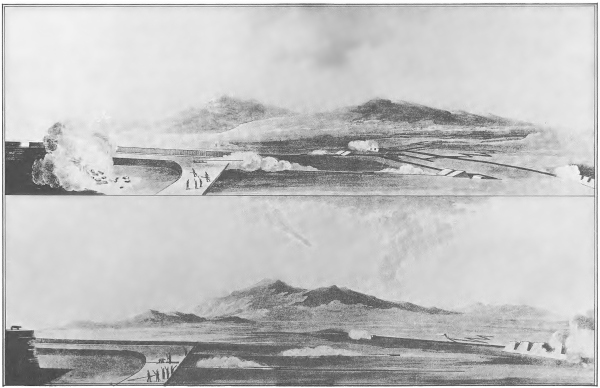
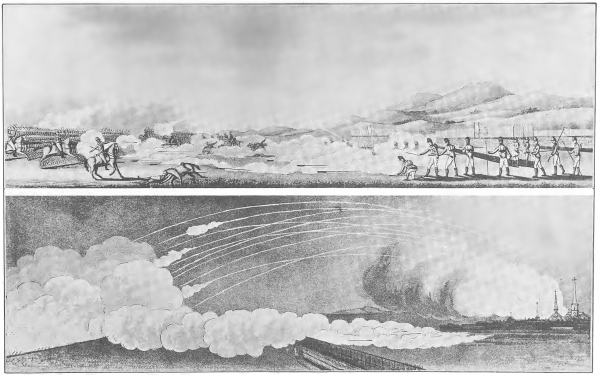
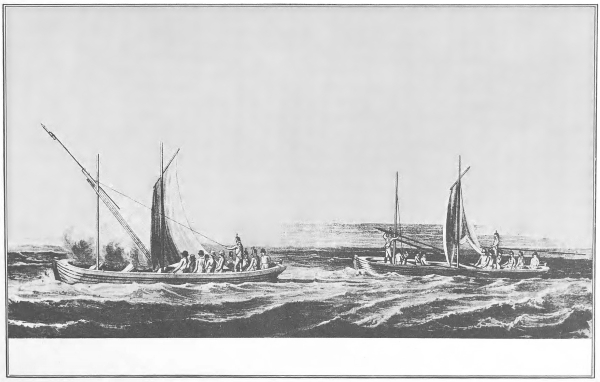
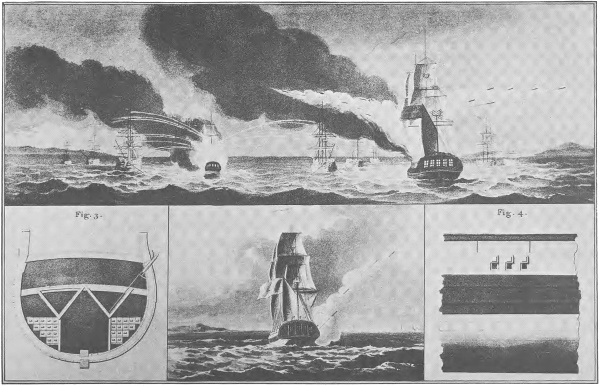
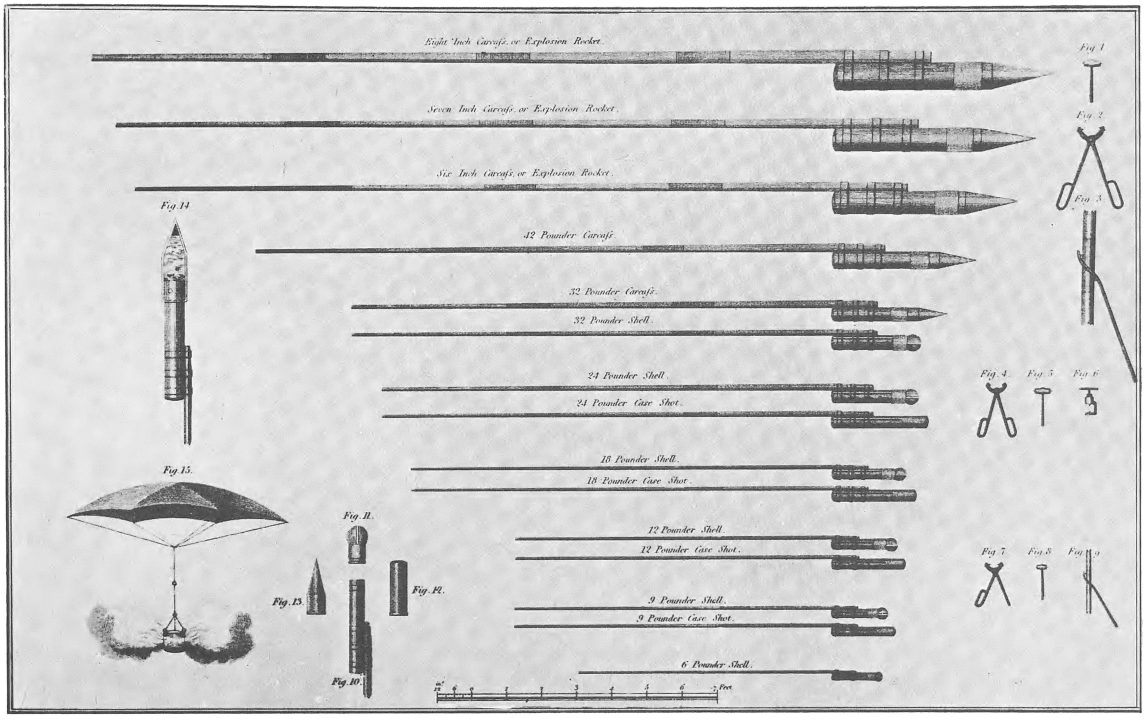
It must be laid down as a maxim, that “the very essence and spirit of the Rocket
System is the facility of firing a great number of rounds in a short time, or even
instantaneously, with small means,” arising from this circumstance, that the Rocket
is a species of fixed ammunition which does not require ordnance to project it; and
which, where apparatus is required, admits of that apparatus being of the most simple
and portable kind.
An officer, therefore, having the use of this weapon under his direction, must ever
bear this maxim in mind—and his first consideration must be—to make his discharges
against the enemy in as powerful vollies as he possibly can.
Thus—if the defence of a post be entrusted to him, and the ground be at all
favourable, he will, independent of the regular apparatus he may have at his disposal,
prepare what may be called Rocket Batteries, consisting of as many embrasures as
his ground will admit; these embrasures being formed by turning up the sod, so as
to give channels of direction four or five feet long, and three feet apart: by which a
great number of Rockets in a volley may evidently be arranged to defend any assailable
point. In these embrasures, if liable to surprise, the Rockets may be placed in readiness
the vents not uncovered; though generally speaking, this is not necessary, as so short a
time is required to place them—here and there one, only being in its embrasure.
In battle also, where there is not, of course, time to prepare the ground as above
stated, but where it is tolerably level, he may, in addition to the apparatus he possesses,
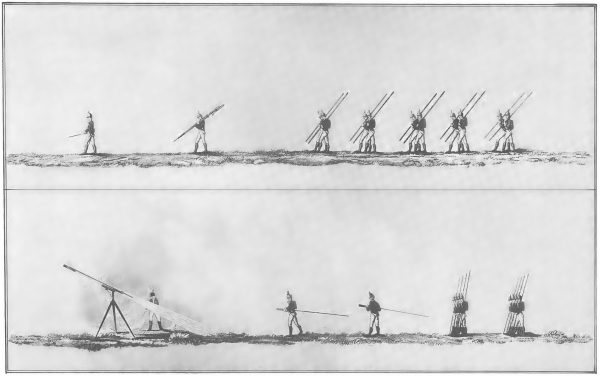
add to his fire by discharging, from the intervals of his frames or cars, Rockets merely
laid on the ground in the direction required: and, if an enemy be advancing upon him,
there is, in fact, no limit to the volley he may be prepared thus to give, when at a proper
distance, but the quantity of ammunition he possesses, the extension of his own ground,
and the importance of the object to be fired at. Under these limits, he may chuse
his volley from 50 to 500—a fire which, if judiciously laid in, must nearly annihilate
his enemy: for this purpose trains are provided. This practice also requires the
exposure of only one or two men, who are to fire the volley, as the remainder, with the
ammunition, may be under cover. And here it should be remarked, that the length of
ranges, and the height of the curve of the recochét, in this mode of firing, depend on
the length of the stick—the stick of the full length giving the longest range, but rising
the highest from the ground; the reduced stick giving a shorter range, but keeping
closer to the ground. From this application, therefore, where practicable, by carrying
a certain number of the 12-pounder pouches in the ammunition waggon, an officer,
even with a dismounted brigade, may always manœuvre and detach parties to get upon
the flanks of any approaching or fixed column, square, or battalion, while he himself
remains with the heavier ammunition and cars in front.
This mode of firing from the ground of course applies only for moderate distances;
the limits of which, with the smaller natures of Rockets, may be considered from 800
to 1,000 yards, and for the larger from 1,000 to 1,200; where therefore greater ranges
are required, the apparatus must be resorted to. And here it is proper to remark, that
in the use of the Rocket, at least in the present state of the system, no certain increase
of range can be depended upon by increasing the elevations from the ground-ranges up
to 15°, for the smaller Rockets; and 20 to 25° for the larger; for in the intermediate
angles, the Rocket is apt to drop in going off, and graze near the frame; but at the above
angles it will always proceed in a single curve to very greatly increased ranges from
1,500 to 2,000 yards.
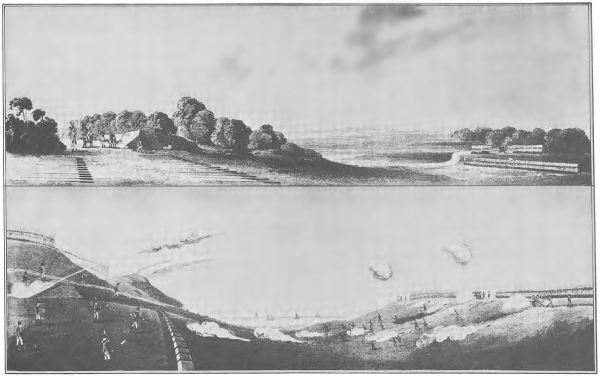
In bombardment, as well as in the field, the quantity of instantaneous fire is equally
important, and the greater number of Rockets that can be thrown, not only increase
the number of fires, but, by distracting the enemy’s attention, prevent their extinction.
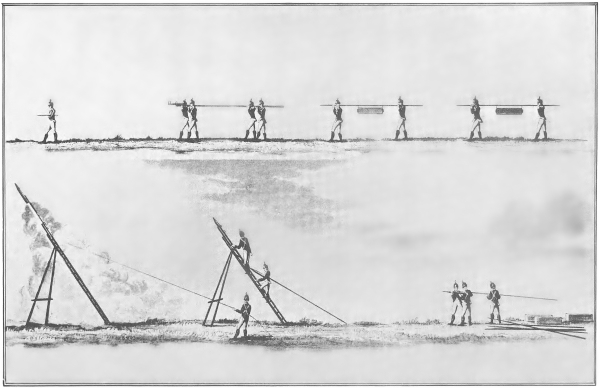
To this end, therefore, an officer should always employ as many bombarding frames as
possible; and here again he will find, that in bombardment, as well as in the field, the
weapon affords him the means of extending his fire beyond the compass of his apparatus.
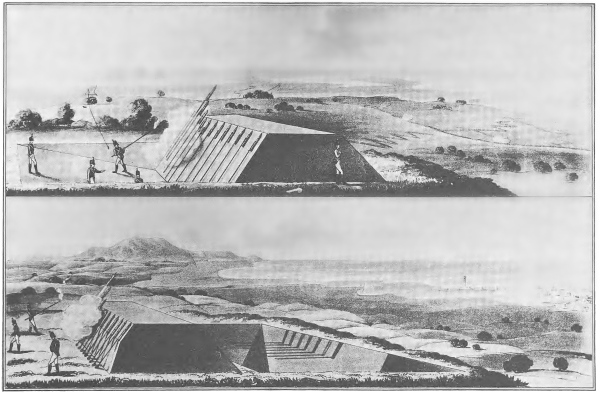
Thus, he may form a Rocket Battery of any common epaulement, parallel to the face
of the town to be bombarded, by digging a trench in the rear of it to admit the stick,
so as to lay the Rocket and stick against the slope of the epaulement, that slope being
brought to the desired elevation for projecting the Rocket, or by boring holes to receive
the stick; or he may construct a slope expressly as a Rocket Battery; and as, in firing
these vollies, his Rockets need not be more than three feet apart, it follows, that from an
epaulement or battery of this description, fifty yards in length, he may keep up this
bombardment by a discharge of fifty Rockets in a volley, and repeat these vollies every
five minutes if desirable; a rate of firing which must inevitably baffle all attempts of
the most active and numerous enemy to prevent its effect.
It is obvious, therefore, that in any comparison made of the powers of the Rocket
with those of common artillery, whether an officer be called on merely to demonstrate
its powers, or to carry it actually against an enemy, the foregoing maxim must be his rule;
in fact, every thing should be demonstrated according to the spirit of its use; a single
Rocket is not to be compared with a single gun shot, by firing it at a target. But the
consideration is, whether for general service, the power of quantity in the fire of Rockets
does not at least counterbalance the greater accuracy of the gun? and for this purpose the
spirit of the demonstration of the Rocket system is to shew how few men are required to
produce the most powerful vollies with this arm. No demonstration should be made with
less than twenty rounds in a volley; to maintain which, in any fixed position, at the rate
of two or even three vollies a minute, twenty men may be said to be sufficient, and this
with Rockets projecting cohorn, or 5½-inch howitzer shells, or even 18 and 24-pounder
solid shot. The first point of comparison, therefore, is—How many rounds of such
ammunition in the minute could twenty men project by the ordinary means of artillery?—or
how many in a volley, even if they had all the means at hand?—And the next point is—what
are the comparative facilities in bringing these different means into action,
where the one system requires only the transport of the ammunition—the other, not only
that of the ammunition, but of the most massive ordnance, without which it is entirely
useless?
But independent of this comparison as to quantity, there are others in which the
Rocket has advantages exclusively its own: there are situations where artillery cannot
by any means be brought into action, while there is no situation, no nature of ground,
which is passable to an infantry soldier with his musket in his hand, that is not equally
to be passed by the Rocketteer with his arm and ammunition. For the accomplishment
of any particular service, he may dispense entirely with wheel carriages or even horses;
there is nothing which the men themselves cannot transport and bring into action;
and if any bombardment were required by a coup de main, 1,000 men would not only
convey 1,000 rounds of the heaviest Carcass Rockets, a number sufficient to destroy any
place within the compass of their range, but would perform that service in a few hours,
having neither batteries or platforms to erect, nor mortars to convey.
Such are the true principles of this new system of artillery, for (projecting the same
ammunition) so it may be called, and the greater the scale of equipment, the greater in
proportion will its powers appear; thus, if an establishment were formed on the strength
of a cavalry regiment, if 600 mounted men were equipped on the principles of the present
detachment, they would take into action, without ammunition horses or wheel carriages,
2,400 rounds of ammunition, and 200 abouches a féu; and if 100 ammunition horses were
attached to this corps, it would further possess a reserve of nearly 2,000 rounds more: the
whole capable of every movement and service practicable by any other regiment of heavy
cavalry; and the same proportionate power would be found to attach to every other
mode of equipment.
In addition to this view of the powers of the weapon, it is important to state, that the
detail of the service is most extraordinarily simple; that there are but a few points
to be attended to in its application; and those such as may be most easily acquired;
the principal ones are, that care must be taken to fix the sticks very firmly to the
Rocket, and in the true direction of the axis of the Rocket, to prevent aberration of
flight.
That, at high angles, the frame must always be elevated for the large Rockets from 5°
to 10° more than the elevation at which the Rocket is intended to be projected, and in
the small Rockets from 2½° to 5°; for, as the Rocket leaves the frame before it has obtained
its full force, it drops a certain number of degrees in proportion to its weight at going
off. Thus the longest ranges of the 32-pounder Carcass Rockets are obtained at about
55°, or rather more, if the Rockets have been long made. An officer, however, being
prepared for this circumstance, will soon discover the maximum range of the Rockets he
may have to discharge.
Some allowance in elevation also must be made for the direction of the wind: if it is
powerful, and blows in a contrary direction to that in which the Rocket is projected,
the frame requires more elevation; for the wind acting more on the stick than the
body of the Rocket, depresses the elevation in its rising. If, on the contrary, it blows
in the direction of the Rocket’s flight, less elevation is required; for, in this case, the
Rocket mounts by the wind’s action on the stick. So, from the same cause, if the wind be
strong, and across the range, though no difference of elevation is necessary, still an
allowance must be made to leeward; for the Rocket, contrary to the course of ordinary
projectiles, has a tendency to draw to windward: a few rounds, however, in all these
cases, will immediately point out to the observant officer what is the required allowance.
These remarks refer only to high angles; for no effect whatever is produced by the wind
in the ground-ranges: in these the only caution necessary to be attended to is, to chuse the
most smooth and level spot for the first 100 yards in front of the point from which
it is intended to discharge these Rockets, as they generally travel in contact with the
surface for this distance, not having acquired their full force, and are therefore more liable
to deflection; but having at this point acquired a velocity not much less than the mean
velocity of a cannon ball, they are not to be more easily deflected: at this distance also
they rise a few feet from the ground, so as to clear any ordinary obstacles that may
occur; insomuch that, if it were desired to fire Rockets at low angles into a besieged
town, from the third parallel, these Rockets, having a clear space to acquire their velocity,
in front of the parallel, would run up the glacis, clear the ditch, and skim over the
parapet into the town; and would no doubt be of great use in a variety of cases,
particularly in discomfiting and rendering the enemy unsteady, by pouring in vollies
of some hundreds or even thousands on this principle, previous to an assault or escalade:
indeed, knowing the effect, I do not hesitate to affirm that this manœuvre, practised on
the great scale, would infallibly dislodge any enemy posted for the protection of a breach.
Sufficient has, I conceive, now been stated, to give the officer such a general view of
the power and spirit of the weapon, as may enable him to apply it in all possible cases
to the best advantage; and if he will but constantly bear in view that maxim which I
have laid down as the fundamental principle of this system, I will confidently pledge
myself that it will never disappoint him, either as to the physical or moral effect which
he may calculate on producing upon his enemy; since, he must recollect, that for this
latter effect, it adds all the terrors of visibility to every species of that destructive
ammunition introduced by the use of gunpowder, but by every one admitted hitherto
to have been qualified, as to moral effect, by its invisibility.
25th October, 1813.
W. CONGREVE.
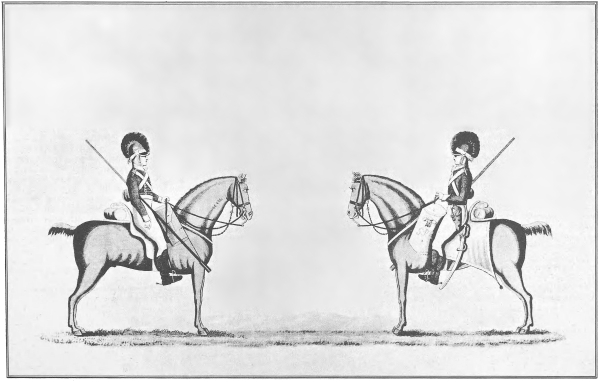
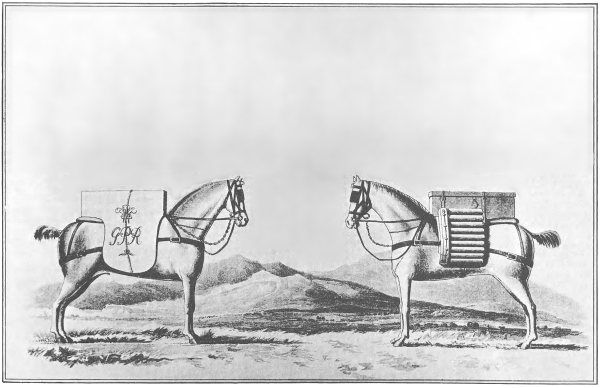
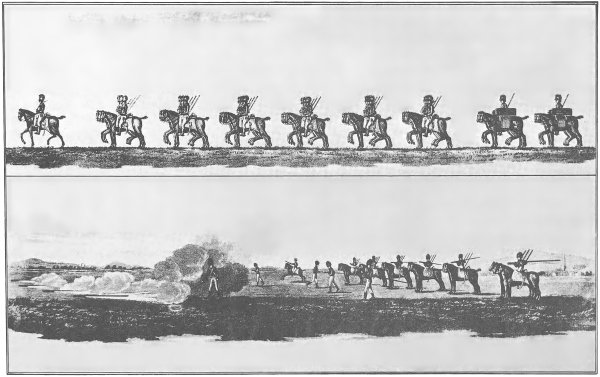
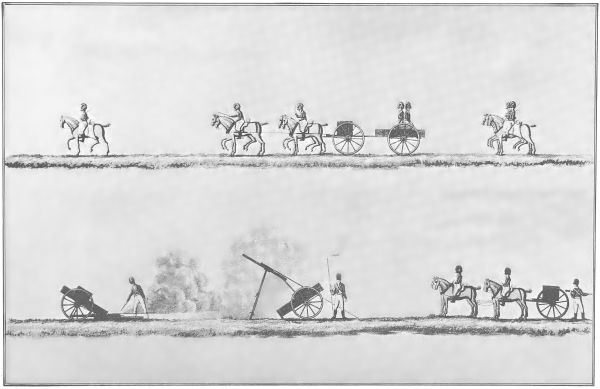
Note.—All the cases of service referred to in the above instructions, will be found particularly detailed in the
following plates.