CAUTIONARY STORIES , — DAISY; — ILLUSTRATED SHILLING SERIES
The cover image was repaired by the transcriber and is placed in the public domain.
THE
DAISY,
OR
IN VERSE.
THE
OR,
CAUTIONARY STORIES IN VERSE.
ADAPTED TO THE
IDEAS OF CHILDREN
FROM
Four to Eight Years Old.
ILLUSTRATED WITH THIRTY ENGRAVINGS.
London:
PRINTED FOR J. HARRIS, SUCCESSOR TO E. NEWBERY,
CORNER OF ST. PAUL'S CHURCH YARD; AND
CROSBY AND CO., STATIONERS' COURT.
1807.
I.
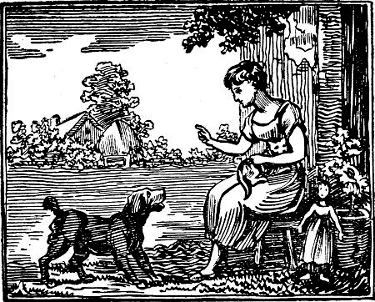
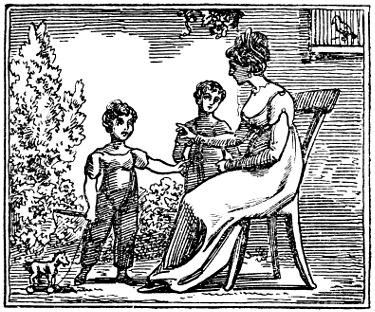
Pretty Puss.
Come here to me!
I want to pat
You on my knee.
By barking thus
You'll drive away
My pretty Puss.
II.
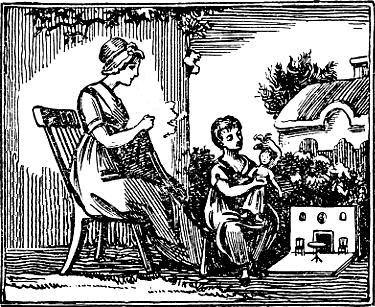
The Fairing.
My sister has bought at the fair!
She says I must call it "Miss Poll,"
And make it a bonnet to wear.
Its cheeks are all covered with red
But, pray, will it always be mine?
And, pray, may I take it to bed?
This Dolly with hair that will curl
Perhaps if you want to know why,
She'll tell you, I've been a good girl.
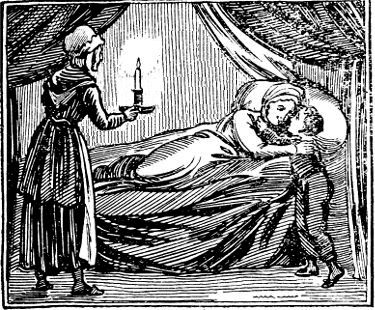
III.
The good Boy.
The servant begg'd he would be still,
Because the doctor and the nurse
Had said, that noise would make her worse.
He kiss'd mamma, and whisp'ring said,
"My dear mamma, I never will
Make any noise when you are ill."
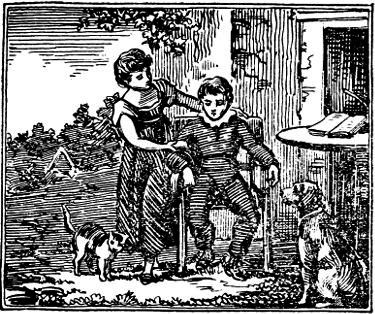
IV.
Frances and Henry.
Because Henry is ill;
And she lets the dear lad
Do whatever he will.
And got up in a minute,
When she heard him declare
That he wish'd to sit in it.
He will never more tease her;
But, when he is well,
He will study to please her.
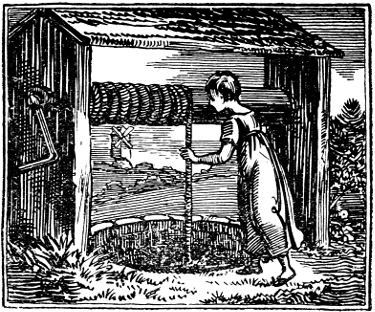
V.
The giddy Girl.
What her mother had told her to shun;
For frequently, over the street in full speed,
She would cross where the carriages run.
To look at the water below;
How naughty! to run to a dangerous well,
Where her mother forbade her to go!
Her foot slipt away from the ground;
Unhappy misfortune! the water was deep
And giddy Miss Helen was drown'd.
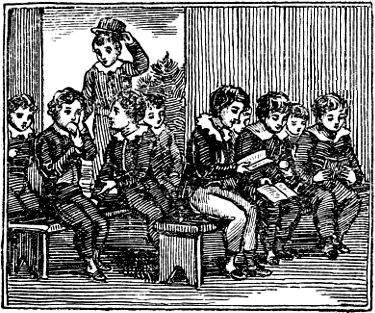
VI.
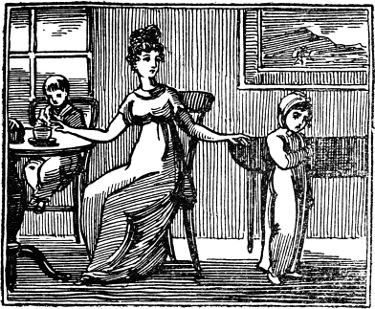
The good Scholar.
That if, when he grew old,
He had not learnt rightly to spell,
Though his writing were good,
'Twould not be understood,
And Joe said, "I will learn my task well."
To be silent at school,
And what do you think came to pass?
Why, he learnt it so fast,
That, from being the last,
He soon was the first in the class.
VII.
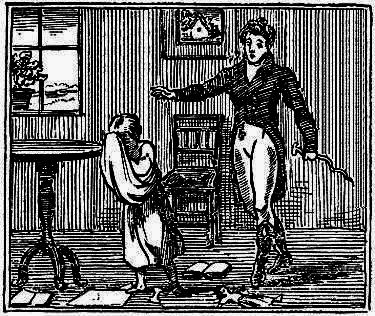
Dressed or undressed.
Pray, what do you think is the way?
Why, often I really believe it is best
To keep them in night-clothes all day!
Nor walk with their mother and aunt;
At dinner they'll have neither pudding nor meat,
Nor any thing else that they want.
In night-clothes unfit to be seen!
And pray who would lose all their pudding and play
For not being dress'd neat and clean?
VIII.
Miss Peggy.
Which her mother had said she should fetch from the wake,
A gentleman knock'd at the door; He entered the parlour, and show'd much surprise,
That it really was Peggy who made all the noise,
For he never had heard her before.
Took hold of her frock, and quite covered her face,
For she knew she was naughty just then;
And, instantly wiping the tears from her eyes,
She promis'd her mother to make no more noise,
And kiss'd her again and again.
IX.
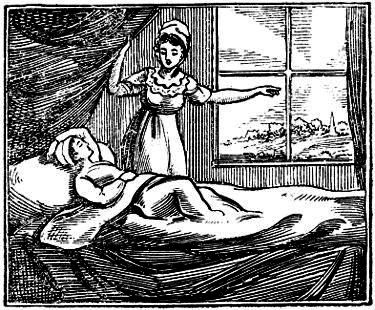
The Idle Boy.
Your brother is dress'd, he is singing a song,
And Tom must be waken'd, O fie
For children should only be sleepy at night,
When stars may be seen in the sky.
X.
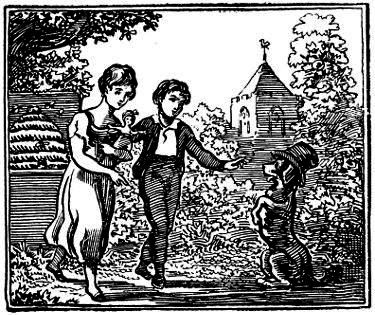
Playful Pompey.
And do not go so far away,
But stand and beg for food;
And if your tail I chance to touch,
You must not snarl so very much,
Pray, Pompey, be not rude.
And help to fetch the cows and sheep:
O, see how Pompey begs;
Hark! hark! he says, bow wow! bow wow!
But run away, good Pompey, now,
You'll tire your little legs.
XI.
Politeness.
"I will," and "Give me these;"
O, no! that never is the way,
But, "Mother, if you please."
Good boys to say are ready;
And, "Yes, Sir," to a gentleman,
And "Yes, Ma'am," to a lady.
XII.
Come when you are called.
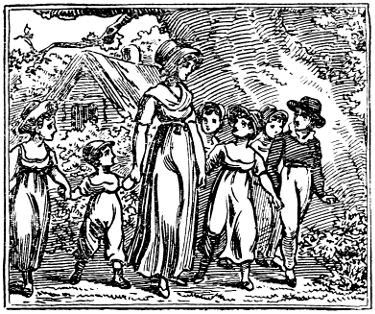
Where's Billy, and Sammy, and Jack?
O! there they are, down in the lane,
Go, Betty, and bring them all back.
And Sammy is running too fast;
Come, dear little children, come home,
Oh Billy is coming at last.
For though he likes sliding on ice,
He should not be long out of sight,
And never want sending for twice.
XIII.
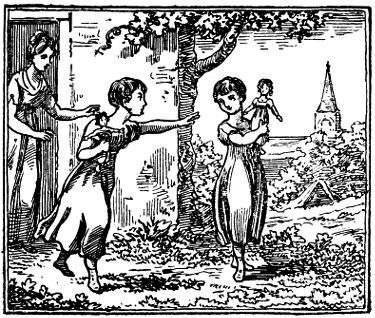
The New Dolls.
Had each a new Dolly,
With rosy-red cheeks and blue eyes;
Dress'd in ribbons and gauze:
And they quarrel'd because
The dolls were not both of a size!
To be such a ninny,
To quarrel and make such a noise!
For the very same day
Their mamma sent away
Their dolls with red cheeks and blue eyes.
XIV.
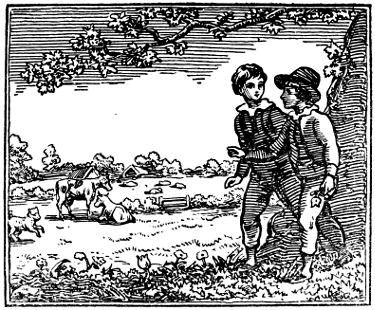
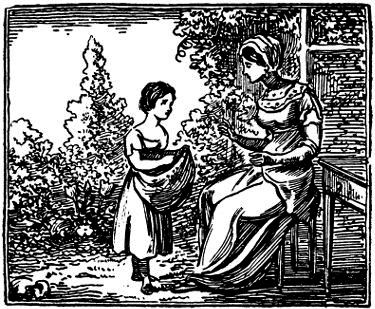
Naughty Sam.
To see a pretty lamb;
And as they went, began to talk
Of little naughty Sam,
Who beat his younger brother, Bill,
And threw him in the dirt;
And when his poor mamma was ill,
He teased her for a squirt.
Although he has a top;"
But here the pretty little lamb
To talking put a stop.
XV.
The dizzy Girl.
Her head grew so giddy, she fell to the ground;
'Twas well that she was not much hurt:
But O, what a pity! her frock was so soil'd!
That had you beheld the unfortunate child,
You had seen her all covered with dirt.
And Mary shall wash you, and make you quite dry,
If you'll promise to turn round no more."
"What, not in the parlour?" the little girl said,
"No, not in the parlour; for lately I read
Of a girl who was hurt with the door.
Fell against the hard door, and it very much bled,
And I heard Dr. Camomile tell,
That he put on a plaister, and covered it up,
Then he gave her some tea, that was bitter to sup,
Or perhaps it had never been well."
XVI.
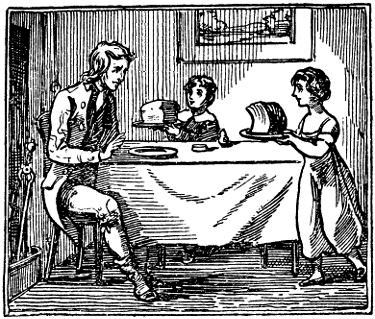
Charity.
Do not send him away,—we must pity the poor;
Oh! see how he shivers!—he's hungry and cold!
For people can't work when they grow very old.
And Betty shall bring him some bread and some meat.
I hope my dear children will always be kind
Whenever they meet with the aged or blind.
XVII.
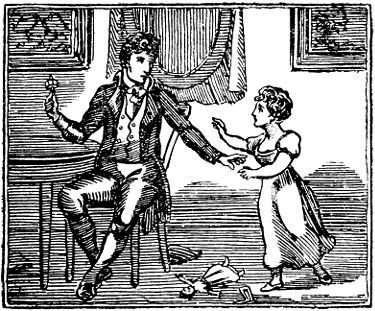
Careless Maria.
And griev'd her friends by this:
Where'er she went,
Her clothes were rent,
Her hat and bonnet spoil'd,
A careless little miss.
Her tippet sadly soil'd;
You might have seen
Where she had been,
For toys all round were toss'd,
O, what a careless child.
That round and round would twirl,
But when he found
The litter'd ground,
He said, "I don't tee-totums buy
For such a careless girl."
XVIII.
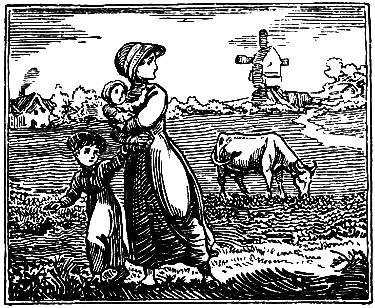
Frighted by a Cow.
With Susan the maid,
Who carried the baby,
Were one day afraid.
Quite harmless and still;
Yet scream'd without heeding
The man at the Mill,
Said, "Cows do no harm;
But give you good butter
And milk from the farm."
XIX.
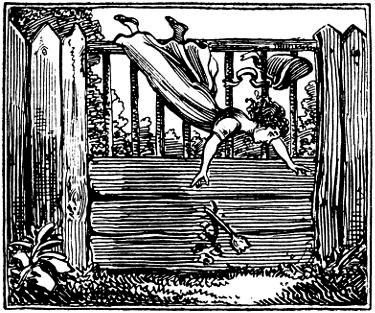
Miss Sophia.
Left her work and ran away;
When soon she reach'd the garden gate,
Which finding barr'd, she would not wait,
But tried to climb and scramble o'er
A gate as high as any door!
And Sophy wont another time,
For, when upon the highest rail,
Her frock was caught upon a nail.
She lost her hold, and, sad to tell,
Was hurt and bruis'd—for down she fell!
XX.
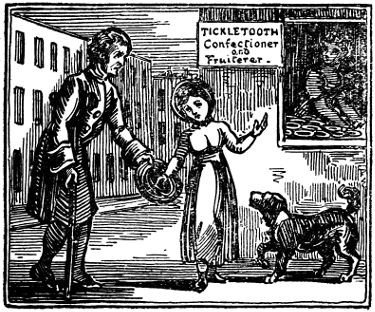
The New Penny.
Quite poor, at a door,
And Ann had a pretty new penny;
Now this the kind Miss
Threw pat in his hat,
Although she was left without any.
To stop at a shop,
Where cakes she had seen a great many;
And buy a fruit-pie,
Or take home a cake,
By spending her pretty new penny.
When Ann gave the man
Her money, she wish'd not for any:
He said, "I've no bread,"
She heard, and preferr'd
To give him her pretty new penny.
XXI.
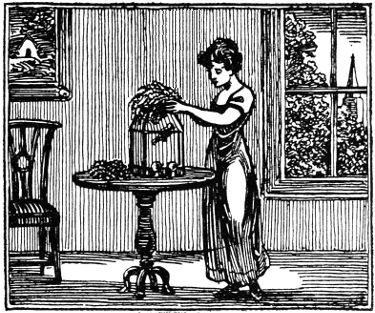
The Canary.
With feathers bright and yellow,
Slender legs,—upon my word,
He was a pretty fellow!
Which much delighted Mary;
Often where his cage was hung,
She sat to hear Canary.
She carried to him daily,
Seeking for the early weeds,
She deck'd his palace gaily.
And ever practice duly;
Songs and smiles of love return
To friends who love you truly.
XXII.
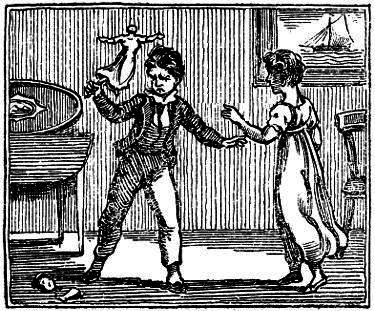
Lucy and Dicky.
She never said, "I wont!"
If little Dick her playthings spoil'd,
She said, "Pray, Dicky don't."
And bang'd it round and round,
Then tore its legs and arms away,
And threw them on the ground.
And Lucy's tears ran down;
But Dick went supperless that night,
And since has better grown.
XXIII.
Falsehood Corrected.
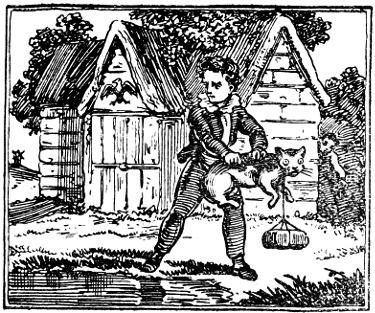
He told a very naughty fib;
And said he had not drown'd her;
But truth is always soon found out;
No one but Jack had been about
The place where Thomas found her.
(Though Jacky did not know of that)
And told papa the trick;
He saw him take a slender string,
And round poor pussy's neck then swing
A very heavy brick.
To find they had a boy so bad,
To say what was not true;
Determin'd to correct him then,
And never was he known again,
Such naughty things to do.
XXIV.
Going to Bed.
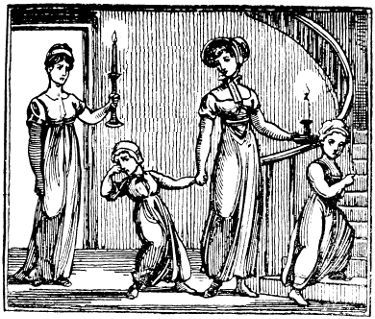
And Tom had said his prayers;
When Frances told the nursery maid
She would not go up stairs,
To ask the reason why;
And said, "O Frances, fie for shame!
O fie! O fie! O fie!"
And Betty sadly nipp'd;
Until her mother said, "I will,
I must have Frances whipp'd."
But worse, much worse to fight!
Instead of running readily,
And calling out good night.
XXV.
The Fan.
Once wrote a letter to her niece;
And sent, wrapp'd up, a new half-crown,
Besides a pretty pocket-piece.
To tell her sister the good news;
She said, "I mean to buy a fan,
Come, come along with me to chuse."
Of yellow, lilac, pink, and green;
But far the sisters had not walk'd
Before the saddest sight was seen!
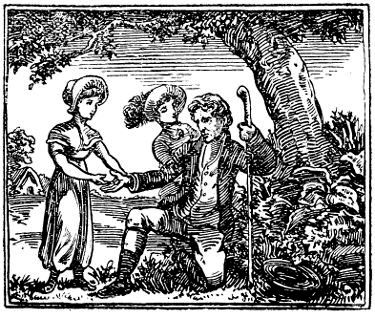
Helpless and old, had tumbled down!
She thought no more about the fan,
But gave to him her new half-crown.
XXVI.
Dinner.
And would not sit still on her seat;
Regardless of all that her mother could say,
From her chair little Kitty kept running away,
All the time they were eating the meat.
She ran to her chair in great haste;
But her mother such giddy behaviour reprov'd,
By sending away the sweet pudding she lov'd,
Without giving Kitty one taste.
XXVII.
The Chimney Sweeper.
With brush and bag upon his back,
And black from head to foot;
While daily as he goes along,
Sweep, sweep! sweep, sweep! is all his song
Beneath his load of soot.
O no; he once was pretty Jack,
And had a kind papa:
But, silly child! he ran to play,
Too far from home, a long, long way,
And did not ask mamma.
Up chimneys, crying Sweep! sweep! sweep!
XXVIII.
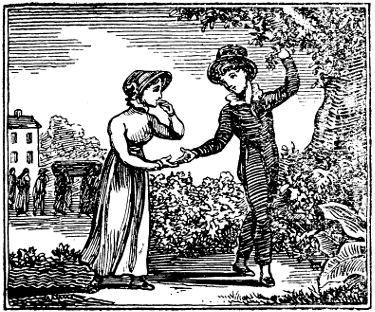
The Rose.
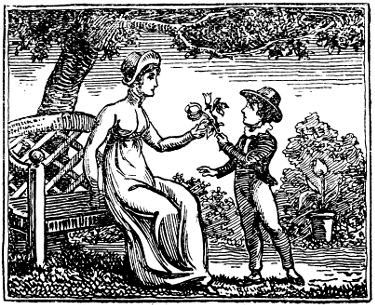
I heard you call it dead?
I never heard it talk,
Nor did I ever see it strive,
To run about or walk!"
"This rose grew on a tree:
But now its leaves begin to fade,
And all fall off, you see.
So beautiful and red,
We say it liv'd; but, with'ring now,
We say the rose is dead."
XXIX.
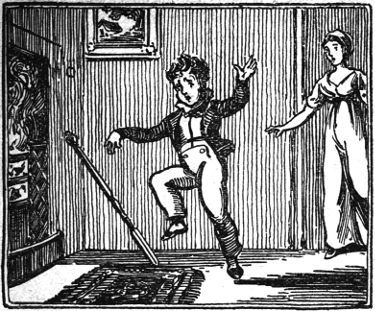
Poisonous Fruit.
Were walking down a shady lane,
They saw some berries, bright and red,
That hung around and over head;
To make the scarlet fruit their own;
And part they ate, and part, in play,
They threw about, and flung away.
Before poor Jane and little Tom
Were taken, sick and ill, to bed,
And since, I've heard, they both are dead.
That fruit in lanes is seldom good,
He might have walk'd with little Jane
Again along the shady lane.
XXX.
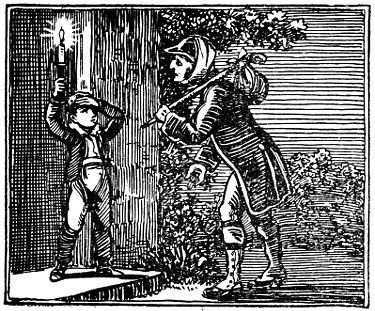
Dangerous Sport.
When he made it look pretty and red!
For the beautiful sparks made him think it fine play,
To lift it as high as his head.
Were terribly scorch'd by the heat;
And he scream'd out aloud for his mother to come,
And stamp'd on the floor with his feet!
His fingers would not have been sore;
And he promis'd again, as she bound up his hand,
To play with hot pokers no more.
XXXI.
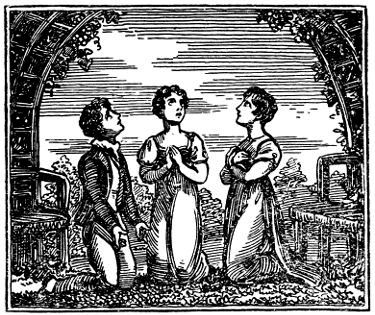
The Stranger.
The night is dark, the hour is late,
And rain comes pelting down!
O, 'tis a stranger gone astray!
That calls to ask the nearest way
To yonder little town.
For one o'ercome with cold and toil;
Go to him, Charles, and say,
"Good stranger! here repose to-night,
And with the morning's earliest light,
We'll guide you on your way."
XXXII.
HYMN.
Thy holy name to bless!
In daily songs of thanks and praise,
For mercies numberless.
That thou art good and true;
And though unseen by my weak sight,
Thou seest all I do.
From innocence and truth;
And thou, O Lord! wilt not despise
The prayer of early youth.
And say, "Thy will be done;"
O keep, in mercy and in love,
The work thou hast begun.
OF
FORGOTTEN CHILDREN'S BOOKS.
PUBLISHERS' NOTE.
The little books printed about a hundred years ago "for the amusement of little masters and misses" must now be looked for in the cabinets of the curious. The type is quaint, the illustrations quainter and the grayish tinted paper abounds in obtrusive specks of embedded dirt. For the covers, gaudy Dutch gilt paper was used, or paper with patchy blobs of startlingly contrasted colours laid on with a brush by young people. The text, always amusing, is of course redolent of earlier days.
1899-1900.
LONDON: PUBLISHED BY
The Leadenhall Prefs, Ltd: 50, Leadenhall Street, E.C.
Simpkin, Marshall, Hamilton, Kent & Co., Ltd:
New York: Charles Scribner's Sons, 153-157 Fifth Avenue.
1. THE DAISY; or, Cautionary Stories in Verse, adapted to Ideas of Children from Four to Eight Years Old. 1807.
Re-prints of this laughter-laden little book, written by Mrs. Elizabeth Turner, followed each other right up to about 1850: in the illustrated edition before the reader, nothing is omitted and nothing is added.
With a view to greater profit, the publisher discarded the pretty copperplates which adorned the first edition (now a thing of price) substituting roughly cut wooden blocks.
2. THE COWSLIP; or, More Cautionary Stories in Verse. By the author of that much-admired little work, entitled The Daisy. 1811.
Under this title in 1811 Mrs. Turner wrote some more Cautionary Stories which became almost as popular as The Daisy. She also wrote other books of poetry for children, including The Crocus, The Pink, and Short Poems; but none had the charm or vogue of The Daisy and The Cowslip.
3. NEW RIDDLE-BOOK. By John-the-Giant-Killer, Esquire. 1778.
This covetable little book, published by F(rancis) Newbery, Jun. and T(homas) Carnan, the son and stepson of John Newbery, had been issued by their father at least twenty years earlier than the date on the title-page. The opening note concerning Francis, the nephew of John Newbery, relates to family differences which need not here be referred to. There would seem to be no copyright in riddles, at any rate one finds the same hoary-heads in other collections.
The destructive fingers of little riddle-readers have been the means of causing thousands of copies of this amusing book to disappear, and to obtain an original copy is now almost impossible. The quaintness of the wood-cut pictorial answers should appeal to the modern reader.
It is intended to continue this Illustrated Shilling Series of
Forgotten Children's Books.
OTHER VOLUMES ARE IN PREPARATION.