THE SUMMARY OF C. SULPITIUS APOLLINARIS.
Demipho, the brother of Chremes, has
gone abroad, his son Antipho being left at Athens. Chremes has secretly
a wife and a daughter at Lemnos, another wife at Athens, and an only
son, who loves a Music-girl. The mother arrives at Athens from Lemnos,
and there dies. The girl, her orphan daughter, (Chemes being
away,) arranges the funeral. After Antipho has fallen in love with her
when seen there, through the aid of the Parasite he receives her as his
wife. His father and Chremes, having now returned, begin
to be enraged. Afterward they give thirty minæ to the Parasite, that he
may take her as his own wife. With this money the Music-girl is
bought for Phædria. Antipho then keeps his wife, who has
been recognized by his uncle.
Since the old Poet17 can
not withdraw our bard from his pursuits and reduce him to
indolence, he endeavors, by invectives, to deter him from writing: for
he is wont to say to this effect,—that the Plays which he has
hitherto composed are poor in their language, and of meagre style:
because he has nowhere described a frantic youth as seeing a hind in
flight, and the hounds pursuing; while he implores18 and
entreated that he would give her aid. But if he had been aware that
his Play, when formerly first represented, stood its ground more
through the merits of the performers than its own, he would attack with
much less boldness than he does. Now, if there is any one who says or
thinks to this effect, that if the old Poet had not assailed him first,
the young one could have devised no Prologue for him to repeat, without
having some one to abuse, let him receive this for an answer: “that the
prize is proposed in common to all who apply to the Dramatic art.” He
has aimed at driving our Poet from his studies to absolute want;
he then has intended this for an answer, not an attack. If he had
opposed him with fair words, he would have heard himself civilly
addressed; what has been given by him, let him consider as now
returned. I will make an end of speaking about him, when, of his
own accord, he himself makes an end of offending. Now give your
attention to what I request. I present you a new play, which they
call “Epidicazomenos,”19 in Greek: in the Latin, he
calls it “Phormio;” because the person that acts the principal part is
Phormio, a Parasite, through whom, principally, the plot will be
carried on, if your favor attends the Poet. Lend your attention; in
silence give an ear with impartial feelings, that we may not experience
a like fortune to what we did, when, through a tumult, our Company was
driven from the place;20 which place, the merit of the
actor, and your good-will and candor seconding it, has since
restored unto us.
Enter Davus,21 with a bag
of money in his hand.
Dav. Geta, my very good friend and
fellow-townsman, came to me yesterday. There had been for some time a
trifling balance of money of his in my hands upon a small account; he
asked me to make it up. I have done so, and am carrying
it to him. But I hear that his master’s son has taken a wife; this,
I suppose, is scraped together as a present for her. How unfair a
custom!—that those who have the least should always be giving
something to the more wealthy! That which the poor wretch has with
difficulty spared, ounce by ounce, out of his allowance,22
defrauding himself of every indulgence, the whole of it will she carry
off, without thinking with how much labor it has been acquired. And then
besides, Geta will be struck23 for another present24
when his mistress is brought to bed; and then again for another
present, when the child’s birthday comes; when they initiate
him,25 too: all this the mother will carry off; the child
will only be the pretext for the present. But don’t I see Geta
there?
Enter Geta, from the house of Demipho.
Geta (at the door, to those
within.) If any red-haired man should inquire for me—
Dav. (stepping forward.) Here
he is, say no more.
Geta (starting.) Oh! Why I was
trying to come and meet you, Davus.
Dav. (giving the money to Geta.) Here, take it; it’s all
ready counted out;26 the number just amounts to the sum I owed
you.
Geta. I am obliged to you; and I
return you thanks for not having forgotten me.
Dav. Especially as people’s ways are
nowadays; things are come to such a pass, if a person repays you any
thing, you must be greatly obliged to him. But why are you out of
spirits?
Geta. What, I? You little know what
terror and peril I am in.
Dav. What’s the matter?
Geta. You shall know, if you can only
keep it secret.
Dav. Out upon you, simpleton; the
man, whose trustworthiness you have experienced as to money, are you
afraid to intrust with words? In what way have I any interest in
deceiving you?
Geta. Well then, listen.
Dav. I give you my best
attention.
Geta. Davus, do you know Chremes, the
elder brother of our old gentleman?
Dav. Why should I not?
Geta. Well, and his son
Phædria?
Dav. As well as your own self.
Geta. It so happened to both
the old gentlemen, just at the same period, that the one had to take a
journey to Lemnos, and our old man to Cilicia, to see an old
acquaintance; he tempted over the old man by letters, promising
him all but mountains of gold.
Dav. To one who had so much property,
that he had more than he could use?
Geta. Do have done; that is his
way.
Dav. Oh, as for that, I
really ought to have been a man of fortune.
Geta. When departing hence, both the
old gentlemen left me as a sort of tutor to their sons.
Dav. Ah, Geta, you undertook a hard
task there.
Geta. I came to experience it, I
know that. I’m quite sure that I was forsaken by my good Genius, who
must have been angry with me.27 I began to oppose them at
first; but what need of talking? As long as I was trusty to the
old men, I was paid for it in my shoulder-blades. This, then,
occurred to my mind: why, this is folly to kick against the spur.28 I began to do every thing for them that they
wished to be humored in.
Dav. You knew how to make your
market.29
Geta. Our young fellow did no
mischief whatever at first; that Phædria at once picked up a certain
damsel, a Music-girl, and fell in love with her to
distraction. She belonged to a most abominable Procurer; and their
fathers had taken good care that they should have nothing to give him.
There remained nothing for him then but to feed his eyes, to follow her
about, to escort her to the school,30 and to escort her back
again. We, having nothing to do, lent our aid to Phædria. Near the
school at which she was taught, right opposite the
place, there was a certain barber’s shop: here we were generally in the
habit of waiting for her, until she was coming home again. In the mean
time, while one day we were sitting there, there came in a young
man in tears;31 we were surprised at this. We inquired what was
the matter? “Never,” said he, “has poverty appeared to me a burden so
grievous and so insupportable as just now. I have just seen a
certain poor young woman in this neighborhood lamenting her dead mother.
She was laid out before her, and not a single friend, acquaintance, or
relation was there with her, except one poor old woman, to assist her in
the funeral: I pitied her. The girl herself was of surpassing
beauty.” What need of a long story? She moved us all. At once Antipho
exclaims, “Would you like us to go and visit her?” The other
said, “I think we ought—let us go—show us the way,
please.” We went, and arrived there; we saw her; the girl was
beautiful, and that you might say so the more, there was no heightening
to her beauty; her hair disheveled, her feet bare, herself neglected,
and in tears; her dress mean, so that, had there not been an excess of
beauty in her very charms, these circumstances must have extinguished
those charms. The one who had lately fallen in love with the Music-girl
said: “She is well enough;” but our youth—
Dav. I know it already—fell in
love with her.
Geta. Can you imagine to what an
extent? Observe the consequence. The day after, he goes straight to the
old woman; entreats her to let him have her: she, on the other hand,
refuses him, and says that he is not acting properly; that she is a
citizen of Athens, virtuous, and born of honest parents: that if
he wishes to make her his wife, he is at liberty to do so according to
law; but if otherwise, she gives him a refusal. Our youth was at
a loss what to do. He was both eager to marry her, and he dreaded his
absent father.
Dav. Would not his father, if he had
returned, have given him leave?
Geta. He let him marry a girl with no
fortune, and of obscure birth! He would never do so.
Dav. What came of it at last?
Geta. What came of it? There is one
Phormio here, a Parasite, a fellow of great assurance; may all
the Gods confound him!
Dav. What has he done?
Geta. He has given this piece of
advice, which I will tell you of. “There is a law, that orphan girls are
to marry those who are their next-of-kin; and the same law commands such
persons to marry them. I’ll say you are the next-of-kin, and take out a
summons32 against you; I’ll pretend that I am a friend of
the girl’s father; we will come before the judges: who her father was,
who her mother, how she is related to you—all this I’ll trump up,
just as will be advantageous and suited to my purpose; on your
disproving none of these things, I shall prevail, of course. Your
father will return; a quarrel will be the consequence; what care I?
She will still be ours.”
Dav. An amusing piece of
assurance!
Geta. He was persuaded to this. It
was carried out; they came into court: we were beaten. He has
married her.
Dav. What is it you tell me?
Geta. Just what you have heard.
Dav. O Geta, what will become of
you?
Geta. Upon my faith, I don’t know;
this one thing I do know, whatever fortune may bring, I’ll bear it with
firmness.
Dav. You please me; well, that is the
duty of a man.
Geta. All my hope is in myself.
Dav. I commend you.
Geta. Suppose I have recourse to some
one to intercede for me, who will plead for me in these terms: “Pray, do
forgive him this time; but if after this he does any thing,
I make no entreaty:” if only he doesn’t add, “When I’ve gone, e’en
kill him for my part.”
Dav. What of the one who was usher to
the Music-girl?33
Geta (shrugging his
shoulders.) So so, but poorly.
Dav. Perhaps he hasn’t much to
give.
Geta. Why, really, nothing at all,
except mere hopes.
Dav. Is his father come back or
not?
Geta. Not yet.
Dav. Well, when do you expect your
old man?
Geta. I don’t know for certain; but I
just now heard that a letter has been brought from him, and has been
left with the officers of the customs: I’m going to fetch it.
Dav. Is there any thing else that you
want with me, Geta?
Geta. Nothing; but that I wish
you well. (Exit Davus.) Hark you,
boy (calling at the door). Is nobody coming out here? (A Lad comes out.) Take this, and give it to
Dorcium.
He gives the purse to the Lad, who
carries it into Demipho’s house and exit
Geta.
Enter Antipho and Phædria.
Ant. That things should have come to
such a pass, Phædria, that I should be in utter dread of my father, who
wishes me so well, whenever his return comes into my thoughts! Had I not
been inconsiderate, I might have waited for him, as I ought to have
done.
Phæd. What’s the matter?
Ant. Do you ask the question? You,
who have been my confederate in so bold an adventure? How I do wish it
had never entered the mind of Phormio to persuade me to this, or to urge
me in the heat of my passion to this step, which is the source of my
misfortunes. Then I should not have obtained her; in that case I
might have been uneasy for some few days; but still, this
perpetual anxiety would not have been tormenting my mind (touching
Phædria).
Phæd. I hear you.
Ant. While I am every moment
expecting his return, who is to sever from me this connection.34
Phæd. Other men feel uneasiness
because they can not gain what they love; you complain because you have
too much. You are surfeited with love, Antipho. Why, really, upon my
faith, this situation of yours is surely one to be coveted and desired.
So may the Gods kindly bless me, could I be at liberty to be so long in
possession of the object of my love, I could contentedly die. Do
you, then, form a judgment as to the rest, what I am now suffering from
this privation, and what pleasure you enjoy from the possession of your
desires; not to mention how, without any expense, you have
obtained a well-born and genteel woman, and have got a wife of
unblemished reputation: happy you, were not this one thing
wanting, a mind capable of bearing all this with moderation. If you
had to deal with that Procurer with whom I have to deal, then you would
soon be sensible of it. We are mostly all of us inclined by
nature to be dissatisfied with our lot.
Ant. Still, on the other hand,
Phædria, you now seem to me the fortunate man, who still have the
liberty, without restraint, of resolving on what pleases you best:
whether to keep, to love on, or to give her up. I,
unfortunately, have got myself into that position, that I have neither
right35 to give her up, nor liberty to retain her. But
how’s this? Is it our Geta I see running this way? ’Tis he himself.
Alas! I’m dreadfully afraid what news it is he’s now bringing me.
Enter Geta, running, at the other side
of the stage.
Geta (to himself.) Geta, you
are undone, unless you instantly find out some expedient; so suddenly do
such mighty evils now threaten me thus unprepared, which I neither know
how to shun, nor how to extricate myself therefrom; for this
daring step of ours can not now any longer be kept a secret. If such a
result is not adroitly guarded against, these matters will cause the
ruin of myself, or of my master.
Ant. (to Phædria.) Why, I wonder, is he coming in such
fright?
Geta (to himself.) Besides,
I’ve but a moment left for this matter—my master’s close at
hand.
Ant. (to Phædria.) What mischief is this?
Geta (to himself.) When he
comes to hear of it, what remedy shall I discover for his anger? Am I to
speak? I shall irritate him: be silent? I shall provoke him:
excuse myself? I should be washing a brickbat.36 Alas!
unfortunate me! While I am trembling for myself, this Antipho distracts
my mind. I am concerned for him; I’m in dread for him: ’tis he that
now keeps me here; for had it not been for him, I should have made
due provision for my safety, and have taken vengeance on the old man for
his crabbedness; I should have scraped up something, and
straightway taken to my heels away from here.
Ant. (to Phædria.) I wonder what running away or theft it
is that he’s planning.
Geta (to himself.) But where
shall I find Antipho, or which way go look for him?
Phæd. (to Antipho.) He’s mentioning your name.
Ant. (to Phædria.) I know not what great misfortune I
expect to hear from this messenger.
Phæd. (to Antipho.) Why, are you in your senses?
Geta (to himself.) I’ll make
my way homeward; he’s generally there.
Phæd. (to Antipho.) Let’s call the fellow back.
Ant. (calling out.) Stop, this
instant.
Geta (turning round.)
Heyday—with authority enough, whoever you are.
Ant. Geta!
Geta. The very person I wanted to
find.
Ant. Pray, tell me what news you
bring and dispatch it in one word, if you can.
Geta. I’ll do so.
Ant. Out with it.
Geta. Just now, at the
harbor—
Ant. What, my
father—?
Geta. You’ve hit it.
Ant. Ruined outright!
Phæd. Pshaw!
Ant. What am I to do?
Phæd. (to Geta.) What is it you say?
Geta. That I have seen his father,
your uncle.
Ant. How am I, wretch that I am, now
to find a remedy for this sudden misfortune? But if it should be my
fortune, Phanium, to be torn away from you, life would cease to be
desirable.
Geta. Therefore, Antipho, since
matters are thus, the more need have you to be on your guard; fortune
helps the brave.
Ant. I am not myself.
Geta. But just now it is especially
necessary you should be so, Antipho; for if your father perceives that
you are alarmed, he will think that you have been guilty of some
fault.
Phæd. That’s true.
Ant. I can not change.
Geta. What would you do, if now
something else still more difficult had to be done by you?
Ant. As I am not equal to this, I
should be still less so to the other.
Geta. This is doing nothing at all,
Phædria, let’s be gone; why do we waste our time here to no purpose.
I shall be off.
Phæd. And I too. (They move as if
going.)
Ant. Pray, now, if I assume an air,
will that do? (He endeavors to assume another air.)
Geta. You are trifling.
Ant. Look at my
countenance—there’s for you. (Assuming a different air.)
Will that do?
Geta. No.
Ant. Well, will this? (Assuming
another air.)
Geta. Pretty well.
Ant. Well then, this? (Assuming a
still bolder air.)
Geta. That’s just the thing. There
now, keep to that, and answer him word for word, like for like; don’t
let him, in his anger, disconcert you with his blustering words.
Ant. I understand.
Geta. Say that you were forced
against your will by law, by sentence of the court; do you take me?
(Looking earnestly in one direction.) But who is the old man that
I see at the end of the street?
Ant. ’Tis he himself. I can not stand
it. (Going.)
Geta. Oh! What are you about? Whither
are you going, Antipho? Stop, I tell you.
Ant. I know my own self and my
offense; to your management I trust Phanium and my own existence.
Exit hastily.
Phædria and Geta.
Phæd. Geta, what’s to be done
now?
Geta. You will just hear some harsh
language: I shall be trussed up and trounced, if I am not somewhat
mistaken. But what we were just now advising Antipho to do, the same we
must do ourselves, Phædria.
Phæd. Away with your “musts;” rather
do you command me what I am to do.
Geta. Do you remember what were your
words formerly on our entering upon this project, with the view of
protecting yourselves from ill consequences—that their cause was
just, clear, unanswerable, and most righteous?
Phæd. I remember it.
Geta. Well then, now there’s need of
that plea, or of one still better and more plausible, if such
there can be.
Phæd. I’ll use my best endeavors.
Geta. Do you then accost him first;
I’ll be here in reserve,37 by way of reinforcement, if
you give ground at all.
Phæd. Very well.
They retire to a distance.
Enter Demipho, at the other side of the
stage.
Dem. (to himself.) And is it
possible that Antipho has taken a wife without my consent? and that no
authority of mine—but let alone “authority”38—no
displeasure of mine, at all events, has he been in dread of? To have no
sense of shame! O audacious conduct! O Geta, rare
adviser!
Geta (apart to Phædria.) Just brought in at last.
Dem. What will they say to me, or
what excuse will they find? I wonder much.
Geta (apart.) Why, I’ve found
that out already; do think of something else.
Dem. Will he be saying this to me: “I
did it against my will; the law compelled me?” I hear you,
and admit it.
Geta (apart.) Well said!
Dem. But knowingly, in silence, to
give up the cause to his adversaries—did the law oblige him to do
that as well?
Geta (apart.) That is a hard
blow.
Phæd. I’ll clear that up; let me
alone for that.
Dem. It is a matter of doubt what I
am to do; for beyond expectation, and quite past all belief, has this
befallen me. So enraged am I, that I can not compose my mind to think
upon it. Wherefore it is the duty of all persons, when affairs
are the most prosperous,39 then in especial to reflect
within themselves in what way they are to endure adversity. Returning
from abroad, let him always picture to himself dangers and losses,
either offenses committed by a son, or the death of his wife, or the
sickness of a daughter,—that these things are the common lot, so
that no one of them may ever come as a surprise upon his feelings.
Whatever falls out beyond his hopes, all that he must look upon as so
much gain.
Geta (apart.) O Phædria,
it is incredible how much I surpass my master in wisdom. All my
misfortunes have been already calculated upon by me, upon my
master coming home. I must grind at the mill, be beaten, wear
fetters, be set to work in the fields; not one individual thing of these
will happen unexpected by my mind. Whatever falls out beyond my
expectations, all that I shall look upon as so much gain. But why do you
hesitate to accost him, and soften him at the outset with fair
words?
Phædria goes forward to accost Demipho.
Dem. (to himself.) I see
Phædria, my brother’s son, coming toward me.
Phæd. My uncle, welcome!
Dem. Greetings to you; but where is
Antipho?
Phæd. That you have arrived in
safety——
Dem. I believe it; answer my
question.
Phæd. He is well; he’s close at hand;
but is every thing quite to your wishes?
Dem. I wish it was so, indeed.
Phæd. What’s the matter?
Dem. Do you ask me, Phædria? You
people have cooked up a fine marriage in my absence.
Phæd. What now, are you angry with
him for that?
Geta (apart.) What a clever
contriver!
Dem. Have I not reason to be angry
with him? I long for him to come into my sight, that he may know
that through his faultiness, from being a mild father, I am become
a most severe one.
Phæd. But he has done nothing, uncle,
for which you should blame him.
Dem. Now, do look at that; all alike;
all hanging together; when you know one, you know all.
Phæd. That is not the case.
Dem. When the one is in fault, the
other is at hand to defend him; when it is the other, then he is
ready; they just help one another by turns.
Geta (apart.) The old man,
without knowing it, has exactly described their proceedings.
Dem. For if it had not been so, you
would not, Phædria, have stood up for him.
Phæd. If, uncle, it is the
fact, that Antipho has been
guilty of any fault, in consequence of which he has been too regardless
of his interest or his reputation, I would not allege any reason
why he should not suffer what he deserves. But if some one by chance,
relying upon his own artfulness, has laid a snare for our youthful age,
and has succeeded, is it our fault or that of the judges, who
often, through envy, take away from the rich, or, through compassion,
award to the poor?
Geta (apart.) Unless I knew
the case, I could fancy he was saying the truth.
Dem. Is there any judge who can
possibly know your rights, when you yourself don’t answer a
word—as he has done?
Phæd. He acted the part of an
ingenuous young man; after they had come before the judges, he was not
able to say what he had intended, so much did his modesty confuse him
there through his bashfulness.
Geta (apart.) I commend him:
but why do I hesitate at once to accost the old man? (Going forward
to Demipho.) Master, welcome to you!
I’m glad to see you safe returned.
Dem. (ironically.) Ah,
excellent guardian! save you, stay of my family, no doubt, to whom, at
my departure, I intrusted my son.
Geta. For some minutes past I’ve
heard you accusing all of us undeservedly; and me the most undeservedly
of them all; for what would you have had me do for you in this affair?
The laws do not allow a person who is a slave to plead; nor is there any
giving evidence40 on his part.
Dem. I grant all that: I admit
this too—the young man, unused to courts, was bashful;
I allow it: you, too, are a slave: still, if she was ever so
near a relative, it was not necessary for him to marry her, but
as the law enjoins, you might have given her a portion;41 she
could have looked out for another husband. Why, then, in preference, did
he bring a pauper home?
Geta. No particular reason;
but he hadn’t the money.
Dem. He might have borrowed it from
some person or other.
Geta. From some person or other?
Nothing more easily said.
Dem. After all, if on no other terms,
on interest.
Geta. Aye, aye, fine talking; as if
any one would have trusted him, while you were living.42
Dem. No, it shall not be so; it must
not be. Ought I to allow her to remain with him as his wife a single
day? She merits no indulgence. I should like this fellow to be
pointed out to me, or to be shown where he lives.
Geta. Phormio, do you mean?
Dem. That fellow, the woman’s next
friend?43
Geta. I’ll have him here
immediately.
Dem. Where is Antipho at present?
Geta. Away from home.
Dem. Go, Phædria, look for him, and
bring him here.
Phæd. I’ll go straightway to the
place.
Geta (aside.) To Pamphila, you
mean.
Exeunt Phædria and Geta.
Demipho, alone.
Dem. (to himself.) I’ll just
step home to salute the household Gods.44 From there,
I’ll go to the Forum, and summon
some of my friends to give me their assistance in this affair; so that I
may not be unprepared, when Phormio comes.
Goes into his house.
Enter Phormio and Geta.
Phor. And so you say45 that,
dreading his father’s presence, he has taken himself off?
Geta. Exactly so.
Phor. That Phanium is left alone?
Geta. Just so.
Phor. And that the old man is in a
rage?
Geta. Extremely so.
Phor. The whole business, Phormio,
rests on yourself alone; you yourself have hashed it up;46 it
must all be swallowed by yourself, so set about it.
Geta. I entreat you——
Phor. (to himself.) If he
inquires.
Geta. In you is all our
hope.
Phor. (to himself.) Look at
this, now:—What if he sends her back?
Geta. It was you that urged us.
Phor. (to himself.)
I think that will do.
Geta. Do help us.
Phor. (with alacrity.) Let the
old gentleman come; all my plans are now ready prepared in my mind.
Geta. What will you do?
Phor. What would you have me? But
that Phanium may continue with him, and that I may clear Antipho
from this charge, and turn upon myself47 all the
wrath of the old gentleman?
Geta. O brave and kind man! But,
Phormio, I often dread lest this courage may end in the stocks at
last.48
Phor. Oh, by no means; I’ve made
trial, and have already pondered on the paths for my feet. How many men
before to-day do you suppose I have beaten, even to death, strangers as
well as citizens: the better I understand it, the oftener I try it. Just
tell me, look you, did you ever hear of an action of damages being
brought against me?
Geta. How is that?
Phor. Because the net is never spread
for the hawk or the kite, that do us the mischief; it is spread for
those that do us none: because in the last there is profit, while with
the others it is labor lost. For persons, out of whom any thing can be
got, there’s risk from others; they know that I’ve got nothing. You will
say: “They will take you,49 when sentenced, into their
house;” they have no wish to maintain a devouring fellow; and, in my
opinion, they are wise, if for an injury they are unwilling to return
the highest benefits.
Geta. It’s impossible that sufficient
thanks can be returned you by him for your kindness.
Phor. Why no; no person can return
thanks sufficient to his patron50 for his kindness. For you to
take your place at table at free cost,51 anointed and
just washed at the bath, with your mind at ease, whereas he is devoured
with the care and expense: while every thing is being done to give you
delight, he is being vexed at heart; you are laughing away, first to
drink,52 take the higher place; a banquet full of
doubts53 is placed before you—
Geta. What is the meaning of that
expression?
Phor. When you are in doubt which in
especial to partake of. When you enter upon a consideration how
delicious these things are, and how costly they are, the person who
provides them, must you not account him a very God—neither more
nor less?
Geta. The old man is coming; take
care what you are about; the first onset is the fiercest; if you stand
that, then, afterward, you may play just as you please.
They retire to a distance.
Enter, at a distance, Demipho, Hegio, Cratinus, and Crito,
following him.
Dem. Well now—did you ever hear
of an injury being done to any person in a more affronting manner than
this has to me? Assist me, I do beg of you.
Geta (apart.) He’s in a
passion.
Phor. (apart.) Do you mind
your cue; I’ll rouse him just now. (Stepping forward and crying
aloud.) Oh immortal Gods! does Demipho deny that Phanium here is
related to him?
Geta. He does deny it.
Dem. (to his friends.) I
believe it is the very man I was speaking about. Follow me.
They all come forward.
Phor. (to Geta.) And that he knows who her father was?
Geta. He does deny it.
Phor. And that he knows who Stilpho
was?
Geta. He does deny it.
Phor. Because the poor thing was left
destitute, her father is disowned; she herself is slighted: see what
avarice does.
Geta (in a loud voice.) If you
are going to accuse my master of avarice, you shall hear what you won’t
like.
Dem. Oh, the impudence of the
fellow! Does he come on purpose to accuse me?
Phor. For really, I have no reason
why I should be offended at the young man, if he did not know him; since
that person, when growing aged and poor, and supporting himself
by his labor, generally confined himself to the country; there he had a
piece of land from my father to cultivate; full oft, in the mean time,
did the old man tell me that this kinsman of his neglected him: but what
a man? The very best I ever saw in all my life.
Geta (in a loud voice.) Look
to yourself as well as to him, how you speak.
Phor. (with affected
indignation.) Away, to utter perdition, with you. For if I
had not formed such an opinion of him, I should never have incurred
such enmity with your family on her account, whom he now slights in such
an ungenerous manner.
Geta (aloud.) What, do you
persist in speaking abusively of my master in his absence, you most
abominable fellow?
Phor. Why, it’s just what he
deserves.
Geta (aloud.) Say you so, you
jail-bird?
Dem. (calling aloud.)
Geta!
Geta (aloud.) A plunderer of
people’s property—a perverter of the laws!
Dem. (calling aloud.)
Geta!
Phor. (apart, in a low voice.)
Answer him.
Geta. Who is it? (Looking
round.) Oh!——
Dem. Hold your peace.
Geta. He has never left off uttering
abuse against you behind your back, unworthy of you, and just
befitting himself.
Dem. Well now, have done.
(Addressing Phormio.) Young man,
in the first place, with your good leave, I ask you this, if you
may possibly be pleased to give me an answer: explain to me who this
friend of yours was, that you speak of, and how he said that he was
related to me.
Phor. (sneeringly.) You are
fishing it out, just as if you didn’t know.
Dem. I, know?
Phor. Yes.
Dem. I say I do not; you, who affirm
it, recall it to my recollection.
Phor. Come now, didn’t you know your
own cousin-german?
Dem. You torture me to death; tell me
his name.
Phor. His name?
Dem. Of course. (Phormio hesitates.) Why are you silent now?
Phor. (aside.) Heavens, I’m
undone; I’ve forgot the name.
Dem. Well, what do you say?
Phor. (aside, to Geta.) Geta, if you recollect the name I
told you a short time since, prompt me. (Aloud, to Demipho.) Well then, I sha’n’t tell you; as
if you didn’t know, you come to pump me.
Dem. I, come to pump you, indeed?
Geta. (whispering to Phormio.) Stilpho.
Phor. But, after all, what matters
that to me? It is Stilpho.
Dem. Whom did you say?
Phor. Stilpho, I tell you; you knew
him.
Dem. I neither know him, nor had I
ever any relation of that name.
Phor. Say you so? Are you not ashamed
of this? But if he had left you ten talents——
Dem. May the Gods confound you!
Phor. You’d have been the first, from
memory, to trace
your line of kindred, even as far back as from grandfather and
great-grandfather.
Dem. Very likely what you say. In
that case, when I had undertaken it, I should have shown how she
was related to me; do you do the same: tell me, how is she related to
me?
Geta. Well done, my master,
that’s right! (Threateningly to Phormio.) Hark you, take you care.
Phor. I’ve already made the matter
quite plain where I ought, before the judges; besides, if it was untrue,
why didn’t your son disprove it?
Dem. Do you talk about my son to me?
Of whose folly there is no speaking in the language it deserves.
Phor. Then do you, who are so wise,
go to the magistrates, that for you they may give a second decision in
the same cause, since you reign alone54 here,
and are the only man allowed to get a second trial in the same
cause.
Dem. Although wrong has been done me,
still, however, rather than engage in litigation, or listen to you, just
as though she had been my relation, as the law orders one to find
her a portion, rid me of her, and take five minæ.
Phor. (laughing.) Ha, ha, ha!
a pleasant individual!
Dem. Well! am I asking any thing
unfair? Or am I not to obtain even this, which is my right at common
law?
Phor. Pray, really is it so, that
when you have abused her like a courtesan, the law orders you to pay her
hire and pack her off? Or is it the fact, that in order that a
citizen may bring no disgrace upon herself through poverty, she has been
ordered to be given to her nearest relative, to pass her life with him
alone? A thing which you mean to prevent.
Dem. Yes, to her nearest relative,
indeed; but why to us, or on what ground?
Phor. Well, well, a thing tried, they
say, you can’t try over again.
Dem. Not try it? On the contrary, I
shall not desist until I have gone through with it.
Phor. You are trifling.
Dem. Only let me alone for
that.
Phor. In short, Demipho, I have
nothing to do with you; your son has been cast, and not you; for
your time of life for marrying has now gone by.
Dem. Consider that it is he that says
to you all I now say, or else assuredly, together with this wife of
his, I’ll be forbidding him the house.
Geta (aside.) He’s in a
passion.
Phor. You’ll be acting more
considerately.
Dem. Are you so resolved, you unlucky
fellow, to do me all the mischief you can?
Phor. (aside, to Geta.) He’s afraid of us, although he’s so careful
to conceal it.
Geta (aside, to Phormio.) Your beginning has turned out well.
Phor. But if, on the contrary, you
endure what must be endured, you’ll be doing what’s worthy of you, so
that we may be on friendly terms.
Dem. (indignantly.) What, I
seek your friendship, or have any wish to see or hear you?
Phor. If you can agree with her, you
will have some one to cheer up your old age; just consider your
time of life.
Dem. Let her cheer up yourself; keep
her to yourself.
Phor. Really, do moderate your
passion.
Dem. Mark what I say. There have been
words enough already; if you don’t make haste to fetch away the woman,
I shall turn her out: I have said it, Phormio.
Phor. If you use her in any other
manner than is befitting a free-born woman, I shall be bringing a
swinging action against you: I have said it, Demipho. (To Geta.) Hark you, if there should be any
occasion for me, I shall be at home.
Geta (apart.) I understand
you.
Exit Phormio.
Demipho, Hegio, Cratinus, Crito, and Geta.
Dem. What care and anxiety my son
does bring upon me, by entangling himself and me in this same marriage!
And he doesn’t so much as come into my sight, that at least I
might know what he says about this matter, or what his
sentiments are. (To Geta.) Be
off, go see whether he has returned home or not by this.
Geta. I will.
Goes into the house.
Dem. (to the Assistants.) You see how the case stands. What am
I to do? Tell me, Hegio.
Heg. What, I? I think Cratinus
ought, if it seems good to you.
Dem. Tell me, Cratinus.
Crat. What, do you wish me to speak?
I should like you to do what is most for your advantage; it is my
opinion, that what this son of yours has done in your absence, in law
and justice ought to be annulled; and that you’ll obtain redress. That’s
my opinion.
Dem. Say now, Hegio.
Heg. I believe that he has spoken
with due deliberation; but it is the fact, “as many men, so many
minds;”55 every one his own way. It doesn’t appear to me
that what has been done by law can be revoked; and it is wrong to
attempt it.
Dem. Speak, Crito.
Crit. I am of opinion that we must
deliberate further;56 it is a matter of
importance.
Heg. Do you want any thing further
with us?
Dem. You have done very well.
(Exeunt Assistants.) I am
much more at a loss57 than before.
Re-enter Geta, from the house.
Geta. They say that he has not come
back.
Dem. I must wait for my brother. The
advice that he gives me about this matter, I shall follow. I’ll go
make inquiry at the harbor, when he is to come back.
Exit.
Geta. And I’ll go look for Antipho,
that he may learn what has passed here. But look, I see him coming
this way, just in the very nick of time.
Enter Antipho, at a distance.
Ant. (to himself.) Indeed,
Antipho, in many ways you are to be blamed for these feelings; to have
thus run away, and intrusted your existence to the protection of other
people. Did you suppose that others would give more attention to your
interests than your own self? For, however other matters stood,
certainly you should have thought of her whom you have now at home, that
she might not suffer any harm in consequence of her confiding in you,
whose hopes and resources, poor thing, are all now centred in yourself
alone.
Geta (coming forward.) Why
really, master, we have for some time been censuring you here in your
absence, for having thus gone away.
Ant. You are the very person I was
looking for.
Geta. But still, we were not a bit
the more remiss on that account.
Ant. Tell me, I beg of you, in what
posture are my interests and fortunes. Has my father any suspicion?
Geta. Not any at present.
Ant. Is there still any hope?
Geta. I don’t know.
Ant. Alas!
Geta. But Phædria has not neglected
to use his endeavors in your behalf.
Ant. He did nothing new.
Geta. Then Phormio, too, in this
matter, just as in every thing else, showed himself a man of energy.
Ant. What did he do?
Geta. With his words he silenced the
old man, who was very angry.
Ant. Well done, Phormio!
Geta. I, too, did all I
could.
Ant. My dear Geta, I love you
all.
Geta. The commencement is just in
this position, as I tell you: matters, at present, are going on
smoothly, and your father intends to wait for your uncle till he
arrives.
Ant. Why him?
Geta. He said he was wishful to act
by his advice, in all that relates to this business.
Ant. How greatly now, Geta, I do
dread my uncle’s safe arrival! For, according to his single sentence,
from what I hear, I am to live or die.
Geta. Here comes Phædria.
Ant. Where is he, pray?
Geta. See, he’s coming from his place
of exercise.58
Enter from Dorio’s house, Dorio, followed by Phædria.
Phæd. Prithee, hear me, Dorio.
Dor. I’ll not hear you.
Phæd. Only a moment.
Dor. Let me alone.
Phæd. Do hear what I have to say.
Dor. Why really I am tired of hearing
the same thing a thousand times over.
Phæd. But now, I have something to
tell you that you’ll hear with pleasure.
Dor. Speak then; I’m
listening.
Phæd. Can I not prevail on you to
wait for only three days? Whither are you going now?
Dor. I was wondering if you had any
thing new to offer.
Ant. (apart, to Geta.) I’m afraid for this Procurer,
lest——
Geta (apart, to Antipho.) Something may befall his own safety.59
Phæd. You don’t believe me?
Dor. You guess right.
Phæd. But if I pledge my word.
Dor. Nonsense!
Phæd. You will have reason to say
that this kindness was well laid out by you on interest.
Dor. Stuff!
Phæd. Believe me, you will be glad
you did so; upon my faith, it is the truth.
Dor. Mere dreams!
Phæd. Do but try; the time is not
long.
Dor. The same story over again.
Phæd. You will be my kinsman,
my father, my friend; you——
Dor. Now, do prate on.
Phæd. For you to be of a disposition
so harsh and inexorable, that neither by pity nor by entreaties can you
be softened!
Dor. For you to be of a disposition
so unreasonable and so unconscionable, Phædria, that you can be talking
me over with fine words,60 and be for amusing yourself
with what’s my property for nothing!
Ant. (apart, to Geta.) I am sorry for him.
Phæd. (aside.) Alas! I feel it
to be too true.
Geta (apart, to Antipho.) How well each keeps up to his
character!
Phæd. (to himself.) And would
that this misfortune had not befallen me at a time when Antipho was
occupied with other cares as well.
Ant. (coming forward.) Ah
Phædria, why, what is the matter?
Phæd. O most fortunate Antipho!
Ant. What, I?
Phæd. To have in your possession the
object of your love, and have no occasion to encounter such a nuisance
as this.
Ant. What I, in my possession? Why
yes, as the saying is, I’ve got a wolf by the ears;61 for I
neither know how to get rid of her, nor yet how to keep her.
Dor. That’s just my case with regard
to him (pointing to Phædria).
Ant. (to Dorio.) Aye, aye, don’t you show too little of the
Procurer. (To Phædria.) What has
he been doing?
Phæd. What, he? Acting the part of a
most inhuman fellow; been and sold my Pamphila.
Geta. What! Sold her?
Ant. Sold her, say you?
Phæd. Sold her.
Dor. (ironically.) What a
shocking crime—a wench bought with one’s own money!
Phæd. I can not prevail upon him to
wait for me the next three days, and so far break off the bargain
with the person, while I get the money from my friends, which has been
promised me; if I don’t give it him then, let him not wait a
single hour longer.
Dor. Very good.
Ant. It’s not a long time that he
asks, Dorio; do let him prevail upon you; he’ll pay you two-fold for
having acted to him thus obligingly.
Dor. Mere words!
Ant. Will you allow Pamphila to be
carried away from this place? And then, besides, can you possibly
allow their love to be severed asunder?
Dor. Neither I nor you cause
that.
Geta. May all the Gods grant you what
you are deserving of!
Dor. I have borne with you for
several months quite against my inclination; promising and
whimpering, and yet bringing nothing; now, on the other hand,
I have found one to pay, and not be sniveling; give place to your
betters.
Ant. I’ faith, there surely was a day
named, if I remember right, for you to pay him.
Phæd. It is the fact.
Dor. Do I deny it?
Ant. Is that day past,
then?
Dor. No; but this one has come before
it.
Ant. Are you not ashamed of your
perfidy?
Dor. Not at all, so long as it is for
my interest.
Geta. Dunghill!
Phæd. Dorio, is it right, pray, for
you to act thus?
Dor. It is my way; if I suit you,
make use of me.
Ant. Do you try to trifle with him
(pointing to Phædria) in this
manner?
Dor. Why really, on the contrary,
Antipho, it’s he trifling with me, for he knew me to be a person of this
sort; I supposed him to be quite a different man; he has deceived
me; I’m not a bit different to him from what I was before. But
however that may be, I’ll yet do this; the captain has said, that
to-morrow morning he will pay me the money; if you bring it me before
that, Phædria, I’ll follow my rule, that he is the first served who is
the first to pay. Farewell!
Goes into his house.
Phædria, Antipho, and Geta.
Phæd. What am I to do? Wretch that I
am! where am I now in this emergency to raise the money for him,
I, who am worse than nothing? If it had been possible for these
three days to be obtained of him, it was promised me by then.
Ant. Geta, shall we suffer him to
continue thus wretched, when he so lately assisted me in the kind way
you were mentioning? On the contrary, why not, as there’s need of it,
try to do him a kindness in return?
Geta. For my part, I’m sure it is
but fair.
Ant. Come then, you are the only man
able to serve him.
Geta. What can I do?
Ant. Procure the money.
Geta. I wish I could; but where it
is to come from—tell me that.
Ant. My father has come home.
Geta. I know; but what of that?
Ant. Oh, a word to the wise62
is quite enough.
Geta. Is that it, then?
Ant. Just so.
Geta. Upon my faith, you really do
give me fine advice; out upon you! Ought I not to be heartily glad, if I
meet with no mishap through your marriage, but what, in addition to
that, you must now bid me, for his sake, to be seeking risk upon
risk?
Ant. ’Tis true what he says.
Phæd. What! am I a stranger to you,
Geta?
Geta. I don’t consider you so.
But is it so trifling a matter that the old gentleman is now vexed with
us all, that we must provoke him still more, and leave no room for
entreaty?
Phæd. Is another man to take her away
from before my eyes to some unknown spot? Alas! speak to me then,
Antipho, and look upon me while you have the opportunity, and while I’m
present.
Ant. Why so, or what are you going to
do? Pray, tell me.
Phæd. To whatever part of the world
she is borne away, I’m determined to follow her or to perish.
Geta. May the Gods prosper your
design! Cautiously’s the word, however.
Ant. (to Geta.) Do see if you can give him any assistance
at all.
Geta. Any at all—how?
Ant. Pray, do try, that he mayn’t be
doing something that we may afterward be more or less sorry for,
Geta.
Geta. I’m considering. (He
pauses.) He’s all safe, so far as I can guess: but still, I’m afraid
of mischief.
Ant. Don’t be afraid: together with
you, we’ll share good and bad.
Geta. (to Phædria.) How much money do you want? Tell me.
Phæd. Only thirty minæ.
Geta. Thirty? Heyday! she’s monstrous
dear, Phædria.
Phæd. Indeed, she’s very cheap.
Geta. Well, well, I’ll get them for
you.
Phæd. Oh the dear man! (They both
fall to hugging Geta.)
Geta. Take yourselves off. (Shakes
them off.)
Phæd. There’s need for them
directly.
Geta. You shall have them directly;
but I must have Phormio for my assistant in this business.
Ant. He’s quite ready; right boldly
lay on him any load you like, he’ll bear it: he, in especial, is a
friend to his friend.
Geta. Let’s go to him at once
then.
Ant. Will you have any occasion for
my assistance?
Geta. None; but be off home, and
comfort that poor thing, who I am sure is now in-doors almost dead with
fear. Do you linger?
Ant. There’s nothing I could do with
so much pleasure.
Goes into the house of Demipho.
Phæd. What way will you manage
this?
Geta. I’ll tell you on the road;
first thing, betake yourself off.
Exeunt.
Enter Demipho and Chremes.
Dem. Well, have you brought your
daughter with you, Chremes, for whom you went to Lemnos?
Chrem. No.
Dem. Why not?
Chrem. When her mother found that I
staid here longer than usual, and at the same time the age of the girl
did not
suit with my delays, they told me that she, with all her family, set out
in search of me.
Dem. Pray, then, why did you stay
there so long, when you had heard of this?
Chrem. Why, faith, a malady detained
me.
Dem. From what cause? Or what was
it?
Chrem. Do you ask me? Old age itself
is a malady. However, I heard that they had arrived safe, from the
captain who brought them.
Dem. Have you heard, Chremes, what
has happened to my son in my absence?
Chrem. ’Tis that, in fact, that has
embarrassed me in my plans. For if I offer my daughter in marriage to
any person that’s a stranger, it must all be told how and by whom I had
her. You I knew to be fully as faithful to me as I am to myself; if a
stranger shall think fit to be connected with me by marriage, he will
hold his tongue, just as long as good terms exist between us: but if he
takes a dislike to me, he’ll be knowing more than it’s proper he should
know. I am afraid, too, lest my wife should, by some means, come to
know of it; if that is the case, it only remains for me to shake
myself63 and leave the house; for I’m the only one I can
rely on at home.64
Dem. I know it is so, and that
circumstance is a cause of anxiety to me; and I shall never cease
trying, until I’ve made good what I promised you.
Enter Geta, on the other side of the
stage, not seeing Demipho or Chremes.
Geta. (to himself.) I never
saw a more cunning fellow than this Phormio. I came to the fellow
to tell him that money
was needed, and by what means it might be procured. Hardly had I said
one half, when he understood me; he was quite delighted; complimented
me; asked where the old man was; gave thanks to the Gods that an
opportunity was afforded him for showing himself no less a friend to
Phædria than to Antipho: I bade the fellow wait for me at the
Forum; whither I would bring the old gentleman. But see, here’s the very
man (catching sight of the Old Man). Who is the further one?
Heyday, Phædria’s father has got back! still, brute beast that I am,
what was I afraid of? Is it because two are presented instead of one for
me to dupe? I deem it preferable to enjoy a two-fold hope. I’ll try
for it from him from whom I first intended: if he gives it me, well and
good; if I can make nothing of him, then I’ll attack this new-comer.
Enter Antipho from the house, behind at
a distance.
Ant. (to himself.) I’m
expecting every moment that Geta will be here. But I see my uncle
standing close by, with my father. Ah me! how much I fear what influence
his return may have upon my father!
Geta. (to himself.) I’ll
accost them. (Goes up to them.) O welcome to you, our
neighbor Chremes.
Chrem. Save you, Geta.
Geta. I’m delighted to see you safe
returned.
Chrem. I believe you.
Geta. How go matters?
Chrem. Many changes here upon my
arrival, as usually the case.
Geta. True; have you heard what has
happened to Antipho?
Chrem. All.
Geta. (to Demipho.) What, have you told him? Disgraceful
conduct, Chremes, thus to be imposed on.
Dem. It was about that I was talking
to him just now.
Geta. But really, on carefully
reflecting upon this matter I think I have found a remedy.
Dem. What is the remedy?
Geta. When I left you, by accident
Phormio met me.
Chrem. Who is Phormio?
Geta. He who patronized
her.
Chrem. I understand.
Geta. It seemed to me that I might
first sound him; I took the fellow aside: “Phormio,” said I, “why
don’t we try to settle these matters between us rather with a good grace
than with a bad one? My master’s a generous man, and one
who hates litigation; but really, upon my faith, all his friends were
just now advising him with one voice to turn her instantly out of
doors.”
Ant. (apart.) What is he
about? Or where is this to end at last?
Geta (continuing the supposed
conversation.) “He’ll have to give satisfaction at law, you say, if
he turns her out? That has been already inquired into: aye, aye, you’ll
have enough to do, if you engage with him; he is so eloquent. But
suppose he’s beaten; still, however, it’s not his life, but his money
that’s at stake.” After I found that the fellow was influenced by these
words, I said: “We are now by ourselves here; come now, what should
you like to be given you, money down, to drop this suit with my master,
so that she may betake herself off, and you annoy us no
more?”
Ant. (apart.) Are the Gods
quite on good terms with him?65
Geta (continuing the
conversation.) “For I’m quite sure, if you were to mention any thing
that’s fair and reasonable, as he is a reasonable man, you’ll not have
to bandy three words with him.”
Dem. Who ordered you to say so?
Chrem. Nay, he could not have more
happily contrived to bring about what we want.
Ant. (apart.) Undone!
Chrem. Go on with your story.
Geta. At first the fellow raved.
Dem. Say, what did he ask?
Geta. What? A great deal too
much.
Chrem. How much? Tell me.
Geta. Suppose he were to give a great
talent.
Dem. Aye, faith, perdition to him
rather; has he no shame?
Geta. Just what I said to him:
“Pray,” said I, “suppose he was portioning an only daughter of
his own. It has been of little benefit that he hasn’t one of his own,
when another has been found to be demanding a fortune.” To be brief, and
to pass over his impertinences, this at last was his final answer: “I,”
said he, “from the very first, have been desirous to marry the daughter
of my friend, as was fit I should; for I was aware of the ill results of
this, a poor wife being married into a rich family, and becoming a
slave. But, as I am now conversing with you unreservedly, I was in
want of a wife to bring me a little money with which to pay off
my debts; and even yet, if Demipho is willing to give as much as I am to
receive with her to whom I am engaged, there is no one whom I should
better like for a wife.”
Ant. (apart.) Whether to say
he’s doing this through folly or mischief, through stupidity or design,
I’m in doubt.
Dem. What if he’s in debt to the
amount of his life?66
Geta. His land is
mortgaged,—for ten minæ he said.
Dem. Well, well, let him take her
then; I’ll give it.
Geta. He has a house besides,
mortgaged for another ten.
Dem. Huy, huy! that’s too much.
Chrem. Don’t be crying out; you may
have those ten of me.
Geta. A lady’s maid must be brought
for his wife; and then too, a little more is wanted for some
furniture, and some is wanted for the wedding expenses. “Well
then,” said he, “for these items, put down ten more.”
Dem. Then let him at once bring six
hundred actions67 against me; I shall give nothing at
all; is this dirty fellow to be laughing at me as well?
Chrem. Pray do be quiet; I’ll give
it: do you only bring your son to marry the woman we want him to
have.
Ant. (apart.) Ah me! Geta, you
have ruined me by your treachery.
Chrem. ’Tis on my account she’s
turned off; it’s right that I should bear the loss.
Geta. “Take care and let me know,”
said he, “as soon as possible, if they are going to let me have her,
that I may get rid of the other, so that I mayn’t be in doubt; for the
others have agreed to pay me down the portion directly.”
Chrem. Let him have her at once; let
him give notice to them that he breaks off the match with the other,
and let him marry this woman.
Dem. Yes, and little joy to
him of the bargain!
Chrem. Luckily, too, I’ve now brought
home some money with me, the rents which my wife’s farms at
Lemnos produce. I’ll take it out of that, and tell my wife that
you had occasion for it.
They go into the house of Chremes.
Antipho and Geta.
Ant. (coming forward.)
Geta.
Geta. Well.
Ant. What have you been doing?
Geta. Diddling the old fellows out of
their money.
Ant. Is that quite the thing?
Geta. I’ faith, I don’t know: it’s
just what I was told to do.
Ant. How now, whip-scoundrel, do you
give me an answer to what I don’t ask you? (Kicks him.)
Geta. What was it then that you did
ask?
Ant. What was it I did ask? Through
your agency, matters have most undoubtedly come to the pass that I may
go hang myself. May then all the Gods, Goddesses, Deities above
and below, with every evil confound you! Look now, if you wish
any thing to succeed, intrust it to him who may bring you from smooth
water on to a rock. What was there less advantageous than to touch upon
this sore, or to name
my wife? Hopes have been excited in my father that she may possibly be
got rid of. Pray now, tell me, suppose Phormio receives the portion, she
must be taken home by him as his wife: what’s to become of
me?
Geta. But he’s not going to marry
her.
Ant. I know that. But
(ironically) when they demand the money back, of course, for our
sake, he’ll prefer going to prison.
Geta. There is nothing, Antipho, but
what it may be made worse by being badly told: you leave out what is
good, and you mention the bad. Now then, hear the other side: if
he receives the money, she must be taken as his wife, you say;
I grant you; still, some time at least will be allowed for
preparing for the nuptials, for inviting, and for sacrificing. In
the mean time, Phædria’s friends will advance what they have
promised; out of that he will repay it.
Ant. On what grounds? Or what will he
say?
Geta. Do you ask the question? “How
many circumstances, since then, have befallen me as prodigies?
A strange black dog68 entered the house;
a snake came down from the tiles through the sky-light;69
a hen crowed;70 the soothsayer forbade it; the diviner71 warned me not: besides, before winter there is no
sufficient reason for me to commence upon any new undertaking.” This
will be the case.
Ant. I only wish it may be the
case.
Geta. It shall be the case; trust me
for that. Your father’s coming out; go tell Phædria that the money is
found.
Enter Demipho and Chremes, from the house of the latter, the former with
a purse of money.
Dem. Do be quiet, I tell you; I’ll
take care he shall not be playing any tricks upon us. I’ll not
rashly part with this without having my witnesses; I’ll have it stated
to whom I pay it, and for what purpose I pay it.
Geta. (apart.) How cautious he
is, when there’s no need for it!
Chrem. Why yes, you had need do so,
and with all haste, while the fit is upon him; for if this other woman
shall prove more pressing, perhaps he may throw us over.
Geta. You’ve hit upon the very
thing.
Dem. Lead me to him then.
Geta. I won’t delay.
Chrem. (to Demipho.) When you’ve done so, go over to my wife,
that she may call upon her before she goes away. She must tell her that
we are going to give her in marriage to Phormio, that she may not be
angry with us; and that he is a fitter match for her, as knowing more of
her; that we have in no way departed from our duty; that as much has
been given for a portion as he asked for.
Dem. What the plague does that matter
to you?
Chrem. A great deal, Demipho. It is
not enough for you to do your duty, if common report does not approve of
it; I wish all this to be done with her own sanction as
well, that she mayn’t be saying that she has been turned out of
doors.
Dem. I can do all that
myself.
Chrem. It will come better from one
woman to another.
Dem. I’ll ask her.
Goes into the house of Chremes; and exit
Geta.
Chrem. (to himself.) I’m
thinking where I can find them now.72
Enter Sophrona from the house of Demipho, at a distance.
Soph. (to herself.) What am I
to do? What friend, in my distress, shall I find, to whom to disclose
these plans; and where shall I look for relief? For I’m afraid that my
mistress, in consequence of my advice, may undeservingly sustain some
injury, so extremely ill do I hear that the young man’s father takes
what has happened.
Chrem. (apart, to himself.)
But what old woman’s this, that has come out of my brother’s house, half
dead with fright?
Soph. (to herself,
continuing.) It was distress that compelled me to this step, though
I knew that the match was not likely to hold good; my object was, that
in the mean time life might be supported.
Chrem. (apart, to himself.)
Upon my faith, surely, unless my recollection deceives me, or my sight’s
not very good, I espy my daughter’s nurse.73
Soph. (to herself.) And we are
not able to find——
Chrem. (apart.) What must I
do?
Soph. (to herself.) Her
father.
Chrem. (to himself, apart.)
Shall I accost her, or shall I wait to learn more distinctly what it is
she’s saying?
Soph. (to herself.) If now I
could find him, there’s nothing that I should be in fear of.
Chrem. (apart, to himself,
aloud.) ’Tis the very woman. I’ll address her.
Soph. (turning round.) Who’s
that speaking here?
Chrem. (coming forward.)
Sophrona.
Soph. Mentioning my name, too?
Chrem. Look round at me.
Soph. (seeing him.) Ye Gods, I
do beseech you, isn’t this Stilpho?
Chrem. No.
Soph. Do you deny it?
Chrem. (in a low voice.) Step
a little this way from that door, Sophrona, if you please
(pointing). Don’t you, henceforth, be calling me by that
name.
Soph. Why? Pray, are you not the
person you always used to say you were?
Chrem. Hush! (pointing to his own
house.)
Soph. Why are you afraid about that
door?
Chrem. (in a low voice.) I
have got a shrew of a wife shut up there. For by that name I formerly
falsely called myself, in order that you might not chance indiscreetly
to blab it out of doors, and then my wife, by some means or other, might
come to know of it.
Soph. I’ faith, that’s the very
reason why we, wretched creatures, have never been able to find you out
here.
Chrem. Well, but tell me, what
business have you with that family from whose house you were coming out?
Where are the ladies?74
Soph. Ah, wretched me!
Chrem. Hah! What’s the matter? Are
they still alive?
Soph. Your daughter is alive. Her
poor mother died of grief.
Chrem. An unfortunate thing!
Soph. As for me, being a lone old
woman, in want, and unknown, I contrived, as well as I
could, to get the young woman married to the young man who is master of
this house (pointing).
Chrem. What! to Antipho?
Soph. The very same, I say.
Chrem. What? Has he got
two wives?
Soph. Dear no, prithee, he has only
got this one.
Chrem. What about the other one
that’s called his relative?
Soph. Why, this is she.
Chrem. What is it you say?
Soph. It was done on purpose, in
order that her lover might be enabled to marry her without a
portion.
Chrem. Ye Gods, by our trust in you!
How often do those things come about through accident, which you
couldn’t dare
to hope for? On my return, I have found my daughter matched with
the very person I wished, and just as I wanted; a thing that we
were both using our endeavors, with the greatest earnestness, to bring
about. Without any very great management on our part, by her own
management, she has by herself brought this about.
Soph. Now consider what’s to be done.
The young man’s father has returned, and they say that he bears this
with feelings highly offended.
Chrem. There’s no danger of
that. But, by Gods and men, do take care that no one comes to know
that she’s my daughter.
Soph. No one shall know it
from me.
Chrem. Follow me; in-doors we’ll hear
the rest.
He goes into Demipho’s house, followed
by Sophrona.
Enter Demipho and Geta.
Dem. ’Tis caused by our own fault,
that it is advantageous to be dishonest; while we wish ourselves to be
styled very honest and generous. “So run away as not to run
beyond the house,”75 as the saying is. Was it not enough to
receive an injury from him, but money must be voluntarily offered him as
well, that he may have something on which to subsist while he plans some
other piece of roguery?
Geta. Most clearly so.
Dem. They now get rewarded for it,
who confound right with wrong.
Geta. Most undoubtedly.
Dem. How very foolishly, in fact, we
have managed the affair with him!
Geta. If by these means we can only
manage for him to marry her.
Dem. Is that, then, a matter of
doubt?
Geta. I’ faith, judging from what the
fellow is, I don’t know whether he mightn’t change his mind.
Dem. How! change it indeed?
Geta. I don’t know: but “if
perhaps,” I say.
Dem. I’ll do as my brother advised
me, bring hither his wife, to talk with her. Do you, Geta, go before;
tell her that Nausistrata is about to visit her.
Demipho goes into the house of Chremes.
Geta, alone.
Geta. The money’s been got for
Phædria; it’s all hushed about the lawsuit; due care has been taken that
she’s not to leave for the present. What next, then? What’s to be done?
You are still sticking in the mud. You are paying by borrowing;76 the evil that was at hand, has been put off for a
day. The toils are increasing upon you, if you don’t look out. Now I’ll
away home, and tell Phanium not to be afraid of Nausistrata, or his
talking.77
Goes into the house of Demipho.
Enter Demipho and Nausistrata, from the house of Chremes.
Dem. Come now, Nausistrata, after
your usual way, manage to keep her in good-humor with us, and
make her do of her own accord what must be done.
Naus. I will.
Dem. You are now seconding me with
your endeavors, just as you assisted me with your money78
before.
Naus. I wish to do so; and yet, i’
faith, through the fault of my husband, I am less able than I ought
to be.
Dem. Why so?
Naus. Because, i’ faith, he takes
such indifferent care of the property that was so industriously acquired
by my father; for from those farms he used regularly to receive two
talents of silver yearly; there’s an instance, how superior one
man is to another.
Dem. Two talents, pray?
Naus. Aye, and when things
were much worse, two talents even.
Dem. Whew!
Naus. What! does this seem
surprising?
Dem. Of course it does.
Naus. I wish I had been born a man;
I’d have shown——
Dem. That I’m quite sure of.
Naus. In what way——
Dem. Forbear, pray, that you may be
able to do battle with her; lest she, being a young woman,
may be more than a match for you.
Naus. I’ll do as you bid me; but I
see my husband coming out of your house.
Enter Chremes, hastily, from Demipho’s house.
Chrem. Ha! Demipho, has the money
been paid him yet?
Dem. I took care immediately.
Chrem. I wish it hadn’t been paid
him. (On seeing Nausistrata,
aside.) Halloo, I espy my wife; I had almost said more
than I ought.
Dem. Why do you wish I hadn’t,
Chremes?
Chrem. It’s all right.
Dem. What say you? Have you
been letting her know why we are going to bring her? (pointing to
Nausistrata.)
Chrem. I’ve arranged it.
Dem. Pray, what does she say?
Chrem. She can’t be got to leave.
Dem. Why can’t she?
Chrem. Because they are fond of one
another.
Dem. What’s that to us?
Chrem. (apart, to Demipho.) A great deal; besides that, I’ve found
out that she is related to us.
Dem. (apart.) What! You are
mad, surely.
Chrem. (apart.) So you will
find; I don’t speak at random; I’ve recovered my recollection.
Dem. (apart.) Are you quite in
your senses?
Chrem. (apart.) Nay, prithee,
do take care not to injure your kinswoman.
Dem. (apart.) She is not.
Chrem. (apart.) Don’t deny it;
her father went by another name; that was the cause of your mistake.
Dem. (apart.) Did she not know
who was her father?
Chrem. (apart.) She did.
Dem. (apart.) Why did she call
him by another name?
Chrem. (apart, frowning.) Will
you never yield to me, nor understand what I mean?
Dem. (apart.) If you don’t
tell me of any thing——
Chrem. (impatiently.) Do you
persist?
Naus. I wonder what all this
can be.
Dem. For my part, upon my faith, I
don’t know.
Chrem. (whispering to him.)
Would you like to know? Then, so may Jupiter preserve me, not a person
is there more nearly related to her than are you and I.
Dem. (starting.) Ye Gods, by
our trust in you! let’s away to her; I wish for all of us, one way
or other, to be sure about this (going).
Chrem. (stopping him.) Ah!
Dem. What’s the matter?
Chrem. That you should put so little
confidence in me!
Dem. Do you wish me to believe you?
Do you wish me to consider this as quite certain? Very well, be it so.
Well, what’s to be done with our friend’s79
daughter?
Chrem. She’ll do well enough.
Dem. Are we to drop her, then?
Chrem. Why not?
Dem. The other one to stop?
Chrem. Just so.
Dem. You may go then,
Nausistrata.
Naus. I’ faith, I think it better for
all that she should remain here as it is, than as you first
intended; for she seemed to me a very genteel person when I saw her.
Goes into her house.
Demipho and Chremes.
Dem. What is the meaning of all
this?
Chrem. (looking at the door of his
house.) Has she shut the door yet?
Dem. Now she has.
Chrem. O Jupiter! the Gods do
befriend us; I have found that it is my daughter married to your
son.
Dem. Ha! How can that possibly
be?
Chrem. This spot is not exactly
suited for me to tell it you.
Dem. Well then, step in-doors.
Chrem. Hark you, I don’t wish our
sons even to come to know of this.
They go into Demipho’s house.
Enter Antipho.
Ant. I’m glad that, however my own
affairs go, my brother has succeeded in his wishes. How wise it is to
cherish desires of that nature in the mind, that when things run
counter, you may easily find a cure for them! He has both got the
money, and released himself from care; I, by no method, can
extricate myself from these troubles; on the contrary, if the matter is
concealed, I am in dread—but if disclosed, in disgrace.
Neither should I now go home, were not a hope still presented me
of retaining her. But where, I wonder, can I find Geta, that I may
ask him what opportunity he would recommend me to take for meeting my
father?
Enter Phormio, at a distance.
Phor. (to himself.) I received
the money; handed it over to the Procurer; brought away the woman, that
Phædria might have her as his own—for she has now become
free. Now there is one thing still remaining for me to manage,—to
get a respite from the old gentlemen for carousing; for I’ll enjoy
myself the next few days.
Ant. But here’s Phormio.
(Going up to him.) What have you to say?
Phor. About what?
Ant. Why—what’s Phædria going
to do now? In what way does he say that he intends to take his fill of
love?
Phor. In his turn, he’s going to act
your part.
Ant. What part?
Phor. To run away from his father; he
begs that you in your return will act on his behalf—to plead his
cause for him. For he’s going to carouse at my house. I shall tell
the old man that I’m going to Sunium, to the fair, to purchase the
female servant that Geta mentioned a while since, so that,
when they don’t see me here, they mayn’t suppose that I’m squandering
their money. But there is a noise at the door of your house.
Ant. See who’s coming out.
Phor. It’s Geta.
Enter Geta, at a distance, hastily, from
the house of Demipho.
Geta. (to himself.)
O fortune! O good luck!80 with blessings how great, how
suddenly hast thou loaded this day with thy favors to my master
Antipho!—
Ant. (apart to Phormio.) I wonder what it is he means.
Geta. (continuing.) And
relieved us, his friends, from alarm; but I’m now delaying, in not
throwing my cloak81 over my shoulder (throws it over his
shoulder), and making haste to find him, that he may know what has
happened.
Ant. (apart to Phormio.) Do you understand what he’s talking
about?
Phor. (apart to Antipho.) Do you?
Ant. (apart to Phormio.) Not at all.
Phor. (apart to Antipho.) And I just as much.
Geta. (to himself.) I’ll be
off hence to the Procurer’s; they are there just now. (Runs
along.)
Ant. (calling out.) Halloo!
Geta!
Geta. (still running.) There’s
for you. Is it any thing new or wonderful to be called back, directly
you’ve started?
Ant. Geta!
Geta. Do you persist? Troth, you
shall not on this occasion get the better of me by your annoyance.
Ant. (running after him.)
Won’t you stop?
Geta. You’ll be getting a
beating.
Ant. Assuredly that will befall
yourself just now unless you stop, you whip-knave.
Geta. This must be some one pretty
familiar, threatening me with a beating. (Turns round.) But is it
the person I’m in search of or not? ’Tis the very man! Up to him at
once.
Ant. What’s the matter?
Geta. O being most blessed of all men
living! For without question, Antipho, you are the only favorite of the
Gods.
Ant. So I could wish; but I should
like to be told why I’m to believe it is so.
Geta. Is it enough if I plunge you
into a sea of joy?
Ant. You are worrying me to
death.
Phor. Nay but do have done with your
promises, and tell us what you bring.
Geta. (looking round.) Oh, are
you here too, Phormio?
Phor. I am: but why do you
delay?
Geta. Listen, then. When we just now
paid you the money at the Forum, we went straight to Chremes; in the
mean time, my master sent me to your wife.
Ant. What for?
Geta. I’ll omit telling you
that, as it is nothing to the present purpose, Antipho. Just as I
was going to the woman’s apartments, the boy Mida came running up to me,
and caught me behind by my cloak, and pulled me back;
I turned about, and inquired for what reason he stopped me;
he said that it was forbidden for any one to go in to his mistress.
“Sophrona has just now,” said he, “introduced here Chremes, the old
gentleman’s brother,” and he said that he was then in the room
with them: when I heard this, on tip-toe I stole softly along;
I came there, stood, held my breath, I applied my ear,
and so began to listen, catching the conversation every word in
this fashion (shows them).
Ant. Well done, Geta.
Geta. Here I overheard a very pretty
piece of business; so much so that I had nearly cried out for joy.
Ant. What was it?
Geta. (laughing.) What do you
think?
Ant. I don’t know.
Geta. Why, something most marvelous.
Your uncle has been discovered to be the father of your wife,
Phanium.
Ant. (starting.) Ha! what’s
that you say?
Geta. He formerly cohabited secretly
with her mother at Lemnos.
Phor. A dream: how could she be
ignorant about her own father?
Geta. Be sure, Phormio, that there is
some reason: but do you suppose that, outside of the door, I was
able to understand every thing that passed between them within?
Ant. On my faith, I too have heard
the same story.
Geta. Aye, and I’ll give you still
further reason for believing it: your uncle in the mean time came out
from there; not long after he returned again, with your father; each
said that he gave you permission to retain her; in fine, I’ve been sent
to find you, and bring you to them.
Ant. Why then carry me off82
at once;—why do you delay?
Geta. I’ll do so.
Ant. O my dear Phormio,
farewell!
Phor. Farewell, Antipho.
Antipho and Geta go into Demipho’s
house.
Phormio, alone.
Phor. So may the Gods bless me, this
has turned out luckily. I’m glad of it, that such good fortune
has thus suddenly befallen them. I have now an excellent
opportunity for diddling the old men, and ridding Phædria of all
anxiety about the money, so that he mayn’t be under the necessity of
applying to any of his companions. For this same money, as it has been
given him, shall be given for good, whether they like it or not:
how to force them to this, I’ve found out the very way. I must now
assume a new air and countenance. But I’ll betake myself off to this
next alley; from that spot I’ll present myself to them, when they come
out of doors. I sha’n’t go to the fair, where I pretended I was
going.
He retires into the alley.
Enter Demipho and Chremes, from Demipho’s house.
Dem. I do give and return hearty
thanks to the Gods, and with reason, brother, inasmuch as these matters
have turned out for us so fortunately. We must now meet with Phormio as
soon as possible, before he squanders our thirty minæ, so that we may
get them from him.
Enter Phormio, coming forward, and
speaking aloud, as though not seeing them.
Phor. I’ll go see if Demipho’s at
home; that as to what83—
Dem. (accosting him.) Why,
Phormio, we were coming to you.
Phor. Perhaps about the very same
affair. (Demipho nods assent.) I’
faith, I thought so. What were you coming to my house for?
Ridiculous; are you afraid that I sha’n’t do what I have once
undertaken? Hark you, whatever is my poverty, still, of this one thing I
have taken due care, not to forfeit my word.
Chrem. (to Demipho.) Is she not genteel-looking,84
just as I told you?
Dem. Very much so.
Phor. And this is what I’m come to
tell you, Demipho, that I’m quite ready; whenever you please, give me my
wife. For I postponed all my other business, as was fit I should,
when I understood that you were so very desirous to have it so.
Dem. (pointing to Chremes.) But he has dissuaded me from giving her
to you. “For what,” says he, “will be the talk among people if you do
this? Formerly, when she might have been handsomely disposed of,
then she wasn’t given; now it’s a disgrace for her to be turned out of
doors, a repudiated woman;” pretty nearly, in fact, all the
reasons which you yourself, some little time since, were urging to
me.
Phor. Upon my faith, you are treating
me in a very insulting manner.
Dem. How so?
Phor. Do you ask me? Because I shall
not be able to marry the other person I mentioned; for with what
face shall I return to her whom I’ve slighted?
Chrem. Then besides, I see that
Antipho is unwilling to part with her. (Aside, prompting Demipho.) Say so.
Dem. Then besides, I see that my son
is very unwilling to part with the damsel. But have the goodness to step
over to the Forum, and order this money to be transferred to my
account,85 Phormio.
Phor. What, when I’ve paid it over to
the persons to whom I was indebted?
Dem. What’s to be done, then?
Phor. If you will let me have her for
a wife, as you promised, I’ll take her; but if you prefer that she
should stay with you, the portion must stay with me, Demipho. For it
isn’t fair that I should be misled for you, as it was for your own sakes
that I broke off with the other woman, who was to have brought me a
portion just as large.
Dem. Away with you to utter
perdition, with this swaggering, you vagabond. What, then, do you fancy
we don’t know you, or your doings?
Phor. You are provoking me.
Dem. Would you have married her, if
she had been given to you?
Phor. Try the experiment.
Dem. That my son might cohabit with
her at your house, that was your design.
Phor. Pray, what is that you say?
Dem. Then do you give me my
money?
Phor. Nay, but do you give me my
wife?
Dem. Come before a magistrate.
(Going to seize hold of him.)
Phor. Why, really, if you persist in
being troublesome——
Dem. What will you do?
Phor. What, I? You fancy, perhaps,
just now, that I am the protector of the portionless; for the well
portioned,86 I’m in the habit of being so as well.
Chrem. What’s that to us?
Phor. (with a careless air.)
Nothing at all. I know a certain lady here (pointing at Chremes’s house) whose husband
had——
Chrem. (starting.) Ha!
Dem. What’s the matter?
Phor. Another wife at
Lemnos—
Chrem. (aside.) I’m
ruined!
Phor. By whom he had a daughter; and
her he is secretly bringing up.
Chrem. (aside.) I’m dead
and buried!
Phor. This I shall assuredly now
inform her of. (Walks toward the house.)
Chrem. (running and catching hold
of him.) I beg of you, don’t do so.
Phor. (with a careless air.)
Oh, were you the person?
Dem. What a jest he’s making of
us.
Chrem. (to Phormio.) We’ll let you off.
Phor. Nonsense.
Chrem. What would you have? We’ll
forgive you the money you’ve got.
Phor. I hear you. Why the plague,
then, do you two trifle with me in this way, you silly men, with
your childish
speeches—“I won’t, and I will; I will, and I
won’t,” over again: “keep it, give it me back; what has been said, is
unsaid; what had been just a bargain, is now no bargain.”
Chrem. (aside, to Demipho.) In what manner, or from whom has he come
to know of this?
Dem. (aside.) I don’t know;
but that I’ve told it to no one, I know for certain.
Chrem. (aside.) So may the
Gods bless me, ’tis as good as a miracle.
Phor. (aside, to himself.)
I’ve graveled them.
Dem. (apart, to Chremes.) Well now, is he to be carrying off87 from us such a sum of money as this, and so
palpably to impose upon us? By heavens, I’d sooner die. Manage to show
yourself of resolute and ready wit. You see that this slip of yours has
got abroad, and that you can not now possibly conceal it from your wife;
it is then more conducive to our quiet, Chremes, ourselves to disclose
what she will be hearing from others; and then, in our own
fashion, we shall be able to take vengeance upon this dirty fellow.
Phor. (aside, to himself.)
Good lack-a-day, now’s the sticking-point, if I don’t look out
for myself. They are making toward me with a gladiatorial air.
Chrem. (apart, to Demipho.) But I doubt whether it’s possible for
her to be appeased.
Dem. (apart, to Chremes.) Be of good courage; I’ll effect a
reconciliation between you; remembering this, Chremes, that she is
dead88 and gone by whom you had this girl.
Phor. (in a loud voice.) Is
this the way you are going to deal with me? Very cleverly done.
Come on with you. By heavens, Demipho, you have provoked me, not to his
advantage (pointing at Chremes).
How say you? (addressing Chremes). When you’ve been doing abroad just as
you pleased, and have had no regard for this excellent lady here,
but on the contrary, have been injuring her in an unheard-of manner,
would you be coming to me with prayers to wash away your offenses? On
telling her of this, I’ll make her so incensed with you, that you
sha’n’t quench her, though you should melt away into tears.
Dem. (aside.) A plague may
all the Gods and Goddesses send upon him. That any fellow should
be possessed of so much impudence! Does not this villain deserve to be
transported hence to some desolate land at the public charge?
Chrem. (aside.) I am brought
to such a pass, that I really don’t know what to do in it.
Dem. I know; let’s go into court.
Phor. Into court? Here in
preference (pointing to Chremes’s
house), if it suits you in any way. (Moves toward the
house.)
Dem. (to Chremes.) Follow him, and hold him back, till I
call out the servants.
Chrem. (trying to seize Phormio.) But I can’t by myself; run
and help me.
Phor. (to Demipho, who seizes hold of him.) There’s one
action of damages against you.
Chrem. Sue him at law, then.
Phor. And another with you,
Chremes.
Dem. Lay hold of him. (They both
drag him.)
Phor. Is it thus you do? Why then I
must exert my voice: Nausistrata, come out (calling aloud).
Chrem. (to Demipho.) Stop his mouth.
Dem. See how strong the rascal
is.
Phor. (calling aloud.)
Nausistrata, I say.
Chrem. Will you not hold your
tongue?
Phor. Hold my tongue?
Dem. (to Chremes, as they drag him along.) If he won’t
follow, plant your fists in his stomach.
Phor. Or e’en gouge out an eye. The
time’s coming when I shall have a full revenge on you.
Enter Nausistrata, in haste, from the
house.
Naus. Who calls my name?
Chrem. (in alarm.) Ha!
Naus. My husband, pray what means
this disturbance?
Phor. (to Chremes.) Oh, oh, why are you mute now?
Naus. Who is this man? Won’t you
answer me?
Phor. What, he to answer you? who,
upon my faith, doesn’t know where he is.
Chrem. (to Nausistrata.) Take care how you believe that
fellow in any thing.
Phor. (to Nausistrata.) Go, touch him; if he isn’t in a cold
sweat all over, why then kill me.
Chrem. ’Tis nothing at all.
Naus. What is it, then, that this
person is talking about?
Phor. You shall know directly; listen
now.
Chrem. Are you resolved to believe
him?
Naus. Pray, how can I believe him,
when he has told me nothing?
Phor. The poor creature is distracted
from fright.
Naus. It isn’t for nothing, i’ faith,
that you are in such a fright.
Chrem. What, I in a fright?
Phor. (to Chremes.) All right, of course: since you are not
in a fright at all, and this is nothing at all that I’m going to tell,
do you relate it.
Dem. Villain, is he to relate it at
your request?
Phor. (to Demipho.) Come now, you’ve managed nicely for your
brother.
Naus. My husband, will you not tell
me?
Chrem. But—
Naus. But what?
Chrem. There’s no need to tell
you.
Phor. Not for you, indeed; but
there’s need for her to know it. At Lemnos—
Chrem. (starting.) Ha! what
are you doing?
Dem. (to Phormio.) Won’t you hold your tongue?
Phor. (to Nausistrata.) Unknown to you——
Chrem. Ah me!
Phor. He married
another——
Naus. My dear sir, may the
Gods forbid it!
Phor. Such is the fact.
Naus. Wretch that I am, I’m
undone!
Phor. And had a daughter by her, too,
while you never dreamed of it.
Chrem. What are we to do?
Naus. O immortal Gods!—a
disgraceful and a wicked misdeed!
Dem. (aside, to Chremes.) It’s all up with you.
Phor. Was ever any thing now more
ungenerously done? Your men, who, when they come to their wives, then
become incapacitated from old age.
Naus. Demipho, I appeal to you; for
with that man it is irksome for me to speak. Were these those frequent
journeys and long visits at Lemnos? Was this the lowness of prices that
reduced our rents?
Dem. Nausistrata, I don’t deny that
in this matter he has been deserving of censure; but still, it may be
pardoned.
Phor. (apart.) He is talking
to the dead.
Dem. For he did this neither through
neglect or aversion to yourself. About fifteen years since, in a drunken
fit, he had an intrigue with this poor woman, of whom this girl was
born, nor did he ever touch her afterward. She is dead and gone: the
only difficulty that remained in this matter. Wherefore,
I do beg of you, that, as in other things, you’ll bear this with
patience.
Naus. Why should I with
patience? I could wish, afflicted as I am, that there were an end
now of this matter. But how can I hope? Am I to suppose that, at his
age, he will not offend in future? Was he not an old man then, if old
age makes people behave themselves decently? Are my looks and my age
more attractive now, Demipho? What do you advance to me, to make me
expect or hope that this will not happen any more?
Phor. (in a loud voice.) Those
who have89 a mind to come
to the funeral of Chremes, why now’s their time. ’Tis thus I retaliate:
come now, let him challenge Phormio who pleases: I’ll have him
victimized90 with just a like mischance. Why then, let him
return again into her good graces. I have now had revenge enough.
She has got something for her as long as she lives, to be forever
ringing into his ears.
Naus. But it was because I deserved
this, I suppose; why should I now, Demipho, make mention of each
particular, how I have conducted myself toward him?
Dem. I know it all, as well as
yourself.
Naus. Does it appear, then, that I
deserved this treatment?
Dem. Far from it: but since, by
reproaching, it can not now be undone, forgive him: he entreats
you—he begs your pardon—owns his fault—makes an
apology. What would you have more?
Phor. (aside.) But really,
before she grants pardon to him, I must take care of myself and
Phædria. (To Nausistrata.) Hark
you, Nausistrata, before you answer him without thinking, listen to
me.
Naus. What’s the matter?
Phor. I got out of him thirty minæ by
a stratagem. I give them to your son; he paid them to a Procurer
for his mistress.
Chrem. Ha! what is it you say?
Phor. (sneeringly.) Does it
seem to you so very improper for your son, a young man, to keep one
mistress, while you have two wives? Are you ashamed of
nothing? With what face will you censure him? Answer me that.
Dem. He shall do as you wish.
Naus. Nay, that you may now know my
determination. I neither forgive nor promise any thing, nor give
any answer,
before I see my son: to his decision I leave every thing. What he bids
me, I shall do.
Dem. You are a wise woman,
Nausistrata.
Naus. Does that satisfy you,
Chremes?
Chrem. Yes, indeed, I come off well,
and fully to my satisfaction; indeed, beyond my expectation.
Naus. (to Phormio.) Do you tell me, what is your name?
Phor. What, mine? Phormio; a
well-wisher to your family, upon my honor, and to your son
Phaedria in particular.
Naus. Then, Phormio, on my word,
henceforward I’ll both do and say for you all I can, and whatever you
may desire.
Phor. You speak obligingly.
Naus. I’ faith, it is as you
deserve.
Phor. First, then, will you do this,
Nausistrata, at once, to please me, and to make your husband’s eyes ache
with vexation?
Naus. With all my heart.
Phor. Invite me to dinner.
Naus. Assuredly indeed, I do invite
you.
Dem. Let us now away in-doors.
Chrem. By all means; but where is
Phaedria, our arbitrator?
Phor. I’ll have him here just now.
(To the Audience.) Fare you well,
and grant us your applause.91
Which is generally considered to be spurious.
Enter Phædria and Phormio, from opposite sides of the stage.
Phæd. Assuredly there is a God, who
both hears and sees what we do. And I do not consider that to be true
which is commonly said: “Fortune frames and fashions the affairs of
mankind, just as she pleases.”
Phor. (aside.) Heyday! what
means this? I’ve met with Socrates, not Phædria, so far as I see. Why
hesitate to go up and address him? (Accosting him.) How now,
Phædria, whence have you acquired this new wisdom, and derived such
great delight, as you show by your countenance?
Phæd. O welcome, my
friend; O most delightful Phormio, welcome! There’s not a person in all
the world I could more wish just now to meet than yourself.
Phor. Pray, tell me what is the
matter.
Phæd. Aye, faith, I have to beg of
you, that you will listen to it. My Pamphila is a citizen of Attica, and
of noble birth, and rich.
Phor. What is it you tell me? Are you
dreaming, pray?
Phæd. Upon my faith, I’m saying
what’s true.
Phor. Yes, and this, too, is a true
saying: “You’ll have no great difficulty in believing that to be true,
which you greatly wish to be so.”
Phæd. Nay, but do listen, I beg of
you, to all the wonderful things I have to tell you of. It was while
thinking of this to myself, that I just now burst forth into those
expressions which you heard—that we, and what relates to us, are
ruled by the sanction of the Gods, and not by blind chance.
Phor. I’ve been for some time in a
state of suspense.
Phæd. Do you know Phanocrates?
Phor. As well as I do
yourself.
Phæd. The rich man?
Phor. I understand.
Phæd. He is the father of Pamphila.
Not to detain you, these were the circumstances: Calchas was his
servant, a worthless, wicked fellow. Intending to run away from the
house, he carried off this girl, whom her father was bringing up in the
country, then five years old, and, secretly taking her with him
to Eubæa, sold her to Lycus, a merchant. This person, a long
time after, sold her, when now grown up, to Dorio. She, however, knew
that she was the daughter of parents of rank, inasmuch as she
recollected herself being attended and trained up by female
servants: the name of her parents she didn’t recollect.
Phor. How, then, were they
discovered?
Phæd. Stay; I was coming to that.
This runaway was caught yesterday, and sent back to Phanocrates: he
related the wonderful circumstances I have mentioned about the girl, and
how she was sold to Lycus, and afterward to Dorio. Phanocrates sent
immediately, and claimed his daughter; but when he learned that she had
been sold, he came running to me.
Phor. O, how extremely fortunate!
Phæd. Phanocrates has no objection to
my marrying her; nor has my father, I imagine.
Phor. Trust me for that; I’ll have
all this matter managed for you; Phormio has so arranged it, that you
shall not be a suppliant to your father, but his judge.
Phæd. You are joking.
Phor. So it is, I tell you. Do you
only give me the thirty minæ which Dorio—
Phæd. You put me well in mind; I
understand you; you may have them; for he must give them back, as the
law forbids a free woman to be sold; and, on my faith, I do rejoice
that an opportunity is afforded me of rewarding you, and taking a hearty
vengeance upon him; a monster of a fellow! he has feelings more
hardened than iron.
Phor. Now, Phædria, I return you
thanks; I’ll make you a return upon occasion, if ever I have the
opportunity. You impose a heavy task upon me, to be contending with you
in good offices, as I can not in wealth; and in affection and zeal,
I must repay you what I owe. To be surpassed in deserving well, is
a disgrace to a man of principle.
Phæd. Services badly bestowed,
I take to be disservices. But I do not know any person more
grateful and more mindful of a service than yourself. What is it
you were just now mentioning about my father?
Phor. There are many particulars,
which at present I have not the opportunity to relate. Let’s go
in-doors, for Nausistrata has invited me to dinner, and I’m afraid we
may keep them waiting.
Phæd. Very well; follow me. (To
the Audience.) Fare you well, and
grant us your applause.
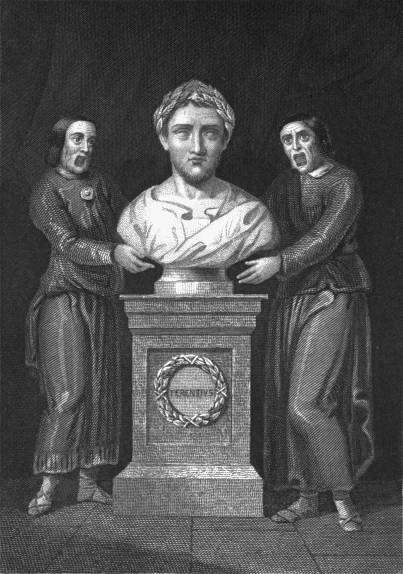
 The above works are for sale by all
booksellers, or they will be sent by Harper
& Brothers to any address on receipt of price as quoted. If
ordered sent by mail, 10 per cent. should be added to the price to cover
cost of postage.
The above works are for sale by all
booksellers, or they will be sent by Harper
& Brothers to any address on receipt of price as quoted. If
ordered sent by mail, 10 per cent. should be added to the price to cover
cost of postage.