New original cover art included with this eBook is granted to the public domain.
THE CITY
THE UNIVERSITY OF CHICAGO PRESS
CHICAGO, ILLINOIS
THE BAKER & TAYLOR COMPANY
NEW YORK
THE MACMILLAN COMPANY OF CANADA, LIMITED
TORONTO
THE CAMBRIDGE UNIVERSITY PRESS
LONDON
The MARUZEN-KABUSHIKI-KAISHA
TOKYO, OSAKA, KYOTO, FUKUOKA, SENDAI
THE MISSION BOOK COMPANY
SHANGHAI
BY
ROBERT E. PARK
ERNEST W. BURGESS
RODERICK D. McKENZIE
WITH A BIBLIOGRAPHY BY
LOUIS WIRTH
THE
UNIVERSITY OF CHICAGO PRESS
CHICAGO·ILLINOIS
Copyright 1925 By
The University of Chicago
All Rights Reserved
Published December 1925
Composed and Printed By
The University of Chicago Press
Chicago, Illinois, U.S.A.
PREFACE
vii
Some years ago I was asked to outline a program of studies of
human nature and social life under modern city conditions. The
first paper in this volume was written in response to that request.
The other chapters are by-products of the more detailed monographic
studies suggested in that paper and already measurably
carried to completion. They have arisen naturally as a commentary
upon and interpretation of these larger studies, exploring and delimiting
the field of observation and research in which these subjects
lie. It has seemed, therefore, that although they were written at
different times and by different hands, they might serve as a general
introduction to further studies in the field. Some of the larger monographs
referred to above are nearly ready for the press and when
published will constitute, with this volume, a series in the sociology
of urban life.
Most of the papers in this volume have already found their way
into print, in whole or in part, either in the Proceedings of the American
Sociological Society or in the pages of other sociological publications.
The chapter “The City,” which gives the title to this volume,
was first published in the American Journal of Sociology for March,
1915. It has been revised and to some extent rewritten for publication
in this volume. No attempt has been made, however, to redefine
the point of view or the project as originally outlined.
The chapter “The Growth of the City” was presented first as a
paper at the meeting of the Sociological Society in Washington, in
1923. It was subsequently printed in the Proceedings of the Society
for that year. It is intended to sketch a point of view for the study
of the expansion of the urban area and the growth of the urban community,
viiiparticularly as they are related to the recognized problems,
communal and personal, of the city.
Professor McKenzie’s paper, “The Ecological Approach to the
Study of the Human Community,” was first published in the American
Journal of Sociology for November, 1925. It is intended to emphasize
the fact that the conceptions and methods of study of plant
and animal ecology may be profitably applied to the analysis and
description of certain aspects of human society. These three papers,
with the classified bibliography by Louis Wirth, represent whatever
is novel in the point of view and the methods of study of the urban
community, to which this volume is intended as an introduction.
Certain of the remaining chapters, including the paper “The
Natural History of the Newspaper,” first published in the American
Journal of Sociology, November, 1923; the paper “Magic, Mentality,
and City Life,” presented at the annual meeting of the American
Sociological Society, in Washington, D.C., December, 1923; and the
brief paper on the “Mind of the Hobo,” first printed under the title
“The Mind of the Rover,” in the World Tomorrow, September, 1923,
will no doubt seem rather remote from the theme of this volume.
The justification for including them here is that they suggest lines
of observation in a field that students are just now beginning to
explore. It seems evident that there is a very definite relation between
human intelligence and community organization. Although
no specific studies have been made in this field, they should be included,
at least prospectively, in the list of problems for further study.
The substance of the chapter “Community Organization and
Juvenile Delinquency” was presented at the annual meeting of the
Recreation Congress, in Springfield, Illinois, October 8–12, 1923, but
has not been previously published. The paper “Community Organization
and the Romantic Temper” was read at the meeting of the
American Sociological Society in Washington, D.C., in 1923, in the
section on Community Organization. It was published in the
Journal of Social Forces, May, 1925.
ixProfessor Burgess’ paper, “Can Neighborhood Work Have a
Scientific Basis?” was presented at the annual meeting of the National
Conference of Social Work, in Toronto, May 1924. An abstract
of this paper was published in the Proceedings of the conference
for that year.
In conclusion, the authors wish to take this occasion to acknowledge
their indebtedness to the publishers for using here the papers in
the journals mentioned.
Robert E. Park
University of Chicago
November 2, 1925
TABLE OF CONTENTS
xi
CHAPTER
PAGE
I.
The City: Suggestions for the Investigation of Human Behavior in the Urban Environment.Robert E. Park
CHAPTER I THE CITY: SUGGESTIONS FOR THE INVESTIGATION OF HUMAN BEHAVIOR IN THE URBAN ENVIRONMENT — I. THE CITY PLAN AND LOCAL ORGANIZATION — II. INDUSTRIAL ORGANIZATION AND THE MORAL ORDER — III. SECONDARY RELATIONS AND SOCIAL CONTROL — IV. TEMPERAMENT AND THE URBAN ENVIRONMENT
1
The city, from the point of view of this paper, is something more
than a congeries of individual men and of social conveniences—streets,
buildings, electric lights, tramways, and telephones, etc.;
something more, also, than a mere constellation of institutions and
administrative devices—courts, hospitals, schools, police, and civil
functionaries of various sorts. The city is, rather, a state of mind,
a body of customs and traditions, and of the organized attitudes
and sentiments that inhere in these customs and are transmitted
with this tradition. The city is not, in other words, merely a physical
mechanism and an artificial construction. It is involved in the vital
processes of the people who compose it; it is a product of nature,
and particularly of human nature.
The city has, as Oswald Spengler has recently pointed out, its
own culture: “What his house is to the peasant, the city is to civilized
man. As the house has its household gods, so has the city its
protecting Deity, its local saint. The city also, like the peasant’s
hut, has its roots in the soil.”[1]
The city has been studied, in recent times, from the point of view
of its geography, and still more recently from the point of view of its
ecology. There are forces at work within the limits of the urban
community—within the limits of any natural area of human habitation,
in fact—which tend to bring about an orderly and typical
grouping of its population and institutions. The science which seeks
2to isolate these factors and to describe the typical constellations of
persons and institutions which the co-operation of these forces produce,
is what we call human, as distinguished from plant and animal,
ecology.
Transportation and communication, tramways and telephones,
newspapers and advertising, steel construction and elevators—all
things, in fact, which tend to bring about at once a greater mobility
and a greater concentration of the urban populations—are primary
factors in the ecological organization of the city.
The city is not, however, merely a geographical and ecological
unit; it is at the same time an economic unit. The economic organization
of the city is based on the division of labor. The multiplication
of occupations and professions within the limits of the urban
population is one of the most striking and least understood aspects
of modern city life. From this point of view, we may, if we choose,
think of the city, that is to say, the place and the people, with all the
machinery and administrative devices that go with them, as organically
related; a kind of psychophysical mechanism in and through
which private and political interests find not merely a collective
but a corporate expression.
Much of what we ordinarily regard as the city—its charters,
formal organization, buildings, street railways, and so forth—is,
or seems to be, mere artifact. But these things in themselves are
utilities, adventitious devices which become part of the living city
only when, and in so far as, through use and wont they connect
themselves, like a tool in the hand of man, with the vital forces
resident in individuals and in the community.
The city is, finally, the natural habitat of civilized man. It is
for that reason a cultural area characterized by its own peculiar
cultural type:
“It is a quite certain, but never fully recognized, fact,” says
Spengler, “that all great cultures are city-born. The outstanding man
of the second generation is a city-building animal. This is the actual
3criterion of world-history, as distinguished from the history of mankind:
world-history is the history of city men. Nations, governments,
politics, and religions—all rest on the basic phenomenon of
human existence, the city.”[2]
Anthropology, the science of man, has been mainly concerned
up to the present with the study of primitive peoples. But civilized
man is quite as interesting an object of investigation, and at the
same time his life is more open to observation and study. Urban
life and culture are more varied, subtle, and complicated, but the
fundamental motives are in both instances the same. The same
patient methods of observation which anthropologists like Boas
and Lowie have expended on the study of the life and manners of
the North American Indian might be even more fruitfully employed
in the investigation of the customs, beliefs, social practices, and
general conceptions of life prevalent in Little Italy on the lower
North Side in Chicago, or in recording the more sophisticated folkways
of the inhabitants of Greenwich Village and the neighborhood
of Washington Square, New York.
We are mainly indebted to writers of fiction for our more intimate
knowledge of contemporary urban life. But the life of our
cities demands a more searching and disinterested study than even
Émile Zola has given us in his “experimental” novels and the annals
of the Rougon-Macquart family.
We need such studies, if for no other reason than to enable us
to read the newspapers intelligently. The reason that the daily
chronicle of the newspaper is so shocking, and at the same time so
fascinating, to the average reader is because the average reader
knows so little about the life of which the newspaper is the record.
The observations which follow are intended to define a point of
view and to indicate a program for the study of urban life: its physical
organization, its occupations, and its culture.
4
The city, particularly the modern American city, strikes one at
first blush as so little a product of the artless processes of nature and
growth, that it is difficult to recognize it as a living entity. The
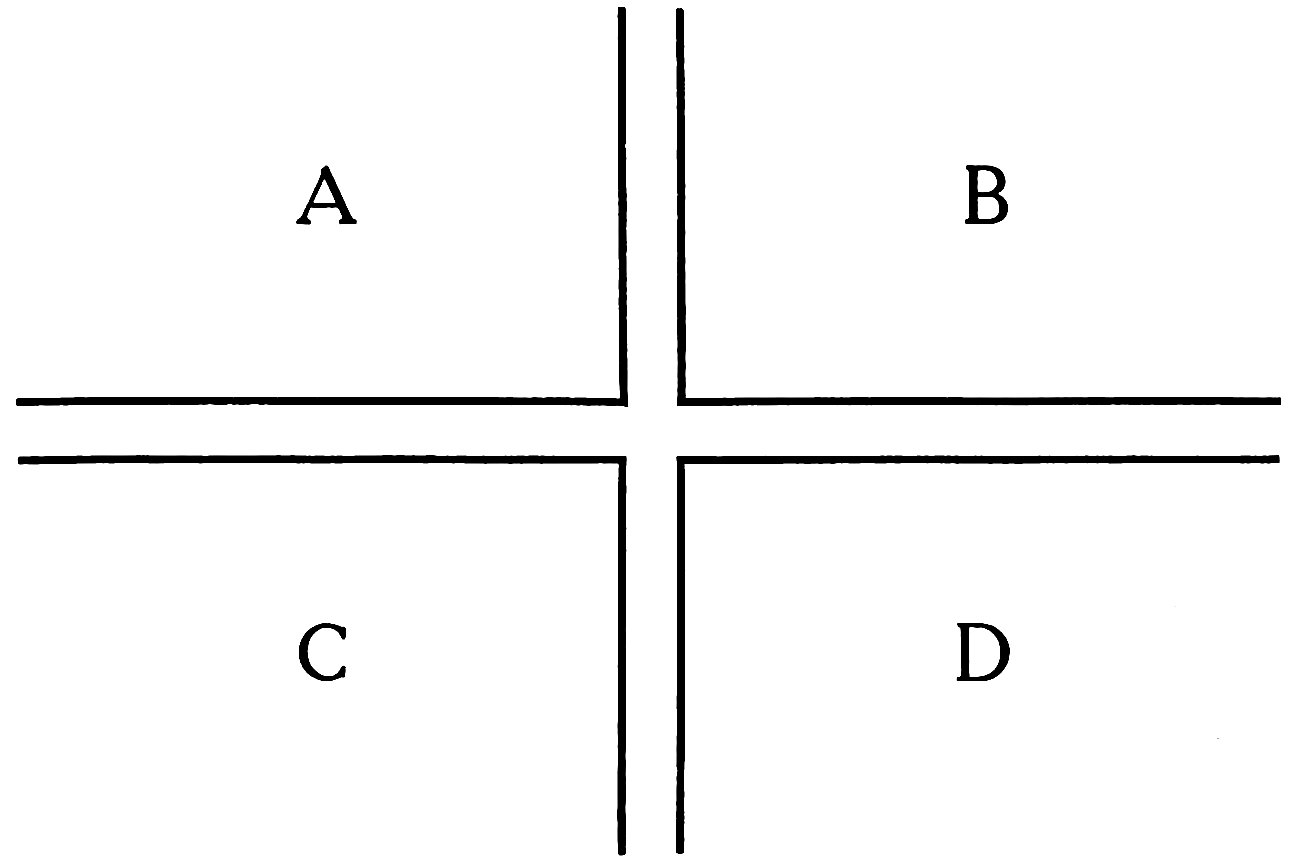
ground plan of most American cities, for example, is a checkerboard.
The unit of distance is the block. This geometrical form
suggests that the city is a purely artificial construction which might
conceivably be taken apart and put together again, like a house of
blocks.
The fact is, however, that the city is rooted in the habits and
customs of the people who inhabit it. The consequence is that the
city possesses a moral as well as a physical organization, and these
two mutually interact in characteristic ways to mold and modify
one another. It is the structure of the city which first impresses us
by its visible vastness and complexity. But this structure has its
basis, nevertheless, in human nature, of which it is an expression.
On the other hand, this vast organization which has arisen in response
to the needs of its inhabitants, once formed, imposes itself
upon them as a crude external fact, and forms them, in turn, in
accordance with the design and interests which it incorporates.
Structure and tradition are but different aspects of a single cultural
complex which determines what is characteristic and peculiar to
city, as distinguished from village, life and the life of the open
fields.
The city plan.—It is because the city has a life quite its own that
there is a limit to the arbitrary modifications which it is possible to
make (1) in its physical structure and (2) in its moral order.
The city plan, for example, establishes metes and bounds, fixes
in a general way the location and character of the city’s constructions,
and imposes an orderly arrangement, within the city area,
upon the buildings which are erected by private initiative as well as
by public authority. Within the limitations prescribed, however,
the inevitable processes of human nature proceed to give these
5regions and these buildings a character which it is less easy to control.
Under our system of individual ownership, for instance, it is
not possible to determine in advance the extent of concentration of
population which is likely to occur in any given area. The city
cannot fix land values, and we leave to private enterprise, for the
most part, the task of determining the city’s limits and the location
of its residential and industrial districts. Personal tastes and convenience,
vocational and economic interests, infallibly tend to
segregate and thus to classify the populations of great cities. In
this way the city acquires an organization and distribution of population
which is neither designed nor controlled.
The Bell Telephone Company is now making, particularly in
New York and Chicago, elaborate investigations, the purpose of
which is to determine, in advance of its actual changes, the probable
growth and distribution of the urban population within the metropolitan
areas. The Sage Foundation, in the course of its city-planning
studies, sought to find mathematical formulae that would
enable them to predict future expansion and limits of population
in New York City. The recent development of chain stores has
made the problem of location a matter of concern to different chain-store
corporations. The result has been the rise of a new profession.
There is now a class of experts whose sole occupation is to discover
and locate, with something like scientific accuracy, taking
account of the changes which present tendencies seem likely to
bring about, restaurants, cigar stores, drug-stores, and other smaller
retail business units whose success depends largely on location.
Real-estate men are not infrequently willing to finance a local business
of this sort in locations which they believe will be profitable,
accepting as their rent a percentage of the profits.
Physical geography, natural advantages and disadvantages,
including means of transportation, determine in advance the general
outlines of the urban plan. As the city increases in population, the
subtler influences of sympathy, rivalry, and economic necessity
6tend to control the distribution of population. Business and industry
seek advantageous locations and draw around them certain
portions of the population. There spring up fashionable residence
quarters from which the poorer classes are excluded because of the
increased value of the land. Then there grow up slums which are
inhabited by great numbers of the poorer classes who are unable to
defend themselves from association with the derelict and vicious.
In the course of time every section and quarter of the city takes
on something of the character and qualities of its inhabitants. Each
separate part of the city is inevitably stained with the peculiar sentiments
of its population. The effect of this is to convert what was
at first a mere geographical expression into a neighborhood, that
is to say, a locality with sentiments, traditions, and a history of
its own. Within this neighborhood the continuity of the historical
processes is somehow maintained. The past imposes itself upon the
present, and the life of every locality moves on with a certain momentum
of its own, more or less independent of the larger circle of
life and interests about it.
The organization of the city, the character of the urban environment
and of the discipline which it imposes is finally determined by
the size of the population, its concentration and distribution within
the city area. For this reason it is important to study the growth of
cities, to compare the idiosyncrasies in the distribution of city populations.
Some of the first things we want to know about the city,
therefore are:
What are the sources of the city’s population?
What part of its population growth is normal, i.e., due to excess of births
over deaths?
What part is due to migration (a) of native stocks? (b) foreign stocks?
What are the outstanding “natural” areas, i.e., areas of population segregation?
How is distribution of population within the city area affected by (a)
economic interest, i.e., land values? (b) by sentimental interest, race? vocation,
etc.?
7Where within the city is the population declining? Where is it expanding?
Where are population growth and the size of families within the different
natural areas of the city correlated with births and deaths, with marriages and
divorces, with house rents and standards of living?
The neighborhood.—Proximity and neighborly contact are the
basis for the simplest and most elementary form of association with
which we have to do in the organization of city life. Local interests
and associations breed local sentiment, and, under a system which
makes residence the basis for participation in the government, the
neighborhood becomes the basis of political control. In the social
and political organization of the city it is the smallest local unit.
It is surely one of the most remarkable of all social facts that, coming down
from untold ages, there should be this instinctive understanding that the man
who establishes his home beside yours begins to have a claim upon your sense of
comradeship.... The neighborhood is a social unit which, by its clear definition
of outline, its inner organic completeness, its hair-trigger reactions, may
be fairly considered as functioning like a social mind.... The local boss,
however autocratic he may be in the larger sphere of the city with the power he
gets from the neighborhood, must always be in and of the people; and he is very
careful not to try to deceive the local people so far as their local interests are
concerned. It is hard to fool a neighborhood about its own affairs.[3]
The neighborhood exists without formal organization. The local
improvement society is a structure erected on the basis of the spontaneous
neighborhood organization and exists for the purpose of
giving expression to the local sentiment in regard to matters of
local interest.
Under the complex influences of the city life, what may be called
the normal neighborhood sentiment has undergone many curious
and interesting changes, and produced many unusual types of local
communities. More than that, there are nascent neighborhoods and
neighborhoods in process of dissolution. Consider, for example,
Fifth Avenue, New York, which probably never had an improvement
8association, and compare with it 135th Street in the Bronx
(where the Negro population is probably more concentrated than
in any other single spot in the world), which is rapidly becoming a
very intimate and highly organized community.
In the history of New York the significance of the name Harlem has
changed from Dutch to Irish to Jewish to Negro. Of these changes the last
has come most swiftly. Throughout colored America, from Massachusetts to
Mississippi and across the continent to Los Angeles and Seattle, its name,
which as late as fifteen years ago has scarcely been heard, now stands for the
Negro metropolis. Harlem is, indeed, the great Mecca for the sight-seer,
the pleasure-seeker, the curious, the adventurous, the enterprising, the ambitious,
and the talented of the Negro world; for the lure of it has reached down to
every island of the Carib Sea and has penetrated even into Africa.[4]
It is important to know what are the forces which tend to break
up the tensions, interests, and sentiments which give neighborhoods
their individual character. In general these may be said to be anything
and everything that tends to render the population unstable,
to divide and concentrate attentions upon widely separated objects
of interest.
What part of the population is floating?
Of what elements, i.e., races, classes, etc., is this population composed?
How many people live in hotels, apartments, and tenements?
How many people own their own homes?
What proportion of the population consists of nomads, hobos, gypsies?
On the other hand, certain urban neighborhoods suffer from
isolation. Efforts have been made at different times to reconstruct
and quicken the life of city neighborhoods and to bring them in
touch with the larger interests of the community. Such is, in part,
the purpose of the social settlements. These organizations and
others which are attempting to reconstruct city life have developed
certain methods and a technique for stimulating and controlling
local communities. We should study, in connection with the investigation
of these agencies, these methods and this technique, since it
9is just the method by which objects are practically controlled that
reveals their essential nature, that is to say, their predictable character
(Gesetzmässigkeit).[5]
In many of the European cities, and to some extent in this country,
reconstruction of city life has gone to the length of building
garden suburbs, or replacing unhealthful and run-down tenements
with model buildings owned and controlled by the municipality.
In American cities the attempt has been made to renovate evil
neighborhoods by the construction of playgrounds and the introduction
of supervised sports of various kinds, including municipal
dances in municipal dance halls. These and other devices which are
intended primarily to elevate the moral tone of the segregated populations
of great cities should be studied in connection with the investigation
of the neighborhood in general. They should be studied, in
short, not merely for their own sake, but for what they can reveal
to us of human behavior and human nature generally.
Colonies and segregated areas.—In the city environment the
neighborhood tends to lose much of the significance which it possessed
in simpler and more primitive forms of society. The easy
means of communication and of transportation, which enable individuals
to distribute their attention and to live at the same time in
several different worlds, tend to destroy the permanency and intimacy
of the neighborhood. On the other hand, the isolation of the
immigrant and racial colonies of the so-called ghettos and areas of
population segregation tend to preserve and, where there is racial
prejudice, to intensify the intimacies and solidarity of the local and
10neighborhood groups. Where individuals of the same race or of the
same vocation live together in segregated groups, neighborhood
sentiment tends to fuse together with racial antagonisms and class
interests.
Physical and sentimental distances reinforce each other, and the
influences of local distribution of the population participate with
the influences of class and race in the evolution of the social organization.
Every great city has its racial colonies, like the Chinatowns
of San Francisco and New York, the Little Sicily of Chicago, and
various other less pronounced types. In addition to these, most
cities have their segregated vice districts, like that which until
recently existed in Chicago, their rendezvous for criminals of various
sorts. Every large city has its occupational suburbs, like the Stockyards
in Chicago, and its residential enclaves, like Brookline in
Boston, the so-called “Gold Coast” in Chicago, Greenwich Village
in New York, each of which has the size and the character of a
complete separate town, village, or city, except that its population
is a selected one. Undoubtedly the most remarkable of these cities
within cities, of which the most interesting characteristic is that they
are composed of persons of the same race, or of persons of different
races but of the same social class, is East London, with a population
of 2,000,000 laborers.
The people of the original East London have now overflowed and crossed
the Lea, and spread themselves over the marshes and meadows beyond. This
population has created new towns which were formerly rural villages, West
Ham, with a population of nearly 300,000; East Ham, with 90,000; Stratford,
with its “daughters,” 150,000; and other “hamlets” similarly overgrown.
Including these new populations, we have an aggregate of nearly two millions of
people. The population is greater than that of Berlin or Vienna, or St. Petersburg,
or Philadelphia.
It is a city full of churches and places of worship, yet there are no cathedrals,
either Anglican or Roman; it has a sufficient supply of elementary
schools, but it has no public or high school, and it has no colleges for the higher
education and no university; the people all read newspapers; yet there is no
11East London paper except of the smaller and local kind.... In the streets
there are never seen any private carriages; there is no fashionable quarter ... one meets no ladies in the principal thoroughfares. People, shops, houses,
conveyances—all together are stamped with the unmistakable seal of the working
class.
Perhaps the strangest thing of all is this: in a city of two millions of people
there are no hotels! That means, of course, that there are no visitors.[6]
In the older cities of Europe, where the processes of segregation
have gone farther, neighborhood distinctions are likely to be more
marked than they are in America. East London is a city of a single
class, but within the limits of that city the population is segregated
again and again by racial, cultural, and vocational interests. Neighborhood
sentiment, deeply rooted in local tradition and in local
custom, exercises a decisive selective influence upon the populations
of the older European cities and shows itself ultimately in a marked
way in the characteristics of the inhabitants.
What we want to know of these neighborhoods, racial communities,
and segregated city areas, existing within or on the outer
rims of great cities, is what we want to know of all other social
groups:
What are the elements of which they are composed?
To what extent are they the product of a selective process?
How do people get in and out of the group thus formed?
What are the relative permanence and stability of their populations?
What about the age, sex, and social condition of the people?
What about the children? How many of them are born, and how many of
them remain?
What is the history of the neighborhood? What is there in the subconsciousness—in
the forgotten or dimly remembered experiences—of this neighborhood
which determines its sentiments and attitudes?
What is there in clear consciousness, i.e., what are its avowed sentiments,
doctrines, etc.?
What does it regard as matter of fact? What is news? What is the general
run of attention? What models does it imitate and are these within or without
the group?
12What is the social ritual, i.e., what things must one do in the neighborhood
in order to escape being regarded with suspicion or looked upon as peculiar?
Who are the leaders? What interests of the neighborhood do they incorporate
in themselves and what is the technique by which they exercise control?
The ancient city was primarily a fortress, a place of refuge in
time of war. The modern city, on the contrary, is primarily a convenience
of commerce, and owes its existence to the market place
around which it sprang up. Industrial competition and the division
of labor, which have probably done most to develop the latent
powers of mankind, are possible only upon condition of the existence
of markets, of money, and other devices for the facilitation of trade
and commerce.
An old German adage declares that “city air makes men free”
(Stadt Luft macht frei). This is doubtless a reference to the days
when the free cities of Germany enjoyed the patronage of the
emperor, and laws made the fugitive serf a free man if he succeeded
for a year and a day in breathing city air. Law, of itself, could not,
however, have made the craftsman free. An open market in which
he might sell the products of his labor was a necessary incident of
his freedom, and it was the application of the money economy to
the relations of master and man that completed the emancipation
of the serf.
Vocational classes and vocational types.—The old adage which
describes the city as the natural environment of the free man still
holds so far as the individual man finds in the chances, the diversity
of interests and tasks, and in the vast unconscious co-operation of
city life the opportunity to choose his own vocation and develop
his peculiar individual talents. The city offers a market for the special
talents of individual men. Personal competition tends to select
for each special task the individual who is best suited to perform it.
The difference of natural talents in different men is, in reality, much less
than we are aware of; and the very different genius which appears to distinguish
13men of different professions, when grown up to maturity, is not upon many
occasions so much the cause, as the effect of the division of labour. The difference
between the most dissimilar characters, between a philosopher and a
common street porter, for example, seems to arise not so much from nature, as
from habit, custom, and education. When they came into the world, and for the
first six or eight years of their existence, they were perhaps very much alike,
and neither their parents nor playfellows could perceive any remarkable difference.
About that age, or soon after, they come to be employed in different
occupations. The difference of talents comes then to be taken notice of, and
widens by degrees, till at last the vanity of the philosopher is willing to acknowledge
scarce any resemblance. But without the disposition to truck, barter, and
exchange, every man must have procured to himself every necessary and conveniency
of life which he wanted. All must have had the same duties to perform,
and the same work to do, and there could have been no such difference of
employment as could alone give occasion to any great difference of talent....
As it is the power of exchanging that gives occasion to the division of labour,
so the extent of this division must always be limited by the extent of that power,
or, in other words, by the extent of the market.... There are some sorts of
industry, even of the lowest kind, which can be carried on nowhere but in a
great town.[7]
Success, under conditions of personal competition, depends upon
concentration upon some single task, and this concentration stimulates
the demand for rational methods, technical devices, and exceptional
skill. Exceptional skill, while based on natural talent, requires
special preparation, and it has called into existence the trade and
professional schools, and finally bureaus for vocational guidance.
All of these, either directly or indirectly, serve at once to select and
emphasize individual differences.
Every device which facilitates trade and industry prepares the
way for a further division of labor and so tends further to specialize
the tasks in which men find their vocations.
The outcome of this process is to break down or modify the older
social and economic organization of society, which was based on
family ties, local associations, on culture, caste, and status, and to
14substitute for it an organization based on occupation and vocational
interests.
In the city every vocation, even that of a beggar, tends to
assume the character of a profession and the discipline which success
in any vocation imposes, together with the associations that it
enforces, emphasizes this tendency—the tendency, namely, not
merely to specialize, but to rationalize one’s occupation and to
develop a specific and conscious technique for carrying it on.
The effect of the vocations and the division of labor is to produce,
in the first instance, not social groups, but vocational types:
the actor, the plumber, and the lumber-jack. The organizations,
like the trade and labor unions which men of the same trade or profession
form, are based on common interests. In this respect they
differ from forms of association like the neighborhood, which are
based on contiguity, personal association, and the common ties of
humanity. The different trades and professions seem disposed to
group themselves in classes, that is to say, the artisan, business, and
professional classes. But in the modern democratic state the classes
have as yet attained no effective organization. Socialism, founded on
an effort to create an organization based on “class consciousness,”
has never succeeded, except, perhaps, in Russia, in creating more
than a political party.
The effects of the division of labor as a discipline, i.e., as means of
molding character, may therefore be best studied in the vocational
types it has produced. Among the types which it would be interesting
to study are: the shopgirl, the policeman, the peddler, the cabman,
the nightwatchman, the clairvoyant, the vaudeville performer,
the quack doctor, the bartender, the ward boss, the strike-breaker,
the labor agitator, the school teacher, the reporter, the stockbroker,
the pawnbroker; all of these are characteristic products of the conditions
of city life; each, with its special experience, insight, and point
of view determines for each vocational group and for the city as a
whole its individuality.
15To what extent is the grade of intelligence represented in the different
trades and professions dependent upon natural ability?
To what extent is intelligence determined by the character of the occupation
and the conditions under which it is practiced?
To what extent is success in the occupations dependent upon sound judgment
and common sense; to what extent upon technical ability?
Does native ability or special training determine success in the different
vocations?
What prestige and what prejudices attach to different trades and professions
and why?
Is the choice of the occupation determined by temperamental, by economic,
or by sentimental considerations?
In what occupations do men, in what occupations do women, succeed better,
and why?
How far is occupation, rather than association, responsible for the mental
attitude and moral predilections? Do men in the same profession or trade, but
representing different nationalities and different cultural groups, hold characteristic
and identical opinions?
To what extent is the social or political creed, that is, socialism, anarchism,
syndicalism, etc., determined by occupation? by temperament?
To what extent have social doctrine and social idealism superseded and
taken the place of religious faith in the different occupations, and why?
Do social classes tend to assume the character of cultural groups? That
is to say, do the classes tend to acquire the exclusiveness and independence of a
caste or nationality; or is each class always dependent upon the existence of a
corresponding class?
To what extent do children follow the vocations of their parents and why?
To what extent do individuals move from one class to another, and how
does this fact modify the character of class relationships?
News and the mobility of the social group.—The division of labor,
in making individual success dependent upon concentration upon
a special task, has had the effect of increasing the interdependence
of the different vocations. A social organization is thus created in
which the individual becomes increasingly dependent upon the community
of which he is an integral part. The effect, under conditions
of personal competition, of this increasing interdependence of
the parts is to create in the industrial organization as a whole a
16certain sort of social solidarity, but a solidarity based, not on sentiment
and habit, but on community of interests.
In the sense in which the terms are here used, sentiment is the
more concrete, interest the more abstract, term. We may cherish a
sentiment for a person, a place, or any object whatsoever. It may be
a sentiment of aversion, or a sentiment of possession. But to possess
or to be possessed by a sentiment for, or in regard to, anything means
that we are incapable of acting toward it in a thoroughly rational
way. It means that the object of our sentiment corresponds in some
special way to some inherited or acquired disposition. Such a disposition
is the affection of a mother for her child, which is instinctive.
Or even the feeling she may have for the child’s empty cradle, which
is acquired.
The existence of a sentimental attitude indicates that there are
motives for action of which the individual who is moved by them is
not wholly conscious; motives over which he has only a partial control.
Every sentiment has a history, either in the experience of the
individual, or in the experience of the race, but the person who acts
on that sentiment may not be aware of the history.
Interests are directed less toward specific objects than toward
the ends which this or that particular object at one time or another
embodies. Interests imply, therefore, the existence of means and a
consciousness of the distinction between means and ends. Our
sentiments are related to our prejudices, and prejudices may attach
to anything—persons, races, as well as inanimate things. Prejudices
are related also to taboos, and so tend to maintain “social distances”
and the existing social organization. Sentiment and prejudice are
elementary forms of conservatism. Our interests are rational and
mobile, and make for change.
Money is the cardinal device by which values have become rationalized
and sentiments have been replaced by interests. It is
just because we feel no personal and no sentimental attitude toward
our money, such as we do toward, for example, our home, that
17money becomes a valuable means of exchange. We will be interested
in acquiring a certain amount of money in order to achieve a certain
purpose, but provided that purpose may be achieved in any other
way we are likely to be just as well satisfied. It is only the miser
who becomes sentimental about money, and in that case he is likely
to prefer one sort of money, say gold, to another, irrespective of its
value. In this case the value of gold is determined by personal
sentiment rather than by reason.
An organization which is composed of competing individuals
and of competing groups of individuals is in a state of unstable
equilibrium, and this equilibrium can be maintained only by a
process of continuous readjustment. This aspect of social life and
this type of social organization are best represented in the world of
business which is the special object of investigation of political
economy.
The extension of industrial organization, which is based on the
impersonal relations defined by money, has gone forward hand in
hand with an increasing mobility of the population. The laboring
man and the artisan fitted to perform a specific task are compelled,
under the conditions created by city life, to move from one region
to another in search of the particular kind of employment which they
are fitted to perform. The tide of immigration which moves back
and forth between Europe and America is to some extent a measure
of this same mobility.[8]
On the other hand, the tradesman, the manufacturer, the professional
man, the specialist in every vocation, seeks his clients as the
difficulties of travel and communication decrease over an ever
widening area of territory. This is another way in which the mobility
of the population may be measured. However, mobility in an individual
or in a population is measured, not merely by change of
location, but rather by the number and variety of the stimulations
to which the individual or the population responds. Mobility depends,
18not merely upon transportation, but upon communication.
Education and the ability to read, the extension of the money
economy to an ever increasing number of the interests of life, in
so far as it has tended to depersonalize social relations, has at the
same time vastly increased the mobility of modern peoples.
The term “mobility,” like its correlative, “isolation,” covers a wide range
of phenomena. It may represent at the same time a character and a condition.
As isolation may be due to the existence of purely physical barriers to communication,
or to a peculiarity of temperament and a lack of education, so mobility
may be a consequence of the natural means of communication or of an agreeable
manner and a college education.
It is now clearly recognized that what we ordinarily call a lack of intelligence
in individuals, races, and communities is frequently a result of isolation.
On the other hand, the mobility of a population is unquestionably a very large
factor in its intellectual development.
There is an intimate connection between the immobility of the primitive
man and his so-called inability to use abstract ideas. The knowledge which a
peasant ordinarily possesses, from the very nature of his occupation is, concrete
and personal. He knows individually and personally every member of the
flock he tends. He becomes in the course of years so attached to the land he
tills that the mere transposition from the strip of soil on which he has grown
up to another with which he is less intimately acquainted is felt by him as a
personal loss. For such a man the neighboring valley, or even the strip of land
at the other end of the village is in a certain sense alien territory. A large part of
the peasant’s efficiency as an agricultural laborer depends upon this intimate
and personal acquaintance with the idiosyncrasies of a single plot of land to the
care of which he has been bred. It is apparent that, under conditions like these,
very little of the peasant’s practical knowledge will take the abstract form of
scientific generalization. He thinks in concrete terms because he knows and
needs no other.
On the other hand, the intellectual characteristics of the Jew and his
generally recognized interest in abstract and radical ideas are unquestionably
connected with the fact that the Jews are, before all else, a city folk. The
“Wandering Jew” acquires abstract terms with which to describe the various
scenes which he visits. His knowledge of the world is based upon identities
and differences, that is to say, on analysis and classification. Reared in intimate
association with the bustle and business of the market place, constantly intent
on the shrewd and fascinating game of buying and selling, in which he employs
19that most interesting of abstractions, money, he has neither opportunity nor
inclination to cultivate that intimate attachment to places and persons which
is characteristic of the immobile person.[9]
Concentration of populations in cities, the wider markets, the
division of labor, the concentration of individuals and groups on
special tasks, have continually changed the material conditions of
life, and in doing this have made readjustments to novel conditions
increasingly necessary. Out of this necessity there have grown up a
number of special organizations which exist for the special purpose
of facilitating these readjustments. The market which brought the
modern city into existence is one of these devices. More interesting,
however, are the exchanges, particularly the stock exchange and
the board of trade, where prices are constantly being made in response
to changes, or rather the reports of changes, in economic
conditions all over the world.
These reports, so far as they are calculated to cause readjustments,
have the character of what we call news. It is the existence
of a critical situation which converts what were otherwise mere
information into news. Where there is an issue at stake, where, in
short, there is crisis, there information which might affect the outcome
one way or another becomes “live matter,” as the newspaper
men say. Live matter is news; dead matter is mere information.
What is the relation of mobility to suggestion, imitation, etc.?
What are the practical devices by which suggestibility and mobility are
increased in a community or in an individual?
Are there pathological conditions in communities corresponding to hysteria
in individuals? If so, how are they produced and how controlled?
To what extent is fashion an indication of mobility?
What is the difference in the manner in which fashions and customs are
transmitted?
What is social unrest, and what are the conditions under which it manifests
itself?
What are the characteristics of a progressive, what the characteristics of a
static, community in respect to its resistance to novel suggestions?
20What mental characteristics of the gypsy, of the hobo, and of the nomad
generally can be traced to these nomadic habits?
The stock exchanges and the mob.—The exchanges, upon which we
may watch the fluctuation of prices in response to the news of economic
conditions in different parts of the world, are typical. Similar
readjustments are taking place in every department of social life,
where, however, the devices for making these readjustments are not
so complete and perfect. For example, the professional and trade
papers, which keep the professions and the trades informed in regard
to new methods, experiences, and devices, serve to keep the members
of these trades and professions abreast of the times, which means
that they facilitate readjustments to changing conditions.
There is, however, this important distinction to be made: Competition
in the exchanges is more intense; changes are more rapid
and, as far as the individuals directly concerned, more momentous.
In contrast with such a constellation of forces as we find on the
exchanges, where competing dealers meet to buy and sell, so mobile
a form of social organization as the crowd and the mob exhibits a
relative stability.
It is a commonplace that decisive factors in the movements of
crowds, as in the fluctuations of markets, are psychologic. This
means that among the individuals who make up the crowd, or who
compose the public which participates in the movements reflected
in the market, a condition of instability exists which corresponds
to what has been defined elsewhere as crisis. It is true of the exchanges,
as it is of crowds, that the situation they represent is
always critical, that is to say, the tensions are such that a slight
cause may precipitate an enormous effect. The current euphemism,
“the psychological moment,” defines such a critical condition.
Psychological moments may arise in any social situation, but
they occur more frequently in a society which has acquired a high
state of mobility. They occur more frequently in a society where
education is general, where railways, telegraph, and the printing
21press have become an indispensable part of the social economy.
They occur more frequently in cities than in smaller communities.
In the crowd and the public every moment may be said to be “psychological.”
Crisis may be said to be the normal condition on the exchanges.
What are called financial crises are merely an extension of this critical
condition to the larger business community. Financial panics
which sometimes follow upon financial crises are a precipitate of this
critical condition.
The fascinating thing about the study of crises, as of crowds, is
that in so far as they are in fact due to psychological causes, that is,
in so far as they are the result of the mobility of the communities in
which they occur, they can be controlled. The evidence for this is
the fact that they can be manipulated, and there is abundant evidence
of manipulation in the transactions of the stock market. The
evidence for the manipulation of crowds is less accessible. Labor
organizations have, however, known how to develop a pretty definite
technique for the instigation and control of strikes. The Salvation
Army has worked out a book of tactics which is very largely devoted
to the handling of street crowds; and professional revivalists, like
Billy Sunday, have an elaborate technique for conducting their
revivals.
Under the title of collective psychology much has been written
in recent years in regard to crowds and kindred phenomena of social
life. Most that has been written thus far has been based upon general
observation and almost no systematic methods exist for the
study of this type of social organization. The practical methods
which practical men like the political boss, the labor agitator, the
stock-exchange speculator, and others have worked out for the
control and manipulation of the public and the crowd furnish a body
of materials from which it is possible to make a more detailed, a
more intimate study of what may be called, in order to distinguish
it from that of more highly organized groups, collective behavior.
22The city, and particularly the great city, in which more than
elsewhere human relations are likely to be impersonal and rational,
defined in terms of interest and in terms of cash, is in a very real
sense a laboratory for the investigation of collective behavior.
Strikes and minor revolutionary movements are endemic in the
urban environment. Cities, and particularly the great cities, are in
unstable equilibrium. The result is that the vast casual and mobile
aggregations which constitute our urban populations are in a state
of perpetual agitation, swept by every new wind of doctrine, subject
to constant alarms, and in consequence the community is in a
chronic condition of crisis.
What has been said suggests first of all the importance of a
more detailed and fundamental study of collective behavior. The
questions which follow will perhaps suggest lines of investigation
that could be followed profitably by students of urban life.
What is the psychology of crisis? What is the cycle of events involved in
the evolution of a crisis, political or economic?
To what extent may the parliamentary system, including the electoral
system, be regarded as an attempt to regularize revolution and to meet and
control crises?
To what extent are mob violence, strikes, and radical political movements
the results of the same general conditions that provoke financial panics, real
estate booms, and mass movements in the population generally?
To what extent are the existing unstable equilibrium and social ferment due
to the extent and speed of economic changes as reflected in the stock exchange?
What are the effects of the extension of communication and of news upon
fluctuations in the stock market and economic changes generally?
Does the scale of stocks on the exchanges tend to exaggerate the fluctuations
in the market, or to stabilize them?
Do the reports in the newspapers, so far as they represent the facts, tend
to speed up social changes, or to stabilize a movement already in progress?
What is the effect of propaganda and rumor, in cases where the sources of
accurate information are cut off?
To what extent can fluctuations of the stock market be controlled by formal
regulation?
23To what extent can social changes, strikes, and revolutionary movements
be controlled by the censorship?
To what extent can the scientific forecasting of economic and social changes
exercise a useful control over the trend of prices and of events?
To what extent can the prices recorded by the stock exchange be compared
with public opinion as recorded by the newspaper?
To what extent can the city, which responds more quickly and more
decisively to changing events, be regarded as nerve centers of the social organism?
Modern methods of urban transportation and communication—the
electric railway, the automobile, the telephone, and the radio—have
silently and rapidly changed in recent years the social and
industrial organization of the modern city. They have been the
means of concentrating traffic in the business districts, have changed
the whole character of retail trade, multiplying the residence suburbs
and making the department store possible. These changes in
the industrial organization and in the distribution of population
have been accompanied by corresponding changes in the habits,
sentiments, and character of the urban population.
The general nature of these changes is indicated by the fact
that the growth of cities has been accompanied by the substitution
of indirect, “secondary,” for direct, face-to-face, “primary” relations
in the associations of individuals in the community.
By primary groups I mean those characterized by intimate face-to-face
association and co-operation. They are primary in several senses, but chiefly
in that they are fundamental in forming the social nature and ideals of the
individual. The result of intimate association, psychologically, is a certain
fusion of individualities in a common whole, so that one’s very self, for many
purposes at least, is the common life and purpose of the group. Perhaps the
simplest way of describing this wholeness is by saying that it is a “we”; it involves
the sort of sympathy and mutual identification for which “we” is the
natural expression. One lives in the feeling of the whole and finds the chief
aims of his will in that feeling....[10]
24Touch and sight, physical contact, are the basis for the first and
most elementary human relationships. Mother and child, husband
and wife, father and son, master and servant, kinsman and neighbor,
minister, physician, and teacher—these are the most intimate
and real relationships of life, and in the small community they are
practically inclusive.
The interactions which take place among the members of a
community so constituted are immediate and unreflecting. Intercourse
is carried on largely within the region of instinct and feeling.
Social control arises, for the most part spontaneously, in direct
response to personal influences and public sentiment. It is the result
of a personal accommodation, rather than the formulation of a
rational and abstract principle.
The church, the school, and the family.—In a great city, where the
population is unstable, where parents and children are employed
out of the house and often in distant parts of the city, where thousands
of people live side by side for years without so much as a
bowing acquaintance, these intimate relationships of the primary
group are weakened and the moral order which rested upon them is
gradually dissolved.
Under the disintegrating influences of city life most of our traditional
institutions, the church, the school, and the family, have
been greatly modified. The school, for example, has taken over some
of the functions of the family. It is around the public school and its
solicitude for the moral and physical welfare of the children that
something like a new neighborhood and community spirit tends to
get itself organized.
The church, on the other hand, which has lost much of its influence
since the printed page has so largely taken the place of the
pulpit in the interpretation of life, seems at present to be in process
of readjustment to the new conditions.
It is important that the church, the school, and the family should be studied
from the point of view of this readjustment to the conditions of city life.
25What changes have taken place in recent years in the family sentiments?
in the attitudes of husbands toward wives? of wives toward husbands? of children
toward parents, etc.?
What do the records of the juvenile and morals courts indicate in regard to
this matter?
In what regions of social life have the mores on the subject of the family
life changed most?
To what extent have these changes taken place in response to the influences
of the city environment?
Similarly, investigations might be carried on with reference to the school
and the church. Here, too, there is a changed attitude and changed policy in
response to a changed environment. This is important because it is, in the last
analysis, upon these institutions in which the immediate and vital interests of
life find a corporate expression that social organization ultimately rests.
It is probably the breaking down of local attachments and the
weakening of the restraints and inhibitions of the primary group,
under the influence of the urban environment, which are largely
responsible for the increase of vice and crime in great cities. It
would be interesting in this connection to determine by investigation
how far the increase in crime keeps pace with the increasing
mobility of the population and to what extent this mobility is a
function of the growth of population. It is from this point of view
that we should seek to interpret all those statistics which register
the disintegration of the moral order, for example, the statistics of
divorce, of truancy, and of crime.
What is the effect of ownership of property, particularly of the home, on
truancy, on divorce, and on crime?
In what regions and classes are certain kinds of crime endemic?
In what classes does divorce occur most frequently? What is the difference
in this respect between farmers and, say, actors?
To what extent in any given racial group, for example, the Italians in New
York or the Poles in Chicago, do parents and children live in the same world,
speak the same language, and share the same ideas, and how far do the conditions
found account for juvenile delinquency in that particular group?
How far are the home mores responsible for criminal manifestations of an
immigrant group?
26Crisis and the courts.—It is characteristic of city life that all sorts
of people meet and mingle together who never fully comprehend
one another. The anarchist and the club man, the priest and the
Levite, the actor and the missionary who touch elbows on the street
still live in totally different worlds. So complete is the segregation
of vocational classes that it is possible within the limits of the city
to live in an isolation almost as complete as that of some remote
rural community.
Walter Besant tells the following anecdote of his experience as
editor of the People’s Palace Journal:
In that capacity I endeavored to encourage literary effort, in the hope of
lighting upon some unknown and latent genius. The readers of the Journal
were the members of the various classes connected with the educational side of
the place. They were young clerks chiefly—some of them very good fellows.
They had a debating society which I attended from time to time. Alas! They
carried on their debates in an ignorance the most profound, the most unconscious,
and the most satisfied. I endeavored to persuade them that it was
desirable at least to master the facts of the case before they spoke. In vain.
Then I proposed subjects for essays, and offered prizes for verses. I discovered,
to my amazement, that among all the thousands of these young people, lads
and girls, there was not discoverable the least rudimentary indication of any
literary power whatever. In all other towns there are young people who nourish
literary ambitions, with some measure of literary ability. How should there
be any in this town, where there were no books, no papers, no journals, and, at
that time, no free libraries?[11]
In the immigrant colonies which are now well established in
every large city, foreign populations live in an isolation which is
different from that of the population of East London, but in some
respects more complete.
The difference is that each one of these little colonies has a more
or less independent political and social organization of its own, and
is the center of a more or less vigorous nationalist propaganda. For
example, each one of these groups has one or more papers printed in
its own language. In New York City there were, a few years ago,
27270 publications, most of them supported by the local population,
printed in 23 different languages. In Chicago there were 19 daily
papers published in 7 foreign languages with a combined daily
circulation of 368,000 papers.
Under these conditions the social ritual and the moral order
which these immigrants brought with them from their native countries
have succeeded in maintaining themselves for a considerable
time under the influences of the American environment. Social
control, based on the home mores, breaks down, however, in the
second generation.
We may express the relation of the city to this fact in general
terms by saying that the effect of the urban environment is to intensify
all effects of crisis.
The term “crisis” is not to be understood in a violent sense. It is involved
in any disturbance of habit. There is a crisis in the boy’s life when he leaves
home. The emancipation of the Negro and the immigration of the European
peasant are group crises. Any strain of crisis involves three possible changes:
greater fitness, reduced efficiency, or death. In biological terms, “survival”
means successful adjustment to crisis, accompanied typically by a modification
of structure. In man it means mental stimulation and greater intelligence, or
mental depression, in case of failure.[12]
Under the conditions imposed by city life in which individuals
and groups of individuals, widely removed in sympathy and understanding,
live together under conditions of interdependence, if not
of intimacy, the conditions of social control are greatly altered and
the difficulties increased.
The problem thus created is usually characterized as one of
“assimilation.” It is assumed that the reason for rapid increase
of crime in our large cities is due to the fact that the foreign element
in our population has not succeeded in assimilating American culture
and does not conform to the American mores. This would be
28interesting, if true, but the facts seem to suggest that perhaps the
truth must be sought in the opposite direction.
One of the most important facts established by the investigation concerns
the American-born children of immigrants—the “second generation.” The
records of convictions in the New York Court of General Sessions during the
period from October 1, 1908, to June 30, 1909, and of all commitments to Massachusetts
penal institutions, except those to the state farm, during the year ending
September 30, 1909, form the basis of this analysis of the criminal tendencies
of the second generation.
From these records it appears that a clear tendency exists on the part of the
second generation to differ from the first or immigrant generation in the character
of its criminality. It also appears that this difference is much more frequently
in the direction of the criminality of the American-born of non-immigrant
parentage than it is in the opposite direction. This means that the movement
of the second-generation crime is away from the crimes peculiar to immigrants
and toward those of the American of native parentage. Sometimes this
movement has carried second-generation criminality even beyond that of the
native-born of native parentage. Of the second-generation groups submitted
to this comparison, one maintains a constant adherence to the general rule
above referred to, while all the others at some point fail to follow it. This unique
group is the Irish second generation.[13]
What we do observe, as a result of the crisis, is that control that
was formerly based on mores was replaced by control based on positive
law. This change runs parallel to the movement by which secondary
relationships have taken the place of primary relationships
in the association of individuals in the city environment.
It is characteristic of the United States that great political
changes should be effected experimentally under the pressure of
agitation or upon the initiative of small but militant minorities.
There is probably no other country in the world in which so many
“reforms” are in progress as at the present time in the United States.
Reform has, in fact, become a kind of popular “indoor sport.”
The reforms thus effected, almost without exception, involve some
sort of restriction or governmental control over activities that were
29formerly “free” or controlled only by the mores and public opinion.
The effect of this extension of what is called the police power has
been to produce a change, not merely in the fundamental policy of
the law, but in the character and standing of the courts.
The juvenile and morals courts illustrate a change which is perhaps
taking place elsewhere. In these courts the judges have assumed
something of the functions of administrative officers, their
duties consisting less in the interpretation of law than in prescribing
remedies and administering advice intended to restore delinquents
brought before them to their normal place in society.
A similar tendency to give judges a wide discretion and to impose
upon them a further responsibility is manifest in those courts
which have to deal with the technical affairs of the business world,
and in the growth in popularity of commissions in which judicial
and administrative functions are combined, for example, the Interstate
Commerce Commission.
In order to interpret in a fundamental way the facts in regard to
social control it is important to start with a clear conception of the
nature of corporate action.
Corporate action begins when there is some sort of communication
between individuals who constitute a group. Communication
may take place at different levels; that is, suggestions may be given
and responded to on the instinctive, senso-motor, or ideo-motor
levels. The mechanism of communication is very subtle, so subtle,
in fact, that it is often difficult to conceive how suggestions are conveyed
from one mind to another. This does not imply that there is
any special form of consciousness, any special sense of kinship or
consciousness of kind, necessary to explain corporate action.
In fact, it has recently been shown that in the case of certain
highly organized and static societies, like that of the well-known ant,
probably nothing that we would call communication takes place.
It is a well-known fact that if an ant be removed from a nest and afterward
put back it will not be attacked, while almost invariably an ant belonging to
30another nest will be attacked. It has been customary to use the words memory,
enmity, friendship, in describing this fact. Now Bethe made the following
experiment. An ant was placed in the liquids (blood and lymph) squeezed out
from the bodies of nest companions and was then put back into its nest; it was
not attacked. It was then put in the juice taken from the inmates of a “hostile”
nest, and was at once attacked and killed.[14]
A further instance of the manner in which ants communicate will
illustrate how simple and automatic communication may become on
the instinctive level.
An ant, when taking a new direction from the nest for the first time, always
returns by the same path. This shows that some trace must be left behind which
serves as a guide back to the nest. If an ant returning by this path bears no
spoils, Bethe found that no other ants try this direction. But if it bring back
honey or sugar, other ants are sure to try the path. Hence something of the
substances carried over this path by the ants must remain on the path. These
substances must be strong enough to affect the ants chemically.[15]
The important fact is that by means of this comparatively simple
device corporate action is made possible.
Individuals not only react upon one another in this reflex way,
but they inevitably communicate their sentiments, attitudes, and
organic excitements, and in doing so they necessarily react, not
merely to what each individual actually does, but to what he intends,
desires, or hopes to do. The fact that individuals often betray
sentiments and attitudes to others of which they are themselves
only dimly conscious makes it possible for individual A, for example,
to act upon motives and tensions in B as soon, or even before, B is
able to do so. Furthermore, A may act upon the suggestions that
emanate from B without himself being clearly conscious of the
source from which his motives spring. So subtle and intimate may
the reactions be which control individuals who are bound together
in a social-psychological process.
It is upon the basis of this sort of instinctive and spontaneous
31control that every more formal sort of control must be based in
order to be effective.
Changes in the form of social control may for the purposes of
investigation be grouped under the general heads:
1. The substitution of positive law for custom, and the extension of municipal
control to activities that were formerly left to individual initiative and
discretion.
2. The disposition of judges in municipal and criminal courts to assume
administrative function so that the administration of the criminal law ceases
to be a mere application of the social ritual and becomes an application of
rational and technical methods, requiring expert knowledge or advice, in order
to restore the individual to society and repair the injury that his delinquency
has caused.
3. Changes and divergencies in the mores among the different isolated and
segregated groups in the city. What are the mores, for example, of the shopgirl?
the immigrant? the politician? and the labor agitator?
It should be the aim of these investigations to distinguish not merely the
causes of these changes, the direction in which they are moving, but also the
forces that are likely to minimize and neutralize them. For example, it is important
to know whether the motives which are at present multiplying the positive
restrictions on the individual will necessarily go as far in this country as they
have already done in Germany. Will they eventually bring about a condition
approaching socialism?
Commercialized vice and the liquor traffic.—Social control, under
the conditions of city life, can, perhaps, be best studied in its attempts
to stamp out vice and control the liquor traffic.
The saloon and the vice establishments have come into existence
as a means of exploiting appetites and instincts fundamental to
human nature. This makes the efforts that have been made to
regulate and suppress these forms of exploitation and traffic interesting
and important as subjects of investigation.
Such an investigation should be based upon thorough study:
(1) of the human nature upon which the commerce has been erected,
(2) of the social conditions which tend to convert normal appetites
into social vices, (3) of the practical effects of the efforts to limit,
32control, and stamp out the vice traffic and to do away with the use
and sale of liquor.
Among the things that we should desire to know are:
To what extent is the appetite for alcoholic stimulus a prenatal disposition?
To what extent may such an appetite be transferred from one form of
stimulation to another; that is, e.g., from whiskey to cocaine, etc.?
To what extent is it possible to substitute normal and healthful for pathological
and vicious stimulations?
What are the social and moral effects of secret drinking?
Where a taboo is established early in life, does it have the effect of idealizing
the delights of indulgence? Does it do this in some cases and not in others?
If so, what are the contributing circumstances? Do men suddenly lose the taste
for liquor and other stimulants? What are the conditions under which this
happens?
Many of these questions can be answered only by a study of individual
experiences. Vices undoubtedly have their natural history, like certain forms
of disease. They may therefore be regarded as independent entities which find
their habitat in human environment, are stimulated by certain conditions,
inhibited by others, but invariably exhibit through all changes a character that
is typical.
In the early days the temperance movement had something of
the character of a religious revival, and the effects were highly picturesque.
In recent years the leaders have displayed a more deliberate
strategy, but the struggle against the liquor traffic still has all
the characteristics of a big popular movement, a movement which,
having first conquered the rural districts, is now seeking to enforce
itself in the cities.
On the other hand, the vice crusade started with the cities,
where, in fact, commercialized vice is indigenous. The mere discussion
of this subject in public has meant an enormous change in
the sex mores. The fact that this movement is everywhere coincident
with the entrance of women into a greater freedom, into
industry, the professions, and party politics, is significant.
There are conditions peculiar to the life of great cities (referred
to under the heading “Mobility of the Population of Great Cities”)
33which make the control of vice especially difficult. For example,
crusades and religious movements generally do not have the same
success in the city environment that they do in the smaller and less
heterogeneous communities. What are the conditions which make
this true?
Perhaps the facts most worth studying in connection with the
movement for suppression of vice are those which indicate the
changes which have taken place in fifty years in sex mores, particularly
with reference to what is regarded as modest and immodest
in the dress and behavior, and with reference to the freedom with
which sexual matters are now discussed by young men and young
women.
It seems, in fact, as if we were in the presence of two epoch-making
changes, the one which seems destined finally to put intoxicating
liquors in the category of poisonous drugs, and the other to
lift the taboo which, particularly among Anglo-Saxon peoples, has
effectually prevented up to the present time the frank discussion of
the facts of sex.
Party politics and publicity.—There is everywhere at present a
disposition to increase the power of the executive branch of the government
at the expense of the legislative. The influence of state
legislatures and of city councils has been diminished in some instances
by the introduction of the referendum and the recall. In
others they have been largely superseded by the commission form
of government. The ostensible reason for these changes is that they
offer a means for overthrowing the power of the professional politicians.
The real ground seems to me the recognition of the fact
that the form of government which had its origin in the town meeting
and was well suited to the needs of a small community based on
primary relations is not suitable to the government of the changing
and heterogeneous populations of cities of three or four millions.
Much, of course, depends upon the character and size of the population.
Where it is of American stock, and the number of voting citizens is not too great
34for thorough and calm discussion, no better school of politics can be imagined
nor any method of managing affairs more certain to prevent jobbery and waste,
to stimulate vigilance and breed contentment. When, however, the town meeting
has grown to exceed seven or eight hundred persons, and, still more, when
any considerable section are strangers, such as Irish or French Canadians, who
have latterly poured into New England, the institution works less perfectly
because the multitude is too large for debate, factions are likely to spring up, and
the immigrants, untrained in self-government, become the prey of wire pullers
or petty demagogues.[16]
For one thing, the problems of city government have become,
with the growth and organization of city life, so complicated that
it is no longer desirable to leave them to the control of men whose
only qualification for handling them consists in the fact that they
have succeeded in gaining office through the ordinary machinery of
ward politics.
Another circumstance which has made the selection of city
officials by popular vote impractical under the conditions of city life
is the fact that, except in special cases, the voter knows little or
nothing about the officials he is voting for; knows little or nothing
about the functions of the office to which that official is to be elected;
and, besides all the rest, is too busy elsewhere to inform himself
about conditions and needs of the city as a whole.
At a recent election in Chicago, for example, voters were called
upon to select candidates from a ballot containing 250 names, most
of them unknown to the voters. Under these circumstances the
citizen who wishes to vote intelligently relies on some more or less
interested organization or some more or less interested advisor
to tell him how to vote.
To meet this emergency, created primarily by conditions imposed
by city life, two types of organization have come into existence
for controlling those artificial crises that we call elections. One
of these is the organization represented by the political boss and the
political machine. The other is that represented by the independent
35voters’ leagues, taxpayers’ associations, and organizations like the
bureaus of municipal research.
It is an indication of the rather primitive conditions in which
our political parties were formed that they sought to govern the
country on the principle that the remedy for all sorts of administrative
evils was to “turn the rascals out,” as the popular phrase
expressed it, a change of government. The political machine and the
political boss have come into existence in the interest of party politics.
The parties were necessarily organized to capture elections.
The political machine is merely a technical device invented for the
purpose of achieving this end. The boss is the expert who runs the
machine. He is as necessary to the winning of an election as a professional
coach is necessary to success at football.
It is characteristic of the two types of organization which have
grown up for the purpose of controlling the popular vote that the
first, the political machine, is based, on the whole, on local, personal,
that is to say, primary, relationships. The second, the good-government
organizations, make their appeal to the public, and the public,
as we ordinarily understand that expression, is a group based on
secondary relationships. Members of a public are not as a rule personally
acquainted.
The political machine is, in fact, an attempt to maintain, inside
the formal administrative organization of the city, the control of a
primary group. The organizations thus built up, of which Tammany
Hall is the classic illustration, appear to be thoroughly feudal
in their character. The relations between the boss and his ward
captain seem to be precisely that, of personal loyalty on one side
and personal protection on the other, which the feudal relation implies.
The virtues which such an organization calls out are the old
tribal ones of fidelity, loyalty, and devotion to the interests of the
chief and the clan. The people within the organization, their friends
and supporters, constitute a “we” group, while the rest of the city
is merely the outer world, which is not quite alive and not quite
36human in the sense in which the members of the “we” group are.
We have here something approaching the conditions of primitive
society.
The conception of “primitive society” which we ought to form is that of
small groups scattered over a territory. The size of the groups is determined
by the conditions of the struggle for existence. The internal organization of each
group corresponds to its size. A group of groups may have some relation to each
other (kin, neighborhood, alliance, connubium, and commercium) which draws
them together and differentiates them from others. Thus a differentiation arises
between ourselves, the we-group or in-group, and everybody else or the others-groups,
out-groups. The insiders in a we-group are in a relation of peace, order,
law, government, and industry, to each other. Their relation to all outsiders, or
others-groups, is one of war and plunder, except so far as agreements have
modified it.
The relation of comradeship and peace in the we-group and that of hostility
and war toward others-groups are correlative to each other. The exigencies of
war with outsiders are what make peace inside, lest internal discord should
weaken the we-group for war. These exigencies also make government and law
in the in-group, in order to prevent quarrels and enforce discipline.[17]
The politics of most great cities offer abundant materials for
the study of the type represented by the political boss, as well as the
social mechanisms created by and embodied in the political machine.
It is necessary, however, that we study them disinterestedly.
Some of the questions we should seek to answer are:
What, as a matter of fact, is the political organization at any point within
the city? What are the sentiments and attitudes and interests which find expression
through it?
What are the practical devices it employs for mobilizing its forces and
putting them into action?
What is the character of the party appeal in the different moral regions of
which the city is made up?
How much of the interest in politics is practical and how much is mere
sport?
What part of the cost of elections is advertising? How much of it can be
classed as “educational publicity,” and how much is pure graft?
37To what extent, under existing conditions, particularly as we find them in
great cities, can elections be practically controlled by purely technical devices,
card catalogues, torch-light processions, spell binders—machinery?
What effect will the introduction of the referendum and recall have upon
present methods of conducting elections in cities?
Advertising and social control.—In contrast with the political
machine, which has founded its organized action on the local, personal,
and immediate interests represented by the different neighborhoods
and localities, the good-government organizations, the
bureaus of municipal research, and the like have sought to represent
the interests of the city as a whole and have appealed to a sentiment
and opinion neither local nor personal. These agencies have sought
to secure efficiency and good government by the education of the
voter, that is to say, by investigating and publishing the facts
regarding the government.
In this way publicity has come to be a recognized form of social
control, and advertising—“social advertising”—has become a profession
with an elaborate technique supported by a body of special
knowledge.
It is one of the characteristic phenomena of city life and of society
founded on secondary relationships that advertising should have
come to occupy so important a place in its economy.
In recent years every individual and organization which has had
to deal with the public, that is to say the public outside the smaller
and more intimate communities of the village and small town, has
come to have its press agent, who is often less an advertising man
than a diplomatic man accredited to the newspapers, and through
them to the world at large. Institutions like the Russell Sage
Foundation, and to a less extent, the General Education Board
have sought to influence public opinion directly through the medium
of publicity. The Carnegie Report upon Medical Education, the
Pittsburgh Survey, the Russel Sage Foundation Report on Comparative
Costs of Public-School Education in the several states, are
38something more than scientific reports. They are rather a high form
of journalism, dealing with existing conditions critically, and seeking
through the agency of publicity to bring about radical reforms. The
work of the Bureau of Municipal Research in New York has had a
similar practical purpose. To these must be added the work accomplished
by the child-welfare exhibits, by the social surveys
undertaken in different parts of the country, and by similar propaganda
in favor of public health.
As a source of social control public opinion becomes important
in societies founded on secondary relationships, of which great cities
are a type. In the city every social group tends to create its own
milieu and, as these conditions become fixed, the mores tend to
accommodate themselves to the conditions thus created. In secondary
groups and in the city fashion tends to take the place of custom,
and public opinion, rather than the mores, becomes the dominant
force in social control.
In any attempt to understand the nature of public opinion and
its relation to social control it is important to investigate first of all
the agencies and devices which have come into practical use in the
effort to control, enlighten, and exploit it.
The first and the most important of these is the press, that is,
the daily newspaper and other forms of current literature, including
books classed as current.[18]
After the newspaper, the bureaus of research which are now
springing up in all the large cities are the most interesting and the
most promising devices for using publicity as a means of control.
The fruits of these investigations do not reach the public directly,
but are disseminated through the medium of the press, the pulpit,
and other sources of popular enlightenment.
In addition to these there are the educational campaigns in the
interest of better health conditions, the child-welfare exhibits, and
the numerous “social advertising” devices which are now employed,
39sometimes upon the initiative of private societies, sometimes upon
that of popular magazines or newspapers, in order to educate the
public and enlist the masses of the people in the movement for the
improvement of conditions of community life.
The newspaper is the great medium of communication within
the city, and it is on the basis of the information which it supplies
that public opinion rests. The first function which a newspaper
supplies is that which formerly was performed by the village gossip.
In spite, however, of the industry with which newspapers pursue
facts of personal intelligence and human interest, they cannot compete
with the village gossips as a means of social control. For one
thing, the newspaper maintains some reservations not recognized by
gossip, in the matters of personal intelligence. For example, until
they run for office or commit some other overt act that brings them
before the public conspicuously, the private life of individual men
or women is a subject that is, for the newspaper, taboo. It is not so
with gossip, partly because in a small community no individual is so
obscure that his private affairs escape observation and discussion;
partly because the field is smaller. In small communities there is a
perfectly amazing amount of personal information afloat among the
individuals who compose them.
The absence of this in the city is what, in large part, makes the
city what it is.
Some of the questions that arise in regard to the nature and function of the
newspaper and of publicity generally are:
What is news?
What are the methods and motives of the newspaper man? Are they those
of an artist? a historian? or merely those of a merchant?
To what extent does the newspaper control and to what extent is it controlled
by public sentiment?
What is a “fake” and why?
What is yellow journalism and why is it yellow?
What would be the effect of making the newspaper a municipal monopoly?
What is the difference between advertising and news?
40
Great cities have always been the melting-pots of races and
of cultures. Out of the vivid and subtle interactions of which they
have been the centers, there have come the newer breeds and the
newer social types. The great cities of the United States, for example,
have drawn from the isolation of their native villages great
masses of the rural populations of Europe and America. Under the
shock of the new contacts the latent energies of these primitive
peoples have been released, and the subtler processes of interaction
have brought into existence not merely vocational, but temperamental,
types.
Mobilization of the individual man.—Transportation and communication
have effected, among many other silent but far-reaching
changes, what I have called the “mobilization of the individual
man.” They have multiplied the opportunities of the individual
man for contact and for association with his fellows, but they have
made these contacts and associations more transitory and less
stable. A very large part of the populations of great cities, including
those who make their homes in tenements and apartment houses,
live much as people do in some great hotel, meeting but not knowing
one another. The effect of this is to substitute fortuitous and casual
relationship for the more intimate and permanent associations of the
smaller community.
Under these circumstances the individual’s status is determined
to a considerable degree by conventional signs—by fashion and
“front”—and the art of life is largely reduced to skating on thin
surfaces and a scrupulous study of style and manners.
Not only transportation and communication, but the segregation
of the urban population tends to facilitate the mobility of the individual
man. The processes of segregation establish moral distances
which make the city a mosaic of little worlds which touch but do
not interpenetrate. This makes it possible for individuals to pass
quickly and easily from one moral milieu to another, and encourages
41the fascinating but dangerous experiment of living at the same time
in several different contiguous, but otherwise widely separated,
worlds. All this tends to give to city life a superficial and adventitious
character; it tends to complicate social relationships and to
produce new and divergent individual types. It introduces, at the
same time, an element of chance and adventure which adds to the
stimulus of city life and gives it, for young and fresh nerves, a
peculiar attractiveness. The lure of great cities is perhaps a consequence
of stimulations which act directly upon the reflexes. As a
type of human behavior it may be explained, like the attraction of
the flame for the moth, as a sort of tropism.
The attraction of the metropolis is due in part, however, to the
fact that in the long run every individual finds somewhere among
the varied manifestations of city life the sort of environment in
which he expands and feels at ease; finds, in short, the moral climate
in which his peculiar nature obtains the stimulations that bring his
innate dispositions to full and free expression. It is, I suspect,
motives of this kind which have their basis, not in interest nor even
in sentiment, but in something more fundamental and primitive
which draw many, if not most, of the young men and young women
from the security of their homes in the country into the big, booming
confusion and excitement of city life. In a small community it
is the normal man, the man without eccentricity or genius, who
seems most likely to succeed. The small community often tolerates
eccentricity. The city, on the contrary, rewards it. Neither the
criminal, the defective, nor the genius has the same opportunity to
develop his innate disposition in a small town that he invariably finds
in a great city.
Fifty years ago every village had one or two eccentric characters
who were treated ordinarily with a benevolent toleration, but who
were regarded meanwhile as impracticable and queer. These exceptional
individuals lived an isolated existence, cut off by their very
eccentricities, whether of genius or of defect, from genuinely intimate
42intercourse with their fellows. If they had the making of
criminals, the restraints and inhibitions of the small community
rendered them harmless. If they had the stuff of genius in them, they
remained sterile for lack of appreciation or opportunity. Mark
Twain’s story of Pudd’n Head Wilson is a description of one such
obscure and unappreciated genius. It is not so true as it was that
Full many a flower is born to blush unseen
And waste its fragrance on the desert air.
Gray wrote the “Elegy in a Country Churchyard” before the rise
of the modern metropolis.
In the city many of these divergent types now find a milieu in
which, for good or for ill, their dispositions and talents parturiate and
bear fruit.
In the investigation of those exceptional and temperamental types which
the city has produced we should seek to distinguish, as far as possible, between
those abstract mental qualities upon which technical excellence is based and
those more fundamental native characteristics which find expression in temperament.
We may therefore ask:
To what extent are the moral qualities of individuals based on native character?
To what extent are they conventionalized habits imposed upon by them
or taken over by them from the group?
What are the native qualities and characteristics upon which the moral
or immoral character accepted and conventionalized by the group are based?
What connection or what divorce appears to exist between mental and
moral qualities in the groups and in the individuals composing them?
Are criminals as a rule of a lower order of intelligence than non-criminals?
If so, what types of intelligence are associated with different types of crime?
For example, do professional burglars and professional confidence men represent
different mental types?
What are the effects upon these different types of isolation and of mobility,
of stimulus and of repression?
To what extent can playgrounds and other forms of recreation supply the
stimulation which is otherwise sought for in vicious pleasures?
To what extent can vocational guidance assist individuals in finding vocations
in which they will be able to obtain a free expression of their temperamental
qualities?
43The moral region.—It is inevitable that individuals who seek
the same forms of excitement, whether that excitement be furnished
by a horse race or by grand opera, should find themselves from
time to time in the same places. The result of this is that in the
organization which city life spontaneously assumes the population
tends to segregate itself, not merely in accordance with its interests,
but in accordance with its tastes or its temperaments. The resulting
distribution of the population is likely to be quite different from that
brought about by occupational interests or economic conditions.
Every neighborhood, under the influences which tend to distribute
and segregate city populations, may assume the character of
a “moral region.” Such, for example, are the vice districts, which are
found in most cities. A moral region is not necessarily a place of
abode. It may be a mere rendezvous, a place of resort.
In order to understand the forces which in every large city tend
to develop these detached milieus in which vagrant and suppressed
impulses, passions, and ideals emancipate themselves from the
dominant moral order, it is necessary to refer to the fact or theory
of latent impulses of men.
The fact seems to be that men are brought into the world with all
the passions, instincts, and appetites, uncontrolled and undisciplined.
Civilization, in the interests of the common welfare, demands
the suppression sometimes, and the control always, of these wild,
natural dispositions. In the process of imposing its discipline upon
the individual, in making over the individual in accordance with the
accepted community model, much is suppressed altogether, and
much more finds a vicarious expression in forms that are socially
valuable, or at least innocuous. It is at this point that sport, play,
and art function. They permit the individual to purge himself by
means of symbolic expression of these wild and suppressed impulses.
This is the catharsis of which Aristotle wrote in his Poetic, and which
has been given new and more positive significance by the investigations
of Sigmund Freud and the psychoanalysts.
44No doubt many other social phenomena such as strikes, wars,
popular elections, and religious revivals perform a similar function
in releasing the subconscious tensions. But within smaller communities,
where social relations are more intimate and inhibitions
more imperative, there are many exceptional individuals who find
within the limits of the communal activity no normal and healthful
expression of their individual aptitudes and temperaments.
The causes which give rise to what are here described as “moral
regions” are due in part to the restrictions which urban life imposes;
in part to the license which these same conditions offer. We have,
until very recently, given much consideration to the temptations of
city life, but we have not given the same consideration to the effects
of inhibitions and suppressions of natural impulses and instincts
under the changed conditions of metropolitan life. For one thing,
children, which in the country are counted as an asset, become in the
city a liability. Aside from this fact it is very much more difficult
to rear a family in the city than on the farm. Marriage
takes place later in the city, and sometimes it doesn’t take place at
all. These facts have consequences the significance of which we are
as yet wholly unable to estimate.
Investigation of the problems involved might well begin by a study and
comparison of the characteristic types of social organization which exist in the
regions referred to.
What are the external facts in regard to the life in Bohemia, the half-world,
the red-light district, and other “moral regions” less pronounced in character?
What is the nature of the vocations which connect themselves with the ordinary
life of these regions? What are the characteristic mental types which are
attracted by the freedom which they offer?
How do individuals find their way into these regions? How do they escape
from them?
To what extent are the regions referred to the product of the license; to
what extent are they due to the restrictions imposed by city life on the natural
man?
45Temperament and social contagion.—What lends special importance
to the segregation of the poor, the vicious, the criminal, and
exceptional persons generally, which is so characteristic a feature
of city life, is the fact that social contagion tends to stimulate in
divergent types the common temperamental differences, and to
suppress characters which unite them with the normal types about
them. Association with others of their own ilk provides also not
merely a stimulus, but a moral support for the traits they have in
common which they would not find in a less select society. In the
great city the poor, the vicious, and the delinquent, crushed together
in an unhealthful and contagious intimacy, breed in and in,
soul and body, so that it has often occurred to me that those long
genealogies of the Jukes and the tribes of Ishmael would not show
such a persistent and distressing uniformity of vice, crime, and
poverty unless they were peculiarly fit for the environment in which
they are condemned to exist.
We must then accept these “moral regions” and the more or less
eccentric and exceptional people who inhabit them, in a sense, at
least, as part of the natural, if not the normal, life of a city.
It is not necessary to understand by the expression “moral
region” a place or a society that is either necessarily criminal or
abnormal. It is intended rather to apply to regions in which a divergent
moral code prevails, because it is a region in which the people
who inhabit it are dominated, as people are ordinarily not dominated,
by a taste or by a passion or by some interest which has its
roots directly in the original nature of the individual. It may be an
art, like music, or a sport, like horse-racing. Such a region would
differ from other social groups by the fact that its interests are
more immediate and more fundamental. For this reason its differences
are likely to be due to moral, rather than intellectual, isolation.
Because of the opportunity it offers, particularly to the exceptional
and abnormal types of man, a great city tends to spread out
46and lay bare to the public view in a massive manner all the human
characters and traits which are ordinarily obscured and suppressed
in smaller communities. The city, in short, shows the good and evil
in human nature in excess. It is this fact, perhaps, more than any
other, which justifies the view that would make of the city a laboratory
or clinic in which human nature and social processes may be
conveniently and profitably studied.
Robert E. Park.
CHAPTER II THE GROWTH OF THE CITY: AN INTRODUCTION TO A RESEARCH PROJECT — EXPANSION AS PHYSICAL GROWTH — EXPANSION AS A PROCESS — SOCIAL ORGANIZATION AND DISORGANIZATION AS PROCESSES OF METABOLISM — MOBILITY AS THE PULSE OF THE COMMUNITY
47
The outstanding fact of modern society is the growth of great
cities. Nowhere else have the enormous changes which the machine
industry has made in our social life registered themselves with such
obviousness as in the cities. In the United States the transition
from a rural to an urban civilization, though beginning later than
in Europe, has taken place, if not more rapidly and completely,
at any rate more logically in its most characteristic forms.
All the manifestations of modern life which are peculiarly urban—the
skyscraper, the subway, the department store, the daily
newspaper, and social work—are characteristically American.
The more subtle changes in our social life, which in their cruder
manifestations are termed “social problems,” problems that alarm
and bewilder us, as divorce, delinquency, and social unrest, are to
be found in their most acute forms in our largest American cities.
The profound and “subversive” forces which have wrought these
changes are measured in the physical growth and expansion of cities.
That is the significance of the comparative statistics of Weber,
Bücher, and other students.
These statistical studies, although dealing mainly with the effects
of urban growth, brought out into clear relief certain distinctive
characteristics of urban as compared with rural populations. The
larger proportion of women to men in the cities than in the open
country, the greater percentage of youth and middle-aged, the
higher ratio of the foreign-born, the increased heterogeneity of
occupation increase with the growth of the city and profoundly
alter its social structure. These variations in the composition of
48population are indicative of all the changes going on in the social
organization of the community. In fact, these changes are a part
of the growth of the city and suggest the nature of the processes of
growth.
The only aspect of growth adequately described by Bücher and
Weber was the rather obvious process of the aggregation of urban
population. Almost as overt a process, that of expansion, has been
investigated from a different and very practical point of view by
groups interested in city planning, zoning, and regional surveys.
Even more significant than the increasing density of urban population
is its correlative tendency to overflow, and so to extend over
wider areas, and to incorporate these areas into a larger communal
life. This paper, therefore, will treat first of the expansion of the
city, and then of the less-known processes of urban metabolism and
mobility which are closely related to expansion.
The expansion of the city from the standpoint of the city plan,
zoning, and regional surveys is thought of almost wholly in terms of
its physical growth. Traction studies have dealt with the development
of transportation in its relation to the distribution of population
throughout the city. The surveys made by the Bell Telephone
Company and other public utilities have attempted to forecast the
direction and the rate of growth of the city in order to anticipate the
future demands for the extension of their services. In the city plan
the location of parks and boulevards, the widening of traffic streets,
the provision for a civic center, are all in the interest of the future
control of the physical development of the city.
This expansion in area of our largest cities is now being brought
forcibly to our attention by the Plan for the Study of New York
and Its Environs, and by the formation of the Chicago Regional
Planning Association, which extends the metropolitan district of
the city to a radius of 50 miles, embracing 4,000 square miles of
49territory. Both are attempting to measure expansion in order to
deal with the changes that accompany city growth. In England,
where more than one-half of the inhabitants live in cities having a
population of 100,000 and over, the lively appreciation of the bearing
of urban expansion on social organization is thus expressed by C. B.
Fawcett:
One of the most important and striking developments in the growth of the
urban populations of the more advanced peoples of the world during the last
few decades has been the appearance of a number of vast urban aggregates,
or conurbations, far larger and more numerous than the great cities of any preceding
age. These have usually been formed by the simultaneous expansion
of a number of neighboring towns, which have grown out toward each other
until they have reached a practical coalescence in one continuous urban area.
Each such conurbation still has within it many nuclei of denser town growth,
most of which represent the central areas of the various towns from which it
has grown, and these nuclear patches are connected by the less densely urbanized
areas which began as suburbs of these towns. The latter are still usually
rather less continuously occupied by buildings, and often have many open spaces.
These great aggregates of town dwellers are a new feature in the distribution
of man over the earth. At the present day there are from thirty to forty of
them, each containing more than a million people, whereas only a hundred
years ago there were, outside the great centers of population on the waterways
of China, not more than two or three. Such aggregations of people are phenomena
of great geographical and social importance; they give rise to new problems
in the organization of the life and well-being of their inhabitants and in
their varied activities. Few of them have yet developed a social consciousness
at all proportionate to their magnitude, or fully realized themselves as definite
groupings of people with many common interests, emotions and thoughts.[19]
In Europe and America the tendency of the great city to expand
has been recognized in the term “the metropolitan area of the city,”
which far overruns its political limits, and in the case of New York
and Chicago, even state lines. The metropolitan area may be taken
to include urban territory that is physically contiguous, but it is
coming to be defined by that facility of transportation that enables
a business man to live in a suburb of Chicago and to work in the
50loop, and his wife to shop at Marshall Field’s and attend grand
opera in the Auditorium.
No study of expansion as a process has yet been made, although
the materials for such a study and intimations of different aspects
of the process are contained in city planning, zoning, and regional
surveys. The typical processes of the expansion of the city can
best be illustrated, perhaps, by a series of concentric circles, which
may be numbered to designate both the successive zones of urban
extension and the types of areas differentiated in the process of
expansion.
This chart represents an ideal construction of the tendencies of
any town or city to expand radially from its central business district—on
the map “The Loop” (I). Encircling the downtown
area there is normally an area in transition, which is being invaded
by business and light manufacture (II). A third area (III) is
inhabited by the workers in industries who have escaped from the
area of deterioration (II) but who desire to live within easy access
of their work. Beyond this zone is the “residential area” (IV) of
high-class apartment buildings or of exclusive “restricted” districts
of single family dwellings. Still farther, out beyond the city limits,
is the commuters’ zone (V)—suburban areas, or satellite cities—within
a thirty- to sixty-minute ride of the central business district.
This chart brings out clearly the main fact of expansion, namely,
the tendency of each inner zone to extend its area by the invasion
of the next outer zone. This aspect of expansion may be called
succession, a process which has been studied in detail in plant
ecology. If this chart is applied to Chicago, all four of these zones
were in its early history included in the circumference of the inner
zone, the present business district. The present boundaries of the
area of deterioration were not many years ago those of the zone
now inhabited by independent wage-earners, and within the memories
51of thousands of Chicagoans contained the residences of the
“best families.” It hardly needs to be added that neither Chicago
nor any other city fits perfectly into this ideal scheme. Complications
are introduced by the lake front, the Chicago River, railroad
lines, historical factors in the location of industry, the relative degree
of the resistance of communities to invasion, etc.
CHART I
The GROWTH OF THE CITY
52Besides extension and succession, the general process of expansion
in urban growth involves the antagonistic and yet complementary
processes of concentration and decentralization. In all
cities there is the natural tendency for local and outside transportation
to converge in the central business district. In the downtown
section of every large city we expect to find the department
stores, the skyscraper office buildings, the railroad stations, the
great hotels, the theaters, the art museum, and the city hall. Quite
naturally, almost inevitably, the economic, cultural, and political
life centers here. The relation of centralization to the other processes
of city life may be roughly gauged by the fact that over half
a million people daily enter and leave Chicago’s “loop.” More
recently sub-business centers have grown up in outlying zones.
These “satellite loops” do not, it seems, represent the “hoped for”
revival of the neighborhood, but rather a telescoping of several local
communities into a larger economic unity. The Chicago of yesterday,
an agglomeration of country towns and immigrant colonies,
is undergoing a process of reorganization into a centralized decentralized
system of local communities coalescing into sub-business
areas visibly or invisibly dominated by the central business district.
The actual processes of what may be called centralized decentralization
are now being studied in the development of the chain store,
which is only one illustration of the change in the basis of the urban
organization.[20]
Expansion, as we have seen, deals with the physical growth of
the city, and with the extension of the technical services that have
made city life not only livable, but comfortable, even luxurious.
53Certain of these basic necessities of urban life are possible only
through a tremendous development of communal existence. Three
millions of people in Chicago are dependent upon one unified water
system, one giant gas company, and one huge electric light plant.
Yet, like most of the other aspects of our communal urban life, this
economic co-operation is an example of co-operation without a shred
of what the “spirit of co-operation” is commonly thought to signify.
The great public utilities are a part of the mechanization of life in
great cities, and have little or no other meaning for social organization.
Yet the processes of expansion, and especially the rate of expansion,
may be studied not only in the physical growth and business
development, but also in the consequent changes in the social organization
and in personality types. How far is the growth of the city,
in its physical and technical aspects, matched by a natural but adequate
readjustment in the social organization? What, for a city, is a
normal rate of expansion, a rate of expansion with which controlled
changes in the social organization might successfully keep pace?
These questions may best be answered, perhaps, by thinking
of urban growth as a resultant of organization and disorganization
analogous to the anabolic and katabolic processes of metabolism
in the body. In what way are individuals incorporated into the
life of a city? By what process does a person become an organic
part of his society? The natural process of acquiring culture is
by birth. A person is born into a family already adjusted to a
social environment—in this case the modern city. The natural
rate of increase of population most favorable for assimilation may
then be taken as the excess of the birth-rate over the death-rate,
but is this the normal rate of city growth? Certainly, modern
cities have increased and are increasing in population at a far higher
54rate. However, the natural rate of growth may be used to measure
the disturbances of metabolism caused by any excessive increase,
as those which followed the great influx of southern Negroes into
northern cities since the war. In a similar way all cities show deviations
in composition by age and sex from a standard population such
as that of Sweden, unaffected in recent years by any great emigration
or immigration. Here again, marked variations, as any great
excess of males over females, or of females over males, or in the proportion
of children, or of grown men or women, are symptomatic
of abnormalities in social metabolism.
Normally the processes of disorganization and organization may
be thought of as in reciprocal relationship to each other, and as
co-operating in a moving equilibrium of social order toward an end
vaguely or definitely regarded as progressive. So far as disorganization
points to reorganization and makes for more efficient adjustment,
disorganization must be conceived not as pathological, but as
normal. Disorganization as preliminary to reorganization of attitudes
and conduct is almost invariably the lot of the newcomer to
the city, and the discarding of the habitual, and often of what has
been to him the moral, is not infrequently accompanied by sharp
mental conflict and sense of personal loss. Oftener, perhaps, the
change gives sooner or later a feeling of emancipation and an urge
toward new goals.
55
CHART II
URBAN AREAS
In the expansion of the city a process of distribution takes place
which sifts and sorts and relocates individuals and groups by residence
and occupation. The resulting differentiation of the cosmopolitan
American city into areas is typically all from one pattern,
with only interesting minor modifications. Within the central
business district or on an adjoining street is the “main stem” of
“hobohemia,” the teeming Rialto of the homeless migratory man of
the Middle West.[21] In the zone of deterioration encircling the central
business section are always to be found the so-called “slums”
and “bad lands,” with their submerged regions of poverty, degradation,
and disease, and their underworlds of crime and vice. Within
56a deteriorating area are rooming-house districts, the purgatory of
“lost souls.” Near by is the Latin Quarter, where creative and
rebellious spirits resort. The slums are also crowded to overflowing
with immigrant colonies—the Ghetto, Little Sicily, Greektown,
Chinatown—fascinatingly combining old world heritages
and American adaptations. Wedging out from here is the Black
Belt, with its free and disorderly life. The area of deterioration,
while essentially one of decay, of stationary or declining population,
is also one of regeneration, as witness the mission, the settlement,
the artists’ colony, radical centers—all obsessed with the vision of a
new and better world.
The next zone is also inhabited predominatingly by factory and
shop workers, but skilled and thrifty. This is an area of second
immigrant settlement, generally of the second generation. It is the
region of escape from the slum, the Deutschland of the aspiring
Ghetto family. For Deutschland (literally “Germany”) is the
name given, half in envy, half in derision, to that region beyond
the Ghetto where successful neighbors appear to be imitating
German Jewish standards of living. But the inhabitant of this area
in turn looks to the “Promised Land” beyond, to its residential
hotels, its apartment-house region, its “satellite loops,” and its
“bright light” areas.
This differentiation into natural economic and cultural groupings
gives form and character to the city. For segregation offers
the group, and thereby the individuals who compose the group, a
place and a rôle in the total organization of city life. Segregation
limits development in certain directions, but releases it in others.
These areas tend to accentuate certain traits, to attract and develop
their kind of individuals, and so to become further differentiated.
The division of labor in the city likewise illustrates disorganization,
reorganization, and increasing differentiation. The immigrant
from rural communities in Europe and America seldom brings with
him economic skill of any great value in our industrial, commercial,
57or professional life. Yet interesting occupational selection has
taken place by nationality, explainable more by racial temperament
or circumstance than by old-world economic background, as Irish
policemen, Greek ice-cream parlors, Chinese laundries, Negro porters,
Belgian janitors, etc.
The facts that in Chicago one million (996,589) individuals gainfully
employed reported 509 occupations, and that over 1,000
men and women in Who’s Who gave 116 different vocations, give
some notion of how in the city the minute differentiation of occupation
“analyzes and sifts the population, separating and classifying
the diverse elements.”[22] These figures also afford some intimation
of the complexity and complication of the modern industrial
mechanism and the intricate segregation and isolation of divergent
economic groups. Interrelated with this economic division of
labor is a corresponding division into social classes and into cultural
and recreational groups. From this multiplicity of groups, with
their different patterns of life, the person finds his congenial social
world and—what is not feasible in the narrow confines of a village—may
move and live in widely separated, and perchance conflicting,
worlds. Personal disorganization may be but the failure to harmonize
the canons of conduct of two divergent groups.
If the phenomena of expansion and metabolism indicate that
a moderate degree of disorganization may and does facilitate social
organization, they indicate as well that rapid urban expansion is
accompanied by excessive increases in disease, crime, disorder, vice,
insanity, and suicide, rough indexes of social disorganization. But
what are the indexes of the causes, rather than of the effects, of the
disordered social metabolism of the city? The excess of the actual
over the natural increase of population has already been suggested
as a criterion. The significance of this increase consists in the
immigration into a metropolitan city like New York and Chicago
of tens of thousands of persons annually. Their invasion of the
58city has the effect of a tidal wave inundating first the immigrant
colonies, the ports of first entry, dislodging thousands of inhabitants
who overflow into the next zone, and so on and on until the momentum
of the wave has spent its force on the last urban zone. The
whole effect is to speed up expansion, to speed up industry, to speed
up the “junking” process in the area of deterioration (II). These
internal movements of the population become the more significant
for study. What movement is going on in the city, and how may
this movement be measured? It is easier, of course, to classify
movement within the city than to measure it. There is the movement
from residence to residence, change of occupation, labor
turnover, movement to and from work, movement for recreation
and adventure. This leads to the question: What is the significant
aspect of movement for the study of the changes in city life? The
answer to this question leads directly to the important distinction
between movement and mobility.
Movement, per se, is not an evidence of change or of growth. In
fact, movement may be a fixed and unchanging order of motion,
designed to control a constant situation, as in routine movement.
Movement that is significant for growth implies a change of movement
in response to a new stimulus or situation. Change of movement
of this type is called mobility. Movement of the nature of
routine finds its typical expression in work. Change of movement,
or mobility, is characteristically expressed in adventure. The
great city, with its “bright lights,” its emporiums of novelties and
bargains, its palaces of amusement, its underworld of vice and
crime, its risks of life and property from accident, robbery, and
homicide, has become the region of the most intense degree of adventure
and danger, excitement and thrill.
Mobility, it is evident, involves change, new experience, stimulation.
Stimulation induces a response of the person to those objects
59in his environment which afford expression for his wishes. For the
person, as for the physical organism, stimulation is essential to
growth. Response to stimulation is wholesome so long as it is a
correlated integral reaction of the entire personality. When the
reaction is segmental, that is, detached from, and uncontrolled by,
the organization of personality, it tends to become disorganizing
or pathological. That is why stimulation for the sake of stimulation,
as in the restless pursuit of pleasure, partakes of the nature of
vice.
The mobility of city life, with its increase in the number and
intensity of stimulations, tends inevitably to confuse and to demoralize
the person. For an essential element in the mores and in
personal morality is consistency, consistency of the type that is
natural in the social control of the primary group. Where mobility
is the greatest, and where in consequence primary controls break
down completely, as in the zone of deterioration in the modern
city, there develop areas of demoralization, of promiscuity, and
of vice.
In our studies of the city it is found that areas of mobility are
also the regions in which are found juvenile delinquency, boys’ gangs,
crime, poverty, wife desertion, divorce, abandoned infants, vice.
These concrete situations show why mobility is perhaps the best
index of the state of metabolism of the city. Mobility may be
thought of in more than a fanciful sense, as the “pulse of the community.”
Like the pulse of the human body, it is a process which
reflects and is indicative of all the changes that are taking place in
the community, and which is susceptible of analysis into elements
which may be stated numerically.
The elements entering into mobility may be classified under two
main heads: (1) the state of mutability of the person, and (2) the
number and kind of contacts or stimulations in his environment.
The mutability of city populations varies with sex and age composition,
the degree of detachment of the person from the family and
60from other groups. All these factors may be expressed numerically.
The new stimulations to which a population responds can be measured
in terms of change of movement or of increasing contacts.
Statistics on the movement of urban population may only measure
routine, but an increase at a higher ratio than the increase of population
measures mobility. In 1860 the horse-car lines of New
York City carried about 50,000,000 passengers; in 1890 the trolley-cars
(and a few surviving horse-cars) transported about 500,000,000;
in 1921, the elevated, subway, surface, and electric and steam suburban
lines carried a total of more than 2,500,000,000 passengers.[23]
In Chicago the total annual rides per capita on the surface and elevated
lines were 164 in 1890; 215 in 1900; 320 in 1910; and 338 in
1921. In addition, the rides per capita on steam and electric
suburban lines almost doubled between 1916 (23) and 1921 (41),
and the increasing use of the automobile must not be overlooked.[24]
For example, the number of automobiles in Illinois increased from
131,140 in 1915 to 833,920 in 1923.[25]
Mobility may be measured not only by these changes of movement,
but also by increase of contacts. While the increase of
population of Chicago in 1912–22 was less than 25 per cent (23.6 per
cent), the increase of letters delivered to Chicagoans was double
that (49.6 per cent)—(from 693,084,196 to 1,038,007,854).[26] In 1912
New York had 8.8 telephones; in 1922, 16.9 per 100 inhabitants.
Boston had, in 1912, 10.1 telephones; ten years later, 19.5 telephones
per 100 inhabitants. In the same decade the figures for Chicago
increased from 12.3 to 21.6 per 100 population.[27] But increase of
the use of the telephone is probably more significant than increase
61in the number of telephones. The number of telephone calls in
Chicago increased from 606,131,928 in 1914 to 944,010,586 in
1922,[28] an increase of 55.7 per cent, while the population increased
only 13.4 per cent.
Land values, since they reflect movement, afford one of the most
sensitive indexes of mobility. The highest land values in Chicago
are at the point of greatest mobility in the city, at the corner of
State and Madison streets, in the Loop. A traffic count showed that
at the rush period 31,000 people an hour, or 210,000 men and women
in sixteen and one-half hours, passed the southwest corner. For
over ten years land values in the Loop have been stationary, but in
the same time they have doubled, quadrupled, and even sextupled
in the strategic corners of the “satellite loops,”[29] an accurate index
of the changes which have occurred. Our investigations so far
seem to indicate that variations in land values, especially where
correlated with differences in rents, offer perhaps the best single
measure of mobility, and so of all the changes taking place in the
expansion and growth of the city.
In general outline, I have attempted to present the point of view
and methods of investigation which the department of sociology
is employing in its studies in the growth of the city, namely, to
describe urban expansion in terms of extension, succession, and concentration;
to determine how expansion disturbs metabolism when
disorganization is in excess of organization; and, finally, to define
mobility and to propose it as a measure both of expansion and
metabolism, susceptible to precise quantitative formulation, so
that it may be regarded almost literally as the pulse of the community.
In a way, this statement might serve as an introduction
62to any one of five or six research projects under way in the department.[30]
The project, however, in which I am directly engaged is
an attempt to apply these methods of investigation to a cross-section
of the city—to put this area, as it were, under the microscope, and
so to study in more detail and with greater control and precision the
processes which have been described here in the large. For this
purpose the West Side Jewish community has been selected. This
community includes the so-called “Ghetto,” or area of first settlement,
and Lawndale, the so-called “Deutschland,” or area of second
settlement. This area has certain obvious advantages for this
study, from the standpoint of expansion, metabolism, and mobility.
It exemplifies the tendency to expansion radially from the business
center of the city. It is now relatively a homogeneous cultural
group. Lawndale is itself an area in flux, with the tide of migrants
still flowing in from the Ghetto and a constant egress to more
desirable regions of the residential zone. In this area, too, it is also
possible to study how the expected outcome of this high rate of
mobility in social and personal disorganization is counteracted in
large measure by the efficient communal organization of the Jewish
community.
Ernest W. Burgess
CHAPTER III THE ECOLOGICAL APPROACH TO THE STUDY OF THE HUMAN COMMUNITY — I. THE RELATION OF HUMAN ECOLOGY TO PLANT AND ANIMAL ECOLOGY — II. ECOLOGICAL CLASSIFICATION OF COMMUNITIES — III. DETERMINING ECOLOGICAL FACTORS IN THE GROWTH OR DECLINE OF COMMUNITY — IV. THE EFFECT OF ECOLOGICAL CHANGES ON THE SOCIAL ORGANIZATION OF COMMUNITY — V. ECOLOGICAL PROCESSES DETERMINING THE INTERNAL STRUCTURE OF COMMUNITY
63
The young sciences of plant and animal ecology have become
fairly well established. Their respective fields are apparently
quite well defined, and a set of concepts for analysis is becoming
rather generally accepted. The subject of human ecology, however,
is still practically an unsurveyed field, that is, so far as a systematic
and scientific approach is concerned. To be sure, hosts of studies
have been made which touch the field of human ecology in one or
another of its varied aspects, but there has developed no science
of human ecology which is comparable in precision of observation
or in method of analysis with the recent sciences of plant and animal
ecology.
Ecology has been defined as “that phase of biology that considers
plants and animals as they exist in nature, and studies
their interdependence, and the relation of each kind and individual
to its environment.”[31] This definition is not sufficiently comprehensive
to include all the elements that logically fall within the
range of human ecology. In the absence of any precedent let us
tentatively define human ecology as a study of the spatial and
temporal[32] relations of human beings as affected by the selective,
64distributive, and accommodative forces of the environment. Human
ecology is fundamentally interested in the effect of position,[33]
in both time and space, upon human institutions and human behavior.
“Society is made up of individuals spatially separated,
territorially distributed, and capable of independent locomotion.”[34]
These spatial relationships of human beings are the products of
competition and selection, and are continuously in process of change
as new factors enter to disturb the competitive relations or to
facilitate mobility. Human institutions and human nature itself
become accommodated to certain spatial relationships of human
beings. As these spatial relationships change, the physical basis
of social relations is altered, thereby producing social and political
problems.
A great deal has been written about the biological, economic,
and social aspects of competition and selection, but little attention
has been given to the distributive and spatial aspects of these
processes. The plant ecologist is aware of the effect of the struggle
for space, food, and light upon the nature of a plant formation,
but the sociologist has failed to recognize that the same processes
of competition and accommodation are at work determining the
size and ecological organization of the human community.
The essential difference between the plant and animal organism
is that the animal has the power of locomotion which enables it
to gather nutriment from a wider environment, but, in addition to
the power to move in space, the human animal has the ability
to contrive and adapt the environment to his needs. In a word,
the human community differs from the plant community in the
two dominant characteristics of mobility and purpose, that is,
in the power to select a habitat and in the ability to control or
65modify the conditions of the habitat. On first consideration this
might seem to indicate that human ecology could have nothing
in common with plant ecology where the processes of association
and adjustment result from natural unmodifiable reactions, but
closer examination and investigation make it obvious that human
communities are not so much the products of artifact or design
as many hero-worshipers suppose.[35]
The human community has its inception in the traits of human
nature and the needs of human beings. Man is a gregarious animal:
he cannot live alone; he is relatively weak and needs not only the
company of other human associates but shelter and protection
from the elements as well. Brunhes says there are three essentials
to the inception of the human community: the house, the road,
and water.[36] Food may be transported more easily than shelter
or water; the latter two therefore constitute, even under the most
nomadic conditions, the essential elements in giving a location
and a spatial fixity to human relations.[37] This is exemplified under
our present régime of automobile tourist life, where water and
shelter become the determining factors in the location of the camp.
The size and stability of the human community is however a
function of the food supply and of the rôle played in the wider
ecological process of production and distribution of commodities.
When man makes his living from hunting or fishing, the community
is small and of but temporary duration; when agriculture becomes
the chief source of sustenance, the community is still small but
assumes a more permanent character; when trade and commerce
develop, larger communities arise at points of break in conveyance,
66that is, at the mouths of rivers, junctions of streams, at waterfalls,
and shallows where streams are forded. As new forms of
transportation arise, new points of concentration occur and old
points become accentuated or reduced. Again, as goods for trade
are made in communities, still other points of concentration come
into existence, determined largely by sources of power and raw
material.[38]
From the standpoint of ecology, communities may be divided
into four general types: first, the primary service community,
such as the agricultural town, the fishing, mining, or lumbering
community which serves as the first step in the distributive process
of the outgoing basic commodity and as the last stage in the distributive
process of the product finished for consumption. The size
of such communities depends entirely upon the nature and form
of utilization of the extractive industry concerned, together with
the extent of the surrounding trade area. The community responds
in size to any element that affects the productivity of the economic
base or the extent of the area from which it draws its sustenance.
But, in any event, so long as such a community does not assume
any other function in the larger ecological process, it cannot grow
in population beyond a few thousand inhabitants.
The next type of community is the one that fulfils the secondary
function in the distributive process of commodities. It collects
the basic materials from the surrounding primary communities
and distributes them in the wider markets of the world. On the
other hand, it redistributes the products coming from other parts
of the world to the primary service communities for final consumption.
67This is commonly called the commercial community; it
may, however, combine other functions as well. The size of this
type of community depends upon the extent of its distributive
functions. It may vary from a small wholesale town in the center
of an agricultural plain to that of a great port city whose hinterland
extends halfway across the continent. Growth depends upon
the comparative advantages of the site location.
The third type of community is the industrial town. It serves
as the locus for the manufacturing of commodities. In addition
it may combine the functions of the primary service and the commercial
types. It may have its local trade area and it may also
be the distributing center for the surrounding hinterland. The
type is characterized merely by the relative dominance of industry
over the other forms of service. There is practically no limit to
the size to which an industrial community may develop. Growth
is dependent upon the scope and market organization of the particular
industries which happen to be located within its boundaries.
Industrial communities are of two general types: first, those
that have diversified and multiple industries organized on a local
sale of products, and, second, those that are dominated by one or
two highly developed industries organized on a national or world-sale
of products.
The fourth type of community is one which is lacking in a
specific economic base. It draws its economic sustenance from other
parts of the world, and may serve no function in the production or
distribution of commodities. Such communities are exemplified
in our recreational resorts, political and educational centers, communities
of defense, penal or charitable colonies. From the standpoint
of growth or decline such communities are not subject to
the same laws that govern the development of towns that play a
part in the larger productive and distributive processes.[39] They
68are much more subject to the vicissitudes of human fancies and
decrees than are the basic types of human communities. Of course,
any community may and usually does have accretions added to
its population as a result of such service. It may, for instance,
be the seat of a university, of a state prison, or it may be a recreational
resort for at least certain seasons of the year.
The human community tends to develop in cyclic fashion.
Under a given state of natural resources and in a given condition
of the arts the community tends to increase in size and structure
until it reaches the point of population adjustment to the economic
base. In an agricultural community, under present conditions
of production and transportation, the point of maximum population
seldom exceeds 5,000.[40] The point of maximum development may
be termed the point of culmination or climax, to use the term of
the plant ecologist.[41] The community tends to remain in this
condition of balance between population and resources until
some new element enters to disturb the status quo, such as the introduction
of a new system of communication, a new type of industry,
or a different form of utilization of the existing economic base.
Whatever the innovation may be that disturbs the equilibrium
of the community, there is a tendency toward a new cycle of adjustment.
This may act in either a positive or negative manner. It
may serve as a release to the community, making for another cycle
of growth and differentiation, or it may have a retractive influence,
necessitating emigration and readjustment to a more circumscribed
base.
In earlier conditions of life, population was kept down to the
community balance by variations in the death-rate, or, as in the
69case of Greek cities, the surplus population emigrated in groups
to establish new colonies—offshoots of the mother-city. Under
modern conditions of communication and transportation, population
adjustment is maintained by a ceaseless process of individual
migrations. As a result of the dynamic conditions prevailing
throughout the civilized world during the last fifty years, many
communities have passed through swift successive cycles of growth
or decline, the determining factors being changes in forms and
routes of transportation and communication and the rise of new
industries.
Some advantage in transportation is the most fundamental and most
important of the causes determining the location of a distributing center.
It may almost be said to be the only cause for the formation of such centers.
For some reason or reasons a particular place is more conveniently and cheaply
reached by many people than any surrounding point; and, as a result, they
naturally exchange commodities there. The country store is located at the
crossing of roads. There also is the village. In a mountain country the market
town is at the junction of two, or, still better, of three valleys. Another
favorite location is the end of a mountain pass, or a gap that is a thoroughfare
between two valleys. If rivers are difficult to cross, settlements will spring
up at the safest ferries or fords. In a level plain, a town will be near its center,
and a focus of roads or railroads in such a plain, fertile and populous, will
almost surely make a city.[42]
It is the railroad and the steamship that determine where a new business
shall be developed, quite as often as the government policy. The grant of
special rates and privileges to shippers is nowadays the most efficient kind of
protection.
It is this quickening and cheapening of transportation that has given such
stimulus in the present day to the growth of large cities. It enables them to
draw cheap food from a far larger territory and it causes business to locate
where the widest business connection is to be had, rather than where the goods
or raw materials are most easily produced. And the perfection of the means
of communication, the post-office and the telegraph, intensifies the same result.[43]
70The entire net increase of the population of 1870 to 1890 in Illinois, Wisconsin,
Iowa, and Minnesota was in cities and towns possessing competitive rates,
while those having non-competitive rates decreased in population, and in Iowa
it is the general belief that the absence of large cities is due to the earlier policy
of the railways giving Chicago discriminating rates.[44]
The advent of the trolley line and more recently of the automobile
has produced still further disturbing elements in the growth
of human communities. Their effect has been chiefly to modify
the life of the small town or village, causing the decline of some
and the sudden growth of others. The introduction of these two
forms of transportation, more particularly of the automobile,
has been the most potent force in our recent American history in
affecting redistribution of our population and in the disorganization
of our rural and small-town institutions which grew up on the basis
of a horse-and-vehicle type of mobility.[45]
The evolution of new types of industry is another feature that
becomes a determining factor in the redistribution of the country’s
population. As we review our census reports we see the emergence
each decade of one or more important industries; first, the textile
industry causing concentrations of population in the eastern states,
then the development of the iron and steel industry with its center
of operations gradually shifting farther and farther west, and more
recently the advent of the automobile and oil industries making
for enormous concentration of population in certain states of the
Union, also the motion picture industry with its concentrated center
in southern California. The emergence of a new industry has a
far-reaching effect in disturbing the status quo of communal life.
Competition soon forces the new industry to concentrate its productive
enterprises in one or two communities; these communities
then serve as great magnets drawing to themselves the appropriate
population elements from communities far and near.
71
Population migrations resulting from such sudden pulls as are
the outcomes of unusual forms of release in community growth
may cause an expansion in the community’s development far
beyond the natural culmination point of its cyclic development,
resulting in a crisis situation, a sudden relapse, disorganization,
or even panic. So-called “boom towns” are towns that have experienced
herd movements of population beyond the natural point of
culmination.
On the other hand, a community which has reached the point
of culmination and which has experienced no form of release is
likely to settle into a condition of stagnation. Its natural surplus
of population is forced to emigrate. This type of emigration tends
to occasion folk-depletion in the parent community. The younger
and more enterprising population elements respond most sensitively
to the absence of opportunities in their home town. This is particularly
true when the community has but a single economic base, such
as agriculture, lumbering, mining. Reformers try in vain to induce
the young people to remain on the farms or in their native villages,
little realizing that they are working in opposition to the general
principles of the ecological order.
Again, when a community starts to decline in population due
to a weakening of the economic base, disorganization and social
unrest follow.[46] Competition becomes keener within the community,
and the weaker elements either are forced into a lower economic
level or are compelled to withdraw from the community entirely.
There are, of course, periodic and temporary fluctuations in the
economic balance, due either to circumstances which affect the
entire economic order or to the vicissitudes of the particular industry
from which the community draws its sustenance. These temporary
72fluctuations, however, while important from the standpoint of
social well-being, do not comprise the basic determinants of community
development.
The introduction of an innovating element into the adjustment
of a community may be designated as the initial stage of an invasion
which may make for a complete change in the structure and organization
of the community. The introduction of a new mode of
transportation, for instance, may transform the economic organization
of a community and make for a change in population type.
Thus the Harlem Railroad transformed Quaker Hill from a community
of diversified farming, producing, manufacturing, selling, consuming, sufficient
unto itself, into a locality of specialized farming. Its market had been Poughkeepsie,
twenty-eight miles away, over high hills and indifferent roads. Its
metropolis became New York, sixty-two miles away by rail and four to eight
miles by wagon-road.
With the railroad’s coming, the isolated homogeneous community scattered.
The sons of the Quakers emigrated. Laborers from Ireland and other
European lands, even negroes from Virginia, took their places. New Yorkers
became residents on the Hill, which became the farthest terminus of suburban
travel.[47]
The establishment of a new industry, especially if it displaces
the previous economic base, may also make for a more or less
complete change of population without greatly modifying the
size of the community. This condition is exemplified in many
of the small towns of the state of Washington which have changed
from lumbering to agriculture or from one type of agriculture to
another. In many cases few of the previous inhabitants remained
after the invasion of the new economic base.
As a community increases in size, however, it becomes better
able to accommodate itself to invasions and to sudden changes
in number of inhabitants. The city tends to become the reservoir
into which the surplus population drains from the smaller communities
round about.
73
In the process of community growth there is a development
from the simple to the complex, from the general to the specialized;
first to increasing centralization and later to a decentralization
process. In the small town or village the primary universal needs
are satisfied by a few general stores and a few simple institutions
such as church, school, and home. As the community increases
in size specialization takes place both in the type of service provided
and in the location of the place of service. The sequence of development
may be somewhat as follows: first the grocery store, sometimes
carrying a few of the more staple dry goods, then the restaurant,
poolroom, barber shop, drug store, dry-goods store, and later
bank, haberdashery, millinery, and other specialized lines of service.[48]
The axial or skeletal structure of a community is determined
by the course of the first routes of travel and traffic.[49] Houses
and shops are constructed near the road, usually parallel with it.
The road may be a trail, public highway, railroad, river, or ocean
harbor, but, in any case, the community usually starts in parallel
relation to the first main highway. With the accumulation of
population and utilities the community takes form, first along one
side of the highway and later on both sides. The point of junction
or crossing of two main highways, as a rule, serves as the initial
center of the community.
As the community grows there is not merely a multiplication
of houses and roads but a process of differentiation and segregation
takes place as well. Residences and institutions spread out in
centrifugal fashion from the central point of the community, while
74business concentrates more and more around the spot of highest
land values. Each cyclic increase of population is accompanied
by greater differentiation in both service and location. There is
a struggle among utilities for the vantage-points of position. This
makes for increasing value of land and increasing height of buildings
at the geographic center of the community. As competition for
advantageous sites becomes keener with the growth of population,
the first and economically weaker types of utilities are forced out
to less accessible and lower-priced areas. By the time the community
has reached a population of about ten or twelve thousand,
a fairly well-differentiated structure is attained. The central
part is a clearly defined business area with the bank, the drugstore,
the department store, and the hotel holding the sites of highest
land value. Industries and factories usually comprise independent
formations within the city, grouping around railroad tracks and
routes of water traffic. Residence sections become established,
segregated into two or more types, depending upon the economic
and racial composition of the population.
The structural growth of community takes place in successional
sequence not unlike the successional stages in the development
of the plant formation. Certain specialized forms of utilities and
uses do not appear in the human community until a certain stage
of development has been attained, just as the beech or pine forest
is preceded by successional dominance of other plant species. And
just as in plant communities successions are the products of invasion,
so also in the human community the formations, segregations,
and associations that appear constitute the outcome of a series
of invasions.[50]
There are many kinds of intra-community invasions, but in
general they may be grouped into two main classes: those resulting
in change in use of land, and those which introduce merely change
in type of occupant. By the former is meant change from one
75general use to another, such as of a residential area into a business
area or of a business into an industrial district. The latter embraces
all changes of type within a particular use area, such as the changes
which constantly take place in the racial and economic complexion
of residence neighborhoods, or of the type of service utility within
a business section. Invasions produce successional stages of different
qualitative significance, that is, the economic character of the
district may rise or fall as the result of certain types of invasion.
This qualitative aspect is reflected in the fluctuations of land or
rental values.
The conditions which initiate invasions are legion. The
following are some of the more important: (1) changes in forms
and routes of transportation;[51] (2) obsolescence resulting from
physical deterioration or from changes in use or fashion; (3) the
erection of important public or private structures, buildings,
bridges, institutions, which have either attractive or repellent
significance; (4) the introduction of new types of industry, or
even a change in the organization of existing industries; (5) changes
in the economic base which make for redistribution of income, thus
necessitating change of residence; (6) real estate promotion creating
sudden demands for special location sites, etc.
Invasions may be classified according to stage of development
into (a) initial stage, (b) secondary or developmental stage, (c)
climax. The initial stage of an invasion has to do with the point
of entry, the resistance or inducement offered the invader by the
prior inhabitants of the area, the effect upon land values and rentals.
The invasion, of course, may be into an unoccupied territory or
into territory with various degrees of occupancy. The resistance
to invasion depends upon the type of the invader together with
the degree of solidarity of the present occupants. The undesirable
76invader, whether in population type or in use form, usually makes
entry (that is, within an area already completely occupied) at the
point of greatest mobility. It is a common observation that
foreign races and other undesirable invaders, with few exceptions,
take up residence near the business center of the community or
at other points of high mobility and low resistance. Once established
they gradually push their way out along business or transportation
thoroughfares to the periphery of the community.
The commencement of an invasion tends to be reflected in
changes in land value. If the invasion is one of change in use
the value of the land generally advances and the value of the
building declines. This condition furnishes the basis for disorganization.
The normal improvements and repairs are, as a rule,
omitted, and the owner is placed under the economic urge of renting
his property to parasitic and transitory services which may be
economically strong but socially disreputable and therefore able
and obliged to pay higher rentals than the legitimate utilities can
afford. It is a well-known fact that the vices under the surveillance
of the police usually segregate in such transitional areas.[52]
During the course of development of an invasion into a new
area, either of use or type, there takes place a process of displacement
and selection determined by the character of the invader
and of the area invaded. The early stages are usually marked
by keenness of competition which frequently manifests itself in
outward clashes. Business failures are common in such areas and
the rules of competition are violated. As the process continues,
competition forces associational groupings. Utilities making similar
or complementary demands of the area tend to group in
close proximity to one another, giving rise to subformations with
definite service functions. Such associations as amusement areas,
77retail districts, market sections, financial sections, and automobile
rows are examples of this tendency.
The climax stage is reached in the invasion process, once the
dominant type of ecological organization emerges which is able
to withstand the intrusions of other forms of invasion. For
example, in the development of a residential district, when it is not
controlled in advance by building restrictions, the early stages
of growth are usually marked by wide variations in the type and
value of buildings constructed. But, in the process of development,
a uniform cost type of structure tends to dominate, gradually
eliminating all other types that vary widely from the norm, so
that it is customary to find a considerable degree of economic
homogeneity in all established residential districts. The same
process operates in areas devoted to business uses, competition
segregates utilities of similar economic strength into areas of corresponding
land values, and at the same time forces into close proximity
those particular forms of service which profit from mutual
association such as financial establishments or automobile display-rooms.
Once a dominant use becomes established within an
area, competition becomes less ruthless among the associational
units, rules of control emerge, and invasion of a different use is
for a time obstructed.
The general effect of the continuous processes of invasions and
accommodations is to give to the developed community well-defined
areas, each having its own peculiar selective and cultural characteristics.
Such units of communal life may be termed “natural areas,”[53]
or formations, to use the term of the plant ecologist. In any case,
these areas of selection and function may comprise many subformations
or associations which become part of the organic structure
of the district or of the community as a whole. It has been suggested
that these natural areas or formations may be defined in
78terms of land values,[54] the point of highest land value representing
the center or head of the formation (not necessarily the geographic
center but the economic or cultural center), while the points of
lowest land value represent the periphery of the formation or boundary
line between two adjacent formations.
Each formation or ecological organization within a community
serves as a selective or magnetic force attracting to itself appropriate
population elements and repelling incongruous units, thus making
for biological and cultural subdivisions of a city’s population.
Everyone knows how racial and linguistic colonies develop in all
of our large cities, but the age and sex segregations which take
place are not quite so obvious to common perception. In the city
of Seattle, which has in general a sex composition of 113 males
to 100 females, the downtown district, comprising an area inscribed
by a radius of half a mile or so, has from 300 to 500 males to every
100 females. But in the outlying districts of the city, except in
one or two industrial sections, these ratios are reversed. Females
predominate in numbers over males in all the residential neighborhoods
and in the suburbs of the city. This same condition is
true with regard to the age distribution of population. The school
census shows an absolute decline in the number of children of school
age in the central districts of the city although the total population
for this area has shown an increase for each decade. It is obvious,
then, that the settler type of population, the married couples with
children, withdraw from the center of the city while the more
mobile and less responsible adults herd together in the hotel and
apartment regions near the heart of the community.
This process of population-sifting produces not only increasing
mobility with approach from the periphery to the center of the
formation, but also different cultural areas representing different
mores, attitudes, and degrees of civic interest. The neighborhoods
in which the settler type of population resides, with their preponderance
79of women and children, serve as the custodians of the stabilizing
and repressive mores. It is in the Seattle neighborhoods, especially
those on the hill-tops, that the conservative, law-abiding, civic-minded
population elements dwell. The downtown section and
the valleys, which are usually industrial sites, are populated by
a class of people who are not only more mobile but whose mores
and attitudes, as tested by voting habits, are more vagrant and
radical.
R. D. McKenzie
CHAPTER IV THE NATURAL HISTORY OF THE NEWSPAPER — I. THE STRUGGLE FOR EXISTENCE — II. THE FIRST NEWSPAPERS — III. THE PARTY PAPERS — IV. THE INDEPENDENT PRESS — V. THE YELLOW PRESS
80
The newspaper has a history; but it has, likewise, a natural
history. The press, as it exists, is not, as our moralists sometimes
seem to assume, the wilful product of any little group of living men.
On the contrary, it is the outcome of a historic process in which
many individuals participated without foreseeing what the ultimate
product of their labors was to be.
The newspaper, like the modern city, is not wholly a rational
product. No one sought to make it just what it is. In spite of
all the efforts of individual men and generations of men to control
it and to make it something after their own heart, it has continued
to grow and change in its own incalculable ways.
The type of newspaper that exists is the type that has survived
under the conditions of modern life. The men who may be said
to have made the modern newspaper—James Gordon Bennett,
Charles A. Dana, Joseph Pulitzer, and William Randolph Hearst—are
the men who discovered the kind of paper that men and women
would read and had the courage to publish it.
The natural history of the press is the history of this surviving
species. It is an account of the conditions under which the existing
newspaper has grown up and taken form.
A newspaper is not merely printed. It is circulated and read.
Otherwise it is not a newspaper. The struggle for existence, in
the case of the newspaper, has been a struggle for circulation. The
newspaper that is not read ceases to be an influence in the community.
The power of the press may be roughly measured by the
number of people who read it.
81The growth of great cities has enormously increased the size
of the reading public. Reading, which was a luxury in the country,
has become a necessity in the city. In the urban environment
literacy is almost as much a necessity as speech itself. That is
one reason there are so many foreign-language newspapers.
Mark Villchur, editor of the Russkoye Slovo, New York City,
asked his readers how many of them had read newspapers in the
old country. He found that out of 312 correspondents only 16 had
regularly read newspapers in Russia; 10 others from time to time
read newspapers in the Volast, the village administration center,
and 12 were subscribers to weekly magazines. In America all of
them were subscribers or readers of Russian newspapers.
This is interesting because the immigrant has had, first and
last, a profound influence on the character of our native newspapers.
How to bring the immigrant and his descendants into the circle
of newspaper readers has been one of the problems of modern
journalism.
The immigrant who has, perhaps, acquired the newspaper
habit from reading a foreign-language newspaper is eventually
attracted to the native American newspapers. They are for him
a window looking out into the larger world outside the narrow circle
of the immigrant community in which he has been compelled to
live. The newspapers have discovered that even men who can
perhaps read no more than the headlines in the daily press will buy
a Sunday paper to look at the pictures.
It is said that the most successful of the Hearst papers, the
New York Evening Journal, gains a new body of subscribers every
six years. Apparently it gets its readers mainly from immigrants.
They graduate into Mr. Hearst’s papers from the foreign-language
press, and when the sensationalism of these papers begins to pall,
they acquire a taste for some of the soberer journals. At any
rate, Mr. Hearst has been a great Americanizer.
In their efforts to make the newspaper readable to the least-instructed
82reader, to find in the daily news material that would
thrill the crudest intelligence, publishers have made one important
discovery. They have found that the difference between the high-brow
and the low-brow, which once seemed so profound, is largely
a difference in vocabularies. In short, if the press can make
itself intelligible to the common man, it will have even less difficulty
in being understood by the intellectual. The character
of present-day newspapers has been profoundly influenced by this
fact.
What is a newspaper? Many answers have been given. It is
the tribune of the people; it is the fourth estate; the Palladium of
our civil liberties, etc.
On the other hand, this same newspaper has been characterized
as the great sophist. What the popular teachers did for Athens in
the period of Socrates and Plato the press has done in modern
times for the common man.
The modern newspaper has been accused of being a business
enterprise. “Yes,” say the newspaper men “and the commodity
it sells is news.” It is the truth shop. (The editor is the philosopher
turned merchant.) By making information about our
common life accessible to every individual at less than the price
of a telephone call we are to regain, it is urged—even in the
complicated life of what Graham Wallas calls the “Great Society”—some
sort of working democracy.
The advertising manager’s notion is again something different.
For him the newspaper is a medium for creating advertising values.
The business of the editor is to provide the envelope which incloses
the space which the advertising man sells. Eventually the newspaper
may be conceived as a sort of common carrier, like the railway
or the post office.
The newspaper, according to the author of the Brass Check, is
a crime. The brass check is a symbol of prostitution. “The brass
83check is found in your pay envelope every week—you who write
and print and distribute our newspapers and magazines. The
brass check is the price of your shame—you who take the fair body
of truth and sell it in the market place, who betray the virgin hopes
of mankind into the loathsome brothel of big business.”
This is the conception of a moralist and a socialist—Upton
Sinclair.
Evidently the newspaper is an institution that is not yet fully
understood. What it is, or seems to be, for any one of us at any
time is determined by our differing points of view. As a matter
of fact, we do not know much about the newspaper. It has never
been studied.
One reason we know so little about the newspaper is that as
it exists today it is a very recent manifestation. Besides, in the
course of its relatively brief history, it has gone through a remarkable
series of transfigurations. The press today is, however, all that
it was and something more. To understand it we must see in its
historic perspective.
The first newspapers were written or printed letters; news-letters
they were called. In the seventeenth century English
country gentlemen used to employ correspondents to write them
once a week from London the gossip of the court and of the
town.
The first newspaper in America, at least the first newspaper
that lasted beyond its first issue, was the Boston News-Letter. It
was published by the postmaster. The village post-office has always
been a public forum, where all the affairs of the nation and the
community were discussed. It was to be expected that there,
in close proximity to the sources of intelligence, if anywhere, a
newspaper would spring up. For a long time the position of postmaster
and the vocation of editor were regarded as inseparable.
The first newspapers were simply devices for organizing gossip,
and that, to a greater or less extent, they have remained. Horace
84Greeley’s advice to a friend who was about to start a country paper
is as good today as it was then.
Begin with a clear conception that the subject of deepest interest to an
average human being is himself; next to that, he is most concerned about his
neighbors. Asia and the Tongo Islands stand a long way after these in his
regard. It does seem to me that most country journals are oblivious as to
these vital truths. If you will, so soon as may be, secure a wide awake, judicious
correspondent in each village and township of your county, some young lawyer,
doctor, clerk in a store, or assistant in a post office who will promptly send you
whatever of moment occurs in his vicinity, and will make up at least half your
journal of local matter thus collected, nobody in the county can long do without
it. Do not let a new church be organized, or new members be added to one
already existing, a farm be sold, a new house be raised, a mill be set in motion,
a store be opened, nor anything of interest to a dozen families occur, without
having the fact duly though briefly chronicled in your columns. If a farmer
cuts a big tree, or grows a mammoth beet, or harvests a bounteous yield of
wheat or corn, set forth the fact as concisely and unexceptionally as possible.
What Greeley advises friend Fletcher to do with his country
paper the city editor of every newspaper, as far as it humanly is
possible, is still trying to do. It is not practicable, in a city of
3,000,000 and more, to mention everybody’s name. For that
reason attention is focused upon a few prominent figures. In a
city where everything happens every day, it is not possible to record
every petty incident, every variation from the routine of the city
life. It is possible, however, to select certain particularly
picturesque or romantic incidents and treat them symbolically,
for their human interest rather than their individual and personal
significance. In this way news ceases to be wholly personal and
assumes the form of art. It ceases to be the record of the doings
of individual men and women and becomes an impersonal account
of manners and life.
The motive, conscious or unconscious, of the writers and of the
press in all this is to reproduce, as far as possible, in the city the
conditions of life in the village. In the village everyone knew
everyone else. Everyone called everyone by his first name. The
85village was democratic. We are a nation of villagers. Our institutions
are fundamentally village institutions. In the village, gossip
and public opinion were the main sources of social control.
“I would rather live,” said Thomas Jefferson, “in a country
with newspapers and without a government than in a country
with a government and without newspapers.”
If public opinion is to continue to govern in the future as it
has in the past, if we propose to maintain a democracy as Jefferson
conceived it, the newspaper must continue to tell us about ourselves.
We must somehow learn to know our community and its affairs
in the same intimate way in which we knew them in the country
villages. The newspaper must continue to be the printed diary
of the home community. Marriages and divorce, crime and
politics, must continue to make up the main body of our news.
Local news is the very stuff that democracy is made of.
But that, according to Walter Lippmann, is just the difficulty.
“As social truth is organized today”, so he says, “the press is not
constituted to furnish from one edition to the next the amount of
knowledge which the democratic theory of public opinion demands....
When we expect it to supply such a body of truth, we employ
a misleading standard of judgment. We misunderstand the limited
nature of news, the illimitable complexity of society; we overestimate
our own endurance, public spirit, and all-round competence.
We suppose an appetite for uninteresting truths which is not discovered
by any honest analysis of our own tastes.... Unconsciously
the theory sets up the single reader as theoretically
incompetent, and puts upon the press the burden of accomplishing
whatever representative government, industrial organization,
and diplomacy have failed to accomplish. Acting upon everybody
for thirty minutes in twenty-four hours, the press is asked to create
a mystical force called ‘public opinion’ that will take up the slack
in public institutions.”[55]
86It is evident that a newspaper cannot do for a community of
1,000,000 inhabitants what the village did spontaneously for itself
through the medium of gossip and personal contact. Nevertheless
the efforts of the newspaper to achieve this impossible result are
an interesting chapter in the history of politics as well as of the
press.
The first newspapers, the news-letters, were not party papers.
Political journals began to supersede the news-letters at the
beginning of the eighteenth century. The news with which the
reading public was most concerned at that time was the reports
of the debates in Parliament.
Even before the rise of the party press certain prying and
curious individuals had made a business of visiting the Strangers’
Gallery during the sessions of the House of Commons in order to
write up from memory, or from notes taken down surreptitiously,
accounts of the speeches and discussions during an important debate.
At this time all the deliberations of Parliament were secret, and
it was not until 100 years later that the right of reporters to attend
the sessions of the House of Commons and record its proceedings
was officially recognized. In the meantime reporters were compelled
to resort to all sorts of subterfuges and indirect methods in
order to get information. It is upon this information, gathered
in this way, that much of our present history of English politics is
based.
One of the most distinguished of these parliamentary reporters
was Samuel Johnson. One evening in 1770, it is reported, Johnson,
with a number of other celebrities, was taking dinner in London.
Conversation turned upon parliamentary oratory. Someone spoke
of a famous speech delivered in the House of Commons by the
elder Pitt in 1741. Someone else, amid the applause of the
company, quoted a passage from this speech as an illustration of
an orator who had surpassed in feeling and beauty of language the
87finest efforts of the orators of antiquity. Then Johnson, who up
to that point had taken no part in the discussion, spoke up. “I
wrote that speech,” he said, “in a garret in Exeter Street.”
The guests were struck with amazement. He was asked,
“How could it have been written by you, sir?”
“Sir,” said Johnson, “I wrote it in Exeter Street. I never
was in the gallery of the House of Commons but once. Cave had
interest with the doorkeepers; he and the persons employed under
him got admittance; they brought away the subjects of discussion,
the names of the speakers, the side they took, and the order in
which they rose, together with notes of the various arguments
adduced in the course of the debate. The whole was afterward
communicated to me, and I composed the speeches in the form they
now have in the “Parliamentary Debates,” for the speeches of that
period are all printed from Cave’s magazine.”[56]
Someone undertook to praise Johnson’s impartiality, saying
that in his reports he seems to have dealt out reason and eloquence
with an equal hand to both political parties. “That is not quite
true,” was Johnson’s reply. “I saved appearances tolerably well;
but I took care that the Whig dogs should not have the best of it.”
This speech of William Pitt, composed by Johnson in Exeter
Street, has long held a place in school books and collections of
oratory. It is the famous speech in which Pitt answered the accusation
of the “atrocious crime of being a young man.”
Perhaps Pitt thought he delivered that speech. At any rate
there is no evidence that he repudiated it. I might add that Pitt,
if he was the first, was not the last statesman who is indebted to
the reporters for his reputation as an orator.
The significant thing about this incident is that it illustrates
the manner in which, under the influence of the parliamentary
reporters, something like a constitutional change was effected
in the character of parliamentary government. As soon as the
88parliamentary orators discovered that they were addressing not
only their fellow-members but, indirectly, through the medium of the
press, the people of England, the whole character of parliamentary
proceedings changed. Through the newspapers the whole country
was enabled to participate in the discussions by which issues were
framed and legislation was enacted.
Meanwhile, the newspapers themselves, under the influence of
the very discussions which they themselves instigated, had become
party organs. Whereupon the party press ceased to be a mere
chronicle of small gossip and came to be what we know as a “journal
of opinion.” The editor, meanwhile, no longer a mere newsmonger
and humble recorder of events, found himself the mouthpiece of a
political party, playing a rôle in politics.
During the long struggle for freedom of thought and speech
in the seventeenth century, popular discontent had found literary
expression in the pamphlet and broadside. The most notable of
these pamphleteers was John Milton, and the most famous of these
pamphlets was Milton’s Areopagitica: A Defence of the Liberty of
Unlicensed Printing, published in 1646; “the noblest piece of
English prose” it has been called by Henry Morley.
When the newspaper became, in the early part of the eighteenth
century, a journal of opinion, it took over the function of the political
pamphlet. The opinion that had formerly found expression in
a broadside was now expressed in the form of editorial leading
articles. The editorial writer, who had inherited the mantle of
the pamphleteer, now assumed the rôle of a tribune of the people.
It was in this rôle, as the protagonist of the popular cause,
that the newspaper captured the imagination of our intelligentsia.
When we read in the political literature of a generation ago
references to “the power of the press,” it is the editor and the
editorial, rather than the reporter and the news, of which these
writers are thinking. Even now when we speak of the liberty of
the press it is the liberty to express an opinion, rather than the
89liberty to investigate and publish the facts, which is meant. The
activities of the reporter, upon which any opinion that is relevant
to existing conditions is likely to be based, are more often regarded
as an infringement of our personal rights than an exercise of our
political liberties.
The liberty of the press for which Milton wrote the Areopagitica
was the liberty to express an opinion. “Give me the liberty,”
he said, “to know, to alter, and to argue freely according to conscience,
above all liberties.”
Carlyle was thinking of the editorial writer and not of the
reporter when he wrote: “Great is journalism! Is not every able
editor a ruler of the world, being a persuader of it?”
The United States inherited its parliamentary government, its
party system, and its newspapers from England. The rôle which
the political journals played in English politics was re-enacted in
America. The American newspapers were a power with which the
British government had to reckon in the struggle of the colonies
for independence. After the British took possession of New York
City, Ambrose Serle, who had undertaken to publish the New York
Gazette in the interest of the invaders, wrote as follows to Lord
Dartmouth in regard to the patriot-party press.
Among other engines which have raised the present commotion, next to
the indecent harangues of the preachers, none has had a more extensive or
stronger influence than the newspapers of the respective colonies. One is
astonished to see with what avidity they are sought after, and how implicitly
they are believed by the great bulk of the people.[57]
It was nearly a century later, in the person of Horace Greeley,
editor of the New York Tribune during the anti-slavery struggle,
that the journal of opinion reached its highest expression in America.
America has had better newspaper men than Horace Greeley,
although none, perhaps, whose opinions exercised so wide an influence.
“The New York Tribune,” says Charles Francis Adams,
90“during those years was the greatest educational factor, economically
and morally, this country has ever known.”
The power of the press, as represented by the older type of
newspaper, rested in the final analysis upon the ability of its editors
to create a party and lead it. The journal of opinion is, by its
very nature, predestined to become the organ of a party, or at
any rate the mouthpiece of a school.
So long as political activities were organized on the basis of
village life, the party system worked. In the village community,
where life was and still is relatively fixed and settled, custom and
tradition provided for most of the exigencies of daily life. In
such a community, where every deviation from the ordinary routine
of life was a matter of observation and comment and all the facts
were known, the political process was, at any rate, a comparatively
simple matter. Under these circumstances the work of the newspaper,
as a gatherer and interpreter of the news, was but an extension
of the function which was otherwise performed spontaneously
by the community itself through the medium of personal contact
and gossip.
But as our cities expanded and life grew more complicated,
it turned out that political parties, in order to survive, must have
a permanent organization. Eventually party morale became a
greater value than the issues for the determination of which the
parties are supposed to exist. The effect upon the party press was
to reduce it to the position of a sort of house organ of the party
organization. It no longer knew from day to day just what its
opinions were. The editor was no longer a free agent. It was of
this subjugated Tribune that Walt Whitman was thinking when he
coined the phrase, “the kept editor.”
When, finally, the exigencies of party politics, under conditions
of life in great cities, developed the political machine, some of the
91more independent newspapers revolted. This was the origin of
the independent press. It was one of the independent papers,
the New York Times of that day, that first assailed and eventually
overthrew, with the aid of a cartoonist, Thomas Nast, the Tweed
Ring, the first and most outrageous of the political machines that
party politics in this country has so far produced. Presently there
was a general breaking away, particularly by the metropolitan,
as distinguished from the country, papers, from the domination of
the parties. Party loyalty ceased to be a virtue.
Meanwhile a new political power had arisen and found expression
in the press. This power was embodied, not in the editorial and
the editorial writer, however, but in the news and the reporter.
In spite of the fact that the prestige of the press, up to this time,
had rested on its rôle of champion of popular causes, the older
newspapers were not read by the masses of the people.
The ordinary man is more interested in news than he is in
political doctrines or abstract ideas. H. L. Mencken has called
attention to the fact that the average man does not understand
more than two-thirds of what “comes from the lips of the average
political orator or clergyman.”
The ordinary man, as the Saturday Evening Post has discovered,
thinks in concrete images, anecdotes, pictures, and parables. He
finds it difficult and tiresome to read a long article unless it is
dramatized and takes the form of what newspapers call a “story.”
“News story” and “fiction story” are two forms of modern literature
that are now so like one another that it is sometimes difficult to
distinguish them.
The Saturday Evening Post, for example, writes the news in the
form of fiction, while the daily press frequently writes fiction in
the form of news. When it is not possible to present ideas in the
concrete, dramatic form of a story, the ordinary reader likes them
stated in a short paragraph.
It is said that James E. Scripps, founder of the Detroit News,
92which specializes in afternoon papers in secondary cities, built up
his whole string of papers upon the basis of the very simple psychological
principle that the ordinary man will read newspaper items
in the inverse ratio to their length. His method of measuring the
efficiency of his newspapers, therefore, was to count the number
of items they contained. The paper that had the largest number
of items was the best paper. This is just the reverse of Mr. Hearst’s
methods; his papers have fewer items than other papers.
The old-time journalist was inclined to have a contempt for
news. News was for him simply material upon which to base an
editorial. If God let things happen that were not in accordance
with his conception of the fitness of things, he simply suppressed
them. He refused to take the responsibility of letting his readers
learn about things that he knew ought not to have happened.
Manton Marble, who was editor of the New York World before
Joseph Pulitzer took it and made it yellow, used to say there were
not 18,000 people in New York City to whom a well-conducted newspaper
could offer to address itself. If the circulation of the paper
went above that figure he thought there must be something wrong
with the paper. Before Mr. Pulitzer took it over, the circulation
had actually sunk to 10,000. The old New York World preserved
the type of the old conservative high-brow paper down to the
eighties. By that time in the larger cities the political independent
newspapers had become the accepted type of journal.
Long before the rise of what was later to be called the
independent press, there had appeared in New York two journals
that were the forerunners of the present-day newspapers. In 1883
Benjamin Day, with a few associates, started a paper for “mechanics
and the masses generally.” The price of this paper was one cent,
but the publishers expected to make up by larger circulation and by
advertising the loss sustained by the lower price. At that time most
of the other New York papers were selling for six cents.
It was, however, the enterprise of James Gordon Bennett,
93the founder of the New York Herald, who set the pace in the new
form of journalism. In fact, as Will Irwin says in the only adequate
account that has ever been written of the American newspaper,
“James Gordon Bennett invented news as we know it.” Bennett,
like some others who have contributed most to modern journalism,
was a disillusioned man, and for that very reason, perhaps, a ruthless
and cynical one. “I renounce all so-called principles,” he said in
his announcement of the new enterprise. By principles he meant,
perhaps, editorial policies. His salutatory was at the same time
a valedictory. In announcing the purposes of the new journalism
he bade adieu to the aims and aspirations of the old. Henceforth
the editors were to be news gatherers and the newspaper staked
its future on its ability to gather, print, and circulate news.
What is news? There have been many answers. I think it
was Charles A. Dana who said, “News is anything that will make
people talk.” This definition suggests at any rate the aims of the
new journalism. Its purpose was to print anything that would
make people talk and think, for most people do not think until they
begin to talk. Thought is after all a sort of internal conversation.
A later version of the same definition is this: “News is anything
that makes the reader say, ‘Gee Whiz!’” This is the definition
of Arthur McEwen, one of the men who helped make the Hearst
papers. It is at the same time the definition of the latest and most
successful type of journal, the yellow press. Not all successful
journals are, to be sure, yellow. The New York Times, for example,
is not. But the New York Times is not yet a type.
There seem to be, as Walter Lippmann has observed, two types
of newspaper readers. “Those who find their own lives interesting”
and “those who find their own lives dull, and wish to live a more
thrilling existence.” There are, correspondingly, two types of
newspapers: papers edited on the principle that readers are mainly
94interested in reading about themselves, and papers edited upon
the principle that their readers, seeking some escape from the dull
routine of their own lives, are interested in anything which offers
them what the psychoanalysts call “a flight from reality.”
The provincial newspaper with its record of weddings, funerals,
lodge meetings, oyster suppers, and all the small patter of the small
town represents the first type. The metropolitan press, with its
persistent search in the drab episodes of city life for the romantic
and the picturesque, its dramatic accounts of vice and crime, and
its unflagging interest in the movements of personages of a more
or less mythical high society represents the latter type.
Up to the last quarter of the nineteenth century, that is to say,
up to about 1880, most newspapers, even in our large cities, were
conducted on the theory that the best news a paper can print is a
death notice or marriage announcement.
Up to that time the newspapers had not yet begun to break into
the tenements, and most people who supported a newspaper lived in
homes rather than in apartments. The telephone had not yet come
into popular use; the automobile was unheard of; the city was
still a mosaic of little neighborhoods, like our foreign-language
communities of the present day, in which the city dweller still
maintained something of the provincialism of the small town.
Great changes, however, were impending. The independent
press was already driving some of the old-time newspapers to the
wall. There were more newspapers than either the public or the
advertisers were willing to support. It was at this time and under
these circumstances that newspaper men discovered that circulation
could be greatly increased by making literature out of the news.
Charles A. Dana had already done this in the Sun, but there still
was a large section of the population for whom the clever writing
of Mr. Dana’s young men was caviar.
The yellow press grew up in an attempt to capture for the newspaper
a public whose only literature was the family story paper
95or the cheap novel. The problem was to write the news in such
a way that it would appeal to the fundamental passions. The
formula was: love and romance for the women; sport and politics
for the men.
The effect of the application of this formula was enormously to
increase the circulation of the newspapers, not only in the great
cities, but all over the country. These changes were brought about
mainly under the leadership of two men, Joseph Pulitzer and
William Randolph Hearst.
Pulitzer had discovered, while he was editor of the St. Louis
Post Dispatch, that the way to fight popular causes was not to advocate
them on the editorial page but to advertise them—write them
up—in the news columns. It was Pulitzer who invented muckraking.
It was this kind of journalism which enabled Pulitzer,
within a period of six years, to convert the old New York World,
which was dying of inanition when he took it, into the most talked
about, if not the most widely circulated, paper in New York City.
Meanwhile, out in San Francisco Mr. Hearst had succeeded in
galvanizing the old moribund Examiner into new life, making it the
most widely read newspaper on the Pacific Coast.
It was under Mr. Hearst that the “sob sister” came into vogue.
This is her story, as Will Irwin told it in Collier’s, February 18,
1911:
Chamberlain (managing editor of the Examiner) conceived the idea that
the city hospital was badly managed. He picked a little slip of a girl from
among his cub reporters and assigned her to the investigation. She invented
her own method; she “fainted” on the street, and was carried to the hospital
for treatment. She turned out a story “with a sob for the unfortunate in every
line.” That was the professional beginning of “Annie Laurie” or Winifred
Black, and of a departure in newspaper writing. For she came to have many
imitators, but none other could ever so well stir up the primitive emotions of
sympathy and pity; she was a “sob squad” all by herself. Indeed, in the
discovery of this sympathetic “woman writing,” Hearst broke through the
crust into the thing he was after.
96With the experience that he had gained on the Examiner in
San Francisco and with a large fortune that he had inherited from
his father, Hearst invaded New York in 1896. It was not until he
reached New York and started out to make the New York Journal
the most widely read paper in the United States that yellow journalism
reached the limit.
Pulitzer’s principal contribution to yellow journalism was muckraking,
Hearst’s was mainly “jazz.” The newspaper had been
conducted up to this time upon the theory that its business was to
instruct. Hearst rejected that conception. His appeal was
frankly not to the intellect but to the heart. The newspaper was
for him first and last a form of entertainment.
It was about the time the yellow press was engaged in extending
the newspaper habit to the masses of people, including women and
immigrants—who up to this time did not read newspapers—that
the department store was beginning to attract attention.
The department store is, in a sense, a creation of the Sunday
newspaper. At any rate, without the advertising that the Sunday
newspaper was able to give it, the department store would hardly
have gained the vogue it has today. It is important in this connection
that women read the Sunday paper before they did the dailies.
The women are buyers.
It was in the Sunday newspaper that the methods of yellow
journalism were first completely worked out. The men who are
chiefly responsible for them are Morrill Goddard and Arthur Brisbane.
It was Goddard’s ambition to make a paper that a man
would buy even if he could not read it. He went in for pictures,
first in black and white and then in colors. It was in the Sunday
World that the first seven-column cut was printed. Then followed
the comic section and all the other devices with which we are familiar
for compelling a dull-minded and reluctant public to read.
After these methods had been worked out in the Sunday paper,
they were introduced into the daily. The final triumph of the
97yellow journal was Brisbane’s “Heart-to-Heart Editorials”—a
column of predigested platitudes and moralizing, with half-page
diagrams and illustrations to re-enforce the text. Nowhere has
Herbert Spencer’s maxim that the art of writing is economy of
attention been so completely realized.
Walter Lippmann, in his recent study of public opinion, calls
attention to the fact that no sociologist has ever written a book
on news gathering. It strikes him as very strange that an institution
like the press, from which we expect so much and get so little
of what we expect, should not have been the subject of a more
disinterested study.
It is true that we have not studied the newspaper as the biologists
have studied, for example, the potato bug. But the same may be
said of every political institution, and the newspaper is a political
institution quite as much as Tammany Hall or the board of aldermen
are political institutions. We have grumbled about our political
institutions, sometimes we have sought by certain magical legislative
devices to exercise and expel the evil spirits that possessed them.
On the whole we have been inclined to regard them as sacred and to
treat any fundamental criticism of them as a sort of blasphemy.
If things went wrong, it was not the institutions, but the persons we
elected to conduct them, and an incorrigible human nature, who
were at fault.
What then is the remedy for the existing condition of the
newspapers? There is no remedy. Humanly speaking, the present
newspapers are about as good as they can be. If the newspapers
are to be improved, it will come through the education of the people
and the organization of political information and intelligence. As
Mr. Lippmann well says, “the number of social phenomena which
are now recorded is small, the instruments of analysis are very
crude, and the concepts often vague and uncriticized.” We must
improve our records and that is a serious task. But first of all
we must learn to look at political and social life objectively and
98cease to think of it wholly in moral terms! In that case we shall
have less news, but better newspapers.
The real reason that the ordinary newspaper accounts of the
incidents of ordinary life are so sensational is because we know so
little of human life that we are not able to interpret the events of
life when we read them. It is safe to say that when anything
shocks us, we do not understand it.
Robert E. Park
CHAPTER V COMMUNITY ORGANIZATION AND JUVENILE DELINQUENCY — I. THE “NATURAL DEPRAVITY” OF MANKIND — II. SOCIETY AND THE SOCIAL MILIEU — III. THE FAMILY AS A CORPORATE PERSON — IV. SOCIAL CHANGE AND SOCIAL DISORGANIZATION — V. THE GANG AND THE LOCAL COMMUNITY
99
In view of the fact that man is so manifestly—as Aristotle described
him—a political animal, predestined to live in association
with, and dependence upon, his fellows, it is strange and interesting
to discover, as we are compelled to do, now and again, how utterly
unfitted by nature man is for life in society.
It is true, no doubt, that man is the most gregarious of animals,
but it is nevertheless true that the thing of which he still knows the
least is the business of carrying on an associated existence. Here,
as elsewhere, it is those who have given the subject the closest
study—the educator, the criminologist, and the social worker—who
are most aware of the incalculable elements in every social
situation and feel most keenly their inability to control human behavior.
In his recent study, The Unadjusted Girl, Dr. W. I. Thomas,
referring to this matter, calls attention to the fact that “The whole
criminal procedure is based on punishment, and yet we do not even
know that punishment deters from crime. Or, rather, we know that
it sometimes deters, and sometimes stimulates to further crime, but
we do not know the conditions under which it acts in one way or
another.”[58]
So ill-adapted is the natural, undomesticated man to the social
order into which he is born, so out of harmony are all the native impulses
of the ordinary healthy human with the demands which
society imposes, that it is hardly an exaggeration to say that if his
100childhood is spent mainly in learning what he must not do, his youth
will be devoted mainly to rebellion. As to the remainder of his life—his
recreations will very likely turn out to be some sort of vacation
and escape from this same social order to which he has finally learned
to accommodate, but not wholly reconcile, himself.
So far is this description true that our ancestors, living under a
sterner discipline and in a moral order less flexible and accommodating
than our own, were so impressed with the innate cantankerousness
of ordinary mankind that they were driven to the assumption
that there was something fundamentally diabolical in human
nature, a view which found expression in the well-known doctrine
of the “natural depravity of man.”
One reason why human beings, in contrast with the lower
animals, seem to be so ill-adapted to the world in which they are
born is that the environment in which human beings live is so largely
made up of the experience and memories and the acquired habits of
the people who have preceded them.
This experience and these memories—crystallized and embodied
in tradition, in custom, and in folkways—constitute the social, as
distinguished from the biological, environment; for man is not
merely an individual with certain native and inherited biological
traits, but he is at the same time a person with manners, sentiments,
attitudes, and ambitions.
It is the social environment to which the person, as distinguished
from the individual, responds; and it is these responses of the person
to his environment that eventually define his personality and give
to the individual a character which can be described in moral terms.
This social environment in which mankind has acquired nearly
if not all the traits that we regard as characteristically human is
what we call society, society in the large; what Comte called
“humanity.”
101When, however, we attempt to consider a little more in detail
this society which ideally includes all mankind, we discover that it
is composed of a number of smaller groups, little societies, each of
which represents some single aspect or division of this all-enveloping
social milieu in which we live and of which we are at the same time
a part.
The first and most intimate portion of man’s social environment,
strange as the statement may at first seem, is his own body. After
that, his clothing, tools, and property, which are in some sense a
part of his personality, may, under certain circumstances, be regarded
as a part of his environment. They become part of his social
environment as soon as he becomes conscious of them; as soon as he
becomes self-conscious.
Most of us have known, at some time in our lives, that “sickening
sense of inferiority” that comes over one when in competition with
his fellows, he realizes for the first time, perhaps, the inadequacy of
his personal resources—physical, mental, and moral—to achieve his
personal ambitions. But we who are presumably normal have
very little understanding of the struggles of the physically or
mentally handicapped to accommodate themselves to a world to
which they are constitutionally not adapted.
So important to the development of personality is this interest
which, with the advent of self-consciousness, the individual discovers
in himself, that it has been made the basis of one of the
numerous schools of psychiatry in Europe. Dr. Alfred Adler’s theory
of “psychic compensation” is based on the observation that an individual
who is conscious of his inferiority inevitably seeks to compensate
himself for this lowered self-esteem by greater concentration
and effort. Eventually he may, in this way, succeed in overcoming
his constitutional handicap; or he may find compensation
for failure in one field by success in another and different one. Adler
points out that there are numerous instances in which individuals
have made striking successes in fields in which they were least fitted,
102constitutionally, to succeed. The classic illustration is that of Demosthenes,
who, according to the anecdote that has come down to
us, was a stutterer, but, by putting pebbles in his mouth and talking
to the waves on the seashore, overcame his handicap and became
the greatest of Athenian orators.
When this sense of inferiority is acute because of some physical
deformity, or in consequence of any other constitutional inferiority,
so that the person is peculiarly sensitive about himself, the result is
frequently what Adler describes as “psychic overcompensation,”
which manifests itself in certain definite neurotic and socially
pathological tendencies, usually described as “egocentrism.”
In such cases, according to Adler, “the neurotic shows a series
of sharply emphasized traits of character which exceed the normal
standard. The marked sensitiveness, the irritable debility, the suggestibility,
the egotism, the penchant for the fantastic, the estrangement
from reality, but also more special traits such as tyranny, malevolence,
a self-sacrificing virtue, coquetry, anxiety, and absentmindedness
are met with in the majority of case histories.”
As soon as we become conscious of ourselves, self-control—which
is not fundamentally different from the control we exercise
over external volume—tends to become one of our most difficult and
absorbing problems. Man has many advantages over the lower
animals. On the other hand, the lower animals are not subject to
what Frazer describes as “the perils of the soul”; they do not have
the problem of managing themselves. This was evidently what Walt
Whitman meant when he wrote:
I think I could turn and live with animals, they are so placid and self-contained, ...
They do not sweat and whine about their condition,
They do not lie awake in the dark and weep for their sins,
They do not make me sick discussing their duty to God,
No one is dissatisfied—not one is demented with the mania of owning things,
Not one kneels to another, nor to his kind that lived thousands of years ago,
Not one is respectable or industrious over the whole earth.
103
After the individual’s own person, the most intimate environment
to which the person responds is the family. The family is, or
was, under earlier and simpler conditions of life, a sort of larger
corporate person. Among the Polish peasants, for example, where
the family completely dominates the individual, “husband and
wife,” we are told, “are not individuals more or less closely connected
according to their personal sentiments, but group members,
controlled by both the united families.”[59] It is on this basis that we
can understand completely the letters written by immigrant boys
to their parents asking them to send them wives:
Dearest Parents:
Please do not be angry with me for what I shall write. I write you that it is
hard to live alone, so please find some girl for me, but an orderly [honest] one,
for in America there is not even one single orderly [Polish] girl.... [December
21, 1902.] I thank you kindly for your letter, for it was happy. As to the girl,
although I don’t know her, my companion, who knows her, says that she is
stately and pretty, and I believe him, as well as you, my parents.... Please
inform me which one (of the sisters) is to come, the older or the younger one,
whether Aledsandra or Stanislawa.[60]
Of such a family it may almost be said that the unrebellious and
completely accommodated individuals who compose it have ceased
to exist as persons. They have no independent social status and no
personal responsibilities except as members of the family group.
The family, as it exists under modern conditions, has fallen from
the high estimation in which it was held by an earlier generation.
104I once heard a distinguished psychologist say that he had been
forced to the conclusion, after much patient study, that the family
was probably the worst possible place in which to bring up a child.
In general, I should say the psychiatrists seem to have a very poor
opinion of the modern family as an environment for children. This
opinion, if it is not justified, is at least supported by studies of
juvenile delinquency made some years ago, in which it appeared that
50 per cent of the delinquencies studied were from broken homes.
The “one-child family” is now generally recognized as one of the
characteristic social situations in which egocentric behavior is likely
to manifest itself. It is certain that parents, just because of their
solicitude for the welfare of their offspring, are not always safe companions
for them. However that may be today, it is certain that in
the past it was within the limits of the family group that most of the
traits which we may describe as human were originally developed.
Outside the circle of the family and the neighborhood, within
which intimate and the so-called “primary relations” are maintained,
there is the larger circle of influences we call the community;
the local community, and then the larger, organized community,
represented by the city and the nation. And out beyond the limits
of these there are beginning to emerge the vast and vague outlines of
that larger world-community which Graham Wallas has described
under the title, The Great Society.
The community, then, is the name that we give to this larger and
most inclusive social milieu, outside of ourselves, our family, and
our immediate neighborhood, in which the individual maintains not
merely his existence as an individual, but his life as a person.
The community, including the family, with its wider interests,
its larger purposes, and its more deliberate aims, surrounds us, incloses
us, and compels us to conform; not by mere pressure from
without, not by the fear of censure merely, but by the sense of our
interest in, and responsibility to, certain interests not our own.
The sources of our actions are, no doubt, in the organic impulses
of the individual man; but actual conduct is determined more or
105less by public opinion, by custom, and by a code which exists outside
of us in the family, in the neighborhood, and in the community.
This community, however, with its less immediate purposes and its
more deliberate aims, is always more or less outside of, and alien to,
us; much more so than the family, for example, or any other congenial
group. This is to such an extent true that certain sociological
writers have conceived society as having an existence quite independent
of the individuals who compose it at any given time. Under
these circumstances the natural condition of the individual in society
is one of conflict; conflict with other individuals, to be sure, but
particularly conflict with the conventions and regulations of the
social group of which he is a member. Personal freedom—self-expression,
as we have learned to call it in recent years—is, therefore,
if not a fruitless, still a never ending, quest.
Only gradually, as he succeeds in accommodating himself to the
life of the larger group, incorporating into the specific purposes and
ambitions of his own life the larger and calmer purposes of the society
in which he lives, does the individual man find himself quite at home
in the community of which he is a part.
If this is true of mankind as a whole, it is still more true of the
younger person. The natural impulses of the child are inevitably so
far from conforming to the social situation in which he finds himself
that his relations to the community seem to be almost completely
defined in a series of “don’ts.” Under these circumstances juvenile
delinquency is, within certain age-limits at least, not merely something
to be expected; it may almost be said to be normal.
It is in the community, rather than in the family, that our moral
codes first get explicit and formal definition and assume the external
and coercive character of municipal law.
In the family and in the neighborhood such organization as exists
is based upon custom and tradition, and is fixed in what Sumner calls
the folkways and the mores. At this stage, society is a purely natural
106product; a product of the spontaneous and unreflective responses
of individuals living together in intimate, personal, and face-to-face
relations. Under such circumstances conscious efforts to discipline
the individual and enforce the social code are directed merely by
intuition and common sense.
In the larger social unit, the community, where social relations
are more formal and less intimate, the situation is different. It is in
the community, rather than in the family or the neighborhood, that
formal organizations like the church, the school, and the courts come
into existence and get their separate functions defined. With the
advent of these institutions, and through their mediation, the community
is able to supplement, and to some extent supplant, the
family and the neighborhood as a means for the discipline and control
of the individual. However, neither the orphan asylum nor any
other agency has thus far succeeded in providing a wholly satisfactory
substitute for the home. The evidence of this is that they
have no alumni association. They create no memories and traditions
that those who graduate from them are disposed to cherish and keep
alive.
It is in this community with its various organizations and its
rational, rather than traditional, schemes of control, and not elsewhere,
that we have delinquency. Delinquency is, in fact, in some
sense the measure of the failure of our community organizations to
function.
Historically, the background of American life has been the village
community. Until a few years ago the typical American was, and
perhaps still is, an inhabitant of a middle western village; such a
village, perhaps, as Sinclair Lewis describes in Main Street. And
still, today, the most characteristic trait of Homo Americanus is an
inveterate individualism which may, to be sure, have been temperamental,
but in that case temperament has certainly been considerably
reinforced by the conditions of life on the frontier.
But with the growth of great cities, with the vast division of
107labor which has come in with machine industry, and with movement
and change that have come about with the multiplication of the
means of transportation and communication, the old forms of social
control represented by the family, the neighborhood, and the local
community have been undermined and their influence greatly
diminished.
This process by which the authority and influence of an earlier
culture and system of social control is undermined and eventually
destroyed is described by Thomas—looking at it from the side of the
individual—as a process of “individualization.” But looking at it
from the point of view of society and the community it is social
disorganization.
We are living in such a period of individualization and social
disorganization. Everything is in a state of agitation—everything
seems to be undergoing a change. Society is, apparently, not much
more than a congeries and constellation of social atoms. Habits can
be formed only in a relatively stable environment, even if that stability
consists merely—as, in fact, it invariably does, since there is
nothing in the universe that is absolutely static—in a relatively constant
form of change. Any form of change that brings any measurable
alteration in the routine of social life tends to break up habits;
and in breaking up the habits upon which the existing social organization
rests, destroys that organization itself. Every new device
that affects social life and the social routine is to that extent a disorganizing
influence. Every new discovery, every new invention,
every new idea, is disturbing. Even news has become at times so
dangerous that governments have felt it wise to suppress its publication.
It is probable that the most deadly and the most demoralizing
single instrumentality of present-day civilization is the automobile.
The automobile bandit, operating in our great cities, is much more
successful and more dangerous than the romantic stage robber of
fifty years ago. The connection of the automobile with vice is
108notorious. “The automobile is connected with more seductions than
happen otherwise in cities altogether.”[61]
The newspaper and the motion picture show, while not so deadly,
are almost as demoralizing. If I were to attempt to enumerate all the
social forces that have contributed to the disorganization of modern
society I should probably be compelled to make a catalogue of everything
that has introduced any new and striking change into the
otherwise dull routine of our daily life. Apparently anything that
makes life interesting is dangerous to the existing order.
The mere movement of the population from one part of the
country to another—the present migration of the Negroes northward,
for example—is a disturbing influence. Such a movement may
assume, from the point of view of the migrants themselves, the character
of an emancipation, opening to them new economic and
cultural opportunities, but it is none the less disorganizing to the
communities they have left behind and to the communities into
which they are now moving. It is at the same time demoralizing to
the migrating people themselves, and particularly, I might add, to
the younger generation.
The enormous amount of delinquency, juvenile and adult, that
exists today in the Negro communities in northern cities is due in
part, though not entirely, to the fact that migrants are not able to
accommodate themselves at once to a new and relatively strange
environment. The same thing may be said of the immigrants from
Europe, or of the younger generation of women who are just now
entering in such large numbers into the newer occupations and the
freer life which the great cities offer them.
“Progress,” as I once heard William James remark, “is a terrible
thing.” It is a terrible thing in so far as it breaks up the routine
upon which an existing social order rests, and thus destroys the
cultural and the economic values, i.e., the habits of thrift, of skill,
of industry, as well as the personal hopes, ambitions, and life-programs
which are the content of that social order.
109Our great cities, as those who have studied them have learned,
are full of junk, much of it human, i.e., men and women who, for
some reason or other, have fallen out of line in the march of industrial
progress and have been scrapped by the industrial organization
of which they were once a part.
A recent study by Nels Anderson of what he calls “Hobohemia,”
an area in Chicago just outside the “Loop,” that is to say, the downtown
business area, which is almost wholly inhabited by homeless
men, is a study of such a human junk heap. In fact, the slum areas
that invariably grow up just on the edge of the business areas of
great cities, areas of deteriorated houses, of poverty, vice, and
crime, are areas of social junk.
I might add, because of its immediate connection with the problems
and interests of this association, that recent studies made in
Chicago of boys’ gangs seem to show that there are no playgrounds
in the city in which a boy can find so much adventure, no place where
he can find so much that may be called “real sport,” as in these areas
of general deterioration which we call the slums.
In order to meet and deal with the problems that have been
created by the rapid changes of modern life, new organizations and
agencies have sprung into existence. The older social agencies, the
church, the school, and the courts, have not always been able to
meet the problems which new conditions of life have created. The
school, the church, and the courts have come down to us with their
aims and methods defined under the influence of an older tradition.
New agencies have been necessary to meet the new conditions.
Among these new agencies are the juvenile courts, juvenile protective
associations, parent-teachers’ associations, Boy Scouts, Young
Men’s Christian Associations settlements, boys’ clubs of various
sorts, and I presume, playgrounds and playground associations.
These agencies have taken over to some extent the work which
neither the home, the neighborhood, nor the other older communal
institutions were able to carry on adequately.
These new institutions, perhaps because they are not to the same
110extent hampered by our earlier traditions, are frankly experimental
and are trying to work out a rational technique for dealing with
social problems, based not on sentiment and tradition, but on
science.
Largely on the basis of the experiments which these new agencies
are making, a new social science is coming into existence. Under the
impetus which the social agencies have given to social investigation
and social research, sociology is ceasing to be a mere philosophy and
is assuming more and more the character of an empirical, if not an
exact, science.
As to the present condition of our science and of the devices that
we have invented for controlling conduct and social life, I can only
repeat what I said at the very outset of our paper: “The thing of
which we still know least is the business of carrying on an associated
existence.”
I have sought, in what has been said, to indicate what seems to
me to be the relation of the work of the playground association and
other social agencies to the more general problem of community
organization and juvenile delinquency. But I have a feeling that this
paper lacks a moral, and I know that every paper on a social topic
should have a moral. If I were asked to state in a few words what
seems to me to be suggested by our discussion so far I should say:
1. That the problem of juvenile delinquency seems to have its
sources in conditions over which, with our present knowledge, we
have very little control; that the whole matter needs, therefore, a
more searching investigation than we have yet been able to give it.
2. That the encouraging factor in the situation is: (1) that our
social agencies are definitely experimenting with the problem; (2)
that there is growing up in the universities and elsewhere a body of
knowledge about human nature and society which will presently
enable us to interpret these experiments, redefine the problem, and
111eventually gain a deeper insight into the social conditions and the
social processes under which not merely juvenile delinquency but
other forms of personal and social disorganization occur.
3. That what we already know about the intimate relations between
the individual and the community makes it clear that delinquency
is not primarily a problem of the individual, but of the
group. Any effort to re-educate and reform the delinquent individual
will consist very largely in finding for him an environment, a group
in which he can live, and live not merely in the physical or biological
sense of the word, but live in the social and in the sociological sense.
That means finding a place where he can have not only free expression
of his energies and native impulses, but a place where he can
find a vocation and be free to formulate a plan of life which will enable
him to realize in some adequate way all the fundamental wishes
that, in some form or other, every individual seeks to realize, and
must realize, in order to have a wholesome and reasonably happy
existence.
4. This suggests to me that the playground should be something
more than a place for working off steam and keeping children out of
mischief. It should be a place where children form permanent associations.
The play group is certainly one of the most important
factors in the defining of the wishes and the forming of the character
of the average individual. Under conditions of urban life, where the
home tends to become little more than a sleeping-place, a dormitory,
the play group is assuming an increasing importance. Mr. Frederic
M. Thrasher has recently been studying the boys’ gangs in Chicago.
He has located one thousand gangs, and it is interesting to notice
where these gangs are located. They are for the most part in the
slums. The gangs he has located and studied are by no means all
the gangs in Chicago. They are, rather, the gangs that have attracted
attention because they have been troublesome, because they
are connected directly or indirectly with juvenile delinquency and
adolescent crime.
112If I ventured to state my opinion in regard to the matter, I
should say that these gangs have exercised a considerably greater
influence in forming the character of the boys who compose them
than has the church, the school, or any other communal agency outside
of the families and the homes in which the members of the gangs
are reared. And it is quite possible that the influence of these homes
have not been always and altogether wholesome.
5. Finally, playgrounds should, as far as possible, be associated
with character-forming agencies like the school, the church, and
other local institutions. For however much the older generation may
have been detached by migration and movement from their local
associations, the younger generation, who live closer to the ground
than we do, are irresistibly attached to the localities in which they
live. Their associates are the persons who live next to them. In a
great city, children are the real neighbors; their habitat is the local
community; and when they are allowed to prowl and explore they
learn to know the neighborhood as no older person who was not himself
born and reared in the neighborhood is ever likely to know it.
This is one thing that makes the gang, a little later on, when perhaps
it has become an athletic club, important politically. Our political
system is based upon the theory that the people who live in
the same locality know one another and have the same political and
social interests. The gang is not infrequently a vocational school for
ward politicians.
Robert E. Park
CHAPTER VI COMMUNITY ORGANIZATION AND THE ROMANTIC TEMPER — I. THE PROBLEM STATED — II. THE COMMUNITY DEFINED — III. THE MEASUREMENT OF COMMUNAL EFFICIENCY
113
Recent local studies in Chicago seem to show that the number of
competent persons in the community is frequently no real measure
of the competency—if one may use that expression in this connection—of
the community itself. A high communal intelligence quotient
does not always, it seems, insure communal efficiency.
The explanation that at once suggests itself is that competent
persons presumably are specialists deeply concerned in the little area
of human experience in which they have chosen to operate, but profoundly
indifferent to the interests of the particular geographical
area in which they may happen to reside.
It is the incompetent persons, apparently, who still maintain an
interest that could in any sense be called lively in the local communities
of our great cities. Women, particularly women without
professional training, and immigrants who are locally segregated and
immured within the invisible walls of an alien language are bound
to have some sort of interest in their neighbors. Children in great
cities, who necessarily live close to the ground, however, are the real
neighbors. Boys’ gangs are neighborhood institutions. Politicians
are professional neighbors. When the boys’ gangs are graduated, as
they frequently are, into local politics, the local political boss assumes
toward them the rôle of patron, and they assume toward him the
rôle of clients.
The competent people—that is to say, the professional people—are,
on the other hand, either physically or in imagination, abroad
most of the time. They live in the city—in their offices and in their
114clubs. They go home to sleep. Most of our residential suburbs tend
to assume, as far as the professional classes are concerned, the character
of dormitories. It is seldom that anyone who is sufficiently
eminent or sufficiently competent to find a place in Who’s Who has
time for anything more than a benevolent interest in his local community.
On the other hand, the competent people are keenly alive to the
interests of their professions, and if we could organize our politics, as
the Russians have sought to organize theirs, on the basis of occupations,
that is, in soviets, it might be possible to awaken in our intelligenzia
a more than dilettante and sporting interest in local politics
and the problems of the local community. But the actual situation
is different.
Our political system is founded on the presumption that the
local community is the local political unit. If the local community is
organized, knows its own local interests, and has a mind of its own,
democracy prospers. It is said that 50 per cent of the qualified voters
in this country do not exercise the franchise. So far as this is an
index of their indifference to local community interests, it is at the
same time a measure of the efficiency or inefficiency of the local
community.
The National Community Center Association represents one of
many efforts in recent years to alter the situation of which non-voting
is perhaps one evidence. Community organizations aim, for
one thing, to discover, to organize, and to make available for the
local community the local community’s resources, particularly its
human resources. The extent to which it succeeds is the measure
of its efficiency. How to assess these resources, how to use them:
these are problems.
But what is a community and what is community organization?
Before assessing the communal efficiency one should at least be able
115to describe a community. The simplest possible description of a
community is this: a collection of people occupying a more or less
clearly defined area. But a community is more than that. A community
is not only a collection of people, but it is a collection of
institutions. Not people, but institutions, are final and decisive in
distinguishing the community from other social constellations.
Among the institutions of the community there will always be
homes and something more: churches, schools, playgrounds, a communal
hall, a local theater, perhaps, and, of course, business and
industrial enterprises of some sort. Communities might well be
classified by the number and variety of the institutions—cultural,
political, and occupational—which they possess. This would indicate
the extent to which they were autonomous or, conversely, the
extent to which their communal functions were mediatized, so to
speak, and incorporated into the larger community.
There is always a larger community. Every single community is
always a part of some larger and more inclusive one. There are no
longer any communities wholly detached and isolated; all are interdependent
economically and politically upon one another. The ultimate
community is the wide world.
a) The ecological organization.—Within the limits of any community
the communal institutions—economic, political, and cultural—will
tend to assume a more or less clearly defined and characteristic
distribution. For example, the community will always
have a center and a circumference, defining the position of each
single community to every other. Within the area so defined the
local populations and the local institutions will tend to group themselves
in some characteristic pattern, dependent upon geography,
lines of communication, and land values. This distribution of population
and institutions we may call the ecological organization of the
community.
Town-planning is an attempt to direct and control the ecological
organization. Town-planning is probably not so simple as it seems.
116Cities, even those like the city of Washington, D.C., that have been
most elaborately planned, are always getting out of hand. The
actual plan of a city is never a mere artifact, it is always quite as
much a product of nature as of design. But a plan is one factor in
communal efficiency.
b) The economic organization.—Within the limits of the ecological
organization, so far as a free exchange of goods and services
exists, there inevitably grows up another type of community organization
based on the division of labor. This is what we may call the
occupational organization of the community.
The occupational organization, like the ecological, is a product
of competition. Eventually every individual member of the community
is driven, as a result of competition with every other, to do
the thing he can do rather than the thing he would like to do. Our
secret ambitions are seldom realized in our actual occupations. The
struggle to live determines finally not only where we shall live within
the limits of the community, but what we shall do.
The number and variety of professions and occupations carried
on within the limits of a community would seem to be one measure of
its competency, since in the wider division of labor and the greater
specialization—in the diversities of interests and tasks—and in the
vast unconscious co-operation of city life, the individual man has
not only the opportunity, but the necessity, to choose his vocation
and develop his individual talents.
Nevertheless, in the struggle to find his place in a changing world
there are enormous wastes. Vocational training is one attempt to
meet the situation; the proposed national organization of employment
is another. But until a more rational organization of industry
has somehow been achieved, little progress may be expected or hoped
for.
c) The cultural and political organization.—Competition is never
unlimited in human society. Always there is custom and law which
sets some bounds and imposes some restraints upon the wild and
117wilful impulses of the individual man. The cultural and political
organization of the community rests upon the occupational organization,
just as the latter, in turn, grows up in, and rests upon, the
ecological organization.
It is this final division or segment of the communal organization
with which community-center associations are mainly concerned.
Politics, religion, and community welfare, like golf, bridge, and other
forms of recreation, are leisure-time activities, and it is the leisure
time of the community that we are seeking to organize.
Aristotle, who described man as a political animal, lived a long
time ago, and his description was more true of man then than it is
today. Aristotle lived in a world in which art, religion, and politics
were the main concerns of life, and public life was the natural vocation
of every citizen.
Under modern conditions of life, where the division of labor has
gone so far that—to cite a notorious instance—it takes 150 separate
operations to make a suit of clothes, the situation is totally different.
Most of us now, during the major portion of our waking hours, are
so busy on some minute detail of the common task that we frequently
lose sight altogether of the community in which we live.
On the other hand, our leisure is now mainly a restless search
for excitement. It is the romantic impulse, the desire to escape the
dull routine of life at home and in the local community, that drives
us abroad in search of adventure. This romantic quest, which finds
its most outrageous expression in the dance halls and jazz parlors, is
characteristic of almost every other expression of modern life.
Political revolution and social reform are themselves often merely
expressions of this same romantic impulse. Millennialism in religion,
the missionary enterprises, particularly those that are limited to
“regions beyond,” are manifestations of this same wish to escape
reality.
We are everywhere hunting the bluebird of romance, and we are
hunting it with automobiles and flying machines. The new devices of
118locomotion have permitted millions of people to realize, in actual
life, flights of which they had only dreamed previously. But this
physical mobility is but the reflection of a corresponding mental
instability.
This restlessness and thirst for adventure is, for the most part,
barren and illusory, because it is uncreative. We are seeking to
escape from a dull world instead of turning back upon it to transform
it.
Art, religion, and politics are still the means through which we
participate in the common life, but they have ceased to be our chief
concern. As leisure-time activities they must now compete for attention
with livelier forms of recreation. It is in the improvident use
of our leisure, I suspect, that the greatest wastes in American life
occur.
This, then, is our community. How are we to measure its efficiency?
Here, I am bound to confess, we have still much to learn.
The simplest and most elementary way of estimating the competency
and efficiency of a community, as something different from
the competency and efficiency of the individual men and women who
compose it, is by a comparative study of that community’s social
statistics. Poverty, disease, and delinquency have frequently been
called social diseases. They may be said to measure the extent to
which the community has been able to provide an environment in
which the individuals which compose it are able to live, or, to state
it from the opposite point of view, they measure the extent to which
the individuals who compose the community have been able to
adapt themselves to the environment which the community provided.
The immigrant community manifestly exists to enable the immigrant
to live. By life, however, we mean something more than
mere physical existence. Man is a creature such that when he lives
at all he lives in society, lives in his hopes, in his dreams, and in the
119minds of other men. In some way or another, man is bound to
realize all his fundamental wishes, and these wishes, according to
Dr. W. I. Thomas, are four:
He must have (1) security, that is, a home; some place to go out from and
return to.
He must have (2) new experience, recreation, adventure, new sensations.
He must have (3) recognition, i.e., he must belong to some society in which
he has status, some group in which he is somebody; somewhere or other, in short,
he must be a person, rather than a mere cog in the economic or social machine.
Finally (4) he must have affection, intimate association with someone or
something, even though it be merely a cat or a dog, for which he feels affection
and knows that affection is returned. All special human wishes reduce finally
to these four categories, and no human creature is likely to be wholesome and
happy unless, in some form or manner, all four of these wishes are more or less
adequately realized.[62]
While I was on the Pacific Coast a few months ago, studying
what we have called “race relations,” I was impressed by the marked
differences, as between immigrant groups, with respect to their ability
to accommodate themselves to the American environment and,
within the limitations imposed upon them by our customs and our
laws, to provide for all the interests of life.
Immigrant communities are likely to include within the circle
of their interests and their organizations all the interests of life.
Every immigrant community will have a religious organization—a
synagogue, a temple, or a church—with its related, often dependent,
mutual aid and welfare organizations. It will have also its own
business enterprises, its clubs, lodges, coffee houses, restaurants and
gathering places, and a press. Every immigrant community is likely
to have its press in America even if it did not have one in the home
country. The immigrant colony is frequently nothing more than a
transplanted village, for America actually has been colonized not by
races or by nationalities, but by villages.
120As to the competence of these immigrant communities to provide
an environment in which immigrants can live, Raymond Pearl’s
paper, “The Racial Origin of Almshouse Paupers in the United
States,” published in Science (October 31, 1924), throws some light.
One paragraph in that paper states the situation as between the
nation and the foreign-born. It says:
While on January 1, 1923, there were in almshouses 59.8 native-born white
persons per 100,000 of the same class in the population, the corresponding
figure for the foreign-born was 173.6. This is by some regarded as a fact of dread
significance. Perhaps it is. To me it seems possibly only an interesting expression
of the difficulties which the human organism finds in adapting itself to a
new environment.
If these figures may be regarded, as Dr. Pearl suggests that they
should, as an index of the difficulties which the human organism
finds in adapting itself to a new environment, the more detailed
study of the various racial groups exhibits some surprising results.
They show, in the first place, wide divergencies in the capacity
of different immigrant groups to adapt themselves to American life;
they show, in the second place, that the races and nationalities that
have lived here longest are the least able to meet the demands of
the new environment. Dr. Pearl states it in this way:
With a few trifling exceptions, all the countries from which the present
law encourages immigration contributed to almshouse pauperism in 1923 in
excess of their representation in the population in 1920. On the other hand,
again with a few trifling exceptions, those countries from which the present
immigration law was especially framed to discourage immigration appear in the
lower part of the diagram, because they contribute a smaller proportion to
almshouse pauperism in 1923 than their representation in the general population
in 1920.
Two things strike me as significant in this connection: (1) It is
the recent immigrants who contribute least to the almshouse population;
(2) among these recent immigrants it is, apparently, those who
for one reason or another are least willing or able to participate in
American life who contribute the least to our almshouse population.
121Why is this true? My own inference is that the decisive factors
are not biological, but sociological. The explanation of the almshouse
statistics, in other words, is less a matter of racial temperament
than of social tradition. It is the immigrants who have maintained
in this country their simple village religions and mutual aid
organizations who have been most able to withstand the shock of the
new environment.
The whole subject needs to be investigated further. What would
a comparative study of different racial and language groups with
reference to disease, delinquency, and family disorganization show?
What would a comparison of the Japanese, Chinese, and Mexicans
show with reference to crime? I mention these three groups because
they are living and working side by side on the Pacific Coast.
The census of 1910 showed the Mexicans to have the highest
crime rate of any immigrant group in the United States. My conviction
is that when we obtain the facts we shall find that the
Japanese have the lowest crime rate, at least the lowest of any
immigrant group on the Coast.
The explanation is that the Japanese—and the same is true of
the Chinese—have organized what we may call “control organizations”
to deal at once with disputes arising among themselves and
with the larger community outside.
The Japanese Association, like the Chinese Six Companies, is
organized to keep their nationals out of the courts. But the Japanese
Association is more than a court of arbitration and conciliation. Its
function is not merely to settle disputes, but to maintain the morale
of the local Japanese community and to promote in every practical
way, mainly by education, the efforts of the Japanese people to make
their way in the communities in which they live. With the possible
exception of the Jews, the Japanese are better informed than any
other group about the condition of their own people in America.
One thing that has sensibly raised the morale of the Japanese,
as it has, indeed of the Jews, is its struggle to maintain its racial
122status in the United States. Nothing, as Sumner observed, so easily
establishes solidarity within the group as an attack from without.
Nothing so contributes to the discipline of a racial or national
minority as the opposition of the racial or national majority.
The peoples who are making, or have made in recent years, the
most progress in America today are, I suspect, the Jews, the Negroes,
and the Japanese. There is, of course, no comparison to be made
between the Jew, the Japanese, and the Negro as to their racial competence.
Of all the immigrant peoples in the United States, the
Jews are the most able and the most progressive; the Negro, on the
other hand, is just emerging, and is still a little afraid of the consequences
of his newly acquired race-consciousness.
What is alike in the case of the Jew, the Negro, and the Japanese
is that their conflict with America has been grave enough to create
in each a new sense of racial identity, and to give the sort of solidarity
that grows out of a common cause. It is the existence in a people
of the sense of a cause which finally determines their group efficiency.
In some sense these communities in which our immigrants live
their smaller lives may be regarded as models for our own. We are
seeking to do, through the medium of our local community organizations,
such things as will get attention and interest for the little
world of the locality. We are encouraging a new parochialism, seeking
to initiate a movement that will run counter to the current
romanticism with its eye always on the horizon, one which will
recognize limits and work within them.
Our problem is to encourage men to seek God in their own
village and to see the social problem in their own neighborhood.
These immigrant communities deserve further study.
Robert E. Park
CHAPTER VII MAGIC, MENTALITY, AND CITY LIFE — I. MAGIC AND PRIMITIVE MENTALITY — II. MAGIC AS A FORM OF THOUGHT — III. MENTALITY AND CITY LIFE — IV. OBEAH: THE MAGIC OF THE BLACK MAN — V. FASHIONS IN OBEAH — VI. THE PROBLEM STATED
123
Few words of African origin have survived and found a permanent
place in the popular speech of the English West Indies. One
of these is “obeah.” Of this word, J. Graham Cruickshank, in
a little pamphlet entitled Black Talk says:
Obeah—which is Negro witchcraft, and whose worst aspect was the poisonous
idea put into the mind of the subject—has gone under to a great extent.
Extraordinary cases of it crop up now and again in the newspapers. It is the
most difficult of all anthropological data on which to “draw” the old Negro.
Burton gives an Old Calabar proverb: “Ubio nkpo ono onya” (They plant
Obeah for him) and adds this note: “‘Ubio’ means any medicine or charm put
in the ground to cause sickness or death. It is manifestly the origin of the West
Indian ‘obeah.’ We shall be the less surprised to hear that the word has
traveled so far when told by Clarkson, in his History of the Slave Trade,
that when the traffic was a legitimate branch of commerce as many slaves were
annually exported from Bonny and the Old Calabar River as from all the rest
of the West African Coast.”[63]
Obeah is Negro magic. The paper which follows was suggested
by observation on Negro magic during a recent visit to the English
Islands in the Caribbean.
During the past year two very important books have been published,
in English, dealing with the subject of magic. The first is
a translation of Lévy-Bruhl’s La Mentalité Primitive, and the other
is Lynn Thorndyke’s A History of Magic and Experimental Science
during the First Thirteen Centuries of the Christian Era.
In venturing to include two volumes so different in content and
point of view in the same general category, I have justified myself
124by adopting Thorndyke’s broad definition, which includes under
“magic” “all occult arts and sciences, superstition and folklore.”
Lévy-Bruhl’s book is an attempt, from a wide survey of anthropological
literature, to define a mode of thought characteristic of
primitive peoples.
Thorndyke, on the other hand, is interested mainly, as the title
of his volume indicates, in the beginnings of empirical science.
The points of view are different, but the subject matter is the same,
namely, magical beliefs and practices, particularly in so far as they
reflect and embody a specific type of thought.
Lévy-Bruhl has collected, mainly from the writings of missionaries
and travelers, an imposing number of widely scattered observations.
These have been classified and interpreted in a way that
is intended to demonstrate that the mental life and habits of thought
of primitive peoples differ fundamentally from those of civilized
man.
Thorndyke, on the other hand, has described the circumstances
under which, during the first thirteen centuries of our era, the forerunners
of modern science were gradually discarding magical
practices in favor of scientific experiment.
There is, of course, no historical connection between the culture
of Europe in the thirteenth century and that of present-day savages,
although the magical beliefs and practices of both are surprisingly
similar and in many cases identical, a fact which is intelligible
enough when we reflect that magic is a very ancient, widespread,
characteristically human phenomenon, and that science is a very
recent, exceptional, and possibly fortuitous manifestation of social
life.
Lévy-Bruhl described the intelligence and habits of thought
characteristic of savage peoples as a type of mentality. The
civilized man has another and a different mentality. “Mentality,”
used in this way, is an expression the precise significance of which is
not at once clear. We use the expression “psychology” in a similar
125but somewhat different way when we say, for example, that the
rural and urban populations “have a different ‘psychology,’” or
that such and such a one has the “psychology” of his class—meaning
that a given individual or the group will interpret an event or
respond to a situation in a characteristic manner. But “mentality,”
as ordinarily used, seems to refer to the form, rather than to
the content, of thought. We frequently speak of the type or grade
of mentality of an individual, or of a group. We would not, however,
qualify the word “psychology” in any such way. We would
not, for example, speak of the grade or degree of the bourgeoisie,
or the proletarian “psychology.” The things are incommensurable
and “psychology,” in this sense, is a character but not a quantity.
The term “mentality,” however, as Lévy-Bruhl uses it, seems to
include both meanings. On the whole, however, “primitive mentality”
is used here to indicate the form in which primitive peoples
are predisposed to frame their thoughts. The ground pattern of
primitive thought is, as Lévy-Bruhl expresses it, “pre-logical.”
As distinguished from Europeans and from some other peoples
somewhat less sophisticated than ourselves, the primitive mind
“manifests,” he says, “a decided distaste for reasoning and for
what logicians call the discursive operations of thought. This
distaste for rational thought does not arise out of any radical
incapacity or any inherent defect in their understanding,” but is
simply a method—one might almost say a tradition—prevalent
among savage and simple-minded people of interpreting as wilful
acts the incidents, accidents, and unsuspected changes of the world
about them.
What is this pre-logical form of thought which characterizes
the mentality of primitive people? Lévy-Bruhl describes it as
“participation.” The primitive mind does not know things as we
do, in a detached objective way. The uncivilized man enters, so
to speak, into the world about him and interprets plants, animals,
the changing seasons, and the weather in terms of his own impulses
126and conscious purposes. It is not that he is lacking in observation,
but he has no mental patterns in which to think and describe the
shifts and changes of the external world, except those offered by the
mutations of his own inner life. His blunders of interpretation are
due to what has been described as the “pathetic fallacy,” the mistake
of attributing to other persons, in this case, to physical nature
and to things alive and dead, the sentiments and the motives which
they inspire in him. As his response to anything sudden and strange
is more likely to be one of fear than of any other emotion, he interprets
the strange and unfamiliar as menacing and malicious. To
the civilized observer it seems as if the savage lived in a world
peopled with devils.
One difference between the savage and the civilized man is
that the savage is mainly concerned with incidents and accidents,
the historical, rather than scientific, aspects of life. He is so actively
engaged in warding off present evil and meeting his immediate
needs that he has neither time nor inclination to observe routine.
It is the discovery and explanation of this routine that enables
natural science to predict future consequences of present action
and so enable us to prepare today for the needs of tomorrow. It
is the discovery and explanation, in terms of cause and effect, of
this routine that constitutes, in the sense in which Lévy-Bruhl
uses the term, rational thought.
What the author of primitive mentality means by “participation”
is familiar enough, though the expression itself is unusual as
description of a form of thought. Human beings may be said to
know one another immediately and intuitively by “participation.”
Knowledge of this kind is dependent, however, upon the ability
of human beings to enter imaginatively into one another’s minds
and to interpret overt acts in terms of intentions and purposes.
What Lévy-Bruhl’s statement amounts to, then, is that savage
people think, as poets have always done, in terms of wills rather
than forces. The universe is a society of wilful personalities, not
127an irrefragable chain of cause and effect. For the savage, there are
events, but neither hypotheses nor facts, since facts, in the strict
sense of the word, are results of criticism and reflection and presuppose
an amount of detachment that primitive man does not
seem to possess. Because he thinks of his world as will rather than
force, primitive man seeks to deal with it in terms of magic rather
than of mechanism.
Thorndyke’s History of Magic is an account of the manner and
circumstances under which, within the period it covers, not all at
once, but gradually, first in one field of knowledge and practice,
and then in another—haltingly, painfully, and step by step—the
transition from magic to science was made.
Anthropologists have not always agreed as to the precise relation
between magic and science. Is magic to be regarded as an earlier
and more primitive form of science, or is it not? It is at least true
that science, as means of control of the external world, has always
found some form of magic in existence, and has always displaced it.
But magic is probably never merely a tool or a technique which men
use to control and fashion the world after their desire. It is primarily
a form of emotional expression, a gesture, or dramatic performance.
It has something, also, of the character of a prayer or
solemn formulation of a wish, but always with the hope that in
some—not quite intelligible—way the formulation of the wish will
bring its own fulfilment. Magic ceases to interest us where the
relation of the means to ends assumes the definiteness and certainty
of a scientific demonstration.
Farmers in some parts of the country still pray for rain—at
least they did so up to a few years ago. They will quit doing so,
however, as soon as someone invents a sure-fire device for making it.[64]
128We still believe in magic in medicine and in politics—partly,
I suspect, because in those fields science has not been able to give us
the positive knowledge it has in other regions of our experience,
and partly because in the field of medicine and of politics our
solemn formulations of our wishes so frequently bring the results
desired. In many cases the method of social reformers in dealing
with social evils is not unlike the technique of Christian Science in
dealing with bodily and spiritual ailments; it consists mainly in
solemnly and ceremonially asserting that a given evil no longer
exists. Society formulates its wish, consecrates it—through the
solemn referendum of a popular election, perhaps—and writes it on
the statute books. As far as the public is concerned, the thing is
then finished. Fortunately, this form of magic often works—but
unfortunately, it does not work so often as it used to.[65]
What has been said indicates that magic may be regarded as a
form of thought characteristic of, but not confined to, primitive—or
what Professor Ellsworth Faris has called preliterate—man. It
suggests, also, that primitive thought and primitive mentality are
ordinarily associated with a definite organization of life and experience,
perhaps even a definite economic organization of society. We
all are disposed to think in magical terms in those regions of our
experience that have not been rationalized, and where our control is
129uncertain and incomplete. The stock exchange and the golf course,
where success is uncertain and fortuitous, all tend to breed their
own superstition.
“Magic,” as Thorndyke says, “implies a mental state, and so
may be viewed from the standpoint of the history of thought.”
But magic, if it is a form of thought, is not science; neither is it art.
The arts may be said to begin with the lower animals. But in the
art with which the beaver constructs a dam and the bird builds a
nest there is neither magic nor science.
We can best understand magic and its relation to science if we
recall that thought is itself an interrupted act, “a delayed response”
to use the language of the behaviorists. There is the impulse to
act, which is interrupted by reflection, but eventually the impulse
completes itself in action. Magic has the character of thought in
so far as it is an impulse that is interrupted and so becomes
conscious. But it is not rational thought because it does not foresee
and seek to define the relation between the end it seeks and the
means necessary to achieve that end. Between ends and means
there is always a hiatus in which there is feeling but not clear intuition
of how that end is to be achieved.
All human activities tend to assume the character of magic in
so far as they become purely traditional and conventional, defined
in some sacred formula piously transmitted. It is peculiarly
characteristic of modern life, however, that all our inherited forms
of behavior tend to become rationalized. It is characteristic of
modern life that nothing is accepted merely on authority, every
tradition is subject to criticism.
It is only in very recent years that we have achieved scientific
agriculture and scientific cooking. On the other hand we have
already scientific advertising and scientific “cheering.” “Yelling”
at ball games, once so spontaneous, has now become an art, if not
a duty.[66]
130
The reason the modern man is a more rational animal than his
more primitive ancestor is possibly because he lives in a city,
where most of the interests and values of life have been rationalized,
reduced to measurable units, and even made objects of barter and
sale. In the city—and particularly in great cities—the external
conditions of existence are so evidently contrived to meet man’s
clearly recognized needs that the least intellectual of peoples are
inevitably led to think in deterministic and mechanistic terms.
The embodiment of rational thought is the tool, the machine,
in which all the parts are manifestly designed to achieve a perfectly
intelligible end. The primitive man lives in a vastly different
world, where all the forces about him are mysterious and uncontrollable,
and where nature seems as wild, as romantic, and as unpredictable
as his own changing moods. The primitive man has
almost no machinery, and relatively few tools.
The mentality of the modern man, on the other hand, is based
upon the machine and upon the application of science to all the
interests of life—to education, to advertising, and, presently, perhaps,
to politics. The culture of the modern man is characteristically
urban, as distinguished from the folk culture, which rests on
personal relations and direct participation in the common life of the
family, the tribe, and the village community.
In fact, if we define them strictly, as Lévy-Bruhl seems to do, we
may say that reason and reflective thinking were born in the city.
They came, if not into existence, at least into vogue, in Athens, in
the time of Socrates and the Sophists. The Sophists were, in
fact, a distinctly urban phenomenon, and we owe to Socrates—who
was one of them—the first clear recognition of conceptional,
131as distinguished from perceptional, knowledge. We owe to Plato,
Socrates’ disciple, the definition of the most fundamental tool
of modern scientific thought, namely, the concept, i.e., the
Platonic idea.
Magic may be regarded, therefore, as an index, in a rough way,
not merely of the mentality, but of the general cultural level of
races, peoples, and classes. It is even possible that a more thoroughgoing
analysis of the mental processes involved in magic and rational
thought will permit us to measure the mentalities of social groups
with as much precision, at least, as we now measure and grade—with
the aid of the Binet-Simon tests—the intelligence of individuals.
At least we should know in this case what we were measuring,
namely, the extent and degree to which a given group or class had
acquired the ability and the habit of thinking in rational rather
than magical terms.
With a more precise conception of the nature of magic and of
the mechanisms of pre-logical thinking, we shall, no doubt, be able
not merely to compare and perhaps measure with a certain degree
of accuracy and objectivity the mentality and cultural levels of
different cultural groups, but we shall be able also to describe
the process by which races and peoples make the transition from
one cultural level to another. This transition, which Thorndyke
has described in his history of magic, is everywhere in progress.
These changes in a contemporary and living society are open and
accessible to investigation, now that history has enabled us to see
them, as they can never see them later, when they have become
history.
In a recent paper in the American Journal of Sociology, Professor
U. G. Weatherly has called attention to the advantages of the West
Indies as a sociological laboratory.
Islands are peculiarly interesting sociologically, provided, of
course, that they are inhabited. For one thing, they are physically
defined. The island community is, for this reason, invariably
132isolated, geographically and socially, and because the means of
communication are known, the extent of isolation can be reduced to
relatively measurable terms.
This isolation tends to give to each separate island community
an individuality that one rarely finds elsewhere. Because islands
are geographically limited and isolated, the influence of climate and
physiographic characteristics, as well as of economic organization,
in defining cultural traits, can be estimated and assessed with greater
accuracy than elsewhere. Until one has visited some of the Lesser
Antilles, he is not likely to understand or appreciate Frederick A.
Ober’s rather drastic summary of their history—“Discovered by the
Spaniards, appropriated by the Dutch, Danish, or English, and
finally abandoned to the semi-barbarous blacks from Africa, this
has been the usual succession in the islands.”[67]
The rather bitter note of this statement probably reflects the
tone of the white planters, whose position in the islands has gradually
declined since the emancipation of the slaves.
It directs attention, however, to what is, from the point of view
of the student of human nature and of society, the most interesting
and unique feature of the islands, namely, the racial situation. As
Professor Weatherly has said, “Perhaps nowhere else is there a
better opportunity for securing definite evidence bearing on the
opposing theories of race and contact as factors in cultural growth.”
Every island, in fact, is a separate racial melting-pot in which the
mingled cultures and races of Europe, Africa, and Asia seem to be
gradually, very gradually, simmering down to a single cultural, and
eventually, also, to a single racial, blend.
Outside the Spanish Islands, Negroes are the dominant race in
the West Indies. In regions where they have not been replaced
by Hindus, as they have been in Trinidad and Demerara, British
133Guiana, they constitute 90 per cent of the population. They are,
in fact, the only people who regard themselves as natives. The
Asiatics and the Europeans are, for the most part, mere sojourners.
So far as the islands now have a native culture it is the culture
of the Negro folk. It is, at the same time, the most characteristic
manifestation of the mentality of the West Indian black man, so far
as he has preserved what Lévy-Bruhl describes as the mentality of
primitive man.
What is more interesting about obeah is that while as a practice
and a belief it is universal among the uneducated classes of the black
population in the islands, it is everywhere different, and everywhere
in process of change. Practices that were originally imported from
Africa tend to assimilate and fuse with related practices and traits
of the European and Hindu cultures wherever the Africans have
come into contact with them.
This is evident, in the first place, from the fact that the obeah
man is not always a Negro; he may be, and not infrequently is, a
Hindu. In the second place, the ritual of obeah may include anything
from patent medicine to Guinea pepper. Among the instruments
of obeah in the possession of the police of Trinidad recently
were a stone image, evidently of Hindu origin, and a book of magic
ritual published in Chicago, which pretended to be, and no doubt
had been, translated originally from the writings of Albertus Magnus,
the great medieval writer on magic. A book called Le Petit
Albert is said to be extremely popular among obeah men in the
French Islands.
The favorite decoctions in use among witch doctors consist of
bones, ashes, “grave dirt,” human nail parings—mixed, perhaps,
with asafetida or any other substance having a pungent odor.
But in addition to these, obeah men in the West Indies use the
candles, the little shrines, or “chapels,” as they call them, and
various other portions of the ritual of the Catholic church.
In January, 1917, a woman known as Valentine Sims, a native of
134St. Lucia, was convicted, in Port-of-Spain, Trinidad, of obtaining
money by the assumption of supernatural powers. The testimony
in the case showed that, among other things, she attended the
Roman Catholic church, and, on pretense of receiving holy communion,
took the altar bread distributed to the worshipers during
the communion, and used it in practicing obeah.
All this suggests that obeah, as one finds it in the West Indies,
is not so much a tradition and a cultural inheritance as it is an innate
predisposition, like a sense of humor, or “the will to believe,” as
James describes it. Behind these practices, and supporting them, are
all sorts of fears and a general sense of insecurity in regard to the physical
and spiritual environment that more cultivated persons either
do not feel, or they find escape from in quite different practices.
This is clearly indicated in the letters found among the papers of
obeah adepts which have been confiscated from time to time by
the police. From these letters one gains an insight into the nature
and extent of the terrors, anxieties, and perils of the soul which
trouble the dreams and imaginations of the black man, whom we
ordinarily think of as roaming, cheerful, care-free, and unconcerned
in a worried and troubled world.
The black man in the West Indies is greatly troubled about
a great many things. He has more than the usual number of obscure
pains and aches, which he worries about a great deal, and for which
he, like most of us, is in search of some sovereign remedy. He is
disturbed about his relations with his employer. Not that, like
the workingman we know, he talks or thinks about his rights and
the rights of labor. He is not class-conscious. Quite the contrary,
he is constantly worried because he is not in favor with his
employer. If he is scolded or scowled at, he is troubled. His
first assumption, in such circumstances, is that some fellow-employee
in some dark way is influencing his employer against him, and he
seeks the obeah charm which will discover and circumvent his enemy
and win back his employer’s good will.
135If he gets into a quarrel with the family next door, if his sweetheart
looks coldly upon him, if his wife deserts him, he inevitably
assumes that there are personal and magical influences at work,
seeking to undermine otherwise sweet and happy relations. Frequently
he is right. At any rate the obeah man exploits these
suspicions, and that is the reason strenuous efforts are being made
in the British Islands to stamp the superstition out.
Visiting the police courts in the English islands, one is profoundly
impressed by the patient efforts of most of the judges to discover
and apply the rules of law to the petty personal and neighborhood
difficulties that the natives are so fond of airing in the courts. One
gets the impression that the most difficult thing for the primitive
mind to conceive and administer for himself is justice. On the
other hand, the Negro, at least, knows and appreciates justice when
he meets it. That is probably one reason why he likes to take his
troubles to court.
One gets the impression that there are fashions in obeah.
Dominica, for example, is noted for its use of love-philters; in Montserrat,
obeah is mainly a protection against evil spirits and a means
of communication with the dead; in Antigua, obeah is most generally
a form of medicine. Amulets, “guards,” as they are popularly
called, intended to ward off evil spirits or protect one against the
ill-will of an evil-minded neighbor are also popular. Nevis has a
reputation for “black magic.”
The older generation of obeah men were supposed to have a
knowledge of vegetable poisons the effects of which cannot be detected
on postmortem. In Nevis the older tradition has apparently
lingered longer than elsewhere. At any rate, magical practices
seem to have assumed a more malignant form in Nevis than in
some of the other islands.
In 1916 an old woman, Rose Eudelle, deaf and bedridden, was
convicted of practicing obeah. She seems to have been one of the
136few witch doctors who believed sincerely in the efficacy of their
own practices. She had a great reputation, and boasted that she
had killed one man and sent another to the asylum. Curiously
enough, she practiced obeah mainly through correspondence, and
when she was finally arrested, some fifty letters from clients in
various islands, one of them in New York City, were discovered.
There was great excitement in Nevis when she was arrested. As
she had solemnly threatened the colored police sergeant who
arrested her, the whole black population was confidently expecting
that some dramatic misfortune would overtake him. Here there
seemed to be something more nearly approaching primitive and
African magic than in any of the other thirty-eight cases of which I
obtained some sort of record.
Not only is the fashion in obeah different in the different islands,
but interest in magic, which is said to be declining everywhere, is
less modified in some islands than in others. In Barbados, though
the practices still persist, prosecutions for obeah have almost entirely
ceased. In the police station at Castries, St. Lucia, on the
other hand, there are still preserved the heart and hand of a Negro
boy who was killed some years ago to furnish an obeah man with
the instruments of magic to enable him to open the vaults of the
local bank and rob it of the treasure which was supposed to be
amassed there.
The fact is, then, that the mentality of the black population of
the West Indies, as that of Africa, is changing under the influence of
contact with the white man’s culture, and particularly under the
influence of the very energetic prosecutions which not only have
made the profession less profitable, but by undermining faith in his
supernatural powers, have robbed the obeah man of the terror which
he at one time inspired.
Aside from the superficial changes in the original superstition
and the gradual decline of interest and belief in magic, it seems as if
certain more fundamental changes, reflected in these practices, were
137taking place. First, the obeah man tends to become, on the one
hand, a sort of unlicensed physician, as in the case of Percival Duval,
an obeah man who maintained regular office hours, wrote prescriptions,
and prescribed medicines. Actually, Duval seems to
have used a little less medicine and a little more hocus pocus than
the average medical practitioner in our own country did a few
years ago. But he was convicted, and upon appeal to the higher
court his conviction was confirmed. Another obeah man in St.
John’s, Antigua, was found to be dealing, along with the other instruments
of obeah, very largely in patent medicines and homely
household remedies. Among the instruments of obeah taken from
his office when it was raided were the following: (1) Exhibit labeled
“ground bones and ashes.” The sample consisted of a mixture of a
calcium compound and probably lime, wood-ashes, and incense.
The incense content was 26.3 per cent. (2) Exhibit labeled “ground
glass and smith coal.” This sample consisted of a coarse commercial
oxygen mixture. (3) Yellow powder. This consisted of a cheap,
scented starch powder. (4) Supposed dog’s tongue. This consisted
entirely of vegetable matter composed principally of starch
cells. (5) Exhibit labeled “ashes and incense.” The sample consisted
of incense, wood-ashes, and charcoal, earth, and small pebbles,
with a small proportion of oxygen mixture. It contained 17.3 per
cent of incense in lump and powdered form. (6) Exhibit “vial
with yellow liquid.” The sample consisted of ordinary commercial
oil of anise. (7) Vial with brownish liquid. The sample consisted
of a solution of iodine in potassium iodine of approximately 15 per
cent strength.
The fact is, the obeah man in the West Indies is in a way to
become a quack doctor. This represents one direction in which
change is taking place.
On the other hand, there is a disposition of the obeah man to
become a sort of confessor and privy counselor in all the intimate
and personal affairs of the common people. The black people—and
138not only black, but occasionally Portuguese, who are the
traders in the smaller islands—go to him with affairs of business and
of the heart. They write him long personal letters, and he sends
them a magical prayer or incantation to cure them of bodily ailments,
to protect them from dangers of travel, and to insure general
good fortune. In an affair of the heart, the witch doctor frequently
prescribed a magic powder, sweetly scented, to accompany and lend
a delicate and stimulating fragrance to a love letter. In principle,
this aspect of the obeah man’s practice is like Mr. Coué’s—“Every
day, in every way, I am better and better”—only that the uses of
obeah are more specific. In any case, there is here a very evident
tendency of the practice to assume a form in which the ritual of
obeah is merely a device, like the prayers of primitive folk, for
magically re-enforcing the expression of a wish. So closely are the
magical practices of the obeah man connected—in the mind of the
ordinary black man—with religion that in one case, at any rate, he
pretended to cure a boy of insanity by making believe that he was
operating as the agent or proxy of the priest.
This, then, represents a second tendency to change in the practices
of magic by the black man. If obeah in some instances seems
to be taking the form of popular medicine, in others it tends to
assume the form of a pagan religious ceremony, adapting itself to
the forms and the ritual of the local church.
In a recent volume, Studies in Human Nature, Mr. J. B. Baillie
has suggested that the disposition and the ability to think abstractly,
disinterestedly, and scientifically is not only a relatively recent
acquisition of the human race, but at the same time is a local phenomenon.
This geographical limitation of science is indeed a remarkable fact, the
importance of which our familiarity with the scientific mood and our insularity
of mind constantly tend to obscure.... We should not forget that millions
139of human beings have no interest in the scientific mood at all, and seem by constitution
to have no capacity for it.... Some individuals among these nonscientific
peoples may, and do, assimilate the science of the West. But experience
seems to show that such acquisition is at best a mere accomplishment,
and leaves the racial structure and composition of their minds unaffected....
The nonscientific peoples take up science as they put on Western clothes.
One may change one’s clothes, but there is no changing the skin. The fact is
that the scientific mood arises from a peculiar attitude of the mind to the world
found amongst certain peoples of the globe; and without this attitude science
will always appear a curiosity or an irrelevance.[68]
The author assumes that the disposition to think rationally
and to cultivate abstract and scientific thought is a racial attribute.
Perhaps a more accurate statement of the matter would take
account of the fact that even within the comparatively limited area
where science is in vogue, there are large numbers of people who
still—even while using the language of science—think in the more
elementary forms of folk-thought. This seems to be true wherever
large masses of the population are still illiterate, or where, for any
reason, even when able to read, they habitually think in terms of the
spoken language, rather than in the language of the printed page.
Literacy itself is very largely a product of modern city life. Books
and reading which used to be, and to a certain extent are yet, a
luxury in the country, become a necessity in the city.
The Negroes migrating in such large numbers from the West
Indies to the United States are bringing with them habits of thought
which have largely disappeared among the Negro population native
to this country. The obeah men of the West Indies have many
clients in the United States, and a recent issue of the New York Age
announced that the Negro quarter around 135th Street, New York,
was overrun with fortune tellers and witch doctors, many or most
of them from the West Indies.
Within a few years, however, most of these superstitions will
have disappeared, or at any rate will have assumed those more
140conventional forms with which we are familiar and have learned to
tolerate. This is certainly true of the city population.
Great changes are taking place, with the introduction of modern
methods of education, in our own insular possessions. Mr. Axel
Holst, of the National Bank of the Danish West Indies, who has
been a close and assiduous student of Negro folklore in the Virgin
Islands, says that the effect of the American system of education
will within a few years totally change the mental habits of the
natives of St. Thomas. Since the younger generation have begun
to read books, they are not so interested as they were in the Nansi
stories, which correspond to the Bre’r Rabbit stories of the States.
Since the introduction of American rule, newspapers have come
into vogue, and the young men have taken to political discussion.
The changes in the “mentality” of the Negro population are,
Mr. Holst says, going on visibly, and at a surprising rate. These
changes, if they are actually taking place, should be made the
subject of further investigation. Such study should enable us to
determine, among other things, more precisely than we have been
able to determine hitherto, the rôle which cultural contacts, social
heritages, and racial temperament play in the whole cultural process.
It is evident that we are not to assume, as otherwise we might,
that there is no area of the experience in which primitive or preliterate
people think realistically and rationally. On the other
hand, in contrasting primitive mentality with that of civilized
man, we need not assume—except for the sake of the contrast—that
the thinking of civilized man is always and everywhere either
rational or scientific. As a matter of fact, there are still wide areas
of our experience that have not as yet been fully rationalized, notably
the fields of medicine and religion. In medicine, at least—if
we are to believe a recent medical critic of what, in imitation of
Lévy-Bruhl, we might call “medical mentality”—the majority
of practitioners still think of diseases as morbid entities instead of
convenient labels for groups of symptoms.
141The following paragraph from a recent writer states the matter
from the point of view of a critic of “medical mentality.”
It is not to be thought that any educated medical man indeed believes “a
disease” to be a material thing, although the phraseology in current use lends
colour to such supposition. Nevertheless, in hospital jargon, “diseases” are
“morbid entities,” and medical students fondly believe that these “entities”
somehow exist in rebus Naturae and were discovered by their teachers, much as
was America by Columbus.... In fact, for these gentlemen “diseases” are
Platonic realities; universals ante rem. This unavowed belief, which might be
condoned were it frankly admitted, is an inheritance from Galen, and carries
with it the corollary that our notions concerning this, that, or the other “diseases”
are either absolutely right or absolutely wrong, and are not merely
matters of mental convenience.
But if the practitioners think of diseases in pre-logical terms
what can we expect of the layman, whose medical education has
been largely confined to the reading of patent medical advertisements?
What has been said suggests a problem which may be perhaps
stated in this way: How far is the existence of magic and magical
mode of thought a measure of the mentality of a racial or cultural
group in which it is found to persist? How far is what Ballie calls
“the scientific mood” an effect of the urban environment?
Robert E. Park
CHAPTER VIII CAN NEIGHBORHOOD WORK HAVE A SCIENTIFIC BASIS?
142
Neighborhood work at present and as now practiced cannot, for
two reasons, be said to be based upon science. First, the social sciences—and
I refer to sociology in particular—have at present little
to offer as a scientific basis for social work; secondly, what knowledge
the social sciences have accumulated has been used little, or not
at all, by neighborhood workers.
The trend of neighborhood work to a scientific basis.—But if
neighborhood work has not had a scientific basis, it has had, from
its inception, as one of its conscious or unconscious motives, the
search after knowledge as the basis of human relations. Settlement
work, especially, represents not only the most devoted and the most
idealistic, but also the most intelligent, phase of social work of the
past generation. The settlement in its origin was an extension of the
university. It carried over into a new environment the love of truth
and, it may be added, the spirit of science. The residents of the
settlement were brought at once into touch with social reality; that
is, with the concrete facts of human life.
This early venture into intimate contact with social reality may
accordingly be called the first stage in the trend of neighborhood
work toward a scientific basis. But settlement workers soon found
that sympathetic understanding and intimate contacts failed to
solve many of the actual problems of neighborhood work. The recalcitrancy
of the boys’ gang, the opposition and manipulations of
the ward boss, the competition of commercialized recreation, the
unsolvable cultural conflict between immigrant parents and Americanized
children are only a few of the many perplexing conditions
of neighborhood life in immigrant areas which resisted the spirit of
143good will of settlement workers. They therefore began to study their
communities in the attempt to state the factors at work by an
analysis of the elements in the situation. Hull House Maps and
Papers, The City Wilderness, and Americans in Process are illustrations
of the careful study and keen observation of these very early
efforts to determine and to take account of the many and different
conditions affecting neighborhood work. This interest in the discovery
of factors in the social situation may therefore be called the
second stage in the trend of neighborhood work toward a scientific
basis.
Science, however, is concerned not with factors, but with forces.
The distinction is not always clearly drawn between a factor and a
force. “Factors are the elements that co-operate to make a given
situation. Forces are type-factors operative in typical situations.”[69]
A factor is thought of as a concrete cause for an individual event; a
force is conceived to be an abstract cause for events in general so
far as they are similar. A particular gang of boys, the Torpedo
gang, of which Tony is the leader—and which is made up of eight
street Arabs—is a factor in the situation which a certain settlement
in an Italian colony in Chicago faces. But as soon as the attention
shifts from this one gang and this particular settlement to settlements
in general and to gangs in general the transition is made from
a factor to a force. A gang is a factor to a given settlement; the gang
is a force from the standpoint of all settlements.
The study of social forces in the community.—If neighborhood
work can have a scientific basis, it is because there are social forces
in community life—forces like geographical conditions, human wishes,
community consciousness—that can be studied, described,
analyzed, and ultimately measured. In a series of research projects
now in progress in the Department of Sociology in the University of
Chicago, studies are being made of the social forces of community
life. While the city of Chicago is used as the laboratory for this
144investigation, it is assumed that the processes of urban life in one
community are in certain ways typical of city life throughout the
United States.
The term “community” is widely used by sociologists, neighborhood
workers, and others, but often with widely divergent meanings.
In research in any field it is necessary to define our concepts and
to make relevant distinctions. In the literature of the subject there
is a growing disposition to emphasize as one of the fundamental
aspects of the community its geographical setting. Whatever else
the community may be, it signifies individuals, families, groups, or
institutions located upon an area and some or all of the relationships
which grow out of this common location. “‘Community’ is the term
which is applied to societies and social groups where they are considered
from the point of view of the geographical distribution of
the individuals and institutions of which they are composed.”[70]
Upon reflection it is evident that markedly different social relationships
may have their roots in the conditions of a common
territorial location. Indeed, it is just these outstanding differences
in communal activities, viewed in relation to their geographic background,
which have caused much of the confusion in the use of the
term “community.” For community life, as conditioned by the distribution
of individuals and institutions over an area, has at least
three quite different aspects.
First of all, there is the community viewed almost exclusively in
terms of location and movement. How far has the area itself, by its
very topography and by all its other external and physical characteristics,
as railroads, parks, types of housing, conditioned community
formation and exerted a determining influence upon the distribution
of its inhabitants and upon their movements and life? To
what extent has it had a selective effect in sifting and sorting families
over the area by occupation, nationality, and economic or social
class? To what extent is the work of neighborhood or community
145institutions promoted or impeded by favorable or unfavorable location?
How far do geographical distances within or without the community
symbolize social distances? This apparently “natural”
organization of the human community, so similar in the formation
of plant and animal communities, may be called the “ecological
community.”
No comprehensive study of the human community from this
standpoint has yet been made. A prospectus for such a study is outlined
in an earlier chapter by Professor R. D. McKenzie, in this
volume, under the title, “The Ecological Approach to the Study of
the Human Community.”[71] Yet there are several systematic treatises
and a rapidly growing literature of scientific research in the two
analogous fields of plant ecology and animal ecology. The processes
of competition, invasion, succession, and segregation described in
elaborate detail for plant and animal communities seem to be
strikingly similar to the operation of these same processes in the
human community. The assertion might even be defended that the
student of community life or the community organization worker
might secure at present a more adequate understanding of the basic
factors in the natural organization of the community from Warming’s
Oecology of Plants or from Adams’s Guide to the Study of Animal
Ecology than from any other source.
In the second place, the community may be conceived in terms
of the effects of communal life in a given area upon the formation or
the maintenance of a local culture. Local culture includes those
sentiments, forms of conduct, attachments, and ceremonies which
are characteristic of a locality, which have either originated in the
area or have become identified with it. This aspect of local life may
be called “the cultural community.” This relationship of cultural
patterns to territorial areas has not yet been adequately studied
unless in the phenomena of language. What, for example, are
studies in dialect but one illustration of how local areas with their
146entailed isolation differentially affect customs of speech? Concrete
materials for a wider study of culture in relation to location are increasing,
notably upon preliterate peoples and upon retarded groups
geographically isolated, as the southern mountaineers or the remote
inhabitants of Pitcairn Island.
The immigrant colony in an American city possesses a culture
unmistakably not indigenous but transplanted from the Old World.
The telling fact, however, is not that the immigrant colony maintains
its old-world cultural organization, but that in its new environment
it mediates a cultural adjustment to its new situation. How
basically culture is dependent upon place is suggested by the following
expressions, “New England conscience,” “southern hospitality,”
“Scottish thrift,” “Kansas is not a geographical location so much
as a state of mind.” Neighborhood institutions like the church, the
school, and the settlement are essentially cultural institutions, and
recognition of this fact has far-reaching implications for the policies
and programs of these local centers.
There remains a third standpoint from which the relation of a
local area to group life may be stated. In what ways and to what
extent does the fact of common residence in a locality compel or
invite its inhabitants to act together? Is there, or may there be
developed upon a geographical basis, a community consciousness?
Does contiguity by residence insure or predispose to co-operation
in at least those conditions of life inherent in geographic location, as
transportation, water supply, playgrounds, etc.? Finally, what degree
of social and political action can be secured on the basis of
local areas? This is the community of the community organization
worker and of the politician, and may be described as “the political
community.” It is upon this concept of the community as a local
area that American political organization has been founded.
These three definitions of the community are not perhaps altogether
mutually exclusive. They do, however, represent three distinctly
different aspects of community life that will have to be
147recognized in any basic study of the community and of community
organization. A given local area, like Hyde Park in Chicago, may
at the same time constitute an ecological, cultural, and political
community, while another area like the lower North Side in the
same city, which forms a distinct ecological unit, falls apart into
several cultural communities and cannot, at any rate from the standpoint
of a common and effective public opinion, be said to constitute
a going political community. The Black Belt in Chicago comprises
one cultural community but overflows several ecological areas and
has no means of common political action except through ward lines
arbitrarily drawn.
It follows that the boundaries of local areas determined ecologically,
culturally, and politically seldom, if ever, exactly coincide.
In fact, for American cities it is generally true that political boundaries
are drawn most arbitrarily, without regard either to ecological
or cultural lines, as is notoriously the case in the familiar instance of
the gerrymander. Therefore it is fair to raise the question: How far
are the deficiencies in political action through our governmental
bodies and welfare action through our social agencies the result of the
failure to base administrative districts upon ecological or cultural
communities?[72]
This analysis of the community into its threefold aspects suggests
that the study of social forces in a local area should assume
that the neighborhood or the community is the resultant of three
main types of determining influences: first, ecological forces; second,
cultural forces; and third, political forces.
Ecological forces.—The ecological forces are those which have to
do with the process of competition and the consequent distribution
and segregation by residence and occupation. Through competition
148and the factors which affect it, as trade centers, etc., every neighborhood
in the city becomes a component and integral part of the larger
community, with a destiny bound up by its relation to it. In the
study of the growth of the city it is found that the life of any neighborhood
is determined, in the long run, not altogether by the forces
within itself, but even more by the total course of city life. To think
of the neighborhood or the community in isolation from the city is
to disregard the biggest fact about the neighborhood.
Studies of urban growth reveal that the city grows outward from
its central business district (1) in a series of expanding zones.[73] There
is a “zone of transition” (2) encircling the downtown area. This is
the area of deterioration, the so-called “slum”, created in large part
by the invasion of business and light manufacture. A third area (3)
is inhabited by workers in industry who have escaped from the area
of deterioration (2) and who desire to live within easy access of their
work. Beyond this zone is the “residential area” (4) of high-class
apartment buildings or of exclusive “restricted” districts of single
family dwellings. Still farther, out beyond the city limits, is the
“commuters’ zone” (5) of suburban areas or satellite cities within a
sixty-minute ride of the central business district.
Within these zones of urban growth are to be found local districts
or communities, and these in turn subdivide into smaller areas called
neighborhoods. In the long run, geographical factors and the process
of competition fix the boundaries and the centers of these areas. It is
important that neighborhood work be in accordance with, rather
than in opposition to, these silent but continuous influences. A map
of local communities was prepared to show the way in which rivers,
railroads, large industrial establishments, parks, and boulevards
divide the city into its constituent local communities—residential
and industrial.
The centers of local communities are to be found at the point of
149highest land value in the intersection of two business streets. These
local community centers are also characterized by the concentration
of retail business, of banks, of restaurants, and of the large and
magnificent palaces of amusement, like motion picture houses and
public dance halls. If high land values indicate the center of the
community, the lowest land values generally define its periphera.
CHART I
Schematic Representation of the Division of a Community into Neighborhoods by the Intersection of Two Business Streets.
But if the intersection of two business streets determines the
trade center, these same streets divide it into neighborhoods. In
Chart I on this page is offered a schematic representation of a Chicago
local community, Woodlawn, with its economic center at the
intersection of the two main business streets of Sixty-Third Street
and Cottage Grove Avenue. At this intersection land values are five
thousand dollars a front foot. Woodlawn falls into four neighborhoods,
150A, B, C, and D, divided from each other by these same intersecting
business streets. It is interesting that each of these neighborhoods
has its own public school. Even more significant is the fact
that an attempt to unite two struggling churches of the same
denomination in two of these neighborhoods into one strong church
failed because neither would surrender its location.
It seems almost axiomatic to state that community and neighborhood
work must take into account the operation of these silent but
continuous ecological forces and work with them rather than against
them. Yet how often are social centers located on the edge, rather
than at the center, of a neighborhood. In the location of a neighborhood
center the consequences which flow from the play of ecological
forces must be heeded, because they condition the development of
its work and the radius of its influence.
Cultural forces.—Ecological or economic forces are naturally
basic to the play of cultural forces. Culture, as the social heritage
of the group, implies both a locality to which it is indigenous and a
constant, rather than a changing, social situation. Chicago, like
other large cities, has its cultural communities, each of which has, if
not a local area, at least a local center. Hobohemia, Bohemia,
Philistia, the Ghetto, and the Gold Coast are cultural communities.
Movement in the person, as from one social location to another,
or any sudden change as caused by an invention, carries with it the
possibility or the probability of cultural decadence. The cultural
controls over conduct disintegrate; impulses and wishes take random
and wild expression. The result is immorality and delinquency; in
short, personal and social disorganization. An illustration of cultural
decadence as a result of movement is the excessively high rate
of juvenile delinquency among the children of immigrant parents.
To what extent have neighborhood workers gauged the effect of the
daily newspaper, the motion picture, the automobile, and the radio,
in releasing the child, the youth, and the adult from the confines of
151the neighborhood and of bringing them into contact with the city-wide,
nation-wide, and world-wide life of our time?
These changes taking place in community life may be observed in
a dramatic form in commercialized recreation. The day of the neighborhood
public dance hall and the neighborhood motion picture show
has passed, or at least is passing. Young people are deserting the
neighborhood recreation centers and are thronging to centers outside
the local community, to the high-class, magnificent dance gardens
and palaces, and to the so-called “wonder” theaters of the “bright
light” areas.
A realignment of the leisure-time movements of urban young
people is taking place, which every agency engaged in neighborhood
work must take into account. Is the neighborhood as a factor in the
lives of youth soon to become a situation of the past? Can settlements
and social centers expect to hold back the tide of the forces of
city life?
A map of the residences of dance hall patrons which shows both
the disappearance of the small public dance hall from the neighborhood
and the concentration of large dance halls in “bright light”
areas is all the more significant because it portrays the phenomenon
of promiscuity. By promiscuity is meant primary and intimate behavior
upon the basis of secondary contacts. In the village type of
neighborhood, where everyone knows everyone else, the social relationships
of the young people were safeguarded by the primary controls
of group opinion. But in the public dance hall, where young
people are drawn from all parts of the city, this old primary control
breaks down. Is not this the basic reason why social workers find
the dance hall so recurring a factor in personal disorganization and
delinquency? As yet, however, we have no satisfactory study of the
dance hall as a social world of youth. Two new social types—the
“sheik” and the “flapper”—have been created by the dance hall
and the motion picture, but they are regarded as subjects for jest
rather than for serious study.
152
Form 1.—The Neighborhood Triangle.
A study by Miss Evelyn Buchan of girl delinquency shows the
effect of the increasing mobility and promiscuity of city life upon
the behavior of youth, and suggests an interesting method of study.
To bring into clearer relief the rôle of mobility and
promiscuity as factors in behavior, a device called
“the delinquency triangle” was employed. The three
points of the triangle were located by spotting the
home of the girl, the home of her male companion,
and the place of delinquency. Three typical forms
of the triangle soon appeared.
Form 1 represents the traditional form of sex
delinquency, where all three points of the triangle
are within the community. This may be called the “neighborhood
triangle.” In this case the intimacy of the boy and girl might be
little more than the continuance in this country of
old-world folkways, but without the protection for
the girl in subsequent marriage which the European
peasant mores afford.
Form 2.—The Mobility Triangle.
Form 2, which is “the mobility triangle,”
stands for delinquency of the type related to
increased freedom of movement, where two points
of the triangle or its base, formed by the homes
of the girl and the boy, lie within the same community,
but where its apex, or the place of delinquency,
is situated outside. In this case the bright-light
area becomes a place of freedom from the
narrower, distant controls of the home and the
neighborhood.
153
Form 3.—The Promiscuity Triangle.
In form 3, delinquency is of the type of promiscuity,
because here all the points of the triangle lie
in different communities. The intimacy developing from the casual
acquaintance of the metal worker from the steel mills with the girl
from the West Side whom he “picked up” at an amusement park
may be so transient that neither knows the family name or the
address of the other.
The total effect of forces of city life, like mobility and promiscuity,
upon the neighborhood and upon our traditional culture seems
to be subversive and disorganizing. Particularly is this true of deteriorating
areas, where neighborhood work originated, and where
it is still, in any completely developed state, for the most part confined.
A series of maps has been prepared which shows graphically
what, of course, is known to social students—that the zone of
deterioration and the areas of the greatest mobility in the city have
the greatest concentration of poverty,
vice, crime, juvenile delinquency,
divorce, desertion, abandoned
infants, murder, and
suicide.
Political forces.—The political
forces have to do with the more
formal control of public opinion
and law. Neighborhood work is
concerned with political forces
whenever social action is desired.
Our whole scheme of social work
may be regarded, from this standpoint
at least, as social politics.
But has the social worker, who is
the social politician, the same intimate knowledge of his neighborhood
that the professional politician possesses? A minimum of information
which he needs is a card catalogue of, plus some direct
contact with, all the local dynamic personalities, including gang
leaders, pool hall proprietors, leaders of all the neighborhood organizations,
and of all professional persons, like representatives of social
agencies, physicians, lawyers, clergymen, at work in his locality.
More than that, he needs to know the basic interests, the driving
154wishes, and the vital problems of the men and women, the youth and
the children, living in the community.
The knowledge of these forces in neighborhood life will suggest
feasible projects and programs. Too often, however, attempts at
social control rise from ignorant good will rather than from the facts
of the situation. This is particularly true of the many futile efforts to
impose neighborly relationships upon areas which are no longer
neighborhoods.
What, then, is our answer to the question, Can neighborhood
work have a scientific basis? It can have a scientific foundation if it
will base its activities upon a study of social forces. But the social
forces of city life seem, from our studies, to be destroying the city
neighborhood. Is the neighborhood center to engage in a losing
fight against the underlying tendencies of modern urban society?
This question should be squarely faced: Is neighborhood work prepared
to base its justification for existence upon facts rather than
upon sentiment?
There are those who are convinced that the function of the
neighborhood center is passing with the decay of the neighborhood in
the city. For myself, I am not so certain. Surely the work of the
neighborhood center must now be conceived and planned in terms
of its relationship to the entire life of the city. The work of neighborhood
centers, like that of all other social agencies, must increasingly
be placed upon the basis of the scientific study of the social forces
with which they have to deal. Especially are studies desired of the
actual effect and rôle of intimate contacts in personal development
and social control.
A feasible way for neighborhood centers to place their work upon
a scientific basis would be to stress the impulse to research that has
always been associated with the settlement movement. Thirty years
ago Mr. Robert A. Woods read a paper on “University Settlements
as Laboratories in Social Science.” The argument for research in its
relations to neighborhood work is contained in that article. He conceived
155the advantage of research both to social science and to the
settlement. The growing fluidity and complexity of urban life has
but increased the force of his argument.
Neighborhood work, by the logic of the situation, if it is to evolve
a successful technique, will be compelled more and more to depend
upon research into the social forces of modern life.
Ernest W. Burgess
CHAPTER IX THE MIND OF THE HOBO: REFLECTIONS UPON THE RELATION BETWEEN MENTALITY AND LOCOMOTION
156
In the evolutionary hierarchy, as Herbert Spencer has sketched
it for us, the animal series occupied a higher position than that of the
plants. But in spite of all the progress represented in the long march
from the amoeba to man, it is still true that the human creature is a
good deal of a vegetable. This is evident in the invincible attachment
of mankind to localities and places; in man’s, and particularly
woman’s, inveterate and irrational ambition to have a home—some
cave or hut or tenement—in which to live and vegetate; some secure
hole or corner from which to come forth in the morning and return
to at night.
As long as man is thus attached to the earth and to places on
the earth, as long as nostalgia and plain homesickness hold him and
draw him inevitably back to the haunts and places he knows best,
he will never fully realize that other characteristic ambition of mankind,
namely, to move freely and untrammeled over the surface of
mundane things, and to live, like pure spirit, in his mind and in his
imagination alone.
I mention these things merely to emphasize a single point, namely,
mind is an incident of locomotion. The first and most convincing
indication of mind is not motion merely, but, as I have said, locomotion.
The plants don’t locomote, don’t move through space; they
respond more or less to stimulation, even though they have no
nerves, but they do not move through space, certainly not of their
own motion. And when they do move, they have no goal, no
destination, and that is because they have no imagination.
157Now it is characteristic of animals that they can and do change
their spots. The ability to do this implies that they are able not
merely to wag a tail or move a limb, but that they are able to co-ordinate
and mobilize the whole organism in the execution of a single
act. Mind, as we ordinarily understand it, is an organ of control.
It does not so much initiate new movements as co-ordinate impulses,
and so mobilize the organism for action; for mind, in its substantive
aspect, is just our disposition to act; our instincts and attitudes, in
other words.
Mental activity begins on the periphery, with stimuli which are
antecedent to, but ultimately discharged in, actions. But mind in
the transitive, verbal aspect is a process by which, as we say, we
“make up our minds” or change them; that is to say, it is a process
by which we define the direction in which we are going to move, and
locate in imagination the goal that we intend to seek.
Plants carry on, apparently, all the processes of metabolism
which are characteristic of animals—these are, in fact, what we mean
by the vegetative processes—but they do not go anywhere. If the
plants have minds, as some people assume they do, they must be of
that brooding, vegetative sort characteristic of those mystics who,
quite forgetful of the active world, are absorbed in the contemplation
of their own inner processes. But the characteristic of the animal,
and of the higher types of animal—everything above the oyster, in
fact—is that they are made for locomotion and for action. Furthermore,
it is in the processes of locomotion—involving, as they do,
change of scene and change of location—that mankind is enabled to
develop just those mental aptitudes most characteristic of man,
namely, the aptitude and habit of abstract thought.
It is in locomotion, also, that the peculiar type of organization
that we call “social” develops. The characteristic of a social organism—if
we may call it an organism—is the fact that it is made up of
individuals capable of independent locomotion. If society were, as
some individuals have sought to conceive it, an organism in the biological
158sense—if it were made up of little cells all neatly and safely
inclosed in an outer integument, or skin, in which all cells were so
controlled and protected that no single cell could by any chance have
any adventures or new experience of its own—there would be no
need for men in society to have minds, for it is not because men are
alike that they are social, but because they are different. They are
moved to act by individual purposes, but in doing so they realize a
common end. Their impulses are private, but actions are public.
In view of all this we may well ask ourselves what, if anything, is
the matter with the hobo’s mind. Why is it that with all the variety
of his experiences he still has so many dull days? Why, with so much
leisure, has he so little philosophy? Why, with so wide an acquaintance
with regions, with men, and with cities, with life in the open
road and in the slums, has he been able to contribute so little to our
actual knowledge of life?
We need not even pause for a reply. The trouble with the hobo
mind is not lack of experience, but lack of a vocation. The hobo is,
to be sure, always on the move, but he has no destination, and
naturally he never arrives. Wanderlust, which is the most elementary
expression of the romantic temperament and the romantic interest
in life, has assumed for him, as for so many others, the character
of a vice. He has gained his freedom, but he has lost his direction.
Locomotion and change of scene have had for him no ulterior significance.
It is locomotion for its own sake. Restlessness and the
impulse to escape from the routine of ordinary life, which in the case
of others frequently marks the beginning of some new enterprise,
spends itself for him in movements that are expressive merely. The
hobo seeks change solely for the sake of change; it is a habit, and,
like the drug habit, moves in a vicious circle. The more he wanders,
the more he must. It is merely putting the matter in an another way
to say that the trouble with the hobo, as Nels Anderson has pointed
out in his recent volume, The Hobo, is that he is an individualist.
He has sacrificed the human need of association and organization to
159a romantic passion for individual freedom. Society is, to be sure,
made up of independent, locomoting individuals. It is this fact of
locomotion, as I have said, that defines the very nature of society.
But in order that there may be permanence and progress in society
the individuals who compose it must be located; they must be
located, for one thing, in order to maintain communication, for it is
only through communication that the moving equilibrium which we
call society can be maintained.
All forms of association among human beings rest finally upon
locality and local association. The extraordinary means of communication
that characterize modern society—the newspaper, the
radio, and the telephone—are merely devices for preserving this
permanence of location and of function in the social group, in connection
with the greatest possible mobility and freedom of its members.
The hobo, who begins his career by breaking the local ties that
bound him to his family and his neighborhood, has ended by breaking
all other associations. He is not only a “homeless man,” but a
man without a cause and without a country; and this emphasizes the
significance, however, futile of the efforts of men like James Eads
How to establish hobo colleges in different parts of the country,
places where hobos can meet to exchange experiences, to discuss
their problems, and all of the problems of society; places, also, where
they can maintain some sort of corporate existence and meet and
exchange views with the rest of the world on a basis of something
like equality and with some hope of understanding.
The same thing may be said of the Industrial Workers of the
World, the only labor organization that has persistently sought and
to some extent succeeded in organizing the unorganizable element
among laboring men, namely, the seasonal and casual laborers. The
tendency of their efforts to organize the hobo in his own interest has
been, so far as they have been successful, to give him what he needed
most, namely, a group-consciousness, a cause, and a recognized
position in society.
160If they have failed, it is due in part to the fact that so large a
part of modern industry is organized in a way which tends inevitably
to the casualization of labor. It is due, in part, to the fact that the
hobo, in so far as he is a congenital type, finds in casual and seasonal
labor a kind of occupation congenial to his temperament, for the
hobo is the bohemian in the ranks of common labor. He has the
artistic temperament. Aside from the indispensable labor of his
hands, the only important contribution which he has made to the
permanent common fund of our experience which we call our culture
has been his poetry. It is an interesting fact, however, that some
of the best of this poetry has been produced in jail. During these
periods of enforced quietude, when he could no longer move, the
hobo has vented his habitual restlessness in songs, songs of protest,
the hymns of the rebellious I.W.W., tragic little ballads describing
some of the hardships and tragedies of life on the long, gray road.
There have been many hobo poets. The most eminent of them,
Walt Whitman, reflected the restlessness and rebelliousness and
individualism of the hobo mind not only in the content but in the
very formlessness of his verse.
What do you suppose will satisfy the soul, except to walk free and own no
superior?
Nothing could better express the spirit of the old frontier which,
more than any other feature in American life, has served to characterize
American institutions and American mores. The hobo is, in
fact, merely a belated frontiersman, a frontiersman at a time and in
a place when the frontier is passing or no longer exists.
Robert E. Park
CHAPTER X A BIBLIOGRAPHY OF THE URBAN COMMUNITY — A TENTATIVE SCHEME FOR THE CLASSIFICATION OF THE LITERATURE OF THE SOCIOLOGY OF THE CITY [74] — I. THE CITY DEFINED — II. THE NATURAL HISTORY OF THE CITY — III. TYPES OF CITIES — IV. THE CITY AND ITS HINTERLAND — V. THE ECOLOGICAL ORGANIZATION OF THE CITY — VI. THE CITY AS A PHYSICAL MECHANISM — VII. THE GROWTH OF THE CITY — VIII. EUGENICS OF THE CITY — IX. HUMAN NATURE AND CITY LIFE — X. THE CITY AND THE COUNTRY — XI. THE STUDY OF THE CITY
161
The task of compiling a bibliography on the city which is to be
of use to the sociologist involves many difficulties. The materials
are scattered over many fields of investigation ranging all the way
from the various branches of the natural and social sciences to the
practical arts and crafts. Much of the material is highly technical
and abstract, while the rest is popular and full of human interest.
If one attempts to survey the whole field he is likely to be led into
tempting bypaths which lead far afield and in the end arrive nowhere.
Moreover, the bibliographer has neither chart nor compass
to guide him in his search, for the sociologist himself is not yet
certain of the meaning of the concept “city” and of the relationship
of his science to the phenomenon.
Specialization has gone so far that no one can hope to become
an expert in more than one field in a lifetime. The sanitary engineer,
interested in urban sanitation, is mainly concerned with drainage
systems, pumps, sewer pipes, and incinerators; but the accountant,
the political scientist, and the sociologist are not primarily interested
in these matters. At first glance the sociologist might be tempted
to pass over such material as lying outside his province, while he
would be less likely to pass over materials relating to parks, playgrounds,
schools, infant mortality, city-planning, and non-voting,
because these institutions and processes have traditionally held the
sociologist’s interest. And yet it is within the realm of possibility
that such a question as that of the type of sewer pipe that is to be
employed in a city drainage system may become one with which the
sociologist is as legitimately concerned as the question of city-planning
or juvenile delinquency.
162The problem of deciding what is pertinent and what is extraneous
is, then, obviously an important one. While the sociologist may be
intensely interested in a subject matter pertaining to another
science or craft, he has his own distinctive point of view, methodology,
and objective, and since he cannot be an expert engineer,
city manager, and sociologist all at the same time, he must accept
the data of these other specialists when they happen to form the
subject matter of his investigation. The sociologist is no more a
housing specialist or a zoning specialist or a social case worker in a
metropolitan social agency than he is an urban engineer or health
officer, but he may have an important contribution to make to all
of these activities, and may in turn acquire from these technicians
a body of materials which shed light on his own problems and yield
to sociological analysis. What is to be included or excluded from a
sociological bibliography of the city depends upon the sociological
definition of the city.
Although the literature on the city extends as far back as the
city itself, the subject is now being studied with renewed interest
and with a new point of view. If we were compiling a complete
bibliography we would most likely begin with the classical discussion
of Socrates in the second book of Plato’s Republic and follow the
increasingly complex and scattered writings up to the present day,
when we can scarcely find a science that does not have something
to contribute to the subject. But this is not the aim of this bibliography.
The attempt is here made to note just that part of the literature
which has something to offer to the sociologist in the way of
source material, point of view, method, and interpretation. A great
deal, no doubt, has been included which is of little value. At the
same time much has been necessarily omitted which is important.
Some effort was made to avoid excessive duplication, but this attempt
has not been wholly successful. The list of books and articles
includes many works which were inaccessible at the time the bibliography
was compiled, and whose contents could therefore not be
163examined. They are included because either the titles were suggestive
or else the reputation of the authors merited attention.
The contribution which a bibliography is able to make to the
study of any subject lies probably as much in the viewpoint it
incorporates and the method of presentation it uses as in the references
it presents. The scheme of classification here employed may
lay claim to offering a rather new approach to the study of the city.
It will probably have to be modified as new material is discovered
and as the sociologists themselves continue to make their own
distinctive contributions. It ought to offer an index to the aspects
of the city that promise most in the way of results from research.
At the same time it may be of assistance in organizing and funding
the rapidly increasing body of knowledge concerning the sociology
of the city.
I.
The City Defined
1.
Geographically: by site, situation, topography, density
2.
Historically: by political status, title, law
3.
Statistically: by census
4.
As an economic unit
5.
Sociologically
II.
The Natural History of the City
1.
Ancient cities: Asia, Egypt, Greece, Rome
2.
The medieval city
3.
The modern city
III.
Types of Cities
1.
Historical types
2.
Location types: sea coast, inland, river, lake
3.
Site types: plain, valley, mountain, hill, harbor, island
4.
Functional types: capital, railroad, port, commercial, industrial, resort, cultural
5.
The town, the city, and the metropolis
6.
Structural types: the natural city and the planned city
164
IV.
The City and Its Hinterland
1.
The trade area
2.
The commuting area: the metropolitan area
3.
The administrative city
4.
The city and its satellites
5.
The city and its cultural periphery
6.
The city and world economy
V.
The Ecological Organization of the City
1.
Natural areas
2.
The neighborhood
3.
The local community
4.
Zones and zoning
5.
The city plan
VI.
The City as a Physical Mechanism
1.
Public utilities: water, gas, electricity
2.
Means of communication: telephone, mails, telegraph, street-car, busses, automobile
3.
Streets and sewers
4.
Public safety and welfare: fire, police, health departments, social agencies
Allocation and distribution of population: “city-building”
3.
Population statistics: natural growth and migration
4.
Mobility and metabolism in city life
5.
Social organization and disorganization and city growth
VIII.
Eugenics of the City
1.
Birth, death, and marriage rates: the span of life
2.
Sex and age groups
3.
Fecundity
IX.
Human Nature and City Life
1.
The division of labor: professions and specialization of occupations
165
2.
The mentality of city life
3.
Communication: contacts, public opinion, morale, ésprit de corps
4.
City types
X.
The City and the Country
1.
Conflicts of interest
2.
Comparison of social organization and social processes
3.
Differences in personality types
XI.
The Study of the City
1.
Systematic studies of cities
2.
The technique of the community survey
3.
Periodicals on the city
Differences in standpoint and method in the various sciences
show graphically in the definitions that each formulates of the same
object. This is strikingly illustrated by a comparison of the definitions
held by various scientific groups of the phenomenon of the
city.
1. The city has been regarded by geographers as an integral
part of the landscape. From this standpoint the city is an elevation,
rising from the ground like a mountain. Such observations as
changes in wind velocity and atmospheric conditions produced by
the city regarded as an obstruction of the landscape have been noted.
Human geography has lately come to regard the city as the most
significant human transformation of the natural environment, and
as part of the general product arising out of man’s relation with the
natural environment. Urban geography has recently been gaining
ground as a phase of regional geography. The location, physical
structure, size, density, and economic function of cities are the chief
factors emphasized. A substantial literature has grown up which
has a direct bearing on the Sociological study of the city.
Aurousseau, M. “Recent Contributions to Urban Geography,” Geog. Rev.,
XIV (July, 1924), 444–55.
A concise statement of the geographical approach to the city, with a bibliography
of the most authoritative and recent literature. Points out the recency of the study of
urban geography and the difficulties involved in the methods. (II, 3; III.)
166Barrows, Harlan H. “Geography as Human Ecology,” Annals of the Association
of American Geographers, Vol. XIII (March, 1923), No. 1.
While not specifically concerned with the city, defines the viewpoint and method of
the geographer.
Blanchard, Raoul. “Une méthode de géographie urbaine,” La Vie Urbaine,
IV (1922) 301–19.
An exposition of the principles and methods of urban geography by one of the leading
authorities. (III, 2, 3, 4, 6.)
Chisholm, G. G. “Generalizations in Geography, Especially in Human
Geography,” Scott. Geog. Mag., XXXII (1916), 507–19. (III, 2, 3, 4.)
Hassert, Kurt. Die Städte geographisch betrachtet (Leipzig, 1907).
One of the early outlines of urban geography. (III, 2, 3, 4, 6.)
——. “Über Aufgaben der Städtekunde,” Petermann’s Mitteilungen, LVI
(Part II, 1910), 289–94. (III.)
Jefferson, M. “Anthropography of Some Great Cities: A Study in Distribution
of Population.” Bull. Amer. Geog. Soc., XLI (1909), 537–66.
Argues the need for a geographical definition of the city and suggests one based on
density of population. (I, 3, 4; III; VII, 2.)
Schrader, F. “The Growth of the Industrial City,” Scott. Geog. Mag., XXXIII
(1917), 348–52.
An extensive review of an article by Professor Schrader printed in Annales de
Géographie, January, 1917. A statement of the forces responsible for the emergence of
the geographical entity “the city,” especially of the industrial city. (I, 4; III, 2, 3, 4;
IV, 1, 6; V, 5; VII, 1.)
Smith, J. Russell. “The Elements of Geography and the Geographic Unit,”
School and Society, Vol. XVII, No. 441. (III, 2, 3, 4.)
2. The rise of the city introduced an entirely novel element into
the historical process. As a result we find the historians among the
first to study this phenomenon of human aggregation which culminated
in the city. The historian is mainly interested in tracing the
development of this new form of social life from the standpoint of
structure and formal organization. The origin of the city has been
traced, the ancient cities have been described, the Greek city-state,
Rome, the rise of the medieval city, and its transformation into the
modern city have found an important place in historical literature.
The earlier studies are mainly political in nature. Only recently have
167historians devoted themselves to describing the new modes of life
to which the city gave rise, and the interrelations between city and
country. The city has been regarded chiefly as a political unit. The
name “city” was given to a settlement because it had achieved a
certain degree of political autonomy from the central government,
or as an honorary title conferred for service rendered to a superior
political entity, or, finally, as a result of incorporation or legal
enactment.
Bücher, Karl. “Die Grossstädte in Gegenwart und Vergangenheit,” in the volume,
Die Grossstadt, edited by Th. Petermann, Dresden, 1903. (I, 4; II;
III; IV.)
Cunningham, William. Western Civilization (Cambridge, 1898–1900).
Has many references to the changing historical conceptions of the city. (I, 4; II.
2, 3.)
The Encyclopedia Americana, 1918 edition, Vol. VI, article, “City.” (II; IV, 3.)
The Encyclopedia Brittanica, 1911 edition, article, “City.” (II; IV, 3.)
Schäfer, D. “Die politische und militärische Bedeutung der Grossstädte,” in
the volume Die Grossstadt, edited by Th. Petermann, Dresden, 1903.
A summary of the city as a political unit, together with its function from the
military standpoint. (II; III, 1, 2, 3, 4; IV, 5.)
3. The statisticians have at various times been forced to define
a city because census-taking and interpreting presupposes the
existence of definite statistical units. The principal statistical
methods of defining the city are: (1) by extent of the area of settlement,
and (2) by number of inhabitants. In the history of the United
States Census the city has been variously defined as an incorporated
community of 8,000 inhabitants or more, then of 4,000, and at the
present time of 2,500 inhabitants.
Blankenburg, R. “What Is a City?” Independent, XXCV (January 17, 1916),
84–85.
Meuriot, P. M. G. “Du criterium adopté pour la définition de la population
urbaine,” Soc. de Statist. de Paris, LV (October, 1914), 418–30.
Reuter, E. B. Population Problems (Philadelphia and London, 1924).
Shows the changing statistical definitions of the city adopted at various times by
the United States Census. Contains a great deal of other material relating to urban
population. (VII, 2, 3; VIII, 1, 2.)
1684. The economists have been interested in tracing the development
of the city as an economic unit. The city, from this standpoint,
may be regarded as typical of a certain stage in economic development.
The rise of the city is intimately associated with the transition
from handicraft to machine industry, the division of labor, the
market, and exchange. Besides the great number of economic
histories which trace the general movement toward urban economy
there are many monographs of special cities whose economic history
has been studied, and some instances of present-day developments in
metropolitan economy.
Below, George von. “Die Entstehung des modernen Kapitalismus und die
Hauptstädte,” Schmollers Jahrbuch, XLIII (1919), 811–28. (III, 4; IV, 1,
4, 6.)
Cheney, Edward Potts. Industrial and Social History of England (New York,
1910). (II, 2, 3; IV, 6.)
Day, Clive. History of Commerce (New York, 1920). (II; III, 4; IV, 6.)
Dillen, Johannes Gerard van. Het Economisch karakter der Middeleeuwsche
Stad. I. De Theorie der gesloten Stad-Huishanding (Amsterdam, 1914). (II,
2; III, 4, 5; IV, 6.)
Gras, Norman S. B. An Introduction to Economic History (New York, 1922).
Considerable material on the rise of the city as an economic unit. (II, 2, 3;
III, 4, 5; IV, 1, 2, 6; X, 1.)
Sombart, Werner. The Quintessence of Capitalism: A Study of the History and
Psychology of the Modern Business Man. Translated by M. Epstein (New
York, 1915). (II, 3; IV, 6; IX; X; 3.)
Waentig, H. “Die wirtschaftliche Bedeutung der Grossstädte,” in the volume,
Die Grossstadt, edited by Th. Petermann, Dresden, 1903.
A thorough study of the increasing significance of the city as an economic unit.
(III, 4; IV, 6.)
5. A sociological definition of the city must recognize that such
a complex phenomenon cannot be adequately characterized in terms
of any one single distinguishing mark or any set of formal and
arbitrary characteristics. The city is, to be sure, a human group
169occupying a definite area, with a set of technical devices, institutions,
administrative machinery, and organization which distinguish it
from other groupings. But in this conglomeration of buildings,
streets, and people the sociologist discovers a psychophysical
mechanism. For him the city is a set of practices, of common
habits, sentiments and traditions which have grown up through
several generations of life and are characteristic of a typical cultural
unit. Within this larger entity which is called the city he sees many
other groupings of people and areas which are the result of growth
and of a continuous process of sifting and allocation, each one of
which areas has a character of its own and produces its special type of
inhabitant. He sees a number of occupational and cultural groups
whose interests and characteristics mark them off one from the
other, but who, nevertheless, are conscious of their membership in
some common larger group known as the city, and who participate
in its life.
From another point of view the city is an institution which has
arisen and maintains itself to some extent independently of the
population because it satisfies certain fundamental wants, not only
of the local inhabitants, but also of a larger area which has become
dependent upon what the city has to give.
The city, finally, may be regarded as the product of three
fundamental processes: the ecological, the economic, and the cultural,
which operate in the urban area to produce groupings and
behavior which distinguish that area from its rural periphery.
Izoulet, Jean. La Cité moderne et la métaphysique de la sociologie (Paris, 1894).
Maunier, René. “The Definition of the City.” Translated by L. L. Bernard,
Amer. Jour. Sociol., XV, 536–48.
A critical examination of the existing definitions of the city in the light of sociological
theory. (I, 1, 2, 3, 4.)
Almost every textbook in the field of sociology has some sort of a working
definition of the city. In addition there are available the various conceptions
of the city underlying the social surveys.
170
The history of the city is almost synonymous with the history
of civilization. The sociologist is interested in the natural history
of the city as a phase of social evolution. Unlike the historian, he is
not aiming to get the concrete facts of the rise and the decay of any
particular city, but rather seeks to find in the study of the history
of various cities the genesis of the typical city as a basis for the
classification of types of cities and of social processes, irrespective
of time and place.
1. Most of our ideas as to the origin of the city we owe to the
findings of the archeologists. Exactly when cities began to appear
in the story of mankind is still a doubtful question. We hear of cave
cities in the paleolithic age. When we come down to historic times
we find numerous cities whose main purpose was defense. The
ancient cities of Memphis, Thebes, Babylon, and several others were
already imposing aggregations of human beings and were centers of
administration and of culture. Such a vast literature exists on the
Greek city-state and on Rome, that is available in almost any
library, that only a few references need be cited here.
Clerget, Pierre. “Urbanism: A Historic, Geographic, and Economic Study,”
Smithsonian Institution Annual Report, 1912 (Washington, D.C., 1913),
pp. 653–67. (II, 2, 3; III; V, 1, 2, 3; VI; VII; VIII.)
Coulanges, Fustel de. The Ancient City: A Study of the Religion, Laws, and
Institutions of Greece and Rome (Boston, 1894). Translated by Willard
Small.
Davis, W. S. A Day in Old Athens: A Picture of Athenian Life (New York,
1914).
Fowler, W. W. The City-State of the Greeks and Romans (London and New York,
1895). (I, 2.)
Friedländer, L. Roman Life and Manners under the Early Empire. Authorized
translation by L. A. Magnus from the 7th rev. ed. of the Sittengeschichte
Roms (London, 1908–13), 4 vols. (III, 4.)
171Rostovtzeff, Michael. “Cities in the Ancient World,” in volume Urban Land
Economics, edited by R. T. Ely, Institute for Research in Land Economics,
Ann Arbor, 1922.
Zimmern, Alfred E. The Greek Commonwealth: Politics and Economics in Fifth-Century
Athens (2d rev. edition; Oxford, 1915).
2. Historians are still doubtful whether the medieval city was
the product of a continuous growth starting with Rome or whether,
around the year 1000, the city was born anew after some centuries
of reversion to a simpler form of social life. There is little doubt,
however, that the medieval city not only had a different structure
but also played a decidedly different rôle than the Greek or the
Roman city. The typical medieval city was fortified and had
achieved a certain degree of political autonomy from the central
government. It played its leading rôle, however, as the center of
trade and commerce and the home of the guilds. With the sixteenth
century there came an important change over the urban life of
Europe. New inventions, such as that of gunpowder, made the city
wall obsolete. The beginnings of industry spelled the doom of the
narrow guild system. In the light of this new order of things the
medieval city of a former day—which was really a town—either
had to adapt itself to the new forces that had become operative and
join the ranks of growing cities or else become sterile and sink into
decay.
Bax, E. B. German Culture, Past and Present (London, 1915).
Traces the development of the medieval German city. (II, 3).
Benson, E. Life in a Medieval City, Illustrated by York in the Fifteenth Century
(London, 1920).
Consentius, Ernst. Alt-Berlin, Anno 1740 (2d ed.; Berlin, 1911).
One of a great number of special studies in the early history of German towns and
cities. (III, 6.)
Coulton, George Gordon. Social Life in Britain from the Conquest to the Reformation
(Cambridge, 1918).
Green, Alice S. A. (Mrs. J. R.) Town Life in the Fifteenth Century (2 vols.,
New York, 1894). (III, 5.)
172Pirenne, Henry. Medieval Cities: Their Origins and the Revival of Trade.
(Princeton, N.J., 1925).
Traces the growth of cities and their institutions in relation to the revival of trade.
(I, 4; III, 4; IV, 4; VII, 1.)
Preuss, Hugo. Die Entwicklung des Deutschen Städtewesens (Leipzig, 1906).
A standard history of the development of the German city. (I, 2; II, 3; IV, 3; VI,
7; VII, 1.)
Stow, John. The Survey of London (1598) (London and New York, 1908).
3. The modern city marks the advent of a new epoch in civilization.
Its rise has been accompanied by, and, in turn, is the result of
a profound revolution in economic, political, intellectual, and social
life. The modern man is to so great an extent a product of the
modern city that in order to grasp the full significance of the
transformation the city has wrought we must get a view of its
origins and development. The city, as we find it today, is by no
means a finished product. Its growth is so rapid and its energy so
great that it changes its complexion almost daily, and with it the
character of mankind itself.
Baily, W. L. “Twentieth Century City,” Amer. City, XXXI (August, 1924),
142–43.
Beard, C. A. “Awakening of Japanese Cities,” Review of Reviews, LXIX (May,
1924), 523–27.
Bücher, Karl. Industrial Evolution. Translated by S. M. Wickett (London and
New York, 1901).
The modern city from the standpoint of industrial society. (II, 1, 2; III, 4, 5; IV,
6; VII, 1; IX, 1.)
Die Stadt Danzig: ihre geschichtliche Entwickelung und ihre öffentlichen Einrichtungen
(Danzig, 1904).
Shows the development of a modern city and its characteristic institutions. (III,
1, 2, 3; VI.)
Ebeling, Martin. “Grossstadtsozialismus.” Vol. XLIV of Grossstadtdokumente,
edited by Hans Ostwald (Berlin, 1905).
A cross-section of the modern city from the standpoint of the workingman. (IV,
3, 6; V, 2, 3; VI; VII, 2, 5; VIII, 1.)
173Ende, A. von. New York (Berlin, 1909).
Typical of a great number of descriptions of cities by travelers and writers of
tourists’ guidebooks. The best known are those of Baedeker, of Leipzig, covering every
important European city.
George, M. Dorothy. London life in the XVIIIth Century (New York, 1925).
Contains an excellent selected bibliography on the city of London. A cross-section
of London life on the threshold of the modern era. (III; VII, 1, 2.)
Hare, Augustus J. C. Paris (London, 1900).
One of a series of books of various European cities, being intended as a guide for
tourists.
Hessel, J. F. The Destiny of the American City. Champaign, Illinois, 1922.
The trend of American city growth and its problems.
Howe, Frederic C. The Modern City and Its Problems (New York, 1915).
A short outline of the development of the modern city, a statement of the implications
of city civilization, a discussion of the city as a physical mechanism, and suggestions
for an extension of the principle of municipal ownership and management, city-planning,
and co-operation. (III, 5; IV, 2, 3; V, 4, 5; VI; VII, 1, 2; IX, 3.)
Irwin, Will. The City That Was: A Requiem of Old San Francisco (New York,
1906).
Johnson, Clarence Richard (editor). Constantinople Today, or, the Pathfinder
Survey of Constantinople: A Study in Oriental Social Life (New York and
London, 1923). (III, 2; V; VI; VII; VIII; IX, 1, 3.)
Kirk, William (editor). A Modern City: Providence, Rhode Island, and Its
Activities (Chicago, 1909). (III, 4; VI; VII.)
“London: A Geographical Synthesis,” Geog. Rev., XIV (1924), 310–12.
A summary of the co-ordinated geographical study of a modern city. (III; IV;
V; VI, 3.)
Pollock, H. M., and Morgan, W. S. Modern Cities (New York, 1913).
A general study of American cities and their problems. (III, 6; V, 5; VI.)
Strong, Josiah. The Twentieth Century City (New York, 1898).
Zueblin, Charles. American Municipal Progress (new and revised edition; New
York, 1916).
Attempts to formulate a science of “municipal sociology.” (VI; VII; VIII, 1.)
Almost every modern city has several histories of its recent
development, and the current magazines contain a great deal of
174general information about particular cities. The list of typical works
on the modern city might be extended indefinitely, but the numerous
bibliographies already available make this task unnecessary. There
are published bibliographies of some of the more important European
and American cities. Books on London, for instance, are so
numerous that there exists in the city of London a library devoted
exclusively to works on that city. A similar volume of literature is
available about Paris, Rome, and other centers of culture around
which there has grown up an historical tradition which gives to the
locality a world-wide human interest. There are a number of books
on such cities as Moscow, the city of churches, which emphasize
the fact that this metropolis has occupied a position of dominance
in Russian life because of its spiritual leadership, which expresses
itself institutionally in its magnificent cathedrals. There are other
Meccas of this sort, the literature on which would occupy many
pages.
The inclusion of such books as Augustus Hare’s Paris and
von Ende’s New York in this list might well raise the question as to
why these two rather unimportant works were included and others
of a similar nature excluded. Their pertinence in this connection was
thought to lie in the fact that they are typical of books on many
cities which are intended as guides to tourists or represent accounts
of travelers, which are not included in this bibliography, but which
might prove of interest to the student dealing with the individualities
and eccentricities of individual cities.
There has grown up in recent years a renewed interest in the
variety and diversity of American cities. Many such books have
appeared, often in series including several cities, which give more
than a traveler’s account, and actually succeed in entering into the
spirit of the city. Grace King’s volume on New Orleans is perhaps
the best, if not the most representative, of these American
volumes.
175
Each city, like every other object in nature, is, in a sense, unique.
A scientific study of the city presupposes, however, that a study of a
number of cities will reveal certain classes or types, the members of
which have certain common characteristics which mark them off
from other types. There are, obviously, many criteria, on the basis
of any one of which cities might be classified and distinguished from
each other. Certain fundamental types appear in the literature of
the subject of which the sociologist may profitably take note.
1. One of the very first characteristics that we observe about a
city is its age. The difference between European and American
cities in this respect is so obvious as to be inescapable. The cities of
Western Europe, when compared with some of those of the Orient,
again show their relative youth. A detailed study of the city reveals
this important conservative influence of the early experiences of a
city. Streets, walls, names, and the tradition that has grown up
through centuries of existence leave their indelible impress upon the
city as we find it today. Experienced observers are able to distinguish
cities belonging to one historical period from those of
another by their appearance, just as they are able to differentiate
between the cities of adjoining countries. These differences show
themselves not only in a dominant type of architecture, but also
in general atmosphere, the mode of life of the inhabitants, and the
activities that find expression in the life of the people.
Fleure, Herbert John. “Some Types of Cities in Temperate Europe,” Geog.
Rev., X, No. 6 (1920), 357–74.
Traces the historical influences on the character of cities. (II; III, 2, 3, 5, 6.)
——. Human Geography in Western Europe: A Study in Appreciation
(London, 1919). (III.)
Fraser, E. “Our Foreign Cities,” Sat. Eve. Post, CXCVI (August 25, 1923),
14–15.
The background of its inhabitants gives the city its dominant atmosphere. (V, 3;
VII, 2, 3.)
176Gamble, Sidney D. Peking: A Social Study (New York, 1921).
A survey of an oriental city. Incidentally reveals a strange variety of the modern
city. (II; III, 4, 6; IV, 3; V; VI; VII; VIII; IX, 3.)
Hanslik, Erwin. Biala: eine deutsche Stadt in Galizien (Wien: Teschen und
Leipzig, 1909).
The persistence of a historical type in a changing environment. (III, 6.)
Homburg, F. “Names of Cities,” Jour. Geog., XV (September, 1916), 17–23.
Rhodes, Harrison. American Towns and People (New York, 1920).
Uhde-Bernays, Herman. Rothenburg of der Tauber (Leipzig, 1922).
One of a series of volumes on “cities of culture.” The persistence of the historical
influences on the atmosphere of cities. (III, 6.)
2. The means of communication that are in use at any given
period in history determine the location of human settlements. For
this reason the dominant location of the ancient and medieval city
was on the seacoast or near a navigable body of water. The founding
and the development of cities still depends on their location with
reference to the means of communication in use and the consequent
accessibility of the region. The coming of the railroads made large
inland cities possible. Settlements located favorably along the seacoast
or along an important river or lake enjoy a natural advantage
which has an important bearing on their growth. Location is an
important competitive element which produces fundamental types.
Faris, J. T. “The Heart of the Middle West,” Travel, XLII (December, 1923),
30–34.
Geddes, Patrick. “Cities, and the Soils They Grow From.” Survey Graphic
(April, 1925), pp. 40–44.
A rather philosophical conception of the city as related to the natural environment.
Suggestions concerning geotechnics, afforestation, and regional development. (III, 2,
3; V, 5.)
Jefferson, Mark. “Some Considerations on the Geographical Provinces of the
United States,” Ann. of the Ass. of Amer. Geographers, VII (1917), 3–15.
Develops the theory that the country as a whole can be divided into provinces according
to location on seacoast, inland lake, river, etc., and that the cities of each
province are characterized by factors arising out of their location. (III, 3, 4; IV, 1, 6.)
177Mercier, Marcel. La Civilisation Urbaine au Mzab: Étude de Sociologie Africaine
(Alger, 1922).
The study of an African city in a desert region, whose immediate site is determined
by water supply and transportation routes. The directions and the limitation of the
social activities of the community are dictated by the environment. (III, 1, 6; IV, 1,
6; V, 1; VI; VII, 2; IX, 1.)
Ratzel, Friedrich. “Die geographische Lage der grossen Städte,” in volume
“Die Grossstadt,” edited by Th. Petermann, Dresden, 1903.
A thoroughgoing consideration of the location types of cities by one of the earliest
and most competent students of the subject. Offers the theory, also held by Cooley
(C. H. Cooley, The Theory of Transportation) that cities arise at the end of a route of
transportation, or at a juncture of several such routes, or at the point where one route
of transportation joins another; where, for instance, a land transportation route ends
and a waterway begins. Ratzel also gives one of the earliest and soundest geographical
definitions of the city: “A permanent condensation (or dense settlement) of human
beings and human habitations covering a considerable area and situated in the midst
(or at the juncture) of several routes of transportation.” (I; II; III, 1, 3, 4, 5, 6; IV, 1;
V, 5; VII, 2.)
Ridgley, Douglas C. “Geographic Principles in the Study of Cities,” Jour. of
Geog., XXIV (February, 1925), 66–78.
A reiteration of Cooley’s theory: “Population and wealth tend to collect wherever
there is a break in transportation.” (I, 1; VII, 1, 2.)
Wright, Henry C. The American City: An Outline of Its Development and Functions
(Chicago, 1916).
Chapter i outlines the location of cities and classifies them according to their purpose.
The rest of the book is taken up with government, finance, administrative problems,
such as health, police, education, housing, zoning, and the effect of the city on the
citizens. (III, 3, 4; V, 4, 5; VI; VII, 2; IX.)
3. A classification in use especially among the geographers is
that arising from differences in site. It is important to distinguish
between the general situation of a city, i.e., its location with reference
to the surrounding territory and the means of communication
with other centers of population and resources, and its immediate
local setting which influences its structure and growth and brings
with it certain other more deep-seated consequences.
Biermann, Charles. “Situation et Site de Lausanne,” Bull. Soc. Neuchateloise de
Geog., XXV (1916), 122–49. Reviewed in Geog. Rev., VI (1918), 285.
Distinguishes between general location and immediate site as factors determining
the character of the city. Emphasizes the limitations imposed on the modern city by
its medieval defensive system. (III, 1, 2; VI, 3.)
178Brunhes, Jean. Human Geography: An Attempt at a Positive Classification,
Principles and Examples. Translated by T. C. LeCompte (Chicago and
New York, 1920).
The most comprehensive and basic work in human geography at the present time
available. Discusses the city as a form of occupation of the soil. Describes the principles
and gives many illustrations of the effect of location on the growth and the character
of cities. (I, 1; II, 2, 3; III; IV; VII, 1, 2.)
King, C. F. “Striking Characteristics of Certain Cities,” Jour. School Geog.,
IV (1900), 201–7, 301–8, 370–91. (III, 1, 2, 4, 6.)
Semple, Ellen C. “Some Geographical Causes Determining the Location of
Cities,” Jour. School Geog., I (1897), 225–31.
Smith, Joseph Russell. Human Geography: Teachers’ Manual (Philadelphia
and Chicago, 1922).
4. Cities may be classified according to the functions they
characteristically perform in national or world economy. The
competitive process tends to operate between cities as well as within
cities, so as to give each city a rôle defining its status in the world-community.
The capital city has certain features which distinguish
it from a commercial and industrial city. The railroad city is fundamentally
different from a resort city, from the religious Mecca, the
university seat, and the international port. Even within these
classes we find further specialization. Thus, we have a steel city,
a film city, an automobile city, a rubber city, and a tool city. The
ecological process on a national and world-wide scale is not sufficiently
well known at the present time to permit of any definite system of
classification, but that there is a strong tendency toward functional
specialization between cities as entities is no longer open to doubt.
Cornish, Vaughan. The Great Capitals: An Historical Geography (London,
1922).
A study of the variations within the type of city serving as a political center. A
work which has given a great deal of impetus to the study of functional types of cities.
(III, 1.)
“F.O.B. Detroit,” Outlook, III (1915), 980–86.
A sample of the industrial type of city which is built around the production of a
single product—the automobile. (IV, 6; IX, 1.)
179Homburg, F. “Capital Cities,” Jour. Geog., XIX (January, 1920), 8–15.
Kellogg, Paul U. (editor). The Pittsburgh District (New York, 1914).
Introductory volume of the Pittsburgh Survey, one of the most comprehensive
studies of an industrial, urban area. Contains material bearing on many phases of city
structure and city life. (V; VI; VII; VIII; IX, 1, 3.).
Kenngott, George F. The Record of a City: A Social Survey of Lowell, Massachusetts
(New York, 1912).
A cross-section of a typical manufacturing city. (V; VI; VII; VIII; IX, 1, 3.)
McLean, Francis H., Todd, Robert E., and Sanborn, Frank B. The Report of
the Lawrence Survey (Lawrence, Massachusetts, 1917). (V; VI; VII; VIII;
IX, 1, 3.)
“The Right of the Community to Exist,” Living Age, CIII (October 4, 1919),
46–48.
Roberts, Peter. Anthracite Coal Communities (New York, 1904).
A study of mining communities in the United States. (V; VI; VII; VIII; IX, 1, 3.)
Steele, Rufus. “In the Sun-Spot,” Sunset, XXXIV (1915), 690–99.
A study of Los Angeles, the city of moving pictures. (IV, 6; IX, 1.)
Semple, Ellen. “Some Geographical Causes Determining the Location of
Cities,” Jour. School Geog., I (1897), 225–31.
——. Influences of Geographic Environment, on the Basis of Ratzel’s System of
Anthropogeography (New York, 1911).
A comprehensive work dealing with the factors in the natural environment in relation
to the settlement and the activity of man. (III, 2, 3.)
Tower, W. S. “Geography of American Cities,” Bull. Amer. Geog. Soc.,
XXXVII (1905), 577–88.
Distinguishes between industrial, commercial, political, and social centers and
suggests that cities might combine several of these functions. Gives examples of each
type, pointing out their distinctive characteristics. (III, 2, 3.)
Wood, Arthur Evans. Some Unsolved Problems of a University Town (Philadelphia,
1920.)
A study of housing, public health, and dependency in Princeton, New Jersey.
(VI, 10; VII, 5.)
In the current periodical literature one can find numerous
articles dealing with the various functional types of cities of the
present day. The National Geographic Magazine has many numbers
which are devoted to individual cities from this standpoint.
1805. The town, the city, and the metropolis are genetically related
concepts which represent three successive stages of an ever widening
zone of interrelationships and influences. The town represents a
local aggregation which is intimately bound up with a rather narrow
surrounding rural periphery. It is the product of limited means of
communication and constitutes a more or less self-sustaining
economic unit. The city is a more highly specialized unit and, as a
result, is a part of a wider interrelated area, while the metropolis
tends to become a cosmopolitan unit based upon a relatively high
degree of development of the means of communication. The differences
between these three urban types is not only expressed in
terms of number of inhabitants and area of occupation, but also in
social organization and in attitudes. There is a tendency to divide
the United States up into provinces according to the zone of influence
of the greater metropolitan units dominating the surrounding
territory and dependent upon it.
Cottrell, E. A. “Limited Town-Meetings in Massachusetts,” Nat. Mun. Rev.,
II (July, 1918), 433–34.
While dealing primarily with an administrative problem, points out one of the
essential differences between town and city. (V, 3; VI, 7; IX, 3.)
Febvre, Lucien. A Geographical Introduction to History. Translated by E. G.
Mountsford and T. H. Paxton (New York, 1925).
Contains a clear statement of the problems of human geography. Part III,
chap. iii, on towns is suggestive. (I, 1; II; III.)
Gide, Charles. “L’habitation hors la ville,” Revue Economique Internationale
(January, 1925), 141–57.
Gilbert, Bernard. Old England: A God’s-Eye-View of a Village (Boston, 1922).
A cross-section of village life and economy.
Gras, Norman S. B. “The Development of Metropolitan Economy in Europe
and America,” Amer. Hist. Rev., XXVII (1921–22), 695–708.
Differentiates clearly between manorial, village, town, city, and metropolitan
economy. (I, 4; II; III, 1; IV, 1, 2, 6; X, 1, 2.)
Lasker, B. “Unwalled Towns,” Survey, XLIII (March 6, 1920), 675–80.
Lohman, K. B. “Small Town Problems,” Amer. City, XXIII (July, 1920), 81.
181Maine, Sir H. S. Village Communities in the East and West (7th ed.; London,
1913).
The most authoritative English study of the village. (II, 1, 2; III, 1; IV, 3; VI, 7;
X, 2.)
McVey, Frank L. The Making of a Town (Chicago, 1913). (IV, 1, 2, 3; V,
4, 5; VI; VII, 1.)
Shine, Mary L. “Urban Land in the Middle Ages,” in volume, Urban Land
Economics, Institute for Research in Land Economics (Ann Arbor, Michigan,
1922).
Shows the transition from town to city life. Contains valuable collection of material
on the medieval city. (I, 2, 4; II, 2, 3; III; V, 4, 5; VI; VII, 2, 5; IX, 1; X, 1, 2.)
Sims, Newell Leroy. The Rural Community, Ancient and Modern (New
York, 1920). (II, 1, 2; III, 1, 6; IV, 1; V, 3.)
Wilson, Warren H. Quaker Hill: A Sociological Study (New York, 1907).
A picture of a community held together by religious and social bonds. Shows the
transition from a primary to a secondary type of contact. (V, 3; VII, 2; IX, 3.)
6. The city may be the unplanned product of the interaction of
successive generations with the environment, or it may be the result
of intentional activity with a specific end in view. We hear of ancient
cities springing up at the will of an emperor bent on glorifying his
name. There are cities in America that are the premeditated product
of individuals or corporations bent on creating an adjunct to a factory.
There are capital cities in America owing their existence to
the decisions of a legislature. The planned city differs from the
“natural” city not only in its structural form but in its functional
aspects and its capacity for growth. Probably no planned city can
grow into a metropolis if it does not somehow find for itself an important
function in world-economy and earn its place in the competitive
process.
Aurousseau, M. “Urban Geography: A Study of German Towns,” Geog. Rev.,
XI (October, 1921), 614–16.
A review of a German work (Geisler, Walter, “Beiträge zur Stadtgeographie.”
Zeitschrift der Gesellschaft für Erdkunde, Nos. 8–10 [Berlin, 1920], 274–96). Shows the
influence of the old town plan on the development of the modern city. (II, 2, 3; III.)
182Bodine, H. E. “Study of Local History Teaches Value of City-Planning,”
American City, XXV (September, 1921), 241–45.
Cushing, C. P. “Rambler on the Standardized City,” Travel, XXIX (July,
1917), 40.
Ely, Richard T. “Pullman: A Social Study,” Harper’s New Monthly Magazine,
LXX (December, 1884), 453–65.
While more of a general survey than a special study of the influence of the city plan
upon the actual growth of the city, it does show some disharmonies arising out of
the attempt to control a planned urban project in the face of growth and unexpected
complications. (IV, 4; VII, 3; IX, 1.)
Ormiston, E. “Public Control of the Location of Towns,” Econ. Jour., XXVIII
(December, 1918), 374–85.
Shows some of the abortive attempts to establish towns in unfavorably situated
environments. Suggests public control as a possible preventive measure, if based on
thorough study of all factors involved in the possibilities for growth and development.
(III, 2, 3, 4; IV, 6.)
Whitbeck, R. H. “Selected Cities of the United States,” Jour. Geog., XXI
(September, 1922), 205–42.
Contains several maps showing city structure.
The city-planning literature contains many instances of comparisons
between planned cities and natural cities as well as examples
of the effects of the city plan on the actual development of the city,
and the opposite phenomenon—the effect of the natural development
of the city on the city plan.
Far from being an arbitrary clustering of people and buildings,
the city is the nucleus of a wider zone of activity from which it
draws its resources and over which it exerts its influence. The city
and its hinterland represent two phases of the same mechanism
which may be analyzed from various points of view.
1. Just as Galpin, in his Social Anatomy of a Rural Community,
was able to determine the limits of the community by means of
the area over which its trade routes extend, so the city may be
delimited by the extent of its trading area. From the simpler area
183around it the city gathers the raw materials, part of which are
essential to sustain the life of its inhabitants, and another part of
which are transformed by the technique of the city population into
finished products which flow out again to the surrounding territory,
sometimes over a relatively larger expanse than the region of their
origin. From another point of view the city sends out its tentacles
to the remotest corners of the world to gather those sources of supply
which are not available in the immediate vicinity, only to retail
them to its own population and the rural region about it. Again,
the city might be regarded as the distributor of wealth, an important
economic rôle which has become institutionalized in a complex
financial system.
Chisholm, George G. “The Geographical Relation of the Market to the Seats
of Industry,” Scott. Geog. Mag., April, 1910.
Galpin, C. J. “The Social Anatomy of an Agricultural Community,” Agricultural
Experiment Station of the University of Wisconsin, Research Bulletin
34 (Madison, Wisconsin, 1915).
Deals primarily with trade routes of an agricultural area, but throws considerable
light on the urban trade area. (V, 2; X, 2.)
Levainville, Jacques. “Caen: Notes sur l’évolution de la fonction urbaine,”
La Vie Urbaine, V (1923), 223–78.
Through its emphasis on the economic functions of the city this study makes clear
the significance of the trade areas.
Newspapers, business houses, and mail-order houses in particular
have published numerous discussions and graphic statements of
their circulation or their trade relations with the surrounding territory.
Such documents are to be found in numerous specialized
trade and commercial journals. In addition there are government
reports and publications of chambers of commerce bearing on this
question.
2. One of the outstanding prerequisites of any city is a local
transportation system which makes possible ready access of the
population living in diverse sections to their places of work, the
184centers of trade, of culture, and of other social activities. The city
consists of not merely a continuous densely populated and built up
area, but of suburbs and outlying regions which by means of rapid
transit are within easy reach of urban activities. This area has been
termed the commuting area. Although the inhabitants of this larger
area of settlement may not be under the same taxing, policing, and
governing authorities as the inhabitants of the city proper, they
think of themselves as part of the same metropolis and actively
participate in its life.
Edel, Edmund. Neu Berlin, volume L in “Grossstadt Dokumente Series,” edited
by Hans Ostwald, Berlin, 1905.
Discusses the changes brought about by recent growth in the city of Berlin, with
emphasis on the recently built-up suburbs. (VII, 1, 2, 4.)
Lueken, E. “Vorstadtprobleme,” Schmollers Jahrb., XXXIX (1915), 1911–20.
Discussion of the governmental and technical problems brought about by the rise
of the suburbs. (IV, 3; V, 1; VI.)
Wright, Henry C. “Rapid Transit in Relation to the Housing Problem,” in
Proceedings of the Second National Conference on City Planning (Rochester,
1910), pp. 125–35.
Considers the possibility of distributing the urban population in the suburbs by
building up a rapid transit system. (VI, 2, 3, 10.)
3. That part of the inhabitants of a given metropolitan area who
actually are under the same administrative machinery may constitute
only a relatively small part of the inhabitants of the metropolitan
district as a whole. The size of the administrative unit tends
to lag behind the size of the metropolis proper. Suburbs are incorporated
gradually, and changes in charters and legal organization
often do not keep pace with the rapid expansion of the district. The
city of London proper is only a relatively small part of metropolitan
London. As a result of such anomalous situations many difficulties
occur in interpreting statistical data compiled by governmental
agencies.
Gross, Charles. Bibliography of British Municipal History (New York, 1897).
(I, 2; VI, 7.)
185Howe, Frederic C. European Cities at Work (New York, 1913).
A general survey of the structure and the government of the European city. (II, 3;
VI; VII, 1.)
——. The British City: The Beginnings of Democracy (New York, 1907). (II,
2, 3; VI.)
Kales, Albert M. Unpopular Government in the United States (Chicago, 1914).
A discussion of the administrative problems of the city, emphasizing the anomalous
situations brought about by legal restrictions in the face of urban development.
(VI, 7; X, 1, 2.)
Maxey, C. C. “Political Integration of Metropolitan Communities,” National
Munic. Rev., XI (August, 1922), 229–53. (IV, 2; VI, 7.)
Wilcox, Delos F. The American City: A Problem in Democracy (New York,
1906).
A work dealing mainly with the administration of the city. Chapter i, “Democracy
and City Life in America,” chapter ii on “The Street,” and v on “The Control of
Leisure” are suggestive. (VI; VII, 5.)
4. One of the latest phases of city growth is the development of
satellite cities. These are generally industrial units growing up
outside the boundaries of the administrative city, which, however,
are dependent upon the city proper for their existence. Often they
become incorporated into the city proper after the city has inundated
them, and thus lose their identity. The location of such
satellites may exert a determining influence upon the direction of
the city’s growth. These satellites become culturally a part of the
city long before they are actually incorporated into it.
Taylor, Graham Romeyn. Satellite Cities: A Study of Industrial Suburbs (New
York and London, 1915).
The most comprehensive study of its kind. (III, 4; VII, 2; IX, 1.)
Wright, R. “Satellite Cities,” Bellman, XXV (November 16, 1918), 551–52.
5. The city has come to be recognized as the center of culture.
Innovations in social life and in ideas gravitate from the city to the
country. Through its newspapers, theaters, schools, and museums,
through its traveling salesmen and mail-order houses, through its
large representation in the legislatures, and through many other
186points of contact with the inhabitants of the rural periphery about
it, the city diffuses its culture over a large area. The city is in this
respect an important civilizing agent.
Desmond, S. “America’s City Civilization: The Natural Divisions of the
United States,” Century, CVIII (August, 1924), 548–55.
Holds that America is creating a new type of city civilization of a decentralized
type. Several outstanding American cities are described as cultural entities and as
exerting a dominating influence over a large rural area, thus suggesting the emergence of
cultural provinces. (III, 1, 2, 3; IX, 2.)
Petermann, Theodor. “Die geistige Bedeutung der Grossstädte,” in the volume,
Die Grossstadt (Dresden, 1903).
One of the best concise statements on the cultural significance of the city from the
standpoint of the rural periphery. (IV, 6; IX, 1, 2; X, 1, 2, 3.)
Wells, Joseph. Oxford and Oxford Life (London, 1899).
An example of a cultural type of city from the functional standpoint, and its influence.
(II, 2, 3; III, 4.)
There are a number of studies of cities as cultural centers. The
city of Moscow has often been described as the city of churches, for
instance, and as such has exercised an influence over the life of
Russia all out of proportion to its function in other respects. Similar
studies are available of Rome, Venice, Dresden, and a number of
others.
6. With the advent of modern methods of communication the
whole world has been transformed into a single mechanism of which
a country or a city is merely an integral part. The specialization of
function, which has been a concomitant of city growth, has created
a state of interdependence of world-wide proportions. Fluctuations
in the price of wheat on the Chicago Grain Exchange reverberate to
the remotest part of the globe, and a new invention anywhere will
soon have to be reckoned with at points far from its origin. The
city has become a highly sensitive unit in this complex mechanism,
and in turn acts as a transmitter of such stimulation as it receives
to a local area. This is as true of economic and political as it is of
social and intellectual life.
187Baer, M. Der internationale Mädchenhandel, Vol. XXXVII in “Grossstadt
Dokumente” (Berlin, 1905).
Shows that the large city is the center of the world white-slave traffic. (III, 4;
VII, 5; IX, 4.)
Bernhard, Georg. Berliner Banken, Vol. VIII in “Grossstadt Dokumente”
(Berlin, 1905).
While primarily a study of Berlin banks, shows the large city as the center of the
economic life of the world. (III, 4; V, 1; IX, 1, 4.)
Jefferson, Mark. “Distribution of British Cities and the Empire,” Geog. Rev.,
IV (November, 1917), 387–94.
“English cities are unique in that they have taken the whole world for their countryside....
The conception of the British empire as the direct result of English
trade in English manufactures, which in turn are largely a response to English treasures
in coal and iron, is strongly reenforced by the distribution of her great cities.” (III,
4; VI, 8.)
Olden, Balder. Der Hamburger Hafen, Vol. XLVI in “Grossstadt Dokumente”
(Berlin, 1905).
The influence of world-commerce on the city. (III, 3, 4; IV, 4; V, 1; IX, 1, 4.)
Penck, Albrecht. Der Hafen von New York, Vol. IV of the collection, “Meereskunde”
(Berlin, 1910).
An excellent view of the traffic in the harbor of New York. (III, 2, 3, 4.)
Zimmern, Helen. Hansa Towns (New York, 1895).
An historical example of a typical function of cities in world-economy. (I, 2;
II, 2.)
Just as the city as a whole is influenced in its position, function,
and growth by competitive factors which are not the result of the
design of anyone, so the city has an internal organization which may
be termed an ecological organization, by which we mean the spatial
distribution of population and institutions and the temporal sequence
of structure and function following from the operation of
selective, distributive, and competitive forces tending to produce
typical results wherever they are at work. Every city tends to take
on a structural and functional pattern determined by the ecological
factors that are operative. The internal ecological organization of a
city permits of more intensive study and accurate analysis than the
188ecology of the city from the external standpoint. For the latter
phase of the subject we will have to rely on further investigations
of the economists, the geographers, and the statisticians. The facts
of the local groupings of the population that arise as a result of
ecological factors are, however, readily accessible to the sociologist.
I. Plant ecologists have been accustomed to use the expression
“natural area” to refer to well-defined spatial units having their own
peculiar characteristics. In human ecology the term “natural area”
is just as applicable to groupings according to selective and cultural
characteristics. Land values are an important index to the boundaries
of these local areas. Streets, rivers, railroad properties, street-car
lines, and other distinctive marks or barriers tend to serve as
dividing lines between the natural areas within the city.
Addams, Jane. A New Conscience and an Ancient Evil (New York, 1912).
A discussion of vice and the vice district in Chicago. (V, 4; VI, 6.)
Anderson, Nels. The Hobo: The Sociology of the Homeless Man (Chicago, 1923).
The study of a typical deteriorated area in the city where the homeless men congregate.
(VII, 5; IX, 4.)
Bab, Julius. Die Berliner Bohème, Vol. II in “Grossstadt Dokumente” (Berlin,
1905).
An intimate study of a natural area which has developed an exotic atmosphere as
a result of the social isolation of its members and their peculiar personalities. At the
same time furnishes an excellent history of a local community and is a unique contribution
to the mentality of city life. (V, 3; VII, 2; IX, 2, 3, 4.)
Booth, Charles. Life and Labor of the People of London (London, 1892).
The most comprehensive study of London in existence. Especially interesting in
this connection for its description of the natural areas of that city. Volume V, on East
London, offers a wealth of insight into city life. These volumes cover almost every
phase of city life and should be cross-referenced with most of the categories suggested
in this outline.
Brown, Junius Henri. The Great Metropolis: A mirror of New York (Hartford,
1869).
Gives a view of New York at about the middle of the nineteenth century. Is of
interest for a comparative study of the city then, and now from the point of view of its
natural divisions. (VII, 2; IX, 1.)
Denison, John Hopkins. Beside the Bowery (New York, 1914). (VII, 2.)
189Dietrich, Richard. Lebeweltnächte der Friedrichstadt, Vol. XXX in “Grossstadt
Dokumente” (Berlin, 1905).
A view of Berlin’s bright-light area. (VI, 6; VII, 2, 5; IX.)
Goldmark, Pauline. West-Side Studies (New York, 1914).
Historical and social investigations of local urban areas, especially from the point
of view of social welfare and pathology. (V, 2, 3; VI; VII, 2, 5; VIII; IX, 1.)
Harper, Charles George. Queer Things about London; Strange Nooks and
Corners of the Greatest City in the World (Philadelphia, 1924). (II, 3; V,
2, 3; VI, 3, 5, 8, 10.)
Kirwan, Daniel Joseph. Palace and Hovel, or Phases of London Life; Being
Personal Observations of an American in London (Hartford, 1870). (II, 3;
VI; VII, 2; IX, 1, 4.)
Ostwald, Hans O. A. Dunkle Winkel in Berlin, Vol. I in “Grossstadt Dokumente”
(Berlin, 1905).
A description of the more obscure areas in Berlin, particularly those of the underworld.
(II, 3; VII, 2; IX, 2, 3, 4.)
Scharrelmann, Heinrich. Die Grossstadt; Spaziergänge in die Grossstadt Hamburg,
1921.
Sketches of city areas encountered in a walk about the city.
Seligman, Edwin R. A. (editor). The Social Evil, with Special Reference to
Conditions Existing in the City of New York (New York and London, 1912).
The vice area of a large city. Typical of a number of surveys of moral areas in the
larger cities of the United States. Compare, for instance, with the report of the Illinois
investigation, The Social Evil in Chicago. (VII, 2, 5; IX, 1.)
Smith, F. Berkley. The Real Latin Quarter (New York, 1901). (V, 3; VII, 2;
IX, 2, 3, 4.)
Strunsky, Simeon. Belzhazzar Court, or, Village Life in New York City (New
York, 1914). (V, 2, 3; VII, 2; IX, 2, 3, 4.)
Timbs, John. Curiosities of London (London, 1868). (IX, 1, 4.)
Werthauer, Johannes. Moabitrium, Vol. XXXI of the “Grossstadt Dokumente”
(Berlin, 1905).
A report of a personal investigation of the rooming-house area of Berlin. (VII,
2, 4; IX, 2, 3, 4.)
Woods, Robert A. The City Wilderness: A Settlement Study of South End,
Boston (Boston and New York, 1898).
One of a number of similar studies viewing the city and its slums from the standpoint
of the settlement worker. (V, 2, 3; VI; VII, 5.)
190Young, Erle Fiske. “The Social Base Map,” Jour. App. Sociol., IX (January-February,
1925) 202–6.
A graphic device for the study of natural areas. (VII, 2.)
2. The neighborhood is typically the product of the village and
the small town. Its distinguishing characteristics are close proximity,
co-operation, intimate social contact, and strong feeling of
social consciousness. While in the modern city we still find people
living in close physical proximity to each other, there is neither
close co-operation nor intimate contact, acquaintanceship, and group
consciousness accompanying this spatial nearness. The neighborhood
has come to mean a small, homogeneous geographic section
of the city, rather than a self-sufficing, co-operative, and self-conscious
group of the population.
Daniels, John. America via the Neighborhood (New York, 1920). (V, 3; IX, 3.)
Felton, Ralph E. Serving the Neighborhood (New York, 1920). (V, 3; VI, 4.)
Jones, Thomas Jesse. The Sociology of a New York City Block, “Columbia
University Studies in History, Economics, and Public Law,” Vol. XXI
(New York, 1904).
A minute cross-section of a congested urban block. (VI; VII, 2, 4, 5; VIII; IX,
i, 3.)
McKenzie, R. D. The Neighborhood: A Study of Local Life in Columbus, Ohio
(Chicago, 1923).
An excellent study of local groupings. (V, 1, 3; VII, 1, 2, 4, 5.)
Perry, Clarence A. “The Relation of Neighborhood Forces to the Larger Community:
Planning a City Neighborhood from the Social Point of View,”
Proceedings of the National Conference of Social Work (Chicago, 1924),
pp. 415–21. (V, 2, 3; VII, 5.)
White, Bouck. The Free City: A Book of Neighborhood (New York, 1919).
A fantastic, sentimental picture of what city life might become if the author’s
views of social organization were a reality. (V, 3, 5; IX, 1, 2, 3.)
Williams, James M. Our Rural Heritage; the Social Psychology of Rural Development
(New York, 1925).
A book which has as its subject matter the analysis of rural life in New York State
up to about the middle of the last century. Chapter iii deals with the distinction between
neighborhood and community. (V, 3; X, 1, 2, 3.)
1913. The local community and the neighborhood in a simple form
of society are synonymous terms. In the city, however, where
specialization has gone very far, the grouping of the population is
more nearly by occupation and income than by kinship or common
tradition. Nevertheless, in the large American city, in particular,
we find many local communities made up of immigrant groups which
retain a more or less strong sense of unity, expressing itself in close
proximity and, what is more important, in separate and common
social institutions and highly effective communal control. These
communities may live in relative isolation from each other or from
the native communities. The location of these communities is determined
by competition, which can finally be expressed in terms of
land values and rentals. But these immigrant communities, too, are
in a constant process of change, as the economic condition of the
inhabitants changes or as the areas in which they are located change.
Besant, Walter. East London (London, 1912).
A remarkable account of an isolated community in a metropolis. (V, 1; VII, 2;
IX, 1, 2, 3, 4.)
Buchner, Eberhard. Sekten und Sektierer in Berlin, Vol. VI in “Grossstadt
Dokumente” (Berlin, 1904).
An intimate account of the habitat of the many obscure religious sects that congregate
in local communities in the large city. (VII, 2; IX, 2, 3, 4.)
Burke, Thomas. Twinkletoes: A Tale of Chinatown (London, 1917).
A romantic account of London’s Chinatown. (VII, 2.)
Daniels, John. In Freedom’s Birthplace (Boston and New York, 1914).
The Negro community in Boston. (VII, 2.)
Dreiser, Theodore. The Color of a Great City (New York, 1923).
The various aspects of city life by an observer with keen insight and rare literary
genius. (IX, 2, 4)
Dunn, Arthur W. The Community and the Citizen (Boston, 1909).
An elementary textbook in civics. Gives a simple presentation of the concept community.
(V, 3, 2; I, 4; II, 3; IV, 3; VI.)
Eldridge, Seba. Problems of Community Life: An Outline of Applied Sociology
(New York, 1915).
A sociological textbook dealing with the various phases of community organization
and disorganization. (V, 2, 4, 5; VI; VII, 5; VIII; IX, 3.)
192Hebble, Charles Ray, and Goodwin, Frank P. The Citizens Book (Cincinnati,
1916).
Discusses the foundations of community life, its cultural activities, business interests,
governmental activities, and gives suggestions on the future city. (VI, 7; IX, 3.)
Jenks, A. E. “Ethnic Census in Minneapolis,” Amer. Jour. Sociol., XVII
(1912), 776–82.
The ethnic groupings in a large city.
Jewish Community of New York City: The Jewish Communal Register of New
York City (New York, 1917–18).
A collection of studies on the organization, size, distribution, history, and activities
of the New York Jewish Community. (VII, 2, 3, 4, 5; IX, 3, 4.)
Katcher, Leopold (pseudonym, “Spektator”). Berliner Klubs, Vol. XXV in
“Grossstadt Dokumente” (Berlin, 1905).
An inside view of club life in Berlin. (VI, 6; IX, 1, 2, 3, 4.)
Lucas, Edw. V. The Friendly Town: A Little Book for the Urbane (New York,
1906). (V, 1; IX, 2, 3.)
Maciver, R. M. Community; a Sociological Study, Being an Attempt to Set Out
the Nature and Fundamental Laws of Social Life (London, 1917).
Distinguishes between natural areas and communities, showing how occupational
and cultural groupings enter into the political process. (IV, 3; V, 1, 2, 4; VI, 7.)
Maurice, Arthur Bartlett. The New York of the Novelists (New York, 1916).
The New York as seen through the eyes of literary men.
Park, Robert E., and Miller, H. A. Old-World Traits Transplanted (New York,
1921).
A study of immigrant communities. (VII, 2, 5; IX, 3, 4.)
Sears, C. H. “The Clash of Contending Forces in Great Cities,” Biblical World,
XLVIII (October, 1916), 224–31. (VII, 5; IX, 1, 3.)
Symposium, “The Greatest Negro Community in the World,” Survey Graphic,
LIII (March 1, 1925), No. 11.
A collection of articles on the Negro community in Harlem, New York. (VII, 2,
3; IX, 1, 3, 4; X, 1.)
Williams, Fred V. The Hop-Heads: Personal Experiences among the Users of
“Dope” in the San Francisco Underworld (San Francisco, 1920). (VII, 2;
IX, 3, 4.)
4. The city may be graphically depicted in terms of a series of
concentric circles, representing the different zones or typical areas
193of settlement. At the center we find the business district, where land
values are high. Surrounding this there is an area of deterioration,
where the slums tend to locate themselves. Then follows an area
of workmen’s homes, followed in turn by the middle-class apartment
section, and finally by the upper-class residential area. Land
values, general appearance, and function divide these areas off
from each other. These differences in structure and use get themselves
incorporated in law in the form of zoning ordinances. This is
an attempt, in the face of the growth of the city, to control the
ecological forces that are at work.
Cheney, C. H. “Removing Social Barriers by Zoning,” Survey, XLIV (May,
1922), 275–78. (V, 1, 5; VII, 2.)
Eberstadt, Rudolph. Handbuch des Wohnungswesens und der Wohnungsfrage
(4th ed.; Jena, 1910).
An encyclopedic work on housing, city-zoning, and planning. (VI, 1, 2, 3, 6, 7,
8, 9, 10; VII.)
Kern, Robert R. The Supercity: A Planned Physical Equipment for City Life
(Washington, D.C., 1924).
A planned model city with co-operative services of many sorts, with zoning as an
important feature. (V, 5; VI.)
Wuttke, R. Die deutschen Städte (2 vols.; Leipzig, 1904).
A collection of articles on various technical phases of city life. Article 4, “Die
Baupolizei,” by Oberbaukommissar Gruner, is a discussion of the public regulation of
buildings and the function of zoning and building codes in the modern city. (VI; VII, 3;
VII, 1, 2.)
In addition there are available reports of zoning commissions of
the various cities and numerous articles in magazines dealing with
the administrative aspects of city life, such as The American City,
in which digests, criticisms, and discussions of these zoning devices
may be found.
5. The needs of communal life impose upon the city a certain
degree of order which sometimes expresses itself in a city plan which
is an attempt to predict and to guide the physical structure of the
city. The older European cities appear more like haphazard, unplanned
194products of individualistic enterprise than the American
cities with their checkerboard form. And yet, most European cities
were built according to some preconceived plan which attempted to
take account of the needs of the community and the limitations of
the environment. There is a tendency, however, for the city to run
counter to the plan which was laid out for it, as is seen, for instance,
in the problems of city-planning of the city of Washington. The fact
is that the city is a dynamic mechanism which cannot be controlled
in advance unless the conditions entering into its genesis and its
growth are fully known. City-planning, which has grown into a
highly technical profession, is coming to be more concerned with
studying the problems of a changing institution, with city growth,
and the forces operating in city life than with the creation of artistic
schemes of city structure. On the one hand the importance of devising
a scheme of wholesome, orderly existence in the city is being
recognized, on the other hand, the limitations of any attempt to
make the city conform to an artificial plan impresses itself upon the
experience of the technicians engaged in this work.
Agache, Auburtin and Redont. Comment reconstruire nos cités destruites, reviewed
in Scott. Geog. Mag., XXXIII, 348–52, and Annales de Geog., January,
1917, by F. Schrader.
A criticism of suggested plans for the reconstruction of cities in the French devastated
area. (III, 6.)
American Institute of Architects. City-Planning Progress in the United States
(New York, 1917).
Bartlett, Dana W. The Better City: A Sociological Study of a Modern City
(Los Angeles, 1907). (III, 6.)
English Catalogue, “International Cities and Town-Planning Exhibition,
Gothenburg, Sweden, 1923.”
A comprehensive summary of the town-planning movement. A work to be consulted
by all students of the subject. (II, 3; V, 4.)
Geddes, P. Cities in Evolution: An Introduction to the Town-Planning Movement
and the Study of Civics (London, 1915).
An introductory statement by the foremost authority in England. (II; III; IV,
2; V, 4; VI, 3, 5, 6, 9; VII, 1, 2.)
195Haverfield, F. J. Ancient Town Planning (Oxford, 1913). (II, 1; III, 6.)
Hughes, W. R. New Town: A Proposal in Agricultural, Industrial, Educational,
Civic, and Social Reconstruction (London, 1919).
Lewis, Nelson P. The Planning of the Modern City: A Review of the Principles
Governing City-Planning (New York, 1916).
Mulvihill, F. J. “Distribution of Population Graphically Represented as a Basis
for City-Planning,” American City, XX (February, 1919), 159–61. (VII, 2.)
Purdom, C. B. The Garden City (London, 1913). (IV, 6.)
Roberts, Kate L. The City Beautiful: A Study of Town-Planning and Municipal
Art (New York, 1916). (VI, 3, 5, 6.)
Sennett, A. R. Garden Cities in Theory and Practice (2 vols.; London, 1905).
(III, 6.)
Stote, A. “Ideal American City,” McBride’s, XCVII (April, 1916), 89–99.
Symposium. “Regional Planning,” Survey Graphic, May 1, 1925.
Contains a series of suggestive articles on various aspects of city growth and city-planning.
(V, 5; VII, 1, 2, 3; III, 6.)
Tout, T. F. Medieval Town-Planning (London, 1907). (II, 2; III, 6.)
Triggs, H. Inigo. Town Planning (London, 1909).
The aggregation of large numbers of human beings within a
restricted area, as is represented by the modern city, makes possible,
and at the same time makes imperative, the communal effort to
satisfy certain essential needs of all the inhabitants. The manner
in which these needs are met has become institutionalized. The
facilities which have been created to meet these needs make up the
physical structure of the city as a social mechanism.
1. The need for uninterrupted water supply, fuel, and light have
brought it about that the means of satisfying these wants are either
in the hands of the city as a corporate body, or, if in private hands,
are controlled and regulated by the city government. These public
utilities are of interest to the sociologist only in so far as they have a
bearing on group life and call forth attitudes, sentiments, and behavior
196which influences the group. These factors may have an important
relation to the ecological organization of the city, and may
furnish indexes to the selective and distributive processes which
result in the grouping of the population. The lighting of the city
may have a direct bearing on the crime of the city, the water supply,
on the health, etc. The regulation of public utilities may become
issues at elections and call forth factionalism, thus bringing into
play the social groupings in the community.
Fassett, Charles M. Assets of the Ideal City (New York, 1922).
A brief statement of various structural aspects of the city, with a bibliography.
(V, 4, 5; VI.)
Grahn, E. “Die städtischen Wasserwerke,” in Wuttke, Die Deutschen Städte
(Leipzig, 1904), pp. 301–44.
A statement of the water-supply problem in German cities.
Höffner, C. “Die Gaswerke,” in Wuttke, Die Deutschen Städte (Leipzig, 1904),
pp. 198–238.
A statement of the evolution and present status of the technique of gas supply
in the modern city.
Jephson, H. L. The Sanitary Evolution of London (London, 1907). (VI.)
Kübler, Wilhelm. “Über städtische Elektrizitätswerke,” in Wuttke, Die
Deutschen Städte, pp. 239–300.
An account of the municipal electricity works in German cities.
Most books on the modern city contain a chapter on public
utilities, and a great many technical journals and municipal reports
are accessible giving detailed accounts of various aspects of both
the technical, the administrative, and the functional sides of the
public utility situation.
2. One of the most characteristic features of city life is the high
degree of intercommunication. This is made possible by technical
devices, such as the telephone, street cars, and the automobile.
While the sociologist has no intrinsic interest in these technical
devices, they become an object of study as factors entering, for
instance, into the problem of mobility of the city population.
197D’Avenel, G. le Vicomte. Le Mécanisme de la Vie moderne (3 vols.; Paris, 1922).
Among many other aspects of the city as a physical mechanism, has a chapter on
publicity, urban transportation, and communication. This work has gone through
many editions and is written in a popular style. (VI; IX, 1.)
Harris, Emerson Pitt. The Community Newspaper (New York, 1923). (IX,
3.)
Kingsbury, J. E. The Telephone and Telephone Exchanges: Their Invention and
Development (London and New York, 1915).
Lewis, H. M., and Goodrich, E. P. Highway Traffic in New York and Its Environs
(New York, 1924).
The results of a study embodied in a report for the Committee on a Regional Plan
for New York and its Environs. (IV, 2; V, 4, 5; VI, 2; VII, 2, 4.)
Park, Robert E. The Immigrant Press and Its Control (New York, 1922).
A study of the organization and the influence of the press in the immigrant communities
of the large city (IX, 3.)
The municipal transportation and communication question has
developed a large literature which is to be found in many separate
works on the telephone, telegraph, radio, street-car systems, busses,
automobile, mail service, newspaper, and railways as well as in
municipal reports, technical and administrative journals, and textbooks
on the city.
3. The existence of streets, pavement, alleys, sewers, and other
devices of the same sort that characterize the city as a physical
mechanism influence the behavior of the person and the group, and
as such are of interest to the sociologist.
Hirschfeld, Magnus. Die Gurgel Berlins, Vol. XLI in “Grossstadt Dokumente”
(Berlin, 1905).
A study of the main street of Berlin from the standpoint of its effect on the individual
and as a revelation of city life. (VI, 2; VII, 2, 4.)
Quaife, Milo Milton. Chicago’s Highways, Old and New (Chicago, 1923).
The changes wrought in the character of the city as viewed from the point of view
of the streets. (VI, 2; VII, 1, 2.)
Whipple, G. C. “Economical and Sanitary Problems of American Cities,”
American City (February, 1921), p. 112. (VI.)
4. The many devices in the realm of public safety and welfare
which are the characteristic product of the city, such as fire department,
198police, health inspection, and the manifold activities of the
social agencies concern the sociologist as typical expressions of
group life in the city environment.
Addams, Jane. Twenty Years at Hull House; With Autobiographical Notes (New
York, 1910).
City life as seen in a typical social agency—the social settlement. (V, 2, 3; VII, 5.)
Assessor (pseudonym). Die Berliner Polizei, Vol. XXXIV in “Grossstadt Dokumente”
(Berlin, 1905).
A personal account of the police force of the modern city. (IX, 1.)
Anonymous. Berliner Gerichte, Vol. XXIV in “Grossstadt Dokumente”
(Berlin, 1905).
Daily experiences in a typical city court.
Carbaugh, H. C. Human Welfare Work in Chicago (Chicago, 1917).
A brief account of the various specialized social agencies operating in the large city.
(VII, 5; IX, 1.)
Fitzpatrick, Edward A. Interrelationships of Hospital and Community, reprint
from Modern Hospital, February, 1925. Pamphlet.
A sketch of the possible place and nature of a health agency in a modern urban
community.
Fosdick, Raymond, and Associates. Criminal Justice in Cleveland, directed and
edited by Roscoe Pound and Felix Frankfurter (Cleveland, 1922). (VI, 7.)
Fosdick, Raymond B. European Police Systems (New York, 1915).
——. American Police Systems (New York, 1920).
Harrison, Shelby M. Public Employment Offices; Their Purpose, Structure, and
Method (New York, 1924). (IX, 1.)
Richmond, Mary E. The Good Neighbor in the Modern City (Philadelphia and
London, 1913).
Suggestions to the layman about the social agencies and their work in the large
modern city. (V, 2; VII, 5.)
Wilson, Warren H. The Evolution of the Country Community: A Study in Religious
Sociology (Boston, New York, Chicago, 1912).
Gives types of organizations and institutions. (V, 3; X, 2.)
In almost every large city the number of social agencies and
public institutions is so large and their work so varied that directories
199of these agencies have been made available. In addition, reports
and surveys of many cities are at hand, and the periodical literature
is tremendous.
5. The cultural needs of the community find expression in the
city in the form of schools, theaters, museums, parks, monuments,
and other public enterprises. They exert an influence extending
beyond the boundaries of the city itself, and may be regarded as
agencies for the definition of the person’s wishes. They are indicative
of the level of social life which the community has achieved.
Carroll, Charles E. The Community Survey in Relation to Church Efficiency (New
York, 1915).
Typical of studies bearing on the place of religious and cultural agencies in city
life. (X, 2.)
For a basic statement of the problem of education in the modern city, compare
Dewey, John, Democracy and Education (New York, 1916).
Moore, E. C. “Provision for the Education of the City Child,” School and
Society, III (February 19, 1916), 265–72.
Phelan, J. J. Motion Pictures as a Phase of Commercialized Amusement in
Toledo, Ohio (Toledo, Ohio, 1919).
Tews, Johannes. Berliner Lehrer, Vol. XX in “Grossstadt Dokumente” (Berlin,
1905).
An intimate study of a professional group in the large city. (IX, 1.)
Trawick, Arcadius McSwain. The City Church and Its Social Mission (New
York, 1913).
Turszinsky, Walter. Berliner Theater, Vol. XXIX of “Grossstadt Dokumente”
(Berlin, 1905). (III, 4; V, 1; VI, 6.)
Ward, Edward J. The Social Center (New York and London, 1915). (VI, 6;
VII, 5.)
6. The leisure-time activities which the city produces are so
intimately connected with the life of the people that they furnish
clues as to the pathology or disorganization typical of city life. The
dance hall, the movie, the amusement park, the back-yard or vacant
lot improvised playground, and the many other forms of public,
200commercialized, or improvised recreation facilities are phases of
group life which cannot escape the Sociologist.
Arndt, Arno. Berliner Sport, Vol. X in “Grossstadt Dokumente” (Berlin, 1905).
Describes various specialized, institutionalized, and commercialized forms of sport
life in Berlin. (IX, 2, 4.)
Bowman, LeRoy E., and Lambin, Maria Ward. “Evidences of Social Relations
as Seen in Types of New York City Dance Halls,” Jour. Social Forces, III
(January, 1925), 286–91. (IX, 2, 3, 4.)
Buchner, Eberhard. Berliner Variétés und Tingeltangel, Vol. XXII in “Grossstadt
Dokumente” (Berlin, 1905).
Analysis of various types of the variété, cabaret, and burlesque, and the development
of these institutions in the city. (IX, 1, 3, 4.)
The recreational activities of the Russian capital. (III, 4; V, 1; IX, 2.)
Herschmann, Otto. Wiener Sport, Vol. XII in “Grossstadt Dokumente”
(Berlin, 1905).
Describes the recreational activities of the dominant population groups in Vienna.
(IX, 4.)
Ostwald, H. O. A. Berliner Kaffeehäuser, Vol. VII in “Grossstadt Dokumente”
(Berlin, 1905).
Human behavior in the coffee houses of Berlin. (IX, 1, 4.)
——. Berliner Tanzlokale, Vol. IV in “Grossstadt Dokumente” (Berlin,
1905).
Intimate glimpses of the diverse types of dance halls and their habitués. (V, 2, 3;
VII, 5; IX, 1, 4.)
Phelan, John J. Pool, Billiards, and Bowling Alleys as a Phase of Commercialized
Amusement in Toledo (Toledo, 1919). (VII, 5)
Rhodes, H. “City Summers,” Harper’s, CXXXI (June, 1915), 2–15.
The seasonal aspects of city recreation.
7. The city government shows, perhaps more clearly than many
other phases of city life, the extent to which the city has revolutionized
social life and has changed the habits and attitudes of the
people. In the city government we can see the various local,
national, cultural, and interest groups attempting to exert their
201influence. In the city we see the political boss as a typical product
of an anomalous situation. Here we find such phenomena as non-voting,
the clash between local and occupational groups, and many
other disharmonies between the needs of the people and the institutions
that are present to satisfy them.
Bruere, Henry. The New City Government (New York, 1913).
A study of the commission form of government in cities.
Capes, William Parr. The Modern City and Its Government (New York, 1922).
Clerk (pseudonym). Berliner Beamte, Vol. XLIII in “Grossstadt Dokumente”
(Berlin, 1905).
A study of the types of civil servants developed by modern city government.
(IX, 1, 2, 4.)
Cleveland, Frederick A. Chapters on Municipal Administration and Accounting
(New York, 1909 and 1915).
Cummin, G. C. “Will the City-Manager Form of Government Fit All Cities—Large
Cities—Machine-Controlled Cities?” National Municipal Rev., VII
(May, 1918), 276–81.
Ely, Richard T. The Coming City (New York, 1902).
An address taking up some of the problems connected with the government, public
interest in administration, and corruption in the modern American city. (VII, 5.)
Gilbert, Arthur Benson. American Cities: Their Methods of Business (New
York, 1918).
Goodnow, Frank J. City Government in the United States (New York, 1904 and
1909).
Hill, Howard C. Community Life and Civic Problems (New York, 1922).
An elementary textbook for community civics classes. (V, 3; VI.)
McKenzie, R. D. “Community Forces: A Study of the Non-Partisan Municipal
Elections in Seattle,” Journal of Social Forces (January, March, May, 1924).
A study of the relation between local groupings and political attitudes. (IV, 3;
V, 1, 2, 3; VII, 5; IX, 3.)
Munro, W. B. Municipal Government and Administration (New York, 1923).
(II, 3; IV, 3; VII, 1.)
——. The Government of American Cities (3d ed.; New York, 1921).
A standard textbook on city government in the United States. By the same author,
a companion volume, The Government of European Cities. (VI, 7; IV, 3.)
202Odum, Howard W. Community and Government: A Manual of Discussion and
Study of the Newer Ideals of Citizenship (Chapel Hill, North Carolina, 1921).
Steffens, Lincoln. The Shame of the Cities (New York, 1907).
An exposure of corruption in city governments. (VII, 5.)
Toulmin, Harry A. The City Manager: A New Profession (New York, 1915).
(IX, 1.)
Weber, G. A. Organized Efforts for the Improvement of Methods of Administration
in the United States (New York and London, 1919).
Weyl, Walter E. “The Brand of the City,” Harper’s, CXXX (April, 1915),
769–75.
Wilcox, Delos F. Great Cities in America: Their Problems and Their Government
(New York, 1910). (IV, 3; VI; VII, 1, 5.)
Zueblin, Charles. A Decade of Civic Development (Chicago, 1905).
A discussion of the state of American city civilization at the beginning of the
twentieth century. (V, 4, 5; VI; VII, 1; VIII, 1.)
8. The complexity, specialization, and dependence of the city
are seen clearly in the methods by which the city gets its food
supply and other vital necessities for the existence of the population.
The food trains, milk trains, cattle trains, the miles of refrigerator
cars and coal cars that daily enter the large city, the warehouses
and the stores, the countless delivery wagons that line the streets—all
these are evidence of what a tremendously complex and efficient
organization has grown up to meet the urgent wants, the desires
for subsistence and for luxury of our millions of city-dwellers. Here
too we sometimes see examples of what anxiety and what calamity
might result from the slightest interruption or dislocation in the
methods of supplying the city with these varied specialties. The
department store and the chain store are characteristic city institutions,
corresponding to the grouping of the city population.
Colze, Leo. Berliner Warenhäuser, Vol. XLVII in “Grossstadt Dokumente”
(Berlin, 1905).
Berlin stores. (III, 4; IV, 1; V, 1; IX, 1.)
Loeb, Moritz. Berliner Konfektionen, Vol. XV in “Grossstadt Dokumente”
(Berlin, 1905).
203Parker, Horatio Newton. City Milk Supply (New York, 1917). (IV, 1.)
Shideler, E. H. “The Business Center as an Institution,” Jour. Appl. Sociol.,
IX (March, April, 1925), 269–75.
An outline of the local trade center in the urban community and its significance in
city life. (IV, 1; V, 1, 2, 3; VII, 1, 2.)
9. One of the latest phases of city development is the direct
result of the invention of a new technique of building. Steel construction
has made possible the skyscraper, the elevated railroad,
and the subway, and thus introduced a new dimension into city
growth. This new technique has made possible a density, per unit
of ground surface, which has given the city an entirely new complexion.
The full effects of this new invention are still not fully known.
Holborn, I. B. S. “The City: The Outer Expression of an Inner Self,” Art
World, III (December, 1917), 217–21. (III, 1; IX, 2.)
Mumford, Lewis. Sticks and Stones: A Study of American Civilization (New
York, 1925).
An evaluation and critique of the architectural aspects of American cities and their
cultural significance. (V, 5; VI, 9; X, 2.)
Nichols, C. M. (editor). Studies on Building-Height Limitations in Large Cities
(Chicago, 1923).
Written from the point of view of the real-estate profession.
Schumacher, Fritz. “Architektonische Aufgaben der Städte,” in Wuttke, Die
Deutschen Städte, pp. 47–66.
Discussion of the changing needs and methods in urban construction.
The literature on the significance of the steel-construction technique
is still very small. The professional engineers and architects
have contributed some to their journals, but the interpretation of
their contributions is still to be made.
10. Land values are the chief determining influence in the
segregation of local areas and in the determination of the uses to
which an area is to be put. Land values also determine more
specifically the type of building that is to be erected in a given area—whether
it shall be a tenement house, an office building, a factory,
204or a single dwelling—what buildings shall be razed, and what buildings
are to be repaired. The technique of determining city land
values has developed into a highly specialized and well-paid profession.
Land values are so potent a selective factor that the human
ecologist will find in them a very accurate index to many phases of
city life.
Aronovici, Carol. Housing and the Housing Problem (Chicago, 1921).
A study of the relation between rent, income, and housing.
Arner, G. B. L. “Urban Land Economics,” in volume, Urban Land Economics,
Institute for Research in Land Economics (Ann Arbor, Michigan, 1922).
Gives a summary of land values in New York City and an outline of the subject.
(VII, 1, 2.)
George, W. L. Labor and Housing at Port Sunlight (London, 1909). (III, 4, 6;
V, 4, 5; IX, 1.)
“Housing and Town Planning,” Ann. Amer. Acad., LI (January, 1914), 1–264.
An excellent collection of authoritative articles on housing, city planning, city
land values, transportation, and government. (III, 6; IV, 1, 2, 3; V; VII; VIII.)
Hull House Maps and Papers (New York, 1895).
A presentation of nationalities and wages in a congested district of Chicago together
with comments and essays on problems growing out of the social conditions.
(VII, 2, 3, 4, 5; IX, 3.)
Hunter, Robert. Tenement Conditions in Chicago: Report by the Investigating
Committee of the City Homes Association (Chicago, 1901). (VII, 5.)
Hurd, Richard M. Principles of City Land Values (New York, 1924).
Land valuation on the basis of city growth. Shows that the coming of the automobile,
making available large tracts for residential purposes, the radio, and other
devices for intercommunication have not materially changed the general principles of
city growth. Contains maps and photographs showing foot-front values for various
cities and land utilization. (VII, 1, 4; VI, 2.)
Morehouse, E. W., and Ely, R. T. Elements of Land Economics (New York,
1924).
An introduction to land valuation. Chapter vi, on urban land utilization. (VII,
1, 2; X, 2.)
McMichael, Stanley L., and Bingham, Robert F. City Growth and Values
(Cleveland, 1923).
An authoritative statement. (VII, 1.)
205Olcott, George C. Olcott’s Land Value Maps (annually, Chicago, 1909–25).
Valuations of Chicago real estate.
Pratt, Edward Ewing. Industrial Causes of Congestion of Population in New
York City (New York, 1911).
Reeve, Sidney A. “Congestion in Cities,” Geog. Rev., III (1917), 278–93.
Regards congestion as a growing menace to public health and social stability, and
analyzes the causes and suggests remedies. (V, 4, 5; VI; VII, 1, 2, 5; VIII 1.)
Riis, Jacob A. How the Other Half Lives: Studies among the Tenements of New
York (New York, 1890 and 1914).
This together with his other book, The Battle with the Slum (New York, 1892), has
done much to call public attention to the tenement problem of the large American city
and to invite remedial legislation. (V, 1, 2, 4, 5; VII, 1, 2, 5.)
Schumacher, F. “Probleme der Grossstadt,” Deutsche Rundschau für Geog.,
CXXC (July 5, 1919), 66–81, 262–85, 416–29. (V; VI; VII; VIII.)
Smythe, William Ellsworth. City Homes on Country Lanes: Philosophy and
Practice of the Home-in-a-Garden (New York, 1921). (V, 5.)
Stella, A. “The Effects of Urban Congestion on Italian Women and Children,”
Medical Record, LXXIII (New York, 1908), 722–32. (V, 1, 3; VIII, 1.)
A description of a typical tenement area in the European city and its effects on
human behavior. (VII, 5; IX, 3.)
Veiller, Lawrence. “The Housing Problem in America,” Ann. Amer. Academy,
XXV (1905), 248–75.
In this article, as well as in his later works (for instance, Housing Reform (New
York, 1910)), the writer, who has been regarded as one of the foremost housing students
in America, outlines some of the social consequences of bad housing in the modern city
and questions the adequacy of democratic form of government in the slum areas. (V;
IX, 3.)
The growth of the city has been described as the outstanding
characteristic of modern civilization. The sociologist is interested
in the processes underlying this phenomenon.
1. One of the most obvious phases of this growth is the addition
in numbers and the expansion in area of the city. This has been
206accurately measured by the statisticians and geographers. The
typical process of expansion is from the core of the city outward toward
the periphery. While ample materials for such studies of processes
exist, their interpretation and analysis is yet to be undertaken.
In the process of growth the city tends to become empty, as concerns
habitations, at the center. This phenomenon is referred to as “city-building.”
Ballard, W. J. “Our Twenty-nine Largest Cities, Jour. Educ., XXCIII (April
27, 1916), 468.
Bassett, E. M. “Distribution of Population in Cities,” American City, XIII
(July, 1915), 7–8.
Bernhard, H. “Die Entvölkerung des Landes,” Deutsche Rundschau für Geog.,
XXXVII (1914–15), 563–67.
Of twenty-one countries examined, all showed an increase in urban population between
1880–1910, in most cases far exceeding the natural increase in population, and a
decrease in percentage of rural population. (VII, 3; VIII, 1; X, 2.)
Brown, Robert M. “City Growth and City Advertising” (Abstract of paper
read at 1921 Conference of American Geographers), Ann. Assoc. Amer.
Geog., XII (1922), 155.
A discussion of the causes of growth of American cities with an analysis of the one
hundred cities showing the largest gains since 1910. Classification as to type of advertising
campaigns used.
Bushee, F. A. “The Growth of Population of Boston,” Pub. Amer. Statistical
Assoc., VI (1899), 239–74. (VIII, 3.)
City-Building: A Citation of Methods in Use in More Than One Hundred Cities
for the Solution of Important Problems in the Progressive Growth of the American
Municipality (Cincinnati, 1913). (V, 4, 5; VI; VII, 5.)
“City Growth by Dead Reckoning,” Literary Digest, XXCII (August 9, 1924),
12.
Fawcett, C. B. “British Conurbations in 1921,” Sociol. Rev., XIV (April, 1922),
111–22.
Feather, W. A. “Cities That Make Good,” Forum, LVII (May, 1917), 623–28.
Gregory, W. M. “Growth of the Cities of Washington,” Jour. Geog., XIV (May,
1916), 348–53. (VII, 3.)
“How Big Should a City Be?” Literary Digest, LI (August 28, 1915), 399–400.
207James, Edmund J. “The Growth of Great Cities,” Ann. Amer. Academy, XIII
(1899), 1–30. (VII, 2, 3.)
Traces the growth of the cities and the genesis of the problems connected with it.
Jefferson, Mark. “Great Cities of the United States in 1920,” Geog. Rev., XI
(July, 1921), 437–41.
Martell, P. “Die Bevölkerungsentwicklung der Stadt Berlin,” Allgemeines
Statistisches Archiv, X (1917), 207–15. (VII, 3; VIII, 1.)
Püschel, Alfred. Das Anwachsen der Deutschen Städte in der Zeit der mittelalterlichen
Kolonialbewegung (Berlin, 1910).
Contains fifteen city plans. Traces the growth of cities in the medieval period and
the changes in city structure. (II, 2; VII, 2.)
Ridgley, D. C. “Sixty-eight Cities of the United States in 1920,” Jour. Geog.,
XX (February, 1921), 75–79.
One of a series of postcensus-report analyses of the growth of the urban population.
Roth, Lawrence V. “The Growth of American Cities,” Geog. Rev., V (May,
1918), 384–98.
Holds that the growth of the cities of the United States has passed through four
periods, each of which in its turn was the response to the commercial and industrial
development of a new geographical region. Distinguishes between site and situation in
city growth, and is here concerned mainly with general situation as a contributory influence.
(III, 2, 3, 4.)
Sedlaczek. “Die Bevölkerungszunahme der Grossstädte im XIX Jahrhundert
und deren Ursachen,” Report of the Eighth International Congress of Hygiene
and Demography (Budapest, 1894). (VII, 3; VIII, 1; X, 1.)
United States Bureau of the Census. A Century of Population Growth (Washington,
1909). (VII, 3; VIII; X, 2.)
United States Bureau of the Census. Population: Fourteenth Census of the
United States (3 vols.; Washington, 1920). (VII, 3; VIII, 1, 2; IX, 1; X, 2.)
Van Cleef, E. “How Big Is Your Town?” American City, XVII (November,
1917), 471–73.
Weber, Adna Ferrin. The Growth of Cities in the Nineteenth Century: A Study
in Statistics, “Columbia University Studies in History, Economics, and
Public Law” (New York, 1899).
Besides being the most important book on the growth of the city from a statistical
standpoint, it contains many other features of great value to the student of the city,
especially of the influence of the urban environment on the population. (VII, 2, 3;
VIII.)
Zahn, F. “Die Volkszählung von 1900 und die Grossstadtfrage,” Jahrbuch für
Nationalökonomie und Statistik, XXCI (1903), 191–215. (VII, 3.)
2. Every addition in numbers and expansion of the city area is
accompanied by the redistribution and re-allocation of the whole
population. Some elements are given a new locus, while others shift
but little as a result of the stimulus incident to the arrival of newcomers.
This redistribution of the city population has become a
constantly operating process in view of the constant growth of the
city either through natural increase of the population or through
migration from without.
Allison, Thomas W. “Population Movements in Chicago,” Jour. of Social
Forces, II (May, 1924), 529–33. (V, 1, 3; VII, 4.)
Aurousseau, M. “Distribution of Population: A Constructive Problem,” Geog.
Rev., XI (October, 1921), 568–75.
“Density concerns itself with the number of people per unit of area; distribution
deals with the comparative study of density from area to area; and arrangement considers
the way in which people are grouped. Grouping is the fundamental concept....”
(I, 1; IV, 1; X, 2.)
Bushee, F. A. “Ethnic Factors in the Population of Boston,” Pub. Amer.
Statistical Assoc., Vol. IV, No. 2, pp. 307–477. (V, 1, 2, 3.)
Douglas, H. Paul. The Suburban Trend (New York, 1925).
Traces the movement toward decentralization in the larger American urban communities.
(VII, 2, 1, 4; IV, 2; III, 5; V, 4.)
Hirschfeld, Magnus. Berlins drittes Geschlecht, Vol. III in “Grossstadt Dokumente”
(Berlin, 1905).
A study of the homosexuals in Berlin as a sample of the grouping of population in
the large city. (V, 1, 3; VII, 5.)
Hooker, G. E. “City-Planning and Political Areas,” Nat. Mun. Rev., VI (May,
1917), 337–45. (IV, 3; V, 1, 4, 5; VI, 7.)
The London Society. The London of the Future (New York and London, 1921).
An excellent view of the processes bringing about the allocation of the population
and the trend of growth of the city from the core pressing outward toward the periphery.
(II, 3; III, 1, 5, 6; IV; V; VI; VII; VIII, 1, 2, 3; IX, 1, 2, 3, 4.)
209Ripley, W. Z. “Racial Geography of Europe,” Popular Science Monthly, LII
(1898), 591–608; XIV, “Urban Problems.” See also his “Races of Europe,”
chap. xx, on “Ethnic Stratification and Urban Selection.” (V, 3.)
Salten, Felix. Wiener Adel, Vol. XIV in “Grossstadt Dokumente” (Berlin,
1905).
Shows the local grouping of the nobility in the large European city. (IX, 4.)
Schmid, Herman. City bildung und Bevölkerungsverteilung in Grossstädten: Ein
Beitrag zur Entwicklungsgeschichte des modernen Städtewesens (München,
1909).
Shows that the normal process of growth of the city is by emptying at the center,
and redistributing its population around the periphery. (Compare Mark Jefferson,
“The Anthropography of Some Great Cities: A Study in Distribution of Population,”
Bull. Amer. Geog. Soc., XLI (1909), 537–66. (VII, 4, 5.))
Williams, James M. An American Town: A Sociological Study (New York,
1906).
Primarily an analysis of an American community from a socio-psychological standpoint.
Contains some interesting facts on growth and distribution of population. (III,
5; V, 1, 2, 3; IX, 1, 3.)
Winter, Max. Im unterirdischen Wien, Vol. XIII in “Grossstadt Dokumente”
(Berlin, 1905).
A description of Vienna, showing the processes of segregation, allocation, and communication
at work in the city population. (V, 1; VI, 4, 6; VII, 5; IX, 3, 4.)
3. During the latter part of the nineteenth century the expressions,
“the flight from the country,” and “the drift to the city”
began to be heard. The rapid increase in population of the cities
was found to be due not to natural increase, i.e., excess of births over
deaths, but to migration from the surrounding rural area. In
America the rapid increase in the size of the cities was due chiefly
to an increasing stream of European immigrants who avoided the
farm but were attracted to the urban environment. Population
statisticians have been alert to discover whether this process is
continuing or whether a change is taking place. Improvements in
rural life and conscious efforts to control the movement of population
have been observed as to their possible effect on the rural-urban
population equilibrium.
Ashby, A. W. “Population and the Land,” Edinburgh Rev., CCXXIV (1916),
321–39. (X, 1, 2.)
210Ballod, C. “Sterblichkeit und Fortpflanzung der Stadtbevölkerung,” Jahrbuch
für Nationalökonomie und Statistik, XXXIII (1909), 521–41. (VIII, 1, 3.)
Bauer, L. Der Zug nach der Stadt (Stuttgart, 1904). Reviewed in Archiv f.
Rassen u. Gesellschaftsbiologie, II, 300. (VII, 1.)
Beusch, P. Wanderungen und Stadtkultur: eine bevolkerungspolitische und
sozialethische Studie (München-Gladbach, 1916).
Böckh, R. “Der Anteil der örtlichen Bewegung an der Zunahme der Bevölkerung
der Grossstädte,” Congress Intern. d’Hygiène et de Démographie
(Budapest, 1894). (VII, 1.)
Bowley, A. L. “Births and Population in Great Britain,” Econ. Jour., XXXIV
(June, 1924), 188–92. (VII, 1; VIII, 1.)
Bryce, P. H. “Effects upon Public Health and Natural Prosperity from Rural
Depopulation and Abnormal Increase of Cities,” Amer. Jour. Public
Health, New York, V, 48–56. (VIII; X, 1, 2.)
Cacheux, E. “Influence des grandes villes sur la dépopulation,” Rev. Philanthrop.
Paris, XXXVII (1916), 513–18. (VIII; X, 1.)
Dickerman, G. S. “The Drift to the Cities,” Atlantic Monthly, CXI (1913),
349–53. (IX, 2; X, 1, 2.)
Dittmann, P. Die Bevölkerungsbewegung der deutschen Grossstädte seit der
Gründung des deutschen Reiches (Bamberg, 1912). (VII, 1.)
Groves, E. R. “Urban Complex: A Study of the Psychological Aspects of the
Urban Drift,” Sociol. Rev., XII (1920), 73–81. (IX, 2; X, 2.)
Hecke, W. “Volksvermehrung, Binnenwanderung, und Umgangssprache in den
österreichischen Alpenländern und Südländern,” Statist. Monatsschr.,
XXXIX (1913), 323–92. (VIII, 1. 3; X, 2.)
Hoaglund, H. E. “The Movement of Rural Population in Illinois,” Jour. Pol.
Econ., XX (1912), 913–27.
Mayr, G. von. Die Bevölkerung der Grossstädte, in “Die Grossstadt” (Dresden,
1903).
One of the best statements of the problem. (VII, 1, 2; VIII, 1, 2, 3.)
Prinzing, Dr. F. “Die Bevölkerungsentwicklung Stockholms, 1721–1920,” Jahrbuch
für Nationalökonomie und Statistik, XLVII (1924), 87–93.
An excellent case study of the situation in a modern European city. (VII, 1; X,
1, 2.)
——. “Einheimische und Zugezogene in den Grossstädten,” Zeitschr. für
Sozialwiss., VII (Berlin, 1904), 660–67.
211Ravenstein, E. G. “The Laws of Migration,” Jour. Royal Statist. Soc., XLVIII
(1885), 167–227. (X, 2.)
Spencer, A. G. “Changing Population of Our Large Cities,” Kindergarten
Primary Mag., XXIII (1910), 65–71.
Steinhart, A. Untersuchung zur Gebürtigkeit der deutschen Grossstadtbevölkerung,
Entwicklung, und Ursachen, “Rechts und Staatswissenschaftliche Studien,”
Heft 45 (Berlin, 1912). (VIII, 1; X, 2.)
Voss, W. “Städtische Kleinsiedlung,” Archiv für exacte Wirtschaftsforschung,
IX (1919), 377–412.
Weisstein, G. “Sind die Städte wirklich Menschenverzehrer?” Deutsche Städte
Ztg. (1905), pp. 153–54.
4. The mobility of a city population incident to city growth is
reflected in the increased number of contacts, changes of movement,
changes in appearance, and atmosphere of specific areas due
to succession of population groups, and in differences in land values.
Mobility implies not mere movement, but fresh stimulation, an
increase in number and intensity of stimulants, and a tendency to
respond more readily to new stimulation. The process by which the
city absorbs and incorporates its own offspring or foreign elements
into its life, and what becomes of them, may be referred to as the
metabolism of city life. Mobility is an index of metabolism.
Bercovici, Konrad. Around the World in New York (New York, 1924).
Discusses the local communities and the sifting process in the large city. (VII,
1, 2; IX, 3; V, 1, 2, 3.)
Digby, E. “The Extinction of the Londoner,” Contemp. Rev., London, XXCVI
(1904), 115–26. (VII, 2, 3; VIII, 1; IX, 2, 3.)
Herzfeld, Elsa G. Family Monographs; The History of Twenty-four Families
Living in the Middle West Side of New York City (New York, 1905).
Examples of extreme mobility (tendency to migrate) in the tenement district.
(VII, 5.)
Meuriot, P. “Les Migrations internes dans quelques grandes villes,” Jour. Soc.
Stat., Paris, L (1909), 390. (V, 1; VII, 2.)
Prinzing, F. “Die Bevölkerungsbewegung in Paris und Berlin,” Zeitschr. für
Soziale Medizin, Leipzig, III (1908), 99–120.
212Stephany, H. “Der Einfluss des Berufes und der Sozialstellung auf die Bevölkerungsbewegung
der Grossstädte nachgewiesen an Königsberg i. Pr.,”
Königsb. Statist., No. 13, 1912. (VII, 2, 3.)
Weleminsky, F. “Über Akklimatisation in Grossstädten,” Archiv für Hygiene,
XXXVI (1899), 66–126. (VII, 3, 5; VIII, 1.)
Woods, Robert A. Americans in Process: A Settlement Study, North- and West-End
Boston (Boston, 1902). (VII, 2; V, 3; IX, 3.)
Typical of a number of settlement studies giving a view of the effect of the city on
its foreign population.
5. City growth may be thought of as a process of disorganization
and reorganization. Growth always involves these processes to some
extent, but when the city grows rapidly we see the disorganization
assuming proportions which may be regarded as pathological. Crime,
suicide, divorce, are some of the behavior problems in which social
disorganization, when viewed from the personal side, expresses itself.
The disappearance of the neighborhood and the local community
with its personal forms of control is one of the immediate causal
elements in this process.
Addams, Jane. The Spirit of Youth and the City Streets (New York, 1909). (V,
1, 2, 3; IX, 3; X, 2.)
Bonne, G. “Über die Notwendigkeit einer systematischen Dezentralisation
unserer Grossstädte in hygienischer, sozialer, und volkswirtschaftlicher
Beziehung,” Monatschr. für soz. Med., I (Jena, 1904), 369, 425, 490. (V, 5;
VIII.)
Buschan, G. H. Geschlecht und Verbrechen, Vol. XLVIII, “Grossstadt Dokumente”
(Berlin, 1905).
Some observations on the natural history of the city population. Very fragmentary.
(VIII, 2; IX, 3, 4.)
Chalmers, Thomas. The Christian and Civic Economy of Large Towns (Glasgow,
1918). (IV, 5; VII; VIII, 1, 4.)
Classen, W. F. Grossstadt Heimat: Beobachtungen zur Naturgeschichte des
Grossstadtvolkes (Hamburg, 1906).
213Classen, W. Das stadtegeborene Geschlecht und seine Zukunft (Leipzig, 1914).
Henderson, C. R. “Industry and City Life and the Family,” Amer. Jour. Sociol.,
XIV, 668. (VIII, 1, 2, 3.)
Illegitimacy in Berlin. Types of unmarried mothers.
Ostwald, H. O. A. Das Berliner Spielertum, Vol. XXXV in “Grossstadt Dokumente”
(Berlin, 1905). (VI, 6; IX, 4.)
Gambling in the city.
——. Zuhältertum in Berlin, Vol. V, “Grossstadt Dokumente” (Berlin, 1905).
Panderers and their victims in the city. (IX, 1, 4.)
Schuchard, Ernst. Sechs Monate Arbeitshaus, Vol. XXXIII in “Grossstadt
Dokumente” (Berlin, 1905).
Six months’ experiences in the workhouse of the city, where the opportunity to
observe social disorganization is great. (VI, 4; IX, 3, 4.)
Sears, Charles H. The Redemption of the City (Philadelphia, 1911).
Sharp, Geo. W. City Life and Its Amelioration (Boston, 1915).
Steiner, Jesse F. “Theories of Community Organization,” Jour. Social Forces,
III (November, 1924), 30–37. (V; VIII, 3.)
——. “A Critique of the Community Movement,” Jour. App. Sociol., IX
(November-December, 1924), 108.
Problems of social control in relation to community organization and disorganization.
(V; VIII, 3.)
Stelze, Charles. Christianity’s Storm Center: A Study of the Modern City (New
York and Chicago, 1907).
Strong, Josiah. The Challenge of the City (New York, 1907).
From a religious and moral standpoint. (X, 1, 2.)
Thomas, W. I., and Znaniecki, Florian. The Polish Peasant in Europe and
America, Vol. V, “Organization and Disorganization in America” (Boston,
1920). (V, 3; VII, 2.)
“The Tragedy of Great Cities,” Outlook, CXXVI (1920), 749–50.
214Werthauer, Johannes. Sittlichkeitsdelikte der Grossstadt, Vol. XL in “Grossstadt
Dokumente” (Berlin, 1905).
A collection of typical city delinquencies of the sex type. (V, 4; IX, 4.)
Considerable literature has grown up recently dealing with the
biological aspects of city life. Detailed studies as to the effect of city
life on the human stock remain to be made. On the basis of the
material now available, however, fruitful avenues of research are
opened, and certain tentative conclusions may be entertained.
1. The changes incident to city life in the birth, death, and marriage
rates of the population are noticeable on the basis of statistics.
These phenomena permit of sociological interpretation and analysis.
The difference between the urban and the rural span of life offers a
similar problem to the investigator. The proportions of the human
scrap-heap and its social consequences in the city have been recognized
as an important phase of urban existence.
Bailey, W. B. Modern Social Conditions: A Statistical Study of Birth, Marriage,
Divorce, Death, Disease, Suicide, Immigration, etc., with Special Reference to
the United States (New York, 1906). (VII, 5; VIII.)
Bajla, E. “Come si distribuiscono topograficamente le malattee contagiose
negli aggregati urbani,” Attualita Med. Milano, V (1916), 542–46.
The local distribution of contagious diseases in the urban area.
Barron, S. B. “Town life as a Cause of Degeneracy,” Pop. Sci. Mo., XXXIV
(1888–89), 324–30. (X, 2.)
Billings, J. S. “The Mortality Rates of Baltimore; Life Table for Baltimore;
Mortality in Different Wards; Causes of Disease,” Baltimore Med. Jour., X
(1883–84), 487–89. (V, 1.)
“Biological Influences of City Life,” Literary Digest, LII (February, 1916),
371–72.
“Birth- and Death-Rates in American Cities,” Amer. City, XVI (1917), 195–99.
Bleicher, H. “Über die Eigentümlichkeiten der städtischen Natalitäts- und
Mortalitätsverhältnisse,” Intern. Kongr. für Hygiene und Demographie
(Budapest, 1894). (VIII, 3.)
The peculiarities of urban birth and death rates.
215Dublin, Louis I. “The Significance of the Declining Birth-Rate,” Science,
(new series), XLVII, 201–10.
Fehlinger, Hans. “De l’influence biologique de la civilization urbaine,” Scientia,
X (1911), 421–34. (VIII, 3.)
Guilfoy, W. H. The Influence of Nationality upon the Mortality of a Community,
with Special Reference to the City of New York, “Department of Health of
New York City Monograph Series 18,” 1919. (V, 1, 2, 3.)
——. An Analysis of the Mortality Returns of the Sanitary Areas of the Borough
of Manhattan for the Year 1915, “Department of Health of New York City
Monograph Series 15,” 1916.
Hammond, L. J., and Gray, C. H. “The Relation of the Foreign Population to
the Mortality and Morbidity Rate of Philadelphia,” Bull. Amer. Acad. of
Med., XIV (1913), 113–29. (V, 1.)
Harmon, G. E. “A Comparison of the Relative Healthfulness of Certain Cities
in the United States, Based upon the Study of Their Vital Statistics,” Publ.
Amer. Statist. Assoc., XV (Boston, 1916), 157–74.
Holmes, Samuel J. A Bibliography of Eugenics, “University of California Publications
in Zoölogy,” Vol. XXV, Berkeley, California, 1924.
Contains a chapter on “Urban Selection and the Influence of Industrial Development
on Racial Heredity.” Has served as a source of many references listed in this
bibliography. (VIII.)
Love, A. G., and Davenport, C. B. “Immunity of City-Bred Recruits,” Arch.
Med. Intern., XXIV (1919), 129–53.
Macpherson, J. “Urban Selection and Mental Health,” Rev. of Neurol. and
Psychiatry, I (1903), 65–73. (VII, 2, 5; IX, 2, 3, 4; X, 3.)
Meinshausen: “Die Zunahme der Körpergrösse des deutschen Volkes vor dem
Kriege; ihre Ursachen und Bedeutung für die Wiederherstellung der
deutschen Volkskraft,” Archiv für Hygiene und Demographie, XIV (1921),
28–72.
Points out degeneration of urban youth. (VII, 3; X, 3.)
Pieper, E. “Über die Verbreitung der Geschlechtskrankheiten nach Stadt und
Land mit besonderer Berücksichtigung der Verhältnisse der Stadt Rostock
und des Staates Mecklenburg,” Arch. für Soz. Hygiene und Demographie,
XIV (1923), 148–87. (X, 2.)
Sarker, S. L. “The Comparative Mortality of the Towns of the Nadia District,”
Indian Med. Gaz., LII (Calcutta, 1917), 58–60.
216Walford, C. “On the Number of Violent Deaths from Accident, Negligence,
Violence, and Misadventure in the United Kingdom and Some Other
Countries,” Jour. Royal Stat. Soc., XLIV (1881), 444–521.
Number of violent deaths in cities greater than rural region. (X, 2.)
Weber, L. W. “Grossstadt und Nerven,” Deutsche Rundschau, CLXXVII
(December, 1918), 391–407. (IX, 2, 4.)
Weiberg, W. “Zur Frage nach der Häufigkeit der Syphilis in der Grossstadt,”
Arch. Rass. und Gesellsch. Biol., Vol. XI, 1914; 3 articles.
Whipple, G. C. Vital Statistics: An Introduction to Demography (New York,
1923). (VII, 1; VIII, 2, 3; IX, 2.)
2. The relative differences in the age and sex groups, in the city
as over against the country, and in the various areas in the city are
indicative of fundamental processes tending to produce typical
results.
Baker, J. E. “City Life and Male Mortality,” Publ. Amer. Statist. Assoc., XI
(1908), 133–49. (VIII, 1.)
Böckh, R. “Sterbetafeln C (für Grossstädte); Die fünfzig Berliner Sterbetafeln,”
Bericht über 14ten Intern. Kongr. Hygiene, III (Berlin, 1908),
1078–87. (V, 1, 2, 3, 4; VIII, 1.)
Heron, David. On the Relation of Fertility in Man to Social Status and on the
Changes in This Relation That Have Taken Place during the Last Fifty Years
(London, 1906). (VII, 1, 5; VIII, 1.)
Röse, C. “Die Grossstadt als Grab der Bevölkerung,” Aerztliche Rundschau,
XV (München, 1905), 257–61. (VII, 3; VIII, 1.)
3. Whether the conditions of city life have an influence on the
fecundity of women and the size of the family is an aspect of city
life inviting accurate study, attempts at which have already been
made.
Haurbeck, L. “Der Wille zur Mutterschaft in Stadt und Land,” Deutsche Landwirtsch.
Presse., XI (1915), 12. (VIII, 1, 2; X, 2.)
Kühner, F. “Stadt und Bevölkerungspolitik,” Städte-Zeit, XIV (1917), 306.
Lewis, C. F., and J. N. Natality and Fecundity: A Contribution to National
Demography (Edinburgh, 1906).
Based on statistics in the Scottish birth register of 1855. (VIII, 1, 2.)
217Manschke, R. “Innere Einflüsse der Bevölkerungswanderungen auf die Geburtenzahl,”
Zeitschr. für Sozialwiss., neue Folge, VII (1916), 100–115, 161–74.
(VII, 3; VIII, 1, 2; X, 2.)
Morgan, J. E. The Danger of Deterioration of Race from the Too Rapid Increase
of Great Cities (London, 1866). (VII, 1, 3; VIII, 1.)
Prinzing, F. “Eheliche und uneheliche Fruchtbarkeit und Aufwuchsziffer in
Stadt und Land in Preussen,” Deutsche Med. Wochenschrift, XLIV (1918),
351–54. (VIII, 1; X, 4.)
Theilhaber, F. A. Das sterile Berlin (Berlin, 1913). (VIII, 1, 2.)
Thompson, Warren S. “Race Suicide in the United States,” Sci. Mo., V, 22–35,
154–65, 258–69. (VIII, 1; X, 2.)
“Urban Sterilization,” Jour. Hered., VIII (1917), 268–69. (VIII, 1.)
The city is remaking human nature and each city is producing
its own type of personality. These influences of city life are of prime
interest to the sociologist. The materials bearing on this question
are not primarily those collected by the scientist, but by the artist.
It requires insight and imagination to perceive and to describe these
deep-seated changes which are being wrought in the nature of man
himself.
1. The division of labor and the fine specialization of occupations
and professions that is so distinctly characteristic of city life has
brought into existence a new mode of thought and new habits and
attitudes which have transformed man in a few generations. The
city man tends to think less in terms of locality than he does in
terms of occupation. In a sense he has become an adjunct of the
machine which he operates and the tools he uses. His interests are
organized around his occupation, and his status and mode of life
is determined by it.
Specialization and professional types and classes as seen from a lawyer’s office.
(IX, 4.)
218Benario, Leo. Die Wucherer und ihre Opfer, Vol. XXXVIII in “Grossstadt
Dokumente.” (IX, 3, 4.)
The profession of money-lending in the large city and the behavior patterns that
this professional group exhibits. (IX, 3, 4.)
Burke, Thomas. The London Spy: A Book of Town Travels (New York, 1922).
(II, 3; V, 1, 2, 3; IX.)
Donovan, Frances. The Woman Who Waits (Boston, 1920).
The impressions and occupational experiences of a waitress in Chicago. (IX, 2, 3.)
Hammond, J. L., and Barbara. The Skilled Labourer, 1760–1832 (London,
1919).
The emergence of occupational types in the course of industrial evolution. (III, 4;
IV, 6.)
Hammond, J. L., and Barbara. The Town Labourer, 1760–1832: The New
Civilization (London, 1917). (II, 3; III, 4; IV, 6; IX, 2, 3; X, 2.)
Hyan, Hans. Schwere Jungen, Vol. XXVIII in “Grossstadt Dokumente”
(Berlin, 1905).
Describes the life of an occupational group—the pugilists—in the large city
(Berlin). (V, 1, 3; VI, 6; IX, 4.)
Mayhew, Henry. London Labour and London Poor: A Cyclopaedia of the Condition
and Earnings of Those That Will Work, Those That Cannot Work, and
Those That Will Not Work (London, 1861–62), 4 vols.
A description of occupational types created by city specialization. (II, 3; VII, 5;
IX, 4.)
Noack, Victor. Was ein Berliner Musikant erlebte, Vol. XIX in “Grossstadt
Dokumente” (Berlin, 1905).
The experiences of a Berlin musician in his occupational life. Showing the evolution
of an occupational type, with many highly specialized subtypes. (IX; X, 2.)
Roe, Clifford. Panders and Their White Slaves (New York and Chicago, 1910).
(V, 1; VII, 5.)
Rowntree, B. Seebohm, and Lasker, Bruno. Unemployment: A Social Study
(London, 1911).
Simkhovitch, Mary K. The City Worker’s World in America (New York, 1917).
(V, 1, 2, 3; VI, 10; VII, 2, 5.)
Solenberger, Alice W. One Thousand Homeless Men: A Study of Original Records
(New York, 1914).
What a social agency’s records reveal about occupational careers in the city.
(VI, 4; VII, 4, 5; VIII, 1.)
219Veblen, Thorstein. The Instinct of Workmanship, and the State of the Industrial
Arts (New York, 1914).
Showing the development of the specialization of labor and its effect on human
behavior. (IX, 2.)
Werthauer, Johannes. Berliner Schwindel, Vol. XXI in “Grossstadt Dokumente”
(Berlin, 1905).
Showing the extent to which fraud has become a technical profession. (VII, 5;
IX, 2, 4.)
Weidner, Albert. Aus den Tiefen der Berliner Arbeiterbewegung, Vol. IX, in
“Grossstadt Dokumente” (Berlin, 1905).
The significance of the labor movement in the large city. (V, 1, 4; VII, 5; IX, 2,
3, 4.)
2. There is a city mentality which is clearly differentiated from
the rural mind. The city man thinks in mechanistic terms, in
rational terms, while the rustic thinks in naturalistic, magical
terms. Not only does this difference exist between city and country,
it exists also between city and city, and between one area of the city
and another. Each city and each part of the city furnishes a distinct
social world to its inhabitants, which they incorporate in their
personality whether they will or no.
Carleton, Will. City Ballads, City Festivals, and City Legends (London, 1907).
(X, 2.)
Grant, James. Lights and Shadows of London Life (London, 1842).
Giving a view of the picturesque aspects of the modern city.
——. The Great Metropolis (London, 1836). (III, 5; IV, 6; V, 3; IX.)
Marpillero, G. “Saggio di psicologia dell’urbanismo,” Revista Italiana di
Sociologia, XII (1908), 599–626.
Morgan, Anna. My Chicago (Chicago, 1918).
A city from the standpoint of the social aristocracy. (V, 3.)
Seiler, C. Linn. City Values. “An Analysis of the Social Status and Possibilities
of American City Life” (University of Pennsylvania, Ph.D. Thesis, 1912).
Simmel, G. Die Grossstädte und das Geistesleben, in “Die Grossstadt” (Dresden,
1903).
The most important single article on the city from the sociological standpoint.
220Sombart, Werner. The Jews and Modern Capitalism, translated from the German
by M. Epstein (London and New York, 1913).
The best study of a city people and the influence of city life on their mentality.
(IX, 1, 4; X, 3.)
Spengler, Oswald. Der Untergang des Abendlandes: Umrisse einer Morphologie
der Weltgeschichte, Vol. II (München, 1922), chap. II, “Städte und Völker,”
pp. 100–224. (II; VII, 1, 5; IX, 1.)
Winter, Max. Das Goldene Wiener Herz, Vol. XI in “Grossstadt Dokumente”
(Berlin, 1905).
A study of the financial nexus in city life. (IX, 4.)
Woolston, H. “The Urban Habit of Mind,” Amer. Jour. Sociol., XVII, 602 ff.
3. The medium through which man is influenced and modified
in the city is the intricate system of communication. The urban
system of communication takes on a special form. It is not typically
the primary, but the secondary, contact that it produces. The public
opinion that is built up in the city and the morale and ésprit de corps
growing out of it relies on such typical media as the newspaper
rather than the gossip monger; the telephone and the mails rather
than the town meeting. The characteristic urban social unit is the
occupational group rather than the geographical area.
Chicago Commission on Race Relations. The Negro in Chicago (Chicago, 1922).
A study growing out of the Chicago race riots, showing the growth of public
opinion and the behavior of crowds and mobs in the city. (V, 1, 3; VII, 2.)
Follett, Mary P. The New State: Group Organization the Solution of Popular
Government (New York, 1918).
Analyzes the conditions under which public opinion of today is formed and suggests
local organization as a possible way out. (V, 3; VII, 5; IX, 1.)
Howe, Frederic C. “The City as a Socializing Agency,” Amer. Jour. Sociol.,
XVII, 509 ff. (VII, 5.)
——. The City: The Hope of Democracy (New York, 1905).
Has chapters on the new city civilization, the causes of political corruption, and
gives a general description of city life, showing in particular the problems of public
opinion it creates. (V; VI; VII, 1, 2.)
Park, Robert E. “The Immigrant Community and the Immigrant Press,”
American Review, III (March-April, 1925), 143–52. (V, 3.)
221Triton (pseudonym). Der Hamburger “Junge Mann,” Vol. XXXIX in “Grossstadt
Dokumente.”
Shows the effect of the city and the contacts it makes possible on the development
of an ésprit de corps and a type. In this case the young office clerks of Hamburg are
shown to be a product of the international character of the port of Hamburg. (IV, 6;
IX, 1, 2, 4.)
4. The final product of the city environment is found in the new
types of personality which it engenders. Here the latent energies
and capacities of individuals find expression and locate themselves
within the range of a favorable milieu. This possibility of segregating
one’s self from the crowd develops and accentuates what there
is of individuality in the human personality. The city gives an
opportunity to men to practice their specialty vocationally and
develop it to the utmost degree. It provides also the stimulus and
the conditions which tend to bring out those temperamental and
psychological qualities within the individual through the multiple
behavior patterns which it tolerates.
Hammer, Wilhelm. Zehn Lebenslaufe Berliner Kontrollmädchen, Vol. XVIII
in “Grossstadt Dokumente.”
The life-history of ten Berlin prostitutes with a suggested classification of types.
(VI, 4; IX, 1.)
Deutsch-German, Alfred (pseudonym). Wiener Mädel, Vol. XVII in “Grossstadt
Dokumente” (Berlin, 1905).
An intimate study of the types of girls to be found in the large city. (IX, 2, 3.)
Flagg, James M. City People. A Book of Illustrations (New York, 1909).
Freimark, Hans. Moderne Geistesbeschwörer und Wahrheitssucher, Vol. XXXVI
in “Grossstadt Dokumente” (Berlin, 1905).
Fortune-tellers and persons in the “occult fields” in the modern city. A study of
magical vestiges in city mentality. (IX, 1, 2.)
Hapgood, Hutchins. Types from City Streets (New York, 1910).
——. The Spirit of the Ghetto (New York and London, 1909).
An intimate study of life in the New York Jewish quarter with a graphic presentation
of personality types. (V, 2.)
Hecht, Ben. A Thousand and One Afternoons in Chicago (Chicago, 1922).
Journalistic sketches of Chicago scenes, experiences, and types. (V, 3; IX.)
222Mackenzie, C. “City People,” McClure’s, XLVII (August, 1916), 22.
Markey, Gene. Men About Town: A Book of Fifty-eight Caricatures (Chicago,
1924).
Mensch, Ella (pseudonym). Bilderstürmer in der Berliner Frauenbewegung.
Types found in the feminist movement of Berlin. (IX, 2, 3.)
The city and the country represent two opposite poles in modern
civilization. The difference between the two is not merely one of
degree, but of kind. Each has its own peculiar type of interests, of
social organization, and of humanity. These two worlds are in part
antagonistic and in part complementary to each other. The one
influences the life of the other, but they are by no means equally
matched. The analysis of these differences, antagonisms, and interacting
forces has not passed even the descriptive stage.
1. The ancient city was regarded as a parasitic growth. It
dominated the country by skill and by force, but contributed little
to its welfare. The modern city, too, is often regarded as a superfluous
burden which the rural sections are carrying. This view of
the matter is fast passing away, however, as the city extends its
influence, not by force, but by fulfilling a set of functions upon which
the rural population has become dependent. The economists have
been especially concerned with the antagonistic interests which the
city and the country have presented. These antagonisms have come
to play a political rôle which influences local, national, and international
affairs.
Bookwalter, J. W. Rural Versus Urban; Their Conflict and Its Causes: A Study
of the Conditions Affecting Their Natural and Artificial Relation (New York,
1911). (X, 2.)
Damaschke, Adolf. Die Bodenreform: Grundsätzliches und Geschichtliches zur
Erkenntnis der sozialen Not (19th ed.; Jena, 1922). (VI, 10.)
Reibmayr, A. “Die wichtigsten biologischen Ursachen der heutigen Landflucht,”
Arch. für Rass. und Gesellsch. Biol., VII (1911), 349–76.
Decrease in rural population of Germany. Shows also unfavorable effects of
alcohol, venereal disease, and other factors on population of city, and the effects of the
city on the country. (VII, 2, 5; VIII, 1.)
223Ross, E. A. “Folk Depletion as a Cause of Rural Decline,” Publ. Amer. Sociol.
Soc., XI (1917), 21–30. (VII, 3; VIII, 1, 3; X, 2.)
Roxby, P. M. Rural Depopulation in England During the Nineteenth Century
and After, LXXI (1912), 174–90. (VIII, 3.)
Smith, J. Russell. North America: Its People and Resources, Development, and
the Prospects of the Continent as an Agricultural, Industrial, and Commercial
Area (New York, 1925).
One of the best geographical discussions of the relation between country and city.
(I, 1, 4; III, 2, 3, 4.)
Vandervelde, E. L’exode rural et le retour aux champs (Paris, 1903). (VIII, 3.)
Waltemath. “Der Kampf gegen die Landflucht und die Slawisierung des platten
Landes,” Archiv für Innere Kolonisation, IX (1916–18), 12.
2. As a result of city life new forms of social organization have
been developed which are foreign to the country. The family, the
neighborhood, the community, the state have become transformed
by city needs into new institutions with a different organization and
with a different set of functions. The social processes that characterize
rural life do not apply in the city. A new moral order has
developed which is fast breaking down the precedents of an earlier
epoch of civilization.
Bowley, A. L. “Rural Population in England and Wales: A Study of the
Change of Density, Occupations, and Ages,” Jour. Royal Stat. Soc.,
LXXVII (1914), 597–645. (VII, 2; VIII, 2.)
Brunner, Edmund de S. Churches of Distinction in Town and Country (New
York, 1923). (VI, 5.)
Busbey, L. W. “Wicked Town and Moral Country,” Unpop. Rev., X (October,
1918), 376–92. (X, 3.)
Cook, O. F. “City and Country, Effects of Human Environments on the Progress
of Civilization,” Jour. Hered., XIV (1921), 253–59.
Galpin, Charles J. Rural Life (New York, 1918).
One of the best analyses of rural life available, and of great value as a basis for
comparison between city life and country life. (IV, 1, 2, 5; V, 1, 2, 3; X, 1, 3.)
224Gillette, J. M. Rural Sociology (New York, 1922). (IV; V, 1, 2; VI, 8; X, 1, 3.)
Groves, E. R. “Psychic Causes of Rural Migration,” Amer. Jour. Sociol., XXI
(1916), 623–27. (IV, 5; VII, 3; X, 1, 3.)
Jastrow, J. “Die Städtegmeinschaft in ihren kulturellen Beziehungen,” Zeitschr.
für Sozialwiss., X (1907), 42–51.
Indicates institutions to which urban life has given impetus.
Morse, H. N. The Social Survey in Town and Country Areas (New York, 1925).
Peattie, Roderick. “The Isolation of the Lower St. Lawrence Valley,” Geog.
Rev., V (February, 1918), 102–18.
An excellent study of provincialism as a result of isolation. (IV, 5.)
Prinzing, F. “Die Totgeburten in Stadt und Land,” Deutsche Med. Wochenschr.,
XLIII (1917), 180–81.
The number of still births indicates the technique available in city and country.
(VIII, 1.)
Sanderson, Dwight. The Farmer and His Community (New York, 1922). (V,
1, 2, 3.)
Smith, Arthur H. Village Life in China: A Study in Sociology (New York,
Chicago, and Toronto, 1899).
The oriental village and its place in social organization.
Thurnwald, R. “Stadt and Land im Lebensprozess der Rasse,” Arch. für Rass.
und Gesellsch. Biol., I (1904), 550–74, 840–84.
Tucker, R. S., and McCombs, C. E. “Is the Country Healthier Than the
Town?” Nat. Mun. Rev., XII (June, 1923), 291–95. (VIII, 1.)
Welton, T. A. “Note on Urban and Rural Variations According to the English
Census of 1911,” Jour. Royal Stat. Soc., LXXVI (1913), 304–17. (VII, 3;
VIII; X, 1.)
3. The rustic and the urbanite not only show certain fundamental
differences in personality, but the variations found in the
city far exceed the country, and the rate at which new types are
constantly being created in the city far exceeds that of the country.
The rural man still is to a great extent the product of the nature
which surrounds him, while the urbanite has become a part of the
machine with which he works, and has developed as many different
225species as there are techniques to which he is devoted. The attitudes,
the sentiments, the life organization of the city man are as different
from the country man as those of the civilized man are from the
primitive. As the city extends its influence over the country the
rural man is also being remade, and ultimately the differences
between the two may become extinguished.
Anthony, Joseph. “The Unsophisticated City Boy,” Century, CIX (November,
1924), 123–28. (VII, 5.)
Coudenhove-Kalergi, H. “The New Nobility,” Century, CIX (November,
1924), 3–6.
A concise analysis of the outstanding differences in the personality of the rustic
and the urbanite. (IX, 1, 2, 3, 4; X, 1, 2.)
Humphrey, Z. “City People and Country Folk,” Country Life, XXXVII
(January, 1920), 35–37.
McDowall, Arthur. “Townsman and the Country,” London Mercury, VIII
(August, 1923), 405–13. (IV, 5; IX, 2; X, 1, 2.)
Myers, C. S. “Note on the Relative Variability of Modern and Ancient and
of Rural and Urban Peoples,” Man, VI (London, 1906), 24–26.
An anthropological study. (VIII.)
Vuillenmier, J. F. “A comparative Study of New York City and Country
Criminals,” Jour. Crim. Law and Criminol., XI (1921), 528–50. (VII, 5;
IX, 2.)
Attempts to understand the city and city life have resulted in
two types of studies. On the one hand there are the investigations
into special phases of the subject, and on the other are a number of
systematic, generally co-operative, scientific approaches to the city
as a whole. The increased attention which the city has been receiving
at the hands of various types of experts has brought into existence
a number of organizations and institutions which regularly
occupy themselves with the collection of information relating to the
city. This has given rise to a number of technical journals which are
of great importance to the student of the city.
2261. There are available at the present time a number of fairly
exhaustive systematic studies of various cities. In most instances
they represent the combined efforts of many students, extending
over a period of years, to explore the realms of urban life in diverse
parts of the world, generally with a definite objective in view. Only
a few of such studies have been listed under this category.
Booth, Charles. Life and Labor of the People of London (16 vols.; London, 1892).
Attempts to describe the people of London “as they exist in London under the
influence of education, religion, and administration.” Required seventeen years for its
completion. Contains a wealth of information about the city and city life.
Gamble, Sidney D. Peking: A Social Survey (New York, 1921).
Harrison, Shelby M. Social Conditions in an American City: A Summary of
the Findings of the Springfield Survey (New York, 1920).
Johnson, Clarence Richard. Constantinople Today, or the Pathfinder Survey of
Constantinople: A Study in Oriental Social Life (New York and London,
1923).
Kellogg, Paul U. (editor). The Pittsburgh Survey (6 vols.; New York, 1914).
Kenngott, George F. The Record of a City: A Social Survey of Lowell, Massachusetts
(New York, 1912).
Ostwald, Hans O. A. “Grossstadt Dokumente,” (Berlin, 1905).
A series of fifty volumes by various authors giving accounts of personal experience
and investigation in the local communities and among various groupings and personality
types in the city of Berlin and in some other large cities of Europe.
Rowntree, B. Seebohm. Poverty: A Study of Town Life (London, 1901).
Rowntree, B. S., and Lasker, Bruno. Unemployment: A Social Study (London,
1911).
2. The social survey is not only a technique which has been
employed to study the urban community, but has grown into a
movement of considerable proportions. From another standpoint
the social survey may also be regarded as a means of control. Many
of the “surveys” are merely single investigations of administration,
housing, justice, education, recreation, in urban and rural communities,
carried on by the group itself or by some outside experts called
227in for the purpose. Others are highly integrated studies of the community
in all its phases. There is a tendency at the present time for
systematic social research to take the place of the social survey in
the study of community life. The latter emphasizes diagnosis and
treatment, while the former strives to develop methods of disinterested
research into various aspects of city life.
Aronovici, Carol. The Social Survey (New York, 1916).
Burns, Allen T. “Organization of Community Forces,” Proceedings of Nat.
Con. Charities and Corrections, 1916, pp. 62–78.
Elmer, Manuel C. “Social Surveys of Urban Communities,” Ph.D. Thesis,
University of Chicago (Menasha, Wisconsin, 1914).
Considers the social survey up to 1914 and outlines the scope and methods of the
urban community survey. Also his “Technique of the Social Surveys” (Lawrence,
Kansas, 1917).
Kellogg, P. U., Harrison, S. M., and Palmer, George T. The Social Survey
Proceedings of the Academy of Political Science in the City of New York, Vol.
II (July, 1912), 475–544.
“The Social Survey and Its Further Development,” Publ. Amer. Statist. Assoc.,
1915.
3. While there are many periodicals which contain departments
devoted to the urban community, such as the Survey, the Journal of
Social Forces, and a number of others, the following are listed as
typical of periodicals exclusively concerned with various phases of
the study of the city.
The American City (monthly), New York. Now in its thirty-second volume.
American Municipalities (monthly), Marshalltown, Iowa. Now in its forty-ninth
volume.
Municipal and County Engineering (monthly), since 1890. Indianapolis,
Indiana.
The Municipal Journal and Public Works Engineer (weekly). Now in its thirty-fourth
year. London.
The National Municipal Review (monthly), published by the National Municipal
League. Now in its fourteenth volume. New York.
228Die Städte-Zeit. In its fourteenth volume in 1917.
Der Städtebau. Monatsschrift für die künstlerische Ausgestaltung der Städte
nach ihren wirtschaftlichen, gesundheitlichen, und sozialen Grundsätzen
(monthly), since 1904. Berlin.
The Town-Planning Review. The journal of the department of civic design of the
school of Architecture. University of Liverpool. Now in its eleventh volume.
Liverpool.
1. Oswald Spengler, Der Untergang des Abendlandes, IV (München, 1922), 105.
2. Oswald Spengler, Untergang des Abendlandes, IV, 106.
3. Robert A. Woods, “The Neighborhood in Social Reconstruction,” Papers and
Proceedings of the Eighth Annual Meeting of the American Sociological Society, 1913.
4. James Welden Johnson, “The Making of Harlem,” Survey Graphic, March 1, 1925.
5. “Wenn wir daher das Wort [Natur] als einen logischen Terminus in der Wissenschaftslehre
gebrauchen wollen, so werden wir sagen dürfen, dass Natur die Wirklichkeit
ist mit Rücksicht auf ihren gesetzmässigen Zusammenhang. Diese Bedeutung
finden wir z. B. in dem Worte Naturgesetz. Dann aber können wir die Natur der
Dinge auch das nennen was in die Begriffe eingeht, oder am kürzesten uns dahin
ausdrücken: die Natur ist die Wirklichkeit mit Rücksicht auf das Allgemeine. So
gewinnt dann das Wort erst eine logische Bedeutung” (H. Rickert, Die Grenzen der
naturwissenschaftlichen Begriffsbildung, p. 212).
12. William I. Thomas, “Race Psychology: Standpoint and Questionnaire with
Particular Reference to the Immigrant and Negro,” American Journal of Sociology,
XVII (May, 1912), 736.
13. Reports of the United States Immigration Commission, VI, 14–16.
14. Jacques Loeb, Comparative Physiology of the Brain, pp. 220–21.
26. Statistics of mailing division, Chicago Post-office.
27. Determined from Census Estimates for Intercensal Years.
28. From statistics furnished by Mr. R. Johnson, traffic supervisor, Illinois Bell
Telephone Company.
29. From 1912–23, land values per front foot increased in Bridgeport from $600 to
$1,250; in Division-Ashland-Milwaukee district, from $2,000 to $4,500; in “Back of the
Yards,” from $1,000 to $3,000; in Englewood, from $2,500 to $8,000; in Wilson Avenue,
from $1,000 to $6,000; but decreased in the Loop from $20,000 to $16,500.
30. Nels Anderson, The Slum: An Area of Deterioration in the Growth of the City;
Ernest R. Mowrer, Family Disorganization in Chicago; Walter C. Reckless, The
Natural History of Vice Areas in Chicago; E. H. Shideler, The Retail Business Organization
as an Index of Business Organization; F. M. Thrasher, One Thousand
Boys’ Gangs in Chicago; a Study of Their Organization and Habitat; H. W. Zorbaugh,
The Lower North Side; a Study in Community Organization.
31. Encyclopedia Americana, New York (1923), p. 555.
32. As indicated later on in this paper, ecological formations tend to develop in
cyclic fashion. A period of time within which a given ecological formation develops
and culminates is the time period for that particular formation. The length of these
time periods may be ultimately measured and predicted, hence the inclusion of the
temporal element in the definition.
33. The word “position” is used to describe the place relation of a given community
to other communities, also the location of the individual or institution within the
community itself.
34. Park and Burgess, Introduction to the Science of Sociology, p. 509.
35. Although the actions of individuals may be designed and controlled, the total
effect of individual action is neither designed nor anticipated.
37. Brunhes points out by a series of maps the very intimate relation between the
distribution of human habitations and the water systems of different countries. He
also demonstrates the relation of the modern industrial community to the regions of
coal deposits.
38. The close relation existing between the coal and iron areas and the location of
modern industrial communities has frequently been pointed out. L. C. A. Knowles
says: “Apart from special and exceptional circumstances industry in Europe and the
United States tends to grow up within easy railway access to the great coal areas and
on these areas the population is massed in towns” (The Industrial and Commercial
Revolutions in Great Britain during the Nineteenth Century, p. 24).
39. To be sure, if the interests in question are commercialized, the growth of the
community is subject to the same laws of competition as the other types of communities,
with the exception that change is likely to be more rapid and fanciful.
41. F. E. Clements, Plant Succession, p. 3. Carr-Saunders refers to the point of
population adjustment to resources as the “optimum.”
42. J. Russell Smith, Industrial and Commercial Geography (1913), p. 841.
43. A. T. Hadley, “Economic Results of Improvement in Means of Transportation,”
quoted in Marshall, Business Administration, p. 35.
44. L. C. A. Knowles, The Industrial and Commercial Revolutions in Great Britain
during the Nineteenth Century (1921), p. 216.
45. See Gillette, Rural Sociology (1922), pp. 472–73.
46. For a good statistical summary of the decline in village population in the United
States from 1900 to 1920 see Gillette, op. cit. (1922), p. 465.
47. Warren H. Wilson, “Quaker Hill,” quoted in Sims, Rural Community, p. 214.
48. In actual count of some thirty-odd communities in and around Seattle this was
about the sequence of development.
49. The axial or skeletal structure of civilization, Mediterranean, Atlantic, Pacific,
is the ocean around which it grows up. See Ramsay Traquair, “The Commonwealth
of the Atlantic,” Atlantic Monthly, May, 1924.
50. Compare F. E. Clements, Plant Succession, p. 6.
51. For good discussions of the effect of new forms of transportation upon communal
structure see McMichael and Bingham, City Growth and Values (1923), chap. iv;
also Grupp, Economics of Motor Transportation (1924), chap. ii.
52. By actual count in the city of Seattle over 80 per cent of the disorderly houses
recorded in police records are obsolete buildings located near the downtown business
section where land values are high and new uses are in process of establishment.
53. A term used by members of the Department of Sociology in the University of
Chicago.
54. This has also been suggested by the Chicago group.
64. Archbishop E. J. Hanna, head of the Catholic diocese of California, recently,
during the drouth on the Pacific Coast, issued formal instructions to the pastors of all
Catholic churches to offer the following prayer immediately after mass: “O God, in
whom we live and move and are, grant us seasonal rain that we, enjoying a sufficiency
of support in this life, may with more confidence strive after things eternal.”—From
Los Angeles Evening Herald, January 17, 1924.
65. Thomas and Znaniecki, The Polish Peasant in Europe and America (Boston,
1918), I, 3: “The oldest but most persistent form of social technique is that of ‘ordering-and-forbidding’—that
is, meeting a crisis by an arbitrary act of will decreeing the
disappearance of the undesirable or the appearance of the desirable phenomena, and
the using arbitrary physical action to enforce the decree. This method corresponds
exactly to the magical phase of natural technique. In both, the essential means of
bringing a determined effect is more or less consciously thought to reside in the act of
will itself by which the effect is decreed as desirable, and of which the action is merely
an indispensable vehicle or instrument; in both, the process by which the cause (act
of will and physical action) is supposed to bring its effect to realization remains out of
reach of investigation.”
66. The following telegram was recently in the San Francisco Bulletin: “Stanford
University, Jan. 24, 1924—Stanford has established what is termed a unique course in
the curriculum of western universities. It teaches scientific yell-leading, according
to the rally committee, which sponsors the course. The course is open to sophomores
only. Practices will be held in Encina gymnasium.”
67. Frederick A. Ober, A Guide to the West Indies Bermudas, New York, 1908, p. 351.
68. J. B. Baillie, Studies in Human Nature, p. 242.
69. A distinction made by Professor Robert E. Park.
70. Park and Burgess, Introduction to the Science of Sociology, p. 163.
72. One of the committees of the Chicago Council of Social Agencies has a subcommittee
which is studying this problem in connection with the subject of uniform
districts for social agencies. Several departments of the city government are interested
in considering the possibilities of uniform administrative districts.
73. See chapter “The Growth of the City” for a more elaborate analysis of urban
expansion (pp. 47–62).
74. Numbers in parentheses after titles indicate that the work cited contains material
bearing on the topics in the outline corresponding to these numbers.
TRANSCRIBER’S NOTES
Silently corrected palpable typographical errors; retained non-standard spellings and
dialect.
Reindexed footnotes using numbers and collected together at the end of the last
chapter.