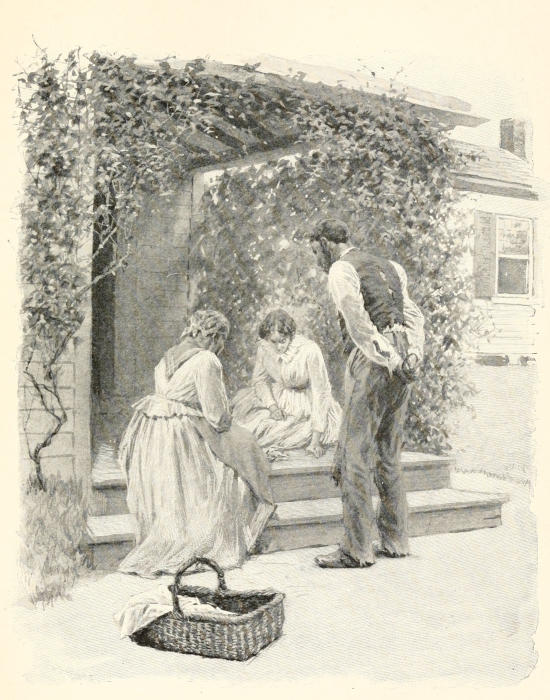
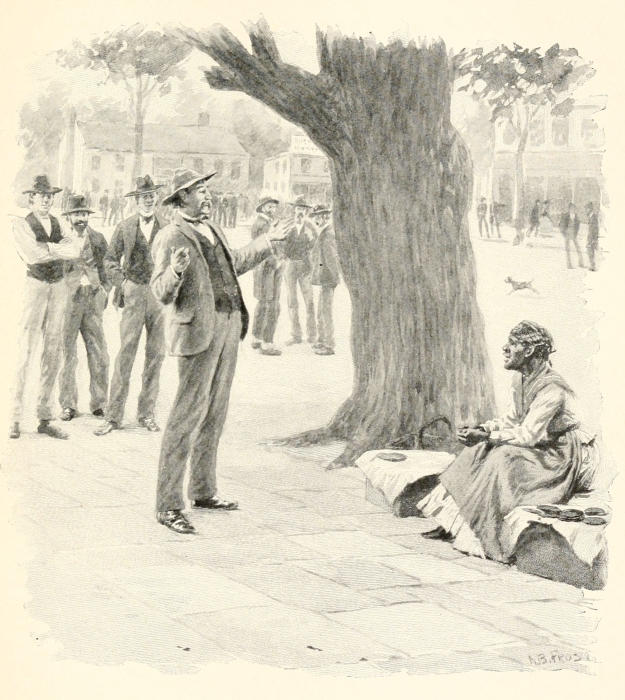
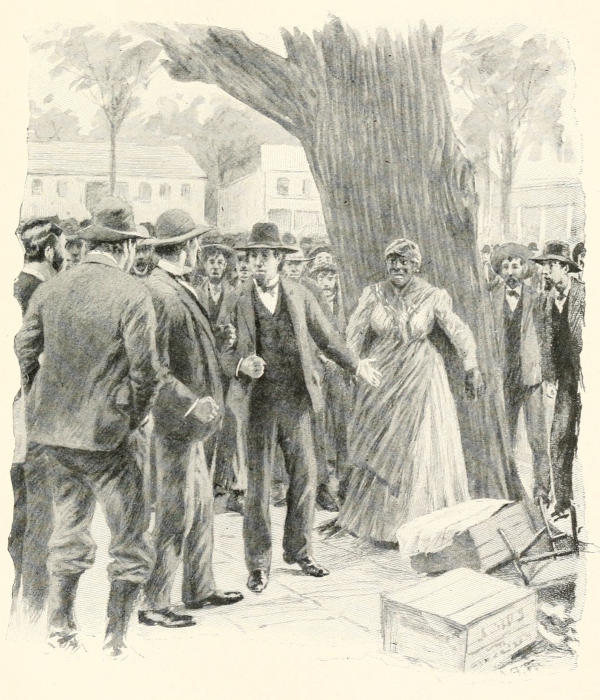
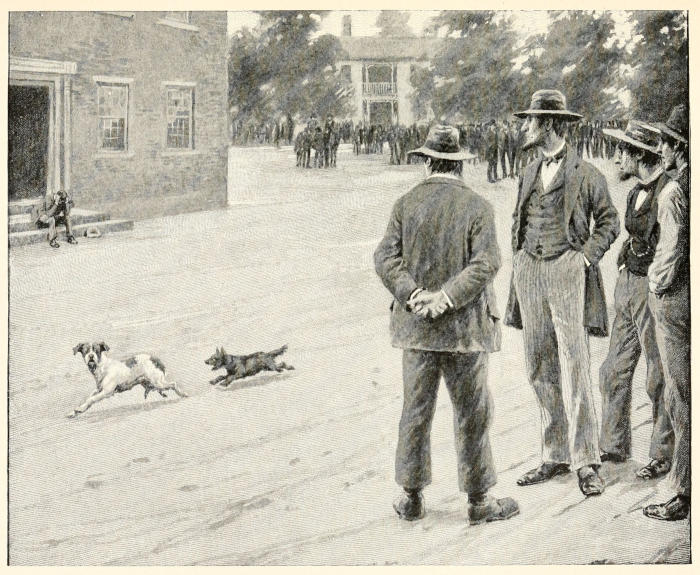
The happiest, the most vivid, and certainly the
most critical period of a man’s life is combined in
the years that stretch between sixteen and twenty-two.
His responsibilities do not sit heavily on him,
he has hardly begun to realize them, and yet he has
begun to see and feel, to observe and absorb; he is
for once and for the last time an interested, and yet
an irresponsible, spectator of the passing show.
This period I had passed very pleasantly, if not
profitably, at Halcyondale in Middle Georgia, directly
after the great war, and the town and the
people there had a place apart, in my mind. When,
therefore, some ten years after leaving there, I received
a cordial invitation to attend the county fair,
which had been organized by some of the enterprising
spirits of the town and county, among whom
were Paul Conant and his father-in-law, Major
Tumlin Perdue, it was natural that the fact should
revive old memories.
The most persistent of these memories were those
which clustered around Major Perdue, his daughter
Vallie, and his brother-in-law, Colonel Bolivar
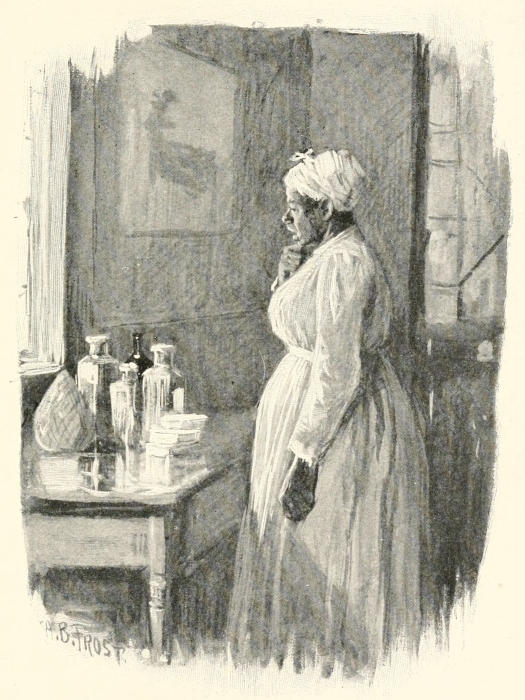
Blasengame, and Aunt Minervy Ann Perdue.
Curiously enough, my recollection of this negro
woman was the most persistent of all. Her individuality
seemed to stand out more vitally than the rest.
She was what is called “a character,” and something
more besides. The truth is, I should have missed a
good deal if I had never known Aunt Minervy Ann
Perdue, who, as she described herself, was “Affikin
fum ’way back yander ’fo’ de flood, an’ fum de
word go”—a fact which seriously interferes with
the somewhat complacent theory that Ham, son of
Noah, was the original negro.
It is a fact that Aunt Minervy Ann’s great-grandmother,
who lived to be a hundred and twenty years
old, had an eagle tattooed on her breast, the mark
of royalty. The brother of this princess, Qua, who
died in Augusta at the age of one hundred years, had
two eagles tattooed on his breast. This, taken in
connection with his name, which means The Eagle,
shows that he was either the ruler of his tribe or
the heir apparent. The prince and princess were
very small, compared with the average African, but
the records kept by a member of the Clopton family
show that during the Revolution Qua performed
some wonderful feats, and went through some
strange adventures in behalf of liberty. He was in
his element when war was at its hottest—and it has
never been hotter in any age or time, or in any part
of the world, savage or civilized, than it was then
in the section of Georgia now comprised in the
counties of Burke, Columbia, Richmond, and Elbert.
However, that has nothing to do with Aunt Minervy
Ann Perdue; but her relationship to Qua and
to the royal family of his tribe, remote though it
was, accounted for the most prominent traits of her
character, and many contradictory elements of her
strong and sharply defined individuality. She had
a bad temper, and was both fierce and fearless when
it was aroused; but it was accompanied by a heart
as tender and a devotion as unselfish as any mortal
ever possessed or displayed. Her temper was more
widely advertised than her tenderness, and her independence
more clearly in evidence than her unselfish
devotion, except to those who knew her well
or intimately.
And so it happened that Aunt Minervy Ann,
after freedom gave her the privilege of showing her
extraordinary qualities of self-sacrifice, walked
about in the midst of the suspicion and distrust of
her own race, and was followed by the misapprehensions
and misconceptions of many of the whites.
She knew the situation and laughed at it, and if she
wasn’t proud of it her attitude belied her.
It was at the moment of transition from the old
conditions to the new that I had known Aunt Minervy
Ann and the persons in whom she was so profoundly
interested, and she and they, as I have said,
had a place apart in my memory and experience.
I also remembered Hamp, Aunt Minervy Ann’s husband,
and the queer contrast between the two. It
was mainly on account of Hamp, perhaps, that Aunt
Minervy Ann was led to take such a friendly interest
in the somewhat lonely youth who was editor,
compositor, and pressman of Halcyondale’s ambitious
weekly newspaper in the days following the
collapse of the confederacy.
When a slave, Hamp had belonged to an estate
which was in the hands of the Court of Ordinary
(or, as it was then called, the Inferior Court), to be
administered in the interest of minor heirs. This
was not a fortunate thing for the negroes, of which
there were above one hundred and fifty. Men,
women, and children were hired out, some far and
some near. They came back home at Christmastime,
enjoyed a week’s frolic, and were then hired
out again, perhaps to new employers. But whether
to new or old, it is certain that hired hands in those
days did not receive the consideration that men gave
to their own negroes.
This experience told heavily on Hamp’s mind.
It made him reserved, suspicious, and antagonistic.
He had few pleasant memories to fall back on, and
these were of the days of his early youth, when he
used to trot around holding to his old master’s coat-tails—the
kind old master who had finally been sent
to the insane asylum. Hamp never got over the idea
(he had heard some of the older negroes talking
about it) that his old master had been judged to be
crazy simply because he was unusually kind to his
negroes, especially the little ones. Hamp’s after-experience
seemed to prove this, for he received
small share of kindness, as well as scrimped rations,
from the majority of those who hired him.
It was a very good thing for Hamp that he married
Aunt Minervy Ann, otherwise he would have
become a wanderer and a vagabond when freedom
came. It was a fate he didn’t miss a hair’s breadth;
he “broke loose,” as he described it, and went off,
but finally came back and tried in vain to persuade
Aunt Minervy Ann to leave Major Perdue. He
finally settled down, but acquired no very friendly
feelings toward the white race.
He joined the secret political societies, strangely
called “Union Leagues,” and aided in disseminating
the belief that the whites were only awaiting a
favorable opportunity to re-enslave his race. He
was only repeating what the carpet-baggers had told
him. Perhaps he believed the statement, perhaps
not. At any rate, he repeated it fervently and frequently,
and soon came to be the recognized leader
of the negroes in the county of which Halcyondale
was the capital. That is to say, the leader of all except
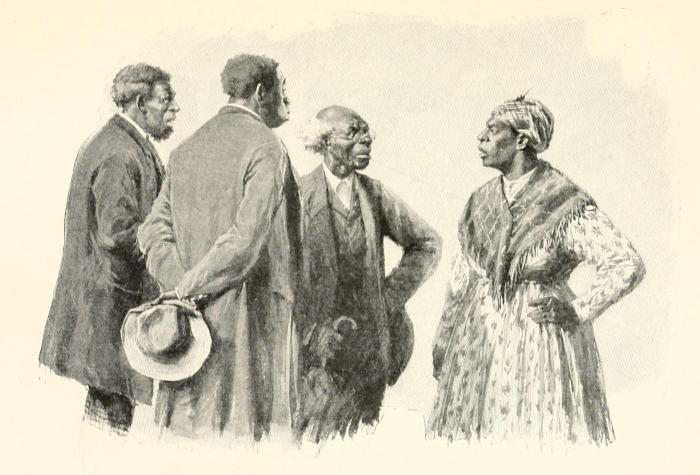
one. At church one Sunday night some of the
brethren congratulated Aunt Minervy Ann on the
fact that Hamp was now the leader of the colored
people in that region.
“What colored people?” snapped Aunt Minervy
Ann.
“We-all,” responded a deacon, emphatically.
“Well, he can’t lead me, I’ll tell you dat right
now!” exclaimed Aunt Minervy Ann.
“Well, he can’t lead me.”
Anyhow, when the time came to elect members
of the Legislature (the constitutional convention
had already been held), Hamp was chosen to be the
candidate of the negro Republicans. A white man
wanted to run, but the negroes said they preferred
their own color, and they had their way. They had
their way at the polls, too, for, as nearly all the
whites who would have voted had served in the
Confederate army, they were at that time disfranchised.
So Hamp was elected overwhelmingly, “worl’
widout een’,” as he put it, and the effect it had on
him was a perfect illustration of one aspect of human
nature. Before and during the election (which
lasted three days) Hamp had been going around
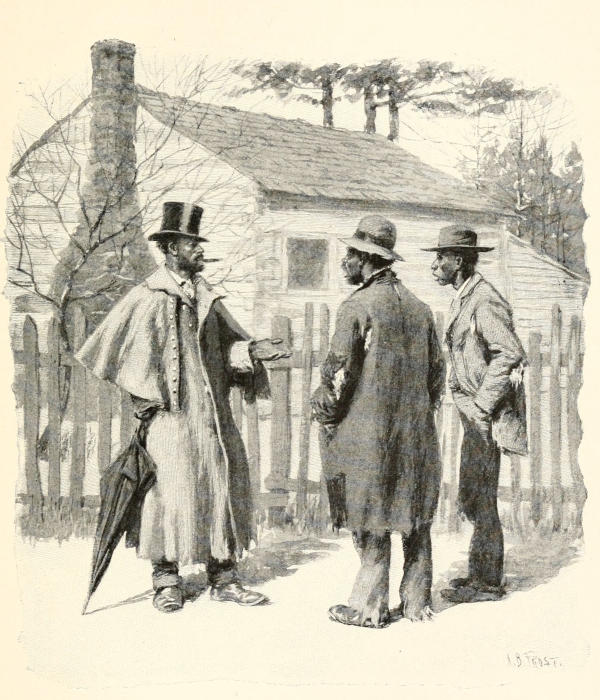
puffed up with importance. He wore a blue army
overcoat and a stove-pipe hat, and went about smoking
a big cigar. When the election was over, and
he was declared the choice of the county, he collapsed.
His dignity all disappeared. His air of
self-importance and confidence deserted him. His
responsibilities seemed to weigh him down.
He had once “rolled” in the little printing-office
where the machinery consisted of a No. 2 Washington
hand-press, a wooden imposing-stone, three
stands for the cases, a rickety table for “wetting
down” the paper, and a tub in which to wash the
forms. This office chanced to be my headquarters,
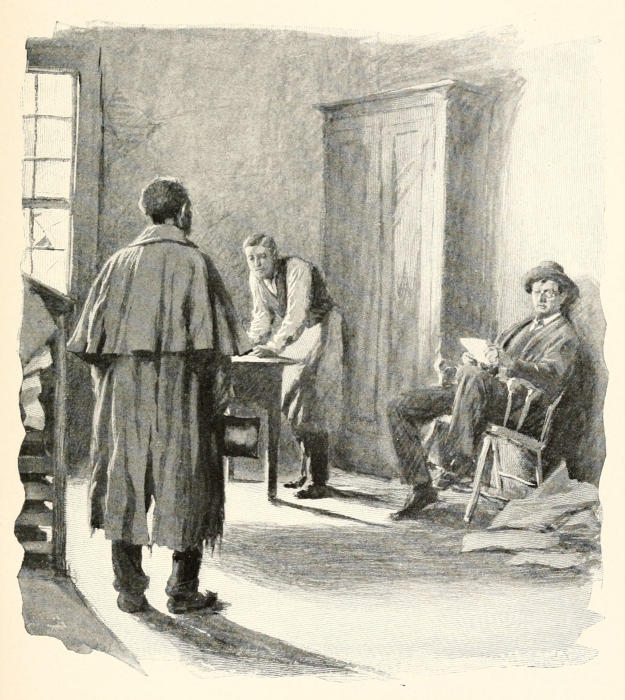
and the day after the election I was somewhat surprised
to see Hamp saunter in. So was Major Tumlin
Perdue, who was reading the exchanges.
“He’s come to demand a retraction,” remarked
the Major, “and you’ll have to set him right. He’s
no longer plain Hamp; he’s the Hon. Hamp—what’s
your other name?” turning to the negro.
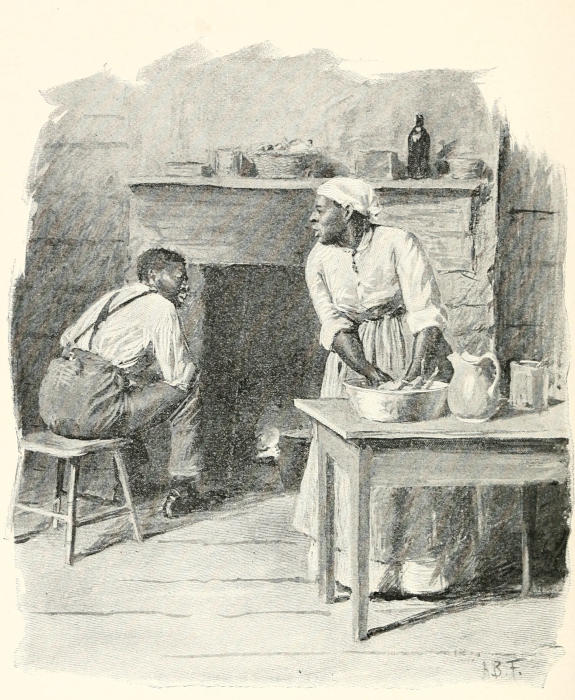
“Hamp Tumlin my fergiven name, suh. I
thought ’Nervy Ann tol’ you dat.”
“Why, who named you after me?” inquired the
Major, somewhat angrily.
“Me an’ ’Nervy Ann fix it up, suh. She say it’s
about de purtiest name in town.”
The Major melted a little, but his bristles rose
again, as it were.
“Look here, Hamp!” he exclaimed in a tone that
nobody ever forgot or misinterpreted; “don’t you
go and stick Perdue onto it. I won’t stand
that!”
“No, suh!” responded Hamp. “I started ter do
it, but ’Nervy Ann say she ain’t gwine ter have de
Perdue name bandied about up dar whar de Legislature’s
at.”
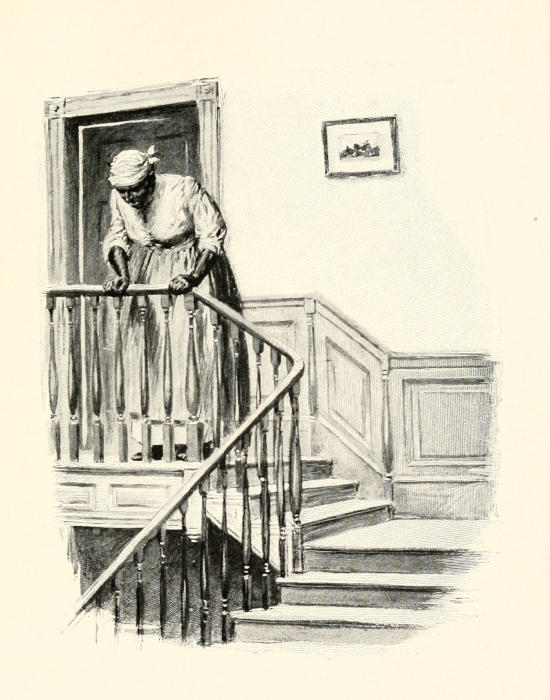
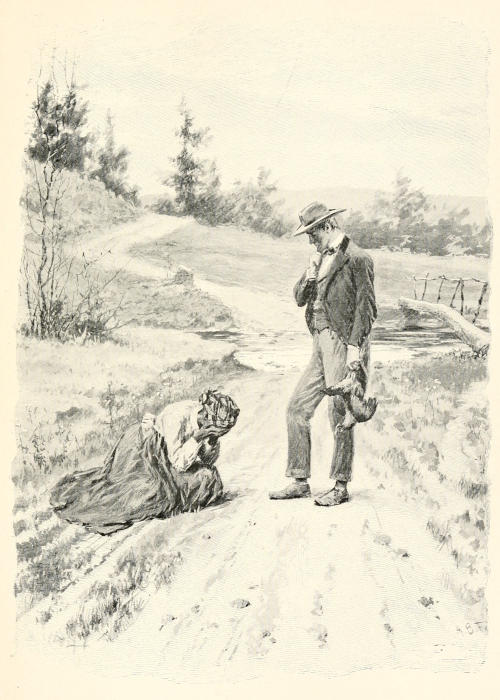
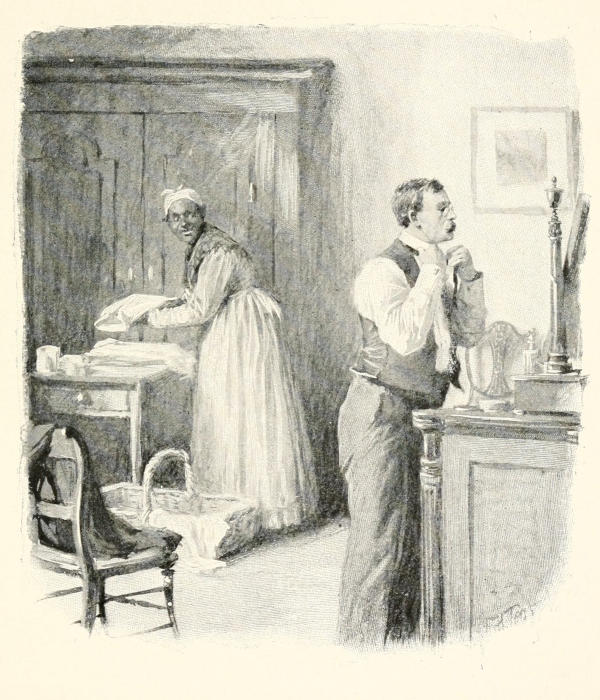
He wore a blue army overcoat and a stove-pipe hat.
Again the Major thawed, and though he looked
long at Hamp it was with friendly eyes. He seemed
to be studying the negro—“sizing him up,” as the
saying is. For a newly elected member of the Legislature,
Hamp seemed to take a great deal of interest
in the old duties he once performed about the
office. He went first to the box in which the “roller”
was kept, and felt of its surface carefully.
“You’ll hatter have a bran new roller ’fo’ de
mont’s out,” he said, “an’ I won’t be here to he’p
you make it.”
Then he went to the roller-frame, turned the
handle, and looked at the wooden cylinders. “Dey
don’t look atter it like I use ter, suh; an’ dish yer
frame monst’us shackly.”
From there he passed to the forms where the advertisements
remained standing. He passed his
thumb over the type and looked at it critically.
“Dey er mighty skeer’d dey’ll git all de ink off,”
was his comment. Do what he would, Hamp
couldn’t hide his embarrassment.
Meanwhile, Major Perdue scratched off a few
lines in pencil. “I wish you’d get this in Tuesday’s
paper,” he said. Then he read: “The Hon. Hampton
Tumlin, recently elected a member of the Legislature,
paid us a pop-call last Saturday. We are always
pleased to meet our distinguished fellow-townsman
and representative. We trust Hon. Hampton
Tumlin will call again when the Ku-Klux are in.”
“Why, certainly,” said I, humoring the joke.
“Sholy you-all ain’t gwine put dat in de paper, is
you?” inquired Hamp, in amazement.
“Of course,” replied the Major; “why not?”
“Kaze, ef you does, I’m a ruint nigger. Ef
’Nervy Ann hear talk ’bout my name an’ entitlements
bein’ in de paper, she’ll quit me sho. Uh-uh!
I’m gwine ’way fum here!” With that Hamp
bowed and disappeared. The Major chuckled over
his little joke, but soon returned to his newspaper.
For a quarter of an hour there was absolute quiet in
the room, and, as it seemed, in the entire building,
which was a brick structure of two stories, the stairway
being in the centre. The hallway was, perhaps,
seventy-five feet long, and on each side, at regular
intervals, there were four rooms, making eight in all,
and, with one exception, variously occupied as lawyers’
offices or sleeping apartments, the exception
being the printing-office in which Major Perdue and
I were sitting. This was at the extreme rear of the
hallway.
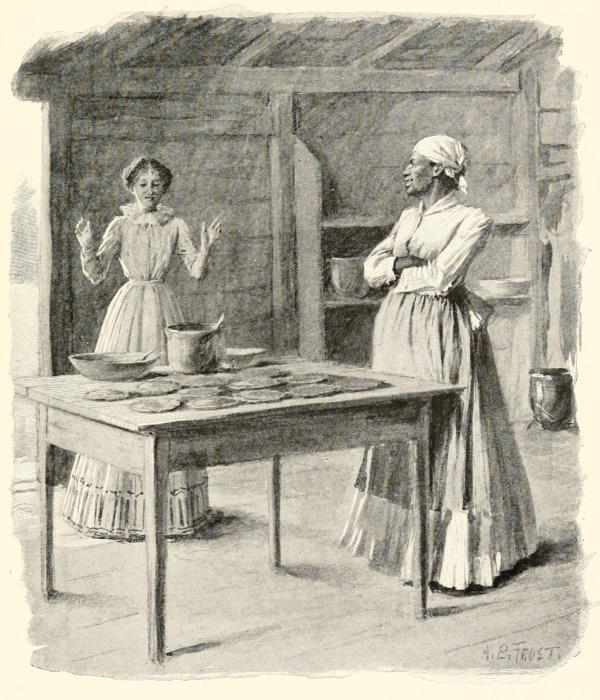
“Sholy you-all ain’t gwine put dat in de paper, is you?”
I had frequently been struck by the acoustic properties
of this hallway. A conversation carried on in
ordinary tones in the printing-office could hardly be
heard in the adjoining room. Transferred to the
front rooms, however, or even to the sidewalk facing
the entrance to the stairway, the lightest tone
was magnified in volume. A German professor of
music, who for a time occupied the apartment opposite
the printing-office, was so harassed by the thunderous
sounds of laughter and conversation rolling
back upon him that he tried to remedy the matter
by nailing two thicknesses of bagging along the floor
from the stairway to the rear window. This was,
indeed, something of a help, but when the German
left, being of an economical turn of mind, he took
his bagging away with him, and once more the hallway
was torn and rent, as you may say, with the
lightest whisper.
Thus it happened that, while the Major and I
were sitting enjoying an extraordinary season of
calm, suddenly there came a thundering sound from
the stairway. A troop of horse could hardly have
made a greater uproar, and yet I knew that fewer
than half a dozen people were ascending the steps.
Some one stumbled and caught himself, and the
multiplied and magnified reverberations were as
loud as if the roof had caved in, carrying the better
part of the structure with it. Some one laughed
at the misstep, and the sound came to our ears with
the deafening effect of an explosion. The party filed
with a dull roar into one of the front rooms, the
office of a harum-scarum young lawyer who had
more empty bottles behind his door than he had
ever had briefs on his desk.
“Well, the great Gemini!” exclaimed Major
Perdue, “how do you manage to stand that sort of
thing?”
I shrugged my shoulders and laughed, and was
about to begin anew a very old tirade against caves
and halls of thunder, when the Major raised a warning
hand. Some one was saying——
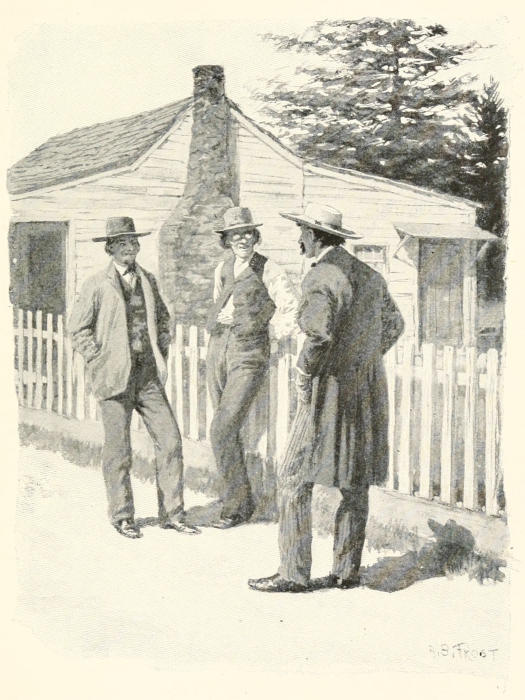
“He hangs out right on ol’ Major Perdue’s lot.
He’s got a wife there.”
“By jing!” exclaimed another voice; “is that
so? Well, I don’t wanter git mixed up wi’ the
Major. He may be wobbly on his legs, but I don’t
wanter be the one to run up ag’in ’im.”
The Major pursed up his lips and looked at the
ceiling, his attitude being one of rapt attention.
“Shucks!” cried another; “by the time the ol’
cock gits his bellyful of dram, thunder wouldn’t
roust ’im.”
A shrewd, foxy, almost sinister expression came
over the Major’s rosy face as he glanced at me. His
left hand went to his goatee, an invariable signal of
deep feeling, such as anger, grief, or serious trouble.
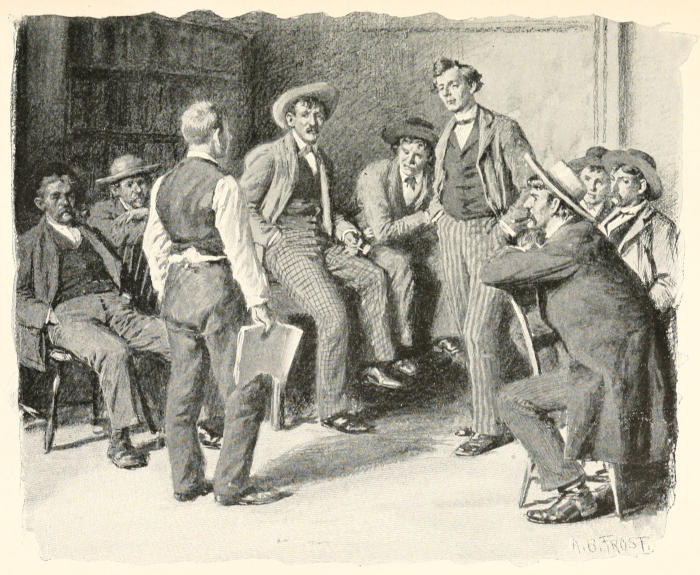
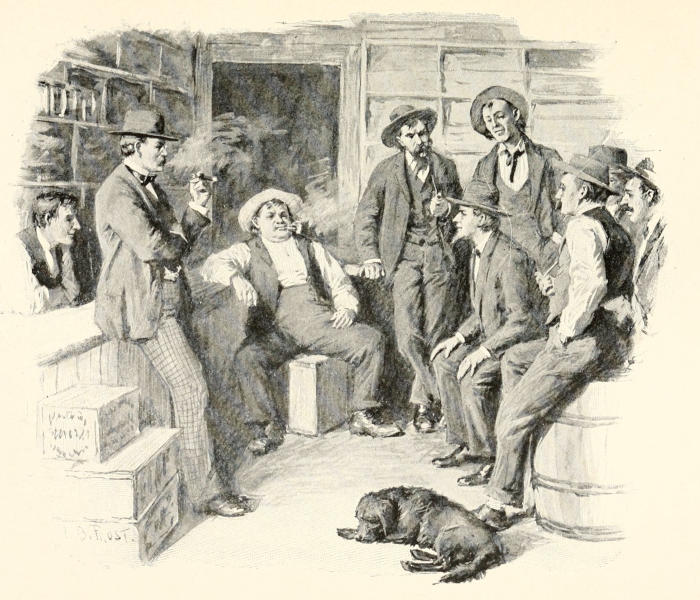
Another voice broke in here, a voice that we both
knew to be that of Larry Pulliam, a big Kentuckian
who had refugeed to Halcyondale during the war.
“Blast it all!” exclaimed Larry Pulliam, “I
hope the Major will come out. Me an’ him hain’t
never butted heads yit, an’ it’s gittin’ high time. Ef
he comes out, you fellers jest go ahead with your rat-killin’.
I’ll ’ten’ to him.”
“Why, you’d make two of him, Pulliam,” said
the young lawyer.
“Oh, I’ll not hurt ’im; that is, not much—jest
enough to let ’im know I’m livin’ in the same village,”
replied Mr. Pulliam. The voice of the town
bull could not have had a more terrifying sound.
Glancing at the Major, I saw that he had entirely
recovered his equanimity. More than that, a smile
of sweet satisfaction and contentment settled on his
rosy face, and stayed there.
“I wouldn’t take a hundred dollars for that last
remark,” whispered the Major. “That chap’s been
a-raisin’ his hackle at me ever since he’s been here,
and every time I try to get him to make a flutter he’s
off and gone. Of course it wouldn’t do for me to
push a row on him just dry so. But now——” The
Major laughed softly, rubbed his hands together,
and seemed to be as happy as a child with a new toy.
“My son,” said he after awhile, “ain’t there
some way of finding out who the other fellows are?
Ain’t you got some word you want Seab Griffin”—this
was the young lawyer—“to spell for you?”
Spelling was the Major’s weakness. He was a
well-educated man, and could write vigorous English,
but only a few days before he had asked me how
many f’s there are in graphic.
“Let’s see,” he went on, rubbing the top of his
head. “Do you spell Byzantium with two y’s, or
with two i’s, or with one y and one i? It’ll make
Seab feel right good to be asked that before company,
and he certainly needs to feel good if he’s going
with that crowd.”
So, with a manuscript copy in my hand, I went
hurriedly down the hall and put the important question.
Mr. Griffin was all politeness, but not quite
sure of the facts in the case. But he searched in his
books of reference, including the Geographical Gazette,
until finally he was able to give me the information
I was supposed to stand in need of.
While he was searching, Mr. Pulliam turned to
me and inquired what day the paper came out.
When told that the date was Tuesday, he smiled and
nodded his head mysteriously.
“That’s good,” he declared; “you’ll be in time
to ketch the news.”
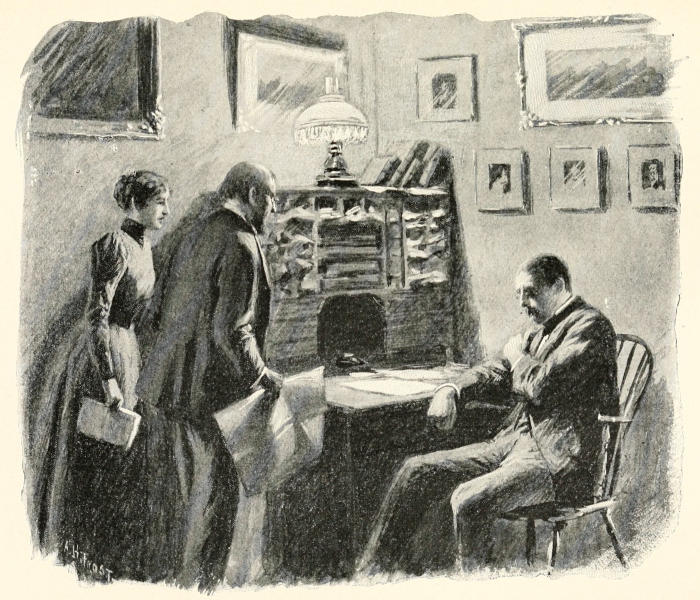
Inquired what day the paper came out.
“What news?” I inquired.
“Well, ef you don’t hear about it before to-morrer
night, jest inquire of Major Perdue. He’ll tell
you all about it.”
Mr. Pulliam’s tone was so supercilious that I was
afraid the Major would lose his temper and come
raging down the hallway. But he did nothing of
the kind. When I returned he was fairly beaming,
and seemed to be perfectly happy. The Major took
down the names in his note-book—I have forgotten
all except those of Buck Sanford and Larry Pulliam;
they were all from the country except Larry
Pulliam and the young lawyer.
After my visit to the room, the men spoke in
lower tones, but every word came back to us as distinctly
as before.
“The feed of the horses won’t cost us a cent,” remarked
young Sanford. “Tom Gresham said he’d
’ten’ to that. They’re in the stable right now. And
we’re to have supper in Tom’s back room, have a
little game of ante, and along about twelve or one
we’ll sa’nter down and yank that darned nigger
from betwixt his blankets, ef he’s got any, and leave
him to cool off at the cross-roads. Won’t you go
’long, Seab, and see it well done?”
“I’ll go and see if the supper’s well done, and I’ll
take a shy at your ante,” replied Mr. Griffin. “But
when it comes to the balance of the programme—well,
I’m a lawyer, you know, and you couldn’t expect
me to witness the affair. I might have to take
your cases and prove an alibi, you know, and I
couldn’t conscientiously do that if I was on hand at
the time.”
“The Ku-Klux don’t have to have alibis,” suggested
Larry Pulliam.
“Perhaps not, still—” Apparently Mr. Griffin
disposed of the matter with a gesture.
When all the details of their plan had been carefully
arranged, the amateur Ku-Klux went filing
out, the noise they made dying away like the echoes
of a storm.
Major Perdue leaned his head against the back of
his chair, closed his eyes, and sat there so quietly that
I thought he was asleep. But this was a mistake.
Suddenly he began to laugh, and he laughed until
the tears ran down his face. It was laughter that
was contagious, and presently I found myself joining
in without knowing why. This started the Major
afresh, and we both laughed until exhaustion
came to our aid.
“O Lord!” cried the Major, panting, “I haven’t
had as much fun since the war, and a long time before.
That blamed Pulliam is going to walk into a
trap of his own setting. Now you jest watch how he
goes out ag’in.”
“But I’ll not be there,” I suggested.
“Oh, yes!” exclaimed the Major, “you can’t afford
to miss it. It’ll be the finest piece of news your
paper ever had. You’ll go to supper with me—”
He paused. “No, I’ll go home, send Valentine to
her Aunt Emmy’s, get Blasengame to come around,
and we’ll have supper about nine. That’ll fix it.
Some of them chaps might have an eye on my house,
and I don’t want ’em to see anybody but me go in
there. Now, if you don’t come at nine, I’ll send
Blasengame after you.”
“I shall be glad to come, Major. I was simply
fishing for an invitation.”
“That fish is always on your hook, and you know
it,” the Major insisted.
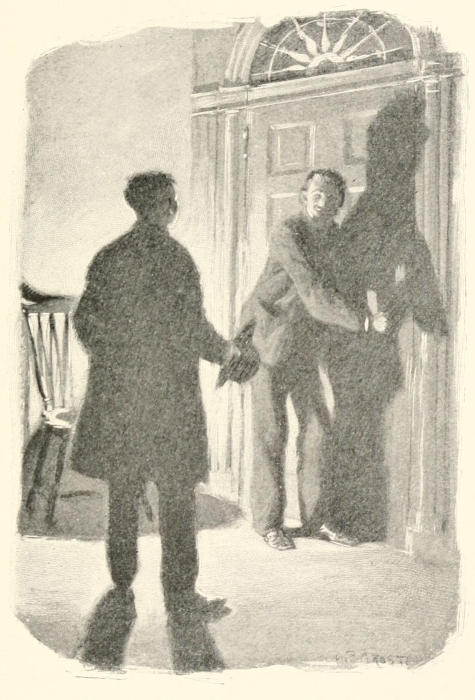
As it was arranged, so it fell out. At nine, I
lifted and dropped the knocker on the Major’s front
door. It opened so promptly that I was somewhat
taken by surprise, but in a moment the hand of my
host was on my arm, and he pulled me inside unceremoniously.
“I was on the lookout,” the Major explained.
“Minervy Ann has fixed to have waffles, and she’s
crazy about havin’ ’em just right. If she waits too
long to make ’em, the batter’ll spoil; and if she puts
’em on before everybody’s ready, they won’t be
good. That’s what she says. Here he is, you old
Hessian!” the Major cried, as Minervy Ann peeped
in from the dining-room. “Now slap that supper
together and let’s get at it.”
“I’m mighty glad you come, suh,” said Aunt
Minervy Ann, with a courtesy and a smile, and then
she disappeared. In an incredibly short time supper
was announced, and though Aunt Minervy has
since informed me confidentially that the Perdues
were having a hard time of it at that period, I’ll do
her the justice to say that the supper she furnished
forth was as good as any to be had in that town—waffles,
beat biscuit, fried chicken, buttermilk, and
coffee that could not be surpassed.
“How about the biscuit, Minervy Ann?” inquired
Colonel Blasengame, who was the Major’s
brother-in-law, and therefore one of the family.
“I turned de dough on de block twelve times, an’
hit it a hundred an forty-sev’m licks,” replied Aunt
Minervy Ann.
“I’m afeard you hit it one lick too many,” said
Colonel Blasengame, winking at me.
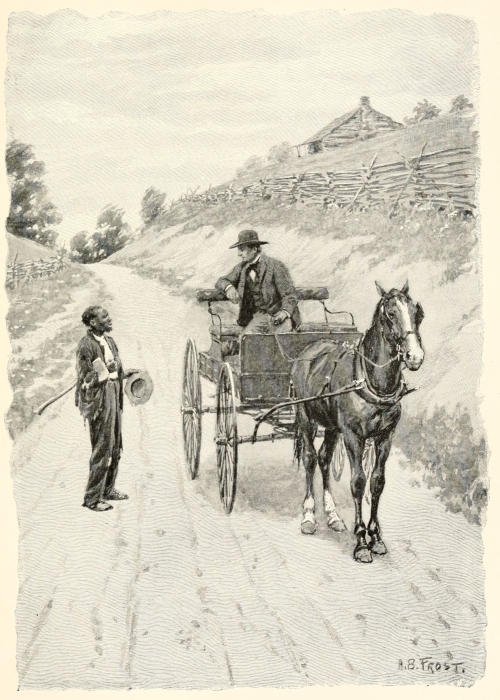
“I was on the lookout,” the Major explained.
“Well, suh, I been hittin’ dat away a mighty
long time,” Aunt Minervy Ann explained, “and I
ain’t never hear no complaints.”
“Oh, I’m not complainin’, Minervy Ann.” Colonel
Blasengame waved his hand. “I’m mighty
glad you did hit the dough a lick too many. If you
hadn’t, the biscuit would ’a’ melted in my mouth,
and I believe I’d rather chew on ’em to get the
taste.”
“He des runnin’ on, suh,” said Aunt Minervy
Ann to me. “Marse Bolivar know mighty well
dat he got ter go ’way fum de Nunited State fer ter
git any better biscuits dan what I kin bake.”
Then there was a long pause, which was broken
by an attempt on the part of Major Perdue to give
Aunt Minervy Ann an inkling of the events likely
to happen during the night. She seemed to be both
hard of hearing and dull of understanding when
the subject was broached; or she may have suspected
the Major was joking or trying to “run a rig” on
her. Her questions and comments, however, were
very characteristic.
“I dunner what dey want wid Hamp,” she said.
“Ef dey know’d how no-count he is, dey’d let ’im
’lone. What dey want wid ’im?”
“Well, two or three of the country boys and maybe
some of the town chaps are going to call on him
between midnight and day. They want to take him
out to the cross-roads. Hadn’t you better fix ’em up
a little snack? Hamp won’t want anything, but the
boys will feel a little hungry after the job is over.”
“Nobody ain’t never tell me dat de Legislatur’
wuz like de Free Masons, whar dey have ter ride a
billy goat an’ go down in a dry well wid de chains
a-clankin’. I done tol’ Hamp dat he better not fool
wid white folks’ doin’s.”
“Only the colored members have to be initiated,”
explained the Major, solemnly.
“What does dey do wid um?” inquired Aunt
Minervy Ann.
“Well,” replied the Major, “they take ’em out
to the nearest cross-roads, put ropes around their
necks, run the ropes over limbs, and pull away as if
they were drawing water from a well.”
“What dey do dat fer?” asked Aunt Minervy
Ann, apparently still oblivious to the meaning of it
all.
“They want to see which’ll break first, the ropes
or the necks,” the Major explained.
“Ef dey takes Hamp out,” remarked Aunt Minervy
Ann, tentatively—feeling her way, as it were—“what
time will he come back?”
“You’ve heard about the Resurrection Morn,
haven’t you, Minervy Ann?” There was a pious
twang in the Major’s voice as he pronounced the
words.
“I hear de preacher say sump’n ’bout it,” replied
Aunt Minervy Ann.
“Well,” said the Major, “along about that time
Hamp will return. I hope his record is good enough
to give him wings.”
“Shuh! Marse Tumlin! you-all des fool’in’ me.
I don’t keer—Hamp ain’t gwine wid um. I tell
you dat right now.”
“Oh, he may not want to go,” persisted the Major,
“but he’ll go all the same if they get their hands
on him.”
“My life er me!” exclaimed Aunt Minervy Ann,
bristling up, “does you-all ’speck I’m gwine ter let
um take Hamp out dat away? De fus’ man come ter
my door, less’n it’s one er you-all, I’m gwine ter fling
a pan er hot embers in his face ef de Lord’ll gi’ me
de strenk. An’ ef dat don’t do no good, I’ll scald
um wid b’ilin’ water. You hear dat, don’t you?”
“Minervy Ann,” said the Major, sweetly, “have
you ever heard of the Ku-Klux?”
“Yasser, I is!” she exclaimed with startling emphasis.
She stopped still and gazed hard at the Major.
In response, he merely shrugged his shoulders
and raised his right hand with a swift gesture that
told the whole story.
“Name er God! Marse Tumlin, is you an’ Marse
Bolivar and dish yer young genterman gwine ter set
down here flat-footed and let dem Kukluckers scarify
Hamp?”
“Why should we do anything? You’ve got
everything arranged. You’re going to singe ’em
with hot embers, and you’re going to take their hides
off with scalding water. What more do you want?”
The Major spoke with an air of benign resignation.
Aunt Minervy Ann shook her head vigorously.
“Ef dey er de Kukluckers, fire won’t do um no
harm. Dey totes der haids in der han’s.”
“Their heads in their hands?” cried Colonel
Blasengame, excitedly.
“Dat what dey say, suh,” replied Aunt Minervy
Ann.
Colonel Blasengame looked at his watch. “Tumlin,
I’ll have to ask you to excuse me to-night,” he
said. “I—well, the fact is, I have a mighty important
engagement up town. I’m obliged to fill
it.” He turned to Aunt Minervy Ann: “Did I
understand you to say the Ku-Klux carry their
heads in their hands?”
“Dat what folks tell me. I hear my own color
sesso,” replied Aunt Minervy Ann.
“I’d be glad to stay with you, Tumlin,” the Colonel
declared; “but—well, under the circumstances,
I think I’d better fill that engagement.
Justice to my family demands it.”
“Well,” responded Major Perdue, “if you are
going, I reckon we’d just as well go, too.”
“Huh!” exclaimed Aunt Minervy Ann, “ef
gwine’s de word, dey can’t nobody beat me gittin’
way fum here. Dey may beat me comin’ back, I
ain’t ’sputin’ dat; but dey can’t beat me gwine ’way.
I’m ol’, but I got mighty nigh ez much go in me ez
a quarter-hoss.”
Colonel Blasengame leaned back in his chair and
studied the ceiling. “It seems to me, Tumlin, we
might compromise on this. Suppose we get Hamp
to come in here. Minervy Ann can stay out there in
the kitchen and throw a rock against the back door
when the Ku-Klux come.”
Aunt Minervy Ann fairly gasped. “Who?
Me? I’ll die fust. I’ll t’ar dat do’ down; I’ll holler
twel ev’ybody in de neighborhood come a-runnin’.
Ef you don’t b’lieve me, you des try me. I’ll paw
up dat back-yard.”
Major Perdue went to the back door and called
Hamp, but there was no answer. He called him a
second time, with the same result.
“Well,” said the Major, “they’ve stolen a march
on us. They’ve come and carried him off while we
were talking.”
“No, suh, dey ain’t, needer. I know right whar
he is, an’ I’m gwine atter ’im. He’s right ’cross de
street dar, colloguin’ wid dat ol’ Ceely Ensign.
Dat’s right whar he is.”
“Old! Why, Celia is young,” remarked the Major.
“They say she’s the best cook in town.”
Aunt Minervy Ann whipped out of the room and
was gone some little time. When she returned, she
had Hamp with her, and I noticed that both were
laboring under excitement which they strove in vain
to suppress.
“Here I is, suh,” said Hamp. “’Nervy Ann say
you call me.”
“How is Celia to-night?” Colonel Blasengame
inquired, suavely.
This inquiry, so suddenly and unexpectedly put,
seemed to disconcert Hamp. He shuffled his feet
and put his hand to his face. I noticed a blue welt
over his eye, which was not there when he visited
me in the afternoon.
“Well, suh, I ’speck she’s tolerbul.”
“Is she? Is she? Ah-h-h!” cried Aunt Minervy
Ann.
“She must be pretty well,” said the Major. “I
see she’s hit you a clip over the left eye.”
“Dat’s some er ’Nervy Ann’s doin’s, suh,” replied
Hamp, somewhat disconsolately.
“Den what you git in de way fer?” snapped
Aunt Minervy Ann.
“Marse Tumlin, dat ar ’oman ain’t done nothin’
in de roun’ worl’. She say she want me to buy some
hime books fer de church when I went to Atlanty,
an’ I went over dar atter de money.”
“I himed ’er an’ I churched ’er!” exclaimed
Aunt Minervy Ann.
“Here de money right here,” said Hamp, pulling
a small roll of shinplasters out of his pocket;
“an’ whiles we settin’ dar countin’ de money,
’Nervy Ann come in dar an’ frail dat ’oman out.”
“Ain’t you hear dat nigger holler, Marse Tumlin?”
inquired Minervy Ann. She was in high
good-humor now. “Look like ter me dey could
a-heerd ’er blate in de nex’ county ef dey’d been
a-lis’nin’. ’Twuz same ez a picnic, suh, an’ I’m
gwine ’cross dar ’fo’ long an’ pay my party call.”
Then she began to laugh, and pretty soon went
through the whole episode for our edification,
dwelling with unction on that part where the unfortunate
victim of her jealousy had called her
“Miss ’Nervy.” The more she laughed the more
serious Hamp became.
At the proper time he was told of the visitation
that was to be made by the Ku-Klux, and this information
seemed to perplex and worry him no little.
But his face lit up with genuine thankfulness
when the programme for the occasion was announced
to him. He and Minervy Ann were to remain
in the house and not show their heads until
the Major or the Colonel or their guest came to the
back door and drummed on it lightly with the
fingers.
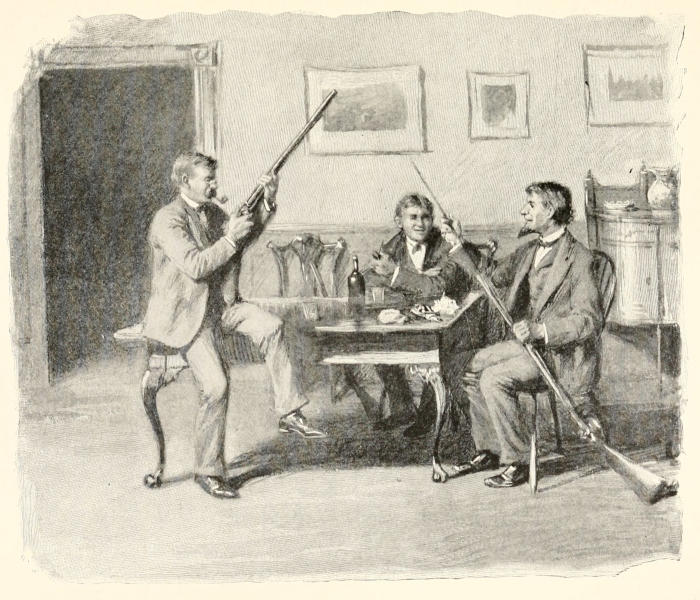
In the third he placed only powder.
Then the arms—three shot-guns—were brought
out, and I noticed with some degree of surprise, that
as the Major and the Colonel began to handle these,
their spirits rose perceptibly. The Major hummed
a tune and the Colonel whistled softly as they oiled
the locks and tried the triggers. The Major, in
coming home, had purchased four pounds of mustard-seed
shot, and with this he proceeded to load
two of the guns. In the third he placed only powder.
This harmless weapon was intended for me,
while the others were to be handled by Major Perdue
and Colonel Blasengame. I learned afterward
that the arrangement was made solely for my benefit.
The Major and the Colonel were afraid that a
young hand might become excited and fire too high
at close range, in which event mustard-seed shot
would be as dangerous as the larger variety.
At twelve o’clock I noticed that both Hamp and
Aunt Minervy were growing restless.
“You hear dat clock, don’t you, Marse Tumlin?”
said Minervy as the chimes died away. “Ef
you don’t min’, de Kukluckers’ll be a-stickin’ der
haids in de back do’.”
But the Major and the Colonel were playing a
rubber of seven-up (or high-low-Jack) and paid no
attention. It was a quarter after twelve when the
game was concluded and the players pushed their
chairs back from the table.
“Ef you don’t fin’ um in de yard waitin’ fer you,
I’ll be fooled might’ly,” remarked Aunt Minervy
Ann.
“Go and see if they’re out there,” said the Major.
“Me, Marse Tumlin? Me? I wouldn’t go out
dat do’ not for ham.”
The Major took out his watch. “They’ll eat
and drink until twelve or a little after, and then
they’ll get ready to start. Then they’ll have another
drink all ’round, and finally they’ll take another.
It’ll be a quarter to one or after when they
get in the grove in the far end of the lot. But we’ll
go out now and see how the land lays. By the time
they get here, our eyes will be used to the darkness.”
The light was carried to a front room, and we
groped our way out at the back door the best we
could. The night was dark, but the stars were shining.
I noticed that the belt and sword of Orion had
drifted above the tree-tops in the east, following the
Pleiades. In a little while the darkness seemed to
grow less dense, and I could make out the outlines
of trees twenty feet away.
Behind one of these trees, near the outhouse in
which Hamp and Aunt Minervy lived, I was to take
my stand, while the Major and the Colonel were to
go farther into the wood-lot so as to greet the would-be
Ku-Klux as they made their retreat, of which
Major Perdue had not the slightest doubt.
“You stand here,” said the Major in a whisper.
“We’ll go to the far-end of the lot where they’re
likely to come in. They’ll pass us all right enough,
but as soon as you see one of ’em, up with the gun
an’ lam aloose, an’ before they can get away give
’em the other barrel. Then you’ll hear from us.”
Major Perdue and Colonel Blasengame disappeared
in the darkness, leaving me, as it were, on
the inner picket line. I found the situation somewhat
ticklish, as the saying is. There was not the
slightest danger, and I knew it, but if you ever have
occasion to stand out in the dark, waiting for something
to happen, you’ll find there’s a certain degree
of suspense attached to it. And the loneliness and
silence of the night will take a shape almost tangible.
The stirring of the half-dead leaves, the chirping
of a belated cricket, simply emphasized the loneliness
and made the silence more profound. At
intervals, all nature seemed to heave a deep sigh,
and address itself to slumber again.
In the house I heard the muffled sound of the
clock chime one, but whether it was striking the
half-hour or the hour I could not tell. Then I heard
the stealthy tread of feet. Someone stumbled over
a stick of timber, and the noise was followed by a
smothered exclamation and a confused murmur of
voices. As the story-writers say, I knew that the
hour had come. I could hear whisperings, and then
I saw a tall shadow steal from behind Aunt Minervy’s
house, and heard it rap gently on the door. I
raised the gun, pulled the hammer back, and let
drive. A stream of fire shot from the gun, accompanied
by a report that tore the silence to atoms. I
heard a sharp exclamation of surprise, then the noise
of running feet, and off went the other barrel. In
a moment the Major and the Colonel opened on the
fugitives. I heard a loud cry of pain from one, and,
in the midst of it all, the mustard-seed shot rattled
on the plank fence like hominy-snow on a tin roof.
The next instant I heard someone running back
in my direction, as if for dear life. He knew the
place apparently, for he tried to go through the orchard,
but just before he reached the orchard fence,
he uttered a half-strangled cry of terror, and then I
heard him fall as heavily as if he had dropped from
the top of the house.
It was impossible to imagine what had happened,
and it was not until we had investigated the matter
that the cause of the trouble was discovered. A wire
clothes-line, stretched across the yard, had caught
the would-be Ku-Klux under the chin, his legs flew
from under him, and he had a fall, from the effects
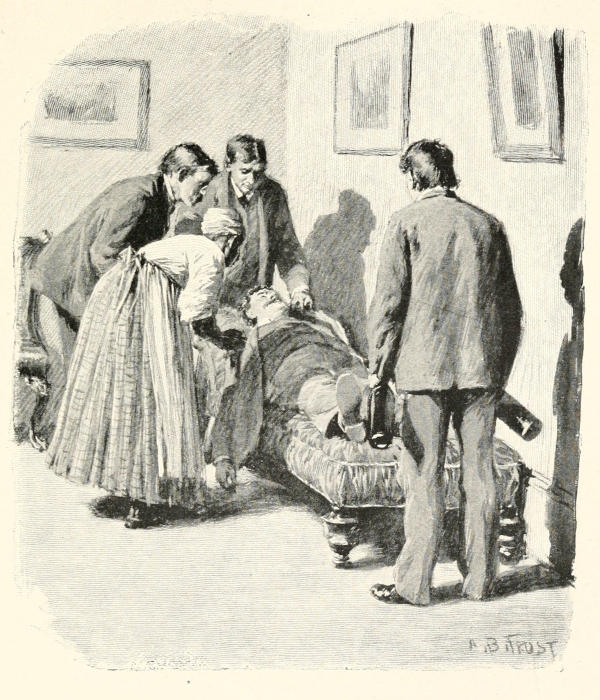
of which he was long in recovering. He was a
young man about town, very well connected, who
had gone into the affair in a spirit of mischief. We
carried him into the house, and administered to his
hurts the best we could; Aunt Minervy Ann, be it
said to her credit, being more active in this direction
than any of us.
We administered to his hurts the best we could.
On the Tuesday following, the county paper contained
the news in a form that remains to this day
unique. It is hardly necessary to say that it was
from the pen of Major Tumlin Perdue.
“Last Saturday afternoon our local editor was
informed by a prominent citizen that if he would
apply to Major Perdue he would be put in possession
of a very interesting piece of news. Acting
upon this hint, ye local yesterday went to Major
Perdue, who, being in high good-humor, wrote out
the following with his own hand:
“‘Late Saturday night, while engaged with a
party of friends in searching for a stray dog on my
premises, I was surprised to see four or five men
climb over my back fence and proceed toward my
residence. As my most intimate friends do not visit
me by climbing over my back fence, I immediately
deployed my party in such a manner as to make the
best of a threatening situation. The skirmish
opened at my kitchen-door, with two rounds from
a howitzer. This demoralized the enemy, who
promptly retreated the way they came. One of
them, the leader of the attacking party, carried away
with him two loads of mustard-seed shot, delivered
in the general neighborhood and region of the coat-tails,
which, being on a level with the horizon, afforded
as fair a target as could be had in the dark.
I understand on good authority that Mr. Larry Pulliam,
one of our leading and deservedly popular
citizens, has had as much as a quart of mustard-seed
shot picked from his carcass. Though hit in
a vulnerable spot, the wound is not mortal.—T.
Perdue.’”
I did my best to have Mr. Pulliam’s name suppressed,
but the Major would not have it so.
“No, sir,” he insisted; “the man has insulted
me behind my back, and he’s got to cut wood or put
down the axe.”
Naturally this free and easy card created quite a
sensation in Halcyondale and the country round
about. People knew what it would mean if Major
Perdue’s name had been used in such an off-hand
manner by Mr. Pulliam, and they naturally supposed
that a fracas would be the outcome. Public
expectation was on tiptoe, and yet the whole town
seemed to take the Major’s card humorously. Some
of the older citizens laughed until they could hardly
sit up, and even Mr. Pulliam’s friends caught the
infection. Indeed, it is said that Mr. Pulliam, himself,
after the first shock of surprise was over, paid
the Major’s audacious humor the tribute of a hearty
laugh. When Mr. Pulliam appeared in public,
among the first men he saw was Major Perdue. This
was natural, for the Major made it a point to be on
hand. He was not a ruffler, but he thought it was
his duty to give Mr. Pulliam a fair opportunity to
wreak vengeance on him. If the boys about town
imagined that a row was to be the result of this first
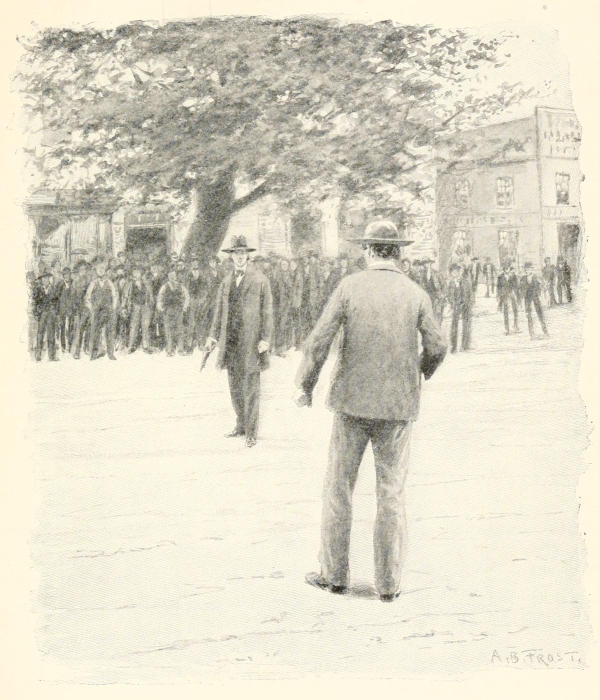
meeting, they were mistaken. Mr. Pulliam looked
at the Major and then began to laugh.
“I’d a heap rather you’d pull your shot-gun on me than your pen.”
“Major Perdue,” he said, “I’d a heap rather
you’d pull your shot-gun on me than your pen.”
And that ended the matter.
II “WHEN JESS WENT A-FIDDLIN’”
The foregoing recital is unquestionably a long
and tame preface to the statement that, after thinking
the matter over I concluded to accept the official
invitation to the fair—“The Middle Georgia Exposition”
it was called—if nothing occurred to prevent.
With this conclusion I dismissed the matter from
my mind for the time being, and would probably
have thought of it no more until the moment arrived
to make a final decision, if the matter had not
been called somewhat sharply to my attention.
Sitting on the veranda one day, ruminating over
other people’s troubles, I heard an unfamiliar voice
calling, “You-all got any bitin’ dogs here?” The
voice failed to match the serenity of the suburban
scene. Its tone was pitched a trifle too high for the
surroundings.
But before I could make any reply the gate was
flung open, and the new-comer, who was no other
than Aunt Minervy Ann, flirted in and began to
climb the terraces. My recognition of her was not
immediate, partly because it had been long since I
saw her and partly because she wore her Sunday
toggery, in which, following the oriental tastes of
her race, the reds and yellows were emphasized with
startling effect. She began to talk by the time she
was half-way between the house and gate, and it
was owing to this special and particular volubility
that I was able to recognize her.
“Huh!” she exclaimed, “hit’s des like clim’in’
up sta’rs. Folks what live here bleeze ter b’long ter
de Sons er Tempunce.” There was a relish about
this reference to the difficulties of three terraces
that at once identified Aunt Minervy Ann. More
than that, one of the most conspicuous features of
the country town where she lived was a large brick
building, covering half a block, across the top of
which stretched a sign—“Temperance Hall”—in
letters that could be read half a mile away.
Aunt Minervy Ann received a greeting that
seemed to please her, whereupon she explained that
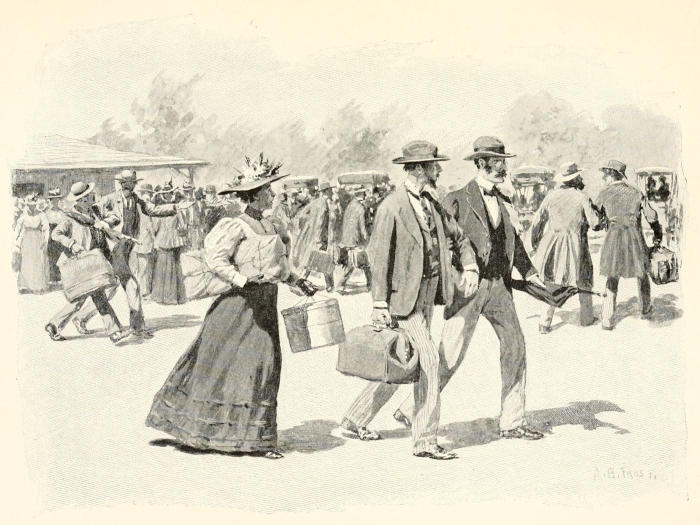
an excursion had come to Atlanta from her town,
and she had seized the opportunity to pay me a visit.
“I tol’ um,” said she, “dat dey could stay up in
town dar an’ hang ’roun’ de kyar-shed ef dey wanter,
but here’s what wuz gwine ter come out an’ see whar
you live at, an’ fin’ out fer Marse Tumlin ef you
comin’ down ter de fa’r.”
She was informed that, though she was welcome,
she would get small pleasure from her visit. The
cook had failed to make her appearance, and the
lady of the house was at that moment in the kitchen
and in a very fretful state of mind, not because she
had to cook, but because she had about reached the
point where she could place no dependence in the
sisterhood of colored cooks.
“Is she in de kitchen now?” Aunt Minervy’s
tone was a curious mixture of amusement and indignation.
“I started not ter come, but I had a call, I
sho’ did; sump’n tol’ me dat you mought need me
out here.” With that, she went into the house,
slamming the screen-door after her, and untying
her bonnet as she went.
Now, the lady of the house had heard of Aunt
Minervy Ann, but had never met her, and I was
afraid that the characteristics of my old-time friend
would be misunderstood and misinterpreted. The
lady in question knew nothing of the negro race
until long after emancipation, and she had not been
able to form a very favorable opinion of its representatives.
Therefore, I hastened after Aunt Minervy
Ann, hoping to tone down by explanation
whatever bad impression she might create. She
paused at the screen-door that barred the entrance
to the kitchen, and, for an instant, surveyed the
scene within. Then she cried out:
“You des ez well ter come out’n dat kitchen!
You ain’t got no mo’ bizness in dar dan a new-born
baby.”
Aunt Minervy Ann’s voice was so loud and absolute
that the lady gazed at her in mute astonishment.
“You des es well ter come out!” she insisted.
“Are you crazy?” the lady asked, in all seriousness.
“I’m des ez crazy now ez I ever been; an’ I tell
you you des ez well ter come out’n dar.”
“Who are you anyhow?”
“I’m Minervy Ann Perdue, at home an’ abroad,
an’ in dish yer great town whar you can’t git niggers
ter cook fer you.”
“Well, if you want me to come out of the
kitchen, you will have to come in and do the cooking.”
“Dat ’zackly what I’m gwine ter do!” exclaimed
Aunt Minervy Ann. She went into the kitchen,
demanded an apron, and took entire charge. “I’m
mighty glad I come ’fo’ you got started,” she said,
“’kaze you got ’nuff fier in dis stove fer ter barbecue
a hoss; an’ you got it so hot in here dat it’s a
wonder you ain’t bust a blood-vessel.”
She removed all the vessels from the range, and
opened the door of the furnace so that the fire
might die down. And when it was nearly out—as
I was told afterward—she replaced the vessels and
proceeded to cook a dinner which, in all its characteristics,
marked a red letter day in the household.
“She’s the best cook in the country,” said the
lady, “and she’s not very polite.”
“Not very hypocritical, you mean; well if she
was a hypocrite, she wouldn’t be Aunt Minervy
Ann.”
The cook failed to come in the afternoon, and so
Aunt Minervy Ann felt it her duty to remain over
night. “Hamp’ll vow I done run away wid somebody,”
she said, laughing, “but I don’t keer what
he think.”
After supper, which was as good as the dinner had
been, Aunt Minervy Ann came out on the veranda
and sat on the steps. After some conversation,
she placed the lady of the house on the witness-stand.
“Mistiss, wharbouts in Georgy wuz you born
at?”
“I wasn’t born in Georgia; I was born in Lansingburgh,
New York.”
“I know’d it!” Aunt Minervy turned to me and
nodded her head with energy. “I know’d it right
pine blank!”
“You knew what?” the presiding genius of the
household inquired with some curiosity.
“I know’d ’m dat you wuz a Northron lady.”
“I don’t see how you knew it,” I remarked.
“Well, suh, she talk like we-all do, an’ she got
mighty much de same ways. But when I went out
dar dis mornin’ an’ holler at ’er in de kitchen, I
know’d by de way she turn ’roun’ on me dat she ain’t
been brung up wid niggers. Ef she’d ’a’ been a
Southron lady, she’d ’a’ laughed an’ said, ‘Come in
here an’ cook dis dinner yo’se’f, you ole vilyun,’ er
she’d ’a’ come out an’ crackt me over de head with
dat i’on spoon what she had in her han’.”
I could perceive a vast amount of acuteness in the
observation, but I said nothing, and, after a considerable
pause, Aunt Minervy Ann remarked:
“Dey er lots er mighty good folks up dar”—indicating
the North—“some I’ve seed wid my own
eyes an’ de yuthers I’ve heern talk un. Mighty
fine folks, an’ dey say dey mighty sorry fer de niggers.
But I’ll tell um all anywhar, any day, dat I’d
lots druther dey’d be good ter me dan ter be sorry
fer me. You know dat ar white lady what Marse
Tom Chippendale married? Her pa come down
here ter he’p de niggers, an’ he done it de best he
kin, but Marse Tom’s wife can’t b’ar de sight un um.
She won’t let um go in her kitchen, she won’t let
um go in her house, an’ she don’t want um nowhars
’roun’. She’s mighty sorry fer ’m, but she don’t
like um. I don’t blame ’er much myse’f, bekaze it
look like dat de niggers what been growin’ up sence
freedom is des tryin’ der han’ fer ter see how no
’count dey kin be. Dey’ll git better—dey er bleeze
ter git better, ’kaze dey can’t git no wuss.”
Here came another pause, which continued until
Aunt Minervy Ann, turning her head toward me,
asked if I knew the lady that Jesse Towers married;
and before I had time to reply with certainty, she
went on:
“No, suh, you des can’t know ’er. She ain’t
come dar twel sev’mty, an’ I mos’ know you ain’t
see ’er dat time you went down home de las’ time,
’kaze she wa’n’t gwine out dat year. Well, she wuz
a Northron lady. I come mighty nigh tellin’ you
’bout ’er when you wuz livin’ dar, but fus’ one
thing an’ den anudder jumped in de way; er maybe
’Twuz too new ter be goshup’d ’roun’ right den. But
de way she come ter be dar an’ de way it all turn
out beats any er dem tales what de ol’ folks use ter
tell we childun. I may not know all de ins an’ outs,
but what I does know I knows mighty well, ’kaze
de young ’oman tol’ me herse’f right out ’er own
mouf.
“Fus’ an’ fo’mus’, dar wuz ol’ Gabe Towers. He
wuz dar whence you wuz dar, an’ long time ’fo’ dat.
You know’d him, sho’, ’kaze he wuz one er dem
kinder men what sticks out fum de res’ like a waggin’
tongue. Not dat he wuz any better’n anybody
else, but he had dem kinder ways what make folks
talk ’bout ’im an’ ’pen’ on ’im. I dunner ’zackly
what de ways wuz, but I knows dat whatsomever ol’
Gabe Towers say an’ do, folks ’d nod der head an’
say an’ do de same. An’ me ’long er de res’. He
had dem kinder ways ’bout ’im, an’ ’twa’n’t no use
talkin’.”
In these few words, Aunt Minervy conjured up
in my mind the memory of one of the most remarkable
men I had ever known. He was tall, with iron-gray
hair. His eyes were black and brilliant, his
nose slightly curved, and his chin firm without
heaviness. To this day Gabriel Towers stands out
in my admiration foremost among all the men I
have ever known. He might have been a great
statesman; he would have been great in anything
to which he turned his hand. But he contented
himself with instructing smaller men, who were
merely politicians, and with sowing and reaping on
his plantation. More than one senator went to him
for ideas with which to make a reputation.
His will seemed to dominate everybody with
whom he came in contact, not violently, but serenely
and surely, and as a matter of course. Whether
this was due to his age—he was sixty-eight when I
knew him, having been born in the closing year of
the eighteenth century—or to his moral power, or
to his personal magnetism, it is hardly worth while
to inquire. Major Perdue said that the secret of his
influence was common-sense, and this is perhaps as
good an explanation as any. The immortality of
Socrates and Plato should be enough to convince us
that common-sense is almost as inspiring as the gift
of prophecy. To interpret Aunt Minervy Ann in
this way is merely to give a correct report of what
occurred on the veranda, for explanation of this kind
was necessary to give the lady of the house something
like a familiar interest in the recital.
“Yes, suh,” Aunt Minervy Ann went on, “he
had dem kinder ways ’bout ’im, an’ whatsomever he
say you can’t shoo it off like you would a hen on de
gyarden fence. Dar ’twuz an’ dar it stayed.
“Well, de time come when ol’ Marse Gabe had
a gran’son, an’ he name ’im Jesse in ’cordance wid
de Bible. Jesse grow’d an’ grow’d twel he got ter
be a right smart chunk uv a boy, but he wa’n’t no
mo’ like de Towerses dan he wuz like de Chippendales,
which he wa’n’t no kin to. He tuck atter his
ma, an’ who his ma tuck atter I’ll never tell you,
’kaze Bill Henry Towers married ’er way off yander
somers. She wuz purty but puny, yit puny ez she
wuz she could play de peanner by de hour, an’ play
it mo’ samer de man what make it.
“Well, suh, Jesse tuck atter his ma in looks, but
’stidder playin’ de peanner, he l’arnt how ter play de
fiddle, an’ by de time he wuz twelve year ol’, he
could make it talk. Hit’s de fatal trufe, suh; he
could make it talk. You hear folks playin’ de fiddle,
an’ you know what dey doin’; you kin hear de
strings a-plunkin’ an’ you kin hear de bow raspin’ on
um on ’count de rozzum, but when Jesse Towers
swiped de bow cross his fiddle, ’twa’n’t no fiddle—’twuz
human; I ain’t tellin’ you no lie, suh, ’twuz
human. Dat chile could make yo’ heart ache; he
could fetch yo’ sins up befo’ you. Don’t tell me!
many an’ many a night when I hear Jesse Towers
playin’, I could shet my eyes an’ hear my childun
cryin’, dem what been dead an’ buried long time
ago. Don’t make no diffunce ’bout de chune, reel,
jig, er promenade, de human cryin’ wuz behime all
un um.
“Bimeby, Jesse got so dat he didn’t keer nothin’
’tall ’bout books. It uz fiddle, fiddle, all day long,
an’ half de night ef dey’d let ’im. Den folks ’gun
ter talk. No need ter tell you what all dey say. De
worl’ over, fum what I kin hear, dey got de idee dat
a fiddle is a free pass ter whar ole Scratch live at.
Well, suh, Jesse got so he’d run away fum school an’
go off in de woods an’ play his fiddle. Hamp use ter
come ’pon ’im when he haulin’ wood, an’ he say dat
fiddle ain’t soun’ no mo’ like de fiddles what you
hear in common dan a flute soun’ like a bass drum.
“Now you know yo’se’f, suh, dat dis kinder
doin’s ain’t gwine ter suit Marse Gabe Towers.
Time he hear un it, he put his foot down on fiddler,
an’ fiddle, an’ fiddlin’. Ez you may say, he sot
down on de fiddle an’ smash it. Dis happen when
Jesse wuz sixteen year ol’, an’ by dat time he wuz
mo’ in love wid de fiddle dan what he wuz wid his
gran’daddy. An’ so dar ’twuz. He ain’t look like
it, but Jesse wuz about ez high strung ez his fiddle
wuz, an’ when his gran’daddy laid de law down,
he sol’ out his pony an’ buggy an’ made his disappearance
fum dem parts.
“Well, suh, ’twa’n’t so mighty often you’d hear
sassy talk ’bout Marse Gabe Towers, but you could
hear it den. Folks is allers onreasonable wid dem
dey like de bes’; you know dat yo’se’f, suh. Marse
Gabe ain’t make no ’lowance fer Jesse, an’ folks
ain’t make none fer Marse Gabe. Marse Tumlin
wuz dat riled wid de man dat dey come mighty nigh
havin’ a fallin’ out. Dey had a splutter ’bout de
time when sump’n n’er had happen, an’ atter dey
wrangle a little, Marse Tumlin sot de date by sayin’
dat ’twuz ‘a year ’fo’ de day when Jess went a-fiddlin’.’
Dat sayin’ kindled de fier, suh, an’ it spread
fur an’ wide. Marse Tom Chippendale say dat folks
what never is hear tell er de Towerses went ’roun’
talkin’ ’bout ‘de time when Jess went a-fiddlin’.’”
Aunt Minervy Ann chuckled over this, probably
because she regarded it as a sort of victory for Major
Tumlin Perdue. She went on:
“Yes, suh, ’twuz a by-word wid de childun. No
matter what happen, er when it happen, er ef ’tain’t
happen, ’twuz ’fo’ er atter ‘de day when Jess went
a-fiddlin’.’ Hit look like dat Marse Gabe sorter
drapt a notch or two in folks’ min’s. Yit he helt his
head dez ez high. He bleeze ter hol’ it high, ’kaze
he had in ’im de blood uv bofe de Tumlins an’ de
Perdues; I dunner how much, but ’nuff fer ter
keep his head up.
“I ain’t no almanac, suh, but I never is ter fergit
de year when Jess went a-fiddlin. ’Twuz sixty, ’kaze
de nex’ year de war ’gun ter bile, an’ ’twa’n’t long
’fo’ it biled over. Yes, suh! dar wuz de war come
on an Jess done gone. Dey banged aloose, dey did,
dem on der side, an’ we on our’n, an’ dey kep’ on a
bangin’ twel we-all can’t bang no mo’. An’ den
de war hushed up, an’ freedom come, an’ still nobody
ain’t hear tell er Jesse. Den you come down
dar, suh, an’ stay what time you did; still nobody
ain’t hear tell er Jesse. He mought er writ ter his
ma, but ef he did, she kep’ it mighty close. Marse
Gabe ain’t los’ no flesh ’bout it, an’ ef he los’ any
sleep on account er Jess, he ain’t never brag ’bout it.
“Well, suh, it went on dis away twel, ten year
atter Jess went a-fiddlin’, his wife come home. Yes,
suh! His wife! Well! I wuz stan’in’ right in de
hall talkin’ wid Miss Fanny—dat’s Jesse’s ma—when
she come, an’ when de news broke on me you
could ’a’ knockt me down wid a permeter fan. De
house-gal show’d ’er in de parler, an’ den come atter
Miss Fanny. Miss Fanny she went in dar, an’ I
stayed outside talkin’ wid de house-gal. De gal say,
‘Aunt Minervy Ann, dey sho’ is sump’n n’er de
matter wid dat white lady. She white ez any er de
dead, an’ she can’t git ’er breff good.’ ’Bout dat
time, I hear somebody cry out in de parler, an’ den
I hear sump’n fall. De house-gal cotch holt er me
an’ ’gun ter whimper. I shuck ’er off, I did, an’
went right straight in de parler, an’ dar wuz Miss
Fanny layin’ face fo’mus’ on a sofy wid a letter in
’er han’ an’ de white lady sprawled out on de flo’.
“Well, suh, you can’t skeer me wid trouble ’kaze
I done see too much; so I shuck Miss Fanny by de
arm an’ ax ’er what de matter, an’ she cry out,
‘Jesse’s dead an’ his wife come home.’ She uz plum
heart-broke, suh, an’ I ’speck I wuz blubberin’ some
myse’f when Marse Gabe walkt in, but I wuz tryin’
ter work wid de white lady on de flo’. ’Twix’ Marse
Gabe an’ Miss Fanny, ’twuz sho’ly a tryin’ time.
When one er dem hard an’ uppity men lose der grip
on deyse’f, dey turn loose ever’thing, an’ dat wuz de
way wid Marse Gabe. When dat de case, sump’n
n’er got ter be done, an’ it got ter be done mighty
quick.”
Aunt Minervy Ann paused here and rubbed her
hands together contemplatively, as if trying to restore
the scene more completely to her memory.
“You know how loud I kin talk, suh, when I’m
min’ ter. Well, I talk loud den an’ dar. I ’low,
‘What you-all doin’? Is you gwine ter let Marse
Jesse’s wife lay here an’ die des ’kaze he dead? Ef
you is, I’ll des go whar I b’longs at!’ Dis kinder
fotch um ’roun’, an’ ’twa’n’t no time ’fo’ we had de
white lady in de bed whar Jesse use ter sleep at, an’
soon’s we got ’er cuddled down in it, she come ’roun’.
But she wuz in a mighty bad fix. She wanter git up
an’ go off, an’ ’twuz all I could do fer ter keep ’er in
bed. She done like she wuz plum distracted. Dey
wa’n’t skacely a minnit fer long hours, an’ dey wuz
mighty long uns, suh, dat she wa’n’t moanin’ an’
sayin’ dat she wa’n’t gwine ter stay, an’ she hope de
Lord’d fergive ’er. I tell you, suh, ’twuz tarryfyin’.
I shuck nex’ day des like folks do when dey er
honin’ atter dram.
“You may ax me how come I ter stay dar,” Aunt
Minervy Ann suggested with a laugh. “Well, suh,
’twa’n’t none er my doin’s. I ’speck dey mus’ be
sump’n wrong ’bout me, ’kaze no matter how rough
I talk ner how ugly I look, sick folks an’ childun
alters takes up wid me. When I go whar dey is, it’s
mighty hard fer ter git ’way fum um. So, when I
say ter Jesse’s wife, ‘Keep still, honey, an’ I’ll go
home an’ not pester you,’ she sot up in bed an’ say
ef I gwine she gwine too. I say, ‘Nummine ’bout
me, honey, you lay down dar an’ don’t talk too
much.’ She ’low, ‘Le’ me talk ter you an’ tell you
all ’bout it.’ But I shuck my head an’ say dat ef
she don’t hush up an’ keep still I’m gwine right
home.
“I had ter do ’er des like she wuz a baby, suh.
She wa’n’t so mighty purty, but she had purty ways,
’stracted ez she wuz, an’ de biggest black eyes you
mos’ ever seed, an’ black curly ha’r cut short kinder,
like our folks use ter w’ar der’n. Den de house-gal
fotched some tea an’ toas’, an’ dis holp ’er up mightly,
an’ atter dat I sont ter Marse Gabe fer some
dram, an’ de gal fotched de decanter fum de side-bode.
Bein’, ez you may say, de nurse, I tuck an’
tas’e er de dram fer ter make sho’ dat nobody ain’t
put nothin’ in it. An’, sho’ ’nuff, dey ain’t.”
Aunt Minervy Ann paused and smacked her lips.
“Atter she got de vittles an’ de dram, she sorter
drap off ter sleep, but ’twuz a mighty flighty kinder
sleep. She’d wake wid a jump des ’zackly like babies
does, an’ den she’d moan an’ worry twel she
dozed off ag’in. I nodded, suh, bekaze you can’t set
me down in a cheer, night er day, but what I’ll nod,
but in betwix’ an’ betweens I kin hear Marse Gabe
Towers walkin’ up an’ down in de liberry; walk,
walk; walk, walk, up an’ down. I ’speck ef I’d ’a’
been one er de nervious an’ flighty kin’ dey’d ’a’ had
to tote me out er dat house de nex’ day; but me! I
des kep’ on a-noddin’.
“Bimeby, I hear sump’n come swishin’ ’long,
an’ in walkt Miss Fanny. I tell you now, suh, ef I’d
a met ’er comin’ down de road, I’d ’a’ made a break
fer de bushes, she look so much like you know sperrets
oughter look—an’ Marse Jesse’s wife wuz layin’
dar wid ’er eyes wide open. She sorter swunk back
in de bed when she see Miss Fanny, an’ cry out,
‘Oh, I’m mighty sorry fer ter trouble you; I’m
gwine ’way in de mornin’.’ Miss Fanny went ter de
bed an’ knelt down ’side it, an’ ’low, ‘No, you ain’t
gwine no whar but right in dis house. Yo’ place is
here, wid his mudder an’ his gran’fadder.’ Wid dat,
Marse Jesse’s wife put her face in de piller an’ moan
an’ cry, twel I hatter ax Miss Fanny fer ter please,
ma’m, go git some res’.
“Well, suh, I stayed dar dat night an’ part er de
nex’ day, an’ by dat time all un um wuz kinder
quieted down, but dey wuz mighty res’less in de
min’, ’speshually Marse Jesse’s wife, which her
name wuz Miss Sadie. It seem like dat Marse Jesse
wuz livin’ at a town up dar in de fur North whar
dey wuz a big lake, an’ he went out wid one er dem
’scursion parties, an’ a storm come up an’ shuck de
boat ter pieces. Dat what make I say what I does.
I don’t min’ gwine on ’scursions on de groun’, but
when it come ter water—well, suh, I ain’t gwine ter
trus’ myse’f on water twel I kin walk on it an’ not
wet my foots. Marse Jesse wuz de Captain uv a
music-ban’ up dar, an’ de papers fum dar had some
long pieces ’bout ’im, an’ de paper at home had a
piece ’bout ’im. It say he wuz one er de mos’ renounced
music-makers what yever had been, an’ dat
when it come ter dat kinder doin’s he wuz a puffick
prodigal. I ’member de words, suh, bekaze I made
Hamp read de piece out loud mo’ dan once.
“Miss Sadie, she got mo’ calmer atter while, an’
’twa’n’t long ’fo’ Marse Gabe an’ Miss Fanny wuz
bofe mighty tuck up wid ’er. Dey much’d ’er up
an’ made a heap un ’er, an’ she fa’rly hung on dem.
I done tol’ you she ain’t purty, but dey wuz sump’n
’bout ’er better dan purtiness. It mought er been ’er
eyes, en den ag’in mought er been de way er de gal;
but whatsomever ’twuz, hit made you think ’bout
’er at odd times durin’ de day, an’ des ’fo’ you go ter
sleep at night.
“Eve’ything went swimmin’ along des ez natchul
ez a duck floatin’ on de mill-pon’. Dey wa’n’t skacely
a day but what I seed Miss Sadie. Ef I ain’t go
ter Marse Gabe’s house she’d be sho’ ter come ter
mine. Dat uz atter Hamp wuz ’lected ter de legislatur,
suh. He ’low dat a member er de ingener’l
ensembly ain’t got no bizness livin’ in a kitchen, but
I say he ain’t a whit better den dan he wuz befo’.
So be, I done been cross ’im so much dat I tell ’im
ter git de house an’ I’d live in it ef ’twa’n’t too fur
fum Miss Vallie an’ Marse Tumlin. Well, he had it
built on de outskyirts, not a big jump fum Miss Vallie
an’ betwix’ de town an’ Marse Gabe Towers’s.
When you come down ter de fa’r, you mus’ come
see me. Me an’ Hamp’ll treat you right; we sholy
will.
“Well, suh, in dem days dey wa’n’t so many niggers
willin’ ter do an’ be done by, an’ on account er
dat, ef Miss Vallie wa’n’t hollin’ fer ’Nervy Ann,
Miss Fanny er Miss Sadie wuz, an’ when I wa’n’t at
one place, you might know I’d be at de yuther one.
It went on dis away, an’ went on twel one day got so
much like an’er dat you can’t tell Monday fum Friday.
An’ it went on an’ went on twel bimeby I wuz
bleeze ter say sump’n ter Hamp. You take notice,
suh, an’ when you see de sun shinin’ nice an’ warm
an’ de win’ blowin’ so saft an’ cool dat you wanter
go in a-washin’ in it—when you see dis an’ feel dat
away, Watch out! Watch out, I tell you! Dat des
de time when de harrycane gwine ter come up out’n
de middle er de swamp an’ t’ar things ter tatters.
Same way when folks gitting on so nice dat dey
don’t know dey er gittin’ on.
“De fus’ news I know’d Miss Sadie wuz bringin’
little bundles ter my house ’twix’ sundown an’ dark.
She’d ’low, ‘Aunt Minervy Ann, I’ll des put dis in
de cornder here; I may want it some time.’ Nex’
day it’d be de same doin’s over ag’in. ‘Aunt Minervy
Ann, please take keer er dis; I may want it
some time.’ Well, it went on dis away fum day ter
day, but I ain’t pay no ’tention. Ef any ’spicion
cross my min’ it wuz dat maybe Miss Sadie puttin’
dem things dar fer ter ’sprise me Chris’mus by tellin’
me dey wuz fer me. But one day she come ter my
house, an’ sot down an’ put her han’s over her face
like she got de headache er sump’n.
“Wellum”—Aunt Minervy Ann, with real tact,
now began to address herself to the lady of the house—“Wellum,
she sot dar so long dat bimeby I ax ’er
what de matter is. She ain’t say nothin’; she ain’t
make no motion. I ’low ter myse’f dat she don’t
wanter be pestered, so I let ’er ’lone an’ went on
’bout my business. But, bless you! de nex’ time I
look at ’er she wuz settin’ des dat away wid ’er han’s
over her face. She sot so still dat it sorter make me
feel quare, an’ I went, I did, an’ cotch holt er her
han’s sorter playful-like. Wellum, de way dey felt
made me flinch. All I could say wuz, ‘Lord ’a’
mercy!’ She tuck her han’s down, she did, an’ look
at me an’ smile kinder faint-like. She ’low, ‘Wuz
my han’s col’, Aunt Minervy Ann?’ I look at ’er
an’ grunt, ‘Huh! dey won’t be no colder when
youer dead.’ She ain’t say nothin’, an’ terreckly I
’low, ‘What de name er goodness is de matter wid
you, Miss Sadie?’ She say, ‘Nothin’ much. I’m
gwine ter stay here ter-night, an’ ter-morrer mornin’
I’m gwine ’way.’ I ax ’er, ‘How come dat? What
is dey done to you?’ She say, ‘Nothin’ ’tall.’ I
’low, ‘Does Marse Gabe an’ Miss Fanny know you
gwine?’ She say, ‘No; I can’t tell um.’
“Wellum, I flopt down on a cheer; yessum, I
sho’ did. My min’ wuz gwine like a whirligig an’
my head wuz swimmin’. I des sot dar an’ look at
’er. Bimeby she up an’ say, pickin’ all de time at
her frock, ‘I know’d sump’n wuz gwine ter happen.
Dat de reason I been bringin’ dem bundles here.
In dem ar bundles you’ll fin’ all de things I fotch
here. I ain’t got nothin’ dey give me ’cep’n dish
yer black dress I got on. I’d ’a’ fotch my ol’ trunk,
but I dunner what dey done wid it. Hamp’ll hatter
buy me one an’ pay for it hisse’f, ’kaze I ain’t got a
cent er money.’ Dem de ve’y words she say. I
’low, ‘Sump’n must ’a’ happen den.’ She nodded,
an’ bimeby she say, ‘Mr. Towers comin’ home ter-night.
Dey done got a telegraph fum ’im.’
“I stood up in de flo’, I did, an’ ax ’er, ‘Which
Mr. Towers?’ She say, ‘Mr. Jesse Towers.’ I ’low,
‘He done dead.’ She say, ‘No, he ain’t; ef he wuz
he done come ter life; dey done got a telegraph fum
’im, I tell you.’ ‘Is dat de reason you gwine ’way?’
I des holla’d it at ’er. She draw’d a long breff an’
say, ‘Yes, dat’s de reason.’
“I tell you right now, ma’m, I didn’t know ef I
wuz stannin’ on my head er floatin’ in de a’r. I wuz
plum outdone. But dar she sot des es cool ez a curcumber
wid de dew on it. I went out de do’, I did,
an’ walk ’roun’ de house once ter de right an’ twice
ter de lef’ bekaze de ol’ folks use ter tell me dat ef
you wuz bewitched, dat ’ud take de spell away. I
ain’t tellin’ you no lie, ma’m—fer de longes’ kinder
minnit I didn’t no mo’ b’lieve dat Miss Sadie wuz
settin’ dar in my house tellin’ me dat kinder rigamarole,
dan I b’lieve I’m flyin’ right now. Dat
bein’ de case, I bleeze ter fall back on bewitchments,
an’ so I walk ’roun’ de house. But when I went
back in, dar she wuz, settin’ in a cheer an’ lookin’
up at de rafters.
“Wellum, I went in an’ drapt down in a cheer
an’ lookt at ’er. Bimeby, I say, ‘Miss Sadie, does
you mean ter set dar an’ tell me youer gwine ’way
’kaze yo’ husban’ comin’ home?’ She flung her
arms behime ’er head, she did, an’ say, ‘I ain’t none
er his wife; I des been playin’ off!’ De way she
look an’ de way she say it wuz ’nuff fer me. I wuz
pairlized; yessum, I wuz dumfounder’d. Ef anybody
had des but totch me wid de tip er der finger,
I’d ’a’ fell off’n dat cheer an’ never stirred atter I
hit de flo’. Ever’thing ’bout de house lookt quare.
Miss Vallie had a lookin’-glass one time wid de pictur’
uv a church at de bottom. When de glass got
broke, she gimme de pictur’, an’ I sot it up on de
mantel-shelf. I never know’d ’fo’ dat night dat de
steeple er der church wuz crooked. But dar ’twuz.
Mo’ dan dat I cotch myse’f feelin’ er my fingers fer
ter see ef ’twuz me an’ ef I wuz dar.
“Talk ’bout dreams! dey wa’n’t no dream could
beat dat, I don’t keer how twisted it mought be.
An’ den, ma’m, she sot back dar an’ tol’ me de whole
tale ’bout how she come ter be dar. I’ll never tell it
like she did; dey ain’t nobody in de wide worl’ kin
do dat. But it seem like she an’ Marse Jesse wuz
stayin’ in de same neighborhoods, er stayin’ at de
same place, he a-fiddlin’ an’ she a-knockin’ on de
peanner er de harp, I fergit which. Anyhow, dey
seed a heap er one an’er. Bofe un um had come dar
fum way off yan’, an’ ain’t got nobody but deyse’f
fer ter ’pen’ on, an’ dat kinder flung um togedder.
I ’speck dey must er swapt talk ’bout love an’ marryin’—you
know yo’se’f, ma’m, dat dat’s de way
young folks is. Howsomever dat may be, Marse
Jesse, des ter tease ’er, sot down one day an’ writ a
long letter ter his wife. Tooby sho’ he ain’t got no
wife, but he des make out he got one, an’ dat letter
he lef’ layin’ ’roun’ whar Miss Sadie kin see it.
’Twa’n’t in no envelyup, ner nothin’, an’ you know
mighty well, ma’m, dat when a ’oman, young er ol’,
see dat kinder letter layin’ ’roun’ she’d die ef she
don’t read it. Fum de way Miss Sadie talk, dat letter
must ’a’ stirred up a coolness ’twix’ um, kaze de
mornin’ when he wuz gwine on dat ’scursion, Marse
Jesse pass by de place whar she wuz settin’ at an’
flung de letter in her lap an’ say, ‘What’s in dar wuz
fer you.’
“Wellum, wid dat he wuz gone, an’ de fus’ news
Miss Sadie know’d de papers wuz full er de names
er dem what got drownded in de boat, an’ Marse
Jesse head de roll, ’kaze he wuz de mos’ pop’lous
music-maker in de whole settlement. Den dar wuz
de gal an’ de letter. I wish I could tell dis part like
she tol’ me settin’ dar in my house. You’ll never git
it straight in yo’ head less’n you’d ’a’ been dar an’
hear de way she tol’ it. Nigger ez I is, I know
mighty well dat a white ’oman ain’t got no business
parmin’ ’erse’f off ez a man’s wife. But de way she
tol’ it tuck all de rough aidges off’n it. She wuz dar
in dat big town, wuss’n a wilderness, ez you may
say, by ’erse’f, nobody ’penin’ on ’er an’ nobody
ter ’pen’ on, tired down an’ plum wo’ out, an’ wid
all dem kinder longin’s what you know yo’se’f,
ma’am, all wimmen bleeze ter have, ef dey er white
er ef dey er black.
“Yit she ain’t never tol’ nobody dat she wuz Marse
Jesse’s wife. She des han’ de letter what she’d kep’
ter Miss Fanny, an’ fell down on de flo’ in a dead
faint, an’ she say dat ef it hadn’t but ’a’ been fer me,
she’d a got out er de bed dat fust night an’ went
’way fum dar; an’ I know dat’s so, too, bekaze she
wuz ranklin’ fer ter git up fum dar. But at de time
I put all dat down ter de credit er de deleeriums, an’
made ’er stay in bed.
“Wellum, ef I know’d all de books in de worl’
by heart, I couldn’t tell you how I felt atter she
done tol’ me dat tale. She sot back dar des ez calm
ez a baby. Bimeby she say, ‘I’m glad I tol’ you;
I feel better dan I felt in a mighty long time.’ It
look like, ma’am, dat a load done been lift fum ’er
min’. Now I know’d pine blank dat sump’n gotter
be done, ’kaze de train’d be in at midnight, an’
den when Marse Jesse come dey’d be a tarrifyin’
time at Gabe Towers’s. Atter while I up an’ ax ’er,
‘Miss Sadie, did you reely love Marse Jesse?’ She
say, ‘Yes, I did’—des so. I ax ’er, ‘Does you love
’im now?’ She say, ‘Yes, I does—an’ I love dem
ar people up dar at de house; dat de reason I’m
gwine ’way.’ She talk right out; she done come to
de p’int whar she ain’t got nothin’ ter hide.
“I say, ‘Well, Miss Sadie, dem folks up at de
house, dey loves you.’ She sorter flincht at dis.
I ’low, ‘Dey been mighty good ter you. What
you done, you done done, an’ dat can’t be holp, but
what you ain’t gone an’ done, dat kin be holp; an’
what you oughter do, dat oughtn’t ter be holp.’ I
see ’er clinch ’er han’s an’ den I riz fum de
cheer.” Suiting the action to the word, Aunt
Minervy Ann rose from the step where she had
been sitting, and moved toward the lady of the
house.
“I riz, I did, an’ tuck my stan’ befo’ ’er. I ’low,
‘You say you love Marse Jesse, an’ you say you love
his folks. Well, den ef you got any blood in you,
ef you got any heart in yo’ body, ef you got any
feelin’ fer anybody in de roun’ worl’ ’cep’n’ yo’
naked se’f, you’ll go up dar ter dat house an’ tell
Gabe Towers dat you want ter see ’im, an’ you’ll tell
Fanny Towers dat you want ter see her, an’ you’ll
stan’ up befo’ um an’ tell um de tale you tol’ ter me,
word fer word. Ef you’ll do dat, an’ you hatter
come back here, come! come! Bless God! come!
an’ me an’ Hamp’ll rake an’ scrape up ’nuff money
fer ter kyar you whar you gwine. An’ don’t you be
a’skeer’d er Gabe Towers. Me an’ Marse Tumlin
ain’t a-skeer’d un ’im. I’m gwine wid you, an’ ef he
say one word out de way, you des come ter de do’
an’ call me, an’ ef I don’t preach his funer’l, it’ll be
bekaze de Lord’ll strike me dumb!’ An’ she
went!”
Aunt Minervy paused. She had wrought the
miracle of summoning to life one of the crises
through which she had passed with others. It was
not the words she used. There was nothing in
them to stir the heart or quicken the pulse. Her
power lay in the tones of her voice, whereby she was
able to recall the passion of a moment that had long
spent itself; in the fluent and responsive attitudes;
in gesticulation that told far more than her words
did. The light from the vestibule lamp shone full
upon her and upon the lady whom she unconsciously
selected to play the part of the young woman whose
story she was telling. The illusion was perfect.
We were in Aunt Minervy Ann’s house, Miss Sadie
was sitting helpless and hopeless before her—the
whole scene was vivid and complete. She paused;
her arm, which had been outstretched and rigid
for an instant, slowly fell to her side, and—the
illusion was gone; but while it lasted, it was as
real as any sudden and extraordinary experience
can be.
Aunt Minervy Ann resumed her seat, with a
chuckle, apparently ashamed that she had been betrayed
into such a display of energy and emotion,
saying, “Yessum, she sho’ went.”
“I don’t wonder at it,” remarked the lady of the
house, with a long-drawn sigh of relief.
Aunt Minervy Ann laughed again, rather sheepishly,
and then, after rubbing her hands together,
took up the thread of the narrative, this time directing
her words to me: “All de way ter de house, suh,
she ain’t say two words. She had holt er my han’,
but she ain’t walk like she uz weak. She went along
ez peart ez I did. When we got dar, some er de
niggers wuz out in de flower gyarden an’ out in de
big grove callin’ ’er; an’ dey call so loud dat I hatter
put um down. ‘Hush up!’ I say, ‘an’ go on ’bout
yo’ business! Can’t yo’ Miss Sadie take a walk
widout a whole passel er you niggers a-hollerin’ yo’
heads off?’ One un um make answer, ‘Miss Fanny
huntin’ fer ’er.’ She sorter grip my han’ at dat,
but I say, ‘She de one you wanter see—her an’
Gabe Towers.’
“We went up on de po’ch, an’ dar wuz Miss
Fanny an’ likewise Marse Gabe. I know’d what
dey wanted; dey wanted ter talk wid ’er ’bout Marse
Jesse. She clum de steps fus’ an’ I clum atter
her. She cotch ’er breff hard when she fus’ hit de
steps, an’ den it come over me like a flash how
deep an’ big her trouble wuz, an’ I tell you right
now, ef dat had ’a’ been Miss Vallie gwine up dar,
I b’lieve I’d ’a’ flew at ol’ Gabe Towers an’ to’ ’im
lim’ fum lim’ ’fo’ anybody could ’a’ pull me off.
Hit’s de trufe! You may laugh, but I sho’ would
’a’ done it. I had it in me. Miss Fanny seed
sump’n wuz wrong, de minnit de light fell on de gal’s
face. She say, ‘Why, Sadie, darlin’, what de matter
wid you?’—des so—an’ made ez ef ter put ’er
arms ’roun’ ’er; but Miss Sadie swunk back. Miss
Fanny sorter swell up. She say, ‘Oh, ef I’ve
hurt yo’ feelin’s ter-day—ter-day uv all de days—please,
please fergi’ me!’ Well, suh, I dunner
whar all dis gwine ter lead ter, an’ I put in,
‘She des wanter have a talk wid you an’ Marse
Gabe, Miss Fanny; an’ ef ter-day is one er de
days her feelin’s oughtn’ter be hurted, take keer
dat you don’t do it. Kyar ’er in de parler dar, Miss
Fanny.’ I ’speck you’ll think I wuz takin’ a mighty
heap on myse’f, fer a nigger ’oman,” remarked
Aunt Minervy Ann, smoothing the wrinkles out of
her lap, “but I wuz des ez much at home in dat
house ez I wuz in my own, an’ des ez free wid
um ez I wuz wid my own folks. Miss Fanny look
skeer’d, an’ Marse Gabe foller’d atter, rubbin’ a
little mole he had on de top er his head. When he
wus worried er aggervated, he allers rub dat mole.
“Well, suh, dey went in, dey did, an’ I shot de
do’ an’ tuck up my stan’ close by, ready fer to go in
when Miss Sadie call me. I had myse’f keyed up ter
de p’int whar I’d ’a’ tol’ Marse Gabe sump’n ’bout
his own fambly connection; you know dey ain’t nobody
but what got i’on rust on some er der cloze.
But dey stayed in dar an’ stayed, twel I ’gun ter git
oneasy. All kinder quare idees run th’oo my head.
Atter while some un pull de do’ open, an’ hol’ it dat
away, an’ I hear Marse Gabe say, wid a trimble an’
ketch in his th’oat, ‘Don’t talk so, chil’. Ef you
done wrong, you ain’t hurt nobody but yo’se’f, an’
it oughtn’ter hurt you. You been a mighty big
blessin’ ter me, an’ ter Fanny here, an’ I wouldn’t
’a’ missed knowin’ you, not fer nothin’. Wid dat,
he come out cle’rin up his th’oat an’ blowin’ his nose
twel it soun’ like a dinner-horn. His eye fell on me,
an’ he ’low, ‘Look like you er allers on han’ when
dey’s trouble.’ I made answer, ‘Well, Marse Gabe,
dey might be wusser ones ’roun’ dan me.’ He look
at me right hard an’ say, ‘Dey ain’t no better, Minervy
Ann.’ Well, suh, little mo’ an’ I’d ’a’ broke
down, it come so sudden. I had ter gulp hard an’
quick, I tell you. He say, ‘Minervy Ann, go back
dar an’ tell de house-gal ter wake up de carriage-driver
ef he’s ’sleep, an’ tell ’im to go meet Jesse
at de train. An’ he mus’ tell Jesse dat we’d ’a’
all come, but his ma ain’t feelin’ so well.’ I say,
‘I’ll go wake ’im up myse’f, suh.’ I look in de
parler an’ say, ‘Miss Sadie, does you need me
right now?’ She ’low, ‘No, not right now; I’ll
stay twel—twel Mr. Towers come.’ Miss Fanny
wuz settin’ dar holdin’ Miss Sadie’s han’.
“I’ll never tell you how dey patcht it up in dar,
but I made a long guess. Fus’ an’ fo’mus’, dey wuz
right down fon’ er Miss Sadie, an’ den ef she run
off time Marse Jesse put his foot in de town dey’d
be a big scandal; an’ so dey fix it up dat ef she wuz
bleeze ter go, ’twuz better to go a mont’ er two atter
Marse Jesse come back. Folks may like you mighty
well, but dey allers got one eye on der own consarns.
Dat de way I put it down.
“Well, suh, de wuss job wuz lef’ fer de las’, ’kaze
dar wuz Marse Jesse. Sump’n tol’ me dat he
oughter know what been gwine on ’fo’ he got in de
house, ’kaze den he won’t be aggervated inter sayin’
an’ doin’ sump’n he oughtn’ter. So when de carriage
wuz ready, I got in an’ went down ter de depot;
an’ when Marse Jesse got off de train, I wuz de fus’
one he laid eyes on. I’d ’a’ never know’d ’im in de
worl’, but he know’d me. He holler out, ‘Ef dar
ain’t Aunt Minervy Ann! Bless yo’ ol’ soul! how
you come on anyhow?’ He come mighty nigh huggin’
me, he wuz so glad ter see me. He wuz big ez
a skinned hoss an’ strong ez a mule. He say, ‘Ef
I had you in my min’ once, Aunt Minervy Ann, I
had you in dar ten thousan’ times.’
“Whiles de carriage rollin’ ’long an’ grindin’ de
san’ I try ter gi’ ’im a kinder inkling er what been
gwine on, but ’twuz all a joke wid ’im. I wuz fear’d
I mought go at ’im de wrong way, but I can’t do no
better. I say, ‘Marse Jesse, yo’ wife been waitin’
here fer you a long time.’ He laugh an’ ’low, ‘Oh,
yes! did she bring de childun?’ I say, ‘Shucks,
Marse Jesse! Dey’s a lady in deep trouble at Marse
Gabe’s house, an’ I don’t want you ter go dar jokin’.
She’s a monst’us fine lady, too.’ Dis kinder steady
’im, an’ he say, ‘All right, Aunt Minervy Ann; I’ll
behave myse’f des like a Sunday-school scholar. I
won’t say bad words an’ I won’t talk loud.’ He had
his fiddle-case in his lap, an’ he drummed on it like
he keepin’ time ter some chune in his min’.
“Well, suh, we got dar in de due time, an’ ’twuz
a great meetin’ ’twixt Marse Jesse an’ his folks.
Dey des swarmed on ’im, ez you may say, an’ while
dis gwine on, I went in de parler whar Miss Sadie
wuz. She wuz pale, tooby sha’, but she had done
firm’d ’erse’f. She wuz standin’ by de fier-place,
lookin’ down, but she lookt up when she hear de
do’ open, an’ den she say, ‘I’m mighty glad it’s
you, Aunt Minervy Ann; I want you ter stay in
here.’ I ’low, ‘I’ll stay, honey, ef you say stay.’
Den she tuck ’er stand by me an’ cotch holt er my
arm wid bofe ’er han’s an’ kinder leant ag’in me.
“Bimeby, here come Marse Jesse. Trouble wuz
in his eye when he open de do’, but when he saw de
gal, his face lit up des like when you strike a match
in a closet. He say, ‘Why, Miss Sadie! You dunner
how glad I is ter see you. I been huntin’ all
over de country fer you.’ He make ez ef ter shake
han’s, but she draw’d back. Dis cut ’im. He say:
‘What de matter? Who you in mournin’ fer?’
She ’low, ‘Fer myse’f.’ Wid dat she wuz gwine on
ter tel ’im ’bout what she had done, but he wouldn’t
have it dat way. He say, ‘When I come back ter
life, atter I wuz drownded, I ’gun ter hunt fer you
des ez soon’s I got out’n de hospittle. I wuz huntin’
fer you ter tell you dat I love you. I’d ’a’ tol’ you
dat den, an’ I tell you dat now.’ She grip my arm
mighty hard at dat. Marse Jesse went on mightly.
He tell ’er dat she ain’t done nobody no harm, dat
she wuz welcome ter his name ef he’d ’a’ been dead,
an’ mo’ welcome now dat he wuz livin’. She try ter
put in a word here an’ dar, but he won’t have it.
Stan’in’ up dar he wuz ol’ Gabe Towers over ag’in;
’twuz de fus’ time I know’d he faver’d ’im.
“He tol’ ’er ’bout how he wrenched a do’ off’n
one er de rooms in de boat, an’ how he floated on dat
twel he got so col’ an’ num’ dat he can’t hol’ on no
longer, an’ how he turn loose an’ don’t know nothin’
twel he wake up in some yuther town; an’ how,
atter he git well, he had de plooisy an’ lay dar a
mont’ er two, an’ den he ’gun ter hunt fer her. He
went ’way up dar ter Hampsher whar she come fum,
but she ain’t dar, an’ den he come home; an’ won’t
she be good ’nuff ter set down an’ listen at ’im?
“Well, suh, dey wuz mo’ in Marse Jesse dan I
had any idee. He wuz a rank talker, sho’. I see ’er
face warmin’ up, an’ I say, ‘Miss Sadie, I ’speck I
better be gwine.’ Marse Jesse say, ‘You ain’t in
my way, Aunt Minervy Ann; I done foun’ my
sweetheart, an’ I ain’t gwine ter lose ’er no mo’,
you kin des bet on dat.’ She ain’t say nothin’ an’ I
know’d purty well dat eve’ything wuz all skew vee.”
“I hope they married,” remarked the lady of the
house, after waiting a moment for Aunt Minervy
Ann to resume. There was just a shade of suspicion
in her tone.
“Oh, dey married, all right ’nuff,” said Aunt
Minervy Ann, laughing.
“Didn’t it create a good deal of talk?” the
lady asked, suspicion still in her voice.
“Talk? No, ma’m! De man what dey git de
license fum wuz Miss Fanny’s br’er, Gus Featherstone,
an’ de man what married um wuz Marse
Gabe’s bro’er, John Towers. Dey wa’n’t nobody
ter do no talkin’. De nex’ mornin’ me an Miss
Sadie an’ Marse Jesse got in de carriage an’ drove
out ter John Towers’s place whar he runnin’ a
church, an’ ’twuz all done an’ over wid mos’ quick
ez a nigger kin swaller a dram.”
“What do you think of it?” I asked the lady of
the house.
“Why, it is almost like a story in a book.”
“Does dey put dat kinder doin’s in books?” asked
Aunt Minervy Ann, with some solicitude.
“Certainly,” replied the lady.
“Wid all de turmile, an’ trouble, an’ tribulation—an’
all de worry an’ aggervation? Well, Hamp
wanted me ter l’arn how ter read, but I thank my
stars dat I can’t read no books. Dey’s ’nuff er all
dat right whar we live at widout huntin’ it up in
books.”
After this just observation, it was time to put out
the lights.
III HOW AUNT MINERVY ANN RAN AWAY AND RAN BACK AGAIN
In the matter of attending the fair at Halcyondale,
Aunt Minervy Ann’s hospitable wishes jumped
with my own desires, and it was not difficult to give
her a hard and fast promise in the matter; nor did it
take the edge off my desires to entertain a suspicion,
verified long afterward, that Aunt Minervy Ann’s
anxiety was based on a hope, expressed by Major
Perdue, that the fair would be properly handled in
the Atlanta papers.
The directors of the fair were represented at the
little railway station, at Halcyondale, by a committee,
and into the hands of this committee fell every
man, woman, and child that stepped from the passing
trains. It mattered little what the business of
these incoming travellers was; whether they came
to visit the fair or to attend to their own private affairs.
They were seized, bag and baggage, by the
committee and borne triumphantly to the hotel, or
to a boarding-place, or to some private house. The
members of the committee had a duty to perform,
and they performed it with an energy and a thoroughness
that was amazing if not altogether satisfactory.
As I remember, this vigorous body was
called the Committee on Public Comfort, and most
heroically did it live up to its name and its duties.
These things I learned by observation and not by
experience, for before the train on which I was a
passenger had cleared the suburbs of Atlanta, I
caught a glimpse of Major Tumlin Perdue, who had
long been a prominent citizen of Halcyondale. He
had changed but little during the ten years. His
hair was whiter, and he was a trifle thinner, but his
complexion was still rosy and his manners as buoyant
as ever. I doubted whether he would know
me again, though he had been very friendly with
me in the old days, seeming to know by instinct
just when and how to drop a word of encouragement
and appreciation, and so I forbore to renew
the acquaintance. The Major could be boisterous
enough in those times when in the humor, but when
at his best he had more ways like those of a woman
(and a noble and tender-hearted woman at that)
than any man I had ever known. He had a woman’s
tact, intuition, and sympathy; and these qualities
were so exquisitely developed in him that they
lifted him high in the estimation of a young man
who was living away from his mother, and who was
somewhat lonely on that account.
Presently, the Major came along the aisle for a
drink of water. As he was in the act of drinking,
his eyes met mine, and he recognized me instantly.
He swallowed the water with a gulp.
“Why, bless my soul!” he exclaimed, greeting
me with the simple cordiality that springs from an
affectionate nature. “Why, I wouldn’t take ten
dollars for this! I was thinking about you this very
day. Don’t you remember the night we went out to
ku-klux the Ku-klux, and the chap that mighty
nigh broke his neck running into a wire clothes-line?
I saw him to-day. He would hardly speak to me,”
the Major went on, laughing heartily. “He’s never
got over that night’s business. I thought about you,
and I started to hunt you up; but you know how it
is in Atlanta. Folks ain’t got time to eat, much less
to tell you where anybody lives. A man that’s too
busy is bound to worry, and worry will kill him
every bit and grain as quick as John Barleycorn.
Business is bound to be the ruin of this country, and
if you don’t live to see it, your children will.”
The Committee of Public Comfort.
Thus the Major talked, blending wisdom with
impracticable ideas in the most delightful way. He
seemed to be highly pleased when he found that I
was to spend a week at Halcyondale, attending the
fair and renewing old friendships.
“Then you belong to me!” he exclaimed. “It’s
no use,” he went on, shaking his head when I
would have protested against imposing on his good-nature;
“you needn’t say a word. The tavern is
stuffed full of people, and even if it wasn’t, you’d
go to my house. If you ain’t been ruined by living
in Atlanta, it’ll seem like home to you. Dang it all!
I’ll make it seem like home to you anyhow.”
Now, the affectation of hospitality is one of the
commonest hypocrisies in life, and, to a thoughtful
man, one of the most sinister; but the Major’s hospitality
was genuine. It was brought over from the
times before the war, and had stood the test of age
and long usage, and, most trying of all, the test of
poverty. “If you were welcome when I was well
off, how much more welcome you’ll be now that I
am poor!” This was not said by the Major, but by
one of his contemporaries. The phrase fitted a
whole generation of noble men and women, and I
thank Heaven that it was true at one time even if it
is not true now.
When the train, with much clinking and clanking
and hissing, came to a standstill at Halcyondale,
the Major hustled me off on the side opposite the
station, and so I escaped the ordeal of resisting the
efforts of the Committee on Public Comfort to convey
me to a lodging not of my own selection. The
Major’s buggy was in waiting, with a negro driver,
who got out to make room for me. He bowed very
politely, calling me by name.
“You remember Hamp, I reckon,” said the Major.
“He was a member of the Legislature when
you lived here.”
Certainly I remembered Hamp, who was Aunt
Minervy Ann’s husband. I inquired about her, and
Hamp, who had swung up to the trunk-rack as
the buggy moved off, replied that she was at home
and as well as she could be.
“Yes,” said the Major, “she’s at my house. You
may see somebody else besides Minervy Ann, but
you won’t hear anybody else. She owns the whole
place and the people on it. I had a Boston man to
dinner some time ago, one of Conant’s friends—you
remember Paul Conant, don’t you?—and I
stirred Minervy Ann up just to see what the man
would say. We had a terrible quarrel, and the man
never did know it was all in fun. He said they
never would have such a lack of discipline among
the servants in Boston. I told him I would give him
any reasonable amount if he would go out and discipline
Minervy Ann, just to show me how it was
done. It would have been better than a circus.
You heard her, didn’t you, Hamp?”
Hamp chuckled good-naturedly. “Yasser, I did,
an’ it make col’ chills run over me ter hear how
Minervy Ann went on. She cert’n’y did try herse’f
dat day.”
The Major smiled a little proudly as I thought,
slapped the horse—a bob-tailed black—with the left
rein, and we went skimming along the level, sandy
street at a three-minute gait. In a short while we
were at the Major’s house, where I received a warm
welcome from his daughter, whom I had known
when she was a school-girl. She was now Mrs. Paul
Conant, and even more beautiful as a matron than
she had been as a girl. I had also known her husband,
who had begun his business career in the town
a year or two before I left, and even at that time he
was one of the most prominent and promising young
business men in the town.
He had served in the army the last year of the
war, and the service did him a world of good, physically
and mentally. His faculties were broadened
and enlarged. Contact with all sorts and conditions
of men gave him ample knowledge of his kind, and
yet he kept in touch with the finer issues of life. He
was ripened and not hardened.
The surrender had no such crushing effects on
him as it had on older men. It left him youth, and
where youth is there must be hope and energy. He
returned home, remained a few weeks, sold a couple
of horses he had picked up in the track of Sherman’s
army, and then went into the office of a cotton factor
in Savannah, giving his services for the knowledge
and experience he desired to gain. In a very short
time he learned all the secrets of sampling and
grading the great staple. He might have remained
in the office at a salary, for his aptness had made him
useful, but he preferred to return to Halcyondale,
where he engaged in buying cotton on his own account.
There was just enough risk in this to stimulate
his energies, and not enough to lead to serious
speculation.
To this business he added others as his capital
grew, and he was soon the most prosperous man in
the town. He had formed the stock company under
whose auspices the county fair was held, and was
president of the board of directors.
Buying cotton on his own account.
Aunt Minervy Ann was very much in evidence,
for she acted as cook, nurse, and house-girl. The
first glimpse I had of her, she had a bucket of water
in her right hand and Conant’s baby—a bouncing
boy—on her left arm. Just then Major Perdue
hustled me off to my room, thus postponing, as I
thought, the greeting I had for Aunt Minervy Ann.
But presently I heard her coming upstairs talking
to herself.
“Ef dey gwine ter have folks puttin’ up wid um,
dey better tell me in de due time, so I can fix up fer
um. Dey ain’t been no fresh water in deze rooms
sence dat baby wuz born’d.”
She went on to the end of the hall and looked in
each of the rooms. Then, with an exclamation I
failed to catch, she knocked at my door, which was
promptly opened. As she saw me a broad smile
flashed over her good-natured face.
“I ’low’d ’twuz you,” she said, “an’ I’m mighty
glad you come.” She started to pour the water
from can to pitcher, when suddenly she stayed her
hand. With the exclamation, “Well, ef dis don’t
bang my time!” she went to the head of the stairs
and cried out: “Miss Vallie! Miss Vallie! you
don’t want no town folks stuck in dish yer back
room, does you?”
“Why, certainly not!” cried the lady. “What
could father have been thinking of?”
“Shoo! he like all de men folks,” responded
Aunt Minervy Ann.
With that she seized my valise with one hand,
and, carrying the can of water in the other, escorted
me to one of the front rooms. It was an improvement
on the back room only because it had more
windows to admit the air and light. I put in a word
for the Major, which I hoped would be carried to
the ears of the daughter.
“The Major gave me that room because he
wanted to treat me as if I were one of the home
folks. Now you’ve brought me here, and I’ll feel
as uncomfortable as if I were company, sure
enough.”
“Dey’s sump’n in dat, I ’speck,” replied Aunt
Minervy Ann, laughing; “but, lawsy, massy! you
done been in dis house too much ter talk dat-a-way.
When kin folks come home, we allus gin um de bes’
dey is fer de fus’ week er so. Atter dat dey kin
rustle ’roun’ fer deyse’f.”
It is hardly necessary to say that Aunt Minervy
Ann took very good care that I should want for
none of those little attentions that sharpen the appreciation
of a guest; and, in her case, obtrusiveness
was not a fault, for her intentions shone clearly
and unmistakably through it all.
“Miss Vallie!”
Major Perdue had the art of entertainment at his
fingers’ ends, which, though it is very simple, not one
man in a hundred learns. It is the knack of leaving
the guest to his own devices without seeming to do
so. Most fortunate in his gifts is the host who
knows how to temper his attentions!
In his efforts to get the fair under way, Paul Conant
found it impossible to come to dinner, but sent
his apologies.
“You’ll think it is a mighty small concern when
you see it,” said the Major, “but it takes all that
Paul can do to keep it from getting into a tangle.
He has to be here, there, and everywhere, and there
hasn’t been a minute for a week or more but what
forty people were hollering at him at once, and forty
more pulling and hauling him about. If he wasn’t
a steam-engine, he couldn’t hold out half an hour.”
“Well, he’ll soon straighten matters out,” said I,
“and then they’ll stay so.”
“That’s so,” remarked the Major; “but when
that’s done, he’ll have to rush around from post to
pillar to keep ’em straight.”
“Did he seem to be greatly worried?” Valentine
asked.
“No-o-o-o,” replied the Major, slowly and hesitatingly,
“but I’m afear’d his shoulder has begun
to trouble him again.” He leaned back in his chair
and looked at the ceiling, apparently lost in thought.
“Why should you think that, father?”
“Once or twice, whilst he was rustling about I
saw him fling his hand to his shoulder and hold it
there, and I’m mightily afear’d it’s hurting him.”
The Major drew a deep sigh as he spoke, and silence
fell on all. It was brief, but it was long enough for
one to know that an unpleasant subject had been
touched on—that there was something more behind
it all than a pain in Conant’s shoulder. Aunt Minervy
Ann, who was equal to every emergency,
created a diversion with the baby, and the Major
soon pulled himself together.
Paul Conant came home to supper, and in the
sitting-room, before the meal was announced, I observed
that the Major was as solicitous about him
as a mother is of her baby. His eyes were constantly
on his son-in-law, and if the latter showed any sign
of worry, or frowned as if in pain, a shadow would
pass over the Major’s genial face.
“I saw him fling his hand to his shoulder and hold it there.”
This intense solicitude was something out of the
usual order, and I wondered what was behind it.
But the next day it was forgotten, nor was it remembered
until Aunt Minervy Ann reminded me of it.
I had been faithful in my attendance on the fair,
had listened patiently to the speeches, and had then
tried to refresh my benumbed faculties with such
fare as could be found on the grounds—barbecue,
pickles, and ginger-cakes. But the occasion had
been too much for me, and so, about two o’clock in
the afternoon, I decided to return to my quarters at
Major Perdue’s home and rest my weary limbs.
The very thought of the quiet and cool house was refreshing,
and so, without waiting for a conveyance,
I set out on foot, going through the woods in preference
to the public highway, thereby cutting the
distance short by nearly a mile.
A great many others had taken advantage of the
short-cut through the woods, so that I had no lack
of company. Among them I noticed Aunt Minervy
and her husband, Hamp, the latter carrying the
Conant baby, which, having had enough of the
pomps and vanities of this life for the time being,
was now fast asleep. I soon came up with the trio,
and we went along home together.
“You toughed it out mighty well, suh,” remarked
Aunt Minervy Ann, after some talk
about the various attractions of the fair. “Up
dar in Atlanty deze kinder doin’s would be
laughed at, I ’speck, but hit’s de bes’ we-all
kin do. Me an’ Miss Vallie had some truck
dar, speshually dat ar grape jelly on de right
han’ side. Ef dat jelly don’t git de blue ribbon er
sump’n better, hit’ll be bakaze dem ar jedgment
men ain’t got no sense—I don’t keer who dey is.
Ain’t you see dat ar quilt hangin’ up dar wid a pattern
in it like a well-whorl, only de middle er de
whorl was shape like de mornin’ star? Dat ar quilt
is older dan what you is, suh—lots older. Me an’
Mistiss made dat quilt long ’fo’ Miss Vallie wuz
born, an’ dish yer baby’ll tell you she ain’t no chicken.
Ef dey’s any purtier quilt on dat hill dey had
it hid ter-day; dey ain’t brung it out whar folks kin
look at it. I dunno much, but I knows dat much.”
We reached the house after awhile, and I lost no
time in stretching myself out on a lounge that sat
invitingly in the hall behind the stairway. It was
not the coolest place in the world; but, really, when
one is fagged out, it is unnecessary to try to find all
the comforts of life in one spot. Sleep fell on me
unawares, and when I awoke, Aunt Minervy Ann
was sitting near the head of the lounge fanning me.
Such courtesy was surprising, as well as pleasing, but
I chid her for taking so much trouble, for I had slept
nearly two hours. But she made light of it, saying
she had nothing else to do, the baby being in his
cradle and sleeping like a log.
“Dat ar grape jelly on de right han’ side.”
Then, to enjoy a smoke, I drew a rocking-chair
into the back porch, and proceeded to fill my pipe
with what I regarded as a very good brand of tobacco,
offering some to Aunt Minervy Ann. She
soon found her pipe—clay bowl and reed stem—cleaned
it out carefully and filled it from my pouch.
“It look mighty pale, suh,” she remarked. “I
’speck dey steam it ’fo’ dey mash it up.” She seated
herself on the top step, lit her pipe, took a few whiffs,
and then shook her head. “’Tain’t nigh rank ’nuff
for me, suh. Hit tas’e like you er dreamin’ ’bout
smokin’ an’ know all de time ’tain’t nothin’ but a
dream.” She knocked the tobacco out, and then refilled
the pipe with the crumbs and cutting from the
end of a plug. This she smoked with an air of supreme
satisfaction.
“I ’speck you got de idee dat I better be seein’
’bout supper, stidder settin’ up here lookin’ biggity.
But ’tain’t no use, suh. Marse Tumlin and Miss
Vallie never is ter come home dis day less’n dey
bring Marse Paul wid um. I done hear um sesso.
An’ I know mighty well, deyer gwine ter come back
late, bekaze Paul Conant’s one er dem kinder folks
what go twel dey can’t go, an’ when dey git down
dey make motions like dey gwine. Dey puts me in
mind uv a lizard’s tail, suh. Knock it off, an’ it’ll
hop ’bout an’ work an’ wiggle plum twel de sun go
down.”
I suggested that the illustration was somewhat
inapt (though not in those words), for the reason
that Paul Conant’s energy was not expended blindly.
But I found that Aunt Minervy knew what she
was saying.
“I ain’t talkin’ ’bout his own business, suh, bekaze
dey ain’t nobody beat ’im at dat. No, suh;
I’m talkin’ ’bout dem ar doin’s out dar at de fair
groun’s. He’s a-workin’ at dat lots harder dan he
has ter work fer hisse’f. Maybe you tuck notice
uv de way dem yuther folks done out dar, suh. Dey
stood ’round wid dey mouf open, an’ de ribbon
pinned on der coats, an’ when sump’n had ter be
done, dey’d call out fer Conant. It ’uz ‘Conant!’
here an’ ‘Conant!’ dar, an’ ef Conant wuz out er
hearin’ de whole shebang had ter stop right still an’
wait twel Conant kin be dragged up. I watched um
p’intedly, suh, an’ it’s des like I tell you.”
Aunt Minervy Ann’s characterization of the directors
was so acute and so unexpected that I
laughed—not at what she said, but at the vivid picture
of a lot of helpless men standing about, full of
dignity, and yet waiting for young Conant to tell
them what to do.
“‘Conant!’ here and ‘Conant!’ dar.”
“You may laugh, suh,” Aunt Minervy Ann
went on with a little frown, “but I’m tellin’ you de
Lord’s trufe. I kep’ my eyes on um, an’ ’twuz dat-a-way
fum soon dis mornin’ ’twel I got mad an’
come home. You kin ax Hamp, suh, an’ he’ll tell
you de same. I reckon you heer’d Marse Tumlin
las’ night at de table ax Marse Paul ef his shoulder
hurted ’im. I know you did, suh, bekaze I tuck
notice how you looked, an’ I tried ter shake de baby
up so he’d cry, but dat wuz one er de times, suh,
when he wouldn’t be shuck up. Any udder time
dat chil’ would er laid back an’ blated twel you’d
hafter put yo’ fingers in yo’ years. I wuz mad wid
’im, suh, but I wuz bleedz ter laugh. Chillun
mighty funny. When you don’t want um ter
cry, dey’ll holler der heads off, an’ when you
want um ter cry, dey’ll laugh in yo’ face. I
bet you dey’s a blue place on dat baby’s arm
whar I pinched ’im, but he didn’t no mo’ min’ it
dan nothin’.”
“Well,” said I, “there was something peculiar
in the way all of you looked and acted when the Major
asked about Mr. Conant’s shoulder. It was a
very simple question.”
“Ah, Lord!” exclaimed Aunt Minervy Ann,
raising her right hand on high, “dey better ax ’bout
dat shoulder. Yesser! ev’y day an’ ev’y night, an’
in betwixt times.”
“Is Mr. Conant troubled with rheumatism?” I
inquired.
“Rheumatiz! bless yo’ soul, honey! Ef ’twuz
rheumatiz dey wouldn’t be no Paul Conant ’round
dis house, ner no Conant baby.”
Here is something decidedly interesting, I
thought, but held my peace, knowing that whatever
it was would be more quickly disclosed if there were
any disclosure to make.
“Ain’t you never hear ’bout it, suh? Well dat
bangs me! An’ you right up dar in Atlanty, too!
No, suh; you must er been in Savanny, bekaze
’twuz de town talk in Atlanty. Anyhow, wharsomever
you wuz er might er been, dey ain’t no
rheumatiz de matter wid Marse Paul Conant’s
shoulder-blade. I know dat much, an’ I know it
mighty well, bekaze I wuz right here in dis house,
an’ nowhars else ’cep’n ’roun’ de lot an’ up town an’
back.
“Well, den, suh, ef you ain’t never hear ’bout
dat, I most know you ain’t never hear tell er how
I run’d off, and how I run’d back, bekaze nobody
ain’t never talk ’bout dat—leas’ways, not as I knows
un.”
I declared to Aunt Minervy Ann that I never
heard a whisper of it. She leaned back against the
railing of the steps and drew a long whiff from her
pipe.
“’Tain’t no use ter tell you, suh, how times wuz
right atter de war. You wuz right in um, an’ ef you
don’t know, it’s bekaze you didn’t look ’roun’ an’
see um. I hear um say, suh, dat niggers wuz po’
when dey come free. Dey wuz, suh; dey wuz rank
pizen po’; but dey never wuz in dis worl’ a nigger
ez po’ ez some er our white folks wuz. You may
shake yo’ haid, suh, but I’m givin’ you de straight
gov’nment trufe. Niggers is use ter bein’ po’, an’
dey never wuz dat po’ dat dey can’t scuffle ’roun’
an’ make out somehow. Dey er been po’ so long
dey er usen ter it. But white folks what been rich!
I hope de Lord’ll call me home ’fo’ I see again what
I done saw in dem days. I know in reason, suh,
dat I seed mo’ er de trouble dan what you did, kaze
you couldn’t go in at de back gates like me; an’
what trouble folks does have dey allers keep it
somers betwix’ de bedroom an’ de back gate.
“De Perdues wa’n’t no wuss off dan nobody else.
Marse Tumlin had dish yer house an’ lot, an’ de
plantation, an’ some lan’ way off yander. But all
de hosses an’ mules an’ cattle been tuck off, an’ de
niggers all gone. Ef he’d er stayed on de plantation,
de niggers would ’a’ been dar yit, but stay he
wouldn’t, an’ stay he didn’t, an’ so dar he wuz.
“Do sump’n? What he gwine do? Fo’ de big
turmoil he done some lawin’ an’ a heap er farmin’.
Leas’ways my ol’ Mistiss done de farmin’, an’ Marse
Tumlin, he done de lawin’. He had ’im a office here
in town, an’ on set days he’d come in an’ look arter
de cases what he had. But how anybody gwine ter
do any lawin’ dat-a-way? Marse Tumlin ain’t keerin’
whedder he git one case er none. He ain’t
bleedze ter do no lawin’. An’ den ’pon top
er dat he went off whar dey battlin’, an’ dar he
stayed, an’ when he come back, look like de kinder
lawin’ what he use ter do done gone outer fashion.
Ef he hadn’t er been holp out, suh, I dunner what’d
’a’ come un ’im. An’ ’twa’n’t only Marse Tumlin.
Dey wuz a whole passel un um, too young ter die
an’ too ol’ ter win money in dem kinder times. Ef
you ain’t ol’ ’nuff ter ’member dem times, suh, you
kin thank de Lord, kaze dey sho did look like tetotal
ruination.
“Now, you know yo’se’f, suh, dat you can’t eat
a house an’ lot an’ live dar too; an’ you can’t eat lan’
des dry so less’n you got a mighty appetite fer dirt.
Whyn’t he sell de lan’? You oughter be de las’ one
ter ax me dat, suh. Who gwine buy it? Dem what
ain’t got lan’ ain’t had no money, an’ dem what had
money sholy lived a mighty long ways fum here.
Day in an’ day out, suh, I wuz de wuss pester’d
nigger you ever laid eyes on. I ain’t know what
ter do.
“An’ den ’pon top er dat, dar wuz Hamp, my ol’
man. When freedom come out, he tuck de notion
dat we better go off some’rs an’ change de name
what we got so dey can’t put us back in slave’y.
Night an’ day it fair rankle in his min’, an’ he kep’
groanin’ an’ growlin’ ’bout it twel I got stirred up.
I oughtn’t ter tell it, suh, but hit’s de Lord’s trufe.
I got mad, I did, an’ I tol’ Hamp I’d go. An’ den
I wa’n’t doin’ no good stayin’ here. ’Twuz des
one mo’ mouf ter feed, an’ mo’ dan one, countin’
Hamp. So, bimeby, one day, when I wuz sorter
fretted, I tol’ Hamp ter go on out dar in de country,
whar his daddy live at, an’ I’d meet ’im dar
’fo’ night.
“When de time come, I went in de house an’
hunt fer Miss Vallie. She ’uz settin’ in de parlor
by de winder, but behime de curtain like, so nobody
can’t see ’er. She ’uz settin’ dar wid ’er han’s
crossed on ’er lap, an’ she look so little, an’ pale, an’
weak, dat I come mighty nigh gwine right back in
de kitchen. But she seed me too quick. Den I
up’n tell ’er dat I’m gwine out in de country, ter
whar Hamp daddy live at. She look at me right
hard an’ say, ‘When you comin’ back, Aunt Minervy
Ann?’ I ’low, ‘I’m comin’ back des ez soon
ez I kin make my ’rangements, honey.’ She say,
‘Well, I hope you’ll have a good time while you er
gone.’ I ’low, ‘Thanky, ma’m.’ Wid dat I went
an’ got my bundle an’ put opt fum dar—an’ I ain’t
look back nudder, bekaze I had a mighty weakness
in de knees, an’ a mighty risin’ in my th’oat.
“I went on down de road, an’ ef anybody had so
much ez said boo ter me, I’d ’a’ turned right ’roun’
an’ gone back home. I went on, I did, twel I come
ter de mile branch. I see somebody crossin’ on de
log, an’ when I come up wid um, who should it ’a’
been but Marse Tumlin. An’ he had one chicken!
He had been out ter de plantation—sev’m mile ef its
fifty yards—an’ here he wuz comin’ back wid one
chicken—an’ him a walkin’, him dat use ter ride
’roun’ in his carriage! Walkin’ an’ totin’ one little
chicken! Man, suh! I don’t never want ter feel
again like I felt den. Whedder ’twuz de chicken,
er what, I never did see Marse Tumlin Perdue look
ez ol’ an’ ez weasly ez he did den. He look at me
an’ sorter laugh like I done cotch ’im doin’ sump’n
he ain’t got no business ter do. But dey wa’n’t no
laugh in me; no, suh, not by a jugful.
“Drapt down on de groun’ dar an’ holler an’ cry.”
“He say, ‘Hello, Minervy Ann! whar you
gwine?’ I ’low, I did, ‘I’m des gwine out yander
whar Hamp kinnery live at.’
“He sorter pull his goatee, an’ look down at de
dus’ on his shoes—an’ dey wuz fair kiver’d wid it—an’
den he say, ‘Well, Minervy Ann, I wish you
mighty well. You sho is done a mighty good part
by me an’ mine. Ef yo’ Miss Mary wuz ’live she’d
know what ter say—I don’t, ’cep’ dis’—he straighten
up an’ stretch out his han’—‘’cep’ dis: whenever
you want ter come back home, you’ll fin’ de
do’ open. Ef you come at night, des knock. We’ll
know yo’ knock.’
“You ain’t never seed no fool nigger ’oman cut
up, is you? Well, ef you does see one, suh, I hope
ter goodness ’twon’t be me! Marse Tumlin ain’t no
mo’n got de words out’n his mouf, suh, ’fo’ I tuck
de bundle what I had in my han’, an’ flung it fur ez
I could send it.
“Marse Tumlin look at me hard, an’ den he say,
‘Dam ef I don’t b’lieve youer crazy!’ Time he say
it, I ’low, ‘I don’t keer er dam ef I is!’
“Yasser! I say it sho, an’ den I drapt down on
de groun’ dar an’ holler an’ cry like somebody wuz
beatin’ de life out’n me. Marse Tumlin stood dar
pullin’ at his goatee all dat time, an’ bimeby I got
up. I wa’n’t feelin’ much better, but I done had my
cry an’ dat’s sump’n. I got up, I did, an’ start back
de way I come.
“Marse Tumlin say, ‘Whar you gwine, Minervy
Ann? I ’low, ‘I’m gwine back home—dat’s whar
I’m gwine!’ He say, ‘Pick up yo’ bundle.’ Wid
dat I turn ’roun’ on him an’ ’low, ‘I ain’t gwine ter
do it! Ef it hadn’t er been fer dat ar muslin dress
in dar, what Miss Vallie make over an’ gi’ me, I’d
been at home right dis minute.’
“He ’low, ‘What dat got ter do wid it, Minervy
Ann?’ I make answer, ‘Bekaze ol’ Satan make me
want ter put it on an’ sho’ off ’fo’ dem country niggers
out dar whar Hamp’s folks live at.’ Wid dat
I start back home, but Marse Tumlin holler at me—‘Minervy
Ann, take dis chicken.’ I tuck it, I did,
an’ made off up de road. Bimeby I sorter flung my
eye ’roun’, an’, bless gracious! dar wuz Marse Tumlin
comin’ ’long totin’ my bundle. Well, suh, it
flewed all over me like fier. I got so mad wid myse’f
dat I could ’a’ bit a piece out’n my own flesh.
“I waited in de road twel he come up, an’ den I
snatched de bundle out er his han’. I ’low, ‘I ain’t
gwine ter have you totin’ none er my bundles in de
public road—no, ner no chickens, needer.’ He say,
‘Well, don’t fling it ’way, Minervy Ann. De time
may come when yo’ Miss Vallie’ll need dat ar muslin
dress.’
“When we got back home I went in de kitchen,
an’ fix ter clean an’ kill de chicken. I ’speck Marse
Tumlin must ’a’ tol’ Miss Vallie ’bout it, bekaze
’twan’t long ’fo’ I hear her runnin’ ’long de plank
walk ter de kitchen. She whipt in de do’ she did,
an’ grab me an’ cry like I done riz fum de dead.
Well, suh, niggers ain’t got no sense, you kin take
um de world over. No sooner is Miss Vallie start
ter cry dan I chuned up, an’ dar we had it.
“’Bout dat time, Marse Tumlin, he come out—men
folks is allers gwine some’rs dey got no business.
He ’low, ‘What you’all blubberin’ ’bout?’
I make answer, ‘We er cryin’ over dese two chickens.’
He ax, ‘What two chickens?’ I ’low, ‘I’m
cryin’ over dis un, kaze it’s so little, an’ Miss Vallie
cryin’ over de one what you ain’t brung.’ He say,
‘Well, I be dang!’ an’ wid dat he went back in de
house.
“An’ den, atter supper, such ez ’twuz, here come
Hamp, an’ he say he come ter lay de law down. I
’speck I like my ol’ man ’bout ez good ez any udder
’oman what’s lawfully married, but ef I didn’t put a
flea in Hamp year dat night you may shoot me dead.
Ef he’d ’a’ waited a day er two, hit might er been
diffunt; but, manlike, he had ter come at de wrong
time, an’ he ain’t open his mouf ’fo’ I wuz fightin’
mad. Ol’ Miss allers use ter tell me I wuz a bad
nigger when I got my dander up, but I never did
look at myse’f dat-a-way twel dat night.
“Well, Hamp he come an’ stood in de do’, but I
ain’t say nothin’. Den he come in de kitchen, an’
stan’ ’roun’, but still I ain’t say nothin’. Den he sot
down next de chimbley, but all dat time I ain’t say
nothin’. He look right pitiful, suh, an’ ef I hadn’t
been mad, I’d ’a’ been sorry fer ’im. But I ain’t say
nothin’.
“Bimeby, he ’low, ‘’Nervy’—he allers call me
’Nervy—‘’Nervy, whyn’t you go whar you say
you gwine?’ I flung myse’f ’roun’ at ’im an’ say,
‘Bekaze I ain’t choosen ter go—dar you got it!’
He ’low, ‘Well, you start ter go, kaze I seed you!’
I say, ‘Yes, an’ I start ter come back, an’ you’d ’a’
seed dat ef you’d ’a’ looked right close.’ He ’low,
‘’Nervy, don’t you know dem folks in yander’ll
think you b’long to um?’ I say, ‘I does. Ain’t I
free? Can’t I b’long to um ef I wanter? I’d like ter
see de one ter hender me. What dey done ter you?
An’ what’s I done ter you dat you want ter drag me
’way fum my white folks? You go drag you’se’f—you
can’t drag me.’ He ’low, ‘Dey done begin ter
call you a white-folks nigger, an’ dey say you gwine
back on yo’ own color.’”
Aunt Minervy Ann paused here to laugh. “Mad
ez I wuz, suh, de minnit Hamp said dat I know’d I
had ter change my chune. I ’low, ‘I know right
pine-blank who tol’ you dat. ’Twan’t nobody in
de roun’ worl’ but ol’ Cely Ensign, an’ she ain’t tell
you dat in comp’ny, needer. She tol’ you whar nobody
can’t hear ’er but you. Don’t you fret! des ez
soon ez I git thoo wid supper, I’m gwine ’roun’ dar
an’ drag ’er out an’ gi’ ’er de wuss frailin’ any nigger
ever got sence de overseers quit bizness. I ain’t
fergot dat ar’ possum you toted off ter her house.’
“Well, suh, I had ’im! He caved in. He ’low,
‘’Twan’t no ’possum; ’twan’t nothin’ in de roun’
worl’ but a late watermillion.’ I holler, ‘Ah-yi!
watermillion! Well, den, ef you want ter drag anybody
off fum der white folks, go an’ drag ol’ Cely
Ensign—bekaze you can’t drag me.’
“We jowered right smart, but I had Hamp in a
cornder. He went off an’ stayed maybe a mont’, an’
den he come back, an’ atter ’while he got ’lected ter
de legislature. He done mighty well, suh. He got
nine dollars a day, an’ ev’y Sat’dy night he’d fetch
de bigges’ part uv it home. ’Twuz mighty handy,
too, suh, kaze ef hadn’t been fer dat legislatur’
money I dunner what me and Miss Vallie an’ Marse
Tumlin would ’a’ done.
“Dat wuz ’bout de time, suh, dat de town boys
wanter ku-kluck Hamp, an’ you an’ Marse Tumlin
went out an’ ku-klucked dem. Hamp ain’t never
forgot it, suh. He’d walk fum here to Atlanty fer
you ef ’twould do you any good. He don’t say
much, but I know how he feel. I hear ’im calling
me now, suh.”
“You haven’t told me about Paul Conant,” I
suggested.
“I’ll tell you, suh, ’fo’ you go.”
In half a minute I heard Aunt Minervy Ann
quarrelling and laughing at Hamp in the same
breath.
IV HOW SHE JOINED THE GEORGIA LEGISLATURE
The second day of the fair, I saw more of Paul
Conant. He insisted on taking charge of me, and,
in his buggy, we visited every part of the fair-grounds,
which had been laid out on a most liberal
scale. When dinner-time came I was glad enough
to excuse myself and hurry back to the refreshing
shade of Major Perdue’s veranda. There I found
Aunt Minervy Ann swinging the baby in a hammock.
“I ’low’d maybe you’d git tired an’ come back,
suh; an’ so I des let dinner sorter simmer whiles
I got dish yer baby ter sleep. I dunner how you all
does in Atlanty, but down here we has soon dinner.
Dem what wanter kin have two meals a day, but
dem what does sho ’nuff work better eat three.
Me! I want three, whedder I works er not.”
The baby stirred, and Aunt Minervy paused. At
that moment a group of men, wearing badges,
passed by, evidently officials of the fair going to
dinner. They were evidently engaged in a very
earnest discussion.
“I’m for Conant,” said one, with considerable
emphasis.
“Oh, so am I,” assented another. “When Jim
told me this morning that he was a candidate for
the Legislature, I told him flat and plain that I was
for Paul Conant.”
“That’s right,” remarked a third. “We want a
man there with some business sense, and Conant’s
the man.”
Aunt Minervy Ann laughed. “Ef de Legislatur’
up dar in Atlanty is like it wuz when I b’long’d
ter it, dey can’t drag Marse Paul in dar; no, suh!
dey can’t drag him in dar.”
Amazement must have shown in my face, for
Aunt Minervy Ann immediately became solemn.
“Ain’t you never hear tell ’bout my j’inin’ de
Legislatur’? You may look an’ you may laugh,
but dat don’t wipe out de trufe. Dey wuz a time
when I jined de Legislatur’ an’ when I b’long’d ter
de gang same ez Hamp did. You don’t ’spute but
what Hamp b’long’d ter de Legislatur’, suh?”
asked Aunt Minervy Ann, anxious to make out the
title of her own membership. No, I didn’t dispute
Hamp’s credentials. He had been elected and he
had served.
“I know’d you couldn’t ’spute dat, suh,” Aunt
Minervy Ann went on, “’kaze you wuz down dar
when dey choosen’d ’im, an’ you wuz dar when dem
ar white folks come mighty nigh ku-kluckin’ ’im;
you wuz right dar wid Marse Tumlin an’ Marse
Bolivar. I never is ter fergit dat, suh, ner Hamp
nudder; an’ ef you don’t b’lieve it, you des sen’ us
word you want us. Ef we git de word at midnight
we’ll git up, an’ ef de railroad track is tore up we’ll
git a waggin, an’ ef we can’t git a waggin, we’ll
walk, but what we’ll come.”
“Well,” said I, “tell us about your joining the
Legislature.”
“I may be long in tellin’ it, suh, but ’tain’t no
long tale,” replied Aunt Minervy Ann. “Atter
Hamp come up here an’ tuck his seat—dat what
dey call it den, ef dey don’t call it dat now—well,
atter he come up an’ been here some little time, I
tuck notice dat he ’gun ter hol’ his head mighty
high; a little too high fer ter suit me. He want me
ter go up dar wid ’im an’ stay dar, ’kaze he sorter
skittish ’bout comin’ home when dem country boys
mought be hangin’ ’roun’ de depot. But I up
an’ tol’ ’im flat an’ plain dat I wa’n’t gwine ter
leave Miss Vallie an’ let er’ git usen ter strange
niggers. I tol’ ’im he mought go an’ stay ef he
want ter, but de fus’ week he miss comin’ home,
I wuz gwine atter ’im, an’ ef I fotch ’im home
he won’t go back in a hurry; I tol’ ’im dat, flat an’
plain.
“Well, suh, he done mighty well; I’ll say dat
fer ’im. He want too many clean shirts an’ collars
fer ter suit me, but he say he bleeze ter have um dar
whar he at, an’ I ain’t make no complaint ’bout dat;
but I took notice dat he wuz sorter offish wid Marse
Tumlin. Mo’ dan dat, I tuck notice dat needer
Marse Tumlin ner Marse Bolivar so much ez look
at ’im when dey pass ’im by. I know’d by dat dat
sump’n wuz up.
“Now, Hamp ain’t had no reg’lar time fer comin’
home. Sometimes he’d come We’n’sday, an’
den ag’in he’d come Friday. I ax ’im why he ain’t
stay de week out an’ ’ten’ ter his work like he
oughter. He say he gettin’ des much pay when he
at home loafin’ ’roun’ ez he do when he up yer.
Well, suh, dat ’stonish me. You know yo’se’f,
suh, dat when folks is gittin’ pay fer dat what dey
ain’t doin’, dey’s boun’ ter be swindlin’ gwine on
some’rs, ef not wuss, an’ dat what I tol’ ’im. He
laugh an’ say dat’s on account er politics an’ de erpublican
party, an’ I make answer dat ef dat de
case, dey er bofe rank an’ rotten; desso.
“We went on fum one thing ter an’er, twel
bimeby I ax ’im what dey is ’twixt ’im an’ Marse
Tumlin an’ Marse Bolivar. Hamp say dey ain’t
nothin’ ’ceppin’ dat dey done ax ’im fer ter do
sump’n dat ain’t in ’cordance wid erpublican pencerpuls,
an’ he bleeze ter effuse um. Well, suh,
dis kinder riled me. I know’d right pine-blank dat
Hamp ain’t know no mo’ ’bout erpublican pencerpuls
dan I is, an’ I wouldn’t a-know’d um ef I’d a
met um in de road wid der name painted on um; so
I ax ’im what erpublican pencerpuls hender’d ’im
fum doin’ what Marse Tumlin ax ’im ter do. He
sot dar an’ hummed an’ haw’d, an’ squirm’d in his
cheer, an’ chaw’d on de een’ er his segyar. I wait
long ’nuff, an’ den I ax ’im ag’in. Well, suh, dat’s
been twenty years ago, an’ he ain’t never tol’ me yit
what dem erpublican pencerpuls wuz. I ain’t
flingin’ off on um, suh. I ’speck dey wuz a bairlful
er dem erpublican pencerpuls, an’ maybe all
good uns, but I know’d mighty well dat dey ain’t
hender dat nigger man fum doin’ what Marse Tumlin
ax ’im ter do.
“So de nex’ chance I git, I up’n ax Marse Tumlin
what de matter wuz ’twix’ him an’ Hamp. He
say ’twa’n’t nothin’ much, ’cep’ dat Hamp had done
come up here in Atlanta an’ sol’ hisse’f out to a passel
er kyarpit-baggers what ain’t no intruss down
here but ter git han’s on all de money in sight. I
say, ‘He may ’a’ gi’ hisse’f ’way, Marse Tumlin,
but he sho’ ain’t sell hisse’f, ’kaze I ain’t seen one er
de money.’ Marse Tumlin ’low, ‘Well, anyhow,
it don’t make much diffunce, Minervy Ann. Dem
kyarpit-baggers up dar, dey pat ’im on de back an’
tell ’im he des ez good ez what dey is. I had de
idee, Minervy Ann,’ he say, ‘dat Hamp wuz lots
better dan what dey is, but he ain’t; he des ’bout
good ez dey is.’
“Marse Tumlin do like he don’t wanter talk
’bout it, but dat ain’t nigh satchify me. I say,
‘Marse Tumlin, what did you want Hamp ter do?’
He drum on de arm er de cheer wid his fingers, an’
sorter study. Den he say, ‘Bein’ it’s all done an’
over wid, I don’t min’ tellin’ you all about it. Does
you know who’s a-runnin’ dis county now?’
I had a kinder idee, but I say, ‘Who, Marse
Tumlin?’ He ’low, ‘Mahlon Botts an’ his
br’er Mose; dey er runnin’ de county, an’ dey
er ruinin’ it.’
“Den he ax me ef I know de Bottses. Know
um! I’d been a-knowin’ um sence de year one, an’
dey wuz de ve’y drugs an’ offscourin’s er creation.
I ax Marse Tumlin how come dey ter have holt er
de county, an’ he say dey make out dey wuz good
erpublicans, des ter make de niggers vote um in
office—so dey kin make money an’ plunder de
county. Den I ax ’im what he want Hamp ter do.
He say all he want Hamp ter do wuz ter he’p ’im git
er whatyoumaycallum—yasser, dat’s it, a bill; dat’s
de ve’y word he say—he want Hamp ter he’p ’im
git a bill th’oo de Legislatur’; an’ den he went on
an’ tell me a long rigamarolious ’bout what ’twuz,
but I’ll never tell you in de roun’ worl’.”
[The proceedings of the Georgia Legislature reported
in the Atlanta New Era, of November 10,
1869, show that the measure in question was a local
bill to revive the polling-places in the militia districts
of the county represented by the Hon. Hampton
Tumlin, and to regulate elections so that there
could be no repeating. This verification of Aunt
Minervy Ann’s statement was made long ago after
she told the story, and purely out of curiosity. The
discussions shed an illuminating light over her narrative,
but it is impossible to reproduce them here,
even in brief.]
“He tol’ me dat, suh, an’ den he le’nt back in de
cheer, an’ kinder hummed a chune. An’ me—I
stood up dar by de fireplace an’ studied. Right
den an’ dar I made up my min’ ter one thing, an’ I
ain’t never change it, needer; I made up my min’
dat ef we wuz all gwine ter be free an’ live in de
same neighborhoods—dat ef we wuz gwine ter do
dat, whatsomever wuz good fer de white folks
bleeze ter be good fer de niggers, an’ whatsomever
wuz good fer Marse Tumlin an’ Miss Vallie wuz des
ez good fer me an’ Hamp.
“I ’low, ‘Marse Tumlin, when you gwine up dar
whar Hamp at?’ He say, ‘Oh, I dunno; I’m tired
er de infernal place,’ desso. Den he look at me
right hard. ‘What make you ax?’ sez he. I ’low,
‘’Kaze ef youer gwine right soon, I’m gwine wid
you.’ He laugh an’ say, ‘What de dickunce you
gwine up dar fer?’ I ’low, ‘I gwine up dar fer ter
jine de Legislatur’. I ain’t here tell dat dem what
jines hatter be baptize in runnin’ water, an’ ef dey
ain’t, den I’ll jine long wid Hamp.’ Marse Tumlin
say, ‘You reckin Hamp would be glad fer to
see you, Minervy Ann?’ I ’low, ‘He better had
be, ef he know what good fer ’im.’ Marse Tumlin
say, ‘Ef I wuz you, Minervy Ann, I wouldn’t
go up dar spyin’ atter Hamp. He’ll like you none
de better fer it. De las’ time I wuz up dar, Hamp
wuz havin’ a mighty good time. Ef you know
what’s good fer you, Minervy Ann, you won’t go
up dar a-doggin’ atter Hamp.’
“Well, suh, right at dat time I had de idee dat
Marse Tumlin wuz prankin’ an’ projeckin’; you
know how he runs on; but he wa’n’t no mo’ prankin’
dan what I am right now. (Nummine! I’ll git
back ter Hamp terreckly.) I laugh an’ say, ‘I
ain’t gwine ter dog atter Hamp, Marse Tumlin; I
des wanter go up dar an’ see how he gittin’ on, an’
fin’ out how folks does when dey sets up dar in de
Legislatur’. An’ ef you’ll put dat ar whatshisname—bill;
dat’s right, suh; bill wuz de word—ef
you’ll put dat ar bill in yo’ pocket, I’ll see what
Hamp kin do wid it.’ Marse Tumlin ’low, ‘’Tain’t
no use fer ter see Hamp, Minervy Ann. He done
tol’ me he can’t do nothin’. I lef’ de bill wid ’im.’
“I say, ‘Marse Tumlin, you dunner nothin’ ’tall
’bout Hamp. He must er change mighty sence
dey ’fo’ yistidy if he erfuse ter do what I tell ’im
ter do. Ef dat de case, I’ll go up dar an’ frail ’im
out an’ come on back home an’ ten’ ter my work.’
“Marse Tumlin look at me wid his eyes half shot
an’ kinder laugh way down in his stomach. He
’low, ‘Minervy Ann, I been livin’ a long time, an’
I been knowin’ a heap er folks, but you er de
bangin’est nigger I ever is see. Free ez you is, I
wouldn’t take two thousan’ dollars fer you, cash
money. I’ll git Bolivar, an’ we’ll go up dar on de
mornin’ train. Vallie kin stay wid er aunt.
’Tain’t gwine ter hurt you ter go; I want you ter
see some things fer yo’se’f.’
“Well, suh, sho’ ’nuff, de nex’ mornin’
me an’ Marse Tumlin an’ Marse Bolivar,
we got on de train, an’ put out, an’ ’twa’n’t
long ’fo’ we wuz pullin’ in under de kyar-shed.
Dat ’uz de fus’ time I ever is been ter dis
town, an’ de racket an’ de turmoil kinder tarrify
me, but when I see ’t’er folks gwine ’long ’tendin’
ter der bizness, ’twa’n’t no time ’fo’ I tuck heart,
’kaze dar wuz Marse Tumlin an’ Marse Bolivar
right at me, an’ dey wuz bowin’ an’ shakin’ han’s
wid mos’ eve’ybody dat come ’long. Dey wuz two
mighty pop’lous white men, suh; you know dat
yo’se’f.
“I ’speck de train must ’a’ got in ’fo’ de Legislatur’
sot down, ’kaze when we went th’oo a narrer
street an’ turn inter de one what dey call Decatur,
whar dey carry on all de devilment, I hear Marse
Tumlin say dat we wuz ’bout a hour too soon.
Right atter dat Marse Bolivar say, ‘Tumlin, dat ar
nigger man ’cross dar wid de gals is got a mighty
familious look ter me; I done been seed ’im somewhar,
sho’.’ Marse Tumlin say, ‘Dat’s a fac’; I
used ter know dat man some’rs.’ Well, suh, I lookt
de way dey wuz a-lookin’, an’ dar wuz Hamp!
Yassar! Hamp! Hamp an’ two mulatter gals.
An’ I wish you could ’a’ seed um; I des wish you
could! Dar wuz Hamp all diked out in his Sunday
cloze which I tol’ ’im p’intedly not ter w’ar
while he workin’ in de Legislatur’. He had a
segyar in his mouf mos’ ez big an’ ez long ez a
waggin-spoke, an’ dar he wuz a-bowin’ an’ scrapin’,
an’ scrapin’ an’ gigglin’, an’ de mulatter gals wuz
gigglin’ an’ snickerin’ an’ squealin’—I declaire,
Mr. Tumlin! you oughter be ’shame er yo’se’f; oh,
youer too b-a-a-a-d!’”
With powers of mimicry unequalled, Aunt Minervy
Ann illustrated the bowing and scraping of
Hamp, and reproduced the shrill but not unmusical
voices of the mulatto girls.
“I tell you de trufe, suh, whiles you could count
ten you might ’a’ pusht me over wid a straw, an’
den, suh, my dander ’gun ter rise. I must ’a’
show’d it in my looks, ’kaze Marse Tumlin laid his
han’ on my shoulder an’ say, ‘Don’t kick up no
racket, Minervy Ann; you got Hamp right whar
you want ’im. You know what we come fer.’
Well, suh, I hatter stan’ dar an’ swaller right hard
a time er two, ’kaze I ain’t got no use fer mulatters;
to make um, you got ter spile good white blood an’
good nigger blood, an’ when dey er made dey got
in um all dat’s mean an’ low down on bofe sides, an’
ef dey yever is ter be saved, dey’ll all hatter be baptize
twice han’ runnin’—once fer de white dat’s in
um, and once fer de black. De Bible mayn’t sesso,
but common-sense’ll tell you dat much.
“Well, suh, I stood dar some little time watchin’
Hamp’s motions, an’ he wuz makin’ sech a big fool
er hisse’f dat I des come mighty nigh laughin’ out
loud, but all dat time Marse Tumlin had de idee dat
I wuz mad, an’ when I start to’rds Hamp, wid my
pairsol grabbed in de middle, he ’low, ‘Min’ yo’
eye, Minervy Ann.’ I walk up, I did, an’ punch
Hamp in de back wid de pairsol. Ef I’d ’a’ hit ’im
on de head wid a pile-driver, he couldn’t ’a’ been
mo’ dum’founder’d. He look like he wuz gwine
th’oo’ de sidewalk. I say, ‘When you git time, I’d
like ter have a little chat wid you.’ He ’low,
‘Why, why’—an’ wid dat he stuck de lit een’ er
his segyar in his mouf. Well, suh, you may b’lieve
you done seed splutterin’ an’ splatterin’, but you
ain’t never seed none like dat. He made a motion,
Hamp did, like he wanter make me ’painted
wid de mulatter gals, but I say, ‘When you git
time fum yo’ Legislatur’, I got a sesso fer you ter
hear.’
“Wid dat, suh, I turn ’roun’ an’ cross de street
an’ foller on atter Marse Tumlin an’ Marse Bolivar.
I ain’t mo’n git ’cross, ’fo’ here come Hamp. He
’low, ‘Why, honey, whyn’t you tell me you wuz
comin’? When’d you come?’ I say, ‘Oh, I’m
honey, is I? Well, maybe you’ll fin’ a bee in de
comb.’ He ’low, ‘Whyn’t you tell me you wuz
comin’ so I kin meet you at de train?’ I say, ‘I
wanter see what kinder fambly you got in dis town.
An’ I seed it! I seed it!’
“Well, suh, I ’speck I’d ’a’ got mad ag’in, but
’bout dat time we cotch up wid Marse Tumlin an’
Marse Bolivar. Marse Tumlin turn ’roun’, he did,
an’ holler out, ‘Well, ef here ain’t Minervy Ann!
What you doin’ up here, an’ how did you lef’ yo’
Miss Vallie?’ He shuck han’s des like he ain’t see
me befo’ in a mont’, an’ Marse Bolivar done de
same. I humor’d um, suh, but I ain’t know what
dey wuz up ter fer long atterwards. Dey don’t
want Hamp ter know dat I come ’long wid um.
Den dey went on, an’ me an’ Hamp went ter whar
he stay at.
“When I got ’im off by hisse’f, suh, he sot in ter
tellin’ me how come ’im ter be wid dem ar gals, an’
he want me ter know um, an’ he know mighty well
I’d like um—you know how men-folks does, suh.
But dey wa’n’t na’er minit in no day dat yever
broke when Hamp kin fool me, an’ he know’d it.
But I let ’im run on. Bimeby, when he get tired
er splanifyin’, I ’low, ‘What dat paper what Marse
Tumlin ax you ter put in de Legislatur’?’ He say,
‘How you know ’bout dat?’ I ’low, ‘I hear Marse
Tumlin tellin’ Miss Vallie ’bout it, an’ I hear Miss
Vallie wonder an’ wonder what de matter wid you.’
“I fotch Miss Vallie in, suh, bekaze Hamp think
dey ain’t nobody in de worl’ like Miss Vallie. One
time, des ’fo’ de big turmoil, when Marse Tumlin
hire Hamp fum de Myrick ’state, he fell sick, an’
Miss Vallie (she wa’n’t nothin’ but a school-gal
den) she got sorry fer ’im ’kaze he wuz a hired nigger,
an’ she’d fill a basket wid things fum de white
folks’ table an’ tote um to ’im. Mo’ dan dat, she’d
set dar whiles he’s eatin’ an’ ax ’bout his folks.
Atter dat, suh, de groun’ whar Miss Vallie walk
wuz better’n any yuther groun’ ter Hamp. So
when I call her name up, Hamp ain’t say nothin’
fer long time.
“Den he shuck his head an’ say dey ain’t no use
talkin’, he des can’t put dat ar paper in de Legislatur’.
He say ef he wuz ter, ’twon’t do no good,
’kaze all de erpublicans would jump on it, an’ den
dey’d jump on him ter boot. I ’low, ‘Whar you
reckon I’ll be whiles all dat jumpin’ gwine on?’
He say, ‘You’ll be on de outside, an’ ef you wuz on
de inside, dey’d hike you out.’ ‘An’ who’d do de
hikin’?’ sez I. ‘De surgeon er de armies,’ sez he.
‘White er black?’ sez I. ‘Yaller,’ sez Hamp. I
’low, ‘Good ’nuff; we’ll see which un’ll be hiked.’
An’ I told Hamp right den an’ dar, dat ef he erfuse
ter put dat paper in, I’ll do it myse’f.
“Well, suh, whiles we settin’ dar talkin’, dey
come a-rappin’ at de do’ an’ in walk a big bushy-head
mulatter, an’ I ain’t tellin’ you no lie, he de
mos’ venomous-lookin’ creetur you ever laid yo’
eyes on. His ha’r wuz all spread out like a scourin’
mop, an’ he had a grin on ’im ez big ez dat gate dar.
Hamp call ’im Arion Alperiar Ridley.”
At this point I was compelled to come to the
rescue of Aunt Minervy Ann’s memory. The
stateman’s real name was Aaron Alpeora Bradley,
and he was one of the most corrupt creatures of that
corrupt era. He had a superficial education that
only added to the density of his ignorance, but it
gave him considerable influence with the negro
members of the Legislature. Aunt Minervy Ann
accepted the correction with alacrity.
“I fergot his name, suh, but I ain’t never fergit
him. He so mean-lookin’ he make de col’ chills
run over me. He wuz a low-country mulatter, an’
you know how dey talk. Eve’y time he look at me,
he’d bow, an’ de mo’ he bowed de mo’ I ’spized ’im.
He call Hamp ‘Mistooah Tummalin,’ an’ eve’y
time he say sump’n’, he’d gi’ one er dem venomous
grins. I declar’ ter gracious, suh, I oughtn’t ter
talk ’bout dat man dis way, but de way he look wuz
scan’lous. I done fergive ’im for dat long time ’go
on ’count er what he done; but when I hear white
folks ’busin’ ’im in dat day an’ time I know’d dey
had mighty good groun’, bekaze dey ain’t no
human kin look like dat man an’ not be mean at
bottom.
“Well, suh, Hamp, he up’n tol’ dis yer Alpory
er Alpiry (whatsomever his name mought be) what
I come ter town fer, an’ Alpory, he say, ‘Mistooah
Tummalin, you kyarn’t do it. Hit would-er ruin
you in de-er party, suh—er ruin you.’ I kinder
fired up at dat. I ’low, ‘How come he can’t do it?
Ain’t he free?’ Ol’ Alpory, he grin an’ he talk,
he talk an’ he grin, but he ain’t budge me. At de
offstart I say ef Hamp don’t put dat paper in de
Legislatur’, I’ll put it in myse’f, an’ at de windin’ up
I still say dat ef he don’t put Marse Tumlin’s paper
in de Legislatur’, den I’ll be de one ter do it. Ol’
Alpory say, ‘You-er is got no marster, ma’am.’
Den I snapt ’im up an’ cut ’im off short; I say, ‘I
got one ef I want one. Ain’t I free?’ Den he
went on wid a whole passel er stuff dat I can’t make
head er tail un, ner him needer, fer dat matter, twel
bimeby I say, ‘Oh, hush up an’ go on whar you
gwine.’
“Hamp look so broke up at dis dat I wuz kinder
sorry I say it, but dat’s de only way ter deal wid
dem kind er folks, suh. Ol’ Alpory wuz des famishin’,
suh, fer some un ter b’lieve he’s a big
Ike; dat ’uz all de matter wid ’im an’ I know’d it.
So he quit his jawin’ when I snapped ’im up, an’ he
sot dar some time lookin’ like a cow does when her
cud don’t rise. Bimeby he ax Hamp fer ter let ’im
see de paper what I want ’im ter put in de Legislatur’.
He tuck it, he did, an’ look at it sideways an’
upside down, an’ eve’ywhichaway. Ez ef dat
wa’n’t ’nuff, he took off his goggles an’ wiped um
an’ put um on ag’in, an’ read de paper all over ag’in,
noddin’ his head an’ movin’ his mouf, an’ grinnin’.
“Atter he got th’oo, he fol’ de paper up an’ han’
it back ter Hamp. He say he can’t see no harm in
it ter save his life, an’ he ’low dat ef Hamp’ll put it
in at one een’ er de Legislatur’, he’ll put it in at de
t’er een’. Dey call one part a house, but nobody
ain’t never tell me why dey call a wranglin’ gang er
men a house. Dey des might ez well call um a
hoss an’ buggy; eve’y bit an’ grain. Well, suh, de
house wuz de part what Hamp b’longs ter, an’ de
’t’er part wuz whar ol’ Alpory b’long’d at, an’ by de
time dey wuz ready fer ter set in dar dey had e’en
’bout ’greed fer put de paper in at bofe een’s.
“I went ’long wid Hamp, suh, an’ he show’d me
de way ter de gall’ry, an’ I sot up dar an’ look down
on um, an’ wonder why all un um, white an’ black,
wa’n’t at home yearnin’ der livin’ ’stidder bein’ in
dat place a-wranglin’ an’ callin’ names, an’ howlin’
an’ wavin’ der arms an’ han’s. Dey wuz a big fat
white man settin’ up in de pulpit, an’ he kep’ on
a-maulin’ it wid a mallet. I dunner what his name
wuz, but I hear one big buck nigger call ’im Mr.
Cheer. Marse Tumlin tol’ me atterwards dat de
man wuz de speaker, but all de res’ done lots mo’
speakin’ dan what he did; all un um ’cep’ Hamp.
“Yasser; all un um ’cep’ Hamp, an’ he sot dar
so still dat ’twa’n’t long ’fo’ I ’gun ter git shame un
him. He sot dar an’ fumble wid some papers, an’
helt his head down, an’ look like he skeer’d. I
watch ’im, suh, twel I got so res’less in de min’ I
can’t set still. Bimeby I got up an’ went down ter
de front do’; I wuz gwine ter make my way in dar
whar Hamp wuz at, an’ kinder fetch ’im out’n his
dreams, ef so be he wuz dreamin’. An’ I’d a gone
in, but a nigger man at de do’ barred de way. He
say, ‘Who you want ter see?’ I ’low, ‘I wanter
see Hamp Tumlin, dat’s who.’ He say, ‘Does you
mean de Honnerbul Hampton Tumlin?’ I ’low,
‘Yes, I does ef you wanter put it dat away. Go in
dar an’ tell ’im dat de Honnerbul Minervy Ann
Perdue is out here waitin’ fer ’im, an’ he better
come quick ef he know what good fer ’im.’
“Wid dat, suh, I hear somebody laugh, an’ look
up an’ dar wuz Marse Tumlin standin’ not fur fum
de do’ talkin’ wid an’er white man. He ’low,
‘Scott, dis is Minervy Ann. She got mo’ sense an’
grit dan half de white folks you meet.’ Well, suh,
de man come up, he did, an’ shuck han’s an’ say he
mighty glad ter see me. I never is ter fergit his
name on ’count er what happen afterwards. ’Bout
dat time Hamp come out an’ Marse Tumlin an’ de
’t’er man draw’d off up de hall.
“I say, ‘Hamp, why in de name er goodness
ain’t you ’ten’ ter yo’ bizness? What you waitin’
fer? Is you skeer’d?’ He vow an’ declair’ dat he
des waitin’ a chance fer ter put de paper in. I tol’
’im dat de way ter git a chance wuz ter make one,
an’ wid dat he went on in, an’ I went back in de
gall’ry. Well, suh, ’twa’n’t long ’fo’ Hamp put in
de paper. A man at de foot er de pulpit read it off,
an’ den a white man settin’ not fur fum Hamp
jump up an’ say he want sump’n done wid it, I dunner
what. Hamp say sump’n back at ’im, an’ den
de white man say he sorry fer ter see de honnerbul
gemman gwine back on de erpublican party. Den
Mose Bently—I know’d Mose mighty well—he
riz an’ say ef de erpublican party is got ter be led
’roun’ by men like de one what des tuck his seat,
it’s high time fer honest folks ter turn der backs
on it.
“Well, suh, when Mose say dat, I clap my han’s,
I did, an’ holla ‘Good! good! now you got it!’ I
couldn’t he’p it fer ter save my life. De man in de
pulpit maul de planks wid de mallet like he tryin’
ter split um, an’ he ’low dat ef folks in de gall’ry
don’t keep still, he’ll have um cle’r’d out. I holla
back at ’im, ‘You better some er dat gang down
dar cle’r’d out!’ Quick ez a flash, suh, dat ar Mr.
Scott what been talkin’ wid Marse Tumlin jump up
an’ ’low, ‘I secon’s de motion!’ De man in de
pulpit say, ‘What motion does de gemman fum
Floyd secon’?’ Den Mr. Scott fling his head back
an’ low, ‘De Honnerbul Minervy Ann Perdue
done move dat de flo’ be cle’r’d ’stidder de gall’ry.
I secon’s de motion.’
“Den fum dat he went on an’ ’buze de erpublican
party, speshually dat ar man what had de ’spute
wid Hamp. Mr. Scott say dey got so little sense
dat dey go ag’in a paper put in by one er der own
party. He say he ain’t keer nothin’ ’tall ’bout de
paper hisse’f, but he des wanter show um up fer
what dey wuz.
“He totch’d um, suh, ez you may say, on de raw,
an’ when he git th’oo he say, ‘Now, I hope de cheer
will deal wid de motion of de Honnerbul Minervy
Ann Perdue.’ Mr. Scott say, ‘She settin’ up dar
in de gall’ry an’ she got des ez much right ter set on
dis flo’ ez nineteen out er twenty er dem settin’
here.’ De man in de pulpit look at me right hard,
an’ den he ’gun ter laugh. I say, ‘You nee’n ter
worry yo’se’f ’bout me. You better ’ten’ ter dem
ar half-drunk niggers an’ po’ white trash down dar.
I wouldn’t set wid ’em ef I never did fin’ a place fer
ter set at.’
“Wid dat, suh, I pickt up my pairsol an’ make
my way out, but ez I went I hear um whoopin’ an’
hollerin’.”
“Well, they didn’t pass the bill, did they?” I
asked.
“What? dat paper er Marse Tumlin’s? Bless yo’
soul, suh, dey run’d over one an’er tryin’ ter pass it.
Mr. Scott fit it like he fightin’ fire, an’ make out he
wuz terribly ag’in it, but dat des make um wuss.
Hamp say dat inginer’lly dem ar laws has ter wait
an’ hang fire; but dey tuck up dat un, an’ shove it
th’oo. Dey tuck mo’ time in de ’t’er een’ er de
Legislatur’, whar ol’ Alpory wuz at, but it went
th’oo when it start. I hope dey don’t have no sech
gwines-on now, suh. Ef dey does de whole county
can’t drag Paul Conant in dar. I’ll jine um myse’f,
’fo’ I’ll let ’im git in dat kind er crowd.”
V HOW SHE WENT INTO BUSINESS
Aunt Minervy Ann’s picturesque reminiscences
were sufficiently amusing to whet my appetite for
more. The county fair, which was the occasion of
my visit to Halcyondale, was still dragging its slow
length along, but it had lost its interest for me.
The displays in the various departments were as
attractive as ever to those who saw them for the
first time, but it seemed to me that all my old acquaintances,
or their wives and daughters, had
something on exhibition, and nothing must do but
I must go around and admire it. A little of this
goes far, and, as I had been through the various departments
a dozen times over, I concluded that it
would be more comfortable to remain away from
the grounds altogether, making more room for those
who desired to see the judges deliver the prizes, or
who were anxious to witness the trotting matches
and running races.
Therefore, when Major Tumlin Perdue (whose
guest I was) and his daughter, Mrs. Conant, made
an early start for the fair grounds, on the fourth
day, I excused myself, on the plea of having some
letters to write. The excuse was readily accepted,
especially by Major Perdue, who expressed a very
strong hope that I would do the fair justice in the
Atlanta newspapers.
“If you can put in a word about Paul Conant,
I’d be glad if you’d do it,” the Major added. “He’s
come mighty near working himself down to get
the blamed thing a-going. If it wasn’t on account
of Paul, me and Valentine wouldn’t go any closer
to the fair grounds than we are right now. But
we think maybe we can help Paul, and if we can’t
do that, we hope to keep him from running his legs
off. He ain’t well a bit. Vallie says he didn’t
sleep more than two hours last night for the pains
in his shoulder.”
“It seems to be an old trouble,” I suggested.
“Yes, it’s an old trouble,” replied the Major.
Then he looked over the tree-tops and sighed.
Here was the same air of mystery that I had observed
when I first came, and I remembered that
Aunt Minervy Ann had begun to tell me about it
when she became entangled in her reminiscences.
Therefore, when they were all gone, and Aunt
Minervy Ann had cleaned up the house and coaxed
the Conant baby to sleep (which was no hard thing
to do, he was such a fat and good-humored little
rascal), I ventured to remind the old negress that
she had neglected to tell me why the Major and his
daughter were so mysteriously solicitous about Paul
Conant’s shoulder.
“Well, de goodness knows!” Aunt Minervy Ann
exclaimed, with well-affected surprise; “ain’t I
done tell you ’bout dat? I sho’ wuz dreamin’, den,
bekaze I had it right on de tip-eend er my tongue.
I dunno what got de matter wid me deze days, less’n
I’m gettin’ ol’ an’ light-headed. Well, suh! an’ I
ain’t tol’ you ’bout dat!”
She paused, as if reflecting, but continued to rock
the baby’s cradle gently, moving it slower and
slower, until, finally, she ceased to move it altogether.
The baby merely gave a self-satisfied sigh,
and settled into the profound and healthy sleep of
infancy. Then Aunt Minervy Ann went out on
the back porch, and seated herself on the top step.
I followed, and found the rocking-chair I had occupied
on a former occasion.
“I’ll set here, suh, twel Hamp gits back wid de
carriage, an’ den I’ll see ’bout gittin’ dinner, an’ he
better make ’as’e, too, bekaze I ain’t got no time ter
set here an’ lis’n at dat baby, whiles he projickin’
out dar at dem grounds. I kin wait, suh, but I
can’t wait all day.”
“Major Perdue said that Mr. Conant’s shoulder
was very painful last night,” I suggested.
“Dat what Miss Vallie say, suh. She say dey
wuz up an’ down wid ’im mighty nigh all night
long. I don’t blame um, suh, but, dey ain’t no use
talkin’, grown folks kin be waited on twey dey er
sp’iled same ez chilluns. I’d cut my tongue out,
suh, ’fo’ I’d say it ter anybody else, but I done got
ter b’lievin’ dat Marse Paul Conant grunts an’
groans many a time des bekaze he wants somebody
fer ter worry wid ’im an’ honey ’im up. I may be
doin’ ’im wrong, suh, but I done get a sneakin’ notion
dat he’s one er deze yer kinder men-folks what
likes to be much’d an’ petted. An’ dey’ll do it, suh—dey’ll
much ’im night er day, hot er col’. Des
let ’im say, ‘Oh, my shoulder!’ an’ bofe un um’ll
try ter outdo de udder in takin’ keer un ’im.
“Oh, my shoulder!”
“Marse Tumlin is got mo’ ways like a ’oman dan
any man I ever is laid eyes on. It’s de Lord’s trufe.
He ain’t fussy like de common run er wimmen, but
his han’ is des ez light an’ his heart des ez saft ez
any ’oman dat ever breave de breff er life, let er
breave whence an’ whar she mought. I look at ’im
sometimes, an’ I des nat’ally tease myse’f ter know
how dat man kin stan’ up an’ shoot anybody like I
done see ’im do. Hit’s de same way wid Marse
Bolivar Blasengame—you know him, I spec. Dey
married sisters, suh, an’ dey allers been monstus
thick. Dem two wuz big dogs ’roun’ here, suh, ’fo’
de war. Ef you ain’t never seed um in dem days,
you never is ter know how folks looked up to um
an’ give way to um.
“But dey ain’t put on no airs, suh. Dey des do
like de quality all do. ’Tain’t money dat makes de
quality; hit’s dat ar kinder breedin’ what’ll make
de finest folks stop an’ shake han’s wid a nigger des
ez quick ez dey would wid de king er Rooshy—ef
dey got any king dar. Long ’fo’ de turmoil, suh,
endurin’ er de farmin’ days, ’twuz des dat-a-way.
When he ’uz at his richest, Marse Tumlin never did
pass a nigger on de road, no matter how lonesome
an’ ragged he look, widout stoppin’ an’ axin’ who
he b’long ter, an’ what he name, an’ how he gittin’
on. An’ he allers gi’ um sump’n, maybe a piece er
terbacker, er maybe a thrip. I know, suh; I done
hear my color talk, an’ dey talks it down ter dis ve’y
day. Dey ain’t never been a time in dat man’s life
when he ain’t think mo’ er somebody else dan what
he think er hisse’f. Dat’s what I call de quality,
suh. ’Tain’t money; ’tain’t land; ’tain’t fine duds;
’tain’t nothin’ ’tall like dat. I tell you, suh, dem
what want ter be de quality is got ter have a long
line er big graveyards behime um, an’ dem graveyards
is got ter be full er folks what use ter know
how ter treat yuther folks. Well, suh, Marse Tumlin
is got um behime him, an’ dey retch fum here
ter Ferginny an’ furder. An’ on dat account, he
ain’t ’shame’ to show nobody dat he love um, an’ he
ain’t afear’d ter tell nobody dat he hate um.
“I bet you right now, suh, ef you wuz ter ax
Miss Vallie ef she ever see ’er pa mad, she’d look
at you like she ain’t know what you talkin’
’bout. Fum de time she has been born, suh, down
ter dis ve’y day, she ain’t never hear a cross word
come from his mouf. She’s seed ’im frownin’ an’
she’s seed ’im frettin’, but she ain’t never hear no
cross word. An’ dat what make I say what I does.
’Tain’t nobody but de quality dat kin show der
breedin’ right in der own fambly.”
“Why, I’ve heard that the Major has something
of a temper,” I remarked.
“Marse Tumlin never did pass a nigger on de road.”
“Temper!” exclaimed Aunt Minervy Ann,
holding up both hands; “temper, I hear you say!
Well, suh, dat ain’t no name fer it. I done seed
bad men, but Marse Tumlin is de wuss man when
he git his dander up dat I yever come ’cross in all
my born days. De fust time I seed ’im mad, suh,
wuz right atter de folks come home fum der fightin’
and battlin’. It make me open my eyes. I been
livin’ wid ’im all dem years, an’ I never is know
how servigrous dat man is.
“An’ de funny part wuz, suh, dat he got mad
’bout a ole nigger ’oman.” Aunt Minervy Ann
paused to indulge in a very hearty laugh. “Yasser,
all ’bout a ole nigger ’oman. In dem times we
all had ter scuffle ’roun’ right smart fer ter git vittles
ter eat, let ’lone cloze ter w’ar. Miss Vallie
wuz w’arin’ a frock what her mammy had when she
wuz a gal. An’ de clof wuz right good an’ look’
mighty well on ’er. Ez fer me, I dunner whedder I
had on any frock—ef I did ’twuz ’bout ter drap off’n
me. ’Long ’bout dat time, court-week wuz comin’
on, de fust court-week we had sence de folks come
home fum battlin’. Dey wuz a great miration
’bout it, bekaze dey say ev’ybody gwine ter come
an’ see de lawyers rastle.
“Well, suh, it come ’cross my min’ dat ef I kin
bake some ginger-cakes an’ make some chicken-pies,
maybe I kin pick up a little money. De dime
an’ thrip species had all done gone, but dey wuz
oodles er shinplasters floatin’ ’roun’ ef you had
sump’n fer ter git um wid. I dunner whar in de
worl’ we got ’nuff flour an’ ’lasses fer ter make de
cakes. I know I got one chicken, an’ Hamp he
went off one night and borried two mo’. I ain’t ax
’im whar he borry um, suh, bekaze ’twan’t none er
my business. We made de cakes, an’ den we made
de pies. Ef you ain’t know how ter make um, suh,
you’d be ’stonished ter know how fur dem ar
chickens went. We made twelve pies ef we made
one. Yasser! ez sho’ ez I’m settin’ here. We
strung um out—a wing here, a piece er de back
dar, an’ a neck yonner. Twelve pies, suh, an’ nuff
chicken lef’ over fer ter gi’ Miss Vallie a right smart
bait; an’ de Lord knows she need it, an’ need it bad.
“Well, suh, I make de ginger-cakes de week ’fo’
court, bekaze it he’ps a ginger-cake ef you bake ’im
an’ den shet ’im up in a tight box whar he kin
sweat, an’ Monday we sot in ter bake de pies. I
make de dough wid my own han’s, an’ I lef’ Miss
Vallie fer ter bake um, wid Hamp ter keep de fire
gwine. De word wuz dat ’bout half-pas’ ten Hamp
wuz ter fetch me all de pies dey had ready, an’ den
go back fer de yuthers.
“We made twelve pies ef we made one.”
“I ain’t say nothin’ ’bout de balance er de cakes;
bekaze I ’low’d ter myse’f dat I had ’nuff. I had
many ez I kin tote widout gittin’ tired, an’ I ain’t
no baby when it comes ter totin’ cakes. Well, suh,
I been livin’ a mighty long time, but I ain’t never
see folks wid such a cravin’ fer ginger-cakes. Fum
de word go dey wuz greedy fer ’m. Hit mought
er been ’kaze dey wuz des natchally hongry, en den
ag’in hit mought er been bekaze de cakes call up ol’
times; but no matter ’bout dat, suh, dey des
showered de shinplasters down on me. ’Twa’n’t
de country folks doin’ de most er de buyin’ at fust.
It ’uz de town boys an’ de clerks in de stores; an’
mos’ ’fo’ I know’d it de cakes wuz all gone, an’
Hamp ain’t come wid de pies.
“I would ’a’ waited, suh, but dey kep’ callin’ fer
cakes so ravenous dat bimeby I crumpled my shinplasters
up in a wad an’ tuck my basket an’ went polin’
home fer ter hurry Hamp up. He wuz des gittin’
ready ter start when I got dar. I gi’ Miss Vallie
de money—you kin count it up yourse’f, suh; ’twuz
fer fo’ dozen ginger-cakes at a thrip a-piece—an’
tol’ her ter sen’ Hamp atter some mo’ flour an’
’lasses ’fo’ night, ’kaze de ginger-cakes half-gone an’
court-week ain’t skacely open up. Hamp, he tuck
de pies an’ de cakes, an’ I got me one er de low
cheers out’n de kitchen, ’kaze I done tired er settin’
on de een’ uv a box.
“I ’speck you know right whar I sot at, suh;
’twuz dar by dat big chany-tree front er Sanford’s
sto’. Hit sho’ wuz a mighty tree. De win’ done
blow’d up an’ blew’d it down, but de stump stan’in’
dar sproutin’ right now. Well, suh, right under
de shadder er dat tree, on de outer aidge er
de sidewalk, I tuck my stan’, an’ I ain’t been dar
long ’fo’ de folks ’gun ter swarm atter my cakes, an’
den when dey seed my pies—well! hit look like dey
fair dribble at de mouf.
“I sol’ um all ’cep’ one, an’ ef I’d ’a’ sol’ dat un,
I don’t ’speck dey’d ’a’ been any trouble; but you
know what a fool a nigger kin be, suh, speshually a
nigger ’oman. I tuck a notion in my min’ dat I
done so pow’ful well, I’d save dat pie fer Marse
Tumlin an’ Miss Vallie. So ev’y time somebody’s
come ’long an’ want ter buy de pie, I’d up an’ say
it done sold.
“Bimeby, who should come ’long but dat ar
Salem Birch! He dead now, but I ’speck you done
hear talk un ’im, bekaze he made matters mighty
hot in deze parts twel—twel—well, suh, twel he
’gun ter hone atter dat pie, ez you may say.” Aunt
Minervy Ann paused and rubbed her hands together,
as if reflecting. Then she shook her head
and laughed somewhat doubtfully.
“I gi’ Miss Vallie de money.”
“What dey want ter name ’im Salem fer, I’ll
never tell you. Hit’s a Bible name, an’ mo’ dan
dat, hit’s a church name. You know it yo’se’f, suh,
bekaze dey’s a Salem church not mo’n sev’m mile
fum whar we settin’ at right now. Salem Birch!
Hit bangs my time how some folks kin go on—an’
I ain’t nothin’ but a nigger. Dey’s mo’ chillun
ruint by der names, suh, dan any udder way. I
done notice it. Name one un um a Bible name, an’
look like he bleedze ter go wrong. Name one un
um atter some high an’ mighty man, an’ dey grows
up wid des ’bout much sense ez a gate-post. I done
watch um, suh.
“I ’speck dis yer Salem Birch would ’a’ been a
right good man but fer dat ar Bible name. Dat
ruint ’im. I don’t b’lieve dey’s a man in de worl’
what kin walk straight under dat name less’n he
done been called fer ter be a preacher, an’ Salem
Birch ain’t had no sech call up ter dat time. Dat
much I know.
“Well, suh, dar sot de pie, an’ dar wuz de ginger-cakes,
ol’ timers, big ter look at, but light ter handle.
Eve’ybody want de pie, but my min’ done
made up. Some bought cakes stidder de pie, an’
some des wipe der mouf an’ go on. But, bimeby,
here come Salem Birch, six feet high, an’ his hat
sot on de side er his haid like he done bought de
whole town. I know’d de minnit I laid eyes on ’im
dat he had dram in ’im, an’ dat he wuz up ter some
devilment. Him an’ his bre’r, Bill-Tom, suh, had
tarryfied de whole county. Dey wuz constant
a-fightin’, an’ ef dey couldn’t git nobody else ter
fight, dey’d fight ’mongst deyse’f. Yassir! dem ar
Birches had done whip der own daddy.
“An’ yit, suh, dis yer Salem wa’n’t no bad-lookin’
man. He had long curly ha’r, an’ he wuz
constant a-laughin’. Ef de fac’ troof wuz ter come
out, I ’speck he had more devilment in ’im dan
downright meanness; an’ he wuz mean nuff, de
Lord knows. But, be sech as it mought, bimeby
here he come, sorter half tip-toein’, like some folks
do when dey feel der dram an’ dunner how ter show
it. He stop right front er me, suh, an’ time his eye
fell on me he sung out:
“‘Whoopee! Ef here ain’t ol’ Minervy Ann!
Wid pies! An’ cakes! Come on, boys! Have
some pies! An’ cakes!’
“Ef here ain’t ol’ Minervy Ann wid pies!”
“Well, suh, you mought er heer’d ’im a mile.
He holler des like de She’ff do when he stick his
haid out’n de court-house winder an’ call somebody
in ter court—des dat ve’y way. He say, ‘How
much you take fer yo’ chicken-pie?’ I ’low, ‘Hit
done sol’, suh.’ He say, ‘I’ll gi’ you a quarter fer
dat pie.’ I ’low, ‘De pie done sol’, suh.’ By dat
time dey wuz a right smart clump er folks come up
fer see what Salem Birch wuz holl’in’ ’bout, an’
you know yo’se’f, suh, how a half-drunk man’ll do
when dey’s a crowd lis’nin’ at him.
“He say, ‘Who done bought dat pie?’ I ’low,
‘Marse Tumlin Perdue.’ He sorter draw’d hisse’f
up, he did, an’ say, ‘Ain’t I des ez good ez Tumlin
Perdue?’ I ’low, ‘I ain’t know nothin’ ter de contrary,
suh, but ef you is, you got ter be a monstus
good man.’ He say, ‘I is! I’m de bes’ man in de
county.’ I ’low, ‘Dat may be, suh; I ain’t ’sputin’
it.’ By dat time I ’gun ter feel de Ol’ Boy kinder
ranklin’ in my gizzard. He say, ‘Why can’t I git
dat pie?’ I ’low, ‘Bekaze it done sol’, suh.’ He
say, ‘Fer cash?’ I ’low, ‘No, suh; but Marse
Tumlin’s word is lots better’n some folks’ money.’
“Well, suh, I know’d ’fo’ I open my mouf dat I
ought’n ter say dat, but I couldn’t he’p it fer ter
save my neck. He say, ‘Well, blast yo’ black hide,
my money’s better’n anybody’s money!’ Wid dat
he flung down a shinplaster quarter an’ retch fer de
pie. By de time he grabbed it, I grabbed it, an’ he
pulled an’ I pulled. I dunner whedder ’twuz de
strenk in me er de dram in ’im, but in de pullin’, de
box what de pie wuz on turnt over, an’ my cheer
turnt over, an’ down come Salem Birch right spang
on top er me.
“I tell you now, suh, dis skeer’d me. ’Twuz
mo’ dan I bargain fer. Right at de minnit, I had
de idee dat de man had jumped on me an’ wuz
gwine ter kill me—you know how some folks is
’bout niggers. So I des give one squall——
“‘Marse Tumlin! Run here, Marse Tumlin!
He killin’ me! Oh, Marse Tumlin!’
“Well, suh, dey tell me dat squall wuz so inhuman
it made de country hosses break loose fum
de racks. One white lady at de tavern hear it, an’
she had ter be put ter bed. Bless yo’ soul, honey!
don’t never say you done hear anybody blate twel
you hear ol’ Minervy Ann—an’ de Lord knows I
hope you won’t never hear me.
“Dey ain’t no use talkin’, suh, hit ’larmed de
town. Eve’ybody broke an’ run to’rds de place
whar de fuss come fum. Salem Birch got up des
ez quick ez he kin, an’ I wuz up des ez quick ez he
wuz, an’ by dat time my temper done run my skeer
off, an’ I des blazed out at him. What I say I’ll
never tell you, bekaze I wuz so mad I ain’t never
hear myse’f talk. Some say I called ’im dis an’
some say I called ’im dat, but whatsomever ’twuz,
hit wa’n’t no nice name—I kin promise you dat.
“You see dat nigger ’oman?”
“’Twus ’nuff ter rise his dander, an’ he draw’d
back his arm fer ter hit me, but des ’bout dat time
Marse Tumlin shoved ’im back. Marse Tumlin
’low, ‘You dirty dog! You sneakin’, nasty houn’!
is dis de way you does yo’ fightin’?’
“Well, suh, dis kinder skeer me ag’in, kaze I
hear talk dat Salem Birch went ’bout wid dirks an’
pistols on ’im, ready fer ter use um. He look at
Marse Tumlin, an’ his face got whiter an’ whiter,
an’ he draw’d his breff, deep an’ long.
“Marse Tumlin ’low, ‘You see dat nigger
’oman? Well, ef she wuz blacker dan de hinges er
hell’—he say dem ve’y words, suh—‘ef she wuz
blacker dan de hinges er hell, she’d be whiter dan
you er any er yo’ thievin’ gang.’ An’ den, suh—I
’clar’ I’m mos’ shame ter tell you—Marse Tumlin
rise up on his tip-toes an’ spit in de man’s face.
Yasser! Right spang in his face. You may well
look ’stonish’d, suh. But ef you’d ’a’ seed de way
Marse Tumlin looked you’d know why Salem Birch
ain’t raise his han’ ’cep’ ter wipe his face. Ef dey
ever wuz blood an’ killin’ in anybody’s eyes, hit wuz
in Marse Tumlin’s right dat minnit. He stan’ dar
while you kin count ten, an’ den he snap his thumb
an’ turn on his heel, an’ dat ar Salem Birch tuck’n
walk ’cross de public squar’ an’ sot down on de
court-house steps, an’ he sot dar, suh, wid his haid
’twix’ his han’s fer I dunner how long.
“Well, suh, I know in reason dat de een’ er dat
business ain’t come. You know how our white
folks is; you kin spit in one man’s face an’ he not
take it up, but some er his kinnery er his frien’s is
sho ter take it up. So I say ter myse’f, ‘Look here,
nigger ’oman, you better keep yo’ mouf shot an’
bofe eyes open, kaze dey gwine ter be hot times in
deze diggin’s.’ When I come ter look at um, suh,
my ginger-cakes wa’n’t hurt, an’ de chicken-pie wuz
safe an’ soun’ ’cep’ dat er little er de gravy had
sorter run out. When I git thoo brushin’ an’
cleanin’ um, I look up, I did, an’ dar wuz Marse
Bolivar Blasengame walkin’ up an’ down right
close at me. You oughter know ’im, suh, him an’
Marse Tumlin married sisters, an’ dey wuz ez thick
ez two peas in a pod. So I ’low, ‘Won’t you have
a ginger-cake, Marse Bolivar? I’d offer you de
pie, but I’m savin’ dat fer Miss Vallie.’ He say
he don’t b’lieve his appetite run ter cakes an’ pies
right dat minnit. Dat make me eye ’im, suh, an’
he look like he mighty glum ’bout sump’n. He des
walk up an’ down, up an’ down, wid his han’s in his
pockets. It come back ter me atterwards, but I
ain’t pay no ’tention den, dat de folks all ’roun’
town wuz kinder ’spectin’ anudder fuss. Dey wuz
all standin’ in clumps here an’ dar, some in de middle
er de street, an’ some on de sidewalks, but dey
wa’n’t nobody close ter me ’cep’ Marse Bolivar.
Look like dey wuz givin’ us elbow room.
“An’ he sot dar, suh, wid his haid ’twix’ his han’s fer I dunner how long.”
“De bigges’ clump er folks, suh, wuz down at
de public well, at de fur side er de squar’, an’ I notice
dey kep’ movin’, now dis way, an’ now dat,
sorter swayin’ like some un wuz shovin’ um ’bout
an’ pushin’ um ’roun’. An’ dat des de way it wuz,
’kaze ’twa’n’t long ’fo’ somebody broke loose fum
um an’ come runnin’ to’rds whar I wuz settin’ at.
“I know’d in a minnit, suh, dat wuz Bill-Tom
Birch. He wuz holdin’ his han’ on his wes’cut
pocket fer ter keep his watch fum fallin’ out. He
come runnin’ up, suh, an’ he wuz so mad he wuz
cryin’. His face wuz workin’ des like it hurted
’im. He holler at me. ‘Is you de——?’ I
won’t name de name what he call me, suh. But
I know ef he’d ’a’ been a nigger I’d ’a’ got up fum
dar an’ brained ’im. I ain’t say nothin’. I des sot
dar an’ look at ’im.
“Well, suh, he jerk a cowhide fum under his
cloze—he had it run down his britches leg, an’ say,
‘I’ll show you how you erfuse ter sell pies
when a gemman want ter buy um.’ I dunner
what I’d ’a’ done, suh, ef he’d ’a’ hit me, but
he ain’t hit me. Marse Bolivar walk right ’twix’
us an’ ’low, ‘You’ll settle dis wid me, right
here an’ now.’ Wid dat, Bill-Tom Birch step
back an’ say, ‘Colonel, does you take it up?’
Marse Bolivar ’low, ‘Dat’s what I’m here fer.’
Bill-Tom Birch step back a little furder and make
as ef ter draw his pistol, but his han’ ain’t got ter his
pocket ’fo’ bang! went Marse Bolivar’s gun, an’
down went Bill-Tom Birch, des like somebody
tripped ’im up.
“I know mighty well, suh, dat I ain’t no hard-hearted
nigger—anybody what know me will tell
you dat—but when dat man drapt, I ain’t keer no
mo’ dan ef he’d ’a’ been a mad dog. Dat’s de Lord’s
trufe, ef I ever tol’ it. I ain’t know wharbouts
de ball hit ’im, an’ I wa’n’t keerin’. Marse Bolivar
ain’t move out’n he tracks. He stood dar, he
did, an’ bresh de cap off’n de bairl what shot, an’ fix
it fer ter shoot ag’in. ’Twuz one er deze yer ervolvers,
suh, what move up a notch er two when
you pull de trigger.
“You’ll settle dis wid me.”
“Well, suh, time de pistol went off, folks come
runnin’ fum eve’ywhars. Salem Birch, he come
runnin’ ’cross de public squar’, bekaze he had de
idee dat sump’n done happen. Marse Bolivar, he
see Salem Birch a-comin’, an’ he walk out fum de
crowd ter meet ’im. Dat make me feel sorter
quare, kaze hit look like he wuz gwine ter shoot de
man down. But Salem Birch seed ’im, an’ he stop
an’ say, ‘Colonel, what de name er God is de matter?’
Marse Bolivar make answer, ‘Salem, I had
ter shoot yo’ bre’r.’ Salem Birch say, ‘Is he
dead?’ Marse Bolivar ’spon’, ‘He ain’t nigh dead.
I put de ball ’twix’ de hip an’ de knee-j’int. He’ll
be up in a week.’ Salem Birch say, ‘Colonel, I
thank you fer dat. Will you shake han’s?’ Marse
Bolivar say dey ain’t nothin’ suit ’im better, bekaze
he ain’t got a thing ag’in’ de Birches.
“An’ ’twuz des like Marse Bolivar say. Bill-Tom
Birch wuz wuss skeer’d dan hurt, an’ ’twa’n’t
long ’fo’ he wuz well. Salem Birch, he went off
ter Texas, an’ dem what been dar an’ come back, say
dat he’s one er deze yer ervival preachers, gwine
’bout doin’ good an’ takin’ up big collections. Dat
what dey say, an’ I hope it’s des dat way. I don’t
begrudge nobody de money dey makes preachin’
ter sinners, bekaze hit’s des natchally w’arin’ ter
de flesh.”
At this juncture Aunt Minervy Ann called to
Hamp and informed him, in autocratic tones, that
it was time to cut wood with which to cook dinner.
“I don’t keer ef you is been ter de legislatur’,” she
added, “you better cut dat wood, an’ cut it quick.”
I suggested that she had started to tell me about
Paul Conant’s shoulder, but had neglected to do so.
“Ain’t I tell you ’bout dat? Well, ef dat don’t
bang my time! Hamp, you hear dat? You better
go an’ make ’rangements fer ter have me put in
de as’lum, bekaze I sho’ I’s gittin’ light-headed.
Well, suh, dat beats all! But I’ll tell you ’bout it
’fo’ you go back.”
Then Aunt Minervy Ann went to see about dinner.
VI HOW SHE AND MAJOR PERDUE FRAILED OUT THE GOSSETT BOYS
During the progress of the fair, there was some
discussion of financial matters in Major Perdue’s
family. As I remember, someone had given Paul
Conant a check which was thrown out by the Atlanta
bank on which it was drawn. The sum was
not a considerable one, but it was sufficiently large
to attract Aunt Minervy Ann’s attention.
“I ’speck dey got mo’ banks in Atlanty dan
what we-all got down here,” she remarked, the next
time I had an opportunity to talk with her. She
laughed so heartily as she made the remark that I
regarded her with some astonishment. “You may
look, suh, but I ain’t crazy. When I hear anybody
say ‘bank’ it allers puts me in min’ er de time when
me an’ Marse Tumlin frailed out de Gossett boys.”
“Frailed out the Gossett boys?” I exclaimed.
“Yasser, frailed is de word.”
“But what has that to do with a bank?” I inquired.
“Hit got all ter do wid it, suh,” she replied.
We were in the sitting-room, and Aunt Minervy
Ann sank down on a footstool and rested one arm
on the lounge. “Right atter freedom dey wa’n’t
nothin’ like no bank down whar we live at; you
know dat yo’se’f, suh. Folks say dat banks kin run
widout money, but ’fo’ you start um, dey got ter
have money, er sump’n dat look like money. An’
atter freedom dey wa’n’t no money ’roun’ here ’cep’
dat kin’ what nobody ain’t hankerin’ atter.
“But bimeby it ’gun ter dribble in fum some’rs;
fus’ dem ar little shinplasters, an’ den de bigger
money come ’long. It kep’ on dribblin’ in an’ dribblin’
in twel atter while you could git a dollar here
an’ dar by workin’ yo’ han’s off, er spraining’ yo’
gizzard to git it. Bimeby de news got norated
’roun’ dat ol’ Joshaway Gossett gwine ter start a
bank. Yasser! ol’ Joshaway Gossett. Dat make
folks open der eyes an’ shake der head. I ’member
de time, suh, when ol’ Joshaway wuz runnin’ a
blacksmith shop out in de country. Den he sot in
ter make waggins. Atter dat, he come ter be overseer
fer Marse Bolivar Blasengame, but all de time
he wuz overseein’ he wuz runnin’ de blacksmith
shop an’ de waggin fact’ry.
“When de war come on, suh, dey say dat ol’
Joshaway tuck all de money what he been savin’
an’ change it inter gol’; de natchul stuff. An’
he had a pile un it. He kep’ dat up all endurin’
er de turmoil, and by de time freedom come out
he had mo’ er de natchul stuff dan what Cyarter
had oats. Dat what folks say, suh, an’ when eve’ybody
talk one way you may know dey ain’t fur fum
de trufe. Anyhow, de word went ’roun’ dat ol’
Joshaway gwine ter start a bank. Folks wa’n’t
’stonished ’kaze he had money, but bekaze he gwine
ter start a bank, an’ he not much mo’ dan knowin’
B fum bullfoot. Some snicker, some laugh, an’
some make fun er ol’ Joshaway, but Marse Tumlin
say dat ef he know how ter shave a note, he bleeze
ter know how ter run a bank. I ain’t never see nobody
shave a note, suh, but dat ’zackly what Marse
Tumlin say.
“But ol’ Joshaway, he ain’t a-keerin’ what folks
say. He start de bank, an’ he kep’ it up twel de
time I’m gwine tell you ’bout. He bought ’im a
big strong safe, an’ he had it walled up in de back
er de bank, an’ dar ’twuz. Don’t make no diffunce
what folks say ’bout ol’ Joshaway, dey can’t say he
ain’t honest. He gwine ter have what’s his’n, an’
he want yuther folks fer ter have what’s der’n.
When dat de case, ’tain’t no trouble ter git folks ter
trus’ you. Dey put der money in ol’ Joshaway’s
bank, whar he kin take keer un it, bekaze dey
know’d he wa’n’t gwine ter run off wid it.
“Well, suh, de bank wuz runnin’ ’long des like
’twuz on skids, an’ de skids greased. Ol’ Joshaway
ain’t move ter town, but he hired ’im a clerk,
an’ de clerk stayed in de bank night an’ day, an’
I hear folks say de town wuz better’n bigger
on ’count er ol’ Joshaway’s bank. I dunner how
dey make dat out, ’kaze de bank wa’n’t much bigger
dan de kitchen back dar. Anyhow, dar she
wuz, and dar she stayed fer a time an’ a time.
“But one day Marse Tumlin Perdue tuck de notion
dat he got ter borry some money. He seed
yuther folks gwine in dar an’ borryin’ fum ol’ Joshaway,
an’ he know he got des ez much bizness fer
ter borry ez what dey is. Mo’ dan dat, when he
had plenty er money an’ niggers, he done ol’ Joshaway
many a good turn. I know’d dat myse’f, suh,
an’ ’tain’t no hearsay; I done seed it wid my own
eyes. On de day I’m talkin’ ’bout, Miss Vallie
sont me up town fer ter ax Marse Tumlin kin he
spar’ two dollars—dat wuz befo’ Miss Vallie wuz
married; ’bout a mont’ befo’, an’ she wuz makin’
up her weddin’ fixin’s.
“’Twa’n’t no trouble ter fin’ Marse Tumlin. He
wuz settin’ in de shade wid a passel er men. He
seed me, he did, an’ he come ter meet me. When
I tell ’im what Miss Vallie want, he kinder scratch
his head an’ look sollum. He studied a minit, an’
den he tell me ter come go ’long wid ’im. He cut
’cross de squar’ an’ went right ter ol’ Joshaway’s
bank, me a-follerin’ right at his heels. He went in,
he did, an’ ’low, ‘Hello, Joshaway!’ Ol’ Joshaway,
he say, ‘Howdy, Maje?’ He wuz settin’ in
dar behime a counter what had wire palin’s on top
un it, an’ he look fer all de worl’ like some ongodly
creetur what dey put in a cage for ter keep ’im fum
doin’ devilment.
“Marse Tumlin ’low, ‘Joshaway, I want ter
borry a hunderd dollars for a mont’ er so.’ Ol’
Joshaway kinder change his cud er terbacker fum
one side ter de yuther, an’ cle’r up his th’oat. He
say, ‘Maje, right dis minit, I ain’t got fifty dollars
in de bank.’ Nigger ez I is, I know’d dat wuz a
lie, an’ I couldn’t help fum gruntin’ ef I wuz gwine
to be kilt fer it. At dat ol’ Joshaway look up.
Marse Tumlin stood dar drummin’ on de counter.
Bimeby ol’ Joshaway say, ’Spoze’n I had it, Maje,
who you gwine git fer yo’ skyority?’ des so. Marse
Tumlin ’low, ‘Fer my what?” ‘Fer yo’ skyority,’
sez ol’ Joshaway. I up an’ say, ‘Des lissen at
dat!’ Marse Tumlin ’low, ‘Who went yo’ skyority
when I use ter loan you money?’ ‘Times is
done change, Maje,’ sez ol’ Joshaway. Marse
Tumlin flirted de little gate open, an’ went ’roun’ in
dar so quick it made my head swim. He say, ‘I
ain’t change!’ an’ wid dat, he took ol’ Joshaway
by de coat-collar an’ cuff’d ’im ’roun’ considerbul.
He ain’t hurt ol’ Joshaway much, but he call ’im
some names dat white folks don’t fling at one an’er
widout dey’s gwine ter be blood-lettin’ in de neighborhoods.
“Den Marse Tumlin come out fum behime de
counter, an’ stood in de do’ an’ look up town. By
dat time I wuz done out on de sidewalk, ’kaze I
don’t want no pistol-hole in my hide. When it
come ter fa’r fis’ an’ skull, er a knock-down an’
drag-out scuffle, I’m wid you; I’m right dar; but
deze yer guns an’ pistols what flash an’ bang an’
put out yo’ lights—an’ maybe yo’ liver—when it
come ter dem, I lots druther be on t’er side de
fence. Well, suh, I fully ’spected ol’ Joshaway to
walk out atter Marse Tumlin wid de double-bairl
gun what I seed behime de counter; an’ Marse
Tumlin ’spected it, too, ’kaze he walk up an’ down
befo’ de bank, an’ eve’y once in a while he’d jerk his
wescut down in front like he tryin’ ter t’ar de
bindin’ off. Bimeby I see Marse Bolivar Blasengame
git up fum whar he settin’ at, an’ here he
come, swingin’ his gol’-head cane, an’ sa’nt’in’ ’long
like he gwine on a promenade.
“I know’d by dat, suh, dat Marse Bolivar been
watchin’ Marse Tumlin’s motions, an’ he seed dat
trouble er some kind wuz on han’. He walk up,
he did, an’ atter he cut his eye at Marse Tumlin, he
turn ter me an’ laugh ter hisse’f—he had de purtiest
front teef you mos’ ever is see, suh—an’ he ’low,
‘Well, dang my buttons, ef here ain’t ol’ Minervy
Ann, de warhoss fum Wauhoo! Wharsomever
dey’s trouble, dar’s de ol’ warhoss fum Wauhoo.’
Wid dat, he lock arms wid Marse Tumlin, an’ dey
march off down de street, me a-follerin’. You ain’t
kin fin’ two men like dem anywhar an’ eve’ywhar.
Dey wa’n’t no blood-kin—dey married sisters—but
dey wuz lots closer dan br’ers. Hit one an’ you’d
hurt de yuther, an’ den ef you wa’n’t ready ter git
in a scuffle wid two wil’-cats, you better leave town
twel dey cool off.
“Well, suh, dey ain’t took many steps ’fo’ dey
wuz laughin’ an’ jokin’ des like two boys. Ez we
went up de street Marse Tumlin drapt in a sto’ er
two an’ tol’ um dat ol’ Joshaway Gossett vow’d dat
he ain’t got fifty cash dollars in de bank. Dish
yer money news is de kin’ what spreads, an’ don’t
you fergit it. It spread dat day des like powder
ketchin’ fire an’ ’twa’n’t no time ’fo’ you could see
folks runnin’ ’cross de squar’ des like dey er rabbit-huntin’,
an’ by dinner-time dey wa’n’t no bank dar
no mo’ dan a rabbit. Folks say dat ol’ Joshaway
try mighty hard ter ’splain matters, but dem what
had der money in dar say dey’d take de spondulix
fus’ an’ listen ter de ’splainin’ atterwards. ’Long
to’rds de noon-hour ol’ Joshaway hatter fling up his
han’s. All de ready money done gone, an’ folks at
de do’ hollin’ fer dat what dey put in dar. I dunner
how he ever got ’way fum dar, ’kaze dey wuz
men in dat crowd ripe ter kill ’im; but he sneaked
out an’ went home, an’ lef’ some un else fer ter win’
up de shebang.
“De bank wuz des ez good ez any bank,
an’ folks got back all dey put in dar des ez
soon ez dey’d let ol’ Joshaway show his head
in town; but he drapt dat kinder bizness an’
went back ter farmin’ an’ note-shavin’. An’
all bekaze he want skyority fer Marse Tumlin,
which his word des ez good ez his bon’.
He mought not er had de money when de clock
struck de minit, but what diffunce do dat make
when you know a man’s des ez good ez gol’? Huh!
no wonder dey broke ol’ Joshaway down!”
Aunt Minervy Ann’s indignation was a fine
thing to behold. Her scorn of the man who wanted
Major Perdue to put up security for his note was
as keen and as bitter as it had been the day the episode
occurred. She paused at this point as if her
narrative had come to an end. Therefore, I put in
a suggestion.
“Was this what you call frailing out the Gossett
boys?”
“No, suh,” she protested, with a laugh; “all
deze yer gwines-on ’bout dat ar bank wuz des de
’casion un it. You bleeze ter know dem Gossett
boys, suh. Dey had sorter cool down by de time
you come here, but dey wuz still ripe fer any
devilment dat come ’long. Dar wuz Rube an’ Sam
an’ John Henry, an’ a’er one un um wuz big ez a
hoss. Dey use ter come ter town eve’y Chuseday
an’ Sat’day, an’ by dinner-time dey’d be a-whoopin’
an’ hollin’ in de streets, an’ a-struttin’ ’roun’ mashin’
folks’ hats down on der eyes. Not all de folks,
but some un um. An’ all fer fun; dat what dey
say.
“Tooby sho’, dey had a spite ag’in Marse Tumlin
and Marse Bolivar atter de bank busted. Dey
show’d it by gwine des so fur; dey’d fling out der
hints; but dey kep’ on de safe side, ’kaze Marse
Tumlin wa’n’t de man fer ter go ’roun’ huntin’ a
fuss, ner needer wuz Marse Bolivar; but fetch a
fuss an’ lay it in der laps, ez you may say, an’ dey’d
play wid it an’ dandle it, an’ keep it fum ketchin’
col’. Dey sho’ would, suh. When dem Gossett
boys’d come ter town, Marse Tumlin an’ Marse
Bolivar would des set’ ’roun’ watchin’ um, des waitin’
twel dey cross de dead-line. But it seem like
dey know des how fur ter go, an’ right whar ter
stop.
“Well, suh, it went on dis away fer I dunner
how long, but bimeby, one day, our ol’ cow got out,
an’ ’stidder hangin’ ’roun’ an’ eatin’ de grass in de
streets like any yuther cow would ’a’ done, she
made a straight shoot fer de plantation whar she
come fum.
“Miss Vallie tol’ Marse Tumlin ’bout it, an’ he
say he gwine atter her. Den some er de niggers
in de nex’ lot tol’ me dat de cow wuz out an’ gone,
an’ I put out atter her, too, not knowin’ dat
Marse Tumlin wuz gwine. He went de front
street an’ I went de back way. Ef de town wuz
big ez de streets is long, we’d have a mighty city
down here; you know dat yo’se’f, suh. De place
whar de back street jines in wid de big road is
mighty nigh a mile fum de tempunce hall, an’
when I got dar, dar wuz Marse Tumlin polin’ ’long.
I holler an’ ax ’im whar he gwine. He say he
gwine atter a glass er milk. Den he ax me whar
I gwine. I say I’m gwine atter dat ol’ frame dat
nigh-sighted folks call a cow. He ’low dat he’d be
mighty thankful ef de nex’ time I tuck a notion fer
ter turn de cow out I’d tell ’im befo’han’ so he kin
run ’roun’ an’ head ’er off an’ drive ’er back. He
wuz constant a-runnin’ on dat away. He’d crack
his joke, suh, ef he dyin’.
“We went trudgin’ ’long twel we come ’pon de
big hill dat leads down ter de town branch. You
know de place, suh. De hill mighty steep, an’ on
bofe sides er de road der’s a hedge er Cherrykee
roses; some folks calls um Chickasaw; but Chicky
er Cherry, dar dey wuz, growin’ so thick a rabbit
can’t hardly squeeze thoo um. On one side dey
wuz growin’ right on de aidge uv a big gully, an’
at one place de groun’ wuz kinder caved in, an’ de
briar vines wuz swayin’ over it.
“Well, suh, des ez we got on de hill-top, I hear a
buggy rattlin’ an’ den I hear laughin’ an’ cussin’.
I lookt ’roun’, I did, an’ dar wuz de Gossett boys,
two in de buggy an’ one ridin’ hossback; an’ all un
um full er dram. I could tell dat by de way dey
wuz gwine on. You could hear um a mile, cussin’
one an’er fer eve’ything dey kin think un an’ den
laughin’ ’bout it. Sump’n tol’ me dey wuz gwine
ter be a rumpus, bekaze three ter one wuz too good
a chance for de Gossett boys ter let go by. I dunner
what make me do it, but when we got down de
hill a little piece, I stoop down, I did, an’ got me a
good size rock.
“Terreckly here dey come. Dey kinder quiet
down when dey see me an’ Marse Tumlin. Dey
driv up, dey did, an’ driv on by, an’ dis make me
b’lieve dat dey wuz gwine on ’bout der bizness an’
let we-all go on ’bout our’n, but dat idee wa’n’t in
der head. Dey driv by, dey did, an’ den dey pulled
up. We walkt on, an’ Marse Tumlin lookt at um
mighty hard. Rube, he was drivin’, an’ ez we come
up even wid um, he ’low, ‘Major Perdue, I hear tell
dat you slap my pa’s face not so mighty long ago.’
Marse Tumlin say, ‘I did, an’ my han’ ain’t clean
yit.’ He helt it out so dey kin see fer deyse’f. ‘I
b’lieve,’ sez Rube, ‘I’ll take a closer look at it.’
Wid dat he lipt out er de buggy, an’ by de time he
hit de groun’, Marse Tumlin had knockt ’im a-windin’
wid his curly-hick’ry walkin’-cane. By
dat time, John Henry had jumpt out’n de buggy,
an’ he went at Marse Tumlin wid a dirk-knife. He
kep’ de cane off’n his head by dodgin’, but Marse
Tumlin hit a back lick an’ knock de knife out’n his
han’ an’ den dey clincht. Den Rube got up, an’
start to’rds um on de run.
“Well, suh, I wuz skeer’d an’ mad bofe. I seed
sump’n had ter be done, an’ dat mighty quick; so I
tuck atter Rube, cotch ’m by de ellybows, shoved
’im ahead faster dan he wuz gwine, an’ steer’d
’im right to’rds de caved-in place in de brier-bushes.
He tried mighty hard ter stop, but he wuz gwine
down hill, an’ I had de Ol’ Boy in me. I got ’im
close ter de place, suh, an’ den I gi’ ’m a shove, an’
inter de briers he went, head over heels. All dis
time I had de rock in my han’. By de time I turn
’roun’ I see Sam a-comin’. When de rumpus start
up, his hoss shied an’ made a break down de hill wid
’im, but he slew’d ’im ’roun’, an’ jumped off, an’
here he come back, his face red, his hat off, an’ ol’
Nick hisse’f lookin’ out’n his eyes. I know’d
mighty well I can’t steer him inter no brier-bush,
an’ so when he run by me I let ’im have de rock in
de burr er de year. ’Twa’n’t no light lick, suh; I
wuz plum venomous by den; an’ he went down des
like a beef does when you knock ’im in de head wid
a ax.”
Aunt Minervy Ann, all unconscious of her attitudes
and gestures, had risen from the floor, and
now stood in the middle of the room, tall, towering,
and defiant.
“Den I run ter whar Marse Tumlin an’ John
Henry Gossett had been scufflin’; but by de time I
got dar John Henry squalled out dat he had ’nuff;
an’ he wa’n’t tellin’ no lie, suh, fer Marse Tumlin
had ketched his cane up short, an’ he used it on dat
man’s face des like you see folks do wid ice-picks.
He like to ’a’ ruint ’im. But when he holla dat he
got ’nuff, Marse Tumlin let ’im up. He let ’im up,
he did, an’ sorter step back. By dat time Rube
wuz a-climbin’ out’n de briers, an’ Sam wuz makin’
motions like he comin’-to. Marse Tumlin say,
‘Lemme tell you cowardly rascals one thing. De
nex’ time a’er one un you bat his eye at me, I’m
gwine ter put a hole right spang th’oo you. Ef you
don’t b’lieve it, you kin start ter battin’ um right
now.’ Wid dat, he draw’d out his ervolver an’
kinder played wid it. Rube say, ‘We’ll drap it,
Major; we des had a little too much licker. But
I’ll not drap it wid dat nigger dar. I’ll pay her fer
dis day’s work, an’ I’ll pay ’er well.’
“Well, suh, de way he say it set me on fire. I
stept out in de middle er de road, an’ ’low, ‘Blast
yo’ rotten heart, ef you’ll des walk out here I’ll
whip you in a fa’r fight. Fight me wid yo’ naked
han’s an’ I’ll eat you up, ef I hatter pizen myse’f
ter do it.’”
Once more Aunt Minervy Ann brought the
whole scene mysteriously before me. Her eyes
gleamed ferociously, her body swayed, and her outstretched
arm trembled with the emotion she had
resummoned from the past. We were on the spot.
The red hill-side, the hedges of Cherokee roses,
Major Perdue grim and erect, Sam Gossett struggling
to his feet, John Henry wiping his beaten
face, Rube astounded at the unwonted violence of
a negro woman, the buggy swerved to one side by
the horse searching for grass—all these things came
into view and slowly faded away. Aunt Minervy
Ann, suddenly recollecting herself, laughed sheepishly.
“I ain’t tellin’ you no lie, suh, dat ar Rube Gossett
stood dar like de little boy dat de calf run over.
He mought er had sump’n ugly ter say, but Marse
Tumlin put in. He ’low, ‘Don’t you fool yo’se’f
’bout dis nigger ’oman. When you hit her you hits
me. Befo’ you put yo’ han’ on ’er you come an’
spit in my face. You’ll fin’ dat lots de cheapes’
way er gittin’ de dose what I got fer dem what
hurts Minervy Ann.’
“Well, suh, dis make me feel so funny dat a little
mo’ an’ I’d a got ter whimperin’, but I happen
ter look ’roun’, an’ dar wuz our ol’ cow lookin’ at
me over a low place in de briers. She done got in
de fiel’ by a gap back up de road, an’ dar she wuz
a-lookin’ at us like she sorry. Wid me, suh, de
diffunce ’twixt laughin’ an’ cryin’ ain’t thicker dan
a fly’s wing, an’ when I see dat ol’ cow lookin’ like
she ready ter cry, I wuz bleeze to laugh. Marse
Tumlin look at me right hard, but I say, ‘Marse
Tumlin, ol’ June lis’nin’ at us,’ an’ den he laughed.
“Dem Gossett boys brush deyse’f off good ez
dey kin an’ den dey put out fer home. Soon ez
dey git out er sight, Marse Tumlin started in ter
projickin’. He walk all ’roun’ me a time er two,
an’ den he blow out his breff like folks does when
dey er kinder tired. He look at me, an’ say, ‘Well,
I be dam!’ ‘Dat would ’a’ been de word,’ sez I,
‘ef ol’ Minervy Ann hadn’t ’a’ been here dis day
an’ hour.’ He shuck his head slow. ‘You hit de
mark dat time,’ sez he; ‘ef you hadn’t ’a’ been here,
Minervy Ann, dem boys would sholy ’a’ smasht
me; but ef I hadn’t ’a’ been here, I reely b’lieve
you’d ’a’ frailed out de whole gang. You had two
whipt, Minervy Ann, an’ you wuz hankerin’ fer de
yuther one. I’ll hatter sw’ar ter de facts ’fo’ anybody’ll
b’lieve um.’ I ’low ‘’Tain’t no use ter tell
nobody, Marse Tumlin. Folks think I’m bad ’nuff
now.’
“But, shoo! Marse Tumlin would ’a’ mighty
nigh died ef he couldn’t tell ’bout dat day’s work.
I ain’t min’ dat so much, but it got so dat when de
Gossetts come ter town an’ start ter prankin’, de
town boys ’ud call um by name, an’ holla an’ say,
‘You better watch out dar! Minervy Ann Perdue
comin’ ’roun’ de cornder!’ Dat wuz so errytatin’,
suh, dat it kyo’d um. Dey drapt der dram-drinkin’
an’ spreein’, an’ now dey er high in Horeb
Church. Dey don’t like me, suh, an’ no wonder;
but ef dey kin git ter hev’m widout likin’ me, I’d
be glad ter see um go.
“Well, suh, I call de ol’ cow, an’ she foller long
on ’er side er de briers, an’ when she got whar de
gap wuz, she curl ’er tail over ’er back an’ put out
fer home, des for all de worl’ like she glad ’kaze me
an’ Marse Tumlin frailed out de Gossett boys.
“I say, ‘Marse Tumlin, I’m a member er de
church an’ I don’t b’lieve in fightin’, but ef we
hadn’t er fit wid dem Gossetts we’d ’a’ never foun’
dat ol’ cow in de roun’ worl’.’ He ’low, ‘An’ ef
we hadn’t er fit wid um, Minervy Ann, I’d ’a’ never
know’d who ter take wid me fer ter keep de boogerman
fum gittin’ me.’
“Dat night, suh, Marse Bolivar Blasengame
come rappin’ at my do’. Hamp wuz done gone ter
bed, an’ I wuz fixin’ ter go. Marse Bolivar come
in, he did, an’ shuck han’s wid me like he ain’t seed
me sence de big war. Den he sot down over ag’in’
me an’ look at me, an’ make me tell ’im all ’bout
de rumpus. Well, suh, he got ter laughin’, an’ he
laughed twel he can’t hardly set in de cheer. He
say, ‘Minervy Ann, ef dem folks say a word ter
hurt yo’ feelin’s, don’t tell Tumlin. Des come
a-runnin’ ter me. He done had his han’s on um,
an’ now I want ter git mine on um.’
“Dat ’uz de way wid Marse Bolivar. He wa’n’t
no great han’ ter git in a row, but he wuz mighty
hard ter git out’n one when he got in. When he
start out he stop on de step an’ say, ‘Minervy Ann,
I didn’t know you wuz sech a rank fighter.’ ‘I’m
a Perdue,’ sez I. Wid dat he got ter laughin’, an’
fur ez I kin hear ’im he wuz still a-laughin’. He
b’longed ter a mighty fine fambly, suh; you know
dat yo’se’f.”
VII MAJOR PERDUE’S BARGAIN
When next I had an opportunity to talk with
Aunt Minervy Ann, she indulged in a hearty laugh
before saying a word, and it was some time before
she found her voice.
“What is so funny to-day?” I inquired.
“Me, suh—nothin’ tall ’bout me, an’ ’tain’t only
ter-day, nudder. Hit’s eve’y day sence I been big
’nuff fer to see myse’f in de spring branch. I
laughed den, an’ I laugh now eve’y time I see myse’f
in my min’—ef I’ got any min’. I wuz talkin’
ter Hamp las’ night an’ tellin’ ’im how I start in ter
tell you sump’n ’bout Marse Paul Conant’ shoulder,
an’ den eend up by tellin’ you eve’ything else
I know but dat.
“Hamp ’low, he did, ‘Dat ain’t nothin’, bekaze
when I ax you ter marry me, you start in an’ tell
me ’bout a nigger gal’ cross dar in Jasper County,
which she make promise fer ter marry a man an’
she crossed her heart; an’ den when de time come
she stood up an’ marry ’im an’ fin’ out ’tain’t de
same man, but somebody what she ain’t never see’
befo’.’
“I ’speck dat’s so, suh, bekaze dey wuz sump’n
like dat happen in Jasper County. You know de
Waters fambly—dey kep’ race-hosses. Well, suh,
’twuz right on der plantation. Warren Waters tol’
me ’bout dat hisse’f. He wuz de hoss-trainer, an’
he ’uz right dar on de groun’. When de gal done
married, she look up an’ holler, ‘You ain’t my husban’,
bekaze I ain’t make no promise fer ter marry
you.’ De man he laugh, an’ say, ‘Don’t need no
promise atter you done married.’
“Well, suh, dey say dat gal wuz skeer’d—skeer’d
fer true. She sot an’ look in de fire. De
man sot an’ look at ’er. She try ter slip out de do’,
an’ he slipped wid ’er. She walked to’rds de big
house, an’ he walkt wid ’er. She come back, an’
he come wid ’er. She run an’ he run wid ’er. She
cry an’ he laugh at ’er. She dunner what to do.
Bimeby she tuck a notion dat de man mought be de
Ol’ Boy hisse’f, an’ she drapped down on her knees
an’ ’gun ter pray. Dis make de man restless; look
like he frettin’. Den he ’gun ter shake like he
havin’ chill. Den he slip down out’n de cheer.
Den he got on his all-fours. Den his cloze drapped
off, an’ bless gracious! dar he wuz, a great big black
shaggy dog wid a short chain roun’ his neck. Some
un um flung a chunk of fire at ’im, an’ he run out
howlin’.
“Dat wuz de last dey seed un ’im, suh. Dey
flung his cloze in de fire, an’ dey make a blaze dat
come plum out’n de top er de chimbley stack. Dat
what make me tell Hamp ’bout it, suh. He ax me
fer ter marry ’im, an’ I wan’t so mighty sho’ dat he
wan’t de Ol’ Boy.”
“Well, that is queer, if true,” said I, “but how
about Mr. Conant’s crippled shoulder?”
“Oh, it’s de trufe, suh. Warren Waters tol’
me dat out’n his own mouf, an’ he wuz right dar.
I dunno but what de gal wuz some er his kinnery.
I don’t min’ tellin’ you dat ’bout Marse Paul, suh,
but you mustn’t let on ’bout it, bekaze Marse Tumlin
an’ Miss Vallie des’ ez tetchous ’bout dat ez dey
kin be. I’d never git der fergivunce ef dey know’d
I was settin’ down here tellin’ ’bout dat.
“You know how ’twuz in dem days. De folks
what wuz de richest wuz de wussest off when de
army come home from battlin’. I done tol’ you
’bout Marse Tumlin. He ain’t had nothin’ in de
roun’ worl’ but a whole passel er lan’, an’ me an’
Miss Vallie. I don’t count Hamp, bekaze Hamp
’fuse ter b’lieve he’s free twel he ramble ’roun’ an’
fin’ out de patterollers ain’t gwine ter take ’im up.
Dat how come I had ter sell ginger-cakes an’
chicken-pies dat time. De money I made at dat
ain’t last long, bekaze Marse Tumlin he been use’
ter rich vittles, an’ he went right down-town an’ got
a bottle er chow-chow, an’ some olives, an’ some
sardines, an’ some cheese, an’ you know yo’se’f, suh,
dat money ain’t gwine ter las’ when you buy dat
kin’ er doin’s.
“Well, suh, we done mighty well whiles de
money helt out, but ’tain’t court-week all de time,
an’ when dat de case, money got ter come fum
some’rs else ’sides sellin’ cakes an’ pies. Bimeby,
Hamp he got work at de liberty stable, whar dey
hire out hosses an’ board um. I call it a hoss tavern,
suh, but Hamp, he ’low its a liberty stable. Anyhow,
he got work dar, an’ dat sorter he’p out.
Sometimes he’d growl bekaze I tuck his money fer
ter he’p out my white folks, but when he got right
mad I’d gi’ Miss Vallie de wink, an’ she’d say:
‘Hampton, how’d you like ter have a little dram
ter-night? You look like youer tired.’ I could
a-hugged ’er fer de way she done it, she ’uz dat
cute. An’ den Hamp, he’d grin an’ ’low, ‘I ain’t
honin’ fer it, Miss Vallie, but ’twon’t do me no
harm, an’ it may do me good.’
“Dat money ain’t gwine ter las’ when you buy
dat kin’ er doin’s.”
“An’ den, suh, he’d set down, an’ atter he got
sorter warmed up wid de dram, he’d kinder roll his
eye and ’low, ‘Miss Vallie, she is a fine white
’oman!’ Well, suh, ’tain’t long ’fo’ we had dat
nigger man trained—done trained, bless yo’ soul!
One day Miss Vallie had ter go ’cross town, an’ she
went by de liberty stable whar Hamp wuz at, leastways,
he seed ’er some’rs; an’ he come home dat
night lookin’ like he wuz feelin’ bad. He ’fuse ter
talk. Bimeby, atter he had his supper, he say, ‘I
seed Miss Vallie down-town ter-day. She wuz wid
Miss Irene, an’ dat ’ar frock she had on look mighty
shabby.’ I ’low, ‘Well, it de bes’ she got. She
ain’t got money like de Chippendales, an’ Miss
Irene don’t keer how folks’ cloze look. She too
much quality fer dat.’ Hamp say, ‘Whyn’t you
take some er yo’ money an’ make Miss Vallie git er
nice frock?’ I ’low, ‘Whar I got any money?
Hamp he hit his pocket an’ say, ‘You got it right
here.’
“An’ sho’ ’nuff, suh, dat nigger man had a roll
er money—mos’ twenty dollars. Some hoss
drovers had come ’long an’ Hamp made dat money
by trimmin’ up de ol’ mules dey had an’ makin’ um
look young. He’s got de art er dat, suh, an’ dey
paid ’im well. Dar wuz de money, but how wuz I
gwine ter git it in Miss Vallie’s han’? I kin buy
vittles an’ she not know whar dey come fum, but
when it come ter buyin’ frocks—well, suh, hit
stumped me. Dey wan’t but one way ter do it, an’
I done it. I make like I wuz mad. I tuck de
money an’ went in de house dar whar Miss Vallie
wuz sewin’ an’ mendin’. I went stompin’ in, I did,
an’ when I got in I started my tune.
“I ’low, ‘Ef de Perdues gwine ter go scandalizin’
deyse’f by trottin’ down town in broad daylight
wid all kinder frocks on der back, I’m gwine ’way
fum here; an’ I dun’ner but what I’ll go anyhow.
’Tain’t bekaze dey’s any lack er money, fer here de
money right here.’ Wid dat I slammed it down
on de table. ‘Dar! take dat an’ git you a frock
dat’ll make you look like sump’n when you git outside
er dis house. An’ whiles you er gittin’, git
sump’n for ter put on yo’ head!’”
Trimmin’ Up de Ol’ Mules.
Whether it was by reason of a certain dramatic
faculty inherent in her race that she was able to
summon emotions at will, or whether it was mere
unconscious reproduction, I am not prepared to say.
But certain it is that, in voice and gesture, in tone
and attitude, and in a certain passionate earnestness
of expression, Aunt Minervy Ann built up the
whole scene before my eyes with such power that I
seemed to have been present when it occurred. I
felt as if she had conveyed me bodily into the room
to become a witness of the episode. She went on,
still with a frown on her face and a certain violence
of tone and manner:
“I whipped ’roun’ de room a time er two, pickin’
up de cheers an’ slammin’ um down ag’in, an’
knockin’ things ’roun’ like I wuz mad. Miss Vallie
put her sewin’ down an’ lay her han’ on de
money. She ’low, ‘What’s dis, Aunt Minervy
Ann?’ I say, ‘Hit’s money, dat what ’tis—nothin’
but nasty, stinkin’ money! I wish dey wan’t
none in de worl’ less’n I had a bairlful.’ She sorter
fumble at de money wid ’er fingers. You dunno,
suh, how white an’ purty an’ weak her han’ look ter
me dat night. She ’low, ‘Aunt Minervy Ann, I
can’t take dis.’ I blaze’ out at ’er, ‘You don’t
haf’ter take it; you done got it! An’ ef you don’t
keep it, I’ll rake up eve’y rag an’ scrap I got an’
leave dis place. Now, you des’ try me!’”
Again Aunt Minervy Ann summoned to her aid
the passion of a moment that had passed away, and
again I had the queer experience of seeming to witness
the whole scene. She continued:
“Wid dat, I whipt out er de room an’ out er de
house an’ went an’ sot down out dar in my house
whar Hamp was at. Hamp, he ’low, ‘What she
say?’ I say, ‘She ain’t had time ter say nothin’—I
come ’way fum dar.’ He ’low, ‘You ain’t brung
dat money back, is you?’ I say: ‘Does you think
I’m a start naked fool?’ He ’low: ’Kaze ef you
is, I’ll put it right spang in de fire here.’
“Well, suh, I sot dar some little time, but eve’ything
wuz so still in de house, bein’s Marse Tumlin
done gone down town, dat I crope back an’ crope in
fer ter see what Miss Vallie doin’. Well, suh, she
wuz cryin’—settin’ dar cryin’. I ’low, ‘Honey,
is I say anything fer ter hurt yo’ feelin’s?’ She
blubber’ out, ‘You know you ain’t!’ an’ den she
cry good-fashion.
“Des ’bout dat time, who should come in but
Marse Tumlin. He look at Miss Vallie an’ den he
look at me. He say, ‘Valentine, what de matter?’
I say, ‘It’s me! I’m de one! I made ’er cry. I
done sump’n ter hurt ’er feelin’s.’ She ’low,
‘’Tain’t so, an’ you know it. I’m des cryin’ bekaze
you too good ter me.’
“She wuz cryin’—settin’ dar cryin’.”
“Well, suh, I had ter git out er dar fer ter keep
fum chokin’. Marse Tumlin foller me out, an’
right here on de porch, he ’low, ‘Minervy Ann,
nex’ time don’t be so dam good to ’er.’ I wuz doin’
some snifflin’ myse’f ’bout dat time, an’ I ain’t keerin’
what I say, so I stop an’ flung back at ’im, ‘I’ll
be des ez dam good ter ’er ez I please—I’m free!’
Well, suh, stidder hittin’ me, Marse Tumlin bust
out laughin’, an’ long atter dat he’d laugh eve’y
time he look at me, des like sump’n wuz ticklin’ ’im
mighty nigh ter death.
“I ’speck he must er tol’ ’bout dat cussin’ part,
bekaze folks ’roun’ here done got de idee dat I’m a
sassy an’ bad-tempered ’oman. Ef I had ter work
fer my livin’, suh, I boun’ you I’d be a long time
findin’ a place. Atter dat, Hamp, he got in de Legislatur’,
an’ it sho wuz a money-makin’ place. Den
we had eve’ything we wanted, an’ mo’ too, but
bimeby de Legislatur’ gun out, an’ den dar we wuz,
flat ez flounders, an’ de white folks don’t want ter
hire Hamp des kaze he been ter de Legislatur’; but
he got back in de liberty stable atter so long a time.
Yit ’twan’t what you may call livin’.
“All dat time, I hear Marse Tumlin talkin’ ter
Miss Vallie ’bout what he call his wil’ lan’. He
say he got two thousan’ acres down dar in de wire-grass,
an’ ef he kin sell it, he be mighty glad ter do
so. Well, suh, one day, long to’rds night, a two-hoss
waggin driv’ in at de side gate an’ come in de
back-yard. Ol’ Ben Sadler wuz drivin’, an’ he
’low, ‘Heyo, Minervy Ann, whar you want deze
goods drapped at?’ I say, ‘Hello yo’se’f, ef you
wanter hello. What you got dar, an’ who do it
b’long ter?’ He ’low, ‘Hit’s goods fer Major
Tumlin Perdue, an’ whar does you want um
drapped at?’ Well, suh, I ain’t know what ter say,
but I run’d an’ ax’d Miss Vallie, an’ she say put um
out anywheres ’roun’ dar, kaze she dunner nothin’
’bout um. So ol’ Ben Sadler, he put um out, an’
when I come ter look at um, dey wuz a bairl er
sump’n, an’ a kaig er sump’n, an’ a box er sump’n.
De bairl shuck like it mought be ’lasses, an’ de kaig
shuck like it mought be dram, an’ de box hefted
like it mought be terbarker. An’, sho’ ’nuff, dat
what dey wuz—a bairl er sorghum syr’p, an’ a kaig
er peach brandy, an’ a box er plug terbarker.
“Here come a nigger boy leadin’ a bob-tail hoss.”
“I say right den, an’ Miss Vallie’ll tell you de
same, dat Marse Tumlin done gone an’ swap off all
his wil’ lan’, but Miss Vallie, she say no; he won’t
never think er sech a thing; but, bless yo’ soul, suh,
she wan’t nothin’ but a school-gal, you may say, an’
she ain’t know no mo’ ’bout men folks dan what a
weasel do. An den, right ’pon top er dat, here
come a nigger boy leadin’ a bob-tail hoss. When I
see dat, I dez good ez know’d dat de wil’ lan’ done
been swap off, bekaze Marse Tumlin ain’t got nothin’
fer ter buy all dem things wid, an’ I tell you
right now, suh, I wuz rank mad, kaze what we want
wid any ol’ bob-tail hoss? De sorghum mought do,
an’ de dram kin be put up wid, an’ de terbarker got
some comfort in it, but what de name er goodness
we gwine ter do wid dat ol’ hoss, when we ain’t got
hardly ’nuff vittles fer ter feed ourse’f wid? Dat
what I ax Miss Vallie, an’ she say right pine-blank
she dunno.
“Well, suh, it’s de Lord’s trufe, I wuz dat mad
I dunner what I say, an’ I want keerin’ nudder, bekaze
I know how we had ter pinch an’ squeeze fer
ter git ’long in dis house. But I went ’bout gittin’
supper, an’ bimeby, Hamp, he come, an’ I tol’ ’im
’bout de ol’ bob-tail hoss, an’ he went out an’ look
at ’im. Atter while, here he come back laughin’.
I say, ‘You well ter laugh at dat ol’ hoss.’ He ’low,
‘I ain’t laughin’ at de hoss. I’m laughin’ at you.
Gal, dat de finest hoss what ever put foot on de
groun’ in dis town. Dat’s Marse Paul Conant’s
trottin’ hoss. He’ll fetch fi’ hunder’d dollars any
day. What he doin’ here?’ I up an’ tol’ ’im all
I know’d, an’ he shuck his head; he ’low, ‘Gal, you
lay low. Dey’s sump’n n’er behime all dat.’
“What Hamp say sorter make me put on my
studyin’-cap; but when you come ter look at it, suh,
dey wan’t nothin’ ’tall fer me ter study ’bout. All
I had ter do wuz ter try ter fin’ out what wuz behime
it, an’ let it go at dat. When Marse Tumlin
come home ter supper, I know’d sump’n wuz de
matter wid ’im. I know’d it by his looks, suh. It’s
sorter wid folks like ’tis wid chillun. Ef you keer
sump’n ’bout um you’ll watch der motions, and ef
you watch der motions dey don’t hatter tell you
when sump’n de matter. He come in so easy, suh,
dat Miss Vallie ain’t hear ’im, but I hear de do’
screak, an’ I know’d ’twuz him. We wuz talkin’ an’
gwine on at a mighty rate, an’ I know’d he done
stop ter lisn’.
“Miss Vallie, she ’low she ’speck somebody made
’im a present er dem ar things. I say, ‘Uh-uh,
honey! don’t you fool yo’se’f. Nobody ain’t
gwine ter do dat. Our folks ain’t no mo’ like dey
useter wuz, dan crabapples is like plums. Dey
done come ter dat pass dat whatsomever dey gits
der han’s on dey ’fuse ter turn it loose. All un
um, ’cep’ Marse Tumlin Perdue. Dey ain’t no tellin’
what he gun fer all dat trash. Trash! Hit’s
wuss’n trash! I wish you’d go out dar an’ look at
dat ol’ bob-tail hoss. Why dat ol’ hoss wuz stove
up long ’fo’ de war. By rights he ought ter be in
de bone-yard dis ve’y minnit. He won’t be here
two whole days ’fo’ you’ll see de buzzards lined up
out dar on de back fence waitin’, an’ dey won’t hatter
wait long nudder. Ef dey sen’ any corn here
fer ter feed dat bag er bones wid, I’ll parch it an’
eat it myse’f ’fo’ he shill have it. Ef anybody
’speck I’m gwine ter ’ten’ ter dat ol’ frame, deyer
’speckin’ wid de wrong specks. I tell you dat right
now.’
“All dis time Marse Tumlin wuz stan’in’ out in
de hall lis’nin’. Miss Vallie talk mighty sweet
’bout it. She say, ‘Ef dey ain’t nobody else ter
’ten’ de hoss, reckin I kin do it.’ I ’low, ‘My life
er me, honey! de nex’ news you know you’ll be
hirin’ out ter de liberty stable.’
“Well, suh, my talk ’gun ter git so hot dat Marse
Tumlin des had ter make a fuss. He fumbled wid
de do’ knob, an’ den come walkin’ down de hall, an’
by dat time I wuz in de dinin’-room. I walk
mighty light, bekaze ef he say anything I want ter
hear it. You can’t call it eave-drappin’, suh; hit
look ter me dat ’twuz ez much my business ez ’twuz
dern, an’ I ain’t never got dat idee out’n my head
down ter dis day.
“But Marse Tumlin ain’t say nothin’, ’cep’ fer
ter ax Miss Vallie ef she feelin’ well, an’ how eve’ything
wuz, but de minnit I hear ’im open his mouf
I know’d he had trouble on his min’. I can’t tell
you how I know’d it, suh, but dar ’twuz. Look like
he tried to hide it, bekaze he tol’ a whole lot of
funny tales ’bout folks, an’ ’twan’t long befo’ he
had Miss Vallie laughin’ fit ter kill. But he ain’t
fool me, suh.
“Bimeby, Miss Vallie, she come in de dinin’-room
fer ter look atter settin’ de table, bekaze fum
a little gal she allers like ter have de dishes fix
des so. She wuz sorter hummin’ a chune, like she
ain’t want’ ter talk, but I ain’t let dat stan’ in my
way.
“I ’low, ‘I wish eve’ybody wuz like dat Mr. Paul
Conant. I bet you right now he been down town
dar all day makin’ money han’ over fist, des ez fast
ez he can rake it in. I know it, kaze I does his
washin’ and cleans up his room fer ’im.’
“Miss Vallie say, ‘Well, what uv it? Money
don’t make ’im no better’n anybody else.’ I ’low,
‘Hit don’t make ’im no wuss; an’ den, ’sides dat,
he ain’t gwine ter let nobody swindle ’im.’
“By dat time, I hatter go out an’ fetch supper
in, an’ ’tain’t take me no time, bekaze I wuz des’
achin’ fer ter hear how Marse Tumlin come by dem
ar contraptions an’ contrivances. An’ I stayed in
dar ter wait on de table, which it ain’t need no waitin’
on.
“Atter while, I ’low, ‘Marse Tumlin, I like ter
forgot ter tell you—yo’ things done come.’ He
say, ‘What things, Minervy Ann?’ I ’low, ‘Dem
ar contraptions, an’ dat ar bob-tail hoss. He look
mighty lean an’ hongry, de hoss do, but Hamp he
say dat’s bekaze he’s a high-bred hoss. He say dem
ar high-bred hosses won’t take on no fat, no matter
how much you feed um.’
“Marse Tumlin sorter drum on de table. Atter
while he ’low, ‘Dey done come, is dey, Minervy
Ann?’ I say, ‘Yasser, dey er here right now.
Hamp puts it down dat dat ar hoss one er de gayliest
creatur’s what ever make a track in dis town.’
“Well, suh, ’tain’t no use ter tell you what else
wuz said, kaze ’twan’t much. I seed dat Marse
Tumlin want gwine ter talk ’bout it, on account er
bein’ ’fear’d he’d hurt Miss Vallie’s feelin’s ef he
tol’ ’er dat he done swap off all dat wil’ lan’ fer dem
ar things an’ dat ar bob-tail hoss. Dat what he
done. Yasser! I hear ’im sesso atterwards. He
swap it off ter Marse Paul Conant.
“I thank my Lord it come out all right, but it
come mighty nigh bein’ de ruination er de fambly.”
“How was that?” I inquired.
“Dat what I’m gwine ter tell you, suh. Right
atter supper dat night, Marse Tumlin say he got ter
go down town fer ter see a man on some business, an’
he ax me ef I won’t stay in de house dar wid Miss
Vallie. ’Twa’n’t no trouble ter me, bekaze I’d ’a’
been on de place anyhow, an’ so when I got de
kitchen cleaned up an’ de things put away, I went
back in de house whar Miss Vallie wuz at. Marse
Tumlin wuz done gone.
“Miss Vallie, she sot at de table doin’ some kind
er rufflin’, an’ I sot back ag’in de wall in one er dem
ar high-back cheers. What we said I’ll never tell
you, suh, bekaze I’m one er deze kinder folks what
ain’t no sooner set down an’ git still dan dey goes
ter noddin’. Dat’s me. Set me down in a cheer,
high-back er low-back, an’ I’m done gone! I kin
set here on de step an’ keep des ez wide-’wake ez a
skeer’d rabbit, but set me down in a cheer—well,
suh, I’d like ter see anybody keep me ’wake when
dat’s de case.
“Dar I sot in dat ar high-back cheer, Miss Vallie
rufflin’ an’ flutin’ sump’n, an’ tryin’ ter make me
talk, an’ my head rollin’ ’roun’ like my neck done
broke. Bimeby, blam! blam! come on de do’.
We got one er dem ar jinglin’ bells now, suh, but in
dem times we had a knocker, an’ it soun’ like de
roof fallin’ in. I like ter jumped out’n my skin.
Miss Vallie drapped her conflutements an’ ’low,
‘What in de worl’! Aunt Minervy Ann, go ter
de do’.’
“He been axin’ me lots ’bout Miss Vallie.”
“Well, suh, I went, but I ain’t had no heart in
it, bekaze I ain’t know who it mought be, an’ whar
dey come fum, an’ what dey want. But I went.
’Twuz me er Miss Vallie, an’ I want gwine ter let
dat chile go, not dat time er night, dough ’twa’n’t so
mighty late.
“I open de do’ on de crack, I did, an’ ’low, ‘Who
dat?’ Somebody make answer, ‘Is de Major in,
Aunt Minervy Ann?’ an’ I know’d right den it wuz
Marse Paul Conant. An’ it come over me dat he
had sump’n ter do wid sendin’ er dem contraptions,
mo’ ’speshually dat ar bob-tail hoss. An’ den, too,
suh, lots quicker’n I kin tell it, hit come over me
dat he been axin’ me lots ’bout Miss Vallie. All
come ’cross my min’, suh, whiles I pullin’ de do’
open.
“I ’low, I did, ‘No, suh; Marse Tumlin gone
down town fer ter look atter some business, but he
sho ter come back terreckly. Won’t you come in,
suh, an’ wait fer ’im?’ He sorter flung his head
back an’ laugh, saft like, an’ say, ‘I don’t keer ef I
do, Aunt Minervy Ann.’
“I ’low, ‘Walk right in de parlor, suh, an’ I’ll
make a light mos’ ’fo’ you kin turn ’roun’.’ He
come in, he did, an’ I lit de lamp, an’ time I lit ’er
she ’gun ter smoke. Well, suh, he tuck dat lamp,
run de wick up an’ down a time er two, an’ dar she
wuz, bright ez day.
“When I went back in de room whar Miss Vallie
wuz at, she wuz stan’in’ dar lookin’ skeer’d. She
say, ‘Who dat?’ I ’low, ‘Hit’s Marse Paul Conant,
dat’s who ’tis.’ She say, ‘What he want?’ I
’low, ‘Nothin’ much; he does come a-courtin’.
Better jump up an’ not keep ’im waitin’.’
“Well, suh, you could ’a’ knock’d ’er down wid
a fedder. She stood dar wid ’er han’ on ’er th’oat
takin’ short breffs, des like a little bird does when it
flies in de winder an’ dunner how ter fly out ag’in.
“Bimeby, she say, ‘Aunt Minervy Ann, you
ought ter be ’shame or yo’se’f! I know dat man
when I see ’im, an’ dat’s all.’ I ’low, ‘Honey, you
know mighty well he ain’t come callin’. But he
wanter see Marse Tumlin, an’ dey ain’t nothin’ fer
ter hender you fum gwine in dar an’ makin’ ’im feel
at home while’s he waitin’.’ She sorter study
awhile, an’ den she blush up. She say, ‘I dunno
whedder I ought ter.’
“Well, suh, dat settled it. I know’d by de way
she look an’ talk dat she don’t need no mo’ ’swadin’.
I say, ‘All right, honey, do ez you please; but it’s
yo’ house; you er de mist’iss; an’ it’ll look mighty
funny ef dat young man got ter set in dar by hisse’f
an’ look at de wall whiles he waitin’ fer Marse Tumlin.
I dunner what he’ll say, kaze I ain’t never
hear ’im talk ’bout nobody; but I know mighty well
he’ll do a heap er thinkin’.’
“Des like I tell you, suh—she skipped ’roun’
dar, an’ flung on ’er Sunday frock, shuck out ’er
curls, an’ sorter fumble’ ’roun’ wid some ribbons,
an’ dar she wuz, lookin’ des ez fine ez a fiddle, ef not
finer. Den she swep’ inter de parlor, an’, you
mayn’t b’lieve it, suh, but she mighty nigh tuck de
man’s breff ’way. Mon, she wuz purty, an’ she
ain’t do no mo’ like deze eve’y-day gals dan nothin’.
When she start ’way fum me, she wuz a gal. By
de time she walk up de hall an’ sweep in dat parlor,
she wuz a grown ’oman. De blush what she had
on at fust stayed wid ’er an’ look like ’twuz er
natchual color, an’ her eyes shine, suh, like she had
fire in um. I peeped at ’er, suh, fum behime de curtains
in de settin’-room, an’ I know what I’m talkin’
’bout. It’s de Lord’s trufe, suh, ef de men folks
could tote derse’f like de wimmen, an’ do one way
whiles dey feelin’ annuder way, dey wouldn’t be no
livin’ in de worl’. You take a school gal, suh, an’
she kin fool de smartest man what ever trod shoe
leather. He may talk wid ’er all day an’ half de
night, an’ he never is ter fin’ out what she thinkin’
’bout. Sometimes de gals fools deyse’f, suh, but
dat’s mighty seldom.
“I dunner what all dey say, kaze I ain’t been in
dar so mighty long ’fo’ I wuz noddin’, but I did
hear Marse Paul say he des drapt in fer ’pollygize
’bout a little joke he played on Marse Tumlin. Miss
Vallie ax what wuz de joke, an’ he ’low dat Marse
Tumlin wuz banterin’ folks fer ter buy his wil’
lan’; an’ Marse Paul ax ’im what he take fer it, an’
Marse Tumlin ’low he’ll take anything what he can
chaw, sop, er drink. Dem wuz de words—chaw,
sop, er drink. Wid dat, Marse Paul say he’d gi’
’im a box er terbarker, a bairl er syr’p, an’ a kaig er
peach brandy an’ th’ow in his buggy-hoss fer good
medjer. Marse Tumlin say ‘done’ an’ dey shuck
han’s on it. Dat what Marse Paul tol’ Miss Vallie,
an he ’low he des done it fer fun, kaze he done
looked inter dat wil’ lan’, an’ he ’low she’s wuff a
pile er money.
“Marse Tumlin ’low he’ll take anything what he can chaw, sop, er drink.”
“Well, suh, ’bout dat time, I ’gun ter nod, an’
de fus news I know’d Miss Vallie wuz whackin’
’way on de peanner, an’ it look like ter me she wuz
des tryin’ ’erse’f. By dat time, dey wuz gettin’
right chummy, an’ so I des curl up on de flo’, an’
dream dat de peanner chunes wuz comin’ out’n a
bairl des like ’lasses.
“When I waked up, Marse Paul Conant done
gone, an’ Marse Tumlin ain’t come, an’ Miss Vallie
wuz settin’ dar in de parlor lookin’ up at de ceilin’
like she got some mighty long thoughts. Her color
wuz still up. I look at ’er an’ laugh, an’ she made
a mouf at me, an’ I say ter myse’f, ‘Hey! sump’n
de matter here, sho,’ but I say out loud, ‘Marse
Paul Conant sho gwine ter ax me ef you ain’t had a
dram.’ She laugh an’ say, ‘What answer you
gwine ter make?’ I ’low, ‘I’ll bow an’ say, “No,
suh; I’m de one dat drinks all de dram fer de fambly.”’
“Well, suh, dat chile sot in ter laughin’, an’ she
laugh an’ laugh twel she went inter highsterics.
She wuz keyed up too high, ez you mought say, an’
dat’s de way she come down ag’in. Bimeby, Marse
Tumlin come, an’ Miss Vallie, she tol’ ’m ’bout how
Marse Paul done been dar; an’ he sot dar, he did,
an’ hummed an’ haw’d, an’ done so funny dat,
bimeby, I ’low, ‘Well, folks, I’ll hatter tell you
good-night,’ an’ wid dat I went out.”
At this point Aunt Minervy leaned forward,
clasped her hands over her knees, and shook her
head. When she took up the thread of her narrative,
if it can be called such, the tone of her voice
was more subdued, almost confidential, in fact.
“Nex’ mornin’ wuz my wash-day, suh, an’ ’bout
ten o’clock, when I got ready, dey want no bluin’ in
de house an’ mighty little soap. I hunted high an’
I hunted low, but no bluin’ kin I fin’. An’ dat
make me mad, bekaze ef I hatter go down town
atter de bluin’, my wash-day’ll be broke inter.
But ’tain’t no good fer ter git mad, bekaze I wuz
bleeze ter go atter de bluin’. So I tighten up my
head-hankcher, an’ flung a cape on my shoulders
an’ put out.
“I ’speck you know how ’tis, suh. You can’t go
down town but what you’ll see nigger wimmen
stan’in’ out in de front yards lookin’ over de palin’s.
Dey all know’d me an’ I know’d dem, an’ de las’
blessed one un um hatter hail me ez I go by, an’ I
hatter stop an’ pass de time er day, kaze ef I’d ’a’
whipt on by, dey’d ’a’ said I wuz gwine back bofe
on my church an’ on my color. I dunner how long
dey kep’ me, but time I got ter Proctor’s sto’, I
know’d I’d been on de way too long.
“I hatter stop an’ pass de time er day.”
“I notice a crowd er men out dar, some settin’
an’ some stan’in’, but I run’d in, I did, an’ de young
man what do de clerkin’, he foller me in an’ ax what
I want. I say I want a dime’s wuff er bluin’, an’
fer ter please, suh, wrop it up des ez quick ez he kin.
I tuck notice dat while he wuz gittin’ it out’n de
box, he sorter stop like he lis’nin’ an’ den ag’in,
whiles he had it in de scoop des ready fer ter drap
it in de scales, he helt his han’ an’ wait. Den I
know’d he wuz lis’nin’.
“Dat makes me lis’n, an’ den I hear Marse Tumlin
talkin’, an’ time I hear ’im I know’d he wuz errytated.
Twa’n’t bekaze he wuz talkin’ loud, suh,
but ’twuz bekaze he wuz talkin’ level. When he
talk loud, he feelin’ good. When he talk low, an’
one word soun’ same ez anudder, den somebody
better git out’n his way. I lef’ de counter an’ step
ter de do’ fer ter see what de matter wuz betwix’
um.
“Well, suh, dar wuz Marse Tumlin stan’in’ dar
close ter Tom Perryman. Marse Tumlin ’low,
‘Maybe de law done ’pinted you my gyardeen.
How you know I been swindled?’ Tom Perryman
say, ‘Bekaze I hear you say he bought yo’ wil’
lan’ fer a little er nothin’. He’ll swindle you ef
you trade wid ’im, an’ you done trade wid ’im.’
Marse Tumlin, ’low, ‘Is Paul Conant ever swindle
you?’ Tom Perryman say, ‘No, he ain’t, an’ ef
he wuz ter I’d give ’im a kickin’.’ Marse Tumlin
’low, ‘Well, you know you is a swindler, an’ nobody
ain’t kick you. How come dat?’ Tom
Perryman say, ‘Ef you say I’m a swindler, you’re
a liar.’
“Well, suh, de man ain’t no sooner say dat dan
bang! went Marse Tumlin’s pistol, an’ des ez it
banged Marse Paul Conant run ’twix’ um, an’ de
ball went right spang th’oo de collar-bone an’ sorter
sideways th’oo de p’int er de shoulder-blade. Marse
Tumlin drapt his pistol an’ cotch ’im ez he fell an’
knelt down dar by ’im, an’ all de time dat ar Tom
Perryman wuz stan’in’ right over um wid his pistol
in his han’. I squall out, I did, ‘Whyn’t some er
you white men take dat man pistol ’way fum ’im?
Don’t you see what he fixin’ ter do?’
“I run’d at ’im, an’ he sorter flung back wid his
arm, an’ when he done dat somebody grab ’im fum
behime. All dat time Marse Tumlin wuz axin’
Marse Paul Conant ef he hurt much. I hear ’im
say, ‘I wouldn’t ’a’ done it fer de worl’, Conant—not
fer de worl’.’ Den de doctor, he come up, an’
Marse Tumlin, he pester de man twel he hear ’im
say, ‘Don’t worry, Major; dis boy’ll live ter be a
older man dan you ever will.’ Den Marse Tumlin
got his pistol an’ hunt up an’ down fer dat ar Tom
Perryman, but he done gone. I seed ’im when he
got on his hoss.
“Hunt up an’ down fer dat ar Tom Perryman.”
“I say to Marse Tumlin, ‘Ain’t you des ez well
ter fetch Marse Paul Conant home whar we all kin
take keer uv ’im?’ He ’low, ‘Dat’s a fack. Go
home an’ tell yo’ Miss Vallie fer ter have de big
room fixed up time we git dar wid ’im.’ I say,
‘Humph! I’ll fix it myse’f; I know’d I ain’t
gwine ter let Miss Vallie do it.’
“Well, suh, ’tain’t no use fer ter tell yer de rest.
Dar’s dat ar baby in dar, an’ what mo’ sign does you
want ter show you dat it all turned out des like one
er dem ol’-time tales?”
VIII THE CASE OF MARY ELLEN
It came to pass in due time that Atlanta, following
the example of Halcyondale, organized a fair.
It was called the Piedmont Exposition, and, as
might be supposed, Aunt Minervy Ann was among
those attracted to the city by the event. She came
to see whether the fair was a bigger one than that
held at Halcyondale. Naturally enough she made
my house her headquarters, and her coming was
fortunately timed, for the cook, taking advantage
of the heavily increased demand for kitchen servants,
caused by the pressure of strangers in the city,
had informed us that if we wanted her services we
could either double her wages or dispense with her
entirely. It was a very cunningly prepared plan,
for there was company in the house, friends from
middle Georgia, who had come to spend a week
while the exposition was going on, and there would
have been no alternative if Aunt Minervy Ann,
her Sunday hat sitting high on her head, had not
walked in the door.
“I hope all er you-all is well,” she remarked.
“Ef you ain’t been frettin’ an’ naggin’ one an’er
den my nose done been knocked out er j’int, kaze I
know sump’n ’bleeze ter be de matter.”
The truth is, the lady of the house was blazing
mad with the cook, and I was somewhat put out
myself, for the ultimatum of the servant meant
robbery. Aunt Minervy Ann was soon in possession
of the facts. At first she was properly indignant,
but in a moment she began to laugh.
“Des come out on de back porch wid me,
please’m. All I ax you is ter keep yo’ face straight,
and don’t say a word less’n I ax you sump’n’.” She
flung her hat and satchel in a corner and sallied out.
“I don’t blame cooks fer wantin’ ter quit when
dey’s so much gwine on up town,” she remarked, in
a loud voice, as she went out at the back door. “Dey
stan’ by a stove hot wedder er col’, an’ dey ain’t got
time ter go ter buryin’s. But me! I don’t min’ de
work; I’m ol’ an’ tough. Why, de well ain’t so
mighty fur fum de steps, an’ dar’s de wood-cellar
right dar. How much you pay yo’ cooks, ma’am?”
“What wages have you been getting?” asked
the lady of the house.
“Wellum, down dar whar I come fum dey been
payin’ me four dollars a mont’—dat de reason I
come up here. Ef you gi’ me six I’ll stay an’ you
won’t begrudge me de money. Tu’n me loose in de
kitchen an’ I’m at home, ma’am—plum’ at home.”
The lady seemed to be hesitating, and the silence
in the kitchen was oppressive.
“I’ll decide to-day,” she remarked. “Our cook
is a good one, but she has been thinking of resting
awhile. If she goes, you shall have the place.”
“Den she ain’t gone?” cried Aunt Minervy
Ann. “Well, I don’t want de place less’n she goes.
I ain’t gwine ter run my color out’n no job ef I kin
he’p it. We got ’nuff ter contend wid des dry so.”
Then she turned and looked in the kitchen. “Ain’t
dat Julie Myrick?” she asked.
“How you know me?” cried the cook. “I
b’lieve in my soul dat’s Miss ’Nervy Ann Perdue!”
With that Aunt Minervy Ann went into the kitchen,
and the two old acquaintances exchanged
reminiscences for a quarter of an hour. After
awhile she came back in the sitting-room, stared
at us with a half-indignant, half-quizzical expression
on her face, and then suddenly collapsed, falling
on the floor near a couch, and laughing as only
an old-time negro can laugh. Then she sat bolt
upright, and indignation, feigned or real, swept the
smiles from her countenance, as if they had been
suddenly wiped out with a sponge.
“You know what you got in dat kitchen dar?
You ain’t got nothin’ in de worl’ in dar but a Injun
merlatter; dat zackly what you got. I know’d her
daddy and I know’d her mammy. Ol’ one-legged
Billy Myrick wuz her daddy, an’ he wuz one part
white an’ one part nigger, an’ one part Injun.
Don’t tell me ’bout dem kind er tribes. Dey ain’t
no good in um. Hamp’ll tell you dat hisse’f, an’
he b’longed ter de Myrick ’state. Merlatter is bad
’nuff by itse’f, but when you put Injun wid it—well,
you may hunt high an’ you may hunt low,
but you can’t git no wuss mixtry dan dat. I tell
you right now,” Aunt Minervy Ann went on, “I
never did see but one merlatter dat wuz wuff a
pinch er snuff, an’ she wuz so nigh white dat de ol’
boy hisse’f couldn’t ’a’ tol’ de difffunce. Seem like
you must ’a’ knowed Mary Ellen Tatum, suh?”
she suggested, appealing to my memory.
I had heard the name somehow and somewhere,
but it was as vague in my recollection as a dream.
“Maybe you didn’t know ’er, suh, but she was
born an’ bred down whar I cum fum. Dat’s so!
She wuz done gone fum dar when you come. Wuz
ol’ Fed Tatum dead? Yasser! ol’ Fed died de year
dey quit der battlin’, an’ ’twuz de year atter dat
when you come; an’ you sho did look puny, suh,
ter what you does now. Well, ol’ Fed Tatum, he
wuz one er deze yer quare creeturs. He made
money han’ over fist, an’ he had a sight er niggers.
He had a place sorter close ter town, but he didn’t
stay on it; an’ he had a house not fur fum Marse
Bolivar Blasengame, but he’d des go out ter his
place endurin’ er de day, an’ den he’d come back,
git his vittles, an’ walk ter de tavern an’ dar he’d
take a cheer an’ go off by hisse’f, an’ set wid his
chin in his coat collar, an’ look at his foots an’
make his thum’s turn somersets over one an’er. Ef
you wanted ter talk wid ol’ Fed Tatum, you’d hafter
go whar he wuz settin’ at an’ do all de talkin’ yo’se’f.
He’d des set back dar an’ grunt an’ maybe
not know who you wuz. But when he come huntin’
you up, you better watch out. Dey say dey ain’t
nobody ever is make a trade wid ol’ Fed but what
dey come out at de little een’ er de horn.
“Well, ol’ Fed had a nigger ’oman keepin’ house
fer ’im, an’ doin’ de cookin’ and washin’. I say
‘nigger,’ suh, but she wuz mighty nigh white. She
wuz Mary Ellen’s mammy, an’ Mary Ellen wuz
des white ez anybody, I don’t keer whar dey cum
fum, an’ she wuz purty fum de word go. Dey
wa’n’t never no time, suh, atter Mary Ellen wuz
born dat she wa’n’t de purtiest gal in dat town. I
des natchully ’spises merlatters, but dey wuz sump’n
’bout Mary Ellen dat allers made a lump come in
my goozle. I tuck ter dat chile, suh, de minnit I
laid my eyes on ’er. She made me think ’bout
folks I done forgot ef I ever know’d um, an’ des de
sight un ’er made me think ’bout dem ol’ time
chunes what mighty nigh break yo’ heart when you
hear um played right. Dat wuz Mary Ellen up an’
down.
“Well, suh, when Mary Ellen got so she could
trot ’roun’, old Fed Tatum sorter woke up. He
stayed at home mo’, and when de sun wuz shinin’
you might see ’im any time setting in his peazzer
wid Mary Ellen playin’ roun’, er walkin’ out in de
back yard wid Mary Ellen trottin’ at his heels.
I’m telling you de start-naked trufe—by de time
dat chile wuz six-year ol’ she could read; yasser!
read out’n a book, an’ read good. I seed her do it
wid my own eyes, an’ heer’d ’er wid my own years.
’Tain’t none er dish yer readin’ an’ stoppin’ like you
hear de school chillun gwine on; no, suh! ’Twuz
de natchual readin’ right ’long. An’ by de time
she wuz eight, dey wa’n’t no words in no book in
dat town but what she could take an’ chaw um
same as lawyers in de cote-house. Mo’ dan dat,
suh, she could take a pencil, an’ draw yo’ likeness
right ’fo’ yo’ face.
“’Long ’bout dat time she struck up wid little
Sally Blasengame, an’ when dem two got tergedder
dar wuz de pick er de town ez fer ez de chillun
went. I don’t say it, suh, bekaze Marse Bolivar
was Marse Tumlin’s br’er-in-law—dey married
sisters—but his little gal Sally wuz ez fine ez split
silk. Mary Ellen had black hair an’ big black eyes,
an’ Sally had yaller hair an’ big blue eyes. Atter
dey come ter know one an’er dey wa’n’t a day but
what dem two chillun wuz playin’ tergedder. How
many an’ many is de times I seed um gwine ’long
wid der arms ’roun’ one an’er!
“Well, one day atter dey been playin’ tergedder
a right smart whet Marse Bolivar ’gun ter make inquirements
’bout Mary Ellen, an’ when he foun’
out who an’ what she wuz, he went out whar dey
at an’ tol’ her she better go home. I wuz right dar
in de back yard when he said de word. Mary Ellen
stood an’ looked at ’im, an’ den she picked up her
bonnet an’ marched out’n de yard holdin’ her head
up; she wuz twelve year ol’ by den.
“Sally seed Mary Ellen go out, an’ she turn
’roun’ on her daddy, her face ez white ez a sheet.
Den her whole frame ’gun ter shake. She ’low,
‘I been lovin’ you all dis time, an’ I didn’t know
you could be so mean an’ low-life.’ She flung at
’im de fust words dat pop in her min’.
“Marse Bolivar say, ‘Why, honey! Why, precious!’
an’ start ter put his arm ’roun’ ’er. She
flung fum ’im, she did, an’ cry out, ‘Don’t you
never say dem words ter me no mo’ ez long ez you
live, an’ don’t you never tetch me no mo’.’ Den
she seed me, an’ she come runnin’ des like she wuz
skeer’d. She holler, ‘Take me ’way! take me
’way! Don’t let ’im tetch me!’ Talk ’bout temper—talk
’bout venom! All dem Blasengames had
it, an’ when you hurt de feelin’s er dat kind er folks
dey are hurted sho ’nuff. Marse Bolivar couldn’t
’a’ looked no wuss ef somebody had ’a’ spit in his
face while his han’s tied. You talk ’bout people
lovin’ der chillun, but you dunner nothin’ ’tall
’bout it twel you see Marse Bolivar lovin’ Sally.
Why, de very groun’ she walkt on wuz diffunt ter
him fum any udder groun’. He wuz ready ter die
fer ’er forty times a day, an’ yit here she wuz wid
her feelin’s hurt so bad dat she won’t let ’im put
his han’s on ’er. An’ he ain’t try; he had sense
’nuff fer dat. He des walk ’roun’ and kick up de
gravel wid de heel er his boots. But Sally, she had
’er face hid in my frock, an’ she ain’t so much ez
look at ’im. Bimeby he went in de house, but he
ain’t stay dar long. He come out an’ look at Sally,
an’ try ter make ’er talk, but she erfuse ter say a
word, an’ atter while he went on up-town.
“Ef dey ever wuz hard-headed folks, suh, dat
wuz de tribe. He went up-town, but he ain’t stay
long, an’ when he come back he foun’ Sally in de
house cryin’ an’ gwine on. She won’t tell what de
matter, an’ she won’t let nobody do nothin’ fer ’er.
Now, ef she’d ’a’ been mine, suh, I’d ’a’ frailed ’er
out den an’ dar, an’ I’d ’a’ kep’ on frailin’ ’er out
twel she’d ’a’ vowed dat she never know’d no gal
name Mary Ellen. Dat’s me! But Marse Bolivar
ain’t look at it dat away, an’ de man what never
knuckle ter no human bein’, rich er po’, high er
low, had ter knuckle ter dat chile, an’ she wa’n’t
much bigger dan yo’ two fists.
“So bimeby he say, ‘Honey, I’m gwine atter
Mary Ellen, ef dat’s her name, an’ she can stay
here all day an’ all night, too, fer what I keer.’
“Sally ’low, ‘She sha’n’t come here! she sha’n’t!
I don’t want nobody ter come here dat’s got ter git
der feelin’s hurted eve’y time dey come.’
“Right dar, suh, is whar my han’ would ’a’ come
down hard; but Marse Bolivar, he knuckle. He
say, ‘Well, honey, you’ll hafter fergive me dis
time. I’ll go fetch ’er ef she’ll come, an’ ef she
won’t ’tain’t my fault.’
“So out he went. I dunner how he coaxed Mary
Ellen, but she say he tol’ ’er dat Sally wuz feelin’
mighty bad, an’ wuz ’bleeze ter see ’er; an’ Mary
Ellen, havin’ mo’ heart dan min’, come right along.
An’ Marse Bolivar wuz happy fer ter see Sally
happy.
“Dis wuz long ’fo’ de battlin’, suh, but even dat
fur back dey wuz talkin’ ’bout war. Ol’ Fed Tatum
wuz a mighty long-headed man, an’ he know’d
mighty well dat ef Mary Ellen stayed dar whar she
wuz at, she won’t have no mo’ show dan a chicken
wid its head wrung off. So he fixed ’er up an’
packed ’er off up dar whar de Northrons is at. He’d
’a’ sont her mammy wid ’er, but she say no; she’d
be in de way; folks would ’spicion what de matter
wuz; an’ so she shet her mouf an’ stayed. Ef Mary
Ellen had ’a’ been my chile, suh, I’d ’a’ gone wid
’er ef I had ter claw my way wid my naked han’s
thoo forty miles er brick wall. But her mammy
was diffunt; she stayed an’ pined.
“Now, ef anybody want pinin’ done dey’ll hafter
go ter somebody else ’sides ol’ Minervy Ann Perdue.
When you see me pinin’, suh, you may know
my tongue done cut out an’ my han’s pairlized. Ef
Mary Ellen had ’a’ been my chile dey’d ’a’ been
murder done, suh. I’d ’a’ cotch ol’ Fed Tatum by
what little hair he had an’ I’d ’a’ ruint ’im; an’ ez
’twuz, I come mighty nigh havin’ a fight wid ’im.
An’ ef I had—ef I had——”
Aunt Minervy Ann was on her feet. Her right
arm was raised high in the air, and her eyes blazed
with passion. It was not a glimpse of temper she
gave us, but a fleeting portrayal of mother-love at
white heat. She had been carried away by her
memory, and had carried us away with her; but she
caught herself, as it were, in the act, laughed, and
sat down again by the sofa, caressing it with both
arms. Presently she resumed her narrative, addressing
herself this time to the lady of the house.
It was a stroke of rare tact that had its effect.
“Wellum, Mary Ellen wa’n’t my chile, an’ ol’
Fed Tatum sont ’er off up dar ’mongst de Northrons;
an’ ’bout de time de two sides ’gun der battlin’
he sol’ some lan’ an’ sont her ’nuff money ter
las’ ’er twel she got all de larnin’ she want. Den
de war come, an’ nobody ain’t hear no mo’ ’bout
Mary Ellen. Dey fit an’ dey fout, an’ dey fout
an’ dey fit, an’ den, bimeby, dey quit, an’ fer long
days nobody didn’t know whedder ter walk backerds
er go forruds.
“Ol’ Fed Tatum wuz one er dem kinder folks,
ma’am, what you been seein’ an’ knowin’ so long
dat you kinder git de idee dey er gwine ter stay des
like dey is; but one day ol’ Fed Tatum fetch’d a
grunt an’ went ter bed, an’ de nex’ day he fetch’d
a groan an’ died. He sho did. An’ den when dey
come ter look into what he had, dey foun’ dat he
ain’t got nothin’ he kin call his own but a little cabin
in one een’ er town, an’ dis went ter Mary Ellen’s
mammy.
“I tell you now, ma’am, dat ’oman tried me.
She wuz long an’ lank an’ slabsided, an’ she went
’bout wid ’er mouf shet, an’ ’er cloze lookin’ like
somebody had flung um at ’er. I like ter hear folks
talk, myself, an’ ef dey can’t do nothin’ else I like
ter see um show dey temper. But dat ’oman, she
des walk ’roun’ an’ not open her mouf fum mornin’
twel night, less’n you ax ’er sump’n. I tried ter git
her ter talk ’bout Mary Ellen, but she ain’t know
no mo’ ’bout Mary Ellen dan a rabbit.
“I dunner but what we’d ’a’ got in a fuss, ma’am,
kaze dat ’oman sho did try me, but ’long ’bout dat
time Marse Bolivar’s gal tuck sick, an’ ’twa’n’t long
’fo’ she died. ’Twuz a mighty pity, too, kaze dat
chile would ’a’ made a fine ’oman—none better.
’Long todes de las’ she got ter gwine on ’bout Mary
Ellen. Look like she could see Mary Ellen in de
fever-dreams, an’ she’d laugh an’ go on des like
she useter when she wuz a little bit er gal.
“Wellum, when dat chile died Marse Bolivar
come mighty nigh losin’ ’is min’. He ain’t make
no fuss ’bout it, but he des fell back on hisse’f an’
walk de flo’ night atter night, an’ moan an’ groan
when he think nobody ain’t lis’nin’. An’ den, atter
so long a time, here come a letter fum Mary Ellen,
an’ dat broke ’im all up. I tell you right now,
ma’am, Marse Bolivar had a hard fight wid trouble.
I don’t keer what folks may say; dey may tell you
he’s a hard man, ready ter fight an’ quick ter kill.
He’s all dat, an’ maybe mo’; but I know what I
know.
“Wellum, de days went an’ de days come.
Bimeby I hear some er de niggers say dat Mary
Ellen done come back. I laid off ter go an’ see de
chile; but one day I wuz gwine ’long de street an’ I
met a white lady. She say, ‘Ain’t dat Aunt Minervy
Ann?’ I ’low, ‘Yessum, dis is de remnants.’
Wid dat, ma’am, she grab me ’roun’ de neck an’
hug me, an’ bu’st out a-cryin’, an’ ’twa’n’t nobody
in de worl’ but Mary Ellen.
“Purty! I never has foun’ out, ma’am, how any
human can be ez purty ez Mary Ellen. Her skin
wuz white ez milk an’ her eyes shine like stars. I’d
’a’ never know’d her in de worl’. But dar she wuz,
cryin’ one minnit an’ laughin’ de nex’. An’ she wuz
in trouble too. She had a telegraph in her han’
tellin’ ’er dat one er her ol’ schoolmates gwine on
ter Flurridy wuz gwine ter stop over one train des
ter see Mary Ellen. Hit seem like dat up dar whar
she been stayin’ at she ain’t never tell nobody but
what she wuz white, an’ de human wa’n’t born dat
could tell de diffunce. So dar ’twuz. Here wuz de
Northron lady comin’ fer ter see Mary Ellen, an’
what wuz Mary Ellen gwine ter do?—whar wuz she
gwine ter take de Northron lady? Dar wuz de ramshackle
cabin, an’ dar wuz my kitchen. You may
think ’twuz funny, ma’am——”
“But I don’t,” said the lady of the house, abruptly
and unexpectedly; “I don’t think it was funny
at all.”
Aunt Minervy Ann looked at me and lifted her
chin triumphantly, as she resumed: “No’m, ’twa’n’t
funny. Mary Ellen wuz proud an’ high-strung;
you could read dat in de way she walk an’ eve’y
motion she make, an’ dat ar telegraph dat de Northron
lady sont ’er fum Atlanty kinder run ’er in a
corner. She dunner what ter do, ner which way ter
turn. Look at it yo’se’f, ma’am, an’ see whar she
wuz.
“She laughed, ma’am, but she wuz in trouble,
an’ I’m sech a big fool dat I’m allers in trouble
’long wid dem what I like. Take de tape-line ter
der trouble an’ den ter mine, an’ you’ll fin’ dat
dey medjer ’bout de same. Mary Ellen laugh an’
say, ‘Dey’s two things I kin do; I kin leave town,
er I kin go down dar ter de cabin an’ kill myse’f.’
Oh, she wuz in a corner, ma’am—don’t you
doubt it.
“Right den an’ dar sump’n pop in my head. I
’low, ‘Is you been ter call on Marse Bolivar Blasengame?’
She say ‘No, I ain’t, Aunt Minervy
Ann. I started ter go, but I’m afear’d ter.’ I ’low,
‘Well, I’m gwine dar right now; come go wid
me.’
“So we went dar, and I left Mary Ellen on de
back porch, an’ I went in de house. Marse Bolivar
wuz settin’ down, gwine over some papers, an’ Mis’
Em’ly wuz darnin’ an’ patchin’.
“I say, ‘Marse Bolivar, dey’s a gal out here dat
I thought maybe you an’ Mis’ Em’ly would be glad
ter see?”
“He ’low, ‘Dang you’ hide, Minervy Ann! You
like ter make me jump out’n my skin. Who is de
gal?’
“I say, ‘I wanter see ef you know ’er.’ Wid
dat I went back an’ fotch Mary Ellen in. Well, dey
didn’t know ’er, ma’am, na’er one un um; an’ I
dunner how it all happened, but de fust thing I
know Mary Ellen fell on ’er knees, by a lounge what
sot under de place whar Miss Sally’s pictur’ wuz
hangin’ at. She fell on her knees, Mary Ellen did,
and ’low, ‘She’d know who I is,’ an’ wid dat she
bust aloose an’ went ter cryin’ des like ’er heart wuz
done broke in two.
“Marse Bolivar stood dar an’ wait twel Mary
Ellen cool off, an’ quiet down. Mis’ Em’ly, ma’am,
is one er dem ar primity, dried-up wimmen, which,
ef dey ain’t fightin’ you wid bofe han’s, er huggin’
you wid bofe arms, ain’t sayin’ nothin’ ’tall. An’
ef Mis’ Em’ly ain’t sayin’ nothin’ you can’t put de
key in de Bible an’ fin’ no tex’ dat’ll tell you what
she got in ’er min’. But she wuz darnin’, an’ I see
’er wipe one eye on de leg er de sock, an’ den present’y
she wipe t’er eye.
“Wellum, Marse Bolivar stood dar an’ look at
Mary Ellen, an’ when she riz fum her knees an’
stood dar, her head hangin’ down, still a-cryin’, but
mo’ quieter, he went close up an’ ’low, ‘I know you,
Mary Ellen, an’ I’m mighty glad ter see you. Dat
ar letter what you writ me, I got it yit, an’ I’m
gwine ter keep it whiles I live.’
“He talk right husky, ma’am, an’ I ’gun ter feel
husky myse’f; an’ den I know’d dat ef I didn’t
change de tune, I’d be boo-hooin’ right dar ’fo’ all
un um wid needer ’casion nor ’skuce. I went up
ter Mary Ellen an’ cotch ’er by de shoulder and say,
‘Shucks, gal! Dat train’ll be here terreckly, an’
den what you gwine ter do?’
“’Twuz a hint ez broad ez a horse-blanket,
ma’am, but Mary Ellen never tuck it. She des
stood dar an’ look at me. An’ ’bout dat time Marse
Bolivar he ketch’d holt er my shoulder an’ whirlt
me ’roun’, an’ ’low, ‘What de matter, Minervy
Ann? Talk it right out!’
“Wellum, I let you know I tol’ ’im; I des laid
it off! I tol’ des how ’twuz; how Mary Ellen been
sont up dar by ol’ Fed Tatum, an’ how, on de ’count
er no fault er her’n de Northron folks tuck ’er ter
be a white gal; an’ how one er de gals what went
ter school wid ’er wuz gwine ter come ter see ’er an’
stay ’twixt trains. Den I ’low, ‘Whar is Mary
Ellen gwine ter see ’er? In dat ar mud-shack whar
her ma live at? In de big road? In de woods? In
de hoss-lot?”
The whole scene from beginning to end had been
enacted by Aunt Minervy Ann. In the empty
spaces of the room she had placed the colonel, his
wife, and Mary Ellen, and they seemed to be before
us, and not only before us, but the passionate earnestness
with which she laid the case of Mary Ellen
before the colonel made them live and move under
our very eyes.
“In de big road? In de woods? In de hoss-lot?”
And when she paused for the reply of the colonel,
the look of expectation on her face was as keen and
as eager as it could have been on the day and the
occasion when she was pleading for Mary Ellen.
The spell was broken by the lady of the house, who
leaned forward eagerly as if expecting the colonel
himself to reply. Perhaps Aunt Minervy Ann
misunderstood the movement. She paused a moment
as if dazed, and then sank by the sofa with a
foolish laugh.
“I know you all put me down ter be a fool,” she
said, “an’ I ’speck I is.”
“Nonsense!” cried the lady of the house, sharply.
“What did the colonel reply?”
Aunt Minervy remained silent a little while,
picking at one of the fringes of the sofa. She was
evidently trying to reassemble in her mind the incidents
and surroundings of her narrative. Presently
she began again, in a tone subdued and confidential:
“Marse Bolivar look at me right hard, den he
look at Mary Ellen, an’ den he pull at de tip-een’ er
his year. Wellum, I fair helt my breff; I say ter
myse’f, ‘Man, whyn’t you look at poor Miss Sally’s
pictur’? I wuz feared a fly might light on ’im an’
change his min’. But, look at de pictur’ he did,
an’ dat settled it.
“He ’low, ‘Set down, Mary Ellen; you look
tired. Minervy Ann, fetch ’er a drink er water.’
Wellum, you may well b’lieve dat I flied up an’
flew’d ’roun’ an’ fotch dat water. Den he ’low,
‘Minervy Ann, go in dar an’ straighten out dat
parlor; fling open de blinds an’ do ’bout in
dar!’”
Again Aunt Minervy Ann arose from her reclining
position by the sofa and stood in the floor;
again, by a wave of her hand, she brought the scene
before our eyes.
“I stood dar, I did, an’ look at dat man. I ’low,
‘Marse Bolivar, less’n it’s Marse Tumlin, youer de
bes’ man dat God A’mighty ever breathe de breath
er life inter!’ He rub his han’ over his face an’
say, ‘Dang yo’ ol’ hide! go on an’ hush up! Fum
de time I fust know’d you, you been gittin’ me an’
Tumlin in hot water.’
“I flung back at ’im, ‘’Tain’t never scald you!
’Tain’t never been too deep fer you!’ He straighten
hisse’f up an’ helt his head back an’ laugh. He
’low, ‘Dang it all, Minervy Ann! Dey er times
when I want it bofe hot an’ deep. You go an’
scuffle ’roun’ in dat parlor, an’ don’t you let yo’ Mis’
Em’ly do a han’s-turn in dar.’
“Wellum, dat uz ’bout de upshot un it. De
Northron lady wuz name Miss Wilbur, er Willard,
I disremember which, but she was a mighty nice
white gal. Marse Bolivar an’ Hamp wuz bofe at de
train ter meet ’er, an’ Marse Bolivar fotch ’er right
ter de house, an’ show’d ’er in de parlor. Atter
while, Mary Ellen went in dar, an’ ’twuz a mighty
meetin’ ’twix um. Dey chattered same ez a flock
er blackbirds on a windy day; an’ atter so long a
time Marse Bolivar went in dar. ’Twa’n’t long ’fo’
he got ter tellin’ tales, an’ de Northron lady laugh
so she kin hardly set on de cheer. Den he open de
pianner, an’ ax de white lady ter play, but she vow
she can’t play atter he been hearin’ Mary Ellen.
Den he say, ‘Won’t you play me a chune, Mary
Ellen? Sump’n ol’ timey?’
“Dat gal went ter de pianner, ma’am, an’ sot
dar wid her han’s over her face like she prayin’, an’
den she laid her han’s on de keys an’ started a chune
des like yo’ hear in yo’ dreams. It got a little
louder, an’ den present’y you could hear ’er singin’.
I never did know whar’bouts her voice slipped inter
dat chune; but dar ’twuz, an’ it fit in wid de pianner
des like a flute does.
“Wellum, it tuck me back, way back dar in de
ol’ days, an’ den brung me down ter later times,
fer many a moonlight night did I hear Miss Sally
an’ Mary Ellen sing dat song when dey wuz chillun.
Den atter dat de Northron lady plump herse’f down
at de pianner, an’ she sho did shake dat ol’ shebang
up. ’Twuz dish yer highfalutin’ music what sprung
up sence de war, an’ it sho sound like war ter me,
drums a-rattlin’, guns a-shootin’, an’ forty-levm
brass horns all tootin’ a diffunt chune.
“When train-time come, ma’am, de Northron
lady ax Mary Ellen ef she won’t go ter de train wid
’er. But Marse Bolivar spoke up an’ say dat Mary
Ellen been feelin’ bad all de mornin’, an’ she hatter
skuzen ’er. He went wid de lady hisse’f, an’ when
he come back Mary Ellen tol’ ’im she never would
fergit what he done fer her dat day, an’ say she
gwine ter pay ’im back some day.
“What did the neighbors say about it?” the lady
of the house asked, in her practical way.
“Dat what pestered me all de time, ma’am,”
Aunt Minervy Ann replied. “I ax Marse Bolivar,
‘What de folks gwine ter say when dey hear ’bout
dis come off?’ He stuck his thum’s in de armholes
er his wescut, an’ ’low, ‘Dat what I wanter
know, an’ I wanter know so bad, Minervy Ann, dat
ef you hear anybody talkin’ loose talk ’bout it, des
come runnin’ ter me while it’s hot. Now don’t you
fail.’
“But Marse Bolivar ain’t wait fer me ter hear
what folks say. He went polin’ up town de nex’
day, an’ tol’ ’bout it in eve’y sto’ on de street, an’
de las’ man in town vow’d ’twuz de ve’y thing ter
do. An’ dat ain’t all, ma’am! De folks dar raise
a lot er money fer Mary Ellen, an’ de way dat chile
went on when Marse Bolivar put it in ’er han’ an’
tol’ er whar it come fum wuz pitiful ter see.
“Dat’s de way ’tis, ma’am; ketch um in de humor
an’ eve’ybody’s good; ketch um out’n de humor
an’ dey er all mean—I know dat by my own
feelin’s. Ef a fly had lit on Marse Bolivar’s face
dat day, Mary Ellen would ’a’ had ter face ’er
trouble by ’er own ’lone self. Ef some sour-minded
man had gone up town an’ told how Marse Bolivar
wuz en’tainin’ nigger gals an’ a Yankee ’oman
in his parlor, dey’d all been down on ’im. An’
den——”
“What, then?” the lady of the house asked, as
Aunt Minervy Ann paused.
“Dey’d ’a’ been weepin’ an’ whailin’ in de settlement
sho. Ain’t it so, suh?”
It was natural, after Aunt Minervy Ann had narrated
the particulars of this episode, that her statements
should dwell in my memory, and sally forth
and engage my mind when it should have been concerned
with other duties. One of these duties was
to examine each day the principal newspapers of
New England in search of topics for editorial comment.
An eye trained to this business, as any exchange
editor can tell you, will pick out at a glance a familiar
name or suggestive phrase, no matter what
its surroundings nor how obscurely it may be
printed. Therefore, one day, weeks after Aunt Minervy
Ann’s recital, when I opened the Boston
Transcript at its editorial page, it was inevitable
that the first thing to catch my eye was the familiar
name of “Mary Ellen Tatum.” It was printed
in type of the kind called nonpareil, but I would
have seen it no sooner nor more certainly if it
had been printed in letters reaching half across the
page.
Mary Ellen Tatum! The name occurred in a
three-line preface to the translation of an art note
from a Paris newspaper. This note described, with
genuine French enthusiasm, the deep impression
that had been made on artists and art circles in
Paris by a portrait painted by a gifted young American
artist, Mlle. Marie Helen Tatum. It is needless
to transcribe the eulogy—I have it in my scrapbook.
It was a glowing tribute to a piece of
work that had created a sensation, and closed
with the announcement that another genius had
“arrived.”
The comments of the Boston editor, following
the sketch, declared that the friends of Miss Mary
Ellen Tatum in Boston, where she spent her early
years and where she was educated, were proud of
her remarkable success, and predicted for her a
glorious career as an artist.
I had no more than cut this piece from the newspaper
when the door-bell rang, and as there happened
to be no one in the house to answer it at the
moment, I went to the door myself, the clipping
still in my hand, and there before my eyes was Colonel
Bolivar Blasengame, his fine face beaming
with good-nature. He had come at a moment when
I most desired to see him, and I greeted him cordially.
“I see now,” said the colonel,“why it is I can
never catch you in your office in town; you do your
work at home. Well, that’s lots better than workin’
where any and everybody can come in on you. I
thought I’d find you out here enjoying your otium
cum digitalis, as old Tuck Bonner used to say;
but instead of that you’re waist-deep in newspapers.”
I assured the colonel that there were some people
in the world whom I would be glad to see, no
matter how busy I might be.
“I know the feeling,” replied Colonel Blasengame;
“but you’ll be cussing me as sure as the
world, for I haven’t a grain of business to see you
about. But I hear Tumlin and old Aunt Minervy
Ann talking about you so constantly that I thought
I’d come out and say howdye, if no more.”
“Well, you’ll have to say more than that this
time,” I remarked; “I was just thinking, when
you rang the door-bell, that I would give something
pretty to see you.”
“Now, is that reely so?” cried the colonel.
“Then I’m twice glad—once because I took a notion
to come, and once again because you’re glad.
You used to fight so shy of me when you lived
among us that I was afraid I wouldn’t get on wi’
you; but I’m sorter offish myself.”
“Colonel,” said I, “did you ever know Mary
Ellen Tatum?”
He rubbed his face and forehead with his hand,
and regarded me with a slight frown, and a smile
that seemed to mean anything except pleasure.
“Will you allow me to ask you why you put
such a question to me?”
“Why, certainly, Colonel; read that.” I placed
the clipping from the Transcript in his hand. He
held it off at arm’s length and tried to decipher it,
but the print was too fine. Placing it on his knee,
he searched in his pockets until he found his spectacles,
and then he read the article through carefully—not
once, but twice.
Then smoothing the clipping out on his knee, he
looked at me inquiringly.
“Do you know Mary Ellen?” he asked. I did
not, and said so. “Did you ever hear of her before?”
“Why, yes,” I replied. “Aunt Minervy Ann
told me some very interesting things about her, and
I wanted to ask you if they were true.”
The colonel jumped to his feet with a laugh.
“Plague on old Minervy Ann!” he exclaimed.
“Why, I came out here purposely to tell you about
Mary Ellen. This thing,” indicating the clipping,
“is away behind the time with its news. The picture
it tells about is at my house this very minute,
and another one in the bargain. The first chance
you get, come down home and look at ’em. If you
don’t open your eyes I’ll never sign my name S. B.
Blasengame again.” He walked up and down the
room in a restless way. “What do you reckon that
gyurl did?” he asked, stopping before me and
stretching out his right arm. “Why, she sent a
man with the pictures—a right nice fellow he was,
too. He said it cost a pile of money to git ’em
through the custom-house at New York; he had to
hang around there a week. When I asked him for
his bill he raised his hands and laughed. Everything
was paid.”
The colonel continued to walk up and down the
room. He was always restless when anything
interested him, unless it happened to be a matter
of life and death, and then he was calmness
itself.
“Did Aunt Minervy Ann—blame her old hide!—I
wanted to tell you the whole story myself—did
she tell you about a letter Mary Ellen wrote me
when”—the colonel paused and cleared his throat—“about
a letter Mary Ellen wrote me in the
seventies?”
“She did,” I replied.
“Well, here’s the letter,” he said, after fumbling
in his big pocketbook. “It’s not a matter to
be showing around, but you seem almost like one
of the family, and you’ll know better how to appreciate
the pictures when you read that.”
He turned and went out of the room into the
hallway and then to the veranda, where I heard his
firm and measured step pacing back and forth. The
letter was not a very long one, but there was something
in it—a vague undertone of loneliness, a
muffled cry for sympathy, which, as I knew all the
facts of the case, almost took my breath away.
The letter was dated “Boston, September 8th,
1878,” and was as follows:
“Colonel Blasengame—Two days ago the home
paper came to me bringing the news of the great loss
which has come to your household, and to me. I feel
most keenly that a letter from me is an unwarranted
intrusion, but I must speak out my thoughts to someone.
Miss Sallie was almost the only friend I had when
she and I were children together—almost the only person
that I ever cared for. I loved her while she lived,
and I shall cherish her memory to the day of my death.
“You do not know me, and you will not recognize the
name signed to this. It is better, far better that this
should be so. It is enough for you to know that a
stranger in a strange land will lie awake many and many
a long night, weeping for the dear young lady who is
dead.
“Mary Ellen Tatum.”
What has become of Mary Ellen? the reader
may ask. I have asked the same question hundreds
of times and received no reply to it. So far as we
provincials are concerned, she has disappeared utterly
from the face of the earth.