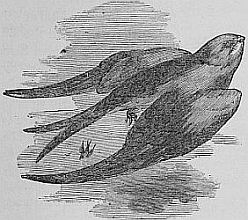
The machinery of the body needs seasons of rest for
repairing.
All animals have their times for sleeping. It would not do for their
minds to use the machinery of the body all the time; if they did, the
machinery would soon wear out. The brain, and nerves, and muscles,
etc., are all repaired during sleep, so that they may be ready for use
again.
When you feel tired, it is because your mind has worn the machinery of
the body by using it. Now, when you lie down and sleep, the muscles
stop working; no messages pass through the nerves, and the brain is at
rest, because the mind pretty much stops thinking. But all this time
that you sleep the blood keeps circulating, and the breathing goes
on. What is this for? It is that the repairing of the machinery may
be done, so as to get the brain, and nerves, and muscles ready for
the work and the play of to-morrow. The repairing, you know, is all
done with the blood. This is the material for repairing as well as for
building, and therefore it must be circulating every where while you
are asleep, and the breathing must go on to keep the blood in good
order.
The repairing of the body is going on all the time while you are awake
as well as when you are asleep. But it goes on more briskly when the
machinery is not in use than when it is. So we may say that when you
are asleep the machinery is lying by for a full repair.
The same is true of the building of the body. More of it is done when
you are asleep than when you are awake. You are growing all the time,
but you grow most when you are asleep. And it is because the child
is growing that he needs more sleep than the adult does. The baby is
growing very fast, and so he sleeps a great deal of his time in the day
as well as in the night.
The night the time for sleep.
The night is given to us as the time to sleep. Then it is dark and
still, and we can go to sleep easily. Most animals sleep through the
night. You remember that I told you, in Chapter X., Part First, how
still the garden becomes as evening comes on. The flies, and bees, and
bugs, and birds have gone to rest, to get repaired for the next day;
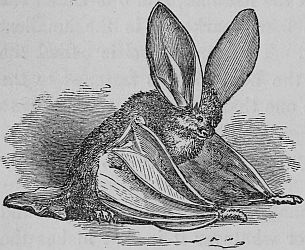
so, too, have the larger animals. But it is curious that some animals
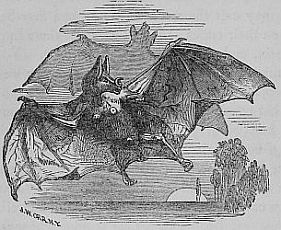
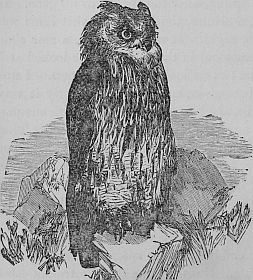
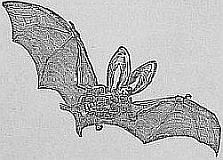
are busy in the night, and take their sleep in the day. It is so with
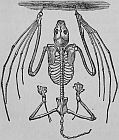
the owl and the bat. The katydid, you know, does not begin its noise
till evening. I suppose that it sleeps in the daytime.
Those people that stay up late at night, and do not get up early in
the morning, make a great mistake. They do not take the right time for
sleeping. They ought not to turn night into day, as bats, and owls, and
katydids do, for they are not made for it.
Why merely keeping still will not answer.
When you are tired and need sleep, the trouble is not merely in the
muscles. If it was, then keeping still merely, without sleeping, would
answer. But the brain and nerves need repairing as well as the muscles.
But as long as you are seeing, and hearing, and feeling, the nerves
are kept too busy to be repaired well; and as long as your mind keeps
thinking, the brain does not get thoroughly repaired. So, then, merely
keeping still will only repair the muscles; and sleep is needed to
repair the brain and the nerves.
Dreaming.
You know that when you dream very much you are not as much refreshed as
when you sleep soundly. What is the reason? It is because that when you
dream the mind is not wholly at rest, and works the brain, so that it
is not thoroughly repaired.
The winter sleep of some animals.
There is another kind of sleep into which some animals go. It is a
very long sleep. It lasts all winter. Great numbers of such animals as
frogs, bats, flies, and spiders, go into by-places in the fall to sleep
till spring comes. Many of the birds do this.
It is a deeper sleep than that which animals go into at night. It
is a different kind of sleep. In the sleep at night the blood keeps
moving, and the animal breathes; but in this winter sleep there is no
breathing, and the blood stops circulating. All is as still as death.
But there is life there, just as I told you, in Part First, there is
life in the seed, and in the trees that look so dead in winter. It is
life asleep. The warmth of spring wakes up again the life in these
animals, as it does the life in the trees. The blood then begins to
circulate in them, as the sap does in the trees, and they come out from
their hiding-places.
The long sleep of a toad.
I have said that this sleep which some animals go into lasts through
the winter. It may be made to last longer than this. Some frogs were
once kept in this winter sleep for over three years in an ice-house;
and then, on being brought out into the warm air, revived and hopped
about as lively as ever. We do not know how much longer they might have
been kept in this sleep. You remember that in Part First, Chapter XV.,
I told you about some seeds in which the life was asleep many hundred
years. And it may be that the life might be kept asleep in frogs and
other animals as long as this by steady cold. A toad was found lately
in the middle of a tree fast asleep. How he came there was not known,
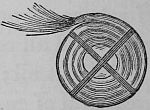
but the wood had kept growing year after year, and as there were 67
rings outside of the toad, it was clear that he had been there 67
years. A long sleep it was, but he soon woke up and hopped about like
other toads.
The winter sleep of some animals not perfectly sound.
There are some kinds of animals that crawl into winter quarters in whom
life is not wholly asleep. The blood moves a little, and they once in a
while take a breath; and, besides, they now and then, when the weather
is quite warm, wake up enough to eat a little. Now it is curious that
such animals always lay up something to eat right alongside of them
when they go into their winter sleeping-places. But those who do not
wake up at all do not lay up any food, for it would not be used if they
did lay it up. They are governed by instinct in this matter.
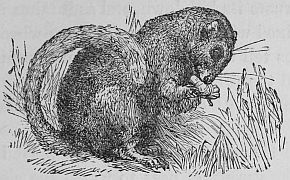
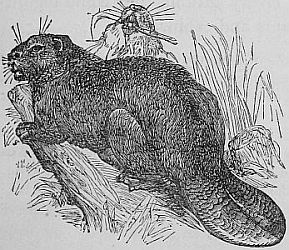
The field-mouse lays up at its side nuts and grain when it goes into
its winter quarters, and when it is partly waked up by a warm day, eats
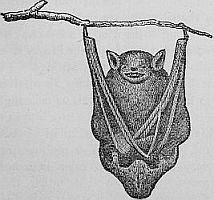
a little of his store. The bat does not lay up any thing, although he
wakes up when it is warm. He does not need to lay up any thing, because
the warmth that wakes him up wakes up also gnats and insects on which
he lives. He catches some of these, and then, as he finds himself going
to sleep again, he hangs himself up by his hooks as before. The marmot
or woodchuck does not wake up at all, but he always lays up some dried
grass in his hole. What is this for? He feeds on it when he first
wakes up in the spring, to get a little strength before he comes out
from his hole.
How much life is asleep in the winter.
How much life, then, is asleep in the winter in animals as well as in
plants! And how busy is life in its waking in the spring! While the
roots and seeds in the ground send up their shoots, and the sap again
circulates in the trees and shrubs, and the buds swell, multitudes of
animals are crawling out of their winter hiding-places into the warm,
balmy air. And when the leaves are fully out, and the flowers abound,
the earth swarms with the busy insects, and birds, and creeping things,
of which we saw none during the winter.
Flight of birds south in winter.
Some of the birds that we see in the spring have not been asleep
during the cold weather, but have spent their winter at the South, and
have now winged their way back to spend their summer with us. They go
back and forth in this way every year, guided by that wonderful and
mysterious thing, instinct. How this makes them take their flight at
the right time, and in the right direction, we do not understand.
Questions.—Why do animals need sleep? Why do you feel tired
after work, or play, or study? Why does the blood circulate and the
breathing go on in sleep? When is most of the repairing of the body
done? How is it with its growth? What is said about night as the time
for sleep? Mention some animals that sleep in the day and are awake
in the night. What is said about people that turn night into day? Why
would not merely keeping the body still, without sleeping, answer for
our rest? What is said about dreaming? What is said of the winter
sleep of some animals? Tell about the frogs and the toad. Why do some
animals take food into their winter sleeping-places? Tell about the
field-mouse, the bat, and the marmot. What is said about the waking up
of life in the spring in animals and in plants? What is said about the
birds?
FOR THE USE OF
FAMILIES AND SCHOOLS.
INTENDED TO AID MOTHERS AND TEACHERS IN TRAINING CHILDREN
IN THE OBSERVATION OF NATURE.
IN THREE PARTS.
PART III.—AIR, WATER, HEAT, LIGHT, &c.
By WORTHINGTON HOOKER, M.D.,
AUTHOR OF “FIRST BOOK IN CHEMISTRY,” “CHEMISTRY,”
“NATURAL PHILOSOPHY,” “NATURAL HISTORY,” ETC.
With Illustrations.
NEW YORK:
HARPER & BROTHERS, PUBLISHERS,
FRANKLIN SQUARE.
1882.
THE CHILD’S BOOK OF NATURE
FOR THE USE OF
FAMILIES AND SCHOOLS.
INTENDED TO AID MOTHERS AND TEACHERS IN TRAINING CHILDREN
IN THE OBSERVATION OF NATURE.
IN THREE PARTS.
By Dr. WORTHINGTON HOOKER.
THE CHILD’S BOOK OF NATURE. For the Use of Families and Schools; intended to
aid Mothers and Teachers in training Children in the Observation of Nature. In three
Parts. Illustrations. The Three Parts complete in one vol., Small 4to, Cloth, $1 00;
Separately, Cloth, Part I., 40 cents; Parts II. and III., 44 cents each.
Part I. PLANTS.—Part II.
ANIMALS—Part III. AIR, WATER, HEAT, LIGHT, &c.
FIRST BOOK IN CHEMISTRY. For the Use of Schools and Families. Revised Edition.
Illustrations. Square 4to, Cloth, 44 cents.
NATURAL HISTORY. For the Use of Schools and Families. Illustrated by nearly 300
Engravings. 12mo, Cloth, 90 cents.
SCIENCE FOR THE SCHOOL AND FAMILY.
Part I. NATURAL PHILOSOPHY. Illustrated by nearly 300 Engravings. 12mo,
Cloth, 90 cents.
Part II. CHEMISTRY. Revised Edition. Illustrations. 12mo, Cloth, 90 cents.
Part III. MINERALOGY AND GEOLOGY. Illustrations. 12mo, Cloth, 90 cents.
Published by HARPER & BROTHERS, Franklin Square, N. Y.
☞Either of the above volumes will be sent by mail, postage prepaid, to any part of the United
States or Canada, on receipt of the price.
Entered, according to Act of Congress, in the year one thousand eight hundred and fifty-seven,
by Harper & Brothers, in the Clerk’s Office of the District Court of the Southern
District Court of New York.
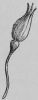
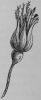
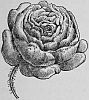















 ; in the horse it is shaped in this
way
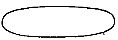 . You can see the difference in the size
of the cat’s pupil in different lights: if you look at her eyes in a
bright sunlight, and then again in the evening, you will see that
it is very much larger in the evening than it is in the day. When
the sun is very bright, her pupil is a mere chink, like this
 ; but
in the evening it is very wide open, shaped in this way
 .