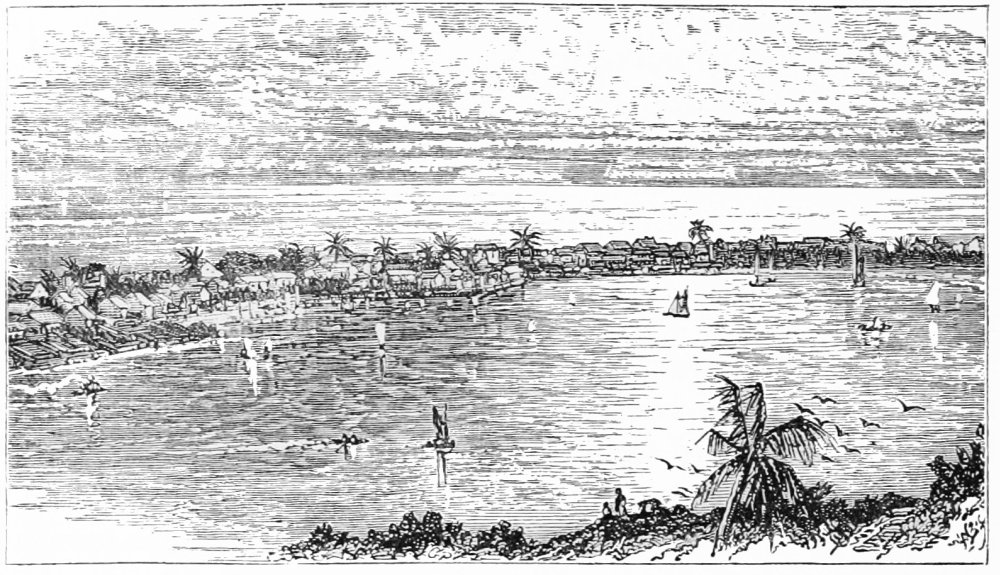
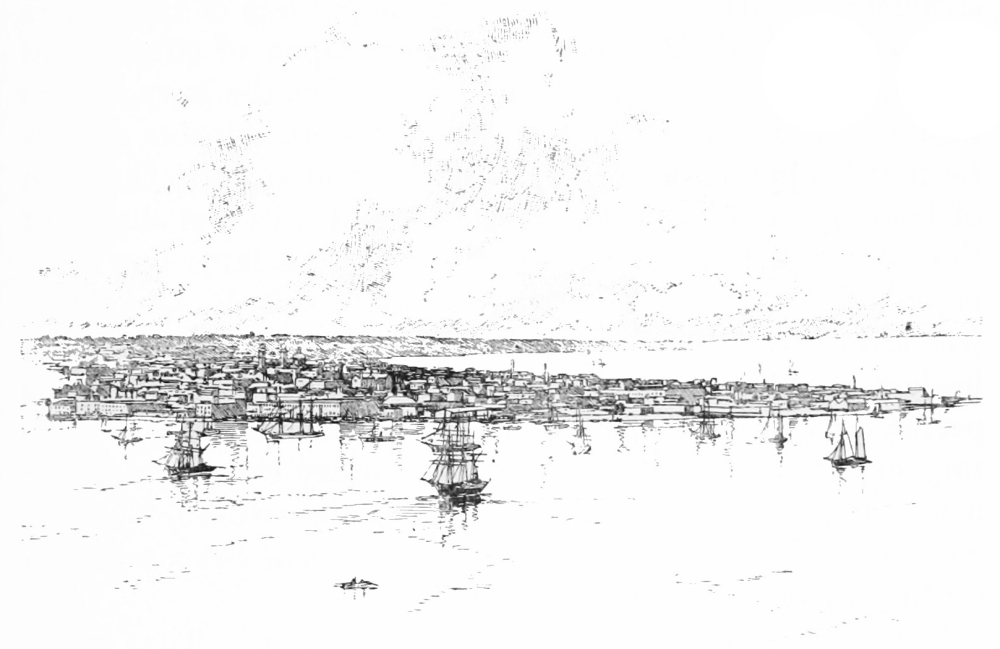
NATURE never intended there should be a city where Valparaiso stands,
but the enterprise of the Chillanos, aided by English and German
capital, has built there the finest port on the west coast of South
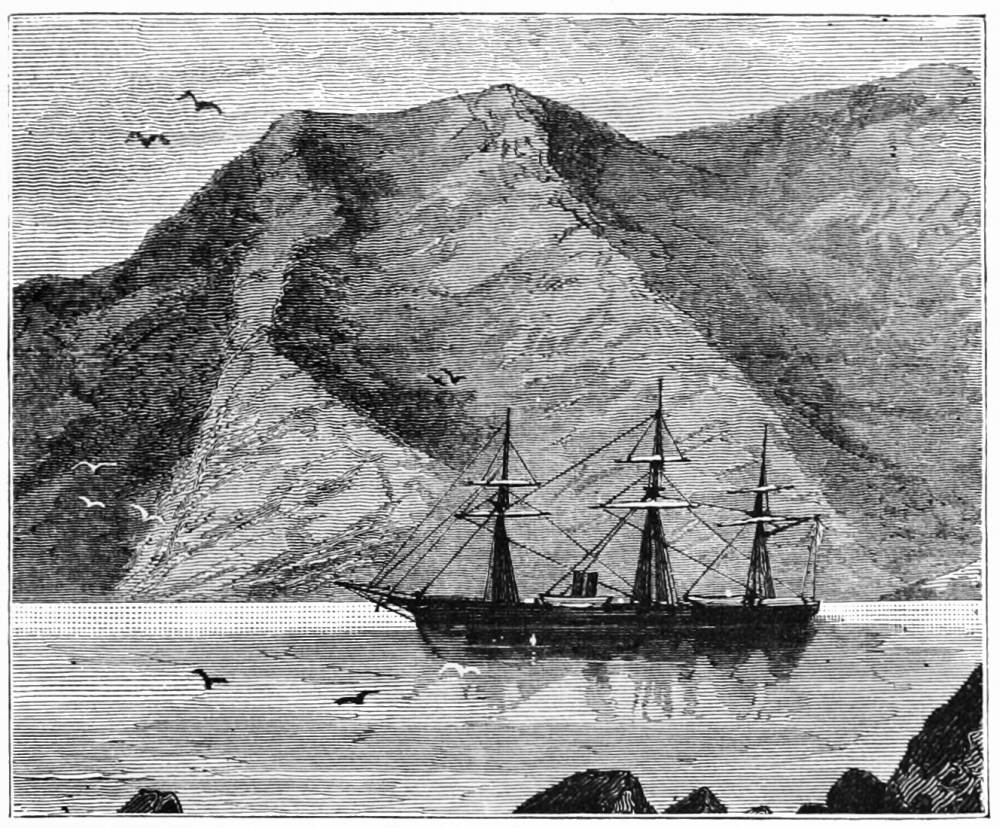
America, and the only one with all the modern improvements. The harbor
is spacious and beautiful, and ten months in the year it is perfectly
safe for shipping, but during the remaining two months, when northern
gales are frequent, vessels are often driven from their anchorage, and
compelled to cruise about to avoid being dashed upon the rocks on which
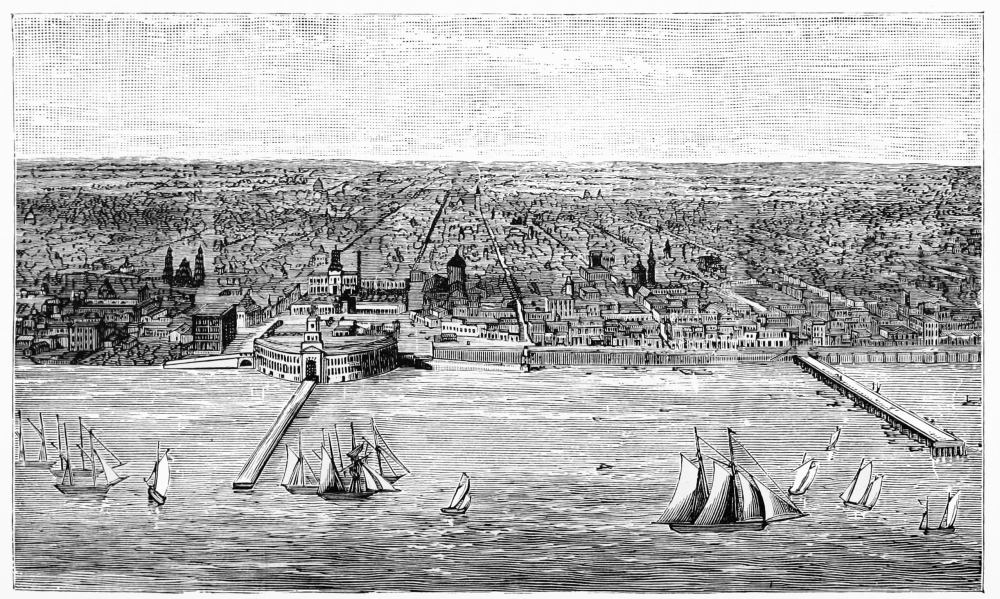
the city is built. The harbor is circular in form, with an entrance a
mile or so wide facing the north. A breakwater built across the entrance
would give the shipping perfect protection, but the sea is so deep—more
than a hundred fathoms—that such a work is considered impracticable. In
this harbor, drawn up in lines like men-of-war ready for review, are
hundreds of vessels, bearing the flags of almost every nation on the
earth except that of our own. Occasionally the Stars and Stripes are
seen, but so seldom that, as an American resident expressed it, “they
cure all the sore eyes in town.” Trade is practically controlled by
Englishmen, all commercial transactions are calculated in pounds
sterling, and the English language is almost exclusively spoken upon the
street and in the shops. An English paper is printed there, English
goods are almost exclusively sold, and this city is nothing more than an
English colony.
In Valparaiso, as everywhere else in Chili, there is an intense
prejudice against the United States, growing out of the attitude assumed
by our Government during the late war with Peru. The prejudice has been
aggravated and stimulated by the English residents. This, with the
natural arrogance of the Chillanos, who think they have the finest
country on earth, and that the United States is their only rival, makes
it rather disagreeable sometimes for Americans who go there to reside.
For this and other reasons our commerce with Chili has fallen off from
millions to hundreds of thousands, and it will be difficult to increase
it as long as the prejudice of the people exists, and lines of English,
French, German, and Italian vessels connect Valparaiso with the markets
of Europe.

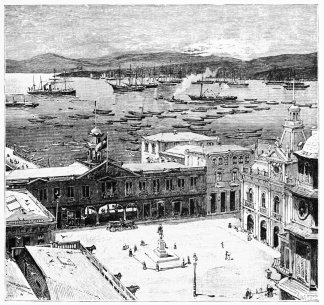
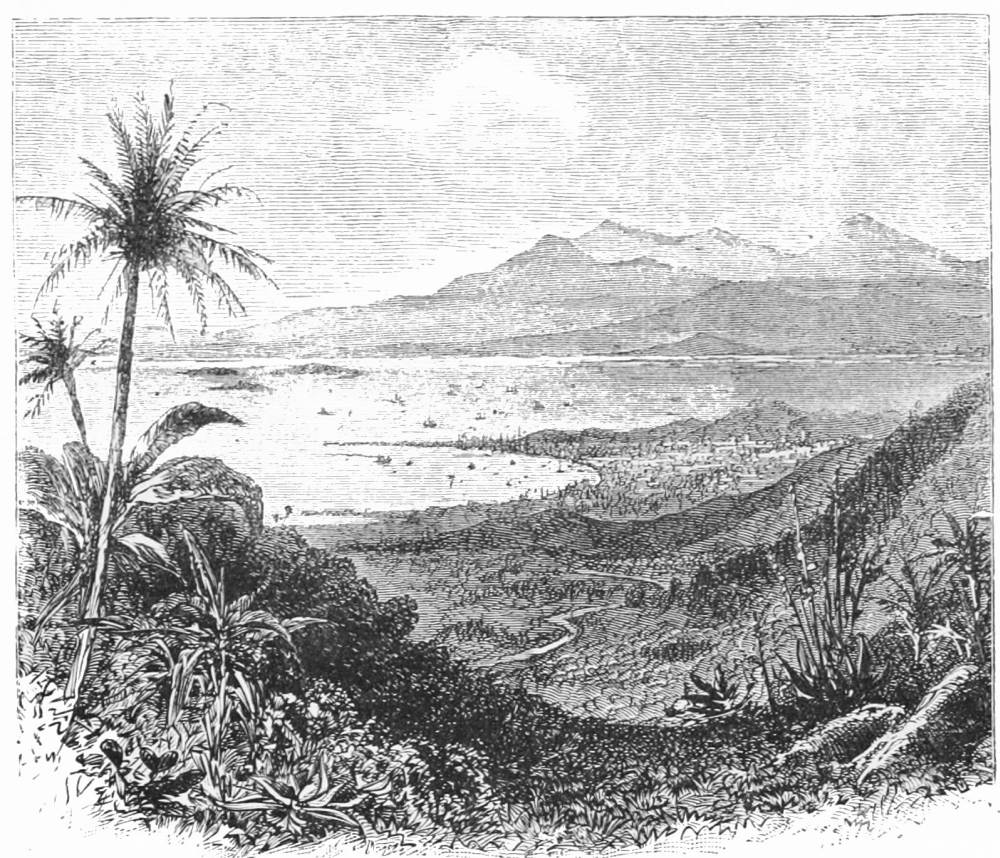
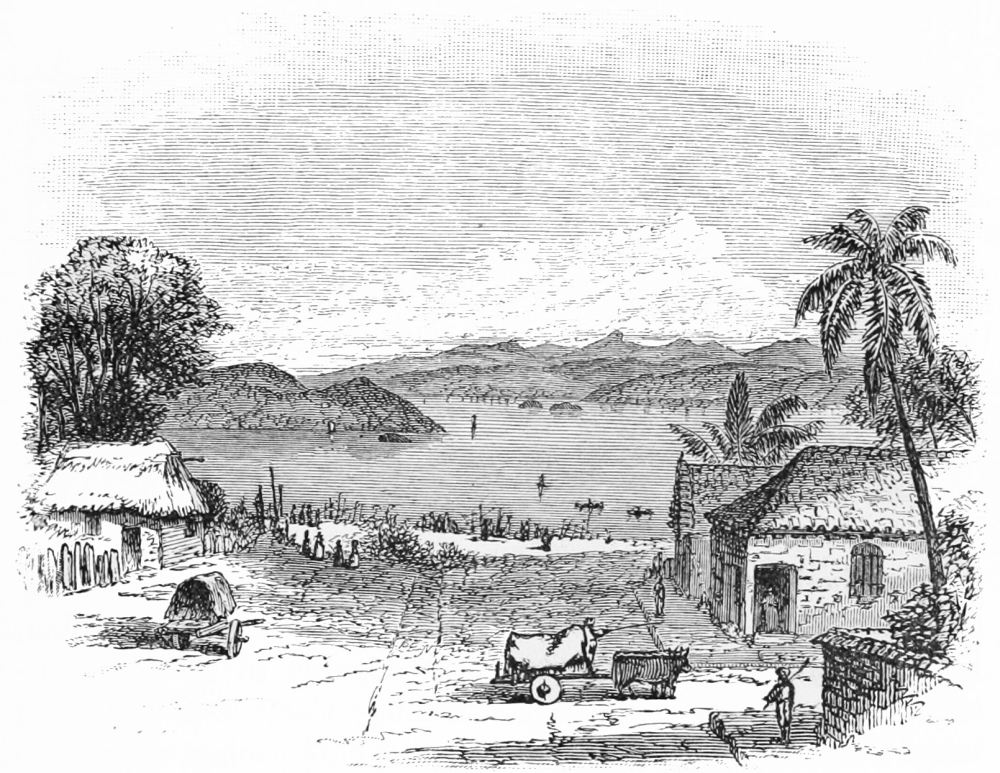
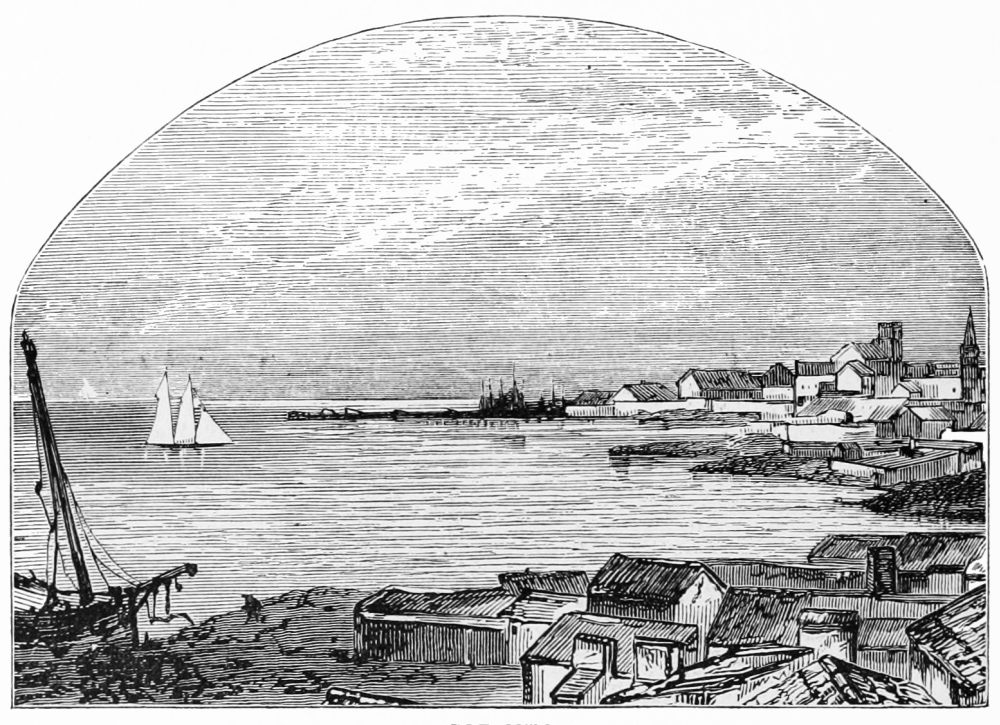
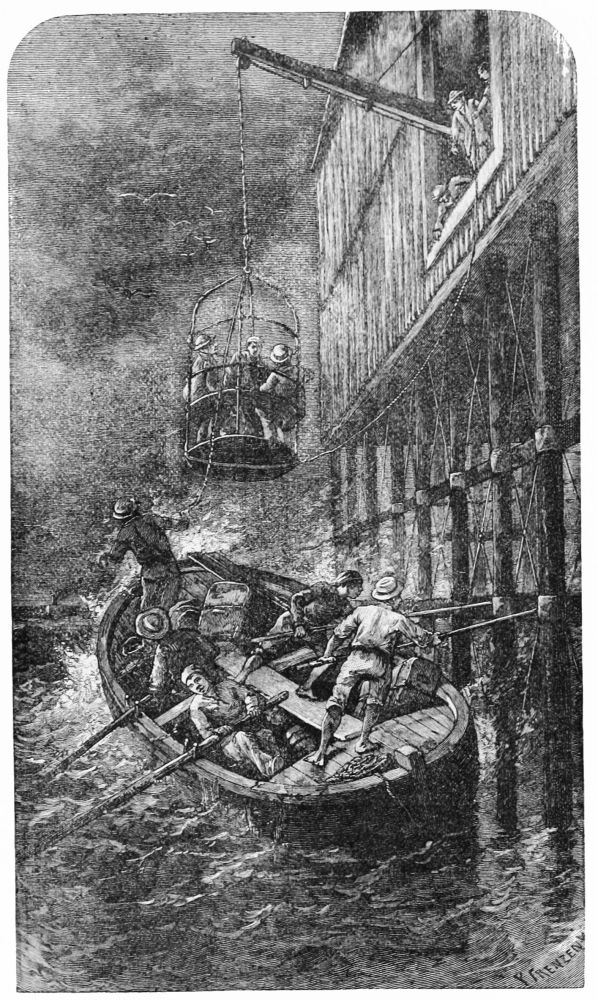
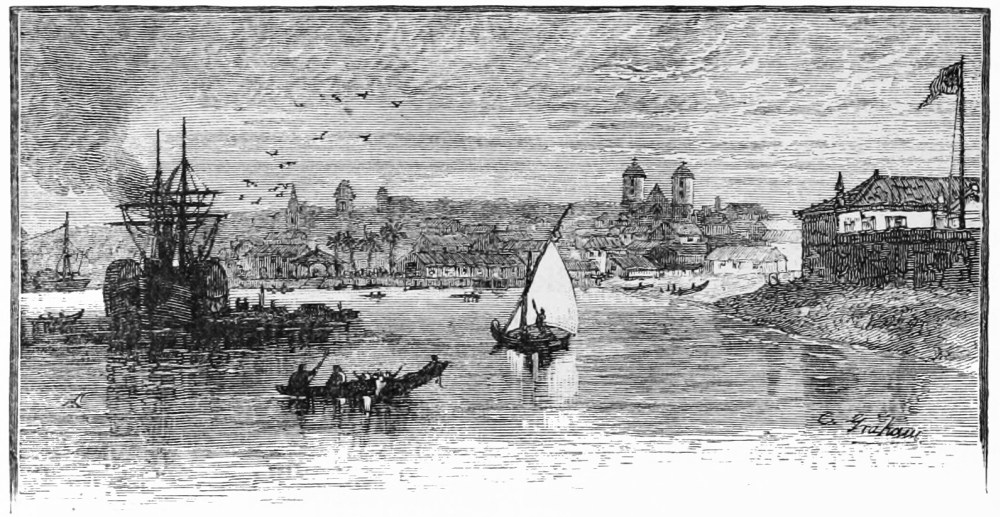
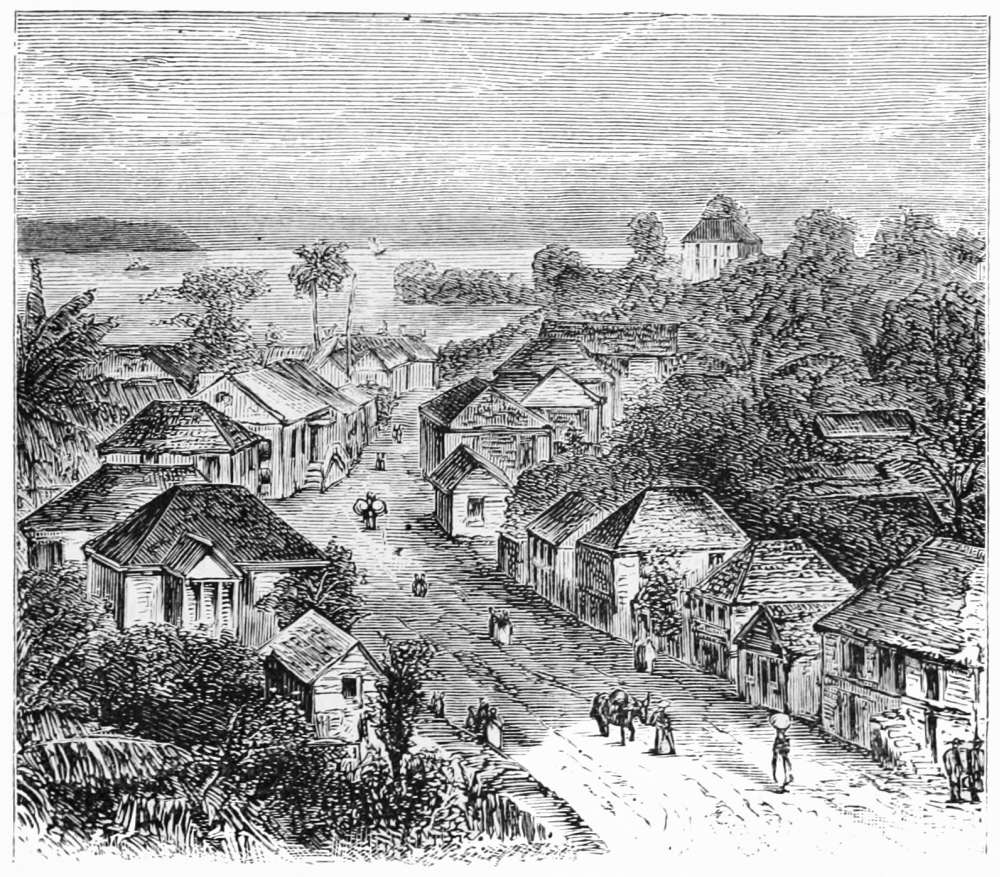
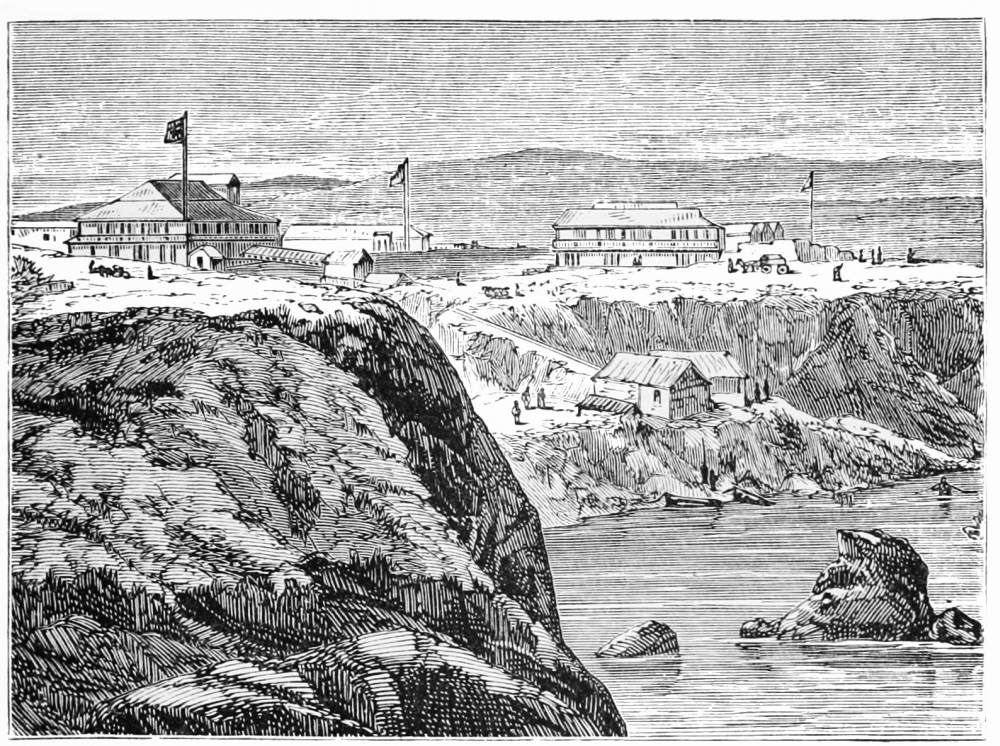
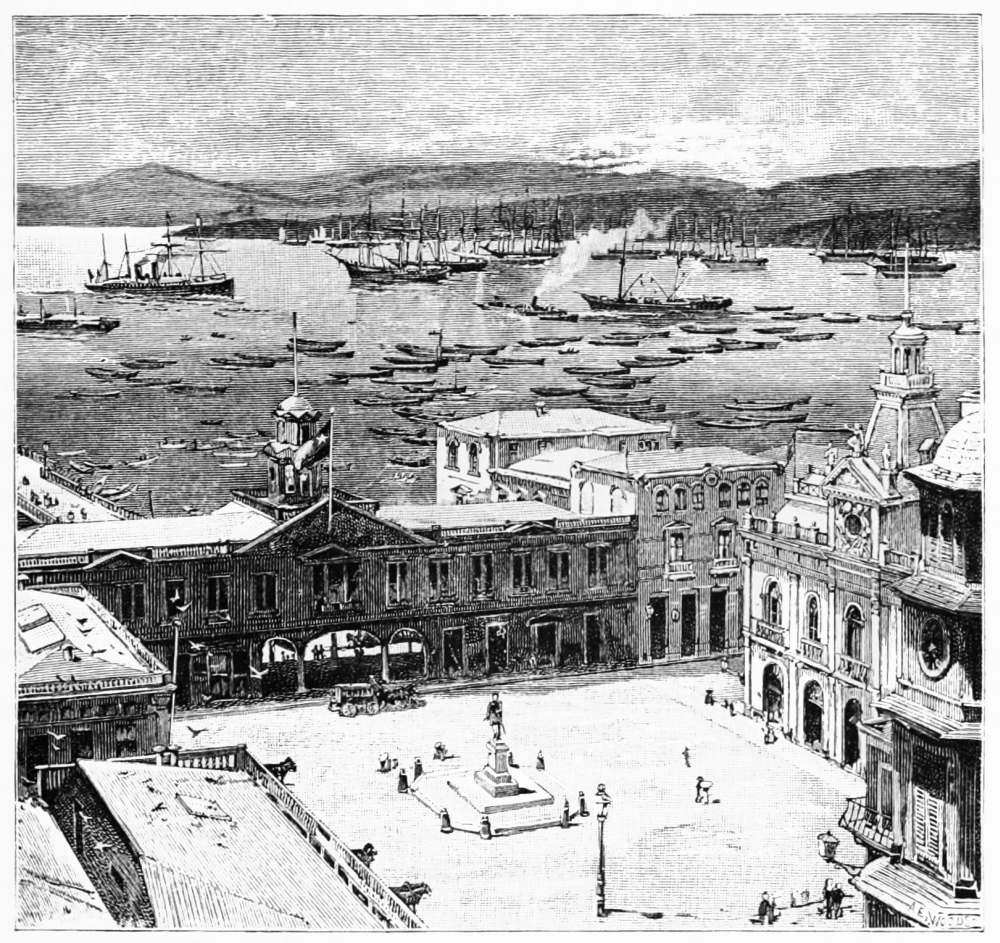
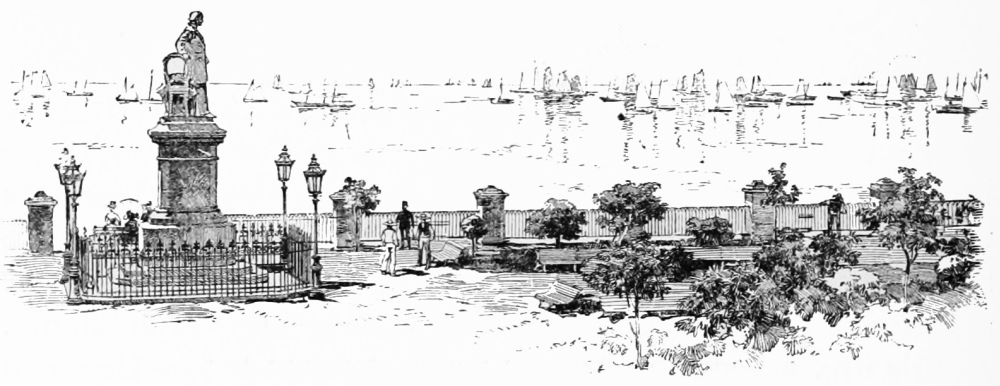
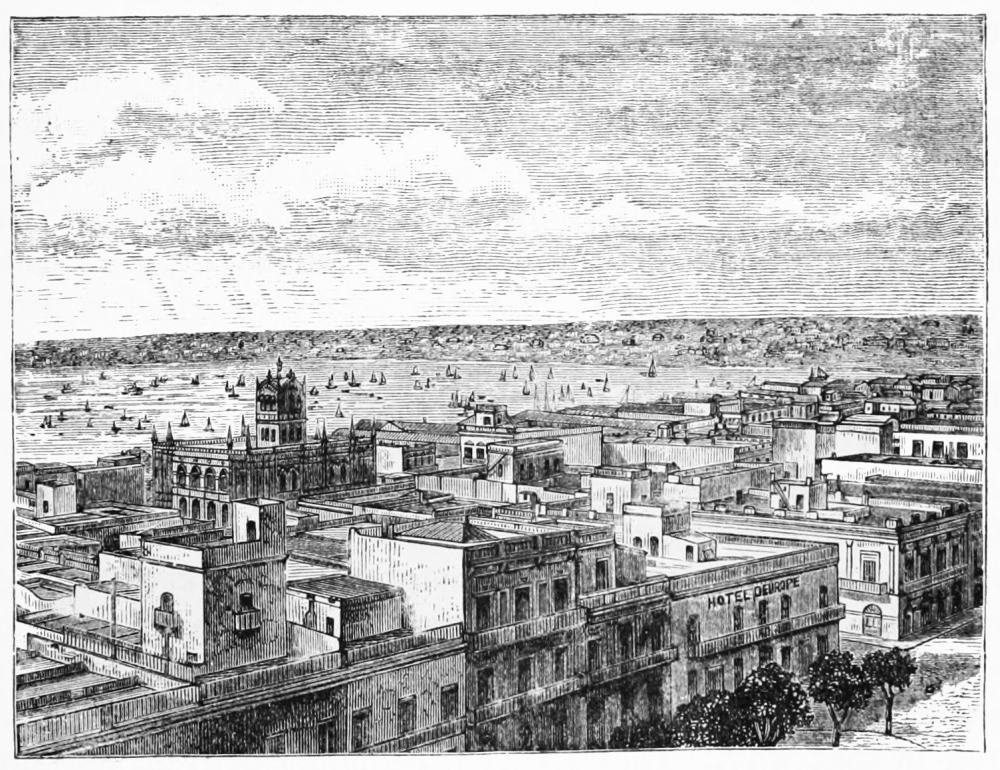
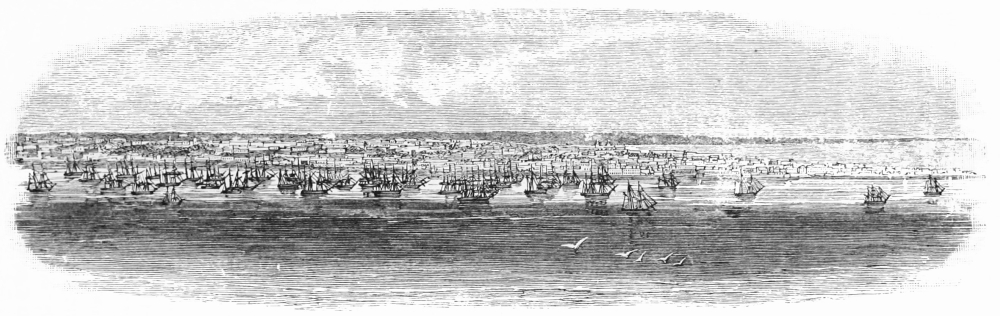
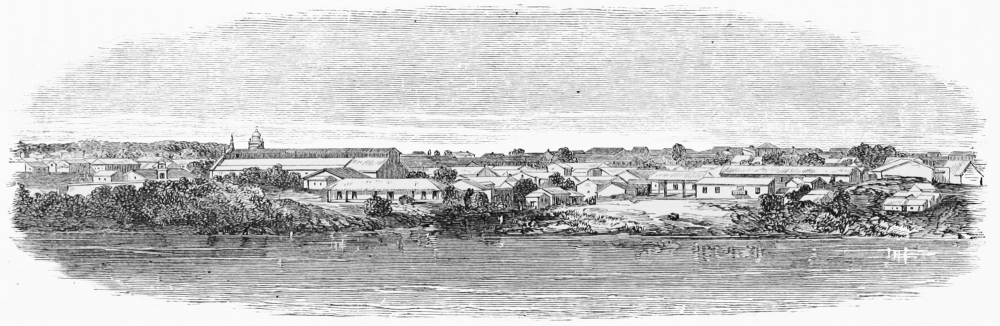
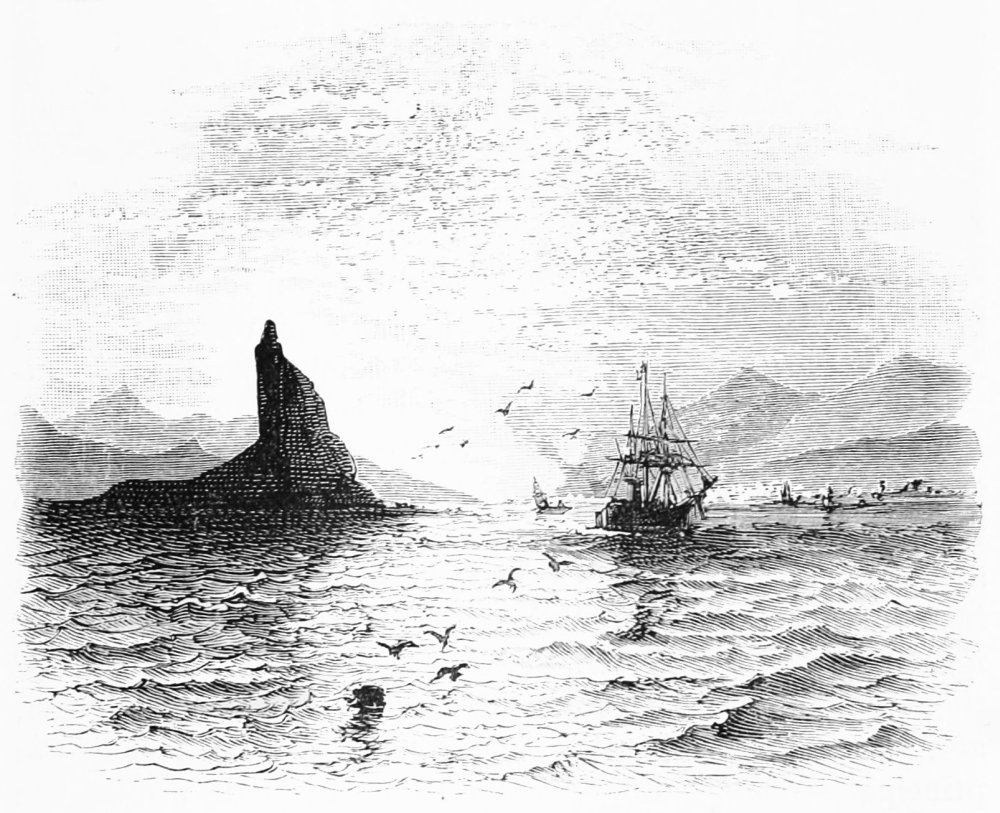
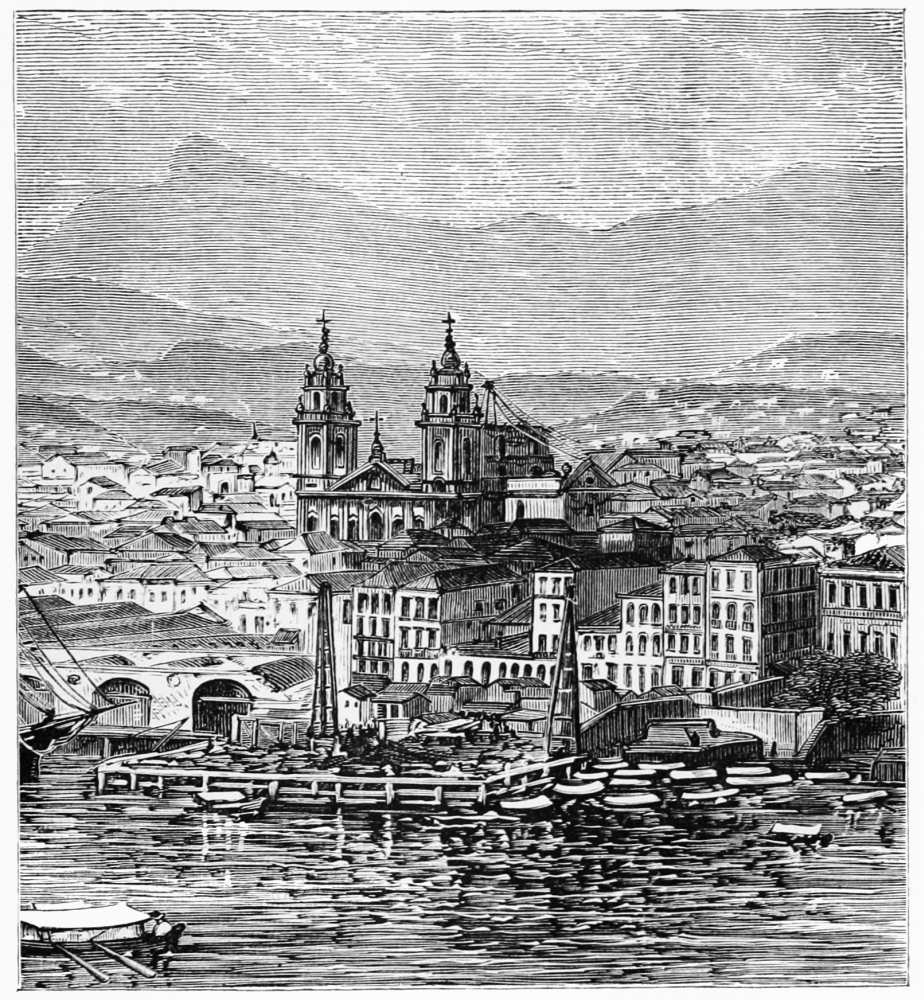
THE HARBOR OF VALPARAISO.
There is no steam communication with the United States, and all freight
is sent in sailing-vessels around the Horn or by way of Hamburg or
Havre. The freight charges from Valparaiso to New York by way of the
Isthmus are more than double those to the European ports, and it is
about thirty per cent. cheaper to ship goods from New York to Europe,
and from there to South America, than by way of Aspinwall and Panama.
Passenger fares as well as freight are subject to this discrimination.
One can go from Valparaiso to Europe via the Strait of Magellan—a
voyage of forty-one days—cheaper than to Panama—a voyage of twenty
days, which ought to be made in ten. It costs about ten cents per mile
on a steamer from Valparaiso to the Isthmus, to California, or to New
York, and about two cents a mile to Europe. As if this were not enough,
the steamship company, a British corporation which controls navigation
on the west coast, arranges its time-tables so as not to connect with
the New York steamers at the Isthmus, and its steamers usually arrive at
Panama the day after the Pacific Mail ship leaves Aspinwall, so as to
subject the traveller to the expense and annoyance of ten days’ delay on
the fever-haunted Chagres. Freight and mails receive the same treatment,
and every possible obstacle is raised to divert trade from the United
States to Europe.
Valparaiso means “the Vale of Paradise,” but somehow or other there was
a misconception in this particular, for there is no vale and no symptoms
of Paradise. An almost perpendicular mountain ridge forms a crescent
around the bay, towards the shores of which descend steep, rocky
escarpments. Here and there watercourses have furrowed ravines, or
barancas, as they are called, which offer the only means of reaching the
outer world. Along the narrow strip of sand which lies between the sea
and the cliffs the town stretches three or four miles. In some places
there is width enough for only a single street, at others for three or
four running parallel to each other, but they only extend a few blocks.
The one street, the only artery of commerce in Valparaiso, is “the Calle
Victoria,” stretching around the entire harbor, and skirted by all the
banks and hotels, the counting-houses of the wholesale firms, the shops
of the retailers, the Government buildings, and the fine private
residences. The rocky cliffs have been terraced as the town has grown,
and the city now extends back upon the hills a long distance, one man’s
house being above another’s, and reached by stairways, winding roads,
and steam “lifts,” which carry passengers up inclined planes, like those
at Niagara and Pittsburg. What roads there are were laid out by the
goats that formerly fed upon the mountain side, and these twist about in
the most confusing and circuitous fashion. One has to stop and pant for
breath as he climbs them, and an alpenstock is needed in coming down.
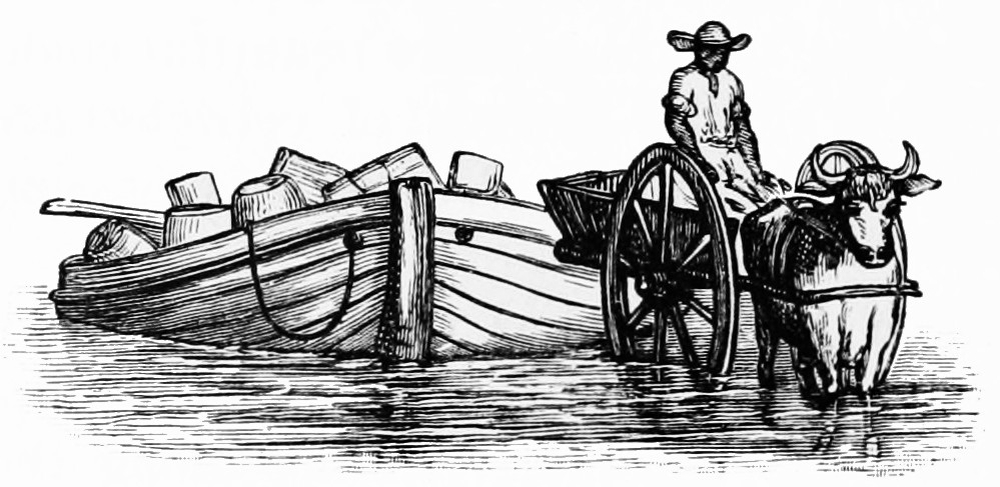
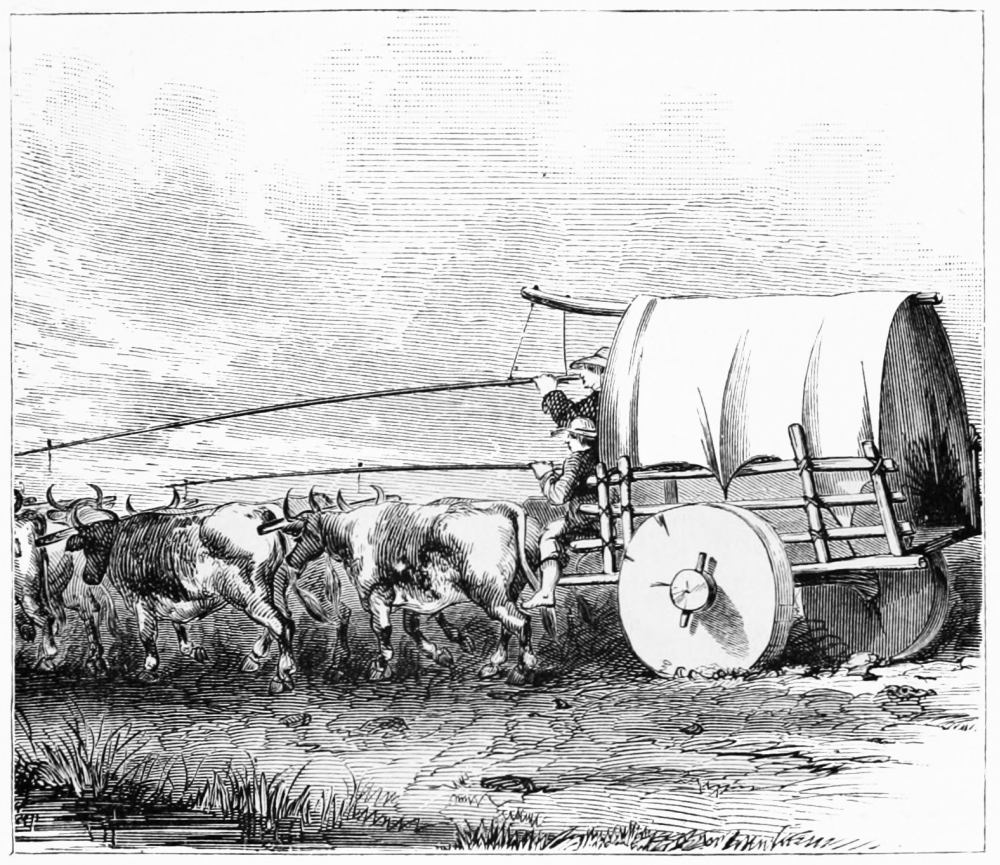
The hacks in Valparaiso have three horses attached to them, and the
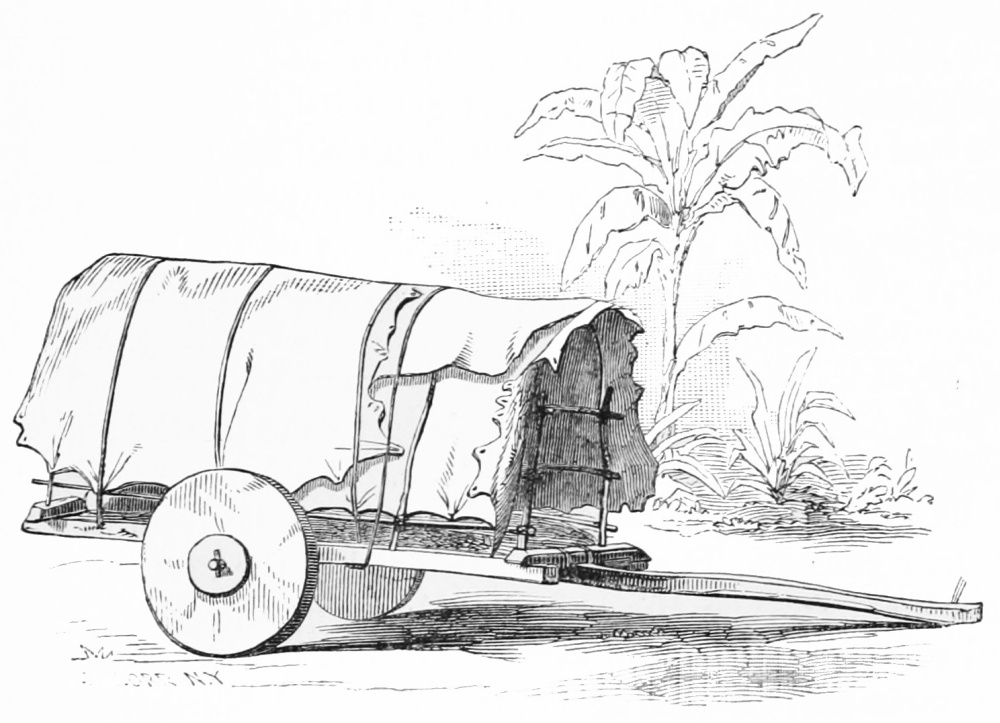
teaming is done in carts drawn by four oxen.
An evening view of Valparaiso from a steamer in the bay is quite novel,
as the lines of lights, one above the other, give the appearance of a
city turned up on end. Electric lamps are placed upon the crests of the
cliffs, throwing their rays over into the streets and upon the terraces
below with the effect of moonlight. During the day, however, the
irregular rows of houses, of different shapes and elevations, clinging
to the precipices, look as if a strong wind might blow them overboard,
or an earthquake shake them off into the bay.
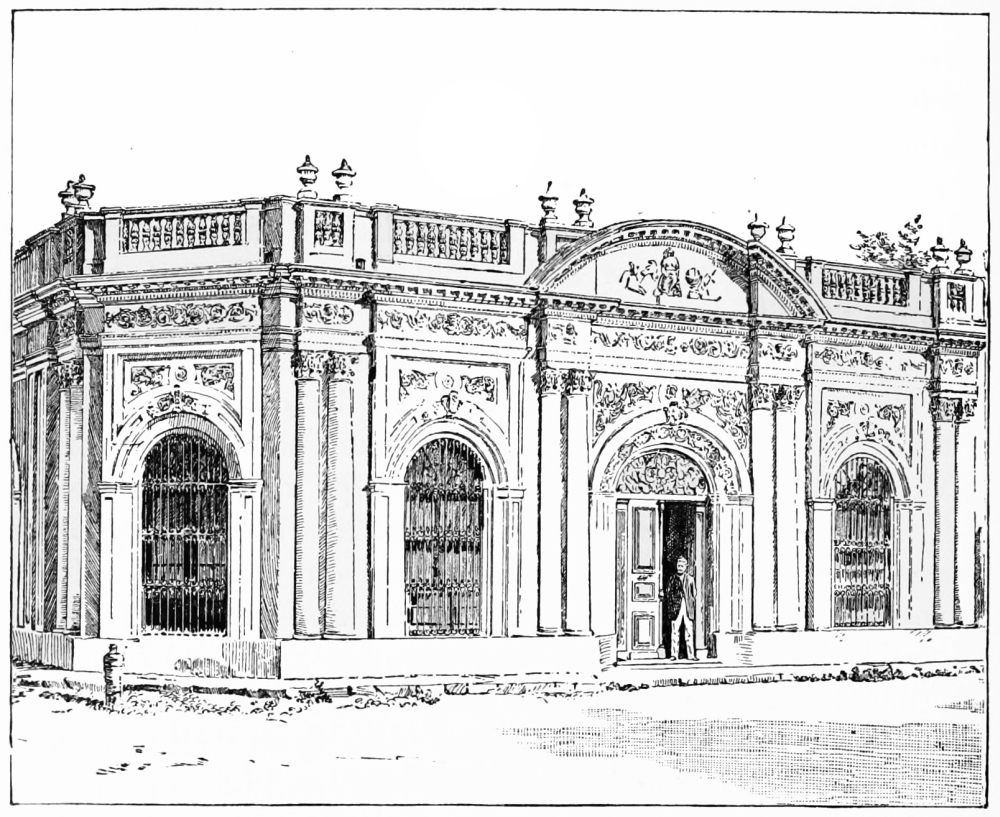
The business portion of Valparaiso along the beach shows some fine
architecture, more elaborate than is to be seen elsewhere in Central and
South America, there being a rivalry in handsomely carved façades and
other adornments. The shops and stores are as large, and contain as
complete an assortment of goods, as those in any city in the world.
There is no city in the United States having the population of
Valparaiso (125,000) with so many fine shops, and such a display of
costly and luxurious articles. The people are wealthy and prosperous,
the foreign element is large and rich, and the place is famous, as is
Santiago, the capital, for the extravagance of its citizens. Some of the
private residences are palatial in their proportions and equipments, and
millions of dollars are represented under the roofs of bankers and
merchants. There are clubs as fine as the average in New York or London,
public reading-rooms, libraries, picture-galleries, and all the elements
which go to make up modern civilization. The parks and plazas are filled
with beautiful fountains, and with statuary of bronze and marble, much
of which, to the shame of Chili, was stolen from the public and private
gardens of Peru during the late war. The Custom-house is being torn away
to give place to a magnificent monument to Arthur Pratt, an Irish hero
of that struggle. Pratt’s reckless courage made him the ideal of all
that is great and noble in the mind of the Chillanos, who have erected a
monument to his memory in nearly every town. Streets and shops, saloons,
mines, opera-houses, and even lotteries are named in his honor, and the
greatest national tribute is to destroy the old custom-house in order to
erect his monument in the most conspicuous place in the principal city.
The oddest thing to be seen in Valparaiso is the female street-car
conductors. The street-car managers of Chili have added another
occupation to the list of those in which women may engage. The
experiment was first tried during the war with Peru, when all the
able-bodied men were sent to the army, and proved so successful that
their employment has become permanent, to the advantage, it is said, of
the companies, the women, and the public. The first impression one forms
of a woman with a bell-punch taking up fares is not favorable, but the
stranger soon becomes accustomed to this as to all other novelties, and
concludes that it is not such a bad idea after all. The street-cars are
double-deckers, with seats upon the roof as well as within, and the
driver occupies a perch on the rear platform, taking the fare as the
passenger enters. The Chillano is a rough individual; he is haughty,
arrogant, impertinent, and abusive. There is more intemperance in Chili
than in any other of the South American States, and consequently more
quarrels and murders, but the female conductors are seldom disturbed in
the discharge of their duties, and when they are, the rule is to call
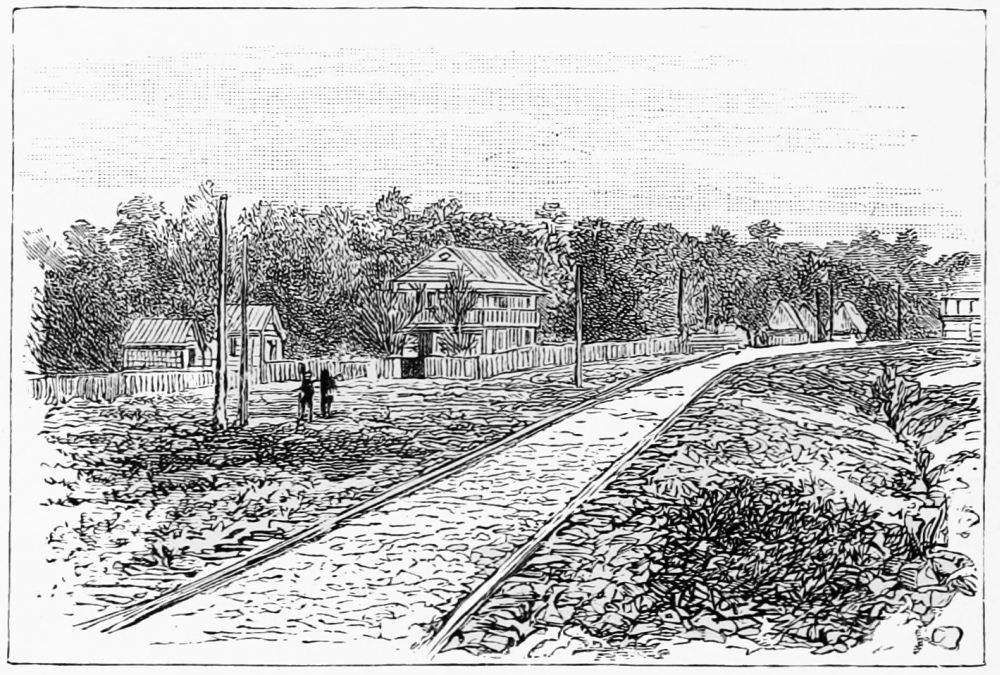
upon the policemen,
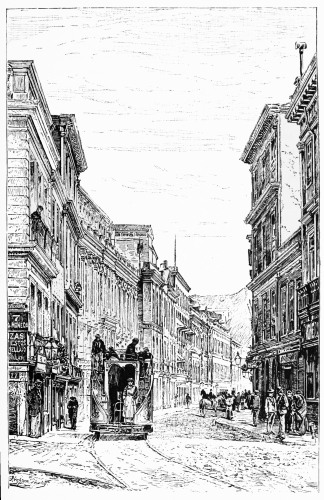
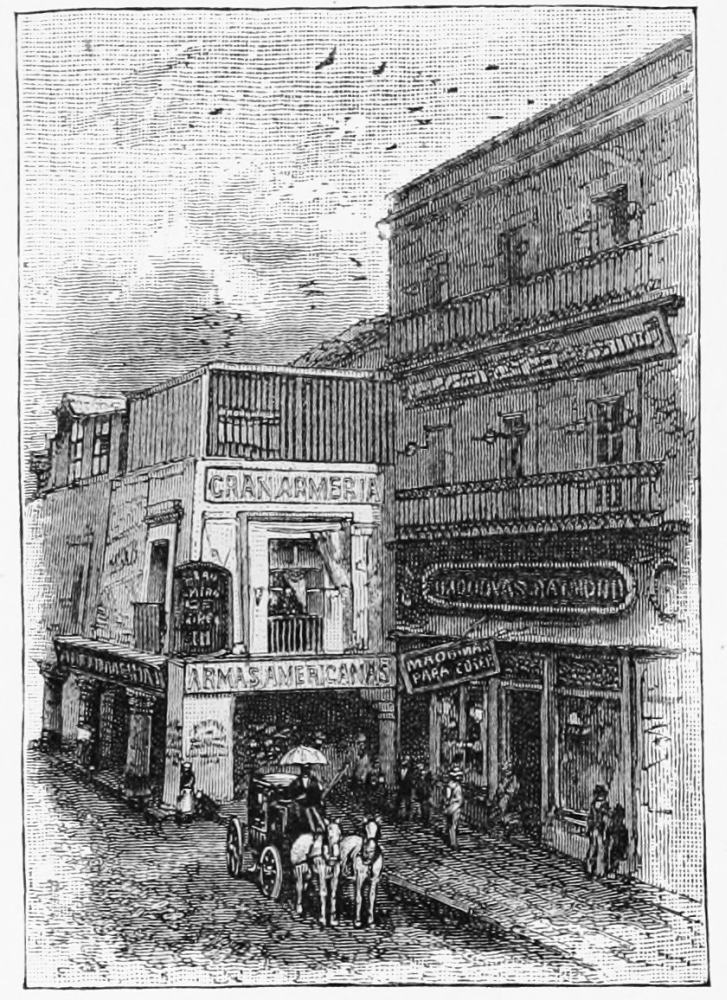
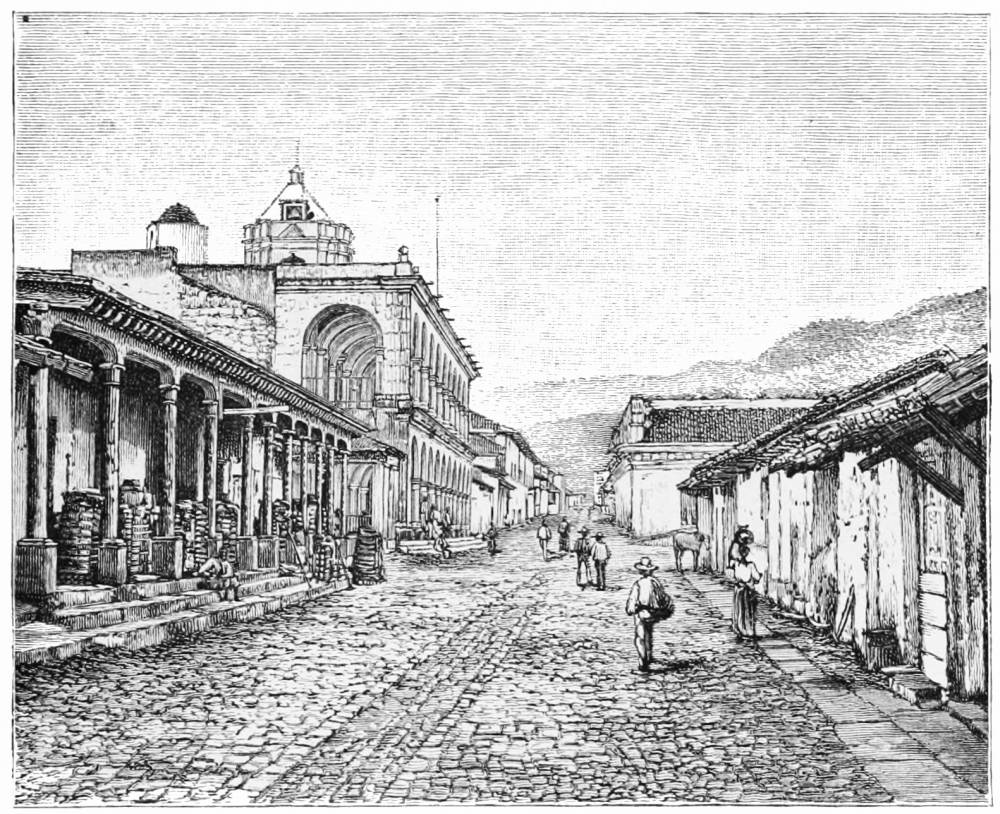
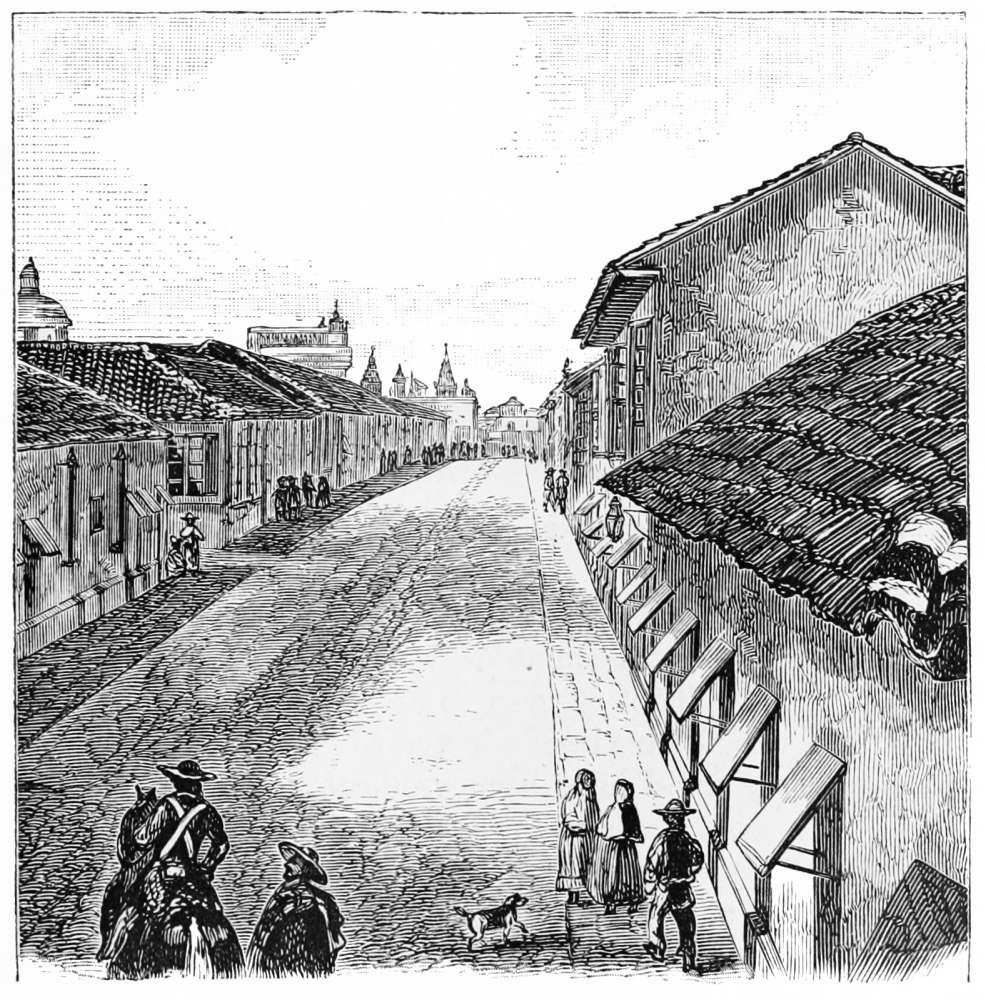
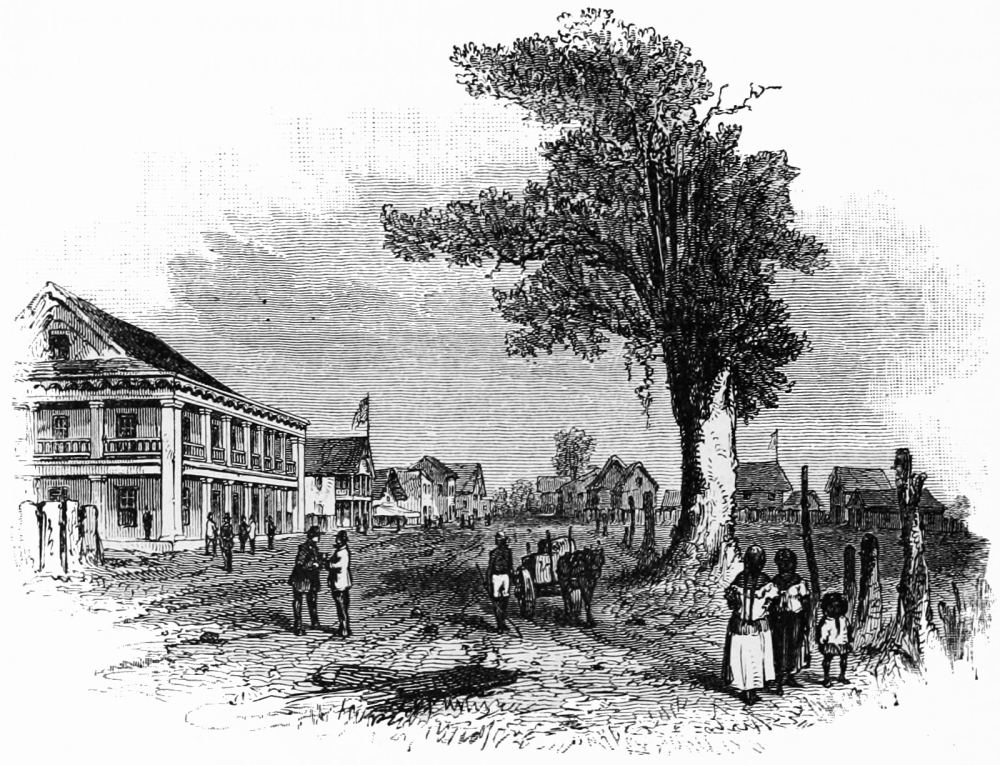
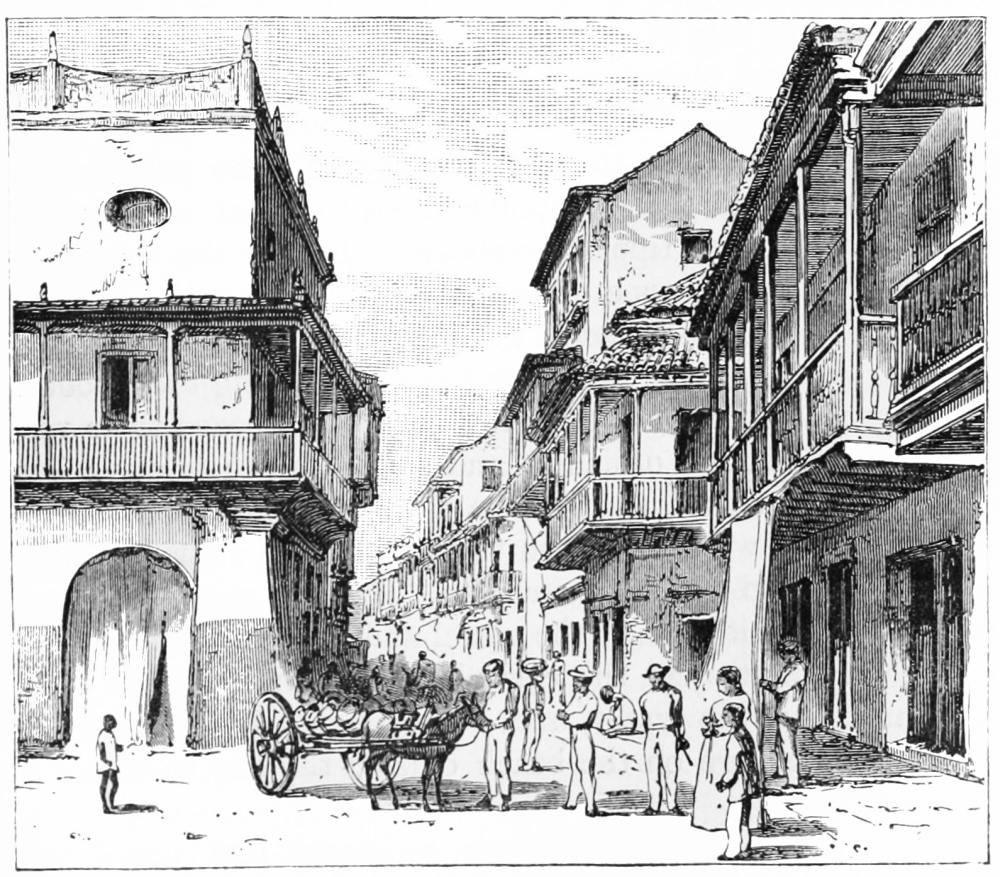
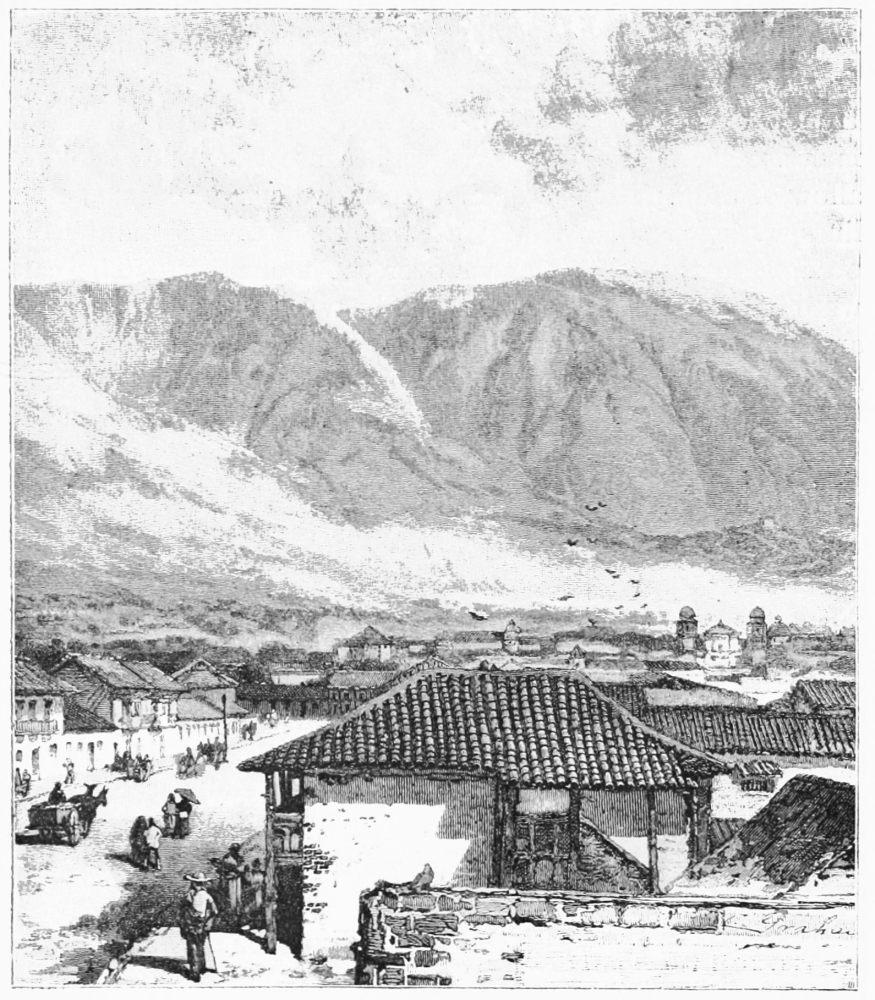
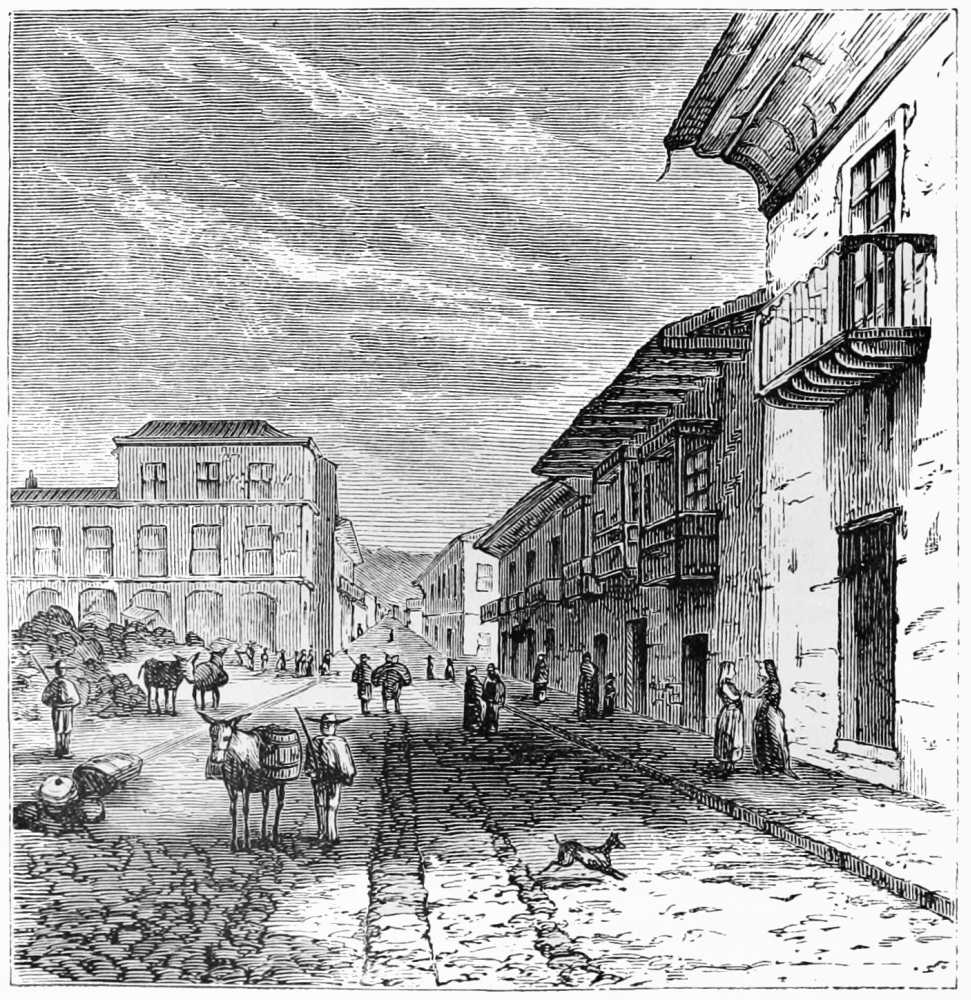
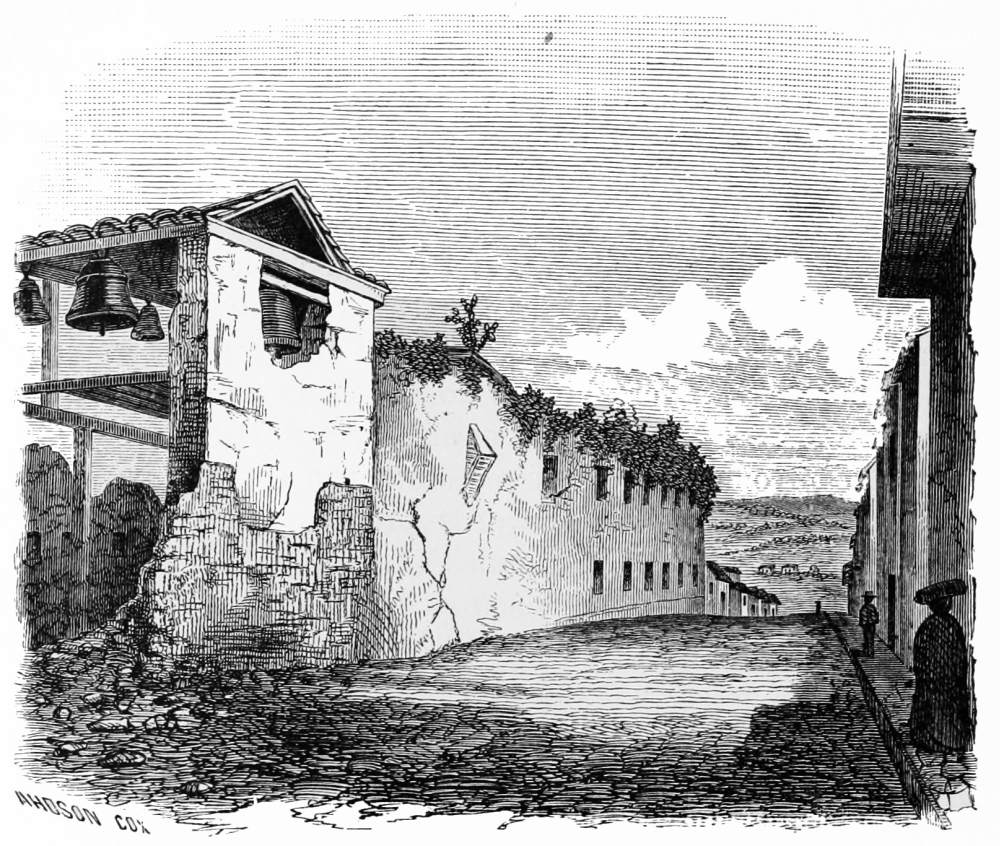
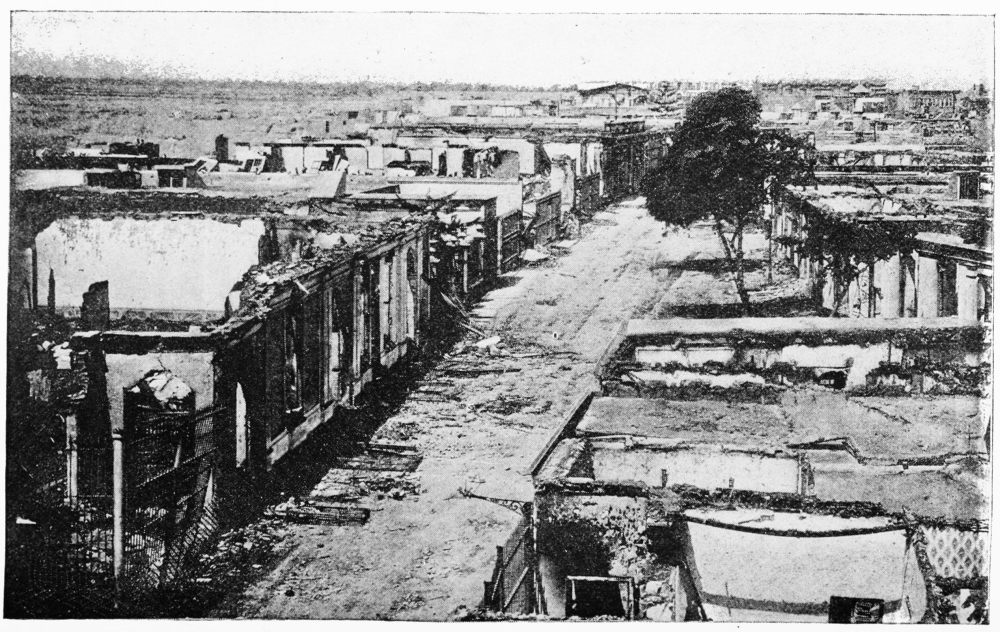
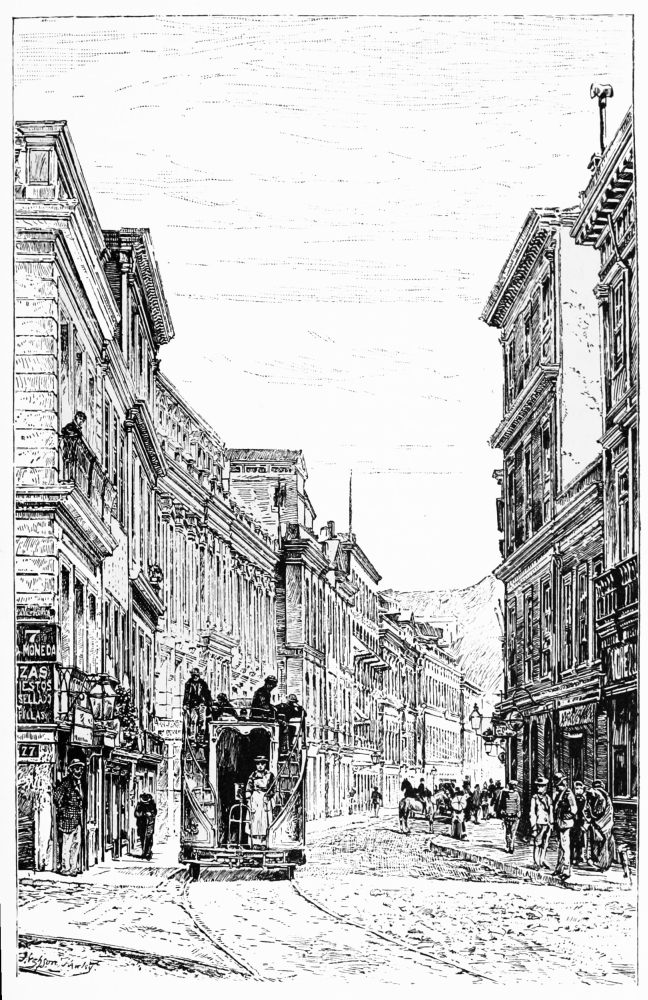
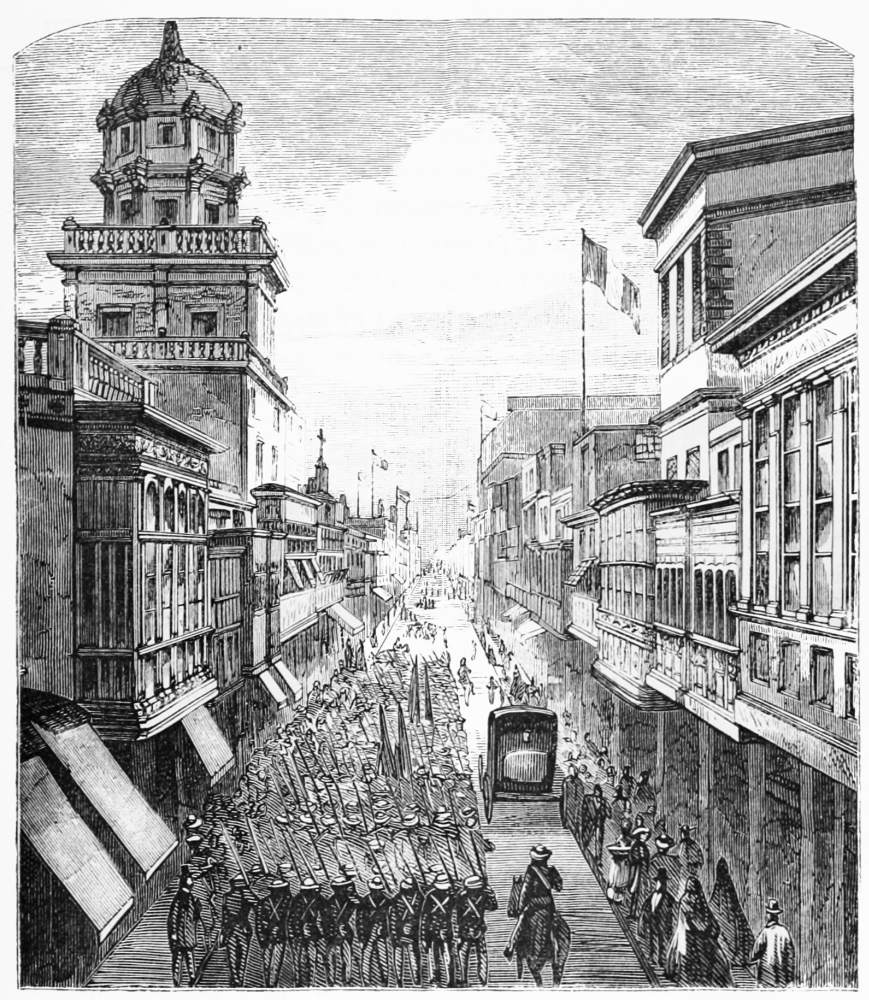
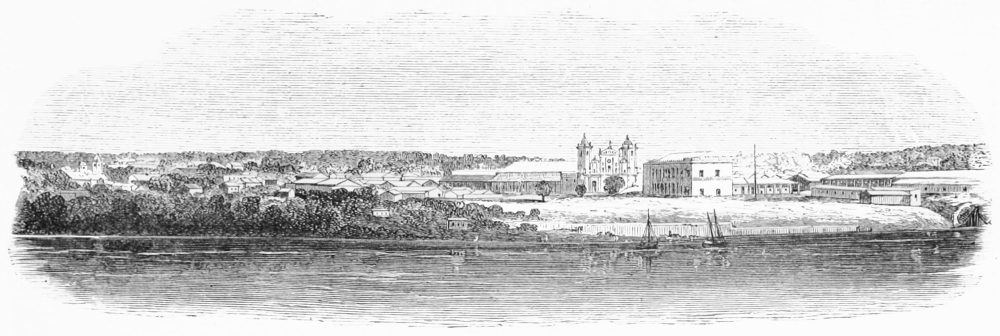
VICTORIA STREET, VALPARAISO.
who stand at every corner, to eject the obstreperous passenger.
Street-car riding is a popular amusement with the young men about town.
Those who make a business of flirting with the conductors are called
“mosquitoes” in local parlance, because they swarm so thickly around the
cars, and are so great a nuisance. Not long ago a comic paper printed a
cartoon in which some of the best-known faces of the swells of
Valparaiso appeared on the bodies of mosquitoes swarming around the car
of “Conductor 97,” who had the reputation of being the prettiest girl on
the line. This put a stop to the practice for a while, and caused some
of the fashionable young men to retire to the country, but it was soon
resumed again. The conductors, or conductresses, are usually young, and
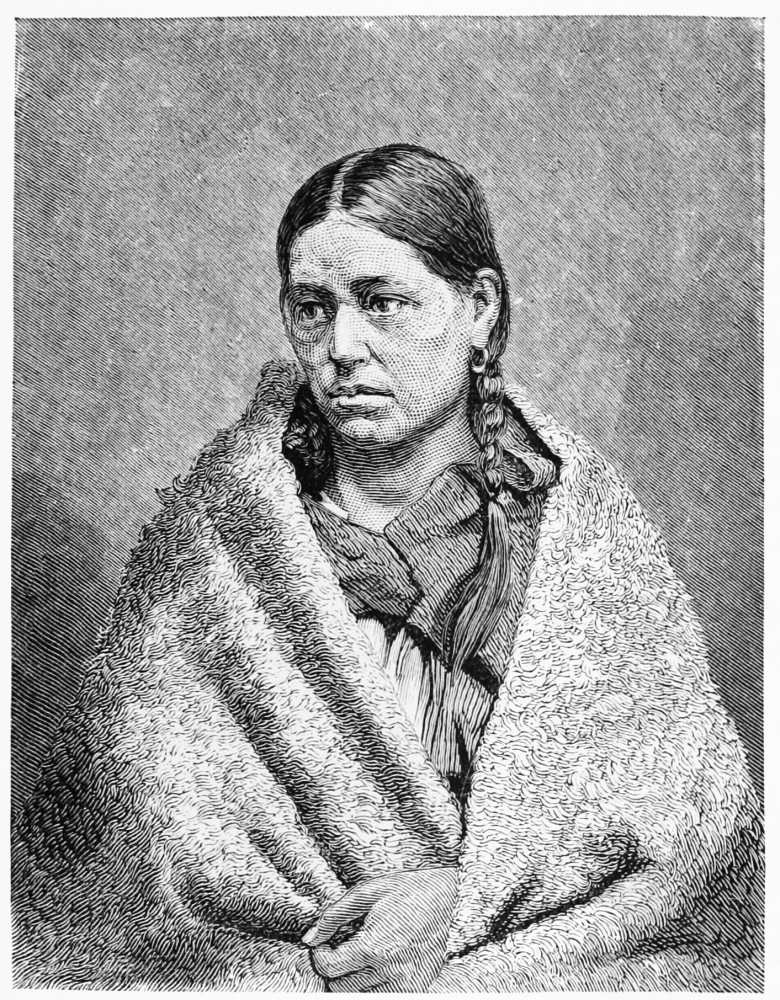
sometimes quite pretty, being commonly of the mixed race—of Spanish and
Indian blood. They wear a neat uniform of blue flannel, with a jaunty
Panama hat, and a many-pocketed white pinafore, reaching from the breast
to the ankles, and trimmed with dainty frills. In these pockets they
carry small change and tickets, while hanging to a strap over their
shoulders is a little shopping-bag, in which is a lunch, a
pocket-handkerchief, and surplus money and tickets. Each passenger, when
paying his fare, receives a yellow paper ticket, numbered, which he is
expected to destroy. The girls are charged with so many tickets, and
when they report at headquarters are expected to return money for all
that are missing, any deficit being deducted from their wages, which are
twenty-five dollars per month.
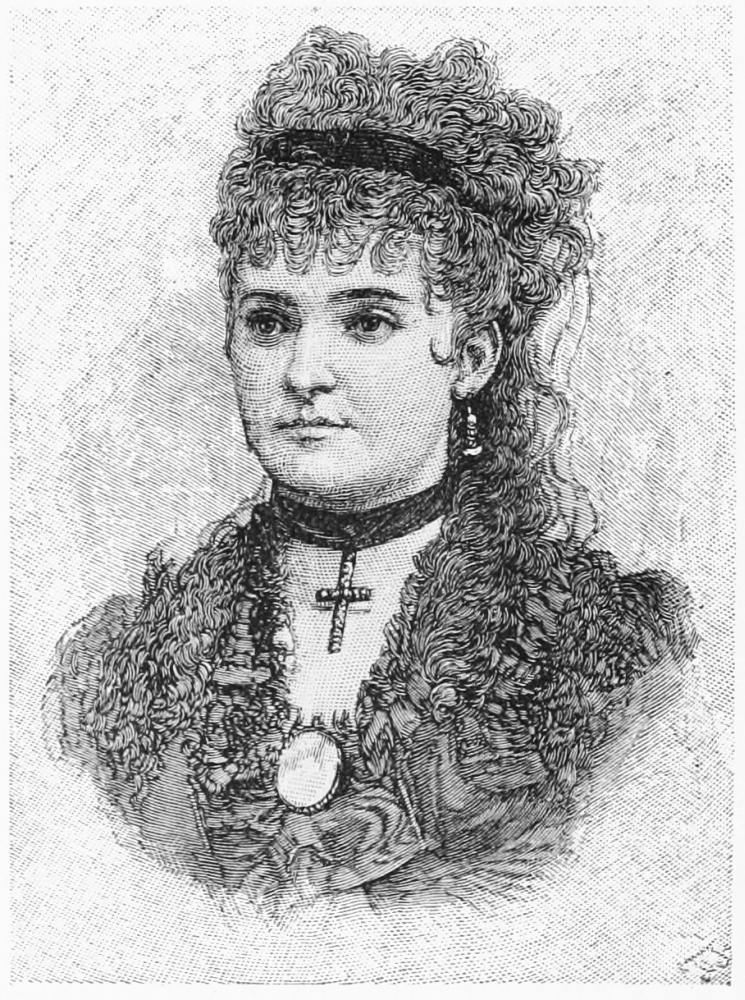
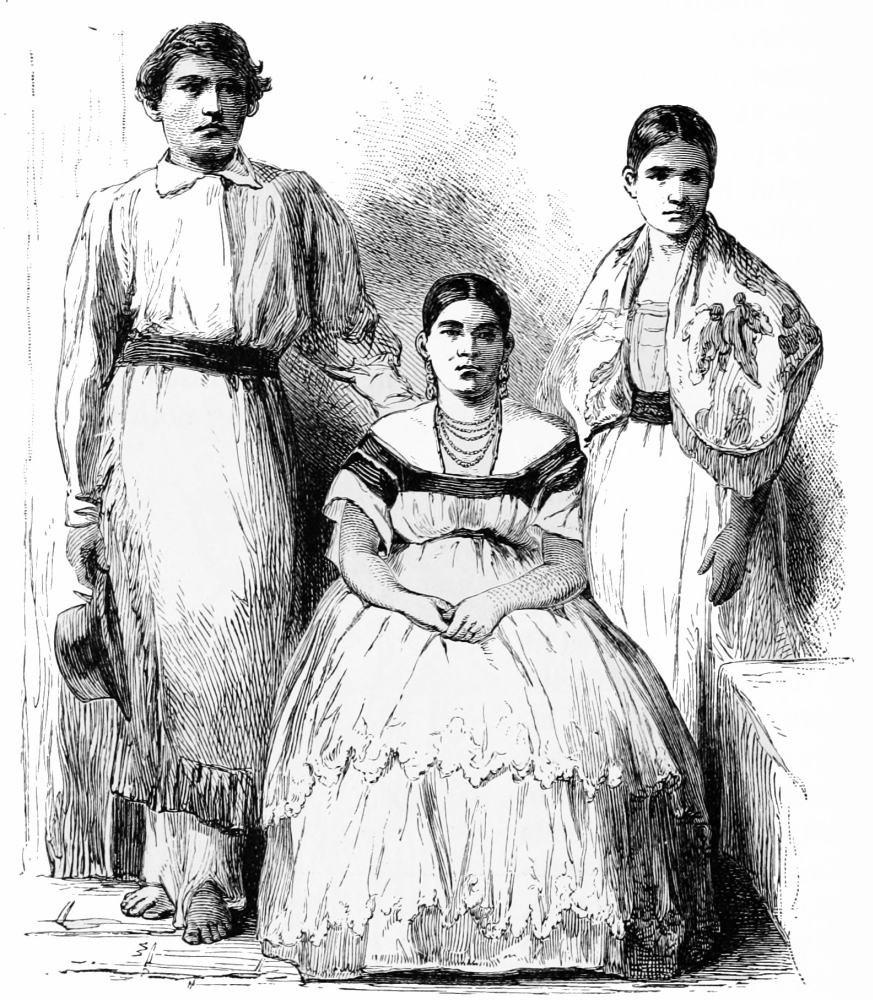
The women of Chili are not so pretty as their sisters in Peru. They are
generally larger in feature and figure, have not the dainty feet and
supple grace of the Lima belles, and lack their voluptuous languor. In
Valparaiso half the ladies are of the Saxon type, and blonde hair looks
grateful when one has seen nothing but midnight tresses for months.
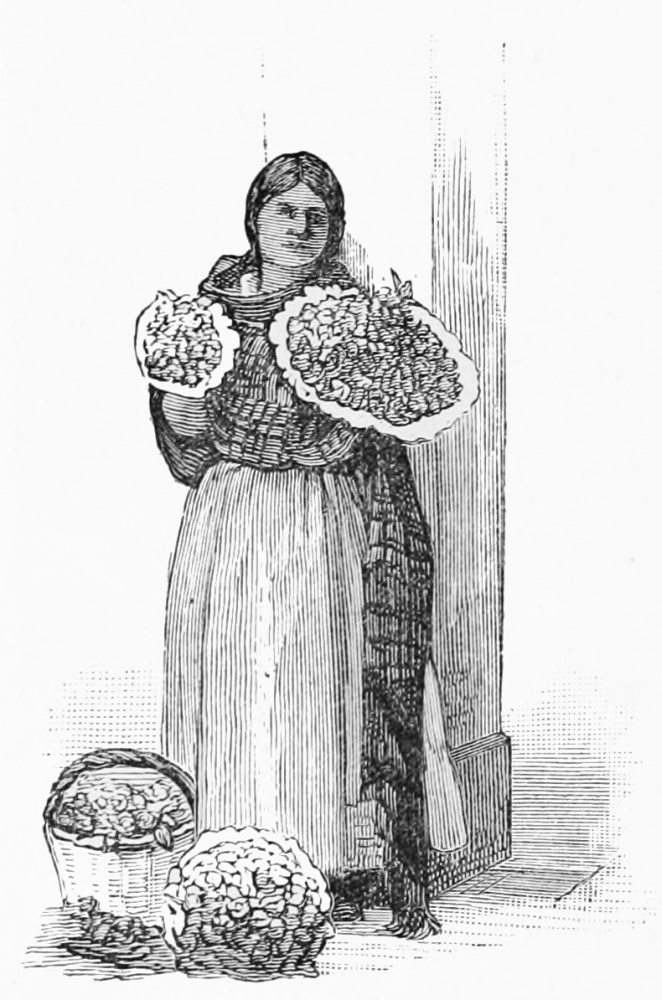
Here, too, modern costumes are worn more generally than in other South
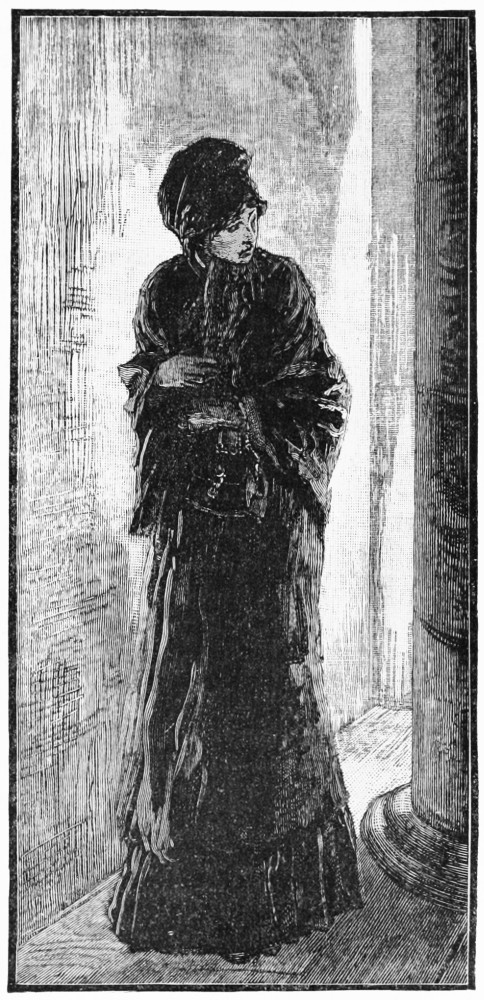
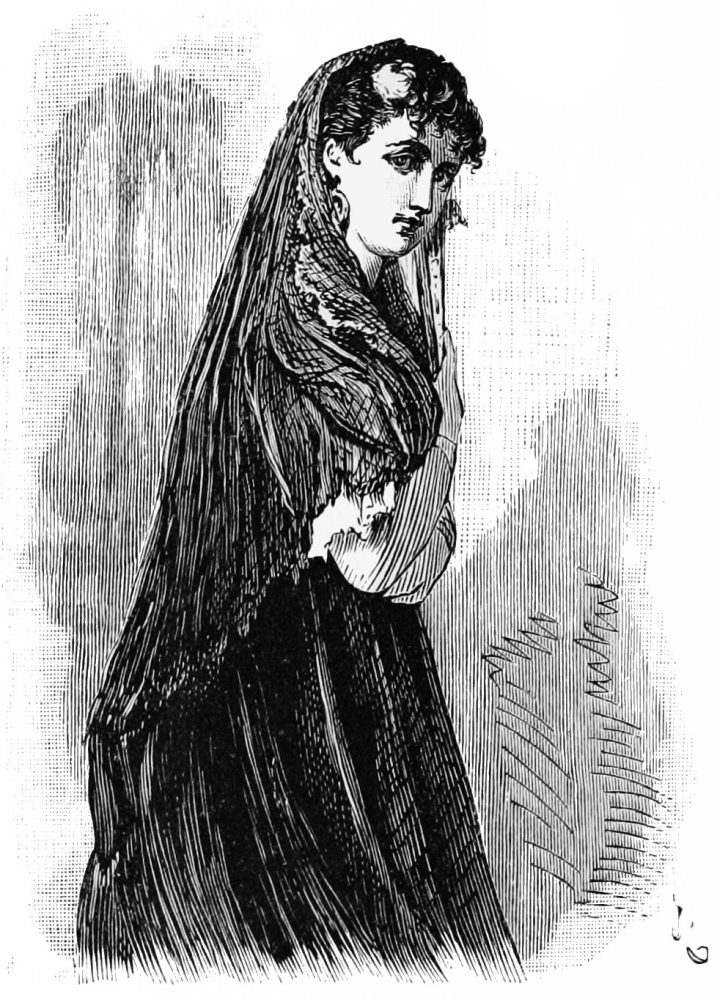
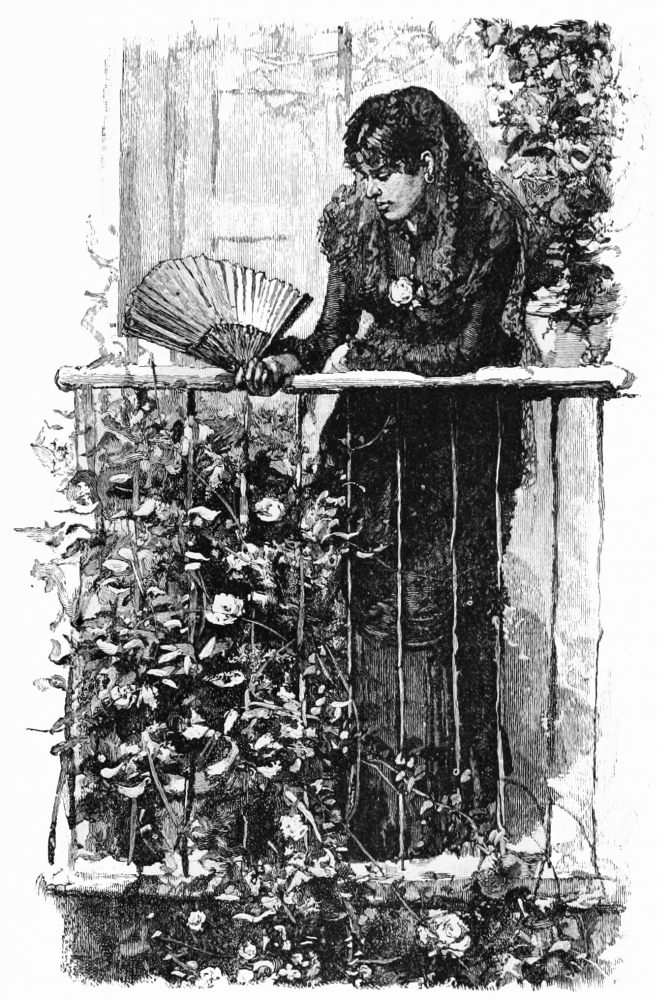
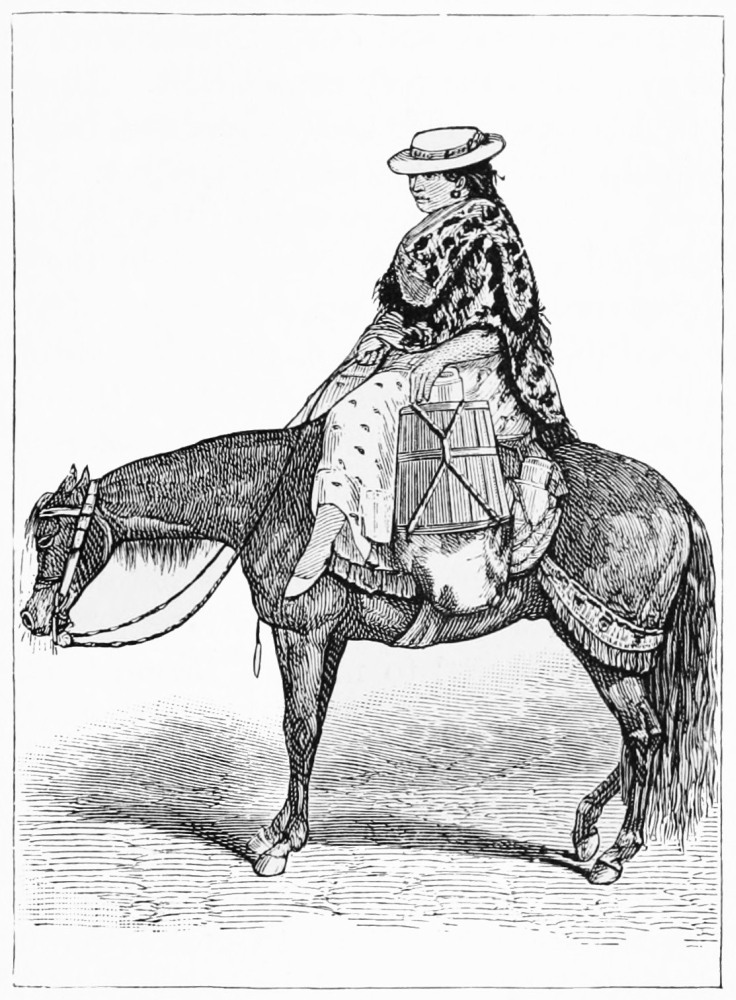
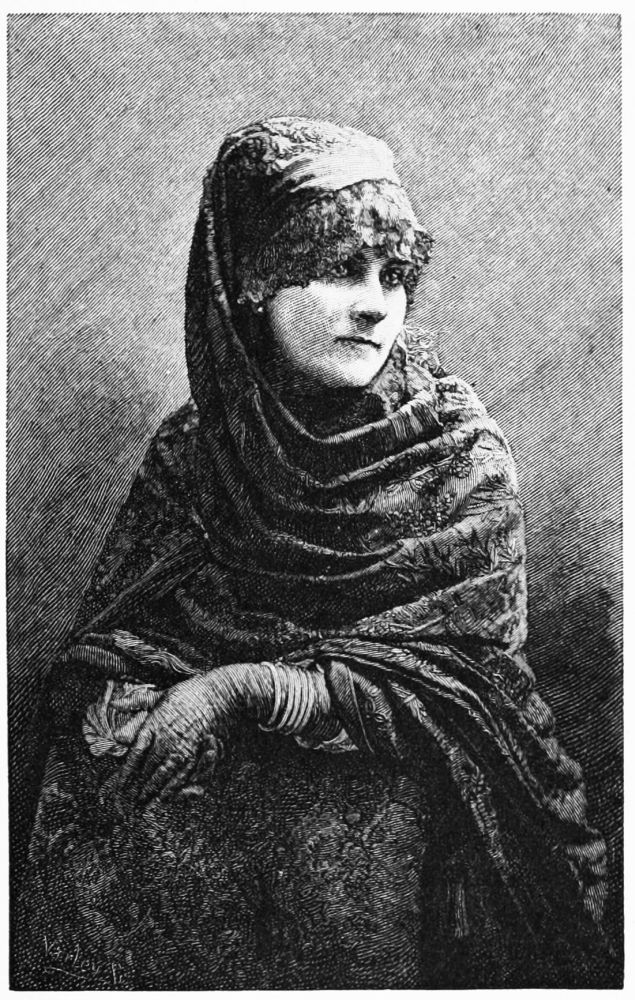
American countries, and the shops are full of Paris bonnets. But the
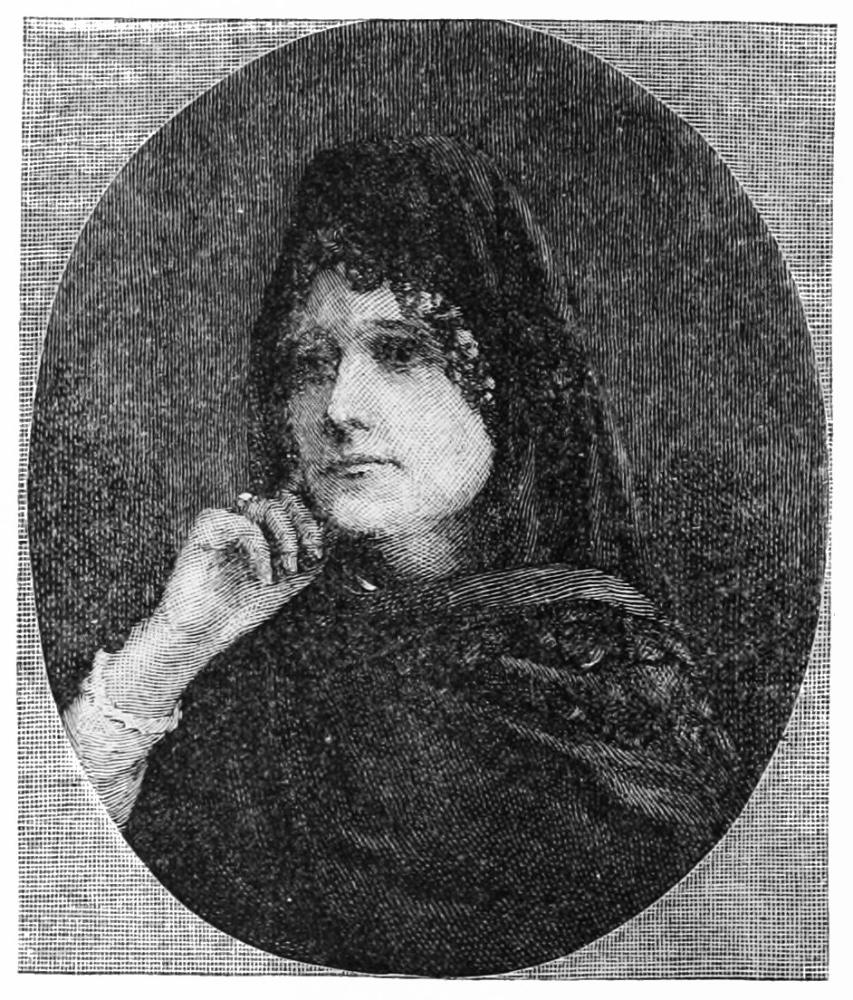
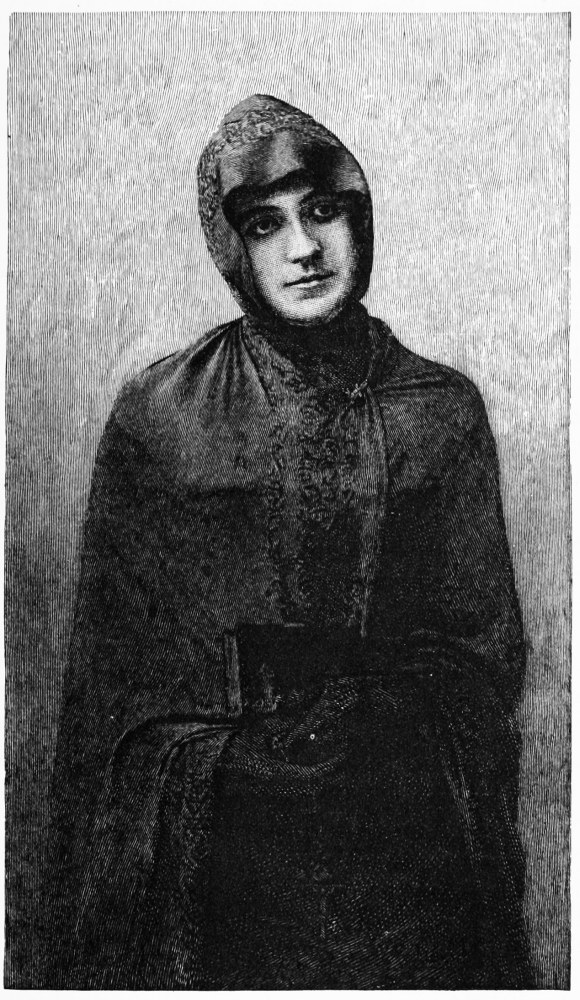
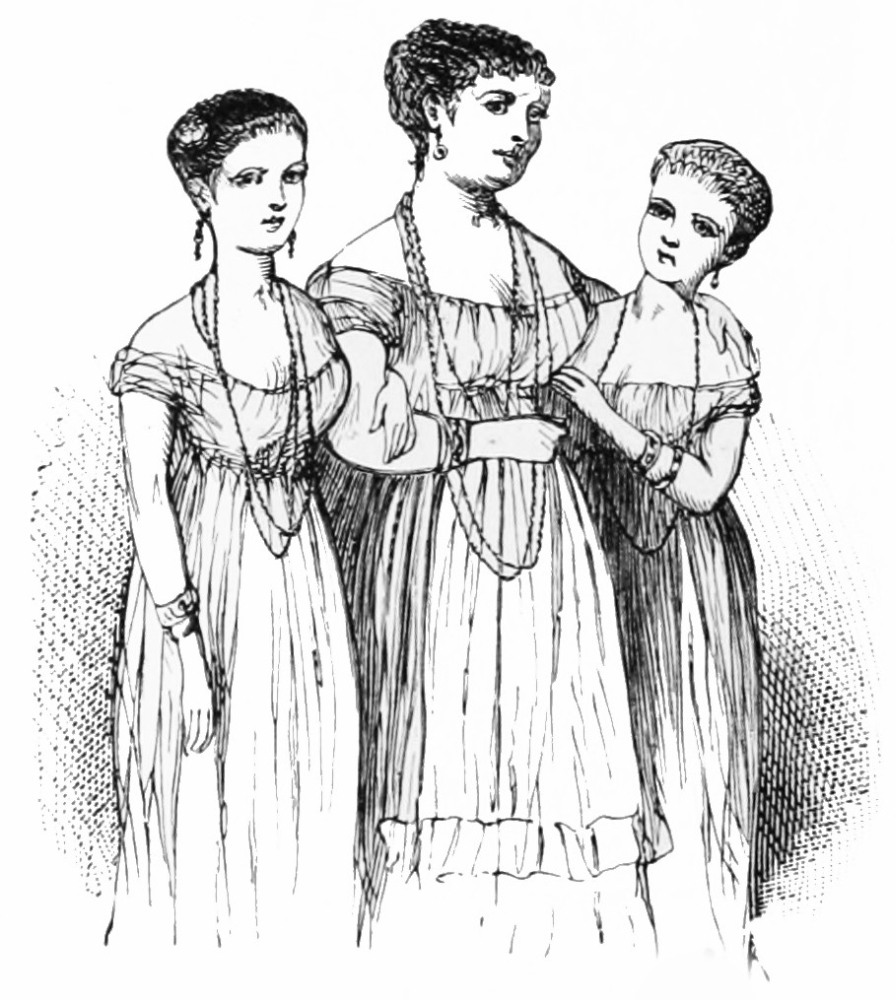
black manta, with its fringe of lace, is still common enough to be
considered the costume of the country, and is always worn to mass in the
morning. The manta is becoming to almost everybody. It hides the defects
of homely forms and figures, and heightens grace and beauty. It makes an
old woman look young, a stout woman appears more slender under its
graceful folds, and even a skeleton would look coquettish when wrapped
in the rich embroidery which some bear.
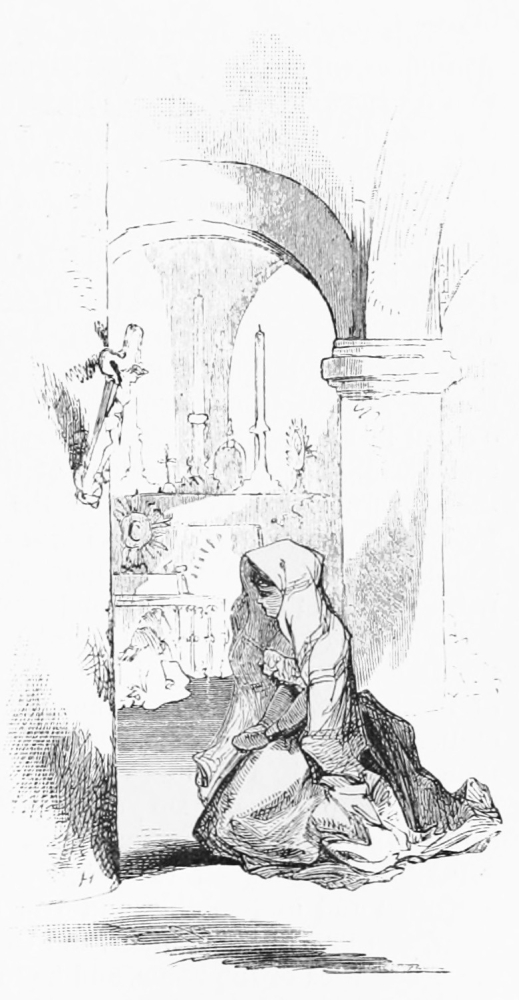
In Chili mantas and skirts of white flannel are worn by
penitentas—women who have committed sin, and thus advertise their
penitence, or those who have taken some holy vow to get a measure nearer
heaven, and who go about the street with downcast eyes, looking at
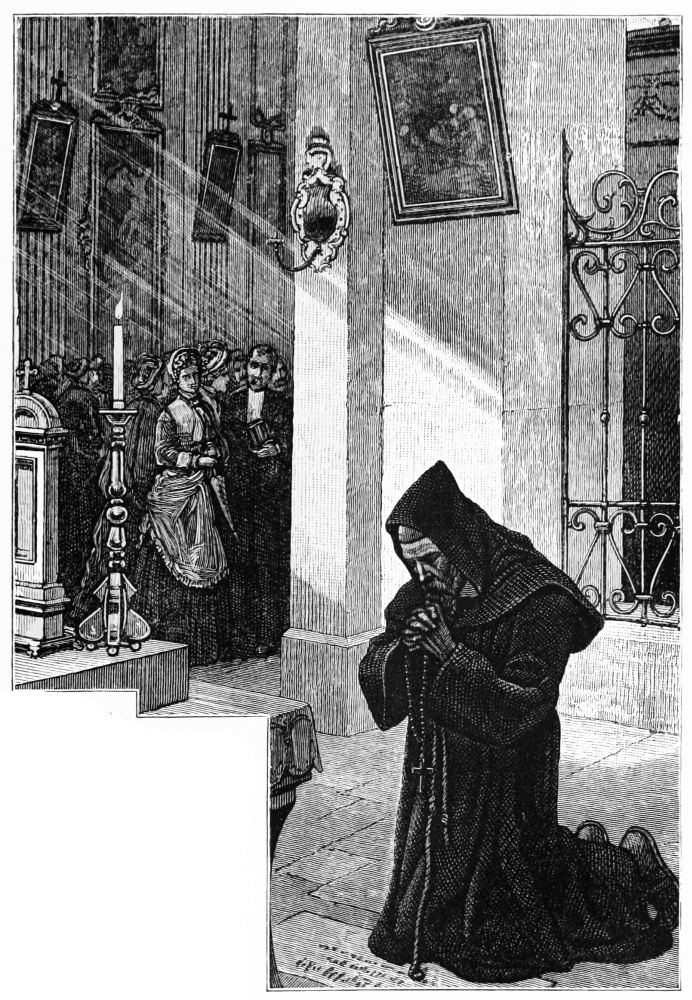
nothing and recognizing no one. They hover around the churches, and sit
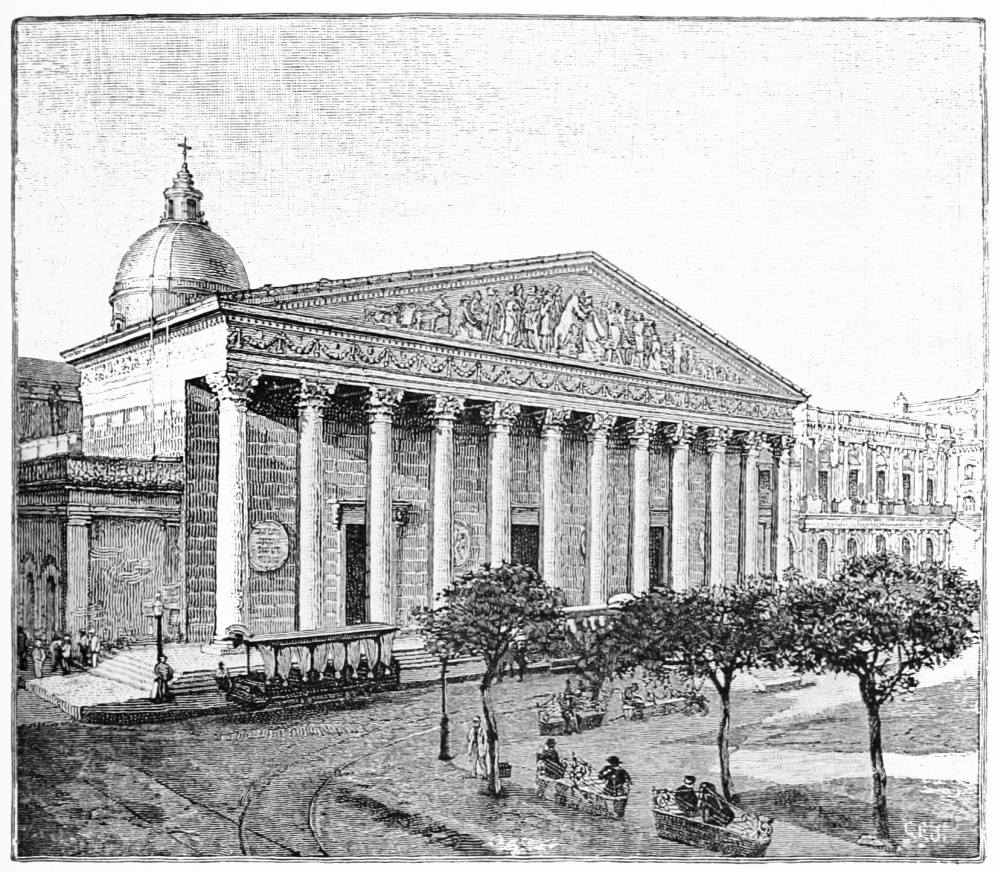
for hours crouched before some saint or crucifix. In the great cathedral
at Santiago and in the smaller churches everywhere these penitentas, in
their snow-white garments, are always to be seen on their knees, or
posing in other uncomfortable postures, looking like statues. They
cluster in groups around the confessionals, waiting to receive
absolution from some fat and burly father, that they may rid their
bodies of the mark of penitence they carry, and their souls of sin.
Ladies of high social position and great wealth are commonly found among
the penitentas, as well as young girls of beauty and winning grace. The
women of Chili are as pious as the men are proud, and this method of
securing absolution is quite fashionable. Souls that cannot be purged by
this penitential dress retire to a convent in the outskirts of the city,
called the Convent of the Penitentes, where they scourge themselves with
whips, mortify the flesh with sackcloth, sleep in ashes and upon stone
floors, and feed themselves on mouldy crusts, until the priests by whose
advice they go give them absolution. They are usually women who have
been unfaithful to their marriage vows, or girls who have yielded to
temptation. After the society season and the carnivals, at the end of
the summer, when people return from the fashionable resorts, and at the
beginning of Lent, these places are full. For those whose sins have
been too great to be washed out by this process, whose shame has been
published to the world, and who are unfitted under social laws to
associate with the pure, other convents are open as a refuge. Young
mothers without husbands are here cared for, and their babes are taken
to an orphan asylum in the neighborhood, to be reared by the nuns for
the priesthood and other religious orders.
It was from one of these places that the famous Henry Meiggs got his
second wife, and the adventure is still related with great gusto by the
gossips of Chili. An American dentist named Robinson lived in the same
block on which the convent was situated, and from the roof of his house
the garden of the nuns was plainly visible. Boccaccio never told a more
romantic tale, for it involved notes tied to stones and thrown into the
garden, rope-ladders, excited nuns, infuriated parents, and an outraged
Church. But the adventure was followed by forgiveness and marriage, and
the widow now lives in Santiago, in the luxury which her legacy from the
great railroad contractor provides.
In the orphan asylum at Santiago there are said to be two thousand
children of unknown parentage, supported by the Church, and this in a
city of two hundred thousand people. There is a very convenient mode for
the disposition of foundlings. In the rear wall surrounding the place is
an aperture, with a wooden box or cradle which swings out and in. A
mother who has no use for her baby goes there at night, places the
little one in the cradle, swings it inside, and the nuns on guard
hearing a bell that rings automatically, take the infant to the nursery.
The next morning the mother, if she has no occupation to detain her,
applies for employment as a wetnurse. However this plan may be regarded
by stern moralists, it is certainly an improvement on infanticide, a
crime almost unknown in Chili. But one may hunt the country over to find
a house of correction for men. Sin, shame, and penitence appear to be
the exclusive attributes of the weaker sex. Men are never seen at the
confessional; they never wear white wrappings to advertise their guilt;
and at mass in the morning the average attendance is about one man to
every hundred women.
Santiago is reached from Valparaiso by a railway which is run on the
English plan, and is similar in its equipment and system of management
to those of Europe. The scenery along the line is picturesque, the
snow-caps of the Andean peaks being constantly in view, and Aconcagua,
the highest mountain on this hemisphere, can be seen nearly the entire
distance. A few miles from Valparaiso, and the first station on the
road, is Vin del Mar, the Long Branch of Chili, where many of the
wealthy residents of the country have fine establishments, and usually
spend the summer. It is by far the most modern and elegant fashionable
resort in South America, and reminds one of the popular haunts along the
Mediterranean. The journey to Santiago is made in about five hours, and
one is agreeably surprised when he arrives to find in the capital of
Chili one of the finest cities on the continent.
Although the climate of Santiago is similar to that of Washington or St.
Louis, the people have a notion that fires in their houses are
unhealthful, and, except in those built by English or American
residents, there is nothing like a grate or a stove to be found.
Everybody wears the warmest sort of underclothing, and heavy wraps
in-doors and out. The people spend six months of the year in a perpetual
shiver, and the remainder in a perpetual perspiration. It looks rather
odd to see civilized people sitting in a parlor, surrounded by every
possible luxury that wealth can bring (except fire) wrapped in furs and
rugs, with blue noses and chattering teeth, when coal is cheap, and the
mountains are covered with timber. But nothing can convince a Chillano
that artificial heat is healthful, and during the winter, which is the
rainy season, he has not the wit to warm his chilled body. It is odd,
too, to see in the streets men wearing fur caps, and with their throats
wrapped in heavy mufflers, while the women who walk beside them have
nothing on their heads at all. During the morning, while on the way from
mass, or while shopping, the women wear the manta, as they do in Peru,
but in the afternoons, on the promenade, or when riding, they go
bareheaded. Although the prevailing diseases are pneumonia and other
throat and lung complaints, and during the winter the mortality from
these causes is immense, the Chillano persists in believing that
artificial heat poisons the atmosphere; and when he visits the home of a
foreigner, and finds a fire, he will ask that the door be left ajar, so
that he may be as chilly as usual. At fashionable gatherings,
dinner-parties, and that sort of thing, I have seen women in full
evening-dress with bare arms and shoulders, with the temperature of the
room between forty and fifty Fahrenheit. They often carry into the
salon or dining-room their fur wraps, and wear them at the table,
while at every chair is a foot-warmer of thick llama wool, into which
they poke their dainty slippered toes. These foot-warmers are ornamental
as well as useful, have embroidered cases, and are manufactured at home,
or can be purchased of the nuns, who spend much of their time in
needle-work.
Every lady seen on the street in the morning carries a prayer-rug, often
handsomely embroidered, which she kneels upon at mass to protect her
limbs from the damp stone floors of the churches, in which there are
never any pews. It used to be the proper thing to have a servant follow
my lady, bearing her rug and prayer-book, but that fashion has now
become obsolete.
The shops do not open until nine or ten o’clock in the morning, close
from five to seven to allow the proprietors and clerks to dine, and are
then open again until midnight, as between eight and eleven o’clock at
night most of the retail trading is done. The finest shops are in the
arcades or portales, like the Palais Royal in Paris, and are
brilliantly lighted with electricity. Here the ladies gather, swarming
around the pretty goods like bees around the flowers, and of course the
haughty and impertinent dons come also to stare at them. It seems to be
considered a compliment, a mark of admiration, to stare at a woman, for
she never turns away. To these nightly gatherings come all who have
nothing serious to detain them, and the flirtations begun at the
portales are the curse of the women of Santiago. It is not rude to
address a lady who has returned your glance, and while she may repulse
her admirer, she will nevertheless boast of the attention as a
pronounced form of flattery.
The shops are full of the prettiest sorts of goods, the most expensive
diamonds, jewellery, and laces. The Santiagoans boast that everything
that can be found in Paris can be purchased there, and one easily
believes it to be true. There is plenty of money in Chili; the people
have a refined taste and luxurious habits. Many of the private houses
are palatial, and the toilets of the women are superb. The equipages to
be seen in Santiago are equal to those of New York or London, and the
Alameda, on pleasant afternoons, is crowded with handsome carriages,
with liveried coachmen and footmen, like Central Park or Rotten Row.
The Alameda is six hundred feet in width, broken by four rows of
poplar-trees, and stretches the full length of the city—four
miles—from “Santa Lucia” to the Exposition Park and Horticultural
Gardens. In the centre is a promenade, while on either side is a
drive-way one hundred feet wide. The promenade is dotted with a line of
statues representing the famous men or commemorating the famous events
in the history of Chili, a country which has assassinated or sent into
exile some of her noblest sons, but never fails to perpetuate their
memory in bronze or marble. On the Alameda, from three to five o’clock
every afternoon during the season, several military bands are placed at
intervals of half a mile or so, and the music calls out all the
population to walk or drive. During the summer the music is given in the
evening instead of the afternoon, when the portales are deserted for the
out-door promenade.
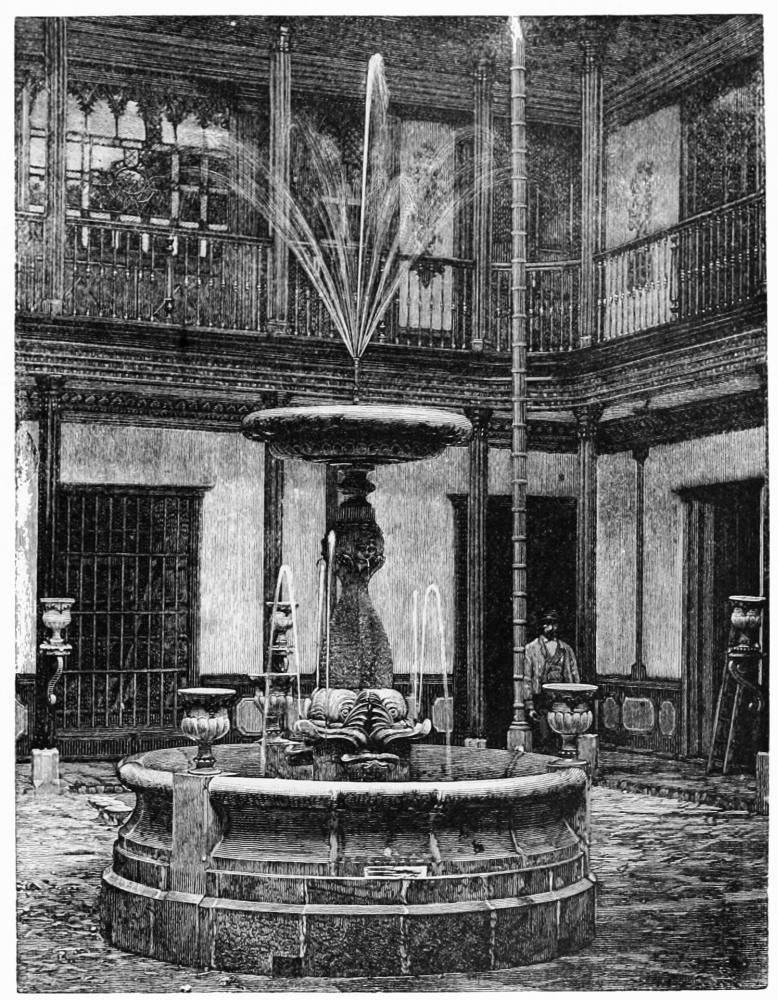
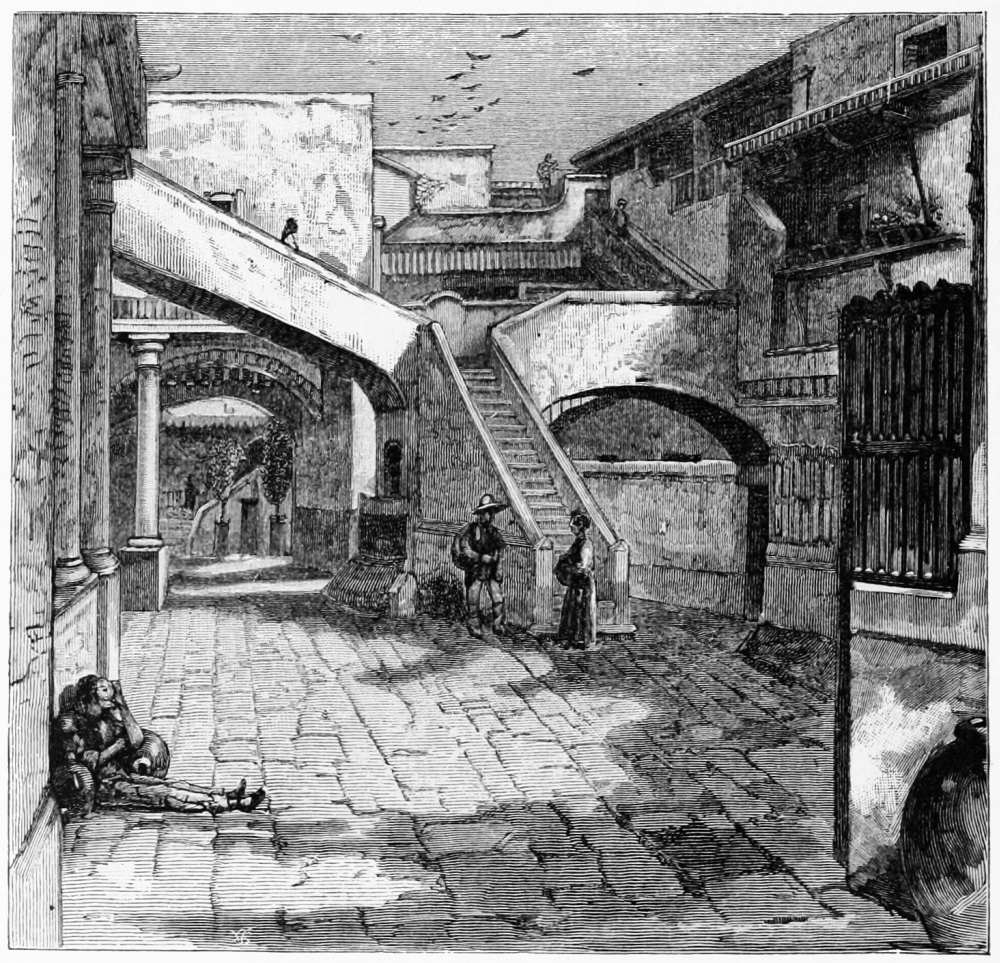
Fronting the Alameda are the finest palaces in the city, magnificent
dwellings of carved sandstone often one or two hundred feet square, with
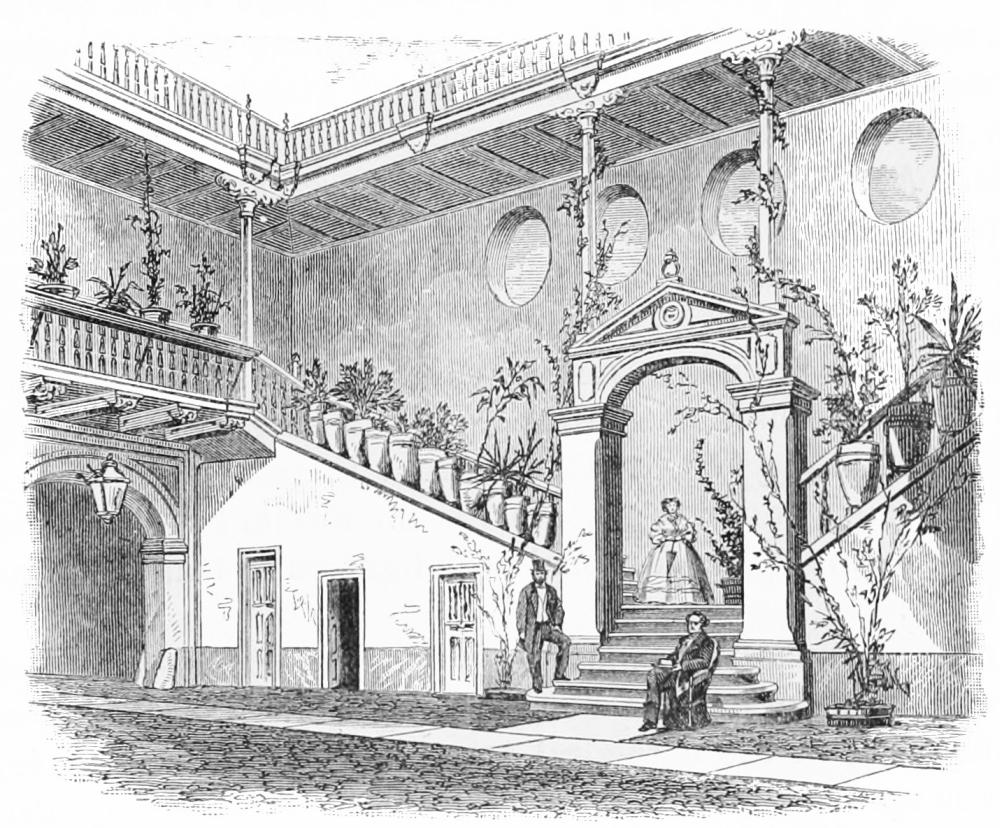
the invariable patio and its fountains and flowers in the centre. Houses
which cost half a million dollars to build and a quarter of a million to
furnish
are common; and there are some even more expensive. The former residence
of the late Henry Meiggs, surrounded by a forest of foliage and a
beautiful garden, stands in the centre of a park eight hundred feet
square. It is a conspicuous example of extravagance, having cost a mint
of money, every timber and brick and tile being imported at enormous
expense. It is at present unoccupied, and in a state of decay, there
being no one, since the death of Meiggs, with the courage or the means
to sustain such grandeur. But though the nabobs seek the boulevard of
the city to display their wealth and architectural taste, some of the
side streets have residences quite as grand, and even more aristocratic.
These more retired quarters have an air of gentility which the Alameda
has not acquired—a sort of established aristocratic repose—a riper,
richer, and more honorable quiet, that suggests something of social
distinction and haughty exclusiveness, venerable solitude and commercial
solidity. Another monument to the extravagance of men is known as
“O’Brien’s Folly.” It is a magnificent structure, modelled after a
Turkish palace, and its cost was fabulous. The owner was an Irish
adventurer, who discovered one of the richest silver mines in Chili, and
who lived like a prince until his money was gone. His castle is now
unoccupied, and he is again in the mountains prospecting for another
fortune.
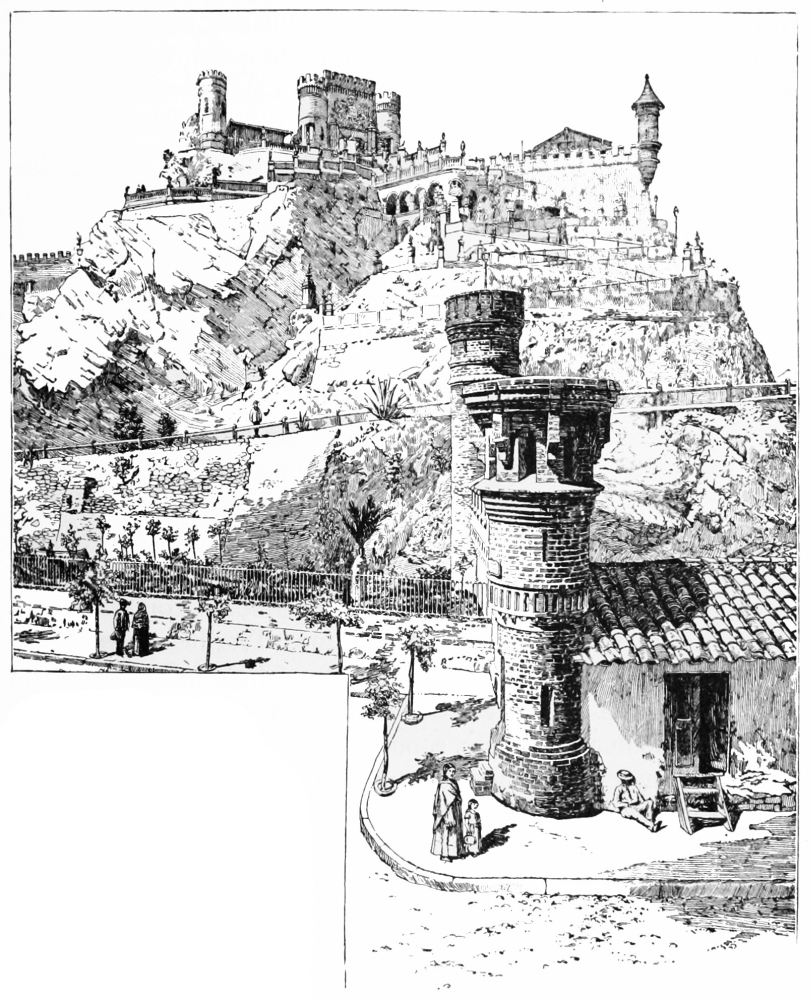
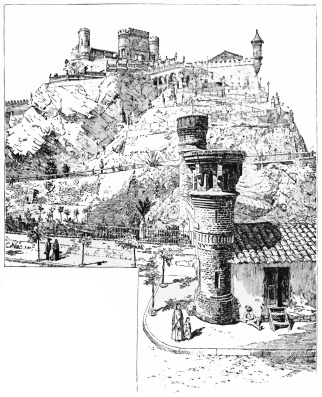
“Santa Lucia” is the most beautiful place I have seen in South America.
It is a pile of rocks six hundred feet high, cast by some volcanic
agency into the centre of the great plain on which the city stands. It
was here that the United States Astronomical Expedition of 1852, under
Lieutenant Gillis, made observations. Before that time, and as far back
as the Spanish Invasion, it was a magnificent fortress, commanding the
entire valley with its guns. Tradition has it that the King of the
Araucanians had a stronghold here before the Spaniards came. After the
departure of the United States expedition Vicunæ McCenna, a
public-spirited man of wealth in Santiago, undertook the work of
beautifying the place. By the aid of private subscriptions, and much of
his own means, he sought all the resources that taste could suggest and
money reach to improve on nature’s grandeur. His success was complete.
Winding walks and stairways, parapets and balconies, grottoes and
flower-beds, groves of trees and vine-hung arbors, follow one another
from the base to the summit; while upon the west, at the edge of a
precipice eight hundred feet high, are a miniature castle and a lovely
little chapel, in whose crypt Vicunæ McCenna has asked that his bones be
laid. Below the chapel, three or four hundred feet on the opposite side
of the hill, is a level place on which a restaurant and an out-door
theatre have been erected. Here, on summer nights, come the population
of the city to eat ices, drink beer, and laugh at the farces played upon
the stage, while bands of music and dancing make the people merry. This
is the resort of the aristocracy. The poor people go to Cousino Park, at
the other end of the Alameda, drink chicha, and dance the cuaca
(pronounced quaker), the Chillano national dance.
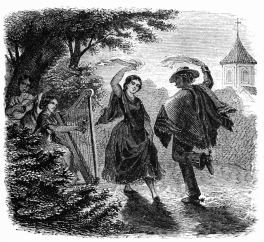
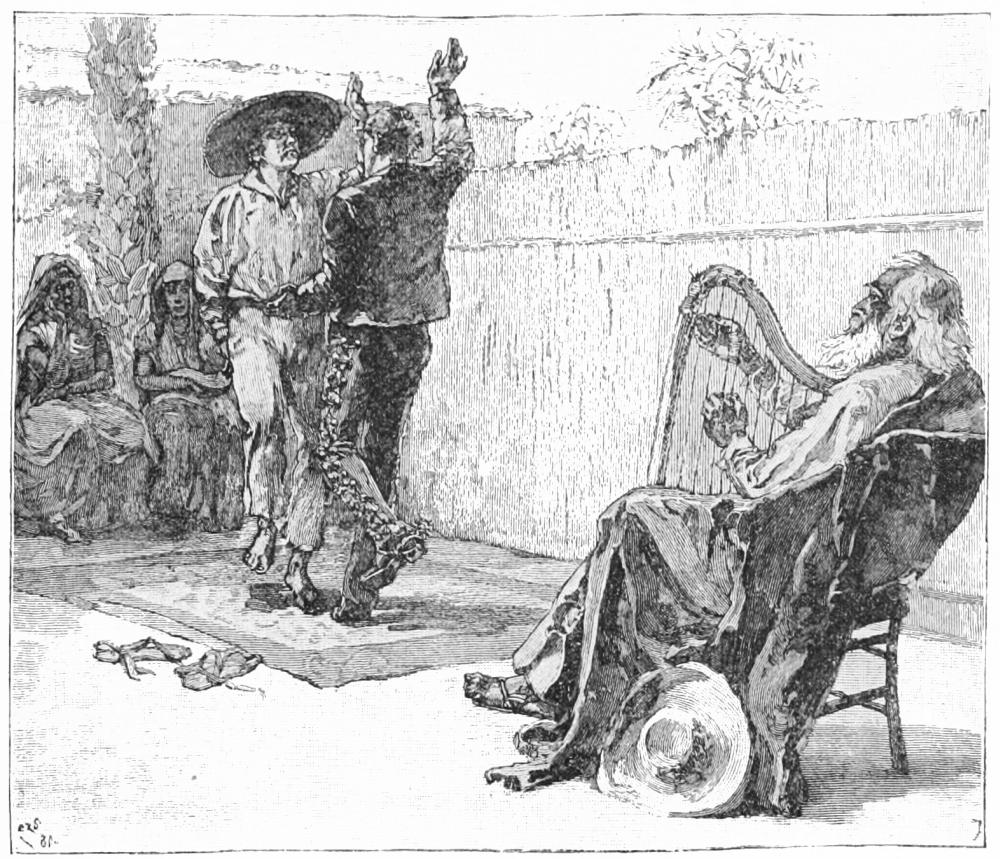
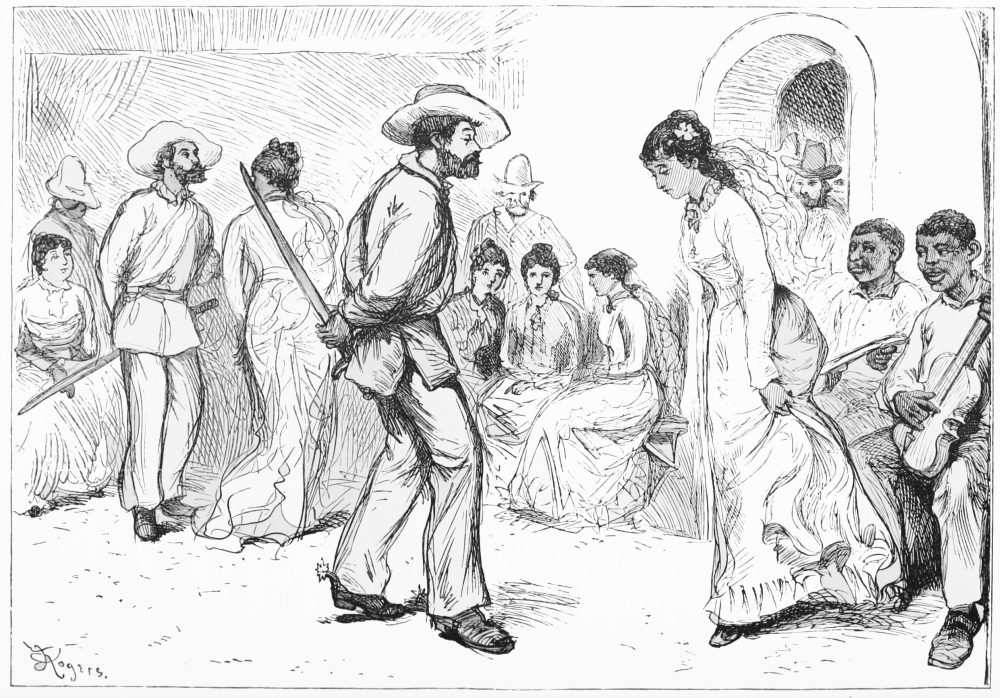
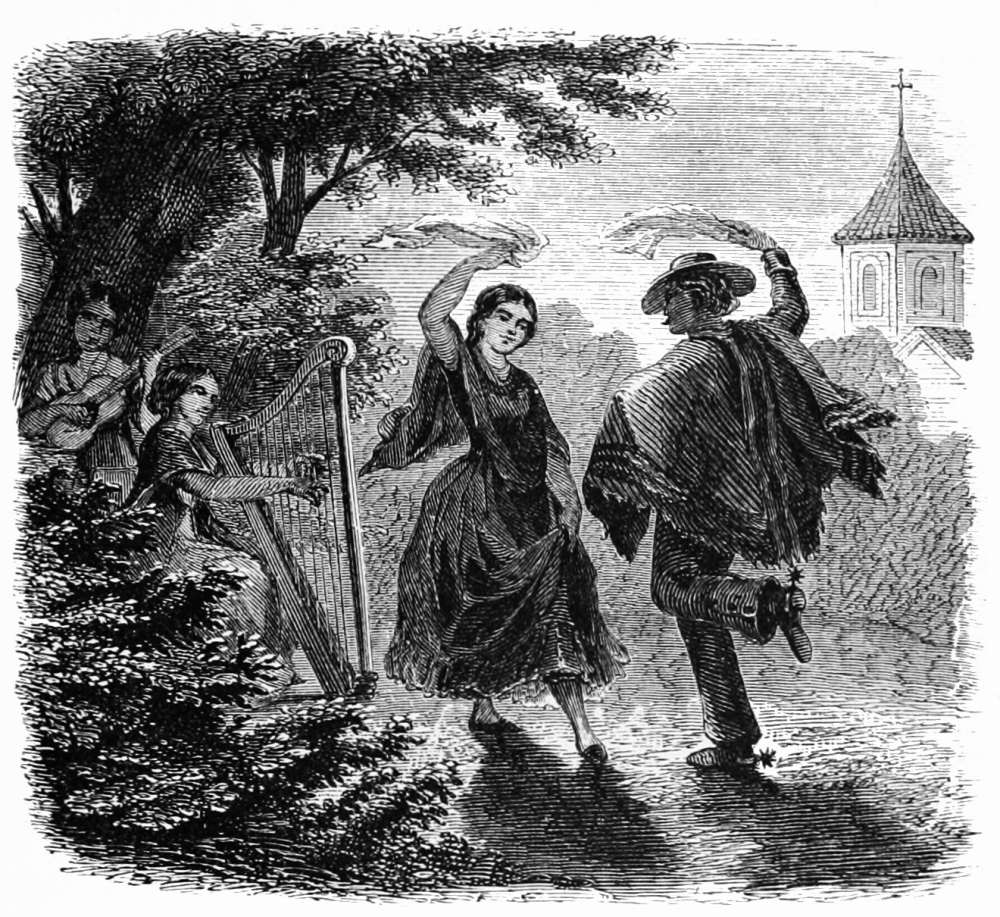
The cuaca is a sort of can-can, except that it is decent, and the men
instead of the girls do the high kicking. But when the dancers are under
the influence of chicha—that liquor which tastes like hard cider, but
is ninety per cent. alcohol—skirts and modesty are no impediments to
the success of the dance. The couples pair off and face each other,
while on benches near by are women thrumming guitars and singing a wild
barbaric air in polka time. Each woman and man has a handkerchief which
he or she waves in the air, and they sway around in postures that are
intended to show the grace and suppleness of the performer, and often
do. The dance usually ends with a wild carousal, in which men and women
mingle promiscuously, embrace each other, and then go off to the chicha
bars to get stimulants for the next. It is common in fashionable society
to end the tertulias with the cuaca, as in the United States with the
ancient “Virginia reel;” and if the young people are unusually
hilarious, scenes occur which watchful dowagers desire to prevent.
School-girls at the convents dance the cuaca when the nuns will allow
them; and although in its ordinary form it is not nearly so immodest as
some of our dances, license has been taken so often as to bring it into
disrepute. One evening at the opera a pretty married woman was pointed
out as the most graceful and agile cuaca dancer in Chili, and it was
asserted that she could throw her heels higher than her head.
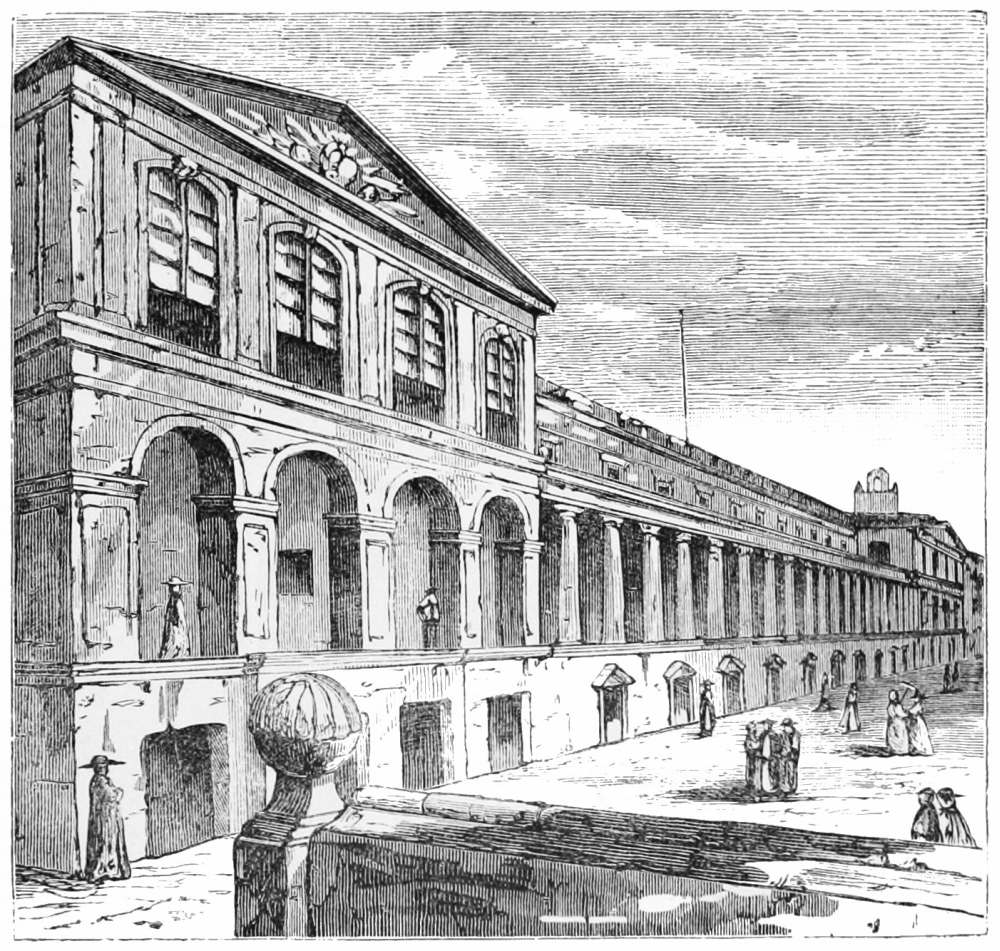
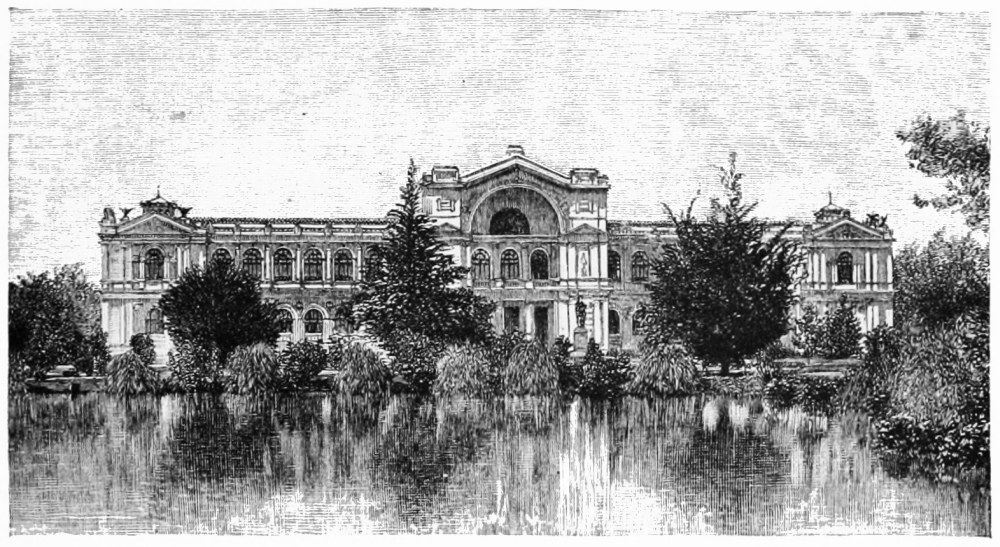
At the other end of the Alameda are the Exposition grounds and
Horticultural gardens, laid out in good style, and improved to the
highest degree of landscape architecture. There is a fine stone and
glass building, a miniature copy of the Crystal Palace in London, used
as the National Museum of Chili, whose contents were mostly stolen from
Peru during the late war. A zoological garden has been added, to exhibit
the animals brought from Peru, like the curiosities of the museum, as
contraband of war. The elephant died from the severity of the climate,
two of the lions are missing from the same cause, and the rest of the
menagerie are suffering from exposure and cold to which they are
unaccustomed.
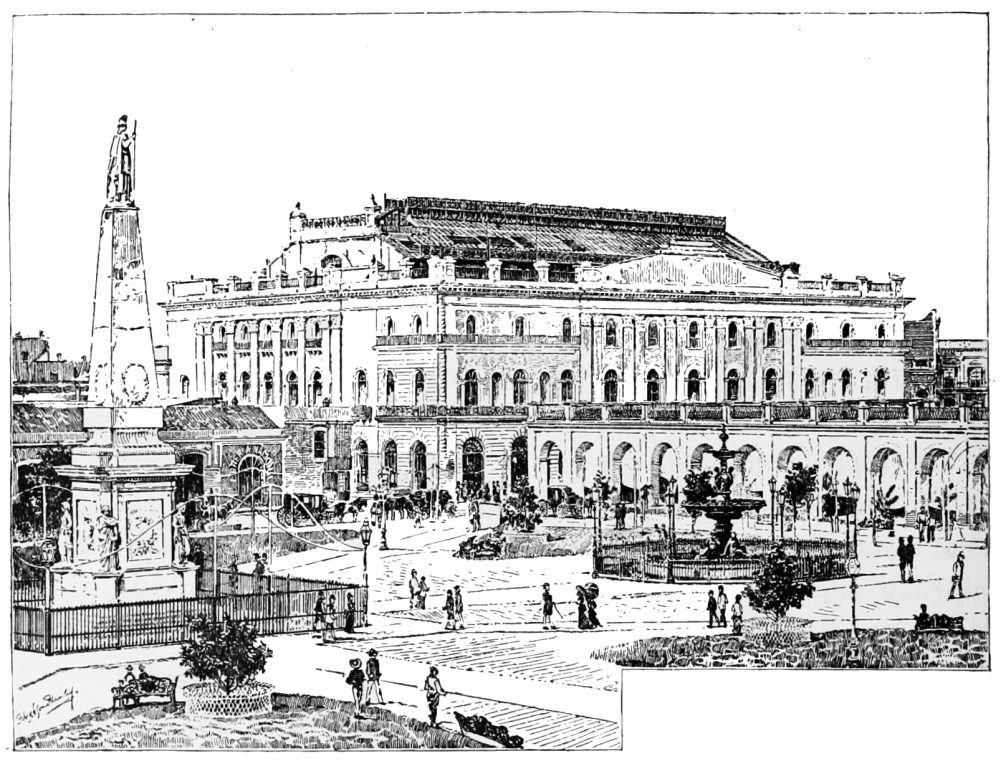
The opera-house at Santiago is owned by the city, and is claimed to be
the finest structure of the sort in all America. It certainly surpasses
in size, arrangement, and gorgeousness any we have in the United States.
It is built upon the European plan, with four balconies, three of which
are divided off into boxes upholstered in the most luxurious manner. The
balconies are supported by brackets, so that there are no pillars to
obstruct the view. Under the direction of the mayor, each year, the
boxes are sold at auction for the season, and the receipts given, in
whole or in part, as a subsidy to the opera management.
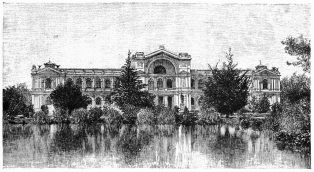
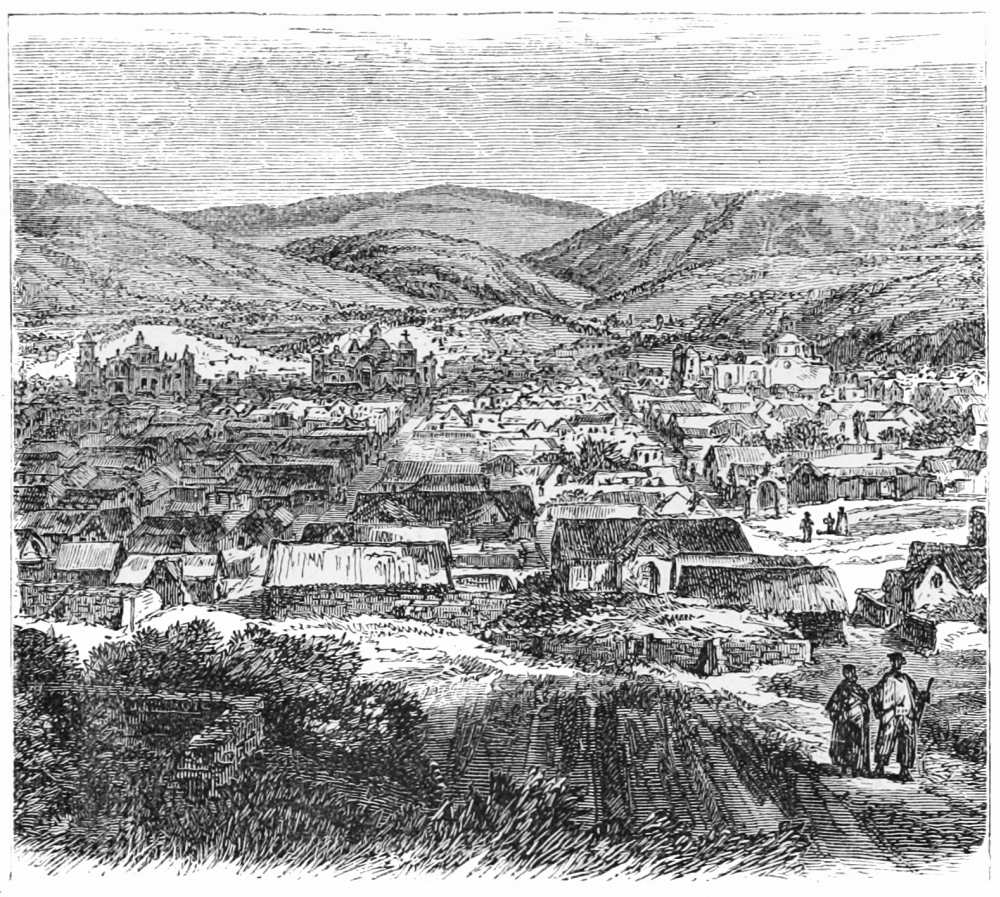
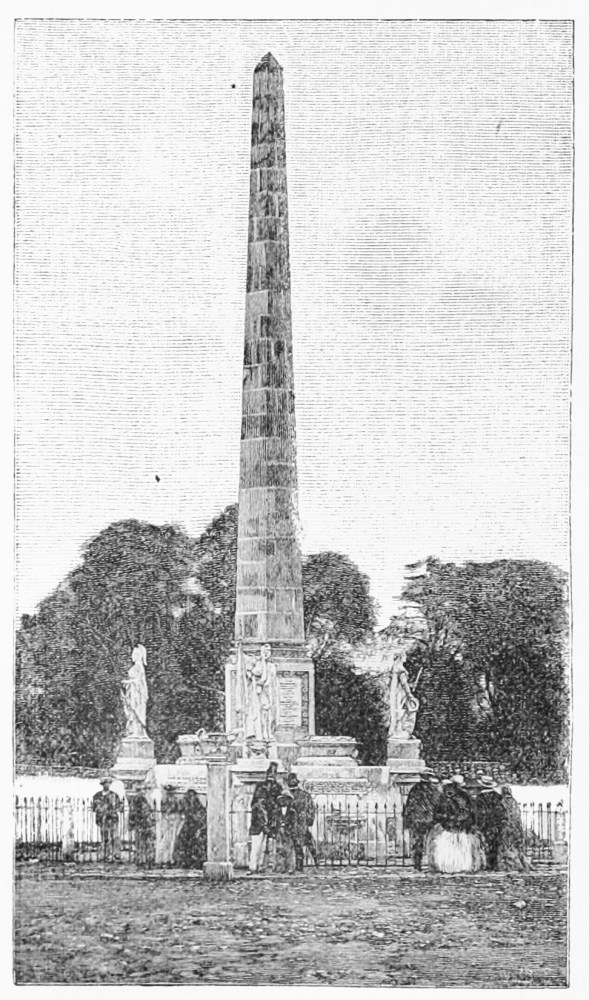
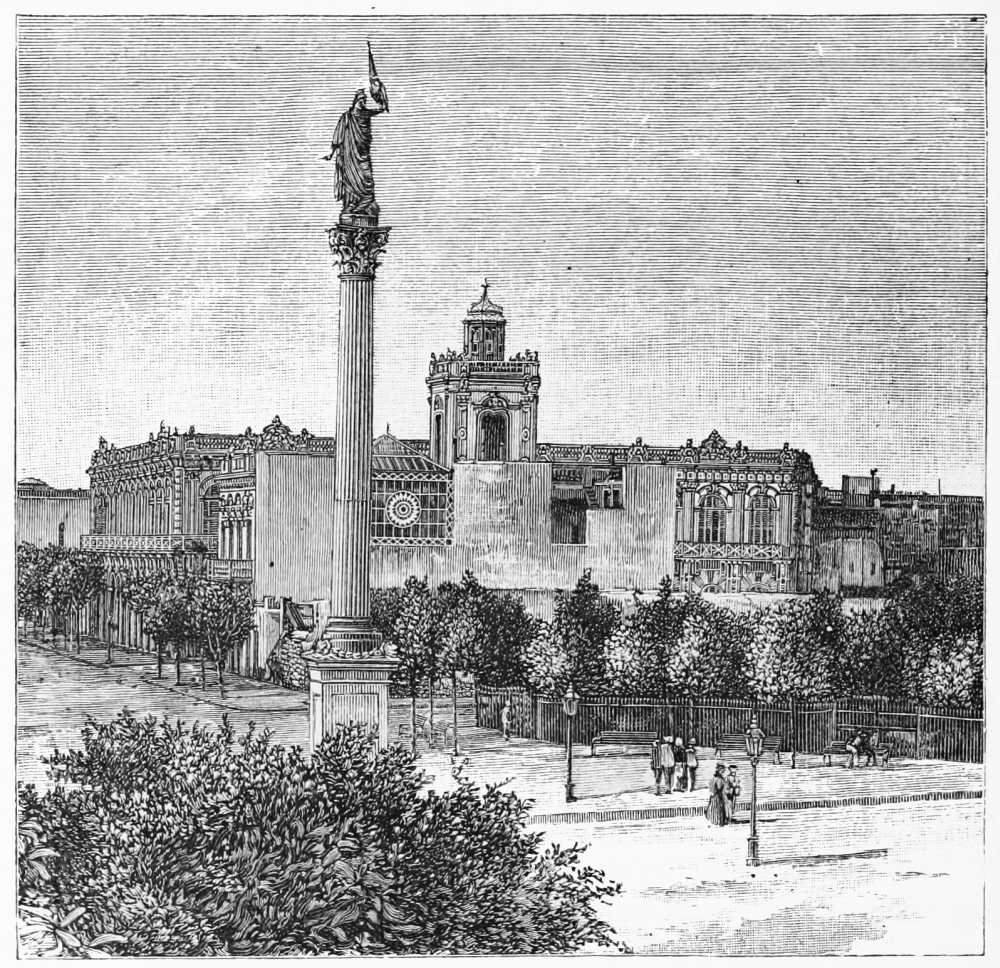
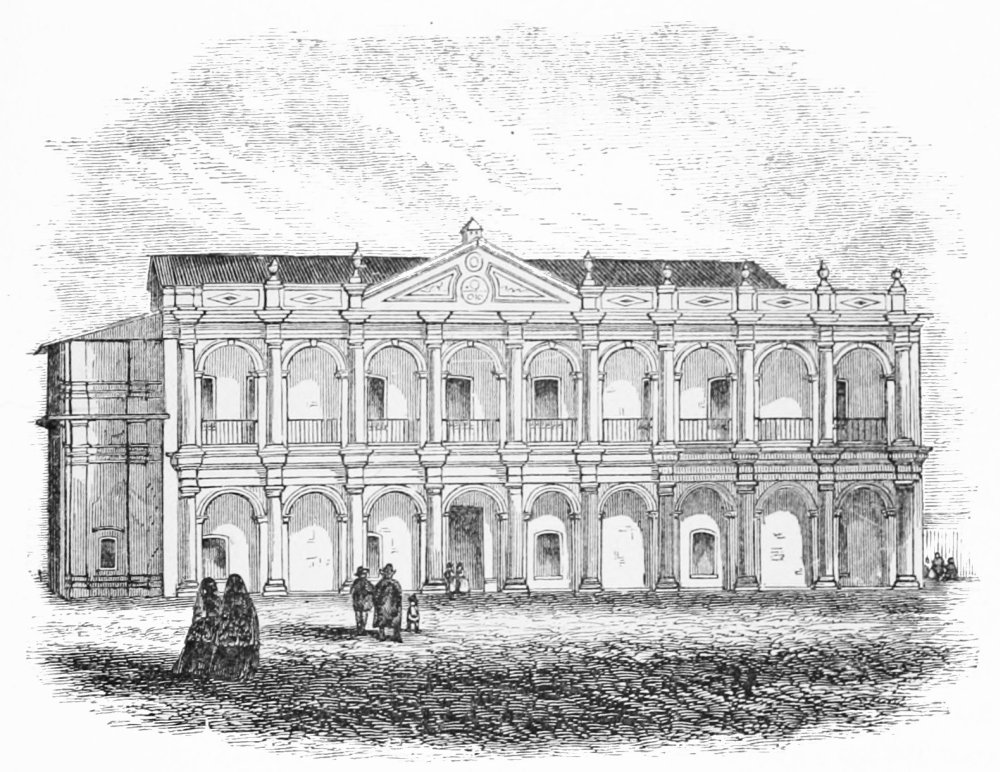
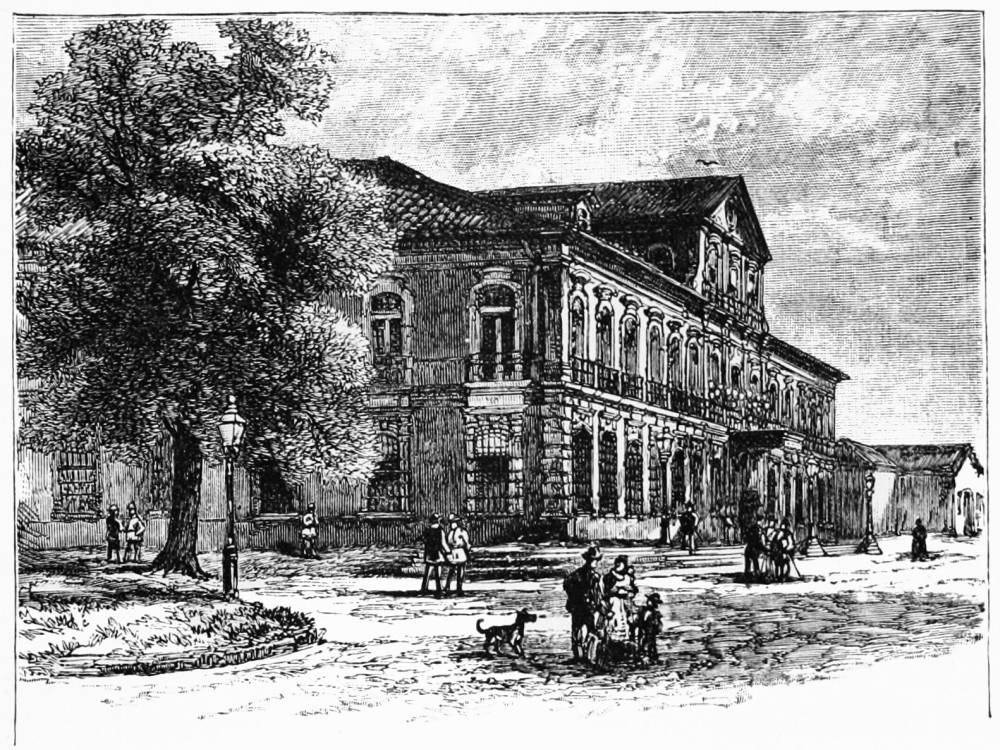
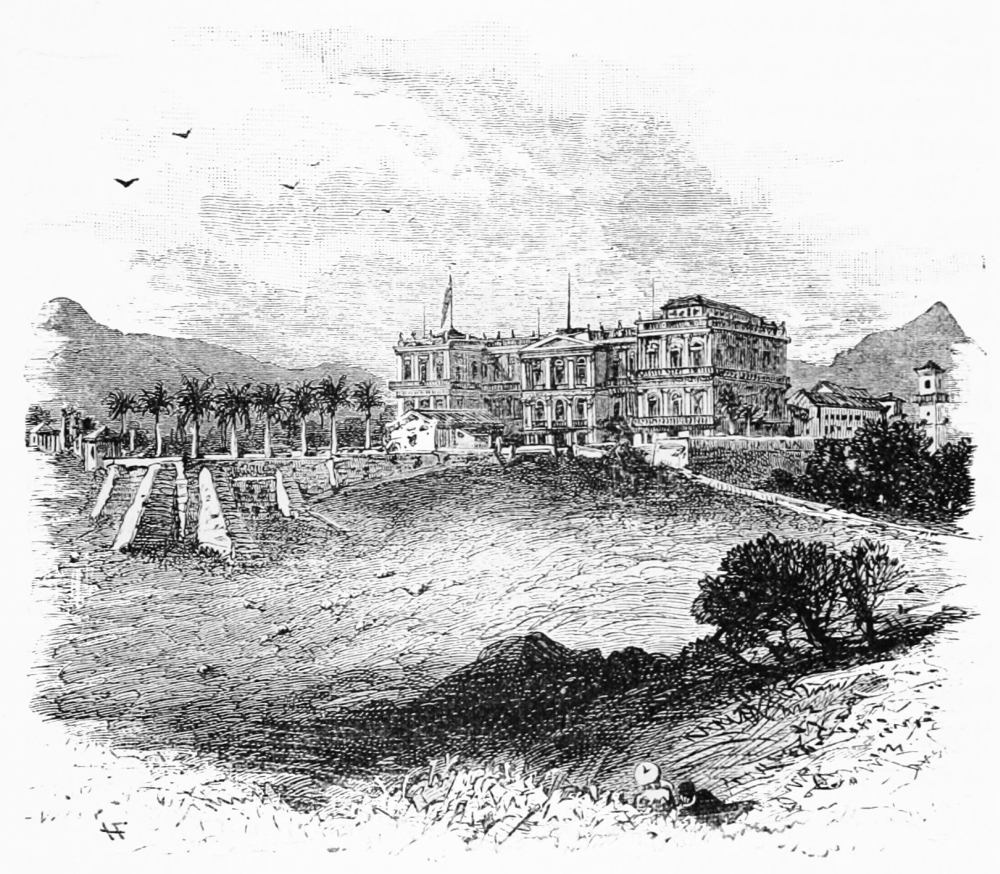
EXPOSITION BUILDING, SANTIAGO.
Everywhere one goes in Santiago and other cities in Chili are to be seen
the ornaments of which Peru was so mercilessly plundered—statuary and
fountains, ornamental street-lamps, benches of carved stone in the parks
and the Alameda, and almost everything that beautifies the streets.
Transports that were sent up to Callao with troops brought back cargoes
of pianos, pictures, furniture, books, and articles of household
decoration stolen from the homes of the Peruvians. Lampposts torn up
from their foundations, pretty iron fences and images from the
cemeteries, altar equipments of silver from the churches, statuary from
the parks and streets, and everything that the hands of thieves and
vandals could reach, were stolen. Clocks—one of which now gives time to
the marketplace of Santiago—were taken from the steeples of the
churches, and even the effigies of saints were lifted from the altars
and stripped of the embroideries and jewels they had received from their
devotees. In the courtyard of the post-office at Santiago are two
statues of marble which cause the American tourist to start in surprise,
for George Washington and Abraham Lincoln stand like unexpected ghosts
before him. Their presence is not announced in any of the guide-books,
which is accounted for by the fact that they, like most everything else
of the kind in Chili, were brought from Peru.
The new hotel, in the eyes of foreigners who have been compelled to stop
at the old ones, is the finest ornament in Santiago. It is a magnificent
structure, with three hundred thousand dollars’ worth of furniture from
Paris, and a five thousand dollar cook from the same place. All the
rooms have grates for fires—which is an innovation—and are furnished
as handsomely as any of the hotels in New York, while the restaurant is
as good as Delmonico’s. Of course there must be some oddity about the
place—it would not be suited to the country if there were not—and here
it is that the bar is placed in the café where the ladies lunch. It is
the only hotel bar in South America; and the proprietor, who wanted to
introduce all the modern improvements, was rather bewildered in
selecting the location of this one. It is a gorgeous affair of silver
and crystal, and the ladies admire it as much as do the men. At first
they were disposed to walk up and say, “The same for me, if you please,”
with their brothers and husbands, but have been convinced that the
proper form is to sit at the tables and take their drinks there. To see
a lady drinking a cocktail in the bar-room of the Grand Central of
Santiago may startle the prohibitionist who goes there, but it is quite
as much the fashion as is the sucking of mint-juleps through a straw on
the balconies of a Long Branch hotel.
The Chillano is the Yankee of South America—the most active,
enterprising, ingenious, and thrifty of the Spanish-American
race—aggressive, audacious, and arrogant, quick to perceive, quick to
resent, fierce in disposition, cold-blooded, and cruel as a cannibal. He
dreams of conquest. He has only a strip of country along the Pacific
coast, so narrow that there is scarcely room enough to write its name
upon the map, hemmed in on the one side by the eternal snows that crown
the Cordilleras, and on the other side by six thousand miles of sea. He
has been stretching himself northward until he has stolen all the
sea-coast of Bolivia, with her valuable nitrate deposits, all the guano
that belonged to Peru, and contemplates soon taking actual possession of
both those republics. He has been reaching southward by diplomacy as he
did northward by war; and under a recent treaty with the Argentine
Republic he has divided Patagonia with that nation, taking to himself
the control of that valuable international highway, the Strait of
Magellan, and the unexplored country between the Andes and the ocean,
with thousands of islands along the Pacific coast whose resources are
unknown. By securing the strait, Chili acquired control of steam
navigation in the South Pacific, and has established a colony and
fortress at Punta Arenas by which all vessels must pass.
Reposing tranquilly now in the enjoyment of the newly acquired territory
along the Bolivian and Peruvian border, and deriving an enormous revenue
from the export tax upon nitrate, the Chillano contemplates the internal
dissensions of Peru, and waits anxiously for the time when he can step
in as arbitrator and, like the lawyer, take the estate that the heirs
are silly enough to quarrel over. It is but a question of years when not
only Peru but Bolivia will become a part of Chili; when the aggressive
nation will want to push her eastern boundary back of the Andes, and
secure control of the sources of the Amazon, as she has of the
navigation of the strait.
On the beautiful Alameda of Santiago stands a marble monument erected
several years ago, after the partition of Patagonia, to commemorate the
generosity of the Argentine Republic. That statue will some day be
pulled down by a mob. The people are already regretting the impulsive
cordiality which suggested it, and are looking with jealous eyes at the
progress and prosperity of their eastern neighbor. But Chili will find
in the Argentines a more formidable foe than the nation has yet met, and
her generals will have some of the conceit taken out of them if the
armies of the two ever come into collision. Although the Argentine
Republic is making more rapid strides towards national greatness, there
is no
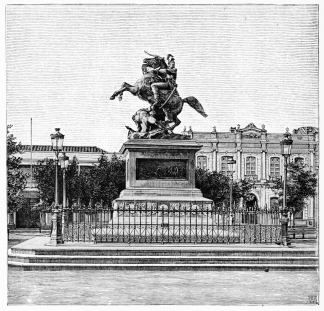
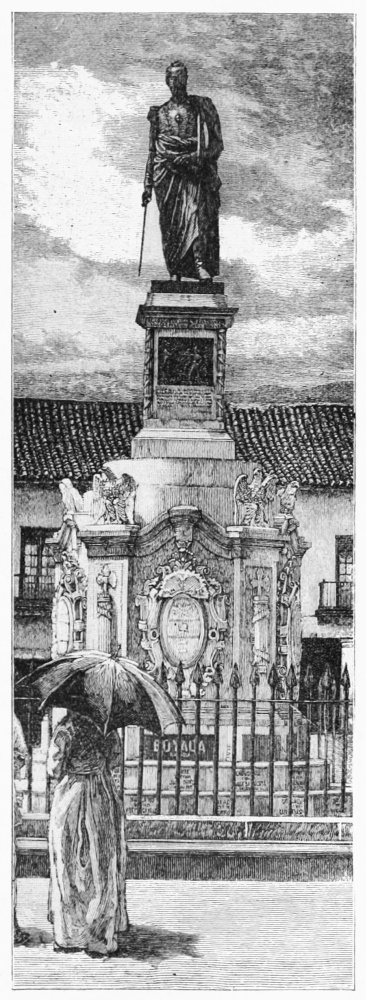
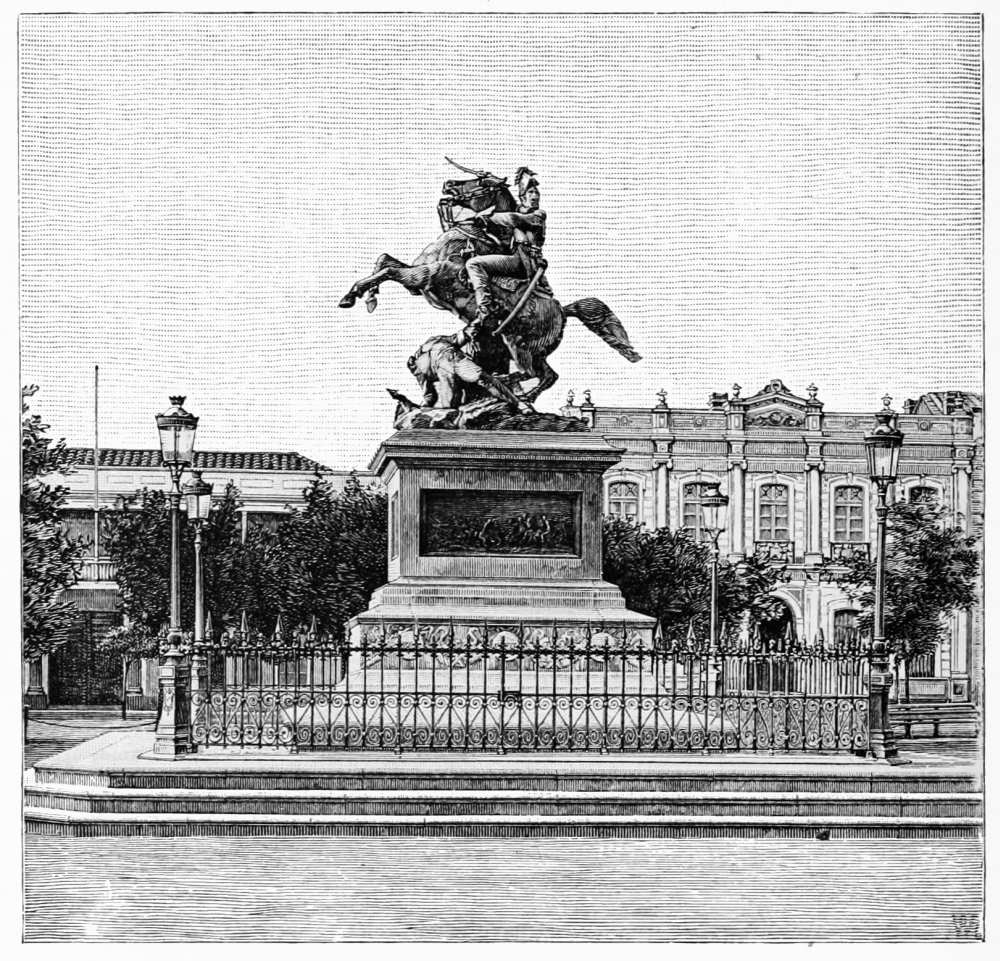
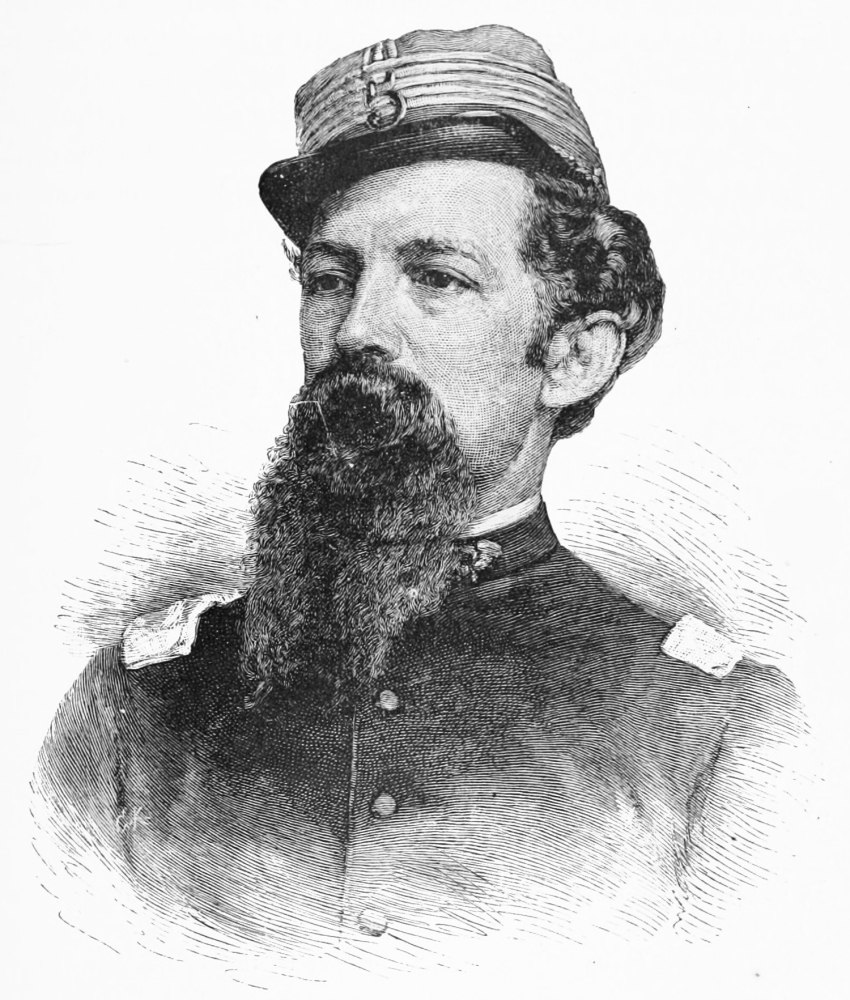
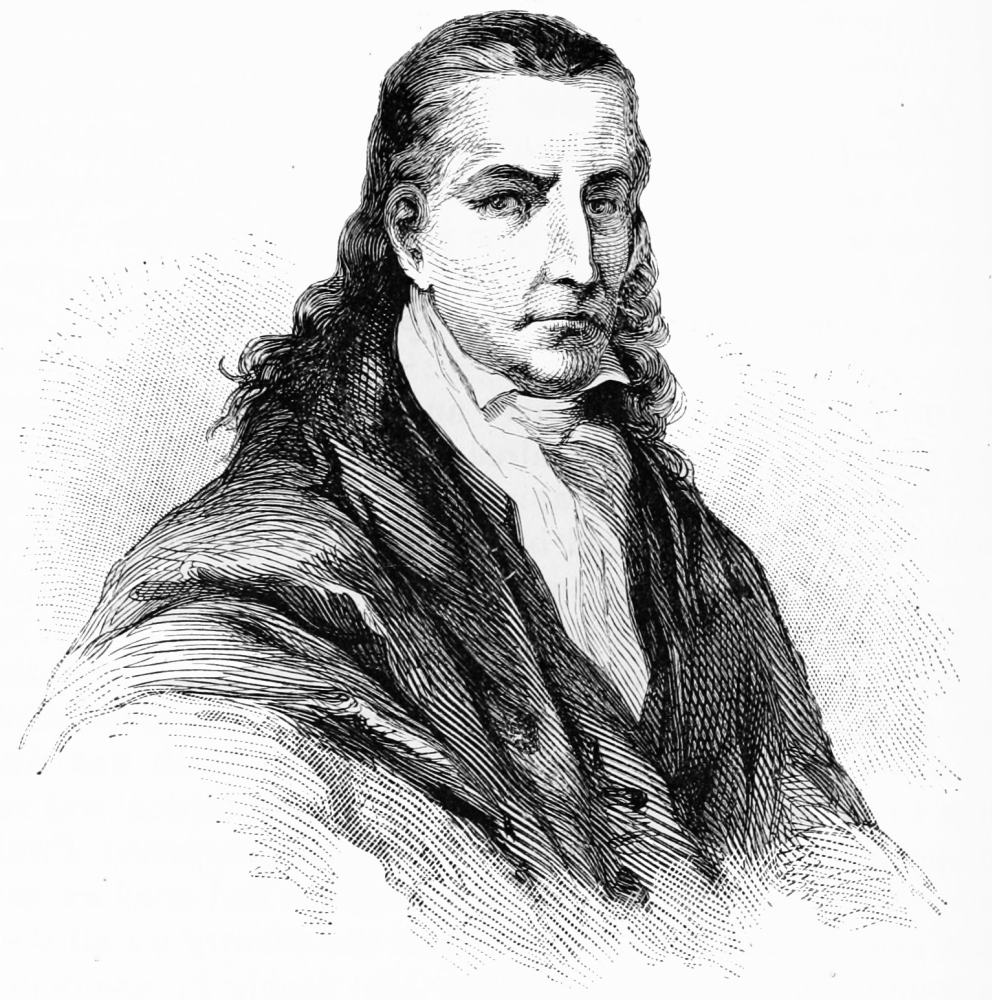
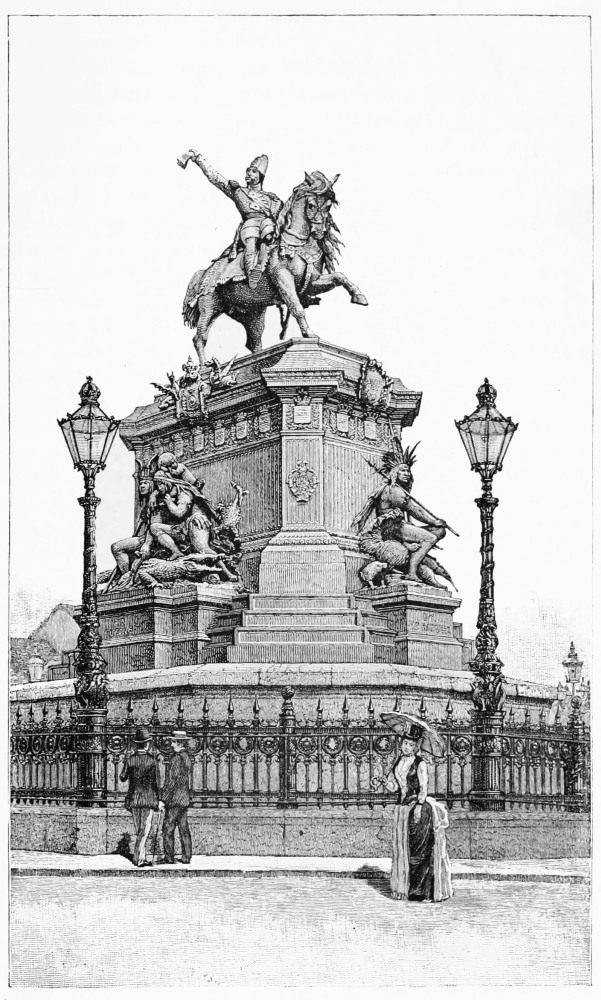
STATUE OF BERNARD O’HIGGINS, SANTIAGO.
doubt that at present, in all the conditions of modern civilization,
Chili leads the Southern Continent, and is the most powerful of all the
republics in America except our own. Her statesmen are wise and able,
her people are industrious and progressive, and have that strength of
mind and muscle which is given only to the men of temperate zones. There
is a strong similarity between the Chillanos and the Irish. Both have
the same wit and reckless courage, the same love of country and
patriotic pride; and wherever a Chillano goes he carries his opinion
that there never was and never can be a better land than that in which
he was born; and although he may be a refugee or an exile, he will fight
in defence of Chili at the drop of the hat. There is something
refreshing in his patriotism, even if it be the most arrogant vanity.
Our people are becoming ashamed of their Fourth of July, and the
Declaration of Independence is the butt of professional jokers. The
Chillano will cut the throat of a man who will not celebrate with him
the 18th of September, his Independence Day; and there is a law in the
country requiring every house to have a flag-staff, and every flag-staff
to bear the national colors—a banner by day and a lantern by night—on
the anniversaries of the republic. All the schools must use text-books
by native authors, all the bands play the compositions of native
composers, and visiting opera and concert singers are compelled to vary
their performances by introducing the songs of the country. It is said
that a Frenchman can never be denationalized. The same is true of the
Chillano. There has not been a successful revolution in Chili since
1839; and although there is nowhere a more unruly and discordant people,
nowhere so much murder and other serious crimes, in their love of
country the haughty don and the patient peon, the hunted bandit and the
cruel soldier, are one.
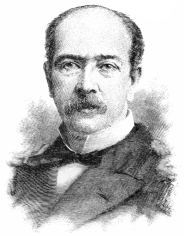
Many of the leading men of Chili are and have been of Irish descent.
Barney O’Higgins was the liberator, the George Washington of the
republic, and Patrick Lynch was the foremost soldier of Chili in the
late war. The O’Learys and McGarrys and other Chillano-Irish families
are prominent in politics and war and trade. There is a sympathetic
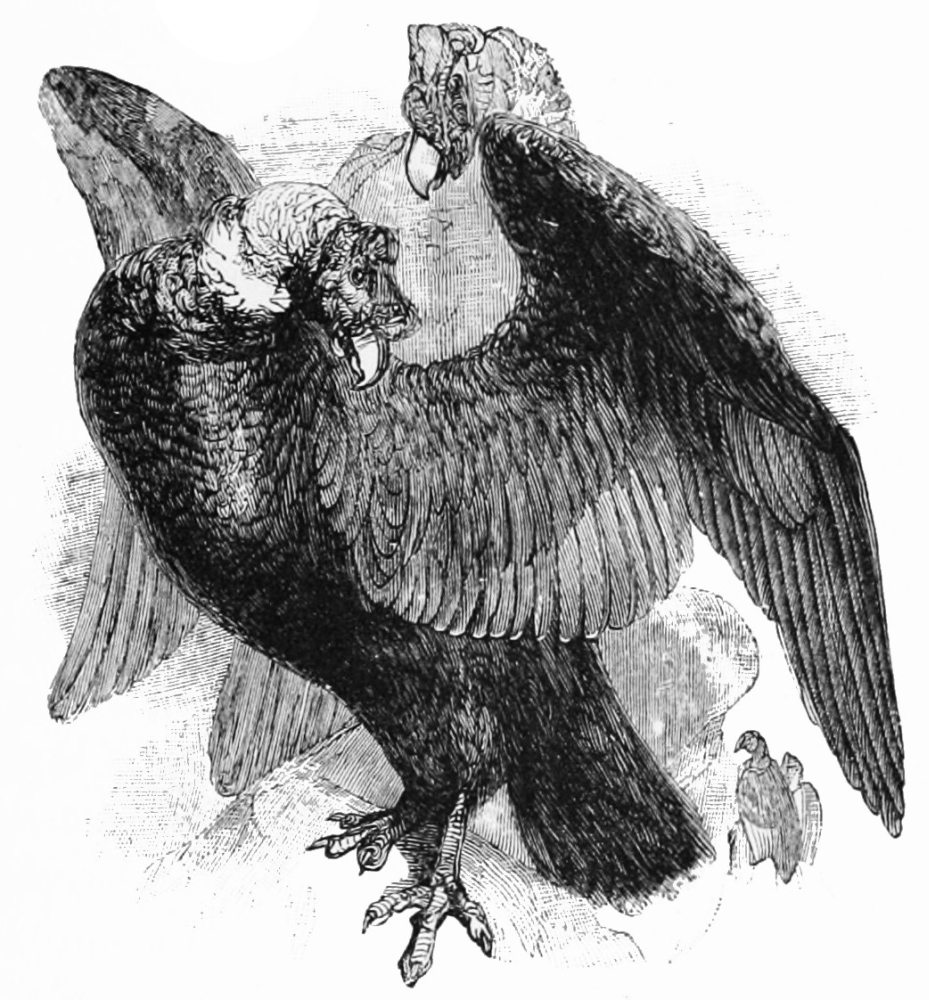
bond between the shamrock and the condor, and nowhere in South America
does the Irish emigrant so prosperously thrive. Chillano wit is
proverbial. The jolly, care-for-nothing peasant is the same there as
upon the old sod, and the turgid, grandiloquent style of literature
which prevails in other portions of Spanish-America in Chili finds a
substitute in the soul-stirring, fervid oratory which is one of the
gifts of the Irish race. A Chillano driver who was beating a mule was
remonstrated with. The man looked up and remarked that it was the most
obstinate animal he ever drove. “The beast thinks he ought to have been
a bishop,” he said.
The vanity of the Chillano passes all comprehension. The officers of the
army and navy actually offered their services, through the British
minister, to England when there was a rumor of war with Russia; and with
the slightest encouragement they would be willing to take the domestic
as well as the international complications off the hands of the British
cabinet. One day the English paper at Valparaiso published a satire,
announcing that the Lords of the Admiralty had selected three leading
Chillano naval officers to command the Bosporus, the Baltic, and the
North Atlantic fleets. The officers as well as the people would not
accept the bogus cablegram as a joke until the next issue of the paper,
in which it was explained; and the former were actually polishing up
their swords and uniforms to take their new commands.
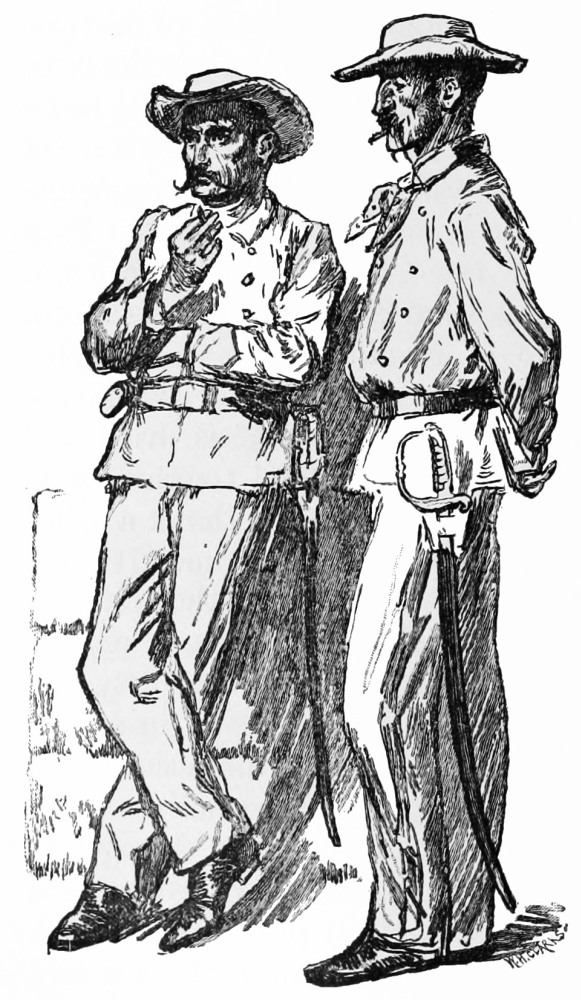
The Chillano is not only vain but cruel—as cruel as death. He carries a
long curved knife, called a curvo, as the Italian carries a stiletto
and the negro a razor, and uses it to cut throats. He never fights with
his fists, and knows not the use of the shillalah; he never carries a
revolver, and is nothing of a thug; but as a robber or bandit, in a
private quarrel or a public mob, he always uses this deadly knife, and
springs at the throat of his enemy like a blood-hound. There is scarcely
an issue of a daily paper without one or two throat-cutting incidents,
and in the publications succeeding feast-days or carnivals their bloody
annals fill columns.
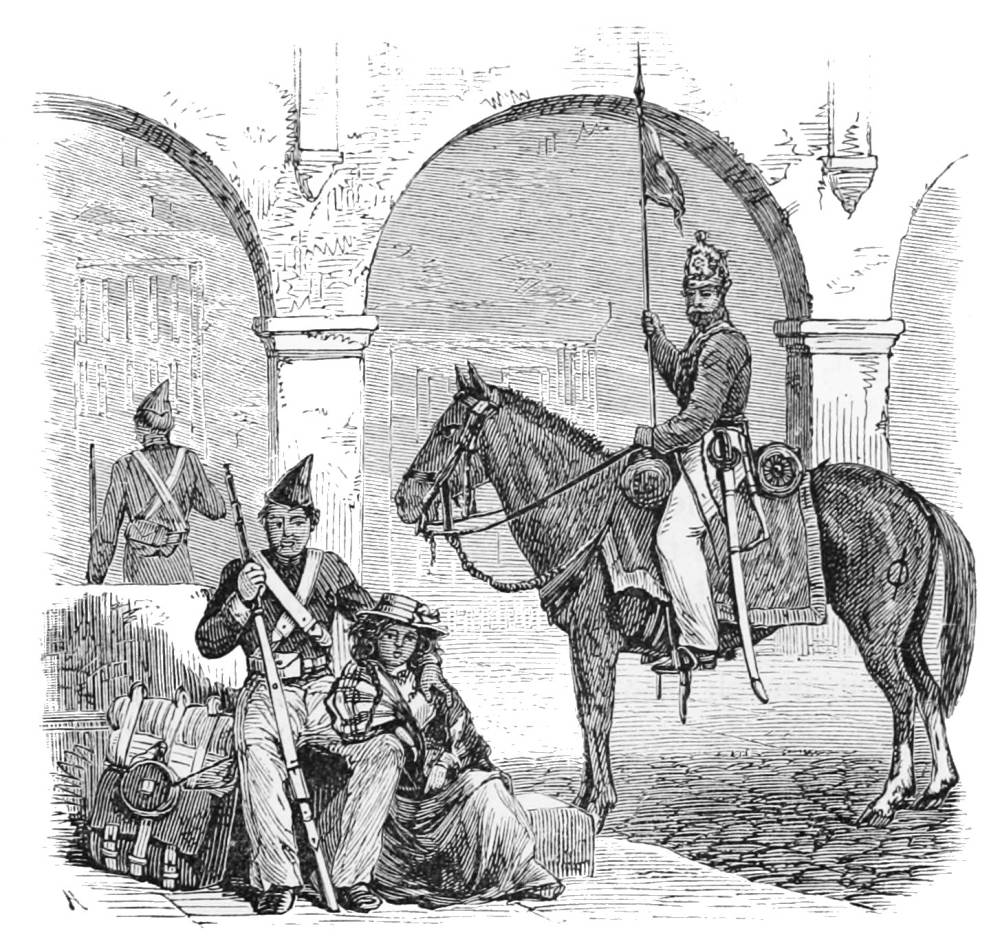
As a soldier the Chillano is brave to recklessness, and a sense of fear
is unknown to him. He will not endure a siege, nor can he be made to
fight at long range; but as soon as he sees the enemy he fires one
volley, drops his gun, and rushes in with his curvo. His endurance is as
great as his courage, and no North American Indian can travel so far
without rest or go so long without food and water as the Chillano peon,
or roto, as the mixed race is called. As the cholo in Peru is the
descendant of the Spaniards and the Incas, so is the roto in Chili the
child of the Spaniards and the Araucanian Indians, the race of giants
with which the early explorers reported that Patagonia was
peopled—“Menne of that bigginess,” as Sir Francis Drake reported, “that
it seemed the trees of the forests were uprooted and were moving away.”
They have the Spanish tenacity of purpose, the Indian endurance, and the
cruelty of both. Each soldier, in the mountains or the desert, carries
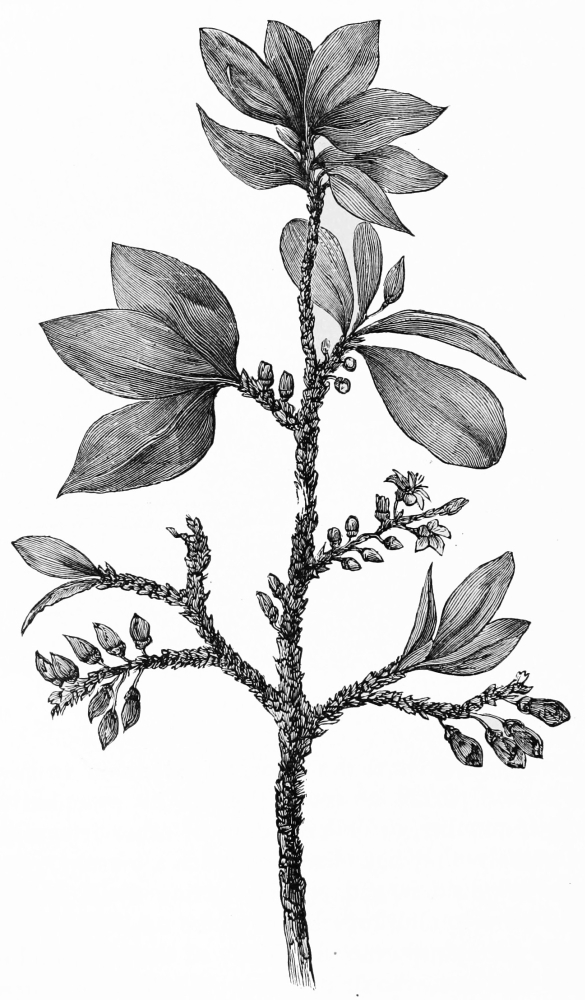
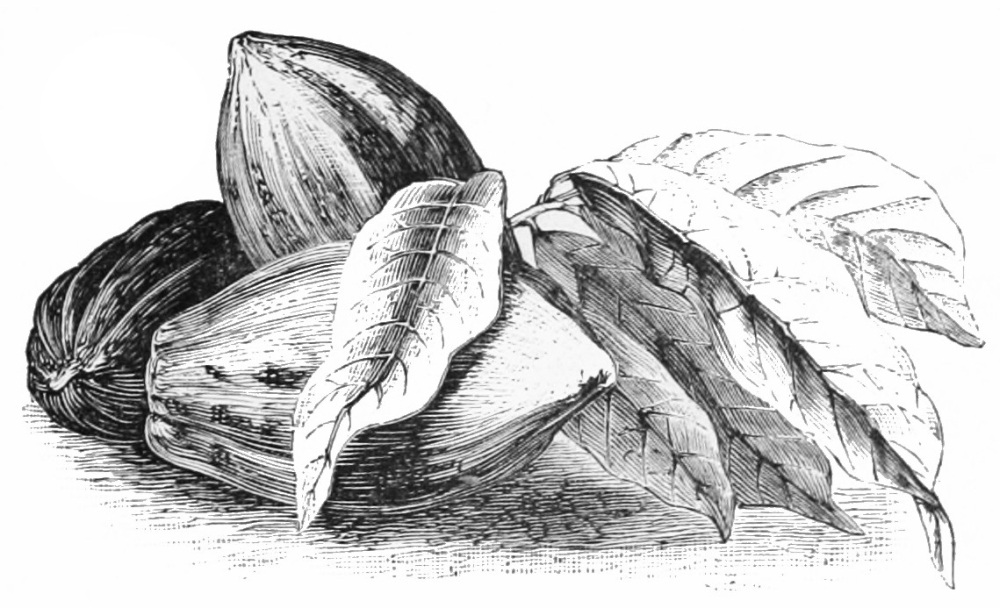
on his breast two buckskin bags. In one are the leaves of the
coca-plant, in the other powdered lime made of the ashes of
potato-skins. The coca is the strongest sort of a tonic, and by chewing
it the Chillano soldier can abstain from food or drink for a week or ten
days at a stretch. He takes a bunch of leaves as big as a quid of
tobacco in his mouth, and occasionally mixes the potato-ashes with the
saliva to give the juice a relish. Canon Kingsley, in that remarkable
novel, “Westward Ho!” describes two of the band of Amyas Leigh as
deserting their companions at the sources of the Amazon, and takes them
into a beautiful bower with two Dianas of the Indian type. There they
chew coca-leaves with the girls, sink into a voluptuous stupor, and give
themselves up to love, like the lotos-eaters, until Amyas comes to
remonstrate. The men recommend him to follow their example with the
Venus who has been found in an Indian queen and admires the young
commander; and the Puritan is on the point of yielding to the
fascination of the scene, when a reptile comes, strangles one of the
girls, and revives the moral instincts of the men. The reverend
word-painter was misinformed as to the peculiar influence of the drug,
as it does not produce a stupor in those who use it. It is not a
narcotic, but a stimulant.
The Chillano soldier is not easily subjected to discipline, and
outvandals the Vandals in the destruction of property, as the present
condition of Peru will prove. He burns and destroys everything within
his reach that has sheltered an enemy. No authority can restrain his
hand. The awful scenes of devastation that took place have nothing to
parallel them in the annals of modern warfare. On the battle-fields
nine-tenths of the dead were found with their throats cut, and the
Chillanos took no prisoners except when a whole army capitulated. They
ask no quarter and give none. The knowledge of this characteristic, and
the fear of the Chillano knife, were powerful factors in the subjugation
of the more humane Peruvians.
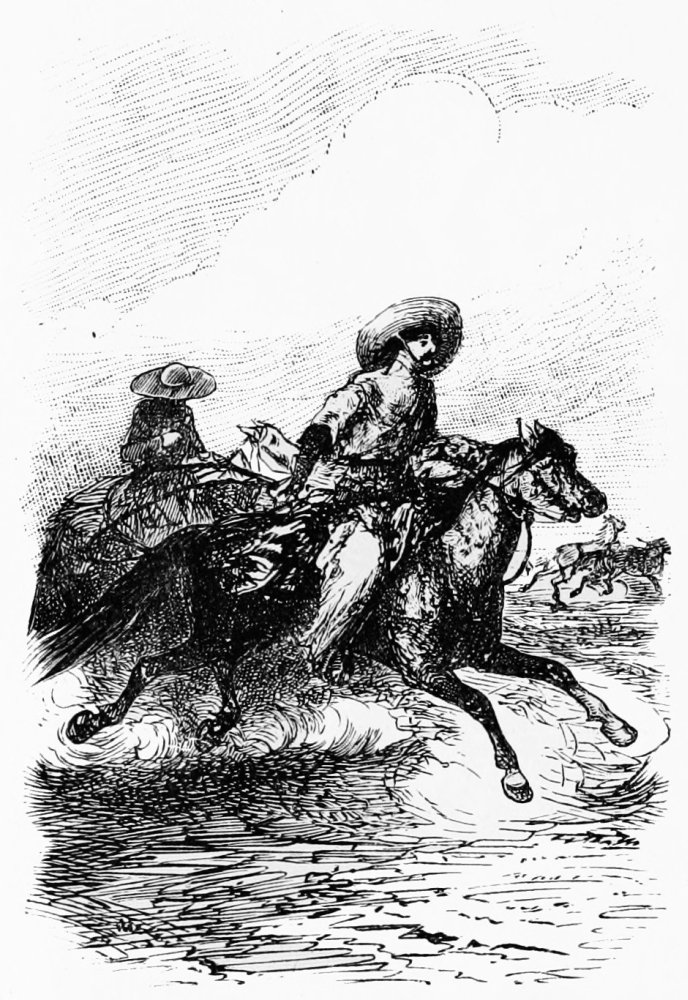
The Chillanos are cruel to beasts as well as to men. Horses are very
cheap in Chili. A good native broncho can be purchased for five dollars,
and his owner knows no mercy. The beasts are driven until they drop, and
then new ones are sought and subjected to the same treatment. No care is
taken to protect or make the animals comfortable. Although the weather
is usually cold, stables for horses or cattle are almost unknown. When
their labor is over they are turned into a corral, or a pasture, or the
street, to seek their own food.
The Chillanos are also careless of machinery. While they are quick to
learn, and have much native mechanical ingenuity, they cannot be trusted
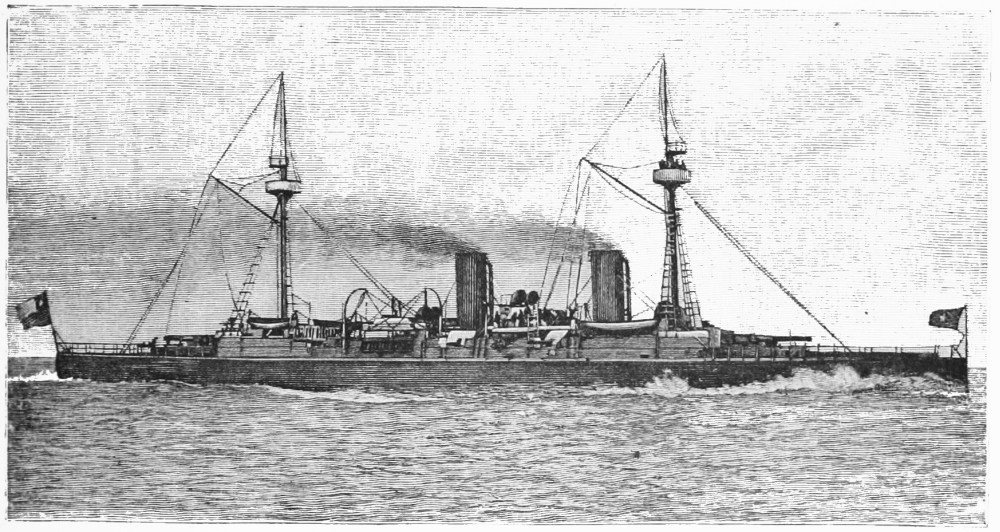
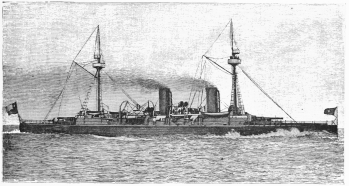
as machinists. The magnificent cruiser Esmeralda, one of the finest
ships-of-war afloat, was built in England for the Chillian Government at
a cost of one and a half million dollars, but she had not been in the
hands of native engineers six weeks before her engines needed repairs
and her boilers were ruined. In 1885, during the troubles between
England and Russia, she was chartered by the British Government, but
afterwards returned to Chili. The Chillanos have a line of steamers
running from Valparaiso up and down the coast. They are the finest ships
on the Pacific, built on the Clyde, with all modern improvements, but
the engineers and captains are Englishmen or Scotchmen. The Government
owns and manages the railroads in the republic, but the locomotive
drivers are foreigners. Every three or four years—usually before a
Presidential election—these men are discharged and natives employed in
their stead; but until election is over, and the old engineers are
restored to their places, there is a carnival of accidents, and
passenger travel is practically suspended. On all railroads are heavy
grades and dangerous curves, requiring the greatest care on the part of
locomotive drivers. The reckless Chillano thinks it great fun to run a
train down a grade at full speed, and a collision is his delight. He
enjoys seeing things smashed up, and knows nothing of the necessity of
operating trains on schedule time.
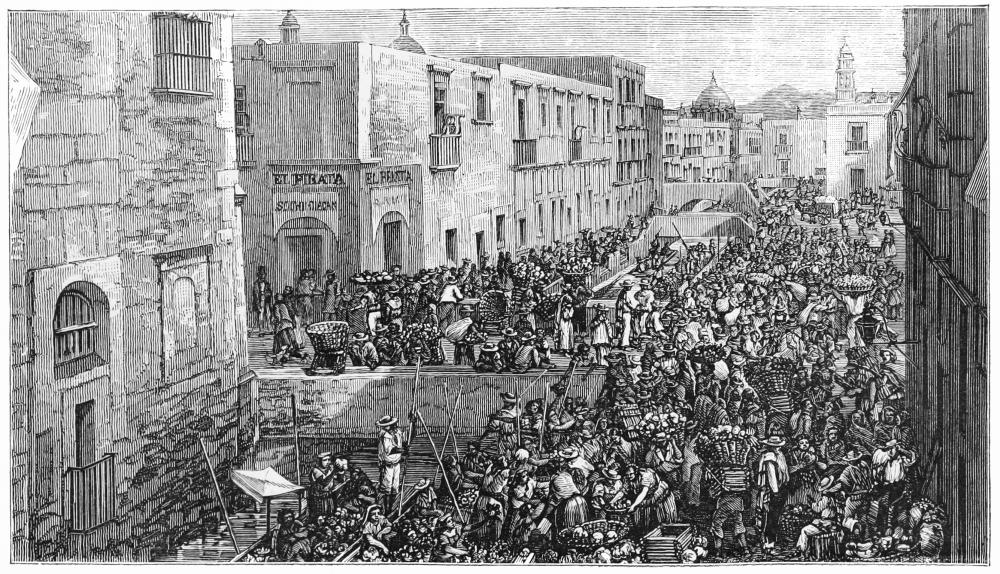
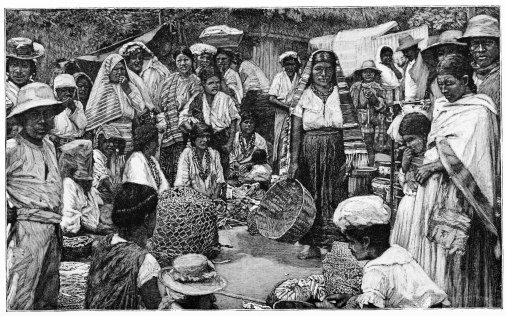
In trade the Chillano is a Yankee. At market or in the native shops the
buyer is not expected to pay the price first asked. He is expected to
enter into a negotio, and the seller is disappointed if he loses an
opportunity to show his shrewdness in the barter. There is no regularly
established price for any article. A market-woman will ask two dollars
for a basket of fruit for which she expects to get fifty cents. She
will haggle and chatter, plead and remonstrate, and if you start towards
another stall, will abandon half a dozen other customers and follow you
around, until she finally “splits the difference,” and goes away smiling
at her success. The traveller meets with this experience everywhere,
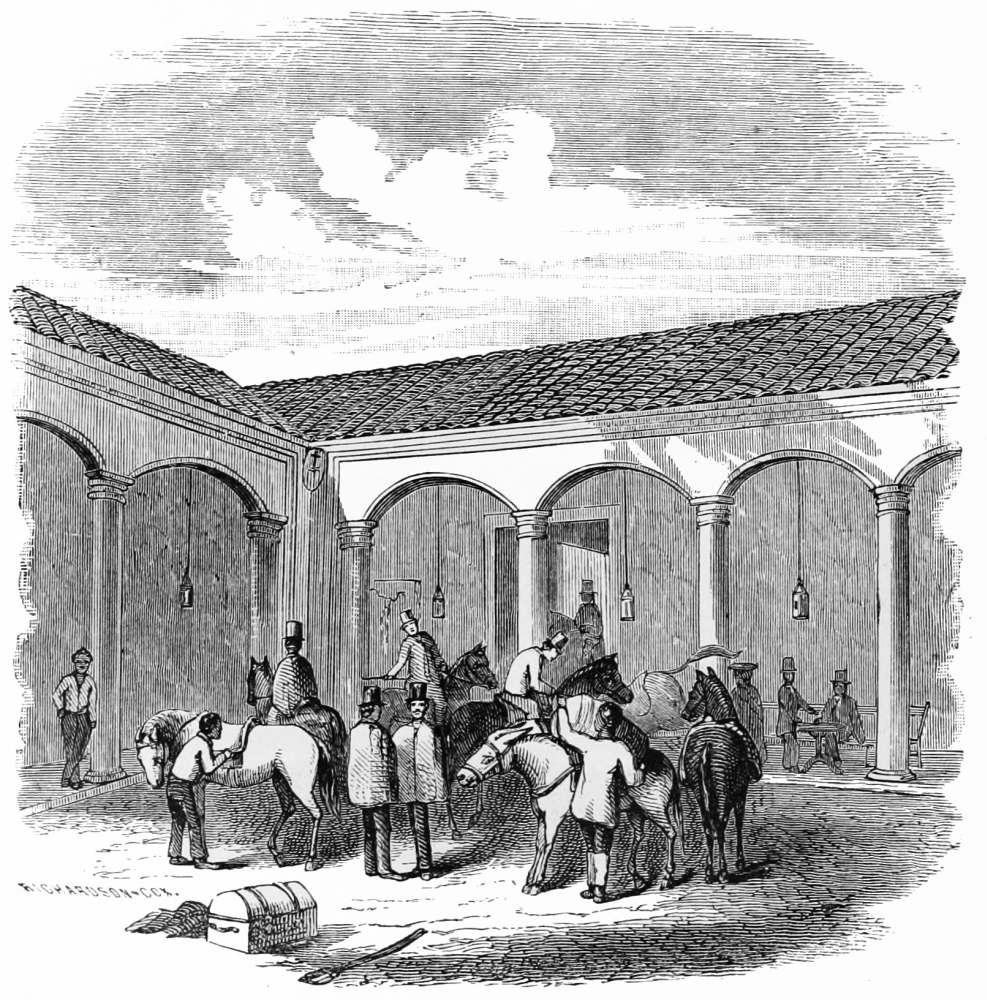
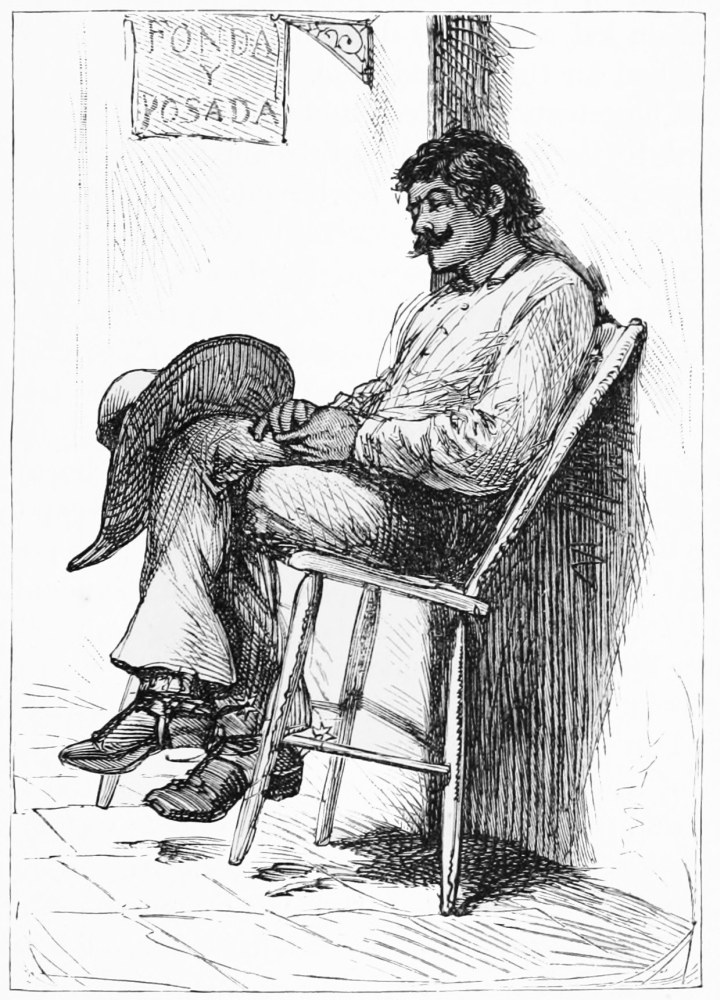
particularly at the posadas; and the only safe way to avoid being
mercilessly swindled is to make a bargain in writing beforehand.
Most of the hotel-keepers are women, whose husbands are engaged in other
occupations; but all the servants, including the cooks and
chamber-“maids,” are men. There are better cooks and better classes of
food than in other South American countries, and one seldom fails to
find a good inn even in the country villages. The markets of Chili, too,
are better. The beef, mutton, and other meats have the flavor that is
found only in temperate climates; the fish are not so rank and coarse as
those caught in tropical waters; and while vegetation is not so
prolific, the fruits of the earth have a finer taste. There are oysters
equal to those of New Orleans or Mobile, clams and lobsters, and plenty
of shrimps, called camarons.
Another oddity is the milk stations. At distances of a few blocks on all
but the principal business streets is a platform where a cow is tied,
which is milked to order by a dairy-maid whenever a customer calls. On a
table near by are found measures, cans, and glasses, and often a bottle
of brandy, so that a thirsty man can mix a glass of punch if he chooses.
In the morning these stands are surrounded by servants from the
aristocratic houses, women and children, with cups and buckets, awaiting
their turn; and as fast as one cow is exhausted another is driven upon
the platform.
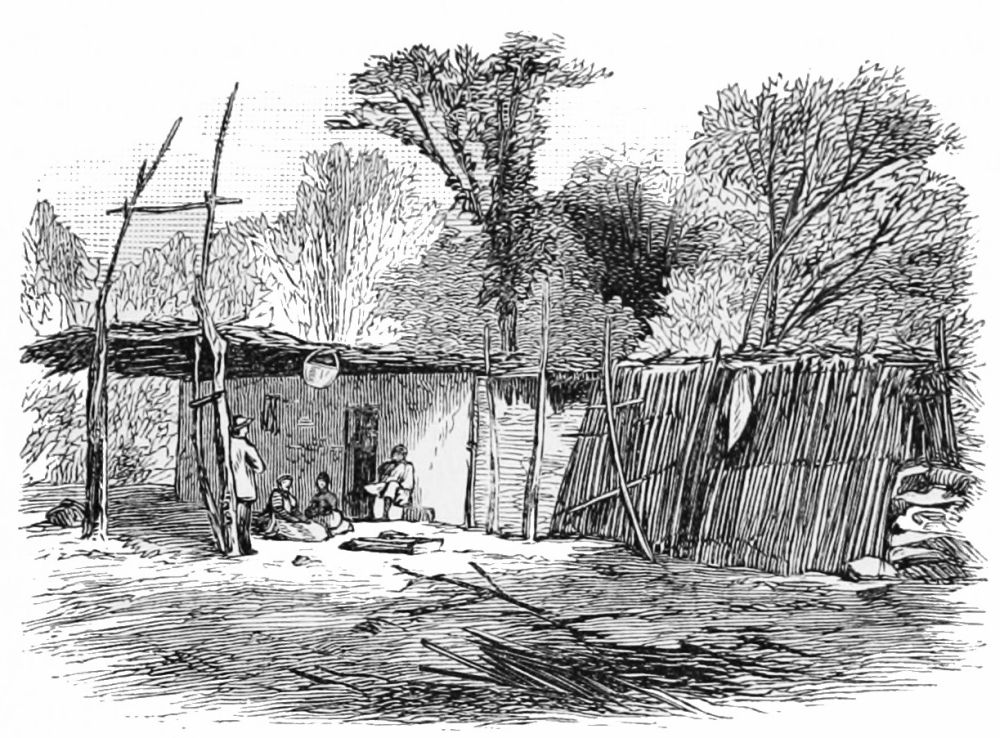
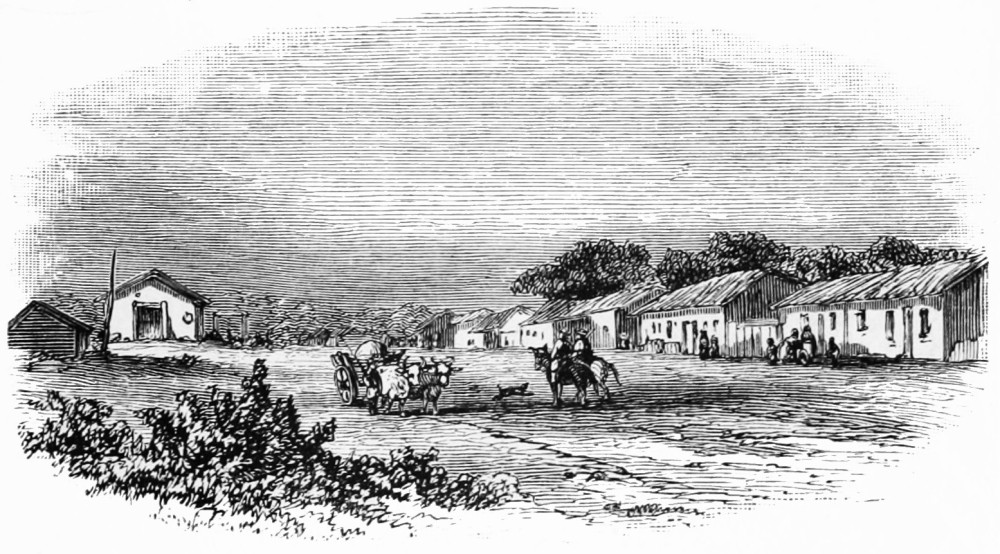
The scarcity of lumber has caused the poorer classes to use corrugated
sheet-iron as a building material, while the rich use stone for exterior
walls, and sun-dried brick or adobe for partitions. There are whole
blocks in Valparaiso in which nothing but corrugated-iron houses can be
seen, both roof and walls being of the same material. It is said to bear
the effects of earthquakes well. People expect an earthquake about once
in ten days the year round, and more frequently during the changes of
season; but great damage is seldom done. There are two kinds of
earthquake, the terremoto and the temblor. The latter is only a
quivering or shaking of the ground, and is quite common; the other
describes the convulsions of the earth when it cracks and rolls like the
swell of the sea, overthrows cities, and buries towns in their own
ruins. Valparaiso and Santiago have never known any of the latter sort,
which are confined to the mountain districts and the neighborhood of
volcanoes.
There are more comforts among the people than elsewhere upon the
continent, and a higher degree of taste, as is shown by the articles
offered for sale in the shops as well as in the houses of the residents,
which is owing in a great degree to the example of the large foreign
population. The Rev. Dr. Trumbull, who has been in Chili forty-five
years, says that he has noticed a marked change in this respect within
the last decade, and has seen a gradual and permanent growth in
refinement and honesty.
In Chili, as in all the Spanish-American countries, every man and woman
is named after the saint whose anniversary is nearest the day on which
he or she was born, and that saint is expected to look after the welfare
of those christened in his or her honor. These names sound well in
Spanish, but when they come to be translated into unpoetic English there
is an oddity, and often something comical, about them. For example, the
name of the recent President of Chili is Domingo Santa Maria—which,
being interpreted, means Sunday St. Mary. The name of the President of
Ecuador is Jesus Mary Caamaño (apple), and that of the Governor of the
Province of Valparaiso is Domingo Torres (Sunday Bull). A waiter at the
hotel happened to be a Christmas gift to his parents, whose family name
was Vaca (cow), and in honor of the day they called him Jesu Christo
Vaca. Such blasphemy would not be tolerated in any other country; but
the use of the Saviour’s name is very common, even upon the signs of
stores and saloons in cities, and in the nomenclature of the streets. I
met a girl once whose name was Dolores Digerier (sorrowful stomach).
In Chili women are employed not only as street-car conductors, but they
do all the street-cleaning, and gangs of them with willow brooms
sweeping the dirt into the ditches can be seen by any one who has
curiosity enough to get up at daylight. They occupy the markets, too,
selling meats as well as vegetables. On the streets they keep
fruit-stands, and have canvas awnings under which, if you choose, you
can sit and eat watermelons, a fruit much esteemed in Chili. Outside of
the cities the women keep the shops and the drinking-places, and do all
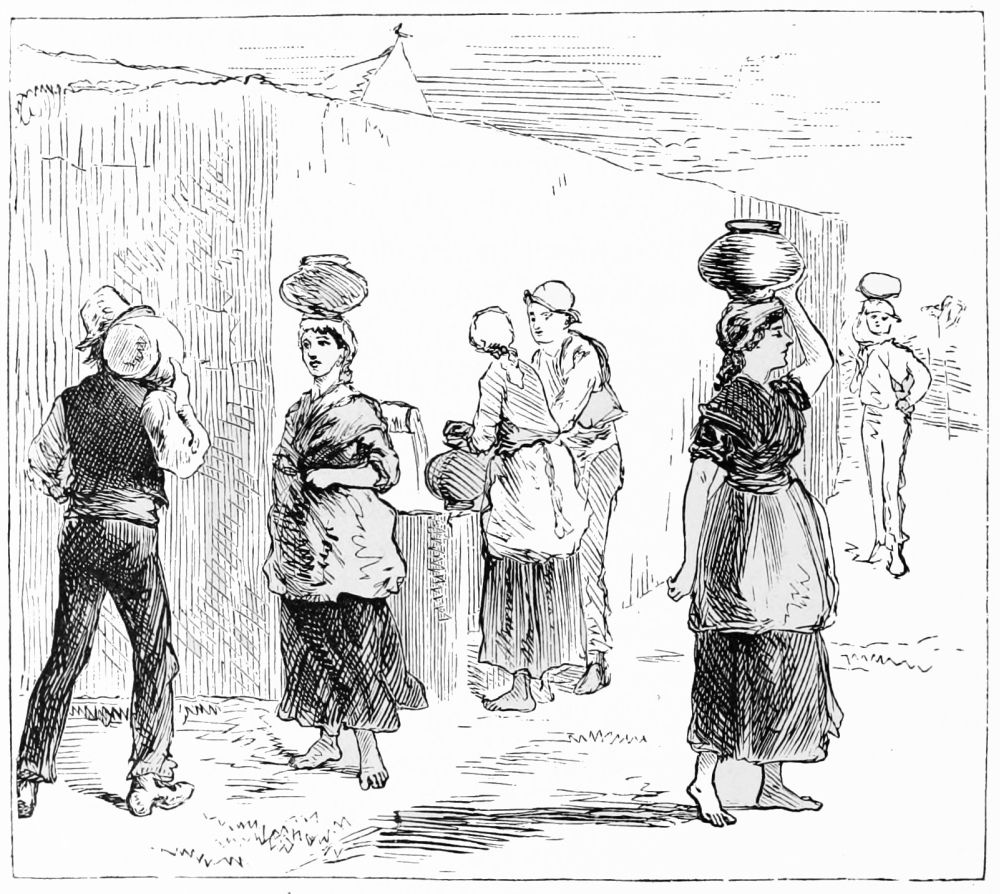
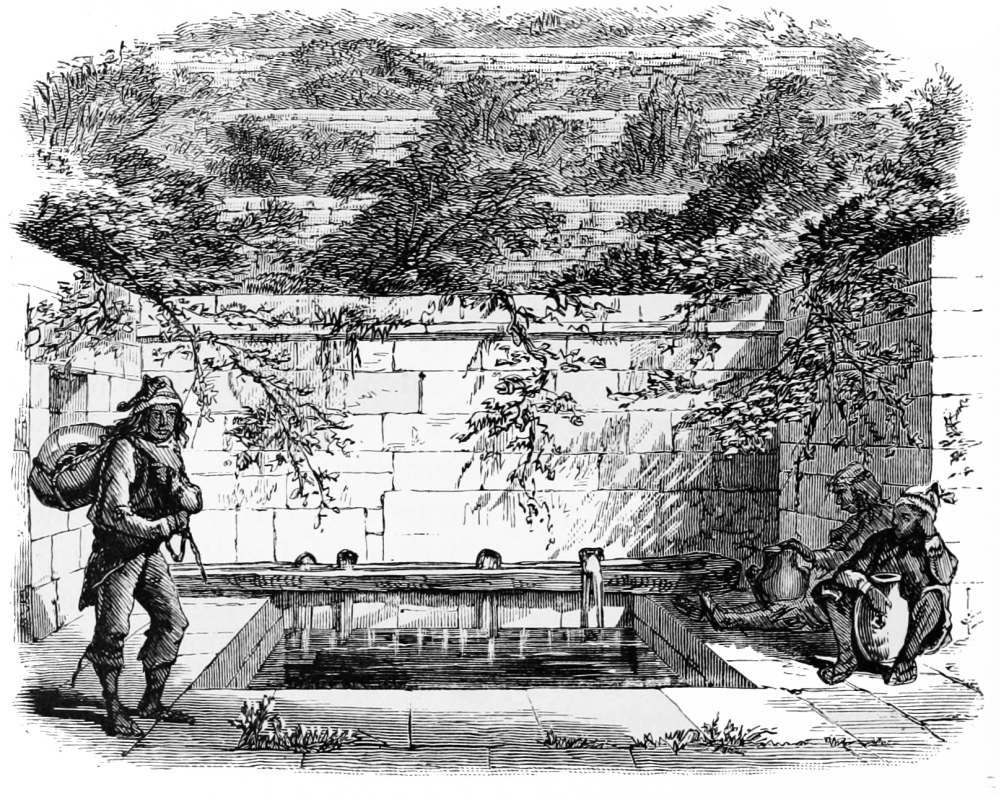
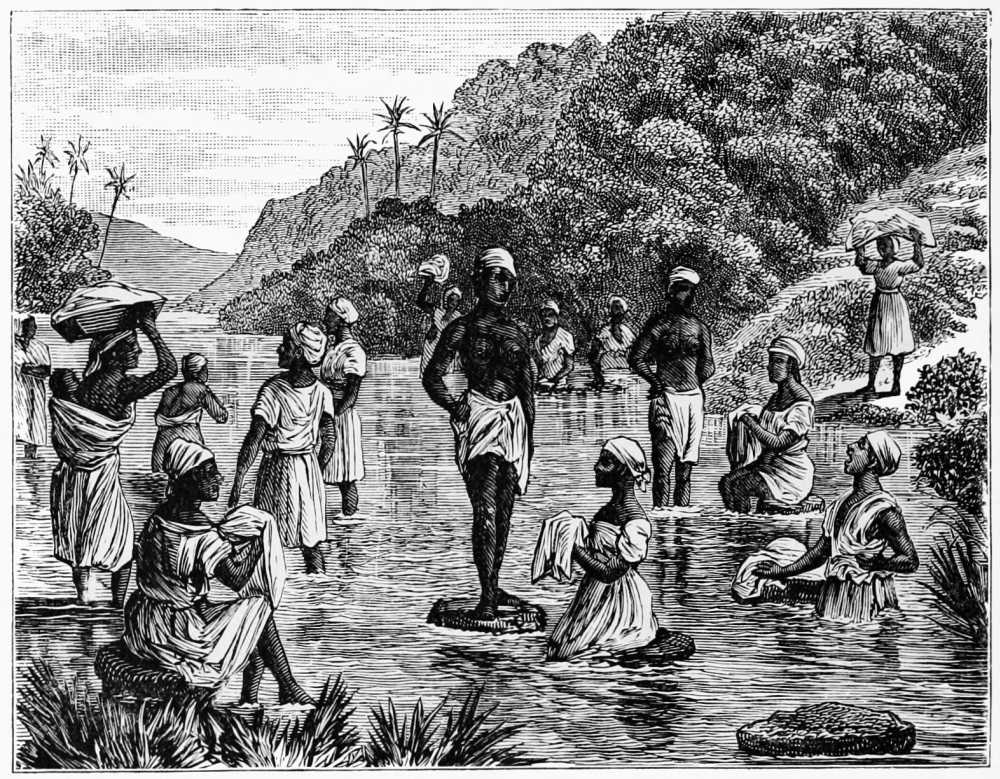
the garden work. The laundry work is done at public fountains, as in
other of the Spanish-American countries; but the washer-women of Chili
do not go almost naked, as some of their neighbors do.
The native Peruvian, the descendant of the ancient Incas, has learned
nothing since the Conquest, and has forgotten most of the arts his
fathers knew, among them being the process by which the ancient race
rendered copper as hard as steel. Thousands of dollars have been offered
for that secret by modern bidders, but it is lost forever, and the
ingenuity and knowledge of modern chemists cannot discover the process.
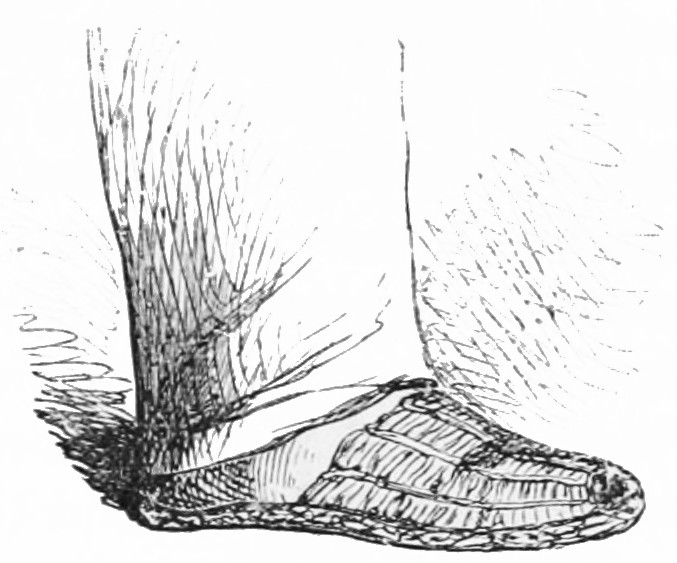
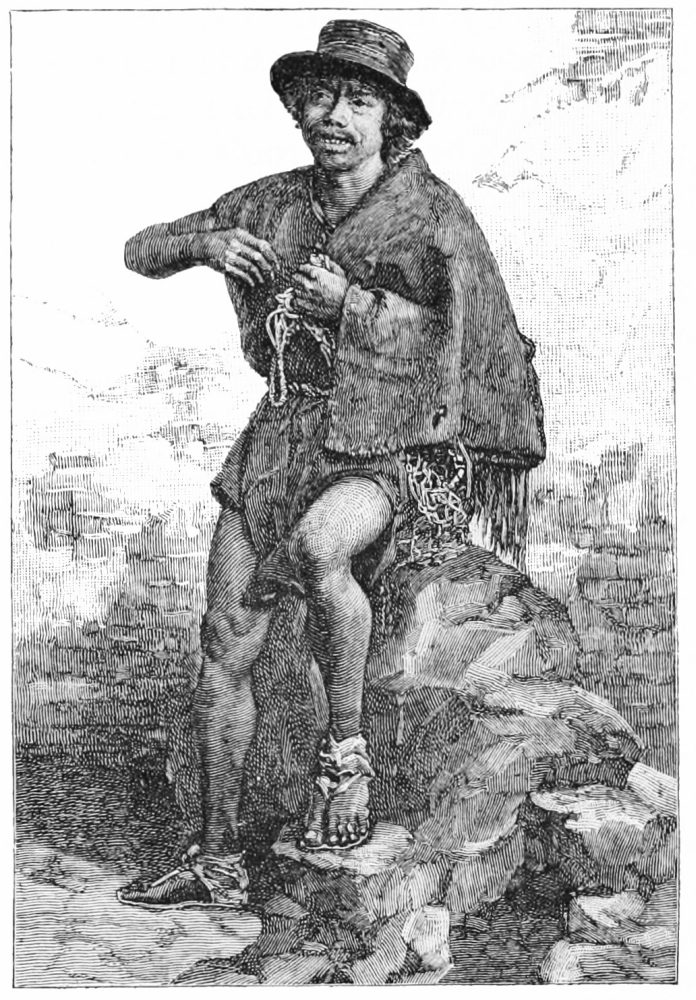
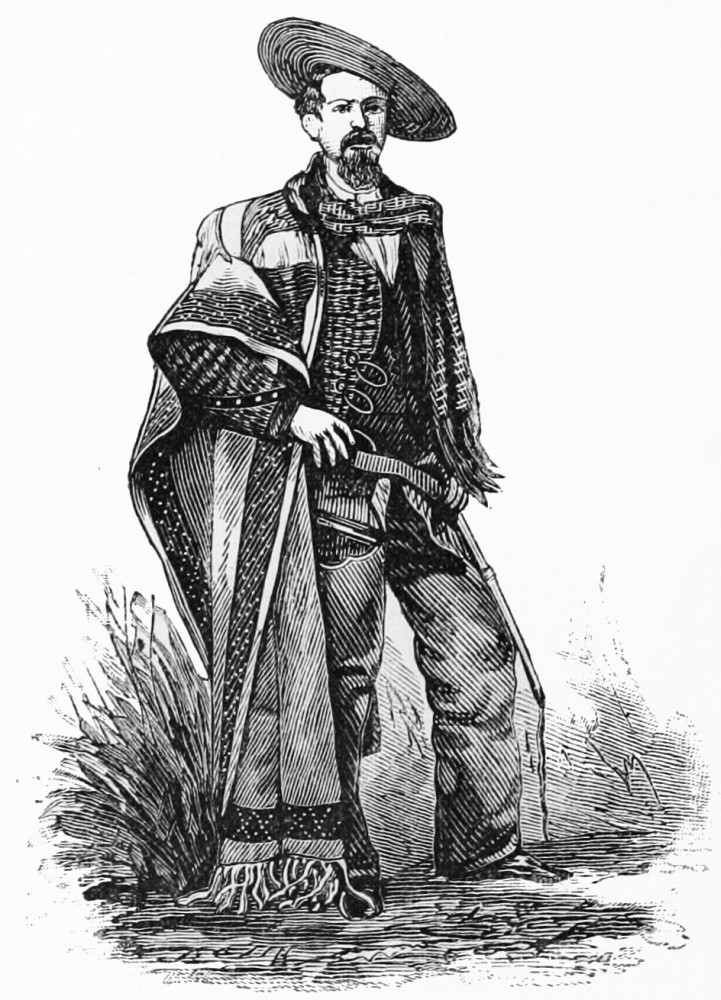
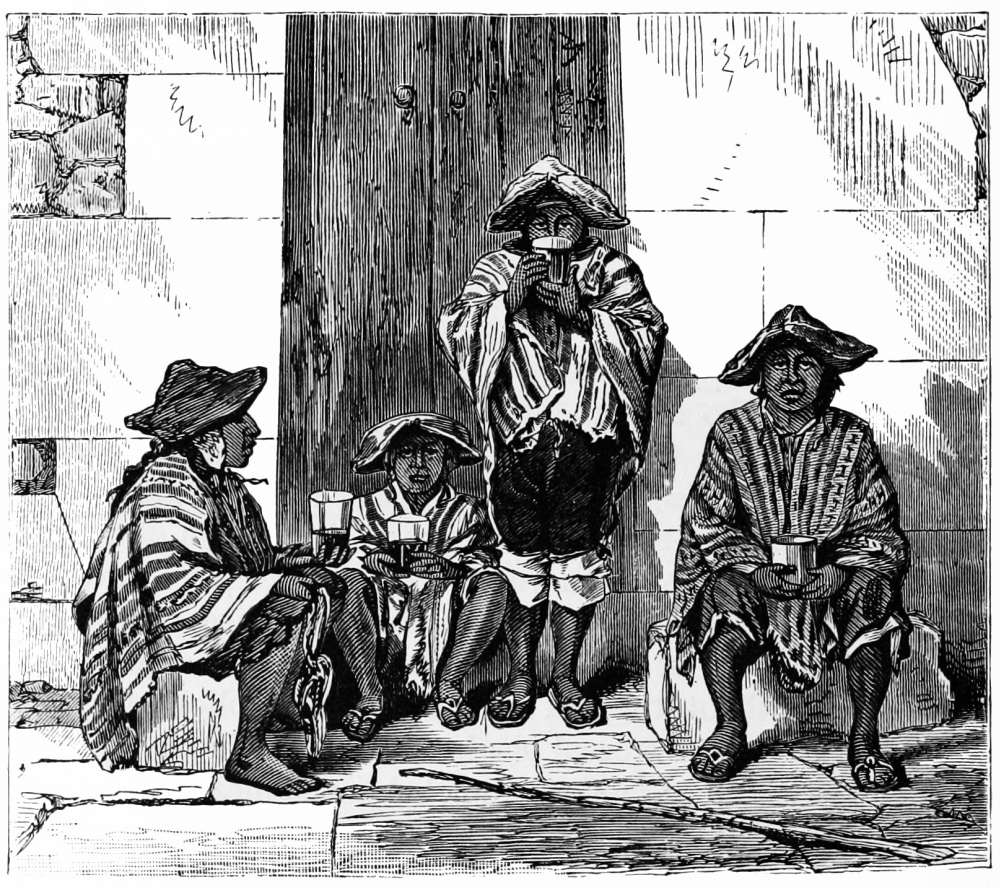
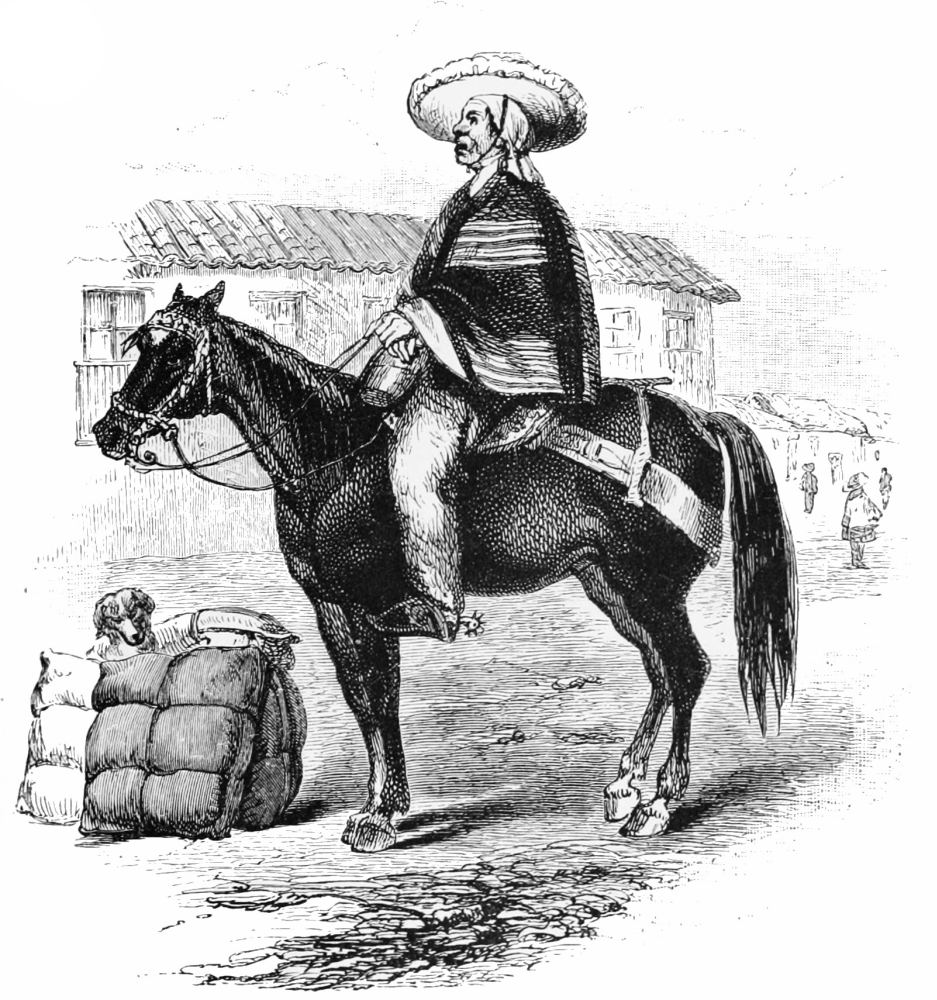
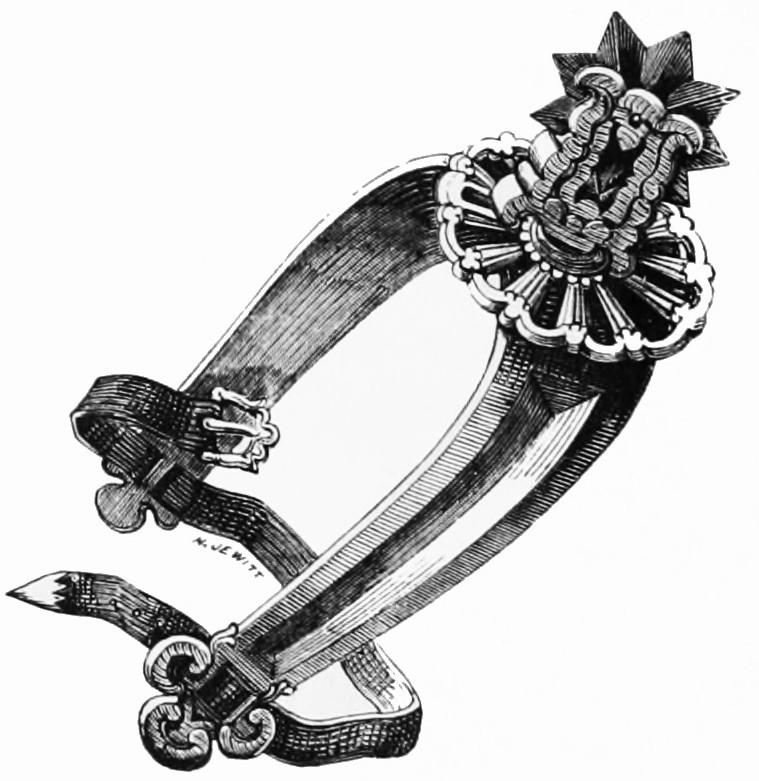
The modern Inca wears the same blanket, or poncho, made of vicuña hair,
that his fathers did, and the same shoes made of raw hide. He has
rougher roads to travel than has the native of Central America, hence
his shoe is made to curl over on the sides and behind, so as to protect
the toes and the heel from contact with the rocks. It is cut in a single
piece from hide when green, and is made to curl by stretching it over a
primitive sort of last and keeping it in position until dry. The shoe is
attached to the foot by a thong, which passes along the entire top of
the shoe, laced through holes cut in the hide, and ending at the heel in
two strips, which are secured around the ankle. The evolution of the
native shoe is found in Chili; and although it lacks the maturity and
sanctity of age, which the Peruvian article enjoys, is a rather more
nobby
affair. The sole is made of wood, rudely cut by hand with a knife, and
over the instep passes a piece of patent leather reaching from the toes
to the ankle, which is nailed to the sole by rows of brass-headed tacks.
The toes and heel are entirely without protection, and it requires a
great deal of experience to keep the shoe on. It is worn in the coldest
weather, over a very heavy and thick stocking knit of llama wool, and an
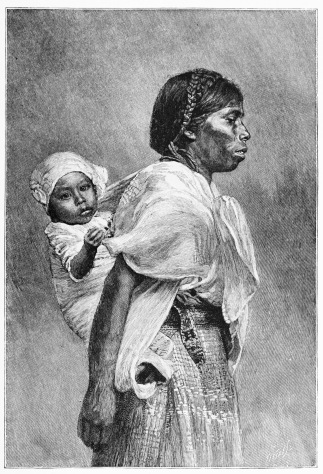
uglier pair of feet and legs than are shown by the short-skirted peasant
women of Chili were never seen. The men wear the same sort of shoe—not
quite so fancy in design nor of such fine materials, however; but as
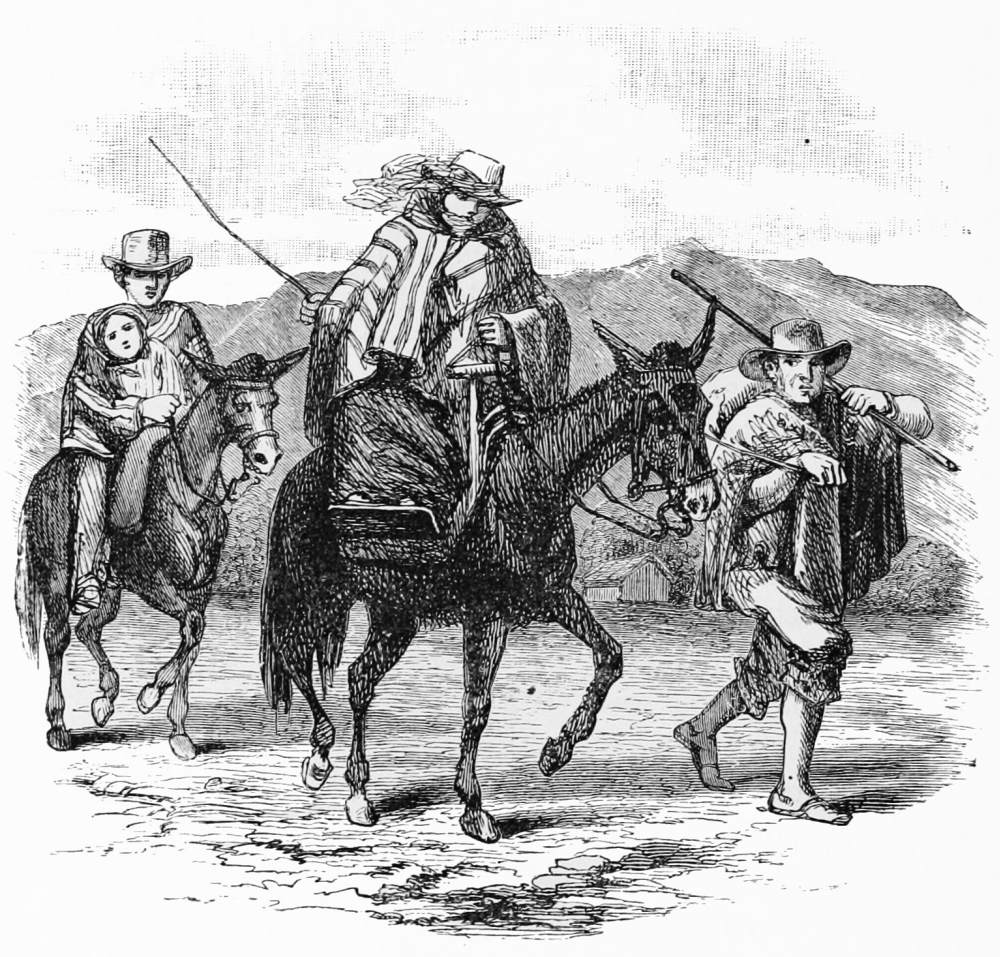
they spend most of their time in the saddle it is not so bad.
The Crœsus of South America is a woman, Donna Isadora Cousino, of
Santiago, Chili, and there are few men or women in the world richer than
she. There is no end to her money and no limit to her extravagance, and
the people call her the Countess of Monte Cristo. She traces her
ancestry back to the days of the Conquest, and has the record of the
first of her fathers who landed early on the shores of the New World.
His family was already famous, for his sire fought under the ensign of
the Arragons before the alliance with Castile. But the branch of the
family that remained in Spain was lost in the world’s great shuffle two
or three centuries ago, and none of them distinguished themselves
sufficiently to get their portraits into the collection which Señora
Cousino has made of the lineage she claims.
Like her own, the ancestors of her late husband came over in the early
days, and in the partition of the lands and spoils of the Conquest both
got a large share, which they kept and increased by adding the portions
given to their less thrifty and less enterprising associates, until the
two estates became the largest, most productive, and most valuable of
all the haciendas of Chili, and were finally united into one by the
marriage, twenty-four years ago, of the late Don and his surviving
widow. While he lived he was considered the richest man in Chili, and
she the richest woman, for their property was kept separate, the husband
managing his estate and the wife her own, and the people say that she
was altogether the better “administrator” of the two. This fact he
acknowledged in his will when he bequeathed all of his possessions to
her, and piled his Pelion upon her Ossa; so that she has millions of
acres of land, millions of money; flocks and herds that are numbered by
the hundreds of thousands; coal, copper, and silver mines; acres of real
estate in the cities of Santiago and Valparaiso; a fleet of iron
steamships, smelting-works, a railroad, and various other trifles in the
way of productive property, which yield her an income of several
millions a year that she tries very hard to spend, and under the
circumstances succeeds as well as could be expected. From her coal-mines
alone Señora Cousino has an income of eighty thousand dollars a month;
and there is no reason why this should not be perpetual, as they are the
only source in all South America from which fuel can be obtained, and
those who do not buy of her have to import their coal from Great
Britain. She has a fleet of eight iron steamships, of capacities varying
from two thousand to three thousand six hundred tons, which were built
in England, and are used to carry the coal up the coast as far as
Panama, and around the Strait of Magellan to Buenos Ayres and
Montevideo. At Lota she has copper and silver smelting-works, besides
coal-mines, and her coaling ships bring ore down the coast as a return
cargo from upper Chili, Peru, and Ecuador; while those that go to Buenos
Ayres bring back beef and flour and merchandise for the consumption of
her people.
Although Lota is only a mining town, as dirty and smoky as any of its
counterparts in Pennsylvania, it is the widow’s favorite place of
residence, and she is now building a mansion that will cost at least a
million dollars. The architect and the chief builder are Frenchmen, whom
she imported from Paris, and much of the material is also imported. Not
long ago she shipped a cargo of hides and wool in one of her own
steamers to Bordeaux, and it is to return laden with building supplies
for this mansion. She herself has no time to go across the sea, but the
captain of her ship will bring with him decorators and designers and
upholstery men, who will finish the interior of her mansion regardless
of expense.
The structure stands in the centre of what is undoubtedly the finest
private park in the world—an area of two hundred and fifty acres of
land laid out in the most elaborate manner, containing statuary,
fountains, caves, cascades, and no end of beautiful trees and plants.
The improvement of the natural beauty of the place is said to have cost
Señora Cousino nearly a million dollars, and she has a force of thirty
gardeners constantly at work. The superintendent is a Scotchman, and he
informed me that his orders were to make the place a paradise, without
regard to cost. In this park there are many wild animals and
domesticated pets, some of which are natives of the country, others
imported; and the flowers are something wonderful.
Señora Cousino has another park and palace an hour’s drive from
Santiago, the finest estancia in Chili, perhaps in all South America;
nor do I know of one in North America or Europe that will equal it. This
is “Macul,” and the estate stretches from the boundaries of the city of
Santiago far into the Cordilleras, whose glittering caps of everlasting
snow mark the limit of her lands. In the valleys are her fields of
grain, her orchards, and her vineyards, while in the foot-hills of the
mountains her flocks of sheep and herds of cattle feed. Here she gives
employment to three or four hundred men, all organized under the
direction of superintendents, most of whom are Scotchmen. She has in her
employ at “Macul” one American, whose business is that of a general
farmer; but his time is mostly occupied in teaching the natives how to
operate labor-saving agricultural machinery.
Farming in Chili is conducted very much as it was in Europe in old
feudal times, each estate having its retainers, who are given houses or
tenements, and are paid for the amount of labor they perform. It is said
that Señora Cousino can marshal a thousand men from her two farms if she
needs them. The vineyard of “Macul” supplies nearly all the markets of
Chili with claret and sherry wines, and the cellar of the place, an
enormous building five hundred feet long by one hundred wide, is kept
constantly full. Señora Cousino makes her own bottles, but imports her
labels from France. On this farm she has some very valuable imported
stock, both cattle and horses, and her racing stable is the most
extensive and successful in South America. She takes great interest in
the turf, attends every racing meeting in Chili, and always bets very
heavily on her own horses. At the last meeting her winnings are reported
to have been over one hundred thousand dollars outside of the purses won
by her horses, which are always divided among the employés of the
stables.
In addition to “Macul” Señora Cousino has another large estate about
thirty miles from Santiago; but she gives it very little attention, and
has not been there for a number of years. In the city she has two large
and fine houses, one of them being the former residence of Henry
Meiggs—the finest in Santiago at the time it was built. All the timber
and other materials used in its erection was brought from California. It
is built mostly of red cedar. The construction and architecture are
after the American plan, and in appearance and arrangement it resembles
the villas of Newport.
The other city residence of Señora Cousino is a stone mansion erected on
the Spanish plan, with a court in the centre, and is ornamented with
some very elaborate carving. The interior was decorated and furnished
many years ago by Parisian artists at an enormous cost, and the house is
fitting for a king. There is no more elaborate or extensive residence in
America, and the money expended upon it would build as fine a house as
that of W. H. Vanderbilt in New York. The widow, however, spends but
very little time within its walls, as she prefers her home at Lota,
where most of her business is.
Her ability as a manager is remarkable, and she directs every detail,
receiving weekly reports from ten or twelve superintendents who have
immediate charge of affairs. While she is generous to profligacy, she
requires a strict account of every dollar earned or spent upon her vast
estates, and is very sharp at driving a bargain. One of her Scotch
superintendents told me that there was no use in trying to get ahead of
the señora. “You cannot move a stone or a stick but she knows it,” he
said. In addition to her landed property and her mines she owns much
city real estate, from which her rentals amount to several hundred
thousand dollars a year. She is also the principal stockholder in the
largest bank in Santiago. Not long ago she presented the people of that
city with a park of one hundred acres, and a race-course adjoining it.
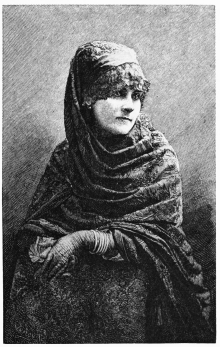
Fabulous stories of the señora’s extravagance are told. A million of
dollars is a trifle to a woman whose income is so enormous, and there is
nothing in the world that she will not buy if she happens to want it.
She does not care much for art, but has a collection of diamonds that is
very large and valuable, and she sometimes appears loaded down with
them. Usually she looks quite shabby, as she has no taste or ambition
for dress, and her party toilets, which are ordered from Paris, are
seldom worn. Of late she has been a sufferer from sciatica, which has
not only destroyed the señora’s own pleasure, but has seriously impaired
the comfort of those who have relations with her. Although a
comparatively young woman, being somewhere between forty-five and fifty
years of age, she declares that she will never marry again; and there is
not a man in Chili who has the courage to ask her. Not long since she
took a fancy to a young German with a very blond beard and hair, and
insisted that he should give up his business and make his home with her.
The inducements she offered were sufficient, and for several months the
young man has been tied to her apron-strings, having the ostensible
employment of a private secretary. But the señora is very fickle, and
will probably throw him overboard, as she has many others, when the whim
seizes her.
Señora Cousino has two daughters and one son. Neither of the girls
inherits her mother’s business ability, or at least has not developed
it; but they are very popular in society. Señorita Isadora, the elder,
has a great deal of musical talent, and performs on the violin and
piano. Both are bright and pretty. One is about seventeen, and the other
nineteen years of age. Their brother, a young man of twenty-three or
twenty-four, will share the property with them. It is quite an unusual
thing for a youth with so much money to develop the business capacity
and industry which he shows. He looks after the estancia at “Macul,” and
spends from six to eight hours a day in the saddle, riding about the
place. He seldom joins in the festivities that his mother enjoys so
much, and is quite pronounced in his disapproval of her extravagance.
He is to marry a young lady of rather humble station, and it is
expected that the Meiggs mansion, which has been previously described,
will be presented to the bride by his mother as a wedding-gift.
The struggle between the Catholic Church and the liberal progressive
element in Chili, which has been going on for a number of years, is now
at its height. In all of the nations of Central and South America a
similar struggle has occurred. In Mexico and all Central America, in
Colombia, Venezuela, Peru, Chili, the Argentine Republic, and Uruguay
the Liberals are uppermost, and have control of the State. Ecuador and
Bolivia are still in the hands of the priests, and are ruled at Rome.
But even in these republics there is a growing tendency towards
liberalism, and the day will soon arrive when the power of the Church in
politics will be overcome, and its authority over temporal affairs
denied. The Clerical party is growing in Peru. It has revived during the
prostration of that republic, and although the liberal element is still
in power, the Government is so weak that it cannot defy the Church as it
once could. Therefore, the priests and monks and Jesuits, who were
driven out years ago, are returning in large numbers to resume their
authority over the common people and intrigue for an administration
favorable to them.
In Chili there has been no confiscation of church property, as in some
of the other States, and at the capital there are still over two
thousand monks and as many nuns. The Jesuits have been expelled for
engaging in conspiracy against the Government, but the outer orders of
friars are permitted to remain. A dispute between the archbishop and the
President some years ago caused the former to retire from Chili, and the
Pope sent over a nuncio to try and arrange matters; but this legate
criticised the Government so severely from the pulpit that he was given
a passport and an escort of military, and now there are no relations
whatever between the Pope and Chili, although the Catholic faith is
still recognized by the Constitution as the established religion of the
republic. The radical element of the Liberal party favors extreme
measures, but the Conservative faction, of which Ex-President Santa
Maria is the leader, wisely prefers to take steps slowly, and avoid
revolution.
The Liberal party has a majority in Congress, and has passed several
laws by which the authority and influence of the Church has been greatly
crippled. The Liberal majority in Congress has placed the appointment of
bishops in the hands of the President of the republic instead of the
Pope; it has declared civil marriage to be the only legal one; it has
opened the cemeteries to Jew and Gentile; taken the registers of births,
marriages, and deaths out of the hands of the Church, and given them to
civil magistrates; established non-sectarian schools, and passed a
compulsory education law, under which all citizens who send their
children to the priests and nuns to be taught have to pay a tax or fine
to the State. These measures have all been bitterly fought by the
clergy, but they have been compelled to yield in every instance. Just
now the last act of Congress in this direction, establishing civil
marriage, and recognizing the legitimacy of only those children born of
parents wedded in this way, is the bone of contention, and has caused
the bitterest struggle which the State has seen.
It formerly cost twenty-five dollars to be married by the Church, and a
large part of its revenues came from that source. The peons, who
scarcely ever are able to accumulate so much money, therefore lived in a
state of concubinage, and more than half the children born in Chili were
illegitimate. Now a marriage certificate can be secured from a civil
magistrate for twenty-five cents, and persons cohabiting without it are
subject to fine and imprisonment. The archbishop has issued a decree
excommunicating from the Church all persons who are married by the civil
right, and the Catholics of the country, comprising ninety-nine per
cent. of the population, are in a serious dilemma. They are compelled to
choose between excommunication and imprisonment, and therefore in the
upper classes weddings are no longer fashionable. Some people go first
to the church and then to the magistrate, and run the risk of
excommunication; but the more conscientious prefer to remain single.
Just now in Santiago there is a young man of brilliant attainments, a
member of Congress and a leader of the Liberal party, who wants to marry
the daughter of a prominent merchant. The engagement has been existing
for several years, and both parties are willing to fulfil it according
to a civil law; but the girl’s mother is a devout Catholic, and will not
consent to a wedding without the blessing of a priest. The young man is
willing to go to the church as well as to the magistrate, but the
archbishop has forbidden any priest to marry him without a full
retraction by him of his political record. This he refuses to make, and
the couple are preparing to go to the United States or some European
country to have the ceremony performed.
Not long ago there was a marriage in high life in one of the southern
provinces of Chili, which attracted wide attention from the fact that it
was the first defiance of the Church in that part of the country. On the
Sunday following the wedding the couple were denounced by the bishop
from the pulpit of the cathedral, and the Catholic newspaper published
some brutal comments to the effect that the young couple had placed
themselves on the level of beasts by cohabiting without the blessing of
the Church. The bride’s brother belabored the editor so that he will be
a cripple for life, and would have given the bishop a similar
chastisement had not the latter kept out of the way.
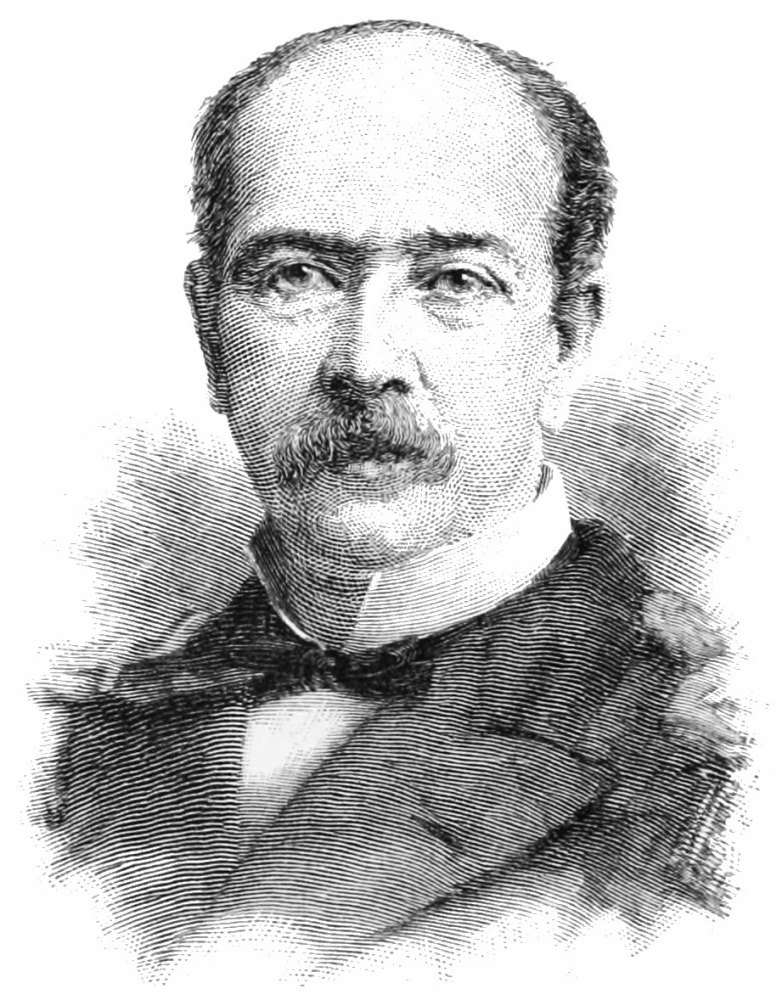
At the last Presidential election, which occurred in June, 1886, Señor
Balmaceda, the Liberal candidate, was elected to succeed President Santa
Maria, who had served his full term of four years. He was bitterly
opposed by the priests, who realized that his success would be their
permanent discomfiture, and there were several serious riots, in which
many were killed and wounded. But Balmaceda was peacefully inaugurated
in September, and the Congress which assembled at the same time has an
overwhelming majority in sympathy with the Administration. The issue at
the election was the enforcement of the civil marriage statute, and
some measures will be taken to reduce the Church to subjection. A law to
expel from the country priests who intimidate citizens from obeying the
civil marriage act has already been proposed. This will be open war; but
priests who threaten to excommunicate will be sent into exile, where
they will shortly be followed by the monks and nuns, and a general
confiscation of church property will be the next step. It is estimated
that one-third of the entire property in Chili is owned by the Church.
Much of this property is held in trust for certain saints, to whom it
has been bequeathed by devout persons, or purchased by the gifts of the
people. Saint Dominic, for example, is one of the largest
property-holders in South America, and has an income of more than a
million dollars a year from his estates, which are ably managed by the
Dominican friars. It is proposed to assess a tax upon these estates,
which now pay nothing towards the support of the Government; and if the
monks refuse to pay, the property will be confiscated.
Protestantism is making rapid progress in Chili. There are several
missions under the care of the Presbyterian Board of the United States,
and a number of self-supporting churches and schools. There is also a
Presbyterian College and Theological Seminary, and a Young Ladies’
Seminary with about one hundred and fifty boarding scholars; but the
common people still cling to the superstitions and practices of the
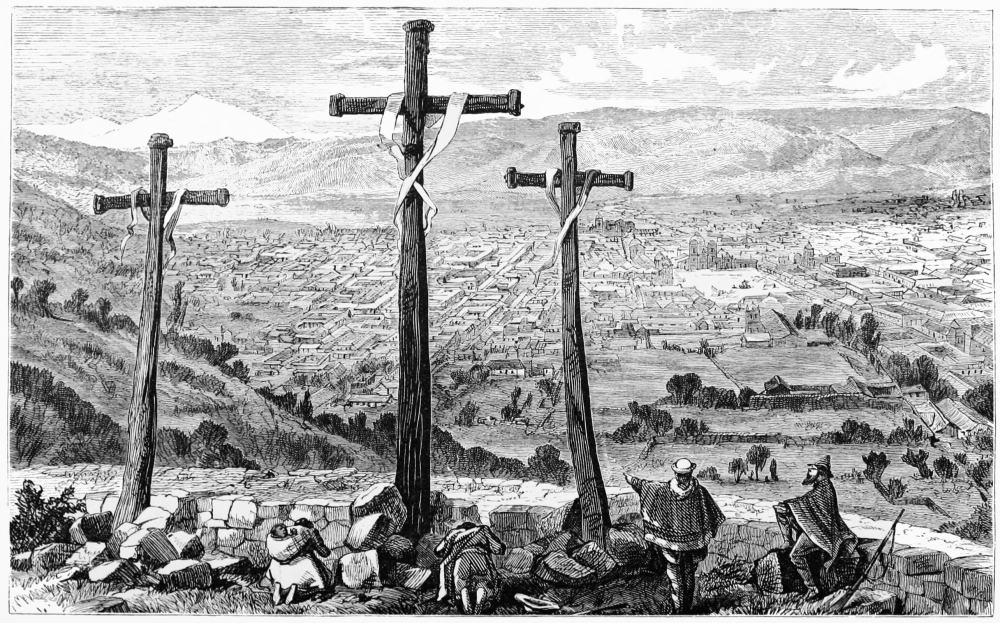
past. Crucifixes upon which the bodies of bleeding Christs are
displayed, with all the symbols of the Crucifixion—the sponge, hammer,
nails, spear, and other implements—are erected in the public streets.
They are accompanied by an announcement from the archbishop that whoever
says a certain number of prayers at these places will receive total
absolution for all past sins.
A beautiful marble monument has been erected on the site of the church
which was burned about twenty years ago on the Feast of the Virgins. As
usual on that day, high mass was celebrated by the bishop, and at this
particular church, which was that of the patron saint of maidens, there
was a
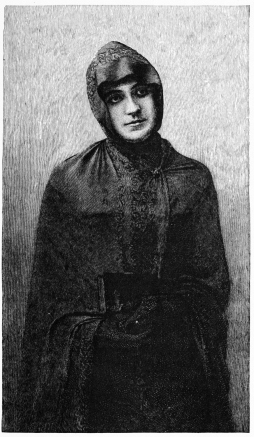
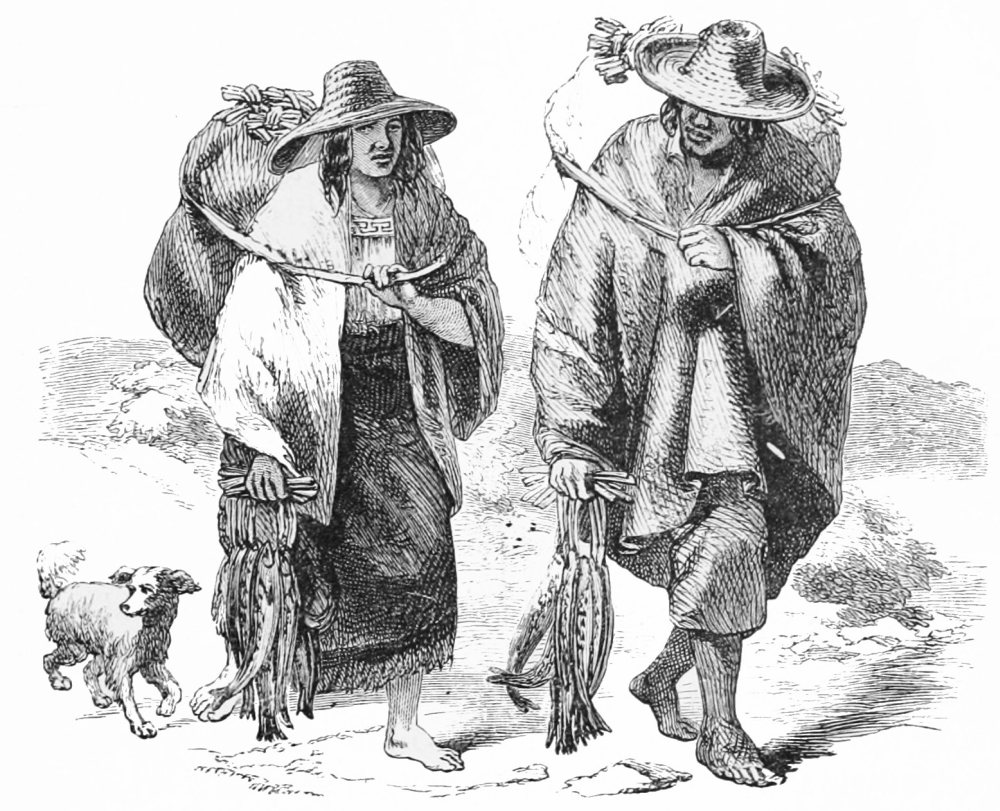
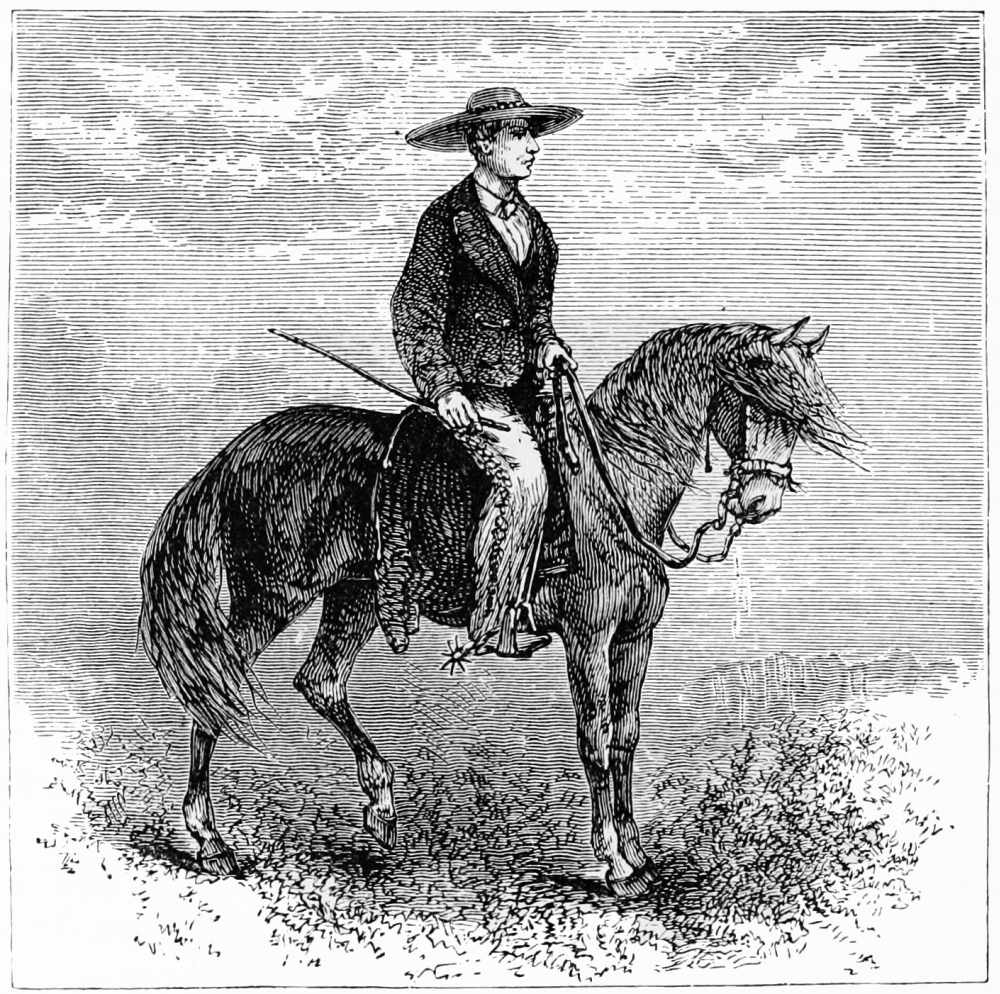
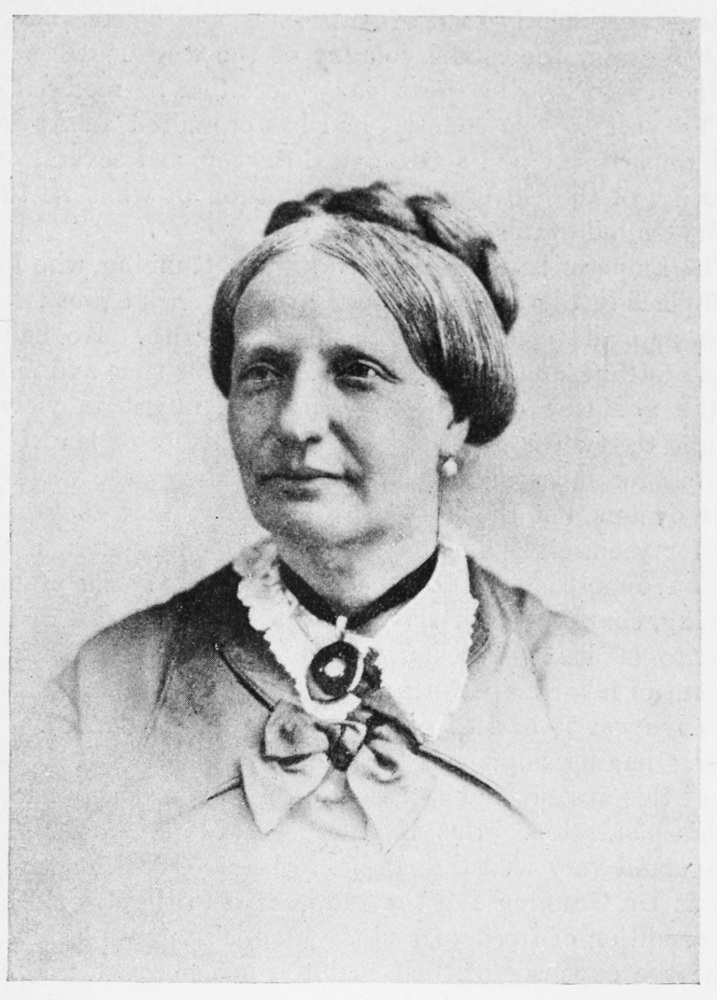
A BELLE OF CHILI DRESSED FOR MORNING MASS.
very large attendance of girls from all classes of society. The church
was handsomely draped, and cords to which candles were hung were
stretched between the pillars. Being insecurely placed, these burning
candles fell into the crowd below and set the clothing of the girls on
fire. There was a panic, and the entire crowd became jammed against the
doors, which, folding inward, could not be opened. The roof caught fire
and, burning, fell with crushing destruction upon the heads of those
below. The priests took no means to rescue the worshippers, but managed
to get out unharmed themselves, carrying with them all the plate and
other valuable contents of the altar. Their cowardice and neglect were
universally condemned, and they were compelled to leave the country.
It is not known how many lives were lost, and the inscription upon the
monument—which stands in the centre of a plaza occupying the site of
the church—gives no clew; but it is estimated that at least three
thousand young ladies perished, and there was mourning in almost every
house in Santiago. After the fire the bodies were found packed in a
solid mass of flesh, the heads and upper portions of the forms being
destroyed, while the limbs and lower portions of the bodies were
uninjured. Since that calamity the Feast of the Virgins has been
celebrated with mourning in Chili.
It is one of the rules of the Church that no women shall participate in
the services except as silent worshippers. All the music and singing is
given by men, usually monks, who are well trained. Sometimes, as on
Easter or Christmas, when mass is celebrated with more than usual
magnificence, opera-singers of both sexes are introduced into the choir
to assist in the performance; but the women are compelled to dress in
the clothes of men, for fear of offending St. Paul or some other
anti-woman’s rights potentate by wearing petticoats.
At the beginning of the fishing season at Valparaiso it is customary to
take the image of St. Peter, the patron of fishermen, in a boat and row
it over the bay, in order to bless the fish; and those who expect to
reap the reward of this patronage are highly taxed to pay for this
performance. Every method by which money may be extorted from the
people, every pretence which their ingenuity can invent, is practised by
the priests to enrich the Church, and the funds are wasted by them in
riotous living. Their looks are sufficient to convict them of the
gluttony and libertinism of which they are accused, and it is a common
thing to see them reeling through the streets in a state of
intoxication.
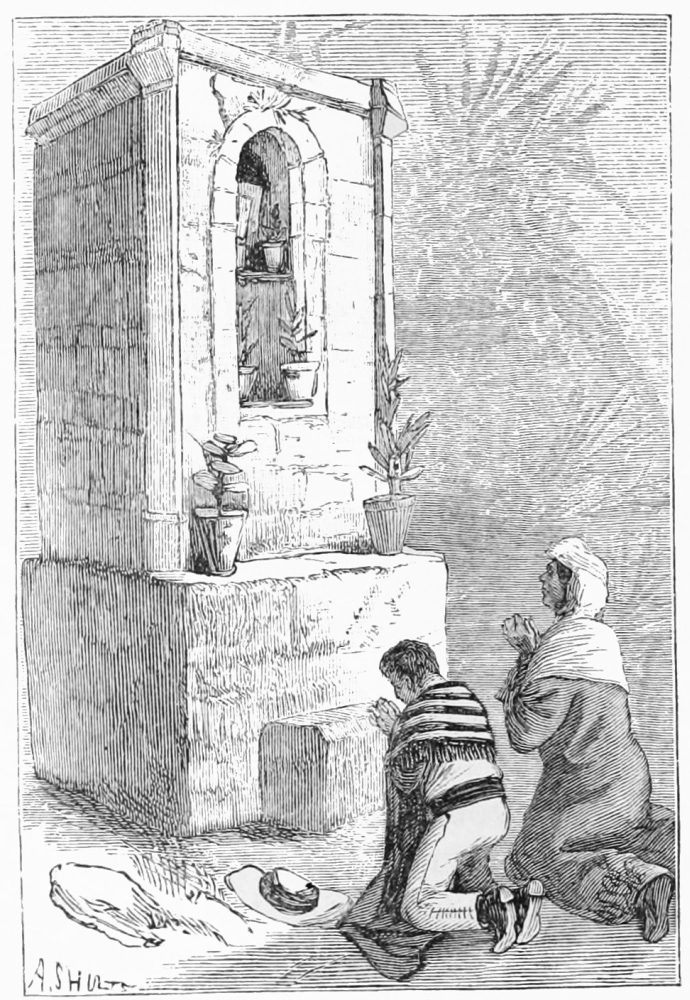
In the wall of one of the handsomest residences, by the side of the main
entrance, is a niche in which a statue of the Mother of Christ has been
placed—a gaudy, tinsel-covered figure, with a halo of gas-jets and a
mantle of gilt-embroidered satin. An iron grating protects the image
from the street, but through the bars have been thrust garlands of
flowers and gifts of various sorts—votive offerings from people in
bodily distress or mental disorder. The lady who lives in this house,
the wife of a wealthy native merchant, some years ago became very ill,
and made a vow to the Virgin that if her health was restored she would
show her gratitude in this manner; and there the statue stands to
illustrate the woman’s piety. Almost daily people who are ill, as its
owner was, and others in distress of mind from some cause or another,
come to it with such offerings as their condition permits them to make,
and trustfully appeal to the Holy Mother for relief. It is said that
many miraculous cures have resulted from faith in the power of this
image, and people always lift their hats and reverently cross themselves
as they pass it by.
The 13th of May is the anniversary of the most destructive earthquake
Santiago has ever seen, which occurred about forty years ago. The
responsibility for the calamity lay with a woman who had a private
saint, a household idol, to whom she offered prayers. This image deemed
fit to withhold from her some favor she had asked, and she, angry, cast
it violently into the street. This caused the earthquake! and it did not
cease until the fear-stricken people took the image to the Church of St.
Augustine, near by, where it was placed in a niche of honor, and has
since been devoutly worshipped by them as the patron or preventer of
earthquakes. For the lack of a better name, and because the image bears
no resemblance to any saint that was ever known or told of, the people
call him “Señor May.” Originally he was “Señor Thirteenth of May,” but
now plain “Señor May,” for short. Each year, as the 13th of May comes
round—the anniversary of his “martyrdom,” as the people call it—the
entire population assemble to pay honor to the saint, and appeal for his
intercession in preventing a recurrence of the earthquake, and, as
everybody knows, these appeals have never been denied. “Señor May”
protects the city at least one day in the year. As the church is not
large enough to accommodate the multitude, the saint is taken out into
the street and carried at the head of a procession, in which the bishop,
the municipal authorities, companies of military, religious orders, and
others march. The occasion is recognized by the Government and the
municipality, and by commercial circles. Business houses are closed, and
factories dismiss their workmen to take part in the ceremonies. The day
is celebrated as universally as Thanksgiving Day in the United States,
and the saint receives rich gifts from people who are grateful that
their houses have not been shaken to pieces.
I was present at the celebration in 1885. First in the procession came a
squad of policemen to clear the way, for the entire population was
jammed into the streets; and in the windows and upon the roofs of houses
the nobility and gentry of the city stood, watching the performance as
eagerly as the gamins of the streets, and throwing garlands and bunches
of flowers into the path over which “Señor May” was to pass. Men fought
and cursed, struck and stabbed each other in the struggle to do homage
to the image, and all the police in the city were present to preserve
order and arrest disturbers of the solemn scene. The Government offices
were closed, and the President himself, the leader of the anti-Church
party, did not go to the palace.
Following the policemen came a line of monks in cowls and frocks of all
colors. There were monks in white, monks in black, monks in gray, and
monks in brown—Carmelites, Capuchins, Franciscans, and every order
being represented. Then came a procession of priests in their vestments,
with novitiates, each bearing a lighted candle and chanting some
monotonous service. Behind them were a dozen altar-boys, some with
incense-lamps which perfumed the air, and others with trays of flowers,
which were scattered in the street for the bishop, who came next, to
tread upon. He walked under a crimson canopy, wearing his most
resplendent vestments, and bearing in his hands the Host—the Holy
Sacrament—the body and blood of the Redeemer. Behind him were other
incense-burners, and more boys with flowers. Then came, borne upon the
shoulders of twenty men, the image of “Señor May”—an ugly and
repulsive-looking effigy, draped with the most fantastic garments, rich
embroideries, and much gold lace. Upon the pedestal were packages and
caskets containing the offerings received that day; and as he passed
along one and another would be added, handed from the houses or the
crowd to the priests of St. Augustine’s Church, who surrounded the image
to collect them.
The crowd fell upon their knees as this ghastly feature of fanaticism
passed by. Every head was uncovered, and every reverent tongue murmured
a prayer. Men pushed and struggled, women screamed, and the policemen
struck forward and backward with their swords to prevent the people from
surging into the streets. Then came more chanting priests, and another
battalion of monks, then more incense-bearers, and a spectacle of even
greater repulsiveness—an image of a bleeding Christ upon a crucifix,
naked, with the drapery of a ballet-dancer about his loins! More priests
and more monks, and then a band of music and a regiment of infantry in
parade uniforms, followed by a long line of bareheaded men, each with a
lighted candle in his hand. This part of the procession received large
and continual additions. People from the crowd fell into line at the
rear, and were furnished with candles by attendants, who carried boxes
of them in a cart, until the line reached out for a mile or more. After
the parade the images were returned to the Church of St. Augustine,
where high mass was celebrated by the bishop, to which admission was
secured only by ticket.
The next morning the newspapers contained long descriptions of the
procession. The contest then, as now, going on between the Liberal party
and the clerical element for political control gives the utterances of
the official organ of the Government (Liberal) peculiar significance. I
quote the brief paragraphs in which reference was made to the event of
the month:
“The procession of ‘Señor May’ took place yesterday, accompanied by many
religious festivities in the temple of St. Augustine. The people and the
municipality joined with the church to give a transcendent recognition
in a most solemn and impressive manner of the historic ‘Señor May.’ From
the early hours of the day the surroundings of the temple of St.
Augustine were occupied by great throngs of the faithful, who awaited
the inauguration of the parade. A little before four o’clock there
arrived the forces of the army, with the national band at their head,
and took position in front of the church in accordance with the orders
from the commander-in-chief of the army.
“Having been put in motion, the procession filed with difficulty through
the great number of people who crowded the streets and followed with
many prayers and significant rejoicing. The pedestals of the saints were
beautifully adorned and covered with many valuable and votive offerings,
the tender gifts of piety from the faithful. A committee from the
municipal authorities, appointed to contribute to the solemnity of the
occasion, participated in the ceremonies. The bands of music played
various sentimental airs during the march.
“To resume, the acts of recognition to the most potent ‘Señor May,’ made
in compliance with the vows of the year 1847, after the terrible
catastrophe of the 13th of the present month, have been perfectly
carried out by the Catholic capital of Chili.”
Farming in Chili is conducted on the old feudal system, very much as it
is in Ireland. The country is divided into great estates owned by people
who live in the cities, and seldom visit the haciendas. There are only
two classes of people, the very rich and the very poor, the landlords
and the tenants. On each estate are a number of cottages with garden
patches around them, which are occupied by the tenants, and in payment
for which the landlord is entitled to so many days’ labor each year at
his option. Should more labor than is due be required of the tenant, he
is paid for it, not in money, but in orders upon the supply store or
commissary of the estate, where he can get clothing or food or
rum—especially rum. Tenants are usually given small credits at these
stores, and are kept in debt to the landlords. As the law prohibits them
from leaving a landlord to whom they owe money, the poor are kept in
perpetual slavery, like the party in mythology who was always rolling a
stone uphill. Even under this cruel system of peonage master and slave
usually get along pretty well together, but old-fashioned feudal wars
are kept up between estates, as was the case in England centuries ago.
The peon will always fight for his landlord, and bloody encounters are
constantly occurring. There are in Chili to-day the same old family
feuds that existed in the Middle Ages of Europe between the Montagues
and the Capulets. Somebody stepped upon the coat-tails of somebody else,
or kicked his poodle dog, away back in the early history of the country,
and the two families have been slashing and hacking at each other ever
since, while nobody can explain what it is all about. The tenant will
always cut a throat in his master’s honor, but he can never get any
richer in Chili than he is to-day.
Everybody goes on horseback; even the beggars ride. The gear of the
Chili saddle-horse—and horses are seldom broken to harness, all the
teaming being done with oxen—is a most curious and complicated affair.
The bit is a long, heavy, flat piece of iron, which rests on the horse’s
tongue, and presses against the roof of his mouth. At each end is a
hole, through which is passed a large iron ring about four inches in
diameter, which encircles the lower jaw. At each side of the mouth is
placed another iron ring to which the reins are fastened. The whole
affair weighs about five pounds, and is sufficiently powerful to break a
horse’s jaw if suddenly jerked. The reins are made of fine-plaited hide
or horse-hair, about the thickness of the forefinger, and are joined
together when they reach the pommel of the saddle, terminating in a long
lash called a chicote, at the end of which is either a handsome tassel
or a small piece of lead. When not in use the chicote hangs down the
flank of the horse, often dragging on the ground. Sometimes the load of
lead is heavy, and furnishes a weapon of offence and defence as
formidable as a slung-shot, and the poor horse is often beaten with it
without mercy. Fancy bits are made of plated or solid silver, and
bridles plated with gold, with reins made of golden wire, can be found
in the larger cities. I saw a bridle in Chili, belonging to Señora
Cousino, that is said to have cost two thousand five hundred dollars;
and one often hears of gifts of this sort that are worth one thousand
dollars or more.
The Chili saddle is even more queer and complicated than the bridle.
First, six or seven sheepskins are placed upon the horse’s back, one on
top of the other; a leather strap is passed around them and firmly
secured; a skeleton saddle, or rather a piece of wood cut in the shape
of a saddle-tree, with a cantle at each end, comes next, and on top of
this any number of sheepskins; or, if the owner is rich, rare furs
furnish a seat, which is called the montura. The four corners are
fastened down by broad leather straps, ornamented with silver or brass
buckles, to enable the rider to wedge himself in, and the whole is bound
around the horse’s belly with a broad band of leather or canvas.
Sometimes aristocratic and wealthy riders have a high pommel like that
of the Mexican saddle, which is covered with silver, and stamped on the
top with his family coat of arms. The amount of silver on a man’s riding
equipment is understood to indicate his wealth and station in life, and
there is a great deal of competition in this direction among the swell
caballeros. The stirrups of the ordinary citizen are made of two huge
pieces of wood, with a hole cut through for the foot, while those of the
aristocrat are brass or silver slippers. The wooden affair, the poor
man’s stirrup, is rudely cut out of oak, or other hard wood, by hand,
and usually weighs as much as four or five pounds. The brass one is
quite as heavy, but much more ornamental.
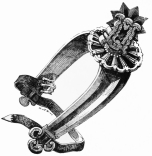
When the rider is seated in the saddle his legs are entirely concealed
by the furs and sheepskins, which add to his warmth, and on his back he
wears the poncho of the country, which is the most comfortable and
convenient garment that human ingenuity has ever produced. It is about
the size of the rubber poncho used in the United States, but is woven of
vicuña hair or lamb’s-wool, and keeps the wearer cool by day, as the
rays of the sun cannot penetrate it, and warm by night. It answers as
well for an umbrella as for an overcoat, and sheds the rain better than
rubber, for the oil is not extracted from the wool of which it is made.
The vicuña is the mountain-goat of the Andes, but is becoming scarce,
and nowadays a vicuña poncho is as rare and expensive as a camel’s-hair
shawl, which it very much resembles, being worth from one hundred and
fifty to five hundred dollars. A fully equipped saddle-horse of a
caballero, or gentleman, with vicuña poncho and spurs of silver, with
saddle and bridle mounted with the same metal, often represents an
investment of four or five thousand dollars. Very often the stirrup is
made of solid silver, beautifully chased, and those used by ladies are
generally so. The English manufacturers are able to produce the
ornaments and stirrups so much cheaper than the native workmen, who have
no labor-saving machinery, that nearly all are now imported, and they
have succeeded in imitating the poncho very well too. But among the
aristocrats it is considered the height of vulgarity to use modern
English saddlery or the imitation poncho, for these articles have been
handed down from generation to generation, and the older they are the
more valuable, no sort of usage wearing them out.
In Guatemala I was presented with a pair of stirrups which had been worn
by the cavalry of Cortez when they made their raid into Central America
and conquered that continent in 1535. This pair was handed down from
generation to generation, in the family of Mr. Sanchez, the “Minister of
Hacienda,” or Finance, of the Guatemala Government: they are made of
iron, with wide flanges to protect the feet and legs of the cavalier
from the high grass and brambles of the country through which he had to
ride. This style was long ago abandoned, and is now only seen in
museums.
He who wishes to make the journey from the Chilian to the Argentine
Republic and the east coast of South America has a choice of routes. He
may go by sea, around through the Strait of Magellan, which will cost
him fifteen days’ time and two hundred dollars in money, or he may climb
over the Andes on the back of a mule, a journey of five days, three of
which only are spent in the saddle amid some
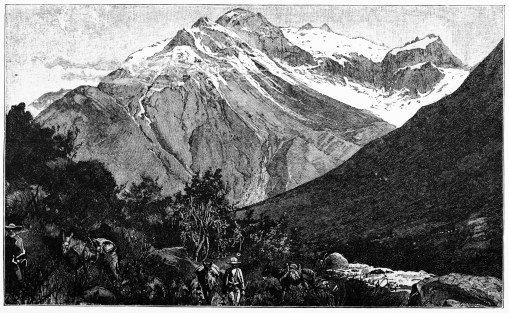
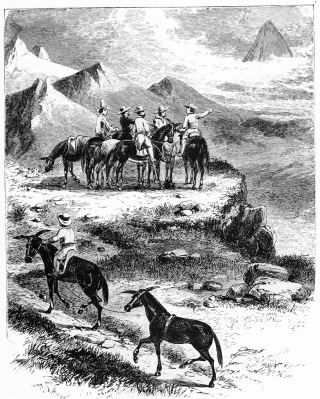
of the grandest scenery in the world. The highest mountain in the
Western Hemisphere is Aconcagua, which rises 22,415 feet above the sea
to the northward from Valparaiso and Santiago, and in plain view from
both cities when the weather is clear. Chimborazo was for a long time
supposed to be the king of the Andes, and in the geographies published
twenty years ago it is described as the highest summit in the world. No
one has ever reached the peak of either mountain, owing to the depth of
snow and impassable gorges, but recent measurements, taken by means of
triangulation, give Aconcagua an excess of about 2000 feet over old
“Chimbo.” Scientists have reached an altitude higher than the summit of
either in the Himalaya Mountains of India, where Mount Everest is
claimed to rise between 27,000 and 30,000 feet. Humboldt made Chimborazo
famous, and very few travellers have gone beyond the point he reached;
but no serious attempt has ever been made to explore the summit of
Aconcagua, as the Chillanos do not often go where their horses cannot
carry them. In mountain gloom and glory Chimborazo is said to surpass
all rivals, standing as it does within sight of the sea, and surrounded
by a cluster of twenty peaks, like a king and his counsellors. But
Aconcagua is grand enough, and has nothing near it to dwarf its size.
The latitude in which it stands brings the snow line much lower than
upon Chimborazo and the other peaks of Ecuador, which are almost upon
the line of the equator, and the purity of the atmosphere gives the
spectator an opportunity to see its picturesqueness at a long distance.
From Santiago, Chili, there is a Government railway as far as the town
of Santa Rosa, which passes around the base of Aconcagua, and furnishes
the traveller with a most sublime panorama of mountain scenery. There
mules and men are hired for the ride over the Cumbre Pass to Mendoza, on
the eastern slope of the Andes, to which a railroad has been recently
opened by the Argentine Government. Here one can take a Pullman sleeper,
and ride to Buenos Ayres as comfortably as he can go from New York to
St. Louis, the distance being about the same.
This railroad was opened in May, 1885, with a grand celebration, in
which the Presidents of Chili and the Argentine Republic, with retinues
of officials, participated. The event was as important to the commercial
development of Argentine as was the first Pacific Railway to the United
States, as it opened to settlement millions of square miles of the best
territory in the republic, and furnished a highway between the two seas.
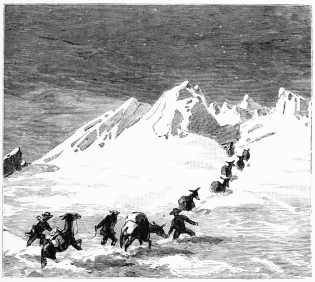
The people of the United States have very little conception of what is
going on down in that part of the world. They do not realize that there
is in Argentine a republic which some day is to rival our own—a country
with immense resources, similar to those of the United States, situated
in a corresponding latitude, prepared to furnish the world with beef and
mutton and bread, and stretching a net-work of railways over its area
that will bring the products of the pampas to market. Geographers do not
keep pace with the development of this part of South America, and to
present accurate accounts of its condition should be rewritten every
year. Who knows, for instance, except those who have been there, that a
man can ride from Buenos Ayres across the pampas to the foot-hills of
the Andes in a Pullman car?
The late war between Peru and Chili robbed Bolivia of all her sea-coast,
and the ports from which her produce was shipped, and at which her
imports were received, now belong to the Chillanos, who charge heavy
export and import duties. The opening of this railroad has caused the
trade of Bolivia to be diverted to the Atlantic, and the extension of
the line to the northward, which is already in progress, will make
Buenos Ayres and other cities on the river La Plata the entrepots for
Bolivian commerce. It is not much farther now from the centre of Bolivia
to the Argentine Railway than to the Pacific coast, and the feeling of
resentment towards Chili
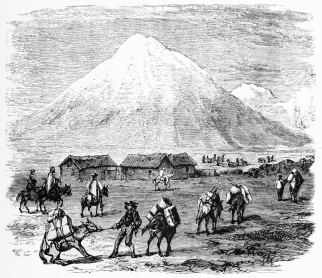
A STATION IN THE MOUNTAINS.
makes the difference exceeding small. Long trains of mules are passing
up and down the mountains, and their numbers will constantly increase
until the Pacific sea-ports will see nothing that is grown or used in
the country which Chili so ruthlessly robbed. One great difficulty,
however, lies in the fact that from April to November the mountain
passes are blockaded with snow, and it is always dangerous, and often
impossible, to make the journey. Native couriers, who use snow-shoes,
and find refuge in “casuchas,” or hollows of the rocks, during storms,
cross them the year round, carrying the mails. Sometimes, indeed often,
they perish from exposure or starvation, or perhaps are buried under
avalanches. The passes are about thirteen thousand feet high, and are
swept by winds that human endurance cannot survive. During the summer
the journey is delightful, and though attended by many discomforts, has
its compensations to those who are willing to rough it, and who are fond
of mountain scenery. Ladies often venture, and enjoy it. Not long since
a party of thirteen school-ma’ams from the United States, who are
teaching under contract with the Argentine Government, crossed the
mountains to Chili, and had “a lovely time.” Plenty of mules and good
guides can be secured at the termini of the railways, but travellers
have to carry their own food and bedding. There are no hotels on the
way, but only “schacks,” or log houses, which furnish nothing but
shelter. Very often people who are not accustomed to high altitudes are
attacked with sirroche, from which they sometimes suffer severely.
The road over the mountains is always dangerous, clinging as it does to
the edge of mighty precipices and upon the sides of mountain cliffs, and
only trained mules can be used on the journey. During the winter season
the winds are often so strong as to blow the mules with their burdens
over the precipices, and leave them as food for the condors that are
always soaring around. These birds know the dangerous passes, and keep
guard with the expectation of seeing some traveller or mule go tumbling
over the cliffs. Cowhide bridges, the construction of which is not
satisfactory to nervous men, stretch across the ravines after the manner
of modern suspension-bridges, and a floor or path, made of the branches
of trees lashed together with hides, and just wide enough for a mule to
pass, is laid. Travellers usually dismount and lead their mules when
they cross these fragile structures, for the hide ropes which are
intended to keep people from stepping off do not look very secure. The
oscillation of these bridges is very great, and a man who is accustomed
to giddiness will want to lie down before he gets half-way over. It is
remarkable that so few accidents happen, and when they do occur it is
usually because a traveller is reckless or a mule is green. The foxes
sometimes gnaw the hides, but no accidents have occurred from this cause
for many years.
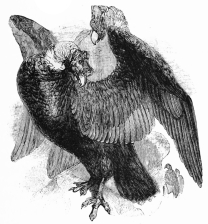
The journey on mule-back usually takes five days of travel, at the rate
of twenty or thirty miles a day, but good riders, with relays of mules,
often make it in three days. The whole route is historical, as it has
been in use for centuries. There is scarcely a mile without some
romantic association, not a rock without its incident; and tradition,
incident, and romance line the path from end to end. The Incas used the
path before the Spaniards conquered the country, and Don Diego de
Almagro crossed it in 1535 as he passed southward to Chili after the
conquest of Peru.