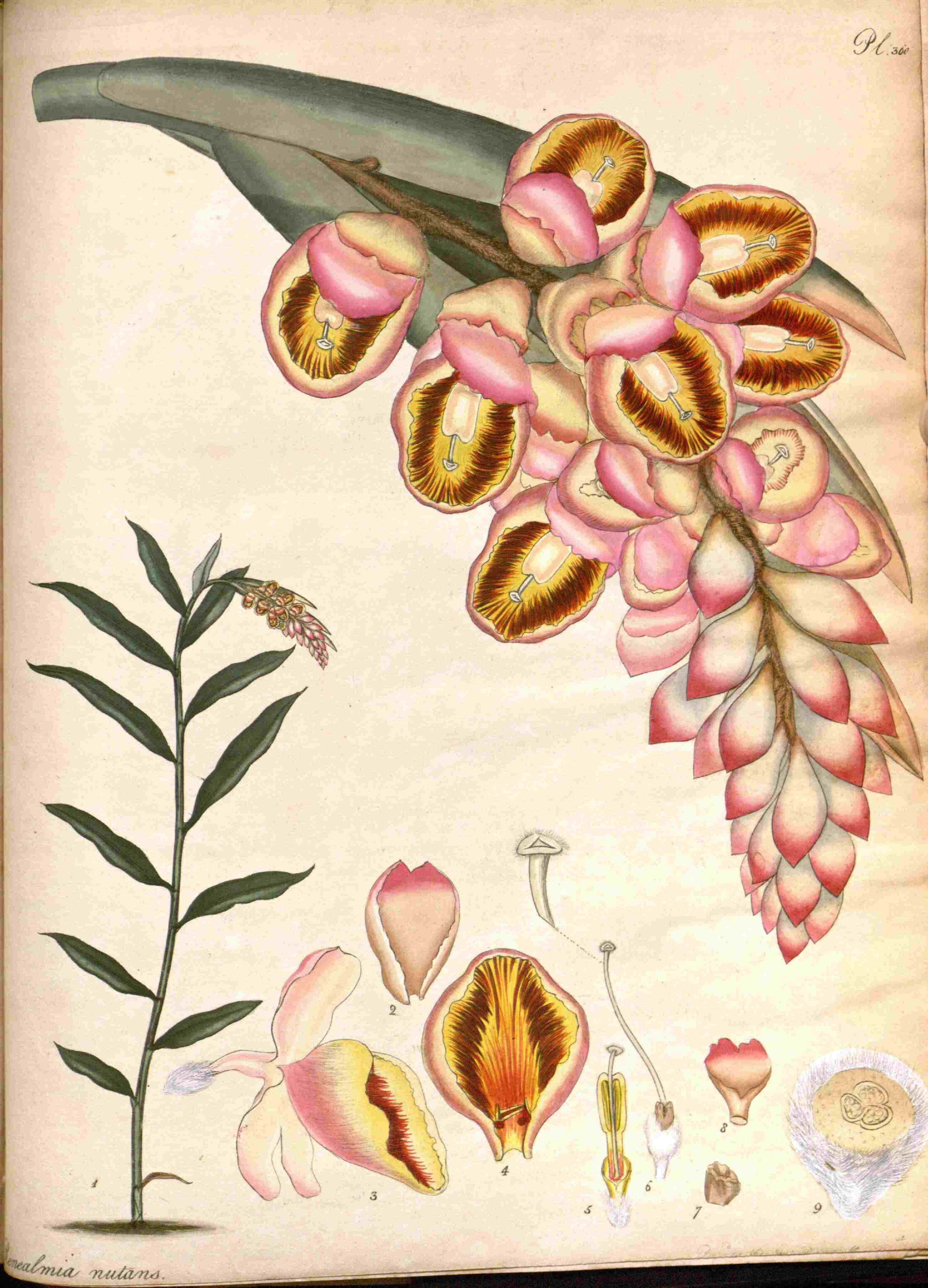
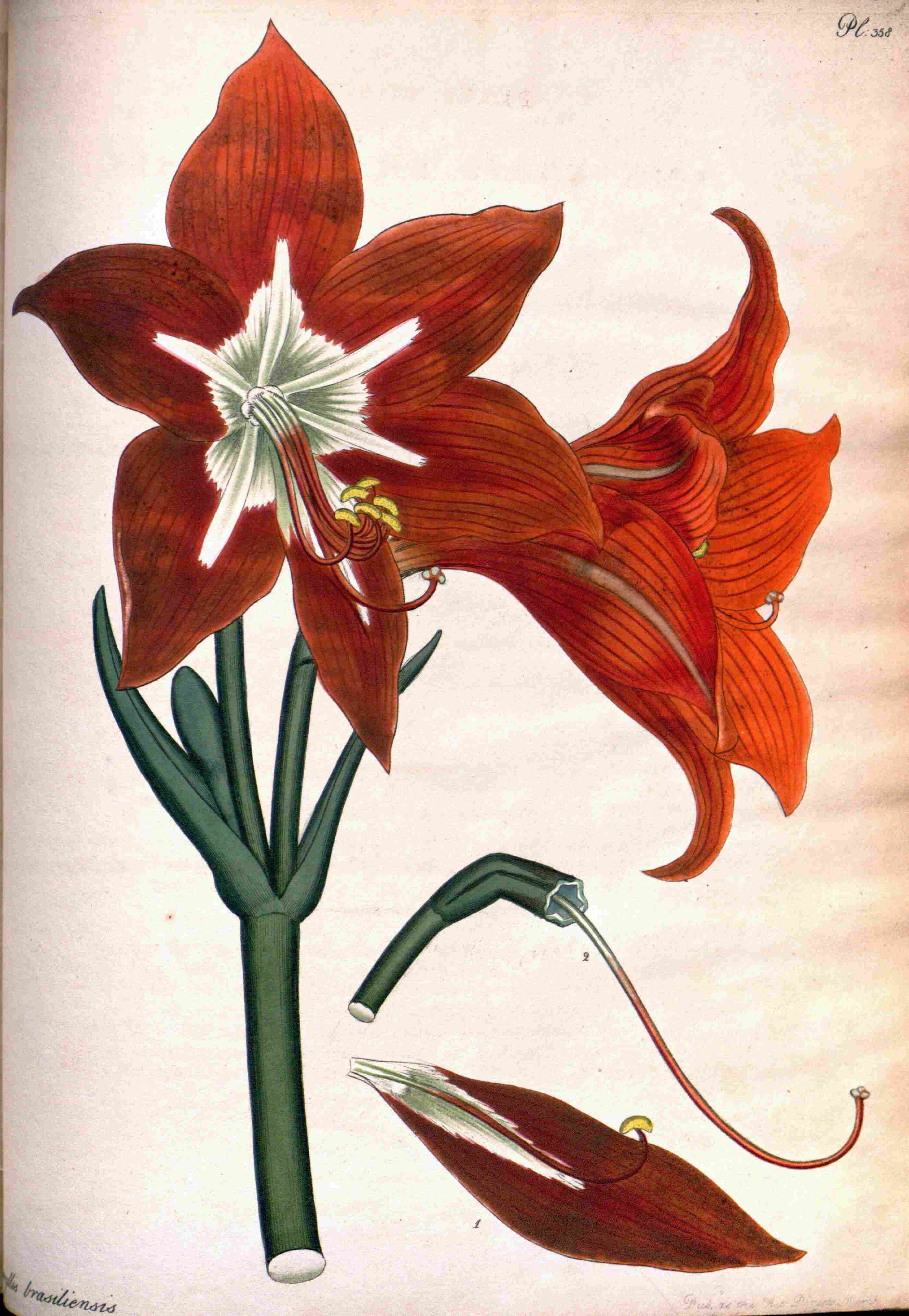
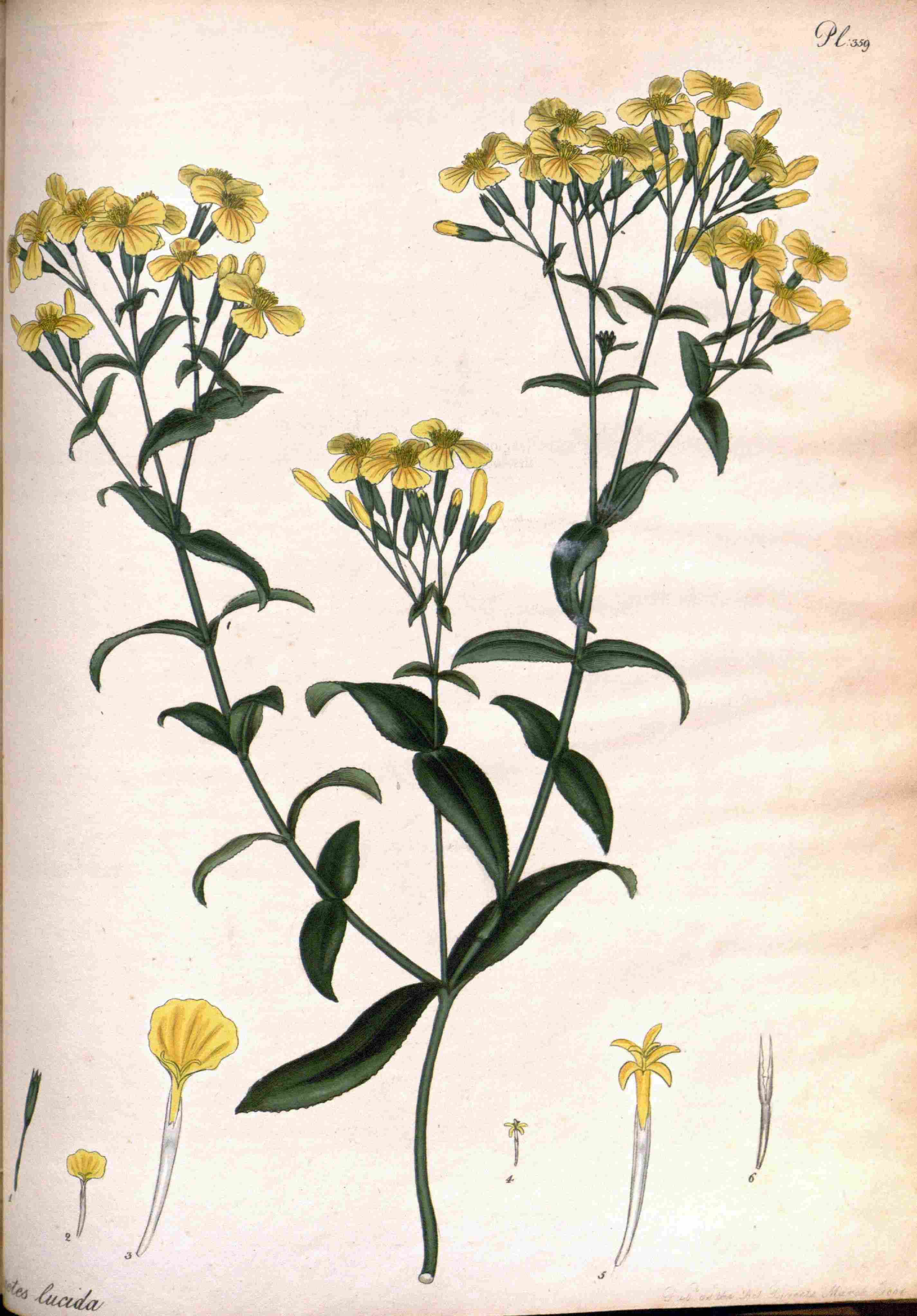
RENEALMIA NUTANS.
Drooping-flowered Renealmia.
CLASS I. ORDER I.
MONANDRIA MONOGYNIA. One Chive. One Pointal.
GENERIC CHARACTER.
Calyx. Perianthium superum, monophyllum, apice rumpens in duo seu tres
dentes irregulares.
Corolla monopetala. Tubus rectus, cylindricus; limbus trifidus; laciniis
duabus superioribus oblongis, rotundatis, æqualibus; inferiore
superioribus vix longiore, canaliculata, oblonga.
Nectarium tubo corrollæ adnatum, sub laciniis superioribus adscendens,
rectum, longitudine corollæ, oblongum, basi utrinque unidentatum, tum
sinu excavate, apice dilatatum et obtuse trilobatum.
Stamen. Filamentum nullum. Anthera unica, fauci tubi inserta, in sinu
laciniæ inferioris corollæ, nectario opposita, libera, recta, linearis,
emarginata, interius sulco exarata, longitudine et latitudine laciniæ
corollæ.
Pistillum. Germen inferum, oblongum, obsolete triquetrum, glabrum.
Stylus filiformis, glaberrimus, erectus, longitudine corollæ. Stigma
peltatum; capitulo plano; latere ad nectarium vergente truncato,
perforato, foramine in stylum decurrente.
Pericarpium. Bacca oblonga, trisulca, teres, glabra, umbilico terminata;
carnosa, in medio trilocularis. Loculamenta mollia, membranacea.
Semina plurima, oblonga, truncata, tetragona, glaberrima.
Empalement. Cup above, one-leafed, breaking open into two or three
irregular teeth.
Blossom on petal. Tube straight, cylindrical; border three-cleft; the
two upper segments oblong, rounded, equal; the lower one, scarcely
longer than the upper ones, channelled, oblong.
Honey cup fixed to the tube of the blossom, ascending beneath the
upper segment straight the length of the blossom, oblong one-toothed on
each side of the base, then with a hollow bosom widening at the end and
obtusely three-lobed.
Chive. Thread, none. Tip one inserted into the throat of the tube, in
the bosom of the lower segment of the blossom, opposite to the
honey-cup, free, straight, linear, notched at the end, grooved on the
inside, of the same length and breadth as the segment of the blossom.
Pointal. Seed-bud beneath, oblong, obscurely three sided, smooth. Shaft
thread-shaped, very smooth, upright the length of the blossom. Summit
shield-shaped; with a flat head, the side fronting the honey-cup
appearing cut off, perforated by a hole running into the shaft.
Seed vessel. Berry oblong, three-furrowed, cylindrical, smooth,
terminated by a navel, fleshy in the middle, three-celled. Cells soft,
skinny.
Seeds numerous, oblong, appearing cutoff, four-cornered, very smooth.
SPECIFIC CHARACTER.
Renealmia foliis vaginantibus; floribus racemosis terminalibus pendulis;
fructu piloso.
Renealmia with sheathing leaves; flowers in bunches terminating the
branches, hanging down, fruit hairy.
REFERENCE TO THE PLATE.
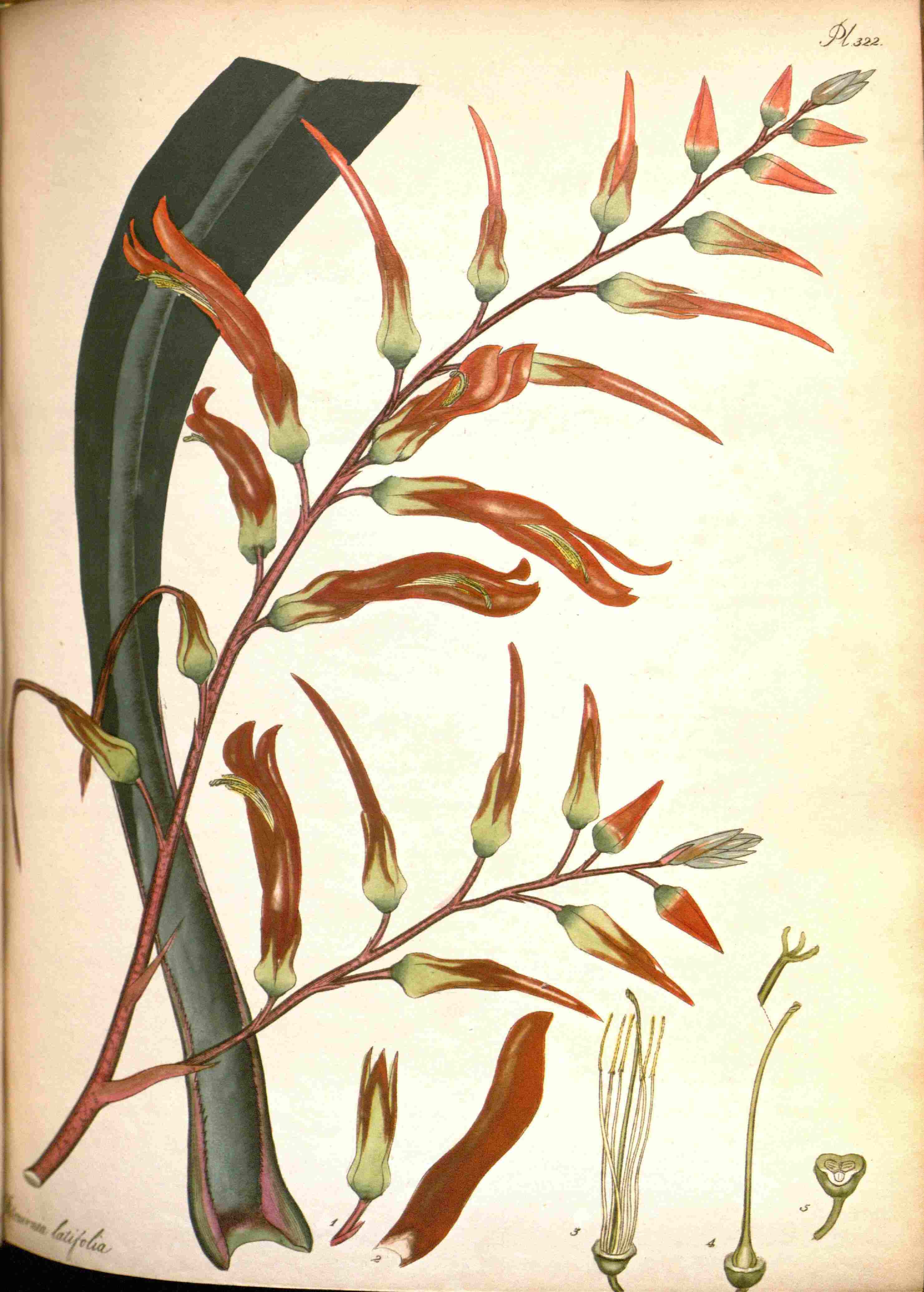
1. A miniature representation of the plant.
2. The outer sheath of the blossom.
3. A flower complete.
4. The Honey cup.
5. The Chive, Pointal, and Seed-bud.
6. The Pointal and Seed-bud cleared of the small inner sheath which
surrounds the base of the chive and shaft; with the summit detached and
magnified.
7. One of the small corpusculæ which embrace the base of the shaft,
magnified.
8. The small sheath which crowns the seed-bud, magnified.
9. The Seed-bud, cut transversely, magnified.
Amongst the numerous new plants introduced from China by the late Mr.
Slater, of Laytonstone, in the year 1793, this is certainly to be
considered as amongst the most beautiful. The only drawback to its
general merit, as a hot-house plant, is the great height to which it
might attain before it flowers; being in common fourteen or fifteen
feet. It propagates by offsets, and is kept with little trouble; as it
will flourish in almost any soil, and will flower, if set in any part of
the hot-house, so as not to interrupt its growth, the blossoms being
produced only from the summit. Although with us the stem is permanent,
as with some others of the same natural habit, yet it cannot, we think,
with propriety be considered as either a tree or shrub, but rather
herbaceous. Some contention, at first, arose whether this plant should
be referred to the present Genus; which was formed, by the younger
Linnæus, from a plant a native of Surinam, S. America, some of the parts
not exactly corresponding, especially the fruit; we have nevertheless
made no scruple in placing it to that Genus, with which, upon an
inspection of the dissections, it will be found very well to accord. Our
figure was taken from a plant which flowers, annually, in the month of
July, in the Collection of J. Vere, Esq. Kensington Gore.