Most illustrations may be enlarged by clicking them
or opening them in a new tab or window.
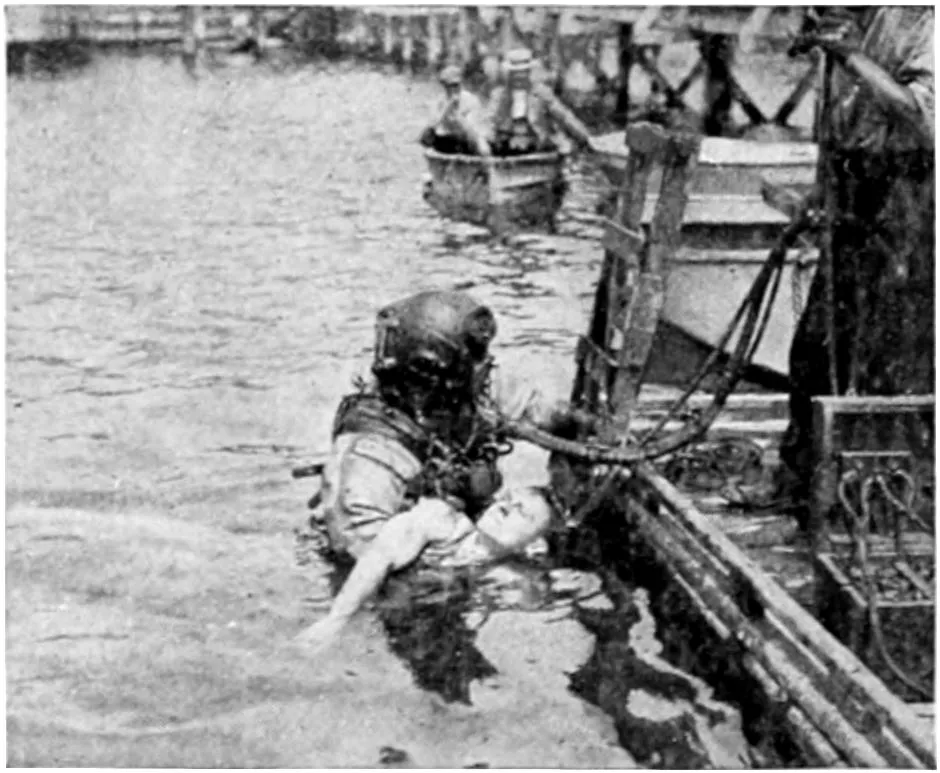
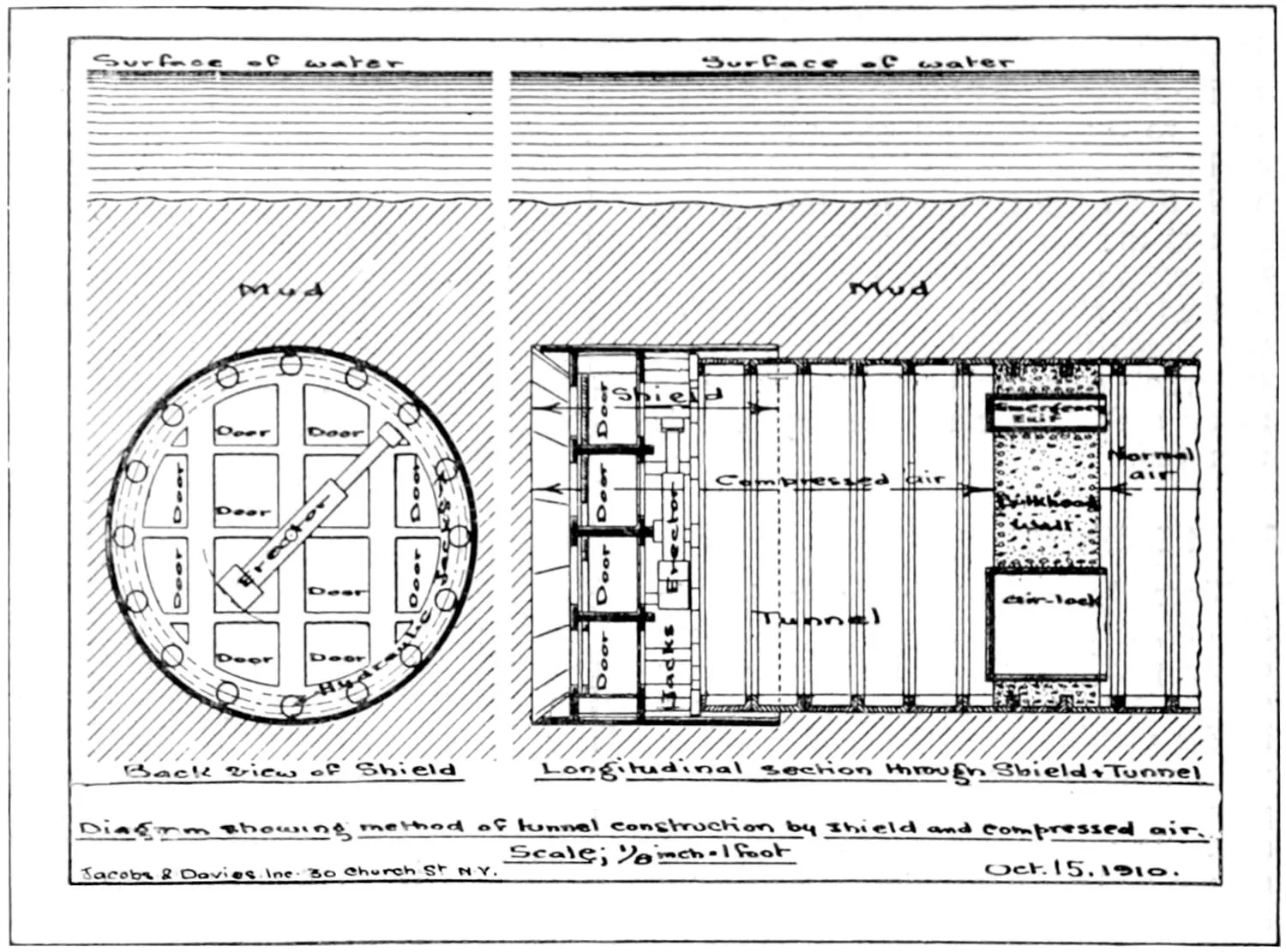
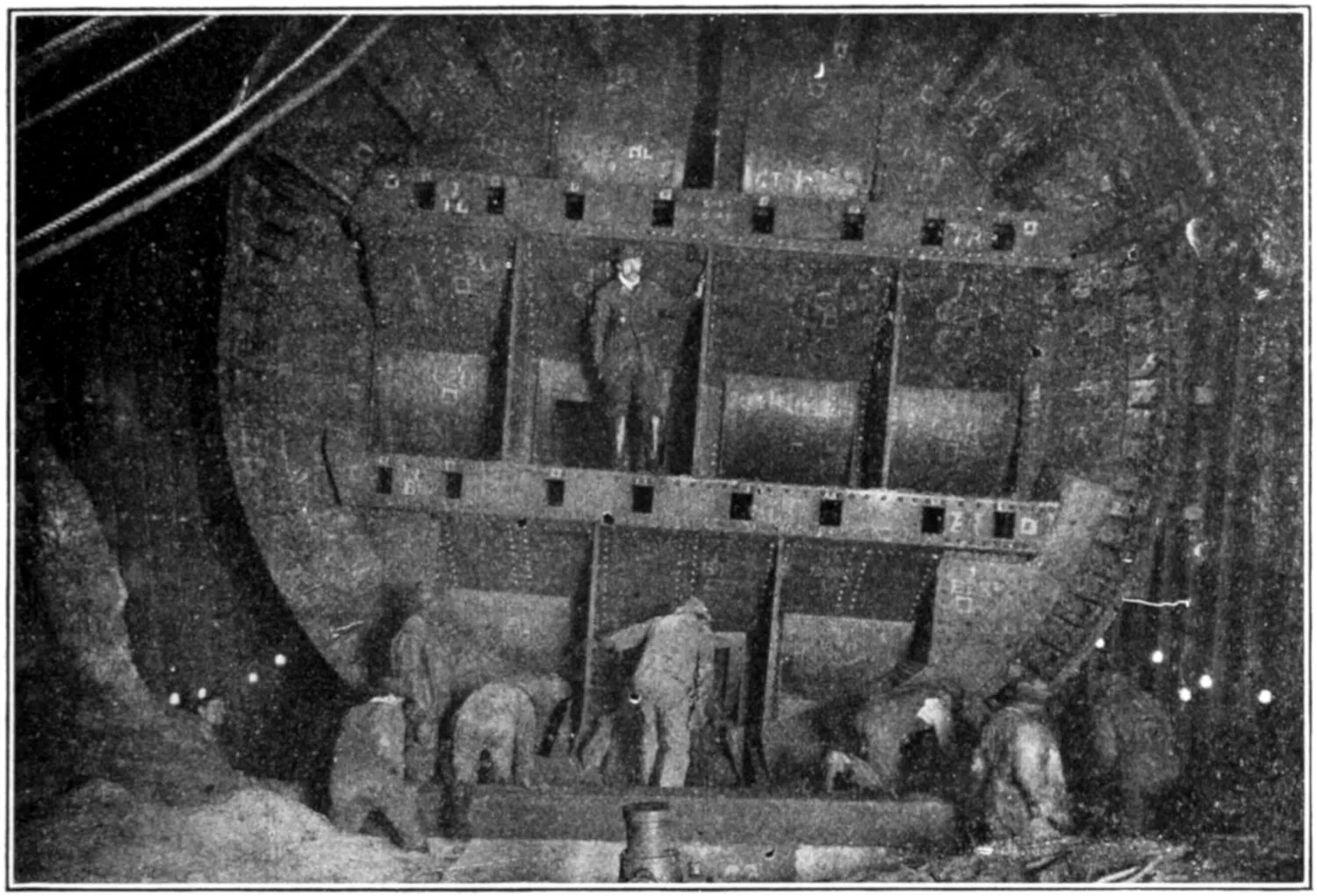
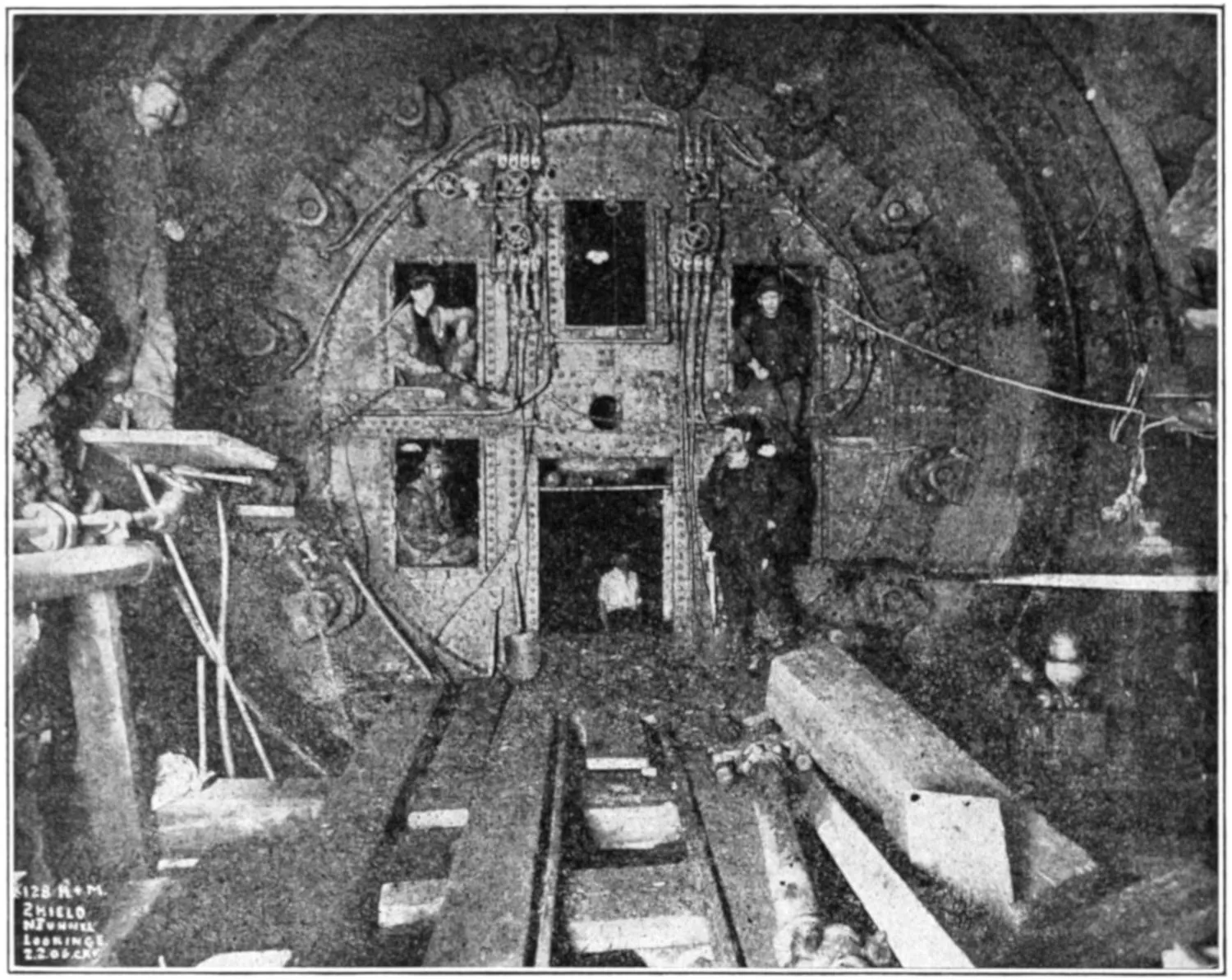
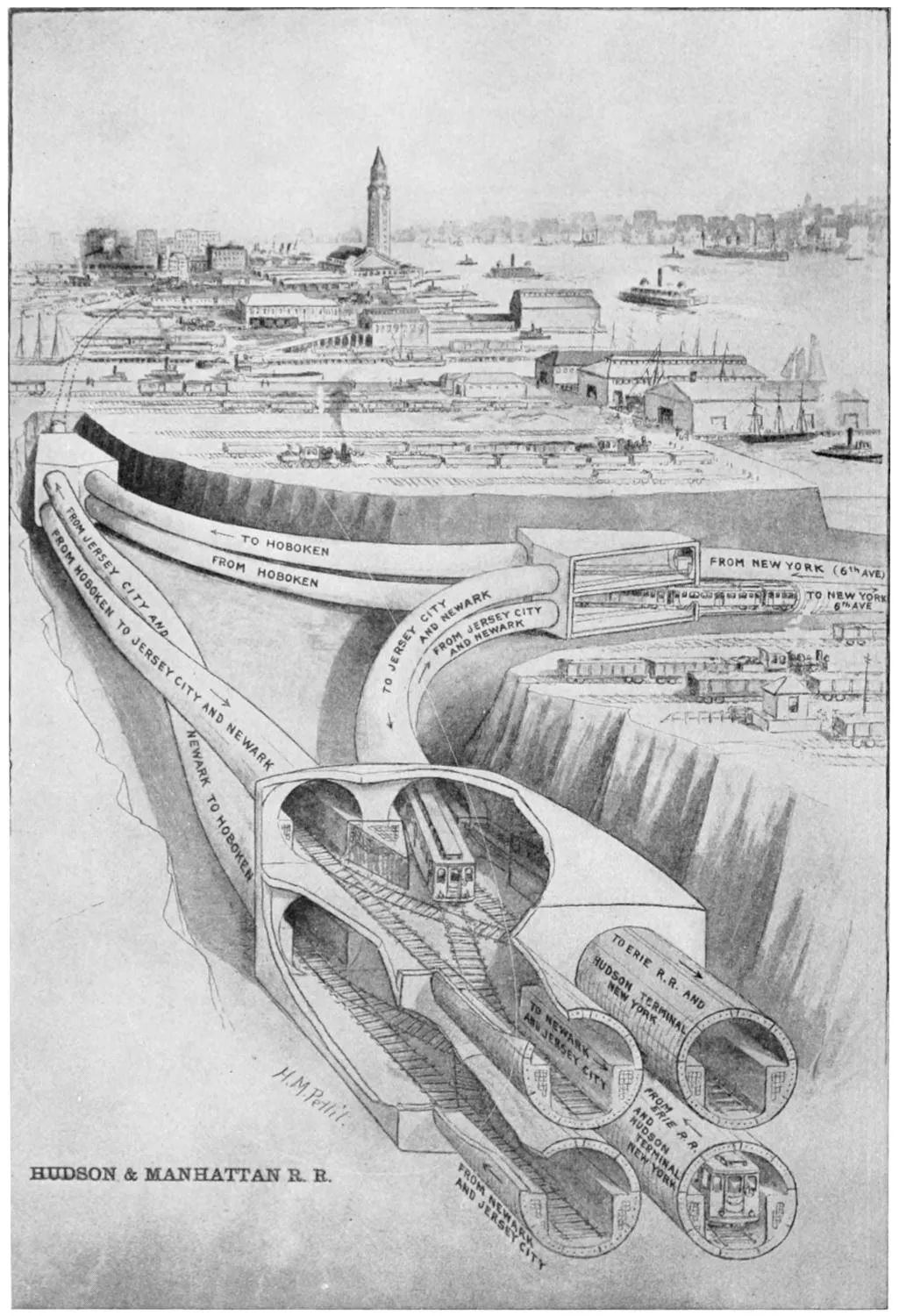
HOW MAN BURROWS UNDER THE WATER
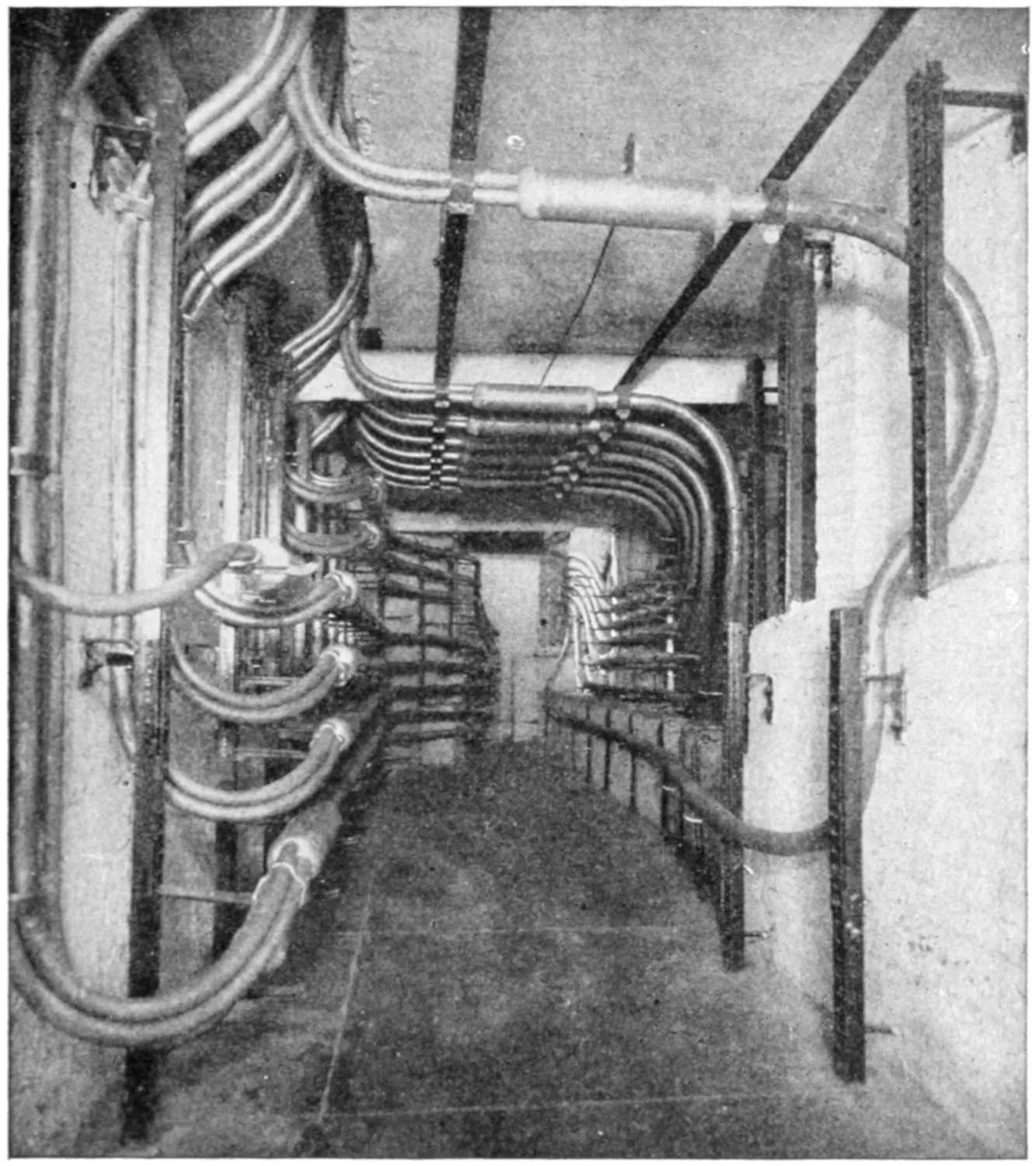
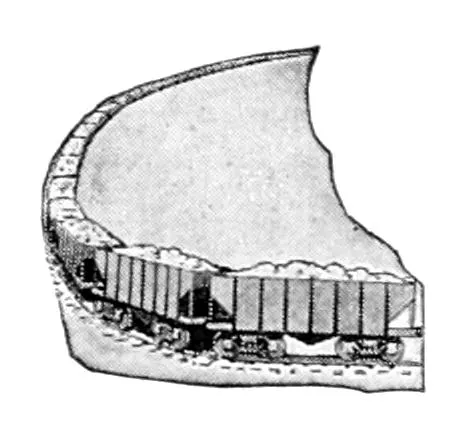
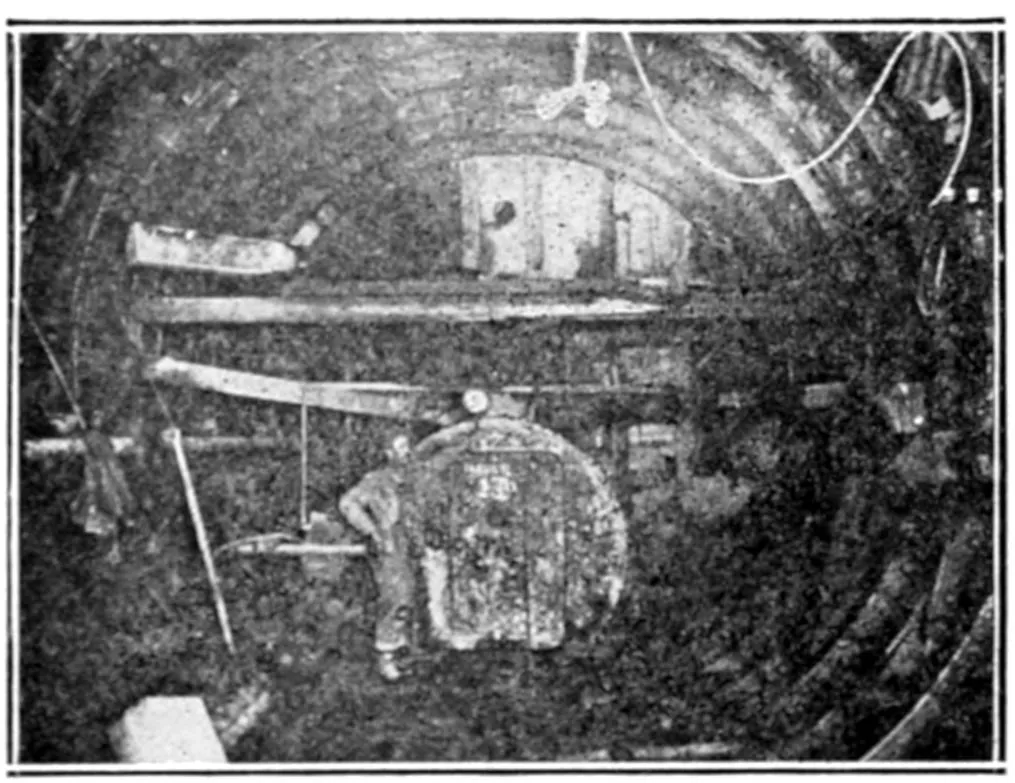
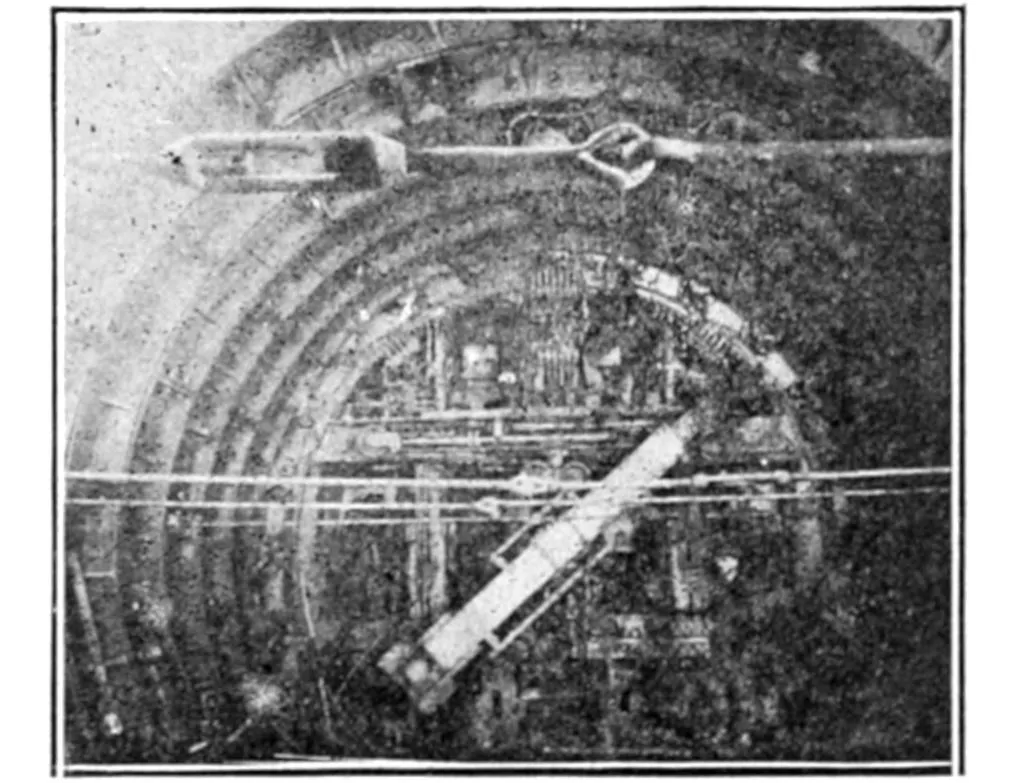
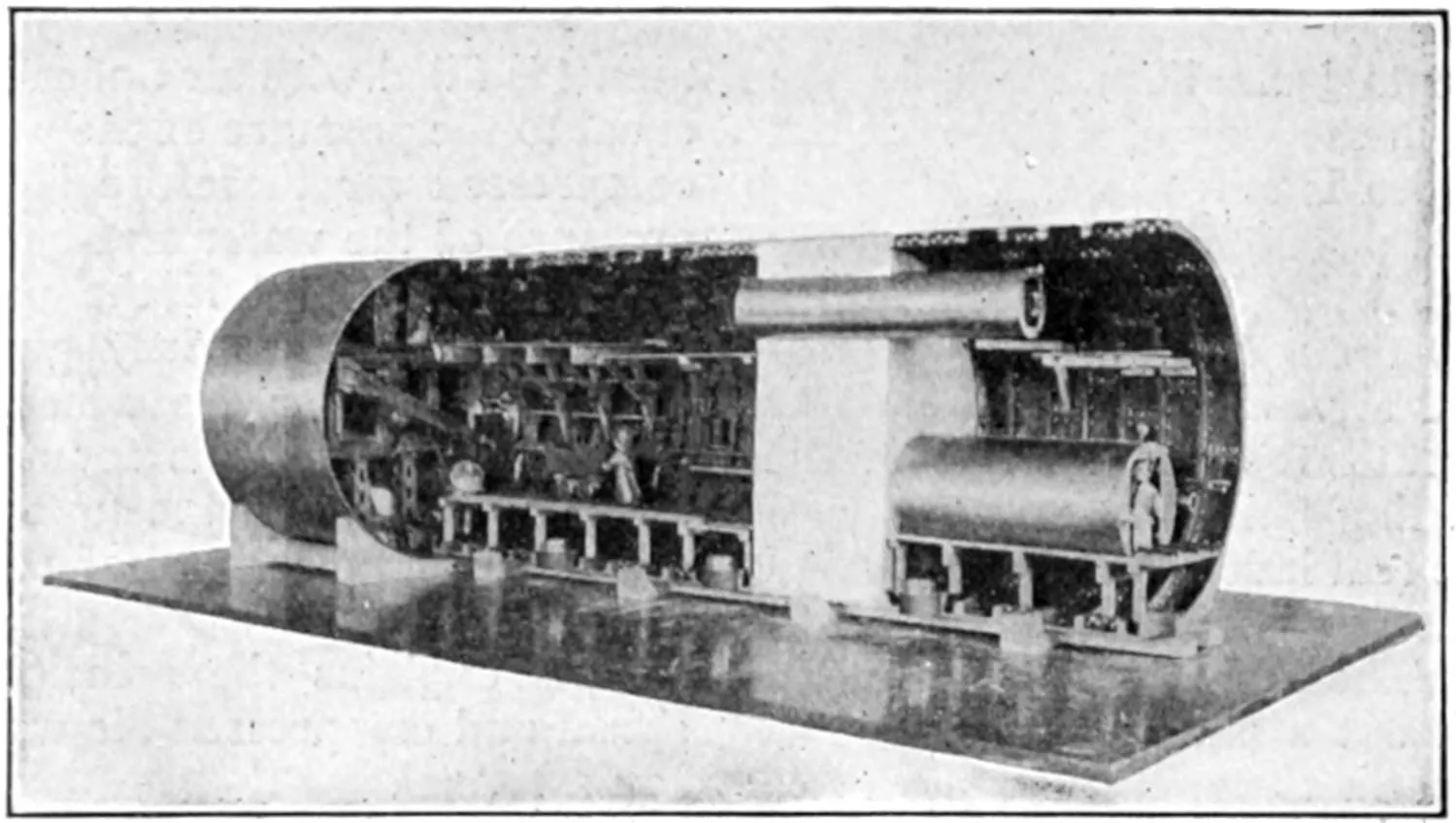
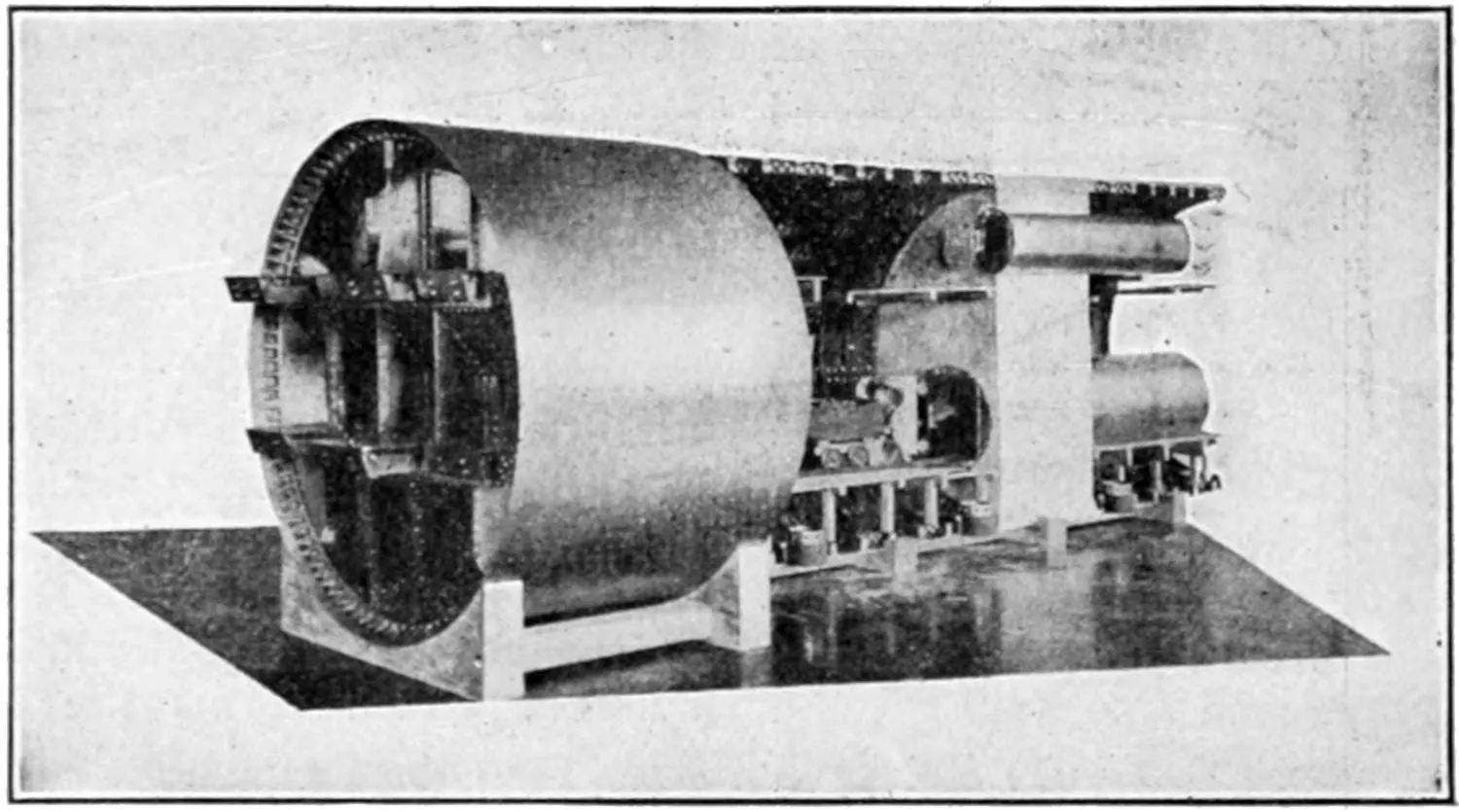
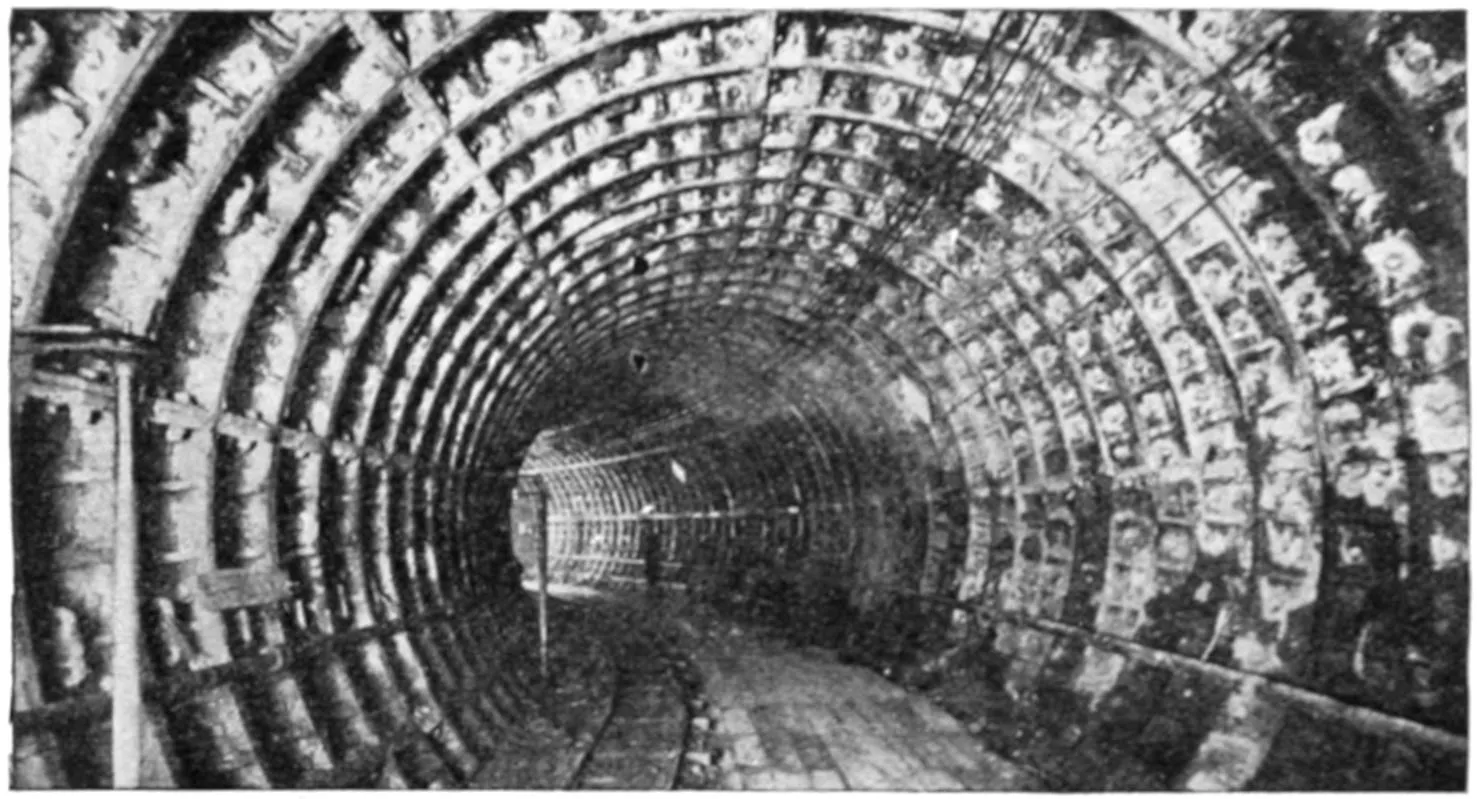
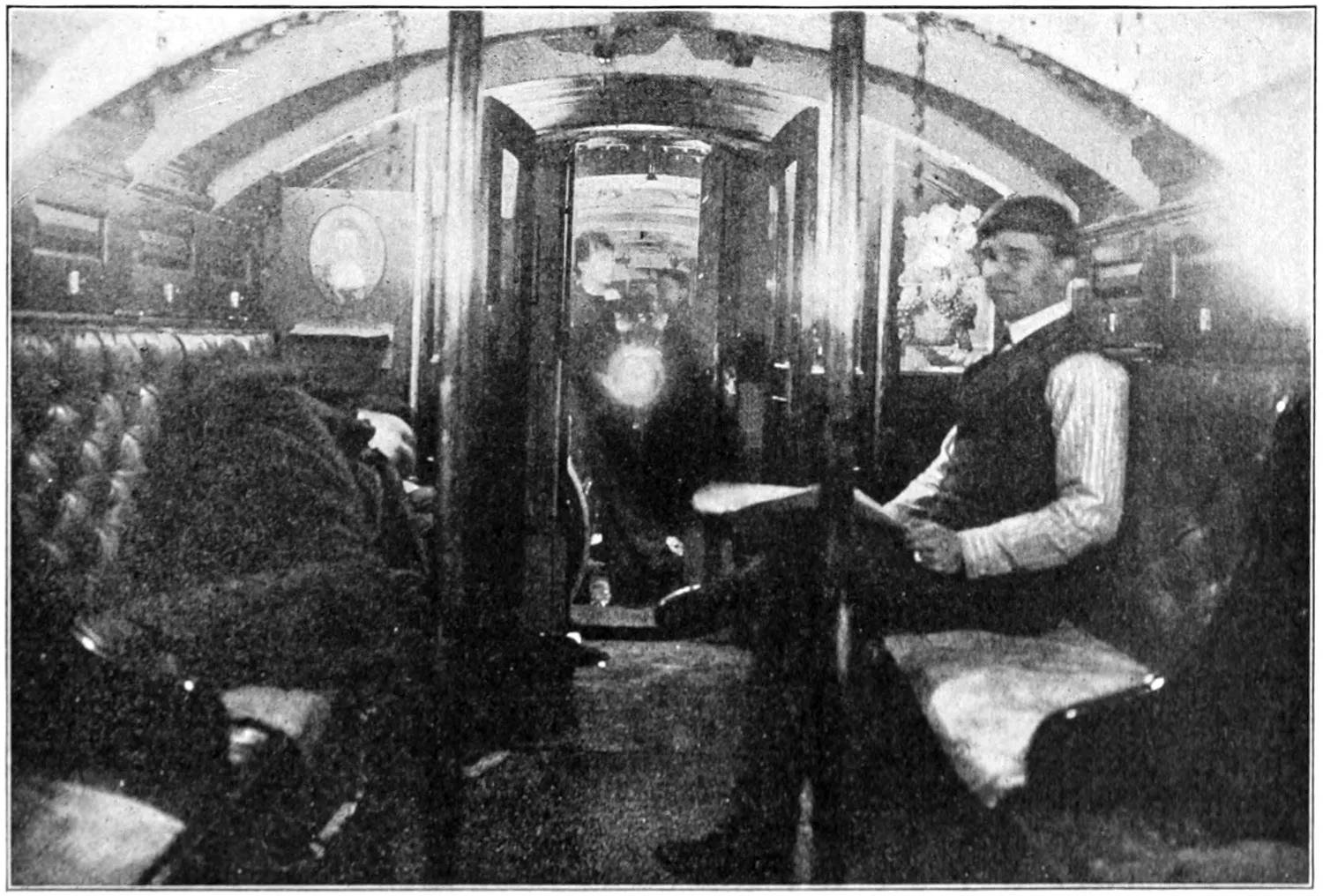
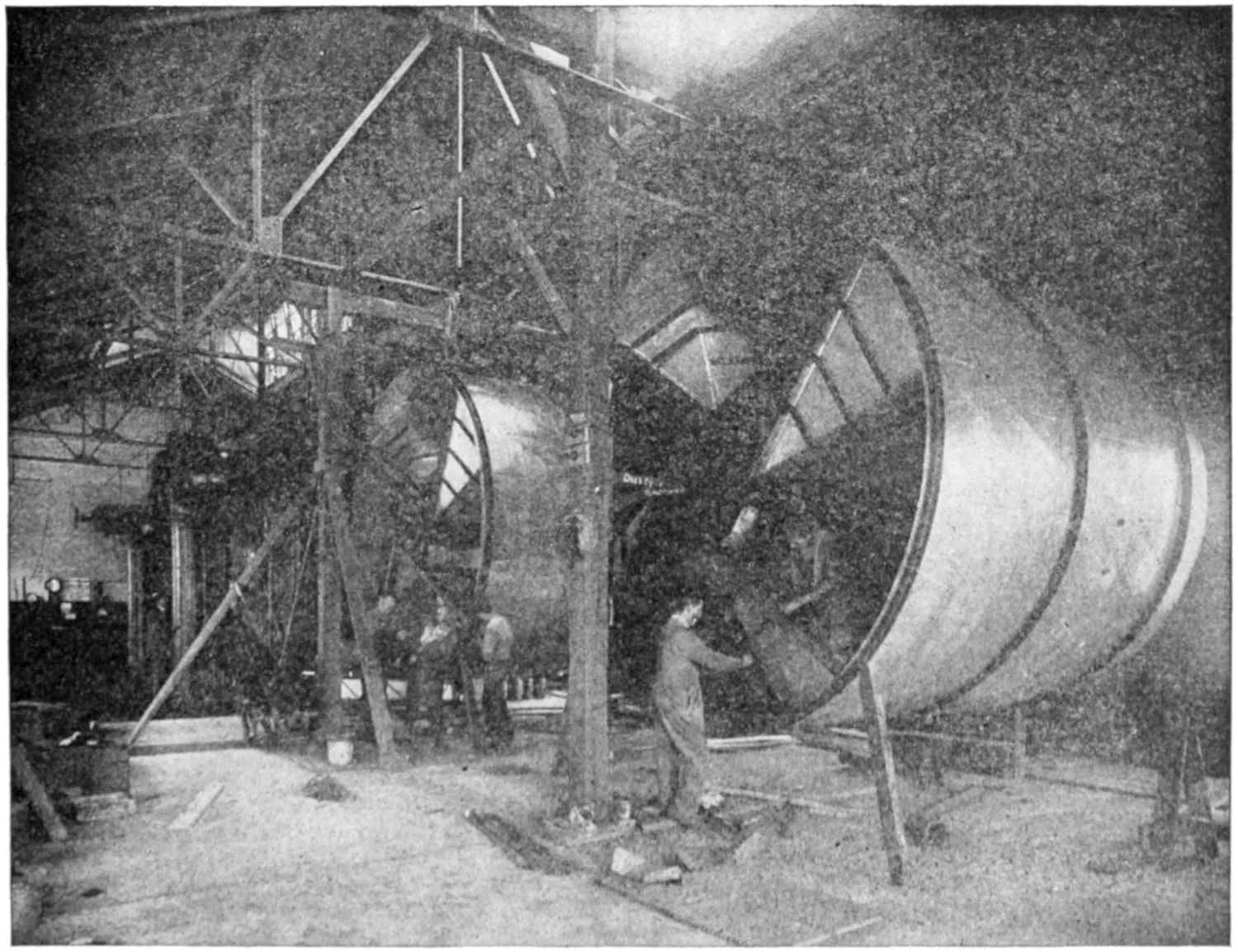
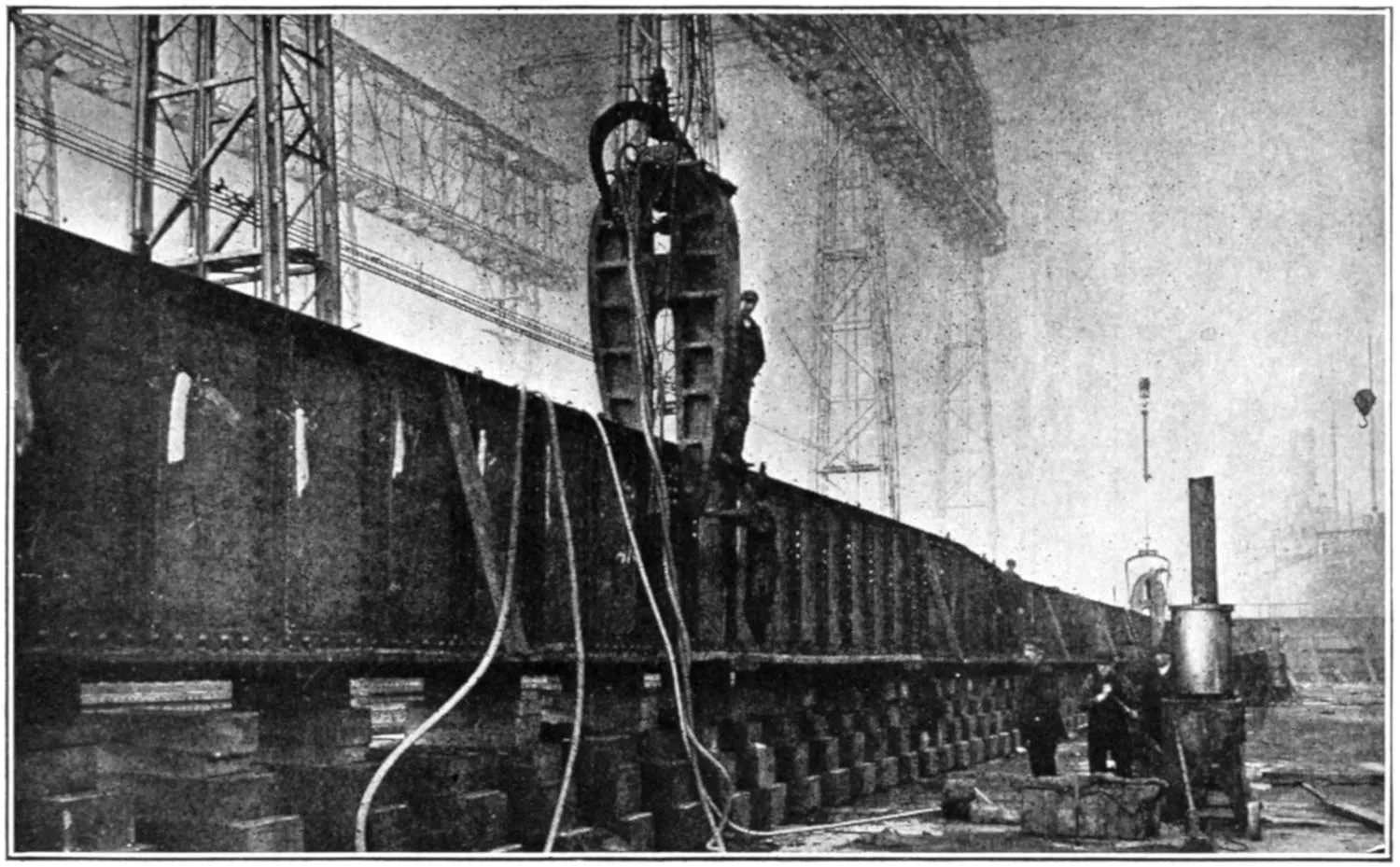
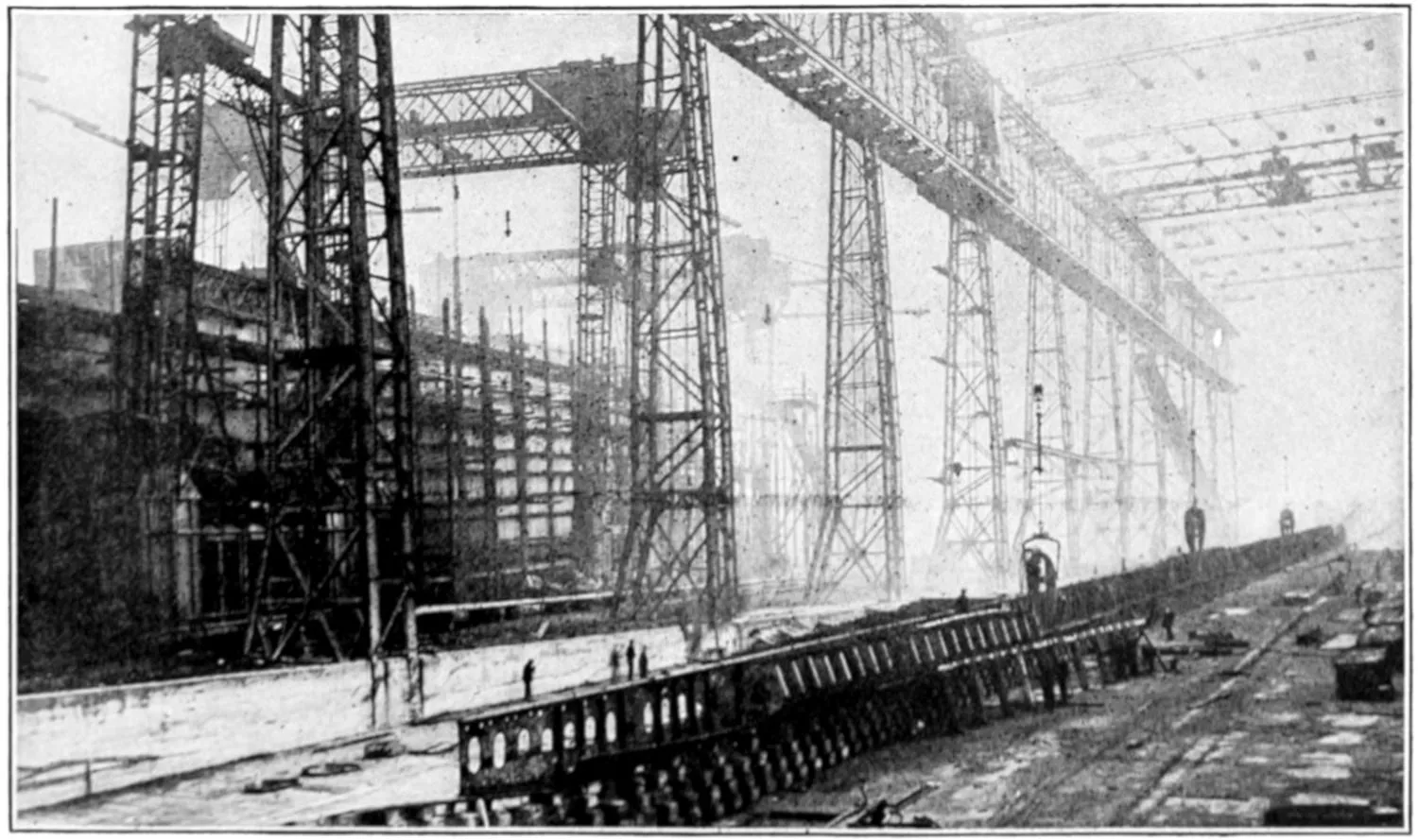
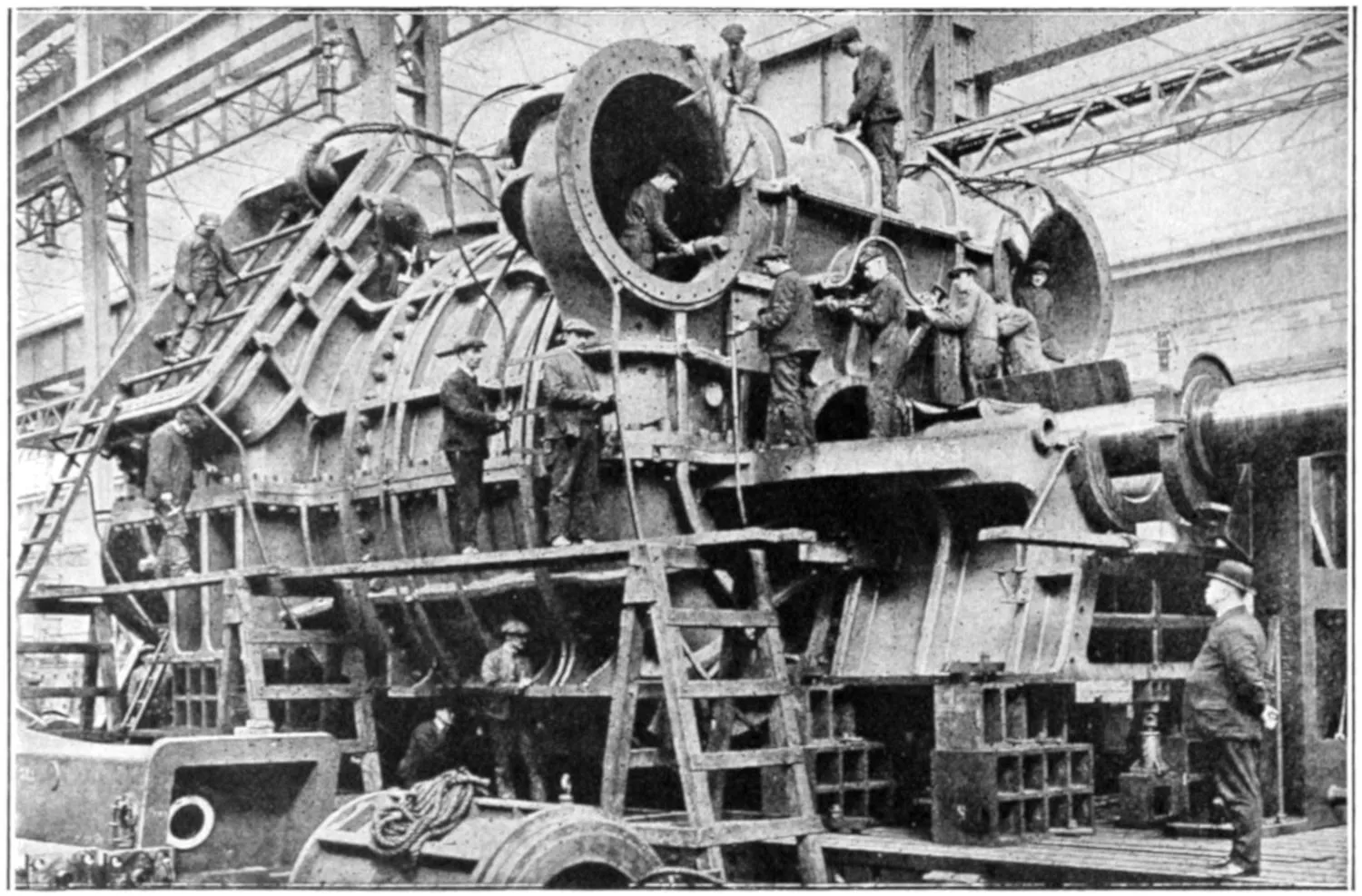
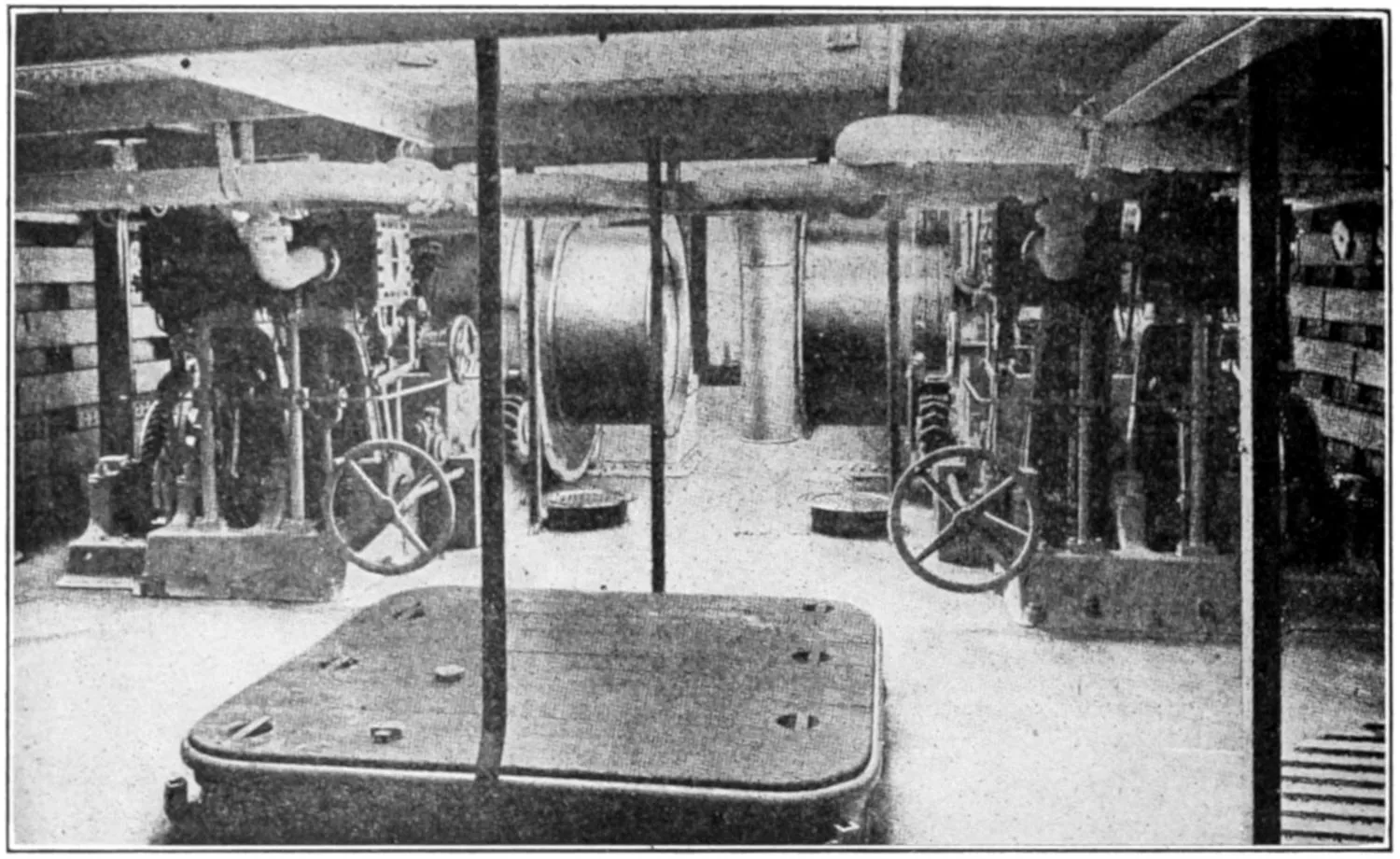
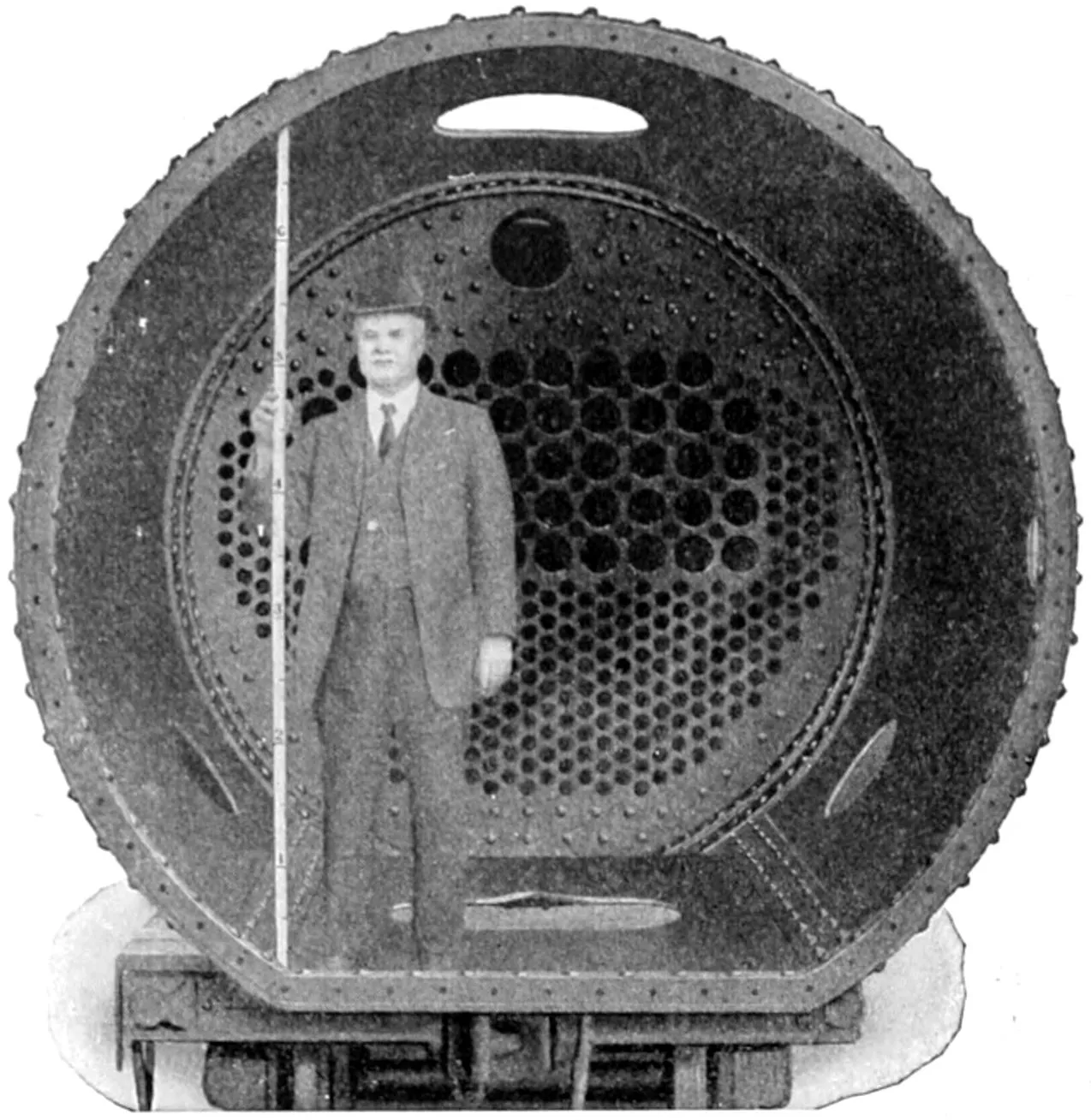
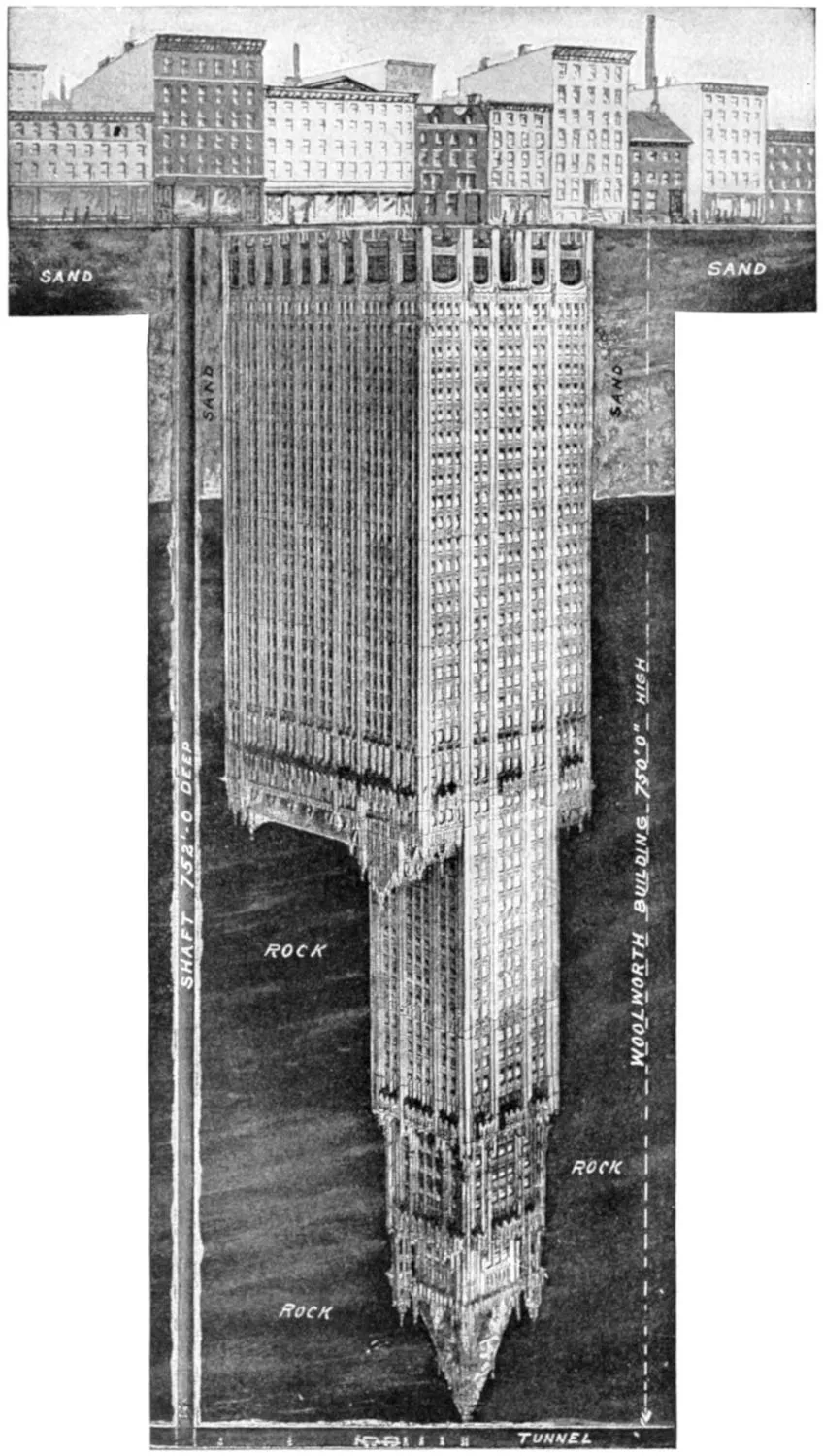
This is a picture of a section of one of the world’s greatest tunnels, showing how man has learned to construct great
tubes of steel beneath the surface of the water and land, in which to run the swiftly moving
trains which carry him rapidly from place to place.
THE
BOOK OF WONDERS
GIVES PLAIN AND SIMPLE ANSWERS TO THE THOUSANDS OF EVERYDAY QUESTIONS
THAT ARE ASKED AND WHICH ALL SHOULD BE ABLE TO, BUT CANNOT ANSWER
FULLY ILLUSTRATED WITH HUNDREDS OF EDUCATIONAL PICTURES
WHICH STIMULATE THE MIND AND GIVE A
BIRD’S EYE VIEW OF THE
WONDERS OF NATURE
and the WONDERS PRODUCED BY MAN
Edited and Arranged by
RUDOLPH J. BODMER
Fully Indexed
1915 PRESBREY SYNDICATE, Inc.
456 Fourth Avenue
NEW YORK
Copyright, 1914
BY
PRESBREY SYNDICATE, Inc.
Introduction
No truly great book needs an explanation of its aim and purpose. A great
book just grows, as has this Book of Wonders.
It began with the attempt of a father to answer the natural questions of
the active mind of a growing boy. It developed into a nightly search for
plain, understandable answers to such questions as “What makes it night?”
“Where does the wind begin?” “Why is the sky blue?” “Why does it hurt when
I cut my finger?” “Why doesn’t it hurt when I cut my hair?” “Why does wood
float?” “Why does iron sink?” “Why doesn’t an iron ship sink?” on through the
maze of thousands of puzzling questions which occur to the child’s mind. It
has grown until the answers to the mere questions cover practically the entire
range of every-day knowledge, and has been arranged in such a form that any
child may now find the answer to his own inquiries.
As the mind of the child matures, the questions naturally drift toward
the things which the genius of man has provided for his comfort and pleasure.
We have become so accustomed to the use and benefits of these wonders produced
by man that we generally leave out of our books the stories of our great
industries, and yet the mind of the child wonders and inquires about them.
We have so long worn clothes made of wool or cotton, that we have forgotten
the wonder there is in making a bolt of cloth. Every industry has a fascinating
story equal to that of the silkworm, which moves its head sixty-five times a
minute while spinning his thousand yards of silk.
Can you tell What happens when we telephone? How a telegram gets
there? What makes an automobile go? How man learned to tell time?
How a moving-picture is made? How a camera takes a picture? How rope
is made? How the light gets into the electric bulb? How glass is made?
How the music gets into the piano? and hundreds of others that embrace the
captivating tales of how man has made use of the wonders of nature and
turned them to his advantage and comfort? The Book of Wonders does this
with illuminating pictures which stimulate the mind and give a bird’s-eye view
of each subject step by step.
Where shall such a book begin? Shall it begin with the Story of How
Man Learned to Light a Fire—he could not cook his food, see at night, or
keep warm without a fire; or should it begin with How Man Learned to
Shoot—he could not protect himself against the beasts of the forest, and, therefore,
could not move about, till the soil or obtain food to cook until he knew
how to shoot or destroy.
What was the vital thing for man to know before he could really become
civilized? Some means, of course, by which the things he learned—the knowledge
he had acquired—could be handed down to those who came after him so
that they might go on with the intelligence handed down to them. This
required some means of recording his knowledge. Man had to learn to write.
Without writing there could be no Book of Wonders, and the book, then,
begins naturally with the Story of Mow Man Learned to Write.
The Editor.
How Man Learned to Write — How Did Writing First Come About? — How a Steel Pen is Made — Why Does a Pencil Write? — Why Can’t I Write on Paper With a Slate-pencil? — How Does a Pen Write? — How Does a Blotter Take Up the Ink of a Blot? — Where Does Chalk Come From? — How Did Men Learn to Talk? — How Did Shaking the Head Come to Mean “No”? — How Did a Nod Come to Mean “Yes”? — Why Do We Count in Tens? — What Does Man Mean by Counting Himself? — Where Did All the Names of People Originate? — Why Can You Blow Out a Candle?
WRITING BY MEXICAN INDIANS THOUGHT TO BE
MORE THAN TEN THOUSAND YEARS OLD.
It is a long time between the day of
the cave-dwellers, with their instruments
of chipped stone, and the present
day of the pen. Yet wide apart as are
these points of time, the trend of development
can with but few obstacles
be traced.
The story of the pen is a natural
sequence of ideas between the first piece
of rock scratched upon rock by prehistoric
man, and the bit of metal
which now so smoothly records our
thoughts.
There was a time in the unwritten
history of man when necessity
prompted the invention of weapons,
and the minds of these primitive men
were concentrated upon this point. But
the arts of war did not take up their
entire time; some time must have been
given to other pursuits. As the mind
developed, and as an aid to memory,
we find them carving, engraving, incising
upon the rocks their hieroglyphics,
which took the form of figures of men,
habitations, weapons, and the animals
of their period.
THE STYLUS
An apparently difficult question to
answer, since without writing there can
be no record of its origin, and without
records no facts; yet the deduction is
so clear that the answer is simple.
Somewhere far, far back in the dawn
of the world, back in the beginning of
human history, in the epoch which we
have now named the Quaternary Period,
man lived in a dense wilderness
surrounded by the wildest and most
ferocious beasts. His home was a cave,
exposed to the dangers incidental to
that time and his surroundings, and he
was of necessity compelled to look
about for means of defense. With this
idea in mind, he found that by striking
one stone against another he knocked
off chips, which chips could be used as
arrow-heads, spears and axes. Following
along these lines he discovered that
by rubbing one of these chips against
another there was left a mark, which
was the first imitation of writing; that
the sharper the edge of the chip, the
deeper was the scratch, and consequently
the more distinct the mark.
EARLIEST WAYS OF WRITING
THE FIRST IMITATION OF WRITING
Next it was discovered that certain
stones, such as flint, serpentine and
chalcedony, marked more readily than
others; that the elongated chip was
handled with more facility; that by rubbing
one stone against another the
finest possible points and edges might
be obtained. Thus in the Age of Stone
was the long, tapering instrument of
stone, the first pen, the Stylus, originated.
Then came the time, known as the
Bronze Age, when men learned to
hammer metal into shapes, and metal
having many advantages over stone, the
stylus of stone gave way to one of iron.
So we find that in the time of the
Egyptians, about fourteen or fifteen
centuries B.C., an iron stylus was in use
for marking on soapstone, limestone
and waxed surfaces. An improvement
in this metal stylus was that the blunt
end was convex and smooth, the purpose
of which was to erase and smooth
over irregularities. In some cases it was
pointed with diamonds, which gave it
greater cutting properties. The iron
stylus was also used by the Egyptians
of that period, as well as in later times,
with a mallet, after the manner of the
modern chisel (which indeed it resembled)
for cutting out inscriptions on
their monuments.
THE BRUSH
WRITING FLUIDS
HELPED DEVELOPMENT
In course of time a marking fluid
was discovered, and this made necessary
a writing instrument which could
spread characters on parchment, tree-bark,
etc. Thus it was found that by
putting together a small bunch of hairs,
arranging them in the shape of an acute
cone, and fastening them together in
some manner, an instrument could be
made which would carry fluid in its
path, and thus make a mark of the
desired shape. The hair best adapted
for the purpose was found to be camel’s
hair, while that of the badger and sable
was also used. A tube cut from a stalk
of grass answered for a holder. The
hairs were held together by a piece of
thread which was then drawn through
the tube, thus making the first writing
instrument to be used in conjunction
with ink, the Brush.
HOW THE CHINESE IMPROVED METHODS
Just when the Brush came into existence
is not definitely known, but with
this instrument the great Chinese philosopher
Confucius wrote his marvelous
philosophy. The Brush as a writing
instrument is generally associated with
the Chinese, because the Chinese use
this instrument even to the present day,
it being especially adapted to their letters
and mode of writing. We have
now a pen (brush), as well as an ink,
but the material upon which the people
of that age wrote, in lieu of paper, was
still very crude, parchment and tree-bark
being most commonly used.
THE QUILL
THE EARLIEST
FORMS OF PAPER
Just as the discovery of an ink
wrought a change from the Stylus to
the Brush, so the advent of papyrus,
a paper made from the papyrus plant,
which was much finer and more economical
than parchment, brought with
it a pen better adapted for this material.
It was found that the Reed, or Calamo,
as it was called, which grew on the
marshes on the shores of Egypt, Armenia
and the Persian Gulf, if cut into
short lengths and trimmed down to a
point, made an admirable pen for this
newly discovered paper. This was the
true ancient representative and precursor
of the modern pen. The use of
the Reed can be traced to a remote
antiquity among the civilized nations of
the East, where Reeds are in use now
as instruments for writing.
HOW THE MONKS DID THEIR WRITING
The introduction of a finer paper
rendered necessary a finer instrument
of writing, and the quill of the goose,
swan, and, for very fine writing, of the
crow, was found to be well adapted.
Immense flocks of geese were raised,
chiefly for their quills. The earliest
specific allusion to the quill occurs in
the writings of St. Isadore de Seville,
seventh century, although it is believed
to have been in use at an earlier period.
The quill was used for many centuries.
Most of the writing during its reign
was done in the monasteries by the
monks, and in the eighteenth century,
when quill-making became quite an art,
every monk and every teacher was expected
to be proficient in the art of
making a pen from a quill. The preliminary
process of preparing the quills
was first to sort them according to their
quality, dry in the hot sand, then clean
them of the outer skin, and harden by
dipping in a boiling solution of alum
and diluted nitric acid. During the last
century many efforts were made to improve
the quill, its great defect being
speedy injury from use. Ruby points
were fitted to the nib, but this was
found impracticable on account of the
delicacy of the work. Joseph Bramah
devised, in 1809, a machine for cutting
the quill into separate nibs for use in
holders, thus making several pens from
one quill and anticipating the form of
the modern pen.
THE STEEL TUBE PEN
THE FIRST STEEL PEN
The quill held sway as writing instrument
for many years, and with it
the greatest masterpieces in literature
have been written. Many attempts,
however, had been made to supersede
the quill by a pen not so easily injured
by use, but it was not until about 1780
that, after much experimenting and
numerous failures, Mr. Samuel Harrison
introduced the first metallic pen.
THE INVENTION
OF THE PEN
This pen was made as follows:
A sheet of steel was rolled in the
form of a tube. One end was cut and
trimmed to a point after the manner
of the quill, the seam where both edges
of the tube met forming the slit of the
pen. This was soon after improved
upon by cutting a rough blank out of
a thin sheet of steel, which blank was
filed into form about the nib, rounded,
and with a sharp chisel marked inside
where the slit was to be in the finished
pen. After tempering, the nib was
ground and shaped to a point suitable
for fine or broad writing, as required.
THE MODERN STEEL PEN
THE MODERN WRITING PEN
Once started, the steel pen made
rapid strides in improvement. Mr.
James Perry, in 1824, started in England
the manufacture of pens on a large
scale, and to him as well as Gillott is
due the many improvements which
followed.
Perry was the first to manufacture
“slip” steel pens, up to this time the
pen and holder being one piece.
“In times of yore, when each man cut his quill
With little Perryian skill;
What horrid, awkward, bungling tools of trade
Appeared the writing instruments, home made!”
THE MODERN WAY OF WRITING
The steel pen of the present day
has reached the pinnacle of perfection,
and the method of manufacture
of this little but mighty instrument of
writing, though of extreme interest, is
practically unknown by the general public.
To explain in detail the development
from the rough steel to the finished
pen would needs make a book in
itself. And as it has been our intention
to dwell, not upon the manufacture of
the pen, but to trace its history and
development from its most crude form,
the Stylus, to the perfect and smooth-writing
steel pen of to-day, we will
close our story with the well-worn epigram
of old, grim Cardinal Richelieu:
“Beneath the rule of men entirely great,
The Pen is mightier than the Sword!”
In the picture on the following page, we
see the various processes required in making
a steel pen, together with a description of
each process:
No. 1. COLLEGE PEN
No. 5. SCHOOL PEN.
No. 13.
(FINISHED PENS.)
COLORING AND VARNISHING.
The pictures herewith printed are by the courtesy of the Spencerian Pen Company
Raw Material.—The sheet steel is cut into strips
of a convenient length and width, and then rolled
cold to the exact gauge necessary, according to the
pen to be manufactured.
Cutting the Blank.—This is a mechanical operation,
and is effected with the aid of a screw press,
in which a pair of tools corresponding with the
shape of the pen has been fixed. On pulling a
lever the screw descends, driving the punch into
the bed, which cuts a blank with a scissors-like
action, from the strip of steel.
Marking the Name.—This is done by means of
a punch fixed in the hammer of a stamp, worked
by the foot. The blanks are rapidly introduced
between guides fixed on the bed of the stamp, and
as soon as the hammer has fallen the blank is
thrown out and a new one introduced.
Piercing.—The tools for this operation are of a
delicate character. The blanks are fed by hand,
as above explained, and the hole punched by a
screw press. This is a most important process;
the pierce hole and slide slits determine the elasticity
and regulate the flow of the ink on the pen.
Annealing or Softening.—The blanks are still moderately
hard and before raising, it is necessary
to soften them by heating to a dull red, and
allowing them to gradually cool.
Raising.—The operator places one of the soft
blanks on a die to which guides are affixed to
keep it in position; then by moving the handle of
the press, the screw descends, forcing a die which
rounds the blank into the form of a pen.
Hardening.—The pen is now too soft, and is
hardened by heating and the immersing in oil
while hot, after which it is thoroughly cleansed
from all grease.
Tempering.—The pens are now hard but very
brittle, and in order to correct this defect they
are placed in an iron cylinder, and kept revolving
over a gas or charcoal fire until they acquire a
proper temper.
Scouring.—After soaking in diluted sulphuric
acid, the pens are placed in iron cylinders containing
fine stone and water, or fine sand, and revolved
for several hours. When taken from these cylinders
they are bright and smooth.
Grinding.—This is a process performed by hand
on a “bob,” or wooden wheel covered with leather
and dressed with emory, revolving at high speed.
A light touch on the emory wheel grinds off the
surface between the pierce hole and the point, to
obtain proper action and to assist the flow of ink.
Slitting.—This is a hand process performed with
a press, the cutters being as sharp as razors. The
pen is placed in position by means of guides, and
must be cut with utmost precision from the pierce
hole to the point, the point must be divided exactly
in the middle, the least variation making the pen
defective.
Coloring and Varnishing.—The pens having been
polished to a bright silver color are placed in an
iron cylinder and kept revolving over a gas or
charcoal fire until the tint required is produced.
They are then immersed in a bath of shellac varnish,
and afterwards dried in an oven.
Examination.—Every steel pen passing through
the factory is most carefully examined before being
boxed, and should the least fault be found, it is
at once rejected.
You can use a pencil to write with
or to make marks, because the pencil
wears off if you are scratching it on
a surface that is rough enough to make
it do so. Writing, you know, is only
a way of making marks in such a manner
as to make them mean something.
You cannot write with a pencil on a
pane of glass, because the glass is so
smooth that when you move the pencil
over its surface, the pencil will not wear
off. To prove to yourself that the tip
of the pencil constantly wears off when
you write, you have only to recall that
when you write with it a pencil keeps
getting shorter and shorter. A slate-pencil
will wear down short by merely
writing with it, but a lead-pencil must
be sharpened—that is, you must keep
cutting away the wood in order to get
at the lead inside.
You cannot do so, because it takes
something with a rougher surface than
paper to wear off the point of a slate-pencil.
A slate is used to write on with
slate-pencils, because slate wears off the
end of the pencil easily, and also because
you can rub out the writing on a
slate with water. Lead-pencils are used
for writing on paper, but you must have
a rough surface on the paper to write
on even with a lead-pencil. Some kinds
of papers have such a smooth surface
that you cannot write on them with a
lead-pencil.
Writing with a pen, however, is quite
different from writing with any kind
of pencil, because in writing with ink
we do not wear off the end of the pen,
but have the ink flow from the pen.
For this purpose we must have a surface
that will absorb the ink from the
pen, and draw the ink down off the
pen and make it flow. A slate has no
power of absorption and therefore cannot
draw the ink. A piece of blotting
paper is the best kind of paper for absorbing
ink, but it is too much so for
writing purposes. For writing with ink
we need a comparatively hard surfaced
paper that has absorbent qualities, but
not too absorbent.
It is because the blotter has a very
excellent ability to absorb some liquids.
The thinner the liquid the more easily
the blotter will absorb it. Ink is thin—being
mostly water—the blotter is of
a loose texture and has a rough surface.
This gives the blotter the ability to pick
up the ink, just as a sponge would do.
A sponge has what is called the power
of capillary attraction and so has the
blotter.
Deposits of chalk are found on some
shores of the sea. A piece of chalk
such as the teacher uses to illustrate
something on the blackboard at school
consists of the remains of thousands
of tiny creatures that at one time lived
in the sea. All of their bodies excepting
the chalk—called carbonate of lime
in scientific language—has disappeared
and the chalk that was left was piled
up where it fell at the bottom of the
ocean, each particle pressing against
the other with the water pressing over
it all until it became almost solid. It
took thousands of years to make these
chalk deposits of the thickness in which
they are found. Later on, through
changes in the earth’s surface, the
mountain of chalk was raised until it
stood out of the water and thus became
accessible to man and school teachers.
Talking and the words used came
into being through the desire of men to
communicate with each other. Before
words became known and used man
talked to those about him by the use
of signs, gestures and other movements
of the body. Even to-day when men
meet who cannot talk the same language
they will be seen trying to come to an
understanding by the use of signs and
gestures and generally with fair results.
The need of more signs and gestures
to express a constantly increasing number
of objects and thoughts led to the
introduction of sounds or combination
of sounds made with the vocal cords
to accompany certain signs and gestures.
In this way man eventually developed
a very considerable faculty for
expressing himself. Sign by sign, gesture
by gesture and sound by sound
language was slowly developed. A man
would be trying to explain something
to another by sign or gesture and to
make it more clear would make a sound
or combination of sounds to put more
expression into his efforts. Finally the
other man would understand what was
meant and he would tell some one else,
using the same signs, gestures and
sounds. Later on it would develop that
to express thus any certain thought,
act or the name of a thing, all of the
people in the community would make
this same combination of sounds, signs
and gestures to express the same thing.
Finally the gestures and signs would
be dropped and it was found that people
understood perfectly what was
meant when only the sound or combination
of sounds was produced. That
made a word. All the other words were
made in the same way, one at a time,
until we had enough words to express
all the ordinary things and the combination
of words became a language.
The children learned the language by
hearing their parents talk it, and that
is how men learned to talk.
The origin of this method of indicating
“No” is found in the result of
the mother’s efforts in the animal kingdom
of trying to feed her young. A
mother animal would be trying to get
her young to accept the food she
brought them and tried to put it in
their mouths. Perhaps, however, the
young animal had had sufficient food
or did not fancy the kind of food offered.
The natural thing to do under
the circumstances would be to close the
mouth tight and shake the head from
side to side to prevent the mother from
forcing the food into the mouth. Thus
we get the closed lips and the shaking
the head from side to side to mean
“No.” In other words, that kind of a
way of saying “No” came from an
effort to say “I don’t want any.”
The idea of nodding to mean “Yes”
comes from the opposite of the action
which, as just described, indicates a
“No.”
When the young animal was anxious
to accept the offered food, it made an
effort to get at the food quickly.
Hence, the pushing forward of the
head and the open mouth (always more
or less opened when you nod to indicate
“Yes”) and an expression of gladness.
You will notice if you see anyone
nod the head to indicate “Yes”
that the lips are open rather than closed,
and that there is always a smile or an
indication of a smile to accompany it.
In other words, the nod to mean “Yes”
is only another way of saying “I shall
be pleased.”
When man even in his uncivilized
state found it necessary to count, the
only implements at hand were his fingers
and toes, and as he had ten toes
and ten fingers, he naturally began
counting in tens, and has been doing
so ever since.
When we to-day count on our fingers
we confine ourselves to our fingers
leaving our toes stay in our shoes,
where they naturally belong. But the
first men who counted used both fingers
and toes, and so he was able to count
twenty before he had to begin over
again, while little children to-day, when
they count with their fingers, must
begin where they started after they
reach ten.
The expression “counting himself”
was originated by the first man who
counted. Such a man would count all
of his fingers and toes and the result
would be twenty. Then, so that he
would remember the number of times
he had counted himself, he made a
mark some place each time he reached
twenty. The mark he made was a mere
scratch in the dirt or on a hoe or something
else. To make a scratch you
merely, of course, score the surface of
whatever you happen to be scratching
on, and that is how it happened that
the word “score” in our language to-day
means as a term in counting,
twenty.
There has been a great effort made
to change our system of counting in
tens to one where you count in twelves.
That would fit in very well with our
system of measuring which is based on
the foot of twelve inches, and of our
calendar for recording the passage of
time which has twelve months. There
are many arguments in favor of this
change, among the principal of which
is the fact that it would make our problems
of division much easier, for our
ten can be evenly divided by but two
of our single figures, two and five,
whereas twelve can be evenly divided
by four of our single figures, viz., two,
three, four and six. It is believed that
sooner or later the system of counting
by twelve instead of ten will be
adopted by the entire world for counting
everything. As it is now we do part
of our counting by one system and part
of it by another.
There is no scientific plan by which
people get their names. There is not
much except curious interest to be
gleaned from the study of how people
got their names.
In the earliest days of the world, or
at least as soon as men had learned
to speak by sounds, all known persons,
places and groups of human beings
must have had names by which they
could be spoken of or to, and by which
they were recognized. The study of
these names and of their survival in
civilization enables us in certain instances
to tell what tribes inhabited
certain parts of the earth now peopled
by descendants of an entirely different
race and of another speech altogether.
We learn such things from the names
of mountains and other things, for instance,
which still cling to them.
The story of personal names is very
complex, but comes from very simple
beginnings. The oldest personal names
were those which indicated a group
of people rather than individuals who
may have been actually related to
each other or even bound together for
reasons of protection or other convenience.
In the races of Asia, Africa, Australia
and America examination shows
that groups of people who considered
themselves to be of the same relationship,
attached to themselves the name
of some animal or other object,
whether animate or inanimate, from
which they claimed to be descended.
This animal or object was called the
“totem,” and thus the earliest and most
widely spread class and family names
are totemistic. Such groups called
themselves by names from wolves, turtles,
bears, suns, moons, birds, and
other objects, and these people wore
badges with pictures of the animal or
object from which they took their
names to identify them to other
people.
When, then, we come to investigate
the giving of personal names among
the tribes, we see that most uncivilized
races gave a name to each new-born
infant derived from some object or incident.
So a new-born member of the
“Sun” tribe would be named “Dawn,”
and would be known as “Dawn” of
the “Sun” tribe; or perhaps a new-born
son of the tribe of “Wolf” would be
called “Hungry,” and be known as
“Hungry Wolf.” A member of the
“Cloud” tribe would be named “Morning,”
because he was born in the morning.
He would always be known as
“Morning Cloud.”
Later, as society became more established
and paternity became recognized,
we find the totem name give way to a
gentile name. Among the Greeks and
Romans the system was early adopted
and proved satisfactory. Thus we have
Caius Julius Caesar. Caius indicates
that he is Roman; Julius is the gentile
name given him and the Caesar a sort
of hereditary nickname. On the other
hand, the early Greeks began the system
of introducing a local name instead of
the gentile name. Thus Thucydides
(obtained from the grandfather), the
son of Olorus, of the Deme (township)
of Halimusia.
HOW DIFFERENT NAMES ORIGINATED
This was all right and suited the purposes
of the Greeks and Romans, who
had plenty of time to give full explanations
in this way. But in Europe, for
instance, civilization demanded more
speed, and the increase of population
demanded more names, so that nicknames
and names indicating personal
descriptions and peculiarities came into
use. Such names as Long, Short,
Small, Brown, White, Green and
others of the same kind came from this
source, and as families grew these surnames
stuck to the family and parents
gave their children Christian names to
further distinguish them as individuals.
Other surnames such as Fowler, Sadler,
Smith, Farmer, etc., became attached
to people because of the occupations
in which they were engaged, and
yet other names were derived from
places. The owner of an extensive estate
would be designated by a Christian
name which might be George (after
his King) and then to indicate his
landownership, von (meaning of)
Wood, making the combination of
George von Wood, meaning George,
the owner of the place called Wood.
On the other hand, he might have working
for him a laborer who lived at the
place and, if his name was Hiram, they
would, to indicate where he belonged,
put the Wood after the Hiram; but,
lest there be confusion as to his class,
they would put an At before the Wood
and make him Hiram Atwood, indicating
his Christian name, where he
worked and the fact that he was not a
landowner.
Many other names were invented in
similar manner. When Adams became
so common that there would likely be
confusion on account of there being
so many of them, a son of one of the
Adams family would add to the name
the fact that he was a son by writing
his name Adamson, and thus start a
new family name. Thus, in the same
way also came Willson, Clarkson, and
other names of that kind.
For a long time the Jews had only
one word for a name, such as Isaac,
Jacob, Moses, etc. They became so
numerous that it was impossible to distinguish
them, and so a commission was
named to give surnames to all the Jews
in addition to their other names. As
the race was then, as now, held in derision
by the rulers of many nations
into which the tribe had become scattered,
the people who had charge of
the naming of the Jews took advantage
of the opportunity to make sport of
them, and gave them such names as
Rosenstock (Rose bush),
Rosenszweig (Rose twig),
Rosenbaum (Rose tree),
Blumenstock (Flower bush),
Blumenthal (Flower valley),
etc., etc.
Our Christian names are from similar
sources, and while many of them
are well selected because of their beautiful
meanings, there are many of them
which mean nothing as words as they
were only invented for the purpose of
giving a new name to a new child.
When you light a candle it burns, because
the lighted wick heats the wax
sufficiently to turn it into gases, which
mix with the oxygen in the air and produce
fire in the form of light. You
know it is not easy to light a candle
quickly. You must hold the lighted
match to the wick until the wax begins
to melt and change to gases. As long
as the wax continues hot enough
to melt and turn to gas the candle
will burn until all burned up; but if
there is a break in the continuous
process of changing the wax to gas,
the light will go out. Now, when you
blow at the lighted candle, you blow
the gases which feed the flame away
from the lighted wick, and this makes
a break in the continuous flow of gas
from the wax to taper, and the light
goes out.
The Story in a Photograph — How Does a Camera Take a Picture? — What Is the Eye of the Camera? — TWENTY-FIVE MILES A MINUTE An Exclusive Story, Illustrated with a Series of Remarkable Photographs Taken with the Fastest Camera in the World By Cleveland Moffett — Reckoning in Millionths of a Second. — Pictures Never Seen By the Human Eye. — The Projectile Travels Faster Than the Sound It Makes. — A Secret for Which Foreign Governments Would Pay Millions. — Why Do Some Eyes In a Picture Seem to Follow Us? — Where Does a Light Go When It Goes Out? — Why Does a Fire Go Out? — Why Does a Lamp Give a Better Light With the Chimney On? — Does Light Weigh Anything? — Why Does a Stick Seem to Bend When Put in Water? — What Makes the Stars Twinkle? — Why Does an Onion Make the Tears Come?
When we look upon the surface of
a mirror we see the image of ourself
and our surroundings. The extent of
the view depends upon the size of the
mirror and the distance we are standing
from it.
If we hold the mirror close to our
face we see only the face, or perhaps
but a portion of it, and the farther
away we are the more the mirror will
reflect, only, of course, the various
images will be smaller. The mirror
reflecting exactly what the eye sees,
without doubt had a great influence in
inducing the experiments that resulted
in the process we call photography.
The taking of a photograph with a
camera may in a way be compared with
the action of your eyes, when you gaze
upon your reflection in a mirror, or
look at any object or view. Any object
in a light strong enough to render
it visible will reflect rays of light from
every point.
Now, the eye contains a lens very
similar in form to that used in a camera.
This lens collects the rays of light
reflected from the object looked at
and brings them to a focus in the back
of the eye, forming an image or picture
of whatever we see, just as the mirror
collects the rays of light and reflects
them back through the lens of the eye.
Certain nerves transmit the impression
of the image so focused in the back
of the eye to the brain and we experience
the sensation of sight.
The lens is the eye of the camera,
and the process we call photography
is the method employed to make permanent
the image the eye or lens of the
camera presents to a sensitive surface
within the camera.
Fig. 1 shows a simple form of camera,
it being merely a light tight box
with a lens fitted to the front, and a
means for holding a sensitive plate at
the back, the plate being placed at just
the right distance to focus the rays of
light admitted through the lens in
exactly the same manner as the rays of
light pass through the lens of the eye
and come to a focus in the back part
of the eye.
Now, if we could look inside the
camera we would note that the image
was inverted, or upside down.
The rays of light from “A” pass in
a straight line through the lens “B”
until they are interrupted by “C,”
upon which they strike, forming an
upside down image of the object “A.”
But, you exclaim, “we do not see things
upside down.” No, we do not, because
some mental process readjusts this
during the passing of the impression
from the eye to our brain.
Let us suppose we have our camera
loaded with its sensitive plate or film.
We select some object or view we wish
to photograph, uncover the lens for an
instant, and let the light impress the
image upon the sensitive surface of the
plate or film. Now, how are we going
to make this image permanent?
If we were to examine the creamy
yellow strip of film upon which the
picture was taken there would seemingly
be no difference between its present
appearance and before the snapshot
was made.
Now let us suppose that this strip
of film is a little trundle bed, and in it
tucked securely away from the light
are many hundreds of little chaps
called silver bromides, little roly-poly
fellows lying just as close together as
possible, and protected by a coverlet
of pure white gelatine.
HOW A PHOTOGRAPH IS DEVELOPED
Until the sudden flash of light in
their faces when the picture was taken,
they have been content to lie still and
sleep soundly. Now they are seized
with a strange unrest, and each little
atom is eager to do his part in showing
your picture to the world. Alone
they are powerless, but they have, all
unbeknown to them, some powerful
chemical friends, who, organized and
aided by the photographer, will bring
about their transformation. These
chemicals, with the help of the photographer,
form themselves into a society
called the developer.
The photographer takes just so many
of the tiny feathery crystals of pyro,
just so many of the clear little atoms
of sulphite of soda, and just so many
little crystals of carbonate of soda, and
tumbles them all into a beaker of clear
cold water. Unaided by each other,
any one of these chemicals would be
powerless to help their little bromide
of silver friends. The first of these
chemicals to go to work is the carbonate
of soda.
He tiptoes softly over to the trundle
bed and gently begins turning back the
gelatine covers over the little bromide
of silver chaps, so that Pyro can find
them in the dark.
It is Pyro’s mission to transform
the little silver bromides into silver
metal, but he is rather an impulsive
chap, so he is accompanied by sulphite
of soda, who warns him not to be too
rough, and whose sole mission is to
strain his eagerness to help his friends.
“Go slow now,” says Sulphite, “don’t
frighten the little silver bromides, or
else you’ll make them cuddle up in
heaps, and the picture won’t be as nice
as if you wake them up gently and
each little bromide stayed just where
he belonged.”
After all the little silver bromides
that the light shone on have been transformed
into metallic silver by the developer,
another chemical friend has
to step in and carry away all the little
bromides that were not awakened by
the flash of light.
This friend’s name is “Hypo,” and
in a few minutes he has carried away
all the little bromides that are still
sleeping, so that the trundle bed with
the now awakened and transformed
silver bromides will, after washing and
drying, be called a negative, and ready
to print your pictures from.
If we take this negative, as it is
called, and hold it up to the light, we
will see that everything is reversed,
not only from right to left, but also
that whatever is white or light in color
is dark in the negative, and that what
would correspond to the darker parts
of our picture are the lightest in the
negative, and it is from these facts
that we give it the name negative.
Now, to get our picture as it should
be, we must place this negative in
contact with a sheet of coated paper
that is also sensitive to light.
So we place the negative and the
sheet of sensitive paper in what is called
a printing frame, with the negative
uppermost, so that the light may shine
through the negative, and impress the
image upon the sheet of sensitive paper.
Now, it stands to reason that if the
lightest parts of our picture are the
darkest in the negative that less light
can pass through such portions of the
negative in a given time, so that with
the proper exposure to light the image
upon the sheet of sensitive paper will
be a correct picture of whatever the
lens saw.
The swiftest thing that the human race has ever put into motion is the steel projectile
of a twelve-inch gun. No human eye can follow its flight. Released at a pressure of
forty thousand pounds to the square inch—in a heat at which diamonds melt and carbon
boils—it hurls through the air at the rate of twenty-five miles a minute, and reaches the
mark ahead of its own sound! (Pictures and story by courtesy of McClure’s Magazine.)
HOW SHOOTING SHELLS
ARE PHOTOGRAPHED
One of the most progressive
branches of our military service is the
Department of Coast Defenses, which,
under the far-seeing guidance of General
E. M. Weaver, holds our shores
and harbors in a state of alert preparedness
against foreign aggression. At
Hampton Roads sits the Coast Artillery
Board, composed of officers and
consulting engineers to whom are referred
all problems relating to coast
artillery, and who have the responsibility
of testing all new instruments
proposed for artillery use. The purpose
of this article is to describe one
among several notable achievements of
the Hampton Roads Coast Artillery
School, this particular work having
been done by Captain F. J. Behr of
the Coast Artillery Corps, who, after
years of effort, has recently developed
a system that makes it possible to take
pictures of the swiftest moving bodies,
the great steel projectiles of our biggest
guns—to seize them with the camera’s
eye as they hurl through the air
at enormous velocities or at the very
moment of their emergence from the
gun muzzles, and to preserve these
images, never seen before, for military
study and comparison. Captain Behr
was ably assisted in this work by Engineer
J. A. Wilson.
THE FASTEST CAMERA IN THE WORLD
The big gun, equipped with the fastest
camera shutter in the world, about to be fired
and the shell photographed.
For years a young officer of the Coast Artillery has been trying to devise a camera
so incredibly swift that it will record every stage of this lightning flight from the gun-barrel
to the target. At last he has succeeded. His photographs—some of them taken
one hundred thousandth of a second apart—have revealed remarkable and unsuspected
facts to the military world. The story of his invention had never before been told.
Some of the increments and decrements
of time involved in the series of
photographs herewith published (several
of them for the first time) are as
small as one ten-thousandth part of a
second. And Captain Behr has devised
a method of taking photographs of
projectiles as they arrive at a
steel target and penetrate the target,
inch by inch, that involves increments
or decrements of time
as small as the one hundred-thousandth
part of a second. To
the uninitiated it seems incredible that
such infinitesimal divisions of time can
be used in practical calculations; but
every trained physicist knows that in
wireless work scientists of to-day speak
casually of experiments that take account
of two-tenths or one-tenth of a
millionth part of a second!
THE PROJECTILE EMERGING FROM MORTAR
In this photograph—the first of a remarkable series showing five stages of a moving
projectile—the half-ton projectile seems to be standing still, but really it is traveling at the
rate of 900 miles an hour. The gunners here work in concrete pits 34 feet high. Underneath
the mounts are the powder magazines. Each pit has four mortars usually served by
an entire Coast Artillery Company. The projectiles are the same as those used in the
twelve-inch guns, but less powder is required because mortar projectiles are hurled high in
the air, not straight at a vessel, and deliver their destructive blows downward from a great
height.
THE SMOKE RINGS WHICH APPEAR
This second photograph shows the projectile almost entirely out of the mortar. Its
sharp nose may be seen above the “gas-ring” forming at its upper end. These “gas-rings,”
or “smoke-rings,” come without warning, and only occasionally, perhaps once in eight or
ten shots. They rise swiftly to the height of fifty or a hundred feet, growing larger and
larger, and giving forth a weird, shrieking sound like a second projectile. Some insist that
these “smoke-rings” are as hard as steel, owing to the enormous compression of their composing
gases, and the story is told of a bird caught in the path of one of them and torn to
pieces.
What happened to the projectile after
it leaves the gun, or after the discharge
of the gun, and before the projectile has
had time to issue from the gun-barrel?
What is the action at the muzzle of
gases generated? What shape do these
gases assume as they leave the gun?
What causes the much-discussed “gas-rings” that sometimes form when a
mortar is fired, and oftener do not
form? What phenomena attend the
arrival of the projectile at a solid steel
target? Is the steel actually fused by
the heat of impact? Is it vaporized?
Or what? These are some of the questions
that Captain Behr set himself to
solve, or to help in solving, as he
worked out his methods of rapid photography.
His aims were strictly military,
but his results make fascinating
appeal to the general imagination.
Fancy doing anything in the one hundred-thousandth
part of a second!
THE PROJECTILE HIDDEN BY THE SMOKE CONE
In the third photograph the smoke-cone is almost perfect and gives the famous “powder-puff”
effect. It still hides the projectile, although the latter is traveling at a velocity that
would take it from New York to Chicago in one hour. At night the “gas-rings” present
a startling and fascinating appearance, burning with a reddish orange glow, and whirling
with a complicated double motion, strange opalescent balls, like rings of Saturn. A study
of these photographs—the first record ever made of the “gas-rings”—has led some experts
to the conclusion that the cause of the rings is defective ramming of the projectile.
THE PROJECTILE EMERGING FROM SMOKE CONE
The fourth photograph shows the projectile emerging from the smoke-cone about
thirty feet above the muzzle of the mortar. The men who fire these mortars from the mortar-pits
never see the distant target or vessel they are firing at, but point their mortars
according to directions transmitted to them (usually by telephone) from observers at
distant stations. And so great a degree of precision has been attained that, on certain
practice occasions at Hampton Roads, a record of nine hits out of ten shots has been
scored on a moving target five miles out in the ocean. This picture shows the smoke-cone
as first seen by the human eye.
Captain Behr’s general idea was to
utilize some phenomena connected with
the discharge to actuate, by electrical
connections, a mechanism that would
work a rapid shutter in a properly
placed camera. The phenomenon of
concussion was tried first—the smash
of air against a little swinging door;
but this was much too slow. The projectile
was hundreds of yards away before
the camera had registered its picture.
And that chance was gone!
THE PROJECTILE HIGH IN THE AIR
In the fifth photograph the projectile is seen entirely clear of the smoke-cone and
well started on its long flight. Climbing into the sky at this steep angle, it will reach a height
of from three to six miles before it begins to descend. There are harbors on our coasts
guarded by so many guns and mortars that if these were fired simultaneously they could
hurl against a given small area a converging rain of projectiles aggregating more than
fifty tons in their combined mass. A minute later they could hurl another fifty tons against
the same small area; and so on as long as the ammunition lasted.
In the next trial, several months
later, Captain Behr arranged to have
the electrical connections made or
broken by the movement of the gun-carriage
itself in recoiling; but the result
was unsatisfactory. Nor was he
more fortunate at the succeeding target
practice, when, having placed the apparatus
farther forward on the parapet,
he had the camera demolished by the
force of the concussion and several
blades of the rapid shutter broken. He
was satisfied, now, that his effort to
actuate the camera mechanism from the
gun-carriage would never give the
requisite precision in results, and he
saw that he must work with a device
functioning more reliably.
In the months that followed before
the next target practice, the Captain did
some experimenting, and finally determined
making the projectile itself displace
a length of piano-wire fixed
across the muzzle of the gun, and thus
actuate the electrical system and operate
the shutter. In this way he eliminated
troublesome variables of recoil,
elasticity of the carriage, etc., leaving
to determine only the time element of
the electrical system to function. This
result was admirable, and, after taking
several similar pictures, the captain
found that he could now operate with
great precision—that is, he could get
the same phase of the discharge with
almost identical shapes of gas-cone and
smoke-cloud, and he could get these
every time.
In the fall of 1912 Captain Behr
succeeded in obtaining a series of extremely
rapid photographs showing a
twelve-inch mortar battery in action.
In taking these pictures the camera was
placed on an elevation about ten feet
above the concrete floor and about sixty
feet back of the mortars. The electrical
device for working the shutter was
actuated by the mortar itself in its recoil.
These pictures were taken in
about one five-thousandth of a second—which
is the more remarkable as the
last two were taken in the shade after
4.30 A.M. The first three were taken
about noon, in the sunshine, as the
shadows show.
So great was the precision of the
electrical device as to render possible
the photographic recording of these
mortar projectiles, moving at great velocities,
in almost any desired position
after the discharge, say two feet away
from the muzzle, or six feet away, or
twenty feet away, or right at the muzzle,
as shown in the first mortar picture,
where the great projectile has
been caught in its flight half way out
of the mortar.
A CAMERA THAT IS FASTER THAN THE EYE
It is interesting to note that of these
five mortar pictures, representing five
phases of the firing, only the last two
are ever seen by the human eye. The
far swifter camera, acting in about one
five-thousandth of a second, has caught
all these phases as reproduced here;
but, to the ordinary observer standing
by, the first visible impression after
firing is that of the smoke-cone as
developed in Number Four. The
strange “powder-puff” effect shown in
Number Three is never seen; nor the
earlier effects in Numbers One and
Two. Nor is any sound heard by an
observer or by the gun crew until the
third or fourth phase has been reached.
This is a matter of simple calculation.
Sound travels through the air very
slowly as compared with light, and in
Numbers One, Two, and Three, although
the crashing explosion has taken
place and the projectile is already
started on its long journey, the men
(even the lanyard man, who is nearest),
have heard nothing, since the
sound-waves have not yet had time to
reach their ears. Nor has the mortar
itself had time to recoil, as it does presently,
down into the well in the floor of
the pit.
The men aboard the towing vessels
that drag the floating targets during
gun and mortar practice would seem to
be in a dangerous position, since the
tow-line is not more than two hundred
yards long for guns and five hundred
yards long for mortars, and a very
slight error in aim or adjustment might
cause a deviation of several hundred
yards when the range is eight or ten
thousand yards. As a matter of fact,
such errors do not occur, and a gun-pointer
who would make a right or left
deviation from the target of ten yards,
or at the most fifteen yards at a distance
of five miles, would be considered
unfit for his job. In one or two
rare instances a towing vessel has been
struck when a projectile has fallen
short and then ricochetted to the right,
as it invariably does owing to its rotation
in that direction. The rifling of
the gun-barrel causes this rotation.
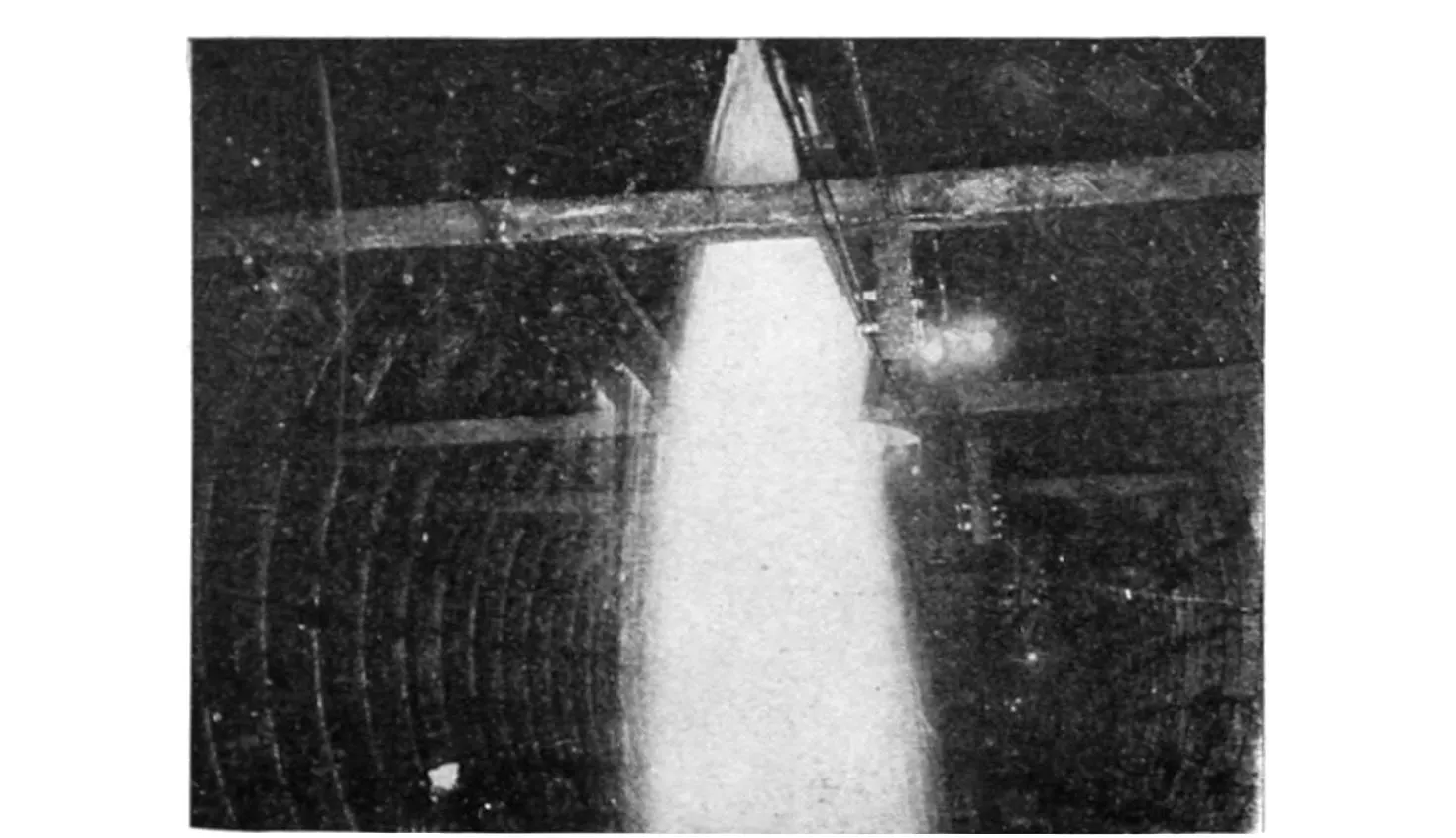
This shows one of Captain Behr’s earliest efforts to photograph the projectile from a
twelve-inch gun. The man on the platform has been adjusting the electrical connections
that actuate the camera mechanism. The halo effect at the muzzle of the gun is due to
compressed air caused by the forward rush of the projectile. The projectile has not yet
emerged from the muzzle of the gun. On the right is the place where the “Merrimac” and
the “Monitor” had their famous fight.
Sometimes these great projectiles
ricochet several times, and go bounding
over the water as a pebble skips along
the surface of a mill-pond, only there
may be the distance of a mile or more
between these giant leaps.
A strange phenomenon is witnessed
by the observer on a towing vessel as
he looks, rather uneasily perhaps, toward
the distant shore battery, that
seems to be firing straight at him.
First there is a flash and a puff
of smoke; then nothing for a period
of seconds, while the projectile
is on its way; then suddenly
a great splash as the mass of iron
strikes the water. Up to this moment
there has been no sound of the discharge,
no sound of the projectile, since
it travels faster than the sound-waves;
but now, after it has buried itself in
the ocean, is heard its own unmistakable
voice, a low, buzzing um-m-m-m
approaching from the shore. The projectile
itself has arrived before the
sound that it makes in transit, and the
sound arrives afterward. Last of all
is heard the boom of the discharge.
A GUN THAT PHOTOGRAPHED ITS OWN SHOT
In this beautiful picture the hurling projectile was itself the photographer: that is,
in passing out of the gun-barrel, it broke a length of piano-wire stretched across the muzzle
and thus automatically closed an electrical circuit that actuated the camera mechanism. And
so rapid was the shutter that the great shot hurled forth in the discharge photographed
here has not yet had time to issue from the smoke-cone, where it is still hidden.
Owing to the great velocity of gun
projectiles, it is almost impossible for
an observer near the target to see them
as they approach; but a trained eye can
discern the slower moving mortar projectiles
as they drop out of the sky,
shrieking as they come, curving downward
from a height of four or five
miles, half a ton falling from a height
of four or five miles.
EXPLODING A SUBMARINE MINE
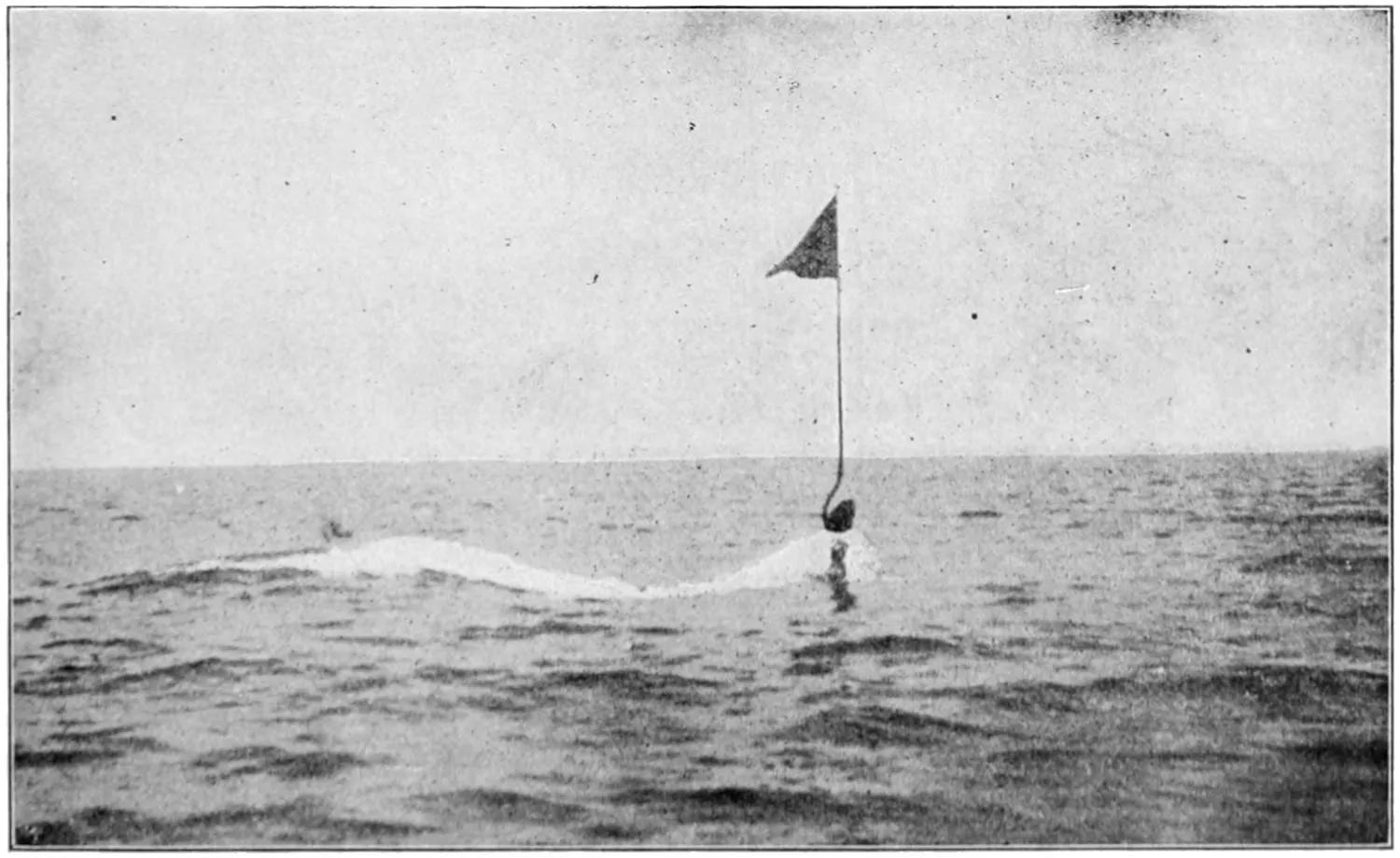
This photograph illustrates another important form of coast defense—the submarine
mine. A target about 5 by 5 feet, with a red flag at its apex, is towed across the mine-field,
the mines being exploded electrically from a shore station several miles away. The
methods of laying and exploding these mines are carefully kept secrets. In this case a
charge of five hundred pounds of the newest explosive was used. Fragments of the
shattered target and mine-buoy are seen at the right of the picture. Tons of water are
hurled into the air by these explosions, and hundreds of fish are killed or stunned.
It is difficult to realize what an enormous
force is released when one of
these twelve-inch guns is discharged.
The pressure inside of the gun behind
the projectile is between thirty-five and
forty thousand pounds to the square
inch. No engine or machine made by
man produces anything like this pressure.
The boiler pressure in steam-engines,
or in big turbines driven by superheated
steam, does not exceed two
hundred or three hundred pounds to
the square inch. The huge hydraulic
presses that would crumple up a steel
girder do not exert a pressure of more
than one thousand pounds to the square
inch. The only reason a gun-barrel
can resist this pressure (forty thousand
pounds to the square inch) is that it is
built up in a series of concentric steel
hoops or tubes shrunk one over the
other until there is a resistance capacity
of from seventy thousand to ninety
thousand pounds to the square inch.
Even at rest, the barrels of these great
guns are under such enormous compression,
from being thus squeezed within
these outer steel coverings, that, if the
retaining steel jackets were suddenly
cut, the tubes would blow themselves
into pieces from the violent reaction of
release.
Not only does this smokeless powder,
burning inside these guns, produce
enormous pressure, but it generates inconceivably
great heat. Water boils at
100° Centigrade; iron melts at 1400°;
platinum and the most resistant metals
at 2900°; while the hottest thing on
earth is the temperature of the electric
arc, in which carbon boils. This temperature
is between 3000° and 4000°
Centigrade, and is believed to be the
same as that of these great powder
chambers when the gun is fired. Thus
a diamond, the hardest substance
known, would melt in the barrel of a
twelve-inch gun at the moment of discharge.
The consequence is that at
each discharge of a big gun a thin skin
of metal inside the barrel is literally
fused, and this leads to rapid erosion
of the softened surfaces under the tearing
pressure of gases generated. The
rifling is worn away; the band over the
projectile becomes loose-fitting; and
soon the huge gun, that has cost such
a great sum, is rendered unfit for service.
The life of a twelve-inch gun is
only 450 rounds, that is, the gun would
be worn out if fired every three minutes
for a single day. After that a new
life may be given it by boring out the
inner tube and putting in a new steel
lining.
A few words may be added about the
formidable smokeless powder used in
these great guns. This powder, in spite
of its terrible power, is of innocent appearance,
and a small stick of it may
be held safely in the hand while it
burns with a vivid yellowish flame.
There is no danger of its exploding or
detonating like gun-cotton, and yet it
is made from gun-cotton, treated by a
colloiding process that is one of our
jealously guarded military secrets.
There are foreign governments that
would give millions to know exactly
how this powder is made and how it is
preserved for years without deterioration.
The recent destruction of two
ships of the French navy was due, it
is believed, to deterioration of their
smokeless powder.
If a person’s picture is taken with
the eyes of the person looking directly
into the lens or opening of the camera,
then the eyes in the picture will always
be directly on and appear to follow
whoever is looking at it. This is also
true of paintings. If a subject being
painted is posed so as to look directly
at the painter, and the artist paints the
picture with the eyes so pointed, then
the eyes of the picture will follow you.
When you are looking at a picture of a
person and the eyes do not follow you,
you will know at once that he was not
looking at the camera or artist when
the picture was being taken or painted.
WHY YOU CAN BLOW OUT A CANDLE
To understand the answer to this
question fully you will first have to
learn what light is, and particularly
that it is not the flame from the gas
jet or of the lamp or candle that is
actually the light, but that light consists
of rays or waves in the ether,
which is constantly in all space and
even in our bodies, coming from the
something that is burning. This in the
instance above mentioned would be the
gas burning as it comes out of the gas
jet, the oil in the lamp as it comes up
through the wick or the flame of the
candle. We are apt to call a lighted
gas jet a lamp, or a candle, light, because
it is steady. Really, however,
there is no such thing as keeping light
in a room in an actual sense, for rays
of light travel from the substance
which produces them faster than anything
else we know of in the world.
The first thing a light wave does when
it is once created is to go some place,
and it does this at the rate of 186,000
miles per second. If it cannot penetrate
the walls of the room it is either
reflected back in the direction from
which it came or transformed by the
objects which it strikes into some other
kind of energy.
When you look at the rays coming
from a gas jet, you do not see one ray
for more than, say the millionth part
of a second, but because these rays of
light come so fast one after the other
from the burning jet and spread in all
directions, they seem to be continuous.
So you see that the rays of light are
going away as fast as they are coming
from the gas jet. They either go on as
light or, as said above, are changed into
other forms of energy when they strike
things they cannot penetrate in the
form of light, or rather one thing,
which is heat. A large part of it goes
into the air in the room in the form
of heat, as you well know, now that
it is called to your attention. Some of
it goes into the furniture and some of
it is changed into another form of heat,
which, combining with the chemicals in
other things it mixes with, changes
their appearance and usefulness. As,
for instance, the carpets and hangings
in the room, the colors of which become
faded when exposed to light rays
too much. The heat from the light
rays is responsible for the fading of
colors in our garments as well.
When you “put out the light,” as we
say, or turn off the gas, you cut off the
source of light. Really, then, our expression
that “the light goes out” is
only true while the gas is lighted, for
from the flaming gas jet the light is
going out all the time, whereas when
the gas is turned off no light is being
produced, and when you turn off the
gas you do not turn out the light, but
only that which makes light.
Fire will go out naturally when there
is nothing left to burn, or it will go
out if it cannot secure enough oxygen
out of the air to keep it going. In the
first case it dies what we might call a
“natural death,” and in the latter case
the fire practically suffocates. The fire
in the open fireplace, if it has plenty
of air, will burn up everything burnable
that it can reach. The stones of
the fireplace or other parts of a stove
will not burn, because they have already
been burned, and you cannot burn anything
a second time, if all of the oxygen
in it was burned out of it the first time.
Now, then, to burn up a thing, you
must first start a fire under it, and then
keep a constant draft of air playing
on it from beneath, or the fire will die
out. The more difficult a thing is to
burn, the more important it is that you
have plenty of draft. If the ashes accumulate
under the fire the air cannot
go through them in sufficient quantity
and the fire will go out. Other things
which prevent the current of air from
going up through the fire will cause it
to go out. That is why we close the
lower door of the furnace, to keep the
fire from burning out. When we shut
off the draft of air from below, the fire
in the furnace burns slowly, i. e., it
just hangs on, so to speak.
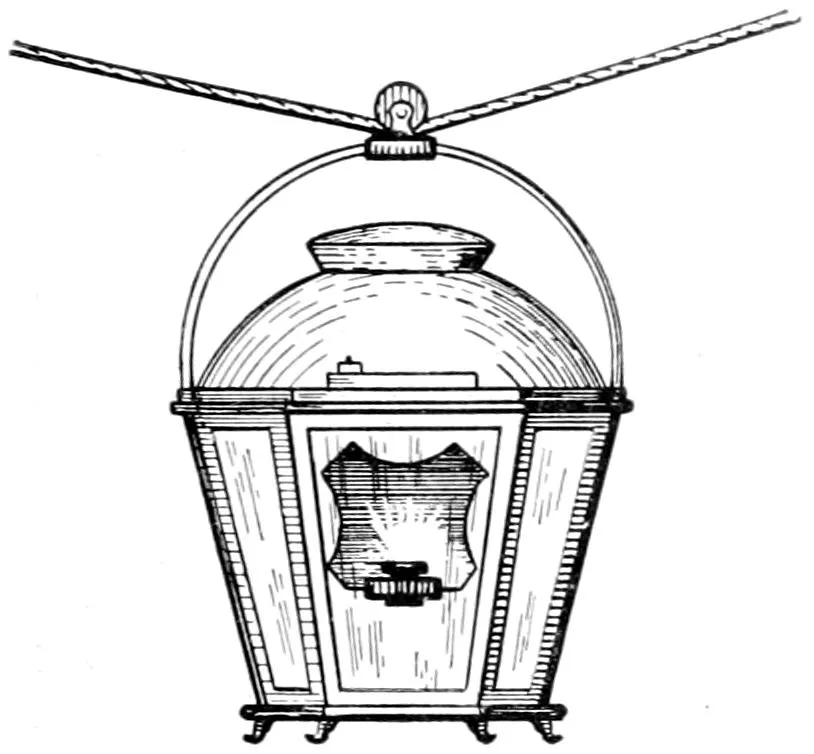
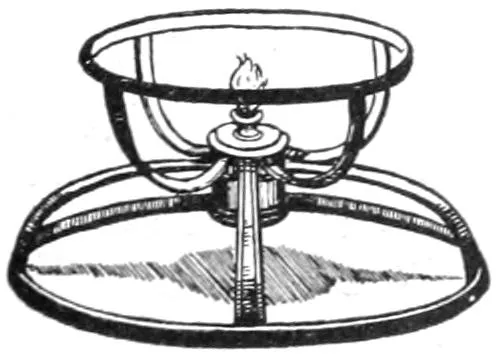
When a lamp is burning without a
chimney it generally smokes. That is
because the oil which is coming up
through the wick is being only partially
burned. The carbon, which is
about one-half of what the oil contains,
is not being burned at all, and
goes off into the air in little black
specks with the gases which are thrown
off. The reason the carbon is not
burned when the chimney is off is that
there is not sufficient oxygen from the
air combining with it, as it is separated
from the oil in the partial combustion
that is going on. To make the carbon
in the oil burn you must mix it with
plenty of oxygen at a certain temperature,
and this can only be done by forcing
sufficient oxygen through the flame
to bring the heat of the flame to the
point where the carbon will combine
with it and burn. When you put the
chimney on the lamp you create a draft
which forces more oxygen through the
flame, brings the heat up to the proper
temperature and enables the carbon to
combine with it and burn. When you
take the chimney off again the heat
goes down, when the draft is shut off
and the lamp smokes again.
The chimney also protects the flame
of the lamp from drafts from the sides
and above, and helps to make a brighter
light, because a steady light is brighter
than a flickering one.
The draft created by the chimney
also forces the gases produced by the
burning oil up and away from the
flame. Some of these gases have a
tendency to put out a light or a fire.
To get at the answer to this question
we must go back to the definition of
light. Light is a wave in the ether and
contains no particles of matter. It,
therefore, does not weigh anything at
all.
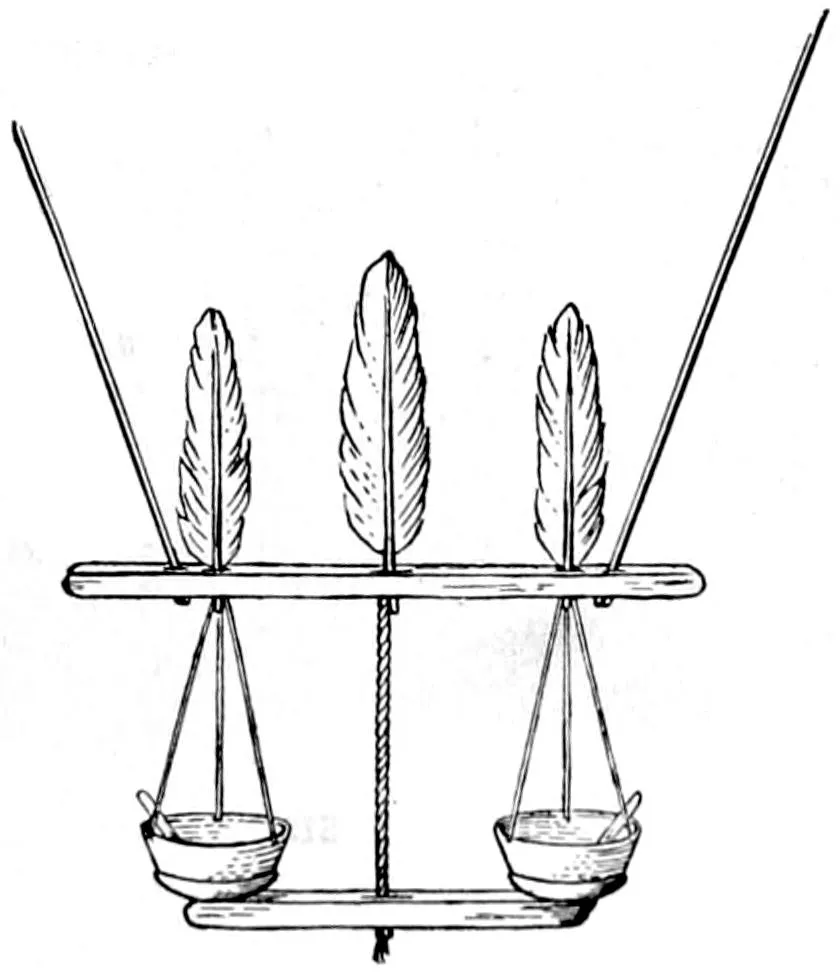
When men had studied light thoroughly,
however, they came to the conclusion
that it must have the power of
pressure, which, from the standpoint of
results, would amount to the same thing
as having weight. They reasoned that
if you had a perfect balance and let
sunlight shine down on one of the sides
of the balance, that side should go
down under the pressure of light. In
their first experiments along this line
men failed to show that under such
conditions the side of the balance on
which the light shone did go down,
but by continuous experiments it was
proved finally that the light did exert
a sufficient pressure to cause the scales
to go down, and in effect this is the
same as having weight; but this has
been found to be a common property
of rays of various kinds, including heat,
and we, therefore, do not speak of this
quality as weight, but as the power of
radiating pressure.
When light passes from one medium
to another, as for example from glass
or water to air, or from air or glass
to water, the rays of light change their
course, thus making them seem to be
bent or broken. The rays of light from
the part of the stick in the water take
a different direction from the rays
from the part which is out of the water,
giving the appearance of breaking or
bending at the place where the air and
water meet. It is, of course, the light
rays which are bent and not the object
itself.
This bending or changing of the path
of light rays is called refraction. If
you place a coin in a glass of water so
that it may be viewed obliquely, you
can apparently see two coins, a small
one through the surface of the water
and another apparently magnified
through the side of the glass.
This is due only to the absolute principle
that rays of light change their
direction in passing from one thing to
another, and on this principle of the
rays of light our optical instruments,
including the microscope, the telescope,
the camera and eyeglasses are based.
I might tell you, just to show how
clever I am, that stars do not twinkle
at all, and leave you with that for an
answer. But since they really do seem
to twinkle, and that is what causes
your question, I will tell you. As we
have already learned in our talks
about the stars and the sky in general,
the stars are suns which are constantly
throwing off light, just as our sun gives
us light, and when this light strikes
the air which surrounds the earth it
meets many objects—little particles of
dust and other things always floating
about in it. The light comes to us in
the form of rays from the stars and
some of these rays strike particles of
various kinds in the air and are thus
interfered with. If you are looking at
a lighted window some distance away
and there are a lot of boys and girls
or men and women running past the
window, one after the other, rapidly,
it will make the light in the window
appear to twinkle. The twinkling is
due to the interference which the rays
of light encounter while traveling toward
the eye.
That is nature’s way of protecting
the eyes from the smarting which the
onion would cause in your eyes if the
tears did not come quickly and overcome
the bad effect so produced. Tears
are provided for washing the ball of
your eyes. Every time you wink a
little tear is released from under the
eyelid, and the wink spreads it all over
the eyeball. This washes down the
front of the eyeball and cleanses it of
all dust and other things that fly at
the eye from the air. Then the tear
runs along a little channel, much like
a trough, at the lower part of the eye,
and out through a little hole in the eye,
and in this case the tear is really only
an eye-wash. Many things, but more
often sadness or injured feelings, start
the tears coming so fast from under
the eyelid that the little trough at the
bottom and the hole in the corner of
the eye are too small to hold them or
carry them off, so they roll over the
edge of the lower eyelid and down the
face. These are what we call tears.
Among other things that will cause
tear-glands to cause an over-supply
of eye-wash to come down, are onions.
What they give off is very trying to
the eyes, and so, just as soon as the
something which an onion throws off
hits the eyeball, the nerves of the eye
telegraph the brain to turn on the tears
quickly, and they come in a little deluge
and counteract the bad effect of the
onion.
SOME REMARKABLE PICTURES WITH A FAST CAMERA
The First Missile — Who First Discovered the Power of Gunpowder? — THE FIRST AMERICAN MADE GUNS — A VISIT TO A CARTRIDGE FACTORY
THE CAVE MAN OF PREHISTORIC TIMES WHO UNCONSCIOUSLY INVENTED AMMUNITION
HOW MAN LEARNED
TO SHOOT
A naked savage found himself in
the greatest danger. A wild beast,
hungry and fierce was about to attack
him. Escape was impossible. Retreat
was cut off. He must fight for
his life—but how?
Should he bite, scratch or kick?
Should he strike with his fist? These
were the natural defences of his body,
but what were they against the teeth,
the claws and the tremendous muscles
of his enemy? Should he wrench a
dead branch from a tree and use it for
a club? That would bring him within
striking distance to be torn to pieces
before he could deal a second blow.
There was but a moment in which
to act. Swiftly he seized a jagged
fragment of rock from the ground and
hurled it with all his force at the blazing
eyes before him; then another, and
another, until the beast, dazed and
bleeding from the unexpected blows,
fell back and gave him a chance to
escape. He knew that he had saved his
life, but there was something else
which his dull brain failed to realize.
He had invented arms and ammunition!
In other words, he had needed to
strike a harder blow than the blow of
his fist, at a greater distance than the
length of his arm, and his brain showed
him how to do it. After all, what is
a modern rifle but a device which man
has made with his brain permitting him
to strike an enormously hard blow at
a wonderful distance? Firearms are
really but a more perfect form of
stone-throwing, and this early Cave
Man took the first step that has led
down the ages.
This strange story of a development
has been taking place slowly through
thousands and thousands of years, so
that today you are able to take a swift
shot at distant game instead of merely
throwing stones.
THE SLING MAN IN ACTION
PRACTICE DEVELOPED SOME WONDERFUL MARKSMEN AMONG THE USERS OF THIS PRIMITIVE WEAPON
We do not know the name of the
man who invented the sling. Possibly
he did not even have a name, but
in some way he hit upon a scheme for
throwing stones farther, harder, and
straighter than any of his ancestors.
The men and women in the Cave
Colony suddenly found that one bright-eyed
young fellow, with a little
straighter forehead than the others,
was beating them all at hunting. During
weeks he had been going away
mysteriously, for hours each day. Now,
whenever he left the camp he was sure
to bring home game, while the other
men would straggle back for the most
part empty-handed.
Was it witchcraft? They decided to
investigate.
Accordingly, one morning several of
them followed at a careful distance as
he sought the shore of a stream where
water-fowl might be found. Parting
the leaves, they saw him pick up a pebble
from the bank and then to their
surprise, take off his girdle of skin and
place the stone in its center, holding
both ends with his right hand.
Stranger still, he whirled the girdle
twice around his head, then released
one end so that the leather strip flew
out and the stone shot straight at a bird
in the water.
The mystery was solved. They had
seen the first slingman in action.
The new plan worked with great success,
and a little practice made expert
marksmen. We know that most of the
early races used it for hunting and in
war. We find it shown in pictures
made many thousands of years ago in
ancient Egypt and Assyria. We find
it in the Roman Army where the slingman
was called a “funditor.”
Surely, too, you remember the story
of David and Goliath when the young
shepherd “prevailed over the Philistine
with a sling and with a stone.”
Yet slings had their drawbacks. A
stone slung might kill a bird or even a
man, but it was not very effective
against big game.
What was wanted was a missile to
pierce a thick hide.
Man had begun to make spears for
use in a pinch, but would you like to
tackle a husky bear or a well-horned
stag with only a spear for a weapon?
No more did our undressed ancestors.
The invention of the greatly desired
arm probably came about in a
most curious way.
Long ages ago man had learned to
make fire by patiently rubbing two
sticks together, or by twirling a round
one between his hands with its point
resting upon a flat piece of wood.
THE “LONG BOW” IN SHERWOOD FOREST
ONE OF ROBIN HOOD’S FAMOUS BAND ENCOUNTERS A SAVAGE TUSKER AT CLOSE RANGE
In this way it could be made to
smoke, and finally set fire to a tuft of
dried moss, from which he might get a
flame for cooking. This was such hard
work that he bethought him to twist
a string of sinew about the upright
spindle and cause it to twirl by pulling
alternately at the two string ends,
as some savage races still do. From
this it was a simple step to fasten the
ends of the two strings to a bent piece
of wood, another great advantage
since now but one hand was needed to
twirl the spindle, and the other could
hold it in place. This was the “bow-drill”
which also is used to this day.
But bent wood is apt to be springy.
Suppose that while one were bearing
on pretty hard with a well-tightened
string, in order to bring fire quickly, the
point of the spindle should slip from
its block. Naturally, it would fly away
with some force if the position were
just right.
DEER STALKING WITH THE CROSSBOW
THIS COMPACT ARM WITH ITS SMALL BOLT AND GREAT POWER WAS POPULAR WITH MANY SPORTSMEN
There was one man who stopped
short when he lost his spindle, for a
red-hot idea shot suddenly through his
brain.
Once or twice he chuckled to himself
softly. Thereupon he arose and
began to experiment. He chose a longer,
springier piece of wood, bent it into a
bow, and strung it with a longer thong.
He placed the end of a straight stick
against the thong, drew it strongly
back, and released it.
The shaft whizzed away with force
enough to delight him, and lo, there
was the first Bow-and-Arrow!
Armed with his bow-and-arrow, man
now was lord of creation. No longer
was it necessary for him to huddle
with his fellows in some cave to avoid
being eaten by prowling beasts. Instead
he went where he would and
boldly hunted the fiercest of them. In
other words, his brain was beginning to
tell, for though his body was still no
match for the lion and the bear, he had
thought out a way to conquer them.
Also he was better fed with a greater
variety of game. And now, free to
come and go wherever he might find it,
he was able to spread into various lands
and so to organize the tribes and nations
which at last gave us civilization
and history.
A new weapon now came about
through warfare. Man has been a savage
fighting animal through pretty
much all his history, but while he tried
to kill the other fellow, he objected to
being killed himself.
Therefore he took to wearing armor.
During the Middle Ages he piled on
more and more, until at last one of the
knights could hardly walk, and it took
a strong horse to carry him. When
such a one fell, he went over with a
crash like a tin-peddler’s wagon, and
had to be picked up again by some of
his men. Such armor would turn most
of the arrows. Hence invention got at
work again and produced the Crossbow
and its bolt. We have already
learned how the tough skin of animals
brought about the bow; now we see
that man’s artificial iron skin caused
the invention of the crossbow.
What was the Crossbow? It was
the first real hand-shooting machine.
It was another big step toward the day
of the rifle. The idea was simple
enough. Wooden bows had already
been made as strong as the strongest
man could pull, and they wished for
still stronger ones—steel ones. How
could they pull them? At first they
mounted them upon a wooden frame
and rested one end on the shoulder for
a brace. Then they took to pressing
the other end against the ground, and
using both hands. Next, it was a
bright idea to put a stirrup on this end,
in order to hold it with the foot.
Still they were not satisfied. “Stronger,
stronger!” they clamored; “give us
bows which will kill the enemy farther
away than he can shoot at us! If we
cannot set such bows with both arms
let us try our backs!” So they fastened
“belt-claws” to their stout girdles and
tugged the bow strings into place with
their back and leg muscles.
Probably the Chinese, although all
authorities do not agree. Strange,
is it not, that a race still using
crossbows in its army should have
known of explosives long before the
Christian Era, and perhaps as far back
as the time of Moses? Here is a passage
from their ancient Gentoo Code
of Laws: “The magistrate shall not
make war with any deceitful machine,
or with poisoned weapons, or with cannons
or guns, or any kind of firearms.”
But China might as well have been
Mars before the age of travel. Our
civilization had to work out the problem
for itself.
It all began through playing with
fire. It was desired to throw fire on
an enemy’s buildings, or his ships, and
so destroy them.
Burning torches were thrown by machines,
made of cords and springs, over
a city wall, and it became a great study
to find the best burning compound with
which to cover these torches. One was
needed which would blaze with a great
flame and was hard to put out.
Hence the early chemists made all
possible mixtures of pitch, resin,
naphtha, sulphur, saltpeter, etc.;
“Greek fire” was one of the most
famous.
Many of these were made in the
monasteries. The monks were pretty
much the only people in those days
with time for study, and two of these
shaven-headed scientists now had a
chance to enter history. Roger Bacon
was the first. One night he was working
his diabolical mixture in the stone-walled
laboratory, and watched, by the
flickering lights, the progress of a certain
interesting combination for which
he had used pure instead of impure
saltpeter.
Suddenly there was an explosion,
shattering the chemical apparatus and
probably alarming the whole building.
That explosion proved the new combination
was not fitted for use as a
thrown fire; it also showed the existence
of terrible forces far beyond the
power of all bow-springs, even those
made of steel.
Roger Bacon thus discovered what
was practically gunpowder, as far back
as the thirteenth century, and left writings
in which he recorded mixing 11.2
parts of the saltpeter, 29.4 of charcoal,
and 29 of sulphur. This was the formula
developed as the result of his investigations.
Berthold Schwartz, a monk of Freiburg,
studied Bacon’s works and carried
on dangerous experiments of his
own, so that he is ranked with Bacon
for the honor. He was also the first
one to rouse the interest of Europe in
the great discovery.
THE “KENTUCKY RIFLE” WITH ITS FLINT-LOCK WAS ACCURATE BUT MUST BE MUZZLE-CHARGED
THE FIRST
REAL FIRE ARMS
And then began the first crude,
clumsy efforts at gunmaking. Firearms
were born.
Hand bombards and culverins were
among the early types. Some of these
were so heavy that a forked support
had to be driven into the ground, and
two men were needed, one to hold and
aim, the other to prime and fire.
Improvements kept coming, however.
Guns were lightened and bettered in
shape. Somebody thought of putting
a flash pan, for the powder, by the
side of the touch-hole, and now it was
decided to fasten the slow-match in
a movable cock upon the barrel, and
ignite it with a trigger. These matches
were fuses of some slow-burning fiber,
like tow, which would keep a spark for
a considerable time. Formerly they
had to be carried separately, but the
new arrangement was a great convenience
and made the match-lock. The
cock, being curved like a snake, was
called the “serpentine.”
About the time sportsmen were
through wondering at the convenience
of the match-lock, they began to realize
its inconvenience. They found that
they burned up a great deal of fuse,
and were hard to keep lighted. Both
statements were true, so inventors
racked their brains again for something
better. They all knew you could
bring sparks with flint and steel, and
that seemed an idea worth working on.
A Nuremberg inventor, in 1515, hit on
the wheel-lock. In this a notched steel
wheel was wound up with a key like a
clock. Flint or pyrite was held against
the jagged edge of the wheel by the
pressure of the serpentine. You pulled
the trigger, then “whirr,” the wheel
revolved, a stream of sparks flew off
into the flash-pan, and the gun was
discharged.
WHEEL-LOCK RIFLE
This gun worked beautifully, but it
was expensive. Wealthy sportsmen
could afford them, and so for the first
time firearms began to be used for
hunting. Some of these sixteenth and
seventeenth century nabobs had such
guns of beautiful workmanship, so
wrought and carved and inlaid, that
they must have cost a small fortune.
You will find them in many large
museums to this day.
But now the robbers had their turn.
There are two stories of the invention
of the flint-lock. Both deal with
robbers, both have good authority, and
both may be true, for inventions sometimes
are made independently in different
places.
One story runs that the flint-lock
which was often styled “Lock à la
Miquelet,” from the Spanish word,
“Miquelitos”—marauders—told its
origin in its name. The other is, that
the flint-lock was invented in Holland
by gangs of thieves, whose principal
business was to steal poultry.
In either case the explanation is
easy. The match-lock showed its fire
at night and wouldn’t do for thieves,
the wheel-lock was too expensive, so
again necessity became the mother of
a far-reaching invention.
Everybody knows what the flint-lock
was like. You simply fastened a
flake of flint in the cock and snapped
it against a steel plate. This struck off
sparks which fell into the flash-pan and
fired the charge.
It was so practical that it became
the form of gun for all uses; thus gunmaking
began to be a big industry.
Invented early in the seventeenth century,
it was used by the hunters and
soldiers of the next two hundred years.
Old people remember when flint-locks
were plentiful everywhere. In fact,
they are still being manufactured and
are sold in some parts of Africa and
the Orient. One factory in Birmingham,
England, is said to produce about
twelve hundred weekly, and Belgium
shares in their manufacture. Some of
the Arabs use them to this day in the
form of strange-looking guns with
long, slender muzzles and very light,
curved stocks.
There were freak inventors in the
flint-lock period just as there are to-day.
Some of them wrestled with the
problem of repeating guns, and put together
a number of barrels, even seven
in the case of one carbine. Others tried
revolving chambers, like our revolvers,
and still others, magazine stocks. Pistols
came into use in many interesting
shapes, but these were too practical to
be considered freaks.
WHY WE CALL THEM
PISTOLS
Pistols, by the way, are named from
the town of Pistola, Italy, where they
are said to have been invented and
first used.
We must not forget that rifling was
invented about the time that the wheel-lock
appeared, and had a great deal
to do with the improvement of shooting.
Austrians claim its invention for
Casper Zollner, of Vienna, who cut
straight grooves in the barrel’s bore.
His gun is said to have been used for
the first time in 1498, but the Italians
seem to have still better warrant as
these significant words appear in old
Latin Italian, under date of July 28th,
1476, in the inventory of the fortress
of Guastalla: “Also one iron gun made
with a twist like a snail shell.” The
rifling made the bullet spin like a top
as it flew through the air, thus greatly
improving its precision.
In the year 1807 the Rev. Alexander
John Forsythe, LL.D., got his patent
papers for something far better than
even the steady old flint. He had invented
the percussion system. In some
form this has been used ever since.
Which is to say that when the hammer
of your gun falls, it doesn’t explode
the powder, although it seems
to. Instead it sets off a tiny portion
of a very sensitive chemical compound
called the “primer,” and the explosion
of this “primer” makes the powder go
off. Of course, the two explosions
come so swiftly that your ear hears
only a single bang.
Primers were tried in different forms
called “detonators,” but the familiar
little copper cap was the most popular.
No need to describe them. Millions are
still made to be used on old-fashioned
nipple guns, even in this day of fixed
ammunition.
But now we come to another great
development, the Breech-loader.
THE MODERN AUTOMATIC RIFLE
THE MODERN SPORTSMAN WITH HIS AUTOMATIC RIFLE IS PREPARED FOR ALL EMERGENCIES
Perhaps you have had to handle an
old muzzle-loader. It was all right so
long as you knew of nothing better,
but think of it now that you have
your beautiful breech-loader. Do you
remember how sometimes you overloaded,
and the kick made your
shoulder lame for a week? Or how,
when you were excited you shot away
your ramrod? The gun fouled too,
and was hard to clean, the nipples
broke off, the caps split, and the
breeches rusted so that you had to take
them to a gunsmith. Yes, in spite of
the game it got, it was a lot of trouble,
now you come to think of it. How different
it all is now!
ASSEMBLING REPEATING SHOTGUNS AND RIFLES
Breech-loaders were hardly new.
King Henry VIII of England, he of
the many wives, had a match-lock
arquebus of this type dated 1537.
Henry IV of France even invented
one for his army, and others worked
a little on the idea from time to time.
But it wasn’t until fixed ammunition
came into use that the breech-loader
really came to stay—and that was only
the other day. You remember that the
Civil War began with muzzle-loaders
and ended with breech-loaders.
ASSEMBLING AUTO SHOTGUNS
SOME OF THE SHOOTING TESTS
Houiller, the French gunsmith, hit
on the great idea of the cartridge. If
you were going to use powder, ball and
percussion primer to get your game,
why not put them all into a neat,
handy, gas-tight case?
HOW THE FIRST
AMERICAN GUN WAS MADE
Two men, a smith and his son, both
named Eliphalet Remington, in 1816,
were working busily one day at their
forge in beautiful Ilion Gorge, when,
so tradition says, the son asked his
father for money to buy a rifle, and
met with a refusal. The request was
natural for the surrounding hills were
full of game. The father must have
had his own reasons for refusing, but
it started the manufacture of guns in
America.
Eliphalet, Jr., closed his firm jaws
tightly, and began collecting scrap iron
on his own account. This he welded
skillfully into a gun-barrel, walked
fifteen miles to Utica to have it rifled,
and finally had a weapon of which he
might well be proud.
TYPES OF CARTRIDGES
In reality, it was such a very good
gun that soon the neighbors ordered
others like it, and before long the Remington
forge found itself hard at work
to meet the increasing demand. Several
times each week the stalwart
young manufacturer packed a load of
gun-barrels upon his back, and tramped
all the way to Utica where a gunsmith
rifled and finished them. At this time
there were no real gun-factories in
America, although gunsmiths were located
in most of the larger towns. All
gun-barrels were imported from England
or Europe.
HOW AMMUNITION IS MADE
One of the first shocks you get when
you start your visit through a cartridge
factory is the matter-of-fact way
in which the operatives, girls in many
cases, handle the most terrible compounds.
We stop, for example, where
they are making primers to go in the
head of your loaded shell, in order
that it may not miss fire when the
bunch of quail whirrs suddenly into the
air from the sheltering grasses. That
grayish pasty mass is wet fulminate
of mercury. Suppose it should dry a
trifle too rapidly. It would be the last
thing you ever did suppose, for there
is force enough in that double handful
to blow its surroundings into fragments.
You edge away a little, and
no wonder, but the girl who handles it
shows no fear as she deftly but carefully
presses it into moulds which separate
it into the proper sizes for primers.
She knows that in its present
moist condition it cannot explode.
INSPECTING METALLIC SHELLS
EXAMINING PAPER SHELLS
WEIGHING BULLETS
Or, perhaps, we may be watching
one of the many loading machines.
There is a certain suggestiveness in
the way the machines are separated by
partitions. The man in charge takes
a small carrier of powder from a case
in the outside wall and shuts the door,
then carefully empties it into the reservoir
of his machine, and watches alertly
while it packs the proper portions
into the waiting shells. He looks like
a careful man, and needs to be. You
do not stand too close.
SHOOTING ROOM OF BALLISTICS DEPARTMENT
CHRONOGRAPH FOR MEASURING
The empty carrier then passes
through a little door at the side of
the building, and drops into the yawning
mouth of an automatic tube. In
the twinkling of an eye it appears
in front of the operator in one of the
distributing stations, where it is refilled,
and returned to its proper loading
machine, in order to keep the machine
going at a perfectly uniform
rate; while at the same time it allows
but a minimum amount of powder to
remain in the building at any moment.
Each machine has but just sufficient
powder in its hopper to run until a
new supply can reach it. Greater
precaution than this cannot be imagined,
illustrating as it does that no
effort has been spared to protect the
lives of the operators.
PUTTING METAL HEADS ON PAPER SHOT SHELLS
It is remarkable that, in an output
of something like four million per day,
every cartridge is perfect.
Such things are not accidental. The
secret is, inspection.
TESTING MATERIALS
AND PRODUCTS
Let us see what that means. It
means laboratory tests to start with.
Here are brought many samples of the
body paper, wad paper, metals, waterproofing
mixture, fulminate of mercury,
sulphur, chlorate of potash, antimony
sulphide, powder, wax, and
other ingredients, and even the operating
materials such as coal, grease,
oil, and soaps. In the laboratory we
see expert chemists and metallurgists
with their test-tubes, scales, Bunsen
burners, retorts, tensile machines,
microscopes, and other scientific looking
apparatus, busily hunting for
defects.
For example, one marker is examining
a supply of cupro-nickel, such as
is used in jacketing certain bullets.
A corner of each strip is first bent
over at right angles, then back in the
other direction until it is doubled, then
straightened. It does not show the
slightest sign of breaking or cracking,
in spite of the severe treatment, therefore
it is perfect. Let but the least
flaw appear, and the shipment is rejected.
WHAT A SHOT TOWER LOOKS LIKE
SHOT TOWER—TALLEST BUILDING IN CONNECTICUT
LARGEST CARTRIDGE EQUALS MORE
THAN 1,000,000 OF SMALLEST
(HELD ON HAND)
Two large iron cylinders descend in
the center, coming down through the
ceiling from above; we are invited to
look through an open port in one of
these.
We see nothing but the whitened
opposite wall, against which a light
burns.
It appears absolutely empty, though
within it is raining such a swift
shower of invisible metal that if we
were to stretch our hands into the
apparently vacant space they would
be torn from our arms.
A large water tank below is churned
into foam with the impact of the falling
shot, and as we look downward
we make out finally the haze of motion.
It is so interesting that we take
the elevator and rise ten stories to
the source of the shower.
Here high in the air are the large
caldrons where many pigs of lead,
with the proper alloy, are melted into
a sort of metallic soup. This is fed
into small compartments containing
sieves or screens, through the meshes
of which the shining drops appear and
then plunge swiftly downward.
But this only begins the process.
Taken from the water tanks and
hoisted up again, the shot pellets, in
a second journey down, through complicated
devices, are sorted, tumbled,
polished, graded, coated with graphite,
and finally stored.
The pictures shown in this story were prepared especially to illustrate this story of “How Man
Learned to Shoot” by the Searchlight Library for the Remington Arms Company.
FORGING A MONSTER GUN
Photo by Bethlehem Steel Co.
This photograph shows gun ingots after being “stripped” and “cored.”
Photo by Bethlehem Steel Co.
This photograph shows a gun ingot in the process of being forged under forging press.
The Parts of a Big Gun — What Is Motion? — Is Perpetual Motion Possible? — How Can an Explosion Break Windows That Are at a Distance? — Why Do Some Things Bend and Others Break? — Why Does a Ball Bounce? — What Makes a Ball Stop Bouncing? — What Makes a Cold Glass Crack if We Put Hot Water Into It? — What Causes the Gurgle When I Pour Water from a Bottle? — Where Does the Part of a Stocking Go That Was Where the Hole Comes? — Why Do Coats Have Buttons On the Sleeves? — Why Has a Long Coat Buttons on the Back?
Photo by Bethlehem Steel Co.
This photograph shows a gun being fired at the Proving Grounds for test.
THINGS TO KNOW
ABOUT A BIG GUN
Before going into a description of
the manufacture of a big gun it would
be well to understand the following
definitions:
The “breech” of a gun is its rear-end,
or that end into which the projectile
and powder charge are loaded.
The “muzzle” of a gun is its forward
end.
By “calibre” is meant the inside
diameter of the gun in inches. A
5-inch gun is one of “minor calibre,”
and one of 14-inches a gun of “major
calibre.”
The length of a gun is never expressed
in inches or feet, but in the
number of times that its calibre is
divisible into its length; thus, when
we say a 12-inch 50-calibre gun, we
mean a gun of 12 inches in diameter,
and 12 times 50, or 600 inches long.
The “bore” is the hole extending
through the center of the gun, from
the rear face of the liner to its forward
end.
The “powder chamber” is the rear
part of the bore, and extends from the
face of the breech plug when closed
to the point where the “rifling” begins.
The powder chamber is slightly larger
in diameter than the rest of the bore.
The “rifling” is the name given to
the spiral grooves which are cut into
the surface of the bore of the gun,
and give to the projectile its rotary
motion when the gun is fired.
With the advent of “iron-clads”
and heavily armored fortresses, it
became necessary to increase the
power of the guns in use, until to-day
a 14-inch gun of 45 calibres fires
a projectile weighing 1400 pounds,
with an initial velocity of 2600 feet
per second. An idea of this initial velocity
may be better obtained by comparison
when you realize that a train
going sixty miles an hour is only
traveling at the rate of 88 feet per
second. Now, in order to produce
such wonderful power in a gun, great
pressure must be generated in the
bore, and it was soon found that a
one-piece gun, whether cast or forged,
could not withstand such pressures.
To begin with, we may consider
this one-piece gun, or any gun, as a
tube which must withstand a great
pressure from within, so that when a
gun is designed care must be taken
to see that the material from which it
is constructed is strong enough to
withstand this pressure. And not
only must the gun be sufficiently
strong, but it must not be too heavy,
so that you see you cannot go on forever
increasing the thickness of the
walls of this tube. Besides, it is generally
acknowledged that a simple tube
or cylinder cannot be made with walls
of sufficient thickness to withstand
from within a continued pressure per
square inch greater than the tenacity
of a square-inch bar of the same material;
in other words, if the tensile
strength of a metal is only twelve
tons per square inch, no gun of that
metal, however thick its walls, could
withstand a pressure of twenty tons
per square inch, and the modern big
guns are tested at that great a pressure.
And if we look further into this
matter of pressures we find that when
a gun is fired the pressure exerts itself
in two ways; it tends to burst the gun
longitudinally or down the middle, and
it tends to pull the gun apart in the
direction of its length. Of course,
some method of strengthening this
one-piece gun was sought after, with
the result that to-day guns are either
“built-up” or “wire-wound.”
A “built-up” gun is one made of
several layers, each layer being separately
constructed and then assembled
together. The order of assemblage
differs somewhat with the different
calibres, but the method of assemblage
is essentially the same, that is, the outside
layers are heated and shrunk on
the inner ones. This question will be
treated at greater length later on.
A “wire-wound” gun is one in
which the necessary additional
strength is obtained by winding wire
around an inner tube of steel, each
layer being wound with a different
tension of the wire; this type of gun
has found great favor with foreign
manufacturers. In this country, however,
the “built-up” system is used almost
exclusively, and so this description
will deal with the manufacture of
a “built-up” gun.
HOW A BIG GUN WOULD LOOK
IF YOU WERE TO CUT IT IN TWO
Sketch Showing Construction of a Modern “Built-up” Gun.
A, HOOP; B, HOOP; C, JACKET;
D, TUBE; E,
LINER; F, HOOP.
A modern “built-up” gun is composed
of a liner, a tube, a jacket and
hoops.
The liner is in one piece and extends
the entire length of the bore and carries
the “rifling” and the powder
chamber.
The tube is in one piece and envelops
the liner for its entire length.
Formerly the tube carried the “rifling”
and powder chamber, but due to the
wearing out of the “rifling” with constant
firing, a liner was decided on, so
that now when the “rifling” becomes
worn, the liner can be removed and
a new one substituted.
The jacket is usually in two pieces
and is shrunk on the tube; it extends
the entire length, and its rear end is
threaded in the inside for the attachment
of the “breech bushing.”
Hoops are shrunk on over the
jacket and in a big gun are sometimes
as many as six or seven in number.
The liner, tube, jacket and hoops
are made of the finest quality of open
hearth steel, and the steel must conform
to specifications set by the government.
Photo by Bethlehem Steel Co.
This photograph shows a mould for a gun ingot under hydraulic press for fluid compression.
The chemical composition having
been determined, the necessary elements
are weighed out and the whole
charged into an open hearth furnace.
When the furnace is ready to be
tapped the molten metal is run into a
large ladle, which in turn is taken by
a crane to the casting pit, where the
mould is filled. The ingots for the
large calibre guns run from 42-inch
to 48-inch in diameter, and after
being poured they are immediately run
under a hydraulic press, where they
are subjected to a pressure of about
six tons per square inch to drive out
the gases, and then lowered to about
1500 pounds pressure per square inch
for a certain length of time during
the cooling. This pressure tends to
make the ingot solid, by expelling the
gases, which would cause blow-holes,
and by preventing “piping” and “segregation.”
When a metal cools, the
top and sides cool first, and this outer
layer shrinks and pulls away from the
centre, with the result that a cavity or
“pipe” would be formed, but the hydraulic
pressure forces fluid metal into
this cavity and so prevents the “pipe.”
The cooling also causes the various
elements to solidify separately, and
they tend to break away from the
mass and collect at the centre; this is
called “segregation,” and is also partially
prevented by fluid compression.
A solid ingot, however, is obtained,
and this is absolutely necessary.
After the ingot has cooled sufficiently
it is “stripped,” that is, it is
removed from the mould, and then it
is sent to the shop to have the “discard,”
or extra length, cut off. When
the ingot is cast, an extra amount of
metal is poured into the mould to permit
this discard, the theory being that
the poorer metal, together with gases
and other impurities, rise to the top.
The government specifications require
that there shall be a 20% discard
from the upper end and a 3%
discard from the lower end. The discard
having been cut off, the ingot is
“cored,” that is, its centre is bored
out, the diameter of the hole depending
on the size of the ingot.
TAKING THE BORE OF A BIG GUN
Photo by Bethlehem Steel Co.
This photograph shows gun ingot in boring mill being cored.
The ingot is now ready for the
“forge,” and on its receipt in the forge
shop it is placed in a furnace to be
heated; and here great care must be
exercised to prevent setting up any
additional strains in the ingot. When
the ingot was cooling just after casting
the metal tended to flow from the
centre; the interior is still in a condition
of strain, and if the cold ingot
is now placed in a hot furnace, cracks
are apt to form in the centre, causing
the forging to later break in service.
However, the ingot having been
properly heated, it is ready for either
the forging hammer or the press. The
present-day practice, though, is to
forge the ingot under a press forge,
as the working of the metal causes a
certain flow, and as a certain amount
of time is necessary for this flow, the
continued pressure and slow motion
of the press allows the molecules of
the metal to adjust themselves more
easily, and a better and more homogeneous
forged ingot is produced
than if the forging had been done
with a hammer.
When forging a hollow ingot, a
mandrel, merely a cylindrical steel
shaft, is placed through the hole in
the ingot and the ingot forged on the
mandrel, thereby not only is the outside
diameter of the ingot decreased,
but the length of the ingot is increased.
The usual practice is to continue
the forging until the original
thickness of the walls of the ingot is
decreased one-half and until the ingot
is within two inches of the required
finished diameters. The ingot is now
known as a “forging,” and the lower
end of each ingot as cast will be the
breech end of the forging that is made
from it.
The next process is that of “annealing.”
This consists in heating the
forging to a red heat and then allowing
it to cool very slowly, and is
usually done by hauling the fires in
the furnace after the correct temperature
has been attained and permitting
both to cool off together. This
process is to relieve the strains set up
in the metal during forging, and further,
it alters the molecular condition
of the steel, making a finer and more
homogeneous forging.
HOW THE GUN TUBE IS TEMPERED
Photo by Bethlehem Steel Co.
This photograph shows a gun tube ready to be lowered into oil bath for “oil tempering.”
After annealing, the forging is
ready to go to the machine shop to be
rough bored and turned. The forging
is set in a lathe, the breech end being
held by jaws on the face-plate and
the muzzle end by a “pot-centre,” a
large iron ring having several radial
arms screwed through it. The lathe
can now be turned and the forging
centered by screwing in or out on the
jaws of the face-plate or the radial
arms of the “pot-centre.” When centered,
several surfaces are turned on
the forging for “steady rests” and
then all is in readiness for the turning
and boring.
In both operations of “turning” and
“boring,” the work revolves while the
cutting tools are fed along. Turning
is very simple and usually several
tools are cutting at the same time, but
boring is a more delicate operation, because
the workman cannot see what
he is doing. And in boring, either a
“hog bit” or a “packed bit” is used; a
“hog bit” is a half cylinder of cast iron
fitted with one cutting tool and used
for rough cuts, while a “packed bit” is
a full cylinder of wood with metal
framing and carrying two tools 180°
apart and used for finishing cuts.
The forging, having been rough machined,
is now ready to receive its heat
treatment in order to give to the steel
its required physical characteristics.
Every piece of steel used in gun manufacture
must conform to certain specifications
as regard both its physical
and chemical characteristics. The
chemical analysis was made at the
time the ingot was cast; now for the
treatment of the forging, prior to the
physical test as to its tensile strength,
elastic limit, elongation and contraction.
The “tensile strength” of a metal is
the unit-stress required to break that
metal into parts. If a round bar ten
inches in cross-section area will fracture
under a strain of 120 tons, its tensile
strength is 120 ÷ 10 or 12 tons
per square inch. Tensile strength is
usually expressed in pounds per
square inch.
The “elastic limit” of a metal is the
unit-stress required to first produce a
permanent deformation of the metal.
If a bar of metal be subjected to an increasing
strain, up to a certain point
that metal will be perfectly elastic,
resuming its normal shape when the
strain is removed; at the first permanent
set or deformation, however, the
elastic limit of that metal has been
reached. Elastic limit is expressed in
pounds per square inch.
By “elongation” is meant the increase
in length in a bar when its tensile
strength is reached. If a bar 10
inches long after rupture measures
11.8 inches, its elongation is 18%.
By “contraction” is meant the decrease
in cross-section area in a bar
when its tensile strength is reached.
If a bar 1 square inch in area after
rupture is only .75 of a square inch
in area, its contraction is 25%.
These definitions being understood,
a brief description of the heat treatment
can be taken up, because it is
after this treatment that standard bars
are taken from the forgings to undergo
the physical tests. The first step
consists in “tempering” or hardening
the metal. The piece to be tempered
is placed in an upright position in a
high furnace and uniformly heated to
the required temperature. It is then
lifted from the furnace through an
opening in the top and carried by a
crane to an oil tank of suitable depth
and plunged into the oil. This rapid
cooling or “tempering in oil” is facilitated
by having the oil tank surrounded
by a water bath, so arranged
that a supply of cold water is constantly
in circulation to carry the heat
from the mass as quickly as possible.
This operation produces exceeding
toughness, increases the tensile strength
and raises the elastic limit of the metal.
Now the forging is again annealed,
so as to relieve any strains set up by
tempering and to soften up the metal
to the degree required by the specifications.
It also increases materially the
elongation and contraction. Great care
must be exercised in the heat treatment,
as the acceptance or rejection
of the forging depends upon whether
or not the test bars pass the required
specifications.
The forging is now submitted for
test and the test bars taken. In the
manufacture of a big gun, four test
bars are taken from the breech end
and four from the muzzle end of each
forging and these bars sent to the
physical laboratory. Quite an elaborate
testing machine is provided, and
if the bars pass the required tests the
forging is accepted and is sent to the
machine shop for finish-boring and
turning.
SEARCHING FOR
POSSIBLE DEFECTS
Frequently during finish-boring the
work is examined to see that the bit
is running true, and great care must
be exercised to prevent its running out
of alignment.
After finish-boring every forging is
“bore-searched,” that is, the bore is
carefully examined for any cracks,
flaws, streaks or discoloration. A
special instrument called a “bore-searcher”
is used and consists of a
long wooden handle which has a mirror
inclined at 45° at one end, together
with a light to illuminate the bore, and
so shielded as to obscure the light
from the observer. (See sketch.)
The bore is also inspected by the
foreman after each boring, but the
final “bore-searching” is done by an
inspector.
Now to measure accurately the inside
diameters of long cylinders, such
as are used in gun work, a special
measuring device called a “star-gauge”
is used. Its name is derived from the
fact that it has three measuring points
set at 120° apart and two measurements
are taken, one and the
other , making
a star . Every forging is
“star-gauged” after being finish-bored
and also the liner of the gun after
each assemblage operation.
PUTTING THE PARTS OF A
“BUILT-UP” GUN TOGETHER
In preparation for the assembling
of the different parts, the tube is the
forging to be finished. It is bored and
turned to exact dimensions and carefully
“bore-searched” and “star-gauged.”
With the data at hand a
sketch is made showing the external
diameters of the liner under the tube,
due allowance being made for the
shrinkage when assembling.
The liner is next bored to within
.35 of an inch of the finished diameter,
and turned to the dimensions required
by the sketch above. This extra
metal in the bore is left until the gun
is completely assembled and is removed
in the finish-boring. The liner
is then carefully “bore-searched” and
“star-gauged” and liner and tube are
ready for assembling.
The liner is now taken to the
shrinking pit and carefully aligned in
an upright position with the breech
end down.
The shrinking pit is merely a well
of square section with room enough to
permit workmen to move freely about
the gun when it is in position, and
equipped with a movable table at its
bottom upon which the gun rests. In
the meantime the tube, with breech
end down, is being heated in a hot-air
furnace. This furnace is a vertical
cylinder built of fire-brick and asbestos
and so constructed that air
which has been passed in pipes over
petroleum burners can enter at the
bottom, pass around and through the
tube and out through the top to be
reheated. This service permits a uniform
heat to be transmitted to the
tube and when the desired temperature
has been attained the tube is
lifted from the furnace by a crane,
carried to the shrinking pit and carefully
lowered over the liner. Great
care must be exercised in this operation
to prevent the tube from sticking
while being lowered into place.
Should it happen, the tube should be
hoisted off at once, allowed to cool,
any roughing of the liner be smoothed
off, the tube reheated and a second
trial made. When the tube is properly
in place a cold spray may be turned
upon any particular section where it
is desired the tube should first grip
the liner. The tube is then left to cool
by itself, but cold water is constantly
circulating through the liner.
When the gun is sufficiently cool for
handling purposes, it is hoisted out of
the shrinking pit and taken to the shop
for careful measurement, the liner being
“star-gauged” to note the compression
due to the shrinking on of the
tube.
The same procedure is followed in
the case of the jackets and hoops, until
the entire gun is assembled. The
gun is considered completely “built-up”
when the last hoop has been
shrunk on and is now ready to be
finished.
The gun is now finish-bored, as .35
of an inch of metal was left in the
liner in the first boring. “Packed bits”
are used and the greatest care is exercised
to keep the bit properly centered
and running true. After this
step the gun is finish-turned and
the powder chamber is bored.
Following this operation the gun
is “bore-searched” for any defects
that may have shown up in the finish-boring
and chambering, and then carefully
“star-gauged.” The gun is then
ready to be “rifled.”
RIFLING A BIG GUN
Photo by Bethlehem Steel Co.
This photograph shows a gun in the Rifling Machine in the process of being rifled.
The “rifling” of a gun consists in
cutting spiral grooves in the surface
of the bore from the powder chamber
to the muzzle end, and is done from
the muzzle end. Rifling is a very difficult
operation, and great care must be
exercised that the cutting is uniform.
The grooves are separated by raised
portions called “lands,” and after
“rifling,” these grooves and “lands”
are carefully smoothed up to remove
the rough edges or burrs caused by the
cutting tools of the “rifling” machine.
The necessary holes are now drilled
for fitting the breech mechanism and
the breech block fitted. This operation
usually takes some little time, as
quite a bit of hand work is necessary
to insure a perfect fit. The “yoke,”
really another “hoop,” is now put on
at the breech end and the gun is complete.
The centre of gravity of gun and
breech mechanism is now determined
by balancing on knife edges and the
whole then weighed. The breech
mechanism is also weighed and the
two weights marked on the rear faces
of the gun and breech mechanism.
The gun is now fitted in its “slide,”
that part of the mount which carries
the trunnions and through which the
gun recoils when it is fired, and after
it is adjusted, all is in readiness for
the “proof-firing” or testing of the gun.
There are practically but two things
we see when we use our eyes. One of
them is matter, which is a term we
apply to the things we see, speaking
of them as objects only, and the other
is motion which we observe some of the
matter to possess. Some of the things
we see confuse us, if we bear in mind
that everything is either matter or motion.
For instance, we see light and
know it is not matter and are confused
until we understand that light
is a movement of the ether which surrounds
us and is in and outside of
everything. In the same way we feel
heat and may think it is matter thrown
off by the fire, when it is only another
kind of motion of this same ether.
When we understand these things we
see that motion is a very important
and real part of the world.
When a motion is started it will
keep on going forever unless some
other force which is able to overcome
the motion stops it. When a ball is
thrown in the air it would go on forever
were it not for the law of gravitation
which pulls it to the earth and
the friction of the air on the ball as it
goes through the air. When you stop
a thrown ball you sometimes realize
that motion is a real thing because it
stings your hands. We do wonderful
things with motion. Many things
when you add motion to them acquire
qualities which they did not possess
before. For instance, an ordinary
icicle thrown against a wooden door
will break, but if you put it into a
gun and give it sufficient motion, it
will go right through the door. There
is a story of how a man killed another
by using an icicle as a bullet. The
icicle entered the man’s body and
killed him. Then, of course, the ice
melted and no one could tell how the
man received his wound, for no trace
of anything like a bullet could be
found. A piece of paper has no cutting
qualities, but if you arrange a circular
or square piece of paper with a
rod or stick through the center and revolve
it fast enough, you can cut many
things while it is whirling. The motion
gives it the cutting qualities. You
can take a piece of strong rope and,
by tying the ends together, making a
circle of it, you can make it roll down
the street like a steel hoop if you catch
it just the right way and set it spinning
fast enough before starting it on
its way. A steam engine has no power
to pull the train of cars until the
wheels are set in motion. So we see
that motion is a very important thing
in the world.
Motion is the cause of movements
of all kinds, the power which takes
things from one place to another.
Perpetual motion will never be possible
unless some one discovers a way
to overcome the law of gravitation and
also the certainty that materials will
eventually wear out. Many men have
tried to make a machine that would
keep on moving forever without the
application of any power, the consumption
of fuel within itself, the fall
of weights or the unwinding of a
spring; such a machine would be absolutely
impossible, although many
people have been fooled into investing
money in machines that appeared
to have this power within themselves.
An explosion is a sudden expansion
of a substance like gunpowder or some
elastic fluid or other substance that
has the power to explode under certain
conditions with force, and usually
a loud report. Some explosions are
comparatively mild and accompanied
by a very mild noise, while others are
very powerful and accompanied by a
very loud noise. When an explosion
occurs, the air and everything surrounding
the thing that explodes is
very much disturbed. The air surrounding
the thing that explodes is
thrown back in air waves which are
powerful in the exact proportion in
which the explosion is powerful.
These air waves can be so suddenly
thrown back against the objects in the
vicinity that not only the windows in
the buildings are broken, but often the
entire building blown away. The explosion
acts in all directions at once
with equal force. A great hole may
be torn in the earth beneath the explosion.
If there is anything over the
explosion, that is blown away unless
its power of resistance is sufficient to
withstand the power of the explosion.
Then, also, the air surrounding on all
sides is forced back against everything
in its path.
Very often this air which is suddenly
forced back by the power of the
explosion is thrown against houses at
a distance. These houses may be so
strongly built as to be able to withstand
the effect of the explosion, but
still certain parts of them, such as the
windows and the bricks of the chimney,
may not be able to withstand this
sudden pressure of air against them
and they are forced in. The wind
from such an explosion acts on the
outside of the windows just the same
as though you stood on the outside
with your hands against the windows
and pushed them in. Anything that is
thrown against a window with more
force than the window glass can resist
will break the window, and even
slight explosions may be so powerful
as to throw the air back and away
from them with such force as to break
windows at a great distance—even a
mile or more away.
When an outside force is applied to
some objects, some of them will bend
and others break. It is due to the fact
that in some things the particles have
the faculty of sticking together or
hanging on to each other, and it is
very difficult to break them away from
each other. In such instances, as in
the case of a wire, the article will bend
when we apply the power to it and it
will not break, because the particles
which make up the wire have the
faculty of hanging on to each other.
A piece of glass, however, can be
broken right in two by the application
of no more force than was used to
bend the wire, because the particles
which make up the glass haven’t the
faculty to hang on to each other. If
you continue to bend a wire back and
forth, however, at the same point, it
will finally break apart, because you
eventually overcome the ability of the
particles in the wire to hang on to
each other.
It all depends upon the hanging-on
ability. Sometimes in undergoing different
processes an article which will
ordinarily only bend will become very
brittle or breakable. A steel wire may
bend but if you make a steel wire very
hard it becomes brittle. On the other
hand, glass is very brittle ordinarily,
but if you make it very hot, you can
bend it into any shape you wish, and
thus the glass-worker makes different
shapes to various dishes; lamp chimneys,
bottles, etc., by heating glass and
then bending it. When it becomes cool
again, it also becomes brittle or breakable
as before.
When you throw a ball against the
floor in order to make it bounce the
ball gets out of shape as soon as it
comes in contact with the floor. As
much of it as strikes the floor becomes
perfectly flat, and because the ball has
a quality known as elasticity, which
means the ability to return to its
proper shape, it returns to its shape
immediately and in doing so forces itself
back into the air and that is the
bounce.
Of course, the first thing we think
of when we consider something that
bounces is a ball, and in most cases
a rubber ball. We are more familiar
with the bouncing qualities of a rubber
ball. Other balls, like standard
baseballs, are not so elastic as a rubber
ball filled with air, but a solid-rubber
ball is more elastic and some golf
balls are much more elastic than a
solid-rubber ball. The principle is the
same, when you drive a golf ball, excepting
that when you bounce a ball
on the floor the floor does the flattening
and when you drive a golf ball, the
golf club does the flattening. A baseball
flies away from the bat for the
same reason. When you meet a fast-pitched
ball squarely on the nose with
a good swing, it goes farther and
faster than when you hit a slow-pitched
ball with an equal swing, because
in the case of the fast-pitched
ball you flatten the ball out more, and
it has so much more to do to recover
its proper shape that it bounces away
from the bat at much greater speed
and goes much further unless caught
than a slow-pitched ball under the
same circumstances.
A bouncing ball, when you first
throw it against the wall bounces back
at you about as fast as you throw it,
but if you do not catch it on the rebound,
it goes to the floor again, because
the law of gravitation which is
the pulling power of the earth, pulls
it down again. When it strikes the
floor it is again flattened to a certain
extent and bounces up again, but does
not come back so high. It goes on
striking the floor and bouncing back
into the air again each time a shorter
distance, until the force of gravity has
actually overcome its tendency to
bounce back.
When you bounce a ball on the floor
and it bounces up again, the motion
of the ball through the air is affected
by the friction that the contact with
the air produces and this friction of
the air overcomes part of the bouncing
ability in the ball also.
Hot water will not always cause a
cold glass to crack, but is very apt to,
especially a thick glass. The very thin
glasses will not crack. The test tubes
used by chemists are made of very thin
glass, and will not crack when hot
liquids are poured into them.
When a glass cracks after you have
poured a hot liquid into it, it does so
because, as soon as the hot liquid is
put in, the particles of glass which form
the inside of the glass become heated
and expand. They begin to do this
before the particles which form the
outside of the glass become heated,
and in their efforts to expand the inside
particles of glass literally break away
from the particles which form the outside,
causing the crack. The same
thing happens if you put cold water
into a hot glass, excepting in this instance
the inside particles of the glass
contract before the particles which
form the outside of the glass have had
time to become cool and do likewise.
The air trying to get in causes the
gurgle. Air has one strong characteristic
which stands out above everything
else. It wants to go some place
else all the time. When it learns of a
place where there is no air it wants
to go there above all things, and goes
at it with a rush.
Now, when you turn a bottle full of
water upside down, the water comes
out if the cork is out, of course, and
as soon as the water starts out the air
strives to get in, and every time you
hear a gurgle you know the air is getting
in. Every gurgle is a battle between
the water and the air. Sometimes
the air comes and pushes the
water back enough to let it slide into
the bottle; sometimes the water pushes
the air back, and thus they fight back
and forth. The water always gets out
and the air always gets in. In doing
so they make the gurgle.
Perhaps this is a foolish question,
but many boys and girls have been
puzzled for an answer to it. When
you put your stockings on they have no
holes in the feet, and at night, when
you take them off, there are often quite
large holes in them. The answer is the
same as in the case of the lead in the
lead-pencil. The lead in the pencil wears
away. You can see it wear away because
that is what makes the marks.
When a hole is coming into your
stocking, the stocking on your foot is
being rubbed between your foot and
something else (probably some part of
your shoe) and this constant rubbing
will wear through the yarns with which
the stocking is knitted. Of course,
the yarns in the stocking are stretched
somewhat when it is on your foot and
the rubbing finally cuts through the
threads and releases the tension of the
threads of yarn, so that not always is
as much stocking lost as the size of
the hole. But, if you were to look carefully
at your foot and inside your
shoe, when you first take the stocking
off and see the hole, you would find
little particles of yarn all about.
The practice of putting buttons on
coat sleeves, which serve no useful purpose
at all and do not add to the beauty
of the coat, is a relic of very old days.
There was a time when people did
not use handkerchiefs, and it was common
practice for men to wipe their
noses on their sleeves. They had coats
also in those days, but they did not
have buttons on the sleeves. One of
the old kings finally developed the idea
of dressing his soldiers in fancy uniforms
and, as he sat in his palace and
reviewed his troops, he noticed many
of them using the sleeves of their coats
as handkerchiefs. He immediately issued
a decree that all sleeves should
have a row of buttons sewed on them,
but at a point directly opposite to
where they are now on the sleeves.
This was done to remind the soldiers
that the sleeves of their beautiful uniforms
were not to be used as handkerchiefs,
and those who attempted to
draw their sleeves in front of the nose
were quickly reminded of the decree
by the buttons which scratched them.
And so the buttons really had a quite
useful purpose at one time, and so also
all sleeves had buttons sewed on to
them at this place. Later on, however,
when the unsightly practice had been
cured and people had learned to use
handkerchiefs, the buttons remained as
a decoration, but their former purpose
was lost sight of. Then some tailor
or leader of fashion had the buttons set
on the under side of the sleeves for a
change, and it became the fashion to
have them there, and the tailors have
been sewing them there ever since.
The buttons on the back of a long
coat, i. e., one with skirts, had a more
sensible reason originally. At one time
the skirts of such coats were made
very long, and when the wearer moved
quickly the tails of the coat flapped
about the legs and interfered with progress.
So an ingenious gentleman had
buttons sewed on to the back and buttonholes
made in the corner of his coat-tails.
Then when he was in a hurry
he simply buttoned up his skirts and
went his way comfortably.
The Story in the Telephone — How the Telephone Came to Be. — The First Telephone Line. — An Emperor Wonders. — Where Does Sound Come From? — Why Can We Make Sounds With Our Throats? — Why Does the Sound Stop When We Touch a Gong that Has Been Sounded? — How Can Sound Come Through a Thick Wall? — What Is Meant by Deadening a Floor or a Wall? — What Makes the Sounds Like Waves in a Sea Shell? — What Are the Sounds We Hear in a Shell?
TELEPHONE DISPLAY BOARD
Showing in outline the apparatus necessary to complete the simplest kind of a telephone call—to a number in
the same exchange
WHAT HAPPENS WHEN
WE TELEPHONE
Mrs. Smith, at “Subscriber’s Station
No. 1,” desires to telephone to Mrs.
Jones at “Subscriber’s Station No. 2.”
When she lifts her receiver, the movement
causes a tiny white light to appear
instantly on the switchboard at
the Central Office. Directly beneath
this light is another and larger lamp,
which glows in a way to attract the operator’s
attention immediately.
The operator inserts a “plug” in a
little hole on the switchboard called a
“jack,” directly above the tiny light
which appeared when Mrs. Smith
lifted the receiver. This connects her
to Mrs. Smith’s line. Then she pushes
a listening key on the board, connecting
her telephone set to the line. “Number,
please?” she calls.
Mrs. Smith gives the number; the
operator repeats it to be sure there is
no mistake, places another “plug” in
a “jack” corresponding to the number
of Mrs. Jones’ telephone and makes the
connection.
Each subscriber’s telephone has a
particular signal on the switchboard to
which it is connected by a pair of wires.
Mrs. Smith’s wires run from her instrument
to the nearest “cable terminal,”
a gathering point for the wires
of various telephones in her neighborhood.
Here they form part of a group
of wires going to the Central Office.
These groups, called cables, are made
up of from 50 to 600 pairs of wires, according
to the telephone needs of the
district the “terminal” serves.
When the wires reach the Central
Office they pass through the “cable
vault” to the “main distributing frame,”
which is the Central Office terminal of
the cable.
When the wires come to this frame
they are in numbered order in the cable.
Subscribers living next door to Mrs.
Smith may have entirely different call
numbers and yet use consecutive wires.
It is the task of the main frame to redistribute
these wires, so that they will
be arranged according to their call
numbers and to make it possible to connect
Mrs. Smith’s line with the line
of any other subscriber with the least
possible delay. This frame has two
parts: the “vertical side” and the “horizontal
side.” Before the wires are redistributed
they are taken to pairs of
springs equipped with devices for protecting
the lines against outside currents.
ASKING FOR A NUMBER
After leaving the main frame they
are taken to the “intermediate distributing
frame,” the central connecting
point for various branches of the
lines going to the switchboard, signaling
and other apparatus. From the
“horizontal side” of this frame, wires
go to the switchboard, where they
terminate in little holes known as
“multiple jacks.” They also connect
with the line and position message
registers, where the calls from each Line
and the calls handled at each operator’s
position at the switchboard are recorded.
The “multiple jacks” are additional
terminals placed at necessary
intervals throughout the switchboard,
where they can be used by operators to
make connections with any other line
on the board.
From the “vertical side” of the intermediate
frame Mrs. Smith’s wires
reach the “line and cut-off relay,” an
electrically controlled switch which
turns on the light signal that appears on
the switchboard when she lifts the receiver
from the hook. This “line relay”
also extinguishes the light when the
operator makes the connection, or when
Mrs. Smith returns the receiver to the
hook.
A TYPICAL POLE LINE, WITH CROSS ARMS, IN THE COUNTRY
The swift moving electric current
that was set in motion when Mrs. Smith
began the call, instantaneously passes
through all these devices for safeguarding
and protecting the subscriber’s telephone
service. The light announcing
Mrs. Smith’s desire to make a call is
called the “line lamp,” and is flashing
on the switchboard. Directly beneath
it is the “pilot lamp,” which glows
whenever any “line lamp” lights.
With the “line lamp” is a “jack”
or terminal, where connection
can be made with Mrs.
Smith’s line. This is the
“answering jack.”
THE CABLE VAULT
INTO WHICH THE
CABLES PASS WHEN
THEY ENTER THE
EXCHANGE AND FROM
WHICH THEY ARE
LED UPWARD TO THE
MAIN DISTRIBUTING
FRAME
When the operator sees the flashing
signal of Mrs. Smith’s “line lamp,” she
inserts one end of a pair of “connecting
cords,” which are on the board before
her, in the “answering jack” for Mrs.
Smith’s line. These “connecting cords”
are flexible conductors that put the
wires of subscribers in electrical connection.
Then she pushes forward the
“operator’s key” directly in front of her
and is connected with Mrs. Smith’s
line.
The operator ascertains the number
wanted and places the other “connecting
cord” in the “jack” corresponding
to Mrs. Jones’ line. If she finds she
cannot herself connect with Mrs. Jones’
“jack,” because it is on another part of
the board out of her reach, she makes
a connection with another operator who
can reach Mrs. Jones’ line. The second
operator then makes the connection
with Mrs. Jones’ “multiple jack” and
places her line in connection with Mrs.
Smith’s line at the first operator’s position.
At the same time the first operator
pushes the operator’s key back,
thus ringing Mrs. Jones’ bell.
“Supervisory lamps” on the board
before her, connected with the “connecting
cords,” tell the operator when
Mrs. Jones answers the summons.
They flash when the connection is
made and one goes out just as soon
as Mrs. Jones takes the receiver
from the hook to answer. If one
of these lamps flashes and dies out
alternately it tells the operator that
either Mrs. Smith or Mrs. Jones
is trying to attract her attention and
she connects herself and ascertains the
party’s wishes. When both subscribers
“hang up,” both lights flash to indicate
the end of the conversation. The operator
then disconnects the cords from
the subscribers’ “jacks” and presses the
“message register” button recording
the call against Mrs. Smith.
ROUTINE OF A TELEPHONE CALL
The subscriber, after looking up in the directory
the desired number, takes the telephone off the
hook, which causes a tiny electric light to glow
in front of the operator assigned to answer his
calls. (In some exchanges equipped with a magneto
system, a drop is released by the turning
of a crank.)
The arrow indicates the light as it appears on
the switchboard. Each operator can connect a
caller with any subscriber in that exchange, but
she is assigned to answer the calls of only a
limited number of subscribers whose signals are
these lights showing at her particular position.
She takes up a brass-tipped cord, inserts the
tip, or “plug,” into the hole, or “jack,” just
above the light, at the same time throwing a
key with the other hand in order to switch her
transmitter line into direct communication with
the caller, and says: “Number?”
The caller replies by giving the name of the
exchange and the number he wants, as for example,
“Main 1268.” The operator repeats the
number, “One-two-six-eight,” pronouncing each
digit with clear articulation, to insure its correctness,
and, if it be from a subscriber in the
Main Exchange, she—
Takes up the cord which is the team mate,
or “pair,” of the one with which she answered
the caller, locates the jack numbered 1268, and
“tests” the line by tapping the tip of the plug
for a moment on the sleeve of the “jack” to
ascertain if the line is “busy.” If no click
sounds in her ear she—
Pushes in the plug and with her other hand
operates a key on the desk. The first action
connects the line of the subscriber called; the
second rings his bell. When either party hangs
up his receiver, a light glows on the switchboard
desk, showing the operator that the conversation
is ended.
THE CENTRAL TERMINAL OF YOUR TELEPHONE
A MULTIPLE SWITCHBOARD
THE BACK OF A MULTIPLE SWITCHBOARD
THE BIRTHPLACE OF THE TELEPHONE, 109 COURT
STREET, BOSTON
On the top floor of this building, in 1875, Prof. Bell
carried on his experiments and first succeeded in
transmitting speech by electricity
It is hard to realize that there was
once a time, not so very many years
ago, when the telephone was regarded
as a scientific toy and hardly anyone
could be found willing to invest any
money in the development of the telephone
business.
ALEXANDER GRAHAM BELL IN 1876
THOMAS A. WATSON IN 1874
The story of Professor Alexander
Graham Bell’s wonderful invention is
full of romantic interest and the early
days of its exploitation were replete
with dramatic incidents.
THE MEN WHO MADE
THE TELEPHONE
Young Bell had come to America in
1870 in search of health, the family
settling at Brantford, Canada. He
numbered among his forebears many
distinguished professional men. For
three generations the Bells had taught
the laws of speech in the universities
of Edinburgh, Dublin and London. He
himself was an accomplished elocutionist
and an expert in vocal physiology.
During the year spent in Canada in
regaining his health, Bell taught his
father’s method of visible speech to a
tribe of Mohawk Indians and began
to think about the “harmonic telegraph.”
In 1871 young Alexander Bell accepted
an offer from the Boston Board
of Education to teach the “visible
speech” method in a school for deaf
mutes in that city.
For two years he devoted himself to
the work with great success. He was
appointed a professor in the Boston
University and opened a school of
“Vocal Physiology” which was at once
successful.
He might have continued his career
as a teacher had it not been that his
active brain still clung to the “harmonic
telegraph” idea and his inventive genius
demanded an outlet.
PROF. BELL’S VIBRATING REED
So we find him in 1874 working out
his idea of the “harmonic telegraph,”
the perfection of which meant a fortune
to the young inventor. That he
never realized his goal was due to the
fact that while experimenting, he made
a discovery which led to a far greater
invention and one that was fraught
with more benefit to mankind than the
“harmonic telegraph” could ever have
been.
It was while working with his faithful
man Friday, Thomas A. Watson, in
the dingy little workrooms on Court
Street, Boston, that Bell got the inspiration
which made him turn from the
“harmonic telegraph” to devote himself
to the invention which was destined
to make his name famous—the speaking
telephone.
THE FIRST SOUND OVER A WIRE
Mr. Watson has dramatically described
the incident as follows:
“On the afternoon of June 2, 1875,
we were hard at work on the same old
job, testing some modification of the
instruments. Things were badly out
of tune that afternoon in that hot garret,
not only the instruments, but, I
fancy, my enthusiasm and my temper,
though Bell was as energetic as ever.
I had charge of the transmitters, as
usual, setting them squealing one after
the other, while Bell was retuning the
receiver springs one by one, pressing
them against his ear as I have described.
One of the transmitter springs
I was attending to stopped vibrating
and I plucked it to start it again. It
didn’t start and I kept on plucking it,
when suddenly I heard a shout from
Bell in the next room, and then out he
came with a rush, demanding, ‘What
did you do then? Don’t change anything.
Let me see!’ I showed him. It
was very simple. The make-and-break
points of the transmitter spring I was
trying to start had become welded together,
so that when I snapped the
spring the circuit had remained unbroken
while that strip of magnetized
steel by its vibration over the pole of
its magnet, was generating that marvelous
conception of Bell’s—a current of
electricity that varied in intensity precisely
as the air was varying in density
within hearing distance of that spring.
That undulatory current had passed
through the connecting wire to the distant
receiver which, fortunately, was a
mechanism that could transform that
current back into an extremely faint
echo of the sound of the vibrating
spring that had generated it, but what
was still more fortunate, the right man
had that mechanism at his ear during
that fleeting moment, and instantly
recognized the transcendent importance
of that faint sound thus electrically
transmitted. The shout I heard and
his excited rush into my room were the
result of that recognition. The speaking
telephone was born at that moment.
Bell knew perfectly well that the mechanism
that could transmit all the complex
vibrations of one sound could do
the same for any sound, even that of
speech. That experiment showed him
that the complex apparatus he had
thought would be needed to accomplish
that long-dreamed result was not at all
necessary, for here was an extremely
simple mechanism operating in a perfectly
obvious way, that could do it
perfectly. All the experimenting that
followed that discovery, up to the time
the telephone was put into practical use,
was largely a matter of working out
the details. We spent a few hours
verifying the discovery, repeating it
with all the differently tuned springs
we had, and before we parted that night
Bell gave me directions for making the
first electric speaking telephone. I was
to mount a small drumhead of gold-beater’s
skin over one of the receivers,
join the center of the drumhead to the
free end of the receiving spring and
arrange a mouthpiece over the drumhead
to talk into. His idea was to force
the steel spring to follow the vocal vibrations
and generate a current of electricity
that would vary in intensity as
the air varies in density during the utterance
of speech sounds. I followed
these directions and had the instrument
ready for its trial the very next day. I
rushed it, for Bell’s excitement and
enthusiasm over the discovery had
aroused mine again, which had been
sadly dampened during those last few
weeks by the meagre results of the
harmonic experiments. I made every
part of that first telephone myself, but
I didn’t realize while I was working on
it what a tremendously important piece
of work I was doing.
WHAT THE FIRST TELEPHONE LOOKED LIKE
ALEXANDER GRAHAM BELL’S FIRST TELEPHONE
“The two rooms in the attic were
too near together for the test, as our
voices would be heard through the air,
so I ran a wire especially for the trial
from one of the rooms in the attic down
two flights to the third floor where
Williams’ main shop was, ending it
near my work bench at the back of the
building. That was the first telephone
line. You can well imagine that both
our hearts were beating above the normal
rate while we were getting ready
for the trial of the new instrument that
evening. I got more satisfaction from
the experiment than Mr. Bell did, for
shout my best I could not make him
hear me, but I could hear his voice and
almost catch the words. I rushed upstairs
and told him what I had heard.
It was enough to show him that he was
on the right track, and before he left
that night he gave me directions for
several improvements in the telephones
I was to have ready for the next trial.”
Then followed many heart-breaking
months of experimenting and it was
not until the following March that the
telephone was able to transmit a complete,
intelligible sentence.
TELEPHONE APPARATUS PATENTED IN 1876 BY PROF. BELL, PHOTOGRAPHED
FROM THE ORIGINAL INSTRUMENTS IN THE PATENT OFFICE AT WASHINGTON
On February 14, 1876, Professor
Bell filed at Washington his application
for patents covering the telephone
which he described as “an improvement
in telegraphy” and on March 3, of the
same year, the patent was allowed.
That was the year of the Centennial
Exposition at Philadelphia and Professor
Bell had a working model of the
telephone on exhibition. Tucked away
in an obscure corner it had attracted
but little attention, until on June 25th
an incident occurred which had a tremendous
effect in giving to the new
invention just the sort of publicity it
needed.
Professor Bell himself describes the
incident in the following interesting
manner:
“Mr. Hubbard and Mr. Saunders,
who were financially interested in the
telephone, wanted this instrument to
be exhibited at the Centennial Exhibition.
In those days—and I must say
even up to the present time I am afraid
to say it is true—I was not very much
alive to commercial matters, not being
a business man myself. I had a school
for vocal physiology in Boston. I was
right in the midst of examinations.
“I went down to Philadelphia,
growling all the time at this interruption
to my professional work, and I appeared
in Philadelphia on Sunday, the
25th. I was an unknown man and
looked around upon the celebrities who
were judges there, and trotted around
after the judges at the exhibition while
they examined this exhibit and that exhibit.
My exhibit came last. Before
they got to that it was announced that
the judges were too tired to make any
further examinations that day and that
the exhibit could be examined another
day. That meant that the telephone
would not be seen, for I was not going
to come back another day. I was going
right back to Boston.
HOW AN EMPEROR
SAVED THE TELEPHONE
“And that was the way the matter
stood—when suddenly there was one
man among the judges who happened
to remember me by sight. That was
no less a person than His Majesty Dom
Pedro, the Emperor of Brazil. I had
shown him what we had been doing in
teaching speech to the deaf in Boston,
had taken him around to the City
School for the Deaf and shown him
the means of teaching speech, and when
he saw me there he remembered me
and came over and shook hands and
said: ‘Mr. Bell, how are the deaf mutes
of Boston?’ I said they were very
well and told him that the next exhibit
on the program was my exhibit. ‘Come
along,’ he said, and he took my arm
and walked off with me—and, of
course, where an Emperor led the way
the other judges followed. And the
telephone exhibit was saved.
THE FIRST TELEPHONE SWITCHBOARD USED. EIGHT SUBSCRIBERS.
“Well, I cannot tell very much about
that exhibit, although it was the pivotal
point on which the whole telephone
turned in those days. If I had not had
that exhibition there it is very doubtful
what the condition of the telephone
would be today. But the Emperor of
Brazil was the first one to bring that
situation about at that time. I went off
to my transmitting instrument in another
part of the building, and a little
iron box receiver was placed at the ear
of the Emperor. I told him to hold it
to his ear, and then I heard afterward
what happened. I was not present at
that end of the line. I went to the
other end and was reciting, ‘To be or
not to be, that is the question,’ and so
on, keeping up a continuous talk.”
“I heard afterward from my friend,
Mr. William Hubbard, that the Emperor
held it up in a very indifferent
way to his ear, and then suddenly
started and said, ‘My God! it speaks!’
And he put it down; and then Sir
William Thomson took it up and one
after another in the crowd took it up
and listened. I was in another part
of the building shouting away to the
membrane telephone that was the transmitter.
Suddenly I heard a noise of
people stamping along very heavily,
approaching, and there was Dom Pedro,
rushing along at a very un-Emperor-like
gait, followed by Sir William
Thomson and a number of others, to
see what I was doing at the other end.
They were very much interested. But
I had to go back to Boston and couldn’t
wait any longer. I went that very
night.”
“Now, it so happened there, that, although
the judges had heard speech
emitted by the steel disc armature of
this receiving instrument, they were not
quite convinced that it was electrically
produced. Some one had whispered a
suspicion that it was simply the case of
the thread telegraph, the lovers’ telegraph,
as it was known in those days,
and that the sound had been mechanically
transmitted along the line from
one instrument to the other. Of course,
I did not know about it at that time;
but when the judges asked permission
to remove the apparatus from that location
I said, ‘Certainly, do anything
you like with it.’ But I could not remain
to look after it; they had to look
after it themselves.”
“My friend, Mr. William Hubbard,
who had kindly come up from Boston
to help me on this celebrated Sunday,
June 25, said he would do his best to
help them out, although he was not an
electrician. He knew nothing whatever
about the apparatus, beyond being in
my laboratory occasionally, knowing me
well. But he undertook to remove this
apparatus and set up the line under the
direction of the judges themselves. So
they had an opportunity finally of satisfying
themselves that speech had really
been electrically reproduced.”
“Sir William Thomson’s announcement
was made to the world in England,
before the British Association,
and the world believed—and from that
time dates the popular interest in the
telephone.”
In October, 1876, the first outdoor
demonstration, in which conversation
was carried on over a private telegraph
wire, borrowed for the occasion, took
place between Boston and Cambridge,
a distance of two miles.
In April, 1877, the first telephone
line was installed between Boston and
Somerville.
A month later an enterprising Boston
man put up a crude switchboard in
his office and connected up five banks,
using the system for telephoning in
the day-time and as a protection against
burglars at night. This was the beginning
of the exchange system, all
previous telephoning having been between
two parties on the same circuit.
NINE MILLION
TELEPHONES IN U. S.
Soon after exchanges sprang up in
several cities, and by August of that
year there were 778 Bell telephones in
use. From this modest beginning the
telephone has grown until on January
1, 1914, there were 13,500,000 telephones
in the world, nearly 9,000,000,
or over 64 per cent being in the United
States.
MODERN DISTRIBUTING FRAME
When the wires come to this
frame they are in numbered order
in the cable. The main frame redistributes
these wires so that
they are arranged according to
their call numbers, making it possible
to connect any wire with
any other wire anywhere that
telephone service is installed.
HOW THE WIRES ARE PUT UNDERGROUND
Breaking Up the Asphalt Pavement. First
Step in Laying an Underground Cable.
Laying Multiple Duct Tile Subway Through
Which the Cables Will Run.
Feeding Cable Into Duct as It is Being
Pulled Through Subway from the Other
End.
A CABLE TROUBLE
The use of the telephone instrument is common, but it affords no idea of the
magnitude of the mechanical equipment by which it is made effective.
UNSEEN FORCES BEHIND
YOUR TELEPHONE
To give you some conception of the great number of persons and the enormous
quantity of materials required to maintain an always-efficient service,
various comparisons are here presented.
TELEPHONES. Enough
to string around Lake
Erie—8,000,000, which,
with equipment, cost
at the factory $45,000,000.
WIRE. Enough to
coil around the earth
621 times—15,460,000
miles of it, worth
about $100,000,000, including
260,000 tons
of copper, worth $88,000,000.
LEAD AND TIN.
Enough to load 6,600
coal cars—being 659,960,000
pounds, worth
more than $37,000,000.
CONDUITS. Enough
to go five times
through the earth
from pole to pole—225,778,000
feet, worth
in the warehouse $9,000,000.
POLES. Enough to
build a stockade
around California—12,480,000
of them,
worth in the lumber
yard about $40,000,000.
SWITCHBOARDS. In a
line would extend
thirty-six miles—55,000
of them, which
cost, unassembled,
$90,000,000.
BUILDINGS. Sufficient
to house a city of
150,000—more than a
thousand buildings,
which, unfurnished,
and without land, cost
$44,000,000.
PEOPLE. Equal in
numbers to the entire
population of Wyoming—150,000
employes,
not including
those of connecting
companies.
The poles are set all over this country, and strung with wires and cables;
the conduits are buried under the great cities; the telephones are installed in
separate homes and offices; the switchboards housed, connected and supplemented
with other machinery, and the whole system kept in running order so that each
subscriber may talk at any time, anywhere.
Somebody or something causes every
sound we hear. Sounds are the result
of disturbances in the air. Sound is
produced by waves in the air. The
buzz of the bumble-bee is caused by
the quick movement of his wings in the
air. The wings themselves do not make
the sound, but their motion causes
waves or vibrations in the air which
produce the sound of buzzing. Every
motion made by anybody or anything
produces waves in the air just like the
waves you see in the water—a big
movement makes a big wave and a tiny
movement a tiny wave. When you
clap your hands you make a disturbance
in the air which causes a sound—the
harder you clap the louder the
sound. You can hear this sound and
anybody else near can hear it. If there
were no air about us, however, we
would hear no sound, even if we could
live in such a condition of things, for
it is the air waves produced striking
against the drum of our ears that enable
us to discern sounds. When we
talk we make air waves also and thus
produce sound. If you were deaf, and
talked, you could not hear any sound,
because even when there are air waves
they must still strike against a sounding
board in order to be recognized as
sound—and the drum of our ear is our
sounding board for hearing sounds.
When the air waves produced are
regular we call the sound musical, and
when they are irregular we call it noise.
Some people can make musical sounds
when they sing, while others cannot.
If you take a piece of thin wire and
stretch it tightly, fastening it at both
ends, and then pull it with your finger
and let go, you will hear a musical
sound, because the vibrations produced
will be regular and will continue for
some time. If you shorten the distance
on the wire where it is fastened at both
ends and pull it as before, the sound
produced will be in a higher key. If
you take a guitar and snap the big G
string you will produce the bass note
of G. If the other G string (the smaller
one) is in tune (if you watch the
smaller one closely while you strike
the larger one) you will notice the
smaller one vibrate also. Sound waves
of the same tone, although in different
octaves, produce the same sounds, although
in different keys.
This is the principle on which the
piano is made to produce music. Inside
the piano are wires of different
lengths and the keys of the piano are
arranged to operate certain little hammers,
each of which strikes a certain
wire. Every time you strike a piano
key you cause one of the little hammers
to hit its wire—the wire then
makes vibrations which cause air
waves. The air waves strike against
the sounding board which is located
behind the wires, and being thrown
back into the air, strike against the
drum of our ears, and we can hear the
note.
The sounds we make when we talk
are produced in exactly the same way
with the exception of the little hammers.
In our throats are two cords
which we call our vocal cords. When
we talk we cause these cords to vibrate
and thus we make the sounds of
our voices. The most wonderful part
of this voice of ours is that with only
two vocal cords or wires, we can produce
practically all the notes that can
be made with a piano, which has a wire
or cord for every note, excepting that
we cannot make so many at one time.
The human throat is so wonderfully
constructed that we can lengthen or
shorten our vocal cords at will and
produce, with two strings, in our
throats as many notes as it takes the
piano many more strings to produce.
When we touch the gong we stop
the sound waves which the gong gives
off when it is struck. These sound
waves continue after the gong has been
struck in continuous vibrations until
something stops them. When you touch
the vibrating gong, you stop its vibrating.
If you only touch your finger to
the vibrating gong you can feel the
vibrations which cause a little tickling
sensation. Naturally when you stop
these vibrations you stop the air waves
which the vibrations cause, and thus
also the sound of these air waves striking
your ear are stopped and the sound
ceases.
A sound will come through a thick
or thin wall only if the wall is a good
conductor of sound. Some things are
good conductors of sound and others
are not, just as some things are good
conductors of electricity and others
are not. If a wall is built of materials
all of which are good conductors of
sound, the sound will come through
it no matter how thick. Wood is an
especially good conductor of sound. It
is even better than air. You can stand
at one end of a long log and have another
person at the other end hold up
his watch in the air, and you cannot
hear the watch tick, but if the watch is
“going” as we say, and you ask the
person holding it to put the watch
against his end of the log, and you
then put your ear to the other end, you
can hear the watch ticking almost
as well as if you had it to your
own ear. In like manner you can
hear the scratching of a pin at the
other end of the log. When you put
your ear against a telegraph pole you
can hear the hum of the wires while
you cannot hear it through the air.
All sound is produced by sound waves
and many solids are better conductors
of sound waves than the air.
Sound waves, however, will sometimes
not be heard as plainly through
a wall, because of the fact that the wall
may be made of materials which are
not equally good conductors of sound.
When a sound wave strikes a poor
conductor it loses some of its power
and the sound, although it may be heard
through the wall, will be fainter.
By deadening a floor, for instance,
we mean inserting between the ceiling
of the room below and the floor above,
or in the instance of a deadened wall,
between the two sides of the wall, some
substance like felt, paper or other non-conductor
of sound, which will prevent
the sound waves from passing through.
This deadens them to the passing of
sound or makes them sound-proof.
The sounds we hear when we hold
a sea shell to the ear are not really the
sound of the sea waves. We have come
to imagine that they are because they
sound like the waves of the sea, and
knowledge that the shell originally
came from the sea helps us to this conclusion
very easily.
The sounds we hear in the sea shell
are really air waves or sounds made by
air waves, because all sounds are produced
by air waves.
The reason you can hear these
sounds in a sea shell is because the
shell is so constructed that it forms a
natural sounding box. The wooden
part of a guitar, zither or violin is a
sounding box. They have the faculty
of picking up sounds and making them
stronger. We call them “resonators,”
because they make sounds resound.
The construction of a sea shell makes
an almost perfect resonator. A perfect
resonator will pick up sounds which
the human ear cannot hear at all and
magnify them so that if you hold a resonator
to the ear you can hear sounds
you could not otherwise hear. Ear
trumpets for the deaf are built upon
this principle.
Sometimes when you, with your ear
alone, think something is absolutely
quiet, you can pick up a sea shell and
hear sounds in it. But the sea shell
will magnify any sound that reaches it.
It would be possible, of course, to
take a sea shell to a place where it
would be absolutely quiet and then
there would be no sounds.
There are such places, but very few
of them. A room can be built which
is absolutely sound proof.
The Story in a Suit of Clothes — Where Does Wool Come From? — Who Brought the First Sheep to America? — Who Started to Make Clothing from Wool in America? — Why Does the Sheep Precede the Plow in Civilizing a Country? — Where Does Most of Our Wool Come From? — How Much Wool Does America Produce Yearly? — How Do We Get the Wool Off the Sheep? — How Much Does the Wool In a Suit of Clothes Cost? — Why Can’t We See in the Dark? — Why Can Cats and Some Other Animals See in the Dark? — Why Is It Difficult to Walk Straight with My Eyes Closed? — Why Can’t We Sleep with Our Eyes Open? — Why Do Our Eyes Sparkle When We Are Merry? — Why Do We Laugh When Glad? — Why Do I Laugh When Tickled? — Why Don’t I Laugh When I Tickle Myself? — What Happens When We Laugh? — Why Do We Cry When Hurt? — Where Do Tears Come From? — Where Do the Tears Go?
SIBERIAN LAMBS IN SOUTH DAKOTA
We could not write the story of a
suit of clothes without dealing largely
with the sheep, for it is only from the
wool of the sheep that the best, warmest
and most lasting garment can be
made. In order that we may properly
understand the development of the
great wool and clothing industry in
America we must supply a brief history
of our sheep industry, for the sheep
must always come before the clothing.
The sheep is not a native of America,
but it came here with the first white
men. History records that Columbus
on his way to this country stopped at
the Canary Islands to take on stores.
Among other things he loaded a number
of sheep, some of which were later
landed on the new continent. What
became of this early importation history
does not record, but it is probable
that most, if not all, of them perished
from the attack of wild animals or at
the hands of the natives. However,
when settlers began pouring into the
new world many of them brought along
their sheep, so that from the earliest
colonial days the sheep constituted our
most numerous domestic animals. This,
indeed, was necessary, for if the colonist
was to survive the rigor of our climate
he must have an abundant supply
of woolen clothing. In those days
clothing materials were limited to wool,
flax and the skins of animals, and, as
may be supposed, wools were in very
great demand. England and most
European countries prohibited the exportation
of wool, in order to increase
the demand for the clothing which she
manufactured. However, as our new
colonist had ample time and but little
money, he desired to make his own
clothing rather than send such funds
as he had to the mother country.
Therefore, the new settler, as a matter
of necessity, was forced to increase the
domestic supply of wools.
Early records reveal that shortly
after the year 1600 many of the colonies
passed laws for the purpose of
encouraging the sheep industry. In
fact, some of them went so far as to
prohibit the transportation of sheep or
wool from one colony to another.
However, our new sheep industry prospered,
and well it should, for it had
the backing of every prominent patriot
of the early days. Washington, Jefferson,
Madison, and Franklin all were
enthusiastic advocates of sheep husbandry,
for they knew that unless a
people had a large domestic supply of
wool they could not long remain independent
or hope to gain independence
from foreign countries. In fact, at one
time Washington owned as many as one
thousand sheep, and if he lived in the
present day he would be regarded as a
sheep baron. Wool, next to food, is
the most vital necessity of a people, for
when wars come wool becomes a contraband,
and all foreign supplies are
shut off. Thus, in stimulating a domestic
wool supply the great wisdom of
our early patriots was vindicated with
the coming of the Revolutionary War.
When that great struggle came our foreign
wool supply was shut off, but on
account of the foresight of these patriots
in encouraging home production,
our colonists had a supply ample for
most of their needs.
We not only had the wool, but the
housewife had learned the art of manufacturing
wool into clothing by means
of the spinning wheel, so that when our
soldiers went forth in that great
struggle, which was to bring to us independence,
they were clad in garments
made of American grown wool and
manufactured by the good housewife
during her hours of leisure.
When affairs became tranquil, following
the close of the Revolution, settlement,
which had largely been confined
to the Atlantic coast, pushed
westward farther and farther into the
wilderness. Each of these settlers took
with him his supply of sheep, for the
purpose of furnishing wool for clothing
and meat for food. In the early
days wool was not grown for the purpose
of sale, but to be used entirely by
the family of the producer. However,
when settlement reached the Mississippi
River, conditions changed. Wool
manufacturing had then been established
in the land, and it became customary
to raise wool to sell to these
manufacturers, who had located along
the Atlantic seaboard.
In all countries the sheep has been
the pioneer of civilization. They have
settled and developed practically all
new lands. In fact, so firmly established
has been this rule that it seems
almost necessary that the sheep should
precede the plow, and thus prepare land
for agriculture. The reason for this is
that the sheep is a tractable animal and
depends on man to guide its every step.
It can endure hardships that would destroy
other forms of animal life. However,
the maintenance of a sheep industry
requires an abundance of labor, and
in this way settlement always follows
the sheep. So has it been in foreign
countries, and so was it in this country.
Sheep came into our western states
early in the seventies, at a time when
these states were thinly settled, but
following the sheep came the labor incident
to its care, and thus the railroads,
stores, cities and schoolhouses
found their way into the land. Originally
all of our sheep industry was east
of the Mississippi River. Then for a
time it was east of the Missouri
River. To-day west of the Missouri
River we have about 23,000,000 aged
sheep, or more than one-half of the
total in the United States. In the pioneer
days the western sheep skirmished
on the range for most of the food that
it obtained. To-day conditions are different,
and, while the sheep is on the
range for a short time each year, it
spends its summer in the National Forest,
for which grazing a fee is paid to
the Federal Government. Its winters
are spent largely around the hay-stack
of the farmer, and about fifty to sixty
cents’ worth of hay is fed to each sheep
in the West each winter. With the
coming of spring the western sheep are
divided into bands of about 1500, and
each two bands are placed in care of
three caretakers, who care for and protect
the sheep either on the deeded land
of the owner or on the land rented from
the Federal Government.
SHEEP COMING OUT OF FOREST
So much for the history of our sheep.
A few words now about wool. The
total wool crop of the United States is
approximately 300,000,000 pounds per
year. The value of this crop is around
$60,000,000 annually.
With the coming of spring our sheep
are driven to large central plants,
where they are shorn by the use of machines
driven by electricity or steam
power. One man shears about one hundred
and fifty sheep per day. For this
he receives eight cents per head. When
the wool is taken off the sheep it is
gathered up and carefully tied with
string made of paper. The tied fleece
is then dropped into an elevator, and is
carried up about ten feet, where it is
dropped into a large sack about three
feet in diameter and seven feet long.
In this sack there is always a wool
tramper, who keeps tramping the fleeces
down, so that about forty fleeces are
finally put into each sack, making the
weight of the sack approximately three
hundred pounds. As these sacks are
filled they are carefully stored in a dry
shed, and, when shearing is completed,
are hauled to the railroad station and
shipped to the great wool centers of
Boston or Philadelphia. While the bulk
of the wool in the United States is produced
west of the Missouri River, that
territory manufactures very little wool.
So the western sheepman, who is thus
forced to grow his wool in the western
states, pays about two cents a pound
freight on it back to the eastern market,
where it is sold and later manufactured
into cloth. A part of this same clothing
is then shipped west, to be sold to the
very man, in some instances, who produced
the wool out of which it is made.
American wool, taken as a whole, is
the best wool grown in the world. It
is not as soft as some Australian wool,
but all of it possesses a greater strength
than foreign wools, and it has long
since been determined that clothing
made of American wool will give better
service than that made of foreign
wool. Of the wool used in the United
States for the manufacturing of clothing
we produce about 70 per cent and
import about 30 per cent.
It is customary for the person who
buys clothing made of wool to believe
that the value of the wool in the cloth
is what makes the clothing seem
expensive. However, if we take a
man’s suit made of medium-weight
cloth, such as is worn in November,
we find that it requires about nine
pounds of average wool to make the
suit. For this wool the sheepman receives
an average of seventeen cents
per pound, so that out of the entire
suit the man who produces the material
out of which the suit is made receives
a total of $1.53. A suit such as is here
described would be of all wool and free
from shoddy or any wool substitute.
It would be a suit that would be sold
by the storekeeper at $25.00, and if you
had it made by the tailor he would
charge you $35.00. Yet the wool-grower
furnished all the material out
of which the suit was made, and received
as his share but $1.53. Thus
it will be clear to the person who buys
clothing and reads these lines that no
longer can the blame for the high cost
of clothing be laid at the door of the
wool-grower.
While the wool-using population of
the world is increasing very rapidly,
the number of wool-producing sheep in
the world is decreasing. Ordinarily
this would mean that a point would be
reached where the supply of wool
would be totally inadequate to meet the
needs of the public. However, this
unfortunate possibility is being averted
by the energy and thrift of the sheepmen
in breeding sheep that produce
more and better wool than was the case
in the past. The sheep which Columbus
brought to this country, and, in
fact, all the sheep of the world in that
day, produced wool of very coarse, inferior
quality, and but very little of it.
One hundred years ago our sheep did
not average three pounds of wool per
head, but by careful breeding and better
feeding we have brought the average
fleece up to slightly more than seven
pounds. Of course, some sheep produce
decidedly more wool than this,
but the fact that in one hundred years
we have more than doubled the amount
of wool that a sheep produces and increased
its quality very materially
speaks well for the ingenuity and determination
of our sheep producers.
Probably as time goes on the average
fleece may be still further increased,
so that in the next twenty-five years
it is not too much to hope that our
sheep will produce on an average of
one pound more wool than they now do.
Of course, as wool comes from the
sheep, it naturally contains much dirt.
The sheep have run on the range or
in the open pasture during much of the
year, and dust and dirt has settled into
the wool. Then, besides producing
wool, the sheep excrete into the wool a
fatty substance known as wool fat.
When the fleece is taken from the sheep
and sent to the market the first thing
that the manufacturer does with the
fleece is to wash out all this foreign
matter. The foreign matter is of a
considerable quantity, for 60 per cent
of wool as it comes from the sheep is
dirt and grease, so that only 40 per
cent of the sheep’s fleece represents
wool fibres.
This wool fibre is a very delicate
affair, being made up of thousands of
little cells, one laid on top of the other.
On the surface of the fibre are a lot
of scales arranged something like the
scales on a fish. In the process of manufacturing
the scales on one fibre lock
with scales on another fibre, and in
that way the fibres are held together
in the piece of cloth.
When wool is received at the factory
it is in fleeces, and each fleece contains
different kinds of fibres—long and
short—coarse and fine, and it is necessary
that these should be sorted into
different kinds or grades, as may be
desired—perhaps six or eight different
kinds, according to the particular uses
to which the different qualities are to
be put.
Copyright American Woolen Company
WOOL SORTING
The fleece is spread out on a table,
the center of which is covered with
wire netting, and through this netting
part of the dust and other matter from
the wool falls while the sorting is going
on. Sorters tear with the hands the
different parts of the fleece from each
other and separate them into piles, according
to their different qualities.
All unwashed wool contains a fatty
or greasy matter called yolk, which is
a secretion from the skin of the sheep.
The effect of this yolk is to prevent the
fibres of the wool from matting, except
at the ends, where, of course, it
collects dust, and, forming a sort of a
coating, really serves as a protection to
the rest of the fleece while on the
sheep’s back.
After the wool is sorted it is next
cleansed or scoured, in order to remove
all this yolk, dirt and foreign
matter, and this is accomplished by
passing the wool, by means of automatic
rakes, through a washing machine,
consisting of a set of three or
four vats or bowls, which contain a
cleansing solution of warm, soapy
water, until all the grease and dirt
have been removed.
Each bowl has its set of rollers,
which squeezes out the water from the
wool before it passes into the next
bowl. Having passed through the last
bowl and set of rollers the wool is
carried on an apron made of slats on
chains, to the drying chamber, called
the dryer, where is taken out most of
the moisture.
The wool is now blown through pipes
or carried on trucks to the carding
room.
DIFFERENCE IN WOOLENS AND WORSTEDS
From this point the wool follows one
of two different processes of manufacture—that
of making into worsteds
or that of making into woolens.
Speaking in a general way, worsted
fabrics are made of yarns in which the
fibres all lie parallel, and woolens are
made of yarns in which the fibres
cross or are mixed. Ordinarily,
worsteds are made from long staple
wools, and woolens from short staple
wools.
Copyright American Woolen Company
WOOL SCOURING
By means of the comb the fibre is
still further straightened out, the short
stock and noil, or nibs, are removed,
and when the sliver comes from the
combs most of the fibres are parallel
to each other. A number of the slivers
taken from the comb are then put
through two further operations of gilling,
and wound into a large ball, which
is called a finished top.
The next process in the manufacture
of worsteds is carding. In this process
the wool is passed between cylinders
and rollers, from which project the
ends of many small wires. These cylinders
revolve in opposite directions.
The result is the opening, separating
and straightening of the fibres; and the
wool is delivered in soft strands, which
are taken off by the doffer comb and
wound upon a wooden roll into the
shape of a large ball, known as a card-ball
or card-sliver, or put into a revolving
can. The sliver from a number
of these balls or cans is now taken and
put through what is known as the gilling
machine, which to a degree
straightens the fibres.
From the gilling machine the wool
comes off in soft strands. Four strands
are then taken to the balling machine,
where is made a large ball, ready for
the combing. It takes eighteen of these
balls to make a set or fill up the comb.
The dyeing is done in three ways—in
the top, in the thread or skein after
being spun, or in the piece after it is
woven. If the wool is to be stock dyed—that
is, dyed in the top—it is sent to
the dyehouse to be dyed the shade required,
and afterwards returned to be
gilled and recombed ready for the
drawing.
Copyright American Woolen Company
WORSTED CARDING
Up to this point there has been no
twist given to the wool, nor any appearance
of a thread. The top, the soft
untwisted end, is now run through the
drawing machine, the process sometimes
consisting of nine distinct operations,
and is drawn and redrawn until
reduced to the size required for its
special purpose; and the stock is then
delivered to the spinning room on
spools, and is called roving.
Copyright American Woolen Company
GILLING AFTER CARDING
Copyright American Woolen Company
COMBING
In the spinning the process of drawing
continues until the twisted thread
is reduced to the size required, which,
either singly or twisted together in two,
three or four strands, is to be used for
weaving.
The yarn is then very carefully inspected,
and all imperfections which
would show in the finished goods are
removed, and, if it is to be dyed in the
skein, the yarn is taken to a reel, where
the skeins are made ready for the dyehouse.
HOW CLOTH IS MADE FROM WOOL
The threads must now be prepared
for the loom, in order that the actual
weaving may be done. The thread is
used in two ways in weaving—as warp,
which is the thread which runs lengthwise
of the cloth, and as filling, or
woof, which runs across the cloth from
side to side.
Copyright American Woolen Company
GILLING AND MAKING TOP AFTER COMBING
The warp threads—the threads which
run lengthwise of the cloth—are sized
and wound upon large reels, and from
these transferred to a large wooden roll
called the warp beam, which holds all
the warp threads, usually several thousands.
The filling threads are put on shuttle
bobbins and placed in the shuttles to be
refilled by the operatives as required,
and as the weaving progresses.
The warp beam is then taken to the
drawing-in room, where these several
thousand threads are drawn through
wire heddles in a frame called the harness,
then drawn through a wire reed.
The completed warp beam is now ready
for the loom.
The harnesses are placed in the loom,
and by means of what is called the
“head-motion,” part of the threads are
raised and part are lowered. This allows
the filling shuttles to pass above
some threads and below others, filling
out the pattern required.
The cloth, having been made in such
length as is desired, is taken from the
loom, and, by what is known as burling
and mending, any knots or threads
woven in wrongly are removed, and any
imperfections which have been discovered
through a careful examination
are corrected.
The web or cloth is scoured or
washed and the oil and any foreign
matter removed.
Undressed fabrics would now be
fulled. This consists of running cloth
through a fulling machine, where,
moistened with a specially prepared
soap, it is subjected to a great pressure
and pounding, which aids in giving the
required finish.
There are different kinds of finishes
which require different treatments, and
it would be impracticable for us to
dwell in detail upon this matter here.
If dyed in the piece, the web or cloth
is taken to the dyehouse and dyed. It
is thoroughly rinsed, all moisture is
extracted from it, and it is dried.
After drying the cloth is run through
a machine by which it is brushed and
sheared, the brushing lifting the long
fibres, and the shearing cutting them
off at even length. The cloth is put
through the press, which irons it out,
giving it the lustre or the finish that is
desired. It is examined again for further
imperfections, and if such have
occurred they are corrected.
Measuring, weighing, rolling and tagging
follow, and the cloth is packed
and ready for the market.
Woolens are made from short staple
wools, known as clothing wools, and
in the finished woolens the fibres of the
yarns cross or are mingled together.
In the case of woolens, after the scouring,
it is frequently necessary to remove
burrs or other vegetable matter
from the wool. To accomplish this the
wool is dipped in a bath of chloride of
aluminum or sulphuric acid solution,
then the moisture is extracted and the
wool is put through a drier, where the
temperature must be at least 212 degrees.
This heat carbonizes the foreign
substance, but has little effect on the
animal fibres of the wool.
FINISHING
BOX
ENGLISH
DRAWING
Copyright American Woolen Company
Copyright American Woolen Company
GILLING
ENGLISH
DRAWING
Next, an ingenious machine called
the burr picker removes the burr.
Sometimes there is to be a blend of
the wool with other stocks, and in that
case the several different wools are
mixed together.
GILLING, FIRST
OPERATION
ENGLISH
DRAWING
Copyright American Woolen Company
Copyright American Woolen Company
REDUCER
ENGLISH
DRAWING
HOW WOOLEN CLOTH
IS DYED
Dyeing of woolens is done in three
ways—in the wool, in the thread after
it is spun, or in the piece after it is
woven. If the wool is to be “dyed in
the wool” it is now conveyed to the
dyehouse, dyed the shade required,
then returned to the mixing room.
During the process of scouring,
when the yolk was removed, a large
part of the natural oil of the wool was
also eliminated, and, in order to restore
this lubricant, the wool is sprinkled
with an oil emulsion, and the mixing
picker thoroughly blends the wools.
From here the wool goes to the cardroom,
and by means of the carding machine
the fibres are carded and drawn
and delivered to the finisher in a broad,
flat sheet. By means of the condenser
it is divided into narrow bands, and
the wool—free as yet from twist—comes
out in soft strands. These
strands or threads are called roping.
MENDING ROOM
Copyright American Woolen Company
BURLING RAISING KNOTS
Copyright American Woolen Company
MENDING PERCHING
Copyright American Woolen Company
DRAWING
IN WARP
THREADS
Copyright American Woolen Co.
Copyright American Woolen Co.
Copyright American Woolen Co.
WEAVING AND SCOURING
Now comes the mule spinning. The
roping passes through rolls by which
it is drawn and twisted to the size required,
and wound on paper cop tubes
or bobbins. Such of the yarn as is to
be used for warp is then spooled from
the bobbins to dresser spools. It is
sized and wound upon large reels: from
these transferred to the warp beam, as
in the case of worsteds.
The processes of drawing-in, preparation
for weaving, burling and mending
are practically the same as in the
case of worsteds.
HOW THE CLOTH
IS MADE PERFECT
The finishing processes of woolens,
like the finishing processes of worsteds,
vary with different fabrics, some fabrics
being scoured and cleansed in the
washers before fulling, others going to
the fulling mill without cleansing.
After fulling, the cloth is again washed
and rinsed, and if necessary to remove
any vegetable fibres it is carbonized.
Napping or gigging raises the fibres
to the nap desired. Gigging is done
by means of a wire napping machine
or teasel gig, which raises the ends of
the fibres on the face of the cloth. The
teasel is a vegetable product about the
shape of a pine cone, and it is interesting
to note that no mechanical contrivance
has ever been invented to equal
it for the purpose.
SPINNING THE WOOL
Copyright American Woolen Company
ENGLISH CAP
SPINNING
The napping which has been raised
by the teasel is sheared or cut to a
proper length by machine. The cloth is
pressed, and, if it is desired to finish it
with lustre, it is wound upon copper
cylinders and steam is forced through
it at a high pressure.
Copyright American Woolen Company
RING TWISTING
Copyright American Woolen Company
BEAMING—YARN INSPECTING
Copyright American Woolen Company
WOOLEN MULE SPINNING
Copyright American Woolen Company
FINISHER WOOLEN CARDING
Next the cloth is dyed, if it is to be
piece-dyed—that is, dyed in
the piece. If the cloth is a
mixture, the wool was dyed
immediately after the scouring.
In worsteds the dyeing
is done either just after it has
been subjected to the first
combing processes, or the
yarn is dyed in the skein or
hank.
PIECE DYEING
Copyright American Woolen Co.
FULLING CLOTH
Copyright American Woolen Co.
FINISH PERCHING
Copyright American Woolen Company
Copyright American Woolen Company
FINISHED CLOTH, READY FOR THE TAILOR
In the dry finishing the
cloth is finished
with various kinds
of finishes desired,
and it is steamed,
brushed, sheared
and pressed. Another
examination
for any imperfections
or defects
follows; the cloth
is measured, packed
and tagged and is
ready for the market.
The difference
between worsteds
and woolens is
principally that in
the threads or
yarns from which
worsteds are made the fibres of the wool lie
parallel, one to another, being made from
combed wool, from which the short fibres
have been removed; and woolens are made
from yarns in which the fibres cross and are
matted and intermixed.
When finished
the effect of
worsteds and woolens
is materially
different. Upon examination
it will be
found that the
worsted thread resembles
a wire in
evenness, while the
woolen thread is
uneven and irregular.
A worsted fabric when finished has
a clear, bright, well defined pattern,
seems close and firmly woven, and is
of a pronounced dressy effect; while
woolen cloths are softer, they are more
elastic, the colors are more blended, the
threads are not so easily distinguishable
and the general effect is duller.
We cannot see in the dark because
there is no light to see by. To understand
this we must first understand that
when we see a thing, as we generally
say, we do not actually see the thing
itself, but only the light coming from it.
But we have become so used to saying
that we see the thing itself that for all
practical purposes we can accept that
as true, although it is not scientifically
exact. Scientifically speaking, we see
that part of the sunlight or other light
which is shining upon it, which the object
is able to reflect.
If there were no air about us we could
not hear any sounds, no matter how
much disturbance people or things created,
because it requires air to cause
the sound waves which produce sound,
and air also to carry the sound waves
to our ears. In the same way, if there
is no light to produce light rays from
any given object to our eyes, we can
see nothing. It requires light waves to
produce the reflections of objects to our
eyes. Without light our eyes and their
delicate organs are useless. You cannot
see yourself in a mirror when the
quicksilver which was once on the back
of the glass has been removed, because
there is then nothing to reflect the
light. We can only see things when
there is light enough about to reflect
things to our eyes. When it is dark
there is no light, and that is the reason
we cannot see anything in the dark.
They cannot see in the real dark any
more than human beings. These animals
can find their way in the dark
and can see more than a human being,
because of one distinct difference in
their eyes, which may for them be considered
an advantage. The pupils of
their eyes can be made much larger,
and they can, therefore, let more light
into their eyes than people. The result
is that when it is so dark that you cannot
see a thing and you decide it is
really dark, the cat can still see, because
there is always a little more light
left and she can open the pupils of her
eyes and make them larger, thus letting
in more light, and the little bit of light
there is still left gets into her eyes and
she is able to see. But in a really dark
room a cat could see no more than you
can. You see, our eyes open and shut
more or less just like those of the cat,
according to the intensity of the light.
When you go out of the dark and
shaded room into the bright sunlight
and look at the sun, you naturally
squint your eyes without deliberately
intending to do so. This is nature’s
way of preventing too much light getting
into your eyes at one time. Gradually
the pupils of your eyes contract
and get smaller, until you can see, without
squinting, anything in the sunlight.
If, then, you were to go right back
into a dark or shaded room, you would
have to wait a moment or two before
you could see things distinctly in the
room—until the pupils of your eyes
had dilated (become larger), so as to
let in enough light to enable you to see
normally. The eye automatically enlarges
and contracts the pupil of the
eye, to enable us to see distinctly in
either light or less light places.
The reason we cannot do this always
is because when we walk naturally the
steps taken by our right and left feet
are not of equal length. This difference
in the length of the steps is due to the
fact that our legs are never exactly
the same length. We think of them
generally as of the same length, but
they are not, and this will be proven if
you measure them accurately. Now,
then, the longer of the legs will always
take a longer step than the shorter one,
and so, if our eyes are shut, we walk in
circles, unless we have something to
guide us. When we walk with our eyes
open, we are able to overcome the
tendency to walk in circles, because
our eyes help the brain to direct
the legs on a straight course. Another
reason which affects the matter is
that our eyes are very necessary in
keeping our bodies balanced on our
feet, and it is very difficult to learn
to keep the body balanced with the eyes
closed. Now, when your eyes are
closed and you attempt to walk in a
straight line your body balances from
one side to the other, and this fact,
coupled with the first reason given,
makes your course irregular. But, say
you, the man on the tight-rope has his
eyes bandaged and he walks a very
straight line. Yes; but remember that
he has a straight tight-rope to guide
him, and all he needs is to maintain his
balance. One can learn to walk in a
straight line with the eyes closed, but
it takes a good deal of practice, as you
will learn if you try.
We cannot sleep with our eyes open,
because to be asleep involves losing
control of most of the functions of the
body. When we sleep the brain sleeps
also. Perhaps it would be stated more
clearly to say that we cannot sleep while
the part of the brain which controls
our activities is awake. There is a part
of the brain which has the power to
open our eyes, i. e., lift the eyelids,
and when that portion of the brain
ceases to exercise its power to keep the
eyes open, they go shut. Even when
we are awake that part of our brain
cannot keep our eyes from winking,
because there is another part of the
brain which sees to it that our eyes
wink every so often. This is done for
the purpose of washing the eye-ball,
and is the answer to another of your
questions which is given in another
place in this book. When the engineer
at the electric light plant shuts off the
power all the lights go out, and when
you go to sleep you automatically shut
off the power that opens your eyes, and
the eyes are shut. The brain is asleep
also, and if it is not completely asleep,
you are restless.
If you should watch very closely the
eyes of a merry person when you see
them sparkle you would probably notice
that the eyelids move up and down
more often under such conditions than
ordinarily, and if you know what moving
the eyelids up and down in front
of the pupil of the eye does, you will
have your answer.
Every time the eyelid comes down it
releases a little tear, which spreads over
the eyeball and washes it clean and
bright. It does this every time the eyelid
comes down. Now, there is something
about being merry which has the
effect of making the eyelids dance up
and down, and thus, every time the lid
comes down, the ball of the eye is
washed clean and bright, and gives it
the appearance of sparkling, as we say.
We laugh when glad because the
things which make us laugh combine
together to rouse those parts of the
body which are involved in a good
laugh to act in a certain harmony, and
when this combination is arranged in a
certain way it produces a laugh. Certain
things in the world, whether they
are funny, ludicrous, or other things
that produce the laughing effect, cause
the brain to work certain muscles and
nerves in a combination that produces
a laugh. The impression which reaches
the brain causes these muscles and
nerves to act involuntarily and the
laugh comes. It works just like the
keys of the piano. Some combinations
of notes produce sad sounds and other
combinations produce glad sounds, but
the combination when once touched will
always produce the same sound. It is
the impressions made on the brain
which start the proper combination, and
it does this instantly. Just as a pin prick
in the arm will at once send a “hurt”
message to the brain and cause the
brain to jerk the arm away, so a laugh-producing
combination of sounds, or
things we see, or feel, sends an impression
to the brain which at once
sends out the “laugh” order. Some
things make some people laugh while
they do not affect others at all. That
is because our brains are not always
the same in regard to recording impressions.
Some things impress some brains
one way and others entirely in a different
way or not at all. You do not
laugh so heartily the second time you
hear a funny story, because the impression
the brain receives when the story
is told the second time is not so vivid.
Practically the same things happen
when we are tickled, and explains
why you laugh when tickled. When
some one tickles the bottom of your
feet or your ribs or another part of
your body it produces, in most cases,
the same effect on the brain as the
laugh-producing sound or sight, and
arouses the same combination of
muscles and nerves to activity. It is
just like pushing the button of an electric
bell. When you push the button
the contact produces the spark which
sets the machinery of the bell in motion
and the bell rings and will continue to
ring as long as you keep your finger
on the button, or until the spark-producing
power of the battery is gone.
Then, as in the case of the bell, you
cease to laugh, because the spark that
produced the laugh combination is gone.
That is why some things tickle some
people very much and do not affect
others. Some are not so sensitive to
the laugh-producing combination as
others. After the thing that tickles you
has been going on for some time you
are not tickled into laughter any more,
because the impression on the brain
ceases to be as strong.
Your mind tells you there is no need
to laugh when you tickle yourself.
Your mind will not respond to the
tickling sensation when it is aware that
the cause of the tickle is yourself. The
reflex action of the mind which causes
laughter and squirming when some one
else tickles you only acts when it is not
conscious of the cause.
The whole purpose of the sensitive
organization of our skins is to give us
information and cause action which will
enable us to protect ourselves when any
outside influence touches us. An injurious
touch causes shock and pain, and
the harmless tickle arouses the laughing
and squirming sensation.
Laughter is what we call a reflex
action. When something occurs to
make us laugh, whether it is something
we see, or feel, or hear, it is because
certain sensory nerves receive an impression
in one of three ways, carry
it to the nerve centre and the nerve
centre then sends the same impression
along certain efferent nerves, which
connect with certain muscles or glands,
and excite them to activity. The action
is practically the same as when you
hold a light before a mirror. The rays
from the light strike the surface of the
mirror and are reflected back from the
surface, lighting perhaps corners of the
room, which the direct rays from the
light could not reach, all depending
upon the angle of reflection. Light will
always reflect from a mirror that is
exposed to it.
Now, then, when you see, hear or
feel anything that makes you laugh, the
sensory nerves have only to receive the
impression to bring on the explosion of
laughter. Something touched the laugh
nerves or the laugh trigger that caused
it to go off. You can prove that it is
a matter of impression entirely by noting
that some people can listen to a perfectly
funny story, even when told by a
clever performer, and never crack a
smile, while others burst into uncontrollable
laughter, and he who does not
even smile may be listening even more
intently than the other—he may even
be looking for a laugh. It all depends
upon the impression that is made upon
the nerves. The muscles have the
power to express the state of gladness
which is indicated by laughter when
certain impressions pass along the
nerves which operate them, just as they
can be made to do other things when
the proper cause for action is shown
them.
We cry when we are hurt for the
same reason that we laugh when we
are glad. The muscles and nerves,
under the direction of the brain, produce
the cry just as the muscles and
nerves produce laughter, although they
are probably, but not necessarily, a different
set of muscles and nerves.
When we are hurt in any part of our
body or feelings the impression does
not affect us until it reaches the brain.
Then instantly, of course, the body
and brain go to work to destroy the
pain. The first thing, of course, is to
give a warning to other parts of the
body that there is a hurt, and our crying
is a warning to other people that
we are hurt. That is probably the only
good that crying does. It does not
remove the hurt—it only tells others of
our troubles. We cry with the lower
part of the brain—the only portion of
the brain which is active in a little
baby. This is why even a tiny baby
can cry. Crying is the only thing a
baby can do to give warning of its distress
or discomfort. Later in life the
upper part of the brain develops. This
is the master of the lower part. Therefore,
we do not always cry when hurt
as we grow older, because the master
brain sometimes tells the lower brain
that to cry will not help matters in the
least, even though we are inclined to
cry. Sometimes the hurt or shock to
older people is so great or sudden
that we cry out before the controlling
part of the brain has had time to get
in its work of preventing the outcry,
but we are able to stop crying when
the master brain again secures control.
Tears are not made only when we
cry. They seem to come only when you
cry, because it is then that they spill
over. A little part of you is making
tears all the time, and your eyes are
constantly washing themselves in them.
You have often noticed how you wink
every few seconds? You have often
tried to keep from winking—to see
how long you could keep from winking.
Boys and girls often do that, and
when you keep from winking what
seems a long time, you notice how your
eyes ache and feel very dry just before
you have to let them wink, in spite of
how hard you try not to, and just
when you think you are not going to.
I will tell you just what winking does
for the eyes. All of the time your eyes
are open the front, or the part you see
things with, is exposed to the dust and
dirt that fills the air at all times, although
we cannot always see the dust.
The wind, too, is constantly making
them dry. But have you ever noticed
that although you never wash the inside
of the front of the eye, or pupil,
it is always clean? Well, it is because
your eye washes itself every time you
wink. I will tell you how this is done.
Up above each eye, inside, of course,
there is a little gland called the tear-gland.
This gland is busy all the time
you are awake making tears. As soon
as the front of your eye becomes dry,
or if a particle of dust or anything else
strikes it, the nerves you have there
tell the brain, and almost at once the
eyelid comes down with a tear inside
of it, and so washes the front of your
eye clean again. It does its work perfectly
and as often as necessary. There
is always a tear ready to be used in this
way.
Let me show you. Look right down
here at the inner corner of my eyelid,
where you will see a little hole. That
is where the tears get out of the eye,
when they have washed your eyeball
clean. Where do they go then? Did
you ever notice how soon after you
cry you have to blow your nose? The
reason for that is that when the tears
go through the little hole they run
down into the nose. This making of
tears and winking goes on all the time
while you are awake, and after they
wash your eye off they go on out
through this little hole. But when you
cry you make more tears come than
you need, so many, in fact, that they
cannot all get away through this little
hole, and as there is no place else for
them to go, and as there is no place
to keep them inside the eye, they simply
spill themselves right over the edge of
your lower eyelid and run down your
cheek.
Story in a Barrel of Cement — What Is Cement? — Why Is Cement Called Portland Cement? — What Is Cement Made Of? — What Is Concrete? — What Is Cement Used For? — Why Don’t We Make Roads Perfectly Level? — Why Are Some Roads Called Turnpikes? — What Is Dust? — What Becomes of the Dust? — Are Stones Alive? — What and Why Is Smoke? — Why Can’t We Burn Stones? — What Is Fog? — What Becomes of the Smoke? — Why Does an Apple Turn Brown When Cut? — Why Does a Piece of Wood Float in Water? — Why Does Iron Sink In Water? — Why Doesn’t an Iron Ship Sink? — Why Does a Poker Get Hot at Both Ends if Left in the Fire? — Would a Wooden Spoon Get Hot? — Why Does Iron Turn Red When Red Hot? — How Did the Sand Get on the Seashore? — What Makes a Soap Bubble? — What Makes the Bubble Explode? — Why Are Bubbles Round?
The dictionary tells us that cement
is “any adhesive substance which makes
two bodies cohere.” Thus any material
performing this function may be called
cement, such, for example, as the cement
used in mending broken china.
Glue also is a form of cement. This
story has to do with Portland cement,
which is a structural or building material
used in countless ways.
After being wet with water it hardens
into stone, and it was given the
name “Portland” because, when first
manufactured in England, and mixed
with sand and stone, it resembled a
celebrated building stone called Portland,
which was obtained from the Isle
of Portland. Compared with other
American industries, the manufacture
of Portland cement is of recent origin.
Formerly all Portland cement was
brought from foreign countries. After
successful manufacture became established
in this country, however, the
industry advanced with great rapidity.
A few years ago the entire United
States did not use as much cement as
is now used in any one of our large
cities. At the time these facts were
written (1914) the manufacturers were
making more than 90 millions of barrels
a year.
Portland cement is composed chiefly
of lime, alumina and silica. It is manufactured
from rocks, marl, clay and
shale containing these ingredients. If
any one of them is lacking in the raw
material as it is taken from the earth,
it is supplied during process of manufacture.
The greatest cement district
in America is in Pennsylvania, and is
known as the “Lehigh District.” A
rock containing proper constituents for
making Portland cement was found
there in vast quantities, and for a number
of years the Lehigh District was
the center of the industry. In time
it was found that certain clays, marls
and shale could also be manufactured
into Portland cement, and thus mills
have been erected in all sections of the
United States. One of the largest companies
in the United States found that
cement could be manufactured from a
combination of blast-furnace slag and
limestone, and this is now made by the
company in large quantities, the product
being a true Portland cement.
Portland cement is the strongest and
most lasting of all modern mortars or
binding materials. When mixed with
sand and stone the resulting mixture
is called concrete. Being a plastic material
when first mixed, it cannot be
used as we use brick or stone, but must
be poured into molds or forms, which
hold it in place until it hardens into
rock. It may be cast in any form
or shape, and thus it is useful for a
vast number of purposes. It will
harden under water, and time and exposure
to the elements merely increase
its strength. The most common form
in which it is used, one familiar to
everybody, is in the construction of
sidewalks. It is used in all great engineering
projects, such as the building
of dams, bridges, retaining walls,
sewers, subways and tunnels. Being
fireproof, large quantities of it are used
in buildings and likewise on our farms,
where it is extremely valuable as an
enduring and sanitary material.
It has been said that concrete is a
plastic material, meaning that it is soft
and pliable in the sense that clay or
putty are plastic. For this reason it is
cast in forms or molds. Sometimes it
is used in the form of plain concrete,
and on other occasions it is reinforced,
meaning that iron rods, steel bars or
woven wire mesh are imbedded in the
concrete. When we speak of a “reinforced”
concrete building, imagine a
huge wire bird cage encrusted within
and without with concrete. Place a
block, beam or column of concrete upon
the ground and it will bear a tremendous
load, meaning that it has great
strength in compression. On the other
hand, if we were to place a long beam
upon supports at either end, leaving the
greater length of it suspended and without
support, it would carry but a small
load compared with concrete in compression.
Therefore, in making concrete
beams or girders in a building,
strong steel bars are embedded in the
concrete to take up what are termed
the tensile strains.
WHAT A CEMENT MILL LOOKS LIKE
This is a picture of a cement mill. Millions of dollars are invested in these great mills, which are
now located in practically all sections of the country. Material is brought from the quarry to the
mills, where it passes through various stages, such as grinding, burning and bagging. Expert chemists
are employed to see that the cement is made exactly right. It is a very scientific matter to make a
thoroughly good cement. There must be no guess work. Some mills are very large, the plant comprising
a number of buildings, and some companies operate several mills in different localities. A single
company supplied all of the cement used in the Panama Canal, which great project required more than
six million barrels.
This picture shows a quarry in the famous Lehigh cement district. The giant steam shovel or
excavator burrows into the hill like some great animal, and when the bucket is full it is dumped into
the cars shown on the track, which convey the rock or the raw material to the mill.
WHERE THE MATERIAL IS OBTAINED
This is an illustration of a method of excavating and loading marl and clay to be manufactured
into Portland cement. The large bucket suspended over the cars does not gouge into the hillside as
shown in the preceding picture, but descends like a huge steel hand, the metal parts opening and
closing like fingers. The long derrick elevates the bucket and swings it over the train of cars.
This is a view of a powerful rock crusher, which is operated by the electric motor shown at the
right. The cement rock is brought from the quarry and dumped into the machine, from which it
issues in broken fragments, as shown in the illustration, this being the first or preliminary crushing
process.
THE HUGE ROCK GRINDERS
This is a view of the electric motors operating the grinding machines which reduce the raw material
to a very fine powder. There are various types of mills or grinders, to which the material comes after
going through the rock crusher. They grind it in preparation for the kilns.
The kiln is a very important feature of the cement plant. The finely ground raw material must
be calcined or burned before it becomes Portland cement. These kilns range from 60 to 240 feet in
length. They are slightly inclined and revolve upon rollers. The finely ground material enters the
kiln at the upper end and travels throughout its length as the kiln slowly revolves. Powdered coal
dust is fed into the kiln at the lower end, where it is ignited and generates intense heat. When the
finely ground raw material comes into contact with the heat, which reaches 2800 degrees F., it is
transformed into what is known as clinker, which issues from the lower end of the kiln and is passed
on to other machinery, which grinds it into impalpable powder or Portland cement.
HOW CONCRETE IS MIXED
This is an ingenious machine which bags and weighs the cement. The bags are suspended as
shown, and when filled and weighed by the machine are placed in barrels and shipped to their destination.
Every device of this kind that will save time and labor cheapens the cost of manufacture.
In mixing cement, sand and stone together in order that concrete may be obtained, it is customary
to use, if the operation is a large one, what are known as mechanical mixers. These are large iron
cylinders into which the three materials are put and water added. The cylinder or iron drum revolves
until the contents are thoroughly mixed, when they issue from the mixer through a chute or spout.
A mixer of this type is shown on a succeeding page describing the making of a concrete road. This
picture shows mixing concrete by hand. The sand and cement are first thoroughly mixed in the dry
state and subsequently the stone and water are added. Concrete should be thoroughly mixed in order
that every grain of sand may be entirely coated with cement, and then these two combined make a rich
mortar, which should surround entirely every piece of stone.
HOW CONCRETE BUILDINGS ARE MADE
This picture shows how concrete houses or walls are built through the use of what are known
as forms. In building a wall we have an inside and outside form, as shown in the picture, between
which the concrete is placed. After it hardens the forms are removed. In some operations, such
as the construction of a large factory building or great bridge, there is such a vast array of timber
construction as to make the scene quite impressive, especially when bridge arches of great span and
height are under construction.
This is a view of an arch built of concrete during the Jamestown Exposition. It is a striking
illustration of how concrete may be used for both ornamental and practical purposes. In no field has
concrete proved to be of more value and economy than in the construction of bridges, whether large
or small. Some of the largest bridges in the world are built of concrete, and in many cases iron
bridges are incased in concrete to keep them from rusting.
CONCRETE HOUSES CANNOT BURN
This is a curious example of concrete construction.
It is a coal pocket, from which locomotives
are supplied with fuel. Railroad companies have
adopted it because of its great strength and
durability.
Just as mammoth structures are created with
poured concrete, so we may produce the most
delicate and ornamental patterns. These are
usually cast in plaster molds and often in molds
of wood or iron. Where undercut work is required,
such as in the sun-dial shown, a wood
or metal mold could not be removed without
injury to the concrete, and so sculptors have
invented the pliable glue mold, which can be
easily removed and which will spring back to
its original shape if necessary to use it a second
time.
Concrete in dwelling construction means the elimination of fire danger and also cost of painting
and repairs. This picture shows a solid concrete house, parts of which have been encrusted with
beautiful tiles. Concrete has been successfully used in all types of dwellings, from the humble abode
of the workingman to the palace of the multimillionaire. An entire house may be made of concrete,
even to the roof and stairways, and where a dwelling is constructed of this material throughout, it is
proof against fire and decay.
HOW THE FARMER USES CONCRETE
This is an interesting example of concrete construction.
It is a large water tower which will
never warp, rust or decay. In this field concrete
has been of great service, whether reservoirs are
constructed in the form of towers or tanks. As
already stated, water does not affect the life or
strength of concrete, except to improve it.
This is a concrete silo. A silo made of concrete
is merely a huge stone jar in which green
food for cattle is preserved. The crop is gathered
and placed in the silo, thus insuring abundance
of green and wholesome food throughout
dry seasons and during the winter. The contents
of the silo is known as silage or ensilage, and is
merely corn fodder cut when green. Concrete
silos are both storm- and fire-proof.
It is usual to consider concrete in connection with great engineering enterprises, but nevertheless
many millions of barrels are used each year by the farmers of the United States. This picture shows
a clean, sanitary and durable concrete stable. In buildings of this character concrete is rapidly supplanting
wood, which soon goes to decay, to say nothing of accumulation of filth.
HOW CONCRETE ROADS ARE BUILT
MECHANICAL CEMENT MIXER
A CONCRETE ROAD
Our two last pictures relate to an exceedingly important and rapidly increasing use of cement.
It is the construction of concrete roads. The first picture shows a concrete road in course of construction.
The mechanical mixer referred to above is shown in this picture. It is a self-propelling
machine and mixes the concrete very rapidly. As it comes from the mixer in a wet and mushy mass
it is placed between rigidly staked side forms, where it hardens into imperishable rock. The road is
brought to its shape by working to and fro a long plank called a template, after which the surface of
the road is troweled with wooden floats, giving it a texture which prevents horses and cars from
slipping. The last picture shows a narrow concrete road in the state of Maryland. Wherever these
roads have been built they mean much to the women and children of the community. They never
grind up into mud or dust, and are as pleasant to walk upon as the sidewalks of the city. Children,
especially, delight in them. In Wayne county, Mich., where they have the most celebrated concrete
roads in the world, the children go to and from school on roller skates, and various games are played
on the concrete road.
Roads are made with a curving upper
surface, i. e., higher in the middle, in
order that the rain will drain away
from the road into the gutters or
ditches which you find at the sides.
You see water has the faculty of running
only in one direction, and that is
downward. If it cannot go down on one
side or the other, it will collect in puddles
and make the road impassable.
For this reason we build our roads so
they are higher in the middle than at
the sides—not much higher; only about
six inches or so—giving them just the
gentle slope toward each side that is
necessary to allow the water to run off
gradually, but sufficiently sloping to
keep the water from collecting in puddles
in the road. Thus after the dust
has been settled by the first rain that
falls, most of the surplus rain that falls
on the roads finally runs into the
ditches at the side of the road.
Undoubtedly the name turnpike as
applied to some roads arose from the
fact that pikes or gates were set across
the roads by the keeper or toll-collector.
In addition to collecting tolls, it was a
part of the toll-keeper’s business to keep
the road in repair. His wages and other
expenses for doing this were received
from the tolls collected from the people
who used the road to ride on in carriages,
wagons, etc. In the early days
the toll-collector was armed with a pike,
a long-handled weapon with a sharp
iron head, which he used to prevent
people who travelled his road from
going by without giving up their toll.
Later on a swinging gate was built
across the road, which made it unnecessary
to use the pike, though the
name was retained, for no one could
pass while the gate barred the way.
When the passerby had paid his tolls,
the toll-collector opened the gate and
let him pass. If he did not pay the
gate remained closed and the driver
had to turn back or decide to pay.
Hence comes the name turnpike. In
some parts of the country they call
these toll roads.
A large part of the dust we see in
the roadway when the horses kick it
up, or when an automobile passes, is
made up of the pulverized dirt of the
roadway. It becomes mixed with
other things, such as the street deposits
of animals, particles of carbon,
etc. Particles of this dust get into
our throats, and as there are many
germs in it, they are very liable to cause
sickness, especially the colds from
which we suffer.
The dust of the roadway is generally
blown away by the wind, to come down
to earth again wherever the wind happens
to carry it—on the lawns, the doorsteps
or back to the road, perhaps. In
any event, the rain which is certain to
come sooner or later, washes this dust
back into the soil, or into the sewers.
Part of it mixes with the soil. The
organic matter in dust helps to fertilize
the soil, and is therefore useful. Other
parts of the dust are oxidized and consumed
by the air, through the heat of
the sun. So you see the dust is continually
changing from one thing to another.
Real stones are not alive. They do
not become stones until they have been
burned out—until they have become
what is known as dead matter. This
is meant entirely in the sense that
we commonly think of the meaning
of the word “alive,” which is
to be able to breathe and grow.
Stones can neither breathe nor
grow. They belong to the inanimate
kingdom of things on the earth.
Particles of this dead matter, found in
stones, etc., are in many cases taken
up by things that are actually alive,
and help to form the bodies of living
things.
The most common thing to be found
in rocks and stones is what is called
“silicon,” and we find this silicon in the
straws of the wheat, oats and corn, and
in many other things, but not in a way
that can be detected except by chemical
analysis. A great many of the things
found in stones are found in living
things, but rocks and stones are not
alive in any sense.
Smoke is produced only when something
which is being burned is burning
imperfectly. If we were to put anything
burnable into the fire and establish
just the right amount of draft,
and knew how to build our fires properly,
there would be no smoke and
very little ashes.
In the case of the black coal smoke
which we think of mostly when we
think of smoke at all, the black portion
is principally little unburned particles
of coal which pass up the chimney with
the gases which are thrown off when
the coal is being burned. These gases
would be invisible—they really are invisible—if
it were not for the little
particles of coal which are drawn up
the chimney with them. If you look
at the chimney from which a wood fire
expels the gases you find the smoke
very light in color—showing that not
so much unburned matter is being
thrown off. A charcoal fire makes no
smoke, because the charcoal has had
the unburnable things taken out of it
beforehand, and the charcoal stove is
almost perfect in construction from the
standpoint of combustion.
Of course, the thickness of the smoke
from a coal fire is often increased by
the fact that there are unburnable
things mixed in with the coal, some
of which also pass off through the
chimney.
We cannot burn anything that has
already been burned, and a stone has
already been burned. To understand
how this is we must first find out what
takes place when a thing is burned.
When a thing is burning it means
merely that that particular thing is taking
into its system all of the oxygen
of the air that it can combine with.
When it has done this it cannot be
burned any more. Of course, in doing
this the thing originally burned changes
its character. The elements in a candle
when lighted mix with the oxygen in
the air and disappear in the form
of gases. The elements in coal mix
when fired with oxygen and change
into ashes, gases and smoke. A stone,
however, is the result of a burning
that has already taken place. The
original element of most of the rocks
and stones we see was silicon, and
when that combines with oxygen, the
result is some form of rock, which you
may be able to break up or throw, but
which you cannot burn again.
The fog which we generally think
of when we speak this word is the fog
at or on the sea or other body of water—the
one that makes the ships stand
by and blow their fog horns. A fog
of this kind is nothing more nor less
than a cloud, come right down to earth
and spread out a little more. People
who have gone up into the air in balloons
and other airships through the
clouds, say that the clouds are only
fogs, and that above them it is as clear
as it is on a sunshiny day on the water
when there is no fog.
There is another kind of fog which
settles down over the land, especially
in the cities. It is a damp mist which
combines with the smoke and other
impurities in the air and forms a black
and dirty cloud about everything. This
occurs when the upper air prevents the
smoke which rises from a city with
all its people and fires in the furnaces
from passing up and away. The upper
air acts like a blanket and keeps the
misty, smoky air down, until the wind
comes along and blows it away.
There are a number of things in
smoke, and when we know what they
are, we will find a natural answer to this
question. First, there are, of course,
the little unburned particles of fuel
which get carried up the chimney by
its drawing power. These naturally
fall to the ground of their own weight,
once they get beyond the drawing
power of the chimney and out of the
current of air so formed. Some of the
gases are already quite burned out
when they pass up the chimney. There
is a lot of carbonic acid gas which, of
course, mixes with the air and eventually
becomes food for the plants.
Then there are some gases which are
not entirely burned, and the air burns
them still more until they, too, become
carbonic acid gas, or water which is also
thrown off by a burning fire.
The reason is that when you cut an
apple, the exposure to the air of the
inside of the apple causes a chemical
change to take place, due to the effect
the oxygen in the air has on what is
scientifically known as the enzymes in
the apple, or what are commonly called
the “ferments.” When the peel is unbroken
it protects the inside of the
apple against this action by the oxygen.
The brown color happens to be due to
the chemical action. The action is similar
to the action of the air on wet or
damp iron or steel, in which case we
call it rust.
A piece of wood will float in water
because it is lighter than the same
amount of water. We do not mean
that a piece of wood weighing one
pound, for instance, would weigh any
more than a pound of water, of course,
but if you took the measurements of
each you will find that it took less bulk
to make a pound of water than of
wood. If you had a piece of wood so
shaped that it just filled a glass completely,
and then took another glass
and filled it with water, you would find
that the glass containing the water
weighed the most. Another name to
give to this difference would be to say
that the water was more dense than the
wood. By the law of gravitation the
denser thing will always go to the bottom,
and as wood is less dense than
water, it will stay at the top if put in
water. The piece of wood has more air
in it than the water. If you could
expel the air from the piece of wood
and then put it in water, it would sink.
The explanation in regard to the
piece of wood floating in water is the
beginning of the answer to this question.
A piece of iron is heavier than
an equal bulk of water, and will therefore
go to the bottom, as will all things
which are more dense than water. A
piece of iron has no air in it. The particles
of a piece of iron are so close
together that there is no room for air
in it and it will therefore sink in
water. A piece of wood from which
all of the air had been expelled would
also sink.
This is a very natural question for
you to ask right after you were told
why iron sinks in water. The explanation
is that by making an iron ship in
the way we do, we fix it so that it
holds a lot of air in between the bottom
and sides, making the combination of
the two—the iron ship and the air in
it—lighter than the water on which it
sails. Men thought at one time that
a ship would sink if made of iron,
and therefore built all of their ships
of wood. Finally one inventor made a
ship of iron and it was one of the wonders
of the world. When we found
that iron ships would float if they were
built to retain sufficient air to keep
them from sinking, we made the hulls
of most ships of iron for a time. Now,
however, the best ships are made of
steel, which is even better.
If you bore a hole in the bottom of
a ship, the water will run in if the
ship is in the water, and the ship will
sink, because the water coming in
drives out the air; and when the ship
is full of water, the water in it, with
the ship itself, are heavier than the
water on which it sails, and the ship
will go down. Filling a ship with water
makes the iron part of the ship just
like a bar of iron, so far as its sinking
qualities are concerned.
Of course, an iron ship must be
made long enough and broad enough
so that when it is completed there will
be sufficient air contained within the
hull to make the combination lighter
than water. Always, therefore, when a
ship is to be built, competent engineers
must go over the plans of the vessel
and calculate the air capacity, so as to
make sure she will float.
Nowadays it would be difficult to
sink a modern vessel by boring one
small hole in the bottom, because the
bottom and sides are lined with enclosed
steel air-chambers, and a ship
will keep afloat even if one or a number
of holes are made. The reason is, of
course, that when you bore a hole into
one of these air-chambers the water
rushing in will fill that air-chamber
with water, but as there is no connection
from the inside with the rest of
the ship, the water can get no further.
Both ends of the poker become
heated because the poker is made of
iron, and iron is a particularly good
conductor of heat. To understand this
we must look into the question of what
a good conductor of heat is. In this
case the particles of iron, which combined
form the poker, are so close together
that when those at the end of
the poker which is in the fire get hot,
the particles at that end hand the heat
on to the particles next to them, and
so on until the whole poker is hot. The
difference between a thing which is
a good conductor of heat and a thing
which is not a good conductor, lies in
the ability of the different particles
which compose it to hand the heat on
to the others. Did you ever notice
that the handle of a solid silver spoon
will become hot if the spoon is left
in hot coffee? Solid silver is a good
conductor of heat. A plated spoon is
not a good conductor, however, and
will not become hot if left in the cup
of hot coffee as a solid silver spoon
will.
A wooden spoon would not get hot,
because wood is not a good conductor
of heat. The atoms which compose
the wood have not the power to transmit
the heat to each other. This is
strange, too, when we think that a
poker is a good conductor of heat, but
will not burn, while wood is not a good
conductor, but will burn readily. Perhaps
you have already discovered this
in connection with a wood fire. One
end of a stick of wood may be burning
fiercely, and yet you can pick it up by
the other end and find it is not even
warm. This proves to you that wood
is not a good conductor of heat, and
explains why the handle of a wooden
spoon in a bowl of hot soup will not
get hot while the handle of a silver
spoon will.
The answer is that the piece of iron
has been heated to the point where it
gives off light of its own. The red you
see is only one stage in the development
of iron to the point where it
makes its own light. If you heat it
still more it will make a white light.
You know that it produces the light
itself, because if you take a piece of
iron into a perfectly dark room and
heat it to a white heat it will show better
than where there is other light. If
you continue the process the iron will
melt and change in form. Therefore,
the “red hot” name for a piece of iron
in that state is a perfect name. It is a
warning that the iron is coming to a
point where if the heating process is
continued, it will change its form and
in this state, when treated according
to known methods, the iron is turned
into steel, which has many characteristics
that iron does not possess. Now,
I can, of course, hear you ask why
doesn’t an iron kettle get red hot? and
I can answer that easily. If you treat
the kettle the same way as you do the
piece of iron, it will get red hot. The
difference is that you are thinking of
an iron kettle with water in it. As long
as there is any water in the kettle, that
keeps it from getting hot. The water
inside keeps the kettle from becoming
red hot. If you took a hollow rod of
iron and filled it with water, it would
not become red hot as long as any water
remained in the hollow portion.
The sand on the seashore is nothing
more or less than ground-up sandstone.
In dealing with the inanimate things in
the world we find that a very important
element of all of them has been given
the name silicon. When the crust of
the earth, which is the part we call
the land and rocks, and includes the
part under the sea, was a molten mass,
this silicon was burned, combining with
the oxygen which surrounded everything,
and produced what is known as
silica. Silica is the name given to the
thing which is left after you burn
silicon. A very large part of this
silica was deposited in parts of the
earth, and when the crust of the earth
cooled off it was sand. By pressure
and contact with other substances it became
stuck together, just as you can
take wet sand at the seashore to-day
and make bricks and houses and tunnels,
excepting that in the case we
speak of it was something besides
water that pressed and stuck the little
particles of sand together. They stuck
together more permanently. Then
when the oceans were formed, as
shown in another part of this book,
much of the sandstone was found to
be at the bottom and on the shores of
the oceans. The action of the water
continually washing against the sandstone
gradually broke the sandstone up
into the tiny particles of sand again,
and this is what makes the sand on the
seashore.
A bubble is merely a hollow ball of
water with air inside. The air in coming
up through the water in trying to
rise out of the water is caught in the
water in such a way as to form the
bubble, and since the ability of the
air inside of the bubble to rise is
greater than that of the water which
forms the bubble, and which has a tendency
to pull it down, the bubble rises
into the air. The water ball is very
thin and keeps running down to the
bottom of the ball, where you see it
form into drops, and soon this makes
the walls of the water bubble so thin
that the air bursts through the ball of
water, and that is
Sometimes we blow soap bubbles. We
mix soap in the water and that makes
the walls of the water ball which we
produce a little tougher, and it requires
a great deal more effort for the air to
escape from it, as the soap keeps the
water in the walls of the bubble from
running down to the bottom for quite
some time, and, therefore, soap bubbles
will often travel in the air for
some distance. The colors we see on
soap bubbles are produced by the rays
of sunlight, which strike the bubble
and reflect them back to us in colors
very similar to those of the rainbow.
Bubbles are round because the air
which forms the inside of the bubble
exerts an equal pressure in all directions.
It presses equally against all
sides of the bubble at the same time.
The Story in a Yard of Silk — God’s Creation and Man’s Invention. — What Animal Can Leap the Greatest Distance? — Why Do We Call Voting Balloting? — Why Do We Call a Cab a Hansom? — Where Did the Name Calico Come From? — Who Made the First Postage Stamp? — How Many Languages Are There? — What Is the Deepest Mine In the World? — What Is Color? — Where Did the Term Dixie Originate? — How Big Is the Earth? — What Causes Hail? — Why Does a Human Being Have To Learn to Swim? — Why Do I Get Cold in a Warm Room? — Why Do They Call Them Wisdom Teeth? — What Makes Freckles Come?
WHERE DOES SILK
COME FROM?
Silk in its finished state is an ideal
product. It is at once durable, magnificent
to the eye, tender to the touch, and
its rustle is soft music to the ear.
Hence it is easy to understand why the
silkworm, from the earliest times, has
been an object of much consideration
and concern from a commercial and
industrial point of view. In this country
alone, we annually expend as much
for silk goods as we do for public education
and thirty times as much as we
do for foreign missions. Such an indomitable
producer of wealth is the
silkworm, and a producer of wealth it
has been from an age as remote as
when Joseph was down in old Egypt,
interpreting the dreams of King Pharaoh’s
butler and baker and later that
of the King himself.
To-day we speak of twenty centuries,
and our minds can hardly comprehend
such a lapse of time. What shall we
think of the silkworm, that for twice
twenty centuries has furnished practically
all the raw material for the
world’s silk supply? Because man’s
ingenuity is at present actively engaged
in the attempt to displace it by cheaper
substitutes, the thought has come to
us that, without going too minutely into
mechanical processes, a good opportunity
is presented to give some interesting
information in regard to the silkworm
as the creation of the Divine
Hand, in contrast to the silkworm as the
creation of man.
According to Chinese authority, the
use of silk dates from 2650 B.C., and
it is generally conceded that, in point
of age, it stands midway among the
great textiles, wool and cotton having
preceded it, while flax, hemp and other
fibrous plants followed shortly in its
train.
The first patron of the silkworm was
Hoang-Ti, Third Emperor of China,
and his Empress, Si-Ling-Chi, was the
first practical silkworm breeder and silk
reeler. It is related of her that she was
once walking in the palace gardens
when she discovered a strange and repulsive
looking worm. It was small,
of a pale green color, and was feeding
greedily on a mulberry leaf. She interested
the Emperor in this strange
creature, and, at the Emperor’s suggestion,
took the fine silken web which
the worm finally spun, and was the
first to successfully reel the new filament
and weave it into cloth. So beneficial
to the nation was her work considered
that her gratified subjects bestowed
upon her the divine title of
“Goddess of the Silkworms,” and to
this day the Chinese celebrate in her
honor the “Con-Con Feast,” which
takes place during the season in which
the silkworm eggs are hatched.
In accounting for the presence of
silkworms in the garden of this early
empress, we can rightly conclude that
certain parts of China have always
abounded in forests of mulberry trees,
and that the worms themselves had existed
in great numbers in a wild state
and attached their cocoons to the trees
for ages before any use was discovered
for their web. In fact, such wild silkworms
not only abound in China to-day,
but have also been found in
Southern and Eastern Asia, inhabiting
the jungles of India, Pegu, Siam and
Cochin China, but the cocoons of these
worms are, naturally, of a very inferior
quality, and are only used for the crudest
kind of work.
Illustration by courtesy The Brainerd & Armstrong Silk Co.
THE INTRODUCTION OF SILK INTO EUROPE
Pilgrims brought
silkworm eggs in
their staffs, together
with the
branches of mulberry
trees, from
China to the Court
of Justinian at Byzantine,
A.D. 555.
The penalty for
taking silkworm
eggs out of China
was death.
The accompanying
illustration is
a reproduction of
a mural painting
on rep in the
Royal Textile Museum
at Crefeld,
Germany, one of
the great silk textile
centers of the
world. The artist
shows the pilgrims
presenting the silkworm
eggs and the
mulberry branches
to Justinian, beside
whom, just in
the act of rising, is
his famous queen
Theodora.
Silk culture from the time of
Hoang-Ti became one of the cherished
secrets of China. The headquarters
of the industry was in the
Province of Chen Tong, where was produced
the silk for the royal family. In
time the silk and stuffs of China became
articles of export to various portions
of Asia. Long journeys were made by
caravans, occupying two-thirds of a
year in going from the cities of China
to those of Syria, but the price obtained
there exceeded the expense of the
journey, and thus left a large margin
of profit to the merchants. In this
manner, for one thousand years, the
Chinese sent their silk to the Persians
who, without knowing how or from
what it was made, carried it to the
Western nations.
So carefully did the Orientals guard
their secret, that there is reason to believe
that Aristotle was the first person
in the occidental world to learn the true
origin of the wrought silk from Persia.
In commenting on the silk which was
brought from that country on the return
of Alexander’s victorious army, he
described the silkworm as a “horned insect,”
passing through several transformations,
which produced “bomby-kia,”
as he called the silk. But the
classics must convince one that Aristotle’s
discovery did not at once become
matter of current knowledge. In fact,
for five hundred years after Aristotle’s
time the common theory of the origin
of silk among the Greeks and Romans
was that it was either “a fleece which
grew upon a tree” (thus confounding
it with cotton), or a fibre obtained from
the inner bark of a tree; and some, deceived
by the glossy and silky fibres of
the seed vessels of the plant that corresponds
to our milk or silk weed, believed
it to be the product of some
plant or flower. So Virgil, in speaking
of silk, says, “the Seres comb the delicate
fleecings from the leaves.”
In the Sixth Century, A.D., all the
raw silk was still being imported from
China by way of Persia, when the Emperor
Justinian, having engaged in war
with Persia, found his supply of raw
silk cut off and the manufacturers in
great distress. His foolish legislation
did not help the situation, and a crisis
was averted only by two Nestorian
monks, who came from China with seed
of the mulberry tree and a knowledge
of the Chinese method of rearing
worms. No one, on pain of death, was
allowed to export the silkworm eggs
from China, but Justinian bribed the
monks to return to that country, and in
555 they came back, bringing with them
a quantity of silkworm eggs concealed
in their pilgrim’s staffs. And here let
us say that there has only once since
been an important importation of eggs
from Asia. That was about 1860,
when Dr. Pasteur was making a study
of a germ disease which was threatening
the industry. Consequently, it can
truly be said that practically all the
silkworms of the Western world are
descended from those brought in the
eggs by the monks to Constantinople.
Justinian gave the control of the silk
industry to his own treasurer. Weavers,
brought from Tyre and Berytus, were
employed to manufacture the silk, and
the whole production was a monopoly
of the emperor, he fixing its prices.
Under his management, the cost of silk
became eight times as great as before,
and the Royal Purple was twenty-four
times its former price. But this monopoly
was not of long duration and,
at the death of Justinian in 565, the
monopoly ceased, and the spread of the
industry commenced in new and diverse
directions.
While every detail of the growth of
the industry has an unusual interest, as
showing how such an insignificant thing
as a worm may become a potent factor
in Nature’s economy, the scope of this
article will hardly allow us to more
than sketch some of the other more
salient points of the history of the silkworm.
About the year 910, the silkworms
made their appearance in Cordova,
Spain, being brought there by the
Moors. From Spain silk culture soon
extended to Greece and Italy.
WHEN SILK CULTURE WAS
INTRODUCED IN AMERICA
Silk was introduced on this continent
through the Spanish Conquest of
Mexico, and the first silkworm eggs
sold for $60.00 an ounce.
A century later royal orders were
issued requiring mulberry trees to be
planted in the Colony of Virginia, and
a fine of twenty pounds of tobacco was
imposed for neglect, and fifty pounds
of tobacco was given as a bounty for
every pound of reeled silk produced.
Silk culture spread rapidly in the
other Colonies, and to-day the story of
the ineffectual attempts to profitably
rear the silkworm in this country is as
voluminous as it is interesting. Suffice
it to say, as a sop to our inherent
Yankee pride, that silk culture was introduced
into Connecticut as early as
1737, the first coat and stockings made
from New England silk being worn by
Governor Law in 1747, and the first
silk dress by his daughter, in 1750.
This State, for the eighty-four years
following, led all the others in the
amount of raw silk produced. In Connecticut
also, was built the first silk mill
to be erected on this continent for the
special purpose of manufacturing silk
goods. This building was constructed
in 1810 by Rodney and Horatio Hanks,
at Mansfield, and is still standing as an
heirloom which has come to us from
the infant days of the industry.
The silkworm has become domesticated,
since, during the long centuries
in which it has been cultivated, it has
acquired many useful peculiarities.
Man has striven to increase its silk
producing power, and in this he has
succeeded, for, by comparing the cocoon
of the silkworm of to-day with its
wild relations, the cocoon is found to
be much larger, even in proportion to
the size of the worm that makes it or
the moth that issues from it. The
moth’s loss of the power of flight and
the white color of the species are probably
the results of domestication.
This picture shows
two boys preparing a
bed of twigs or
branches upon which
the worms may spin
their cocoons.
[1]Illustrations by courtesy The
Brainerd & Armstrong Co.
HOW THE SILKWORMS ARE CARED FOR
HATCHING THE
EGGS.
As the eggs
hatch on the
cards, the young
worms are removed
to other
cards or trays,
where they are
fed and cared
for.
REMOVING SILKWORMS
FROM
CARDS WHERE
THEY WERE
HATCHED.
Every few days
the young worms
are changed to
new and clean
cards.
METHOD OF REELING RAW
SILK.
The cocoons are soaked
in hot water in the basins
shown in the front to
loosen the gum. The silk
threads then pass through
the hands of the operators
and are reeled on swifts
in the cabinet shown in
the rear.
A more modern appliance
for reeling the silk
is shown on one of the
following pages.
The foregoing pages and pictures by courtesy of Brainerd & Armstrong Silk Company,
from their book entitled, “Silk, the Real versus the Imitation.”
[2] The cuts on this page and balance of cuts in the story of silk copyright by the
Corticelli Silk Mills.
The silk moth exists in four states—egg,
larva, chrysalis, and adult. The
egg of the moth is nearly round, slightly
flattened, and closely resembles a
turnip seed. When first laid it is yellow,
soon turning a gray or slate color
if impregnated. It has a small spot on
one end called the micropyle, and when
the worm hatches, which in our climate
is about the first of June, it gnaws a
hole through this spot. Black in color,
scarcely an eighth of an inch in length,
covered with long hair, with a shiny
nose, and sixteen small legs, the baby
worm is born, leaving the shell of the
egg white and transparent.
THE SILKWORM—HOW
HE DOES HIS WORK
Small and tender leaves of the white
mulberry or osage orange are fed the
young worm which simply pierces
them and sucks the sap. Soon the
worm becomes large enough to eat the
tender portions between the veins of
the leaf. In eating they hold the leaves
by the six forward feet, and then cut
off semi-circular slices from the leaf’s
edge by the sharp upper portion of the
mouth. The jaws move sidewise, and
several thousand worms eating make a
noise like falling rain.
The worms are kept on trays made
of matting, that are placed on racks
for convenience in handling. The
leaves are placed beside the worms, or
upon a slatted or perforated tray placed
above them, and those that crawl off
are retained, while the weak ones are
removed with the old leaves. The
worms breathe through spiracles, small
holes which look like black spots, one
row of nine down each side of the body.
They have no eyes, but are quite sensitive
to a jar, and if you hit the rack
they stop eating and throw their heads
to one side. They are velvety, smooth,
and cold to the touch, and the flesh is
firm, almost hard. The pulsation of the
blood may be traced on the back of the
worm, running towards the head.
The worm has four molting seasons,
at each of which it sheds its old skin
for a new one, since in the very rapid
growth of the worm the old skin cannot
keep pace with the growth of the
body. The periods between these different
molts are called “ages,” there
being five, the first extending from the
time of hatching to the end of the first
molt, and the last from the end of the
fourth molt to the transformation of
the insect into a chrysalis. The time
between the four “molts” will be found
to vary, depending upon the species of
worm.
When the worm molts it ceases eating,
grows slightly lighter in color,
fastens itself firmly by the ten prolegs,
and especially by the last two, to some
object, and holding up its head and the
fore part of its body remains in a torpid
state for nearly two days.
By each successive molt the worm
grows lighter, finally becoming a slate
or cream white color, and the hair,
which was long at first, gradually disappears.
The gummy liquid which
combines the two strands hardens immediately
on exposure to the air.
The worm works incessantly, forcing
the silk out by the contraction of its
body. The thin, gauze-like network
which soon surrounds it gradually
thickens, until, twenty-four hours after
beginning to spin, the worm is nearly
hidden from view. However, the cocoon
is not completed for about three
days.
SIXTY-FIVE MOTIONS OF
HIS HEAD A MINUTE
The cocoon is tough, strong, and
compact, composed of a firm, continuous
thread, which is, however, not
wound in concentric circles, but irregularly
in short figure eight loops, first in
one place and then in another. In doing
this the worm makes sixty-five elliptical
motions of his head a minute
or a total of 300,000 in an average cocoon.
The motion of the worm’s head
when starting the cocoon is very rapid,
and nine to twelve inches of silk flow
from the spinneret in a minute, but
later the average would be about half
this amount per minute.
Having attained full growth, the
worm is ready to spin its cocoon. It
loses its appetite, shrinks nearly an inch
in length, grows nearly transparent,
often acquiring a pinkish hue, becomes
restless, seeks a quiet place or corner,
and moves its head from side to side
in an effort to find objects on which to
attach its guy lines within which to
build its cocoon. The silk is elaborated
in a semi-fluid condition in two long,
convoluted vessels or glands between
the prolegs and head, one upon each
side of the alimentary canal. As these
vessels approach the head they grow
more slender, and finally unite within
the spinneret, a small double orifice
below the mouth, from which the silk
issues in a glutinous state and apparently
in a single thread.
COCOON BEGUN—SILKWORM CAN STILL BE SEEN.
The color of the worm’s prolegs before
spinning indicates the color the cocoon
will be. This varies in different
species, and may be a silvery white,
cream, yellow, lemon, or green.
COMPLETED COCOON.
WHEN THE SILKWORM’S
WORK IS DONE
When the worm has finished spinning,
it is one and a quarter inches
long. Two days later, by a final molt,
its dried-up skin breaks at the nose and
is crowded back off the body, revealing
the chrysalis, an oval cone one inch in
length. It is a light yellow in color, and
immediately after molting is soft to the
touch. The ten prolegs of the worm
have disappeared, the four wings of
the future moth are folded over the
breast, together with the six legs and
two feelers, or antennæ. It soon turns
brown, and the skin hardens into a
tough shell. Nature provides the cocoon
to protect the worm from the
elements while it is being transformed
into a chrysalis, and thence into the
moth.
MOTHS EMERGING FROM COCOONS.
With no jaws, and confined within
the narrow space of the cocoon, the
moth has some difficulty in escaping.
After two or three weeks the shell of
the chrysalis bursts, and the moth
ejects against the end of the cocoon a
strongly alkaline liquid which moistens
and dissolves the hard, gummy lining.
Pushing aside some of the silken
threads and breaking others, with
crimped and damp wings the moth
emerges; and the exit once effected, the
wings soon expand and dry.
COCOONS FROM WHICH THE MOTHS HAVE EMERGED.
The escape of the moth, however,
breaks so many threads that the cocoons
are ruined for reeling, and consequently,
when ten days old, all those
not intended for seed are placed in a
steam heater to stifle the chrysalis, and
the silk may then be reeled at any future
time.
The moths are cream white in color.
They have no mouths, but do have eyes,
which is just the reverse of the case of
the worm. From the time it begins to
spin until the moth dies, the insect takes
no nourishment. The six forward legs
of the worm become the legs of the
moth. Soon after mating the eggs are
laid.
The male has broader feelers than
the female, is smaller in size, and quite
active. The female lays half her eggs,
rests a few hours, and then lays the
remainder. Her two or three days’ life
is spent within a space occupying less
than six inches in diameter.
One moth lays from three to four
hundred eggs, depositing them over an
even surface. In some species a gummy
liquid sticks the eggs to the object
upon which they are laid. In the large
cocoon varieties there are full thirty
thousand eggs in a single ounce avoirdupois.
It takes from twenty-five hundred
to three thousand cocoons to make
a pound of reeled silk. Do you wonder
that, centuries ago, silk was valued at
its weight in gold?
Growers of silk in the United States,
by working early and late every day
during the season, which lasts from
six to eight weeks, could scarcely average
fifteen cents for a day’s labor of
ten hours. Silk, once regarded as a
luxury, is now considered a necessity.
HOW THE COCOON IS UNWOUND
REELING THE SILK FROM COCOONS BY FOOT POWER, CALLED “RE-REEL” SILK.
The cocoons are first assorted, those of the same color being placed by themselves,
and those of fine and coarse texture likewise. The outside loose silk is then removed,
as this cannot be reeled, after which the cocoons are plunged into warm water to soften
the “gum” which sticks the threads together. The operator brushes the cocoons with a small
broom, to the straws of which their fibers become attached, and then carefully unwinds
the loose silk until each cocoon shows but one thread. These three operations are called
“soaking,” “brushing,” and “cleansing.”
Into one or two compartments in a basin of warm water below the reel are placed
four or more cocoons, according to the size of the thread desired. The threads from the
cocoons in each compartment are gathered together and, after passing through two
separate perforated agates a few inches above the surface of the water, are brought
together and twisted around each other several times, then separated and passed upward
over the traverse guide-eyes to the reel. The traverse moves to and fro horizontally, distributing
the thread in a broad band over the surface of the reel. The rapid crossing
of the thread from side to side of the skein in reeling facilitates handling and unwinding
without tangling, the natural gum of the silk sticking the threads to each other on the
arms of the reel, thus securing the traverse. Silk reeled by hand or foot power is known
as “Re-reel” silk, while silk reeled by power machinery is called “Filature.”
A FILATURE—REELING THE SILK FROM COCOONS BY POWER MACHINERY.[2]
DRYING SKEINS OF SILK.
THE SILK IS WOUND
ON SPOOLS
WINDING FRAMES—WINDING THE SILK ON BOBBINS.
WHERE MAN’S WORK
ON THE SILK BEGINS
The raw silk is first assorted, according
to the size of the fiber, as fine,
medium, and coarse. The skeins are
put into canvas bags and then soaked
over night in warm soapsuds. This is
necessary to soften the natural gum in
the silk, which had stuck the threads
together on the arms of the reel. Following
the soaking, the skeins are
straightened out and hung across poles
in a steam-heated room, as shown in the
accompanying photograph. When the
skeins are dry, they are ready for the
first process of manufacturing. The
room we now step into is filled with
“winding frames,” each containing two
long rows of “swifts,” from which the
silk is wound on to bobbins. The bobbins
are large spools about three inches
long. The bobbins filled with silk, as
wound from the skeins, are next placed
on pins of the “doubling frames”; the
thread from several bobbins, according
to the size of the silk desired, is
passed upward through drop wires on
to another bobbin. Should one of the
threads break, the “drop wire” falls,
which action stops the bobbin. By this
ingenious device absolute uniformity in
the size of silk is secured. The “doubling
frame” is shown in one of the photographs
herewith.
DOUBLING FRAMES—THE SILK THREAD IS MADE UNIFORM.
The bobbins taken from the “doubling
frame” are next placed on a “spinner.”
Driven by an endless belt at the rate
of over six thousand turns a minute,
the bobbins revolve, the silk from them
being drawn upward on to another bobbin.
This spins the several strands
brought together by the “doubling process”
into one thread, the number of
turns depending on the kind of silk—Filo
silk being spun quite slack, and
Machine Twist just the reverse.
A transferring machine combines two
or three of these strands; two for sewing
silk and three for machine twist;
and the bobbin next goes on to the
“twisting machine”—a machine that is
similar to a “spinner,” but the silk is
twisted in the opposite direction from
the spinning. To stand before these
machines and watch how rapidly and
how accurately they do the work assigned
them is a revelation. No one
realizes how nicely the parts are adjusted.
If but one tiny strand breaks
that part of the machinery is stopped
by an automatic device which works
instantaneously. After twisting, the
silk is stretched by an ingenious machine
called a “water-stretcher.” This
smooths and consolidates the constituent
fibers, giving an evenness to the
silk not to be obtained by any other
known process. The bobbins are placed
in water and the silk is wound on to
the lower of the two copper rolls. From
the lower roll it passes upward to the
upper roll, which turns faster than the
lower one, thereby stretching the silk.
From the upper roll it passes again on
to a bobbin.
SILK THREADS READY FOR THE WEAVER
WATER STRETCHER—MAKING THE SILK THREAD SMOOTH.
The dyeing process is a very important
one, and upon its success depends
the permanency of the various colors.
Vast tubs, tanks, and kettles surround
you on every side, and the hissing
steam seems to spring from all
quarters. The “gum” of the silk is
first boiled out by immersion in strong
soapsuds for about four hours. The
attendants, standing in heavy “clogs”
(big shoes with wooden soles two
inches thick), turn the silk on the sticks
at intervals until the gum is removed.
After the silk is dyed it is put into a
“steam finisher,” a device looking like a
long, narrow box with a cover opening
on the side, set upright on top of an
iron cylinder. The hanks of silk are
placed upon two pins in the steam chest,
the cover fastened, and the live steam
rushes in around the silk. This brightens
the silk, giving it the lustrous,
glossy appearance.
The editors are indebted to the Corticelli Silk Mills, Florence, Mass., for this story
of how silk is made, as well as for permission to use their splendid life-like copyrighted
photographs of the silkworm. Many teachers will be glad to know that they can obtain
from the Corticelli Silk Mills, at slight expense, specimen cocoons and other helps for
object lesson teaching.
The galago, or flying lemur. This
singular animal is a native of the Indian
Archipelago. It is from 2 ft. to 3 ft.
in length, and is furnished with a sort
of membrane on each side of its body
connecting its limbs with each other;
this is extended and acts as a parachute
while taking its long leaps, which measure
about 300 ft. in an inclined plane.
The kangaroo can leap with ease a distance
of between 60 ft. and 70 ft. and
can spring clean over a horse and take
fences from 12 ft. to 14 ft. in height.
The animals that can leap the greatest
distance in proportion to their size are
the flea and the grasshopper, the former
being able to leap over an obstacle five
hundred times its own height, while the
grasshopper can leap for a distance
measuring 200 times its own length.
The springbok will clear from 30 ft. to
40 ft. at a single bound. The flying
squirrel, in leaping from tree to tree
often clears 50 ft. in a leap. This animal
also has a broad fold of skin or
membrane connecting its fore and hind
legs. A steeplechase horse, called The
Chandler, is reported to have covered
39 ft. in a single leap at Warwick some
years ago. Some species of antelopes
can make a leap 36 ft. in length and 10
ft. in height. A lion and a tiger each
clear from 18 ft. to over 20 ft. at a
bound while springing on their prey. A
salmon often leaps 15 ft. out of the
water in ascending the falls of rivers.
The term covers all forms of secret
voting, as in early times such votes were
determined by balls of different colors
deposited in the same box, or balls of
one color placed in various boxes. The
Greeks used shells (ostrakon), whence
we derive the term ostracism. In 139
B.C. the Romans voted by tickets. The
ballot was first used in America in 1629,
when the Salem Church thus chose a
pastor. It was employed in the Netherlands
in the same year, but was not
established in England until 1872, although
in Scotland it was used in cases
of ostracism in the 17th century. In
1634 the governor of Massachusetts
was elected by ballot, and the constitutions
of Pennsylvania, New Jersey and
North Carolina adopted in 1776, made
this method of voting obligatory. The
ballot progressed slowly in the Southern
States, Kentucky retaining the viva
voce method until a comparatively recent
date. In certain states, the constitutions
stipulate that the legislature
shall vote viva voce, i. e., cast their
votes orally. Since 1875 all congressmen
have been elected by ballot. In
1888 the Australian ballot system,
which requires the names of all the
candidates for the various offices to be
placed on one large sheet of paper,
commonly known as a “blanket” ticket,
was adopted in Louisville, Ky., and
some sections of Massachusetts. It is
now in very general use in this country.
The voter, in the privacy of an
individual booth, indicates his preference
by making a mark opposite a party
emblem or a candidate’s name. This
system originated in 1851 with Francis
S. Dutton, of South Australia, and
Henry George, in a pamphlet, “English
Elections,” published in 1882, was
the first to advocate it in the United
States. The first bill enacting it into a
law here was introduced in the Michigan
legislature in 1887, but it did not
pass until 1889.
The term is applied usually to a public
vehicle, known in England as a “two-wheeler,”
or “Hansom” (from the
name of the inventor), and drawn by
one horse. In a hansom cab, the passenger
or hirer of the vehicle sits immediately
in rear of the dashboard, the
driver sitting on an elevated perch behind,
the reins being passed over the
top. The term cab is sometimes also
applied to a four-seated, closed or open
carriage, drawn by one or two horses,
the driver sitting in front. The term
is also applied to the covered part of a
locomotive, in which the engineer and
fireman have their stations. The word
cab is derived from the cabriolet, a
light one-horse carriage, with two seats
and a calash top. In London, England,
the cab or hansom was called the “gondola”
of the British metropolis by Disraeli.
A fabric of cotton cloth, the name being
derived from the city of Calicut, in
Madras, where it was first manufactured,
and in 1631 brought to England
by the East India Company. Calico-printing,
an ancient Indian and Chinese
art, has become a great industry in
this country and in Britain, as well as
in Holland.
The stick on postage stamps so generally
used today was invented by an
Englishman James Chalmers in 1834.
The English Government passed a bill
calling for uniform postage of One
Penny in 1840 and furnished envelopes
bearing stamps printed on them. The
people did not like them, however, and
the adhesive stamp invented by Chalmers
was substituted. The first stamps
used in America were introduced in
1847. People have, it seems, always
preferred to lick their postage stamps.
It is said that there are more than
3,400 languages, including dialects, in
the world. Most of them belong, of
course, to savage or uncivilized people.
There are said to be more than 900 languages
used in Asia, almost 600 in
Europe, 275 in Africa and more than
1,600 languages and dialects which are
American.
The mine that goes farther down
than any other in the world is the rock
salt mine near Berlin, Germany which
is 4,175 feet. It is not, however, straight
down but somewhat slanting. The Calumet
Copper Mine near Lake Superior
is at a depth in some places of 3,900
feet.
The deepest boring in the world is an
artesian well at Potsdam, Missouri,
which is 5,500 feet deep or more than
one mile straight down.
WHAT PRODUCES THE COLORS WE SEE?
What is termed the color-sense is the
power or ability to distinguish kinds or
varieties of light and their distinctive
tints. We owe the faculty of doing
this to the structure of the eye and its
elaborate connecting nerve machinery.
The eye in man is specially sensitive
to light, and the sensations we feel
through it enables us to distinguish the
different colors. Over 1,000 monochromatic
tints are said to be distinguishable
by the retina of the eye,
though these numerous tints are, in the
main, merely blendings or combinations
of the three primary color-sensations,
the sense of red, of green and of violet.
Each of these colors, it has been demonstrated,
is produced by light of a
varying wave length, while white light
is only light in which the primary colors
are combined in proper proportion.
Colored light, on the other hand, as
Newton proved, may be produced from
white light in one of three ways: First,
by refraction in a prism or lens, as observed
in the rainbow; second, by diffraction,
as in the blue color of the sky,
or in the tints seen in mother-of-pearl;
and third, by absorption, as in the red
color of a brick wall, or in the green
of grass—the white light which falls
upon the wall being wholly absorbed,
save by the red, and all that falls upon
the grass being absorbed except the
green. In art, color means that combination
or modification of tints which
is specially suited to produce a particular
or desired effect in painting; in
music, the term denotes a particular
interpretation which illustrates the physical
analogy between sound and color.
The term was applied originally to
New York City when slavery existed
there. According to a myth or legend,
a person named Dixie owned a tract of
land on Manhattan Island and had a
large number of slaves. As Dixie’s
slaves increased beyond the requirements
of the plantation, many were sent
to distant parts. Naturally the deported
negroes looked upon their early home
as a place of real and abiding happiness,
as did those from the “Ole Virginny”
of later days. Hence “Dixie”
became the synonym for a locality
where the negroes were happy and contented.
In the South, Dixie is taken to
mean the Southern States. There the
word is supposed to have been derived
from Mason and Dixon’s line, formerly
dividing the free states from the
slave states. It is said to have first
come into use there when Texas joined
the Union, and the negroes sang of it
as Dixie. It has been the theme of
several popular songs, notably that of
Albert Pike, “Southrons, Hear Your
Country Call”; that of T. M. Cooley,
“Away Down South where Grows the
Cotton,” and that of Dan Emmett, the
refrain usually containing the word
“Dixie” or the words “Dixie’s Land.”
During the Civil War, the tune of
“Dixie” was to the Southern people what
“Yankee Doodle” had always been to
the people of the whole Union and
what it continued, in war times, to be
to the Northern people, the comic national
air. The tune is “catchy” to the
popular ear and it was played by the
bands in the Union army during the
war as freely as by those on the other
side. During the rejoicing in Washington
over the surrender of Lee at
Appomattox, a band played “Dixie” in
front of the White House. President
Lincoln began a short speech, immediately
afterward, with the remark, “That
tune fairly belongs to us now; we’ve
captured it.”
The third planet in order of distance
from the sun, Mercury and Venus being
nearer to it. It is in shape a sphere
slightly flattened at the poles and bulged
at the equator, hence it is called an
oblate spheroid. The equatorial diameter
or axis measures 7,926 miles and
1.041 yds., and the polar diameter is
7,899 miles and 1.023 yds. The earth
revolves upon its axis, completing its
diurnal or daily revolution in a sidereal
day, which is 3 minutes and 55.9 seconds
shorter than a mean solar day. It
revolves around the sun in one sidereal
year, which is 365 days, 6 hours, 9 minutes,
and 9 seconds. Its orbit or path
around the sun is an ellipse, having
the sun in one of the foci. The earth’s
mean distance from the sun is 93,000,000
miles. Its axis is inclined to the
plane of its orbit at an angle of 23°
27′ 12.68″. The circumference at the
equator measures 24,899 miles. The total
surface is 196,900,278 sq. miles, and
the solid contents is 260,000,000,000
cubic miles. As we descend into the
earth the temperature rises at the rate
of 1° Fahr. for every 50 ft. At the
depth of 10 or 12 miles the earth is
red-hot, and at a depth of 100 miles the
temperature is such that at the surface
of the earth it would liquefy all solid
matter in the earth.
Hail is the name given to the small
masses of ice which fall in showers, and
which are called hailstones. When a
hailstone is examined it is found usually
to consist of a central nucleus of
compact snow, surrounded by successive
layers of ice and snow. Hail
falls chiefly in Spring and Summer,
and often accompanies a thunderstorm.
Hailstones are formed by the gradual
rise and fall, through different degrees
of temperature (by the action of windstorms),
and they then take on a covering
of ice or frozen snow, according
as they are carried through a region
of rain or snow.
With regard to rain, it may be said,
in popular language, that under the influence
of solar heat, water is constantly
rising into the air by evaporation
from the surface of the sea, lakes,
rivers, and the moist surface of the
ground. Of the vapors thus formed the
greater part is returned to the earth
as rain. The moisture, originally invisible,
first makes its appearance as
cloud, mist or fog; and under certain
atmospheric conditions the condensation
proceeds still further until the
moisture falls to the earth as rain.
Simply and briefly, then, rain is caused
by the cooling of the air charged with
moisture.
It is strange, isn’t it, that almost every
animal, excepting man and possibly
the monkey, knows how to swim naturally;
others such as birds, horses, dogs,
cows, elephants, can swim as soon as
they can move about alone.
The trouble with man in this connection
is that his natural motion is climbing.
He has been a climber ever since
he was developed from the monkey, and
when you throw him into the water before
he has learned to swim, he naturally
starts to climb and as a climbing
motion won’t do, for swimming, the
man will drown.
This climbing motion is as much of
an instinct in man and monkeys as the
instinct in dogs which causes him to
turn round once or twice before he lies
down just as his forefathers used to do
ages ago when, as wild dogs, they first
had to trample the grass before they
could lie down comfortably.
I suppose you mean the instances
when you get cold while in a warm
room even when you are perfectly well.
This will happen often when all of the
moisture in the room outside of what
is in your body, is evaporated by the
heat in the room. The remedy is, of
course, to keep a pan of water some
place in the room as the air has become
too dry.
While heat is necessary to evaporate
water, the process of evaporation produces
cold. The quicker the evaporation
the sharper the cold feeling produced.
Now your body is continually
evaporating the water from your body
which comes out in the form of perspiration
through the pores of the skin.
This is one of nature’s ways of taking
the impurities and waste out of the
body. You know, of course, don’t you,
that more than one-half the waste material
which the body expels from the
system comes out through the pores of
the skin rather than through the canals.
When the air in the room becomes
too dry, the evaporation on the outside
of the body proceeds faster and makes
you cold. By keeping water in some
vessel in the room you keep the air of
the room from becoming too dry.
The wisdom teeth are the two last
molar teeth to grow. They come one
on each side of the jaw and arrive
somewhere between the ages of twenty
and twenty-five years. The name is
given them because it is supposed that
when a person has developed physically
and mentally to the point where he has
secured these last two teeth he has also
arrived at the age of discretion. It does
not necessarily mean that one who has
cut his wisdom teeth is wise, but that
having lived long enough to grow these,
which complete the full set of teeth,
the person has passed sufficient actual
years that, if he has done what he
should to fit himself for life, he should
have come by that time at the age of
discretion or wisdom. As a matter of
fact these teeth grow at about the same
age in people whether they are wise or
not.
Freckles are generally caused by the
exposure of unprotected parts of the
body to the sun, but this will not cause
freckles on all people. Only people
with certain kinds of sensitive skins
freckle. What happens when freckles
are produced in this way is this: The
sunlight shining on the face, neck or
arms of anyone who has a tendency to
freckle, has a peculiar action on certain
cells of the skin which produces a yellowish
brown coloring pigment, which
remains for a time.
Then again the skins of some people
are so peculiarly sensitive the cells develop
this kind of coloring matter in
almost any kind of light and such
people are, so to speak, apt to be
freckled for life.
The Flying Boat — When Did Man First Try to Fly? — Who Invented Flying? — Some of the Men Who Helped. — Where Is the Wind When It Is Not Blowing? — Where Does the Wind Begin? — What Causes the Wind’s Whistle? — Why Does the Air Never Get Used Up? — Why Can’t We See Air? — Why Does Thunder Always Come After the Lightning? — How Big Is the Sun? — How Hot Is the Sun? — Why Is It Warm in Summer? — Why Is It Cold in Winter? — Why Have We Five Fingers on Each Hand and Five Toes on Each Foot? — Why Do We Have Finger Nails? — Why Are Our Fingers of Different Lengths? — Why Does It Hurt When I Cut My Finger? — Why Don’t My Hair Hurt When It Is Being Cut? — Of What Use Is My Hair? — Why Does My Hair Stand On End When I Am Frightened? — What Makes Some People Bald? — What Makes Some Things in the Same Room Colder than Others? — Why Does the Hair Grow After the Body Stops Growing? — Will People All Be Bald Sometime? — THE STORY IN A LUMP OF SUGAR — How Can We Smell Things? — How Do We Taste Things? — What Happens When We See? — Why Can We Hear? — What Is a Totem Pole For? — Where Does a Flower Get Its Perfume? — Why Do Flowers Have Perfumes? — How Do Flowers Produce Seeds? — Why Are Leaves Not All the Same Shape? — Why Are Some Radiators Longer Than Others? — What Makes Roses Red? — Why Do Plants and Trees Grow Up Instead of Down? — What Becomes of the Plants and Flowers in Winter? — How Can Some Plants Climb a Smooth Wall? — What Are the Thorns on Roses and Other Plants Good For? — Do Plants Breathe? — What Happens When Breathing Occurs? — How Do Plants Breathe? — Why Do Plants Need Sunlight? — Why Does Milk Turn Sour?
First successful power-driven aeroplane. The Langley monoplane with steam engine, which
flew over the Potomac River in 1896.
HOW MAN LEARNED TO FLY
Man’s desire to conquer the air is
older than recorded history. When a
kite was flown for the first time the
principle of aviation, or dynamic flight,
was uncovered. For centuries man has
sought the mechanical equivalents for
the things that keep a kite flying steadily
in the air,—the power that lies in
the cord that keeps a kite headed into
the wind; an equivalent for the wind’s
own power; an equivalent for the tail
which controls the kite’s lateral and
longitudinal balance.
Each separate part of the modern
flying machine, or aeroplane, was
worked out long ago, with the exception
of the gas engine light enough and
reliable enough to be used for this
work. The present generation knows
dynamic flight as a commonplace thing,
not because we are so much more clever
than previous generations in designing
flying machines, but because of the development
of the modern gasoline or
internal combustion engine.
No one invented flying, nor did any
one man invent all the separate parts of
the flying machine. They are the result
of evolution,—of the combined
work and thought of hundreds of men,
many of whose names are unrecorded.
To attempt to find the true beginning
of the modern flying machine would
be as difficult as attempting to discover
who planted the seed of the tree from
which one has gathered a rose. But
the tree from which all the flying machines,
or aeroplanes, of today have
sprung undoubtedly is Dr. Samuel
Pierpont Langley, third secretary of
the Smithsonian Institution.
Taking the most conspicuous names
of scientists who worked out various
details of the aeroplane during the past
century we find that a century ago Sir
George Cayley built a machine on lines
very similar to those accepted today,
and he went so far as to foretell the
necessity of developing the internal
combustion engine before dynamic
flight could be a success. Mr. F. H.
Wenham, in 1866, also built a flying
machine along conventional lines and
tried to fly it with a steam engine, which
of course, proved too heavy.
One of Dr. Langley’s first models; a biplane with flexible wing-tips and twin propellers. 1889.
EARLY TYPES OF
FLYING MACHINES
M. A. Penaud, a Frenchman, in experimenting
with models, seems to have
been the first to discover the necessity
of vertical and horizontal rudders in
maintaining balance. Mr. Horatio
Phillips, an Englishman, discovered,
and patented, the use of curved instead
of flat surfaces for the planes. Otto
and Gustav Lilienthal are said to have
been the first to attempt to balance
aeroplanes by flexing or bending the
wings. Various others, including
Messrs. Richard Harte, Boulton, Mouillard,
worked out ideas for balancing
machines by the use of auxiliary planes
which could be set at different angles
with regard to the line of flight, thus
forcing the machines to different positions
by the force of the air rushing
against them.
Dr. Langley, trained in scientific investigation,
conducted an elaborate
series of experiments covering many
years and costing thousands of dollars
to test and prove the value of the
claims of the earlier investigators.
Some things which he thought he was
the first to discover,—such as the effect
of the vertical and horizontal rudders,—he
later found had already been
proven by others. Independently he
covered the entire field of experiment
and after building hundreds of small
models he succeeded, in 1896, in making
a machine weighing several pounds
equipped with a very light steam engine
which flew safely as long as the fuel
lasted. For his early experiments Dr.
Langley was afforded financial assistance
by Mr. William Thaw of Pittsburg.
After the success of his small
machines Dr. Langley was asked to
undertake the construction of a large,
man-carrying machine, and Congress
voted him $50,000 to carry on the work.
A large share of this was spent on
the development of a very light gasoline
engine. The machine finally was
completed, but was twice broken
through defective launching apparatus.
Congress and Dr. Langley were so ridiculed
by the public press that the machine
was temporarily abandoned. Not,
however, until after Dr. Langley had
successfully flown a steam driven machine
much larger than many of the
racing aeroplanes of today.
But eight years after Dr. Langley’s
death, which is said to have been due
to the heart-breaking disappointment
he suffered in trying to demonstrate the
large machine, Glenn H. Curtiss, at
the request of the Smithsonian Institution,
rebuilt the old Langley machine
and succeeded in making a flight with
it at Hammondsport, N. Y., on May
28, 1914.
THE FIRST MAN-CARRYING AEROPLANE
First successful man-carrying aeroplane. Designed by Dr. Langley in 1898; flown by
Glenn H. Curtiss at Hammondsport, N. Y., 1914.
Front view of big Langley machine in 1914.
While longer flights probably will be
made with this machine none will attain
greater importance, because this first
flight with it was sufficient to establish
for all time the fact that Dr. Langley
built the first man-carrying machine
equipped with a gasoline engine
and able to fly and raise itself with its
own power. This was considerably
more than was accomplished by other
machines for some time after Dr. Langley’s
death. The Langley machine not
only lifted the weight it was designed
to fly with, but also carried pontoon
and other fittings, added by Mr. Curtiss
to make flight from the water possible,
which added 340 pounds to the original
weight of the machine.
THE MACHINE WITH WHICH BLERIOT FLEW IN EUROPE
Copy of early Langley model with which Bleriot made first circular flight in Europe.
The connection between Dr. Langley’s
work and present machines is now
very easy to trace, though not obvious
until 1911, when the Smithsonian Institution
published memoirs written by
Dr. Langley in 1897, and some memoirs
of Mr. Octave Chanute, a French engineer
who resided in Chicago, and who
forms one of the main connecting links.
The chain is practically completed by
notes left by the late Lieut. Thomas Selfridge,
U. S. A., America’s first martyr
to aviation.
Dr. Langley’s knowledge is represented
in modern aviation by three distinct
lines. The central and most direct
line is through Dr. Alexander
Graham Bell, inventor of the telephone,
to the Aerial Experiment Association,
and thence to Mr. Glenn H. Curtiss,
and finds its expression in what is
known as the Curtiss type of machines.
Another line is that carried by a Mr.
A. M. Herring to Mr. Chanute and by
him transmitted to Mr. Wilbur Wright,
finding expression in the Wright type
of biplane.
The third line is that leading to the
modern monoplane school; M. Bleriot
having first copied in toto the tandem
monoplane form, generally known as
the Langley type, and later, with the
development of better gasoline engines,
developing into the monoplane as known
today.
With the exception of M. Bleriot it
is doubtful if the others fully realized
the source of their inspiration,—not
to call it information.
Dr. Bell was interested in Dr. Langley’s
work for more than ten years before
Dr. Langley gave up. He observed
many of the trials, and his reports
of the first successful flights are
incorporated in the official publications
of the Smithsonian Institution. Dr.
Bell began some independent experiments,
but following Dr. Langley’s
death he formed the Aerial Experiment
Association, to carry on the work left
by Dr. Langley. The members of this
organization were, Mr. Curtiss, at that
time the most successful builder of light
motors; Lieut. Thomas H. Selfridge,
U. S. A.; Mr. J. A. D. McCurdy and
Mr. F. W. Baldwin, two young Canadian
engineers. Mrs. Bell financed the
project, furnishing the sum of $35,000
for the experiments.
WHAT TWO BROTHERS
ACCOMPLISHED FOR FLYING
The Wright Brothers, for Wilbur
Wright was joined by his brother Orville
in the experiments, were the first
to reap success from the seeds of Dr.
Langley’s sowing. Mr. Chanute had
been experimenting with a biplane form
of motorless glider with little success,
because of lack of means for balancing
the machines in the air, until he was
joined by a former employe of Dr.
Langley. He appears to have imparted
to Mr. Chanute the secret of the stabilizing
effect of the Penaud tail, or
combination of vertical and horizontal
rudders. Thereafter hundreds of successful
gliding flights were made with
the Chanute biplane, though Chanute
seems not to have grasped the full significance
of the rudders,—though it
was well understood by Dr. Langley.
To the Chanute machine, as described
to him, Mr. Wright added first the idea
of flexing or warping the wings, after
the fashion set by the Lilienthals. He
found, however, as Dr. Langley had
found years before, that in attempting
to correct lateral balance in this way
caused the aeroplane to swerve to such
an extent that the fixed vertical rudder,
as originally employed, did not correct
the upsetting tendency that was developed.
Mr. Wright then arranged his
rudder in such a way that when the
wing was warped the rudder turned in
a way to offset the swerve. This combination
was patented all over the world
and has resulted in much complicated
litigation.
To this machine the Wright Brothers
added a gasoline motor in December,
1903, and with it made numerous flights
during 1904-5. Their claims were not
generally credited however until a later
date for their experiments had been
conducted with considerable secrecy,
and during 1906, 1907 and until late in
1908 they did no more flying.
In the meantime M. Bleriot had
made a copy of one of the early Langley
tandem monoplane models and made
some fairly successful flights with it
in Europe. Later, as gasoline motors
developed in power for weight, he reduced
the rear surface until the modern
monoplane evolved.
While Bleriot was working in Europe,
Dr. Bell’s Aerial Experiment Association
in America was evolving still
another type of machine, and the members
of the association made the first
successful public flights in America.
Mr. Curtiss won the Scientific American
Trophy for the first time on July 4th,
1908, by a straightaway flight of more
than a kilometer. The balancing system
employed by the A. E. A. differed
from that employed by the Wrights and
by Bleriot in that small auxiliary planes
took the place of warping planes for
righting the machine. This they
claimed to be a superior method, first,
because it eliminated the use of the rudder
as being absolutely essential to the
balance of the machine; second, because
it enabled them to make the main
planes rigid throughout, and consequently
stronger than the flexible
planes.
There are several other names that
must be mentioned in connection with
the early history of successful flight;
these are the Frenchmen, Messrs. Henri
Farman, Maurice Farman, the brothers
Voisin, and Santos Dumont. These
produced some of the first notably successful
aeroplanes in Europe but seem
to have discovered nothing which has
had any marked effect upon the later
development of flying machines. M.
Farman adopted the auxiliary planes
used by the A. E. A. and modified them
to suit his ideas.
WONDERFUL RECORDS
OF AEROPLANES
Volumes could be, in fact, have been
written about the exploits of the first
demonstrators of the practical heavier-than-air
flying machines,—of the crossing
of the English Channel by Bleriot,
of the flights by Wilbur Wright at
Rheims, France; of Mr. Curtiss’ winning
of the first Gordon Bennet International
speed trophy and his flight
down the Hudson from Albany to New
York; of Orville Wright’s flight at
Fort Meyer, and the death of Lieut.
Selfridge who was flying with him. The
barest record of these interesting accomplishments
would fill volumes. Of
the aeroplane proper it is enough to
say here that since 1908 its development
has been too rapid for accurate
recording. In strength, in speed, in
reliability, in size and carrying capacity,
it has developed at a remarkable rate.
At this writing the speed record is
about 130 miles per hour; the duration
record is more than 24 hours, non-stop;
the distance record is some 1,300 miles
in one day; the altitude record some
26,000 feet. New records succeed the
old ones with such rapidity that probably
before this can be printed all these
present records will have been greatly
eclipsed.
AEROPLANE “RED WING” HAMMONDSPORT, N.Y.
FIRST AMERICAN PUBLIC FLIGHT, MAR 12 1908
The biplane in which G. H. Curtiss flew from Albany to New York in 1910.
Meantime the aeroplane has developed
greatly in other directions. In
flying over land with the early types
of machines many fatal accidents occurred,
particularly to the fliers who
gave exhibitions everywhere during
1909, 1910 and 1911. A majority of
these accidents were indirectly due to
the fact that a very smooth surface is
required for landing a fragile machine
running at high speed. The obvious
expedient was to develop machines
capable of rising from and alighting
upon the water.
SOME FAMOUS FOREIGN MONOPLANES
A modern German monoplane.
The machine in which Bleriot crossed the English Channel in 1909. A modified Langley
type.
Rolland Garros and monoplane in which he flew across the Mediterranean Sea in 1914.
THE WONDERFUL
FLYING BOAT
During the winter of 1910 and 1911
Mr. Curtiss, who had continued independent
experiments upon the disbandment
of the Aerial Experiment Association,
succeeded in producing the first
machine to safely leave and return to
the water. For the development and
demonstration of this type of flying
machine he was awarded the Aero Club
of America Trophy, and when during
1912 he produced still another type of
water flying machine, the Curtiss Flying
Boat, he was again awarded the
Aero Club Trophy and also voted a
Langley Medal by the directors of the
Smithsonian Institution.
Different views of flying boat.
Not until the development of the flying
boat did the general public begin
to take a participative interest in aviation,
but as soon as the comparative
safety of this type of machine became
apparent the new sport began to be
taken up rapidly both in this country
and in Europe. The experiences of
naval fliers and amateurs alike went
to show that water flying offered not
only the fastest and most comfortable
mode of rapid travel, but also the safest,
for during 1913 several hundred thousand
miles were flown by navy aviators
and amateur enthusiasts in Curtiss
water flying machines without a single
serious accident.
What aviation will mean to future
generations,—even to this generation in
the course of a few years,—it would
be foolhardy to try to guess. Mr. Rodman
Wanamaker already has agreed to
furnish the financial support for Mr.
Curtiss’ attempt to build a machine to
fly across the Atlantic Ocean, from
America to Europe. If the venture is successful
it is expected the crossing will
be made in a fraction of the time taken
by the fastest Transatlantic liners. The
discovery of new metals and new manufacturing
methods will certainly result
in the development of light motors that
may be relied upon to run for days
without stopping, and automatically
stable aeroplanes seem to be not far
away. This will result in overland flight
as safe and sure as we now enjoy over
water.
INSIDE OF A MODERN FLYING BOAT
Interior arrangement of modern flying boat, showing fuel tank and instrument board.
Six-passenger flying boat hull. This machine will fly 1,000 miles without stopping for fuel.
FUN IN A FLYING BOAT
Flying at speed of a mile a minute.
Monoplane flying boat, built for R. V. Morris.
In a flying boat on pleasure bent.
GREATEST PRESENT VALUE
OF AEROPLANE
At present the greatest value of the
aeroplane seems to be for military
reconnaissance and all the great powers
are striving their utmost to secure supremacy
in the air. France, Germany,
Russia and England have to date spent
millions in developing aeroplane fleets.
Only the government of the United
States has failed as yet to appreciate
the military significance of the flying
machine. If the relative aeronautical
strength of the world’s nations were
represented alphabetically the U. S.
would naturally scarce have to change
its initial, U being slightly in advance
of Z which would stand for Zululand.
But even with its modest equipment
the navy fliers of the United States
proved the great worth of the aeroplane
and the flying boat, when during the
recent trouble in Mexico the air scouts
gathered in a few minutes information
that could only have been secured by
days of cavalry scouting before the
advent of the flying machine. Indeed,
the name of Lieut. P. N. L. Bellinger,
the most able of the naval fliers at Vera
Cruz, has figured more prominently in
the despatches from the front than that
of any other officer connected with the
expedition.
Flying seems certain in the very near
future to take its place as the fastest,
safest and most comfortable mode of
conveyance. The flying boat will render
quickly accessible the vast country
lying along the great rivers of South
America, Africa, and Australia; it will
bridge the great lakes and the oceans;
bring near together the islands of the
Pacific and Indian oceans. It will make
imperative, because of the speed with
which distances will be traversed, of a
language common to all peoples; and
treble man’s life without extending his
years by making it possible to see and
do three times as much in the same
length of time.
TEN YEARS
OF FLYING
Ten years ago on that day, December
17, 1913, Wilbur and Orville Wright
made four flights on the coast of North
Carolina near Roanoke Island, a spot
historic in America’s history as the site
of the first English settlement in the
Western Hemisphere.
Flying over military post in Curtiss biplane.
The first flight started from level
ground against a 27-mile wind. After
a run of 40 feet on a monorail track,
the machine lifted and covered a distance
of 120 feet over the ground in
12 seconds. It had a speed through
the air of a little over 45 feet per second,
and the flight, if made in calm air,
would have covered a distance of over
540 feet.
Altogether four flights were made
on the 17th. The first and third by Orville
Wright, the second and fourth by
Wilbur Wright. The last flight was the
longest, covering a distance of 852 feet
over the ground in 59 seconds. After
the fourth flight, a gust of wind struck
the machine standing on the ground
and rolled it over, injuring it to an extent
that made further flights with it
impossible for that year.
1900
1901
1902
1905 1904
1903
The gliding experiments of Lilienthal
in 1896 led the Wright Brothers to
become interested in flight. The next
four years were spent in reading and
theorizing. In the Fall of 1900 practical
experiments were begun with a man-carrying
glider. These experiments
were carried on from the sand hills
near Kitty Hawk, North Carolina. The
first glider was without a tail, the lateral
equilibrium and the right and left steering
were obtained by warping of the
main surfaces. A flexible forward elevator
was used. This machine was
flown as a kite with and without operator,
and several glides were made with
it.
A second machine was designed of
larger size, and many glides were made
with it in 1901. This machine was similar
to the one of 1900 but had slightly
deeper curved surfaces. Experiments
with this machine demonstrated the inaccuracy
of all the recognized tables of
air pressures, upon which its design had
been based.
In 1902 a third glider was constructed,
based upon tables of air pressures
made by the Wright Brothers
themselves. The lateral control was
maintained by warping surfaces, and a
vertical rear rudder operated in conjunction
with the surfaces. Nearly a
thousand gliding flights were made
with this machine.
In 1903, the Wright Brothers designed
a machine to be driven with a
motor. They also designed and built
their own motor. This had four horizontal
cylinders, 4 in. by 4 in., and developed
12 h.p. Two propellers, turning
in opposite directions, were driven
by chains from the engine. After
many delays the machine was finally
ready and was flown on the 17th of
December, 1903, as related above.
In the Spring of 1904, power flights
were continued near Dayton with a machine
similar to the one flown in 1903,
but slightly heavier.
The first complete circle was accomplished
on the 20th of September, 1904,
in a flight covering a distance of about
one mile. Altogether 105 flights were
attempted during the year, the longest
of which were two of five minutes
each, covering a distance of about three
miles. All of the flights were started
from a monorail.
After September a derrick and a falling
weight were used to assist in launching
the machine.
1908-9
1910
1910
MODEL R, 1910
INTERESTING GOVERNMENTS
IN FLYING MACHINES
It was not till 1908 that the Wright
Brothers found purchasers for their invention.
In that year they made a contract
to furnish one machine to the Signal
Corps of the United States Army
and to sell the rights to their invention
in France to a French company. In
both cases they agreed to carry a passenger
in addition to the operator, fuel
sufficient for a flight of 100 miles, and
to make a speed of 40 miles an hour.
After making some preliminary practice
flights at their old experiment
grounds near Kitty Hawk in May, 1908,
Wilbur Wright went to France to give
demonstrations before the French Syndicate
and Orville Wright to Washington
to deliver the machine to the United
States Signal Corps. The machines
used by Wilbur Wright had been standing
in bond in the warehouse at Havre
since August of the year before. Owing
to damage done to the machine in
shipment, it was not ready for the official
demonstrations until late in the
year.
Meanwhile Orville Wright in September,
1908, started demonstrations of
the machine contracted for by the
United States Government. On the 9th
he made two flights, one of 57 minutes,
and the other one hour and 2 minutes,
world’s records. On the 10th and 11th,
these records were increased and on
the 12th a flight of 1 hour and 15 minutes
was made. On the 17th, the tests
were terminated by an accident in which
Lieutenant Selfridge met his death and
Mr. Wright was severely injured, so
that he was not able to complete the
tests until the following year.
Four days after the accident, on the
21st of September, Wilbur Wright
made a flight of 1 hour and 31 minutes
at Le Mans, France, which record he
improved several times during the following
months, and on the 31st of December,
won the Michelin Trophy by
a flight, in which he remained in the
air 2 hours and 24 minutes.
The answer is, of course, that there
isn’t any wind then. To understand
this perfectly we must study a little
and find out what wind is. In plain
words it is nothing more than moving
air.
If you make a hole in the bottom
of a pail of water the water will run
out slowly. If you knock the whole
bottom out of the pail filled with water,
the water will rush out before you
know it.
That is about what happens to make
the wind. The air is constantly full
of air currents, like the currents you
can see in a river. Down the middle
of the river you may notice a softly-flowing
current going straight. Along
the shores there will be little side currents
going in all directions, and you
may find some little whirlpools. That
is exactly what we should see in the
air if we could see air currents.
The movement of these currents of
air leaves many pockets of space where
there is no air, and when one of these
is uncovered the air rushes in and creates
a wind in doing so. These air
currents are continually pressing
against each other to get some place
else. They change their direction according
to the pressure that is being
applied to them. Sometimes the pressure
will be very light in one part of
the air, many miles away perhaps, and
then the air in another part, which is
under great pressure, will rush with
great force into the part where the
pressure is light, and thus form a big
wind. When the pressure stops the
wind stops.
We have probably felt the wind
which comes out of the valve of the
automobile tire when the cap is taken
off to pump up the tire. It is a real
wind that comes out. The reason is
that the air in the tube of the tire is
under great pressure, and when the opportunity
is given to get where the
pressure is light it starts for that place
with a rush and comes out of the valve
a real wind.
The whistle of the wind is caused
very much like the whistle you make
with your mouth or the noise made by
the steam escaping through the spout
of the kettle. You do not hear the
wind whistle when you are out in it.
You can hear it when you are in the
house and the wind is blowing hard.
When the wind blows against the house
it tries to get in through all the crevices,
under the cracks of the doors, down
the chimneys, wherever it finds an
opening. And whenever it starts
through an opening that is too small for
it, it makes a noise like the steam coming
out of the spout of the kettle,
provided the opening is of a certain
shape.
Not all the noises made by the wind,
however, are made in this way. The
wind in blowing against things makes
them vibrate like the strings of a piano
or violin, and when things vibrate, as
we have already seen, they produce
sound waves, which, when they strike
our ears, produce sounds of various
kinds. The wind even on ordinary
days makes the telegraph and telephone
wires hum, as you can prove to yourself
by placing your ear against a telegraph
or telephone pole, and whenever the
wind makes anything vibrate, a great
many queer sounds are produced,
which often frighten us more than
they should.
Simply because it is constantly being
replenished. The three gases, oxygen,
nitrogen and carbonic acid gas, which
are found in the air about us, are constantly
being used up. All living animal
creatures are at all times taking oxygen
out of the air to live on. Certain microbes
are using up quantities of the
nitrogen all the time, and the plants
live on the carbonic acid gas. But while
these different kinds of life between
them use up the air, they give back
something also. The plants give off
oxygen. The bodies of the animals
and plants when they die decompose,
and as they are full of nitrogen, that
is given back to the air in that way,
and then all living creatures are always
throwing off carbonic acid gas through
their lungs, and thus everything that
is taken out of the air is put back
again. The plants live on carbonic acid
gas, and give us back oxygen. The
living creatures live on oxygen and
give off carbonic acid gas, and when
they die their bodies put back in the
air the nitrogen which the microbes
take out, and so, consumption and production
are about equal all the time.
We cannot see air because it has no
color and is perfectly transparent. If
at times it appears that there is color
in the air it is not the air you see, but
some little particles of various substances
in it. Sometimes you think
when you look off toward a range of
mountains or hills, for instance, that
the air is blue. You know the grass
and trees on the mountains are green,
so it cannot be they that have turned
blue, and so you think the air is blue.
But it is only the sunlight reflected to
your eyes from the little particles of
dirt and other substances which fill the
air at all times which makes the blue
that you see, and not the air.
Pure air is a mixture of gases without
any color and is perfectly transparent.
Air is nearly entirely composed of
a gas called nitrogen—the remainder
being oxygen with a little water and
carbonic acid gas, which latter is
thrown off in breathing. This is, however,
but a very small percentage.
Air has been and still can be reduced
to a liquid state, and with the use of
it in this form many seemingly wonderful
things can be done, which are interesting
to look at, but have not as yet
become commercially practical.
This occurs simply because lightning
or light travels so much more quickly
than sound. Light travels at the rate
of 186,000 miles per second, and sound
travels only at the rate of 1090 feet
per second when the temperature is at
32 degrees. Now, the thunder and lightning
come at the same time and place
in the air, but the light travels so much
faster that you see the lightning often
quite some seconds before you hear
the thunder. In fact, you can tell quite
accurately how far away from you the
flash of lightning and clap of thunder
are by taking a watch and noting the
number of seconds which elapse between
the flash of the lightning and
the time when you hear the roll of the
thunder. If as much as five seconds
elapse you can figure that it was about
a mile away from you, since sound
travels only about 1100 feet per second
and there are 5280 feet in a mile. When
the thunder and lightning come close
together you may know that it is near
by, and when they come at the same
time you may be sure it is very close.
When, therefore, you see the lightning
and then have to wait several seconds
for the noise of the thunder, you may
rest easy about the lightning hurting
you, because you know then it is too
far away to harm you, and when it is
so close that the lightning and thunder
come simultaneously, there is no use
being afraid, because if you were to be
struck you would have been struck at
the same instant or before you would
have had time to notice that the lightning
and thunder come together.
It is very difficult to gain a clear idea
of how very large the sun really is.
We know from the scientists who have
measured it with their accurate measuring
instruments that it is 865,000
miles through it, and that at its largest
part it is 2,722,000 miles around. Now,
you can see why I said it is very difficult
to get a clear conception of the
sun’s size. A mile is quite a long distance
to walk on a hot day. Now, the
earth is 8000 miles through. If there
were a tunnel right through the earth,
like the subway, and you started to
walk it, it would take you 83¹⁄₃ days
if you walked day and night without
stopping to rest or eat, if you kept
going at the rate of four miles every
hour. This would be a long, hot walk,
for, of course, the inside of the earth
is hot, as we have already learned. It
would take an automobile, going at the
rate of 40 miles an hour night and day,
about nine days to make the trip
through such a subway from one side
of the earth to the other. That makes
it look like a pretty big old earth,
doesn’t it? But let us see what would
happen if we started to do the same
thing on the sun. The sun is 865,000
miles through. If you were to walk
through a similar tunnel on the sun
at four miles per hour it would take
you 20 years, not counting the stops,
and an automobile going 40 miles an
hour day and night would take two
years and a half to make the trip one
way.
The sun is ninety million miles from
the earth and an automobile travelling
at the rate of forty miles per hour day
and night on a straight road, without
stopping, would be 257 years in getting
there.
When we stop to think of how big
the bulk of the sun is it is altogether
beyond us. We have a general idea
that our earth is a pretty large affair as
worlds go, and yet we cannot conceive
how much the bulk of the earth
amounts to. Still, the sun is so large
that it could contain a million worlds
like our own.
We think the sun is pretty hot in
summer when the thermometer goes up
to 90 degrees in the shade or out. We
begin to get sunburned long before it
reaches that high. But right on the
sun’s surface it is between 10,000 and
15,000 degrees hot. That is, of course,
a degree of heat which we cannot conceive.
How much hotter still it is on
the inside of the sun we don’t as yet
know. It must be awfully hot there.
It is warm in summer because at
that season of the year the heat rays
of the sun strike our part of the earth
through less air. The blanket of air
which surrounds the earth is very much
in comparison as to thickness like the
peeling of an orange and surrounds the
earth in just the same way. If you stick
a pin straight into an unpeeled orange
you only have to stick it in a little way
before you reach the juicy part of the
orange, but if you stick the pin in at
an angle the pin will travel a much
longer ways through pure peeling before
it strikes the juicy part. Now,
then, in summer the rays of the sun
come down to us straight through the
peeling of air, and less of the heat is
lost by contact with the air, and that
makes it warmer in summer. The explanation
also accounts for your next
question.
In winter the heat rays of the sun
strike at our part of the earth at the
angle at which you stick the pin into
the orange when you wish to make it
travel through the most peeling. In
winter the rays strike the earth at such
an angle that a great deal of the heat
is lost in travelling through the air,
because they have to come through so
much more of the air. Of course, the
sun’s rays strike some part of the earth
straight down through the peeling of
air at all times, and at the equator this
occurs all the year round, so it is
always summer there, while at the
North and South Poles the rays always
strike the earth at the greatest possible
angle, and it is always very cold winter
there. In between, when it is neither
hot nor cold, we have spring and fall,
due to the fact that the rays come down
at an angle, but not so great an angle.
All animals, it seems, from a study
of nature were started with ten fingers
and ten toes, the fingers originally having
been the toes of the fore legs. In
a good many cases the environment in
which animals have lived has caused
a change in the formation of the ends
of the limbs as well as in the limbs
themselves. The horse, for instance,
has developed into a one toe or one
finger animal, while a cow is a two
finger animal. The hen has only three
toes on each foot and a part of another.
But if we go back into the history and
examine how the horses’ foot used to
look we will find that he originally had
five toes. The same is true of the cow
and also the hen. Something happened
to cause the change, for the rule of
five fingers and five toes on the end of
each limb has been universal. If you
examine a chicken in a shell just before
it is ready to come out, you can distinctly
count five toes on each foot and
at the ends of the wings you will see
five little points, which under other
conditions would develop into fingers,
perhaps. Some of these toes of the
new-born chicken do not develop. It
can be accepted as a rule that creatures
were intended in the original plan to
have five fingers on each hand and five
toes on each foot, making our count
of tens, which is the world’s basis for
counting, and has always been.
Finger nails and toe nails are only
another phase of the development of
man from the animal that originally
walked on four feet. Animals that
walk on all fours use the finger and toe
coverings which in man is the nail, to
scratch in the ground, to attack enemies,
and to climb with, and our nails of the
present day are what the development
of man into a civilized being has
changed them to. At that, there are
still uses for finger nails and toe nails,
or man in his changing to a higher
plane would have found a way to develop
away from them. They are useful
to-day in making our fingers and
toes firm at the end, and enable us to
pick up things more easily. The time
may come when man will have neither
finger nails nor toe nails.
There is no known reason why our
fingers should be of different lengths
to-day; in fact, it is thought by some
people that the hand would be stronger
if the fingers were all of the same
length. Certainly, however, the hands
would not then be so beautiful, and it
might not be so useful. The human
hand to-day is perhaps the most versatile
thing in the world. You can do
more things with the hand than with
any other thing in the world. The
probability is that the shape of the hand
to-day and the length of the fingers
are the result of the different things the
human being has called upon the hand
to do during man’s development up to
the present time.
We must go back to the time, however,
when man walked on fours, for
that is probably the real explanation.
Originally man’s fingers were of different
lengths because all four-footed animals
had the same peculiarities. The
shape and length of the toes and their
arrangement were the ideal arrangement
for giving the proper balance and
support to the body, and in moving
about and in climbing produced the best
toe hold.
It hurts when you cut your finger,
or, rather, where you cut it, because the
place you have cut is exposed to the
oxygen in the air, and as soon as it is
so exposed a chemical action begins
to take place, just as when you cut an
apple and lay it aside you come back
and find the cut surface all turned
brown. If the apple could feel it would
hurt also, because the chemical action
is much the same. The apple has a skin
which protects its inside from the oxygen
in the air, and you have also a skin
which protects you from the oxygen
as long as it is unbroken.
What happens, of course, is this:
When you cut your finger you sever
the tiny little veins and nerves which
are in your finger. They are spread
all over your body like a net-work
under the skin, close to the surface in
most places. The nerves when cut send
a quick message to the brain, with
which they are connected, telling that
they are damaged, and the brain calls
on the heart and other functions to get
busy and repair the damage along the
line. There may be some hurt while
this process of repairing is going on, but
the principal part of your hurt, outside
of what we call your feelings, is due to
the fact that the inside of you is thus
exposed to the chemical action of the
air. Then I can hear you say next:
It does not hurt to cut anything that
has no nerves. There are no nerves
in the hair which the barber cuts. If
he pulls out a hair it hurts, because the
root of the hair has nerves, which telegraph
notice of the damage to the
brain. When a dentist takes out or
kills the nerve in your tooth you cannot
have any more toothache in that tooth,
because there is no nerve there to send
the message to the brain. You can cut
your finger nails without feeling pain,
because they have no nerves at the ends,
but underneath, where they join the
skin of the finger, there are a great
many nerves, and it hurts very much
to bruise the nails at that location.
WHY WE HAVE HAIR
Your hair is a relic of the days when
the entire body was covered with hair,
just like some animals to-day, to protect
the body from the heat, cold and
wet. Man has, however, for so long
a time worn clothes over most of his
body that the need of the hair to protect
him from these elements has all
but disappeared, and so also has the
hair, excepting in such places as the
top of the head and face and other exposed
parts. If you were to go out
into the woods without clothes and live
a long time your body would probably
again become covered with hairs. The
time is coming, however, it is believed,
when human beings will have no hair at
all on their bodies. You have hair on
your head, but if you were to wear a
hat or cap all the time you would soon
be bald. Hair is of no use to us to-day
excepting to adorn our bodies and add
to our appearance. This it seems to do
to-day, probably because we are accustomed
to seeing it, and will make no
difference in our looks relatively if the
time comes when we have no hair at all.
It does this under certain conditions,
because there is a little muscle down at
the root of each hair that will make
each hair stand up straight when this
muscle pulls a certain way. It is difficult
to say just how these muscles
are caused to act in this way when we
are frightened. We know that when
thoroughly frightened our hair will
sometimes stand straight up, and we
know that it is this muscle at the root
of each hair that makes it possible, but
why it is that a big scare will make
this muscle act this way we do not as
yet know.
The chief cause of baldness is the
lack of care of the hair. It is as necessary
for the roots of the hair to have
a free circulation of the blood and that
the hair itself should have plenty of air
as it is necessary for the brain to have
a good circulation. A great many men
become bald through wearing their hats
most of the time. The hat pulled down
tight over the head presses against the
scalp and interferes with the circulation
of the blood in the scalp. Then, also,
many hats do not have any means of
ventilation, and that keeps the pure
air away from the hair. The hair then
becomes sick and dies, just as flowers
wilt if you keep them away from the
air. You will notice that women do not
become bald so easily. One reason is
that even when the women wear large
hats, as they often do, there is plenty of
room for the air to circulate through
the hair, even when the hat is on, and
women’s hats are not pulled down
tightly on the scalp. Therefore, they
do not press on the arteries and veins
in the scalp and interfere with the circulation
of the blood. Another reason
why women do not become bald is that
the hair of women has long been their
“crowning glory”; a man likes to see
a fine head of hair on a woman, and as
women have long tried to please men
in every possible way, they take better
care of their hair than men do, because
they like to have the men consider it
beautiful.
The objects in a room which has
been kept at a given even temperature
of heat will be all the same temperature,
because heat spreads from one
thing to another equally.
Still, if you put your hands on various
objects in such a room some of
them will feel colder than others. You
touch the tiling of the fireplace and
that will feel cool to you. On the other
hand, the upholstered furniture will
feel quite warm. The piano keys feel
cool, while the wood of the piano and
case is warm. The difference is due
to the fact that heat or cold will run
through some objects more quickly than
through others. It will run through
the tiling on the hearth and the piano
keys more quickly than through the upholstering
on the furniture or the wood
of the piano case. When you touch
a thing with your finger you supply
some of the heat of your body to the
object through your finger. If the object
is the tiling on the hearth or the
keys of the piano the heat runs through
it quickly and you get a cold impression
in your finger. On the other hand, if
you touch the upholstery on the furniture,
through which the heat runs
slowly, you get a warm feeling for the
very same reason. Thus, anything
which carries the heat away from our
contact quickly we call a cold feeling
object, and if the object touched does
not carry the heat away so quickly we
call it a warm feeling object.
The hair on our bodies is one of the
things that is continually wearing or
falling away, and since, like the skin,
it is necessary to protect certain portions
of the body, the hair keeps on
growing long after the grown up period
has arrived. The skin is a very necessary
protection of the whole body, but
is constantly being worn away, and is
all the time being replaced. Your hair
falls out when it is not healthy. Unless
proper care is given to it, it will fall
out and not grow in again, and then
we become bald.
There is a theory that before many
years have passed human beings will
lose all of the hairs which now grow
on different parts of their bodies, due
to the fact that we wear so much clothing
and keep so much of our bodies
away from the sunlight. If that time
comes we shall have a hairless race of
men and women.
PREPARING THE GROUND.—PLOWING AND HARROWING WITH A CATERPILLAR ENGINE.
Sugar beets require deep plowing, ten to fourteen inches, or twice the usual depth.
When using horses, farmers are inclined not to plow deeply enough to secure maximum
results, and some of the factories have put in power plows which turn six furrows and
harrow the land at the same time. They plow and harrow the land of beet farmers for
$2.50 per acre, which is about one-half of what it costs the farmers to plow equally deep
with horses. The traction engines also are used for hauling train wagon loads of beets
to the factory. In some localities farmers are banding together and purchasing engines
for plowing and hauling beets. The outfit illustrated above costs about $4,500.
DRILLING THE SEED.
Beets are drilled in rows, usually eighteen inches apart, 18 to 25 pounds of seed being
drilled to each acre. Practically all the beet seed used in America is grown in Europe,
principally in Germany, but it has been demonstrated that superior seed can be produced
in the United States. Sugar-beet seed growing requires five years of the utmost skill,
care and patience, from the planting of the original seed to the maturing of the commercial
crop which is sold to the trade. The factories contract for their seed for three
to five years in advance, sell it to farmers at cost price, and deduct the amount from the
payment for beets.
HOW THE BEETS ARE GROWN
BLOCKING AND THINNING.
When the beets are up and show the third leaf they should be “thinned.” Unless
thinned at the proper time the pulling up of the superfluous beetlets injures the roots of
the remaining ones. Scientific experiments in Germany, where all other conditions were
identical, showed that one acre thinned at the proper time yielded 15 tons; the next acre,
thinned a week later, yielded 13¹⁄₂ tons; the third acre, thinned still a week later, yielded
10¹⁄₂ tons; and the fourth acre, thinned three weeks after the first, yielded 7¹⁄₂ tons.
The men in the foreground are “blocking” the beets, leaving a bunch of them
every eight inches. Those in the rear are “thinning,” or pulling up the superfluous beetlets,
leaving one in a place, eight inches apart.
READY FOR THE HARVEST.
This field of beets yielded 20 tons to the acre. Ex-Secretary of Agriculture James
Wilson is convinced that when American farmers become expert in beet culture they will
average to produce more than 20 tons per acre because of the superiority of our soils.
The ideal factory beet weighs about two pounds, and a perfect “stand” of such beets,
one every eight inches, in rows eighteen inches apart, would yield 43¹⁄₃ tons per acre.
The present average yield in the United States is about 10 tons per acre, while the hitherto
“worn-out soils” of Germany yield 14 tons per acre, or 40% more than is secured from
our “virgin soils.”
HUGE BINS TO HOLD THE BEETS AT FACTORY
TOPPING THE BEETS.
After the beets are plowed out they are topped or cut off by hand and the tops are
fed to stock, for which purpose they are worth $3.00 per acre. They are topped just below
the crown and the factories require that they be so topped as to remove any portion
which grew above the ground, as such portion of the beet contains but a small percentage
of sugar. The beet will grow in length, and, if as a result of shallow plowing or coming
in contact with a rock it cannot grow downward, it will grow upward and out of the
ground, thus necessitating a deeper topping and consequent loss to the farmer.
DUMPING CARS AT FACTORY WITH HYDRAULIC JACK.
Beets arriving at the factory by rail from receiving stations either are stored in bins until needed
or are floated directly to the beet washers. If to be used at once, they are dumped, as shown above,
and slide directly into a cement flume filled with warm water, which has been pumped to its upper
end, and is flowing in the direction of the beet end of the factory. In whatever manner they may be
received, they first are weighed, and as they are dumped, a basket is held under them to catch a fair
sample of both beets and the loose dirt, which the car or wagon contains. These samples, properly
tagged, are conveyed to the beet laboratory, where they are washed, and trimmed if not properly
topped, and the difference in the weight of the sample beets as received and their weight when washed
is called the “tare.” Whatever percentage this amounts to is applied to and deducted from the weight
of the car or wagon load. A sample of these beets then is tested by the polariscope for its sugar
content and its purity; farmers often being paid a stipulated price per ton for a beet of a given sugar
content and 25 to 33¹⁄₃ cents per ton additional for each extra degree of sugar which they contain.
The tare rooms and the beet-testing laboratories are open to any one, and in some localities the farmers’
associations employ experts to tare and analyze each sample of beets.
MILLIONS OF BUSHELS OF BEETS
FACTORY BEET BINS FILLED TO CAPACITY.
As they arrive by rail from receiving stations, or by team, or traction engines from the farm,
beets are stored in bins or sheds, the capacity of which ranges from 6000 to 35,000 tons per factory,
depending upon location and general climatic conditions.
The bins are V shaped, about 3 feet wide at the bottom, 20 to 30 feet at the top, and they are
20 to 30 feet high. As beets are needed, beginning at one end of the bin the loose three-foot planks
at the bottom are removed one at a time, and with hooks attached to long poles the beets are rolled
into the flume or cement channel below, in which they are floated into the factory. This is not only
to save labor, but to loosen up the dirt which attaches to the beets, thus partially washing them. The
water which is used in the flumes is warm water from the factory.
TYPICAL AMERICAN BEET SUGAR FACTORY.
These factories cost from half a million to three million dollars. They consume
from 500 to 3,000 tons of beets per day, and during the “campaign,” which usually lasts
about three months, will produce from 12 to 75 million pounds of granulated sugar. There
are 73 of these factories, located in 16 States, from Ohio to California. During the
operating season they give employment to from 400 to 1000 men each.
WASHING THE SUGAR BEETS
CHEMICAL LABORATORY.
In a beet-sugar factory each set of apparatus for performing a given process is
termed a “station.” In the chemical laboratory the juices and products from each station
are tested hourly to check up the correctness of the work and to determine the losses of
sugar in each process in the factory.
CIRCULAR DIFFUSION BATTERY.
After being floated in from the sheds the beets are elevated from the flume to a washer, where
they are given an additional washing before being sliced. From the washer they are elevated and
dropped into an automatic scale of a capacity of 700 to 1500 pounds. From the scale they pass to the
slicers, where with triangular knives they are cut into long, slender slices, which look something like
“shoestring” potatoes. These slices drop through the upright chute seen at the right side of the picture,
and are packed tightly into cylindrical vessels holding from two to six tons each; the battery consisting
of eight to twelve vessels arranged either in a straight line or in circular form. Warm water is run into
these slices, and coaxes out the sugar as it passes from one vessel to the succeeding ones. After
passing through the entire series of vessels the water has become rich in sugar, of which it contains
from 12 to 15 per cent, depending upon the richness of the beets. It then is drawn off and is called
diffusion juice or raw juice. This is carefully measured into tanks and recorded. As this juice is
drawn off the vessel over which the water started is emptied of the slices from the bottom, the exhaust
slices containing in the neighborhood of ¹⁄₄ to ¹⁄₃ per cent of sugar. These slices are carried out
from the factory in the form of pulp and fed to stock, as explained later.
HOW THE SUGAR IS TAKEN FROM THE BEET
CARBONATATION AND SULPHUR STATION.
Warm raw juice is drawn into the carbonatation tanks and treated with about 10 per cent milk of
lime—about like ordinary whitewash. This lime throws out impurities, sterilizes the juice and removes
coloring matter. Carbonic acid gas from the lime kiln is forced through the lime juice in the tank,
throwing out the excess of lime, converting it into a carbonate of lime or chalk. Tests are taken here
by the station operator to show when the process is finished.
FILTER PRESSES.
From the carbonatation tanks the juice is pumped or forced through filter presses
consisting of iron frames so covered with cloth that the juice passes through the cloth
as a clear liquid, leaving the lime and impurities precipitated by it, in the frame, in the
form of a cake. This cake, after washing, is dropped from the presses and conveyed
out of the factory. It contains from one to two per cent of its weight in sugar, which
constitutes one of the large losses of the process. It also contains organic matter, phosphate
and potash, besides the carbonate of lime, which makes it an excellent fertilizer, all of
which is used in Europe on the farm, but so far to too small an extent in America.
EVAPORATING THE WATER FROM THE SUGAR
EVAPORATORS.
After a second, and sometimes a third carbonatation and filtration, the juice is carried
to the evaporators, commonly called the “effects,” usually four (4) large air-tight vessels
furnished with heating tubes running from 3000 to 7000 square feet in each vessel. A
partial vacuum is maintained in these evaporators which makes the juice boil out at a low
temperature, thus preventing discoloration, and to a large degree the destruction of sugar
which will come about by high temperature. There always is, however, some unavoidable
loss of sugar in this apparatus. The juice passes along copper pipes from first to last vessel,
becoming thicker as it does so. It comes into the first vessel at 10% to 12% sugar and
is pumped out of the last one so thick that it contains about 50% of sugar.
VACUUM PANS.
After a careful filtration, the juice that comes from the evaporators, and is called thick juice, is
pumped to large tanks high up in the building, and from these is drawn into vacuum pans. These are
large cylindrical vessels from 10 to 15 feet in diameter and from 15 to 25 feet high, with conical top
and bottom, built air-tight. Around the inner circumference they are furnished with 4- to 6-inch copper
coils, which have a heating surface of 800 to 2000 square feet. Exhaust steam is used in the evaporators,
live steam in the pans, the juice in both being boiled in a vacuum to prevent discoloration and reduce
losses.
After considerable thickening by this evaporation, minute crystals begin to form. When sufficient
of these have formed, fresh juice is drawn in and the crystals grow, the operator governing the size of
the crystals to suit the trade. If small crystals be desired, a large quantity of juice is admitted at the
outset, while if large crystals are desired, a small quantity of juice first is admitted, and, as it boils to
crystals, fresh juice gradually is added to the pan, and the crystals are built up to the desired size.
The operator of this pan, known as the “sugar boiler,” is one of the must important men in the factory.
The water furnished the condensers of these vacuum pans and the evaporator goes to the beet sheds
and is used for floating in the beets. It amounts to from 3,000,000 to 8,000,000 gallons every 24 hours,
depending upon the size of the factory, and must be very pure.
HOW SUGAR IS GRANULATED
FRONT VIEW OF CENTRIFUGAL MACHINES.
The mass of crystals with syrup around them and containing about 8 per cent to 10 per cent of
water is let out of the vacuum pan into a large open vessel called a mixer, beneath which are the
centrifugal machines. These are suspended brass drums perforated with holes and lined with a fine
screen. They are made to revolve about 1000 times to a minute, and the crystal mass of sugar rises
up the side like water in a whirling bucket. The centrifugals force the syrup out through the screen
holes, leaving the white crystals of sugar in a thick layer on the inner surface. These are washed with
a spray of pure warm water and then are ready for the dryer.
SUGAR GRANULATOR OR DRYER.
The damp white crystals from the centrifugal machine are conveyed to horizontal
revolving drums about 25 feet long by 5 to 6 feet in diameter. These drums are furnished
with paddles on the inside circumference, the paddles picking the sugar up and dropping
it in showers as the drum revolves. Warm dry air is drawn through and takes the moisture
out of the sugar, which now is ready to be put in bags or barrels for the market.
BY-PRODUCTS OF THE SUGAR BEET
CRYSTALLIZERS.
The syrup that was thrown off from the crystals in the centrifugal machines is taken
back to the vacuum pan, evaporated in the same manner as previously described, and
from the vacuum pan goes into the crystallizers to carry the process of crystallization
as far as it will go. These contain from 1000 to 1600 cubic feet of the crystallized mass
which remains in them from 36 to 72 hours, during which time it is kept in constant
motion by a set of slowly revolving paddles, or arms, to facilitate further crystallization.
From the crystallizers it goes to the centrifugal machines, where the syrup is separated
from the crystals as before. The crystals are remelted and go in with the thick juice
for white sugar. The syrup, still containing a large amount of sugar, goes out to be sold
as cattle feed or to an Osmose or Steffens process, where a portion of the remaining sugar
may be recovered. This lost syrup constitutes the largest loss in the entire process. It
contains all the impurities of the beet juice not removed by the lime. These impurities
prevent more than one and one-half times their weight of sugar from crystalizing, and
make what is called molasses.
A SEA OF BEET PULP.
For a century the high feeding value of sugar-beet pulp has been recognized in Europe, but until
a few years ago millions of tons of this valuable by-product rotted about American beet-sugar factories,
as shown above, because American farmers could not be made to believe it possessed sufficient value
to pay for hauling it back to the farm.
MACHINE THAT FILLS, WEIGHS AND SEWS THE BAGS OF SUGAR
SACKING ROOM.—SHOWING AUTOMATIC SCALES AND SEWING MACHINE.
After the moisture has been thoroughly removed in the granulators or dryers, the
sugar drops directly to the sacking room through a chute, at the lower end of which the
top of the double bag is attached. The sugar flows directly into the sack, the flow being
cut off automatically with each 100 pounds, when an endless belt conveyor passes the upright
sack past the sewing machine at the proper speed and the product is sealed ready for
storage or shipment.
While it requires from 400 to 1000 men to man a factory, not a human hand has touched
either beets or product since the beets were topped in the field, and at no stage of the
operation could flies or vermin or filth come in contact with the product, which from the
beginning has been subjected to continuous high temperatures.
Pictures herewith by courtesy of United States Beet Sugar Industry.
You do not need to be told what
organ of the body we use in exercising
the sense of smell. You can
prove that easily to yourself by getting
the nose within range of a distasteful
smell.
We do not use all of the nose to
smell with, and the nose is useful to us
in other ways besides this. We use the
nose a great deal in the act of respiration
or breathing, and it is also useful
in helping us to make sounds,
form words, and, though you may not
have known it, helps our sense of
taste.
We smell things by means of the
olfactory nerves which are located
within the nose. The entire interior
surface of the nose is covered with a
membrane. The ends of olfactory
nerves, or the nerves which give us
the sensation of smell, are in this
membrane, and the air, which is filled
with the odor of things we smell,
passes over this membrane, and thus
the ends of the nerves feel the odor
and cause sensation of smell in the
brain. The nerves of smell do not,
however, go all through this membrane.
There are other nerves in the nose,
however, besides those which give us
the sensation of smell. These are also
very sensitive and serve to make the
nose exercise other functions when
the inside of the nose is hurt or
tickled. When a foreign substance,
one of the many smaller particles
which are constantly floating in the
air, gets into the membrane in the
nose, it irritates these nerves and often
causes us to sneeze, which is only nature’s
effort to drive out this foreign
substance and clean out the nose.
Smell is one of the lesser of the five
senses which we possess. It is one of
what has been called the chemical
senses. The sense of smell does not
act at any great distance. This sense
could be made of more value to us
if we developed it. Some people have
a more highly developed sense of
smell than others. The lower animals
have a much keener sense of smell
than people. A great many of them
can follow a trail for miles merely by
the smell of the foot-prints, and it
is said that a deer will note the presence
of man or any other animal that
may subject him to danger even when
miles away, the odor being carried to
him through the air.
The sense of taste is closely associated
with the sense of smell. In
fact we do a good deal of what we
think is tasting by using our sense of
smell. A cold in the nose will sometimes
destroy almost altogether the
taste of food, so that there is a very
close connection between the sense of
taste and the sense of smell.
The sense of taste comes to us
through the tongue, which is the principal
organ of taste. The remainder
of our sense of taste lies in the surface
of the palate and in the throat. As
in the case of the other senses, the
sensation of taste is given us through
nerves, the ends of which are all
through those parts of the tongue, the
palate and the throat, which contribute
to this sense. More nerves of
taste are located in the back part of
the tongue than on the front, and it
is said that when you have to swallow
a bad dose of medicine it won’t
taste so much if you put it on the
front part of your tongue and then
swallow, because there are so few
tasting nerves there. The extreme tip
of the tongue, however, is very
thickly covered with the ends of the
taste nerves. In like manner one could
have the front end of the tongue cut
off and still retain most of the sense
of taste.
Now, in order to produce the sensation
of taste, the substance to be
tasted must come in contact with
something which mixes with it and
causes the sensation of taste. This is
what happens when we taste anything.
The juices or liquids which
are caused to flow when anything is
put into the mouth act on the substances
which enter and give the taste
nerves a chance to taste them. Really
the nerves of taste are so placed in the
mouth as to be regular guards or inspectors
of what shall go into the
stomach. You can see how well they
are arranged. In the tip of the tongue
quite a few of them; in the back part
of the tongue a great many nerves,
for from there the food goes into the
throat, which delivers it to the stomach;
then those in the palate and in the
throat. They are arranged so that the
taste nerves have ample opportunity
to test what comes in and to give
warning to the brain of what is being
sent to the stomach. Sometimes the
things that come into the mouth are
so distasteful to the nerves of taste
that they refuse to hand it over to
the stomach, but instead cause the distasteful
substance to be thrown out
again immediately.
It is said that a good rule to follow
in eating would be to swallow only
such things as are pleasing to the sense
of taste. On this principle many
children would decide to eat nothing
but candy, but do you know, if you
tried that, the continuous tasting of
sweets by our sense of taste nerves
would cause them to repel further insertion
of candy after a while. You
know that too much of a good thing
is bad for you, and that is what makes
you feel badly when you have eaten
too much of one thing.
HOW WE SEE THINGS
Of course, it is the eyes with which
we see things. When we think of the
things with which we see, we think
only of eyes, which give us our sense of
vision, but there are certain forms of
animal life which have no eyes but
which have what are called eye spots or
eye points, which are sensitive to light
and which are merely spots. These
eye spots may be located in any part
of the body, and are often found in
great numbers on the same body. These
rude eyes are, however, not real eyes.
They are, as has already been said, sensitive
to light, but are found only in
some of the very low forms of animal
life which live in the water. A real
eye is an organ in which the parts are
so arranged that optical images may be
formed.
As animal life becomes developed to
a higher scale, the parts which contain
the making of real eyes become more
distinct although, of course, the eyes
themselves are not so highly developed
as in man. One of the first kinds of
life which has eyes with a definite structural
character are the worms, snails,
etc., though their sense of vision is more
or less dim.
When we come to the family of mollusks,
however, low down in the scale
of life though they are, we find them
to possess eyes which enable them to
see almost as well as animals which
have a backbone, although this kind of
eyes is constructed in a very different
manner than the eyes of vertebrate
animals referred to. As we ascend the
scale of animal life in the study of eyes,
we come next to the crustaceous, which
is an important division of animal life
that embraces the crabs and lobsters,
shrimps, crawfish, and insects such as
sand-hoppers, beach-fleas, wood-lice,
fish-lice, barnacles. The eyes of such
animals are quite developed, but the
number that each will have varies.
Some have only a single eye and others
two, four, six or eight, but only certain
kinds of this class of life have more
than two eyes. The spiders generally
have the most.
In vertebrates, which is the class of
animal life to which we belong, the
number of eyes is almost always two
and no more. The eyes are formed in
special sockets in the skull, which are
called eye sockets or orbits. This arrangement
of placing them in a socket
is of great advantage because the eye
is thus protected from chance of injury
except from one direction—the
front. These animals have also eyelids,
eyebrows and eyelashes, which
serve as a further protection to the
eyes.
The principal parts of the eye are
arranged in a globe-like ball called the
eyeball. This eyeball is movable
in the socket under control of various
muscles. The eyeball is almost surrounded
by a membrane which is opaque
in most parts, but very transparent at
the front. This transparent portion
of the surrounding membrane is called
the cornea, and is quite hard. This is
the outside coat of the eye. The second
coat of membrane consists of parts of
various names and contains the iris.
The third coat is the retina, which is
the end of the optic nerve entering the
eye full from behind and expanded into
a membrane which spreads out over
the second coat.
The retina or optic nerve receives
optical impressions focused upon it by
the crystalline lens. These impressions
are carried along the optic nerve to the
brain, and the brain then receives the
sensation of seeing the image. The eyeball
is hollow, and its three surrounding
coats form what is practically the same
as the interior of a camera. The crystalline
lens of the eye acts the same
as the lens in the camera. This crystalline
lens is suspended within the eyeball
right in front of the transparent
opening in the front of the eyeball, and
when the rays of light strike this lens
it focuses them on the retina, which is
the same as the film in your camera.
We can hear because nature has provided
us with a very wonderful organ
called the ear and which catches the
sound waves that come through the
air into the ear and make a part of the
ear vibrate.
In man and mammals the ear is generally
found on the outside of the body,
but the principal part of the ear is located
within the skull. What we call
ears are only the funnel-shaped extensions
on the outside of the head which
are not so very important so far as
hearing is concerned, because they
only help the real ear to hear more
easily. The outside of the ear gathers
in the sound waves and, because it is
much larger than the little hole which
takes the sounds in to the real ear,
we can detect more sounds by having
this funnel-shaped arrangement on the
outside.
The inside of the ear contains an eardrum
or tympanum which is separated
from the outside part of the ear by a
membrane. Behind this eardrum is the
real hearing part of the ear in a labyrinth
containing the nerves of hearing.
Now, when a sound wave strikes the
membrane which hangs over the opening
before the eardrum, the membrane
vibrates and transmits the sound
wave through the eardrum into the
inner ear which contains the ends of
the nerves by which we hear. These
nerves, on receiving the sensation,
transmit it to the brain which thus records
the impression of sounds.
As we descend the scale of animal
life from the mammals downward, the
ear becomes a more and more simple
organ. In the vertebrates which are not
mammals, there is no external ear at all,
and we find great simplifications of the
ear the lower down in the scale we go.
Before people had individual names,
the savage people who lived in clans or
tribes referred to themselves in the
name of some natural object, usually
an animal which they assumed as the
name or emblem of the clan or tribe.
These names never applied to one individual
more than another, but only
to the clan or tribe, so that everyone
in a tribe which had taken the “wolf”
for its emblem was known as “Wolf.”
Later on they began to distinguish individuals
by giving them additional
names characteristic of the individual,
such as “Lonely Wolf,” “Growling
Wolf,” or other names. The name of
this animal was then the emblem of one
tribe. They, therefore, placed this emblem
upon their bodies, their clothes,
utensils, etc. Through this, these emblems
also became at times idols of
worship and so they erected poles upon
which their emblems were engraved.
The word totem is a North American
Indian word meaning “family token.”
The tribes called themselves after animals
from which they believed themselves
descended.
The perfume or smell of the flower
comes from within the plant itself. The
perfume arises from an oil which the
plant makes, and just as there are many
kinds of flowers, so almost every flower
has a different smell. Of course, flowers
belonging to the same family or species
are likely to develop different smells.
The oils produced are what are known
as the volatile oils, which means “flying
oils,” because, if extracted from the
flower and placed in a bottle and the
cork left out, they will vanish into the
air. Without this quality we could not,
of course, smell them at all.
Man uses these oils to provide himself
with perfumes, but the plant or
flower has another purpose than this.
The perfume is not made for man’s use,
but for the use of the plant itself. In
the plant and flower world the smell
of the plant which is in the flower is
a part of the scheme whereby plants reproduce
themselves.
Every plant in order to reproduce itself
must produce a seed. The flowers
are in most cases the advance agent of
the coming seed. Each flower produces
within itself a little powder called the
pollen, but as plants are like people—also
male and female—they are dependent
upon each other for the production
of a perfect seed. Some of the pollen
from the male plant must be mixed
with the pollen of the female plant
before a perfect seed results.
Naturally, the nearest male plant to
a female plant may be quite some distance
off. How, then, is the pollen from
the male plant to mix with the pollen
of the female plant? In some cases it
is the wind which blows the pollen powder
from one to the other, and this thus
leaves the development of a perfect
seed from a perfect flower open to
chance. In the case of perfumed
flowers, however, which are mostly low-growing
plants, the wind cannot be
depended upon. So nature gives to
such plants the power to make the perfumed
oil and the busy bee does the
rest. The perfume being a flying oil
rises up into the air and attracts the
bee. He is gathering honey and visits
in turn all the flowers to which he is
attracted. He lights on a male flower
and gathers in his honey, and incidentally
acquires on his legs, without
intending to do so, some of the pollen
of the male flower. Then he flies about
to the next flower, and to others, and
sooner or later he will come across a
female flower of the same kind as that
from which he secured the pollen on
his legs. When he thus enters the female
flower, the pollen on his legs
mixes with the pollen of the same kind
of the female flower, and quite unintentionally
the bee helps thus to make
the perfect seed. It is not a part of a
bee’s business to do this carrying. It
only happens that he does this in connection
with his regular business of
gathering honey. It is a wonderful
thing which may be noted here that the
pollen from a male of any flower will
not mix with the pollen of the female
of any other kind of flower, but that
the same kinds only have attractions
for each other. Flowers are given these
attractive perfumes in order that they
may attract the bees and other insects
in this way. The plants or flowers
which grow closest to the ground have
generally the strongest and most far-reaching
smells. This is so that they
will not be overlooked.
Leaves are of different shapes because
they belong to different families
of plants or trees. They are a good
deal like people in this respect. Hardly
two people in the world look exactly
alike, but there is a distinct family resemblance
in members of the same family.
It is difficult to say just what happens
inside the tree to determine the
shape of the leaf and that causes them
to possess different shapes from others.
The shape of the leaf is a mark of
identification of the family to which the
tree or plant belongs, just as you can
tell from a dog’s ears and from other
characteristics what his breeding has
been. In the case of plants and trees
however it is quite probable that the
shape and texture of the leaves has been
developed as the result of the conditions
under which the plant grows. A
plant or tree throws off oxygen and
takes in carbonic acid gas through the
surface of the leaves. To thrive and
be healthy it must secure just the proper
amount of this food and as the quantity
of food taken in depends upon the
amount of surface exposed through the
leaves, each particular tree or plant has
developed in its own direction in this
respect until this feature of their structures
has been adjusted properly to
their needs. It is a good deal like the
radiation of heat in your home.
When the plumber gets ready to put
in the radiators in the home he figures
the cubic measurements of the room and
then puts in a radiator, the outside surface
of whose pipes, is in the right
proportion to throw off sufficient heat
to fill the room or heat all the air in
the room. It requires a certain number
of square inches of radiator surface
to heat each cubic foot of air space and
a good plumber can figure this to a
nicety. If he puts in a radiator however
that has not sufficient number of
square inches on the outside of the
pipes, the room will not be heated properly.
In the same way, the trees, require
that their leaves have a certain
amount of square inches of surface
space in proportion to the size of the
tree, to enable them to do what is required
of them and this is arranged by
nature so that the trees grow naturally,
and no doubt the shape of the leaves
has something to do with this.
All roses are not red. Some are
white and others pink or of still another
color. The color of the rose, and in
fact the color of all flowers is due to
the way they absorb and reflect the sunlight.
In the case of the red rose, the
something in the plant that determines
the color, absorbs all the other colors
in the sunlight and reflects the pure
red rays and that makes the color of
the red rose. You cannot see the color
of any flower when it is perfectly dark.
That is because they have no color of
their own, but only the colors which
they reflect when in the sunlight or
some other light. The question of colors
is more fully explained in another
part of the book.
As a matter of fact plants and trees
do grow downward as well as up. There
is a part of each called the root whose
business it is to grow down and
take certain things necessary to the life
of the tree out of the ground. But the
part we see above the ground and
which is the part we generally think
of only when we think of plants or trees.
The tree or plant, in order to grow
properly, and eventually produce flowers
and perfect seeds, must have sunshine
and carbonic acid gas, and it is
the business of the leaves and other
parts above the ground to get these out
of the air for the good of the plant
or tree. So they start to grow toward
the sun. It is easy to prove how a plant
will turn toward the light. Take notice
of the plants in the flower pots at home.
Set one of them on the window sill
inside the window where the sun can
shine on it and notice how quickly the
leaves and branches will be bent over
against the window pane. Turn it completely
around then so that the plant
leans away from the sunlight and watch
it for a day or two. Before long you
will find that it has not only straightened
itself completely out but started
to lean toward the window glass again
so as to get as near the sun as possible.
Most plants, if kept where the sunlight
cannot touch them, will die. The
sunlight is a necessary part of their
lives.
A great many, in fact the large percentage
of plants, live only during one
season. This kind of plant actually dies
completely after, in the natural course
of growth and flowering, it has produced
its seed which is the method by
which such plants are reproduced.
Other plants only appear to die in the
winter. Parts of them, such as the
leaves and flowers actually die, but the
roots and stalks of such plants do not
die in winter. The part that represents
the life in them goes to sleep and lies
dormant until the light and warmth of
summer bring forth the leaves and
flowers again.
The flowers, however, always die and
the same flowers never appear again but
others just like them appear in their
places.
Even in hot countries where there is
no winter, the plants must go through a
period of rest or sleep, although this
change is not so marked in plants which
grow in these hot countries.
To get at the answer to this question,
we should pick out one kind of plant like
the creeping ivy vine. If we examine
same as it climbs a brick wall, we find
that it sends out little shoots which attach
themselves around the little rough
places in the bricks of the wall which,
if examined under a microscope are
quite large apparently—at least they are
large enough for the tiny creepers of
the ivy to hold on to. Of course, if
there were only one little “shoot” to
reach out and take hold of the rough
spots in the wall, the vine could not
cling to the wall, but the vine puts out
a great many of these shoots—which it
would perhaps be best to call “clingers”
and as each helps a little to hold on, the
great number all holding on together
enable a quite heavy vine to hang on to
an apparently smooth wall.
Some vines have actually the ability
to send out little suckers which are
made on the same principle as the boys’
sucker (a circular piece of leather with
string attached to the middle with
which a boy can pick up stones) and
such plants can cling to and climb up an
almost perfectly smooth wall.
The thorns of roses and other plants
which have thorns originally grew for
the purpose of enabling the plants to
fasten themselves on to other things thus
helping them to climb. Many plants with
thorns are permitted to grow now in
places where they can use their thorns
for climbing but many others with
thorns are cut down by the gardener to
make the plants shapely and to make
them produce more flowers and less
branches, but they keep on growing
their thorns just the same.
Yes, indeed, plants do breathe. To
breathe is just as important to the life
of a plant as it is to a boy or girl.
Plants do not have lungs like boys and
girls and grown up people, but they find
it necessary to breathe. You know, of
course, that fishes breathe, but they
haven’t any lungs either, even though
they belong to the animal kingdom.
Fishes do not, however, breathe the air
in the same form as we do because they
must use the air which they find in the
water. That is why we say fishes drown
when on the land. They cannot breathe
air in the form in which we are able
to use it any more than people can
breathe the air in the water.
Breathing, however, is necessary to
all living things and the gas which we
take in when breathing is oxygen. There
is oxygen in the water as well as in the
air. Things which live in the air take
their oxygen out of the air and things
which live in the water get their oxygen
out of the water. For this purpose it
is necessary for plants and animals
that live under the water to have a
breathing apparatus especially adapted
for getting oxygen out of the water.
The act of breathing consists really
of two actions. Taking something into
the body and expelling something.
Every living thing inhales and expels
in breathing. We take in oxygen and
expel it again but when it comes out it
has added something to it and the combination
or result is carbonic acid gas—so
we take in oxygen and expel carbonic
acid gas.
The lungs of a plant, or what the
plant breathes with corresponding to
our lungs, are located in the leaves of
the plant. Under a magnifying glass
we can see the lungs of the leaf quite
clearly. In addition to this we know
that plants breathe, because if we put
them in a vacuum where there is no air
they die very quickly. The plant needs
air or it will suffocate just as any animal
will suffocate under similar conditions.
Plants, however, do not make
use of the oxygen as they find it in
the air. They live on the carbon which
they find in the air mixed with oxygen.
What happens then is this. The plants
take in through their lungs in the leaves
carbonic acid gas from which they take
the carbon and use it as food, and throw
off the oxygen which they cannot use.
Human beings and other animals take
the oxygen into their lungs and use it
and expel carbonic acid gas. The result
is that each kind of life is dependent
upon the other. If it were not for the
plant life, men and other animals would
find it difficult perhaps to find sufficient
oxygen in the air to keep them alive, and
if it were not for the carbonic acid gas
which the animals throw off, plants and
other vegetable life would have great
difficulty in finding sufficient carbonic
acid gas to go around.
Most plants, if placed where no light
from the sun can reach them, will die
very quickly. To prove that a plant
needs the sunlight we have only to
place it in a dark corner of the cellar
and notice how soon it dies. In fact if
it were not for sunlight there would be
no life on earth at all. The plant or
tree drinks in sunlight through the surface
of the leaves. In fact the ability
to take in sunlight constitutes the real
life of the tree or plant. Leaves grow
thin and flat in order that as much surface
as possible may be exposed to the
sunlight. If a leaf were curled up like
a hoop only a part of the outside surface
would be exposed to the sunlight
and the amount of life that a leaf could
supply to the rest of the tree would be
much less. The leaf is so constructed
that when the sunlight strikes down
upon its green surface, it changes the
carbonic acid gas which it drinks in,
into its elements, i.e., it takes out the
carbon which goes into the body of the
plant and combining with other food
and water supplied by the roots causes
the plant or tree to grow and then returns
the oxygen part of the carbonic
acid gas to the air.
The milk turns sour because a little
microbe, known as the milk microbe
gets into it, and being very fond of the
sugar which is in the milk, turns this
sugar into an acid.
If we could keep milk entirely away
from the air after the cow is milked,
it would not turn sour, but as soon as
it is exposed to the air these microbes
which are constantly in the air, drop
into the milk. They are alive, although
invisible to the naked eye. If when they
drop into the milk it is warm enough
for them to get in their work so to
speak, they fall upon the sugar in the
milk and turn it into the acid. Their
attempt to sour the milk can be overcome
by keeping the milk at a low temperature
in the refrigerator, but as soon
as the milk is taken out of the refrigerator
and left out long enough to become
warm, the microbe begins to work and
the milk cannot be made sweet again.
If the milk is boiled as soon or shortly
after the cow is milked, the sugar in
the milk is changed in such a way that
the microbe cannot feed upon it.
The Story in a Rug — What Are Carpets and Rugs Made Of? — How Long Have People Used Carpets? — What Do the Designs in Rugs Mean? — Why Did the Ancients Make Rugs? — What Makes Some Rugs so Valuable?
[3] Pictures and descriptions by courtesy of Hartford Carpet Co.
The choicest wool of the world is
used in the manufacture of carpet. In
order to give satisfactory service carpet
must be made of wool that is of a tough
quality and has a long fiber. Such
wool is not produced in America, and
the markets of the distant lands that
supply it are practically exhausted to
supply the American manufacturers.
Most of the wool used comes from
Northern Russia, Siberia and China. It
is shipped in bales. When it arrives at
the mill there is much to be done before
the wool is ready for any process of
manufacturing.
The art of weaving stands foremost
among the ancient industries. It came
into being in the sunrise lands of the
East where color has endless charm
and variety and where figure is made to
serve the purpose of fact and fancy.
The art of weaving rugs is older than
Egyptian civilization. Stone carvings
made when Egypt was yet unborn were
reproduced in rugs.
At what period the loom was first
used is impossible to tell. An ancient
Jewish legend claims that Naamah,
daughter of Tubal-Cain, was the inventor
of the process of weaving
threads into cloth. There are other indications
that the ancient Hebrews were
the first weavers. Mythology also tells
of beautiful maidens weaving exquisite
patterns for the gods. Most of us are
familiar with the story of Jason who
set sail on the Argo in search of the
Golden Fleece, arrived at the kingdom
of Aeetes, won the hand of Medea, the
daughter of Aeetes, who eloped with
him after he had secured the coveted
fleece.
The first hands busy at the weaving
craft undoubtedly were those of
women. Chaldean gossip, repeated in
history relates that Sardanphulees, an
ancient Greek king, was often seen in
woman’s garb carding purple wool
from which his wives wrought rugs for
floor coverings for the palace. Homer
shows Helen of Troy setting the tale
of her people’s war in the woof of her
web, and also tells with Virgil of rugs
that were laid under the thrones of
kings or upon chariot horses. Ancient
Hindu hymns show that these people
made their textile fabrics studies of
great beauty. The woman in the Proverbs
of Solomon says: “I have woven
my bed with cords; I have covered it
with painted tapestry from Egypt.”
One learns from the writings of Pliny
of the large money value of rugs in
ancient times. He wrote at length of
a vast rug displayed at a banquet of
Ptolemy Philadelphius, the value of
which was placed at a fabulous sum.
A later writer tells of the love of
Cleopatra for rich rugs and tapestries
that were woven in her palace or in
the countries to the East. On the occasions
of her meeting with Cæsar and
Antony, the Egyptian queen enveloped
herself in a superb rug which she had
woven especially for the purpose of
showing her renowned beauty to the
best advantage. Akhar, emperor of
Hindostan, spread a knowledge of the
art of weaving throughout India.
The earlier phases of the art of
weaving may be traced through the
land of the Pharaohs to Northern
Africa, Southwestern Asia, and finally
into the dawn of the Aryan civilization.
The loom has not been materially
changed, and it may be seen to-day as
it was in the time when the priests of
Heliopolis decorated the shrines of
their gods with magnificent carpets and
when Delilah wove the hair of Samson
with her web and fastened it with a
wooden pin. The ancient weavers attained
high artistic standards in their
fabrics. Pliny tells of Babylonian
couch covers that had all the beauty of
paintings and sold for great fortunes
to the ancient Asiatic kings.
In all ages fine rugs have been used
for religious purposes. Early writings
describe the use of rugs on the holy
cars of pilgrimage to Mecca, at the
tomb of the prophet at Medinah and
throughout the mosques of the Orient.
The abbot Egelric gave to the church
at Croyland, before the year 892, two
large rugs to be laid before the high
altar on great festivals. At later periods
rugs were used for similar purposes
in the cathedrals of Southern
Europe.
The Oriental people ever have been
devoted to symbols and naturally wove
them into their fabrics. Their textiles
were made to reproduce mythological
stories in which the fauna and flora of
a country figured prominently. There
was the symbolism of form, color and
animal life, of trees and flowers, of
faith, and earthly and heavenly existence.
The symbols were made to illustrate
the conflict between light and
darkness, the evolution of life, the
decay of death and the immortality that
awaits the blessed in paradise.
Since many of the figures of ancient
rug-weaving are retained in modern rug
designs, the following list of meanings
of ancient Oriental symbols used in
rug-weaving may be interesting as a
key to the stories that are said to appear
in many rugs of Oriental design:
Asp—intelligence
Bat—duration
Bee—immortality
Beetle—earthly life
Blossom—life
Boat—serene spirit
Butterfly—soil
Crescent—celestial virgin
Crocodile—deity
Dove—love
Eagle—creation
Egg—life
Feather—truth
Goose—child
Lizard—wisdom
Palm tree—immortality
Sail of vessel—breath
Wheel—deity
Lion—power
Ass—humility
Butterfly—beneficence of summer
Jug—knowledge
Ox—patience
Hawk—power
Lotus—the sun
Pine-cone—fire
Zigzag—water
Leopard—fame
Sword—force
Serpent—desire
Bird—spirit
Owl—wisdom
Pig—kindness
Such are the traditions that the
makers of modern rugs must live up
to. The art of the centuries has been
revealed in the rugs of many nations,
and the rug-maker of to-day must uphold
the standards of an art that undoubtedly
takes rank with the great
arts. Where a valuable painting goes
into the home of one millionaire, thousands
of rugs made from an original
design of unquestioned art and beauty
go into homes the country over to give
warmth, comfort and beauty, delighting
housewives and imparting a sense
of coziness and elegance.
According to students of the art of
weaving, the perfection of this art was
attained about the sixteenth century,
after many centuries of slow growth.
Since then weaving as an art has been
broadened and given a wider scope
by means of processes invented for a
cheaper production of rugs in all the
beauty of their original designs. But
there also has developed a modern
school of rug and carpet designing that
in itself represents no mean standard
of art. Many of the less expensive
grades of American rugs and carpets,
for example, are of designs created by
artists of this modern school of weaving
designs whose work is of a high
degree of artistic excellence.
HOW OUR GRANDMOTHERS MADE RAG CARPETS
MAKING THE OLD RAG CARPET.
A quarter of a century ago many
homes had rugs woven by the housewives
with their spinning-wheels, or no
floor coverings, except crude cloths
made of rags. These homes, of course,
were those of families in moderate circumstances,
which to-day can have
their attractive and comfort-giving rugs
of the less expensive grades of tapestry
carpet, Axminster or of the various
other grades of carpet manufactured
at a range of prices within the financial
reach of people of modest means.
It is only a step from the ancient
weaving of rugs, with all the color,
glamor and romance that attached to
rug-weaving in the ancient days, to the
manufacture of rugs in America to-day.
There is no romance attached to the
making of rugs and carpets in America,
except the romance of industrial
achievement; but the American rug-maker
is as careful of the quality and
beauty of his product as was the
ancient weaver, and the best standards
of ancient weaving have been realized
in the manufacture of rugs and carpets
in America to-day.
It is only a rug, several yards of
woven threads, a design that few can
understand—a simple thing, to be sure;
yet what a lot of history and memories
and traditions it carries! Merely a
strip of carpet, with strange figures,
beautiful though meaningless, a product
of modern invention like many
another, some may think. But the story
of a rug may go back through many
centuries to ancient times of opulent
splendor, when wars were waged and
kingdoms created and shattered for the
beauty of a woman; when gorgeous
palaces were raised and great spectacles
of art were shown to inspire the world
for thousands of years.
Only a rug, but a relic of a rich and
glowing past! For in those distant days
of war and pageantry, an era more
classic than our own, history and romance
were woven into the rug. The
patterns and designs told great stories
of wars and loves that swept nations
away and created great new empires
and related vivid accounts of intrigue
and tragedy that determined history
and inspired the immortal works of
poets and dramatists. The rug in the
ancient times was also used for religious
symbolism, and sacred doctrines
were inscribed in the woven figures.
Of all the arts none has been as close
to the lives and history of the peoples
of the earth as the art of weaving.
Songs and stories of these peoples and
their national achievements have been
immortalized through their woven fabrics.
Generations have learned of the
great deeds of their forefathers
through the historical accounts woven
into rugs. And in the days of the early
Greeks, Hebrews and Egyptians and on
through the succeeding centuries until
the middle ages the rug was used as a
symbolical part of state, religious and
romantic ceremonies.
The reason many rugs are valued at
so high a price in money is largely due
to the skill of the artist or designer,
just as a painting becomes valuable because
the artist who painted it has
succeeded in producing a remarkable
result. The question of rarity also
enters largely into the value of rugs.
The great artist weavers of the past
who worked for love of their art rather
than for the money they might secure
by disposing of their masterpieces, are
dead, and they have had no successors.
Then, also, the rug becomes valuable
by reason of the amount of time and
labor put into it. Many valuable rugs
take years to produce, because the artist
must do all his work by hand practically
and tie his different colored
yarns together just so, or the pattern
will not come right. These knots may
occur every inch or sometimes even
less than an inch, and there will be
thousands of hand knots in one rug.
MAKING TURKISH RUGS.
THE OLDER THEY ARE THE MORE HIGHLY PRIZED
The above is a typical Chinese rug, containing symbolical emblems.
This is an antique and is of a class that sells sometimes as high as $5,000, its rarity
of design, beauty in colors, and scarcity enhances its value.
This is an American machine-made interpretation of a Chinese rug. The ground is a
rich gold coloring, the figures being in ecru, dark blue, terra cotta and light blue. It is
a beautiful rug, and one of the finest examples of loom-tufted goods ever produced.
WHERE THE BEST PERSIAN RUGS ARE MADE
This antique Persian was made in the district of Kurdistan, in Western Persia. The general effect
is handsome, although the design is crude. The ground is of a deep rich red, and top colors of dark
blue and ecru.
The most valuable Persian rugs come from Kurdistan, Khurasan, Peraghan and Karman. The most
highly prized come from Kurdistan. The pattern does not show a uniform ground of flowers or other
objects, but looks more like a field of wild flowers in the spring, which is very appropriate as a design
for anything that is to be walked upon. It is astonishing what wonderful artistic ability is displayed by
some of the members of these wild nomadic Persian people. The carpets and rugs are woven on a
simple frame on which the warp is stretched. The woof, or cross threads, consist of short threads
woven into the warp with the fingers and without the use of a shuttle. Then a sort of comb is pressed
against the loose row of cross threads to tighten it. The weaver sits with the back of the rug towards
him, so that he depends entirely on his memory to produce a perfect pattern.
This rug is an American copy of a typical Kurdistan. It is marvellous how well the effect in colors
and design are reproduced in this domestic rug.
HOW WE IMITATE POPULAR DESIGNS BY MACHINERY
This Tabriz reproduction has all the characteristics of the genuine rug in both design
and color. The ground is of a soft rose with figures olives, ivory and deep blue.
This is a copy of an old piece of a rug in the Kensington Museum, London, which is
500 to 600 years old. The design is very interesting on account of the symbolical figures
which cover the ground.
The Making of Carpets — How Are Modern Rugs and Carpets Made? — Why Do I Yawn? — Where Do Living Things Come From? — What is Inorganic Matter? — Where Did Life Begin on Earth? — When Did Man Begin to Live? — Why Must Life Be Reproduced? — Have Plants Fathers and Mothers? — How Do Plants Reproduce Life? — Why Do Plants Have Seeds? — Why Does an Ear of Corn Have Silk? — How Does the Pollen Touch the Grain of Corn? — Do Father and Mother Plants Always Live Together? — Why Do Flowers Have Smells? — How Are Fishes Born? — How Birds Are Taught to Fly. — What Makes the Hollow Place at One End of a Boiled Egg? — Is Man an Animal? — Why Cannot Babies Walk as Soon as Born? — What Are Ball Bearings?
WOOL-PICKING MACHINE.
The best way to learn of this is for
us to take a brief visit to one of the
largest carpet factories, where we will
assume we have already arrived.
There is a sharp whistle, then an outlet
of steam, the clang of a bell and a
locomotive rolls around the curve of
the spur-track into the factory yard.
Attached to it are several freight cars
that only the day before received their
cargoes at the New York docks fresh
from steamships coming from foreign
lands. Inside the yard, the engine
comes to a stop alongside a warehouse.
Sturdy men unlock the doors of the
cars and begin pulling out bales of the
imported wool.
This is the first step in the evolution
of a rug. Between the arrival of the
rough wool at the warehouse and the
placing in the stock room of the finished
rug, splendidly woven after an artistic
design shown in attractive colors, many
interesting processes are followed. It
is sufficient to state that few people
looking at rugs of the Saxony, or Axminster
or Tapestry type realize the
high degree of mechanical science and
artistic perception that have been
brought to bear in the manufacture of
these rugs.
After the arrival of the wool there
are many steps to be taken until the
skeins of yarn receive their coloring
treatment in the dye-house and, at the
bidding of the great machine, assemble
themselves in the beautiful designs that
the artists have created. Though there
are many details of work in the development
of a rug, they have been so
well mastered that the employes in
charge of every stage of the rug’s evolution
give to their work a nicety of
attention in little time that careful training
and scientific understanding alone
can supply.
The travel-stained covers of the bales
are removed. The heavy bulk is broken
and the tightly-compressed bales loosened.
Then the wool is fed into the
washing-machine, and after that goes
into the picking-machine. The process
of cleansing the wool is an elaborate
one, for it is so full of dirt and grease
that several waters and several operations
are necessary to its final appearance
in a white and fleecy condition.
After the last washing the wool is lifted
to a drying-room, where the heat from
steam-coils is forced through it by
means of blowers.
The wool now passes to the sorting-room,
where the blends are carefully
made before it goes to the machine
which tears the wool fibers apart, and
gets them in shape for the carding and
combing processes. Next the wool is
blown into a spinning mill. The wool
is now ready to be converted into yarn.
It passes through a picking-machine,
which blends the different grades of
the raw material, selecting the strands
as to fiber and color. Then it is refined
and purified.
CARDING MACHINE
Through tubes the wool is forced to
the carding-room by means of air pressure.
In passing through the cards it
is carefully weighed to secure evenness
in the yarn. Leaving the carding machine,
the wool is taken to the floor
above, where the big spools of yarn
reach the combing machine for the next
process. This machine separates the
long from the short fibers. The strands
of wool are still thick and must go
through another process before they are
ready to be made into yarn. They are
finally united and given sufficient
strength to stand the weaving process.
As the visitor sees the strands of yarn
first appear on the machine they resemble
rolls of smoke.
DYEING THE YARN
HOW THE YARN FOR
CARPETS IS DYED
The yarn next appears on rows of
spindles in the mule-room, six hundred
feet long, where the yarn is
twisted and brought to its final stage.
The yarn now is ready for the dye-house.
Here the atmosphere is very
dense. Clouds of steam rise from the
many vats of boiling dyes. The yarn
receives the coloring for which it is intended,
or is bleached in an adjoining
department, and then is transferred on
poles to the drying-room, after passing
through a steaming process which sets
the color. Next it passes on an electric
conveyor to the weave-shop.
Considerable skill is required in the
weaving process. The assembling of
the yarns and matching of colors require
expert attention. The skeins of
yarn are wound on spools, which are
put in sets back of the looms, each
color or set representing one “frame”
of color in the rug. By the famous
Jacquard motion of cards each color
wanted in the surface of the rug is
pulled up in its proper place, the other
frame color laying in the back of the
rug. The mechanical process is a remarkable
sight. As the pattern forms
itself from the mechanical devices, the
onlooker is struck with the wonder of
it.
HOW A CARPET IS WOVEN BY MACHINERY
WEAVING A RUG BY MACHINERY
10,000,000 YARDS OF CARPET PER YEAR FROM ONE FACTORY
This picture shows the plant of one of the largest carpet factories in the United States
at Thompsonville, Conn. From the looms of these mills are annually produced ten-million
yards of the twenty-five different grades of carpet manufactured by this concern.
Imagine a strip of carpet across the United States at its widest part, the Forty-second
latitude—a strip of “Hartford Saxony”, say, stretching from the Atlantic seaboard to the
Pacific coast; and then another carpet strip the length of the United States, where this
country is the longest—i. e., from the Northern boundary of the state of Minnesota to the
Southern boundary of the state of Texas; then imagine one more strip stretching from
Chicago to New Orleans, and finally a connection between the two latter strips at about the
vicinity of St. Louis.
With a mental picture of this vast country thus stripped with carpet, you wonder if
there is that much carpet in the world. It seems incredible that this great sweep of land
could be measured with carpet—and yet enough material comes every year from the looms
of one carpet factory alone in this country to strip the United States East and West, and
North and South as indicated above.
The weave is now completed; the rug
comes out. But it is rough and has to
be finished. It is passed through a machine
that removes the roughness of
the face as a lawn-mower cuts away
the top-grass. The ends are finished,
and the carpet is complete.
SOME DESIGNS STAMPED
ON YARN BEFORE WEAVING
The pattern of tapestry carpet is
obtained by printing the colors to appear
in the design on the yarn which
forms the face before the weaving is
started, by means of large drums. After
all rugs leave the weave-shop a force
of skilled women examine them carefully
to make sure that there are no
defects. Every yard of the annual output
of carpet and rugs is inspected five
times before it leaves the factory.
EXAMINING AND REPAIRING
PACKING FOR SHIPMENT
When you yawn, you do so because
you have not been breathing quite properly
and for some reason or other your
blood supply has not been getting sufficient
oxygen through the air which has
been taken into your lungs. Nature’s
way, in this instance, is to call for a big
intake of air all at one time, and since
it is important at such times that a
large quantity of air should be supplied
to the lungs at once, nature has so
arranged matters that certain muscles
shall cause you to open your mouth
wide and take in as much air as
you can at one time, and also has
arranged so that it is almost impossible
to keep from yawning when
the demand for it is once made. The
yawn is controlled by a part of our
nerve structure which looks after the
breathing apparatus.
The satisfaction we feel after a
wholesome yawn is due to the fact that
having replied to nature’s demand that
we bring in more air, our blood secures
the oxygen which it needs and we feel
the effect of better blood in our arteries
at once.
A peculiar thing about the process of
yawning is that one person in a room
yawning will quite likely set all or
nearly all the others to yawning also.
There seems to be no explanation of
this excepting that when a number of
people are in one room and one of them
begins to yawn, the others do so, not
because they perceive the first yawn so
much as the probable fact that the air
in the room has become so poor that
there is not enough good air for all
the people in it, breathing normally,
and many of them are forced to yawn
at about the same time.
This is a big subject, but a very interesting
one. To understand it fully
we must begin at the very beginning
of the world.
God made first of all the rocks, the
mountains, the sun, the moon, the
stars, the soil, and put the water in the
lakes, rivers and oceans. This took a
long time, but they had to be there
before the living things could begin
to be.
This thing we have spoken of is
called inorganic matter, which means
“without life,” and everything in the
world which has no life is called inorganic
matter. These things do not die,
and for that reason do not have to be
replaced. The form and appearance of
inorganic matter and its location is
often changed by man or other causes,
but even when man burns the coal
which he has dug up out of the ground
in the furnace, no part of it is destroyed.
Some of it is turned into
smoke and gas and some of it is turned
into ashes, while every other particle
which went to make up the coal originally
is still in existence. It remains as
inorganic matter in some form or other.
After the inorganic things had been
made and the earth was ready for life,
the different kinds of living things
which we find on the earth began to
exist. These are called organic objects,
which means objects “with life.” The
first living things to appear were the
bushes, the grass, the garden vegetables,
the flowers, trees, and all the
kinds of life which we ordinarily think
of as growing things.
This division of living things makes
up what we call the vegetable kingdom,
and in a general way of classing it is
the kind of life which cannot move
about from place to place and which
has not a sense of feeling, or any of the
other senses, seeing, hearing, tasting or
smelling.
After this division of life had been
established the world was ready for
the other and more important form of
life—the fishes, the birds, cats, dogs,
horses, cows, with others that we call
domestic animals, and also the lions,
tigers, elephants and others which constitute
the division of wild animals.
This kind of life was given some or
all of the five senses, but not all classes
of animal life possess all these senses.
Some of the lower forms of animal life,
like the oysters, clams, in the fish family,
cannot see, hear, smell or taste.
They can only feel; others are able to
do more of these things, and many
have all of the five senses.
Man was not created until all the
other living things on earth had been
started, and he was given additional
powers so that he might become the
ruler of all the other living things, principally
because he was given a brain
with power to think, reason and originate.
Life must be reproduced because
living things die. They have power to
live only for a certain length of time.
The other life in the world is used
to provide food for man, and if there
were no way of reproducing life it
would not be long before man had
eaten all the vegetables and the animals
too, and would himself then starve to
death.
To avoid such a calamity God put
into each living thing, both vegetables
and animals, a power to cause other
things of the same kind as itself to
grow. This is called the power of reproduction.
With this power each kind
of living thing can bring other specimens
of the same kind into the world
and each kind of living thing can do
this without aid from any other kind
of life.
The trees, the flowers, and other
kinds of vegetable life would reproduce
themselves without the aid of man, as
would also the fishes and other kinds
of animal life. Man, however, just to
have things conveniently at hand, uses
his power over other life to cause his
vegetables to grow near where he lives,
and keep the animals which he wishes
to use as food in some place where he
doesn’t have to hunt for them every
time he wishes meat for his table. This,
however, he does only with the animals
which he has domesticated or tamed.
When he wants meat from the animals
which are still wild he must hunt for
them as he used to do.
Each kind of life has the power,
however, to reproduce only its own
kind. If you plant a peach stone you
will sooner or later have a peach tree
which will bear peaches, and these
peaches from the young tree will look
and taste just like the peach whose pit
or stone you planted. There may be
other kinds of fruit trees all about,
and also trees which do not bear fruit.
All of the trees secure the food upon
which they live and grow from the
same soil. Even the grass under your
peach tree eats the same things as your
peach tree, but it remains always true
that things in the vegetable kingdom
will grow only to be like the thing from
which it came.
The little trees grow up to be
exactly like their fathers and mothers
(for they have fathers and mothers),
which is something all living things
must have. These are not the same
kind of fathers, or mothers either, that
a boy or girl has, exactly, but they are
parents just the same. So far as the
trees, flowers and plants are concerned
we call the parents father and mother
natures, which is a term used merely
to keep you from confusing vegetable
life fathers and mothers with the regular
kind.
In the vegetable kingdom you cannot
always see these father and mother
natures, which enable them to reproduce
their kind of life, but everything
in the vegetable and also in the animal
kingdom has them.
In the spring we put seeds into the
ground and later on plants grow up
where the seeds were planted, and
later the flowers come. The seeds
contain the baby plants, which come
to life, and after bursting the covering
of the seed, unfold and grow up into
plants if placed in the ground, where
they can obtain the proper amount of
warmth and moisture to give them a
start.
To get at this subject in the best
manner we must study first how plants
produce seeds and what happens. The
power in a plant to make another plant
like it grow comes from the flower.
Ordinarily we think of the flowers as
beautiful to look at and delightful to
smell, but the flowers do not grow for
the mere purpose of being beautiful,
but are for a more useful purpose—to
develop a seed which, when
planted, will produce another plant.
The machinery for producing a perfect
seed is in the flower or blossom.
Every flower has a definite
plan of construction. The leaves and
colors vary, but the plan for a perfect
flower is always there. The petals
which are generally colored are called
the crown. When you pluck off the
petals you see a number of green leaves
at the bottom where the petals were attached.
These form what is called
the calyx, and help to hold the petals
in place. Inside the flower are little
stems which grow to the petals. These
are called stamens. Every one of these
little stems is hollow, and if you split
one open you will discover a fine powder.
This powder is called pollen, and
is the “father” nature of the plant. In
the calyx, the part we had left after
we plucked off the petals, is the
“mother” nature of the plant. The main
part of the mother nature is the stem
of the flower called the ovary, and this
is where the seeds grow. These seeds
in the ovary, however, will not become
perfect seeds unless some of the pollen
from the “father” nature of the plant
touches them and fertilizes them.
At the proper age of the flower some
of this pollen powder passes into the
ovary and fertilizes the seeds and makes
them good seeds. This is only one kind
of flower, however. In this kind the
father and mother natures are in the
same flower. In other kinds of plants
the father and mother natures are
found on different parts of the same
plant.
The corn plant is one of this kind.
You know what it looks like—a tall
plant, generally six or seven feet high.
The ears of corn grow out of the side
of the corn stalk. The ear is covered
with husks and out of the end of the
ear hangs a bunch of brown silk
threads which we term corn silk. Up
at the top of the plant you will see the
tassel, but you may not have known
that this is the flower of the corn plant.
The tassel or flower in this case contains
the “father nature” of the corn
plant, and the ear of corn contains the
“mother nature.” The husks on the
outside of the ear of corn protect the
grains of corn on the ear inside and
keep them tender. The ear of corn is
really the ovary of the corn plant, because
that is where the seeds grow.
You will guess, of course, that the
grains of corn on the ear are but seeds
of the plant. Were you to examine
one of these ears of corn on the plant
when it had just started to form you
would find no kernels on the cob, but
only little marks which indicated where
the grains of corn are expected to grow,
but if you want to know, then, how
many grains of corn were expected
to grow on the ear, you could easily tell
by counting the little silk threads
which you see on the cob and which
stick out over the end. There will be
a thread of silk for each grain of corn
that is expected to grow.
Every grain of corn must receive
some of the pollen powder from the
tassel or father nature at the top of the
corn plant or it will not develop into a
nice large, juicy kernel.
Before the kernels of corn grow the
tassel is in bloom. The wind blows
and shakes the pollen powder off of
the tassel and the powder falls on the
ends of the silk which stick out of the
little ear of corn to be. Each thread
of silk then carries a little of the powder
down to the spot on the ear where
it is attached and thus the grain of
corn receives the fertilizing necessary
to develop it into a ripe seed. If you
leave the ear of corn alone the kernel
will eventually become yellow and hard
and can then be planted and will produce
other corn plants. Man, however,
finds the ear of corn a delightful
food, if taken at a time when the seeds
are fully grown but not yet ripened into
perfect seeds. At this stage the grains
of corn would not grow up again if
planted, because they have not yet become
perfect seeds.
We come now to the kinds of plants
on which the “father” and “mother”
natures are on different plants of the
same kind. At times they will grow
side by side, at other times they will be
in the same field, but very often they
grow at quite a distance from each
other. In some instances the nearest
father tree will be even miles away
from the mother tree of the same
kind. But in any event the pollen
from the father nature must reach
the mother nature of the plant
or tree before a perfect seed can
be produced. In cases of this kind
the father nature will be on one
tree or plant and the ovary or mother
nature on another. The wind helps out
nature in some of these cases by blowing
the pollen of the father plant to
the ovary of the mother plant. In
many other instances the bees and insects
help.
Where the bees do this it is because
the bee has been visiting the flowers
in his search for honey. They do not
fly from flower to flower for the purpose
of uniting the mother and father
natures of plants, but they help the
flowers incidentally while getting the
honey for which they are searching.
In gathering his honey the busy bee will
go all over the father flower and get
his legs all covered with pollen powder.
Sooner or later he comes to a
mother flower of the same kind of plant
or tree from which he has father pollen
on his legs, and, still bent on gathering
honey, he incidentally rubs the
pollen powder on to the ovary of the
mother flower and the fertilization
takes place. The wonderful thing about
this is that the father pollen of one
kind of a plant will not fertilize the
mother nature of another kind of plant.
To illustrate this, if a bee carrying
pollen on his legs from a walnut blossom
visits the mother blossom of a
hickory tree the pollen of the walnut
would not affect the hickory blossom,
but would still have the proper effect
on the first walnut mother blossom he
visited.
This is how life in general is reproduced
among the plants and trees.
Life in the vegetable kingdom has no
sense of feeling or any of the other
senses, but this kind of life is still true
to its own nature and is a wise thing
in the plan of creation, because, since
all seed will produce only plants like
those from which the seed came, man
can control the growth of the vegetables
and fruits he needs as food.
He knows when he plants corn that he
will get corn in return, because perfect
seed never makes a mistake. It would
mix things up terribly for man if this
were not so, because man might then
plant one thing and find another thing
growing. It would be a sad thing to
plant wheat and find thistles growing.
In order that seeds may grow they
must be planted under conditions that
suit the kind of vegetable life in the
seed. Man has to study and learn
what these conditions are.
If a seed is planted too deeply the
sun may not have a chance to warm
the ground to that depth, and if it is
planted too near the surface it may
become too warm and be killed by the
sun. When planted under the proper
conditions the seed soon begins to grow.
It grows upward toward the sun to
get light and air, and it sends roots
down into the ground to get food and
moisture.
The life in the vegetable kingdom
is soon able to take care of itself.
The next step in the study of the
reproduction of life brings us to the
animal kingdom. The first thing we
discover in this section is that in the
animal kingdom father and mother natures
are almost always separated. In
plants and trees these parent natures
are sometimes in the same flower, often
separated, but on the same plant, and in
other instances on different plants
miles apart. What we must remember,
then, is that in the case of plants it is
given more or less to the chance of
wind or other circumstances to bring
the parent natures together.
In the animal kingdom there are a
few cases where the mother and father
natures are found in the same living
object, as in the oyster and clam families,
one of the lowest forms of animal
life. These have but one of the five
senses—that of feeling. This class of
animals—the cold-blooded animals—includes
the fishes, and in most members
of this class the father and mother natures
are separated and in different
bodies. Step by step from now on we
enter higher forms of animal life, and
through each step we find a greater
difference between the father and
mother natures, and in the animal kingdom
we speak of the father and mother
natures as “male and female.” In the
animal kingdom, too, what we have
previously called the seed is known as
the egg. Seeds and eggs are the same
so far as their usefulness is concerned,
but we say eggs in the animal kingdom
to distinguish from seeds in the vegetable
kingdom.
Fish have eggs, then, and it is from
the eggs that little fish are born into the
world and grow to be of eatable size.
You recognize the eggs of the fish in
the “roe,” which is eaten as food. Not
all fish eggs are used as food, however.
In the fish world the eggs are developed
in the body of the female fish.
Each little round speck in a “shad roe”
is one egg, and there are many thousands
in a single “roe.” Each egg will
produce a little fish, under favorable
conditions. These eggs develop in the
body of the female fish in winter. In
the spring, which is the time in which
most living things are born, and, therefore,
the time for hatching out fish
eggs, all of the fish swim from the deep
water where they live in winter to the
places where the water is shallow and
warm, and in these shallow waters the
female fish expels the eggs from her
body where the sun can get at them
and hatch them by warming them.
After the female fish has thus laid the
eggs, the male fish swims over the eggs
as they lay in the water, and expels
from his body over them a fluid which
is white in appearance and which fertilizes
the fish eggs. If any of this
fluid fails to reach some of the eggs
it is not possible for the sun to bring
them to life.
When the eggs are laid and fertilized
the mother and father fishes swim away
and they never see their children or
recognize them as such, even if they
meet them later in life. The parent
fish do not act like other fathers and
mothers, and they do not need to, because
as soon as a baby fish is born he
is able to find his own food and needs
no help from father or mother to teach
him how to find it or enable him to
grow into a real fish.
Of course, many of the tiny fish are
eaten by other fish and not all the eggs
which the mother fishes lay hatch into
live fish, because, if they did, the
waters would be so crowded with fish
that there would not be any room for
the water. A single female fish will
lay millions of eggs in a year, and if
each egg developed into a fish there
would be far too many.
This order of animals, which includes
turtles, frogs, etc., is the cold-blooded
class of animal life. They have only
part of the five senses. They all can
feel and some of the fishes can see and
hear, but a great many of them, particularly
those kinds which live on the
bottom of the ocean, cannot either see
or hear, and some members of the fish
family cannot even swim.
The thing to remember about fishes
in connection with the reproduction of
life is that the mother fish must select
a place which is favorable to deposit
the eggs, but after that her responsibility
ceases. The father merely fertilizes
the eggs, and then his responsibility
ceases. The little fish look out
for themselves as soon as they are born
and never know what it is to have a
father or mother to look after them.
When we study the next higher form
of animal life we find that the young
ones have to be looked after, and that
this becomes more necessary as we
ascend the scale of animal life until we
reach man, the most intelligent of all
animals and yet the most helpless of
all at birth.
The next step brings us to the birds.
Before they can look after themselves
the little birds must learn how to search
for food and the kinds of food good
for them. They have to learn the
habits of their kind of life. The higher
you go in the study of animal life the
greater seem to be the dangers which
surround the young animals and the
longer it takes to teach them how to
look after themselves and what to do
for themselves.
The bird family includes not only the
robins, larks, sparrows and pigeons, but
also the ducks, geese, and chickens, etc.
We are all more or less familiar with
birds’ eggs, and if not we know what a
hen’s egg looks like. The eggs of the
bird family are laid in nests, which is
the first sign of home building in the
animal kingdom.
The birds are the first of the large
class of warm-blooded animals. The
egg here represents again the reproductive
power. The eggs, too, form in
the body of the female bird, but are
laid in a nest which the parent birds
build together. Now this is the first
step away from the fish family. The
fish looks for a suitable place to lay the
eggs and then goes off and leaves them.
The birds, however, have to make a
nest in which to deposit the eggs. The
fish, as you remember, depended upon
the warm sun shining on the shallow
water to hatch out the eggs, thus depending
on an outside force to supply
the necessary warmth. In the bird
family the mother bird must cover the
eggs with her own body and keep them
warm until they hatch out. Then, too,
the father and mother birds feed the
young until they are strong enough to
fly and find food for themselves, and
so the mother and father birds look
after their babies until they are old
enough to look after themselves. When
this time arrives the old birds cease to
bother about the young ones altogether.
The fishes never act like parents after
the baby fishes are born, because the
little fish are able to look after themselves
right away. The parent birds
are a good deal like fathers and mothers
for a time, but only so long as it takes
them to teach their little bird children
to look out for themselves. Then they
forget the children completely.
It requires but a few days and no parental
care to hatch out a family of
baby fishes and no attention at all after
birth. It requires several weeks and
much patience for the parent birds to
hatch out their eggs, and it involves
care and attention for several weeks to
teach baby birds to take care of themselves.
This being a father or mother in the
animal kingdom becomes a greater responsibility
in every step as we get
closer to man, and when we reach man
we find him to be the most helpless
offspring of all at birth, and that it
takes more time, care and attention to
bring up a human child to maturity
than any other animal.
This hollow place on the end of the
boiled egg (sometimes it shows on the
side) is the air which is put inside of
the egg when it is formed so that the
little chicken will have air to breathe
from the time it comes to life within
the egg until it becomes strong enough
to break the shell and go out into the
world. There is also food in the egg
for him. When you boil the egg this
pocket of air within the shell, which
would have been used up by the chick
if the egg had been set to hatch instead
of being cooked for breakfast, begins
to fight for its space and pushes the
boiling egg back and forms the hollow
place.
The purpose of the air in the egg
is a good thing to remember when we
come to study the higher forms of animal
life from the standpoint of how
they reproduce themselves.
The mammals are the next higher
form of animals. The babies of this
class of animals must be fed for several
weeks or months before they are
ready to come into the world.
A little chicken is ready to come out
of the egg almost as soon as it comes
to life, and, therefore, needs only a
little air and food before it is strong
enough to peck its way out, but the
babies of mammals begin to live months
before they are ready to come into the
world, and they need a great deal of
air and food during this time. This
class includes the dogs, horses, cows,
cats and all other animals in the Zoo
and in the woods. The name mammals
means the same as “mamma,” and indicates
an animal which must be fed
from the body of a female mammal
even after it is born.
In this class the eggs are retained
within the body of the female animal
instead of being laid in a nest or some
other place, as in animals of lower
classes, after being fertilized by the
male animal, so that the baby animal
may secure its food and air from within
the mother’s body after the life within
the egg is begun.
The mother’s body supplies the necessary
warmth to develop the life of the
little animal in the egg, just as the
birds supplied this with their bodies.
In the bird class it only takes a few
hours to give the little bird sufficient
strength to peek his way out, but in
the mammal class it is a long time before
the baby animal is strong enough
to come out into the world, and even
after it is born the babies of mammals
require a great deal of care and attention
before they are able to look out
for themselves. During this period the
animal secures all of its food from the
breast of the mother animal.
Another reason why the eggs of
mammals are retained within the bodies
of the females is the need for protecting
the young animals from enemies.
In the animal kingdom each kind of
animal preys upon another kind. They
attack and devour each other and are
constantly in danger. If, then, mammals
laid eggs in nests and sat upon
them to hatch them out, the mother
animals sitting on the nests would be
continually in danger of attack from
their enemies. They would either have
to flee and subject the nest and its contents
to the danger of destruction or
else stay and fight, and perhaps be destroyed.
But by carrying her egg within
her body the mother mammal is able
to move about from place to place and
protect her baby.
Men, women and children belong to
the “mammal” class of animals. The offspring
of the human family is the most
helpless of all animals at birth. The
young of most kinds of mammals can
stand on their legs shortly after being
born, but the human baby requires
months before it can stand up. A
baby horse can also walk within a few
hours, but human children do not begin
to walk until they are more than a
year old.
The human baby has a great many
more things to learn than a horse baby
before it is safe for him to go about
alone. It takes time for the brain to
develop, and if a baby could walk before
the brain had even partially developed
it would only get into trouble.
This, then, is what we have learned
about the reproduction of life and the
reasons for its being different in different
classes of life. First, we had
the division of organic life into the
vegetable and animal kingdoms. Life
in the vegetable kingdom has none of
the five senses, for plants cannot see,
hear, feel, smell or taste. They cannot
move from place to place, but remain
where they grow until destroyed or removed.
On the other hand, all animal
life has at least one of the five senses—feeling.
The oysters and clams belong
to this class. Starting with this level
of life in the animal kingdom we find
that as we go on up through the different
classes we find each class able to
do things which make it superior to the
class below it, until we reach the
human mammal, who can do most of
all. And, further, that since each
class as we go up in the scale
of life has greater ability to do
things than the class beneath it, so
in each case the task of the parents
in preparing their offspring for their
kind of life becomes greater, and the
period during which the offspring is
learning becomes longer and longer
until we reach the human family, in
which we find that parents have the
greatest responsibility, and the children
are the most helpless of all animals,
but that in the final result man has a
right, on account of his superior qualities,
to be the ruler of the other creatures
of the world.
Some years ago a gentleman in trying
to find some way to reduce the
friction, which is constantly developed
to a certain extent, even when the
axle is oiled, discovered that if between
the axle and the inside of the
hub a circle of steel balls were arranged,
so that the hub of the wheel
did not touch the axle at all, but rested
on the little balls which in their turn
touched the axle, that a great deal of
the friction was eliminated. This
proved to be a wonderful invention,
and when this combination is arranged
and oiled, there is hardly any friction.
Why a Gasoline Engine Goes — Why Does the Heart Beat When the Brain Is Asleep? — Why Do Our Hearts Beat Faster When We Are Running? — Why Do I Get Out of Breath When Running? — Why Does My Heart Beat Faster When I Am Scared? — Why Does Cold Make Our Hands Blue? — Why Do I Get Red in the Face? — Is Yawning Infectious? — What Makes Me Want to Stretch? — What Happens When I Stretch? — Why Can We Think of Only One Thing at a Time? — Why Do I Turn White When Scared? — What Makes Me Blush? — What Occurs When We Think? — Can Animals Think? — Why Do I Sneeze? — What Happens When I Swallow? — What Makes the Lump Come In My Throat When I Cry? — Why Do We Stop Growing? — Why Do We Grow Aged? — What Causes Wrinkles? — Does Thunder Sour Milk? — What Makes the Rings in the Water When I Throw a Stone Into It? — Why Are There Many Languages? — What Makes a Match Light When We Strike It? — What Makes the Kettle Whistle? — What Makes the Water From a Fountain Shoot Into the Air? — What Keeps a Balloon Up? — Why Did People of Long Ago Live Longer Than We Do Now? — Is There a Reason for Everything? — What Makes an Echo? — What is a Whispering Gallery? — Why Do We Get a Bump Instead of a Dent When We Knock Our Heads?
Fig. 1.
As you know, gasoline is a very inflammable
fluid, and will explode if placed too close to
fire.
This explosive quality is the basic principle
of the gasoline engine. By admitting a small
quantity of gasoline vapor into an enclosed
cylinder, and exploding it by means of an
electric spark, repeating this operation continuously,
the engine is given a regular rotary
motion.
Look at Fig. 1. Starting from the gasoline
tank, the fluid is fed into the ‘carburetor’,
which is a sort of atomizer. Here the gasoline
is mixed with air, and broken up into a
very fine spray, in which condition it will
explode readily.
The engine will not start of itself. Its
fly-wheel must first be turned by hand, or by some other outside
force, until the first explosion takes place. After this its action
is automatic.
As shown in Fig. 1, the fly-wheel is being turned, and is drawing
the piston down the cylinder, which in turn sucks gasoline vapor,
(shown by little arrows) through the ‘intake valve’. This ‘intake
valve’, and the ‘exhaust valve’ on the opposite side of the cylinder,
are opened and closed at the proper time through the action of the
gears shown in the illustration.
Passing to Fig. 2, the fly-wheel in turning has drawn the piston
to its lowest point, and is now shown forcing it up the cylinder.
This compresses the gasoline vapor in the cylinder to a density at
which its explosion produces the greatest amount of power. The
intake and exhaust valves are both closed.
WHAT CAUSES THE EXPLOSION
IN A GAS ENGINE
Fig. 3 shows the explosion. The cylinder has been filled with compressed
gas, and the piston has
again started on its downward
travel. The spark plug, set in
the top of the cylinder, makes
a spark every time an electrical
current passes through it. A
switch on the engine permits the current to pass to the spark plug
only when the engine is at this position in its action. (Fig. 3.) The
consequent explosion drives the piston downward with great force,
turning the fly-wheel, which by its weight continues the rotary motion
after the downward impulse of the piston has been expended.
Fig. 4 shows the fly-wheel, still turning, forcing the piston up and
thus expelling the burned gases from the cylinder through the exhaust
valve, held open for this purpose. From this position the engine
goes again to that of Fig. 1, and through
2, 3, and 4, continuously, exploding every
second revolution, and giving a regular rotary
motion to the fly-wheel.
Fig. 2.
Fig. 3.
Fig. 4.
The illustrations show a one-cylinder motor,
but these engines can be built with two or
more cylinders, arranged to explode at different
times, thus giving very smooth action
to the fly-wheel and main shaft.
Aeroplanes, almost all automobiles, various
pumps and other machinery are driven by
gasoline engines. The rotary motion can
readily be transmitted by chains or gears to
the propellor of an aeroplane or motor boat,
or the wheels of an automobile. It is
only in the past few years that the gasoline
engine has reached its present high state of
perfection.
THE BEGINNING OF AN AUTOMOBILE
CRANKCASE SHOWING BEARINGS.
The heart of the automobile
is the engine. It is
built around the crankcase,
which is its foundation or
base.
CRANKCASE WITH CRANKSHAFT
AND FLY-WHEEL
ADDED.
The crankshaft serves the
same purpose in an automobile
as the pedals do on
a bicycle.
The fly-wheel on the end
helps it to keep turning at
an even speed.
Gasoline vapor is exploded in the cylinders. This pushes
the piston down, and as the piston is connected to the
crankshaft it starts the crankshaft turning.
The piston and the rod that connect it to the crankshaft
are just like the feet and limbs of any one riding a bicycle.
Cylinders showing piston in place and connected to crankshaft.
The gears or “cog-wheels”
are for running the
fan, the pump and other
parts.
THE HEART OF THE AUTOMOBILE
Cylinder added to crankcase.
The cylinders are next
bolted down to the crankcase,
the pistons and crankshaft
having been connected,
as shown in Fig. 3.
A cover is placed over the
gears to keep them clean.
An oil pan or reservoir
is attached to the bottom of
the crankcase to hold oil
for the engine.
The carburetor furnishes
the gasoline vapor for the
cylinders. It is connected
to the engine by a crooked
pipe called the intake manifold.
After the gasoline has
been exploded a valve opens
and allows the burned gases
to escape through another
pipe, called the exhaust
manifold.
Oil is poured in the spout
which is at the left of the
carburetor. It runs down
into the reservoir and is
pumped up through the
engine a little at a time.
Oil pump and filler added to motor.
THE POWER PLANT OF AN AUTOMOBILE
The electric generator
makes electricity to be used
for starting the engine and
lighting the car.
The magneto gives an
electric spark, which explodes
the gasoline in the
cylinders.
The water pump keeps water flowing around the cylinders to prevent them from
getting too hot. This water comes back to the pump through the radiator at the front
of the car. Wind blows through the radiator and cools off the water. The tire pump
on up-to-date cars is run by the engine. It does not pump except when the gears, which
are shown in the picture, are pulled together.
An electric motor starts
the engine by turning the
fly-wheel. This makes it
unnecessary to get out and
crank the car by hand.
SECOND STAGE OF CONSTRUCTION
The transmission is added.
The transmission makes it possible to reverse the car. It also enables the driver
to go into high-speed gear when on level roads and low-speed gear for starting and for
pulling hills.
Double-drop pressed steel frame.
The frame on which the car is built.
Addition of semi-elliptic and three-fourths-elliptic springs to frame.
Large springs are placed at the front and rear of the frame. They make the car
ride smoothly.
Adding the front axle.
READY FOR THE WHEELS
Showing addition of full-floating rear axle.
Completed engine and transmission is next fastened to the frame and connected to
the rear axle by the drive shaft.
Showing addition of gasoline tank and gas lead to carburetor.
Showing how steering gear is connected.
WHAT THE COMPLETED CHASSIS LOOKS LIKE
Wheels are next added to chassis.
Completed chassis with radiator added.
The water which keeps the engine from getting too hot is pumped around the
cylinders and then through the radiator. The wind blows through the little openings
in the radiator, and cools off the water. Then the water is pumped around the cylinders
again.
The steps and fenders are next attached.
THE MARVELLOUS GROWTH OF TWENTY YEARS
The finished car.
GASOLINE AUTOMOBILE.
The first American-built
automobile, now in Smithsonian
Institute, Washington,
D. C., where this photograph
was taken. The rude
carriage that was a curiosity
twenty years ago and
less—the vehicle that vied
with the two-headed calf
and the wild man of Borneo
at the county fairs—was
the beginning of the greatest
transportation aid since
the birth of civilization.
Because of it our standards
of living have become
higher. It has broadened
the horizon of all of us.
Built by Elwood Haynes, in Kokomo, Indiana, 1893-1894.
Equipped with one-horse-power engine. Successful trial trip
made at speed of six or seven miles an hour, July 4, 1894.
Gift of Elwood Haynes, 1910. 262,135.
When an automobile passed you twenty years ago.
HOW AUTOMOBILES HAVE IMPROVED
LEFT SIDE VIEW
RIGHT SIDE VIEW
A new exhibit in the Smithsonian Institute, officially known as “Exhibit Number 56,860,” is attracting
a great deal of attention from visitors to the National Museum. It consists of a complete Haynes
six-cylinder unit power plant, and has been given a position at the side of the original Haynes “horseless
carriage,” where the striking contrast shows the remarkable improvement that has been made in
motor design and construction during the past twenty-two years.
The most important features of the power plant are shown clearly and comprehensively by having
sections cut away from the various parts, so that the visitors to the Institute are enabled to see the
mechanical construction, and the relation of the component devices.
On the right side of the engine, the intake and exhaust manifolds are shown in their natural
position. A full vertical section of the Stromberg carburetor gives a good idea of how the gasoline
is mixed with the air and supplied to the cylinders. The Leece-Neville generator has its casing cut
away to give a view of the windings and cores. Numerous windows have been cut into the crankcase
to disclose the crankshaft construction and the oil reservoir. The transmission gears are also shown
in this manner.
Most of the electrical equipment is shown clearly on the left side of the motor. Here an interesting
feature is the full vertical section of the American Simms high-tension dual magneto. A half section
has been removed from the rear cylinder, and the piston as well, to give a glimpse of the interior
construction. A large portion of the Leece-Neville starting motor casing has been cut away. The
cover-plate on the switch controlling the starting motor has been replaced with a glass cover to display
the method of completing the circuit from the battery to the motor. A skeleton selector switch is
mounted at the rear of the transmission case, instead of its usual position on the steering wheel. The
electric gear-shifting mechanism is made visible by using a glass plate for the top cover-plate on the
transmission.
Under ordinary conditions the heart
beats are controlled by certain nerve
cells which are located within the heart
itself, and these cause the heart to beat
even while the brain is asleep. This
explains why the heart beats when the
brain is asleep, and the fact that the
brain when asleep does not exercise its
functions, shows how necessary this
arrangement and the control of ordinary
heart beats is. If this were not
so, we should not be able to live while
asleep. It is just like the management
of a great business in this sense. The
general manager of a great business has
control of the entire works, but there
are occasions when he must be thinking
of only one thing in connection with the
business, and so he must have his organization
so complete, that the parts
which he cannot be thinking about at
the time will do their work just the
same. So he surrounds himself with
competent assistants, who look after
certain departments while he is busy
or away or asleep, and if anything goes
wrong while he is away, he calls on special
forces to set things right. Now,
the brain is the general manager of the
whole body and has these nerve cells
in the heart as a sort of assistant manager
to look after the heart beats in
ordinary conditions, and to keep the
heart going while he is asleep. But, by
reason of his office as general manager,
the brain has a special way of sending
orders to the heart through special
nerves which run from the brain down
each side of the neck to the heart. There
are two pairs of these special nerves.
One pair, if set in motion, will make
the heart beat faster, and the other pair
will make the heart beat more slowly.
When you start running, the brain
knows at once that your legs and other
parts of the body will need more blood
to keep them going, and so the brain
sends down orders through his special
nerves which make the heart beat
faster, to get busy, and they do. Then
when you stop running, your heart is
beating faster than necessary—there is
really an oversupply of blood being
pumped through your system for the
time being, and that makes you uncomfortable,
until the brain sends word
through the other set of nerves to the
heart to slow down the heart beat. It
is better to stop running gradually, to
give the heart a chance to get back to
its normal beat gradually also.
This is also caused by your brain in
its efforts to keep up your supply of
good blood. We breathe to take air
into the lungs, where the blood which
has once been through the arteries and
comes back on its return trip to the
heart, is exposed to the air in the lungs,
before going back into the heart. The
air which we take into our lungs purifies
the once used blood and makes it
into good blood again. When you run
the heart pumps blood into your arteries
faster to enable you to run. Thus
also, the arteries send much more blood
back to the heart through the veins, and
this must be purified by the lungs before
going back into the heart. To attend
to purifying this extra amount of
spoiled blood the lungs need more air,
and thus you are made to breathe in
more air for the purpose. Unless you
are in good training—your wind in
good condition as we say—it is almost
impossible for you to supply the lungs
with enough air for the purpose, but
whether you can do it or not, the lungs
call upon you for more air, and cause
you to try to get it, and that is what
makes you get out of breath.
The natural tendency of a scared
creature is to run or fly. The effect of
being scared has the same effect on the
brain that your starting to run has. The
brain is always as quick as you are, and
knowing that when you are scared your
actual or natural inclination is to run,
it is merely getting you in shape so that
you can move or run fast.
Your hands appear blue when cold
because the veins which are near the
surface are filled with impure blood
which is purplish in color. Your hands
become cold because there is not sufficient
circulation of warm red blood going
on to keep them warm. The blood
in circulating through your body sends
warm red blood through the arteries,
and this is returned to the heart
through the lungs by way of the veins.
The veins carry only used-up blood or
what is left of the good red blood when
the arteries are through with it. Its
color is a purplish blue.
When your hands are blue it means
that circulation of good red blood has
practically stopped—the red blood is not
flowing from the heart through the arteries
in sufficient quantity and there
is no color in the arteries, as the blood
from the arteries has practically all
gone into the veins. The veins are full
to purplish blue blood, and this makes
the hands look blue, because there are
a great many veins in the hands close
to the surface.
Now, when you rub your cold blue
hands together, you start the circulation
going again, and that brings the red
blood into the arteries, giving you the
healthy red color again. When you run
hard to get red in the face because
you are causing an unusual amount of
red blood to flow through your whole
body by your violent exercise. Some
people with an extraordinary amount of
circulation are red in the face all the
time. This is because of the presence
of a great deal of blood in the arteries,
or because the walls of their arteries
are so much thinner than others that
the red blood shows through more
easily.
Yawning is infectious to the extent
that other habits are. The desire to
yawn which comes to us when we see
some one else does so comes under the
heading of suggestion. The power of
suggestion is greater than many of us
realize. We are great imitators of each
other. When one of us is downhearted,
we are apt to become happy
and glad simply by being with other
people who are happy and glad. If
enough people one at a time tell a perfectly
well man that he looks sick, he
will actually feel ill, provided he does
not suspect a game is being played on
him. So a good actor carries his audience
with him. He can make them
laugh or cry almost at will, and if he
yawns, his audience will begin yawning.
Often, however, there is no acting
connected with the yawning of the first
person. Then the yawn is caused because
the person is not sending enough
good air into the lungs for purifying
the blood, and the yawn is only nature’s
way of making us take an exceptionally
deep breath of air in at one time.
This lack of sufficient good air in the
lungs may not be due to the poor
breathing, but to the amount of bad air
in the room. In such cases it is quite
likely that other people in the room
yawn when one of them starts it because
they all begin to feel the need of
more good air at about the same time.
The necessity or desire to stretch
comes to us because certain parts of the
body are not receiving the proper
amount of blood circulation and it is
these parts that we stretch at such
times. If you have ever been to a ball
game, you know, of course, that it has
become customary for the crowd, no
matter how large, to stretch its legs
and arms during the last half of the
seventh inning. In fact, that has come
to be a fixture at ball games and is universally
known as the “stretch inning.”
Now, it is not so much the result of a
desire to encourage the home team as
the natural following out of nature’s
laws that originally started this practice.
The end of the seventh inning at
a ball game generally means that the
crowd has been sitting quite still for
the greater part of an hour and a half,
just long enough for the circulation to
become poor in parts of the body, and
the custom of stretching at a ball game
thus comes from the necessity of getting
a little more speed into the action
of the heart to increase the blood
supply.
In other words, the stretching constitutes
a mild form of exercise. You
will notice the ball players themselves
do not stretch themselves in the last
half of the seventh inning. They are
getting enough exercise without that.
It is natural, however, for us to
stretch as we wake up from sleep after
having lain quietly in one position for
one or more hours. It is nature’s way
of causing the heart to work faster.
What happens is simply this. When
you stretch your arms and legs, you
squeeze the arteries and veins which
are a part of your arms and legs, much
as happens when you pull on a piece of
rubber tubing. The tubing becomes flat
instead of perfectly round, and it is not
so easy to send water through a flat
tube as through a round one. Just so
with the heart. It is the heart’s business
to send blood through the arteries
at all times, and when you make them
flat the heart’s job becomes just a little
harder, and it goes to work beating
just a little faster to overcome this extra
difficulty. By that time you are through
stretching and the heart is busy pumping
blood a little faster than ordinarily,
and that is what makes you feel so
good after you have stretched.
If you are asking the question intelligently,
you must know that to think
means to concentrate, and in that sense
we can only think of one thing at a
time, because it takes all of that part of
the brain which is used for thinking for
just one thing. To give close attention
to any one subject means to turn
the entire brain force practically in one
direction. To let other things pass
through the mind at the same time may
appear not to interfere with the one
thought, but they do, and our conclusions
suffer accordingly.
You can be doing something with
one part of your body, while engaged in
thinking of one thing, but only such
things as are more or less mechanical
as the result of habit, such as walking,
or moving the arms—things which the
parts have done so often that actual
attention by the brain is not absolutely
essential. Take for instance, the fact
that a man in deep thought on one subject
will sometimes walk up and down
the room or along the sidewalk. He
can do this walking and still think concentratedly,
but if he stubs his toe on
the leg of a chair or on a rough place in
the walk, his thought is broken, because
the brain immediately takes itself out
of the thought and pays its attention to
the toe that was stubbed.
Simply because, when you are scared
or frightened, the blood almost leaves
your face entirely. Under normal conditions,
the red blood which is flowing
through the arteries of your face, gives
the face a reddish tinge, and your face
becomes white when you are frightened,
because then the blood leaves the face.
It is quite singular, but when you are
really frightened, whatever the cause
may be, the human system receives such
a shock that the heart just about stops
beating all together. When your heart
stops beating of course the flow of the
blood from the heart stops and then
there is no supply of fresh red blood
coming through the arteries under the
skin of your face. Therefore you look
white—the color your face would be if
no blood ever flowed through your arteries
and veins. Some people have
faces so white they look as though they
were scared all the time. This is not
because they have no blood flowing
through the veins and arteries in their
faces, but because their supply of blood
is less than other peoples, and sometimes
because the walls of their arteries
and veins are much thicker than
the average that the color of the blood
does not show through. There are also
many people who have so much blood
in their systems all the time, and the
walls of whose arteries are so thin, that
they look at all times as though they
might be blushing.
Anything that will make your heart
send an extra supply of blood into the
arteries and veins which supply your
face with blood, will make you blush.
Embarrassment will do this. So will
anger generally, although sometimes
people get so angry that the blood is
driven out of their faces. In this case
they are so angry that their heart has
stopped beating, practically.
When we think the mind is acting on
sensations; it is receiving, in conjunction
with memories of sensations it has
previously received. Sensations as they
reach the mind arouse the mind to activity
and, as soon as the sensation is
received, the mind begins to compare
the new sensation with sensations received
at previous times, and by putting
things together reaches a conclusion.
When you are thinking you are really
trying to call upon memory to help you.
You know the thought of one thing
calls up another, and this leads to something
else. This association of ideas is
the faculty which enables us to think
consecutively and accurately. It is the
business of the mind to receive the
sensations that enter it and arrange
them in their proper places. That memory
of past sensations is the important
part of thinking, is proven by the fact
that when we have forgotten a thing
we are unable to think what it was.
For this reason if animals have memory
they should be able to think. It is
now believed that many animals have
to a certain extent the power to remember.
A dog will recognize his master even
though he has not seen him for years.
We might think he does this by his
highly developed power of smell, but if
his master has come from a direction
opposite to that from which the dog
first sees him, he could not have tracked
him by his smell. A dog will recognize
his master from quite a distance, so he
must have to a certain extent the ability
to remember or the power of association
of ideas, which amounts to the
same thing. Again, a horse that once
belonged to the fire department, even
though now hitched to a milk wagon,
will have the impulse to run to the fire
when he hears the fire gong. And an
old war horse will prick up his ears as
he used to when he hears the bugle call.
You sneeze sometimes when you look
up at the sun or at a bright light. There
does not seem to be any real good explanation
of why looking at a bright
light should make you sneeze. It is due
to the connection there is between the
nerves of the eyes and the nose. You
generally blink if you look at a bright
light suddenly, and the blinking process
stirs the nerves inside of the nose to
make you sneeze.
You know, of course, that the start of
the sneeze is inside of your nose. The
nose is, besides being the organ of
smell, the channel through which we
take air into the lungs, when we breathe
properly. The nose is lined with membranes,
back of which are a net of very
small nerves which are extremely sensitive.
The membranes are placed there
to catch and hold the impure particles
of matter which come into the nose
when we take in a breath of air, and
sneezing is only one effective way of
cleaning out the nose. It is brought on
only when some particularly difficult
job of nose-cleaning has to be done.
Pepper up the nose will make you
sneeze quickly, because pepper produces
a very great irritation inside the
nose, and the nose goes to work at once
to get rid of it in the quickest possible
manner as soon as the pepper comes in.
Other things have the same effect.
Sometimes a cold in the head causes
you to sneeze. The sneeze in that event
is merely nature’s effort to clean out the
nose when other efforts have failed.
There are many suggestions for stopping
a sneeze before it takes place, after
you feel it coming on, such as putting
the finger on each side of the nose, and
many others. But a half sneeze does
not remove the cause of the sneeze, so
it is much better to sneeze it out, and
many people enjoy the after effects of
sneezing so much that they take snuff
into the nose to produce it.
The muscles of your throat act in the
form of a ring when food passes into
your throat. The food does not drop
directly into your stomach. In other
words, the action is not quite the same
as when you drop a stone out of the
window. When you do the latter, the
stone hits the sidewalk or whatever is
below at the time, with a smash. It
would hardly do to have our food drop
into the stomach, so the muscles of the
throat are arranged to contract in rings
which push or squeeze the food downward,
and the food is passed from one
ring of muscles to the other. It is just
like pushing a ball down into the foot
of a stocking that is apparently too
small for it to drop down. You put the
ball in the top of the stocking and then
by making a ring of your fingers around
the stocking you can push the ball
down. When you swallow, you start
the muscles of your throat to making
these rings. The upper ring squeezes
the food on to the ring below it and so
on down to the stomach.
The “lump” which comes up into
your throat when you cry is caused by
a sort of paralysis of the rings of muscles
in your throat. The muscles of
your throat can make these rings or
waves upward also, but it is more difficult
upward than downward—probably
because of lack of practice, as we
say. When you have put something
into your stomach that makes you sick
and causes you to vomit, the throat
muscles take the matter from your
stomach and bring it back to the mouth
in the same way, except, of course,
that this action begins at the bottom.
Sometimes when you cry, or lose control
of yourself in some other way (you
know, of course, that in crying you always
lose control of yourself, don’t
you) practically the same effect is produced
as when you have something in
your stomach that should come out.
Crying, or the thing that happens sometimes
when we cry, makes the throat
muscles act just as if we were vomiting,
and as the action is an unnatural
one, when the ring or wave reaches the
top of the throat, we feel the lump or
ball as we call it. We feel the lump
because the throat has been made to
go through the motion of eliminating
something in an unnatural way, just as
your arm will hurt if you pretend to
have a ball or a stone in it, and in
throwing the imaginary ball or stone,
you put the same force into your movements
as you would if you had an actual
ball or stone in your hand and
were seeing how far you could throw
it.
We eventually stop growing because
certain of the cells of the body lose
their ability of increasing in size and
producing other cells. It is one of the
marvels of the construction of the human
body that this is so and one of
the wisest provisions also. At first the
cells of the body crave lots of food and
increase in size, divide and then the
parts go on growing until they become
of a certain size, when they again divide
and each part goes on growing,
etc., and thus we grow. A growing
boy needs more fond than a mature
man, because he needs some of it to
grow with, while the man only has to
keep what growth he has going, i. e.,
alive.
We say this limit of growth is a wise
provision of nature because if there
were no limit to the size we might become,
we would not know how large to
build houses, barns, etc., or else we
would have to build them so large to
start with that we would be lost in them
for a long time. We would constantly
be forced to change these things and
there would be no basis to reckon from.
Dogs might be as big as elephants and
then they would be of no use to us,
or of what use would a dog as big as
an elephant be to a boy of five years.
You see it would not do at all to have
this rule changed.
We age directly in accordance with
the lives we lead. You can bend a wire
back and forth a number of times at
the same point without breaking it, but
eventually it will break. Just so with
the human body. You can use each
part of it for its own purposes a number
of times, but eventually the break
will come. Or, you can fail to make
a part of it perform its regular functions,
and it will die—the break will
come. The human body is the most
wonderful machine in the world, but
even it will eventually wear out. Every
time you move your arm, leg or some
other part of your body, you destroy
some tissues. The body replenishes and
builds up those tissues again for a certain
time. When you bend a joint in
your body, the body oils the joint naturally,
but as you grow older, or rather,
as you use the different parts of your
body more and more, it brings nearer
always the time, when the body cannot,
of its own accord, build up again
the tissues you have destroyed. That
is why some people become very old at
forty and others are still comparatively
young at seventy. It requires a great
deal of care and attention and the elimination
of all abuse of the body to keep
us young when we are old. The use of
drink, lack of sufficient sleep and other
abuses prevent the body from restoring
the tissues which have been destroyed.
Worry and sorrow age us very rapidly,
because these things affect the nerves. If
the nerves are not quiet we cannot get
any rest and without rest we grow old
very rapidly.
Wrinkles come to us in several ways.
An easy way to cause wrinkles is to
scowl and frown and get into the habit
of doing this. When you scowl or
frown you pucker up the skin on your
forehead into wrinkles and if you continue
the habit the skin on your forehead
makes the wrinkles permanent.
You have given your skin the wrinkle
habit. This acts just the same way as
your arm would, if you tied it up in a
sling and held it close to your side for
a very long time—a number of weeks.
When you took the sling off you would
find your arm useless—a dead arm. It
had developed the habit of doing
nothing.
In old people, however, wrinkles
come more naturally. There it is the
case of the skin not receiving the proper
nourishment and attention to keep the
circulation of the blood right. When
people become old they are apt to lose
the fat which has accumulated under
their skins. If they had taken just the
right amount of exercise all of their
lives and kept their circulation perfect
in all parts of the body, there would
have been no fat there. But when the
fat accumulates, it makes the skin grow
larger, and then when the fat disappears
and people get thin again, the
skin is too large and makes the
wrinkles.
Milk will sour in any kind of warm
and moist temperature and, because
just before and during a thunderstorm
the air is generally quite warm and
moist, it is only natural that it should
turn sour. It is wrong, however, to
say or think that thunder makes milk
sour. Thunder is only a noise and
noise cannot do anything but make itself
heard. The fact that it is generally
warm and moist, however, when
it thunders, coupled with the fact that
these conditions of the air sour milk
very rapidly, have led people to connect
the two in their minds and caused
them to fall into the error of believing
that the thunder is responsible for the
change in the milk.
Every movement has a beginning.
When a movement on the earth is once
started it keeps on going until something
stops it. If nothing stops it it
will go on forever.
When you shout you start air waves
going in every direction, which keeps
on going until stopped by something
which has the power to break up their
waves.
When you throw a stone into the
ocean you start a series of ripples
or waves which spread out in every
direction and if you dropped your
stone into the exact middle of the
ocean—half way from each side—in
a perfectly calm sea undisturbed
by other forces, your ring of ripples
would go on getting larger until
it landed on the beach or shore on each
side of the ocean at the exactly the
same time and there the beach or shore
would stop it.
The original ring of ripples is caused
by the fact that when you drop a stone
into the water it disturbs the water
where it goes in and the water moves
away from the stone to the sides, and
as the stone goes down, over and up
above it, and the whole body of the
water is disturbed in such a way that
makes the ripple appear on the surface
and spread out in every direction. As
the stone goes down into the water
further and further the disturbance is
repeated and ring after ring appears
on the surface.
Of course there are many disturbances
in the water at all times. Many
things may happen to break up your
little ring of ripples before they touch
the sides of the ocean—a ship—a fish—the
wind—or one of many other things,
and because this is true you would have
difficulty in sending the waves made by
your little pebble across the ocean, but
you can take a dishpan from the kitchen
and after filling it with water drop
pebbles into it as nearly the middle as
possible, and you will see the ripples
or waves your pebble makes spread
out from the point where the pebble
entered the water in all directions.
Different languages developed in different
parts of the world because there
was no inter-communication between
people in different communities, and
each was really developing a language
for itself. In doing so they developed
their language without knowing that
other communities were working out
the same problems for themselves. So
they first developed their own sign and
gesture language and later on their
word or sound language and kept on
using it. While they may thus have
developed the use of some of the same
signs and sounds or combination of
sounds to express one thing perfectly
understandable to themselves, these
sounds or combinations of sounds might
mean something entirely different to
another community, where that particular
sound or combination of sounds
may have been hit upon to mean something
entirely different.
Of course, not all languages were developed
in this way. There are, you
know, a great many languages used in
the world. Some of them are offshoots
of others, where part of a community
moved to another part of the
world, taking their language with them,
but developing it further along new
lines, and using new combinations of
sounds for new words. Then also,
there are many words which mean the
same thing in different languages and
are spoken with practically the same
sounds. This is due to the movement
of people from one nation to another
and bringing their own words with
them, so to speak. In many instances
a stranger would come to another nation,
and use his own word for expressing
a certain thing and that would
eventually be taken up and used as a
better word, and the old word dropped.
It is strange that this should be true,
but this accounts for the fact that many
words are the same in sound and meaning
in numerous languages.
The match lights when we rub it
along a rough substance, because the
rubbing produces sufficient heat on the
end of the match to set fire to the head,
as we call it, which is made of chemicals
that light more easily than the
stick of wood, which is the rest of the
match. The fire thus started is hot
enough and burns long enough to set
fire to the wooden part of the match.
To explain this more fully, let me
say this. Rub your finger quickly along
your coat sleeve or along the seat of
your trousers, long a favorite place for
men to strike matches, pretending that
your finger is a match. You find the
end of your finger becomes warm, don’t
you? Not warm enough to set your
finger on fire, of course, but if you had
the same combination of chemicals on
the end of your finger that there is on
the match, you would set the chemicals
afire and this would burn your finger,
just as it sets fire to the wooden part
of the match.
It took a great many years to discover
the combination of chemicals of
which the head of the match is made.
Before that discovery was made it was
far from easy to light the light in the
evening as it is now. It must have been
a serious thing to let the fire go out in
the furnace in those days.
The kettle whistles only when the
water boils and the steam or gas which
is the form the water turns into when
boiling is trying to escape through the
spout of the kettle. You see, when the
water starts boiling, the inside of the
kettle is at once filled with steam and
more is coming out of the water all the
time. This steam must get out some
way, so it rushes for the spout of the
kettle, and because so much of it is trying
to get out of a comparatively small
opening at once there is quite a pressure
and this results in making the
whistle out of the spout of the kettle.
It is just the same process as when you
whistle yourself. To whistle you fill
your mouth with air and force it out
through your lips, which you have
closed excepting for a small opening,
by the pressure you can bring to bear
with the roof and sides of your mouth,
and if you have learned to make your
lips into the proper shape and apply
the pressure steadily you can sound a
very long note and make different notes
by making the opening in your lips
large or small. The kettle spout has
only one size of opening so the sound
is practically the same at all times
though louder at sometimes than at
others. This is caused by the varying
pressure at which the steam in the kettle
is being forced out.
The water from the fountain shoots
into the air because water anywhere
will run down if given a chance. To
produce a fountain you must have a
source of water supply for the fountain
which is higher than the openings of
the fountain out of which the water
shoots. The water comes out of the
holes in the fountain for the same reason
that it comes out of the faucet in
the kitchen or bath room. In the latter
case the water comes from the waterworks
reservoir in which the level of
the water is much higher than the
opening in the faucet in your home.
Being higher the water in the reservoir
is trying to get away through the pipes
all the time and all the pipes leading
from the reservoir are full of this water
trying to get away. Just as soon as
you turn the valve in the faucet the
water comes out and runs down into
the bowl.
If you were to turn the opening of
the faucet up instead of down as it is,
the water would shoot up instead of
down. Not very much, it is true, but
it would act much like the water from
the fountain. The reason it does not
shoot up high in the air like a fountain
is because the opening in the faucet is
the same size as the opening in the
little pipe which leads the water from
the street into the house. If you would
turn the opening of the faucet up and
attach to it a pipe which made the
opening much smaller (the size of the
opening in the fountains), you would
see the water shoot into the air just as
it does from the fountain. When you
reduce the size of the opening you increase
the pressure of the water coming
from the pipes in proportion to the
reduction you have made in the size
of the opening.
Water from the fountain will not,
however, shoot as high as the level of
the water in the reservoir because, as
soon as it leaves the pipes, it encounters
the pressure of the air outside the
pipes and the law of gravitation which
pulls all things toward the center of
the earth.
It is not natural for water to shoot
into the air as it does in a fountain.
The only way water can go naturally
is down, and it only goes up a little way
from a fountain because of the pressure
of the water in the pipes behind
the openings in the pipes in the fountain.
A balloon stays up in the air, because
of the air in it, together with the weight
of the balloon, is less than an equal bulk
of the air in which it floats.
In former days of ballooning the balloons
were filled with hot air and were
then found to rise and stay up until the
air inside of the balloon became of the
same temperature as that in which it
floated. When this stage was reached,
the balloon itself would fall because
the material of which it was made was
denser than air.
Today balloonists fill their balloons
with gas which is lighter than air, even
when as cool as the air in which they
rise and are thus able to stay up a long
time.
You, of course, have seen many of
the red, white and blue paper balloons
which are sent up on the Fourth of
July. You will remember that father,
or whoever it is that is sending them
up, lights the oil-soaked knot of cloth
that is attached to the balloon immediately
below the opening at the bottom.
He first lights this and then holds the
balloon for a time with his hands.
Soon, however, you will remember
that the balloon starts upward with
father still holding it. This is because
the air inside the balloon is becoming
heated. You will notice also that at
first he has to hold out the sides of the
top of the balloon with his hands or
has some one help him do this, but that
even so the balloon does not stand out
round and full as it should. When the
balloon starts to rise, however, you will
notice that it is round and full. This
is because the air in the balloon has
become heated and is expanding. Soon
the balloon is tugging to get away and
father lets go and it rises and sails away
with the wind. As long as the fire below
it burns, and if the wind does not
upset it so as to make the paper part
catch fire, the balloon will stay up; but,
when the fire burns out, the balloon will
come down.
The balloon merely rises because the
air inside, and held there by the covering
of the balloon, is warmer air and
lighter than the air on the outside.
When reading of people who lived
long years ago and especially when
reading about the length of their lives,
we are told that in the old days people
lived longer than they do now. Some
of the early historical records speak of
single individuals who lived hundreds
of years. There is great doubt as to
whether these statements are founded
on fact. In thinking about this we
must first take into consideration that
these records of long ages were recorded
at a time when man had no accurate
ideas of the actual passage of
long periods of time such as a year.
They did not have our calendar as a
basis for figuring at all. Learned men
now tell us that the actual age of men
who lived at the time these records of
great ages were recorded probably lived
shorter lives than we do now, and that
what they record as a period of one
year was probably a much shorter period
than one year.
It is true beyond the question of a
doubt that the people of today live
longer on the average than people who
lived ten, twenty or more years ago.
In other words, the average period of
life has increased steadily. This is due
to the fact that we have taken great
care of our bodies; have improved the
conditions in which we live, and made
them more sanitary; have learned to
fight and check and eradicate diseases,
which only a few years ago we could
not prevent people dying of when they
once contracted them, and we know
from the records which we keep that
actually people live longer on the average
today than only a few years ago,
and it is safe to say that they live longer
now on the average than at any time
in the world’s history.
The world is so constructed that
there must be a reason or cause for
everything. There are so many forces
in the world that man has not yet been
able to locate the original cause of every
one of them. Concerning other things,
he sees the effects without having any
knowledge of the forces which are
their cause. Other things he has never
even bothered to inquire about, but simply
takes them for granted. But every
force, which means, of course, everything
in the world, must have had a
beginning and therefore something or
a combination of things must have
caused it to begin, and the thing or
things that caused it to be is the reason
for its being. Every little while someone
makes a discovery of some new
force, and then we suddenly realize
that this force has been in existence all
the time although not known to man,
and we discover through this the reason
for many other things being as they
are.
The other thing or side of the question
is also true. We cannot have a
cause without an effect. You cannot
do anything without causing something
to happen and producing an effect on
one or more other objects either animate
or inanimate. You cannot move
your hand without creating some disturbance
in the air. When you make a
noise, low or loud, you produce sound
waves. When you burn a stick of
wood, you create smoke, ashes and
gases of various kinds. You change the
whole nature of what was the piece of
wood, and yet no particle of what made
the stick of wood is ever destroyed or
lost, but appears in some other thing in
the air or on or in the earth.
An echo is caused when the waves of
air which you create when you shout
are thrown back again when they are
stopped by something they encounter
and are turned back without changing
their shape. Any kind of a sound
wave will make an echo in this way.
You see, you can have no sound of
any kind without sound waves. You
could not make a sound if there were
no air. Now, when you shout, you
start a series of sound waves that go
out from you in every direction and
they spread away from you in circles
just like the rings of ripples that are
caused when you drop a stone into a
pool of water. You can prove this to
yourself easily by having one, two,
three or more of your friends stand
around you in a large circle. You can
place them as far away from you as
your shout can be heard if you wish.
When you shout, each of your friends
will hear the shout at the same time,
provided, of course, they are at equal
distances from you.
Sometimes these sound waves as
they go away from you in circles strike
objects that turn the waves back unbroken
just as they came to them. The
waves will bounce back just like a rubber
ball from a wall against which it
has been thrown and this is the echo.
However, some things that the sound
waves strike break up these waves entirely
and others partially.
No doubt you have sometimes noticed
when you shout you hear a distinct
echo and that at other times,
standing in the same place, you cannot
hear any echo, although you shout in
the same way. This is explained by the
fact that at times conditions of the air
are such that no echo is produced while
at other times a perfect echo results.
The possibilities of an echo have
to be taken into account by the
architects and builders of all public
buildings, such as theaters, halls
and churches, where anyone is to
speak or entertain others. Unless
they are very careful the walls and
ceilings may be so arranged that when
any one sings or speaks in the room,
there is such an echo that it interferes
with the music or speaking. It sometimes
happens also that through some
peculiarity in which the walls and ceiling
of a building are constructed there
will be certain places in the room where
an echo can be heard, even a whisper,
and which cannot be heard in other
parts of the room at all. This is likely
to occur in rooms where there is a
dome-shaped ceiling. There will be
certain spots in the room hundreds of
feet apart, where if you stand on one
spot and another person is on another
definite spot clear across the room, the
tiniest whisper can be heard, while the
people in between cannot hear at all.
This is called a whispering gallery. Of
course, loud talking would produce the
same effect. A whispering gallery is a
gallery with an echo which can be
heard from certain positions. There
are a number of famous whispering galleries
of the world. In the room beneath
the great dome of our Capitol at
Washington is an almost perfect whispering
gallery. There are quite a number
of points at which you can stand
and hear the whispers across the room
which is more than a hundred feet.
These whispering galleries come accidentally,
of course. It would be difficult
to deliberately construct a building in
such a way as to produce a whispering
gallery.
When you knock your head against
a sharp corner, or if some one hits you
on the head with anything with a sharp
edge, you do receive a dent in your
head, but it does not last. In other
words, the head has one of the qualities
of a rubber ball. You can press
your finger against the sides of the
rubber ball and push it in, but when
you take your finger off the ball resumes
its shape. Just so with your
head—it resumes its shape after a
blow.
After doing this, however, a bump or
lump is formed. I will endeavor to tell
you how the bump is formed or rather
what causes it to form. You cannot
knock your head against anything that
is harder than your head without causing
some injury to the parts which received
the bump. Now, what happens
then is just what happens to any other
part of your body when it is injured
whether as a result of a bump, a cut or
a bee or mosquito sting.
As soon as the injury occurs the
brain starts the “repair crew” to work.
The result is that first a great supply
of blood is rushed to the injured part
with the result that the blood vessels
are filled up and extended with blood.
Certain parts of the blood cells find
their way through the walls of the blood
vessels at the part of the injury and
other fluids from the body are piled up
there, so to speak, to form a congestion.
This “piling up or congestion”
distends the skin and raises the bump.
On the head where the layer of
muscular structure is thinner and
where there is less space between the
bones of the skull and the outside skin,
the bump will be larger and more
noticeable, because a good deal of blood
and other fluids are piled up in a comparatively
small space, and so the skin
gets pushed out further to accommodate
this great congestion, whereas in
other parts of the body the bump
may be quite as large but not so noticeable.
The Deep Sea Diver — What Does the Bottom of the Sea Look Like? — The Diver’s Outfit. — Feats of Divers. — What Happens When Anything Explodes? — What Causes the Smoke When a Gun Goes Off? — What is Smokeless Powder Made Of? — What is Nitroglycerine? — What Makes Nitroglycerine and Guncotton Explode So Readily? — What Is Silver? — What Is Worry? — Why Do We Worry?
HOW MEN GO DOWN TO THE BOTTOM OF THE SEA
PUTTING ON THE SUIT.
Socks, trousers and shirt in one, and a
copper breastplate.
PUTTING ON THE IRON-SOLED SHOES.
They are purposely made heavy, to help the
diver sink.
It looks very much like the land on
which we live. There are mountains
and valleys, rocks and crags, trees and
grass, just the same as we see on land,
except, of course, that there are no human
beings to be seen. Instead of birds
flitting about the tree-tops, fish swim
about them, and where the squirrel and
rabbit bound through the woods on
land, the great king crab and sea turtle
drag their unwieldy forms on the
ocean’s bottom. Some of the scenes at
the bottom of the sea are like fairyland,
and in tropical waters are often as
beautiful and spectacular as those we
see in theatrical pantomimes. Delicately
tinted sea-shells, great trees of
snow-white coral, sea foliage of every
tint and shape, and deep dark caverns,
in which lurk the devil-fish and other
odd looking fish.
The armor of to-day consists of a
rubber and canvas suit, socks, trousers
and shirt in one, a copper breastplate
or collar, a copper helmet, iron-soled
shoes, and a belt of leaden weights to
sink the diver.
ADJUSTING THE TELEPHONE.
This enables the diver to talk at all times
to those above him.
PUTTING ON THE HELMET.
It is made of tinned copper, with three
glass-covered openings, to enable the diver
to look out.
TELEPHONING FROM THE BOTTOM OF THE OCEAN
TESTING THE TELEPHONE.
Every precaution is taken to see that
everything is in order before the diver goes
down.
THE FINAL TEST.
The least error in the adjustment may mean
death to the diver.
The helmet is made of tinned copper,
with three circular glasses, one in front
and one on either side, with guards to
protect them. The front eye-piece is
made to unscrew and enable the diver
to receive or give instructions without
removing the helmet. One or more
outlet valves are placed at the back or
side of the helmet to allow the vitiated
air to escape. These valves only open
outwards by working against a spiral
spring, so that no water can enter. The
inlet valve is at the back of the helmet,
and the air on entry is directed by
three channels running along the top
of the helmet to points above the eye-pieces,
enabling the diver to always
inhale fresh air. The helmet is secured
to the breastplate below by a segmental
screw-bayonet joint, securing attachment
by one-eighth of a turn. The
junction between the water-proof dress
and the breastplate is made watertight
by means of studs, brass plates and
wing-nuts.
A life or signal-line and also a modern
telephone enables the diver to communicate
at all times with those above
him.
The cost of a complete diving outfit
ranges from $750.00 to $1,000.00. The
weight of the armor and attachments
worn by the diver is 256 pounds, divided
as follows: Helmet and breastplate,
58 pounds; belt of lead weights,
122 pounds; rubber suit, 19 pounds;
iron-soled shoes, 27 pounds each.
The air which sustains the diver’s
life below the surface is pumped from
above by a powerful pump, which must
be kept constantly at work while the
diver is down. A stoppage of the pump
a single instant while the diver is in
deep water would result almost in his
instant death from the pressure of the
water outside.
The greatest depth reached by any
diver was 204 feet, at which depth there
was a pressure of 88¹⁄₂ pounds per
square inch on his body. The area exposed
of the average diver in armor
is 720 inches, which would have made
the diver at that depth sustain a pressure
of 66,960 pounds, or over 33 tons.
The water pressure on a diver is as
follows:
20
feet
8
¹⁄₂
lbs.
30
feet
12
³⁄₄
lbs.
40
feet
17
¹⁄₄
lbs.
50
feet
21
³⁄₄
lbs.
60
feet
26
¹⁄₄
lbs.
70
feet
30
¹⁄₂
lbs.
80
feet
34
³⁄₄
lbs.
90
feet
39
lbs.
100
feet
43
¹⁄₂
lbs.
120
feet
52
¹⁄₄
lbs.
130
feet
56
¹⁄₂
lbs.
140
feet
60
³⁄₄
lbs.
150
feet
65
¹⁄₄
lbs.
160
feet
69
³⁄₄
lbs.
170
feet
74
lbs.
180
feet
78
lbs.
190
feet
82
¹⁄₄
lbs.
204
feet
88
¹⁄₂
lbs.
The dangers of diving are manifold,
and so risky is the calling that there
are comparatively few divers in the
United States. The cheapest of them
command $10.00 a day for four or five
hours’ work, and many of them get
$50.00 and $60.00 for the same term
of labor under water.
The greatest danger that besets the
diver is the risk he runs every time he
dives of rupturing a blood-vessel by
the excessively compressed air he is
compelled to breathe. He is also subject
to attacks from sharks, sword-fish,
devil-fish, and other voracious monsters
of the ocean’s depths. To defend himself
against them, he carries a double-edged
knife as sharp as a razor. It is
the diver’s sole weapon of defense.
Just how far back the art of submarine
diving dates is a matter of conjecture,
but until the invention of the
present armor and helmet, in 1839,
work and exploration under water
was, at best, imperfect, and could only
be pursued in a very limited degree.
THE GREATEST
DIVING FEAT
Millions of dollars’ worth of property
has been recovered from the
ocean’s depth by divers. One of the
greatest achievements in this line was
by the famous English diver, Lambert,
who recovered vast treasure from the
“Alfonso XII,” a Spanish mail
steamer belonging to the Lopez Line,
which sank off Point Gando, Grand
Canary, in 26¹⁄₂ fathoms of water. The
salvage party was dispatched by the
underwriters in May, 1885, the vessel
having £100,000 in specie on board.
For nearly six months the operations
were persevered in before the divers
could reach the treasure-room beneath
the three decks. Two divers lost their
lives in the vain attempt, the pressure
of water being fatal. The diver recovered
£90,000 from the wreck, and
got £4,500 for doing it.
One of the most difficult operations
ever performed by a diver was the
recovering of the treasure sunk in the
steamship “Malabar,” off Galle. On
this occasion the large iron plates, half
an inch thick, had to be cut away from
the mail-room, and then the diver had
to work through nine feet of sand. The
whole of the specie on board this vessel—upward
of $1,500,000—was saved,
as much as $80,000 having been gotten
out in one day.
It is an interesting fact that from
time to time expeditions have been
fitted out, and companies formed, with
the sole intention of searching for
buried treasure beneath the sea. Again
and again have expeditions left New
York or San Francisco in the certainty
of recovering tons of bullion
sunk off the Brazilian coast, or lying
undisturbed in the mud of the Rio de
la Plata.
The last look just before going down.
Coming up after a successful trip.
At the end of 1885, the large steamer
Imbus, belonging to the P. & O. Co.,
sank off Trincomalee, having on board
a very valuable East-India cargo, together
with a large amount of specie.
This was another case of a fortune
found in the sea, for a very large
amount of treasure was recovered.
Another wreck from which a large
sum of gold coin and bullion was recovered
by divers, was that of the
French ship “L’Orient.” She is stated
to have had on board specie to the value
of no less than $3,000,000, besides
other treasure.
A parallel case to “L’Orient” is that
of the “Lutine,” a warship of thirty-two
guns, wrecked off the coast of Holland.
This vessel sailed from the Yarmouth
Roads with an immense quantity
of treasure for the Texel. In the
course of the day it came on to blow a
heavy gale; the vessel was lost and went
to pieces. Salvage operations by divers,
during eighteen months, resulted in the
recovery of £400,000 in specie.
Humorous scenes do not play much
of a part on the ocean’s bottom, and
the sublime and awe-inspiring are far
more in evidence there than the ludicrous,
yet even beneath the waves there
are laughable scenes at times. A diver
had been engaged to inspect a sunken
vessel off the coast of Cuba. Arriving
on the scene he discovered a number
of native sponge-divers, who descend
to considerable depths, diving down
from their canoes to the sunken vessel
trying to pick up something of value.
They paid little attention to the arrival
of the wrecking outfit, and did not
notice the diver descend, until suddenly
what seemed to them to be a horrible
human-shaped monster, with an immense
head of glistening copper and
three big, round, glassy eyes, came
walking around the vessel’s bow and
made a big salaam to them. That was
enough. They shot surfaceward like
sky-rockets, climbed frantically into
their canoes and hurriedly rowed away.
By explosives are meant substances
that can be made to give off a large
quantity of gas in an exceedingly short
time, and the shorter the time required
for the production of the gas the greater
will be the violence of the explosion.
Many substances that ordinarily have
no explosive qualities may be made to
act as explosives under certain circumstances.
Water, for example, has caused
very destructive boiler explosions when
a quantity of it has been allowed to
enter an empty boiler that had become
red hot. Particles of dust in the air
have occasioned explosions in saw
mills, where the air always contains
large quantities of dust. A flame introduced
into air that is heavily laden with
dust may cause a sudden burning of
the particles near it, and from these the
fire may be conveyed so rapidly to the
others that the heat will cause the air
to expand suddenly, and this, together
with the formation of gases from the
burning, will cause an explosion.
It must not be thought, however, that
fine sawdust or water would ordinarily
be classed as explosives. The term is
generally applied only to those substances
that may be very easily caused
to explode.
The oldest, and most widely known,
explosive that we possess is gunpowder,
the invention of which is generally
credited to the Chinese. It is a
mixture of potassium nitrate, or saltpeter,
with powdered charcoal and
sulphur. The proportions in which these
substances are mixed vary in different
kinds of powder, but they usually do
not differ much from the following:
Sulphur
10
per cent.
Charcoal
16
per cent.
Saltpeter
74
per cent.
The explosive quality of gunpowder
is due to the fact that it will burn with
great rapidity without contact with the
air, and that in burning it liberates large
volumes of gas. When a spark is introduced
into it, the carbon, charcoal,
and sulphur combine with a portion of
the oxygen contained in the saltpeter
to form carbonic acid gas and sulphurous
acid gas, and at the same time the
nitrogen contained in the saltpeter is
set free in the gaseous form. This action
takes place very suddenly, and the
volume of gas set free is so much
greater than that of the powder that
an explosion follows.
In the manufacture of gunpowder all
that is absolutely necessary is to mix
the three ingredients thoroughly and in
the proper proportions. But to fit the
powder for use in firing small arms and
cannon it is made into grains of various
sizes, the small sizes being used for the
small arms with short barrels, and the
large sizes for cannon. The reason for
this is that if the powder is made in
very small grains it all burns at once,
and the explosion takes place so suddenly
that an exceedingly strong gun is
required to withstand the explosion,
while if larger grains are employed the
burning is slower and continues until
the projectile has traveled to the muzzle
of the gun. In this way the projectile
is fired from the gun with as much
force as if the explosion had taken place
at once, but there is less strain on the
gun.
Powder of this latter kind always
produces a considerable quantity of
smoke when it is fired, because there is
a quantity of fine particles formed from
the breaking up of the saltpeter and
from some of the charcoal which is not
completely burned. This smoke forms
a cloud that takes some time to clear
away, which is a very objectionable
feature. In order to get rid of it, efforts
were made to produce a substance
that would explode without leaving any
solid residue, and that could be used in
guns. These efforts were finally successful,
and there are now several
brands of smokeless powder in use.
The most satisfactory forms of
smokeless powder are all made from
guncotton or nitrocellulose. This substance,
which is made by treating cotton
with a mixture of nitric and sulphuric
acids, is a chemical compound, not a
mixture like gunpowder; and when it
is exploded it is all converted into
gases, of which the chief ones are carbonic
acid gas, nitrogen, and water-vapor.
To cause the explosion of guncotton
it is not necessary to burn it, but
a mere shock or jar will cause it to decompose
with explosive violence. Of
course, such a violent explosive as this
could not be used either in small arms
or in cannon, but guncotton can be converted
into less explosive forms which
are suitable for use in guns, and the
majority, of smokeless powders are
made in this way. The methods used
in producing the smokeless powders
are kept secret by the various countries
that use them.
Another very powerful explosive,
which is closely related to guncotton, is
nitroglycerine. This compound is made
by treating glycerine with the same sort
of acid mixture that is used in making
guncotton. It explodes in the same
way that guncotton does and yields the
same products. It is an oily liquid of
yellow color, and on account of its
liquid form it is difficult to handle and
use. The difficulty in handling nitroglycerine
led to the plan of mixing it
with a quantity of very fine sand called
infusorial earth. When mixed with this
a solid mass called dynamite is formed,
which is easier to handle and more difficult
to explode, but which has almost
as much explosive force as nitroglycerine.
A more powerful explosive than
either nitroglycerine or guncotton is
obtained by mixing them together.
When this is done the guncotton swells
up by absorbing the nitroglycerine and
becomes a brownish, jelly-like substance
that is known as blasting gelatin.
This is generally considered the most
powerful explosive obtainable.
Let us now consider for the moment
what it is that makes guncotton, nitroglycerine,
and blasting gelatin explode
so readily. The explanation is found
in the presence in them of nitrogen. As
you remember from what you learned
about air, nitrogen is an extremely inactive
element. It has no strong tendency
to combine with other elements,
and when it does enter into combination
with them the compounds formed are
almost always easily decomposed. In
the compounds that have just been described
a shock causes a loosening of
the bonds that hold the nitrogen, and
the whole compound goes to pieces just
as an arch falls when the keystone is
removed.
Since the earliest time recorded in
history, silver has been the most used
of the precious metals, both in the arts
and as a medium of exchange. Even
in the prehistoric times silver mines
were worked and the metal was employed
in the ornamental and useful
arts. It was not so early used as
money, and when it began to be adopted
for this purpose, it was made into bars
or rings and sold by weight. The first
regular coinage of either gold or silver
was in Phrygia, or Lydia, in Asia
Minor. Silver was used in the arts by
the Athenians, the Phœnicians, the
Vikings, the Aztecs, the Peruvians, and
in fact by all the civilized and semi-civilized
nations of antiquity. It is
found in almost every part of the globe,
usually in combination with other
metals. The mines in South America,
Mexico, and the United States are especially
rich. Silver is sometimes found
in huge nuggets. A mass weighing 800
pounds was found in Peru, and it is
claimed that one of 2,700 pounds was
extracted in Mexico. The ratio of the
value of silver and gold has varied
greatly. At the Christian era it was 9
to 1; 500 A.D. it was 18 to 1; but in
1100 A.D. it was only 8 to 1. In 1893
it was as high as 2,577 to 1. The subject
has entered largely into American
politics as a disturbing element, and in
1896 the Democratic party, in its national
convention, declared for the free
coinage of the metals at 16 to 1. The
Republican party adhered to the gold
standard and declared against the free
coinage of silver. Each party reaffirmed
in 1900 this plank in its platform. In
both years the Democrats were defeated.
Worry is a feeling of fear, but is
never of the present. It is always
about something that may happen or
that has happened. It is generally in
the future, sometimes in the past, but
never in the present.
An animal that knows neither future
nor past cannot worry. Babies, living
only as they do in the present, cannot
worry. All creatures, excepting human
beings, live only in the present and
therefore they do not worry, for such
creatures cannot remember what happened
in the past or guess what is going
to happen.
A human being after arriving at a
certain age is given such powers that
his mind can go back to the past and
cast itself forward into the future as
he thinks it will be, because he has
imagination. As a matter of fact we
live less in the present than in the past
or future.
We worry because we are able
through a power called self-consciousness
to place ourselves through our
minds for the time being. Either—back
somewhere in the past without carrying
our physical bodies with us; for if we
could take our bodies with us, we
would be in the present again, and
then worry is impossible; or, we use
our imagination and project the future
entirely apart from our bodies, for we
cannot project our bodies into the future,
and if we could we would again
be in the present. We worry over going
to have an operation performed
which may or not be dangerous, but
quite necessary. We may still think we
worry when the operation begins, but
as soon as that occurs the time becomes
the present, and though we may fear,
we cannot worry in the present.
The Story in a Tunnel — How a Tunnel Is Dug Under Water. — HOW TUNNELS ARE BUILT. — Why Do My Teeth Chatter? — Where Did All the Water in the Oceans Come From? — Why Don’t the Water in the Ocean Sink In? — Where Does the Water in the Ocean Go at Low Tide? — Why Does the Ocean Look Blue at Times and at Other Times Green? — Why Does Water Run? — What Makes the Water Boil? — At What Point of Heat Does Water Boil? — What Do We Mean by Fahrenheit? — Why Can’t We Swim as Easily in Fresh Water as in Salt Water? — Why Do We Say Some Water Is Hard and Other Water Soft? — How Does Water Put a Fire Out? — Where Does the Rain Go? — Why Does Rain Make the Air Fresh? — Is a Train Harder to Stop Than to Start? — What Makes the Knots In Boards? — How Many Stars Are There?
Back View of Shield
Longitudinal Section through Shield & Tunnel
Diagram showing method of tunnel construction by shield and compressed air.
Scale; ¹⁄₈ inch · 1 foot
Jacobs & Davies Inc. 30 Church St. N.Y.
Oct. 15. 1910.
FIGURE 1.
Fig. 1. On the left is a cross section
showing, in diagram, the back view of
a shield. The heavy black circle is the
“tail” or “skin.” The small circles
within the tail are the hydraulic rams
which at a pressure of 5,000 pounds to
the square inch force the shield forward.
The square compartments within
the shield are the openings through
which the men pass to dig away the
ground. In the middle of the shield
is shown the swinging “erector” which
picks up the iron lining plates and puts
them in position.
The view on the right is a longitudinal
section of the tunnel showing
the shield and the bulkhead wall across
the tunnel with the air locks built into
it. The front of the shield ahead of
the doors is made with a sharp edge
called the “cutting edge” and this makes
it easier for the shield to advance in
case all the ground in front has not been
removed. This view shows how the
tail overlaps the last portion of the
iron lining.
Some distance behind the shield
comes the concrete bulkhead wall with
the air locks contained in it. There are
two shown in the view. The upper one
is the emergency air lock, always kept
ready so that in case of an accident the
men have a means of escape even
though the lower part of the tunnel is
filled with rushing water or mud. The
lower air lock is for the passage of men
and materials during ordinary working.
This view also shows that all the tunnel
ahead of the bulkhead wall is under
compressed air while the finished tunnel
behind the bulkhead wall is under the
ordinary or normal air pressure. When
the tunnel is finished the air locks and
bulkhead walls are removed.
FRONT VIEW OF A DRIVING SHIELD
This shows the front of one of the shields used on the Pennsylvania Railroad tunnels crossing the
North River at New York. The cutting edge is clearly seen and the various compartments, each with
its door, which divide up the front of the shield. These shields weighed about 200 tons each.
These notes describe very generally
the way in which tunnels are built
through mud and gravel under parts
of the sea or large rivers in such a way
that the men who build them are protected
and as safe as the carpenter who
is building a house.
The way these tunnels are built is
called the “shield” way because the machine
used is called a shield. It is given
this name because it shields the tunnel
builders from the water and the mud
which are ready at every moment to
overwhelm them and kill them.
The shield was invented in 1818 by a
great Engineer, Marc Isambard Brunel,
who was a Frenchman living in England.
The idea of the shield came to
him as he saw how the sea worm which
attacks the wooden piles of docks along
the shore bores the holes it makes in
the wood. The head of this worm is
very hard and can bite its way through
the hardest woods. As it goes through
the wood its body makes a hard shelly
coating which lines the holes which its
head has made and prevents the hole
from getting filled up. This is the
general idea of a tunnel built by a
shield.
The first shield was used by Mr.
Brunel to make a tunnel across the
Thames River at London, England.
This is still the biggest tunnel ever
built by a shield, although not the longest,
and is still used by railroad trains.
This tunnel was begun in 1825 and was
finished in 1843, and provides a history
of almost unexampled and not-to-be-excelled
courage in attacking difficulties
and skill in defeating them.
Since the days of Brunel many great
improvements have been made in the
shield and in the way of working it but
the same idea is still there.
HOW THE SHIELD IS PUSHED FORWARD
This shows the rear end or tail end of one of the smaller shields, used on the Hudson and Manhattan
Railroad tunnels under the North or Hudson River at New York. It shows the skin, the hydraulic
jacks within the skin and the piping and valves for working them. It also shows the doors leading to
the front or “face.” The erector is not shown, but the circular hole in the middle shows where it
would be attached.
This shows one side of an air lock bulkhead
wall with the air lock in place. The boiler-like
appearance of the lock is clearly visible,
as well as the door and the pressure gauge
to tell the air pressure inside the lock.
This is a rear view of one of the Pennsylvania Tunnel
shields, taken after a length of tunnel had been
completed. All the details of construction are shown,
but in this case the erector is clearly seen also. The
valves which control the erector and the rams which
push the shield forward are seen near the top of the
shield. The rods across the tunnel are turn-buckles used
to keep the iron lining from getting out of shape in
the soft mud. These are removed later. The floor and
tracks in the bottom are temporary and are used for
bringing materials to and from the shield.
After the days of Brunel’s shield another
great help was given to tunnel
builders by the invention of the use of
compressed air to hold back the water
which saturates the ground in which the
tunnel is being built.
WHO INVENTED THE COMPRESSED AIR METHOD
The first real invention of compressed
air for this purpose was made by Admiral
Sir Thomas Cochrane who, in
1830, took out a patent for the use of
compressed air to expel the water from
the ground in shafts and tunnels and,
by this means, to convert the ground
from a condition of quicksand to one
of firmness. This patent covers all
the essential features of compressed air
working.
As suggested above, the thing which
compressed air does in a tunnel is to
push the water out from all the spaces
which it fills in the ground, so that the
men who are digging away the ground
for the tunnel are working in firm dry
ground instead of a mixture of earth
and water which will run into and fill
the hole they dig as soon as it is dug.
Whenever a tunnel is being built below
a body of water through ground
which is porous, or in other words
through any ground except solid rock
or dense clay, the water fills every crevice
and space in the ground and is exerting
a pressure of about half a pound
per square inch above the ordinary
pressure of the air, (which is 15 pounds
to the square inch) for every foot of
depth below the surface of the water;
so that supposing the tunnel is 40 feet
below the water the water has a pressure
of nearly 20 pounds per square
inch on every square inch of the surface
of the tunnel. This pressure causes
the water to flow violently into any hole
or opening that is made in the ground,
and, unless the water is prevented from
moving by some means or other, the
opening made would be very quickly
filled with water and also with ground
as the rush of water will carry the sand,
gravel or mud with it.
By Cochrane’s invention the whole
tunnel is filled with air under a pressure
equal to the pressure of the water. This
compressed air therefore balances the
pressure of the water and holds it back
from moving, and if the pressure of
the air is made slightly greater than
that of the water the water is driven
back from the tunnels for a short distance
so that when the tunnel is being
dug the ground instead of being wet is
quite dry.
This explains the principles of the
shield and compressed air way of making
a tunnel.
The following describes very shortly
how these principles are put to actual
use.
Most tunnels which are built by
shield and compressed air under rivers
or arms of the sea are lined with cast
iron plates to protect the railway or
roadway which is in the tunnel.
The tunnel is a circular tube, or shell,
and the plates have flanges on all sides
which are bolted together. This shell
is put into place, plate by plate, by
means of the shield which not only
protects the workmen and the work
under construction, but which helps to
build the iron shell. In fact it corresponds
to the sea worm which bores
through the wood and lines the hole
with a shell. In the case of the tunnel
the shell is made of iron. The shield
itself consists of a steel tube or cylinder
slightly bigger in diameter than the tube
or tunnel it is intended to build. The
front edge of this shield is made up
of a ring of sharp edged castings which
form what is called the “cutting edge.”
Just behind the cutting edge is a bulkhead
or wall of steel, in which are openings
which may be opened or closed at
will. Behind this bulkhead are placed
a number of hydraulic jacks or presses
arranged around the shield and within
it, so that by thrusting against the last
erected ring of iron lining the whole
shield is pushed forward. The rear end
of the shield is a continuation of the
cylinder which forms the front end,
and this part, called the “tail,” always
overlaps the last few feet of the built
up iron shell.
This is a photograph of a model of the Pennsylvania Tunnels to New York City, made for the Jamestown
Tercentenary Exposition of 1907. It is given because it illustrates, as no photograph of actual
work could do, the relationship between the shield, the tunnel itself and the air lock. This view shows
the rear part of the shield on the extreme left, with the erector picking up an iron plate. It shows a
man bringing a car with two of the iron plates up to the shield. Behind this man comes the bulkhead
wall with the emergency air lock in the top and the ordinary air lock for passing in and out at the bottom.
It also shows the upper platform to the emergency lock along which the men can get to the emergency
lock in case of an accident.
This is another view of the same model, but showing the front view of the shield. The doors on
the air locks are clearly shown.
This is a photograph taken in one of the Pennsylvania tunnels under the Hudson River. It shows
the soft mud, through which the tunnel is being built, flowing in a thick stream through one of the doors
of the shield. The mud under the Hudson, where these tunnels are, is so soft that often the shield was
pushed through the mud with all the doors shut, so that no mud came into the tunnel and no digging
had to be done, but the shield pushed its way bodily through the mud, the rings of iron lining being
built up behind as usual. Generally, however, a certain amount of mud was brought in and had to be
removed. This photograph shows how it looked.
HOW THE SHIELD CUTS THROUGH THE GROUND
The diagram, Fig. 1, shows more
clearly what is meant. From an inspection
of Figure 1 it is clear that,
when the openings in the shield bulkhead
are closed, the tunnel is protected
from an inrush of either water or earth;
the openings in the bulkhead may be
so regulated that control is maintained
over the material passed through. After
a ring of iron lining has been erected
within the tail of the shield, the shield
doors are opened and men go through
them and dig out enough earth for the
shield to go ahead. The rams are then
thrust out thus pushing the shield
ahead. Another ring of iron is built
up within the tail for which purpose
an hydraulic swinging arm, called the
“erector,” is mounted on the shield face.
This erector picks up the plates and
puts them into position, one by one,
while the men bolt them together. Excavation
is then carried on again and
the whole round of work repeated, gaining
every time the jacks are rammed
or thrust out a length equal to the
length of one ring of iron lining. In
carrying out this work in ground
charged with water the shield is assisted
by introducing compressed air as described
before. To use the compressed
air thick bulkhead walls of masonry are
built across the tunnel behind the shield
and into the space between the shield
and the bulkhead wall air is pumped,
compressed to the same pressure as that
of the water in the ground, or in other
words the pressure of the air in pounds
per square inch is about half the number
of feet the tunnel is below the water
surface. This dries the ground and
simplifies enormously the difficulty of
working in it. The diagram, (Fig. 1)
shows a bulkhead wall across the tunnel.
In order to pass from the ordinary
air outside the bulkhead into the compressed
air inside it, all the men and
the materials have to pass through the
“air locks” which are built into the wall.
They are called air locks because they
are like the locks on a canal which raise
the water from a lower to a higher level
or lower it from a higher to a lower
level as the case may be. The difference
is that an air lock enables one to
pass from air at a low pressure to one
of a higher, or vice versa. An air lock
is made like a large boiler with a door
at each end. If we wish to enter the
compressed air we enter the lock from
the outside. The door at the end has
been tightly closed to prevent the compressed
air from rushing out. We close
the door behind us and are now tightly
shut in the boiler-like lock. We now
open a valve and compressed air begins
to flow quickly into the air lock
and the air gets hotter and hotter, due
to the compression of the air. Very
likely an intense pain begins to make
itself felt in the ears but by swallowing
hard and blowing the nose it may
be relieved. It is caused by the air
pressure being greater on the outside
of the ear drum than on the inside. If
the delicate ear passages are choked,
because of a cold or some such reason,
it is unsafe to go further or the ear
drum may burst. When the pressure
in the air lock has reached that in the
working chamber, the door leading to
the shield may be opened and we can
pass to the working space and note
the work going on. There is no especial
bodily sensation to be felt except
a slight exhilaration and it is curious
to find that one cannot whistle. On
leaving the compressed air we enter the
air lock by the door we left; a valve
is turned and the air begins to escape
and the pressure in the air lock begins
to go down. As it does so the air becomes
colder and colder and the whole
lock is filled with a wet fog due to the
chilling by expansion of the air. The
air has to be allowed to escape very
slowly, as bubbles of air and gas otherwise
form in the blood vessels and tissues
of the body giving rise to the very
painful complaint known to tunnel
builders as “the bends,” and in very
serious cases to paralysis and even
death. The higher the air pressure the
more slowly must one come out into
the ordinary air.
MAKING THE JOINTS WATER TIGHT
This shows the erector building up the iron lining in one of the Pennsylvania
tunnels at New York. It shows clearly how the iron plates are bolted together
to make the rings of iron lining.
The last, or closing, plate of each iron ring is called the “key,” and is much
shorter than the others. This photograph shows the shield erector on one of the
Pennsylvania tunnels picking up and putting into place a key plate. This picture
gives an idea of the mud and dirt and wet in which the men who work in tunnels
have to do their work.
Wherever possible, every space and crevice outside the iron lining is filled
with cement forced, in a liquid state, through the iron lining by compressed
air. This photograph shows the operation of “grouting,” as it is called. The
man at the left is in control of the grouting. He has the hose, through which
the grout is forced, screwed to a pipe which passes through a hole made for
the purpose in the iron lining plates and called a “grout hole.” The two men
in the middle of the picture are attending to the “grouting machine” by which
the work is done. Water and cement are fed into the small boiler-like tank,
the tank closed and compressed air admitted thus blowing the liquid cement
through the hose and behind the iron lining. When no more grout can be forced
behind the iron lining all the space has been filled. The man on the right is
the engineers’ inspector taking note of how much grouting is done, and seeing
that the work is properly carried out.
This shows the process by which the iron lining is made perfectly water-tight,
so that, when the compressed air is taken off, no water at all can get
into the tunnel. Two operations are shown here. One is called “grommetting
the bolts,” the other is called “caulking the joints.” The two men on the left,
hanging on to the wrench, are tightening up the bolts as tight as they can after
having put on, underneath the washers at the head and nut of each bolt, a ring
of spun yarn dipped in red lead and oil or tar or some such water-proof material.
A few of these “grommets” may be seen at the feet of the third man from the
left. The other four men are caulking the joints between the iron plates by
driving into the joints a mixture of sal ammoniac and iron borings. This sets
as hard as iron and if properly done makes a perfectly water-tight joint.
THE REMARKABLE ACCURACY OF ENGINEERING
Usually when crossing, with a tunnel, a wide river or estuary the tunnel is started from each shore
and the shields are pushed through the ground until they meet somewhere about the middle of the river.
This shows two of the Pennsylvania tunnel shields which have met far below the Hudson River. The
white arrow shows where each shield ends. The platform of one shield on which the man stands
corresponds exactly with the platform of the other shield. As may be imagined, it takes very careful
and skillful engineering and surveying work, both before the work is begun and while it is being carried
out, to enable tunnel shields to meet like this. This part of the art of tunnelling would take an article
to itself.
When the shield has been pushed
across the entire length of the water
way which has to be tunnelled, and the
whole of the iron tube or shell is in
place, a thick lining of concrete is
placed inside the iron shell to protect
it and make the tunnel stronger. As
an added safeguard wherever the tunnel
is in rock, gravel, strong clay or
other ground which is not so soft that it
does not close tightly in on the outside
of the tube, liquid cement is forced by
compressed air through holes made in
the iron plates for this purpose. This
liquid cement enters every pore or crevice
in the surrounding ground and when
it has set hard it still further protects
the iron with a coating of cement.
Pieces have been cut out of the iron
lining of a tunnel built under the river
Thames at London, England, in 1869,
which showed that the iron at all places
was as good as the day it was first put
in forty years before, and iron put in
the lining of the Hudson River Tunnel
about 1878 when removed after thirty
years was in perfect condition.
SHIELD AT END OF JOURNEY
Sometimes, however, shields are not driven to meet one another, but end
their journey at some shaft or in some other tunnel previously built, after having
gone through thousands of feet of all kinds of ground, from the hardest rock,
which had to be blasted out foot by foot before the shield could advance,
through hard pan, gravel, boulders, piles, rip-rap, made ground and mud so soft
that it flows like melted butter. Naturally, after an experience like this a shield
does not look as spick and span as when it started in life. This photograph
shows one of the shields of the Hudson and Manhattan Railroad in New York
just reaching the end of its journey, battered and bent but still in the ring.
This shows a piece of curved tunnel near Morton Street, on the Hudson
and Manhattan Railroad, and is given because of the clear showing it gives of
the iron lining. The track and floor are only the temporary roads for use
during construction.
Sometimes it is necessary to make borings of the ground below the tunnels.
In some of these bore holes vast quantities of water are found at a much higher
pressure than the tunnel compressed air. This picture shows a spouting bore
hole in one of the Pennsylvania tunnels during construction.
The last thing to do before laying the track is to put the concrete inside
the iron lining. This picture shows this work going on and the wooden forms
or ribs for holding up the concrete while it is setting.
THE LAND END OF A GREAT TUNNEL UNDER THE HUDSON
This view is given to show how complicated an underground structure may have to be made to take
care of the requirements of traffic. This view shows the three great reinforced concrete caissons sunk
through the earth at Jersey City in order to contain the switches and crossings required to form the
New Jersey connections of the uptown and downtown tunnels of the Hudson and Manhattan Railroad.
These caissons were sunk under air pressure by excavating below them just as though they were
tunnels turned up on end. In sinking these caissons the material passed through was water-logged made
ground, and the hulls of two sunken canal boats were encountered and had to be cut into pieces small
enough to be taken out through the locks.
The usual passenger rushing at high speed in the trains between Jersey City and Newark and New
York has little idea of the very complicated structure necessary to allow of his doing so.
The information in this article was supplied by Jacobs & Davies, Inc., Consulting Engineers, 30
Church Street, New York, the Engineers for the Pennsylvania Railroad, Hudson River Tunnels, the Hudson
and Manhattan Railroad, and many other tunnels in various parts of the world.
The illustrations were kindly supplied by the Pennsylvania Railroad and the Hudson and Manhattan
Railroad.
DANGERS OF
TUNNEL BUILDING
This account of tunnelling by shield
and compressed air is very short and
gives no more than a bare statement of
the principles and chief methods of
such work. Nothing has been said of
the engineering difficulties involved in
the design of such work, nor of the
delicate surveying work necessary if
one should hope to start two shields a
mile or two apart and have them meet
as shown in Fig. 13 like two great glass
tumblers placed rim to rim after having
travelled through thousands of feet of
every kind of ground. Nothing has
been said of the men who work on
this most arduous form of subterranean
navigation, how they cheerfully face
the dark and the water ever threatening
above them and the unseen but not
less deadly ally, and yet foe, the compressed
air, with its dreaded result, the
bends, or the men on the surface who
keep the air compressors running without
pause or stop day in and day out
until the work is done so that their
comrades below may work in safety.
Nothing has been said of the curious
accidents that are liable to occur as
when the air pressure in the tunnel gets
too high, overbalances the water pressure
and blows a hole through the
river-bed and forms a geyser in the
river above. It gives no account of the
special difficulties which arise when
special conditions are found; for example,
when the lower part of the tunnel
is in rock and the upper part is in
soft material. In fact it is nothing
more than a bare outline but it hoped
that some, who may not be clear in their
minds as to how tunnels are built, may
learn some of the first principles of
this most romantic kind of work from
this bald narrative.
Your teeth chatter because when you
are cold in a way that makes your
teeth chatter the little muscles which
close the jaw act in a series of quick
little contractions which pull the jaw
up, and then let it fall by its own
weight. This is repeated many times
and, as the action is quick, the chattering
occurs. It is a peculiar thing that
this occurs in spite of the will or brain,
when, as a matter of fact, these muscles
which operate the jaws are especially
under the control of the brain. The
chattering is really a spasm caused by
the cold, and all spasms act independent
of the will. Cold seems to act
on the jaw muscles a good deal like
some poisons which cause spasms.
No, it did not come from the rivers
which empty themselves into the
oceans, because the oceans were there
before the rivers existed. Part of it
comes from the rivers now, but only a
little in comparison to all the water
there is in the ocean. I will try to tell
you simply how all the water got into
the ocean.
There was a time when there was no
water on the earth at all. That was
when the earth was red hot, just as it
is to-day on the inside, and at that
time all the water we have to-day was
up in the air in the form of gases.
Strange as it may seem to you, if you
take two gases, one called hydrogen
and the other oxygen, and mix them
the right way, they will turn into water,
and if you had the right kind of chemical
apparatus you could take water
and turn it into these gases again.
When, then, the earth was still all red
hot, all of our water was up in the air
in the form of these two gases. Then,
later on, when the amount of heat on
the earth was just right to make these
gases mix together, the water came
down out of the air in great quantities,
and there was so much of it that it
completely covered the whole earth and
no land was visible. Later on, for
various reasons, mountains were
thrown up on the earth’s surface by
great earthquakes, and every time a
mountain or a high place was formed
there had to be a hole or low place
some place else, and the water ran into
these low places and stayed there, and
that uncovered more of the land, because
there wasn’t enough water to fill
all the holes and cover the land too,
and that is what makes our continents
and islands and all of the land we see.
There is now about three times as much
earth covered with water as there is
land. Of course, the sun is always
picking up water through what is called
evaporation, which means that it is
taken into the air in the form of gases.
Later it comes down again in the form
of rain and falls into the oceans or on
the land, where it sinks in, finally finding
a stream or river, and sooner or
later gets back into the ocean again.
This is due to the fact that there is
a kind of substance at the bottom of
the ocean which the water cannot penetrate,
in spite of the tremendous pressure
which the great body of deep
water exerts. In all places where the
bottom of the ocean has a covering
which water can sink into it does so,
but there are such a few places where
this is possible, by comparison, that the
amount that gets out that way is not
noticeable. This water, if it can keep
on going, will eventually reach the inside
of the earth, where it is red hot,
and is turned into steam.
To get to the answer of this you must
know something about the tides. The
tide is caused by the pull of the moon
on the waters in the ocean. The moon
revolves about the earth once each day
and has the ability to draw up the
waters in the ocean toward it, as we
have seen in our study of the tides.
Now, when it is high tide in one
place it is low tide in another. The
moon does not make more water, but
only pulls it toward it from side to side.
When it is low tide where we are the
water has simply moved as a body toward
the place where it is high tide.
The tides act a good deal like a see-saw,
except that they move from side to
side instead of up and down. When one
end of the see-saw goes up the other
end goes down, and when the “down”
end comes up the other end goes down.
So the answer to your question really
is that at low tide the water which made
it high tide a few hours before has gone
to some place where it is at that moment
high tide.
Sometimes when we look at the ocean
from the pavilion or while on the sand
of our favorite bathing beach the water
in the ocean looks very beautifully blue,
and on other days will look dark green
from the same point. Why is it? If
you will stop to think that at night when
there is no moon or other light the
water in the ocean looks black, I think
you will soon be on the right track to
answer the question yourself.
When the sky is blue—the kind of
blue we like to see in the sky when we
are at the beach—the water in the
ocean is blue, because the sea reflects
the color of the sky, and when the sky
is overcast and gray the color reflected
by the sea will be gray also.
But, say you, sometimes the water
in the ocean is dark green, and yet
the sky is never green. Quite true,
and I will try to tell you what produces
the green color. This happens sometimes
where the water is shallow,
either near the shore or out further
where there is a sandbar or other shallow
place. Sometimes at such points
the sunlight strikes the water at such
an angle that the rays go clear to the
bottom and are reflected from that
point—the bottom—to our eyes. In
such a case the light will be changed
through a combination of the color of
the bottom at that point and the color
of the sky itself at the time to make
the color green as it is reflected to our
eyes from the bottom.
Water runs because it has not enough
of anything in it to make it stick together.
In school language we call this sticking-together-thing
“cohesion.” The
principle of cohesion makes all the difference
there is, so to speak, between
solids, liquids and gases. A brick, a
stone, a stick of wood, or a piece of
iron and all other solid substances have
a certain amount of this property of
cohesion, and the particles stick together,
enabling us to build buildings
and other things which become permanent
structures. These solid substances
are either naturally cohesive or else
man, as in the case of the brick, has
brought together certain things with
little or no cohesion and made them
stick together permanently. In the case
of the brick, he takes a quantity of clay,
which is cohesive only to a certain degree,
bakes it in an oven and it becomes
hard enough—more cohesive—so that
he can pile one on top of the other
and make a building. Then he puts
sand, mixed with other things—lime
and water—between the bricks to hold
the bricks together, and makes a structure
that will last. Two bricks have no
natural cohesion for each other and,
therefore, they can only be held together
by something that has cohesion
within itself and also for the bricks.
The lime, sand and water make mortar
which is cohesive when properly mixed,
while in themselves neither lime nor
sand have much cohesive property, and
water has none at all.
Liquids have little or no cohesion.
Water has none, or very little. Syrup
has a good deal more, but will run over
the edge of a piece of bread and butter
if you are not careful.
Gases have no cohesive properties at
all and, therefore, fly all over the place,
through any opening they can find,
either at the top of the room or under
the crack of the door. They are always
trying to get to some place else and will
keep moving as long as not confined.
Gases can move in any direction.
Liquids, however, while they are inclined
to be constantly on the move, can
only go in one direction—down hill, and
they go down fast or slow if there is a
chance, in proportion to the amount of
stick-together properties they have.
Liquids can never go up of their own
accord, excepting in the process of
evaporation, and then only when
changed into gases. A lake of water
will dry up completely by evaporation
unless fed by streams of water constantly
flowing in, because evaporation
is constantly taking place wherever
water is exposed to the air.
What we call boiling in the water
we see when water is put over a hot
fire long enough to make it boil, is the
changing of the water from what we
generally regard it—a liquid—into
gases. Water consists of two gases—hydrogen
and oxygen—in fact, two
parts of hydrogen gas and one part of
oxygen gas when mixed will always
make pure water. Now, then, if liquid
water is heated to a certain point or
temperature it turns into the two gases,
oxygen and hydrogen, and comes to
the top of the water, which still remains
in liquid form, in the form of a
bubble and explodes into the air—not
a very loud explosion, but still an explosion.
The process of turning liquid
water into gases is a gradual one, and
that is why the water does not all turn
into one large bubble at once and explode
away. If you keep the fire going
long enough, all the water in the vessel
will explode away into the air, a few
bubbles at a time. If you hold a cold
plate over the vessel as the bubble explodes
you can catch some of these
gases in the form of bubbles on the
under side of the plate, which are again
liquid water. When the water becomes
hot enough it turns into bubbles and as
bubbles rise that is what makes the
boiling you see. When the same gases
then come together again in a certain
proportion under proper temperature
they turn into liquid water.
The boiling point of water is the
temperature at which it begins to pass
into the form of gases. This varies in
different altitudes. At the sea level the
boiling point is at 212° Fahrenheit. On
the top of mountains, for instance,
water would boil at a much lower temperature.
It would be possible to go
high enough in a balloon so that the
water would fly from the pan in the
form of gas without making the water
hot. Also, a mile below the level of
the sea it would take many more degrees
of heat to make the water boil.
It is said that high up in a balloon
you could not boil an egg hard in a
pan of boiling water if you kept it in
the boiling water for an hour or more,
whereas we know that an egg will be
hard-boiled if we keep it in boiling
water down where we live for more
than five minutes.
The degree of heat at which water
passes away into the form of gases is
regulated by the pressure of the air
on the water and other things about us.
At the average level in the United
States where people live the pressure of
the air on everything is fifteen pounds
to the square inch, and at this pressure
water boils only after it reaches a temperature
of 212° Fahrenheit. As we
go up the mountains the pressure becomes
less and less as we go up. At
the top of Mount Blanc, which is 15,781
feet high, water boils at 185° Fahrenheit.
If we took a balloon from the top
of the mountain we would come to a
height where there was no air pressure
at all.
The name Fahrenheit is used to distinguish
the kind of scale most commonly
used on thermometers in Great
Britain and the United States. Gabriel
Daniel Fahrenheit, a native of Dantzic,
made the first thermometer on which
this scale was used, and it is named
after him. In this scale for thermometers
the space between the freezing
point and the boiling point is divided
into 180 degrees—the point for freezing
being marked 32 degrees and the
boiling point 212 degrees.
Our bodies are heavier than fresh
water, i. e., a bulk of fresh water equal
to the size of our body would weigh
less than our body, so that the first
tendency is to sink to the bottom if
we find ourselves in fresh water. If
man had not learned to swim that is
what he would always do, sink to the
bottom; but having learned how to keep
from sinking, he is able to swim in
fresh water. However, we find that
an amount of salt water equal to
the bulk of a man in size is heavier
than an equal amount of fresh water,
although such a bulk of ordinary salt
sea water will still weigh less than the
man. A man will sink in salt water
also if he has not learned to swim or
float, but he can keep up with less effort
in salt water, and also swim in it more
easily. In a nutshell, then, the answer
to this question is that salt water is
heavier than fresh water. You can
make salt water so full of salt that it
becomes heavier than a man. Great
Salt Lake in Utah is so salty that one
cannot sink in it for this reason. You
could drown yourself in it, of course,
by keeping your head under water, but
whether in shallow water or deep
water you would not sink in Great Salt
Lake.
What we call hard water contains
certain salts which soft water does not
contain. This salt in hard water is lime
or some other salts which the water has
picked up out of the ground as it
passed through either coming up or
going down. On the other hand, we can
guess after having been told this much
that if we can find any water that has
not passed through the ground, and,
therefore, not had a chance to pick up
any salts, we will have soft water. From
that point it is easy to guess, then, that
rain water must be soft water, and so
it is. The water in the cisterns, which
is rain water, is soft water, and the
kind we get out of the wells is hard
water.
We do not like to wash either our
faces or our clothes in hard water,
especially when it is necessary to use
soap, because when we use soap with
hard water the soap undergoes chemical
change which prevents its dissolving
in the water. Therefore, you cannot
easily do a good job of washing in hard
water. On the other hand it is easy
to dissolve the soap in pure rain water
or soft water and that is the kind we,
therefore, prefer for washing.
This is at first a puzzling question,
because back in your mind is the
thought that since hydrogen and oxygen
are necessary to make a fire burn,
it seems strange that water, which is
composed of oxygen and hydrogen, will
also put it out.
A burning fire throws off heat, but if
too much of the heat is taken from the
fire suddenly the temperature of the
fire is sent down so far below the
point at which the oxygen of the air
will combine with it that the fire cannot
burn. We speak commonly as
though water thrown on a fire drowns
it. That is practically what happens.
Scientifically what happens is that the
water thrown upon the fire absorbs so
much of the heat to itself that the temperature
of the fire is reduced below
the point where oxygen will combine
with the carbon in the burning material
and the fire goes out.
To answer the unasked part of your
question at the same time I will say
that hydrogen and oxygen when combined
as water will put the fire out
rather than make it burn, more because
when these gases take the form of
water they are already once burned,
and you know that anything, substance
or gas, which has already been burned
cannot be burned again. It required
great heat to make oxygen and hydrogen
combine and form water, and it
also takes great heat to separate them
again. So they are really burned once
before they become water.
Eventually almost all of the rain that
falls runs into the rivers and lakes
and later finds its way into the ocean,
where it is again taken up into the air
by the sun’s rays. But many other
things happen to parts of the rain
which do not find their way into the
ocean. In the paved street, of course,
where the water cannot sink in, it flows
into the gutter and thence into the
sewer and on down to the river or
wherever it is that the sewers are
emptied. You see, it depends very
much on what the earth’s surface is
covered with at the place where the rain
falls. When it strikes where there is
vegetation a great deal of it stays in
the soil at a depth of comparatively few
feet. If it is soil where trees and other
plants grow a great deal of it is sucked
up from the ground by this vegetation
and given back into the air through
the leaves and flowers. Some of the
rain keeps sinking on down into the
earth until it strikes some substance
like rock or clay, through which it
cannot sink, and then it follows along
this until it finds something it can get
through and collects in a pool and
forms an underground lake, and may
cause a spring to flow. Then there are
also worms and other forms of animal
life in the earth which use up some of
the water. But it all gets back into the
air eventually to come down some time
again in the form of rain.
The main answer to this question
must be that the rain in coming down
through the air drives the dust and
other impurities which are in the air
before it, and so cleans the air and
makes it absolutely clean. In addition
to this it is now stated that since very
often rain is produced by electrical
changes in the air, and that these electrical
changes produce a gas called
ozone, which has a delightfully fresh
smell, it is this ozone that makes us
say the air has become fresh.
The air above our cities is almost
constantly filled with smoke, containing
various poisonous gases, and these are
driven away by the falling rain.
Then, too, there is always a greater
or less accumulation of dirt, garbage
and other things in the cities which give
off offensive smells constantly, but
which we do not notice always because
we become used to them. When the
rain comes down it washes the streets
and destroys these smells, and that
makes the air fresh and delightful to
take into the lungs.
In the country the air is more nearly
pure all the time, because the things
which spoil the air in the city are not
present.
The answer is yes. It is harder to
stop a train than to start it, or rather
it takes more power. The speed of a
train depends upon the motive power.
When a train is stopped and you wish
to start it, you must apply enough motive
power to start it going. There
must be enough power to move the
weight of the train and overcome the
friction of the wheels on the track. It
is, of course, easier to move a thing
that weighs less than a heavier one.
If you throw a ball ten feet into the
air, it will perhaps not sting your hand
when you catch it on its return; but,
if you throw it one hundred feet into
the air, it will sting your hands when
you catch it. Besides, it will come
down faster the last ten feet of the
way than the ball which you threw
only ten feet into the air. This is because
when movement is applied to
anything you add power to it. The
ball which comes down from one
hundred feet in the air acquires more
power in falling and it takes more
power to stop it. A train in motion
has not only the power of the weight
of the train behind it, but also the additional
weight which the movement
of the train has given it. Therefore,
it takes more power to stop it than to
start it. To stop a train you must apply
the same amount of power as is
in the moving train because the power
to stop any moving thing must always
be at least as great as the power which
is moving it.
We find knots in the boards which
we notice in a lumber pile or in any
other place where boards happen to
be, because the smaller limbs which
grow away from the larger limbs of
trees grow from the inside as well as
the outside of the tree.
When you see a knot in a board it
means that before the tree was cut
down and the log sawed up into boards,
a limb was growing out from the inside
of the tree at the spot where the
knot occurs.
You will also find that the wood in
the knot is harder generally than the
rest of the board. This is because
more strength is required at the base
of a limb and in the part of the limb
which grew inside the tree than in
other parts, for the limb must be strong
enough to support not only the limb
itself, but also the smaller limbs which
grow out of it.
Man may never know how many
stars there are. The best we can do
is to figure on the number that can be
seen with the largest telescopes which
have been invented, for, of course, you
know there must be many millions of
them which to us are invisible. We
have counted the stars so far as we
can see them; or, rather, so far as we
can photograph them. Astronomers
have found that a photographic plate
exposed to the stars will show more
of them than can be seen by the naked
eye. This is because the materials on
a photographic plate are more sensitive
to the light of the stars than the
human eye. By this method man has
been able in a way to count the stars
he can see. It adds up to more than
a hundred million of them. Astronomers
found this out by taking photographs
of the heavens at night, devoting
one picture to each section, until
the entire heavens had been covered,
and then counting them.
The Story in a Can of Paint — Why Does a Dog Turn Round and Round Before He Lies Down? — How Is Light Produced? — What Makes Rays of Light? — Why Does a Nail Get Hot When I Hammer It? — How Do We Obtain Heat? — Why Does a Glow-Worm Glow? — Why Do They Call It Pin Money? — Why Do People Shake Hands With the Right Hand? — How Did the Custom of Clinking Glasses When Drinking Originate? — Why Cannot Fishes Live In the Air? — What Makes a Fish Move in Swimming? — Why Are Birds’ Eggs of Different Colors? — Why Does a Hen Cackle After Laying an Egg? — Why Will Water Run Off a Duck’s Back?
WHERE PAINT COMES FROM
MAKING LEAD BUCKLES—THE FIRST STEP IN PAINT MAKING.
Paint such as is most frequently
used is the material used for painting
buildings, such as houses, barns, stores,
and many others which we need not
mention here. This paint is used on
these buildings mostly for two very important
reasons—one being to beautify
the buildings, the other being to protect
them from the ravages of the
weather, much in the same way that
your clothes protect you from the
weather.
Paint such as we mention here may
be regarded as the most simple and
useful form. You have no doubt frequently
seen the painter-man spreading
paint on some building, or perchance,
you have seen your father doing it, and
have noticed that paint is a fluid substance
looking something like cream,
which is applied to the surface to be
painted with a suitable brush and is
brushed out smoothly. After the first
coat is dry, other coats are put on in
the same way until enough paint has
been put on to thoroughly hide the unevenness
of the lumber and making it
of a uniform color.
This paint is made by simply mixing
together dry powder, which is usually
called pigment, with a thin, yellowish
liquid which is called linseed oil. In the
earlier days, the painter-man mixed this
paint himself whenever he desired to
use it. In these more modern times, he
usually buys this paint already prepared.
Perhaps a little history of the preparation
of the package of a can of paint
which he buys may be interesting to
you.
Let us imagine that the can of paint
is white. In this case, the pigment which
is used is a white powder and is made
of either metallic lead or metallic zinc.
The preparation of this fine white
powder is very interesting and requires
considerable time to perfect.
Let us consider the pigment known
as white lead first. This is produced by
causing metallic lead, which is of a bluish-gray
color and very heavy, to change
from its original form by a process
which is known as “corrosion.” This
corrosion is brought about by first taking
the metallic lead, which at this stage
exists in large pieces known as “pigs.”
These pigs of lead are melted in a furnace
and then molded into small, thin
shapes which are buckles.
HOW WHITE LEAD IS MADE
FILLING THE STACK WITH LEAD BUCKLES.
LEAD BEING TAKEN OUT OF THE STACKS.
The next step is to take an earthenware vessel, which resembles an ordinary stone
crock, and first pour into it a small quantity of acetic acid, which is about the same as table
vinegar. Then the crock or pot is filled up with the lead buckles.
Where this white lead is made in a large way many thousands of these pots are placed
in a building, the sides of which are walled up tight, the spaces between the crocks being
filled in with tan bark. After the floor has been covered with a layer of these crocks, the
layer is covered with boards, in order to provide a foundation for setting in the next layer
of crocks and tan bark. The layer of boards also serves as a floor to keep the tan bark
from falling into the open crocks on the tier below. This procedure is followed with
tier after tier until the building is completely filled.
Corrosion of the metallic lead in the pots now begins, because the tan bark generates
some heat, becoming finally quite warm. This heat causes the acetic acid or vinegar to
throw off vapor or steam, which attacks the metallic lead, causing it to decompose or
corrode. This process goes on for many weeks (sometimes as much as fifteen or sixteen
weeks), until those buckles of metallic lead have become a mass of white powder and
nearly all trace of the original metallic lead has disappeared.
A LEAD BUCKLE AFTER CORROSION.
A LEAD BUCKLE BEFORE CORROSION.
HOW OXIDE OF ZINC IS OBTAINED
WASHING THE LEAD. SCREENS COVERED WITH CLOTH REMOVE ALL FOREIGN MATTER.
After these many weeks have passed, the pots containing the white powder of carbonate
of lead, as it is called, is taken out of the building where corrosion took place, and the
white deposit is put through an elaborate system of refining, which is called “washing,”
and, in fact, is really washed in water, and is then dried in very large copper pans.
After being dried it is in the form of large white cakes, resembling pieces of chalk. These
cakes are then passed through a mill, which grinds them to very fine powder, which is
packed in barrels ready to be shipped and used by the paint-maker.
FURNACE WHERE THE SULPHUR IS ROASTED OUT OF THE ORE.
Now that we have followed through the process of making the white-lead powder,
or pigment, let us take a little time to study the preparation of the other white powder,
known to the paint trade as “oxide of zinc.” This is prepared in a manner quite different
from that of the white lead.
First the ore which is mined from the earth containing the metallic zinc is carefully
selected by expert workmen and placed in a special kind of furnace, being mixed with
hard coal, such as we use in our heating stoves.
A ZINC SMELTER—THE MEN KEEP THEIR MOUTHS COVERED SO AS NOT TO INHALE THE VAPOR,
WHICH IS POISONOUS
The burning of the coal causes an intensely high temperature, sometimes being several
thousand degrees. This causes the zinc ore to be consumed as it were or to pass into a form
of vapor. This vapor is carried through huge pipes which are several feet in diameter
and extend for a long distance. While these vapors are passing through these pipes it
becomes cooled. After becoming cooled it takes on the form of very fine white powder,
coming from the pipes in much the same way that snow falls from the sky in the winter.
This is collected and placed in barrels, after which it is ready for the paint-maker without
further preparation.
WHERE LINSEED OIL
COMES FROM
Since we have followed the preparation
of the two important white pigments
used in making our can of paint,
it is now important that we devote a
little thought to the liquid which is to
be used. This is called “Linseed Oil.”
Linseed oil is of a golden yellow color,
resembling the appearance of thin syrup
which we sometimes have on the table.
This oil is taken from the seed of the
flax plant. It might better be called
“Flaxseed Oil,” yet it is not commonly
known by that name, but is nearly always
referred to as “Linseed Oil.”
Flax is grown in many parts of the
world, the most important places being
the United States of America, Dominion
of Canada, Ireland, India and
the Argentine Republic. In the United
States, the seed is sown early in spring,
much the same as is done with other
crops, and ripens and is harvested early
in the fall of the year. The harvesting
and separation of the seed from the
plant or straw is done very much in the
same way that other crops, such as
wheat and oats, are harvested. The seed
is then taken to market and is ready for
the extraction of the oil, which is done
by men who are known as “oil
crushers.”
PRESSING OIL OUT OF FLAXSEED.
REMOVING OIL CAKE FROM PRESS.
The oil is extracted from the seed by
a very simple process. Usually the
seeds are heated by steaming them, after
which they pass through a mill, being
ground to a coarse mass, which is then
placed in very powerful machines
called “Hydraulic Oil Presses,” which
squeeze the oil from the seed, leaving
the remainder in the form of large
cakes which are then ground to a mealy-like
powder which is used as food for
cattle and is very much prized.
The oil which has been extracted by
this process is put into large tanks
where it is clarified and is then ready
for the paint-maker. This oil is often
referred to as “Vegetable Oil” and it
has one very peculiar and very important
characteristic which makes it useful
and necessary for use in paint. This
property is that of drying or becoming
solid, losing all tendency to stickiness
after it has been spread out thinly and
exposed to the air for a short time.
WHERE LEAD IS GROUND IN OIL.
WHERE PAINTS ARE MIXED.
Now that we have given attention to
the preparation of the most important
things used in the making of our can of
paint, let us look a little to the manner
in which they are put together, and the
result.
The oil is necessary in making paint
in order to make it fluid, so that the
paint may be brushed on to the wood
or other surface, and also so that the
pigment or powdered material which
has been put into the paint will have
something to hold it to the surface. The
oil or other liquid which may be used
is usually called “Binder” by the paint
man because it binds the pigment in the
paint and to the surface on which it
has been spread or applied.
In a large paint factory, the two white
pigments, lead and zinc, are mixed with
linseed oil in large machines known as
“Mixers” into a smooth paste which is
then run through other machines called
“Mills,” where the paste is ground very
fine into large tubes where the paint is
finished by mixing in enough more oil
to make it of the proper thickness or
consistency for brushing. In this state
it can be used, but would not be
entirely satisfactory because it would
dry very slowly. For that reason, the
paint-maker adds in a small amount of
what is known as “Drier,” which causes
the paint to dry much more rapidly
after it is spread out on any surface.
The paint-maker may also add in a
small amount of thin liquid called “Turpentine,”
which also aids in the drying
and the working of the paint. Turpentine
is a very thin liquid which looks
like water, and it is derived from the
sap of one species of pine which grows
abundantly in the southern portion of
the United States. The sap is taken
from the tree by tapping the tree or
making an incision called a box, at certain
seasons. After the sap is collected
it is put through a heating process
called “distilling,” which separates the
water-white liquid, called turpentine,
leaving a large mass of heavy material
which is commonly known as “Rosin.”
This turpentine is very useful to the
paint-maker and the painter. It is also
used for many other purposes.
WHAT MAKES THE DIFFERENT
COLORS OF PAINT
The paint which we have described
is the most simple kind and is white.
There are many other kinds of paint
used, being of many different colors.
All of these different kinds require different
treatment and preparation and
would require many large books to explain
even in a brief way.
The white paint which we have described
may be colored or tinted to
many different hues by adding suitable
color pigments. These color pigments
are of many kinds and are derived
from many different sources. The
vegetable kingdom is represented as
well as the mineral and animal kingdoms.
The linseed oil which we have
already mentioned, is derived from the
vegetable kingdom. This also applies
to some few of the pigments. A very
important instance which we might
mention is a beautiful rich brown called
“Vandyke Brown.” This is made from
decayed vegetation which is found in
swampy districts. There are many
pigments derived from the mineral
kingdom. White lead and zinc oxide
have already been described as useful.
Among colored pigments coming from
this kingdom, we might mention yellow
ochre, sienna, umber, cobalt blue, and
many others.
The animal kingdom supplies quite a
number, one of which is a beautiful red
known as “Carmine.” This is taken
from a small insect or fly which is found
in certain tropical climates. The production
of carmine is very expensive
and the product is highly prized.
Another important development of
the animal world is what is called “Bone
Black.” This is made by taking ordinary
animal bones, putting them into
a suitable furnace and burning them,
which really produces bone charcoal,
which is refined by powdering and
washing, and finally produces a beautiful
black, such as used for painting fine
coaches and carriages.
Away back in the history of the animal
kingdom, when the ancestors of our
domestic dog were wild, they slept in
the woods or open. When they were
ready to lie down, they first had to
trample the grass about them flat to
make a place to lie down. This became
a habit and one of the instincts of the
animal which has been transmitted to
the dogs of today who keep it up. It
is an inherited habit quite useless to
the dogs of to-day.
You already learned that a substance
called ether is found in all substances,
filling the spaces between the molecules.
When the molecules are made to vibrate,
the ether naturally also vibrates.
As soon as the vibrations become sufficiently
rapid, they produce the sensation
of light. These vibrations also
produce heat. In heated bodies the
molecules are always found to be in
vibration, and a body may become so
hot that it gives off light. We notice
this when iron becomes red hot. Heat
and light are found together in bodies
in many instances. In fact, most of the
light we have comes from bodies which
are hot. The sun is so hot, that it is
surrounded by the gases of many substances
that exist as solids on earth.
We have some bodies which produce
light which is not accompanied by much
heat. The glow-worm, or firefly, seems
to make light with little or no heat;
but we do not yet know how this is
done. Almost all sources of artificial
light require that heat be produced before
light obtained. Only such vibrations
of the ether which are sufficiently
rapid produce enough light to enable
us to see. For this reason, a piece of
red hot iron, which is made luminous
by heat and whose particles vibrate less
rapidly produce little light.
Whenever the ether is made to vibrate
rapidly enough at any point, the
vibrations go in straight lines from the
source of light in all directions. A single
line of vibrating particles in the
ether, is known as a ray. A number
of rays, that issue from one point, are
said to form a pencil. A pencil of
light may be produced by holding near
a candle a screen, with a hole in it.
Sometimes rays of light are brought
together in a point, as may be done by
means of a burning glass, and one of
these bundles of rays is known as a
convergent pencil.
A bundle of rays that lie parallel to
each other forms a beam. The rays
that come to us from the sun are practically
parallel and are called sunbeams.
When we are in the sunshine, or
standing before a fire, we feel hot; when
we take snow or ice in our hands, they
feel cold. The thing which produces
these sensations is called heat. When
we feel heat, it is because heat is absorbed
by our bodies, and when we feel
cold, it is being thrown off by them.
To answer this question, we must see
how heat may be produced. If we
draw a cord rapidly through our
fingers, they feel hot, and if we rub
a coin briskly with a cloth or our hands,
it becomes warm; if we take a nail
and hammer it on a hard substance,
it becomes too warm for us to hold.
In these instances heat is produced by
retarding or checking the motion of a
body. When we draw a cord through
our fingers, it moves less easily; we
retard its motion by gripping it and this
is what makes the heat we feel. When
we strike the nail with a hammer, the
motion of the hammer is checked by
the nail, and the faster we pound with
the hammer, the hotter the nail becomes.
From these experiments we learn that
whenever the motion of a substance is
checked, or retarded, heat is generated,
and the substance made hot.
In explaining this method of producing
heat, it was at one time thought that
all bodies contained a substance which
produced the heat and that, when
rubbed or hammered, this substance was
thrown off. About the end of the 18th
century, however, it was shown by Benjamin
Thompson (Count Rumford),
that substances when rubbed give off
heat. From this we learned that heat
is not a substance, because the quantity
of any substance, present in a body,
cannot be limitless. If it were a substance
which produced the heat, the
supply would sooner or later be exhausted,
and rubbing could no longer
produce heat.
Heat produced by rubbing, or by
striking substances together, is caused
as follows: If two substances are
struck upon each other, the whole of
those substances are checked, but the
molecules of the substances are made
to vibrate very rapidly, and these vibrations
produce the heat we feel.
We get most of our heat from the
sun. If the heat from the sun did not
reach us, no living thing would exist
on the earth. No plants or animals
could live; the oceans and rivers would
be solid ice.
Another important source of heat, is
chemical action. Chemical action is
what causes fire. Even when it does
not cause fire, it produces a great deal
of heat. When we breathe to keep our
bodies warm, it is a chemical action
that occurs. Fire is the most important
form of chemical action, as a
source of heat.
A glow-worm is a kind of beetle
which may be found in the yards and
hedges in the summer time. The name
applies only to the female of the species
which is wingless and whose body resembles
that of a caterpillar somewhat
and emits a shining green light from
the end of the abdomen. The male of
this species has wings but does not
show any light as does the female and
resembles an ordinary beetle. The male
flies about in the evenings looking for
the female and she makes her light glow
in order that the male may find her.
Glow-worms are found mostly in England.
There are, however, some members
of the same species of beetle common
to the United States. We speak of
them as fireflies or lightning bugs. The
female of these also is the only one
carrying a light, although unlike the
glow-worm she has wings and can fly.
This expression originally came from
the allowance which a husband gave
his wife to purchase pins. At one time
pins were dreadfully expensive so that
only wealthy people could afford them
and they were saved so carefully that
in those days you could not have looked
along the pavement and found a pin
which you happened to be in need of as
you can and often do today.
By a curious law the manufacturers
of pins were only allowed to sell them
on January 1st and 2nd each year and
so when those days came around the
women whose husbands could afford it,
secured pin money from them and went
out and got their pins.
Pins have become so very cheap in
these days that we are rather careless
with them, but the expression has continued
to live although today when
used, it means any allowance of money
which a husband gives a wife for her
personal expenses.
Pins were known and used as long
ago as 1347 A. D. They were introduced
into England in 1540. In 1824 an
American named Might invented a
machine for making pins which enabled
them to be manufactured cheaply.
About 1,500 tons of iron and brass are
made into pins every year in the United
States.
In the days of very long ago when
all men were prepared to fight at any
and all times because one could not
know whether another approaching was
a friend or an enemy, all men went
armed. This was before the day of
guns when the sword was the great
weapon of defense.
Upon occasion when one man approached
another, each had to decide
whether the other came on a peaceful
mission or not.
People in those days were mostly
right handed as they are now and when
fighting carried their swords in their
right hands.
If, then, a man wished to speak with
a stranger or, as might easily be necessary,
to one who may even be known
to be unfriendly, he put out his right
hand upon approaching to show that
he had no deadly or dangerous weapon
in it. The other man could see this
and knew from the extended open hand
that no harm was intended and that
the approach was peaceful. If, then,
he was willing to meet the other, he also
extended his right arm with the hand
open to show him who was approaching
that his fighting hand was empty also;
and when they met each would grasp
the hand of the other so that neither one
could change his mind and assume a
fighting attitude without the other having
an equal warning.
In the days of the Roman gladiators,
before a duel with swords, it became the
custom of each of the participants to
drink a glass of wine before fighting.
Just before the fighting commenced two
glasses of wine were brought and the
gladiators drank. These two glasses of
wine were provided by the friends of
either one or the other of the gladiators.
To guard against treachery, through
some over zealous friend of the fighters
furnishing poisoned wine was necessary.
So before drinking and to show
there was no treachery, the gladiators
came close together and poured wine
from one glass into the other back and
forth until the wine in the glasses was
thoroughly mixed. If the wine in one
glass then had been poisoned, the
poisoned wine would thus be in both
glasses, and if there had been any
treachery, both gladiators would be
poisoned if they drank. The wine was
poured from one glass to the other to
show that there was no treachery.
This custom continued in use for a
long time until the idea of drinking before
a fight was abandoned. The custom,
however, of showing friendliness
in this way while drinking continued
for a long time. Later it became a mere
custom, however, to show a friendly
spirit toward the one who was drinking
with you, and when the danger of
poisoned wine was past, the actual act
of pouring the wine from one glass to
another was changed to merely touching
the glasses together. Thus today
we have the friendly custom of touching
glasses together long after the
necessity of guarding against treachery
while drinking has passed.
It is a curious thing isn’t it that if a
boy falls into the water, he will drown
if he cannot swim or someone does not
help him out, and that if a fish falls
out of the water onto the land, he will
drown also, even though he knows how
to swim, better than anything else he
does. A boy cannot secure the air
which he needs to live on if he is under
the water, because there is not enough
air for him there and a fish cannot secure
enough air for him to live on when
he is on land where the air is plentiful,
because, the boy takes his air from the
air itself and the fish gets his air out
of the water.
To live by breathing the air we find
on or above the land, it is necessary to
have lungs and fishes do not have lungs.
In the case of the boy under the water
he would have to have gills to enable
him to make use of the air which is in
the water to live by and he has no gills.
A fish can only live a little while out
of the water, but even so he can live
longer out of the water than a boy can
under the water.
Lest you read sometime of the flying
fish and think they must be able to live
out of the water, I will tell you before
you ask the question that the flying
fish never stays out of the water for
more than a few seconds at a time. His
flying leaps amount to little more than
long leaps from wave to wave. He
swims along very fast in the water,
coming right up to the surface and out
into the air and the speed at which he
has been swimming regulates the distance
he will go when he shoots into
the air, as he has no means of propelling
himself through the air, but only
into it. He has, however, wing-like
fins, which he spreads out when in the
air and which enables him to glide
through the air and thus remain in the
air longer.
This is a puzzling question, I am sure.
Of course, you at once cause several
other questions as soon as you ask this
one such as the following: Does the
water in front of him move out of the
way and then close in behind him? If so,
where does it go in the meantime? Does
the fish move the water forward or up
or down or what does he do?
The answer is, of course, in the
movements of the fish’s tail. The fish
in swimming is surrounded with water,
top, bottom and all sides of him. The
pressure of the water on the fish is the
same at all points so that any motion
made by him would have a tendency to
make him move. As a matter of fact
the tail in moving from side to side
creates a current in the water from the
head to the tail, or rather would produce
an actual current if the fish remained
perfectly still. Instead of making
an actual current of water, the
body of the fish is moved forward.
As to whether the water ahead of him
opens up first and then the water behind
him is a more difficult question to answer.
To the appearance it would seem
as if the water moved at both ends and
sides at once, but according to scientific
theory, the water at the head of the fish
is displaced first.
This is a wise provision of nature to
help the mother birds hide her eggs
away from the eyes of her enemies. In
the animal kingdom every kind of life
is the natural prey of some other kind
of animal. A bird will have enemies
which try to catch her as food. A bird
cannot fight back, so must fly away
when danger threatens, in order to save
her life. This means that she must
leave the eggs in the nest for the time
being. At certain times she must also
leave her nest and search for food for
herself. In order that the eggs so left
alone may have a better chance of not being
discovered, nature has arranged matters
so that the eggs take the color very
much of the surroundings in which they
are laid. Eggs of some birds are spotted
or look like pebbles, because the mother
bird lays them in the sand. Some of
them are green, almost the color of the
materials from which the bird builds
the nest, and so the colors have a real,
and to the birds, a valuable purpose.
The hen cackles because she is glad.
She is glad because she has just accomplished
something, which she was
put on earth to do. If you study the
life on the earth carefully with this in
mind, you will discover that all kinds
of life give expression in some form
of gladness, when they have performed
the things they are on earth for. It’s
the hen’s way of expressing herself and
letting the chicken world know. The
dog wags his tail when he is pleased;
boys and girls jump up and down when
they are pleased, whether they have
been doing anything commendable or
not. No doubt also the actual laying of
the egg causes some discomfort to the
hen and the corresponding feeling of
gladness would come naturally after the
discomfort disappeared.
The reason that water runs of a
duck’s back, is that the feathers of
ducks are oily and, as water and oil
will not mix, the water runs off instead
of soaking in. The feathers on a duck
are so thick on the body of the duck,
top and bottom, that even if it were not
for the oil which is on the feathers the
water would have some difficulty in
soaking through the feathers. But the
main reason why the feathers on a
duck’s back cause water striking them
to run off is that the duck has an oil
gland which is constantly producing
grease or oil and which the duck uses
in giving his feathers a thin coating of
oil to make them slick with oil and
when any water strikes the duck it runs
off. Other birds which live in the water
a great deal have this oil gland for the
same reason.
THE STORY IN A STEEL RAIL — Who Made the First Felt Hat? — What Is the Hottest Spot on Earth? — Where Do We Get Ivory? — How Did Trial by Jury Originate? — Can Animals Foretell the Weather? — Nearest Approach Ever Made to Perpetual Motion in Mechanics. — Do Plants Breathe? — What Depth of Snow Is Equivalent to an Inch of Rain? — How Are the Stars Counted? — How Is the Volume of Sound Measured? — At What Rate Does Thought Travel? — What Is the Largest Tree In the World? — Where Did the Term Yankees Originate? — How Far Does the Air Extend? — What Makes Us Feel Hungry? — What Makes Us Thirsty? — What Is Pain and Why Does It Hurt? — What Is the Horizon? — How Far Away Is the Horizon? — Why Can We See Farther When We Are Up High? — What Makes Lobsters Turn Red? — Why Do We Have to Die?
A Blast Furnace.
Molten iron is brought from the blast furnaces to the open-hearth furnaces, and
dumped into a receptacle called a mixer, the capacity of which ranges from 400 tons to
1000 tons, depending upon the number of furnaces to be served.
One-thousand-ton Mixer.
Pictures in this story by courtesy of Bethlehem Steel Co.
INSIDE OF OPEN HEARTH FURNACE
Charging Side of an Open-hearth Furnace.
An open-hearth furnace consists of a long, shallow hearth, suitably enclosed in fire-brick,
and bound together with steel binding. The furnace is heated by burning gas and
air, which have previously been preheated, so that a temperature is obtained in the furnace
ranging from 2900 to 3050 degrees Fahrenheit.
Pouring Side of an Open-Hearth Furnace.
The open-hearth process consists of the purification of iron by oxidizing out the
impurities and burning out the carbon of the iron until a tough and ductile steel is
produced, which can be made of any desired composition by the addition of the necessary
quantities of alloys just previous to tapping and pouring. The impurities in the iron are
oxidized by the slag lying on top of the metal, and the burning out of the carbon, which
is a very slow operation, is hastened by the addition of iron ore, the oxygen of which
combines with the carbon of the iron and passes off is a gas going up the stack.
When an open-hearth furnace is ready for a charge, a variable amount of scrap,
say 30 per cent of the total weight of material used for the heat, is charged into the
furnace. With this scrap is charged sufficient lime or limestone to make the slag, as well
as some iron ore to assist in reducing the carbon of the iron. In about two or three
hours the required amount of molten iron is brought from the mixer in ladles, and poured
into the furnace on top of the scrap, lime and ore.
MOLTEN STEEL BEING POURED LIKE WATER
Molten Steel Being Poured Into Ladle.
When the scrap has all been melted, a test is taken to determine the amount of
carbon remaining in the bath. Iron ore is added from time to time until the carbon in
the bath has been reduced to the desired point, and the metal is sufficiently hot to pour.
At this point “recarburizers” (consisting of Ferro-Manganese, Ferro-Silicon, and pig-iron,
or coal) are added to get the required composition. The tap hole at the back of
the furnace is opened, and the steel is allowed to run out into a ladle, the slag coming
last and forming a blanket over the steel in the ladle.
Crane Carrying Ingot and Soaking Pit Furnaces.
The ladle is picked up by an electric crane and carried over cast-iron moulds, which
are set on cars, the steel being poured into the moulds, resulting in steel ingots. A
sufficient amount of time is allowed for the steel to become chilled or set, when the
cars are pushed under an electric stripper, where the moulds are removed from the ingots.
After the ingots leave the stripper they are taken to the scales and weighed, and after
weighing are put into the soaking pits. The pits get their name from the part they play
in the heating of the steel for rolling. When the steel ingot is stripped the outside of
the ingot is cool enough to hold the inside, which is still in a liquid state, and the steel
is put into the soaking pits to allow the inside to settle into a solid mass, after which
the ingot is reheated for rolling. The length of time in the soaking pits depends upon
the size of the ingot, as the larger the ingot, the greater length of time is required to set.
GETTING READY TO MAKE A RAIL
When the steel is ready for rolling it is taken from the pits by overhead electric
cranes, and placed into a dump buggy at the end of a roller line, which leads to the
blooming mill. The dump buggy derives its name from the fact that when the ingot is
placed into same in an upright position, the buggy, in order to place the ingot into a
horizontal position on the roller line, dumps over, in the same way as if one were to
rock too far forward in a rocking-chair, the dump buggy operating on the same principle.
Blooming Mill and Engine.
The ingot travels down the movable-roller line to the blooming-mill rolls, which roll it
down from a piece 19 inches by 23 inches to what is known as an 8 inch by 8 inch bloom,
which is the size usually used in the manufacture of rails. The blooming mill derives its
name from the fact that after an ingot is rolled in same it is no longer called an ingot,
but a bloom.
After leaving the blooming mill the bloom travels along another roller line to the
shears, where it is cut into two or three pieces, the number of pieces depending on the
size of the rail which is to be rolled. The blooms are then lifted over the roller line
at the shears by a transfer crane, and placed on a traveling roller line which connects
with the rear of the reheating furnace. This furnace is about 35 feet long, and is so
constructed that when the bloom is pushed in at the rear of the furnace, another bloom
drops from the front or discharge end of the furnace.
THE INGOT BECOMES A RAIL
The Ingot Becomes a Rail.
The bloom dropping out, being sufficiently hot to roll into rails, travels along another
roller line to the roughing or first set of rolls. Here the bloom is given five passes in
the rolls, and is then transferred to the strand or second set of rolls, where it receives
five additional passes; after this operation it is transferred to the finishing or third set
of rolls, in which it is given one pass. The bloom has now been converted into a rail, and
the rail travels on another roller line to the hot saw, where it is cut into 33-foot lengths,
this being the standard length in this country for all rails. The rails when hot are cut
by the hot saw to lengths of about 33 feet 6¹⁄₂ inches, the allowance of inches being
made for shrinkage in cooling. It is difficult to believe that steel shrinks to this extent,
but this is a fact, and while the rails are cooling on the hotbeds they have the appearance
of being animated, as they move first one way and then the other. After the rails are
on the hotbed a sufficient length of time to cool, they are taken from the hotbed and
placed on a traveling roller line, which takes them to an endless chain conveyor. The
statement that rails are put on hotbeds for cooling seems paradoxical, but the hotbeds
are so called because the rails are placed on them while hot, and are left there until they
have cooled.
The endless-chain conveyor places the rails on another bed, from which they are
picked up by an electric crane and distributed to the straightening presses, where all burrs
(which have been caused by the hot-sawing operation) are removed before the rails are
straightened. After straightening they are transferred to drill presses, where they have
holes drilled into them for the accommodation of the splice bar, after which they are
placed on the loading docks.
After being carefully examined by the railroad company’s inspectors they are picked
up from the loading docks by electric magnets attached to a crane, and are placed in cars
ready for shipment.
The felt hat is as old as Homer. The
Greeks made them in skull-caps, conical,
truncated, narrow- or broad-brimmed.
The Phrygian bonnet was
an elevated cap without a brim, the
apex turned over in front. It is known
as the “cap of liberty.” An ancient
figure of Liberty in the times of Antonius
Livius, A.D. 115, holds the cap
in the right hand. The Persians wore
soft caps; plumed hats were the headdress
of the Syrian corps of Xerxes;
the broad-brim was worn by the Macedonian
kings. Castor means a beaver.
The Armenian captive wore a plug hat.
The merchants of the fourteenth century
wore a Flanders beaver. Charles
VII, in 1469, wore a felt hat lined with
red, and plumed. The English men
and women in 1510 wore close woolen
or knitted caps; two centuries ago hats
were worn in the house. Pepys, in his
diary, wrote: “September, 1664, got a
severe cold because I took off my hat
at dinner”; and again, in January, 1665,
he got another cold by sitting too long
with his head bare, to allow his wife’s
maid to comb his hair and wash his
ears; and Lord Clarendon, in his essay,
speaking of the decay of respect due
the aged, says “that in his younger days
he never kept his hat on before those
older than himself, except at dinner.”
In the thirteenth century Pope Innocent
IV allowed the cardinals the use of the
scarlet cloth hat. The hats now in use
are the cloth hat, leather hat, paper hat,
silk hat, opera hat, spring-brim hat,
and straw hat.
The hottest regions on earth is said
to be along the Persian Gulf, where little
or no rain falls. At Bahrein the
arid shore has no fresh water, yet a
comparatively numerous population contrive
to live there, thanks to the copious
springs which break forth from the
bottom of the sea. The fresh water is
got by diving. The diver, sitting in his
boat, winds a great goat-skin bag
around his left arm, the hand grasping
its mouth; then he takes in his right
hand a heavy stone, to which is attached
a strong line, and thus equipped he
plunges in, and quickly reaches the bottom.
Instantly opening the bag over the
strong jet of fresh water, he springs
up the ascending current, at the same
time closing the bag, and is helped
aboard. The stone is then hauled up,
and the diver, after taking breath,
plunges in again. The source of the
copious submarine springs is thought
to be in the green hills of Osman, some
500 or 600 miles distant.
Ivory is a hard substance, not unlike
bone, of which the teeth of most mammals
chiefly consist, the dentine or
tooth-substance which in transverse sections
shows lines of different color running
in circular arcs. It is used extensively
for industrial purposes and is
derived from the elephant, walrus, hippopotamus,
narwhal, and some other
animals. The ivory of the tusks of the
African elephant is held in the highest
estimation by manufacturers; the tusks
vary in size, ranging from a few ounces
in weight to 170 pounds. Holtzapffel
states that he saw fossil tusks on the
banks of rivers of Northern Siberia
which weighed 186 pounds each. Ivory
is simply tooth-substance of exceptional
hardness, toughness, and elasticity, due
to the firmness and regularity of the
dentinal tubules which radiate from the
axial pulp-cavity to the periphery of the
tooth.
WHY JURIES HAVE
TWELVE MEN
A jury consists of a certain number
of men selected according to law and
sworn to inquire into and determine
facts concerning a cause or an accusation
submitted to them, and to declare
the truth according to the evidence.
The custom of trying accused persons
before a jury, as practised in this country
and England, is the natural outgrowth
of rudimentary forms of trial in
vogue among our Anglo-Saxon ancestors.
The present system of trial by
jury is the result of a gradual growth
under the English Common Law. There
is no special reason why twelve is the
usual number chosen for a complete
jury except the necessity for limiting
the number. In a grand jury the number
according to law must not be less
than twelve nor more than twenty-three,
and twelve votes are necessary to find
an indictment. The ancient Romans
also had a form of trial before a presiding
judge and a body of judices.
The right of trial by jury is guaranteed
by the United States Constitution
in all criminal cases, and in civil
cases where the amount in dispute
exceeds $20. A petit or trial jury
consists of twelve men, selected by
lot from among the citizens residing
within the jurisdiction of the court.
Their duty is to determine questions of
fact in accordance with the weight of
testimony presented and report their
finding to the presiding judge. An impartial
jury is assured by drawing by
lot and then giving the accused, in a
criminal case, the right to dismiss a
certain number without reason and certain
others for good cause. Each of
the jurymen must meet certain legal requirements
as to capacity in general and
fitness for the particular case upon
which he is to sit, and must take an oath
to decide without prejudice and according
to the testimony. A coroner’s jury
or jury of inquest is usually composed
of from six to fifteen persons, summoned
to inquire into the cause of sudden
or unexplained deaths.
Certain movements on the part of the
animal creation before a change of
weather appear to indicate a reasoning
faculty. Such seems to be the case
with the common garden spider, which,
on the approach of rainy or windy
weather, will be found to shorten and
strengthen the guys of his web, lengthening
the same when the storm is over.
There is a popular superstition that it
is unlucky for an angler to meet a single
magpie, but two of the birds together
are a good omen. The reason is that
the birds foretell the coming of cold or
stormy weather, and at such times, instead
of searching for food for their
young in pairs, one will always remain
on the nest. Sea-gulls predict storms by
assembling on the land, as they know
that the rain will bring earthworms and
larvæ to the surface. This, however,
is merely a search for food, and is due
to the same instinct which teaches the
swallow to fly high in fine weather, and
skim along the ground when foul is
coming. They simply follow the flies
and gnats, which remain in the warm
strata of the air. The different tribes
of wading birds always migrate before
rain, likewise to hunt for food. Many
birds foretell rain by warning cries and
uneasy actions, and swine will carry hay
and straw to hiding-places, oxen will
lick themselves the wrong way of the
hair, sheep will bleat and skip about,
hogs turned out in the woods will come
grunting and squealing, colts will rub
their backs against the ground, crows
will gather in crowds, crickets will sing
more loudly, flies come into the house,
frogs croak and change color to a dingier
hue, dogs eat grass, and rooks soar
like hawks. It is probable that many of
these actions are due to actual uneasiness,
similar to that which all who are
troubled with corns or rheumatism experience
before a storm, and are caused
both by the variation in barometric pressure
and the changes in the electrical
condition of the atmosphere.
An inventor has patented a double
electric battery which seems to come
exceedingly near to perpetual motion.
Instead of using the zinc battery, he
professes to have hit upon a solution
which makes a battery seven times as
powerful as the zinc battery, with absolutely
no waste of material. The
power of the battery grows gradually
less in a few hours of use, but returns
to its original unit when allowed to rest
a few hours. He has two batteries so
arranged that the power is shifted from
one to the other every three hours. A
little machine has been running for
some years in the patent office at New
York. Certain parts of the mechanism
are constructed of different expansive
capacities, and the machine is worked
by the expansion and contraction of
these under the usual variations of temperature.
In the Bodleian Library at
Oxford there is an apparatus which
has chimed two little bells continuously
for forty years, by the energy of an apparently
inexhaustible “dry-pile” of
very low electrical energy. A church
clock in Brussels is wound up by atmospheric
expansion induced by the heat of
the sun. As long as the sun shines this
clock will go till its works wear out.
Mr. D. L. Goff, a wealthy American,
has in his hall an old-fashioned clock,
which, so long as the house is occupied,
never runs down. Whenever the front
door is opened or closed, the winding
arrangements of the clock, which are
connected with the door by a rod with
gearing attachments, are given a turn,
so that the persons leaving and entering
the house keep the clock constantly
wound up.
Plants, like animals, breathe the air;
plants breathe through their leaves and
stems just as animals do by means of
their respiratory organs. When a
young plant is analyzed it is found to
consist chiefly of water, which is all removed
from the soil; there is about 75
per cent or more of this fluid present,
and the rest is solid material. Of this
latter by far the most abundant constituent
is carbon, almost every atom of
which is removed from the atmosphere
by the vital action of minute bodies contained
in the green leaves. The carbon
is taken into the plant as carbonic acid
gas. Plants also absorb oxygen, hydrogen,
and nitrogen from the atmosphere
in different quantities through their
leaves, and also by means of their roots.
These new products stored are in turn
used in building up the different organs
of the plant. Plants give off used-up
moisture through their leaves, just as
animals perspire through the pores of
their skins. Calculations have been
made as to the amount of water thus
perspired by plants. The sunflower,
only 3¹⁄₂ ft. high, with 5,616 square
inches of surface exposed to the air,
gives off as much moisture as a man.
Newly fallen snow having a depth of
about 11¹⁄₃ inches is equivalent to one
inch of rain. A cubic foot of newly
fallen snow weighs 5¹⁄₂ pounds and a
cubic foot of fresh or rain water weighs
62¹⁄₂ pounds or 1,000 ounces. An inch
of rain means a gallon of water spread
over every two square feet, or about a
hundred tons to every acre. The density
of snow naturally varies a good
deal according to the speed with which
it falls. Temperature, also, has much
to do with its bulk. In cold, crisp
weather, when the thermometer registers
several degrees of frost, snow
comes down light and dry; but in moist,
cold weather, when the temperature is
only just below thirty-two degrees, the
snow falls in large, partially thawed
flakes, and occupies much less space
where it falls than that which reaches
the earth during the prevalence of a
greater degree of cold.
Stars are counted by means of the
telescope and photography. The Astronomer-Royal
for Ireland, Sir Robert
S. Ball, in one of his lectures mentioned
a photograph which had been
obtained by Mr. Isaac Roberts representing
a small part of the constellation
of the Swan. The picture is about as
large as the page of a copy-book, and
it is so crowded with stars that it
would puzzle most people to count
them; but they have been counted by a
patient person, and the number is about
16,000. Many of these stars are too
faint ever to be seen in the greatest of
telescopes yet erected. Attempts are
now being made to obtain a number of
similar photographs which shall cover
the whole extent of the heavens. The
task is indeed an immense one. Assuming
the plates used to be the same size
as that above mentioned, it would require
at least 10,000 of them to represent
the entire sky. The counting of
stars by the telescope was first reduced
to a system by the Herschels, who introduced
“star-gauges,” which were
simply a calculation by averages. A
telescope of 18 in. aperture, 20 ft. focus,
and a magnifying power of 180, giving
a field of view 15 in. in diameter, was
used for the purpose. The process consisted
in directing this instrument to a
part of the sky and counting the stars
in the field. This, repeated hundreds of
times, gave a fair idea of the average
number of stars in a circle of 15 in.
diameter in all parts of the sky. From
this as a basis it is possible to reckon
the number of stars in any known area.
Sound arises from vibrations giving a
wave-like motion to the surrounding
atmosphere, the wave gradually enlarging
as it leaves the source of disturbance,
while at the same time the
motion of the air particles becomes less
and less. The simplest method of determining
the number of vibrations of a
sound is by means of Savart’s apparatus.
This consists of two wheels—a
toothed or cog-wheel and a driving-wheel.
They are so adjusted that the
cog-wheel is made to revolve with great
rapidity, its teeth hitting upon a card
fixed near it. The number of revolutions
is indicated by a counter attached
to the axis of the cog-wheel. Suppose
that sound is traveling in the air at the
rate of 1,000 ft. per second, and that
Savart’s wheel is giving a sound produced
by 200 taps on the card per second,
it follows that in 1,000 ft. there
will be 200 waves or vibrations, and if
there be 200 waves in 1,000 ft. each
wave or vibration must be 5 ft. in
length. The velocity of sound through
air varies with the temperature of the
latter, but is usually reckoned at 1,130
ft. per second.
Thought travels 111 feet per second,
or about a mile and a quarter per
minute. Elaborate experiments have
been made by Professors Heimholtz,
Hersch, and Donders, to ascertain
the facts on this question, the result
of which was that they found the
process of thought varied in rapidity
in different individuals, children and
old persons thinking more slowly than
people of middle age, and ignorant
people more slowly than the educated.
It takes about two-fifths of a second to
call to mind the country in which a well-known
town is situated, or the language
in which a familiar author wrote. We
can think of the name of the next
month in half the time we need to think
of the name of the last month. It takes
on the average one-third of a second to
add numbers containing one digit and
half a second to multiply them. Those
used to reckoning can add two to three
in less time than others; those familiar
with literature can remember more
quickly than others that Shakespeare
wrote “Hamlet.” It takes longer to
mention a month when a season has
been given than to say to what season
a month belongs. The time taken up
in choosing a motion, the “will time,”
can be measured as well as the time
taken up in perceiving. If it is not
known which of two colored lights is to
be presented, and you offer to lift your
right hand if it be red and your left if
it be blue, about one-thirteenth of a
second is necessary to initiate the correct
motion.
In San Francisco, encircled by a circus
tent of ample dimensions, is a section
of the largest tree in the world—exceeding
the diameter of the famous
tree of Calaveras by five feet. This
monster of the vegetable kingdom was
discovered in 1874, on Tule River, Tulare
County, about seventy-five miles
from Visalia. At some remote period
its top had been broken off by the elements,
or some unknown forces, yet
when it was discovered it had an elevation
of 240 feet. The trunk of the tree
was 111 feet in circumference, with a
diameter of 35 feet 4 inches. The section
on exhibition is hollowed out, leaving
about a foot of bark and several
inches of the wood. The interior is 100
feet in circumference and 30 feet in
diameter, and it has a seating capacity
of about 200. It was cut off from the tree
about twelve feet above the base, and
required the labor of four men for nine
days to chop it down. In the center of
the tree, and extending through its
whole length, was a rotten core about
two feet in diameter, partially filled
with a soggy, decayed vegetation that
had fallen into it from the top. In the
center of this cavity was found the
trunk of a little tree of the same species,
having perfect bark on it, and
showing regular growth. It was of
uniform diameter, an inch and a half
all the way; and when the tree fell and
split open, this curious stem was traced
for nearly 100 feet. The rings in this
monarch of the forest show its age to
have been 4,840 years.
This is a word said to be a corruption
of Yengees, the Indian pronunciation
of English, or of the French “Anglais,”
when referring to the English
Colonists. It was first applied to the
New Englanders by the British soldiers
as a term of reproach, later by the English
to Americans generally, and still
later to the people of the North by the
Southerners.
It is, perhaps, generally known that
enveloping the earth is a layer of air
fifty or more miles in thickness. Just
how thick this layer is we do not know,
but we do know that it extends many
miles from the earth. You may assure
yourselves of this in a very simple manner
by watching the shooting stars that
may be seen on any clear night. These
are nothing but masses of rocks that
give off light only when they have been
made red-hot by friction with the air
in their rapid flight. The fact that we
often see these stars while they are
still many miles from the earth proves
to us that the air through which they
are passing extends to that height.
Hunger is a peculiar craving which
we are accustomed to say comes from
the stomach. It is the business of the
stomach to change such food as we
take into it in such a way that the rest
of the organs of the body which we
have for the purpose can make blood
out of it. When you feel the sensation
of hunger, it means that the blood-producing
system is calling on the
stomach to furnish more blood-making
material. The stomach prepares
the food for blood production by mixing
with it certain juices which the
stomach is able to supply. As soon
as the stomach is then called upon to
supply more blood-making material,
it goes to work on what is in the
stomach and begins mixing things. If,
however, there is nothing in the
stomach, the craving which we call
hunger is produced. It is, therefore,
then not altogether the stomach which
makes us hungry, but the parts of our
body which actually turn the food into
blood after the stomach has prepared
it.
To prove this it is only necessary
to say that the sensation of hunger will
stop if food which is easily absorbed
and, therefore, does not need the
preparation which the stomach generally
gives, is introduced into the system
through other parts of the body,
as, for instance, by injecting it into the
large intestine, which is a part of the
body, the food passes through after
it leaves the stomach ordinarily.
Thirst is a sensation of dryness and
heat which is generally communicated
to us through the tongue and throat.
The sensation of thirst can be artificially
produced by passing a current
of air over the membranes which
cover the tongue and throat, but thirst
is naturally due to a shortage of water
in the body. The human body requires
a great deal of water to keep it in condition,
and when the supply becomes
low a warning is given to us by making
the membranes of the tongue and
throat dry.
In connection with thirst, however,
as in the case of hunger, where the
warning is given by the stomach, thirst
will be appeased by the introduction of
water, either into the blood, the
stomach or the large intestine, without
having touched either the tongue
or throat, which proves that it is not
our tongue or throat that is thirsty,
but the body itself.
Pain is the result of an injury to
some part of our bodies, or a disturbed
condition—a change from the normal
condition. Pain is caused by nerves
in the body. The network of nerves
coming in big nerves from the back
bone or spinal chord branches out in
all directions, and near the surface of
the skin they spread out like the tiny
twigs of a tree, covering every point
of the body. Some parts of our bodies
are more sensitive than others. That
is because the nerves are then nearer
the surface or else there are more
nerves in that part. The heel is perhaps
the least sensitive part of the
body, as the nerves do not lie so near
the surface there.
Pain is not a thing which you can
make a picture of or describe in
words. Pain is a sensation of the brain
caused by a disturbance of conditions
in some part of the body. If you cut
your finger, you cut certain veins or
arteries and also the tiny nerves in the
finger. The nerves immediately let the
brain know that they are injured, and
the brain sets to work to have the
damage repaired. But there is a congestion
right where the cut is. The
veins being cut, the blood which would
ordinarily flow through them back to
the heart, pours out into the cut and
the inside of your finger is thus exposed
to the oxygen of the air, and the
action of the air on the exposed part
helps to make the pain. It is not your
finger, however, that hurts. It is the
shock that your brain gets when you
cut your finger that hurts.
A pain in your stomach is a pain
caused by something else than a cut.
If the stomach could always digest
everything or any amount of stuff you
put in it, you would not have a
stomach pain. But sometimes you put
things into your stomach through
your mouth, of course, that the
stomach cannot handle. Or, it may be
a combination of a number of things
that cause this unusual condition in
your stomach. The stomach makes a
special effort to get rid of this troublesome
substance and generally succeeds
eventually, but while the fight
is going on, it pains or hurts you.
Pain is the result of a disturbance
of the nerves. It is just the opposite
of gladness. We sometimes are so
glad we feel good all over. Pain is
just the opposite. You can prove that
pain is not a real thing but only a sensation.
Perhaps you have had toothache.
You go to the dentist and
he kills the nerve or takes it out. After
that you cannot have the toothache in
that tooth again, because there is no
nerve there to telegraph to the brain,
even though the cause of the hurt
still exists. You cannot feel pain unless
the brain knows about the injury.
Of course you know what the horizon
is. It is easiest to see the horizon
at sea when out of sight of land. There,
when you look in any direction from
the ship to the place where the sea and
the sky meet you see a line which, if
you follow with your eye as you turn
completely around, makes a perfect
circle. It looks as though it marked the
boundary of the earth. On land it is
not easy to see as much of the horizon
at one time, because of buildings and
trees and hills in the woods and elsewhere,
but if the land were perfectly
smooth like the sea and there were no
trees or buildings or hills in the way,
you could see just as perfect a circle
on land as on sea. This proves that
the horizon is a movable circle. On
land it is where the earth and sky appear
to meet, and on water it is where
sky and water appear to meet.
The actual distance of the horizon
away from us depends altogether upon
the height above the sea level from
which we are looking as far as we can.
The horizon is always as far away as
we can see. At the seashore, where
we are practically on a level with the
water, we cannot see so far as when
we are up on a bluff or hill overlooking
the sea. The higher we go up
straight from a given point the greater
the distance we can see up to a certain
point and the farther away the horizon
will appear. The height of the person
looking, of course, figures in this, because
when you are at sea level it is
only your feet really that are at sea
level (if you are standing up straight)
and the distance of the horizon is measured
from the eye of the person looking.
A boy or girl of ten would be,
say, a little over four feet high, and
the eyes of such a person would be
about four feet above the level of the
sea. At that height the horizon would
be about two and a half miles away.
If the eyes are six feet above sea
level the distance of the horizon will
be about three miles, so that practically
every one sees a different horizon,
that is, one that appears at
a different distance. A hundred
feet above the level of the sea
the horizon will be more than thirteen
miles away, while at 1000 feet
altitude it would be 42 miles away,
and if you could go a mile into the
air the horizon would appear 96 miles
from where you are. The higher you
go the farther away the circle which
apparently marks the joining of the
earth and sky appears.
Remember that the earth is round
and you will probably be able to answer
the question yourself. This one,
like most questions boys and girls ask,
only requires a little thought. The
earth, of course, as we have learned
long ago, is a globe. When you look
out on the land or the sea from a high
place you can see more of the earth’s
round surface before the curve of the
earth’s surface takes things beyond
the range of vision. If you are on a
bluff 100 feet high at the seashore and
looking toward a point where a ship
is coming toward shore, you will be
able to see the ship much sooner than
if you were at the sea level. In exact
words, you actually see more of the
earth’s surface the higher up you are,
because, as you go up your position in
relation to the curvature of the earth’s
surface changes.
When a lobster is taken out of the
lobster trap with which the fisherman
traps him, he is green, but when he
comes to the table as a choice morsel
of food his shell is red. We know that
he has been boiled and we know that
he goes into the boiling water green
and comes out red. This change in
the color of the shell of the lobster is
the result of the effect of boiling water
on the coloring material in the
shell. When the lobster is put in the
boiling water the process of boiling
produces a chemical change in the
color material in the lobster’s shell.
There is no particular reason why the
lobster should turn red, excepting that
that is the effect boiling water has on
the coloring matter in the shell.
Death must come to all things that
have life. All matter in the world is
either living (animate) or dead (inanimate).
Inanimate things do not
change. They remain always the same.
We can change the form and size of
inanimate things, and particles of them
even help to make up the bodies of the
living things, but what they are made
of always remains what it was.
Death is one of the things that must
occur if we are to continue to have
more life. The whole plan of living
things includes the ability to reproduce
themselves. Every kind of life
has the power to produce life like itself
and this process of reproduction
is continuous. If there were no death,
then the world would soon be crowded
with living things to the point where
there would be neither room nor food.
Making Plate Glass — What Is the Difference Between Plate Glass and Window Glass? — Why Is the Sky Blue? — What Makes the Colors of the Sunset? — Are There Two Sides to the Rainbow? — Do the Ends of the Rainbow Rest on Land? — What Causes the Different Colors of the Rainbow? — What Makes the Hills Look Blue Sometimes? — Do the Stars Really Shoot Down? — Will the Sky Ever Fall Down? — What Is the Milky Way? — Why Do They Call It the Milky Way? — Why Don’t the Stars Shine in the Day-time? — How Far Does Space Reach? — What Does Horse Power Mean?
WHERE WINDOW GLASS COMES FROM
Pictures herewith by courtesy of Pittsburgh Plate Glass Co.
How is plate glass made? These
questions are asked very frequently.
The two products are wholly unlike
each other; and we wish to show
wherein lies the difference. We shall
tell how plate glass is made; and we
hope to make it clear that great care,
time and expense are involved in its
manufacture.
The raw materials may be said to be
virtually the same in plate glass as in
window glass; the main difference being
that in plate glass greater care is
exercised in selecting and purifying the
ingredients. Window glass is made
with a blow-pipe. The work requires
skill on the part of the operator; but
the process is quite simple and rapid.
And the result is, naturally, a comparatively
ordinary and indifferent product.
On the other hand, the superb
quality of plate glass is owing to the
elaborate method of producing it.
Commercial plate glass was first
made in France somewhat more than
two hundred years ago; although glass
in one form or another has been in use
for many centuries. Apparently glass
was known in Egypt fully four thousand
years ago.
MINING SILICA
The materials used are silica (white
sand), carbonate of soda (soda ash),
and lime. Other materials, as arsenic
and charcoal, are used in small proportions,
but the main ingredients are the
first three named.
Probably it is little imagined that
in the production of plate glass, mining
is involved in two or more forms
(namely silica and coal), also the quarrying
of limestone, the chemical manufacture
of soda ash on a large scale,
the reduction and treatment of fire clay
to its right consistency, an elaborate and
expensive system of pot making; and
the melting, casting, rolling, annealing,
grinding and polishing of the glass.
In special uses, as in beveled plates
and mirrors, two more elaborate processes
must be added—beveling and
silvering—all of which are performed
under the direction of experts aided by
a large amount of labor and expensive
machinery.
Pots of fire clay take so important a
part in the successful manufacture of
plate glass that the subject deserves
especial notice. The different clays
after being mined are exposed to the
weather for some time to bring about
disintegration.
THE CLAY MUST BE TRAMPLED
WITH BARE FEET
At the proper stage finely sifted raw
clay is mixed with coarse, burned clay
and water. This reduces liability of
shrinkage and cracking. It is then
“pugged,” or kneaded in a mill; kept
a long time (sometimes a year) in
storage bins to ripen; and afterwards
goes through the laborious process of
“treading.” Nothing has thus far been
found in machinery by which the right
kind of plasticity can be developed as
does this primitive treading by the bare
feet of men. The clay must be treaded,
not once or twice, but many times.
The building of pots is a slow, tedious
and time-killing affair; but this is most
essential.
HOW MELTING
POTS ARE MADE
Without extreme care, some elements
used in the making of the pots might be
fused into glass while undergoing the
intense heat of the furnace; or they
might break in the handling. The average
pot must hold about a ton of
molten glass, and the average furnace
heat necessary is about 3,000° Fahrenheit.
The work is not continuous.
Each workman has several pots in hand
at a time, and passes from one to another
adding only a few inches a day
to each pot, so that a proper interval
for seasoning be given. After
completion, comes the proper drying
out of the pots; and this is another feature
in which the greatest scientific care
is required. No pot may be used until
it has been left to season for at least
three months, and even a year is desirable.
And after all this trouble, the
pot has but 25 days of usefulness. The
pots form one of the heavy items of
expense in plate glass manufacture;
and upon their safety great things depend.
POT MAKING.
MIXING THE CLAY.
TRAMPLING THE CLAY.
SKIMMING THE POT.
CASTING PLATE GLASS.
HOW THE HUGE PLATES
OF GLASS ARE CAST
The pot, having been first brought to
the necessary high temperature, is filled
heaping full with its mixed “batch”
of ground silica, soda, lime, etc.
Melting reduces the bulk so much that
the pot is filled three times before it
contains a sufficient charge of metal.
When the proper molten stage is
reached the pot is lifted out of the
furnace by a crane; is first carefully
skimmed to remove surface impurities,
and then carried overhead by an electric
tramway to the casting table.
This is a large, massive, flat table of
iron, having as an attachment a heavy
iron roller which covers the full width,
and arranged so as to roll the entire
length of the table. The sides of the
table are fitted with adjustable strips
which permit the producing of plates
of different thicknesses. The pasty, or
half-fluid glass metal is now poured
upon the table from the melting pot,
and the roller quickly passes over it,
leaving a layer of uniform thickness.
The heavy roller is now moved out of
the way, and then by means of a stowing
tool the red hot plate is shoved
into an annealing oven. All of these
stages of the work have to be performed
with remarkable speed, and by
men of long training and experience.
The plates remain for several days in
the annealing oven, where the temperature
is gradually reduced from an intense
heat at first, until at the end of
the required period it is no hotter than
an ordinary room.
PREPARING THE GRINDING TABLE.
When the plate is taken from the
annealing oven it has a rough, opaque,
almost undulating appearance on the
surfaces. It is only the surface, however,
for within it is as clear as crystal.
First, it is submitted for careful inspection,
so that bubbles or other defects
may be marked for cutting out. It
then goes to the cutter who takes off
the rough edges and squares it into the
right dimensions; and thence to the
grinding room.
HOW THE GLASS PLATES ARE GROUND
GRINDING THE PLATES
The grinding table is a large flat revolving
platform made of iron, twenty-five
feet or more in diameter. The
plate must be carried from the annealing
oven to the grinding machines, and
thence to the racks, by men skilled in
the art. Twenty men are required to
carry the larger plates of glass, ten on
each side, using leather straps and
stepping together in perfect time. The
lock-step is absolutely essential to prevent
accident. The grinding table is
prepared by being flooded with plaster
of Paris and water; then the glass is
carefully lowered, and a number of
men mount upon the plate and tramp
it into place until it is set. After this,
greater security is obtained by pegging
with prepared wooden pins; and then
the table is set in motion. The grinding
is done by revolving runners.
Sharp sand is fed upon the table, and a
stream of water constantly flows over
it. After the first cutting by the sand,
emery is used in a similar manner.
The plates are inspected after leaving
the grinding room, and if any
scratches or defects of any kind are
found they are marked. Some of
these can be rubbed down by hand.
There are also, not infrequently, nicks
and fractures found at this stage; and
in such case the plate must again be
cut and squared. Afterward comes
the polishing, which is done on another
special table. The polishing material
is rouge, or iron peroxide, applied with
water, and the rubbing is done by
blocks of felt. Reciprocating machinery
is so arranged that every part of
the plate is brought underneath the
rubbing surface.
The grinding and polishing has taken
away from the original plate half of its
thickness, sometimes more. There is
no saving of the material; it has all
been washed away. When to this
waste is added the fact that fully half
of the original weight of lime and soda
has been released by the heat of the
furnace, escaping into the atmosphere
in fumes and acids, one may begin to
understand something of the cost of
converting the rough materials of sand,
limestone and soda into beautiful plate
glass.
HOW MIRRORS
ARE MADE
In preparing plate glass for mirrors
great care must be exercised in the
selection of the plates. This selection
bears reference not only to surface defects,
but to the quality in general; defects
which cannot ordinarily be seen
are magnified many fold after the glass
has received a covering of silver.
BEVELING PLATES
In the process of beveling, the plate
passes through the hands of skilled
workmen of five different divisions,
namely: roughers, emeriers, smoothers,
white-wheelers and buffers; and different
abrasive materials are used in
the order indicated by the titles.
These materials are sand, emery, natural
sandstone imported from England,
pumice and rouge.
The roughing mill is a circular cast-iron
disk about 28 inches in diameter,
constructed so that the face or top of
the mill revolves upon a horizontal
plane at a speed of about 250 revolutions
per minute. The sand is conveyed
to the mill from above through
a hopper simultaneously with a stream
of water which is played upon the sand
to carry it to the mill. The rougher
places the edge of the plate upon the
rapidly revolving mill, and the cutting
of the bevel is done by the passage of
the sand between the mill and the plate
of glass. A bevel of any desired width
may be produced. Pattern plates containing
incurves, mitres, etc., require a
practiced eye and great skill upon the
part of the operator.
When the plate leaves the rougher’s
hands the surface of the bevel has been
ground so deep by the coarse sand that
polishing at this stage is impossible.
Consequently, in order to produce a
surface fine enough to render it susceptible
of a high and brilliant polish it
must go through the various treatments
we have mentioned. The emerier uses
a fine grade of emery on a mill similar
in construction to a roughing mill,
which takes away considerable of the
coarse surface given by the first cutting.
Then it goes to the smoother, who reduces
the roughness slowly by using a
fine sandstone from England; then it
goes to the white-wheeler who operates
an upright poplar-wood wheel using
powdered pumice stone as an abrasive;
and then, as a last stage it reaches the
buffer, whose method of operation is
shown in the illustration. The buffer
brings a high polish to the bevel by the
use of rouge applied to thick felt which
covers his wheel.
SILVERING MIRROR PLATES.
The two photographs here are of the same building taken under contrasting conditions. The first
picture was taken through a window glazed with common window glass. It is an extreme example, to
be sure, but of a sort not infrequently seen. The second view shows the same building taken through
a window of polished, flawless plate glass. An observing person can see this startling contrast any day
as he walks along a residence street. At intervals a front window will be seen which gives a twisted,
distorted reflection of the houses or trees on the opposite side: this is window glass. The other kind—the
window that gives a sharp brilliant reflection—is plate glass. It is practically impossible to obtain
superior reflecting quality from window glass. It can only be had from surfaces which have been ground
and polished.
The plate, after leaving the beveling
room, is again carefully examined for
surface defects. These defects may consist
of scratches caused inadvertently
by permitting the surface of the plate
to come into contact with the abrasive
material. These scratches are removed
by hand polishing, which must be skillfully
done; otherwise the reflection will
become distorted through over-polishing
in a given area or spot. The plate
is then taken to a wash table where the
surface to be silvered is thoroughly
washed with distilled water; after
which it is taken to a table that is covered
with blankets, and which is
heated to a temperature of from 90°
to 110°. The blanketing is to protect
the plate from being scratched, and also
to catch all of the silver waste. The silvering
solution is nitrate of silver liquefied
by a certain formula, and is
poured over the plate; the fluid having
an appearance which to the ordinary
observer looks like nothing other than
pure distilled water. Within a few
minutes the silver, aided by a reactory,
added prior to pouring, begins to precipitate
upon the glass; the liquids remaining
above, and thus preventing air
and impurities from coming into contact
with the silver. Such contact
would produce oxidation. After the
silver is precipitated the plate is
thoroughly dried, shellacked and
painted; after which it is ready for
commercial use.
Until about 25 years ago, practically
all mirrors were silvered with mercury.
There have been two reasons for discouraging
the use of mercury for silvering;
one being its injuriousness to
the health of the workmen. In some
European countries stringent laws were
enacted, stipulating that men should
work only a certain number of hours.
Other hygienic stipulations, added to
the fact that the use of mercury was
already very expensive, have tended to
replace that process by the use of nitrate
of silver.
This question puzzled every one who
thought of it for a long time. Even
astronomers, the men who make a business
of studying the skies, and other
learned men, puzzled their brains about
it and searched for the answer long
ago, until finally, as always happens
when a lot of people study a subject,
Professor John Tyndall, a noted
scientist of the last century, discovered
the answer. The explanation follows:
All the light we have is sunlight, which
is pure white light. This white light
is made up of rays of light of different
colors. These rays are red, orange,
yellow, green, blue, indigo and violet.
It takes all of these different rays of
light to make our white sunlight, and
when you separate sunlight into its
original rays you always produce the
rays of light in the above colors and
in the same order. This is only true,
however, when the sunlight is passed
through an object which does not absorb
any of its rays. This is the arrangement
of the different colors of
light found in the rainbow. The rainbow
is formed by sunlight passing into
raindrops or vapor in such a way as
to divide the sunlight into the different
colored rays of light. When the rainbow
is formed none of the rays are
absorbed by raindrops or vapor
through which the sunlight passes.
Some of these rays of light are known
as short rays and others as long rays.
But when sunlight meets other things
besides those which make a pure rainbow,
these other objects have the
ability to absorb some of the rays of
colored light, and they throw off the
remainder. When these rays have
been thrown off those which have been
absorbed make many different combinations,
and thus are produced all of
the different colors we know, the various
tints and shades of color, according
to composition and size.
Now, then, to get back to the color
of the sky, which is blue as we know.
The sky or air which surrounds the
earth is filled with countless tiny specks
of what we may call dust—particles of
solid things hanging or floating in the
air. These specks are of just the size
and quality that they catch and absorb
part of the rays of light which form
our sunlight and throw off the rest of
the rays, and the part which has been
absorbed forms the combination of
color which makes our sky so beautifully
blue. Sometimes you notice, of
course, that the sky is a lighter or
darker blue than at other times. This
difference is due to the kind and condition
of tiny specks in the air at the
time, and to the direction or angle at
which the sunlight strikes these tiny
particles. This fact brings up a question
which you have not asked, but
which would come naturally as the result
of your first.
The direction of the sun’s rays when
they meet these large and small particles
in the air has a great deal to do
with the combination of colors that
result as these objects absorb part of
the rays and throw off others. The sky
is the most beautiful blue when the sun
is high in the sky. But when the sun
is setting the light has a greater distance
to travel through the belt of air
which surrounds the earth than when
it is high up over our heads. You
know that if you stick a pin straight
down into an orange it won’t go in very
far before it is clear through the peel,
but if you stick the pin into an orange
along the edge it will go through a
great deal more of the peel than the
other way. That is the way it is with
the sunset colors. The peel of the
orange is a good representation of the
belt of air which surrounds the earth.
At sunset the light instead of coming
straight down through the belt of air,
thus meeting the eye through the shortest
possible amount of air, strikes the
air on a slant, and, therefore, travels
through a great deal more air and closer
to the earth to reach it, with the results
that it meets a great many more of
these little specks, besides all the smoke
and other things that hang in the air
near the ground, and we thus get many
more colors, because some of the things
in the air absorb some of the rays and
others absorb very different rays when
the light comes in this slanting way,
and that is what makes the different
colors in the sunset. For this reason
sunsets are often richer and more beautiful
in color when the air is not so
pure, but has much dirt and other
matter floating about in it.
No, there is only one side to the
rainbow. The rainbow is made by reflection
of the rays of sunlight through
drops of water in the air, but you can
never see a rainbow unless you are
between it and the sun. You could
never see a rainbow if you were looking
at the sun, and so if you are looking
at a rainbow you can be certain
that anyone on the other side of it could
not see it, because they would have to
be looking right at the sun. The rainbow
is always opposite to the sun and
there can never be two sides to it.
The ends of the rainbow do not rest
on anything. You see, the rainbow is
only the reflection of the sun’s rays
thrown back to us by the inside of the
back of the raindrops, which are still
in the sky after the rain. Of course,
if any of the drops of water touched
the ground they would cease to be raindrops
and, therefore, could not reflect
the rays of the sunlight. So, what we
think of as the ends of the rainbow
do not really exist at all. The rainbow
is only a reflection of the rays of sunlight
from countless drops of water in
the air, which the sun’s rays must strike
at a certain angle in order to reflect
back the light so we can see it. Where
the sun’s rays do not strike the drops
of water at the right angle no light is
reflected, and there is the end of the
rainbow.
The colors of the rainbow, which are
always the same, and are shown in this
order—red, orange, yellow, green, blue
and violet—are sunlight broken up into
its original colors. It takes all of these
colors in the proportions in which they
are mixed in the rainbow to make the
pure sunlight. These are known as the
prismatic colors. As shown in another
answer to one of your puzzling questions,
the rainbow is caused by the rays
of the sun passing into drops of water
in the air and reflected back to us with
one part of the drop of water acting
on it in such a way as to break up the
pure sunlight into these prismatic
colors. When a rainbow appears at a
time when there is a great deal of sunlight,
you will generally see two rainbows.
The inner rainbow is formed
by the rays of the sun that enter the
upper part of the falling raindrops,
and the outer rainbow is formed by the
rays that enter the under part of the
raindrops. In the inner or primary
bow, as it is called, the colors beginning
at the outside ring of color are red,
orange, yellow, green, blue and violet,
and being exactly reversed in the outer
or secondary bow. The secondary bow
is also fainter. You may sometimes
see smaller rainbows, even if it has not
been raining, when looking at a fountain
or waterfall. These are caused in
exactly the same way.
This is due to the fact that when the
hills look blue you are looking at them
at a distance, and there is a long
stretch of air between you and the hills.
This air is filled with countless particles
of dust and other things, and what
you see is not really blue hills, but the
reflection of the sun’s rays from the
little particles in the air striking your
eye. The color is due to the angle at
which the light from the sun strikes
these particles, and is reflected back to
your eye and partially due to the character
of the particles in the air.
The answer is “No.” We have come
to use the expression “shooting stars”
commonly, but we should probably be
more correct if we said “shooting
rocks,” for the things we refer to commonly
as “shooting stars” are more
like rocks than anything else. If any
of the real stars were to fall into the
air surrounding the earth we should
all be burned up by the great heat developed
long before it actually hit the
earth, which it would undoubtedly
destroy.
The things that fall and leave a
streak of light are really only pebbles,
stones, rocks or pieces of iron and other
substances that fall from some place
into the earth’s air belt. When they
strike the air at the speed at which
they are falling the friction of the air
makes a heat that causes them to become
luminous, and by far the greater
part of them is burned up before they
get very near the earth. We call them
meteorites. Sometimes, though rarely,
one will manage to strike the earth,
coming at such great speed and being
so large that the air has not been able
to burn it up completely, and it will
strike the earth and sink deep down into
the soil. In most museums can be seen
such meteorites that have been dug up
after striking the earth. These are
constantly falling into the air surrounding
the earth, but in the day-time their
light is not strong enough to be seen
while the sun is shining.
No, the sky can never fall down, because
it is not made of the kind of
things that fall. We have become used
to thinking of it as the roof of the
earth, a great dome-shaped roof, because
in our little way of looking at
things we compared the earth and what
is above it with the houses in which
we live. The sky is just space in which
the heavenly bodies revolve in their
orbits. We cannot really ever see sky.
We see only the sun’s light reflected
by the air belt which surrounds the
earth. In this air belt are the clouds
which do come closer to the land at
times than at others, and this is apt
to aid in giving us an incorrect impression
of this.
The “Galaxy,” or “Milky Way,” as
it is popularly called, is a luminous
circle extending completely around the
heavens. It is produced by myriads of
stars, as can be seen when you look at
it through a telescope. It divides into
two great branches at one point, which
travel for some distance separately and
then reunite. It has also several
branches. At one point it spreads out
very widely into a fanlike shape.
The stars in the group are so numerous
that they present to the naked eye
a whiteness like a stream of milk. To
produce this effect there are not hundreds
of stars, nor thousands of them,
but actually millions of them.
When you stop to think that each one
of these stars in the Milky Way is a
sun like our own—some of them
smaller, of course, but many of them
much larger—you begin to realize how
impossible it is for man to form any
real idea of the magnitude and wonders
of the earth. Here in the Milky Way
are so many suns like our own sun
that they together as we look at them
form the particles of a path which
makes the circle of the heavens, and
yet are so far away that to the naked
eye each of them looks to us like only
one of countless drops of milk in a
very large stream of milk that goes
around the whole sky.
The stars do shine in the day-time.
If you will go down into a deep well
or the open shaft of a deep mine and
look up at the sky, of which you can
see a circular patch at the top of the
well, you will be able to see the stars in
the day-time. The moon also shines in
the day-time, on some part of the earth.
At certain times during the month you
can notice that the moon rises before
the sun sets, and sometimes in the
morning you can still see the moon in
the sky after the sun is up. Usually
you cannot see either the moon or the
stars in the day-time, because the light
from the sun is so bright and strong
that the light of the stars and moon
are lost in the brightness of the sun’s
rays. When the moon is visible before
the sun sets or after the sun has risen
it is because the light of the sun is not
so bright and strong at the beginning
or close of daylight. If you are fortunate
enough some time to witness a
total eclipse of the sun you will be able
to see the stars in day-time without having
to go down into a deep well or
mine shaft.
Space surrounds all earths, planets,
suns, and extends for an infinite distance
beyond each of them in all directions.
It is impossible to measure
in terms of human knowledge how far
space extends. It is one of the things
beyond the comprehension of the
human mind, and for that reason man
can never know in miles or the number
of millions of miles how far it extends.
Man has been able to measure the distance
from the earth of some of the
stars, and some of the nearest of them
are millions of miles from the earth.
Most of them are hundreds and even
thousands of million miles away, and
when we stop to think that space extends
at least as far on the other sides
of the stars as it does on this side, and
even beyond that, we can readily understand
that it is not only impossible to
measure space, but also impossible to
give in words any conception of what
its limits might be.
There is one word—infinite—which
we are forced to use in speaking of the
extent of space. Infinite means “without
end,” unbounded, and so man has
come to use the word “infinite” in describing
the extent of space, and that
is as near as any one can describe it.
The term “horse power” is used in
describing the amount of power produced
by an engine or motor. When
man made the first engines he needed
some term to use in describing the
amount of power his engine could develop.
Up to that time man had used
the horse for turning the wheels of
his machinery and the horse to him
naturally represented the most powerful
animal working for man. When
engines came into use they replaced
the horses because they were capable
of developing many times the power
of the horse. In finding an expression
which would accurately convey to the
mind of another the power of a particular
engine, it was natural to say
that this engine would do the work of
five, ten or more horses, and as this
described it accurately and in a way
that was entirely clear, it became customary
to describe the power of an
engine as so many times the power
of one horse.
To-day we still cling to the term
“horse power” in describing the
strength of the engine, although the
horse-power unit used to-day is greater
than the power of an average horse.
To speak of an engine of one horse
power to-day means an engine that has
the power to lift 30,000 pounds one
foot in one minute.
The Story in a Lump of Coal — How Did the Coal Get Into the Coal Mines? — Why Does Firedamp Explode in a Safety Lamp Without Producing an Explosion of the Gas With Which the Lamp Is Surrounded? — Are There Any Conditions Under Which it Would Not Be Safe to Use a Safety Lamp? — History of the Safety Lamp. — What Is a Metal? — What Is the Most Valuable Metal? — Why Is Gold Called Precious? — What Do We Mean By 18-Carat Fine? — Why Does Silver Tarnish? — Why Do We Use Copper Telegraph Wires? — Why Is Lead So Heavy? — Why Are Cooking Utensils Made of Tin? — What Is Gravitation? — What Is Specific Gravity? — Why Do We See Stars When Hit On the Eye?
WHERE OUR COAL COMES FROM
A COAL BREAKER.
Coal is brought in mine cars from several mine shafts and slopes, dumped onto a conveyor that runs on the inclined
framework shown at the right of the picture. At the top it is broken in rolls, sorted and sized as it slides through the
different screens, pickers, etc., and is finally delivered into railroad cars.
The heavy black mineral called coal,
which we burn in our stoves and furnaces,
and use to heat the boilers of
our engines was formed from trees and
plants of various sorts. Most of the
coal was formed thousands of years
ago at a time when the atmosphere that
envelopes the earth contained a much
larger proportion of carbonic acid gas
than it does now, and the climate of
all regions of the earth was much
warmer than it now is. This period
was known as the carboniferous age,
that is, the coal-making age, and its atmospheric
conditions, favored the
growth of plants, so that the earth was
covered with great forests, of trees,
giant ferns, and other plants, many of
which are no longer found on the earth.
In the warm, moist, and carbon-laden
atmosphere of that period the growth
of all kinds of plants was rapid and
luxuriant, and as fast as old trees fell
and partially decayed, others grew up
in their places. In this way, thick
layers of vegetable matter were formed
over the soil in which the plants grew.
In many places, where these beds were
formed, the surface of the earth became
depressed and the water of the
sea flowed over the beds of vegetable
matter.
Sediment of various kinds was deposited
over the vegetable matter, and
in the course of centuries the sediment
was transformed into rock.
After the formation of the covering
of sediment, the decay of the vegetable
matter was checked, but a slow change
of another kind was brought about by
the pressure of the sedimentary deposits
and the heat to which the plant remains
were subjected. The hydrogen
and oxygen which constituted the
greater part of the plant substance was
driven off and the carbon left behind.
This change took place very gradually,
through periods so long that we can
only guess at their duration, but we
know that many beds of coal were
formed from layers of vegetable matter
that were covered up many thousand
years ago.
MINE WORKERS THAT NEVER SEE DAYLIGHT
Underground stable constructed
of concrete and iron,
with natural rock roof to avoid
danger of fire. Mules are
only taken to surface when
mines are idle.
The coal first formed and submitted
longest to pressure is known as hard
coal, or anthracite. It is pure black, or
has a bluish metallic luster. Its specific
gravity is 1.46; which is about the
same as that of hard wood. Anthracite
contains from 90 to 94 per cent.
of carbon, the remainder being composed
of hydrogen, oxygen, and ash.
The Mules and their
drivers.—An important
part of the haulage system.
Mules are kept in
stables on surface at
this mine and driven in
every day through slope
or drift.
Hard coal may be called the ideal
fuel and is especially adapted to domestic
heating purposes. It burns
without smoke and produces great heat.
There is no soot deposit upon the walls
of chimneys, and in good stoves or
furnaces the small amount of gas given
off by it is consumed. Anthracite is
the least abundant of all the varieties
of coal and is much more costly than
the other varieties. For this reason it
is not much used in manufacturing.
HOW THE SLATE PICKERS WORK
Boy slate pickers.
Coal slides
down the chutes.
Boys pick out the
slate and rock
and throw into
chute alongside.
Spiral slate pickers do
work of many boys. Coal
and rock start together at
the top in the small inner
spiral. The coal being
lighter slides faster, and in
going around is carried over
the edge into the outer
spiral, while the rock continues
in the bottom.
The coal formed later is very different
in composition and is called bituminous
or soft coal. Its name is derived
from the fact that it contains a
soft substance called bitumen, which
oozes out of the coal when heat is applied
to it. Soft coal contains from
75 to 85 per cent. of carbon, some
traces of sulphur, and a larger percentage
of oxygen and hydrogen than
anthracite. When soft coal is heated
in a closed vessel or retort, the hydrogen
and oxygen, in combination with
some carbon, are driven off.
HOW A COAL MINE LOOKS INSIDE
Shaft gate. One of the
two cages in the shaft has
just brought the men to the
surface; the other is at the
bottom. Safety gate resting
on top of cage covers
top of shaft when cage is
down, as shown at right.
Section showing Anthracite
Seams. Coal is shown black;
rock and dirt lighter; shaft
tunnels and workings, white.
Upper part of “Mammoth”
seam is stripped and quarried.
Lignite mine in Texas. Loaded mine cars ready to go to surface.
HOW THE MINERS LOOSEN THE COAL
Undercutting with
pick. The man lying
on his side cuts under
the coal. A light charge
of powder exploded in a
drill hole near the roof
breaks the coal down in
large pieces.
Soft coal is black, and upon smooth
surfaces it is glossy. It lacks the bluish
luster sometimes seen in hard coal and
is much softer and more easily broken.
When handled it blackens the hands
more than hard coal does. In this kind
of coal are frequently seen the outlines
of leaves and stems of plants that enter
into its formation. Occasionally,
trunks of trees with roots extending
down into the clay below the bed of
coal have been found.
Undercutting in seam.
A compressed air driven
machine undercuts deeper
and faster than the man
with a pick.
Soft coal has a specific gravity of
1.27. It burns with a yellow flame
which is larger than the flame from
hard coal, but it does not emit so high
a degree of heat. Combustion, generally
imperfect, gives rise to offensive
gases and to black smoke that concentrates
in the air and falls to the ground
as soot, which blackens buildings, and,
in winter, noticeably discolors the
snow.
The formation of lignite has been
observed in the timbers of some old
mines in Europe. In some of these
mines wooden pillars have been supporting
the rocks above for four hundred
years or longer, and in that time
the pressure of the rocks and other influences
acting upon the wood of the
pillars have caused it to become transformed
into a brown substance resembling
lignite. This fact tends to
confirm the theory of coal formation
stated at the beginning of this article.
The proportion of carbon in lignite is
never above 70 per cent., and the ash
indicates the presence of considerable
earthy matter. It is chiefly used in
those forms of manufacture where a
hot fire is not required. In Europe it
is used, to some extent, in heating the
houses of the poorer classes.
Peat is regarded as the latest of the
coal formations. In it, the change in
the vegetable matter has not extended
beyond merely covering it, and subjecting
it to slight pressure.
Peat is formed in marshy soils where
there is a considerable growth of
plants that are constantly undergoing
partial decay and becoming covered by
water. It consists of the roots and
stems of the plants matted together and
mingled with some earthy material.
When freshly dug out of the bog or
marsh in which it was formed there
is always a quantity of water in it, the
amount being greatest in the peat
found nearest the surface and least in
that at the bottom of the bed, where the
peat is not very different in appearance
from lignite.
Peat is used for fuel where wood is
scarce and coal is high in price. Recent
experiments in saturating peat
with petroleum, have shown that in this
way a form of fuel may be produced
for which considerable value is claimed.
Its manufacture is confined to Southern
Russia, where peat is plentiful and
petroleum is cheap.
The passing of the flame from the
lamp to the outside air is prevented by
the gauze. This splits the burning gas
into little streamlets (784 to each
square inch of gauze), which are cooled
below the point of ignition, that is, are
extinguished by coming in contact with
the metal of the gauze, so that the
flame does not pass outside the lamp.
In some cases the explosion may be
so great as to force the flame through
the gauze and thus ignite the gas outside.
THE DANGERS
TO THE MINERS
The underground conditions affecting
the safety of the lamp are exposure
in air-currents of high velocity by reason
of which the flame may be blown
through or against the gauze, or exposure
for too great a time to mixtures
of air and gas which will burn within
the lamp and thus heat the gauze. The
dangerous velocity of air-currents begins
at about 500 feet a minute, but
varies with the type of lamp, some
being much less sensitive to air-currents
of high velocity than others.
Other conditions under which the lamp
is not safe concern the lamp itself or
the one using it. The lamp is dangerous
in the hands of inexperienced
persons or when the gauze is dirty or
broken. If the gauze is dirty, that
portion absorbs the heat and may become
hot enough to ignite the outside
gas; naturally any holes in the gauze
will pass the flame.
The safety lamp when left too long
in air containing much explosive gas
may cause an explosion, and it is extinguished
by certain unbreathable
gases. The electric lamp burns safely
regardless of the atmosphere, but gives
no warning of poisonous or explosive
gases. It is often used by rescue men
wearing oxygen helmets to enter mines
full of poisonous gases after explosions.
THE LAMP WHICH SAVES MANY LIVES
The safety lamp. The sheet iron bonnet or
covering of the upper part protects the gauze
within from strong currents of air, while the
glass permits the light to be diffused. The
above is a modern lamp similar to a bonnetted
Clanny lamp.
The safety lamp is dangerous when
there is a hole in the gauze that will
permit the passage of flame to the outside,
or when the gauze is dirty, so that
any particular spot may be overheated,
or when the velocity of the air is so
great that the flame is blown through
the gauze, or (generally) when in the
hands of an inexperienced person.
The unbonneted Davy lamp is not safe
where the velocity of the air exceeds
360 feet per minute. The velocity
with which the air strikes a lamp carried
against it is increased by the
amount equal to the rate at which the
fireboss travels. If he walks at the
rate of, say, 4 miles an hour or 352
feet a minute (on the gangways he will
usually have to move faster than this
to make his rounds on time) he will
create by his own motion (and in still
air) a velocity practically the same as
that at which the unbonneted Davy is
considered unsafe.
Open oil lamp commonly worn on hat. Wick
is inverted in spout.
Acetylene or carbide lamp for cap or hand.
The safety lamp, the miner’s faithful
and indispensable companion at his dangerous
work, has been, heretofore, considered
as the invention of the famous
English scientist, Humphrey Davy,
though the name of George Stephenson,
of locomotive fame, has also been
mentioned in this connection. Both
came out with their inventions about
the same time, but neither of them is
the real inventor of the safety lamp; for
there was, as proven by Wilhelm Nieman,
a safety lamp in existence two
years before Davy’s invention became
known. It was not inferior to the
latter, but rather surpassed it in illuminating
power. Previous to this, all
the precaution employed for the prevention
of the threatening dangers of
firedamp had been quite incomplete.
One tried to thoroughly ventilate the
mines by fastening a burning torch to
a large pole, which was pushed ahead
and exploded the gases. This was extremely
dangerous work which, in the
Middle Ages, was generally done by a
criminal, in order that he might atone
for his crimes, or by a penitent for the
benefit of mankind. The attempt to
substitute for the open light phosphorescent
substances, encased in glass, was
not much of a success. An improvement
was the so-called steel mill, invented
about 1750 by Carlyle Spedding,
manager of a mine. This steel mill
consisted of a steel wheel which was
put into rapid motion by means of a
crank. By pressing a firestone against
the fast revolving wheel, an incessant
shower of sparks was produced giving
a fairly good and absolutely safe illumination.
However, the running expenses
of his apparatus, which necessitated
the continual services of one
man, were very high; for instance, the
expenditure for light in a coal mine
near Newcastle in the year 1816
amounted to about $200 per week.
Nevertheless, the steel mill was very
much appreciated and in use for a
long time, only to be slowly supplanted
by the safety lamp.
ELECTRIC CAP LAMP AND BATTERY.
The safety lamp when left too long in air
containing much explosive gas may cause an
explosion, and it is extinguished by certain unbreathable
gases. The electric lamp burns
safely regardless of the atmosphere, but gives no
warning of poisonous or explosive gases. It is
often used by rescue men wearing oxygen helmets
to enter mines full of poisonous gases after
explosions.
THE MAN WHO INVENTED
THE SAFETY LAMP
At the beginning of the nineteenth
century the existing coal mines were
worked to the limit and the catastrophies,
caused by firedamp, increased in
an alarming manner. In fact the distress
was so great that in 1812 a society
for the prevention of mine disasters
was formed at Sutherland, and the
origin of the safety lamp can be traced
back to the efforts and labors of this
organization. Dr. William Reid
Clanny, a retired ship’s surgeon, was
probably the first to undertake the task
(in the year 1808), which he successfully
finished with energy and skill.
He concentrated his efforts at first on
the separation of the flames from the
surrounding atmosphere, but he did not
succeed till the latter part of 1812,
when he constructed a lamp that
seemed to meet all requirements. The
report of this invention was submitted
to the Royal Society of London, May
20, 1813, and was printed in the minutes
of that academy. The casing of
this original safety lamp was closed at
the top and bottom by two open water
tanks; the air was pumped in by means
of bellows and, passing in and out, had
to go through both these reservoirs
which acted as valves, so to speak.
The lamp proved to be absolutely safe
and was successfully introduced by the
management of Herrington Mill pit
mine. The clumsy parts of this apparatus
were eliminated by its inventor by
various improvements. The so-called
steam safety lamp was completed in
December, 1815, and installed in several
mines. In the meanwhile, two
competitors made their appearance.
George Stephenson had finished his
lamp October 21, 1815, and Davy published
his first experiments November
9, 1815, in the Transactions of the
Royal Society of London. Clanny’s
lamp, nevertheless, stood the test in
the face of this competition, through its
much superior illuminating power, and
more particularly as it still continued to
burn when the Davy and Stephenson
lamps had gone out. To Clanny, therefore,
belongs the distinction, in the history
of invention, of having constructed
the first reliable safety lamp.
The oldest known metals in the
world are gold and silver, copper, iron,
tin and lead. They are to-day still the
most useful and widely-used metals.
Some of the properties by which we
distinguish metals are the following:
They are solid and not transparent;
they have luster and are heavy. Mercury
is an exception to the rule; it is
a liquid, though yet a metal, and there
is another, sodium, which is solid,
though very light.
If you were guessing you would naturally
say that gold is, of course, the
most valuable of the metals. But
you would be wrong. The proper
answer to this is iron. We do not
mean the pound for pound value,
for you could get much more for a
pound of gold than for a pound of iron.
We mean in useful value—iron is in
that sense the most valuable metal
known to man. This is true because
iron is of such great service to man
in so many ways, and it is very fortunate
that there is such a great
amount of it available for man’s purposes.
Iron is not generally found in
a pure state in the mines. It is generally
found compounded with carbon
and other substances, and we obtain
pure iron by burning these other substances
out of the compound.
Iron is put upon the market in three
forms, which differ very much in their
properties. First, there is cast-iron.
Iron in this form is hard, easily fusible
and quite brittle, as you will know if
you ever broke a lid on the kitchen
range. In the form of cast-iron it
cannot be forged or welded.
Next comes wrought-iron, which is
quite soft, can be hammered out flat or
drawn out in the form of a wire and
can be welded, but fusible only at a
high temperature. Third comes steel,
the most wonderful thing we produce
with iron. It is also malleable, which
means that it is capable of being hammered
out flat and can easily be welded,
and this is the great property of steel—it
acquires when tempered a very
high degree of hardness, so that a
sharp edge can be put on it, and when
in that shape it will easily cut wrought-iron.
Ordinarily we make wrought-iron
and steel from iron that has been
changed from its original state to cast-iron.
The term cast-iron is generally given
to iron which has been melted and cast
in any form desired for use. Stoves
are made in this way. The iron is
melted and then poured into a mold;
while the product out of which
wrought-iron and steel are made is
technically cast-iron, the term pig-iron
is used in speaking of iron which is
cast for this purpose.
The process by which pig-iron is
changed into wrought-iron is called
puddling. The object of puddling,
which is done in what is called a reverberatory
furnace (which is a furnace
that reflects or drives back the flame
or heat) is to remove the carbon which
is in the pig-iron. This is done partly
by the action of the oxygen of the air
at high temperature and partly by the
action of the cinder formed by the
burning furnace. When this has been
done the iron is made into balls of a
size convenient for handling. These
are “shingled” by squeezing or hammering
and passed between rolls by
which the iron is made to assume any
desired form.
Now we come to steel, the most
wonderful product or form in which
we take advantage of the value of iron.
Steel was formerly made from
wrought-iron, so that you first had to
get cast-iron, from which you made
wrought-iron, and eventually got steel
by changing the wrought-iron. Now
we make steel direct from pig-iron.
This is known as the Bessemer process.
The most noticeable feature in the
chemical composition of the different
grades of iron and steel is found in the
percentages of carbon they contain.
Pig-iron contains the most carbon; steel
the next lowest, and wrought-iron the
least.
Iron has been known to men from
early historical times. The smelting of
iron ores is not any indication of advanced
civilization either. Savage
tribes in many parts of the world practiced
the art of smelting, even before
they could have learned it from people
who had become civilized.
Gold is called one of the precious
metals because of its beautiful color,
its luster, and the fact that it does not
rust or tarnish when exposed to the
air. It is the most ductile (can be
stretched out into the thinnest wire),
and is also the most malleable (can be
hammered out into the thinnest sheet).
It can be hammered into leaves so thin
that light will pass through them. Pure
gold is so soft that it cannot be used
in that form in making gold coins or
in making jewelry. Other substances,
generally copper, are added to it to
make the gold coins and jewelry hard.
Sometimes silver is also added to the
gold with copper. The gold coins of
the United States are made of nine
parts of gold to one of copper. The
coins of France are the same, while
the coins of England are made of
eleven parts of gold to one of copper.
The gold used for jewels and watch-cases
varies from eight or nine to
eighteen carats fine.
Another reason why gold is called
a precious metal is that it is very difficult
to dissolve it. None of the acids
alone will dissolve gold, and only two
of them when mixed together will do
so. These are nitric acid and hydrochloric
acid. When these two acids
are mixed and gold put into the mixture
the gold will disappear.
We often hear people in speaking
of their watches say, “It is an 18-carat
case.” Others speak of 14-carat
watches or 22-carat or solid-gold rings.
When you see the marks on a
watch-case or the inside of a gold ring
they read 18 K or 14 K, or whatever
number of carats the maker wishes to
indicate. A piece of gold jewelry
marked 18 K or 18 carats means that
it is three-fourths pure gold. In arranging
this basis of marking things
made of gold, absolutely pure gold is
called 24 carats. Then if two, six or
ten twenty-fourths of alloy has been
added, the amount of the alloy is deducted
from twenty-four, and the result
is either 22, 18 or 14 carats fine,
and so on. On ordinary articles made
by jewelers the amount of pure gold
used is seldom over 18 carats, or
three-fourths. Weddings rings (and
these are considered solid gold) are
generally made 22 carats fine, that is,
there are only two twenty-fourth parts
of alloy in them.
Silver is a remarkably white metal,
which is associated with gold as one of
the precious metals. It is harder than
gold and will not rust, although it will
tarnish, which gold will not, when exposed
to certain kinds of air.
The silver tarnishes when it is exposed
to any kind of air that has sulphur
mixed in it. It ranks below gold
as a precious metal for use in making
ornaments and is not so costly, because
there is a great deal more of it
to be found in the world.
While silver is somewhat harder
than gold, it is still not sufficiently
hard to use pure for making coins, so,
as in the case of the gold coins, it is
mixed with something else—copper—to
harden it. Otherwise our dimes and
quarters would wear out too rapidly.
Our silver coins are made of nine parts
of silver to one of copper. The coins
of France are in the same proportion,
while the silver coins of England are
made of 92¹⁄₂ parts of silver to 7¹⁄₂
parts of copper. German silver coins
are made of three parts of silver and
one of copper.
One of the characteristics which distinguishes
copper is its color—a peculiar
red. It stands next to gold and
silver in ductility and malleability, and
comes next to iron and steel in tenacity—which
means the ability of its
tiny particles to hang on to each other.
That is why copper wire bends instead
of breaking when you twist it.
But that is not the only reason, although
an important part of the reason,
why we use copper for telegraph
wires. Copper is an extremely good
conductor of electricity when it is pure.
So are gold and silver, but we cannot
afford to buy gold and silver wires for
the telegraph, telephone and other
wires, and if we used such wires the
cost of the equipment would be so
great that we could not afford to have
telephones in our homes. But there is
a great deal of copper in the world
and it is very cheap, and so it makes
an ideal element for use in things
through which electricity is to pass.
When you compound it with other substances
it loses some of its conductivity.
Copper is used extensively in
many ways in the world. This book is
printed, for instance, from copper
electrotype plates. The whole business
of electrotyping is based on the use of
copper.
Lead is a white metal and is noted
for its softness and durability. It has
a luster when freshly cut, but becomes
dull quite soon after the freshly-cut
surface is exposed to the air. Lead is
the softest metal in general use. It
can be cut with an ordinary knife. It
can be rolled out into thin sheets, but
cannot be drawn out into wire.
Lead is a very dense metal, that is,
its particles are very compact and
there is no room for air to circulate
in between these particles. A piece of
wood is lighter than a piece of lead
of exactly equal bulk, because the little
particles which make up the piece of
wood are not very close together, and
there is a lot of air in the ordinary
piece of wood, while this is not true of
the lead.
A great deal of lead is used in making
pipes for plumbing. This is because
lead pipe is comparatively cheap,
although you might not think so when
you think of the general conclusions
we have been brought to form about
plumbers and everything connected
with them. Lead pipe is easily bent
in any direction also, and is particularly
good for use in plumbing for that
reason.
Another wide use of lead is in making
paints—white lead being the base
used in making oil paints. The process
of making white lead for paint is quite
interesting and pictures of it are shown
in “The Story In a Can of Paint”
in another part of “The Book of Wonders.”
Tin is the least important of the six
useful metals. It is also inferior in
many ways to the others in this group
of elements, but is tougher than lead
and will make a better wire, though
not a really good one. It has a whiteness
and a luster that are not tarnished
by ordinary temperature and is cheap.
That is why it is used in making cooking
utensils, pans, etc., and for roofs.
But the pans, roofs, etc., are not pure
tin. They are thin sheets of iron
coated with tin. Pure tin would not
be strong enough for these purposes,
so a sheet of iron is first taken to supply
the strength and then covered with
tin to improve the appearance of the
tin pans and keep them from rusting
rapidly.
Gravitation is the result of the attraction
which every body, no matter
what its size, has for every other body.
It is a strange force and difficult to
explain in plain words. It is what
keeps the heavenly bodies in their
paths. Every one of the planets is
held in its path by gravitation and
every object on each of the planets is
kept on the planet by gravitation. We
can come nearer understanding gravitation
by studying the effect of the attraction
of gravitation on our own
earth and the objects on it. When you
throw a ball or a stone into the air
it is the attraction of gravitation that
causes it to come back. If this were
not so the stone would go on up and
up and would keep on going forever.
If it were not for this wonderful force
you could jump into the air and just
keep on going up with nothing to bring
you back. The reason you do not pull
the earth toward you is because the
body or mass with the greater bulk
has always the greater pulling power.
This is a wonderful force. It cannot
be produced nor can it be destroyed
or lessened. It just is. It acts between
all pairs of bodies. If other
bodies come between any pair of
bodies the attraction of gravity between
the two outside bodies is neither
lessened or increased, and yet each of
the outside bodies will have an independent
attraction or pull on the body
which is in between.
No particle of time is spent by the
transmission of the force of gravity
from one body to another, no matter
how far apart they may be. The only
effect that distance has on the attraction
of gravitation is to lessen its
force. Any body which is being pulled
through gravity toward another body
would fall toward the center of the
attracting body if all the force of attraction
from all other bodies were
removed.
Specific gravity is the ratio of
weight of a given bulk of any substance
to that of a standard substance.
The substances taken as the standard
for solids and liquids is water, and air
or hydrogen for gases. Since the
weights of different bodies are in proportion
to their masses, it follows that
the specific gravity of any body is the
same as its density, and we now generally
use the term “density” instead
of specific gravity.
To find, for instance, the specific
gravity of a given bulk of silver, we
must take an equal bulk of water and
weigh it. Then we also weigh the silver.
We find that the silver weighs
ten and a half times as much as the
water, and so the specific gravity of
silver is 10.5. If you will bear in
mind that water is the standard used
for measuring the specific gravity of
solids and liquids, and that air or hydrogen
are used as standards for the
gases, you will always know what the
figures after the words specific gravity
mean.
We do not really see stars, of
course, when we are hit on the eye or
when we fall in such a way as to bump
the front of our heads. What we do
see, or think we see, is light.
To understand this we must go back
to the explanation of the five senses—sight,
hearing, feeling, tasting and
touching. Now, each of these senses
has a special set of nerves through
which the sensations received by each
of the senses is communicated to the
brain and, as a rule, these special
nerves receive no sensations excepting
those which occur in their own particular
field of usefulness. The eye
then has nerves of vision; the nose,
nerves of smell; the ear, nerves of
hearing; the mouth, nerves of taste, and
the entire body nerves of touch. As
we have seen then, these special nerves
are susceptible of receiving impressions
or sensations only in their particular
field. But, if you should be
able to rouse the nerves of smell in
an entirely artificial way and give them
a sensation, they might easily act very
much as though they smelled something.
We find this often in the nerves
of touch when we think we feel something
when we do not.
Now, when some one hits you in the
eye, the nerves of vision are disturbed
in such a way as to produce upon the
brain the sensation of seeing light. In
other words, you cannot affect the eye
nerves without causing the sensation
of light, and that is just what happens
when some one hits you in the eye.
The Story in a Submarine Boat — How Can a Ship Sail Under Water? — How Does the Submarine Get Down Under the Surface? — AN ALL-SEEING EYE FOR THE SUBMARINE — Accidents and Their Causes. — How Explosions May Occur. — How the Air May Become Poisoned. — Story of How the Submarine Has Been Developed. — Recovering Cargo or Submerged Objects Without the Aid of Divers. — Where Do Sponges Come From? — How Do Sponges Grow? — How Do Sponges Eat? — How Are Sponges Caught? — Why Does Yeast Make Bread Rise? — What Is Yeast? — Is a Moth Attracted By a Light?
“ARGONAUT, JUNIOR.”
Experimental Boat, 1894.
“ARGONAUT THE FIRST.”
Built 1896-1897.
Up to a few years ago the stories
we could tell about the ships that sail
beneath the water were the creations
of the minds of writers of fiction, like
the author of “Twenty Thousand
Leagues Under the Sea,” but to-day
we can read of many actual trips beneath
the water by the brave men who
man our submarines. We never
dreamed that the great story of Jules
Verne would be realized in the little
but very destructive ships of war
which can be seen to-day in the naval
ports of the nations of the world.
We might have had these submarines
long ago but for the fact that the men
who were trying to invent them would
not give up the secrets which they had
discovered. Many men in different
parts of the world worked on this
problem and each discovered one or
more things which were valuable in
working out a solution, and if they had
all gotten together and compared notes
between them they could have produced
a submarine boat almost as good as
those we have to-day.
The first essential in a vessel to enable
it to navigate below the surface
of the water is that it be made sufficiently
strong to withstand the surrounding
pressure of water, which increases
at the rate of .43 of a pound
for each foot of submergence.
A boat navigating at a depth of 100
feet would therefore have 43 pounds
pressure per square inch of surface,
or 6192 pounds for every square foot
of surface. It will readily be seen,
therefore, that the first essential is
great strength. Therefore, the submarine
boats are usually built circular
in cross section with steel plating riveted
to heavy framing, as that is the
best form to resist external pressure.
These boats are built for surface navigation
as well, therefore they have a
certain amount of buoyancy when navigating
on the surface, the same as an
ordinary surface vessel. When it is
desired to submerge the vessel this
buoyancy must be destroyed, so that
the vessel will sink under the surface.
Now, the submerged displacement of
a submarine vessel is its total volume,
and, theoretically, a vessel may be put
in equilibrium with the water which it
displaces by admitting water ballast
into compartments contained within the
hull of the vessel, therefore, if a vessel
whose total displacement submerged
was 100 tons, the vessel and contents
must weigh also 100 tons. If it weighed
one ounce more than 100 tons it would
sink to the bottom. If it weighed one
ounce less than 100 tons it would float
on the surface with a buoyancy of one
ounce. If it weighed exactly 100 tons
it would be in what submarine designers
specify as being “in perfect equilibrium.”
It is possible to give a vessel a slight
negative buoyancy to cause her to sink
to, say, a depth of 50 feet and then
pump out sufficient water to give her
a perfect equilibrium, and thus cause
her to remain at a fixed depth while at
rest. In practice, however, this is seldom
done. Most submarine boats navigate
under the water with a positive
buoyancy of from 200 to 1000 pounds
and are either steered at the depth
desired by a horizontal rudder placed
in the stern of the vessel, or are held
to the depth by hydroplanes, which
hydroplanes correspond to the fins of a
fish. They are flat, plane surfaces, extending
out from either side of the
vessel, and when the vessel has headway,
if the forward ends of these planes
are inclined downward, the resistance
of the water acting upon the planes
is sufficient to overcome the reserve of
buoyancy and holds the vessel to the
desired depth. If the vessel’s propeller
is stopped, the boat, having positive
buoyancy, will come to the surface.
By manipulating either the stern rudders
or the hydroplanes, the vessel may
be readily caused to either come nearer
to the surface or go to a greater depth,
as the change of angle will give a
greater or less downpull to overcome
the reserve of buoyancy.
The above description applies to navigating
a vessel when between the surface
of the water and the bottom.
Another type of vessel which is used
for searching the bottom in locating
wrecks, obtaining pearls, sponges, or
shellfish, is provided with wheels. In
this type of vessel the boat is given a
slight negative buoyancy, sufficient to
keep it on the bottom, and it is then
propelled over the water bed on wheels,
the same as an automobile is propelled
about the streets. This type of vessel
is also provided with a diver’s compartment,
which is a compartment with
a door opening outward from the bottom.
If the operators in the boat wish
to inspect the bottom, they go into this
compartment and turn compressed air
into the compartment until the air
pressure equals the water pressure outside
of the boat; i. e., if they were submerged
at a depth of 100 feet they
would introduce an air pressure of 43
pounds per square inch into the diving
compartment. The door could then be
opened and no water could come into
the compartment, as the diving compartment
would be virtually a diving
bell. Divers can then readily leave
the boat by putting on a diving suit
and stepping out upon the bottom.
ONE OF THE FIRST PRACTICAL SUBMARINES
“PROTECTOR.” BUILT 1901-1902, BRIDGEPORT, CONN.
This was the pioneer Submarine Torpedo Boat of the level-keel type, and was built
in Bridgeport in 1901-1902. It was shipped to St. Petersburg, Russia, during the Russian-Japanese
war. From St. Petersburg it was shipped to Vladivostok, 6000 miles across
Siberia, special cars being built for its transport.
This picture illustrates the same vessel, also at full speed under engines, with the
conning-tower entirely awash and with the sighting-hood and the Omniscope alone above
water. Notwithstanding the limited areas exposed above the surface, still observation
could be had well-nigh continuously either through the dead-lights in the sighting-hood
or by means of the Omniscope.
In neither condition is it necessary to have recourse to electrical propulsion—the boats
can still be safely and speedily driven as here shown under their engines.
THE INSIDE OF A SUBMARINE
THE “G-1” RECENTLY DELIVERED TO THE UNITED STATES GOVERNMENT.
The largest, fastest submarine in the United States and the most powerfully armed
submarine torpedo boat in the world.
In addition to the usual fixed torpedo tubes arranged in the bow of the vessel, which
requires the vessel herself to be trained, the (seal) “G-1” carries four torpedo tubes on
her deck which may be trained while the vessel is submerged, in the same manner as a
deck gun on a surface vessel is trained, and thus fired to either broadside, which gives
many technical advantages.
The above view gives a general idea of the interior of a submarine torpedo boat
and the method of operation when running entirely submerged with periscope only above
the surface.
The commanding officer is at the periscope in the conning tower directing the course
of the submarine through the periscope, which is a tube arranged with lenses and prisms
which gives a view of the horizon and everything above the surface of the water, the
same as if the observer in the submarine was himself above water. The steersman is
shown just forward of the commanding officer and steers the vessel by compass under
the direction of the commanding officer, the same as when navigating above the surface.
In the larger type boats the steersman also has a periscope which enables him to see what
is going on above the surface. Below decks two of the crew are shown loading a torpedo
into the torpedo tube; each torpedo is charged with gun-cotton and will run under its own
power over a mile and will explode on striking the enemy. The crew live in the compartment
aft of the torpedo room. Aft of this is the engine room, in which are located
powerful internal combustion engines for running on the surface and electric motors
for running submerged. The electric motors are driven by storage batteries located under
the living quarters. Wheels are shown housed in the keel, which may be lowered for
navigating on the bottom in shallow water. A diving compartment in the bow permits
divers to leave the vessel when on the bottom, to search for and cut or repair cables or
to plant mines.
A SUBMARINE SAILING CLOSE TO THE SURFACE
A submarine running partly submerged with the conning tower hatch open, showing
the remarkable steadiness of this type of boat in a semi-submerged condition, a thing
no other craft could safely accomplish.
Another submarine running entirely submerged, periscope only showing. The flag
is attached to top of periscope to show her position in maneuvers when periscope goes
entirely under water.
A PHOTOGRAPH TAKEN WITH THE PERISCOPE UNIVERSAL LENS.
Vision under water is limited to but
a few yards at best, and hence a submarine
boat, when submerged, would
be as blind as a ship in a dense fog
and would have to grope its way along
guided only by chart and compass, were
it not for a device known as a periscope,
that reaches upward and projects
out of the water, enabling the
steersman to view his surroundings
from the surface. Of course the height
of the periscope limits the depth at
which the craft may be safely sailed.
Nor can the periscope tube be extended
indefinitely, because the submarine
must be capable of diving under a vessel
when occasion demands. But when
operating just under the surface, where
it can see without being seen, the craft
is in far greater danger of collision than
vessels on the surface, because it must
depend upon its own alertness and
agility to keep out of the way of other
boats. The latter can hardly be expected
to notice the inconspicuous periscope
tube projecting from the water
in time to turn their great bulks out of
the danger course.
The foregoing article describes the
type of periscope now in common use
on submarines and one of the engravings
on this page clearly illustrates the
principles of the instrument. A serious
defect of this type of instrument is
that the field of vision is too limited.
The man at the wheel is able to see
under normal conditions only that
which lies immediately before the boat.
It is true that he can turn the periscope
about so as to look in other directions,
but this, of course, involves considerable
inconvenience. On at least two
occasions has a submarine boat been
run down by a vessel coming up behind
it.
SEEING IN ALL
DIRECTIONS AT ONCE
As long as the submarine has but a
single eye it would seem quite essential
to make this eye all-seeing; and since
the two lamentable accidents just referred
to, an inventor in England has
devised a periscope which provides a
view in all directions at the same time.
This has been attempted before, but
it has been found very difficult to obtain
an annular lens mirror which
would project the image down the periscope
tube without distortion. The
accompanying illustrations show how
this difficulty has now been overcome.
While we will not attempt to enter
into a mathematical explanation of the
precise form of the mirror lens, it
will suffice to state that it is an annular
prism. The prism is a zonal section
of a sphere with a conoidal central
opening and a slightly concave base. All
the surfaces, however, are generated
by arcs of circles owing to the mechanical
inconvenience of producing
truly hyperboloidal surfaces. The lens
mirror is shown in section at A in Fig.
1. The arrows indicate roughly the
course of the rays into the lens and
their reflection from the surface B,
which is preferably silvered. The tube
is provided with two objectives C and
D (Fig. 3) between which a condenser
E is interposed at the image plane of
the lens C. At the bottom of the periscope
tube the rays are reflected by
means of a prism F into the eyepiece.
Two eyepieces are employed. One of
lower power, G, is a Kelner eyepiece,
the purpose of which is to permit inspection
of the whole image, while a
high-powered eccentrically placed Huyghenian
eyepiece, H, enables one to
inspect portions of the image. The
two eyepieces are mounted in a rectilinear
chamber, I, which may be rotated
about the prism at the end of the periscope,
thus bringing one or other of
the eyepieces into active position. The
plan view, Fig. 4, shows in full lines
the high-powered eyepiece in operative
position, while the dotted lines indicate
the parts moved about to bring the
low-powered eyepiece into use. A small
catch, J, shown in Fig. 2, serves to
hold the chamber in either of these
two positions. The high-powered eyepiece
is mounted on a plate, K, which
may be rotated to bring the eyepiece
into position for inspecting any desired
portions of the annular image. The
parts are so arranged that when the
eyepiece is in its uppermost position,
as indicated by full lines in Fig. 2, the
observer can see that which is directly
in front of the submarine, and when
the eyepiece is in its low position, as
indicated by dotted lines, he sees objects
to the rear of the submarine.
With the eyepiece at the right or at
the left he sees objects at the right or
left, respectively, of the submarine.
The high-powered eyepiece is slightly
inclined, so that the image may be
viewed normally and to equal advantage
in all parts. Mounted above a
plain unsilvered portion of the mirror
is a scale of degrees which appears just
outside of the annular image. A scale
is also engraved on the plate K with
a fixed pointer on the chamber, making
it possible to locate the position of any
object and rotate the plate K so as to
bring the eyepiece H on it. The scale
also makes it possible to locate the object
with respect to the boat.
HOW WE LOOK THROUGH A PERISCOPE
THE PERISCOPE TOP.
PERISCOPE IN GENERAL USE.
THE UNIVERSAL OBSERVATION LENS.
This improved periscope is applicable
not only to submarine boats but
for other purposes as well, such as
photographic land surface work, in
which the entire surroundings may be
recorded in a single photograph. The
accompanying photograph, taken
through a periscope of this type, shows
the advantages of this arrangement
and gives an idea of its value to the
submarine observer when using the
low-powered eyepiece. Of course, by
using the other eyepiece any particular
part of the view may be enlarged and
examined in detail.
INSIDE OF A MINE-PLANTING SUBMARINE
MINE-PLANTING SUBMERSIBLE.
A Lake type vessel designed for planting contact mines. In naval
warfare it is sometimes of advantage to plant mines, either to defend
harbors, or in some cases the mines are planted in the course of the
approaching enemy. This is a vessel designed for that purpose. The
enemy is seen approaching, and the mine-planting submarine runs in
ahead of them in a submerged condition and drops a number of contact
mines on their course; the enemy strikes the mine and is blown
up. A number of vessels were blown up by contact mines of this type
in the Russian-Japanese war.
The accidents which submarine vessels
must guard against are as follows:
collision, foundering, explosions and
asphyxiation. The first danger is,
however, no greater than those to
which vessels that run entirely on the
surface of the water are exposed. The
eye of the submarine places the commander
on a practical level with the
commander of other vessels, so that if
a collision occurs it is due to the same
lack of watchfulness which causes collisions
on the surface of the water.
The submarine boat is less liable to
founder than an ordinary vessel, because
she is built to withstand a greater
pressure of water than other kinds of
vessels. Of course, if a submarine
springs a leak, she is in grave danger
of sinking to the bottom, and there is
less chance of the crew being rescued
from a submarine, because no one but
those on board know of the danger if
the boat is under the water.
In submarine vessels explosions may
occur either through a collection of
gases from the batteries or by reason
of leaks in the pipes or tanks of the
fuel supply system, or through the
bursting of the air flasks belonging to
the boat, or the air reservoirs in the
automobile torpedoes. The greatest
danger is from explosive gases and
have been the cause of all explosions
in modern submarine craft, and the
greatest danger in this connection is
the liability of a leak in the gasolene
pipes or tanks. This gas is a heavy
gas and so goes to the bottom of the
vessel, where it is not so easily detected
as a gas which rises. There is
no certain way of guarding against
leaks of gasolene. A leak may occur
at any time in a pipe or tank of gasolene
through some cause or other no
matter how carefully inspected, and
the gas from this is so active that it
will go through the tiniest hole imaginable—even
through a hole which
water will not penetrate. The crew of
a submarine is always subject to this
danger unless the tanks are built outside
the hull of the ship.
There is a constant danger of asphyxiation
to the men in the submarine.
A very small leakage of gas or the
exhaust from an internal combustion
engine may make the air so impure
that those aboard will be overcome. A
great deal of care must be taken to
keep the air pure and to warn the crew
at the first sign of danger from this.
When submarines first came into
practical use, it was found a good idea
to take a number of little white mice
down with the vessel to warn all if
the air began to become impure. As
soon as this occurred, the mice became
distressed and squealed as loudly as
they could, thus warning those aboard
the ship of danger. The mice felt the
impurity of the air quicker than the
men, not because they had any special
gift to discover when the air was bad,
but because they breathe much more
quickly than man—take shorter and
many more breaths.
Now, however, a chemical device has
been invented which is affected in such
a way as to ring a loud bell, if the air
in the vessel becomes impure to such
an extent that there is any danger.
Breathing the same air over and over
may fill the vessel with carbonic acid
gas. There should be no great danger
from this, however, as submarines are
now built sufficiently large to provide
enough actually pure air for each man
aboard for forty-eight hours, and it is
hardly conceivable that a submarine
need be submerged more than half that
length of time under any conditions.
Of course, then, too, there is the
danger of accident due to carelessness
or ignorance. In other words, it is just
as difficult to make a fool-proof submarine
as a fool-proof anything else.
Wherever anything is constantly dependent
upon the continuous careful
attention of human beings, there is constant
danger of accident, whether it
be on board a submarine, a railroad
train, steamship or in connection with
anything else.
A SUBMARINE UNDER THE ICE
UNDER-ICE SUBMARINE TORPEDO BOAT.
Submarine designed to navigate submerged under the ice, in ice-bound
countries. Vessels of this type could enter harbors and destroy
the enemy’s shipping at will. A vessel of this type would also be
of value in transporting mails, passengers and cargoes between ice-bound
ports where navigation by surface vessels is closed for several
months in the year.
It is only within the past twenty
years that man has been able to successfully
navigate under the surface of
the water.
WHO MADE THE FIRST
SUBMARINE BOAT?
It has been a dream of inventors
and engineers for the past three hundred
years.
During the reign of King James I.
a crude submarine vessel was built of
wood, and was designed to be propelled
by oars extending out through holes
in the side of the vessel, the water
being prevented from coming in
through the openings by goat skins tied
about the oars and nailed to the sides
of the boat, which made a water-tight
joint, but at the same time gave flexibility
to the oars, so that by feathering
them on the return stroke they could
be manipulated to give head motion.
Very little, if any, success could have
attended this effort.
Nearly a hundred years later a man
by the name of Day built a submarine
and made a wager that he could descend
to 100 yards and remain there
24 hours. He built a boat and submerged
it in a place where there was
a depth of 100 yards. He succeeded
in remaining the 24 hours, and according
to latest advices is still there, as
he never returned to the surface.
There is very little information as
to the construction of these early craft.
The first really serious attempt at submarine
navigation was made by a Connecticut
man, a Dr. David Bushnell,
who lived at Saybrook during the Revolutionary
War. He built a small submarine
vessel which he called the
“American Turtle,” and with it he expected
to destroy the British fleet, anchored
off New York during its occupation
by General Washington and the
Continental Army.
Thatcher’s Military Journal gives a
description of this vessel and describes
an attempt to sink the British frigate
“Eagle” of 64 guns by attaching a torpedo
to the bottom of the ship by
means of a screw manipulated from
the interior of this submarine vessel.
A sergeant who operated the “Turtle”
succeeded in getting under the
British vessel, but the screw which was
to hold the torpedo in place came in
contact with an iron scrap, refused to
enter, and the implement of destruction
floated down stream, where its
clockwork mechanism finally caused it
to explode, throwing a column of water
high in the air and creating consternation
among the shipping in the harbor.
Skippers were so badly frightened that
they slipped their cables and went
down to Sandy Hook. General Washington
complimented Dr. Bushnell on
having so nearly accomplished the destruction
of the frigate.
If the performance of Bushnell’s
“Turtle” was such as described, it
seems strange that our new government
did not immediately take up his
ideas and make an appropriation for
further experiments in the same line.
When the attack was made on the
“Eagle,” Dr. Bushnell’s brother, who
was to have manned the craft, was
sick, and a sergeant who undertook
the task was not sufficiently acquainted
with the operation to succeed in attaching
the torpedo to the bottom of the
frigate. Had he succeeded the “Eagle”
would undoubtedly have been destroyed
and the event would have added the
name of another “hero” to history and
might then have changed the entire art
of naval warfare. Instead of Bushnell
being encouraged in his plans, however,
they were bitterly opposed by the
naval authorities. His treatment was
such as finally to compel him to leave
the country, but he returned after some
years of wandering, and under an assumed
name, settled in Georgia, where
he spent his remaining days practicing
his profession.
Robert Fulton, the man whose genius
made steam navigation a success, was
the next to turn his attention to submarine
boats, and submarine warfare
by submerged mines. A large part of
his life was devoted to the solution of
this problem. He went to France with
his project and interested Napoleon
Bonaparte, who became his patron and
who was the means of securing sufficient
funds to build a boat which was
called the “Nautilus.” With this vessel
Fulton made numerous descents, and
it is reported that he covered 500
yards in a submerged run of seven
minutes.
HOW SUBMARINES
WERE DEVELOPED
In the spring of 1801 he took the
“Nautilus” to Brest, and experimented
with her for some time. He and three
companions descended in the harbor to
a depth of 25 feet and remained one
hour, but he found the hull would not
stand the pressure of a greater depth.
They were in total darkness during the
whole time, but afterward he fitted his
craft with a glass window 1¹⁄₂ inches
in diameter, through which he could
see to count the minutes on his watch.
He also discovered during his trials
that the mariner’s compass pointed
equally as true under water as above
it. His experiments led him to believe
that he could build a submarine vessel
with which he could swim under the
surface and destroy any man-of-war
afloat. When he came before the
French Admiralty, however, he was
met with blunt refusal, one bluff old
French admiral saying: “Thank God,
France still fights her battles on the
surface, not beneath it,” a sentiment
which apparently has changed since
those days, as France now has a large
fleet of submarines. After several
years of unsuccessful efforts in France
to get his plans adopted, Fulton finally
went over to England and interested
William Pitt, then chancellor, in his
schemes. He built a boat there, and
succeeded in attaching a torpedo beneath
a condemned brig provided for
the purpose, blowing her up in the
presence of an immense throng. Pitt
induced Fulton to sell his boat to the
English government and not bring it to
the attention of any other nation, thus
recognizing the fact that if this type of
vessel should be made entirely successful,
England would lose her supremacy
as the “Mistress of the Seas.”
Fulton consented to do so, but would
not pledge himself regarding his own
country, stating that if his country
should become engaged in war, no
pledge could be given that would prevent
him from offering his services in
any way which would be for its benefit.
The English Government paid him
$75,000 for this concession. Fulton
then returned to New York and built
the “Clermont” and other steamboats,
but did not entirely give up his ideas
of submarine navigation, and at the
time of his death was at work on plans
for a much larger boat.
Fulton had a true conception of the
result of submarine warfare, and in a
letter he says: “Gunpowder has within
the last three hundred years totally
changed the art of war, and all my
reflections have led me to believe that
this application of it will, in a few
years, put a stop to maritime wars, give
that liberty on the seas which has been
long and anxiously desired by every
good man, and secure to Americans
that liberty of commerce, tranquillity,
and independence which will enable
citizens to apply their mental and corporeal
facilities to useful and humane
pursuits, to the improvement of our
country and the happiness of the whole
people.”
After Fulton’s death spasmodic attempts
were made by various inventors
looking to the solving of the difficult
problem, but no very serious efforts
were put forth until the period of the
Civil War, and then a number of submarine
boats were built by the Confederates.
These boats were commonly
called “Davids,” and it was one of
them that sank the United States
steamship “Housatonic” in Charleston
Harbor on the night of the 17th of
February, 1864. This submarine vessel
drowned four different crews, a
total of thirty men, during her brief
career. At the time she sank the “Housatonic”
her attack was anticipated,
and sharp lookout was kept at all
times; but, notwithstanding their vigilance,
she succeeded in getting sufficiently
close to plant a torpedo on the
end of a spar, and sink this fine, new
ship of 1400 tons displacement.
It will be seen from the above description
that these vessels, while able
to go under water, were not controllable.
After the Civil War several other
inventors took up the problem of trying
to design a submarine vessel that
could be controlled as to maintenance
of depth and direction under water.
In Europe, Gustave Zede, Goubet
and Drzwiezki, and in this country Mr.
Baker and Mr. John P. Holland, built
experimental vessels.
In 1877 Mr. Holland built a small
boat which was called the “Fenian
Ram.” It is stated that this vessel was
built with capital furnished by the
“Clan-na-Gael,” with the idea of using
it against the British fleet in an attempt
to free Ireland.
While some slight success was met
with by these inventors, it was not until
about 1897 that any real progress was
made.
THE FIRST SUCCESSFUL SUBMARINE
WITH HYDROPLANES
In 1893, Simon Lake, an American
inventor, submitted plans to the
United States Naval authorities at
Washington for a submarine boat that
would navigate between the surface
and the bottom by the use of what he
called “hydroplanes,” which were designed
to cause the vessel to submerge
on an even keel. Mr. Lake’s design of
vessel was also provided with wheels
to enable it to navigate on the water
bed. It was also provided with a diving
compartment to enable the crew to
don diving suits and leave the vessel,
in working on wrecks, cutting cables,
planting mines, etc.
In 1904 and 1905 he built a small
vessel to demonstrate his principles
and succeeded in successfully navigating
the vessel on the bottom of New
York Bay. He then built a larger vessel
of about 50 tons displacement for
further experimental purposes. This
vessel was called the “Argonaut,” and
was built in Baltimore in 1906 and
1907. This boat was successful from
the start and covered thousands of
miles in the Chesapeake Bay and along
the Atlantic Coast, New York Bay and
Long Island Sound, and was the first
successful submarine boat to navigate
in the open sea and on the water bed
of the ocean.
Mr. Holland had, in 1894, received
a contract for a submarine vessel for
the United States Navy, and her construction
was started in 1895. This
vessel was called the “Plunger.” This
was the first official recognition given
to a submarine boat in the United
States.
The Government of France had also
given an order for a submarine boat
which was under construction at this
period.
The “Plunger” was never submerged,
her construction covering a period of
several years, and she was finally
abandoned. Mr. Holland had, however,
in the meantime prepared the designs
of another vessel which he called
“The Holland.” This vessel was accepted
by the United States Government
in 1900, and a number of other
vessels of this type were built. These
vessels were known as submarines of
the diving type. They were controlled
by means of a horizontal and vertical
rudder placed at the stern of the vessel
and the boat was, by means of these
rudders, inclined down by the bow,
and driven under the water by the
force of their screw propeller.
England also built a number of submarines
of the diving type.
In 1901 Mr. Lake brought out a
larger vessel of his type, which was
controlled by hydroplanes, which vessel
was sold to the Russian Government,
was shipped across the Atlantic
to Kronstadt, and from there by rail to
Vladivostok, and was in commission
off Vladivostok just before the close
of the Russian-Japanese War.
Mr. Lake then received orders from
the Russian and other Governments
for a number of additional boats of
the even keel type, to be controlled by
hydroplanes.
Mr. Lake’s principles of control
have been now generally adopted by
all Governments, as providing the safest
and most reliable means of control
of the vessel when navigating under
the surface.
The United States Government has
recently adopted this type to be built
in their Navy Yards, and most other
builders have adopted the hydroplanes
as the means of maintaining depth
when running beneath the surface.
CLEARING A CHANNEL OF BUOYANT MINES
This is one of the services to which submarine boats of this type lend themselves with peculiar
fitness. It is possible for them to carry on this work with deliberation and to success, under the very
guns and searchlights of a vigilant foe, without the slightest danger of being detected.
This would be accomplished preferably by the co-operation of two boats. They would take opposite
sides in the channel, with a connecting rope extending out through the diving compartment. It is
obvious that as they move along the rope will sweep the whole mine-field and gather in the connecting
cables. This would be indicated at once to the operators in the diving compartment by the load
upon the sweeping line. A grapple may then be attached to the rope and sent out of one boat and
hauled into the other, and thus drag the mine so near that a diver could go out and destroy its
electrical connections or cut it adrift. Should the latter operation be the aim, the grapple may be
so fashioned as to accomplish this without the diver leaving the compartment. This latter method is
one strongly recommended by some of the most prominent military authorities on submarine defense.
This picture indicates the manner in which the boats have traveled many miles over all kinds of
bottom. In the present instance the boat is shown systematically searching the bottom with her diving
door open and strong lights being used to facilitate a more perfect examination.
There is no trim or equilibrium to maintain. When the propelling machinery stops the boat
comes to rest. A cyclometer attached to these wheels gives a fairly reliable reading of the distance
traveled under normal circumstances. As the currents do not carry her out of her course, and as
her gauges give an absolute record of changing depths, it is possible to so navigate upon the bottom
with remarkable precision. In shallow waters this method has many advantages.
A MACHINE WHICH MAKES THE DIVER’S TASK EASY
SHOWING TUBE HANDLING CARGO IN SUNKEN SHIP.
The operating tube is here shown
within the body of a hulk and co-operating
with the lifting derrick on the
surface craft in the removal of the
submerged cargo. A grab-dredge
bucket of well-known construction is
used, the jaws of which, when being
lowered by one rope, open, and when
strain is brought on the lifting rope,
the jaws close. The working end of
the tube is placed in the immediate
neighborhood of the cargo to be lifted
and, as the grab is being lowered from
the boat above, the operator in the
compartment controls the grab by
means of the guide line shown attached
to the small derrick boom, and
leads it directly over the cargo to be
lifted. The grab is then dropped and
the signal sent to the vessel above to
hoist. The moment the lifting line
tautens the bucket grasps a load and
fills itself with material in the manner
common to this type of dredge.
This method of directing intelligently
and deliberately the dredge bucket may
be applied as well to the removal of
rock or any other obstruction or to
any of those various services of kindred
character familiar to submarine
engineers. The great and prime advantage
of the system is the fact that no
divers are required, and the work is
under the perfect control of an operator
subject only to atmospheric pressure.
In consequence, therefore, the
only limit to the effective operating of
this apparatus is the length of the tube,
and, as has been said, this can be made
long enough to reach depths denied to
the diver simply by interposing additional
sections.
LIFE ABOARD A SUBMARINE
LIVING QUARTERS ABOARD A SUBMARINE.
Until within comparatively recent
years, the sponge was regarded as a
plant; it is now known to belong to the
animal kingdom, and to the order spongida
of the class of rhizopoda. Sponge
is an elastic, porous substance, formed
of interlaced horny fibers, which produce
by their numerous inosculations,
a rude sort of network, with meshes or
pores of unequal sizes, and usually of
a square or angulated shape. Besides
these pores there are some circular holes
of large size scattered over the surface
of most sponges, which lead into sinuous
canals that permeate their interior
in every direction. The oscula, canals,
and pores, communicate freely together.
The characteristic property of the
sponge is the facility with which it absorbs
a large quantity of any fluid,
more especially of water, which is retained
amid the meshes until forced out
again by a sufficient degree of compression,
when the sponge returns to
its former bulk. From this peculiarity,
combined with its pleasant softness,
arises the value of the sponge for the
purposes to which it is applied. In domestic
economy and in surgical practice,
there is no other product that can
be satisfactorily substituted for it.
Sponge is an aquatic production, indigenous
to almost every sea and shore.
It is abundant and varied between the
tropics, but becomes less so in temperate
latitudes and continues to diminish in
quantity, variety, and size, as it is traced
into European and colder seas, until it
almost disappears in the vicinity of the
polar circles. Some sponges are known
to be hermaphrodite, but that the individual
at one period produces chiefly
male elements, and later, chiefly female
elements. Fertilization takes place in
the body of the mother, and the egg
here undergoes its early development.
The embryo eventually bursts the maternal
tissue and, passing into one of
the canals, is caught by the current
sweeping through the canal system and
is discharged into the surrounding
water through one of the large apertures
on the surface of the sponge. In
the Bahama Islands and along the coast
of Florida, the breeding time of many
sponges covers the period from mid-summer
on through early Autumn.
There is propagation sometimes by
ciliated gemmules, yellowish and oval,
arising from the sarcode mass, and carried
out by the currents. These are
mostly formed in the spring, and after
swimming freely about for a time, become
fixed and grow. In its natural
state, the sponge is a very different
looking object from the article of commerce.
The entire surface is covered
with a thin, slimy skin, usually of a
dark color, and perforated to correspond
with the apertures of the canals.
The sponge of commerce is in reality
only the home or the skeleton of the
sponge.
There are a few sponges that inhabit
ponds and sluggish rivers; the others
are marine. Of these, many of the
calcareous and siliceous kinds inhabit
the shores between tide-marks, preferring
a site near the low ebb, where,
nevertheless, they are daily alternately
submerged, and left exposed to the atmosphere.
The figured sponges with a
fibrous texture, to whatever genus they
belong, are denizens of deeper water,
and are never left uncovered. They
grow usually in groups, on rock shells,
shellfish, corallines, and seaweeds, and
either have no power of selection, or
the quality of the site is indifferent to
them.
In their growth, some sponges assume
a determinate figure or at least
one whose variations are confined within
certain limits. The greater number
are irregular and variable, their shape
depending in a great measure upon the
peculiarities of their state, to which they
easily accommodate themselves. They
will incrust a shell, or a crab, a rock,
or seaweed, following every projection
and sinuosity. The offshoots will spring
up with a more luxuriant growth in the
deeper sheltered places until the original
shape of the foundation they grow
upon is lost to sight.
Sponges are unmoving and inirritable.
They never remain rooted to the
places of the germination, and are incapable
either of contracting or dilating
themselves or even of moving any fiber
or portion of their mass. The functions
which distinguish them as living
beings are few, and faintly imaged.
Although sponges lack the power of
motion possessed by most animals, being
nearly always attached, in one position
or another, to some object, the
study of their habits in captivity brings
out many of their animal characteristics
in a striking manner. Small specimens
taken from the sea and placed in dishes
of salt water may be kept alive for
several hours if well cared for; and
by using finely powdered coloring matter,
such as carmine or indigo, the manner
of their feeding may be readily observed.
Sponges are more active in
fresh sea water than in stale; they cannot
be kept alive out of water and soon
die if exposed to the air. Being unable
to go in search of food, as a natural
result, they can grow only in places
where there is always an abundance of
food suited to their wants. The great
sponging grounds of the world are
wholly confined within waters having
a relatively high temperature during
the entire year. The Old World
sponges grow principally in the Mediterranean
and the Red seas; the New
World sponges are found about the Bahamas,
southern and western Florida,
and parts of the West Indies. The
finest sponges come from the East, but
one of the American species, the so-called
“sheep’s wool,” stands high in
favor.
The commercial sponges are separated
into six species, three of which
are European and three American.
They are all referred to a single genus
called spongia, and though having much
in common as regards structure, their
texture varies to such an extent as to
make them of very unequal value for
domestic purposes.
The Old World species may be arranged
as follows, in order of their
grade of excellence, beginning with the
best quality: The Turkey cup sponge,
Levant toilet sponge, the horse, honey
comb, or bath sponge, and the Zimoca
sponge. The American species include
the sheep’s wool sponge, the yellow
glove, violet, and grass, sponges. A
very close relationship exists between
the species of the two continents.
All known regions in which useful
specimens abound contribute to the
world’s supply. The trade is extensive.
The demands upon the fisheries are
great. In the Mediterranean, the fishing
is carried on in some places at a
depth of forty fathoms. Divers,
naked, or in armor, go down to the
bottom and tear off the sponges from
their places of growth. In some places
drag dredges are employed.
In the past quarter-century the
sponge-fishery of the Florida coast has
grown remarkably. Its headquarters
is at Key West and several hundred
sailing vessels are engaged in the industry.
The fishing appliances consist of
a small boat, a long hook, and a waterglass.
The hook is in reality a three-pronged
spear attached to a pole thirty-five
feet long. In searching for sponge
the fishers row about in the small boat.
By holding the glass on the surface of
the water the bottom is plainly seen
and small objects are readily discerned.
When a sponge is sighted the pole with
the hook attached is shot down and the
product deftly gathered. The boat-load
is brought to the deck of the schooner,
allowed to remain there a few hours,
and then is carried down into the hold.
On Friday nights, the fishing generally
ends for the week, and the vessel sails
for some spot on the neighboring coast
where there are established crawls,
or places for curing the catch. These
crawls are about 8 x 10 feet square,
their purpose being to hold the sponges
while maceration and decomposition
take place. The resulting refuse is
carried off by the tide.
The fishermen go away for another
catch and the sponges are left in the
crawls until the end of the following
week when a new cargo is brought in.
The returning fishermen beat the decomposed
sponges with clubs, removing
the impurities. The water is squeezed
out, then the sponges are allowed to
dry on the ground.
After drying, the hold of the large
vessel is loaded to the utmost with the
product and the voyage to Key West
is made. Buyers from New York look
over the sponges, and make offers for
entire cargoes. The fishermen dispose
of their goods rapidly and sail away
for more. The buyers store the sponges
in some dry building, and cause them
to be bleached by lime. A popular manner
of bleaching is to wash the sponges
thoroughly in water, and then to immerse
them in diluted hydrochloric acid
to dissolve any of the calcareous substance.
Having again been washed
they are placed in another bath of dilute
hydrochloric acid to which six per cent.
of hyposulphite of soda, dissolved in
a little warm water, has been added.
In this bath the sponges remain for
twenty-four hours, or until the bleaching
process is completed. After bleaching,
the sponges are pressed until their
bulk is greatly reduced; they are then
baled, and shipped to New York, which
is the distributing point for the entire
Florida product.
Sponges are by far the most important
fishery products of Florida, representing
about one-third of the annual
value of the fishing industry. In 1899,
the yield was over 350,000 pounds of
sponges of which the first value was
nearly $400,000.
There is a lot of sugar in the dough
from which bread is made. Sugar contains
three things—carbon, hydrogen
and oxygen. When sugar is fermented
it amounts practically to burning it. To
make good bread from the dough it is
necessary to ferment the sugar which is
in the ingredients from which it is
made. Yeast, which is a simple living
plant, has the power to ferment sugar.
When sugar ferments, two things are
produced. One thing is the formation
of carbonic acid gas. A great deal of
this carbonic acid gas is caught in the
dough in the form of large or small
bubbles and some of it escapes into the
air. The other part tries to escape into
the air also but cannot, and causes the
dough to rise, which makes the bread
light, as we say. The holes you see in
the bread after it is baked are the little
pockets where the carbonic acid gas
was retained in the dough. These bubbles
of gas all through the dough act
like a lot of little balloons and lift the
dough up with themselves as they try to
get to the top and escape into the air.
Yeast is a living plant that is used
for the purpose of causing fermentation.
The yeast we use in baking bread
is an artificial yeast—really a dough
made of flour and a little common yeast
and made into small cakes and dried.
If kept free from moisture it retains
the power of causing fermentation for
some time. The flour and other matter
in a cake of yeast are only used to keep
the yeast in a form where it can be
preserved. It is necessary to add water
to start fermentation and that is why
we add hot water when we stir in the
yeast for a baking.
It seems to be a strange contradiction
of the nature of living things that a
moth should fly deliberately into a light
or dash itself to death against the glass
surrounding a strong light. This is
contrary to the usual law of nature
which gives the living thing an instinct
to protect itself against enemies.
For a long time we thought that
moths did not deliberately burn themselves
up by flying right into a light, but
our naturalists have proven that not only
moths but certain birds, bees, flies and
butterflies, burn themselves up by flying
into the flame of a light or fire.
How Man Discovered Fire — What Would We Do Without Matches? — How Matches Are Made. — How Match Boxes Are Made. — Are Matches Poisonous? — Did Candles Come Before Lamps? — What Were the Earliest Lamps? — What Were the Lamps of the Wise and Foolish Maidens Made Of? — When Were Street Lamps First Used? — When Were Candles Introduced? — Where Did the Word “Gas” Originate? — When Illuminating Gas Was Discovered. — How Does Gas Get Into the Gas Jet? — The Story In a Gas Jet. — How the Gas Is Purified. — How the Light Gets Into the Electric Light Bulb. — How Does an Arc Light Burn? — What Are X-Rays? — How Man Learned to Fight Fire. — How Did Man Learn to Cook His Food? — Why Does a Sponge Hold Water? — Why Is the Right Hand Stronger Than the Left? — Why Do My Muscles Get Sore When I Play Ball In the Spring? — Why Does a Barber’s Pole Have Stripes? — How Was the Flag Made? — Why Are Some Guns Called Gatling Guns? — How Did Hobson’s Choice Originate? — Why Do They Call It a Honeymoon? — Why Is a Horseshoe Said to Bring Good Luck? — Some Wonders of the Human Body. — Where Did the Expression “Kick the Bucket” Originate? — How Did the Word “News” Originate? — Who Made the First Umbrella?
HOW MAN LEARNED TO MAKE A FIRE
SAWING
This was probably man’s first method of producing
fire. By rubbing two sticks together in
this way sufficient heat was produced to set fire
to easily burnable material such as dried grass,
etc.
DRILLING
An improvement came when
man learned that by twirling a
dry stick in a hole in another
piece of dry wood the fire could
be started more quickly.
Fire was probably one of man’s first,
if not the first, great discoveries, and
has been one of his greatest servants
as well as one of his greatest dangers.
We do not know who discovered fire,
or what nation first used it. It is, however,
one of the signs that distinguishes
man from the other animals. Not any
of the lower animals was acquainted
with the use of fire, while probably
the earliest races of mankind seem to
have been acquainted with it.
Mythology tells us wonderful stories
of the origin of fire: according to these
tales it was stolen from the sun, or the
gods, and given to man; and Pandora,
the first woman, was sent down to earth
to punish man for his theft.
The most popular of these stories is
the legend of Prometheus. According
to this legend, fire, in the early days,
was under the exclusive control of the
gods. Prometheus, brother of Atlas,
the god who supported the world on his
shoulders, determined that the use of
fire should be given to the people. He
decided by some means to send a spark
of fire to the earth, believing that one
spark caught by man would start a
burning flame that would never go out.
With this idea in mind, Prometheus
visited Zeus, the great ruler, to carry
out his purpose, for Zeus controlled fire.
While Zeus was not looking, Prometheus
“stole some brands of fire from
the hearth, which he hid in the stalk
of a fennel and sent it down to the
earth.” Through this Prometheus
gave to man his first knowledge of
fire.
But while this story of fire may or
may not be true, the use of fire rests entirely
with man and his ingenuity.
Through his ingenuity man was able to
subject fire to his will; making it perform
certain of his labors; and to a
certain extent making it his servant;
although it always did and always will
get beyond his control at times.
Our ancestors were not satisfied with
preserving the fire which the gods gave
them; they tried and succeeded in producing
it. One day one of them discovered
that by rubbing two sticks together
rapidly, the friction would create
a fire. It was a most useful discovery.
Before long the whole of mankind had
learned this trick; others improved on
this crude method until step by step
men learned that by striking two pieces
of flint or other hard mineral together,
quicker action was obtained.
DRILLING WITH BOW STRING
Man’s ingenuity soon taught him that if he tied
one end of a string to something and wrapped
it around his drilling stick, one end of which was
in a hole as in the first drilling picture, he could
increase the rapidity of making fire.
DRILLING WITH HELP
With some other to hold the
drilling stick while he operated
the string he was able to produce
fire more quickly than
he had ever done before.
All kinds of methods were devised
to increase knowledge of producing fire.
The early Greeks found out how to
catch the rays of the sun on a burning-glass
and produce fire; the Romans
achieved the same results through the
use of mirrors.
PLOWING
This is another method man used for
rubbing two pieces of wood together. In
following this plan he usually used one
stick of bamboo and rubbed it back and forth
in a slot he had made in another piece of
bamboo.
FLINT AND PYRITES
In some places it was discovered that if
you struck a piece of hard stone, like flint,
against another, a spark was produced which
could be caught on a bunch of dry grass or
moss and so start a fire.
In about A.D. 900, an Arab, named
Bechel, discovered phosphorus, but it
took almost 800 years more for Haukwitz
to learn that when phosphorus was
brought into friction with sulphur, fire
would result. In another hundred
years the world was benefited by the
invention of the friction match—and
since that time about one-half the people
have been carrying matches about
with them, able thus to start a fire
easily any time.
FIRE A MARK OF
CIVILIZATION
Fire and man’s knowledge of it have
had much to do with man’s progress in
civilization. Before man had fire, his
life and movements were much like
those of other animals. When man had
learned to make a fire he was free to
move and live anywhere and, therefore,
people began to cover more territory.
THE FLINT AND STEEL METHOD OF MAKING FIRE
THE INTRODUCTION OF THE FLINT AND STEEL METHOD
Because fire was so important to him, man kept on trying to make this task easier. He
finally contrived a tinder box when iron and steel became known. The tinder box is where
he kept his flint and the piece of steel which he struck upon the flint. He also kept in the
box pieces of cloth or paper on which he caught the sparks so produced.
PISTOL TINDER BOX
This is a picture of a tinder box in the
form of a pistol. It enabled man to produce
sparks in greater numbers and more
rapidly.
PRODUCING SPARK WITH FLINT AND STEEL
This shows the method for striking the
piece of steel against the flint to make the
sparks fall on the cloth or paper in the
box.
A COMPLETE TINDER BOX SET
This picture shows a very complete tinder box set
used by the wealthy people in the old days. A man carried
this outfit with him just as today he carries
matches.
This tinder box set is very neat
and compact. It is said still to be
used among the Himalayan tribes
where it was discovered.
THE FIRST MATCHES
THE OXYMURIATE MATCH
This match, the first, was introduced
in 1505. It was a slip
of wood tipped with a chemical
mixture. To light it it was necessary
to stick its head into a
bottle containing acid.
PROMETHEAN MATCH
This was a paper cigarette dipped in a mixture of
sugar and potash. Rolled within the paper was a tiny
glass bulb filled with sulphuric acid. To light the match
you pressed the bulb with pincers hard enough to break
the bulb. This released the acid which set fire to the
paper.
If one were to ask the man in the
street what invention of the nineteenth
century is his most constant and invaluable
ally he might be mystified for
the moment, but the undoubted answer
would surely come in the single word
“Matches.” These familiar objects,
apart from their luxurious use by
smokers, are the indispensable servants
of mankind from the moment of rising
in the morning till the household is
wrapped in sleep, and it is to them we
turn when disturbed in the hours of
darkness.
FIRST LUCIFER MATCH
Invented by John Walker in 1827. It consisted of
a stick of wood tipped with sulphur and then with a
chlorate mixture. To ignite it the match was drawn
rapidly through a folded piece of sandpaper.
MODERN SAFETY MATCH
The first practical match was
made less than a century ago.
No doubt “familiarity breeds contempt,”
and it is difficult to imagine
how man would fare, bereft of his box
of matches. It might help the world
to realize how much it owes to the inventors
of the Lucifer Match, were it
possible to cut off the supply of these
magic fire producers for only one brief
day. It requires no very vivid imagination
to picture the consternation and
confusion that such a step would produce,
and there is a grim humor in
wondering how the primitive methods
of obtaining a light would serve the
public convenience in these days of
strenuous hustle.
Seeing that fire has been employed
by man since prehistoric days, one
would expect that easy means of obtaining
it would have been devised in
the early ages. We find, however, that
until the beginning of the nineteenth
century nothing in the nature of a
match was available, and the crudest
methods were still in use. We know
from Virgil that in the reign of the
Emperor Titus fire was obtained by
rubbing decayed wood with a roll of
sulphur between two stones, but it is
not till Saxon times that we have evidence
of the use of the tinder box with
its flint and steel. That this latter was
still regarded as something remarkable,
as late as the fifteenth century, is
proved by its representation in the collar
of the Order of the Golden Fleece,
which was founded in 1429. Burning
glasses had, of course, been employed
from the most primitive times, but one
can imagine the despair of an early
Briton who had to wait for a sunny
day before he could boil his kettle.
Incredible as it may seem, it was not
a time well within the memory of many
people living to-day that matches in
anything approaching the form now
familiar were offered to the public.
The way for their manufacture had
been prepared by two discoveries; one
by a German who isolated phosphorus
in 1669; the other by a Frenchman who
produced chlorate of potash in 1786.
From this latter date the production of
fire was much facilitated, and a few
years before Queen Victoria came to
the throne, John Walker—a chemist of
Stockton-on-Tees—produced the first
friction matches of which there is any
certain record. These, called “Congreves,”
were sold in boxes of fifty for
2/6, and their success soon led others
to experiment in match manufacture,
so that improvements were rapidly invented
and factories sprang up in all
parts of the country.
It would be a difficult task to compute
accurately the value to the human
race of the introduction to general use
of this little article. At the present
writing, in America the consumption of
matches amounts to over a billion of
matches a day.
To-day matches are in such demand
that the ingenuity of man has devised
a machine which makes complete
matches without the help of the human
hand.
At the very start of operations a man
feeds blocks of wood into the jaws of
the machine, and thenceforth the mechanical
monster does its own work.
Seizing the block from the man’s hand,
the machine grips it between rollers
and forces it against rows of keen-edged
cutters, which are so arranged
that there is little or no waste. Each
of these cutters (and there are usually
forty-eight in a machine) severs a piece
of wood of exact size and shape. At
the same moment a plate rises from beneath,
which thrusts these little pieces
of wood into a moving flexible cast-iron
band, or rather into small holes in this
band, from which the embryo matches
project like bristles. This traveling
band is about 700 feet in length, and follows
a serpentine course in its journey,
which occupies about an hour from
start to finish, the speed being regulated
according to temperature so that the
matches may be quite dry when they
reach the boxes.
When the band arrives at the finishing
point, a steel bar punches out the
matches stuck in its surface and they
fall into the inside boxes placed ready
to catch them. These boxes are kept
continually shaking, to that no spaces
are left and the matches fill them completely.
As the inside boxes fill, a steel
arm presses them forward into their
covers, and they are passed along a
trough in dozens, quickly wrapped in
paper and sealed by a machine. Quick-fingered
girls then wrap twelve of these
dozen packages and we have the gross
packages of boxes so familiar in the
stores. It will be seen, that in spite
of the marvellous machines which do so
much, there is still plenty of work for
human hands.
The machines for making the wooden
box which contain the matches are in
themselves wonderful. First, a section
of the trunk of an aspen tree, about
30 inches in length, is made to revolve
in what is known as a peeling machine.
After a few revolutions the rough
outer surface is removed, and thin rolls
of smooth-surfaced wood are peeled off
or veneered. The machine at the same
time scores the wood ready for folding
by the boxmaking machine. Cut into
skillets, i. e., into pieces of the size required
for box covers or insides, the
ends are next dipped in pink dye to
cover the edge of the wood which is
not covered by the label. The skillets
then go to the box machines, which fold
and label them, and after half an hour
in a cleverly devised drying chamber
they are ready for use. In one room
alone sixty machines are labelling and
folding the skillets to the number of
several thousand gross a day. To see
these machines take a strip of wood,
push it forward to receive the pasted
label, fold it, fasten the joint, wipe off
the superfluous paste, and, finally, toss
the finished “outside” into a receiving
basket, is as fascinating an example of
mechanical ingenuity as the industrial
world can afford.
A non-poisonous “strike anywhere”
safety match, made from selected,
clear, strong cork pine is now made in
this country, and is the first satisfactory
non-poisonous match. It is also the
first match to be endorsed by the country’s
recognized leaders and authorities
in fire prevention and the conservation
of human life and property.
The Hughes-Esch Anti-White Phosphorus
Match Bill, which became a law
during the administration of President
Taft, was drafted by the attorneys of
the American Association of Labor
Legislation, and is the most drastic that
our National Constitution will permit.
It would be unconstitutional to absolutely
prohibit the manufacture of
white phosphorus matches, but the
Hughes-Esch bill obtains the same result,
viz.: absolute prohibition by means
of excessive taxation. No match manufacturer
in these days of keen competition
can afford to pay a tax of ten
cents on each box of white phosphorus
matches made, and place his factory
under government surveillance, for this
tax of ten cents is over three times as
much as his present selling price to
the wholesale trade.
As soon as man learned to make fire
and light, he began to appreciate how
much more comfortable he could be if
he could keep his lights burning and
to have his light independent of his
fire, because it was at times very uncomfortable
to sit by a fire on a hot
night simply because he wished to use
the light which it made. The first
schemes devised for lighting purposes
merely were the camp-fire torch and
the rushlight. With these as a basis,
man was enabled to fashion more convenient
forms of lighting. He invented
the candle and the lamp, and
grown “enlightened,” boxed his light
in iron and in other metals.
The candle is in appearance a primitive
affair, yet there is little doubt that
its predecessor was the lamp. Those
old Egyptian tombs, which have unlocked
many mysteries, held lamps, and
through them evidence of ancient
burial customs. Lamps played a part
in the solemn feasts of the Egyptians,
who on such occasions placed them before
their houses, burning them
throughout the night. Herodotus, in
one of his numerous references to
Xerxes, alludes to the hour of lamp-lighting,
and evidences abound regarding
the use of lamps among the ancient
Greeks. Lamps, indeed, are pictured
upon some of their oldest vases, indicating
the symbolic significance which
attached to them.
A French watch tower of the fifteenth
century in time of siege. The tower is
lighted by means of beacons and is protected
by dogs. Ruins of such a tower can still
be seen at Godesberger on the Rhine.
It is probable that the earliest lamps
were nothing more than convenient
vessels, filled with oil and fired by
means of rushes. Among the Romans
pine splinters, the torch and the flambeau,
supplied light until the fifth century
before Christ, and even when the
Roman began to use the lamp, it was
by no means common, finding a place
only in the homes of the rich, or on
special festival days.
The custom of burning funeral lights
beside the dead before interment is a
very old one. Gregory, interpreting its
significance for the Christian, says that
departed souls, having walked here as
the children of light, now walk with
God in the light of the living. The
Roman, Pliny, refers to the use of the
pith of brittle rushes in making funeral
lights and watch-candles, which were
probably the ancient prototype of the
old rushlight of England. Again, in
speaking of flax, Pliny states that the
part of the reed that is nearest to the
outer skin is called tow, and is good
for nothing but to make lamp-matches
or candlewicks.
When lamps had come into general
favor, better attention was given to
their form and construction. The first
seem to have been made of baked clay,
moulded by hand into elongated vessels
to contain the oil, and provided at
one end with a lip to admit the wick.
These are the lamps which artists have
pictured in the hands of the wise and
foolish virgins, though in the opinion
of some scholars they were merely rods
of porcelain and iron, covered with
cloth and steeped in oil. Another early
type, which was less common, presents
a simple disc with an aperture in the
centre for the oil, and a hole for the
wick, at one or both of the sides.
Under the Empire, when the light
of the lamp had become general, the
better ones were made of bronze, ornamented
with heads, animals, and other
decorations, attached to the handles,
while as life in Rome partook more of
luxury and extravagance, gold, silver,
or Corinthian brass were the materials,
the designs being more elaborate and
complicated. Many and beautiful examples
of these ancient lamps have
been unearthed from the ruins of Herculaneum
and Pompeii.
Dark must have been the lives of
those people who, until comparatively
recent times, lived, in the absence of
sunlight, by the feeble, uncertain light
of the primitive illuminants borne by
these lamps. And as for street lighting—that
was a luxury but seldom indulged
in, and then, not for public
benefit, but to enhance the glory of a
potentate, or grace the obsequies of
some great man. Even Rome, at the
height of her luxury and beauty, rarely
exhibited more than one or two lanterns
in her streets. These were suspended
over the baths and places of public
resort. Occasionally, however, the
streets were illuminated during festivals
and other public occasions, while
the Forum was sometimes lighted for
a midnight exhibition. With these glittering
exceptions, and that memorable
one when, to satisfy the homicidal impulses
of a bad emperor, the bodies of
Christians were made living torches,
Rome was a city of darkness.
THE FIRST STREET LIGHT IN AMERICA
The first street light in
America. Early in 1795 several
large cressets were placed
on the corners of Boston’s
most frequented street. Pine-knots
were placed in these fire
baskets by the night watchman.
Historical records indicate the prevalent
use of candles in the earliest days
of Rome, but these candles were of the
simplest sort—mere string or rope
which had been smeared with pitch or
wax. In the early Christian centuries
it was the custom to dip rushes in pitch
and coat them with wax, a method of
candle-making that was long continued,
for it was not until the fourteenth century
that dipped tallow candles were
introduced. In the Middle Ages wax
candles provided the usual means of
illumination, and these were made, not
by common craftsmen, but by monks,
or by the servants of the rich. Until
the fifteenth century their use was confined
to churches, monasteries and the
houses of nobles, but the demand for
them had become so great that the
chandlers of London obtained an act
of incorporation. As late as the
eighteenth century the candles were
made by dipping the wicks into melted
wax or tallow, but about this time an
ingenious Frenchman conceived the
idea of casting them in metal moulds.
A part of the “Amende Honorable”
of Jacques Coeur before Charles VII
of France.
A pagan votive lamp of bronze, now
in the museum at Naples.
It is only within a modern period
that the state or city has assumed responsibility
in the matter of public
lighting, which for the most part had
been left to the good will and public
spirit of citizens. But in England a
proclamation was issued to the effect
that every individual should place a
candle in each of the lower windows
of his house, and keep it burning from
nightfall until midnight.
THE FIRST OIL LANTERN
The first “Réverbère”—oil lantern—with
a metal reflector, used to light the
streets of Paris. It was invented by
Bourgeois de Châteaublanc in 1765, and
used until the introduction of gas.
Paris was the first city to improve
upon this method of street lighting, and
in 1658 huge, vase-like contrivances,
filled with resin and pitch, were set up
in the principal thoroughfares. The
improvement proving, as may readily
be seen, both dangerous and expensive,
the falct, so-called, were replaced by
the lantern. This was at first simply
a rude frame, covered with horn or
leather, within which a candle burned.
For more than one hundred years this
was the extent of the illumination
which the authorities could provide.
But of course it was understood that
no honest man would venture abroad
without his torch or flambeau, and as
London, Berlin, Vienna, and all leading
cities of Europe, were in like case, the
darkness of Paris could be borne.
Argand got his first suggestion
for his burner—invented
in 1780—from this
style of alcohol lamp, then
in general use throughout
France.
But progress had been made, and
early in the eighteenth century the Corporation
of London entered into contract
with a certain individual to set
up public lights, giving him permission
to exact a sum of six shillings from
every householder whose actual rent
exceeded ten pounds. In the middle of
the same century the Lord Mayor and
Common Council applied to Parliament
for power to light the streets of London
better. From the granting of this
permission dates improvement in public
lighting.
A Belgium chemist, Van Helmont,
coined the word “gas” in the first half
of the seventeenth century. The
Dutch word “geest,” signifying
“ghost,” suggested the term to him,
and his superstitious neighbors
hounded him into obscurity for talking
of ghosts.
Hanging lamp from Nushagak in Southern
Alaska. It is suspended from the
framework of the tent by cords. Oils
and fats from northern animals give a
clear and steady light, and Eskimo lamps
are frequently praised by travelers.
WHAT THE BIG TANK NEAR THE GASWORKS IS FOR
SIX MILLION CUBIC FOOT GAS HOLDER.
Almost every boy and girl has seen the big tank near the gas works, and most of them have wondered
what was in it and what it is for. This big tank is a “holder” in which the gas is stored after it is
manufactured.
The giant holders are reservoirs from which gas is constantly being taken and the quantity on storage
constantly replenished, as the ordinary gas plant never ceases manufacturing its product.
There is little or no danger of an interruption of the supply by reason of accident, as gas plants
are always equipped with duplicate apparatus for emergencies.
The first practical demonstration of
the value of gas made from coal for
lighting was made by a Scotchman—Robert
Murdock—who in 1797, after
some years of experimenting, fitted up
an apparatus in the workshop of Boulton
and Watt, in Birmingham, England,
which successfully lighted a portion
of that establishment. The advantages
of this kind of lighting were
so apparent that its use was rapidly
extended, although in many instances
the people were afraid of it. For a
time this kind of lighting was confined
to street lights. One of the first great
structures to be lighted by gas was
Westminster Bridge in London, and
great crowds gathered to watch the
burning jets nightly. It was difficult
to remove from the minds of the people
the belief that the gas-pipes were
filled with fire and the jets were only
openings through which the flame in
the pipes escaped. People sometimes
touched the pipes expecting to find
them hot, and when the pipes were put
in buildings they made sure that they
were placed several feet from the
walls lest the fire in them set fire to
the buildings.
The use of illuminating gas for
lighting private houses developed quite
slowly because of this fear of the fire
in the gas-pipes. This was not entirely
unwarranted, however, because
at first the plumbers did not know, as
they do now, how to prevent leakage
of gas from the pipes. The methods of
joining the pipes were oftentimes imperfect
and, not realizing the dangers
which would follow leaks, causing explosions,
the workmen were often careless
in installing the pipes.
The first American house in which
gas was used for lighting was the
home of David Mellville at Newport,
R. I. Baltimore, Maryland, was the
first American city to use gas for lighting.
It was introduced there in 1817.
If you hold a cool drinking glass
over a burning gas jet for a moment,
a film of moisture will form on the
inside of the glass and remain until
the tumbler becomes warm, and then
disappear. Now, then, you will remember
that water is a mixture of oxygen
and hydrogen, and that when hydrogen
is burned in the air, water is
formed. It is also true that whenever
water is formed by burning anything,
hydrogen is present in it. You see,
therefore, that the gas used for lighting
purposes must contain hydrogen.
Let us now learn something more
about what gas is made of. Wet a
piece of glass with a little fresh lime
water and hold this over the lighted
gas jet. In a few moments a change
takes place in the water. The water
turns somewhat milky. This indicates
the presence of carbonic acid gas, and
the formation of carbonic acid gas,
when burning is going on, means the
presence of carbon.
From these two experiments we
gather that the gas in the jet contains
hydrogen and carbon. All kinds of
illuminating gas contain these two substances.
Sometimes there are small
quantities of other substances present,
but the value of gas for lighting depends
on hydrogen and carbon.
We have already learned about hydrogen,
but it would be well to re-learn
about carbon.
Carbon is an element, and an extremely
important one, for a large part
of the composition of every living thing
is carbon. It is found in more compounds
than any other element. Almost
pure carbon can easily be obtained by
heating a piece of wood, in a covered
utensil, until it is turned into charcoal.
Charcoal, which is black, is composed
almost entirely of carbon. It is a very
interesting product in all ways; in connection
with gas we are particularly
interested in the fact that carbon will
burn when heated in the air or in
oxygen.
Charcoal is very much like hard coal,
both being formed in practically the
same way. Ages of years ago many
large forests of trees were buried
under a layer of soil and rocks, during
changes that occurred in the earth’s
surface, and the hot inside earth slowly
heated the wood, until almost nothing
was left but the carbon.
WHERE THE GAS IS TAKEN FROM THE COAL
GENERATOR HOUSE AND 175-FT. STACK.
In the process of gas making, coal is placed in the generator and heated to an incandescent state,
then from the top or bottom steam is admitted and forced through the heated coal, producing a crude
water gas which is passed on to the carbureter. In this shell enriching oil is produced, but as the
oil and the water gas do not effectually unite, they are passed on to the superheater, where, as its name
implies, they are subjected to a high temperature which thoroughly gasifies them into a permanent gas.
AN INTERIOR VIEW OF GENERATOR HOUSE.
* Pictures on Gas Manufacture by courtesy of the Consolidated Gas, Electric Light and Power Co.
of Baltimore.
ILLUMINATING GAS MUST BE SCRUBBED
SHAVING SCRUBBERS.
After passing into the scrubbers the gas is cooled, passed into the scrubbers, and by
contact with wooden slat trays, made up like screens; a large portion of the tar is removed
from the gas, the tar passing off to large receptacles.
Soft coal was formed in much the
same manner, but the process was not
so completely finished. Mixed with the
carbon in soft coal we find quite a good
deal of other substances, of which hydrogen
forms the principal part. This
is what makes soft coal valuable in the
making of illuminating gas.
When soft coal is heated in a closed
receptacle a gas is formed which will
burn. To show this we have only to
take an ordinary clay pipe, put a little
piece of coal in the bowl, close the top
with wet clay, and put the bowl part
of the pipe in the fire. When it is quite
hot, a gas will be found coming out
of the stem of the pipe, which will,
when lighted, burn.
HOW ILLUMINATING GAS IS MADE
Soft coal is heated in large tubes of
fire clay called retorts, and the gas that
is formed is then collected in a large
tank and sent through pipes to our
homes after being purified. The part
of the coal that is left consists largely
of carbon and is what we call coke.
While the gas that comes directly
from coal will burn if lighted, it is not
a desirable gas to burn in our homes,
because it contains a number of substances
that should be eliminated before
it is used for lighting.
From the clay retorts the gas passes
through horizontal pipes containing
water. This cools it and takes out of
it most of the tar and water vapor
that are driven off with the gas when
formed. These substances settle in the
water. The gas then goes through a
series of curved pipes, which are air
cooled. These pipes constitute what
is known as an atmospheric condenser.
From these the gas goes into a series
of receptacles containing wooden slat
trays, made up like screens. These receptacles
are called the scrubbers, and
they take out of the gas the last traces
of tar and some of the other compounds
found present. The removal of
the sulphur is very important, for
burning sulphur gives off a gas which
is not only extremely impure to breathe,
but also injurious to the health.
From the scrubbers the gas goes on
through pipes to the purifiers—boxes
which contain wood shavings coated
with iron rust upon which the sulphur
is deposited by chemical action. At the
same time the lime absorbs a small
quantity of carbonic acid gas, which is
formed with the other gases. From
the purifiers the gas passes into the
great iron tanks, in which it is stored
until needed.
The gas in the tanks consists chiefly
of hydrogen, a number of compounds
of hydrogen and carbon, and a small
amount of a compound of carbon and
oxygen containing less oxygen than
carbonic acid gas, known as carbon
monoxide. The hydrogen and carbon
monoxide burn with a very pale flame,
which gives but little light and much
heat. The light-giving quality of the
gas is found in the compounds of carbon
and hydrogen. When these burn,
the particles of carbon are heated white
hot and glow very brightly, making a
luminous flame.
There are, of course, some impurities
in the purified gas. These are compounds
containing sulphur and ammonia.
The quantities of these substances,
however, are so small that they
are harmless; but the compounds taken
out in the process of purifying the gas
are saved, as considerable use is made
of them. The water used for washing
the gas is heavily charged with ammonia
and is, in fact, the chief source
of the ammonia sold by druggists.
HOW THE IMPURITIES ARE TAKEN FROM THE GAS
PURIFYING BOXES.
The principal impurity to be removed is sulphur, and this is accomplished by passing the gas through
large iron rectangular boxes filled with wood shavings coated with iron rust upon which the sulphur is
deposited by chemical action.
STATION METER HOUSE, SHOWING CONSTRUCTION OF TWO NEW 13-FT. METERS.
HOW THE METER MEASURES THE GAS
Fig 1
Fig 3
Fig. 2.
Fig 4
Gas first enters inlet pipe A (Fig. 3)
passing along A1 into covered valve chamber B up
through orifice O. It then passes down through two of the valve ports at the same time, ports
C and D1 (Fig. 2). Before C1
(Fig. 3) has gotten to its extreme opening, the valve on the
opposite side has moved to allow gas to pass down port D. On every quarter turn of tangent
P, one port is opening to receive gas which passes down through the valve ports into the
chambers below (see arrows on Fig. 2), which shows the gas passing into chamber F. The
pressure being greater on the outside of the diaphragm, forces the diaphragm inward and expels
the gas from the inside of D2 through D and passes over the cross-bar into the fork channel
(see Fig. 1). On the other side gas is passing down through
port D1 (Fig. 2) entering diaphragm
D3, the pressure being greater on the inside of D3 therefore forces the diaphragm outward and
expels the gas from the outside of diaphragm D3; out through port C1 into fork channel same
as shown in (Fig. 1). All exhaust gas from the chambers below is checked from entering the
chamber B by the slide valve G and G1
(Fig. 2). Instead of passing into chamber B it passes
over the cross-bars between D1E1 and C1E1 into the fork channels, then to outlet pipe N
(Fig. 3) to house pipe.
Note: All gas registered must pass through outlet N.
In addition to coal gas made in the
way just described, there is another
form of illuminating gas, in the manufacture
of which coal is indirectly employed.
This gas, known as water gas,
because it is formed by the decomposition
of water, is produced by passing
steam over red hot carbon, in the form
of hard coal or coke. When this is
done, the hydrogen in the steam is set
free and the oxygen combines chemically
with the carbon, to form the carbon
monoxide, that was mentioned as
being present, in small proportions, in
ordinary coal gas. This carbon monoxide
is poisonous, if much of it is
breathed, and as it has no odor it is
difficult to detect when escaping. A
number of deaths have resulted from
water gas for this reason, and in some
states the laws forbid its use for lighting
purposes.
When water gas is used it must be
enriched with some other substances
before it will yield much light. You
have already learned that neither hydrogen
nor carbon monoxide burns
with a bright flame, and you will see
that water gas must have something
added to it to fit it for lighting purposes.
The substance usually added
is the vapor of some light, volatile oil,
like gasoline. This vapor is composed
of compounds of carbon and hydrogen,
and when it is mixed with the water
gas it forms a gas that yields a very
satisfactory light; and that may be produced
more cheaply than common coal
gas.
There remains one more form of illuminating
gas which has been the subject
of much discussion in recent years,
namely, acetylene. This is a compound
of carbon and hydrogen, in which
there is twelve times as much carbon
as hydrogen. It has not been discovered
recently, for it was known early
in the nineteenth century, but its possible
use for lighting purposes was not
considered then.
Attention was directed to it a few
years ago by the discovery of a substance
called calcium carbide. This is
a compound of carbon and the metal
calcium, formed by heating to a very
high temperature a mixture of coal and
lime. It has the peculiar property of
decomposing, when treated with water.
The calcium present combines with the
oxygen and half the hydrogen of the
water, to form common slacked lime
or calcium hydrate, while the carbon
and the remainder of the hydrogen combine
to form acetylene gas.
The gas formed in this way needs
no purifications before burning; it can
be produced in small generators, and
the production can be checked at any
time. When burned in the proper
form of burner it yields the brightest
of all gas flames. For these reasons it
is adapted for use in small villages and
for lighting single houses. It is also
frequently used in magic lanterns,
where a strong and steady light is
necessary. But the cost of producing
acetylene in large quantities is greater
than that of coal gas, and it seems extremely
unlikely that it will ever be
much used for lighting large cities and
towns.
The incandescent lamp was invented
in 1879 and the patents were granted
to Thomas A. Edison. There were,
however, a number of electrical men
who were working on the idea at this
time who deserve a great deal of credit
for developing the lamp.
The incandescent lamp, which is used
chiefly for house lighting, consists of a
glass bulb from which the air has been
exhausted by pumps and chemical
processes—in which there is a thin filament
of tungsten metal wound on what
is called an arbor (as shown in Fig. 4).
This filament opposes high resistance
to the passage of the current of electricity,
and, consequently, is heated to
incandescence when a current passes
through it. The removal of the air
from the bulb prevents the tungsten
metal from burning up, as it would do
if oxygen were present.
The filaments of the first lamps were
made of vegetable fibre. The next development
was the cellulose process,
which is still used in carbon and metallized
lamps, although a number of processes
are used now which improve the
filament considerably.
The discovery that tungsten metal
could be used in incandescent lamps
was made in 1906. The first tungsten
lamp manufactured in America was
made in 1907.
THE DEVELOPMENT OF INCANDESCENT LAMPS
Edison’s first lamp with a
filament of bamboo fibre.
The carbon lamp—the oldest
form of incandescent
lamp.
Standard Mazda lamp—the
highest development of the
incandescent lamp.
The Tantalum lamp developed
just before the
Mazda lamp.
Improved Mazda lamp for
lighting large areas—the most
efficient lamp ever made.
The filaments of the first tungsten
lamps were composed of two or three
short pieces of wire. In 1910, however,
a lamp with a continuous tungsten filament
was invented which increased the
strength of the lamp wonderfully.
Mazda is a trade name given to all
metal filament lamps made by the prominent
American lamp manufacturers.
The reason that the Mazda lamp is
so much more efficient than the carbon
filament lamp is because the tungsten
filament can be burned at a much higher
temperature than the present carbon
filament, without seriously blackening
the bulb.
In the arc light a current of electricity
is made to leap across from the
tip of one rod of carbon to the tip of
another that is held a short distance
from the first. In passing across the
current does not follow a straight path,
but makes a curve, or arc, whence
comes the name “arc light.”
In this form of light the carbons are
not enclosed in a space from which air
is excluded, consequently there is some
destruction of the carbon. The light
is due to the fact that the air between
the tips of the carbon rods opposes a
high degree of resistance to the current,
so that the rods become intensely
hot at their tips. The high degree of
heat causes a slow burning of the carbon
at the tips, and the small particles
that burn are heated white hot before
they are consumed, thus producing
light.
In order to keep the light from an
arc light uniform in strength, it is
necessary to keep the tips of the carbon
rods always the same distance apart.
This is practically impossible, and, as
a result, the arc light does not produce
light that is well adapted for reading
or for other purposes that require constant
use of the eyes. The light produced
by the arc light is very powerful,
however, and for that reason it is much
used for street lighting.
It was discovered by Professor Conrad
Roentgen in 1895, that if a current
of electricity be passed through
a certain form of glass bulb, from which
most of the air has been exhausted, a
disturbance is produced in the ether
that bears some resemblance to light
waves. For want of a better name to
give to a disturbance which was not
well understood, Roentgen called his
discovery the X-Ray, but it is now frequently
called in his honor the Roentgen
ray. The nature of this disturbance is
not yet known, but as it does not affect
the eye it is not light. These rays are
produced with a glass vacuum tube and
a battery from which a current of electricity
is sent through the tube. The
wires of the battery are connected with
two electrodes, one of which consists
of a concave disk of aluminum, and the
latter of a flat disk of platinum. The
X-rays are discharged in straight lines
as shown in the figure. The most striking
properties of the X-ray is its power
to penetrate many substances that are
impermeable to light. All vegetable
substances, and the flesh of animals,
are penetrated by it very readily. Glass,
metals, bones, and mineral substances
generally are opaque to it. Consequently,
when a limb, or even the body
of an animal, is exposed to X-rays they
pass through the fleshy parts, but are
stopped by the bones. Certain substances
have the property of glowing,
or becoming fluorescent, when exposed
to the X-ray, and when screens of paper
are coated with these substances they
form a convenient means of detecting
the presence of X-rays. By holding
the hand between a tube that is giving
off X-rays and a screen of this kind,
the bones of the hand will be outlined
in shadow on the screen, and the rest
of the surface will glow with a greenish
light. If a bullet or other piece of
metal has become imbedded in the body,
it may easily be located, if it is not in
a bone, and the extent of an injury
to a bone or a joint may be plainly
shown. For this reason the X-ray is
now widely used by surgeons.
When you see the modern fire engine
racing through the streets, gongs ringing,
with the firemen hanging on and
the police clearing the track, you should
remember that it has taken man a long
time to learn as much as he has about
fighting fire.
No sooner did man learn to make fire
than he found it necessary to learn how
to put it out.
The first fire apparatus of record is
found in Rome. The Gauls burned the
city in 390 B. C., each citizen was ordered
to keep in his house a “machine
for extinguishing fire.” This consisted
of a syringe.
The first record of an actual machine
for putting out fire is by Hero of Alexandria.
This contrivance, a “siphon
used in conflagrations,” was used in
Egypt about a hundred and fifty years
before Christ.
The first record of what we would
call a fire department is also found in
Rome. A disastrous fire, occurring in
the reign of Augustus called his attention
to the benefit of a regular fire brigade
would bring. So he organized
a fire department. It consisted of
seven companies of a thousand men
each.
The first real fire engines were used
in 1633 at a big fire on London Bridge.
The first fire hose was invented by
the two Van der Heydes in 1672. One
of the earliest engines used consisted
of a tank drawn by two horses, which
threw a stream an inch in diameter to
a height of eighty feet. An improved
engine was invented in 1721 by Newsham,
of London, and the first engine
used in the United States was made by
Newsham. The first steam fire engine
was invented by John Braithwaite, of
London, in 1829.
Fire alarms came into use in medieval
times. It was the custom, in many of
the towns to have a watchman stationed
on a high building whose duty it was
to look for fires. As soon as he saw
one, he gave warning by blowing a
horn, firing a gun, or ringing a bell.
The first London fire department consisted
of ten men of each ward.
The first municipal American fire
department was created in Boston in
1678. The fire engine was a hand pump
bought in England.
The first leather fire hose was made
in America in 1808 in Philadelphia.
Rubber hose was first made in England
at about 1820.
The primitive man lived on raw food—raw
flesh, roots, fruits and nuts.
There must have been a time when he
lived thus because there was a time
when he had no fires and no knowledge
of how to make a fire. There are no
records, however, to show when man
learned that cooked food was best.
It must have come about almost simultaneously
with his knowledge of
fire, for the art of cooking goes
back to the first knowledge of fire.
We do not know either how man
learned to make a fire. The earliest
nations of which we have any record
seem to have been acquainted with fire
and certain methods for producing it.
Not only one but all early nations seem
to have been possessed of this knowledge.
Occasionally travellers have reported
that people have been found who
were unacquainted with either fire or
cooking, but investigation has always
proven these reports unauthentic. Cookery
has always been found in practice
where people knew about fire.
It is strange how man has lost track
of the beginning of his knowledge of
fire and cookery, because fire represents
the beginning of man’s culture and
cookery goes hand in hand with it.
There are many legendary accounts
of how man learned the value of cooked
food, all of which are based upon the
accidental burning or roasting of animals
or birds. Perhaps, therefore,
Charles Lamb’s “Roast Pig” story,
which we read with much laughter in
our school readers, was quite accurate
from a historical standpoint. According
to the story a man’s house burned
and he cried more over the fate of his
pet pig than about the loss of his house.
He kept his pig in the house you will
remember and as soon as the fire died
away he rushed into the debris to look
for his pet pig, hoping still to rescue
him. He found him in a corner and
made haste to pick him up and carry
him into the open air. But the poor
pig had been roasted to a turn and was
still hot. The man’s fingers went right
into the well done roast pig and were
burned. With a cry he withdrew his
fingers and put them into his mouth to
blow on them and thus he secured his
first taste of roast pig, which he found
so much to his taste that he repeated the
operation of licking his fingers.
While this is but a story, it is quite
likely historically correct as to this discovery
of the value of cooked food
to some of the early nations. No doubt
Fire and Cookery were developed together.
When man had learned to make fire,
he found that it often got beyond his
control. Here and there he would set
the woods on fire quite without intention
perhaps, but with damaging results.
He would watch the conflagration and,
when it was passed, he would find the
baked bodies of deer or other animals
which had been overcome by the fire
and learned that baked meats were good
to the taste and more easily digestible
than raw meats.
A sponge will hold water because it
has, on account of the plan on which
it is grown the power of capillary attraction.
The sponge is made up of little
hair like tubes. If you take a glass
tube, open at both ends and immerse
one end in a vessel of water, you will
find that the water will rise in the tube
to a level higher than the surface of
the water in the vessel. The smaller
the hole through the glass tube, the
higher the water will rise. This is
caused by the cohesion of the water
against the inside surface of the hole
in the tube and causes a pull upward.
The water is pulled up into the tube because
the surface of the tube has a
greater cohesive attraction for the
water than for the air which was in it
and the air is forced out partly. Some
liquids, such as mercury will not rise
in the same way, but is depressed in a
glass tube, since it cannot adhere to
glass. Mercury however will run or
rise in a tin tube, just as water in a
glass tube, because it adheres to the tin.
Now a sponge is merely a lot of
capillary tubes which have the same
power of pulling up the water as the
glass tube. The tubes in a sponge are
so fine that the water will rise to the
entire length of the tubes. In addition,
this adhesive quality of water to the inside
of the tubes in the sponge is so
strong, that the sponge can be taken
entirely out of the water and the water
will remain in it.
The right hand is stronger than the
left only in case you are right-handed.
If you have the habit of being left-handed,
your left hand becomes
stronger. If you are truly ambidextrous,
your strength will be the same
in both hands.
We get our strength by moving the
various parts of the body, i. e., by using
them. When a little baby stretches his
arms and legs and kicks, he is only
exercising naturally, making the blood
circulate.
You can prove that the fact that
your right hand is stronger than your
left because of the greater use or exercise
you give it, by tying your right arm
close to your side and keeping it in
that condition without using it for several
weeks. When you remove the
bands which held it tight, you will find
your arm has lost its strength and that
now your left hand is stronger. If,
however, you are left-handed and tie
that hand down for the same length
of time, your right hand would be the
stronger. This shows that the strength
we have in our arms and legs, and
other parts of the body, is developed
by using them and giving them rational
exercise. Of course, it is possible to
over-use a part of the body, but you
will notice that nature always gives us
a warning by making us tired before
we come to the point where further
use of that particular part of the body
would cause injury.
They do this because you have probably
not been exercising the particular
muscles which you employ in throwing
a ball enough in the winter to keep you
in good condition. Muscles which have
been developed through use or work
need more work to keep them in condition.
In a sense certain of the muscles
which you employ in playing ball
have been treated during the winter
very much as if you had tied them
down, as we suggested you might do
with your arm. You have not been
using them—they have not been doing
enough work, and they begin to lose
their strength when for any period they
have not been used enough. The soreness
that you feel is the natural condition
that arises when you begin to use
a muscle that has been idle for some
time.
In early years the barber not only cut
hair and shaved people, but he was
also a surgeon. He was a surgeon to
the extent that he bled people. In early
times our knowledge of surgery was
practically limited to blood letting. A
great many of the ailments were attributed
to too much blood in the body,
and when anything got wrong with a
man or woman, the first thing they
thought of was to reduce the amount of
blood in the body by taking some of it
out.
The town barber was the man who
did this for people and his pole represented
the sign of his business.
The round ball at the top which was
generally gilded represents the barbering
end of the business. It stood for
the brass basin which the barber used
to prepare lather for shaving customers.
The pole itself represents the staff
which people who were having blood
taken out of their bodies held during
the operation. The two spiral ribbons,
one red and one white, which are
painted spirally on the pole, represented
the bandages. The white one stood for
the bandage which was put on before
the blood was taken out and the red one
the bandage which was used for binding
up the wound when the operation
was completed.
The design of our flag was outlined
in a congressional resolution passed on
June 14, 1777, which stated “that the
flag of the thirteen United States be
thirteen alternate stripes red and white;
that the union be thirteen stars, white
in a blue field, representing the new
constellation.” After Vermont and
Kentucky had been admitted to the
Union, Congress made a decree in 1794
that after May 1, 1795, “the flag of the
United States be fifteen stripes alternate
red and white and that the Union be
fifteen stars white on a blue field.” This
made the stars and stripes again equal
and it was the plan to add a new stripe
and a new star for each new state admitted
to the Union. Very soon, however,
it was realized that the flag would
be too large if we kept on adding one
stripe for each new state admitted to
the Union, so on April 4, 1818, Congress
passed a resolution reducing the
number of stripes to thirteen once more
to represent the original colonies, and
to add only a new star to the field when
a new state was admitted to the Union.
At this time there were twenty states in
the Union. Since that time none of
the flags of the United States have more
than thirteen stripes while a new star
has been added for each state until
now we have forty-eight stars, representing
the forty-eight states.
A gatling gun is a kind of gun invented
by Richard Jordan Gatling in
1861 and 1862 and so it receives its
name from its inventor. The original
gatling gun had ten parallel barrels and
was capable of firing 1,000 shots per
minute when operated by hand power.
It was discharged by turning a crank
and would shoot in proportion to the
rapidity with which the crank was
turned. It was at first not a huge success
but has from time to time been
improved so that the crank is now
turned by electric power and about fifteen
hundred shots per minute can be
fired with it.
As used today, this expression means
a choice with only one thing to choose.
Tobias Hobson was a livery stable
keeper at Cambridge, England, during
the reign of King Charles I. He kept
a stable of forty horses which he hired
out by the hour or day, and was famous
in his day so far as a livery stable
keeper could be.
When you went to Hobson to hire a
horse, you had the privilege of looking
over all the horses in the stable to decide
which one you would like to drive,
but he always made you take the one
in the stall nearest the door. In this
way all the horses in the stable were
worked in turn and while you might
pretend to choose your own horse, you
really had no choice—you had to take
the one nearest the door or none. As
soon as a horse was hired, the other
horses in the stable were moved up,
each one to the stall next towards the
door so there was always a horse in
the stall nearest the door.
The word Honeymoon which is commonly
used to describe the first few
weeks after marriage, has always meant
the first month or moon after marriage,
but does not have any reference to the
month or moon excepting as that describes
a certain period of time.
The word originated in an old custom
quite common among newly married
couples among the ancient Teutons of
drinking a kind of wine made from
honey during the first thirty days after
being married.
In these days newly married couples
generally take a trip away from home
for a short or longer period after their
wedding day and this is called the
honeymoon whether it is but a few days
or three months or more. The custom
of drinking wine made from honey has
been abandoned so that the word is
now used in an entirely different sense
than formerly.
The luck of the horseshoe comes from
three lucky things always connected
with horseshoes. These consist of the
following facts: It is the shape of a
crescent; it is a portion of a horse; it
is made of iron.
Each of these has from time immemorial
been considered lucky. Anything
in the shape of a crescent was always
considered a thing to bring luck.
From the earliest times, too, at least
since the world knew something of the
qualities of iron, iron has been regarded
as a thing to give protection
and incidentally that would involve
good luck. And lastly the horse, since
the days of English mythology, has been
regarded as a luck animal. When, then,
we had a combination of the three—the
crescent, the iron and the horse in
one object, it became a true lucky sign
in the eyes of the people.
There are said to be more than two
million little openings in the skins of
our bodies to serve as outlets for an
equal number of sweat glands. The
body contains more than two hundred
bones. It is said that as much blood
as is in the entire body passes through
the heart every minute, i.e., all the blood
in the body goes in and out of the
heart once every minute. The lung
capacity of the average person is about
325 cubic inches.
With every breath you inhale about
two-thirds of a pint of fresh air and
exhale an equal amount if you breathe
normally.
The stomach of the average adult
person has a capacity of about five pints
and manufactures about nine pounds of
gastric juice daily.
There are over five hundred muscles in
the body all of which should be exercised
daily to keep you in the best condition.
The average adult human heart weighs
from eight to twelve ounces and it beats
about 100,000 times every twenty-four
hours. The perspiration system in the
body has only very small ducts or pipes,
but there are about nine miles of them.
The average person takes about one ton
of food and drink each year. We
breathe about eighteen times a minute,
which amounts to about 3,000 cubic
feet an hour.
The expression originally came from
the method used in stringing a hog
after killing it. The pig after being
slaughtered was hung by the hind
legs. A piece of bent wood was passed
in behind the tendons of each of the
hind legs and the pig hung up by this
stick of wood much like we hang up
clothes with a clothes hanger today.
The piece of wood was called a bucket.
The “bucket” part of the expression
does not, therefore, refer to a bucket at
all but to this bent piece of wood. All are
not agreed on this explanation, however,
as it does not explain where the
“kick” comes in. Many investigators
hold to the belief that a man named
Bolsover was the first to “kick the
bucket” literally and that the expression
came from the manner of his
death. He stood on a pail or bucket
while arranging to hang himself by tying
a rope around his neck and to a
beam which he could not reach without
standing on the bucket. When
ready he kicked the bucket out from
under his feet and so succeeded in carrying
out his own wishes and in so doing
coined a famous expression which
still means “to die.”
The word “News” which was created
to describe what newspapers are supposed
to print, came from the four
letters which have for ages been used
as abbreviations of the directions of
the compass. In this N stands for
North, E for East, S for South and W
for West, and in illustrating the points
of the compass the following diagram
has long been used:
The earliest newspapers always
printed this sign on the front pages of
their papers in every issue. This was
done to indicate that the paper printed
all the happenings from four quarters
of the globe.
Later on some enterprising newspaper
man who may have forgotten the
original significance of the letter in the
diagram, arranged the letters N. E. W.
S. in a straight line at the head of the
paper and that is how what we read in
the papers came to be known as news.
Almost one-half the whole number of
newspapers published in the world are
published in the United States and Canada.
No one knows who made the first
umbrella but we know that Jonas Hanway
of London was the first man to
carry one over his head to keep off the
rain.
Umbrellas seem to have been known
as far back as the days of Ninevah and
Persepolis, for representations of them
appear frequently in the sculptures of
those early days. The women of ancient
Rome and Greece carried them
but the men never did.
Mr. Hanway is said to be the first
man who walked in the streets of London
with an open umbrella over his
head to keep off the rain. He is said
to have used it for thirty years before
they came into general use for this purpose.
The Story in a Time Piece — What Is Time? — What Was Man’s First Division of Time? — How Did Man Begin to Measure Time? — How Is the Time Calculated at Sea? — How Did Men Tell Time When the Sun Cast No Shadows? — Where Does the Day Begin? — How Much of the Earth Does the Sun Shine on at One Time? — Where Is the Hour Changed? — Where Does the Day Change? — Why Do We Cook the Things We Eat?
HOW MAN LEARNED TO TELL TIME
The first picture shows what was probably man’s first method of telling time. The
principle was the same as that of the sun-dial. It provides to-day an accurate method of
telling time.
Of course, man in the early days needed to find some other means of noting the
passing of time at night, for then the sun cast no shadow for him. His ingenuity taught
him to make a candle which was light and dark in alternate rings, and as each section
burned he made a mark to record the passing of a certain length of time. Before candles
were invented he used a rope in which he tied knots at equal spaces apart and which he
burned as shown in the third picture.
Time, as a separate entity, has not
yet been defined in language. Definitions
will be found to be merely explanations
of the sense in which we use
the word in matters of practical life.
No human being can tell how long a
minute is; only that it is longer than a
second and shorter than an hour. In
some sense we can think of a longer
or shorter period of time, but this is
merely comparative. The difference
between 50 and 75 steps a minute in
marching is clear to us, but note that
we introduce motion and space before
we can get a conception of time as a
succession of events, but time, in itself,
remains elusive.
In time measures we strive for a uniform
motion of something and this
implies equal spaces in equal times; so
we here assume just what we cannot
explain, for space is as difficult to define
as time. Time cannot be “squared”
or used as a multiplier or divisor. Only
numbers can be so used; so when we
speak of “the square of the time” we
mean some number which we have
arbitrarily assumed to represent it.
This becomes plain when we state that
in calculations relating to pendulums,
for example, we may use seconds and
inches—minutes and feet—or seconds
and meters—and the answer will come
out right in the units which we have
assumed. Still more, numbers themselves
have no meaning till they are
applied to something, and here we are
applying them to time, space and motion;
so we are trying to explain three
abstractions by a fourth! But, happily,
the results of these assumptions and
calculations are borne out in practical
human life, and we are not compelled
to settle the deep question as to whether
fundamental knowledge is possible to
the human mind.
Evidently, man began by considering
the day as a unit and did not include
the night in his time-keeping for a
long period. “And the evening and
the morning were the first day,” Gen.
i, 5; “Evening and morning and at
noonday,” Ps. lv, 17, divides the day
(“sun up”) in two parts. “Fourth part
of a day,” Neh. ix, 3, shows another
advance. Then comes, “are there not
twelve hours in a day,” John xi, 9. The
“eleventh hour,” Matt. xx, 1 to 12,
shows clearly that sunset was 12
o’clock. A most remarkable feature
of this 12-hour day, in the New Testament,
is that the writers generally
speak of the third, sixth and ninth
hours, Acts ii, 15; iii, 1; x, 9. This
is extremely interesting, as it shows
that the writers still thought in quarter
days (Neh. ix, 3) and had not yet
acquired the 12-hour conception given
to them by the Romans. They thought
in quarter days even when using the
12-hour numerals! Note, further, that
references are to “hours”; so it is evident
that in New Testament times they
did not need smaller subdivisions.
“About the third hour” shows the
mental attitude. That they had no conception
of our minutes, seconds and
fifth-seconds becomes quite plain when
we notice that they jumped down
from the hour to nowhere, in such expressions
as “in an instant—in the
twinkling of an eye.”
Before this the night had been divided
into three watches (Judges
vii, 19). Poetry to this day uses the
“hours” and the “watches” as symbols.
This twelve hours of daylight gave
very variable hours in latitudes some
distance from the equator, being long
in summer and short in winter. The
amount of human ingenuity expended
on time measures so as to divide the
time from sunrise to sunset into twelve
equal parts is almost beyond belief. In
Constantinople, to-day, this is used, but
in a rather imperfect manner, for the
clocks are modern and run twenty-four
hours uniformly; so the best they can
do is to set them to mark twelve at
sunset. This necessitates setting to the
varying length of the days, so that the
clocks appear to be sometimes more
and sometimes less than six hours
ahead of ours. A clock on the tower
at the Sultan’s private mosque gives the
impression of being out of order and
about six hours ahead, but it is running
correctly to their system. Hotels in
Constantinople often show two clocks,
one of them to our twelve o’clock noon
system. Evidently the Jewish method
of ending a day at sunset is the same
and explains the command, “let not the
sun go down upon thy wrath,” which
we might read, “do not carry your
anger over to another day.”
This simple line of steps in dividing
the day and night is taken principally
from the Bible because every one can
easily look up the passages quoted and
many more, while quotations from
books not in general use would not
be so clear.
Now, as to the methods of measuring
time, we must use circumstantial
evidence for the prehistoric period. The
rising and the going down of the sun—the
lengthening shadows, etc., must
come first, and we are on safe ground
here, for savages still use primitive
methods like setting up a stick and
marking its shadow so that a party
trailing behind can estimate the distance
the leaders are ahead by the
changed position of the shadow. Men
notice their shortening and lengthening
shadows to this day. When the shadow
of a man shortens more and more
slowly till it appears to be fixed, the
observer knows it is noon, and when
it shows the least observable lengthening
then it is just past noon. Now, it
is a remarkable fact that this crude
method of determining noon is just the
same as “taking the sun” to determine
noon at sea. Noon is the time at which
the sun reaches his highest point on
any given day.
The Sun-dial is only an improvement on the stick which cast a shadow which enabled
man to tell the time of day at any hour. The shadow moves around the dial, falling on
the numbers on the circle.
At sea this is determined generally
by a sextant, which simply measures the
angle between the horizon and the sun.
The instrument is applied a little before
noon and the observer sees the sun
creeping upward slower and slower till
a little tremor or hesitation appears,
indicating that the sun has reached his
height—noon. Oh! you wish to know
if the observer is likely to make a
mistake? Yes, and when accurate local
time is important, several officers on a
large ship will take the meridian passage
at the same time and average their
readings, so as to reduce the “personal
error.” All of which is merely a greater
degree of accuracy than that of the
man who observes his shadow.
The gradual development of the
primitive shadow methods culminated
in the modern sun-dial. The “dial of
Ahas” (Isa. xxxviii, 8), on which the
sun went back ten “degrees,” is often
referred to, but in one of the revised
editions of the Bible the sun went back
ten “steps.” This becomes extremely
interesting when we find that in India
there still remains an immense dial built
with steps instead of hour lines.
In a restored flower garden, within
one of the large houses in the ruins of
Pompeii, may be seen a sun-dial of the
Armillary type, presumably in its original
position. It looks as if the plane
of the equator and the position of the
earth’s axis must have been known to
the maker.
Both these dials were in use before
the beginning of our era and were
covered by the great eruption of Vesuvius
in 79 A.D., which destroyed
Pompeii and Herculaneum.
THREE GREAT STEPS
IN MEASURING TIME
Modern sun-dials differ only in being
more accurately made and a few “curiosity”
dials added. The necessity for
time during the night, as man’s life became
a little more complicated, necessitated
the invention of time machines.
The “clepsydra,” or water-clock, was
probably the first. A French writer
has dug up some old records putting it
back to Hoang-ti 2679 B.C., but it appears
to have been certainly in use in
China in 1100 B.C., so we will be satisfied
with that date. In presenting
a subject to the young student it is
sometimes advisable to use round numbers
to give a simple comprehension
and then leave him to find the overlapping
of dates and methods as he
advances. Keeping this in mind, the
following table may be used to give an
elementary hint of the three great steps
in time measuring.
Shadow time, 2000 to 1000 B.C.
Dials and water-clocks, 1000 B.C. to
1000 A.D.
Clocks and watches, 1000 to 2000
A.D.
Gear-wheel clocks and watches have
here been pushed forward to 2000
A.D., as they may last to that time,
but no doubt we will supersede them.
At the present time science is just about
ready to say that a time measurer consisting
of wheels and pinions—a driving
power and a regulator in the form of
a pendulum or balance, is a clumsy contrivance
and that we ought to do better
very soon.
It is remarkable how few are aware
that the simplest form of sun-dial is
the best, and that, as a regulator of our
present clocks, it is good within one
or two minutes. No one need be without
a “noon-mark” sun-dial; that is,
every one may have the best of all dials.
Take a post or any straight object
standing “plumb,” or best of all the
corner of a building. In the case of
the post, or tree trunk, a stone (shown
in solid black) may be set in the
ground; but for the building a line
may often be cut across a flagstone of
the footpath. Many methods may be
employed to get this noon mark, which
is simply a north and south line: Viewing
the pole star, using a compass (if
the local variation is known) or the
old method of finding the time at which
the shadow of a pole is shortest. But
the best practical way in this day is to
use a watch set to local time and make
the mark at 12 o’clock.
Drawing by James Arthur.
A form of Sun-dial that is as good to-day
as any dial for determining noon.
On four days of the year the sun is
right and your mark may be set at 12
on these days, but you may use an
almanac and look in the column marked
“mean time at noon” or “sun on meridian.”
For example, suppose on the
bright day when you are ready to place
your noon mark you read in this column
11.50, then when your watch
shows 11.50 make your noon mark to
the shadow and it will be right for all
time to come. Owing to the fact that
there are not an even number of days
in a year, it follows that on any given
yearly date at noon the earth is not at
the same place in its elliptical orbit, and
the correction of this by the leap years
causes the equation table to vary in
periods of four years. The centennial
leap years cause another variation of
400 years, etc., but these variations are
less than the error in reading a dial.
WATER CLOCKS FOR TELLING TIME
Photo by James Arthur.
This picture shows the
hour-glass or sand-glass. It
is really a type of water-clock,
being based on the
same principle. The upper
glass bulb was filled with
sand and this sand fell
through a little hole between
the two bulbs. When
the sand had all gone
through, the glass was
turned upside down and
the operation repeated.
TIME-BOY OF INDIA.—WATER-CLOCK.
The Water-clock consisted of a large vessel filled with
water, on the surface of which was placed a smaller vessel,
really a gong, with a hole in the bottom. The water gradually
filled the smaller vessel, and it sank. The Time-boy
sat beside the Water-clock and as soon as the vessel sank
he fished it out, emptied it, struck the gong one or more
times and set it on the water again.
During the night and also in cloudy
weather the sun-dial was useless, and
we read that the priests of the temples
and monks of more modern times
“went out to observe the stars” to make
a guess at the time of night. The most
prominent type after the shadow devices
was the “water-clock” or “clepsydra,”
but many other methods were
used, such as candles, oil lamps, and in
comparatively late times, the sand-glass.
The fundamental principle of all water-clocks
is the escape of water from a
vessel through a small hole. It is evident
that such a vessel would empty
itself each time it is filled in very nearly
the same time. The reverse of this has
been used, as shown in the picture of
the Time-boy of India. He sat in front
of a large vessel of water and floated
a bronze cup having a small hole in its
bottom in this large vessel, and as the
water ran in through the hole the cup
sank. The boy then fished it up and
struck one or more blows on it as a
gong. This he continued and a rude
division of time was obtained—while
the boy kept awake!
Drawing from description by James Arthur.
The “Hon-woo-et-low,” Canton, China.
Copper jars dropping water.
The most interesting of all water-clocks
was undoubtedly the “copper jars
dropping water,” in Canton, China,
where it can still be seen. Referring
to the picture herewith and reading the
four Chinese characters downwards the
translation is “Canton City.” To the
left and still downwards, “Hon-woo-et-low,”
which is, “Copper jars dropping
water.” Educated Chinamen inform
me that it is over 3000 years old.
The little open building or tower in
which it stands is higher than surrounding
buildings. It is, therefore, reasonably
safe to state that the Chinese had
a weather and time station over 1000
years before our era.
Photo by James Arthur.
TOWER OF THE WINDS.
This tower is located at Athens, Greece.
It was built about 50 B.C. It is octagonal
in shape and had at one time sun-dials on
each of its eight sides. On top was a
bronze weather vane from which it derived
its name.
A PRIMITIVE TWELVE- HOUR CLOCK
It is a 12-hour clock, consisting
of four copper jars partially built in
masonry forming a stair-like structure.
Commencing at the top jar each one
drops into the next downward until the
water reaches the solid bottom jar. In
this lowest one a float, “the bamboo
stick,” is placed and indicates the height
of the water, and thus in a rude way
gives the time. It is said to be set
morning and evening by dipping the
water from jar 4 to jar 1, so it runs
12 hours of our time. What are the
uses of jars 2 and 3, since the water
simply enters them and drips out again?
No information could be obtained, but
I venture an explanation and hope the
reader can do better, as we are all of
a family and there is no jealousy.
When the top jar is filled for a 12-hour
run it would drip out too fast during
the first six hours and too slow during
the second six hours, on account of the
varying “head” of water. Now, the
spigot of jar 2 could be set so that it
would gain water during the first six
hours, and lose during the second six
hours, and thus equalize a little by
splitting the error of jar 1 in two parts.
Similarly, these two errors of jar 2
could be again split by jar 3 making
four small variations in lowest jar, instead
of one large error in the flow of
jar 1. This could be extended to a
greater number of jars, another jar
making eight smaller errors.
The best thing the young student
could do at this point would be to grasp
the remarkable fact that the clock is
not an old machine, since is covers only
the comparatively short period from
1364 to the present day. Compared
with the period of man’s history and
inventions it is of yesterday. Strictly
speaking, as we use the word clock,
its age from De Vick to the modern
astronomical is only about 540 years.
If we take the year 1660, we find that
it represents the center of modern improvements
in clocks, a few years before
and after that date includes the
pendulum, the anchor and dead beat
escapements, the minute and second
hands, the circular balance and the hair
spring, along with minor improvements.
Since the end of that period, which
we may make 1700, no fundamental
invention has been added to clocks and
watches. This becomes impressive
when we remember that the last 200
years have produced more inventions
than all previous known history—but
only minor improvements in clocks!
The application of electricity for winding,
driving, or regulating clocks is not
fundamental, for the time-keeping is
done by the master clock with its pendulum
and wheels, just as by any
grandfather’s clock 200 years old. This
broad survey of time measuring does
not permit us to go into minute mechanical
details.
THE FIRST MODERN CLOCK
Drawing by James Arthur.
Modern clocks commence with De Vick’s
of 1364, which is the first unquestioned
clock consisting of toothed wheels and containing
the fundamental features of our
present clocks. References are often quoted
back to about 1000 A.D., but the words
translated “clocks” were used for bells and
dials at that date; so we are forced to consider
the De Vick clock as the first till more
evidence is obtained. It has been pointed
out, however, that this clock could hardly
have been invented all at once; and therefore
it is probable that many inventions
leading up to it have been lost to history.
That part of a clock which does the ticking
is called the “escapement,” and the oldest
form known is the “Verge.”
EARLIEST CLOCKS HAD
NO DIALS OR HANDS
Scattered references in old writings
make it reasonably certain that from
about 1000 A.D. to 1300 A.D. bells
were struck by machines regulated
with this verge escapement, thus showing
that the striking part of a clock
is older than the clock itself. It seems
strange to us to say that many of the
earlier clocks were strikers only, and
had no dials or hands, just as if you
turned the face of your clock to the
wall and depended on the striking for
the time.
Photo by James Arthur.
ENGLISH BLACKSMITH’S CLOCK.
A good idea of the old church
clocks may be obtained from the picture
herewith. Tradition has followed
it down as the “English Blacksmith’s
Clock.” It has the very earliest application
of the pendulum. The pendulum
is less than 3 inches long and is
hung on the verge, or pallet axle, and
beats 222 per minute. This clock may
be safely put at 250 years old, and
contains nothing invented since that
date. Wheels are cast brass and all
teeth laboriously filed out by hand.
Pinions are solid with the axles, or
“staffs,” and also filed out by hand.
It is put together, generally by mortise,
tenon and cotter, but it has four
original screws all made by hand with
the file. How did he thread the holes
for these screws? Probably made a
tap by hand as he made the screws.
But the most remarkable feature is the
fact that no lathe was used in forming
any part—all staffs, pinions and pivots
being filed by hand. This is simply
extraordinary when it is pointed out
that a little dead center lathe is the
simplest machine in the world, and he
could have made one in less than a day
and saved himself weeks of hard labor.
It is probable that he had great skill
in hand work and that learning to use
a lathe would have been a great and
tedious effort for him. So we have a
complete striking clock made by a man
so poor that he had only his anvil,
hammer and file. The weights are
hung on cords as thick as an ordinary
lead-pencil and pass over pulleys having
spikes set around them to prevent
the cords from slipping. The weights
descend 7 feet in 12 hours, so they
must be pulled up—not wound up—twice
a day. The single hour hand is
a work of art and is cut through like
lace. Public clocks may still be seen
in Europe with only one hand. Many
have been puzzled by finding that old,
rudely made clocks often have fine
dials, but this is not remarkable when
we state that art and engraving had
reached a high level before the days
of clocks.
THE LARGEST CLOCK IN THE WORLD
Courtesy of Colgate and Company.
THE HANDS OF THE LARGEST CLOCK IN THE WORLD—ON THE ROOF OF THE COLGATE FACTORY.
This big clock faces the giant office buildings of down-town New York. Its dial is
38 feet in diameter and can be read easily at a distance of three miles, so that passengers
on the incoming liners pick out the clock as one of their first sights of New York.
The next largest clock (on the Metropolitan Tower) is 26¹⁄₂ feet in diameter; the
Westminster clock of London, 22¹⁄₂ feet.
The great clock weighs approximately 6 tons. The minute hand, 20 feet long, travels
at its point 23 inches every minute; more than one-half mile each day.
The bed of this clock is 4 feet in length, the wheels and gears being made of bronze
and pinions of hardened steel. The time train occupies about one-third of the bedplate,
and has a main time wheel measuring 18¹⁄₃ inches in diameter. This train is equipped with
Dennison’s double three-legged gravity escapement, which was invented by Sir Edmund
Becket, chiefly for use on the famous Westminster clock, installed in the Parliament
Buildings, in London, England. The use of this escapement is most advantageous for a
gigantic clock of this kind as it allows the impulse given the pendulum rod to be always
constant, and therefore does not permit any change of power or driving force of the clock
to affect its time-keeping qualities.
It requires about 600 pounds of cast-iron to propel this time train, and the clock is
arranged to run eight days without winding. The gravity arms of the escapement are
fastened at a point very near the suspension spring, and the arms are fitted with bronze
roller beat pins.
The dial contains 1134 square feet, or about one thirty-fifth of an acre. The numerals
consist of heavy black strokes, 5 feet 6 inches long and 30 inches wide at the outer end,
tapering to a point at the inner end. The circumference of the dial is approximately 120
feet. The distance from center to center of numerals is 10 feet, and the minute spaces
are 2 feet.
The background on dial is painted white, and in the daytime the black numerals show
up distinctly. At night the numerals, or hour marks, are designated by a row of incandescent
bulbs placed in a trough 5 inches wide and 5 inches deep. The hands at night
are outlined with incandescent electric lights, there being 27 lamps on the hour hand and 42
lamps on the minute hand.
THE MACHINERY WHICH RUNS A BIG CLOCK
This picture shows the machinery
necessary to operate a large modern
tower clock.
The mechanism is held in place and
confined entirely within a cast-iron
structure which is firmly bolted to the
floor. The wheels are composed of
bronze, the pinions of steel (hardened)
and the gears are machine cut. At the
front of the clock is a small dial which
enables one to tell exactly the position
of the hands on the outside dials, and
there is also a second hand to permit
of very close regulation and adjustment.
Three ways are provided for the
regulation. First by a knurled screw
at the top of bed frame. Second by a
revolving disc at the bottom of the
pendulum ball. Very often by either
of these two methods it is impossible
to bring the clock to fractional seconds,
and in order to permit of a nicety of
adjustment there is a cup fitted at the
top of the ball so that by inserting or
taking out lead pellets, the rating can
be brought to absolute time.
THE CLOCK IN INDEPENDENCE HALL
INDEPENDENCE HALL, PHILADELPHIA
NEW YORK CITY HALL
To understand this subject we must
first appreciate that a day as we think
of it is a division of time made by man
for the purpose of his own reckoning.
So far as the beginning of day is concerned,
it begins at a different place
in the world every hour; yes, every
minute and every second in the day.
As, however, the distance in feet
where the day begins from one minute
to another is so short that we can
hardly notice it in such short measurements
of time, we will look at the
answer to the question from hour
to hour. When you understand the
subject from that point you can yourself
see that the day actually begins at
a different point of the earth every
minute and every second of time.
The sun is shining on some part of
the earth all the time and the shining
of the sun makes the difference between
day and night. Wherever the
sun is shining it is day-time, and where
the sun is not shining it is night-time.
To illustrate we will make use of an
ordinary orange and a lighted gas jet.
Let us take a long hat-pin and stick
it through the orange from stem to
stem. Now hold the orange by the
ends of the hat-pin up before the
lighted gas jet. You will notice that
one-half of the orange is lighted, while
the other half is dark. Of course, it is
the half of the orange away from the
light that is dark. Now, revolve the
orange slowly on the hat-pin axis toward
the light. When you have turned
the orange half way round the part that
was formerly dark is now lighted up
and the other part is now dark.
Now examine closely and you will
see that just one-half of the orange
is lighted at one time and the other half
is dark. You revolve the orange in
front of the light slowly and a portion
of the surface of the orange is always
coming into the light, while a corresponding
portion of it on the opposite
side is constantly going into the dark.
In other words, whatever the speed at
which you revolve the orange toward
the light, one-half of it is always light
and the other half is always dark.
This is exactly what happens in the
relation of the earth to the sun every
day. One-half of the earth, which is
continually revolving on its axis, is facing
the sun, and is, therefore, in the
daylight, while the other half of the
earth’s surface is in darkness, because
the light from the sun does not strike
any portion of it. If the earth did not
revolve one-half of it would always be
in day-time, while the other half would
be continually having night-time. As
the earth is always moving or revolving
the half where it is day-time is
constantly changing, so that the day is
beginning on one-half of the earth’s
surface every second of the day.
Actually, of course, then, if you live on
the east side of town day begins with
you a little sooner than with your chum
who lives on the west side of town.
We have come to measure the beginning
of day as sunrise and the beginning
of night as sunset, wherever we
happen to be.
For convenience in setting clocks and
in measuring time we do not take into
consideration these very slight differences
in the rising and setting of the
sun, but set our clocks all alike in different
parts of the same town or city
to avoid confusion. In fact, in order
to overcome the difficulties and confusions
arising in reckoning the time of
the clock in different localities, and
still keep the beginning of what we
call day-time constant with the hands
of the clock, we have agreed upon what
we call standard time. We agreed upon
this system of fixing standard time because
the actual sun time by which
people set their clocks up to a few
years ago led to so many mistakes in
catching trains, keeping engagements
and other misunderstandings where the
question of time was involved. Then
when this system of standard time was
adopted the confusion became even
worse, and the mistakes and misses
more numerous, because some people
insisted on setting their clocks to standard
time and others insisted on sticking
to the old sun time schedule. So
you could never tell by looking at the
clock what time it really was unless
they put a sign on the clock saying what
kind of time they were going by.
Finally, however, most of the people
came to appreciate that it would be a
good idea to use one uniform system
of setting the clocks and of having
them in harmony in a sense with the
other clocks in the world, and the adoption
of the standard time plan became
universal. To make this system practical
and effective, certain points about
equally distant from each other were
selected, at which point
the hour would change for all points
within that zone. Under this system all
timepieces in any one zone point to
the same hour. So the clock time
changes only as you go east or west.
All points on a north and south line
have the same time as the zone in which
it is located.
For convenience in adjusting the
time in America the country was divided
into four east and west zones.
The first zone takes in everything on
a straight north and south line east
of Pittsburg, and is called Eastern
time. The second zone extends from
Pittsburg to Chicago, and is called Central
time; the third zone extends from
Chicago to Denver, and is called Mountain
time; while the fourth zone extends
from Denver to the Pacific
Ocean. These selections were made
because the sun actually rises about one
hour later in Pittsburg than in New
York; one hour later in Chicago than
in Pittsburg; one hour later in Denver
than in Chicago, and one hour later on
the Pacific Coast than in Denver.
Under this plan when it is nine o’clock
in New York it is only eight o’clock
at Pittsburg and all points in the Central
zone; seven o’clock in all points in
the Mountain zone; six o’clock in Denver
and five o’clock in San Francisco.
As you keep travelling westward you
drop one hour of the clock time in
every zone, and as under this system
the earth’s east to west distance is
divided into twenty-four such zones,
if you went west entirely around the
world you would lose a whole day of
clock time.
If, however, you went around the
world from west to east in the same
manner you would gain a whole day.
This system of agreeing on fixed
places where the hour changes made it
necessary to also fix a point where for
the purposes of the calendar the day
also changes. This imaginary north
and south line is fixed upon at 180
degrees west longitude, which would
cut the Pacific Ocean in two. This line
makes it possible for a person to travel
all day before approaching this line
and then find himself after crossing it
travelling all the next day with the
same name for the day of the week.
Thus he could spend all of Sunday
travelling toward the International Day
Line, as this is called, and after crossing
it spend another Sunday, which
would be the next day, going away
from it. This would give him the novel
experience of having two Sundays on
successive days. The same thing would
happen if he were travelling to the
Day Line on Monday, Tuesday, Wednesday,
Thursday, Friday or Saturday.
He would live through two succeeding
days of the same name in the
same week, one right after the other.
This would be in going westward.
If you were traveling eastward and
crossed the International Day Line on
Sunday at midnight you would lose a
day completely out of the week, for
when you woke up the next morning it
would be Tuesday.
We have several reasons for doing
this. The first and most important
reason to us is that the application of
heat to food makes it more easy to
digest. Other reasons are that when
cooked our food is more palatable; the
process of cooking kills all microbes,
which, if taken into our bodies alive,
would give us diseases, and also it is
easier for us to chew food that has
been cooked.
The Story in a Magnet — What Makes an Electro Magnet Lift Things? — What Is a Lodestone? — What Is Electricity? — What Is a Leyden Jar? — Who Discovered Electricity? — What Is an Electric Current? — Why Does a Bee Have a Sting? — How Does a Honey Bee Live? — THE BEGINNING OF A STEAMSHIP — What Is Water Made Of? — What Is a Molecule? — How Do We Know a Thing Is Solid, Liquid or Gas? — How Big Is a Molecule? — What Is an Element? — What Is Hydrogen Gas? — What Is Oxygen? — What Is Nitrogen? — Why Are Some Things Transparent and Others Not? — Why Is the Sea Water Salt? — Why Does Salt Make Me Thirsty? — What Are Diamonds Made Of? — What Causes Dimples? — Why Does the Dark Cause Fear?
WONDERS PERFORMED BY ELECTRIC LIFT MAGNET
This picture shows the construction of a successful electric lift magnet. This device,
by means of magnetic attraction, fastens itself to practically all kinds of iron and steel
without the aid of slings, cables or chains.
The working parts of an electric lift
magnet are as follows:
A Shell.—This is a steel casting
heavily ribbed on the top for strength,
and also to assist in radiating the heating
effect from the coil.
It is usually made circular in shape,
the outside rim forming one pole, while
the lug in the center forms the other.
The coil fits in between these poles,
thus making a magnet similar to the
ordinary horseshoe type.
A Bottom Plate.—The under side of
the magnet is closed by a very tough
and hard non-magnetic steel plate, in
order to protect the coil.
As well as being non-magnetic, this
plate also has sufficient strength to resist
the severe wear to which a magnet
is necessarily subjected.
A Terminal Box.—A one-piece
heavily-constructed steel casting bolted
to the top of the shell, containing and
protecting the brass sockets into which
the wires from the coil terminate,
forms the Terminal Box.
The sockets are made to receive
plugs placed on the end of the conductor
wire, by which the magnet is
connected with the generator.
A Coil.—This consists of a round
insulated wire which is passed, while
being wound, through a cement-like
substance, heavily coating each individual
strand.
A low voltage of current is then
passed through the coil, a sufficient
length of time, to thoroughly dry out
and bake the coating. This renders
the magnet absolutely fireproof, eliminating
all danger of short circuiting of
the coil.
When finished it is well taped to
protect the outside wire from becoming
chafed.
The coil is made slightly smaller
than the inside dimensions of the shell
and the remaining space is filled with
an impregnating compound, which
hardens to the consistency of pitch.
This renders the coil thoroughly
waterproof; also forms a cushion to
prevent injury from the severe jars
and shocks, received when dropping a
magnet on its load.
A Controller.—The rapidity with
which it is necessary to turn current
on and off while operating a magnet,
creates what is called a “back kick.”
Unless this is dissipated quickly it is
very destructive to the coil.
A special controller dissipates this
back kick through a set of resistance
coils placed in the controller. By
means of an automatic arrangement,
connection with these coils is made
instantly upon breaking the current between
the magnet and generator.
A system of control used prevents
undue heating of the coil. This enables
the magnet to lift as large a load after
a long steady run as at the start.
A lodestone is a variety of the mineral
named magnetite which is a natural
magnet. The name magnet comes
from the name of the mineral magnetite
and this in turn derived its
name from the fact that it was first
discovered in Magnesia. The word
magnet really means the “Stone of
Magnesia.”
A lodestone is one of the mysteries
of nature. Its properties can more
nearly be understood if we examine
an artificial magnet, which is generally
made in the form of either a straight
bar or a shoe. An artificial magnet
is made of iron. If you drop a bar
magnet into a box of iron filings, the
filings attach themselves to the bar. If
you examine it closely you observe
that most of the filings attach themselves
to the ends of the bar. Therefore
we call the ends of the bar the
poles of the magnet.
If you suspend a magnetic needle at
its center of gravity so that it is absolutely
free to turn, you will soon
find one end of the needle pointing
north and the other south of course.
The end which is pointed toward the
north is called the north pole and the
other the south pole. If you have a
horse-shoe magnet, you can demonstrate
this for yourself. Rub the end
of your magnet over a sewing needle
and oil the needle so that when you
lay it on the surface of a glass of water
it will float. Then look at it closely.
You will see the needle slowly turn
until finally it becomes quite still. If
you have a compass at hand so that
you know surely which is north and
which is south, you will find one end
of the needle pointing north and the
other south. You can then place the
end of your magnet against the outside
of the glass and draw the needle
toward your magnet. Your horse-shoe
magnet has its north and south poles
close together.
If you have a bar magnet and the
end of the needle with the eye in it is
pointing north, you can drive the needle
on the surface of the water away from
you by touching the outside of the
glass opposite that end of the needle
with the north pole of your magnet.
On the other hand, if you reverse the
experiment and place the south pole
of your magnet to the side of the
glass, the needle will come toward the
magnet. In other words then the like
poles of a magnet repel each other and
the unlike poles attract each other.
Another interesting way to show
this is to take two lodestones or
two magnets and let a lot of iron
filings attach themselves to the ends
of them. Then when you have done
this, point the two north poles of the
magnets or lodestones at each other
close together. You will be intensely
interested in seeing how quickly the
mysterious something that is in the
magnets makes the filings on the two
ends of the magnet try to get away
from each other. On the other hand
when you put a north and south pole
together, they form a union of the
iron filings.
Another strange thing about a magnet
is that if you break it in two, each
half will be a complete magnet in itself
with a north and south pole also,
and this is true no matter how many
times you break it into pieces. From
this we learn that each tiny particle or
molecule throughout the bar is a magnet
by itself.
WHAT A LODESTONE IS
This is a picture
of a complete electro
magnet. The magnet
is attached to the
arm of a crane by
the loop in the center
and when the
magnet then comes
in contact with any
kind of iron or steel
it lifts it as soon as
the current is turned
on. By making the
electric current
stronger, greater
weight can be lifted.
Many tons of material
can be lifted at
one time. An electro
magnet will do the
work of many men
at much less cost.
In this picture we see the magnet lifting a great weight of miscellaneous pieces of
scrap iron. As many as twenty tons can be lifted and transferred from one place to
another at one time.
Some things can be magnetized
while others cannot. Many substances
have not the property of magnetizing
other substances when they have once
been attracted by a magnet. These
are called magnetic substances. They
remain magnetized only as long as
they are in touch with the magnet;
other substances when once magnetized
become permanent magnets. Steel and
lodestone have this faculty. A compass
needle is an artificial magnet
which becomes a permanent magnet
when rubbed with a magnet.
If you pass a hard rubber comb
through your hair, in frosty weather,
a crackling sound is produced, and the
individual hairs show a tendency to
stick to the comb. After being drawn
through your hair a few times, you may
notice that the comb has become
charged with electricity. This electricity
is produced by friction. Not only rubber
but many other substances become
electrified by friction, such as a bar
of sealing wax rubbed with flannel, or
a glass rod rubbed with silk, will show
the same qualities, and these simple experiments
teach us many of the fundamental
facts about electricity.
Some simple experiments will be
found instructive and interesting. Rub
with flannel a stick of sealing wax until it
is electrified and then bring it close to a
pith ball which should be hung by a silk
thread. The pith ball will at once be
attracted to the sealing wax, and, if
brought quite close, the ball will adhere
to the wax for a few moments, and then
fly away from it. The ball will now
be repelled by the sealing wax instead
of being drawn toward it. Now take a
glass rod, rub it with a silk cloth after
drying it thoroughly. When the pith
ball is brought close to the glass rod
it also will at first be attracted toward
the glass and, if brought in contact with
the glass, the pith ball will adhere as
before. It will also then fly away in
the same way it did from the sealing
wax. Repeat these experiments with
the sealing wax now and you will find
the ball will be attached, as it was at
first, but if it touches the wax it will
again adhere for a moment and then
fly away. By using the sealing wax and
glass rod alternately and bringing them
into contact with the pith ball, you discover
that when it is attracted by one,
it is repelled by the other, and that, after
it has been in contact with either for a
few moments it is no longer attracted
by it.
We learn thus that the electricity in
the glass and the sealing wax are not
the same. To distinguish the two kinds
of attraction, we say the glass is
charged with positive, or vitreous electricity,
while the charge on the sealing
wax is called negative, or resinous electricity.
When the pith ball was touched with
the sealing wax, it became filled with
negative electricity, and was then no
longer attracted by the wax, but was
repelled by it and attracted by the glass
rod; but when the ball had been filled
with positive electricity, it was repelled
by the glass and attracted by the wax.
We conclude from these facts that
bodies filled with the same kind of electricity
repel each other, while bodies
filled with opposite kinds of electricity
attract each other.
When two substances are charged, as
we say, with electricity of opposite
kinds and are brought into contact,
and left so for some time, the two
charges disappear, one appearing to
neutralize the other. From this, we
conclude, and rightly, that any substance
not electrified, contains equal
amounts both positive and negative electricity.
When, therefore, we rub a
piece of glass with silk, we are not
creating electricity, but only separating
the different kinds. The positive electricity
adheres to the glass, and the
negative remains behind, on the silk.
In the same manner, when we electrify
sealing wax with flannel the negative
kind remains in the sealing wax and the
flannel becomes charged with the positive.
Whenever a body is electrified
by friction, both kinds of electricity are
produced; it is impossible to produce
one kind without the other.
WHAT ELECTRICITY IS
Magnets are particularly valuable in lifting
raw material in a steel mill. The red-hot
pig-iron, from which steel is made, can
be handled easily in this way, whereas it
would be impossible to handle same by
hand. Sometimes great quantities of iron
are broken up by the magnet. A weight of
many tons is lifted by the magnet and
allowed to fall on the material to be
broken up. The weight falls as soon as
the current is turned off.
Weight of wheel, 8160 lbs.
Pieces of machinery which cannot be lifted by men on account of their great weight
and shape are handled easily.
You must rub the entire glass rod
or bar of sealing wax to electrify the
whole of it. If only a part of the glass
rod or sealing wax is rubbed, only that
part becomes electrified, as may be
shown by trying to attract a pith
ball with the part that has not been
rubbed.
WHAT GOOD AND BAD
CONDUCTORS OF ELECTRICITY ARE
If, however, the charged part of the
sealing wax is brought into contact with
a metal rod resting on, say, a drinking
glass, the rod becomes charged, not
only where it is brought into contact,
but all over its surface. Substances
over which electricity flows readily are
called conductors of electricity. All
metals are of this kind. Things like
glass and sealing wax over which electricity
does not flow readily, are called
non-conductors, or insulators. Water,
the human body, and the earth are good
conductors and rubber, porcelain, most
resins, and dry air are non-conductors.
You have already learned that substances
charged with opposite kinds of
electricity attract each other, and substances
charged with the same kind repel
each other. We will try to discover why
substances charged with either kind of
electricity attract small light objects,
such as pith balls, when these latter are
not charged with electricity. As we
have discovered, all substances which
have remained undisturbed have both
kinds of electricity present in them, in
equal amounts. Now, when an uncharged
body is brought near a charged
body, the two kinds of electricity in the
uncharged body have a tendency to
separate. The kind opposite in character,
to that on the charged body, is
attracted toward the charged body, and
the other kind is repelled. Thus, if our
bar of sealing wax, charged with, let
us say, negative electricity, is brought
near a pith ball, the positive electricity
in the ball is attracted to the side nearest
the scaling wax, and the negative electricity
is repelled to the farther side. As
the positive electricity on the pith is
nearer to the scaling wax than the negative,
its attraction for the negative
charge, on the sealing wax, is stronger
than the repulsion between the negative
electricities of the two objects, and consequently,
the ball is attracted to the
sealing wax. If the charged sealing
wax is brought near a good conductor,
which is supported on some non-conducting
substance, such as glass, silk,
or rubber, over which electricity will
not flow, a much more complete separation
of the two kinds of electricity occurs
on the conductor than on the pith
ball. If the charged sealing wax is
brought near one end of a metal rod so
placed, the charge of negative electricity
upon the sealing wax will attract
the positive electricity on the metal, to
that end, and will repel the negative
electricity to the other end. When a
pith ball, hung by the silk thread, is
brought close to either end of the metal
rod, when the charged sealing wax is
near the other end, the pith ball will be
attracted toward the rod; but will not
be attracted if placed close to the middle
of the rod. This proves that the metal
rod is electrified only in the parts nearest
to and farthest away from the
charged body. The two kinds of electricity
neutralize each other at the parts
in between.
If now we take two conductors and
place them end to end, we have for all
practical purposes, a single conductor.
It has the decided advantage, however,
of being easily separated into two
parts. When an electrified substance is
brought close to one end of such a conductor,
a charge of one kind is attracted
to the near portion of the conductor,
and a charge of the opposite kind is
repelled to the farther part. By separating
the two parts of the conductor,
we learn that one of the ends, which
have been in contact, is charged with
positive and the other with negative
electricity.
This act of separating the two kinds
of electricity upon a conductor by
means of a charge upon another body
which is not permitted to come into
contact with the conductor, is called induction,
and two charges of electricity
produced in this way are known as induced
charges.
There are other ways in which a
charge of electricity may be induced
upon a conductor. One end of the conductor
may be connected with the earth
by means of some good conducting material,
and the charged substance
brought close to the other end. A
charge, opposite in character to the initial
charge, is attracted to the end of
the conductor that is near the charged
body, and the electricity of the opposite
kind is repelled, through the conductor
to the earth. By securing the connection
with the earth, while the charged
body is near the conductor, a charge is
obtained upon the conductor, that is
opposite in character to the initial
charge. This method of charging conductors,
by induction, is practically the
same as the one first described, for the
earth is a conductor of electricity, and
corresponds to the more distant part of
the two-piece conductor.
An instrument, known as the electrophorus,
is especially designed for the
production of electric charges by induction
in the manner just described. This
instrument consists of a brass plate,
on an insulating handle of glass, and a
disk of sealing wax, fitted into a brass
dish, whose edges rise somewhat higher
than the surface of the wax. In using
the electrophorus the brass dish, or sole,
is placed upon some support that will
conduct electricity, and the sealing wax
disk is then rubbed vigorously with a
piece of flannel, or catskin, which electrifies
the sealing wax, with negative
electricity. The brass plate is then
taken by the glass handle and brought
close to the charged sealing wax. The
charge of negative electricity on the
wax attracts a charge of positive electricity
to the under surface of the plate
and repels a negative charge to its upper
surface. If the charged plate is
now brought into contact with the edge
of the brass dish the negative charge,
on the back of the plate, flows away,
through the legs of the dish, to the
earth, but the positive charge remains
on the under surface, where it is bound,
by the attraction of the negative charge
on the disk of sealing wax. If the brass
plate is now removed, it will be found
to be charged with positive electricity.
The negative charge upon the sealing
wax is not reduced or diminished by
its action in charging the brass plate,
and it is possible to charge the plate
an indefinite number of times by means
of one charge on the sealing wax.
The charges of electricity, produced
in any of the ways that have been
described, are necessarily small, and
the disturbance produced, when they
are destroyed by bringing oppositely
charged conductors together, is very
slight, merely a little snapping noise
and, perhaps, a small spark, that seems
to leap from the positively charged conductor
to the negatively charged one,
when they come very close together. By
the use of electrical machines of various
kinds, in some of which the electricity
is produced by friction, and in
others by induction, conductors may be
charged with much larger quantities of
electricity, and the disturbance produced
by their discharge is greatly increased.
The noise produced is louder
and the spark much brighter, and leaps
from one conductor to the other, while
they are much farther apart. It is possible
to produce still larger charges of
electricity upon conductors if they are
arranged so as to form what are called
condensers.
One of the commonest forms of condenser
is the Leyden jar, which is so
named because it was invented at Leyden,
in Holland. This is a glass jar, upon
the outside of which is fastened a coating
of tinfoil, that covers the bottom of
the jar and extends two-thirds of the
way up the sides. Inside the jar there is
a similar coating of tinfoil, and through
the top of the jar, which is usually
made of wood, extends a metal rod. On
the upper end of the rod, there is a
metal ball, and, at the lower end, is
attached a chain which runs down to
the bottom of the jar and rests upon
the inner tinfoil coating.
In using the Leyden jar, the ball on
the metal rod that runs through the top
of the jar is connected with an electrical
machine, and the jar is supported upon
some conducting material, through
which electricity may be conveyed from
the outer coating of tinfoil to the earth.
If the inner coating of tinfoil is now
charged with positive electricity, by
means of the electrical machine, it induces,
upon the outer coating of foil, a
charge of negative electricity, which is
bound by the attraction of the positive
charge on the inside of the jar. At
the same time, the positive electricity,
on the outer coating of foil, is repelled,
through the conducting support, to the
earth.
The charge that can be communicated
to the coating of the foil, inside the
Leyden jar, is greatly increased by the
presence of a charge of the opposite
kind of electricity, on the coating on the
outside of the jar. Each of these
charges attracts the other, through the
glass of the jar, and serves to bind or
hold it. If either coating of foil is removed,
the charge on the other coating
tends to fly off the tinfoil, and will immediately
do so, if a conductor is
brought near. It is because the negative
effects of the initial charge, inside the
jar, and of the induced charge outside
the jar, make it possible to communicate,
to each coating of foil, a larger
charge than it could otherwise be made
to receive, that a Leyden jar is called
a condenser.
When a Leyden jar is disconnected
from the electrical machine, two opposite
charges of electricity are present on
it, one inside and the other on the outside.
If the two coats of tinfoil are now
connected, by means of a condenser,
they will at once neutralize each other,
and the jar will be discharged. A jar
may be discharged, by simply taking
hold of the tinfoil on the outside of the
jar, with one hand, and touching the
metal rod, running through the top of
the jar, with the other. If you do this,
there will be a sudden flow of electricity
through your body, your muscles will
give a sudden jerk, and you will feel a
peculiar tingling sensation. In other
words, you will have received a shock.
It is not necessary, for the hand that
does not grasp the jar, actually to touch
the rod that runs through the top. If
the hand is brought toward the rod,
rather slowly, you will see a spark leap
across the space between the rod and
your hand, while your hand is still some
distance from the rod. The greater the
distance, across which the spark leaps,
the brighter will be the spark, and the
stronger the shock produced. This
distance is sometimes spoken of as the
length of the spark, and it indicates
the size of the charges on the tinfoil
coatings of the jar.
It may seem difficult to believe, that
the tiny spark and weak snapping noise
that are produced when a Leyden jar is
discharged, are, in many respects, the
same as lightning and thunder, but it
is nevertheless true. This was proved
by Benjamin Franklin, about the middle
of the 18th century, in the following
way. One afternoon, when a thunder
shower was approaching, he sent up a
kite, to the string of which he fastened
a large metal key; and to the key, a
ribbon of non-conducting silk, which he
held in his hand. When the rain had
been falling long enough to wet the
string thoroughly, it become a good
conductor of electricity, and Franklin
found that the key had become charged
with electricity transmitted from the
clouds, along the wet kite string. The
non-conducting silk ribbon, that formed
the continuation of the kite string, from
the key to his hand, was employed to
prevent him from receiving shocks from
the passage of the electricity, through
his body, to the earth.
Up to this point, your attention has
been directed in charges of electricity.
You have been told how they may be
produced, what some of their leading
properties are, and what effects they
produce, when they are discharged.
The subject that will now be explained
to you is that of electric currents.
By an electric current, is meant a
flow of electricity along a conductor.
The flow of electricity, through your
body, when you receive an electric shock,
is a current, but it lasts only for an instant,
and it is difficult to learn much
about its nature. By the use of various
devices, it is possible to produce currents,
that will continue as long as we
want them, so that we are enabled to
study their properties quite thoroughly.
One of the oldest and simplest forms
of apparatus, for producing electric currents,
is that which is known as the
voltaic cell. This form of apparatus
may very easily be constructed. Pour
some water into a glass jar, and add a
little sulphuric acid. Now place in the
water a strip of clean zinc and one of
clean copper. Do not let the strips of
metal touch in the water, but connect
them outside the water by means of a
piece of wire. When this has been done,
a current of electricity will be sent up
along the wire and through the water
between the two strips of zinc and copper.
This current is said to flow along
the wire from the copper, which is
called the positive pole of the cell, to
the zinc, which is called the negative
pole. In the liquid in the cell (i.e., the
jar), the current travels from the zinc
to the copper, thus completing what is
called the electric circuit. Whenever
the circuit it broken, that is, whenever
there is a gap made in the wire connecting
the poles, or anything else is
done to destroy the completeness of the
path, along which the current travels,
the current ceases; consequently, when
it is desirable to stop the current, all
that is necessary is to cut the wire connecting
the two strips of copper and
zinc.
The production of a current of electricity,
by means of an apparatus of this
sort, depends upon the chemical action
of the acid in the water upon the strip
of zinc. As long as the acid continues
to act upon the zinc, the current is produced,
and when the acid ceases to act
upon the zinc, the current ceases to flow.
If the zinc is clean, the chemical action
of the acid ceases, whenever the circuit is
broken, and consequently, when the cell
is not being used to produce a current,
the zinc is not destroyed by the acid.
But if the zinc is not clean, small electric
currents are set up, within the
liquid, between the zinc and the impurities
on its surface, and around the points
where these impurities lie the acid acts
upon the zinc and dissolves it. This action
of the acid upon the zinc, when
the circuit is broken, is known as local
action, and it is very desirable to prevent
it, as far as possible. For this
purpose the zinc is often rubbed with
mercury, which soaks into the zinc and
forms a film on its surface, upon which
the impurities float. This treatment of
the zinc is known as amalgamation, and
it serves to prevent almost all the
local action, due to impurities of the
zinc.
Many other substances, besides zinc
and copper, have been found capable
of yielding an electric current, when
placed in a suitable liquid, and many
other fluids, besides water that contains
a little sulphuric acid, have been employed
to act upon the zinc and copper,
or the substances used in their stead.
Numerous cells of different kinds have,
therefore, been devised, but, in all of
them, the current is produced by chemical
action. Most of them contain a
liquid of some sort, which is called the
exciting fluid, and two solid substances,
which are called the elements of the
cell. One of these elements is always
much more susceptible to the chemical
action of the exciting fluid, than the
other, and this one is known as the positive
element. The other element, upon
which the exciting fluid may have no
action, is called the negative element.
In cells in which the elements are zinc
and copper, the zinc is always the positive
element. This may seem strange
to you, for you have already learned
that the zinc is the negative pole of
the cell, but, to avoid confusion, you
must fix well in your mind the fact
that the zinc is not the positive element
of a voltaic cell, but its negative pole,
and that the copper, which forms the
negative element is the positive pole of
the cell. The currents produced by the
various forms of voltaic cells, vary considerably
in strength, but none of them
are very strong. In order to obtain a
stronger current, a number of cells must
be used together. Such a collection of
cells forms a voltaic battery, and in
some instances, as many as fifty thousand
cells have been used in a single
battery.
We have already learned in our study
of water that it may be separated into
its elementary gases by sending an
electric current through it. The effect
is a chemical one. Water, however, is
not the only substance that is decomposed
by electricity; almost all chemical
compounds may be decomposed by the
passage of a current through them, provided
a current of sufficient strength
is used.
Another effect of the current is its
heating effect. It has been found that
the passage of an electric current,
through any body, is always productive
of a certain amount of heat. The
amount of heat produced depends upon
the strength of the current of electricity,
and the resistance to its passage that
is offered by the body through which it
travels. This amount is increased by
increasing either the strength of the
current or the resistance of the conductor
along which it travels. We have
already learned, that some substances
allow electricity to pass over them very
readily, and are therefore called conductors,
while substances through which
electricity does not flow readily are
known as non-conductors. No substance
is a perfect non-conductor, for
electricity can be made to pass through
any substance, if the current is sufficiently
powerful. Neither is any substance
a perfect conductor, for all substances
offer some resistance to the passage
of an electric current. Those substances
that are ordinarily considered
good conductors offer varying degrees
of resistance to electric currents. For
example, a copper wire offers less resistance
than an iron wire of the same
length and diameter.
The resistance of a body depends not
only upon its material, but also upon its
length and size. In conductors of the
same material, the resistance is directly
proportional to the length of the conductor,
and inversely proportional to
the square of its diameter. This is not
surprising, for an electric current bears
a strong resemblance to a current of
water, in many of its properties, and
you know that it is harder to force
water through long, narrow pipes, than
through short, wide ones.
From what has been stated about resistance,
you may see, that a current
will produce more heat, in passing
through a long fine wire, than through
a shorter and thicker one, and that,
of two conductors of the same length
and size, but of different material, one
may be heated much more by a current
than will another.
HOW MAGNETS
ARE MADE
A third effect of the electric current,
which has not previously been mentioned
is its magnetizing effect. It is
upon this, that some of the most important
effects of electricity depend.
By coiling a wire around a bar of
iron or steel, and then sending an electric
current through it, the piece of
iron, or steel, is made to show magnetic
properties. By this is meant, as you
doubtless know, that the iron will now
attract other pieces of iron, or steel,
to it. The strength of this attraction
depends upon the strength of the current,
and upon the number of turns of
wire around the bar. By increasing
either the strength of the current, or
the number of turns in the coil of wire,
around the bar of iron, the strength
of its magnetic attraction is increased.
When the current is stopped, the magnetic
properties of the iron disappear
almost completely. A magnet, that depends
upon a current of electricity for
its magnetic power, is called an electro-magnet.
Besides electro-magnets there are
others, which are called permanent
magnets. Electro-magnets are composed
of soft iron, the softer the better,
and, as soon as the current of electricity
ceases to flow around them, their
magnetic properties disappear. Permanent
magnets, on the contrary, are made
of steel, and their magnetism is independent
of the action of a current of
electricity. No coil of wire is wound
around them, and no current is employed
to maintain their magnetic properties.
A piece of steel may be made
to become a permanent magnet, by passing
a current of electricity, for a considerable
time, through a coil of wire
wound around it, or by allowing a
piece of steel to remain for some time
in contact with a strong magnet. When
a current of electricity passes through
a coil of wire, wound around a bar of
steel, it takes longer to magnetize the
steel than it would to magnetize iron,
but, when the current ceases, the magnetism
does not all disappear from the
steel. A portion of it remains, and the
steel becomes permanently magnetic.
If a thin bar of steel is magnetized,
and is then suspended by its middle, so
that it can spring freely, it will be found
that one end tends to point toward the
north, and the other toward the south.
Whenever the bar is swung out of this
position, it swings back to it, and if
the north end is turned entirely around
to the south, it does not remain, but
swings back to its former position. This
shows that there is a difference in the
magnetism at the two ends of the magnet.
To indicate this difference, the
north-seeking end of a magnet is called
the positive pole of the magnet, and
the south-seeking end is known as the
negative pole.
By suspending two bar magnets, in
the manner described, it can be shown
that the positive and negative poles of
the magnets act like positive and negative
charges of electricity. Poles of the
same kind repel, and poles of opposite
kinds attract, each other.
Permanent magnets are usually made
in two forms, either straight or horseshoe
shaped. A compass needle, as
has been shown, is an example of a
straight magnet. The horseshoe variety,
which has a little bar of iron, called
the keeper, laid across the poles is a
common toy. Electro-magnets are seldom
seen, except in electrical instruments
or machinery. The pictures
shown on the following pages give us
a bird’s-eye view of some of the wonders
performed by these electro-magnets.
Tons and tons of material are
picked up and held securely by one of
these magnets as easily as you can
hold on to an apple.
The bee’s sting is given him as a
weapon of defence. Primarily it is for
the sole purpose of enabling him to
help defend the hive from his enemies.
Sometimes when he is attacked away
from the hive he uses his sting to defend
himself. When he does so, he injects
a little quantity of poison through
the sting and that is what causes the
inflammation.
The bee lives in swarms of from 10,000
to 50,000 in one house. In the wild
state the house or hive is located in a
hollow tree generally. These swarms
contain three classes of bees, the perfect
females or queen bees, the males or
drones, and the imperfectly developed
females, or working bees. In each hive
or swarm there is only one perfect female
or queen whose sole mission is to
propagate the species. The queen is
much larger than the other bees. When
she dies a young working bee three
days old is selected as the new queen.
Her cell is enlarged by breaking down
the partitions, her food is changed to
“royal jelly or paste” and she grows
into a queen bee. The queen lays 2,000
eggs per day. The drones do not work
and after performing their duty as
males are killed by the working bees.
The female bees do the work of gathering
the honey. They collect the honey
from the flowers, they build the wax
cells, and feed the young bees. When
a colony becomes overstocked, a new
colony is sent out to establish a new
hive under the direction of a queen
bee.
Probably no form of construction is so interesting to everyone as the construction of
a huge steamer, a wonderful “city” afloat, with its thousands of passengers, its thousand
officers and crew, the tremendous stores of provisions and water, and the precision with
which the great ship plows its way from one shore to the other.
This picture shows the first work in building a modern steamer, laying the keel and
center plate, upon which the massive hull is constructed. The rivets are driven by
hydraulic power, noiselessly but firmly. In the new “Britannic”—largest of all British
steamers and the newest (1915) modern leviathan—over 270 tons of rivets—nearly three
million in all—were required to give staunchness to the steel-plated hull. The cellular
double bottom is constructed between the bottom and top of the center plate.
A LONGER VIEW OF THE ABOVE OPERATION.
THE CRADLE OF A STEAMSHIP CALLED A “GANTRY”
VIEW NEAR THE BOW.
The “ribs” of the “Britannic,” showing the deck divisions, in outline. The huge “gantry”
or cradle of steel, in which “Britannic” was built, cost $1,000,000.
THE DOUBLE BOTTOM OF MODERN STEAMSHIPS
THE “BRITANNIC” OF THE WHITE STAR LINE. VIEW OF THE DOUBLE BOTTOM PLATED.
THE HUGE STEEL SKELETON OF THE “BRITANNIC” BEFORE THE PLATES WERE PLACED ON IT.
The plates are seen piled in the foreground. The largest of them are 36 feet long and
weigh 4¹⁄₄ tons each.
THE SHIP READY TO LAUNCH
NOT A “SKYSCRAPER,” BUT A FLOATING HOTEL IN PROCESS OF CONSTRUCTION.
THE HULL ITSELF IS 64′ 3″ DEEP, AND FROM THE KEEL TO THE TOP OF THE FUNNELS IS 175
FEET. THE NAVIGATING BRIDGE IS 104′ 6″ ABOVE THE KEEL.
WHITE STAR
ROYAL MAIL STEAMER
“BRITANNIC”
READY TO LAUNCH.
The “Britannic” on the ways at Belfast (Harland & Wolff’s). The largest gantries ever
constructed to hold a ship.
THE MACHINERY USED IN LAUNCHING A SHIP
FORWARD LAUNCHING GEAR (HYDRAULIC).
The ship went from the ways into the water in 62 seconds and was stopped in twice her
own length.
THE HUGE HULL LEFT THE WAYS EASILY AND CREATED ONLY A SMALL SPLASH.
A CLOSE VIEW OF A SHIP’S RUDDER
“BRITANNIC” HELD UP JUST AFTER THE LAUNCH.
“BRITANNIC.” THE 100-TON RUDDER. THE (CENTER) TURBINE PROPELLER SHAFT AND ONE OF
THE “WING” PROPELLER SHAFTS.
WHAT A SHIP’S PROPELLER LOOKS LIKE
THE COMPLETED SHIP
The center (the turbine) propeller, 16′ 6″ in diameter, cast of one solid piece of
manganese bronze, 22 tons in weight. The “Britannic” like “Olympic,” is propelled by
two sets of reciprocating engines, the exhaust steam from these being reused in the low-pressure
turbine, effecting great economy in coal. The two “wing” propellers are
23′ 6″ in diameter and weigh 38 tons each.
WHAT A SHIP’S TURBINE LOOKS LIKE
The turbine motor, 130 tons in weight (Parsons type). The steam plays upon the blades
with such power that they develop 16,000 horse-power and revolve the propeller (turbine)
165 times a minute. The motor is 12 feet in diameter, 13′ 8″ long, the blades (numbering
thousands) ranging from 18 to 25¹⁄₂ inches in length.
THE IMMENSE TURBINE MOTOR FULLY ENCASED—WEIGHT 420 TONS.
HOW A FUNNEL APPEARS BEFORE IT IS IN PLACE
One of the four immense funnels—without the outer casing. Each is 125 feet above the
hull of the ship and measures 24′ 6″ by 19′ 0″.
WHAT A GREAT STEAMSHIP WOULD LOOK LIKE IF SPLIT END TO END
This view will give some idea of the interior arrangement
of the huge White Star Line triple-screw steamer “Britannic.”
Many features undreamed of a dozen years ago have been
introduced in the passenger quarters of this ship. As many
decks are necessary to provide the required space for state-rooms,
public apartments, promenades, etc., several passenger
elevators have been installed, which are a great convenience
for those who find the use of stairs irksome. There is a fully
equipped Gymnasium, a children’s Play Room for the younger
passengers, a Squash Racquet Court, a Swimming Pool with
sea-water, and the Turkish Bath establishment.
There are accommodations for over 2500 passengers as
well as a crew of 950. The view shows how the ship is divided
into numerous water-tight compartments, so that should several
of these sections become flooded the rest of the ship would
remain intact.
The lifeboats, of which there are sufficient to carry all on
board, are handled by a new device, by means of which the
boats can be launched, when filled, with greater ease and
safety than hitherto. Each of the great davits can handle
several boats and they are long enough to carry the boats
clear of the side of the ship, should any accident cause her
to list to one side.
The “Britannic” is nearly 900 feet in length, and with her
gross tonnage of 50,000 is the largest British steamer in the
world.
Every kind of substance in the world
is made up of tiny portions, each of
which is distinctly just what the whole
mass is, but which are so small you
cannot see them. A pile of sand, or a
cupful of sugar or salt consists of a
great many small grains. A cup of
water too is made up of what we would
call small grains of water, or what we
would call grains of water if we could
think of them in the same way as we
do sugar or salt or sand. These particles
are so small that they could not
be seen separately, even if the particles
did not have the ability to stick so close
together that we could not distinguish
them even if they were large enough
to be seen.
The word used in describing these
tiny particles in any substance, water,
sugar, sand, salt or anything else is
molecule.
The word molecule means “smallest
mass,” which indicates the very smallest
division that can be made of any
substance without destroying its identity.
Every substance is made up of
molecules, and in many cases the molecules
of one substance will mix with
those of another substance, while in
other cases they will not. When you
dissolve sugar in water or melt lead or
change water into steam, the physical
body of the substance is changed, but
the molecules remain as they were.
They are only changed in so far as
their relations to each other and to
those of another substance are concerned.
The relations of the molecules in any
substance to each other is what determines
whether a substance is a solid, a
liquid or a gas. A gas is a substance
in which the molecules are constantly
moving rapidly about among each other,
but always in straight lines. A liquid
substance is one in which the molecules
are also constantly moving about
but which do not move in straight lines.
Solids are substances in which the
molecules stick together in one position
by the power of cohesion which they
have. Cohesion means the power of
sticking together.
We do not as yet know all there is
to be learned about molecules. We
know through the wonders of chemistry
that small as a molecule is, it is
still made up of smaller particles called
atoms. An atom is the smallest division
of anything that can be imagined.
We have found by chemistry
that even a molecule is capable of being
divided, i.e., it is made up of still
smaller particles, but molecules are
small enough. An eminent scientist,
Sir William Thomson, has given us
probably the nearest approach to a correct
way of saying something of the
size of a molecule. “If a drop of water
were magnified to the size of the
earth, the molecules would each occupy
spaces greater than those filled
by small shot and smaller than those
occupied by cricket balls.”
To get at what water is made of we
must separate it through chemistry
into its parts or atoms. When we do
this we find that a molecule of water
is made of three atoms or parts. Two
of these are exactly alike and consist
of a gas called hydrogen, and the other
part is another gas called oxygen, concerning
which gases we have already
learned much in the answers to other
questions in this book. In other words,
when we separate water, which is a
liquid, into its parts, we change the relations
of the molecules in the water
which move in irregular lines, into parts
which move in straight lines and,
when the molecules of a substance, as
we have already seen, move in straight
lines, the substance becomes a gas. On
the other hand, when you freeze water,
it becomes a solid (ice), and in doing
that you fix the molecules in the water
so that they stick to each other.
Men thought for a long time that
water was an element like oxygen and
hydrogen, i. e., that its molecules could
not be separated in its parts and was,
therefore, considered one of the
things which could not be divided up,
but this was due to the fact that it requires
a great amount of power to
break up the molecules of water.
An element is any substance whose
molecules cannot be broken up and
made to form other substances. You
can take one or more elements and
make a compound, which is what water
is. A compound is a substance in
which the molecules are made up of
at least two kinds of elements or elementary
substances.
THE DIFFERENCE BETWEEN
ELEMENTS AND COMPOUNDS
The things we find in the world are
known as either compounds or elements.
An element, as we have already
learned, is something in which
the molecules cannot be broken up.
A compound is, therefore, a substance
in which the molecules are
made of molecules of one or more elements
and is either gas, liquid or solid,
according to the relations which these
molecules have to each other. We
have so far discovered less than eighty
real elements in the world, although
since we find a new one every little
while, there are probably many more
as yet undiscovered.
Not all elements are gases, of course.
Solids like copper, gold, iron, lead and
a number of others are elements.
Among liquids we have mercury, and
of the gases we find hydrogen, nitrogen
and oxygen, which are the three
wonderful gases about which we are
about to learn something, and these
three are also the world’s most important
gases. Ammonia is an element,
but, while we think of it as a liquid, the
real ammonia is really a gas. Our
household ammonia is really a compound
of ammonia with something
else.
Hydrogen is one of the elementary
substances in the form of a gas. It
has no color or taste or odor, so we
can neither see, smell nor taste it. It is
the lightest substance known to the
world. We have by the aid of chemistry
been able to catch and retain it
in sufficient quantities to weigh it and
have found it to be lighter than anything
else in the world. It is soluble
in water and some other liquids, but
only slightly so. It refracts light very
strongly and will absorb in a very remarkable
manner with some metals
when they are heated. It burns with
a beautiful blue flame and very great
heat. When burned it combines with
oxygen in the air and forms water.
Hydrogen is not poisonous but, if inhaled,
it prevents the blood from securing
oxygen, and so the inhaling of
hydrogen will cause death. Hydrogen
is not found free in the air except in
small quantities like oxygen and nitrogen
and is, therefore, secured by separating
compounds by known methods.
It can be secured by the action which
diluted sulphuric acid has on zinc or
iron, by passing steam through a red-hot
tube filled with iron trimmings, by
passing an electric current through
water and in other ways. Hydrogen is
absolutely necessary to every form of
animal or vegetable structure. It is
found in all acids.
Oxygen was discovered in 1774. It
is an elementary substance in the form
of a gas which is found free in the
air. It is colorless, tasteless and odorless
and, like hydrogen, cannot therefore
be seen, tasted or smelled. It is
soluble in water and combines very
readily with most of the elements. In
most cases when oxygen combines with
other things the process of combining
is so rapid that light and heat are
produced—this combination is called
combustion. Where the process of
combining with other substances acts
slowly the heat and light produced at
one time are not enough to be noticed.
Where metals tarnish or rust or animal
or vegetable substances decay, the
same thing chemically is taking place
as when you light a fire and produce
light or heat—you are making the oxygen
combine with the substance in the
material which is burning. When iron
is rusting or vegetables decaying, the
action is so slow that no heat or light
is produced, but the result is the same
if some outside force does not stop
the action. The fire will burn until
everything burnable which it can reach
is burned out, and in the case of the
piece of iron rusting, the action will
go on slowly until the whole piece of
iron is destroyed—or burned out. Like
hydrogen, no vegetable or animal life
can live without oxygen continually
given it. Oxygen will destroy life and
will sustain it.
All of our body heat and muscular
energy are produced by slow combustion
going on in all parts of the body,
of oxygen carried in the blood after it
enters the lungs. In sunlight oxygen
is exhaled by growing plants.
Oxygen is the most widely distributed
and abundant element in nature.
It amounts to about one-fifth of the
volume of the air belt of the earth;
about ninety per cent of all the weight
of water is oxygen. The rocks of the
earth contain about fifty per cent of
oxygen and it is found in most animal
and vegetable products and in acids.
Nitrogen is the third of the world’s
wonderful and important gases. It is
also without color, taste or smell. It
will not burn or help other substances
to burn and it will not combine easily
with any other element. It will unite
at a very high degree of heat with
magnesium, silica, and other metals.
About 7.7 per cent of the weight of the
air is nitrogen, so that it is a very important
part of the air we breathe and
it is absolutely necessary in making
all animal and vegetable tissues. When
united with hydrogen, it produces ammonia,
and with oxygen one of the
most important acids—nitric acid. It is
found free in the air and is thus
easily secured. Nitrogen, while very
important to all kinds of life, is known
as the quiet gas. It stays quietly by
itself unless forced to combine under
great power with other things, and,
even under those conditions, will combine
rarely. We find a good deal of
nitrogen in the blood but, while we
need the nitrogen which is found in the
blood, it does nothing particularly to
the blood or the rest of the body. The
nitrogen which the body uses is valuable
to the body only when found in
a compound. This nitrogen which the
body needs is secured through vegetable
products such as the wheat
from which our bread is made, and
which are said to secure their nitrogen
through the aid of microbes which
are able to force the nitrogen of the
air into a compound. Some day perhaps
we shall know all there is to know
about nitrogen, which is the least
known of these three wonderful and
necessary gases.
Transparency is produced by the way
rays of light go through substances
or not. When light strikes a substance
that is almost perfectly transparent,
it means that the rays of light
go through it almost exactly as they
come in. We think quickly of glass
when we think of something readily
transparent. Water is almost equally
as transparent. When the sunlight is
shining on one side of a pane of ordinary
window glass, it causes every
thing on that side of the window to
reflect the light which strikes it in all
directions. When these rays of light
strike the window pane, they go right
through and that is how we are able
to see the trees and grass and everything
else through a clear window
pane. The same reason applies also to
the water.
Some kinds of window glass (the
frosted kind) we cannot see through—they
are not transparent. The surface
of a frosted window pane is so
made that when the light rays strike
it the rays are twisted and broken,
and do not come through as they entered
the glass.
Sometimes the water is almost perfectly
transparent. When water is
perfectly clear, it is quite transparent.
When you look at or into water that
is not transparent, you will know that
there are particles of solid matter
floating about in it which twist and
mix the light rays. If the water is not
too deep you can see the bottom sometimes
even when there are some particles
of solid substances floating about
in it, but the deeper the water the
more of these solid particles there are
generally in it, so that it is impossible
in most waters to see the bottom if
the water is deep. In some places,
however, the water is so free from
floating particles that the bottom of
the ocean can be seen at quite considerable
depths.
All water that comes into the oceans
by way of the rivers and other streams
contains salt. The amount is so very
small for a given quantity of water
that it cannot be tasted. But all this
river water is poured into the oceans
eventually at some point. After it
reaches the oceans, the water is evaporated
by the action of the sun.
When the sun picks up the water in
the form of moisture, it does not take
up any of the solid substances which
the water contained as it came in from
the rivers, and while there is about as
much water in the ocean all the time
and about as much also in the air in
the form of moisture also, the ocean
never gets fuller; the solid substances
from the river waters keep piling up
in the ocean and float about in the
water there. The salt which is in the
river water has been left behind by
the sun when it evaporated the water
in the ocean for so long that the
amount of salt has become very noticeable.
The moisture which the sun
takes into the air from the ocean is
eventually turned back to the earth
again in the form of rain. This process
of evaporation and precipitation
in the form of rain is going on all the
time. When the water which is in the
form of rain strikes the earth, it is
pure water. It sinks into the ground
and on the way picks up some salt,
finds its way into a river sooner or
later, and then evidently gets back
into the ocean. All this time it has
been carrying the tiny bit of salt which
it picked up in going through the
ground. But when it reaches the
ocean again and is taken up by the
sun, it leaves its salt behind and so
the salt from countless drops of water
is constantly being left in the ocean
as it goes up into the air. This has
been going on for countless ages and
the amount of salt has been increasing
in the ocean all the time, so that
the sea is becoming saltier and saltier.
The blood in our body contains
about the same proportion of salt as
the water in the ocean normally. When
the supply is normal we do not feel
that we have too much salt in our
systems, but when you take salt into
your mouth the percentage of salt in
the body is increased, and the being
thirsty, or the desire to drink water
afterwards is caused by the demand
of the human system that the salt be
diluted. The system calls for water or
something to drink in order that it may
counteract the too great percentage of
salt in the system. Other things also,
when taken into the body in too great a
proportion, cause us to become thirsty.
Thirst is merely nature’s demand for
more water on account of the necessity
of reducing the percentage of some
substance like salt, or merely a necessity
for having more water in the
body.
We learned the definition of an element
in our study of water and other
substances. Many things which were
at one time thought by our wisest men
to be elements were later found to be
compounds of other substances. Water
is one of these which we have learned
is really not an element at all, but compounded
from two gaseous elements,
hydrogen and oxygen.
One of the most important elements
in the world is the one out of which
diamonds are formed. Not because
diamonds are so valuable, but because
the element referred to, carbon, is
found in every tissue of every living
thing, both animal and mineral. This
carbon is one of the most useful of all
elements, but is found in and used by
living things always in combination
with some other substance. Carbon is
combustible, forming carbonic acid gas,
from which the earth’s vegetation secures
its necessary carbon, which is
very great in amount.
When heat is made to act in certain
ways on the tissues of animal and vegetable
life we get charcoal, lampblack
and coke. Carbon will combine with
more other substances than any of the
other known elements. Its wonders lie
in the fact that under various treatments
it produces altogether different
looking things, although remaining as
pure carbon. Our diamonds, for instance,
are pure carbon, but our lead
pencils, that is, the part we write with,
are also pure carbon, and the coal we
burn is carbon also. It would be hard
to say which of these three forms
of pure carbon is most valuable to
the world. A great many rich people
might say diamonds, while the poor
people would surely say coal, especially
if you asked them in winter, while the
people who write books, and newspaper
reporters, would probably say lead-pencils.
However, it would be better to
choose diamonds, for if you have them
you can always trade them for coal or
lead-pencils. A very small diamond
will buy quite a lot of either coal or
lead-pencils. Carbon is one of the
solid elements which are not metals. A
great many of the important elements
in the group of solids are metals.
A dimple is a dent or depression in
the skin on a part of the body where
the flesh is soft. The fibers which
lay in the tissue under the outside
skin help to hold the skin firm.
These fibers which are, of course,
small run in all directions and are of
different lengths. Now and then these
fibers will just happen to grow short
in one spot or the other and pull the
skin in, forming a little depression, but
producing a very pleasing effect.
Fear is an instinct. We are by nature
afraid of the things we do not
know all about. That is why knowledge
is so valuable; when we know
about a thing we are sure of our
ground. When we are where it is light
we can see what is there; when it is
dark our imagination becomes active
and because we do not know for certain
what is there in the dark before
us, we imagine things.
Fear of the dark, however, cannot
be said to be entirely natural. It comes
naturally only when we have come to
the age when we begin to imagine
things. Animals have no imaginative
powers and they do not fear the dark.
Some people say that the fear of the
dark is bred in us, but little babies do
not fear the dark. If they are properly
trained they will go to sleep in
the dark and will prefer the dark. As
they grow older children begin to fear
the dark, but that is because their
imagination is coming to life and because
parents so often make the mistake
at this stage of training their
children of either encouraging the feeling
of fear that darkness brings for
the convenient means of punishment it
provides through threatening to put
the light out, or because they do not
take the pains to show that there is no
reason for fear.
Most children who fear the darkness
are really taught to do so permanently
by parents or servants. When a boy
or girl first begins to imagine things
in the dark, many parents run quickly
to the child and say, “Don’t be afraid”
or “There is nothing to be afraid of,”
and in doing this they perhaps mention
the word “fear” for the first time.
Repetition of this will always cause
the child to associate the word “fear”
with “darkness.” As a matter of fact
when the boy or girl first shows fear
of the darkness, parents should go to
them and quiet their fears, but talk
about anything else but fear and direct
the child’s mind away from any
thought of fear.
The Story in a Coil of Rope — Why Do We Go to Sleep? — Why Do We Wake Up in the Morning? — Where Are We When Asleep? — Why Does It Seem When We Have Slept All Night That We Have Been Asleep Only a Minute? — Why Should We Not Sleep With the Moon Shining On Us? — What Makes Us Dream? — Why Do We Know We Have Dreamed When We Wake Up? — What Causes Nightmare? — What Are Ghosts? — Why Do Girls Like Dolls? — What Makes the Works of a Watch Go? — What Makes a Hot Box?
ANCIENT EGYPTIAN ROPE.
How many have ever given a
thought to the question of where rope
comes from and how it is made, or
realize what a variety of uses it is put
to, and how dependent we are upon
it in many of the everyday affairs of
life? But let us suppose for a moment
that the world were suddenly deprived
of its supply of this very commonplace
material, and of its smaller relatives,
cords and twine. We should then begin
to realize the importance of a seemingly
unimportant thing, and to appreciate
the difficulty in getting along
without it.
Ancient civilized peoples had their
ropes and cordage, made from such
materials as were available in their respective
countries. The Egyptians are
said to have made rope from leather
thongs, and our illustration will be
found interesting in this connection.
This is from a sculpture taken from a
tomb in Thebes of the time of the
Pharaoh of the Exodus.
EGYPTIANS MAKING ROPE.
While this scene is said by the best
authority to represent the preparation
of leather cords for use in lacing sandals,
it has been supposed by some to
be a representation of rope making. In
any event the process is undoubtedly
the same as that used in making rope.
The scene is depicted with the true
Egyptian faculty for showing details,
making words almost unnecessary to
an understanding of their pictorial records.
We see the raw material in the
shape of the hide, and also two well-made
coils of the finished product.
One of the workmen is cutting a strand
from a hide by revolving it and cutting
as it turns. Any one who has not tried
it will be surprised to see what a good,
even string can be cut from a piece of
leather in this way.
Another man is arranging and paying
out the thongs to a third, who is
evidently walking backward in time-honored
fashion, twisting as he goes.
Coming down to more recent times
we find that rope-making had been going
on for centuries with probably very
little change, up to the time of the introduction
of machinery and the establishment
of the factory system.
HACKLING.
HOW ROPE WAS LONG
MADE BY HAND
In the early days to which we have
referred, all the yarn for rope-making
was spun by hand in the time-honored
way. We are able to represent to our
readers by the photographs shown, this
now almost lost art. The material
shown in the pictures is American
hemp, which because the earlier machines
were not adapted to working
this softer fiber, continued to be spun
by hand long after manila was spun
chiefly on machines.
NATIVE PHILIPINO SCRAPING THE FIBER FROM
THE LEAF STOCK.
The hemp was first hackled, as is
also shown by our photograph, the
hackle or “hechel” being simply a board
having long, sharp steel teeth set into
it. This combed out the tow or short,
matted fiber, leaving the clean, straight
hemp. This “strike” of hemp the spinner
wrapped about his waist, bringing
the ends around his back and tucking
them into his belt, thus keeping the
material in place without knot or twist,
and allowing the fibers to pay out
freely.
DRYING THE FIBER.
SCENE IN AN EGYPTIAN KITCHEN SHOWING
USE OF A LARGE ROPE TO SUPPORT A SORT
OF HANGING SHELF.
The workman in our picture is
Johnny Moores, an old-time expert
hand-spinner, who can walk off backward
from the wheel with his wad of
hemp, spinning with each hand a thread
as fine and even as can be asked for.
In the photograph, in order to show
the process more clearly, one large
yarn is being spun.
AN OLD FASHIONED ROPE WALK
HAND
SPINNING.
The large wheel, usually turned by a
boy, is used to convey power to the
“whirls,” or small spindles carrying
hooks upon which the fiber is fastened.
These whirls, revolving, give the twist
to the yarn as the spinner deftly pays
out the fiber, regulating it with skillful
fingers to preserve the uniformity and
proper size of the yarn. As he goes
backward down the long walk through
the “squares of sunlight on the floor”
he throws the trailing yarns over the
“stakes” placed at intervals along the
walk for the purpose.
The spinning “grounds” were
usually arranged with wheels at either
end, so that spinners reaching the
farther end, could go back to their starting
point spinning another set of yarns.
Then in the case of small ropes, the
strands could be made by attaching two
or more yarns to the “whirl” and twisting
them together, reversing the motion
to give the strands a twist opposite to
that given the yarns. These strands
were twisted together, again reversing
the motion, making a rope. Thus it
will be seen that, reduced to its lowest
terms, rope-making consists simply of
a series of twisting processes. The
twisting of the yarns into the strand
is known as “forming” or putting in the
“foreturn.” The final process is “laying,”
“closing” or putting in the
“after turn.” Horse-power was used
in old times for forming and laying
rope which was too large to be made
by hand.
How all this work is now done in a
modern rope factory by ingeniously devised
machinery we shall now see.
The opening room where the fiber is
made ready for the preparation machinery
is a reminder of the days when
all rope-making processes were hand
work. The bales are first opened up—in
the case of Manila this means cutting
the straw matting put on to protect the
fiber in shipment. Then the hanks
which are packed in various ways—sometimes
doubled, sometimes twisted—are
taken out and straightened and
the band at the end of the hank removed.
No machinery has yet been perfected
for doing the work just described but
the first of the preparation processes, a
short step beyond, tells quite a different
story. Here the hanks of such
fibers as require a special cleaning
treatment are placed on fast working
hackling machines which comb away
most of the snarls, loose tow and dirt.
At this point hard fibers—Manila,
Sisal and New Zealand—are usually
oiled to soften them and to make them
more workable for the operations that
follow. The oil, furthermore, acts as
a preservative. It is a matter of importance
to the buyer, however, that the
fiber should not be too heavily oiled,
for that merely increases the weight
and cost of the rope without improving
its quality.
The wonder of modernism in rope-making
is nowhere more striking than
in the preparation room. To pass
from one end, where the raw hemp is
received just as it left the hands of the
native Filipino laborer with his crude
methods, down through the long rows
of machines to the draw frames from
which the sliver is delivered in a form
that can be likened to a stream of
molten metal, is to cover decades of inventive
genius and mechanical development.
The mechanism performs its work so
accurately that at first glance the man
feeding the fiber into the machine and
all the other men, busy about their various
duties, would appear to be playing
very minor parts in modern rope
making. In reality, expert workmanship
and watchfulness are very important
factors. Good rope depends no
more upon scientific machine processes
than upon ceaseless attention to the
little details, and this is especially true
in the preparation room.
Before taking up the distinctly modern
machines so largely used now in the
final processes of rope-making—the
forming of strands, laying of common
ropes and closing of cable-laid goods—we
will describe the rope-walk where
much of this work is still best carried
on.
HUGE BALES OF RAW ROPE MATERIAL
MANILA HEMP IN WAREHOUSE.
For making tarred goods in all but
the smaller sizes the walk has certain
advantages not afforded by newer
methods. It also provides efficient
equipment for turning out the largest
ropes, which would otherwise require
special machinery.
A MODERN ROPE WALK
INTERIOR OF ROPE WALK, PLYMOUTH CORDAGE CO.
The long alleys or grounds where the
work takes place are usually laid out
in pairs, one for forming, the other for
laying and closing. Each ground has
a track to accommodate the machines
used and an endless band-rope which
conveys the power.
NEAR VIEW OF MACHINE IN ROPE WALK.
HOW ROPE IS FORMED AND TWISTED
At the head of the forming ground
stand frames holding the bobbins of
yarn. The yarns for each strand first
pass through a plate perforated in concentric
circles. This arrangement
gives each yarn the correct angle of delivery
into a tube where the whole mass
gets a certain amount of compression.
As the top truck is forced ahead by
the twisting process, the ropemaker by
means of greater or less leverage on the
“tails”—the loose ropes shown in our
picture—preserves a correct lay in the
rope. The stakes on which the strands
rest are removed one by one to allow
the top truck to pass, and then replaced
to support the rope until the laying is
finished and the reeling in of the rope
begun.
The closing process on cable-laid
goods is like the laying except that the
twist is reversed. The work now being
with three complete ropes—frequently
very large—a heavier top truck is necessary,
and this must often be ballasted,
as shown in our illustration, to
keep down the vibration which would
otherwise tend to lift the truck off the
track.
NEAR VIEW OF MACHINE IN ROPE WALK.
Modern rope-making ingenuity
reaches its high-water mark in the compound
laying-machine where the two
operations of forming the strands and
laying them into a rope are combined.
Up to a certain point this method is
more economical than that in which the
forming and laying are unconnected.
Fewer machines are required for a
given output—hence, less floor space
and fewer workmen. The time-saving
element also enters in.
PREPARING THE FIBER IN ROPE MAKING
OPENING BALES OF MANILA FIBER FOR PREPARATION.
PREPARATION ROOM.
Here the fiber is carefully cleaned and combed by a series of fine tooth machinery through
which it passes.
COUNTLESS SLIVERS STREAM FROM THE ROPE MACHINE
FORMATION OF SLIVER—FIRST BREAKER.
The hanks of
fiber are fed by
hand into this
machine several
at a time, where
it is grasped by
steel pins fitted
to a slowly revolving
endless
chain. A second
set of pins
moving more
rapidly draws
out the individual
fibers
and combs them
into a continuous
form.
The operations which follow are very similar. A number of “ropings” are allowed to
feed together into a first slowly revolving set of pins and are drawn out again by a high
speed set into a smaller sliver, the pins becoming finer on each succeeding machine until
the draw frame is reached.
Here the fiber is pulled
from a single set of pins
between two rapidly moving
leather belts called
aprons. On all of these
machines the fiber passes
between rollers as it goes
onto and leaves the pins
and the sliver is given its
cylindrical form by being
drawn through a circular
opening.
A finished sliver must
conform to the special size
desired for spinning.
SPREADER.
SECOND BREAKER.
DRAW FRAME.
A ROPE MACHINE THAT IS ALMOST HUMAN
FOUR-STRAND COMPOUND LAYING-MACHINE.
The compound laying machine must,
however, be stopped each time that the
supply of yarn on any bobbin is so low
as to call for a fresh one. This would
occur so frequently in the case of the
larger ropes as to offset the advantages
just mentioned, hence the machine is
used on a limited range of sizes only.
As can be seen in the picture, the
machine contains a vertical shaft with
upper and lower projecting arms which
support the bobbin-flyers—four in
number in this particular case. The
bobbins within each flyer turn on separate
spindles, allowing the yarns to pass
up through small guide plates and
thence into a tube.
Each flyer is geared to revolve on its
own axis, thus twisting its set of yarns
into a compact strand. At the same
time all the flyers revolve with the main
shaft in an opposite direction and form
a rope out of the strands as the latter
come together in a central tube still
higher up.
The rope is drawn through this tube
by a series of pulleys which exert a
steady pull and so keep the proper twist
in the rope. From these pulleys the
finished product is delivered onto a
separately-driven coiling reel, an automatic
device registering meanwhile on
a dial the number of fathoms run.
The small reel, seen near the head
of the main shaft, holds the small heart
rope which is fed into the center of
certain four-strand ropes to act as a
bed for the strands.
Pure Manila rope is the very best
and the most satisfactory for all around
use. The character of good Manila
fiber is such as to impart to a properly
made rope such necessary factors as
strength, pliability, and wearing qualities.
Regular 3-strand Manila rope is universally
used for all general purposes.
For certain special uses, however,
and particularly where the rope is to be
used for any kind of sheave work, a
4-strand type of construction will be
found the most suitable, as such a rope
presents a much firmer, rounder, and
greater wearing surface than the ordinary
3-strand. There are many different
types of 4-strand rope.
The picture shown on this page represents
a coil of 4-strand Manila called
“Best Fall.” This rope is made of
carefully selected fiber; is 4-strand with
heart, and is harder twisted than ordinary
goods. Best Fall is adapted for
heavy hoisting work, as on coal and
grain elevators, cargo and quarry hoists
and for pile-driver hammer lines.
AN AVERAGE COIL OF ROPE—1200 FEET
The standard length coil of rope is
1,200 feet, although extra long lengths
are every day made for such purposes
as oil-well drilling, the transmission of
power, etc., etc.
SECTION, CROSS SECTION AND COIL, FOUR AND
THREE-FOURTH INCHES CIRCUMFERENCE. SECTION
AND CROSS SECTION ONE-HALF ACTUAL
DIFFERENT KINDS OF KNOTS
KNOTS.
From Knight’s American Mechanical
Dictionary.
1.
Simple over hand knot.
2.
Slip-knot, seized.
3.
Single bow-knot.
4.
Square or reef knot.
5.
Square or bow-knot.
6.
Weaver’s knot.
7.
German or figure-of-8 knot.
8.
Two half-hitches, or artificer’s knot.
9.
Double artificer’s knot.
10.
Simple galley-knot.
11.
Capstan or prolonge knot.
12.
Bowline-knot.
13.
Rolling-hitch.
14.
Clove-hitch.
15.
Blackwall-hitch.
16.
Timber-hitch.
17.
Bowline on a bight.
18.
Running-bowline.
19.
Catspaw.
20.
Double running-knot.
21.
Double-knot.
22.
Sixfold-knot.
23.
Boat-knot.
24.
Lark’s head.
25.
Lark’s head.
26.
Simple boat-knot.
27.
Loop-knot.
28.
Double Flemish knot.
29.
Running knot, checked.
30.
Croned running-knot.
31.
Lashing-knot.
32.
Rosette.
33.
Chain-knot.
34.
Double chain-knot.
35.
Double running-knot with check-knot.
36.
Double twist-knot.
37.
Builder’s knot.
38.
Double Flemish knot.
39.
English knot.
40.
Shortening knot.
41.
Shortening knot.
42.
Sheep-shank.
43.
Dog-shank.
44.
Mooring-knot.
45.
Mooring-knot.
46.
Mooring-knot.
47.
Pig-tail, worked on the end of a rope.
48.
Shroud-knot.
49.
Sailor’s bend.
50.
A granny’s knot.
51.
A weaver’s knot.
HOW TO SPLICE A ROPE
ENGLISH SPLICE.
For transmission rope.
The successive operations for splicing a
1³⁄₄-inch rope by this method are as follows:
1. Tie a piece of twine (9 and 10, figure
6) around the rope to be spliced, about six
feet from each end. Then unlay the strands
of each end back to the twine.
2. Butt the ropes together, and twist each
corresponding pair of strands loosely, to
keep them from being tangled, as shown
(a) figure 6.
3. The twine 10 is now cut, and the strand
8 unlaid, and strand 7 carefully laid in its
place for a distance of four and a half feet
from the junction.
4. The strand 6 is next unlaid about one
and a half feet, and strand 5 laid in its place.
5. The ends of the cores are now cut off
so they just meet.
6. Unlay strand 1 four and a half feet,
laying strand 2 in its place.
7. Unlay strand 3 one and a half feet,
laying in strand 4.
8. Cut all the strands off to a length of
about twenty inches, for convenience in
manipulation. The rope now assumes the
form shown in b, with the meeting-points
of the strands three feet apart.
Each pair of strands is now successively
subjected to the following operations:
9. From the point of meeting of the
strands 8 and 7, unlay each one three turns;
split both the strands 8 and 7 in halves, as
far back as they are now unlaid, and “whip”
the end of each half strand with a small
piece of twine.
10. The half of the strand 7 is now laid
in three turns, and the half of 8 also laid
in three turns.
The half strands now meet and are tied
in a simple knot, 11 (c) making the rope
at this point its original size.
11. The rope is now opened with a marlin-spike,
and the half strand of 7 worked
around the half strand of 8 by passing the
end of the half strand through the rope,
as shown, drawn taut, and again worked
around this half strand until it reaches the
half strand 13 that was not laid in. This half
strand 13 is now split, and the half strand
7 drawn through the opening thus made, and
then tucked under the two adjacent strands
as shown in d.
12. The other half of the strand 8 is now
wound around the other half strand 7 in
the same way. After each pair of strands
has been treated in this manner, the ends
are cut off at 12, leaving them about four
inches long. After a few days’ wear they
will all draw into the body of the rope or
wear off, so that the locality of the splice
can scarcely be detected.
First, of course, we sleep to rest
our body and brain. During our waking
hours many, if not all, parts of
our bodies are active all the time, and
with every movement we exhaust or
spend some of our strength. Take the
case of your arm, for instance. You
may be able to move it up and down
fifty or a hundred or more times without
getting tired, according to how
strong you are, but sooner or later
you will not be able to move it any
more—it is tired—the life has all gone
out of it and it needs rest, in order
that it may become strong again.
Every time you move your arm you
destroy certain parts of its tissues,
which can only be replaced during
rest. Every activity of your body has
the same experience, and the constant
work of the brain in directing the
various movements and activities of
the body, tires it out too. As soon as
this condition occurs, the brain tells
the other parts of the body that it is
time to rest, and even if we try to
keep awake and go on with our work
or play, or whatever it is we are doing,
we find sooner or later that it is
impossible. If we persist we fall
asleep wherever we happen to be. It
is not necessary for all parts of the
body to be tired before we sleep. One
part alone may be so affected by what
it has been doing that it alone causes
us to fall asleep. Sometimes the eyes
become so tired, while we are looking
at the pictures in a book or reading,
for instance, that we fall off to sleep
quickly. It is perhaps easier to bring
on sleep by making the eyes tired than
in any other way. That is why so
many people read themselves to sleep.
It is such a gradual passing into unconsciousness
that you can hardly ever
tell where you left off reading. It is
said that when we are awake our
bodies are continually planning for the
time when we shall need sleep and
are continually making some little
germ which is carried to the brain as
soon as made, and when there are a
sufficient number of these little germs
piled up in the brain, we go to sleep.
The process of sleeping then destroys
these germs, and when they are destroyed
we again wake up.
To answer this we must go back to
the answer to the question, “What
makes us go to sleep?” We go to sleep
in order to secure the rest which our
body and brain need to build up the
parts which have been destroyed during
our active work or play.
We wake up naturally when we have
had sufficient rest. We wake up naturally,
however, only when the destroyed
parts of the body have been
replaced. Other things may waken us—a
noise of any kind, loud or slight, a
startling dream or a moving thing that
disturbs our sleep—according to how
fully we are asleep. It is said that
sometimes only parts of the body are
asleep; that we are not always all
asleep when we appear to sleep, and
that we dream because some part of the
body is awake or active. This is probably
true. Now then, when all of anyone
of us is sleepy, we go into what is
called a deep sleep and at such times
only something out of the ordinary
would awaken us. Gradually, however,
various parts of the body become
rested and they are said to wake up,
and finally when all of us is rested, we
naturally wake up all over. If you
are healthy and sleep naturally, in a
place where you cannot be disturbed by
noises or movements of others, you
should be “wide awake” when your
eyes open and be ready to get up at
once. If you feel like turning over for
another snooze, when it is time to get
up, you did not go to bed as early as
you should have done, or else some part
of you did not get the required amount
of sleep it should have had.
We are just where we lie. It seems
to us, of course, because of our dreams
when we are asleep that we are away
off some place else. Often when we
wake up we wonder for a minute or
two where we are, as everything seems
so strange to us, and it takes a minute
or so for us to remember that we are
in our own bed, if that is where we
went to sleep. This is because of the
dreams we have while asleep. In past
times the uncivilized savages in various
parts of the earth believed that
when any of them went to sleep that
the real person so asleep actually went
away, leaving the body behind; in other
words, that the soul went traveling.
They thought this because it was the
only explanation they could think of
for the dreams they had, since almost
invariably the dream was about some
other place.
This is because all our ideas of passage
of time are based on our conscious
periods. When we are asleep
we are unconscious. It is the same as if
time did not pass, and when we wake
up the tendency is to start in where
we left off. We have learned by experience
that when we go to sleep at
night and wake up in the morning that
much time has passed and this unconscious
knowledge keeps us from thinking
always that we have been asleep
but a minute. But if you drop asleep
in the day time, no matter how long
you sleep, you wake up thinking that
you have been asleep only a minute,
and sometimes it is difficult to convince
yourself that you have been
asleep at all. Sometimes after being
asleep for hours, your first waking
thought is a continuation of what your
mind was on when you went to sleep.
The reason for this, as stated above, is
that we cannot keep track of passing
time when we are asleep, because we
are perfectly unconscious.
There is no harm in letting the moon
shine on us while we are asleep. This
is one of the queer superstitions that
has developed in the world. A great
many people think that something terrible
will happen if the moon is allowed
to shine into the room where
they are asleep. Not so many believe
this as used to do so, thanks to the
more enlightened condition of things
in the world.
To prove to yourself that no harm
can come to you through the moon
shining into your bedroom or upon
you as you are asleep, you have only
to remember that a great many men
and very many more animals sleep out
under the sky every night and that the
moon must shine on them while they
are asleep. As a matter of fact, people
who sleep out under the open sky are
generally in possession of more rugged
health than people who sleep in beds
in closed rooms. So it is rather better
to let the moon shine on you while
asleep than not.
This belief probably started with
some one who had trouble in going
to sleep with the moon shining on him,
because the light of the moon might
have a tendency to keep him awake.
It is easier to go to sleep in a dark
room than in one that is lighted, because
when there is no light there is
less about you to keep you awake.
Dreams originate in the brain. The
brain has many parts and some parts
of it may be asleep while others are
not. If all parts of the brain are actually
asleep, it is said there can be no
dreams. We have dreams about things
which seem very natural while we are
having them, and which we know
would be impossible if we were wholly
awake, because those parts of the
brain which control the other parts are
probably asleep while the dream is taking
place, and it is then that we have
those fantastic and highly imaginative
dreams, for the brain is not under control
in every sense.
We used to believe that dreams have
no purpose, just as now we know that
they have no meaning. But it has been
discovered that dreams have a purpose
in that they protect our sleep. You
see, every dream is started by some
disturbance or excitement of the body
or mind. Something may be pressing
or touching us while we sleep, or a
strange sound may start a dream, or
perhaps it is some uncomfortable position
in which we are lying or trouble
in the stomach on account of eating
something we should not. Whatever
it may be, those things wake up some
part of the brain, because if all parts
of the brain were asleep, we could not
feel or hear anything. Any such disturbance
or excitement would naturally
excite the whole brain and wake
us up completely if it were not for
dreams. The dream takes care of this
and enables the rest of the body and
brain to sleep while one or more parts
of the brain are disturbed and even
perhaps awake. We may perhaps have
become uncovered in some way. This
would produce a cold feeling and
might wake a part of the brain and
cause a dream about skating or some
other winter amusement or experience,
or even perhaps one about falling
through the ice, and still we might not
be uncovered so much that it would
make any great difference. The dream
comes and we go on with our sleep
without waking up, whereas if it were
not for the dream we would awaken.
In other words, dreams are just another
wise provision of nature which
enables us to go right on and get the
rest we need, even if our digestion is
out of order, or some part of our brain
is disturbed through something we
read about, or were told of, or we
thought of while still awake.
Because we remember some of our
dreams. Sometimes we do not remember
the dreams we dreamed. This
is just like what happens when we are
awake. We remember some things and
forget others.
Dreams are a sort of safety valve
in our sleep. We dream because not
all of our brain is asleep at the time
and it is a wise provision of nature
that permits the waking part of the
brain to go on working without disturbing
the sleep of the other parts of
the brain. If a large part of the brain
is awake and engaged in making the
dream, we are very apt to remember
the dream; but when we dream and
cannot remember what the dream was,
it is because only a very small portion
of the brain was awake and making
a dream.
A nightmare is a dream of what we
might call a vigorous kind. A nightmare
is caused by a feeling of intense
fear, horror, anxiety or the inability
to escape from some great danger. A
nightmare is the result of either an
irregular flow of blood to the brain or
by a stomach that is not in proper
condition.
The name for this kind of a dream
comes from the words night and mare.
The latter word in one of its several
meanings indicates an incubus or evil
vision, and a dream of an evil vision
involving fear or horror came to be
termed a mare. Since they occurred
generally at night, since most people
sleep at night, they became known as
nightmares. Nightmares are more
common to children than grown-up
people because children are more apt
to have an uneven flow of blood to the
brain and also are more apt to eat the
things which put the stomach in a state
of unrest which causes nightmares.
Grown-up people are more likely to
have learned to avoid the abuses of
the stomach which are apt to produce
nightmares.
The idea of ghosts is the result of
a mistake of the brain or an attempt
to account for something of which we
see the results, but have no actual
knowledge. There are no ghosts.
There are many forces at work in the
world of which we know nothing as
yet. Many of the wonderful things
that occur in the world are as yet
mysteries to the mind of man. Every
little while man discovers one of these
new forces, and then he is able to understand
many things plainly which
were up to then surrounded with
mystery and in the minds of superstitious
people attributed to spirits or
ghosts. Long before we understood as
much as we do now of the workings of
electricity (and they say we know only
a little of its wonders as yet) many of
the natural wonders produced by electricity
were attributed to ghosts.
Most of the marvelous tales of the
wonders performed by and visits from
ghosts are the result of disturbances
of the brain in the people who think
they see the ghosts and the results of
their work.
A creature without imagination does
not pretend to see or believe in ghosts.
Man is the only animal which possesses
the ability to imagine things and
so the ghosts we hear about are the
creatures of the disturbed brains of
men. Generally in the ghost stories we
hear of, the ghost is described as wearing
clothes—usually white. A bed
sheet thrown over the foot of the bed
may appear to a half-awake person as
the outline of the figure of a ghost and
to one of a highly imaginative temperament
without the courage of investigation,
become forever a real
ghost. Usually what is supposed to be
a ghost is only a creation of the mind—a
vision such as we can develop during
a dream—oftentimes, however,
what you look at when you think you
see a ghost is an actual something such
as the sheet referred to, but which
takes the form of the ghost in the
brain of the person who is looking at
it through eyes that really see it, but
out of a brain that for the moment at
least is far off its balance.
Girls like dolls because they come
into the world for the purpose of becoming
mothers and the love which
they display for dolls is the mother
instinct which begins to show itself
early in life. To the little girl the doll
is a make-believe child. It satisfies
her as long as there are no real babies
to take its place, but any little girl will
drop her dollie if she is given an opportunity
to play at dolls with a real
live baby instead. This is a very interesting
fact in connection with the
human race. Boys sometimes play
with dolls, but not so often, and any
kind of a boy will give up playing
with a doll as soon as a toy engine or
some other boy’s toy appears for him.
A boy has certain mannish instincts
which a girl has not. We have many
other instincts besides the instinct of
parenthood and each of them has its
origin in some certain kind of feeling
which is born within us and is capable
of development along interesting lines.
A watch like any other machine
which we have, only goes when power
is applied in some form or another. In
the case of a watch it is a spring. A
spring is an elastic body, such as a
strip of steel, as in the case of the
watch, coiled spirally which, when bent
or forced out of its natural state, has
the power of recovering its shape
again by virtue of its elastic power.
The natural state of a watch spring is
to be open flat and spread out to its
full length. When you wind a watch
you coil this spring, i.e., you bend it
out of its natural shape. As soon as
you stop winding the spring begins to
uncoil itself, trying to get back to its
natural shape, and in doing so makes
the wheels of the watch which operate
the hands go round. The spring then,
or rather its elasticity, which always
makes an effort to get back to its natural
state, is the power which makes
the watch go. Men who make watches
arrange the spring and the other machinery
in the watch in such a way
that it will uncoil itself only at a certain
rate of speed. Sooner or later the
spring loses its elasticity and then its
power to make the watch go.
When you put oil on the axle, however,
the oil fills up the hollows between
the little irregular bumps on
both the axle and the hub, and makes
them both smooth—almost perfectly
so. This reduces the friction and keeps
the axle and hub from becoming hot
and expanding. The less friction that
is developed, the more easily the wheel
will turn.
The Story in a Moving Picture — How Are Moving Pictures Made? — The Size of Each Picture on the Film. — “PIGS IS PIGS.” — Who Made the First Moving Pictures? — Taking Motion Pictures a Simple Operation. — Is the Hand Quicker Than the Eye? — Does the Film Move Continuously? — How Are Freak Pictures Made?
To begin at the beginning, we must
start with the negative stock, or film
on which the pictures are taken. This
material is very much like the films
you buy for the ordinary snap-shot
camera, slightly heavier and of more
durable quality, to stand the wear and
tear of passing through the picture
camera and the projecting machine
used in exhibition. This film is 1³⁄₈
inches wide and comes in rolls of 200
feet in length. This negative stock has
to be carefully perforated, making the
holes necessary to conduct the film by
aid of sprockets through the camera
and the projectoscope. To still further
understand this explanation, see
illustrations of the negative stock.
Having prepared the film in the dark
room, we can load the camera in the
dark room and proceed to take the
picture.
In taking an industrial or travelogue
picture, after the camera is in readiness,
is not so much of an undertaking
as taking a picture of a drama or comedy,
wherein a plot and players are
concerned. The travelogue or industrial
pictures are simply photography, with
the additional manipulation of panoraming
or turning the camera, which
requires an expert knowledge, acquired
from experience and years of
study. There is a distinction and a
big difference between the ordinary
photographer and the moving picture
photographer, who is generally known
as a “camera-man.” A photographer,
therefore, though of vast experience,
cannot step into a “camera-man’s”
place and expect to “make good.” The
latter has to depend entirely upon his
special experience and judgment as to
light and distance, focusing and general
physical conditions of the moving-picture
camera, which is affected by
static and other electrical peculiarities
of the atmosphere, to be avoided by
him. These, and many other points,
are convincing evidence that the moving-picture
camera is entirely different
from an ordinary photographic camera.
A moving-picture camera and
tripod weigh from fifty to one hundred
pounds. There are two styles of cameras,
one which takes a single film
and one which takes two films at once,
and each lens of the double camera
must be equally well focused and
every feature to be depicted must be
brought within the focus, which generally
occupies a radius of 8 feet in
width by 10 feet in height.
SCENES FROM “OFFICER KATE.”
RAW NEGATIVE STOCK.
PERFORATED NEGATIVE STOCK.
Exact size of a Motion Picture Film
When it comes to taking a photo-play,
a drama or comedy, different
conditions of a varied nature have to
be contended with. To proceed intelligently
in taking a photo-play, a scenario
or manuscript is essential. It
must be prefaced with a well-written
synopsis of the story involved, cast of
characters, scenes to be enacted and a
list of properties required in the
scenes. The director, or producer, of
the play, being furnished with such a
guide, proceeds to select the actors
and actresses (called players) suitable
for the parts and the filling of the cast.
This being accomplished, he insists
that each one of the players read the
scenario in order to be familiar with
his or her part and understand the
whole play before going into the picture.
The director instructs them as
to the costumes fitting the parts and
then confers with the costumer concerning
the furnishing of proper dress
for each one of the players. The director
is ready to go on with the performance
of the play, and tells his cast
to appear for rehearsal at a set hour.
At that time he puts them through a
thorough course of training or rehearsal,
to “get over” and register the
meaning of each thought which is to
be expressed by their actions. Sometimes
a scene is rehearsed four to six
hours before it is photographed. A
one-reel play is generally 1000 feet in
length, and it is very important that
the director, if he has twenty scenes,
for instance, to introduce within that
1000 feet, to time the scenes to the
length of his film; that is, if he has
twenty scenes within one thousand
feet, each of the twenty scenes must
not average more than one minute
each. If one should happen to be more
than one minute, then he has to condense
another scene less than one minute,
in order to bring all within the
twenty minutes or 1000 feet.
STAGING A MOTION PICTURE IN A STUDIO
REHEARSING SCENE IN STUDIO
So you can see from this that it
needs very careful rehearsal and nice
calculation to bring a well-acted and
convincing play within so short a
time, to tell the whole story intelligently.
Having done all this, the director
is ready to have the “camera-man”
do his part of the work. He
draws his lines within the range of the
camera, which do not exceed eight or
ten feet in the foreground. This is
another point to be considered on the
part of the director, because all the
action has to be carried out within the
eight feet of space, which is really confined
to that much stage width. Here
again is where the camera-man has to
watch very carefully, not only the
workings of his camera, but the players;
always alert that they are in the
picture, and assisting the director by
his observations. The size of each picture
as taken on the film is ³⁄₄ by 1
inch. It is magnified ten thousand
times its actual size when we see it on
the screen in a place of exhibition.
A full reel of 1000 feet shows 16,000
photographs on the screen during the
twenty minutes it consumes in its
showing. The future of moving pictures
is no longer a matter of speculation.
The business is an established
one, and its further developments are
only matters of time. The possibilities
and uses of the animated art are unlimited.
Already it is felt in educational,
religious, scientific, and industrial
affairs. Their influence in matters
of sanitation and all civic improvements,
construction and mechanics, is
invaluable. As a medium of wholesome
entertainment and solid instruction
it is unsurpassed.
These are merely suggestions of a
few phases of its utility and it is only
a natural conclusion that it will be so
far-reaching in its uplift that it will
surpass the expectations of the most
sanguine.
THE DEVELOPING ROOM.
To develop, tint and clear the films,
large tanks of wood or soapstone are
used. The films, which are wound
upon the wooden frames, or racks, are
dipped into these vats, filled with the
necessary chemicals and liquids. The
films being wound on frames enables
the developers to examine them without
handling them. The tinting is
done by similar methods to give the
necessary tint, coloring in red, sepia,
blue, green or yellow, imparting to
them the effect of night, sunlight or
evening, whichever the case may be.
The films are finally cleared, to wash
them clear of any extraneous chemicals
or matter which might streak or
scratch the films, and avoid any objectionable
matter that might mar
their appearance when shown on the
screen or in the process of handling.
EACH PICTURE IS FIRST EXHIBITED AT THE STUDIO
As soon as convenient after a film
is finished it is taken to the exhibition
rooms, at the studio, where it is thrown
onto the screen. It is reviewed first
by the heads of the departments and
the directors, and later by players and
all those interested in it. The projectoscopes
or moving-picture machines
are run by motor, presided over by
licensed operators, who are kept on
the job continually.
These exhibition rooms are called,
in the parlance of the studios, “knocklodeums,”
for here is where everything
is criticised. Players’ acting and
fitness are judged by their appearance
and conduct on the screen and decision
given as to their qualifications.
The quality of the photography, developing
and the picture as a finished
production is here determined by the
heads of the concern.
DRYING ROOM.
THE BOARD OF CENSORS PASSES ON EVERY PICTURE
Every picture before it is released
for exhibition must be passed upon by
the Board of Censors. It is run upon
the screen and thoroughly inspected,
criticised, and every point involved
thoroughly weighed as to its effect
upon the mind of the general public.
If, in their estimation, it is found objectionable
in any particular, the objectionable
parts are eliminated, and if
considered entirely harmful, in its sentiments
or influence, the picture is condemned.
The majority rules in the
board’s judgment, although it is by no
means infallible in its decision. This
board is composed of about sixty persons,
who are appointed by the government
for their general qualifications,
their interest in the general welfare
of the public, keenness as to
morals and uplift of the people at
large. They do not receive salaries;
their services are pro bono publico.
TAKING A MILITARY SCENE OUTDOORS.
THE STORY IN “PIGS IS PIGS”
Vitagraph Famous Authors’ Series by Ellis Parker
Butler.
You Have Seen Pigs, but Never Such Pigs as These. Two
of Them Become Eight Hundred Pigs so Rapidly, They
Set Bunny Daffy and Almost Ruin the Express Business.
Director—George D. Baker.
Author—Ellis Parker Butler.
CAST.
Flannery, an Express Agent
John Bunny
Mr. Morehouse
Etienne Girardot
Clerk in Complaint Dept.
Courtland van Deusen
Head of Claims Dept.
William Shea
Mr. Morgan, Head of Tariff Dept.
Albert Roccardi
President of Company
Anders Randolf
Prof. Gordon
George Stevens
After a strenuous argument with Flannery, the local Express
Agent, Mr. Morehouse refuses to pay the 30c charges
on each of two guinea pigs shipped him, claiming they are
pets and subject to the 25c rate. Flannery replies, “Pigs
is pigs and I’m blame sure them animals is pigs, not pets,
and the rule says, ‘30c each.’” Mr. Morehouse writes many
times to the Express Company, claiming guinea-pigs are
not common pigs, and each time is referred to a different
department. Flannery receives a note from the Tariff
Department inquiring as to condition of consignment, to
which he replies, “There are eight now! All good eaters.
Paid out two dollars for cabbage so far.” The matter
finally reaches the President, who writes a friend, a Zoological
Professor. Unfortunately that gentleman is in South
Africa, causing a delay of many months, during which time
the pigs increase to 160. At last word is received from the
learned man proving that guinea-pigs are not common pigs.
Flannery is then ordered to collect 25c each for two guinea-pigs
and deliver the entire lot to consignee. There are now
800 and Flannery is horrified to find Morehouse has moved
to parts unknown. He is about to give up in despair when
the company orders him to forward the entire collection to
the Main Office, to be disposed of as unclaimed property,
in accordance with the general rule.
BUNNY FEEDING THE PIGS.
THE FIRST MOVING
PICTURE CAMERA
The first device which produced the
motion-picture effect was nothing but
a scientific toy. The idea is almost as
old as pictures themselves. This toy
we speak of was called a zoetrope. It
consisted of a whirling cylinder having
many slits in the outside through which
you could see by looking into the cylinder
a picture opposite each slit. The
pictures were drawn by hand and the
artist aimed to place the pictures
within the cylinder in such order that
each succeeding one would represent
the next successive motion of any
moving object in making a movement
as near as he could draw it; when the
cylinder was whirled with the slits on
a level with the eye, the effect produced
was of a continuous moving picture.
A great many devices were produced
as a result of this toy for presenting
the effect of pictures so arranged, but
until photography was invented no way
was found for making the pictures to
be viewed except such as were drawn
by artists. But when photography was
developed it was possible to get actual
successive photographs. The greatest
difficulty was found in taking photographs
in such quick succession that
all of the motions in the moving object
were taken without any skipping. This
difficulty was for the first time successfully
overcome by Muybridge in 1877.
He arranged a row of twenty-four
cameras with string trigger shutters,
the string of each shutter being
stretched across a race track. A moving
horse approaching down the track
broke the strings as he came to them,
thus operating each of the cameras in
turn in quick succession and securing
a series of pictures of the moving horse
within a very short time. There were
twenty-four pictures to this film when
reproduced in the devices then known
for projecting pictures, and this
method required one camera for each
section of the picture produced. Of
course, the length of the series was
thus limited greatly.
About ten years later Le Prince arranged
what he called a multiple camera.
This was as a matter of fact a
battery of sixteen automatically reloading
cameras in which strips of film
were used. Each of the sixteen cameras
took a picture in turn and then
automatically brought another strip of
the film into position, so that camera
number one took the seventeenth picture,
the twenty-third, the forty-ninth,
etc., and each of the other cameras
took their various pictures in turn.
With this camera a film of any required
length could be produced.
The Le Prince camera was therefore
the real parent from which the modern
motion-picture camera sprang. The
first really modern motion-picture camera
was built in a single case with a
battery of sixteen separate lenses and
sixteen shutters. These were operated
by turning a crank. The pictures
were taken on four strips of film.
When the crank was turned the exposure
was made to each of the
sixteen lenses in succession, and when
the series was completed the films
were cut apart and pasted together
in a single strip of film, the pictures
themselves being arranged in
the proper order. The principal development
of this camera, as found in
the present method of making motion
pictures, is the invention of the flexible
film negatives; the transparent support
for the print which permits the pictures
to be projected in enlarged form
upon a screen; and the system of holes
in the margin of the film by which the
film is held in perfect alignment for
projecting the pictures.
But a few years ago, then, the motion
picture was a child’s toy. To-day
it forms the basis for not only a very
large and profitable business for many
people, but a source of amusement
and education to millions of people at
reasonable prices. To-day the motion-picture
business is regarded as one of
the world’s greatest industries.
No corner of the world is so far
remote but the motion-picture man
finds his way there, either as an exhibitor
or as a producer. Nothing happens
in the world to-day but the motion-picture
man with his camera is on
the job if it is a happening that can
be preserved in motion pictures and
worthy of that. The dethronement of
kings and the inaugurations of presidents
are all alike to him. If there
is a war, he is found in all parts of
the field, and is the first to see the
parade when there is a peace jubilee.
Disasters, horrors, heroes and criminals
pass before his lens and he gives
us a moving panorama of everything
that is interesting, in nature, in real
life, and in fiction.
Motion-picture photography is mechanically
simple and the projection
of the pictures on the screen was made
possible by the improvement in dry
plates which made instantaneous photography
successful, together with the
invention of the process of using celluloid
films for negatives. Motion
pictures consist of a series of photographs
made rapidly and then projected
rapidly on the screen. In this
way one picture follows another so
quickly that the change from one picture
to another is not noticed and the
movements and actions of the persons
or things photographed are reproduced
in a life-like manner.
There is no question that the hand
can be moved so quickly that the eye
cannot detect the movement. This is
proved by the motion picture when
projected on the screen. In moving
pictures the quickness of the machine
deceives the eye and the transition
from one picture to another is done
so rapidly that the change is not seen
and the apparent movement is continuous
and unbroken.
The film made by the motion picture
is a “negative” in which the colors
are reversed, the blacks being white
and the whites black, exactly as in still
photography. The film used in the projection
machine is a “positive,” in
which the lights and shadows have
their proper values. The principle and
process is exactly the same as in making
lantern slides and window transparencies.
In making the negative for the motion
picture the film does not move forward
regularly, but it goes by jumps.
It is absolutely still at the moment of
exposure. The same is true in projecting
the picture on the screen. In
most projection machines the film is
stationary three times as long as it is
in motion, though in some machines
the proportion is one in six. In the
taking of the picture, the film is really
stationary one-half of the time. As
pictures are usually projected at the
rate of fourteen or sixteen to the second,
this means that each separate picture
appears on the screen three-fourths
of one-sixteenth of a second,
or three-sixty-fourths of a second, and
Freak pictures are usually the result
of clever manipulation of the camera
or the film. Articles or individuals
can be made to instantly disappear by
stopping the camera while the article
is removed or the person walks off the
stage, the other characters holding
their pose until the camera is again
put in motion. In some films in which
a person is thrown from a height or
is apparently crushed under a steam
roller the effect is gained by the live
person walking away after the camera
is stopped and a dummy substituted
to undergo the death penalty.
By projecting the picture at a faster
rate than it was taken, excruciatingly
comic scenes are sometimes devised.
An automobile going ten miles an hour,
by speeding up the projection machine,
may be made to apparently move at a
hundred miles an hour, and by increasing
in the same way the apparent speed
of persons dodging the demoniac auto
exceedingly ludicrous effects are had.
By mechanical means in combining
two or more negatives into one positive
a man can be shown fencing with himself
or even cutting his own head off.
Pictures by courtesy of the Vitagraph Company.
The Story in a Ball of Rubber — How Crude Rubber Is Treated. — Why Don’t We Use Pure Rubber? — How Are Automobile Tires Made? — How Are Inner Tubes Made? — What Is Rubber? — What Is Wild Rubber?
[4] These and the following Pictures by courtesy of the Goodyear Tire and Rubber Co.
Washing.—When the crude rubber
arrives at the factory of the rubber
manufacturer, it is generally stored in
bins in dark and fairly cool store-rooms,
where it is kept until ready to
be used. The rubber passes directly
from the storage bins to the wash-room,
where it is cut up into small
pieces, put into large vats of warmed
water and allowed to soak, in order
to soften it sufficiently to be broken
down in the machines. It is then fed
into a cracker, a machine consisting of
two rolls with projections on their surfaces
shaped like little pyramids, the
two rolls revolving with a differential,
one going considerably faster than the
other, and being adjustable, so that
they can work close together or with
some distance between them. The rubber
is fed between these rolls and
broken down into a coarse, spongy
mass. Water flows on to the rubber
during the process, bringing down
sand, dirt, bark, and the many other
foreign materials which come mixed
with the rubber. The rubber is put
through this machine a number of
times, until it is worked into a uniform
condition. Some of the rubbers, like
the Ceylons and Paras, will sheet out
into a coarse sheet by being put
through this machine; others, like the
majority of the African rubbers, will
fall apart and come down in chunks
and have to be fed into the machine
with a shovel.
PREPARING CRUDE RUBBER FOR MAKING TIRES
CALENDER ROOM.
After the rubber is broken down
sufficiently in the cracker, it is next put
through a washing machine, which is
built very similar to the cracking machine,
except that the rolls are grooved
or rifled, so that their action is not
so severe on the rubber. A large quantity
of water is kept constantly running
over this machine while the rubber
is being put through, and the rolls
work very close together, so that the
rubber is finely ground and run out
into a thin and comparatively smooth
sheet, allowing the water flowing between
the rolls to take out practically
all of the foreign matter that remains.
The rubber is run through this machine
a number of times until the experienced
inspectors in charge are satisfied
that it is thoroughly washed. Some
types of rubber, such as Manicoba,
which have large quantities of sand
in them, are washed in a special form
of washing machine known as the
beater washer. This is an endless,
oval-shaped trough with a fast-revolving
paddle-wheel. In this machine the
rubber is submerged in water, after
being broken down in the cracker, and
the sand is literally knocked out of it
by the paddle-wheel. The sand drops
to the bottom of the machine, where
if is drained off, while the rubber floats
to the top and is there gathered and
then put through a regular washing
machine for the final sheeting out.
Drying.—From the wash-room the
rubber goes to the dry-room. Before
the rubber can be used in any articles
of commercial value, it must be thoroughly
dried, as any moisture in the
stock would turn to steam during the
vulcanizing process and cause blisters
or blow-holes to form in the goods.
There are two ways in which rubber
is usually dried. The method mostly
used, and which is generally practiced
with all the better grades of gums, is
to hang the washed strips on horizontal
poles and space them in aisles,
so that air can freely circulate all
around the surface of the rubber, the
dry-room being kept at a constant temperature.
To properly dry the rubbers
by this method takes from four to six
weeks. The other method of drying is
by means of a vacuum-drier. Low-grade
rubbers which have a comparatively
large percentage of resin in their
composition cannot bear their own
weight when hung on horizontal poles,
but drop off and stick in piles on the
floor. Hence, these rubbers have to
be dried in a peculiar manner. They
are laid in trays which are placed into
a large air-tight receptacle. The air
is then withdrawn from this receptacle
and the interior heated by means of
steam coils. This allows the water
to be evaporated off from the rubber
at a considerably lower temperature
than that at which water boils under
atmospheric pressure, and at such a
low temperature, and in such a short
time, that the rubber is not affected.
By this process these rubbers can be
dried in a few hours.
Mixing.—After the rubber has been
thoroughly dried, it is ready to be
mixed in proper proportions with the
various ingredients which are used in
rubber compounding, to give the desired
quality of rubbers for the various
products for which they are intended.
In order that rubber shall vulcanize, it
is necessary to mix with it a certain
proportion of sulphur, vulcanizing, or
curing, as it is sometimes called, being
merely the changing of a physical mixture
of rubber and sulphur into a
chemical compound of these ingredients,
by the application of heat. Besides
sulphur, some of the more important
ingredients used in compounding
rubber are:
Zinc oxide.—This toughens the rubber
and increases its wearing properties
and tensile strength.
Barium sulphate.—This stiffens the
rubber and adds weight, so reducing
the cost.
Lithopones.—This whitens the stock
and makes it soft, and is used extensively
in druggists’ sundries.
Antimony sulphide.—This makes the
stock red and is a preservative against
oxidation.
Litharge.—This has the same action
as antimony sulphide, but makes the
stock black.
White lead.—This hastens the cure
and is extensively used in gray and
black stocks, and is a good filler or
weight adder.
Magnesia oxide and carbonate.—These
are used as fillers for white
stocks.
Oxide of iron.—Used for coloring
red and yellow stocks.
Lime (unslacked).—This hastens
vulcanization and chemically removes
any water left in the rubber.
Whiting.—This is used only as a
cheap filler to increase quantity and
lower cost.
Aluminum silicate.—This is used
chiefly as a filler.
There are also used in compounding
what are known as the various substitutes.
These are chiefly linseed oil
products and mineral hydrocarbons
which are more or less elastic, and act
somewhat as a flux.
There seems to be a general impression
that the various ingredients which
are mixed with rubber are put into
the compounds merely to cheapen the
product and to lower the grade of the
material. This is true in many cases,
such as the general line of molded
goods, rubber heels, bicycle grips, automobile
bumpers, etc., but in many
cases, such as tires, packing, belting,
etc., these ingredients are added to
toughen the gum, increase its wearing
qualities, to make it indestructible
when subjected to heat, or to make it
soft and yielding so that it can be
forced into fabric, etc.
PROCESS NECESSARY TO
MAKING RUBBER GOODS
In the general process of manufacture
the sheeted rubber is sent directly
from the dry-room to the compound-room,
where the various ingredients
are weighed out into proper
proportions along with the rubber to
make up a batch, and placed in receptacles
ready to be mixed. The batch
is then sent into the mill-room to be
mixed into a uniform pasty mass,
which is the characteristic uncured, or
so-called green, rubber compound. The
mixing is done in the mill. This is a
very heavy machine, constructed similarly
to a cracker and a washer except
that it is much larger and heavier, and
the rolls are perfectly smooth and run
closer together. No water at all is
used on the batch during the mixing.
There are steam and cold water connections
to the mills which are connected
with hollow spaces inside the
rolls, so that the latter can be kept at
any temperature desired. The general
process of mixing is as follows:
First the rubber portion of the batch
is thrown into the mill and is worked
and warmed up until it takes on a
very sticky and plastic consistency.
When it has arrived at a certain stage
of plasticity, the various compounds in
the batch, which are always in the
form of very fine powders, are thrown
in the mill, being worked by the rolls
into the rubber. The compounds are
generally thrown on, a small amount
at a time, until they are all taken up
by the rubber. The batch is then allowed
to go through and through the
mill, over and over again, until the
mixture is absolutely uniform throughout
the whole mass. The consistency
of the rubber, during this operation, is
such that the batch can be made endless
around one of the rolls of the
mill, so that it is constantly feeding
itself between the rolls.
After the batch is properly mixed,
it is cut off the rolls in sheets and
rolled up and sent to the green-stock
store-room. In this store-room the
compounded, uncured gums are kept
in different bins, according to the nature
of the compound, and are there
allowed to season a certain length of
time, after which they are delivered
to the various departments of the factory
in which they are going to be
used.
Another form in which rubber is
used is the so-called Rubber-Cement.
Rubber or any of its compounds are
readily soluble in naphtha. In this
process, the compounds, after being
milled, are chewed up and washed in
specially constructed cement-mills and
there mixed with a certain proportion
of naphtha which gives a thick solution.
Spreading and calendering.—Rubber
which is used for the general line of
molded goods, solid tires, some kinds
of tubing, etc., goes directly to the
various departments from the green-stock
store-room, while rubber used
for boots and shoes, waterproof fabrics,
many of the druggists’ sundries,
belting, pneumatic tires, inner tubes,
etc., has to be sheeted out, and some
of it forced into fabric before it goes
to the various departments. This
sheeting-out of the gum, as well as
applying the rubber to fabrics, is done
generally by two methods; either by
spreading a solution of the rubber and
naphtha onto the fabric, or by calendering
the rubber between heavy
rolls in a rubber calender.
In the spreading process, a machine
called a spreader is used. The fabric
to which the rubber is to be applied
is mounted in a roll at one end of the
spreader and from the roll passes
through a trough of rubber-cement,
and then up over a so-called doctor
roll, and under a knife edge, which
allows only enough cement to pass
through to fill the pores of the fabric.
From this knife the cemented fabric
passes over a steam drying chest and
is then rolled up with a roll of liner
cloth to prevent its sticking together.
Fabric treated in this manner must be
put through the spreader a number of
times before it has sufficient rubber on
it to be used in the products for which
it is intended.
For calendering rubber, a machine
called a rubber calender is used. This
machine is made with three and sometimes
four heavy rolls, which are capable
of very fine adjustment. The rubber
from the green-stock store-room is
first warmed up on a small mixing mill
and is then fed between the rolls of
the calender, coming through in a thin
sheet of required thickness, and is
wound up in a liner cloth and sent
directly to the departments, where it
is used for inner tubes, druggists’ sundries,
etc., where only rubber and no
fabric is used. Where the rubber is
to be applied to fabric, the fabric is
put through the calender rolls with the
rubber, and the rubber is literally
ground into the fabric. Fabric treated
in this manner is known to the trade
as friction, and is generally used in the
manufacture of pneumatic tires, belting,
hose, etc. For boots, shoes, and
other special work, calenders are used
which are equipped with rolls engraved
with the shapes of the soles and other
parts of the articles in question, so
that the sheet of rubber coming from
the machine has imprinted on it the
shapes and thickness of the articles
for which it is intended.
After passing through such of the
above processes as are required the
rubber is ready to be made up into
the various articles known to the rubber
trade, such as boots and shoes,
mackintoshes, waterproof fabrics, for
balloons, aeroplanes, tentings, etc., mechanical
goods, such as rubber heels,
horseshoe pads, packing, tiling, automobile
and other bumpers, artificial
fish bait, etc., druggists’ sundries, such
as nursing-bottles, nipples, syringes,
bulbs, hot-water bottles, tubing, etc.
tobacco pouches, rubber belting, golf
and other balls, insulated wire, fire and
garden hose, inner tubes, tires, and the
many other commodities into the manufacture
of which rubber enters.
TRADING ROOM
From the calender room of the rubber
factory the stock is received in
the automobile tire department, in the
form of large rolls of rubber-coated
fabric, and in rolls of sheeted rubber
of various thicknesses and widths. The
rubber-coated fabric is first cut into
strips of proper widths so that the
edges will extend from bead to bead
over the crown of the tire. These
strips are always cut on the bias, generally
at a 45-degree angle, with the
edge of the roll, and were formerly
all cut on a cutting-table, a table
about 50 feet long and 6 feet wide,
covered with sheet metal. The cutting
was done by two men, each having a
knife and each cutting half-way across
the cloth along the edge of a straight-edge
so arranged as to be always set
at 45 degrees with the edge of the
table. This method of cutting is gradually
being put aside by the use of the
bias cutter, an extremely up-to-date
machine having jaws which ride up to
the end of the fabric and pull it for
a certain distance under a knife set at
a 45-degree angle, the knife being set
to cut just when the jaws have arrived
at the limit of their motion. The action
is repeated so that the machine
cuts about eighty strips a minute. These
strips are fed onto a series of belts
which carry them to where they are
placed, by boys, into a book having a
leaf of common cloth between each
strip of gum fabric, to prevent the
strips from sticking together.
CURING ROOM—SOLID TIRES.
MAKING A PNEUMATIC TIRE
CURING ROOM, FIRST CURE—PNEUMATICS.
SPREADER ROOM.
The majority of automobile tires to-day
are machine built, but there are
still a great many built by hand and
this is the process we shall describe
first. In this process the books of
fabric are laid up and spliced into
proper lengths to go around the tire
and allow a proper lapping for the
splices. The proper number of these
laid-up pieces, or plies, as they are
called, are placed together with cotton
cloth between and taken to the tire
builder. The tire builder mounts the
core, upon which the tire is to be built,
on the building stand, generally cementing
it so that the first ply of fabric
will stick in place. The first ply is
then stretched onto the core and
spliced, rolled down with a hand roller
onto the sides of the core, and trimmed
with a knife at the base. The
following plies are put on and rolled
down in the same manner, the beads
being put in at the proper time, according
to the size and the number of
plies to be used. After all the plies
have been put onto the core the so-called
cover rubber is put on. This
cover rubber is generally a sheet of
rubber about one-sixteenth of an inch
thick or more, and of the same compound
as the rubber on the fabric.
HOW THE TREAD OF A TIRE IS MADE
TREAD LAYING ROOM.
In the case of the machine-built tire,
the result is the same, but the stock
is handled as follows: After the rubber-coated
fabric has been cut on the
bias cutter, the strips are spliced and
rolled up in rolls on a spindle which
is placed in the so-called tire-building
machine. The tire core is mounted on
a stand attached to the machine, so
that it can be revolved by power, and
the fabric is drawn onto the core
from the spindle under a certain definite
tension. The tire-machines roll
the fabric down by power, and the
beads are put into place before the
tire and core are removed from the
machine. Thereafter the process is the
same as in the case of the hand-built
tires.
After the cover rubber is in place
the tire is ready to have the tread
applied. The tread is made up independently
of the tire by laying up narrow
strips of rubber, in different
widths, in such a way that the center
of the tread is thicker than the edges.
In the case of the so-called single-cure
tires, which are wholly vulcanized at
one time, this tread is applied to the
tire directly after the cover, a strip of
fabric called the breaker-strip generally
being placed underneath, and the
building of the tire so completed.
In the general method of curing, the
tire is allowed to remain on the core,
and is either bolted up in a mold and
put into an ordinary heater, or it is
laid in a mold and put into a heater
press, where the hydraulic pressure
keeps the two halves of the mold
forced together during the vulcanizing
process. After the vulcanizing is completed,
the tire is removed from the
mold, the inside is painted with a
French talc mixture, the tire inspected
and cleaned, and so made ready for
the market. In some methods of curing,
instead of the tire being put in
a mold, it is put into a so-called toe-mold,
which is virtually a pair of side
flanges only reaching up as high as
the edges of the tread on the side of
the tire. After the flanges are fastened
into place, the whole is cross-wrapped,
the cross-wrapping coming in direct
contact with the tread. The tire in
this condition is then put into the
heater and vulcanized, giving the so-called
wrapped tread tire. Still another
form of curing is to inflate a
kind of canvas inner tube inside the
tire and place the whole in a mold.
This is known as the air-bag mold
process.
Inner tubes for pneumatic tires may
be classed under three headings, according
to the methods used in their
manufacture, viz., seamed tubes, rolled
tubes, and tube-machine tubes. By far
the greater number of tubes come
under the first two headings. For
seamed tubes, the rubber is taken from
the calender in the form of sheets
from one-sixteenth to three-sixteenths
of an inch in thickness. These sheets
are cut into strips of proper length
and just wide enough to make a tube
of proper cross-section diameter when
the two long edges are folded over and
fastened together with rubber cement.
These two long edges are cut on a
bevel so that they make a good lap
seam. The tube is then pulled over
a mandrel of proper size and a thin
piece of wet cloth rolled around it,
and then it is spirally cross-wrapped
with a long, narrow piece of wet duck
for its entire length. The whole is
then put into a regular heater and the
tube vulcanized. After vulcanizing the
wrapping is removed and the tube
stripped from the mandrel, turning
the tube inside out, so that the smooth
side which is vulcanized next to the
mandrel appears outside, and the
rough side showing the marks of the
cross-wrapping is inside. The valve
hole is then punched in the tube, the
valve inserted and the open ends of
the tube buffed down to a feather
edge. The tube in this state passes
to the splicers, who cement the buffed
ends and splice them together, placing
one open end within the other, making
a lapped seam around the tube about
2¹⁄₂ inches long. The cement used in
splicing is generally cured by an acid
which chemically vulcanizes the rubber
without the application of heat. The
tube is thus finished and ready for the
market. Rolled tubes are made from
very thin sheet rubber by rolling same
over a mandrel of proper size, until
the required number of layers of thin
rubber have been rolled on to give the
tube the desired thickness. The tube
is then wrapped, cured and spliced, in
exactly the same manner as a seamed
tube.
Crude rubber is a vegetable product
gathered from certain species of trees,
shrubs, vines and roots. Its characteristic
peculiarities were early recognized
by the natives of the tropical
countries in which it is found. Records
of the earliest travelers in these countries
show that the natives had used
various articles, such as receptacles,
ties, clubs, etc., made from rubber, but
it was not until about 1735 that rubber
was first introduced into Europe. In
civilization rubber was first used for
pencil erasers and in waterproof cloth,
and finally in cements. Vulcanizing,
or the curing of rubber, was not discovered
until 1844, and thereafter the
development of the rubber industry
was very rapid, especially in Great
Britain.
WRAPPING ROOM—PNEUMATICS.
There are many kinds and grades of
rubber, and to-day these can be divided
into two chief classes, wild and
cultivated.
PNEUMATIC-TIRE ROOM, SHOWING TIRE FINISHING.
HOW THE CRUDE RUBBER IS SECURED
Gathering Rubber in South America.
1. Tapping Axe. 2. Tin Cup to Catch the Rubber
Milk. 3. The Beginning of a Rubber “Biscuit.”
4. A Palm Nut.
Making Balls of Crude Rubber.
Tapping the Trees in Japan.
How the Rubber Looks when it
comes to Market.
Carrying Balls of Crude Rubber
to Native Market.
Pictures herewith by courtesy of The B. F. Goodrich Company, Ltd.
WHERE RUBBER
COMES FROM
The first class, or wild rubbers, are
collected from trees which have grown
wild and where no cultivation processes
whatsoever have been used.
These rubber-producing trees, shrubs,
etc., are found mostly in Northern
South America, Central America,
Mexico, Central Africa and Borneo.
The finest rubber in the world is
Fine Para, and is gathered in the Amazon
regions of South America. This
rubber has been gathered in practically
the same way for over a century. The
natives go out into the forests and,
selecting a rubber tree, cut “V”-shaped
grooves in the bark with a special
knife made for the purpose, these
grooves being cut in herring-bone
fashion diagonally around the tree,
with one main groove cut vertically
down the center like the main vein in
a leaf. The latex, or milk-like liquid,
of the tree, from which the rubber is
taken, flows from these veins and
down the center vein into a little cup
which the natives place to receive it.
After the little cups are filled they are
gathered and brought into the rubber
camp, and there the latex is coagulated
by means of smoke. This is done by
the use of a paddle which is alternately
dipped into a bowl of the latex and
then revolved in the smoke from a
wood or palm-nut fire. This smoke
seems to have a preservative effect on
the rubber as well as drying it out
and causing it to harden on the paddle,
each successive layer of the latex causing
the size of the rubber ball or biscuit
to increase. When a biscuit of
sufficient size has been thus coagulated
it is removed from the paddle and is
ready for shipment to countries where
rubber products are manufactured.
Para rubber is sold in three grades.
Fine Para, which is the more carefully
coagulated or smoked rubber; Medium
Para, which is rubber gathered and
smoked in the same way as Fine, but
which has had insufficient smoking,
and, therefore, more subject to deterioration
due to oxidation, etc.; and
Coarse Para, which is rubber gathered
from the drippings from the rubber
trees after the cups have been removed.
This latter grade has generally
a large percentage of bark and
other foreign substances mixed with
it, and is subject to even more deterioration
than is Medium Para, as it
is oftentimes not smoked at all.
Another important grade of rubber
coming from South America is Caucho.
This tree grows similar to the
Para trees and the rubber is gathered
in a similar manner, but is cured by
adding to the latex some alkaline solution
and allowing the whole to dry
out in the sun. The value of this rubber
can be greatly improved by better
methods of coagulation.
From Central America and Mexico
comes the Castilloa rubber. This rubber
is gathered from trees in a very
similar manner to Para, and is coagulated
by being mixed with juices
which are obtained by grinding up a
certain plant which grows in the Castilloa
districts. After being mixed
with this plant juice, the Castilloa is
spread out in sheets on bull hides,
where it is allowed to dry in the sun,
after which the rubber is rolled up
and is ready for shipment. Castilloa
is gathered mostly from wild trees,
but in Mexico it has recently been cultivated
to some extent.
From Mexico we also get Guayule.
This rubber is obtained from a certain
species of shrub, the shrub being cut
down and fed into a grinding or pebble
mill where the branches are
crushed and ground and mixed with
water, and the rubber, which is contained
in little particles all through the
wood, is worked out, being taken from
the pebble mills in chunks as large as
a man’s fist.
From Central Africa and from Borneo
come the so-called African gums,
such as Congo, Soudan, Massai, Lapori,
Manicoba, Pontianic, etc. Some
of these rubbers are gathered from
trees, but most of them from vines
and roots, and the methods of coagulation
are varied. Practically all of
them are dried out in the sun. These
rubbers are all of lower grade than
the Para rubbers of South America.
The Story in a Stick of Chocolate — Where Does Chocolate Come From? — What is the Difference Between Cacao and Chocolate? — What Are Cocoa Shells? — What is Cocoa Butter? — How is Cacao Gathered? — How Chocolate is Made. — How Does an Elevator Go Up and Down? — What are the Principal Parts of an Elevator? — Why Does Not the Car Fall? — Does Air Weigh Anything? — Why Does the Scenery Appear to Move When We Are Riding in a Train? — Why Don’t the Scenery Appear to Move When I am in a Street Car? — Why Does the Moon Travel With Us When We Walk or Ride? — Is There a Man in the Moon? — Does the Air Surrounding the Earth Move With It? — Why Does Oiling the Axle Make the Wheel Turn More Easily? — What Made the Mountains? — What Makes the Sea Roar? — Why Is Fire Hot? — When I Throw a Ball Into the Air While Walking, Why Does It Follow Me? — What Good Are the Lines On the Palms of Our Hands? — What Makes Things Whirl Round When I Am Dizzy? — Why Are the Complexions of Some People Light and Others Dark? — What Makes Me Tired? — Why Are Most People Right-Handed? — Why Are Some Faculties Stronger Than Others?
BAGS OF CACAO BEANS.
Perhaps no other one thing is so
well known to boys and girls the world
over as chocolate. Yet there was a
time, and not so many years ago, as
we figure time in history, when there
were no cakes of chocolate, or chocolate
candies to be had in the candy
shops, no chocolate flavored soda
water or chocolate cake. To-day quite
a panic would be started if the world’s
supply of chocolate were cut off.
Chocolate is obtained from cacao,
which is the seed of the cacao tree.
It is quite often called cocoa, although
this is not quite a correct way of spelling
the word. The cacao tree grows
to a height of sixteen or eighteen feet
when cultivated, but to a greater height
when found growing wild. The cacao
pod grows out from the trunk of the
tree as shown in the picture, and is,
when ripe, from seven to ten inches
long and from three to five inches in
diameter, giving it the form of an
ellipse. When you cut one of these
pods open, you find five compartments
or cells, in each of which is a row
of from five to ten seeds, which are
imbedded in a soft pulp, which is
pinkish in color. Each pod then contains
from twenty-five to fifty seeds,
which are what we call “cocoa beans.”
The cacao tree was discovered for
us by Christopher Columbus, so that
we have good reason to remember him
aside from his great discovery of
America. The discovery of either of
these would be fame enough for any
one man, and it would be difficult for
some boys and girls to say just which
of the two was Columbus’ greater
discovery.
Columbus found the cacao tree
flourishing both in a wild and in a cultivated
state upon one of his voyages
to Mexico. The Indians of Peru
and Mexico were very fond of it in
its native state. They did not know
the joy of eating a chocolate cream,
but they had discovered the qualities
of the cacao bean as a food and had
learned to cultivate it long before Columbus
came to Mexico.
Columbus took some of the cacao
beans back with him to Spain and to
this day cacao is much more extensively
used by the Spaniards than by
any other nation. The first record of its
introduction into England is found in
an announcement in the Public Advertiser
of June 16, 1657, to the effect
that:
“In Bishopgate Street, in Queen’s
Head Alley, at a Frenchman’s house,
is an excellent West Indian drink
called chocolate, to be sold where you
may have it ready at any time and also
unmade, at reasonable rates.”
Of course, by the time America became
settled the people brought their
taste for chocolates with them.
VIEW OF COCOA BEANS IN BAG AND COCOA-GRINDING MILL.
When the cacao seeds are roasted
and separated from the husks which
surround them, they are called cocoa-nibs.
Cocoa consists of these nibs
alone, whether they are ground or unground,
dried and powdered, or of the
crude paste dried in flakes.
Chocolate is made from the cocoa-nibs.
These nibs are ground into an
oily paste and mixed with sugar and
vanilla, cinnamon, cloves, or other
flavoring substances. Chocolate is only
a product made from cocoa-nibs, but
it is the most important product.
CACAO CRACKING MILL AND SHELL SEPARATOR.
COCOA CRACKING AND SHELL SEPARATOR.
WHERE THE
SHELLS ARE
SEPARATED
FROM THE
BEAN.
COCOA MILL.
There are other products which are
obtained from the cacao seed. One is
called Broma—which is the dry powder
of the seeds, after the oil has been
taken out.
Cocoa shells are the husks which
surround the cocoa bean. These are
ground up into a fine powder and sold
for making a kind of cocoa for drinking,
although the flavor is to a great
extent missing and it is, of course, not
nearly so nourishing as a drink of real
cocoa.
COCOA ROASTER.
MILL IN
WHICH THE
BEANS ARE
ROASTED.
The oil from the cacao seeds, when
separated from the seeds, is what we
call cocoa butter. It has a pleasant
odor and chocolate-like taste. It is
used in making soap, ointments, etc.
HOW CACAO BEANS GROW
COCOA TREE WITH FRUIT KNOWN AS COCOA PODS, WHICH CONTAIN THE COCOA BEANS.
When the cacao pods ripen on the
tropical plantations, where the climate
is such that they can be grown successfully,
the native laborer cuts off the
ripened pods as we see him doing in
the picture showing the pods on the
tree. He does this with a scissors-like
arrangement of knives on a long pole.
As he cuts off the pods he lays them
on the ground and leaves them to dry
for twenty-four hours. The next day
they are cut open, the seeds taken out
and carried to the place where they
are cured or sweated.
In the process of curing or sweating,
the acid which is found with the
seeds is poured off. The beans are
then placed in a sweating box. This
part of the process is for the purpose
of making the beans ferment and is
the most important part of preparing
the beans for market, as the quality
and the flavor of the beans and, therefore,
their value in the market, depends
largely upon the ability of whoever
does it in curing or fermenting.
Sometimes the curing is done by
placing the seeds in trenches or holes
in the ground and covering them with
earth or clay. This is called the clay-curing
process. The time required in
curing the cacao beans varies, but on
the average requires two days. When
cured they are dried by exposure to
the sun and packed ready for shipping.
At this time beans of fine quality are
found to have a warm reddish color.
The quality or grades of beans are determined
by the color at this stage.
CHOCOLATE MILL.
When the cacao beans arrive at the
chocolate factory they are put through
various processes to develop their
aroma, palatability and digestibility.
PROCESSES IN CHOCOLATE MAKING
The seeds are first roasted. In
roasting the substance which develops
the aroma is formed. The roasting is
accomplished in revolving cylinders,
much like the revolving peanut roasters,
only much larger. After roasting
the seeds are transferred to crushing
and winnowing machines. The crushing
machines break the husks or
“shells,” and the winnowing machine
by the action of a fan separates the
shells from the actual kernel or bean.
The beans are now called cocoa-nibs.
These nibs are now in turn winnowed,
but in smaller quantities at a time,
during which process the imperfect
pieces are removed with other foreign
substances. Cacao beans in this form
constitute the purest and simplest form
of cacao in which it is sold. The objection
to their use in this form is that
it is necessary to boil them for a much
longer time, in order to disintegrate
them, than when they are ground up
in the form of meal. For that reason
the nibs are generally ground before
marketing as cacao or cocoa.
Another form in which the pure
seeds are prepared is the flaked cocoa.
This is accomplished by grinding up
the nibs into a paste. This grinding
is done in a revolving cylinder machine
in which a drum revolves. In this
process the heat developed by the friction
in the machine is sufficient to
liquefy the oil in the beans and form
the paste. The oil then solidifies again
in the paste when it becomes cool.
CHOCOLATE FINISHER.
What we know as cakes of chocolate
are made from the cocoa-nibs by
heating the mixture of the cacao,
sugar and such flavoring extracts as
vanilla, until an even paste is secured.
This paste is passed several times between
heavy rollers to get a thorough
mixture and finally poured into molds
and allowed to cool. When cool it can
be taken from the molds in firm cakes
and wrapped for the market. This is
the way Milk Chocolate is made. The
difference in the taste and consistency
of milk chocolate depends upon how
many different things the chocolate
maker adds to the pure cocoa-nibs to
produce this mixture. Often substances
such as starchy materials are
added to make the cakes more firm.
They add nothing to the quality of the
chocolate.
CHOCOLATE MIXER.
HOW CHOCOLATE CANDIES ARE MADE
Chocolate-covered bonbons, chocolate
drops, and the many different
kinds of toothsome confections are
prepared in the American candy factories,
as we all well know. The chocolate
covering of this confectionery is
generally put on by dipping the inside
of the choice morsel in a pan of liquid
chocolate paste and then placing the
bits in tins to allow them to cool and
harden.
CHOCOLATE MIXING AND HEATING MACHINE.
A great many of the choicest bits of
confectionery are now produced by
machines entirely. These machines are
almost human, apparently, as we see
them make a perfect chocolate bonbon
which is delivered to a candy box all
wrapped for packing. These wonderful
machines thus give us candy which
has not been touched by the hands of
any one prior to the time we thrust
our own fingers in the brightly-decorated
box and take our pick of the
assortment it offers.
WHERE THE INDIVIDUAL PIECES OF CONFECTION ARE WRAPPED.
THE TALLEST BUILDING IN THE WORLD
WOOLWORTH BUILDING, NEW YORK CITY.
This building, the tallest in the world, is equipped with 26 gearless traction elevators.
Two of the elevators run from the first to the fifty-first floor with actual travels of 679 feet 9¹⁄₂
inches and 679 feet 10¹⁄₄ inches, respectively. There is also a shuttle elevator which runs from the
fifty-first to the fifty-fourth floor.
Total height of building from curb to base of flagstaff, 792 feet.
HOW AN ELEVATOR GOES UP AND DOWN
COMPLETE GEARLESS TRACTION
ELEVATOR INSTALLATION.
Ordinarily, when we think of an elevator we think merely of the cage or car in which
we ride up or down. But the car is really only the part which makes the elevator of
service to man, and from the standpoint of the machinery, is a relatively unimportant
part of the equipment.
There are two principal types of elevators used to-day; the hydraulic, which is worked
by water under pressure, and the electric, which is worked by electricity through an
electric motor. The latter type, because of the tendency towards the general use of
electricity in recent years, has largely superseded
the hydraulic, and, as when you think
of elevators you probably have in mind those
you have seen in some huge skyscraper, we
shall look at one of these.
The most advanced type of elevator to-day
is called a Gearless Traction Elevator. In
this elevator the principal parts are a motor,
a grooved wheel on the motor shaft called
a driving sheave and a brake, all mounted
on one cast-iron bed-plate; a number of
cables of equal length which pass over the
driving sheave and thence around another
grooved wheel called an idler sheave, located
just below the driving sheave, and to one
end of which is attached the car or cage,
and to the other end a weight called a counterweight;
also a controller which governs
the flow of electric current into the motor
and thereby the speed, starts and stops of the
elevator car. Although the controller, motor,
brake and sheaves are usually placed way at
the top of the building out of our sight, they
are really very important parts of the elevator.
The cage or car in which we ride is held
in place by tracks built upright in the elevator
shaft, and the counterweight at one side of
the shaft travels up and down along two separate
upright tracks. When the car goes up
the counterweight on the other end of the
cables goes down an equal distance. The
counterweight is used to balance the load of
the car and to make it easier for the motor
to move the car.
Electricity is the power that makes the car
go up or down. The operator in the car
moves a master switch—in one direction if
he wishes to go up, in the other direction if
he wishes to go down. This master switch
sets the electro-magnetic switches of the controller
at the top of the hatchway into action,
electrically, and the controller in turn allows
the electric current to flow into the motor.
The motor then begins to revolve, gradually
at first, and then faster, turning the driving
sheave with which it is directly connected.
As this driving sheave revolves, the cables
passing over it are set in motion, and the
car and counterweight to which they are
attached begin to move.
THE PRINCIPAL PARTS OF AN ELEVATOR
Of course, the question of safety is a very important one in any elevator, and you
wonder what would happen if the cables broke. You think of this especially when you
are going up in one of the big skyscrapers—where the elevators sometimes travel to a
height of 700 feet. It can be truthfully said that on every modern elevator there are
safety devices which should make it practically impossible to have a serious accident, due
to the fall of the car. Every elevator is equipped with wedging or clamping devices
which automatically grip the rails in case the car goes too fast either up or down. These
gripping devices can be adjusted to
work at any speed that is desired above
the regular speed. It is not at all probable
that all the cables will break at
once, because there are usually six of
these, and any one of them is strong
enough to hold the car if the others
break; but even if they all should break
the gripping devices on the rails will
operate and hold the car safely, just
as soon as it starts down at great
speed.
Suppose that the car should descend
at full speed, but not sufficiently fast
to work the rail-gripping devices, it
would be brought to a gradual rest at
the bottom of the hatchway, because of
the oil-cushion buffer against which it
would strike. This is a remarkable invention,
with a plunger working in oil
in such a way that a car striking it at
full speed will come to rest so gradually
that there is scarcely any shock. You
have perhaps seen a clever juggler on
the stage throw an ordinary hen’s egg
high into the air and catch it in a china
dish without cracking it He does it
by putting the dish under the falling
egg just at the right moment, and bringing
the dish down with the egg at just
the right speed, so that eventually he
has the egg in the dish without cracking
it. The trick is in calculating the
rate of speed of the falling egg accurately
and adjusting the insertion of the
dish under the falling egg to a nicety.
The oil-cushion buffer in the modern
elevator works in very much the same
way.
GENERAL ARRANGEMENT OF
ROPING FOR GEARLESS
TRACTION ELEVATOR INSTALLATION.
If it were not for the genius which
has made possible these new types of
elevators we could not have the high
buildings. The elevators in the Woolworth
Building are the latest type in
modern elevator construction. In this
one building alone there are 29 elevators,
and when you are told that the
electric elevators in the United States
installed by a single company represent
a total of 525,000 horse-power, you
will have some idea of the power required
to operate elevators all over the
country.
Air is very light, so light that it seems
to have no weight at all; but, if you
will think a minute you will see that it
must have some weight, because birds
fly in it and balloons can be made to
float through it. It has been found
that one hundred cubic inches of air
at the sea level weighs, under ordinary
conditions, about thirty-one grains.
This seems a very small weight, but
when we remember the thickness of the
atmospheric envelope over the earth we
see that it must press quite heavily upon
the earth’s surface. There is a very
simple instrument called a barometer,
which is used for measuring the amount
of this pressure. The name means
pressure-measure.
Another striking feature of air is its
elasticity, and this explains something
that is noticed by all mountain climbers.
On a high mountain, it is difficult to get
enough air to the lungs, though one
breathes rapidly and deeply. The reason
is, that the air at the foot of the
mountain is compressed by the weight
of that above it, and consequently the
lungs can hold more of it than of the
air on the mountain top, which has less
weight resting upon it and is, therefore,
not so much compressed. On account
of the ease with which it is compressed,
we find that more than half of
all the envelope of air that surrounds
the earth is within three miles of the
surface.
When air is chemically analyzed it is
found to consist of a number of substances
mingled together, but not chemically
united. These include nitrogen,
oxygen, argon, carbonic acid gas, water
vapor, ozone, nitric acid, ammonia, and
dust.
Oxygen is the most important of
these constituents, for it is the part that
is necessary to support life. Yet, notwithstanding
its importance, it forms
only about one-fifth of the entire bulk
of the atmosphere.
Oxygen is a very interesting substance
and many striking experiments
may be performed with it. If a lighted
candle is thrust into a vessel filled with
oxygen, it burns very much more rapidly
and brilliantly than in air. A piece
of wood with a mere spark on it bursts
into flame and burns brightly when
thrust into oxygen, and some things
that will not burn at all in air, can be
made to burn very rapidly in oxygen.
For example, if a piece of clock spring
be dipped in melted sulphur and then
put into a jar of oxygen, after the sulphur
has been set on fire, the steel
spring will take fire and burn fiercely.
The heat produced is so great that drops
of molten steel form at the end of the
spring, and falling on the bottom of the
jar, melt the surface of the glass where
they strike.
The other two substances found in
pure air, nitrogen and argon, are very
much alike. They make up the remaining
four-fifths of the air, and are very
different from oxygen in nearly every
respect.
Nitrogen and argon resemble oxygen
in being colorless, odorless, and tasteless
gases; and they are of nearly the
same weight as oxygen, argon being a
little heavier and nitrogen a little
lighter; but here the similarity ends.
Oxygen is what we call a very active
substance. As we have seen, it causes
things to burn very much more rapidly
in it than in air. Nitrogen and argon,
on the contrary, put out fire. If a
lighted candle is put into a jar of nitrogen
or argon its flame will be extinguished
as quickly as if put into water.
We must now consider the impurities
found in air. Of these the most
important is carbonic acid gas, or, as it
is frequently called, carbon dioxide. It
is always produced when wood or coal
is burned, and is, of course, constantly
being poured out of chimneys. It is
also produced in our lungs and we give
off some of it when we breathe. It is
colorless, like the gases found in pure
air, has no odor or taste, and is considerably
heavier than oxygen or nitrogen.
In its other properties it is much more
like nitrogen than oxygen, for when a
candle is put into it the flame is extinguished
at once. To find out whether
air contains carbonic acid gas, it is only
necessary to force it through a little
lime water, in a glass vessel, and watch
what change takes place in the water.
Fresh lime water is as clear as pure
water; but after forcing air containing
carbonic acid through it, it becomes
turbid and milky. If the turbid water
is allowed to stand for a time, a white
powder will settle to the bottom, and if
we examine this powder, we find it to
be very much the same thing as chalk.
While it is true that air generally contains
only a very small portion of carbonic
acid gas, there are some places in
which it is present in such large quantities
as to render the air unfit for
breathing. The air at the bottom of
deep mines and old wells often has an
unusually large proportion of this gas,
which, because of its great weight, accumulates
at the bottom, and remains
confined there. The presence of a
dangerous quantity of the gas in such
places may be detected by lowering a
candle into it.
When you sit in a moving train
looking out of the window it appears
as though the fields, the telegraph
poles and everything else outside were
moving, instead of you. This is because
our only ideas of motion are arrived
at by comparison, and the fact
that neither you nor the seats of the
car or any other part of the inside of
the car is changing its position, leads
you to the delusion that the things outside
the car are moving and not you.
If you were to pull down all the curtains
and the train were making no
noise at all, you would not think that
anything was moving. It would appear
as though you were motionless
just as everything in the car appears
so. When you turn then to the window,
and lift the curtain you carry in
the back of your mind the idea of being
at rest and that is what makes it
appear as though the fields and everything
outside were moving in an opposite
direction.
This is particularly noticeable when
you are in a train in a station with
another train on the next track. There
is a sense of motion if one of the
trains only is moving and you feel that
it is the other train, because you are
surrounded by objects in the car which
are at rest, and when you look out at
the other train with this half consciousness
of rest in your mind, it appears
as though the other train were
moving when as a matter of fact it
is your train. If the delusion happens
to be turned the other way, it will appear
as though you are moving and
the other is still. It depends upon what
cause the impression starts with.
If you are in a street car in the
country and moving along fast you
will receive the same impression, especially
in a closed car, because you
are looking out of one hole or one
window. In an open car you do not
receive the same impression because
your range of vision is broader. You
can and do, although perhaps unconsciously,
look out on both sides and
the impression your mind gets through
the eyes is not the same. If you were
to pull down all the storm curtains in
a moving open street car, and then
look out of one little crack, you would
think the outside was moving. But if
you stop to remember that you are
moving and not the things outside the
car, then the impression vanishes. In
the city, of course, your brain is so
thoroughly impressed with the fact
that houses and pavements do not
move, and the cars move so much
more slowly, that it is difficult to make
yourself believe otherwise. The impression
is more difficult always when
you are moving through or past objects
with which you are perfectly
familiar. It is all, of course, a question
of impressions.
The moon does not really travel
with us. It only seems to do so. The
moon is so far away that when we
walk a block or two or a hundred, we
cannot notice any relative difference
in the relative positions of the moon
and ourselves. When a thing is close
at hand we can notice every change in
our position toward it, but when it is
far away the change of our position
toward it is so slight that it is hardly
perceptible. A very good way to illustrate
this is to ask you to recall the
last time you were in a railroad train
looking out at the scenery in the country.
The telegraph poles rush past
you so fast you cannot count them.
The cows in the pasture beside the
railroad do not seem to go by so fast.
You can count them easily. The tree
farther over in the next field does not
appear to be moving but slightly, while
the church steeple which you can see
far in the distance, does not go out of
sight for a long time—in fact, seems
almost to be moving along with you.
The moon is just like the church
steeple in this case, except that it is so
much farther away that it seems to
travel right with you. It is all due to
the fact as stated at the beginning of
this answer, that the relative positions
of yourself and the moon are only
slightly changed as you move from
place to place, so slight in fact as to
appear imperceptible.
The markings which we see on the
face of the moon when it is full can
by a stretch of the imagination be
said to form the face of a man. On
some nights this face appears to be
quite distinct. If, however, we look at
the moon through a telescope, we see
distinctly that it is not the face of a
man. Through a very large telescope
we can see very plainly that the marks
are mountains and craters of extinct
volcanoes. It just happens that these
marks on the moon, aided by the reflections
of the light from the sun,
which gives the moon all the light it
has, make a combination that looks
like a face.
This is one of the old puzzling questions
which many a high-school student
has had to struggle with to the
great amusement of the teacher who
asks for the information and such
other scholars who have already had
the experience of trying to solve it.
To get at the right answer you have
merely to ask one other question. If
the air does not revolve with the earth,
why can’t I go up in a balloon at New
York, and stay up long enough for the
earth to revolve on its axis beneath
me, and come down again when the
city of San Francisco appears under
the balloon, which should be in about
four hours? If that were possible,
travel would be both rapid and comfortable,
for then we could sit quietly
in a balloon while the earth traveling
beneath us would get all the bumps.
No, the atmosphere surrounding the
earth moves right along with the earth
on its axis. If it were not so, the
earth would probably burn up—at
least no living thing could remain on
it—since the friction of the surface
of the air against the surface of the
earth would develop such a heat that
nothing could live in it.
If you look at what appears to be
a perfectly smooth axle on a bicycle
or motor car through a powerful magnifying
glass, you will find that the
surface of the axle is not smooth at
all, as you may have thought, but
covered with what appear to be quite
large bumps or irregularities in the
surface. If you were to examine the
inside of the hub of the wheel in the
same way, you would find that it also
is like that. Now, when you attempt
to turn a wheel on the axle without
oil, these little irregularities or bumps
grind against each other, producing
what we call friction. As friction develops
heat, the metal of the axle and
the hub expand and the wheel gets
stuck.
There is no question but that at one
time the surface of the earth was
smooth, i. e., there were no big hills and
no deep valleys. That was before the
mountains were made. The earth was
a hot molten mass that began to cool
off from the outside inward. It is still
a hot molten mass inside today. The
outside crust became cooler and cooler
and the crust became deeper and deeper
all the time. Then when there would
be an eruption of the red-hot mass inside,
the earth’s crust would be bulged
out in some places and sucked in in
others and would stay that way. The
bulged out place became a range of
mountains and the sucked in place became
a valley. This process went on
happening over and over again until the
crust of the earth became firmly set.
Volcanos caused some of these eruptions,
as also did earthquakes. There
are today gradual changes occurring
which to a certain extent change the
outside surface of the earth, and it is
possible that new mountain ranges will
be produced in this way.
The roar of the sea is a movement
of the sea which causes the same kind
of air waves or sound waves that you
make when you shout, excepting that,
of course, the vibrations do not occur
so quickly in the sea and, therefore,
the sound produced is a low sound. It
is no different in any sense than the
same noise would be if the same air
waves could be produced on the land
away from the water.
When a fire is lighted it throws off
what we call heat rays or waves. These
waves are very much like the waves
of light which come from a light or fire
or the air waves which produce sounds.
The rays of light and heat which come
from the sun are like the rays of light
and heat from a fire. Heat is of two
kinds—heat proper which is resident
in the body, and radiant heat which is
the kind which comes to us from the
sun or from a fire. This radiant heat
is not heat at all, but a form of wave
motion thrown out by the vibrations in
the ether. The heat we feel is the sensation
produced upon our skins when
it comes in contact with the waves created
by the fire. Heat was formerly
thought to be an actual substance, but
we know now that radiant heat is
known to be the energy of heat transferred
to the ether which fills all of
space and is in all bodies also. The
hot body which sets the particles of
either in vibration and this vibrating
motion in the form of waves travels in
all directions. When these vibrations
strike against our skin they produce a
heat sensation; striking other objects
these vibrations may produce instead of
a heat sensation, either chemical action
or luminosity. This is determined by
the length of the vibratory rays in each
case.
When you throw a ball into the air
while moving your body forward or
backward, either slowly or fast, the ball
partakes of two motions—the one upward
and the forward or backward motion
of your body. The ball possessed
the motion of your body before it left
your hand to go up into the air because
your body was moving before you
threw it up, and the ball was a part of
you at the time.
If you are moving forward up to the
time you throw the ball into the air and
stop as soon as you let go of the ball,
it will fall at some distance from you.
Also if you throw the ball up from a
standing position and move forward as
soon as the ball leaves your hand the
ball will fall behind you, provided you
actually threw it straight up.
Of course, you know that the earth
is moving many miles per hour on its
axis and that when you throw a ball
straight into the air from a standing
position, the earth and yourself as well
as the ball move with the earth a long
distance before the ball comes down
again. The relative position is, however,
the same. We get our sense of
motion by a comparison with other objects.
If you are in a train that is
moving swiftly and another train goes
by in the opposite direction moving just
as fast, you seem to be going twice as
fast as you really are. If the train on
the other track, however, is going at the
same rate of speed and in the same direction
as you are, you will appear to
be standing still.
Going back to the ball again, you will
find that it always partakes of the motion
of the body holding it in addition
to the motion given when it is thrown
up.
It cannot be said that the lines on the
palms of our hands are of any great
service to us. Indeed it is doubtful if
they are of any value in themselves, outside
of the possible aid they may be in
helping us to determine the character
of the surface of things which we
grasp or touch. It is possible that they
aid in some slight degree in this way.
There is little doubt, however, that they
are a result of the work the hands are
constantly called upon to do rather than
contrived for any particular service.
The habitual tendency of the fingers in
grasping and holding things throws the
skin of the palms into creases which
through frequent repetition make the
lines of the palms permanent in several
instances.
The peculiarities of these lines or
creases in various individuals as to details
and length and variations is the
chief basis of the so-called science of
palmistry.
The medical term that describes this
condition of turning or whirling is vertigo,
which means in simple language
“to turn.” There are two kinds of
dizziness—one where the objects about
us seem to be turning round and round
and the other where the person who is
dizzy seems to himself to be turning
round and round.
One cause of this is due to the fact
that when you are dizzy the eyes are not
in complete control of the brain and the
eyes moving independently of each
other look in different directions and
produce this turning effect on the brain,
since each eye then sends a different
impression to the brain instantly.
The principal cause of the sense of
dizziness is, however, the little organ
which gives us our power to balance
and which is located near the ears.
Sometimes this organ becomes diseased
and people affected in this way are almost
continually dizzy. Whenever this
organ of balance is disturbed we lose
our idea of balance and the turning sensation
occurs.
It is easy to make yourself dizzy. All
you do is to turn round a few times in
the same direction and stop. In doing
this you disturb the little organ of balance
and things begin to turn apparently
before your eyes. If you turn the
other way you right matters again or
if you just stand still matters will right
themselves. There is no great harm in
making yourself dizzy and very little
fun.
This difference in the complexions
of people is due to the varying amounts
of pigment or coloring material in the
cells of which the skins of all animals
is made up. Very light people have
very little pigment; very dark people,
those with dark eyes and black hair,
have a great deal of this coloring material
in their cells. A great many
people are neither light or very dark.
They have less than the dark-complexioned
people and more than the light-complexioned
people. When the hair
turns gray it is because the pigment has
disappeared. As this is due to the loss
of this coloring material, dark-complexioned
people turn gray sooner than
light-complexioned people. The structure
of the skin showing how these cells
are made in layers can be seen by examining
the skin with a microscope.
Men were wrong for a long time in
their conclusions as to what produced
the tired feeling in us.
We know now that every activity of
our body registers itself on the brain.
When we move an arm or leg a great
many times we soon feel tired. Every
time you move your arm the movement
is registered in the brain, and after a
number of these movements are registered
the tired feeling in the arm appears.
It is said that every movement
of any part of the body really produces
certain defective cells and that these
accumulate in the blood. When these
reach a certain number the tired feeling
takes possession of us, and when we
rest, the blood under the guidance of
the brain, goes to work and rebuilds
these defective cells. We know that a
change takes place in the blood when
we become tired because, if you take
some of the blood from an animal that
shows unmistakable signs of fatigue
and inject it into an animal that shows
no tired feeling at all, the second animal
will begin to show signs of fatigue
even though it is not active at all.
We used to think that being tired indicated
that our bodies were in need of
food and that the way to overcome it
was to eat a big meal. We did not stop
to think that even when we are hungry
the human body has sufficient food supply
stored up to keep it going for days
without taking in new food. Of course,
this mistake was made because we knew
that our power and energy came as a
result of the food we took into our
systems, but this belief was exploded
when it was found that a really tired
person could hardly digest food while
tired, and that it is best for people
who are very tired to eat only a light
meal.
Most people are right-handed because
they are trained that way. Being right-handed
or left-handed depends largely
on how we get started in that connection.
When we are young we form the
habit generally of being either right-handed
or left-handed, as the case may
be. Most people correct their children
when it appears they are likely to become
left-handed, as we have come to
think that it is better to be right-handed
than left, and that is the reason why
most people are right-handed. As a
matter of fact, if we were trained perfectly,
we should all be both right-handed
and left-handed also. Some
people are so trained and, when we
refer to their ability to do things equally
well with both hands and wish to bring
out this fact, we say they are ambidextrous.
It is not natural that one
hand should be trained to do things
while the other is not.
All of our senses are capable of being
developed so that our ability along these
lines would be about equal. The trouble
is that we soon begin to develop one or
more of our faculties in an unusual
manner at the expense of the development
of others. Many people have a
keener sense of observation than others
because they have had more and better
training along that line. It is a pity
that more attention is not given to the
development of the power of observation
in children, because it is one of the
most valuable accomplishments that we
can possess ourselves of. With the
sense of observation developed to the
highest degree, many of the other faculties
need not be developed so strongly
because, if we notice every thing that
it is possible for us to see, we do not
have the need of the development of
other powers to the same extent.
It is said that it would be possible
to so train an infant and bring him up
to maturity with all his faculties developed
and in practically an even way.
If we did that we would have a wonderfully
intelligent being.
The Story in a Cup and Saucer — How Do Birds Find Their Way? — How Does a Captain Steer His Ship Across the Ocean? — Why the Birds Come Back in Spring? — Why Do Birds Go South in Winter? — Why Don’t the Birds Stay South? — How Do They Find the Old Home? — Why Do Birds Sing? — What Causes an Arrow to Fly? — Why Do Children Like Candy? — Why Does Eating Candy Make Some People Fat? — What Makes Snowflakes White? — What Makes the White Caps on the Waves White? — What Good Can Come of a Toothache? — How Can Microbes Spread Through the Body? — What Causes Toothache? — Of What Use Are Pains and Aches? — What Causes Earache? — What Is Soap Made Of?
Glazing plates.
Decorating china cups.
HOW CHINA
IS MADE
Many different kinds of raw materials
are required to produce the clay from
which china is formed, and these ingredients
come from widely separated
localities. Clays from Florida, North
Carolina, Cornwall and Devon. Flint
from Illinois and Pennsylvania. Boracic
acid from the Mojave Desert and
Tuscany. Cobalt from Ontario and
Saxony. Feldspar from Maine. All
these and more must enter into the making
of every piece.
Grinders for reducing glazing materials.
These materials are reduced to fine
powder and stored in huge bins. Between
these bins, on a track provided
for the purpose, the workmen push a
car which bears a great box. Under
this box is a scale for weighing the exact
amount of each ingredient as it is
put in, for too much of one kind of clay
or too little of another would seriously
impair the quality of the finished china.
Mill for pulverizing materials.
From bin to bin this car goes, gathering
up so many pounds of this material
and so many pounds of that, until its
load is complete. Then it is dumped
into one of the great round tanks called
“blungers,” where big electrically
driven paddles mix it with water until
it has the consistency of thick cream.
From the blungers this liquid mass
passes into another and still larger tank,
called a “rough agitator,” and is there
kept constantly in motion until it is
released to run in a steady stream over
the “sifters.”
These sifters are vibrating tables of
finest silk lawn, very much like that
used for bolting flour at the mills. The
material for china making strains
through the silk, while the refuse, including
all foreign matter, little lumps,
etc., runs into a waste trough and is
thrown away. From the sifters the
liquid passes through a square box-like
chute, in which are placed a number
of large horseshoe magnets, which attract
to themselves and hold any particles
of harmful minerals which may
be in the mixture.
After leaving the magnets the fluid
is free from impurities, and is discharged
into another huge tank called
the “smooth agitator.” While the fluid
is in this tank a number of paddles keep
it constantly in motion.
Pressing the water from the clay.
From the smooth agitator the mixture
is forced under high pressure into
a press where a peculiar arrangement
of steel chambers packed with heavy
canvas allows the water to escape, filtered
pure and clear, but retains the clay
in discs or leaves weighing about thirty
pounds each. From the presses this
damp clay is taken out to the “pug
mills,” where it is all ground up together,
reduced to a uniform consistency,
and cut into blocks of convenient
size. It is now ready to use. Automatic
elevators carry it to the workmen
upstairs.
Molding Dishes. The racks to the left are full
of molds on which the clay is drying.
Molding sugar bowls and covered dishes.
HOW THE DISHES
ARE SHAPED
The exact process of handling the
clay differs with articles of different
shapes. Some are molded by hand in
plaster of paris molds of proper shape,
while others are formed by machine.
To make a plate, for example, the workman
takes a lump of clay as large as
a teacup. He lays this on a flat stone,
and with a large, round, flat weight,
strikes it a blow which flattens the material
out until it resembles dough rolled
out for cake or biscuits, only instead of
being white or yellow it is of a dark
gray color. A hard, smooth mold exactly
the size and shape of the inside
of the plate is at hand. Over this the
workman claps the flat piece of damp
clay. Then the mold is passed on to
another workman, who stands before
a rapidly revolving pedestal, commonly
known as the potter’s wheel. On
this wheel he places the mold and its
layer of clay. He then pulls down a
lever to which is attached a steel
scraper. As the plate rapidly revolves,
this scraper cuts away the surplus clay,
and gives to the back of the plate its
proper form. The plate, still in its
mold, is placed on a long board, together
with a number of others, and
shoved into a rack to dry. One workman
with two helpers will make 2,400
plates per day. It is fascinating to
watch the molders’ deft hands at work
swiftly changing a mass of clay into
perfectly formed dishes. Such skilled
workmen are naturally well paid.
Interior of a kiln showing how the “saggers”
are packed for firing.
When the clay is sufficiently dry, the
plate is taken from its mold, the edge
smoothed and rounded, and any minor
defects remedied. It is then placed in
an oval shaped clay receptacle called a
“sagger,” together with about two
dozen of its fellows, packed in fine
sand, and placed in one of the furnaces
or kilns. Each kiln will contain on an
average two thousand saggers. When
the kiln is full the doorway is closed
and plastered with clay, the fires
started, and the dishes subjected to terrific
heat for a period of forty-eight
hours. The fuel used is natural gas,
piped one hundred miles from wells
2,000 feet deep. Natural gas gives an
intense heat, and yet is always under
perfect control—features which are
vital in producing uniformly good
china.
When the plate is taken from the kiln
after the first baking, it is pure white,
but of dull, velvety texture, and is
known as bisque ware.
In order to give it a smooth, high
finish, the plate is next dipped into a
solution of white lead, borax and silica,
dried, placed in a kiln and again baked.
When it is taken out for the second
time it has acquired that beautiful
glaze which so delights the eye. In
this condition it is known as “plain
white ware,” and is finished, unless
some decoration is to be added.
Taking the dishes from a kiln.
HOW CHINA IS
DECORATED
Most people are surprised to learn
that the greater part of the gold which
adorns dishes is put on by a simple
rubber stamp. Two preparations of
gold are used. One is a commercial
solution called “liquid bright gold,” the
other is very expensive, and is simply
gold bullion melted down with acids to
the right consistency.
Decorating in colors is now done almost
exclusively by decalcomania art
transfers. These are made principally
in Europe.
After the gold and colors are applied,
the China must again go through
the oven’s heat for a period of twelve
hours. Then the piece finished at last,
is ready to grace your table. The dull
gray clay has become beautifully finished
china, which will delight alike the
housekeeper and her guests.
The most interesting phase of the
movement of animals from place to
place is found in the flight of birds
during the spring and fall. In the
spring the birds come north and in the
fall they go south. This is called “migration”
and the reason given for the
ability of some birds to come back
every year to build a nest in the same
tree is usually attributed to the “instinct
of migration,” and yet that is
more a statement of fact rather than
an explanation of the wonderful
ability of the birds to do this.
Man, the most intelligent animal,
can also find his way about, but he
has had to learn to do this step by
step. When an explorer first travels
into the unexplored forest, he carries a
compass which tells him in what direction
he is traveling, but this is not
sufficient to tell him the exact path he
came and return the same way. In
order that he may do this, he must
make marks on the trees and other
objects to find his way back. When
these marks are once made, other men
can follow the path by their aid, and
eventually a path becomes worn so
that men can find their way back and
forth without the aid of the marks
especially.
A trained ship captain can take his
ship from any port in the world to another
port. He can start at New York
City and in a given number of days,
according to how fast his ship can
travel, land his passengers and cargo in
the port of London or Johannesburg,
South Africa, or at any desired port in
China, Japan or any other country.
But he cannot do this by any kind of
instinct. He takes his directions from
information that was furnished him
by some one who went that way before
him—some other captain of a vessel
who made marks in his book of his
position in relation to the sun and
stars. This is practically the same as
the traveler in the forest who made
marks on the trees to make a map of
the way back and forth. Even with
these charts, compasses and other
guiding marks, however, man, even
though he is the most intelligent of all
the animals, makes very grave mistakes
and sometimes brings disaster
upon himself and the lives in his care.
The birds, however, have no charts
or compasses to guide them. We do
not know as yet absolutely what it is
that enables the bird to find its way
back and forth to the same spot year
after year. As nearly as we have been
able to ascertain, the birds after they
mate and build their first nest and
bring up their first family, develop a
fondness for that particular spot
which is much the same as the instinct
in man which we call the “homing instinct.”
Man becomes attached to one
particular spot which he calls home
and wherever he is thereafter, he is
very likely to think of the old locality
when he thinks of home, and there are
very few of us but have yearnings to
go back to the old “home locality”
every now and then. The environment
in which a bird or human being is
brought up generally becomes to a
greater or less extent a permanent
part of him in this sense.
We know why birds go south in the
winter. The necessity of finding food
to live upon has everything to do with
that. As food grows scarce towards
the end of summer in the farthest
northern places where birds live, the
birds there must find food elsewhere.
They naturally turn south and when
they find food, they have to divide
with the birds living there. The result
is that soon the food becomes
scarce again and both the new-comers
and the old residents, so to speak, are
forced to seek places where food is
plentiful. So both of these flocks, to
use a short term, fly away to the south
until they find food again and encounter
a third flock or group of the
bird family crowding the locality and
exhausting the food supply. So in turn
each flock presses for food upon the
one in the locality next further to the
south until we have a general movement
to the south of practically all
the birds until they reach a point
where the food supply is sufficient for
all for the time being.
The result of all this is that the
south-land is crowded with birds of all
kinds and the food supply is enough
for all. But soon in following the
laws of nature in birds, as in other
living things, comes the time for
breeding. The south-land is warm
enough for nesting and hatching, but
it is so crowded that there wouldn’t
be enough food for all the old birds
and the little ones too and so the birds
begin to scatter again. Just think of
what would happen in the south-land if
all the birds that stay there in the winter
built their nests there and brought
up a new family. A bird family will
average four young birds, so that if
all the bird families were born and
raised in the south the bird population
would quickly multiply itself by three
and there would be the same old necessity
of traveling away to look for
food. To avoid this the birds begin
to scatter to their old homes before
the breeding season begins.
The return of the birds to their old
homes and how they find their way
back to the same spot every year, to
do which they must sometimes travel
thousands of miles, is one of the most
marvelous things in nature and has
not as yet been satisfactorily determined.
The nearest approach we have
to a satisfactory answer to this is that
birds do have a memory, that they can
and do recognize familiar objects, and
that their love for the old home causes
them to fly to the north until they
recognize the landmarks of their
former habitation. In this it is said
that the older birds—those who have
gone that way before—lead the flocks
and show the way.
There is no doubt that birds have a
more perfect instinct of direction than
man. They can follow a line of longitude
almost perfectly, i.e., they can
pick out the shorter route by instinct,
and this is, of course, a straight line.
They just keep on going until they
come to the familiar place they call
home and then they stop and build
their nests. That it is not memory
and sight of places alone that guides
the birds is shown by the fact that
some birds when migrating fly all
night when there is no light by which
to recognize familiar objects.
The song of the birds is a part of
the love-making. The male bird is
the “singer,” as we call them at home,
when we think of the canary in the
cage near us. The male bird sings
to his mate to charm her and to further
his wooing. This wooing goes
on after the eggs have been laid in
the nest and while the mother bird
is keeping them warm until they hatch
out, but almost instantaneously with
the birth of the little birds, the song
of the male bird is hushed. Take the
case of the nightingale. For weeks
during the period of nest-building and
hatching he charms his mate and us
with the beautiful music of his love
song. But as soon as the little
nightingales come from the eggs, the
sounds which the male nightingale
makes are changed to a gutteral croak,
which are expressive of anxiety and
alarm, in great contrast to the song
notes of his wooing. And yet, if you
were at this period—just after the
birds are born, and when his song
changes—to destroy the nest and contents,
you would at once find Mr.
Nightingale return to his beautiful
song of love to inspire his mate to help
him build another nest and start all
over again to raise a family.
It is caused by the power generated
when you bend the bow and string of
the bow and arrow out of shape. The
bow and string have the quality of
elasticity which causes a rubber ball
to bounce. When you force anything
elastic out of shape, this quality in it
makes it try to get back to its natural
shape quickly. In doing this it acts
in the direction which will take it back
to its normal shape most quickly. The
arrow is fixed on the string in a way
that will not interfere with the bow
and string getting back to its shape
and, when they bounce back, the arrow
goes with it. The real cause for
the arrow’s flight, however, comes not
from the bow, because the bow cannot
put itself out of shape, but comes
from the person who causes it to be
out of shape and, therefore, the person
who pulls the string back really
causes the arrow to fly.
Children crave candy because the
sugar which it contains largely is in
such a condition that it is the most
suited of all our foods for quick use
by the body. It is actually turned into
real energy within a few minutes
after it is eaten.
All the things we eat are for the
purpose of supplying energy to our
bodies to replace the energy that our
daily activities have dissipated. Nature
takes the valuable parts of the foods
we eat and changes them into energy.
The waste parts she throws off. Many
things we eat have little real value as
food and many also nature has to
work upon a long time before their
food value is available in energy.
Sugar, however, represents almost energy
itself.
Children are, of course, more active
than grown-ups. They are never still.
They are, therefore, almost always
burning up or using up their energy.
They are also, therefore, almost always
in need of food that can be made
into energy, and as sugar does this almost
more quickly than any other food,
nature teaches the children to like
candy or sweets.
Eating as much as one can of anything
at any time will produce fat,
provided you do not do sufficient
physical work or take enough exercise
to counteract the effect of generous
eating. When you see a person who
eats a great deal and is growing fat,
you may know that he or she is not
taking sufficient bodily exercise to
work off the energy produced by the
body from the food that has been
eaten. When this happens the energy
in the form of fat piles up in various
parts of the system. Candy will do
this more quickly than any other thing
we eat because it contains so much
sugar and because sugar is so easily
changed by our system into usable energy.
You generally find a fat person
who eats much candy to be a lazy
person.
A snowflake is, as you are no doubt
aware, made of water affected in such
a way by the temperature as to change
it into a crystal. Water, of course, as
you know, is perfectly transparent. In
other words, sunlight or other light
will pass through water without being
reflected. A single snow flake also is
partially transparent, i.e., the light will
go through it partially, although some
of it will be reflected back. When a
drop of water is turned into a snowflake
crystal, a great many reflecting
surfaces are produced, and the whiteness
of the snowflake is the result of
practically all of the sunlight which
strikes it being reflected back, just as a
mirror reflects practically all the light
or color that is thrown against it. If
you turn a green light on the snow, it
will reflect the green light in the same
way. When the countless snow
crystals lie on the ground close together,
the ability to reflect the light
is increased and so a mass of snow
crystals on the ground look even
whiter than one single snowflake.
In telling why the snowflake is
white we have practically already answered
this question also. Instead of
little crystals formed from the water,
the foam produced by the waves of
the ocean are tiny bubbles which have
the same ability to reflect the light as
the snow crystals.
Very few of us realize that an aching
tooth is a good thing for us, provided
we have it attended to and the
ache removed. Any one who has had
toothache will hardly agree that there
can be a blessing attached to this excruciating
pain.
But the good comes from the warning
it gives us of the condition of our
teeth on the inside of our mouths. The
arrangement of the interior of the
mouth and the use we make of it in
passing things into our systems, favors
very much the development and increase
of microbes, and when they
once get in they are difficult to remove.
It is said that the greatest percentage
of cases of stomach trouble
come from teeth which are in bad condition
and that a very large percentage
of people who have bad teeth are in
grave danger of blood poisoning or
other troubles due to the microbes.
When these microbes lodge in the
mouth, they find conditions favorable
to their development when there are
bad teeth, and spread through the system.
The various parts of the body, including
the gums, are connected by a
lymphatic tissue, which is practically
a series of canals. If the teeth are not
properly attended to and kept in good
condition, both as to cleanliness and repair,
the microbes or germs collect on
the gums and teeth, and increase in
numbers. Soon the mouth is over-populated
with microbes and are
pushed off the gums or teeth into the
lymphatic canals, where they succeed
in developing a disease in your body.
Now the ache in the tooth becomes
a blessing very promptly if it begins
soon after the tooth begins to decay,
because in that event the dentist is
visited and the tooth filled or pulled.
Therefore, while it hurts terribly, it
might be well to remember that a
toothache is a timely warning of danger
which, if not heeded, will likely
develop into something quite serious.
The ache comes when the tiny nerve
at the heart of the tooth is exposed to
the air. When the tooth begins to decay,
it starts to do so generally from
the outside, and after the decaying
process has gone far enough, it
reaches the nerve in the tooth, which
aches when exposed to the air. The
ache is the signal which the nerve
sends to the brain that there is an exposure
and a cry for help.
All pains and aches are helpful in
sounding a warning. A headache may
be the result of improper sleep and
rest and, therefore, warns us to take
the needed rest or sleep. A pain in
the stomach is only nature’s way of
telling us that we have been unwise
in our eating and drinking. As a matter
of fact, short though our lives are,
they would probably be still shorter,
on the average, if it were not for pains
and aches, because without these
warnings we would never have sense
enough to stop doing the things we
should not do if we lived normally.
Earache is caused by the nerves in
the ear being affected by something
either from within or without which
produces a swelling of the parts immediately
adjacent to the nerves in the
ear, and which press against the
nerves; as the nerves cannot go any
place else they send a warning to the
brain that they are being crowded and
pressed against. The pain you feel is
the nerve in the ear warning the brain
that something is wrong in the ear.
Soap is not a very modern product,
although we have rarely read of soap
in olden times. As long ago as two
thousand years, the Germans had an
ointment which was made in practically
the same way as we now make soap.
A soap factory was engaged in making
soap in France in 1000 A. D.
Even before soap was manufactured,
people knew that ashes of some
plants, when mixed with water, gave
it a peculiar, smooth, slippery feeling,
and added to the cleansing qualities of
water. Although they did not know
it, this was due to the soda of potash
which was in the ashes. Pure soda and
potash both have excellent qualities for
cleaning, but are likely to injure the
skin, and other things coming in contact
with them.
Soap is made by boiling together oil
or fat and “caustic” soda or potash.
Caustic soda is a substance made from
sodium carbonate by adding slaked lime
to a solution of it. The slaked lime contains
calcium in combination with hydrogen
and oxygen, and is known in
chemistry as calcium hydrate. When
calcium hydrate is added to a solution
of sodium carbonate, the sodium present
combines with the oxygen and hydrogen
to form a compound, variously
called sodium hydrate, sodium hydroxide,
or caustic soda. A similar compound
of potassium is formed when the
same kind of lime is mixed in a solution
of potassium carbonate. In both cases
the calcium is converted into calcium
carbonate, which is not soluble in water
and settles to the bottom; but the caustic
soda or potash is dissolved.
The word “caustic” means to burn.
Both will burn the skin if allowed to
touch the skin for a short time.
The fats used for making soap consist
of glycerine, in chemical combination
with what are called fatty acids.
When these fats are boiled with caustic
soda, or caustic potash, the fat is
decomposed; the fatty acid combines
with the sodium or potassium to form
soap and the glycerine is left uncombined.
In modern soap factories the manufacture
is carried on in large iron vessels.
Some fat and oil are put into the
vessel and a little lye, which is really
caustic soda or potash, is added and
the mixture boiled. The fat and the
lye combine very quickly and form a
whitish fluid. More lye is now added
and the boiling continued. This process
is repeated until nearly all the oil or fat
has combined with the lye. If yellow
laundry soap is being made, some rosin
is put in, and this gives the yellow
color. If toilet soap is being made,
common salt is put in instead of rosin.
The addition of the salt has the effect
of separating the water and the glycerine
from the soap. The soap rises
to the surface and is skimmed off. As
soon as the separation is complete, and
the soap is then cut or pressed into
cakes after it has become hard.
Soaps referred to above are the ordinary
hard soaps. In making soft soaps no
salt is added to separate the soap from
the liquid. As the water and glycerine do
not separate from the soap, the entire
mixture remains of a soft consistency.
Soft soap is also made with a lye, that is
obtained from wood ashes. The ashes
are placed in barrels and water poured
upon them. The water drips down
through the ashes in the barrel and
dissolves the potash contained in them,
making lye or caustic potash. This lye
is then in liquid form and is mixed and
boiled with grease or fat to make soap.
There are many different fats used
in soap making. Palm oil is perhaps
the most common, but tallow, olive oil,
cotton seed oil, and many other fats
are used. The hardness of the soap
varies with the kind of fat and lye
used. Palm oil or tallow soap is very
hard, and other oils are sometimes
mixed with it to soften it.
These are the main facts connected
with the making of soaps. There may
appear to be different kinds all of which
look and smell differently. The difference
in them is largely due to the presence
of different perfumes and coloring
matters.
The Story in a Telegram — How Man Learned to Send Messages. — How Does a Telegram Get There? — Who Invented the Electric Telegraph? — The First Suggestion of the Electric Telegraph. — The First Real Telegraph. — Two Men who Invented our Telegraph almost Simultaneously. — An American, however, is given the honor of First by Slight Margin. — Uncle Sam Helped Build the First Telegraph Line.
INDIAN SENDING MESSAGE WITH SMOKE SIGNALS.
The savage Indians found their system of smoke signals quite effective in sending messages
from place to place. With a good burning fire before him, and a blanket or shield at hand,
the Indian was equipped to send his messages. The code consisted of the varying kinds of smoke
clouds produced. These were made large or small by covering the fire at intervals with the
blanket or shield, thus making interruptions of various lengths in the rising clouds of smoke.
By dropping moss or other things into the fire, he made the smoke clouds either light or dark
at will.
From the time when man had learned
to protect himself from the beasts of
the forest, and thus was able to move
about more freely, and live by himself
rather than remain with the tribe,
he has found it necessary to send
messages.
One of the most interesting of the
early methods for sending messages
was the Indian way of smoke signalling
with the simple equipment of
a fire with its rising column of smoke
and a blanket or shield. Messages
were sent, relayed, received and answered,
at points hundreds of miles
apart. Among savages still found in
remote parts of the earth this and
other primitive methods are still in
use. In the wilds of Africa to-day
at points where the electric telegraph
service has not yet penetrated, the
natives by the simple method of beating
drums, which can be heard from
one relay point to another, are able
to send the “news of the day” across
the country with marvellous rapidity.
In some parts of South America, the
natives long ago discovered that the
ground is a good conductor of sound
and send their messages almost at
will, making their signals by tapping
against poles which they have planted
in the ground at various points and
which constitute both their sending
and receiving instruments.
The Signal Corps in the army uses
flags for sending messages, where the
telegraph is not available, the flags
being of different colors, and the signals
are produced by waving the flags in
different ways. The army heliograph
is also used as a telegraph line—a
mirror which reflects the sun’s rays
in a manner understood by a prearranged
code. These and other similar
methods are merely elaborations
of devices developed and used by the
savages as a solution of the ever
present need of sending a message to
some other point.
THE FIRST MESSENGER BOY
THE GREEK RUNNER.
In this picture we see the Greek Runner on the last leg of his journey and the man to whom
he is to deliver the message waiting for him. This method of sending messages was not very
fast, although the runners were picked because of their speed and endurance.
THE PONY TELEGRAPH.
Here we see the fast riders of the Pony Telegraph, which increased the speed of delivering
messages quite a good deal, but, of course, there was danger of losing the message to enemies
or through accident, so that it might be difficult under such circumstances to send a secret
message or to even be certain that it would arrive at destination.
IT IS EASY TO CALL A TELEGRAPH MESSENGER...
RINGING THE CALL BOX.
The great Marathon runner was
nothing more or less than a telegraph
messenger hastening with his written
message, from the man who delivered
it to him, to its destination, and his
work was harder than that of the
messenger boy to-day, for he not
only had to deliver the message himself
to its destination, but had to run
fast all the way or lose his job.
The messenger on foot finally gave
way to the Pony Telegraph, which
not only shortened the time necessary
to deliver a message, but marked
the beginning of a system.
MESSENGER BOYS WITH BICYCLES WAITING THE CALL.
The next time your daddy takes you
down to the office, ask him to show
you the telegraph call box. When
you see it, you will perhaps not think
that by merely pulling down the little
lever you can so start things going that,
if you wish, you can cause men who
are on the other side of the earth to
work for you in a few minutes, and
to make little instruments all along
the way which, with their other equipment,
have cost millions of dollars,
click, click, click at your will.
...BUT MANY TELEGRAPH EMPLOYEES MUST WORK...
Here we see the messenger calling at the office from which the call box registered a call and
receiving the telegram to be taken by him to the central office to be put on the wire.
When the messenger gets back to the office, he hands the message to the receiving clerk who
stamps it, showing the exact time received and sends it by pneumatic tube to the operating room.
Sooner or later during the day your
father will be wanting to send a telegram.
He steps to the call box,
pulls the little lever and goes back
to his desk. In a few minutes, sometimes
before you realize it, the little
blue-coated messenger appears and
says “Call?” Father hands him a
telegraph blank on which he has written
the message, the messenger takes off
his cap, puts the message inside and
the cap back on his head and away
he goes on his bicycle as fast as his
legs can pedal, to the central office,
to which point you follow him to see
what he does with the message.
If you had been at the telegraph
office instead of your father’s office,
you would have seen one of these boys
start off on his wheel to get the message
your father wished to send. When
the little lever on the call box is pulled
down, it is pulled back by a spring
which sets some clock work going
which sends a signal over the wire on
a circuit which runs out from a register
at the main office. The register
has a paper tape running through it,
and the signal from the call box
appears as a series of dots on the tape.
The clerk knows from the number and
spacing of the dots that it was your
father that called and not some other
business man whose box might be
on the same circuit.
...BEFORE THE TELEGRAPH SERVICE IS POSSIBLE AND...
We have now followed the telegram to the
point where it is to start on its real journey.
Here we see the operator preparing to send
the message. He first must “get the wire.”
By this is meant to get a through connection
to the town where the message is to be delivered.
Each office along the line has a
signal. The other operators can hear the call,
but since it is not their signal, they pay no
attention. Almost immediately, however, the
operator at the delivery point hears the signal.
He signals back “I I” and repeats his own
office call, which means “I hear you and am
ready.” The message is then ticked off,
until finished and the operator at the delivery
point signals “O. K.,” together with his
personal signal, which means he has received
the whole message and has it down on paper.
Here we see the operator at the delivery
office. She has translated the dots and dashes
as they came to her over the wire into plain
words on a regular telegraph blank, putting
down the time received, the amount to be
collected, if it is a “collect” message, or
marking it “Paid” if it was so sent. She
has handed it to one of the blue-clad messengers
in her office who starts off at once to deliver
it. The operator has also made a copy of
the message for the office files.
...THE TELEGRAM ARRIVES AT DESTINATION
Here we see the messenger delivering the telegram to the person to whom it is addressed.
It may be good news or bad news for the person receiving it, but it is all in the day’s work for
the messenger boy. But let us see how many people have to work to deliver the message. We
have followed it through from the original call box. First there was the messenger who came
for it, then the receiving clerk, the sending operator and the operator who receives it and
last of all the messenger boy who delivered it. This does not take into account the men who
must look after the many miles of wires, the machinery which supplies the current, or the great
army of men who are constantly laying new wires so that you can send a telegram from almost
anywhere to any other place.
The operators you have seen working
in these pictures are Morse operators.
They send the message by Morse
Code in dots and dashes which are sent
over the wire as electric impulses. At
the other end the message is read by
listening to the clicks the sounder
makes as it receives these same electric
impulses. This is the simplest way
of telegraphing.
The number of messages sent between
two big cities in a day is
tremendous—many more than could
be transmitted over one Morse wire.
Many wires would be needed. But
wire costs money, so ingenious men
set to work to find some way to send
more than one message over a single
wire at the same time. They succeeded.
There is now the duplex
telegraph, which sends a message each
way simultaneously over a single wire,
the quadruplex, which sends two messages
each way simultaneously over
a single wire. Last but not least
there is the multiplex, which sends
four messages each way simultaneously
over a single wire. This seems almost
unbelievable, but it is done. In
the case of the duplex and quadruplex,
the different messages are
sent by currents of different strength,
and by changing the direction of the
current. Receiving instruments are
designed so as to separate the messages
by being affected only by the
currents of certain strength or polarity,
as the direction of flow is termed. It
can easily be seen that by these ingenious
devices, the telegraph company
saves many thousands of dollars in
the miles and miles of wire, and hundreds
of telegraph poles which would
be required if all the messages had to
be sent over a simple Morse wire, one
message only upon the wire at a time.
THE WONDERFUL ELECTRIC TELEGRAPH SYSTEM...
In this picture we see the interior of a telegraph
office along the line of a railroad. The operator
has her hand on the “key” or sending instrument.
At her left in a stand called the resonator, is the
receiving instrument called the “sounder” which
clicks off the message. In front of her is an instrument
called the “relay.” Current from two of
the batteries goes through the key when it is pressed
down, through the relay and out on to the wires
of the pole line, then through the relay of the
receiving operator at the other end, (see picture
on opposite page) through his key and through two
more batteries to the ground. The earth forms the
return wire of an electric circuit when both keys are
“closed” or pressed down. You know all electricity
has to flow in a closed circuit. The “sounder”
has to make good strong clicks to be understood,
and the current after it has gone through miles of
wire and ground may not be strong enough so the
sounder is put on a local circuit of its own, with
a special battery. In this circuit is a contact maker
which is part of the relay. When the key is
pressed down and current flows over the wires on
the poles and through the relays, the magnets of the
relay pull on a little piece of metal called the
“armature,” which makes a contact and closes the
local sounder circuit, so current from the single
local battery can flow up through the magnets
of the sounder and back to the battery. This
makes the sounder click. When the key is released,
the relay armature is pulled back by a
spring and breaks the circuit of sounder, which
then emits another click. By the number and
duration of the clicks and the time between
them, the receiving operator knows the meaning
of the signal. The Morse Code, which is used
throughout the United States, is shown on next
page.
...SENDS MESSAGES THOUSANDS OF MILES INSTANTANEOUSLY
MORSE TELEGRAPH CODE
Letters
Morse
A
· —
B
— · · ·
C
· · ·
D
— · ·
E
·
F
· — ·
G
— — ·
H
· · · ·
I
· ·
J
— · — ·
K
— · —
L
——
M
— —
N
— ·
O
· ·
P
· · · · ·
Q
· · — ·
R
· · ·
S
· · ·
T
—
U
· · —
V
· · · —
W
· — —
X
· — · ·
Y
· · · ·
Z
· · · ·
&
· · · ·
Numerals
Figures
Morse
1
· — — ·
2
· · — · ·
3
· · · — ·
4
· · · · —
5
— — —
6
· · · · · ·
7
— — ·
8
— · · · ·
9
— · · —
0
——
Punctuations
. Period
· · — — · ·
: Colon
— · — · ·
; Semicolon
· · · · ·
, Comma
· — · —
? Interrogation
— · · — ·
! Exclamation
— — — ·
- Fraction Line
·
¶ Paragraph
— — — —
() Parenthesis
· — · · —
The multiplex telegraph is truly a
marvellous invention. It has been developed
by the engineers of the Western
Union Telegraph Co. working with
the engineers of the Western Electric
Company. The principle on which
this instrument works is that if separate
instruments are given connection
with the wire one after the other
during very short intervals of time,
the effect is as though the wire were
split up, and each instrument works
just as if it alone were on the wire.
Not only does the multiplex telegraph
thus send four messages in one direction
and four messages in the opposite
direction, simultaneously over a single
wire, thus keeping no less than sixteen
operators employed on one wire,
four sending and four receiving at
each end, but each message instead
of being sent by the ordinary Morse
key, is written upon a typewriter
keyboard at one end of the line and
appears automatically typewritten at
the other end.
If you live in a big city, go into one
of the larger branch offices of the
Western Union Telegraph Co. and ask
to see printing telegraph. Most of
the large branch offices communicate
with the general operating department
in the city by means of what they
term “short line printers,” which are
instruments on which the message is
written upon a typewriter keyboard and
appears typewritten at the other end.
It is hard to say just how the telegraph
originated in the mind of men.
We have already shown how the savages
sent signals over distances by
means of the smoke rising from his
fire. Every boy and girl has used a
little mirror, held in the sun to flash
a bright spot here and there. This
principle has been used by the army
to signal at distances. The sun’s
rays are flashed from a small mirror,
long and short flashes indicating the
dashes and dots of the Morse telegraph
code.
PROFESSOR S. F. B. MORSE,
INVENTOR OF THE TELEGRAPH.
Progress towards the perfection of
the electric telegraph began with the
first researches of scientists into the
natural laws which govern that great
natural agent, electricity. Clever,
painstaking men, studying and experimenting
for the love of the work, discovered
bit by bit how to control the
force. Stephen Gray with his Leyden
jars, which stored up a charge of electricity,
inspired Sir William Watson
to experiment, and he sent current
from one jar to another two miles
away.
For a long time no one thought
that this opened the way for the making
of a useful servant for man. In
1753 this thought occurred to an unknown
man in Scotland, who wrote
a letter to a newspaper suggesting
that messages be sent by electric
currents.
One of his schemes was that there
should be a light ball at the receiving
end of the wire which would strike
a bell when it felt the electric impulse
come over the wire from the Leyden
jar, and by devising a code depending
upon the number of strokes of the bell
and the time between them, he suggested
that messages could be sent and
interpreted. Some believe this man
to have been a doctor named Charles
Morrison of Greenock, Scotland. Whoever
he was, he suggested a method
which comes very near to being that
in use to-day.
The difficulty with proceeding on
this suggestion was that the current
from the Leyden jar was static electricity,
which has not the strength nor
can it be controlled as can the current
of low potential which is used
to-day. Volta discovered this new
and more stable form of electricity
and many different men labored investigating
what could be accomplished
with it. The names of Sir
Humphry Davy and Michael Faraday
are inseparably connected with
this advance. It was Oersted’s and
Faraday’s discovery of the connection
between electricity and magnetism,
and how an electric current may be
made to magnetize a piece of iron
at will, that really opened the way for
the invention of the telegraph we know
to-day.
But before the much greater practical
value of Volta’s current was discovered,
one man developed a real
telegraph which worked with electricity
of the static kind, produced by
friction. This man was named Sir
Francis Ronalds. He worked along
the lines laid down by the unknown
Scotchman, whom we have supposed
to be Charles Morrison. The machine
he built and operated in his garden
at Hammersmith utilized pith balls,
which actuated by the charge of static
electricity sent along the wire caused
a letter to appear before an opening
in the dial. When perfected he offered
it to the British Government, who
refused it. They were very stupid
in their refusal, for they said “telegraphs
are wholly unnecessary.” Sir
Francis Ronalds’ invention cost him
much care, anxiety and money. He
lived to see the more practical voltaic
current taken up by others and put
to successful use. Being unselfish he
rejoiced that others should succeed
where he had failed.
The telegraph, working on the electro-magnetic
principle, as used to-day,
was developed almost simultaneously
on the two sides of the Atlantic Ocean.
In England Sir Charles Wheatstone
and Sir William Fothergill Cooke
worked out a practical method and
instruments, which with few changes,
are in use to-day. Cooke was a doctor
and had served with the British army
in India. Wheatstone was the son of
a Gloucester musical instrument maker.
The latter was fond of science and
experimented continually with electricity
and wrote about it and other
scientific subjects. As a result of his
work he was made a professor at King’s
College. There he conducted important
researches and tests, among which
was one which measured the speed
at which electricity travels along a
wire. So Cooke, who was a doctor
and a good business man, entered into
partnership with the scientist Wheatstone,
and together they completed
their invention. It was first used in
1838 on the London and Blackwall
Railway. At first it was expensive
and cumbersome, using five lines of
wire. Later this number was reduced
to two, and in 1845, an instrument
was devised which required but one
wire. This instrument, with a few
minor changes, is the one in use to-day
in England.
While these two men were working
in England, an American artist, S. F.
B. Morse, was studying and experimenting
in the United States along his
own lines but with the same end in
view, namely to produce instruments
which would satisfactorily send messages
over a wire by electricity.
Morse was born in Charlestown,
Massachusetts, in 1791. He was
gifted as an artist, both in painting and
sculpture, and in 1811 went abroad
to England to study. While on a
voyage from Havre to America in
1832 he met on board ship a Dr.
Jackson, who told him of the latest
scientific discoveries in regard to the
electric current and the electro-magnet.
This set Morse to thinking and after
three years’ hard work on the problem
he produced a telegraph which worked
on the principle of the electro-magnet.
With the apparatus devised by Morse
and his partner Alfred Vail, a message
was sent from Washington to Baltimore
in 1844.
There has been some question as to
whether Morse or Wheatstone first
invented a workable telegraph. As
will be evident from this history, the
telegraph in principle was a gradual
development, to which many minds
contributed. To Morse, however, the
high authority of the Supreme Court
of the United States has given the credit
of being the first to perfect a practical
instrument, saying that the Morse
invention “preceded the three European
inventions” and that it would
be impossible to examine the latter
without perceiving at once “the decided
superiority of the one invented
by Professor Morse.”
FIRST TELEGRAPH LINE FROM
BALTIMORE TO WASHINGTON
At the time Morse’s Recording Telegraph
was invented there were, of
course, no telegraph lines in any part
of the world, with the exception of
the short lines of wire put up by investigators
for experimental purposes.
To remove the obscurity as to the purpose
to be served by the telegraph was
the first problem which presented
itself to Morse and his backers. In
1843 an appropriation was secured of
$30,000 from the U. S. Government,
with which a line was built from Washington
to Baltimore. This was built
and operated by the Government for
about two years, but the Government
refused to purchase the patent rights.
So the owners of the patents endeavored
to get the general public interested
in the telegraph as a commercial undertaking
and gradually companies were
founded and licensed to use the invention.
By 1851 there were as many as fifty
different telegraph companies in operation
in different parts of the United
States. A few of these used the devices
of a man named Alexander Bain,
which were afterwards adjudged to
infringe the Morse patents, and one or
two used an instrument invented by
Royal E. House of Vermont, which
printed the messages received in plain
Roman letters on a ribbon of paper.
This at first seemed to have an advantage
over that of Morse, which received
the message in dots and dashes,
in the Morse Code, and these had to
be translated and written out by an
operator before they could be delivered.
However, as time went on, the operators
came to read the Morse messages
by the sound of the dots and dashes,
instead of waiting to read the paper
tape having the dots and dashes
marked on it, and finally the recording
feature was given up and the
sounder, or instrument which simply
clicks out the message, came into general
use.
In the early days, the possibility
of the business were little understood
and many telegraph companies failed.
April 8, 1851, papers were filed in
Albany for the incorporation of the
New York and Mississippi Valley
Printing Telegraph Co. This company,
which soon afterwards changed
its name to Western Union, was destined
to absorb the various companies
throughout the country until it, in
time, operated the telegraph lines
over practically the entire United
States, and has its blue sign in nearly
every town and hamlet in the country.
AN EXPENSIVE EQUIPMENT NECESSARY TO-DAY
OPERATING ROOM.
In large cities like New York and Chicago, the operating rooms are very large. For instance, the main
operating department of the Western Union Telegraph Co. in New York City has 1000 operators. This picture
shows an operating room. The men and women sit in opposite sides of long tables. On the tables are the keys
and sounders by which they send and receive the messages. Each operator has a typewriter, or “mill,” as
he calls it, on which he writes off the message as it comes to him over the wire.
MAIN SWITCHBOARD.
The picture shows a main switchboard in a large operating room. To this come the ends of the wires from
other cities, and to it are connected the wires from the instruments in front of the operators. By putting
plugs, attached to each end of a wire, into the sockets in the board, any wire can be connected with any operating
position, or several local circuits can be connected up with a main line from the outside.
A THOROUGH SYSTEM MUST HANDLE THE MESSAGES
A SECTION OF THE REPEATER ROOM.
When a wire runs to a distant point from the main operating department of the telegraph company in a large
city, the same electric current which runs through the key of the operator as he sits at his place, busily sending
messages, does not go out over the wire to that distant point. It simply goes to the repeater room and
operates a repeater, which sends out another current over the long wire which leads to the destination of the
message. This is necessary because the condition of the weather affects the lines and the current strength
has to be changed to suit the changing line conditions. The operators haven’t time to make these adjustments,
and so all the repeaters are grouped together in the repeater room where they are under the watchful eyes of
experts. Here also are the delicate instruments which separate the messages coming over duplex and quadruplex
wires, by responding to impulses of various strengths. These messages which have been separated are then
transmitted by the duplex or quadruplex repeaters to different operators in the operating room, who hear their
sounders tick out the message just the same as if it came over a simple Morse wire.
CABLES ENTERING A CENTRAL OFFICE.
You may not but your father will remember the time when in large cities there were tall telegraph poles
with hundreds of wires on them running along the main streets, so that the town seemed to be bound with
great spiders’ web. That is all changed now, and the telegraph wires are run through ducts, placed underground.
For this purpose they are made up in cables, and in the picture you see a number of cables entering a central
office.
THE MARVEL OF TELEGRAPH INSTRUMENTS
WHEATSTONE SENDING INSTRUMENT.
These two photographs show the most modern form of the
instruments which, as we are told on another page,
were invented in England by Wheatstone and Cooke. In sending a paper tape is punched in what is called a
perforator, which has a keyboard like a typewriter. A certain combination of holes means a certain letter. This
tape is then automatically fed through the sending instrument, which sends impulses over the wire. The tape
with the holes punched through it can be seen in the picture.
On the right is the Wheatstone receiving instrument. It prints the signals received in dots and dashes
on a tape, which is translated by the operator who typewrites the translation on a message blank for delivery.
The automatic telegraph typewriter shown here is one of the wonderful instruments mentioned on one of the
preceding pages. The operator at the other end of the line writes on a typewriter keyboard, on the sending
instrument. The electric impulses are received by the machine shown above, which automatically typewrites
the message on a blank, ready for delivery.
THE FIRST TELEGRAPH INSTRUMENTS
On this page we see some of the first telegraph
instruments, in fact, the very instruments
which Professor Morse used in the
early demonstrations of his invention. These
instruments may be seen in the Smithsonian
Institution at Washington, D. C. The key
is known as the Vail key, because it is supposed
to have been constructed by Alfred
Vail, who worked with Morse in his experiments
with the telegraph. As can be seen
it is very simple. One wire was connected
to the spring piece and the other to the post
beneath it. When the key was pressed down,
the contact was made and an impulse sent
over the wire, either a dot, if the key was
pressed down and immediately released, or a
dash if it were held down for just the fraction
of a second before releasing.
From the very first it was found that relays
were necessary, because the current after
coming a long way over the wire often was
not strong enough to operate the recording
instrument. Therefore, this weak current
was made to go though the electro-magnets
of the relay, magnetizing these and pulling
to the left the upright arm which can be
seen in the photograph with a little block
of iron attached to it. This arm, when pulled
by the magnets, made a contact at the top
and allowed a strong current from a battery
to flow through the magnets of the recording
instrument.
The first practical recording telegraph
instrument devised by Morse is shown. It
looks like a clumsy affair compared to the
instruments of to-day, but it worked so
effectively as to convince people of the possibilities
of the great invention. In the
wooden box, attached to the frame at the
right, is clockwork which pulled a paper tape
at an even rate of speed over a pulley just
beneath a needle point. This needle point
is attached to a light framework having a
piece of iron fastened in it. Below this iron
are the electro-magnets, and when they received
an impulse of current from the battery,
through the relay, they pulled down the frame
so that the point made a mark upon the paper
tape which moved under it. Thus in the
tape appeared a series of dots and dashes,
which the operator, knowing the Morse Code,
could easily translate into English.
ONE OF THE FIRST KEYS FOR SENDING
TELEGRAMS.
ONE OF THE FIRST RELAYS.
The first recording apparatus. The box on
the right contains clock work for pulling a
paper tape beneath a sharp point actuated
by magnets.
THE LITTLE INSTRUMENTS THAT CHECK OFF THE WORDS
A LATER KEY.
A LATER AND IMPROVED RECORDING INSTRUMENT.
Here we see some early telegraph instruments which have been improved somewhat from
the crude devices illustrated on the preceding page. The key answers the same purpose as
before, but has been improved by pivoting the lever arm, and having a coil spring, adjustable
by means of a screw, so that the weight necessary to press it down can be varied to suit the
likings of the operator who uses it. The play of the key or the distance it must be pressed down
before it makes an electric contact, can be adjusted by another screw.
The recording instrument here shown is a much neater affair than the cumbersome device
which Professor Morse first built. The cumbersome wooden box has been replaced with a neat
brass frame containing the clockwork for drawing the paper tape beneath the marking point,
which is attached to a piece of iron, or armature, placed just above the magnet.
Below we see the most modern types of Morse instruments. In the center is the key,
which is not much changed except that it is built to be low down to a table, so that the operator
may rest his forearm on the table top in front of it, and operate the key with his wrist, with
less fatigue. The relay at the left is interesting. It shows how little this instrument has
changed, except for refinement in its appearance, from the first relay built by Professor Morse.
At the right is the Morse sounder, which has replaced the old Morse tape recording instrument.
When current goes through the magnets they attract a piece of iron attached to the metal arm
and pull it down to strike the brass frame. This makes a click, and when the current is intercepted,
the magnets release the arm and a spring pulls it back, making another click. The
operator reads the message by listening to the clicks. If the up click comes right after the
down click it represents a dot. If there is a pause between them, a dash is represented.
Relay
Key
Sounder
MODERN MORSE INSTRUMENTS
WHAT OCEAN CABLES LOOK LIKE WHEN CUT IN TWO
Light IntermediateHeavy Intermediate
Main Cable
Rock CableHeavy Shore End
Rock CableHeavy Shore EndHeavy Intermediate
Light IntermediateDeep SeaBay Cable
Fig. 1.—Cables on Vancouver-Fanning Island Section.
Full size.
Core, 600/340.
Fig. 2.—Cables used on Fiji-Norfolk Island-Queensland
and New Zealand Sections. Full size. Core 130/130.
This picture shows cross-sections of a cable which runs from Vancouver, B. C., to Australia and New Zealand.
A cable is not laid with a uniform cross-section. On the floor of the ocean, perhaps miles below the surface,
the cable rests quietly and is not moved by storms which generate great waves on the surface of the water. As
the cable approaches the shore, the movement of the water goes deeper and the cable must be made heavier to
prevent it from being worn by movement on the bed of the ocean. Where the cable passes over a rocky bottom,
it is made much larger in diameter and is heavily armored.
Here is the cable steamship “Colonia” laying the shore end of a cable. Note the row
of floats upon the water which carry the cable until the end in the cable office is firmly fastened.
When this is accomplished the floats are removed and the cable sinks to the bottom.
The Story in an Ocean Cable — What is a Cable Made of? — How is a Cable Laid? — THE STORY IN A RAILWAY LOCOMOTIVE
A submarine telegraph cable as
usually made consists of a core in the
center of which is a strand of copper
wire which varies in weight from seventy
to four hundred pounds to the mile.
Strands of copper wire instead of one
thick wire of copper are used, because
the former is more flexible. The copper
conductor is covered with several
coatings of rubber of equal weight to
the copper wires. After this comes
a coating of jute serving, then a layer
of galvanized iron wires and finally
a layer of yarn and compound which
forms the outer covering of the cable.
In addition to this where the cable
lays among rocks that might injure
it, chains are securely wrapped around
it, so as to prevent wear and tear as
much as possible.
You may not have known it, but the
cable which lies on the bottom where
the water is deepest is never so large
as nearer the shore or in shallow water.
Little by little the men who lay and
look after cables have found that it is
best to have a specially constructed
outer covering for different depths
and character of bottoms so as to provide
the least possible danger of damage
through the action of the water on the
bottom.
When the cable of sufficient length is
completed, it is carried to a specially
equipped vessel which has a great
tank for holding the cable and the
necessary machinery for lowering it
over the end of the ship into the water.
The cable is carefully coiled in the
tank, the different coils being prevented
from adhering by a coat of whitewash.
First then, a sufficient length of cable
is paid out to reach the cable house or
shore. Here it is finally tested to see
that the entire length of cable is in
working order. If satisfactorily tested,
the vessel steams slowly away on the
course outlined, paying out the cable
as she goes.
STORING A CABLE LONG ENOUGH TO CROSS THE OCEAN
Here we see a cable coiled round and round in the tank which holds it on board the cable ship.
In the front of the picture we see the cable coming from the tank in which it is coiled. It
goes over the drum of the paying-out machine and thence to the bow of the ship, where it passes
over big sheaves or pulleys and down into the ocean.
THE MACHINERY ON A CABLE SHIP
The paying-out machine. The cable makes a couple of turns around the big drum, which
is connected to the dial, so that the dial indicates the length of cable which has been paid out
into the sea.
The upper forward deck of the cable steamship “Telconia,” showing the gear which is
used in paying out the cable. Away in the bow are the big sheaves over which the cable goes
into the sea. Nearer is a dynamometer which measures the tension on the cable.
HOW THE CABLE IS DROPPED INTO THE OCEAN
Here we see the cable on the lead, as it is called, passing over the big bow sheave from which
it dives into the depths of the sea.
The vessel must pay out more than
a mile of cable for every mile she travels
because there must be enough slack
allowed at the same time to provide
for the unevenness of the bottom of the
sea. For this purpose the amount of
cable paid out must be measured. This
is done by the paying-out machine,
which is shown in one of the pictures.
The difference between the speed of the
ship and the amount of cable paid out
gives the amount of slack. Too much
slack would also be bad, so that it is
a very pretty problem to pay out just
enough and both the speed of the
vessel and the rate of paying out the
cable must be watched carefully.
One of the greatest wonders accomplished
by the ingenuity of man is the
ocean telegraph, by which we flash
messages back and forth under the sea
between the continents and completely
around the world.
Hardly had the telegraph become an
established fact, before Professor Morse,
who made the telegraph practical,
expressed the belief that a telegraph
line to Europe by means of a wire laid
on the bottom of the ocean was easily
possible at some future time. Mr.
Cyrus W. Field, the first to lay an
ocean cable successfully, heard him
and in his own mind said “Why not
now?” The idea fixed itself so thoroughly
in his resolute mind that he
soon said to himself “It shall be done,”
and went to work, and labored incessantly
through twelve years of failure
and discouragement before he
accomplished his task, which was a
great compliment to this giant of
American stick-to-it-iveness.
While many doubted the feasibility
of the project and others thought it
the dream of a disordered brain, Mr.
Field found many who believed in him
and his idea and who loaned him their
financial support for the undertaking.
THE CABLE ARRIVES ON THE OTHER SIDE
Landing the shore end of a cable. The cable is supported on several boats and this picture
shows the inshore boat with the end of the cable reaching the beach with the seas breaking over
her.
THE MEN WHO MADE THE OCEAN CABLE POSSIBLE
THE PIONEERS OF THE FIRST OCEAN CABLE.
American genius had not at that
time asserted its supremacy in mechanics
and so the first cable had to be
made in England; so Mr. Field ordered
one long enough to stretch from the
west coast of Ireland to the eastern
point of Newfoundland. English capitalists
subscribed the money and the
United States provided the vessel in
which to store and from which to drop
the cable into the ocean.
Upon the first attempt to lay the
cable, every thing went along nicely
for six days, and then suddenly the
cable broke when three hundred and
thirty-five miles had been laid, and
many said it could not be done. Mr.
Field, however, full of American pluck
and determination, said “We will try
again.” A second attempt was made
with two ships, the U. S. S. “Niagara”
and H. M. S. S. “Agamemnon.” Each
ship carried half the cable and they
traveled in company to the middle
of the ocean. There the two pieces
of the cable were spliced together and
the ships started for the shores in opposite
directions. Again, however, when
only a little of the cable had been paid
out—a little more than one hundred
miles in fact—the cable broke and both
ships were forced to return to England.
In his third attempt the cable was
finally laid clear across the ocean and
fastened at both ends. When tried it
was found to work successfully and
Queen Victoria and President Buchanan
were able to exchange greetings upon
the achievement of a wonderful work.
The people celebrated the event on
both sides of the ocean, but in the midst
of the festivities, while a message was
being flashed, something happened to
the cable—what, we have never been
able to learn—and the cable was silent,
forever.
Nothing daunted, however, Mr. Field
by his great courage induced his backers
to buy him another cable and the
“Great Eastern” sailed upon what
was to be a most successful mission.
Starting from the American side with
the greatest steamship then known in
charge of the previous cable, the other
end was successfully landed at Hearts
Content, Ireland, on July 27, 1866,
in perfect working order, and the question
of the ocean telegraph was solved.
HOW CABLES ARE REPAIRED
Here is a buoy which is anchored to the
cable. The cable ship will pick it up and
haul up the cable to the surface for inspection
and perhaps it will have to be repaired.
Three grapnels used for picking up a cable
from the bed of the ocean. On the left is
a common grapnel. In the middle is a special
grapnel known as Trott-Kingsford. On the
right is the ordinary cutting grapnel. Note
the knives on the shaft and the insides of the
prongs.
In this picture we see a portion of a cable
which has been fouled by the anchor of a ship
and badly damaged. Note how the wires
are bunched. The cable splicers will go to
work on this and put in a new piece of cable,
after which it will be let down into the sea
again.
The Western Union Cable ship “Minia,”
fast in an ice field.
POWERFUL ENGINES NEEDED ON CABLE REPAIR SHIPS
Here are the powerful engines which are used for picking up a cable which has to be raised
from the bottom of the sea for inspection or repair.
In this picture we see men at work splicing a cable which has been picked up out of the depths
of the sea and found to be damaged.
THE SHIP WHICH HELPED IN LAYING THE FIRST CABLE
ARMORING MACHINE
Here is one of the machines used for armoring the cable. By armoring is meant winding
steel wires around and around the cable to protect it from being cut by sharp rocks on the bottom
or by deep sea animals like the teredo, which might attack it.
The “Great Eastern” which was the first ship to carry a cable across the Atlantic Ocean.
This is a section of a telephone cable, known as a “bulge.” It contains inductance coils
to offset what is called the condenser capacity of the cable, which would otherwise cause the
talking to become blurred.
THE DOTS AND DASHES WHICH FLASH ACROSS THE SEA
CONTINENTAL MORSE CODE SIGNALS
USED IN CABLE WORKING
Making repairs to a cable where it comes
out of the sea on to a bold rocky shore. Note
how the cable is wound with chain to protect
it from the rocks.
Facsimile of Continental Morse Alphabet as Signalled Across the Atlantic
and Copied on Tape by Siphon Recorder Instrument at the Receiving Station.
Signals Enlarged for Purposes of this Illustration.
Same Signals as They Appear in Actual Working
Here are two photographs showing the continental Morse code signals used in cable working and the signals
as they are received by the siphon recording instrument at the receiving station. This siphon recorder is in
practical use in the cable world. The dots and dashes sent into the wire on one side of the ocean according to the
Morse code, cause the siphon recorder through the means of electrified ink to make a waving line on a tape.
The signals are readily reducible again if necessary to the dots and dashes of the Morse code because dots make
deflections to one side of the center of the tape and dashes to the other. The operator who receives the message
can therefore readily read it.
ALPHABET:
A
B
C
D
E
F
G
· —
— · · ·
— · — ·
— · ·
·
· · — ·
— — ·
H
I
J
K
L
M
N
· · · ·
· ·
· — — —
— · —
· — · ·
— —
— ·
O
P
Q
R
S
T
U
— — —
· — — ·
— — · —
· — ·
· · ·
—
· · —
V
W
X
Y
Z
· · · —
· — —
— · · —
— · — —
— — · ·
FIGURES:
1
2
3
4
5
· — — — —
· · — — —
· · · — —
· · · · —
· · · · ·
6
7
8
9
0
— · · · ·
— — · · ·
— — — · ·
— — — — ·
— — — — —
OR —
TO-DAY THERE ARE MANY CABLES ON THE BOTTOM
MAP No. 1
WESTERN UNION
TRANS-ATLANTIC CABLES
AND CONNECTIONS
One of the Most Powerful Locomotives in the World
BOILER OF ARTICULATE COMPOUND LOCOMOTIVE.
The wonder of our railroad systems to-day
is the growth of the locomotive. The necessity
for economy in hauling long freight
trains has led to the development of this
type of engine. Some idea of its size can be had
from the second picture, which shows the
boiler and firebox of the locomotive shown
in the first picture. The firebox is so large
that an ordinary narrow-gauge locomotive
of the old style can be comfortably stored in it.
Loaded Weights
On driving wheels
475,000 lbs.
On truck wheels
30,000 lbs.
On trailing wheels
35,000 lbs.
Total of engine
540,000 lbs.
Total of tender
212,000 lbs.
Wheel Base
Driving, rigid
15 ft. 6 ins.
Total of engine
57 ft. 4 ins.
Total of engine and tender
91 ft. 5³⁄₁₆ ins.
Cylinders
Diameter
H.P. 28 ins., L. P. 44 ins.
Stroke of piston
32 ins.
Wheels
Diameter of driving wheels, outside
56 ins.
Diameter of truck wheels
30 ins.
Diameter of trailing wheels
30 ins.
Diameter of tender wheels
33 ins.
CYLINDERS BIG ENOUGH FOR MEN TO SIT DOWN IN
LOW PRESSURE CYLINDERS OF ARTICULATED COMPOUND LOCOMOTIVE.
In the picture we see the cylinders
of the locomotive shown on the previous
page. Some idea of their size
can be had from the fact that a good-sized
man can sit comfortably in
each of them.
Boiler
Type
Ex. Wagon Top
Working pres. per sq. in.
200 lbs.
Outside diam. at front end
100 ins.
Outside diam. at back end
112 ins.
Length firebox inside
173¹⁄₁₆ ins.
Length firebox, actual, inside
132 ins.
Width of firebox inside
108¹⁄₄ ins.
No. and diam. of tubes
334, 2¹⁄₄ ins.
No. and diam. of flues
48, 5¹⁄₂ ins.
Length of tubes
24 ft. 0 ins.
Combust. chamber length
39¹⁄₁₆ ins.
Grate area
99.2 sq. ft.
Heating Surface
Tubes and flues
6462 sq. ft.
Water tubes
67 sq. ft.
Firebox
380 sq. ft.
Total
6909 sq. ft.
Superheating surface
1311 sq. ft.
Clearance Limitations
Extreme height
16 ft. 5¹⁄₈ ins.
Extreme width
11 ft. 8¹⁄₂ ins.
Length over all
99 ft. 9⁵⁄₈ ins.
Maximum Tractive Power
Working compound
115,000 lbs.
Working simple
138,000 lbs.
Factor of adhesion (working compound)
4.13
Factor of adhesion (working simple)
3.44
Tender Capacity
Water
12,000 gals.
Fuel
16 tons
THE LOCOMOTIVE ENGINEER’S WORKROOM
Here is a picture of one end of
the boiler of this giant locomotive.
It would take a man more than
seven feet high to bump his head
in the middle of it while standing on
his feet.
This shows a picture of the engineer’s cab of one of these great railroad machines. We are accustomed
to see the levers and other machinery for operating the engine right in the back of the engine cab. Over
or near the firebox. Upon looking closely we find that the operating machinery is at the side of the locomotive
and far forward in the cab. In fact there is a complete set of operating machinery on both sides of the cab,
so that the engineer can run the engine from whatever side he happens to be on. This is very necessary, particularly
in switching. Near the end of the cab where the engineer used to sit you will notice a peculiar pipe-like
arrangement. This is not for operating the engine, but is the automatic stoker, which is fully explained in the
next picture. An engine of this size will require seven tons of coal per hour.
A MACHINE WHICH DOES THE WORK OF FOUR FIREMEN
When these large locomotives were first used it was found that no one fireman could shovel
in enough coal to keep the steam up. It would require three or four firemen working constantly
to shovel enough coal to keep this engine going. Man’s inventive genius came to the front,
however, and now we have an automatic fireman, so to speak. Instead of shoveling coal on one
of these engines the fireman merely operates a lever. This is a picture of the Sweet locomotive
stoker installed in a railroad engine. This machine automatically conveys coal from the tender
to the locomotive, raises it by an elevator to a point above the fire door, dumps it into the firebox
and spreads it evenly over the grate.
This is the new type of electric locomotive being used by the New York Central system
HOW A FAST TRAIN TAKES WATER WITHOUT STOPPING
The fast express trains haven’t time to stop and take water from the tank at the side of the railroad as in
former days. This picture shows a tank built between the tracks which enables the engineer to fill his boilers
without slackening speed. When approaching this tank the engineer simply lowers a tube into the water, the
end of which is a scoop. The moving engine thus forces the water up into the tube, from which it runs into the
boiler.
This is an improved signal tower from which switches are operated. If you were ever in a signal tower
you will not recognize this as one, for you are used to seeing a room full of levers which the tower man had to
pull hard when he wished to throw a switch. By the old way the end of the lever was attached to a wire which
was connected with the switch. The wire running through pipes, when the operator pulled the lever the switch
was pulled shut by the pull on the wire. In this new plan the switch is controlled by electricity, and the operator
has merely to pull out a plug as shown in the picture, which is much easier than operating a lever.
The Story in the Wireless — What is the Principle of the Wireless Telegraphy? — Why Don’t the Messages Go to the Wrong Stations? — How Does the Wireless Reach Ships at Sea? — What Kind of Signs Are Used in the Wireless? — What Does a Wireless Equipment Consist of? — How High Do Wireless Masts Have to be? — The Man Who Invented Wireless Telegraphy. — How Does a Fly Walk Upside Down? — What Is Money? — Why Do We Need Money? — Who Originated Money? — Metallic Forms of Money. — Why Do We Use Gold and Silver as Money Principally? — Who Made the First Cent? — How Did the Name Uncle Sam Originate?
WHAT MAKES A WIRELESS MESSAGE GO
Sketch showing arrangement of aerial on ship equipped with the Marconi Direction Finder,
an instrument which tells the sea captain the exact points of the compass from which wireless
distress signals are being sent and enables ships to avoid collisions in fog.
Drop a stone in a pool of water.
Circular waves or ripples will travel
outward in all directions. That is
the principle of wireless telegraph.
If a chip be floating on the water
it will be rocked by each ripple, just
as a wireless receiving station will
respond to the electrical waves or
impulses that make up a wireless
message. It is not known just how
the invisible wireless waves are propelled
through space, but they travel
through the ether in the air in very
much the same way as do sound
waves. The electrical signals, too, are
received only by apparatus that is
attuned to them; that is, they can not
be heard except at wireless stations,
any more than sound can be heard by
the ears of a deaf person.
The wireless waves have a definite
length, can be measured in feet or
meters, and are regulated according
to the distance the message is to
travel. Stations that send a few hundred
miles use a wave length of six
hundred meters, or less, while at the
powerful land stations used for trans-atlantic
work the wave lengths used run
into as many thousands.
So that the hundreds of messages
hurtling through space at the same
time will not interfere, the wireless
stations are equipped with tuning-apparatus
through which they can
adjust their wave length to receive
the particular message desired. A different
wave length is used by each
ship or wireless shore station, and even
though dozens of messages fill the air,
the minute the wireless operator adjusts
his tuner to the length of the
station he is after, that particular
message stands out very strongly and
all the others grow dim.
The Marconi Wireless station at Miami,
Fla., which is typical of the shore stations
that handle messages to several thousand
ships at sea.
All ships at sea report their positions
regularly; thus it is a simple
matter for a shore station to send a
wireless message to the ship to which
it is addressed. For example, the
Marconi station at Sea Gate, New
York, wants to reach the Lusitania.
The operator looks up that vessel on
the list and notes her call signal and
wave length. He adjusts his tuner
to correspond and calls her signal,
M F A, repeating it three times.
The wireless man on the vessel,
knowing that he is within range of a
shore station, has set his tuner at the
wave length assigned to him and is
listening. When his call letters are
heard, he acknowledges them and signals
to go ahead with the message.
When it has been given, the Sea Gate
station “signs off” with its call
letters W S E and the ship operator
enters in his record that that particular
message reached him via the Marconi
station at Sea Gate. Thus, with the
wide variety in wave lengths, no confusion
of messages exists and any desired
ship or shore station can be called,
just as a direct telephone connection
is secured by giving the central station
the call number of the subscriber
wanted.
The actual wireless message is composed
of dots and dashes, which, in
certain combinations, stand for certain
letters of the alphabet. This is done
through opening and closing the electrical
circuit by pressing a key, a sharp
touch forming a dot and a longer
pressure a dash, as with the wire
telegraph.
If secrecy in a wireless message is
wanted, the words are sent in cipher
which, of course, cannot be understood
by outsiders. The Government sends
thousands of words each day without
a single word meaning anything to
the wireless stations that happen to
be “listening in.” While it is true
that any one owning a wireless receiving
set may listen to messages flying
through the air, every person within
hearing who understands the Morse
Code can read the telegrams that come
into a telegraph office. Knowledge
thus gained, however, is of little value,
as the law provided heavy penalties
for disclosing the contents of any kind
of telegraph message.
The various apparatus that comprises
a wireless equipment can not be properly
explained without the use of technical
language, but the general principle
of operation is somewhat as
follows: If a small loop of copper
wire, with a slight separation between
the ends, is placed across a room
from an electric spark, it will be slightly
affected. Increase the electrical current
to far greater power and control
it, and the invisible electrical wave
may be thrown many miles. To send
a message across the ocean, the current
used by the modern wireless
station is so powerful that it will pass
through storm and fog, even through
mountains, without losing much of
its force. When this tremendous force
is released by pressing the telegraph
key, it leaps from the aerial wires,
or antennae, travels across the Atlantic
and is picked up by a corresponding
aerial, attuned to receive the signal.
Pack and riding horses
grouped together ready
for unloading the Marconi
wireless set used in the
cavalry.
Station set up and working.
WORKING THE WIRELESS IN THE ARMY.
The aerial, or antennae, as it is called
in a wireless work, is made up of copper
wires. On a ship these are strung
between the masts, usually consisting
of two, four or six wires held apart
by crosspieces. Two or more wires
lead down from this to the wireless
cabin.
The coil or transformer is the apparatus
which produces the spark that
forms the electrical waves. In small
stations, the length and thickness
of the spark and the speed of vibration
is regulated by a thumb screw. Transformers
are used when the power is
taken from the alternating current of
an electric light circuit.
The gap, which the electrical current
jumps when the telegraph key is pressed
down, is composed of two rods which
slide together or apart to vary the length
of the spark.
The simplest type of sending station
consists of the antenna, battery,
coil, wireless key and spark gap. If
a change in wave length is desired a
transmitting tuning coil must be added.
The receiving apparatus contains a
detector, which is chiefly two mineral
points lightly touching and connected
with a sensitive head telephone. The
incoming signals are heard as long and
short buzzing sounds corresponding to
the dots and dashes. The receiving
tuning coil, used to adjust wave
lengths, is operated by simply moving
sliding contacts along a bar until the
signals are more plainly heard. While
the large stations have more complicated
apparatus, the principle remains
the same.
The masts for the cavalry wireless
sets are so attached that they
can be loaded and unloaded with
the utmost rapidity; a complete
station can be erected or dismantled
in less than ten minutes.
The gasoline engine which supplies
the power for operating a
cavalry wireless station is fitted
to the saddle frame and is light
enough to be carried by one horse.
THE WIRELESS IN THE ARMY
The towering masts of the Marconi
Trans-Oceanic stations are often supposed
to rise to their great height, so
that an antennae will be raised above
the obstructions between. If this were
necessary, two wireless stations separated
by the Atlantic would have to
have masts one hundred and twenty-five
miles high to rise above the curvature
of the earth. The path of the
wireless waves, however, is not in a
straight line, but follows the curvature
of the earth. Scientists explain
this by saying the rarefied air above
the earth’s surface acts as a shell
enclosing the globe.
The speed of wireless messages is
placed at 186,000 miles per second.
A wireless message will thus cross the
Atlantic in about one-nineteenth of
a second—a period of time too small
for the human mind to grasp. In
other words, the wireless flash crosses
in a fraction of a second a distance
that the earth requires five hours
to turn on its axis and the fastest
ships take nearly a week to cross.
The longest distance over which a
wireless message can be sent is not
definitely known; the present record
was made in September, 1910, by
Marconi from Clifden, Ireland, to
Buenos Aires, Argentina, a distance
of 6700 miles.
THE WIRELESS PREVENTS ACCIDENTS AND SAVES MANY LIVES
This photograph makes us appreciate what a wonderful aid is wireless to navigators. On
Easter Sunday, 1914, the U. S. Revenue Cutter “Seneca,” patrolling the North Atlantic,
found these two gigantic icebergs in the regular steamer lanes and sent out wireless warnings
to all nearby steamships.
HOW THE WIRELESS IS INSTALLED ON FAST TRAINS
RAILROAD WIRELESS.—ANTENNA ON CARS.
WIRELESS STATION ON TRAINS.
WIRELESS STATION IN U. S. ARMY
City side of Scranton station, Lackawanna R.R., showing aerial of wireless which communicates
with trains.
Photo by Stefano
WIRELESS RECEIVING STATION IN U. S. ARMY.
Guglielmo Marconi,
Inventor of wireless telegraphy.
Communication without wires for
thousands of miles across oceans, from
continent to continent, is a far cry from
sending a wireless impulse the length
of a kitchen table. That is the development
of twenty years.
To properly trace the development
of wireless telegraphy, however, it is
necessary to go back eighty-three years
to when, in 1831, Michael Faraday
discovered electro-magnetic induction
between two entirely separate circuits.
Steinheil, of Munich, too, in
1838, suggested that the metallic portion
of a grounded electrical circuit
might be dispensed with and a system
of wireless telegraphy established.
Then, in 1859, Bowman Lindsay demonstrated
to the British Association his
method of transmitting messages by
means of magnetism through and
across the water without submerged
wires. In 1867 James Clerk Maxwell
laid down the theory of electro-magnetism
and predicted the existence of
the electric waves that are now used in
wireless telegraphy. Dolbear, of Tufts
College, in 1836, patented a plan for
establishing wireless communication by
means of two insulated elevated plates,
but there is no evidence that the method
proposed by him effected the transmission
of signals between stations
separated by any distance. A year
later Heinrich Rudolph Hertz discovered
the progressive propagation
of electro-magnetic action through space
and accomplished the most valuable
work in this period of speculation and
experiment.
Just twenty years ago, at his father’s
country home in Bologna, Guglielmo
Marconi, then a lad just out of his
’teens, read of the experiments of
Hertz and conceived the first wireless
telegraph apparatus. This was
completed some months later and a
message in the Morse Code was transmitted
a distance of three or four
feet, the length of the table on which
the apparatus rested.
Satisfied that he had laid the foundation
of an epoch-making discovery
young Marconi pursued his experiments
and filed the first patent on the
subject on June 2, 1896. Further
experiments were carried on in London
during that year and at the request
of Sir William H. Preece, of the British
Post Office, official tests were made,
first over a distance of about 100
yards and later for one and three-quarter
miles.
During the year following Mr. Marconi
gave several demonstrations to
the officials of the various European
governments and communication was
established up to 34 miles. In July
of this year, 1897, the first commercial
wireless telegraph company was incorporated
in England and the first Marconi
station was erected at the Needles,
Isle of Wight.
On June 3, 1898, Lord Kelvin visited
this station and sent the first paid
Marconigram. A month later the
events of the Kingstown Regatta in
Dublin were reported by wireless telegraphy
for a local newspaper from the
steamer “Flying Huntress.” In August
of that year the royal yacht “Osborn”
was equipped with a wireless set, in
order that Queen Victoria might communicate
with the Prince of Wales,
who was at Ladywood Cottage and
suffering from the results of an accident
to his knee. For sixteen days,
constant and uninterrupted communication
was maintained. Then on
Christmas Eve was inaugurated the
first lightship wireless service, messages
being sent from the East Goodwin
lightship to the lighthouse at South
Foreland.
PREPARING TO SEND MESSAGES ACROSS THE OCEAN
This photograph shows how wireless messages
are prepared for direct transmission
across the ocean. The dots and dashes of
the telegraphic code are punched on tapes by
skilled operators, thus insuring accuracy and
a permanent record of each message. Five
or six operators, and sometimes more, are
steadily preparing these tapes, which are
pasted together and run through a machine
which operates the key at each perforation.
A speed of 100 words a minute is thus obtained.
Three months later the first marine
rescue was effected through this installation.
The steamship “R. F. Matthews”
ran into the lightship and
lifeboats from the South Foreland
station promptly responded to the
wireless appeal for aid. The most
important wireless event abroad during
the year 1899 was the establishing
of communication across the English
Channel, a distance of thirty miles.
The American public next learned
something of Marconi’s invention, for
in September and October of that year
wireless telegraphy was employed in
reporting the International yacht races
between the “Shamrock” and the “Columbia”
for a New York newspaper.
At the conclusions of the races, the naval
authorities requested a series of trials,
during which wireless messages were
exchanged between the cruiser “New
York” and the battleship “Massachusetts”
up to a distance of about
36 miles. On leaving America, Marconi
fitted the liner “St. Paul” with his
apparatus and when 36 miles from the
Needles Station, secured wireless reports
of the war in South Africa.
These were printed aboard the vessel in
a leaflet called “The Transatlantic
Times,” the first of the chain of wireless
newspapers now published daily
on practically all passenger steamships.
Six field wireless sets were dispatched
to South Africa about this
time and were later of considerable
service in the Boer War.
In the foreground of this picture is seen
the automatic transmitter with the message
perforated tape running through. This is
one of the smaller wireless equipments; much
larger ones are used at the new Marconi
stations.
The year 1900 brought the first
commercial wireless contracts. By
agreement with the Norddeutscher
Lloyd, Marconi apparatus was installed
on a lightship, a lighthouse and aboard
the liner “Kaiser Wilhelm der Grosse.”
On July 4th the British Admiralty
entered into a contract for the installation
of Marconi apparatus on thirty-two
warships and shore stations and
the erection of the high power station
at Poldhu was commenced.
WORLD WIDE USE
OF THE WIRELESS
Work on similar station at Cape Cod
was begun early in 1901 and on August
12th the famous Nantucket Island and
Nantucket lightship stations opened
to report incoming vessels by wireless.
Heavy gales in September and
November wrecked the masts at both
Poldhu and Cape Cod stations and these
were replaced by four wooden towers,
210 feet high. Important experimental
work was then shifted to St. John’s,
Newfoundland, and on December 12th
and 13th, signals were received across
the Atlantic from Poldhu. This to
Marconi was a great achievement and
the forerunner of the present day trans-atlantic
service. But with the announcement
that the long dreamt of
feat had been accomplished a flood
of vituperation from scientific men
was let loose. It was nonsense; it
was deliberate deception; the reading
was in error, were among the comments.
Another prank of the “young
man with a box,” one scientist termed
it. It is amusing now to recall this
extraordinary treatment, but it was
hardly so amusing to the young inventor,
then in his twenty-seventh year.
But in spite of the skepticism, developments
followed rapidly from then
on and in 1902, the year in which the
American Marconi Company was established,
full recognition to wireless
telegraphy was given by the various
governments.
The wonderful growth of the Marconi
system within the last twelve years
is well known to all and does not require
detailing. But in view of its youth
as an industry and its inauspicious
beginning, a glimpse into what the
present day Marconi system comprises
may be interesting.
More than 1800 ships are equipped
with Marconi wireless and its shore
stations are landmarks in practically
every country on the globe.
Press and commercial messages are
transmitted daily from continent to
continent direct.
Shore to ship and ship to shore business
each year runs into millions of
words.
Marconi wireless within seventeen
years, has become an absolute necessity
in the maritime field, an invaluable
aid in others. Regular communication
has been established with icebound
settlements and desert communities,
and official running orders transmitted
to moving railway trains. Its service
is dependable under all conditions and
embraces activities and locations inaccessible
to any other telegraph system.
Continuous service is maintained and
wireless messages for all parts of the
world at greatly reduced rates are
received at any Western Union Office.
The direction finder and wireless
compass are recent Marconi inventions.
A wide variety of types of Marconi
equipment are designed for the merchant
marine, warships, submarines,
pleasure craft, motor cars and railroad
trains; also portable signal corps
sets, apparatus for aircraft, cavalry
sets, knapsack sets and high-power
installations for trans-ocean communication.
There is a little sucker on the end of
each of the fly’s feet which makes his
foot stick to the ceiling or any other
place he walks, and which he can control
at will. It is made very much like
the sucker you have seen with which a
boy can pick up a flat stone—a circular
piece of rubber or leather with a
string in the middle and more or less bell
shaped underneath. A boy can pick up a
flat stone with this kind of a sucker by
pressing the rubber or leather part
down flat on the stone and then pulling
gently on it by the string. When he
does this he simply expels the air which
is between the leather part of the sucker
and the stone, which creates a vacuum
and the pressure of the air on the outside
part of the leather enables him to
pick it up. The fly has little suckers
like these on each of his feet, and they
act automatically when he puts his foot
down. Of course the sticking power of
each foot is adjusted to the weight of
the fly, just as the sticking or lifting
power of the boy’s sucker is regulated
by the weight of the stone or other object
he tries to pick up. If the weight
of the object is sufficient to overcome
the sticking power which the vacuum
creates, the stone cannot be lifted.
It is quite difficult to give a broad
definition of money that will be understood
by all, for in different ages and
lands many things have been used as
money besides the coins and bills which
we think of only when we think at all
what money is. Anything that passes
freely from hand to hand in a community
in the payment of debts and for
goods purchased, accepted freely by the
person who offers it without any reference
to the person who offers it, and
which can be in turn used by the person
accepting it to give to some one else in
payment of debt or for the purchase
of goods, is money. This is rather a
long sentence and perhaps difficult to
understand, and so we will try to analyze
what this means. If some one offered
you a pretty stone as money in
payment of a debt, it would be as good
as any kind of money if you in turn
could pass it on to any other person
to whom you owed a debt or in payment
of something you bought. The stone
might appear to you to be valuable but
it would not be good money unless you
could count on every one else in the
community accepting it at the same
value. If everybody accepts it at the
same value, it is as good as any kind of
money. So that anything which is acceptable
to the people in any community
as a unit of value to pay debts, is good
money, provided everybody thinks so
and accepts it that way. In this case,
then any kind of substance might become
money provided it was used and
accepted by everyone.
We need money for the sake of the
convenience which it provides in making
the exchange of one kind of wealth
for another and as a standard of value.
When a community has adopted something
or anything which is regarded by
all of the people as a standard of value,
all of the difficulties of trading disappear.
The earliest tribes of savages did not
need money because no individual in
the tribe owned anything personally.
All the property of the tribe belonged
to the tribe as a whole and not to any
particular person. Later on, when different
groups of savages came into contact
with each other, there arose the
custom of bartering or exchanging
things which one tribe possessed and
which the other tribe wanted. In that
way arose the business of trading or of
what we call doing business, and soon
the need of something by which to
measure the values of different things
arose. Some of the old Australian tribes
had a tough green stone which was
valuable for making hatchets. Members
of another tribe would see some of
this stone and notice what good hatchets
could be made from it—better hatchets
than they had been able to make. Naturally
they wanted it so much that it
became very valuable in their eyes and
so they came wanting to buy green
stones. But they had nothing like what
we could call money today. They had,
however, a good deal of red ochre in
their lands which they used to paint
their bodies. They got this red ochre
out of the ground on their own lands
just as the other tribe got green stones
out of its ground, and those who owned
the green stones which were good for
making hatchets, wanted some red
ochre very much, and so they traded
green stones for red ochre. The green
stones then took on a value in themselves
for making exchanges for various
commodities, and before long became
a kind of money inside and outside
the community so that when
they wanted to obtain anything, the
price was put by the merchant as so
many green stones and he accepted
these in payment for goods given in exchange.
He was willing to do this because
he knew he could use them in
making trades for almost anything he
might want, provided he had enough
of the green stones. So you see these
green stones of the Australian tribe
became a rudimentary kind of money,
just because a desire had arisen to possess
them; and the red ochre was actual
money in the same sense, for when this
tribe found that other tribes would
value this red ochre, they began getting
the things they wanted and paying for
them in red ochre. But the “unit of
value” had to be developed to make a
currency that was elastic. It required
something that could be carried about
easily—in fact it had to be something
small enough so a number of units
of value could be carried about without
too much trouble. The Indians of
British Columbia solved this difficulty
of making an elastic currency by adopting
as a unit of value a haiqua shell
which they wore in strings as ornamental
borders of their dresses—and
one string of these shells was worth
one beaver’s skin. These shells then
were real money and one of the earliest
forms of it.
The skins of animals were long used
by savage tribes as money. The skins
were valuable in trading and a man’s
fortune was reckoned by the number of
skins he owned. As soon as the animals
became domesticated, however,
the whole animal replaced the skin as
the unit of value. This change undoubtedly
came because a whole animal
is more valuable than only its skin. The
first skins obtainable however were
worn by wild animals—the kind that the
people could not deliver to someone else
alive and whole. But when the animals
became domesticated, which meant that
man tamed them and kept them where
he could control them at will, the skin
and the wild animal ceased to be a unit
of value because it was an uncertain
kind of money. Among domestic animals,
oxen and sheep were the earliest
forms of money—an ox was considered
worth ten sheep. This idea of using
cattle as money was used by many
tribes in many lands. We find traces of
it in the laws of Iceland. The Latin
word pecunia (pecus) shows that the
earliest Roman money was composed of
cattle. The English word fee indicates
this also. The Irish law records show
the same evidence of the use of cattle
as money and within recent years the
cattle still form the basis of the currency
of the Zulus and Kaffirs.
When slavery became prominent
many lands adopted the slaves as the
unit of value. A man’s wealth was
reckoned by the number of slaves he
owned.
Then, when the practice of agriculture
became more common, people used
the products of the soil as money—maize,
olive oil, cocoanuts, tea and
corn—the latter is said to pass current
as actual money in certain parts of Norway
now. They used these products of
the soil for money even in our own
country. Our ancestors in Maryland
and Virginia before the Revolutionary
War, and even after, used tobacco as
money. They passed laws making tobacco
money and paid the salaries of
the government officials and collected
all taxes in tobacco.
Other early forms of money were ornaments
and these serve the purpose of
money among all uncivilized tribes. In
India they used cowrie shells—a small
yellowish-white shell with a fine gloss.
The Fiji Islanders used whales’ teeth;
some of the South Sea Island tribes
used red feathers; other nations used
mineral products as money—such as
salt in Abyssinia and Mexico.
Up to this point we have talked about
the things used as money from the
standpoint of primitive forms of money.
Today the metals have practically
driven all these other crude forms of
money out.
WHY WE USE METALS
FOR COINING
The use of metals as money goes far
back in the history of civilization but it
has never been possible to trace the historical
order of the adoption of the
various metals for the purposes. Iron
according to the statement of Aristotle
was at one time extensively used as
money. Copper, in conjunction with
iron, was used in early times as money
in China; and until comparatively a
short time ago was used for the coins
of smaller value in Japan. Iron spikes
were used in Central Africa and nails
in Scotland; lead money is now used in
Burmah. Copper has long been used
as money. The early coins of England
were made of tin. Finally, however,
came silver and silver was the principal
form of money up to a few years
ago. It was the basis of Greek coins
introduced at Rome in 269 B. C. Most
of the money of Medieval times was
composed of silver.
The earliest traces of gold used as
money is seen in pictures of ancient
Egyptians “weighing in scales heaps of
gold and silver rings.”
There are a good many reasons why
gold and silver have become almost universal
materials for use as money. Perhaps
this will be better understood if
these reasons are set down in order.
1st. It is necessary that the material
out of which money is made should be
valuable, but nothing was ever used as
money that had not first become desirable
and, therefore, valuable as money.
This is only one of the incidental reasons
for taking gold and silver for coining
money.
2nd. To serve its purpose best,
money should be easy to carry around—in
other words, its value should be high
in proportion to its weight.
The absence of this quality made the
early forms of money such as skins,
corn, tobacco, etc., undesirable. It was
difficult to carry very much money about.
Imagine the skin of a sheep worth a
dollar, say, and having to carry ten of
them down to pay the grocer. To a
certain extent this difficulty occurred
with iron and copper money and in
times when they used live cattle it was a
pretty expensive job to pay your debts
because, while the cattle could move,
it was still expensive to drive them from
place to place. A man who accepted a
thousand cattle in payment had to go to
some expense in getting them home.
Then it was expensive to have money
when live cattle were used because the
cattle, of course, had to be fed and from
that point of view the poor man who
had no money was better off than the
rich man who had money. When cattle
were used as money it cost a lot to keep
it. Our kind of money doesn’t eat anything;
in fact, if you put it in a savings
bank, it will earn interest money for
you. But when cattle were used as
money it cost a great deal to keep them
and so it was worse than not earning
any interest.
3rd. Another quality that money
should possess is divisibility without
damage and also the quality of being
united again. This quality is possessed
by the metals in every sense because
they can be fused, while skins and
precious stones suffer in value greatly
when they are divided.
4th. The material out of which
money is made should be the same
throughout in quality and weight so
that one unit of money should be worth
as much as any other unit. This could
never be true of skins or cattle as the
difference in the size of skins is very
great sometimes, and a small skin from
the same animal could not be worth as
much as a large one, or a skin of an
animal of inferior quality so valuable
as a very fine one.
5th. Another quality which money
should possess is durability. This requirement
made it necessary to use
something else besides animals or vegetable
substances. Animals die and
vegetables will not keep and so lose
their value. Even iron is apt to rust
and through that process lose more or
less of its value.
6th. The materials out of which
money is made should be easy to distinguish
and their value easy to determine.
For this reason such things as
precious stones are not good to use as
money because it takes an expert to
determine their value and even they are
not always certain to be correct.
7th. Then a very important quality
that the material out of which money
is made is that its value should be
steady. The value of cattle varies very
greatly and, in fact, most of the materials
out of which the first currencies
were made were subject to quick
change in value in a short time. The
value of gold and silver does not change
excepting at long intervals. Gold and
silver are both durable and easily recognizable.
They can be melted, divided
and united. The same is true of other
metallic substances, but iron as stated
is subject to rust and its value is low;
lead is too soft. Tin will break, and
both of them and copper also are of
low value. Gold and silver change
only slowly in value when the change
at all; they do not lose any of their
value by age, rust or other cause; they
are hard metals and do not, therefore,
wear. Their value in proportion to the
bulk of the pieces used for money is so
large that the money made from them
can be carried without discomfort and
it is almost impossible to imitate them.
Vermont was the first state to issue
copper cents. In June, 1785, she
granted the authority to Ruben Harmon,
Jr., to make money for the state
for two years. In October of the same
year, Connecticut granted the right to
coin 10,000 pounds in copper cents,
known as the Connecticut cent of 1785.
Massachusetts, in 1786, established a
mint and coined $60,000 in cents and
half cents. In the same year, New
Jersey granted the right to coin $10,000
at 15 coppers to the shilling. In 1781
the Continental Congress directed Robert
Morris to investigate the matter of
governmental coinage. He proposed a
standard based on the Spanish dollar,
consisting of 100 units, each unit to be
called a cent. His plan was rejected.
In 1784, Jefferson proposed to Congress,
that the smallest coin should be of
copper, and that 200 of them should
pass for one dollar. The plan was
adopted, but in 1786, 100 was substituted.
In 1792 the coinage of copper
cents, containing 264 grains, and half
cents in proportion, was authorized;
their weight was subsequently reduced.
In 1853 the nickel cent was substituted
and the half cent discontinued, and in
1864 the bronze cent was introduced,
weighing 48 grains and consisting of 95
per cent. of copper, and the remainder
of tin and zinc.
The name Uncle Sam is a jocular
name long in use for the Government
of the United States.
Shortly after the war of 1812 was declared,
Elbert Anderson of New York
State, who was a contractor for the
army, went to Troy, New York, to purchase
a quantity of provisions. At that
place the provisions were inspected, the
official inspectors being two brothers
named Wilson—Ebenezer and Samuel.
The latter was very popular among the
men and was known as “Uncle Sam
Wilson” and everybody called him that.
The boxes in which the provisions were
packed were stamped with four letters,
E. A. for Elbert Anderson, and U. S.
for United States. One of the men
engaged in making the inspection asked
another of the workmen who happened
to be a jocular fellow, what the letters
E. A. U. S. on the boxes stood for. He
said in reply that he did not know but
thought they probably meant Elbert
Anderson and Uncle Sam Wilson, and
that they had left off the W which
would stand for Wilson. The suggestion
caught on quickly and as such
things often do, the joke spread rapidly
so that everybody soon thought of the
name “Uncle Sam” whenever they saw
the letters U. S. on anything or in any
place.
The suit of striped trousers and long
tailed coat and beaver hat in which
Uncle Sam is now always represented
in pictures, was the inspiration of the
famous cartoonist.
The Story in a Loaf of Bread — Why is Bread so Important? — What Was the Origin and Meaning of Bread? — When Was Wheat First Used in Making Bread? — Will Wheat Grow Wild? — What is the Difference between Graham Flour and Whole Wheat? — How is Flour Made? — Scouring that Suggests a Dutch Kitchen. — The Big Bolters with Silken Sieves. — The Mill Tries to Catch Up with the Bins.
THE WORLD’S BREAD LOAVES
Egypt
2500 B.C.
Unleavened Bread
2000 B.C.
Pompeii
50 A.D.
Palestine
Modern American Loaf
England
England
France
Hungary
Spain
Switzerland
Bohemia
Holland
Italy
Austria
Germany
Balkan States
HARVESTING WHEAT.
The history of bread as a food reads
like a romance. It has played an important
part in the destinies of mankind
and its struggles through the
ages to perfection. The progress of
nations through their different periods
of development can be traced by the
quality and quantity of bread they have
used.
No other food has taken such an important
part in the civilization of man.
To a large extent it has been the
means of changing his habits from those
of a savage to those of a civilized
being. It has supplied the peaceful
pursuits of agriculture and turned him
from war and the chase.
It is an interesting fact that the
civilized and the semi-civilized people
of the earth can be divided into two
classes, based upon their principal
cereal foods: the rice eaters and the
bread eaters.
Every one admits that rice eaters
are less progressive, while bread eaters
have always been the leaders of civilization.
It is an interesting fact that just as
Japan is changing from a rice-eating
nation to a bread-eating nation she is
asserting her power.
Any one who stops to consider the
history of nations will see that this
matter of what we eat is the one question
of vital importance.
Bread is one of the earliest, the most
generally used and one of the most
important foods used by man. Without
bread the world would not exist
without great hardship. On bread
alone a nation of people can exist, and
to sit down to a meal without it causes
us to feel at once that something is
missing.
Bread is baked from many substances,
although when we think of bread, we
usually think of wheat bread. It
is sometimes made from roots, fruits
and the bark of trees, but generally
only from grains such as wheat, rye,
corn, etc. The word bread comes from
an old word bray, meaning to pound.
This came from the method used in
preparing the food. Food which was
pounded was said to be brayed and
later this spelling was changed to bread.
Properly speaking, however, these
brayed or ground materials are not
really bread in our sense of using the
term until they are moistened with
water, when it becomes dough. The
word dough is an old one meaning to
“moisten.” This dough was in olden
times immediately baked in hot ashes
and a hard indigestible lump of bread
was the result. Accidentally it was
discovered that if the dough was left
for a time before baking, allowing it to
ferment, it would when mixed with
more dough, swell up and become
porous. Thus we got our word loaf
from an old word lifian, which meant
to raise up or to lift up.
It is not clearly known when or by
whom wheat was discovered, but it
seems to have been known from the
earliest times. It is mentioned in
the Bible, can be traced to ancient
Egypt and there are records showing
that the Chinese cultivated wheat as
early as 2700 B.C. To-day it supplies
the principal article for making bread
to all the civilized nations of the world.
The origin of the wheat plant is
said to have been a kind of grass which
is given a Latin name Ægilops ovata
by the botanists.
This is a question that has puzzled
the world’s scientists for more than
two thousand years. From time to
time it has been reported by investigators
in various parts of the world that
here and there wheat has been found
growing wild and doing well, but every
time a further investigation is made,
it develops that the wheat has been
cultivated by some one. There is as
yet no evidence for believing that
wheat will grow in a wild state.
Graham flour from which Graham
bread is baked is made from unbolted
flour. The process of bolting flour,
which is described in one of the following
pages, consists briefly in taking
out of it all but the inside of the grain
of wheat. When this has been done,
we have pure white flour.
In making Graham flour every part
of the grain of wheat is left in the flour,
and ground up finely. Many people
think that Graham flour is made from
a special grain called Graham, but this
is not true. It is said that Graham
bread is not so good for you because it
contains the outside covering of the
wheat grain or bran which is composed of
almost pure silica, the same substance
of which glass is made, and cannot
therefore be good for us.
Whole wheat flour is made from the
whole grain of wheat from which the
outside covering or bran has been
separated. It contains everything but
the bran and is therefore the most
nutritious flour made.
The grain of wheat has several
coverings of bran coats, the outer one
of which is the one composed of silica,
and which is not valuable as food.
Underneath this husk are found the
inner bran coats, which contain the
gluten. Gluten is a dark substance
containing the flesh-forming or nitrogenous
elements, which are valuable
in muscle building. The inside or
heart of the grain of wheat consists
of cells filled with starch, a fine white
mealy powder which has little value as
food, but is a great heat producer.
Sometimes in making whole wheat
flour, the heart of the grain is also
removed, making a pure gluten flour.
The name whole wheat for flour is not
accurate, therefore, for Graham flour
is made of the whole wheat grain, while
“whole wheat” flour is made of only
certain parts of the grain of wheat.
Wheat conditioners for tempering the wheat before being ground by the corrugated roller
mills.
In great factories the raw material
is frequently taken in at one end and
comes out of the opposite end as a
finished locomotive, a Pullman palace
car, or a pair of shoes. There is no
such progression in making flour. The
wheat comes in at one place as a plain
Spring or Winter wheat and at another
goes out as flour, but in the process parts
of it may go from top to bottom of the
big mill 30 times. Instead of a factory
where everything moves along from
hand to hand or machine to machine,
the flour mill is like a human body—a
huge framework like the bones, with
thousands of carrying devices, “elevators,”
“spouts” and “conveyors,”
like the veins and arteries of the blood-carrying
system. Stop up a vein of
wheat, the mill becomes clogged, and
finally must shut down if it cannot be
mechanically relieved. It is an intricate
and intensely interesting process, the
result of year-to-year experience.
SEPARATING THE WHEAT FIBER AND GERMS
Purifier for separating the fiber, germ, and other impurities from the semolina (grits) before it
is finally crushed or ground into flour by smooth roller mills.
From the storage bins the wheat is
drawn off through conveyors to the
first of several cleaning processes, the
“separators,” where the coarse grain
which naturally comes with the wheat,
such as corn and oats, and imperfect
kernels of wheat, is taken out. After
this general cleaning the grain goes
to the “scouring machine,” which
is an interesting device—a rapidly
revolving cylinder with what are called
“beaters” attached. The grain is
thrown against perforated iron screens.
Any clinging dirt is loosened, and a
strong current of air passing through the
cylinder is constantly “calling for dust,”
as the miller aptly expresses it, and
carries the impurities away as dust and
dirt. Indeed, the cleaning process
seems to be a constant one from the time
the wheat enters the mill until the flour
is made. Having been cleansed, the
wheat is now ready for the rolls except
for a “tempering” process, which is
to prepare the grain, so that the outside
of the wheat may be taken off
without injury to the inside or kernel.
Then as the grain passes to the rolls
there begins a gradual reduction of
wheat to flour which is most intricate.
The first sets of rolls are corrugated
and so adjusted as to “break” each
grain of wheat into 12 to 15 parts.
The “breaking” process goes on through
five different sets of rolls.
GRINDING THE WHEAT FOR MAKING FLOUR
Corrugated roller mills for grinding the wheat after it has been cleaned.
Wooden spouts for conveying the different products, bran and partly ground wheat, from one
machine to another.
THE FLOUR IS READY FOR BAKING
Gyrating sifter for separating the bran particles from the flour and semolina.
Closely allied with the rolling process
is the bolting process, which, working
hand in hand with it has made modern
flour making so perfect. The bolting
process consists of a series of sieves—a
sifting of the broken grain so that
it is finally, after repeated breaking and
sifting, a flour. The bolter machine
contains a number of sieves covered
with silk bolting cloth with varying
mesh or number of threads to the
square inch. This bolting machine,
moving rapidly, makes from 8 to 10
different separations of the material.
From rolls to bolters, from bolters to
purifiers, from purifiers to rolls, over
and over, the process continues, until
five different grades of “middlings”
have been selected by the mechanical
hands of the millers. The purifier
is still another step to the process. It
is a machine having eight sieves of
different mesh. The “middlings”
flow down over the different sieves in a
thin sheet, a current of air meantime
drawing all impurities out. With this
purifying process completed, the material
is ready for the smooth rolls.
When the flour is made it is conveyed
to large round bins—five sheets of hard
wood pressed together. These bins
are being filled all the time and being
emptied all the time, the mill being
about seven hours behind the capacity
of the bins, so that from start to finish
the modern flour mill is a tremendously
busy place.
Underneath the bins and connecting
with them are the flour packers—automatic
devices which pack a 3¹⁄₂-pound
paper sack as accurately as a
196-pound barrel. The filled packages
are sent down “chutes” to the shipping
floor. There they go to wagons
or through other chutes to boats.
The Story in a Lead Pencil [5] — Why Do They Call Them Lead-pencils? — Who Made the First Lead-pencils in America? — What Are Lead-pencils Made of? — How Are Lead-pencils Made? — What Makes Some Pencils Hard and Others Soft? — Where Does the Wooden Part of a Lead-pencil Come from? — How is the Color Put on the Outside of the Pencil? — How is the Eraser Put On a Pencil?
The lead-pencil so generally used today
is not, as its name would imply,
made from lead, but from graphite. It
derives its name from the fact that
prior to the time when pencils were
made from graphite, metallic lead was
employed for the purpose. Graphite
was first used in pencils after the discovery
in 1565 of the famous Cumberland
mine in England. This graphite
was of remarkable purity and could be
used without further treatment by
cutting it into thin slabs and encasing
them in wood.
For two centuries England enjoyed
practically a monopoly of the lead-pencil
industry. In the eighteenth century,
however, the lead-pencil industry
had found its way into Germany. In
1761, Caspar Faber, in the village of
Stein, near the ancient city of Nuremberg,
Bavaria, started in a modest
way the manufacture of lead-pencils,
and Nuremberg became and remained
the center of the lead-pencil industry
for more than a century. For five
generations Faber’s descendants made
lead-pencils. Up to the present day
they have continued to devote their interest
and energy to the development
and perfection of pencil making. Eberhard
Faber, a great-grandson of Caspar
Faber, immigrated to this country,
and, in 1849, established himself in
New York City. In 1861, when the
war tariff first went into effect, he
erected his own pencil factory in New
York City, and thus became the pioneer
of the lead-pencil industry in this
country. Since then four other firms
have established pencil factories here.
Wages, as compared to those paid in
Germany, were very high, and Eberhard
Faber realized the necessity of
creating labor-saving machinery to
overcome this handicap. Many automatic
machines were invented which
greatly simplified the methods of pencil
making and improved the product.
To-day American manufacturers supply
nine-tenths of the home demand
and have largely entered into the competition
of the world’s markets.
The principal raw materials that
enter into the making of a lead-pencil
are graphite, clay, cedar and rubber.
Although graphite occurs in comparatively
abundant quantities in many
localities, it is rarely of sufficient purity
to be available for pencil making.
Oxides of iron, silicates and other impurities
are found in the ore, all of
which must be carefully separated to
insure a smooth, serviceable material.
The graphites found in Eastern Siberia,
Mexico, Bohemia and Ceylon
are principally used by manufacturers.
Pictures by courtesy Joseph Dixon Crucible Co.
FIG. 1.
FIG. 2.
FIG. 3.
Fig. 1 shows the shape in which the cedar slats arrive at the factory. These
slats after grading are boiled in steam to remove what remaining sap there may
be in the wood. The slats are then dried in steam-drying rooms. Then the next step
is grooving and gives the results shown by Fig. 2. Now the wood is ready to receive
the “leads” (which you will remember are a mixture of graphite and clay), which are
placed between two slats sandwich fashion, glued, put in forms that hold them over
night under a thousand pounds pressure. Fig. 3 shows the leads laid in one of the
grooved slats.
The graphite, as it comes from the
mines, is broken into small pieces, the
impure particles being separated by
hand. It is then finely divided in large
pulverizers and placed in tubs of
water, so that the lighter particles of
graphite float off from the heavier particles
of impurities. This separating,
in the cheaper grades, is also done by
means of centrifugal machines, but the
results are not as satisfactory. After
separation, the graphite is filtered
through filter-presses.
The clay, after having been subjected
to a similar process, is placed
in mixers with the graphite, in proportions
dependent upon the grade of
hardness that is desired. A greater
proportion of clay produces a greater
degree of hardness; a lesser proportion
increases the softness.
FIG. 4.
FIG. 5.
FIG. 6.
Fig. 4 shows a prospective view of the block as it appears when taken out of the
form; the leads can be seen in the end. These blocks are fed to machines which cut
out the pencils in one operation. An idea of this operation is given by Fig. 5, which
shows a block half cut through. The pencils come out quite smooth, but are sand-papered
to a finer finish before receiving the finishing coats. The finer grades of pencils
are given from seven to nine coats of varnish before being passed along for the next
process. Fig. 6 shows a pencil after it has been machined and before it has been
varnished and stamped.
Furthermore, the requisite degree of
hardness is obtained by the subsequent
operation, viz., the compressing of the
lead and shaping it into form ready to
be glued into the wood casings. A
highly compressed lead will produce a
pencil of greater wearing qualities, an
important feature in a high-grade pencil.
Hydraulic presses are used for
this purpose; and the mixture of clay
and graphite, which is still in a plastic
condition and has been formed into
loaves, is placed into these presses. The
presses are provided with a die conforming
to the caliber of the lead desired,
through which die the material
is forced. The die is usually cut from a
sapphire or emerald or other very hard
mineral substance, so that it will not
wear away too quickly from the friction
of the lead. The lead leaves the
press in one continuous string, which is
cut into the lengths required (usually
seven inches for the ordinary size of
pencil), is placed in crucibles, and fired
in muffle furnaces. The lead is now
ready for use, and receives only a
wooden case to convert it into a pencil.
The wood used in pencil making
must be close and straight grained,
soft, so that it can readily be whittled,
and capable of taking a good polish.
No better wood has been found than
the red cedar, a native of the United
States, a durable, compact and fragrant
wood to-day almost exclusively
used by pencil makers the world over.
The best quality is obtained from the
Southern States, Florida and Alabama
in particular.
The wood is cut into slats about 7
inches long, 2¹⁄₂ inches wide, and ¹⁄₄
inch thick. It is then thoroughly dried
in kilns to separate the excess of moisture
and resin and to prevent subsequent
warping. After this the slats
are passed through automatic grooving
machines, each slat receiving six semi-circular
grooves, into which the leads
are placed, while a second slab with
similar grooves is brushed with glue
and covered over the slat containing
the leads. This is passed through a
molding-machine, which turns out pencils
shaped in the form desired, round,
hexagon, etc. The pencils are now
passed through sanding machines, to
provide them with a smooth surface.
After sand-papering, which is a
necessary preliminary to the coloring
process, when fine finishes are desired,
the pencils are varnished by one of several
methods. That most commonly
employed is the mechanical method by
which the pencils are fed from hoppers
one at a time through small apertures
just large enough to admit the
pencil. The varnish is applied to the
pencil automatically while passing
through, and the pencils are then deposited
on a long belt or drying pan.
They are carried slowly a distance of
about twenty feet, the varnish deposited
on the pencils meanwhile drying,
and are emptied into a receptacle.
When sufficient pencils have accumulated,
they are taken back to the hopper
of the machine and the operation
repeated. This is done as often as is
necessary to produce the desired finish.
The better grades are passed
through ten times or more. Another
method is that of dipping in pans of
varnish, the pencils being suspended
by their ends from frames, immersed
their entire length and withdrawn very
slowly by machine. A smooth enameled
effect is the result. The finest
grades of pencils are polished by hand.
This work requires considerable deftness;
months of practice are necessary
to develop a skilled workman. After
being varnished, the pencils are passed
through machines by which the accumulation
of varnish is sand-papered
from their ends. The ends are then
trimmed by very sharp knives to give
them a clean, finished appearance.
Stamping is the next operation. The
gold or silver leaf is cut into narrow
strips and laid on the pencil, whereupon
the pencil is placed in a stamping
press, and the heated steel die brought
in contact with the leaf, causing the
latter to adhere to the pencil where
the letters of the die touch. The surplus
leaf is removed, and, after a final
cleaning the pencil is ready to be
boxed, unless it is to be further embellished
by the addition of a metal
tip and rubber, or other attachment.
In this country about nine-tenths of
the pencils are provided with rubber
erasers. These are either glued into
the wood with the lead, or the pencils
are provided with small metal ferrules
threaded on one end, into which the
rubber eraser-plugs are inserted. These
ferrules are made from sheet brass,
which is cupped by means of power
presses, drawn through subsequent operations
into tubes of four- or five-inch
lengths, cut to the required size,
threaded and nickel-plated.
The Story in a Bale of Cotton — Where Does Cotton Come From? — Who Discovered Cotton? — What Nation Produces the Most Cotton? — What is Cotton Used For? — What Are the Principal Cotton Cloths? — How Much Cotton Cloth Will a Pound of Cotton Make?
Courtesy of Doubleday, Page & Co.
A SOUTHERN COTTON FIELD
We get cotton from a plant which
grows best in the warm climate of our
Southern States. Cotton has been
known to the people of the world for
a long time. Before the birth of
Christ people knew about cotton.
They thought it was wool which grew
on a tree instead of a sheep’s back.
No other plant is of such value to
man as cotton. We should learn
something about a plant that is used
by man in so many ways as cotton.
The cotton plant of our Southern
States is a small shrub-like annual
about four feet high. The flowers of
the cotton plant are white at first but
change to cream color and then are
tinged with red. This change takes
place over a period of four days when
the petals drop off and leave what is
called a “boll” in the calyx of the
flower. This boll, which is to contain
the cotton, is really the seed container
of the cotton plant and keeps on growing
larger until it is about as big as
a hen’s egg. When it is fully grown
or ripe the boll cracks and the seeds
and fibrous lint burst forth. The bolls
are then gathered and taken to a cotton
gin, where the seeds are separated
from the lint and the lint prepared for
weaving.
The boll is divided into from three
to five sections. Each section contains
a quantity of lint and seeds. When the
boll is fully grown the covering of
each of the sections cracks and opens
up, revealing the contents. It is just
like opening the door of each section
and having the contents burst out.
When these bolls burst open, there is
no more beautiful sight in the world
than to look out over a cotton field
and see the colored people—the “cotton
pickers”—busy at their work picking
off the bolls.
When the crop is gathered and
ginned, the lint is packed into bales and
taken to the cotton mill, where it is
made into cloth. One of the most interesting
industrial processes in the
world is to see the bale of cotton go
into a cotton mill and come out a piece
of cotton goods.
THE COTTON ARRIVES AT THE MILL
BALES OF COTTON AT COTTON MILL
OPENING MACHINES.
The bales are opened, and the
cotton is thrown into the large
hoppers at the front of these
machines, which open and loosen
the fibers, work out lumps and
remove the grosser impurities,
such as dirt, leaf, seed and trash.
A strong air draft carries off the
dust and foreign particles, and
lifts the cotton through trunks
to the floor above.
LAPPER MACHINES.
In these machines, known as
Breaker and Finisher Lappers,
more of the trash and impurities
is beaten out of the cotton, and
the lint is carried forward and
wound into rolls of cotton batting,
known as laps. Several of
these are doubled and drawn into
one so as to get the weight of
each yard as uniform as possible.
FIRST STEPS IN MAKING COTTON CLOTH
CARD ROOM.
In these machines, known as
Revolving Flat Top Cards, the
cotton passes over revolving cylinders
clothed with wire teeth,
and the fibers are combed out and
laid parallel with each other.
They are delivered at the front
of the machine as a filmy web,
which is gathered together and
formed into a soft downy ribbon
or rope, known as card sliver.
This is automatically coiled and
delivered into cans.
DRAWING FRAMES.
To insure uniformity in weight,
so that the yarn when spun shall
run even, the card slivers are
doubled and drawn out, redoubled
and again drawn out, somewhat
in the manner of a candy maker
pulling taffy, only here the process
is continuous. Six strands of the
card sliver are fed in together at
the back of the drawing frames,
pulled out and delivered as one;
and the process repeated. This
produces a sliver more uniform
in weight, and in which the fibres
are more parallel.
SLUBBERS.
The sliver from the drawing
frames is taken to machines
called slubbers, where again the
fibers are drawn out, and the
strand of cotton, now much finer
and known as slubber roving, is
given a bit of twist to hold it
together, and is wound on large
bobbins.
PUTTING THE COTTON FIBER ON BOBBINS
SPEEDERS.
The large bobbins of roving from the slubbers are taken to other
machines known as Speeders, and are unwound through the machine,
again drawn out finer and finer, and rewound on smaller bobbins.
The strand of cotton known as speeder roving is now ready to be
taken to the spinning room for the final draft and twist necessary
to turn it into yarn.
SPINNING FRAMES.
The roving from the speeders is placed on the Spinning Frames,
and now undergoes its final draft as it passes through the spinning
rolls. The attenuated fibres are then twisted firmly together by the
action of the spindles, which turn at a speed of about 10,000 revolutions
per minute. The yarn thus formed is wound on bobbins and
is ready to be dyed and weaved.
THE COTTON IS READY FOR DYEING
SPOOLERS.
Two kinds of yarn are delivered
at the spinning frames,
known as warp and filling, which
make respectively the lengthwise
and crosswise threads of the
cloth. The filling is in its completed
form ready for the loom;
the warp must first be gotten into
shape for dyeing and then arranged
in parallel rows or sheets
of thread for weaving. The first
of these processes is spooling, and
consists simply in unwinding the
yarn from the small bobbins on
which it is spun, and rewinding
it on large spools.
WARPERS.
The spools of warp yarn are
placed in large wooden racks or
creels from which they can conveniently
unwind. The separate
threads are drawn through little
wires in the warpers, and are
gathered into a bunch or rope of
threads, which is wound in a large
cylindrical ball known as a warp.
If any thread breaks while passing
through the warper, the little
wire drops and stops the machine.
In this way full count of threads
and uniform weight of the goods
is insured.
DYE-HOUSE.
Here the warps, after being
boiled and softened to enable the
dye to penetrate, are passed
through the indigo vats. Several
runs are made to get the beautiful
depth of color. This Dye-house
is equipped with one hundred
indigo vats, and is one of
the best-lighted and cleanest-kept
dye-houses in the world.
WHERE THE COTTON IS WOVEN INTO CLOTH
BEAMING FRAMES.
After being dyed, the warps are
washed and then passed through
drying machinery, from which
they are delivered in coils. These
are brought to the beaming
frames, where they are again
spread out into sheets of parallel
threads, and passed through the
teeth of a steel comb, which
separates the threads and prevents
tangling, and in this form they
are wound on huge iron spools
known as slasher beams.
SLASHERS.
From the beaming frames the
warps are taken to machines
known as Slashers, where they
are sized or stiffened to enable
them to stand the chafing at the
looms incidental to the process
of weaving. The slasher beams
are placed in an iron frame at
the back of the slashers and unwound
together through the machine.
With them some additional
threads of white yarn are unwound
at either side to form the
selvage of the cloth.
WEAVE ROOM.
The sheet of warp threads unwinds
from the loom beam, receives
the filling threads and is
wound into a roll of cloth at
the front of the loom. This
weave room contains 2000 looms.
It is 904 feet long by 180
feet wide (about four acres) and
is the largest single weave room
in the world. Overhead is the
roof, which forms one vast sky-light,
being of what is known as
saw-tooth construction. The vertical
sides of the teeth all face
due north and are formed of
ribbed glass, which affords the
most perfect light to every section
of the room.
THE COTTON CLOTH FINISHED
INSPECTING TABLES.
Before going to the baling
presses every yard of cotton cloth
passes under the vigilant eyes of
the cloth inspectors, who mark as
seconds and lay aside all pieces
containing imperfections. This inspection
is not a mere formality,
but is conducted most carefully,
and this department is specially
located to get the best and most
perfect light.
BALING PRESSES.
The bolts of finished cloth
are now placed in presses and
made into bales of finished cloth
and are ready for the market.
Shipping platform of the White
Oak Mills, Greensboro, N. C.,
showing how the bales of finished
cloth are handled in shipping.
Pictures herewith by courtesy of White Oak Mills.
Just who discovered cotton is not
known. The early records are so incomplete
that no individual can be
credited with the discovery of the value
of this wonderful plant. Long before
Cæsar’s time, among the Hindoos they
had a law that if you stole a piece of
cotton you were fined three times its
value. Most of the early nations were
familiar with cotton—the early Egyptians,
Chinese and other ancient people
used it and valued it.
The United States is the leader in
the production of cotton, as in many
other important world products. We
produce more than seventy-five per
cent of all the cotton grown in the
world. The remainder is practically
all grown by East India, Egypt and
Brazil.
The cotton plant is one of the wonder
plants of the world, when you stop
to think how well we could get along
without wool or silk or other fabrics
if we had to.
Little would be lost to the world so
far as actual comfort is concerned if
all of the other fabric-making materials
were lost. We would sleep, as
we often do now, in beds the coverings
of which were pure cotton, in a
room in which the rugs were woven
from cotton, the sun kept out of the
room by cotton window shades. We
could still have plenty of good soap
to wash our bodies and clothing, for
much of our soap to-day is made from
cotton-seed oil; then we could use a
cotton towel to dry ourselves; and put
on a complete outfit of clothing made
entirely of cotton. White cotton table
cloths and napkins are not so fine as
linen; they are good enough for anyone.
Your breakfast rolls will taste
quite as well if baked with cottolene
instead of lard; the meat for your dinner
would be fed and fattened on cotton-seed
meal and hulls as they are
now; you would have butter made
from cotton-seed that compares favorably
with the butter you now have on
the table; the tobacco in your cigar
would continue to be grown under cotton
cloth and packed in cotton bags;
armies would still sleep under cotton
tents and could use gun-cotton to destroy
the enemy.
There are a great many different
names given to cotton cloths, but they
may in general be divided into five
classes—plain goods, twills, sateen,
fancy cloth and jacquard fabrics. The
cotton cloth in each of these classes
varies and goes by different names.
For instance, in Plain Goods, the different
kinds are lawn, nainsook,
sheeting, mull, print cloth, madras.
The difference lies in the number of
threads in one inch of width, the fineness
and the weave. The Twills have
lines running diagonally and are used
for linings mostly. The difference is
in the weaving. Denim, largely used
for overalls, belongs to the class of
Twills. Sateen is used for dress linings,
dresses and waists. Then there
is the class of Fancy Cloths which is
another kind of weave used largely in
children’s clothes, shirt waists, etc.,
and under the name Scrim is fine for
draperies and towelling. The other
class, Jacquard Fabrics, represents the
most complicated form of weaving and
used largely under special individual
names or brands for dress goods, novelties,
etc.
When the cotton is spun into yarn
it is no longer sold by the bale, but
by the pound. It is impossible to make
an exact statement of the amount of
cotton cloth one pound of cotton yarn
will make, because of the difference
in weaving. It has, however, been
figured out that a pound of cotton yarn
should make
3¹⁄₂ yards of sheeting, or
3³⁄₄ yards of muslin, or
9¹⁄₂ yards of lawn, or
7¹⁄₂ yards of calico, or
5¹⁄₂ yards of gingham, or
57 spools of thread.
The Story in a Piano — What is Music? — Who Made the First Piano? — How Was the Piano Discovered? — Why Do We Have Only Seven Octaves On a Piano? Why Not Twelve or More Octaves? — How Sounds Are Produced. — What Is Sound? — How Fast Does Sound Travel? — What Are the Properties of Sound? — Why Can You Hear More Easily Through a Speaking Tube? — What Is Meant By the Length of Sound Waves? — Musical Instruments. — Talking Machines. — Why Does Red Make a Bull Angry? — HOW A KEY TURNS A LOCK — What Happens When the Knob is Turned? — What Happens When the Key is Turned? — How Key Changes Are Provided. — The Cylinder Lock. — Where Does Salt Come From? — Where Do All the Little Round Stones Come From? — What Is Clay? — Where Do School Slates Come From? — What Causes Shadows?
Picture by courtesy Browne & Howell Co.
CHRISTOFORI PIANO FROM THE METROPOLITAN MUSEUM OF ART, NEW YORK CITY.
Music is one kind of sound. All
sounds, whether musical or not, are
the result of sound waves in the air.
They travel almost exactly like the
waves of the water. They go in circles
in all directions at the same speed and
will go on forever unless they meet
something that has the ability to stop
them. If you drop a pebble into the
exact center of a basin of water, you
will see the ring of waves produced
start from the point where the pebble
entered the water and travel to the
sides of the vessel, which stop them.
Also the pebble as it falls into the
water will make ring after ring of
waves.
When you shout or ring or strike
one of the keys of the piano you start
a sound wave or a series of them,
which you can hear as soon as the
sound wave strikes your ear. When
the series of waves is regular the
sound produced is a musical sound,
and when the sound waves are not
regular in length we call it some other
kind of a sound.
Acting on the knowledge so learned,
man has devised numerous instruments
with which he can produce musical
sounds, such as the piano, phonograph,
and many others.
The first real piano was made by
Bartolomeo Christofori, an Italian.
He invented the little hammers by the
aid of which the strings are struck,
giving a clear tone instead of the
scratching sound which all the previous
instruments produced. It took two
thousand years to discover the value
of the little hammers in making clearer
notes. His first piano was made in
1709. The word by which we call the
instrument pianoforte has, however,
been traced back as far as 1598, when
it is said to have been originated by
an Italian named Paliarino. The first
piano made in America was produced
by John Behnud, in Philadelphia, in
1775.
THE DISCOVERY OF STRINGED MUSICAL INSTRUMENTS
The piano is a stringed musical instrument.
The name pianoforte comes
from two Italian words meaning soft
and loud, and is accurately descriptive
of the piano because the notes can at
will be made soft or loud. The piano
is a development of the simplest form
of making regular sound vibrations by
snapping or hammering a string of
some kind which is stretched tight and
fastened at both ends. We must go
far back into history to find the earliest
traces of stringed instruments, and
even then we do not know where and
when they originated, for there seem
to be no records which help us to trace
their origin. We know that the
Egyptians as far back as 525 B.C. had
stringed instruments, but we only know
they had them—not where they got
them or who made them. There is a
legend that the Roman god Mercury,
while walking along the Nile after the
river had overflowed its banks and the
land had again become dry, stubbed his
toe on the shell of a dead tortoise. He
picked it up to cast it aside and accidentally
touched some strings of sinew
with his finger. These strings were
only what remained of the once live
tortoise. At the same time Mercury
heard a musical note and, after vainly
trying to find a cause for the musical
sound, twanged the string again and
discovered the music in tightly-stretched
strings. He set about making
an instrument, using the tortoise
shell for the sound box and stretching
a number of strings of sinew across it.
This is only a legend, of course, but
if we examine the early musical instruments
of the Greeks, which was the
lyre, we always find the representation
of a tortoise upon it.
Other nations, such as the early
Chinese, the Persians, the Hindus and
the Hebrews, had stringed instruments
much resembling the lyre. In the
tombs of the great rulers of Egypt are
found representations of harps, and
one harp which had been buried in one
of the tombs for more than 3000 years
was actually found to be in good condition.
Picture by courtesy Browne & Howell Co.
DULCIMER.
Wherever we search among the records
of early nations we find evidence
that they were familiar with the music
obtainable from playing upon stringed
instruments, but we have never been
able to discover what people or what
persons first learned that music could
be produced with such instruments.
THE FIRST STRINGED MUSICAL INSTRUMENT
The harp was probably the first
practical stringed instrument. Its
music was produced by picking the
strings with the fingers or with a piece
of bone or metal.
The next step was the psaltery,
which was produced in the Middle
Ages. It was a box with strings
stretched across it and represented the
first crude attempt at using a sounding
board. A larger instrument which came
about the same time and was very like
the psaltery, was the dulcimer. Both
were played by picking the strings with
the finger or a small piece of bone or
other substance.
Then came the keyboard, first used
on stringed instruments in what is
called the clavicytherium. This consisted
of a box with cat-gut strings
ranged in a semitriangle. On the end
of each key was a quill, which picked
the string when the key was operated.
After this came the clavichord. It
was built like a small square piano
without legs. The strings were made
of brass and on the end of each key
was a wedge-shaped piece of brass
which picked the strings. The elder
Bach composed his music on the clavichord,
his favorite instrument, and that
is why the music written by Bach is
full of soft and melancholy notes. The
clavichord produced only such notes.
The next steps brought the virginal,
spinet and harpsichord. The strings
on all three were of brass with quills
at the key ends for picking the strings.
The virginal and spinet were very
much alike. The harpsichord was
larger and sometimes was made with
two keyboards. These instruments had
notes covering four octaves only.
Picture by courtesy Browne & Howell Co.
CLAVICHORD.
The arrangement of the strings in
the harpsichord provided one step
nearer to our piano. It had five octaves
of notes and there were at least
two strings to each note instead of only
one, as in previous instruments.
Picture by courtesy Browne & Howell Co.
SPINET.
Ordinarily the longest key-board of
the piano has seven octaves and three
notes in addition, or 52 notes, not
counting the sharps and flats. An octave
you, of course, know consists of
the seven notes C D E F G A B.
Every eighth note is a repetition of the
one seven notes below or above. The
reason that there are no more notes
or octaves on the piano is that if we
extended the key-board either way one
or two octaves more, we should not be
able to hear the notes struck on the
keys. There would be sound produced,
or course, but the vibrations would be
too fine for the human ear to hear. It
is said that the range of the human
ear does not go beyond somewhere between
eleven and twelve octaves.
Picture by courtesy Browne & Howell Co.
UPRIGHT HARPSICHORD.
(From the Metropolitan Museum of Art, New
York City.)
Picture by courtesy Browne & Howell Co.
QUEEN ELIZABETH’S VIRGINAL.
HOW THE MUSIC GETS INTO THE PIANO
Photo by Kohler & Campbell Piano Co.
PUTTING ON THE SOUNDING BOARD.
The first operation in producing the piano is to make a wooden frame or back on which is attached
first the sounding board, then the iron, harp-shaped frame to which the strings are fastened.
The tones of the piano are produced by felt-covered hammers striking the strings. The sounding
board, which is made of wood, magnifies the tones.
This picture shows the mechanics glueing the sounding board to the back.
Photo by Kohler & Campbell Piano Co.
FASTENING THE STRINGS.
The strings are hitched on to pins in the iron frame at its lower end and fastened at the upper
end by a metal pin or peg driven into the back. The peg is square on top, so that it can be turned
with a tuning hammer or wrench in order to tighten or slacken the strings, which is the operation of
tuning the piano.
THE LITTLE HAMMERS WHICH STRIKE THE PIANO STRINGS
Photo by Kohler & Campbell Piano Co.
BUILDING THE CASE AROUND THE SOUNDING BOARD.
As soon as the sounding board with its iron frame and strings is complete, the outside case is
built up around it, the front being left open to receive the action and key-board.
Photo by Kohler & Campbell Piano Co.
ATTACHING THE LITTLE HAMMERS THAT STRIKE THE STRINGS.
In this picture the workmen are placing the action and keys, to which are attached the little
wooden felt-covered hammers, which will strike the strings and produce the tones. It took a great
many years for our musical instrument makers to hit upon the idea of using these little hammers,
and thus make the piano a perfect instrument.
REGULATING THE ACTION OF THE PIANO
Photo by Kohler & Campbell Piano Co.
REGULATING THE ACTION AND KEYBOARD.
This picture shows the piano partly assembled and the workmen adjusting each little black and
white key to the proper touch.
Photo by Kohler & Campbell Piano Co.
TUNING, POLISHING AND FINISHING.
The piano is now complete except for polishing and tuning. The tuning is left to the last.
The tuner must have a good ear for music. With his key he tightens or loosens each of the pegs
to which the wires are attached until it is perfectly in tune and all in harmony. The piano is
now ready to play upon.
If you look closely at a tuning fork,
or a piano string, while it is sounding,
you can see that it is swinging rapidly
to and fro, or vibrating. Touch it with
your finger and thus stop its vibration
and it no longer produces sound. The
only difference that you can discover
in the fork or string when sounding
and when silent is that when you stop
the motion it is silent and when it vibrates
it makes a sound. From this we
learn that the sounds are due to the vibrations
of sounding bodies. This has
been proven by the examination of so
many sounding bodies that we believe
that all sounds are produced by vibrations.
The question that next presents itself
is, how the vibrations affect our
ears, so as to produce the sensation of
hearing. This may be made clear by a
very simple, but striking, experiment.
If a bell which has been arranged to
be rung by clock-work is suspended
under the receiver of an air pump, and
the air pumped out, the sound of the
bell will grow faint as the quantity
of air in the receiver decreases, and
finally will stop completely. By looking
through the glass of the receiver,
however, the bell may be seen ringing
as vigorously as at first. We learn thus
that the air around a sounding body
plays an important part in the transmission
of the vibrations to our ears.
The way in which the air acts in transmitting
the vibrations is as follows. At
each vibration of the sounding body, it
compresses, to a certain degree, a layer
of air in front of it. This layer, however,
does not remain compressed, for
air is very elastic, and the compressed
air soon expands, and in doing so compresses
a layer of air just beyond it.
This layer expands in its turn, and compresses
another layer still further from
the body. In this way waves of compression
are sent through the air, at each
vibration, in all directions from the vibrating
body.
It must not be thought that particles
of air travel all the way from the vibrating
body to the ear when a sound is
heard. Each particle of air travels a
very short distance, never any further
than the vibrating body moves in making
a vibration, and the movement of
the air particles is a vibratory one, like
that of the sounding body. But the particles
of air near the sounding body
communicate their vibrations to other
particles, further from that body, and
these, in turn, to others still further
away, so, while the particles of air
themselves move very short distances,
the waves produced by their vibrations
may be made to travel a considerable
distance.
The size of a sound wave ordinarily
is very small, but sound waves are
sometimes made of such size and
strength as to strike our ears with a
force sufficient to rupture the ear drum.
Such large and forceful waves come
during explosions, such as the discharges
of cannon or the explosions of
large quantities of gunpowder under
any conditions.
From what has already been said,
you will probably answer that sounds
are waves in the air, which produce
the sensation of hearing. This is correct,
but sound is not limited to vibrations
of the air. Other elastic substances
can be made to vibrate in the
same way, and the waves so produced
when conveyed to our ears, produce the
sensation of hearing. If you put your
ear under water and then strike two
stones together in the water you will
hear a sound as readily as you would
in air. Sound waves may be transmitted
by solid bodies also, and some of these
are better for this purpose than air or
liquids. Perhaps you have tried the
experiment of placing your ear against
one of the steel rails on a railroad track
to listen for the coming of a distant
train. If you have tried this, you know
that a sound that is too faint, or is made
too far away, to be heard through the
air, can easily be heard through the rail.
In view of the fact that other substances
than air can be thrown into
waves that will affect the sense of hearing,
we may define sound as vibrations
in any elastic object, that produces the
sensation of hearing.
The definition is sometimes called the
physical definition of sound, in contradistinction
to the physiological definition
of sound which is given as the sensation
produced when vibrations in elastic
substances are conveyed to our ears.
You will see then that sound when referring
to the physical definition is
what makes sound known in the physiological
definition. The term sound
alone, without qualifications, may have
either meaning, and therefore statements
concerning sound may be misleading,
unless we are exact in explaining
the sense in which the word is
used.
When a sound is made close to us,
it reaches our ears so quickly that it
seems as though it took no time to
travel; but when a gun is fired by a
person at a distance, you will notice
that after you see the flash of the gun,
a little time elapses before the sound
reaches your ear. It takes a little time
for the light from the flash to get to
your eyes, but a very short time, which
you cannot appreciate. Sound travels
much more slowly and the time it takes
to travel a few hundred yards is noticeable.
Accurate measurements of
the speed of sound have been made, and
it has been found that sound usually
travels in air at a speed of about eleven
hundred feet a second. The speed is
not always the same, however, for a
number of circumstances may cause it
to vary. In air which is heated, the
speed at which sound travels in it is
increased because hot air expands. At
the freezing point, sound travels
through the air at the rate of 1,091 feet
a second, and for every increase in temperature
of one degree of heat, the
speed is increased about thirteen inches
a second. Accordingly at 68° F. the
speed would be approximately 1,130
feet a second. Sounds also travel faster
in moist air than in dry.
In other gases the speed of sound
transmission may be greater or less than
in air. For example, in hydrogen gas,
which is much lighter than air, sound
travels nearly four times as fast as it
does in air. On the other hand, in carbonic
acid gas, which is heavier than
air, sound is transmitted more slowly.
In liquids, which are always heavier
than air, you would naturally think that
sound would travel more slowly than
in air, but this is not true. Liquids are
less compressible than gases and this
causes the speed with which sound is
transmitted in them to be increased. In
water sound travels about four times
as fast as in air.
Sounds differ from each other by the
extent to which they possess three qualities,
namely; intensity, pitch and quality.
The intensity of any sound that we
hear depends upon the size of the waves
that reach our ears. The size of a
sound wave gradually decreases, as the
wave travels from its starting point,
consequently the intensity of a sound
depends upon the distance from the
point at which the sound was produced.
We know this from experience and if
we think of the matter for a moment
we will see why it is so. At the start
of a sound wave, only a small quantity
of air is affected, but for every inch
it travels the quantity of air to which
the wave is conveyed becomes larger,
and the intensity of the waves must
grow correspondingly smaller, just as
when a pebble is dropped into water,
the ripples produced by it are highest
at the point where the pebble struck the
water, and grows lower and lower as
their circle widens.
It has been found possible to measure
the intensity of a sound wave, at
different distances from the point from
which it started, and from these measurements
it has been learned that the
decrease in the open air, follows a fixed
rule that is stated thus: the intensity
of a sound wave at any point is inversely
proportional to the square of its
distance from its starting point. This
rule is called “the law of inverse
square,” and it means that if the intensity
of a wave be measured at two
points, distant say one hundred, and two
hundred yards, respectively, from the
starting point of the sound, the intensity
of the sound at the first point will be
found to be four times as great as at
the second point.
We have seen that the decrease in
intensity of a sound wave as it travels
through the air, is due to the fact that
the quantity of air set in motion by it
is constantly increasing. But, if a wave
is conveyed through a tube containing
air, the quantity of air to which the vibrations
are communicated does not increase
as the wave travels forward, and
theoretically there is no decrease in intensity.
When a wave is actually transmitted
in this way, however, it is found
that there is some decrease in intensity
on account of the friction of the particles
of air against the sides of the
tube; but the decrease from this cause
is much slower than that which occurs
in the open air, and consequently
sounds can be heard at much greater
distances through tubes than through
the open air. Tubes for speaking purposes
are frequently used to connect
different parts of the same building,
and if the tubes are not too crooked they
serve their purpose very well.
Pitch is that property of sounds that
determines whether they are high or
low. The pitch of a sound depends
upon the number of vibrations a second
which the body that produces it
makes. The sound of an explosion has
no pitch because it makes but one wave
in the air. The sound made by a wagon
on a pavement has no definite pitch,
for it is a mixture of sounds, in which
the number of vibrations per second is
not the same. Pitch is a property of
continuous sounds only, and it is apparent
chiefly in musical sounds, by
which we mean sounds in which the vibrations
are continuous and regular.
In music, however, pitch is very important.
In a musical instrument, the
parts are so arranged that the sounds
produced can be given any desired
pitch, and it is by controlling the pitch
that the pleasing effect of musical
sounds in large measure is produced.
Sounds of low pitch are produced by
bodies making but a few vibrations a
second while high-pitched sounds are
made by bodies that vibrate rapidly.
Quality, may be defined as that property
of sounds which enable us to distinguish
the notes produced by different
instruments. Two notes, one of
which is produced upon a piano, and
the other upon a violin, may have the
same pitch and be equally loud, yet
they are easily distinguishable. The
difference in them is due to the presence
of what are called overtones.
The length of a sound wave embraces
the distance from the point of
greatest compression in one wave to the
same point in the next. This depends
upon the pitch for if a sounding body
is making one hundred vibrations a second,
by the time the one hundredth vibration
is made, the wave from the first
vibration will have travelled about
eleven hundred feet from the starting
point, and the remaining ninety-eight
waves will lie between the first and the
one hundredth. In consequence of this,
the wave length for that particular
sound will be about eleven feet. If the
sounding body had made eleven hundred
vibrations a second by the time
the first wave had travelled eleven hundred
feet, there would have been eleven
hundred waves produced, and the wave
length for that sound would be one foot.
The wave lengths of sounds produced
by the human voice usually lay between
one and eight feet, though some singers
have produced notes having wave
lengths as great as eighteen feet, and
others have reached notes so high that
the wave length was only about nine
inches.
When a tuning fork is struck, it
produces a sound so faint that it can
scarcely be heard unless the fork is
held near the ear; but if the end of the
fork is held on a box or table, the
sound rings out loudly and seems to
come from the table. The explanation
of this is very simple. When only the
fork vibrates, it produces very small
sound waves, because its prongs are
small and cut through the air. But
when it is set on a box or table, its vibrations
are communicated to the support,
and the broader surface of the
box or table sets a larger mass of air
in vibration, and so amplifies the sound
of the fork. When a surface is used in
this way to reinforce the vibrations of
a small body, and thus produce sound
waves of greater volume, it is called a
sounding board. Many musical instruments,
like the violin and the piano,
owe the intensity of their sounds to
sounding boards, which reinforce the
vibrations of their strings.
WHAT A SOUNDING
BOARD DOES
Columns of air, like sounding boards,
serve to reinforce sound waves. Unlike
sounding boards, however, they do
not respond equally well to a large
number of different sounds. They respond
to one sound only, or to several
widely different ones. This may be
shown as follows: Take a glass tube
about sixteen inches long, and two
inches in diameter, and after thrusting
one end of it into a vessel of water,
hold a vibrating tuning fork over the
other end. By gradually lowering the
tube into the water a point will be
reached at which the sound becomes
very loud, and as this point is passed
the sound gradually dies away again.
By raising the tube again the sound
is again made loud when the tube
reaches a certain point. This shows
that to reinforce sound waves of a certain
vibration frequency, the column of
air in the tube must be of certain
length.
Let us now see why the waves produced
by the tuning fork are reinforced
only by a column of air of a certain
length. When the prongs of the fork
make a vibration, a wave of air is produced
which enters the tube, goes down
to the water, is reflected, and comes
back toward the fork. Now, if the
reflected wave reaches the fork at the
precise moment when it has completed
one-half of its vibration and is about
to begin upon the second half, it will
strengthen the wave produced by the
second half of the vibration; but if the
reflected wave reaches the fork before
or after the beginning of the second half
of the vibration, it will not reinforce it.
At the downward movement of the
lower prong of the tuning fork, a wave
of compression is sent down into the
tube, and is reflected at the surface of
the water. In order to reinforce the
wave produced by the prong when it
moves upward, the reflected wave must
reach the fork just at the time that the
prong reaches its normal position and
before it starts upon the second half
of its vibration.
Not only do columns of air tend to
reinforce notes having a certain rate
of vibration, but all elastic bodies have
a certain rate at which they tend to vibrate,
and when sounds having the
same rate of vibration are produced
near them, these bodies will vibrate in
sympathy with them. If the sounds be
kept up long enough, the sympathetic
vibrations in objects near them sometimes
become so great that they can
easily be seen. Goblets and tumblers
made of thin glass show this property
very strikingly. When the proper notes
are sounded the glasses take up the vibrations,
and give a sound of the same
pitch. If the note is loud, and is continued
for some time, the vibrations of
a glass sometimes become so great that
the glass breaks. Large buildings, and
bridges also, have rates at which they
tend to vibrate, and this fact is the
foundation for the old saying, that a
man may fiddle a bridge down, if he
fiddles long enough.
By musical sounds, are meant sounds
that are pleasant to hear, and their combination
in such a way that their effect
is agreeable produces music. Any instrument,
therefore, that is capable of
producing pleasing sounds may be
called a musical instrument, and music
is sometimes produced by very odd devices;
but by musical instruments we
ordinarily mean instruments that are
especially designed to produce musical
sounds. The number of such instruments
that have been invented is enormous,
but all of them may be divided
into comparatively few classes, only
two of which are of much importance.
The two classes, only two of which are
of much importance. The two classes
referred to are stringed instruments
and wind instruments.
WHAT PITCH IS
IN MUSIC
Stringed musical instruments are
those in which the sounds are produced
by the vibration of a number of strings,
and are generally reinforced by a
sounding board. The strings are arranged
in the instruments in such a way
that the pitch of the sound produced by
each string shall bear relation to the
pitch of those obtained from the other
strings. As long as this relation exists,
the instrument is said to be in tune,
and when the relation is destroyed, the
instrument is out of tune, and the music
produced by it is apt to contain what
we call discords.
The conditions that determine the
pitch of sounds produced by strings can
be very easily discovered by experiment.
Thus, by taking two pieces of
the same wire, one twice as long as the
other, and stretching them equally, you
will observe on striking them that the
shorter one yields the higher note. If
their vibration frequencies are measured
it will be found that the shorter
string has a vibration frequency just
twice as great as that of the longer
string. From this we conclude that
when two strings of the same size (and
material) are stretched equally taut,
their vibration frequencies are inversely
proportional to their lengths.
By now taking two pieces of wire,
of the same size and length, and stretching
them so that the tension of one is
four times as great as that of the other,
we shall find that the vibration frequency
of the tighter string is just twice
as great as that of the looser. Thus,
we see that the vibration frequency depends
upon the tension applied to a
string, and, that in strings of the same
size and length, the vibration frequencies
are proportional to the square roots
of their tensions.
Now taking two strings of the same
length, but with the diameter of one
twice as great as that of the other, and
stretching them equally, we shall find
that the vibration frequency of the
smaller string is twice that of the
larger; which shows that when the
lengths and tensions of two strings are
equal, their vibration frequencies are
inversely proportional to their diameters.
In constructing stringed instruments,
advantage is taken of each of these conditions
that affect the vibration of
strings, and the requisite pitch is secured
in a string by choosing one of
convenient length and diameter, and by
stretching it to just the right tension.
When a string is plucked in the
middle, it vibrates as a whole, and its
rate of vibration, or vibration frequency,
is determined by the three conditions
that have just been discussed; but if a
finger is laid on the string, in the
middle, and the string is plucked between
the middle and the end, the string
will vibrate in halves, and the middle
point will remain at rest. If the string
had been touched at a point one-fourth
of the length from the end it would
have vibrated in fourths, and there
would have been three stationary points.
When vibrations are set up in a
string, with nothing to prevent the free
vibration of the whole string, it first
vibrates as a whole, and the sound produced
is known as the fundamental
tone of the string; but very soon smaller
vibrations of segments of the string begin,
first of halves of the string, then
of thirds, and then of fourths. These
smaller vibrations produce sound waves
that blend with the fundamental tone
and are known as overtones. The combined
sound of the fundamental tone
and the overtones is called a note. The
overtones present in notes that have the
same fundamental tone are not the
same when the notes are produced by
different instruments, and, consequently,
the sound of notes of the same pitch
is not the same on different instruments.
This difference in notes of the same
pitch has already been mentioned, but
the way in which overtones are produced
was not explained in connection
with it.
In wind instruments the sounds are
produced by the vibrations of columns
of air in pipes. In the organ, which
is probably the best example of a wind
instrument, the vibrations are usually
produced by causing a current of air to
strike a sharp edge, just above the opening
of the pipe, as is done in a common
whistle. A portion of the air current
is deflected into the organ pipe, and
it sets up vibrations in the air within
the pipe.
The pitch of the sound produced by
an organ pipe is determined by the
length of the pipe. A pipe that is open
at both ends, called an open pipe, produces
a sound that has a wave length
twice as great as the length of the
pipe; and if the pipe is open at one end
only, a closed pipe, the sound produced
has a wave length twice the length of
the open pipe. Hence it will be seen
that a closed pipe produces a sound that
has the same pitch as that produced
by an open pipe that is twice as long.
The phonograph, graphophone, gramophone,
sonophone, and other talking
machines, furnish one of the best proofs
of the wave theory of sound, because
their invention was based upon that
theory. The first talking machine was
that invented by Thomas A. Edison and
called by him the phonograph. The
others merely show the principle of the
phonograph applied in different ways,
and need not be separately described.
The reasoning that led Edison to invent
the phonograph was that if the
sound waves produced by the human
voice were allowed to strike a thick
disk of hard rubber or metal, they
would cause the disk to vibrate in a
certain way, and if the disk were again
made to vibrate as it had done under
the influence of the voice, the sounds
of the voice would be reproduced. The
difficult part of the task of making a
talking machine was in finding a way
to make the disk vibrate again as it
did under the influence of the voice.
This, however, was finally accomplished,
providing the disk with a
needle, that rests on a cylinder of hard
wax, which turns slowly under the
point of the needle while the sound
waves are striking the disk. The vibrations
of the disk cause the point to
indent the surface of the wax so as
to produce a groove of varying depth
on its surface. After the vibrations of
the speaker’s voice have been recorded
in this way on the surface of the wax
cylinder the needle can be made to retrace
its path, and will cause the disk
to vibrate as it did under the tones of
the speaker’s voice. These last vibrations
of the disk produce sound waves
similar to those of the voice, but their
amplitude is less and the sound is not
so loud.
It is very doubtful if a red flag really
makes a bull more excited or more quickly
than a rag of any other color or
any other object which the bull can see
plainly but does not understand. Conceding
for the moment that red excites
a bull more than any other color, the
answer to the question will be found in
the statement that anything unusual
which the bull sees has a tendency to
make him angry and the thing which
he can see at a distance more quickly
will start him going most quickly. He
can see a red rag better perhaps than
almost any other color. There may be
something about the color which excites
him just as some notes on the piano
will worry some dogs, but there is no
way of studying the bull’s anatomy to
determine why red should excite him
more than any other color, if that is so.
Fig. 1.
Fig. 2.
Fig. 3.
All of that portion of the lock which is shown
above the round central post is operated by the
knob, the spindle of which passes through the
square hole. Before the knob is turned, the parts
are in the position shown in figure 2, with the
latch bolt protruding. Turning the knob to the
left gives the position shown in figure 1, the
upper lever in the hub pushing back the yoke,
which in turn pushes back the latch bolt. When
the hand is removed, the springs cause the parts
to return to the position shown in figure 2. Turning
the knob to the right also retracts the latch
bolt, as shown in figure 3, by means of the
lower lever on the hub.
The spiral spring on the latch bolt is lighter
than the one above it. This gives an easy, lively
action to the bolt, with very little friction when
the door is closed, while the heavier spring above
gives a quick and positive action of the knobs.
All of that portion of the lock which is shown
below the round central post is operated by the
key. The square stud is attached to the bolt,
and in figure 1, it is seen that the projections on
the flat tumblers prevent the stud from moving
forward, holding the bolt in retracted position.
When the key is turned as shown in figure 2, it
raises the tumblers releasing the stud, and then
pushes the bolt out, the tumblers falling into
position as shown in figure 3, with the projections
again engaging the stud and preventing the bolt
from moving until the key is turned backward,
again raising the tumblers and releasing and retracting
the bolt.
There are three ways in which keys are made
individual to the locks they fit.
a. By changing the shape of the keyhole. This
may be done shorter or longer, wide or narrow,
straight or tapering and with projections on the
sides which the key must fit, making it difficult or
impossible for keys of a different class to enter
the lock. In the lock shown, a projection on the
keyhole will be noted, fitting a groove in the bit
of the key.
b. By wards attached to the lock-case. The two
crescent-shaped wards seen near the key in figure
2 illustrate this feature. Similar wards are placed
on the lock cover. These fit into the two notches
shown on the key bit in figure 4, and their shape
and position are varied at will.
c. By changes in the tumblers. There are five
flat tumblers in the lock shown, and their lower
edges fit into the end of the key bit. By varying
their height, changes in the cutting of the key
are made necessary.
The security of a lock depends very largely
upon its being so made that no key will operate
it except the one which belongs to it, and this
is obtained by guarding the keyhole by means of a,
by preventing the wrong key from turning by
means of b, and by still further limitations by
means of c.
HOW A CYLINDER LOCK WORKS
FIGURE 1. PARTS OF CYLINDER LOCK.
FIGURE 2.
FACE OF CYLINDER LOCK.
Door locks of the highest grade of security are made with
a locking cylinder, which contains tumblers in the form of
miniature bolts which make it impossible to operate the lock
except with the key to which it is fitted. This is screwed into
the lock-case through the side of the door, with the lever
on the inner end engaging the end of the bolt in the lock,
so that as it is moved it either retracts or “throws” the
bolt as desired.
Figure 1 shows all the parts of a modern master-keyed
lock. Figure 4 shows a broken view of the cylinder with
all parts in position. Figure 3 shows a simpler form
used when the master key is not desired. Figure 2 shows
the front, the only part which is visible when the lock
is in use, with its keyway of tortuous shape which will
not admit flat-picking tools.
When the lock is assembled, the pin tumblers project
through the shell, the master cylinder and the key plug
holding all parts firmly bolted or fastened together. When
the proper key is inserted, the tumblers are raised until
the “breaks” in all of them coincide with the surface of the
key plug, releasing it and permitting the key to turn it.
If any one of the five tumblers is .002 inch too high or
too low, the key will not turn; so that no key except
the one made for the lock can be used.
In the master-keyed lock, the master key causes the
breaks to coincide with the outer surface of the master
ring. It is thus possible to have a master key which will
fit any desired number of locks with the individual or
change keys all different from each other and from the
master key.
The balls reduce friction to such an extent that a key
has been inserted and withdrawn for a million times without
affecting the accuracy of the lock.
FIGURE 3.
INTERIOR OF CYLINDER LOCK WITHOUT
MASTER KEY.
FIGURE 4.
INTERIOR OF MASTER-KEYED CYLINDER LOCK.
Salt is one of the things with which
we come in contact with daily perhaps
more than any other. With the exception
of water, probably no one thing
is used more by all civilized people than
salt.
You have already learned in our talk
on elements the difference between a
mere mixture of substances and a chemical
compound. You remember that
when some substances are only mixed
together, they do not lose their identity.
In a compound the substances are always
combined in fixed proportions and
the properties of the compound are often
very different from those of the things
that make it. Common salt is made of
two substances, that are not at all like
salt, and are very different from each
other. One, sodium, is a soft, bluish
metal, and the other is chlorine, a yellowish-green
gas. The chemical name
for salt is sodium chloride which is derived
from the two names sodium and chlorine.
Sodium and chlorine are both what
we have learned to call elements. An
element being a substance which cannot
be separated into substances of different
kinds. There are now known
about seventy such elements. All the
substances around us are composed of
these elements alone, or chemically
united in different compounds, or
simply mixed together. Most of them,
however, are mixtures, not of separate
elements, but of compounds. The soil
under our feet is a mixture of compounds.
Water is also a compound.
Pure compounds very rarely occur
naturally. Salt is sometimes found almost
pure; but generally is mixed with
so many other things that we have to
take them out to get absolutely pure
salt. For practical every-day use it is
unnecessary to purify the salt.
Salt is found in large quantities in
the sea water, in which it is dissolved
with some other substances. It is also
found in salt beds, formed by the drying
up of old lakes that have no outlets;
salt wells, that yield strong brine;
and salt mines, in which it is found
in hard, solid, transparent crystals,
called rock salt. Rock salt is the purest
form in which salt is found and, to
prepare it for market, it is merely necessary
to grind it or cut into blocks. The
greatest deposit of salt in the world is
probably that at Wielizka in Poland,
where there is a bed 500 miles long, 20
miles wide, and 1,200 feet thick. Some
of the mines there are so extensive that
it is said some of the miners spend
all their lives in them, never coming
to the surface of the earth.
A trip through these mines is interesting.
In one of them can be seen a
church made entirely of salt. The salt
supply of the United States is obtained
chiefly from the salt wells of Michigan
and New York, the Great Salt Lake in
Utah, and the rock-salt mines of Louisiana
and Kansas.
In the arts and manufactures, the
most important uses of salt are in glazing
earthenware, in extracting metals
from their ores, in preserving meats
and hides, in fertilizing arid soil, and
also, as we shall presently see, in the
manufacture of soda. Of equal importance,
perhaps, is its use in food. Most
people think it not only lends a pleasant
flavor, but is itself an important article
of diet. It is certain, that all
people who can obtain it use salt in their
food, and where it is scarce, it is considered
one of the greatest of luxuries.
Soda is of interest to us, not so much
on account of its use in our households,
as because it plays on extremely important
part in two industries that contribute
greatly to our comfort, viz., the
manufacture of glass and soap.
Soda is not found naturally in great
abundance, as salt is, but is generally
made from other substances. Formerly
it was made almost entirely from the
ashes of certain plants. One, known as
the Salsoda soda-plant, was formerly
cultivated in Spain for the soda contained
in it, and the ashes, or Barilla,
as they were called, were soaked in
water to dissolve out the soda. Now,
however, the world’s soda supply is produced
from common salt by two processes,
known from the names of their
inventors as the Leblanc and Solvay
processes.
WHERE WE
GET SODA
In the Leblanc process the first step
is to treat the salt, or sodium chloride,
with sulphuric acid. As a result of this,
a compound of sodium, sulphur, and
oxygen, called sodium sulphate is
formed, together with another acid
containing hydrogen and chlorine, and
called hydrochloric acid. This acid is
driven off by boiling, and the sodium
sulphate is left.
The next step in the process is to convert
the sodium sulphate, or “salt
cake,” into soda, or, to give it its chemical
name, sodium carbonate. This
change is brought about by mixing the
salt cake with limestone and coal and
heating the mixture. Just what changes
go on when this is done, are not known,
but the chief ones are probably the following:
the coal, which consists for the
most part of an element called carbon,
takes the oxygen out of the sodium sulphate,
and unites with it to form carbonic
acid gas, leaving a compound of
sodium and sulphur called sodium sulphide;
this acts on the limestone, which
is composed of a metal, calcium, in
combination with carbon and oxygen,
and causes the sulphur in the sodium
sulphide to combine with the calcium,
forming calcium sulphide, while the
sodium combines with the carbon and
oxygen and forms the desired compound,
sodium carbonate. After the
heating, the resulting mass which contains
calcium sulphide, sodium carbonate,
and some unburned coal, and is
known as “black ash,” is broken up and
treated with water. This dissolves the
sodium carbonate, leaving the rest undissolved,
and when part of the water is
evaporated crystals containing sodium
carbonate and water are formed. By
heating these the water may be driven
off, and the sodium carbonate left behind
as a white powder.
The Solvay, or ammonia soda, process
consists in forcing carbonic acid
gas through strong brine, to which a
considerable quantity of ammonia has
been added. When this is done, crystals
are formed in the brine, which are
composed of a compound of hydrogen,
sodium, carbon, and oxygen, and are
called sodium bicarbonate. This substance,
which is the soda we sometimes
use in baking bread, is decomposed by
heating, into water and sodium carbonate,
the soda used for washing.
The Leblanc process was formerly
used almost altogether for making
soda; but in recent years the Solvay
process has come into extensive use,
and it is said that now more than half
the soda of the world is made in this
way.
The little round stones you are thinking
of are really pebbles which have
been worn smooth and round by being
rubbed against each other in the water,
through the action of the waves on a
beach, or the running water of brooks
and streams. This sort of rock is called
a water-formed rock. Some of them
have travelled many miles before they
are found side by side on the shore or
in a large mass of what we would call
conglomerate rock. But whenever you
see a round smooth rock or pebble you
may be quite sure that it was made
round and smooth by the action of
water.
You sometimes see large rocks made
of small stones of various colors and
sizes. You can often find a large rock
of this kind standing by itself. If you
examine it carefully, you will find it
consists of an immense number of small
stones of different sizes and of a variety
of colors, all fastened together as
though with cement. This kind of rock
is called conglomerate. We know two
kinds of conglomerate rock, one, quite
common, in which the little stones are
round and smooth, and another, not
seen so often, in which the stones are
sharp. The latter sort is sometimes
called breccia, to distinguish it from the
former, which is called true pudding
stone.
Clay is the result of the crumbling of
a certain kind of rocks called feldspars.
When feldspar is exposed to the action
of the weather, it crumbles slowly at the
surface and the little fragments combine
with a certain amount of water,
forming clay. Pure clay is white and is
used in the manufacture of china and
porcelain. The common clay that we
usually think of when we think of clay,
is generally yellowish, but there are
many different colored clays. Most of
these colors, particularly those of red
clay, yellow clay and blue clay, come
from the iron which is present in the
clay. Clay which contains iron is useful
for making bricks. Bricks are made
from clay by first softening the clay and
pressing it in molds, the size of a brick.
When dried for a time in the sun they
are put into an oven and baked in great
heat and they become quite hard and
generally red. Most of the clay from
which bricks are made turns red when
baked, whether blue, yellow or red, because
the iron which is in the clay is
generally turned red when subjected to
heat.
For making porcelains it is desirable
to use the kinds of clay which contain
nothing that melts when heated to a
high degree. Clays which contain substances
which melt in strong heat are,
therefore, not good for making porcelains.
There is a pure white clay
called Kaolin which is very excellent
for this purpose. Clay out of which
we make firebrick for lining stoves and
fireplaces is free from substances which
melt. Several kinds of clay are good
for making paints.
Slates such as are used in school and
as roofing material are formed of clay,
which has been hardened under pressure
and heat. When this occurs it does
so because a number of layers of clay,
one on top of the other, have at sometime
been subjected to great heat and
pressure within the earth with the result
that the clay is pressed into very
thick layers and changed in color by the
heat and becomes hard. There are
many kinds of slate. Some of the
slate, as found in slate mines, is used
to make roofs over buildings and for
this purpose they are cut to shapes very
much like wooden shingles. They are
easily broken, however, as slate is very
brittle.
Slate is used in many other ways besides
for roofs and school slates. Sometimes
it is made into slate pencils but,
since paper has become so cheap, comparatively
few slate pencils are used
in the school room today.
Where anything through which rays
of light cannot pass intercepts the light
rays coming from a luminous body, the
light rays are turned back in the direction
from which they come and the part
on the other side of the object which intercepted
the light goes into shade and a
shadow results. A shadow then is produced
by cutting off one or more light
rays. We notice shadows when the sun
is bright in the daytime and at night
when we walk along the streets lighted
partly by street lamps. The shadows
we see in the daytime are caused by our
cutting off and throwing back some of
the light rays which come from the sun.
These are not so dark as the shadows
we see at night because the rays of light
from the sun are so bright and are reflected
from so many other objects to
the side and in back of us.
When, however, we are walking
along a dimly lighted street and come
to a street lamp the shadows our bodies
cause are quite black. The night shadows
are darker because the source of
light is less intense and the objects to
the side of and in back of us (if we
are walking toward the light) do not
reflect so much of the light rays as they
do of the sun’s rays in the daytime.
The Foundation of a Sky Scraper — How Hollow Steel Piles, Compressed and Concrete Are Employed to Make a Foundation
DRIVING THE HOLLOW STEEL PILES TO BED ROCK.
Rapidity of building construction is
of primary importance in every city of
metropolitan size. When real estate
is sold at the rate of several hundred
dollars a square foot it is self-evident
that time is indeed money. The delay
of a few days in completing a structure
may deprive the owner of the
chance of earning thousands in rental
money. Because of the excessive depth
of an open caisson, the completion of a
foundation may be delayed for months.
Hence the building may not be completed
until the renting period has
passed and the owner must wait an
entire year before he can expect any
financial return on his investment.
Because rapidity is so essential in
city building construction the method
of first sinking an open pit to rock
in providing a foundation has been
displaced to a large extent by a system
in which heavy hollow steel piles are
employed in clusters to support a building.
The hollow piles are driven through
quicksand to rock, cleaned out and
ultimately filled with concrete.
PILES ARE DRIVEN DOWN
TO SOLID ROCK
In this method of constructing
foundations, which is illustrated, hollow
steel piles are driven in the well-known
manner down to solid rock. The
steel pile sections vary in length from
20 feet to 22 feet, and in diameter from
12 inches to 24 inches. If the ground
is to be penetrated to a depth greater
than 22 feet, the sections of piling are
connected by means of a sleeve in such
manner that a watertight joint is
formed. Under a pressure of 150
pounds to the square inch a jet of compressed
air is then employed to blow
out the earth and water contained
within the shell. A spouting geyser of
mud rising sometimes to a height of
150 feet, and occasional large pieces of
rock blown up from a depth of 40 feet
below the ground, bear testimony to
the terrific force of the air blast.
THE PILES ARE ABOUT TWENTY-TWO FEET LONG. IF GREAT DEPTHS ARE TO BE REACHED
SECTIONS OF PILING ARE JOINED TOGETHER BY MEANS OF A SLEEVE.
When the shell has been completely
cleaned out by means of the blast of
compressed air, the exposed rock can
be examined by lowering an electric
light. Steel sounding rods are employed
to test the hardness of the rock
and to detect the difference between
soft and hard bed rock. After the piles
in each pier have been cleaned out,
they must be cut off at absolutely
the same height—sometimes a very
difficult task when there is little room.
The oxy-acetylene torch is used for the
purpose, the intensely hot flame cutting
off the steel almost like butter at the
exact elevation desired.
CUTTING STEEL PILES WITH A HOT FLAME
PILE BEING CUT TO PROPER LEVEL BY MEANS OF OXY-ACETYLENE TORCH.
After the piles in each
pier have been cleaned
out they must be cut off
at exactly the same
height—sometimes a very
difficult task when there
is little room. The oxy-acetylene
torch is used
for the purpose, the
intensely hot flame cutting
off the steel almost
like butter.
A CLUSTER OF PILES, CLEANED OUT,
FILLED WITH CONCRETE AND CUT
OFF FLUSH BY MEANS OF
THE OXY-ACETYLENE
FLAME.
PILES ARE NEXT FILLED
WITH CONCRETE
The hollow shell is next filled with
concrete reinforced by means of long
two-inch steel rods, sometimes fifty
feet in length. On clusters of these
concrete-filled piles, the weight of the
building is supported.
That this method of constructing
foundations is indeed rapid, the story
of the work at 145-147 West Twenty-eighth
Street, New York City, proves.
Rock was located 38 feet below the
curb. The material above it was clay
and water-bearing sand. Structural
steel was due in three weeks, but the
completion of the cellar was still ten
days off. The steel pile foundation
method offered the only solution of the
problem. Specifications were drawn
which called for eighty-five 12-inch steel
piles, driven to rock, blown clean by
compressed air, and filled with concrete,
reinforced with 2-inch rods.
Despite various obstructions on the
ground (shoring of neighboring buildings
and the like) the driving was
started on June 30th. The excavator
was still taking out his runway while
the rear half of the lot was completely
driven. After he had left the ground
a compressor was set up, and the first
pipe was blown on July 7th. Three
days later all driving and cleaning
had been completed. During the following
two days all the piles were
filled and capped. In a word, the
entire foundation had been completed
three days before the expected arrival
of the steel.
CONCRETE PILES WHICH HAVE BEEN SUNK TO
ROCK BOTTOM AND IN WHICH TWO-INCH STEEL
RODS HAVE BEEN INSERTED TO ACT AS REINFORCEMENT
FOR THE CONCRETE WHICH WILL
EVENTUALLY BE POURED IN.
Such rapid work is not unusual with
the steel foundation method. On another
contract, work was completed
not in the three months stipulated,
but in exactly one month and a half,
during which brief time all the excavation
had been done, including sheeting,
shoring, pile-driving, the mounting of
concrete girders to carry the wall and
capping of the piles ready to receive
the grillage.
THE STEEL PILE IS EASILY FORCED EVEN
THROUGH THE SOFT UPPER LAYERS OF BED
ROCK. SOMETIMES VERY LARGE PIECES ARE
BLOWN UP INTO THE AIR BY THE BLAST OF
COMPRESSED AIR.
Sometimes difficulties are encountered
which would prove all but
insurmountable and certainly hopelessly
expensive with other methods. Thus
in carrying out the one contract, water
was found 12 feet from the curb. Two
running streams had intersected at that
point. The piles were simply sunk
through the stream to rock bottom
without any difficulty.
The excessive cost of open-pit work
has sometimes made it impossible to
build twelve or fourteen-story buildings
in many sections of the city of New
York. The steel pile has, however,
made steel building construction profitable.
The carrying capacity of a steel pile
is enormous. On a single 12-inch steel
pile one hundred tons can be safely
maintained. Piers containing sixteen
piles have been used, and loadings up
to 1300 tons are not unusual.
Naturally the question arises: Do
the steel piles deteriorate in time? The
question has been answered over and
over again by the piles themselves.
After a service of fifteen years the steel
foundation piles were removed from the
site of a building which now stands at
the northwest corner of Wall and Nassau
streets, in New York City. They
showed practically no deterioration.
The oxidation on the outside was
almost negligible.
BLOWING OUT MUD AND ROCK WITH COMPRESSED AIR
CLEANING OUT A HOLLOW STEEL PILE BY MEANS OF COMPRESSED AIR A
GEYSER OF MUD ALWAYS APPEARS.
The Story in a Glass of Water — How Does the Water Get into the Faucet? — Where Does Our Drinking Water Come from? — What is Carbonic Acid? — Is It a Fact that the Sun Revolves On Its Axis? — What Is the Most Usefully Valuable Metal?
A DRIVEWAY ALONG THE TOP OF THE OLIVE BRIDGE DAM.
It is easy for you boys and girls who
live in the city to run into the kitchen
or bathroom when you are thirsty
and by a simple turn of the faucet tap
secure a glass of cool and refreshing
water, but did you ever stop to think
how many men must constantly work
and how great and perfect arrangements
must be made before it is possible to
supply a great city with water to drink,
to bathe in, and for cooking and
washing?
No one who has never had the experience
of being in a town or city from
which the water supply has been cut
off, for a day or a number of days, can
realize how necessary water is in our
daily lives. We are so used to having
all the water we want at any time that
we even complain when in summer
we are asked to drink water which is
not iced. Drinking ice-water is very
much of a habit. In tropical countries
where there is no ice, people drink the
water just as they find it, and if you
were to go there and drink the waters
for a few days, you would soon find that
the water slakes your thirst even when
quite warm, so it is not the ice in the
water that quenches your thirst, but
the water itself, and the ice-water is
not good for you, as the doctor will
tell you, because it chills the stomach.
The best way to find out where the
water in the faucet comes from is to
follow it back to its source. Let us
see. Here we are in the kitchen and
you have just had a drink of water
taken from the faucet above the sink.
The faucet, you will notice, is attached
to a small pipe which is fastened to
the wall back of the sink. We look
under the sink and see that the pipe
goes through a hole in the floor, so we
reason that the water must come from
the cellar. Let us go down cellar and
see. Yes, here is the little pipe that
comes down through the floor under
the sink and we follow it along the wall
toward the front of the house, and
well, well, there it goes right out
through the stone foundation of the
house. So we conclude that the water
comes from somewhere outside of the
house, and that the little pipe we have
been following is only a means of
getting it from the outside into the
house. We now mark the place in the
wall where the pipe goes through and
run around to the front of the house
to see where it comes out, but we don’t
see it. It must be buried in the ground,
so we get a spade and pick and begin
to dig a hole in the ground, and pretty
soon we find the little pipe pointing
straight out toward the street. We
keep on digging the dirt away, and thus
open a little trench from the house
to the middle of the street and when
we get there after a great deal of digging
we find our little pipe attached to a
larger pipe which seems to run along
the ground in the middle of the street;
so we are still in the dark as to where
the water comes from, excepting that
so far as our own home is concerned we
know that it gets into the house through
a little pipe which is attached to a
big pipe in the middle of the street.
By this time we know we have a big
job on hand.
HOW A BIG DAM IS BUILT
BUILDING OLIVE BRIDGE DAM TO FORM THE ASHOKAN RESERVOIR.
The great Ashokan reservoir is situated about fourteen miles west of Kingston on the
Hudson River. Its cost is $18,000,000, and it will hold sufficient water to cover the whole of
Manhattan Island to a depth of twenty-eight feet. The water is impounded by the Olive Bridge
dam, which is built across Esopus Creek, and also by the Beaver Kill and the Hurley dikes,
which have been built across streams and gaps lying between the hills which surround the
reservoir.
THE OLIVE BRIDGE DAM, 4650 FEET LONG, 200 FEET HIGH.
The dam is a masonry structure 190 feet in thickness at the base, and 23 feet thick at the
top. The surface of the water when the reservoir is full is 590 feet above tide level. The
total length of the main dam is 4560 feet, and the maximum depth of the water is 190 feet.
The area of the water surface is 12.8 square miles, and in preparing the bottom it was necessary
to remove seven villages, with a total population of 2000. Forty miles of highway and
ten bridges had to be built. In the construction of the dam and dikes it was necessary to excavate
nearly 3,000,000 cubic yards of material, and 8,000,000 cubic yards of embankment and nearly
1,000,000 cubic yards of masonry had to be put in place. The maximum number of men
employed on the job was 3000.
HOW THE PIPES RUN THROUGH THE STREET
We are pretty tired of digging by
this time, so we call in all the boys and
girls in town to help us dig so that we
may see where these pipes come from,
and we have a regular digging carnival.
We follow the big pipe along our own
street until we come to the corner.
Here we find that our larger street pipe
is connected with a still larger pipe,
so we think we had better follow the
larger pipe. We keep on digging,
getting more of the boys and girls to
help, and we follow that big pipe right
out to the edge of town where we see
it runs into another stone wall which
you knew all the time was the reservoir,
but concerning what it was for
you were perhaps never quite clear.
Right near the place where the pipe
goes in is a stairway which leads up
to the top of the wall, so the whole
crowd of boys and girls climb the
steps and you are at the top of the
reservoir; and there spread out before
you, you see a big lake surrounded with
a stone wall and you see where the
water comes from—the reservoir—at
least so you think. But you are wrong.
You really haven’t come anywhere
near the source of the supply. For
soon as you walk around the broad
top of the wall which surrounds your
reservoir, you meet a man who asks
you what you want, and you tell him
that you have been finding out where
the water in the faucet came from,
but having found out you thought you
would go back home.
The man smiles at you, but, as he is
good-natured and sees you are really
trying to find out where the water
comes from, he tells you that since you
have gone to all the trouble of digging
up the streets to follow the pipes, you
might as well learn all about it.
He first tells you that the reservoir
is not really the place where the water
comes from but only a tank, so to speak.
He explains to you that most of the
faucets in the city are higher than the
real source of the water, which is out
in the country miles away, and as water
will not run up hill, it is necessary to
keep the city’s daily supply in some
place that is higher than the highest
faucet in the city, so that it will force
its way into and fill to the very end all
of the large pipes in the streets and the
small pipes which go into the houses,
so that the water will come out just
as soon as you turn the faucet.
Then he takes you over to a large
building near the reservoir which you
have always called the water works,
but never knew exactly what it was
for. He takes you into a large room
where there is a lot of nice-looking
machinery working away steadily but
quietly, and tells you that these are
the great pumps which lift the water
from the great pipes which bring it
from far away in the country, into the
reservoir we have just seen, from which
the water runs into and fills all of the
pipes into the city.
He also tells you that in some cities
it is impossible to find a place to build
a reservoir which is higher than the
highest places in the city. In such
places, the pumps in the water works
pump the water direct into the city
water pipes and force the water to the
very end of all the pipes and keep it
there under pressure all the time.
From the pumping station he takes
you down stairs in the water works
and shows you the huge pipe which
brings the water to the water works
from the country. It is quite the
largest pipe you ever saw. You see it
is not really an iron pipe, but built
of concrete, which is quite as good.
You will be surprised to have our
friend, the water-works man, tell you
that three average-sized men could
stand up on each other’s shoulders
inside the great pipe.
HOW THE BIG PIPES ARE LAID THROUGH THE COUNTRY
OLIVE BRIDGE DAM; ESOPUS CREEK FLOWING THROUGH TEMPORARY TUNNEL.
PLACING THE 9¹⁄₂ FOOT STEEL PIPES.
A HUGE UNDERGROUND RIVER
The water is conducted from Ashokan reservoir as a huge, underground, artificial river.
The aqueduct is ninety-two miles in length from Ashokan to the northern city line, and it should
be explained that it is built on a gentle grade, and that the water flows through this at a slow
and fairly constant speed. The aqueduct contains four distinct types: the cut-and-cover,
the grade tunnel, the pressure tunnel, and the steel-pipe siphon. The cut-and-cover type, which
is used on fifty-five miles of the aqueduct, is of a horseshoe shape and measures 17 feet high by
17 feet 6 inches wide, inside measurements. It is built of concrete, and on completion it is covered
in with an earth embankment. This type is used wherever the nature of the ground and the
elevation allow. Where the aqueduct intersects hills or mountains, it is driven through them
in tunnel at the standard grade. There are twenty-four of these tunnels, aggregating fourteen
miles in length. They are horseshoe in shape, 17 feet high by 16 feet 4 inches wide, and they are
lined with concrete. When the line of the aqueduct encountered deep and broad valleys,
they were crossed by two methods: if suitable rock were present, circular tunnels were driven
deep within this rock and lined with concrete. There are seven of these pressure tunnels of a
total length of seventeen miles. Their internal diameter is 14 feet, and at each end of each
tunnel a vertical shaft connects the tunnel with the grade tunnel above. If the bottom of the
valley did not offer suitable rock for a rock tunnel, or if there were other prohibitive reasons,
steel siphons were used. These are 9 feet and 11 feet in diameter. They are lined with two
inches of cement mortar and are imbedded in concrete and covered with an earth embankment.
There are fourteen of these pipe siphons of a total length of six miles. At present one
pipe suffices to carry the water. Ultimately three will be required for each siphon.
Our water-works man sees how
earnest you are in seeing just where
the water comes from, so he proposes
that we go find out. We go outside
and there is an automobile all ready
to go and we jump in and the machine
starts off along quite one of the nicest
roads you were ever on. Soon you
exclaim, “Why, this is the aqueduct
road,” and so it is. The great pipe
through which the water comes to the
city is an aqueduct and they have
built the road right over the place
where the aqueduct runs. Away we
go as fast as the car can carry us, sometimes
ten, or twenty or perhaps fifty
miles, according to what city you are
in. The city goes as far as it must to
find a supply of pure water and plenty
of it and spends millions upon millions
of dollars to make its supply of water
good and certain. Occasionally we
come to a little stone house along the
way where we can go down and see the
sides of the great stone pipe. After
a while, however, we find our aqueduct
road comes to an abrupt stop before
another great stone wall. It is the
great dam which has been built out
there in the country to form one end of
a great tank that catches and holds the
waters from the creeks and rivers that
flow into it. Usually the dam is built
up right across a river. They simply
build the dam strong enough to stop
the river from going any further. Then,
of course, the water piles up on the other
side of the dam and occasionally this
tank, which is simply another huge
reservoir, gets so full that the water
flows over. It does not really overflow
the top of the dam, because underneath
the top the engineers have left
openings here and there for the water
to get through. If it were not for these
loopholes, so to speak, the great wall
of water within the reservoir, piled
against the dam, would break down
the wall no matter how well built, by
the great pressure it exerts.
THROUGH THIS CHAMBER THE FLOW OF WATER TO THE AQUEDUCT IS REGULATED.
THE REAL SOURCE OF THE WATER
We are now near to the real source
of the water. We take a trip around
the top of the great reservoir. Around
at the other end we find what looks
like a river, excepting that there isn’t
any current to speak of. It is a
river, but a much deeper one than it
would have been but for the dam which
has been built across it, and originally
its surface was quite far down in a
valley. Sometimes man makes his
water dam at one end of a lake, which
has been formed by streams flowing
into a valley which has no opening
for the water to run out of. In these
cases the lake will be high up in the
hills and man simply builds his dam
at one end, lets the end of his aqueduct
into the bottom of the lake and the
water flows. In other cases he picks
out a valley where there is no lake at
all, builds his dam and then drains
the water which he finds in small
lakes higher up in the hills into the one
big valley and makes a very large lake.
But the water in the lakes comes
originally from the creeks, rivers or
springs which run into it, and so we
will follow our original river back into
the hills. Here and there along its
course we find a little stream flowing
into our river and, as we go up higher
and higher into the hills, we find our
river getting smaller and smaller. Now
it is only a creek and, if we go far enough,
we find its source but the tiniest kind
of a tinkling brook with the water
dripping almost noiselessly between the
rocks as it makes its path down the
side of the hill. There is the source of
the water in the glass you have just
enjoyed.
DIGGING A HOLE UNDER A RIVER
DIAMOND DRILL BORING A HORIZONTAL HOLE 1100 FEET BELOW THE HUDSON RIVER.
HUDSON RIVER SIPHON, 1100 FEET BELOW THE RIVER.
Of the many siphons constructed, by far the most interesting and difficult is that which
has been completed beneath the Hudson River. The preliminary borings made from scows
in the river showed that great depths would have to be reached before rock sufficiently solid
and free from seams was encountered to withstand the enormous hydraulic pressure of the
water in the tunnel. After failing to reach rock by the scow drills, two series of inclined borings
were made from each shore, one pair intercepting at about 900 feet depth and the other
at about 1500 feet. Both showed satisfactory rock, and accordingly a shaft was sunk on each
shore, to a depth of approximately 1100 feet, and then a horizontal tunnel was driven connecting
the two. It is of interest to note that because of the enormous head, which must be measured
from the flow line far above the river surface, the pressure in the horizontal tunnel reaches over
forty tons per square foot.
THE HIGHEST BUILDING IN THE WORLD UPSIDE DOWN
SHAFT 752′-0 DEEP
WOOLWORTH BUILDING 750′ 0″ HIGH
This picture
shows the depth
to which the pipes
which carry the
water through the
city must sometimes
be sunk in
order that it will
be certain to remain
in place. To
illustrate this in
connection with
the depth of the
water tunnel in
one place in the
city of New York,
our artist has
taken the liberty
of turning the
Woolworth Building
upside down.
Even this building,
which is the
tallest business
building in the
world, and is 792
feet high, would
not penetrate the
water tunnel, at
the point shown,
which is at the
Clinton Street
shaft at the west
bank of the East
River.
It was formerly called fixed air, and
is a gaseous compound of carbon and
oxygen. It is procured by the processes
of combustion and respiration,
and hence is always present in the air,
though in minute quantity. Plants live
upon it and absorb it into their tissues;
they abstract and assimilate its carbon,
and return its oxygen to the atmosphere
in a pure condition. It is also present
in spring water, and often in quantities,
so that it sparkles and effervesces; it
is also produced during the processes
of putrefaction, fermentation, and slow
decay of animal and vegetable substances
in presence of air. It is largely
employed by the manufacturers of
aerated bread and aerated waters.
Under a pressure of about 600 pounds
it liquefies, and when allowed to
escape through a small jet it rapidly
evaporates and causes intense
cold, so much so as to become frozen.
It does not support burning. The gas
derived from it, carbon dioxide, is invisible,
and is heavier than air by one
half, and has a pungent odor and
slightly acid taste. In a pure state the
gas cannot be respired, as it supports
neither respiration nor combustion.
When the portion in the atmosphere is
increased to a considerable extent, as
happens sometimes, it endangers life.
The familiar “rising” of bread is
brought about by carbonic acid gas
escaping through and permeating the
dough, making it light and porous. In
this form it is known as yeast or as
baking powder. We see its uses also in
the chemical fire-engine.
In some parts of the world large
quantities of carbonic acid gas are constantly
issuing from openings of the
earth’s surface. Two such places are
the famous Poison Valley of Java, and
the Grotto del Cane, near Naples, in
Italy. The former is a small valley
about a half a mile around and about
thirty-five feet deep, in which the air
is so loaded with carbonic acid gas that
animals entering it are killed in a few
minutes. Even birds that fly over the
valley are overcome if they do not rise
high above it. The Grotto del Cane,
or Grotto of the Dog, is a small cavern
in the crater of a volcano. A stream
of carbonic acid gas flows constantly
into the grotto, but the level of the gas
does not reach the height of a man’s
mouth. When the same air is breathed
over and over again, the quantity of
carbonic acid in it is increased so much,
that it may become as deadly as the air
in the Poison Valley.
Two other gases that may generally
be found in air are ozone and ammonia.
The first is merely a form of oxygen
that is produced by the passage of
lightning through the air. After severe
thunderstorms, it is said to be present,
sometimes, in sufficient proportion to
give to the air a slightly pungent odor.
It is more active chemically than is the
ordinary form of oxygen, and consequently
has a stimulating effect upon
animals.
Ammonia, or hartshorn, as it is sometimes
called, from the fact that it was
formerly obtained by distilling the
horns of harts, or deer, is almost always
present in the air in small quantities. It
is produced chiefly by the decay of animal
and vegetable matter, especially the
former. Though present in the air in
very small quantities, it is of much
value to the plant world, because it contains
nitrogen in a form in which it can
be readily absorbed by plants. All
plants contain some nitrogen, which is
essential to their growth, but the
greater part of the nitrogen in the air
is not in such form that it can be absorbed
by them. They must obtain
their supply from the soil, which usually
contains some nitrogen in a form
that may be taken up by plants, and
from the ammonia in the air. The latter
is not taken directly out of the air
by the plants, but the rains falling
through the air absorb the ammonia
and carry it to the soil, from which it
is taken up into the plants by their
roots.
VARIOUS GASES
FOUND IN AIR
Besides the gases that have been
mentioned, there is present in the air,
at all times, a small quantity of water-vapor,
which is, in many ways as important
to mankind as is the oxygen itself.
The quantity of water in the air
is not always the same. As a rule, the
quantity is greater in warm air than in
cold, and is less over land than over
water. Frequently the air feels damp
in cold weather, and dry in hot weather,
and it is natural to suppose that there
is more vapor in the air on the damp
day than on the dry one. This, however,
is not always true. There is usually
more moisture in the air on a warm
summer day than on a cold day in winter,
though the winter day may seem
much more moist. You will be able to
understand why this is so by comparing
the air to a sponge. If we fill a
sponge with water, and squeeze it
gently, a little water will be forced out
of it. If we then remove the pressure
on the sponge. When the air cools,
will appear dry on the surface, but
there will still be water in it, and on
being squeezed harder than before it
will again become moist on the surface
and more water will be forced out of it.
Now cold has an effect upon moisture-laden
air very much like that of pressure
on the sponge. When the air cools,
some of the moisture is forced out of
it, and the air seems damp. When it
warms again, the air seems dry, though
there is still water-vapor in it. It
seems dry because it can absorb more
water-vapor, just as the sponge seems
dry after you cease to squeeze it, though
it still contains water. From this we
see that the air does not always seem
moist when there is much water-vapor
in it, nor dry when there is only a little.
It feels moist when there is as much
water-vapor present as it can hold, and
dry when it can held more than it already
has. And we also see that in
hot weather the air can hold much
more moisture than it can in cold
weather, so that whether the air feels
dry or moist, there is generally much
more water-vapor in it in hot weather
than in cold.
It is easy to see that, over water, the
air naturally takes up more moisture
than over land, because there is so much
more water there to be transformed
into vapor. Over the surface of seas,
lakes and rivers, water is continually
being converted into vapor by the
process of evaporation, and this vapor
is absorbed by the air.
Let us now consider the solid particles
floating in the air, the dust that
is seen dancing in the path of a sunbeam.
Whenever we examine the air,
these small particles are found, even on
the tops of mountains, and at points so
high above the earth that they have
been reached only by balloons. Of
course, there is very much less dust
high above the earth than near the surface,
where the winds are constantly
stirring up the loose soil, and throwing
into the air small particles of every
kind. In cities, where factory chimneys
are continually pouring out clouds
of smoke, and the people and vehicles
are constantly disturbing the dust of the
streets, the air always contains more
dust than does the air of the country.
In order that we may breathe air, the
oxygen in it has been mixed with four
times as much nitrogen and argon,
which must be inhaled with the oxygen,
though they have no more effect on the
body than the water you take with a
strong medicine to weaken it. The oxygen,
however, has a very important effect
upon the body, and if we compare
the air we exhale with that we inhale
we find considerably less oxygen in the
former than in the latter. In place of
the oxygen, the air has received carbonic
acid gas. It may seem very
strange to say that there is burning going
on in the body, but that is very
nearly what takes place. The chief difference
from coal-burning is that in the
body the process goes on so slowly that
it does not make the body very hot; but
when we set fire to coal, the process is
much more rapid, and a large amount
of heat is produced in a short time, so
that the coal becomes very hot. The
products of breathing and of coal-burning
are the same, carbonic acid gas being
the chief one. When coal is burned
it disappears, together with some of the
oxygen of the air, and in their stead we
have carbonic acid gas. When a breath
is taken some of the material of the
body disappears, as does some of the
oxygen of the air, and in place of them
carbonic acid gas is found. If we
could weigh the coal burned and the
oxygen that disappears in the burning
of it, and could then weigh the carbonic
acid gas that is produced in the
burning, we should find that the latter
weighs just as much as the coal and the
oxygen together. So, too, if we could
weigh the oxygen that disappears from
the air we breathe, and also find the
weight of the material taken from our
bodies by breathing, we should find
that the two together weigh just as
much as the carbonic acid gas given off
in our breath. In neither case is anything
absolutely destroyed; the substances
resulting from the change
weigh just as much as those that took
part in it.
Having learned that a quantity of
oxygen disappears every time we take
a breath, every time we build a fire, it
would seem that in the thousands of
years during which men and animals
have been living on the earth, all the
oxygen would have been exhausted and
nothing left in its place but carbonic
acid gas. That, however, is impossible,
as the carbonic acid gas is used up almost
as fast as it is produced and the
oxygen is returned to the air in its
stead.
HOW PLANTS EAT
CARBONIC ACID
All trees and plants, from the great
redwood trees of California to the
smallest flowers that dot the fields, need
carbonic acid gas to keep them alive
and to make them grow. Their leaves
have the power when the sun shines on
them to take up carbonic acid from the
air and to return oxygen in exchange.
In this way you see that the balance is
kept just as it should be. The oxygen
needed by animals of all kinds is furnished
by the plants, and the carbonic
acid required by plants is thrown off
in the breath of animals.
It is a proved fact that the sun revolves
on its axis. All parts of its
surface, however, do not rotate with
the same velocity. The rotation of the
sun differs from that of the earth in
this respect.
This constitutes the visible proof that
the physical state of the sun is different
from the earth’s, although they are
composed of similar chemical elements.
The earth, being covered with a solid
crust, and being also, as recent investigation
demonstrates, as rigid as steel
throughout its entire globe, rotates
with one and the same angular velocity
from the equator to the poles.
If you stood on the earth’s equator
you would be carried by its daily rotation
round a circle about 25,000 miles
in circumference. If you stood within
a yard of the North or South Pole
you would be carried, by the same
motion, round a circle not quite 19
feet in circumference. And yet it
would require precisely the same time,
viz., twenty-four hours, to describe the
19-foot circle as the 25,000-mile one.
If you were guessing you would
naturally say that gold is, of course, the
most valuable of the metals. But you
would be wrong. The proper answer to
this is iron. We do not mean the pound
for pound value, for you could get much
more money for a pound of gold than
for a pound of iron, but we mean in
useful value—iron is in that sense the
most valuable metal known to man.
This is so because iron is of great service
to man in so many different ways,
and it is very well that there is so great
a quantity of it for man’s use.
The Story in a Pipe and Cigar [6] — Where Did the Name Tobacco Originate? — How Was Tobacco Discovered? — Where Does Tobacco Grow? — Preparing the Seed Beds. — Fertilization. — Planting. — Care of the Growing Crop. — Harvesting. — Bulk Sweating. — How is Tobacco Cultivated? — The Shade-growing Method. — How Are Cigars Made? — Just a Few Figures About Tobacco.
It is now generally agreed that the
word tobacco is derived from “tobago,”
which was an Indian pipe. The tobago
was Y-shaped, and usually consisted
of a hollow, forked reed, the two
prongs of which were fitted into the
nostrils, the smoke being drawn from
tobacco placed in the end of the stem.
The island of Tobago, contrary to the
belief of many, did not furnish the
name for tobacco, but on the other
hand, it was given that name by
Columbus, owing to its resemblance
in shape to the Indian pipe.
While tobacco is now found growing
in all inhabited countries, it is a native
of the Americas and adjacent islands.
Its discovery by civilized man was
coincident with the discovery of this
continent by Christopher Columbus in
1492. Columbus and his adventurous
sailors found the native Indians using
the weed on the explorer’s first visit
to the new world. Investigation has
established that the plant was first
used as a religious rite and gradually
became a social habit among the
natives. Columbus and his Castilian
successors carried the weed to Spain.
Sir Walter Raleigh took it to England,
Jean Nicot, whose name is immortalized
in nicotine, introduced it to
the French; adventurous traders
brought the seed to Turkey and Syria,
and Spanish argosies carried it westward
from Mexico to the Philippines
and thence to China and Japan. Thus
within two centuries after its discovery
tobacco was being cultivated in nearly
every country and was being used by
every race of men.
While tobacco is a native of the
Americas, it is a fact that it will grow
after a fashion almost anywhere. Milton
Whitney, Chief of the Division of
Soils, United States Department of
Agriculture, in his bulletin on tobacco
soils says tobacco can be grown in
nearly all parts of the country even
where wheat and corn cannot economically
be grown. The plant readily
adapts itself to the great range of
climatic conditions, will grow on nearly
all kinds of soil and has a comparatively
short season of growth. But while it
can be so universally grown, the flavor
and quality of the leaf are greatly
influenced by the conditions of climate
and soil. The industry has been very
highly specialized and there is only
demand now for tobacco possessing
certain qualities adapted to certain
specific purposes.... It is a curious
and interesting fact that tobacco suitable
for our domestic cigars, is raised in
Sumatra, Cuba and Florida, and then
passing over our middle tobacco States
the cigar type is found again in Massachusetts,
Connecticut, Pennsylvania,
Ohio and Wisconsin.... It is surprising
to find so little difference in the
meteorological record for these several
places during the crop season. There
does not seem to be sufficient difference
to explain the distribution of the different
classes of tobacco, and yet this
distribution is probably due mainly
to climatic conditions.... The plant
is far more sensitive to these meteorological
conditions than are our instruments.
Even in such a famous tobacco region
as Cuba, tobacco of good quality cannot
be grown in the immediate vicinity
of the ocean or in certain parts of the
island that would otherwise be considered
good tobacco lands. This has
been experienced also in Sumatra and
in our own country, but the influences
are too subtle to be detected by our
meteorological instruments.... Under
good climatic conditions, the class
and type of tobacco depend upon the
character of the soil, especially on the
physical character of the soil upon
which it is grown, while the grade is
dependent largely upon the cultivation
and curing of the crop. Different
types of tobacco are grown on widely
different soils all the way from the
coarse sandy lands of the Pine Barrens,
to the heavy, clay, limestone, corn and
wheat lands. The best soil for one
kind of tobacco, therefore, may be
almost worthless for the staple agricultural
crops, while the best for
another type of tobacco may be the
richest and most productive soil of
any that we have.
WHERE HAVANA TOBACCO
IS GROWN
Havana tobacco, which means all
tobacco grown on the island of Cuba,
possesses peculiar qualities which make
it the finest tobacco in the world for
cigar purposes. The island produces
from 350,000 to 500,000 bales annually,
of which 150,000 to 250,000 bales come
to the United States for use in American
cigar factories. The best quality of the
Cuban tobacco comes largely from the
Vuelta Abajo section, although some
very choice tobaccos are raised also
in the Partidos section. Remedios
tobaccos are more heavily bodied
than others and are used almost exclusively
for blending with our domestic
tobaccos. While there are innumerable
sub-classifications, such as Semi-Vueltas,
Remates, Tumbadero, etc.,
the three general divisions named
above, Vuelta Abajo, Partidos and
Remedios, embrace the entire island.
If a fourth general classification were
to be added, it would be Semi-Vueltas.
The Vuelta Abajo is grown in the Province
of Pinar del Rio, located at the
western end of the island. It is raised
practically throughout the entire province.
Semi-Vueltas are also grown
in Pinar del Rio, but the trade draws
a line between them and the genuine
Vueltas. Partidos tobacco, which is
grown principally in the Province of
Havana, differs from the Vuelta Abajo
in that it is of a much lighter quality.
The Partidos country is famous for its
production of fine light glossy wrappers.
Tobacco from the foregoing sections
is used principally in the manufacture
of clear Havana cigars. Some of the
heavier Vueltas, however, are also
used for seed and Havana cigar purposes.
Remedios, otherwise known as
Vuelta-Arriba, is grown in the Province
of Santa Clara, located in the center
of the island. This tobacco is taken
almost entirely by the United States
and Europe and is used here for filler
purposes, principally in seed and Havana
cigars. Its general characteristics
are a high flavor and rather heavy
body, which make it especially suitable
for blending with our domestic tobaccos.
Havana tobacco is packed and marketed
in bales.
The first step is the preparation of
the seed beds. For these beds low,
rich, hardwood lands are selected.
The trees are cut down and the wood
split, converted into cord wood and
piled up to dry. About the middle
of January this wood is stacked up on
skid poles and ignited. The ground
is thus cleared by burning, the fires
being moved from spot to spot until a
sufficient area is cleared. By this
process all grass, weeds, brush and
insects are eradicated. The ground is
then dug up with hoes and cleared
off and a perfect seed bed is made.
The tobacco seed is first mixed with
dry ashes in the proportion of about
a tablespoonful of seed to a gallon of
the ashes, and about this quantity
is sowed over a square rod of land.
This amount is calculated to supply
plants enough for one acre of ground,
but the farmers usually double the
planting as a precaution against emergencies.
After the seed beds are sowed
they are covered over with cheesecloth
as a means of protection, and they are
carefully weeded and watered until the
leaves have attained a length of about
four inches. They are then ready for
transplanting, which operation begins
about the middle of April.
In the meantime, the tobacco-growing
areas have been prepared by plowing
and fertilizing. The matter of
fertilization has been the subject of
much study and many experiments,
and it has been definitely established
that cow manure is one of the best for
this purpose. This natural fertilizer
is distributed on the fields at the rate
of ten to twenty two-horse loads to
each acre. In addition to this from
two hundred to three hundred pounds
of carbonate of potash, and from two
thousand to three thousand pounds of
bright cottonseed meal are employed.
The total cost of this fertilizer amounts
to about $120 per acre.
After the fertilizer is well plowed into
the land the ground is laid off into
ridges about four feet apart, made by
throwing two one-horse furrows together.
These ridges are about two
feet in width and are flattened on the
top so as to make a level bed for the
young plant. The farmer then measures
off and marks these rows at intervals
of 16 to 18 inches. At each mark
he makes a small hole, and after pouring
in a pint of water the plant is carefully
set. Machine planters are used
for this purpose to a limited extent.
The growers usually calculate on
finishing their planting about the first
of June. The young plants are then
closely watched and are hoed and
cultivated at least once a week. They
are also supplied with sufficient water
to keep them alive and growing. At
this stage of the proceedings, the
planter begins to look out for worms.
The butter worm is one of his greatest
enemies. This is a small green moth
that lays its eggs in the bud of the
plant and turns into a worm two days
later. To stop the ravages of this
insect, it is customary to use a mixture
composed of some insecticide mixed
with corn meal. A small pinch of this
mixture is inserted at regular intervals
in the bud of each plant until the plant
is nearly grown.
When the tobacco is about three
feet high, all such leaves as were on
the plant when it was first set out are
picked off and thrown away. About
this time the crop is usually threatened
by another enemy known as the horn
worm. This is a large, mouse-colored
moth, which swarms over the field
about sun-down, and deposits green
eggs about the size of a very small
bird shot, on the back sides of the leaves.
This is a very ravenous insect and
unless carefully watched it will devour
every leaf of tobacco, leaving nothing
but the stalks standing. It is removed
by picking off and by insecticides.
A FIELD OF FINE HAVANA.
About sixty to ninety days after
setting, the bottom leaves on the plant
are ripe and the grower is able to remove
from three to four on each stalk. This
is called priming. The primer detaches
each leaf carefully and places it face
down in his left hand, inspecting it at
the same time to see that no worms
are carried to the barns. Upon
accumulating a handful, he places
them in baskets that are lined with
burlap to prevent injury to the leaf,
and the filled baskets are either carried
or hauled to the barns.
About this time the plants have
begun to bud out at the top, and this
bud, with a few small leaves around it,
is broken off. This process is called
topping, and is done for the purpose
of confining the development of the
plant to the leaves below. After
topping, the priming of the tobacco is
continued for about three weeks, and
until all the upper leaves of marketable
value have been harvested. In the
meantime, the suckering has to be
looked after, which is the removing
of the small branches that have a
tendency to grow out of the main stalk
of the plant.
In the barns the leaves are placed on
long tables, behind which stand the
stringers. They string the leaves, each
separately, on strong cotton twine,
about thirty leaves to a string, spaced
about an inch apart. If this is not
done carefully and accurately, several
leaves may become bunched together
and the cure will thereby be impaired.
It is attention to this detail which prevents
the defect known as pole-sweat.
These strings are tied at either end
to a tobacco lath, and the lath is hung
upon two poles. These poles are placed
in courses in the barn, at spaces of two
feet, one above the other.
A MODERN CUBAN TOBACCO PLANTATION.
HOW TOBACCO
IS CURED
Here the tobacco undergoes its preliminary,
or barn cure, and during
this period the grower is constantly
on the anxious seat, having to open
and close his curing houses according
to the changes in the weather, and
to look closely after the ventilation
of his crop in order to avoid the development
of stem rot and other afflictions
with which the tobacco is threatened
at this stage of the proceedings.
A STAND OF TOBACCO IN EACH HAND.
In due course of time the laths are
taken down, the strings removed and
the leaves are formed into hands and
tied with a string. The tobacco is
then packed temporarily in cases and
delivered at the fermenting house, where
it is put into what is known as the
bulk sweat. This consists of uniform
piles of tobacco covered over with
blankets, and which are frequently
“turned” in order that they shall cure
evenly and not become too dark in
color. From the bulk sweat the tobacco
goes to the sorting tables, where it is
divided into numerous grades of length
and color. It is then turned over to
the packers, who form it into bales.
As the young plants spring up and
begin to grow, they are thinned out,
watered and cared for until along in
October or November, and as soon as
the weather becomes settled for the
season, the little seedlings are transplanted
into the field. Some growers
use shade, but most of the tobacco is
grown in the open. The plants are
placed in rows, very much as corn is
planted, only farther apart. The plants
are carefully protected from weeds and
insects, and in December the early
tobacco is ready to be harvested. Here
the mode of procedure differs according
to the discretion of the grower.
The plan universally in vogue until
recent years was to cut the plant down
at the base of the stalk. Lately,
however, the more scientific growers
harvest their tobacco gradually, picking
it leaf by leaf, according as they
ripen and mature. The tobacco is
then allowed to lie in the field until the
leaves are wilted. The stalks (or stems,
according to the method followed) are
then strung on cujes or poles, so that
the plants hang with the tips down.
The tobacco is then allowed to hang
in the sun until it is dry and later
carried into the barns, where the poles
are suspended in tiers until the barn is
full. Tobacco barns everywhere are
constructed with movable, or rather,
adjustable, side and end walls which
permit of a constant adjustment of
the ventilation. While hanging in the
barn the tobacco undergoes its preliminary
cure and changes in color
from the green of the growing plant
to a yellowish brown. The climatic
changes have to be carefully studied
during this process. If the weather
is extremely dry it is customary to
keep the barns closed in the daytime
and to open the ventilators at night.
It is generally desirable to keep the
tobacco fairly dry while it is undergoing
the barn cure. After a few
weeks, and when the hanging tobacco
has reached the proper stage of maturity,
a period of damp weather is looked
for so that the dry leaves may be rehandled
without injury. When the
desired shower comes along the tobacco
is stripped off the poles and placed in
pilon—that is, in heaps, or piles, on the
floors of the barns and warehouses,
each pile being covered with blankets.
Here, being in a compact mass, it
undergoes the calentura, or fever, by
which it is pretty thoroughly cured,
the color changing to a deeper brown.
After about two weeks in the piles it
is sorted, tied into small bundles or
carrots, and these in turn are packed
in bales. After being baled the tobacco,
if allowed to remain undisturbed, undergoes
a third cure, by which it is greatly
improved in quality. It is then ready
for the factory.
A TOBACCO BARN.
The shade-growing method is one of
the institutions of modern tobacco
cultivation. The principle is this: The
sun, shining on the tobacco plants,
draws the nutrition from the earth,
and the plant ripens quickly, the leaves
having a tendency to be heavy-bodied
and not very large. To defeat these
results and produce large, thin, silky
leaves for cigar-wrapper purposes, the
grower sometimes covers his field with
a tent of cheesecloth or with a lattice-work
of lathing which protects the growing
tobacco from the direct rays of
the sun. Thus the ripening process
is slower, causing the leaves to grow
larger and thinner and less gummy;
and being thinner and less gummy,
they are of a lighter color when finally
cured. This method is employed by
some growers in cigar-leaf districts,
such as Cuba, Florida and Connecticut.
TAKING TOBACCO FROM BALES
While many labor-saving devices
have been introduced in all branches
of tobacco manufacture, it is a curious
fact that in the production of the best
grade of cigars, namely, the clear
Havana, the work is done entirely by
hand. In fact, it may be said that in
the process of manufacturing fine cigars
exactly the same principles are followed
as those of two centuries ago. There
has been much improvement in the
artisanship of the worker, of course, but
no rudimentary change in method.
In the manufacture of snuff, chewing
and pipe tobacco, cigarettes and all-tobacco
cigarettes, machinery plays an
important part; and mechanical devices
are also used extensively in the
production of five-cent cigars and in the
still higher priced grades of part-domestic
cigars, such as the seed and
Havana. Some of these appliances
are almost human in their ingenuity.
But in fashioning the tobacco of Cuba
into cigars that are perfect in shape,
in formation and in all the qualities
that go to make a good cigar, there is
no substitute for the human hand.
Upon opening a bale of tobacco the
workman takes each carrot out separately,
shakes it gently to separate
the leaves, and then moistens it, either
by dipping it into a tub of water from
which it is quickly removed and shaken
to throw off the surplus water or else
by spraying it with a blower. It is
left in this condition over night, so
that the leaves may absorb the moisture
and become uniformly damp and pliable.
The tobacco is then turned over to
the strippers, who remove the midrib
from each leaf, at the same time separating
the wrapper from the filler.
From this point on the treatment of the
wrappers and fillers is different.
The half leaves suitable for fillers are
spread out and placed one on top of the
other, making what are called books.
These books are placed side by side,
closely together, on a board, and a
similar board is placed on top of the
tobacco to hold it in position. Later,
it is packed into barrels, the tops of
which are covered with burlap, and
there it undergoes a fermentation.
It is usually allowed to remain in
this condition for ten days or two weeks,
when it is rehandled and inspected,
and if found to be in the right condition,
it is placed on racks, where it remains
until it is in just the proper state of
dryness to be ready for working.
THE GREAT CARE NECESSARY IN SELECTION
The wrapper leaves, after leaving the
hands of the stripper, are taken by the
wrapper selector, who sits, usually,
at a barrel, and spreads out each leaf,
one on top of the other, over the edge
of the barrel, assorting them as to size,
color, etc., into several different piles
or books. Each of these piles is divided
into packs of twenty-five each, and
each lot of twenty-five is folded over
into what is called a “pad” and tied
with a stem. It is in this form that
they go to the cigarmaker.
Every morning the stock is distributed
among the cigarmakers. Each
workman is given enough tobacco to
make a certain number of cigars, and
when his work is finished he must
return either the full number of cigars
or the equivalent in unused leaves.
The tools of the cigarmaker consist
merely of a square piece of hardwood
board, a knife and a pot of gum tragacanth.
He sits at a table upon which
rests the board, and at which there is
also a gauge on which the different
lengths are indicated. Fastened to the
front of each table is a sack or pocket
of burlap into which the cuttings that
accumulate on the table are brushed.
The operator deftly cuts his wrapper
from the leaf, fashions the filler into
proper form and size in the palm of his
hand (this is known as the “bunch”)
and rolls the tobacco into cigar form,
In winding the wrapper around the
“bunch” the operator begins at the
“lighting end” of the cigar, called the
“tuck,” and finishes at the end that
goes into the mouth, which is called the
“head.” A bit of gum tragacanth
is used to fasten the leaf securely at the
“head.” The cigar is then held to
the gauge and is trimmed smoothly
off to the proper length by a stroke of
the knife at the “tuck.” The cigars
are taken up in bundles of fifty each.
They next pass into the hands of the
selectors, who separate them into different
piles, according to the color of the
wrappers, and who also reject any
cigars that may be of faulty construction.
Broken wrappers, bad colors or
any other defects are sufficient to
cause the rejection of a cigar. The
rejected cigars are known as resagos
(“throwouts”) or secundos.
From the selectors the cigars go to
the packers, whose duty it is to place
them in the boxes, and to see that the
colors in each box are uniform, marking
the temporary color classification on
each box in lead pencil. After being
packed, the filled boxes are put into
a press and so left for twelve hours
or until the cigars conform somewhat
to the shape of the box which contains
them. On being removed from
the press, if to be banded, the cigars
are carefully removed in layers from
the box, the bands affixed, and the
cigars replaced. The goods are then
placed in an air-tight vault to await
shipment.
When the cigarmaker ties up his
bundle of fifty cigars, he attaches to it
a slip of paper upon which is marked
his number. This enables the manufacturer
to keep an accurate account
of the number of cigars made by each
workman and also to place the responsibility
for any defects in the workmanship.
Cigarmakers are paid by the
piece, the scale of wages ranging from
$16 to $100 per thousand. In nearly
every factory there may be found
advanced apprentices or old men working
at the rate of $14 per thousand
and also there may be found skilled
artisans making exceptionally large
odd sizes at more than $100 per thousand,
but these are not generally considered
in the regulation scale of prices.
In averages, the workmen earn about
$18 a week and make about 150 cigars
a day.
The internal revenue from tobacco
for one year would build fourteen
battleships of the first-class; or it
would pay the salary of the President
of the United States for nearly a thousand
years. It would pay the interest
on the public debt for three years, and
there would be enough left over to add
a dollar to the account of every savings
bank depositor in the United States.
The money spent by smokers for
cigars only, not counting cigarettes,
smoking and chewing tobacco and snuff
would more than pay for the building
of the Panama Canal, besides taking
care of the $50,000,000 paid to the
new French Canal Co., and the Republic
of Panama for property and franchises.
And in addition to this it would cover
the cost of fortifying the Canal.
Or it would build a fleet of thirty-five
trans-Atlantic liners, each exactly
like the lost Titanic, coal them, provision
them and keep them running
between New York and Liverpool with
a full complement of passengers and
crew, almost indefinitely.
There are 21,718,448 cigars burned up
in the United States every twenty-four
hours; and 904,935 every hour;
and 15,082 every minute; and 251
every second.
The annual per capita consumption
of cigars in the United States, counting
men, women and children, is
eighty-six cigars.
If all the cigars smoked in the United
States in one year were put together, end
to end, they would girdle the earth, at
its largest circumference, twenty-two times.
As to the cigarettes, there are
23,736,190 of them consumed in the
United States every day; and 989,007
every hour; and 16,482 every minute.
With every tick of your watch, night
and day, the year around, the butts
of 275 smoked-up cigarettes are dropped
into the ash tray.
Cigarette smokers in the United
States, not counting those who roll
their own smokes from tobacco, spend
$60,645,966.36 for the little paper-covered
rolls.
If all the cigarettes smoked in the
United States in one year were placed
end to end and stood up vertically
they would make a slender shaft rising
512,766 miles into the heavens.
If strung on a wire they would make a
cable that would reach from the earth to
the moon and back again, with enough
left over to circle one-and-a-half times
around the globe.
If this quantity of tobacco could be
placed on one side of a huge balancing
scale it would take the combined weight
of four vast armies, each army consisting
of 1,000,000 men, to pull down
the other side of the scale.
The weight of the tobacco consumed
in the United States in a year is equal
to the weight of the entire and combined
population of Delaware, Maryland,
West Virginia, North Carolina,
South Carolina, Georgia, Florida, Tennessee
and Alabama.
The Story in a Finger Print [7] — Our Fingers.
HOW OUR FINGER PRINTS IDENTIFY US
ARCH: IN THIS PATTERN RIDGES RUN FROM
ONE SIDE TO ANOTHER, MAKING NO BACKWARD
TURN.
LOOP: SOME RIDGES IN THIS PATTERN MAKE
A BACKWARD TURN, BUT WITHOUT TWIST.
[7] Engravings and story by the courtesy of Scientific American.
One of the most interesting facts
about our fingers is that every member
of the human race, irrespective of age
or sex, carries in person certain delicate
markings by which identity can
be readily established. If the inner
surface of the hand be examined, a
number of very fine ridges will be seen
running in definite directions, and arranged
in patterns, there being four
primary types—arches, loops, whorls,
and composites. It has been demonstrated
that these patterns persist in
all their details throughout the whole
period of human life. The impressions
of the fingers of a new-born infant
are distinctly traceable on the
fingers of the same person in old age.
The fact that these patterns on the
bulbs of the fingers are characteristic
of and differentiate one individual
from another, makes it an ideal means
of fixing identity. Even men who look
so much alike that it is virtually impossible
to tell one from the other so
far as facial characteristics are concerned,
can be identified by their finger
impressions.
Innumerable illustrations can be
given of how the perpetrators of
crime have been identified and convicted
by their finger prints. Impressions
left by criminals on such articles
as plated goods, window panes,
drinking glasses, painted wood, bottles,
cash boxes, candles, etc., have
often successfully supplied the clue
which has led to the apprehension of
the thief or thieves. One of our illustrations
is that of a champagne bottle
which was found empty on the dining-room
table of a house which had been
entered by a burglar in Birmingham,
England. There was a distinct impression
of a thumb mark on the bottle.
An officer of the Birmingham City
Police took the bottle to New Scotland
Yard, London, and within a few minutes
a duplicate print was found in the
records. The burglar was arrested the
same evening.
FINGER PRINTS OF DIFFERENT PEOPLE ARE DIFFERENT
WHORL: RIDGES HERE MAKE A TURN THROUGH
AT LEAST ONE COMPLETE CIRCUIT.
COMPOSITE: INCLUDES PATTERNS IN WHICH
TWO OR MORE OF THE OTHER TYPES ARE
COMBINED.
Many similar instances could be
given of how thieves have been caught
by handling bottles and glasses. On
one occasion a burglar entered a house
in the West End of London, and before
leaving helped himself to a glass
of wine. On the tumbler used he left
two finger imprints, and these were
subsequently found, upon search in
the records at New Scotland Yard, to
be identical with two impressions of a
notorious criminal, who was in due
course arrested and sentenced to four
years’ imprisonment.
A somewhat gruesome relic is a
cash-box which bears the blurred
thumb mark of a man who was convicted
of murder. The box was found
in the bedroom of a man and his wife
who were murdered at Deptford, London,
in 1905. The cash-box was
taken to New Scotland Yard, and the
impression photographed and enlarged.
Two brothers, suspected of
the crime, were arrested, and the
thumb print of one was found to be
identical with that on the lid of the
box. Our photograph of a gate recalls
a curious case that recently occupied
the attention of a London
magistrate. In this instance a thief
successfully climbed the gate, which
was ten feet high. In his attempt to
reach the ground on the inner side he
placed his feet on the center cross-bar,
at the same time holding the
spikes with his right hand. In this position
he fell, and the ring he wore on
his little finger caught on the spike indicated
by the arrowhead. This caused
him to remain suspended in the air
until his weight tore the finger from
his hand. The ring with the finger
was found on the spike, and in due
course was received at New Scotland
Yard. An impression was taken of
the finger, and search among the records
revealed a duplicate print, which
led to the man’s arrest.
If a criminal handles a piece of
candle or removes a pane of glass and
leaves these behind, it is a hundred to
one he has left a valuable clue for the
police. The candle shown on the
following
page bears the imprint of a man’s
thumb, and was found in a house which
a burglar had entered. By handling the
candle, the thief virtually signed the
warrant for his own arrest.
The system was first used by the
police in the Province of Bengal,
India, at the instigation of Sir William
Herschel. Its value was at once apparent.
The work of the courts was
considerably lightened, as the natives
recognized that a system of identification
had been discovered which was
indisputable. Then from the police it
was introduced into various branches
of the public service, and here again its
value was quickly demonstrated. When
native pensioners died, for instance,
friends and relatives personated them,
and so continued to draw their allowances.
By recording the identity of
pensioners by finger prints, this evil
was quickly stamped out.
IMPRESSIONS MADE BY THE FINGERS AND PALMS
PALMARY IMPRESSIONS OF WHOLE HAND,
SHOWING HOW IT IS COVERED WITH RIDGES
AND PATTERNS.
THUMB
FIRST FINGER
SECOND FINGER
THIRD FINGER
FOURTH FINGER
RIGHT HAND
LEFT HAND
FINGER IMPRESSIONS OF AN ORANG-OUTANG
(ANTHROPOID APE) TAKEN AT THE LONDON
ZOO. THEY WERE MADE BY SCOTLAND YARD.
The wonderful lineations, in the
form of ridges and patterns, which
adorn the palmar surface of the human
hand, had, of course, been known
for many years. Mr. Francis Galton,
the famous traveler and scientist, was
perhaps the first to give serious attention
to the subject of finger prints. He
discovered many interesting facts about
them. Then, in 1823, Prof. Purkinje,
of Breslau, read a paper before the
University of Breslau on the subject.
Up to this date, however, no practical
use could be made of the impressions
for the want of a system of classification.
Prof. Purkinje certainly suggested
one, but little notice appears to
have been taken of it.
Naturally, to be of any value to the
police or to any government department,
it is absolutely essential to
classify the prints in such a way that
they could be readily referred to and
identity established without undue delay.
It was virtually left to Sir William
Herschel, of the Indian Civil
Service, to invent a really practical
system of classification, so it may be
claimed that the finger-print method
of identification, as at present adopted,
is the discovery of an Englishman.
Then it is only fair to add that Sir
Edward R. Henry, the Commissioner
of the Metropolitan Police of London,
has also devoted much time and study
to the subject. His book, “Classification
and Uses of Finger Prints,” has
passed through many editions, and has
been translated into several foreign
languages.
HOW THIEVES HAVE BEEN CAUGHT THROUGH FINGER PRINTS
A CHAMPAGNE BOTTLE HAVING THUMB IMPRINT,
WHICH LED TO ARREST OF A BURGLAR.
CANDLE BEARING THUMB MARK OF A BURGLAR.
CASH-BOX IN BEDROOM OF MURDERED MAN AND
WIFE. THE THUMB IMPRESSION (POINTED
AT BY ARROW) LED TO ARREST OF THE MURDERER.
Impressions are divided up into
four distinct types or patterns. First,
we have arches in which the ridges run
from one side to the other, making no
backward turn. In loops, however,
some of the ridges do make a backward
turn, but are devoid of twists.
In whorls some of the ridges make a
turn through at least one complete circuit.
Under composites are included
patterns in which two or more of the
former types are combined in the same
imprint. Although similarity in type
is of frequent occurrence, completely
coincident ridge characteristics have
never been found in any two impressions.
It is not necessary here to enter
into a detailed account as to how the
classification of these wonderful lineations
of the human hand is effected.
It is based on a number value, attained
by an examination, by means
of a magnifying glass, of the “deltas”
and “cores,” which break up a collection
into as many as 1024 separate
primary groups, each of which can
again, by a system of sub-classification,
be further split up into quite a
number of sub-groups. When the
British police discover finger prints on
articles at the scene of crime, the latter
are at once conveyed to New Scotland
Yard. If the impressions are very
faint, a little powder, known to chemists
as “grey powder” (mercury and
chalk), is sprinkled over the marking
and then gently brushed off with a
camel-hair brush. This brings out the
imprint much more clearly. If one
places his dry thumb upon a piece of
white paper no visible impression is
left. If powder, however, is sprinkled
over the spot and then brushed off, a
distinct impression is seen. In the case
of candles and articles of this nature,
a drop of printer’s ink is lightly
smeared over an impression, in order
the more clearly to define the ridges
and patterns.
A SPIKE THAT CAUGHT A CRIMINAL
ON THE SPIKE OF THE GATE (INDICATED BY AN
ARROW) A CRIMINAL LEFT HIS FINGER AND
RING, WHICH LED TO HIS CONVICTION.
At the headquarters of the British
police at New Scotland Yard they
possess special cameras and a dark
room for photographing these thumb
marks. The dark room is 21 feet long
and 7 feet wide. When finger prints
are required for production in court
they are first enlarged five diameters
with an enlarging camera. The negatives
are afterward placed in an electric
light enlarging lantern, with which
it is possible to obtain photographic
enlargements of a thumb mark 36
inches square. The lantern is arranged
on a specially made table 12 feet long,
the lantern running between tram
lines, so that when moved it is square
with the easel.
Criminals have naturally come to dread
the value of their thumb marks as a
means of identifying their movements.
Some will try to obliterate the markings
by pricking their fingers, but so
far this has not availed them. To successfully
accomplish this it would be
necessary to obliterate the whole of
the palmary impressions on the tip of
each finger of each hand.
Then the system, too, is far in advance
of any other, both in reliability
and simplicity of working. Compared
to anthropometry, for instance, invented
by M. Bertillon, in which measurements
of certain portions of the
body are relied upon as a medium of
identification, the finger-print system
is certainly preferable. In the first
place, the instruments are costly and
are liable to get out of order; while
the measurements can only be taken by
a fairly educated person, and then only
after a special course of instruction.
In the finger-print system the accessories
needed are a piece of paper and
ink, while any person, whether educated
or not, after half an hour’s practice,
can take legible finger prints.
Then the classification of the latter is
much simpler and readier of access
than the former.
At the time of writing there are
some 164,000 finger-print records in
the pigeon-holes at New Scotland
Yard, and the number now being
added to it is at the rate of about 250
weekly. The system, too, is not only
in use in Great Britain, but in all the
provinces of India, including Burma,
and in most of the British colonies and
dependencies. It is being rapidly extended,
not only throughout Europe,
but also through North and South
America.
RECORDS OF FINGER PRINTS ARE KEPT AT HEADQUARTERS
SPECIMEN FORM.
This Form is not to be pinned.
MALE.
H.C.R. No. .....
Name .....
Aliases .....
Classification No.
28. MM.
32. II.
RIGHT HAND.
1.—Right Thumb.
2.—R. Fore Finger.
3.—R. Middle Finger.
4.—R. Ring Finger.
5.—R. Little Finger.
(Fold.)
(Fold.)
Impressions to be so taken that the flexure of the last joint shall be immediately above
the black line marked (Fold). If the impression of any
digit be defective a second print may be taken in the vacant space above it.
When a finger is missing or so injured that the impression cannot be obtained, or is deformed
and yields a bad print, the fact should be noted under Remarks.
LEFT HAND.
6.—L. Thumb.
7.—L. Fore Finger.
8.—L. Middle Finger.
9.—L. Ring Finger.
10.—L. Little Finger.
(Fold.)
(Fold.)
LEFT HAND.
Plain impressions of the four fingers taken simultaneously.
RIGHT HAND.
Plain impressions of the four fingers taken simultaneously.
Impressions taken by
Classified at H.C. Registry by
Tested at H.C. Registry by
13336
Rank Police Force.}
Date
Date
(P.T.O.)
The Story in a Honey Bee [8] — Where Does Honey Come From? — Honey Is Produced by Bees which Live in Colonies. — How Does a Bee Make Honey from Flower Nectar? — What Does the Queen Bee Do? — What Are Drone Bees Good for? — How Do Bees Build the Honey Comb? — Can a Bee Sting? — What Happens When a Bee Stings? — Odor of the Bee-sting Poison. — What Should I Do If I Am Stung by a Bee? — Why Are Some Races White, and Others Black, Yellow and Brown?
Of all the insect associations there are
none that have more excited the admiration
of men of every age or that
have been more universally interesting
than the colonies of the common honey-bee.
The ancients held many absurd
views concerning the generation and
propagation of bees, believing that
they arose from decaying animals,
from the flowers of certain plants, and
other views equally ridiculous from
our present point of view.
Honey is a sticky fluid collected from
flowers by several kinds of insects,
particularly the honey bee; and the
common honey bee from the earliest
period has been kept by people in
hives for the advantage and enjoyment
which its honey and wax gives. It
is found wild in North America in great
numbers, storing its honey in hollow
trees and other suitable locations,
but not native to this country, having
been introduced in North America by
European colonists.
The story of the honey bee is one of
the most interesting of all stories of the
living things found on the earth. The
busy bee is the ideal example of hard
and persistent work and has for a long
time been the subject of interesting
study for young and old. The bee
is one of the busiest of all of the world’s
workers, and it is from the honey bee
that we get our expression “as busy as
a bee”; such other expressions as “to
have a bee in one’s bonnet”; also such
others as “quilting bees” and “husking
bees” are founded on the known
activities of the honey bee. The first
expression means “to be flighty or full
of whims or uneasy motions” which
comes from the restless habits of bees,
and “quilting bee” or “husking bee”
originated from the knowledge that
bees work together for the queen. In
a quilting bee or husking bee a number
of people get together and work together
for a time for the benefit of
one individual.
WORKER-BEE.
QUEEN-BEE, MAGNIFIED.
DRONE-BEE.
HOW A BEE
MAKES HONEY
A colony of bees consists of one
female, capable of laying eggs, called
the queen; some thousands of undeveloped
females that normally never
lay eggs, the workers; and, at certain
seasons of the year, many males, the
drones, whose only duty is to mate
with the young queens. These different
kinds of individuals can readily
be recognized by the difference in size
of various parts of the body, so that
even the novice at bee-keeping can
soon recognize each with ease. This
colony makes its home in nature in a
hollow tree or cave; but it thrives perhaps
even better in the hives provided
for it by man. In a modern hive, sheets
of comb are placed in wooden frames
which are hung in the hive-box in such
a way that they can be removed at the
pleasure of the bee-keeper. A sheet of
comb is made up of small cells in which
honey is stored by the bees, and in
which eggs are laid, and young bees
develop.
BEES LIVING ON COMBS BUILT IN THE OPEN AIR.
In the spring of the year the colony
consists of a queen and workers, there
being no drones present at this time.
During the winter the bees remain
quiet, and the queen lays no eggs, so
that there are no developing bees in the
hive. The supply of honey is also
low, for they have eaten honey all
winter, and none has been collected and
placed in the cells. As soon as the
days are warm enough the bees begin
to fly from the hive in search of the
earliest spring flowers. From these
flowers they collect the nectar, which is
transformed into honey, and pollen,
which they carry to the hive on the
pollen-baskets on the third pair of legs.
CUCUMBER-BLOSSOM WITH A BEE ON IT;
CAUGHT IN THE ACT.
The nectar is taken by the bee into
its mouth, and then passes to an enlargement
of the alimentary canal
known as the honey-stomach, where it
is acted upon by certain juices secreted
by the bee. The true stomach lies
just behind the honey-stomach; and
if the bee needs food for its own immediate
use it passes on through the opening
between the two stomachs. On
its arrival in the hive the bee places its
head in one of the cells of the comb and
deposits there the nectar which it has
carried in. By this time the nectar
has been partly transformed into honey,
and the process is completed by the
bees by fanning the cells to evaporate
the excess of moisture which still remains.
When a cell has been filled with
the thick honey the workers cover it
with a thin sheet of wax unless it is to
be eaten at once. The pollen is also
deposited in cells, but is rarely mixed
with honey. The little pellets which
the bees carry in are packed tightly
into cells until the cell is nearly full.
If a cell of pollen be dug out of the
comb, one can often see the layers
made by the different pellets. This
collecting of nectar and pollen continues
throughout the summer whenever
there are flowers in bloom, and
ceases only with the death of the last
flowers in the autumn.
Almost as soon as the honey and pollen
begin to come in, the queen of the
colony begins to lay eggs in the cells
of the center combs. The title of
queen has been given to the female bee
which normally lays all the eggs of the
colony, under the supposition that she
governs the colony and directs its
activities. This we now know to be
an error, but the name still remains.
Her one duty in life is that of egg-laying.
She is most carefully watched
over by the workers, and is constantly
surrounded by a circle of attendants
who feed her and touch her with their
antennæ; but she in no way dictates
what shall take place in the hive. The
eggs are laid in the bottom of the hexagonal
cells, being attached by one end
to the center of the cell. The first eggs
laid develop into workers, and are
deposited in cells one-fifth of an inch
across. As the colony increases in
size by the hatching-out of these
workers, and as the stores of honey
and pollen increase, the queen begins
to lay in larger cells measuring one-fourth
of an inch, and from the eggs
laid in these cells drones (or males)
develop.
THE DEVELOPMENT OF COMB HONEY.
QUEEN-CELLS.
THE QUEEN AND HER RETINUE.
The eggs do not develop directly
into adult bees, as might be inferred
from what has just been said; but
after three days there hatches from the
egg a small white worm-like larva.
For several days the larvæ are fed by
the workers, and the amount of food
consumed is truly remarkable. The
larva grows rapidly until it fills the
entire cell in which it lives. The
workers then cover the cell with a cap
of wax, and at the same time the larva
inside spins a delicate cocoon under the
cap.
HOW THE EGG OF THE QUEEN BEE LOOKS
EGG OF QUEEN UNDER THE MICROSCOPE.
HOW HONEY DEVELOPS IN A COMB
THE DEVELOPMENT OF COMB HONEY.
The worker brood can at once be
distinguished from the drone brood
by the fact that the workers place a
flat cap over worker brood and a high
arched cap over drone brood; and this
is often a great help to the bee-keeper
in enabling him to determine at once
what kind of brood any hive contains.
Twenty-one days from the time the egg
is laid the young worker-bee emerges
from its cell, having gone through some
wonderful transformations during the
time it was sealed up, this stage being
known as the pupa stage. For drones
the time is twenty-four days.
HOW A SWARM WILL SOMETIMES OCCUPY A SMALL TREE AND BEND IT OVER BY ITS
WEIGHT.
About the time the drones begin
to appear, the inmates of the hive begin
to prepare for swarming, which, to any
one watching the habits of bees, is one
of the most interesting things which
takes place in the colony. Several
young worker larvæ are chosen as the
material for queen-rearing, generally
located near the margin of the comb.
The workers now begin to feed these
chosen larvæ an extra amount of food
and at the same time the sides of the
cells containing them are remodeled
and enlarged by the destruction of
surrounding cells. The queen (or
royal) cell is nearly horizontal at the
top, like the other cells of the comb,
and projects beyond them; but then
the workers construct another portion
to the cell into which the queen larva
moves. This is an acorn-shaped cell
placed vertically on the comb, about
as large as three ordinary cells. As
the cell is being built, the queen larva
continues to grow until the time comes
for her to be sealed up and enter her
pupa state. Although it takes the
worker twenty-one days to complete its
development, the queen passes through
all the stages and reaches a considerably
larger size in but sixteen days.
THE DAILY GROWTH OF LARVÆ.
DRONE-COMB.
WORKER-COMB.
HOW THE HONEY COMB IS MADE
A STUDY IN CELL-MAKING.
Note that the cells are made independent of each other, and that it is the refuse wax, like droppings
of mortar in brick-laying, that seems to tumble into the interstices to fill up.
In the swarming season, at about
the time the new queens are ready to
leave their cells, the old queen leaves
the hive and takes with her part of the
workers, this being known as swarming.
CLIPPING THE QUEEN BEE’S WINGS
HOW TO BUMP THE BEES OFF A COMB.
MANNER OF USING GERMAN BEE-BRUSH
M. G. Dervishian’s method of catching
queens, for caging or clipping their wings, by
means of a jeweler’s tweezers.
“THE PROOF OF THE PUDDING IS IN
THE EATING.”
WHAT AN APIARY LOOKS LIKE
AN APIARY IN SUMMER.
This photo shows the windbreak of evergreens surrounding the yard. The house-apiary is shown
in the background, the upper story of which is used as a workshop. A trellis of grapevines
is placed in front of each hive. In summer there is ample shade, and in the fall and early
spring the leaves are shed, leaving plenty of sun to strike the hives when it is most needed.
HOW THE HONEY MAN HANDLES THE BEES
A SWARM ENTERING A HIVE.
A LIVE BEE-HAT.
A FRAME OF BEES, SHOWING ONE WAY OF HOLDING AN UNSPACED FRAME.
In the hands of a bee-keeper the
departing swarm will be put into another
hive provided he wishes to increase
the number of his colonies;
but in a state of nature the swarm will
find an old hollow tree or some similar
place in which to establish itself. The
bees, before leaving their old hive, fill
themselves with honey until the abdomen
is greatly distended, and for this
reason it is not necessary for them to
collect nectar for a day or two, for they
have other work to do. Some of the
bees begin to clean out the new quarters
and get it fit for occupancy; but
most of them begin the construction
of new combs. To do this they suspend
themselves in curtains from the
top of the hive, and remain motionless
for some time. The wax used in building
comb is secreted by the workers in
eight small pockets on the lower side
of the abdomen while they thus hang
in curtains. Finally, after enough wax
has been formed, they begin to build.
The small flakes of wax are passed
forward to the mouth, there mixed with
a salivary secretion to make the wax
pliable, and then are placed on the top
of the hive by the first comb-builders.
Other workers then come and place
their small burdens of wax on those
first deposited, and this continues until
the combs are finished. There is more
to comb-building than the mere sticking
on of wax plates, however, and
nothing in all bee instincts is more wonderful
than the beautiful plan on which
they build the comb. The cells are
hexagonal in shape, so that each cell
in the center of the comb is surrounded
by six others. Nor is this the only
remarkable thing in their architecture,
for each comb is composed of a double
row of cells, the base of each cell being
formed of three parts, each one of which
is likewise a part of a separate cell
of the other side of the comb. By this
method the bees obtain the greatest
possible capacity for their cells, with
the least expenditure of wax. The
accuracy of the cells of the comb has
in all ages been an object of admiration
of naturalists and bee-keepers.
As soon as there are some cells constructed,
and even before the cells are
entirely completed, the queen begins
to lay eggs, and the workers begin to
collect the stores of honey and pollen.
They also collect in considerable quantity
a waxy substance from various
trees, commonly called propolis, with
which they seal the inside of the hive,
closing up all openings except the one
which serves as the entrance.
HOW THE HONEY BEE DEFENDS HIMSELF
EFFECT OF A STING NEAR THE EYE.
The cells which are used for the storage
of honey generally slant upward
slightly to help keep the honey from
running out. Queen-cells are made
only when a new queen is to be
reared.
It is true that bees cannot bite and
kick like horses, nor can they hook
like cattle; but most people, after having
had an experience with bee-stings
for the first time, are inclined to think
they would rather be bitten, kicked,
and hooked, all together, than risk
a repetition of that keen and exquisite
anguish which one feels as he receives
the full contents of the poison-bag.
After the bee has penetrated the
flesh on your hand, and worked the
sting so deeply into the flesh as to be
satisfied, it begins to find that it is a
prisoner, and to consider means of
escape. It usually gets smashed at
about this stage of proceedings, unless
it succeeds in tearing the sting—poison-bag
and all—from the body; however,
if allowed to do the work quietly it
seldom does this, knowing that such a
proceeding seriously maims it for life,
if it does not kill it. After pulling at
the sting to see that it will not come
out, it seems to consider the matter a
little, and then commences to walk
around it, in a circle, just as if it were
a screw it was going to turn out of a
board. If you will be patient and let
it alone, it will get it out by this very
process, and fly off unharmed. I need
not tell you that it takes some heroism
to submit patiently to all this maneuvering.
The temptation is almost ungovernable,
while experiencing the intense
pain, to say, while you give it a
clip, “There, you little beggar, take
that, and learn better manners in
future.”
Well, how does every bee know that
it can extricate its sting by walking
around it? Some would say it is instinct.
Well, I guess it is; but it
seems to me, after all, that it “sort o’
remembers” how its ancestors have
behaved in similar predicaments for
ages and ages past.
After one bee has stung you, if you
remain where you were stung, the
smell of the poison, or something else,
will be pretty sure to get more stings
for you, unless you are very careful.
It has been suggested that this is owing
to the smell of the poison, and that
the use of smoke will neutralize this
scent. This probably is so.
The blade of a knife, if one is handy,
may be slid under the poison-bag, and
the sting lifted out, without pressing
a particle more of the poison into the
wound. When a knife-blade is not
handy, push the sting out with the
thumb or finger nail in much the same
way. It is quite desirable that the
sting should be taken out as quickly
as possible, for if the barbs once get a
hold in the flesh, the muscular contractions
will rapidly work the sting
deeper and deeper. Sometimes the
sting separates, and a part of it (one
of the splinters, so to speak) is left in
the wound; it has been suggested that
we should be very careful to remove
every one of these tiny points; but after
trying many times to see what the
effect would be, I have concluded that
they do but little harm, and that the
main thing is, to remove the part containing
the poison-bag before it has
emptied itself completely into the
wound.
What you eat determines your color,
according to Bergfield, a German investigator.
Not necessarily that you
yourself could effect any change in
color, but your ancestors for thousands
of years have unconsciously been
influenced by the food they have eaten
and the drinks they have drunk.
For instance, the original men were
black, says Bergfield. Their chief diet
was of vegetables and fruits, he explains,
and these same food contains
manganates that are not unlike iron.
Dark browns and blacks result from
this combination. It is a scientific
fact that negroes who drink milk and
eat meat are never as dark as those
who eat vegetables.
Again, Mongols are yellow because
they have descended from races that
were fruit-eating, and who, making
their way into the deepest nooks and
widest plains of Asia, developed into
shepherds and lived largely on milk.
Of course it is now known that milk
contains a certain percentage of
chlorine, and has a decidedly bleaching
effect. In the case of Caucasians,
they are said to have become white
by adding salt to their foods, which
common salt is a strong chloride, and
powerful in bleaching the skin.
The Story in a Piece of Leather [9] — Where Does Leather Come From?
A HIDE HOUSE
[9] Pictures by courtesy of Endicott, Johnson & Co.
Leather is made by treating the
hides of various animals such as the
calf, cow and horse. These are the
principal animals from which we obtain
hides for making leather to make shoes.
Before the hides are fit for making
shoes, they must be taken to a tannery
where they are prepared and tanned.
In viewing a tannery, we enter first
the enormous hide house. It is long,
damp and dark. Here the hides are
collected from all over the world and
stored, awaiting their turn for tanning.
We follow a small car of these hides
into the beamhouse. We see the
hides loaded into a vat. They are
soaked, resoaked, softened and split
into sides. This operation, while simple,
holds your attention longer perhaps
than any of the others. Several
hides after being softened are thrown
over a sort of saw-horse, the lot number
is stamped on the hide in such a manner
that it appears on each side after being
split. With an unusually long bladed
knife the workman quickly cuts down
through the center and the hides which
are now called sides, fall to the floor.
They are next hooked together and
pass on through vat after vat of lime
solution which loosens the hair and
superfluous flesh. At the end of this
long chain of vats, we see the sides
awaiting their turn at the first unhairing
machine, where all the hair is
removed and then to the fleshing machine,
where the flesh is taken off and
the sides are again loaded in a car and
pass on to the tanyard.
HOW THE HIDES ARE TREATED
THE TAN YARD
We resume our travels, following a car of sides from the beamhouse to the sole
leather tanyard. There are about 40 operations in the tanning of sole leather,
requiring about 100 days to produce first quality leather. In the tanyard, we see
more than 500 vats, each holding 300 sides, weighing about 23 pounds apiece.
Each vat contains about 3000 gallons of liquor at an approximate cost of $100
a vat. Here we see the sides slipped over sticks and placed in vats six feet deep,
where they receive the tanning, the real tanning process which preserves the fibers
giving the leather its life and long wearing qualities.
From the tanyard we go to the big wringers where the liquor is wrung out, the
hides are milled, dried and loaded on cars for the drying loft, where they are allowed
to dry or season preparatory to rolling. This long building is sectioned off every
50 feet into chambers, where the hides are hung in the same manner as in the
vats. The temperature of each room is
changed from the outside temperature
to a heat of 115 degrees, at which temperature
the hides are dried and are
ready for rolling.
In the rolling room, we see an operation
requiring skill and quickness of
eye. The rollers pass to and fro over
the side, which is now hard and stiff,
with a pressure of 300 tons. This
rolling or finishing gives it a high
polish and we see a beautiful side of
sole leather, weighing from 18 to 25
pounds.
HOW UPPER SHOE LEATHER IS TANNED
In the upper leather tannery we see the various operations preparatory to
the actual operation of tanning the hide, about the same as in the sole leather
tannery, with this difference: Upper leather in this tannery is generally chrome
tanned, a process requiring 30 days and instead of vats sunken in the ground we
see huge rolling drums revolving at a rapid rate. This process is the most up-to-date
method and absolutely insures the wearing qualities of the leather. This
leather is very tough, yet is just as soft and pliable as glove leather and as comfortable
to the feet. It does not harden with age, nor does it stiffen after being wet.
UNHAIRING MACHINE
One of the most interesting sight
while going through the tanneries
is the process of disposing of waste
materials, such as hair, fleshings
and the sediments from the lime
and sulphur vats.
The hair is separated into white,
brown and black colors, each color
taking its turn through the huge
mill or gin where the hair is dried
and afterwards baled. The brown
and black are sold to plasterers.
Those who purchase the white
often mix it with wool and use it
for making many useful articles.
The fleshings and trimmings are
sold to manufacturers of glue.
The Story in a Pair of Shoes [10] — Who Made the First Shoes? — What Was the First Foot Covering Like? — The Boot Developed from the Sandal. — Who Made the First Shoes in America? — The First Machine for Making Shoes.
The Ancient Sandal Maker as pictured on the wall of the ruined temples at Thebes, Egypt.
[10] Pictures by Courtesy of United Shoe Machinery Co.
WHERE SHOES
COME FROM
The making of shoes is one of the oldest
arts of which there is any human
knowledge. Long before primitive man
devised any method of recording his
exploits or thoughts, he contrived—through
necessity—a method of protecting
his feet from the rough way or
hot sands over which he was obliged to
travel in his search for food and shelter.
That foot covering antedates clothing
or ornaments is shown from the fact
that the primitive savage to-day, devoid
of clothing or ornament, is almost invariably
found with a crude form of
foot protection and there is scarcely a
tribe or nation without it’s traditions
of the shoe—its mysterious power for
good or evil.
The first foot covering devised was
undoubtedly a simple form of sandal—a
rough bit of hide, wood or plaited
grass held to the foot by means of thongs,
generally brought up between the toes
and tied about the ankle. This form
of foot covering is depicted in records
of the greatest antiquity: in the ruined
temples at Thebes Egypt, the ancient
sandal maker is shown at his task; the
Assyrian bricks show the ancient warriors
and people of that time wearing
the simple sandal.
The dispersion of the human races
and the wandering of tribes into colder
climates brought the necessity for more
thorough protection for the feet and
body, and that this was accomplished
was shown in the gradual increase in
the number of straps or thongs which
held the sandal in place and, in the
colder climates, in the contrivance of
a bag-like foot covering—traces of
which are found even now in the Indian
moccasin and the foot covering of the
Eskimo. In all colder countries this
type of footwear is still in evidence, the
seam around the outline of the foot
being a relic of the puckering string
which held the bag-like covering to
the foot.
JAPANESE “ZORI”
Ancient sandal showing puckering string and
thongs for holding it on foot.
A flat sandal with felt sole. Also showing
“Tabi” or glove-like sock worn by Japanese.
The sandal was developed and adorned
by the Greeks, but it was not until the
days of the Roman Empire that anything
approaching the present form of
shoes was designed. In this period
a form of foot covering was developed—that
was appropriated by the Emperor
and worn by him only—which covered
the entire foot with the exception of
the toes.
THE
EVOLUTION
OF THE
SANDAL
TO THE
SHOE
ANCIENT AND MODERN FORMS OF SANDALS
Japanese Astrida or Rough Weather Clog.
Ancient Turkish Bath Slipper.
The Crakrow or Poulaine showing clearly
traces of the oriental origin of this design.
Home made sandal of Siberian Peasant.
Showing puckering string and key strap.
JAPANESE WARY
A primitive form of foot covering very
generally used by Japanese at the present
time.
Modern sandal issued by the Mexican
Government for wear of soldiers.
It was but a step from this form of
foot covering to the boot which covered
not only the foot but the lower leg as
well and which came widely into use
afterwards in the form of the Jack-boot.
Up to the fourteenth century there
had been little in the way of development
of foot covering, but it is well
established that in the year 1408 there
were shoemakers’ guilds in Europe.
Some of these were semi-religious in
character, the members working in
communities and sharing in the general
product of their toil. Guilds of this
period were very generally dedicated
to either Saint Crispin or Saint Crispianus
(the patron saint of shoemaking),
and even to this day the birthday of
Saint Crispin is celebrated in some of
the English shoemaking guilds on October
25. The ceremonies attending
the celebration in the olden days were
of a very elaborate nature.
THE SHOE WHICH THE CHURCH
AND LAW FORBADE
In the process of time the shoes began
to lose the crude nature and design in
which the Dark Ages had held them
and developed a style the first of which
was apparent in the gradual elongation
of the toes, the custom said to
have been introduced by Henry, Duke
of Anjou, and these shoes were known
as “Crakrows” or “Poulaines.” The
style finally ran to such extremes that
effort was made to stop it by the
church and government, but with indifferent
success until finally its end
was accomplished by the imposing of
summary fines and threat of excommunication
by the church.
THE CRAKROW OR PEAKED SHOE OF THE FOURTEENTH CENTURY
Immediately the style went to the
other extreme and the toes became very
broad, as evidenced in the period of
Elizabeth, and in some instances the
shoes were as broad as six inches at
the toe. They were made of velvet
and were slashed to show the satin
lining.
The first shoemaking in America is
recorded when Thomas Baird arrived
on the second voyage of the Mayflower
in 1628. Baird was under contract
with the Plymouth Company to
make shoes for the colonists and brought
with him divers hides, etc., for this
purpose. It was recorded that in 1636
a planter in Virginia employed six
shoemakers to make shoes for his slaves.
That in the early history of the
country the art of making shoes had
become of considerable importance is
shown by the very summary laws passed
by the different colonies regulating the
industry. Particularly was this so in
the Province of Pennsylvania which,
in 1721, placed upon its statute book
most drastic laws regarding the making
of shoes and regulating the prices to
be charged therefor.
Shoemaking in New England early
received impetus from the arrival of
one Phillip Kirtland, a Welshman, who
came to Lynn, Mass., in 1636. He
was an experienced shoemaker and
taught his art to many of the colonists
in his vicinity.
Shoemaking in this locality was
further advanced by the arrival of
John Adams Dagyr, who settled in
Lynn in the year 1750. Dagyr was a
celebrated shoemaker and was enabled,
from his own means, to secure the best
examples of work from abroad. He
possessed the peculiar quality of being
able to teach the art to those who came
under his charge.
The fame of New England made
shoes was due largely to the teachings
of these men and the industry has
continued to be one of the first in
importance. In Massachusetts alone,
according to the census of 1910, over
40 per cent of the entire value of shoes
in the United States was produced.
The young man of this period, who
essayed to learn the shoemaking trade,
was ordinarily apprenticed for a term
of seven years under the most rigorous
terms, as shown in some of the indentures
of that period which are still in
existence. He was instructed in every
part of the trade and, upon completion
of his term of service, it was the
custom for the newly fledged shoemaker
to start what was known as
“whipping the cat”—which meant
journeying from town to town, living
with a family while making a year’s
supply of shoes for each member
thereof, and then leaving to fill other
engagements previously made.
It was soon found that the master
workman could largely increase his
income by employing other men to do
certain portions of the work, while
he directed their efforts, and this
gradually lead to a division of the labor
and was the beginning of a factory
system—which has been in process
of development from that time.
In the year 1795 it is recorded that
there were in the city of Lynn, Mass.,
over two hundred master workmen,
employing over six hundred journeymen,
and that they manufactured
shoes at the rate of about one pair
per day per man.
Factory buildings, as the words
would be known to-day, were practically
unknown at that time. The
small buildings, about ten feet square,
were in the back yards of many homes
and in these little shops were employed
from three to eight men.
Strange as it may seem, prior to the
year 1845 there had been little change
in the tools employed in making
shoes. The workman of that period,
seated at his low bench, used practically
the same implements that were
employed by his prototype, the ancient
sandal-maker of Egypt. The lap stone,
the hammer, the crude needle and the
knife being practically the only tools
used. Not that there had been no
effort to perfect machinery for this
purpose; Napoleon I, in his endeavor to
secure better shoes for his soldiers,
had offered great rewards for the perfecting
of shoe machinery that would
accomplish this purpose, but although
great effort had been made there had
been no successful machinery produced.
In this year 1845 the first machine to
be widely adopted by the industry
was perfected. It was a simple form
of rolling machine, which took the
place of the lap stone and hammer
used by the shoemakers for toughening
the leather, and it is said that a man
could, in half an hour, obtain the same
results from this machine that would
require a day’s labor on the part of
the hand workman employing the
old method of pounding.
This was followed in 1848 by the very
important invention by Elias Howe
of the sewing machine—which was not
adapted for use in connection with
sewing leather until several years later.
It started, however, an era of great
activity among inventors and in 1857
there was perfected a machine for driving
pegs, which came into successful
operation.
This was shortly followed by a very
important invention by Lyman E.
Blake, of Abington, Mass., of a machine
for sewing the soles of shoes and this
afterwards became famous as the
“McKay Sewing Machine.” This invention
of Blake’s was purchased by
Gordon McKay, who spent large sums
of money in perfecting it, and the first
machine was established in Lynn in
1861. The results obtained in the
early stages of the machines were of
an indifferent nature and it was only
after large expenditures and the hiring
of a number of different inventors to
work upon it that a successful machine
was produced.
BOOTS OF THE CAVALIERS AND POSTILLIONS
FRENCH POSTILLION BOOT OF THE
FIFTEENTH CENTURY
THE CAVALIER BOOT OF THE
FIFTEENTH CENTURY
MILITARY JACK BOOT OF CROMWELL’S TIME
MILITARY JACK BOOT OF SIXTEENTH CENTURY.
HOW SHOE MACHINERY
WAS DEVELOPED
While the quality of work was pronounced
by manufacturers to be a
success, few had any faith in the
possibility of manufacturing shoes by
machinery and McKay met with constant
rebuffs in his endeavor to introduce
his machine. It is recorded that
in his desperation he finally offered
to sell all the patent rights in machines
which he owned to a syndicate of
Lynn manufacturers for the sum of
$250,000.00—the amount he had expended—but
the offer was refused.
In his dilemma McKay at last offered
to shoe manufacturers the use of his
machines on a basis, which afterwards
became famous and an inherent part of
the shoe industry known as “royalty,”
whereby McKay placed his machines
with manufacturers and participated
to a small extent in the amount of
money saved. Owing to the fact that
shoemakers were leaving rapidly for
the front and that there was a great
scarcity of footwear, the manufacturers
gladly accepted this proposition and the
machines were very rapidly introduced.
The success of his early machines
accomplished, McKay set about the
perfecting of others that would do
different parts of the work and there
was accordingly great activity on the
part of inventors in their endeavor to
perfect machines for the wide variety
of uses made necessary in the preparation
of leather for shoemaking. There
were soon machines on the market for
a wide variety of purposes—including
the lasting of the shoe, cutting the
leather and for many other processes
necessary in making a complete shoe.
Contemporary with the early success
of the McKay machines, a French
inventor, August Destoney, conceived
the idea of making a machine which
would sew turned shoes—then a popular
type of footwear for women. After
several years of endeavor he finally
secured the interest of John Hanan,
a famous shoemaker of that time in
New York City, and through him the
interest of Charles Goodyear—nephew
of Goodyear of India-rubber fame.
No sooner had the machine become
perfected for the sewing of turned
shoes, however, than he set to work to
make changes which would fit it to
sew welt shoes. (The welt shoe has
always been considered the highest
type of shoemaking, as, by a very
ingenious process, a shoe is made which
is perfectly smooth inside; all the other
types having a seam of thread or
tacks inside which make them of
considerable disadvantage. He was
able to accomplish this a few years
later, although the machines were not
in extended use until about 1893,
when auxiliary machines for performing
important parts of the work were
perfected; and from that time headway
was made in the manufacture of
this high grade type of footwear.
The development of the industry—which
has been very rapid with the
introduction of machinery—suffered
materially in the latter part of the
last century through the bitter rivalry
of machinery manufacturers, a common
process being the enjoining of manufacturers
from the use of machines on
which it was claimed the patents were
infringed and this created a state of
great uncertainty in the minds of many
of those manufacturing shoes.
This condition finally found its solution
in the formation of one large corporation,
known in the shoe industry
as the “United Shoe Machinery Company,”
which purchased the patents
for a sufficient number of machines
to form a complete system for the
“bottoming”—or fastening the soles
and heels of shoes—and finishing them.
These machines have been the subject
of constant improvement and others
have been perfected to take care of
operations which, prior to their introduction,
were purely hand operations.
Each machine has been standardized
and so adapted to meet the requirements
of those used in connection with
it that they collectively form the most
remarkable and efficient system of
machines used at the present time.
Mention is made of this company
owing to the important position it
has taken in the organization and
advancement of the industry, the
American-made shoe being the one
commodity of world-wide consumption
whose supremacy is not contested.
MY LADY’S SLIPPERS OF EARLY TIMES
EMBROIDERED RIDING BOOT
WORN BY NOBLES DURING
LAST DAYS OF POLISH
INDEPENDENCE
EMBROIDERED RIDING BOOT
FROM PERSIA OF ABOUT
1850
FRENCH CALF BOOT MADE
IN NEW YORK CITY,
1835
LADY’S SHOE—PERIOD OF THE FRENCH
REVOLUTION
LADY’S SHOE—PERIOD OF LOUIS XVI.
Has wooden heel.
LADY’S ADELAID OR SIDE LACED SHOE—PERIOD 1830 TO 1870
How Shoes Are Made by Machinery
CHANNEL LIP
CROSS-SECTION
OF INSOLE
WOODEN LAST—DETERMINES
SIZE AND SHAPE OF SHOE
AN INSOLE
AN INSOLE TACKED TO BOTTOM OF LAST
THE BEGINNING OF A SHOE
At the present time the types of
shoes ordinarily made are but five:
the “peg” shoe, which is the cheapest
type of shoe made; the “standard
screw,” which is used in the soles of
the heaviest types of boots; the
“McKay sewed,” which is made after
the fashion established by Gordon
McKay; the “turn” shoe, a light
type of shoe which was invented centuries
ago and which is still worn at
this time to a limited extent; and the
“Goodyear welt,” which has been
universally adopted as the highest
type of footwear.
For this reason, this type of shoe has
been selected to show the methods employed
in making shoes.
The Goodyear Welt Shoe.—A
Goodyear Welt shoe in its evolution
from the embryonic state in which it
is “mere leather and thread” to the
completed product, passes through one
hundred and six different pairs of hands
and is obliged to conform to the requirements
of fifty-eight different machines,
each performing with unyielding
accuracy the various operations for
which they were designed.
It might seem that in all this multiplicity
of operations confusion would
occur, and that the many details and
specifications regarding material and
design of any given lot of shoes in process
of manufacture would become
hopelessly entangled with those of
similar lots undergoing the same operations.
But such is not the case; for,
when an order is received in any modern
and well-organized factory, the factory
management promptly take the precaution
to see that all the details
regarding the samples to which the
finished product is to conform are set
down in the order book. Each lot is
given an order number and this number,
together with the details affecting the
preparation of the shoe upper, are
written on tags—one for each two dozen
shoes—which are sent to the foreman
of the cutting room. Others containing
details regarding the sole leather are
sent to the sole leather room, while
a third lot is made out for the guidance
of the foreman of the making or bottoming
room, when the different parts
which have received attention and
been prepared according to specifications
in the cutting and sole leather
rooms are ready to be assembled for
the making or bottoming process. If
the tags which were sent to the cutting
room were followed, it would be
found that on their receipt the foreman
of this department figured out
the amount and kind of leather required,
the kind of linings, stays, etc.,
and that the leather, together with the
tags which gave directions regarding
the size, etc., was sent to one of the
operators of the Ideal Clicking Machine.
SHOEMAKING MACHINERY
IS ALL BUT HUMAN
This machine has been pronounced
one of the most important innovations
that have been made in the shoe manufacturing
industry during recent years,
as it performs an operation which has
heretofore successfully withstood every
attempt at mechanical aid. Prior to
its introduction, the cutting of upper
leather was accomplished by the use of
patterns made with metal edges, which
were laid upon the leather by cutter,
who then ran a small sharp knife along
the edges of the pattern, cutting the
leather to conform to it. This was a
slow and laborious process, and if
great care was not taken, there was a
tendency to cut away from the pattern;
and in many cases, through some slip
of the knife, the leather was cut beyond
the required limits.
This machine has a cutting board
very similar to those which were used
by the hand workman and over it
is a beam which can be swung either
to the right or to the left, as desired,
and over any portion of the board.
Any kind of skin to be cut is placed
on the board, and the operator places
a die of unusual design on it. Grasping
the handle, which is a part of the swinging
beam, he swings the beam over the
die, and on downward pressure of the
handle a clutch is engaged which
brings the beam downward, pressing
the die through the leather. As soon
as this is accomplished, the beam automatically
returns to its full height and
remains there until the handle is again
pressed.
The dies used are but three-quarters
of an inch in height and are so light
that they do not mar the most delicate
leather when placed upon it.
They enable the operator to see clearly
the entire surface of the leather he is
cutting out, and it is obvious that
the pieces cut by the use of any given
die must be identically the same.
After the different parts required by
the tag have been cut out by the operator
of the Clicking Machine, some of
the edges which show in the finished
shoe must be skived or thinned down
to a beveled edge. This work is
performed by the Amazeen Skiving
Machine—a wonderful little machine
in which the edge to be skived is fed
to a sharp revolving disk that cuts
it down to the desired bevel. The
machine does the work in a very
efficient manner, conforming to all the
curves and angles. This skiving is
done in order that the edges may be
folded, to give the particular edge on
which it is performed a more finished
appearance. The skived edges are
then given a little coating of cement and
afterwards folded on a machine which
turns back the edge and incidentally
pounds it down, so that it presents
a very smooth and finished appearance.
Aside from the work of skiving toe
caps and folding them, there is generally
a series of ornamental perforations cut
along the edge of the cap. This is
done very often by the Power Tip
Press, by means of which the piece to
be perforated is placed under a series
of dies which cuts the perforations in
the leather according to a predetermined
design, doing the work all at
one time. The number of designs
used for this purpose are many and
varied, combinations of different sized
perforations being worked out in innumerable
designs.
On one of the top linings of each shoe
there has been stamped the order number,
together with the size of the
shoe for which the linings were
intended. After all the linings have
been prepared in accordance with the
instructions on the tag, they, in connection
with the various parts of the shoe,
receive attention from the Stitchers,
where all the different parts of the upper
are united. The work is performed
on a range of wonderful machines,
which perform all the different operations
with great rapidity and accuracy.
At the completion of these operations
the shoe is ready to receive the eyelets,
which are placed with remarkable
speed and accuracy by the Duplex
Eyeletting Machine. This machine
eyelets both sides of the shoe at one
time with bewildering rapidity. The
eyelets are securely placed and accurately
spaced; and as both sides of
the upper are eyeletted at one time,
the eyelets are placed directly opposite
each other, which greatly helps the
fitting of the shoe, as thereby the
wrinkling of the shoe upper is avoided.
With the completion of this operation,
the preparation of the shoe upper is
finished, and the different lots with
their tags are sent to the bottoming
room to await the coming of the different
sole leather portions of the shoe.
These have been undergoing preparation
in the sole leather room, where
on receipt of tag the foreman has given
directions for the preparation of outsoles,
insoles, counters, toe boxes and
heels, to conform with the requirements
of the order.
The soles are roughly died out from
sides of sole leather on large Dieing-out
Machines, which press heavy dies
down through the leather; but to make
them conform exactly to the required
shape, they are generally rounded out
on a machine known as the “Planet
Rounding Machine,” in which the
roughly died-out piece of leather is
held between clamps, one of which
is the exact pattern of the sole. On
starting the machine, a little knife
darts around this pattern, cutting the
sole exactly to conform with it.
The outsole is now passed to a heavy
Rolling Machine, where it is subjected
to tons of pressure between heavy rolls.
This takes the place of the hammering
which the old-time shoemaker gave
his leather and brings the fibres very
closely together, greatly increasing its
wear.
This sole is next fed to a machine
called the “Summit Splitting Machine—Model
M,” which reduces it to an
exactly even thickness. The insole—which
is made of very much lighter
leather—is prepared in much the same
manner, and in this way it will be
noticed that both the insole and outsole
are reduced to an absolutely uniform
thickness.
The insole also receives further
preparation; it is channeled on the
Goodyear Channeling Machine. This
machine cuts a little slit along the
edge of the insole, extending about
one-half inch towards its center. It also
cuts a small channel along the surface.
The lip which has been formed by
the Goodyear Channeling Machine is
now turned up on the Goodyear Lip
Turning Machine, so that it extends
out at a right angle from the insole,
forming a lip or shoulder against which
the welt is sewed. The cut which has
been made on the surface inside this
lip serves as a guide for the operator
of the Welt Sewing Machine, when
the shoe reaches that stage.
The heels to be used on these shoes
have also been formed from different
lifts of leather which are cemented
together. The heel is then placed
under great pressure, giving it exact
form and greatly increasing its wear.
THE DIFFERENT PARTS OF
THE SHOE COME TOGETHER
The counters are also prepared in
this room, as well as the toe boxes or
stiffening, which is placed between the
toe cap and the vamp of the shoe.
When these are all completed, they are
sent to the making or bottoming
room, where the completed shoe upper
is awaiting them. Here a wonderfully
ingenious little machine called
the “Ensign Lacing Machine,” passes
strong twine through the eyelets and
in a twinkling ties it automatically.
This is done so that all parts of the
shoe will be held in their normal
position while the shoe is being made.
The knot tied by this machine is perfect
and is performed with mechanical
exactness. On high-grade shoes this
work was formerly performed by hand
and it will be readily recognized how
difficult it was to obtain uniformity.
The spread of the upper at the throat
can be regulated perfectly when this
machine is used. The different parts
of the shoe now commence to come
together. The workman places the
toe box, or stiffening, in the proper
location as well as the counter at the
heel, and draws the upper over the last.
To the bottom of this last has already
been tacked by means of the U. S. M.
Co. Insole Tacking Machine—which
drives tacks automatically—the insole,
which, it will be noticed, conforms
exactly to the shape of the bottom of
the last. This last, made of wood, is of
the utmost importance, for upon the
last depends the shape of the shoe.
EACH SHOE MACHINE DOES SOMETHING DIFFERENT
ASSEMBLING
MACHINE
Operator locates
back seam of upper
on last. Machine
drives two tacks
which hold it in
place.
The shoe as completed up to this
point with the parts mentioned fastened
together as shown, is now ready for
assembling. The workman, after
placing the last inside the shoe upper,
puts it on the spindle of the Rex
Assembling Machine, where he takes
care that the seam at the heel is
properly located. He presses a foot
lever and a small tack is driven part
way in, to hold the upper in place.
He then hands it over to the operator
of the Rex Pulling-Over Machine.
PULLING-OVER MACHINE
Draws shoe upper smoothly down to last.
Operator adjusts it so that each seam occupies
correct position on last. Machine automatically
drives back to hold it in place.
This machine is a very important
one; for as the parts of the shoe upper
have been cut to exactly conform to
the shape of the last, it is necessary
that they should be correctly placed on
the last to secure the desired results.
The pincers of this machine grasp the
leather at different points on each side
of the toe; and the operator, standing
in a position from which he can see
when the upper is exactly centered,
presses a foot lever, the pincers close
and draw the leather securely against
the wood of the last. At this point
the operation of the machine halts.
By moving different levers, the workman
is able to adjust the shoe upper
accurately, so that each part of it
lies in the exact position it was intended
when the shoe was designed. When
this important operation has been
completed, the operator again presses
a foot lever, the pincers move toward
each other, drawing the leather securely
around the last, and at the same time
there are driven automatically two
tacks on each side and one at the toe,
which hold the upper securely in position.
These tacks are driven but
part way in, so that they may be afterward
removed.
THE LASTING MACHINE ONE OF THE MOST IMPORTANT
HAND METHOD
LASTING MACHINE
Last sides of shoe.
LASTING MACHINE
Last toe and heel
of shoe.
The shoe is now ready for lasting.
This is one of the most difficult and
important parts of the shoemaking
process, for upon the success of this
operation depends in a great measure
the beauty and comfort of the shoe.
The Consolidated Hand Method Welt
Lasting Machine, which is used for
this purpose, takes its name from the
almost human way in which it performs
this part of the work. It is
wonderful to observe how evenly and
tightly it draws the leather around
the last. At each pull of the pincers
a small tack driven automatically
part way in holds the edge of the upper
exactly in place, so that in the finished
shoe every part of the upper has been
stretched in all directions equally.
The toe and heel of the shoe are considered
particularly difficult portions
to last properly. This important part
of the work is now being very generally
performed on the U. S. M. Co.
Lasting Machine—No. 5, a machine
of what is known as the “bed type.”
It is provided with a series of wipers
for toe and heel, which draw the
leather simultaneously from all directions.
There can be no wrinkles at
the toe or heel of shoe on which it is
properly used and the quality of work
produced by it has been very generally
recognized as a distinct advance in
this important part of shoemaking.
After the leather has been brought
smoothly around the toe it is held
there by a little tape fastened on each
side of the toe and which is held securely
in place by the surplus leather crimpled
in at this point. The surplus leather
crimpled in at the heel is forced smoothly
down against the insole and held there
by tacks driven by a very ingenious
hand tool in which there is a constantly
renewed supply of tacks.
A MACHINE THAT FORMS AND DRIVES TACKS
UPPER STAPLING
MACHINE
Forms small staples
from wire.
Holds shoe upper
to lip of insole.
UPPER TRIMMING
MACHINE.
Trims off surplus
part of shoe upper
and lining.
In all of the lasting operations the
tacks are driven but part way in,
except at the heel portion of the
shoe, where they are driven through the
insole and clinched on the iron heel
of the last. The tacks are driven only
part way in, in order that they may be
afterward withdrawn so as to leave
the inside of the shoe perfectly smooth.
In making shoes other than Goodyear
Welts, with the exception of the Goodyear
Turn Shoe, it is necessary to drive
the tacks through the insole and clinch
them inside the shoe, so that the different
portions of the sole inside the
shoe have clinched tacks. These are
left even after the shoe is finished.
This smooth interior of the shoe is
one of the essential features of the
Goodyear Welt Process.
In the lasting operation there is
naturally a surplus amount of leather
left at the toe and sometimes around
the sides of the shoe, and this is removed
on the Rex Upper Trimming Machine
in which a little knife cuts away the
surplus portion of the leather very
smoothly and evenly, and simultaneously
a small hammer operating in
connection with the knife pounds the
leather smooth along the sides and
the toe of the shoe. The shoe then
passes to the Rex Pounding Machine,
in which a hammer pounds the leather
and counter around the heel so that the
stiff portion of the shoe conforms
exactly to the shape of the last.
The shoe is now ready to receive the
welt, which is a narrow strip of leather
that is sewed along the edge of the shoe,
beginning where the heel is placed
and ending at the same spot on the
opposite edge. This welt is sewed
from the inside lip of the insole, so
that the needle passes through the
lip, upper and welt, uniting all three
securely and allowing the welt to
protrude evenly along the edge. The
needle in making this stitch does not
go inside the shoe, but passes through
only a portion of the insole, leaving the
inside perfectly smooth. This part of
the work was formerly one of the most
difficult and laborious tasks in shoemaking.
As it was performed entirely
by hand, the drawing of each stitch
depended upon the strength and mood
of the workman. It is of course
obvious that with different operators
stitches were oftentimes of different
lengths and drawn at different tensions;
for human nature is much the
same everywhere, and it is impossible
for a workman who has labored hard
all day to draw a stitch with the same
tension at night as might have been
possible in the morning.
AN AUTOMATIC SEWING MACHINE WHICH NEVER TIRES
Welt Stitch
Welt
WELT AND TURNED SHOE SEWING MACHINE
Upper portion shows operator at machine. The lower shows formation and location of
stitch formed by this machine.
It is surprising how quickly and
easily the work is done on the Goodyear
Welt Sewing Machine. This famous
machine has been the leading
factor in the great revolution that has
taken place in shoe manufacturing.
Its work should be carefully noted—all
stitches of equal length and measured
automatically, the strong linen
thread thoroughly waxed and drawn
evenly and tightly; for the machine
never tires, and it draws the thread
as strongly in the evening as in the
morning. Every completed movement
of the needle forms a stitch of great
strength, which holds the welt, upper
and insole securely together.
As the lasting tacks as well as the
tacks which hold the insole in place
on the last were withdrawn just prior
to this operation, it will be seen that
the inside of the shoe is left perfectly
smooth. After this process the surplus
portions of the lip, upper and welt
which protrude beyond the stitches
made by the Goodyear Welt Machine
are trimmed off by the Goodyear
Inseam Trimming Machine—a most
efficient machine, in which a revolving
cup-shaped knife comes in contact
with the surplus portions of the leather
and trims them off very smoothly
down to the stitches.
PUTTING THE GROUND CORK AND RUBBER CEMENT IN SHOES
INSEAM TRIMMING
MACHINE.
Trims shoe upper
lining and lip of insole
smooth down
to stitches.
WELT BEATING AND
SLASHING MACHINE
Beats welt so that
it stands out evenly
round edge of shoe.
PLACING SHANK
AND FILLING BOTTOM.
Workman tacks
shank in place and
fills bottom with
ground cork and
rubber cement.
At this stage the shoe is passed to
the Universal Welt Beater, in which a
little hammer vibrating very rapidly
beats the welt so that it stands out
evenly from the side of the shoe. As
the leather is bent around the toe, it
is the natural tendency of the welt
to draw more tightly at that place,
and this is taken care of by a little
knife which the operator forces into
operation, in the beating process, the
toe is being taken care of, and it makes
a series of little cuts diagonally along
the edge of it. The insole and welt
now receive a coating of rubber cement.
This cement is contained in an air-tight
tank and is applied by means of
a revolving brush, which takes its
supply of cement, as required, from a
can.
In this way, an even coating of any
desired thickness is given to the insole
and welt. This machine has many
advantages; the cement being closely
confined in the tank, there is almost
no waste in its use. Formerly, when
this was done by hand, the waste
through evaporation or lack of care on
the part of the workman was very
material.
The heavy outsole of the shoe also
receives at this time proper attention.
The flesh side of this sole, or the side
next to the animal, receives a coating
of rubber cement, and after it has dried
slightly the operator of the Goodyear
Improved Twin Sole Laying Machine
takes the work in hand. In this
machine there is a rubber pad, or
mould, which has been made to conform
to the curve in the sole of the
shoe. After placing the last on the
spindle, which is suspended from the
machine and hangs over the rubber
mould, the outsole having been previously
pressed against the bottom
of the shoe, the operator by pressing
the foot lever causes this arm to
descend, forcing the shoe down into
the mould, so that every portion of
the sole is pressed against the bottom
of the shoe and welt. Here they
are allowed to remain for a sufficient
length of time for the cement to properly
set, the operation being repeated
on a duplicate part of the machine,
the operator leaving one shoe under
pressure while he is preparing another.
MACHINES WHICH PUT THE SOLES ON SHOES
SOLE LAYING
MACHINE.
Presses outsole
to bottom of
shoe where it is
held by rubber
cement.
ROUNDING AND CHANNELLING MACHINE.
Roughly rounds outsole and welt to conform
to shape of last. Cuts small channel along
edge for stitches.
The next operation is that of trimming
the sole and welt so that they
will protrude a uniform distance from
the edge of the shoe. This work is
performed on the Goodyear Universal
Rough Rounding Machine, which
gauges the distance exactly from the
edge of the last. It is often desired
to have the edge extended further on
the outside of the shoe than it does on
the inside and also that the width of
the edge should be considerably reduced
in the shank of the shoe. This
is taken care of with great accuracy
by the use of this machine. The
operator is able to change the width
at will. By the use of this remarkable
machine the operator is also enabled
to make the sole of the shoe conform
exactly to all others of similar size
and design.
CHANNEL OPENING
MACHINE.
Turns back lip of
channel preparatory
to stitching.
CHANNEL CEMENTING
MACHINE.
Coats surface of
channel so it may
be laid to cover
stitches.
The surplus portion of the leather
is now trimmed off on the Heel-Seat
Rounding Machine, and the channel
cut by the knife on the Rough Rounding
Machine is turned up so that it
leaves the channel open. This is done
by the Goodyear Universal Channel
Opening Machine, in which a little
wheel, turning very rapidly, lays the
lip smoothly back.
SEWING THE SOLE
TO THE SHOE
The outsole is now sewed to the welt.
This operation is performed on the
Goodyear Outsole Rapid Lockstitch
Machine, which is very similar in
operation to the Goodyear Welt Sewing
Machine used in sewing the welt to
the shoe. The stitch, however, is
finer and extends from the channel
which was cut for it to the upper side
of the welt, where it shows after the
shoe has been finished. The lockstitch
formed by this machine is a most
durable one. Using a thoroughly waxed
thread, it holds the outsole securely
in place, even after the connecting
stitches have been worn off. This
is one of the most important machines
in the shoemaking process. It is able
to sew even in the narrow shank, where a
machine using a straight needle could
not possibly place its stitch.
The “Star Channel Cementing
Machine—Model A” is again called
into operation for the purpose of coating
with cement the inside of the channel
in which this stitch has been made.
A special brush with guard is used for
this purpose, and the operation is
very quickly performed by the skilled
operator.
After this cement has been allowed
to set a sufficient length of time, the
channel lip, which has previously been
laid back against the sole, is again
forced into its former position and
held securely in place by rubber cement.
This work is done by the Goodyear
Channel Laying Machine, in which a
rapidly revolving wheel provided with
a peculiar arrangement of flanges forces
back into place, securely hiding the
stitches from observation on this portion
of the shoe.
MACHINES WHICH PUNCH THE SOLES OF SHOES
CHANNEL LAYING
MACHINE.
Rubs channel lip
down to cover
stitches.
LOOSE
NAILING
MACHINE
Drives small
nails which
hold outsole
in place at
heel.
The next operation is that of leveling,
which is performed on the Automatic
Sole Levelling Machine—one of the
most interesting used in the shoemaking
process. This is a double
machine provided with two spindles,
on one of which the operator places a
shoe to be levelled. It is securely
held by the spindle and a toe rest,
and on the operator’s pressing a foot
lever, the shoe passes automatically
beneath a vibrating roll under heavy
pressure. This roll moves forward
with a vibrating motion over the sole
of the shoe down into the shank,
passes back again to the toe, then
cants to the right, and repeats the
operation on that side of the shoe,
returning to the toe and canting to
the left, repeating the operation on
that side; after which the shoe automatically
drops forward and is relieved
from pressure. This rolling motion
removes every possibility of there
being any unevenness in the bottom of
the shoe, and while one shoe is under
pressure the operator is preparing a
second one for the operation.
AUTOMATIC LEVELLING
MACHINE.
Rolls out any
unevenness in soles.
HOW THE HEEL OF A SHOE IS PUT ON
WORK PERFORMED BY HEELING MACHINES.
TOP LIFT
COMPRESSED HEEL
BEFORE OPERATIONAFTER OPERATION
Heel Attaching
AUTOMATIC HEEL LOADING AND ATTACHING
MACHINE.
SLUGGING MACHINE.
Drives small pieces
of ornamental metal
which protect
the heel.
HEEL TRIMMING
MACHINE.
Trims rough lifts
of heel to desired
shape.
HEEL BREASTING
MACHINE.
Cuts the breast
of the heel to correct
angle and
curve.
EDGE TRIMMING
MACHINE.
Trims edge of
outsole smoothly.
How the Paper in this Book is Made — Where Does Paper Come From? — How Is the Water Mark Put Into Paper? — How Is Photo Engraving Done?
A LUMP OF PULP.
Paper such as found in this book is made from trunks and limbs of trees.
The use of good fibers in book paper is a guarantee of quality and durability. The above
illustration represents a lump of this pulp prepared for the beaters.
Egyptians were the first people to
make what would today be called paper.
They made it from a plant called papyrus
and that is where the name comes
from.
This plant is a species of reed. The
Egyptians took stalks of reed cut into
as thin slices as they could, laid them
side by side; then they arranged another
layer on top with the slices the
other way and put this in a press.
When dried and rubbed until smooth, it
made a kind of paper, which could be
written upon.
One of the first substances used for
making the kind of paper we have today
was cotton. Paper was made from
cotton about 1100 A. D. From this thin
cotton paper our present papers are a
development, i.e., paper today is largely
made of vegetable fibers. Vegetable
fibers consist mostly of cellulose surrounded
by other things which hold the
short vegetable fibers together.
The fibers best adapted for making
paper are those of the cotton and flax
plants, and while the uses of paper were
few, no other material was needed when
it was once learned that cotton and
linen fibers would do for making paper.
All we had to do was to save all the
old rags and sell them to the paper man.
In making paper from rags, the rags
were allowed to rot to remove the substances
that incrust the cellulose, and
then beaten into a pulp, to which a large
quantity of water was added. This
pulp was put into a sieve, until the
greater part of the water had been
drained off by shaking, and the fibers
remaining formed a thin layer on the
bottom of the sieve. This layer of fiber
was put into a pile with other similar
layers, and the whole pile was placed
under a press, where more of the water
was removed. When they were dry, we
had a very fair kind of paper which
was, however, not much better than
blotting paper and could not be written
on with ink because it was loose in
texture and very absorbent.
To give it good writing surface it
was necessary to fill the pores. This
was done by sizing which gave the
paper great firmness. Paper was sized
by drawing the layers of paper through
a solution of alum and glue, or some
similar substances, and then drying
them, then finally passed between highly
polished rollers to iron it. This gave
it the necessary smooth hard surface.
In the modern method of making
rag paper by machinery, the rags are
boiled with caustic soda, which separates
the cellulose fibers, and placed in
a machine in which rollers set with
knives tear the rags to pieces and mix
them with water to form a pulp. This
is called a breaker. The pulp is then
bleached with chloride of lime, and is
passed on to the sizing machine. This
machine mixes the pulp with alum and
with a kind of soap, made from suitable
resins which serves the purpose
better than glue.
NOT A WOOD YARD BUT THE OUTSIDE OF A PAPER MILL.
This shows the great piles of trunks and limbs of trees near a wood pulp paper mill used in
making paper for newspapers, books, magazines, etc.
The pulp, which is now ready to be
made into paper, is poured out upon an
endless cloth made of fine brass wire.
This cloth travels constantly in one
direction, by means of rollers, and is
given at the same time a sort of vibratory
motion, to cause the paper fibers
to become more closely felted together.
On the wire cloth web are usually
woven words, or designs, in wire, that
rise above the rest of the surface. These
are transferred to the paper, and are
called water marks. The machine then
winds the finished paper into rolls, so
that it may be handled conveniently.
HOW PAPER IS NOW
MADE FROM WOOD
During the past few years the uses
for paper have increased so greatly that
there have not been enough rags available
to meet the demand for material,
and a successful effort was made to find
other material from which paper could
be made. Many fibers were tried before
it was found that wood pulp could be
used. Straw and esparto grass, a plant
that grows wild in North America, were
found to yield cellulose having the desired
qualities and were used to some
extent. But the problem was solved
when it was learned that pulp made
from trunks and limbs of trees would
serve even then. At first the powder
formed by grinding up logs was used,
but the paper produced was not strong,
and could be used for very few purposes.
GREAT FORESTS TURNED INTO PAPER
PAPER TREES.
This picture shows the trees as they grow
in the woods. These trees are good for making
paper. Your morning paper, may some
morning be printed on what is left of one of
these trees.
It was discovered finally that if wood
shavings were boiled in strong solutions
of caustic soda, in receptacles that
would withstand very high pressure, the
wood fibers were separated, and a very
good quality of cellulose for paper
manufacture produced, provided it was
bleached before being made into paper,
and most of our paper to-day is, therefore,
made of wood.
Later on this process gave way to
the sulphite process. In the sulphite
process, a solution of sulphite of lime
is used. Acid sulphite of lime results
when the fumes from burning sulphur
are passed through chimneys filled with
lime. By this process the separation
of the fibers and the bleaching are done
at the same time and an even whiter
paper making material is obtained.
The sulphite process is now used almost
exclusively in making paper from
wood.
GRINDING ROOM.
In this picture we see how the trees are first
cut into smaller chunks before being reduced
to chips for making pulp.
The discovery of the process of making
paper from wood has led to the
use of paper for many purposes for
which it could otherwise never have
been used. The wood pulp is also used
in the form of papier-mâché, a tough,
plastic substance, which is made by
mixing glue with it, or by pressing together
a number of layers of paper having
glue between. Papier-mâché can
easily be molded into almost any form,
and after drying forms a very tough
substance and one that will stand rough
usage. It has been employed for making
dishes, water baskets and utensils of
many other kinds, for making the matrices
for and from electrotype plates,
for car wheels, and many other purposes.
WHERE THE INGREDIENTS FOR MAKING PAPER ARE MIXED
MIXING ROOM.
The wood fiber must be mixed with other ingredients when paper is made from it. This
shows a corner of the large electro-chemical department for the production of bleach and soda
used in the preparation of rag and wood fibres.
THE WATER SUPPLY.
A good deal of water is needed in making paper. From twelve to fifteen million gallons
daily are drawn from the river and filtered through this plant in Maine; clean paper of bright
color being dependent upon the use of pure water.
BEATING THE INGREDIENTS FOR MAKING PULP
BEATER ROOM.
The ingredients for making paper are first mixed thoroughly in machines called “beaters”
before going to the paper making machines. The operation of beating is one of the most
important in paper making.
THE PAPER COMING OFF IN ROLLS.
As the paper progresses through the machines, it passes over a long series of heated cylinders,
drying and hardening the stock until it reaches the finished end. This illustration shows a
web 135 inches wide being cut into two rolls. The air pressure in the machine room is slightly
greater than the atmospheric pressure outside, preventing dust from entering.
GREAT PAPER-MAKING MACHINES IN OPERATION
PAPER MAKING MACHINES.
In the foreground is the so-called wet end showing the vats in which the liquid pulp, about
98 per cent water, is pumped. It is screened and then flows on to an endless wire web
beyond, where the free water is taken out by drainage and by suction boxes.
PUTTING THE PRINTING SURFACE ON THE PAPER
PAPER STOCK.
A large amount of
stock of paper mills.
This paper is seasoned
by holding it in stock
and will be later given
such surface as is
called for.
COATING
MACHINES.
Where the
paper passes
through a bath
of coating mixture
to a long
drying gallery at
the end of which
it is rewound
preparatory to
being given the
highly finished
surface on the
calendaring machine.
A section of Finishing
Room department
where
paper is passed
through alternating
compressed fiber
and steel rolls
giving it the surface
required for different
classes of
printing. The paper
on which the
Book of Wonders
is printed has a
highly finished
smooth surface so
that the pictures
will come out clear.
WHERE THE PAPER IS CUT IN SHEETS
The finished rolls of stock pass through rotary cutters which produce the sheets of various required
sizes. The paper in the Book of Wonders was cut in sheets 41x55 inches, thus making it
possible to print 32 pages on each side of each sheet.
Rotary Boiler for cooking rags or wood in making pulp for use in manufacture of paper.
Illustrations showing manufacture of paper by courtesy of S. D. Warren & Co.
HOW THE PRINTED TYPE OF THIS BOOK WAS SET
This picture shows the wonderful Linotype machine by which the type of this book was
“set,” as the printers say. The men who operate the machine are compositors. Originally
the type matter of books was set by hand and the compositor composed in type what the
author of the book had written. By pressing down on the keys which you see in the picture, the
compositor sets the words in lines of metal. This machine is almost human. By touching the
proper keys, the operator assembles a line of matrices the details of which are explained in another
picture, and after this is done the machine automatically casts a slug from them, turns and
delivers a slug into a galley ready for use and finally distributes the matrices back into their
respective channels in the magazine, where they are ready to be called down again, by the touch
of the key button. The latest model linotype has four magazines and can be equipped with
matrices which when assembled will cast lines in from six to twelve different sizes and styles of
type.
The assembling mechanism is the only part of the linotype where the human mind is applied
to the working of the machine. It is necessary for the eye to read what is to be printed, and the
mind, through the medium of the fingers, to translate this into assembled lines of matrices;
after that the machine acts automatically.
THE LINOTYPE—FOUR MACHINES IN ONE
The keyboard is made up of 90 keys, which act directly on the matrices in their channels
in the magazine. The slightest touch on the keybuttons releases the matrix, which drops to
the assembler belt and is carried swiftly to the assembler. When a word is assembled, the
spaceband key is touched and a spaceband drops into the assembler. When the necessary
matrices and spacebands to fill the line have been assembled, the operator raises the assembler
by pressing a lever on the side of the keyboard. When the assembler reaches its highest point
it automatically starts the machine and the matrices are transferred to the casting position.
This illustration shows the manner in which matrices are constantly circulated in the
Linotype. From the magazine they are carried to the assembler, then passed to the mold, where
the line is cast, and from the mold after casting they are raised to the top of the machine and
redistributed to their proper channels in the magazine.
The Linotype is sometimes called a typesetting machine, but this is not correct: it does
not set type. It is a substitute for typesetting. It is strictly speaking a composing machine,
as it does composition but its product is not set type, but solid slugs in the form of lines of type
with the printing face cast on the edge.
It is in reality four machines so arranged that they work together in harmony—the magazine,
the assembling mechanism, the casting mechanism and the distributing mechanism. The
magazine is at the top of the machine sloping to the front at an angle of about 31 degrees, and
consists of two brass plates placed together with a space of about five-eighths of an inch between.
The two inner surfaces are cut with 92 grooves or channels running the up and down way of the
magazine, for carrying the matrices. The matrices slide down these channels on edge, with
the face or punched edge down, and the V-end extending toward the upper part of the magazine.
Each of these channels will hold twenty matrices.
LITTLE PIECES OF BRASS WHICH PRODUCE SOLID TYPE
ONE-LETTER AND TWO-LETTER MATRICES.
Linotype matrices are made of brass.
In the edge of each matrix is either one or
two letters or characters in intaglio. The
thickness of the individual matrices is
dependent on the width of the character.
By an ingenious arrangement either one-letter
or two-letter matrices can be used
in the same machine, and either character
on a two-letter matrix can be used at will.
The two-letter matrix bears two characters,
one above the other, one of which
may be a Roman face and the other an
italic, small capital, or black face. If a
line is to be composed partly of the Roman
face, which is in the upper position on
the matrix, and partly of the other face,
which is in the lower position, this is
accomplished by means of a slide on the
assembler operated by a small lever.
When the lower characters on the matrices
are required, the slide is shifted and
the matrices are arrested at a higher level, so that the lower characters align with the upper
characters of the other matrices in the assembler. When the slide is withdrawn the matrices are
assembled at the lower level. By means of this simple contrivance, a line may be composed
partly of one face, partly of the other face, or entirely of either face.
THIS SHOWS HOW THE HEADINGS ARE MADE IN CAPITALS OF DIFFERENT TYPE.
Linotypes are guaranteed to be capable of setting above 5000 ems of 6 point per hour, and
this output is widely obtained in commercial printing offices with first class operators. When
a compositor speaks of the amount of type he sets per hour or day he speaks of “ems.” A
column of type matter is so many “ems” wide. The term “em” means the square of the
particular size of type that is being set. Thus if a column is said to be 13 ems wide it means
that an em quad or square, could be set 13 times in the width of the column. Type is graded
according to size by points. Machine type for book work runs from 5 points to 12 points.
A point is one seventy-second of an inch, that is, there are 72 points to an inch. This guarantee,
however, by no means indicates the limit of speed at which the machine can be operated, as
evidenced by records of 10,000 to 11,000 ems per hour maintained for an entire day. The
rapidity of the Linotype is limited only by the ability of the operator to manipulate the
keys, and the extreme capacity of the machine has never yet been attained.
HOW THE LINOTYPE MAKES SOLID TYPE
SECTIONAL VIEW OF MAGAZINE SHOWING CHANNEL FULL OF MATRICES.
This picture shows the machine with part of the magazine top and side removed. We
can thus see how the matrices are arranged in their respective grooves in the magazine. When
one of the keys of the keyboard is pressed down the first matrix in the corresponding grove
in the magazine escapes and drops upon a conveyor belt and is carried in its proper order to an
assembler, which answers much the same purpose as a printer’s stick. The correct spacing
or justification of the line of matrices is accomplished by means of spacebands, which are
assembled automatically between the words in the line by the touch of a lever at the left of the
keyboard.
LINOTYPE SLUGS.
Instead of producing single type characters, the Linotype machine casts metal bars, or
slugs, of any length desired up to 36 ems, each complete in one piece and having on the upper
edge, properly justified, the characters to print a line. These slugs are automatically assembled
in proper order as they are delivered from the machine, when they are immediately available
either for printing from direct or for making electrotype or stereotype plates. They answer the
same purpose and are used in the same manner as composed type matter.
CASTING THE SLUGS OF SOLID METAL
LINE OF MATRICES BEING LIFTED TO DISTRIBUTOR
After the slug has been cast,
the matrices are carried up to the
second transfer position, where
they are pushed to the right, and
the teeth in the V at the top of the
matrices engage the grooves in the
distributor bar of the second elevator,
which descends from the distributor
box at the same time
that the matrices rise to the second
transfer position. The second
elevator then rises toward the
distributor box, taking the matrices
with it, but leaving the
spacebands; these are then pushed
to the right and slide into the
spaceband box, to be used again.
As the second elevator rises
toward the distributor box with
its load of matrices, the distributor
shifter lever moves to the left
until the elevator head has
reached its place by the distributor
box. It then moves back
to the right and pushes the
matrices off the second elevator
distributor bar into the distributor
box, where they meet the “matrix
lift” and are lifted, one at a
time, to the distributor screws
and distributor bar proper. The
teeth in the matrix and the
grooves in the bar are so arranged
that when a matrix arrives at a
point directly over the channel
in which it belongs, it “lets go”
and drops into its channel.
If, however, there is a matrix in
the line which was not designed
to drop into one of the channels
operated from the keyboard, it
will be carried clear across the
distributor bar and dropped into
the last channel, and from there
it will find its way to the sorts
box.
SECTIONAL VIEW OF METAL POT WITH LINE OF
MATRICES IN POSITION BEFORE THE MOLD
The casting mechanism consists of the metal
pot, mold disk, mold, ejector, and trimming
knives. The illustration shows a cross-section
of the metal pot, mold disk, and mold,
with a line of matrices in the casting position.
When the line of matrices leaves the assembler,
they pass to a position in front of the mold
disk. The disk makes a one-quarter turn to
the left, which brings the mold from the ejecting
position, where it stands while the machine
is at rest, to the casting position. It then
advances until the face of the mold comes in
contact with the matrices. The metal pot
advances until the pot mouthpiece comes in
contact with the back of the mold; at this
point the pump plunger descends and forces
the metal into the mold and against the
matrices. The pot then recedes, the mold
disk withdraws from the matrices and makes
three-fourths of a revolution to the left, stopping
in the ejecting position, from which it
started. The slug is ejected and assembled
in the galley.
During the last revolution of the disk the
bottom of the slug is trimmed off, and in the
process of ejection the sides of the slug are
trimmed, so that when it drops in the galley
the slug is a perfect line of type, ready for the
form.
HOW THE PRINTED PART OF A BOOK LOOKS AT FIRST
As the slugs of type, each of which represents
a line, come from the linotype machine, they
are arranged in order in a brass holder the
width of the line of type, called a “galley.”
This holder is about twenty inches long. As
soon as it is filled one of the men in the typesetting
office takes it to a proof press where he
makes a rough impression of it. He runs an
ink covered roller over the top of the slugs,
lays a piece of blank paper on it and then
either runs another roller over it or puts it in
a hand press and secures an impression of the
type just as it is. This is called making a
“galley proof.”
The galley proof is then sent to the proof-reader
who reads it carefully and indicates such
errors in setting as appear and must be changed.
Before correcting the actual type, however, the
composing room sends the galley proof to the
one who is publishing the book. The publisher
also reads the proof over carefully and, if he
does not wish to change any of the wording,
he sends it back to the composing room with
his “O. K.” attached in writing. If he wishes
to change the wording, he does so and the
galley proof is then returned to the composing
room marked “O. K. after corrections and
changes are made.”
The linotype operator then makes whatever
changes are desired or necessary by
setting new lines where mistakes or changes
occur. If there is only one wrong letter in a
line, he must reset the whole line as the machine,
as you remember, only turns out solid
lines of type. A revised proof is then sent to
the publishing office and, if no further changes
are to be made, he gives instructions to have
the “galley” made up into pages. How the
pages are made up is shown in the next picture.
HOW THE PAGES OF A BOOK ARE MADE UP
When the revised proofs come back from the publisher ready to be made into
pages, the publisher has marked on same what pictures are to go on the pages of the “make
up” as this is called. The compositor then picks out the pictures in the form of cuts
which are to go on the different pages and puts them in the page first. He then arranges
the type matter from the galley proof around, above or below the pictures, puts in the
proper headings and takes a “final proof” of how the pages are arranged to look. If
this is satisfactory the publisher puts a “final O. K.” on the proof in writing and the page
is ready to be printed. Thus the book is made up page by page. No page is printed
without the O. K. of the publisher and so, if there are any errors still in the page, the publisher
is responsible.
HOW THIS BOOK IS PRINTED
PRINTING THE BOOK OF WONDERS
This picture shows the pages of the Book of Wonders being printed.
Thirty-two pages are printed on each side of a sheet of paper at one time.
A printing office is a busy place as can be seen from the picture. As soon as the
ink is dry on the printed sheets they are taken to the bindery
where they are folded and sewed ready to have the covers put on.
HOW THE BOOK OF WONDERS IS BOUND
When the printed sheets are received in the bindery they are fed into a folding machine
which is shown here. A sheet of 64 pages is folded and cut and delivered in four sections of
16 pages each ready to be gathered.
Here we see a machine which takes the folded sections of 16 pages each, which are called
“signatures,” and sorts them, dropping them into compartments in order, so that each compartment
finally contains the printed matter for one book all arranged in the order which it will
be bound.
Courtesy of the J. F. Tapley Co. New York.
SEWING THE PAGES OF THE BOOK OF WONDERS
Here we see the girls at work operating the sewing machines which sew the sections together
at the back side of the book.
The men in this picture are making the backs of the books round and preparing them for
the putting on of covers.
Courtesy of the J. F. Tapley Co., New York.
THE BOOK OF WONDERS IS READY TO READ
In this picture we see the “case makers” at work making the covers on which the actual
book is bound.
The book is now “bound” by having the covers put on and is ready for distribution.
Courtesy of the J. F. Tapley Co., New York.
This cut shows a section of
a photo-engraving screen
enlarged, illustrating the
squares above-mentioned. In
reality it would take from
100 to 400 of these dots to
make an inch, according to
the fineness of screen.
HOW THE PICTURES IN
THIS BOOK ARE MADE
The first step is the making of the
halftone negative which differs from
an ordinary negative in being made up
of different sized dots instead of shades
of gray. This result is obtained by
photographing the picture through a
halftone screen consisting of two pieces
of glass, ruled with black lines and
cemented together so the lines cross at
right angles and leave small squares
of clear glass.
The effect of making the negative
in this way is to represent the different
shades from black to white by large
or small dots. Wet plate photography
is usually used in this process
because the film is thinner and more
intensely black besides being cheaper
than dry plates.
New Process Engraving Co.
This cut
shows a
portion of
a halftone
cut enlarged
so
that the
dots can be
seen very
plainly.
Having made the negative the next
step is to make a printing plate from
it. To do this, a piece of metal, copper
if the work is fine, and zinc for coarser
work, is coated with a solution which is
sensative to light, fish glue is commonly
used to which is added a small amount
of ammonium bichromate. The metal
being coated and dried, it is put in
a very strong frame with the negative
and squeezed together so that they
are in perfect contact. A powerful
light is now directed upon the negative
with the metal behind it, the result
being that wherever the light goes
through the white spaces in the negative,
the coating on the metal is rendered
insoluble. Where the dots on the
negative are, the light is unable to get
at the coating so that when the metal
is removed from the frame and thoroughly
washed this part of the coating
washes away, leaving the part which
the light got at attached to the metal.
This is now heated until the enamel,
as the coating is called, turns dark
brown and the picture can be easily
seen.
The picture is now on the metal but
it must be made to stand out in relief
before it can be used for printing
from, so it is put in a bath of acid
which eats away that part of the metal
left uncovered by the washing away
of the coating and this leaves the
dots which make up the picture standing
up in relief. A roller covered with
very thick paste-like ink is now rolled
over the picture, or cut as it is now
called, and when a piece of paper is
pressed against the ink covered cut
each little dot leaves a mark of ink
on the paper the total making up the
picture as we see it.
There are many more wonderful
things connected with the making of
cuts such as the routing machine
which has a tool that revolves so fast
that it turns around 300 times while
the clock ticks once, and other machines
which cut hard metal as easily as you
can cut a potato with a knife.
Colored pictures are also made by
the process outlined above. The picture
is photographed three times with
a different colored piece of glass in
front of the lens, the result being three
negatives, one of which has all the
blue, one all the red and the other all
the yellow in the picture. By making
cuts from each negative and printing
them on top of one another in yellow,
red, and blue, the original picture is
reproduced in all its colors. This
is how all our pretty magazine covers
are made.
ACKNOWLEDGMENT
The Editors of the Book of Wonders make acknowledgment herewith to the
following. All mentioned have been a great assistance in making the book
not only possible but authentic:
Spencerian Pen Co.
Eastman Kodak Co.
American Telephone & Telegraph Co.
Remington Arms Co.
Bethlehem Steel Co.
American Portland Cement Manufacturers Assn.
Brainerd & Armstrong Silk Co.
Corticelli Silk Co.
Curtiss Aeroplane Co.
U. S. Beet Sugar Industry.
Hartford Carpet Co.
Haynes Automobile Co.
Jacobs & Davis, Engineers.
Pennsylvania Railroad Co.
Endicott, Johnson & Co.
United Shoe Machinery Co.
Sherwin-Williams Co.
Pittsburgh Plate Glass Co.
The Colliery Engineer.
Lake Torpedo Boat Co.
Western Union Telegraph Co.
New York Edison Co.
Westinghouse Lamp Co.
Consolidated Gas, Electric Light and Power Co. of Baltimore.
The language used in this ebook is that of the source document, including unusual or archaic spelling. The book
was partly written by representatives of the industries concerned; inconsistencies
in grammar, spelling, punctuation (including the use of decimal points and commas), style, lay-out, etc. have been retained. Contradictions and repetitions
have not been addressed. Alphabetical sorting inconsistencies in the index have not been corrected.
Not all illustrations in the source document are of the same quality, which is visible in this e-text.
Page 59, ... the six points making a star ...: as printed in the source document, although
the six points do not make the star as printed.
Page 218, ... and have them meet as shown in Fig. 13 ...: The illustrations in this chapter are not
numbered. The illustration on page 215 shows the described meeting of the shields; the hyperlink goes to this illustration.
Page 305, ... (as shown in Fig. 4): the illustrations with this article are not numbered.
Page 307, The X-rays are discharged in straight lines as shown in the figure: there is no such figure in the book.
Pages 328 and 330: page headings WHAT A LODESTONE IS and WHAT ELECTRICITY IS do not relate to the contents
of the pages.
Page 336, The pictures shown on the following pages ...: as printed; the illustrations are given on
previous pages.
Page 364, reference to figure 6: presumably the four illustrations on this page together form figure 6.
Page 368, When you put oil on the axle, however, ...: some text may be missing.
Page 376, ... or three-sixty-fourths of a second, and: as printed in the source document; some text is
obviously missing.
Page 489, ... of much importance. The two classes, only two of which are of much importance. The two
classes ...: the redundant text is as printed in the source document.
Page 491: There is no Fig. 4 in the source document; the unnumbered figure in the bottom right of the
page is assumed to be Fig. 4.
Page 502, captions with bottom illustration: at least one of the lengths given (4650 and 4560 feet) is
likely to be a typographical error.
Page 530, illustration: as printed in the source document; presumably development starts at
the bottom right of the photograph.
Page 547, (The welt shoe has always been considered ...: the closing bracket is lacking.
Changes made:
Some minor obvious punctuation and typographical errors and unnecessarily repeated words have been corrected silently.
Illustrations have been moved out of text paragraphs. Page headers have been transcribed as illustration
captions (on top of illustrations) or as side notes at a suitable location on
the page concerned, so that their reference in the index is (at least approximately) correct.
Text that was not present as such in the source document but that was transcribed from within illustrations is
given in a dashed box.
Page 29: ... never see the distance target or vessel ... changed to ... never see the distant target or vessel ....
Page 46: Lock á là Miquelet changed to Lock à la Miquelet.
Pages 74-75: closing double quotes inserted after ... went that very night.; ... had to look after it themselves.;
... speech had really been electrically reproduced. Opening double quotes inserted before Now, it so happened
there, ...; My friend, Mr. William Hubbard, ....
Page 114: ... the white mulberry or osage orange are fed the young worms ... changed to ... the white mulberry
or osage orange are fed the young worm ....
Page 124: ... called an ablate spheroid ... changed to ... called an oblate spheroid ....
Page 126: Dr. Samuel Pierrpont Langley changed to Dr. Samuel Pierpont Langley.
Page 167: ... against the loose row of cross threads to lighten it ... changed to ... against the loose row of
cross threads to tighten it ....
Page 205: ... than the heat will cause the air to expand suddenly ... changed to ... that the heat will cause
the air to expand suddenly ...; ... a mixture of potassium, nitrate, or saltpeter, with powdered charcoal and phur
... changed to ... a mixture of potassium nitrate, or saltpeter, with powdered charcoal and sulphur ....
Page 229: ... other machines called Mills,” ... changed to ... other machines called
“Mills,” ....; ... which also adds in the drying and the working ... changed to ... which also aids in
the drying and the working ....
Page 265: ... there is another, solium, which is solid ... changed to ... there is another, sodium, which is solid ...;
... what is called a reverbratory furnace ... changed to what is called a reverberatory furnace ....
Page 292: PROMOTHEAN MATCH changed to PROMETHEAN MATCH.
Page 375: This toy we speak of was called a zoctrope changed to This toy we speak of was called a zoetrope.
Page 376: ... projected at the rate of fourteen or sixteen to the minute ... changed to ... projected at the rate
of fourteen or sixteen to the second ....
Page 377: Footnote anchor [4] inserted.
Page 414 ff.: Ellipses (...) have been added surrounding the continuing page headings and illustration captions.
Pages 419 and 438, Morse codes: for the sake of clarity, the spacing between individual dashes and dots has been increased
slightly.
Page 490: ... if a red flag really makes a bull more exited ... changed to ... if a red flag really
makes a bull more excited ....
Page 493: The chemical name for salt is sodium which is derived ... changed to The chemical name for salt is sodium
chloride which is derived ...; ... substances around us are composed of these elements along, or ... changed to ... substances
around us are composed of these elements alone, or ....
Page 550: ... for which the lingings were intended. After all the lingings have been prepared ... changed to ... for
which the linings were intended. After all the linings have been prepared ....
Index: several missing punctuation marks inserted for consistency.
Page 583: Curtis biplane changed to Curtiss biplane.
Page 585: Burline (illus.) changed to Burling (illus.)
Page 586: Culverines, early type of changed to Culverins, early type of.
Page 587: steal and flint changed to steel and flint.
Page 589: (How) the pictures in this both are made changed to (How) the pictures in this book are made.
Page 590: (How) did shaking the head come to come no? changed to (How) did shaking the head come to mean no?; (How) does
does the wool in a suit of clothes cost? changed to (How) much does the wool in a suit of clothes cost?; Hurt, why we cry
changed to Hurt, why we cry when, 93.
Page 591: the “Reverbere” changed to the “Réverbère”; (Lamp) from Nashagak hanging changed to (Lamp) from Nushagak hanging.
Page 592: promothean changed to promethean.
Page 593: Kurdestan (illus.) changed to Kurdistan (illus.).
Page 595: Crakron or peaked changed to Crakrow or peaked.
Page 597: omniscope changed to Omniscope; cucular diffusion battery in factory changed to circular diffusion battery in factory.
Page 601: (Who) who make the first felt hat? changed to (Who) made the first felt hat?; (Why) don’t an elevator fall?
changed to (Why) doesn’t an elevator fall?
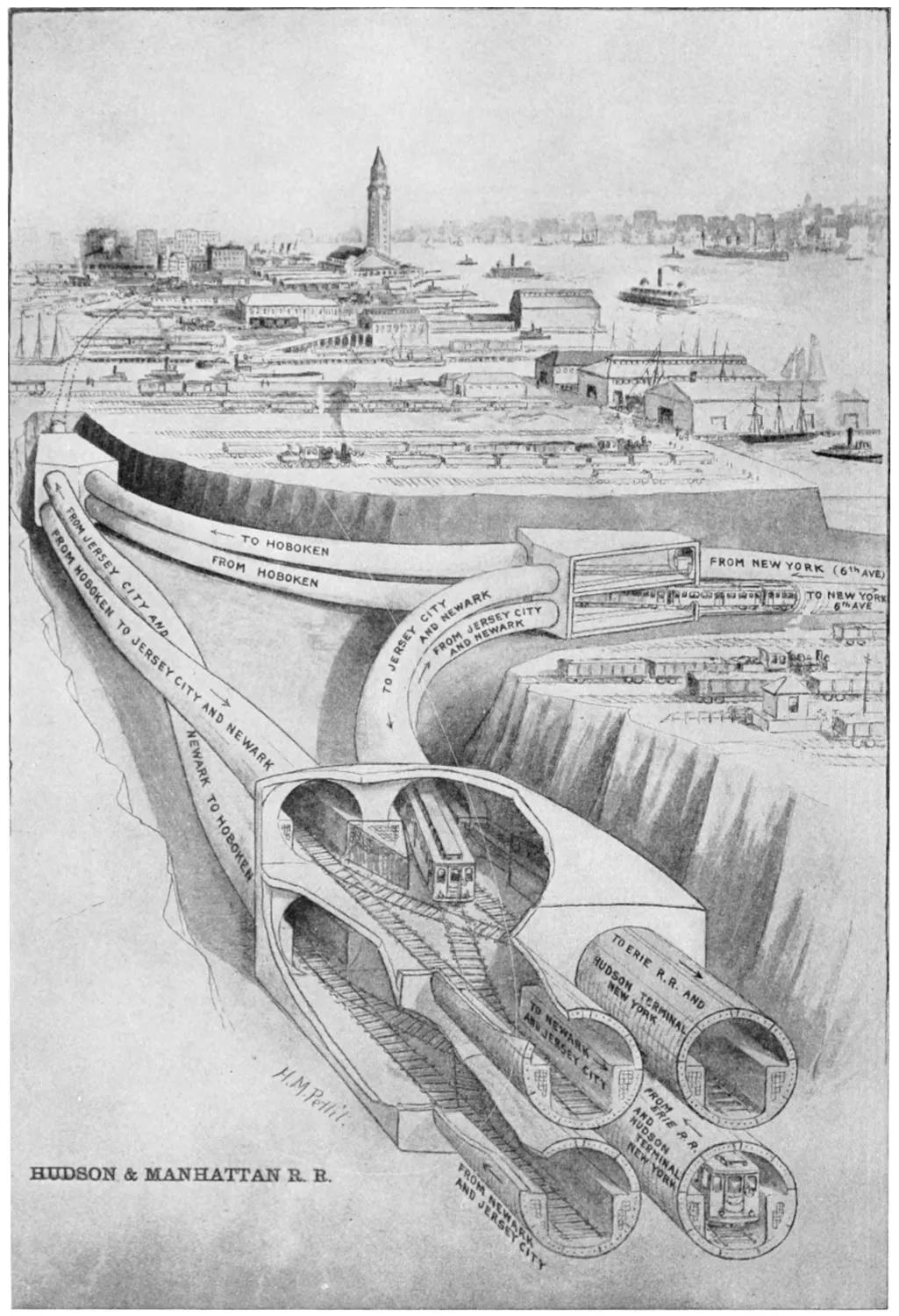
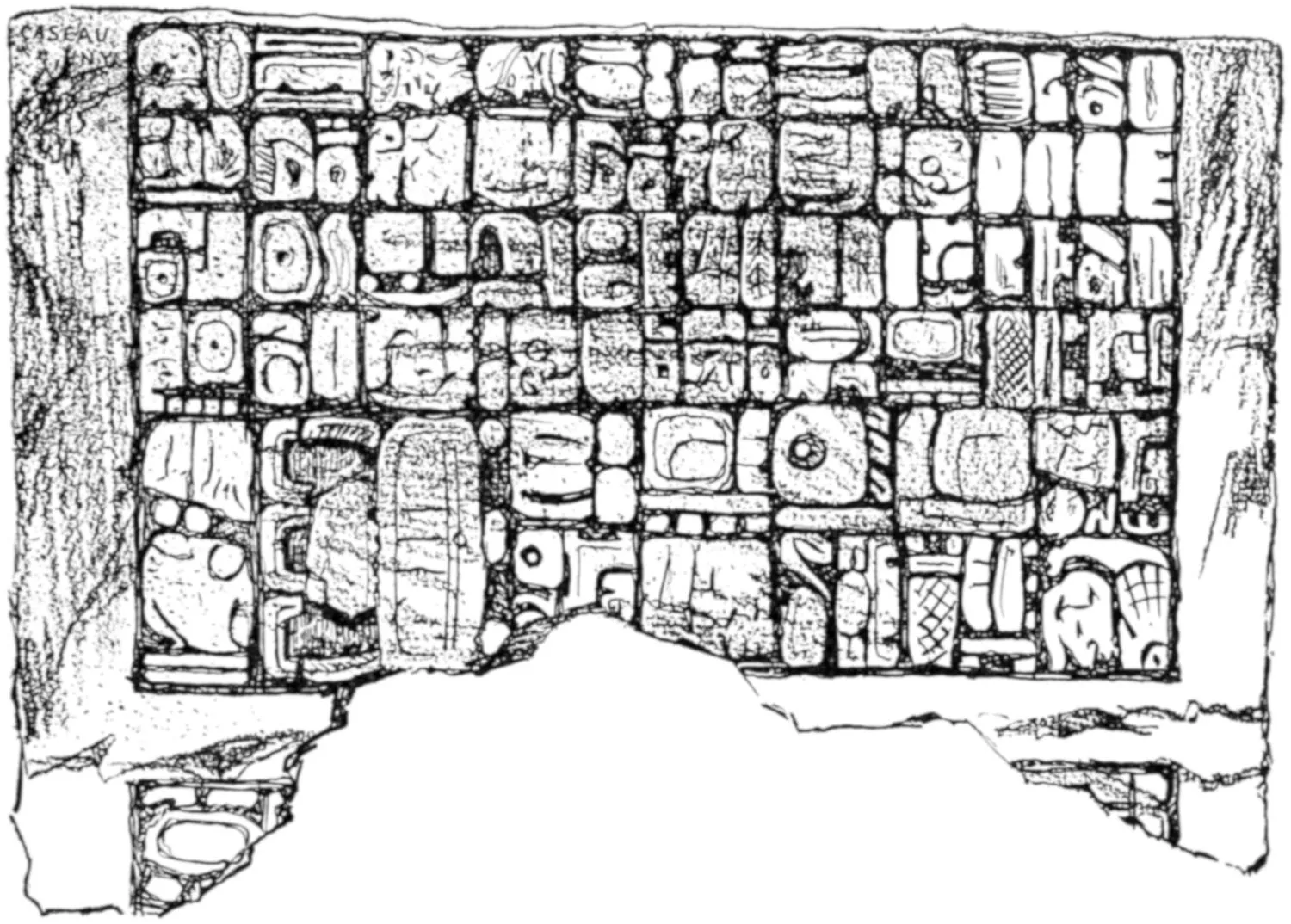

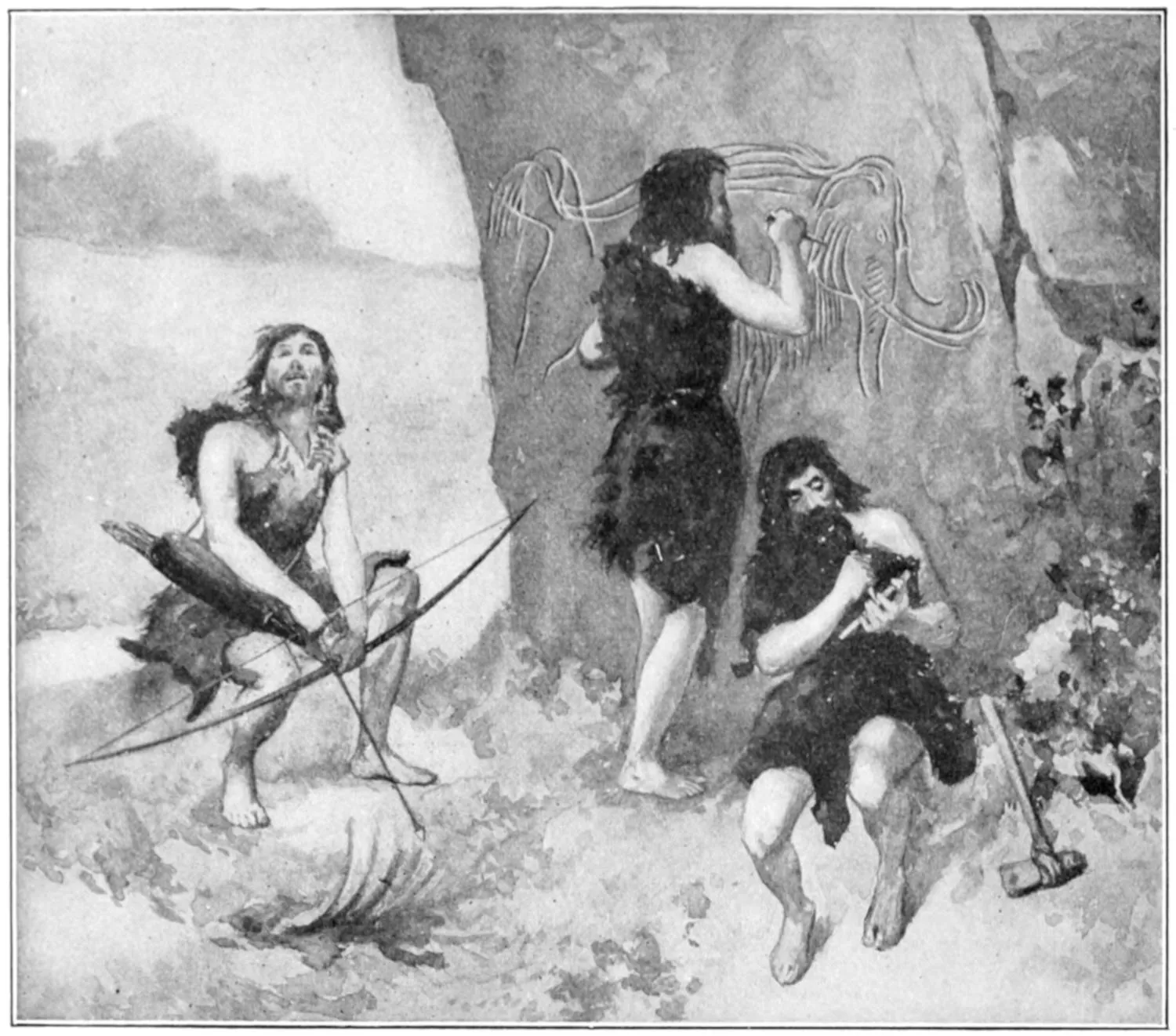

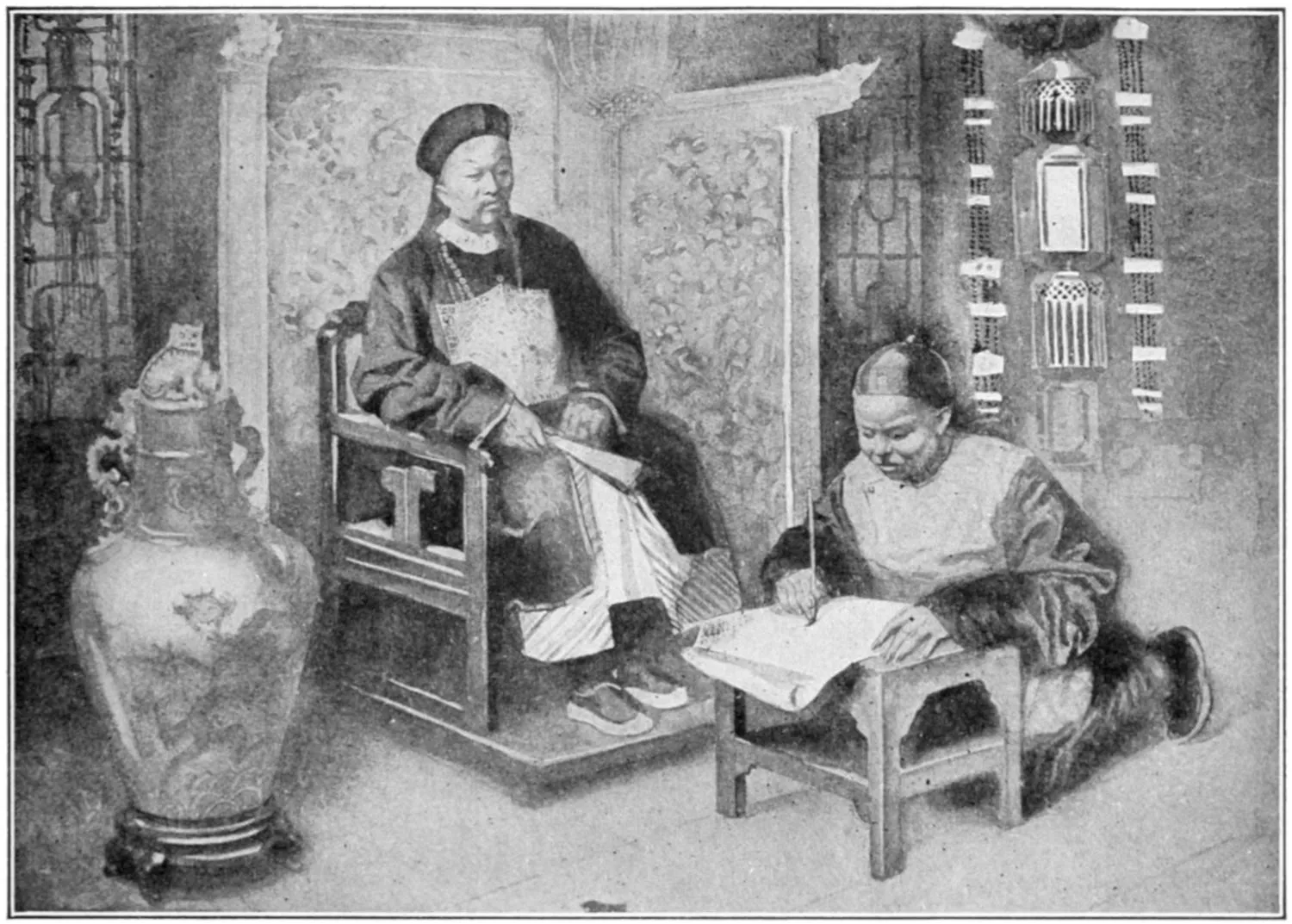

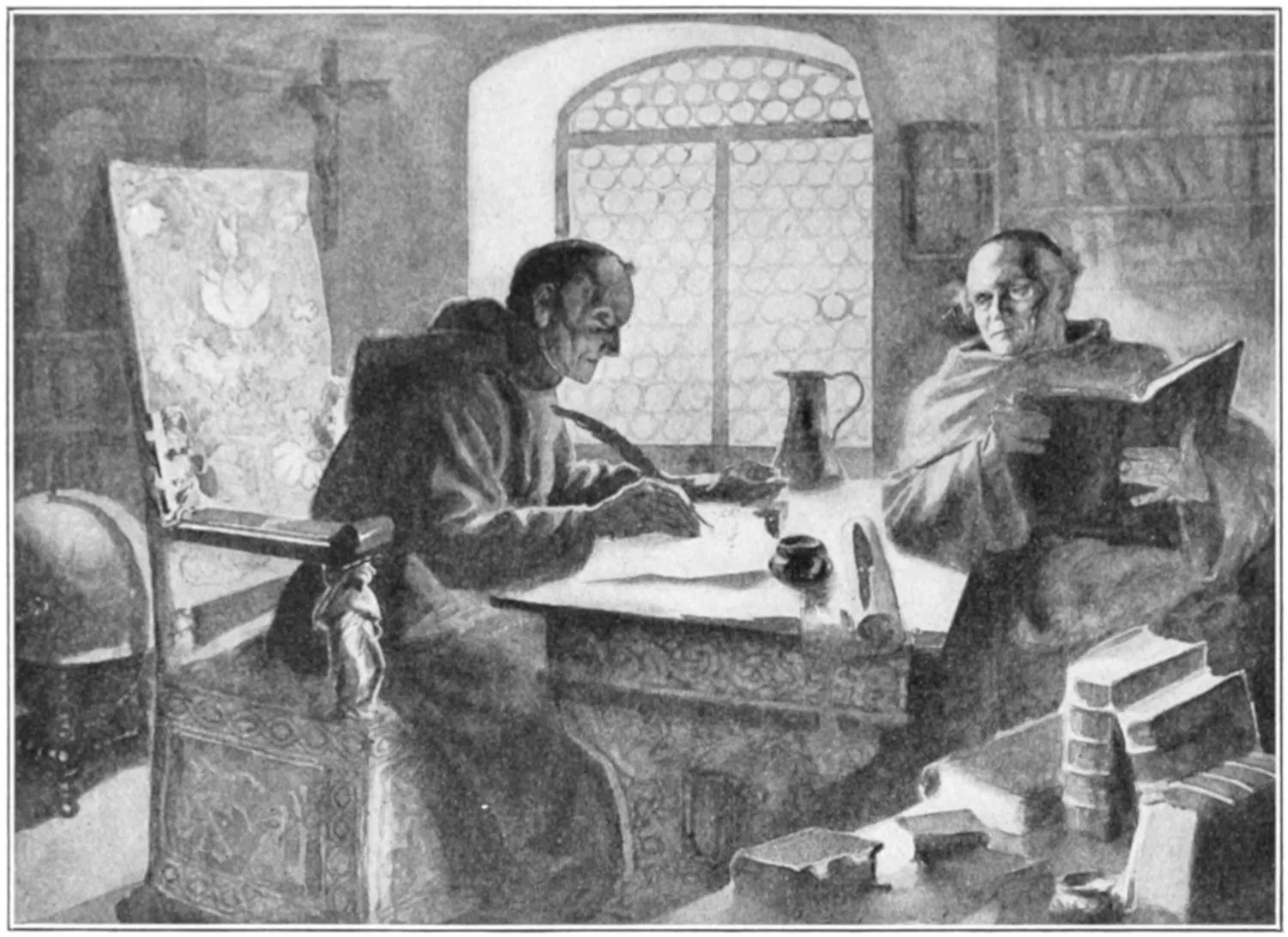

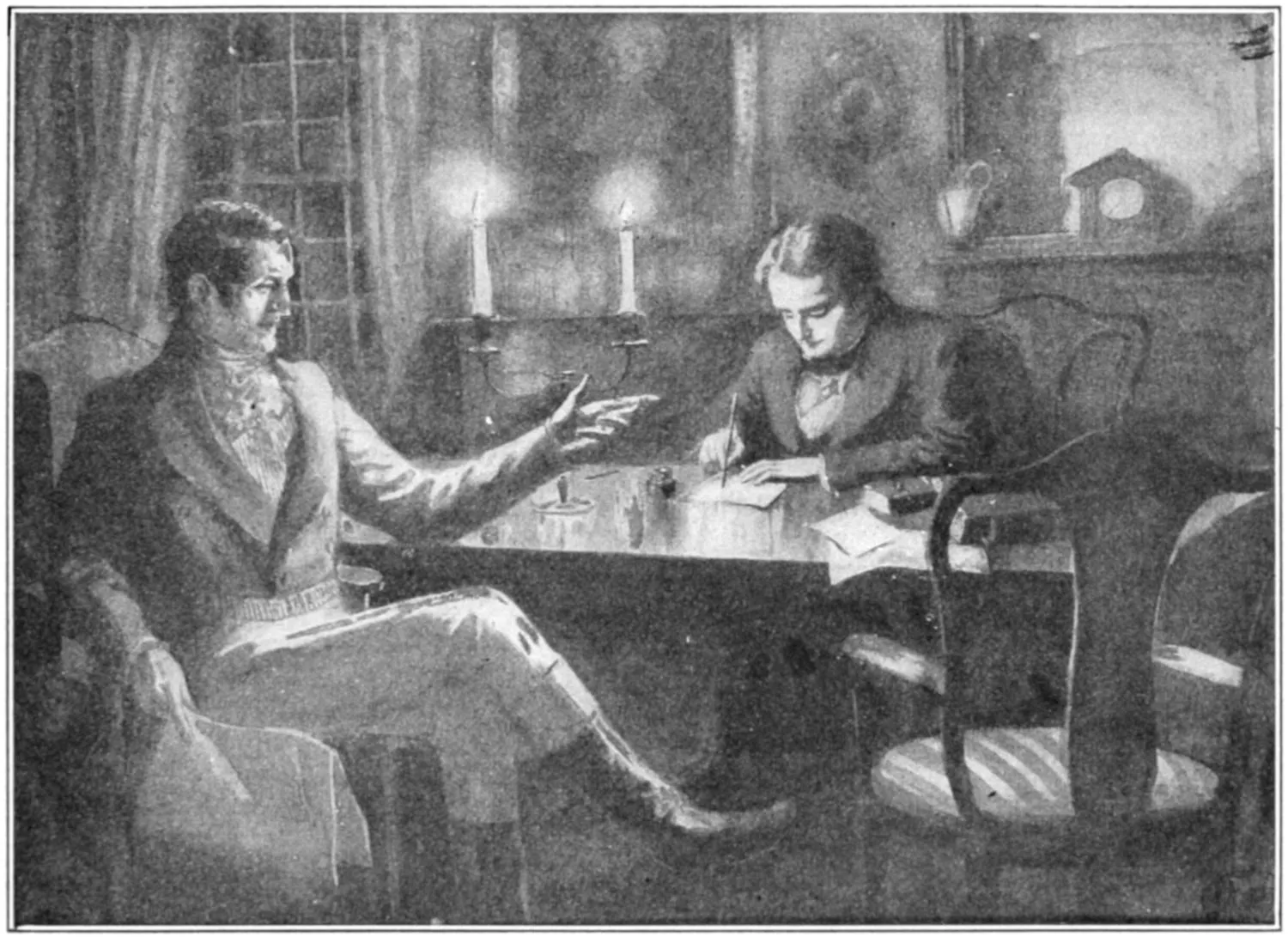

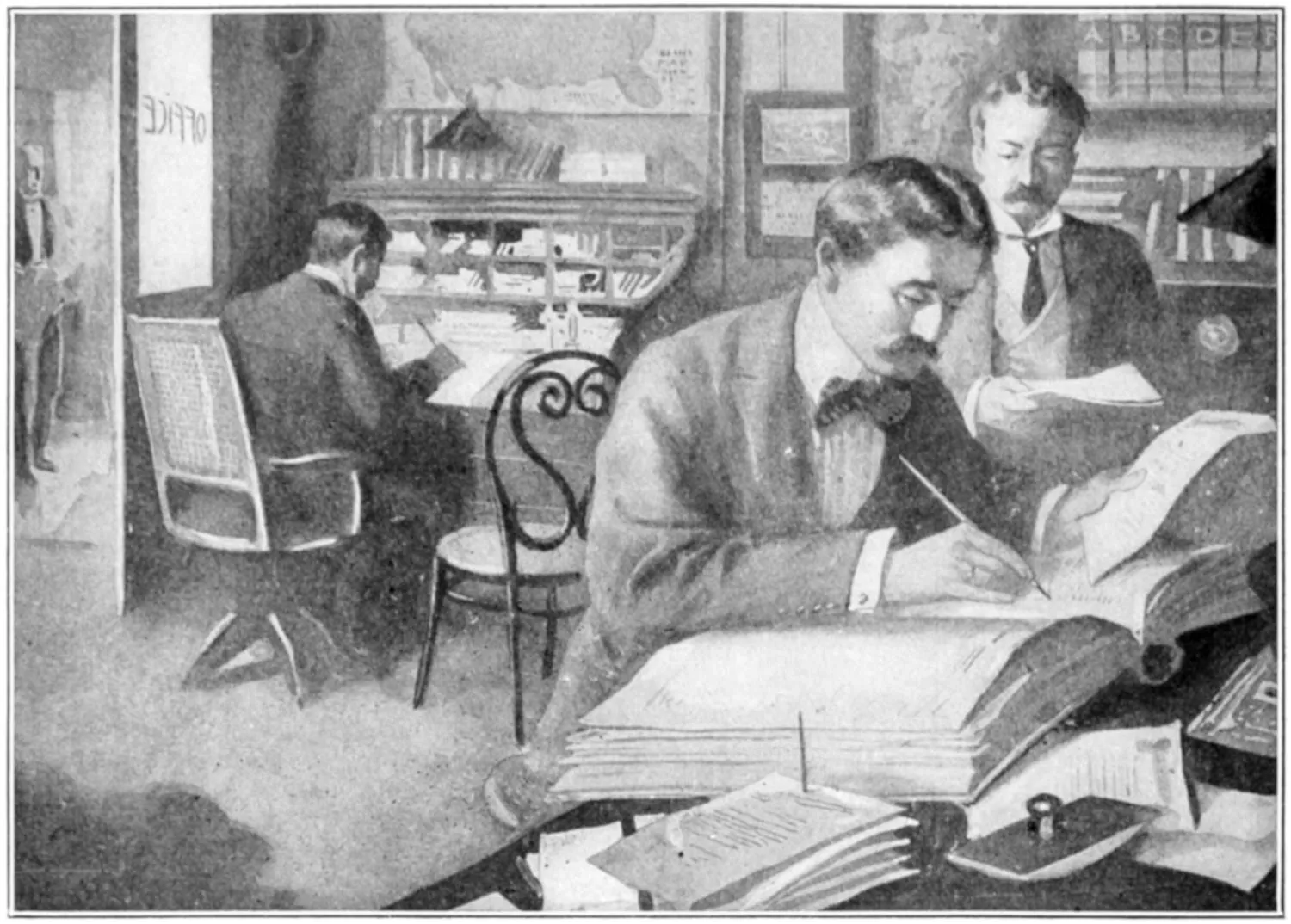
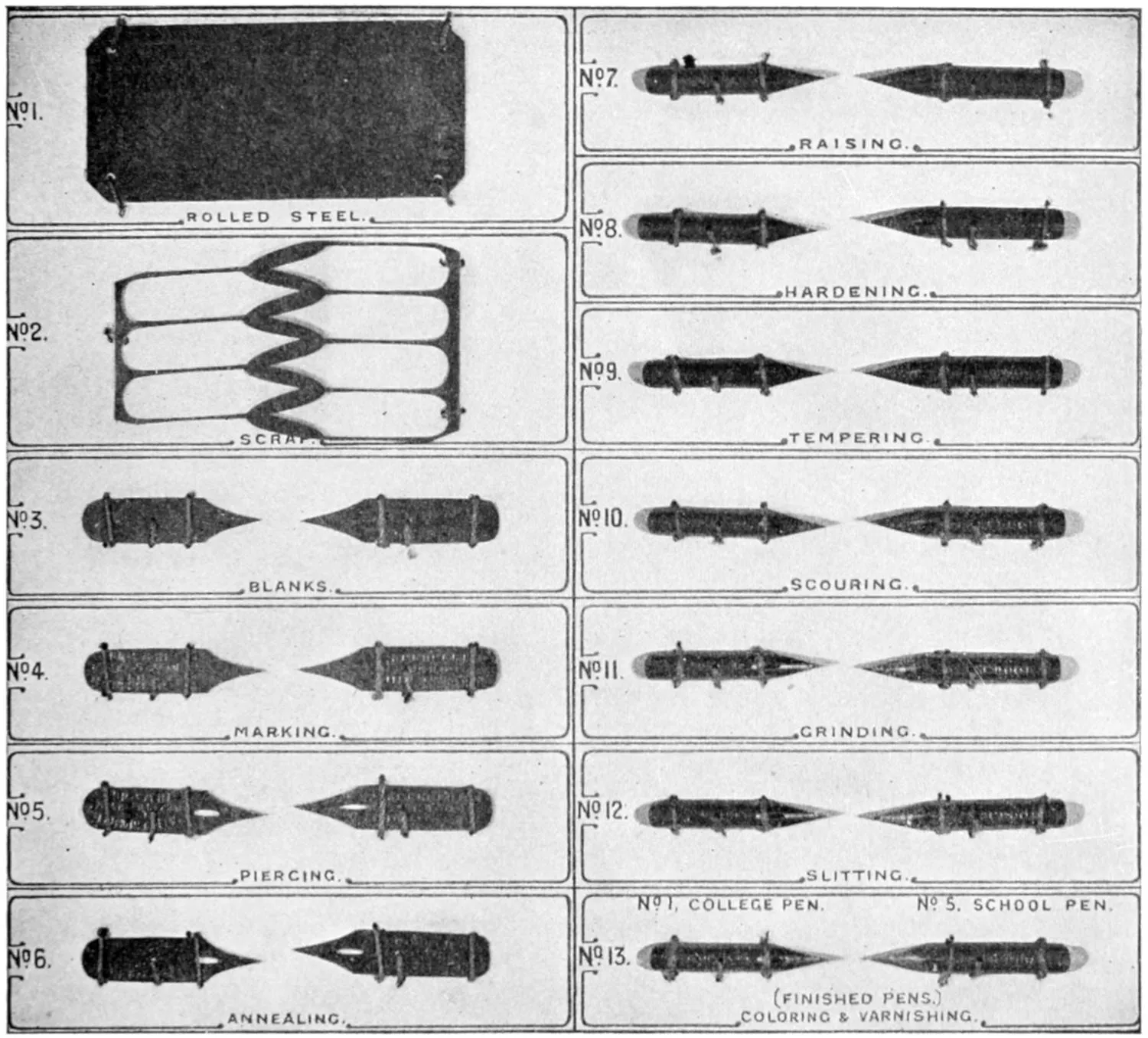
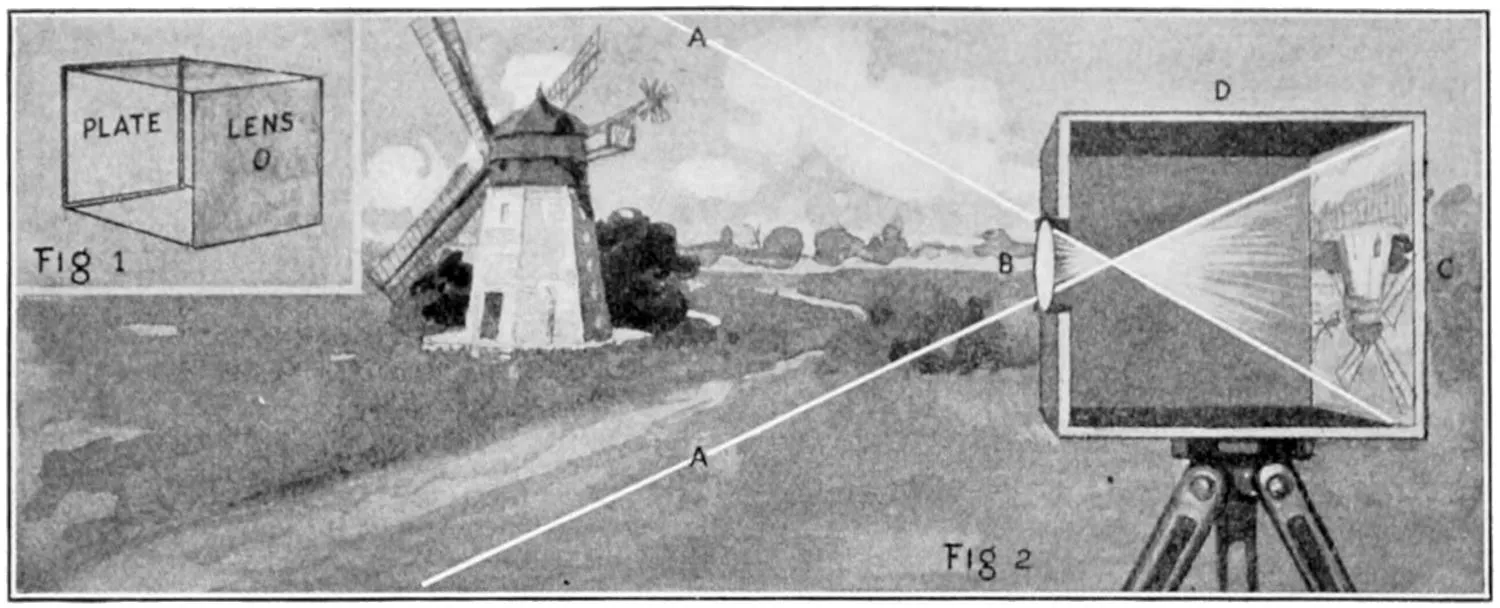
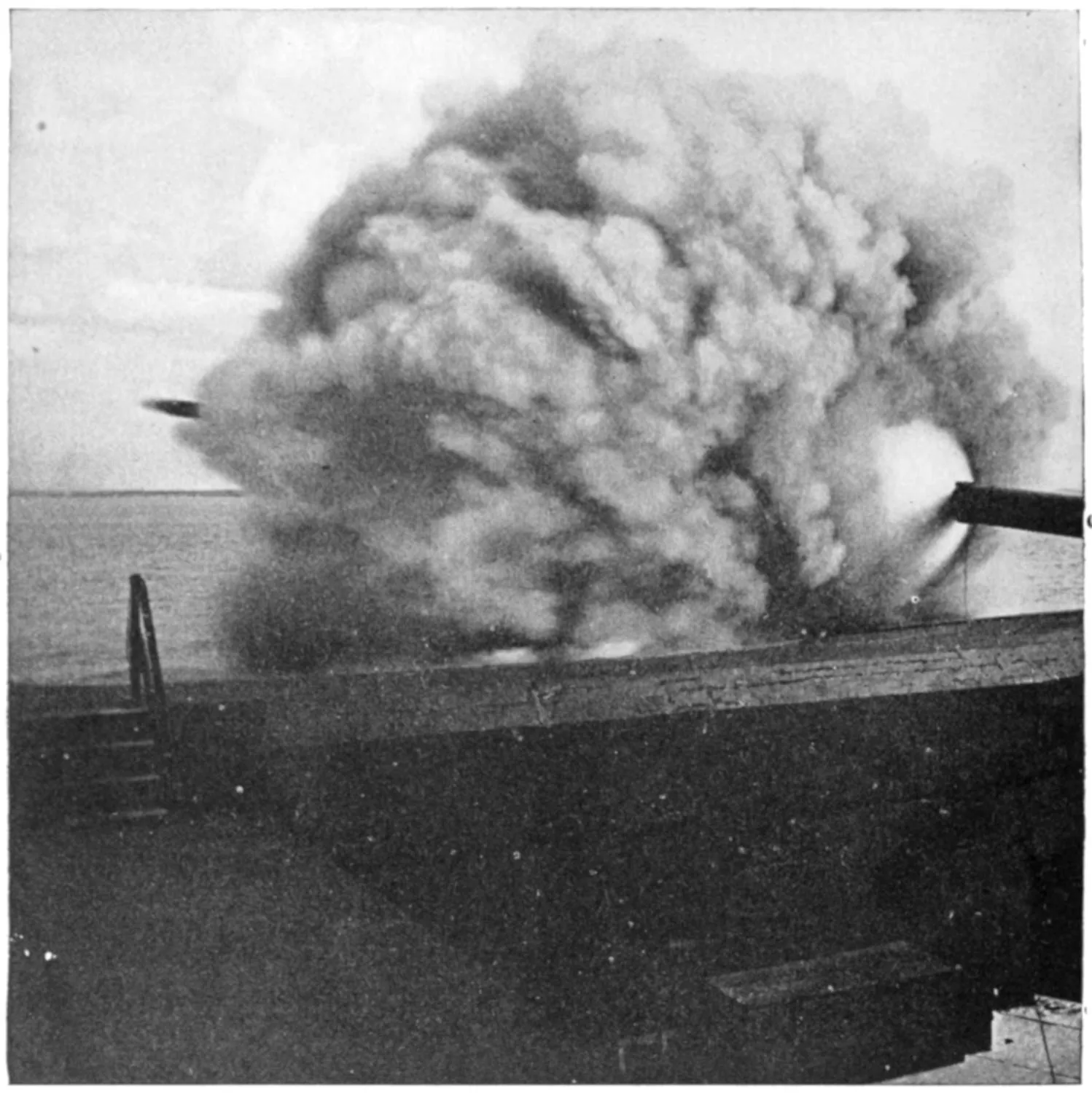
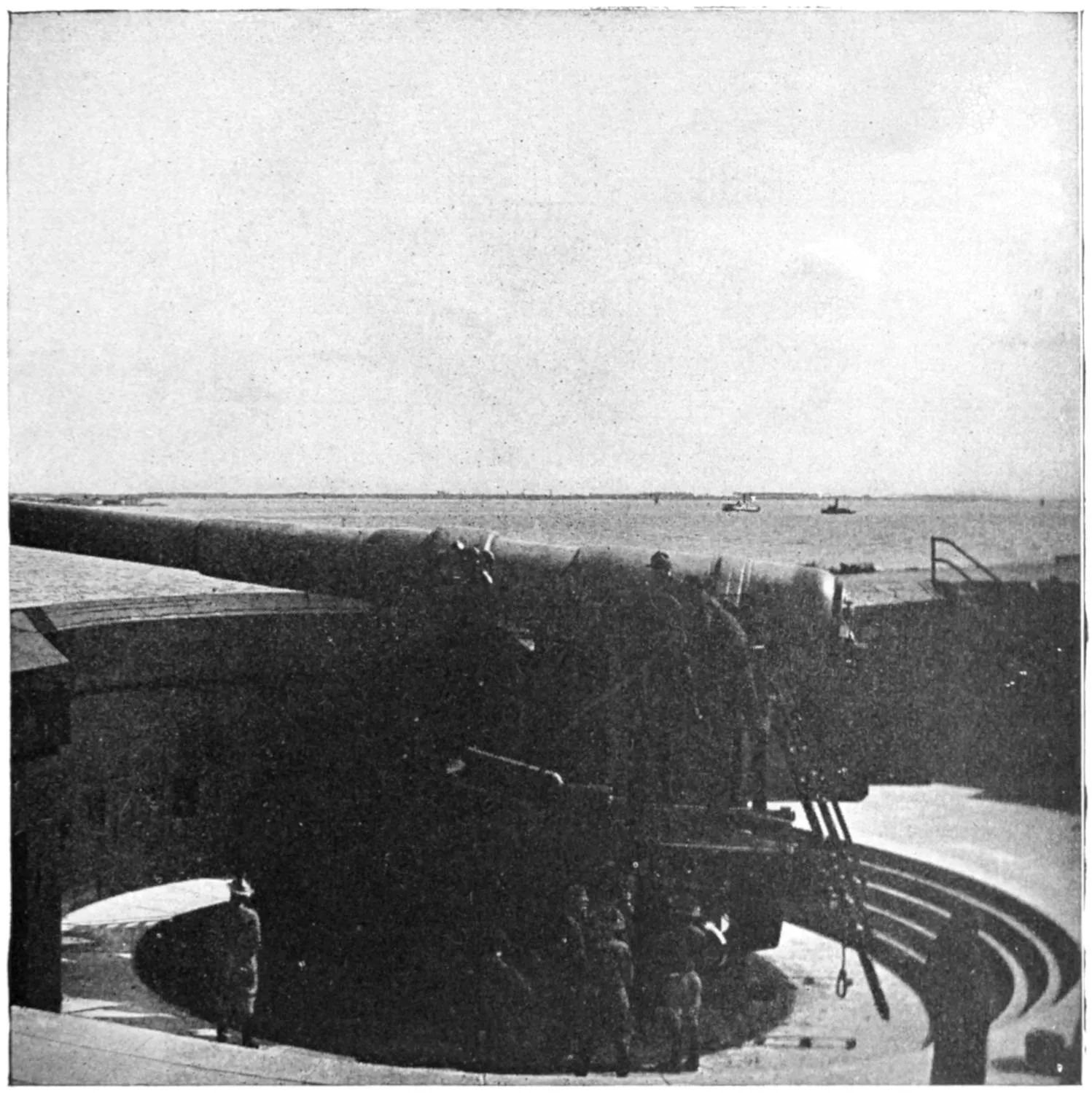
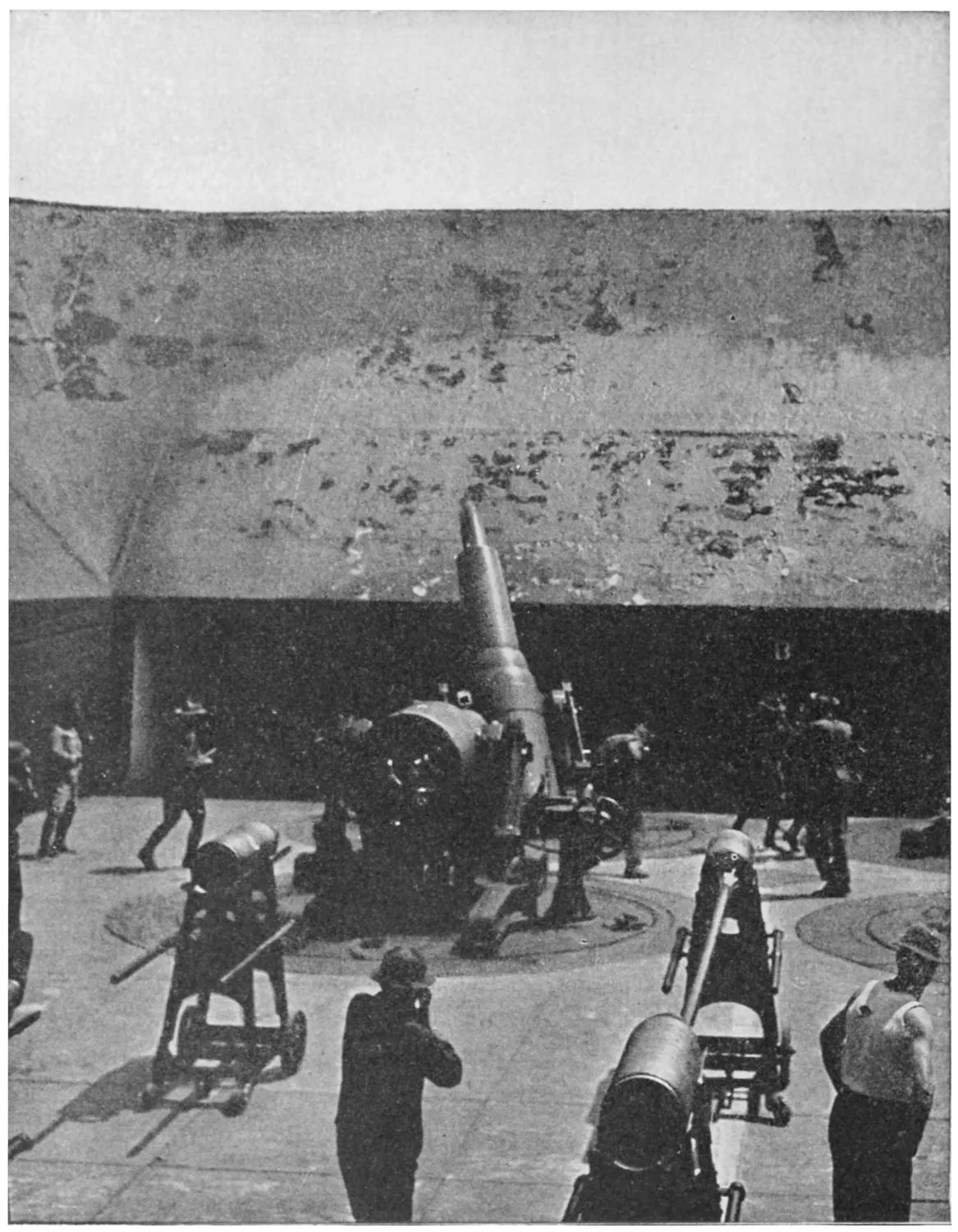
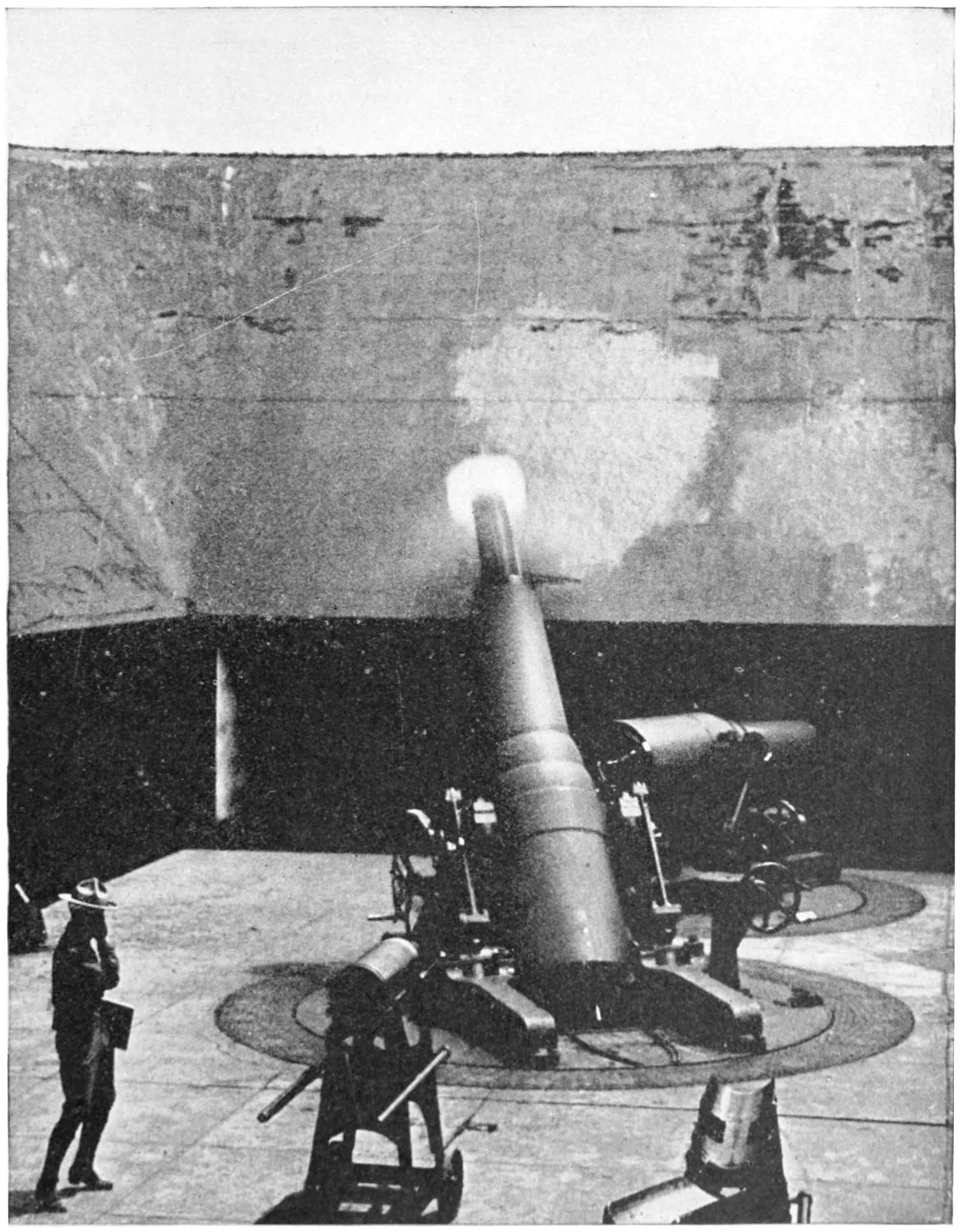
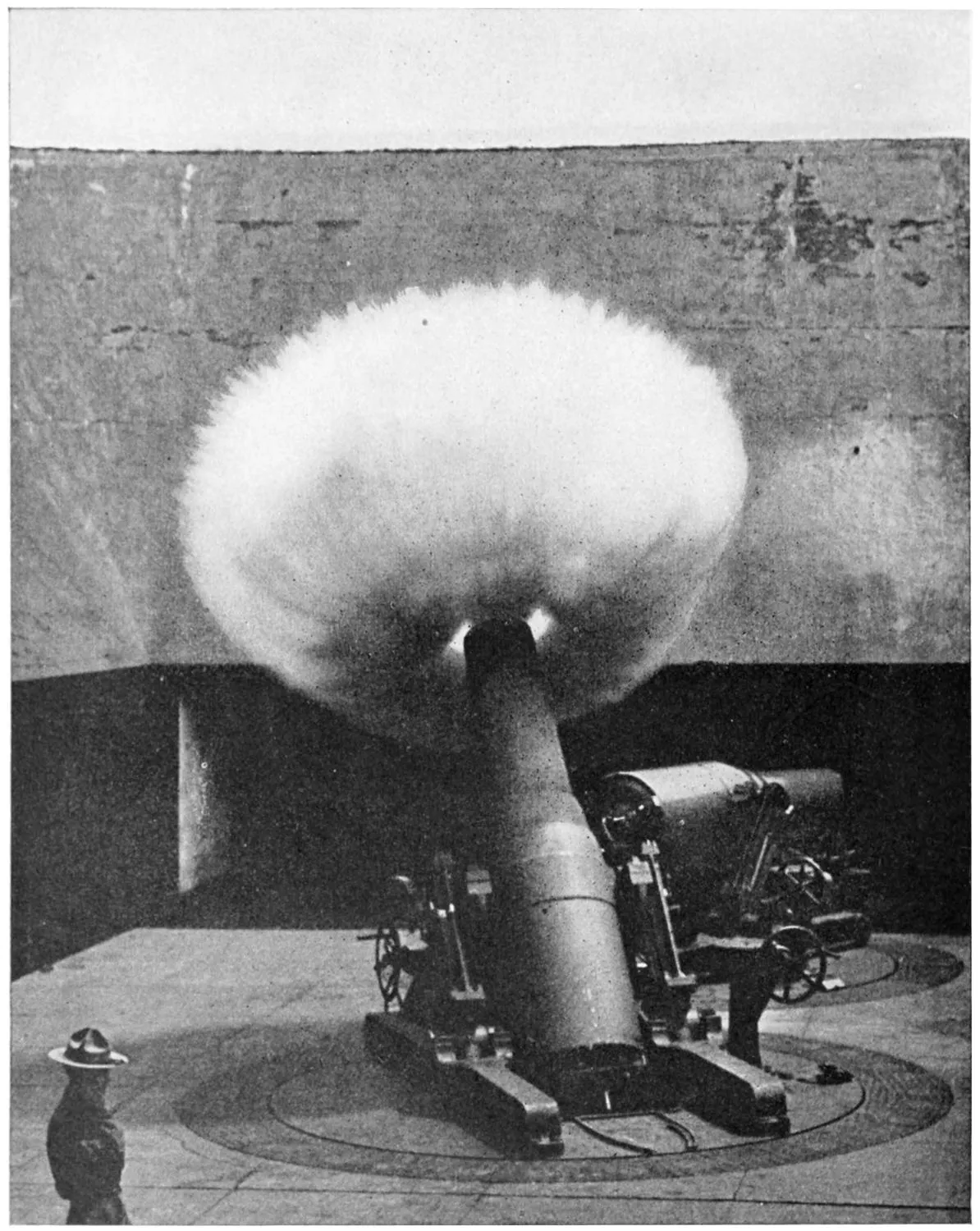
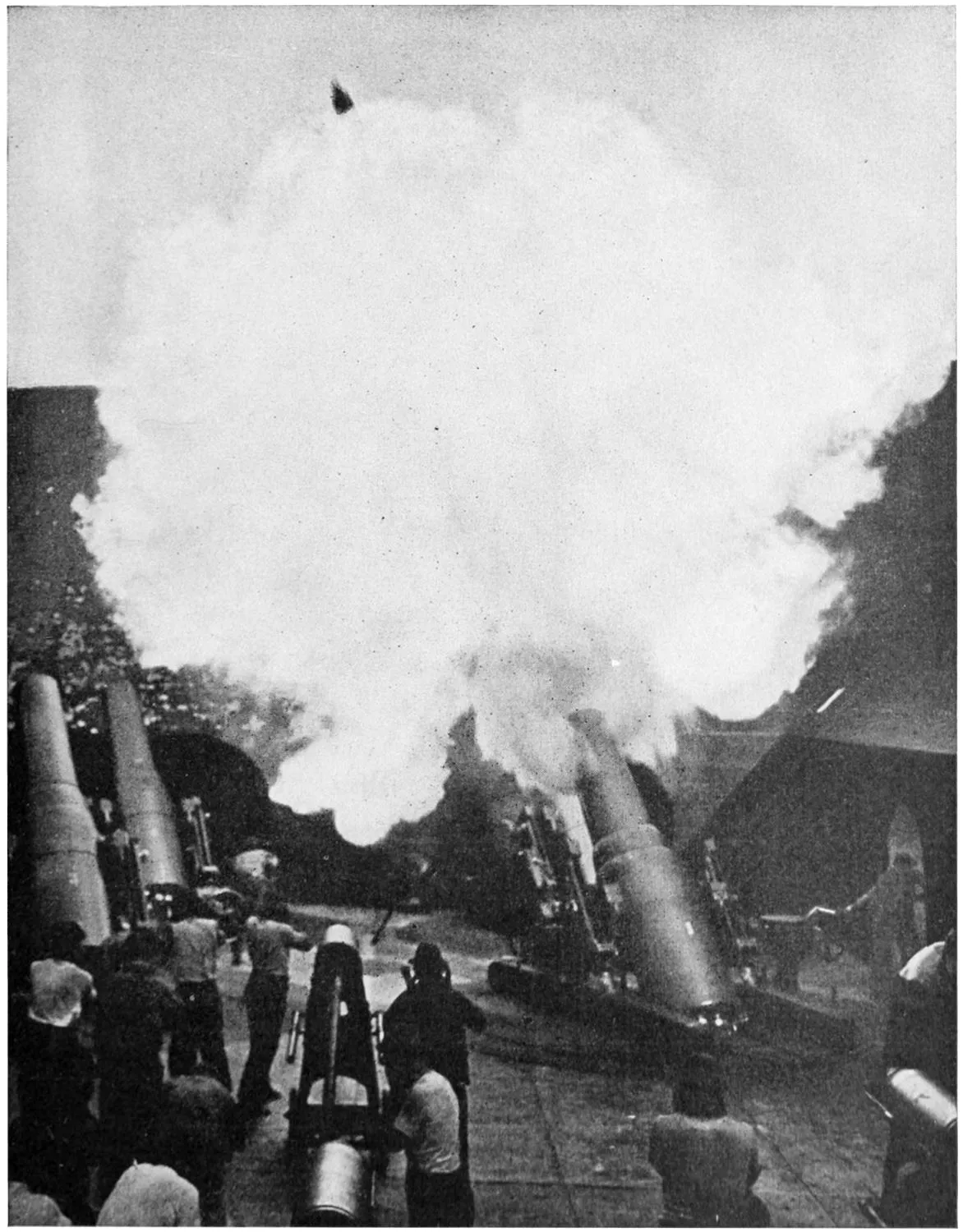
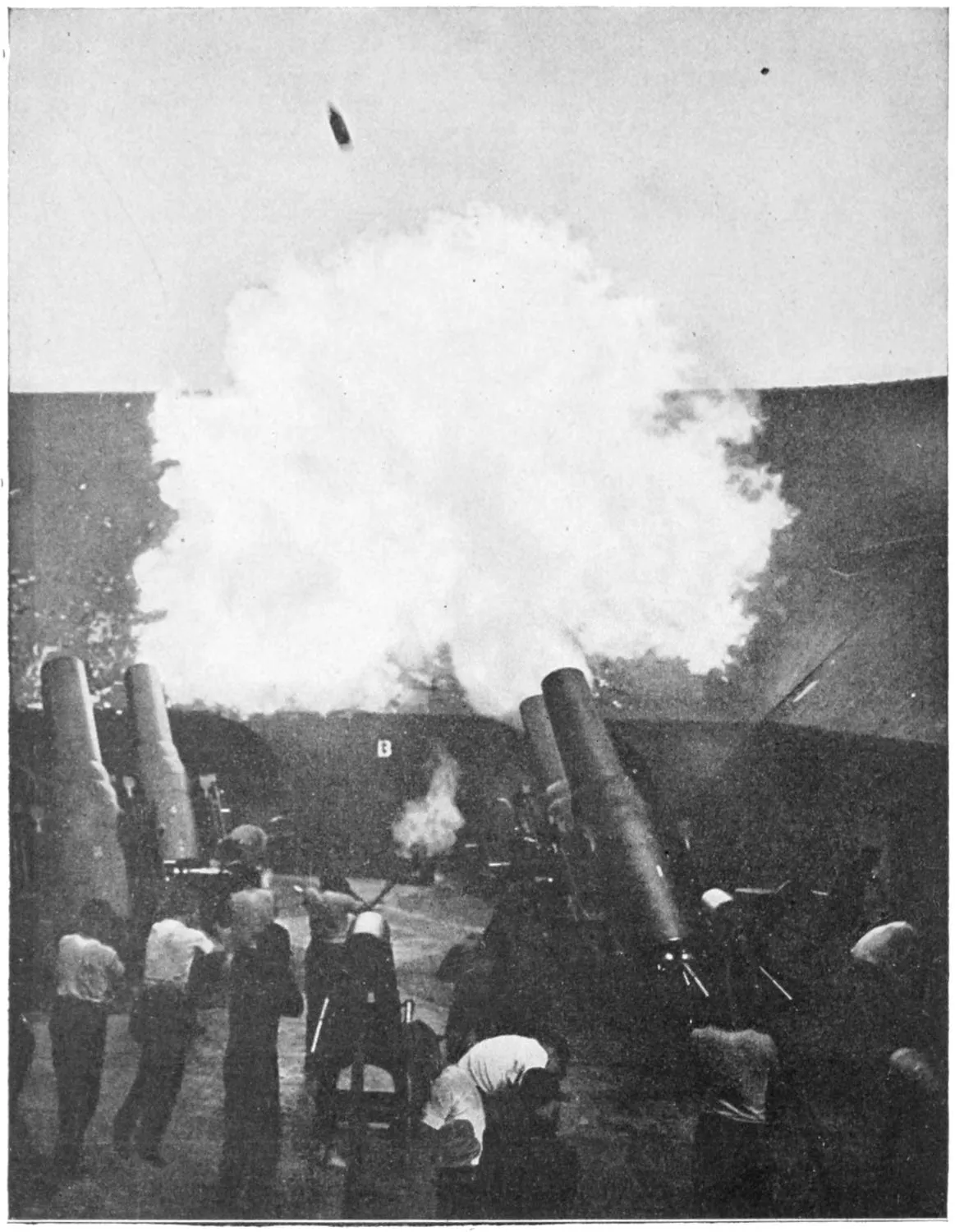
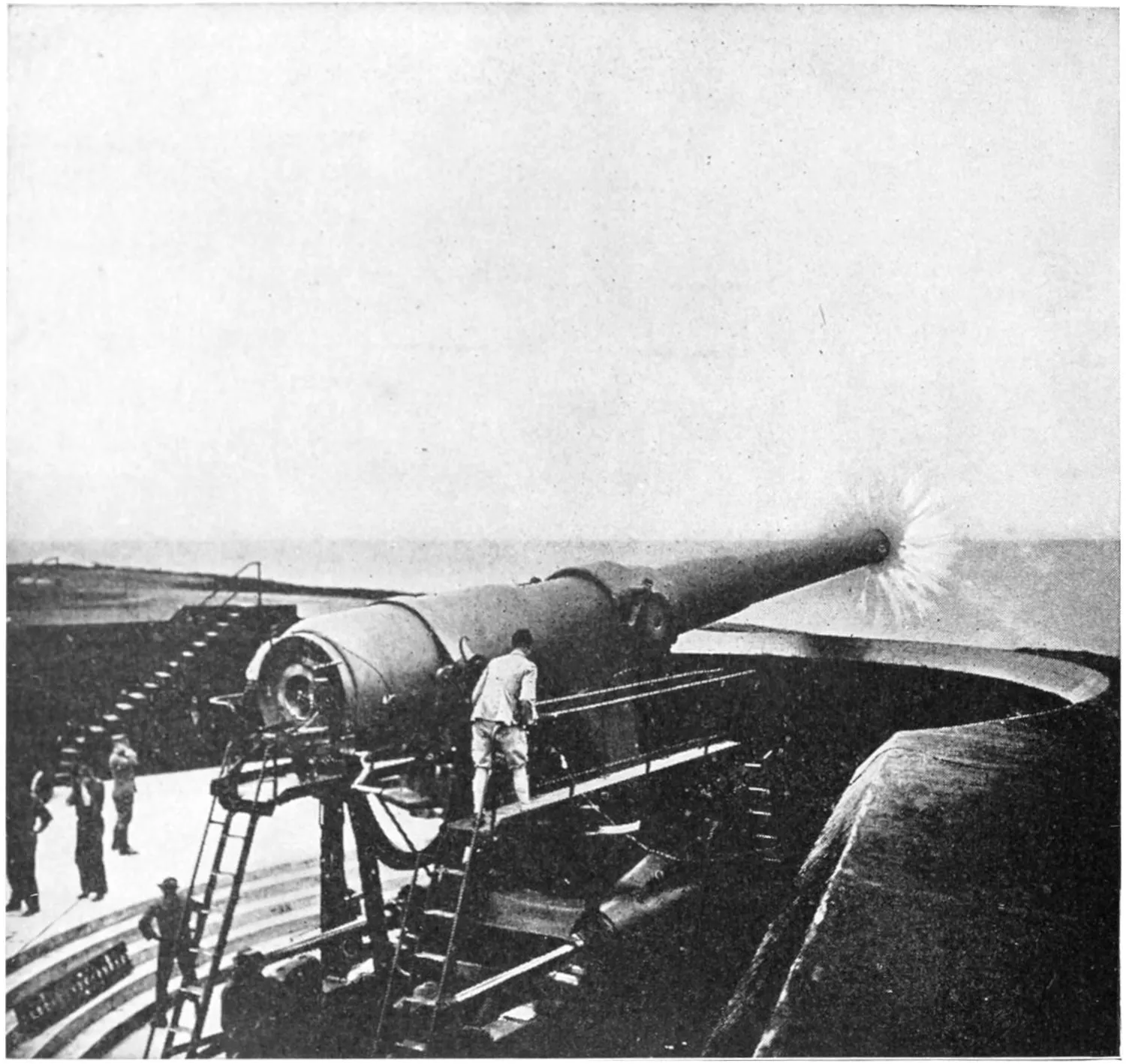
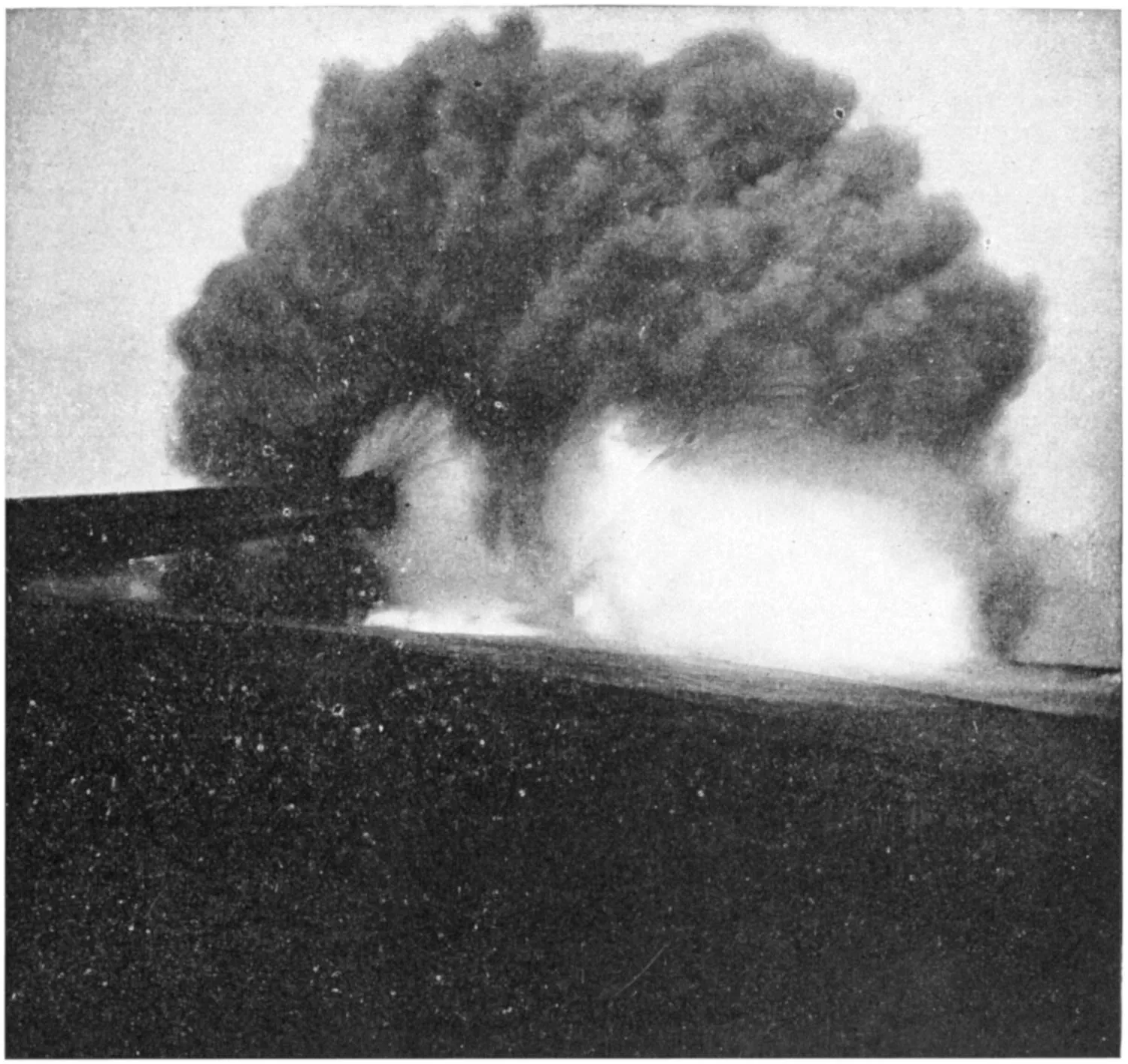
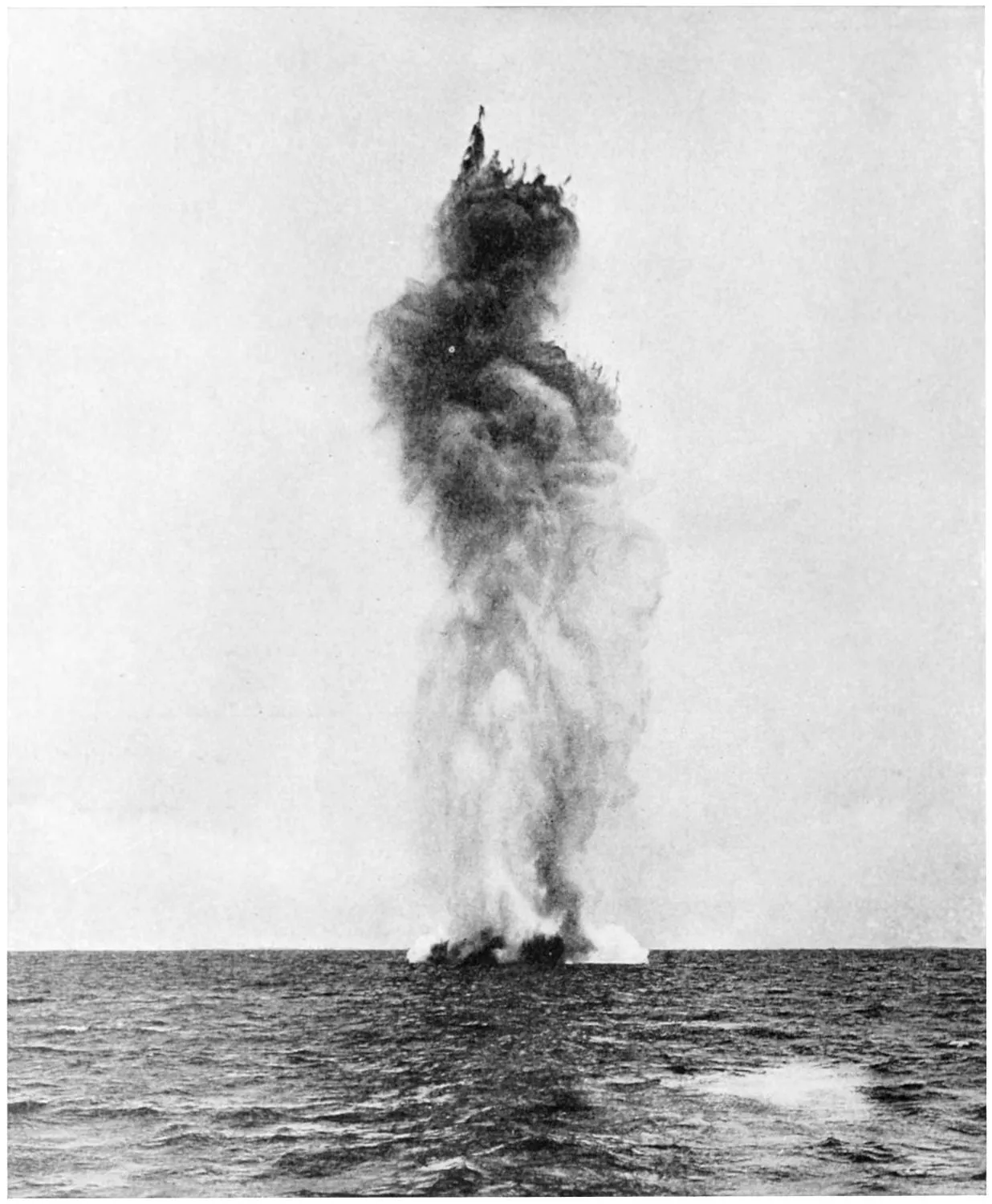
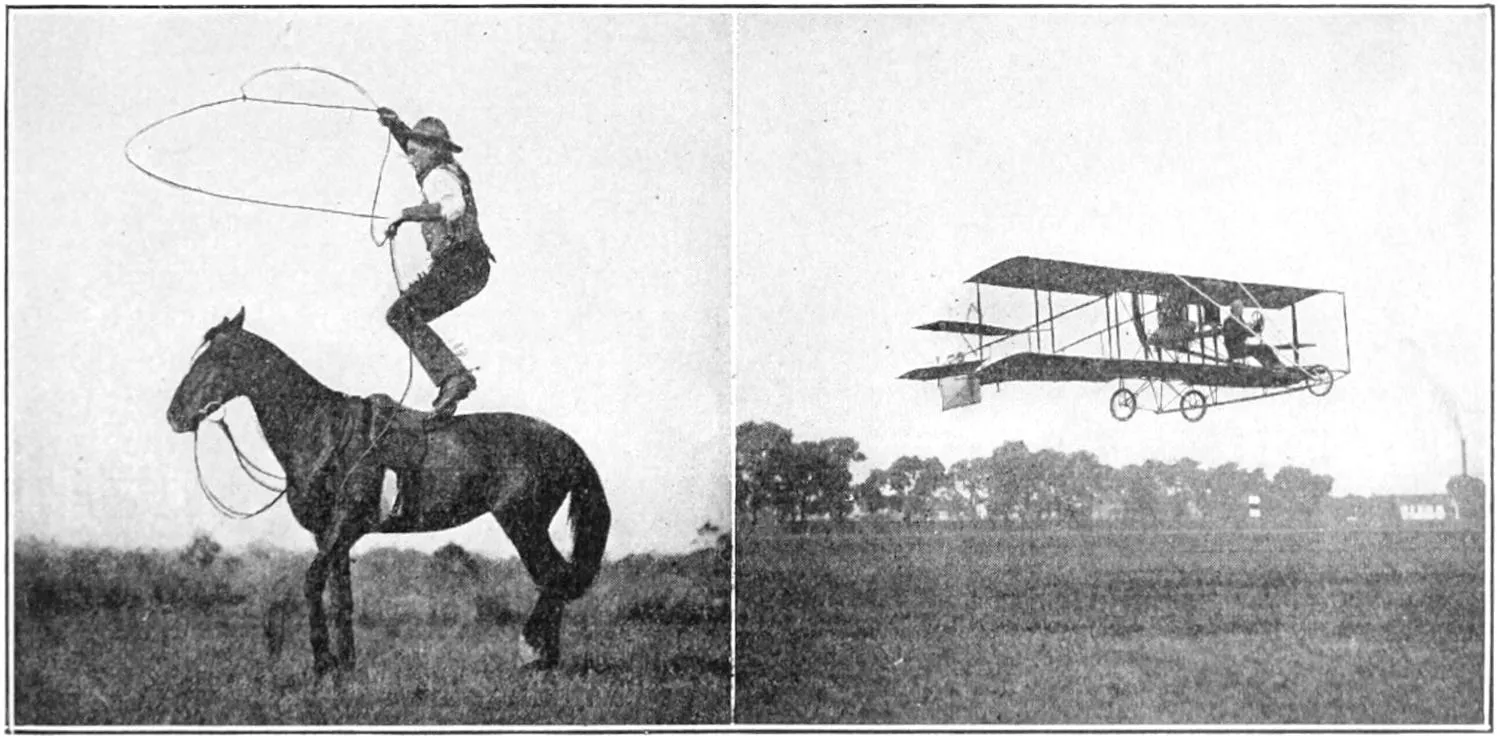
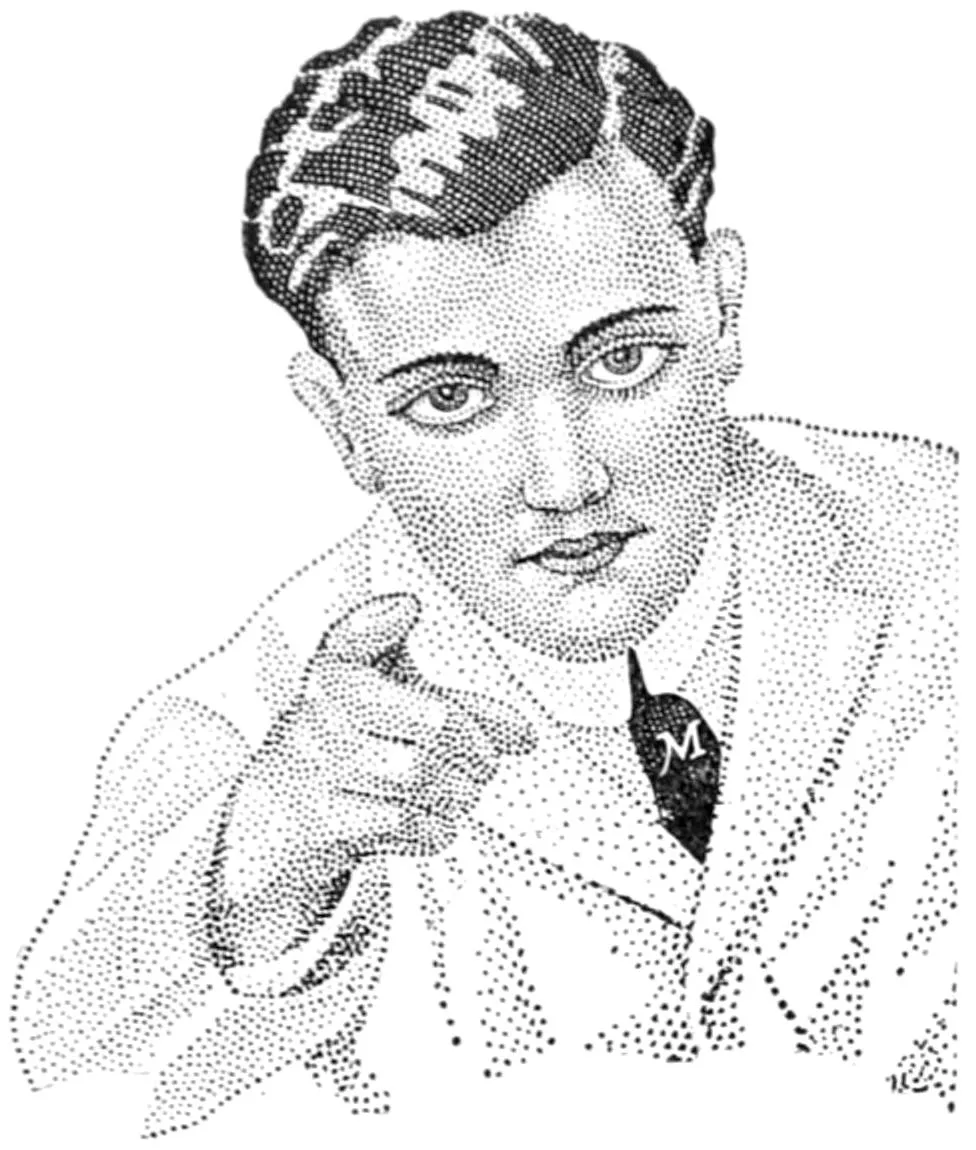
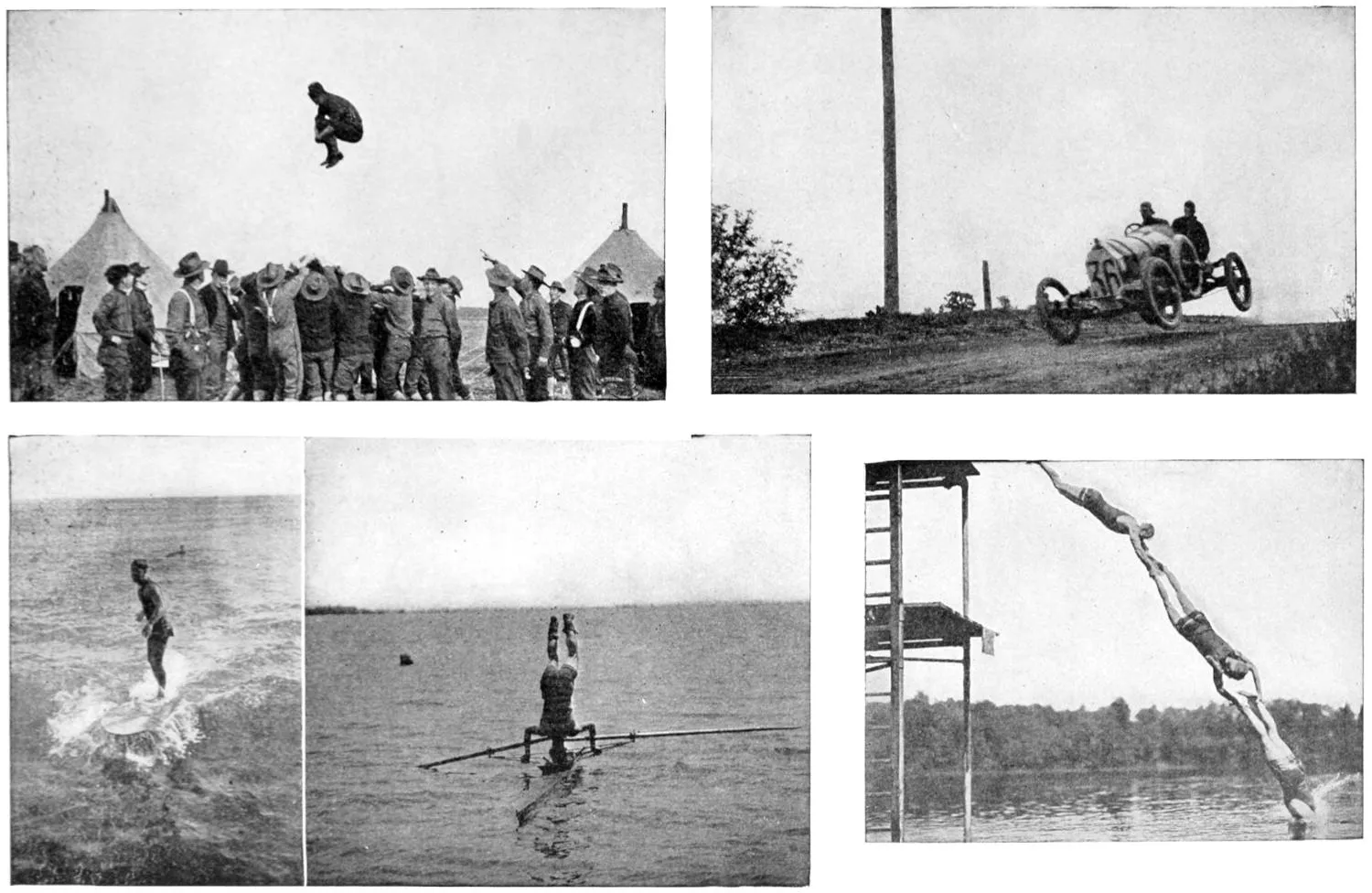
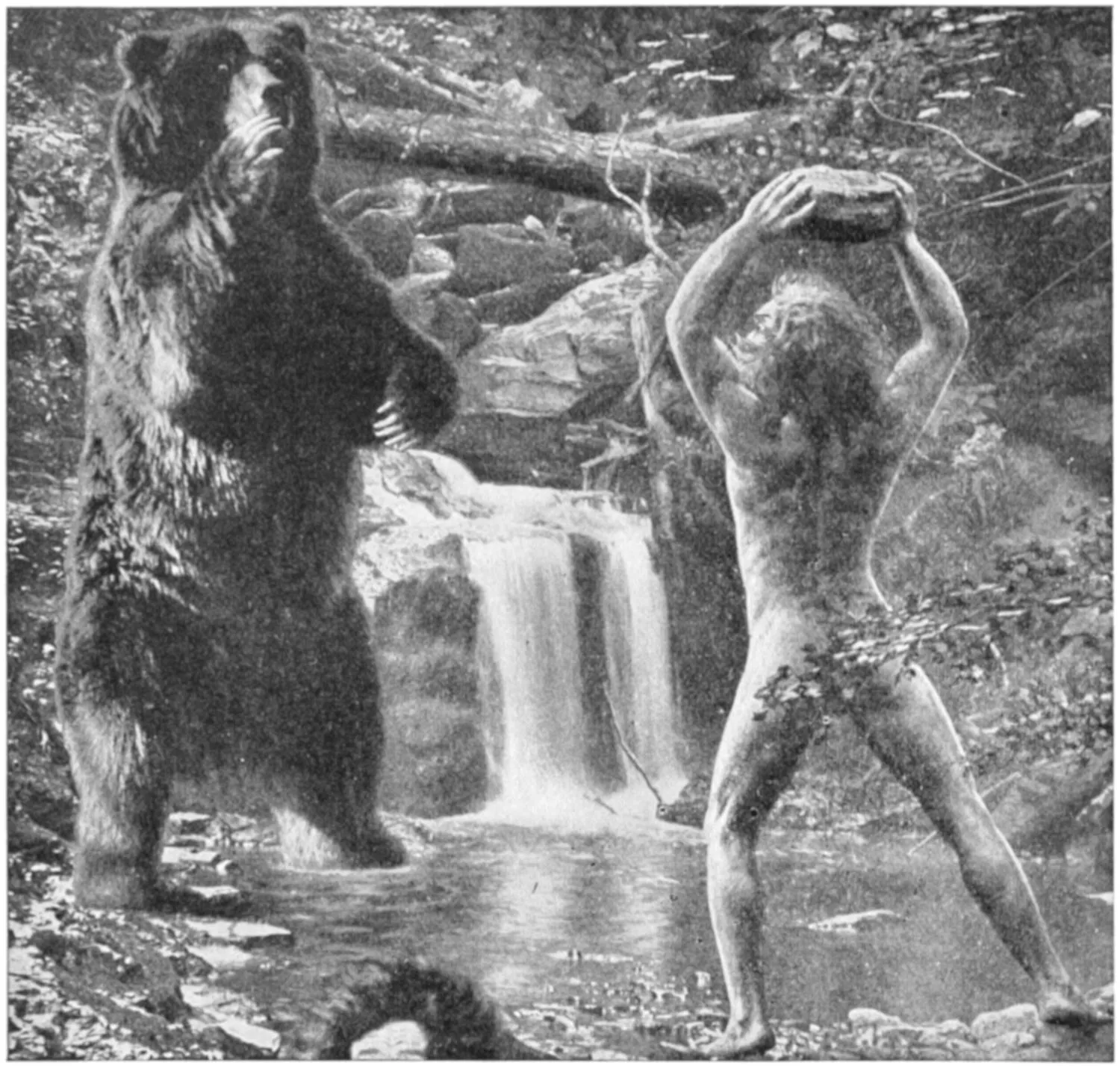
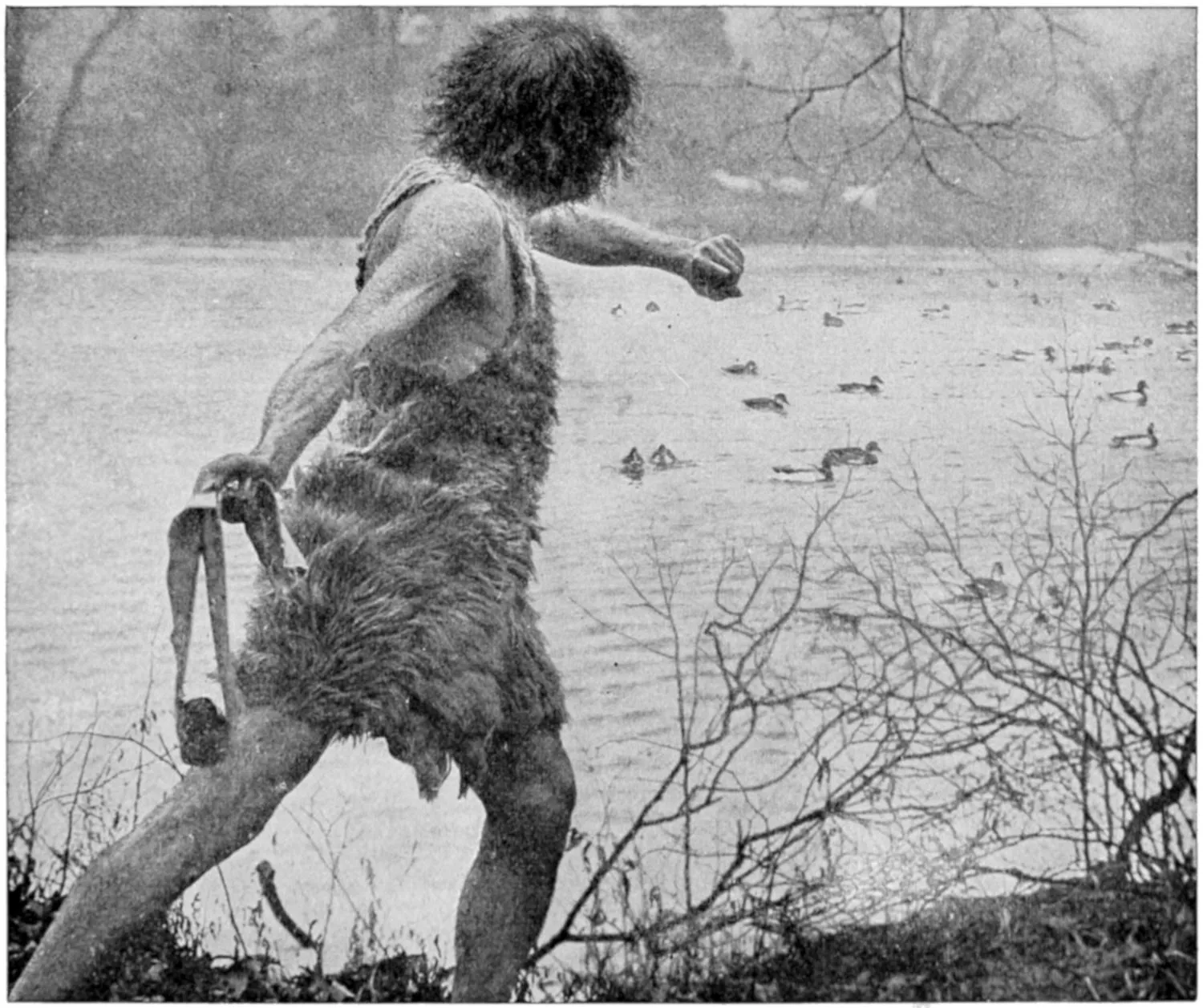
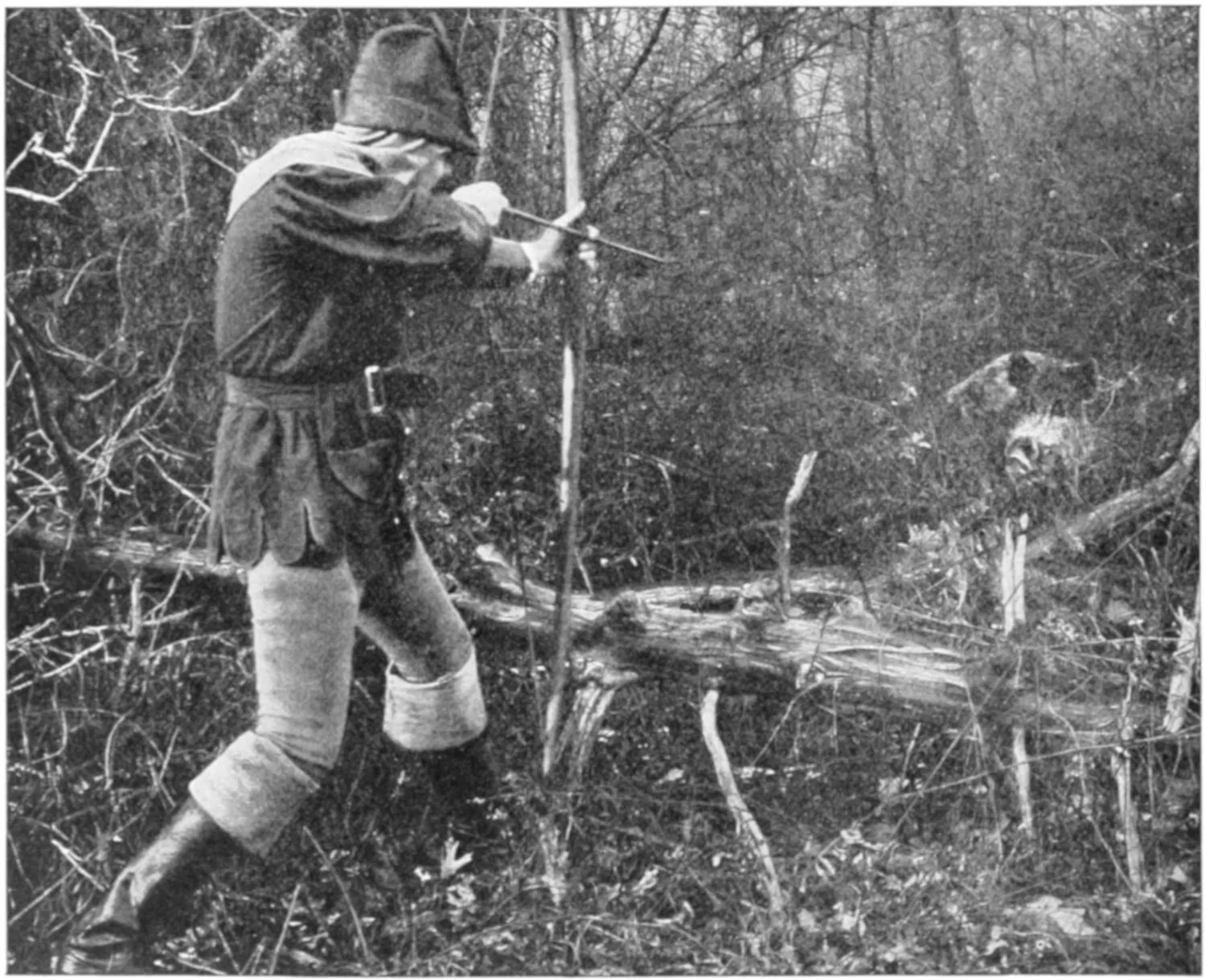
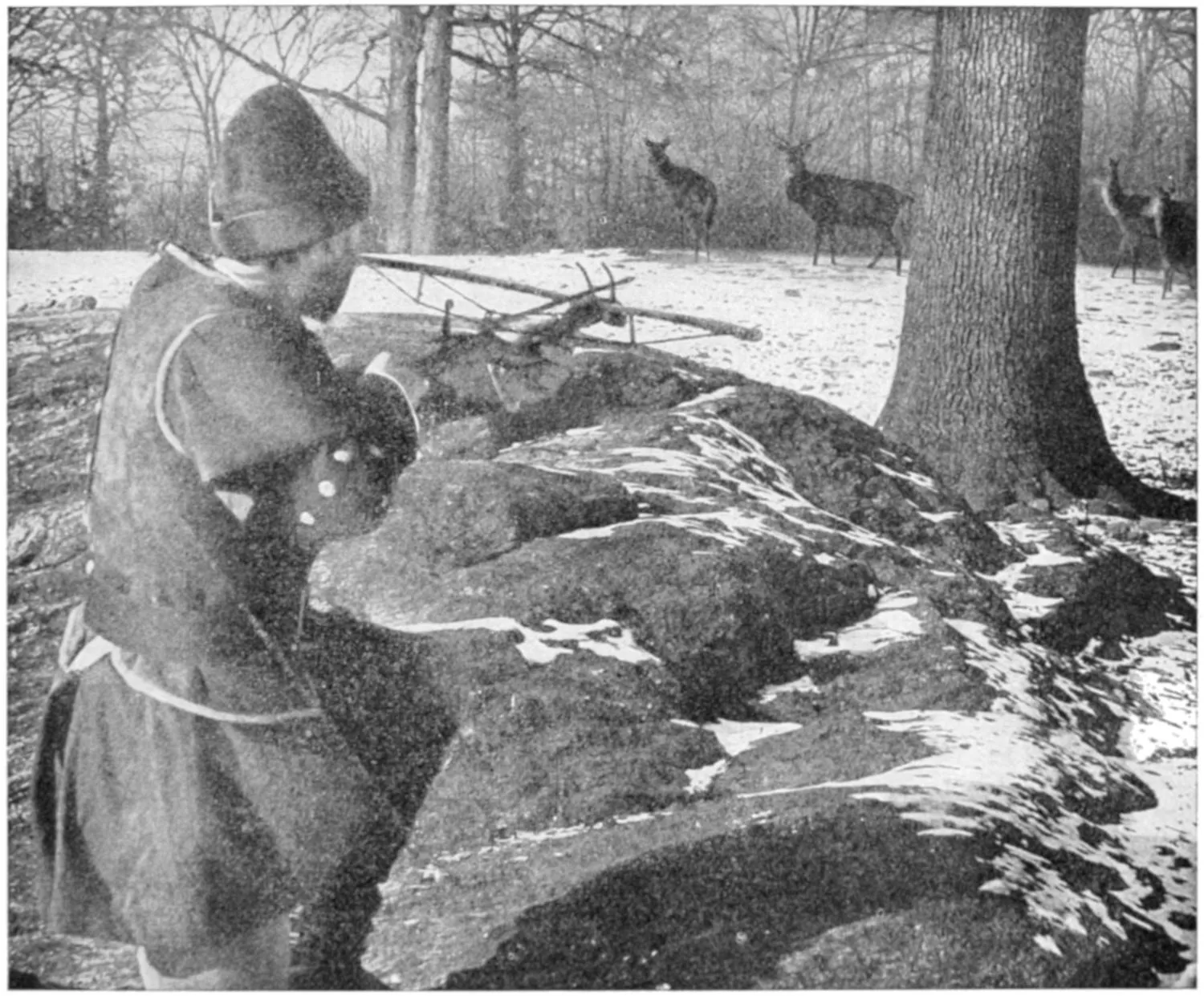
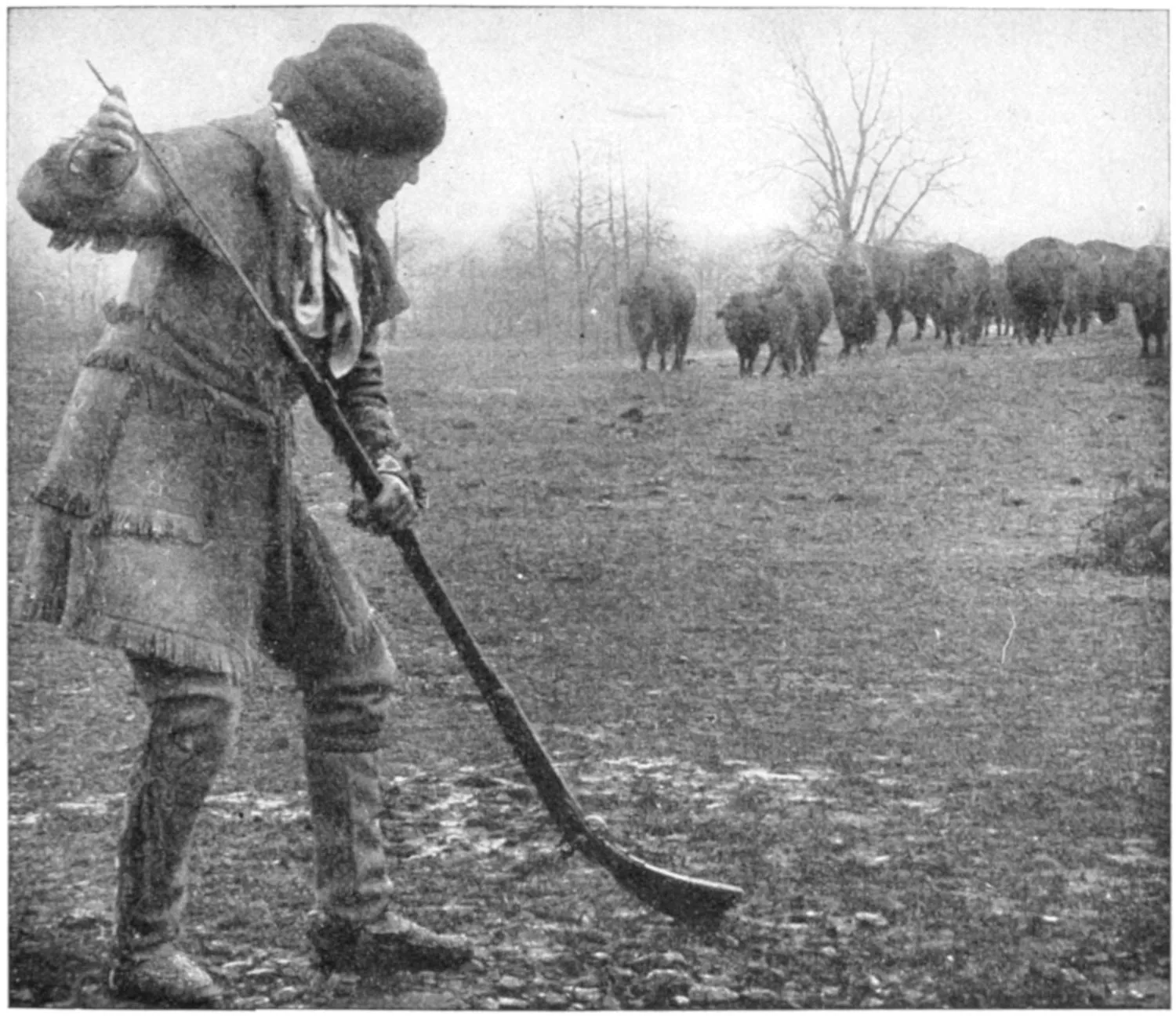
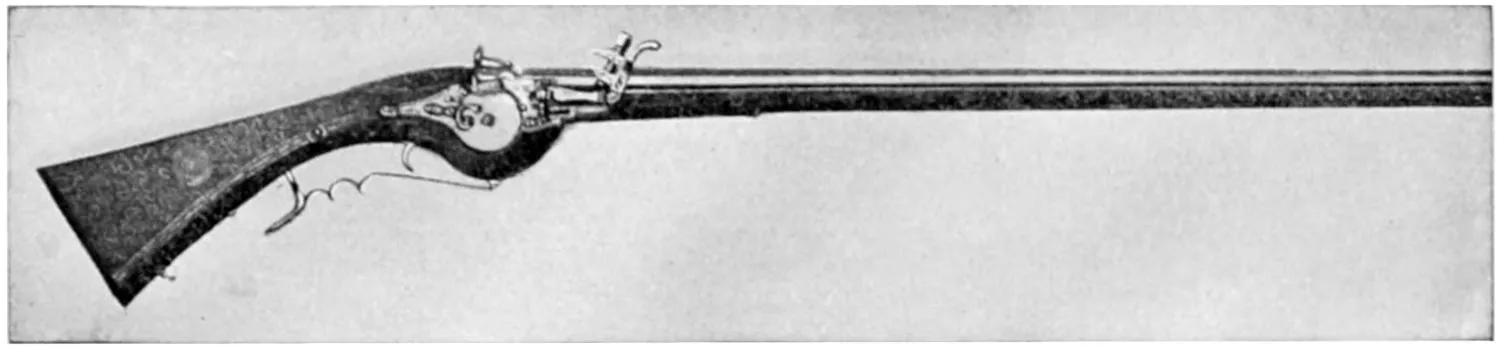
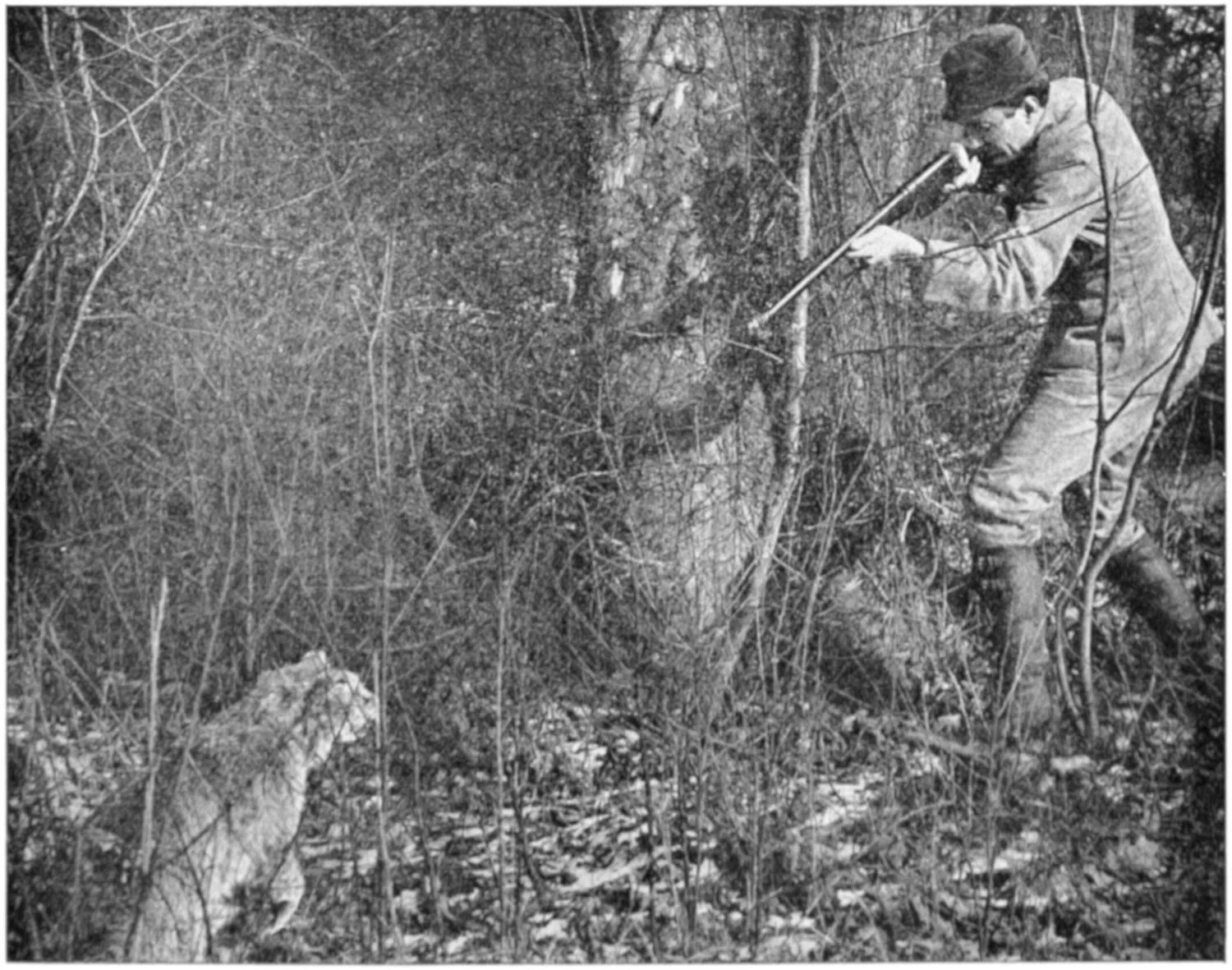
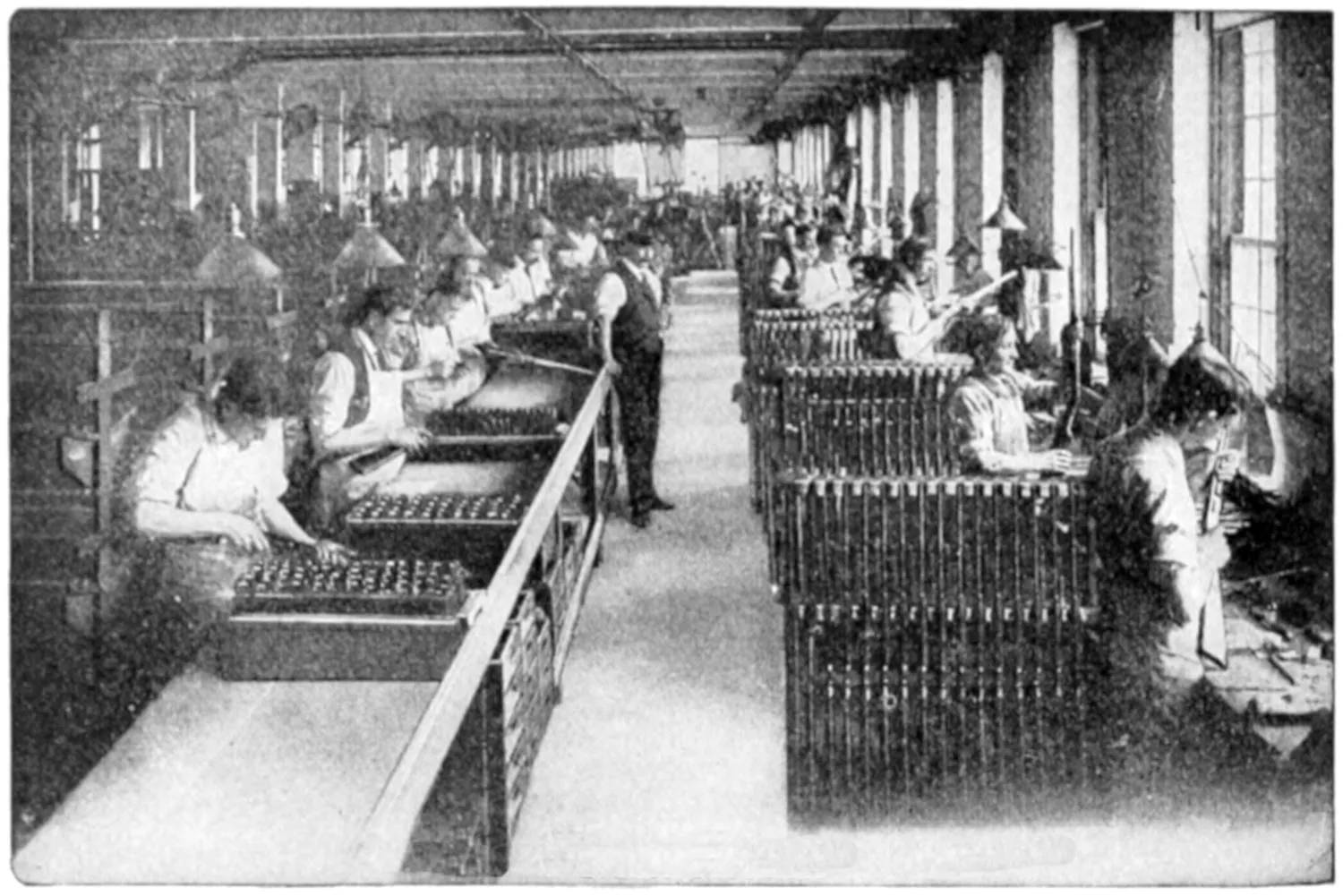
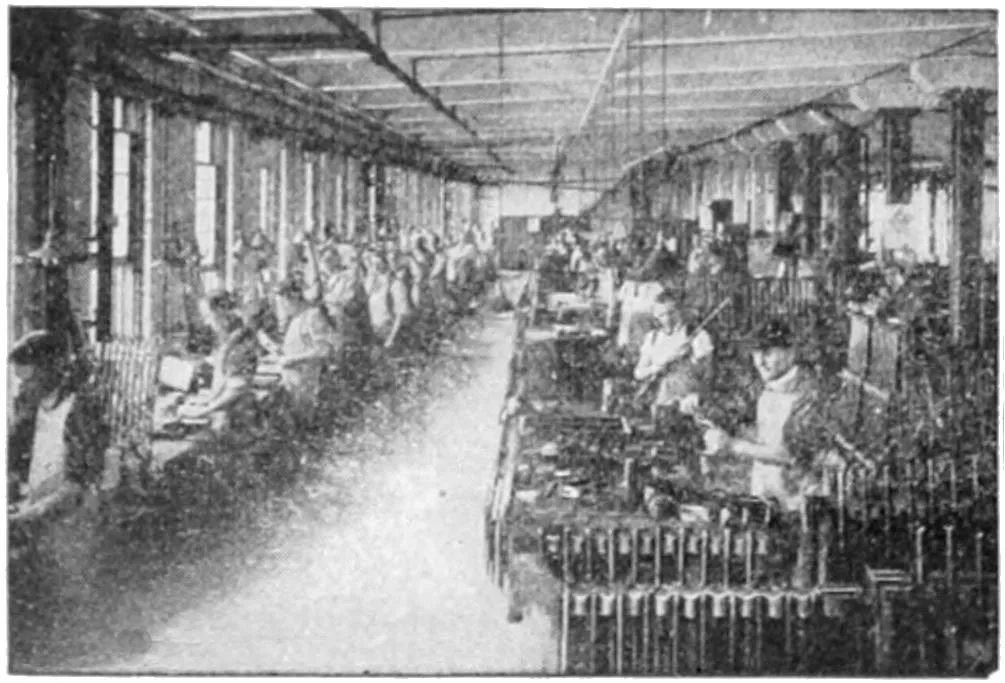
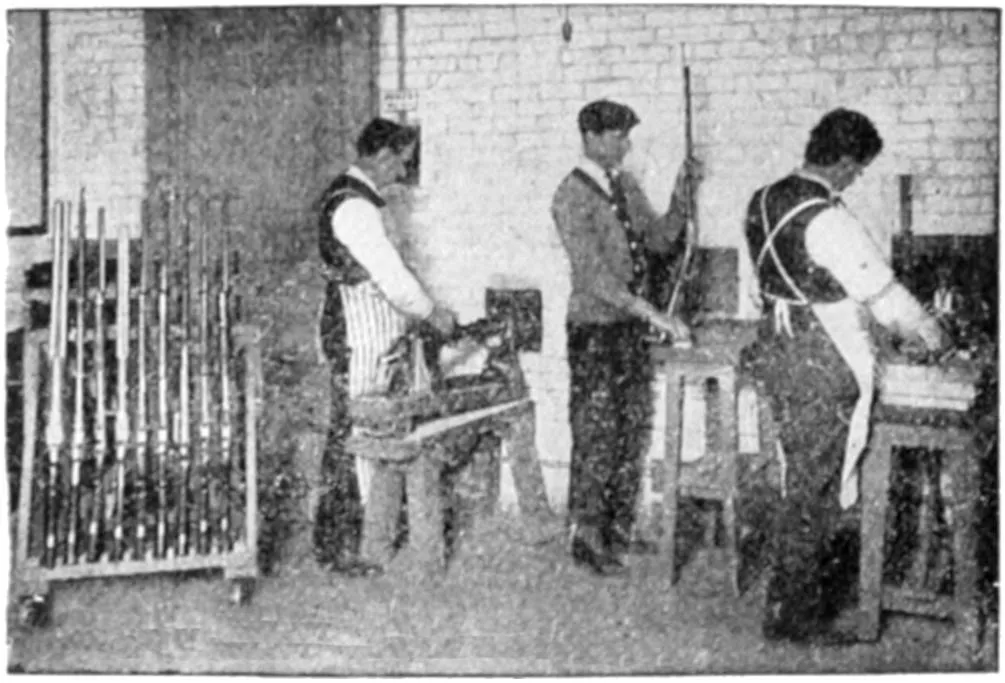
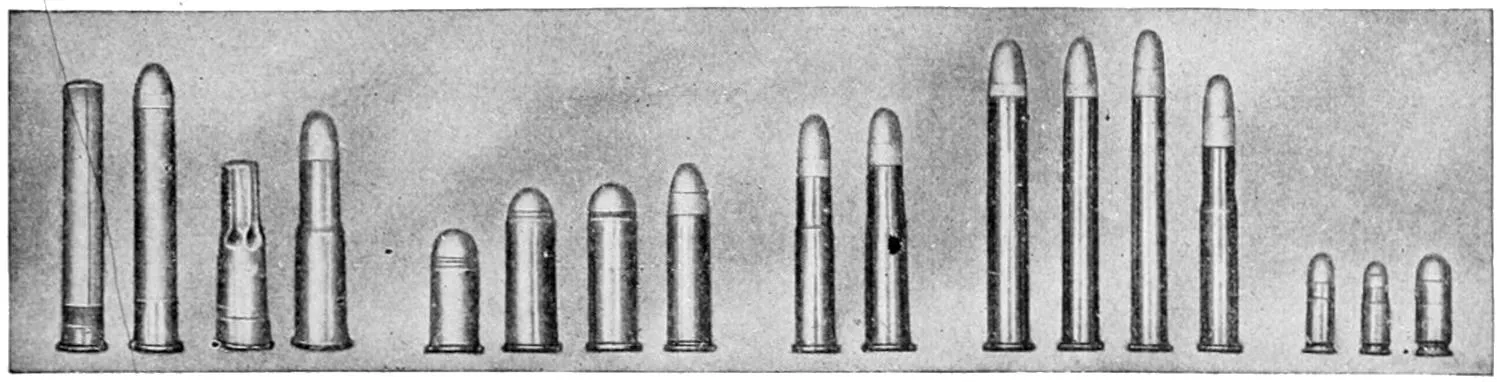
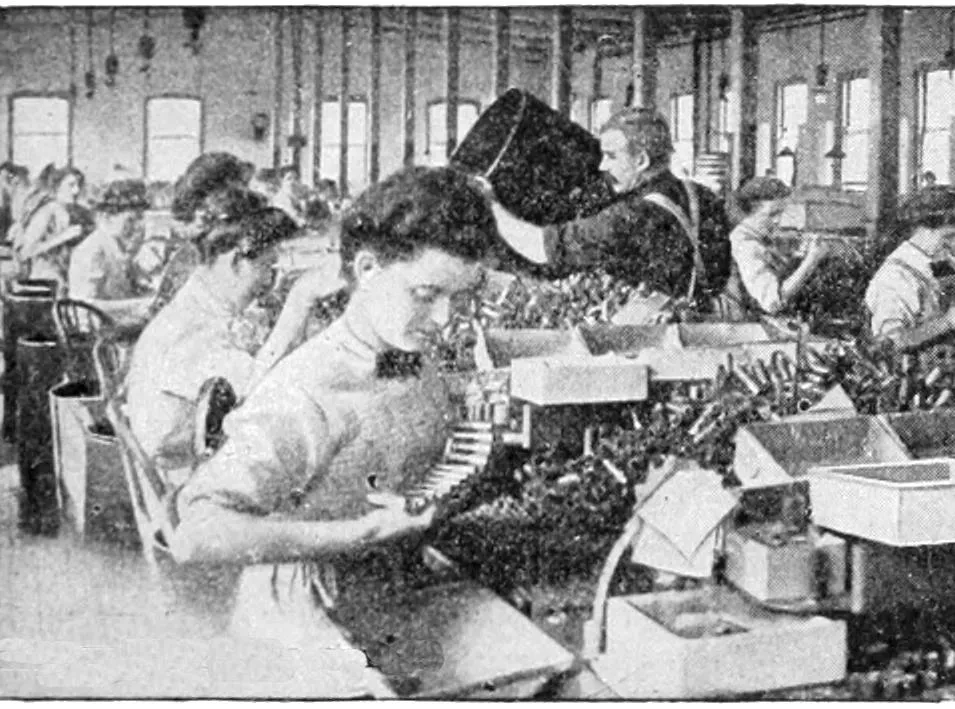
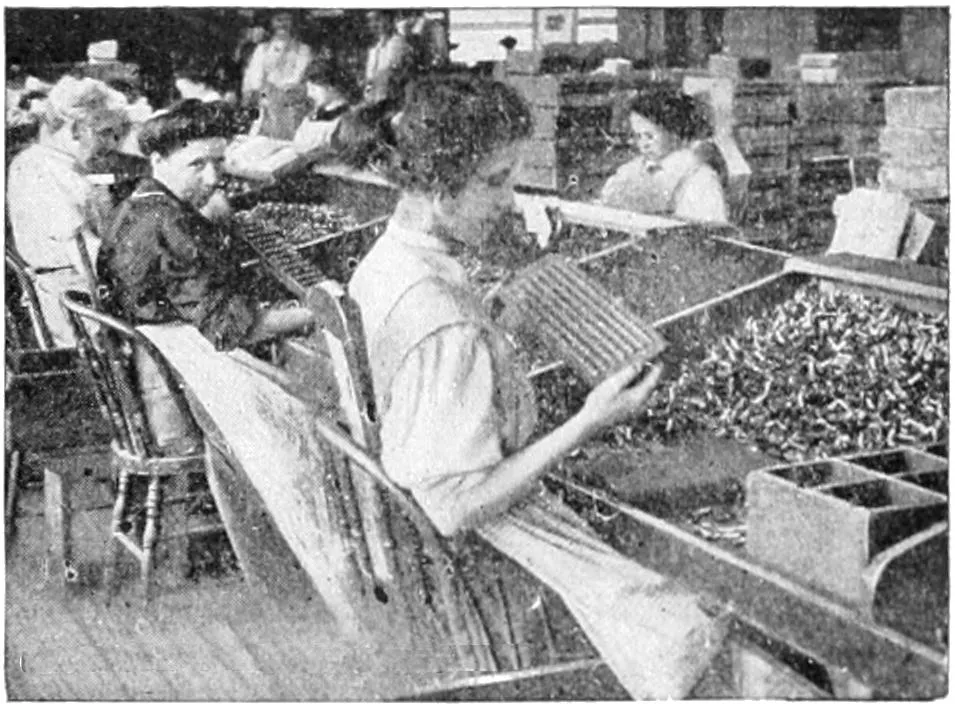
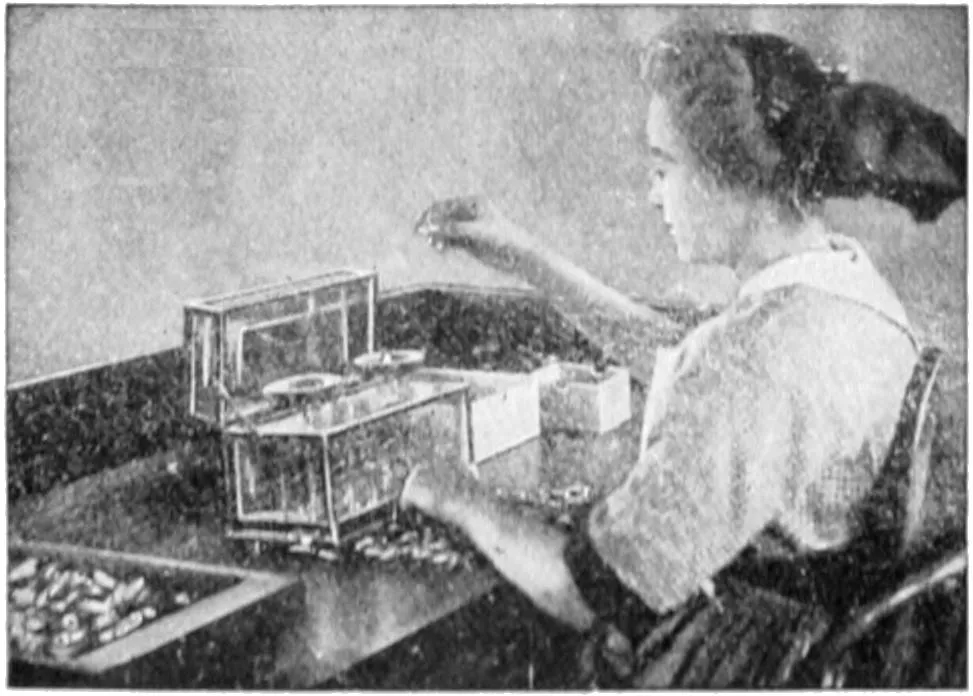
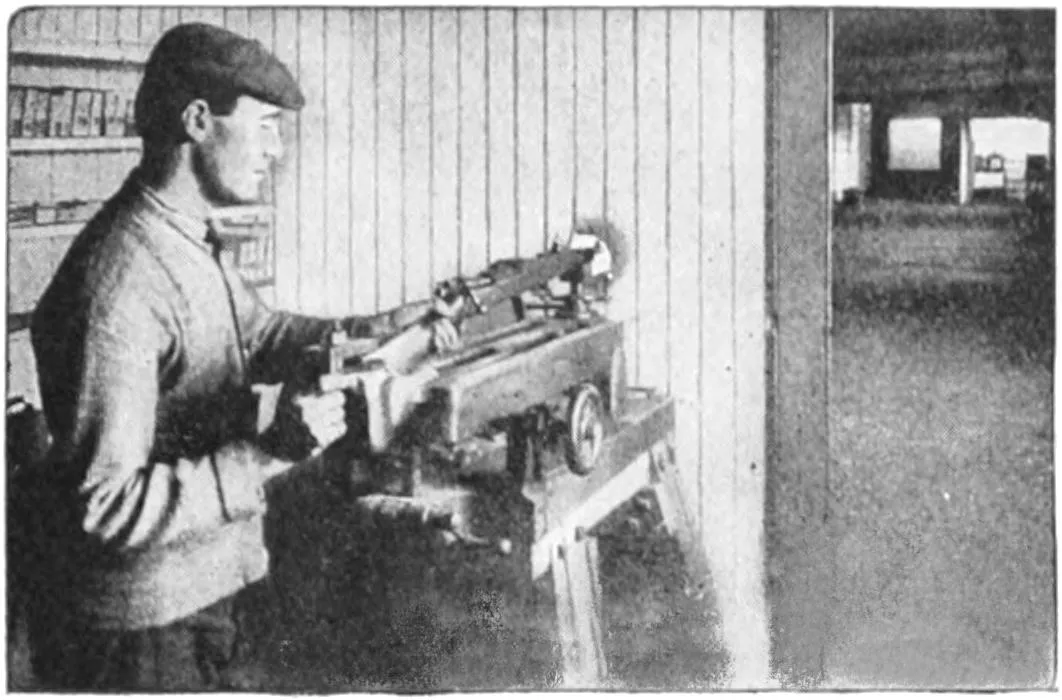
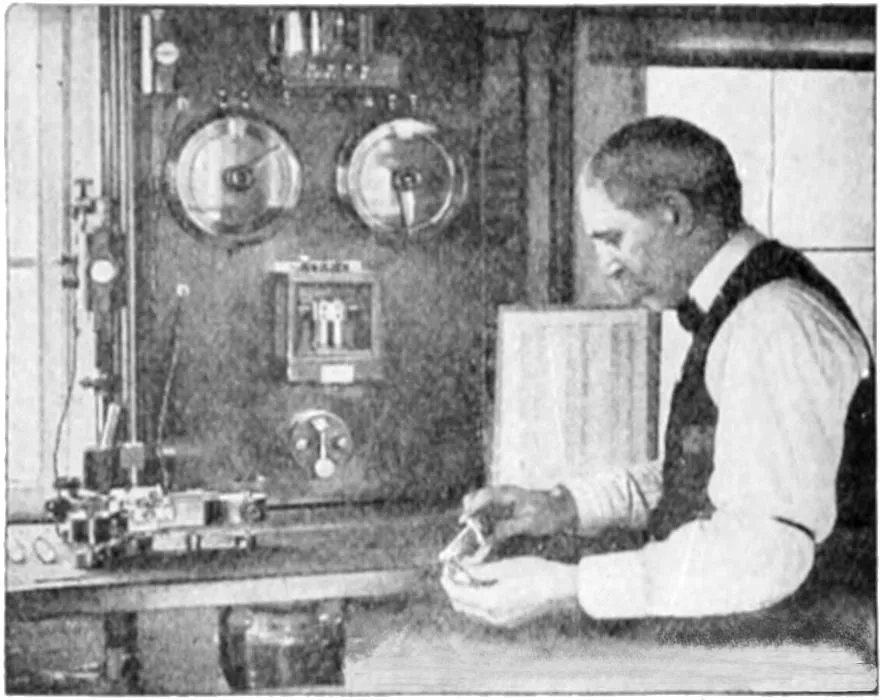
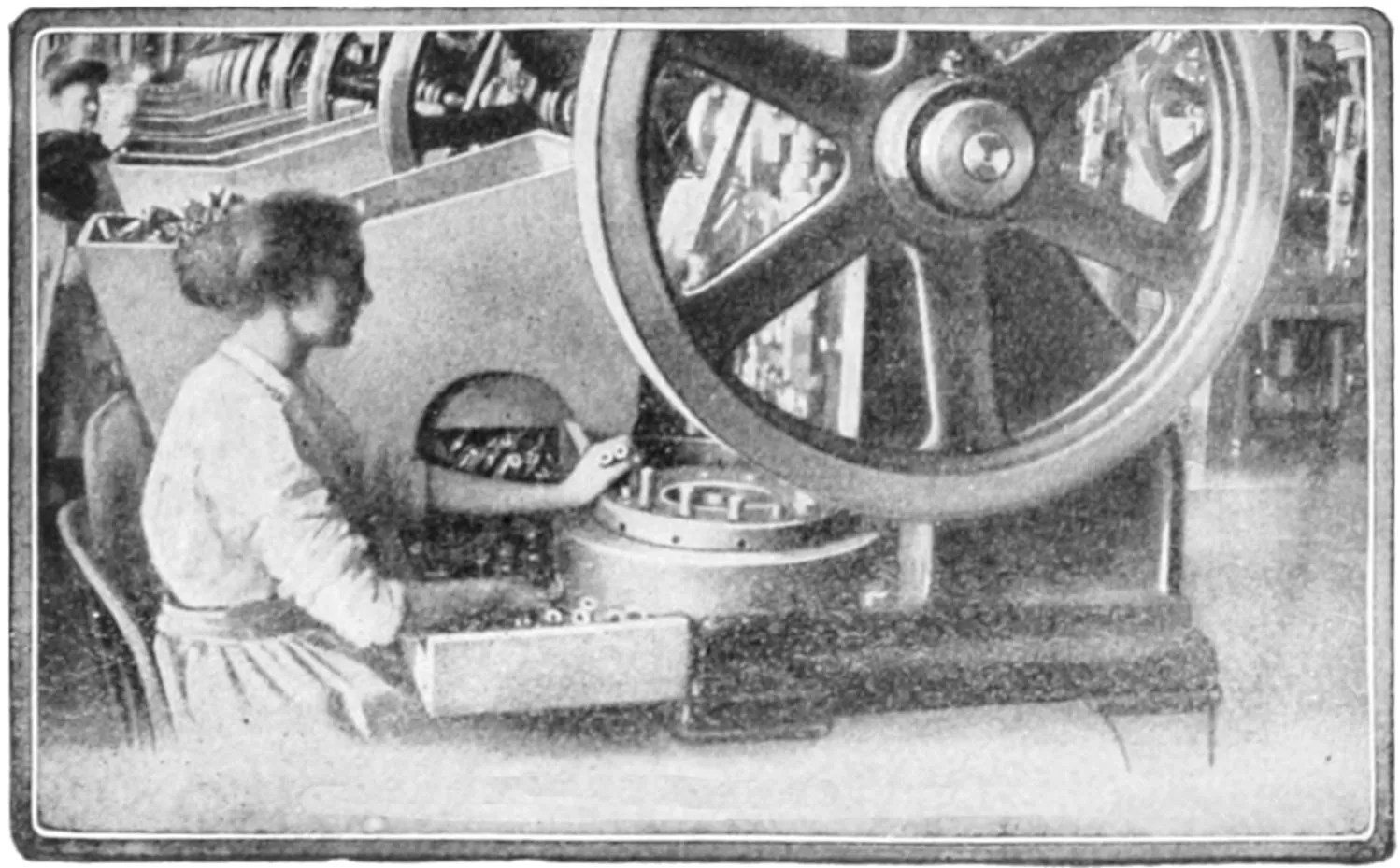
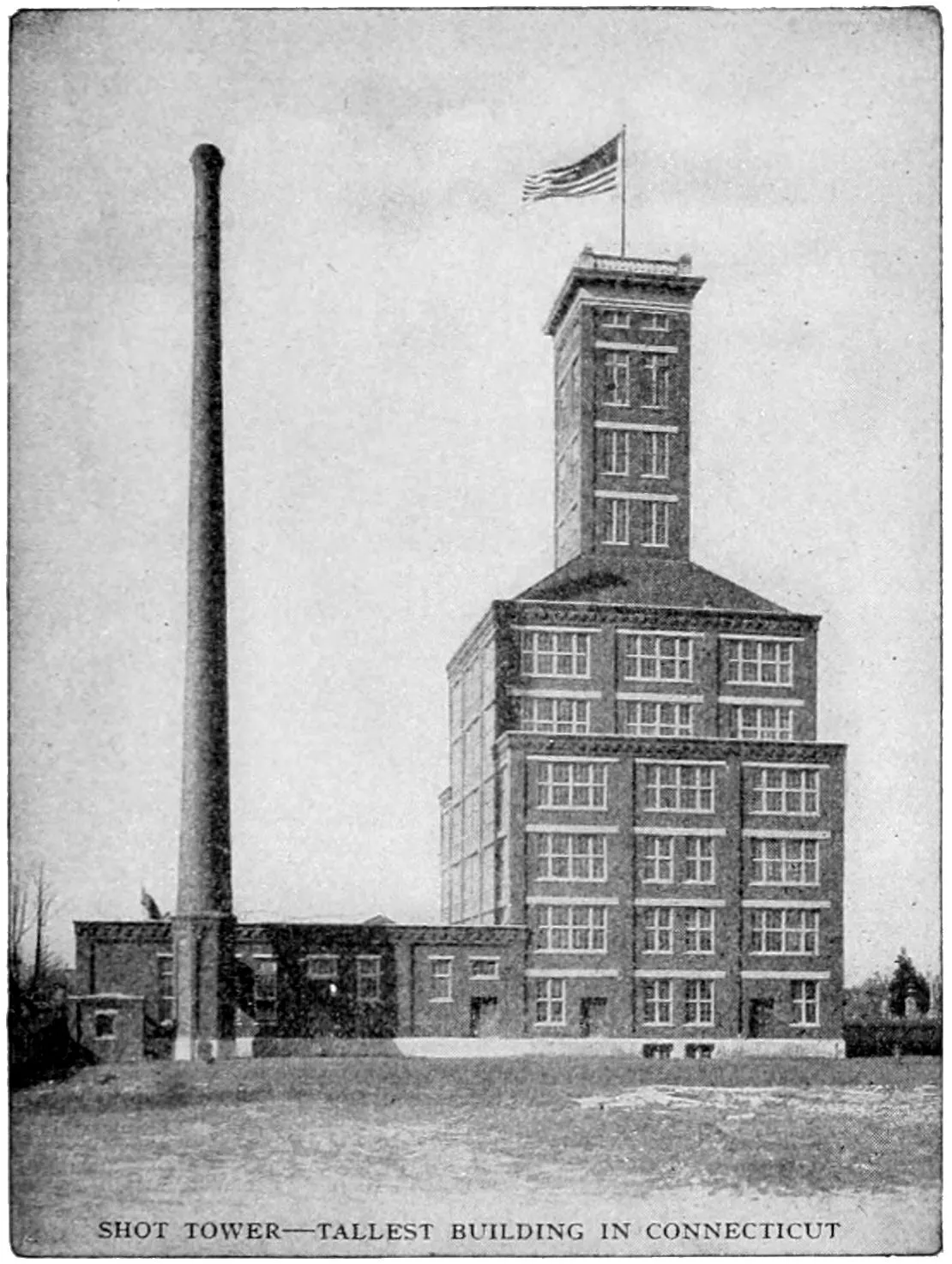
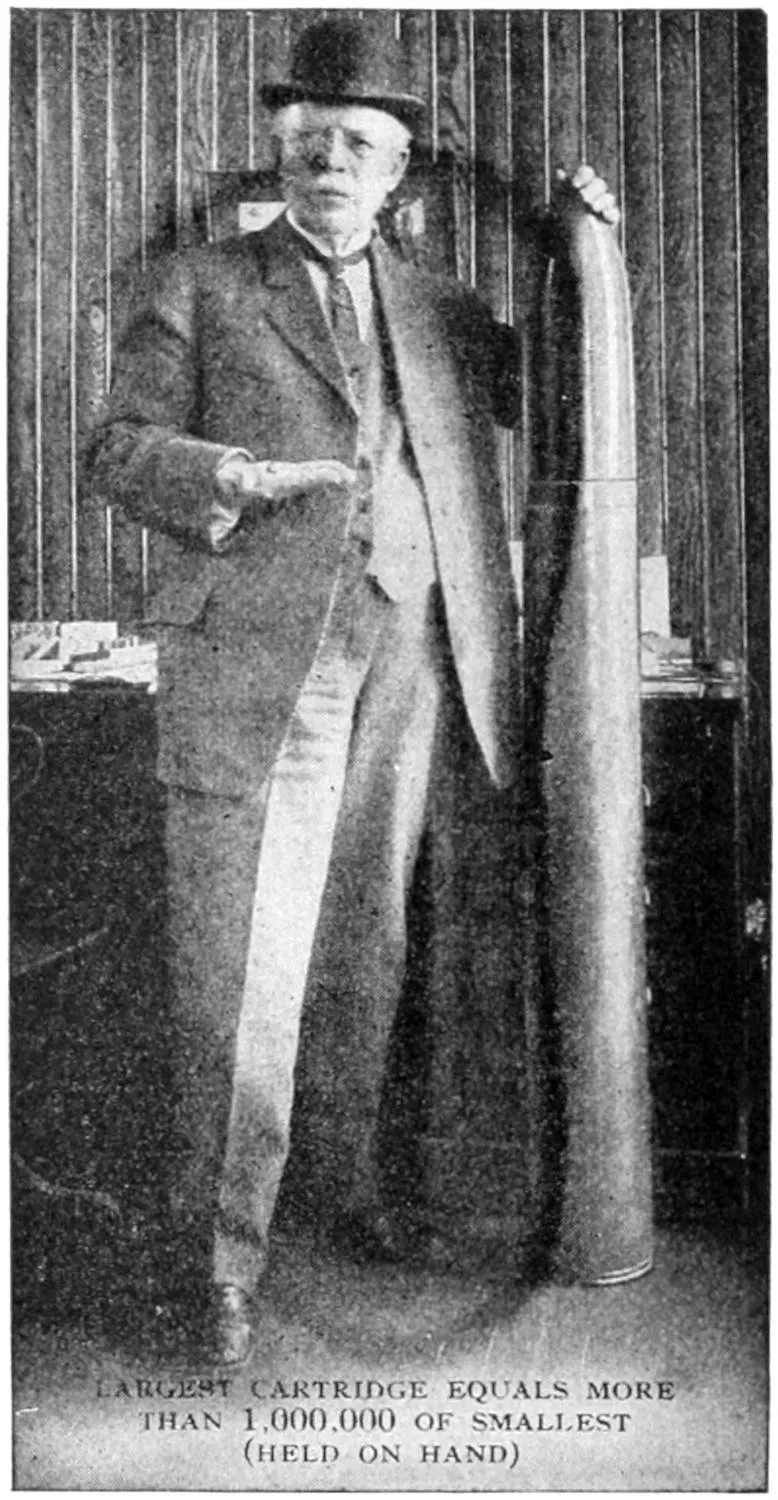
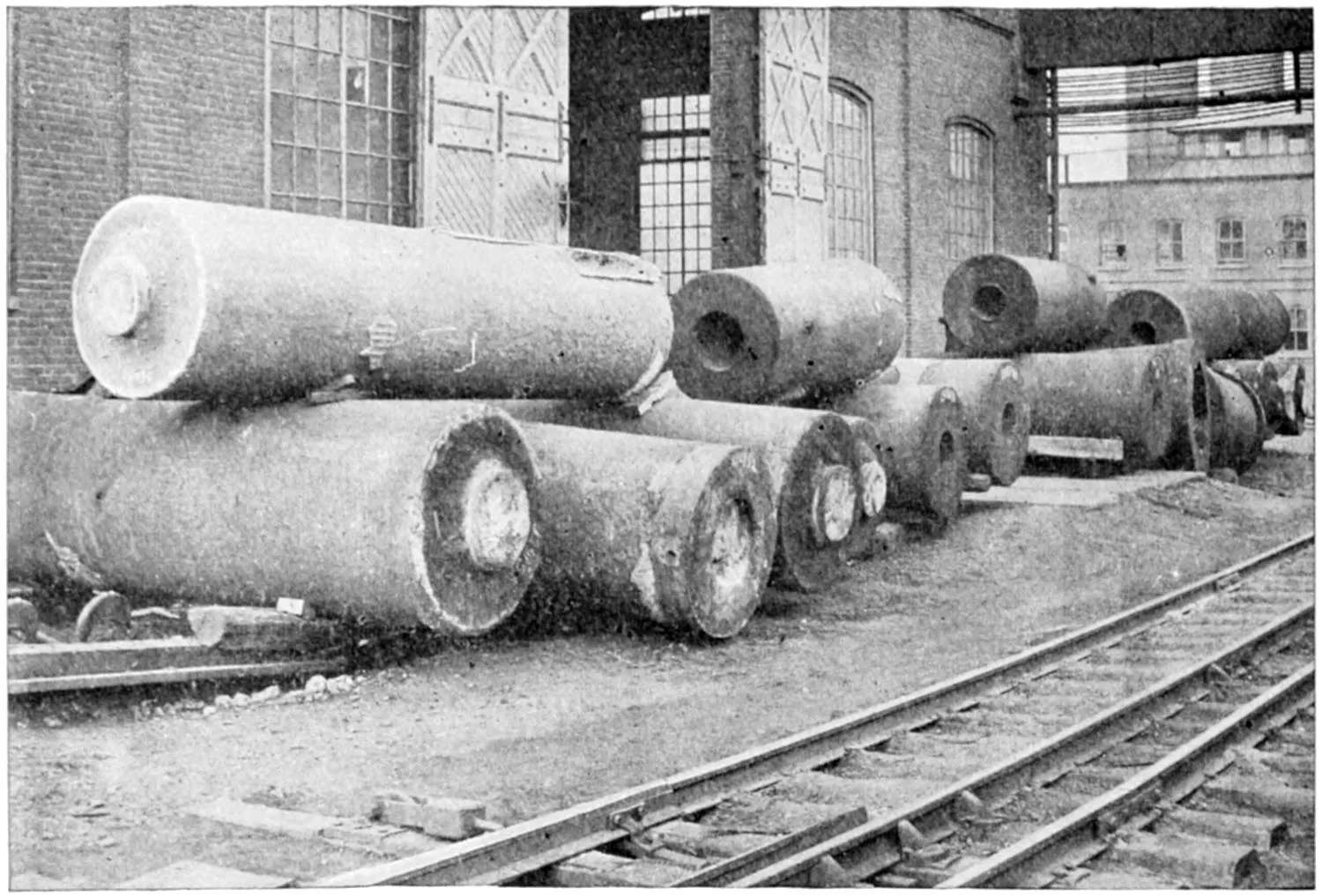
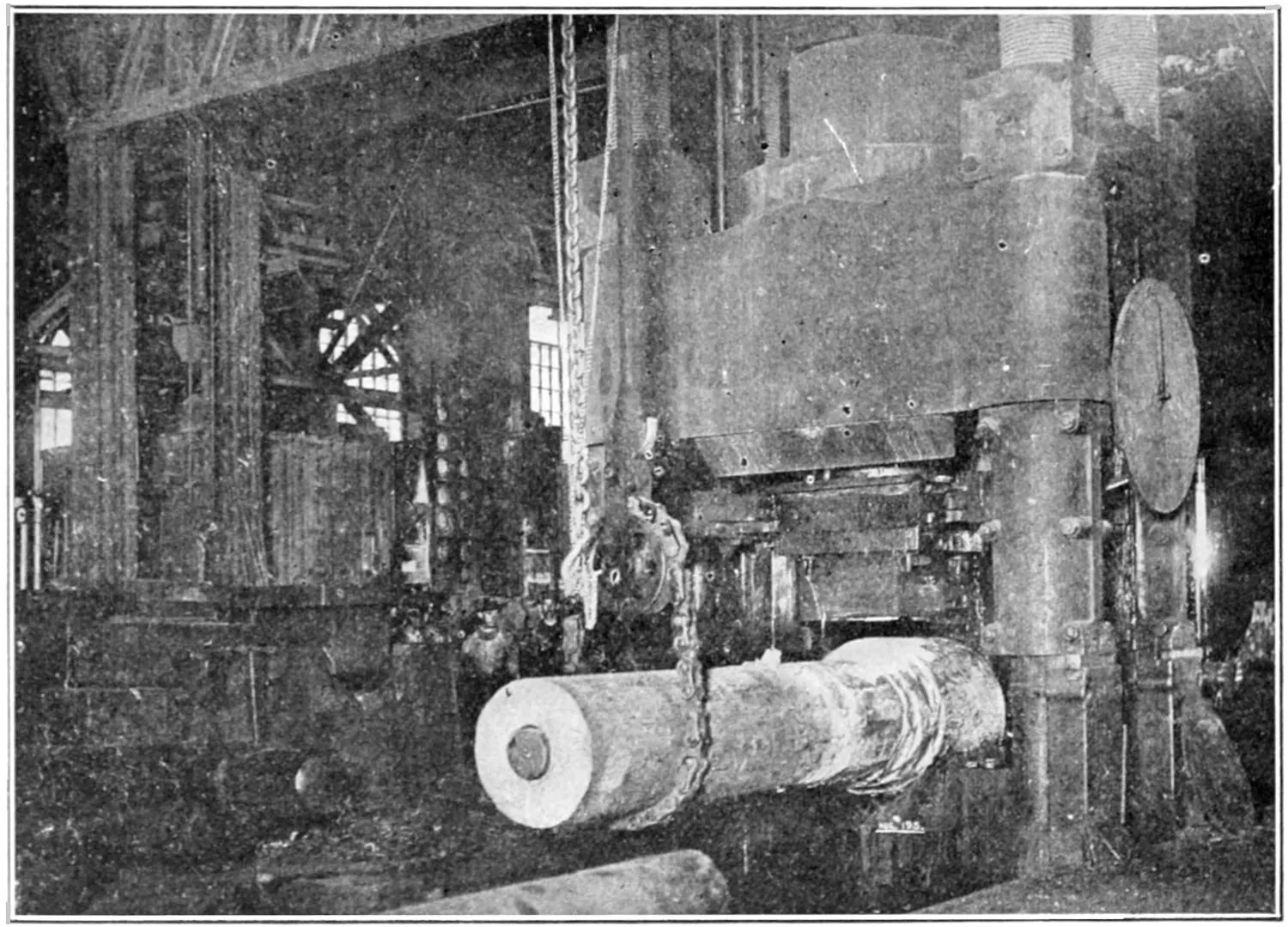
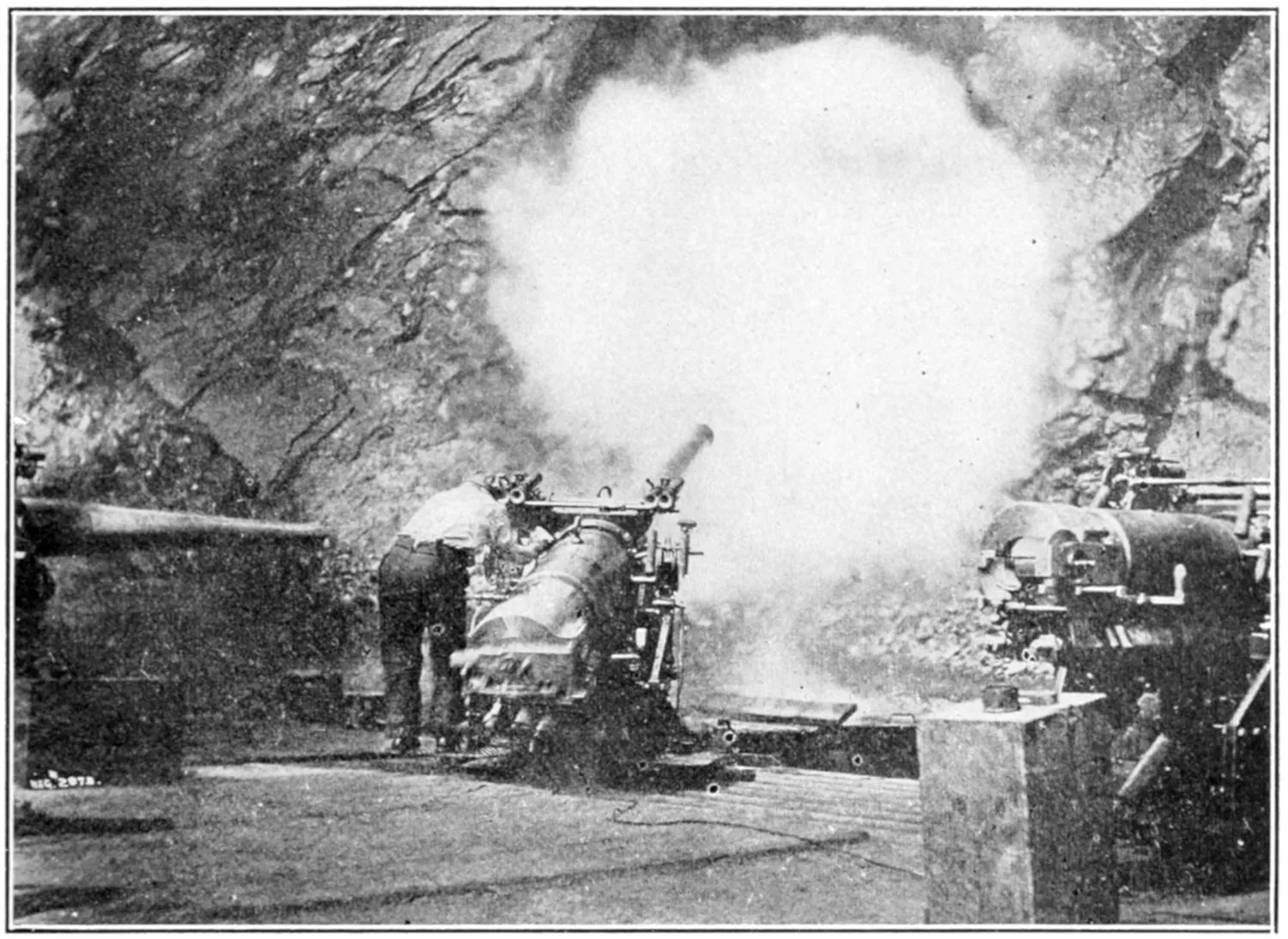

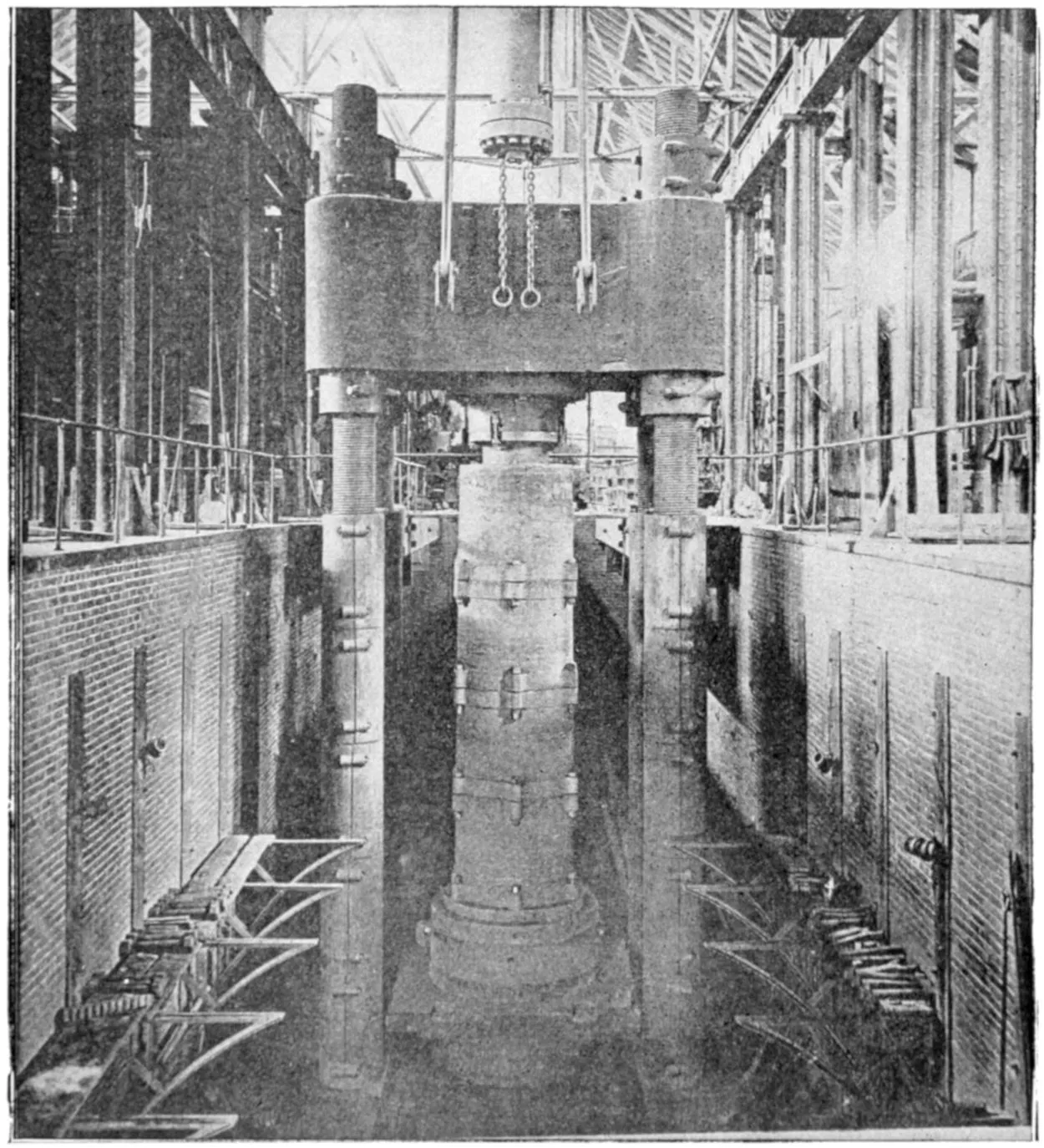
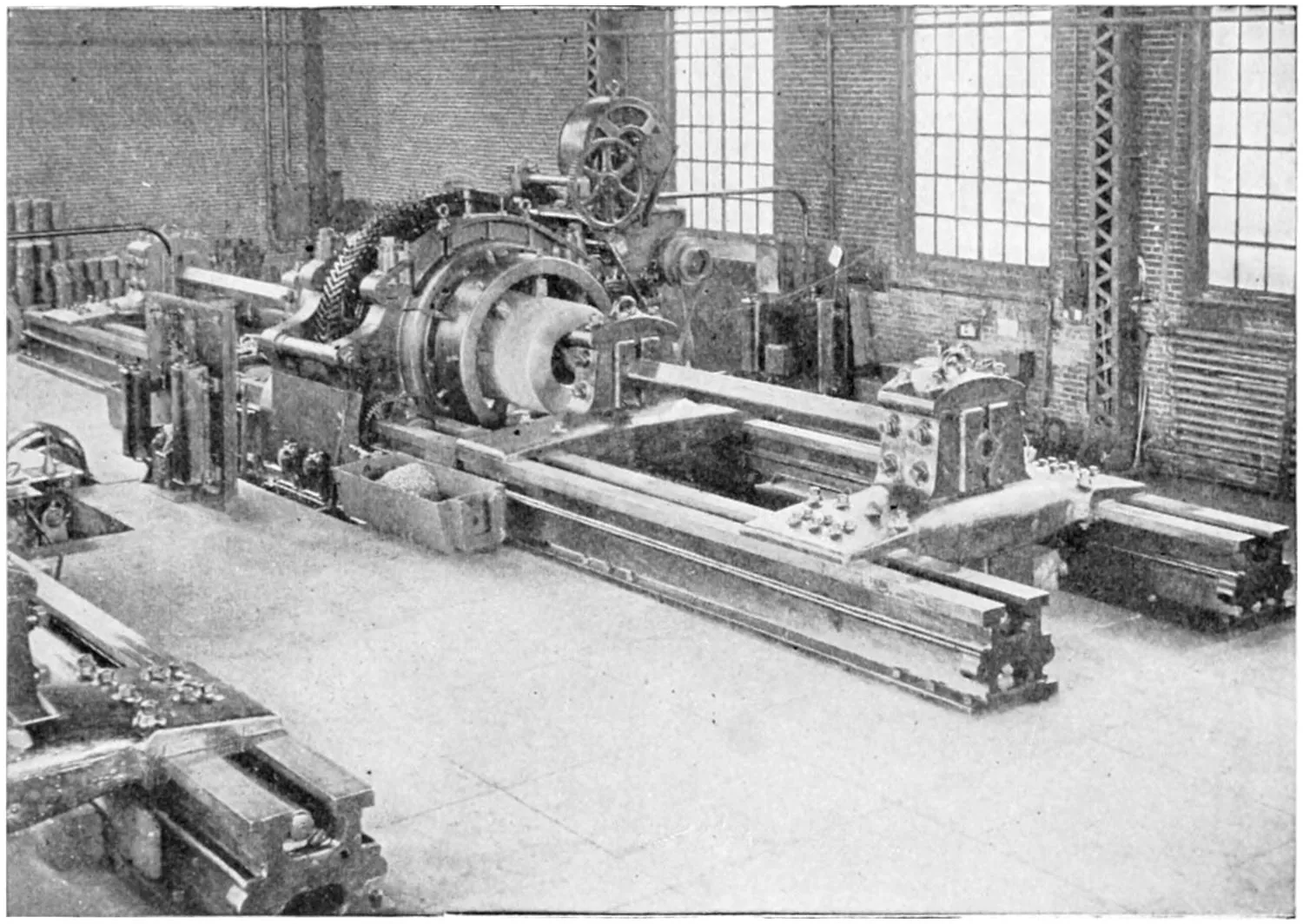
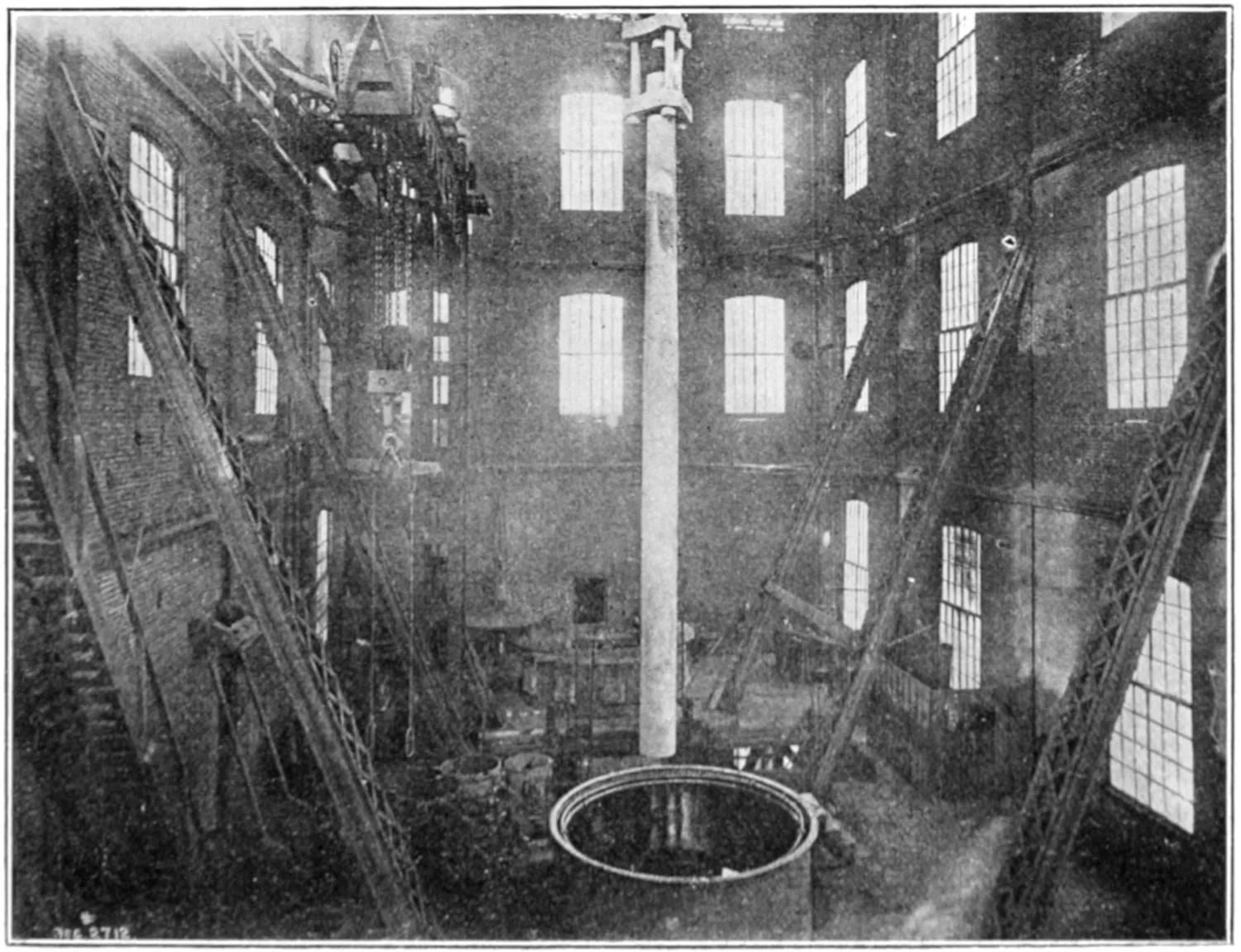
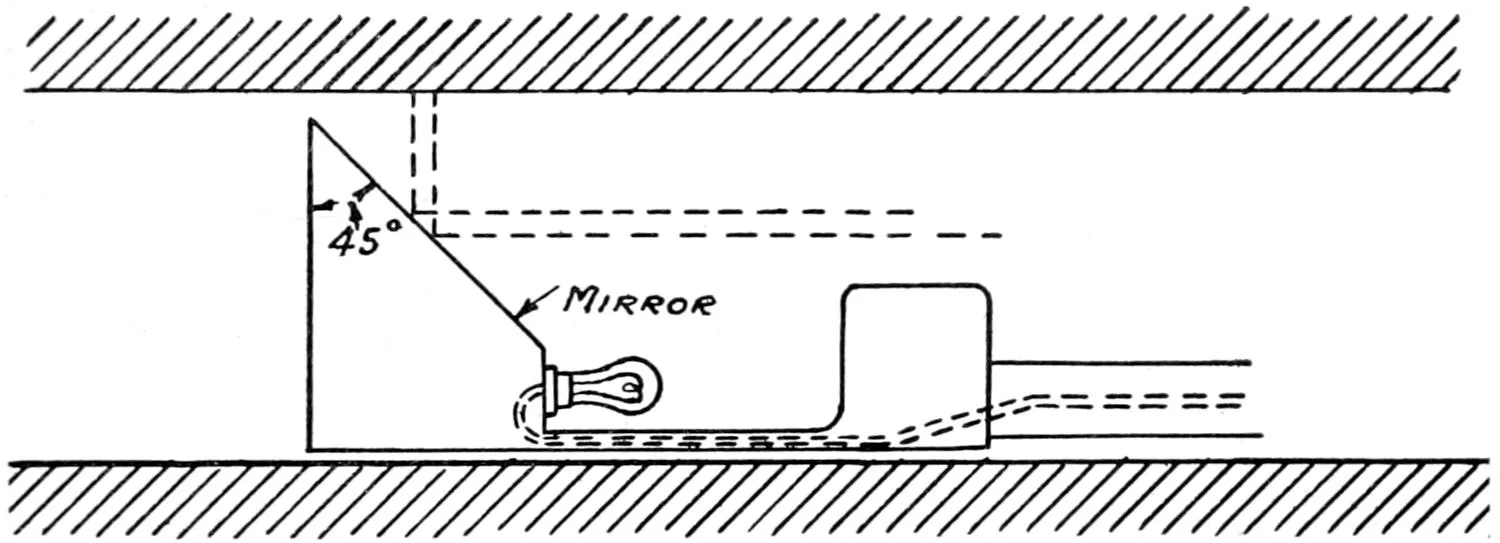
 and the
other
 , making
a star
 . Every forging is
“star-gauged” after being finish-bored
and also the liner of the gun after
each assemblage operation.