“When spring unlocks the flowers.”
Now and again we meet with beginners who really seem
hardly to know one end of a plant from another. Always
buying their flowers in bunches, they have no idea how
they look when growing, and seeing flowers placed side
by side that have been sent from the widest different
zones and climates, they are not even very sure which of
them may be claimed as English grown. Shiploads of
flowers from warmer latitudes keep London and other
large towns far in advance of the seasons as seen in
country districts, and it is misleading. At last some
enterprising spirit begins to long for the pleasure of the
growing plant. It is a trial to be always buying and
bringing home fresh flowering plants only to see them
die off in their new quarters (for this is what they
generally do), so a balcony or window-box is started.
We will suppose its owner to be living quite in town;
country, and, as I think, even suburban folk with gardens
have little need of window-boxes, which are make-shifts,
after all, though not to be despised on that account.
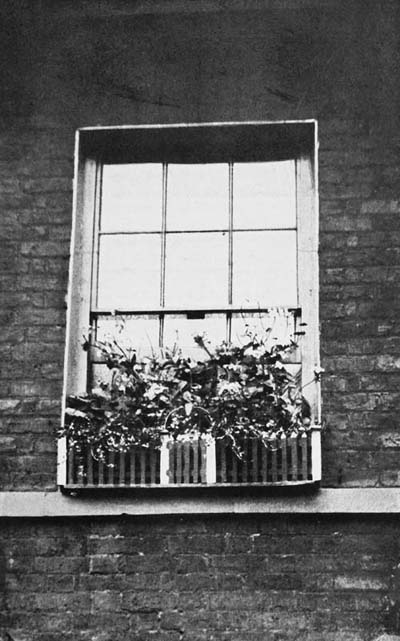
The enterpriser must now choose his window-box, and
is lucky if his house is built handily for it, and if his
aspects are favourable. But what is one plant’s good is
another plant’s poison. No aspect is without some
advantages, if only it has light and air; even shady
places can do with Ferns.
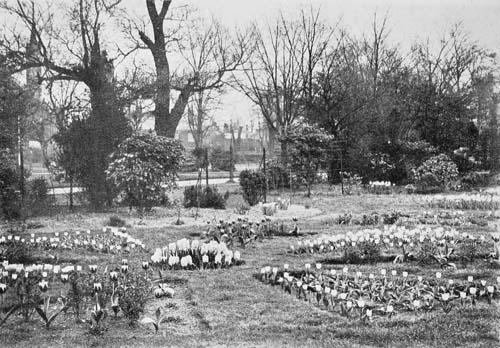
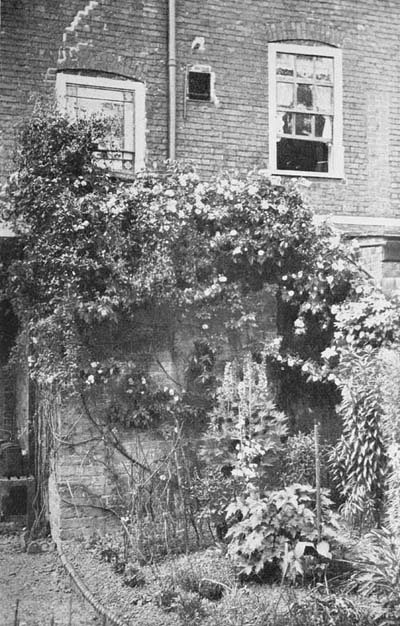
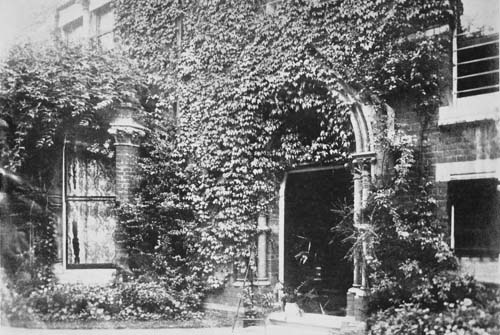
SPRING IN THE CROOK’S HILL BOARD-SCHOOL GARDEN, NORWICH
The style and material for our window-box must
depend on circumstances—size, for instance, and the
style of the house. It may be rustic, severe, or plain,
and made either of wood, or tiles, or cork. All are good
in their way. Some modern builders arrange the stone-work
of the window-sills purposely to facilitate window-gardening,
and it is to be hoped this good fashion will be
continued and improved upon; it is a great assistance.
There will often be an amateur carpenter who is quite
capable of building his window-box for himself. It is
nothing but a strong wooden case, in which holes must
be bored at the bottom; the box once made, it is easy to
tack on pieces of virgin cork. This can be bought,
seven pounds for a shilling, and nothing looks neater.
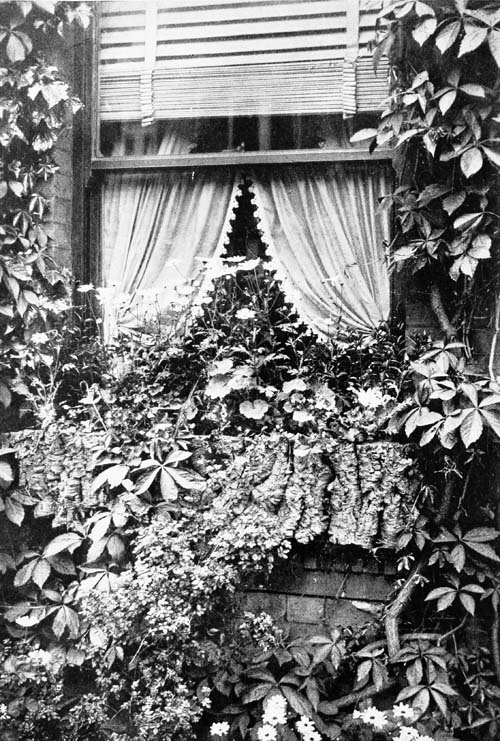
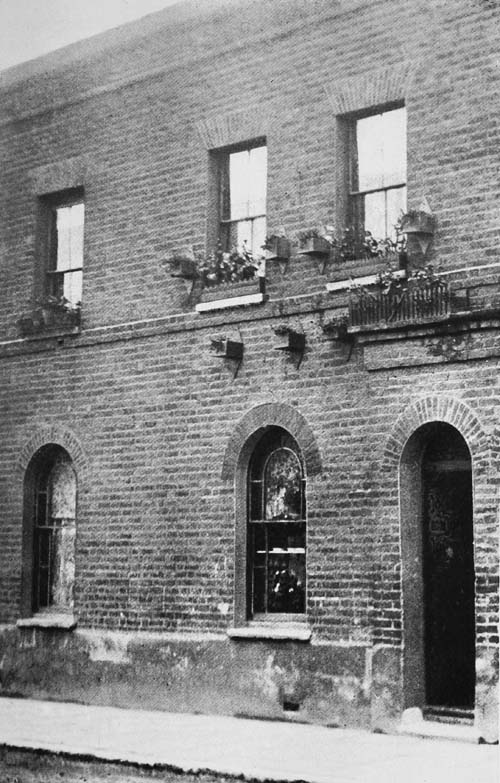
Last spring I noticed all the window-boxes in a row of
small semi-detached suburban villas. The prettiest were
made of cork, and were filled with blood-red Tulips and
Wallflowers almost exactly the same shade, and lovely
they all looked among the Wallflower green. The next-door
boxes were made of upright lengths of bamboo, and
had a very stiff appearance; they were filled with Tulips
only, packed very close together, and mostly yellow; the
effect was anything but good. By good luck we chanced
to see the identical row of pretty small houses again in
early June, when our old admiration was furnished afresh
with summer flowers. The photograph we begged for,
and were kindly allowed to take, has become our frontispiece.
Having settled about our box, the next point to be
considered is the mould to fill it. This we can buy
either by the load or sack. Good leaf mould can be had
for six shillings a load, or some get it by the sack, and
give two shillings for that. Under the box should be a
plate of zinc to prevent drips making the house damp.
I have known enthusiasts to bring mould from the
country to town places in boxes like ordinary luggage.
Except in extreme cases, when a particular soil is wanted
for particular plants, I do not recommend this plan,
especially now that the railway authorities are so strict
about the weight of luggage; and besides this, plants
often enjoy a change of soil; it does them good.
It is a good plan personally to superintend the first
filling of the box. To cast the mould into it and shake
it down, as if we were filling a pudding-basin, would
never do. Drainage is necessary, so we must fill the
bottom of the box with crocks. Old flower-pots broken
up do excellently, but must be perfectly clean, and a few
lumps of charcoal are useful to keep all sweet. Then we
can lay the mould in with a clear conscience.
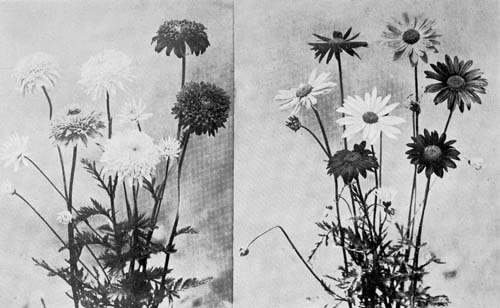
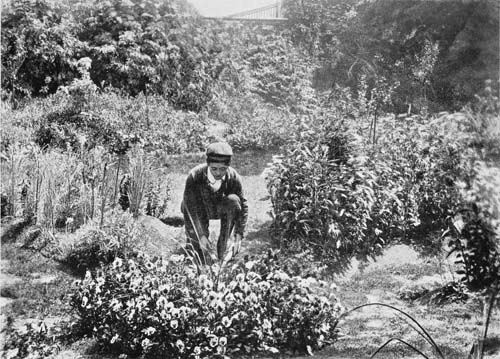
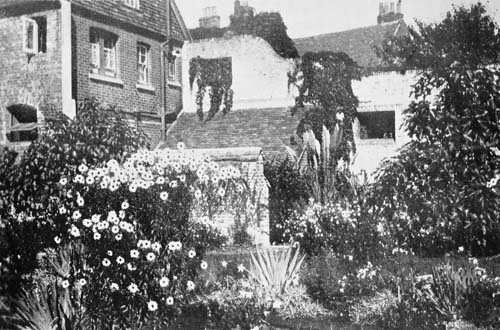
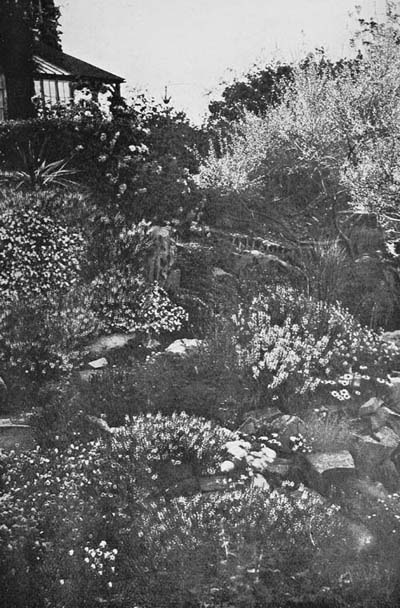
PANSY BED IN CROOK’S HILL BOARD-SCHOOL GARDEN, NORWICH
To those who would like to economize by using the
mould from their own little back-yards, if they have any,
I would emphatically say “Don’t!” It is sure to be poor
stuff, and full of soot and other undesirable things. Soot,
by the way, is a capital stimulant; if kept some time till
it has lost its first crudeness, and mixed with water till the
liquid is about the colour of beer, here is an excellent
tonic which will invigorate many weakly plants. But
no plants like to live on physic, any more than we do.
Now for the flowers, or, if winter is coming on, the
shrubs. Small Conifers do very well in winter-boxes, or
Golden Privet, or Acuba, or tiny Box-trees. There is the
widest range. Suppose we choose a set of the prettiest
shrubs we can get, and plant between them and in front
of them hardy bulbs, with a sprinkling of small-leafed
Ivy to hang over the edge of the box. This will give us
something pretty to look at throughout the winter and
the early spring. We must water carefully, as required,
and keep all foliage quite clean. There are hundreds of
other schemes. The difficulty is to choose between them.
It is a capital plan to take in a gardening paper. Many
excellent journals can be had for one penny weekly, and
any of their editors, when written to, are ready to give
advice. They will tell us what are suitable plants for
special situations, and ease our path by smoothing difficulties
as they arise.
In April the time approaches for a quick change. We
find shrubs no longer satisfy, and the early bulbs are over.
We now want spring flowers, and can buy small ones
ready to be planted at Covent Garden, or from any good
florist near at hand. We can propagate them ourselves
if we have ever so small a garden to fall back upon—if
not, why, then we must buy from the shops and market-gardens.
Aubrietia, Wallflowers, Anemones, Narcissus,
Myosotis, Tulips, and Iris will all be coming on now,
and their flowers are charming. At this season a little
fresh mould may be advisable, and a good clean up.
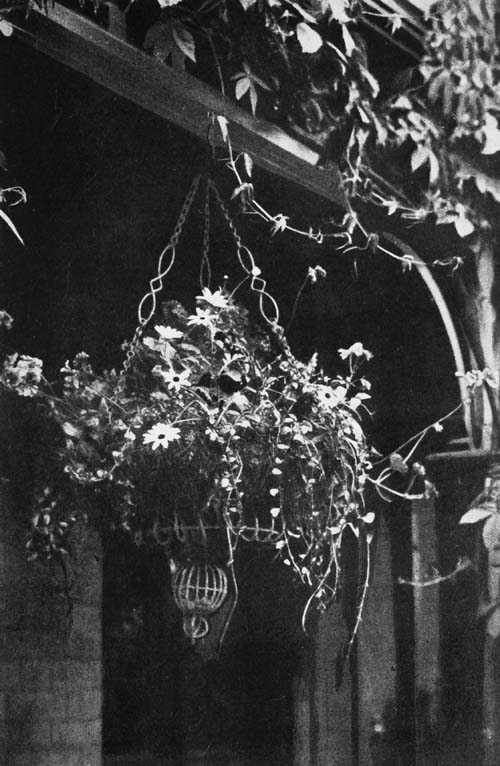
In May we can make up hanging baskets for the
balcony. Large ones do better than small, as a good
body of soil can be kept in a more equable state of
moisture. Fuchsias are lovely for the basket, and so are
all kinds of trailing geraniums. Moss is of course indispensable,
and small pieces will soon spread. Daisies, both
white and yellow, are always ready and welcome. Alpine
Strawberries hanging or trailing over a basket look very
pretty.
June is here before we know where we are, and the
long sweet summer days. Even our miniature gardens
will keep us busy. Watering, staking, thinning out, and
weeding—all these things will have to be done, as well as
cutting off dead leaves. If a plant looks sickly, do not
let that make us too sad. We had better take it out
from among its fellows and nurse it up elsewhere. In
Paris, there is a hospital for invalid plants, where they are
taken care of and restored to health. I am afraid no one
has yet started a Flower Hospital for London.
Petunias come on later, and are splendid plants for
town people; they are brilliant, and do not put themselves
out because of smoke and smuts. They climb
about, and fling themselves all over the place, so it is a
good plan to associate them with sturdy plants for a
contrast, and the filling up of gaps.
Insects must be destroyed as they appear, but soap and
water will keep them from appearing at all. A daily
wash is the best thing in the world for town plants, and
if we cannot give it every day, we must give it as often
as we can.
Watering is always a difficult matter with beginners.
No exact rules can be laid down. It is not like clock-winding
or anything mechanical. Plants must be
watered just when they want it, and if we give it
them when they don’t, it makes them sick. Still, they
must never be forgotten; if once allowed to get dust-dry,
it is an injury from which they will not recover. We
must watch them carefully, and shall thus soon learn
their needs. Weather has a great deal to do with it.
Wind and sun are wonderfully drying. During the heat
of summer it is a good plan to water in the evening, so
that the plants enjoy the moisture through the night.
One axiom is drummed into the heads of all beginners,
“Never water in the sunshine.” But sometimes one
must do it to avoid casualties, and no harm need come
of it if we water the ground thoroughly without touching
the leaves or flowers. Let it be a good soak. To
give water in driblets is fatal. After a little water, the
upper surface of the soil may cake and dry and harden,
and the plant be worse off than ever, or the water may
run through some dry channel in the mould and never
reach the roots at all. It is best to water pot-plants by
standing them in a pail or tub, the water coming quite
over the rim; the leaves can be washed separately, and
should not be left too wet, which rots them; efforts must
be made to get soft water. If we really are compelled
to use hard, some good may be done by standing it for
a time in shallow pans, or even in the water-pots we are
going to use. This improves its temperature; it will be
far better for the plants than cold hard water from the
tap. Baby’s bath-water, when he has done with it, is
excellent to water with.
Sometimes one sees the beginner put his pot-plants out
in the rain, thinking it to be ever so generous to them.
See that the leaves do not get all the wet, leaving none
for the soil; this often happens, and the poor plants suffer
thirst in the midst of plenty. We want to keep the
leaves washed clean, so that the skin of the leaves can
breathe (they are full of pores), but it is through their
roots that plants drink in the water. Our interest in
tending plants is enhanced tenfold by the study of their
nature. Then common sense comes in to help us; anything
like good gardening without this is nearly as impossible
as it would be for doctors to cure their patients
without having first been through a course of training in
physiology and physics.
Plants in pots set out on the balcony do well if we
stand them on a layer of coke ashes, or, indeed, any ashes
that are going. Of course, we must hide them in some
cunning way. Little pots of Campanulas, pink or white,
drooping about are a help, and always decorative. So is
Musk—delicious, delightful, shade-loving Musk! What
a treat when the time for the Musk comes round! But
Musk wants a great deal of watering, and we must never
water its flowers, only its leaves; and no plant scorches
up so easily in a hot sun. It just wants care, and to be
in a sheltered, yet not altogether sunless place.
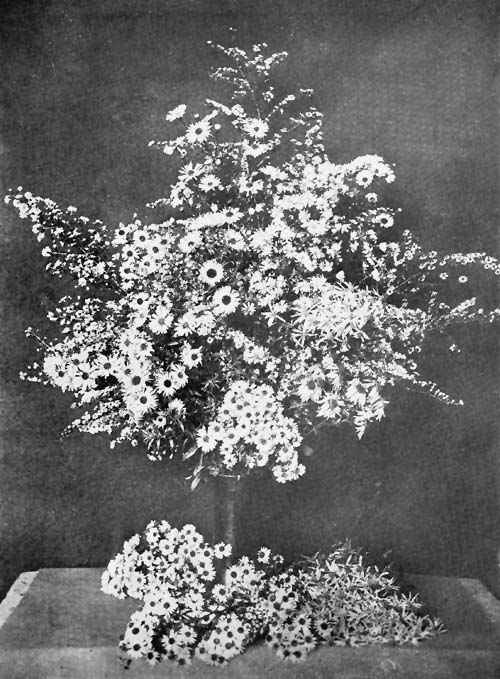
For the autumn many people like Asters. I am not very
fond of Asters personally; but they are gay, and will pass in
a crowd. Small Myrtles are helpful, but our Geraniums
and Petunias, Ferns and Daisies may be relied on to keep
us going till flower-time is over and we begin to be thankful
for the small mercies of the evergreen old Ivy, and
enjoy the colours of the Virginia Creeper, more beautiful
than ever when reddened by the fiery fingers of the
frost.
It is hardly fair to end without a word or two about the
open-air Fern-box. For beginners, and in fact for everybody,
nothing requires so little trouble to cultivate as
Ferns. Let us suppose a young lady’s room in a north-east
aspect, or north-west with only afternoon sunshine.
Here is the very place for a Fern window-box. All
Ferns and nothing else. Nothing but the common
Harts-tongue looks lovely; so do Male Ferns and Lady
Ferns growing together. Ferns want more drainage
and more water than flowers, and that is all they do
want. When in the autumn they die down, the old
fronds must not be cut off. Let them be, and give a very
little water now and again to prevent an utter dryness.
In the spring they will come up again as good as ever,
and would be glad of a sprinkling of fresh leaf-mould
over the top just as an encouragement for the fresh growth.
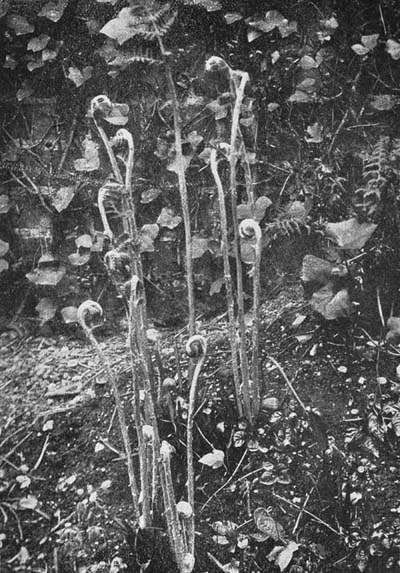
When the new fronds appear we shall find them
folded at the base very tight and cosy. Then, and then
only, must last year’s dead leaves be removed. They
have protected and even nourished.
It is better not to arrange the Fern-box for a very conspicuous
room; people get impatient during the resting-time
of the plants, and want to turn them out, which is
too bad. Nothing and nobody can be always at its best,
not even human beings. The only remedy is a second
box, and to put the Fern-box away to go through its
dormant stage unseen. The danger of this is that it may
be forgotten, like canaries are sometimes; but the Fern-box
is worth trying for. In summer it is a treat, and its
fresh green never looks prettier than in a case of pale
blue tiles; I like this better for Ferns than the more
conventional box of rustic-work.
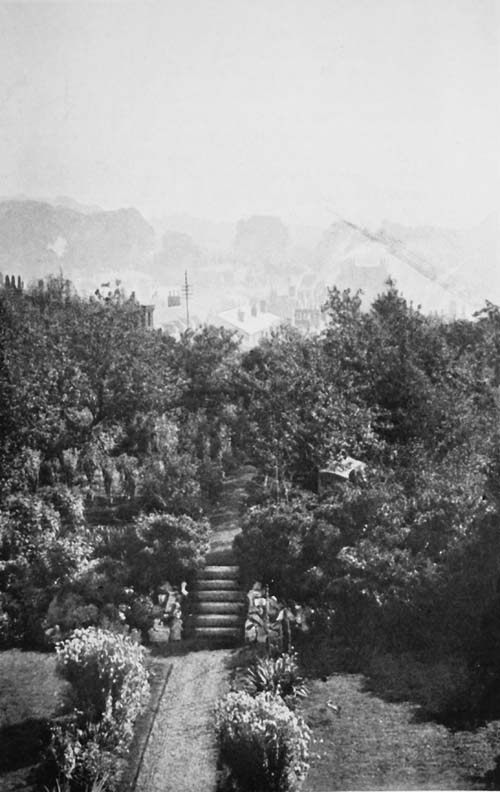
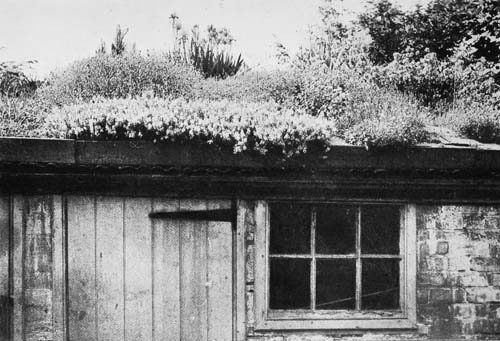
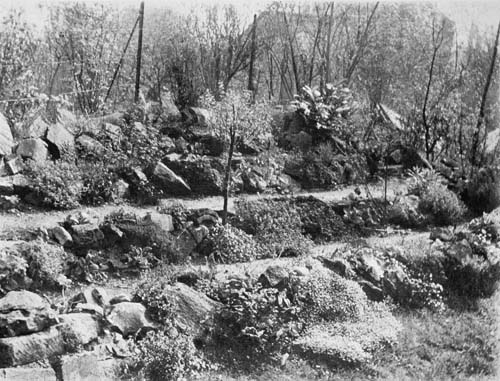
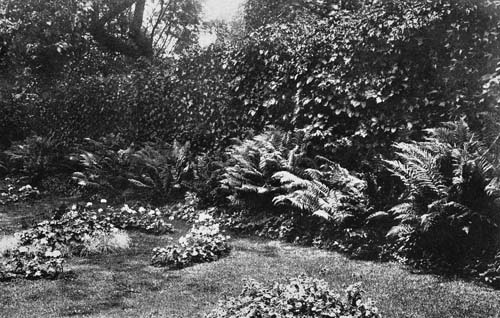
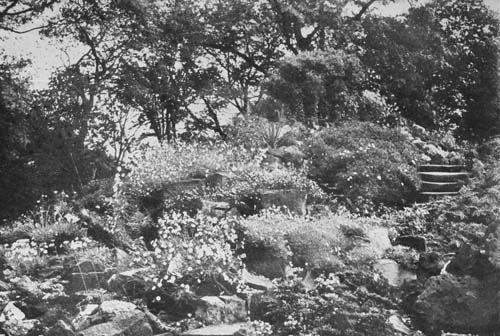
PART OF ROCK-GARDEN, CROOK’S HILL BOARD-SCHOOL, NORWICH
Seeds are fascinating, but I cannot cordially recommend
them for window-box use; there are too many
chances of failure. But if there are any who wish to
make the experiment Nasturtiums are the hardiest, and
Californian Nemophila is pretty and easy to grow; but
my favourite of all, and the most unfailingly good-tempered,
is Virginia Stock, which does equally well in
all aspects. Give it good ground and sufficient water,
and its pretty, simple, many-coloured flowers will not
fail to please. They always remind me of the sugar
hundreds-and-thousands of our youth, one colour blending
with another.
A modern poetess has written about these flowers very
prettily, and the good character she gives them is the
outcome of no poetical license; it is simple truth.
“The Lily’s ignorant white is glad of cheer,
But these are high of courage; glad are these,
Against all changes of the changing year,
Untempered sun or overshadowing trees.”
“Lilac and lavender and hoar-frost white,
My border waves its colour to the sun.
Virginia Stocks grow low, but every one
Gives all her colour to the questing light.”




 This volume includes White’s “Observations on Nature” and “Poems”;
also some interesting Notes by Samuel Taylor Coleridge.