THE BOOK OF JOB
BOOK OF JOB
WITH AN INTRODUCTION
By G. K. CHESTERTON
& ILLUSTRATED IN COLOUR
By C. MARY TONGUE
LONDON:
CECIL PALMER & HAYWARD
OAKLEY HOUSE BLOOMSBURY ST. WC
Whole book · 52 sections
The text of this Reprint of the
Book of Job is that of the
authorized version, with
certain differences in
the manner of
printing.
FIRST
EDITION
1916
LIST OF ILLUSTRATIONS
INTRODUCTION
THE BOOK OF JOB
CHAPTER 1
CHAPTER 2
CHAPTER 3
CHAPTER 4
CHAPTER 5
CHAPTER 6
CHAPTER 7
CHAPTER 8
CHAPTER 9
CHAPTER 10
CHAPTER 11
CHAPTER 12
CHAPTER 13
CHAPTER 14
CHAPTER 15
CHAPTER 16
CHAPTER 17
CHAPTER 18
CHAPTER 19
CHAPTER 20
CHAPTER 21
CHAPTER 22
CHAPTER 23
CHAPTER 24
CHAPTER 25
CHAPTER 26
CHAPTER 27
CHAPTER 28
CHAPTER 29
CHAPTER 30
CHAPTER 31
CHAPTER 32
CHAPTER 33
CHAPTER 34
CHAPTER 35
CHAPTER 36
CHAPTER 37
CHAPTER 38
CHAPTER 39
CHAPTER 40
CHAPTER 41
CHAPTER 42
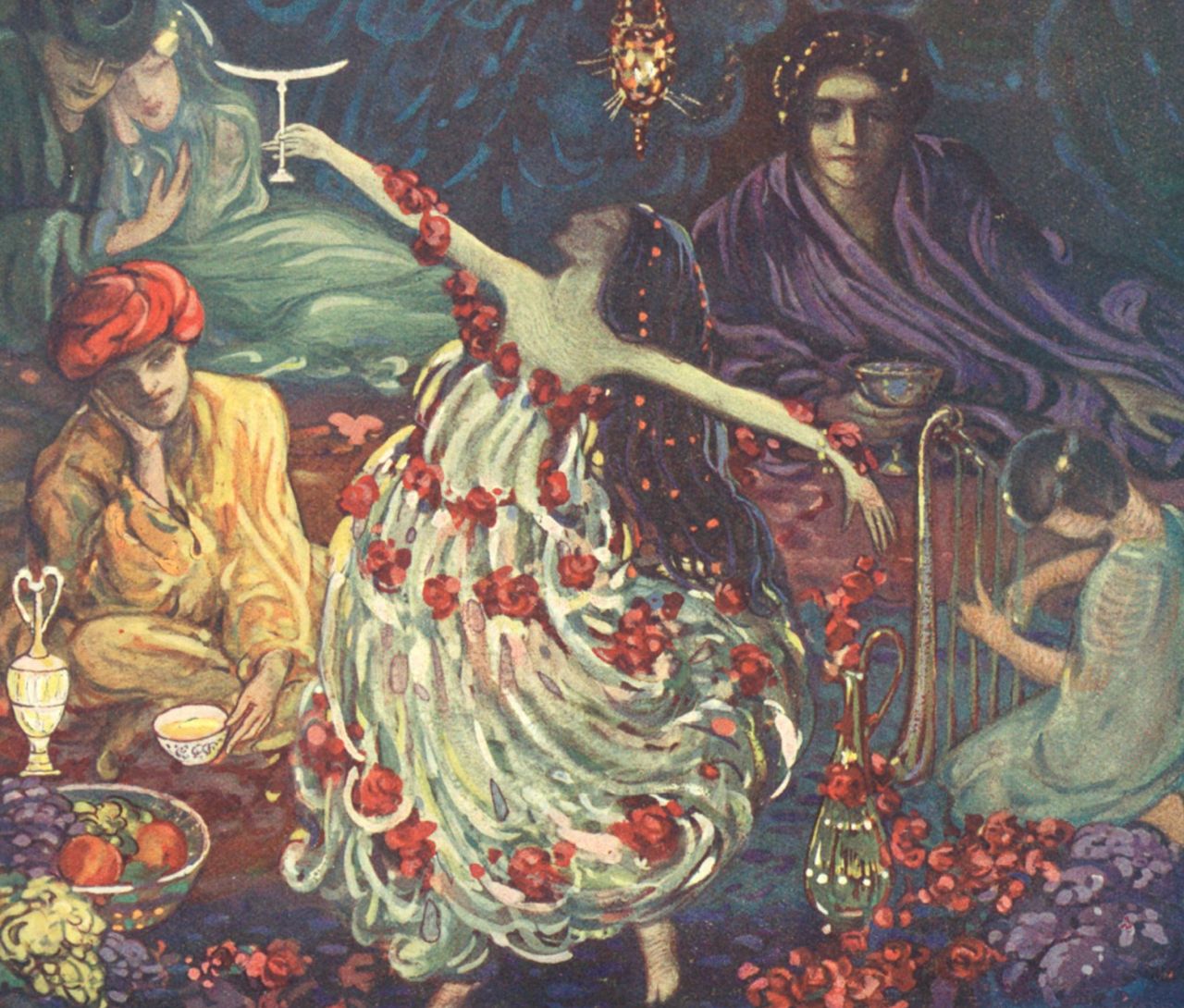
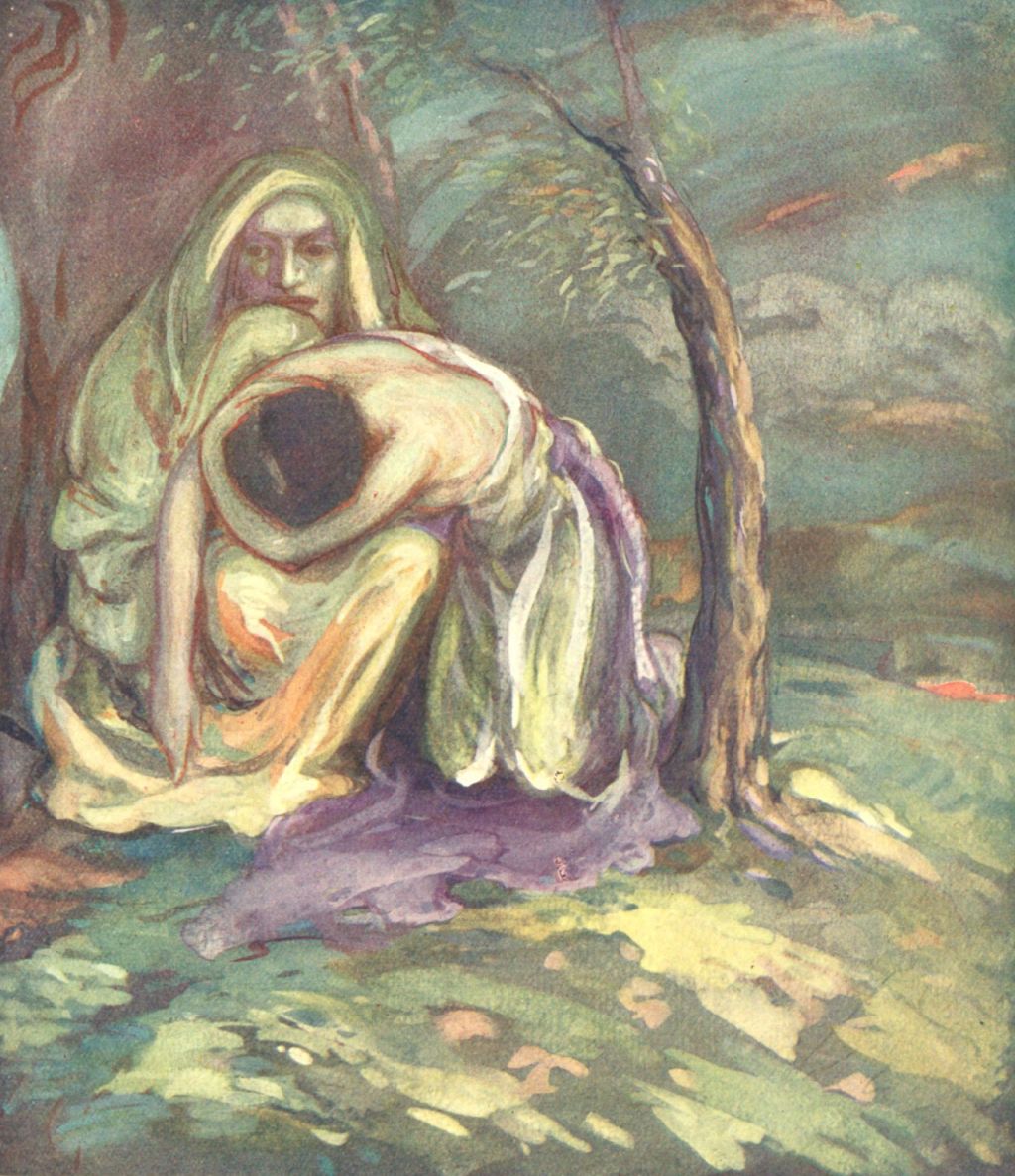
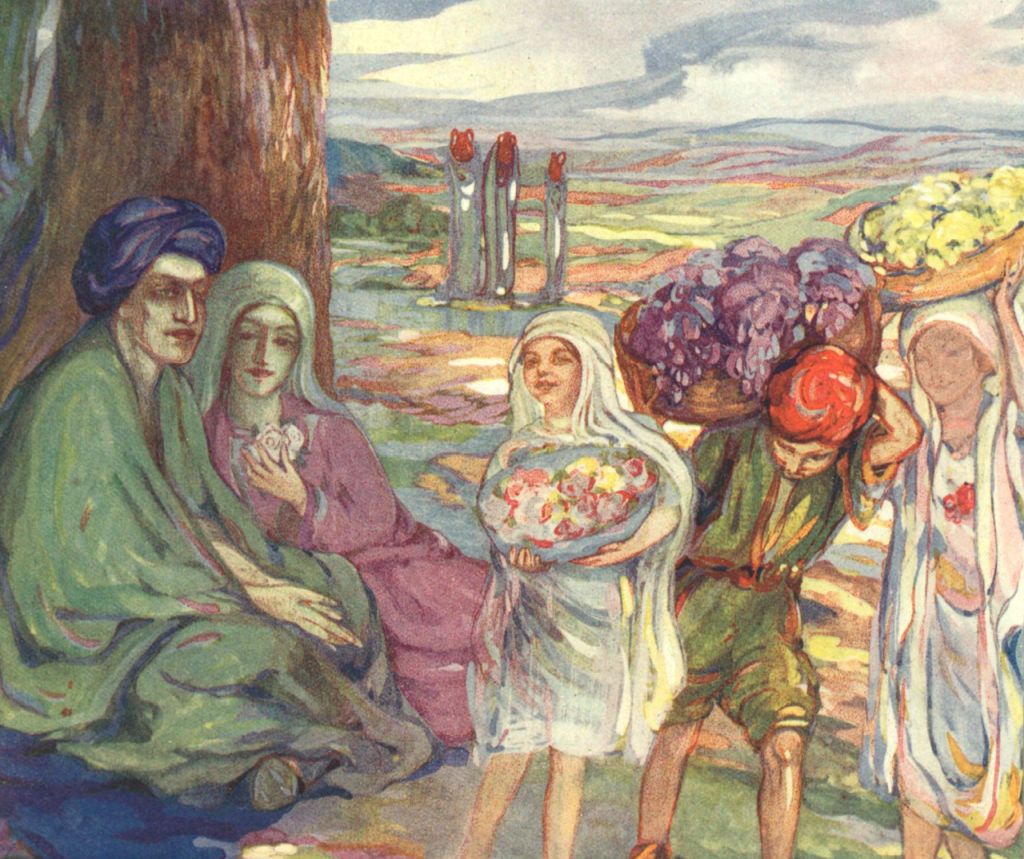
| I. | And his sons went and feasted in their houses, everyone his day; and sent and called for their three sisters to eat and drink with them | Frontispiece |
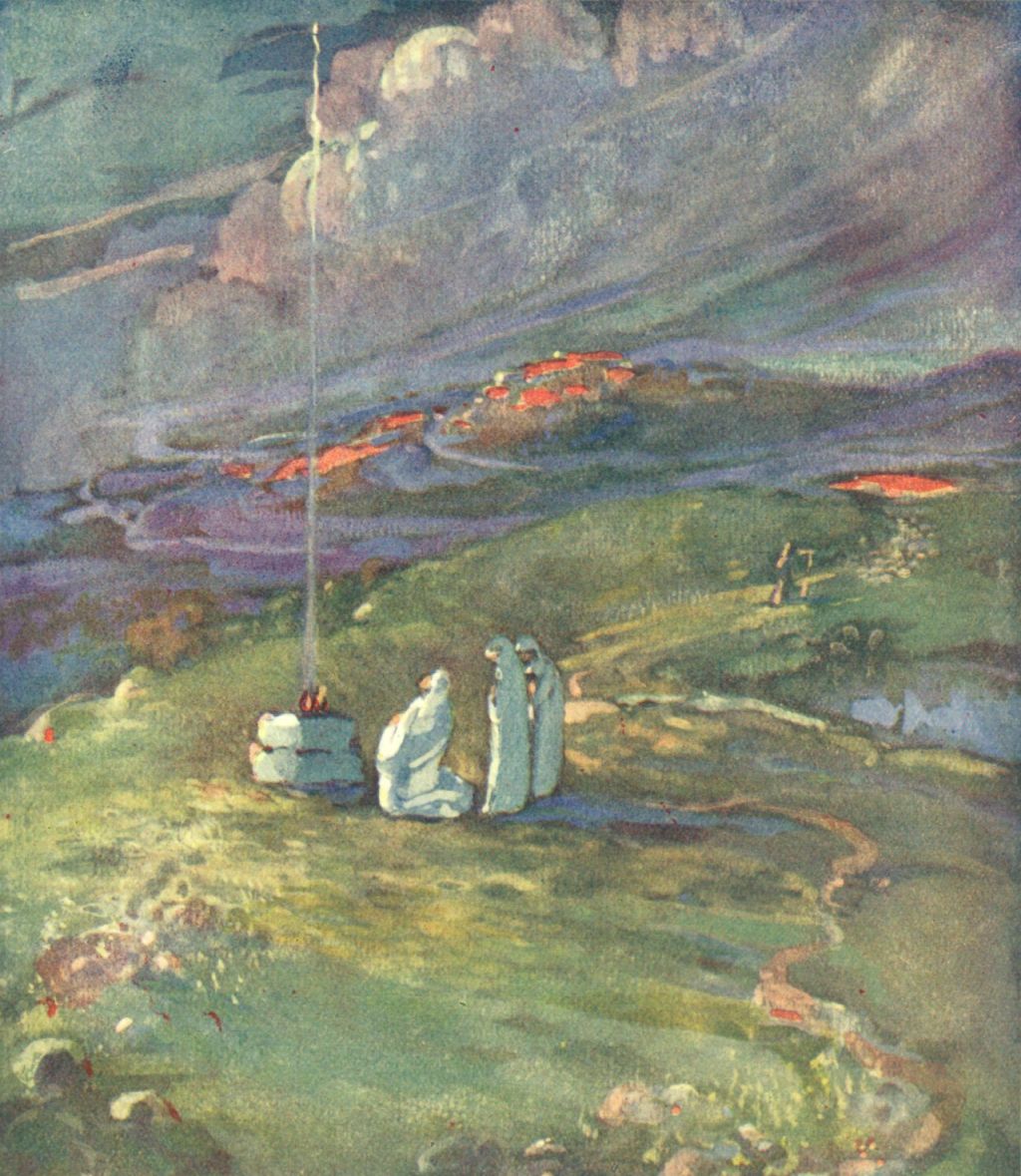
| II. | And it was so, when the days of their feasting were gone about, that JOB rose up early in the morning, and offered burnt offerings | Page 13 |
| III. | And there came a messenger unto Job | Page 21 |
| IV. | Then said his wife unto him, “Dost thou still retain thine integrity? Curse God and die.” | Page 29 |
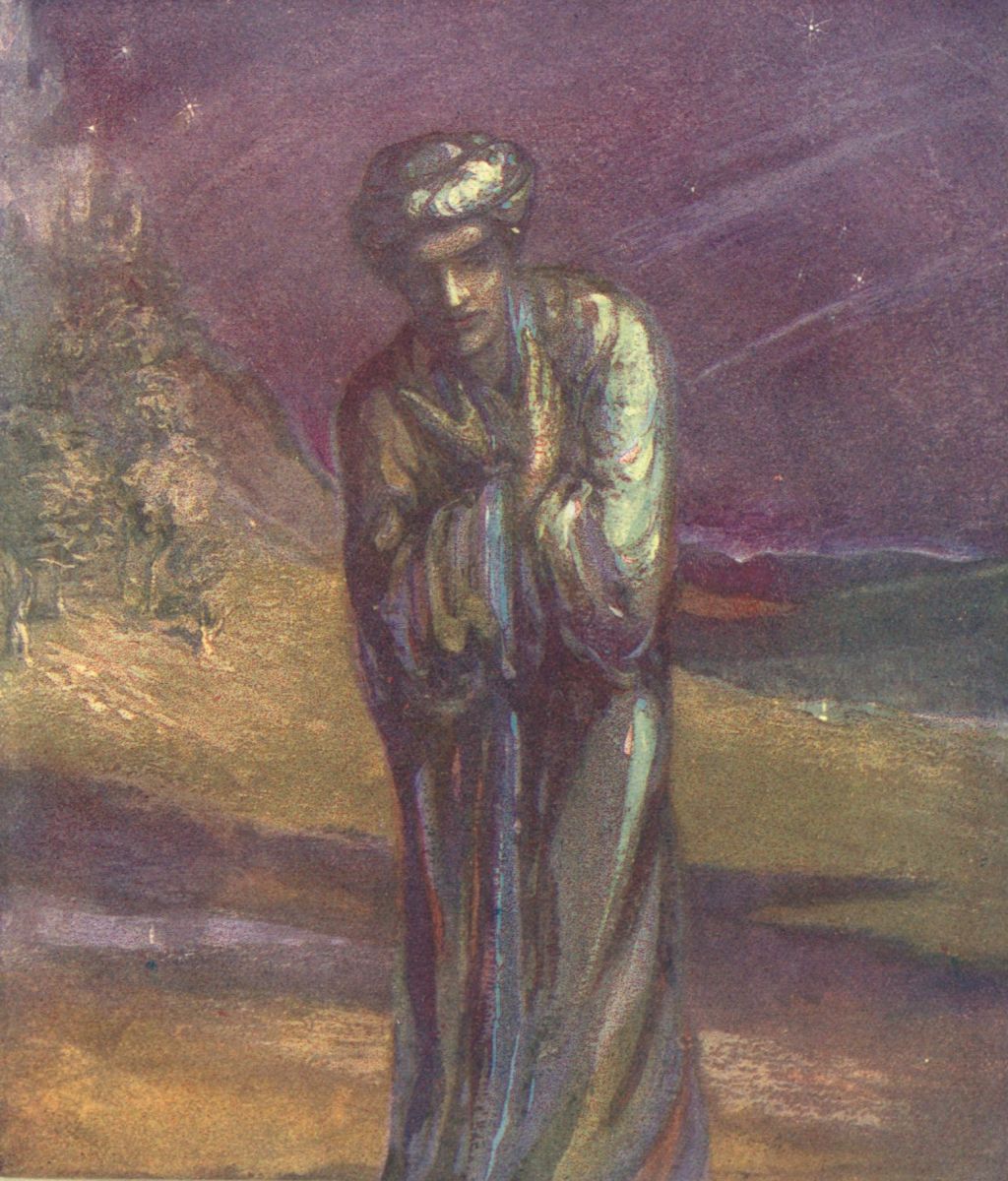
| V. | ... the Lord gave, and the Lord hath taken away; blessed be the name of the Lord | Page 45 |
| VI. | “Suffer me that I may speak; and after that I have spoken, mock on.” | Page 61 |
| VII. | Then the Lord answered Job out of the whirlwind | Page 77 |
| VIII. | So the Lord blessed the latter end of Job | Page 93 |
The Book of Job is among the other Old Testament Books both a philosophical riddle and a historical riddle. It is the philosophical riddle that concerns us in such an introduction as this; so we may dismiss first the few words of general explanation or warning which should be said about the historical aspect. Controversy has long raged about which parts of this epic belong to its original scheme and which are interpolations of considerably later date. The doctors disagree, as it is the business of doctors to do; but upon the whole the trend of investigation has always been in the direction of maintaining that the parts interpolated, if any, were the prose prologue and epilogue and possibly the speech of the young man who comes in with an apology at the end. I do not profess to be competent to decide such questions. But whatever decision the reader may come to concerning them, there is a general truth to be remembered in this connection. When you deal with any ancient artistic creation do not suppose that it is anything against it that it grew gradually. The Book of Job may have grown gradually just as Westminster Abbey grew gradually. But the people who made the old folk poetry, like the people who made Westminster Abbey, did not attach that importance to the actual date and the actual author, that importance which is entirely the creation of the almost insane individualism of modern times. We may put aside the case of Job, as one complicated with religious difficulties, and take any other, say the case of the Iliad. Many people have maintained the characteristic formula of modern scepticism, that Homer was not written by Homer, but by another person of the same name. Just in the same way many have maintained that Moses was not Moses but another person called Moses. But the thing really to be remembered in the matter of the Iliad is that if other people did interpolate the passages, the thing did not create the same sense of shock as would be created by such proceedings in these individualistic times. The creation of the tribal epic was to some extent regarded as a tribal work, like the building of the tribal temple. Believe then, if you will, that the prologue of Job and the epilogue and the speech of Elihu are things inserted after the original work was composed. But do not suppose that such insertions have that obvious and spurious character which would belong to any insertions in a modern individualistic book. Do not regard the insertions as you would regard a chapter in George Meredith which you afterwards found had not been written by George Meredith, or half a scene in Ibsen which you found had been cunningly sneaked in by Mr. William Archer. Remember that this old world which made these old poems like the Iliad and Job, always kept the tradition of what it was making. A man could almost leave a poem to his son to be finished as he would have finished it, just as a man could leave a field to his son, to be reaped as he would have reaped it. What is called Homeric unity may be a fact or not. The Iliad may have been written by one man. It may have been written by a hundred men. But let us remember that there was more unity in those times in a hundred men than there is unity now in one man. Then a city was like one man. Now one man is like a city in civil war.
Without going, therefore, into questions of unity as understood by the scholars, we may say of the scholarly riddle that the book has unity in the sense that all great traditional creations have unity; in the sense that Canterbury Cathedral has unity. And the same is broadly true of what I have called the philosophical riddle. There is a real sense in which the Book of Job stands apart from most of the books included in the canon of the Old Testament. But here again those are wrong who insist on the entire absence of unity. Those are wrong who maintain that the Old Testament is a mere loose library; that it has no consistency or aim. Whether the result was achieved by some supernal spiritual truth, or by a steady national tradition, or merely by an ingenious selection in after times, the books of the Old Testament have a quite perceptible unity. To attempt to understand the Old Testament without realizing this main idea is as absurd as it would be to study one of Shakespeare’s plays without realizing that the author of them had any philosophical object at all. It is as if a man were to read the history of Hamlet, Prince of Denmark, thinking all the time that he was reading what really purported to be the history of an old Danish pirate prince. Such a reader would not realize at all that Hamlet’s procrastination was on the part of the poet intentional. He would merely say, “How long Shakespeare’s hero does take to kill his enemy.” So speak the Bible smashers, who are unfortunately always at bottom Bible worshippers. They do not understand the special tone and intention of the Old Testament; they do not understand its main idea, which is the idea of all men being merely the instruments of a higher power.
Those, for instance, who complain of the atrocities and treacheries of the judges and prophets of Israel have really got a notion in their head that has nothing to do with the subject. They are too Christian. They are reading back into the pre-Christian scriptures a purely Christian idea—the idea of saints, the idea that the chief instruments of God are very particularly good men. This is a deeper, a more daring, and a more interesting idea than the old Jewish one. It is the idea that innocence has about it something terrible which in the long run makes and re-makes empires and the world. But the Old Testament idea was much more what may be called the common-sense idea, that strength is strength, that cunning is cunning, that worldly success is worldly success, and that Jehovah uses these things for His own ultimate purpose, just as He uses natural forces or physical elements. He uses the strength of a hero as He uses that of a Mammoth—without any particular respect for the Mammoth. I cannot comprehend how it is that so many simple-minded sceptics have read such stories as the fraud of Jacob and supposed that the man who wrote it (whoever he was) did not know that Jacob was a sneak just as well as we do. The primeval human sense of honour does not change so much as that. But these simple-minded sceptics are, like the majority of modern sceptics, Christians. They fancy that the patriarchs must be meant for patterns; they fancy that Jacob was being set up as some kind of saint; and in that case I do not wonder that they are a little startled. That is not the atmosphere of the Old Testament at all. The heroes of the Old Testament are not the sons of God, but the slaves of God, gigantic and terrible slaves, like the genii, who were the slaves of Aladdin.
The central idea of the great part of the Old Testament may be called the idea of the loneliness of God. God is not the only chief character of the Old Testament; God is properly the only character in the Old Testament. Compared with His clearness of purpose all the other wills are heavy and automatic, like those of animals; compared with His actuality all the sons of flesh are shadows. Again and again the note is struck, “With whom hath he taken counsel?” “I have trodden the wine press alone, and of the peoples there was no man with me.” All the patriarchs and prophets are merely His tools or weapons; for the Lord is a man of war. He uses Joshua like an axe or Moses like a measuring-rod. For Him Samson is only a sword and Isaiah a trumpet. The saints of Christianity are supposed to be like God, to be, as it were, little statuettes of Him. The Old Testament hero is no more supposed to be of the same nature as God than a saw or a hammer is supposed to be of the same shape as the carpenter. This is the main key and characteristic of the Hebrew scriptures as a whole. There are, indeed, in those scriptures innumerable instances of the sort of rugged humour, keen emotion, and powerful individuality which is never wanting in great primitive prose and poetry. Nevertheless the main characteristic remains; the sense not merely that God is stronger than man, not merely that God is more secret than man, but that He means more, that He knows better what He is doing, that compared with Him we have something of the vagueness, the unreason, and the vagrancy of the beasts that perish. “It is he that sitteth above the earth, and the inhabitants thereof are as grasshoppers.” We might almost put it thus. The book is so intent upon asserting the personality of God that it almost asserts the impersonality of man. Unless this gigantic cosmic brain has conceived a thing, that thing is insecure and void; man has not enough tenacity to ensure its continuance. “Except the Lord build the house their labour is but lost that build it. Except the Lord keep the city the watchman watcheth but in vain.”
Everywhere else, then, the Old Testament positively rejoices in the obliteration of man in comparison with the divine purpose. The Book of Job stands definitely alone because the Book of Job definitely asks, “But what is the purpose of God? Is it worth the sacrifice even of our miserable humanity? Of course it is easy enough to wipe out our own paltry wills for the sake of a will that is grander and kinder. But is it grander and kinder? Let God use His tools; let God break His tools. But what is He doing and what are they being broken for?” It is because of this question that we have to attack as a philosophical riddle the riddle of the Book of Job.
The present importance of the Book of Job cannot be expressed adequately even by saying that it is the most interesting of ancient books. We may almost say of the Book of Job that it is the most interesting of modern books. In truth, of course, neither of the two phrases covers the matter, because fundamental human religion and fundamental human irreligion are both at once old and new; philosophy is either eternal or it is not philosophy. The modern habit of saying, “This is my opinion, but I may be wrong,” is entirely irrational. If I say that it may be wrong I say that is not my opinion. The modern habit of saying “Every man has a different philosophy; this is my philosophy and its suits me”; the habit of saying this is mere weak-mindedness. A cosmic philosophy is not constructed to fit a man; a cosmic philosophy is constructed to fit a cosmos. A man can no more possess a private religion than he can possess a private sun and moon.
The first of the intellectual beauties of the Book of Job is that it is all concerned with this desire to know the actuality; the desire to know what is, and not merely what seems. If moderns were writing the book we should probably find that Job and his comforters got on quite well together by the simple operation of referring their differences to what is called the temperament, saying that the comforters were by nature “optimists” and Job by nature a “pessimist.” And they would be quite comfortable, as people can often be, for some time at least, by agreeing to say what is obviously untrue. For if the word “pessimist” means anything at all, then emphatically Job is not a pessimist. His case alone is sufficient to refute the modern absurdity of referring everything to physical temperament. Job does not in any sense look at life in a gloomy way. If wishing to be happy and being quite ready to be happy constitute an optimist, Job is an optimist. He is a perplexed optimist; he is an exasperated optimist; he is an outraged and insulted optimist. He wishes the universe to justify itself, not because he wishes it to be caught out, but because he really wishes it to be justified. He demands an explanation from God, but he does not do it at all in the spirit in which Hampden might demand an explanation from Charles I. He does it in the spirit in which a wife might demand an explanation from her husband whom she really respected. He remonstrates with his Maker because he is proud of his Maker. He even speaks of the Almighty as his enemy, but he never doubts, at the back of his mind, that his enemy has some kind of a case which he does not understand. In a fine and famous blasphemy he says, “Oh, that mine adversary had written a book!” It never really occurs to him that it could possibly be a bad book. He is anxious to be convinced, that is, he thinks that God could convince him. In short, we may say again that if the word optimist means any thing (which I doubt) Job is an optimist. He shakes the pillars of the world and strikes insanely at the heavens; he lashes the stars, but it is not to silence them; it is to make them speak.
In the same way we may speak of the official optimists, the Comforters of Job. Again, if the word pessimist means anything (which I doubt) the comforters of Job may be called pessimists rather than optimists. All that they really believe is not that God is good but that God is so strong that it is much more judicious to call Him good. It would be the exaggeration of censure to call them evolutionists; but they have something of the vital error of the evolutionary optimist. They will keep on saying that everything in the universe fits into everything else: as if there were anything comforting about a number of nasty things all fitting into each other. We shall see later how God in the great climax of the poem turns this particular argument altogether upside down.
When, at the end of the poem, God enters (somewhat abruptly), is struck the sudden and splendid note which makes the thing as great as it is. All the human beings through the story, and Job especially, have been asking questions of God. A more trivial poet would have made God enter in some sense or other in order to answer the questions. By a touch truly to be called inspired, when God enters, it is to ask a number more questions on His own account. In this drama of scepticism God Himself takes up the rôle of sceptic. He does what all the great voices defending religion have always done. He does, for instance, what Socrates did. He turns rationalism against itself. He seems to say that if it comes to asking questions, He can ask some questions which will fling down and flatten out all conceivable human questioners. The poet by an exquisite intuition has made God ironically accept a kind of controversial equality with His accusers. He is willing to regard it as if it were a fair intellectual duel: “Gird up now thy loins like a man; for I will demand of thee, and answer thou me.” The everlasting adopts an enormous and sardonic humility. He is quite willing to be prosecuted. He only asks for the right which every prosecuted person possesses; He asks to be allowed to cross-examine the witness for the prosecution. And He carries yet further the correctness of the legal parallel. For the first question, essentially speaking, which He asks of Job is the question that any criminal accused by Job would be most entitled to ask. He asks Job who he is. And Job, being a man of candid intellect, takes a little time to consider, and comes to the conclusion that he does not know.
This is the first great fact to notice about the speech of God, which is the culmination of the inquiry. It represents all human sceptics routed by a higher scepticism. It is this method, used sometimes by supreme and sometimes by mediocre minds, that has ever since been the logical weapon of the true mystic. Socrates, as I have said, used it when he showed that if you only allowed him enough sophistry he could destroy all the sophists. Jesus Christ used it when He reminded the Sadducees, who could not imagine the nature of marriage in heaven, that if it came to that they had not really imagined the nature of marriage at all. In the break up of Christian theology in the eighteenth century, Butler used it, when he pointed out that rationalistic arguments could be used as much against vague religion as against doctrinal religion, as much against rationalist ethics as against Christian ethics. It is the root and reason of the fact that men who have religious faith have also philosophic doubt, like Cardinal Newman, Mr. Balfour, or Mr. Mallock. These are the small streams of the delta; the Book of Job is the first great cataract that creates the river. In dealing with the arrogant asserter of doubt, it is not the right method to tell him to stop doubting. It is rather the right method to tell him to go on doubting, to doubt a little more, to doubt every day newer and wilder things in the universe, until at last, by some strange enlightenment, he may begin to doubt himself.
This, I say, is the first fact touching the speech; the fine inspiration by which God comes in at the end, not to answer riddles, but to propound them. The other great fact which, taken together with this one, makes the whole work religious instead of merely philosophical, is that other great surprise which makes Job suddenly satisfied with the mere presentation of something impenetrable. Verbally speaking the enigmas of Jehovah seem darker and more desolate than the enigmas of Job; yet Job was comfortless before the speech of Jehovah and is comforted after it. He has been told nothing, but he feels the terrible and tingling atmosphere of something which is too good to be told. The refusal of God to explain His design is itself a burning hint of His design. The riddles of God are more satisfying than the solutions of man.
Thirdly, of course, it is one of the splendid strokes that God rebukes alike the man who accused, and the men who defended Him; that He knocks down pessimists and optimists with the same hammer. And it is in connection with the mechanical and supercilious comforters of Job that there occurs the still deeper and finer inversion of which I have spoken. The mechanical optimist endeavours to justify the universe avowedly upon the ground that it is a rational and consecutive pattern. He points out that the fine thing about the world is that it can all be explained. That is the one point, if I may put it so, on which God in return, is explicit to the point of violence. God says, in effect, that if there is one fine thing about the world, as far as men are concerned, it is that it cannot be explained. He insists on the inexplicableness of everything; “Hath the rain a father?... Out of whose womb came the ice?” He goes farther, and insists on the positive and palpable unreason of things; “Hast thou sent the rain upon the desert where no man is, and upon the wilderness wherein there is no man?” God will make man see things, if it is only against the black background of nonentity. God will make Job see a startling universe if He can only do it by making Job see an idiotic universe. To startle man God becomes for an instant a blasphemer; one might almost say that God becomes for an instant an atheist. He unrolls before Job a long panorama of created things, the horse, the eagle, the raven, the wild ass, the peacock, the ostrich, the crocodile. He so describes each of them that it sounds like a monster walking in the sun. The whole is a sort of psalm or rhapsody of the sense of wonder. The maker of all things is astonished at the things He has Himself made.
This we may call the third point. Job puts forward a note of interrogation; God answers with a note of exclamation. Instead of proving to Job that it is an explicable world, He insists that it is a much stranger world than Job ever thought it was. Lastly, the poet has achieved in this speech, with that unconscious artistic accuracy found in so many of the simpler epics, another and much more delicate thing. Without once relaxing the rigid impenetrability of Jehovah in His deliberate declaration, he has contrived to let fall here and there in the metaphors, in the parenthetical imagery, sudden and splendid suggestions that the secret of God is a bright and not a sad one—semi-accidental suggestions, like light seen for an instant through the cracks of a closed door. It would be difficult to praise too highly, in a purely poetical sense, the instinctive exactitude and ease with which these more optimistic insinuations are let fall in other connections, as if the Almighty Himself were scarcely aware that He was letting them out. For instance, there is that famous passage where Jehovah with devastating sarcasm, asks Job where he was when the foundations of the world were laid, and then (as if merely fixing a date) mentions the time when the sons of God shouted for joy. One cannot help feeling, even upon this meagre information, that they must have had something to shout about. Or again, when God is speaking of snow and hail in the mere catalogue of the physical cosmos, He speaks of them as a treasury that He has laid up against the day of battle—a hint of some huge Armageddon in which evil shall be at last overthrown.
Nothing could be better, artistically speaking, than this optimism breaking through agnosticism like fiery gold round the edges of a black cloud. Those who look superficially at the barbaric origin of the epic may think it fanciful to read so much artistic significance into its casual similes or accidental phrases. But no one who is well acquainted with great examples of semi-barbaric poetry, as in the Song of Roland or the old ballads, will fall into this mistake. No one who knows what primitive poetry is, can fail to realize that while its conscious form is simple some of its finer effects are subtle. The Iliad contrives to express the idea that Hector and Sarpedon have a certain tone or tint of sad and chivalrous resignation, not bitter enough to be called pessimism and not jovial enough to be called optimism; Homer could never have said this in elaborate words. But somehow he contrives to say it in simple words. The Song of Roland contrives to express the idea that Christianity imposes upon its heroes a paradox: a paradox of great humility in the matter of their sins combined with great ferocity in the matter of their ideas. Of course the Song of Roland could not say this; but it conveys this. In the same way the Book of Job must be credited with many subtle effects which were in the author’s soul without being, perhaps, in the author’s mind. And of these by far the most important remains even yet to be stated. I do not know, and I doubt whether even scholars know, if the Book of Job had a great effect or had any effect upon the after development of Jewish thought. But if it did have any effect it may have saved them from an enormous collapse and decay. Here in this Book the question is really asked whether God invariably punishes vice with terrestrial punishment and rewards virtue with terrestrial prosperity. If the Jews had answered that question wrongly they might have lost all their after influence in human history. They might have sunk even down to the level of modern well educated society. For when once people have begun to believe that prosperity is the reward of virtue their next calamity is obvious. If prosperity is regarded as the reward of virtue it will be regarded as the symptom of virtue. Men will leave off the heavy task of making good men successful. They will adopt the easier task of making out successful men good. This, which has happened throughout modern commerce and journalism, is the ultimate Nemesis of the wicked optimism of the comforters of Job. If the Jews could be saved from it, the Book of Job saved them. The Book of Job is chiefly remarkable, as I have insisted throughout, for the fact that it does not end in a way that is conventionally satisfactory. Job is not told that his misfortunes were due to his sins or a part of any plan for his improvement. But in the prologue we see Job tormented not because he was the worst of men, but because he was the best. It is the lesson of the whole work that man is most comforted by paradoxes. Here is the very darkest and strangest of the paradoxes; and it is by all human testimony the most reassuring. I need not suggest what a high and strange history awaited this paradox of the best man in the worst fortune. I need not say that in the freest and most philosophical sense there is one Old Testament figure who is truly a type; or say what is pre-figured in the wounds of Job.
There was a man in the land of Uz, whose name was Job; and that man was perfect and upright, and one that feared God, and eschewed evil. And there were born unto him seven sons and three daughters. His substance also was seven thousand sheep, and three thousand camels, and five hundred yoke of oxen, and five hundred she asses, and a very great household; so that this man was the greatest of all the men of the east. And his sons went and feasted in their houses, every one his day; and sent and called for their three sisters to eat and to drink with them. And it was so, when the days of their feasting were gone about, that Job sent and sanctified them, and rose up early in the morning, and offered burnt offerings according to the number of them all: for Job said, It may be that my sons have sinned, and cursed God in their hearts. Thus did Job continually. Now there was a day when the sons of God came to present themselves before the Lord, and Satan came also among them. And the Lord said unto Satan, Whence comest thou? Then Satan answered the Lord, and said, From going to and fro in the earth, and from walking up and down in it. And the Lord said unto Satan, Hast thou considered my servant Job, that there is none like him in the earth, a perfect and an upright man, one that feareth God, and escheweth evil? Then Satan answered the Lord, and said, Doth Job fear God for nought? Hast not thou made an hedge about him, and about his house, and about all that he hath on every side? thou hast blessed the work of his hands, and his substance is increased in the land. But put forth thine hand now, and touch all that he hath, and he will curse thee to thy face. And the Lord said unto Satan, Behold, all that he hath is in thy power; only upon himself put not forth thine hand. So Satan went forth from the presence of the Lord.
And there was a day when his sons and his daughters were eating and drinking wine in their eldest brother’s house: and there came a messenger unto Job, and said, The oxen were plowing, and the asses feeding beside them: and the Sabeans fell upon them, and took them away; yea, they have slain the servants with the edge of the sword; and I only am escaped alone to tell thee. While he was yet speaking, there came also another, and said, The fire of God is fallen from heaven, and hath burned up the sheep, and the servants, and consumed them; and I only am escaped alone to tell thee. While he was yet speaking, there came also another, and said, The Chaldeans made out three bands, and fell upon the camels, and have carried them away, yea, and slain the servants with the edge of the sword; and I only am escaped alone to tell thee. While he was yet speaking, there came also another, and said, Thy sons and thy daughters were eating and drinking wine in their eldest brother’s house: and, behold, there came a great wind from the wilderness, and smote the four corners of the house, and it fell upon the young men, and they are dead; and I only am escaped alone to tell thee. Then Job arose, and rent his mantle, and shaved his head, and fell down upon the ground, and worshipped, and said, Naked came I out of my mother’s womb, and naked shall I return thither: the Lord gave, and the Lord hath taken away; blessed be the name of the Lord. In all this Job sinned not, nor charged God foolishly.
Again there was a day when the sons of God came to present themselves before the Lord, and Satan came also among them to present himself before the Lord. And the Lord said unto Satan, From whence comest thou? And Satan answered the Lord, and said, From going to and fro in the earth, and from walking up and down in it. And the Lord said unto Satan, Hast thou considered my servant Job, that there is none like him in the earth, a perfect and an upright man, one that feareth God, and escheweth evil? and still he holdeth fast his integrity, although thou movedest me against him to destroy him without cause. And Satan answered the Lord, and said, Skin for skin, yea, all that a man hath will he give for his life. But put forth thine hand now, and touch his bone and his flesh, and he will curse thee to thy face. And the Lord said unto Satan, Behold, he is in thine hand; but save his life. So went Satan forth from the presence of the Lord, and smote Job with sore boils from the sole of his foot unto his crown. And he took him a potsherd to scrape himself withal; and he sat down among the ashes. Then said his wife unto him, Dost thou still retain thine integrity? curse God, and die. But he said unto her, Thou speakest as one of the foolish women speaketh. What? shall we receive good at the hand of God, and shall we not receive evil? In all this did not Job sin with his lips.
Now when Job’s three friends heard of all this evil that was come upon him, they came every one from his own place; Eliphaz the Temanite, and Bildad the Shuhite, and Zophar the Naamathite: for they had made an appointment together to come to mourn with him and to comfort him. And when they lifted up their eyes afar off, and knew him not, they lifted up their voice, and wept; and they rent every one his mantle, and sprinkled dust upon their heads toward heaven. So they sat down with him upon the ground seven days and seven nights, and none spake a word unto him: for they saw that his grief was very great.
After this opened Job his mouth, and cursed his day. And Job spake, and said,
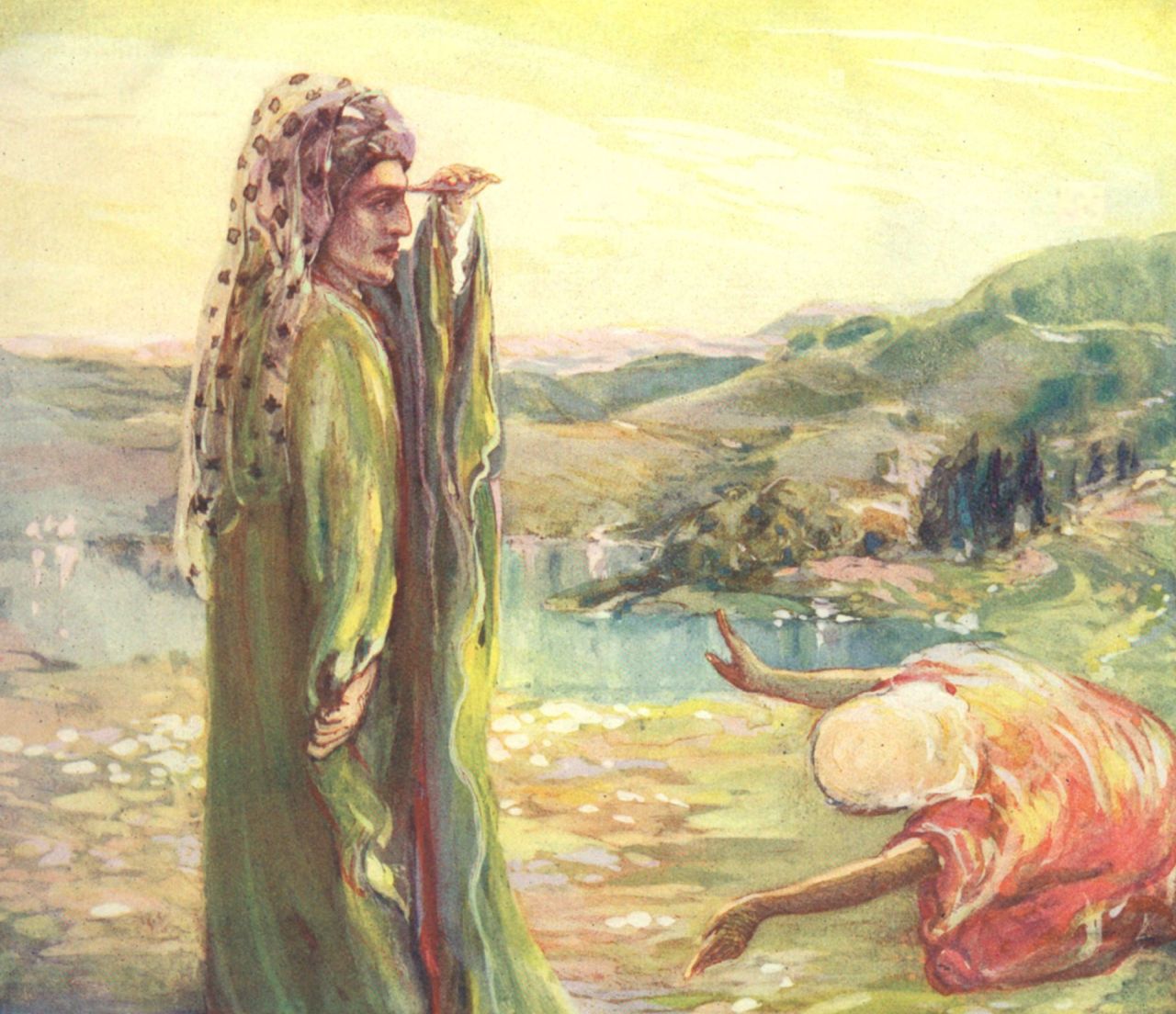
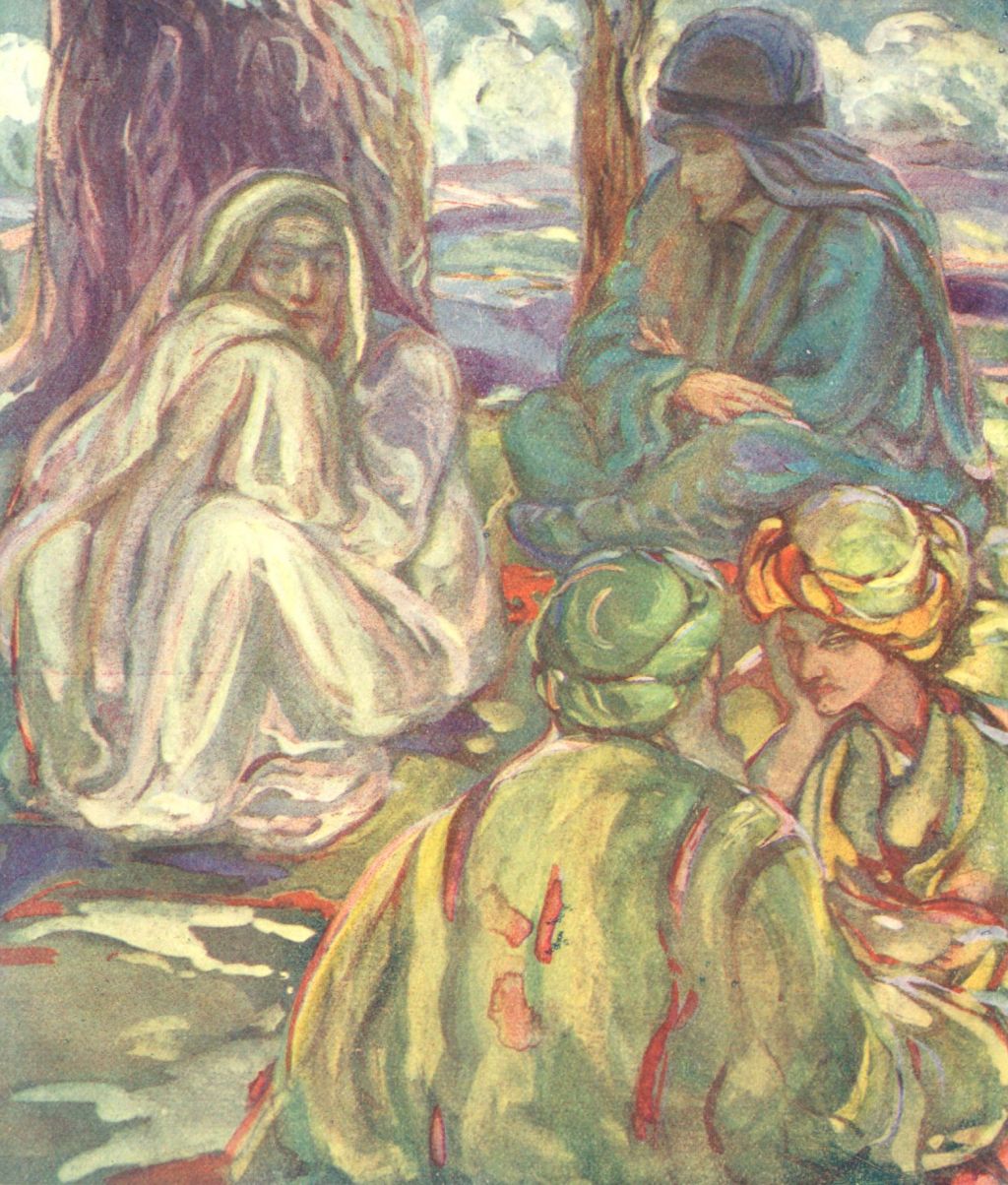
So these three men ceased to answer Job, because he was righteous in his own eyes. Then was kindled the wrath of Elihu the son of Barachel the Buzite, of the kindred of Ram: against Job was his wrath kindled, because he justified himself rather than God. Also against his three friends was his wrath kindled, because they had found no answer, and yet had condemned Job. Now Elihu had waited till Job had spoken, because they were elder than he. When Elihu saw that there was no answer in the mouth of these three men, then his wrath was kindled.
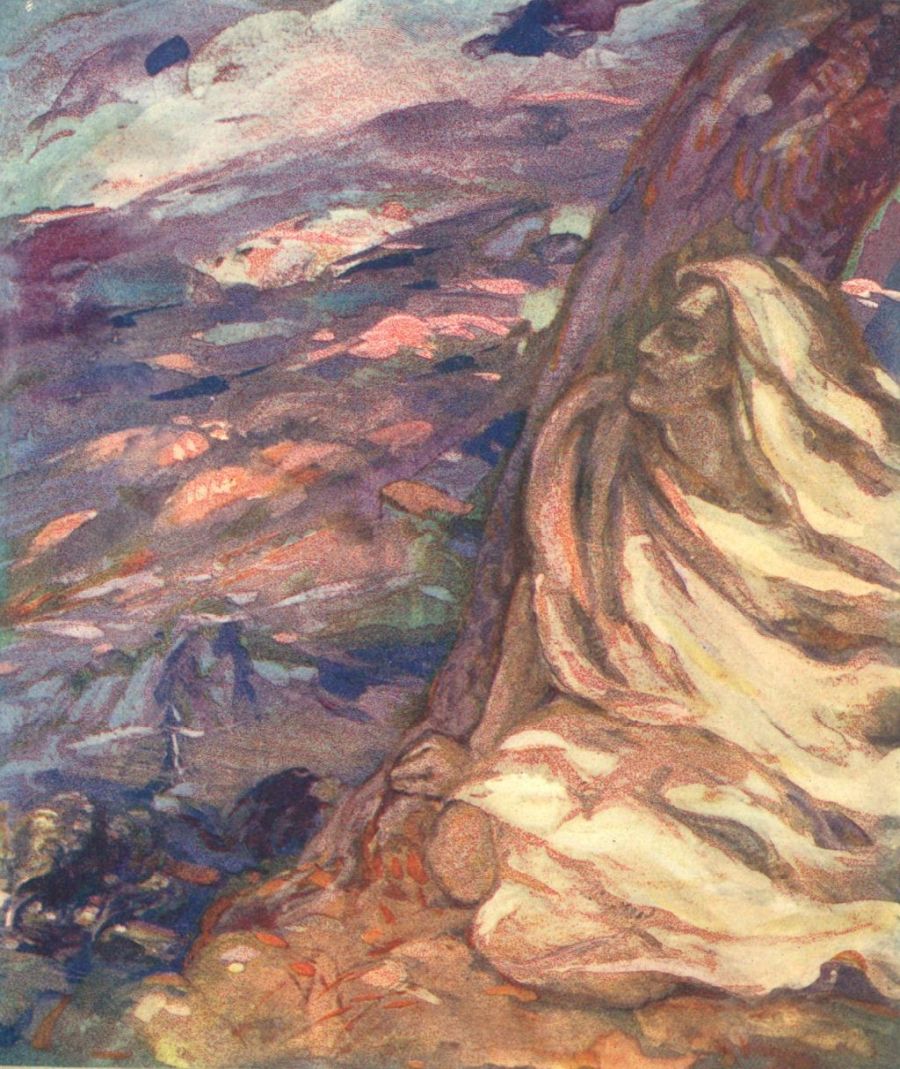
And it was so, that after the Lord had spoken these words unto Job, the Lord said to Eliphaz the Temanite, My wrath is kindled against thee, and against thy two friends: for ye have not spoken of me the thing that is right, as my servant Job hath. Therefore take unto you now seven bullocks and seven rams, and go to my servant Job, and offer up for yourselves a burnt offering; and my servant Job shall pray for you: for him will I accept: lest I deal with you after your folly, in that ye have not spoken of me the thing which is right, like my servant Job.
So Eliphaz the Temanite and Bildad the Shuhite and Zophar the Naamathite went, and did according as the Lord commanded them: the Lord also accepted Job. And the Lord turned the captivity of Job, when he prayed for his friends: also the Lord gave Job twice as much as he had before. Then came there unto him all his brethren, and all his sisters, and all they that had been of his acquaintance before, and did eat bread with him in his house: and they bemoaned him, and comforted him over all the evil that the Lord had brought upon him: every man also gave him a piece of money, and every one an ear-ring of gold. So the Lord blessed the latter end of Job more than his beginning: for he had fourteen thousand sheep, and six thousand camels, and a thousand yoke of oxen, and a thousand she asses. He had also seven sons and three daughters.
CECIL PALMER & HAYWARD
Contemporary Russian Composers
By M. MONTAGU-NATHAN
(Author of A History of Russian Music, Glinka, Moussorgsky, Rimsky-Korsakof,
The Piano Music of Skryabin, etc.)
With many portraits of famous Russian Musicians
Demy 8vo ⁷⁄₆ net Cloth
In this volume M. Montagu-Nathan introduces to the public a number of Russian composers, who may be said collectively to constitute the contemporary Russian School of Musical Composition, and who are maintaining for Russia its supremacy among the musical nations.
Of such composers as Skryabin, Glazounof, Stravinsky, Rebikof, Medtner and Rakhmaninof, the author provides a biographical account, and a detailed consideration of their creative work; their aims and ideals are discussed, and their music subjected to a critical review.
There are some chapters devoted to those younger men whose music has already attracted considerable attention in Russia, and whose names are likely ere long to become familiar to the musical world.
An introductory section of the book is devoted to a survey of the earlier period of musical activity in Russia, in which the founders of the Nationalist movement are dealt with and their artistic labours outlined.
THE PATH OF THE MODERN RUSSIAN STAGE, and other Essays
By ALEXANDER BAKSHY With 12 Illustrations
Demy 8vo ⁷⁄₆ net Cloth
The modern revival in the art of the theatre has been particularly marked in Russia where it has revolutionized many established traditions, and has opened up new paths of development. The remarkable progress of the Russian dramatic theatre is of special interest to the student, since in no other country the new movement has been fruitful of so many original ideas, or has had them realized in such striking forms. In the present volume the guiding principles of the Russian stage, such as “faithfulness to life” of the Moscow Art Theatre, the various forms of “conventionalism” applied at the Theatre of Vera Kommissarzhevsky, and the theories of “theatricality” lately propounded by Meyerhold and Evreinov, are subjected to a close analysis. The book also includes separate essays on the forms of the theatre, as determined by the relationship between the audience and the stage, and on the art aspects of the kinematograph.
THE GIRL AND THE FAUN
By EDEN PHILLPOTTS
With four Illustrations in colour, and Title Page and Border designed by Mr. FRANK BRANGWYN, A.R.A.
Crown 4to 6/- net Cloth
Eden Phillpotts has been called “the painter’s novelist,” and in this work he combines his peculiar power of bringing colour and form to the sense of his readers, with a story cast in classic mould, full of explicit humour and implicit meaning. In his quest for beauty he has never been more successful, while the co-operation of England’s greatest painter, Frank Brangwyn, A.R.A., who contributes four full page drawings in colour and title page border in black and white, will place this work among the most notable productions of the War.
DELIGHT AND OTHER POEMS
By EDEN PHILLPOTTS
With twelve Illustrations in Black and White, by ALMA ELLIOTT
Crown 8vo ³⁄₆ net Illustrated Wrapper
As a laughter maker Eden Phillpotts has “done his bit” during these dark years, and all men are agreed that the relief of light literature and humorous verse are very considerable in these days. They rest and distract the mind, and remind us of Nietzsche’s aphorism that, “art is with us that we may not perish of too much truth.”
A feature of the work is twelve illustrations by Miss Alma Elliott, which will attract the attention of all lovers of art by their wonderful craftsmanship and imagination, and every effort has been made by the Publishers to make this volume one of the best gift books of the season.
AN INTRODUCTION TO RUSSIAN MUSIC
By M. MONTAGU-NATHAN
Author of A History of Russian Music, Glinka, Moussorgsky, Rimsky-Korsakof, Contemporary Russian Composers
Crown 8vo ⅙ net Boards
An Introduction to Russian Music is a small volume designed to afford a concise account of the foundation and development of Russian musical art. It consists of a series of chapters devoted to the most famous Russian composers. Prefacing these is an Introduction to the subject; following them comes a sketch of what the author has styled The New Age in Russian Music; in this section will be found the names of such as Stravinsky, Skryabin and Rebikof.
THE SILVER CHAIN
A Satire on Convention
By SIR WILLIAM BLAKE RICHMOND, K.C.B., R.A., etc.
Illustrated Wrapper 500 pages
Crown 8vo 6/- net Cloth
Sir William Richmond’s eminence in the world of Art and Letters will command for his long novel “The Silver Chain” a wide circle of readers. It is a work of great artistic achievement and of scholarship and culture. Philosophy, psychology, a delightful sense of humour, subtle analysis of the moods and motives of men and women, and a true and artistic presentation of nature are the rich elements that make every page of this book of absorbing interest.
A BOOK OF LAUGHTER
By EDWIN PUGH
Author of “Punch and Judy,” “Harry the Cockney,” etc.
Specially designed Illustrated Wrapper by F. GARDNER
Crown 8vo 6/- net Cloth
“When you want to laugh—mind you do.”—Eden Phillpotts.
“Laughter is day and sobriety is night.”—H. W. Beecher.
“Laugh when you can, it is a cheap medicine. Merriment is a philosophy, not well understood. It is the sunny side of existence.”—Lord Byron.
“A Book of Laughter” is a book to read for oneself, a book to keep handy on one’s library shelves, and an ideal gift book from friend to friend. A sense of humour is the most precious quality of man, and laughter its most glorious attribute. The exposition of the philosophy of laughter needs a born humorist, and that Mr. Edwin Pugh most certainly is. “A Book of Laughter” is a subtle analysis of our various ideas of humour, and illustrated throughout with numerous stories and anecdotes, mostly original. There can be no question that Mr. Pugh’s new work will prove to be the most humorous book of the year.
A YEAR IN THE GARDEN
A book about Gardens in Prose and Verse
Edited by NORAH ELIZABETH MUSTARD
With Illustrations in Colour by ELLEN WARRINGTON
Crown 8vo 5/- net Cloth
An anthology from the works of great authors giving expression to their appreciation and love for the gardens which in so many cases helped to inspire their work. The passages are so arranged in the form of a journal giving an extract in prose or verse for every day in the year. A feature of the work is delightful illustrations in colour by Miss Ellen Warrington, whose garden pictures have attained a wide and well-merited reputation. The book is a welcome addition to the library of the Garden, and will prove a most appropriate gift to Garden Lovers.

PRINTED BY
THE MORLAND PRESS LTD
LONDON
S W
Minor punctuation errors have been changed without notice. Hyphenation was standardized. Spelling has been retained as originally published.
A table of contents has been created for this version.
In this version, page numbers in the List of Illustrations reflect the position of the illustration in the original text, but links point to current position of illustrations.
Changes that have been made:
| Page 32: | “And thou sowest up mine” | “And thou sewest up mine” |
| Page 62: | “out from the inhabitants” | “out from the inhabitant” |
| Page 104: | “of Neitzsche’s aphorism” | “of Nietzsche’s aphorism” |
| Page 105: | ““A book of Laughter" is” | ““A Book of Laughter" is” |