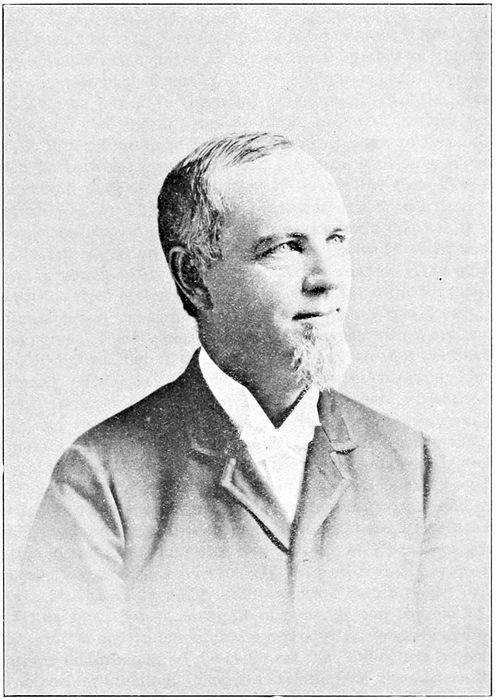
BY RUFUS W. GRISWOLD, M. D.
When I began looking into medical books preparatory to practice,
fifty years ago, the standard authors given us to read were not backward
in recommending blood-letting in the acute diseases; and a little
later, when an attendant at lectures at the College of Physicians and
Surgeons at New York, the professors were not lacking with the like
advice. But there has come a change, and so much of a change that,
in this section of country at least, the lancet has mostly gone out of use.
That the frequent use to which it was put seventy-five or a hundred
years ago was not at all times wise is likely; but the extent to which it
has been given up is also not wise. Rather more to notice some of the
reasons why it has so largely been abandoned than to argue for a reintroduction
of that ready and efficient instrument is the purpose of
this paper.
A prominent point in the consideration of this comparative abandonment
of the lancet is presented in the question: Has there been
such a change in the type of the acute inflammatory diseases from
three or four generations ago as to render the abstraction of blood less
necessary and less useful? There are plenty of sound, hard-headed old
doctors who will give a negative reply to this query; and occasionally
we may notice some of them putting themselves in print to that effect.
A Baltimore practitioner not so very long ago said: “The necessity for
the use of the lancet is as great at the present time as it ever was in the
86past; the type of the disease has undergone no such changes as to
render the abstraction of blood unnecessary or improper in the successful
management of all cases attended with a full, tense, and quick
pulse.” Others speak the like; but the majority of opinion is not pronounced
in that direction, but rather adverse. Conversations during
a forty-four years’ practice with men who began their professional calling
sixty years ago, when the lancet was in often call, is to the import
that there has been such a change in diseases as renders the frequent
resort to blood-letting less important than formerly; that there is less
of the sthenic type in even inflammatory fevers, a more general disposition
to take on what we call typhoid forms, and thus depletion, either
by the evacuation of blood or the exhibition of reducing drugs, is not
so beneficial in even the acute inflammatory diseases as formerly. This is
the view that has been entertained by a large part of those who began
practice half a century or more ago, and this view has been sustained
by a large amount of written authority; but it does not go to the
extent of justifying that degree of abandonment of bleeding that has
prevailed for the last forty years. The general opinion of to-day is,
that while positions like that taken in the quotation given are too positive,
on the other hand our practice is quite too lax; for while we still
believe in blood-letting to some extent, we but seldom make use of it.
Now as to the why.
Perhaps the first reason why the lancet is less used than formerly is
found in the fact, or rather in the belief, of the change indicated. It is
largely accepted as true by the older men in the profession that patients
do not bear blood-letting as well as three generations ago. Accepting
this as correct, it rationally follows that we should bleed less. But this
is only one of the factors in the account, and not the largest one. The
opinion that the physicians of the early part of this century used the
lancet too often is beyond doubt correct. The doctrine of the purely
symptomatic nature of fever put prominently forward by Brousais, and
earnestly championed by active and pushing minds a century ago, and
which was generally received in Europe and in this country, gave such
an unfortunate impetus to the use of the lancet as finally led to its
abuse. Patients were bled for almost every thing; not only for the
fevers of acknowledged inflammatory type, such as acute pleurisy and
the like, were bled for, but also cases of typhus, typhoid, etc., upon
the ground that the fever in the case was only a symptom of the
inflammatory action and was to be subdued or lessened by antiphlogistic
87remedies, chief of which was the abstraction of blood. The theory of
the essentiality of fever became lost sight of, and the doctor treated for
an inflammation rather than for a fever.
Without giving up the theory in which they had been educated,
some physicians began to see that in some epidemics of disease a larger
percentage of cases were lost among those where venesection had been
used than among those similarly sick who were not bled. The deduction
from this was that it would be better to bleed less. But a change
was not to be made without a struggle. Reference to the medical
literature of the first half of the century shows that there was a deal of
warm discussion between the blood-letters and the anti-blood-letters.
Out of the observations and discussions made there was cultivated a
prejudice, professional to a moderate extent but popular to a large one,
against bleeding per se, and without reference to the character of the
disease under treatment or to the differing conditions that might exist,
which helped to carry the usage from its former abuse at times to the
opposite extreme of general abandonment. It is a universal law in
nature that the farther the pendulum swings in one direction, the
farther will it swing in the opposite on its return. The pendulum of
venesection had swung too far forward for the best in the treatment of
disease, and the return carried it quite beyond the best in the backward
reaction.
Beyond the reasons noted for the present comparative non-use of
the lancet, there has been added a pressure of an erroneous and illegitimate
nature that has aided to put bleeding under a general ban
more unfortunate for the sick than was the former rather indiscriminate
use. Somewhat contemporaneously with the warm discussion upon
bleeding carried on in the profession, and perhaps partly out of that
discussion, there started up in various parts of the country an illegitimate
class of practitioners, mostly illiterate and destitute of preliminary
culture, interchangeably known as Botanics, Thompsonians,
Eclectics, etc., whose chief stock in trade for public acceptance was
denunciation, without regard to the conditions that might be met in a
case, of leeching, bleeding, blistering, scarification, and other agents for
cures. This denunciation found ready public credit. Not only from
the mouths of the class named, but in various other ways, the prejudice
they sought to create was widely diffused. Outside of the libraries of
the profession you seldom see a medical book; anywhere else they
have been rarities. But in many sections of the country for the last
88sixty years a canvass of the families would show an abundance of
books, published for family reading, emanating from irregular practitioners,
all of them saturated with lying abuse of the methods of treatment
of the regular physicians. These books were loaned from one
family to another, much as the weekly papers or the cheap novel; and
they were read and believed in. The result was that many who read
were indoctrinated with the belief that bleeding, no matter what the
disease or the conditions, was not only not necessary, but pernicious,
and often the cause of death; and there was little printed contradiction
offered to disabuse the public mind of this false accusation.
Co-ordinating with this means of false instruction has been and is
the public press. As respectable practitioners do not stoop to the
quackery of advertising, the pecuniary interest of the press, so far as
means and methods for the cure of diseases is concerned, is identical
with the pecuniary interests of advertising quacks. The public press
sells itself to the broad diffusion of the ways and means of medical
quackery in all its forms. The subsidies of impostors and patent medicine
men fill up one carotid artery for the support of the press; and
the influence of that press, however weak the intellect that bestrides
its tripod, is more potent than a hundred of the ablest men in the profession,
for the sufficient reason that the voice of the men in the
profession seldom strikes the public ear through the same broad and
forceful channel.
The result of the false teaching of the class of books alluded to
and of the medical advertising, and of the bleating of the tramping lecturers
was that a large part of many communities came to believe that
blood-letting was a crime against health, and a hindrance to recovery
from disease, no matter what might be the conditions. The average
intelligence of even well-educated communities goes no further than
to accept the plausible teaching that is every day thrust upon its tympanum;
it does not stop to criticise the motives nor to analyze the
arguments of the advertiser, nor is it cultured in this direction to the
capacity of justly weighing them according to their true significance.
The average intelligence of even well-educated communities is not
up to that grasp of the science of medicine necessary to determine
between false and fallacious teaching and that which is rational and
correct; it does not differentiate between clap-trap and honesty; it does
not separate humbug from truth, and as an ocean of humbug passes
the public gullet easier than an ounce of truth, it is not strange that
89the condition obtaining about bleeding is not so much that the physician
has discarded it as improper, or has lost sight of its value in many
cases, as that the community will not tolerate him in the abstraction of
blood. Public prejudice overrides professional opinion, unless the opinion
runs current with the prejudice. To bleed your patient and then
have him die is to be damned; if he dies without being bled, no
matter whatever else you may do or leave undone, the chances of being
cursed are largely lessened. Besides this, very little or nothing is
gained against the prejudice by recovery after bleeding, since the popular
opinion will be that the patient would have gotten well quicker
and better without it—an opinion that can seldom be disproved. Exactly
in the same way in any case where venesection has been practiced
and the patient does not get well, the opponents of the operation will
assert that the bleeding caused the death, and that, in the absence of
it, the patient would have got well; which also is difficult to disprove.
The average mind proceeds from supposed causes to effects with most
unreasonable logic.
As a matter of fact, the whole art of the practice of medicine is
involved many times in many uncertainties as to the effects that are to
follow the administration of drugs or the institution of any procedure,
however simple, that it may puzzle the most sagacious to determine
the exact weight of any factor introduced, whether it be for good or for
ill. It should not therefore surprise us that to minds quite unacquainted
with the therapeutical effects of blood-letting in disease, a death that
follows a bleeding, however remote in point of time, should be credited
to the operation rather than to the disease for which the operation was
performed. An uncertain percentage of cases of many acute inflammations
will recover, whether bled or not; an uncertain percentage of them
will die, whether bled or not, and no matter how treated; and, while
it will sometimes happen that of two cases of the same disease the one
that is bled will get well and the one that is not bled will succumb, it
will the next week happen that of two other cases of the same trouble
the one that is bled will slip off and the one not bled will hold on
finely. And it is a notorious fact that in some communities, if a patient
is bled and then dies, nine out of every ten persons in the neighborhood
will say, and part of them will believe, that the bleeding was an
accessory if not the chief cause of the untoward event; and it is usually
quite impossible for the doctor to show that the nine are not right in
their view of the matter.
90Under these circumstances it can hardly surprise us that the use of
the lancet has gone out of fashion. It is not so much that we have
less faith in its beneficence, rationally employed, as that our patients
are opposed to it. Whether in spite of the opposition we should
employ it oftener than we do is a question that every one must settle
for himself. It might be possible for a bold and determined man to
work up that road to confidence with his patients in it, but the path is
so beset with difficulties that a hundred will fall by the way where one
succeeds. A single death after phlebotomy will do more to impede the
success of a young man in the profession than a dozen deaths without
it; it is wise therefore to be cautious in the use of so potent a remedy,
and to sin less in commission than in omission of opening a vein. It
may be said that whether he succeeds or fails it is the duty of the physician
to do in all cases what he thinks will be the best for his patient.
This position may have its merits but it is a better thing to teach
than to act upon. There is no law of right that demands of the
practitioner that he shall assume the responsibility of the stupidity and
ignorance of all his patients, and, worse still, of all the irrational prejudice
they have allowed themselves to imbibe, and which no amount of
logical facts will dispossess them of.
The writer, in the nearly fifty years of his practice as student and
graduate, has had an average share, perhaps, of his patients die; but
he has never had one die of any sort of fever after he had been bled as
an aid in subduing that fever. On the other side, he has had patients
die of the acute inflammatory diseases when they have not been bled;
and, to-night, recalling those cases, he is of the opinion that some of
them, if they had been well tapped in the arm at the outset of the
sickness, they would have been saved.
Rocky Hill, Conn., December, 1897.
91
BY WALTER P. ELLIS, M. D.
Pepsina porci, the pepsin of the hog, was one among the first of
the animal products to be used in medicine, and many physicians, not
well versed in organic chemistry, supposed that in it they possessed a
sovereign remedy for indigestion in all its forms and stages, and the
confirmed dyspeptic had only to apply the specific to have his digestive
apparatus restored to its youthful health and vigor. Unfortunately for
this view and for the sufferers, the fact was overlooked, or not duly
appreciated, that pepsin is only one of several substances which
Nature employs in the complete digestion of food, and that the products
or secretions of several different glands have a part in the
process, each of which is essential to the proper preparation of food
for the nourishment of the human body.
It has been estimated by competent observers that as great a proportion
as seventy-five per cent of all the intractable cases of dyspepsia
in this country are caused primarily by faulty saccharification of the
starchy foods which constitute such a large portion of the diet of the
American people. This being the fact, is it any wonder that the
administration of pepsin alone should fail to give relief in many
cases? It fails because the fault lies, not in the stomach, but in the
salivary and other glands whose secretions possess the amylolytic
property, and the remedy is the administration of substances that will
restore that property to the secretions, or which possess it in and of
themselves.
Until quite recently the practitioner was compelled to rely for this
purpose upon the various malt extracts upon the market, the diastatic
power of which was so feeble that the service they rendered was but
slight. What was needed, and for which many of the most patient
investigators were searching, was a diastase which would do for the
starchy elements of the food what pepsin does for the proteids. The
digestion of food in man has been the subject of much patient and
methodical study and investigation during the last two decades, notably
by Ewald, Kellogg, Hayem, and Winter, and others, resulting in the
placing of the therapeutics of disordered digestion upon an exact
scientific basis. It is not, however, necessary for the purposes of this
92paper to go very deeply into the minutæ; a superficial survey will
suffice.
Digestion begins in the mouth with the act of mastication, the
presence of food in the mouth, or even the thought of it, acting upon
the salivary glands to produce a free flow of saliva, which, being thoroughly
incorporated with the food by the act of mastication, exerts its
peculiar influence upon the starchy constituents, converting them into
dextrose, maltose, etc. This amylolytic action lasts but a short while,
the ptyalin of the saliva being active only in neutral or slightly
alkaline media; consequently when the food reaches the stomach and
peptic digestion begins, its effect ceases.
The saccharification of the starchy elements of the food before
reaching the stomach serves to separate or disentangle them, as it
were, from the proteids, and deliver the latter to the stomach in the condition
most favorable to the action of the gastric ferment or pepsin.
The stomach, after a variable length of time, during which the
peptic ferments accomplish their allotted task more or less thoroughly
and completely, delivers the resultant mass over to the small intestine,
where the secretions from the pancreas, liver, and intestinal glands, by
finishing the transformation of the starch begun before the stomach
was reached, emulsifying the fatty constituents, etc., complete the complex
work of digestion.
It will be seen from the foregoing that the derangements of digestion
may, for ordinary clinical purposes, be divided into three classes,
each of which is distinct from either or both of the others, although
they shade into each other by imperceptible gradations, so that there
are no well-defined boundary lines separating them. The first class
includes all those cases which are characterized by a deficiency, in
quality or quantity, of the salivary secretion, and a consequent failure
of or interference with the digestion of the starchy elements of the
food—amylaceous dyspepsia. The second includes those in which
there is difficulty in the digestion of the proteids, due to a variety of
causes—gastric dyspepsia. In the third is placed those cases in which
the trouble is located below the stomach, and are caused by inability of
the pancreas and other glands to normally perform their function—intestinal
indigestion.
One constantly meets with cases belonging to each of these varieties,
and he must correctly diagnose each case if he would apply the
treatment necessary to produce the best results. For the present, however,
93we have only to do with the first variety, as my object in the
preparation of this paper is to direct the attention of the profession to
a new diastatic ferment which acts with as much or even greater
energy upon the amylaceous foodstuffs as does pepsin upon the
proteids.
Such a substance has long been a desideratum with those who treat
many dyspeptics, and who have been compelled to content themselves
with malt extracts with which the market is supplied. The substance
referred to was discovered by a Japanese chemist, Jokichi
Takamine, not as the result of accident but while working scientifically
with that exact end in view, and is now supplied to the profession
by Parke, Davis & Co. under the name of Taka-Diastase.
The writer has had frequent occasion to use it since it was first
brought to his notice about a year and a half ago, and in that time
has not had a single case in which its administration was not attended
by the very best results. Notes of several cases were kept, three of
which will be presented here as the most appropriate conclusion.
Case 1. L. A., white male, age thirty-eight, a barber by occupation,
consulted me first in the fall of 1894. He was at that time, as he had
been for several years, the victim of a most obstinate and intractable
form of dyspepsia. He had been a coal miner until forced by ill health
to quit that for some lighter occupation. He, however, continued to
grow worse until, when coming under my care, he was very much
emaciated, weak, nervous, and irritable, his stomach unable to retain
any thing save the blandest articles of diet, and those only in small
quantities. Treatment was begun by regulating his habits, diet, etc.,
and putting him on an emulsion of bismuth subnit. and pepsin pur.
immediately after eating, and tr. nux vom., hydrochloric acid, and tr.
colomba before eating. His condition improved somewhat under this
treatment, but only to a limited extent, and it became evident that
more efficient measures must be resorted to if we hoped to accomplish
permanent good. It had been noted that a meal, however scant, composed
mainly of starchy substances was always productive of an acute
attack, and acting upon this suggestion extract of malt was added to
the remedies he was using, and, to a certain degree, with good effect.
He, however, did not go on to complete recovery, but the improvement
ceased at a certain point, and in spite of continued treatment with the
remedies mentioned his condition remained about stationary. Unable
to work, morose, cross, and irritable, existence was a burden to himself
94as well as family and friends. At this juncture my attention was
attracted to Taka-Diastase and a supply was at once procured. The
patient was given a number of capsules containing five grains each,
with instructions to take one capsule at the beginning of each meal,
continuing the bismuth and pepsin mixture as before, immediately
after eating. In a very short time improvement was discernable, and
from that time was rapid and continuous. The treatment was kept
up, with the addition later on of ferruginous and bitter tonics, until
there could be no doubt of his complete and permanent restoration to
health. He has now been at regular work in the shop for several
months, and says that he “never felt better in his life.”
Case 2. Mrs. J. H., a white woman, aged forty-six, wife of a well-to-do
farmer. Until within the last year or two had enjoyed the best
of health, and was inclined to stoutness in consequence. Dyspeptic
symptoms had troubled her more or less during the time mentioned,
and of late had increased in severity so much that she asserted, at
the time she consulted me, that if she dared to eat any thing at all she
suffered the greatest agony in consequence. A neighboring physician
had treated her for some weeks previous to her visit to my office, and,
as I afterward learned, had given her the regulation treatment with
pepsin, bismuth, hydrochloric acid, etc., with results so discouraging
that she had lost all hope of receiving any benefit from “doctor’s medicine,”
as she called it, and it was only at the urgent solicitation of
husband and friends that she came to me for treatment, being careful
to inform me that she had no idea I could help her in the least.
Her case was diagnosed “amylaceous dyspepsia,” and she was
given Taka-Diastase in eight-grain doses, half of which was to be
taken before eating and the remainder during or after, with tr. nux
vom. and hydrochloric acid, in moderate doses, ter in die.
Despite her determination not to be benefited by “doctor’s medicine,”
the improvement was prompt and continuous, and so manifestly
due to the treatment that she soon forgot or overcame her antipathy,
and with characteristic inconsistency now asserts that it is impossible
to get along without it. She eats three meals regularly every day, and
suffers no inconvenience whatever in consequence.
Case 3. W., a white male, aged forty, had never had any serious
illness, and digestion had been especially good until about four weeks
before consulting me. At that time he, in company with some friends,
ate quite heartily of watermelon. He had always eaten watermelon
95freely and with impunity prior to that occasion. It did not agree
with him so well that time, and in a few hours he was seized with an
acute gastralgia of the most severe character, and from that time to the
present he has had more or less trouble of that kind, even a very
small quantity of food, especially if it be of a starchy nature, giving
rise to the most distressing symptoms.
The diagnosis of amylaceous dyspepsia was also made in this case,
and he was at once put upon the Taka-Diastase in doses of five grains
given with the meals, and temporarily excluding starchy foods from
his diet as much as possible without too great inconvenience. There
was also great torpidity of the liver, and for that he was given sod.
phosphate in teaspoonful doses every morning before breakfast, taken
in a gobletful of hot water. Under this treatment improvement was
satisfactory and rapid, and with the addition of bitter tonics later on he
was ultimately restored to complete health.
Remarks. Case 1 was an example of that class with which, prior
to the introduction of Taka-Diastase, the general practitioner was too
often compelled to acknowledge his inability to cope successfully. In
them there is difficulty in the digestion of both amylaceous and proteid
substances, and the remedies usually recommended were efficacious only
so far as digestion of the latter was concerned, and did not reach the
former at all. The cure was incomplete, and must have remained so
until the substance we have been considering, or something analogous
to it, was furnished the physician with which to complete it.
Cases 2 and 3 were examples of the first class mentioned above,
viz., amylaceous dyspepsia, and while under treatment with pepsin,
etc., they were considered the most intractable of all; under Taka-Diastase
they yield rapidly, and are cured in a surprisingly short time.
Reports of Societies. — LOUISVILLE MEDICO-CHIRURGICAL SOCIETY. [1]
96
Stated Meeting, December 3, 1897, the President, F. C. Wilson, M. D., in the chair.
Uterine Fibroma. Dr. L. S. McMurtry: I present this specimen of
uterine fibroma on account of two very interesting features of this
class of tumors which it illustrates. The first relates to the morphology
of these growths. The tumor is a very large one, and occupied
the entire pelvis and the abdomen to the superior limits of the umbilical
and lumbar regions. It is a multi-nodular tumor, and its disposition
in relation to the fundus of the uterus is unlike any specimen that I
have ever encountered. It will be observed that the neoplasm springs
from the lower segments of the uterus, and the fundus is not involved
in the growth at all.
The second feature of interest, and this is especially interesting
from a surgical point of view, is the relation of the bladder to the
tumor. It is very common for the bladder to be carried upward with
the growth, thus rendering it very liable to injury in operation.
This feature is exceptionally conspicuous in this tumor on account of
the nodular condition where the bladder was attached, forming a sulcus.
In releasing the bladder, after splitting the capsule, the uneven
surface of the tumor caused me to inflict an injury upon the coats of
that viscus. After dissecting off the bladder I found that I had made
an opening in it at this point. It was immediately closed with a
double row of catgut sutures. The operation was done six days
ago, and the convalescence of the patient has been most satisfactory indeed.
The bladder injury has not complicated the patient’s convalescence
at all, its function being carried on just the same as if it had
not been involved. The convalescence has been afebrile from the
beginning, and recovery is assured.
The method I observed in treating the pedicle was to amputate
the cervix very low down, leaving a very small rim of the cervix, and
suturing the peritoneum over it all the way across the pelvis, making
the pedicle extraperitoneal. The conformation of the growth and its
97relation to the cervix uteri made this method of dealing with the pedicle
especially applicable in this particular instance. The patient is
thirty-four years of age, and the operation was urgent on account of
persistent hemorrhage and marked pressure symptoms.
Discussion. Dr. J. A. Larrabee: I would like to ask the reporter
for what length of time this tumor had been developing?
Dr. L. S. McMurtry: The woman was thirty-four years of age, and
according to the history obtained the tumor was first noticed three years
ago. The patient has made a beautiful convalescence. I present the
specimen on account of its morphology, and because of the difficulties
that might be encountered in performing an operation in such cases
by the bladder being impacted in the sulcus.
Tubercular Testis. Dr. W. O. Roberts: This patient is twenty-four
years of age; his father and mother are living; father sixty-four,
mother fifty-four; his grandfather on his father’s side died at the age
of sixty-four of what was supposed to be consumption; his father’s
twin brother died at the age of twenty, after an illness of eight months,
of consumption; his mother’s family history is good.
This young man had gonorrhea seven years ago, with orchitis of
both sides as a complication, the left testicle swelling first, then the
right; the swelling lasted in each for about two weeks. Had gonorrhea
again in November, 1896, and says again in December of the same year.
At this time he noticed that his left testicle was getting hard in places
and was swollen, but there was never any pain. The inflammatory
process has never been very acute. However, he noticed after taking
a horseback or bicycle ride the testicle would be somewhat tender.
Had another attack of gonorrhea during the month of September of
the present year, which he says lasted only two weeks, and during
this attack the testicle was also affected.
He now has a swelling of the left testicle, and a hardness about it
and in the epididymis, which I would like for the members to examine,
expressing an opinion as to the nature of the trouble.
Discussion. Dr. J. M. Ray: I do not know that the ocular symptoms
will throw any light upon the case. I remember that this young
man came to me some time ago to have his eyes examined. He stated
that he had been under the care of a prominent oculist in the South,
and had been fitted with glasses. When I saw him he had some
98trouble in the use of his glasses, and also complained of defective
sight of one eye. Upon examination I found a spot of atrophy of the
choroid, showing the location of a former acute choroidal disease, and
there was considerable diminution in acuteness of vision in that eye,
with a defect in refraction in the other eye. Under mydriatics I fitted
him with glasses, since which time he has been perfectly comfortable
so far as his eyes are concerned.
He states that he remembers I said something to him at that time
about tubercular disease, after looking into his eyes, but I have forgotten
the circumstance; I only remember that I found choroidal disease.
Dr. J. A. Larrabee: Of course we are all led somewhat by the
diathetic history of our cases. Chronic inflammations tend to take on
the part of the diathesis. I did not understand the reporter to say
that any test had been made, by withdrawal of some of the fluid or
otherwise, to determine the exact nature of the condition. I desire to
say, however, that if this were my testicle I would have it removed. I
believe that would be the safest plan. An absolutely positive diagnosis
would be difficult to make without a microscopical examination for the
tubercle bacillus, but I can not help feeling prejudiced in that direction.
Dr. J. L. Howard: I agree with Dr. Larrabee as to what should be
done with this testicle; it should come out. I, too, think it tubercular,
although in all probability the gonorrhea is a factor in the case in
stimulating the growth of the testicle. I do not know that a microscopical
examination would give us much light upon the subject; in
fact I would not wait for that, I would simply remove the testicle at
once.
Dr. Wm. Bailey: The question is not by any means settled as to
the exact nature of the disease in the case before us, whether the
patient, having had repeated attacks of gonorrhea, has not also been so
unfortunate as to have syphilis. With a tuberculous history of course
a tuberculous condition of the testicle seems plausible; but inasmuch
as tuberculous disease of the testicle may remain for a long time possibly
without great danger in affecting the patient otherwise, and knowing
the changes that take place in the testicle from repeated attacks of
gonorrhea, orchitis, etc., I believe if it were mine I would be disposed
to keep it for a while, particularly as the other testicle seems to
be somewhat atrophied, with this one of pretty good size. I think I
would keep the larger one.
99Dr. T. S. Bullock: I am inclined very much to agree in the opinion
expressed by Dr. Bailey. I have frequently seen, after repeated attacks
of gonorrhea, a testicle that had become enlarged, without any pain.
The testicle in this case appears to be perfectly smooth, and in view of
the fact that tubercular disease of this organ may exist for a long time
without affecting the general system, I should certainly keep the testicle
until my general health began to show some evidence of declination.
Dr. F. C. Wilson: The question is a very difficult one to decide.
There is one feature of the case that has not been sufficiently emphasized,
and that is the probable damage to the testicle itself by the
repeated attacks of gonorrhea. We know that the use of the testicle,
so far as any procreative uses may be concerned, has probably been
abrogated by these repeated attacks of gonorrhea, and with this view
of the case the question of removal of the testicle by surgical means
would be simplified; and it seems to me with the tuberculous history,
if the question could be decided even approximately, or even probably,
that it is tubercular, then it had better be removed. But it seems to
me I would first make every effort to solve the question, even aspirating
or removing a small part of the tissue so as to be able to make a microscopical
examination, and in that way possibly throw some light on the
subject.
Dr. W. O. Roberts: It strikes me that this is tubercular, although
it may have been, as Dr. Howard says, excited by gonorrhea. The
condition feels to me nodulated and not smooth, and the disease
appears to be located chiefly if not entirely in the epididymis, and I
think the testicle should be removed. Whether it is tuberculous or
not the usefulness of the organ is destroyed, and I think it ought to
come out if it is tuberculous, especially because the other testicle will
become involved. So far as the cosmetic appearance is concerned, if
that is a feature in the case, we could insert a celluloid testicle. I
believe if the affected testicle is not removed, granting the diagnosis
of tuberculosis to be correct, that the other testicle will surely become
involved.
Dr. Turner Anderson: It is seldom that we have obstetric matters
presented to this society. I have thought perhaps a case I recently
attended might be of some interest. We are aware that the umbilical
cord is frequently found encircling the neck of the child. I delivered
100a child four days ago in which the cord was wrapped around the neck
twice, then branched off under the arm, encircling the arm again at its
dorsal surface, then across again, branching over the back. You may
better understand the condition when I say that the cord came up from
its attachment at the umbilicus, encircling the neck twice, branching
over and under the axilla, around the arm, thence to its attachment to
the placenta. The woman was a primipara. As soon as the head was
delivered I detected that the cord was wrapped around the neck. I
made an effort to find the part that led to the placenta. The cord was
found pulseless, and I was in some doubt as to whether it had
been so long encircling the neck as to have produced death of the
child. Just as the body of the child was being extruded the cord
snapped, tearing off fortunately from its placental attachment. The
child was delivered and after a little effort was easily resuscitated. The
pressure was so great, the traction upon the cord was so decided, as to
leave a white line across the back of the child. There was a white
mark around the neck, across the clavicle, around the arm and over
the back of the child which did not disappear for some time afterward.
The proper line of practice, I take it, in those cases where the cord
is around the neck of the child, is to first determine whether the cord
is still pulsating. If pulsating, we are justified in being a little more
tardy in our efforts to deliver the shoulders and release the child. If
possible we would of course draw down the cord and release it from
the neck of the child in this way; but in those cases where we are
confronted with the cord wrapped tightly around the neck of the child,
especially in the primipara, where the length of time which will be
consumed in delivery is uncertain, the line of practice I believe in should
be prompt delivery or division of the cord. As a rule when we are confronted
with a condition of this kind we can meet it satisfactorily by a
little delay and by holding the head of the child well up against the
vulva while the shoulders are being extruded. As the releasing pain
occurs and the shoulders and body are extruded, you can usually by
pressing the head well up prevent undue traction on the placenta and
any accident which might follow rapid delivery and undue traction
upon the cord. This was a case in which there was spontaneous rupture
of the cord; it tore away entirely by the uterine effort. This
accident had no influence upon delivery of the placenta; it came away
promptly. It was evidently not torn loose from its attachment, and
there was no hemorrhage.
101Discussion. Dr. J. A. Larrabee: The case is not only interesting,
but also somewhat unique as far as I am aware. We are all familiar
with the double wrapped cord, but in this case the acrobatic movements
of the child must have been considerable, in utero, to have
produced the condition described by Dr. Anderson; the child
had evidently been engaged in jumping the rope for some time.
When the cord is wrapped around the neck of the child as described,
I think the best plan is to expedite delivery. Of course in the primipara
we must not be in too great a hurry, we must utilize melting or
crowning pressure to prevent injury, but the management of these
cases I think is entirely that of dystocia, and powerful external pressure
upon the fundus of the uterus, bringing it down as low as possible, is
the proper plan of expedition. In the case reported, however, no
amount of external pressure would have accomplished any thing;
fortunately the snapping of the cord enabled the doctor to deliver and
resuscitate the child, which is about the only thing that could have
been done. In this case it would have been almost impossible to have
divided the cord. Aside from the anomaly of the case, which is
worthy of especial mention, I do not know of any proceeding which
would have been equal to that which was followed. It is a little
strange that the placental attachment did not give way; if this had
been true, if there had been a separation of the uterine attachment of
the placenta, then we would have expected the placenta to have been
expelled with the child instead of a rupture of the umbilical cord.
Dr. J. L. Howard: I would like to ask Dr. Anderson if usually,
when the cord is wrapped around the neck of the child, the cord is not
an abnormally long one? I have had this accident happen twice in
my experience, but no trouble resulted because of the abnormal
length of the cord in each instance.
Dr. J. G. Cecil: This is an accident which as we know happens frequently,
as well as many other anomalous things in connection with
the umbilical cord. I would have been disposed, if the labor had been
delayed in this case, that is, the final delivery of the child, more than
four or five minutes, to have severed the cord, fearing that it might
have had something to do with the delay. If there was no pulsation in
the cord, there would have been little risk in cutting and not tying it;
then there would have been no further delay to the delivery; there
would have been no danger from hemorrhage, from premature separation
of the placenta, or danger from inversion of the uterus. However,
102as the case turned out so well under the management that was
adopted, it does not become us to criticise that management, because
the successful issue proves the wisdom of the plan followed.
I have once or twice encountered some delay in expulsion of the
child by reason of a short cord wound around the neck. I have never
seen one so displayed around the shoulder as in the case reported by
Dr. Anderson. I remember to have seen one case, however, in
which there was a knot tied in the cord, and tied so tightly that it shut
off the circulation and resulted in death of the child, and also complete
atrophy of the cord between the knot and the navel end. This was a
very interesting case, and was reported to the Louisville Clinical
Society three or four years ago by Dr. Peter Guntermann; it was one of
the most interesting cases of accidents to the cord that I have ever
seen. How the knot was tied so tightly in the cord can not well be
explained; knots in the umbilical cord are not very unusual, but it is
unusual to see one tied so tightly that the circulation is shut off
thereby. It was thought, I believe, by the reporter on that occasion
that the accident was due to a fall which the mother sustained just
before the delivery, which was premature.
Dr. Wm. Bailey: Nothing in the management of the case reported
by Dr. Anderson can be criticised by me. I am inclined to think that
under no circumstances was pressure made on the cord sufficient to
interrupt the circulation until after the head of the child was delivered.
Then it became a question as to the proper management. I believe it
would have been better to have cut the cord, as it might have lessened
the difficulty of delivery, and that there would have been no harm
done to the child in this case, because there was no pulsation in the
cord. The doctor had all the time for this delivery that would have
been allowed him if he had a breech presentation with the head making
pressure upon the cord, and ordinarily he would deliver such a case in
from five to seven minutes, and that would give a chance for resuscitation
of the child just as in the case of drowning. The child can be
deprived of circulation through the cord, in an accident like this, as
long a time as a person can be submitted to water, or drowned, and be
resuscitated. I have seen but one case in which there was a rupture
of the cord during delivery. I saw one exceedingly short cord, in
which delivery of the child ruptured the cord; it was not around the
neck, it was simply too short for the child to be delivered without
detaching the placenta; just as the child was delivered the cord was
103spontaneously severed at the umbilicus, simply allowing me a sufficient
amount to be caught with the fingers and held until a ligature could
be applied. I do not remember the exact length of the cord, but it
was so short that it was not possible to deliver the child without
either breaking the cord or detaching the placenta. The cord ruptured
spontaneously, and there was no further accident or trouble.
I believe if Dr. Anderson had to attend another case under exactly
the same circumstances he would prefer to cut the cord rather than to
break it off at the placental attachment. Inasmuch as he did not cut
the cord and the child was successfully delivered, and also as there
was no trouble in delivering the placenta, of course it makes no difference;
but I always like to have the cord attached to the placenta so
that if it becomes necessary to go after the placenta, in case of retention
for instance, I can have the cord as a guide. In Dr. Anderson’s case
there was no possible advantage in having the cord intact; as it was
pulseless, no injury could have been done the child by cutting the
cord before completing the delivery, and by cutting the cord as soon
as it was found that it encircled the neck, all possible difficulties as
far as the cord preventing delivery was concerned would have been
removed.
Dr. T. S. Bullock: I am very much interested in this case; I have
never seen one exactly like it. The greatest danger in this particular
instance was that alluded to by Dr. Cecil, viz., producing inversion of
the uterus. I think Dr. Anderson managed the case in the proper
manner, and by his method of expression the only possible danger was
inversion of the uterus.
I have only seen one instance of dystocia from short cord; that
was a case in which the cord was the shortest I ever saw, and was
wrapped around the neck, where it was necessary in order to deliver
the child to cut the cord after tying it and then employ instruments,
the cord being so short that with each uterine action you could feel
the cupping of the uterus from tension on the cord.
I think there would be less danger from premature separation of
the placenta than from inversion of the uterus. In the case Dr.
Anderson has reported the danger to the child from compression of the
cord was obviated by prompt delivery.
Dr. J. A. Larrabee: Will not Dr. Bullock tell us whether the case
he refers to, where he could feel a descending or cupping of the uterus
by the expulsive efforts, was a primipara?
104Dr. T. S. Bullock: The woman was a primipara; the cord was
very short, it was tied and severed, then the delivery completed with
forceps. I would like to ask the gentleman whether, in those cases
where they have employed Crede’s method of delivering the placenta,
they have noted a cupping of the uterus from efforts to extrude the
afterbirth?
Dr. J. A. Larrabee: I have occasionally noticed cupping of the
uterus under those circumstances.
Dr. F. C. Simpson: I remember a certain practitioner in this city
several years ago made the statement that he seldom tied the cord
after cutting it; that he did not see any necessity of tying the cord. If
this is true, then there would certainly be no danger in severing the
cord in cases such as Dr. Anderson has reported, and it would not
even be necessary to tie it until after the delivery had been completed.
Dr. Wm. Bailey: I want Dr. Anderson to speak to one point in
particular in closing the discussion, viz., would there not be great
danger if the placenta was separated at a time when the child was still
partly in the uterus?
Dr. F. C. Wilson: The only point I wish to bring out in connection
with the case is the possibility of detecting the fact that the cord is
around the neck of the child before delivery, and being on our guard
for it. Encircling of the cord around the neck of the child ought to
give rise to a funic bruit. You can hear very plainly a funic bruit, a
bruit which is synchronous with the fetal heart sounds. Where this
can be detected at a point where we know the neck of the child lies, it
indicates to us that the chord is around the neck.
There are certain other circumstances under which we may also
detect a bruit: For instance, the one mentioned by Dr. Cecil, where
the cord was tied into a hard knot. I have met with several such
cases in my practice, and a bruit can be produced in this way, but at
a different place from the location of the neck, and it is a permanent
bruit; a bruit that is heard all the time. Where that is the case, of
course it indicates that there is some permanent obstruction of the
cord, and the likelihood is that it is due to a knot tied in the cord. We
know that sometimes the cord slips over the neck, and then the child’s
body slips through the cord, thus making a perfect knot; it then may
be drawn tighter and tighter, finally producing considerable obstruction.
If the bruit that is heard is evanescent, heard sometimes when
you are listening and not at others, that indicates simply a temporary
105pressure upon the cord which may produce a bruit that is fetal in its
rhythm, at the same time it is heard occasionally only. Where the cord
encircles the neck and is drawn tightly it is apt to give rise to a bruit
that is more or less permanent, and always heard at a point where we
know from other methods of examination that the neck of the child is
located. Where this occurs we ought to be on the lookout and prepared
to find the cord encircling the child’s neck, and ought to endeavor
to release it in the first place, and where we are unable to do
that, then the question of severing the cord will come up. The cord
being pulseless in the case reported by Dr. Anderson would have simplified
that question very materially. The cutting of a cord that is
not pulsating is an easy thing and not at all dangerous. Even where
the cord is pulsating I have cut it repeatedly without even attempting
to tie it, simply holding one end—of course you have to make a guess
as to which end is attached to the child. You can not always tell that,
but you can easily see from the continued bleeding or pulsating
whether you have the proper end or not, and by simply holding that
between the fingers the delivery can be expedited, and then the cord
can be tied immediately afterward. Where the cord is pulseless there
would be no danger in severing it and leaving it untied and even
unheld. I have time and again, after delivery of the child, cut the
cord and not tied it, but always waiting till pulsation had ceased. I
think there is no danger in doing this. If a cord is cut after it
ceases to pulsate and does not bleed by the time the child is washed
and ready to be dressed, there will be no hemorrhage from it afterward.
Dr. Turner Anderson: Referring to the point made by Dr. Howard,
I believe, whenever the umbilical cord presents anomalies as illustrated
by the case reported, that it is as a rule abnormally long. The
cord in this case was abnormally long.
Dr. Larrabee made a point to which considerable importance
should be attached, viz., that it would not have been an easy matter to
have divided the cord in this case. I think practically he presents
the case exactly right. When a cord encircles the child’s neck twice,
then branches off and goes under the arm, then branches off over the
back, it presses the neck so tightly and the conditions are such that it
would be a very difficult matter to get one’s finger beneath the cord at
the neck and divide it. It is not such an easy matter to sever a cord
under these circumstances as one might suppose. I believe the
majority of obstetricians content themselves, when they find the cord is
106encircling the neck, by simply making an effort to stimulate uterine
contraction, and to deliver the child as rapidly as is consistent with
safety to the mother, and while so doing take the precaution to support
the head, to hold it up well against the vulva and prevent undue
traction on the placenta.
It is seldom that we fail to resuscitate a child born under these circumstances.
The cord as a rule is not encircling the child so tightly
so as to prevent our ability to resuscitate it.
Dr. Bailey has correctly stated that arrest of pulsation in the
cord does not occur until after delivery of the head, and we have a
limited time then to stimulate uterine action and to disengage the body
of the child and release the cord from the neck. Contraction and
arrest of pulsation of the cord do not occur prior to that time as a
rule. I can conceive it possible that it might do so, but as soon as the
head is delivered, contraction then is so great that unless the cord is
very long there is an arrest of pulsation and the danger commences.
Fortunately we have recourse to stimulating uterine action, and have
a chance to deliver the child in the manner I have suggested with sufficient
promptness.
I am satisfied Drs. Bailey and Bullock recognize all the dangers
of premature separation of the placenta in an uncontracting uterus.
In the primipara I can not believe that a slight cupping of the uterus,
or the premature separation of the afterbirth, would be a matter of
any very great moment. We are all agreed as to the dangers which
may occur from separation of the normally attached afterbirth prematurely
in the absence of uterine action.
In the primipara we know how very closely the perineum, unless
it is lacerated, hugs the neck of the child, and to isolate and cut the
cord under such circumstances is a very difficult matter. I do not
attach much importance to not cutting the cord, although if I could feel
it around the neck of the child and could sever it I would not hesitate
to do so.
Protrusion of the Rectum. Dr. W. O. Roberts: To-day at my clinic
at the University of Louisville a man presented himself complaining
of hemorrhoids. I put him on the table on his back, drew his legs up
to make an examination, and he strained slightly, had an action from
the bowel, and passed out about four inches of his rectum. After
examining it carefully to see whether or not there were any hemorrhoidal
107masses about it, or a tumor of any kind, I started to get some
vaseline to assist in replacing his rectum, when he drew it back himself
as though he had a string fastened to it. He did not touch it, but
simply drew it back. I turned the table about so the class could see
the prolapsed rectum, and he shot the rectum out and drew it back
four or five times. It is a very peculiar and unique condition to me,
and I would like to inquire if the members have ever encountered a
condition of the kind in their practice.
Discussion. Dr. J. M. Williams: This is undoubtedly a case of
prolapse of the rectum with a lax condition of the connective tissue.
It may be from continually coming down, and I have no doubt that the
bowel comes down after each defecation; there is some kind of an
action by which the patient controls the rectum. It may be that
contraction of the sphincter muscle starts the rectum upward, and then
it simply follows its course. I can offer no other explanation of the
condition. Certainly if the bowel comes out four inches there would
be considerable tension upon the mesenteric attachment. It seems
entirely possible that this phenomenon could be influenced and controlled
by the diaphragm and abdominal muscles, and this may be the
solution of this unique case. I have never seen a case of this kind.
Epileptiform Seizures in an Infant Aged Ten Months. Dr. J. A.
Larrabee: I have been considerably interested and I may say annoyed
by a case that has been under my care recently. It is in a family
which is decidedly neurotic, and in which there is possibly, without
history or committal, a taint of specific disease. It is not very unusual
to have epileptic manifestations in children at an early age, but the
case I desire to report is, I think, somewhat anomalous. There have
been, for a period of fourteen days, eleven petit mal seizures in every
twenty-four hours in an infant ten months old. These seizures have
not apparently concerned or involved the integrity of the child in any
respect. The intellectual functions, so far as intelligence is written
upon the face of an infant, do not seem to have been affected. The
infant is just as well apparently as if it did not have every hour or so
an epileptic convulsion. The attacks present the usual phenomena of
true epilepsy. The duration of these attacks is from one to two
minutes, accompanied by the usual phenomena, flushing, unconsciousness
which is perfect, the attack then passes off and the infant is well
again.
108This condition of affairs having been going on for a period of fourteen
days in this case without any impairment in the general health of the
infant, or in its nutrition, certainly points, I think, to a specific cause.
I have often had cases, not quite so remarkable as this, where the
tendency has been neurotic or specific in character, which improved
under appropriate treatment; but this case has resisted all treatment,
even specific treatment by the inunction of mercurials and the administration
of the iodides.
The condition is still in progress, the infant having eleven seizures
in every twenty-four hours, not exceeding this number and not falling
short. I have witnessed several of them, and they are perfectly characteristic
of epilepsy. An older child in the family passed through an
ordeal of paroxysms, was unable to walk for three years, and this child
has been restored under treatment, and that treatment has been
antisyphilitic. One child in the family has been lost, and the history
is that it died from scorbutus. The family is decidedly neurotic, and
I suspect a specific taint.
The case has been exceedingly interesting and even annoying to
me because I have been unable to make the slightest impression upon
it by treatment in lessening the number or severity of the paroxysms.
I am pursuing the same line of treatment that I did in the case of the
older child which recovered, and believe I have sufficient ground for
specific treatment, but so far it has not been productive of relief.
The peculiarity about the case is that the occurrence of these
paroxysms has not so far interfered with the nutrition or the general
health of the infant. In this respect I think the case is somewhat
remarkable.
Discussion. Dr. T. S. Bullock: I would like to ask if Dr. Larrabee
gave the bromides in the case he has reported.
Dr. T. H. Stucky: Have you tried the bromide of gold and arsenic?
Dr. J. M. Ray: In connection with Dr. Larrabee’s case I recall
one that I saw several months ago in a child a little older than his
which gave a peculiar history. The mother brought the child to me,
the history being that the child complained of having something the
matter with its ear. I examined the ear carefully. No inflammatory
or other disease was present about the structures of the ear; hearing
was perfect, and the drum membrane was intact. The child at this
time was three years of age. The history that the mother gave me
109was about as follows: The child had never complained of earache; she
had never noticed any defect in hearing, but sometimes two or three
times a day the child would apparently be interested in her toys or in
something about the room, and all at once she would scream and run
to her mother and say that the house was turning over, that there was
a bug in her ear, etc. This would happen several times a day, and on
several occasions the child had fallen over apparently unconscious, or
in a state of partial unconsciousness.
After looking into the ear carefully and not finding any evidence of
disease, I referred the case to the family physician, and in talking the
matter over with him he suggested that these attacks were probably
petit mal. He put the child upon bromide of gold and arsenic, and a
prompt recovery resulted. The last I heard from the case the attacks
were few in number, occurring at long intervals and slight in character,
although at one time they occurred two or three times a day.
Dr. T. H. Stucky: I have seen several cases of epilepsy in children,
but never saw one in a child so young as that reported by Dr. Larrabee.
I have followed out the usual routine, giving bromides and other remedies
with varying results; and later, following the suggestion of Dr.
Buchman, of Fort Wayne, have tried combination mentioned by Dr.
Ray, viz., the bromide of gold and arsenic. I believe the latter to be
especially indicated and exceedingly serviceable where we have reason
to suspect a taint, as mentioned by Dr. Larrabee, getting as we do the
sedative influence of the bromide, the alterative influence of the gold, and
also the well-known effects of the mercury contained in the combination.
I believe where anemia is very marked in these cases, and there is a
feeble heart action, and we are fearful of the depressing effects of the
bromides alone, that in the use of the bromide of strontium and gold
we gain a decided advantage, getting as we do the sedative as well as
the cardiac influence of the strontium salts. Dr. Marvin demonstrated
this conclusively before this society in a statement made by him in
regard to the action of strontium salts in digestive disturbances, especially
those conditions characterized by marked flatulency. If this be
true, and we have reason to believe it is, it appears to me that the
bromide of strontium and gold would be even better than the bromide
of gold and arsenic in cases such as Dr. Larrabee has reported.
Dr. J. A. Larrabee: The case is reported not to demonstrate any
unusual manifestation of epilepsy, but on account of the exact regularity
and periodicity of the seizures, and the age of the patient, coupled
110with the fact that the treatment which seems to be indicated has not
been followed by relief. In looking up the literature of the subject I
find that cases of this character are usually attributed to a specific cause.
In answer to Dr. Bullock’s inquiry: I have used the bromides in
this case without any effect whatever. Of course epilepsy in the
child is nothing new, but this case presents some peculiarities. There
is a decided neurotic tendency in the family, which may have some
bearing upon the case. The child is going along having the number of
seizures stated each day without any evidence of disturbance of nutrition
or impairment of general health, which is rather remarkable.
Some of the attacks are almost grand mal, most of them petit mal, and
I am convinced that the trouble is due to specific taint.
The next move I make will be to put the child upon the bromide
of gold and arsenic.
JOHN MASON WILLIAMS, M. D., Secretary.
Abstracts and Selections.
The Influence of the Organism upon Toxins.—Metchnikoff (Ann.
de l’Instit. Pasteur, November 25, 1897,) has applied the method of comparative
pathology to the question of the mechanism by which the animal
organism prepares antitoxins, and the laws which regulate their production.
By growing bacteria and lowly fungi upon culture media containing toxines
he was enabled to show that the virulence of the latter was in most cases
diminished and sometimes destroyed. In any case these microbes have no
influence in the production of antitoxins, and the idea of preparing them
by this means must be abandoned. The animal organism alone being capable
of producing antitoxins, the next point was to find out whether this
was a property common to all animals, or limited to the superior. Metchnikoff
found that the injection of large quantities of tetanus toxin into scorpions
and the larvæ of other arthropods produced no antitoxin. The toxin
remained for months in the blood or tissues without losing its properties;
similar results were obtained when it was taken into the alimentary canal
of the leech. It was hence shown that even those invertebrates in which
antimicrobic phagocytosis is most marked are utterly incapable of producing
antitoxins. Coming next to vertebrates, no power of producing antitoxin
is possessed by fish or amphibia; it first appears in reptiles, but not in all
kinds. Thus tortoises, like invertebrates, can retain tetanus toxin in the
blood for a lengthened period without forming antitoxins; it is in reptiles
that the production of the latter is first observed, but in them only when they
111are kept at a temperature higher than 30° C. If the temperature is 20° C.
the results are just the same as in tortoises and invertebrates. The establishment
of the antitoxic property in these cold-blooded animals is not
attended with any rise of temperature, and the same is true in warm-blooded
animals such as fowls. With regard to the last-named animals, whose power
of producing tetanus antitoxin was first demonstrated by Vaillard, Metchnikoff
has some new and important observations. He finds that practically
all the toxin injected into the peritoneum passes into and remains in the
blood, none of the organs being toxic after their blood has been washed out.
To this an exception is found in the case of the genital organs, ovaries, and
testicles, which possess the power of fixing some of the circulating toxin.
This they share with the leucocytes, to the toxicity of which that of the blood
is due. After a while the toxic power of the blood diminishes, and after
passing through a neutral period it becomes antitoxic. It is now found that
with the exception of the generative organs, none of the organs when freed
from blood possess any antitoxic power. The genital glands are found to
be markedly antitoxic, but the author brings evidence to show that the antitoxin
is not manufactured by them, but is absorbed from the blood, so that
in the fowl the antitoxic property resides solely in the blood. Metchnikoff
concludes that it is not possible to accept the idea that natural immunity
depends on antitoxic power, and he further points out that the latter is
evolved in the history of the animal kingdom at a much later date than the
phenomena of phagocytosis.—British Medical Journal.
The Treatment of Tuberculosis with Tuberculin R.—Dauriac
(Progrès Médical, December 4 and 11, 1897,) reports the results of the employment
of Koch’s tuberculin R. in various cases of tuberculosis; fourteen
of these presented local affections, such as suppuration over the sternum,
enlarged cervical glands, ulceration of the skin, etc. All of the patients
were satisfactorily cured. In a second paper he describes the results in
fifteen cases of pulmonary tuberculosis in various stages of the disease;
all were greatly improved, and many are described as cured. One of the
cases was insufficiently nourished and clad, had no fixed residence, and,
when the treatment was commenced, large cavities were found at the apices
of both lungs. A case is also described in which, in addition to pulmonary
tuberculosis, lesions were present in the kidneys and the bladder. This
patient also made a complete recovery. The treatment, in spite of these
brilliant results, is supposed to be most applicable to the earliest stages of
the disease, and it is suggested that it would be advisable to detect the
presence of tuberculosis by injections of minute doses of the original form
of tuberculin. The treatment is usually commenced with a dose of 1
500 mg.
This should be increased daily until a dose of 10
500 mg. is reached; this then
should be increased 1
50 mg. daily until ⅕ mg. is reached, and this increased
⅕ mg. daily until 1 mg. is given. This can then be further increased if
considered desirable, the maximum dose being about 20 mg. The immediate
112effects of the injections are usually nil. With doses in excess of ⅗
mg. a slight elevation of temperature is occasionally observed. Local
reaction is extremely rare. The subsequent effects consist in reduction of
fever, cessation of sweats, increase in appetite, and disappearance of tuberculous
lesions. As none of the patients reported in this paper was admitted
to the hospital, but simply came three times or less frequently a week to
the dispensary for injections, improvement could not possibly have been
due to any alteration in their hygienic surroundings.—The Philadelphia
Medical Journal.
Cesarean Section by Transverse Incision of Fundus.—Braun
(Centralbl. f. Gynak., No. 45,) has had experience of Fritsch’s cesarean section,
the operation being the second of its kind ever recorded. Fritsch
bases his practice on the course of the secondary branches of the uterine
arteries which run horizontally, so that a longitudinal incision down the
front of the gravid uterus can not fail to cause free hemorrhage. He is
accustomed to extirpate diseased fallopian tubes completely, snipping a
wedge-shaped piece out of the uterine cornu. Bleeding is always free, but
the tying of a suture passed antero-posteriorly under the bleeding vessel
stops it at once. The ligature lies at right angles to the vessel, the most
favorable position. Hence Fritsch conceived the idea of making an incision
straight along the fundus from cornu to cornu, in order to extract the fetus
in a cesarean section. Braun publishes full notes of his own case. The
patient was a rachitic primipara with a universally and irregularly contracted
pelvis. The conjugata vera was two and three-quarter inches. Labor pains
had set in. Care was taken to antevert the gravid uterus sufficiently, the
upper part of the wound being held together with forceps during delivery
of the child. Then the transverse incision was made. Braun found that
it bled as much as the longitudinal incision in cesarean sections where he
had operated during labor at term or in relatively early pregnancy. The
placental site did not lie near the fundus. The delivery of the fetus, which
was living and weighed six pounds, was neither harder nor easier than
through a vertical incision. The wound in the fundus was under four inches
long after the fetus had been extracted. The sutures had to be placed close
together, fifteen deep and eight superficial being applied. Ergot was given
after the abdominal wound was closed, as there was hemorrhage. The
patient made a good recovery.—British Medical Journal.
Labor in Mature Primiparæ.—De Koninck (Revue Medicale, Louvain,
October 30, 1897,) has compiled an instructive memoir on labor in primiparæ
married for some years and relatively mature (twenty-eight years Bidd and
Pourtad, thirty-two Ahlfeld). De Koninck gives thirty as the earliest year
coming under “maturity,” the “primipares agees” of French authorities. He
sets aside as curiosities certain cases of primiparæ almost “aged” in the
English sense of the term, such as Cohnstein’s two women aged fifty and
113Steinmann’s woman aged fifty-two. It appears that in a genuine uncomplicated
case of delayed impregnation the advent of the catamenia is always
found to have occurred late in youth. Out of 401 such cases menstruation
was retarded till twenty in 39, till twenty-four in 4, and till twenty-six in 1.
As to the retarded first pregnancy, abortion, ectopic gestation, twins, and
special renal mischief are relatively frequent. Above all, lingering labor is
specially common, statistics even exceeding guesses and a priori reasoning
in this respect. In 12 out of 17 noted by De Koninck labor lasted from
forty to fifty hours, the remaining labors being yet longer; 1 exceeded ninety
hours. Feebleness of uterine contraction is absolute from first to last,
and independent of any obstetrical combination. They also cause far more
physical and mental exhaustion than the vigorous contractions of a young
uterus, and at the same time are more painful. There are discrepancies in
the “pains” seen in mature primiparæ of the same age, probably homologous
with the great variations in the age of menopause observed in otherwise
normal women. The uterus may be older in one woman aged thirty-five
than in another of the same age. The forceps and other obstetrical operations
are often required in the mature. Most of the above facts are easily
explained. The excess of male infants borne by mature primiparæ (thirty
per cent) is a less explicable phenomenon. Hecker considers the predominance
of male infants as a speciality of all primiparæ, but Rumpe turns
attention to the fact that in a family of children the predominance of males is
commoner the further the mother is from her first menstrual period.—Ibid.
Kinesitherapy in Heart Disease.—Colombo (Gazz. Med. di Torino,
48, N. 39, 40, 1897,) pleads for a more general use of kinetic treatment in
heart disease. Even in advanced cases he seems to think such treatment is
very advantageous. Milder forms of treatment, for example, the Swedish
method of gymnastic exercise, should be started at first, and afterwards
more active methods, for example Oertel’s, can be tried. The action of the
Swedish method is most marked upon the peripheral vessels, while Oertel’s
system acts more directly upon the heart itself, so that dividing heart disease
into disease of central or cardiac, and that of peripheral or vascular origin,
the different methods could be applied accordingly. The Swedish method,
moreover, has this advantage, that it can be applied in severe cases which
can not leave their beds. Barie (Sem. Med., November 12, 1897,) advocates
the treatment of heart disease by Swedish gymnastics. The aim of the
exercises is to facilitate the work of the heart by increasing its contractile
power and by lessening the peripheral resistance. The exercises are a
series of regulated, combined, or alternating movements of resistance or
opposition. The movements employed fall under the main groups: (1)
Kneading, rubbing, or stroking of the muscular masses in the limbs and
abdomen; (2) movements of circumduction which facilitate the circulation
in the main venous trunks; (3) movements which favor respiration. The
exercises are very varied, and accomplished by means of passive and active
114movements, numerous different manipulations, and by special apparatus.
The average duration of the treatment ought not to be less than an hour a
day during three months of each year. The treatment is suitable for cases
of dilatation, hypertrophy, fatty degeneration, chronic myocarditis, and various
neuroses and functional affections of the heart. Such symptoms as shortness
of breath, palpitation, insomnia, cephalalgia, giddiness, gastric phenomena,
edema, ecchymosis, cyanosis, improve or disappear under treatment.
The pulse-rate is lowered, but rises again as soon as treatment is interrupted.
Rational application of the treatment does not exclude internal treatment
by ordinary medical means, and the two methods may often be employed
simultaneously with the best results.—Ibid.
Live Frogs as an Antithermic.—An English practitioner of Constanta,
Roumania, writes: On the evening of October 19th I was called
to visit a Roumanian boy, six years old, suffering from typhoid fever. I
found him in extremis, almost pulseless. The child’s head was completely
wrapped over with a large white sheet, and as I looked at it this enormous
white envelope seemed to be on the move, and while I was surveying this
covering there crept from under it a small frog, which quietly sat over the
child’s left arm. It seemed quite content. I immediately called the
mother’s attention to it and requested her to take the animal away, thinking
it had crept there as an intruder. “Oh, no!” said the old lady, “a
doctor recommended that a lot of them should be kept to the head to keep
it cool.” Seeing the head covering still on the move, I raised it for curiosity,
and in a second out jumped about twenty other frogs and hopped
away in all directions. I have often heard the expression “as cold as a
frog,” but this was the first time I had seen a frog applied as a head-cooler.—London
Lancet.
Treatment of Endometritis in Bromine Vapor.—Nitot (La Gynecologie,
October 15, 1897,) maintains that the correct prophylactic treatment
of parenchymatous metritis and chronic salpingitis consists in rapid cure of
recent endometritis, which is the starting point of those troublesome diseases.
To insure cure a remedy is needed which can penetrate to the deepest recesses
of the muscosa, and even the tubes, without dangerous effects. Caustics
and fluid preparations do not possess such properties. A gas is required,
and it must be freely diffusible, antiseptic, and capable of acting on the
epithelium so as to modify without destroying them (“anticatarrhal action”).
Bromine emits gas with the necessary qualities; a saturated aqueous solution
should therefore be placed in a bottle with double tubing like an ether spray
or the chloroform bottle in a Junker’s inhaler. A hollow sound, connected
with one tube, is passed into the uterus, while the solution is made to bubble
by pressure on a ball connected with the second tube. Thus vapor is
propelled into the uterus. Nitot claims the best results, and notes that the
advantages of gaseous diffusion over intra-uterine injections or other medication
are self-evident.—British Medical Journal.
115
The American Practitioner and News.
| Vol. 25. |
FEBRUARY 1, 1898. |
No. 3. |
H. A. COTTELL, M. D., Editor.
A Journal of Medicine and Surgery, published on the first and fifteenth of each month. Price, $2 per year, postage paid.
This journal is devoted solely to the advancement of medical science and the promotion of the
interests of the whole profession. Essays, reports of cases, and correspondence upon subjects of professional
interest are solicited. The editor is not responsible for the views of contributors.
Books for review, and all communications relating to the columns of the journal, should be
addressed to the Editor of The American Practitioner and News, Louisville, Ky.
Subscriptions and advertisements received, specimen copies and bound volumes for sale by the
undersigned, to whom remittances may be sent by postal money order, bank check, or registered
letter. Address
JOHN P. MORTON & COMPANY, Louisville, Ky.
THE ART OF NEGLECTING WOUNDS.
The New York Post-Graduate Clinical Society[2] was recently treated
to a moving discourse on the novel subject of “The Art of Neglecting
Wounds,” by Dr. Robert T. Morris, one of the instructors in surgery in
the Post-Graduate School.
The author confined his remarks to wounds made by the surgeon
when operating, and hints pretty strongly, though he does not say so,
that their subsequent treatment even by the surgeon himself might
not inappropriately be called “meddlesome surgery.”
For instance: In incised wounds (the margins of which have not
been quite approximated) the capillaries begin to develop granulation
tissue in the coagulated lymph deposited upon the surface in a few
hours if the trophic nerves have not been much injured. This granulation
tissue is extremely delicate and will not bear handling. When
such a wound is suppurating freely the strong temptation to wipe away
the pus with sponge or gauze should be resisted for two reasons,
first, “Granulation tissue suffers traumatism whenever it is touched,
no matter how lightly, and, as a result of such traumatism, there will
be developed exuberant granulation tissue, which will be poorly supplied
with blood-vessels. We have in weak granulations, so to speak,
what might be called ‘watered stock.’ It is a very common result of
our well-intentioned but ill-directed efforts at keeping the wound clean.”
Gauze upon the granulations will injure the tissue still more, since
its filaments entangle the granulations, which on removal of the dressing
116are broken off in small fragments. The device which prevents
this injury is a covering of very soft gutta-percha tissue or Lister’s
protective silk. But the surgeon who practices this let-alone method,
though backed by sound pathological knowledge and therapeutic
principles, will not escape the censure of the family or the nurse, and
too often allows his sense of neatness to take precedence of his more
sober sense founded upon pathological knowledge.
This “neglect” is particularly desirable when epithelium is shooting
across the wound. These hyaline cells are so extremely delicate
that the slightest touch will damage or remove them to the detriment
of the healing process. The dressing on a suppurating wound should be
allowed to remain five or six days. Though the ignorant may find
fault with the surgeon for such temporizing, he must insist upon it for
the patient’s well-being.
Another illustration is drawn from the operation for appendicitis, in
which we have adhesions, pus, and wide infection. Here new pathological
factors are met with. The peritoneum throngs with polynuclear
leucocytes which are engaged in destroying the bacteria. If time
be given these faithful guards to mass themselves in the peritoneal
lymph channels, they will prevent the extension of the peritonitis from
this point. The surgeon, having evacuated the pus, removed the
appendix, and inserted the drainage apparatus, is tempted, because of
its bad smell, to wash out the wound. Such a measure would not only
give the patient detrimental annoyance, but would inflict a new traumatism
upon the tissues. “This traumatism calls out an unnecessary
number of leucocytes, and an unnecessary degree of reactive
inflammation ensues. If, on the other hand, the colon bacilli are
allowed to increase, they will at first produce a very foul odor to the
discharge, but in three or four days we will usually find streptococci
abundant, and perhaps displacing all other bacteria.” In such cases,
leave the drainage apparatus in place and “neglect” the wound.
“Repair and destruction of bacteria will go on much better if we leave
the wound alone, after having removed the principal mass—the contents
of the abscess cavity.”
Another illustration is found in burns of the second degree. Here
large blisters have formed and broken, and much skin is denuded of its
cuticle. In such a case the author administers an anesthetic, opens
the blebs, removes the detached skin, scrubs the parts with an antiseptic
solution, covers the denuded surface with strips of gutta-percha
tissue, and leaves the case to nature. When a change is made, it
117should be of the outer dressings only. And the reasons for this treatment
are that in such burns “the serum which is thrown out is germicidal,
and is destroying all the bacteria upon the skin very rapidly.
This germicidal action will go on so long as the serous exudation is
free, but when the coagulation of lymph begins on the surface, this
action becomes very much diminished, and the bacteria are then liable
to liquefy the lymph and grow very rapidly, as new portions of serum
are thrown out. This leads to sepsis and sometimes to the formation
of thrombi, with necrosis of the duodenum and perforating ulcer. The
patient’s friends complain if the dressings are left long in place, and yet
I know of no wounds which do so well when ‘neglected’ as burns.”
In the discussion that followed, the author, being asked what he
would do with suppurating sinuses, said “he knew of sinuses that
had been kept open week after week and month after month, and had
proved veritable gold lodes to the surgeons. If the surgeon had been
compelled to go away for a time, these sinuses would have healed long
before they did. This might seem like a joke, but it was a fact with
which he was brought face to face all the time. His rule was to leave
sinuses alone, in the belief that the poorly fed granulations lining them
would in time cause approximation of the walls, and healing would
occur. It was true that exceptions would have to be made for some
sinuses, but that did not affect the rule as given.”
Such considerations give accentuation to the dictum of Velpeau,
that “nature is a good physician but a bad surgeon,” and dignify the
bon mot of Holmes, who, seeing the smoothly healed and finely cushioned
stump which resulted in time after an amputation, exclaimed:
“There’s a divinity that shapes our ends,
Rough hew them how we will!”
For the surgeon’s far more than the physician’s successes depend
upon the vis medicatrix naturæ, and he who is best versed in physiological
and pathological processes, and administers the surgical art
accordingly, will secure the best results.
They who neglect their surgical cases from ignorance, carelessness,
or a wanton disregard of the great pathological dicta of the day, can
find no justification in these teachings, for the truth, as embodied in
the author’s closing words, puts all such to shame and confusion: “A
good deal of skill is required in order to neglect wounds well. This
‘neglect’ of course implies a proper understanding of the processes
with which one is dealing.”
Notes and Queries.
119
The Surgery of the Thyroid from a Neurologic Standpoint.—In
a suggestively written paper in the January number of the American
Journal of the Medical Sciences, Dr. J. J. Putnam uses the following
words: “We are rather in the habit of assuming that the removal of
large portions of the thyroid does no harm, provided it does not cause
myxedema. But the probability is that we shall learn to recognize affections
which lie between myxedema and health, as well as peculiarities of
development and disorders of nutrition for which the thyroid is more or
less responsible.” ... That this is a statement of fact will hardly be disputed
by any neurologist, but that it expresses a truth that has as yet been
insufficiently impressed on the profession generally is another fact the
importance of which is not likely to be overestimated. It is only within
a comparatively brief period that we have learned that the thyroid had any
definite function and our knowledge of its physiology is still very far from
being exhaustive. The dangers also of interference with it are as yet also
only partially known, but it is certain that they are not confined to the
operation itself. The cases of sudden fatal dyspnea occurring hours after
an apparently prosperous operation in Graves’ disease, recently reported
by Debove and others, are in evidence of this, and Dr. Putnam adduces
other important facts and arguments against any too venturesome surgery
of the thyroid gland. Among these are the experiments of Halsted, showing
that excision of the gland in dogs had a serious and very evident disturbing
effect upon their offspring, and that even very slight operative
interference produced hypertrophic changes and apparent increase of secretion
in the gland itself; and the observations of Kocher of goiter and
cretinism inherited from parents with no disease other than impaired thyroid
function are also cases in point. Still another fact brought forward by
Putnam is the one that removal or atrophy of the thyroid in infancy
checks the growth and function of the reproductive organs, and gives rise
to the various disturbances of development that follow the suppression of
this very important function. The close relations of the various internally
secreting glands, the thyroid, the testicles and ovaries, the suprarenal
glands, and the pituitary body, for this it seems probable must be included
in this category, are revealed in many pathologic conditions, and the thyroid
as the largest, and presumably the most important, has apparently a larger
part in the disturbances than any of the others. It seems to be involved
to some extent in many cases of acromegaly; its relations with the genital
development have already been mentioned, and its implication in many
pathologic conditions of organs is probable and is strongly suggested by
120the clinical history in certain cases of Graves’ disease. Seeligmann has
indeed recently reported a case of this affection apparently closely associated
with genital disorder in which he obtained decided benefit from the
administration of ovarian extract, thus adding another suggestion to the
therapeutics of the disorder.
When any organ is removed, as Putnam says, two factors are set in
operation which may have more or less important effects upon the system
generally. One of these is the action of toxins, the other is the effort of
the organism to adapt itself to the new and changed conditions. The first
of these is important enough in the case of removal of the thyroid gland,
but the other, from what we are beginning to know of its physiology, must
be even more important. Because the function of the organ is already
deranged, it does not necessarily follow that matters will be remedied by its
removal. The operation may only make a bad matter worse. The mortality
of thyroidectomy, according to Poncet, is from fifteen to thirty per
cent, which is alone enough to induce caution. When the facts brought
forward by Dr. Putnam are also considered, the known and the possible and
hinted though yet unknown effects of thyroid ablation, there is still more
reason for prudence and hesitancy in this operation.
Of course when a goiter has become a dangerous mechanical embarrassment
to important functions, or when a tumor exists in the thyroid
that by its growth and situation has become a threatening danger, the case
is clear, and operation may not only be justifiable but necessary. It is in
such affections as Graves’ disease, in which thyroid operations are still
somewhat popular, that we are likely to have not only useless but dangerous
surgery, and the time seems to have come to emphasize the cautions
implied in Dr. Putnam’s paper. The theory of hyperthyroidization in this
disease, though it has apparently much in its favor, is not yet sufficiently
demonstrated, and even were it so, would not form a justification for any
indiscriminate or frequent practice of operative interference. Graves’ disease
is not by any means a hopeless disorder under medical treatment, even
in its advanced stages; it is therefore impossible to say when surgery is
indicated as a last resort. When the facts of its absolute inefficiency in
perhaps the larger proportion of instances in which it has been tried, the
immediate dangers of the operation which are not slight, and the remote
ones pointed out by Dr. Putnam, are all taken into consideration, it would
seem that it ought to be relegated to innocuous desuetude.—Journal of the
American Medical Association.
The Treatment and Prognosis in Graves’ Disease.—This short
article is prepared solely with the view of eliciting from medical men who
have met with cases of exophthalmic goiter in their practice, the results of
their observations regarding many points of interest in connection with
this curious disease. I do not intend to give a systematic description of
the affection in question. This can be found in any good modern text-book.
121Described many years ago by Parry, Basedow, and by others more recently,
it is much better understood and more widely known than formerly.
Opinions differ radically as to its real nature. The best modern authorities
regard it as a pure neurosis, and functional only in character, although
organic changes often develop during its course in the heart, thyroid gland,
and elsewhere. Some still speak of it as due to changes in the medulla
oblongata; others again look upon functional and structural changes in the
thyroid gland as the real cause of the malady. My own experience
inclines me to view it as a neurosis pure and simple, although marked and
characteristic structural changes supervene during its course, and may
become permanent. Probably in the near future we shall learn more as to
its exact nature. Already it is satisfactory to note that cases are far
earlier and more frequently recognized, and that their treatment is more
successful.
From their first appearance its special features attract attention. These
are few in number, and easily borne in mind: 1. An unusual and more or
less constant rapidity of the heart’s action; 2. The early presence of more
or less protrusion of the eyeballs; 3. A marked enlargement of the thyroid
gland; a tendency to tremors or tremblings under very little, and sometimes
no excitement, although this always increases it. It is not surprising that
these indications of exophthalmic goiter which develop more or less
rapidly and become often most distressingly marked, should cause much
anxiety to the patients and their friends, as well as to their medical
attendants.
With regard to the duration of ordinary chronic cases (for acute ones
are seldom met with), what has been the experience of those who may read
this article? I have never met with an acute case, but have seen months
and one or two years pass before there was more than a partial improvement.
One case, a very bad one, in which the patient’s circumstances were so
poor that she worked on during her illness, when she should have had care
and rest, recovered completely. But so serious was this case, that the sight
of both eyes was entirely lost from the excessive protrusion of the eyeballs
during the disease. When I first saw her, which was years after her
recovery, the story of her case was intensely interesting, but most sad.
Then as to the frequency with which relapses occur in this disease, it
would be interesting to get the experience of good men. Many speak of
relapses being frequent, even after apparently complete recovery has taken
place. Others think them not of so common occurrence.
There are also many points of great interest in connection with the
prognosis. One of these is the probability of the recovery being perfect.
My own experience has been that the lighter or milder the case the greater
the probability of a perfect cure.
Another matter of interest is in connection with cases in which the
symptoms greatly abate, the health indeed appearing to be perfectly
122restored, but in which the exophthalmos and thyroid enlargement continue
noticeable; whether in such patients very slight causes may not lead to a
return of the disease. From what I have seen, the conclusion appears
correct, that provided the heart’s action is normal as to frequency, and not
too easily disturbed, these cases are not specially likely to have a second
attack, which is tantamount to saying that, provided the heart’s action has
become normal, any other relic of the illness is comparatively unimportant.
I have observed, too, more or less scleroderma present when the attack
has not been by any means of a serious character, and when afterward the
general health became all but perfectly restored. This is an interesting
concomitant. It would be desirable to have others give their experience as
to its occurrence in cases they may have attended.
Then as to the effects of pregnancy during the course of the disease;
some high authorities speak very strongly as to its great danger. Others
remark that the affection has improved during gestation. This is another
matter on which fuller information would be most useful.
As to the percentage of fatal cases, this is hardly as yet to be determined
so as to be useful to the practitioner. My own cases have led me to the
conclusion that every particular case has to be regarded per se, that is, if
the symptoms are light and comparatively trifling, and show signs of
abating, the prognosis is favorable, while under an opposite state of things
it is the reverse.
As to treatment, what has succeeded best in my hands has been enjoining
upon patients the necessity of a great deal of physical rest, at least ten
or twelve hours a day if possible, and the avoidance of all mental worry.
On this, great stress should be laid. These patients require abundant
nourishment. Galvanism in my hands has been found most useful;
employed twice a day and so applying the poles that the current may go
from the back of the neck through the thyroid gland, and the heart, and
even (the current being made very weak) through the eyeballs. This current
has been continued for months, and in some cases for a year and a
half, with good effects. Sometimes tincture of digitalis has been useful in
moderate doses, ten or twelve minims three times in twenty-four hours, in
some cases, and useless in others. Iron has been found of great value and
persisted in for a long time. As a nerve-tonic, strychnine in small doses has
been exceedingly beneficial. Quinine, if used, should, unless malaria complicates
the case, be used in small doses only, such as 1½ grains three times
a day, with the iron and strychnine.
I know that many of the matters I have mooted in this paper have
been quite recently discussed by Drs. Ord and McKenzie, of London, in an
excellent article on exophthalmic goiter in the fourth volume of the new
System of Medicine edited by Allbutt, but a still wider discussion on the
matters alluded to, and on many others, by practitioners who have met
with and treated such cases, will do much good, and tend to make the care
of such cases more pleasant and the results of treatment more satisfactory.
Walter B. Geikie, M. D., C. M., D. C. L., in Philadelphia Medical Journal.
123Dangers of the Nasal Douche.—Lichtwitz (Sem. Med., November
26, 1897,) deprecates the routine prescription of the nasal douche in all cases
of hypersecretion of the nasal mucous membrane. Irrigation is called for
only when the nasal fossæ require clearing of pus and crusts, for instance in
idiopathic ozena. This affection is mainly limited to the nasal fossæ properly
so called, and irrigation is in such a case the most fitting form of procedure.
An ordinary syringe or enema syringe with suitable nozzle should be
used. In all other nasal affections irrigation is inadequate or useless; it is
even dangerous. Repeated flooding of the mucous membrane may give rise
to olfactory lesions. Antiseptics are highly injurious and pure water is badly
borne; the physiological solutions of sodium chloride, sod. bicarb. or sod.
sulph. are the only harmless liquids. In numerous cases irrigation has
caused the sense of smell to be temporarily or permanently diminished or
lost. Distressing frontal or occipital headache may result owing to the liquid
passing into the sinuses. The injection of irritating liquids may even set
up inflammation of these cavities. The most skilful and careful irrigation
is insufficient in many cases to prevent the resulting headache. A very
grave complication is the penetration of the liquid into the middle ear,
suppurating otitis media occasionally supervening. In acute coryza, especially
in children, douching should never be practiced. In one such case
known to the author mastoiditis followed irrigation of the nasal cavities.
The predisposition to otitis is increased after retro-nasal operations, in particular
after ablation of adenoid vegetations. For eight years the author
has given up all irrigation after pharyngo-tonsillotomy, and during that
period has met with no case of post-operative complication.—British Medical
Journal.
Antipyrin.—In July of this year the antipyrin patent, held by the
Hochst color-works, will expire by limitation, it having run its course of
fifteen years—the span of life allowed to a German patent. During these
fifteen years the monopolists have sold the drug at about $12.50 a pound,
but it will, of course, fall considerably in price the moment the manufacture
and sale are permitted competitors. It is anticipated that it will shortly
fall to at least half its present price, when the usual convention of the principal
competitors will be called and the inevitable trust formed, leading to
a consequent rise in price. It is rumored that a number of chemical
works are busy with the manufacture of antipyrin, so as to be prepared
with it immediately upon the expiration of the patent.—Philadelphia
Medical Journal.
Professor Robert Koch has been invited by the Indian Government
to make another stay in India for the purpose of studying the epidemic
and endemic diseases of man and beast so prevalent there. Koch is now
engaged on work that will keep him in German East Africa for some time,
probably about a year, and does not think of leaving until he has concluded
it.