The Aldine Speller, Part Three, For Grades Five and Six
Whole book · 6 sections
THE ALDINE SPELLER
PART THREE
FOR GRADES FIVE AND SIX
BY
CATHERINE T. BRYCE ASSISTANT SUPERINTENDENT OF SCHOOLS
MINNEAPOLIS, MINN.
AND
FRANK J. SHERMAN FORMERLY SUPERINTENDENT OF SCHOOLS
MONSON, MASS.
NEW YORK
NEWSON & COMPANY
Copyright, 1916, by
NEWSON & COMPANY.
All rights reserved.
PREFACE
To teachers and the public alike, probably no subject
taught in the public schools has been more disappointing
than spelling. This disappointment is undoubtedly due to:
1. Defective material for study and poor methods of
teaching;
2. Too much testing and too little teaching;
3. Finding errors rather than preventing them;
4. The use of a theoretical, rather than the practical,
vocabulary of children and adults.
The teaching of spelling must be done from a spelling book
in the hands of the children, since the individual teacher
does not have the time to prepare lists of words which will
produce as good results as the lists given in a spelling book,
the selection and preparation of which are the result of
years of special observation and testing.
A plan of teaching spelling to secure the best results should
consist of a thoughtful, systematic, and comprehensive presentation
of the words and spelling facts which every pupil
must learn. It must contain an adequate and simple
system of phonics for the primary grades, since a large percentage
of the words in common use are purely phonetic
and present no spelling difficulties once a sane and practical
phonetic foundation is fixed. It must have a vocabulary
selected and graded with such care that it will give the
child the ability to spell correctly those words which he
needs to use in his written work, and that it will also develop
and broaden his vocabulary for his future needs. It should
contain suitable directions and hints to the teacher, sufficiently
removed from the pupil’s text so that he may not
be confused by them. It may, and in many grades should,
contain information and suggestions to the pupil that will
help him to master the many peculiarly non-phonetic words
which present their individual problems and must be individually
mastered. It should contain a very few of the
most important spelling rules simply stated. It should
contain a large variety of sentences for dictation, which
may wisely take the form of gems of thought. Such a plan,
well taught, constantly supplemented by the teacher with
such words as the peculiar difficulties of individual pupils
and classes may require, will produce a maximum of ability
to spell correctly.
In the Aldine Speller the authors have presented a plan
of teaching which in actual results has proved singularly
effective. The vocabulary has been selected and graded
with unusual care to meet the actual needs of life and to
develop a spelling sense. In its preparation a careful comparison
was made of the vocabularies of several of the most
popular spelling books of the day in respect to both gradation
and selection. Paralleling this, the various recent
tests and investigations, notably those of Ayres, Jones, and
Cook and O’Shea, have been checked. The resulting vocabulary
is thought to represent the real writing vocabulary of
the average child of the grade in which it is taught. Special
and repeated drills are given on the real trouble makers—the
one hundred and more words that comprise four-fifths
of the misspelled words of the schoolroom.
In the primary grades use is made of exceptionally valuable
phonetic lists. Emphasis is placed upon this important
and very practical foundation for the development of a
spelling sense, and its mastery in the primary grades will do
much to train children to spell correctly. A few comparatively
uncommon words are used in these lists chiefly for
the value of the phonetic drill.
As every error creates a tendency, and if repeated quickly
establishes a habit, it is important that the correct spelling
of words be taught before children have occasion to write
them. Every worth-while test and investigation shows the
most common and most useful words in our language to be
the words used early by children. It is likewise certain that
very many of the misspelled words are one-syllable words in
very common use. It would, therefore, seem essential that
the real teaching of spelling should be done as early as possible
in the grades—somewhat earlier than has frequently
been the case—that correct habits, rather than incorrect
ones, may be formed.
Obligation is expressed to Dr. Leonard P. Ayres of the
Russell Sage Foundation for kind permission to make use
of his list of “The Thousand Commonest Words.” These
and some four thousand other very common and important
words constitute the Aldine vocabulary.
That the Aldine Speller may lead to some real teaching,
and decrease “lesson hearing,” is the hope of the authors.
DIRECTIONS TO TEACHERS — Oral Spelling — Testing — Interest — Pupils’ Lists — Homophones — Order of Presentation — Enunciation — Proper Names — Using the Stories — Careful Teaching — Use and Meaning — Spelling Demons — Review Lists — The Vocabulary — Summary
Oral spelling should always precede written spelling in
the primary grades. Careful and distinct pronunciation
by the child should always precede oral spelling. Children
cannot be expected to spell correctly words that they cannot
pronounce. It is well to emphasize the form of a word of
more than one syllable by syllabication. It makes the
spelling more obvious, promotes clear enunciation, and
assists in creating a correct mental picture of the word.
The sight words in this book are so syllabicated when first
presented. A slight pause between the syllables is usually
sufficient in oral spelling. In writing the words they should
not be divided.
The mere “hearing” of spelling lessons is happily a thing
of the past in most schools. However, teachers cannot
be too strongly impressed with the worthlessness of such
exercises. The primary object is to instruct, not to examine—to
teach to spell correctly, not to find out how many
words may be spelled incorrectly. Review lessons should
be given frequently, and these are sufficient for test purposes.
All other lessons should be thoroughly taught with instruction
the aim and object of the lesson.
It has been well said that “interest is nine-tenths of
education.” This is true in teaching spelling. Any means
which will arouse interest in mastering words is likely to be
effective. So far as our forefathers succeeded in securing
results in this subject they did so by interest in the old-fashioned
“spelling-bee.” Spelling matches of various sorts
are desirable for creating interest. The review lists and
special lists will be found admirable for this purpose. It
should be remembered, however, that this is testing what is
already learned and is not teaching something new.
Each pupil has his own difficulties in spelling. Teach
him to make private lists of the words which he finds especially
hard to spell and have him use extra effort to conquer
these trouble-makers. These may be listed in the back
of his textbook or in his individual note book. Occasional
lessons may be devoted entirely to this kind of exercise and
they should be individual and painstaking. Such words
should be watched for in the other written work and misspelling
prevented rather than corrected. Besides making
the misspelled words the basis of a lesson they may well be
correctly and carefully written on the board with the difficulty
shown in colored crayon. If possible leave them in
sight for several days.
Words spelled differently but pronounced alike should be
kept apart until the spelling of each has become fixed and the
ability to use correctly in sentences reasonably sure. Then
only may they safely be brought together for comparison.
When this is done much care must be used that no confusion
may exist in the child’s mind as to the proper use of each.
All children do not learn spelling equally well in the same
way. Some are sense organ learners while others are largely
motor organ learners. Most children are both. In all
cases the order of seeing words, hearing them pronounced,
pronouncing them, spelling them aloud, and then writing
them, will be found to be most effective. Appeal is thus
made successively to the eye, the ear, the memory, and the
hand.
Poor enunciation is a common source of incorrect spelling.
Occasionally test your pupils on sounding words. See
to it that they learn to give the right value to the vowel
sounds and do not omit any that should be sounded. Do
not permit in for ing, final ed to be sounded like t, or
“body” to be sounded “buddy.” Remember that “A
word correctly pronounced is half spelled.”
No place has been given in this book to proper names,
since the needs of different classrooms vary so widely.
They must be thoroughly taught, however, and it is the
teacher’s duty to teach such proper names as her pupils
need to use. Strongly emphasize the fact that these proper
names always begin with a capital letter.
Read the stories, “The Two Scouts” and “The Two
Boys” with the pupils. See that they understand the meaning
and the object of telling these stories. Keep them before
the pupils by constant application to their own efforts.
If you wish, you may keep records of the work of the scouts,
giving the successful ones decorations—stars or crosses
on the blackboard, or on especially prepared charts.
In teaching every lesson, do your part by pronouncing
every word clearly and correctly; by requiring the children
to do the same, paying especial care to final d, t, and ing;
by training the child really to see the word, calling attention
to silent letters, unusual combinations, and applying
the rules that are given in their books.
Remember, it is not enough that children pronounce
and spell words correctly. They should know the meaning
and how to use each word. To help them to make the
words in their book part of their vocabulary, certain devices
are used.
1. Many of the words are grouped in their natural connection—school
words, letter words, business and trade
words, journey words, etc. A few suggestions showing how
these group words may be used are given in the book.
Oral work should always precede the written work. See
Lesson 89, Sixth Year, for illustration. See that the children’s
sentences are well expressed before allowing any
writing. Perhaps it will not be necessary to write at all.
It is necessary that every child should know how to use
and spell the words correctly.
2. When a word is taught, one or more of its common
derivatives are given,—a saving in study of the spelling
lesson, and an added clearness to meaning. For illustrations
see Lessons 39 and 42.
3. Well-selected quotations from the best sources are
given, showing the words used correctly. Many of these
quotations should be memorized; some should be dictated;
some are to be reproduced; some are to be copied, substituting
other words in place of underlined words; all are to
be read intelligently, that the pupils may learn the true
meaning of the words by meeting them in their right context.
On pages 11 and 12 is a remarkable list of words frequently
misspelled. They are given here by permission of
the compiler, Dr. W. F. Jones of the University of South
Dakota. He has happily named them the “One Hundred
Spelling Demons of the English Language.” As the result
of a most exhaustive and careful investigation he finds
them to be not only the most commonly misspelled words,
but frequently and persistently to be misspelled in all grades.
These words have been taught and frequently reviewed.
Call the children’s attention over and over again to the
difficulties in them. Use some of them daily. Hold the
children to the correct spelling of them in all written work.
Make opportunities to use them. Keep a record in plain
sight, showing the children’s progress in conquering them.
Make the mastery of these words a matter personal to yourself,
even to the extent of considering your teaching a failure
if every child in the fifth year does not form the habit of
correctly spelling this list. Call attention to these pages
at the beginning of the year, and arouse the children’s
interest and ambition to master the words as early as
possible.
On page 49 is given another list of lesser “demons.”
The sixth-grade teacher should in like manner hold herself
responsible for this list. Keep on urging and testing until
each child has mastered his particular “word demons.”
On pages 27-28 and 65-66 are lists of words for review.
These are selected from “The One Thousand Commonest
Words” as found by Dr. Ayres, and are here used by permission.
Without special study, at least seventy-nine per
cent of those given on pages 27-28 were spelled correctly by
the fifth-grade children in eighty-four cities in the United
States, and at least seventy-nine per cent of those given on
pages 65-66 were spelled correctly by the sixth-grade children
in the same schools. Careful teaching should give a
much higher percentage.
The vocabulary, alphabetically arranged for each year,
will be found on pages 29 and 67. Encourage the children
to use this vocabulary to check up the words that they are
positive they can spell correctly, and for reference in finding
any word they may wish to use in their written work.
These lists of words may also be used for oral spelling
matches or written reviews.
To sum up: Arouse a spelling interest; develop a spelling
sense; teach the children how to study intelligently;
review constantly; keep definite records of progress; find
each child’s “word demons” and master them; do thoughtful
teaching.
To the Girls and Boys : — The Two Scouts — The Two Boys
Once upon a time the general of an army found himself
in a serious position. He was shut up in a fortified town
and his food supply was very low. In order to find out
something of the position, strength, and plans of the enemy,
he sent two young soldiers out as scouts.
After many hardships the scouts came within sight of
the enemy’s lines. While they were looking down on the
hostile camp from the top of a high tree, two officers came
riding toward them. When they reached the tree in which
the frightened scouts were hidden, the officers stopped to
rest their horses in the shade. Never dreaming that their
conversation could be overheard, they discussed their plans
freely and rode away. As soon as it was safe, the two
scouts came to the ground.
“What a lucky escape!” said one. “We might both
have been captured. This teaches us a lesson. We will
separate. Then if one is captured, the other can carry our
information to the general.”
So they separated, and in due time one of the scouts
came into the general’s presence.
“Well,” said the general, “how many men have the
enemy?”
“Ever and ever so many,” answered the scout.
“Cavalry? Artillery? What?” asked the general sharply.
“Both,” replied the scout.
“Where are they?” asked the general.
“On the other side of the wood,” said the scout.
“But can’t you give me a better idea of their number
and position?” cried the impatient officer.
“I only know that there are ever and ever so many of
them, and that they are scattered all over the countryside,”
was the answer.
“Well, did you learn anything of their plans?” asked
the almost discouraged general.
“Yes,” answered the scout eagerly. “I heard two officers
talking. They are going to besiege us, attack Clifton, and
wait for reënforcements.”
“But what are they going to do first?” asked the anxious
general.
“I don’t remember,” was the answer.
“I know no more than I did before you started! To
think of the chance you have lost!” exclaimed the officer.
Just then the second scout entered.
“What have you to report?” asked the general.
The young man drew a piece of paper toward him and
by a rough sketch and a few words of explanation, showed
the general the position and number of the enemy, so that
he saw at a glance their strength and weakness. Then he
added: “The officers that discussed their plans under our
tree say that they will wait for reënforcements. Then part
of their army will besiege us closely, keeping us busy, while
the main army will capture Clifton.”
“You have saved our army!” cried the delighted general.
“From to-day you are ranked as captain. We will break
through their lines before their reënforcements come up,
and march to the relief of Clifton!”
Then turning to the first scout, he said: “You saw and
heard exactly the same things as this young man, but instead
of bringing me news worth while, you brought only
a confused report. Do you know why you failed and he
succeeded?”
“Yes,” was the answer, “he’s a born scout. I’m not.”
“Nonsense!” replied the general. “He has trained
himself to see exactly, to hear exactly, and to repeat exactly.
That’s all that is needed to make a born scout.”
Two boys were set to study the same spelling lesson.
When it was time to write the lesson, one boy knew that a
certain word “had an i and an e in it,” but he could not
tell which came first, so he guessed and failed. When the
teacher pronounced another word, he wasn’t just sure
what she did say, so again he guessed and again he failed.
When called upon to read the words in the lesson, he left
off final letters and slurred other letters, so that he did not
even pronounce the words correctly, and as a perfectly
pronounced word is half spelled, he failed once more. The
other boy had a perfect paper.
The teacher said: “You boys had the same list of words
to study, and the same time in which to master them.
You had the same chance to hear them pronounced correctly
and to pronounce them yourselves. Yet John has a
perfect paper, and Tom has a failure. Do you know why?”
“John is a natural-born speller,” answered Tom. “I
am not.”
“Nonsense!” replied the teacher. “John has trained
himself to see exactly, to make a good mind picture of the
word, just as the successful scout did of the enemy’s lines,
and so with his pencil he can reproduce it exactly. He,
like the same scout, has trained his ear to hear exactly, and
his mind to reproduce exactly. That’s all that is needed to
make a born speller.”
Which scout did Tom most resemble? Which would
you rather be like?
Are you a “natural-born speller,” that is, do you
See exactly,
Hear exactly,
Pronounce exactly?
THE ALDINE SPELLER — CHEERFULNESS — War Words — LEARNING — THE WOLF AND THE SHEEP — School Words — Some Letter Signatures — Business Signatures — The Cock and the Diamond — Review List — Vocabulary for Fifth Year
PART THREE FIFTH YEAR
1
con quer
con quer or
prize
gen tle man
gen tle men
2
Who misses or who wins the prize,
Go, lose or conquer as you can,
But if you fall, or if you rise,
Be each, pray God, a gentleman.
—Thackeray.
3
a gree a ble
dis a gree a ble
a gree ment
sit u a tion
cheer ful ness
4
hu mor
hu mor ous
trans form
peace
peace ful
5
hap pens
hap pened
un pleas ant
ex act ly
dif fi cult
6
source
de stroy
meant
du ty
du ties
7
If anything disagreeable happens, try to see the funny
side of it, and do not let it destroy your peace of mind.
To see the funny side will often transform an unpleasant
situation into a merry one.
Man is meant to be cheerful.
8
The letters a, e, i, o, and u are vowels. The other
letters of the alphabet are consonants.
al pha bet
con so nants
vow els
pre ced ed
plu rals
Nouns ending in y, preceded by a consonant, form
their plurals by changing the y to i and adding es.
What word in Lesson 6 forms its plural in this way?
Copy the following words; opposite each write its
plural, following the rule above.
9
ge og ra phy
dic tion a ry
gro cer y
gal ler y
fam i ly
fair y
10
laun dry
a gen cy
en try
de liv er y
li bra ry
mem o ry
11
char i ty
mer cy
in ju ry
pan sy
prop er ty
sal a ry
12
vi cin i ty
vic to ry
sym pa thy
va ri e ty
va can cy
sup ply
The following ten words are very troublesome. See
what is peculiar in each word. Write sentences containing
these trouble makers and be very careful to
spell them correctly. Write each of them several
times and try to remember just how it looks.
13
buy
dear
tired
read y
wheth er
stud ied
14
meant
hoarse
which
gram mar
mak ing
news
15
par don
mer ci ful
cour age
cou ra geous
friend ship
16
gen er ous
lib er al
kind ly
kind ness
17
for tune
for tu nate
mis for tune
cour te sy
cour te ous
18
reaps
sows
un til
al ways
tire
19
It is good to pardon, to be merciful, to be liberal; but
it is better to be just.
Many of the misfortunes of life flee if you courageously
meet them.—Talmage.
A good deed is never lost; he who sows courtesy reaps
friendship, and he who plants kindness reaps love.
Life is not so short but there is always time for
courtesy.—Emerson.
20
pos si ble
pos si bly
im pos si ble
dif fi cul ty
dif fi cul ties
21
val ue
val u a ble
tramp
stamp
a bil i ty
22
car ry
car ries
post age
post al
al so
23
through
de pend
de pend ent
in de pend ent
in de pend ence
24
The word “impossible” is not in my dictionary.—Napoleon.
Like a postage stamp, a man’s value depends on his
ability to stick to a thing till he gets there.—Joseph Chamberlain.
Through difficulties to the stars.—Motto of the State of Kansas.
25
sol dier
in va lid
ad dress
mad am
pri vate
26
ac cord ing
of fi cial
rec ords
reg u lar
in sist ed
27
hos pi tal
band age
brave ly
a lert
stead y
28
med i cine
fe ver
sponge
bath
bathe
29
A lady once addressed a wounded soldier in a hospital
as a hero. “I’m no hero, Madam,” insisted the brave
invalid. “According to the official records, I’m just a
private in the regular army.”
30
guard
a larm
sad dle
bri dle
fi er y
31
chief
colo nel
gen e ral
com rade
dan ger ous
32
chal lenge
con test
pur sue
ral ly
ral lied
33
dread
file
reb el
sav age
strug gle
34
join
joint
won
ar my
sword
35
na vy
na val
u ni form
roy al
rul er
36
pow der
bul let
burst
pris on er
force
37
po si tion
stern
glo ry
glo ri ous
fierce
38
Final y when preceded by a consonant is generally
changed to i when a letter or a suffix is added to a word.
What word in Lesson 32 is affected by this rule?
In Lesson 27?
pre ced ed
gen er al ly
suf fix
af fect
39
ap ply
ap plied
ap plies
no ti fy
no ti fied
no ti fies
40
mar ry
mar ried
cra zy
cra zi ness
de ny
de nied
41
bur y
bur i al
bur ied
re ply
re plied
re plies
42
oc cu py
oc cu pied
oc cu pa tion
his to ry
his to rian
his tor i cal
43
held
nor
worth
wor thy
sore ly
44
pa tient
pa tient ly
pa tience
hon or
hon or a ble
45
un rav el
hearts
sev er al
thus
none
46
prof it
prof it a ble
per il
per il ous
busi ness
47
Noble deeds are held in honor,
But the wide world sorely needs
Hearts of patience to unravel this—
The worth of common deeds.
—Stedman.
I’ll mind my own business; what’s none of my profit
shall be none of my peril.—Spanish.
48
worse
worst
prop er
stud y
per son
49
a void
rob ber
rob ber y
a broad
so ci e ty
50
con verse
con ver sa tion
u ni ver si ty
col lect
col lec tion
51
sep a rate
sep a rate ly
sep a ra tion
so cial
Christ mas
Write the plurals of university and society. Look
carefully at the first a in separate, separately, separation.
52
The true university of these days is a collection of books.—Carlyle.
In my study I am sure to converse with none but wise
men, but abroad it is impossible to avoid the society of
fools.—Sir William Waller.
There is no worse robber than a bad book.—Italian.
53
grit
pres ence
con trol
com pel
The man of grit carries in his presence a power that
controls and compels.
54
re pent
speech
speak er
tem per
si lence
guide
More have repented of speech than of silence.
Control your temper or it will control you.—Horace.
Notice the ee in speech and the ea in speaker.
55
char i ty
char i ta ble
for giv en
for giv ing
un char i ta ble
56
se vere
se ver i ty
re sist
crow bar
gen tle ness
57
The highest charity is charity towards the uncharitable.—Buckminster.
I don’t believe the man is living,
Who feels not better for forgiving.
There is no severity like gentleness.
—French.
The rock that resists a crowbar gives way to the roots of
a tender plant.—Tamil.
58
pres ent
fu ture
neg lect
re gret
ap pear
fur ther
59
civ il
de ni al
rude
con sent
act
di rect
60
cau tion
par ent
safe ty
sud den
throw
struck
61
fiend
fiend ish
di vine
err
re strain
get ting
62
Present neglect makes future regret.—Dutch.
A civil denial is better than a rude consent.—Scottish.
Caution is the parent of safety.—Scottish.
To return evil for evil is fiendish; good for good, human;
good for evil, divine.—Spanish.
63
for get ting
re venge
hu man
re spect
wrong
thy self
Forgetting a wrong is a mild revenge.—Saint Francis.
But most of all respect thyself.—Greek.
To err is human, to forgive divine.—Pope.
Long ago brave knights rode about seeking and overcoming
all dragons and demons that brought trouble
to mankind. Today there are still many difficulties
to be sought out and overcome. Some spelling words
cause so much trouble that they have been called
“Spelling Demons.” You will find one hundred of
these on this and the following page. Have you already
overcome them all? If not, do it now.
64
beginning
could
which
their
there
seems
blue
hour
65
though
Tuesday
coming
wear
separate
don’t
answer
always
66
early
instead
two
too
meant
business
easy
among
67
through
ready
friend
many
forty
every
they
says
68
some
been
trouble
half
break
buy
busy
used
69
built
again
where
color
very
none
making
women
70
since
done
dear
week
hear
here
guess
often
71
whole
write
writing
having
would
just
cough
heard
72
doctor
piece
raise
whether
does
once
believe
ache
read
73
knew
can’t
won’t
laid
said
hoarse
tear
sure
loose
74
choose
shoes
tonight
tired
lose
Wednesday
grammar
wrote
enough
75
minute
country
February
any
truly
sugar
straight
much
know
76
knowl edge
pos sess
lin gers
ad vance
re cede
ac cept
77
rea son
knuck les
buck le
in struct
in struc tion
a long
78
Knowledge comes but wisdom lingers.—Tennyson.
Good instruction is better than riches.—William Penn.
If you will not hear Reason she will rap your knuckles.—Franklin.
He who does not advance, recedes.—Latin.
Study two of the above proverbs and write them from
memory.
79
teach er
pu pil
prim er
sto ry
ques tion
80
sight
prove
al low
jun ior
sen ior
81
change
whose
an gle
ac tive
quar ter
82
ob ject
ob jec tion
vote
course
sure ly
83
dou ble
ben e fit
un asked
pre cious
He gives double who gives unasked.—Arabian.
There is no grace in a benefit that sticks to the fingers.—Seneca.
The giver makes the gift more precious.—Latin.
84
tri al
tri umph
cause
de feat
real
No trials, no triumphs.
A cause that cannot stand defeat is not worth fighting
for.
Rewrite one of the above quotations, giving the
meaning in your own words.
85
strict
mus cle
mea sles
naugh ty
mes sage
86
pop u lar
foot ball
mov a ble
dis cov er
per son al
87
badge
ban ner
dis trict
town
fig ure
88
scis sors
coast
boast
o blige
mar ket
89
bit ten
un a ble
wan der
sum mon
re lief
af fair
blood
90
hedge
bru tal
rogue
per ish
trough
as sure
fright en
91
begged
beg ging
sup ply
se cure
pro vide
ab sence
be gan
92
fright ened
re treat
rap id ly
scheme
mince meat
of fice
vic tim
93
A wolf that had been bitten by a dog, lay under a
hedge unable to move. A sheep wandered by and the
wolf summoned her to his relief.
“I am perishing. Please bring me some water from
your trough,” he begged. “If you will supply me with
water, I will provide my own meat.”
The frightened sheep retreated rapidly, saying, “I see
through your scheme, you brutal rogue. I know how
you will secure your meat. If I come near enough to
give you a drink, you will make mincemeat of me.”—Æsop.
94
re cent
mem ber
may be
there fore
pop u la tion
guilt y
95
thief
thieves
wolf
wolves
learns
ves sel
96
shal low
eight
freight
es tate
suf fer
won der
97
fol ly
hol ly
con fess
pro gress
no tion
bridge
98
Shallow vessels carry light freight.—French.
Fools are the worst thieves. They rob time and
temper.—Goethe.
A fool loses his estate before he learns his folly.—French.
A fool who will confess,
Is a fool who will progress.
Some nouns ending in f form their plurals by changing
the f to v, and adding es.
Write the plurals of the words in the next lesson.
99
calf
half
shelf
leaf
self
wife
life
loaf
100
a rith me tic
de nom i na tor
sub trac tion
mul ti ply
mul ti pli ca tion
mul ti pli cand
101
quo tient
ad di tion
a mount
frac tion
nu mer ous
nu mer a tor
102
to tal
ci pher
solve
a cre
me ter
can cel
103
prob lem
bal ance
dec i mal
in ter est
mil lion
cray on
104
art ist
scene
view
ros y
crim son
pat tern
105
ob long
width
breadth
height
car bon
bor der
106
sys tem
sur face
nat u ral
di rec tion
west ern
south ern
107
a re a
bluff
ridge
ca nal
chan nel
ore
108
met al
cop per
quar ry
pla teau
pen in su la
strait
109
is land
isth mus
o cean
prai rie
re gion
sec tion
110
cap i tol
tun nel
com merce
cul ti vate
ce re al
cli mate
111
frig id
freeze
tor rid
tem per ate
fer tile
des ert
112
pro duce
prod uct
pro nounce
state ment
hy phen
vol ca noes
113
sci ence
tel e gram
tel e graph
tel e phone
ca ble
ex press
114
dis tinct
cen tu ry
col o nies
cus tom
de bate
fu ture
115
in vent
in ven tion
pres i dent
tribe
o ral
cop ied
116
verb
ad verb
sub ject
noun
prov erb
pro noun
117
po et ry
rhyme
syl la ble
quo ta tion
phon ics
lec ture
118
pro fes sor
cer tain
cer tain ly
stu dent
ex claim
col lege
119
con fuse
con fu sion
ex pect
un ex pect ed
won der ful
ques tion
120
hoarse
de tain
re sult
fro zen
ad mit
count
121
meth od
com mence
ac cu rate
doubt
doubt less
doubt ful
Be careful of the or in professor.
122
A professor in a certain college liked to confuse the
students by asking unexpected questions. One very cold
night he asked a bright student how many stars are in the
sky.
“Wait, professor, and I will tell you,” replied the
student, and commenced to count very slowly. When
he had reached two hundred, the professor, who was half
frozen, exclaimed hoarsely, “That will do! I admit that
you are a wonderful student. Your method is slow and
the results will doubtless be accurate, but I will detain
you no longer.”
123
ranch
scythe
aisle
apt
league
sprain
124
mer it
shep herd
base ment
ce ment
cloth ing
ceil ing
125
skel e ton
cir cu lar
chim ney
plas ter
child hood
child ish
126
cho rus
quar tet
al to
bass
con cert
op er a
127
couch
nee dle
thim ble
thread
lin en
trunk
128
ped dle
ped dling
ped dler
ex cept
ut ter
ut ter most
129
kept
key
hurt
suit
quit
twit
130
con tain
hus band
av e nue
how ev er
cou ple
cen ter
131
To stand by one’s friend to the uttermost end,
And fight a fair fight with one’s foes;
Never to quit and never to twit
And never to peddle one’s woes.
—George B. Chandler.
132
yield
shield
spin dle
forge
wealth
ap point
133
haze
graze
blaze
blaz ing
a maze
ef fect
134
own er
par cel
pack age
pave ment
pe cul iar
au to
135
a board
pas sage
pas sen ger
ac ci dent
Af ri ca
ob tain
136
“I Can” is a worker; he tills the broad fields,
And digs from the earth all the wealth that it yields;
The hum of his spindles begins with the light,
And the fires of his forges are blazing all night.
—W. A. Butler.
137
haul
lim it
sus pect
a shore
awn ing
in spect
138
de ceive
sick ness
smil ing
so ber
se ri ous
ef fort
139
el e va tor
an y way
dis turb
beck on
reck on
de gree
140
el e gant
ap prove
re tire
ex am ine
ex am i na tion
judg ment
141
niece
lov ing
lov a ble
cor dial
cor dial ly
sig na ture
faith ful ly
142
re spect
re spect ful ly
re spect a ble
af fec tion
af fec tion ate
sin cere
sin cere ly
143
To members of the family or to friends.
Your loving daughter
Your affectionate niece
Yours cordially
Yours sincerely
Very sincerely yours
Lovingly yours
Affectionately yours
Cordially yours
Sincerely yours
Faithfully yours
144
Yours truly
Very truly yours
Yours respectfully
Very respectfully yours
Write from memory two signatures to friendly letters
and one to a business letter, signing your name.
145
fail ure
in no cent
in come
fa mous
month ly
146
leg end
myth
in sult
fla vor
in form
147
op po site
bare foot
en tice
en tirely
ex tra
148
sup port
al ter
am ple
de mand
dis miss
149
re ceive
re turn
re gard
rule
e ras er
150
vi o lin
slow ly
fi nal
fi nal ly
ad vice
151
pro ceed
de scribe
ar range
ar range ment
mis spell
152
im por tant
im prove
im prov ing
bar gain
lone some
153
nec es sa ry
at tend
at tend ance
at tempt
sat is fy
154
skat ing
en ve lope
in i tial
cap i tal
course
155
ar ti cle
o beyed
o be di ence
o be di ent
re mem ber
156
skill ful
with in
with out
pe ri od
ti dy
Norton, Mass.,
Dec. 14, 1809.
Dear Father:
I received your letter and to prove to you how important
I regard the rules you gave me, I am following
your advice by writing to you at once. First I will proceed
to describe to you the arrangement of my desk as you
say it is most necessary to attend to this before attempting
to write. My desk is tidy. The articles on it are arranged
neatly. You can see from this letter that I have obeyed
your rules for writing. I have used the eraser when
necessary. There are no blots. Finally I think the writing
is neat and there are no misspelled words.
Does this satisfy you, Father? If so remember our bargain
and bring me the violin on your return. Come soon
for I am lonesome without you.
I go skating every day. Of course I am not yet a skillful
skater, but I am slowly improving.
I shall be careful in addressing the envelope to use
capitals and to place a period after every initial. I want
my letter within and without to satisfy you.
Your obedient son,
John.
157
This letter, almost exactly as given in your book,
was written by a boy of long ago in answer to a letter
from his father.
What rules did his father give him about his desk?
Using the eraser? Blots? Spelling?
What bargain did he make with his son?
Write a letter like the one you think John’s father
sent to him.
158
an gel
both er
el bow
chill y
bot tle
cof fee
be ing
er rand
159
an i mal
i cy
huge
stopped
an kle
loan
hab it
i ron
160
eighth
ninth
tenth
eight y
nine ty
161
drowned
cen tral
con duct
fur nish
ear nest
162
big gest
bar ren
a ware
eas i ly
al read y
163
jew el
jew el ry
re al ize
ker nel
bee tle
164
di a mond
al though
sen si ble
spar kle
spar kling
cu ri ous
165
soil
ea ger
bur ied
dis ap point
ex change
at tract ed
166
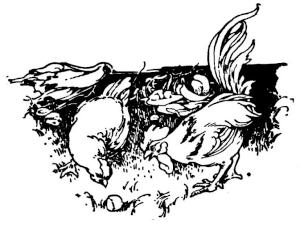
A cock scratching in a
barren field found a diamond
buried in the soil.
The curious hens attracted
by the sparkling
jewel gathered eagerly
around him. The cock
was plainly disappointed.
“How lovely!” exclaimed an old hen. “Do you realize
that you have found a diamond? Are you aware that
diamonds are very costly?”
“I don’t care how costly this jewel may be,” answered
the sensible cock. “Although it may be the biggest diamond
in the world I’ll gladly exchange it for a kernel of
corn, a nut, or a fat beetle.”—Æsop.
The following are among the 1000 most common
words. You have studied every one of them. Every
boy and girl at the end of the fifth grade should be
able to spell them correctly.
eight
afraid
uncle
rather
aboard
jail
shed
retire
district
restrain
royal
objection
pleasure
navy
proper
judge
weather
worth
contain
figure
sudden
forty
instead
throw
personal
everything
rate
chief
slide
farther
duty
company
quite
none
knew
remain
direct
appear
liberty
enough
fact
board
attend
between
public
friend
through
until
madam
truly
whole
address
request
raise
August
Tuesday
fourth
population
except
aunt
else
built
center
front
rule
carry
chain
death
learn
pair
check
heard
always
something
write
perfect
second
woman
young
fair
dollar
evening
fell
sure
least
sorry
press
November
subject
April
history
cause
himself
use
September
station
copy
been
yesterday
among
doctor
hear
size
December
dozen
there
tax
number
October
reason
fifth
extra
dress
struck
Thursday
begun
collect
file
provide
stood
born
goes
hold
drill
pretty
stole
income
bought
paid
railroad
unable
ticket
ability
aboard
abroad
absence
accept
accident
according
accurate
ache
acre
act
active
addition
address
admit
advance
adverb
advice
affair
affect
affection
affectionate
affectionately
Africa
again
agency
agreeable
agreement
aisle
alarm
alert
allow
along
alphabet
already
also
alter
although
alto
always
amaze
among
amount
ample
angel
angle
animal
ankle
answer
any
anyway
appear
applied
applies
apply
appoint
approve
apt
area
arithmetic
army
arrange
arrangement
article
artist
ashore
assure
attempt
attend
attendance
attracted
auto
avenue
avoid
aware
awning
badge
balance
bandage
banner
barefoot
bargain
barren
basement
bass
bath
bathe
beckon
been
beetle
began
begged
begging
beginning
being
believe
benefit
biggest
bitten
blaze
blazing
blood
blue
bluff
boast
border
bother
bottle
bravely
breadth
break
bridge
bridle
brutal
buckle
built
bullet
burial
buried
burst
bury
business
busy
buy
cable
calf
canal
cancel
can’t
capital
capitol
carbon
carries
carry
cause
caution
ceiling
cement
center
central
century
cereal
certain
certainly
challenge
change
channel
charitable
charity
cheerfulness
chief
childhood
childish
chilly
chimney
choose
chorus
cipher
circular
civil
climate
clothing
coast
coffee
collect
collection
college
colonel
colonies
color
commence
commerce
compel
comrade
concert
conduct
confess
confuse
confusion
conquer
conqueror
consent
consonants
contain
contest
control
conversation
converse
copied
copper
cordial
cordially
couch
cough
could
country
couple
courage
courageous
course
courteous
courtesy
crayon
crazy
crimson
crowbar
cultivate
curious
custom
dangerous
dear
debate
deceive
decimal
defeat
degree
delivery
demand
denial
denied
denominator
deny
depend
dependent
describe
desert
destroy
detain
diamond
dictionary
difficult
difficulties
difficulty
direct
direction
disagreeable
disappoint
discover
dismiss
distinct
distress
district
disturb
divine
doctor
does
don’t
double
doubt
doubtful
doubtless
dread
drowned
duty
eager
early
earnest
easily
easy
effect
effort
eight
eighth
eighty
elbow
elegant
elevator
enough
entire
entirely
entry
envelope
eraser
err
errand
estate
every
exactly
examination
examine
except
exchange
exclaim
expect
express
extra
failure
fairy
faithfully
family
famous
February
fertile
fever
fiend
fiendish
fierce
fiery
figure
file
final
finally
flavor
folly
football
force
forge
forgetting
forgiven
forgiving
fortunate
fortune
forty
fraction
freeze
freight
friend
friendship
frighten
frigid
frozen
furnish
further
future
gallery
general
generally
generous
gentleman
gentlemen
gentleness
geography
getting
glorious
glory
grammar
graze
grit
grocery
guard
guess
guide
guilty
habit
half
happened
happens
having
haze
hear
heard
hedge
height
held
here
historian
historical
history
hoarse
holly
honor
honorable
hospital
hour
however
huge
human
humor
humorous
hurt
husband
hyphen
icy
important
impossible
improve
improving
income
increase
independence
independent
inform
initial
injury
innocent
insisted
inspect
instead
instruct
instruction
insult
interest
invalid
invent
invention
iron
island
isthmus
jewel
jewelry
join
joint
judgment
junior
just
kept
kernel
key
kindly
kindness
knew
know
knowledge
knuckles
laid
laundry
leaf
league
learns
lecture
legend
liberal
library
life
limit
linen
lingers
loaf
loan
lonesome
loose
lose
lovable
loving
madam
making
many
market
marriage
married
marry
maybe
meant
measles
medicine
member
memory
merciful
mercy
merit
message
metal
meter
method
million
mincemeat
minute
misfortune
misspell
monthly
movable
much
multiplicand
multiplication
multiply
muscle
myth
natural
naughty
naval
navy
necessary
needle
neglect
news
niece
ninety
ninth
none
nor
notified
notifies
notify
notion
noun
numerator
numerous
obedience
obedient
obeyed
object
objection
oblige
oblong
obtain
occupation
occupied
occupy
ocean
office
official
often
once
opera
opposite
oral
ore
owner
package
pansy
parcel
pardon
parent
passage
passenger
patience
patient
patiently
pattern
pavement
peace
peaceful
peculiar
peddle
peddler
peddling
peninsula
peril
perilous
period
perish
person
personal
phonics
piece
plants
plaster
plateau
plurals
poetry
popular
population
position
possess
possible
possibly
postage
postal
powder
prairie
preceded
precious
presence
present
president
primer
prisoner
private
prize
problem
proceed
produce
product
professor
profit
profitable
progress
pronoun
pronounce
proper
property
prove
proverb
provide
pupil
pursue
quarry
quarter
quartet
question
quit
quotation
quotient
raise
rallied
rally
ranch
rapidly
read
ready
real
realize
reaps
reason
rebel
recede
receive
recent
reckon
records
regard
region
regret
regular
relation
relative
relief
remember
repent
replied
replies
reply
resist
respect
respectable
respectfully
restrain
result
retire
retreat
return
revenge
rhyme
ridge
robber
robbery
rogue
rosy
royal
rude
rule
ruler
saddle
safety
said
salary
satisfy
savage
says
scene
scheme
science
scissors
scythe
section
secure
seems
self
senior
sensible
separate
separately
separation
serious
several
severe
severity
shallow
shelf
shepherd
shield
shoes
sickness
sight
signature
silence
since
sincere
sincerely
situation
skating
skeleton
skillful
slowly
smiling
sober
social
society
soil
soldier
solve
some
sorely
source
southern
sows
sparkle
sparkling
speaker
speech
spindle
sponge
sprain
sputter
stamp
statement
steadied
steady
stern
stopped
story
strait
struck
struggle
student
studied
study
subject
subtraction
sudden
suffer
suffix
summon
supply
support
surely
surface
suspect
sword
syllable
sympathy
system
teacher
telegram
telegraph
telephone
temper
temperate
tenth
therefore
thief
thieves
thimble
thread
through
throw
thus
thyself
tidy
tire
tired
too
torrid
total
town
tramp
transform
trial
tribe
triumph
trough
trunk
tunnel
twit
unable
unasked
uncharitable
unexpected
uniform
university
unpleasant
unravel
until
used
utter
uttermost
vacancy
valuable
value
variety
verb
very
vicinity
victim
victory
view
violin
volcanoes
vote
vowels
wander
war
wealth
week
western
whether
width
won
wonder
wonderful
worse
worst
worthy
would
wrong
yield
THE ALDINE SPELLER — Sixth Year — THE STAR-SPANGLED BANNER — CEREMONY OF THE NATIONAL FLAG — FLAG NAMES — THE CALF AND THE OX — AN OCEAN VOYAGE — GOVERNMENT — Rules of Behavior — Review List — Vocabulary for the Sixth Year
PART THREE SIXTH YEAR
The Star-Spangled Banner
1
span gle
star-span gled
ban ner
gal lant ly
twi light
2
proud ly
hailed
gleam ing
stream ing
ram parts
3
dawn
stripes
rock et
bomb
proof
4
broad
through
per il ous
ear ly
watched
5
O say, can you see, by the dawn’s early light,
What so proudly we hailed at the twilight’s last gleaming?
Whose broad stripes and bright stars, through the perilous fight,
O’er the ramparts we watched, were so gallantly streaming?
And the rockets’ red glare, the bombs bursting in air,
Gave proof through the night that our flag was still there;
O say, does that star-spangled banner yet wave
O’er the land of the free and the home of the brave?
—Francis Scott Key.
Study the words and write the stanza from memory.
6
na tion
na tion al
cer e mo ny
fol low ing
ob serve
7
sun rise
sun set
me mo ri al
spec ta tors
at ten tion
8
dur ing
du ra ble
mil i tary
mi li tia
re quire
9
staff
rev o lu tion
re volv er
reg u la tions
sa lute
10
hoist
un cov er
a rise
low ered
re view
11
fu ner al
mourn ing
mourn ful
con clu sion
halt
12
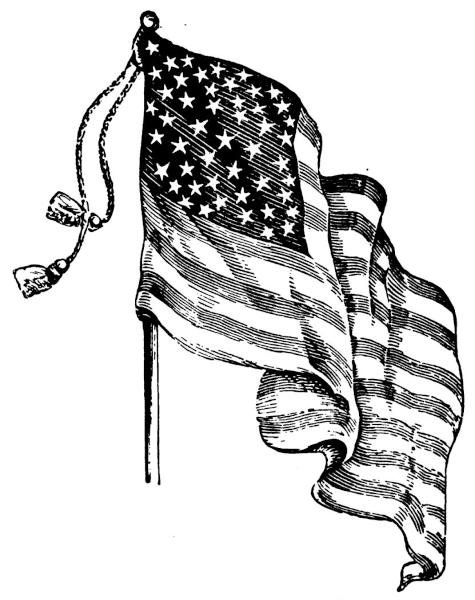
In order to show the proper respect to the flag the
following ceremony should be observed:
It should not be hoisted before sunrise nor allowed to
remain up after sunset.
At “retreat,” sunset, civilian spectators should stand at
“attention” and uncover during the playing of the “Star-Spangled
Banner.” Military spectators are required by
regulation to stand at attention and give the military
salute.
When the National colors are passing on parade, or
in review, the spectator should, if walking, halt, and if
sitting, arise, and stand at attention and uncover.
When the flag is flown at half staff as a sign of mourning
it should be hoisted to full staff at the conclusion of
the funeral.
In placing the flag at half staff, it should first be
hoisted to the top of the staff and then lowered to position,
and before lowering from half staff it should be first
raised to the top.
On Memorial Day the flag should fly at half staff from
sunrise to noon, and full staff from noon to sunset.—Sons
of the Revolution in the State of New York.
Read the above rules for showing respect to the
flag, then close your book and write them from memory
using your own words.
Old Glory.
The Stars and Stripes.
The Flower of Liberty.—Holmes.
Freedom’s Banner.—Drake.
13
to tal
o pin ion
Brit ish
va ry
va ri ous
14
dec la ra tion
to geth er
al to geth er
or i gin
o rig i nal
15
claim
con cludes
a dopt
rep re sent
Eng land
16
Eng lish
Ire land
I rish
Scot land
Scot tish
17
The president’s salute and the British royal salute are
the same—twenty-one guns. There are various opinions
as to the origin of this number. Some claim that the
original number was seven and that twenty-one was
adopted to represent the union of England, Scotland, and
Ireland—seven guns for each country.
18
ac count
ed i tor
i ci cle
fact
cob web
19
news pa per
rec i ta tion
pay ment
non sense
de cline
20
re quest
close ly
gos sip
moist
mois ture
21
men tion
puz zle
rid dle
mi ser
o dor
In some words the final e is dropped when an ending
beginning with a vowel is added. This is the rule in
Lessons 22 and 23, 24 and 25.
22
ar rive
ar riv al
bore
bor ing
bounce
bounc ing
com bine
com bi na tion
23
pre serve
pre serv ing
com pare
com par ing
pro mote
pro mo tion
ed u cate
ed u ca tion
24
de serve
dodge
re move
ram ble
pledge
in clude
re fuse
en gage
25
sac ri fice
pause
med dle
lodge
in quire
en close
es cape
move
26
Add ing to each word in Lesson 24. In doing this
drop the final e because the new ending ing begins with
a vowel.
27
Add ing to each word in Lesson 25. What letter
must be dropped? Why?
28
yoke
annoy
an noyed
mocked
for ev er
29
de clared
sub mit
sub mit ting
at tached
fes ti val
30
drudge
drudg er y
an nu al
hol i day
al tar
31
per fume
i dle ness
con tin ue
con tin u ing
e vent
32
A calf that had never felt the yoke, mocked an ox who
was attached to a plow for submitting to such drudgery.
The ox was annoyed but continued his work.
Not long after there was a great festival. The ox had
his annual holiday for this event, but the calf was sacrificed
on the altar.
“If that is the end of idleness,” declared the ox, “I
think work is better. I had rather my neck felt the yoke
forever than the ax for a moment.”—Æsop.
Rewrite the above fable using other words in the
place of those that are italicized.
33
ma hog a ny
bun ga low
clap board
ce dar
pal ace
man sion
34
ex te ri or
in te ri or
ve ran da
shin gles
pi az za
brack et
35
The plural of nouns is generally formed by adding s
to the singular. You have learned that some nouns
ending in f change the f to v and add es. You have
also learned that nouns ending in y preceded by a
consonant change y to i and add es. Some nouns
ending in o preceded by a consonant form the plural
by adding es.
Write the plural of the following.
he ro
cal i co
car go
po ta to
ech o
buf fa lo
ne gro
mot to
36
Nouns ending in s, sh, ch, and x generally form their
plurals by adding es.
Write the plural of the following.
crutch
brush
fox
glass
torch
wish
box
class
37
si lent
si lent ly
si lence
safe ly
saf est
38
re spond
re sponse
re fer
se lect
a ris es
39
a ris ing
im per ti nent
im per ti nence
con tra dict
con tra dic tion
40
vul gar
vul gar i ty
en vy
en vied
en vi ous
41
Silence is the safest response for all the contradiction
that arises from impertinence, vulgarity or envy.—Zimmerman.
42
char ac ter
style
su preme
ex cel
ex cel lent
ex cel lence
43
sim ple
sim pli fy
which
sim ply
sim plic i ty
sep a rate
44
In character, in manners, in style, true, supreme excellence
is simplicity.—Longfellow.
You can not dream yourself into a character; you must
hammer and forge yourself one.—Froude.
45
ceil ing
con ceit
re lieve
re ceipt
re ceive
re lief
46
de ceit
de ceit ful
be lieve
de ceive
be lief
be liev ing
In every one of the above words you will find either
the letters ei or ie. In every word these two letters
are pronounced e. How can you know when to use ie
and when to use ei? There is a very easy way to
remember. Look at the word Alice. What letter
comes after l? In using ie or ei, i always follows l
just as it does in Alice. What letter in Alice follows c?
In using ie or ei, e always follows c just as it does in
Alice. Look at the words in Lesson 45 and 46 and see
if this is not so. Whenever you have occasion to use
any word containing these letters, remember the word
Alice. That is the keyword.
Another easy rule applies to ie in other words. Be
sure to remember it.
“I before e
Except after c
Or when sounded as a
As in neighbor or weigh.”
47
brief
chief
field
fiend
fierce
niece
48
grief
grieve
pier
pierce
piece
priest
49
se ries
thief
siege
shield
wield
yield
50
friend
mis chief
a chieve
tier
sieve
fron tier
In the following words the e comes before the i in
accordance with the rule on page 47, for the ei is pronounced
like a.
51
neigh
neigh bor
weigh
eight
freight
sleigh
52
rein
reign
veil
vein
skein
weight
The following words are exceptions to the rule “i
before e.”
53
nei ther
lei sure
heif er
for feit
seize
54
an cient
height
for eign
sov er eign
coun ter feit
In the previous grade you learned that there are
one hundred words that are so frequently misspelled
that they have been named the “One Hundred Spelling
Demons.” Review that list of “Demons” on
pages 11 and 12.
On this page and the next are given one hundred
more “Demons.” They are very common words that
are frequently misspelled. Have you studied them
carefully enough so that you can always spell them
correctly?
whose
walk
worth
against
eight
loving
world
comb
course
should
patient
ladies
journey
nature
taught
pitied
awful
cheap
disappoint
cousin
until
almost
quiet
written
honor
lying
except
health
language
wound
clothes
beauty
already
kneel
grief
other
able
dollar
either
neither
money
daily
another
knife
laugh
feel
potatoes
such
replied
given
action
carriage
nothing
even
doesn’t
using
climb
flour
paid
necessary
wrist
guard
apron
front
linen
people
toilet
oven
pretty
heart
all right
meal
shown
weather
happiest
chief
fault
motion
union
hopeful
usual
tongue
kitchen
ounce
money
hasn’t
please
mean
knowledge
catch
reach
faithful
shovel
jewelry
trouble
banana
choice
heard
wonder
collar
55
fa vor
fa vor ite
fa vor a ble
quotes
quo ta tions
oc cu pa tion
56
read y
read i ly
ar mor
of fense
of fen sive
an ec dotes
57
de fend
de fense
de fen sive
col lect
col lec tion
oc ca sion
58
mem o ry
in vent
in ven tion
serves
max im
or gan ize
59
I pick up favorite quotations and store them in my
mind as ready armor, offensive and defensive.—Robert Burns.
A collection of anecdotes and maxims is the greatest
treasure.—Goethe.
A great man quotes bravely and will not draw on his
invention when his memory serves him with a word as
good.—Ralph Waldo Emerson.
Above are three quotations from three great writers
telling how important they consider the memorizing
of wise sayings. Learn one of these quotations and
write it from memory.
60
re ward
ful fill
a head
curse
par ish
61
ex pense
ex pen sive
foe man
per formed
pre tend
62
es tab lish
suc cess
through out
pri ma ry
pri ma ri ly
63
worse
worst
re solve
re so lu tion
re quire
64
The reward of one duty faithfully performed, is the
power to fulfill another.—George.
One never gets rich until he commences
To keep ahead of his expenses.
An open foe may prove a curse,
But a pretended friend is worse.
—Gay.
65
The success of the Scot throughout the world, lies primarily
in John Knox’s resolve to establish a school in
every parish in Scotland, and the law that requires every
man—rich and poor—to educate his children.—Andrew Carnegie.
66
moth
gnaws
gar ment
con sume
sur est
67
en dowed
qual i ties
qual i ty
quan ti ty
quan ti ties
68
qual i fy
no blest
fool ish
ship wreck
in for ma tion
69
Christ mas
ad mis sion
re mind ed
in form
res cue
70
He is foolish to blame the sea who is shipwrecked
twice.
The world does not require so much to be informed as
to be reminded.—Hannah More.
As moths gnaw a garment, so envy consumes a man.—St. Chrysostom.
The surest proof of being endowed with noble qualities
is to be free from envy.—La Rochefoucauld.
Quality not quantity.—Old Motto.
71
con trast
en large
bath ing
a wak en
fra grant
sep a rate
72
per mit
scent
mere
pris on
sug gest
vol ume
73
o cean
a board
steam er
voy age
for eign
74
group
heart y
fare well
cruise
folks
75
de par ture
im me di ate
tour ist
bag gage
grad u al ly
76
diz zy
sen sa tion
feel ing
seized
sick ness
77
re tire
berth
cash ion
wrapped
com fort
78
re cov er
smil ing
thank ful
lux u ry
re joice
79
route
wreck
be ware
dis as ter
dam age
80
ma rine
in sur ance
At lan tic
Pa cif ic
e qua tor
81
planned
mu si cian
danc ing
waltz
or ches tra
82
pub lish
pro gram
wire less
mag a zine
jour nal
83
sub scribe
fund
sail or
wid ows
or phans
84
ap proach
in spec tor
in spec tion
cus tom a ry
med i cal
85
dark ness
cloud y
rec og nize
ap pear ance
buoy
86
ar ri val
punc tu al
sched ule
has ten
ear li est
87
quaint
nov el ty
treas ure
pur chase
sketch es
88
ac com plish
tour
ad ven tures
meet ing
ex pe ri ence
wel come
89
The words in Lessons 73-88 may be used to describe
an ocean voyage. Lesson 73 contains words that
suggest the picture of going aboard the steamer for an
ocean voyage to foreign lands. Lesson 74 contains
words that suggest the farewell to folks ashore; Lessons
76-77, seasickness; Lesson 78, the joy at being well
again, etc.
Choose a lesson and write a short description of the
picture the words suggest to you—one sentence will
do if you can get all the words into it, as, Lesson 83—Everyone
was asked to subscribe to the fund for
sailors’ widows and orphans.
90
de scrip tion
ex pres sion
por tion
pro por tion
com plex ion
ir reg u lar
an i mat ed
91
maj es ty
ma jes tic
fore head
eye brows
stat ure
ath lete
ath let ic
92
lof ty
bald
rud dy
scorch
dirt
de vout
quick
93
gra cious
mod er ate
se rene
formed
flu ent
re lig ion
ex er cise
94
The king was of middle stature, well proportioned and
hardy, and active from athletic exercises. His carriage
was free, erect, and majestic. He had a clear, serene
forehead, which appeared more lofty from his head being
partly bald. His eyebrows were large;—his eyes were
clear and animated; his complexion was somewhat ruddy,
and scorched by the toils of war; his mouth moderate,
well formed and gracious in expression; his teeth white
though small and irregular; his speech quick and fluent.
He was simple in dress and diet, and devout in his
religion.—Washington Irving.
95
in tro duce
in tro duc tion
ap par el
pro claims
hand ker chief
nec es sa ry
Neat clothing is a good letter of introduction.—Scottish.
The apparel oft proclaims the man.—Shakespeare.
96
jack et
trou sers
tai lor
rib bon
ho sier y
fash ion
97
slip pers
or na ment
brace let
pearl
cot ton
de sign
98
ruf fle
cal i co
e las tic
fab ric
ma te ri al
ging ham
99
suit
sew
but ton
wrin kle
vel vet
flan nel
100
in dus try
in dus tries
in dus tri ous
as sist ant
as sist ance
101
in sure
in come
part ner
ad vise
lo cal
102
ad ver tise
ad ver tise ment
em ploy ment
em ploy er
as so ci ate
103
as so ci a tion
au thor i ty
ca reer
ap pli cant
ap pli ca tion
104
for mal
for mer
for mer ly
or dain
de feat
wel fare
105
do mes tic
tran quil
tran quil li ty
se cu ri ty
pos ter i ty
con sti tu tion
106
We, the people of the United States, in order to form
a more perfect union, establish justice, insure domestic
tranquillity, provide for the common defense, promote the
general welfare, and secure the blessings of liberty to
ourselves and our posterity, do ordain and establish this
constitution for the United States of America.
The above paragraph is the introduction or preamble
to the Constitution of the United States. It
tells why the Constitution was made. After your
teacher has explained the meaning, study this preamble
and write it from memory.
107
gov ern
gov er nor
gov ern ment
cit i zen
e qual i ty
de part ment
e qual ly
108
may or
mar shal
coun ty
e lect
e lec tion
chair man
109
pol i cy
po lit i cal
plat form
con gress
ses sion
com mit tee
110
dis trict
bal lot
sen ate
em pire
re pub lic
111
cup ful
spoon ful
fear ful
hand ful
wake ful
112
watch ful
bas ket ful
dread ful
pow er ful
aw ful
113
truth ful
trust ful
shame ful
mourn ful
fright ful
With what syllable does every word in Lessons 111-113
end? There is only one l at the end of each final
syllable. When the word full forms the ending of
another word, it is always written with one l.
114
fan cy
fan ci ful
play
play ful
pit y
pit i ful
plen ty
plen ti ful
Which of the words in the above lesson changes the
final y to i when ful is added? Why? Which does
not? Why not?
115
su per in tend ent
prin ci pal
en ter tain ment
pub li ca tion
in ves ti ga tion
pho to graph
116
ci gar
cig a rette
to bac co
cam er a
mes sen ger
as sem bly
ca det
can di date
117
re spect
es teem
com pa ny
sign
rep u ta tion
as so ci ate
has ti ly
be hav ior
118
Every action in company ought to be with some sign of
respect to those present.
Think before you speak, pronounce not imperfectly, nor
bring your words too hastily, but orderly and distinctly.
Associate yourself with men of good quality, if you
esteem your own reputation; for it is better to be alone
than in bad company.—George Washington.
All service is the same with God.—Browning.
119
cler gy man
bish op
min is ter
priest
bless ing
120
ser mon
wor ship
cat e chism
chap el
choir
121
col lec tion
hymn
ser vant
ser vice
law yer
122
le gal
il le gal
in her it
jus tice
ju ry
123
oath
term
crime
in no cent
po lice
124
wit ness
pi rate
bur glar
cap tive
cap ture
125
cir cuit
court
con sult
con vict
con vince
126
ar gu ment
de ci sion
dis grace
dis pute
jew el er
127
ar rest
en trance
flight
length
an swer
128
meas ure
run ning
al low
them selves
spec ial
129
wait
a wait
sup pose
for ward
loss
130
ob ject
man ner
fea ture
in jure
man a ger
Labor, you know, is prayer.—Bayard Taylor.
131
drug gist
di plo ma
dis play
ex hib it
ar ni ca
132
throat
al co hol
tab let
liq uor
fix ture
133
den tist
cav i ty
de cay
dis ease
pulse
134
ar ter y
vein
cramp
deaf
stom ach
135
ill ness
grippe
croup
phys ic
poul tice
136
a poth e ca ry
tem per a ture
ther mom e ter
vac ci nate
can cer
137
valve
var nish
as phalt
cin der
chis el
138
pol ish
switch
brake
tack le
sig nal
139
flu id
fil ter
gas o line
high way
clutch
140
flo rist
fer ti lize
bou quet
fo li age
in sect
141
car na tion
ge ra ni um
cat er pil lar
dec o rate
dec o ra tion
142
ag ri cul ture
let tuce
lo cust
maize
pars nip
Taste the joy that springs from labor.—Longfellow.
143
plan ta tion
po ta toes
poul try
pump kin
rasp ber ries
144
rhu barb
ru ral
cu cum ber
a pri cot
as par a gus
145
bram ble
breed
bri er
cel er y
chore
146
churn
cis tern
chopped
rye
drought
147
man u fac ture
man u fac tur er
found ry
foun da tion
hy drant
148
fi ber
fric tion
mor tar
pat ent
fau cet
149
ma chin er y
ma chin ist
me chan ics
con tract
con trac tor
150
sam ple
ve hi cle
bel lows
re pair
in cline
151
bank er
draft
de pos it
cred it
clerk
152
cash ier
pay ment
mer chant
whole sale
re tail
153
ker o sene
gin ger
fac to ry
fur ni ture
hal i but
154
lob ster
mack er el
sal mon
bu reau
cab i net
Without labor life is dull, a man useless.
155
mo las ses
mus tard
mut ton
grease
sir up
156
starch
sau sa ges
va nil la
vin e gar
al mond
157
cheap ly
cin na mon
co co nut
ko dak
auc tion eer
158
ma son
trow el
gran ite
auc tion
lens
159
laun der
laun dry
knead
grid dle
lunch eon
160
house hold
muf fin
om e let
pas try
pro vi sions
161
sal ad
ca fé
canned
chow der
cus tard
162
des sert
pro pri e tor
res tau rant
ap pe tite
board er
163
ten ant
ten e ment
a part
a part ment
va cant
164
un der tak er
hearse
cas ket
cof fin
cem e ter y
165
ac tor
the a ter
ap plaud
au di ence
ad mi ral
166
en gine
en gi neer
gen u ine
qui et
work
On this and the following page are 148 of the 1000
most common words. You have studied all of them.
How many can you spell correctly?