By
Frank E. Spaulding Superintendent of Schools, Newton, Mass.
and
Catherine T. Bryce Supervisor of Primary Schools, Newton, Mass.
With Illustrations by
Margaret Ely Webb
NEW YORK
NEWSON & COMPANY, PUBLISHERS
Copyright, 1907, by Newson and Company
All rights reserved
The authors and publishers desire to acknowledge
their obligation to Mr. Nathaniel L. Berry,
Supervisor of Drawing in the Public Schools of
Newton, Massachusetts, for valuable assistance in
planning and arranging the illustrations in this book.
PREFACE
This Second Reader, like the two preceding books of
the Aldine Series, combines material and method in such
a way that the former does not suffer, while the latter
gains by the combination. That is, the subject-matter
of the book, both the text and the illustrations, is just
as suitable and just as interesting as it could be made were
there no such thing as method; indeed, the sole sign of
method, as one reads the book, is the parenthesis about
certain words preceding the stories. At the same time,
this subject-matter, both the text and the illustrations,
embodies in systematic arrangement the most effective
principles of mastering the mechanics of reading.
Children who have read thoroughly the preceding books
of this Series have acquired independence, the habit of
self-reliance, and the power of self-help to such a degree
that they will be able to master this book with little or
no direct aid from the teacher. And when they have
thus mastered this book, they will be good readers. That
is, so far as the mechanics of reading is concerned, they
will be able to read unaided anything which they can
understand; so far as the subject-matter is concerned,
they will be able to understand from the printed page
anything which they can understand through the spoken
word. More than this, if the teacher has contributed her
part, most such children will have realized the utility and
tasted the real delights of reading to such an extent that
they will continue to read of their own accord; most of
them will also be good oral readers, reading with appropriate
expression and genuine enthusiasm.
These statements are not mere predictions of the hoped-for
results of untried theories; they are simple, unexaggerated
expressions of facts which have been observed in
the work of thousands of children of a score of nationalities.
To secure such results a complete mastery and intelligent
observation is necessary of the principles and plans
described in the authors’ Manual for Teachers, entitled
“Learning to Read.”
The authors gratefully acknowledge their indebtedness
to Miss Marie Van Vorst for the use of “Three of us
Know” and “The Sandman”; to Mrs. Emily Huntington
Miller for “The Bluebird”; to Messrs. Houghton, Mifflin
& Co. for the use of the poem “Discontented,” by Sarah
Orne Jewett, and “Calling the Violet,” by Lucy Larcom;
to Messrs. Charles Scribner’s Sons for “The Wind,” by
Robert Louis Stevenson.
Out of Door Neighbors — THE CAT AND THE BIRDS — WHY RAVENS CROAK — THE PROUD CROW — THE WOLF AND THE KID — QUEER CHICKENS — LITTLE DUCKS
(hap py)
rap
doc tor
words
door
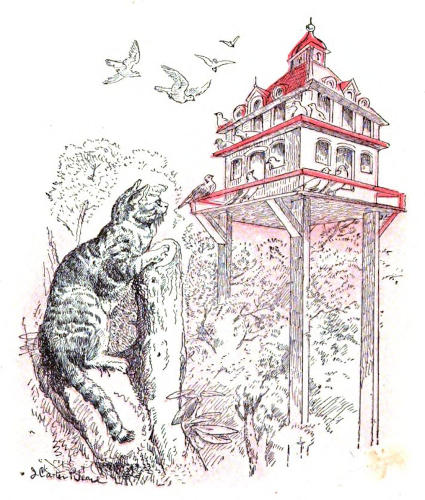
An old cat lived near a bird house.
Every day he saw the birds flying in and out.
Every day he said to himself, “How I wish I
had one of those nice fat birds for my dinner!”
One day he heard
that the birds were
ill.
“Now is my time,”
he said. “I will get
a bird to eat to-day.”
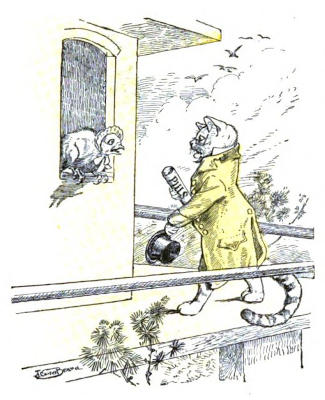
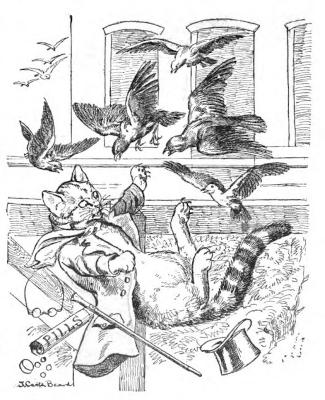
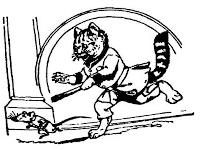
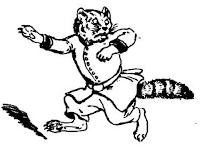
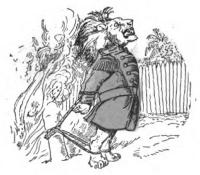
So he put on a tall
hat and a coat.
He took a cane
in one hand and a
box of pills in the
other.
Then he went to the bird house and rapped
at the door.
“Who is there?” asked an old bird.
“It is I, the doctor,” said the cat. “I heard
that you were ill. So I have come to see you.
I have some pills that will make you well. Open
the door.”
The old bird looked out.
“Your words are kind,” he said, “like the
words of the good doctor. Your hat, coat, cane,
and box of pills are like his. But your paws
are those of the old cat. Go away! We will not
let you in. We do not want your pills. We are
more likely to get well without your help than
with it.”
Then all the birds flew at him.
They pecked at his
eyes; they pecked at
his ears.
They tore his coat.
Away flew his
high hat; away flew
his cane; away flew
his box of pills.
Then away flew
the old cat himself,
and he never went
back.
wash es
wa ter
pret ty
(w eather)
f eather
(ought)
th ought
(am)
sw am
swan
use
A raven was very unhappy because his feathers
were black.
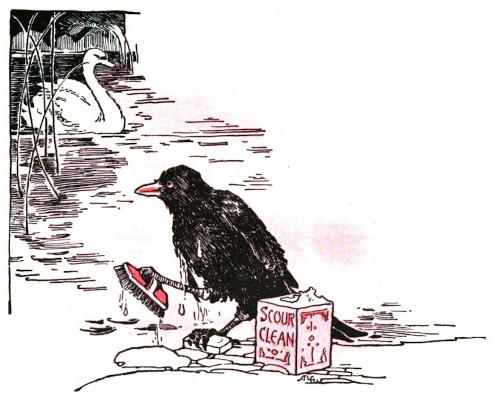
One day he saw a beautiful white swan swimming
in a lake.
“How beautiful and white her feathers are,”
he thought. “It must be because she washes
them so much. Why, she almost lives in the
water. If I should wash my feathers all day
long, they might get white, too. I will try it.”
So he flew from his nest in the woods, and
lived for days near the lake.
Every day he washed his feathers from morning
to night.
But his feathers did not get white.
They were just as black as ever.
But as the raven was not used to living in
water, he caught a very bad cold.
So, at last, he flew back to his nest in the
wood.
“It is no use,” he croaked. “I can never
be white. I do not want to be white. Black
feathers are pretty enough for me. Croak!
Croak!”
All ravens have said “Croak! Croak!” ever
since.
(p ea)
sp eak
l uck y
st uck
laughed
on ly
(l oud)
pr oud
(c ool)
f ool ish
a mong
steal
(r ock)
pea c ock
(n ot)
l ot
(f ull)
p ull ed
One day a crow found a lot of peacock feathers.
“My,” cried the silly crow, “how lucky I am.
No other crow in the world will look as fine as I.
How all my old friends will envy me!”
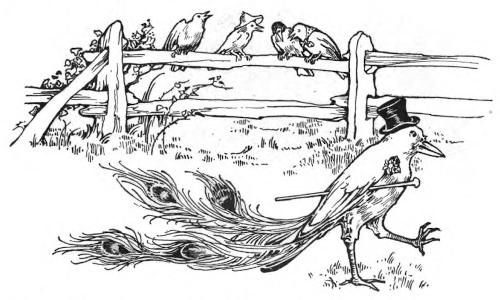
And the proud crow stuck the peacock feathers
all over his back.
Then he flew away to show himself to his
friends.
He strutted up and down before them.
But they only laughed at him.
“Just look at that silly bird!” they cried.
“See him strut! Did you ever see anything so
proud? Caw, caw, caw!”
The proud crow was now very angry.
“Do not speak to me,” he said. “I have fine
feathers. I am a peacock. I will have nothing
to do with you crows.”
So off he strutted to the peacocks.
“How do you do, my dear friends?” he said in
his sweetest voice.
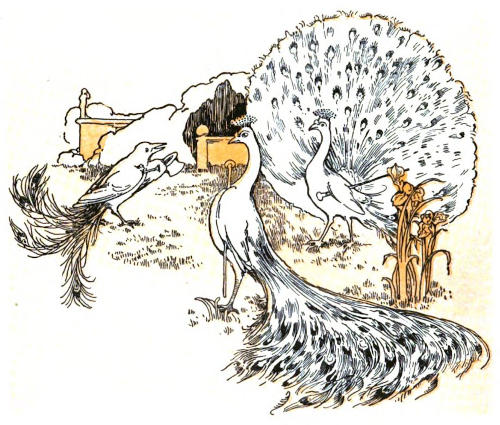
“Who are you?” cried the peacocks scornfully.
“Do you not see that I am a peacock?”
answered the crow. “Look at my fine feathers.”
“Fine feathers, indeed! We threw those old
feathers away long ago. You are no peacock.
Yon are just an old black crow.”
Then the peacocks fell upon the old crow, and
pulled off all his fine feathers.
They tore out many of his own feathers, too.
The foolish crow was a sight!
He crept back to his old friends.
He tried to steal in among them without being
seen.
But they all cried out, “Who are you? What
do you want here?”
“Don’t you see that I am your old friend?”
croaked the crow. “I am going to live with you
always.”
“No, you are not,” answered a wise old crow.
“You are no friend of ours. A few old peacock
feathers made you think you were a peacock. So
you left your old friends. The peacocks saw you
were a cheat and drove you away. Hereafter you
must live alone. Be off with you!”
And all the crows said, “Caw, caw, caw! Caw,
caw, caw!”
(h ark)
d ark
(m uch)
s uch
noise
e nough
trot ted
(h ive)
l ive ly
(l eg)
b eg ged
(p ea)
pl ea se
(k ind)
find
hun gry
oft en
wolf
(n ow)
gr ow led
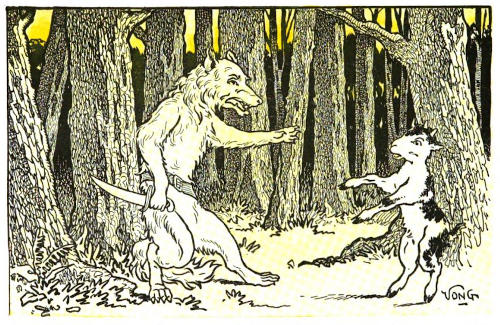
One day a little kid was lost in a dark wood.
He ran on and on, but could not find his way
out.
At last he became frightened and began to
bleat.
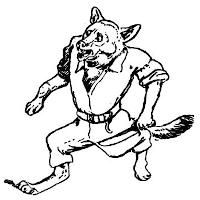
A hungry wolf heard him.
How glad the wolf was to find such a good
dinner!
“Oh, Mr. Wolf!” cried the little kid, “please
show me the way home.”
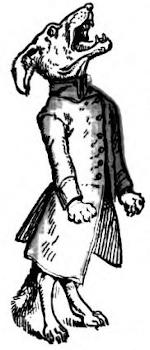
“Show you the way home!” growled the wolf.
“I am hungry and I’m going to eat you.”
“Oh, please, please, Mr. Wolf,” begged the
frightened kid, “please let me go!”
“No, no, I’ll eat you,” growled the wolf.
And he sprang at the kid, now almost dead with
fright.
Just then a lucky thought came to the little kid.
“Oh, Mr. Wolf,” said he, “I have heard that
you make very fine music. I love to dance. Will
you not sing for me, so that I may have one more
dance before I die? It is not much to ask.”
This pleased the wolf, for he was proud of his
voice.
“Well,” he growled, “music is good before eating.
I often sing before my dinner. To-day I was
too hungry to think of it. But I will sing just one
song. Then I will eat you. Dance lively, now!”
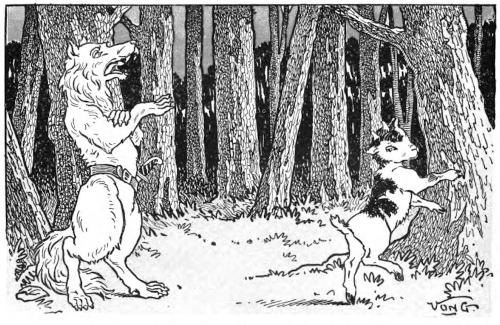
So the wolf sang a song, and the kid danced his
best.
When the wolf stopped, the kid cried, “That was
good. But you did not sing loud enough or fast
enough for me. Is that the best you can do?”
“No,” said the wolf. “I can sing louder and
faster than any one in the woods. Listen!”
So the wolf sang louder and faster.
And the kid danced livelier and better than before.
But the wolf made so much noise that the dogs
heard it.
They came running into the woods to see what
the matter was.
The wolf had to run for his life.
But the wise little kid trotted safely home to his
mother.
“I have to go without my dinner,” growled the
wolf. “I alone am to blame. I should kill and eat
kids, not sing for them.”
(qu ick)
ch ick
ch ick en
(c are)
d are
(d eer)
qu eer
splash
(th ank)
b ank
(r ose)
th ose
each
e ven
sail
a fraid
(th en)
h en
t en
(t ook)
br ook
(east)
l east
stream
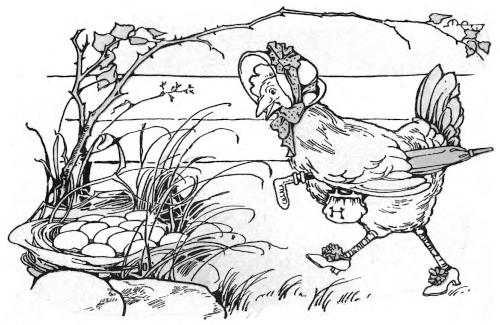
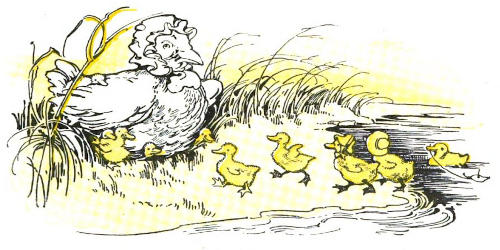
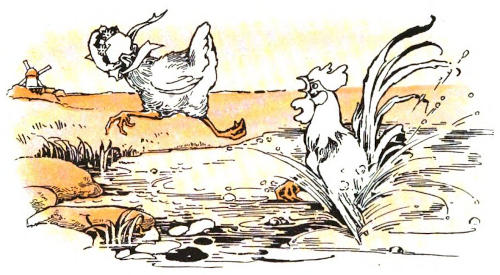
An old hen found a nest behind the gate.
It was full of eggs. Such beautiful eggs!
They would make any old hen’s heart glad.
“I will sit on these eggs. I will keep them
warm,” thought the hen. “Then a little chicken
will come out of each one.”
So the old hen spread her wings over the eggs.
How very wide she had to spread them!
For many days she sat there waiting.
One morning she awoke to find her nest full
of little ones.
“Cluck, cluck, what dear little chickens,” said
the hen.
“Come and get breakfast. Cluck, cluck, cluck,
cluck! What hungry chickens!
Now I will let you play in the meadow. Come
down to the brook first and get a drink.
The water is clear and cool. Do not go too
near, or you will fall in.”
Now, what do you think those little ones did?
You never could guess, so I will tell you.
As soon as they saw the brook they ran to
it. They ran as fast as ever they could go.
They rushed right into the water.
“Cluck, cluck! Cluck, cluck! Come back!
Come back!” called the old hen. “Come back,
come back to your mother!”
But they did not come back.
They did not even listen.
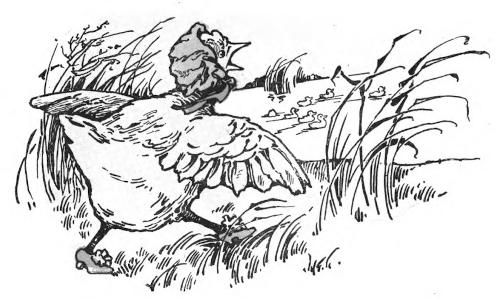
They sailed clear across the stream.
They sailed up stream and they sailed down
stream.
But they did not come back to their mother.
She could only run up and down the bank, looking
and calling.
“What shall I do? What shall I do?” she
cried. “Come back! Come back, you naughty
chickens. You will drown, every one of you. I
know you will drown. O, why will you not mind
your mother?”
How frightened she was!
She just knew all her dear chicks would drown.
Still she did not dare to follow them into the
water. She never swam a stroke in all her life.
She never even waded in the water.
But such fun as her little ones were having!
They were not the least bit afraid.
They swam and splashed around all day.
All day the old mother hen ran up and down
the bank calling and begging, “Come back! Come
back! Come right back to your mother!”
At last the little ones were tired.
Then they came back to their frightened mother.
One after another came up the bank and ran
to her.
How glad she was to gather them again under
her warm wings.
But what queer chickens they were.
(who)
who se
sure
(c aught)
n aught y
be lieve
once
roam
Ma’am
“My dears, whatever are you at?
You ought to be at home;
I told you not to wet your feet,
I told you not to roam.
Oh, dear! I’m sure you will be drowned,
I never saw such tricks;
Come home at once and go to bed,
You naughty, naughty chicks!”
Now most of them were five days old,
But one, whose age was six—
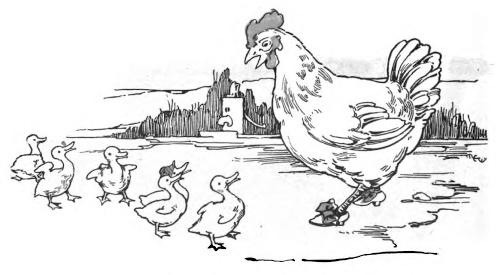
“Please, ma’am,” said he, “I think we’re ducks;
I don’t believe we’re chicks.”
—Robert Mack.
Once Upon a Time — THE CATERPILLAR — WHO IS STRONGEST? — LAMBIKIN — THE ANT AND THE MOUSE
ugly
push
(w ise)
r ise
I creep upon the ground, and the children say,
“You ugly old thing!” and push me away.
I lie in my bed, and the children say,
“The fellow is dead; we’ll throw him away.”
At last I awake, and the children try
To make me stay, as I rise and fly.
(age)
c age
(f ellow)
b ellow
(high)
s igh ed
breathes
bear
(h ouse)
m ouse
(sp eak)
cr eak
squ eak
climbed
roared
Tum tol lo
(ice)
m ice
(b ox)
ox
(th ink)
dr ink
uprooted
bur rowed
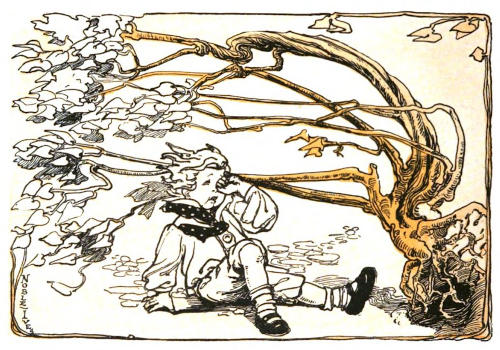
Once upon a time Tumtollo climbed a tree.
The wind blew hard and uprooted the tree.
Tumtollo was thrown to the ground.
“Oh, oh, oh!” he cried with pain, “oh, oh,
oh!”
“My, isn’t the tree strong!” cried he; “it can
throw Tumtollo to the ground.”
“You are wrong,” creaked the tree. “I am
not strong. If I were, could I be uprooted by the
wind?”
“Ah, I see,” said Tumtollo, “it is the wind that
is strong.
The wind uprooted the tree.
The tree threw Tumtollo to the ground.”
“No, friend, you are wrong,” sighed the
wind. “If I were strong, could I be stopped by
the hill?”
“Oh, I see now,” said Tumtollo, “it is the hill
that is strong.
The hill stopped the wind.
The wind uprooted the
tree.
The tree threw Tumtollo
to the ground.”
“Wrong again,” said the
hill. “I am not strong. If
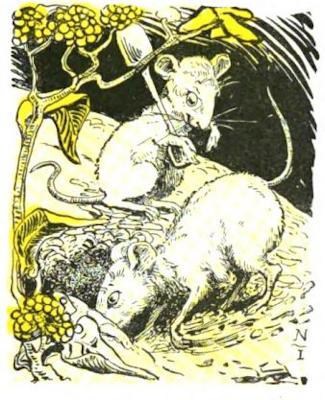
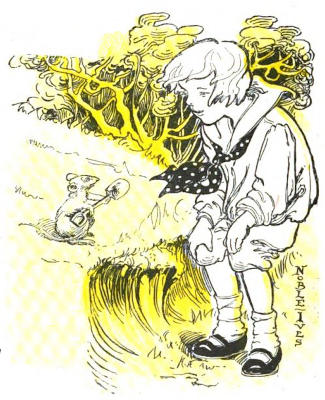
I were, I should not be burrowed
by mice.”
“Oh,” said Tumtollo, “then it
is the mouse that is
strong.
The mouse burrowed
the hill.
The hill stopped
the wind.
The wind uprooted the
tree.
The tree threw Tumtollo
to the ground.”
“Still wrong,” squeaked the mouse. “It is
not I who am strong. If I were, could the cat
catch me?”
“Well, then, it is the cat
that is strong,” said Tumtollo.
“The cat caught the mouse.
The mouse burrowed the
hill.
The hill stopped the wind.
The wind uprooted the tree.
The tree threw Tumtollo to
the ground.”
“No, Tumtollo, I am not
strong,” mewed the cat. “If I
were, could the dog frighten me?”
“Then it is the dog who is
strong,” said Tumtollo.
“The dog frightened the cat.
The cat caught the mouse.
The mouse burrowed the hill.
The hill stopped the wind.
The wind uprooted the tree.
The tree threw Tumtollo to the ground.”
“It is not I who am strong,” barked the dog. “If
I were, would the ox hook me with his horns?”
“Then it must be the ox who is strong,” said
Tumtollo.
“The ox hooked the dog.
The dog frightened the cat.
The cat caught the mouse.
The mouse burrowed the hill.
The hill stopped the wind.
The wind uprooted the tree.
The tree threw Tumtollo to the ground.”
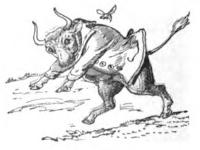
“No,” bellowed the ox, “I am not strong. If I
were, would the bee sting me?”
“Ah, ha! it is the little bee
that is strong,” said Tumtollo.
“The bee stung the ox.
The ox hooked the dog.
The dog frightened the cat.
The cat caught the mouse.
The mouse burrowed the hill.
The hill stopped the wind.
The wind uprooted the tree.
The tree threw Tumtollo to the ground.”
“No, no!” buzzed the bee, “it is not I who am
strong. If I were, would the bear steal my honey?”
“Indeed, then it is the bear who is strong,” said
Tumtollo.
“The bear robbed the bee.
The bee stung the ox.
The ox hooked the dog.
The dog frightened the cat.
The cat caught the mouse.
The mouse burrowed the hill.
The hill stopped the wind.
The wind uprooted the tree.
The tree threw Tumtollo to the ground.”
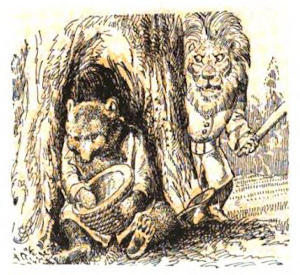
“You are wrong, Tumtollo,” growled the bear.
“If I were strong, could the lion drive me away
from my dinner?”
“Very well, then it is the lion who is strong,”
said Tumtollo.
“The lion drove away the bear.
The bear robbed the bee.
The bee stung the ox.
The ox hooked the dog.
The dog frightened the cat.
The cat caught the mouse.
The mouse burrowed the hill.
The hill stopped the wind.
The wind uprooted the tree.
The tree threw Tumtollo to the ground.”
“It is not I who am strong,” roared the lion.
“If I were, could the rope bind me?”
“Just as you say,”
said Tumtollo, “then
it is the rope that is
strong.”
“The rope bound the lion.
The lion drove away the bear.
The bear robbed the bee.
The bee stung the ox.
The ox hooked the dog.
The dog frightened the cat.
The cat caught the mouse.
The mouse burrowed the hill.
The hill stopped the wind.
The wind uprooted the tree.
The tree threw Tumtollo to the ground.”
“It is not I, indeed, that am strong,” said the
rope. “If I were, could the fire burn me?”
“Well, well, then the fire must be strong,” said
Tumtollo.
“The fire burned the rope.
The rope bound the lion.
The lion drove away the
bear.
The bear robbed the bee.
The bee stung the ox.
The ox hooked the dog.
The dog frightened the cat.
The cat caught the mouse.
The mouse burrowed the hill.
The hill stopped the wind.
The wind uprooted the tree.
The tree threw Tumtollo to the ground.”
“No, no, Tumtollo,” snapped the fire, “I am
not strong. If I were, could the water put me
out?”
“The water it is, then, that is strong,” said
Tumtollo.
“The water put out the fire.
The fire burned the rope.
The rope bound the lion.
The lion drove away the
bear.
The bear robbed the bee.
The bee stung the ox.
The ox hooked the dog.
The dog frightened the cat.
The cat caught the mouse.
The mouse burrowed the hill.
The hill stopped the wind.
The wind uprooted the tree.
The tree threw Tumtollo to the ground.”
“You are still wrong, Tumtollo,” sang the water
in a spring near by. “I am not strong. But I
will tell you who is truly strong. It is Man.
Man drinks the water.
Man lights the fire.
Man makes the rope.
Man cages the lion.
Man tames the bear.
Man eats the bee’s honey.
Man drives the ox.
Man keeps the dog.
Man feeds the cat.
Man kills the mouse.
Man digs the hill.
Man breathes the wind.
Man fells the tree.
Man rises when he is thrown to the ground.”
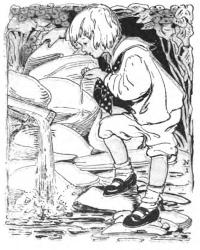
Tumtollo rose, drank deeply from the sweet
spring, and went on his way.
(who)
who m
mor sel
curled
(pl ant)
can’t
wad dle
reached
(t ip)
sk ip
(s eed)
gr eed y
(j ump)
h ump
pl ump
joy
(g ate)
ate
(out)
ab out
(cr ied)
d ied
mouth
breath
Once upon a time there was a
wee, wee Lambikin.
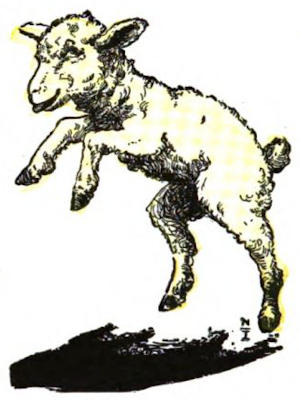
He frolicked about on his tottery
legs from morning to night.
He was always happy.
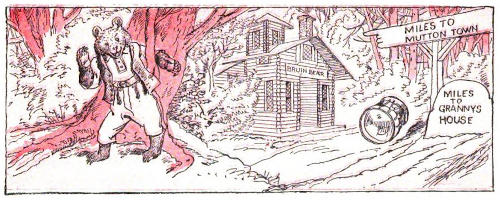
One day Lambikin set off to
visit his Granny.
He was jumping with joy to
think of the good things he would get.
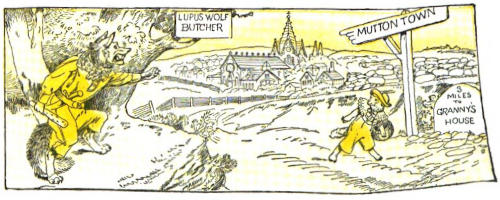
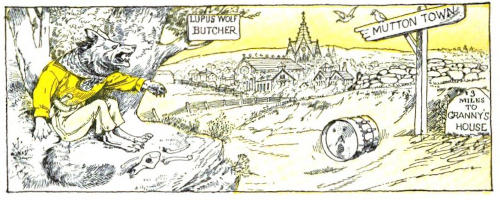
As he frisked along, he met but a wolf!
The wolf howled, “Lambikin! Lambikin! I’ll
eat YOU!”
But with a hop and a skip, a hump and a jump,
Lambikin said,
“No, no,
To Granny’s house I go,
Where I shall fatter grow,
Then you can eat me so.”
The wolf thought this wise and so let Lambikin
go.
Away frisked Lambikin.
He had not gone far, when whom should he
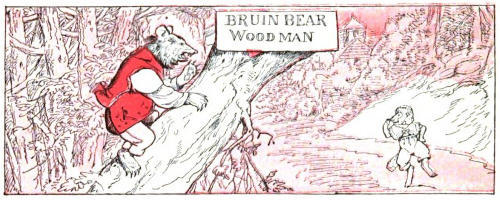
meet but a bear!
The bear growled, “Lambikin! Lambikin! I’ll
eat YOU!”
But with a hop and a skip, a hump and a jump,
Lambikin said,
“No, no,
To Granny’s house I go,
Where I shall fatter grow,
Then you can eat me so.”
The bear thought this wise and so let Lambikin
go.
Away frisked Lambikin.
He had not gone far when whom should he meet
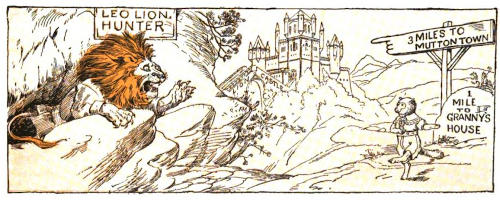
but a lion!
The lion roared, “Lambikin! Lambikin! I’ll
eat you!”
But with a hop and a skip, a hump and a jump,
Lambikin said,
“No, no,
To Granny’s house I go,
Where I shall fatter grow,
Then you can eat me so.”
The lion thought this wise and so let Lambikin
go.
Away frisked Lambikin.
At last he reached his Granny’s house.
“Granny dear,” he cried, all out of breath,
“I have said I would get fat. I ought to keep
my word. Please put me in the corn-bin at
once.”
“You are a good Lambikin,” said his Granny.
And she put him into the corn-bin.
There the greedy little Lambikin stayed for
seven days and seven nights.
He ate, and ate, and ate, and he ate until he
could hardly waddle.
“Come, Lambikin,” said his Granny, “you are
fat enough. You should go home now.”
“No, no,” said cunning little Lambikin, “that
will never do. Some animal would surely eat me
on the way, I am so plump and tender.”
“Oh, dear! Oh, dear!” cried old Granny in a
fright.
“Never fear, Granny dear,” said cunning
Lambikin. “I’ll tell you what to do. Just
make me a little drumikin out of the skin of my
little brother who died. I can get into it and roll
along nicely.”
So old Granny made Lambikin a drumikin out
of the skin of his dead brother.
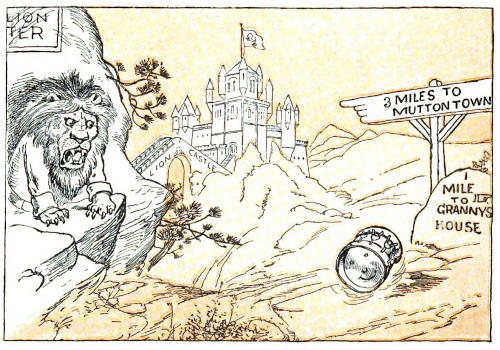
And cunning Lambikin curled himself up into
a round ball in the drumikin.
And he rolled gayly away.
Soon he met the lion, who called out,
“Drumikin! Drumikin!
Have you seen Lambikin?”
Lambikin answered sweetly as he rolled
along,
“Fallen into the fire, and so will you!
On, little Drumikin! Tum-pa, tum-too!”
“Too bad, too bad,” sighed the lion, as he
thought of the sweet, fat morsel of a Lambikin.
So away rolled Lambikin, laughing gayly to
himself and sweetly singing,
“Tum-pa, tum-too;
Tum-pa, tum-too!”
Soon he met the bear, who called out,
“Drumikin! Drumikin!
Have you seen Lambikin?”
Lambikin answered sweetly as he rolled
along,
“Fallen into the fire, and so will you!
On, little Drumikin! Tum-pa, tum-too!”
“Too bad, too bad,” sighed the bear, as he
thought of the sweet, fat morsel of a Lambikin.
So away rolled Lambikin, laughing gayly to
himself and sweetly singing,
“Tum-pa, tum-too;
Tum-pa, tum-too!”
Soon he met the wolf, who called out,
“Drumikin! Drumikin!
Have you seen Lambikin?”
Lambikin answered sweetly as he rolled
along,
“Fallen into the fire, and so will you!
On, little Drumikin! Tum-pa, tum-too!”
“Oh, ho, little Lambikin, curled up snug in
your little drumikin,” said the wolf, “you can’t
fool me. I know your voice. So you have
become too fat to hop and to skip, to hump and
to jump. You can only roll along like a ball.”
And the wolf’s mouth watered as he thought of
the sweet, fat morsel of a Lambikin.
Little Lambikin’s heart went pit-a-pat, but he
cried out gayly,
“Hark, hark! Hear the dogs bark!
Faster, roll faster, my little Drumikin!”
The wolf was frightened and stopped to listen
for the dogs.
And away rolled cunning Lambikin faster and
faster, laughing to himself and sweetly singing,
“Tum-pa, tum-too;
Tum-pa, tum-too!”
(h oney)
m oney
(th is)
m iss
pieces
sharp
(w ish)
f ish
(r ob)
c ob
lost
buy
(c arry)
m arry
(r each)
p each
roost er
hur ried
There was once an ant.
While sweeping her house one day, this ant
found three pieces of money.
“What shall I buy?” said she.
“Shall I buy fish?”
“No, fish is full of bones. I can’t eat bones.
I’ll not buy fish.”
“Shall I buy bread?”
“No, bread has crust. I can’t eat crust. I’ll
not buy bread.”
“Shall I buy peaches?”
“No, peaches have stones. I can’t eat stones.
I’ll not buy peaches.”
“Shall I buy corn?”
“No, corn grows on a cob. I can’t eat cobs.
I’ll not buy corn.”
“Shall I buy apples?”
“No, apples have seeds. I can’t eat seeds
I’ll not buy apples.”
“Shall I buy a ribbon?”
“Yes, that’s just what I want. I will buy a
ribbon.”
And away ran Miss Ant to the store and bought
her a bright red ribbon.
She tied the ribbon about her
neck and sat in her window.
An ox came along and said, “How
pretty you are, Miss Ant! Will you
marry me?”
“Sing,” said the ant, “so I may
hear your voice.”
The ox was very proud of his voice and he
bellowed with all his might.
“No, no,” cried the ant, “I’ll not marry you,
Mr. Ox. Your bellow frightens me. Go away.”
Soon a lion came that way and said, “How
pretty you are, Miss Ant! Will you marry
me?”
“Sing,” said the ant, “so I may
hear your voice.”
The lion was proud of his voice
and he roared with all his might.
“No, no,” cried the ant, “I’ll
not marry you, Mr. Lion. Your
loud roar frightens me. It shakes
the very hills. Go away.”
The lion had not been gone long when a proud
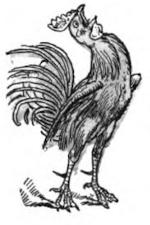
rooster came strutting along that way.
“How pretty you are, Miss Ant! Will you
marry me?” said the rooster.
“Sing,” said the ant, “so I may hear your voice.”
The rooster was very proud of his shrill voice
and he crowed with all his might.
“No, no,” cried the ant, “I’ll not
marry you, Mr. Rooster. Your shrill
crow frightens me. Go away.”
The rooster was hardly out of sight
when a big dog came trotting that way.
“How pretty you are, Miss Ant! Will you
marry me?” said the dog.
“Sing,” said the ant, “so I may hear your
voice.”
The dog was very proud of his voice
and he barked with all his might.
“No, no,” cried the ant, “I’ll not
marry you, Mr. Dog. Your sharp bark
frightens me. Go away.”
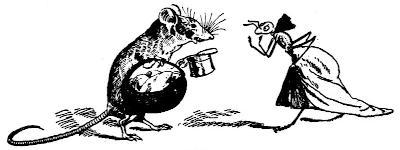
After a time a wee little mouse came
frisking that way.
“How pretty you are, Miss Ant! Will you
marry me?” said the mouse.
“Sing,” said the ant, “so I may hear your voice.”
Now the wee little mouse was not at all proud
of his voice. But he squeaked as sweetly as he
could, “Wee, wee, wee!”
“Yes, yes,” cried the ant, “I’ll marry you,
dear Mouse. Your sweet little voice pleases me.
Come right in.”
In scampered the mouse.
The ant gave him two pieces of money, for she
had spent only one for her ribbon.
He hurried away to the store, and came quickly
back bringing apples and bread.
Mrs. Ant Mouse now sat down to a feast.
Mr. Mouse ate the crusts and the seeds, so
nothing was lost.
Songs of Life — THE BROOK — THE LITTLE BROOK — CALLING THE VIOLET — THE WIND — THE WIND — THE WIND — THE LEAF’S JOURNEY — SWEET AND LOW — SLEEP, BABY, SLEEP! — STARS AND DAISIES — LADY MOON
(fl ies)
sk ies
branch es
riv er
(l ove)
ab ove
Down from the hillside,
Sparkling and bright,
Rushes the little brook,
In the sunlight.
On through the meadow,
Where the flowers hide,
With skies bright above it,
Now its waters glide.
Tall trees beside the brook,
Their branches o’er it throw,
As through the quiet woodland,
The sparkling waters flow.
So it hurries down the hillside,
And across the meadow sweet,
And through the shady woodland,
Till the river it shall meet.
(l ift)
sw iftly
(th is)
wh is per
(gr ass)
p ass
mur murs
talk
(spl ash)
d ash
fl ash
ash
See the little brook rushing down the steep
hillside!
How it hurries!
How it leaps over the falls!
Hear it dash and splash among the rocks!
See its waters flash and sparkle in the sun!
“Stop, stop, little brook! Wait, I want to talk
with you.”
“No, no, I must hurry on. I have a long way
to go.”
“I will go with you, then. I will run along
your banks. Please do not hurry so. I can
hardly keep up with you.”
Now we come to the wide meadow.
Here the little brook flows more slowly and
quietly.
But it never stops.
It must flow ever on and on.
Bright flowers are hiding along its banks.
They peep out from the grass.
They look into the clear flowing water.
“Stay, little brook, play with us,” they
whisper.
“Why do you always hurry so? Are you not
weary?”
“No, no, I am never weary, never tired,” murmurs
the brook.
“I never stop to play.
It is play for me to rush swiftly down the
steep hill.
It is fun to flow gently across the meadow.
I like to see you peeping over my banks as I
pass.
But I cannot stop.
I must hurry on to meet the river.
Good-by, sweet flowers, good-by.”
Now the brook glides into the woodland.
Here the sad willows droop over the gliding
waters.
High above them tower the oak, the ash, and
the pine trees.
“Do not hurry, little brook,” whisper their
leaves.
“Are you not tired?
You have come a long way.
Here the bright sun never comes.
Stay with us, and we will shade you.
Rest a while under our spreading branches.
In the meadow the burning sun is so hot.
But here it is cool.
Why can you not stay with us?
Why must you always hurry on?”
“Because I have to meet the river.
I love your wide spreading branches.
I love the gentle murmur of your green leaves.
I love your cool shade.
You are very kind to me.
But I cannot stay with you.
The great river needs me.
I shall have to hurry on.
Good-by, noble trees.
Good-by, drooping willows.”
So the never resting brook rushes, and glides
and flows on forever.
mos sy
don’t
Dear little Violet,
Don’t be afraid!
Lift your blue eyes
From the rock’s mossy shade.
All the birds call for you
Out of the sky;
May is here waiting,
And here, too, am I.
Come, pretty Violet,
Winter’s away;
Come, for without you
May isn’t May.
Down through the sunshine
Wings flutter and fly;
Quick, little Violet,
Open your eye!
—Lucy Larcom.
(m oss y)
t oss es
height
up ward
(w hen)
w hen ce
(sh all)
v all ey
(c oats)
g oats
trav erse
whith er
Which way does the wind blow,
And where does he go?
He rides o’er the water
And over the snow;
O’er wood and o’er valley,
And over the height—
Where goats cannot traverse
He taketh his flight.
He rages and tosses,
And bare is the tree,
As when you look upward
You plainly can see;
But from whence he comes,
Or whither he goes,
There is no one can tell you,
There is no one who knows.
—Mary Lamb.
nei ther
trem bling
(h ow)
b ow
Who has seen the wind?
Neither I nor you;
But when the leaves hang trembling,
The Wind is passing through.
Who has seen the wind?
Neither you nor I;
But when the trees bow down their heads,
The Wind is passing by.
dif fer ent
young
la dies
skirts
I saw you toss the kites on high
And blow the birds about the sky;
And all around I heard you pass,
Like ladies’ skirts across the grass—
O wind, a-blowing all day long,
O wind, that sings so loud a song!
I saw the different things you did,
But always you yourself you hid.
I felt you push, I heard you call,
I could not see yourself at all—
O wind, a-blowing all day long,
O wind, that sings so loud a song!
O you that are so strong and cold,
O blower, are you young or old?
Are you a beast of field and tree,
Or just a stronger child than me?
O wind, a-blowing all day long,
O wind, that sings so loud a song!
—R. L. Stevenson
jour ney
(f ish)
w ish ed
eight
(l og)
fr og s
leaped
(st ream)
d ream ed
On the steep hillside grew a tall ash tree.
Right on the bank of the rushing brook it grew.
Its branches spread far out across the little
stream.
Its leaves looked down into the flashing water.
There, when the sun shone brightly, they saw
leaves looking up at them.
They called these “water leaves.”
The little tree leaves wished to go to the water
leaves.
Many of them had already fluttered down.
But one leaf, very young, could not let go her
hold of the twig.
At last a raging wind tore away the little leaf.
Over and over she turned.
Down, down, down, she fell.
She was so afraid the wind would carry her
away.
But the friendly stream leaped up the rocks to
meet her.
It bore her away, swiftly but gently.
The little leaf was afraid. She was lonesome.
The dear little “water leaves” were nowhere to
be seen.
“Don’t be afraid, little leaf,” murmured the
kind brook.
“I will give you a fine ride.
And I’ll talk to you all the time.
I’ll tell you all about the things we pass.
Here we are, already in the meadow.
Now I don’t have to hurry.
See the pretty flowers peeping over my banks.
They all love me.
I give them cool water to drink.
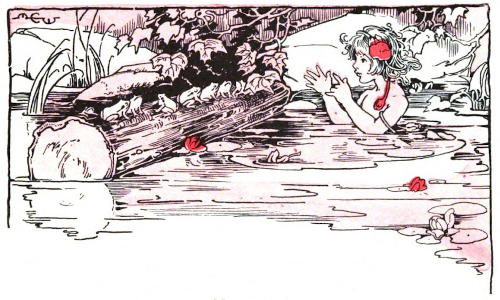
Here we go past the old mossy log.
Just see the frogs on it!
They are all in a row.
One, two, three, four, five, six, seven, eight,
of them!
They love me, too.
When anything makes them afraid, they leap
into me.
They hide in some of my deep pools.
Here is the shady woodland.
Now I glide more slowly.
Soon I shall meet the great river.
I will not carry you into it.
For there you would be afraid.
I will land you here with lots of other leaves.”
And the stream pushed her gently upon the low
bank of sand.
“Good-by,” he murmured; “good-by, little
leaf.”
And the little leaf lay quietly thinking.
How many different things she had seen!
She never dreamed there were so many things
in the whole world.
west ern
roll ing
fa ther
(p ea)
s ea
br ea the
Sweet and low, sweet and low,
Wind of the western sea,
Low, low, breathe and blow,
Wind of the western sea!
Over the rolling waters go,
Come from the dying moon and blow,
Blow him again to me;
While my little one, while my pretty one, sleeps.
Sleep and rest, sleep and rest,
Father will come to thee soon;
Rest, rest, on mother’s breast,
Father will come to thee soon;
Father will come to his babe in the nest,
Silver sails all out of the west,
Under the silver moon;
Sleep, my little one, sleep, my pretty one, sleep.
—Tennyson.
(dr ess)
gu ess
shep herd ess
Sleep, baby, sleep!
Thy father watches his sheep;
Thy mother is shaking the dreamland tree,
And down comes a little dream on thee.
Sleep, baby, sleep!
Sleep, baby, sleep!
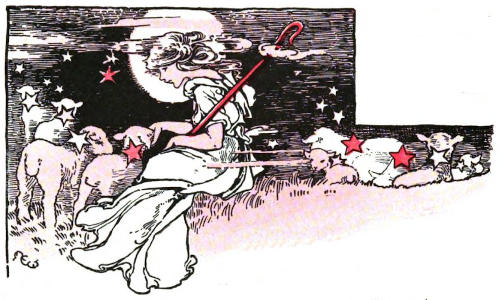
The large stars are the sheep;
The little stars are the lambs, I guess;
The gentle moon is the shepherdess.
Sleep, baby, sleep!
— From the German.
(t alk)
w alk
di a mond
Twinkle, twinkle, little star,
How I wonder what you are,
Up above the world so high,
Like a diamond in the sky.
Do you know what daisies are?
Do you know what stars are?
I will tell you what I think.
At night we see the stars shining in the sky.
There are so very many of them, more than we
can count.
I think the sky is a beautiful meadow.
And the stars are little white daisies growing
in the sky meadow.
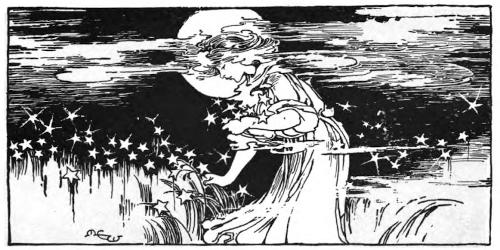
Sometimes the moon comes into the meadow.
She is a beautiful lady.
All night she walks among the flowers.
She gathers the little sky daisies.
In the morning we cannot see the stars.
Where are they?
In the meadow near our home are many bright-eyed
daisies.
There are so very many of them, more than we
can count.
How did they get there?
Where did they come from?
Daisies look like stars, you know.
So I think the lady moon threw them down
from the sky.
rov ing
pale
Lady Moon, Lady Moon, where are you roving?
Over the sea.
Lady Moon, Lady Moon, whom are you loving?
All that love me.
Are you not tired with rolling, and never
Resting to sleep?
Why look so pale and so sad, as forever
Wishing to weep?
Ask me not this, little child, if you love me;
You are too bold;
I must obey my dear Father above me,
And do as I’m told.
Lady Moon, Lady Moon, where are you roving?
Over the sea.
Lady Moon, Lady Moon, whom are you loving?
All that love me.
—Lord Houghton.
With Nature’s Children — THE LITTLE SHEPHERDESS — DISCONTENT — BELLING THE CAT — THREE OF US KNOW — THE DANDELION — THE MAGPIE’S LESSON — THE BLUEBIRD — THE WOLF AND THE STORK — THE INDIAN MOTHER’S LULLABY
soft
taste
awoke
lost
(s eek)
ch eek
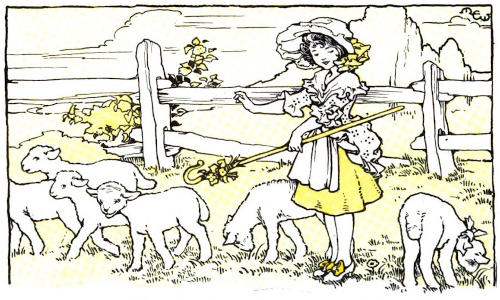
Little Bo-peep has lost her sheep
And can’t tell where to find them;
Leave them alone and they’ll come home
Bringing their tails behind them.
One morning a pretty little shepherdess drove
her flock of sheep to the meadow. There she
watched them while they ate the fresh, green
grass. How sweet it tasted to the hungry sheep!
A large dog went with the shepherdess to help
care for the sheep. He was the shepherd.
The shepherd let no lamb go astray. If one got
too far from the flock, Mr. Shepherd ran after
him.
“Bow-wow! Go back!” cried the shepherd.
The shepherdess took good care of her flock, too.
She led them where the grass was greenest and
sweetest.
When noon came all the sheep had eaten
enough. So they lay down quietly in the cool
shade of some old oak trees. Little Bo-peep
lay down too, with her good shepherd dog beside
her.
How cool and still it was there! Little
Bo-peep could hear only the gentle rustling of
the leaves overhead. She could feel only the
soft wind on her cheek.
The wind blew more and more softly; the
leaves rustled more and more gently. Soon little
Bo-peep was fast asleep.
“Bo-peep, Bo-peep, where are you?”
“Bow-wow, bow-wow, bow-wow-wow!”
“Bo-peep, Bo-peep!”
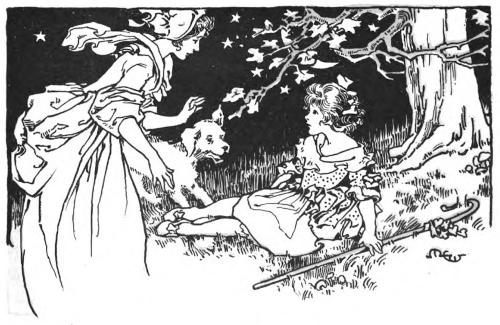
Little Bo-peep awoke with a start. She sat upright,
her eyes wide open. Not a sheep could she
see. Her dog was not beside her. It was dark;
the stars were twinkling overhead. How frightened
the little shepherdess was!
“Bow-wow!”
“Bo-peep, Bo-peep! Where are you, child?”
Surely that was her mother’s voice.
“Here, mother, here I am, under the big oak
tree!” called Bo-peep.
Up rushed the dog, and mother followed close
behind.
“Where are my sheep, mother? I fear they
are lost.”
“Where is my little Bo-peep? I feared she
was lost.”
“Here is your Bo-peep, dear mother. How
long I must have slept!”
“Your sheep are all safe at home. Old Rover
drove them in long ago.”
This is the way Bo-peep lost her sheep; this is
the way she found them. And this is the way Bo-peep
was lost; and this is the way she was found.
(l azy)
cr azy
swal lows
to geth er
pleas ant
dull er
(b ear)
w ear ing
(g ave)
s ave
br ave ly
June
(g ather)
r ather
per haps
hon est
pas sion
col or
Down in the field, one day in June,
The flowers all bloomed together,
Save one, who tried to hide herself,
And drooped—that pleasant weather.
A robin, who had flown too high
And felt a little lazy,
Was resting near a buttercup,
Who wished she were a daisy.
For daisies grow so trim and tall;
She always had a passion
For wearing frills around her neck,
In just the daisies’ fashion.
And buttercups must always be
The same old, tiresome color,
While daisies dress in gold and white,
Although their gold is duller.
“Dear robin,” said this sad young flower,
“Perhaps you’d not mind trying
To find a nice white frill for me
Some day, when you are flying.”
“You silly thing,” the robin said,
“I think you must be crazy;
I’d rather be my honest self
Than any made-up daisy.
You’re nicer in your own bright gown;
The little children love you;
Be the best buttercup you can,
And think no flower above you.
Though swallows leave me out of sight,
We’d better keep our places.
Perhaps the world would go all wrong,
With one too many daisies.
Look bravely up into the sky,
And be content with knowing
That God wished for a buttercup
Just here, where you are growing.”
—Sarah Orne Jewett.
sn ug
d ug
aw oke
sp oke
fam i ly
life
pounce
h ole
st ole
warn ing
st eal
m eal
g ood
st ood
straight
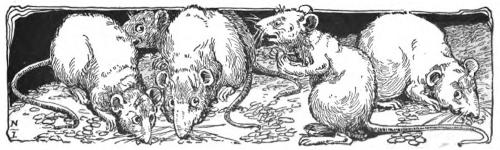
A family of rats had their home in a barn.
They made many snug nests in the warm hay.
They dug holes through the hay from nest to nest.
They ran in and out and all about the barn.
They had nothing to fear.
When they were hungry they could always find
nice grain in the stalls. They became very fat.
And they were as happy a family of rats as one
could wish to see.
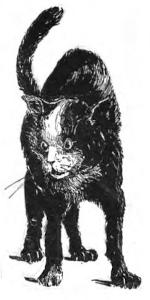
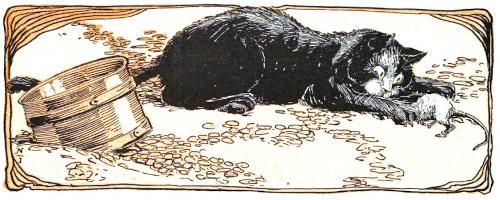
But one day a big black cat found the rats’ barn.
That was a sad day for the rat family!
This cat was not fat and he was not happy.
He was very thin, very cross, and very hungry.
One thing he liked to eat best
of all things in the world—rats.
How he did love nice, fat, happy
rats! At last he had found them,
a whole big family of them!
This hungry, greedy cat now
had rat for breakfast, rat for dinner,
and rat for supper. And
sometimes he had rat between meals.
Very soon this cat began to grow fat and happy.
But happy cats make unhappy rats. While
this cat grew fat, these rats grew thin.
Yet in the stalls there was just as much grain
as ever. But it was only a very hungry rat that
dared go for it. For no rat could tell when the
cat might pounce upon him.
That sly cat stole about without a sound.
The most watchful rat could hear nothing, could
see no living thing.
Then, pounce! The wicked cat’s claws held
him fast.
So, many a poor rat went to the stall, and
never came back. And the rat family was growing
smaller day by day.
At last the wise old rats saw that something
must be done. So they called a meeting of the
whole family of rats, as many as were still
alive.
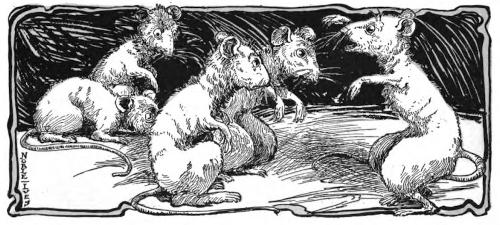
When all had come together in a safe place and
were still, the oldest and wisest rat rose up on his
hind legs.
He stood up very straight, very tall, and very thin.
“My dear brothers and sisters, my dear children
and grandchildren!” began the wise old rat.
“You all know the one fear of our lives.”
Every rat trembled.
“That wicked cat has grown fat and sleek feeding
on your brothers, your mothers, your wives,
and your children.
No one of you knows when his turn may come
to make a meal for that ever hungry monster.
He steals upon you without warning.
He is never seen, he is never heard, until it is
too late.
But you were not called together to hear what
you already know only too well.
You were called here to do something to make
your lives safer and happier.
What can be done? Who has a plan?”
The old rat waited.
All the other rats looked from one to another,
but no one spoke.
“Well, then,” said the wise old rat at last,
“listen to me.
If we only knew where the cat was, we could
not be caught. If we could only hear him coming,
we might get out of his reach.
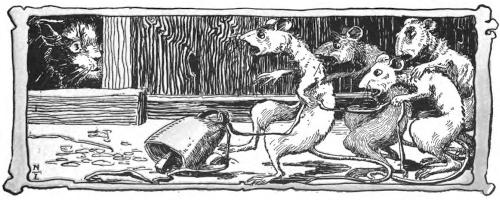
Now, my plan is this. We will hang a bell to
that cat’s neck.”
“The very thing! Hurrah! Hurrah!” cried
all the rats together.
“Why haven’t we thought of that before?
No more of us will go to make dinners for
that old cat.
Now, for all the corn we can eat!”
And away sprang the hungry rats for the stalls.
“Stop! Stop!” cried the wise old rat. “Back
to your places!
The bell isn’t on the cat’s neck yet.”
Slowly and sadly the starving rats settled back.
“Now,” the old rat went on, “who will tie the
bell around the cat’s neck?”
“Not I! Not I! Not I!” squeaked the poor
frightened rats.
And they trembled all over at the very thought.
Then they sat very still and looked at each
other.
Oh! how hungry they were! How sweet that
yellow corn in the stall would taste.
One by one they began to steal away softly.
Where do you think they were going?
Rat families still live in barns.
Cats still feed upon them.
But no rat has ever tried to make life safer by
belling a cat.
bal lad
se crets
Who are my playfellows?
Wait, you shall see;
Sometimes a little bird,
Sometimes a bee.
All through the summer world
Gayly we go.
Where is the greenest close,
Where is the sweetest rose,
Three of us know.
Bee seeks the rose’s heart,
Bird seeks the tree,
I seek a little brook
Clear as can be.
It singeth all day long
Sweetly and low,
Ballad of sun and star;
What its song secrets are
Three of us know.
Bee takes the honey home
To the Queen bee;
Bird seeks a nest that hides
High in the tree;
I seek a little house
Where sweet vines grow.
What in God’s world is best—
Trees, flowers, home, and rest—
Three of us know.
—Marie Van Vorst
gyp sy
gild
idle
Little Gypsy dandelion,
Dancing in the sun,
Have you any curls to sell?
“Not a single one!”
Little idle dandelion
Then I’ll mow you down.
What is it you’re good for, pray,
With your golden crown?
“Ah! I gild the fields so green
In the pleasant spring,
Shining like the morning star
With the light I bring.”
ma ple
mean
learn
hooted
ea gle
(en ough)
r ough
(gr owl)
owl
pa tient
(h ome)
d ome
(l eaves)
eaves
w eave
o ri ole
cov er
troub le
moun tain
(b ud)
m ud
yon der
choose
roofs
build
(afr aid)
p aid
Years and years ago—ever so many years
ago—only one bird in the whole world knew how
to build a nest. That wise bird was the magpie.
One day all the other birds came to the magpie.
They wanted to learn how to build nests. They
begged the magpie to teach them.
“Indeed, I am glad to teach you,” said Mrs.
Magpie. “Just listen and watch me. First,
you must choose a tall tree, like this great maple.
Then take sticks—”
“A tree,” broke in the bold eagle, “a tree
here in this valley! No
trees nor valleys for me!
My nest shall be on the
highest cliff of yonder
mountain.”
And away flew the eagle
without waiting to hear
more of the magpie’s lesson.
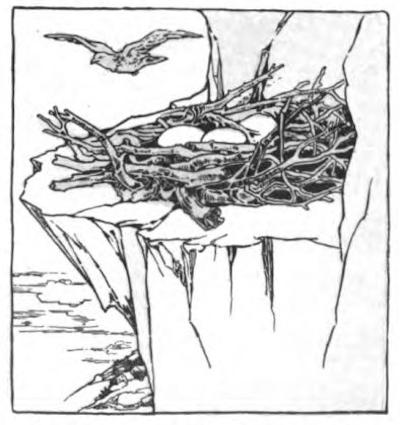
To this day he puts together
a few rough sticks on
a rocky mountain cliff, and
calls them a nest.
The magpie began again.
“Take sticks like these,” she
said, “to a high branch.”
“Are you a fool?” cried
the lark. “Don’t you know
that the first strong wind
will blow your nest to the
ground?” “And the first
boy who comes this way will
throw stones at it,” put in Mrs. Bob-o-link.
“No high branches for us,” sang the lark and
the bob-o-link together. And down they flew
into the tall grass of the meadow. There they
have made their nests ever since.
Mrs. Magpie didn’t even look at the birds flying
away. “Weave the sticks together so, in and
out,” said she cheerfully. “That will make the
bottom of the nest.”
“I don’t mean to set my nest on a branch like
that,” spoke up the oriole. “The wind surely
would blow it off, as the lark just said.”
And the oriole flew away and hung her nest
from little twigs. There you
may see it to-day swinging
in the wind far out at the
end of a long branch.
“Plaster the inside of your
nest with mud,” Mrs. Magpie
went on again. “Then
line it with soft grass, so.”
“Dear, dear, so much work to make a nest!”
yawned the whip-poor-will. “I’m not going to
take the trouble.” And that lazy bird hasn’t
made a nest from that day to this. She just lays
her eggs in a hollow on the ground, or perhaps on
a log.
“Who, who, who would go to all that trouble!”
hooted the owl. “I think I have a better plan.”
She looked very wise, but said no more. You
can guess what her plan was when you find her
eggs in a crow’s or a hawk’s old nest.
“Now take more mud and sticks,” began the
patient magpie once more. “You need to build
a dome over your nest. That is to hide the little
ones and to keep out the rain.”
“Oh, never mind the dome,” said the robin.
“I will cover my little ones with my wings. I
can hide them and keep off
the rain.”
“You are right, Mrs.
Robin,” said the crow. “We
have no use for domes.” And
to this day neither robins nor
crows have built domes over
their nests.
Mrs. Magpie paid no more
heed to these birds than to the others who had
already left her. She went quietly on building
her nest, just as she knew it ought to be built.
Soon it was done, dome and all.
“Indeed, Mrs. Magpie,” said the swallows, “we
like your nest. The dome is a fine thing, but
why should we build it? There are plenty of
domes already built; we need only to make our
nests under them.”
Ever since then some swallows have made their
nests under banks. Others have made theirs
under roofs of open barns; and still others under
eaves.
So all the birds flew away and left Mrs. Magpie
with never a “thank you.” Each one built
her nest as she pleased. And each one thought
her way so much better than the magpie’s.
But the magpie still builds her nest in the top
of a high tree. She makes it of mud and sticks
and covers it with a dome.
cro cus
mer ry
daf fo dils
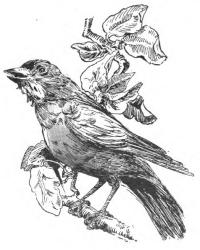
I know the song that the bluebird is singing—
Out in the apple tree where he is swinging.
Brave little fellow! the skies may be dreary;
Nothing cares he while his heart is so cheery.
Hark! how the music leaps out from his throat.
Hark! was there ever so merry a note?
Listen a while and you’ll hear what he’s saying
Up in the apple tree swinging and swaying:
“Dear little blossoms down under the snow,
You must be weary of winter, I know;
Hark! while I sing you a message of cheer:
Summer is coming, and springtime is here.
Little white snowdrops! I pray you arise;
Bright yellow crocus! come, open your eyes;
Daffodils! Daffodils! say, do you hear?
Summer is coming, and springtime is here!”
—Mrs. Emily Huntington Miller.
A greedy wolf got a bone stuck in his throat.
Try as he would, he could not get the bone out.
At last he lay down to die, as he thought. But
just then a stork came that way.
“Good day, Mr. Wolf,” said the stork, kindly.
But the wolf could not answer a word.
The stork soon saw what the matter was, and
with his long beak pulled the bone out of the
wolf’s throat. Without a word, the greedy wolf
sprang up and went on with his dinner.
The stork, who was very hungry, began to pick
up a few morsels of meat.
“Be off with you!” snapped the wolf. “How
dare you touch my meat!”
“Is that the thanks I get for saving your life?”
said the stork.
“Thanks!” answered the wolf, “did I not let
you draw your bill out of my jaws in safety? It
is you who should be thankful.”
roe buck
pap poose
Man i tou
slum ber ing
breezes
prai rie
Rock-a-by, hush-a-by, little pappoose,
The stars come into the sky;
The whip-po’-will’s crying, the daylight is dying,
The river runs murmuring by.
The pine trees are slumbering, little pappoose,
The squirrel has gone to his nest;
The robins are sleeping, the mother bird’s keeping
The little ones warm with her breast.
The roebuck is dreaming, my little pappoose,
His mate lies asleep at his side;
The breezes are pining, the moonbeams are shining
All over the prairies wide.
Then hush-a-by, rock-a-by, little pappoose,
You sail on the river of dreams;
Dear Manitou loves you, and watches above you,
Till time when the morning light gleams.
—Charles Myall.
In Story Land — HOW MRS. WHITE HEN HELPED ROSE — THE SANDMAN — BILLY BINKS
(y ond er)
p ond
(c atch)
scr atch
ques tion
sur prised
(p ush)
b ush
(ever)
cl ever
si lent ly
sud den ly
(h ard)
y ard
(for ward)
earth
worm
chirped
A beautiful rose tree grew in the garden.
Every morning she smiled up at the golden sun.
But one morning when the sun rose, he was surprised
to see that his friend, the rose, drooped
sadly. He sent one of his warm rays down to
earth to find out what the matter was.
“Dear Rose,” said the bright sunbeam, “why
do you droop and look so sad?”
“Ah, me!” sighed the rose, “I am so unhappy!
An ugly worm is eating my leaves, and
he will not crawl away.”
The sun felt very sorry for
the rose. “I will not shine,”
he said, “until Rose is happy.”
So he hid behind a dark cloud.
The wind came hurrying
along. “Father Sun,” he cried,
“why are you not shining to-day?”
“Ah, me!” answered the sun, “dear Rose is
so unhappy! An ugly worm is eating her leaves,
and he will not crawl away. I will shine no more
until Rose is happy.”
“I, too, am so sorry,” whispered the wind. “I
will blow no more until Rose is happy.” So saying
he dropped to the earth and was still.
A bird was surprised when the wind stopped.
“Mr. Wind,” he called, “why have you stopped
blowing?”
“Ah, me!” sighed the wind. “Dear Rose is so
unhappy! An ugly worm is eating her leaves,
and he will not crawl away. So Sun will shine
no more and I will blow no more until Rose is
happy.”
“I, also, love Rose,” sang the bird; “and I
will sing no more until Rose is happy.” He flew
away silently to his nest in the oak tree.
“It is not night,” said the old tree; “why
are you not flying and singing,
little bird?”
“Ah, me!” chirped the bird.
“Dear Rose is so unhappy! An
ugly worm is eating her leaves,
and he will not crawl away. So
Sun will shine no more, Wind will
blow no more, and I will sing no
more until Rose is happy.”
“That is all very sad,” whispered
the tree. “I shall drop no more
acorns until Rose is happy.”
Soon the squirrel came to gather some nuts.
But he could find very few.
“Dear Tree,” he chattered, “please drop down
some acorns.”
“No,” answered the tree. “I cannot, now.”
“Why not?” asked the squirrel.
“Ah, me!” rustled the tree. “Dear Rose is so
unhappy! An ugly worm is eating her leaves,
and he will not crawl away. So Sun will shine no
more, Wind will blow no more, Bird will sing no
more, and I will drop no more acorns until Rose
is happy again.”
“And I will work no more,” chirped the
squirrel. “I will run away to my nest in the old
hollow tree.”
On the way to his home the squirrel met
Mrs. Brown Duck.
“Good morning, Mr. Squirrel,” quacked the
duck. “Why are you not working this morning?”
“Ah, me!” replied the squirrel. “Dear Rose is
so unhappy! An ugly worm is eating her leaves,
and he will not crawl away. So Sun will shine no
more, Wind will blow no more, Bird will sing no
more, Oak Tree will drop no more acorns, and I
will work no more till Rose is happy.”
“Then I will swim no more,” said Mrs. Brown
Duck. And she waddled off to the barnyard.
There she met Mrs. White Hen.
“Why do you look so sad, Mrs. Duck?” said
the hen.
“Ah, me!” quacked the duck. “Dear Rose
is so unhappy! An ugly worm is eating her
leaves, and he will not crawl away. So Sun will
shine no more, Wind will blow no more, Bird will
sing no more, Oak Tree will drop no more acorns,
Squirrel will work no more, and I will swim no
more until Rose is happy again.”
“Indeed! Indeed!” cackled Mrs. White Hen.
“Pray tell me how stopping your work will help
Rose. If you wish Rose to be happy, you must do
something for her. Come with me.”
Away hurried the hen and the duck until they
came to the rose. The old hen asked no
questions. She did not even take time to say
“Good morning.” But she cocked her head first
on one side, then on the other, searching through
the leaves of the rosebush with her bright little
eyes. Suddenly she darted forward. “Snap!”
went her bill, and the worm was swallowed.
“There, Mrs. Duck,” clucked the hen, “see
how I have helped Rose and at the same time got
a nice breakfast for myself.”
At once the rose looked up toward the sun and
smiled. Thereupon the sun began to shine.
“If I had only thought,” said the sun, “I
might have burned that worm with my hot rays.”
“And I might have blown him away,” whistled
the wind, springing up suddenly.
“If I had only thought,” sang the bird, “I
might have had a nice fat worm for breakfast.”
“And so might I,” quacked the duck as she
waddled away toward the pond.
The oak tree shook down a great shower of
acorns, and the squirrel hastened to gather them.
They, too, wished they had thought of some way
to help Rose.
But the clever old white hen said nothing at all.
truth
shoes
(oak)
cl oak
The Sandman comes across the land,
At evening, when the sun is low:
Upon his back a bag of sand—
His step is soft and low.
I never hear his gentle tread,
But when I bend my sleepy head,
“The Sandman’s coming!” mother says,
And mother tells the truth, always!
I guess he’s old, with silver hair,
He’s up so late! He has to go
To lots of children, everywhere,
At evening, when the sun is low.
His cloak is long, and green and old,
With pretty dreams in every fold—
His shoes are silken, mother says,
And mother tells the truth, always!
He glides across the sunset hill,
To seek each little child, like me:
Our all-day-tired eyes to fill
With sands of sleep, from slumber’s sea.
I try my best awake to stay,
But I am tired out with play;
“I’ll never see him!” mother says,
And mother tells the truth—always!
—Marie Van Vorst
(d art)
st art le
c ast les
h urr y
p urr
(f elt)
m elt
pres ent ly
en tered
blazed
di rect ly
ter ri ble
dis ap peared
(pl ace)
f ace
(eight)
n eigh ed
(sm ile)
m ile
waul
trav eled
fin ished
hor ri ble
front
ter ri fied
re mem ber
(d ance)
pr ance
(st ar)
f ar ther
(r oof)
h oof
(r oar)
s oar
en e mies
for tune
sau cers
prom ise
broom
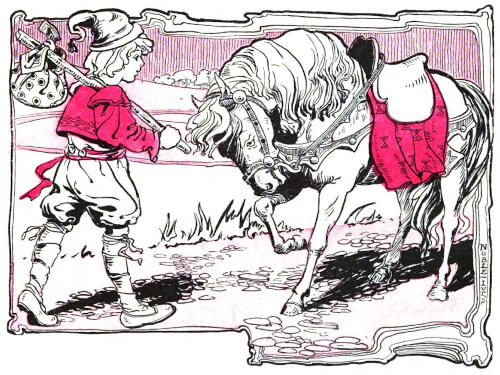
Once upon a time a little boy named Billy
Binks set out to seek his fortune. He traveled
alone for many a weary mile, but at last he met a
little gray pony.
“Where are you going, Billy Binks?” neighed
the pony.
“I am going to seek my fortune,” said Billy
Binks.
“May I go, too?”
“If I take you, will you help me win my
fortune?”
“Yes.”
“How?”
“I will carry you on my back and kick all
your enemies with my hard hoofs.”
“Very well, you may come along.”
Then they went on a little farther and met a cow.
“Where are you going, Billy Binks?” mooed
the cow.
“I am going to seek my fortune,” answered
Billy Binks.
“May I go, too?”
“If I take you, will you help me win my
fortune?”
“Yes.”
“How?”
“I will moo, and toss your enemies on my
sharp horns.”
“Very well, you may come.”
When they had walked on a little farther they
met a dog.
“Where are you going, Billy Binks?” barked
the dog.
“I am going to seek my fortune,” answered
Billy Binks.
“May I go, too?”
“If I take you, will you help me win my
fortune?”
“Yes.”
“How?”
“I will bark, and bite your enemies with my
sharp teeth.”
“Very well, you may come.”
After walking a little farther they met a cat.
“Where are you going, Billy Binks?” mewed
the cat.
“I am going to seek my fortune,” answered
Billy Binks.
“May I go, too?”
“If I take you, will you help me win my
fortune?”
“Yes.”
“How?”
“I will purr, and scratch your enemies with
my sharp claws.”
“Very well, you may come.”
They continued their journey and presently
met a raven.
“Where are you going, Billy Binks?” croaked
the raven.
“I am going to seek my fortune.”
“May I go, too?”
“If I take you, will you help me win my
fortune?”
“Yes.”
“How?”
“I will croak, and peck your enemies’ eyes out
with my sharp beak.”
“Very well, you may come.”
On and on they walked till at last they entered
a deep, dark wood. All day they journeyed
through this forest, which grew denser and darker
as night came on.
“We are near a clearing in this wood,” croaked
the raven, who had been soaring above the treetops.
“Let us keep right on.”
Suddenly all were startled by a bright light,
the brightest any of them had ever seen. It
flashed out through the trees directly in front
of them. It fairly dazzled and blinded them.
Then it as suddenly disappeared, and left them
standing terrified in the pitch-black darkness of
the night.
Again the light flashed out, and again disappeared.
“What can it be?” asked Billy Binks, hoarsely,
as soon as he could find his voice.
“Perhaps it is a lamp,” mewed the cat.
“No, it is too bright for a lamp,” answered
Billy Binks.
“It might be a house on fire,” barked the
dog.
“No, if it were, we could see the light all
the time; and besides, there is no house here.
I have flown this way before,” answered the
raven.
“It may be a lighthouse,” said Billy Binks.
“No,” replied the raven, “the sea is miles from
here. You all keep still while I fly over the treetops
and find out what it is.”
Billy Binks and his animal friends kept ever so
quiet, while the raven flew up and quickly disappeared
in the darkness. It seemed hours before
he returned.
“Oh, my friends,” croaked the raven, alighting
in their midst at last, “you never saw such a
sight! There’s the most horrible, monstrous hob-goblin
over there in the clearing. He has a nose
as long as a broomstick—”
“Oh! Oh! Oh!” cried Billy Binks and his
friends.
“—Eyes as big as saucers and as green as
the sea—”
“Oh! Oh! Oh!” cried Billy Binks and his
friends.
“—And a mouth big enough to swallow us all!”
“Oh! Oh! Oh!” cried Billy Binks and his
friends.
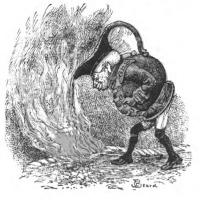
“He has a great fire blazing among some rocks.
That is the light you saw. When he walks in
front of it you cannot see the light. That is why
you thought it disappeared.”
“I see! I see! I see!” said Billy Binks and
his friends.
“He is busy melting gold, and he has piles of
gold and jewels hidden in his cave—”
“Ah, ha!” laughed Billy Binks, as he climbed
bravely upon his gray pony.
“His cave is full of nice plump field mice—”
“Mew! Mew!” cried the cat, as she scrambled
up behind Billy Binks.
“In the bushes back of the cave live many rabbits—”
“Bow-wow!” barked the dog, as he bounded
toward Billy Binks.
“Near the cave is a large green meadow, with
the sweetest grass and the coolest brook in the
world—”
“Moo! Moo!” lowed the cow, as she, too, hurried
up beside Billy Binks.
“And there is a tall tree that will make a fine
home for me,” finished the raven, as she flew over
Billy Binks’s head.
“Come on, friends,” whispered Billy Binks,
boldly. “It is time to win my fortune. Remember
you have all promised to help me.”
“Yes, yes, I’ll help. And I think I see my fortune,
too,” answered each of the animals, now as
bold as Billy Binks.
Softly, quietly, and slowly they crept through
the forest. Presently they came to the clearing.
There stood the ugly, black hob-goblin, bending
over his fire. His back was turned toward them.
“Now!” shouted Billy Binks, and they all
rushed at the terrible monster.
The raven dashed into his face and pecked at
his large green eyes.
The cat scratched great gashes in his long nose.
The dog bit him, and the horse kicked him.
The enraged cow rushed upon him with lowered
head, caught him on her horns, and tossed him as
high as the treetops.
Then the cow began to bellow.
The dog began to howl.
The cat began to waul.
The raven began to caw.
The pony began to prance.
And Billy Binks began to shout with all his
might.
Such a frightful din that old hob-goblin had
never heard! He picked himself up from the
sharp rocks where he had fallen, and dashed away
with might and main through the forest. If he
hasn’t stopped, he is running still.
“Ho, ho!” cried Billy Binks, springing from
the gray pony and running to the mouth of the
cave. “This heap of gold and this pile of jewels
will do for my fortune. If you carry them safely
home for me, Pony, I will build you a beautiful
stable, and you shall have a full crib of oats before
you all the rest of your life. That will be
your fortune.”
“This cave, full of good, plump mice, is my fortune,”
called the cat, as she pounced on the first
unlucky mouse.
“All these rabbits shall be my fortune,” barked
the dog, as he set off in hot haste after a fleeing
bunny.
“And this green meadow is my fortune,”
mooed the cow, as she began to crop the sweet
grass.
“Who could have a better fortune than this?”
croaked the raven, flying to the top of a tall tree.
So Billy Binks said “Good-by” to his friends,
and left them each with his fortune. He quickly
bagged the gold and jewels, threw them across the
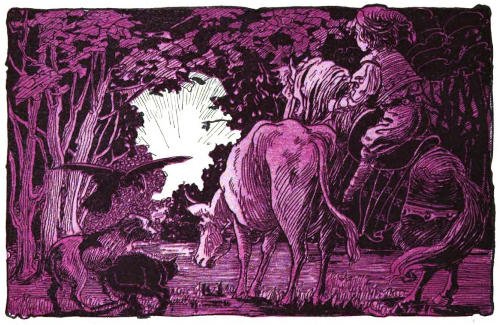
pony’s back, and mounting, hurried off homeward.
The pony smelled oats all the way, while Billy
Binks saw castles and lands on all sides.
Some Things to think About — WHEN THE LITTLE BOY RAN AWAY — HOW THE BEAN GOT ITS BLACK SEAM — FRIENDS — HELP ONE ANOTHER
(s ist er)
tw ist ed
wan der ed
aw ful
(r oam)
f oam ing
ech o
(under)
th under
par ents
trun dle
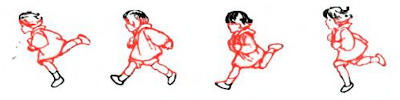
When the little boy ran away from home,
The birds in the tree-top knew,
And they all sang, “Stay!” but he wandered away
Under the skies of blue.
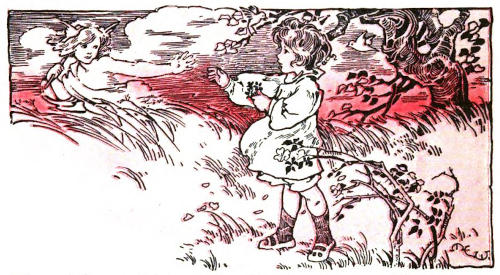
And the wind came whispering from the tree,
“Follow me, follow me!”
And it sang him a song that was soft and sweet
And scattered the roses before his feet
That day, that day,
When the little boy ran away.
The violets whispered, “Your eyes are blue
And lovely and bright to see,
And so are mine, and I’m kin to you,
So dwell in the light with me.”
But the little boy laughed, while the wind in glee
Sang, “Follow, follow me!”
And the wind called the clouds from their home in the skies
And said to the violet, “Shut your eyes!”
That day, that day,
When the little boy ran away.
Then the wind played leapfrog over the hills
And twisted each leaf and limb;
And all the rivers and all the rills
Were foaming mad with him;
And ’twas dark as the darkest night could be,
But still came the wind’s voice, “Follow me!”
And over the mountain and up from the hollow
Came echoing voices with, “Follow him; follow!”
That awful day,
When the little boy ran away.
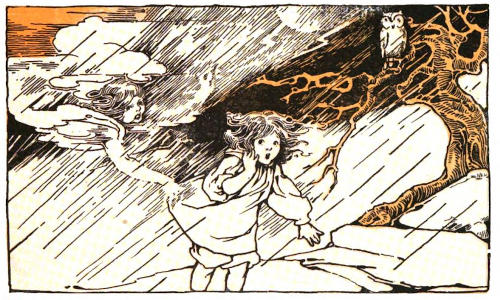
Then the little boy cried, “Let me go, let me go!”
For a scared, scared boy was he.
But the thunder growled from a black cloud, “No!”
And the wind roared, “Follow me!”
And an old gray owl from a tree-top flew,
Saying: “Who are you-oo? Who are you-oo?”
And the little boy sobbed, “I’m lost away!
And I want to go home where my parents stay.”
O, the awful day
When the little boy ran away!
Then the moon looked out from a cloud and said:
“Are you sorry you ran away?
If I light you home to your trundle bed,
Will you stay, little boy, will you stay?”
And the little boy promised—and cried and cried—
He never would leave his mother’s side,
And the moonlight led him over the plain;
And his mother welcomed him home again.
But, O, what a day
When the little boy ran away!
(ea gle)
ea ger
(h ush)
cr ush
mo ment
quar rel
coun try
(r ope)
h ope
(m ean)
b ean
gur gling
four
pour ing
sew ed
hul lo
cru el
tor rent
both er
a las
in stant ly
Once upon a time there was a poor old woman
living in a village of a far country. She had
gathered some beans and was making ready to
cook them. She built a fire of sticks, but, as
these were damp, they did not burn well. So
she thrust in a handful of dry straw. Now the
flames leaped up, and the sticks snapped and
crackled in the blaze.
A live red coal flew out of the fire, fell on the
ground beside a straw, and lay there smoking.
Just then a bean dropped from the pot which the
old woman was filling, rolled away, and came to
rest close to the coal and the straw.
“Hullo, Mr. Coal,” said the straw. “How you
smoke! Are you frightened? Where did you
come from?”
“I just sprang out of that fire,” answered the
coal. “Had I not jumped just as I did, I should
now be nothing but ashes. My, look at that
blaze!”
“I, too, jumped in the nick of time,” spoke up
the bean. “That cruel old woman was just pouring
me into the pot when I leaped over the
edge, and here I am.”
“Yes, here you are, silly thing,” broke out the
coal and the straw together. “But what are you
going to do? As soon as the old woman turns
around she will spy you, then back you’ll go
into the pot. It’s hotter now than when you
left it.”
“Don’t bother about me; think of yourselves,”
answered the bean, angrily. “When the old
woman picks me up, she’ll tread on you, Mr.
Coal, and crush your life out. And you, Mrs.
Straw, she’ll stick into the blaze. It’s hotter
there than in the pot.”
“Come, come,” said the straw, softly, “let’s not
quarrel. Let’s be friends and stick together.
Perhaps we can save ourselves yet.”
“You are quite right, Mrs. Straw,” said the coal.
The bean said nothing, but she listened eagerly
to the plans of the two others. These soon agreed
to travel together to a far country, where they
hoped to find their fortune. They set out without
delay, and the bean rolled along behind.
Soon the three travelers came to a little gurgling
brook. It seemed to them a mighty rushing
and roaring torrent.
“Oh, dear, what shall we do now?” asked the
bean, speaking for the first time since the journey
began. “We can never get across these awful
waters. Hear them thunder down the rocky
cliffs!”
“Don’t worry, little Bean,” said the straw,
proudly. “I’ll help you and Mr. Coal across in a
twinkling.”
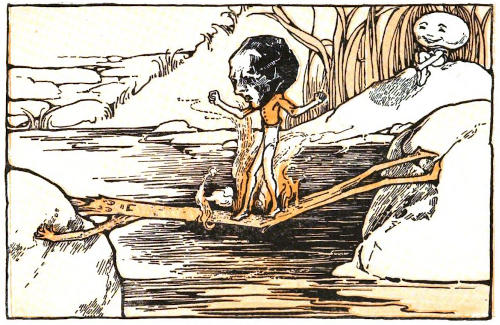
Thereupon the straw laid herself across the
stream. She was just long enough to reach from
bank to bank.
“Now walk over the bridge, Mr. Coal and Miss
Bean,” called the straw.
The coal hastened on to the straw bridge
while the bean watched in wonder. All went
well until the middle of the stream was reached,
when the bridge bent so low under the weight
of the coal and the waters thundered so loudly
that the coal stopped in fright.
The coal stood still for only a moment. But,
alas, that was a moment too long.
The dry straw smoked, burst into a tiny flame,
and broke in two. Down fell the coal into the
water below and was instantly drowned. The
burning straw bridge also fell into the water,
which put out the flames, and the two pieces of
straw went floating away down stream.
All this the little bean saw, watching safely
from the bank. And she thought it the funniest
thing that ever happened. So she laughed and
she laughed—until she burst!
This would have been the end of little Miss
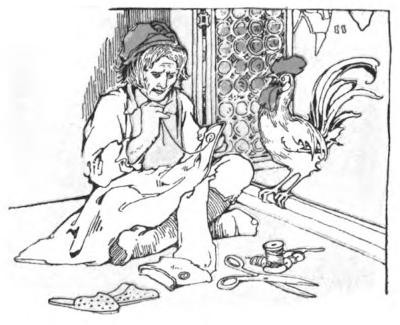
Bean, had not a tailor passed that way just then.
He was sorry for the poor bean, so he picked up
the two parts tenderly, and quickly sewed them
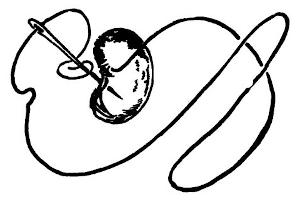
together. But the thread that he used was black.
And ever since that time some beans have a black
seam around them.
(tw ist)
wh ist ling
ferns
North
com fort ed
gent ians
North Wind came whistling through the wood
Where the tender, sweet things grew—
The tall fair ferns and the maiden hair,
And the gentle gentians blue.
“It’s very cold! Are we growing old?”
They sighed, “What shall we do?”
The sigh went up to the loving leaves.
“We must help,” they whispered low.
“They are frightened and weak, O brave old trees!
But we love you well, you know.”
And the trees said, “We are strong—make haste!
Down to the darlings go.”
So the leaves went floating, floating down,
All yellow, and brown, and red,
And the frail little trembling, thankful things
Lay still, and were comforted.
And the blue sky smiled through the bare old trees,
Down on their soft warm beds.
—L. G. Warner.
(m outh)
s outh
splen did
(m ount ain)
f ount ain
“Help one another,” the snowflakes said,
As they cuddled down in their fleecy bed.
“One of us here would not be felt,
One of us here would quickly melt;
But I’ll help you, and you help me,
And then what a splendid drift there’ll be.”
“Help one another,” the maple spray
Said to its fellow leaves one day;
“The sun would wither me here alone,
Long enough ere the day is gone;
But I’ll help you, and you help me,
And then what a splendid shade there’ll be.”
“Help one another,” the dewdrop cried,
Seeing another drop close to its side;
“The warm south wind would dry me away,
And I should be gone ere noon to-day;
But I’ll help you, and you help me,
And we’ll make a brook and run to the sea.”
“Help one another,” a grain of sand
Said to another grain close at hand;
“The wind may carry me out to the sea,
And then, oh, what will become of me?
But come, my brother, give me your hand,
We’ll build a mountain and then we will stand.”
And so the snowflakes grew to drifts;
The grains of sand to a mountain;
The leaves became a summer shade;
The dewdrops fed a fountain.
With our Feathered Friends — THE DROWNING OF MR. LEGHORN — THE STARVING OF MRS. LEGHORN — MR. AND MRS. LEGHORN TO THE RESCUE
(g irl)
wh irl
point
waul
mat ter
(s ea)
r ea son
arm
f arm
heav y
(c ane)
v ane
else
horse
perch
One day Mr. Leghorn, the rooster, and Mrs.
Leghorn, the hen, were out walking. They came
to a wide, deep brook. Mrs. Leghorn, who was
light and quick, flew safely across; but Mr. Leghorn,
who was
heavy and slow,
fell, splash! into
the water.
Mrs. Leghorn
was sure Mr. Leghorn
was drowned.
So, without turning
to see, she flew
screaming and
cackling toward
the farmyard.
“What does ail you, Mrs. Leghorn? Why are
you screaming and cackling so loudly?” asked
the Wind-Mill as Mrs. Leghorn flew past.
“Mr. Leghorn has fallen into the brook and is
drowned. That’s why I am screaming and cackling
so loudly,” replied Mrs. Leghorn.
“What a pity! I’ll swing my arms and creak.
That’s the best I can do for poor Mr. Leghorn.”
And the Wind-Mill
fell to swinging
his arms and
creaking with all
his might.
When the Big
Barn Door heard
the Wind-Mill
creaking and saw him swinging his long arms,
he called out, “What ails you, Wind-Mill? Why
do you swing your arms and creak so?”
“Why, Mr. Leghorn has fallen into the brook
and is drowned, and Mrs. Leghorn is screaming
and cackling. That’s why I swing my arms and
creak,” answered the Wind-Mill.
“Poor Mr. Leghorn, poor Mrs. Leghorn!” said
the Big Barn Door. “I’ll slam and bang. That’s
the best I can do.” And the Big Barn Door
fell to slamming and banging with all his
might.
The Old Red Ox heard the Big Barn Door
slamming and banging, and cried out, “O, Big
Barn Door, why are you slamming and banging
so?”
“Reason enough,” answered the Big Barn Door.
“Mr. Leghorn has fallen into the brook and is
drowned; Mrs. Leghorn is screaming and cackling;
and Wind-Mill is swinging his arms and creaking.
That’s why I am slamming and banging so.”
“How sorry I am,” said the Old Red Ox. “I’ll
paw the ground and bellow. What else can I
do?” And he fell to pawing and bellowing with
all his might.
“What is the matter, Old Red Ox?” asked the
Watch Dog. “Why are you pawing and bellowing
so?”
“Matter enough,” answered the Old Red Ox.
“Mr. Leghorn has fallen into the brook and is
drowned; Mrs. Leghorn is screaming and cackling;
Wind-Mill is swinging his arms and creaking;
and Big Barn Door is slamming and banging.
That’s why I am pawing and bellowing so.”
“O dear me,” said the Watch Dog. “I’ll bark
and whine. That’s all I can do.” And he fell to
barking and whining with all his might.
The Old Gray Horse heard the Watch Dog barking
and whining, and said, “What is the matter
with you, Watch Dog? Why do you bark and
whine so?”
“Wouldn’t you bark and whine if you could?”
answered the Watch Dog. “Mr. Leghorn has
fallen into the brook and is drowned; Mrs.
Leghorn is screaming and cackling; Wind-Mill
is swinging his arms and creaking; the Big Barn
Door is slamming and banging; and the Old Red
Ox is pawing and bellowing. That’s why I am
barking and whining.”
“The poor things!” said Old Gray Horse. “I’ll
prance and neigh. What more can I do?” And he
fell to prancing and neighing with all his might.
The Weather-Vane looked
down from his high perch
and saw the Old Gray
Horse prancing and neighing.
“What’s the trouble,
Old Gray Horse?” he
called out. “Why are
you prancing and neighing
so?”
“Trouble indeed,” answered the Old Gray
Horse. “Mr. Leghorn has fallen into the brook and
is drowned; Mrs. Leghorn
is screaming and
cackling; Wind-Mill
is swinging his arms
and creaking; the Big
Barn Door is slamming
and banging; the
Old Red Ox is pawing
and bellowing;
and the Watch Dog is
barking and whining.
That’s why I am
prancing and neighing
so?”
“O dear, O dear,” said the Weather-Vane, “what
shall I do? I’ll whirl and point. That’s all I
can do.” And he fell to whirling and pointing
with all his might.
Pussy Cat looked up and saw Weather-Vane
whirling and pointing. “O, Weather-Vane,” she
cried out. “Why do you whirl and point so?”
“Because I can do nothing else,” answered the
Weather-Vane. “Mr. Leghorn has fallen into the
brook and is drowned; Mrs. Leghorn is screaming
and cackling; Wind-Mill is swinging his arms and
creaking; the Big Barn Door is slamming and
banging; the Old Red Ox is pawing and bellowing;
the Watch Dog is barking and whining; and
the Old Gray Horse is prancing and neighing.
That’s why I am whirling and pointing so.”
“O, how sad!” said Pussy Cat. “I’ll waul and
squall. That’s the best I can do.” And she fell
to wauling and squalling with all her might.
At this moment, when Pussy Cat was wauling
and squalling, when the Weather-Vane was whirling
and pointing, when the Old Gray Horse was
prancing and neighing, when the Watch Dog was
barking and whining, when the Old Red Ox was
pawing and bellowing, when the Big Barn Door
was slamming and banging, when the Wind-Mill
was swinging his arms and creaking, when Mrs.
Leghorn was screaming and cackling, Mr. Leghorn
flew to the highest rail on the fence and crew,
“Cock-a-doodle-doo,
What’s the matter with you?”
po lite
seized
bun dle
bas ket
dis tance
praise
stretched
of fer ing
shrieked
fi nal ly
faint ly
fierce ly
doz en
smart
bunch
wool
eas y
own
Mr. and Mrs. Leghorn often went nutting. Mr.
Leghorn was very polite and kind to Mrs. Leghorn.
He ran about searching everywhere for
nuts. When he found one he would call to Mrs.
Leghorn, who would hasten to him. Then he
would pick up the nut, roll it over and over, lay
it down, and pick it up again a dozen times, all
the time telling Mrs. Leghorn what a very nice
nut that was, what a good hen she was, and how
smart he was to find nuts for her. At last he
would drop the nut before Mrs. Leghorn, who
would peck it once or twice to make sure that all
Mr. Leghorn had said of it was true, and then
swallow it whole, without once offering to share it
with Mr. Leghorn.
One day Mr. Leghorn found a very large nut,
the largest nut he had ever seen. How proudly
he called to Mrs. Leghorn! It took him a long
time to tell all about that big nut and how he
had found it, to praise Mrs. Leghorn’s goodness,
and to brag about his own smartness. But
finally he finished and turned the nut over to Mrs.
Leghorn. She seized it greedily and was about
to swallow it, but—it
wouldn’t go
down! She tried
again and again, she
stretched her beak
wider and wider, but
it was no use. The
nut was too large.
Mr. Leghorn, who had been watching Mrs.
Leghorn from a
little distance,
became alarmed.
“O, my poor
Mrs. Leghorn,”
he cried, “what
shall I do? You
can’t eat that
nut; you’ll surely
starve. What
shall I do?”
“Run and ask Mr. Wise Owl,” said Mrs. Leghorn.
“He can tell us what to do.”
So away ran Mr. Leghorn to the Wise Owl,
screaming with all his might.
“O, Mr. Wise Owl,” he cried, “my poor Mrs.
Leghorn is starving. She can’t swallow the big
nut. What shall I do?”
“Who, who, who?” hooted the Wise Owl,
blinking his great round eyes.
“Mrs. Leghorn, my Mrs. Leghorn, my own dear
Mrs. Leghorn,” fairly shrieked Mr. Cock. “She
can’t swallow the big nut. She will starve. Can
you tell me what to do?”
Mr. Wise Owl stared straight ahead a moment—it
seemed an age
to Mr. Leghorn—then
answered
slowly, “Yes, Mr.
Leghorn, I can
tell you what to
do. But you
must first bring
me a mouse.”
Away rushed
Mr. Leghorn
to Pussy Cat.
“My good Miss
Pussy Cat,” he
cried, “dear Mrs.
Leghorn is starving. Will you please catch me a
mouse? I want it to take to Mr. Wise Owl, who
is going to tell me what to do.”
“Yes, Mr. Leghorn,” answered Pussy Cat, “I
will catch you a mouse, but you must first bring
me a saucer of milk.”
Off flew Mr. Leghorn to Mrs. Mooly Cow.
“Dear, kind Mrs.
Mooly Cow,” he
said, “poor Mrs.
Leghorn is starving.
Will you
please give me a
saucer of milk?
I want it to take
to Miss Pussy Cat,
who is going to
catch me a mouse
for Mr. Wise Owl,
who is going to
tell me what to
do.”
“Yes, Mr. Leghorn,” answered Mrs. Mooly
Cow, “I will give you a saucer of milk, but you
must first bring me a bundle of corn.”
Away sped Mr. Leghorn to the Farmer.
“O, Mr. Farmer,” said Mr. Leghorn, “Mrs. Leghorn
is starving.
Please will you be
so kind as to cut
me a bundle of
corn? I want it
to take to Mrs.
Mooly Cow, who
is going to give
me a saucer of
milk for Miss Pussy Cat, who is going to catch
me a mouse for Mr. Wise Owl, who is going to
tell me what to do.”
“Yes, indeed, Mr. Leghorn,” said the Farmer,
“I will cut you a bundle of corn, but you must
first bring me a new coat.”
Off hastened Mr. Leghorn to the Tailor.
“O, Mr. Tailor,” cried Mr. Leghorn, “Mrs. Leghorn
is starving. Won’t you please give me a
new coat? I want it to take to Mr. Farmer, who
is going to cut me a bundle of corn for Mrs. Mooly
Cow, who is going to give me a saucer of milk for
Miss Pussy Cat, who is going to catch me a mouse
for Mr. Wise Owl, who is going to tell me what to
do.”
“Yes, Mr. Leghorn,” answered Mr. Tailor, “I
shall be very glad to give you a new coat, but
you must first bring me a pound of wool.”
Away hurried Mr. Leghorn to Mrs. Sheep.
“O, good Mrs. Sheep,” he said, “Mrs. Leghorn
is starving. Do,
please, give me
a pound of wool.
I want it to take
to Mr. Tailor, who is
going to give me a
new coat for Mr. Farmer,
who is going to cut
me a bundle of corn for Mrs. Mooly Cow,
who is going to give me a saucer of milk for Miss
Pussy Cat, who is going to catch me a mouse for
Mr. Wise Owl, who is going to tell me what to do.”
“To be sure, Mr. Leghorn,” said Mrs. Sheep,
“I will give you a pound of wool, but you must
first bring me a bunch of clover.”
Away ran Mr. Leghorn to the Farmer’s Wife.
“O, good, kind Farmer’s Wife,” cried Mr. Leghorn,
“Mrs. Leghorn is starving. Won’t you,
please, pull me a bunch of clover? I want it to
take to Mrs. Sheep, who is going to give me a
pound of wool for Mr. Tailor, who is going to give
me a new coat for Mr. Farmer, who is going to
cut me a bundle of corn for Mrs. Mooly Cow, who
is going to give me a saucer of milk for Miss
Pussy Cat, who is going to catch me a mouse
for Mr. Wise Owl, who is going to tell me what
to do.”
“Yes, yes,” answered the kind Farmer’s Wife,
“I will gladly pull you a bunch of clover, but you
must first bring me a dozen eggs.”
Mr. Leghorn fairly flew back to Mrs. Leghorn,
who was still trying vainly to swallow the large
nut. He seemed to forget all his politeness.
“Where’s your nest, Mrs. Leghorn, where’s
your nest? Tell me this instant!” he shrieked.
Mrs. Leghorn had never told any one where her
nest was. That was her
secret; and she would
not have told her secret
now—not even to keep
herself from starving—had
she not been so frightened at Mr. Leghorn,
who stood glaring at her fiercely. She
thought he had gone mad and would do her harm.
So she answered faintly,
“Under the corner of the barn.”
Away to the corner of the barn rushed Mr.
Leghorn, where he found Mrs. Leghorn’s nest full
of eggs. He took a dozen in a basket and hurried
off to the Farmer’s Wife, who pulled him a bunch
of clover, which he carried to Mrs. Sheep, who
gave him a pound of wool, which he took to Mr.
Tailor, who gave him a new coat, which he
brought to Mr. Farmer, who cut him a bundle of
corn, which he carried to Mrs. Mooly Cow, who
gave him a saucer of milk, which he took to Miss
Pussy Cat, who caught him a mouse, which he
carried to Mr. Wise Owl.
“There, Mr. Wise Owl,” cried Mr. Leghorn, quite
out of breath, “there’s a nice fat mouse. Now tell
me what I shall do for poor Mrs. Leghorn, who is
starving because she can’t swallow the big nut.”
“Who, who, who?” cried Mr. Wise Owl, staring
sleepily at the fat mouse.
“Mrs. Leghorn, she is starving!” screamed Mr.
Leghorn, now quite angry. “She can’t swallow the
big nut. You said
you would tell
me what to do.”
“O, yes,” said
Mr. Wise Owl,
“to be sure,
that’s easy. Just
go and find Mrs.
Leghorn some
smaller nuts.”
o cean
chas ing
urged
(c atch)
scr atch
(pl ace)
p ace
(p ast)
m ast er
(p ond)
be y ond
(ch ild)
w ild ly
scarce ly
(f eel)
h eel
(sm art)
st art
(own)
un kn own
af ter noon
Mr. and Mrs. Leghorn went for a stroll one
afternoon. They had never been far from home
and they soon came into unknown places. But
they wandered on and on, chasing grasshoppers
and crickets, and now and then stopping to
scratch for a worm, until they finally came to
the bank of a frog pond.
“Look, Mrs. Leghorn,” said Mr. Leghorn,
“there’s the ocean, the wide, blue ocean that
we have heard so much about.”
“Indeed it is,” answered Mrs. Leghorn. “Could
you believe we had come so far!”
Splash!... Splash!
“What was that?” cried Mrs. Leghorn.
“What was that?” cried Mr. Leghorn.
“Help me out! Help me out!” came a deep
voice from the pond.
“Me, too! Me, too!” came a little, peeping
voice from the same place.
“Why, that’s our good master and his little
boy,” cried Mr. and Mrs. Leghorn together.
“They’ve fallen into
the ocean!”
“Help me out!
Help me out! Me,
too! Me, too!” came
again from the pond.
“Yes, good Master, yes,” screamed Mr. Leghorn,
“we’ll help you. But what shall we do?”
“Bring a rope! A rope!” came the answer.
“A rope, a rope!” cried Mr. Leghorn. “O,
where shall we find one?”
“Just beyond! Just beyond!”
Mr. Leghorn ran wildly along the bank with
Mrs. Leghorn following close on his heels. They
looked to the right, and they looked to the left;
they looked up, and they looked down; but no
rope could they see.
“Hurry up! Hurry up!” came from the
water.
“O dear, O dear!” cried Mrs. Leghorn.
“O, where is that rope?” cried Mr. Leghorn.
“Follow your nose! Follow your nose!” came
the voice.
At that, Mr. Leghorn flew along faster than
ever. Mrs. Leghorn could hardly keep in sight
of him. But no rope could they find.
“Hurry up! Hurry up!” came from the pond
and urged them on, whenever they began to
slacken their pace.
“Going down! Going down!” came the deep
voice.
“Me, too! Me, too!” came the peeping voice.
“O, they are drowning, they are drowning!”
screamed Mr. and Mrs. Leghorn.
“Let ’em drown! Let ’em drown!” came the
voice.
“What!” cried Mr. Leghorn.
“What!” cried Mrs. Leghorn.
“Better go home! Better go home!” called the
deep voice.
Mr. and Mrs. Leghorn stood staring at each
other. They could scarcely believe their ears.
“Go to roost! Go to roost!” came the voice.
Mr. and Mrs. Leghorn began to look silly. The
sun had set and it was growing dark. They
turned about and started off homeward.
“You’re fooled! You’re fooled!” sounded after
them as they left the banks of the pond.
“He told the truth that time, even if he is
only a frog,” said Mrs. Leghorn.
GOOD-BYE
Vocabulary
Most of the words used in the preceding books of the Aldine Series are used
frequently in this Second Reader. They are not listed in this vocabulary,
however; here are given only the words used for the first time in this book.
The number at the left of a word refers to the page on which the story begins in
which that word is first used. New words are listed in the text immediately
before the lesson in which they are used.