| ARTIST. |
SUBJECT. |
SITUATION. |
| Cano. | Virgin and Infant Christ. | Apartments of Princess. |
| |
| Carducci. | Portraits of Saints. | Relicario of Church. |
| | Arts and Sciences (fresco). | Library. |
| |
| Coello. | Altarpieces. | In Chapels. |
| | Father Sigüenza. | Upper Prior’s Chamber. |
| |
| El Greco. | St. Maurice. | The Old Church. |
| |
| Giordano. | Life of David. | Ceiling of Choir of Church. |
| | Eight Frescoes. | Dome of Church. |
| | San Juan. | Ante-Sacristy. |
| | Frescoes. | Staircase of Monastery. |
| |
| Goya. | Frescoes of Spanish Customs. | Palace. |
| |
| Holbein. | San Geronimo. | Lecture Hall. |
| |
| Juanes. | Virgin and Infant. | Apartments of the Queen. |
| |
| Navarrete | Our Lady and San Juan. | In Church near Prior’s Seat. |
| (El Mudo). | Crucifixion. | Library of Church. |
| | Abraham and Angels. | Salas de los Capitulos. |
| | San Geronimo. | ” |
| | Birth of Christ. | Upper Gallery of Cloisters. |
| | Appearance of Jesus. | ” |
| | Burial of San Lorenzo. | Lecture Hall. |
| |
| Pantoja. | Various. | Oratories of Church. |
| | Carlos V. | Lower Prior’s Chamber. |
| | Philip II. | Library. |
| | Philip III. | Apartments of Princess. |
| |
| Reni. | Scriptural. | Sacristy of Church. |
| |
| Ribera. | San Geronimo. | Ante-Sacristy of Church. |
| | Birth of Christ. | Salas de los Capitulos. |
| | Philip II. | Apartments of the Prince. |
| | San Antonio. | Workroom of Palace. |
| Teniers. | Various Frescoes. | Palace. |
| |
| Tibaldi. | Birth of Christ. |
| | Adoration of the Magi. | Altar Screen of Church. |
| | Elias. |
| | Old Testament Scenes. | In Chapels. |
| | Altarpieces. | ” |
| | Frescoes of Sciences. | Library. |
| |
| Tintoretto. | Entombment. | Prior’s Hall. |
| | Washing the Apostles’ Feet. | Sacristy of Church. |
| |
| Titian. | San Geronimo. |
| | Agony in the Garden. | Salas de los Capitulos. |
| | Last Supper. | ” |
| | Prayer in the Garden. | ” |
| | Our Lady of Sorrows. | ” |
| | Adoration of the Magi. | ” |
| | Ecce Homo. | ” |
| |
| Velazquez. | Sons of Jacob. | Sacristy of Church. |
| |
| Zuccaro. | The Flagellation. | Altar Screen of Church. |
| | Birth of Christ. | Old Church. |
| |
| Zurbarán. | Sons of Jacob. | Sacristy of Church. |
| | A Portrait. | Reading-Room. |
PLATE 1
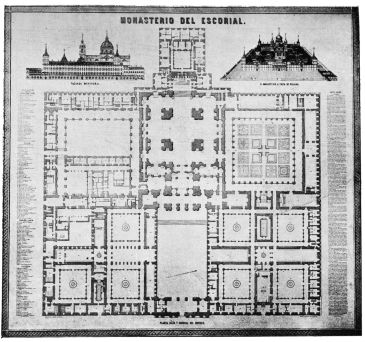
PLATE 2
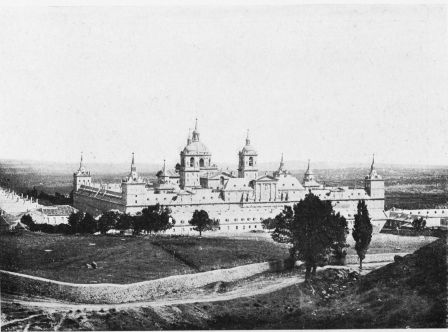
PLATE 3
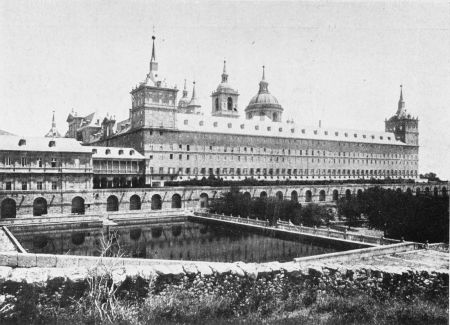
VIEW OF THE MONASTERY FROM THE ORCHARD.
PLATE 4
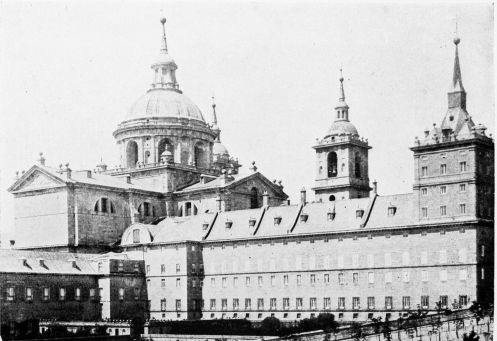
VIEW OF THE MONASTERY FROM THE ENTRANCE OF THE ‘REAL SITIO.’
PLATE 5
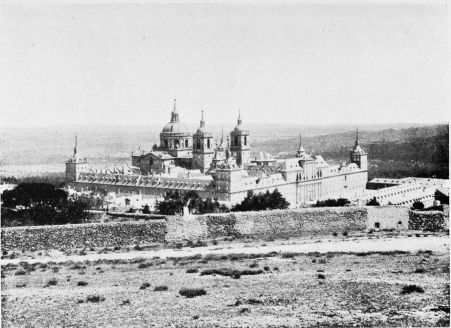
VIEW OF THE MONASTERY FROM THE ROMERAL.
PLATE 6
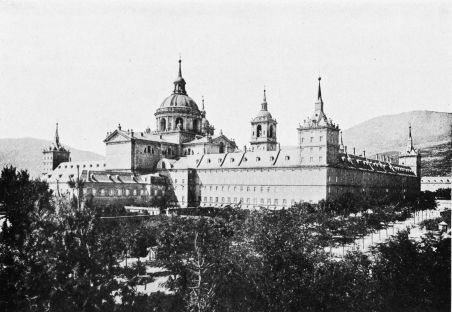
VIEW OF THE MONASTERY (EAST SIDE).
PLATE 7
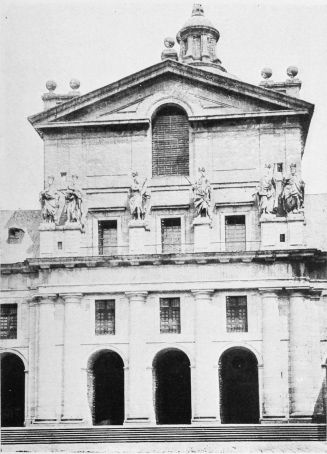
PRINCIPAL FAÇADE OF THE COURT OF THE KINGS.
PLATE 8
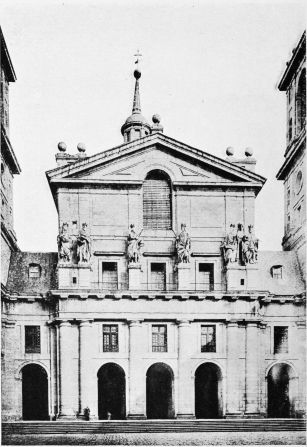
VIEW OF THE COURT OF THE KINGS.
PLATE 9
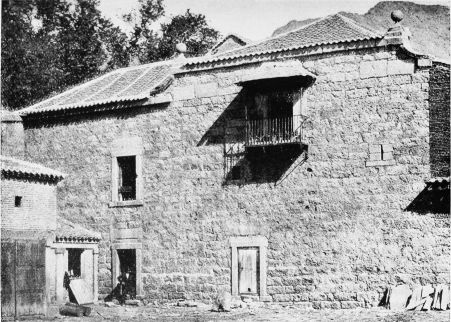
BALCONY IN THE COURT OF ‘LA COMPAÑA.’
PLATE 10
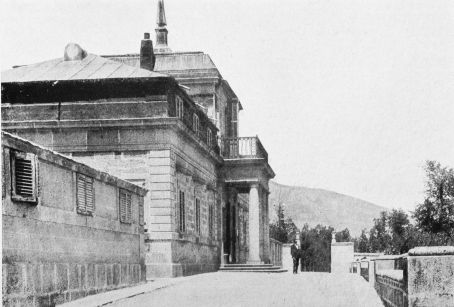
VIEW OF THE ‘CASA DEL PRINCIPE,’ OR LOWER LODGE.
PLATE 11
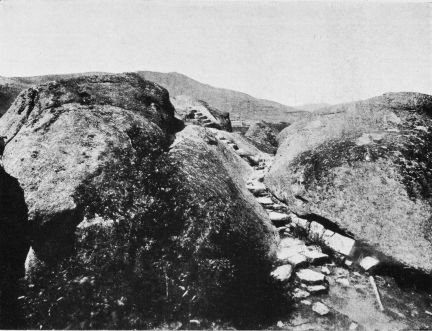
ASCENT TO THE SILLA DEL REY, THE CHAIR OF PHILIP II.
PLATE 12
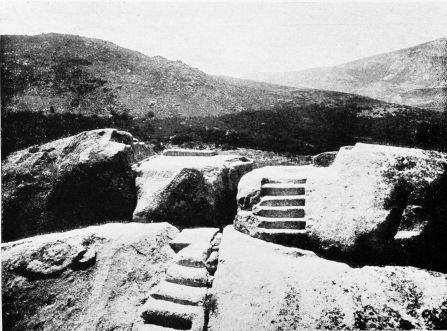
THE SILLA DEL REY, THE CHAIR OF PHILIP II.
PLATE 13
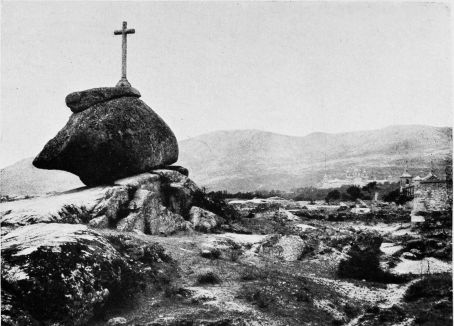
THE HORCA CROSS, NEAR THE ESCORIAL.
PLATE 14
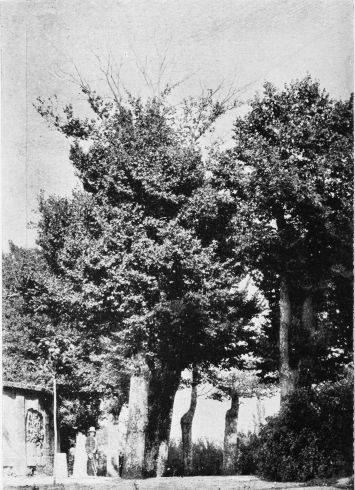
GARDEN OF THE CASITA DE ABAJO.
(Escorial.)
PLATE 15
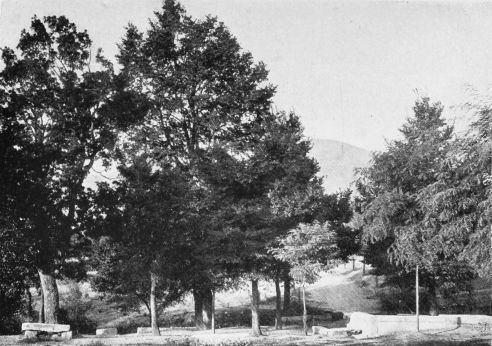
PLATE 16
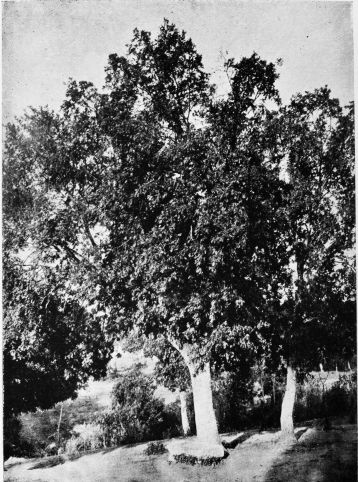
SOURCE OF THE SEMINARIO.
(Escorial.)
PLATE 17
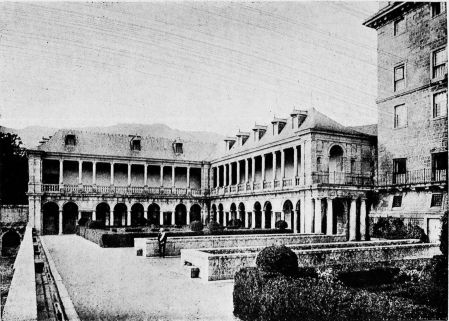
THE COLONNADE OF THE MONASTERY.
PLATE 18
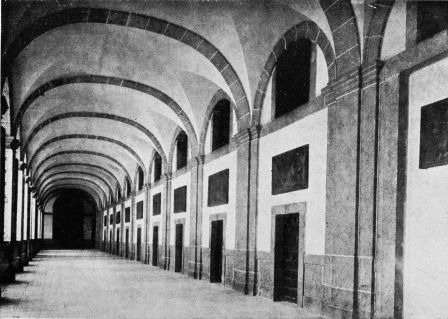
VIEW OF THE UPPER CLOISTER OF THE MONASTERY.
PLATE 19
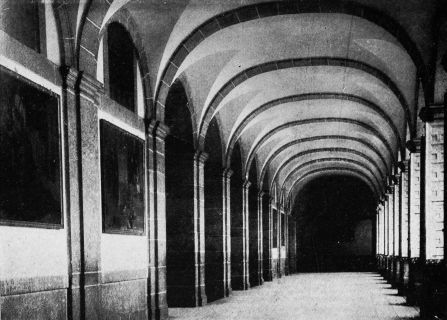
VIEW OF THE UPPER CLOISTER OF THE MONASTERY.
PLATE 20
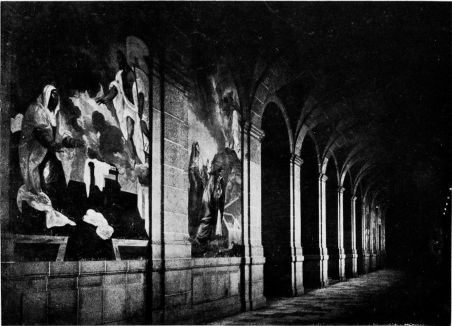
LOWER CLOISTER OF THE MONASTERY.
PLATE 21
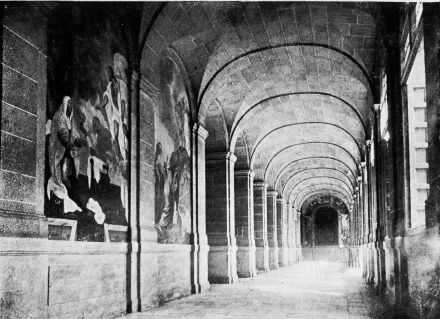
VIEW OF THE LOWER CLOISTER OF THE MONASTERY.
PLATE 22
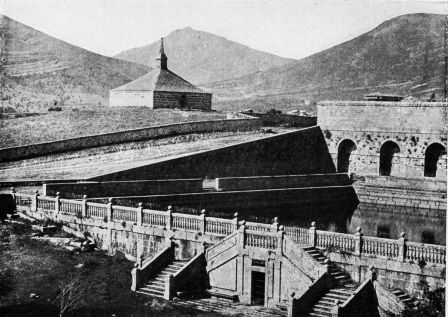
SNOW-PIT AND POND OF ‘CONVALESCENTS.’
PLATE 23
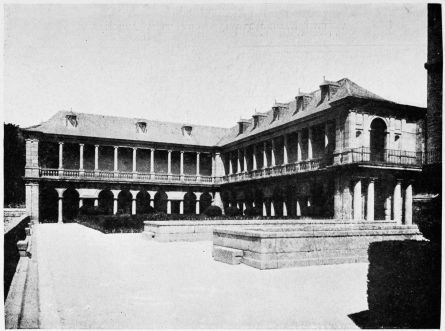
PLATE 24
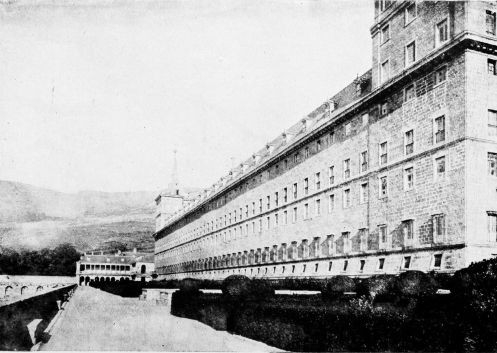
THE MONKS’ WALK AND ‘CONVALESCENTS’ GALLERY.
(Escorial.)
PLATE 25
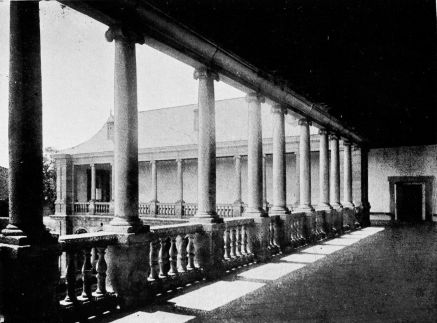
PLATE 26
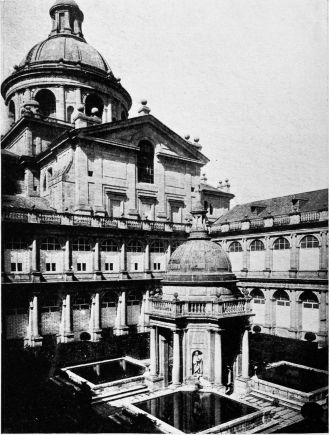
PLATE 27
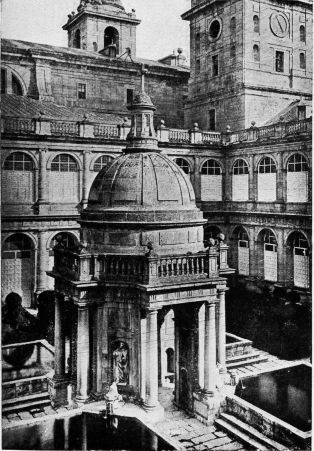
COURT WITH THE SPRINGS OF THE EVANGELISTS.
PLATE 28
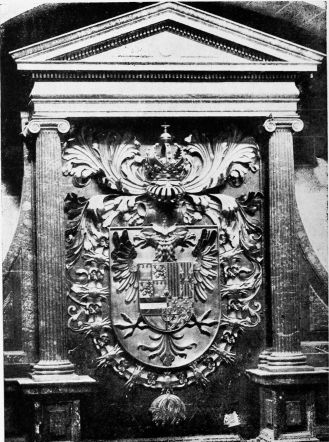
SHIELD OF THE EMPEROR CHARLES V.
PLATE 29
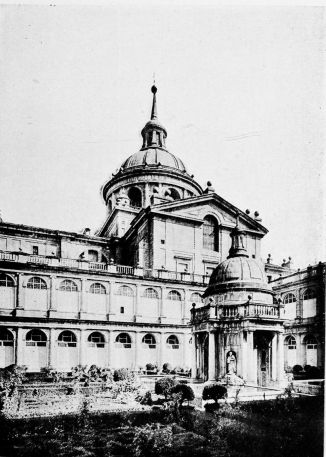
COURT OF THE EVANGELISTS.
PLATE 30
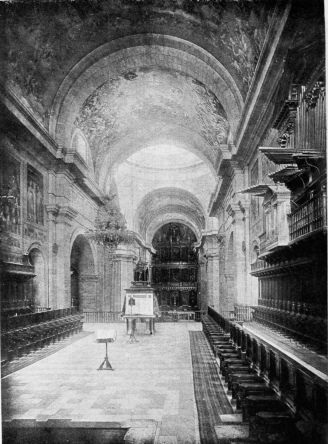
PLATE 31
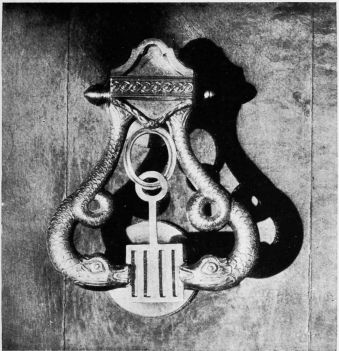
DOOR-KNOCKER OF THE CHURCH AT THE ESCORIAL.
PLATE 32
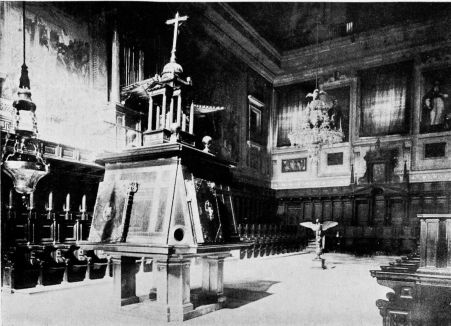
CHOIR STALLS.
(Basilica of the Monastery.)
PLATE 33
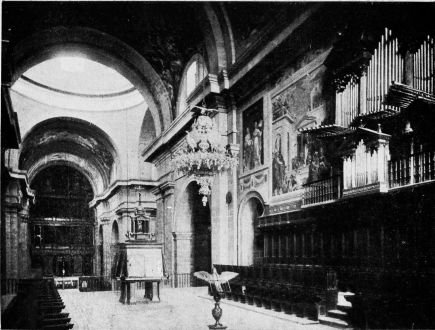
INTERIOR VIEW FROM THE CHOIR.
(Basilica of the Monastery.)
PLATE 34
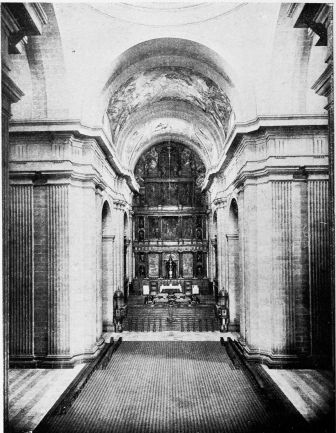
INTERIOR VIEW.
(Basilica of the Monastery.)
PLATE 35
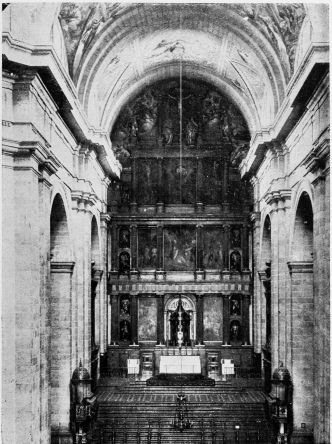
RETABLO AT THE HIGH ALTAR.
(Basilica of the Monastery.)
PLATE 36
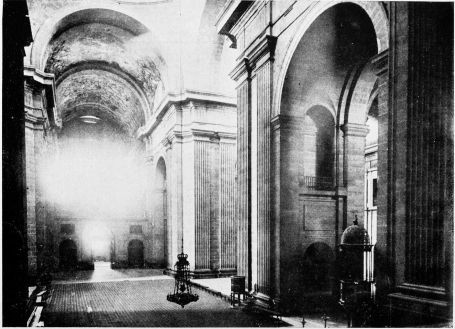
INTERIOR VIEW FROM THE HIGH ALTAR.
(Basilica of the Monastery.)
PLATE 37
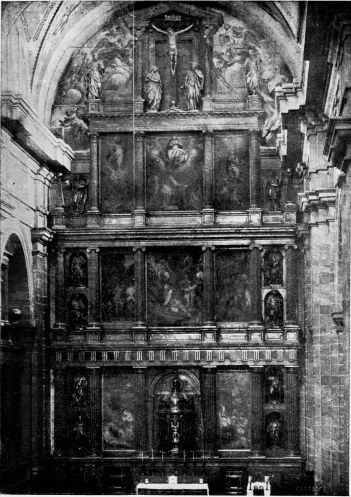
ALTAR-PIECE AT THE HIGH ALTAR.
PLATE 38
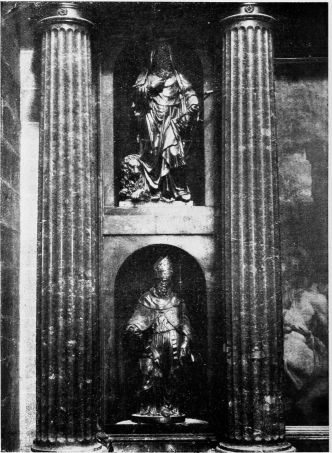
ST. HIERONYMUS AND ST. AUGUSTINE.
(Statues of the Altar-piece.)
PLATE 39
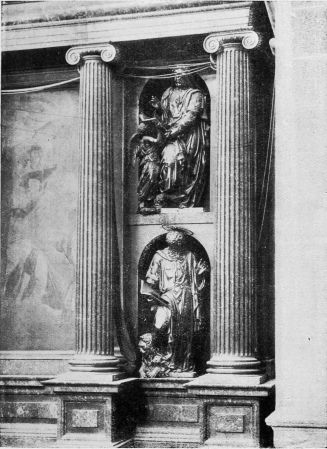
ST. MATTHEW AND ST. MARK.
(Statues of the Altar-piece.)
PLATE 40
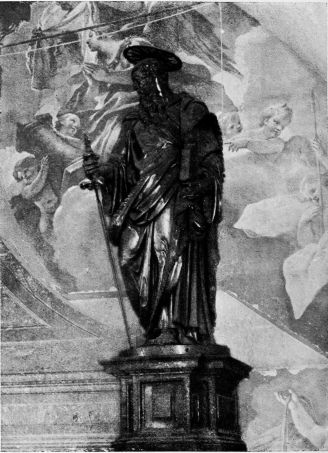
ST. PAUL.
(Statue of the Altar-piece.)
PLATE 41
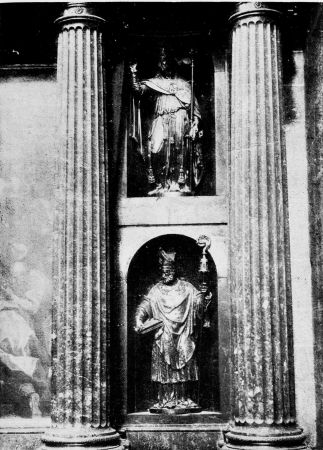
ST. GREGORY AND ST. AMBROSE.
(Statues of the Altar-piece.)
PLATE 42
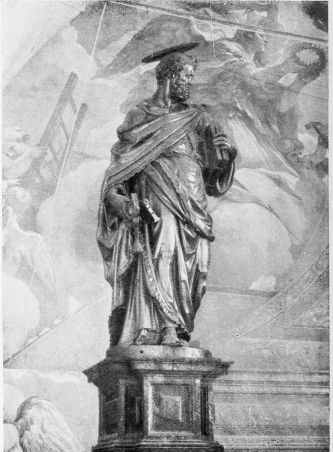
ST. PETER.
(Statue of the Altar-piece.)
PLATE 43
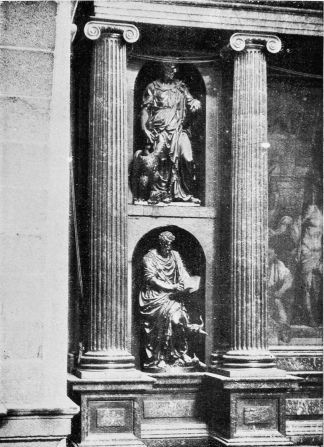
ST. JOHN AND ST. LUKE.
(Statues of the Altar-piece.)
PLATE 44
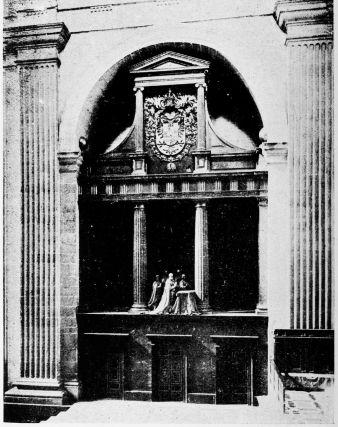
LEFT SIDE OF THE HIGH ALTAR: INTERMENT OF THE EMPEROR CHARLES V.
PLATE 45
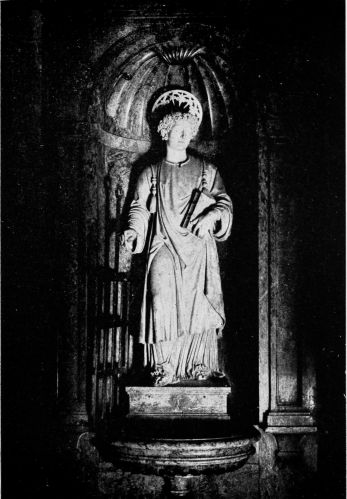
MARBLE STATUE OF ST. LAURENT AT THE ENTRANCE OF THE CHOIR.
PLATE 46
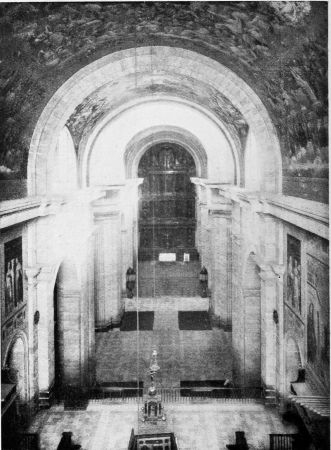
INTERIOR VIEW OF THE CHAPEL.
PLATE 47
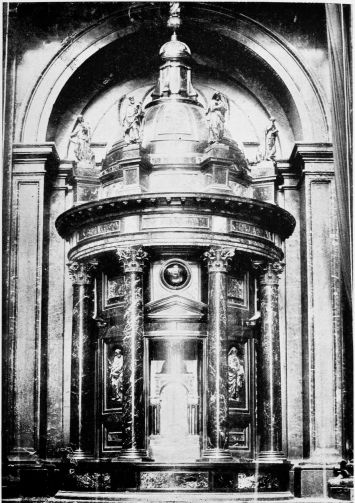
THE TABERNACLE.
(Escorial.)
PLATE 48
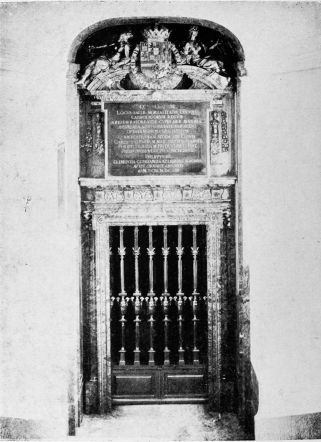
PANTEON OF THE KINGS.
(Entrance Gate.)
PLATE 49
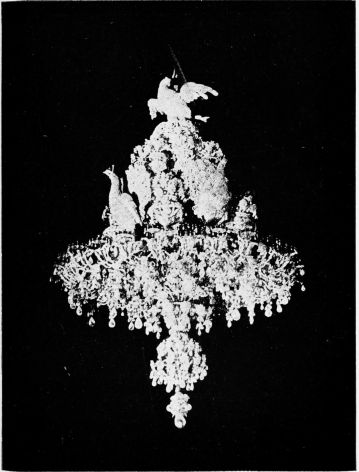
BEAUTIFUL ROCK CRYSTAL CANDELABRUM IN THE CHOIR OF THE ESCORIAL.
PLATE 50
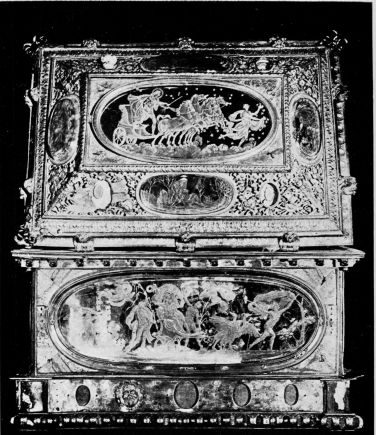
CASKET IN MALACHITE AND LAPIS-LAZULI, ORNAMENTED WITH BEAUTIFUL ENGRAVED
ROCK CRYSTAL.
(Reliquary of the Escorial.)
PLATE 51
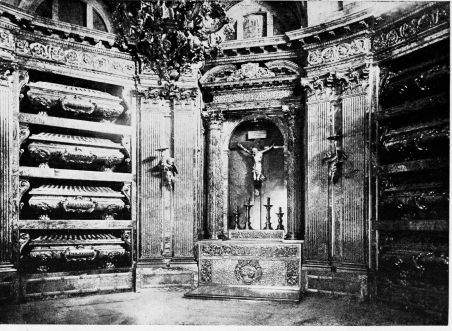
VIEW OF THE PANTEON OF THE KINGS.
Escorial.
PLATE 52
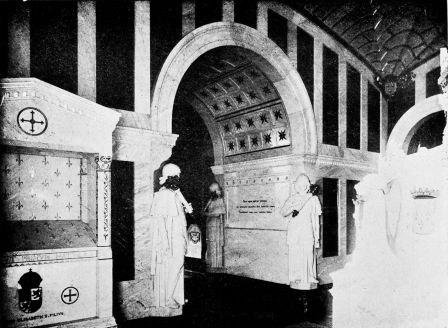
PANTEON OF THE INFANTES (INTERIOR).
PLATE 53
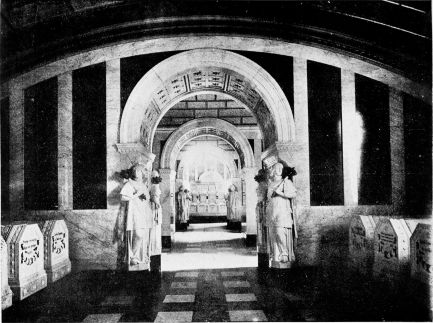
PANTEON OF THE INFANTES (INTERIOR).
PLATE 54
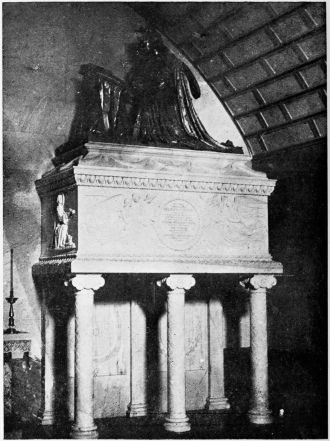
TOMB OF CHARLOTTE OF BOURBON.
(Panteon of the Infantes.)
PLATE 55
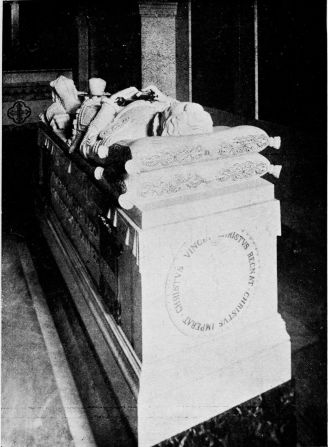
TOMB OF DON JOHN OF AUSTRIA.
(Panteon of the Infantes.)
PLATE 56
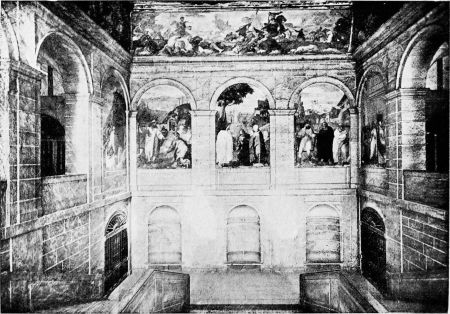
VIEW OF THE PRINCIPAL STAIRCASE OF THE MONASTERY.
PLATE 57
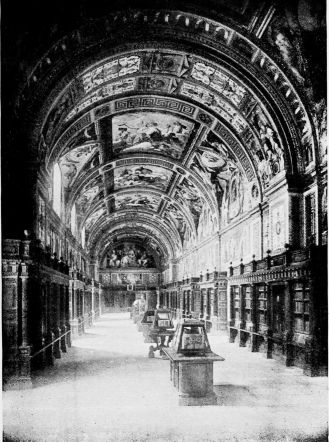
LIBRARY OF THE MONASTERY.
PLATE 58
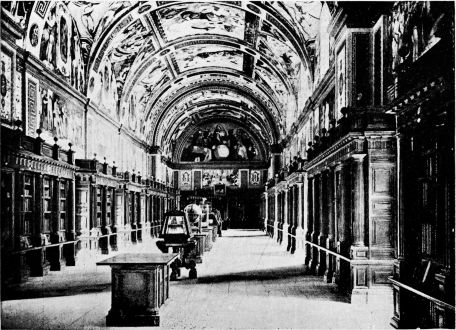
LIBRARY OF THE MONASTERY.
PLATE 59
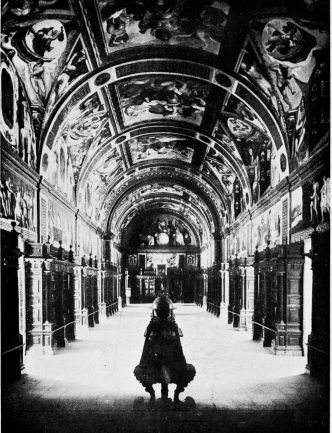
LIBRARY OF THE MONASTERY.
PLATE 60
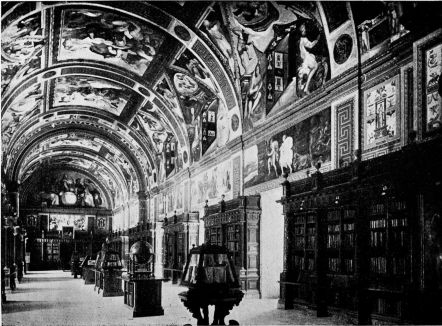
LIBRARY OF THE MONASTERY.
PLATE 61
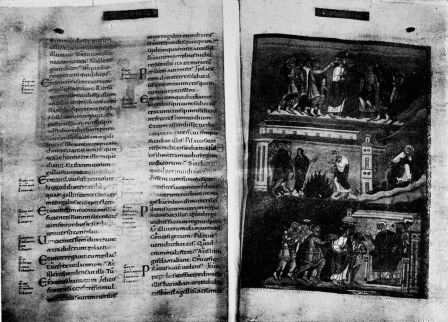
GOLDEN MS. (10TH CENTURY).
(Library of the Monastery.)
PLATE 62
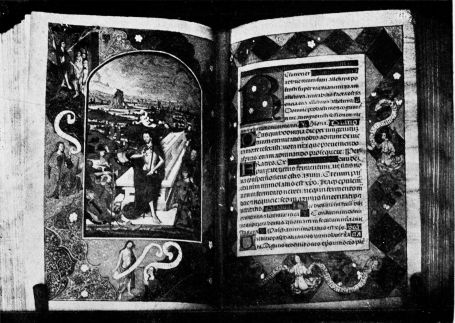
PRAYER-BOOK OF ISABELLA THE CATHOLIC.
(Library of the Monastery.)
PLATE 63
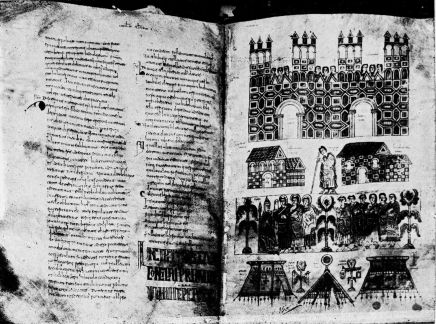
SONGS OF ST. MARY. MS. BELONGING TO ALFONSO THE WISE (13TH CENTURY).
(Library of the Monastery.)
PLATE 64
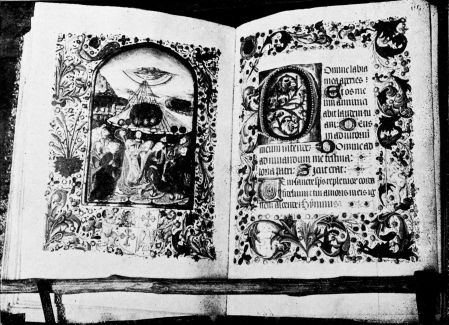
LATIN PRAYER-BOOK OF FERDINAND THE CATHOLIC.
(Library of the Monastery.)
PLATE 65
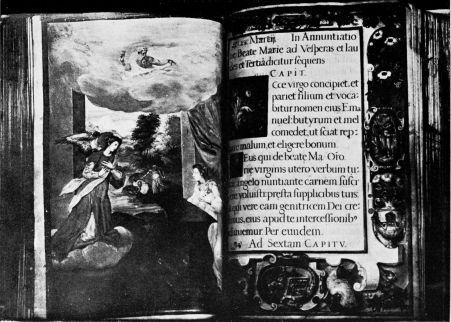
MASS-BOOK OF PHILIP II.
(Library of the Monastery.)
PLATE 66
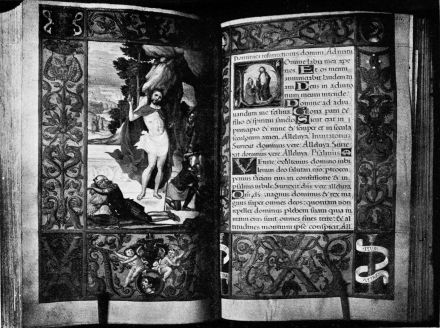
BREVIARY OF CHARLES V.
(Library of the Monastery.)
PLATE 67
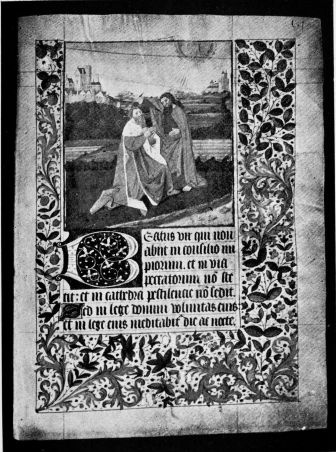
PSALTER OF THE EMPEROR CHARLES V.
(Library of the Escorial.)
PLATE 68
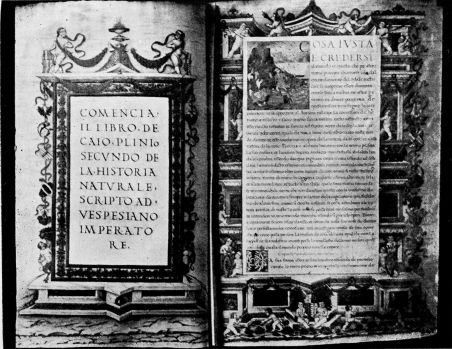
NATURAL HISTORY OF PLINY THE YOUNGER. ITALIAN MS. OF THE 16TH CENTURY.
(Library of the Escorial.)
PLATE 69
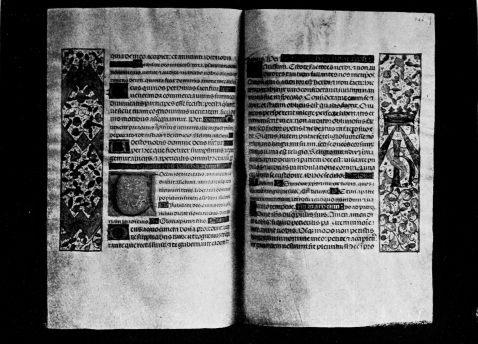
PAGE 238 OF THE MASS-BOOK OF ISABELLA THE CATHOLIC: MS. OF THE 15TH
CENTURY, THE VIGNETTE OF WHICH CONTAINS THE NAME OF THE QUEEN.
(Library of the Escorial.)
PLATE 70
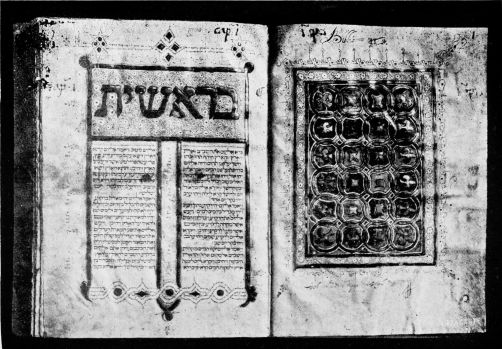
FIRST PAGE OF A HEBREW BIBLE: PRECIOUS MSS. OF THE END OF THE 14TH
CENTURY.
(Library of the Escorial.)
PLATE 71
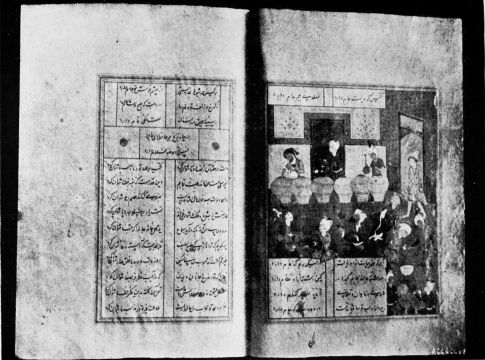
PERSIAN MS., THE WORK OF MUHAMMED SCHAM EL DIN HAPHETH, POET OF THE 14TH
CENTURY.
(Library of the Escorial.)
PLATE 72
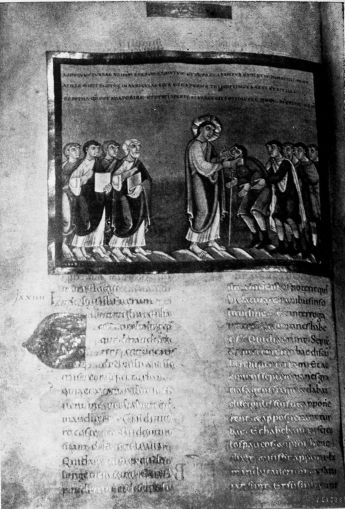
MANUSCRIPT OF THE YEAR 1050.
(Library of the Escorial.)
PLATE 73
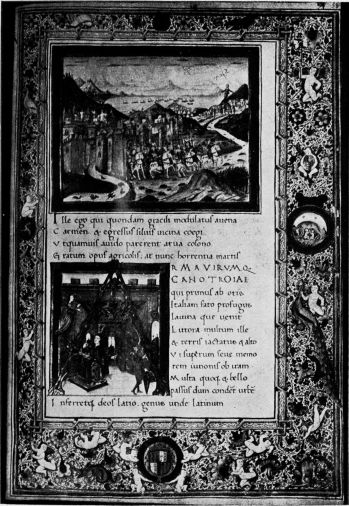
VIRGIL’S POEMS: MS. OF THE 15TH CENTURY, WRITTEN IN SPAIN.
(Library of the Escorial.)
PLATE 74
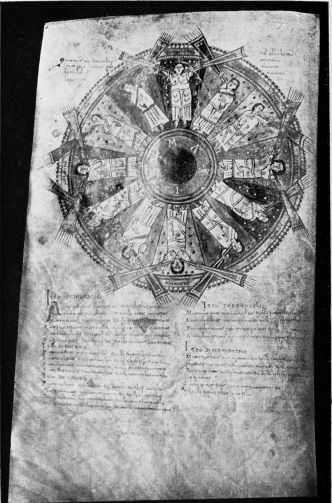
VIRGIL: MANUSCRIPT OF THE YEAR 966.
(Library of the Escorial.)
PLATE 75
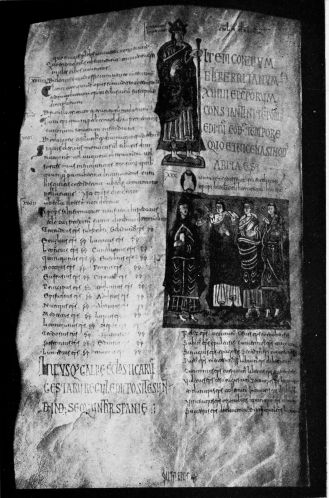
VIRGIL: MANUSCRIPT OF THE YEAR 966.
(Library of the Escorial.)
PLATE 76
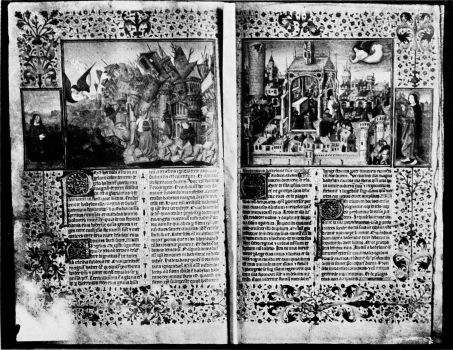
THE APOCALYPSE OF ST. JOHN: MANUSCRIPT OF THE 15TH CENTURY.
(Library of the Escorial.)
PLATE 77
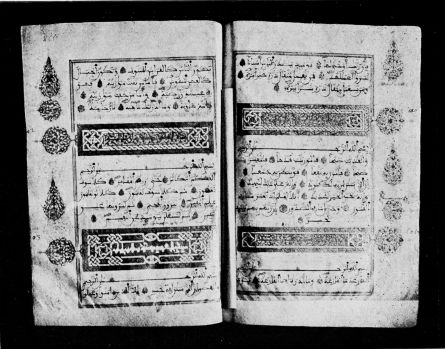
TWO PAGES OF THE KORAN OF MULEY ZIDAN, EMPEROR OF MOROCCO IN 1594.
(Library of the Escorial.)
PLATE 78
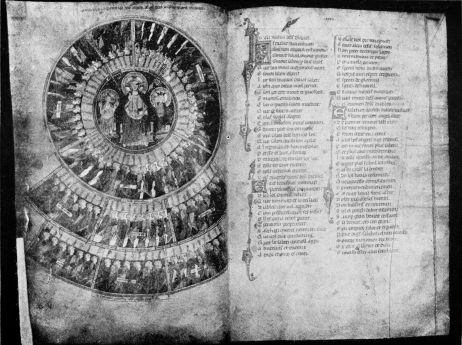
THE TREE OF LOVE, WRITTEN IN 1288.
(Library of the Escorial.)
PLATE 79
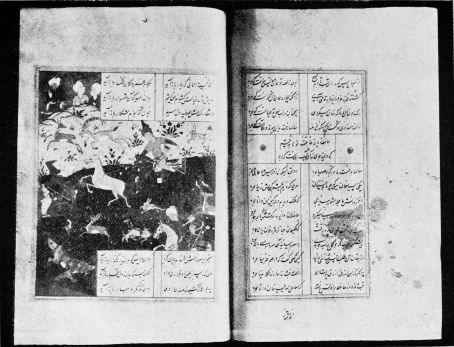
PERSIAN MANUSCRIPT, THE WORK OF MUHAMMED SCHAM EL DIN HAPHETH, POET OF
THE 14TH CENTURY.
(Library of the Monastery.)
PLATE 80
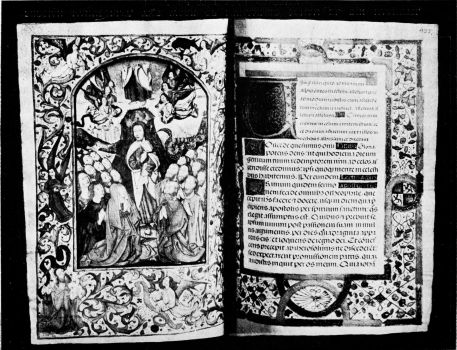
MASS-BOOK OF ISABEL THE CATHOLIC, MANUSCRIPT OF THE 15TH CENTURY.
(Library of the Escorial.)
PLATE 81
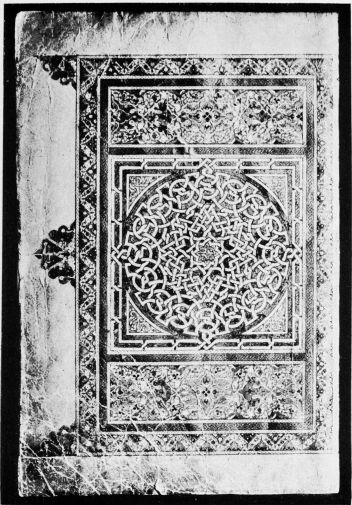
FRONTISPIECE OF THE KORAN OF MULEY ZIDAN, EMPEROR OF MOROCCO IN 1594.
(Library of the Escorial.)
PLATE 82
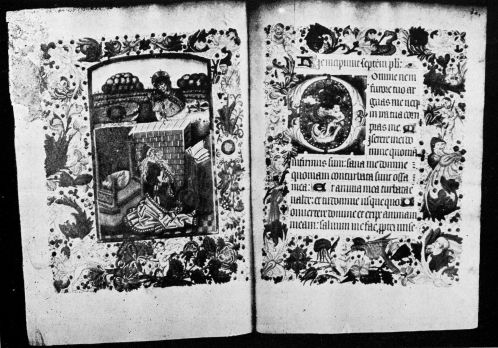
MASS-BOOK OF THE EMPRESS ISABEL, MOTHER OF PHILIP II.
(Library of the Escorial.)
PLATE 83
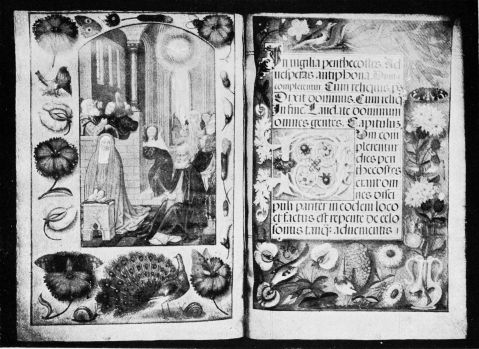
MASS-BOOK OF PHILIP III. AND QUEEN MARGARITA.
(Library of the Escorial.)
PLATE 84
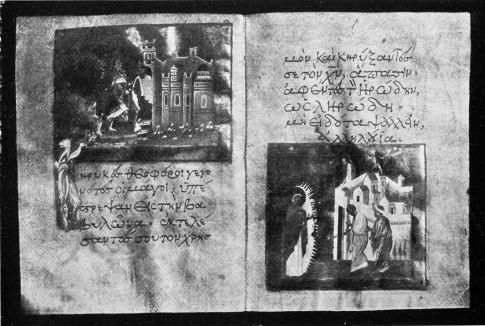
GREEK MANUSCRIPT OF THE END OF THE 14TH CENTURY.
(Library of the Escorial.)
PLATE 85
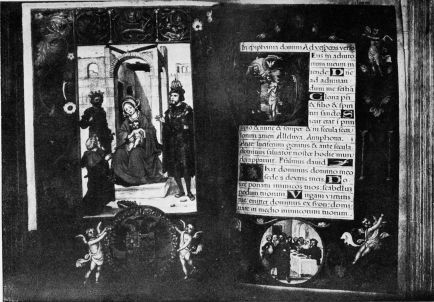
BREVIARY OF PHILIP II. (16TH CENTURY).
(Library of the Monastery.)
PLATE 86
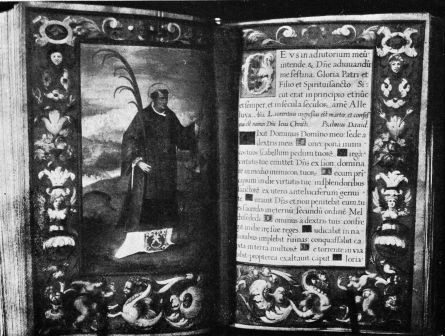
MASS-BOOK AND HOLY OFFICE OF PHILIP II.
(Library of the Monastery.)
PLATE 87
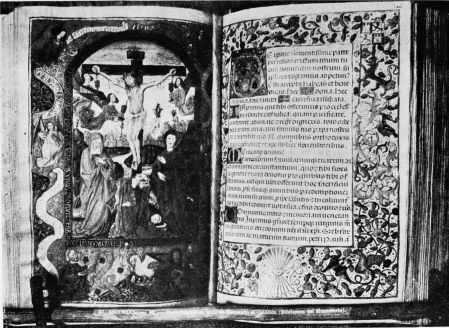
LATIN PRAYER-BOOK OF FERDINAND THE CATHOLIC.
(Library of the Monastery.)
PLATE 88
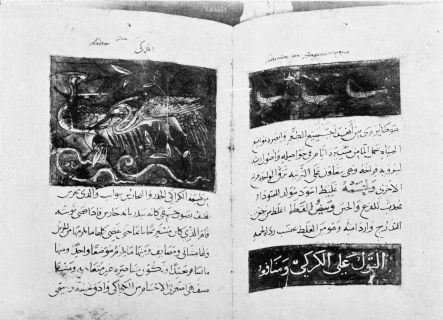
ARABIAN MANUSCRIPT (NATURAL HISTORY).
(Library of the Monastery.)
PLATE 89
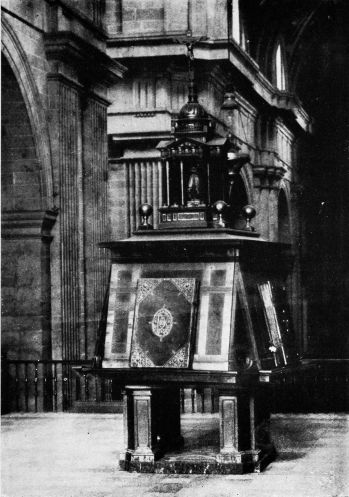
READING DESK IN THE CHOIR.
(Escorial.)
PLATE 90

PLATE 91
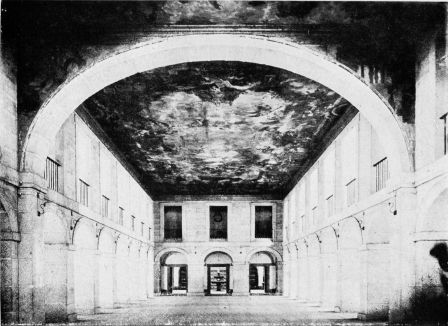
PARANYMPH OF THE COLLEGE (MONASTERY).
PLATE 92
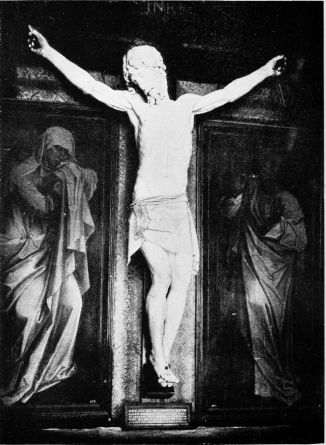
OUR LORD CRUCIFIED, SCULPTURED IN MARBLE (MONASTERY).
PLATE 93
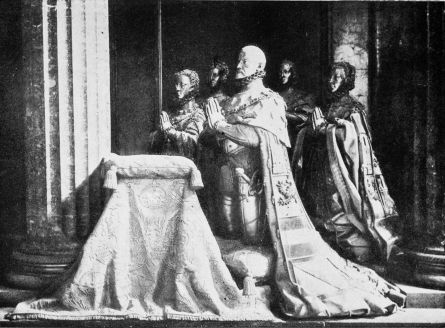
INTERMENT OF PHILIP II. (MONASTERY).
PLATE 94
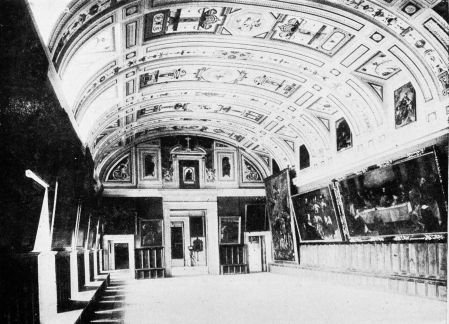
CHAPTER ROOM (MONASTERY).
PLATE 95
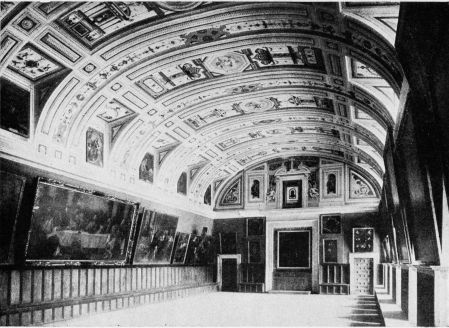
CHAPTER ROOM (MONASTERY).
PLATE 96
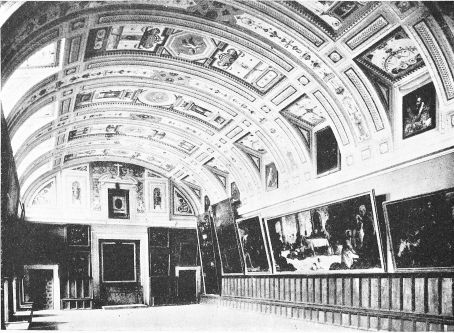
CHAPTER HALL (MONASTERY).
PLATE 97
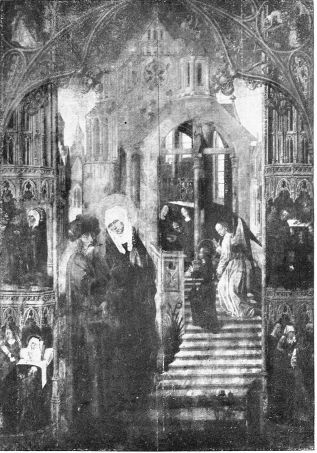
PRESENTATION OF THE VIRGIN
AT THE TEMPLE,
ATTRIBUTED TO VAN EYCK (MONASTERY).
PLATE 98
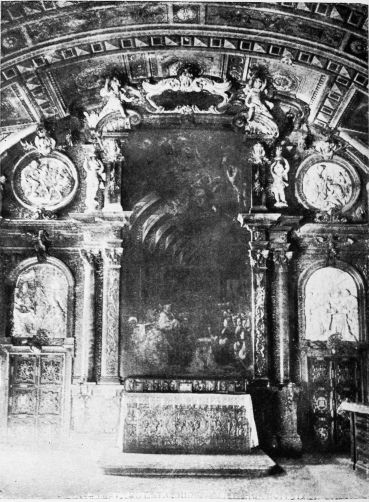
ALTAR-PIECE OF THE SANTA FORMA, PAINTED BY CLAUDIO COELLO.
(Sacristy of the Monastery.)
PLATE 99
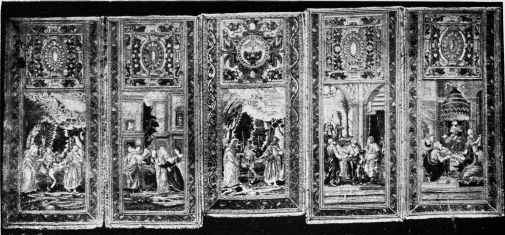
EMBROIDERED ALTAR-CLOTHS.
(From the Sacristy.)
PLATE 100
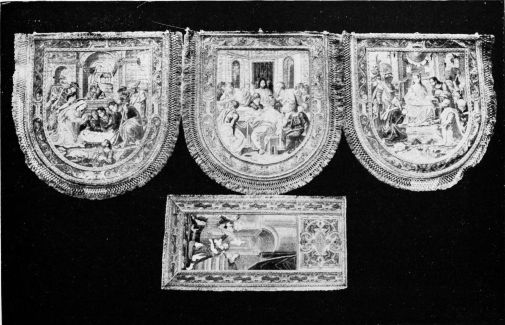
EMBROIDERED COPES.
(Sacristy of the Escorial.)
PLATE 101
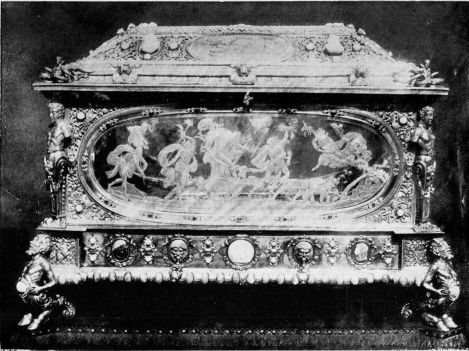
CASKET OF MALACHITE AND LAPIS-LAZULI, ORNAMENTED WITH ENGRAVED ROCK
CRYSTAL.
(Relicario of the Escorial.)
PLATE 102
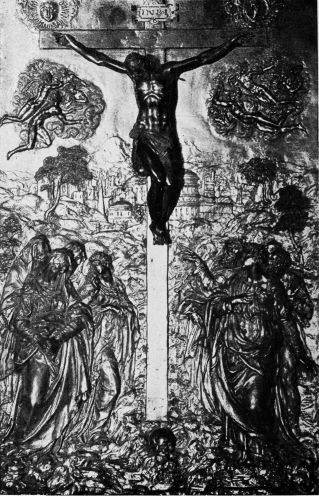
CHRIST ON THE CROSS, IN WROUGHT COPPER.
(Relicario of the Escorial.)
PLATE 103
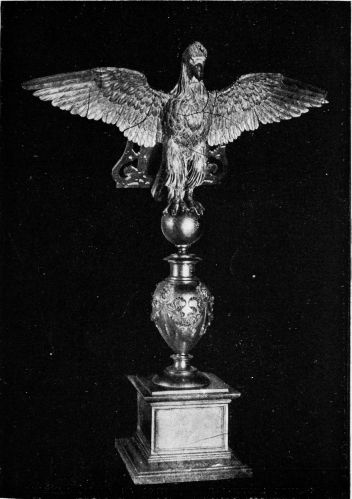
BRONZE LECTERN REPRESENTING AN EAGLE, MADE AT ANTWERP IN 1571.
(Chapter Hall of the Escorial.)
PLATE 104
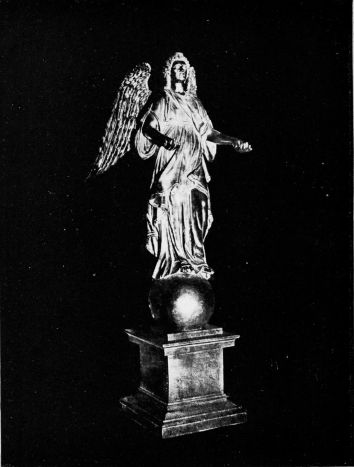
BRONZE LECTERN REPRESENTING AN ANGEL, MADE AT ANTWERP IN 1571, BY JEAN
SIMON.
(Chapter Hall of the Escorial.)
PLATE 105
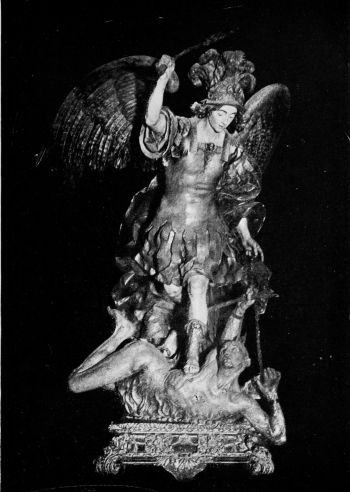
ST. MICHAEL OVERCOMING THE DEVIL, BY PEDRO ROLDAN,
(Chapter Hall of the Escorial.)
PLATE 106
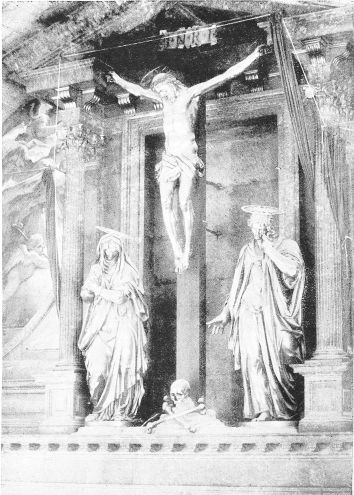
CHRIST, WITH THE VIRGIN AND ST. JOHN: STATUES IN MARBLE.
(The Escorial.)
PLATE 107
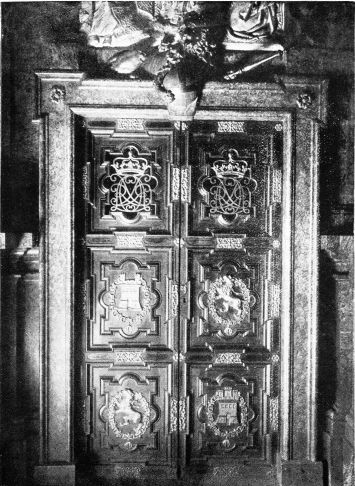
GATE OF THE SANTA FORMA.
(Sacristy of the Monastery.)
PLATE 108
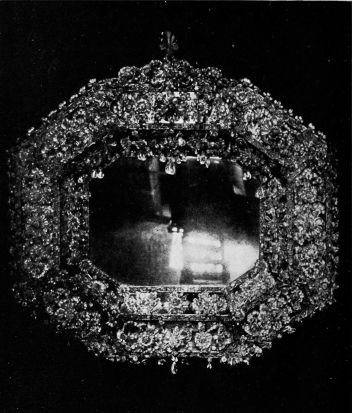
MIRROR IN ROCK CRYSTAL.
(Sacristy of the Escorial.)
PLATE 109
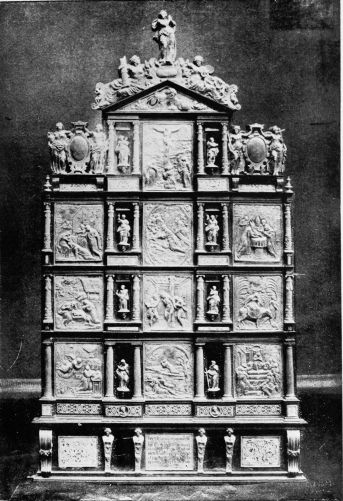
ALTAR-PIECE OF CHARLES V., IN WROUGHT COPPER.
(From the Camarin of St. Theresa at the Escorial.)
PLATE 110
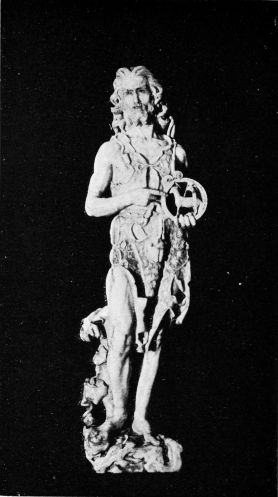
ALABASTER STATUE OF ST. JOHN BAPTIST.
(From the Camarin of St. Theresa at the Escorial.)
PLATE 111
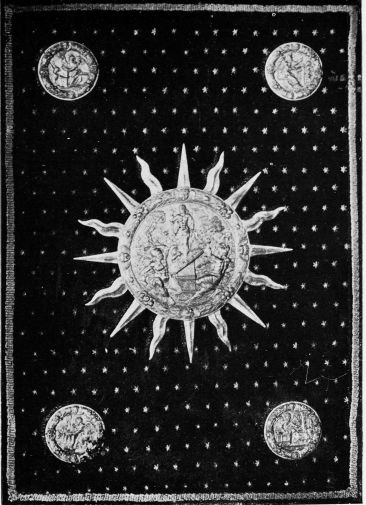
INSIDE COVER OF A RELIQUARY WHICH BELONGED TO PIUS V. 1566-1572.
(From the Camarin of St. Theresa.)
PLATE 112
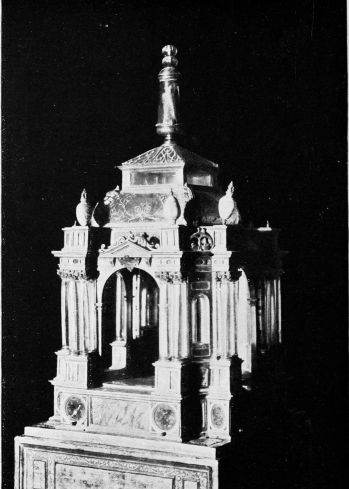
RELIQUARY OF ROCK CRYSTAL.
(From the Camarin of St. Theresa.)
PLATE 113
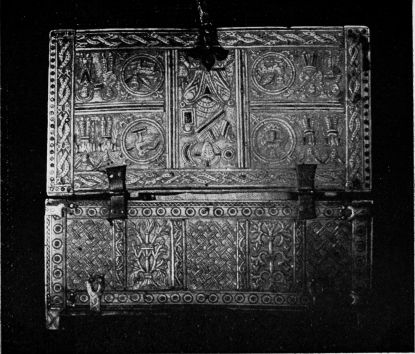
BONE RELIQUARY OF THE END OF THE 12TH CENTURY.
(Camarin of St. Theresa.)
PLATE 114
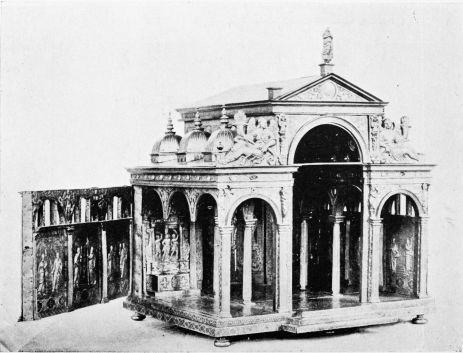
RELIQUARY OF WROUGHT IRON, INLAID.
(Relicario of the Escorial.)
PLATE 115
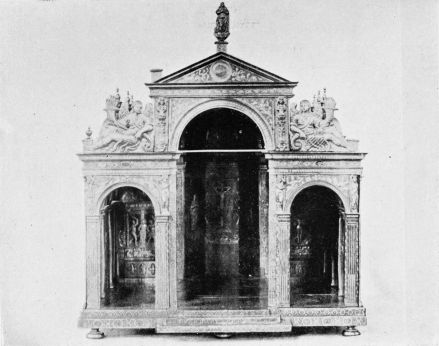
RELIQUARY OF WROUGHT IRON, INLAID.
(Relicario of the Escorial.)
PLATE 116
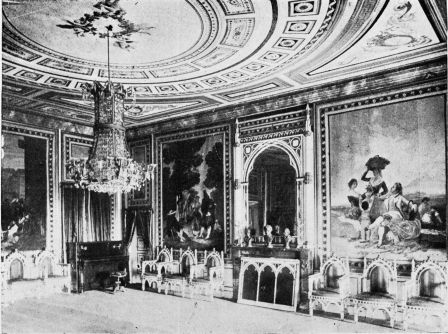
RECEPTION HALL.
(Palace.)
PLATE 117
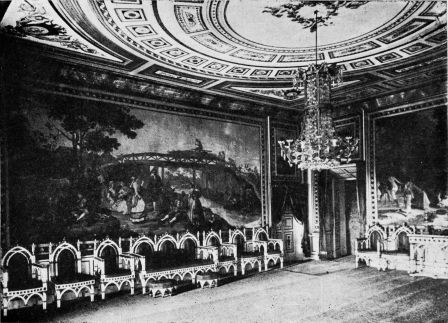
RECEPTION HALL.
(Palace.)
PLATE 118
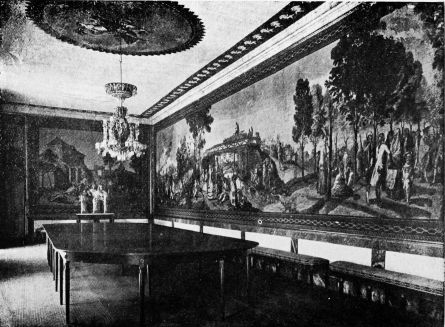
VIEW OF THE DINING HALL.
(Palace.)
PLATE 119
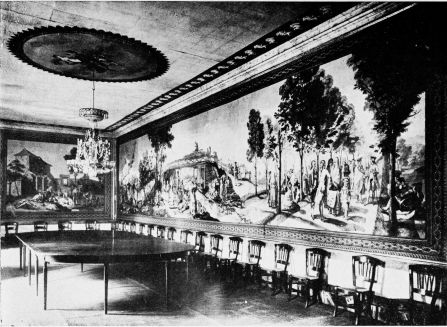
VIEW OF THE DINING HALL.
(Palace.)
PLATE 120
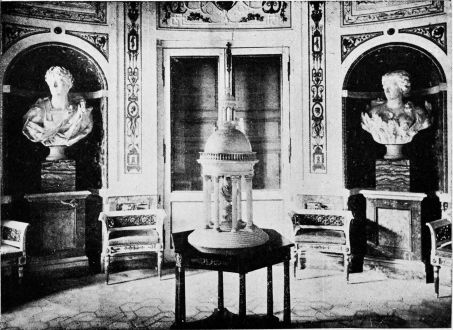
ANTE-ROOM.
(Casa del Principe.)
PLATE 121
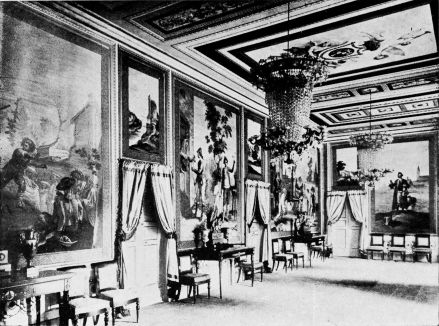
HALL OF AMBASSADORS.
(Palace.)
PLATE 122
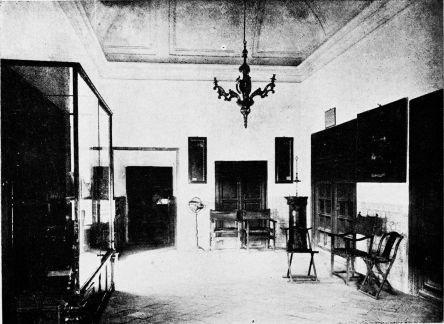
A ROOM OF PHILIP II.
(Palace.)
PLATE 123
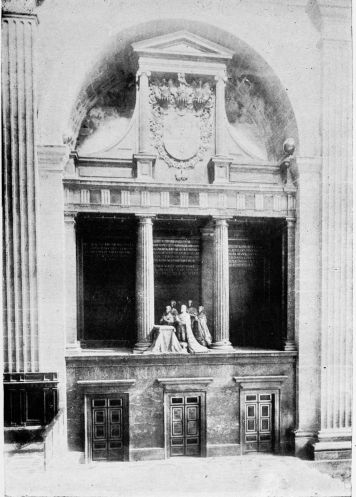
MEMORIAL OF KING PHILIP II.
(Escorial.)
PLATE 124
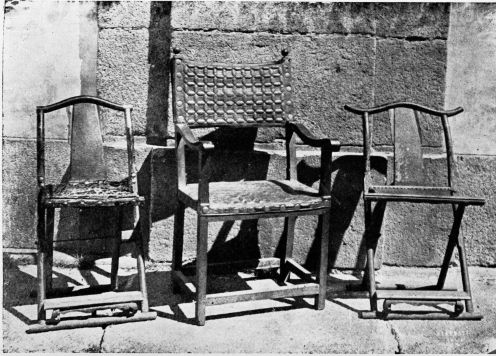
CHAIRS OF PHILIP IV.
(Palace.)
PLATE 125
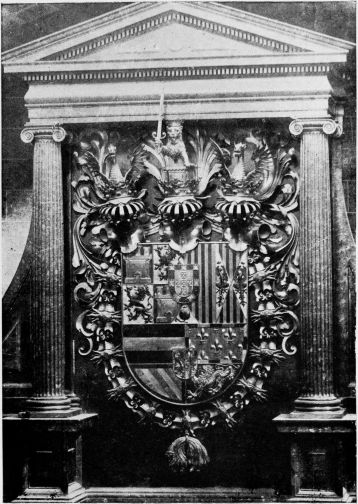
ESCUTCHEON OF KING PHILIP II.
(The Escorial.)
PLATE 126
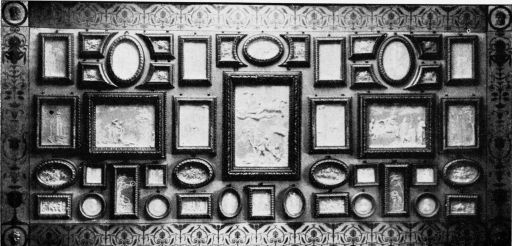
BUEN RETIRO PORCELAIN, IMITATIONS OF WEDGWOOD.
(The Hall of China of the Casa del Principe at the Escorial.)
PLATE 127
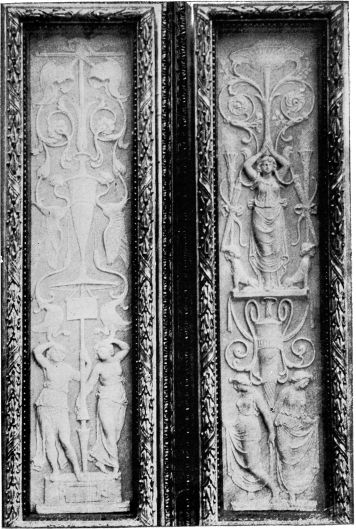
BUEN RETIRO PORCELAIN, IMITATIONS OF WEDGWOOD PANELS.
(Casa del Principe.)
PLATE 128
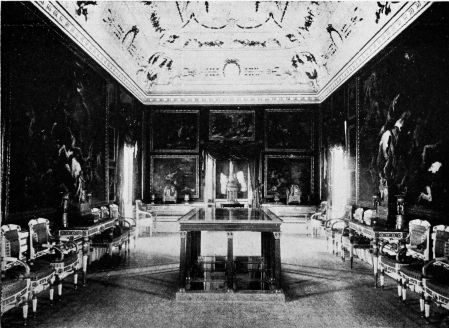
VIEW OF THE DINING HALL.
(Casa del Principe.)
PLATE 129
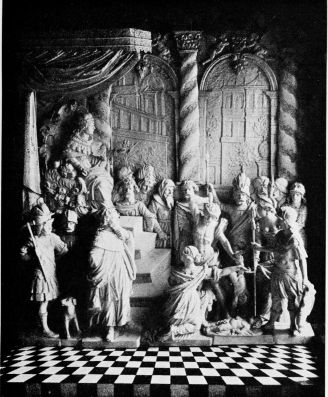
THE JUDGMENT OF SOLOMON (IVORY).
(Casa del Principe.)
PLATE 130
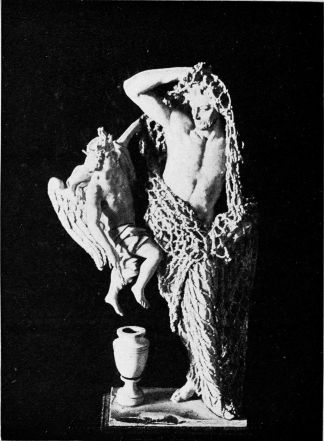
THE FISHERMAN CAUGHT IN THE NETS (IVORY).
(Casa del Principe.)
PLATE 131
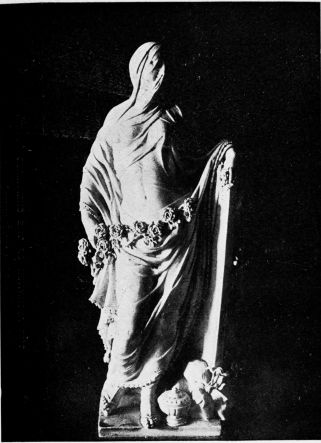
SCULPTURE IN IVORY CALLED ‘PRINCESA DE SAN SEVERO.’
(Casa del Principe.)
PLATE 132
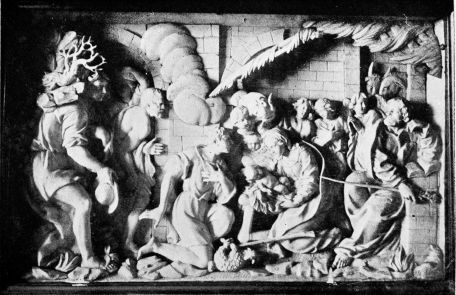
THE ADORATION OF THE SHEPHERDS (IVORY).
(Casa del Principe.)
PLATE 133
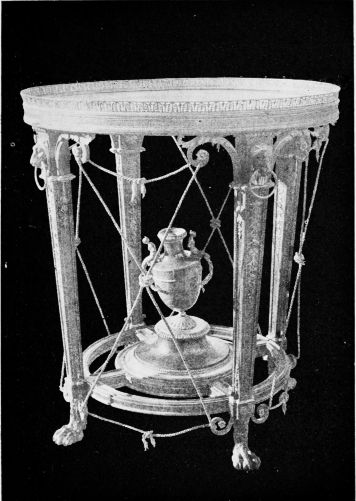
ROUND TABLE WITH A TRAY OF SÈVRES PORCELAIN.
(Casa del Principe at the Escorial.)
PLATE 134
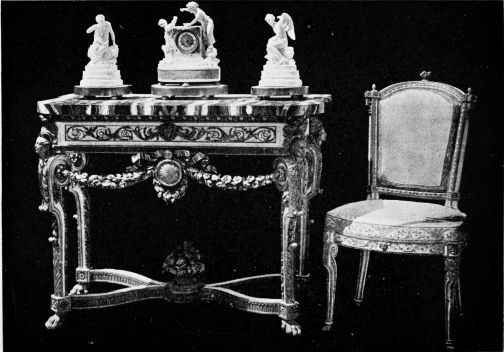
TABLE, CHAIR, AND PORCELAIN FROM THE ROYAL WORKS AT BUEN RETIRO.
(Casa del Principe at the Escorial.)
PLATE 135
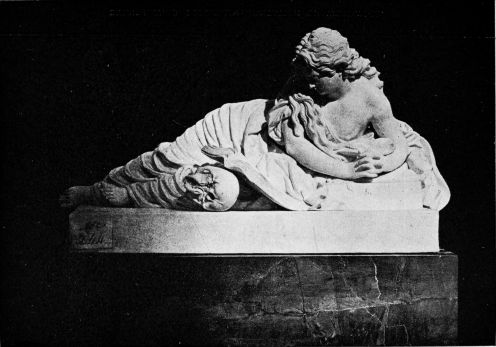
MARY MAGDALENE: FROM THE ROYAL WORKS AT BUEN RETIRO.
(Casa del Principe.)
PLATE 136
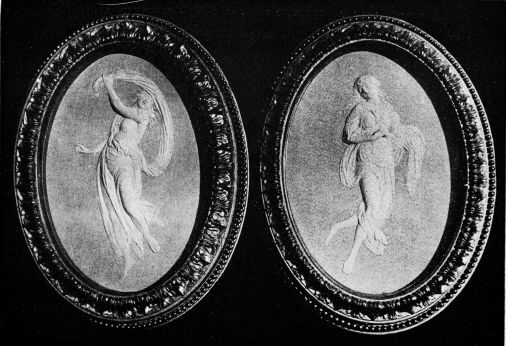
BUEN RETIRO PORCELAIN: IMITATION OF WEDGWOOD.
(Casa del Principe.)
PLATE 137
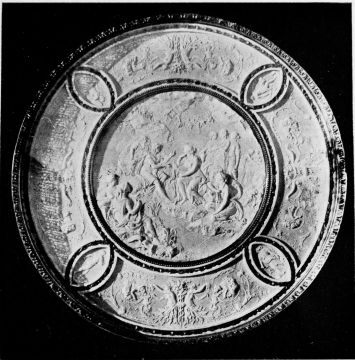
TOP OF A ROUND TABLE IN SÈVRES PORCELAIN.
(Casa del Principe.)
PLATE 138
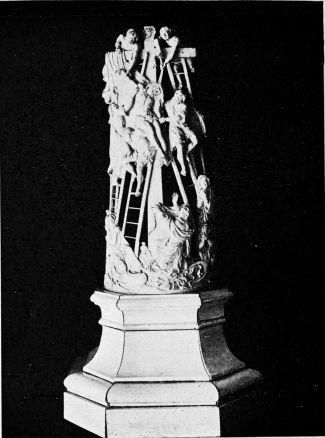
THE DESCENT FROM THE CROSS: SCULPTURE IN IVORY.
(Palace.)
PLATE 139
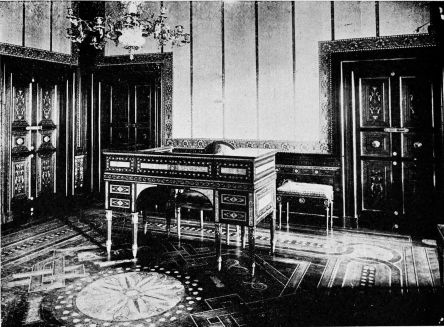
ANTE-ROOM OF CHOICE WOODS.
(Palace.)
PLATE 140
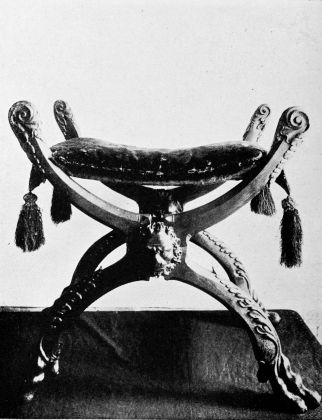
CHAIR OF THE EMPEROR CHARLES V.
(Palace.)
PLATE 141
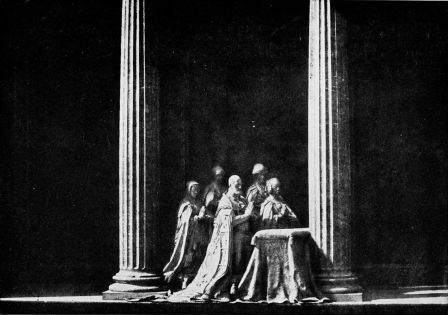
THE EMPEROR CHARLES V., THE EMPRESS ISABEL, HIS DAUGHTER MARIA, HIS
SISTERS ELEONORA, QUEEN OF FRANCE, AND MARIA, QUEEN OF HUNGARY.
(Escorial.)
PLATE 142
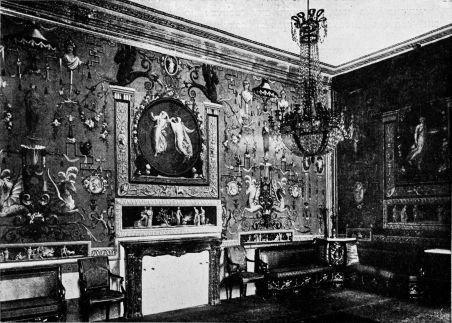
PLATE 143
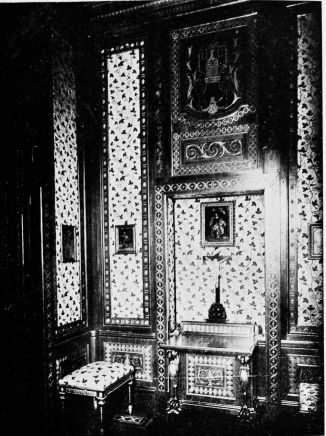
ORATORY OF CHOICE WOODS IN THE ANTE-CHAMBER.
(Palace.)
PLATE 144
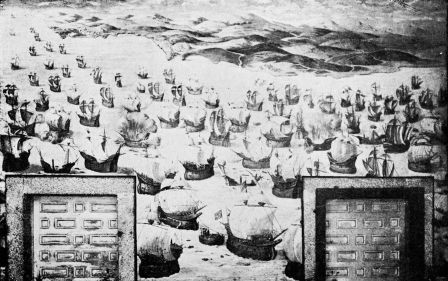
EXPEDITION TO THE AZORES.
(Hall of Battles.)
PLATE 145
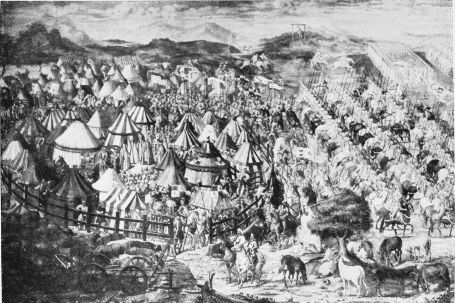
BATTLE OF HIGUERUELA, 1431 (1ST SECTION OF THE SERIES OF DRAWINGS).
(Hall of Battles.)
PLATE 146
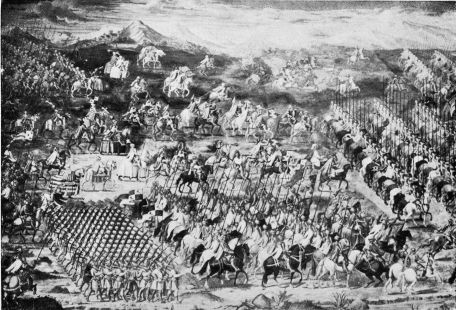
BATTLE OF HIGUERUELA, 1431 (2ND SECTION OF THE SERIES OF DRAWINGS).
(Hall of Battles.)
PLATE 147
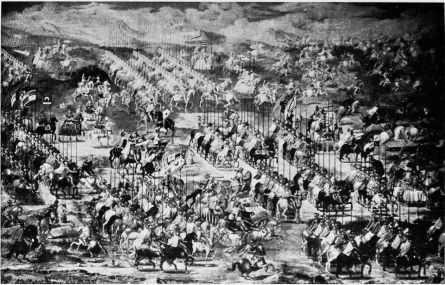
BATTLE OF HIGUERUELA, 1431 (3RD SECTION OF THE SERIES OF DRAWINGS).
(Hall of Battles.)
PLATE 148
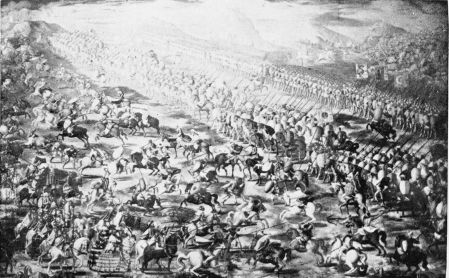
BATTLE OF HIGUERUELA, 1431 (4TH SECTION OF THE SERIES OF DRAWINGS).
(Hall of Battles.)
PLATE 149
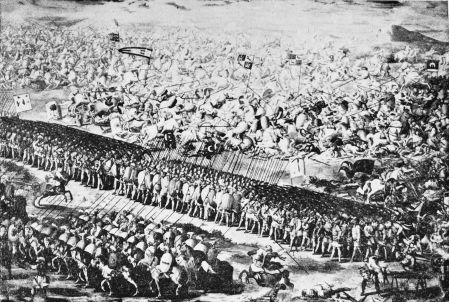
BATTLE OF HIGUERUELA, 1431 (5TH SECTION OF THE SERIES OF DRAWINGS).
(Hall of Battles.)
PLATE 150
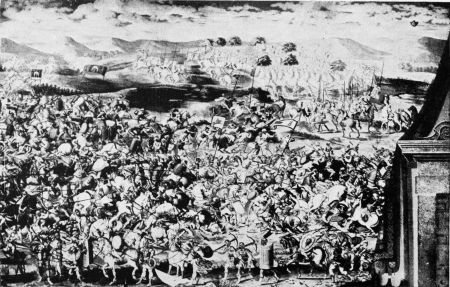
BATTLE OF HIGUERUELA, 1431 (6TH SECTION OF THE SERIES OF DRAWINGS).
(Hall of Battles.)
PLATE 151
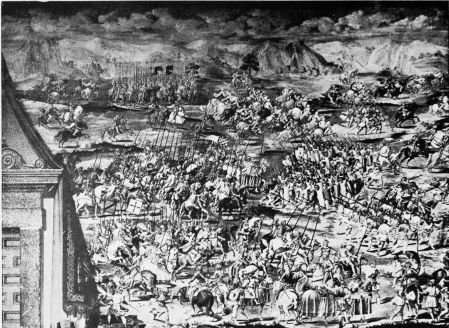
BATTLE OF HIGUERUELA, 1431 (7TH SECTION OF THE SERIES OF DRAWINGS).
(Hall of Battles.)
PLATE 152
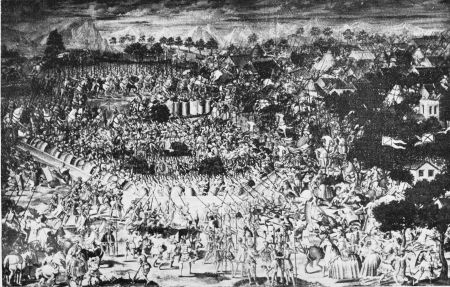
BATTLE OF HIGUERUELA, 1431 (8TH SECTION OF THE SERIES OF DRAWINGS).
(Hall of Battles.)
PLATE 153
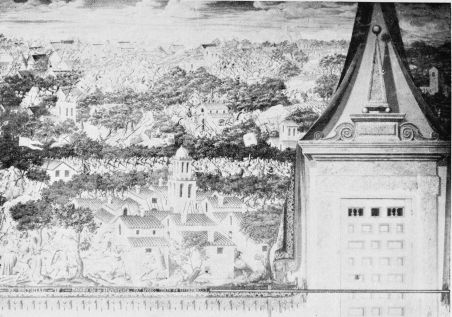
BATTLE OF HIGUERUELA, 1431 (9TH SECTION OF THE SERIES OF DRAWINGS).
(Hall of Battles.)
PLATE 154
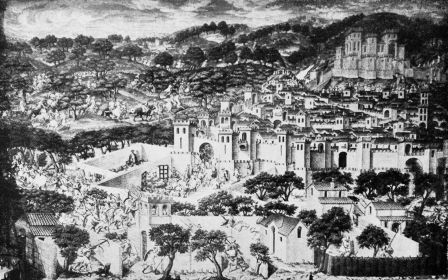
BATTLE OF HIGUERUELA, 1431 (10TH SECTION OF THE SERIES OF DRAWINGS).
(Hall of Battles.)
PLATE 155
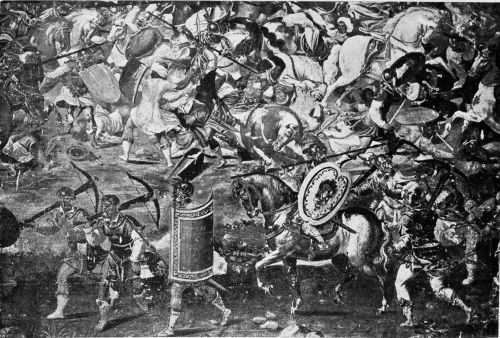
FRAGMENT OF THE BATTLE OF HIGUERUELA, 1431, BY GRANELO AND FABRICIO.
(Hall of Battles in the Escorial.)
PLATE 156
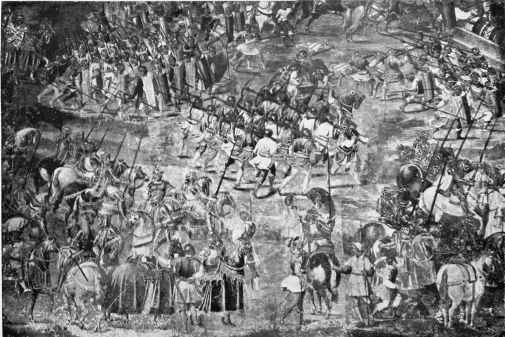
FRAGMENT OF THE BATTLE OF HIGUERUELA, 1431, BY GRANELO AND FABRICIO.
(Hall of Battles in the Escorial.)
PLATE 157
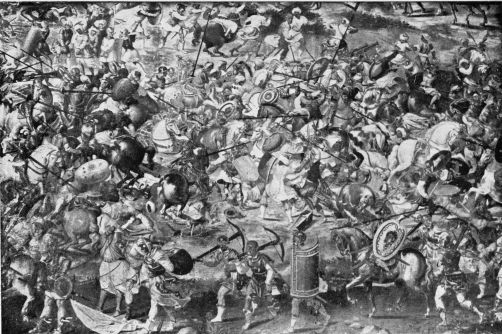
FRAGMENT OF THE BATTLE OF HIGUERUELA, 1431, BY GRANELO AND FABRICIO.
(Hall of Battles in the Escorial.)
PLATE 158
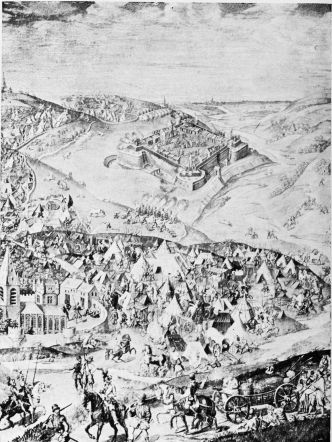
SURRENDER OF THE CHATELET FORT.
(Hall of Battles.)
PLATE 159
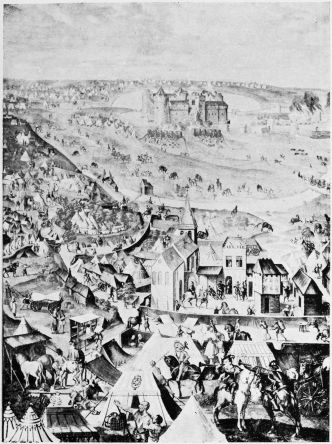
THE SIEGE OF HAN AND SURRENDER OF ITS CASTLE.
(Hall of Battles.)
PLATE 160
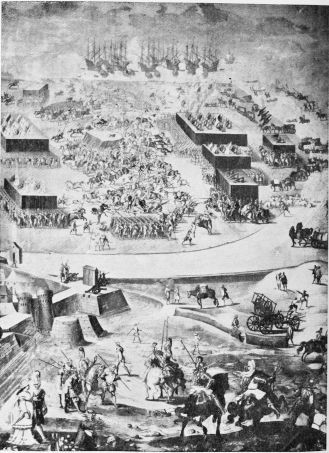
BATTLE OF GRAVELINAS.
(Hall of Battles.)
PLATE 161
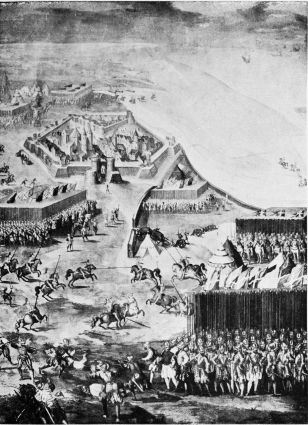
PREPARATIONS FOR THE BATTLE OF GRAVELINAS.
(Hall of Battles.)
PLATE 162
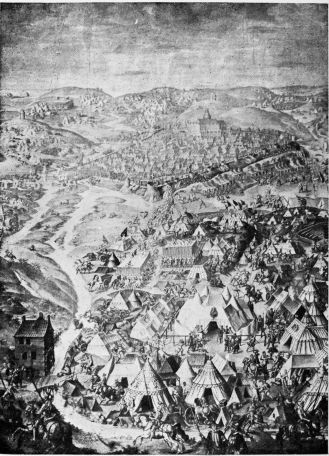
TAKING OF ST. QUINTIN BY THE SPANISH INFANTRY REGIMENTS.
(Hall of Battles.)
PLATE 163
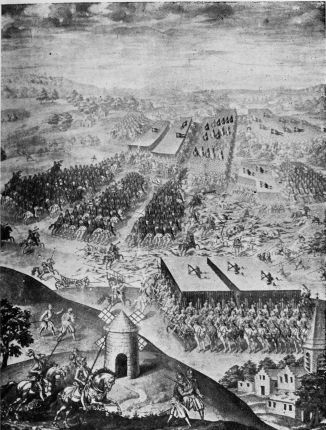
BATTLE BEFORE ST. QUINTIN.
(Hall of Battles.)
PLATE 164
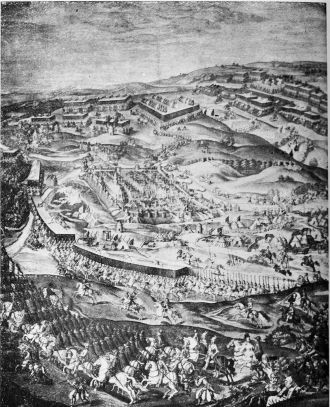
PREPARATIONS FOR THE SIEGE OF ST. QUINTIN.
(Hall of Battles.)
PLATE 165
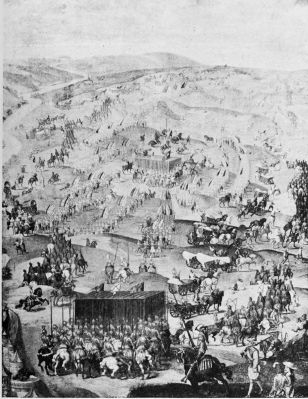
DEPARTURE OF THE SPANISH ARMY FROM THE FORTIFIED PLACE OF ST. QUINTIN.
(Hall of Battles.)
PLATE 166
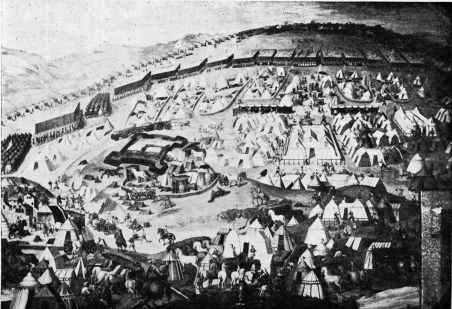
THE DUKE OF ALBA REVIEWING HIS TROOPS AT CANTILLANA.
(Hall of Battles.)
PLATE 167
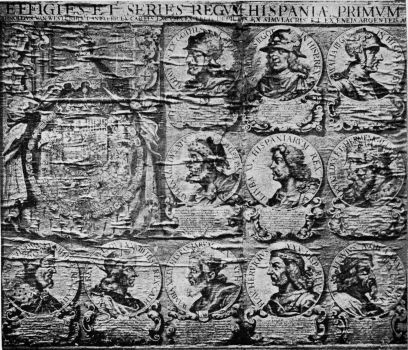
EFFIGIES OF ALL THE KINGS OF SPAIN, FROM THE TIME OF THE GOTHS, UNTIL
PHILIP V., TAKEN FROM CHARTS, MEDALS, AND PAINTINGS.
(Library of the Escorial.)
PLATE 168
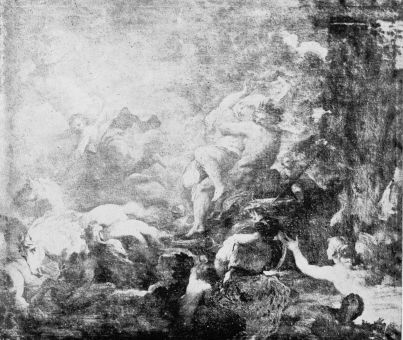
PLUTO AND PROSERPINA, BY L. GIORDANO.
(Casa del Principe at the Escorial.)
PLATE 169
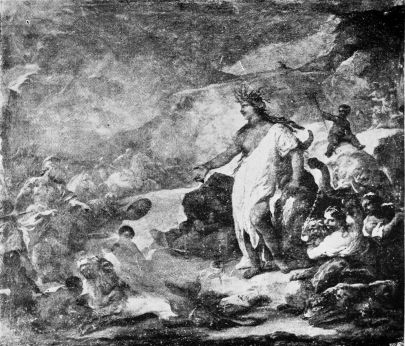
ALLEGORY OF AFRICA, BY L. GIORDANO.
(Casa del Principe at the Escorial.)
PLATE 170
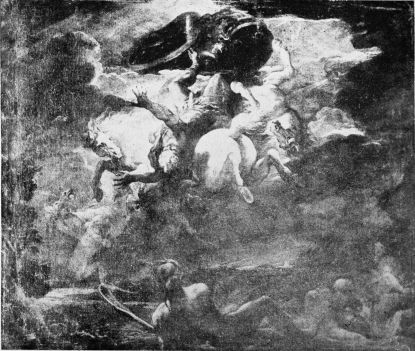
PHAETON STRUCK BY JUPITER’S THUNDERBOLT.
(Casa del Principe at the Escorial.)
PLATE 171
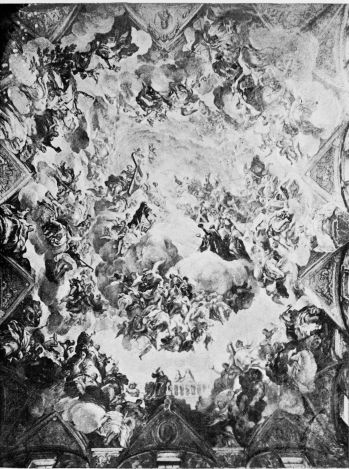
THE BATTLE OF LEPANTO, BY L. GIORDANO.
(Reproduced from the Fresco in the Escorial.)
PLATE 172
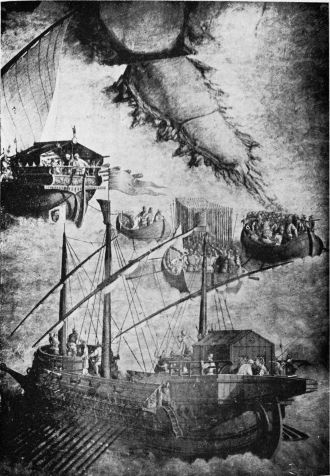
EXPEDITION TO THE TERCEIRE ISLE (AZORES).
(Fragment of a Fresco Painting in the Hall of Battles.)
PLATE 173
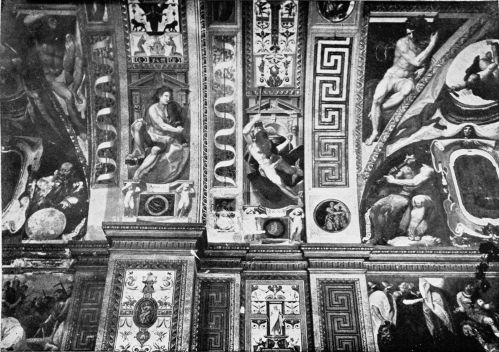
APOLLO AND MERCURY, BY PEREGRINO TIBALDI.
(Fresco on the Arch of the Library of the Escorial.)
PLATE 174
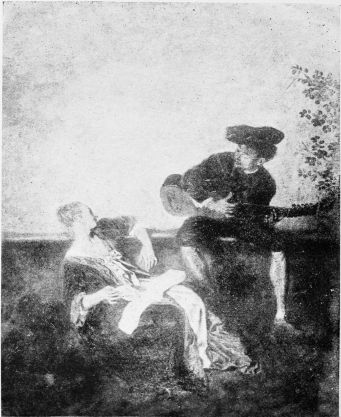
A SWEET SINGER, BY WATTEAU.
(Museum of the Escorial.)
PLATE 175
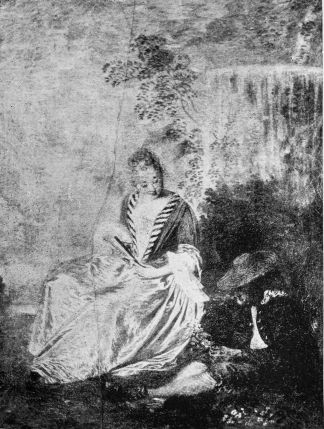
A LOVE SCENE, BY WATTEAU.
(Museum of the Escorial.)
PLATE 176
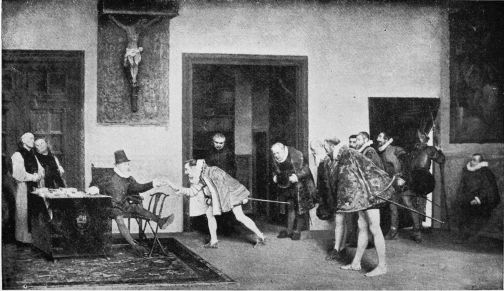
PHILIP II. RECEIVING A DEPUTATION FROM THE LOW COUNTRIES IN THE
ESCORIAL, BY SANT ARCOS.
PLATE 177
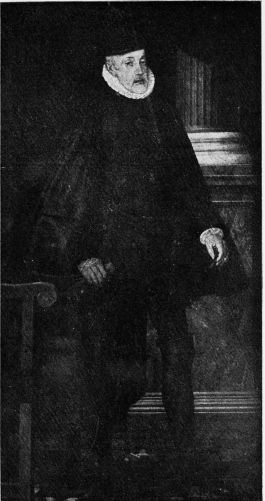
PORTRAIT OF PHILIP II. AT THE AGE OF 71, BY ANTONIO MORO.
(Library of the Escorial.)
PLATE 178
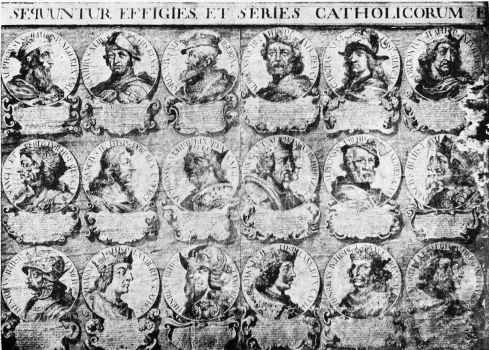
SECOND SET OF EFFIGIES OF ALL THE KINGS OF SPAIN, FROM THE TIME OF THE
GOTHS, UNTIL PHILIP V., TAKEN FROM CHARTS, MEDALS, AND PAINTINGS.
(Library of the Escorial.)
PLATE 179
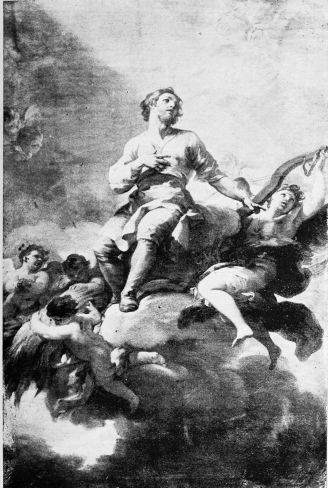
ST. ISIDORE, BY CORRADO.
(In the Museum at the Escorial.)
PLATE 180
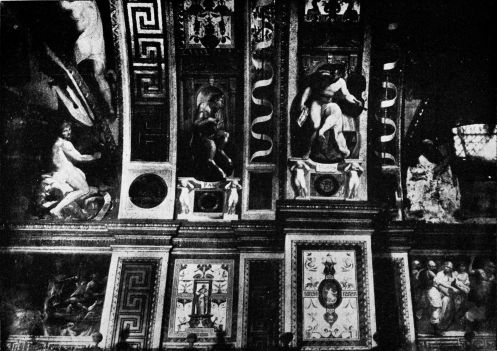
PAN AND MISENUS, BY PEREGRINO TIBALDI.
(Fresco of the Arch in the Library of the Escorial.)
PLATE 181
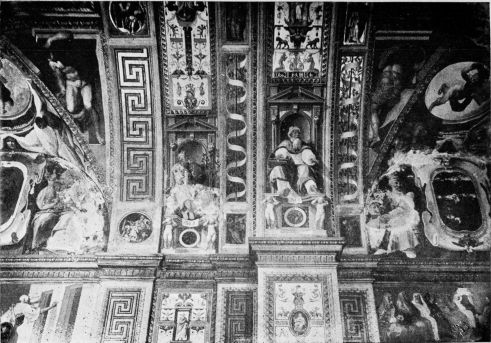
HOMER AND VIRGIL, BY PEREGRINO TIBALDI.
(Fresco of the Arch in the Library of the Escorial.)
PLATE 182
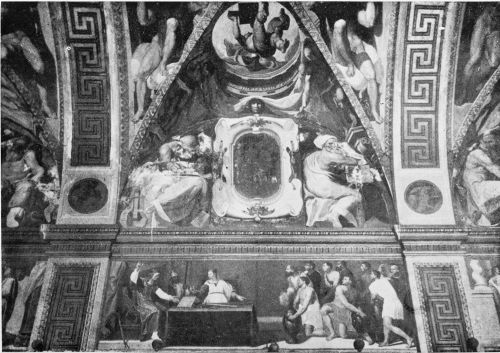
SOLOMON AND THE QUEEN OF SHEBA, BY V. CARDUCCI.
(Fresco of the Arch in the Library of the Escorial.)
PLATE 183
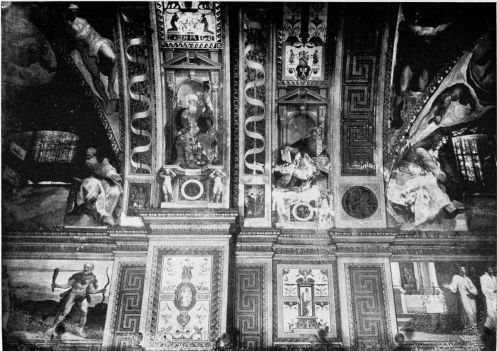
PINDAR AND HORACE, BY PEREGRINO TIBALDI.
(Fresco of the Arch in the Library of the Escorial.)
PLATE 184
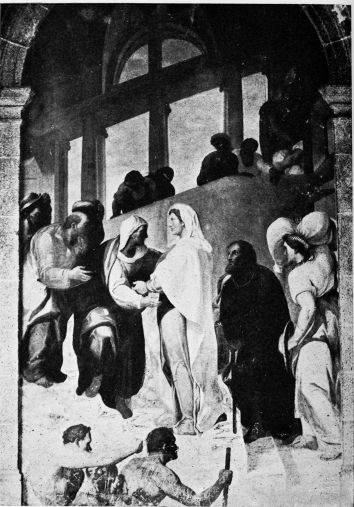
THE VISITATION, BY PEREGRINO TIBALDI.
(Fresco in the Cloister of the Escorial.)
PLATE 185
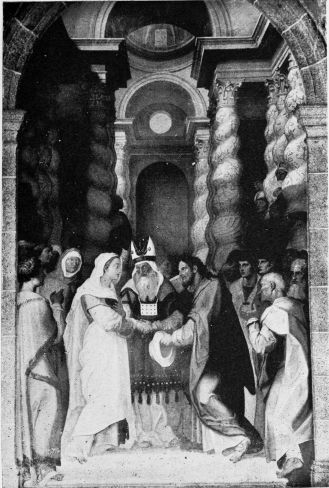
THE MARRIAGE OF THE VIRGIN, BY PEREGRINO TIBALDI.
(Fresco in the Cloister of the Escorial.)
PLATE 186
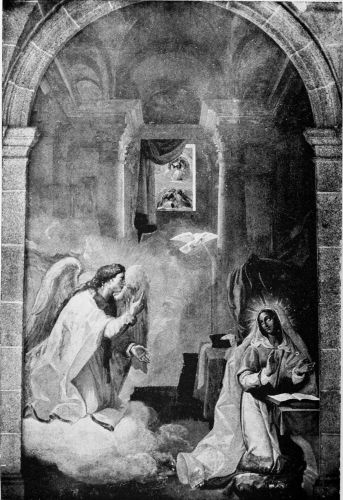
THE ANNUNCIATION, BY LUCAS CANGIAGI.
(Fresco in the Cloister of the Escorial.)
PLATE 187
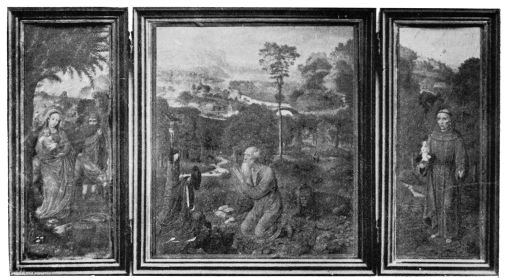
TRIPTYCH, WITH PAINTINGS ON VELLUM.
(Camarin of St. Theresa.)
PLATE 188
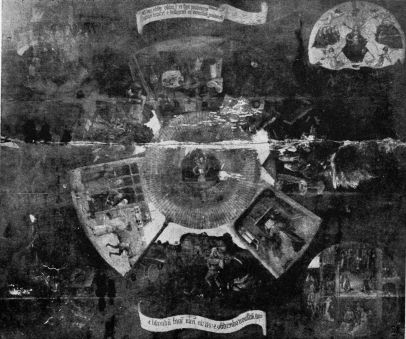
THE SEVEN CAPITAL SINS, BY JEROME BOSCH, ON WOOD.
(In the Room of Philip II. at the Escorial.)
PLATE 189
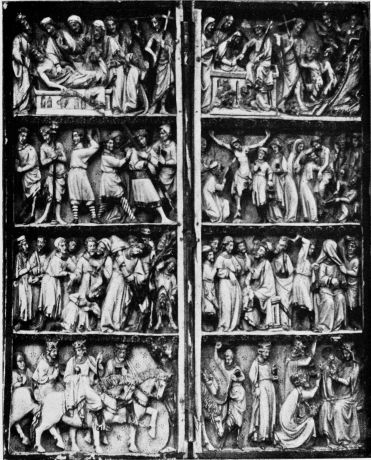
THE STORY OF THE PASSION: DIPTYCH, IN IVORY, OF THE 13TH CENTURY.
(From the Camarin of St. Theresa.)
PLATE 190
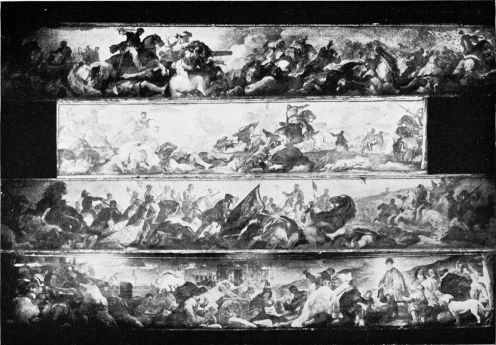
FRIEZE OF THE STAIRCASE IN THE MONASTERY, REPRESENTING THE BATTLE,
SIEGE, AND CAPTURE OF ST. QUINTIN, AND THE FOUNDATION OF THE MONASTERY,
BY L. GIORDANO.
PLATE 191
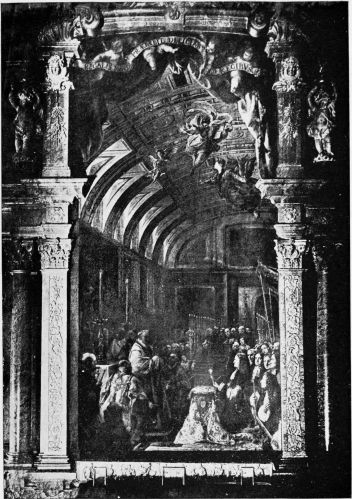
‘LA SANTA FORMA.’ THE MASTERPIECE OF CLAUDE COELLO.
(Sacristy of the Escorial.)
PLATE 192
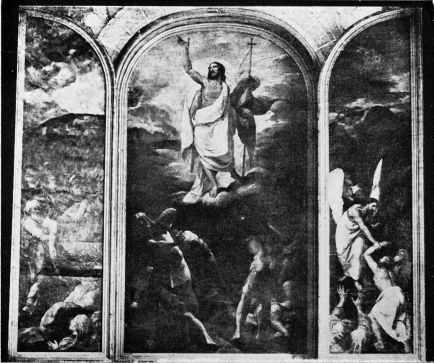
THE RESURRECTION, BY PEREGRINO TIBALDI.
(The Cloister of the Escorial.)
PLATE 193
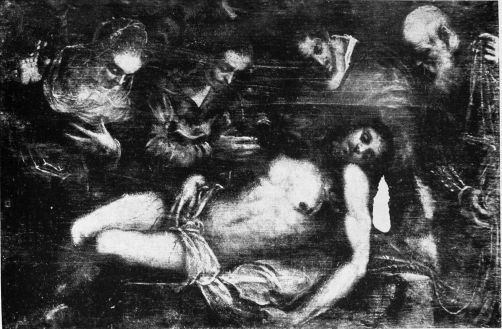
THE INTERMENT OF CHRIST, BY TINTORETTO.
(Chapter Hall of the Escorial.)
PLATE 194
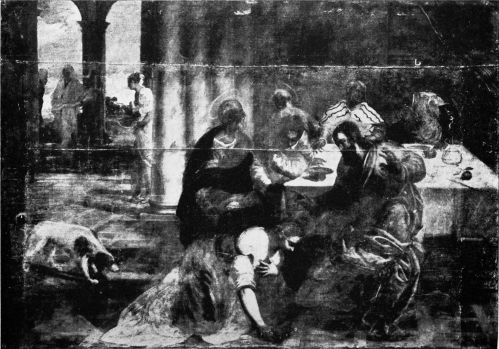
JESUS AT THE PHARISEE’S HOUSE, BY TINTORETTO.
(Chapter Hall of the Escorial.)
PLATE 195
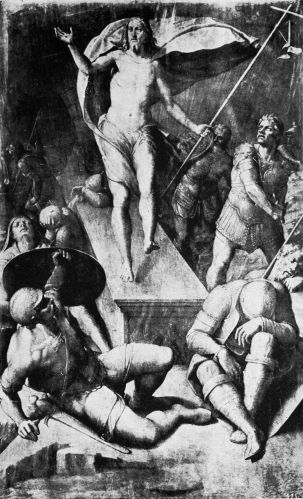
THE RESURRECTION OF OUR LORD: FLORENTINE SCHOOL, GREY PAINTING.
(Chapter Hall of the Escorial.)
PLATE 196
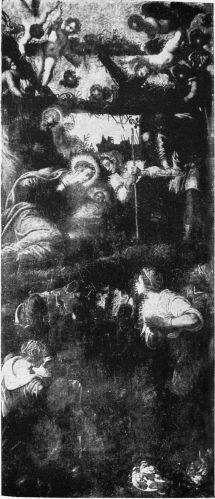
THE BIRTH OF OUR LORD, BY TINTORETTO.
(Chapter Room of the Escorial.)
PLATE 197
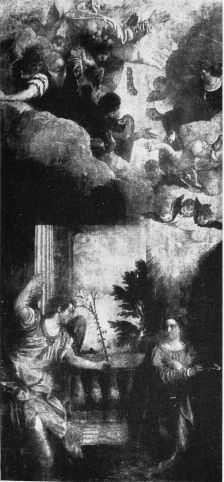
THE ANNUNCIATION, BY PAUL VERONESE.
(Chapter Room of the Escorial.)
PLATE 198
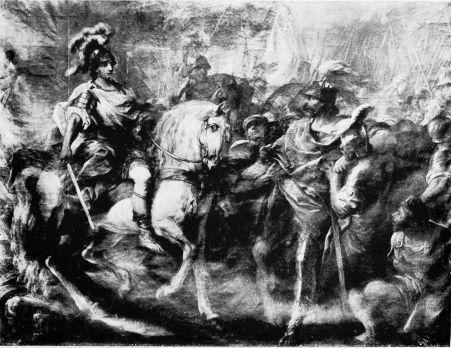
PORUS BROUGHT BEFORE ALEXANDER THE GREAT, BY CARLOS VAN LOO.
(Monastery of the Escorial.)
PLATE 199
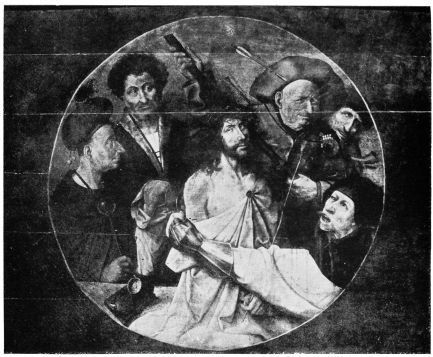
THE CROWN OF THORNS, BY JEROME BOSCH, ON WOOD.
(Chapter Hall of the Escorial.)
PLATE 200
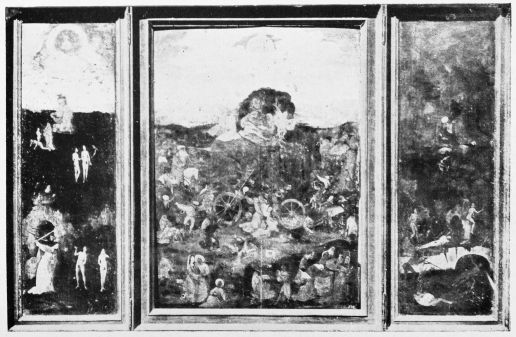
TRIPTYCH, BY JEROME BOSCH.
(Chapter Hall of the Escorial.)
PLATE 201
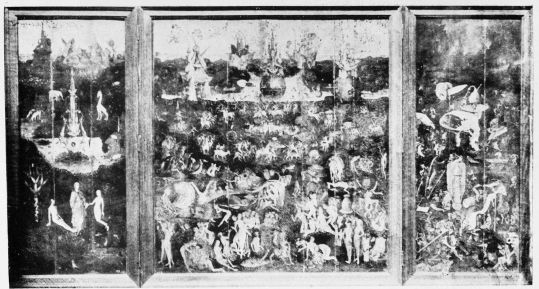
TRIPTYCH, REPRESENTING THE TERRESTRIAL DELIGHTS, AND THE PUNISHMENT OF
SIN IN HELL, BY JEROME BOSCH.
(Chapter Hall of the Escorial.)
PLATE 202
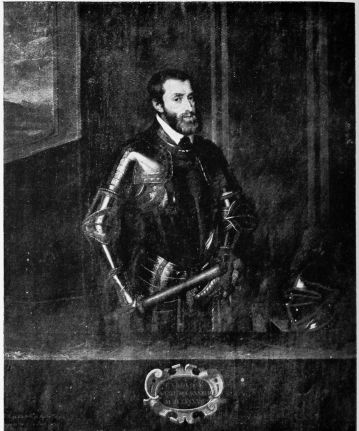
PORTRAIT OF CHARLES V. AT THE AGE OF 47, BY JUAN PANTOJA.
(Chapter Hall of the Escorial.)
PLATE 203
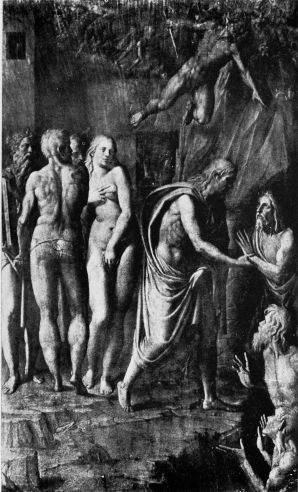
CHRIST BRINGING FORTH THE SOULS OF THE SAINTS: FLORENTINE SCHOOL.
(Chapter Hall of the Escorial.)
PLATE 204
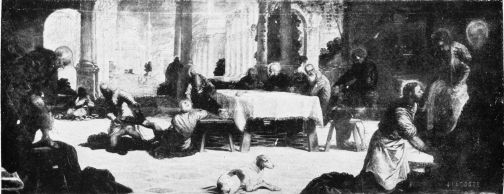
THE WASHING OF FEET, BY TINTORETTO.
(Chapter Hall of the Escorial.)
PLATE 205
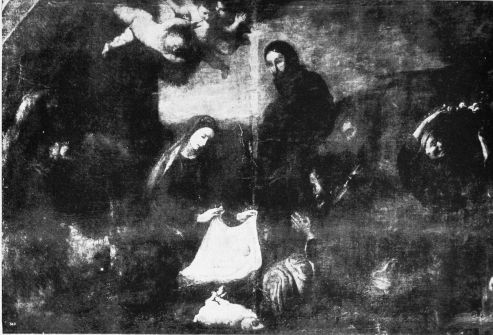
THE NATIVITY, BY JOSEF RIBERA.
(Chapter Hall of the Escorial.)
PLATE 206
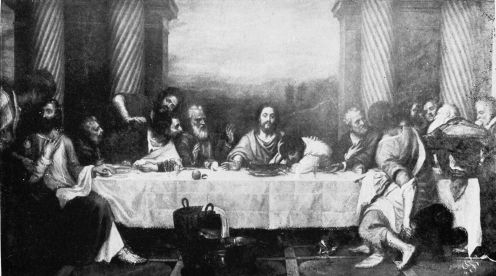
THE LAST SUPPER, BY TITIAN.
(The Escorial.)
PLATE 207
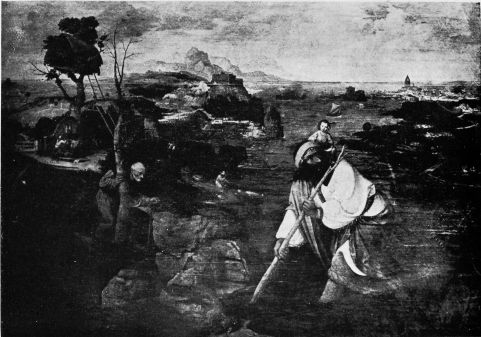
ST. CHRISTOPHER (ON WOOD), BY J. PATENIER.
(Chapter Hall of the Escorial.)
PLATE 208
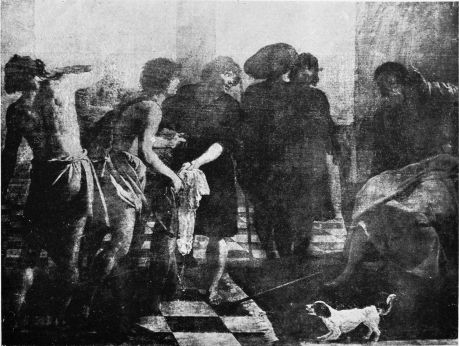
JACOB RECEIVING JOSEPH’S COAT, BY VELAZQUEZ.
(Chapter Hall of the Escorial.)
PLATE 209
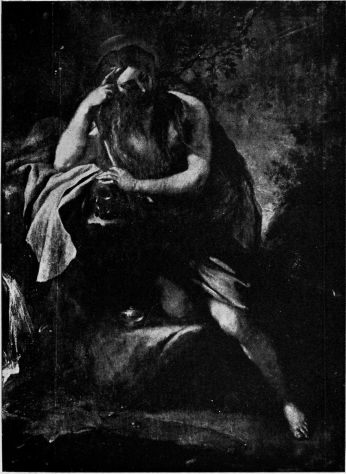
THE PENITENT MAGDALENE, BY L. GIORDANO.
(Chapter Hall of the Escorial.)
PLATE 210
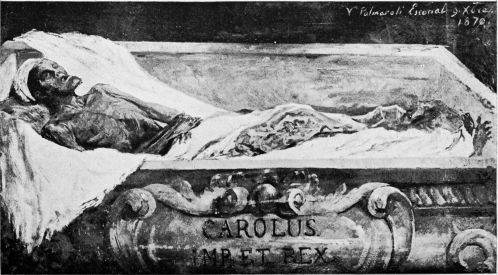
MUMMY OF CHARLES V., BY V. PALMAROLI.
(The Escorial.)
PLATE 211
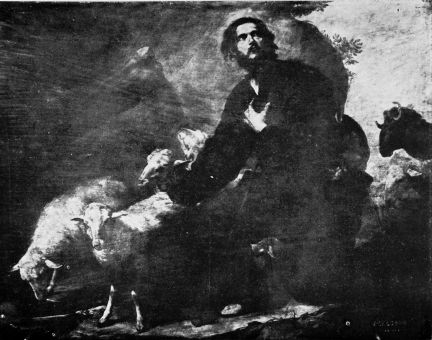
JACOB GUARDING THE FLOCKS OF LABAN, BY J. RIBERA.
(Chapter Hall of the Escorial.)
PLATE 212
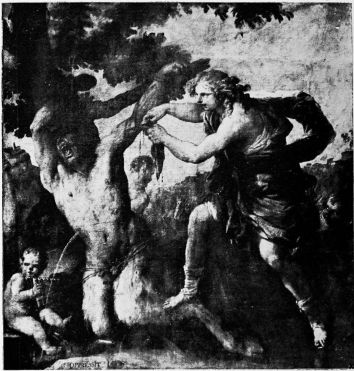
THE SATYR MARSYAS FLAYED ALIVE BY APOLLO, BY L. GIORDANO.
(Chapter Hall of the Escorial.)
PLATE 213
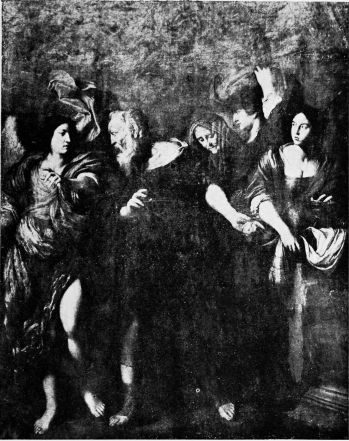
LOT AND HIS FAMILY, BY A. VACCARO.
(Chapter Hall of the Escorial.)
PLATE 214
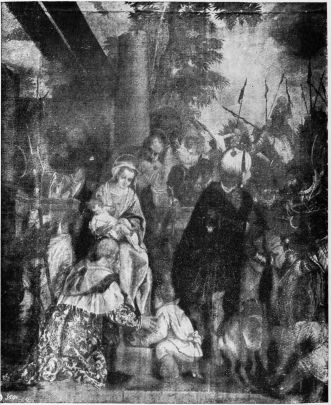
THE ADORATION OF THE MAGI, BY VERONESE.
(Chapter Hall of the Escorial.)
PLATE 215
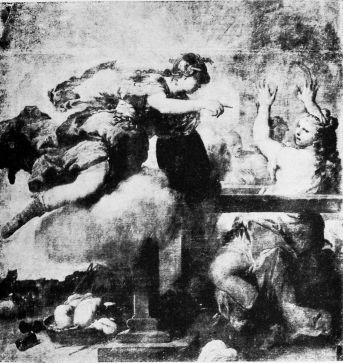
THE CHASTISEMENT OF ARACHNE, BY L. GIORDANO.
(Chapter Hall of the Escorial.)
PLATE 216
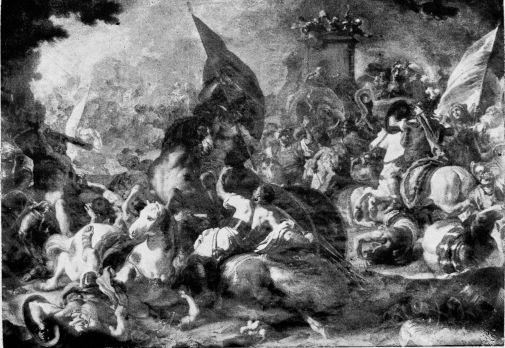
ALEXANDER CONQUERING DARIUS, BY F. SOLIMENA.
(Monastery.)
PLATE 217
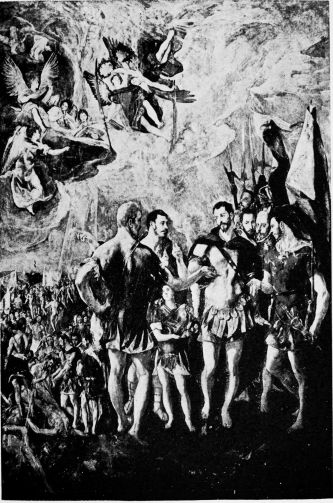
ST. MAURICE AND OTHER MARTYRS, BY EL GRECO.
(Chapter Hall of the Escorial.)
PLATE 218
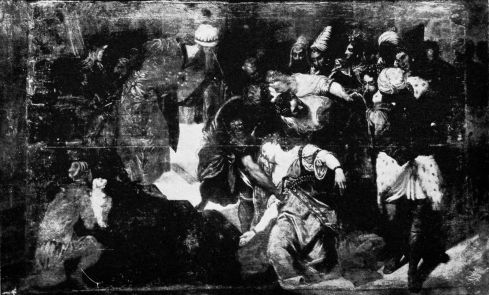
QUEEN ESTHER, BY TINTORETTO.
(Chapter Hall of the Escorial.)
PLATE 219
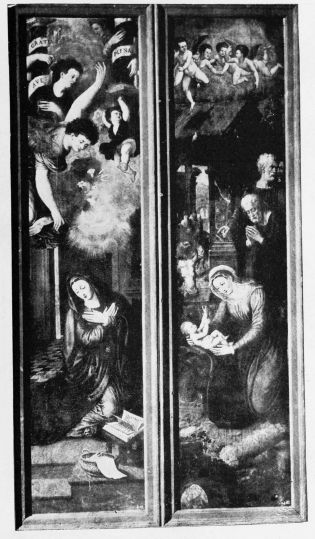
THE ANNUNCIATION, AND THE BIRTH OF CHRIST. BY COXCIS.
(Chapter Hall of the Escorial.)
PLATE 220
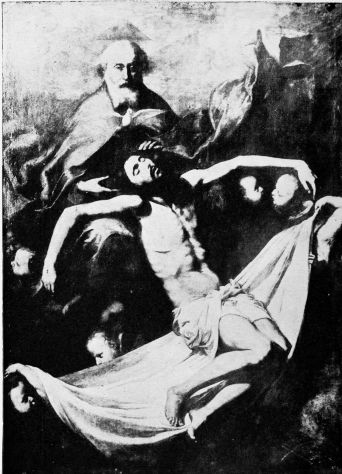
THE HOLY TRINITY, BY J. RIBERA.
(Chapter Hall of the Escorial.)
PLATE 221

VISION OF JESUS TO HIS MOTHER, BY P. VERONÈSE.
(Chapter Hall of the Escorial.)
PLATE 221
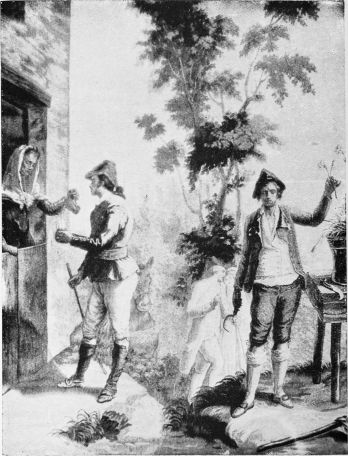
THE CARNATION GARDENER, BY F. BAYEU.
(Tapestry in the Palace.)
PLATE 223
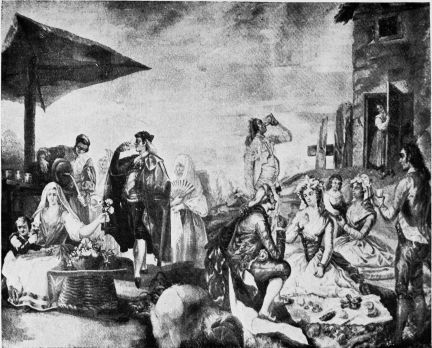
THE WATER-SELLER, BY F. BAYEU.
(Tapestry in the Palace.)
PLATE 224
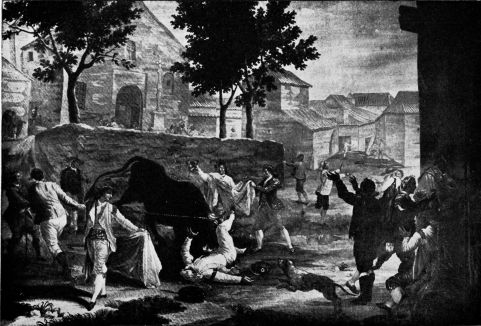
THE YOUNG BULL AT CARABANCHEL DE ABAJO, BY F. BAYEU
(Tapestry in the Palace.)
PLATE 225
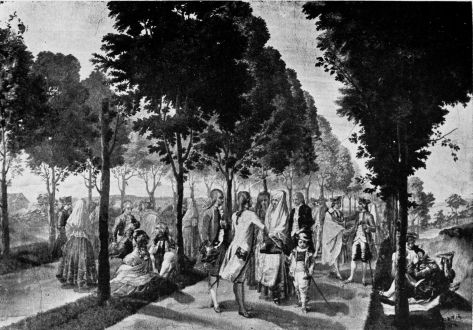
PROMENADE OF LAS DELICIAS, BY F. BAYEU.
(Tapestry in the Palace.)
PLATE 226

THE PORK MERCHANT, BY F. BAYEU.
(Tapestry in the Palace.)
PLATE 227
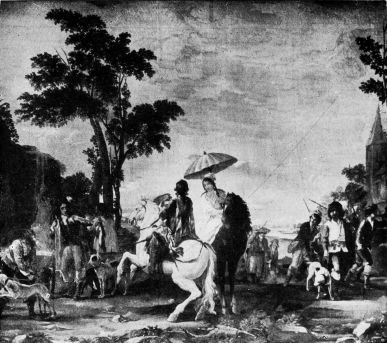
DEPARTURE FOR THE HUNT, AFTER P. WOUWERMAN, BY GINES DE AGUIRRE.
(Tapestry in the Palace.)
PLATE 228
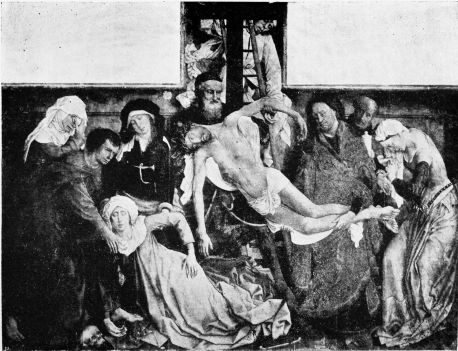
DESCENT FROM THE CROSS (R. van Der Weyden).
PLATE 229
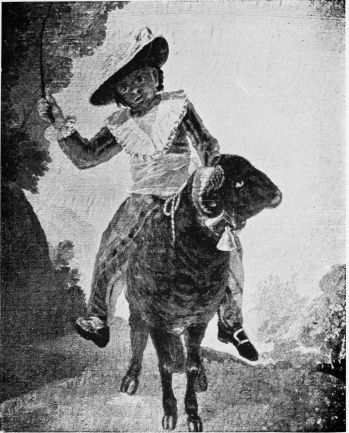
CHILD RIDING A SHEEP, BY F. GOYA.
(Tapestry in the Palace.)
PLATE 230
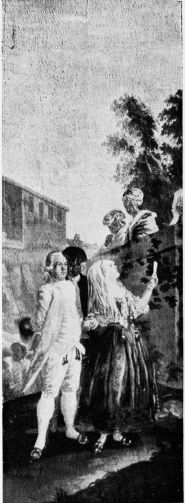
A LADY AND HER CAVALIER, BY F. GOYA.
(Tapestry in the Palace.)
PLATE 231
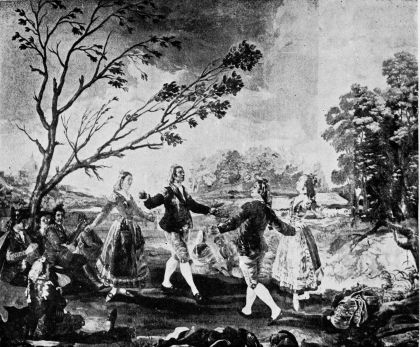
COUNTRY DANCE, BY F. GOYA.
(Tapestry in the Dining Hall of the Palace.)
PLATE 232
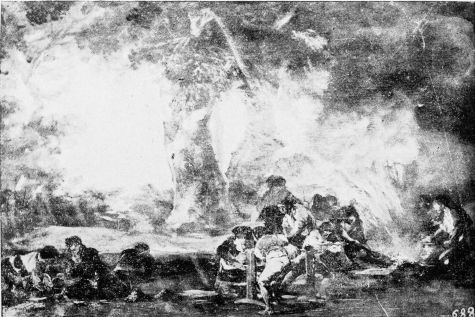
CASTING OF BULLETS IN A FOREST, BY GOYA.
(Casa del Principe, Escorial.)
PLATE 233
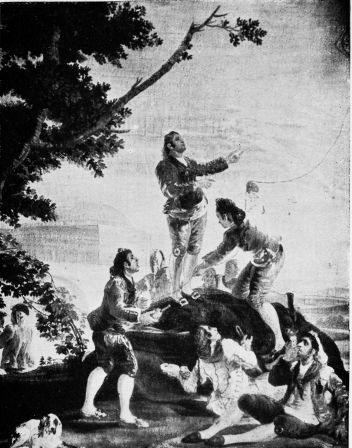
THE KITE, BY F. GOYA.
(Tapestry in the Escorial Palace.)
PLATE 234
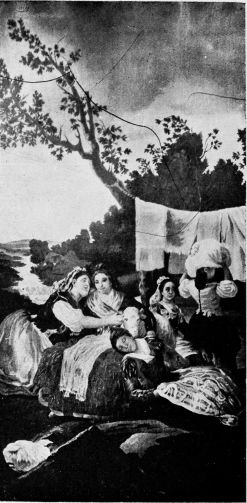
THE WASHERWOMEN, BY F. GOYA.
(Tapestry in the Palace.)
PLATE 235
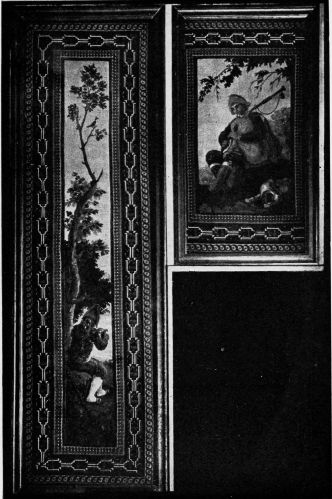
YOUNG MAN WITH A BIRD, AND A BAGPIPER, BY F. GOYA.
(Tapestry in the Palace.)
PLATE 236
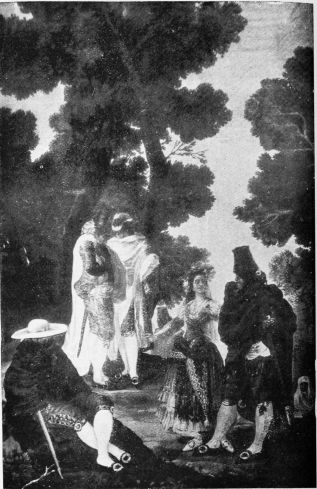
A PROMENADE IN ANDALUSIA, BY F. GOYA.
(Tapestry in the Palace.)
PLATE 237
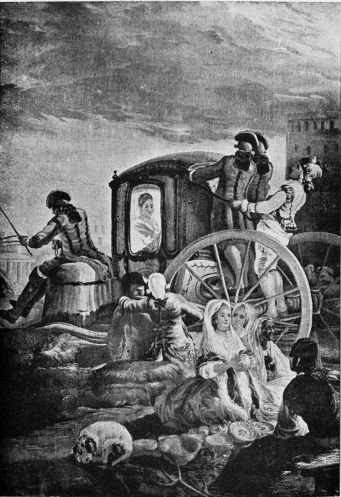
THE CHINA MERCHANT, BY F. GOYA.
(Tapestry in the Palace.)
PLATE 238
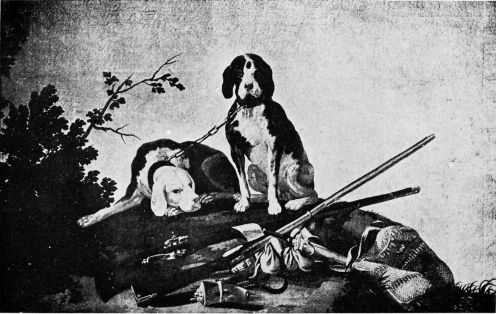
DOGS IN A LEASH, BY F. GOYA.
(Tapestry in the Palace.)
PLATE 239
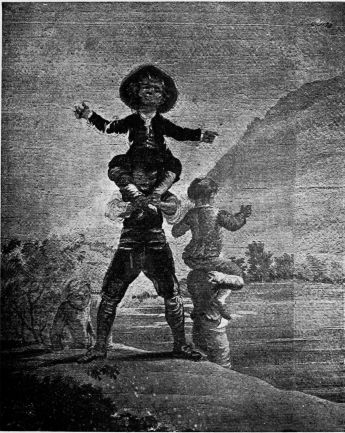
THE LITTLE GIANTS, BY F. GOYA.
(Tapestry in the Palace.)
PLATE 240
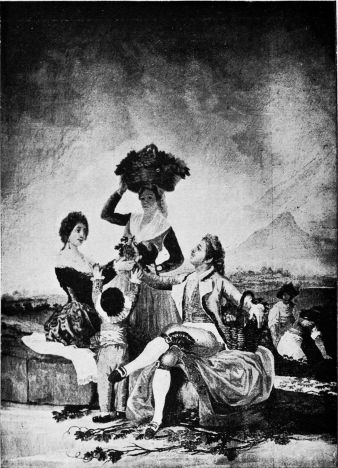
THE GRAPE-SELLERS, BY F. GOYA.
(Tapestry in the Palace.)
PLATE 241
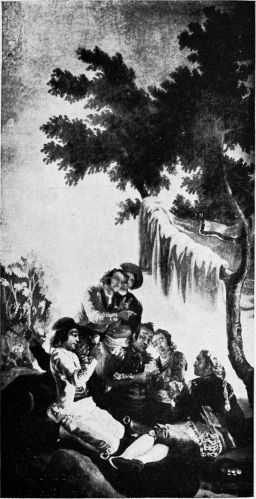
THE CARD-PLAYERS, BY F. GOYA.
(Tapestry in the Palace.)
PLATE 242
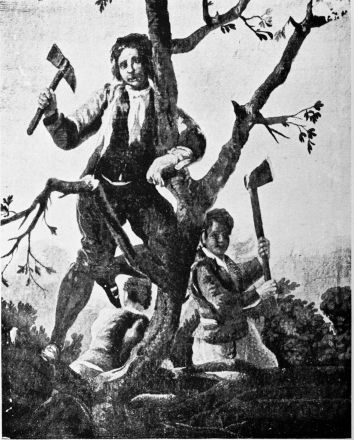
THE WOOD-CUTTERS, BY F. GOYA.
(Tapestry in the Dining Hall of the Palace.)
PLATE 243
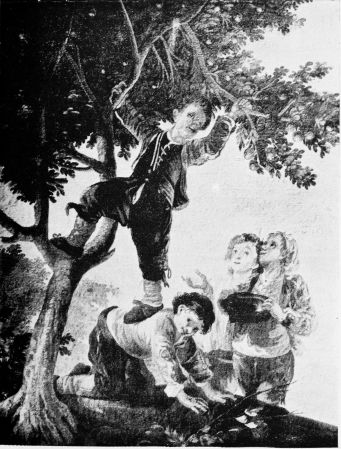
CHILDREN PICKING FRUIT, BY F. GOYA.
(Tapestry in the Palace.)
PLATE 244
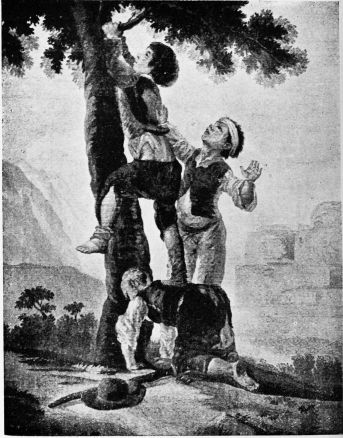
CHILDREN CLIMBING A TREE, BY F. GOYA.
(Tapestry in the Palace.)
PLATE 245
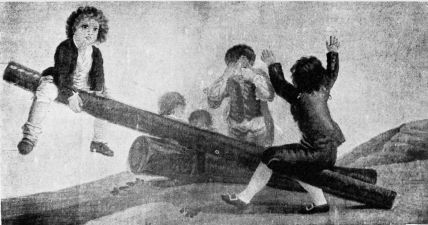
THE SEE-SAW, BY F. GOYA.
(Tapestry in the Palace.)
PLATE 246
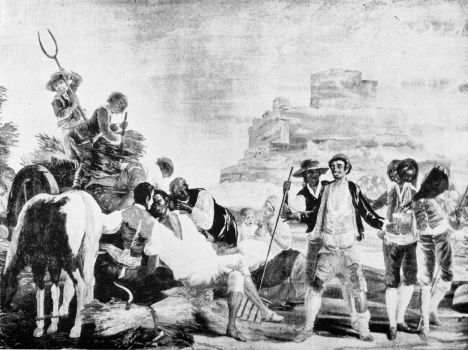
THE REAPERS, BY F. GOYA.
(Tapestry in the Palace.)
PLATE 247
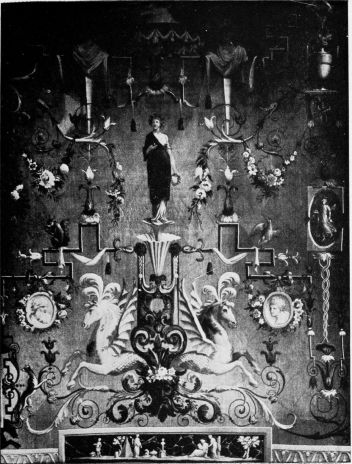
TAPESTRY AFTER THE POMPEIAN STYLE.
(In the Palace.)
PLATE 248
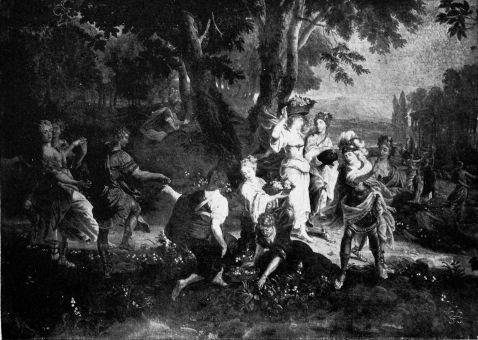
STORY OF TELEMACHUS: THE DANCE OF THE NYMPHS.
(Gobelin Tapestry in the Palace.)
PLATE 249
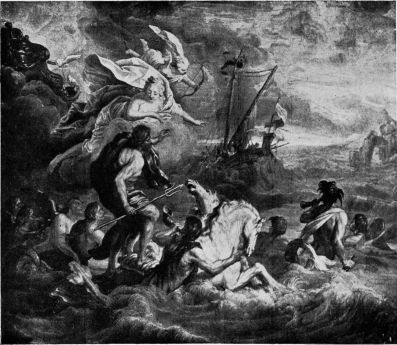
STORY OF TELEMACHUS: NEPTUNE WRECKING ULYSSES’ VESSEL.
(Gobelin Tapestry in the Palace.)
PLATE 250
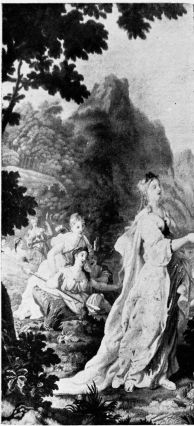
STORY OF TELEMACHUS: CALYPSO.
(Gobelin Tapestry in the Palace.)
PLATE 251
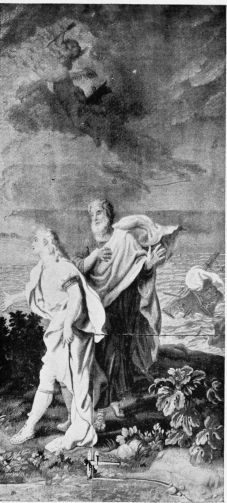
STORY OF TELEMACHUS: YOUNG TELEMACHUS.
(Gobelin Tapestry in the Palace.)
PLATE 252
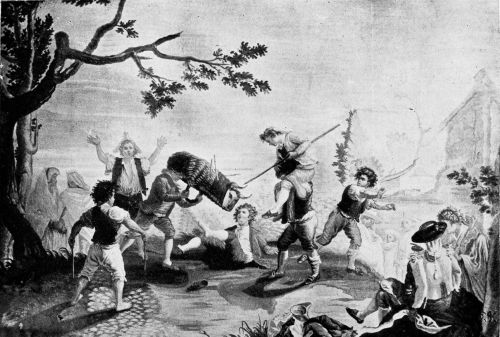
CHILDREN PLAYING AT BULL-FIGHTING, BY F. BAYEU.
(Tapestry in the Escorial Palace.)
PLATE 253
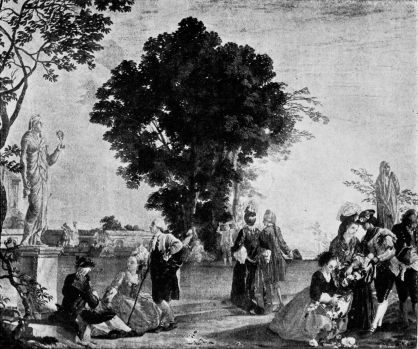
THE GARDENS OF BUEN RETIRO.
(Tapestry in the Palace.)
PLATE 254
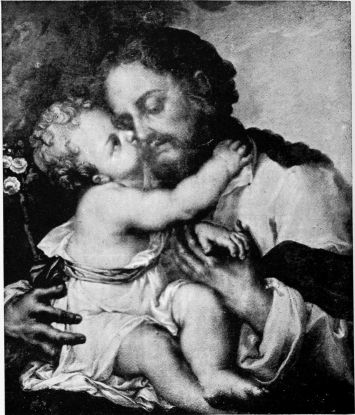
ST. JOSEPH AND THE CHILD JESUS.
(Casa del Principe, Escorial.)
PLATE 255
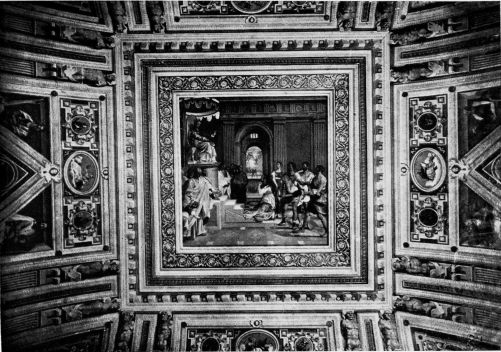
THE JUDGMENT OF SOLOMON, BY F. DE URBINA.
(Ceiling in the Prior’s Cell in the Monastery.)
PLATE 256
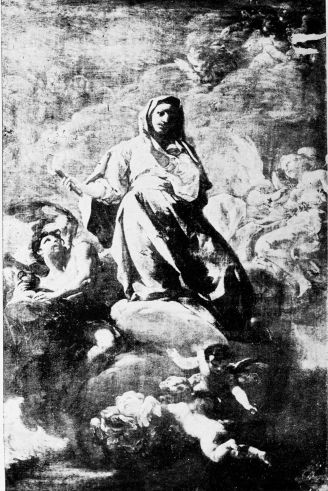
THE VIRGIN, BY CORRADO.
(Casa del Principe, Escorial.)
PLATE 257
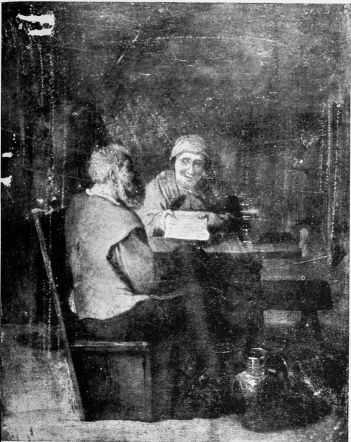
WOMAN READING A LETTER, BY D. TENIERS.
(Casa del Principe at the Escorial.)
PLATE 258
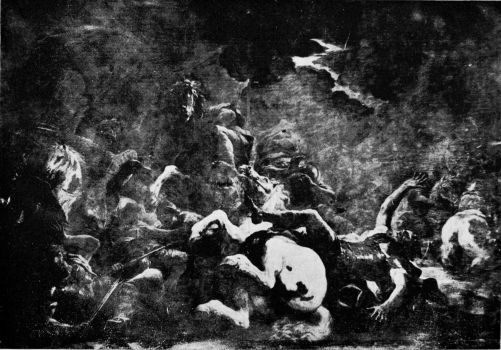
THE CONVERSION OF ST. PAUL, BY L. GIORDANO.
(Casa del Principe at the Escorial.)
PLATE 259
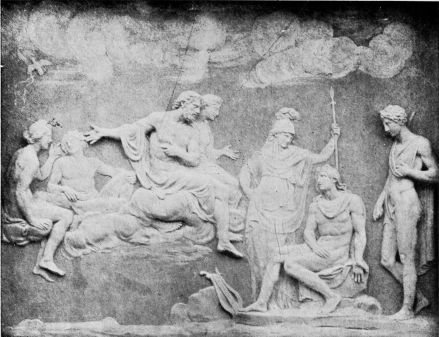
APOLLO GRIEVING OVER THE DEATH OF HIS SON PHAETON: BUEN-RETIRO CHINA.
(Casa del Principe.)
PLATE 260
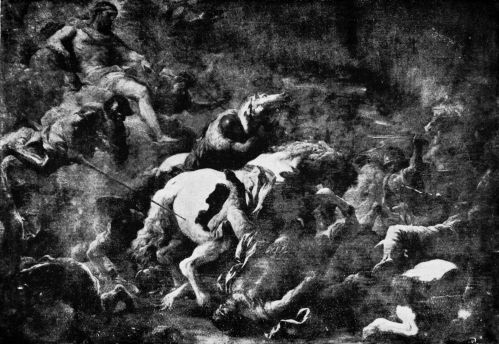
THE FALL AND DEATH OF JULIAN THE APOSTATE, BY L. GIORDANO.
(Casa del Principe.)
PLATE 261
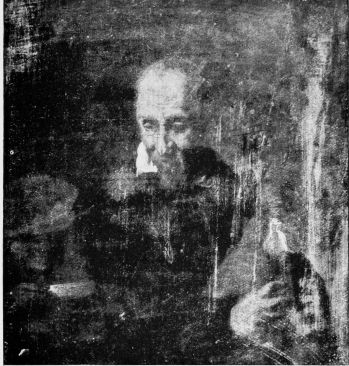
THE BAGPIPER, BY D. TENIERS.
(Casa del Principe.)
PLATE 262
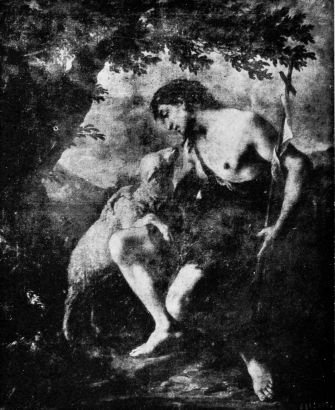
ST. JOHN THE BAPTIST, BY ANNIBALE CARACCI.
(Casa del Principe.)
PLATE 263
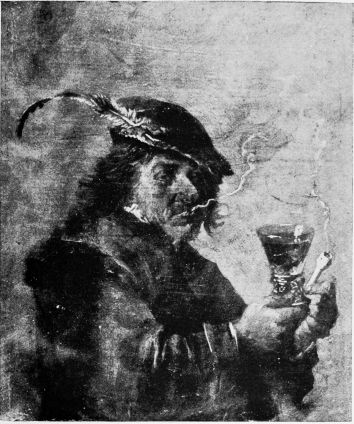
A SMOKER, BY D. TENIERS.
(Casa del Principe at the Escorial.)
PLATE 264
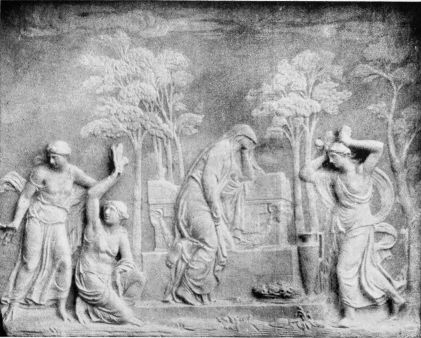
THE HELIADES, DAUGHTERS OF THE SUN, CHANGED INTO POPLARS, AFTER THE
DEATH OF THEIR BROTHER PHAETON: BUEN-RETIRO CHINA.
(Casa del Principe.)
PLATE 265
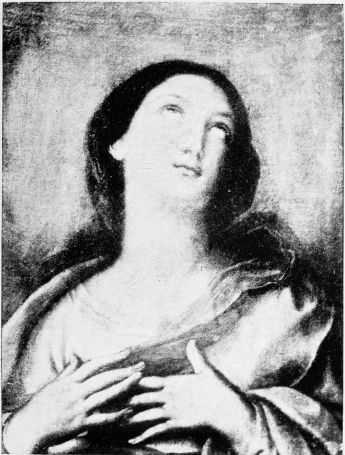
THE CONCEPTION OF THE VIRGIN, BY AN UNKNOWN ARTIST.
(Casa del Principe at the Escorial.)
PLATE 266
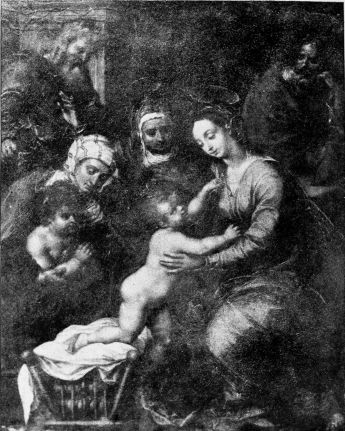
THE HOLY FAMILY, BY RAPHAEL.
(Casa del Principe at the Escorial.)
PLATE 267
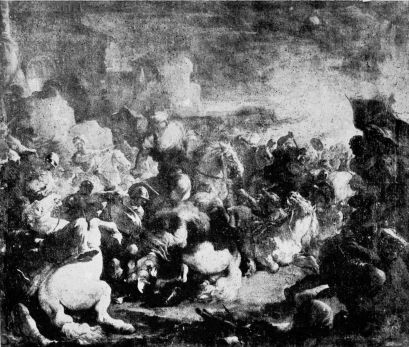
SEMIRAMIS FIGHTING THE ENEMY. BY L. GIORDANO.
(Casa del Principe at the Escorial.)
PLATE 268
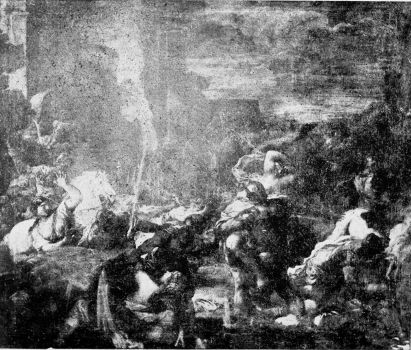
THE RAPE OF THE SABINES, BY L. GIORDANO.
(Casa del Principe at the Escorial.)
PLATE 269
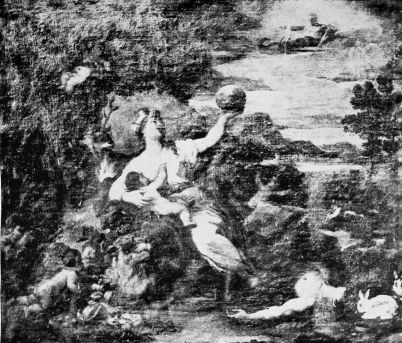
ALLEGORY OF AMERICA, BY L. GIORDANO.
(Casa del Principe at the Escorial.)
PLATE 270
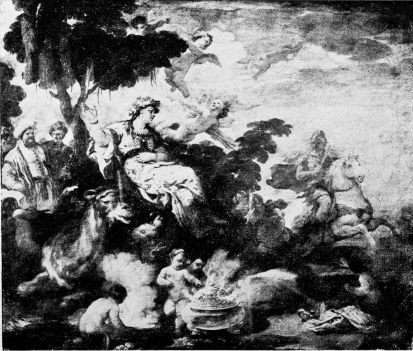
ALLEGORY OF ASIA, BY L. GIORDANO.
(Casa del Principe at the Escorial.)
PLATE 271
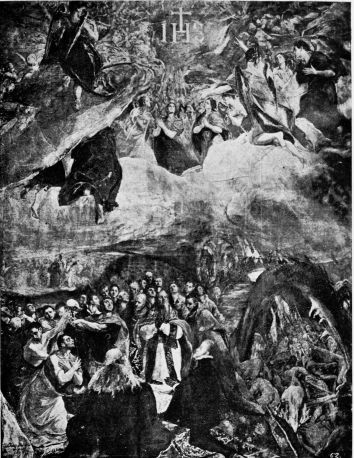
THE DREAM OF PHILIP II., BY EL GRECO.
(Chapter Hall of the Escorial.)
PLATE 272
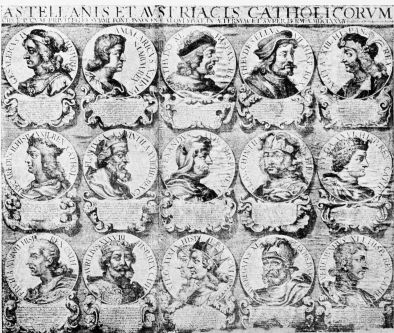
EFFIGIES OF THE DIFFERENT KINGS OF SPAIN.
PLATE 273
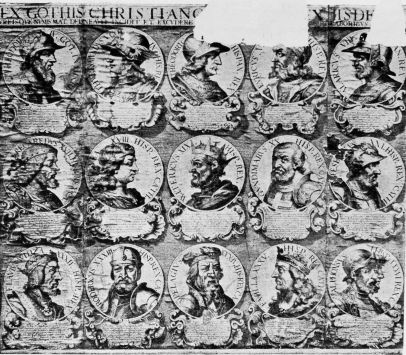
EFFIGIES OF THE DIFFERENT KINGS OF SPAIN.
PLATE 274
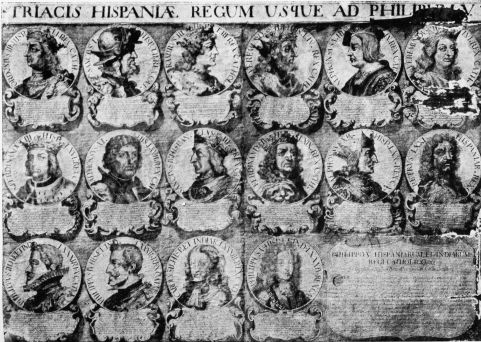
EFFIGIES OF THE DIFFERENT KINGS OF SPAIN.
PLATE 275
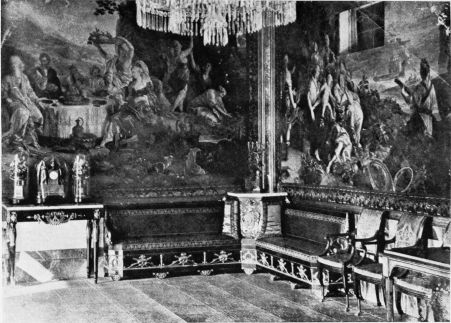
THE PRINCE’S ROOM.
(Escorial.)
PLATE 276
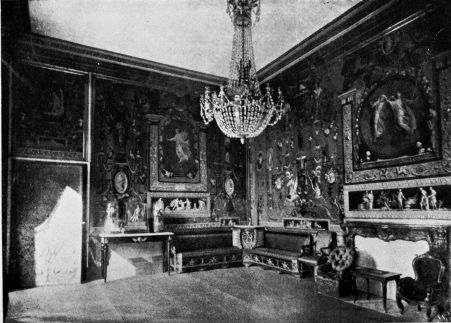
POMPEIAN ROOM.
(Escorial.)
PLATE 277
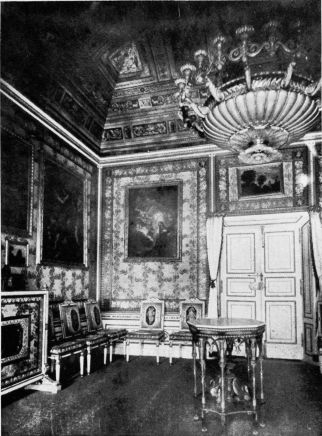
TOWER ROOM (CASITA DE ABAJO)
(Escorial.)
PLATE 278
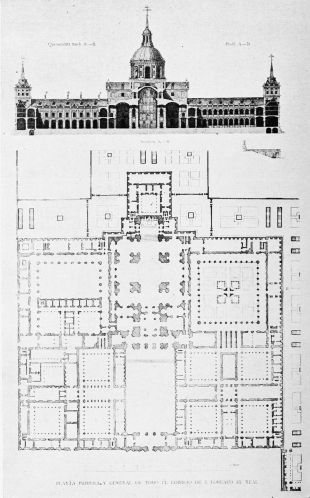
THE ROYAL PALACE AND MONASTERY: PLAN AND SECTION.
THE
SPANISH SERIES
Edited by ALBERT F. CALVERT
A new and important series of volumes, dealing with Spain in its various
aspects, its history, its cities and monuments. Each volume will be
complete in itself in an uniform binding, and the number and excellence
of the reproductions from pictures will justify the claim that these
books comprise the most copiously illustrated series that has yet been
issued, some volumes having over 300 pages of reproductions of pictures,
etc.
Crown 8vo. Price 3/6 net
MURILLO. A Biography and Appreciation. Illustrated by over 165
reproductions from photographs of his most celebrated pictures.
SPANISH ARMS AND ARMOUR. A Historical and Descriptive Account of
the Royal Armoury at Madrid. Illustrated with 386 reproductions
from photographs.
THE ESCORIAL. A Historical and Descriptive Account of the Spanish
Royal Palace, Monastery and Mausoleum. Illustrated with plans and
278 reproductions from pictures and photographs.
CORDOVA. A Historical and Descriptive Account of the Ancient City
which the Carthaginians styled the “Gem of the South.” With over
155 Illustrations.
SEVILLE. A Historical and Descriptive Account. With 300
Illustrations.
THE PRADO. A Guide and Handbook to the Royal Picture Gallery of
Madrid. Illustrated with 221 reproductions from photographs of Old
Masters.
IN PREPARATION
Goya
Granada
Velazquez
Toledo
|
Royal Palaces
Madrid
Leon, Burgos, &c.
Valladolid, Segovia, &c.
|
UNIFORM WITH THIS VOLUME
MURILLO
A BIOGRAPHY AND APPRECIATION. ILLUSTRATED BY OVER 165 REPRODUCTIONS FROM
PHOTOGRAPHS OF HIS MOST CELEBRATED PICTURES
WHILE the names of Murillo and Velazquez are inseparably linked in the
history of Art as Spain’s immortal contribution to the small band of
world-painters, the great Court-Painter to Philip IV. has ever received
the lion’s share of public attention. Many learned and critical works
have been written about Murillo, but whereas Velazquez has been
familiarised to the general reader by the aid of small, popular
biographies, the niche is still empty which it is hoped that this book
will fill.
In this volume the attempt has been made to show the painter’s art in
its relation to the religious feeling of the age in which he lived, and
his own feeling towards his art. Murillo was the product of his
religious era, and of his native province, Andalusia. To Europe in his
lifetime he signified little or nothing. He painted to the order of the
religious houses of his immediate vicinity; his works were immured in
local monasteries and cathedrals, and, passing immediately out of
circulation, were forgotten or never known.
UNIFORM WITH THIS VOLUME
SPANISH ARMS AND ARMOUR
A HISTORICAL AND DESCRIPTIVE ACCOUNT OF THE ROYAL ARMOURY AT MADRID.
ILLUSTRATED WITH 386 REPRODUCTIONS FROM PHOTOGRAPHS
ALTHOUGH several valuable and voluminous catalogues of the Spanish Royal
Armoury have, from time to time, been compiled, this “finest collection
of armour in the world” has been subjected so often to the disturbing
influences of fire, removal, and re-arrangement, that no hand catalogue
of the Museum is available, and this book has been designed to serve
both as a historical souvenir of the institution and a record of its
treasures.
The various exhibits with which the writer illustrates his narrative are
reproduced to the number of over 300 on art paper, and the selection of
weapons and armour has been made with a view not only to render the
series interesting to the general reader, but to present a useful text
book of European armoury for the guidance of artists, sculptors,
antiquaries, costumiers, and all who have practical interest in
historical accuracy.
UNIFORM WITH THIS VOLUME
THE ESCORIAL
A HISTORICAL AND DESCRIPTIVE ACCOUNT OF THE SPANISH ROYAL PALACE,
MONASTERY AND MAUSOLEUM. ILLUSTRATED WITH PLANS AND 278 REPRODUCTIONS
FROM PICTURES AND PHOTOGRAPHS
THE Royal Palace, Monastery, and Mausoleum of El Escorial, which rears
its gaunt, grey walls in one of the bleakest but most imposing districts
in the whole of Spain, was erected to commemorate a victory over the
French in 1557. It was occupied and pillaged by the French two and
a-half centuries later, and twice it has been greatly diminished by
fire; but it remains to-day, not only the incarnate expression of the
fanatic religious character and political genius of Philip II., but the
greatest mass of wrought granite which exists on earth, the leviathan of
architecture, the eighth wonder of the world.
In the text of this book the author has endeavoured to reconstitute the
glories and tragedies of the living past of the Escorial, and to
represent the wonders of the stupendous edifice by reproductions of over
two hundred and seventy of the finest photographs and pictures
obtainable. Both as a review and a pictorial record it is hoped that the
work will make a wide appeal among all who are interested in the
history, the architecture, and the art of Spain.
UNIFORM WITH THIS VOLUME
CORDOVA
A HISTORICAL AND DESCRIPTIVE ACCOUNT OF THE ANCIENT CITY WHICH THE
CARTHAGINIANS STYLED THE “GEM OF THE SOUTH,” WITH OVER 155 ILLUSTRATIONS
GAY-LOOKING, vivacious in its beauty, silent, ill-provided, depopulated,
Cordova was once the pearl of the West, the city of cities, Cordova of
the thirty suburbs and three thousand mosques; to-day she is no more
than an overgrown village, but she still remains the most Oriental town
in Spain.
Cordova, once the centre of European civilisation, under the Moors the
Athens of the West, the successful rival of Baghdad and Damascus, the
seat of learning and the repository of the arts, is now no more than a
third-rate provincial town; but the artist, the antiquary and the lover
of the beautiful, will still find in its streets and squares and patios
a mysterious spell that cannot be resisted.
UNIFORM WITH THIS VOLUME
SEVILLE
A HISTORICAL AND DESCRIPTIVE ACCOUNT, WITH 300 ILLUSTRATIONS
SEVILLE, which has its place in mythology as the creation of Hercules,
and was more probably founded by the Phœnicians, which became
magnificent under the Roman rule, was made the capital of the Goths, was
the centre of Moslem power and splendour, and fell before the military
prowess of St. Ferdinand, is still the Queen of Andalusia, the Spanish
Athens, the foster-mother of Velazquez and Murillo, the city of poets
and pageantry and love.
Seville is always gay, and responsive and fascinating to the receptive
visitor, and all sorts of people go there with all sorts of motives. The
artist repairs to the Andalusian city to fill his portfolio; the lover
of art makes the pilgrimage to study Murillo in all his glory. The
seasons of the Church attract thousands from reasons of devotion or
curiosity. And of all these myriad visitors, who go with their minds
full of preconceived notions, not one has yet confessed to being
disappointed with Seville.
The author has here attempted to convey in the illustrations an
impression of this laughing city where all is gaiety and mirth and
ever-blossoming roses, where the people pursue pleasure as the serious
business of life in an atmosphere of exhilarating enjoyment.
UNIFORM WITH THIS VOLUME
THE PRADO
A GUIDE AND HANDBOOK TO THE ROYAL PICTURE GALLERY OF MADRID. ILLUSTRATED
WITH 221 REPRODUCTIONS FROM PHOTOGRAPHS OF OLD MASTERS
THIS volume is an attempt to supplement the accurate but formal notes
contained in the official catalogue of a gallery which is considered the
finest in the world. It has been said that the day one enters the Prado
for the first time is an important event like marriage, the birth of a
child, or the coming into an inheritance; an experience of which one
feels the effects to the day of one’s death.
The excellence of the Madrid gallery is the excellence of exclusion; it
is a collection of magnificent gems. Here one becomes conscious of a
fresh power in Murillo, and is amazed anew by the astonishing apparition
of Velazquez; here is, in truth, a rivalry of miracles of art.
The task of selecting pictures for reproduction from what is perhaps the
most splendid gallery of old masters in existence, was one of no little
difficulty, it is believed that the collection is representative, and
that the letterpress will form a serviceable companion to the visitor to
The Prado.
UNIFORM WITH THIS VOLUME
TOLEDO
A HISTORICAL AND DESCRIPTIVE ACCOUNT OF THE “CITY OF GENERATIONS,” WITH
OVER 480 ILLUSTRATIONS
THE origin of Imperial Toledo, “the crown of Spain, the light of the
world, free from the time of the mighty Goths,” is lost in the
impenetrable mists of antiquity. Mighty, unchangeable, invincible, the
city has been described by Wörmann as “a gigantic open-air museum of the
architectural history of early Spain, arranged upon a lofty and
conspicuous table of rock.”
But while some writers have declared that Toledo is a theatre with the
actors gone and only the scenery left, the author does not share the
opinion. He believes that the power and virility upon which Spain built
up her greatness is reasserting itself. The machinery of the theatre of
Toledo is rusty, the pulleys are jammed from long disuse, but the
curtain is rising steadily if slowly, and already can be heard the
tuning-up of fiddles in its ancient orchestra.
In this belief the author of this volume has not only set forth the
story of Toledo’s former greatness, but has endeavoured to place before
his readers a panorama of the city as it appears to-day, and to show
cause for his faith in the greatness of the Toledo of the future.
UNIFORM WITH THIS VOLUME
GRANADA AND THE ALHAMBRA
A BRIEF HISTORY OF THE MOSLEM RULE IN SPAIN, TOGETHER WITH A PARTICULAR
ACCOUNT OF THE CONSTRUCTION, THE ARCHITECTURE, AND THE DECORATION OF THE
MOORISH PALACE, WITH OVER 450 ILLUSTRATIONS
THIS volume is the third and abridged edition of a work which the author
was inspired to undertake by the surpassing loveliness of the Alhambra,
and by his disappointment in the discovery that no such thing as an even
moderately adequate illustrated souvenir of “this glorious sanctuary of
Spain” was obtainable. Keenly conscious of the want himself, he essayed
to supply it, and the result is a volume that has been acclaimed with
enthusiasm alike by critics, artists, architects, and archæologists.
In his preface to the first edition, Mr. Calvert wrote: “The Alhambra
may be likened to an exquisite opera which can only be appreciated to
the full when one is under the spell of its magic influence. But as the
witchery of an inspired score can be recalled by the sound of an air
whistled in the street, so—it is my hope—the pale ghost of the Moorish
fairy-land may live again in the memories of travellers through the
medium of this pictorial epitome.”
UNIFORM WITH THIS VOLUME
VELAZQUEZ
A BIOGRAPHY AND APPRECIATION. ILLUSTRATED WITH 142 REPRODUCTIONS FROM
PHOTOGRAPHS OF HIS MOST CELEBRATED PICTURES
DIEGO RODRIGUEZ DE SILVA Y VELAZQUEZ—“our Velasquez,” as Palomino
proudly styles him—has been made the subject of innumerable books in
every European language, yet the General Editor of this Spanish Series
feels that it would not be complete without the inclusion of yet another
contribution to the broad gallery of Velazquez literature.
The great Velazquez, the eagle in art—subtle, simple, incomparable—the
supreme painter, is still a guiding magnet of the art of to-day. This
greatest of Spanish artists, a master not only in portrait painting, but
in character and animal studies, in landscapes and historical subjects,
impressed the grandeur of his superb personality upon all his work.
Spain, it has been said, the country whose art was largely borrowed,
produced Velazquez, and through him Spanish art became the light of a
new artistic life.
The author cannot boast that he has new data to offer, but he has put
forward his conclusions with modesty; he has reproduced a great deal
that is most representative of the artist’s work; and he has endeavoured
to keep always in view his object to present a concise, accurate, and
readable life of Velazquez.
UNIFORM WITH THIS VOLUME
MADRID
A HISTORICAL AND DESCRIPTIVE ACCOUNT OF THE SPANISH CAPITAL, WITH OVER
300 ILLUSTRATIONS
MADRID is at once one of the most interesting and most maligned cities
in Europe. It stands at an elevation of 2,500 feet above the sea level,
in the centre of an arid, treeless, waterless, and wind-blown plain; but
whatever may be thought of the wisdom of selecting a capital in such a
situation, one cannot but admire the uniqueness of its position, and the
magnificence of its buildings, and one is forced to admit that, having
fairly entered the path of progress, Madrid bids fair to become one of
the handsomest and most prosperous of European cities.
The splendid promenades, the handsome buildings, and the spacious
theatres combine to make Madrid one of the first cities of the world,
and the author has endeavoured with the aid of the camera, to place
every feature and aspect of the Spanish metropolis before the reader.
Some of the illustrations reproduced here have been made familiar to the
English public by reason of the interesting and stirring events
connected with the Spanish Royal Marriage, but the greater number were
either taken by the author, or are the work of photographers specially
employed to obtain new views for the purpose of this volume.
UNIFORM WITH THIS VOLUME
GOYA
A BIOGRAPHY AND AN APPRECIATION. ILLUSTRATED BY REPRODUCTIONS OF 600 OF
HIS PICTURES
THE last of the old masters and the first of the moderns, as he has been
called, Francisco José de Goya y Lucientes is not so familiarised to
English readers as his genius deserves. He was born at a time when the
tradition of Velazquez was fading, and the condition of Spanish painting
was debased almost beyond hope of salvation; he broke through the
academic tradition of imitation; “he, next to Velazquez, is to be
accounted as the man whom the Impressionists of our time have to thank
for their most definite stimulus, their most immediate inspiration.”
The genius of Goya was a robust, imperious, and fulminating genius; his
iron temperament was passionate, dramatic, and revolutionary; he painted
a picture as he would have fought a battle. He was an athletic, warlike,
and indefatigable painter; a naturalist like Velazquez; fantastic like
Hogarth; eccentric like Rembrandt; the last flame-coloured flash of
Spanish genius.
It is impossible to reproduce his colouring; but in the reproductions of
his works the author has endeavoured to convey to the reader some idea
of Goya’s boldness of style, his mastery of frightful shadows and
mysterious lights, and his genius for expressing all terrible emotions.
UNIFORM WITH THIS VOLUME
LEON, BURGOS AND SALAMANCA
A HISTORICAL AND DESCRIPTIVE ACCOUNT, WITH OVER 350 ILLUSTRATIONS
IN Leon, once the capital of the second kingdom in Spain; in Burgos,
which boasts one of the most magnificent cathedrals in Spain, and the
custodianship of the bones of the Cid; and in Salamanca, with its
university, which was one of the oldest in Europe, the author has
selected three of the most interesting relics of ancient grandeur in
this country of departed greatness.
Leon to-day is nothing but a large agricultural village, torpid, silent,
dilapidated; Burgos, which still retains traces of the Gotho-Castilian
character, is a gloomy and depleting capital; and Salamanca is a city of
magnificent buildings, a broken hulk, spent by the storms that from time
to time have devastated her.
Yet apart from the historical interest possessed by these cities, they
still make an irresistible appeal to the artist and the antiquary. They
are content with their stories of old-time greatness and their
cathedrals, and these ancient architectural splendours, undisturbed by
the touch of a modernising and renovating spirit, continue to attract
the visitor.
UNIFORM WITH THIS VOLUME
VALLADOLID, OVIEDO, SEGOVIA, ZAMORA, AVILA AND ZARAGOZA
A HISTORICAL AND DESCRIPTIVE ACCOUNT, WITH OVER 325 ILLUSTRATIONS
THE glory of Valladolid has departed, but the skeleton remains, and
attached to its ancient stones are the memories that Philip II. was born
here, that here Cervantes lived, and Christopher Columbus died. In this
one-time capital of Spain, in the Plaza Mayor, the fires of the Great
Inquisition were first lighted, and here Charles V. laid the foundation
of the Royal Armoury, which was afterwards transferred to Madrid.
More than seven hundred years have passed since Oviedo was the proud
capital of the Kingdoms of Las Asturias, Leon, and Castile. Segovia,
though no longer great, has still all the appurtenances of greatness,
and with her granite massiveness and austerity, she remains an
aristocrat even among the aristocracy of Spanish cities. Zamora, which
has a history dating from time almost without date, was the key of Leon
and the centre of the endless wars between the Moors and the Christians,
which raged round it from the eighth to the eleventh centuries.
In this volume the author has striven to re-create the ancient greatness
of these four cities, and has preserved their memories in a wealth of
excellent and interesting illustrations.
UNIFORM WITH THIS VOLUME
ROYAL PALACES OF SPAIN
A HISTORICAL AND DESCRIPTIVE ACCOUNT OF THE SEVEN PRINCIPAL PALACES OF
THE SPANISH KINGS. PROFUSELY ILLUSTRATED
SPAIN is beyond question the richest country in the world in the number
of its Royal Residences, and while few are without artistic importance,
all are rich in historical memories. Thus, from the Alcazar at Seville,
which is principally associated with Pedro the Cruel, to the Retiro,
built to divert the attention of Philip IV. from his country’s decay;
from the Escorial, in which the gloomy mind of Philip II. is perpetuated
in stone, to La Granja, which speaks of the anguish and humiliation of
Christina before Sergeant Garcia and his rude soldiery; from Aranjuéz to
Rio Frió, and from El Pardo, darkened by the agony of a good king, to
Miramar, to which a widowed Queen retired to mourn: all the history of
Spain, from the splendid days of Charles V. to the present time, is
crystallised in the Palaces that constitute the patrimony of the Crown.
The Royal Palaces of Spain are open to visitors at stated times, and it
is hoped that this volume, with its wealth of illustrations, will serve
the visitor both as a guide and a souvenir.
BY ALBERT F. CALVERT
THE ALHAMBRA
OF GRANADA, BEING A BRIEF HISTORY OF THE MOSLEM RULE IN SPAIN FROM THE
REIGN OF MOHAMMED THE FIRST TO THE FINAL EXPULSION OF THE MOORS,
TOGETHER WITH A PARTICULAR ACCOUNT OF THE CONSTRUCTION, THE ARCHITECTURE
AND THE DECORATION OF THE MOORISH PALACE, WITH 80 COLOURED PLATES AND
NEARLY 300 BLACK AND WHITE ILLUSTRATIONS (NEW EDITION)
Size 10 x 7½ Price £2 2s. net
PRESS NOTICES
“It is hardly too much to say that this is one of the most magnificent
books ever issued from the English Press.”
Building World.
“One is really puzzled where to begin and when to stop in praising the
illustrations.”
Bookseller.
“The most complete record of this wonder of architecture which has ever
been contemplated, much less attempted.”
British Architect.
“A treasure to the student of decorative art.”
Morning Advertiser.
“Mr. Calvert has given us a Book Beautiful.”
Western Daily Press.
“It is the last word on the subject, no praise is too high.”
Nottingham Express.
“May be counted among the more important art books which have been
published during recent years.”
The Globe.
“Has a pride of place that is all its own among the books of the month.”
Review of Reviews.
“Has in many respects surpassed any books on the Alhambra which up to
the present have appeared in our own country or abroad.”
El Graduador, Spain.
“It is one of the most beautiful books of modern times.”
Ely Gazette.
“One of the most artistic productions of the year.”
Publishers’ Circular.
“The most beautiful book on the Alhambra issued in England.”
Sphere.
“The standard work on a splendid subject.”
Daily Telegraph.
“A remarkable masterpiece of book production.”
Eastern Daily Press.
“A perfect treasure of beauty and delight.”
Keighley News.
“A magnificent work.”
Melbourne Age, Australia.
“Immense collection of fine plates.”
The Times.
“A standard work, the compilation of which would credit a life’s
labour.”
Hull Daily Mail.
MOORISH REMAINS IN SPAIN
BEING A BRIEF RECORD OF THE ARABIAN CONQUEST AND OCCUPATION OF THE
PENINSULA, WITH A PARTICULAR ACCOUNT OF THE MOHAMMEDAN ARCHITECTURE AND
DECORATION IN THE CITIES OF CORDOVA, SEVILLE AND TOLEDO, WITH MANY
COLOURED PLATES, AND OVER 400 BLACK AND WHITE ILLUSTRATIONS, DIAGRAMS,
ETC., DEDICATED BY PERMISSION TO H.M. KING ALFONSO XIII.
Crown 4to. (7½ x 10 ins.) Price £2 2s. net
PRESS NOTICES
“The making of this book must surely have been a veritable labour of
love; and love’s labour has certainly not been lost.”
Pall Mall Gazette.
“The best age of Moorish architecture in Spain is shown with remarkable
vividness and vitality.”
The Scotsman.
“A most gorgeous book.... We cheerfully admit Mr. Calvert into the ranks
of those whom posterity will applaud for delightful yet unprofitable
work.”
Outlook.
“A large and sumptuous volume.”
Tribune.
“The illustrations are simply marvels of reproduction.”
Dundee Advertiser.
“One of the books to which a simple literary review cannot pretend to do
justice.”
Spectator.
“A special feature of a work of peculiar interest and value are the
illustrations.”
Newcastle Chronicle.
“The illustrations are given with a minuteness and faithfulness of
detail, and colour, which will be particularly appreciated and
acknowledged by those who are most acquainted with the subject
themselves.”
Liverpool Post.
“It is impossible to praise too highly the care with which the
illustrations have been prepared.”
Birmingham Daily Post.
“It is illustrated with so lavish a richness of colour that to turn its
pages gives one at first almost the same impression of splendour as one
receives in wandering from hall to hall of the Alcazar of Seville; and
this is probably the highest compliment we could pay to the book or its
author.”
Academy.
“It is certainly one of the most interesting books of the year.”
Crown.
“The occasional delicacy of design and harmony of colour can scarcely be
surpassed ... a valuable and profusely illustrated volume.”
Guardian.
“An excellent piece of work.”
The Times.
“Mr. Calvert has performed a useful work.”
Daily Telegraph.
“A truly sumptuous volume.”
The Speaker.
“Mr. Calvert has given a very complete account of the evolution of
Moresco art.”
The Connoisseur.
LIFE OF
CERVANTES
A NEW LIFE OF THE GREAT SPANISH AUTHOR TO COMMEMORATE THE TERCENTENARY
OF THE PUBLICATION OF “DON QUIXOTE,” WITH NUMEROUS PORTRAITS AND
REPRODUCTIONS FROM EARLY EDITIONS OF “DON QUIXOTE”
Size Crown 8vo. 150 pp. Price 3/6 net
PRESS NOTICES
“A popular and accessible account of the career of Cervantes.”
Daily Chronicle.
“A very readable and pleasant account of one of the great writers of all
time.”
Morning Leader.
“We recommend the book to all those to whom Cervantes is more than a
mere name.”
Westminster Gazette.
“Nothing could be more useful than this careful and authoritative book.”
Vanity Fair.
“It is made trebly interesting by the very complete set of Cervantes’
portraits it contains, and by the inclusion of a valuable bibliography.”
Black and White.
“Nothing better could be desired.”
Literary World.
“A capital and most interesting little book.”
The Queen.
“Excellent little volume.”
The Graphic.
“A book full of information and of convenient compass.”
Onlooker.
“A handy, compendious life, with good Quixotic pictures.”
Rapid Review.
“Can be heartily recommended to all who want to know something of the
life of Cervantes.”
Nottingham Express.
“Mr. Calvert is entitled to the gratitude of book-lovers for his
industrious devotion at one of our greatest literary shrines.”
Birmingham Post.
“Should be greatly appreciated by all lovers of the chivalrous Knight.”
Dublin Express.
“A most interesting résumé of all facts up to the present time known.”
El Nervion de Bilbao, Spain.
“The most notable work dedicated to the immortal author of Don Quixote
that has been published in England.”
El Graduador, Spain.
“Although the book is written in English no Spaniard could have written
it with more conscientiousness and enthusiasm.”
El Defensor de Granada, Spain.