MAUI
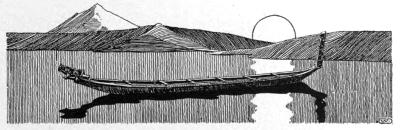
Over the sky shoot the first golden rays of the Sun whilst
our canoe is gliding up-river and Honewaka is
singing:
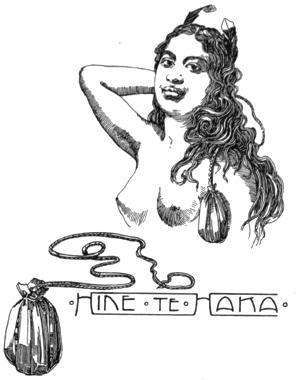
“Who is paddling my canoe along the river?
It is Hine, who takes my heart away from me!
O Rangi, send down thy dark clouds of rain,
That my dear love may not depart from me!—
O, I wish the water were heaped into waves
So my dear one will not go in haste from me.”
Honewaka is leader; standing in the middle of the canoe, in his hand the greenstone-mere,
he is chanting mighty songs of encouragement to the oarsmen, and these are repeated by
them whilst paddling to the music, and the canoe glides joyfully under chanting and merrymaking,
between the cliffs with the overhanging tree-ferns and ratas.
Honewaka is a leader of great mana; he knows every ripple in the river, and he knows
men. He knows where the canoe glides onward whilst the spirits of his men are not in the
paddles, and he knows how to incite their spirits by powerful songs so that, when the rapids
are fighting their strongest, the spirits of men uniting to their greatest strength in the
paddles will be victorious.
There rushes a rapid.
The eyes of the leader commence to roll; his weapon shakes; his breath is short, as
he sings:
“Who is paddling my canoe along the river?”—and the crew, putting force into the
paddles, answer: “It is Hine, who takes my heart away from me!”
The water rushes and foams around the canoe, and the singing, the chorus, and the
paddling, follow the quick time-beating mere: quicker and quicker.
Honewaka, with rolling eye, makes a sudden bound, shouting:
“O, she is beautiful—beautiful!”—and half the crew changes the paddle with the strong
and elastic tokos (punting-sticks)—one voice crying: “O, Hone, tickle her!” The crew laughs,
but with the jest seems to come sudden life into the paddles, greatly assisted by the force
of the holding and bending tokos.
Hone, excited now and with furious gestures, shouts:
“O Rangi, send down thy dark clouds of rain,” Quicker and quicker, excited by Hone’s
singing, quicker and quicker pull the paddles, and amidst the shouting chorus, under the force
of the powerful shifting and bending tokos, battles the canoe through the rapid.
Now the point is reached where the strength of the rushing waters is greatest, and
the canoe will not move. Honewaka with greatest excitement cries:
“O, she is tall like the rata.”
The crew, answering wildly: “It is Hine, who paddles my heart away with her.”
Hone: “O, she is lithe like the toe-toe.”
Crew: “O, Rangi, send down thy dark clouds of rain.”
The spirits of the men are roused, and the roaring rush of the rapid becomes harmless
under the steady living power of the paddles and the mighty pulling of the bending and
trembling tokos. Into the silent, reflecting calmness of the higher water-reach the canoe
suddenly shoots.
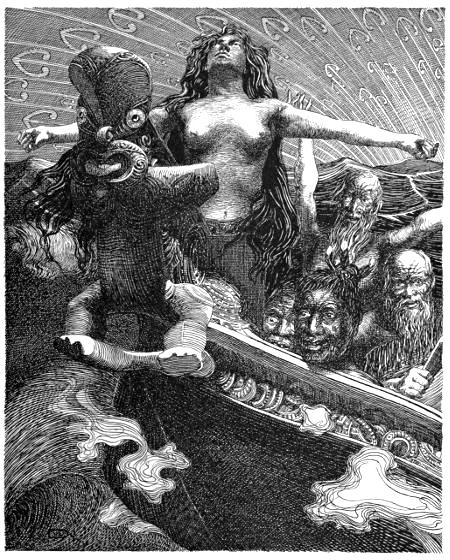
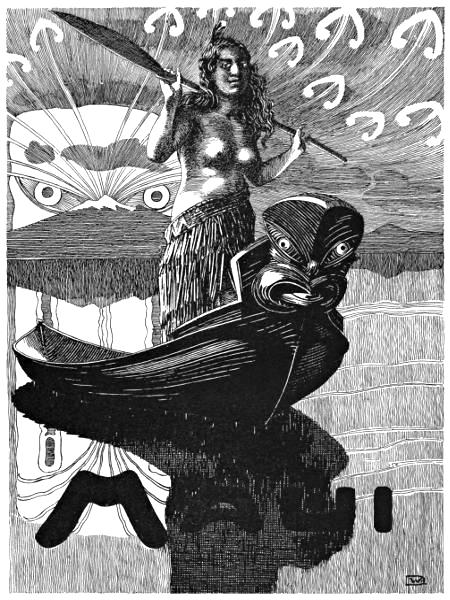
Ngawai, sitting in the prow, folds her arms over her paddle, and looks listlessly in
the trembling and rushing waters, and smiles. Now the beautiful calm of the silent reach
is gained; and the voice of Honewaka is low, mingling with the distant rolling of the rapid,
as he narrates the story of the Taniwha, who lives in the caves of the rapid, and who has swallowed
many a brave, when his song was not powerful enough or was displeasing to the Taniwha
(water-monster). Then she broke the canoes on the large stones and took the strong men
and beautiful women into her dark cave for food. Disdainfully looks Ngawai back, for now
the battle is won, and women despise the conquered foe, be it man or spirit.
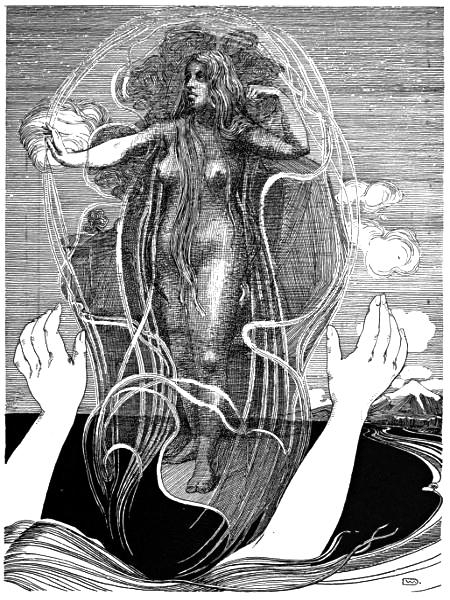
Great is the power of the Spirits who live in the image of a beautiful woman; greater
is the power of the spirits awakened by incantations to the gods; and the power of man
lies in the incantations which capture the gods into their weapon—but twice powerful is such
a weapon when used in the service of a beautiful woman.
The distant rolling of the rapid now sounds like happy laughter of beautiful women
far away over the water.
“Haere-mai, me o tatou mate” comes in the evening the wailing welcome from the
Maori pa on the cliffs.
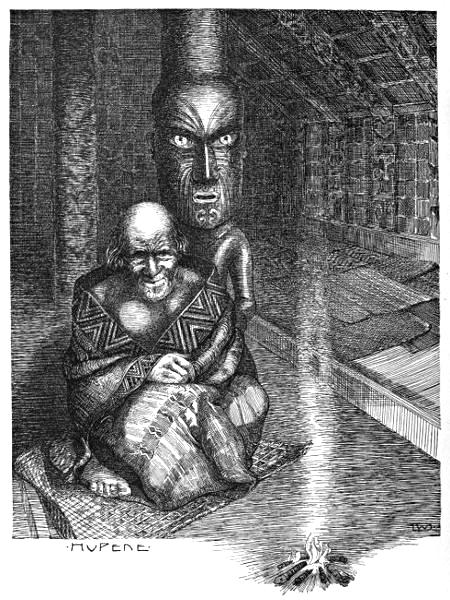
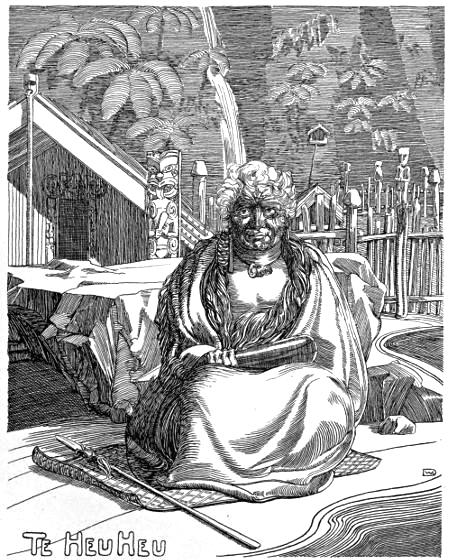
“Long is it, friend, since a man of your colour came to me, a great Tohunga-pakeha
(white priest), and he took great pains to teach me the words of his Truth.
The words of his god.
I was young then, and Takakopiri, who was then so old that he could remember Te
Repo-repo, the large war-canoe, growing still as a tree in the forest, had given to me the
wisdom of the ancient. It was given to him by his grandfather, the Tohunga, Te-puha-o-te
Rangi, whose mana was so great that people, saluting him, rubbed noses only against his
knee—he was a great Rangatira.
Long and marked with many teeth was the waka-paparanga-rakau, the board, recording
the ancestors of Te-puha-o-te Rangi, leading back from ancestor to ancestor to Maui, who
came from Hawaiki and who is the father of this land, which is called Te-ika-a-maui, or Maui’s
fish; and leading still further, up to the gods.
The wisdom, my listener, is born at Hawaiki.
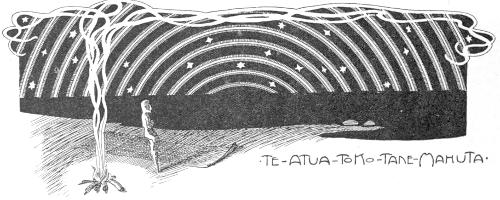
Many a time died the moon, my friend, and was born again out of the Living Fountain
of Tane Mahuta, while I was asking the words of the book.
Yes, beautiful is the Truth!—
But endless to count since then are the Floods who came down the river when his great
Father, the mountain Ruapehu, shook off his white garment of snow, and my flesh has dried
to the bones. Yes, friend, I loved the Truth of the white Tohunga; but she was not like a
woman to me: she gave me no offspring.
Ah, the multitude of voices of the past are in my heart, and my hands can touch the
spirits of my ancestors, as they can touch my waka-paparanga-rakau; and they come and
feed me with joy, like children feed the aged, and my heart is glowing with the power of my
ancestors—of Maui the Strong.
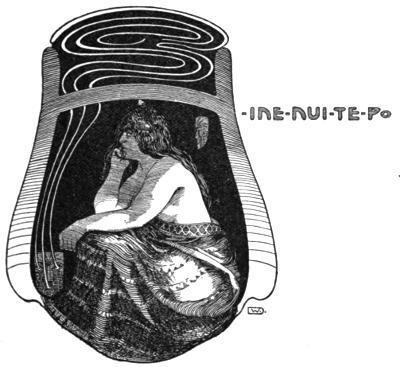
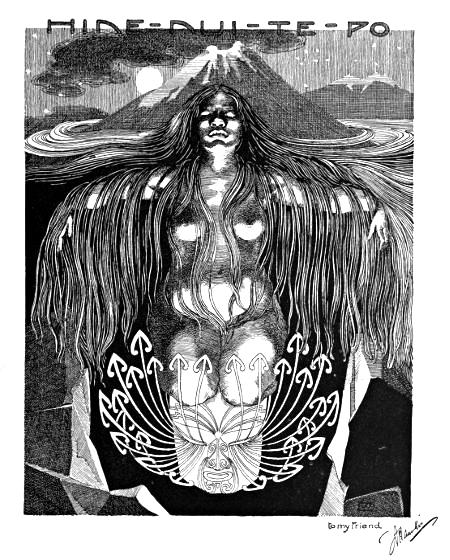
Ah! his great power attempted his greatest deed: to take the heart of Hine-nui-te-po,
that man may live for ever; but his incantations were overcome by the Mother of All, and
she swallowed him, as she swallows all—Maui-i-tiki-tiki-a-taranga.”
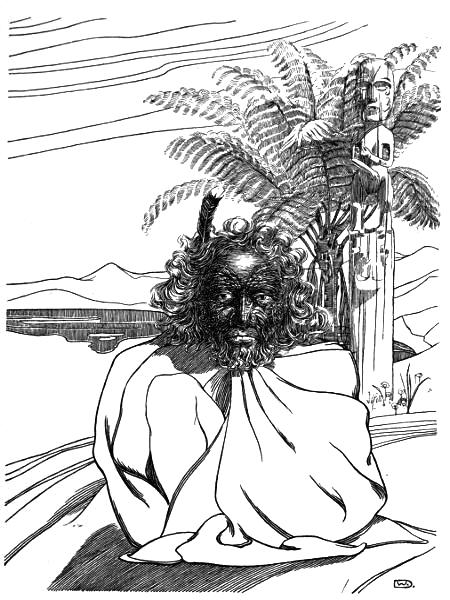
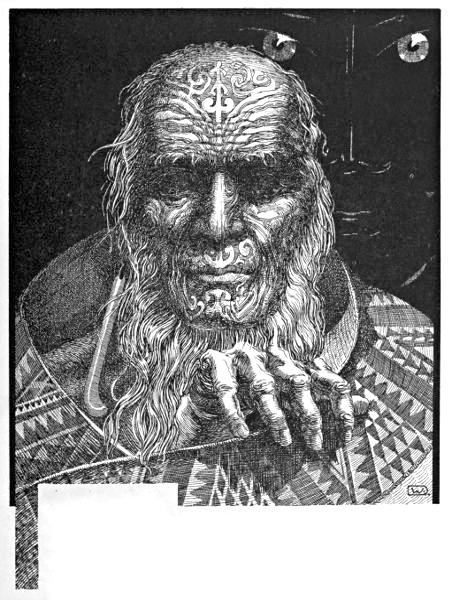
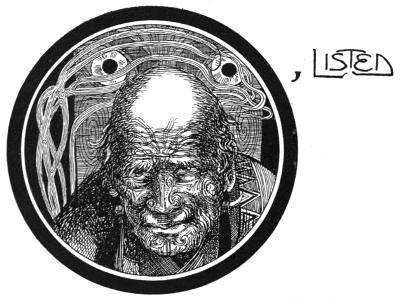
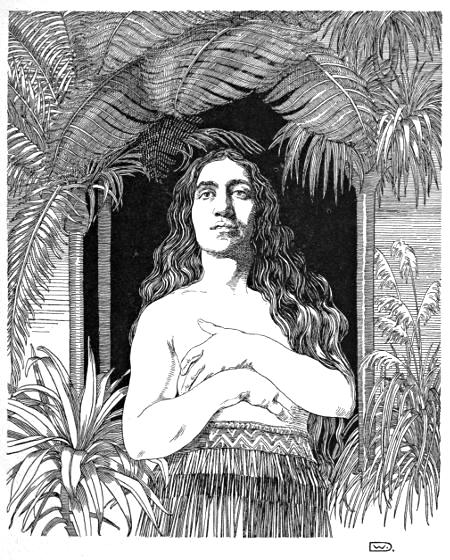
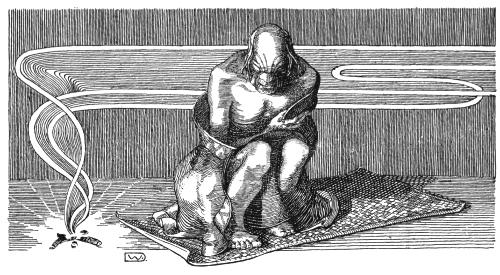
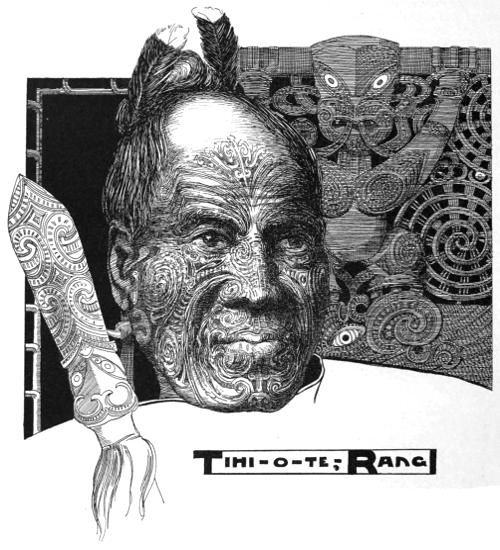
A TOHUNGA
Listen:
Taranga was his mother, but—ah, for Tama-nui-ki-te Rangi!
ah, for Tama-nui-ki-te Rangi, what would have become of Maui?
But a prey of the birds of the sea, ah! Tama found a bundle of jellyfish
and sea-kelps on the shore, and the sea-birds were collecting
around it fighting and screaming; so he went, and, stripping the fish
and sea-kelps, he saw that they were covering and enclosing a child—Maui-potiki.
Ah, behold Maui-potiki, Maui, the infant, reared and fashioned
by the fish and the weeds and the waves, by storms and gales of the rolling sea—ah, but for
Tama-nui-ki-te Rangi, what would have become of Maui, alone on the shore? What but a
prey of the sea-birds?
Maui-potiki!
Ah, Listen:
Before his time Maui was born, and Taranga, his mother, who gave birth to him on
the border of the sea, knew that he could not live; therefore she cut her hair, and, wrapping
it around him, she threw him into the surf of the sea—ah. She sang many incantations which
have power over the evil spirits; for know, my listener, they are watching for the children
who are born to life, before their life is ripe. They try to enter the body and fill the departing
spirit of the child with hatred for man—for the departing spirit will never know and receive
the joys of man; and therefore, friend, the dead-born children form the multitude of evil
spirits.
Ah, great were Taranga’s incantations, but what would have become of Maui but for
the love of Tangaroa? Tangaroa, the god of the oceans! His are the waves, and they rolled
and rocked the child to sleep, and they fashioned him and gave him strength; and they took
possession of him and gave him the power of the sea and the wisdom of the sea—their
great incantations which unite heaven and earth; and they gave him the terrible witchcraft
of the sea.
Then, rolling him gently on the sand of the beach, the jellyfish robed him, and the
seaweeds—ah, my listener!
Tama-nui-ki-te Rangi became his father, and he lived with him till he grew into manhood.
Many were his deeds, and great was his cunning: he learned powerful incantations, and he
learned how to take the shape of the birds.
At last a great longing for his parents and his brothers grew in his heart, and he set out
to seek them, for his heart was longing for them. He wandered and wandered toward the
Edge of the Ascending Sun, and many days more he wandered, till he came to the great
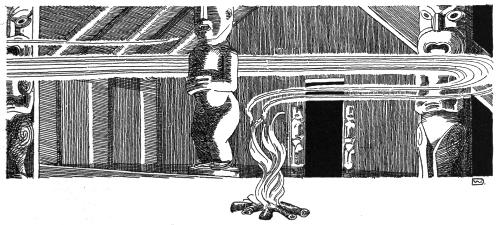
whare-puni; and all the people were there, and full of enjoyment and happiness.
He saw a woman who was counting her sons:
“Maui-i-mua—my eldest;
Maui-i-roto—my second-born;
Maui-i-taha—my third son; and
Maui-i-pai—my other son;”
and, perceiving Maui-potiki, she demanded: “Whom do I see among my children?”
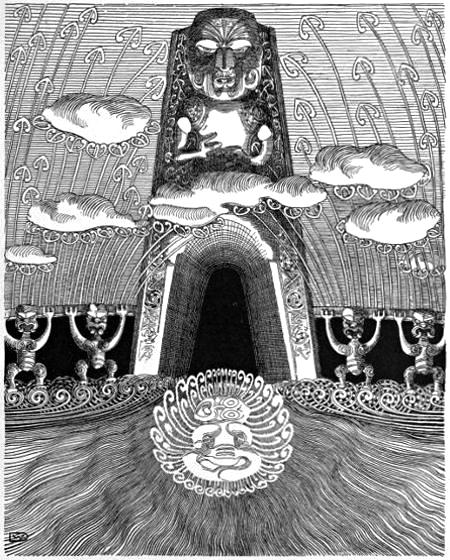
Maui, assuming before her eyes the form of a pigeon, flew upon the forehead of Rangi, whose
carved image supported the house, and, sitting there, he spoke: “If you are Taranga, my mother,
then know, that I am Maui-potiki, your youngest son.”
Ha! great was the wisdom given him by Tangaroa, and great was his beauty and
strength, fashioned by the storms of the sea, so that, when he took the form of man again,
his mother saw his great beauty and she believed in him, and knew that he was her son;
and she spoke:
“Do you come from the North?”; and Maui answered: “No.”
And again she asked: “Do you come from the South?” Maui again answered: “No.”
And she asked again: “Do you come from the West?” Maui again answered: “No.”
And she spoke again: “Do you come from the East?”—and again Maui answered: “No.”
She said: “Do you come on the waves of the sea?”—and Maui spoke: “The waves of the sea
rolled me.”
And she said: “Do you come on the waves of the wind?”—and Maui said “Yes!”
Then Taranga cried: “It is true! He is the youngest son to whom I gave birth, and cast his
body into the sea because his life was not ripe. He is here again; he is alive; it is true, it is true,
it is true! He is my son; he is Maui-i-tiki-tiki-a-taranga!”
Ah, listen, my friend to Maui; Maui, my ancestor!
Three times he slept in the house of his mother, but every morning when he awoke he found
his mother had disappeared before day-break.
The next night, when Taranga had come again to sleep with her sons, he waited till all
were asleep, and then he closed every hole and rent through which light could come into the house,
and put away Taranga’s feather-garment and belt, that she might not be able to go away again.
In the darkness now Taranga slept till the Sun was standing high, and she cried and searched
for her garment and belt. Not finding them she covered herself with an old mat, and ran to a
tuft of reeds which grew near the house, and disappeared beneath it.
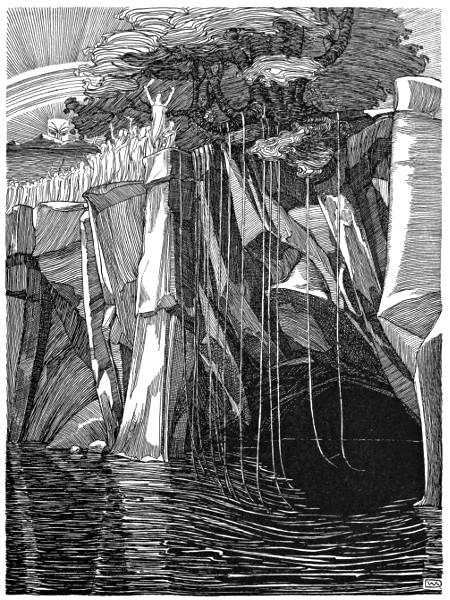
Maui followed her, and, lifting the tuft, he found that it covered the entrance to a
cave.
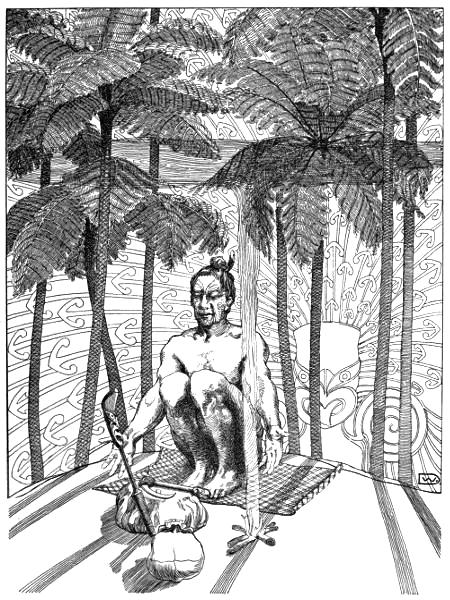
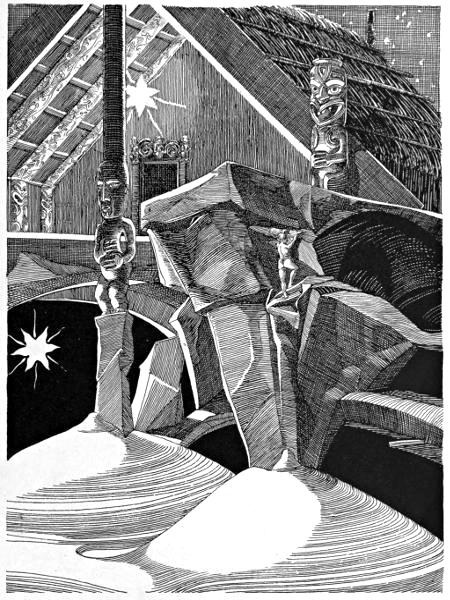
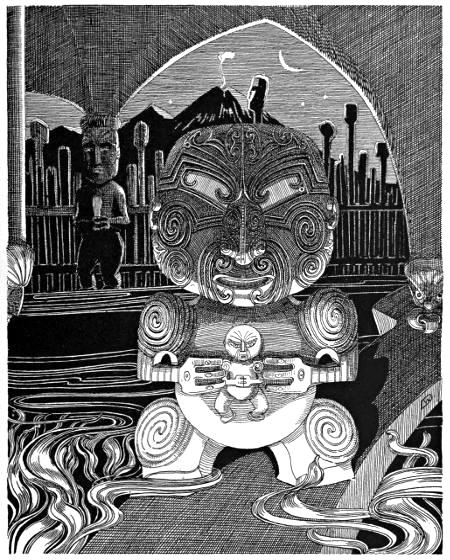
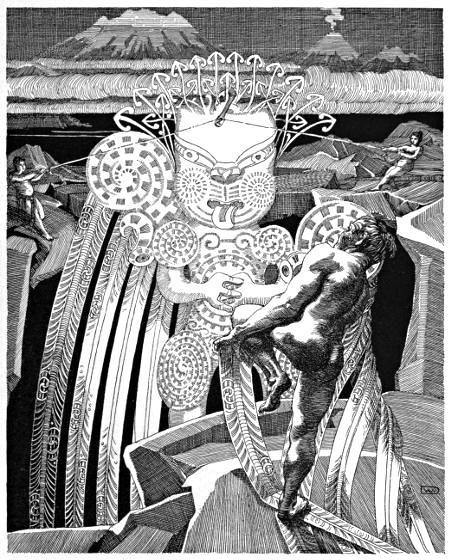
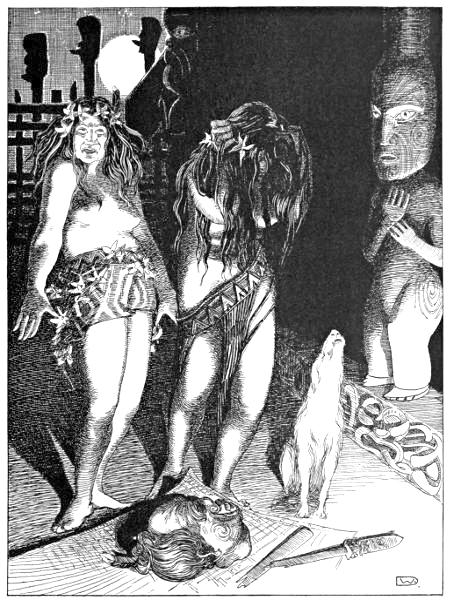
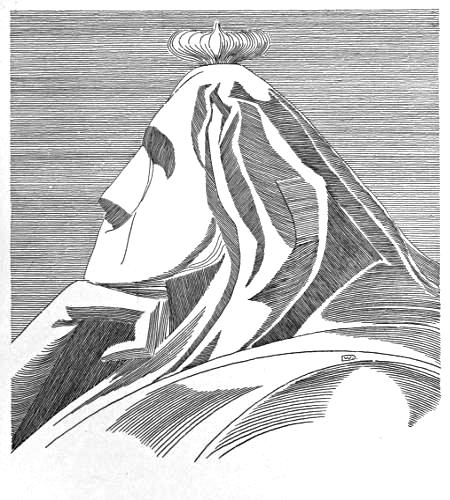
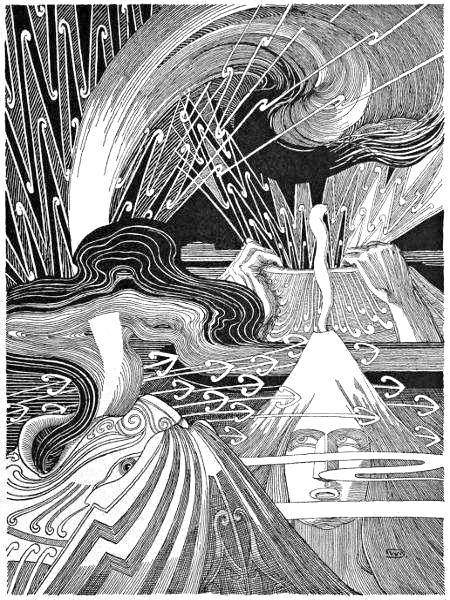
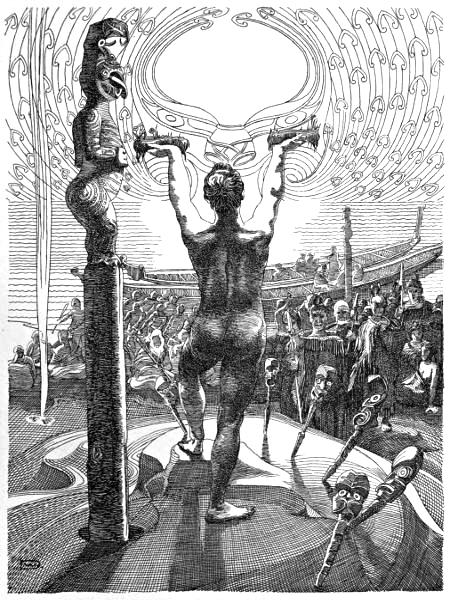
MAUI CHANTING INCANTATIONS
Quickly now he changed himself into a pigeon, and, binding the white belt of his mother
around his neck and her black feather-garment before his breast, he flew to the entrance of the cave,
and, entering it, he flew and flew and flew through the long and dark cave till he saw at last the
people of another world. Thither he flew, and rested upon a large tree. Sitting there, he perceived
that his mother and father were among the people, and he threw down two berries, hitting both,
his mother and Makea-tu-tara his father. They thought the berries had fallen from the tree, and
took no heed; but Maui threw and hit them again, and then again. At last all saw the pigeon,
and they began to throw stones, to kill it; but they could not hit Maui until at length he wanted
them to, and then he fluttered down to the feet of his father. The people now sprang forward to
kill the pigeon, but Maui quickly changed into a man again, so that they were struck with fear,
and looked frightened into his staring red eyes: they were as red as if they were painted with
kokowai.
Ah, my listener, Taranga, seeing her son, chanted the great Song of Welcome of the people
of Hawaiki; and then, staring far into the distance, she sang the incantations to the gods who
record the past, and with their help she narrated to the people all that had taken place since Maui’s
birth, and the people wondered, and believed that Maui was Taranga’s son—Maui-i-tiki-tiki-a-taranga.
And from that time, Maui lived with his people for time, and time, and time.
At last, Maui, full of knowledge and cunning, wished for a weapon, so that he might perform
great deeds that no other men could do. He wished for a sacred weapon, and he held many
Karakias to the gods whose abode is the tools of the warrior.
One day he asked the people who brought food every day to Muri-Rangi-whenua, his
grandfather, and said: “Give me the food that I may take it to Muri-Rangi-whenua, for is
he not a sacred man?” And they gave it to him, and he carried it away; but did not give
it to his ancestor. Many were the days that passed since he took the food away; but he
did not give it to the old man, whose cries became louder and louder, for he was very old
and hungry.
At last the spirit of his life took his abode in the jawbone, and, departing from there to be
swallowed by Hine-nui-te-po, he left the jawbone—as his last resting-place, tapu (sacred)—behind
him.
Ah, behold now, my stranger, how, taking the sacred jawbone of Muri-Rangi-whenua,
he became the possessor of his powerful weapon. And truly wonderful deeds did he perform
with his sacred weapon. Is not all this land its prey—this land, Te-ika-a-Maui? Look how
he wanders till he reaches a place on the river at Hawaiki—look how he does not touch
any food—look how he distributes the great tapu over the place, how he makes it sacred
to the most powerful gods only, and—look, ah, look how he forms the jawbone of Muri-Rangi-whenua
into a beautiful fish-hook; how he adorns it with carvings, and how its eyes of pawa-shell,
flash fire into the world! Ha, look, my friend, how he, with great cunning, fashions
the teeth into barbs! Ah, see him giving to his weapon the great name of his ancestor,
Muri-Rangi-whenua.
Ha, now he held the great Karakia over his fish-hook, making it sacred as an abode
for the mightiest gods; and, hiding it in his belt, he went back to his brothers, and he watched
them trying to catch fish; but could never land them, for their hooks had no barbs. He
said laughingly: “O, brothers, let us together go upon the sea to find out who may catch the
largest fish.”
But his brothers were afraid of Maui and his cunning and witchcraft: they did not like
him in the canoe, and therefore they left so early next morning that Maui had to stay
behind.
When Maui awoke and found his brothers gone, he laughed, and changed himself into
the little bird, Ti-waka-waka, and flew out upon the sea. When he had reached the canoe
he set himself upon the prow, and began to twitter and sing.
Then his brothers knew him, and cried: “It is Maui, oh, it is Maui, who has come!”—and
Maui, flying around the canoe, twittered: “Yes, brothers, it is Maui, it is Maui,
who has come, Maui, Maui!” Then, throwing off all his feathers one by one, he took the
form of man again, and spoke: “Ha, my brothers, now you shall see how Maui catches his
large fish, and you shall not know its name! But let us go further out upon the sea—there,
where the sea is deep, there is Maui’s fishing-ground.” His brothers now paddled and paddled,
till at last they said: “Truly Maui, this must be your fishing-ground, for we can see Hawaiki
no more.” But Maui answered: “No, no,—let us go further out—where there is no more end
to the sea.”
At last they came to a place in the middle of the ocean, and Maui spoke: “Eh-hu, my
brothers, this is Maui’s fishing-ground, the great battle-field for his fish-hook, Muri-Rangi-whenua.”
Now he took his fish-hook with great care, so that his brothers might not see the
barbs, and asked them to give him some of their bait; but they laughed, and cried: “No, no;
mighty Maui, show us your big fish, the fish we do not know—the fish you catch without
bait!—ho, ho, the great fish of Maui!”
Ha, ha, my friend.
But now, in great rage, Maui tore half his hair out, and, soaking it with his blood,
he baited his hook with it. Then he threw his line far, far out into the sea, and began to
chant this great incantation:
“Blow gently from the wakarua,
Blow gently from the mawaki
My line, let it pull straight,
My line, let it pull strong;
It has caught,
It has come.
The land is gained.
The fish is in the hand—
The fish long waited for,
The boast of Maui,
His great haul,
For which he went to sea,
His boast, it is caught!”
Ha, see how his fish has swallowed the hook! Ha, see how his line straightens; see
how Maui pulls and pulls with all his mighty strength! See, how his strength presses the canoe
under water! Ha, listen how his brothers cry and wail; ha, ha, listen! “Maui, Maui, let go;
let your fish go; oh, let go, let go, Maui!” Ha, ha, see how Maui pulls, and pulls, and pulls;
see him pulling for three moons! Ha, listen how he shouts to his brothers: “What Maui
has got in his hands he cannot let go again!”
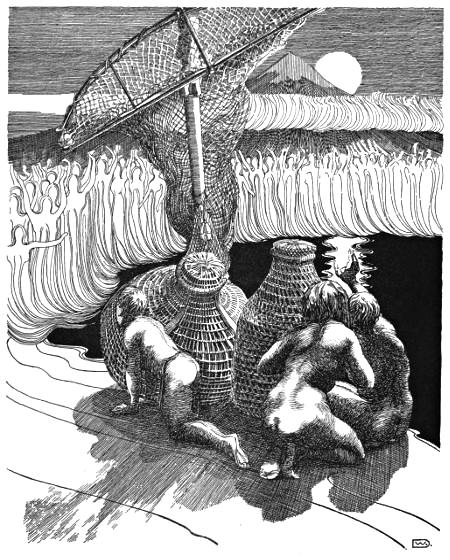
Hearken now to his incantations to the gods who make heavy things light—ah, see him
gathering together all his mighty strength, ah, see him pull, see him pull! Ah, friend, the sea
foams, the sea thunders, the sea storms—ha, oh see, ah—ha, behold the fish of Maui, Maui’s
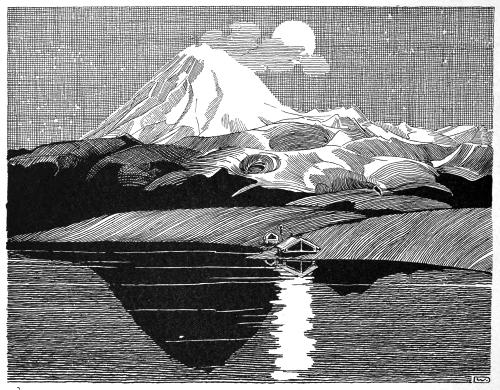
fish swimming upon the surface of the sea—Maui’s fish—Ha, friend, it is this land! It is
Te-ika-a-Maui.—Aotea-roa, this land.—Ah, behold the wisdom of my ancestors: how Maui’s
hook caught the house of the old Tonga-nui on the top of Tongariro, and pulled all this
beautiful land out of the sea, Te-ika-a-Maui.
“Open now your throats that are still hoarse and tired from crying, my brothers, and
tell me the name of my fish”: so spoke Maui boastingly; but they could not give the name
of the fish, and Maui said full of pride: “It is Te-ika-a-Maui!”
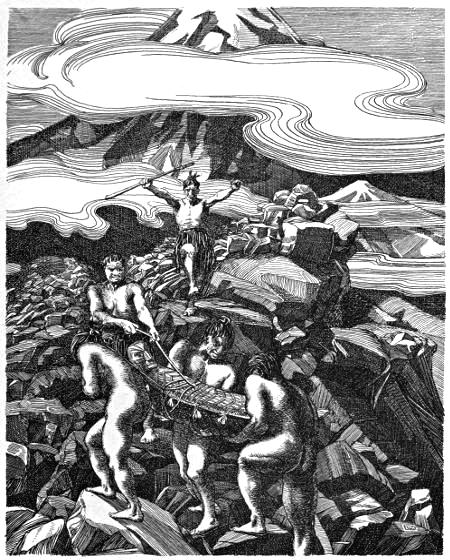
The canoe was now lying on the mountains at Hiku rangi, and Maui’s brothers took
their weapons and sprang forth, and wounded and killed the fish, and, ah, my friend, from
that time are the hills and the valleys and the mountains: they are the foot-prints of the
brothers who did not follow Maui’s bidding that they should wait till he had made offering
to the gods that they might regard his catch with favour, and that his fish might retain its
beautiful smooth surface for ever.
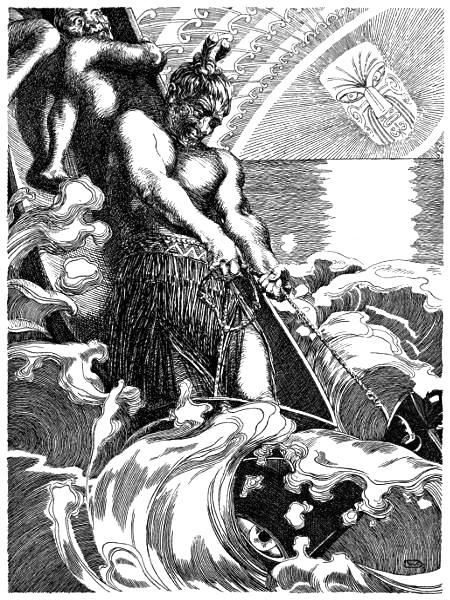
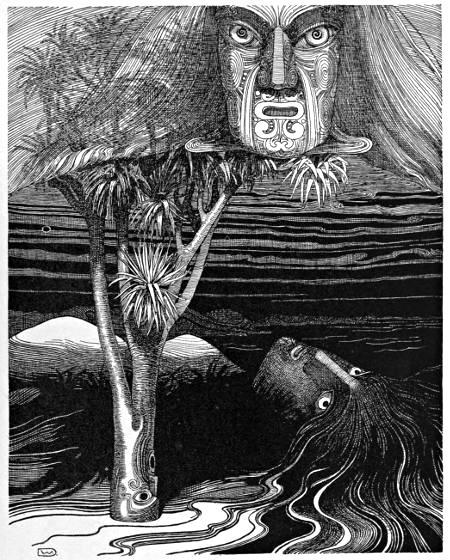
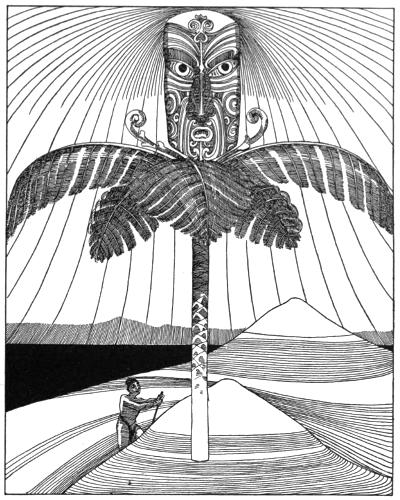
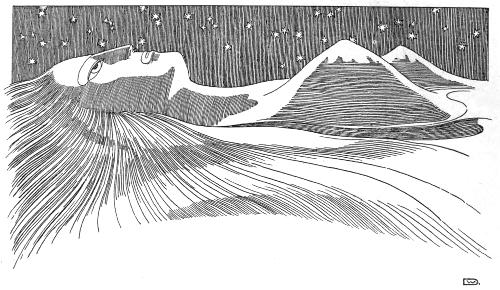
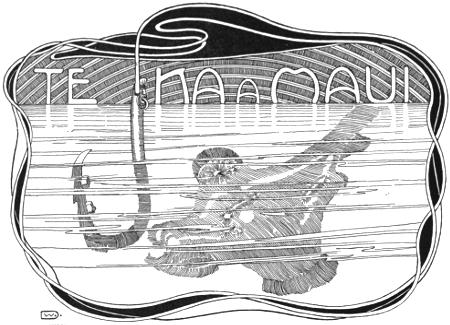
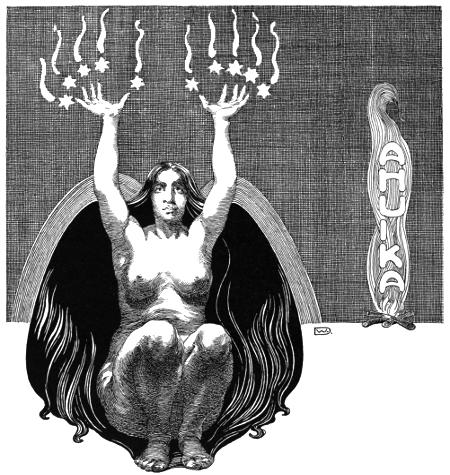
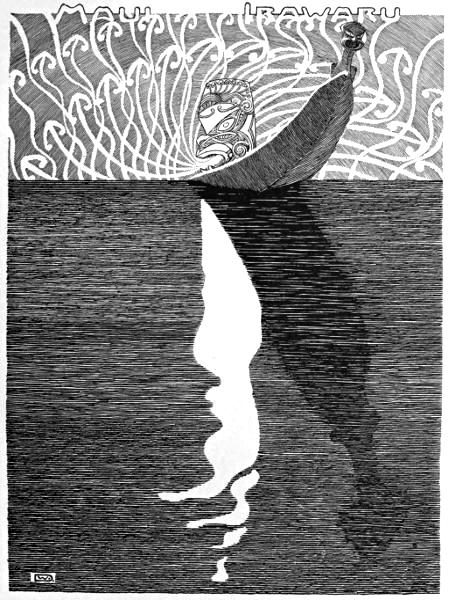
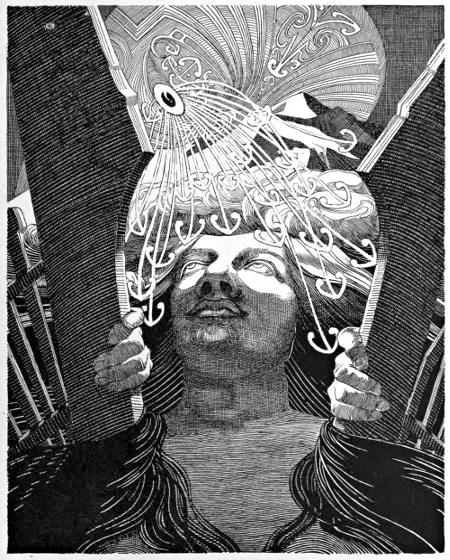
MAUI FISHING NEW ZEALAND OUT OF THE OCEAN
No, they did not follow Maui’s advice. Maui, our ancestor——Ah——(murmuring very low):
Maui-i-tiki-tiki-a-Taranga——
Ah,——(and lower still): Angi, angi ki te wakarua——Angi, angi ki-te-ma-wa-ki——Tuku——aho——to——
Respect demands sleep.
Tapu is the sleep of the very aged.