AWAY FROM NAPOLEON
The legendary version of Talleyrand’s character that
still lingers amongst encyclopædists and historians is
refuted by his resignation in 1807. No cause can be
assigned for it except an honest refusal to co-operate
further with Napoleon’s harsh and dangerous and selfish
policy. “Napoleon has abandoned the cause of peoples
and is bent only on personal glory. He has entered on
the fatal path of nepotism, in which I shall decline to
follow him.” Talleyrand said this in 1807, not as a
later explanation of his step. To Mme. de Rémusat
he also said, in the same year: “Napoleon suspects me
whenever I speak of moderation; if he ceases to believe
me you will see with what folly he will compromise
himself and us.” We are offered no serious alternative
as a motive of Talleyrand’s retirement, which Count von
Senfft describes as “very honorable.” The Emperor,
says Senfft, wanted “absolutely submissive instruments.”
Talleyrand declined to be one, as soon as the tragic
selfishness of Napoleon was fully revealed. No one
affected not to understand his action. It was a protest—a
protest made at the height of Napoleon’s power. He
had worked loyally and well with the Emperor “to
establish for France monarchical institutions which should
guarantee the authority of the sovereign by restricting it
within just limits; and to induce Europe not to grudge
France her prosperity and glory.” Now Napoleon’s
ambition was naked, France was burdened with the most
exacting and ruinous military servitude to it, humanity
was trodden under foot. And the only man in France
to refuse further service was the man who is glibly
described as devoid of principle or ideal, and prepared
at all times to sell his soul to the wealthiest master.
So little obligation is felt to historical facts by those
early and malicious biographers of Talleyrand, on whom
our historians seem to rely, that Michaud says he is
“quite sure” Talleyrand remained even after Tilsit
the inspirer of Napoleon’s plans of conquest. Michaud
is thinking in the first place of Napoleon’s descent on
Spain, and it must be admitted that it requires careful
study to determine Talleyrand’s attitude on this subject.
Just before Jena, the Spanish minister, Godoy, had
commenced operations for war against some unnamed
Power, which all knew to be France, and Napoleon
had sworn to Talleyrand that he would extinguish the
Spanish Bourbons. When the news of Napoleon’s
success reached Madrid, Godoy endeavoured to undo
his terrible blunder, and Napoleon concealed for a time
the claw that was in readiness for Spain. They returned
to Paris in August, and Napoleon shortly turned his
attention to the Peninsula. Portugal had refused to
join in the blockade against England. A treaty was
signed by Spain and France, dividing it (in very
unequal fractions) between them, and the French troops
crossed the Pyrenees.
I need only summarise here the rapid and disgraceful
succession of events in Spain. After Portugal
had been taken, the French troops remained masters
of Spain. In March the Spanish people, threatened
with national ruin and disgusted with their incompetent
and scandalous rulers, effected a Revolution. Charles IV
abdicated, and was replaced by Ferdinand. Napoleon
arrived at Bayonne, enticed both Ferdinand and the
late Royal Family there by a trick, and forced them
to abdicate. He wrote to Talleyrand on May 1st:
“King Charles is a frank and good-looking fellow. The
Queen’s sentimentality and history are written on her
face—that will tell you enough. Godoy looks like a
bull.... He had better be relieved of any imputation
of lying, but must be left covered with a thin veil of
contempt. Ferdinand is a brute, very malicious, and
very hostile to France.” A few days later he wrote
again to say that Talleyrand must receive and guard
the Spanish princes at the mansion he had just bought
at Valençay. “Your mission is an honourable one,”
he says, sarcastically. “To receive and entertain three
illustrious personages is quite in keeping with the
character of the nation and with your rank.”
Talleyrand affirms in the memoirs that he had
entirely disapproved the Spanish expedition, and that
Napoleon sent the princes to him in order to make it
appear that he approved. His enemies and Napoleon
declare that he fully endorsed and urged the expedition
until its evil effects were clear, and then disowned it.
We have here another of the “mysteries” of Talleyrand’s
career. The subject had arisen while he was
with the Emperor in Germany and Poland, and,
although he had resigned the Foreign Ministry on
their return, it must not be supposed that he ceased
entirely to share the conduct of foreign affairs. Senfft
says that his successor in the Ministry, Champagny,
so bored and annoyed Napoleon by the contrast of his
incompetence, that Talleyrand was practically recalled
to office in October. The truth seems to be that his
Chancellorship, which gave him a certain formal interest
in foreign affairs, was interpreted with some elasticity.
For a time Talleyrand did not resist this. We shall
find him doing important work presently. He had
made his protest sufficiently clear.
However, in the matter of the Spanish expedition
it seems possible to show that Talleyrand had little or
no influence. Did he, or did he not, approve the expedition,
apart from the treacherous termination? In his
memoirs he says that he violently opposed this “insensate”
invasion, and that “the disgrace which my candour
brought on me justifies me in my conscience for separating
myself from his policy and finally from his person.”
This was written, of course, after all the world saw
the blunder. Thiers concludes that he recovered
Napoleon’s favour after Tilsit by complaisance in his
Spanish plans. He relies on Cambacérès, who is
habitually hostile to Talleyrand. Pasquier, another
hostile writer, says that Talleyrand urged Napoleon to
make war on Spain, and appropriate the crown.
D’Hauterive is described by his biographer as saying
that Talleyrand was “in favour of the expedition on
certain conditions.” Napoleon declared to Las Cases
that Talleyrand “goaded him into war.” Mme. de
Rémusat, generally credible, says Talleyrand “was in
favour of an open declaration of war” to overthrow
the dynasty in the interest of Spain. Lytton quotes
Beugnot for his belief that Talleyrand opposed the
expedition altogether; and Count Ségur quotes de Pradt
virtually to the same effect.
We have the usual conflict of evidence. We must
at once distrust Napoleon’s later statements. The ex-Emperor
would not take the trouble to “lie beautifully.”
He forfeits all claim to be heard here when he goes on
to say that Talleyrand urged him to murder the Spanish
princes! I am just as ready to surrender Talleyrand’s
statement that he “vehemently opposed” the expedition.
In fact he also says: “Driven to death by the
specious arguments of the Emperor, I advised him to
occupy Catalonia until he should be able to conclude a
maritime peace with England.” If we moderate the first
few words, we probably have here the truth of the
matter; though it is very possible that the sight of
the incompetence of the royal family and the distress
of Spain kept his mind in some vacillation as to
the intervention of France. That he urged Napoleon
to invade and annex Spain is a statement made by
the Emperor’s admirers only after it had proved
a fatal and dishonourable enterprise; that the Emperor
needed any such urging on the part of Talleyrand is a
perfectly ludicrous supposition. The most probable
reading of the situation (as regards Spain) before the
troops cross the Pyrenees is that Talleyrand wavered
between two motives—a keen perception of Spain’s evil
plight on the one hand and of Napoleon’s ambition and
nepotism on the other—and used vaguely approving
language.
The final action of Napoleon was determined by
the course of events, and not submitted for his approval
or disapproval. There is no ambiguity about Talleyrand’s
attitude on that. He was at his new home at
Valençay in Touraine, a large and beautiful chateau
lying in an extensive park, when the Spanish royal
carriage arrived. In its heavy medieval splendour, with
its panels of gold and silver, its curtains of crimson silk,
and its huge gilt wheels, it reminded him painfully of
the arrested development of Spain. He received the
two young princes and their uncle with some feeling,
and then set out for Nantes to meet Napoleon. If we
may trust the memoirs (I would not press the point),
he told Napoleon very freely what he thought of his
stratagem. “It is one thing to take crowns, another thing
to steal them,” he claims to have said; and it is stated
that he told the Emperor that many irregularities, such
as mistresses, would be overlooked in a gentleman, but
when he stooped to cheating at cards he forfeited the
name. Napoleon went on to Paris, and Talleyrand
returned to Valençay. The Emperor paid him 75,000
francs a year for the maintenance of the princes, but he
seems to have treated them with real sympathy.
The task of entertaining them proved difficult.
They had not a single accomplishment that counted in
the code of a French gentleman. The attempt to
interest them in books was a complete failure. Talleyrand
did, indeed, notice with some consolation, that
the pious uncle, Don Antonio, spent long hours in his
valuable library, but he was more than disappointed
when he discovered that the devout Spaniard had been
cutting out the illustrations from rare old editions of
the bible and the classics, to protect the morals of his
nephews. It is usually said, and was certainly generally
believed at Paris, that Don Carlos repaid his host by
becoming the lover of Princess Talleyrand. “Spain
was unlucky for both of us,” said Napoleon to him
when he heard this. But the anonymous biographer of
the princess46 points out that even Mme. de Rémusat
(who detested the princess) does not expressly accuse
them of more than a platonic affection, and claims that
not a single stain rests on her character after she became
Mme. Talleyrand. In any case, Talleyrand insisted that
they should be treated as princes. Napoleon wrote to
complain that Ferdinand was addressing him as “mon
cousin,” and directed that he be taught to write “Sire.”
“Ajaccio and St. Helena dispense with comment,” says
Talleyrand. When Colonel Henri, commanding the
military guard, made himself officious, he told him that
the Emperor did not rule at Valençay. But in the
midst of his efforts to teach them to shoot and ride and
read he was summoned to Paris. The princes parted
from him with tears, and offered him their old prayer-books
as souvenirs.
Napoleon had in February suggested a second
conference with the Tsar. At that time he was offering
Russia Constantinople and impelling it to a descent on
India, was sending an army against Sweden, and was
menacing the very existence of Prussia and Austria.
He had a real idea of dividing the Old World with
Russia, and excluding England from it. Then came
news of the rising of the people of Spain against France,
and the landing of the English in Portugal. Wellesley
had begun his historic advance towards Paris; though
few then dreamed of the end of it. The southern trouble
upset Napoleon’s calculations and diverted troops from
the north. He fixed September 27th (1808) for the
meeting with Alexander, and sent for Talleyrand to
accompany him. He was weary of Champagny “coming
every morning to excuse his blunders of the previous
day,” Talleyrand says. At all events, Talleyrand’s
experience at Tilsit and his friendship with Alexander
recommended him. Napoleon directed all the documents
to be sent to him, and met him with the most engaging
confidence and cordiality. He would remember later
that Talleyrand was already talking to members of his
Court of his “vile treachery” in Spain. Talleyrand
studied the correspondence, and “at once made up his
mind to prevent the spirit of enterprise from dominating
this singular interview.” In the circumstances we can
hardly hold that his acceptance was an infringement of
the dignity of his resignation. In any case, his position
as Grand Chamberlain compelled him to go.
So in September Talleyrand found himself on the
way to Erfurt with the vast apparatus that Napoleon had
dispatched to impress his allies. The road from Paris
was alive with couriers, carriages, officers and troops.
Napoleon had ordered the whole of the Comédie
Française to go. When Dazincourt asked if they were
to play comedies or tragedies, he replied that comedy
was not appreciated beyond the Rhine. Dazincourt
suggested “Athalie” amongst other tragedies. “What
do you mean?” he said. “Do you think I want to get
Joas into the heads of these Germans?” “These
Germans,” he said to Talleyrand, “are still talking of
d’Enghien. We must raise (agrandir) their standard of
morality. I am not thinking of Alexander. Such things
are nothing to a Russian. But we have to stir the men
with melancholic ideas who abound in Germany.” He
meant thinkers like Goethe. They must “give tragedies
like Cinna,” and he sang the couplet:
Tous ces crimes d’État qu’on fait pour la couronne
Le ciel nous en absout alors qu’il nous la donne.
The first actors and actresses and the first soldiers in
Europe jostled each other on the route. Nothing was forgotten.
One dignitary was included “to do the honours
of our actresses for the Grand Duke Constantine.”
In giving Talleyrand instructions he said that he
wanted a treaty which would pledge him to nothing in
the Levant (the chief magnet with which he was drawing
Alexander), secure the passivity of Austria, and leave him
free to do what he liked in Spain and to attack England.
Talleyrand drew one up in two days, which was fairly
satisfactory, though not strong enough as regards
Austria. His last direction to Talleyrand was to see
Alexander often in private and feed his facile imagination
with dreams. “There’s a fine field for your philanthropic
faculty! I give you carte blanche in it—only let it be
a sufficiently remote philosophy. Adieu!” There was
just one point that the great impresario overlooked, or
failed to appreciate enough—the change in Talleyrand’s
disposition. His Grand Chamberlain was now seriously
determined to thwart him and save Austria. “If he
had succeeded at Erfurt,” Talleyrand says, “he would
have picked a quarrel with Austria and dealt with it as
he had done with Prussia.” In the end he signed a
totally different treaty from what he had intended, and
the Tsar wrote a private letter to reassure the Emperor
of Austria. Talleyrand claims, not incongruously, that
he acted in Napoleon’s true interest.
To understand this result we have to examine the
double current of life at Erfurt. While Alexander was
exposed to the full force of Napoleon’s ingenious action
every day, he was seeing Talleyrand privately every night
and being put on his guard. Napoleon arrived on the
morning of the 27th with some of his most brilliant
regiments, the crowds having lined his route all night.
By the time Alexander arrived, two days later, there
were forty monarchs and dukes in Erfurt with their
Courts. Napoleon told Talleyrand he was delighted
with his first conversation with Alexander, but no
business must be touched until the Tsar is thoroughly
“dazed” with French magnificence. He had altered
Talleyrand’s treaty, making the terms more onerous for
Austria. That night Talleyrand went to take tea with
the Princess de la Tour et Taxis. Alexander followed
in a quarter of an hour, and it was arranged that they
should meet there every night after the opera. Talleyrand
was also intimate with the Austrian ambassador,
Baron Vincent, who was admitted at times to the
nocturnal tea-party.
Thus the play proceeded. Napoleon artfully
arranged long déjeuners, to be followed by hunts,
reviews, or excursions that would last until dinner,
and opera to close the day’s work. There was no
time to talk business. Every opera was selected by
Napoleon. He foresaw the applause when, in “Mahomet,”
the line occurred:
“Qui l’a fait roi? Qui l’a couronné? La victoire.”
The Grand Chamberlain saw Napoleon home every
night (or early morning), and went at once to the house
of the discreet princess. After a few days Napoleon
said to Alexander that they must speak of the treaty,
and suggested that it should be kept to themselves.
That night, when Alexander came to the princess’s, he
bade her guard the door, and pulled the treaty from
his pocket. Talleyrand implored him not to be drawn
into any engagement to the detriment of Austria.
Napoleon complained to Talleyrand that he could “get
nothing out of Alexander.” He must leave Austria
alone, and trust to scare it with the secret articles of
the treaty. Talleyrand did not conceal his interest in
Austria, but was told to continue to see Alexander, as
Napoleon wanted to part on good terms. He did
continue, with more effect than Napoleon imagined.
When asked afterwards if he had not been imprudent,
he replied: “I have never been betrayed by a woman.”
From the first day he had said to Alexander: “It is
for you to save Europe by making a stand against
Napoleon. The French nation is civilised, but its ruler
is not; the sovereign of Russia is civilised, but his
people are not. The Russian monarch must unite with
the French people.”
It is idle casuistry to prove that this was not
treachery to Napoleon. It was done in pursuit of a
deliberate plan to thwart him in the interest of France.
There was now in the mind of Talleyrand a broad
and clear distinction between the needs of France and
the ambition of its Emperor, or, if you will, Napoleon’s
view of its needs. Talleyrand’s view is admitted to have
been more statesmanlike. The only question is whether
Talleyrand was justified in accepting service under the
Emperor with the determination to be disloyal to his
personal views for the good of the country, if not in
his own real interest. However that question may
be answered, we must not ignore the bearing of these
episodes on the chief charge against Talleyrand’s
character. Lord Brougham, in his otherwise admirable
sketch, says that we cannot altogether admire a man who
was “always on the side of success.” But here we have
Talleyrand wielding an opposition to Napoleon that
would almost have cost him his life if it had become
known, at the very summit of the Emperor’s power,
and in a purely patriotic and humane interest. The
legendary Talleyrand would not have dared to do it—could
not have conceived it. Napoleon never discovered
precisely what passed in the princess’s house, but he
knew Talleyrand was meeting Alexander there, and that
Talleyrand was a convinced pro-Austrian.
The Tsar obtained the provinces he wanted on
the Danube without being pledged to more than an
attack on Austria if she joined with England against
France. In one other important matter Talleyrand
more or less deceived Napoleon. The Emperor
detained him one night with a pathetic reference to his
childlessness, and at last “dropped the word divorce.”
He would like to marry one of Alexander’s sisters,
and Talleyrand might, “as a Frenchman,” suggest the
idea to the Tsar. Towards two o’clock he went to the
usual rendezvous, and found the Tsar telling the
Princess with some feeling how Napoleon had that
morning referred to his want of an heir. It had been
“wrung from him.” Talleyrand not only knew the
alliance was impossible from the Russian point of view,
but considered it inadvisable for the country. He told
the Tsar of Napoleon’s wish, and they agreed to humour
him for the time by suggesting Anna, who was only
fourteen years old.
The long series of fêtes and spectacles wore on
meantime. One day Napoleon sent his actors to
Weimar, and, after a hunt on the very field of Jena,
entertained the princes to a banquet. The opera that
night was unhappily chosen, “La mort de César,” but
a ball was added that “dissipated the impression.”
Napoleon made an effort to dazzle Goethe and Wieland
with the brilliancy of his culture. Goethe made quiet
and neat replies to the Emperor’s forced and well-prepared
sallies into literature. Talleyrand has
preserved an account of the conversation, but omitted
one of its best passages. When Napoleon said he did
not like the end of “Werther,” Goethe replied: “I
did not know that your Majesty liked romances to
have an end.” Wieland took up the defence of
Tacitus against Napoleon. “I agree,” he said, “that
his chief aim is to punish tyrants; but he denounces
them to the justice of the ages and of the human race.”
When, on the day before his departure, the crowd of
princes and nobles gathered about Napoleon—“I did
not see a single hand pass with any dignity over the
lion’s mane,” says Talleyrand—he turned again to the
literary men, and asked if they had any idealists in
Germany. They had many. “I pity you,” he replied.
“These philosophers torture themselves with the
creation of systems. They will search in vain for a
better one than Christianity, which reconciles man with
himself, and at the same time assures public order and
the tranquility of States.” The feelings of the
“idealists” are not recorded. Talleyrand himself
disappoints us. He had Goethe to dinner one evening,
and does not reproduce a word of the conversation, or
devote a single line to appreciation of the greatest man
in that historic gathering.
When they returned from Paris Napoleon set out
for Spain, and Talleyrand settled down to a life of
comparative quiet. After leaving the Hotel Galiffet he
had occupied a small house at the corner of the rue
d’Anjou, but he now bought the large Hotel de Monaco
in the rue de Varennes. His old friends, Narbonne and
Choiseul, had returned to Paris and helped to restore in
his magnificent salon the gaiety and wit of the earlier
days. Other groups of the old nobility were forming,
and no figure was more welcome amongst them than that
of the ex-bishop. At the Duchess de Laval’s he met once
more the Duchess de Luynes, the Duchess de Fitzjames,
the Countess Jaucourt, Mme. de Bauffremont, and many
another great lady of the past and great admirer of himself.
The Countess Tyszkiewicz, who had “caught the
complaint of falling in love with Talleyrand” at Warsaw,
brought a strong accession of fervour to the cult. The
old society of Paris was forming the nucleus of the new,
and, with a dim consciousness of their work, preparing
the scene for the next act in the history of France. From
these brilliant and envied centres daring witticisms crept
abroad and began to circulate in Paris. The Napoleonic
Court, the new Foreign Minister, the campaign in Spain,
the succession to the throne, were fruitful in enlivening
topics of conversation over the tea or whist tables.
Possibly the story of Erfurt was discreetly told; certainly
the story of the Archduchess Anna would prove irrepressible.
There were more serious matters. It was
observed that Talleyrand was reconciled with Fouché,
and it was known that they were daring to speculate
on the contingency of a Spanish ball finding its way to
the Emperor’s heart; though the kinder of the myth-makers
declare that the object of the new conspiracy was
merely the heart of a certain pretty lady.
By this time the Bonapartes and the Beauharnais
hated Talleyrand. He had never concealed his small
estimate of Napoleon’s brothers. “Say what you like
about my family,” said the Emperor with a laugh, when
he asked Talleyrand to speak to Alexander about his
want of an heir. He also warned him that Josephine
knew he favoured a divorce. They and the Foreign
Minister, and every other Napoleonist that had been
made a butt of royalist wit, now joined in reporting to
the Emperor, when he returned in January, the latest
misdeeds of the Faubourg St. Germain. Talleyrand
had written amiable letters to Napoleon in Spain. He
had congratulated him on his victories (with, we must
remember, the usual hope that they will be made a step
to peace and the real good of Spain), and encouraged his
political action in Paris. The Corps Legislatif was giving
trouble, and Talleyrand agreed that it might be extinguished
without tyranny. In a country like France it
was only necessary to have sufficient popular representation
to vote supplies. When, therefore, Napoleon heard
of the satirical comments on his campaign and the
friendship of Talleyrand and Fouché, he determined to
strike.
On the day following his return, when Talleyrand
and the other Court dignitaries came before him, he
opened the sluices of his Corsican oratory. “He became
a sub-lieutenant once more,” says Meneval in recalling
his language. In the general confusion Talleyrand
alone stood “like a rock,” though the Emperor even
threatened to strike him. To Napoleon’s brutal
observation: “You did not tell me that the Duke of
San Carlos was your wife’s lover,” he quietly retorted:
“I did not think it redounded either to your Majesty’s
honour or mine.” When the Duchess de Laval asked
him afterwards why he did not knock Napoleon down
with the tongs, he said he was “too lazy.” The only
remark he made to those present, when the Emperor had
exhausted himself and departed, was: “What a pity
that such a great man had not a better education.”
We are often asked at this juncture by Talleyrand’s
biographers to deplore the lack of self-respect that he
betrayed in not seizing the tongs, or returning the
torrent of rhetoric. If he had been a bishop the same
writers would ask us to admire his superhuman fortitude.
The general reader will probably prefer an intermediate
attitude. The aphorism quoted by Lord Acton, that
such conduct belongs to one who is either more or less
than man, is pretty but absurd.
It is just four years from the date of this incident
to Talleyrand’s last interview with Napoleon. Those
four years are full of adventure and life for the
Napoleonist writer, but they offer little material to
the biographer of Talleyrand. Throughout them the
scene is being prepared for the next act. Wellesley is
slowly forcing his way towards the Pyrenees. The
coalition against England is gradually being converted
into the final coalition against Napoleon. Parisian
society is falling into two definite groups, Napoleonists
and people who whisper to each other that the Emperor
has no guarantee of immortality—“passengers,” in the
words which Metternich applies to Talleyrand and
Fouché; “passengers who see the helm in the hands of
a reckless pilot steering straight for the reefs, and are
ready to seize the tiller as soon as the first shock
knocks down the helmsman.”
Talleyrand is still, it will be remembered, Vice-Grand
Elector, and member of the Supreme Council.
But after January, 1809, he has little influence on
the fortunes of France, and is continually offending the
Emperor. His personal relation to Napoleon is curious.
Michaud says that on the morning after the storm of
January 23rd, he was one of the first to appear at the
levee, and observers could see no trace of the events of
the previous day in his bearing. The Emperor himself
said to Roederer a few days later that “his feelings
towards Talleyrand were unchanged,” and he would
“leave him his dignities,” but would not have him
closely associated as Chamberlain. The last letter of
Talleyrand to Napoleon that we have, dated April, 1809,
is full of amiability and ostensible devotion. Three
years later, when he loses nearly the whole of his fortune,
he applies to the Emperor through Savary, and receives
two million francs for his hotel. In that year Napoleon
even wanted to recall him to the conduct of affairs. It
seems as if the two men retained, below all their political
differences and personal friction, a softening memory
of their joint achievements. But their divergence in
policy was too serious to admit further co-operation.
Napoleon saw all his hated enemies in Paris gather about
the Hotel Talleyrand, and set his spies upon it. Talleyrand
saw the Emperor reel fatally towards the precipice.
In the long and adventurous negotiations with the
Pope in 1809 and 1810 Talleyrand had no part. He
saw Napoleon as “successor of Charlemagne,” confiscate
the last of the temporal power, and the Ecclesiastical
Council at Paris (November 16th, 1809, to January 11th,
1810) trim and writhe before Napoleon’s theological
queries.47 He was present when several of the bishops
were summoned to Saint Cloud, after Napoleon had
read an unsatisfactory account of the opening of their
second Council. Napoleon sat in the midst of his
Court, drinking coffee poured out by the Empress, and
singled out his uncle, Cardinal Fesch, for one of his
characteristic attacks. But “the Corsair (Fesch had fitted
out more than one privateer in 1793-5) re-appeared
at times under the cassock of the Archbishop.” The
reply was as Corsican as the attack. Napoleon rushed
on from blunder to blunder in the historical and
theological matters he was daring to discuss. “You
take me for Louis le Debonnaire,” he roared, “I’m
not. I’m Charlemagne.” The negotiations came to
nothing, and the bishops were informed “by the
minister of police” that they might return to their
dioceses.
Talleyrand was an idle but disgusted witness of the
subsequent abduction of the Pope, and the final defeat
of Napoleon’s aims. In January, 1810, he was present
with all the other great dignitaries and ministers at the
conference on the divorce of Josephine and re-marriage
of the Emperor. Few knew, as Talleyrand did, that
there was really no question of a Russian marriage,
when Napoleon put it to them as an open question.
When it came to his turn to speak, he advocated an
alliance with Austria. Napoleon thanked and dismissed
them; and a courier was dispatched to Vienna the same
evening. Talleyrand was present at the marriage in
April. He heard the bells of Notre Dame ring out
the ecclesiastical share in the general joy at a time when
the Pope was Napoleon’s prisoner, and listened to
Austrian congratulations at a moment when the fortifications
of Vienna were being blown up at the order of
its conqueror. A month or two afterwards he again
gave offence to the Emperor. Fouché had been
detected in negotiation with England, and Napoleon
consulted his Council as to the advisability of punishing
him. Most of the members thought Fouché should be
deposed, but could suggest no substitute for that astute
chief detective. Talleyrand said to his neighbour in a
stage-whisper: “Fouché has certainly done very wrong,
and I would find a substitute for him—but it would
be Fouché himself.” This led to Napoleon’s last
extant letter to him. “Prince of Benevento, I have
received your letter, the contents of which pained
me. During your term of office I voluntarily shut
my eyes to many things. I regret that you should
have thought fit to take a step that revives the
memory of what I have endeavoured, and will still
endeavour, to forget.” The air of righteous forbearance
is imposing.
In the spring of 1812 the difference between the
two seemed to be bridged for a time. Talleyrand
was generously assisted by the Emperor in a grave
financial crisis, of which I will speak presently, and
accepted an appointment from him to a political mission.
With the long story of Napoleon’s rupture with Russia
and the opening of a fresh campaign in 1812 I am
not concerned. The friction between the two Emperors
turned largely on the question of Poland, and Napoleon
resolved to send Talleyrand on a secret mission to that
country. Some affirm that he cancelled the appointment
when he learned that Talleyrand had let it become
known to Austria by sending to Vienna for a supply
of ducats. It is likely enough that Talleyrand would
think an accidental disclosure of his mission the safest
way to avoid incurring the displeasure of Russia or
Austria. Bulwer Lytton, however, says that Napoleon
did not press the appointment because he found it
difficult to adjust with the position of his Foreign Minister,
who was to accompany him on the campaign. However
that may be, the Emperor does not seem to have felt any
particular resentment. He set out to face Russia. It
was immediately whispered in Paris that Talleyrand
declared it “the beginning of the end.”
Since his deposition from the chamberlainship in
1809 Talleyrand had spent a large proportion of his time
in the country. He had never been a saving man. He
liked to surround himself with things of great beauty,
to entertain lavishly, and to be extremely generous to
servants and friends. Until 1809 he had granted a pension
of 60,000 a year to his mother,48 and greatly helped other
members of his family. He had now only the income
from his savings, and his salary as Vice-Grand Elector.
His establishment in Paris, the huge Hotel Monaco, was
very exacting; Valençay was maintained by the Emperor
for his Spanish “guests.” Savary tells us that
Talleyrand’s affairs were somewhat straitened from 1810
onwards, and he had often to appeal for the payments
for Valençay. In the general depression of 1812 a house
failed in which he was interested, and he lost fourteen
million francs. Savary says that he appealed through
him to the Emperor, who sent his architect to value the
Hotel Monaco with all its furniture, and paid him
2,100,000 francs for it. The act was a very generous one
in the circumstances, though it is perhaps not ungracious
to recall that Napoleon’s plans were responsible for the
deep commercial depression of the time. Talleyrand
happened to have a debt owing from the former Spanish
ambassador, and he now accepted that nobleman’s
mansion, the Hotel St. Florentin, in discharge of it.49
This hotel now became the centre of discontent, while
the salon of the Duchess de Bassano was the centre of
Napoleonism.
The following year, 1813, saw considerable movement
in the political barometers at Paris. Napoleon
had returned from Moscow about the middle of
December, and the remnants of the grand army were
beginning to reach France when he called a special
council in January to discuss the situation. He told
those present—chiefly the heads of the foreign office and
retired foreign ministers—that he desired peace, but was
in a position still to wage successful war. Should he await
overtures from Russia, or open negotiations himself,
either directly or through Austria? Maret, the actual
Foreign Minister, even less competent than Champagny,
advocated negotiations through Austria. Talleyrand
knew that Austria was seeking to detach itself from
Napoleon, and to pose as armed mediator. He therefore
gave the loyal counsel to open serious negotiations for
peace directly with Russia. To do this with any profit,
however, it would be necessary now to sacrifice some of
France’s outlying conquests, and Napoleon would not
give up even the duchy of Warsaw, and would not
withdraw from Spain unless England withdrew from
Sicily. As Talleyrand happily expressed it a little later,
the only hope of safety for Napoleon was for him “to
become King of France.” This was impossible for him.
Talleyrand retired to his hotel, to play whist with Louis,
Dalberg, and de Pradt, and to keep his eyes open.
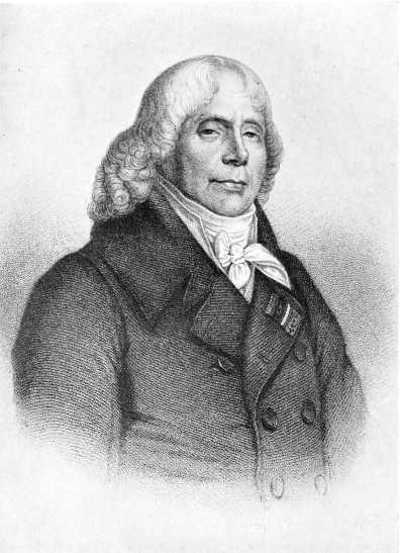
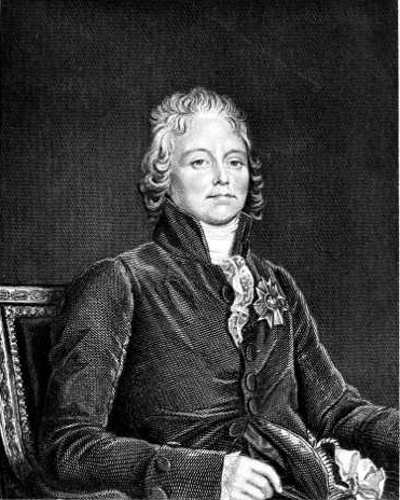
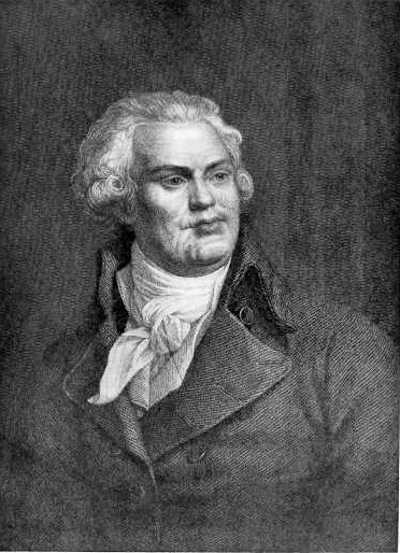
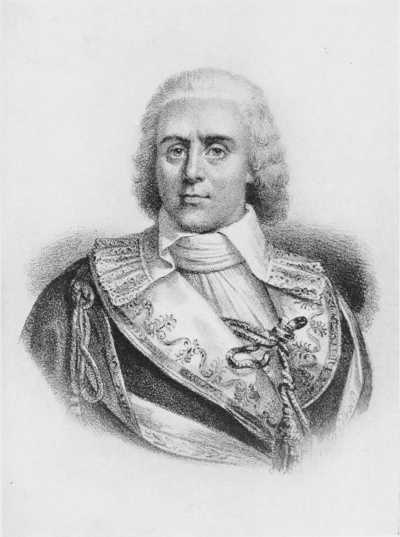
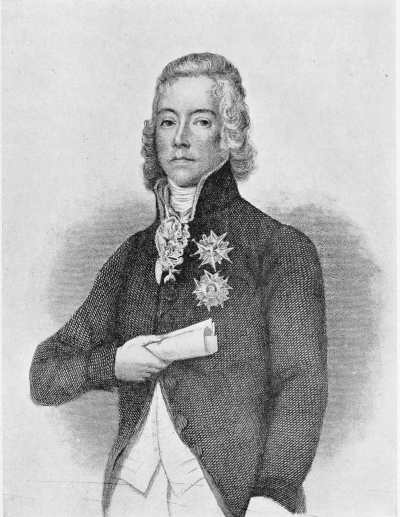
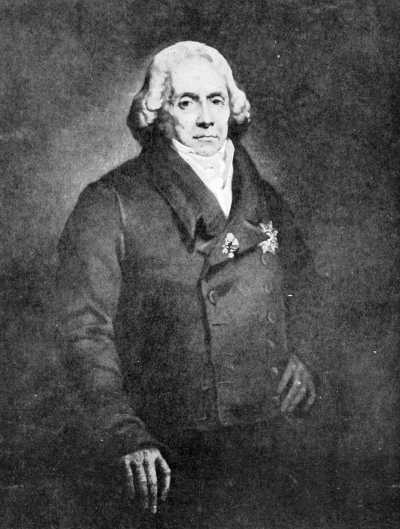
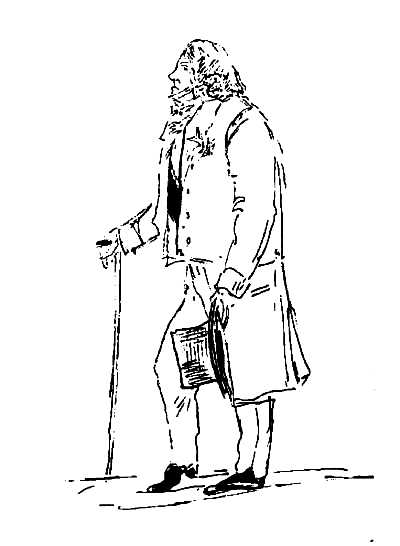
TALLEYRAND
(In middle age).
Within a few weeks the whist-players hear that the
people of Prussia have arisen and forced their ruler to
take up the war against Napoleon, and that Austria had
concluded a truce with Russia and withdrawn its troops.
In April they see Napoleon set out for Metz, with no
word from his Austrian ally. In May the Napoleonists
illuminate—somewhat hastily. The Emperor has won
Lutzen and Bautzen, at a terrible cost, and concluded a
forty days’ armistice. In June the Bassano Hotel
darkens again, when the news comes that England has
allied itself with Sweden, Russia, and Prussia, and that
Wellington is sweeping the French out of the Peninsula.
In August it is reported that Napoleon has rejected the
terms offered by Austria as armed mediator, and she has
joined with the continent against France. There is a
momentary flutter when a victory is claimed for the
Emperor at Dresden, but before the end of October
comes the news of Leipzig, and the tea-tables and whist-tables
buzz with excited whispers. For the second time
in twelve months the Emperor is flying towards France
with the remnant of a grand army.
Napoleon arrived in Paris on November 9th. His
spies and supporters could bring no allegation against
Talleyrand, who had become a very quiet spectator.
Though Napoleon’s outlying empire was virtually lost,
the allies disclaimed any intention of deposing him.
If he had been content to retire within the natural
frontiers of France, the Alps, the Rhine, and the
Pyrenees, the divisions amongst the allies would have
at this juncture sufficed to give him peace. Sick of
the mediocrity of Champagny and Maret, he now
offered the foreign ministry again to Talleyrand, who
refused it, saying later to Savary that he “did not care
to bury himself in ruins.” As he writes in his
memoirs, Napoleon was only ruined in the sense that
he could not forego his conquests and become “King
of France.” Talleyrand had no intention of flattering
his hope that a fresh co-operation of the two would
again break up the coalition and restore the empire.
It must be firmly remembered that there was at this
time no question of restoring the Bourbons. Talleyrand
was well in the counsels of Austria and Russia, and
knew that the declaration of the Allies was sincere.
His refusal meant a fresh protest against the incurable
megalomania of the Emperor. Lytton, who proves
that Talleyrand was at the time trying to inspire the
Emperor with thoughts of peace and moderation (and
we know from Pasquier that he even sent word to
Napoleon of the impending desertion of Bavaria), says
that the foreign ministry was offered to him on condition
that he gave up his other office and its salary. This,
he points out, would have made him entirely dependent
on a co-operation with Napoleon’s policy.
From another and well-informed source, Mme. de
Rémusat, we learn that Talleyrand and Napoleon were
discussing the Spanish situation in a friendly way.
“You consult me as if we were not on bad terms,”
said Talleyrand. “Circumstances, circumstances,”
replied the Emperor; “let us leave the past and the
future and come to the present.” “Very well,” said
Talleyrand, “you have no choice. You have made a
mistake, and you must say so, and, as far as possible,
say it with dignity.” He advised the Emperor to
declare that his object had been “to free the Spanish
people from the yoke of a detested minister,” and that
he was now willing to restore the dynasty and withdraw
his troops. The tone of the conversation, as given in
Mme. Rémusat, is quite inconsistent with the notion
that Talleyrand had urged the invasion of Spain. The
Duc de Bassano (Maret) declares that he persuaded
the Emperor to make Ferdinand’s return conditional
on the consent of the Spanish Regency, and so delayed
the return for some months, and threw away the
Emperor’s chance of peace. We must remember how
Maret had smarted under Talleyrand’s criticisms. “I
never saw a greater donkey than Maret—unless it was
the Duc de Bassano,” he once said. We know from
a private letter to the Duchess of Courland that
Talleyrand foresaw and forewarned Napoleon of the
reluctance of the Regency. We also know from
Roederer that he urged in December the unconditional
return of Ferdinand to Spain. Napoleon wanted to
release his armies from the Peninsula, but at the same
time to keep the English from passing on to France.
It was his own vacillation between his hopes and fears
that prevented him from making definite terms. Over
and over again at this period he falls back on Talleyrand’s
advice, a month or so after the situation has changed
against him, and the Allies will no longer entertain it50.
The Spanish princes left Valençay on March 3rd.
Castellane says that there was not a piece of furniture or
china intact in the chateau after their six years’ stay.
They left a memorial in the shape of their medieval
chariot, which declined to move towards its ancestral
home, and was long exhibited at Valençay. Talleyrand
writes a singularly bitter passage on the English in
describing Ferdinand’s return. He complains that,
while they boasted of being “the saviours of Spain,”
they failed to secure proper guarantees that the
unamiable Ferdinand should not abuse his power on
returning. “They only hate tyranny abroad when, as
under Napoleon, it threatens their existence, and they
love to make the subjection of peoples turn to the profit
of their pride and their prosperity.” One would like to
know the state of his health when he wrote this very
exceptional sentence.
The last interview with Napoleon was tempestuous.
In January (1814), a few days before he rejoined the
army, the Emperor again chose a public occasion to abuse
him, and threatened to punish him severely on the first
complaint. “You are a coward, a traitor, a thief. You
don’t even believe in God. You have betrayed and
deceived everybody. You would sell your own father.”
Talleyrand stood quietly by the fire; not a muscle of
his face or body was seen to move. One of the witnesses
told Lytton that he seemed to be the last person in the
room interested in what the Emperor said. His critics
enlarge here again on his “lack of self-respect.” There
could not be a more perverse and malevolent interpretation
of an admirable bearing. On this occasion,
however, Talleyrand immediately wrote to the Emperor
offering to resign his place on the Council. It was not
accepted. Napoleon had told him some time before
that if anything happened to himself he would see that
Talleyrand did not survive him. Within a few months
he used language which almost implied a regret that he
had not had Talleyrand shot. They never saw each
other again. In less than three months the Empire was
at an end.
In a private letter written immediately after this
incident Talleyrand spoke of it with great moderation
and sadness. His correspondent was the Duchess of
Courland, who now appears, almost for the first time, in
the story of his life. There is no other woman who has
been addressed by him with such passionate and devoted
language as this beautiful Russo-German princess. After
the death of her husband in 1801 she lived chiefly at
Mittau, but paid an occasional visit to Paris. It must
have been during one of these visits that Talleyrand first
met her. We do not know the year, but it cannot have
been long before he sought the hand of her daughter for
his nephew in 1808. She would then be in her forty-seventh
year, and her daughter, Dorothy, in her fifteenth.
The romanticists (strongly reinforced in this instance by
the fertile imagination of George Sand) have, of course,
given a sensual character to the attachment, and have
thrown out ludicrous hints that Dorothy (born years
before we have any reason to think he had met the
duchess at all), who succeeded the mother in his
affections, was his daughter. All this is pure wantonness.
We can understand without their aid the ardent
friendship that we find in 1814 between the refined
statesman of sixty and the graceful and gracious lady of
fifty-three. She was a woman of great charm, many
accomplishments, high intelligence and character, and no
mean political faculty. “No woman in the world was
more worthy of adoration,” said Talleyrand long afterwards.
The score of short letters he wrote her during
1814 are full of such expressions as “my angel.”