The total yields of sweet clover per acre for the season are usually
less than those of alfalfa except in the semiarid unirrigated portions
of the country. Sweet clover ordinarily yields more to the acre
than any of the true clovers.
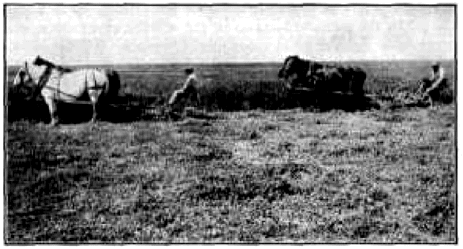
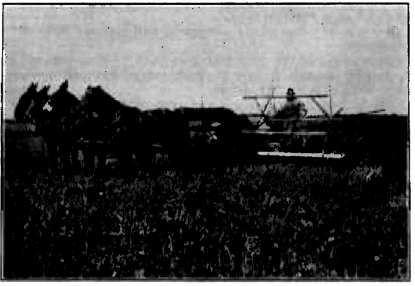
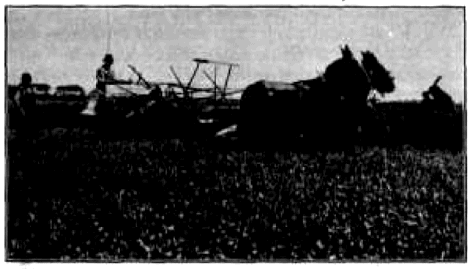
Fig. 3.—Cutting sweet clover for hay in western Kansas.
When the seed is sown in the spring in the North without a nurse
crop, yields of 1 to 3 tons of hay of good quality may be expected
the following autumn, The Massachusetts Agricultural Experiment
Station obtained 2,700 pounds of hay per acre in the fall from spring
seeding, while the United States Department of Agriculture obtained
3,000 pounds of hay per acre in August from May seeding
in Maryland. Yields of 1 to 2 tons, and occasionally 3 tons, have
been obtained in Michigan, Illinois, Iowa, Kansas, the Dakotas, and
other States. In Illinois, Iowa, and Kansas yields of 1 to 11/2 tons
are often obtained after grain harvest when weather conditions are
favorable.
The first crop the second season yields 11/2 to 3 tons of hay to the
acre in the northern and western sections of the United States. The
second crop of the second season will yield from three-fourths to 11/2
tons to the acre, although this crop usually is cut for seed.
When sweet clover is seeded in the South without a nurse crop
on fairly fertile soil that is not acid, three cuttings of hay, averaging
at least a ton to the cutting, may be secured the year of seeding.
When the seed is sown in the early spring on winter grain, two cuttings,
yielding at least 1 ton to the cutting, may be obtained. The
first crop the second season yields on an average 11/2 to 3 tons of hay
to the acre. In 1903 the Alabama Canebrake Station obtained 21/2
tons of hay after oat harvest and a total yield of 3 tons per acre from
the same field in 1904.
The first season's growth of sweet clover does not usually get
coarse and woody and therefore may be cut when it shows its
maximum growth in the fall, In regions where more than one
crop may be obtained the first season, the first crop should be cut
when the plants have made about a 30-inch growth.
The proper time to cut the first crop the second season will vary
considerably in different localities, depending very much upon the
rainfall, the temperature, and the fertility of the soil. In no event
should the plants be permitted to show flower buds or to become
woody. In the semiarid sections of the country sweet clover does
not grow as rapidly as in more humid regions. Neither do the
plants grow as rapidly on poor soils as upon fertile soils. In the
drier sections the best results usually are obtained by cutting the
first crop when the plants have made a growth of 24 to 30 inches.
On fertile, well-limed soils in many sections of the country a very
rapid growth is made in the spring, and often the plants will not
show flower buds until they are about 5 feet high. On such soils
it is very essential that the first crop be cut when the plants have
made no more growth than 30 to 32 inches if hay is desired which is
not stemmy and if a second growth is to be expected.
It is not necessary to leave more than an ordinary stubble when
cutting the sweet-clover hay crop in the fall of the year of seeding.
A stubble 4 or 6 inches in height, however, will serve to hold drifting
snow and undoubtedly will be of some help in protecting the
plants from winter injury. While sweet clover without question is
more hardy than red clover, usually more or less winterkilling
occurs, and any protection which may be afforded during cold
weather will be of considerable benefit.
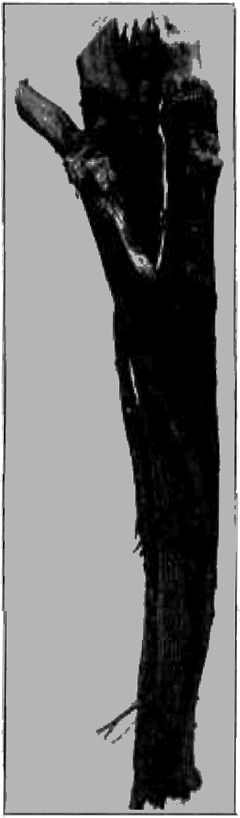
While the first crop in the second year comes from the crown buds,
the new branches which produce the second crop of the second year
come from the buds formed in the axils of the leaves on the lower
portions of the stalks which constitute the first crop, as shown in
figure 4. These branches usually commence growth when the plants
are about 24 inches high. In fields where the stand is heavy and
where the lower portions of the plants are densely shaded, these
shoots are soon killed from lack of necessary light. (Figs. 4 and 5.)
The branches which are first to appear and which are first to be
killed are those closest to the ground. It is therefore very important
when cutting this crop to cut the plants high enough from the
ground to leave on the stubble a sufficient number of buds and young
branches to produce a second crop.
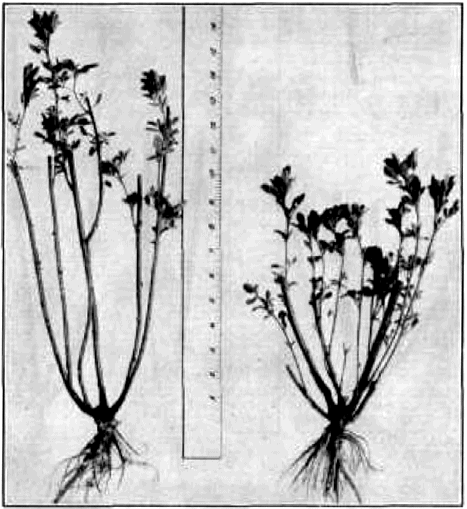
Fig. 4.—Sweet-clover plants, showing the direct relation that exists between the thickness
of stand, the time of cutting, and the height at which the stubble must be cut
if a second crop is to be expected. The plant at the left was cut 10 day later than
the plant at the right. Note the height at which it was necessary to cut this plant
so that a second crop would develop and also the scars on the stubble where young
shoots had started earlier and were killed from lack of sunlight. When the stand is
thin the young shoots will survive, as they did on the plant at the right, even though
the field is cut at a later date.
Examination of hundreds of acres of sweet clover in different sections
of the United States during the summers of 1915 and 1916
showed that the stand on at least 50 per cent of the fields was partly
or entirely killed by cutting the first crop the second season too close
to the ground. A direct relation exists between the thickness of the
stand, the height of the plants, and the height at which the stubble
should be cut if a second crop is to be harvested. It is very essential
to examine the fields carefully before mowing, so as to determine
the height at which the plants should be cut in order to leave at least
one healthy bud or young branch on each stub. In fact, the stand
should be cut several inches above the young shoots or buds, the
stubble may die back from 1 to 3 inches if the plants are cut during
damp or rainy weather.
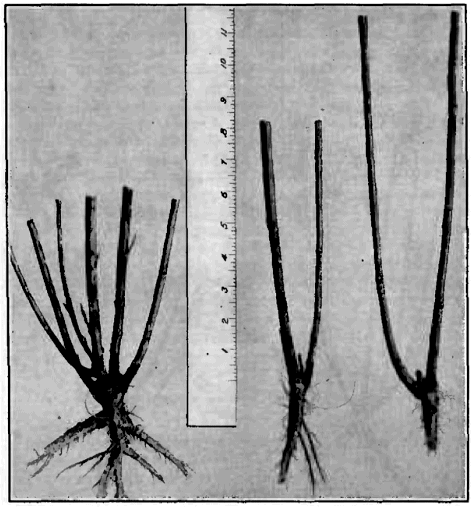
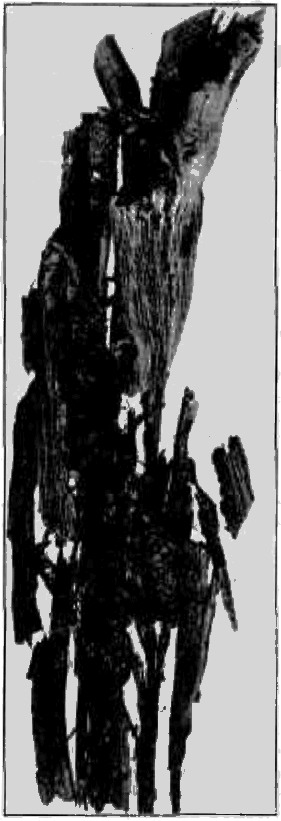
Fig. 5.—Stubble of sweet clover collected in fields where 90 per cent of the plants had
been killed by cutting too closely to the ground. The heavy stands in these fields were
not cut until the plants had made a growth of 36 to 40 inches. Note the scars on the
stubble where young shoots started, but died from lack of light.
When fields of sweet clover contain only a medium-heavy stand
and when the plants have made no more than a 30-inch growth, a 5
to 6 inch stubble usually will be sufficient to insure a second crop,
but where fields contain heavy stands—15 to 25 plants to the square
foot—it may be necessary to leave an 8-inch stubble. In many
fields examined in northern Illinois in June, 1916, heavy stands had
been permitted to make a growth of 36 to 40 inches before cutting.
In a number of these fields a very large percentage of the plants
were killed when an 8 to 12 inch stubble was left. (See fig. 5.)
A careful examination of such fields showed that the young branches
had started on the lower portions of the stalks and had died from
lack of light before cutting. In semiarid regions, where the plants
do not make as rapid growth as in humid sections, they may, as a
rule, be clipped somewhat closer to the ground without injury.
On account of the difference in the growth that sweet clover makes
on different types of soil and on account of the difference in the
thickness of the stand obtained in different fields, it is impossible to
give any definite rule as to the proper height to cut the first crop.
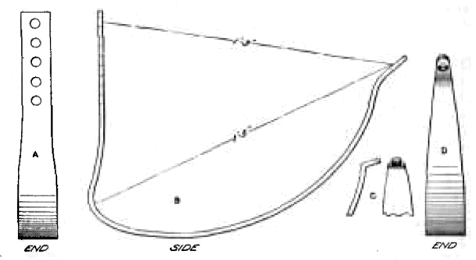
Fig. 6.—Shoe sole to be placed on the inner shoe of the mower, so that a high stubble
may be left when mowing sweet clover: A, End view of the back part of the sole;
B, side view of the sole, showing general shape; C, shape of the front end of the pole
when it is to be used on mowers having shoes of the type used on Deering machines;
D, forward end of the sole represented in B. The toward end of the sole shown in
B and D should be made for machines having shoes of the type used on McCormick
mowers.
It is good practice to replace the shoe soles of the mower with
higher adjustable soles, so that a stubble up to 12 inches in height
may be left when cutting sweet clover, Shoe soles such as are
shown in figures 6 and 7 may be made on any farm provided
with a blacksmith's forge, or they can be made at any blacksmith
shop at a cost which should not exceed $2.50. Preferably
they should be of strap iron, about one-fourth of an inch thick and
2 inches wide; however, old pieces of iron or steel which may be
found on the farm will serve the purpose.
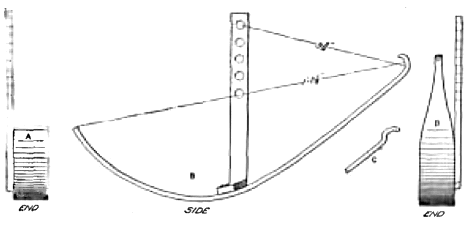
Fig. 7.—Shoe sole to be Used on the outer shoe of the mower, so that a high stubble
may be left when cutting sweet clover; A, End view of the back part of the sole;
B, side view of the sole, showing general shape; C, forward end of the sole to be used
on certain Deering machines; D, end view of the front part of sole shown in B.
Then these soles are to be placed on machines that have shoes of
the type used on the Deering mower, the forward 8 inches of the
sole for the inner shoe should be tapered gradually to a blunt point
and bent in such a manner that it will hook into the slot in the shoe.
(Fig. 6, C.) When the soles are to be placed on mowers having
shoes of the type used on McCormick machines, the forward 8 inches
of the sole for the inner shoe should be tapered gradually to about 1
inch in width, bent forward so that it will fit against that portion
of the shoe where it is to be bolted, and have a hole of the proper
size bored for the bolt three-fourths of an inch from the end. (Fig.6, B and D.)
The bottom of the sole should be rounded, so as to
run smoothly on the ground when the cutter bar is raised to cut at
different heights. The back portion of the sole should be upright
and should have holes bored in it, so that it may be set for the
cutter bar to rest at different heights from the ground. Preferably
the lower hole of the upright should be located so that when the
bolt in the shoe is run through it the cutter bar will be 6 inches from
the ground. It should be long enough to permit four or five holes,
1 inch apart, to be bored above the lower one. (Fig. 6, A.)
With some makes of machines it is not advisable to raise the cutter
bar higher than 10 inches from the ground, but when this is true
the cutter bar may be tipped upward, so that a 12-inch stubble is left.
The forward end of the shoe sole to be used on the outer shoe
should be tapered gradually to 1 inch from the end. The forward
inch should be one-fourth of an inch in width and bent slightly upward
and inward, so that a hook will be formed to fit into the slot
in the front end of the shoe. (Fig. 7, B.) The rest of the sole should
curved, so that it will run smoothly on the ground when the cutter
bar is set to cut at different heights. The upright which is bolted
to the sole should preferably be made of three-eighths by 1 inch
material and should have six holes, 1 inch apart, bored in it, so that
the outer end of the cutter bar may be raised to the same height as
the inner end. On practically all standard makes of mowers the
outer shoe sole hooks into the shoe instead of bolting to it, as is the
case with the inner sole on some machines. A wheel is used in place
of a shoe sole on the outer end of the cutter bar on some machines.
When this is the case, the upright to which this wheel is attached
should be lengthened. On other machines the forward end of the
sole hooks into a slot in the shoe in the same manner as the inner
sole. In this event the front end of the sole should be bent slightly
upward and outward. (Fig. 7, C.)
Before shoe soles are made for any mower a careful examination
should be made of the shoes to determine the exact size required
and the manner in which they should be attached to the forward
ends of the shoes.
One of the greatest difficulties in curing sweet clover is the fact
that the plants usually are ready to be cut for hay at a time of the
year when weather conditions are likely to be unfavorable for
haymaking. Little trouble is experienced in curing this crop in the
drier sections of the country where the methods used for alfalfa are
employed. The curing of sweet clover is more difficult than the
curing of either red clover or alfalfa, as the leaves are very apt to
shatter before the stems are cured. Every possible means should be
employed to save the leaves, as these constitute the best part of the
hay. (See Table II.)
Table II.—Average analyses of the leaves of four samples of well-cured
white sweet-clover hay.
[Analyses made by the Bureau of Chemistry.]
| Samples. |
Constituents (per cent). |
| Moisture. |
Ash. |
Ether extract. |
Protein. |
Crude fiber. |
Nitrogen-free
extract. |
| Leaves. |
8.70 |
10.92 |
3.09 |
28.20 |
9.28 |
39.78 |
| Stems. |
8.70 |
8.08 |
.70 |
10.16 |
39.45 |
33.06 |
The hay collected for the above analyses represented the first cutting
the second season. The plants had made a 30 to 36 inch growth
at the time of cutting. It will be seen that the protein content of
the leaves is almost three times as great as that of the stems.
In the drier sections of the country or when the first crop of the
year of seeding is cut for hay in the North-Central States the mower
may be started in the morning as soon as the dew is off. The hay
should remain in the swath until the following day, or until it is
well wilted, when it should be raked into small windrows. After
remaining in the windrows for a day it may be placed in small cocks
to cure. Cocks made from hay which has dried to this stage will
not shed water well and therefore should be covered if it is likely
to rain. It is important that the cocks be made small enough to be
thrown on the rack entire, as many leaves will be lost if it is necessary
to tear them apart.
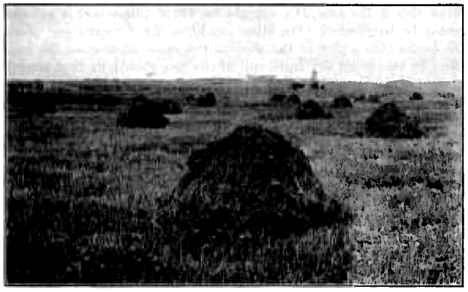
Fig. 8.—Sweat clover curing in the cock.
When sweet clover is permitted to dry in the swath, a large percentage
of the leaves will be lost in windrowing and loading unless
handled with the utmost care. Hay in this condition should never
be raked while perfectly dry and brittle, but should be raked into
the windrow in the early morning or in the evening, when it is
slightly damp from dew. It may then be hauled to the barn or stack
after remaining in the windrow for a day.
One of the most successful methods for handling sweet-clover hay,
especially in regions where rains are likely to occur at haying time,
is to permit the plants to remain in the swath until they are well
wilted or just before the leaves begin to cure. The hay should then
be raked into windrows and cocked at once (fig. 8). The cocks
should be made as high and as narrow as possible, as this will permit
better ventilation. In curing, the cocks will shrink from one-third
to one-half of their original size. It may take from 10 days to 2
weeks to cure sweet clover by this method, but when well cured all
the leaves will be intact and the hay will have an excellent color and
aroma. When sweet clover is cocked at this time the leaves will
cure flat and in such a manner that the cocks will readily shed
water during heavy rains (fig. 9).
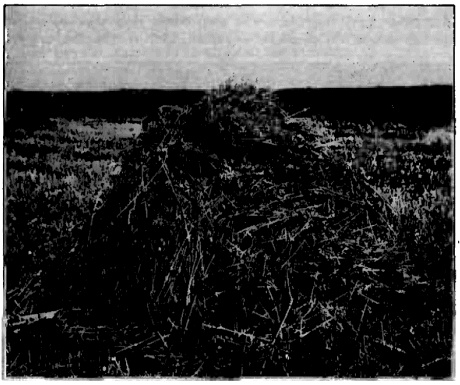
Fig. 9.—A cock of sweet-clover hay which has cured
in excellent condition and retained
all of its leaves.
When sweet-clover hay is to be stacked it is highly desirable that
some sort of foundation be made for the stack, so as to prevent the
loss of the hay which otherwise would be on the ground. Several
feet of straw or grass are often used for this purpose, but still better
is a foundation of rails, posts, or boards placed in such a manner
that air may circulate under the stack.
A cover should be provided for the stacks, either in the form of a
roof, a canvas, or long green grass. If none of these means is practicable
a topping of perfectly green sweet clover will cure with the
leaves flat and will turn water nicely.
It is well known that hay made from either red clover or alfalfa
will often undergo spontaneous combustion if put into the barn
with too much external moisture upon it. No instances of spontaneous
combustion in sweet-clover hay have been noted, but this may
be due to the fact that comparatively little sweet-clover hay is stored
in barns. The same precautions, therefore, should be taken with
sweet-clover hay as with red clover or alfalfa.