THE TEN WAZIRS; OR THE HISTORY OF KING AZADBAKHT AND HIS SON. [130] — OF THE USELESSNESS OF ENDEAVOUR AGAINST PERSISTENT ILL FORTUNE. — THE STORY OF THE MERCHANT WHO LOST HIS LUCK. [149] — OF LOOKING TO THE ENDS OF AFFAIRS. — THE TALE OF THE MERCHANT AND HIS SONS .” [157] — OF THE ADVANTAGES OF PATIENCE. [164] — THE STORY OF ABU SABIR .” — OF THE ILL EFFECTS OF IMPATIENCE. — THE STORY OF PRINCE BIHZAD .” [176] — OF THE ISSUES OF GOOD AND EVIL ACTIONS. — THE STORY OF KING DADBIN AND HIS WAZIRS .” [185] — OF TRUST IN ALLAH. — THE STORY OF KING BAKHTZAMAN .” [201] — OF CLEMENCY. — THE STORY OF KING BIHKARD .” [206] — OF ENVY AND MALICE. — THE STORY OF AYLAN SHAH AND ABU TAMMAM .” [210] — OF DESTINY OR THAT WHICH IS WRITTEN ON THE FOREHEAD. — THE STORY OF KING IBRAHIM AND HIS SON .” [222] — OF THE APPOINTED TERM, [229] WHICH, IF IT BE ADVANCED, MAY NOT BE DEFERRED, AND IF IT BE DEFERRED, MAY NOT BE ADVANCED. — THE STORY OF KING SULAYMAN SHAH AND HIS NIECE . [231] ” — OF THE SPEEDY RELIEF OF ALLAH. — THE STORY OF THE PRISONER AND HOW ALLAH GAVE HIM RELIEF .” [251]
55
There was once, of old days, a king of the kings, whose name
was Azádbakht; his capital was hight Kunaym Madúd[131] and his
56kingdom extended to the confines of Sístán[132] and from the confines
of Hindostan to the Indian Ocean. He had ten Wazirs, who
ordered his kingship and his dominion, and he was possessed of
judgment and exceeding wisdom. One day he went forth with certain
of his guards to the chase and fell in with an Eunuch riding a
mare and hending in hand the halter of a she-mule, which he led
along. On the mule’s back was a domed litter of brocade purfled
with gold and girded with an embroidered band set with pearls
and gems, and about it was a company of Knights. When King
Azadbakht saw this, he separated himself from his suite and,
making for the horsemen and that mule, questioned them, saying,
“To whom belongeth this litter and what is therein?” The
Eunuch answered, (for he knew not that the speaker was King
Azadbakht,) saying, “This litter belongeth to Isfahand, Wazir to
King Azadbakht, and therein is his daughter, whom he is minded
to marry to the King hight Zád Sháh.”
As the Eunuch was speaking with the king, behold, the maiden
raised a corner of the curtain that shut in the litter, so she might
look upon the speaker, and saw the king. When Azadbakht
beheld her and noted her fashion and her loveliness, (and indeed
never did seer[133] espy her like,) his soul inclined to her and she
took hold upon his heart and he was ravished by her sight. So
he said to the Eunuch, “Turn the mule’s head and return, for I am
King Azadbakht and in very sooth I will marry her myself, inasmuch
as Isfahand her sire is my Wazir and he will accept of this
affair and it will not be hard to him.” Answered the Eunuch,
“O king, Allah prolong thy continuance, have patience till I
acquaint my lord her parent, and thou shalt wed her in the way of
consent, for it besitteth thee not, neither is it seemly for thee, to
57seize her on this wise, seeing that it will be an affront to her father
an if thou take her without his knowledge.” Quoth Azadbakht,
“I have not patience to wait till thou repair to her sire and return,
and no shame will betide him, if I marry her.” And quoth the
eunuch, “O my lord, naught that in haste is done long endureth
nor doth the heart rejoice therein; and indeed it behoveth thee
not to take her on this unseemly wise. Whatsoever betideth thee,
destroy not thyself with haste, for I know that her sire’s breast
will be straitened by this affair and this that thou dost will not
win thy wish.” But the king said, “Verily, Isfahand is my Mameluke
and a slave of my slaves, and I reck not of her father, an he
be fain or unfain.” So saying, he drew the reins of the mule and
carrying the damsel, whose name was Bahrjaur,[134] to his house
married her. Meanwhile, the Eunuch betook himself, he and the
knights to her sire and said to him, “O my lord, thou hast served
the king a many years’ service and thou hast not failed him a
single day; and now he hath taken thy daughter without thy consent
and permission.” And he related to him what had passed
and how the king had seized her by force. When Isfahand heard
the eunuch’s words, he was wroth with exceeding wrath and
assembling many troops, said to them, “Whenas the king
was occupied with his women[135] we took no reck of him;
but now he putteth out his hand to our Harim; wherefore
’tis my rede that we look us out a place wherein we may have
sanctuary.” Then he wrote a letter to King Azadbakht, saying
to him, “I am a Mameluke of thy Mamelukes and a slave of
thy slaves and my daughter at thy service is a hand-maid, and
Almighty Allah prolong thy days and appoint thy times to be in
joy and gladness! Indeed, I went ever waist-girded in thy service
and in caring to conserve thy dominion and warding off from
58thee all thy foes; but now I abound yet more than erewhile in
zeal and watchfulness, because I have taken this charge upon
myself, since my daughter is become thy wife.” And he despatched
a courier to the king with the letter and a present.
When the messenger came to King Azadbakht and he read the
letter and the present was laid before him, he rejoiced with joy
exceeding and occupied himself with eating and drinking, hour
after hour. But the chief Wazir of his Wazirs came to him and said,
“O king, know that Isfahand the Wazir is thine enemy, for that his
soul liketh not that which thou hast done with him, and this
message he hath sent thee is a trick; so rejoice thou not
therein, neither be thou misled by the sweets of his say and the
softness of his speech.” The king hearkened to his Wazir’s speech,
but presently made light of the matter and busied himself with
that which he was about of eating and drinking, pleasuring and
merrymaking. Meanwhile, Isfahand the Wazir wrote a letter and
sent it to all the Emirs, acquainting them with that which had betided
him from King Azadbakht and how he had forced his
daughter, adding, “And indeed he will do with you more than
he hath done with me.” When the letter reached the chiefs,[136]
they all assembled together to Isfahand and said to him, “What
was his affair?”[137] Accordingly he discovered to them the matter
of his daughter and they all agreed, of one accord, to strive
for the slaughter of the king; and, taking horse with their troops,
they set out to seek him. Azadbakht knew naught till the noise
of the revolt beset his capital city, when he said to his wife
Bahrjaur, “How shall we do?” She answered, “Thou knowest
best and I am at thy commandment;” so he bade fetch two swift
horses and bestrode one himself, whilst his wife mounted the other.
59Then they took what they could of gold and went forth, flying
through the night to the desert of Karmán;[138] while Isfahand
entered the city and made himself king. Now King Azadbakht’s
wife was big with child and the labour pains took her in the
mountain; so they alighted at the foot, by a spring of water, and
she bare a boy as he were the moon. Bahrjaur his mother pulled
off a coat of gold-woven brocade and wrapped the child therein,
and they passed the night in that place, she giving him the breast
till morning. Then said the king to her, “We are hampered by
this child and cannot abide here nor can we carry him with us; so
methinks we had better leave him in this stead and wend our ways,
for Allah is able to send him one who shall take him and rear him.”
So they wept over him with exceeding sore weeping and left him
beside the fountain, wrapped in that coat of brocade: then they
laid at his head a thousand gold pieces in a bag and mounting
their horses, fared forth and fled. Now, by the ordinance of the
Most High Lord, a company of highway robbers fell upon a caravan
hard by that mountain and despoiled them of what was with
them of merchandise. Then they betook themselves to the highlands,
so they might share their loot, and looking at the foot
thereof, espied the coat of brocade: so they descended to see
what it was, and behold, it was a boy wrapped therein and the gold
laid at his head. They marvelled and said, “Praised be Allah!
By what misdeed cometh this child here?” Thereupon they divided
the money between them and the captain[139] of the highwaymen
took the boy and made him his son and fed him with sweet milk
and dates,[140] till he came to his house, when he appointed a nurse
60for rearing him. Meanwhile, King Azadbakht and his wife stayed
not in their flight till they came to the court of the King of Fars,
whose name was Kisra[141]. When they presented themselves to him,
he honoured them with all honour and entertained them with
handsomest entertainment, and Azadbakht told him his tale from
incept to conclusion. So he gave him a mighty power and wealth
galore and he abode with him some days till he was rested, when
he made ready with his host and setting out for his own dominions,
waged war with Isfahand and falling in upon the capital, defeated
the whilome Minister and slew him. Then he entered the city and
sat down on the throne of his kingship; and whenas he was rested
and his kingdom waxed peaceful for him, he despatched messengers
to the mountain aforesaid in search of the child; but they
returned and informed the king that they had not found him. As
time ran on, the boy, the son of the king, grew up and fell to
cutting the way[142] with the highwaymen, and they used to carry
him with them, whenever they went banditing. They sallied forth
one day upon a caravan in the land of Sistan, and there were
in that caravan strong men and valiant, and with them a mighty
store of merchandise. Now they had heard that in that land
banditti abounded: so they gathered themselves together and
gat ready their weapons and sent out spies, who returned and gave
them news of the plunderers. Accordingly, they prepared for
battle, and when the robbers drew near the caravan, they fell upon
them and the twain fought a sore fight. At last the caravan-folk
overmastered the highwaymen by dint of numbers, and slew some
of them, whilst the others fled. They also took the boy, the son
of King Azadbakht, and seeing him as he were the moon, a model of
beauty and loveliness, bright of face and engraced with grace,
asked him, “Who is thy father, and how camest thou with these
61banditti?” And he answered, saying, “I am the son of the
Captain of the highwaymen.” So they seized him and carried him
to the capital of his sire, King Azadbakht. When they reached
the city, the king heard of their coming and commanded that they
should attend him with what befitted of their goods. Accordingly
they presented themselves before him, and the boy with them, whom
when the king saw, he asked them, “To whom belongeth this
boy?” and they answered, “O King, we were going on such a road,
when there came out upon us a sort of robbers; so we fought
them and beat them off and took this boy prisoner. Then we
questioned him, saying, Who is thy sire? and he replied, I am the
son of the robber-captain.” Quoth the king, “I would fain have
this boy;” and quoth the captain of the caravan, “Allah maketh
thee gift of him, O king of the age, and we all are thy slaves.”
Then the king (who was not aware that the boy was his son) dismissed
the caravan and bade carry the lad into his palace and he
became as one of the pages, while his sire the king still knew not
that he was his child. As the days rolled on, the king observed in
him good breeding and understanding and handiness galore and
he pleased him; so he committed his treasuries to his charge and
shortened the Wazirs’ hand therefrom, commanding that naught
should be taken forth save by leave of the youth. On this wise
he abode a number of years and the king saw in him only good
conduct and the habit of righteousness. Now the treasuries had
been aforetime in the hands of the Wazirs to do with them whatso
they would, and when they came under the youth’s hand, that of
the Ministers was shortened from them, and he became dearer
than a son to the king who could not support being separated from
him. When the Wazirs saw this, they were jealous of him and
envied him and sought a device against him whereby they might oust
him from the King’s eye,[143] but found no means. At last, when Fate
62descended,[144] it chanced that the youth one day of the days drank wine
and became drunken and wandered from his right wits; so he fell
to going round about within the king’s palace and Destiny led him
to the lodging of the women, in which there was a little sleeping
chamber, where the king lay with his wife. Thither came the
youth and entering the dormitory, found there a spread couch, to
wit, a sleeping place: so he cast himself on the bed, marvelling at
the paintings that were in the chamber, which was lighted by
one waxen taper. Presently he fell asleep and slumbered heavily
till eventide, when there came a hand-maid, bringing with her as of
wont all the dessert, eatables and drinkables, usually made ready
for the king and his wife, and seeing the youth lying on his back,
(and none knowing of his case and he in his drunkenness
unknowing where he was), thought that he was the king asleep
on his couch; so she set the censing-vessel and laid the perfumes
by the bedding, then shut the door and went her ways. Soon after
this, the king arose from the wine-chamber and taking his wife by
the hand, repaired with her to the chamber in which he slept.
He opened the door and entered when, lo and behold! he saw the
youth lying on the bed, whereupon he turned to his wife and said
to her, “What doth this youth here? This fellow cometh not
hither save on thine account.” Said she, “I have no knowledge
of him.” Hereupon the youth awoke and seeing the king, sprang
up and prostrated himself before him, and Azadbakht said to him,
“O vile of birth,[145] O traitor of unworth, what hath driven thee to
my dwelling?” And he bade imprison him in one place and the
Queen in another.
63
When the morning morrowed and the king sat on the throne of
his kingship, he summoned his Grand Wazir, the Premier of all his
Ministers, and said to him, “How seest thou the deed this robber-youth
hath done?[146] He hath entered my Harim and lain down
on my couch and I fear lest there be an object between him
and the woman. What deemest thou of the affair?” Said the
Wazir, “Allah prolong the king’s continuance! What sawest
thou in this youth?[147] Is he not ignoble of birth, the son of
thieves? Needs must a thief revert to his vile origin, and
whoso reareth the serpent’s brood shall get of them naught
but biting. As for the woman, she is not at fault; since from
time ago until now, nothing appeared from her except good breeding
and modest bearing; and at this present, an the king give me
leave, I will go to her and question her, so I may discover to thee
the affair.” The king gave him leave for this and the Wazir went
to the Queen and said to her, “I am come to thee, on account of
a grave shame, and I would fain have thee soothfast with me in
speech and tell me how came the youth into the sleeping-chamber.”
Quoth she, “I have no knowledge whatsoever of it, no, none at
all,” and sware to him a binding oath to that intent, whereby he
knew that the woman had no inkling of the affair, nor was in fault
and said to her, “I will show thee a sleight, wherewith thou mayst
acquit thyself and thy face be whitened before the king.” Asked
64she, “What is it?” and he answered, “When the king calleth
for thee and questioneth thee of this, say thou to him:—Yonder
youth saw me in the boudoir-chamber and sent me a
message, saying:—I will give thee an hundred grains of gem for
whose price money may not suffice, so thou wilt suffer me to enjoy
thee. I laughed at him who bespake me with such proposal and
rebuffed him; but he sent again to me, saying:—An thou consent
not thereto, I will come one of the nights, drunken, and enter and lie
down in the sleeping-chamber, and the king will see me and slay
me; so wilt thou be put to shame and thy face shall be blackened
with him and thine honour dishonoured. Be this thy saying to
the king, and I will fare to him forthright and repeat this to him.”
Quoth the Queen, “And I also will say thus.” Accordingly, the
Minister returned to the king and said to him, “Verily, this youth
hath merited grievous pains and penalties after the abundance of
thy bounty, and no kernel which is bitter can ever wax sweet;[148] but,
as for the woman, I am certified that there is no default in her.”
Thereupon he repeated to the king the story which he had taught
the Queen, which when Azadbakht heard, he rent his raiment and
bade the youth be brought. So they fetched him and set him before
the king, who bade summon the Sworder, and the folk all fixed their
eyes upon the youth, to the end that they might see what the
sovran should do with him. Then said Azadbakht to him (and
his words were words of anger and the speech of the youth was
65reverent and well-bred), “I bought thee with my money and
looked for fidelity from thee, wherefore I chose thee over all my
Grandees and Pages and made thee Keeper of my treasuries. Why,
then, hast thou outraged mine honour and entered my house and
played traitor with me and tookest thou no thought of all I have
done thee of benefits?” Replied the youth, “O king, I did this
not of my choice and freewill and I had no business in being there;
but, of the lack of my luck, I was driven thither, for that Fate was
contrary and fair Fortune failed me. Indeed, I had endeavoured
with all endeavour that naught of foulness should come forth me
and I kept watch and ward over myself, lest default foreshow in
me; and none may withstand an ill chance, nor doth striving
profit against adverse Destiny, as appeareth by the example of the
merchant who was stricken with ill luck and his endeavour availed
him naught and he fell by the badness of his fortune.” The king
asked, “What is the story of the merchant and how was his luck
changed upon him by the sorriness of his doom?” Answered the
youth, “May Allah prolong the king’s continuance!” and began
There was once a merchant man, who prospered in trade, and
at one time his every dirham won him fifty. Presently, his luck
turned against him and he knew it not; so he said to himself, “I
have wealth galore, yet do I toil and travel from country to
country; so better had I abide in my own land and rest myself in
my own house from this travail and trouble and sell and buy at
home.” Then he made two parts of his money, and with one
bought wheat in summer, saying “Whenas winter cometh, I shall
sell it at a great profit.” But, when the cold set in wheat fell to
66half the price for which he had purchased it, whereat he was concerned
with sore chagrin and left it till the next year. However,
the price then fell yet lower and one of his intimates said to him,
“Thou hast no luck in this wheat; so do thou sell it at whatsoever
price.” Said the merchant, “Ah, long have I profited! so ’tis
allowable that I lose this time. Allah is all-knowing! An it
abide with me ten full years, I will not sell it save for a gaining
bargain.”[150] Then he walled up in his anger the granary-door with
clay, and by the ordinance of Allah Almighty, there came a great
rain and descended from the terrace-roofs of the house wherein
was the wheat so that the grain rotted; and the merchant had to
pay the porters from his purse five hundred dirhams for them to
carry it forth and cast it without the city, the smell of it having
become fulsome. So his friend said to him, “How often did I
tell thee thou hadst no luck in wheat? But thou wouldst not give
ear to my speech, and now it behoveth thee to go to the astrologer[151]
and question him of thine ascendant.” Accordingly the trader
betook himself to the astrologer and questioned him of his star,
and astrophil said to him, “Thine ascendant is adverse. Put
not forth thy hand to any business, for thou wilt not prosper
thereby.” However, he paid no heed to the astrologer’s words and
said in himself, “If I do my business, I am not afraid of aught.”
Then he took the other half of his money, after he had spent the
first in three years, and builded him a ship, which he loaded with a
cargaison of whatso seemed good to him and all that was with him
and embarked on the sea, so he might voyage questing gain. The
ship remained in port some days, till he should be certified whither
he would wend, and he said, “I will ask the traders what this
merchandise profiteth and in what land ’tis wanted and how much
can it gain.” They directed him to a far country, where his
67dirham should produce an hundredfold. So he set sail and made
for the land in question; but, as he went, there blew on him a
furious gale, and the ship foundered. The merchant saved himself
on a plank and the wind cast him up, naked as he was, on the
sea-shore, where stood a town hard by. He praised Allah and gave
Him thanks for his preservation; then, seeing a great village nigh
hand, he betook himself thither and saw, seated therein, a very
old man, whom he acquainted with his case and that which had
betided him. The Shaykh grieved for him with sore grieving,
when he heard his tale and set food before him. He ate of it
and the old man said to him, “Tarry here with me, so I may
make thee my overseer[152] and factor over a farm I have here, and
thou shalt have of me five dirhams a day.” Answered the merchant,
“Allah make fair thy reward, and requite thee with His
boons and bounties.” So he abode in this employ, till he had
sowed and reaped and threshed and winnowed, and all was clean
in his hand and the Shaykh appointed neither agent nor inspector,
but relied utterly upon him. Then the merchant bethought
himself and said, “I doubt me the owner of this grain will never
give me my due; so the better rede were to take of it after the
measure of my wage; and if he give me my right, I will return
to him that I have taken.” So he laid hands upon the grain, after
the measure of that which fell to him, and hid it in a hiding
place. Then he carried the rest and meted it out to the old man,
who said to him “Come, take thy wage, for which I conditioned
with thee, and sell the grain and buy with the price clothes and
what not else; and though thou abide with me ten years, yet shalt
thou still have this hire and I will acquit it to thee on this wise.”
Quoth the merchant in himself, “Indeed, I have done a foul deed
by taking it without his permission.” Then he went to fetch that
68which he had hidden of the grain, but found it not and returned,
perplexed, sorrowful, to the Shaykh, who asked him, “What
aileth thee to be mournful?” and he answered, “Methought thou
wouldst not pay me my due; so I took of the grain, after the
measure of my hire; and now thou hast paid me all my right and
I went to bring back to thee that which I had hidden from thee,
but found it gone, for those who had come upon it have stolen it.”
The Shaykh was wroth, when he heard these words, and said to
the merchant, “There is no device against ill luck! I had given
thee this but, of the sorriness of thy doom and thy fortune, thou
hast done this deed, O oppressor of thine own self! Thou
deemedst I would not fulfil to thee thy wage; but, by Allah,
nevermore will I give thee aught.” Then he drove him away from
him. So the merchant went forth, woeful, grieving, weeping-eyed,
and wandered along the sea-shore, till he came to a sort of duckers[153]
diving in the sea for pearls. They saw him weeping and wailing
and said to him, “What is thy case and what garreth thee shed
tears?” So he acquainted them with his history, from incept
to conclusion, whereby the duckers knew him and asked him “Art
thou Such-an-one, son of Such-an-one?” He answered “Yes;”
whereupon they condoled with him and wept sore for him and
said to him, “Abide here till we dive upon thy luck this next time
and whatso betideth us shall be between us and thee.”[154] Accordingly,
they ducked and brought up ten oyster-shells, in each two
great unions: whereat they marvelled and said to him, “by Allah,
thy luck hath re-appeared and thy good star is in the ascendant!”
Then the pearl-fishers gave him the ten pearls and said to him, “Sell
two of them and make them thy stock-in-trade: and hide the rest
against the time of thy straitness.” So he took them, joyful and
69contented, and applied himself to sewing eight of them in
his gown, keeping the two others in his mouth; but a thief
saw him and went and advertised his fellows of him; whereupon
they gathered together upon him, and took his gown
and departed from him. When they were gone away, he arose,
saying, “The two unions I have will suffice me,” and made for the
nearest city, where he brought out the pearls for sale. Now
as Destiny would have it, a certain jeweller of the town
had been robbed of ten unions, like those which were with the
merchant; so, when he saw the two pearls in the broker’s hand,
he asked him, “To whom do these belong?” and the broker
answered, “To yonder man.” The jeweller, seeing the merchant
in pauper case and clad in tattered clothes, suspected him and
said to him, “Where be the other eight pearls?” The merchant
thought he asked him of those which were in the gown, whenas
the man had purposed only to surprise him into confession, and
replied, “The thieves stole them from me.” When the jeweller
heard his reply, he was certified that it was the wight who had
taken his good; so he laid hold of him and haling him before the
Chief of Police, said to him, “This is the man who stole my
unions: I have found two of them upon him and he confesseth to
the other eight.” Now the Wali knew of the theft of the pearls;
so he bade throw the merchant into jail. Accordingly they
imprisoned him and whipped him, and he lay in trunk a whole
year, till, by the ordinance of Allah Almighty, the Chief of Police
arrested one of the divers aforesaid, and imprisoned him in the
prison where the merchant was jailed. The ducker saw him and
knowing him, questioned him of his case; whereupon he told
them his tale, and that which had befallen him; and the diver
marvelled at the lack of his luck. So, when he came forth of the
prison, he acquainted the Sultan with the merchant’s case and told
him that it was he who had given him the pearls. The Sultan
bade bring him forth of the jail, and asked him of his story,
70whereupon he told him all that had befallen him, and the Sovran
pitied him and assigned him a lodging in his own palace, together
with pay and allowances for his support. Now the lodging in
question adjoined the king’s house, and whilst the merchant was
rejoicing in this and saying, “Verily, my luck hath returned, and
I shall live in the shadow of this king the rest of my life,” he
espied an opening walled up with clay and stones. So he cleared
the opening the better to see what was behind it, and behold, it
was a window giving upon the lodging of the king’s women.
When he saw this, he was startled and affrighted and rising in
haste, fetched clay and stopped it up again. But one of the
eunuchs[155] saw him, and suspecting him, repaired to the Sultan, and
71told him of this. So he came and seeing the stones pulled out,
was wroth with the merchant and said to him, “Be this my
72reward from thee, that thou seekest to unveil my Harim?”
Thereupon he bade pluck out his eyes; and they did as he
commanded. The merchant took his eyes in his hand and said,
“How long, O star of ill-omen, wilt thou afflict me? First my
wealth and now my life!” And he bewailed himself, saying,
“Striving profiteth me naught against evil fortune. The
Compassionate aided me not, and effort was worse than
useless.”[156] “On like wise, O king,” continued the youth, “whilst
fortune was favourable to me, all that I did came to good; but
now that it hath turned against me, everything turneth to mine ill.”
When the youth had made an end of his tale, the king’s anger
subsided a little, and he said, “Return him to the prison, for the
day draweth to an end, and to-morrow we will look into his
affair, and punish him for his ill-deeds.”
73
When it was the next day, the second of the king’s Wazirs, whose
name was Baharún, came in to him and said, “Allah advance
the king! This deed which yonder youth hath done is a grave
matter, and a foul misdeed and a heinous against the household of
the king.” So Azadbakht bade fetch the youth, because of the
Minister’s speech; and when he came into the presence, said
to him, “Woe to thee, O youth! There is no help but that I
do thee die by the dreadest of deaths, for indeed thou hast
committed a grave crime, and I will make thee a warning to the
folk.” The youth replied, “O king, hasten not, for the looking
to the ends of affairs is a column of the kingdom, and a cause
of continuance and assurance for the kingship. Whoso looketh
not to the issues of actions, there befalleth him that which befel
the merchant, and whoso looketh to the consequences of actions,
there betideth him of joyance that which betideth the merchant’s
son.” The king asked, “And what is the story of the merchant
and his sons?” and the youth answered, “Hear, O king,
There was once a merchant, who had abundant wealth, and a
wife to boot. He set out one day on a business journey, leaving
his wife big with child, and said to her, “Albeit, I now leave thee,
74yet I will return before the birth of the babe, Inshallah!” Then
he farewelled her and setting out, ceased not faring from country
to country till he came to the court of one of the kings and foregathered
with him. Now this king needed one who should order
his affairs and those of his kingdom and seeing the merchant
well-bred and intelligent, he required him to abide at court and
entreated him honourably. After some years, he sought his
Sovran’s leave to go to his own house, but the king would not
consent to this; whereupon he said to him, “O king, suffer me
go and see my children and come again.” So he granted him
permission for this and, taking surety of him for his return, gave
him a purse, wherein were a thousand gold dinars. Accordingly,
the merchant embarked in a ship and set sail, intending for his
mother-land. On such wise fared it with the trader; but as regards
his wife, news had reached her that her husband had accepted
service with King Such-an-one; so she arose and taking her two
sons, (for she had borne twins in his absence,) set out seeking those
parts. As Fate would have it, they happened upon an island and
her husband came thither that very night in the ship. So the
woman said to her children, “The ship cometh from the country
where your father is: hie ye to the sea-shore, that ye may enquire
of him.” Accordingly, they repaired to the sea-shore and going
up into the ship, fell to playing about it and busied themselves
with their play till evening evened. Now the merchant their sire
lay asleep in the ship, and the noisy disport of the boys troubled
him; whereupon he rose to call out to them “Silence” and let the
purse with the thousand dinars fall among the bales of merchandise.
He sought for it and finding it not, buffeted his head and seized
upon the boys, saying, “None took the purse but you: ye were
playing all about the bales, so ye might steal somewhat, and there
was none here but you twain.” Then he took his staff, and laying
hold of the children, fell to beating them and flogging them, whilst
they wept, and the crew came round about them saying, “The
75boys of this island are all rogues and robbers.” Then, of the
greatness of the merchant’s anger, he swore an oath that, except
they brought out the purse, he would drown them in the sea; so
when by reason of their denial his oath demanded the deed, he
took the two boys and binding them each to a bundle of reeds,
cast them into the water. Presently, finding that they tarried from
her, the mother of the two boys went searching for them, till she
came to the ship and fell to saying, “Who hath seen two boys of
mine? Their fashion is so and so and their age thus and thus.”
When the crew heard her words, they said, “This is the description
of the two boys who were drowned in the sea but now.” Their
mother hearing this began calling on them and crying, “Alas, my
anguish for your loss, O my sons! Where was the eye of your
father this day, that it might have seen you?” Then one of the
sailors asked her, “Whose wife art thou?” and she answered, “I
am the wife of Such-an-one the trader. I was on my way to him,
and there hath befallen me this calamity.” When the merchant
heard her words, he knew her and rising to his feet, rent his
raiment and beat his head and said to his wife, “By Allah, I have
destroyed my children with mine own hand! This is the end of
whoso looketh not to the endings of affairs. This is his reward
who taketh not time to reflect.” Then he took to wailing and
weeping over them, he and his wife, and he said to his shipmates,
“By Allah, I shall never enjoy my life, till I light upon news of
them!” And he began to go round about the sea, in quest of his
sons, but found them not. Meanwhile, the wind carried the two
children from the ship towards the land, and cast them up on the
sea-shore. As for one of them, a company of the guards of the
king of those parts found him and carried him to their lord, who
marvelled at him with exceeding marvel and adopted him, giving
out to the folk that he was his own son, whom he had hidden,[158] of
76his love for him. So the folk rejoiced in him with joy exceeding,
for their lord’s sake, and the king appointed him his heir-apparent
and the inheritor of his kingdom. On this wise a number of
years passed, till the king died and they enthroned the youth
sovran in his stead, when he sat down on the seat of his kingship
and his estate flourished and his affairs prospered with all regularity.
Meanwhile, his father and mother had gone round about, in quest
of him and his brother, all the islands of the sea, hoping that the
tide might have cast them up, but found no trace of them; so they
despaired of them and took up their abode in a certain of the
islands. One day, the merchant, being in the market, saw a broker,
and in his hand a boy he was crying for sale, and said in himself,
“I will buy yonder boy, so I may solace myself with him for my
sons.”[159] So he bought him and bore him to his house; and, when
his wife saw him, she cried out and said, “By Allah, this is my
son!” Accordingly his father and mother rejoiced in him with
exceeding joy and asked him of his brother; but he answered,
“The waves parted us and I knew not how it went with him.”
Therewith his father and mother consoled themselves with him and
on this wise a number of years passed by. Now the merchant and
his wife had homed them in a city of the land where their other
son was king, and when the boy they had recovered grew up, his
father assigned unto him merchandise, to the end that he might
travel therewith. Upon this he fared forth and entered the city
wherein his brother ruled and anon news reached the king that a
merchant had come thither with merchandise befitting royalties;
so he sent for him and the young trader obeyed the summons and
going in to him, sat down before him. Neither of them knew the
77other; but blood moved between them[160] and the king said to the
merchant youth, “I desire of thee that thou tarry with me and I
will exalt thy station and give thee all that thou requirest and
cravest.” Accordingly, he abode with him awhile, never quitting
him; and when he saw that he would not suffer him to depart
from him, he sent to his father and mother and bade them remove
thither to him. Hereat they resolved upon moving to that
island, and their son still increased in honour with the king, albeit
he knew not that he was his brother. Now it chanced one night
that the king sallied forth without the city and drank and the wine
got the mastery of him and he became drunken. So, of the
youth’s fear for his safety, he said, “I will keep watch myself over
the king this night, seeing that he deserveth this from me, for that
which he hath done with me of kindly deeds;” and he arose
forthright and baring his brand, stationed himself at the door of
the king’s pavilion. But one of the royal pages saw him standing
there, with the drawn sword in his hand, and he was of those who
envied him his favour with the king; therefore, he said to him,
“Why dost thou on this wise at this time and in the like of
this place?” Said the youth, “I am keeping watch and ward
over the king myself, in requital of his bounties to me.” The page
said no more to him; however, when it was morning, he acquainted
a number of the king’s servants with the matter, and they said,
“This is an opportunity for us. Come, let us assemble together
and acquaint the king therewith, so the young merchant may lose
regard with him[161] and he rid us of him and we be at rest from
him.” So they assembled together and going in to the king, said
to him, “We have a warning wherewith we would warn thee.”
Quoth he, “And what is your warning?” and quoth they, “This
78youth, the trader, whom thou hast taken into favour and whose rank
thou hast exalted above the chiefest of thy lords, we saw yesterday
bare his brand and design to fall upon thee, to the end that he
might slay thee.” Now when the king heard this, his colour changed
and he said to them, “Have ye proof of this?” They rejoined,
“What proof wouldst thou have? An thou desirest this, feign
thyself drunken again this night and lie down as if asleep, and
privily watch him and thou wilt see with thine eyes all that we
have mentioned to thee.” Then they went to the youth and said
to him, “Know that the king thanketh thee for thy dealing
yesternight and exceedeth in commendation of thy good deed;”
and they prompted him again to do the like. Accordingly, when
the next night came, the king abode on wake, watching the youth;
and as for the latter, he went to the door of the pavilion and
unsheathing his scymitar, stood in the doorway. When the king
saw him do thus, he was sore disquieted and bade seize him and
said to him, “Is this my reward from thee? I showed thee favour
more than any else and thou wouldst do with me this abominable
deed.” Then arose two of the king’s pages and said to him, “O
our lord, an thou order it, we will smite his neck.” But the king
said, “Haste in killing is a vile thing, for ’tis[162] a grave matter; the
quick we can kill, but the killed we cannot quicken, and needs
must we look to the end of affairs. The slaying of this youth will
not escape us.”[163] Therewith he bade imprison him, whilst he
himself went back to the city and, his duties done, fared forth to
the chase. Then he returned to town and forgot the youth; so the
pages went in to him and said to him, “O king, an thou keep
silence concerning yonder youth, who designed to slaughter thee,
all thy servants will presume upon the king’s majesty, and indeed
the folk talk of this matter.” Hereat the king waxed wroth and
79cried, “Fetch him hither;” and bade the headsman strike off his
head. So they brought the youth and bound his eyes; and the
sworder stood at his head and said to the king, “By thy leave, O
my lord, I will smite his neck.” But the king cried, “Stay, till I
look into his affair. Needs must I put him to death and the
dispatching of him will not escape me.” Then he restored him to
the prison and there he abode till it should be the king’s will to do
him die. Presently, his parents heard of the matter; whereupon
his father arose and going up to the palace, wrote a letter and
presented it to the king, who read it, and behold, therein was
written, saying, “Have ruth on me, so may Allah have ruth on
thee, and hasten not in the slaughter of my son; for indeed I acted
hastily in a certain affair and drowned his brother in the sea, and
to this day I bemourn him. An thou must needs kill him, kill me
in his stead.” Therewith the old merchant, weeping bitterly,
prostrated himself before that king, who said to him, “Tell me
thy tale.” Said the merchant, “O my lord, this youth had a
brother and I in my haste cast the twain into the sea.” And he
related to him his story, first and last, whereupon the king cried
with a mighty loud cry and casting himself down from the throne,
embraced his father and brother and said to the merchant. “By
Allah, thou art my very father and this is my brother and thy wife
is our mother.” And they abode weeping, all three of them. Then
the king acquainted his people with the matter and said to them,
“O folk, how deem ye of my looking to the consequences of
action?;” and they all marvelled at his wisdom and foresight.
Then he turned to his sire and said to him, “Hadst thou looked to
the issue of thine affair and made due delay in whatso thou didst,
there had not betided thee this repentance and chagrin all this time.”
Thereupon he sent for his mother and they rejoiced one in other and
lived all their days in joy and gladness. “What then” (continued
the young treasurer), “is more grievous than the lack of looking
to the ends of things? Wherefore hasten thou not in the slaying
80of me, lest penitence betide thee and sore chagrin.” When the
king heard this, he said, “Return him to the prison till the morrow,
so we may look into his affair; for that deliberation in such is
advisable and the slaughter of this youth shall not escape us.”
81
When it was the third day, the third Wazir came in to the king
and said to him, “O king, delay not the matter of this youth,
because his deed hath caused us fall into the mouths of folk, and
it behoveth that thou slay him forthright, that the talk may be
cut from us and it be not said:—The king saw on his bed a man
with his wife and spared him.” The king was chagrined by these
words and bade bring the youth. Accordingly, they fetched him
in fetters, and indeed the king’s anger was upstirred against him
by the Minister’s speech and he was troubled; so he said to him,
“O base of birth, thou hast dishonoured us and marred our
mention, and needs must I do away thy life from the world.”
Quoth the youth, “O king, make use of patience in all thine
affairs, so wilt thou win to thy wish, for that Allah Almighty hath
appointed the issue of long-suffering to be in abounding good, and
indeed by patience Abú Sábir ascended from the pit and sat down
upon the throne.” Asked the king, “Who was Abu Sábir, and
what is his tale?” and the youth answered, saying, “Hear thou,
O king,
There was once a man, a village headman,[165] Abu Sabir hight,
and he had much black cattle and a buxom wife, who had borne
82him two sons. They abode in a certain hamlet and there used to
come thither a lion and rend and devour Abu Sabir’s herd, so
that the most part thereof was wasted and his wife said to him one
day, “This lion hath wasted the greater part of our property.
Arise, mount thy horse and take thy host and do thy best to kill
him, so we may be at rest from him.” But Abu Sabir said, “Have
patience, O woman, for the issue of patience is praised. This lion
it is which transgresseth against us, and the transgressor, perforce
must Almighty Allah destroy him. Indeed, ’tis our long-suffering
that shall slay him,[166] and he that doth evil needs must it recoil
upon him.” A few days after, the king went forth one morning
to hunt and falling in with the lion, he and his host, gave chase
to him and ceased not pursuit till they slew him. This news
reached Abu Sábir who improved the occasion to his wife, “Said
I not to thee, O woman, that whoso doth evil, it shall recoil
upon him? Haply an I sought to slay the lion myself, I had not
prevailed against him, and this is the issue of patience.” It befel,
after this, that a man was slain in Abu Sabir’s village; wherefore
the Sultan bade plunder the village, and they spoiled the patient
one’s goods with the rest. Thereupon his wife said to him, “All the
king’s officers know thee; so do thou prefer thy plaint to the sovran,
that he may bid thy beasts to be restored to thee.” But he said to
her, “O woman, said I not to thee that he who worketh wrong
shall be wronged? Indeed, the king hath done evil, and right
soon he shall suffer the issues of his deed, for whoso taketh the
goods of the folk, needs must his goods be taken.” A man of his
neighbours heard his speech, and he was an envier of his; so he
went to the Sultan and acquainted him therewith, whereupon the
king sent and plundered all the rest of his goods and drave him
forth from the village, and his wife and family with him. They
83went wandering in the waste grounds about the hamlet and his wife
said to him, “All that hath befallen us cometh of thy slowness in
affairs and thy helplessness.” But he said to her, “Have patience,
for the issue of patience is good.” Then they walked on a little
way, and thieves met them and despoiling them of whatso remained
with them, stripped them of their raiment and took from them the
two children; whereupon the woman wept and said to her husband,
“Hearkye, my good man, put away from thee this folly and up
with us to follow the thieves, so, peradventure they may have compassion
on us and restore the children to us.” He replied, “O
woman, have patience, for he who doth evil shall be requited with
evil and his frowardness shall revert upon him. Were I to follow
them, belike one of them would take his sword and smite my
neck and slay me; but have patience, for the issue of patience is
praised.” Then they fared on till they made a village[167] in the
land of Kirman, and by it a river of water; so the man said to his
wife, “Tarry thou here, whilst I enter the village and look us out a
place wherein we may home ourselves.” And he left her by the
water and entered the village. Presently, up came a horseman in
quest of water, wherewith to water his horse: he saw the woman
and she was pleasing in his eyes; so quoth he to her, “Arise,
mount with me and I will take thee to wife and entreat thee
kindly.” Quoth she, “Spare me, so may Allah spare thee! Indeed
I have a husband.” But he drew his dudgeon and said to
her, “An thou obey me not, I will smite thee and slay thee.”
When she saw his frowardness, she wrote on the ground in the sand
with her finger, saying, “O Abu Sabir, thou hast not ceased to be
patient, till thy good is gone from thee and thy children and now
84thy wife, who was more precious in thy sight than everything and
than all thy monies, and indeed thou abidest in thy sorrow the whole
of thy life long, so thou mayest see what thy patience will profit
thee.” Then the horseman took her, and setting her behind him,
went his way. As for Abu Sabir, when he returned, he saw not
his wife but he read what was writ upon the ground, wherefore he
wept and sat awhile sorrowing. Then said he to himself, “O
Abu Sabir, it behoveth thee to be patient, for haply there shall
betide thee an affair yet sorer than this and more grievous;” and
he went forth a-following his face,[168] like to one love-distraught and
passion-madded, till he came to a gang of labourers working upon
the palace of the king, by way of forced labour.[169] When the overseers
saw him, they laid hold of him and said to him, “Work thou
with these folk at the palace of the king; else we will imprison
thee for life.” So he fell to working with them as a labourer and
every day they gave him a bannock of bread. He wrought with
them a month’s space, till it chanced that one of the labourers
mounted a ladder and falling, brake his leg; whereupon he cried
out and shed tears. Quoth Abu Sabir to him, “Have patience and
weep not; for in thine endurance thou shalt find ease.” But the
man said to him, “How long shall I have patience?” And he
answered, saying, “Long-suffering bringeth a man forth of the
bottom of the pit and seateth him on the throne of the kingdom.”
It so fortuned that the king was seated at the lattice, hearkening to
their talk, and Abu Sabir’s words angered him for the moment; wherefore
he bade bring him before him and they brought him forthright.
Now there was in the king’s palace an underground dungeon
and therein a vast silo[170] and a deep, into which the king caused
cast Abu Sabir, saying to him, “O little of wit, soon shall we see
85how thou wilt come forth of the pit to the throne of the kingdom.”
Then he used continuously to come and stand at the mouth of
the pit and say, “O little of wit, O Abu Sabir,[171] I see thee not
come forth of the pit and sit down on the king’s throne!” And
he assigned him each day two bannocks of bread, whilst Abu
Sabir kept silence and spake not, but patiently bore whatso
betided him. Now the king had a brother, whom he had imprisoned
in that pit of old time, and he had died there; but the
folk of the realm deemed him still alive, and when his durance
grew long, the courtiers of the king used to talk of this and of
the tyranny of their liege Lord, and the bruit spread abroad that
the sovran was a tyrant, so they fell upon him one day and slew
him. Then they sought the silo and brought out therefrom Abu
Sabir, deeming him the king’s brother, for that he was the nearest
of folk to him in favour and the likest, and he had been long in
the pit. So they doubted not but that he was the Prince and
said to him, “Reign thou in thy brother’s room, for we have slain
him and thou art sovran in his stead.” But Abu Sabir was silent
and spoke not a word;[172] and he knew that this was the result of
his patience. Then he arose and sitting down on the king’s
throne, donned the royal dress and dispensed justice and equity,
and affairs prospered; wherefore the lieges obeyed him and the
subjects inclined to him and many were his soldiers. Now the king,
who erst had plundered Abu Sabir’s goods and driven him forth
of his village, had an enemy; and the foe mounted horse against
him and overcame him and captured his capital; wherefore he
betook him to flight and came to Abu Sabir’s city, craving support
86of him and seeking that he should succour him. He knew not
that the king of the city was the headman whom he had spoiled;
so he presented himself before him and made complaint to him;
but Abu Sabir knew him and said to him, “This is somewhat of
the issue of patience. Allah the Most High hath given me power
over thee.” Then he commanded his guards to plunder the
unjust king and his suite; so they spoiled them and stripping
them of their clothes, put them forth of his country. When Abu
Sabir’s troops saw this, they marvelled and said, “What be this
deed the king doth? There cometh a king to him, craving protection,
and he spoileth him! This is not the fashion of kings.”
But they dared not speak of this. Presently, news came to the
king of highwaymen in his land; so he set out in quest of them
and ceased not to follow after them, till he seized on them all, and
behold, they were the very thieves who had plundered him and
his wife by the way and had carried off his children. Accordingly
he bade bring them before him, and when they came into his
presence, he questioned them, saying, “Where are the two boys
ye took on such a day?” Said they, “They are with us and we
will present them to our lord the king for Mamelukes to serve him
and give him wealth galore that we have gotten together and doff
all we own and repent from lawlessness and fight in thy service.”
Abu Sabir, however, paid no heed to their words, and seized all
their good and bade put them all to death. Furthermore, he took
his two boys and rejoiced in them with exceeding joy, whereat the
troops murmured among themselves, saying, “Verily, this is a
greater tyrant than his brother! There cometh to him a gang of
thieves, and they seek to repent and proffer two boys by way of
peace-offering, and he taketh the two lads and all their good and
slayeth them! Indeed this be violent oppression.” After this came
the horseman, who had seized Abu Sabir’s wife, and complained of
her to the king that she would not give him possession of her
person, and solemnly declared that she was his wife. The king
87bade bring her before him, that he might hear her plea and
pronounce judgment upon her. So the horseman came with her
before him, and when the king saw her, he knew her and taking
her from her ravisher, bade put him to death. Then he became
aware of the troops, that they murmured against him and spake
of him as a tyrant; so he turned to his courtiers and ministers
and said to them, “As for me, by Allah of All-might,[173] I am not
the king’s brother! Nay, I am but one whom the king imprisoned
upon a word he heard from me and he used every day to
come and taunt me therewith. Ye deem me the king’s brother;
but I am Abu Sabir and the Lord hath given me the kingship in
virtue of my patience. As for the king who sought protection of
me and I plundered him, ’twas he who first wronged me, for that
he plundered me aforetime and drave me forth of my native land
and banished me, without due cause; wherefore I requited him
with that which he had done to me, in the way of lawful
retribution. As for the highwaymen who proffered repentance,
there was no repentance for them with me, because they began
upon me with foul dealing and waylaid me by the road and
despoiled me and seized my good and my sons, the two boys that
I took of them, and those ye deemed Mamelukes are my very
sons; so I avenged myself on the thieves of that which they did
with me whilome and requited them with strict justice. As for
the horseman whom I slew, this woman I took from him was my
wife and he seized her by force, but Allah the Most High hath
restored her to me; so this was my right, and my deed that I have
done was righteous, albeit ye, judging by the externals of the
matter, deemed that I had done this by way of tyranny.” When
88the folk heard these words, they marvelled and fell prostrate before
him; and they redoubled in esteem for him and exceeding affection
and sued pardon of him, admiring that which Allah had done
with him and how He had given him the kingship by reason of his
longsuffering and his patience and how he had raised himself by
his endurance from the bottom of the pit to the throne of the
kingdom, what while Allah cast down the late king from the
throne into the pit.[174] Then Abu Sabir foregathered with his wife
and said to her, “How deemest thou of the fruit of patience and its
sweetness and the fruit of haste and its bitterness? Verily, all
that a man doth of good and evil, he shall assuredly encounter the
same.” “On like wise, O king” (continued the young treasurer),
“it besitteth thee to practise patience, whenever it is possible to
thee, for that longsuffering is the wont of the noble, and it is the
chiefest of their reliance, especially for kings.” When the king
heard this from the youth, his wrath subsided; so he bade return
him to the prison, and the folk dispersed that day.
89
When it was the fourth day, the fourth Wazir, whose name was
Zúshád,[175] made his appearance and prostrating himself to his liege
lord, said to him, “O king, let not the talk of yonder youth delude
thee, for that he is not a truth-teller. As long as he shall remain
alive, the folk will not leave talking nor will thy heart cease to
be occupied with him.” Cried the king, “By Allah, thou sayst
sooth and I will cause fetch him this day and slay him between
my hands.” Then bade he bring the youth; so they fetched him
in fetters and he said to him, “Woe to thee! Thinkest thou to
appease my heart with thy prate, whereby the days are spent in
talk? I mean to do thee die this day and be quit of thee.” Said
the youth, “O king, ’tis in thy power to put me out of the world
whenso thou wilt, but haste is the wont of the ignoble and patience
the sign of the noble. An thou do me to death, thou wilt repent,
and when thou desire to bring me back to life, thou wilt not be
able. Indeed, whoso acteth hastily in an affair, there befalleth
him what befel Bihzád, son of the king.” Quoth the king, “And
what is his tale?” Replied the treasurer, “O king, hear
There was once, of olden time, a king and he had a son Bihzad
hight, there was not in his tide a fairer than he and he loved to
90fellow with the folk and to mix with the merchants and sit and
talk with them. One day, as he was seated in an assembly,
amongst a number of people, he heard them talking of his own
beauty and loveliness, and saying, “There be not in his time a
fairer than he.” But one of the company said, “Indeed, the
daughter of King Such-an-one is seemlier than he.” When Bihzad
heard this saying, his reason fled and his heart fluttered and he
called the last speaker and said to him, “Repeat to me that which
thou saidst and tell me the truth concerning her whom thou
avouchest to be goodlier than I and whose daughter she is.”
Quoth the man, “She is the daughter of King Such-an-one;”
whereupon Bihzad’s heart clave to her and his colour changed.
Presently the news reached his sire, who said to him, “O my son,
this maiden to whom thy heart cleaveth is at thy command and we
have power over her; so wait till I demand her in wedlock for
thee.” But the Prince said, “I will not wait.” So the king
hastened in the matter and sent to demand her of her sire, who
required of him an hundred thousand dinars paid down to his
daughter’s dowry. Quoth Bihzad’s father, “So be it,” and
weighed out what was in his treasuries, and there remained to
his charge but a little of the dower.[177] So he said, “Have
patience, O my son, till we gather together the rest of the
money and send to fetch her for thee, since now she is become
thine.” Therewith the Prince waxed wroth with exceeding wrath
and cried, “I will not have patience;” so he took his sword
and his lance[178] and mounting his horse, went forth and fell to
cutting the way[179]. It chanced one day that he fell upon a company
of folk who overcame him by dint of numbers and taking him
91prisoner, pinioned him and carried him to the lord of that land
wherein he was a-highwaying. This king saw his semblance and
loveliness and misdoubting of him, said, “This be no robber’s
favour. Tell me truly, O youth, who thou art.” Bihzad was
ashamed to acquaint him with his condition and preferred death
for himself; so he answered, “I am naught but a thief and a
bandit.” Quoth the king, “It behoveth us not to act hastily in
the matter of this youth, but that we look into his affair, for that
impatience gendereth penitence.” So he imprisoned him in his
palace and assigned him one to serve him. Meanwhile the
news spread abroad that Bihzad, son of the sovran, was lost,
whereupon his father sent letters in quest of him to all the kings
including him with whom he was imprisoned. When the letter
reached the latter, he praised Almighty Allah for that he had not
anyways hastened in Bihzad’s affair and bidding them bring him
before himself, said to him, “Art thou minded to destroy thy
life?” Quoth Bihzad, “I did this for fear of shame;” and the
king said, “An thou fear shame, thou shouldst not practise haste
in thy doings; knowest thou not that the fruit of impatience is
repentance? Had we hasted, we also, like thee, had repented.”
Then he conferred on him a robe of honour and engaged to him
for the completion of the dowry and sent to his father, giving him
the glad tidings and comforting his heart with news of his son’s
safety; after which he said to Bihzad, “Arise, O my son, and go
to thy sire.” Rejoined the Prince, “O king, complete thy
kindness to me by hastening my going-in to my wife; for, an I
go back to my sire, the time will be long till he send a messenger
and he return, promising me dispatch.” The king laughed and
marvelled at him and said to him, “I fear for thee from this
precipitancy, lest thou come to shame and win not thy wish.”
Then he gave him muchel of wealth and wrote him letters, commending
him to the father of the Princess, and despatched him to
them. When he drew near their country, the king came forth to
92meet him with the people of his realm and assigned him a fine
lodging and bade hasten the going-in of his daughter to him, in
compliance with the other king’s letter. He also advised the
Prince’s father of his son’s coming and they busied themselves with
the affair of the young lady. When it was the day of the bride’s
going-in[180] Bihzad, of his impetuosity and lack of patience, betook
himself to the wall, which was between himself and her lodging
and wherein was a hole pierced, and of his haste looked through
it, so he might see his bride. But her mother espied him[181] and this
was grievous to her; so she took from one of the pages two red-hot
iron spits and thrust them into the hole through which the
Prince was looking. The spits ran into his eyes and put them
out and he fell down fainting and the wedding-festival was
changed to mourning and sore concern. “See, then, O king”
(continued the youth), “the issue of the Prince’s haste and lack
of deliberation, for indeed his impatience bequeathed him long
penitence and his joy turned to annoy; and on like wise was it
with the woman who hastened to put out his eyes and delayed
not to deliberate. All this was the doing of haste; wherefore it
behoveth the king not to be hasty in putting me to death, for that I
am under the hold of his hand, and whatso time thou desirest my
slaughter, it shall not escape thee.” When the king heard this
his anger subsided and he said, “Return him back to the prison
till to-morrow, so we may look into his case.”
93
When it was the fifth day, the fifth Wazir, whose name was
Jahrbaur,[182] came in to the king and prostrating himself before him,
said, “O king, it behoveth thee, an thou see or hear one look
on thy house,[183] that thou pluck out his eyes. How then should
it be with him whom thou sawest a middlemost thy palace and
on thy royal bed, and he suspected with thy Harim, and not of thy
lineage or of thy kindred? So do thou away this shame by
putting him to death. Indeed, we urge thee not to this, except
for the assurance of thine empire and of our zeal for thy loyal
counselling and of our affection to thee. How can it be lawful
that this youth should live for a single hour?” Therewith the
king was filled with fury and cried, “Bring him forthright.” So
they fetched the youth whom they set before him in fetters, and
the king said to him, “Woe to thee! Thou hast sinned a great
sin and the time of thy survival hath been long;[184] but needs must
we put thee to death, because there is no ease for us in thy life till
we take it.” Quoth the youth, “Know O king, that I, by Allah,
am guiltless, and by reason of this I hope for life, for that he who
is innocent of all offence goeth not in fear of pains and penalties,
neither greateneth his mourning and his concern; but whoso hath
sinned, needs must his sin be expiated upon him, though his life
be prolonged, and it shall overtake him, even as it overtook
Dádbín the king and his Wazir.” Asked Azadbakht, “How was
94that?” and the youth said, “Hear, O King (whose days may
Allah increase!),
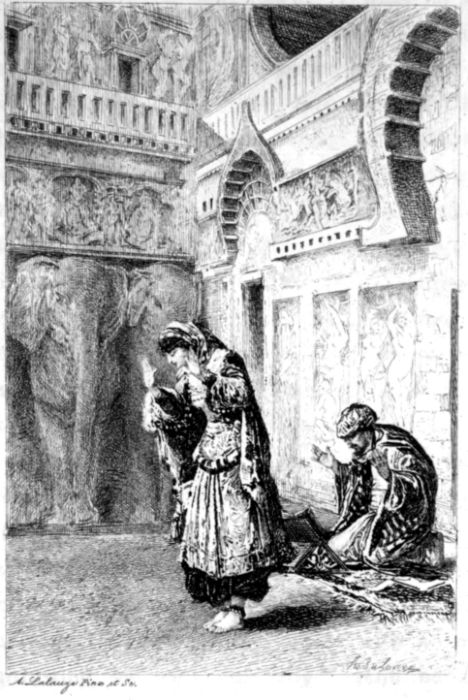
There was once a king in the land of Tabaristan,[186] by name
Dádbín, and he had two Wazirs, one called Zorkhan and the other
Kárdán.[187] The Minister Zorkhan had a daughter, there was not
in her day a fairer than she nor yet a chaster or a more pious,
for she was a faster, a prayer and an adorer of Allah the Almighty,
and her name was Arwà.[188] Now Dadbin, the king, heard tell of
her praises; so his heart clave to her and he called the Wazir
her sire and said to him, “I desire of thee that thou marry me to
thy daughter.” Quoth Zorkhan, “O my liegest lord, suffer me
to consult her, and if she consent, I will marry thee with her.”
And the king said, “Haste thee with this.” So the Minister
went in to his daughter and said to her, “O my daughter, the
king seeketh thee of me and desireth to marry thee.” She said,
“O my father, I desire not a husband, and if thou wilt marry me,
marry me not but with a mate who shall be mine inferior in rank
and I nobler than he, so he may not turn to other than myself nor
lift his eyes upon me,[189] and marry me not to one who is nobler than
I, lest I be with him as a slave-girl and a serving-woman.” Accordingly
the Wazir returned to the king and acquainted him with that
which his daughter had said, whenas he redoubled in desire and
95love-longing for her, and said to her sire, “An thou marry me not
to her of good grace, I will take her in thy despite and by force.”
The Minister again betook himself to his daughter and repeated
to her the king’s words, but she replied, “I want no husband.”
So he returned to the king and told him what she said, and he
was wroth and threatened him, whereupon the father took his
daughter and fled with her. When this came to the king’s
knowledge, he despatched troops in pursuit of Zorkhan, to stop
the road upon him, whilst he himself went out and overtaking
the Wazir, smote him on the head with his mace[190] and slew him.
Then he took his daughter by force and returning to his dwelling
place, went in to her and married her. Arwa resigned herself
with patience to that which betided her and committed her case
to Allah Almighty; and indeed she was used to serve Him night
and day with a goodly service in the house of King Dadbin her
husband. It befel one day that the king had occasion to make
a journey; so he called his second Wazir Kardan and said to
him, “I have a charge to commit to thy care, and it is yonder
lady, my wife, the daughter of the Wazir Zorkhan, and I desire
that thou keep her and guard her thy very self, because I have
not in the world aught dearer than she.” Quoth Kardan in his
mind, “Of a truth, the king honoureth me with an exceeding
honour in entrusting me with this lady.” And he answered,
“With love and all gladness.” When the king had departed on
his journey, Kardan said in himself, “Needs must I look upon
this lady whom the king loveth with all this love.” So he hid
himself in a place, that he might espy her, and saw her surpassing
description; wherefor he was confounded at her and his wit was
wildered and love gat the lordship of him, so that he sent to her,
96saying, “Have pity on me, for indeed I perish for the love of
thee.” She sent back to him and replied, “O Wazir, thou art in
the place of faith and confidence, so do not thou betray thy trust,
but make thine inward life like unto thine outward[191] and occupy
thyself with thy wife and that which is lawful to thee. As for
this, ’tis mere lust and women are all of one and the same taste.[192]
And if thou wilt not be forbidden from this talk, I will make
thee a byword and a reproach among folk.” When the Minister
heard her answer, he knew that she was chaste of soul and body;
wherefore he repented with the utmost of repentance and feared
for himself from the king and said, “Needs must I devise a device
whereby I may destroy her; else shall I be disgraced with
the king.” Now when the king returned from his journey, he
questioned Kardan of the affairs of his kingdom, and the Wazir
answered, “All is right well, O king, save a vile matter, which
I have espied here and with which I am ashamed to confront
the sovran; but, if I hold my peace thereof, I fear lest other than
I discover it and I shall have played traitor to the king in the
matter of my warning and my trust.” Quoth Dadbin, “Speak,
for to me thou art none other than a truth-teller, a trustworthy
and a loyal counsellor in whatso thou sayest, undistrusted in
aught.” And the Minister said, “O king, this woman to whose
love thy heart cleaveth and of whose piety thou talkest and her
fasting and her praying, I will plainly prove to thee that this
is craft and guile.” Hereat the king was troubled and said,
“What may be the matter?” and the Wazir replied, “I would have
thee wot that some days after thy departure, one came to me and
said to me, Come, O Wazir, and look. So I went to the door
of the queen’s sleeping-chamber and behold, she was sitting with
97Abu al-Khayr, her father’s page, whom she favoureth, and she did
with him what she did, and such is the manner of that which I
saw and heard.” When Dadbin heard this, he burnt with rage
and said to one of his eunuchs,[193] “Go and slay her in her chamber.”
But the eunuch said to him, “O king, Allah prolong thy life!
Indeed, the killing of her may not be in this way neither at this
time; but do thou bid one of thine Castratos take her up on a
camel and carry her to one of the trackless wolds and cast her
down there; so, if she be guilty, Allah shall cause her to perish,
and if she be innocent, He will deliver her, and the king shall
be free from default against her; for that this lady is dear to thee
and thou slewest her father by reason of thy love for her.” Quoth
the king, “By Allah, thou sayst sooth!” Then he bade one
of his eunuchs carry her on a camel to one of the far-off wilds and
cut-off wolds and there leave her and wend his ways, and he
forbad her torment to be prolonged. So he took her up and
betaking himself with her to the desert, left her there without
provaunt or water and returned, whereupon she made for one of
the hills, and ranging stones before her in form of prayer-niche,
stood praying. Now it chanced that a camel-driver, belonging to
Kisrà[194] the king, lost certain camels, and his lord threatened him,
if he found them not, that he would slay him. Accordingly he set
out and plunged into the wastes till he came to the place where the
lady was, and seeing her standing at prayer utterly alone, waited till
she had made an end of her orisons, when he went up to her and
saluted her with the salam, saying, “Who art thou?” Quoth
she, “I am a hand-maid of the Almighty.” He asked, “What
doest thou in this desolate place?” and she answered, “I serve
Allah the Most High.” When he saw her beauty and loveliness,
he fell in love with her, and said to her, “Harkye! Do thou
98take me to mate and I will be tender to thee and use thee
with exceeding ruth, and I will further thee in obedience to Allah
Almighty.” But she answered, saying, “I have no need of wedlock
and I desire to abide here alone with my Lord and His worship;
but an thou wouldst have ruth upon me and further me in the
obedience of Allah the Most High, carry me to a place where there
is water and thou wilt have done me a kindness.” Thereupon
he took her to a place wherein was running water and setting
her down on the ground, left her and went his ways, marvelling at
her. After he left her, he found his camels, by her blessing, and
when he returned, King Kisra asked him, “Hast thou found the
camels?” He answered “Yes,” and acquainted him with the
affair of the damsel, and detailed to him her beauty and loveliness:
whereupon the king’s heart clave to her and he mounted
with a few men and betook himself to that place, where he found
the lady and was amazed at her, because he saw her surpassing
the description wherewith the camel-driver had described her to
him. So he accosted her and said to her, “I am King Kisra,
greatest of the kings. Wilt thou not have me to husband?”
Quoth she, “What wilt thou do with me, O king, and I a woman
abandoned in the waste?” And quoth he, “Needs must this
be, and if thou wilt not consent to me, I will take up my abode
here and devote myself to Allah’s service and thy service, and
with thee worship the Almighty.” Then he bade set up for her a
tent and another for himself, facing hers, so he might adore Allah
with her, and fell to sending her food; and she said in herself,
“This is a king, and ’tis not lawful for me that I suffer him for
my sake to forsake his lieges and his land.” Presently she said
to the serving-woman, who used to bring her the food, “Speak
the king that he return to his women, for he hath no need of me,
and I desire to abide in this place, so I may worship therein
Allah the Most High.” The slave-girl returned to the king and
told him this, whereupon he sent back to her, saying, “I have no
99need of the kingship and I also desire to tarry here and worship
Allah with thee in this waste.” When she found this earnestness
in him, she fell in with his wishes, and said, “O king, I will
consent to that which thou desirest and will be to thee a wife,
but on condition that thou bring me Dadbin the king and his
Wazir Kardan and his Chamberlain the chief Eunuch, and that
they be present in thine assembly, so I may speak a word with
them in thy presence, to the intent that thou mayst redouble in
affection for me.” Quoth Kisra, “And what is thy want unto
this?” So she related to him her story from first to last, how
she was the wife of Dadbin the king and how the Wazir Kardan
had misspoken of her honour. When King Kisra heard this, he
redoubled in love-longing for her and affection and said to her, “Do
whatso thou willest:” then he let bring a litter[195] and carrying her
therein to his dwelling-place, entreated her with the utmost honour
and espoused her. Presently he sent a great army to King
Dadbin and fetching him and his Wazir Kardan and the Eunuch-chamberlain,
caused bring them before him, they unknowing the
while what he might purpose to do with them. Moreover, he
caused set up for Arwa a pavilion[196] in the courtyard of his palace,
and she entered it and let down the curtain before herself.
When the servants had set their seats and they had seated themselves,
Arwa raised a corner of the curtain and said, “O Kardan,
rise to thy feet, for it besitteth not that thou sit in the like of
this assembly, before this mighty King Kisra.” When the Wazir
heard these words, his heart fluttered and his joints were loosened
and he rose to his feet of his fear. Then said she to him, “By the
virtue of Him who hath made thee stand up to judgment in this
standing-stead, and thou abject and humiliated, I conjure thee
speak the truth and say what egged thee on to lie against me and
100drive me from my home and from the land of my husband and
made thee practise thus against a man and a Moslem so as to slay
him.[197] This is no place wherein lying availeth nor may artifice be
herein.” When the Wazir was ’ware that she was Arwa and
heard her speech, he knew that it behoved him not to lie and that
naught would avail him save truth; so he bowed his head groundwards
and wept and said, “Whoso doth evil, needs must he incur
it, albe his day be prolonged. By Allah, I am he who hath
sinned and transgressed, and naught prompted me unto this but
fear and overmastering desire and the misery writ upon my brow.[198]
And indeed this woman is pure and chaste and free from all fault.”
When King Dadbin heard this, he beat his face and said to
Kardan, his Wazir, “Allah slay thee![199] ’Tis thou that hast
parted me and my wife and wronged me!” But Kisra the
king said to him, “Allah shall assuredly slay thee, because thou
hastenedst and lookedst not into thine affair, and knewest not
the guilty from the guiltless. Hadst thou wrought deliberately,
the unright had been made manifest to thee from the right; so
when this villain Wazir purposed thy ruin, where was thy judgment
and whither went thy sight?” Then he asked Arwa, “What
wilt thou that I do with them?” and she answered, “Accomplish
on them the ordinance of Almighty Allah:[200] let the slayer be
101slain and the transgressor transgressed against, even as he transgressed
against us; yea, and to the well-doer weal shall be done
even as he did unto us.” So she gave her officers order concerning
Dadbin and they smote him on the head with a mace and slew him,
and she said, “This is for the slaughter of my sire.” Then she
bade set the Wazir on a beast and bear him to the desert whither
he had caused her to be borne, and leave him there without provaunt
or water; and she said to him, “An thou be guilty, thou
shalt suffer the punishment of thy guilt and die in the desert of
hunger and thirst; but an there be no guilt in thee, thou shalt be
delivered, even as I was delivered.” As for the Eunuch-chamberlain,
who had counselled King Dadbin not to slay her, but to
cause carry her to the desert, she bestowed on him a costly robe
of honour and said to him, “The like of thee it befitteth kings
to hold in favour and promote to high place, for that thou spakest
loyally and well, and a man is requited according to his deed.”
And Kisra the King made him Wali in a certain province of his
empire. “Know, therefore, O king” (continued the youth), “that
whoso doeth good is requited with good, and he who is guiltless
of sin and offence feareth not the issue of his affair. And I,
O my liege lord, am free from guilt, wherefore I hope in Allah
that He will show forth the truth to mine auspicious king, and
vouchsafe me the victory over enemies and enviers.” When the
king heard this, his wrath subsided and he said, “Return him
to the prison till the morrow, so we may look into his case.”
102
When it was the sixth day, the wrath of the Wazirs redoubled,
because they had not won their will of the youth and they feared
for their lives from the liege lord; so three of them went in to
him and prostrating themselves between his hands, said to him,
“O king, indeed we are loyal counsellors to thy dignity and fondly
solicitous for thy weal. Verily, thou persistest long in leaving this
youth alive and we know not what is thine advantage therein.
Every day findeth him yet on life and the talk of folk redoubleth
suspicion on thee; so do thou do him dead, that the talk may be
made an end of.” When the king heard this speech, he said, “By
Allah, verily ye say sooth and speak rightly!” Then he bade
them bring the young treasurer and when he came into the
presence said to him, “How long shall I look into thy case, and
find no helper for thee and see them athirst for thy blood?” The
youth answered, “O king, I hope for succour only from Allah,
not from created beings: an He aid me, none shall have power to
harm me, and if He be with me and on my side, because of the
truth, from whom shall I fear, because of untruth? Indeed, I
have made my intent with Allah a pure intent and a sincere, and
I have severed my expectation from the help of the creature; and
whoso seeketh aid of Allah findeth of his desire that which
Bakhtzamán found.” Quoth the king, “Who was Bakhtzaman and
what is his story?” and quoth the youth, “Hear, O king,
There was once a king of the kings, whose name was Bakhtzaman,
103and he was a great eater and drinker and carouser. Now
enemies of his made their appearance in certain parts of his realm,
which they coveted; and one of his friends said to him, “O king,
the foe intendeth for thee: be on thy guard against him.” Quoth
Bakhtzaman, “I reck not of him, for that I have weapons and
wealth and warmen and am not afraid of aught.” Then said his
friends to him, “Ask aid of Allah, O king, for He will help thee
more than thy wealth and thy weapons and thy warriors.” But
he turned a deaf ear to the speech of his loyal counsellors, and
presently the enemy came upon him and waged war upon him and
got the victory over him and profited him naught his trust in
other than Allah the Most High. So he fled from him and seeking
one of the sovrans, said to him, “I come to thee and lay hold
upon thy skirts and take refuge with thee, so thou mayst help me
against my foe.” The king gave him money and men and a
mighty many and Bakhtzaman said in himself, “Now am I
fortified with this force and needs must I conquer my foe with
such combatants and overcome him;” but he said not, “With the
aid of Allah Almighty.” So his enemy met him and overcame him
again and he was defeated and put to the rout and fled at random:
his troops were dispersed from him and his money lost and the
enemy pursued him. Thereupon he sought the sea and passing
over to the other side, saw a great city and therein a mighty
citadel. He asked its name and that of its owner, and they said
to him, “It belongeth to Khadídán[202] the king.” So he fared on till
he came to the royal palace and concealing his condition, passed
himself off for a horseman[203] and sought service with King Khadidan,
who attached him to his attendance and entreated him with
honour; but his heart still clung to his mother-land and his
104home. Presently, it chanced that an enemy came out against
King Khadidan; so he sent his troops to meet him and made
Bakhtzaman head of the host. Then they went forth to the field
and Khadidan also came forth and ranged his troops and levelled
lance and sallied out in person and fought a sore fight and
overcame his foe, who with his troops ignominiously fled. When
the king and his army returned in triumph, Bakhtzaman said to
him, “Harkye, O king! This be a strange thing I see in thee
that thou art compassed about with this mighty great army, yet
dost thou apply thyself in person to battle and adventurest thy
life.” Quoth the king, “Dost thou call thyself a knight and a
learned wight and deemest that victory is in the many of men?”
Quoth Bakhtzaman, “Such is indeed my belief.” And Khadidan
the king cried, “By Allah, then, thou errest in this thy belief!”
presently adding, “Woe and again woe to him whose trust is
in other than Allah! Indeed, this army is appointed only for
phantasy and majesty, and victory is from Allah alone. I too, O
Bakhtzaman, whilome believed that victory was in the number of
men,[204] and an enemy came out against me with eight hundred head,
whilst I had eight hundred thousand. I trusted in the tale of
my troops, whilst my foe trusted in Allah, so he defeated me and
routed me and I was put to a shameful flight and hid myself
in one of the mountains, where I met with a Religious who had
withdrawn himself from the world. So I joined myself to him and
complained to him of my case and acquainted him with all that had
befallen me. Quoth the Recluse, Wottest thou why this befel
thee and thou wast defeated? Quoth I, I know not; and he
said, Because thou didst put thy trust in the multitude of thy warmen
and reliedst not upon Allah the Most High. Hadst thou put
thy trust in the Almighty and believed of Him that it is He alone
105who advantageth and endamageth thee, never had thy foe availed
to cope with thee. Return unto Allah. So I returned to my right
senses, and repented at the hands of that Religious, who said to me:—Turn
back with what remaineth to thee of troops and confront
thy foes, for, if their intents be changed and turned away from Allah,
thou wilt overcome them, e’en wert thou alone. When I heard the
Solitary’s words, I put my trust in Allah of All-Might; and,
gathering together those who remained with me, fell upon mine
enemies at unawares in the night. They deemed us many and
fled with the shamefullest flight, whereupon I entered my city
and repossessed myself of my place by the might of Almighty
Allah, and now I fight not but trusting in His aid.” When
Bakhtzaman heard these words he awoke from his heedlessness
and cried, “Extolled be the perfection of God the Great! O
king, this is my case and my story, nothing added and naught
subtracted, for I am King Bakhtzaman and all this happened to
me: wherefore I will seek the gate of Allah’s mercy and repent
unto Him.” So he went forth to one of the mountains and
worshipped Allah there awhile, till one night, as he slept,
a personage appeared to him in a dream and said to him,
“O Bakhtzaman, Allah accepteth thy repentance and openeth
on thee the door of succour and will aid thee against thy
foe.” When he was assured of this in the dream, he arose
and turned back, intending for his own city; and when he
drew near thereunto, he saw a company of the king’s retainers,
who said to him, “Whence art thou? We see that thou art a
foreigner and fear for thee from this king, for that every stranger
who entereth this city, he destroyeth him, of his dread of King
Bakhtzaman.” Said Bakhtzaman, “None shall prejudice him
nor profit him save Allah the Most High.” And they replied,
“Indeed, he hath a vast army and his heart is fortified in the
multitude of his many.” When King Bakhtzaman heard this, his
mind was comforted and he said to himself, “I place my trust in
106Allah. An He will, I shall overcome mine enemy by the might of
the Lord of Omnipotence.” So he said to the folk, “Wot ye not
who I am?” and they said, “No, by Allah.” Cried he, “I
am King Bakhtzaman.” When they heard this and knew that it
was indeed he, they dismounted from their horses and kissed his
stirrup, to do him honour, and said to him, “O king, why thus
risk thy life?” Quoth he, “Indeed, my life is a light matter to
me and I set my trust in Almighty Allah, looking to Him
for protection.” And quoth they, “May that suffice thee!”
presently adding, “We will do with thee that which is in
our power and whereof thou art worthy: hearten thy heart,
for we will succour thee with our substance and our existence,
and we are his chief officers and the most in favour with him
of all folk. So we will take thee with us and cause the lieges
follow after thee, because the inclination of the people, all of them,
is thee-wards.” Said he, “Do whatso Allah Almighty enableth
you to do.” So they carried him into the city and hid him with
them. Then they agreed with a company of the king’s chief
officers, who had aforetime been those of Bakhtzaman, and acquainted
them with this; whereat they rejoiced with joy exceeding.
Then they assembled together to Bakhtzaman, and made a covenant
and handfast of fealty with him and fell upon the foe and
slew him and seated King Bakhtzaman again on the throne of his
kingship. And his affairs prospered and Allah amended his estate
and restored to him His bounty, and he ruled his subjects justly and
abode in the obedience of the Almighty. “On this wise, O king,”
(continued the young treasurer), “he with whom Allah is and
whose intent is pure, meeteth naught save good. As for me, I
have no helper other than the Almighty, and I am content to submit
myself to His ordinance, for that He knoweth the purity of
my intent.” With this the king’s wrath subsided and he said,
“Return him to the prison till the morrow, so we may look into
his case.”
107
When it was the seventh day, the seventh Wazir, whose name was
Bihkamál,[205] came in to the king and prostrating himself to him,
said, “O king, what doth thy long-suffering with this youth profit
thee? Indeed the folk talk of thee and of him. Why, then, dost
thou postpone the putting him to death?” The Minister’s words
aroused the anger of the king, and he bade bring the youth. So
they fetched him before, him in fetters, and Azadbakht said to
him, “Ho, woe to thee! By Allah, after this day there abideth
no deliverance for thee from my hand, by reason that thou hast
outraged mine honour, and there can be no forgiveness for thee.”
The youth replied, “O king, there is no great forgiveness save in
case of a great default, for according as the offence is great in so
much magnified is mercy; and it is no grace to the like of thee if
he spare the like of me. Verily, Allah knoweth that there is no
crime in me, and indeed He commandeth to clemency, and no
clemency is greater than that which spareth from slaughter, for
that thy pardon of him whom thou purposest to put to death
is as the quickening of a dead man; and whoso doth evil shall find
it before him, even as it was with King Bihkard.” Asked the
king, “And what is the story of King Bihkard?” And the youth
answered, “Hear, O king,
There was once a king named Bihkard and he had mickle of
108wealth and many troops; but his deeds were evil and he would
punish for a slight offence, and he never forgave any offender.
He went forth one day to hunt and a certain of his pages shot a
shaft, which lit on the king’s ear and cut it off. Bihkard cried,
“Who shot that arrow?” So the guards brought him in haste the
misdemeanant, whose name was Yatrú,[207] and he of his fear fell
down on the ground in a fainting fit. Then quoth the king, “Slay
him;” but Yatru said, “O king, this which hath befallen was not
of my choice nor of my knowledge; so do thou pardon me, in the
hour of thy power over me, for that mercy is of the goodliest of
deeds and belike it shall be in this world a provision and a good
work for which thou shalt be repaid one of these days, and a
treasure laid up to thine account with Allah in the world to come.
Pardon me, therefore, and fend off evil from me, so shall Allah fend
off from thee the like evil.” When the king heard this, it pleased
him and he pardoned the page, albeit he had never before pardoned
any. Now this page was of the sons of the kings and
had fled from his sire on account of a sin he had committed: then
he went and took service with Bihkard the king, and there happened
to him what happened. After a while, it chanced that a man
recognized him and went and told his father, who sent him a letter,
comforting his heart and mind and calling upon him to return to
him. Accordingly he returned to his father, who came forth to
meet him and rejoiced in him, and the Prince’s affairs were set
right with his sire. Now it befel, one day of the days, that king
Bihkard shipped him in a ship and put out to sea, so he might
fish: but the wind blew on them and the craft sank. The king
made the land upon a plank, unknown of any, and came forth,
mother-naked, on one of the coasts; and it chanced that he landed
in the country whereof the father of the page aforesaid was king.
So he came in the night to the gate of the sovran’s capital, and
109finding it shut, lodged him in a burying-place there. When the
morning morrowed and the folk came forth of the city, behold,
they found a man lately murthered and cast down in a corner of
the burial ground, and seeing Bihkard there, doubted not but it
was he who had slain him during the night; so they laid hands
on him and carried him up to the king and said to him, “This
fellow hath slain a man.” The king bade imprison him; whereupon
they threw him in jail, and he fell to-saying in himself, what
while he was in the prison, “All that hath befallen me is of the
abundance of my sins and my tyranny, for, indeed, I have slain much
people unrighteously and this is the requital of my deeds and that
which I have wrought whilome of oppression.” As he was thus
pondering in himself, there came a bird and lighted down on the
pinnacle of the prison, whereupon, of his passing eagerness in the
chase, he took a stone and threw it at the bird. Now the king’s
son was playing in the exercise-ground with the ball and the bat,[208]
and the stone lit on his ear and cut it off, whereupon the Prince
fell down in a fit. So they enquired who had thrown the stone
and finding that it was Bihkard, took him and carried him before
the king’s son, who bade do him die. Accordingly, they cast the
turband from his head and were about to fillet his eyes, when the
Prince looked at him and seeing him cropped of an ear, said to
him, “But for thy villainies thine ear had not been cut off.”
Said Bihkard, “Not so, by Allah! Nay, but the story of the
loss of my car is so and so, and I pardoned him who smote me
with an arrow and cut off my ear.” When the prince heard this,
he looked in his face and knowing him, cried out and said, “Art
thou not Bihkard the king?” “Yes,” replied he, and the Prince
said to him, “What ill chance threw thee here?” Thereupon he
told him all that had betided him and the folk wondered and
110extolled the perfection of the Almighty, crying “Subhána ’llah!—laud
to the Lord!” Then the Prince rose to him and embraced
him and kissed him and, entreating him with respect, seated
him in a chair and bestowed on him a robe of honour; and
he turned to his sire and said to him, “This be the king who
pardoned me and this be his ear which I cut off with a
shaft; and indeed he deserveth my pardon by having pardoned
me.” Then said he to Bihkard, “Verily, the issue of mercy hath
been a provision for thee in such hour as this.” And they entreated
him with the utmost kindness and sent him back to his own
country in all honour. “Know, then, O king” (continued the
youth), “that there is no goodlier quality than mercy and that all
thou dost of clemency, thou shalt find before thee a treasure for
thee treasured up.” When the king heard this, his wrath subsided
and he said, “Return him to the prison till the morrow, so we may
look into his case.”
111
When it was the eighth day, the Wazirs all assembled and had
speech together and said, “How shall we do with this youth, who
overcometh us with his much talk? Indeed, we fear lest he be
saved and we fall into destruction. So, let us all go in to the king
and unite our efforts to gain our cause, ere he appear without guilt
and come forth and get the better of us.” Accordingly they all
went in to the king and prostrating themselves before him, said to
him, “O king, beware lest this youth ensorcell thee with his
sorcery and beguile thee with his wiles. An thou heardest what
we hear, thou wouldst not suffer him live; no, not a single day.
Wherefore heed not his speech, for we are thy Ministers, who
endeavour for thy permanence, and if thou hearken not to our word,
to whose word wilt thou hearken? See, we are ten Wazirs who
testify against this youth that he is guilty and entered not the
king’s sleeping chamber save with ill intent, so he might put the
king to shame and outrage his honour; and if the king slay him
not, let him banish him his realm, that the tongue of the folk may
desist from him.” When the king heard his Ministers’ words, he
was wroth with exceeding wrath and bade bring the youth, and
when he came in to the king, the Wazirs all cried out with one
voice, saying, “O Lack-wits, thinkest thou to save thyself from
slaughter by guile and sleight, that thou wilest the king with thy
talk and hopest pardon for the like of this mighty great crime thou
hast committed?” Then the king bade fetch the sworder, so he
might smite his neck; whereupon each of the Wazirs fell to saying,
“I will slay him;” and they sprang upon him. Quoth the
youth, “O king, consider and ponder the eagerness of these thy
112Ministers. Is this of envy or is it not? They would fain make severance
between me and thee, so there may fall to them what they
shall plunder, as aforetime.” And the king said to him, “Consider
their witness against thee.” The young man said, “O king, how
shall they testify of that which they saw not?[209] This is but envy
and despight; and thou, an thou slay me, wilt indeed regret me,
and I fear lest there betide thee of repentance that which betided
Aylán Sháh, by reason of the malice of his Wazirs.” Asked
Azadbakht, “And what is his story?” and the youth answered,
“Hear, O king,
Whilome there was a merchant named Abu Tammám, and he
was a clever man and a well-bred, quick-witted and truthful in all
his affairs, and he was monied to boot. Now there was in his land
a king as unjust as he was jealous, and Abu Tammam feared for
his wealth from this king and said, “I will remove hence to
another place where I shall not be in dread.” So he made for the
city of Aylán Sháh and built himself a palace therein and transporting
his wealth thither, took up his abode there. Presently, the
news of him reached King Aylan Shah; so he sent to invite him
to his presence and said to him, “We know of thy coming to us
and thine entering under our allegiance, and indeed we have heard
of thine excellence and wit and generosity; so welcome to thee
and fair welcome! The land is thy land and at thy command, and
whatsoever need thou needest of us, ’tis already accomplished to
thee; and it behoveth that thou be near our person and of our
113assembly.” Abu Tammam prostrated himself before the king,
and said to him, “O king, I will serve thee with my monies and
with my life, but do thou excuse me from nearness to thee, for that
an I took office about thee, I should not be safe from enemies and
enviers.” Then he applied himself to the royal service with
presents and largesses, and the king saw him to be intelligent, well-bred
and of good counsel; so his heart inclined to him and he
committed to him the ordinance of his affairs and the power to bind
and to loose was in his hand. Now Aylan Shah had three Wazirs,
in whose hands public affairs were wont to be and they had been
accustomed not to quit the king night or day; but they became shut
out from him by reason of Abu Tammam and the king was occupied
with him to their exclusion. Herewith the Ministers took counsel
together upon the matter and said, “What is your rede we should
do, seeing that the king is occupied from us with yonder man, and
indeed he honoureth him with more honour than us? But now
come, let us devise some device whereby we may alienate him
from the king.” So each of them spoke forth that which was in
his mind, and one of them said, “The king of the Turks hath a
daughter, whose like there is not in the world, and whatso
messenger goeth to demand her in marriage, him her father
slaughtereth. Now our king hath no knowledge of this; so, come,
let us foregather with him and bring up the mention of her: when
his heart is taken with her, we will advise him to dispatch Abu
Tammam to seek her hand in marriage; whereupon her father
will slay him and we shall be quit of him and settle his affair once
for all.” Accordingly, they went in to the king one day (Abu
Tammam being present among them,) and mentioned the affair of
the damsel, the daughter of the Turks’ king, and enlarged upon
her charms, till the king’s heart was taken with her and he said to
them, “We will send one to demand her to wife for us; but who
shall be our messenger?” Quoth the Wazirs, “There is none fit
for this business but Abu Tammam, by reason of his wit and good
114breeding;” and the king said, “Indeed, even as ye say, none is
fitting for this affair save he.” Then he turned to Abu Tammam
and said to him, “Wilt thou not go with my message and seek
me in marriage the daughter of the Turks’ king?” and he
answered, “To hear is to obey, O my Sovran!” So they made
ready his affair and the king conferred on him a robe of honour,
and he took with him a present and a letter under the king’s hand
and setting out, fared on till he came to the capital city of
Turkistan. When the king of the Turks knew of his coming, he
despatched his officers to receive him and entreated him with
honour and lodged him as befitted his rank. Then he guested him
three days, after which time he summoned him to his presence and
Abu Tammam went in to him; and, prostrating himself as beseemeth
before kings, laid that present before him and gave him the letter.
The king read the writ and said to Abu Tammam, “We will do
what behoveth in the matter; but, O Abu Tammam, needs must
thou view my daughter and she view thee, and needs must thou
hear her speech and she hear thine.” So saying, he sent him to
the lodging of the Princess, who had had notice of this; so that
they had adorned her sitting-room with the costliest that might be
of vessels of gold and silver and the like, and she seated herself on
a chair of gold, clad in the richest of royal robes and ornaments.
When Abu Tammam entered, he took thought and said, “The
wise declare that whoso governeth his sight shall suffer naught unright
and he who guardeth his tongue shall hear naught of foul
taunt, and he who keepeth watch over his hand, it shall be
lengthened and not shortened.”[211] So he entered and seating himself
on the floor, cast down his eyes and covered his hands and
feet with his dress.[212] Quoth the king’s daughter to him, “Raise
115thy head, O Abu Tammam, and look on me and speak with me.”
But he spake not neither raised his head, and she continued, “They
sent thee only to view me and talk with me, and yet behold thou
sayest not a word;” presently adding, “Take of these union-pearls
that be round thee and of these jewels and gold and silver.”
But he put not forth his hand to aught, and when she saw that he
paid no heed to anything, she was angry and cried, “They have
messaged me with a messenger, blind, dumb, deaf.” Then she
sent to acquaint her father with this; whereupon the king called
Abu Tammam to him and said to him, “Thou camest not save to
view my daughter: why, then, hast thou not looked upon her?”
Quoth Abu Tammam, “I saw everything;” and quoth the king,
“Why didst thou not take somewhat of that which thou sawest
of jewels and the like? Indeed they were set out for thee.” But he
answered, “It behoveth me not to put out my hand to aught that
is not mine.” When the king heard his speech, he gave him a
sumptuous robe of honour and loved him muchly[213] and said to him,
“Come, look at this well.” So Abu Tammam went up to the pit-mouth
and looked, and behold, it was full of heads of the sons of
Adam, and the king said to him, “These are the heads of envoys
whom I slew, because I saw them without loyalty to their lords,
and I was used, whenas I beheld an envoy without good
manners, to say, He who sent him is worse-mannered than he,
because the messenger is the tongue of him who sendeth him
and his breeding is of his master’s breeding; and whoso is after
this fashion, it befitteth not that he be akin to me.[214] For this
reason I used to put the envoys to death; but, as for thee,
116thou hast overcome us and won my daughter, of the excellence
of thy manners; so hearten thy heart, for she is thy lord’s.” Then
he sent him back to King Aylan Shah with presents and rarities
and a letter, saying, “This that I have done is in honour of thee
and of thine envoy.” When Abu Tammam returned after accomplishing
his mission and brought the presents and the letter, King
Aylan Shah rejoiced in this and redoubled all his favours
and showed him honour the highest. Some days after, the
King of Turkistan sent his daughter and she went in to King
Aylan Shah, who rejoiced in her with exceeding joy and Abu
Tammam’s worth was exalted in the royal sight. When the
Wazirs saw this, they redoubled in envy and despite and said, “An
we contrive us not a contrivance to rid us of this man, we shall
die of rage.” So they bethought them and agreed upon a device
they should practise. Then they betook themselves to two boys,
pages affected to the service of the king, who slept not but on
their knee,[215] and they lay at his head, for that they were his bedchamber
pages. So the Ministers gave them each a thousand
dinars of gold, saying, “We desire of you that ye do somewhat we
require and take this gold as a provision against your time of
need.” Quoth the lads, “What is it ye would have us do?” and
quoth the Wazirs, “This Abu Tammam hath marred matters for us,
and if his case abide in this way, he will remove us all from the
king’s favour; and what we want of you twain is that, when ye
are alone with the king and he leaneth back, as he were asleep, one
of you say to his fellow:—Verily, the king hath taken Abu
Tammam into high favour and hath advanced him to exalted rank,
yet he is a transgressor against the king’s honour and an accursed
wight. Then let the other of you ask:—And what is his transgression?
117and let the first answer:—He outrageth the king’s
honour and saith, the King of Turkistan was used, when a
messenger went to him to seek his daughter in marriage, to slay
him; but me he spared, because she liked me, and by reason of
this her sire sent her hither, for that she loved me. Then let the
other say, Knowest thou this for truth? and let the first reply:—By
Allah, this is familiar to all the folk, but, of their fear of the king,
they dare not divulge it to him; and as often as the king is absent
a-hunting or a-wayfaring, Abu Tammam cometh to her and is
private with her.” Whereupon the boys answered, “We will say
this.” Accordingly, one night, when they were alone with the
king and he leant back, as he were asleep, they said these words
and the king heard all and was like to die of fury and despite
and said to himself, “These are young boys, not come to years of
discretion, and have no business with any; and unless they had
heard these words from some one, they had not spoken thereof
each with other.” When it was morning wrath overmastered him,
so that he stayed not neither deliberated, but summoned Abu
Tammam and taking him apart, said to him, “Whoso guardeth not
the honour of his liege lord[216], what deserveth he?” Said Abu
Tammam, “He deserveth that his lord guard not his honour.”
Aylan Shah continued, “And whoso entereth the king’s house and
playeth traitor with him, what behoveth unto him?” and Abu
Tammam replied, “He shall not be left alive.” Whereupon the
king spat in his face and said to him, “Both these deeds hast thou
done.” Then he drew his poinard on him in haste and smiting
him in the belly, slit it and Abu Tammam died forthright; whereupon
the king dragged him along and cast him into a well that
was in his palace. After he had slain him, he fell into repentance
and mourning increased and chagrin waxed sore upon him, and
he would acquaint none who questioned him with the cause, nor,
118of his love for his wife, did he tell her of this, and whenever she
asked him wherefore he grieved, he answered her not. When the
Wazirs knew of Abu Tammam’s death, they rejoiced with exceeding
joy and knew that the king’s sorrow arose from regret for
him. As for Aylan Shah, after this he used to betake himself by
night to the sleeping-chamber of the two boys and spy upon them,
that he might hear what they said concerning his wife. As he
stood one night privily at the door of their chamber, he saw them
spread out the gold between their hands and play with it and
heard one of them say, “Woe to us! What doth this gold profit
us? Indeed we cannot buy therewith any thing nor spend it
upon ourselves. Nay, but we have sinned against Abu Tammam
and done him dead unjustly.” And said the other, “Had we
known that the king would slay him on the spot, we had not done
what we did.” When the king heard that, he could not contain
himself, but rushed in upon them and said to them, “Woe to you!
What did ye? Tell me.” And they cried, “Amán[217], O king!”
He cried, “An ye would have pardon from Allah and me, you are
bound to tell me the truth, for nothing shall save you from me but
soothfastness.” Hereat they prostrated themselves before him and
said, “By Allah, O king, the Wazirs gave us this gold and taught
us to lie against Abu Tammam, so thou mightest kill him, and
what we said was their speech.” When the king heard this, he
plucked at his beard, till he was like to tear it up by the roots and
bit upon his fingers, till he well nigh cut them in twain, for repentance
and sorrow that he had wrought hastily and had not delayed
with Abu Tammam, so he might consider his case. Then he sent
for the Ministers and said to them, “O villainous Wazirs, ye
deemed that Allah was heedless of your deed, but right soon shall
119your wickedness revert upon you. Know ye not that Whoso
diggeth for his brother a pit shall himself fall into it?[218] Take from
me the punishment of this world and to-morrow ye shall receive
the punishment of the next world and requital from Allah.” Then
he bade put them to death; so the headsman smote off their heads
before the king, and he went in to his wife and acquainted her
with whatso he had misdone to Abu Tammam; whereupon she
grieved for him with mighty great grief and the king and his
household ceased not weeping and repenting all their lives. Moreover,
they brought Abu Tammam forth of the well and the king
built him a dome[219] in his palace and buried him therein. “See, then,
O auspicious king” (continued the youth), “what jealousy doth
and injustice and how Allah caused the Wazirs’ malice to revert
upon their own necks; and I trust in the Almighty that He will
empower me over all who envy me my favour with the king and
show forth the truth unto him. Indeed, I dread naught for my
life from death; only I fear lest the king repent of my slaughter,
for that I am guiltless of offence, and if I knew that I were guilty
on any wise, my tongue would be dumb-struck.” When the king
heard this, he bowed his head groundwards in perplexity and confusion
and said, “Restore him to the prison till the morrow, so we
may look into his case.”
120
Now when it was the ninth day, the Wazirs met and said one to
other, “Verily, this youth baffleth us, for as often as the king is
minded to kill him, he beguileth him and bewitcheth him with a
story; so what be your rede we should do, that we may slay him
and be at rest from him?” Then they advised together and
agreed that they should go to the king’s wife.[220] So they betook
themselves to her and said to her, “Thou art careless of this affair
wherein thou art and this uncare shall not profit thee; whilst the
king, occupied with eating and drinking and diversion, forgetteth
that the folk beat upon tambourines and sing of thee and
say, The wife of king loveth the youth; and as long as he abideth
alive the talk will increase and not diminish.” Quoth she, “By
Allah, ’twas ye egged me on against him, and what shall I do
now?” and quoth they, “Go thou in to the king and weep and
say to him,—Verily, the women come to me and inform me that I
am dishonoured throughout the city, and what is thine advantage
in the sparing of this youth? An thou wilt not slay him, slay me
to the end that this talk may be cut off from us.” So the woman arose
and rending her raiment, went in to the king, in the presence of the
Wazirs, and cast herself upon him, saying, “O king, is my shame
not upon thee or fearest thou not shame? Indeed, this is not of
the fashion of kings that their jealousy over their women should
be such as this.[221] Thou art heedless and all the folk of the realm
121prate of thee, men and women. Either slay him, that the talk may
be cut off, or slay me, if thy soul will not consent to his slaughter.”
Thereupon the king’s wrath waxed hot and he said to her, “I have
no pleasure in his continuance and needs must I slay him this
very day. So return to thy palace and solace thy heart.” Then
he bade fetch the youth; whereupon they brought him before
him and the Wazirs said, “O base of base, fie upon thee!
Thy life-term is at hand and earth hungereth for thy flesh, so it
may make a meal of it.” But he said to them, “Death is not in
your word or in your envy; nay, it is a destiny written upon the
forehead: wherefore, if aught be writ upon my front, there is no
help but it come to pass, and neither striving nor thought-taking
nor precaution-seeking shall deliver me therefrom; even as happened
to King Ibrahim and his son.” Quoth the king, “Who was
King Ibrahim and who was his son?” and quoth the youth
“Hear, O king,
There was once a king of the kings, Sultan Ibrahim hight, to
whom the sovrans abased themselves and did obedience; but he
had no son and was straitened of breast because of that, fearing
lest the kingship go forth of his hand. He ceased not to long for
a son and to buy slave-girls and lie with them, till one of them
conceived, whereat he rejoiced with passing joy and gave great
gifts and the largest largesse. When the girl’s months were complete
and the time of her lying-in drew near, the king summoned
the astrologers and they watched for the hour of child-bearing
and raised their astrolabes and carefully noted the time. The
122hand-maid gave birth to a man-child, whereat the king rejoiced
exceedingly, and the people congratulated one another with this
glad news. Then the astrophils made their calculations and looked
into his nativity and his ascendant, whereupon their colour changed
and they were confounded. Quoth the king to them, “Acquaint
me with his horoscope and ye shall have assurance of pardon and
have naught to fear.”[223] They replied, “O king, this princely
child’s nativity denoteth that, in the seventh year of his age, there
is fearful danger for him from a lion, which shall attempt to rend
him: and if he be saved from the lion, there will betide a matter
yet sorer and more grievous even than that.” Asked the king,
“What is it?” and they answered, “We will not speak, except
the king command us and give us assurance from fear.” Quoth
the king, “Allah assure you!” and quoth they, “An he be
saved from the lion, the king’s destruction shall be at his hand.”
When the king heard this, his complexion changed and his breast
was straitened; but he said to himself, “I will be watchful and do
my endeavour and suffer not the lion to eat him. It cannot be
that he will kill me, and indeed ‘The astrologers lied.’”[224] Then
he caused rear him among the wet-nurses and the noble matrons;[225]
but withal he ceased not to ponder the prediction of the astrophils
and verily his life was troubled. So he betook himself to the
top of a high mountain and hollowed there a deep excavation[226]
and made in it many dwelling-places and rooms and filled it with
all that was needful of rations and raiment and what not else and
laid in it pipe-conduits of water from the mountain and lodged
123the boy therein, with a nurse who should rear him. Moreover, at
the first of each month he used to go to the mountain and stand
at the mouth of the hollow and let down a rope he had with him
and draw up the boy to him and strain him to his bosom and kiss
him and play with him awhile, after which he would let him down
again to his place and return; and he was wont to count the days
till the seven years should pass by. Now when arrived the time of
the Fate foreordered and the Fortune graven on the forehead and
there remained for the boy but ten days till the seven years
should be complete, there came to that mountain hunters chasing
wild beasts and, seeing a lion, they attacked him. He fled from
them and seeking refuge in the mountain, fell into the hollow in its
midst. The nurse saw him forthwith and escaped from him into
one of the chambers; upon which the lion made for the lad
and seizing upon him, tare his shoulder, after which he sought the
room wherein was the nurse and falling upon her, devoured her,
whilst the boy lay in a swoon. Meanwhile, when the huntsmen
saw that the lion had fallen into the pit, they came to the mouth
and heard the shrieking of the boy and the woman; and after
awhile the cries died away, whereby they knew that the lion had
slain them. Presently, as they stood by the mouth of the excavation
behold, the lion came scrambling up the sides and would have
issued forth: but, as often as he showed his head, they pelted him
with stones, till they beat him down and he fell; whereupon one
of the hunters descended into the pit and despatched him and
saw the boy wounded; after which he went to the chamber, where
he found the woman dead, and indeed the lion had eaten his fill of
her. Then he noted that which was therein of clothes and what
not else, and notifying his mates, fell to passing the stuff up to
them: lastly, he took up the boy and bringing him forth of the
pit, carried him to their dwelling-place, where they dressed
his wounds. He grew up with them, but acquainted them
not with his affair; and indeed, when they questioned him, he
124knew not what he should say, because they let him down into
the pit when he was a little one. The hunters marvelled at his speech
and loved him with exceeding love and one of them took him to
son and abode rearing him by his side and training him in hunting
and horse-riding, till he reached the age of twelve and became a
brave, going forth with the folk to the chase and to the cutting of
the way. Now it chanced one day that they sallied forth to stop the
road and fell in with a caravan during the night: but its stout
fellows were on their guard; so they joined battle with the robbers
and overcame them and slew them and the boy fell wounded and
tarried cast down in that place till the morrow, when he opened
his eyes and finding his comrades slain, lifted himself up and
arose to walk the road. Presently, there met him a man, a treasure-seeker,
and asked him, “Whither away, O lad?” So he told
him what had betided him and the other said, “Be of good heart,
for that the tide of thy good fortune is come and Allah bringeth
thee joy and gladness. I am one who am in quest of a hidden
treasure, wherein is a mighty mickle of wealth. So come with me
that thou mayst help me, and I will give thee monies with which thou
shalt provide thyself all thy life long.” Then he carried the youth
to his dwelling and dressed his wounds, and he tarried with him
some days till he was rested; when the treasure-seeker took him
and two beasts and all that he needed, and they fared on till they
came to a towering highland. Here the man brought out a book
and reading therein, dug in the crest of the mountain five cubits
deep, whereupon there appeared to him a stone. He pulled it up
and behold it was a trap-door covering the mouth of a pit. So
he waited till the foul air[227] was come forth from the midst of the
pit, when he bound a rope about the lad’s middle and let him down
bucket-wise to the bottom, and with him a lighted waxen taper.
125The boy looked and beheld, at the upper end of the pit, wealth
abundant; so the treasure-seeker let down a rope and a basket
and the boy fell to filling and the man to drawing up, till the
fellow had got his sufficiency, when he loaded his beasts and ceased
working, whilst the boy looked for him to let down the rope and
draw him up; but he rolled a great stone to the mouth of the pit
and went his ways. When the boy saw what the treasure-seeker
had done with him, he relied upon Allah (extolled and exalted be
He!) and abode perplexed concerning his case and said, “How
bitter be this death?” for indeed the world was darkened on him
and the pit was blinded to him. So he fell a-weeping and saying,
“I escaped the lion and the robbers and now is my death to be in
this pit, where I shall die by slow degrees.” And he abode perplexed
and looked for nothing but death. But as he stood pondering,
behold, he heard a sound of water rushing with a thunderous
noise; so he arose and walked in the pit, following the
sound, till he came to a corner and heard the mighty coursing
of water. Then he laid his ear to the sound of the current and
hearing it rushing in great strength, said to himself, “This is the
flowing of a mighty watercourse and needs must I depart life in
this place, be it to-day or to-morrow; so I will throw myself into
the stream and not die a slow death in this pit.” Thereupon he
called up his courage and gathering up his skirts, cast himself
into the water, and it bore him along with force exceeding and
carrying him under the earth, stayed not till it brought him out into a
deep Wady, adown which ran a great river, that welled up from under
the ground. When he found himself on the face of earth, he abode
dazed and aswoon all that day; after which he came to himself
and rising, fared on along that valley; and he ceased not his wayfare,
praising Almighty Allah the while, till he came to an inhabited
land and a great village in the reign of the king his sire. So he
entered and foregathered with the villagers, who questioned him
of his case; whereupon he told them his tale, and they admired
126how Allah had delivered him from all those dangers. Then he took
up his abode with them and they loved him much. On this wise
happened it to him; but as regards the king, his father, when he
went to the pit, as was his wont, and called the nurse, she returned
him no answer, whereat his breast was straitened and he let
down a man who found the woman dead and the boy gone and
acquainted therewith the king, who when he heard this, buffeted
his head and wept with sore weeping and descended into the midst
of the pit that he might see how the case stood. There he espied
the nurse slain and the lion dead, but beheld not the boy; so he
returned and acquainted the astrologers with the soothfastness of
their saying, and they replied, “O King, the lion hath eaten him;
destiny hath been wroughten upon him and thou art delivered
from his hand; for, had he been saved from the lion, we indeed, by
Allah, had feared for thee from him, because the king’s destruction
would have been at his hand.” So the king ceased to sorrow for
this and the days passed by and the affair was forgotten. Meanwhile
the boy grew up and abode with the people of the village, and
when Allah willed the accomplishing of His commandment, which
no endeavour availeth to avert, he went forth with a party of
the villagers to cut the way. The folk complained to King
Ibrahim his father, who sallied out with a company of his men
and surrounded the highwaymen. Now that boy was with them,
and he drew forth an arrow and launched it at them, and it
smote the king and wounded him in a mortal place. So they
carried him to his palace, after they had laid hands upon the
youth and his comrades and brought them before the sovran,
saying, “What biddest us to do with them?” Quoth he, “I am
presently in trouble for myself, so bring me the astrologers.”
Accordingly, they brought them before him and he said to them,
“Ye said to me Thy death shall be by slaying at the hand of thy
son: how, then, befalleth it that I have got my death-hurt by
yonder thieves?” The astrologers marvelled and said to him. “O
127king, ’tis not beyond the lore of the stars, together with the doom
of Allah, that he who hath smitten thee should be thy son.” When
King Ibrahim heard this, he bade fetch the thieves and said to
them, “Tell me truly, which of you shot the shaft that wounded
me.” Said they, “’Twas this youth that is with us.” Whereupon
the king fell to considering him and said, “O youth, acquaint
me with thy case and tell me who was thy father and thou shalt
have assurance of safety from Allah.” The youth replied, “O my
lord, I know no father; as for me, my father lodged me in a pit,
with a nurse to rear me, and one day, there fell in upon us a lion,
which tare my shoulder, then left me and occupied himself with
the nurse and rent her in pieces; and Allah vouchsafed me one
who brought me forth the pit.” Then he related to him all that
had befallen him, first and last; which when King Ibrahim heard,
he cried out and said, “By Allah, this is my son!” presently
adding, “Bare thy shoulder.” So he uncovered it, and behold, it
was scarred. Then the king assembled his lords and lieges and
the astrologers and said to them, “Know that what Allah hath
writ upon the forehead, be it fair fortune or misfortune, none
may efface, and all that is decreed to a man must perforce befal
him. Indeed, this my care-taking and my endeavour profited me
naught, for what weird Allah decreed for my son, he hath dreed and
whatso He decreed to me I have endured. Nevertheless, I praise
Allah and thank Him because this was at my son’s hand, and not
at the hand of another, and Alhamdolillah—laud to the Lord—for
that the kingship is come to my son!” And he strained the
youth to his bosom and embraced him and kissed him, saying
“O my son, this matter was after such fashion, and of my watchfulness
over thee from Fate, I lodged thee in that pit; but care-taking
availed not.” Then he took the crown of the kingship and set it
on his son’s head and caused the lieges and the people do homage
to him and commended the subjects to his care and enjoined to him
justice and equity. And he farewelled him that night and died
128and his son reigned in his stead.[228] “On like wise, O king” (continued
the young treasurer), “’tis with thee. If Allah have written
aught on my forehead, needs must it befal me and my speech to
the king shall not avail me; no, nor my illustrating it to him with
instances, against the doom of Allah. And so it is with these Wazirs,
for all their eagerness and endeavour for my destruction, this shall
not profit them; because, if Allah determine to save me, He will
give me the victory over them.” When the king heard these words
he became perplexed and said, “Return him to the prison till the
morrow, so we may look into his affair, for the day draweth to
an end and I mean to do him dead in foulest sort, and to-morrow
we will visit him with that which he meriteth.”
129
When it was the tenth day (now this day was called Al-Mihrján[230]
and it was the day of the coming in of the folk, gentle and simple,
to the king, so they might give him joy and salute him and go
forth), the council of the Wazirs agreed that they should speak
with a company of the city notables. So they said to them,
“When ye go in to-day to the king and salute him, do ye say to
him:—O king, (to the Lord be the laud!) thou art praiseworthy of
policy and procedure and just to all thy subjects; but respecting
this youth whom thou hast favoured and who nevertheless hath
reverted to his base origin and done this foul deed, what is thy
purpose in his continuance? Indeed, thou hast prisoned him in thy
palace, and every day thou hearest his palaver and thou knowest not
what the folk say.” And they answered, “Hearing is obeying.”
Accordingly, when they entered with the folk and had prostrated
themselves before the king and congratulated his majesty, he raised
their several degrees. Now it was the custom of the folk to salute
130and go forth; but they took seat, and the king knew that they had
a word they would fain address to him: so he turned to them (the
Wazirs being also present) and said, “Ask your need.” Therefore
they repeated to him all that the Ministers had taught them
and the Wazirs also spoke with them; and Azadbakht said to
them, “O folk, I would have it known to you that there is no doubt
with me concerning this your speech proceeding from love and
loyal counsel to me, and ye ken that, were I inclined to kill half
these folk, I could do them die and this would not be hard to me;
so how shall I not slay this youth and he in my power and in the
hending of my hand? Indeed, his crime is manifest and he hath
incurred death penalty; and I have deferred it only by reason of
the greatness of the offence; for, an I do this with him and my
proof against him be strengthened, my heart is healed and the
heart of my whole folk; and if I slay him not to-day, his slaying
shall not escape me to-morrow.” Then he bade fetch the youth
who, when present between his hands, prostrated to him and
blessed him; whereupon quoth the king, “Woe to thee! How
long shall the folk upbraid me on thine account and blame me for
delaying thy death? Even the people of my city reproach me
because of thee, so that I am grown a prating-stock amongst them,
and indeed they come in to me and reproach me for not putting
thee to death. How long shall I delay this? Verily, this very
day I mean to shed thy blood and rid the folk of thy prattling.”
The youth replied, “O king, an there have betided thee talk
because of me, by Allah, and again by Allah the Great, those who
have brought on thee this talk from the folk are none but these
wicked Wazirs, who chatter with the crowd and tell them foul tales
and ill things of the king’s house, but I hope in the Most High
that He will cause their malice to recoil upon their own heads. As
for the king’s menace of slaying me, I am in the grip of his hand;
so let not the king occupy his mind with my slaughter, because I
am like the sparrow in the grasp of the fowler; if he will, he cutteth
131his throat, and if he will, he letteth him go. As for the delaying of
my death, ’tis not from the king, but from Him in whose hand is
my life; for, by Allah, O king, an the Almighty willed my slaughter,
thou couldst not postpone it; no, not for a single hour. And,
indeed, man availeth not to fend off evil from himself, even as it
was with the son of King Sulayman Shah, whose anxiety and carefulness
for the winning of his wish in the matter of the new-born
child availed him naught, for his last hour was deferred how many
a time! and Allah saved him until he had accomplished his
period and had fulfilled his life-term.” Cried the king, “Fie upon
thee, how great is thy craft and thy talk! Tell me, what was their
tale.” And the youth said, “Hear, O king,
There was once a king named Sulayman Sháh, who was goodly
of policy and rede, and he had a brother who died and left a
daughter; so Sulayman Shah reared her with the best of rearing
and the girl became a model of reason and perfection, nor was
there in her time a more beautiful than she. Now the king had
two sons, one of whom he had appointed in his mind to wed her,
while the other purposed to take her. The elder son’s name was
Bahluwán[232] and that of the younger Malik Sháh,[233] and the girl was
called Sháh Khátún. Now one day, King Sulayman Shah went
in to his brother’s daughter and kissing her head, said to her,
“Thou art my daughter and dearer to me than a child, for the love
132of thy late father who hath found mercy; wherefore I purpose
espousing thee to one of my sons and appointing him my heir
apparent, so he may be king after me. Look, then, which thou wilt
have of my sons,[234] for that thou hast been reared with them and
knowest them.” The maiden arose and kissing his hand, said to
him, “O my lord, I am thine hand-maid and thou art the ruler over
me; so whatever liketh thee do that same, inasmuch as thy wish is
higher and honourabler and holier than mine and if thou wouldst
have me serve thee as a hand-maid for the rest of my life, ’twere fairer
to me than any mate.” The king commended her speech and conferred
on her a robe of honour and gave her magnificent gifts; after
which, his choice having fallen upon his younger son, Malik Shah,
he wedded her with him and made him his heir apparent and bade
the folk swear fealty to him. When this reached his brother
Bahluwan and he was ware that his younger brother had by favour
been preferred over him, his breast was straitened and the affair
was sore to him and envy entered into him and hate; but he hid
this in his heart, whilst fire raged therein because of the damsel
and the dominion. Meanwhile Shah Khatun went in bridal
splendour to the king’s son and conceived by him and bare a son,
as he were the illuming moon. When Bahluwan saw this betide
his brother, envy and jealousy overcame him; so he went in one
night to his father’s palace and coming to his brother’s chamber,
saw the nurse sleeping at the door, with the cradle before her and
therein his brother’s child asleep. Bahluwan stood by him and
fell to looking upon his face, whose radiance was as that of the
moon, and Satan insinuated himself into his heart, so that he
bethought himself and said, “Why be not this babe mine?
Verily, I am worthier of him than my brother; yea, and of the
damsel and the dominion.” Then the idea got the mastery of him
and anger drave him, so that he took out a knife and setting it to
133the child’s gullet, cut his throat and would have severed his windpipe.
So he left him for dead and entering his brother’s chamber,
saw him asleep, with the Princess by his side, and thought to slay
her, but said to himself, “I will leave the girl-wife for myself.”
Then he went up to his brother and cutting his throat, parted
head from body, after which he left him and went away. But
now the world was straitened upon him and his life was a light
matter to him and he sought the lodging of his sire Sulayman
Shah, that he might slay him also, but could not get admission
to him. So he went forth from the palace and hid himself in the
city till the morrow, when he repaired to one of his father’s
fortalices and therein fortified himself. On this wise it was with
him; but as regards the nurse, she presently awoke that she might
give the child suck, and seeing the cradle running with blood,
cried out; whereupon the sleepers started up and the king was
aroused and making for the place, found the child with his throat
cut and the bed running over with blood and his father dead with
a slit weasand in his sleeping chamber. They examined the child
and found life in him and his windpipe whole and they sewed up
the place of the wound: then the king sought his son Bahluwan,
but found him not and saw that he had fled; so he knew that it
was he who had done this deed, and this was grievous to the king
and to the people of his realm and to the lady Shah Khatun.
Thereupon the king laid out his son Malik Shah and buried him
and made him a mighty funeral and they mourned with passing
sore mourning; after which he applied himself to rearing the
infant. As for Bahluwan, when he fled and fortified himself, his
power waxed amain and there remained for him but to make war
upon his father, who had cast his fondness upon the child and
used to rear him on his knees and supplicate Almighty Allah that
he might live, so he might commit the command to him. When
he came to five years of age, the king mounted him on horseback
and the people of the city rejoiced in him and prayed for him
134length of life, that he might take vengeance for his father[235] and
heal his grandsire’s heart. Meanwhile, Bahluwan the rebel[236]
addressed himself to pay court to Cæsar, king of the Roum[237] and
crave aid of him in debelling his father, and he inclined unto him
and gave him a numerous army. His sire the king hearing of
this sent to Cæsar, saying, “O glorious king of might illustrious,
succour not an evil doer. This is my son and he hath done so
and so and cut his brother’s throat and that of his brother’s son in
the cradle.” But he told not the king of the Roum that the child
had recovered and was alive. When Cæsar heard the truth of
the matter, it was grievous to him as grievous could be, and he
sent back to Sulayman Shah, saying, “An it be thy wish, O king,
I will cut off his head and send it to thee.” But he made answer,
saying, “I care naught for him: soon and surely the reward of
his deed and his crimes shall overtake him, if not to-day, then
to-morrow.” And from that date he continued to exchange letters
and presents with Cæsar. Now the king of the Roum heard tell
of the widowed Princess[238] and of the beauty and loveliness wherewith
she was endowed, wherefore his heart clave to her and he
sent to seek her in wedlock of Sulayman Shah, who could not
refuse him. So he arose and going in to Shah Khatun, said to
her, “O my daughter, the king of the Roum hath sent to me to
135seek thee in marriage. What sayst thou?” She wept and replied,
“O king, how canst thou find it in thy heart to address me thus?
As for me, abideth there husband for me, after the son of my
uncle?” Rejoined the king, “O my daughter, ’tis indeed as thou
sayest; but here let us look to the issues of affairs. I must now
take compt of death, for that I am a man shot in years and fear not
save for thee and for thy little son; and indeed I have written to
the king of the Roum and others of the kings and said, His uncle
slew him, and said not that he hath recovered and is living, but
concealed his affair. Now the king of the Roum hath sent to
demand thee in marriage, and this is no thing to be refused and
fain would we have our back strengthened with him.”[239] And she
was silent and spake not. So King Sulayman Shah made answer to
Cæsar with “Hearing and obeying.” Then he arose and despatched
her to him, and Cæsar went in to her and found her passing the
description wherewith they had described her; wherefore he loved
her every day more and more and preferred her over all his women
and his affection for Sulayman Shah was increased; but Shah
Khatun’s heart still clave to her child and she could say naught.
As for Sulayman Shah’s son, the rebel Bahluwan, when he saw
that Shah Khatun had married the king of the Roum, this
was grievous to him and he despaired of her. Meanwhile, his
father Sulayman Shah watched over the child and cherished him
and named him Malik Shah, after the name of his sire. When he
reached the age of ten, he made the folk do homage to him and
appointed him his heir apparent, and after some days, the old
king’s time for paying the debt of nature drew near and he died.
Now a party of the troops had banded themselves together for
Bahluwan; so they sent to him, and bringing him privily, went
in to the little Malik Shah and seized him and seated his uncle
Bahluwan on the throne of kingship. Then they proclaimed him
136king and did homage to him all, saying, “Verily, we desire thee
and deliver to thee the throne of kingship; but we wish of thee that
thou slay not thy brother’s son, because we are still bounden by the
oaths we sware to his sire and his grandsire and the covenants
we made with them.” So Bahluwan granted this to them and
imprisoned the boy in an underground dungeon and straitened
him. Presently, the grievous news reached his mother and this
was to her a fresh grief; but she could not speak and committed
her affair to Allah Almighty, for that she durst not name this
to King Cæsar her spouse, lest she should make her uncle King
Sulayman Shah a liar. But as regards Bahluwan the Rebel, he
abode king in his father’s place and his affairs prospered, while
young Malik Shah lay in the souterrain four full-told years, till
his favour faded and his charms changed. When He (extolled
and exalted be He!) willed to relieve him and to bring him forth
of the prison, Bahluwan sat one day with his chief Officers and the
Lords of his land and discoursed with them of the story of his
sire, King Sulayman Shah and what was in his heart. Now there
were present certain Wazirs, men of worth, and they said to him,
“O king, verily Allah hath been bountiful to thee and hath
brought thee to thy wish, so that thou art become king in thy
father’s place and hast won whatso thou wishedst. But, as for this
youth, there is no guilt in him, because he, from the day of his
coming into the world, hath seen neither ease nor pleasure, and
indeed his favour is faded and his charms changed. What is his
crime that he should merit such pains and penalties? Indeed,
others than he were to blame, and hereto Allah hath given thee
the victory over them, and there is no fault in this poor lad.”
Quoth Bahluwan, “Verily, ’tis as ye say; but I fear his
machinations and am not safe from his mischief; haply the most
part of the folk will incline unto him.” They replied, “O
king, what is this boy and what power hath he? An thou fear
him, send him to one of the frontiers.” And Bahluwan said, “Ye
137speak sooth; so we will send him as captain of war to reduce one
of the outlying stations.” Now over against the place in question
was a host of enemies, hard of heart, and in this he designed
the slaughter of the youth: so he bade bring him forth of the
underground dungeon and caused him draw near to him and
saw his case. Then he robed him, whereat the folk rejoiced, and
bound for him the banners[240] and, giving him a mighty many, despatched
him to the quarter aforesaid, whither all who went or were
slain or were taken. Accordingly Malik Shah fared thither with his
force and when it was one of the days, behold, the enemy attacked
them in the night; whereupon some of his men fled and the rest
the enemy captured; and they seized Malik Shah also and cast
him into a pit with a company of his men. His fellows mourned
over his beauty and loveliness and there he abode a whole twelvemonth
in evillest plight. Now at the beginning of every year it was
the enemy’s wont to bring forth their prisoners and cast them down
from the top of the citadel to the bottom; so at the customed
time they brought them forth and cast them down, and Malik
Shah with them. However, he fell upon the other men and the
ground touched him not, for his term was God-guarded. But
those who were cast down there were slain upon the spot and
their bodies ceased not to lie there till the wild beasts ate them
and the winds scattered their bones. Malik Shah abode strown
in his place and aswoon, all that day and that night, and when he
revived and found himself safe and sound, he thanked Allah the
Most High for his safety and rising, left the place. He gave not
over walking, unknowing whither he went and dieting upon
the leaves of the trees; and by day he hid himself where he
might and fared on at hazard all his night; and thus he did
for some days, till he came to a populous part and seeing folk
there, accosted them. He acquainted them with his case, giving
138them to know that he had been prisoned in the fortress and that
they had thrown him down, but Almighty Allah had saved him
and brought him off alive. The people had ruth on him and
gave him to eat and drink and he abode with them several days;
then he questioned them of the way that led to the kingdom of his
uncle Bahluwan, but told them not that he was his father’s brother.
So they showed him the road and he ceased not to go barefoot, till
he drew near his uncle’s capital, naked, anhungered, and indeed
his limbs were lean and his colour changed. He sat down at
the city gate, when behold, up came a company of King Bahluwan’s
chief officers, who were out a-hunting and wished to
water their horses. They lighted down to rest and the youth
accosted them, saying, “I would ask you of somewhat that ye
may acquaint me therewith.” Quoth they, “Ask what thou
wilt;” and quoth he, “Is King Bahluwan well?” They derided
him and replied, “What a fool art thou, O youth! Thou art
a stranger and a beggar, and whence art thou that thou should’st
question concerning the king?”[241] Cried he, “In very sooth, he is my
uncle;” whereat they marvelled and said, “’Twas one catch-question[242]
and now ’tis become two.” Then said they to him,
“O youth, it is as if thou wert Jinn-mad. Whence comest thou
to claim kinship with the king? Indeed, we know not that he
hath any kith and kin save a nephew, a brother’s son, who was
prisoned with him, and he despatched him to wage war upon
the infidels, so that they slew him.” Said Malik Shah, “I am
he and they slew me not, but there befel me this and that.”
They knew him forthwith and rising to him, kissed his hands
and rejoiced in him and said to him, “O our lord, thou art
indeed a king and the son of a king, and we desire thee naught
139but good and we pray for thy continuance. Look how Allah
hath rescued thee from this wicked uncle, who sent thee to
a place whence none ever came off safe and sound, purposing
not in this but thy destruction; and indeed thou fellest
upon death from which Allah delivered thee. How, then,
wilt thou return and cast thyself again into thine foeman’s
hand? By Allah, save thyself and return not to him this
second time. Haply thou shalt abide upon the face of the
earth till it please Almighty Allah to receive thee; but, an
thou fall again into his hand, he will not suffer thee to live a
single hour.” The Prince thanked them and said to them, “Allah
reward you with all weal, for indeed ye give me loyal counsel;
but whither would ye have me wend?” Quoth they, “To the
land of the Roum, the abiding-place of thy mother.” “But,”
quoth he, “My grandfather Sulayman Shah, when the king of
the Roum wrote to him demanding my mother in marriage,
hid my affair and secreted my secret; and she hath done the
same, and I cannot make her a liar.” Rejoined they, “Thou
sayst sooth, but we desire thine advantage, and even wert thou to
take service with the folk, ’twere a means of thy continuance.”
Then each and every of them brought out to him money and
gave him a modicum and clad him and fed him and fared on with
him the length of a parasang, till they brought him far from
the city, and letting him know that he was safe, departed from
him, whilst he journeyed till he came forth of his uncle’s reign
and entered the dominion of the Roum. Then he made a
village and taking up his abode therein, applied himself to
serving one there in caring and seeding and the like. As for
his mother, Shah Khatun, great was her longing for her child
and she thought of him ever and news of him was cut off from
her, so her life was troubled and she foresware sleep and could
not make mention of him before King Cæsar her spouse. Now
she had a Castrato who had come with her from the court of
140her uncle King Sulayman Shah, and he was intelligent, quick-witted,
right-reded. So she took him apart one day and said
to him, shedding tears the while, “Thou hast been my Eunuch
from my childhood to this day; canst thou not therefore get
me tidings of my son, seeing that I cannot speak of his
matter?” He replied, “O my lady, this is an affair which thou
hast concealed from the commencement, and were thy son
here, ’twould not be possible for thee to entertain him, lest[243]
thine honour be smirched with the king; for they would never
credit thee, since the news hath been bruited abroad that
thy son was slain by his uncle.” Quoth she, “The case is
even as thou sayst and thou speakest sooth; but, provided I
know that my son is alive, let him be in these parts pasturing
sheep and let me not sight him nor he sight me.” He asked,
“How shall we manage in this matter?” and she answered,
“Here be my treasures and my wealth: take all thou wilt
and bring me my son or else tidings of him.” Then they
devised a device between them, which was that they should
feign some business in their own country, to wit that she had
wealth there buried from the time of her husband, Malik Shah,
and that none knew of it but this Eunuch who was with her, so
it behoved him to go fetch it. Accordingly she acquainted the
king her husband with that and sought his permit for the Eunuch
to fare: and the king granted him leave of absence for the
journey and charged him devise a device, lest he come to grief.
The Castrato, therefore, disguised himself in merchant’s habit and
repairing to Bahluwan’s city, began to make espial concerning
the youth’s case; whereupon they told him that he had been
prisoned in a souterrain and that his uncle had released him and
despatched him to such a place, where they had slain him. When
141the Eunuch heard this, the mishap was grievous to him and his
breast was straitened and he knew not what to do. It chanced
one day of the days that a certain of the horsemen, who had fallen
in with the young Malik Shah by the water and clad him and
given him spending-money, saw the Eunuch in the city, habited
as a merchant, and recognising him, questioned him of his case
and of the cause of his coming. Quoth he, “I came to sell merchandise;”
and quoth the horseman, “I will tell thee somewhat,
an thou canst keep it secret.” Answered the Neutral, “That I
can! What is it?” and the other said, “We met the king’s son
Malik Shah, I and sundry of the Arabs who were with me, and
saw him by such a water and gave him spending-money and sent
him towards the land of the Roum, near his mother, for that we
feared for him lest his uncle Bahluwan slay him.” Then he told
him all that had passed between them, whereat the Eunuch’s
countenance changed and he said to the cavalier “Thou art safe!”
The knight replied, “Thou also art safe though thou come in
quest of him.” And the Eunuch rejoined, saying, “Truly, that
is my errand: there is no rest for his mother, lying down or
rising up, and she hath sent me to seek news of him.”
Quoth the cavalier, “Go in safety, for he is in a quarter
of the land of the Roum, even as I said to thee.” The
Castrato thanked him and blessed him and mounting, returned
upon his road, following the trail, whilst the knight rode with him
to a certain highway, when he said to him, “This is where we left
him.” Then he took leave of him and returned to his own city,
whilst the Eunuch fared on along the road, enquiring in every
village he entered of the youth, by the description which the rider
had given him, and he ceased not thus to do till he came to the
village wherein was young Malik Shah. So he entered, and dismounting,
made enquiry after the Prince, but none gave him news
of him; whereat he abode perplexed concerning his affair and
made ready to depart. Accordingly he mounted his horse; but, as
142he passed through the village, he saw a cow bound with a rope
and a youth asleep by her side, hending the halter in hand; so he
looked at him and passed on and heeded him not in his heart;
but presently he halted and said to himself, “An the youth whom
I am questing have become the like of this sleeping youth whom I
passed but now, how shall I know him? Alas, the length of my
travail and travel! How shall I go about in search of a somebody
I know not, one whom, if I saw him face to face I should not
know?” So saying he turned back, musing anent that sleeping
youth, and coming to him, he still sleeping, dismounted from his
mare and sat down by his side. He fixed his eyes upon his face
and considered him awhile and said in himself, “For aught I wot,
this youth may be Malik Shah;” then he began hemming and
saying, “Harkye, O youth!” Whereupon the sleeper awoke and
sat up; and the Eunuch asked him, “Who be thy father in this
village and where be thy dwelling?” The youth sighed and
replied, “I am a stranger;” and quoth the Castrato, “From what
land art thou and who is thy sire?” Quoth the other, “I am
from such a land,” and the Eunuch ceased not to question him
and he to answer his queries, till he was certified of him and knew
him. So he rose and embraced him and kissed him and wept over
his case: he also told him that he was wandering about in search
of him and informed him that he was come privily from the king,
his mother’s husband, and that his mother would be satisfied to
weet that he was alive and well, though she saw him not. Then he
re-entered the village and buying the Prince a horse, mounted
him and they ceased not going till they came to the frontier of
their own country, where there fell robbers upon them by the way
and took all that was with them and pinioned them; after which
they threw them into a pit hard by the road and went their ways
and left them to die there; and indeed they had cast many folk
into that pit and they had perished. The Eunuch fell a weeping
in the pit and the youth said to him, “What is this weeping and
143what shall it profit here?” Quoth the Castrato, “I weep not for
fear of death, but of ruth for thee and the cursedness of thy case
and because of thy mother’s heart and for that which thou hast
suffered of horrors and that thy death should be this ignoble
death, after the endurance of all manner dire distresses.” But
the youth said, “That which hath betided me was writ to me and
that which is written none hath power to efface; and if my life-term
be advanced, none may defer it.”[244] Then the twain passed
that night and the following day and the next night and the next
day in the hollow, till they were weak with hunger and came
nigh upon death and could but groan feebly. Now it fortuned
by the decree of Almighty Allah and His destiny, that Cæsar,
king of the Greeks, the spouse of Malik Shah’s mother Shah
Khatun, went forth a-hunting that morning. He flushed a head of
game, he and his company, and chased it, till they came up with
it by that pit, whereupon one of them lighted down from his horse,
to slaughter it, hard by the mouth of the hollow. He heard a sound
of low moaning from the sole of the pit; whereat he arose and
mounting his horse, waited till the troops were assembled. Then
he acquainted the king with this and he bade one of his servants
descend into the hollow: so the man climbed down and brought
out the youth and the Eunuch in fainting condition. They cut
their pinion-bonds and poured wine down their throats, till they
came to themselves, when the king looked at the Eunuch and
recognizing him, said, “Harkye, Such-an-one!” The Castrato
replied, “Yes, O my lord the king,” and prostrated himself to
him; whereat the king wondered with exceeding wonder and
asked him, “How camest thou to this place and what hath befallen
thee?” The Eunuch answered, “I went and took out the treasure
and brought it thus far; but the evil eye was behind me and I
unknowing. So the thieves took us alone here and seized the
144money and cast us into this pit that we might die the slow death
of hunger, even as they had done with others; but Allah the
Most High sent thee, in pity to us.” The king marvelled, he and
his, and praised the Lord for that he had come thither; after which
he turned to the Castrato and said to him, “What is this youth
thou hast with thee?” He replied, “O king, this is the son of a
nurse who belonged to us and we left him when he was a little one.
I saw him to-day and his mother said to me, ‘Take him with
thee:’ so this morning I brought him that he might be a servant
to the king, for that he is an adroit youth and a clever.” Then the
king fared on, he and his company, and with them the Eunuch
and the youth, who questioned his companion of Bahluwan and his
dealing with his subjects, and he replied, saying, “As thy head
liveth, O my lord the king, the folk are in sore annoy with him and
not one of them wisheth a sight of him, be they high or low.”
When the king returned to his palace, he went in to his wife Shah
Khatun and said to her, “I give thee the glad tidings of thine
Eunuch’s return;” and he told her what had betided and of
the youth whom he had brought with him. When she heard
this, her wits fled and she would have screamed, but her reason
restrained her, and the king said to her, “What is this? Art thou
overcome with grief for the loss of the monies or for that which
hath befallen the Eunuch?” Said she, “Nay, as thy head liveth,
O king! but women are weaklings.” Then came the Castrato
and going in to her, told her all that had happened to him and
also acquainted her with her son’s case and with that which he
had suffered of distresses and how his uncle had exposed him
to slaughter, and he had been taken prisoner and they had cast
him into the pit and hurled him from the highmost of the
citadel and how Allah had delivered him from these perils, all of
them; and whilst he recounted to her all this, she wept. Then
she asked him, “When the king saw him and questioned thee of
him, what was it thou saidst him?” and he answered, “I said to
145him:—This is the son of a nurse who belonged to us. We
left him a little one and he grew up; so I brought him,
that he might be servant to the king.” Cried she, “Thou didst
well;” and she charged him to serve the Prince with faithful service.
As for the king, he redoubled in kindness to the Castrato and
appointed the youth a liberal allowance and he abode going in to
and coming out of the king’s house and standing in his service, and
every day he waxed better with him. As for Shah Khatun, she used
to station herself at watch for him at the windows and in the
balconies and gaze upon him, and she frying on coals of fire on his
account; yet could she not speak. In such condition she abode a
long while and indeed yearning for him was killing her; so she
stood and watched for him one day at the door of her chamber and
straining him to her bosom, bussed him on the breast and kissed
him on either cheek. At this moment, behold, out came the
major-domo of the king’s household and seeing her embracing
the youth, started in amazement. Then he asked to whom that
chamber belonged and was answered, “To Shah Khatun, wife of
the king,” whereupon he turned back, quaking as one smitten by
a leven-bolt. The king saw him in a tremor and said to him,
“Out on thee! what is the matter?” Said he, “O King, what
matter can be more grievous than that which I see?” Asked the
king, “What seest thou?” and the officer answered, “I see that
the youth, who came with the Eunuch, was not brought with him
save on account of Shah Khatun; for I passed but now by her
chamber door, and she was standing, watching; and when the
youth came up, she rose to him and clipped him and kissed him
on his cheek.” When the king heard this, he bowed his head
amazed, perplexed, and sinking into a seat, clutched at his beard
and shook it till he came nigh upon plucking it out. Then he
arose forthright and laid hands on the youth and clapped him in
jail he also took the Eunuch and cast them both into a
souterrain under his palace. After this he went in to Shah
146Khatun and said to her, “Brava, by Allah, O daughter of nobles.
O thou whom kings sought to wed, for the purity of thy repute
and the fairness of the fame of thee! How seemly is thy
semblance! Now may Allah curse her whose inward contrarieth
her outward, after the likeness of thy base favour, whose exterior
is handsome and its interior fulsome, face fair and deeds foul!
Verily, I mean to make of thee and of yonder ne’er-do-well an
example among the lieges, for that thou sentest not thine Eunuch
but of intent on his account, so that he took him and brought him
into my palace and thou hast trampled[245] my head with him; and
this is none other than exceeding boldness; but thou shalt see
what I will do with you all.” So saying, he spat in her face and
went out from her; whilst Shah Khatun said nothing, well knowing
that, an she spoke at that time, he would not credit her speech:
Then she humbled herself in supplication to Allah Almighty and
said, “O God the Great, Thou knowest the things by secrecy
ensealed and their outwards revealed and their inwards concealed!
If an advanced life-term be appointed to me, let it not be deferred,
and if a deferred one, let it not be advanced!” On this wise she
passed some days, whilst the king fell into bewilderment and
forsware meat and drink and sleep, and abode, knowing not what
he should do and saying to himself, “An I slay the Eunuch and
the youth, my soul will not be solaced, for they are not to blame,
seeing that she sent to fetch him, and my heart careth not to kill
them all three. But I will not be hasty in doing them die,
for that I fear repentance.” Then he left them, so he might look
into the affair. Now he had a nurse, a foster-mother, on whose
knees he had been reared, and she was a woman of understanding
and suspected him, yet dared not question him. So she went in
147to Shah Khatun and finding her in yet sadder plight than he,
asked her what was to do; but she refused to answer. However,
the nurse gave not over coaxing and questioning her, till she swore
her to concealment. Accordingly, the old woman made oath that
she would keep secret all that she should say to her, whereupon
the Queen to her related her history, first and last, and told her
that the youth was her son. With this the old woman prostrated
herself before her and said to her, “This is a right easy matter.”
But the Queen replied, “By Allah, O my mother, I prefer my
destruction and that of my son to defending myself by a plea
which they will not believe; for they will say:—She pleadeth this
only that she may fend off shame from herself. And naught will
profit me save long-suffering.” The old woman was moved by her
speech and her wisdom and said to her, “Indeed, O my daughter,
’tis as thou sayest, and I hope in Allah that He will show forth
the truth. Have patience and I will presently go in to the king
and hear his words and machinate somewhat in this matter,
Inshallah!” Thereupon the ancient dame arose and going into the
king, found him with his head between his knees in sore pain of
sorrow. She sat down by him awhile and bespake him with soft
words and said to him,[246] “Indeed, O my son, thou consumest my
vitals, for that these many days thou hast not mounted horse, and
thou grievest and I know not what aileth thee.” He replied, “O
my mother, all is due to yonder accursed, of whom I deemed so
well and who hath done this and that.” Then he related to her the
whole story from beginning to end, and she cried to him, “This
thy chagrin is on account of a no-better-than-she-should-be!”
Quoth he, “I was but considering by what death I should slay
them, so the folk may take warning and repent.” And quoth she,
“O my son, ’ware precipitance, for it gendereth repentance and the
148slaying of them shall not escape thee. When thou art assured of
this affair, do whatso thou willest.” He rejoined, “O my mother,
there needeth no assurance anent him for whom she despatched
her Eunuch and he fetched him.” But she retorted, “There is a
thing wherewith we will make her confess,[247] and all that is in
her heart shall be discovered to thee.” Asked the king, “What
is that?” and she answered, “I will bring thee the heart of a
hoopoe,[248] which, when she sleepeth, do thou lay upon her bosom and
question her of everything thou wouldest know, and she will discover
the same unto thee and show forth the truth to thee.” The king
rejoiced in this and said to his nurse, “Hasten thou and let none
know of thee.” So she arose and going in to the Queen, said
to her, “I have done thy business and ’tis as follows. This
night the king will come in to thee and do thou seem asleep; and
if he ask thee of aught, do thou answer him, as if in thy sleep.”
The Queen thanked her and the old dame went away and fetching
the bird’s heart, gave it to the king. Hardly was the night come,
when he went in to his wife and found her lying back, a-slumbering;
so he sat down by her side and laying the hoopoe’s heart on her
breast, waited awhile, so he might be assured that she slept. Then
149said he to her, “Shah Khatun,[249] Shah Khatun, is this my reward
from thee?” Quoth she, “What offence have I committed?” and
quoth he, “What offence can be greater than this? Thou sentest
after yonder youth and broughtest him hither, on account of the
lust of thy heart, so thou mightest do with him that for which thou
lustedst.” Said she, “I know not carnal desire. Verily, among
thy pages are those who are comelier and seemlier than he; yet
have I never desired one of them.” He asked “Why, then, didst
thou lay hold of him and kiss him?” And she answered, “This
youth is my son and a piece of my liver; and of my longing and
affection for him, I could not contain myself, but sprang upon him
and kissed him.” When the king heard this, he was dazed and
amazed and said to her, “Hast thou a proof that this youth is thy
son? Indeed, I have a letter from thine uncle King Sulayman
Shah, informing me that his uncle Bahluwan cut his throat.” Said
she “Yes, he did indeed cut his throat, but severed not the windpipe;
so my uncle sewed up the wound and reared him, for that
his life-term was not come.” When the king heard this, he said,
“This proof sufficeth me,” and rising forthright in the night, bade
bring the youth and the Eunuch. Then he examined his stepson’s
throat with a candle and saw the scar where it had been cut from
ear to ear, and indeed the place had healed up and it was like a
thread stretched out. Thereupon the king fell down prostrate before
Allah, who had delivered the Prince from all these perils and from
the distresses he had suffered, and rejoiced with joy exceeding
because he had delayed and had not made haste to slay him, in
which case mighty sore repentance had betided him.[250] “As for the
youth” continued the young treasurer, “he was not saved but
150because his life-term was deferred, and in like manner, O king, ’tis
with me: I too have a deferred term, which I shall attain, and a
period which I shall accomplish, and I trust in Almighty Allah
that He will give me the victory over these villain Wazirs.”
When the youth had made an end of his speech, the king said,
“Restore him to the prison;” and when they had done this, he
turned to the Ministers and said to them, “Yonder youth
lengtheneth his tongue upon you, but I know your tenderness for
the weal of mine empire and your loyal counsel to me; so be of
good heart, for all that ye advise me I will do.” They rejoiced
when they heard these words, and each of them said his say.
Then quoth the king, “I have not deferred his slaughter but to
the intent that the talk might be prolonged and that words might
abound, yet shall he now be slain without let or stay, and I desire
that forthright ye set up for him a gibbet without the town and
that the crier cry among the folk bidding them assemble and take
him and carry him in procession to the gibbet, with the crier
crying before him and saying:—This is the reward of him whom
the king delighted to favour and who hath betrayed him!” The
Wazirs rejoiced when they heard this, and for their joy slept not
that night; and they made proclamation in the city and set up
the gallows.
151
When it was the eleventh day, the Wazirs repaired in early
morning to the king’s gate and said to him, “O king, the folk are
assembled from the portals of the palace to the gibbet, to the end
they may see the king’s order carried out on the youth.” So
Azadbakht bade fetch the prisoner and they brought him; whereupon
the Ministers turned to him and said to him, “O vile of
birth, can any lust for life remain with thee and canst thou hope
for deliverance after this day?” Said he, “O wicked Wazirs, shall
a man of understanding renounce all esperance in Almighty
Allah? Howsoever a man be oppressed, there cometh to him
deliverance from the midst of distress and life from the midst of
death, as in the case of the prisoner and how Allah delivered him.”
Asked the king, “What is his story?” and the youth answered,
saying, “O king, they tell
There was once a king of the kings, who had a high palace,
overlooking his prison, and he used to hear in the night one saying,
“O Ever-present Deliverer, O Thou whose deliverance is aye
present, relieve Thou me!” One day the king waxed wroth and
said, “Yonder fool looketh for relief from the pains and penalties
of his crime.” Then said he to his officers, “Who is in yonder
jail?” and said they, “Folk upon whom blood hath been
152found.”[252] Hearing this the king bade bring that man before him
and said to him, “O fool, O little of wit, how shalt thou be delivered
from this prison, seeing that thy crime is mortal?” Then he
committed him to a company of his guards and said to them,
“Take this wight and crucify him within sight of the city.” Now
it was the night season. So the soldiers carried him without the
city, thinking to crucify him, when behold, there came out upon
them robbers and fell upon them with swords and other weapons.
Thereat the guards left him whom they purposed to slay and fled
whilst the man who was going to slaughter also took to flight and
plunging deep into the desert, knew not whither he went before he
found himself in a copse and there came out upon him a lion of
terrible aspect, who snatched him up and cast him under him.
Then he went up to a tree and uprooting it, covered the man
therewithal and made off into the thicket, in quest of the lioness.[253]
As for the man, he committed his affair to Allah the Most High,
relying upon Him for deliverance, and said to himself, “What is
this affair?” Then he removed the leaves from himself and
rising, saw great plenty of men’s bones there, of those whom the
lion had devoured. He looked again and behold, he saw a heap
of gold lying alongside a purse-belt;[254] whereat he marvelled and
gathering up the gold in the breast of his gaberdine, went forth of
the copse and fled at hap-hazard, turning neither to the right nor
to the left, in his fear of the lion; nor did he cease flying till he
came to a village and cast himself down, as he were dead. He
lay there till the day appeared and he was rested from his travail,
when he arose and burying the gold, entered the village. Thus
Allah gave him relief and he got the gold. Then said the king,
153“How long wilt thou beguile us, O youth, with thy prate? But
now the hour of thy slaughter is come.” So he bade crucify him
upon the gibbet. But as they were about to hoist him up, lo and
behold! the Captain of the thieves, who had found him and reared
him, came up at that moment and asked, “What be this assembly
and the cause of the crowds here gathered together?” They
informed him that a page of the king had committed a mighty
great crime and that he was about to do him die; so the Captain
of the thieves pressed forward and looking upon the prisoner, knew
him, whereupon he went up to him and strained him to his bosom
and threw his arms round his neck, and fell to kissing him upon
his mouth.[255] Then said he, “This is a boy I found under such a
mountain, wrapped in a gown of brocade, and I reared him and he
fell to cutting the way with us. One day, we set upon a caravan,
but they put us to flight and wounded some of us and took the
lad and ganged their gait. From that day to this I have gone
round about the lands seeking him, but have not found news
of him till now; and this is he.” When the king heard this, he
was assured that the youth was his very son; so he cried out at
the top of his voice and casting himself upon him, embraced him
and kissed him and shedding tears, said, “Had I put thee to death,
as was mine intent, I should have died of regret for thee.” Then
he cut his pinion-bonds and taking his crown from his head, set it
on the head of his son, whereupon the people raised cries of joy,
whilst the trumpets blared and the kettle-drums beat and there
befel a mighty great rejoicing. They decorated the city and it
was a glorious day; even the birds stayed their flight in the welkin,
for the greatness of the greeting and the clamour of the crying.
The army and the folk carried the prince to the palace in splendid
procession, and the news came to his mother Bahrjaur, who fared
154forth and threw herself upon him. Moreover, the king bade open
the prison and bring forth all who were therein, and they held high
festival seven days and seven nights and rejoiced with a mighty
rejoicing. Thus it betided the youth; but as regards the Ministers,
terror and silence, shame and affright fell upon them and they gave
themselves up for lost. After this the king sat, with his son by
his side and the Wazirs on their knees before him, and summoned
his chief officers and the subjects of the city. Then the prince
turned to the Ministers and said to them, “See, O villain Wazirs,
the work of Allah and his speedy relief.” But they answered ne’er
a syllable and the king said, “It sufficeth me that there is nothing
alive but rejoiceth with me this day, even to the birds in the sky,
but ye, your breasts are straitened. Indeed, this is the greatest
of hostility in you me-wards, and had I hearkened to you, my
regret had been prolonged and I had died miserably of sorrow.”
Quoth the prince, “O my father, but for the fairness of thy thought
and thy perspicacity and thy longanimity and deliberation in
affairs, there had not betided thee this great joy. Hadst thou
slain me in haste, repentance would have been sore on thee and
longsome annoy, and on this wise whoso preferreth haste shall
rue.” Presently the king sent for the Captain of the robbers
and bade indue him with a robe of honour, commanding that all
who loved the king should doff their dresses and cast them upon
him.[256] So there fell robes of honour on him, till he was a-wearied
with their weight, and Azadbakht invested him with the mastership
of the police of his city. Then he bade set up other nine gibbets
by the side of the first and said to his son, “Thou art innocent,
and yet these villain Wazirs strave for thy slaughter.” Replied
the prince, “O my sire, I had no fault in their eyes but that I
was a loyal counsellor to thee and still kept watch over thy wealth
155and withdrew their hands from thy hoards and treasuries; wherefore
they were jealous and envied me and plotted against me and
planned to slay me.” Quoth the king, “The time of retribution
is at hand, O my son; but what be thy rede we should do with
them in requital of that they did with thee? And indeed they
have striven for thy slaughter and exposed thee to disgrace and
smirched mine honour among the kings.” Then he turned to
the Wazirs and said to them, “Woe to you! What liars ye
are! And is aught of excuse left to you?” Said they, “O
king, there remaineth no excuse for us and we are houghed[257] by
the deed we would have done to him. Indeed we planned evil
to this youth and it hath reverted upon us, and we plotted
mischief against him and it hath overtaken us; yea, we digged
for him a pit and we ourselves have fallen into it.” So the king
bade hoist up the Wazirs upon the gibbets and crucify them there,
because Allah is just and decreeth that which is due. Then
Azadbakht and his wife and son abode in joyance and gladness,
till there came to them the Destroyer of delights and they died all;
and extolled be the Living One, who dieth not, to whom be glory
and whose mercy be upon us for ever and ever! Amen.
KING SHAH BAKHT AND HIS WAZIR AL-RAHWAN. [295] — THE TALE OF THE MAN OF KHORASAN, HIS SON AND HIS TUTOR . — TALE OF THE SINGER AND THE DRUGGIST .” — THE TALE OF THE KING WHO KENNED THE QUINTESSENCE [334] OF THINGS .” — THE TALE OF THE RICHARD WHO MARRIED HIS BEAUTIFUL DAUGHTER TO THE POOR OLD MAN .” — THE TALE OF THE SAGE AND HIS THREE SONS .” [355] — THE TALE OF THE PRINCE WHO FELL IN LOVE WITH THE PICTURE .” — THE TALE OF THE FULLER AND HIS WIFE AND THE TROOPER .” [362] — THE TALE OF THE MERCHANT, THE CRONE, AND THE KING .” — THE TALE OF THE SIMPLETON HUSBAND .” [371] — THE TALE OF THE UNJUST KING AND THE TITHER .” — THE STORY OF DAVID AND SOLOMON .” — THE TALE OF THE ROBBER AND THE WOMAN .” — THE TALE OF THE THREE MEN AND OUR LORD ISA .” — THE DISCIPLE’S STORY . — THE TALE OF THE DETHRONED RULER WHOSE REIGN AND WEALTH WERE RESTORED TO HIM .” — THE TALE OF THE MAN WHOSE CAUTION SLEW HIM .” — THE TALE OF THE MAN WHO WAS LAVISH OF HIS HOUSE AND HIS PROVISION TO ONE WHOM HE KNEW NOT .” — THE TALE OF THE MELANCHOLIST AND THE SHARPER .” [409] — THE TALE OF KHALBAS AND HIS WIFE AND THE LEARNED MAN .” — THE TALE OF THE DEVOTEE ACCUSED OF LEWDNESS .” [415] — THE TALE OF THE HIRELING AND THE GIRL .” — THE TALE OF THE WEAVER WHO BECAME A LEACH BY ORDER OF HIS WIFE .” — THE TALE OF THE TWO SHARPERS WHO EACH COZENED HIS COMPEER .” — THE TALE OF THE SHARPERS WITH THE SHROFF [474] AND THE ASS .” — THE TALE OF THE CHEAT AND THE MERCHANTS .” — THE STORY OF THE FALCON AND THE LOCUST . [485] — THE TALE OF THE KING AND HIS CHAMBERLAIN’S WIFE .” [488] — THE STORY OF THE CRONE AND THE DRAPER’S WIFE .” [490] — THE TALE OF THE UGLY MAN AND HIS BEAUTIFUL WIFE .” — THE TALE OF THE KING WHO LOST KINGDOM AND WIFE AND WEALTH AND ALLAH RESTORED THEM TO HIM .” [508] — THE TALE OF SALIM, THE YOUTH OF KHORASAN AND SALMA, HIS SISTER .” — THE TALE OF THE KING OF HIND AND HIS WAZIR .”
191
They relate that there was once, in days of yore and in bygone
ages and times long gone before, a king of the kings of the time,
Shah Bakht hight, who had troops and servants and guards in
hosts and a Wazir called Al-Rahwán, who was learned, understanding,
a loyal counsellor and a cheerful acceptor of the commandments
of Almighty Allah, to whom belong Honour and Glory.
The king committed to this Minister the affairs of his kingdom
and his lieges and spake according to his word, and in this way he
abode a long space of time. Now this Wazir had many foes, who
envied his position and sought to do him harm, but thereunto
found no way and the Lord, in His immemorial foreknowledge and
His fore-ordinance decreed that the king dreamt that the Minister
Al-Rahwan gave him a fruit from off a tree and he ate it and died.
So he awoke, startled and troubled, and when the Wazir had presented
himself before him and had retired and the king was alone
with those in whom he trusted, he related to them his vision and
they advised him to send for the astrologers and interpreters and
commended to him a Sage, whose skill and wisdom they attested.
192Accordingly the king bade him be brought and entreated him with
honour and made him draw near to himself. Now there had been
in private intercourse with that Sage a company of the Wazir’s
enemies, who besought him to slander the Minister to the king
and counsel him to do him dead, in view of what they promised
him of much wealth; and he made agreement with them on this
and acquainted the king that the Minister would slay him within
the coming month and bade him hasten to put him to death, else
would he surely be killed. Presently, the Wazir entered and the
king signed to him to clear the place. So he signed to those who
were present to withdraw, and they withdrew; whereupon quoth
the king to him, “How deemest thou, O Minister of loyal counsel
in all manner of contrivance, concerning a vision I have seen in
my sleep?” “What is it, O king?” asked the Wazir, and Shah
Bakht related to him his dream, adding, “And indeed the Sage
interpreted it to me and said to me:—An thou do not the Wazir
dead within a month, assuredly he will slay thee. Now to put the
like of thee to death, I am loath exceedingly, yet to leave thee on
life do I sorely fear. How then dost thou advise me act in this
affair?” The Wazir bowed his head earthwards awhile, then
raised it and said, “Allah prosper the king! Verily, it availeth
not to continue him on life of whom the king is afraid, and my
counsel is that thou hasten to put me out of the world.” When
the king heard his speech and dove into the depths of his meaning,
he turned to him and said, “’Tis grievous to me, O Wazir of good
rede;” and he told him that the other sages had attested the wit
and wisdom of the astrophil. Now hearing these words Al-Rahwan
sighed and knew that the king went in fear of him; but he showed
him fortitude and said to him, “Allah assain the sovran! My rede
is that the king carry out his commandment and his decree be
dight, for that needs must death be and ’tis fainer to me that I
die oppressed, than that I die an oppressor. But, an the king
judge proper to postpone the putting of me to death till the
193morrow and will pass this night with me and farewell me whenas
the morning cometh, the king shall do whatso he willeth.” Then
he wept till he wetted his gray hairs and the king was moved to
ruth for him and granted him that which he craved and vouchsafed
him a respite for that night.[296]
194
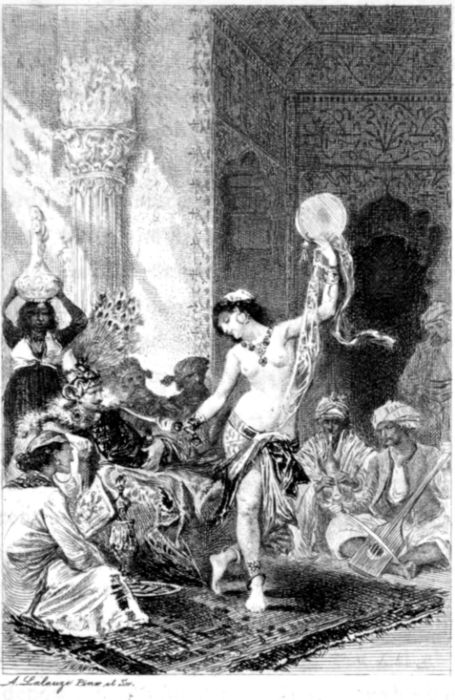
The First Night of the Month.
When it was eventide, the king caused clear his sitting chamber
and summoned the Wazir, who presented himself and making
his obeisance to the king, kissed ground before him and related
to him
There was once a man of Khorasan and he had a son, whose
moral weal he ardently wished; but the young man sought to be
alone and far from the eye of his father, so he might give himself
up to pleasuring and pleasance. Accordingly he sought of his
sire leave to make the pilgrimage to the Holy House of Allah and
to visit the tomb of the Prophet (whom Allah save and assain!).
Now between them and Meccah was a journey of five hundred
parasangs; but his father could not contrary him, for that the
Holy Law had made pilgrimage[297] incumbent on him and because
of that which he hoped for him of improvement. So he joined
unto him a tutor, in whom he trusted, and gave him much money
and took leave of him. The son set out with his governor on the
holy pilgrimage,[298] and abode on the like wise, spending freely and
using not thrift. Also there was in his neighbourhood a poor
man, who had a slave-girl of passing beauty and grace, and the
youth conceived a desire for her and suffered sore cark and care
195for the love of her and her loveliness, so that he was like to
perish for passion; and she also loved him with a love yet greater
than his love for her. Accordingly, the damsel summoned an
old woman who used to visit her and acquainted her with her
case, saying, “An I foregather not with him, I shall die.” The
crone promised her that she would do her best to bring her to
her desire; so she veiled herself and repairing to the young
man, saluted him with the salam and acquainted him with the
girl’s case, saying, “Her master is a greedy wight; so do thou
invite him and lure him with lucre, and he will sell thee the handmaiden.”
Accordingly, he made a banquet, and standing in the
man’s way, invited him[299] and brought him to his house, where
they sat down and ate and drank and abode in talk. Presently,
the young man said to the other, “I hear thou hast with thee a
slave-girl, whom thou desirest to sell;” but he said, “By Allah,
O my lord, I have no mind to sell her!” Quoth the youth, “I
have heard that she cost thee a thousand dinars, and I will give
thee six hundred over and above that sum;” and quoth the other,
“I sell her to thee at that price.” So they fetched notaries who
wrote out the contract of sale, and the young man weighed to the
girl’s master half the purchase money, saying, “Let her be with
thee till I complete to thee the rest of the price and take my
hand-maid.” The owner consented to this and took of him a
written bond for the rest of the money, and the girl abode with
her master, on deposit.[300] As for the youth, he gave his governor a
thousand dirhams and sent him to his sire, to fetch money from him,
so he might pay the rest of the hand-maid’s price, saying to him,
“Be not long away.” But the tutor said in his mind, “How shall
I fare to his father and say to him, Thy son hath wasted thy
196money and made love with it?[301] With what eye shall I look
on him and, indeed, I am he in whom he confided and to whom
he hath entrusted his son? Verily, this were ill rede. Nay, I
will fare on with this pilgrimage-caravan[302] in despite of my fool
of a youth; and when he is weary of waiting, he will demand
back his money and return to his father, and I shall be quit of
travail and trouble.” So he went on with the pilgrimage-caravan[303]
and took up his abode there.[304] Meanwhile, the youth tarried
expecting his tutor’s return, but he returned not; wherefore concern
and chagrin grew upon him because of his mistress, and
his yearning for her redoubled and he was like to kill himself.
She became aware of this and sent him a messenger, bidding him
visit her. Accordingly he went to her, and she questioned him of the
case; when he told her what was to do of the matter of his tutor,
and she said to him, “With me is longing the like of that which is
with thee, and I doubt me thy messenger hath perished or thy
father hath slain him; but I will give thee all my jewellery and
my dresses, and do thou sell them and weigh out the rest of my
price, and we will go, I and thou, to thy sire.” So she handed to
him all she had and he sold it and paid the rest of her price;
after which there remained to him for spending-money an
hundred dirhams. These he spent and lay that night with the
damsel in all delight of life, and his sprite was like to fly for joy:
but when he arose in the morning, he sat weeping and the damsel
said to him, “What causeth thee to weep?” Said he, “I
know not an my father be dead, and he hath none other heir
197save myself; but how shall I get to him, seeing I own not a
dirham?” Quoth she, “I have a bangle; sell it and buy seed-pearls
with the price: then round them and fashion them into
great unions[305] and thereby thou shalt gain much money, with the
which we may find our way to thy country.” So he took the
bangle and repairing to a goldsmith, said to him, “Break up this
bracelet and sell it;” but he said, “The king seeketh a perfect
bracelet: I will go to him and bring thee its price.” Presently
he bore the bangle to the Sultan and it pleased him greatly
by reason of its goodly workmanship. Then he called an old
woman, who was in his palace, and said to her, “Needs must I
have the mistress of this bracelet though but for a single night, or I
shall die;” and the old woman replied, “I will bring her to thee.”
Thereupon she donned a devotee’s dress and betaking herself
to the goldsmith, said to him, “To whom belongeth the bangle
which is now with the king?” and said he, “It belongeth to a
stranger, who hath bought him a slave-girl from this city and
lodgeth with her in such a place.” Upon this the old woman
repaired to the young man’s house and knocked at the door.
The damsel opened to her and seeing her clad in devotee’s garb,[306]
saluted her with the salam and asked her saying, “Haply thou hast
some need of us?” Answered the old woman, “Yes, I desire a
private place, where I can perform the Wuzu-ablution;” and quoth
the girl, “Enter.” So she entered and did her requirement and
made the ablution and prayed:[307] then she brought out a rosary
and began to tell her beads thereon, and the damsel said to her,
198“Whence comest thou, O pilgrimess?”[308] Said she, “From visiting
the Idol of the Absent in such a church.[309] There standeth up
no woman before him[310], who hath a distant friend and discloseth to
him her desire, but he acquainteth her with her case and giveth
her news of her absent one.” Said the damsel “O pilgrimess,
we have an absent one, and my lord’s heart cleaveth to him and
I desire to go question the Idol of him.” Quoth the crone, “Do
thou wait till to-morrow and ask leave of thy spouse, and I will
come to thee and fare with thee in weal and welfare.” Then she
went away, and when the girl’s master came, she sought his permission
to go with the old trot, and he gave her leave. So the beldame
came and took her and carried her to the king’s door, she, unknowing
whither she went. The damsel entered with her and
beheld a goodly house and decorated apartments which were no
idol’s chamber. Then came the king and seeing her beauty and
loveliness, went up to her to buss her; whereupon she fell down in
a fainting fit and struck out with her hands and feet.[311] When he
saw this, he held aloof from her in ruth and left her; but the
matter was grievous to her and she refused meat and drink, and
as often as the king drew near to her, she fled from him in fear, so
he swore by Allah that he would not approach her save with her
consent and fell to presenting her with ornaments and raiment;
but her aversion to him only increased. Meanwhile, the youth
her master abode expecting her; but she returned not and his
heart already tasted the bitter draught of separation; so he went
forth at hap-hazard, distracted and knowing not what he should
do, and began strewing dust upon his head and crying out, “The
199old woman hath taken her and gone away!” The little boys
followed him with stones and pelted him, crying, “A madman!
A madman!” Presently, the king’s Chamberlain, who was a personage
of years and worth, met him, and when he saw this youth, he
forbade the boys and drave them away from him, after which he
accosted him and asked him of his affair. So he told him his tale
and the Chamberlain said to him, “Fear not! I will deliver thy
slave-girl for thee; so calm thy concern.” And he went on to
speak him fair and comfort him, till he had firm reliance on his
word. Then he carried him to his home and stripping him of his
clothes, clad him in rags; after which he called an old woman,
who was his housekeeper,[312] and said to her, “Take this youth and
bind on his neck yon iron chain and go round about with him in
all the great thoroughfares of the city, and when thou hast done
this, go up with him to the palace of the king.” And he said to
the youth, “In whatsoever stead thou seest the damsel, speak not
a syllable, but acquaint me with her place and thou shalt owe her
deliverance to none save to me.” The youth thanked him and
went with the old woman in such fashion as the Chamberlain bade
him. She fared on with him till they entered the city, and
walked all about it; after which she went up to the palace of
the king and fell to saying, “O fortune’s favourites, look on a
youth whom the devils take twice in the day and pray to be preserved
from such affliction!” And she ceased not to go round
with him till she came to the eastern wing[313] of the palace, whereupon
the slave-girls hurried out to look upon him and when they
saw him they were amazed at his beauty and loveliness and wept
for him. Then they informed the damsel, who came forth and
considered him and knew him not; but he knew her; so he
drooped his head and shed tears. She was moved to pity for him
200and gave him somewhat and went back to her place, whilst the
youth returned with the housekeeper to the Chamberlain and told
him that she was in the king’s mansion, whereat he was chagrined
and said, “By Allah, I will assuredly devise a device for her and
deliver her!” Whereupon the youth kissed his hands and feet.
Then he turned to the old woman and bade her change her habit
and her semblance. Now this ancient dame was sweet of speech
and winsome of wit; so he gave her costly and delicious ottars
and said to her, “Get thee to the king’s slave-girls and sell them
these essences and win thy way to the damsel and ask her if she
desire her master or not.” So the old woman went out and
making her way to the palace, went in to the hand-maid and drew
near her and recited these couplets:—
Allah preserve our Union-days and their delights. ✿ Ah me! How sweet was life! how joys were ever new!
May he not be who cursed us twain with parting day; ✿ How many a bone he brake, how many a life he slew!
He shed my faultless tear-floods and my sinless blood; ✿ And beggaring me of love himself no richer grew.
When the damsel heard the old woman’s verses, she wept till
her clothes were drenched and drew near the speaker, who asked
her, “Knowest thou such-an-one?” And she wept and answered,
“He is my lord. Whence knowest thou him?” Rejoined the
old woman, “O my lady, sawest thou not the madman who came
hither yesterday with the old woman? He was thy lord,” presently
adding, “But this is no time for talk. When ’tis night, get thee
to the top of the palace and wait on the terrace till thy lord come
to thee and compass thy deliverance.” Then she gave her what
she would of perfumes and returning to the Chamberlain, acquainted
him with whatso had passed, and he told the youth. Now as soon
as it was evening, the Chamberlain bade bring two hackneys and
great store of water and provaunt and a riding-camel and a fellow
to show them the way. These he ambushed without the town
201whilst he and the young man, taking with them a long rope, made
fast to a staple, went and stood below the palace. Whenas they
came thither, they looked and behold, the damsel was standing on
the terrace-roof, so they threw her the rope and the staple, which she
made fast, and tucking up her sleeves above her wrists, slid down
and landed with them. They carried her without the town, where
they mounted, she and her lord, and fared on, with the guide in
front,[314] directing them on the way, and they ceased not faring night
and day till they entered his father’s house. The young man
greeted his sire, who was gladdened in him, and to whom he related
all that had befallen him, whereupon he rejoiced in his safety. As
for the tutor, he wasted whatso was with him and returned to the
city, where he saw the youth and excused himself. Then he questioned
him of what had betided him and he told him, whereat he
admired and returned to companionship with him; but the youth
ceased to have regard for him and gave him nor solde nor ration
as was his wont, neither discovered to him aught of his secrets.
When the tutor saw that there was no profit from him he returned
to the king, the ravisher of the slave-girl, and recounted to him
what the Chamberlain had done and counselled him to slay that
official and egged him on to recover the damsel, promising to
give his friend a poison-draught and return. Accordingly the
king sent for the Chamberlain and chid him for the deed he
had done; whereat the king’s servants incontinently fell upon
the Chamberlain and put him to death. Meanwhile the tutor
returned to the youth, who asked him of his absence, and he told
him that he had been in the city of the king who had taken
the slave-girl. When the youth heard this, he misdoubted of his
governor and never again trusted him in anything but was always on
202his guard against him. Then the tutor without stay or delay caused
prepare great store of sweetmeats and put in them deadly poison
and presented them to the youth, who, when he saw those sweetmeats,
said to himself, “This is an extraordinary thing of the
tutor! Needs must there be in this sweetmeat some mischief, and
I will make proof of his confectionery upon himself.” Accordingly
he got ready food and set amongst it a portion of the sweetmeat, and
inviting the governor to his house placed the provaunt before him.
He ate, and amongst the rest which they brought him, the poisoned
sweetmeat; so while in the act of eating he died; whereby the
youth knew that this was a plot against himself and said,
“Whoso seeketh his fortune by his own force[315] attaineth a failure.”
“Nor,” continued the Wazir, “is this, O king of the age, stranger
than the story of the Druggist and his Wife and the Singer.”
When King Shah Bakht heard the tale of Al-Rahwan he gave
him leave to withdraw to his own house and he tarried there the
rest of the night and the next day till eventide evened.
203
The Second Night of the Month.
When the evening evened, the king sat private in his sitting-chamber
and his mind was occupied with the story of the Singer
and the Druggist. So he called the Wazir and bade him tell the
tale. Answered he, “I will well. They recount, O my lord, the
following
There was once in the city of Hamadán[316] a young man of seemly
semblance and skilled in singing to the lute; wherefore he was
well seen of the citizens. He went forth one day of his home with
intent to travel, and gave not over journeying till his travel brought
him to a town and a goodly. Now he had with him a lute and its
appurtenance,[317] so he entered and went round about the streets till
he happened upon a druggist who, when he espied him, called to
him. So he went up to him and he bade him sit down; accordingly,
the youth sat down by his side, and the druggist questioned him of
his case. The singer told him what was in his mind, and the
pharmacist took him up into his shop and bought him food and
fed him. Then said he to him, “Rise and take up thy lute and
beg about the streets, and whenas thou smellest the reek of wine,
break in upon the drinkers and say to them, I am a singer.
They will laugh and cry, Come in to us. And when thou
singest, the folk will know thee and speak one to other of thee;
so shalt thou become known about town, and thou shalt better
thy business.” He went round about, as the druggist bade him,
204till the sun waxed hot, but found none drinking. Then he entered
a lane, that he might take rest, and seeing there a handsome house
and a lofty, stood in its shade and fell to observing the excellence
of its edification. Now while he was thus engaged, behold, a casement
opened and there appeared thereat a face, as it were the
moon. Quoth the owner of the face, “What aileth thee to stand
there? Dost thou want aught?” And quoth he, “I am a
stranger,” and acquainted her with his adventure; whereupon
asked she, “What sayst thou to meat and drink and the enjoyment
of a fair face and getting thee spending-money?” And he
answered, “O mistress mine, this is my desire whereof I am going
about in quest!” So she opened the door to him and brought him
in: then she seated him at the upper end of the room and served
him with food. He ate and drank and lay with her and futtered
her. This ended, she sat down in his lap and they toyed and laughed
and exchanged kisses till the day was half done, when her husband
came home and she had no recourse but to hide the singer
in a mat[318], in which she rolled him up. The husband entered and
seeing the battle-place[319] disordered and smelling the reek of liquor
questioned her of this. Quoth she, “I had with me a bosom friend
of mine and I conjured her to crack a cup with me; and so we
drank a jar full, I and she, and but now, before thy coming in,
she fared forth.” Her husband deemed her words true and went
away to his shop, he being none other than the singer’s friend the
druggist, who had invited him and fed him; whereupon the lover
came forth and he and the lady returned to their pleasant pastime
and abode on this wise till evening, when she gave him
money and said to him, “To-morrow in the forenoon come
hither to me.” He replied, “Yes,” and departed; and at nightfall
205he went to the Hammam-bath. On the morrow, he betook
himself to the shop of his friend the druggist, who welcomed
him as soon as he saw him, and questioned him of his case and
how he had fared that day. Quoth the singer, “Allah requite
thee with welfare, O my brother, for indeed thou hast directed me
to a restful life!” Then he acquainted him with his adventure
and told him the tale of the woman, till he came to the mention of
her husband, when he said, “And at midday came the horned
cuckold,[320] her husband, and knocked at the door. So she wrapped
me in the mat, and when he had wended his ways I came forth
and we returned to our pleasant play.” This was grievous to the
druggist, and he repented of having taught him how he should do
and suspected his wife. Accordingly he asked the singer, “And
what said she to thee at thy going away?” and the other
answered, “She said, Come back to me on the morrow. So,
behold, I am off to her and I came not hither but that I might
acquaint thee with this, lest thy thoughts be pre-occupied with
me.” Then he farewelled him, and walked out. As soon as the
druggist was assured that he had reached the house, he cast the
net[321] over his shop and made for his home, in some suspicion of his
wife, and knocked at the door. Now the singer had entered and
the druggist’s wife said to him, “Up with thee and enter this chest.”
Accordingly he entered it and she shut it down on him and opened
to her husband, who came in all distraught, and searched the house
but found none and overlooked the chest. Hereat he said in his mind
“The house[322] is one which favoureth my house and the woman is
206one who favoureth my wife,” and returned to his shop; whereupon
the singer came forth of the chest and falling upon the druggist’s
wife, had his wicked will of her and spent upon her what was her
due, and weighed down the scale for her with full measure. Then
they ate and drank and kissed and clipped necks, and in this way
they abode till the evening, when she gave him money, because she
found his weaving nice and good,[323] and made him promise to come to
her on the morrow. So he left her and slept his night and on the
morrow he returned to the shop of his friend the druggist and saluted
him. The other welcomed him and questioned him of his case;
whereat he told his tale till he ended with the mention of the
woman’s husband, when he said, “Then came the horned cuckold, her
mate and she stowed me away in the chest and shut down the lid
upon me, whilst her addlepated pander[324] of a husband went about
the house, top and bottom; and when he had gone his way, we
returned to our pleasant pastime.” With this, the druggist was
assured that the house was his house and the wife his wife, and
quoth he, “Now what wilt thou do to-day?” Quoth the singer,
“I shall return to her and weave for her and full her yarn[325], and I
came not[326] save to thank thee for thy dealing with me.” Then
he went away, whilst the fire was loosed in the heart of the
druggist and he shut his shop and returning to his house, rapped
at the door. Said the singer, “Let me jump into the chest, for he
saw me not yesterday;” but said she, “No! wrap thyself up in
the mat.” So he wrapped himself up and stood in a corner of the
room, whilst the druggist entered and went no whither else save
207to the chest, but found naught inside. Then he walked round
about the house and searched it, top and bottom, but came upon
nothing and no one and abode between belief and disbelief, and
said to himself, “Haply, I suspect my wife of what is not in her.”
So he was certified of her innocence and going forth content,
returned to his shop, whereupon out came the singer and they
resumed their former little game, as was their wont, till eventide
when she gave him one of her husband’s shirts and he took it and
going away, nighted in his own lodging. Next morning he
repaired to the druggist, who saluted him with the salam and came
to meet him and rejoiced in him and smiled in his face, deeming
his wife innocent. Then he questioned him of his case on yesterday
and he told him how he had fared, saying, “O my brother,
when the cornute knocked at the door, I would have jumped into
the chest; but his wife forbade me and rolled me up in the mat.
The man entered and thought of nothing save the chest; so he
brake it open and woned like one jinn-mad, going up and coming
down. Then he went about his business and I came out and we
abode on our accustomed case till eventide, when she gave me
this shirt of her husband’s; and behold, I am now off to her.”
When the druggist heard the singer’s words, he was assured of
the adventure and knew that the calamity, all of it, was in his own
house and that the wife was his wife; and he considered the shirt,
whereupon he redoubled in assuredness and said to the singer,
“Art thou now going to her?” Said he, “Yes, O my brother,”
and taking leave of him, went away; whereupon the druggist
started up, as he were stark mad, and dismantled his shop.[327]
Whilst he was thus doing, the singer won to the house, and presently
up came the druggist and knocked at the door. The lover
would have wrapped himself up in the mat, but she forbade him
and said, “Get thee down to the ground floor of the house and
208enter the oven-jar[328] and close the cover upon thyself.” So he did
her bidding and she went down to her husband and opened the
door to him, whereupon he came in and went round the house,
but found no one and overlooked the oven-jar. Then he stood
musing and sware that he would not again go forth of the house
till the morrow. As for the singer, when his stay in the oven-jar
grew longsome upon him, he came forth therefrom, thinking that
her husband had gone away; and he went up to the terrace-roof
and looking down, beheld his friend the druggist: whereat
he was sore concerned and said in himself, “Alas, the disgrace,
ah! This is my friend the druggist, who of me was fain and
dealt me fair and I have paid him with foul.” He feared to return
to the druggist; so he stepped down and opened the first door
and would have gone out at a venture, unseen of the husband;
but, when he came to the outer door, he found it locked and saw
not the key. Hereat he returned to the terrace and began dropping
from roof to roof till the people of the house heard him
and hastened to fall upon him, deeming him a thief. Now that
house belonged to a Persian man; so they laid hands on him
and the house-master fell to beating him, saying to him, “Thou
art a thief.” He replied, “No I am not a thief, but a singing-man,
a stranger who, hearing your voices, came to sing to you.” When
the folk heard his words, they talked of letting him go; but the
Persian said, “O folk, let not his speech cozen you. This one is
none other than a thief who knoweth how to sing, and when he
cometh upon the like of us, he is a singer.” Said they, “O our
lord, this man is a stranger, and needs we must release him.”
Quoth he, “By Allah, my heart heaveth at this fellow! Let me
kill him with beating;” but quoth they, “Thou mayst no ways do
that.” So they delivered the singer from the Persian, the master
209of the house, and seated him amongst them, whereupon he began
singing to them and they rejoiced in him. Now the Persian had
a Mameluke,[329] as he were the full moon, and he arose and went
out, and the singer followed him and wept before him, professing
lustful love to him and kissing his hands and feet. The Mameluke
took compassion on him and said to him, “When the night
cometh and my master entereth the Harim and the folk fare
away, I will grant thee thy desire; and I sleep in such a place.”
Then the singer returned and sat with the cup-companions, and
the Persian rose and went out with the Mameluke by his side.
Now[330] the singer knew the place which the Mameluke occupied at
the first of the night; but it chanced that the youth rose from his
stead and the waxen taper went out. The Persian, who was
drunk, fell over on his face, and the singer supposing him to be the
Mameluke, said, “By Allah, ’tis good!” and threw himself upon
him and began to work at his bag-trousers till the string was
loosed; then he brought out[331] his prickle upon which he spat and
slipped it into him. Thereupon the Persian started up, crying
out and, laying hands on the singer, pinioned him and beat him
a grievous beating, after which he bound him to a tree that stood in
the house-court. Now there was in the house a beautiful singing-girl
and when she saw the singer tight pinioned and tied to the tree,
she waited till the Persian lay down on his couch, when she arose
and going up to the singer, fell to condoling with him over what
had betided him and making eyes at him and handling his yard
and rubbing it, till it rose upright. Then said she to him, “Do
with me the deed of kind and I will loose thy pinion-bonds, lest he
210return and beat thee again; for he purposeth thee an ill purpose.”
Quoth he, “Loose me and I will do it;” but quoth she, “I fear
that, an I loose thee, thou wilt not do it. But I will do it and
thou have me standing; and when I have done, I will loose thee.”
So saying, she opened her clothes and introducing the singer’s
prickle, fell to toing and froing.[332] Now there was in the house a
fighting-ram, which the Persian had trained to butting,[333] and when
he saw what the woman was doing, he thought she wished to do
battle with him; so he broke his halter and running at her, butted
her and split her skull. She fell on her back and shrieked;
whereupon the Persian started up hastily from sleep and seeing
the singing-girl on her back and the singer with yard on end,
cried to him, “O accursed, doth not what thou hast erewhile done
suffice thee?” Then he beat him a shrewd beating and opening
the door, thrust him out in the middle of the night. He lay the rest
of the dark hours in one of the ruins, and when he arose in the
morning, he said, “None is in fault! I, for one, sought my own
good, and he is no fool who seeketh good for himself; and the
druggist’s wife also sought good for herself; but Predestination
overcometh Precaution and for me there remaineth no tarrying in
this town.” So he went forth from the place. “Nor” (continued
the Wazir), “is this story, strange though it be, stranger than that
of the King and his Son and that which betided them of wonders
and rare marvels.” When the king heard this story, he deemed it
211pretty and pleasant and said, “This tale is near unto that which I
know and ’tis my rede I should do well to have patience and hasten
not to slay my Minister, so I may get of him the profitable story
of the King and his Son.” Then he gave the Wazir leave to go
away to his own house; so he thanked him and tarried in his
home all that day.
212
The Third Night of the Month.
When it was supper-time the king sought the sitting-chamber;
and, summoning the Wazir, sought of him the story he had
promised him; and the Minister said, “They tell, O king,
There came to a king of the kings, in his old age, a son, who grew
up comely, quick-witted, clever: and, when he reached years of
discretion and became a young man, his father said to him, “Take
this realm and rule it in lieu of me, for I desire to flee from the sin
of sovranty[335] to Allah the Most High and don the woollen dress
and devote all my time to devotion.” Quoth the Prince, “And I
am another who desireth to take refuge with the Almighty.” So the
king said, “Arise, let us flee forth and make for the mountains and
there worship in shame before God the Most Great.” Accordingly,
the twain gat them gear of wool and clothing themselves therewith,
fared forth and wandered in the wolds and wastes; but, when
some days had passed over them, both became weak for hunger
and repented them of that they had done whenas penitence
profited them not, and the Prince complained to his father of
weariness and hunger. Cried the king, “Dear my son, I did with
thee that which behoved me,[336] but thou wouldst not hearken to me,
213and now there is no means of returning to thy former estate, for
that another hath taken the kingdom and defendeth it from all
foes: but indeed I will counsel thee of somewhat, wherein do thou
pleasure me by compliance.” The Prince asked, “What is it?”
and his father answered, “Take me and go with me to the market-street
and sell me and receive my price and do with it whatso thou
willest, and I shall become the property of one who shall provide
for my wants.” The Prince enquired, “Who will buy thee of me,
seeing thou art a very old man? Nay, do thou rather sell me, inasmuch
as the demand for me will be more.” But the king replied,
“An thou wert king, thou wouldest require service of me.” Accordingly
the youth obeyed his father’s bidding and taking him, carried
him to the slave-dealer and said, “Sell me this old man.” Said the
dealer, “Who will buy this wight, and he a son of eighty years?”[337]
Then quoth he to the king, “In what crafts art thou cunning?” and
quoth he, “I ken the quintessence of jewels and I ken the quintessence
of horses and I ken the quintessence of men; brief, I
ken the quintessence of all things.” So the slave-dealer took
him and went about, offering him for sale to the folk; but none
would buy. Presently, up came the Chef of the Sultan’s kitchen
and asked, “What is this man?” and the dealer answered, “This
be a Mameluke for sale.” The kitchener marvelled at this and
bought the king, after questioning him of what he could do, for
ten thousand dirhams. Then he weighed out the money and
carried him to his house, but dared not employ him in aught of
service; so he appointed him an allowance, a modicum sufficient
for his maintenance, and repented him of having bought him,
saying, “What shall I do with the like of this wight?” Presently,
the king of the city was minded to go forth to his garden,[338]
a-pleasuring, and bade the cook precede him and appoint in his
214stead one who should dress the royal meat, so that, when he
returned, he might find the meal ready. The Chef fell to thinking
of whom he should appoint and was perplexed concerning his
affair. As he was thus, the Shaykh came to him, and seeing him
distraught as to how he should do, said to him, “Tell me what is
in thy mind; haply I may bring thee relief.” So he acquainted
him with the king’s wishes and he said, “Have no care for this,
but leave me one of the serving-men and do thou go companying
thy lord in peace and surety, for I will suffice thee of this.” Hereat
the cook departed with the king, after he had brought the old man
what he needed and left him a man of the guards; and when he was
gone, the Shaykh bade the trooper wash the kitchen-battery and
made ready food exceedingly fine. When the king returned he
set the meat before him, and he tasted dishes whose like he had
never savoured; whereat he was startled and asked who had
dressed it. Accordingly they acquainted him with the Shaykh’s
case and he summoned him to his presence and asking him anent
the mystery, increased his allowance of rations;[339] moreover, he
bade that they should cook together, he and the kitchener, and the
old man obeyed his bidding. Some time after this, there came
two merchants to the king with two pearls of price and each of
them declared that his pearl was worth a thousand dinars, but the
folk was incompetent to value them. Then said the cook, “Allah
prosper the king! Verily, the Shaykh whom I bought affirmed
that he knew the quintessence of jewels and that he was skilled in
cookery. We have tried him in his cuisine, and have found him
the most knowing of men; and now, if we send after him and
prove him on jewels, his second claim will be made manifest to us,
whether true or false.” So the king bade fetch the Shaykh and he
came and stood before the Sultan, who showed him the two pearls.
Quoth he, “Now for this one, ’tis worth a thousand dinars;” and
215quoth the king, “So saith its owner.” “But for this other,”
continued the old man, “’tis worth only five hundred.” The people
laughed and admired his saying, and the merchant who owned the
second pearl asked him, “How can this, which is bigger of bulk
and worthier for water and righter of rondure, be less of value than
that?” and the old man answered, “I have said what is with me.”[340]
Then quoth the king to him, “Indeed, the outer semblance thereof
is like that of the other pearl; why then is it worth but the half
of its price?” and quoth the old man, “Yes, but its inward is
corrupt.” Asked the merchant, “Hath a pearl then an inward and
an outward?” and the Shaykh answered, “Yea! In its interior is
a teredo, a boring worm; but the other pearl is sound and secure
against breakage.” The merchant continued, “Give us approof
of this thy knowledge and confirm to us the truth of thy saying;”
and the old man rejoined, “We will break it: an I prove a liar,
here is my head, and if I speak sooth, thou wilt have lost thy
pearl;” and the merchant said, “I agree to that.” So they brake
the pearl and it was even as the old man had declared, to wit, in
the heart of it was a boring worm. The king marvelled at what
he saw and questioned him of how he came by the knowledge of
this. The Shaykh replied, “O king, this kind of jewel is engendered
in the belly of a creature called the oyster[341] and its origin is a
drop of rain and it resisteth the touch and groweth not warm
whilst hent in hand:[342] so, when its outer coat became tepid to my
touch, I knew that it harboured some living thing, for that things
of life thrive not save in heat.” Therefore the king said to the
cook, “Increase his allowance;” and the Chef appointed to him
216fresh rations. Now some time after this, two merchants presented
themselves to the king with two horses, and one said, “I
ask a thousand ducats for my horse,” and the other, “I seek five
thousand ducats for mine.” Quoth the cook, “We are now
familiar with the old man’s just judgment; what deemeth the king
of fetching him?” So the king bade fetch him, and when he saw
the two horses,[343] he said, “This is worth a thousand and that two
thousand ducats.” Quoth the folk, “This horse thou misjudgest
is evidently a thoroughbred and he is younger and faster and compacter
of limb and finer of head and clearer of colour and skin
than the other;” presently adding, “What assurance hast thou of
the sooth of thy saying?” And the old man said, “This ye state
is true, all true; but his sire is old and this other is the son of a
young horse. Now, when the son of an old horse standeth still
a-breathing, his breath returneth not to him and his rider falleth
into the hand of him who followeth after him; but the son of a
young horse, an thou put him to speed and after making him run,
alight from him, thou wilt find him, by reason of his robustness,
untired.” Quoth the merchant, “’Tis even as the Shaykh avoucheth
and he is an excellent judge.” And the king said, “Increase his
allowance.” But the Shaykh stood still and did not go away; so
the king asked him, “Why dost thou not go about thy business?”
and he answered, “My business is with the king.” Said the king,
“Name what thou wouldest have,” and the other replied, “I would
have thee question me of the quintessence of men, even as thou
hast questioned me of the quintessence of horses.” Quoth the
king, “We have no occasion to question thee thereof;” but quoth
the old man, “I have occasion to acquaint thee.” “Say what
thou wilt,” rejoined the king, and the Shaykh said, “Verily, the
king is the son of a baker.” Cried the king, “How and whereby
217kennest thou that?” and the Shaykh replied, “Know, O king, that
I have examined into degrees and dignities[344] and have learned this.”
Thereupon the king went in to his mother and asked her anent his
sire, and she told him that the king her husband was impotent;[345]
“So,” quoth she, “I feared for the kingdom, lest it pass away,
after his death; wherefore I yielded my person to a young man, a
baker, and conceived by him and bare a man-child;[346] and the
kingship came into the hand of my son, that is, thyself.” So the
king returned to the Shaykh and said to him, “I am indeed the
son of a baker; so do thou expound to me the means whereby
thou knewest me for this.” Quoth the other, “I knew that, hadst
thou been the son of a king, thou wouldst have gifted me with
things of price, such as rubies and the like; and wert thou the son
of a Kazi, thou hadst given largesse of a dirham or two dirhams,
and wert thou the son of any of the merchants, thou hadst given
me muchel of money. But I saw that thou bestowedst upon me
naught save two bannocks of bread and other rations, wherefore
I knew thee to be the son of a baker;” and quoth the king, “Thou
hast hit the mark.” Then he gave him wealth galore and advanced
him to high estate. The tale aforesaid pleased King Shah Bakht
and he marvelled thereat; but the Wazir said to him, “This story
is not stranger than that of the Richard who married his beautiful
daughter to the poor Shaykh.” The king’s mind was occupied
with the promised tale and he bade the Wazir withdraw to his
lodging; so he went and abode there the rest of the night and the
whole of the following day.
218
The Fourth Night of the Month.
When the evening evened, the king sat private in his sitting-chamber
and bade fetch the Wazir. When he presented himself
before him, he said to him, “Tell me the tale of the Richard.”
The Minister replied, “I will. Hear, O puissant king,
A certain rich merchant had a beautiful daughter, who was as
the full moon, and when she attained the age of fifteen, her father
betook himself to an old man and spreading him a carpet in his
sitting-chamber, gave him to eat and conversed and caroused
with him. Then said he to him, “I desire to marry thee to my
daughter.” The other drew back, because of his poverty, and said
to him, “I am no husband for her nor am I a match for thee.”
The merchant was urgent with him, but he repeated his answer to
him, saying, “I will not consent to this till thou acquaint me with
the cause of thy desire for me. An I find it reasonable, I will fall
in with thy wish; and if not, I will not do this ever.” Quoth the
merchant, “Thou must know that I am a man from the land of
China and was in my youth well-favoured and well-to-do. Now I
made no account of womankind, one and all, but followed after
youths[347], and one night I saw, in a dream, as it were a balance set
up, and hard by it a voice said, ‘This is the portion of Such-an-one.’
I listened and presently I heard my own name; so I looked
and behold, there stood a woman loathly to the uttermost; whereupon
I awoke in fear and cried, ‘I will never marry, lest haply this
219fulsome female fall to my lot.’ Then I set out for this city with
merchandise and the journey was pleasant to me and the sojourn
here, so that I took up my abode in the place for a length of time
and gat me friends and factors. At last I sold all my stock-in-trade
and collected its price and there was left me nothing to
occupy me till the folk[348] should depart and I depart with them.
One day, I changed my clothes and putting gold into my sleeve,
sallied forth to inspect the holes and corners of this city, and as I
was wandering about, I saw a handsome house: its seemliness
pleased me; so I stood looking on it and beheld a lovely woman
at the window. When she saw me, she made haste and descended,
whilst I abode confounded. Then I betook myself to a tailor
there and questioned him of the house and anent whose it was.”
Quoth he, “It belongeth to Such-an-one the Notary,[349] God damn
him!” I asked, “Is he her sire?” and he answered, “Yes.” So
I repaired in great hurry to a man, with whom I had been wont to
deposit my goods for sale, and told him I desired to gain access
to Such-an-one the Notary. Accordingly he assembled his friends
and we betook ourselves to the Notary’s house. When we came
in to him, we saluted him and sat with him, and I said to him, “I
come to thee as a suitor, desiring in marriage the hand of thy
daughter.” He replied, “I have no daughter befitting this man;”
and I rejoined, “Allah aid thee! My desire is for thee and not for
her.”[350] But he still refused and his friends said to him, “This is an
honourable match and a man thine equal, nor is it lawful to thee
that thou hinder the young lady of her good luck.” Quoth he to
them, “She will not suit him!” nevertheless they were instant
with him till at last he said, “Verily, my daughter whom ye seek
220is passing ill-favoured and in her are all blamed qualities of person.”
And I said, “I accept her, though she be as thou sayest.” Then said
the folk, “Extolled be Allah! Cease we to talk of a thing settled;
so say the word, how much wilt thou have to her marriage-settlement?”
Quoth he, “I must have four thousand sequins;” and
I said, “To hear is to obey!” Accordingly the affair was concluded
and we drew up the contract of marriage and I made the
bride-feast; but on the wedding-night I beheld a thing[351] than which
never made Allah Almighty aught more fulsome. Methought her
folk had devised this freak byway of fun; so I laughed and looked
for my mistress, whom I had seen at the window, to make her
appearance; but saw her not. When the affair was prolonged and
I found none but her, I was like to lose my wits for vexation and
fell to beseeching my Lord and humbling myself in supplication
before Him that He would deliver me from her. When I arose
in the morning, there came the chamberwoman and said to me,
“Hast thou need of the bath[352]?” I replied, “No”; and she asked,
“Art thou for breakfast?” But I still answered “No;” and on this
wise I abode three days, tasting neither meat nor drink. When
the young woman my wife saw me in this plight, she said to me,
“O man, tell me thy tale, for, by Allah, if I may effect thy deliverance,
I will assuredly further thee thereto.” I gave ear to her
speech and put faith in her sooth and acquainted her with the
adventure of the damsel whom I had seen at the window and how
I had fallen in love with her; whereupon quoth she, “An that
girl belong to me, whatso I possess is thine, and if she belong to
my sire, I will demand her of him and detain her from him and
deliver her to thee.” Then she fell to summoning hand-maid after
hand-maid and showing them to me, till I saw the damsel whom I
loved and said, “This is she.” Quoth my wife, “Let not thy heart
221be troubled, for this is my slave-girl. My father gave her to
me and I give her to thee:[353] so comfort thyself and be of good
cheer and of eyes cool and clear.” Then, when it was night, she
brought the girl to me, after she had adorned her and perfumed
her, and said to her, “Cross not this thy lord in aught and every
that he shall seek of thee.” When she came to bed with me, I
said in myself, “Verily, this my spouse is more generous than I!”
Then I sent away the slave-girl and drew not near her, but arose
forthwith and betaking myself to my wife, lay with her and abated
her maidenhead. She conceived by me at the first bout; and,
accomplishing the time of her pregnancy, gave birth to this dear
little daughter; in whom I rejoiced, for that she was beautiful
exceedingly, and she hath inherited her mother’s sound sense and
the comeliness of her sire. Indeed, many of the notables of the
people have sought her of me in wedlock, but I would not wed her
to any, because I saw in a dream, one night, that same balance set
up and men and women being therein weighed, one against other,
and meseemed I saw thee and her and the voice said to me, ‘This
is such a man, the portion of such a woman.’[354] Wherefore I knew
that Almighty Allah had allotted unto her none other than thyself,
and I choose rather to marry thee to her in my lifetime than
that thou shouldst marry her after my death.” When the poor
man heard the merchant’s story, he became desirous of wedding
his daughter: so he took her to wife and was blessed of her with
exceeding love. “Nor” (continued the Wazir), “is this story on
any wise stranger or this tale rarer than that of the Sage and his
three Sons.” When the king heard his Minister’s story, he was
assured that he would not slay him and said, “I will have patience
with him, so I may get of him the story of the Sage and his
three Sons.” And he bade him depart to his own house.
222
The Fifth Night of the Month.
When the evening evened, the king sat private in his chamber
and summoning the Wazir, required of him the promised story.
So Al-Rahwan said, “Hear, O king,
There was once a Sage of the sages, who had three sons and
sons’ sons, and when they waxed many and their seed multiplied,
there befel dissension between them. So he assembled them and
said to them, “Be ye single-handed against all others and despise
not one another lest the folk despise you, and know that your
case is the case of the man and the rope which he cut easily, when
it was single; then he doubled it and could not cut it: on this
wise is division and union.[356] And beware lest ye seek help of
others against your own selves or ye will fall into perdition, for by
what means soever ye win your wish at his hand, his word will rank
higher than your word. Now I have money which I will presently
bury in a certain place, that it may be a store for you against the
time of your need.” Then they left him and dispersed and one of
the sons fell to spying upon his sire, so that he saw him hide the
hoard outside the city. When he had made an end of burying it, the
Sage returned to his house; and as soon as the morning morrowed,
his son repaired to the place where he had seen his father bury
223the treasure and dug and took all the wealth he found and fared forth.
When the old man felt that his death[357] drew nigh, he called his sons
to him and acquainted them with the place where he had hidden
his hoard. As soon as he was dead, they went and dug up the
treasure and came upon much wealth, for that the money, which the
first son had taken singly and by stealth, was on the surface and
he knew not that under it were other monies. So they carried it
off and divided it and the first son claimed his share with the rest
and added it to that which he had before taken, behind the backs
of his father and his brethren. Then he married his cousin,
the daughter of his father’s brother and was blessed through her
with a male-child, who was the goodliest of the folk of his time.
When the boy grew up, his father feared for him poverty and
decline of case, so he said to him, “Dear my son, know that during
my green days I wronged my brothers in the matter of our father’s
good, and I see thee in weal; but, an thou come to want, ask
not one of them nor any other than they, for I have laid up
for thee in yonder chamber a treasure; but do not thou open it
until thou come to lack thy daily bread.” Then the man died,
and his money, which was a great matter, fell to his son. The
young man had not patience to wait till he had made an end
of that which was with him, but rose and opened the chamber,
and behold, it was empty and its walls were whitened, and in
its midst was a rope hanging down as for a bucket and ten
bricks, one upon other, and a scroll, wherein was written, “There
is no help against death; so hang thyself and beg not of any, but
kick away the bricks with thy toes, that there may be no escape for
thy life, and thou shalt be at rest from the exultation of enemies and
enviers and the bitterness of beggary.” Now when the youth saw
224this, he marvelled at that which his father had done and said,
“This is an ill treasure.” Then he went forth and fell to eating
and drinking with the folk, till naught was left him and he passed
two days without tasting food, at the end of which time he took a
handkerchief and selling it for two dirhams, bought bread and
milk with the price and left it on the shelf and went out. Whilst
he was gone, a dog came and seized the bread and polluted the
milk, and when the young man returned and saw this, he beat
his face, and fared forth distraught. Presently, he met a friend,
to whom he discovered his case, and the other said to him, “Art
thou not ashamed to talk thus? How hast thou wasted all this
wealth and now comest telling lies and saying, The dog hath
mounted on the shelf, and talking such nonsense?” And he
reviled him. So the youth returned to his house, and verily the
world had waxed black in his eyes and he cried, “My sire said
sooth.” Then he opened the chamber door and piling up the
bricks under his feet, put the rope about his neck and kicked
away the bricks and swung himself off; whereupon the rope gave
way with him and he fell to the ground and the ceiling clave
asunder and there poured down on him a world of wealth. So he
knew that his sire meant to chasten him by means of this and
he invoked Allah’s mercy on him. Then he got him again that
which he had sold of lands and houses and what not else and
became once more in good case; his friends also returned to him
and he entertained them for some time. Then said he to them one
day, “There was with us bread and the locusts ate it; so we set in
its place a stone, one cubit long and the like broad, and the
locusts came and nibbled away the stone, because of the smell of
the bread.” Quoth one of his friends (and it was he who had
given him the lie concerning the dog and the bread and milk),
“Marvel not at this, for rats and mice do more than that.” Thereupon
he said, “Get ye home! In the days of my poverty I was
a liar when I told you of the dogs jumping upon the shelf and
225eating the bread and defiling the milk; and to-day, because I am
rich again, I say sooth when I tell you that locusts devoured a
stone one cubit long and one cubit broad.” They were abashed
by his speech and departed from him; and the youth’s good prospered
and his case was amended. “Nor” (continued the Wazir),
“is this stranger or more seld-seen than the story of the Prince
who fell in love with the Picture.” Quoth the king, Shah Bakht,
“Haply, an I hear this story, I shall gain wisdom from it: so I
will not hasten in the slaying of this Minister, nor will I do him
die before the thirty days have expired.” Then he gave him
leave to withdraw, and he hied away to his own house.
226
The Sixth Night of the Month.
When the day absconded and the evening arrived, the king sat
private in his chamber and, summoning the Wazir, who presented
himself to him, questioned him of the story. So the Minister
said, “Hear, O auspicious king,
There was once, in a province of Persia, a king of the kings, who
was great of degree, a magnifico, endowed with majesty and
girt by soldiery; but he was childless. Towards the end of his
life, his Lord vouchsafed him a male-child, and that boy grew up
and was comely and learned all manner of lere. He made him a
private place, which was a towering palace, edified with coloured
marbles and jewels and paintings. When the Prince entered the
palace, he saw in its ceiling the picture of a maiden, than whom he
had never beheld a fairer of aspect, and she was surrounded by
slave-girls; whereupon he fell down in a fainting fit and became
distracted for love of her. Then he sat under the picture till his
father came in to him one day, and finding him lean of limb and
changed of complexion (which was by reason of his continual
looking on that picture), imagined that he was ill and summoned
the sages and the leaches, that they might medicine him. He also
said to one of his cup-companions, “An thou canst learn what
aileth my son, thou shalt have of me the white hand.”[358] Thereupon
he went in to him and spake him fair and cajoled him, till
he confessed to him that his malady was caused by the picture.
227Then the courtier returned to the king and told him what ailed
his son, whereupon he transported the Prince to another palace
and made his former lodging the guest-house; and whoso of the
Arabs was entertained therein, him he questioned of the picture,
but none could give him tidings thereof, till one day, when there
came a wayfarer who seeing the picture, cried, “There is no
god but the God! My brother painted this portrait.” So the king
sent for him and questioned him of the affair of the picture and
where was he who had painted it. He replied, “O my lord, we
are two brothers and one of us went to the land of Hind and fell
in love with the Indian king’s daughter, and ’tis she who is the
original of the portrait. He is wont in every city he entereth to
limn her likeness, and I follow him, and longsome is my way.”
When the king’s son heard this, he said, “Needs must I travel to
this damsel.” So he took all manner rare store and riches galore
and journeyed days and nights till he entered the land of Hind,
nor did he reach it save after sore travail. Then he asked of the
King of Hind who also heard of him, and invited him to the
palace. When the Prince came before him, he sought of him his
daughter in marriage, and the king said, “Indeed, thou art her
match, but there is one objection, to wit, none dare name a male
before her because of her hate for men.” So he pitched his tents
under her palace windows, till one day of the days he gat hold of
a girl, one of her favourite slave-girls, and gave her a mint of
money. Quoth she to him, “Hast thou a need?” and quoth he,
“Yes,” and presently acquainted her with his case; when she said,
“In very sooth, thou puttest thyself in peril.” Then he tarried,
flattering himself with false hopes, till all that he had with him
was gone and the servants fled from him; whereupon he said to
one in whom he trusted, “I am minded to repair to my country and
fetch what may suffice me and return hither.” The other answered,
“’Tis for thee to judge.” So they set out to return, but
the way was long to them and all that the Prince had with him
228was spent and his company died and there abode but one with him
whom he loaded with the little that remained of the victual and
they left the rest and fared on. Then there came out a lion and
devoured the servant, and the king’s son found himself alone. He
went on, till his hackney stood still, whereupon he left it and walked
till his feet swelled. Presently he came to the land of the Turks,[359]
and he naked, hungry, nor having with him aught but somewhat
of jewels, bound about his fore-arm.[360] So he went to the bazar of
the goldsmiths and calling one of the brokers gave him the gems.
The broker looked and seeing two great rubies, said to him,
“Follow me.” Accordingly, he followed him, till he brought
him to a goldsmith, to whom he gave the jewels, saying, “Buy
these.” He asked, “Whence hadst thou these?” and the
broker answered, “This youth is the owner of them.” Then
said the goldsmith to the Prince, “Whence hadst thou these
rubies?” and he told him all that had befallen him and that he
was a king’s son. The goldsmith sat astounded at his adventures
and bought of him the rubies for a thousand gold pieces. Then
said the Prince to him, “Equip thyself to go with me to my
country.” So he made ready and went with him till the king’s
son drew near the frontiers of his sire’s kingdom, where the people
received him with most honourable reception and sent to acquaint
his father with his son’s arrival. The king came out to meet him
and they entreated the goldsmith with respect and regard. The
Prince abode awhile with his sire, then set out, he and the goldsmith,
to return to the country of the fair one, the daughter of the
king of Hind; but there met him highwaymen by the way and he
229fought the sorest of fights and was slain. The goldsmith buried
him and set a mark[361] on his grave and returned to his own country
sorrowing and distraught, without telling any of the Prince’s
violent death. Such was the case of the king’s son and the goldsmith;
but as regards the Indian king’s daughter of whom the
Prince went in quest and on whose account he was slain, she had
been wont to look out from the topmost terrace of her palace and
to gaze on the youth and on his beauty and loveliness; so she said
to her slave-girl one day, “Out on thee! What is become of the
troops which were camped beside my palace?” The maid replied,
“They were the troops of the youth, son to the Persian king, who
came to demand thee in wedlock, and wearied himself on thine
account, but thou hadst no ruth on him.” Cried the Princess,
“Woe to thee! Why didst thou not tell me?” and the damsel
replied, “I feared thy fury.” Then she sought an audience of the
king her sire and said to him, “By Allah, I will go in quest of
him, even as he came in quest of me; else should I not do him
justice as due.” So she equipped herself and setting out, traversed
the wastes and spent treasures till she came to Sistan, where she
called a goldsmith to make her somewhat of ornaments. Now as
soon as the goldsmith saw her, he knew her (for that the Prince had
talked with him of her and had depictured her to him), so he
questioned her of her case, and she acquainted him with her errand,
whereupon he buffeted his face and rent his raiment and hove
dust on his head and fell a-weeping. Quoth she, “Why dost
thou all this?” And he acquainted her with the Prince’s case
and how he was his comrade and told her that he was dead;
whereat she grieved for him and faring on to his father and mother,
acquainted them with the case. Thereupon the Prince’s father
and his uncle and his mother and the lords of the land repaired to
230his grave and the Princess made mourning over him, crying aloud.
She abode by the tomb a whole month; then she caused fetch
painters and bade them limn her likeness and the portraiture
of the king’s son. She also set down in writing their story and
that which had befallen them of perils and afflictions and placed
it, together with the pictures, at the head of the grave; and after
a little, they departed from the spot. “Nor” (continued the
Wazir), “is this stranger, O king of the age, than the story of the
Fuller and his Wife and the Trooper and what passed between
them.” With this the king bade the Minister hie away to his
lodging, and when he arose in the morning, he abode his day in
his house.
231
The Seventh Night of the Month.
At eventide the king sat in his wonted seat and sending
for the Wazir, said to him, “Tell me the story of the Fuller and
his Wife.” The Minister replied, “With joy and goodly gree!”
So he came forward and said, “Hear, O king of the age,
There was once in a city of the cities a woman fair of favour,
who took to lover a trooper wight. Her husband was a fuller, and
when he went out to his work, the trooper used to come to her
and tarry with her till the time of the fuller’s return, when he would
go away. After this fashion they abode awhile, till one day the
trooper said to his mistress, “I mean to take me a tenement close
to thine and dig a Sardáb-souterrain from my house to thy house,
and do thou say to thy spouse:—My sister hath been absent with
her husband and now they have returned from their travels; and
I have made her home herself in my neighbourhood, in order that
I may foregather with her at all times. So go thou to her mate
the trooper and offer him thy wares for sale, and thou wilt see
my sister with him and wilt see that she is I and I am she, without
a doubt. Now, Allah, Allah,[363] go to my sister’s husband and give
232ear to that which he shall say to thee.” So the trooper bought
him a house near hand and made therein a tunnel abutting upon
his mistress’s house. When he had accomplished his affair, the
wife bespoke her husband as her lover had lessoned her and he
went out to go to the trooper’s house, but turned back by the way,
whereupon said she to him, “By Allah, go at once, for my sister
asketh of thee.” The fool of a fuller went out and made for the
trooper’s house, whilst his wife forewent him thither by the underground
passage, and going up, sat down beside the soldier her leman.
Presently, the fuller entered and saluted the trooper and salamed
to his own wife and was confounded at the coincidence of the
case.[364] Then, doubt befalling him, he returned in haste to his
dwelling; but she preceded him by the Sardab to her chamber
and donning her wonted clothes, sat awaiting him and said to him,
“Did I not bid thee go to my sister and greet her husband and
make friends with them?” Quoth he, “I did this, but I misdoubted
of my affair, when I saw his wife;” and quoth she, “Did I
not tell thee that she favoureth me and I her, and there is naught
to distinguish between us but our clothes? Go back to her and
make sure.” Accordingly, of the heaviness of his wit, he believed
her, and returning on his way, went in to the trooper; but she
had foregone him, and when he saw her by the side of her lover,
he began looking on her and pondering. Then he saluted her
and she returned him the salam; and when she spoke he was
clean bewildered. So the trooper asked him, “What aileth thee
to be thus?” and he answered, “This woman is my wife, and the
speech is her speech.” Then he rose in haste and, returning to
his own house, saw his wife, who had preceded him by the secret
passage. So he went back to the trooper’s house and found her
sitting as before; whereupon he was abashed in her presence and
233seating himself in the trooper’s sitting-chamber, ate and drank with
him and became drunken and abode senseless all that day till
nightfall, when the trooper arose and, the fuller’s hair being long
and flowing, he shaved off a portion of it after the fashion of the
Turks,[365] clipped the rest short and clapped a Tarbúsh on his
head. Then he thrust his feet into walking-boots and girt him with
a sword and a girdle and bound about his middle a quiver and a
bow and arrows. He also put some silvers in his poke and thrust
into his sleeve letters-patent addressed to the governor of Ispahan,
bidding him assign to Rustam Khamártakani a monthly allowance
of an hundred dirhams and ten pounds of bread and five pounds
of meat and enrol him among the Turks under his commandment.
After which he took him up and carrying him forth, left him in
one of the mosques. The fuller ceased not sleeping till sunrise,
when he awoke and finding himself in this plight, misdoubted of
his affair and fancied that he was a Turk and fell a-putting one
foot forward and drawing the other back. Then said he in himself,
“I will go to my dwelling, and if my wife know me, then am
I Ahmad the fuller; but an she know me not, I am a Turk.” So
he betook himself to his house; but when his wife, the cunning
witch, saw him, she cried out in his face, saying, “Whither now,
O trooper? Wilt thou break into the house of Ahmad the fuller,
and he a man of repute, having a brother-in-law a Turk, a man of
rank with the Sultan? An thou depart not, I will acquaint my
husband and he will requite thee thy deed.” When he heard her
words, the dregs of his drink wobbled in his brain and he fancied
that he was indeed a Turk. So he went out from her and putting
his hand to his sleeve, found therein a writ and gave it to one who
234read it to him. When he heard that which was in the scroll, his
mind was confirmed in his phantasy; but he said to himself,
“My wife may be seeking to put a cheat on me; so I will go to
my fellows the fullers; and if they recognise me not, then am I
for sure Khamartakani the Turk.” So he betook himself to the
fullers and when they espied him afar off, they thought that he was
really Khamartakani or one of the Turks, who used to send their
washing to them without payment and give them never a stiver.
Now they had complained of them aforetime to the Sultan, and
he said, “If any one of the Turks come to you, pelt him with
stones.” Accordingly, when they saw the fuller, they fell upon him
with sticks and stones and pelted him; whereupon quoth he,
“Verily, I am a Turk and knew it not.” Then he took of the
dirhams in his pouch and bought him victual for the way and hired
a hackney and set out for Ispahan, leaving his wife to the trooper.
“Nor,” continued the Wazir, “is this stranger than the story of the
Merchant and the Crone and the King.” The Minister’s tale pleased
King Shah Bakht and his heart clave to the story of the merchant
and the old woman; so he bade Al-Rahwan withdraw to his
lodging, and he went away to his house and abode there the next
day till he should be summoned to the presence.
235
The Eighth Night of the Month.
When the evening evened, the king sat private in his chamber
and bade fetch the Wazir, who presented himself before him, and
the king required of him the story. So the Wazir answered
“With love and gladness. Hear, O king,
There was once a family of affluence and distinction, in a city
of Khorasan, and the townsfolk used to envy them for that which
Allah had vouchsafed them. As time went on, their fortune
ceased from them and they passed away, till there remained of
them but one old woman. When she grew feeble and decrepit,
the townsfolk succoured her not with aught, but thrust her forth
of the city, saying, “This old woman shall not neighbour with
us, for that we do good to her and she requiteth us with evil.”[366]
So she took shelter in a ruined place and strangers used to bestow
alms upon her, and in this way she tarried a length of time.
Now the king of that city had aforetime contended for the kingship
with his uncle’s son, and the people disliked the king; but
Allah Almighty decreed that he should overcome his cousin.
However, jealousy of him abode in his heart and he acquainted
the Wazir, who hid it not and sent him money. Furthermore, he
236fell to summoning all strangers who came to the town, man after
man, and questioning them of their creed and their goods, and
whoso answered him not satisfactory, he took his wealth.[367] Now a
certain wealthy man of the Moslems was wayfaring, without knowing
aught of this, and it befel that he arrived at that city by night,
and coming to the ruin, gave the old woman money and said to
her, “No harm upon thee.” Whereupon she lifted up her voice
and blessed him: so he set down his merchandise by her and
abode with her the rest of the night and the next day. Now
highwaymen had followed him that they might rob him of his
monies, but succeeded not in aught: wherefore he went up to the
old woman and kissed her head and exceeded in bounty to her.
Then she warned him of that which awaited strangers entering the
town and said to him, “I like not this for thee and I fear mischief
for thee from these questions that the Wazir hath appointed for
addressing the ignorant.” And she expounded to him the case
according to its conditions: then said she to him, “But have thou
no concern: only carry me with thee to thy lodging, and if he question
thee of aught enigmatical, whilst I am with thee, I will
expound the answers to thee.” So he carried the crone with him
to the city and lodged her in his lodging and entreated her
honourably. Presently, the Wazir heard of the merchant’s
coming; so he sent to him and bade bring him to his house and
talked with him awhile of his travels and of whatso had befallen
him therein, and the merchant answered his queries. Then said the
Minister, “I will put certain critical questions to thee, which an thou
answer me, ’twill be well for thee,” and the merchant rose and
made him no answer. Quoth the Wazir, “What is the weight of
the elephant?” The merchant was perplexed and returned him
no reply, giving himself up for lost; however, at last he said,
“Grant me three days of delay.” The minister granted him
237the time he sought and he returned to his lodging and related
what had passed to the old woman, who said, “When the morrow
cometh, go to the Wazir and say to him, Make a ship and launch
it on the sea and put in it an elephant, and when it sinketh in the
water, mark the place whereunto the water riseth. Then take out
the elephant and cast in stones in its place, till the ship sink to
that same mark; whereupon do thou take out the stones and
weigh them and thou wilt presently know the weight of the
elephant.”[368] Accordingly, when he arose in the morning, he went
to the Wazir and repeated to him that which the old woman had
taught him; whereat the Minister marvelled and said to him,
“What sayest thou of a man, who seeth in his house four holes,
and in each hole a viper offering to sally out upon him and slay
him, and in his house are four sticks and each hole may not be
stopped but with the ends of two sticks? How, then, shall he
stop all the holes and deliver himself from the vipers?” When
the merchant heard this, there befel him such concern that it
garred him forget the first and he said to the Wazir, “Grant me
delay, so I may reflect on the reply”; and the Minister cried, “Go
out, and bring me the answer, or I will seize thy monies.” The
merchant fared forth and returned to the old woman who, seeing
him changed of complexion, said to him, “What did his hoariness
ask thee?” So he acquainted her with the case and she cried,
“Fear not; I will bring thee forth of this strait.” Quoth he, “Allah
requite thee with weal!” Then quoth she, “To-morrow go to
him with a stout heart and say:—The answer to that whereof thou
asketh me is this. Put the heads of two sticks into one of the
holes; then take the other two sticks and lay them across the
middle of the first two and stop with their two heads the second
hole and with their ferrules the fourth hole. Then take the ferrules
238of the first two sticks and stop with them the third hole.”[369]
So he repaired to the Wazir and repeated to him the answer; and
he marvelled at its justness and said to him, “Go; by Allah; I
will ask thee no more questions, for thou with thy skill marrest
my foundation.”[370] Then he treated him as a friend and the
merchant acquainted him with the affair of the old woman;
whereupon quoth the Wazir, “Needs must the intelligent company
with the intelligent.” Thus did this weak woman restore to that
man his life and his monies on the easiest wise; “Nor,” continued
the Wazir, “is this stranger than the story of the Simpleton
Husband.” When the king heard this, he said, “How like it must
be to this our own case!” Then he bade the Minister retire to
his lodging; so he withdrew and on the morrow he abode at home
till the king should summon him to his presence.
239
The Ninth Night of the Month.
When the night came, the king sat private in his chamber and
sending after the Wazir, sought of him the story; and he said,
“Hear, O august king,
There was once in olden time a foolish man and an ignorant,
who had abounding wealth, and his wife was a beautiful woman,
who loved a handsome youth. The Cicisbeo used to watch for
her husband’s absence and come to her, and on this wise he abode
a long while. One day of the days, as the woman was closeted
with her lover, he said to her, “O my lady and my beloved, an
thou desire me and love me, give me possession of thy person and
satisfy my need in the presence of thy husband; otherwise I will
never again come to thee nor draw near thee while I live my life.”
Now she loved him with exceeding love and could not suffer his separation
an hour nor could endure to anger him; so, when she heard
his words, she said to him, “Bismillah, so be it, in Allah’s name,
240O my darling and coolth of mine eyes: may he not live who would
vex thee!” Quoth he, “To-day?” and quoth she, “Yes, by thy
life,” and made an appointment with him for this. When her husband
came home, she said to him, “I want to go a-pleasuring,”
and he said, “With all my heart.” So he went, till he came to
a goodly place, abounding in vines and water, whither he carried
her and pitched her a tent by the side of a tall tree; and she
betook herself to a place alongside the tent and made her there
a Sardáb, in which she hid her lover. Then said she to her
husband, “I want to climb this tree[372]”; and he said, “Do so.”
So she clomb it and when she came to the tree-top, she cried out
and slapped her face, saying, “O thou lecher, are these thy lewd
ways? Thou swarest faith to me, and thou liedest.” And she
repeated her speech twice and thrice. Then she came down
from the tree and rent her raiment and said, “O lecher, an
these be thy dealings with me before my eyes, how dost thou
when thou art absent from me?” Quoth he, “What aileth thee?”
and quoth she, “I saw thee futter the woman before my very
eyes.” Cried he, “Not so, by Allah! But hold thy peace till I
go up and see.” So he clomb the tree and no sooner did he
begin to do so than out came the lover from his hiding-place and
taking the woman by the legs, fell to shagging her. When the
husband came to the top of the tree, he looked and beheld a
man futtering his wife; so he called out, “O whore, what doings
are these?” and he made haste to come down from the tree to
the ground. But meanwhile the lover had returned to his hiding-place
and his wife asked him, “What sawest thou?” and he
answered, “I saw a man shag thee;” but she said, “Thou liest;
thou sawest naught and sayst this only by way of phantasy.”
The same they did three several times, and every time he clomb
the tree the lover came up out of the underground place and
241mounted her, whilst her husband looked on and she still said,
“Seest thou aught, O liar?” “Yes,” would he answer, and came
down in haste, but saw no one and she said to him, “By my life,
look and speak naught but sooth!” Then he cried to her,
“Arise, let us depart this place, for ’tis full of Jinn and Marids.”[373]
Accordingly, they returned to their house and nighted there, and
the man arose in the morning, assured that this was all but phantasy
and fascination. And so the lover won his wicked will.
“Nor, O king of the age,” continued the Wazir, “is this stranger
than the story of the King and the Tither.” When the king
heard this from the Minister, he bade him go away, and he
went.
242
The Tenth Night of the Month.
When it was eventide, the king summoned the Wazir and
sought of him the story of the King and the Tither, and he said,
“Hear, O king,
There was once a king of the kings of the earth, who dwelt in
a flourishing city, abounding in good; but he wronged its people
and entreated them foully, so that he ruined the city; and he was
named naught else but tyrant and oppressor. Now he was wont,
wheneas he heard of a violent man in another land, to send after
him and lure him with lucre to take service with him; and there
was a certain Tither, who exceeded all other Tithers in oppression
of the people and foul dealing. So the king sent after him and
when he stood before him, he found him a man of mighty fine
presence and said to him, “Thou hast been described to me, but
I see thou surpassest the description. Set out to me some of
thy doings and sayings, so I may be dispensed therewith from
enquiring into the whole of thy case.” Answered the other, “With
all my heart! Know, O King, that I oppress the folk and people
the land, whilst other than I ruineth it and peopleth it not.” Now
the king was leaning back: but presently he sat upright and said,
“Tell me of this.” The Tither replied, “’Tis well: I go to the man
whom I purpose to tithe and cozen him and feign to be busied with
certain business, so that I seclude myself therewith from the people;
and meanwhile the man is squeezed with the foulest of extortion, till
naught of money is left him. Then I appear and they come in to
me and questions arise concerning him and I say:—Indeed, I was
ordered worse than this, for some one (may Allah curse him!) hath
243slandered him to the king. Presently I take half of his good
and return him the rest publicly before the folk and dismiss him to
his house, in all honour and worship, and he garreth the money
returned be carried before him, whilst he blesseth me and all who
are with him also bless me. So is it bruited abroad in the city
that I have restored to him his monies and he himself notifieth the
like, to the intent that he may have a claim on me for the
favour due to those who praise me. On this wise I keep half his
property. Then I seem to forget him till the year[374] hath passed
over him, when I send for him and recall to him somewhat of that
which hath befallen aforetime and require of him somewhat of
money in secret; accordingly he doth this and hasteneth to his
house and forwardeth whatso I bid him, with a contented heart.
Then I send to another man, between whom and the first is enmity,
and lay hands upon him and feign to the other man that it is he
who hath slandered him to the king and hath taken the half of his
good; and the people praise me.”[375] The King wondered at this
and at his wily dealing and clever contrivance and made him controller
of all his affairs and of his kingdom and the land was placed
under his governance, and he said to him, “Take and people.”[376]
One day, the Tither went out and saw an old man, a woodcutter,
and with him wood; so he said to him, “Pay a dirham tithe for thy
load.” Quoth the Shaykh, “Behold, thou killest me and killest my
family;” and quoth the Tither, “What? Who killeth the folk?”
And the oldster answered, “An thou let me enter the city, I shall
there sell the load for three dirhams, whereof I will give thee one
and buy with the other two silvers what will support my family;
244but, an thou press me for the tithe outside the city, the load will
sell but for one dirham and thou wilt take it and I shall abide
without food, I and my family. Indeed, thou and I in this
circumstance are like unto David and Solomon (on the twain be
the Peace!”) “How so?” asked the Tither, and the woodcutter
answered, “Do thou hear
Certain husbandmen once made complaint to David (on whom
be the Peace!) against some sheep-owners, whose flocks had come
down upon their crops by night and had devoured them, and he
bade value the crops and that the shepherds should make good
the damage. But Solomon (on whom be the Peace!) rose and
said, “Nay, but let the sheep be delivered to the husbandmen, so
they may take their milk and wool, till they have recouped the
value of their crops; then let the sheep return to their owners.”
Accordingly David reversed his own decision and caused execute
that of Solomon; yet was David no oppressor; but Solomon’s
judgment was the juster and he showed himself therein better
versed in jurisprudence and Holy Law.[377] When the Tither heard
the old man’s speech, he felt ruthful and said to him, “O Shaykh,
I make thee a gift of that which is due from thee, and do thou
cleave to me and leave me not, so haply I may get of thee gain
which shall do away from me my wrongousness and guide me on
the path of righteousness.” So the old man followed him, and
there met him another with a load of wood. Quoth the Tither
to him, “Pay me that which thou owest me;” and quoth he,
“Have patience with me till to-morrow, for I owe the hire of a
245house, and I will sell another load of fuel and pay thee two days’
tithe.” But he refused him this and the Shaykh said to him,
“An thou constrain him unto this, thou wilt compel him quit thy
country, because he is a stranger here and hath no domicile; and
if he remove on account of one dirham, thou wilt forfeit of him
three hundred and sixty dirhams a year.[378] Thus wilt thou lose the
mickle in keeping the little.” Quoth the Tither, “Verily[379] will I
give him a dirham every month to the rent of his lodging.” Then
he went on and presently there met him a third woodcutter and
he said to him, “Pay thy due;” but he said, “I will pay thee a
dirham, when I enter the city; or take of me four dániks[380] now.”
Quoth the Tither, “I will not do it,” but the Shaykh said to him,
“Take of him the four daniks presently, for ’tis easy to take and
hard to give back.” Exclaimed the Tither, “By Allah ’tis
good!” and he arose and hied on, crying out at the top of his
voice and saying, “I have no power this day to do evil.”[381] Then
he doffed his dress and went forth wandering at a venture,
repenting unto his Lord. “Nor” (continued the Wazir), “is this
story stranger than that of the Robber who believed the Woman
and sought refuge with Allah against falling in with her like, by
reason of her cunning contrivance for herself.” When the king
heard this, he said to himself, “Since the Tither repented, in
consequence of the woodcutter’s warnings, it behoveth I leave this
Wazir on life so I may hear the story of the Robber and the
Woman.” And he bade Al-Rahwan return to his lodging.
246
The Eleventh Night of the Month.
When the evening came and the king had taken his seat, he
summoned the Wazir and required of him the story of the Robber
and the Woman. Quoth the Minister, “Hear, O king,
A certain Robber was a cunning workman and used not to steal
aught, till he had wasted all that was with him; moreover, he
stole not from his neighbours, neither companied with any of
the thieves, for fear lest some one should betray him, and his case
become public. After this fashion he abode a great while, in
flourishing condition, and his secret was concealed, till Almighty
Allah decreed that he broke in upon a beggar, a poor man whom
he deemed rich. When he gained access to the house, he found
naught, whereat he was wroth, and necessity prompted him to
wake that man, who lay asleep alongside of his wife. So he
aroused him and said to him, “Show me thy treasure.” Now he
had no treasure to show; but the Robber believed him not and was
instant upon him with threats and blows. When he saw that he
got no profit of him, he said to him, “Swear by the oath of
divorce[382] from thy wife that thou hast nothing.” So he sware and
his wife said to him, “Fie on thee! Wilt thou divorce me? Is
not the hoard buried in yonder chamber?” Then she turned to
the Robber and conjured him to be weightier of blows upon her
husband, till he should deliver to him the treasure, anent which
247he had forsworn himself. So he drubbed him with a grievous
drubbing, till he carried him to a certain chamber, wherein she
signed to him that the hoard was and that he should take it up.
So the Robber entered, he and the husband; and when they were
both in the chamber, she locked on them the door, which was a
stout and strong, and said to the Robber, “Woe to thee, O fool!
Thou hast fallen into the trap and now I have but to cry out
and the officers of police will come and take thee and thou wilt
lose thy life, O Satan!” Quoth he, “Let me go forth;” and
quoth she, “Thou art a man and I am a woman; and in thy hand
is a knife, and I am afraid of thee.” He cried, “Take the knife
from me.” So she took it and said to her husband, “Art thou a
woman and he a man? Pain his neck-nape with tunding, even as
he tunded thee; and if he put out his hand to thee, I will cry out
a single cry and the policemen will come and take him and hew
him in two.” So the husband said to him, “O thousand-horned,[383]
O dog, O dodger, I owe thee a deposit[384] wherefor thou hast dunned
me.” And he fell to bashing him grievously with a stick of
holm-oak,[385] whilst he called out to the woman for help and prayed
her to deliver him: but she said, “Keep thy place till the morning,
and thou shalt see queer things.” And her husband beat him
within the chamber, till he killed[386] him and he swooned away.
Then he left beating him and when the Robber came to himself,
the woman said to her husband, “O man, this house is on hire
and we owe its owners much money, and we have naught; so
how wilt thou do?” And she went on to bespeak him thus.
The Robber asked “And what is the amount of the rent?” The
248husband answered, “’Twill be eighty dirhams;” and the thief said,
“I will pay this for thee and do thou let me go my way.” Then
the wife enquired, “O man, how much do we owe the baker and
the greengrocer?” Quoth the Robber, “What is the sum of this?”
And the husband said, “Sixty dirhams.” Rejoined the other, “That
makes two hundred dirhams; let me go my way and I will pay
them.” But the wife said, “O my dear, and the girl groweth up
and needs must we marry her and equip her and do what else is
needful.” So the Robber said to the husband, “How much dost
thou want?” and he rejoined, “An hundred dirhams in a
modest way.”[387] Quoth the Robber, “That maketh three hundred
dirhams.” Then the woman said, “O my dear, when the girl is
married, thou wilt need money for winter expenses, charcoal and
firewood and other necessaries.” The Robber asked, “What wouldst
thou have?” And she answered, “An hundred dirhams.” He
rejoined, “Be it four hundred dirhams.” And she continued, “O
my dear and O coolth of mine eyes, needs must my husband
have capital in hand,[388] wherewith he may buy goods and open
him a shop.” Said he, “How much will that be?” And she,
“An hundred dirhams.” Quoth the Robber, “That maketh five
hundred dirhams; I will pay it; but may I be triply divorced
from my wife if all my possessions amount to more than this, and
they be the savings of twenty years! Let me go my way, so I
may deliver them to thee.” Cried she, “O fool, how shall I let
thee go thy way? Utterly impossible! Be pleased to give me a
right token.”[389] So he gave her a token for his wife and she cried
out to her young daughter and said to her, “Keep this door.”
Then she charged her husband to watch over the Robber, till she
249should return, and repairing to his wife, acquainted her with his
case and told her that her husband the thief had been taken and
had compounded for his release, at the price of seven hundred
dirhams, and named to her the token. Accordingly, she gave her
the money and she took it and returned to her house. By this
time, the dawn had dawned; so she let the thief go his way, and
when he went out, she said to him, “O my dear, when shall I see
thee come and take the treasure?” And he, “O indebted one,[390]
when thou needest other seven hundred dirhams, wherewith to
amend thy case and that of thy children and to pay thy debts.”
And he went out, hardly believing in his deliverance from her.
“Nor,” continued the Wazir, “is this stranger than the story of
the Three Men and our Lord Ísà.” So the king bade him hie to
his own home.
250
The Twelfth Night of the Month.
When it was eventide, the king summoned the Minister and bade
him tell the promised tale. He replied, “Hearing and obeying.
Give ear, O glorious king, to
Three men once went out questing treasure and came upon a
nugget of gold, weighing fifty maunds.[391] When they saw it, they
took it up on their shoulders and carried it till they drew near a
certain city, when one of them said, “Let us sit in the cathedral-mosque,[392]
whilst one of us shall go and buy us what we may eat.”
So they sat down in the mosque and one of them arose and entered
the city. When he came therein, his soul prompted him to false
his two fellows and get the gold to himself alone. Accordingly,
he bought food and poisoned it: but, when he returned to his
comrades, they sprang upon him and slew him, in order that they
might enjoy the gold without him. Then they ate of the poisoned
food and died, and the gold lay cast down over against them.
251Presently, Ísà bin Maryam (on whom be the Peace!) passed
by and seeing this, besought Allah Almighty for tidings of their
case; so He told him what had betided them, whereat great was
his surprise and he related to his disciples[393] what he had seen.
Quoth one of them, “O Spirit of Allah,[394] naught resembleth this
but my own adventure.” Quoth Isa, “How so?” and the other
began to tell
Once I was in such a city, where I hid a thousand dirhams in a
monastery. After a while, I went thither and taking the money,
bound it about my waist. Then I set out to return and when I
came to the Sahará[395]-waste, the carrying of the money was heavy
upon me. Presently, I espied a horseman pushing on after me;
so I waited till he came up and said to him, “O rider, carry this
money for me and earn reward and recompense in Heaven.” Said
he, “No, I will not do it, for I should tire myself and tire out my
horse.” Then he went on but, before he had gone far, he said in
his mind, “An I take up the money and put my steed to speed
and devance him, how shall he overtake me?” And I also said in my
mind, “Verily, I erred; for, had he taken the money and made off,
what could I have done?” Then he turned back to me and cried
to me, “Hand over the money, that I may carry it for thee.” But
I replied to him, “That which hath occurred to thy mind hath occurred
to mine also; so go thou and go safe.” Quoth Isa (on whom
252be the Peace!), “Had these done prudently, they had taken thought
for themselves; but they unheeded the issues of events; for that
whoso acteth cautiously is safe and winneth his wish, and whoso
neglecteth precaution is lost and repenteth.”[396] “Nor,” continued
the Wazir, “is this stranger or rarer than the story of the King,
whose kingdom was restored to him and his wealth, after he had
become poor, possessing not a single dirham.” When the king
heard this, he said in himself, “How like is this to my own story
in the matter of the Minister and his slaughter! Had I not used
deliberation, I had done him dead.” And he bade Al-Rahwan
hie to his own home.
253
The Thirteenth Night of the Month.
When the evening evened, the king sent for the Wazir to his
sitting chamber and bade him tell the promised tale. So he said,
“Hearkening and obedience. They relate, O king,
There was once, in a city of the cities of Al-Hind, a just king
and a beneficent, and he had a Wazir, a man of understanding,
upright in his rede, and praiseworthy in his policy, a Minister
in whose hand was the handling of all the affairs of the realm; for
he was firmly based on the Sultan’s favour and high in esteem
with the folk of his time, and the king set great store by him and
entrusted himself to him in all his transactions, by reason of his
excellent management of the lieges, and he had guards[397] who were
content with him and grateful to him. Now that king had a
brother, who envied him and would lief have taken his place;
and when he was a-weary of looking for his death and the term of
his life seemed distant, he took counsel with certain of his partisans
and they said, “The Minister is the monarch’s counsellor
and but for this Wazir the king were kingdomless.” So the
pretender cast about for the ruin of the defender, but could find no
means of furthering his design; and when the affair grew longsome
upon him, he said to his wife, “What deemest thou will
gar us gain herein?” “What is it?” “I mean in the matter of
254yonder Minister, who inciteth my brother to worship with all his
might and biddeth him unto devoutness, and indeed the king doteth
upon his counsel and stablisheth him governor of all monies and
matters.” “True; but how shall we devise with him?” “I
have a device, so thou wilt help me in that which I shall say to
thee.” “Thou shalt have my help in whatsoever thou desirest.”
“I mean to dig him a pit in the vestibule and conceal it artfully.”
Accordingly, he did this, and when it was night, he covered the
pit with a light covering, so that, when the Wazir trod upon it, it
would give way under his tread. Then he sent to him and summoned
him to the Court in the king’s name, and the messenger
bade him enter by the private wicket-way. So he came in alone,
and when he stepped upon the covering of the pit, it caved in
with him and he fell to the bottom; whereupon the king’s brother
fell to pelting him with stones. When the Minister beheld what
had betided him he gave himself up for lost; so he stirred not for
a while and lay still. The Prince, seeing him make no sign
deemed him dead; so he took him forth and wrapping him up in
his robes, cast him into the surges of the sea in the middle night.
When the Wazir felt the water, he awoke from the swoon and
swam for an hour or so, till a ship passed by him, whereupon he
shouted to the sailors and they took him up. Now when the
morning morrowed, the people went seeking for him, but found
him not; and the king learning this, was perplexed concerning
his affair and abode unknowing whatso he should do. Then
he sought for a Minister to stand in his stead, and the king’s
brother said, “I have for Wazir an efficient man.” Said the king,
“Bring him to me.” So he brought him a man, whom he
set at the head of affairs; but he seized upon the kingdom
and threw the king in fetters and made his brother king in lieu
of him. The new ruler gave himself up to all manner of frowardness,
whereat the folk murmured and his Minister said to him,
“I fear lest the Hindians take the old king and restore him to
255the kingship and we both come to ruin: so, if we seize him and
cast him into the sea, we shall be at rest from him; and we will
publish among the folk that he is dead.” And they, agreeing
upon this, took him up and carrying him out to sea, cast him
in. When he felt the water, he struck out, and ceased not swimming
till he landed upon an island, where he tarried five days
finding nothing which he might eat or drink; but, on the sixth
day, when he despaired of his life, behold, there passed a ship; so
he made signals to the crew and they came and took him up and
fared on with him to an inhabited country, where they set him
ashore, mother-naked as he was. There, seeing a man seeding, he
sought guidance of him and the husbandman asked, “Art thou a
foreigner?” “Yes,” answered the king and sat with him and they
talked. The peasant found him clever and quick-witted and said
to him, “An thou beheld a comrade of mine, thou wouldst see him
the like of what I see thee, for his case is even as thy case, and he
is at this present my friend.” Quoth the king, “Verily, thou
makest me long to look at him. Canst thou not bring us
together, me and him?” Quoth the husbandman, “With joy and
goodly gree;” and the king sat with him till he had made an end
of his seeding, when he carried him to his homestead and brought
him in company with the other stranger, and behold it was his
Wazir. When each saw other, the twain wept and embraced, and
the sower wept for their weeping; but the king hid their affair and
said to him, “This man is from my mother-land and he is as my
brother.” So they homed with the husbandman and helped
him for a hire, wherewith they supported themselves a long spell.
Meanwhile, they sought news of their patrial stead and learned
that which its people suffered of straitness and severity. One day
there came a ship and in it a merchant from their own country,
who knew them and rejoiced in them with joy exceeding and clad
them in goodly clothing. He also acquainted them with the
manner of the treachery that had been practised upon them,
256and counselled them to return to their own land, they and he with
whom they had made friends,[398] assuring them that Almighty Allah
would restore them to their former rank. So the king returned
and the folk joined themselves to him and he fell upon his brother
and his Wazir and took them and threw them into jail. Then he
sat down again upon the throne of his kingship, whilst the Minister
stood between his hands and they returned to their former estate,
but they had naught of worldly wealth. Presently the king said
to his Wazir, “How shall we continue tarrying in this city, and we
thus poorly conditioned?” and he answered, “Be at thine ease
and have no concern.” Then he singled out one of the soldiers[399]
and said to him, “Send us thy service[400] for the year.” Now there
were in the city fifty thousand subjects[401] and in the hamlets and
villages[402] a like number; and the Minister sent to each of these,
saying, “Let each and every of you get an egg and set it under a
hen.” They did this and it was neither burden nor grievance to
them; and when twenty days had passed by, each egg was hatched,
and the Wazir bade them pair the chickens, male with female, and
rear them well. They did accordingly and it was found a charge
unto no one. Then they waited for them awhile and after this the
Minister asked of the chickens and was answered that they were
become fowls. Furthermore, they brought him all their eggs and
he bade set them; and after twenty days there were hatched from
each pair of them thirty or five-and-twenty or fifteen chickens at
the least. The Wazir bade note against each man the number of
chickens which pertained to him, and after two months, he took
the old partlets and the cockerels, and there came to him from each
man some half a score, and he left the young partlets with them.
257Even so he sent to the country folk and let the cocks remain with
them. Thus he got him whole broods of young poultry and appropriated
to himself the sale of the fowls, and on this wise he gained
for him, in the course of a year, that which the kingly estate required
of the King, and his affairs were set right for him by the cunning
contrivance of the Minister. And he caused the country to thrive
and dealt justly by his subjects and returned to them all that he
took from them and lived a grateful and prosperous life. Thus
right counsel and prudence are better than wealth, for that understanding
profiteth at all times and seasons. “Nor,” continued the
Wazir, “is this stranger than the story of the Man whose caution
slew him.” When the king heard the Words of his Wazir, he
wondered with the uttermost wonder and bade him retire to his
lodging.
258
The Fourteenth Night of the Month.
When the Minister returned to the presence, the King sought
of him the story of the Man whose caution slew him and he
said, “Hear, O auspicious King,
There was once a man who was cautious exceedingly concerning
himself, and he set out one day on a journey to a land
abounding in wild beasts. The caravan wherewith he fared came
by night to the gate of a city; but the warders would not open to
them, for there were lions there; so they nighted without the
walls. Now that man, of the excess of his caution, could not
determine a place wherein he should pass the night, for fear of
the wild beasts and reptiles; so he went about seeking an empty
stead wherein he might lie. At last, as there was a ruined
building hard by, he climbed up on to a high wall and ceased
not clambering hither and thither, of the excess of his carefulness,
till his feet betrayed him and he slipped and fell to the bottom
and died, whilst his companions arose in the morning safe and
sound. Now, had he overmastered his wrongous rede and had he
submitted himself to Fate and Fortune, it had been safer and
better for him; but he made light of the folk and belittled their
wit and was not content to take example by them; for his soul
whispered him that he was a man of wits and he fancied that,
an he abode with them, he would perish; so his folly cast him
into perdition. “Nor,” continued the Wazir, “is this stranger
than the story of the Man who was lavish of his house and
his provision to one he knew not.” When the King heard this,
he said, “I will not separate myself from the folk and slay my
Minister.” And he bade him hie to his own house.
259
The Fifteenth Night of the Month.
When the evening evened, the King bade fetch the Wazir and
required of him the story. So he said, “Hear, O King,
There was once an Arab of high rank and noble presence,
a model of magnanimity and exalted generosity, and he had
brethren, with whom he consorted and caroused, and they
were wont to assemble by rotation at one another’s homes.
When it came to his turn, he gat ready in his house all manner
goodly meats and pleasant and dainty drinks and the fairest
flowers and the finest fruits, and he provided all kinds of instruments
of music and store of wondrous dictes and marvellous
stories and pleasant instances and histories and witty anecdotes
and verses and what not else, for there was none among those
with whom he was wont to company but enjoyed this in every
goodly fashion, and the entertainment he had provided contained
all whereof each had need. Then he sallied forth in quest of
his friends, and went round about the city, so he might assemble
them; but found none of them at home. Now in that town was a
man of pleasant conversation and large generosity, a merchant
of condition, young of years and bright of blee, who had come
to that place from his own country with merchandise in great
store and wealth galore. He took up his abode therein and
the town was pleasant to him and he was large in lavishing,
so that he came to the end of all his wealth and there remained
260in his hand naught save what was upon him of raiment.[403] So
he left the lodging which had homed him in the days of his
prosperity; after he had wasted that which was therein of
furniture, and fell to finding refuge in the houses of the townsfolk
from night to night. One day, as he went wandering about
the streets, he beheld a woman of the uttermost beauty and
loveliness, and what he saw of her charms amazed him and
there happened to him what made him forget his sorry plight.
She accosted him and jested with him and he besought her of
union and intimacy; so she consented to this and said to him,
“Let us go to thy lodging.” Herewith he repented and was
perplexed concerning his procedure and grieved for that which
must escape him of her company by reason of the straitness
of his hand, for that he had not a whit of spending-money. But
he was ashamed to say “No,” after he had sued and wooed her;
wherefore he went on before her, bethinking him how he should
rid himself of her and seeking some excuse which he might put
off on her, and gave not over going from street to street, till he
entered one that had no issue and saw, at the farther end, a
door, whereon was a padlock. Then said he to her, “Do thou
excuse me, for my lad hath locked the door and how shall we
open it?” Said she, “O my lord, the padlock is worth only some
ten dirhams;” and presently she tucked up her sleeves from forearms
as they were crystal and taking a stone, smote the padlock
and broke it; and, opening the door, said to him, “Enter,
O my lord.” Accordingly he went in, committing his affair to
Allah (to whom belong Honour and Glory), and she entered after
him and locked the door from within. They found themselves
in a pleasant house, collecting all good and gladness; and the
young man fared forwards, till he came to the sitting-chamber,
261and, behold, it was furnished with the finest of furniture as hath
before been set out.[404] He seated himself and leant upon a cushion,
whilst she put out her hand to her veil and doffed it. Then she
threw off her heavy outer clothes till she was clad in the thinnest
which showed her charms, whereupon the young man embraced
her and kissed her and enjoyed her; after which they washed with
the Ghusl-ablution and returned to their place and he said to her,
“Know that I have little knowledge of what goeth on in my own
house, for that I trust to my servant: so arise thou and see what
the lad hath made ready in the kitchen.” Accordingly, she
arose and going down into the kitchen, saw cooking pots over
the fire, wherein were all manner of dainty viands, and firsts-bread[405]
and fresh almond cakes.[406] So she set bread on a dish and
ladled out what she would from the pots and brought it to him.
They ate and drank and played and made merry a while of the
day; and as they were thus engaged, suddenly up came the
master of the house, with his friends, whom he had brought with
him, that they might converse together, as of wont. He saw the
door opened and knocked a light knock, saying to his company,
“Have patience with me, for some of my family are come to visit
me: wherefore excuse belongeth first to Allah Almighty, and then
to you.”[407] So they farewelled him and fared their ways, whilst
he rapped another light rap at the door. When the young man
heard this, he changed colour and the woman said to him,
“Methinks thy lad hath returned.” He answered, “Yes;” and
she arose and opening the door to the master of the house, said to
262him, “Where hast thou been? Indeed, thy master is angry with
thee?” and he said, “O my lady, I have not been save about his
business.” Then he girt his waist with a kerchief and entering,
saluted the young merchant, who said to him, “Where hast thou
been?” Quoth he, “I have done thine errands;” and quoth the
youth, “Go and eat and come hither and drink.” So he went away,
as he bade him, and ate; then he washed hands and returning to
the sitting-room, sat down on the carpet and fell to talking with
them; whereupon the young merchant’s heart was heartened and
his breast broadened and he applied himself to pleasure. They
were in all joyance of life and the most abounding pleasance till a
third part of the night was past, when the house-master arose,
and spreading them a bed, invited them to take their rest. So
they lay down and the youth wide awake, pondering their affair
till daybreak, when the woman roused herself from sleep and said
to her companion, “I wish to go.” He farewelled her and she
departed; whereupon the master of the house followed her with a
purse of silver and gave it to her, saying, “Blame not my lord,”
and made his excuse to her for his master. Then he returned to
the youth and said to him, “Arise and come to the Hammam;”[408]
and he fell to shampooing his hands and feet, whilst the youth
called down blessings on him and said “O my lord, who art
thou? Methinks there is not in the world the like of thee;
no, nor a pleasanter in thy disposition.” Then each of the twain
acquainted the other with his case and condition and they went to
the bath; after which the master of the house conjured the young
merchant to return with him and summoned his friends. So
they ate and drank and he told them the tale, wherefore they
thanked the house-master and praised him; and their friendship
was complete while the young merchant abode in the town,
till Allah made easy to him a means of travel, whereupon
263they farewelled him and he departed; and this is the end of
his tale. “Nor,” continued the Wazir, “O king of the age,
is this stranger than the story of the Richard who lost his
wealth and his wit.” When the king heard the Minister’s story,
it pleased him and he bade him hie to his home.
264
The Sixteenth Night of the Month.
When the evening evened, the King sat in his sitting-chamber
and sending for his Wazir, bade him relate the story of the
Wealthy Man who lost his wealth and his wit. So he said,
“Hear, O King,
There was once a Richard hight ’Ajlán, the Hasty, who wasted his
wealth, and concern and chagrin gat the mastery of him, so that he
became a Melancholist[410] and lost his wit. There remained with
him of his monies about twenty dinars and he used to beg alms
of the folk, and whatso they gave him in charity he would gather
together and add to the gold pieces that were left him. Now
there was in that town a Sharper, who made his living by roguery,
and he knew that the Melancholist had somewhat of money;
so he fell to spying upon him and ceased not watching him till
he saw him put into an earthen pot that which he had with him of
silvers and enter a deserted ruin, where he sat down, as if to make
water, and dug a hole, wherein he laid the pot and covering
it up, smoothed the ground as it had been. Then he went
away and the Sharper came and taking what was in the pot,
restored it to its former place. Presently ’Ajlan returned, with
somewhat to add to his hoard, but found it not; so he bethought
265him of who had followed him and remembered that he had found
that Sharper assiduous in sitting with him and questioning him.
So he went in search of him, assured that he had taken the
pot, and gave not over looking for him till he saw him sitting;
whereupon he ran to him and the Sharper saw him. Then
the Melancholist stood within earshot and muttered[411] to himself
and said, “In the pot are sixty ducats and I have with me other
twenty in such a place and to-day I will unite the whole in the
pot.” When the Sharper heard him say this to himself, muttering
and mumbling, repeating and blundering in his speech, he
repented him of having taken the sequins and said, “He will
presently return to the pot[412] and find it empty; wherefore that
for which I am on the look-out will escape me; and meseemeth
’twere best I replace the dinars, so he may see them and leave all
which is with him in the pot, and I can take the whole.” Now he
feared to return to the pot at once, lest the Melancholist should
follow him to the place and find nothing and on this wise his
arrangements be marred; so he said to him, “O ’Ajlan,[413] I would
have thee come to my lodging and eat bread with me.” Thereupon
the Melancholist went with him to his quarters and he
seated him there and going to the market, sold somewhat of
his clothes and pawned somewhat from his house and bought the
best of food. Then he betook himself to the ruin and replacing
the money in the pot, buried it again; after which he returned
to his lodging and gave the Melancholist to eat and drink,
and they went out together. The Sharper walked away and hid
himself, lest his guest should see him, whilst ’Ajlan repaired to
his hiding-place and took the pot. Presently, the Sharper returned
to the ruin, rejoicing in that which he deemed he should get,
266and dug in the place, but found naught and knew that the
Melancholist had outwitted him. So he began buffetting his
face for regret, and fell to following the other whitherso he went,
to the intent that he might win what was with him, but he failed
in this, because the Melancholist knew what was in his mind and
was assured that he spied upon him; so he kept watch over
himself. Now, had the Sharper considered the consequences of
haste and that which is begotten of loss therefrom, he had not done
on such wise. “Nor,” continued the Wazir, “is this tale, O king
of the age, rarer or stranger or daintier than the story of Khalbas[414]
and his Wife and the learned man and that which befel between
the three.” When the king heard this story, he left his purpose
of putting the Minister to death and his soul bade him to continue
him on life. So he ordered him off to his house.
267
The Seventeenth Night of the Month.
When the evening evened, the King summoned the Minister, and
as soon as he presented himself, he required of him the story. So
he said, “Hearkening and obedience. Hear, O august King,
There was once a man called Khalbas, who was a fulsome
fellow, a calamity, notorious for this note, and he had a charming
wife, renowned for beauty and loveliness. A man of his townsfolk
fell in love with her and she also loved him. Now Khalbas was
a wily wight and full of guile, and there was in his neighbourhood
a learned man, to whom the folk used to resort every day
and he told them histories and admonished them with moral
instances; and Khalbas was wont to be present in his assembly,
for the sake of making a show before the folk. This learned man
also had a wife famed for comeliness and seemlihead and quickness
of wit and understanding and the lover sought some device
whereby he might manage to meet Khalbas’s wife; so he came to
him and told him as a secret what he had seen of the learned
man’s wife and confided to him that he was in love with her and
besought his assistance in this. Khalbas told him that she was
known as a model of chastity and continence and that she exposed
herself not to ill doubts; but the other said, “I cannot renounce
her, in the first place because the woman inclineth to me and
coveteth my wealth, and secondly, because of the greatness of my
fondness for her; and naught is wanting but thy help.” Quoth
Khalbas, “I will do thy will;” and quoth the other, “Thou shalt
268have of me every day two silvern dirhams, on condition that thou
sit with the learned man and that, when he riseth from the
assembly, thou speak a word which shall notify to me the breaking
up of the meeting.” So they agreed upon that and Khalbas
entered and sat in the session, whilst the lover was assured in his
heart that the secret was safe and secure with him, wherefore he
rejoiced and was content to pay the two dirhams. Then Khalbas
used to attend the learned man’s assembly, whilst the other would
go into his wife and be very much with her, on such wise as he
thought good, till the learned man arose from his meeting; and
when Khalbas saw that he proposed rising, he would speak a word
for the lover to hear, whereupon he went forth from the wife of
Khalbas who knew not that doom was in his own home. But when
the learned man saw Khalbas do the same thing every day, he
began to suspect him, especially on account of that which he knew
of his bad name, and suspicion grew upon him; so, one day, he
resolved to advance the time of his rising ere the wonted hour and
hastening up to Khalbas, seized him and said to him, “By Allah,
an thou say a single syllable, I will do thee a damage!” Then he
went in to his wife, with Khalbas in his grip, and behold, she was
sitting, as of her wont, nor was there about her aught of suspicious
or unseemly. The learned man bethought him awhile of this,
then made for Khalbas’s house, which adjoined his own, still holding
his man; and when they entered, they found the young lover
lying on the bed with Khalbas’s wife; whereupon quoth the
learned man to him, “O accursed, the doom is with thee and in
thine own home!” So Khalbas divorced his wife and went forth,
fleeing, and returned not to his own land. “This, then” (continued
the Wazir), “is the consequence of lewdness, for whoso
purposeth in himself wile and perfidious guile, they get possession of
him, and had Khalbas conceived of himself that dishonour and calamity
which he conceived of the folk, there had betided him nothing
of this. Nor is this tale, rare and curious though it be, stranger or
269rarer than the story of the Devotee whose husband’s brother
accused her of lewdness.” When the king heard this, wonderment
gat hold of him and his admiration for the Wazir redoubled;
so he bade him hie to his home and return to him on the morrow,
according to his custom. So the Minister withdrew to his lodging,
where he passed the night and the ensuing day.
270
The Eighteenth Night of the Month.
When the evening evened, the King summoned the Wazir and
required of him the story; so he said, “’Tis well. Hear O King,
There was once a man of Níshábúr[416] who, having a wife of the
uttermost beauty and piety, yet was minded to set out on the
pilgrimage. So before leaving home he commended her to the
care of his brother and besought him to aid her in her affairs and
further her wishes till he should return, for the brothers were on
the most intimate terms.[417] Then he took ship and departed
and his absence was prolonged. Meanwhile, the brother went to
visit his brother’s wife, at all times and seasons, and questioned
her of her circumstances and went about her wants; and when
his calls were prolonged and he heard her speech and saw her
face, the love of her gat hold upon his heart and he became
passionately fond of her and his soul prompted him to evil. So
he besought her to lie with him, but she refused and showed him
how foul was his deed, and he found him no way to win what he
wished;[418] wherefore he wooed her with soft speech and gentle
ways. Now she was righteous in all her doings and never swerved
from one saying;[419] so, when he saw that she consented not to him,
271he had no doubts but that she would tell his brother, when
he returned from his journey, and quoth he to her, “An thou
consent not to whatso I require of thee, I will cause a scandal to
befal thee and thou wilt perish.” Quoth she, “Allah (extolled and
exalted be He!) judge betwixt me and thee, and know that,
shouldst thou hew me limb from limb, I would not consent to
that thou biddest me to do.” His ignorance[420] of womankind persuaded
him that she would tell her spouse; so he betook himself
of his exceeding despite, to a company of people in the mosque and
informed them that he had witnessed a man commit adultery with
his brother’s wife. They believed his word and documented his
charge and assembled to stone her.[421] Then they dug her a pit
outside the city and seating her therein, stoned her, till they
deemed her dead, when they left her. Presently a Shaykh of a
village passed by the pit and finding her alive, carried her to his
house and cured her of her wounds. Now he had a youthful son,
who, as soon as he saw her, loved her and besought her of her
person; but she refused and consented not to him, whereupon he
redoubled in love and longing and his case prompted him to
suborn a youth of the people of his village and agree with him
that he should come by night and take somewhat from his father’s
house and that, when he was seized and discovered, he should
say that she was his accomplice in this and avouch that she was
his mistress and had been stoned on his account in the city.
Accordingly he did this, and, coming by night to the villager’s
house, stole therefrom goods and clothes; whereupon the owner
awoke and seizing the thief, pinioned him straitly and beat him
to make him confess; and he confessed against the woman that
272she was a partner in the crime and that he was her lover from
the city. The news was bruited abroad and the citizens assembled
to put her to death; but the Shaykh with whom she was forbade
them and said, “I brought this woman hither, coveting the
recompense of Allah, and I know not the truth of that which
is said of her and will not empower any to hurt or harm her.”
Then he gave her a thousand dirhams, by way of alms, and thrust
her forth of the village. As for the thief, he was imprisoned for
some days; after which the folk interceded for him with the old
man, saying, “This is a youth and indeed he erred;” and he
released him from his bonds. Meanwhile the woman went out at
hap-hazard and donning a devotee’s dress, fared on without ceasing,
till she came to a city and found the king’s deputies dunning
the townsfolk for the tribute, out of season. Presently, she saw
a man, whom they were pressing for the tribute; so she asked
of his case and being acquainted with it, paid down the thousand
dirhams for him and delivered him from the bastinado; whereupon
he thanked her and those who were present. When he
was set free, he walked with her and besought her to go with him
to his dwelling: accordingly, she accompanied him thither and
supped with him and passed the night. When the dark hours
gloomed on him, his soul prompted him to evil, for that which
he saw of her beauty and loveliness, and he lusted after her,
and required her of her person; but she rejected him and
threatened him with Allah the Most High and reminded him of
that which she had done with him of kindness and how she had
delivered him from the stick and its disgrace. However, he would
not be denied, and when he saw her persistent refusal of herself
to him, he feared lest she should tell the folk of him. So, when
he arose in the morning, he wrote on a paper what he would of
forgery and falsehood and going up to the Sultan’s palace, said,
“I have an advisement for the King.” So he bade admit him
and he delivered him the writ he had forged, saying, “I found this
273letter with the woman, the devotee, the ascetic, and indeed she
is a spy, a secret informer against the sovran to his foe; and I
deem the King’s due more incumbent on me than any other claim
and warning him to be the first duty, for that he uniteth in himself
all the subjects, and but for the King’s existence, the lieges would
perish; wherefore I have brought thee good counsel.” The King gave
credit to his words and sent with him those who should lay hands
upon the Devotee and do her to death; but they found her not.
As for the woman, when the man went out from her, she resolved
to depart; so she fared forth, saying to herself, “There is no wayfaring
for me in woman’s habit.” Then she donned men’s dress,
such as is worn of the pious, and set out and wandered over the
earth; nor did she cease wandering till she entered a certain city.
Now the king of that city had an only daughter, in whom he
gloried and whom he loved, and she saw the Devotee and deeming
her a pilgrim youth, said to her father, “I would fain have this
youth take up his lodging with me, so I may learn of him lere
and piety and religion.” Her father rejoiced in this and commanded
the pilgrim to take up his abode with his daughter in
his palace. So they were in one place and the Princess was
strenuous to the uttermost in continence and chastity and nobility
of mind and magnanimity and devotion; but the ignorant tattled
anent her, and the folk of the realm said, “The king’s daughter
loveth the pilgrim youth and he loveth her.” Now the king was
a very old man and destiny decreed the ending of his life-term;
so he died and when he was buried, the lieges assembled and
many were the sayings of the people and of the king’s kinsfolk
and officers, and they counselled together to slay the Princess
and the young pilgrim, saying, “This fellow dishonoureth us with
yonder whore and none accepteth shame save the base.” So they
fell upon them and slew the king’s daughter in her mosque, without
asking her of aught; whereupon the pious woman (whom
they deemed a youth) said to them, “Woe to you, O miscreants
274Ye have slain the pious lady.” Quoth they, “O thou fulsome
fellow, dost thou bespeak us thus? Thou lovedst her and she
loved thee, and we will assuredly slay thee.” And quoth she,
“Allah forfend. Indeed, the affair is the clear reverse of this.”
They asked, “What proof hast thou of that?” and she answered,
“Bring me women.” They did so, and when the matrons looked
on her, they found her a woman. As soon as the townsfolk saw this,
they repented of that they had done and the affair was grievous
to them; so they sought pardon of Allah and said to her, “By the
virtue of Him whom thou servest, do thou crave pardon for us.”
Said she, “As for me, I may no longer tarry with you and I am
about to depart from you.” Then they humbled themselves before
her and shed tears and said to her, “We conjure thee, by the
might of Allah the Most High, that thou take upon thyself the
rule of the realm and of the lieges.” But she refused and drew
her back; whereupon they came up to her and wept and ceased
not supplicating her, till she consented and undertook the kingship.
Her first commandment to them was that they bury the
Princess and build over her a dome and she abode in that palace,
worshipping the Almighty and dealing judgment between the
people with justice, and Allah (extolled and exalted be He!)
vouchsafed her, for the excellence of her piety and her patience
and renunciation, the acceptance of her prayers, so that she
sought not aught of Him (to whom belong Might and Majesty),
but He granted her petition; and her fame was bruited abroad
in all lands. Accordingly, the folk resorted to her from all parts
and she used to pray Allah (to whom belong Might and Majesty)
for the oppressed and the Lord granted him relief, and against his
oppressor, and He brake him asunder; and she prayed for the
sick and they were made sound; and in this goodly way she
tarried a great space of time. So fared it with the wife; but
as for her husband, when he returned from the pilgrimage, his
brother and the neighbours acquainted him with the affair of his
275spouse, whereat he was sore concerned and suspected their story,
for that which he knew of her chastity and prayerfulness; and he
shed tears for the loss of her. Meanwhile, she prayed to Almighty
Allah that He would stablish her innocence in the eyes of her
spouse and the folk, and He sent down upon her husband’s
brother a sickness so sore that none knew a cure for him.
Wherefore he said to his brother, “In such a city is a Devotee, a
worshipful woman and a recluse whose prayers are accepted; so
do thou carry me to her, that she may pray for my healing and
Allah (to whom belong Might and Majesty) may give me ease of
this disease.” Accordingly, he took him up and journeyed with
him, till they came to the village where dwelt the Shaykh, the grey
beard who had rescued the devout woman from the pit and carried
her to his dwelling and healed her in his home. Here they
halted and lodged with the old man, who questioned the husband
of his case and that of his brother and the cause of their journey,
and he said, “I purpose to go with my brother, this sick wight, to
the holy woman, her whose petitions are answered, so she may
pray for him, and Allah may heal him by the blessing of her
orisons.” Quoth the villager, “By Allah, my son is in parlous
plight for sickness and we have heard that this Devotee prayeth
for the sick and they are made sound. Indeed, the folk counsel
me to carry him to her, and behold,[422] I will go in company with
you.” And they said, “’Tis well.” So they all nighted in that
intent and on the morrow they set out for the dwelling of the
Devotee, this one carrying his son and that one bearing his
brother. Now the man who had stolen the clothes and had forged
against the pious woman a lie, to wit, that he was her lover,
sickened of a sore sickness, and his people took him up and set
out with him to visit the Devotee and crave her prayers, and
276Destiny brought them altogether by the way. So they fared
forward in a body till they came to the city wherein the man
dwelt for whom she had paid the thousand dirhams to deliver
him from torture, and found him about to travel to her by reason
of a malady which had betided him. Accordingly, they all
journeyed on together, unknowing that the holy woman was she
whom they had so foully wronged, and ceased not going till they
came to her city and foregathered at the gates of her palace, that
wherein was the tomb of the Princess. Now the folk used to go
into her and salute her with the salam, and crave her orisons; and
it was her custom to pray for none till he had confessed to her
his sins, when she would ask pardon for him and pray for him
that he might be healed, and he was straightway made whole of
sickness, by permission of Almighty Allah. When the four sick
men were brought in to her, she knew them forthright, though they
knew her not, and said to them “Let each of you confess and
specify his sins, so I may sue pardon for him and pray for him.”
And the brother said, “As for me, I required my brother’s wife
of her person and she refused; whereupon despite and ignorance
prompted me and I lied against her and accused her to the townsfolk
of adultery; so they stoned her and slew her wrongously and
unrighteously; and this my complaint is the issue of unright and
falsehood and of the slaying of the innocent soul, whose slaughter
Allah hath made unlawful to man.” Then said the youth, the
old villager’s son, “And I, O holy woman, my father brought to us
a woman who had been stoned, and my people nursed her till
she recovered. Now she was rare of beauty and loveliness;
so I required her of her person; but she refused and clave in
chastity to Allah (to whom belong Might and Majesty), wherefore
ignorance prompted me, so that I agreed with one of the youths
that he should steal clothes and coin from my father’s house.
Then I laid hands on him and carried him to my sire and made
him confess. He declared that the woman was his mistress from
277the city and had been stoned on his account and that she was
his accomplice in the theft and had opened the doors to him; but
this was a lie against her, for that she had not yielded to me in
that which I sought of her. So there befel me what ye see of
requital.” And the young man, the thief, said, “I am he with
whom thou agreedst concerning the theft, and to whom thou
openedst the door, and I am he who accused her falsely and
calumniously and Allah (extolled be He!) well knoweth that I
never did evil with her; no, nor knew her in any way before that
time.” Then said he whom she had delivered from torture by
paying down a thousand dirhams and who had required her of
her person in his house, for that her beauty pleased him, and
when she refused had forged a letter against her and treacherously
denounced her to the Sultan and requited her graciousness with
ingratitude, “I am he who wronged her and lied against her,
and this is the issue of the oppressor’s affair.” When she
heard their words, in the presence of the folk, she cried
“Alhamdolillah, praise be to Allah, the King who over all things
is omnipotent, and blessing upon His prophets and apostles!”
Then quoth she to the assembly, “Bear testimony, O ye here
present, to these men’s speech, and know ye I am that woman
whom they confess to having wronged.” And she turned to her
husband’s brother and said to him, “I am thy brother’s wife and
Allah (extolled and exalted be He!) delivered me from that whereinto
thou castedst me of calumny and suspicion, and from the
folly and frowardness whereof thou hast spoken, and now hath
He shown forth my innocence, of His bounty and generosity.
Go, for thou art quit of the wrong thou didst me.” Then she prayed
for him and he was made sound of his sickness. Thereupon she
said to the son of the village Shaykh, “Know that I am the woman
whom thy father delivered from strain and stress and whom
there betided from thee of calumny and ignorance that which thou
hast named.” And she sued pardon for him and he was made
278sound of his sickness. Then said she to the thief, “I am the
woman against whom thou liedst, avouching that I was thy leman
who had been stoned on thine account, and that I was thine
accomplice in robbing the house of the village Shaykh and had
opened the doors to thee.” And she prayed for him and he was
made whole of his malady.[423] Then said she to the townsman, him
of the tribute, “I am the woman who gave thee the thousand
dirhams and thou didst with me what thou didst.” And she asked
pardon for him and prayed for him and he was made whole;
whereupon the folk marvelled at her enemies who had all been
afflicted alike, so Allah (extolled and exalted be He!) might show
forth her innocence upon the heads of witnesses.[424] Then she turned
to the old man who had delivered her from the pit and prayed for
him and gave him presents manifold and among them a myriad,
a Badrah;[425] and the sick made whole departed from her. When
she was alone with her husband, she made him draw near unto
her and rejoiced in his arrival, and gave him the choice of abiding
with her. Presently, she assembled the citizens and notified to
them his virtue and worth and counselled them to invest him with
management of their rule and besought them to make him king
over them. They consented to her on this and he became king
and made his home amongst them, whilst she gave herself up to
her orisons and cohabited with her husband as she was with him
aforetime. “Nor,” continued the Wazir, “is this tale, O king of the
time, stranger or pleasanter than that of the Hireling and the Girl
whose maw he slit and fled.” When King Shah Bakht heard this, he
said, “Most like all they say of the Minister is leasing, and his
innocence will be made manifest even as that of the Devotee was
manifested.” Then he comforted the Wazir’s heart and bade him
hie to his house.
279
The Nineteenth Night of the Month.
When the evening evened, the King bade fetch the Wazir and
sought of him the story of the Hireling and the Girl. So he said,
“Hearkening and obedience. Give ear, O auspicious King, to
There was once, of old time, in one of the tribes of the Arabs, a
woman pregnant by her husband, and they had a hired servant, a
man of insight and understanding. When the woman came to her
delivery-time, she gave birth to a girl-child in the night and they
sought fire of the neighbours.[426] So the Hireling went in quest of
fire. Now there was in the camp a Divineress,[427] and she questioned
him of the new-born child, an it was male or female. Quoth he,
“’Tis a girl;” and quoth she, “That girl will whore with an
hundred men and a hireling shall wed her and a spider shall slay
her.” When the hired man heard this, he returned upon his steps
and going in to the woman, took the child from her by wily
management and slit its maw: then he fled forth into the wold
at hap-hazard and abode in strangerhood while Allah so willed.[428]
He gained much money; and, returning to his own land, after
280twenty years’ absence, alighted in the neighbourhood of an old
woman, whom he wheedled and treated with liberality, requiring
of her a young person whom he might enjoy without marriage.
Said she, “I know none but a certain fair woman, who is renowned
for this industry.” Then she described her charms to him and
made him lust after her, and he said, “Hasten to her this minute
and lavish upon her whatso she asketh.” So the crone betook
herself to the girl and discovered his wishes to her and invited her
to him; but she answered, “’Tis true that I was in habit of whoredom,
but now I have repented to Almighty Allah and have no
more longing to this: nay, I desire lawful wedlock; so, if he be
content with that which is legal, I am between his hands.”[429] The
old woman returned to the man and told him what the damsel
said; and he lusted after her, because of her beauty and her penitence;
so he took her to wife, and when he went in to her, he
loved her and after like fashion she loved him. Thus they
abode a great while, till one day he questioned her of the
cause of a scar[430] he espied on her body, and she said, “I wot
naught thereof save that my mother told me a marvellous thing
concerning it.” Asked he, “What was that?” and she answered,
“My mother declared that she gave birth to me one night of the
wintry nights and despatched a hired man, who was with us, in
quest of fire for her. He was absent a little while and presently
returning, took me and slit my maw and fled. When my mother
saw this, chagrin seized her and compassion possessed her; so she
sewed up my stomach and nursed me till the wound healed by the
ordinance of Allah (to whom belong Might and Majesty).” When
her husband heard this, he said to her, “What is thy name and
what may be the name of thy mother and who may be thy
father?” She told him their names and her own, whereby he
281knew that it was she whose maw he had slit and said to
her, “And where are thy mother and father?” “They are
both dead.” “I am that Hireling who slit thy stomach.”
“Why didst thou that?” “Because of a saying I heard from the
wise woman.” “What was it?” “She declared thou wouldst play
the whore with an hundred men and that I after that should wed
thee.” “Ay, I have whored with an hundred men, no more and
no less, and behold, thou hast married me.” “The Divineress
also foresaid, that thou shouldst die, at the last of thy life, of the
bite of a spider. Indeed, her saying hath been verified of the
fornication and the marriage, and I fear lest her word come true
no less in the death.” Then they betook themselves to a place
without the city, where he builded him a mansion of solid stone
and white stucco and stopped its inner walls and plastered them;
leaving not therein or cranny or crevice, and he set in it two slave-girls
whose services were sweeping and wiping, for fear of spiders.
Here he abode with his wife a great while, till one day the man
espied a spider on the ceiling and beat it down. When his wife
saw it, she said, “This is that which the wise woman foresaid
would slay me; so, by thy life, suffer me to kill it with mine own
hand.” Her husband forbade her from this, but she conjured him
to let her destroy the spider; then, of her fearfulness and her eagerness,
she took a piece of wood and smote it. The wood brake of
the force of the blow, and a splinter from it entered her hand and
wrought upon it, so that it swelled. Then her fore-arm also swelled
and the swelling spread to her side and thence grew till it reached
her heart and she died. “Nor,” (continued the Wazir), “is this
stranger or more wondrous than the story of the Weaver who
became a Leach by commandment of his wife.” When the King
heard this, his admiration redoubled and he said, “In very
truth, Destiny is written to all creatures, and I will not accept
aught that is said against my Minister the loyal counsellor.”
And he bade him hie to his home.
282
The Twentieth Night of the Month.
When the evening evened, the King bade summon his Minister
and he presented himself before him, whereupon he required of
him the hearing of the story. So the Wazir said, “Hearkening
and obedience. Give ear, O King, to
There was once, in the land of Fars,[431] a man who wedded a woman
higher than himself in rank and nobler of lineage, but she had no
guardian to preserve her from want. She loathed to marry one
who was beneath her; yet she wived with him because of need,
and took of him a bond in writing to the effect that he would ever
be under her order to bid and forbid and would never thwart her
in word or in deed. Now the man was a Weaver and he bound
himself in writing to pay his wife ten thousand dirhams in case of
default. After such fashion they abode a long while till one day
the wife went out to fetch water, of which she had need, and saw a
leach who had spread a carpet hard by the road, whereon he had
set out great store of simples[432] and implements of medicine and he
was speaking and muttering charms, whilst the folk flocked to him
from all quarters and girt him about on every side. The Weaver’s
wife marvelled at the largeness of the physician’s fortune[433] and
said in herself, “Were my husband thus, he would lead an easy
life and that wherein we are of straitness and poverty would be
283widened to him.” Then she returned home, cark-full and care-full,
and when her husband saw her in this condition, he questioned
her of her case and she said to him, “Verily, my breast is
narrowed by reason of thee and of the very goodness of thine
intent,” presently adding, “Narrow means suit me not and thou
in thy present craft gainest naught; so either do thou seek out a
business other than this or pay me my rightful due[434] and let me
wend my ways.” Her husband chid her for this and advised her
to take patience; but she would not be turned from her design and
said to him, “Go forth and watch yonder physician how he doth
and learn from him what he saith.” Said he, “Let not thy heart
be troubled,” and added, “I will go every day to the session of
the leach.” So he began resorting daily to the physician and committing
to memory his answers and that which he spoke of jargon,[435]
till he had gotten a great matter by rote, and all this he learned
and thoroughly digested it. Then he returned to his wife and said
to her, “I have stored up the physician’s sayings in memory and
have mastered his manner of muttering and diagnoses and prescribing
remedies and I wot by heart the names of the medicines[436]
and of all the diseases, and there abideth of thy bidding naught
undone: so what dost thou command me now to do?” Quoth she,
“Leave the loom and open thyself a leach’s shop;” but quoth he,
“My fellow-townsmen know me and this affair will not profit me,
save in a land of strangerhood; so come, let us go out from this
city and get us to a foreign land and there live.” And she said,
“Do whatso thou willest.” Accordingly, he arose and taking his
284weaving gear, sold it and bought with the price drugs and simples
and wrought himself a carpet, with which they set out and
journeyed to a certain village, where they took up their abode.
Then the man fell to going round about the hamlets and villages
and outskirts of towns, after donning leach’s dress; and he began
to earn his livelihood and make much gain. Their affairs
prospered and their circumstances were bettered; wherefore they
praised Allah for their present ease and the village became to them
a home. In this way he lived for a long time, but at length he
wandered anew,[437] and the days and the nights ceased not to transport
him from country to country, till he came to the land of the
Roum and lighted down in a city of the cities thereof, wherein was
Jálínús[438] the Sage; but the Weaver knew him not, nor was aware
who he was. So he fared forth, as was his wont, in quest of a
place where the folk might be gathered together, and hired the
courtyard[439] of Jalinus. There he spread his carpet and setting out
on it his simples and instruments of medicine, praised himself
and his skill and claimed a cleverness such as none but he might
claim.[440] Jalinus heard that which he affirmed of his understanding
and it was certified unto him and established in his mind that the
man was a skilled leach of the leaches of the Persians and he said
in himself, “Unless he had confidence in his knowledge and were
minded to confront me and contend with me, he had not sought
the door of my house neither had he spoken that which he hath
spoken.” And care and doubt gat hold upon Jalinus: so he drew
near the Weaver and addressed himself to see how his doings
should end, whilst the folk began to flock to him and describe to
285him their ailments,[441] and he would answer them thereof, hitting the
mark one while and missing it another while, so that naught appeared
to Jalinus of his fashion whereby his mind might be assured
that he had justly estimated his skill. Presently, up came a woman
with a urinal,[442] and when the Weaver saw the phial afar off, he said
to her, “This is the water of a man, a stranger.” Said she,
“Yes;” and he continued, “Is he not a Jew and is not his ailment
flatulence?” “Yes,” replied the woman, and the folk marvelled
at this; wherefore the man was magnified in the eyes of Jalinus,
for that he heard speech such as was not of the usage of doctors,
seeing that they know not urine but by shaking it and looking
straitly thereon, neither wot they a man’s water from a woman’s
water, nor a stranger’s from a countryman’s, nor a Jew’s from a
Sharif’s.[443] Then the woman asked, “What is the remedy?” and
the Weaver answered, “Bring the honorarium.”[444] So she paid him
a dirham and he gave her medicines contrary to that ailment and
such as would only aggravate the complaint. When Jalinus saw
what appeared to him of the man’s incapacity, he turned to his
disciples and pupils and bade them fetch the mock doctor, with all
his gear and drugs. Accordingly they brought him into his presence
without stay or delay, and when Jalinus saw him before him, he asked
him, “Knowest thou me?” and the other answered, “No, nor did
I ever set eyes on thee before this day.” Quoth the Sage, “Dost
thou know Jalinus?” and quoth the Weaver, “No.” Then said
Jalinus, “What drave thee to do that which thou dost?” So he
acquainted him with his adventure, especially with the dowry and
the obligation by which he was bound with regard to his wife
286whereat the Sage marvelled and certified himself anent the matter
of the marriage-settlement. Then he bade lodge him near himself
and entreated him with kindness and took him apart and said to
him, “Expound to me the story of the urine-phial and whence
thou knewest that the water therein was that of a man, and he a
stranger and a Jew, and that his ailment was flatulence?” The
Weaver replied, “’Tis well. Thou must know that we people of
Persia are skilled in physiognomy,[445] and I saw the woman to be
rosy-cheeked, blue-eyed and tall-statured. Now these qualities
belong to women who are enamoured of a man and are distracted
for love of him;[446] moreover, I saw her burning with anxiety; so I
knew that the patient was her husband.[447] As for his strangerhood,
I noted that the dress of the woman differed from that of the
townsfolk, wherefore I knew that she was a foreigner; and in the
mouth of the phial I saw a yellow rag,[448] which garred me wot
that the sick man was a Jew and she a Jewess. Moreover, she
came to me on first day;[449] and ’tis the Jews’ custom to take
287meat-puddings[450] and food that hath passed the night[451] and eat them
on the Saturday their Sabbath, hot and cold, and they exceed in
eating; wherefore flatulence and indigestion betide them. Thus I
was directed and guessed that which thou hast heard.” Now when
Jalinus heard this, he ordered the Weaver the amount of his wife’s
dowry and bade him pay it to her and said to him, “Divorce her.”
Furthermore, he forbade him from returning to the practice of
physic and warned him never again to take to wife a woman of
rank higher than his own; and he gave him his spending-money
and charged him return to his proper craft. “Nor” (continued the
Wazir), “is this tale stranger or rarer than the story of the Two
Sharpers who each cozened his Compeer.” When King Shah Bakht
heard this, he said to himself, “How like is this story to my
present case with this Minister, who hath not his like!” Then
he bade him hie to his own house and come again at eventide.
288
The Twenty-first Night of the Month.
Whenas nighted the night, the Wazir presented himself before
the King, who bade him relate the promised story. So he said,
“Hearkening and obedience. Give ear, O King, to
There was once, in the city of Baghdad, a man hight Al-Marwazí,[452]
who was a sharper and ruined the folk with his rogueries
and he was renowned in all quarters for knavery. He went
out one day, carrying a load of sheep’s droppings, and sware to
himself that he would not return to his lodging till he had sold it
at the price of raisins. Now there was in another city a second
sharper, hight Al-Rází,[453] one of its worst, who went out the same
day, bearing a load of goat’s droppings,[454] anent which he had
sworn to himself that he would not sell it but at the price of sun-dried
figs. So the twain fared on with that which was by them
and ceased not going till they met in one of the khans[455] and
289one complained to other of what he had suffered on travel in
quest of gain and of the little demand for his wares. Now each
of them had it in mind to cheat his fellow; so the man of Marw
said to the man of Rayy, “Wilt thou sell me that?” He said,
“Yes,” and the other continued, “And wilt thou buy that which
is with me?” The man of Rayy consented; so they agreed
upon this and each of them sold to his mate that which was with
him in exchange for the other’s; after which they bade farewell
and both fared forth. As soon as the twain were out of sight,
they examined their loads, to see what was therein, and one of
them found that he had a load of sheep’s droppings and the other
that he had a load of goat’s droppings; whereupon each of them
turned back in quest of his fellow. They met again in the khan
and laughing at each other cancelled their bargain; then they
agreed to enter into partnership and that all they had of money
and other good should be in common, share and share alike. Then
quoth Al-Razi to Al-Marwazi, “Come with me to my city, for
that ’tis nearer than thine.” So he went with him, and when he
arrived at his quarters, he said to his wife and household and
neighbours, “This is my brother, who hath been absent in the land
of Khorasan and is come back.” And he abode with him in all
honour for a space of three days. On the fourth day, Al-Razi
said to him, “Know, O my brother, that I purpose to do something.”
The other asked, “What is it?” and the first answered,
“I mean to feign myself dead and do thou go to the bazar and
hire two porters and a bier. Then take me up and go about the
streets and markets with my body and collect alms on my
account.[456]” Accordingly the Marw man repaired to the market and,
fetching that which he sought, returned to the Rayy man’s house,
290where he found his fellow cast down in the entrance-passage, with
his beard tied and his eyes shut, and his complexion was paled
and his belly was blown and his limbs were loose. So he deemed
him really dead and shook him but he spoke not; then he took
a knife and pricked his feet, but he budged not. Presently
said Al-Razi, “What is this, O fool?” and said Al-Marwazi,
“I deemed thou wast dead in very deed.” Al-Razi cried, “Get
thee to business, and leave funning.” So he took him up and
went with him to the market and collected alms for him that
day till eventide, when he bore him back to his abode and
waited till the morrow. Next morning, he again took up the
bier and walked round with it as before, in quest of charity.
Presently, the Chief of Police, who was of those who had given
him alms on the previous day, met him; so he was angered
and fell on the porters and beat them and took the dead body,
saying, “I will bury him and win reward in Heaven.”[457] So
his followers took him up and carrying him to the Police-officer,
fetched grave-diggers, who dug him a grave. Then they
brought him a shroud and perfumes[458] and fetched an old man of
the quarter, to wash him: so the Shaykh recited over him the
appointed prayers[459] and laying him on the bench, washed him and
shrouded him. After he had been shrouded he skited;[460] so the
grey beard renewed the washing and went away to make the Wuzu-ablution,
whilst all the folk departed to do likewise, before the orisons
291of the funeral. When the dead man found himself alone, he sprang
up, as he were a Satan; and, donning the corpse-washer’s dress,[461]
took the cups and water-can[462] and wrapped them up in the napkins;
then he clapped his shroud under his armpit and went out. The
doorkeepers thought that he was the washer and asked him, “Hast
thou made an end of the washing, so we may acquaint the Emir?”
The sharper answered “Yes,” and made off to his abode, where
he found the Marw man a-wooing his wife and saying to her,
“By thy life, thou wilt never again look upon his face for the best
reason that by this time he is buried: I myself escaped not from
them but after toil and trouble, and if he speak, they will do him
to death.” Quoth she, “And what wouldst thou have of me?” and
quoth he, “Satisfy my desire and heal my disorder, for I am
better than thy husband.” And he began toying with her as a
prelude to possession. Now when the Rayy man heard this, he
said, “Yonder wittol-pimp lusteth after my wife; but I will at
once do him a damage.” Then he rushed in upon them, and when
Al-Marwazi saw him, he wondered at him and said to him, “How
didst thou make thine escape?” Accordingly he told him the trick
he had played and they abode talking of that which they had
collected from the folk, and indeed they had gotten great store of
money. Then said the man of Marw, “In very sooth, mine
absence hath been prolonged and lief would I return to my own
land.” Al-Razi said, “As thou willest;” and the other rejoined,
“Let us divide the monies we have made and do thou go with me
to my home, so I may show thee my tricks and my works.”
Replied the man of Rayy, “Come to-morrow, and we will divide
the coin.” So the Marw man went away and the other turned to
his wife and said to her, “We have collected us great plenty of
money, and the dog would fain take the half of it; but such thing
292shall never be, for my mind hath been changed against him, since I
heard him making love to thee; now, therefore, I propose to play
him a trick and enjoy all the money; and do thou not oppose me.”
She replied, “’Tis well;” and he said to her, “To-morrow, at
peep o’ day I will feign myself dead, and do thou cry aloud and tear
thy hair, whereupon the folk will flock to me. Then lay me out
and bury me; and, when the folk are gone away from the
grave, dig down to me and take me; and fear not for me, as I can
abide without harm two days in the tomb-niche.”[463] Whereto she
made answer, “Do e’en whatso thou wilt.” Accordingly, when it
was the dawn-hour, she bound his beard and spreading a veil over
him, shrieked aloud, whereupon the people of the quarter flocked
to her, men and women. Presently, up came Al-Marwazi, for the
division of the money, and hearing the keening asked, “What may
be the news?” Quoth they, “Thy brother is dead;” and quoth
he in himself, “The accursed fellow cozeneth me, so he may get all
the coin for himself, but I will presently do with him what shall
soon re-quicken him.” Then he tare the bosom of his robe and bared
his head, weeping and saying, “Alas, my brother, ah! Alas, my
chief, ah! Alas, my lord, ah!” And he went in to the men,
who rose and condoled with him. Then he accosted the Rayy
man’s wife and said to her, “How came his death to occur?” Said
she, “I know nothing except that, when I arose in the morning, I
found him dead.” Moreover, he questioned her of the money which
was with her, but she cried, “I have no knowledge of this and no
tidings.” So he sat down at his fellow-sharper’s head, and said to
him, “Know, O Razi, that I will not leave thee till after ten days
with their nights, wherein I will wake and sleep by thy grave. So
rise and don’t be a fool.” But he answered him not, and the man
293of Marw drew his knife and fell to sticking it into the other’s hands
and feet, purposing to make him move; but he stirred not and
he presently grew weary of this and determined that the sharper
was really dead. However, he still had his suspicions and said to
himself, “This fellow is falsing me, so he may enjoy all the money.”
Therewith he began to prepare the body for burial and bought
for it perfumes and whatso was needed. Then they brought him
to the washing-place and Al-Marwazi came to him; and, heating
water till it boiled and bubbled and a third of it was evaporated,
fell to pouring it on his skin, so that it turned bright red and
lively blue and was blistered; but he abode still on one case.[464]
Presently they wrapped him in the shroud and set him on the bier,
which they took up and bearing him to the burial-place, placed
him in the grave-niche and filled in the earth; after which the
folk dispersed. But the Marw man and the widow abode by the
tomb, weeping, and ceased not sitting till sundown, when the
woman said to him, “Come, let us hie us home, for this weeping
will not profit us, nor will it restore the dead.” He replied to her,
“By Allah, I will not budge hence till I have slept and waked by
this tomb ten days with their nights!” When she heard this his
speech, she feared lest he should keep his word and his oath, and
so her husband perish; but she said in her mind, “This one dis-sembleth:
an I leave him and return to my house, he will tarry by
him a little while and go away.” And Al-Marwazi said to her,
“Arise, thou, and hie thee home.” So she arose and repaired to
her house, whilst the man of Marw abode in his place till the night
was half spent, when he said to himself, “How long? Yet how
can I let this knavish dog die and lose the money? Better I
open the tomb on him and bring him forth and take my due of
him by dint of grievous beating and torment.” Accordingly, he
294dug him up and pulled him forth of the grave; after which he
betook himself to a garden hard by the burial-ground and cut
thence staves and palm-fronds.[465] Then he tied the dead man’s
legs and laid on to him with the staff and beat him a grievous
beating; but the body never budged. When the time grew longsome
on him, his shoulders became a-weary and he feared lest
some one of the watch passing on his round should surprise and
seize him. So he took up Al-Razi and carrying him forth of the
cemetery, stayed not till he came to the Magians’ mortuary-place
and casting him down in a Tower of Silence,[466] rained heavy blows
upon him till his shoulders failed him, but the other stirred not.
Then he seated him by his side and rested; after which he rose and
renewed the beating upon him; and thus he did till the end of the
night, but without making him move. Now, as Destiny decreed, a
band of robbers whose wont it was, when they had stolen anything,
to resort to that place and there divide their loot, came thither
in early-dawn, according to their custom; they numbered ten
and they had with them much wealth which they were carrying.
When they approached the Tower of Silence, they heard a noise
of blows within it and their captain cried, “This is a Magian whom
the Angels[467] are tormenting.” So they entered the cemetery and as
soon as they arrived over against him, the man of Marw feared lest
they should be the watchmen come upon him, therefore he fled
295and stood among the tombs.[468] The robbers advanced to the place
and finding the man of Rayy bound by the feet and by him some
seventy sticks, wondered at this with exceeding wonder and said,
“Allah confound thee! This was a miscreant, a man of many
crimes; for earth hath rejected him from her womb, and by my
life, he is yet fresh! This is his first night in the tomb and the
Angels were tormenting him but now; so whoso of you hath
a sin upon his soul, let him beat him, by way of offering to
Almighty Allah.” The robbers said, “We be sinners one and
all;” so each of them went up to the corpse and dealt it
about an hundred blows, one saying the while, “This is for my
father!”[469] and another laid on to him crying, “This is for my
grandfather!” whilst a third muttered, “This is for my brother!”
and a fourth exclaimed, “This is for my mother!” And they
gave not taking turns at him and beating him till they were
weary, whilst Al-Marwazi stood laughing and saying in himself,
“’Tis not I alone who have entered into default against him.
There is no Majesty and there is no Might save in Allah, the
Glorious, the Great!”[470] Then the robbers applied themselves to
sharing their loot wherein was a sword which caused them to fall
out anent the man who should take it. Quoth the Captain, “’Tis
my rede that we make proof of it; so, an it be a fine blade, we
shall know its worth, and if it be worthless we shall know that;”
whereto they said, “Try it on this corpse, for it is fresh.” So
the Captain took the sword and drawing it, brandished and made
a false cut with it; but, when the man of Rayy saw this, he
296felt sure of death and said in his mind, “I have borne the washing-slab
and the boiling water and the pricking with the knife-point
and the grave-niche and its straitness and all this, trusting in
Allah that I might be delivered from death, and indeed I have
been delivered; but the sword I may not suffer seeing that one
stroke of it will make me a dead man.” So saying, he sprang to
his feet and seizing a thigh-bone of one departed, shouted at the
top of his voice, “O ye dead ones, take them to yourselves!”
And he smote one of them, whilst his mate of Marw smote
another and they cried out at them and buffeted them on their
neck-napes: whereupon the robbers left that which was with them
of loot and ran away; and indeed their wits took flight for terror
and they ceased not running till they came forth of the Magians
mortuary-ground and left it a parasang’s length behind them, when
they halted, trembling and affrighted for the muchness of that
which had befallen them of fear and awe of the dead.[471] As for
Al-Razi and Al-Marwazi, they made peace each with other and
sat down to share the spoil. Quoth the man of Marw, “I will not
give thee a dirham of this money, till thou pay me my due of
the monies that be in thy house.” And quoth the man of Rayy,
“I will do naught of the kind,[472] nor will I withdraw this from
aught of my due.” So they fell out thereupon and disputed each
with other and either of the twain went saying to his fellow, “I
will not give thee a dirham!” Wherefore words ran high between
them and the brawl was prolonged. Meanwhile, when the robbers
halted, one of them said to the others, “Let us go back and see;”
and the Captain said, “This thing is impossible of the dead:
never heard we that they came to life in such way. Return we
297and take our monies, for that the dead have no need of money.”
And they were divided in opinion as to returning: but presently
one said, “Indeed, our weapons are gone and we may not prevail
against them and will not draw near the place: only let one of us
go look at it, and if he hear no sound of them, let him suggest
to us what we shall do.” At this they agreed that they should
send a man of them and assigned him for such mission two parts
of the plunder. Accordingly he returned to the burial-ground
and gave not over going till he stood at the door of the Tower of
Silence, when he heard the words of Al-Marwazi to his fellow,
“I will not give thee a single dirham of the money!” The other
said the same and they were occupied with brawling and abuse
and talk. So the robber returned in haste to his mates, who said,
“What is behind thee?”[473] Quoth he, “Get you gone and run
for your lives, O fools, and save yourselves: much people of the
dead are come to life and between them are words and brawls.”
Hereat the robbers fled, whilst the two sharpers returned to the
man of Rayy’s house and made peace and added the robbers’ spoil
to the monies they had gained and lived a length of time. “Nor, O
king of the age” (continued the Wazir), “is this stranger or rarer
than the story of the Four Sharpers with the Shroff and the Ass.”
When the king heard this story, he smiled and it pleased him
and he bade the Minister to his own house.
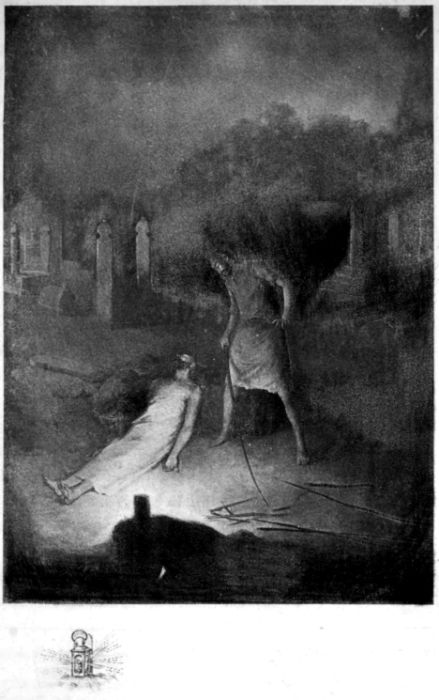
298
The Twenty-Second Night of the Month.
When the evening evened, King Shah Bakht summoned the
Wazir and required of him the hearing of the story. So Al-Rahwan
said, “Hearkening and obedience. Give ear, O King, to
Four sharpers once plotted against a Shroff, a man of much
wealth, and agreed upon a sleight for securing some of his coins.
So one of them took an ass and laying on it a bag, wherein were
dirhams, lighted down at the shop of the Shroff and sought of him
small change. The man of monies brought out to him the silver
bits and bartered them with him, whilst the sharper was easy
with him in the matter of the exchange, so he might gar him long
for more gain. As they were thus, up came the other three
sharpers and surrounded the donkey; and one of them said, “’Tis
he,” and another said, “Wait till I look at him.” Then he took to
considering the ass and stroking him from crest[475] to tail; whilst
the third went up to him and handled him and felt him from
head to rump, saying, “Yes, ’tis in him.” Said another, “No,
’tis not in him;” and they left not doing the like of this for
some time. Then they accosted the donkey’s owner and chaffered
with him and he said, “I will not sell him but for ten
thousand dirhams.” They offered him a thousand dirhams; but
he refused and swore that he would not vend the ass but for that
which he had said. They ceased not adding to their offer till
299the price reached five thousand dirhams, whilst their mate still
said, “I’ll not vend him save for ten thousand silver pieces.” The
Shroff advised him to sell, but he would not do this and said to
him, “Ho, Shaykh! Thou wottest not the case of this donkey.
Stick to silver and gold and what pertaineth thereto of exchange
and small change; because indeed the virtue of this ass is a mystery
to thee. For every craft its crafty men and for every means of
livelihood its peculiar people.” When the affair was prolonged
upon the three sharpers, they went away and sat down aside; then
they came up privily to the money-changer and said to him, “An
thou can buy him for us, do so, and we will give thee twenty dirhams.”
Quoth he, “Go away and sit down at a distance from
him.” So they did as he bade and the Shroff went up to the
owner of the ass and ceased not luring him with lucre and saying,
“Leave these wights and sell me the donkey, and I will
reckon him a present from thee,” till he sold him the animal for
five thousand and five hundred dirhams. Accordingly the money-changer
weighed out to him that sum of his own monies, and the
owner of the ass took the price and delivered the beast to him,
saying, “Whatso shall betide, though he abide a deposit upon thy
neck,[476] sell him not to yonder cheats for less than ten thousand
dirhams, for that they would fain buy him because of a hidden
hoard they know, whereto naught can guide them save this donkey.
So close thy hand on him and cross me not, or thou shalt repent.”
With these words he left him and went away, whereupon up came
the three other sharpers, the comrades of him of the ass, and said
to the Shroff, “God requite thee for us with good, in that thou
hast bought him! How can we reward thee?” Quoth he, “I will
not sell him but for ten thousand dirhams.” When they heard
that they returned to the ass and fell again to examining him like
buyers and handling him. Then said they to the money-changer,
300“Indeed we were deceived in him. This is not the ass we sought
and he is not worth to us more than ten nusfs.”[477] Then they
left him and offered to go away, whereat the Shroff was sore
chagrined and cried out at their speech, saying, “O folk, ye asked
me to buy him for you and now I have bought him, ye say, we
were deceived in him, and he is not worth to us more than ten
nusfs.” They replied, “We thought that in him was whatso we
wanted; but, behold, in him is the contrary of that which we wish;
and indeed he hath a blemish, for that he is short of back.” Then
they made long noses[478] at him and went away from him and dispersed.
The money-changer deemed they did but play him off,
that they might get the donkey at their own price; but, when
they walked away from him and he had long awaited their return,
he cried out, saying, “Well-away!” and “Ruin!” and “Sorry case
I am in!” and shrieked aloud and rent his raiment. So the
market-people assembled to him and questioned him of his case;
whereupon he acquainted them with his condition and told them
what the knaves had said and how they had cozened him and
how they had cajoled him into buying an ass worth fifty dirhams[479]
for five thousand and five hundred.[480] His friends blamed him and
a gathering of the folk laughed at him and admired his folly
and over-faith in believing the talk of the sharpers without suspicion,
and meddling with that which he understood not and
thrusting himself into that whereof he had no sure knowledge.
“On this wise, O King Shah Bakht” (continued the Wazir), “is
the issue of greed for the goods of the world and indeed coveting
that which our knowledge containeth not shall lead to ruin and
repentance. Nor, O King of the age (added he), is this story stranger
than that of the Cheat and the Merchants.” When the King heard
301these words, he said in himself, “Indeed, had I given ear to the
sayings of my courtiers and inclined to their idle prate in the
matter of my Minister, I had repented to the utterest of penitence,
but Alhamdolillah—laud be to the Lord—who hath disposed
me to endurance and long-suffering and hath vouchsafed to me
patience!” Then he turned to the Wazir and dismissed him
to his dwelling and gave congé those who were present,
according to his custom.
302
The Twenty-Third Night of the Month.
When the evening evened, the King summoned the Minister and
when he presented himself before him, he required of him the
hearing of the story. So he said, “Hearing and obeying. Give
ear, O illustrious lord, to
There was once in olden time a certain Cheat, who could turn
the ear inside out by his talk, and he was a model of cleverness
and quick wit and skill and mischief. It was his wont to enter a
town and make a show of being a trader and engage in intimacy
with people of worth and sit in session with the merchants, for his
name was noted as a man of virtue and piety. Then he would
put a sleight on them and take of them what he might spend
and fare forth to another stead; and he ceased not to do thus
for a while of time. It chanced one day that he entered a certain
city and sold somewhat that was with him of merchandise and
made friends of the merchants of the place and took to sitting
with them and entertaining them and inviting them to his quarters
and his assembly, whilst they also invited him to their houses.
He abode after such fashion a long time until he was minded to
quit the city; and this was bruited among his intimates, who
grieved for parting from him. Then he betook himself to one of
them who was the richest in substance and the most conspicuous
for generosity, and sat with him and borrowed his goods; and
when rising to depart, he bade him return the deposit that he had
left with him. Quoth the merchant, “And what is the deposit?”
and quoth the Cheat, “’Tis such a purse, with the thousand dinars
303therein.” The merchant asked, “And when didst thou give me
that same?” and the Cheat answered, “Extolled be Allah of All
Might! Was it not on such a day, by such a token which is thus
and thus?” The man rejoined, “I know naught of this,” and
words were bandied about between them, whilst the folk who
heard them disputed together concerning their sayings and
doings, till their voices rose high and the neighbours had knowledge
of that which passed between them.[481] Then said the Cheat,
“O people, this is my friend and I deposited with him a deposit
which he denieth having received: so in whom shall men put trust
after this?” And they said, “This person is a man of worth and
we have known in him naught but trustiness and good faith and
the best of breeding, and he is endowed with sense and manliness.[482]
Indeed, he affirmeth no false claim, for that we have consorted
and associated with him and he with us and we know the sincerity
of his religion.” Then quoth one of them to the merchant,
“Ho, Such-an-one! Bethink thee of the past and refresh thy
memory. It cannot be that thou hast forgotten.” But quoth
he, “O people, I wot nothing of what he saith, for indeed he
deposited naught with me:” and the matter was prolonged
between them. Then said the Cheat to the merchant, “I am
about to travel and I have, praised be Allah Almighty, much
wealth, and this money shall not escape me; but do thou make
304oath to me.” And the folk said, “Indeed, this man doth justice
upon himself.”[483] Whereupon the merchant fell into that which
he disliked[484] and came nigh upon loss and ill fame. Now he had
a friend, who pretended to sharpness and intelligence; so he
came up to him secretly and said to him, “Let me do so I may
cheat this Cheat, for I know him to be a liar and thou art near
upon having to weigh out the gold; but I will parry off suspicion
from thee and say to him, The deposit is with me and thou
erredst in suspecting that it was with other than myself; and so
I will divert him from thee.” The other replied, “Do so, and rid the
people of such pretended debts.” Accordingly the friend turned
to the Cheat and said to him, “O my lord, I am Such-an-one, and thou
goest under a delusion. The purse is with me, for it was with me
that thou depositedst it, and this Shaykh is innocent of it.” But
the Cheat answered him with impatience and impetuosity, saying,
“Extolled be Allah! As for the purse that is with thee, O noble
and faithful man, I know ’tis under Allah’s charge and my heart
is easy anent it, because ’tis with thee as it were with me;
but I began by demanding the purse which I deposited with this
man, of my knowledge that he coveteth the goods of folk.” At
this the friend was confounded and put to silence and returned
not a reply; and the only result of his meddling was that each
of them—merchant and friend—had to pay a thousand gold pieces.
So the Cheat took the two thousand dinars and made off; and
when he was gone, the merchant said to his friend, the man
of pretended sharpness and intelligence, “Ho, Such-an-one!
Thou and I are like the Falcon and the Locust.” The friend
305asked, “What was their case?” and the merchant answered
with
There was once, of old time, a Falcon who made himself a nest
hard by the home of a Locust, and his neighbour gloried in such
neighbourhood and betaking herself to him, saluted him with the
salam and said, “O my lord and lord of all the birds, indeed the
nearness to thee delighteth me and thou honourest me with thy
vicinity and my soul is fortified with thee.” The Falcon thanked
her for this and friendship between them followed. One day, the
Locust said to the bird, “O prince of the flying race, how is it
that I see thee alone, solitary, having with thee no friend of thy
kind, the volatiles, on whom thou mayst repose in time of gladness
and of whom thou mayst seek aid in tide of sadness?
Indeed, ’tis said:—Man goeth about seeking ease of body and
ward of strength, and there is naught in this more necessary to
him than a true friend who shall be the crown of his comfort and
the column of his career and on whom shall be his dependence in
his distress and in his delight. Now I, although ardently desiring
thy weal in that which befitteth thy rank and degree, yet am
weak in that which the soul craveth; but, an thou deign give me
leave, I will seek out for thee one of the birds who shall fellow
thee in body and strength.” And the Falcon said, “I commit
this to thee and rely upon thee herein.” Thereupon, O my
brother (quoth the merchant), the Locust began going round the
company of the birds, but saw naught resembling the Falcon in
bulk and body save the Kite and thought well of her. So she
306brought the twain together and counselled the Falcon to foregather
with the Kite. Presently it fortuned that the Falcon fell sick and
the Kite tarried with and tended him a long while till he recovered
and became sound and strong, wherefore he thanked her and
she fared from him. But after some days the Falcon’s sickness
returned to him and he needed succour of the Kite, so the Locust
went out from him and was absent from him a day; after which
she returned to him with another locust,[486] saying, “I have brought
thee this one.” When the Falcon saw her, he said, “God requite
thee with good! Indeed, thou hast done well in the quest and
thou hast shown subtlety and discrimination in the choice.” All
this, O my brother (continued the merchant) befel because the
Locust had no knowledge of the essence which lurketh in the
outer semblance of bodies. As for thee, O my brother, (Allah
requite thee with weal!) thou wast subtle in device and usedst
precaution, but forethought availeth not against Fate, and Fortune
foreordained baffleth force of fence. How excellent is the saying
of the poet when he spake these couplets:—[487]
It chances whiles that the blind man escapes a pit, ✿ Whilst he who is clear of sight falls into it.
The ignorant man may speak with impunity ✿ A word that is death to the wise and the ripe of wit.
The true believer is pinched for his daily bread, ✿ Whilst infidel rogues enjoy all benefit.
Where is a man’s resource and what can he do? ✿ It is the Almighty’s will; we must submit.
“Nor” (continued the Wazir) “is this, O king of the age, rarer
or stranger than the story of the King and his Chamberlain’s
307wife; nay, this is more wondrous than that and more delectable.”
When the king heard this story, he was strengthened in his
resolve to spare the Minister and to eschew haste in an affair
whereof he was not certified; so he comforted him and bade him
hie to his home.
308
The Twenty-fourth Night of the Month.
When it was night, the King summoned the Wazir and sought
of him the hearing of the story. Al-Rahwan replied, “Hearkening
and obedience! Listen, O august sovran, to
There was once, in days of yore and in ages and times long
gone before, a King of the kings of the Persians, who was much
addicted to the love of fair women. His courtiers spoke him of
the wife of a certain of his Chamberlains, a model of beauty and
loveliness and perfect grace, and this egged him on to go in to her.
When she saw him, she knew him and said to him, “What urgeth
the King to this that he doeth?” and he replied, saying, “Verily, I
long for thee with excess of longing and there is no help but that
I enjoy thy favours.” And he gave her of wealth that after whose
like women lust; but she said, “I cannot do the deed whereof the
king speaketh, for fear of my husband;”[489] and she refused herself
to him with the most rigorous of refusals and would not
suffer him to win his wish. So the king went out in wrath, and
forgot his girdle in the place. Now it chanced that her husband
entered immediately after his lord had departed, and saw the
girdle and knew it. He was aware of the king’s love for women;
so quoth he to his wife, “What be this I see with thee?” Quoth
she, “I’ll tell thee the truth,” and recounted to him the occurrence;
309but he believed her not and suspicion entered his heart. As for the
King, he passed that night in care and concern, and when the morning
morrowed, he summoned that Chamberlain and made him
governor of one of his provinces; then he bade him betake himself
thither, purposing, after he should have departed and fared afar, to
foregather with his wife. The Chamberlain perceived his project and
kenned his intent; so he answered, saying, “To hear is to obey!”
presently adding, “I will go and order my affairs and give such
injunctions as may be needed for the well-doing of my affairs;
then will I go about the sovran’s commission.” And the King
said, “Do this and make haste.” So the Chamberlain went about
that which he needed and assembling his wife’s kinsfolk, said to
them, “I am determined to dismiss my wife.” They took this
ill of him and complained of him and summoning him before the
sovereign, sat prosecuting him. Now the King had no knowledge
of that which had passed; so he said to the Chamberlain, “Why
wilt thou put her away and how can thy soul consent to this and
why takest thou unto thyself a fine and fertile piece of land and
presently forsakest it?” Answered the husband, “Allah amend
the king! By the Almighty, O my King, I saw therein the trail of
the lion and fear to enter that land, lest the lion devour me, and
the like of my affair with her is that which befel between the
Crone and the Draper’s Wife.” The king asked, “What is their
adventure?” and the chamberlain answered, “Hear, O king,
There was once a man of the Drapers, who had a beautiful wife,
and she was curtained[491] and chaste. A certain young man saw
her coming forth of the Hammam and loved her and his heart
310was engrossed with her. So he devised for access to her all
manner of devices, but availed not to foregather with her; and
when he was a-weary and his patience failed for travail and trouble
and his fortitude betrayed and forsook him and he was at an end
of his resources against her, he complained of this to an ill-omened
crone,[492] who promised him to bring about union between him and
his beloved. He thanked her for this and promised her all manner
of douceurs; and she said to him, “Hie thee to her husband and
buy of him a turband-cloth of fine linen, and let it be of the very
best of stuff.” So he repaired to the Draper and buying of him a
turband-cloth of lawn, returned and gave it to the old woman,
who took it and burned it in two places. Then she donned the
dress of a devotee and taking the turband-cloth with her, went to
the Draper’s house and knocked at the door. When the Draper’s
wife saw her thus habited as a holy woman, she opened to her
and admitted her with kindly reception, and made much of her
and welcomed her: so the crone went in to her and conversed
with her awhile. Then said she to her, “I want to make the
Wuzu-ablution preparatory to prayer.”[493] At these words the wife
brought the water and she made the ablution and standing up to
pray, prayed and satisfied herself; and when she had ended her
orisons, she left the turband-cloth in the place of prayer and fared
forth. Presently, in came the Draper, at the hour of night-devotions,
and sitting down in the prayer-place where the old woman
had prayed, looked about him and espied the turband. He knew
it and suspected foul play; so wrath showed in his face and he
was furious with his wife and reviled her and abode his day and
his night without speaking to her, during all which while she
knew not the cause of his rage. Then she looked and seeing the
311turband-cloth before him and noting the traces of burning thereon,
understood that his anger was on account of this and concluded
that he was in ill-temper because it was burnt. When the morning
morrowed, the Draper went out, still wroth with his wife, and the
crone returned to her and found her changed of colour, pale of
complexion, dejected and heart-broken. So she questioned her of
the cause, and the wife told her how her husband was angered
against her on account of the burns in the turband-cloth.[494] Rejoined
the old woman, “O my daughter, be not chagrined; for
I have a son, a fine-drawer, and he, by thy life, shall fine-draw
the holes and restore the turband-cloth as it was.” The wife
rejoiced in her saying and asked her, “And when shall this
be?” The crone answered, “To-morrow, Inshallah—an it please
Allah the Most High—I will bring him to thee, at the time
of thy husband’s going forth from thee, and he shall fine-draw
it and depart forthwith.” Then she comforted her heart
and going away from her, returned to the young man and
acquainted him with what had passed. Now when the Draper saw
the turband-cloth, he determined to divorce his wife and waited
only till he could collect that which was obligatory on him of the
contingent dowry and what not else,[495] for fear of her people. When
the crone arose in the morning, she took the young man and
carried him into the Draper’s house. The wife opened the door to
her and the ill-omened old woman entered with him and said
to the lady, “Go, fetch that which thou wouldest have fine-drawn
and give it to my son.” So saying, she bolted the door on her,
whereupon the young man raped[496] her against her will and did his
312want of her and went forth. Then cried the crone, “Know that
this is my son and that he loved thee with exceeding love and
was like to lose his life for longing after thee; so I devised for
thee with this device and came to thee with this turband-cloth,
which is not thy husband’s, but my son’s. Now have I won to my
wish; so do thou trust in me and I will put a sleight on thy
husband for setting thee right with him, and thou wilt be subject
to me and to him and to my son.”[497] And the wife replied, “’Tis
well. Do so.” Presently the old woman returned to the lover and
said, “Know thou that I have engineered the affair for thee with
her; and now we must mend that we have marred. Hie thee
and sit with the Draper and mention to him the turband-cloth,
saying, The turband I bought of thee I chanced to burn in two
places; so I gave it to a certain old woman, to have fine-drawn,
and she took it and went away, and I know not her dwelling-place.[498]
When thou seest me pass by, rise and lay hold of
me, and demand of me the cloth, to the intent that I may
arrange her affair with her spouse and that matters go right with
thee in her regard.” Accordingly he repaired to the Draper’s
shop and sat down by him and asked him, “Thou knowest the
turband-cloth I bought of thee?” “Yes.” “Knowest thou what
is come of it?” “No.” “After I bought it of thee, I fumigated
myself[499] and it fortuned that the turband-cloth was burnt in two
places; so I gave it to a woman, whose son, they said, was a fine-drawer,
and she took it and fared forth with it; and I know not
313her home.” When the Draper heard this, he was startled by the
thought that he had suspected his wife wrongfully, and marvelled
at the story of the turband-cloth, and his mind was made easy
anent her. After a short while, up came the old woman, whereupon
the young man sprang to his feet and seizing her, demanded
of her the turband-cloth. Said she, “Know that I entered one
of the houses and wuzu’d and prayed in the prayer-place;[500] and I
forgot the turband-cloth there and went out. Now I weet not
the house in which I prayed, nor have I been divinely directed[501]
thereto, and I go round about every day till the night, so haply I
may light on the dwelling, for I know not its owner.” When the
Draper heard these words, he said to the old woman, “Verily,
Allah restoreth to thee what thing thou hast lost. Be gladdened by
good news, for the turband-cloth is with me and in my house.”[502] And
he arose forthright and handed to her the turband-cloth, as it was,
and she handed it to the young man. Then the Draper made
peace with his wife and gave her raiment and jewellery, till she
was content and her heart was appeased. When the king
heard his Chamberlain’s story, he was dazed and amazed and said
to him, “Abide on thy service and ear thy field for that the lion
entered it, but marred it not, and he will never more return thither.”[503]
Then he bestowed on him an honourable robe and made him a
314costly present; and the man returned to his wife and people,
rejoicing, his heart having been set at rest concerning his wife.
“Nor” (continued the Wazir), “O King of the age, is this rarer
or stranger than the story of the beautiful wife, a woman gifted
of amorous grace, with the ugly Man, her husband.” When king
Shah Bakht heard the Minister’s speech, he deemed it delectable
and it pleased him; so he bade him hie to his house, and there he
tarried his day long.
315
The Twenty-fifth Night of the Month.
When the evening evened, the King summoned his Wazir and
bade him tell the tale. So he said, “’Tis well. Hear, O King,
There was once a man of the Arabs who had a number of
children, and amongst them a boy, never was seen a fairer than
he of favour nor a more complete in comeliness; no, nor a more
perfect of prudence. When he came to man’s estate, his father
married him to his first cousin, the daughter of one of his paternal
uncles, and she excelled not in beauty, neither was she laudable
for qualities; wherefore she pleased not the youth, but he bore
with her for the sake of kinship. One day, he fared forth in
quest of certain camels[504] of his which had strayed and hied him on
all his day and night till eventide, when he was fain to seek
hospitality in an Arab camp. So he alighted at one of
the tents of the tribesmen and there came forth to him a man
short of stature and foul of favour, who saluted him with the
salam; and, lodging him in a corner of the tent, sat entertaining
him with chat, the cheeriest that might be. When his food was
dressed, the Arab’s wife brought it to the guest, and he looked at
the mistress of the tent and saw a semblance than which no
seemlier might be. Indeed, her beauty and loveliness, her
symmetry and perfect grace amazed him and he was struck with
astonishment, gazing now at her and then at her mate. When
his looking grew long, the man said to him, “Ho, thou son of
316the worthy! Busy thyself with thine own business, for by me and
this woman hangeth a wondrous tale, which is even better than that
thou seest of her beauty; and I will tell it to thee when we have
made a finish of our food.” So, when they had ended eating
and drinking, the young man asked his host for the story, and
he said:—Know that in my youth I was the same as thou seest
me in the matter of loathliness and foul favour; and I had
brethren of the fairest of the folk; wherefore my father preferred
them over me and used to show them kindness, to my exclusion,
and made me serve in their stead, like as a master employeth
slaves. One day, a dromedary of his strayed from the herd of
camels, and he said to me, “Go thou forth in quest of her and
return not but with her.” I replied, “Send other than I of thy
sons.” But he would not consent to this and scolded me and
insisted upon me, till the matter came to such a pass with him
that he took a thong-whip and fell to beating me. So I arose and
saddling a riding-camel, mounted her and sallied forth at random,
purposing to go out into the wolds and the wilds and return to
him never more. I fared on all my night and the next day and
coming at eventide[505] to the encampment of this my wife’s people,
alighted down with and became the guest of her father, who was
a Shaykh well stricken in years. Now when it was the noon of
night, I arose and went forth the tent at a call of nature, and
none knew of my case save this woman. The dogs followed me
as a suspected stranger and ceased not worrying me[506] till I fell on
317my back into a pit, wherein was water, a deep hollow and a steep;
and a dog of those dogs fell in with me. The woman, who was then
a girl in the bloom of youth, full of strength and spirit, was moved
to ruth on me, for the calamity whereinto I was fallen, and coming
to me with a rope, said to me, “Catch hold of the rope.” So I
hent it and clung to it and she haled me up; but, when I was
half-way up, I pulled her down and she fell with me into the pit;
and there we abode three days, she and I and the hound. When
her people arose in the morning and did not see her, they sought
her in the camp, but, finding her not and missing me also, never
doubted but she had fled with me.[507] Now she had four brothers,
as they were Saker-hawks, and they took horse and dispersed in
search of us. When the day yellowed on the fourth dawn, the dog
began to bark and the other hounds answered him and coming to
the mouth of the pit, stood howling to him. The Shaykh, my
wife’s father, hearing the howling of the hounds, came up and
standing at the brink of the hollow, looked in and beheld a
marvel. Now he was a brave man and a sensible, an elder
experienced in affairs, so he fetched a cord and bringing forth the
three, questioned us twain of our case. I told him all that had
betided and he fell a-pondering the affair. Presently, her brothers
returned, whereupon the old man acquainted them with the whole
case and said to them, “O my sons, know that your sister intended
not aught but good, and if ye kill this man, ye will earn abiding
shame and ye will wrong him, and wrong your own souls and eke
your sister: for indeed there appeareth no cause such as calleth for
killing, and it may not be denied that this accident is a thing
whose like may well occur and that he may easily have been the
victim of suchlike chance.” Then he addressed me and questioned
me of my lineage; so I set forth to him my genealogy
and he, exclaiming, “A man of her match, honourable, understanding,
318offered me his daughter in wedlock. I consented to
this and marrying her, took up my abode with him and Allah
hath opened on me the gates of weal and wealth, so that I am
become the richest in monies of the tribesmen; and the Almighty
hath stablished me in that which He hath given me of His
bounties.” The young man marvelled at his tale and lay the
night with him; and when he arose in the morning, he found his
estrays. So he took them and returning to his folk, acquainted
them with what he had seen and all that had befallen him.
“Nor” (continued the Wazir) “is this stranger or rarer than the
story of the King who lost kingdom and wealth and wife and
children and Allah restored them to him and requited him with a
realm more magnificent than that which he had forfeited and
better and finer and greater of wealth and degree.” The
Minister’s story pleased the King and he bade him depart to his
abode.
319
The Twenty-sixth Night of the Month.
When came the night, the king summoned his Wazir and bade
him tell the story of the King who lost kingdom and wife and
wealth. He replied, “Hearing and obeying! Give ear, O
sovran, to
There was once a king of the kings of Hind, who was a model of
morals, praiseworthy in policy, lief of justice to his lieges, lavish to
men of learning and piety and abstinence and devoutness and worship
and shunning mischief-makers and froward folk, fools and traitors.
After such goodly fashion he abode in his kingship what Allah the
Most High willed of watches and days and twelvemonths,[509] and he
married the daughter of his father’s brother, a beautiful woman and
a winsome, endowed with brightness and perfection, who had been
reared in the king’s house in delicacy and delight. She bare him
two sons, the most beauteous that might be of boys, when came
Destiny from whose decree is no deliverance and Allah the Most
High raised up against the King another king, who came forth
upon his realm, and was joined by all the folk of the city that
had a mind to lewdness and frowardness. So he strengthened
320himself by means of them against the King and compassed his
kingdom, routing his troops and killing his guards. The King
took his wife, the mother of his sons, and what he might of monies
and saved his life and fled in the darkness of the night,
unknowing whither he should wend. Whenas wayfare grew sore
upon them, there met them highwaymen on the way, who took
all that was with them, so that naught remained to each of them
save a shirt and trousers; the robbers left them without even
provaunt or camels or other riding-cattle, and they ceased not to
fare on afoot, till they came to a copse, which was an orchard of
trees on the ocean shore.[510] Now the road which they would have
followed was crossed by a sea-arm, but it was shallow and scant of
water; wherefore, when they reached that place, the king took up
one of his children and fording the water with him, set him down
on the further bank and returned for his other son, whom also he
seated by his brother. Lastly, returning for their mother, he took
her up and passing the water with her, came to the place where he
had left his children, but found them not. Thereupon he looked
at the midst of the island and saw an old man and an old woman,
engaged in making themselves a reed-hut: so he set down his wife
over against them and started off in quest of his children, but none
gave him news of them and he went round about right and left, yet
found not the whereabouts they were. On this wise fared it with
him; but as to the children, they had entered the copse to make
water, and they found there a forest of trees, wherein, if a sturdy
horseman[511] strayed, he might wander by the week, and never know
its first from its last. So the boys pushed into it and wotted not
how they should return and went astray in that wood, for a
purpose willed of Allah Almighty, whilst their father sought
321them, but found them not. So he returned to their mother and
they abode weeping for their children; as for whom, when they
entered the forest, it swallowed them up and they fared at hap-hazard,
wandering in it many days, knowing not whence they came
or whither they went, till they issued forth, at another side, upon the
open country. Meanwhile, their parents, the king and queen,
tarried in the island, over against the old man and his old woman,
and ate of the fruits and drank of the rills that were in it till,
one day of the days, as they sat, behold, up came a ship and
made fast to the island-side, for provisioning with water, whereupon
they[512] looked one at other and spoke. The master of the craft
was a Magian man and all that was therein, both crew and goods,
belonged to him, for he was a trader and went round about the
world. Now greed of gain deluded the old man, the owner of
the island, and he fared to the ship and gave the Guebre news
of the King’s wife, setting out to him her charms, till he made him
long for her and his soul moved[513] him to practise treachery and
cozenage upon her and take her from her husband. Accordingly,
he sent to her, saying, “Aboard with us is a woman with child,
and we dread lest she be delivered this night: hast thou aught of
skill in midwifery?” She replied, “Yes.” Now it was the last of
the day; so he sent to her to come up into the ship and deliver
the woman, for that the labour-pangs were come upon her; and
he promised her clothes and spending-money. Hereat, she
embarked confidently, with heart at ease for herself, and transported
her gear to the ship; but no sooner had she come thither
than the sails were hoisted and the canvas was loosed[514] and the
322ship set sail. When the King saw this, he cried out and his wife
wept in the ship and would have cast herself into the waves; but
the Magian bade his men lay hands on her. So they seized her
and it was but a little while ere the night darkened and the ship
vanished from the King’s eyes; whereupon he fainted away
for excess of weeping and lamentation and passed his night
bewailing his wife and his children. And when the morning
morrowed he began improvising these couplets:—[515]
O World, how long, this spite, this enmity?
Say me, dost ever spare what spared can be?
And look! my friends have farèd fain and free!
They went and went wi’ them my dear delight
E’en from the day when friends to part were dight
And turbid made their lost life’s clarity.
By Allah, ne’er I wist their worth aright
Nor ever wot I worth of friends unite
Till fared they, leaving flame in heart of me!
I’ll ne’er forget them since what day each wight
Hied and withdrew fro’ me his well-loved sight
And yet I weep this parting-blow to dree.
I vow an Heaven deign my friends return
And cry the crier in mine ears that yearn
“The far is near, right soon their sight shalt see!”
Upon their site my cheeks I’ll place, to sprite
I’ll say, “Rejoice, thy friends return to thee!”
Nor blame my heart when friends were lief to flee:
I rent my heart ere rent my raimentry.
He sat weeping for the severance of his wife and children till the
morning, when he went forth wandering at a venture, unweeting
what he should do, and ceased not walking along the sea-shore days
and nights, unknowing whither he went and taking no food save
the herbs of the earth and seeing neither man nor wildling nor
323other living thing, till his wayfare brought him to a mountain-top.
He sojourned in the highland and abode awhile, there
alone, eating of its fruits and drinking of its founts; then he
came down thence and trudged along the high road three days,
when he hit upon tilled fields and villages and gave not over
going till he made a great city on the shore of the salt sea and
came to its gate at the last of the day. The gatekeepers allowed
him no admission; so he spent his night anhungered, and when
he arose in the morning, he sat down hard by the portal. Now
the king of the city was dead and had left no son, and the
citizens fell out anent who should be ruler over them: and their
words and redes differed, so that civil war was like to befal them
thereupon. But it came to pass that, after long jangle, they
agreed to leave the choice to the late king’s elephant and that
he unto whom he consented should be king and that they would
not contest with him the sway. So to this they sware and on
the morrow, they brought out their elephant and fared forth
to a site within sight of the city; nor was there man or woman
but was present at that moment. Then they adorned the
elephant and raising the throne on his back, gave him the
crown in his trunk; and he went round about examining the
countenances of the folk, but stopped not over against any of
them till he came at last to the forlorn King, the exile who had
lost his children and his wife, when the beast prostrated himself
to him and placing the crown on his head, took him up and
set him upon his back. Thereupon the people all prostrated
themselves and gave mutual joy of this and the drums[516] of
good tidings beat before him, and he entered the city and
went on till he reached the House of Justice and the Audience-hall
of the Palace and sat down upon the throne of the kingdom,
324crown on head; whereat the lieges entered to congratulate him
and to bless him. Then he addressed himself, as was his wont
in the kingship, to forwarding the affairs of the folk and ranging
the troops according to their ranks and looking into their affairs
and those of all the Ryots. He also released those who were in
the dungeons and abolished the custom-dues and gave honourable
robes and lavished great gifts and bestowed largesse and conferred
favours on the Emirs and Wazirs and Lords of the realm, and the
Chamberlains[517] and Nabobs presented themselves before him and
did him homage. So the city people rejoiced in him and said,
“Indeed, this be none other than a King of the greatest of the
kings.” And presently he assembled the sages and the theologians
and the sons of the Sovrans and conversed with them and
asked them subtile questions and casuistical problems and talked
over with them things manifold of all fashions that might direct
him to rectitude in the kingship; and he questioned them also
of mysteries and religious obligations and of the laws of the
land and the regulations of rule and of that which it beseemeth
the liege lord to do of looking into the affairs of the lieges and
repelling the foe and fending off his malice with force and fight;
so the subjects’ contentment redoubled and their exultation
in that which Allah Almighty had vouchsafed them of his
kingship over them. On such wise he upheld the ordinance
of the realm, and the affairs abode stablished upon the accepted
custom and local usage. Now the late king had left a wife
and two daughters, and the people would fain have married the
Princess royal to the new king that the rule might not pass clean
away from the old rulers. Accordingly, they proposed to him
that he should wed her or the other of the deceased king’s
325daughters, and he promised them this, but put them off from him,
of his respect for the covenant he had made with his former
wife, his cousin, that he would marry none other than herself.
Then he betook himself to fasting by day and praying through
the night, multiplying his almsdeeds and beseeching Allah
(extolled and exalted be He!) to reunite him with his children
and his wife, the daughter of his father’s brother. When a year
had elapsed, there came to the city a ship, wherein were many
merchants and much merchandise. Now it was their custom
from time immemorial that the king, whenever a ship made the
port, sent to it such of his pages as he trusted in, who took agency
of the goods, to the end that they might be first shown to the Sovran,
who bought as much of them as befitted him and gave the merchants
leave to sell whatso he wanted not. So he commissioned, according
to his custom, a man who should fare to the ship and seal
up the bales and set over them one who could watch and
ward them. Meanwhile the Queen his wife, when the Magian
fled with her and proffered himself to her and lavished upon
her abounding wealth, rejected him and was like to kill herself[518]
for chagrin at that which had befallen and for concern
anent her separation from her husband. She also refused meat
and drink and resolved to cast herself into the sea; but the
Magian chained her and straitened her and clothed her in a coat
of wool and said to her, “I will continue thee in wretchedness
and humiliation till thou obey me and accept me.” So she took
326patience and looked for the Almighty to deliver her from the
hand of that accursed; and she ceased not travelling with him
from country to country till he came with her in fine to the
city wherein her husband was king and his goods were put under
seal. Now the woman was in a chest and two youths of the
late king’s pages, who were now in the new King’s service, were
those who had been charged with the watch and ward of the
craft and her cargaison. When the evening evened on them,
the twain began talking and recounted that which had befallen
them in their days of childhood and the manner of the faring
forth of their father and mother from their country and kingdom
when the wicked overcame their realm, and how they had gone
astray in the forest and how Fate had severed them from their
parents; for short, they told their tale from first to last. When
the woman heard their talk, she knew that they were her sons
and cried out to them from the chest, “I am your mother, Such-an-one,
and the token between you twain and me is thus and
thus.” The young men knew the token and falling upon the
chest, brake the lock and brought out their mother, who seeing
them, strained them to her bosom, and they fell upon her and
fainted away, all three. When they came to themselves, they
wept awhile and the people assembled about them, marvelling
at that they saw, and questioned them of their case. So the
young Princes vied each with other who should be the first to
discover the story to the folk; and when the Magian saw this,
he came up, crying out, “Alack!” and “Ruin!” and said to
them, “Why and wherefore have ye broken open my chest?
Verily, I had in it jewels and ye have stolen them, and this
damsel is my slave-girl and she hath agreed with you both upon
a device to take my wealth.” Then he rent his raiment and cried
for aid, saying, “I appeal to Allah and to the just King, so he may
quit me of these wrongous youths!” They both replied, “This is
our mother and thou stolest her:” whereupon words waxed manifold
327between them and the folk plunged into talk with many a “he
said” and “’twas said” concerning their affair and that of the
pretended slave-girl, and the strife increased between them, so
that at last they carried them all four to the King’s court.
When the two young men presented themselves between his
hands and stated their case to him and to the folk and the
sovran heard their speech, he knew them and his heart was like
to fly for joy: the tears poured from his eyes at their sight
and the sight of his wife, and he thanked Allah Almighty and
praised Him for that He had deigned reunite them. Then he bade
the folk who were present about him be dismissed and commanded
the Magian and the woman and the two youths be to morrow
committed to his armoury[519] for the night, ordering that they should
keep guard over them all until the Lord should make the morning
to morrow, so he might assemble the Kazis and the Justiciaries
and Assessors and determine between them, according to Holy
Law, in the presence of the four judges. So they did this and
the King passed the night praying and praising Allah of All-might
for that which he had vouchsafed him of kingship and power and
victory over the wight who had wronged him and thanking Him
who had reunited him with his own. When the morning morrowed,
he assembled the Kazis and Deputies and Assessors[520] and
summoning the Magian and the two youths and their mother,
questioned them of their case; whereupon the two young men
began and said, “We are the sons of King Such-an-one and
foemen and lewd fellows gat the mastery of our realm; so our
sire fled forth with us and wandered at hap-hazard, for fear of
the foe.” And they recounted to him all that had betided them,
from beginning to end.[521] Quoth he, “Ye tell a marvel-tale; but
328what hath Fate done with your father?” Quoth they, “We
know not how Fortune dealt with him after our loss.” And he
was silent. Then he bespake the woman, “And thou, what
sayst thou?” So she set forth to him her case and all that
had betided her and her husband, from the beginning of their
hardships to the end, and recounted to him their adventures up
to the time when they took up their abode with the old man
and woman who dwelt on the sea-shore. Then she reported
that which the Magian had practised on her of fraud and how he
had carried her off in the craft and everything that had betided
her of humiliation and torment; all this while the Kazis and
Judges and Deputies hearkening to her speech as they had lent
ear to the others’ adventures. When the King heard the last
of his wife’s tale, he said, “Verily, there hath betided thee a
mighty grievous matter; but hast thou knowledge of what thy
husband did and what came of his affair?” She replied, “Nay,
by Allah; I have no knowledge of him, save that I leave him
no hour unremembered in righteous prayer, and never, whilst
I live, will he cease to be to me the father of my children and
my cousin and my flesh and my blood.” Then she wept and
the King bowed his head, whilst his eyes welled tears at her
tale. Presently he raised his head to the Magian and cried to
him, “Say thy say, thou also.” So the Magian replied, “This is
my slave-girl, whom I bought with my money from such a land
and for so many dinars, and I made her my betrothed[522] and
loved her exceedingly and gave my monies into her charge;
but she falsed me in my substance and plotted with one of my
lads to slay me, tempting him by a promise that she would kill
me and become his wife. When I knew this of her and was
assured that she purposed treason against me, I awoke from my
dream of happiness and did with her that which I did, fearing
329for my life from her craft and perfidy; for indeed she is a
trickstress with her tongue and she hath taught these two
youths this pretence, by way of sleight and of her guile and
her malice: so be you not deluded by her and by her talk.”
“Thou liest, O accursed,” cried the King and bade lay
hands on him and iron him. Then he turned to the two
youths, his sons, and strained them to his breast, weeping sore
and saying, “O all ye people who are present of Kazis and
Assessors and Lords of the land, know that these twain are my
sons and that this is my wife and the daughter of my father’s
brother; for that whilome I was king in such a realm.” And
he recounted to them his history from commencement to conclusion,
nor is there aught of fruition in repetition; whereupon
the folk cried out with weeping and wailing for the stress of
what they heard of marvellous chances and that wondrous story.
As for the king’s wife, he bade carry her into his palace and
lavished upon her and upon her sons all that befitted and beseemed
them of bounties, whilst the lieges flocked to offer up
prayers for him and give him joy of his reunion with his wife
and children. When they had made an end of blessings and
congratulations, they besought the king to hasten the punishment
of the Magian and heal their hearts with tormenting and abasing
him. So he appointed them for a day on which they should
assemble to witness his requitement and that which should betide
him of torment, and shut himself up with his wife and two sons
and abode thus private with them three days, during which they
were veiled from the folk. On the fourth day the King entered
the Hammam, and faring forth, sat down on the throne of his
kingship, crown on head, whereupon the folk came in to him,
according to their custom and after the measure of their several
dignities and degrees, and the Emirs and Wazirs entered, and eke
the Chamberlains and Nabobs and Captains of war and the
Falconers and Armbearers and Commanders of the body-guard.
330Then he seated his two sons, one on his right and the other on his
left hand, whilst the subjects all stood before him and lifted up
their voices in thanksgiving to Allah the Most High and glorification
of Him and were instant in orisons for the king and in setting
forth his virtues and excellent qualities. He answered them with
the most gracious of answers and bade carry the Magian outside
the city and set him on a high scaffold which had been builded for
him there; and he said to the folk, “Behold, I will torture him
with torments of all kinds and fashions.” Then he began telling
them that which he had wrought of villainy with his cousin-wife
and what he had caused her of severance between her and her
husband and how he had required her of her person, but she
had sought refuge for her chastity against him with Allah (to
whom belong honour and glory) and chose abasement rather than
obedience to him, despite stress of torture: neither recked she
aught of that which he lavished to her of monies and raiment,
jewels and ornaments. When the King had made an end of his
story, he bade the bystanders spit in the Magian’s face and curse
him; and they did this. Then he bade cut out his tongue and on
the next day he bade lop off his ears and nose and pluck out
both his eyes. On the third day he bade hew off his hands
and on the fourth his feet; and they ceased not to dismember
him, limb after limb, and each member they cast into the fire,
after its amputation, before his face, till his soul departed, after
he had endured torments of all kinds and fashions. Then the
King bade crucify his trunk on the city wall for three days; after
which he gave orders to burn it and reduce its ashes to powder
and scatter them abroad in air. And when this was done, the King
summoned the Kazi and the Witnesses and commanded them
marry the old king’s daughter and her sister to his own sons; so
the youths wedded them, after the King had made a bride-feast
three days and displayed their brides to them from nightfall to
day-dawn. Then the two Princes went in unto their brides and
331abated their maidenheads and loved them and were vouchsafed
issue by them. As for the King their sire, he abode with
his cousin-wife, their mother, what while Allah (to whom be
honour and glory) willed, and they rejoiced in reunion each with
other. The kingship endured unto them and high degree and
victory, and the sovran continued to rule with justice and equity,
so that the lieges loved him and prayed for him and for his sons
length of life and durance of days; and they lived the most
delightsome of existences till there came to them the Destroyer of
delights and Severer of societies, the Depopulator of palaces and
Garnerer of graves; and this is all that hath come down to us of
the story of the King and his Wife and Sons. “Nor,” continued
the Wazir, “if this story be a solace and a diversion, is it pleasanter
or more diverting than the tale of the Youth of Khorasan
and his mother and sister.” When King Shah Bakht heard this
story, it pleased him and he bade the Minister hie away to his
own house.
332
The Twenty-Seventh Night of the Month.
When evening came, the king Shah Bakht bade fetch the
Wazir; so he presented himself before him and the King ordered
him to tell the tale. So he said, “Hearkening and obedience.
Give ear, O sovran, to
Know, O king (but Allah alone knoweth His secret purpose and
is versed in the past and the foredone among folk bygone) that
there was once, in the parts of Khorasan, a man of its affluent,
who was a merchant of the chiefest of the merchants[523] and was
blessed with two children, a son and a daughter.[524] He was diligent
exceedingly in rearing them and they were educated with the
fairest of education; for he used to teach the boy, who taught his
sister all that he learnt, so that, by means of her brother, the
damsel became perfect in the knowledge of the Traditions of the
Prophet and in polite letters. Now the boy’s name was Salím and
that of the girl Salmá. When they grew up and were fully grown,
their father built them a mansion beside his own and lodged them
apart therein and appointed them slave-girls and servants to tend
them and assigned to each of them pay and allowances and all that
they needed of high and low; meat and bread; wine, dresses, and
vessels and what not else. So Salim and Salma abode in that palace,
as they were one soul in two bodies, and they used to sleep on one
333couch and rise amorn with single purpose, while firmly fixed in each
one’s heart were fond affection and familiar friendship for the other.
One night, when the half was spent, as Salim and Salma sat recounting
and conversing, they heard a noise on the ground floor; so they
looked out from a latticed casement which gave upon the gate of
their father’s mansion and saw a man of fine presence, whose clothes
were hidden under a wide cloak. He came straight up to the gate
and laying hold of the door-ring, rapped a light rap; whereupon
the door opened and behold, out came their sister, with a lighted
taper, and after her their mother, who saluted the stranger and
embraced him, saying, “O dearling of my heart and light of mine
eyes and fruit of my vitals, enter.” So he went in and shut
the door, whilst Salim and Salma abode amazed. The youth
turned to the girl and said to her, “O sister mine, how deemest
thou of this trouble and what advice hast thou to offer?” She
replied, “O my brother, indeed I know not what I shall say anent
the like of this; but he is not disappointed who divine direction
seeketh, nor doth he repent who counsel taketh. One getteth not
the better of the traces of burning by haste, and know that this is
an affliction that hath descended[525] on us and a calamity foreordained
to us; so we have need of wise rede to do it away and
contrivance which shall wash our shame from our faces.” And
they ceased not watching the gate till daybreak, when the young
man opened the door and their mother farewelled him; after which
he went his way and she entered, she and her hand-maid. Hereat
said Salim to his sister, “Know thou I am resolved to slay this
man, an he return the next night, and I will say to the folk, He
was a robber, and none shall weet that which hath befallen. Then
I will address myself to the slaughter of whosoever knoweth what
is between the fellow and my mother.” But Salma said, “I fear
lest an thou slay him in our dwelling-place and he be not
334convicted of robber-hood, suspicion and ill-fame will revert upon
ourselves, and we cannot be assured that he belongeth not to a
tribe whose mischief is to be feared and whose enmity is to be
dreaded, and thus wilt thou have fled from hidden shame to open
shame and to disgrace public and abiding.” Asked Salim: “What
then is it thy rede to do?” And she answered, “Is there no
help but thou kill him? Let us not hasten unto slaughter, for that
the slaughter of a soul without just cause is a mighty grave
matter.” When Shahbán[526] heard this, he said within himself, “By
Allah, I have indeed been hasty and reckless in the slaying of
women and girls, and Alhamdolillah—lauded be the Lord—who
hath occupied me with this damsel from the slaughter of souls,
for that the slaughter of souls is a grave matter and a grievous!
By the Almighty if Shah Bakht spare the Wazir, I will assuredly
spare Sháhrázád!”[527] Then he gave ear to the story and heard her
say to her sister:—Quoth Salma to Salim, “Hasten not to slay him,
but overthink the matter and consider the issue whereto it may
tend; for whoso considereth not of actions the end hath not
Fortune to friend.” Then they arose on the morrow and busied
themselves with contriving how they should turn away their parent
from that man, and the mother forefelt mischief from them, for what
she saw in their eyes of change, she being wily and keen of wit.
So she took precaution for herself against her children and Salma
said to Salim, “Thou seest what we have fallen upon through
this woman, and very sooth she hath sensed our purpose and
wotteth that we have discovered her secret. So, doubtless, she
will plot against us the like of that which we plot for her; for
indeed up to now she had concealed her affair, and from this time
335forth she will become harsh to us; wherefore, methinks, there is a
thing forewritten to us, whereof Allah (extolled and exalted be
He!) knew in His foreknowledge and wherein He carrieth out His
commandments.” He asked, “What is that?” and she answered,
“It is that we arise, I and thou, and go forth this night from this
land and seek us a town wherein we may wone and witness naught
of the doings of yonder traitress; for whoso is absent from the
eye is absent from the heart, and quoth one of the poets in the
following couplet:[528]—
’Tis happiest, best for thee, the place to leave, ✿ For then no eye can see, nor heart can grieve.”
Quoth Salim to her,[529] “Tis for thee to decide and right is thy
rede; so let us do this, in the name of Allah the Almighty, trusting
in Him for guiding and grace.” Accordingly they arose and took the
richest of their raiment and the lightest of that which was in their
treasuries of gems and things of price and gathered together much
matter. Then they equipped them ten mules and hired them
servants of other than the people of the country; and Salim bade his
sister Salma don man’s dress. Now she was the likest of all creatures
to him, so that, when she was clad in man’s clothing, the folk
knew no difference between them:—extolled be the perfection of
Him who hath no like, there is no god but He! Then he told her
to mount a mare, whilst he himself took another, and they set
out under cover of the night; nor did any of their family or
household know of them. So they fared on into Allah’s wide
world and gave not over going night and day for a space of two
months, at the end of which they came to a city on the sea-shore
of the land of Makran,[530] by name Al-Sharr, and it is the
336first city in Sind.[531] They lighted down within sight of the
place and when they arose in the morning, they saw a populous
city and a goodly, seemly of semblance and great, abounding
in trees and rills and fruits and wide of suburbs which stretched to
the neighbouring villages. So the young man said to his sister
Salma, “Tarry thou here in thy place, till I enter the city and
make proof of it and its people and seek us out a stead which we
may buy and whereto we may remove. An it befit us, we will
make us a home therein, otherwise will we take counsel of departing
elsewhere.” Quoth she, “Do this, trusting in the bounty of Allah
(to whom belong honour and glory) and in His blessing.” Accordingly
he took a belt, wherein were a thousand gold pieces,
and girding it about his waist, entered the city and ceased not
going round about its streets and bazars and gazing upon its
houses and sitting with those of its citizens whose aspect showed
signs of worth and wealth, till the day was half spent, when he
resolved to return to his sister and said to himself, “Needs must I
buy what we may eat of ready-cooked food; I and my sister.”
Hereupon he addressed a man who sold roast meat and who was
clean of person, albe foul in his way of getting a living, and
said to him, “Take the price of this dishful and add thereto of
fowls and chickens and what not else is in your market of meats
and sweetmeats and bread and arrange it in the plates.” So the
Kitchener took the money and set apart for him what he desired,
then calling a porter, he laid it in the man’s crate, and Salim, after
paying the price of provisions and porterage in fullest fashion, was
about to go away, when the Cook said to him, “O youth, doubtless
thou art a stranger?” He replied, “Yes;” and the other rejoined,
337“’Tis reported in one of the Traditions that the Apostle
said, Loyal admonition is a part of religion; and the wise and
ware have declared counsel is of the characteristics of True
Believers. And verily that which I have seen of thy ways pleaseth
me and I would fain give thee a warning.” Rejoined Salim,
“Speak out thy warning, and may Allah strengthen thy purpose!”
Then said the Cook, “Know, O my son, that in this our city,
when a stranger entereth and eateth of flesh-meat and drinketh
not old wine upon it, ’tis harmful to him and disturbeth his
body with disorders which be dangerous. Wherefore, an thou
have provided thee somewhat of wine it is well, but, if not, haste to
procure it, ere thou take the meat and carry it away.” Quoth
Salim, “Allah requite thee with weal—Canst thou shew me
where liquor is sold?” and quoth the Cook, “With me is all thou
seekest.” The youth asked, “Is there a way for me to see it?”
and the Cook sprang up and answered, “Pass on.” So he entered
and the man showed him somewhat of wine; but he said,
“I desire better than this;” whereupon he opened a door and
entering, said to Salim, “Come in, and follow me.” Accordingly
Salim followed him till he brought him to an underground chamber
and showed him somewhat of wine that suited him. So he
occupied him with looking at it and taking him unawares, sprang
upon him from behind and threw him to the ground and sat upon
his breast. Then he drew a knife and set it to his jugular; whereupon
there betided Salim that wherewith Allah made him forget
all that He had decreed to him,[532] and he cried to the Cook, “Why
dost thou this thing, O good fellow? Be mindful of the Almighty
and fear Him. Seest thou not I am a stranger man? And
knowest thou not I have behind me a forlorn defenceless[533] woman.
Wherefore wilt thou kill me?” Quoth the Kitchener, “Needs must I
338kill thee, so I may take thy money;” and quoth Salim, “Take
my money, but kill me not, neither enter into sin against me; and
do with me kindness, for indeed the taking of my coin is more
venial than the taking of my life.” The Cook replied, “This is
nonsense. Thou canst not deliver thyself herewith, O youth,
because in thy deliverance is my destruction.” Cried Salim, “I
swear to thee and give thee the bond of Allah (to whom belong
honour and glory) and His covenant, which He took of His prophets
that I will not discover thy secret; no, never.” But the Kitchener
replied, “Away! Away! Alas! Alas! To this there is no path.”
However, Salim ceased not to conjure him and humble himself to
him and weep, while the Cook persisted in his intent to cut his
throat: then he shed tears and recited these couplets[534]:—
Haste not to that thou dost desire, for haste is still unblest; Be merciful to men, as thou on mercy reckonest:
For no hand is there but the hand of God is over it And no oppressor but shall be with worse than he opprest.
Quoth the Kitchener, “There is no help save that I slay thee, O
fellow; for an I spare thee, I shall myself be slain.” But Salim
said, “O my brother, I will advise thee somewhat[535] other than
this.” Asked the Cook, “What is it? Say and be brief, ere I cut
thy throat;” and Salim answered, “Suffer me to live and keep me
as thy Mameluke, thy white slave, and I will work at a craft of
the skilled workmen, wherefrom there shall result to thee every
day two dinars.” Quoth the Kitchener, “What is the craft?”
and quoth Salim, “The cutting of gems and jewels.” When the
man heard this, he said to himself, “’Twill do me no hurt if I imprison
him and fetter him and bring him that whereat he may
work. An he tell truth, I will let him live, and if he prove a liar,
I will kill him.” So he took a pair of stout shackles and fitting
339them on Salim’s legs, jailed him within his house and charged a
man to guard him. Then he asked him what tools he needed for
work; and Salim described to him whatso he required, and the
Cook went out from him awhile and brought him all he wanted.
Then Salim sat and wrought at his craft; and he used every day
to earn two dinars; and this was his wont and custom with the
Kitchener, who fed him not but half his fill. Thus befel it with
Salim; but returning to his sister Salma, she awaited him till the
last of the day, yet he appeared not; and she expected him a second
day and a third and a fourth, yet there came no news of him. So
she wept and beat hand on breast and bethought her of her affair
and her strangerhood and the disappearance of her brother; and
she improvised these couplets:—
Salam t’you! Would I could see you again, ✿ To the joy of my heart and the coolth of my eyes:
You are naught but my hope and the whole of my hope ✿ And under my ribs
[536] love for you buried lies.
She tarried on this wise awaiting him till the end of the month,
but no tidings of him came nor happened she upon aught of his
trace; wherefore she was troubled with exceeding trouble and
sending her servants hither and thither in search of him, abode in
the sorest that might be of chagrin and concern. When it was the
beginning of the new month, she arose in the morning and bidding
one of her men cry her brother throughout the city, sat to receive
visits of condolence, nor was there any in town but made act of
presence to condole with her; and they were all sorry for her,
doubting not her being a man. When three nights had passed
over her with their days of the second month, she despaired of him
and her tears never dried: then she resolved to take up her abode
in that city and making choice of a dwelling, removed thither.
340The folk resorted to her from all parts, to sit with her and hear her
speech and witness her fine breeding; nor was it but a little while
ere the king died and the folk differed anent whom they should
invest with the kingship after him, so that civil war was like to
befal them. However, the men of judgment and the folk of understanding
and the people of experience directed them to crown the
youth who had lost his brother, for that they still held Salma to
be a man. They consented to this one and all; and, betaking
themselves to her, offered the kingship.[537] She refused, but they
were urgent with her, till she consented, saying within herself,
“My sole desire in the kingship is to find my brother.” Then
they seated her upon the throne of the realm and set the crown upon
her head, after which she undertook the business of governance
and ordinance of affairs; and they rejoiced in her with the utmost
joy. On such wise fared it with her; but as for Salim he abode
with the Cook a whole year’s space, bringing him two dinars a day;
and when his affair waxed longsome, the man felt for him and
pitied him. Presently he promised him release on condition that,
if he let him go, he should not discover his ill-deeds to the Sultan;
for that it was his wont now and then to entrap a man and carry
him to his house and slay him and take his money and cook his
flesh and give it to the folk to eat.[538] So he asked him, “O youth,
wilt thou that I release thee from this thy misery, on condition
that thou be reasonable and never discover aught of thine affair?”
Salim answered, “I will swear to thee by whatsoever oath thou wilt
341administer that I will keep thy secret and will not speak one
syllable anent thee, what while I am in the land of the living.”
Quoth the Kitchener, “I purpose to send thee forth with my
brother and cause thee voyage with him over the sea, on condition
that thou be to him a Mameluke, a boughten slave; and when he
cometh to the land of Hind, he shall sell thee and thus wilt thou
be delivered from prison and slaughter.” And quoth Salim, “’Tis
well: be it as thou sayst, may Allah the Most High requite thee
with weal!” Accordingly the Cook equipped his brother and
freighting him a craft, stowed therein a cargaison of merchandise.
Then he committed Salim to him and they set out with the ship.
The Lord decreed them safety, so that they arrived at the first city
of Hind, which is known as Al-Mansúrah,[539] and cast anchor there.
Now the king of that city had died, leaving a daughter and a
widow who, being the quickest-witted of women and cleverest of
the folk of her day, gave out that the girl was a boy, so that the
kingship might be established unto them. The troops and the
Emirs gave credit that the case was as she avouched and that the
Princess was a Prince; wherefore they obeyed her bidding and the
Queen-mother took order for the matter and used to dress the girl
in man’s habit and seat her on the throne of the kingship, so that
the Lords of the land and the chief officers of the realm used to go
in to her and salute her and do her service and depart, nothing
doubting but she was a boy. After this fashion they fared for
months and years and the Queen-mother ceased not to do thus till
the Cook’s brother came to the town in his ship, and with him
Salim. He landed with the youth and displayed him for sale
to the Queen who, when she saw him, prognosticated well of him;
presently she bought him and was kind to him and entreated him with
342honour. Then began she to prove him in his moral parts and
make assay of him in his affairs, and she found in him all that is
in kings’ sons of understanding and fine breeding and good
manners and qualities. Thereupon she sent for him in private and
said to him, “I am minded to do thee a service, so thou canst keep
a secret.”[540] He promised her all that she desired and she discovered
to him her mystery in the matter of her daughter, saying, “I will
marry thee to her and commit to thee the governance and constitute
thee king and ruler over this city.” He thanked her and
promised to carry out all she should order him, and she said to
him, “Go forth to such-an-one of the neighbouring provinces
privily.” So he went forth and on the morrow she made ready
loads and gear and gifts and bestowed on him abundant substance,
all of which they loaded on the backs of baggage-camels. Then
she gave out among the folk that the nephew of the king, the
son of his brother, was come and bade the Grandees and troops
go forth to meet him in a body: she also decorated the city in his
honour and the kettle-drums of good tidings beat for him whilst
all the king’s household went out and dismounting before him,
escorted him into, and lodged him with the queen-mother in the
palace. Then she bade the Headmen of the state attend his
assembly; so they obeyed and witnessed of his breeding and good
parts that which amazed them and made them forget the breeding
of the kings who had preceded him. When they were grown to
like him, the Queen-mother began sending privily for the Emirs
and Councillors, one by one, and swearing them to conceal her
project; and when she was assured of their discretion, she discovered
to them that the king had left naught save a daughter and
that she had done this only that she might continue the kingship
343in his family and that the rule should not go forth from them;
after which she informed them that she was minded to marry her
daughter with her nephew, the new-comer; and that he should be
the holder of the kingship. They approved her proposal and
when she had discovered the secret to the last of them and assured
herself of their aid, she published the news abroad and threw off
all concealment. Then she sent for the Kazis and Assessors, who
drew up the contract of marriage between Salim and the Princess,
and they lavished gifts upon the soldiery and overwhelmed them
with largesse. The bride was incontinently carried in procession
to the young man and the kingship was established to him. They
tarried after this fashion a whole year when Salim said to the
Queen-mother, “Know that my life is not pleasing to me nor can
I abide with you in content till I get me tidings of my sister and
learn how her affair hath ended and how she hath fared after me.
So I will go forth and be absent from you a year’s space; then
will I return to you, Inshallah—an it please God the Most High—and
I win of this that which I hope.” Quoth she, “I will not
trust to thy word, but will go with thee and help thee to whatso
thou wishest and further thee myself therein.” Then she took a
ship and loaded it with all manner things of price, goods and
monies and the like. Furthermore, she appointed one of the
Wazirs, a man in whom she trusted for his conduct and contrivance,
to rule the realm, saying to him, “Abide in governance
a full year and ordain all thou needest.” Presently the Queen-mother
and her daughter and son-in-law Salim went down to the
ship and sailed on till they made the land of Makran. Their
arrival there befel at the last of the day; so they nighted in their
ship, and when the morn was near to dawn, the young king landed,
that he might go to the Hammam, and walked market-wards.
As he drew near the bath, the Cook met him on the way and
knew him; so he seized him and pinioning him straightly, carried
him to his house, where he clapped the old fetters on his feet and
344cast him back into his former place of durance vile.[541] Salim, finding
himself in that sorry condition and considering that wherewith
he was afflicted of tribulation and the reverses of his fair fortune,
in that he had been a king and was now returned to fetters and
prison and hunger, wept and groaned and lamented and improvised
these couplets:—
My God, no patience now can aid afford; ✿ Strait is my breast, O Thou of Lords the Lord:
My God, who in resource like thine hath force? ✿ And Thou, the Subtle, dost my case record.
On this wise fared it with Salim; but as regards his wife and her
mother, when she awoke in the morning and her husband returned
not to her with break of dawn, she forbode all manner of calamity
and, straightway arising, she despatched her servants and all who
were with her in quest of her spouse; but they happened not on
any trace of him nor could they hear aught of his news. So she
bethought herself concerning the case and plained and wept and
groaned and sighed and blamed Fortune the fickle, bewailing the
changes of Time and reciting these couplets[542]:—
God keep the days of love-delight! How passing sweet they were! How joyous and how solaceful was life in them whilere!
Would he were not, who sundered us upon the parting-day! How many a body hath he slain, how many a bone laid bare!
Sans fault of mine, my blood and tears he shed and beggared me Of him I love yet for himself gained nought thereby whate’er.
When she had made an end of her verses, she considered her
affair and said within herself, “By Allah, all these things have betided
by the predestination of Almighty Allah and His decree and
345this upon the forehead was written in lines.” Then she landed and
walked on till she came to a spacious place, and an open, where
she asked of the folk and hired a house. Thither she transported
forthright all that was in the ship of goods and sending after
brokers, sold all that was with her. Presently she took part of the
price and began enquiring of the folk, so haply she might scent out
tidings of the lost one; and she addressed herself to lavishing alms
and preparing medicines for the sick, clothing the naked and
watering the dry ground[543] of the forlorn. She ceased not so doing
a whole year, and little by little she sold off her goods and gave
charitable gifts to the sick and sorry; whereby her report was
bruited abroad in the city and the folk abounded in her praise.
All this while Salim lay in fetters and strait prison, and melancholy
gat hold of him by reason of that whereinto he had fallen of this
affliction. At last, when care waxed on him and calamity grew
longsome, he fell sick of a sore sickness. Then the Kitchener, seeing
his plight (and verily he was like to sink for much suffering), loosed
him from the fetters and bringing him forth of the prison, committed
him to an old woman, who had a nose the bigness of a
gugglet,[544] and bade her nurse him and medicine him and serve him
and entreat him kindly, so haply he might be made whole of that
his sickness. Accordingly the old woman took him and carrying
him to her lodging, began nursing him and giving him to eat and
drink; and when he was delivered of that torment, he recovered
from the malady which had afflicted him. Now the old woman
had heard from the folk of the lady who gave alms to the sick, and
indeed the news of her bounties reached both poor and rich; so
she arose and bringing out Salim to the door of her house, laid him
346upon a mat and wrapped him in an Abá-gown and sat over against
him. Presently, it befel that the lady passed by them, and the old
woman seeing her rose to her and blessed her, saying, “O my
daughter, O thou to whom belong goodness and beneficence and
charity and almsdoing,[545] know that this young man is a foreigner,
and indeed lack and lice and hunger and nakedness and cold slay
him.” When the lady heard this, she gave her alms and presented
her with a part of that which was with her; and indeed her
charitable heart inclined to Salim, but she knew him not for her
spouse. The old woman received the alms from her and carrying it
to Salim, took part for herself and with the rest bought him an old
shirt,[546] in which she clad him, after she had stripped him of that he
had on. Then she threw away the frock she had taken from off
him and arising forthwith, washed his body of that which was
thereon of grime and scented him with somewhat of scent. She
also bought him chickens and made him broth; so he ate and his life
returned to him and he abode with her in all comfort of condition
till the morrow. Next morning the old woman said to Salim, “When
the lady cometh to thee, arise and buss her hand and say to her:—I
am a homeless man and indeed cold and hunger kill me; so
haply she may give thee somewhat that thou mayest expend upon
thy case.” And he answered, “To hear is to obey.” Then she
took him by the hand and carrying him without her house, seated
him at the door; and as he sat, behold, the lady came up to him,
whereupon the old woman rose to her and Salim kissed her hand
and, looking at her the while, blessed her. But when he saw her,
he knew her for his wife; so he shrieked and shed tears and
347groaned and plained, at which she came up to him and threw herself
upon him; for indeed she knew him with all knowledge, even
as he knew her. So she hung to him and embraced him and
called to her serving men and attendants and those who were about
her; and they took him up and carried him forth of that stead.
When the old woman saw this, she cried out to the Cook within the
house, and he said to her, “Fare thou before me.” So she forewent
him and he ran after her and ceased not running till he overtook
the party and seizing Salim, exclaimed, “What aileth you to
take my slave-lad?” Whereupon the Queen cried out at him, saying,
“Know that this is my husband, whom I had lost;” and Salim
also cried out, saying, “Mercy! Mercy! I appeal to Allah and to the
Sultan against this Satan!” Therewith a world of folk straightway
gathered together and loud rose the cries and the clamours between
them; but the most part of them said, “Carry their case up to the
Sultan.” So they referred the matter to the king, who was none
other than Salim’s sister Salma. Then they repaired to the palace
and the dragoman went in to Salma and said to her, “O king of
the age, here is a Hindi woman, who cometh from the land of
Hind, and she hath laid hands on a servant, a young man, claiming
him as her husband, who hath been lost to her these two years,
and she journeyed not hither save for his sake, and in very sooth these
many days she hath done almsdeeds in thy city. And here is a fellow,
a Kitchener, who declareth that the young man is his slave.”[547]
When the Queen heard these words, her vitals quivered and she
groaned from a grieving heart and called to mind her brother
and that which had betided him. Then she bade those around her
bring them between her hands, and when she saw them, she knew
her brother and was about to cry aloud; but her reason restrained
348her; yet could she not prevent herself rising up and sitting down.[548]
At last, however, she enforced her soul to patience and said to them,
“Let each and every of you acquaint me with his case.” So Salim
came forward and kissing ground before the king, lauded him and
related to him his story from first to last, until the time of their
coming to that city, he and his sister, telling him how he had entered
the place and had fallen into the hands of the Cook and that which
had betided him and whatso he had suffered from him of beating and
collars, of fetters and pinioning, till the man had made him his
brother’s Mameluke, a boughten slave, and how the brother had sold
him in Hind and he had become king by marrying the Princess: and
how life was not lovesome to him till he should foregather with his
sister and now the same Cook had fallen in with him a second
time and had pinioned and fettered him. Brief, he acquainted her
with that which had betided him of sickness and sorrow for the
space of a whole year. When he had made an end of his speech,
his wife straightways came forward and told her story, from incept
to termination, how her mother bought him[549] from the Cook’s partner
and the people of the kingdom came under his rule; nor did she cease
telling till she came, in her history, to that city and acquainted the
king with the manner of her meeting her husband. When she had
made an end of her adventure, the Kitchener exclaimed, “Alack,
what befals us from lying rascals. By Allah, O king, this woman
lieth against me, for this youth is my rearling[550] and he was born of
one of my slave-girls. He fled from me and I found him again.”
When the Queen heard the last of the talk, she said to the Cook,
“The decree between you shall not be save in accordance with
justice.” Then she dismissed all those who were present and
turning to her brother, said to him, “Indeed thy truth is stablished
with me and the sooth of thy speech, and praised be Allah who
349hath brought about reunion between thee and thy wife! So now
begone with her to thy country and cease to seek thy sister Salma
and depart in peace.” But, hearing this, Salim replied, “By Allah,
by the might of the All-knowing King, I will not turn back from
seeking my sister till I die or I find her, Inshallah!” Then he
called his sister to mind and improvised from a heart disappointed,
troubled, afflicted, these couplets:—
O thou who blam’st me for my heart, in anger twitting me, ✿ Hadst tasted what my heart did taste, thou wouldst be pitying me!
By Allah, O my chider for my sister leave, ah! leave ✿ My heart to moan its grief and feel the woes befitting me.
Indeed I grew to hold her dear privily, publicly; ✿ And in my bosom bides a pang at no time quitting me;
And in my vitals burns a flame that ne’er was equalled by ✿ The fire of hell and blazeth high to Death committing me.
Now when his sister Salma heard what he said, she could no longer
restrain her soul, but threw herself upon him and discovered to him
her case. When he knew her, he threw himself upon her swooning
awhile; after which he came to himself and cried, “Lauded be
the Lord, the Bountiful, the Beneficent!” Then they plained each
to other of that they had suffered from the pangs of parting, whilst
Salim’s wife wondered at this and Salma’s patience and endurance
pleased her. So she saluted her with the Salam, and thanked her
for her fair boons, saying, “By Allah, O my lady, all that we are
in of gladness never befel us save by thy blessing; so praised be
Allah who deigned vouchsafe us thy sight!” Then they tarried
all three, Salma, Salim and his wife, in joy and happiness and
delight three days, veiled from the folk; and it was bruited abroad
in the city that the king had found his brother, who was lost for
many a year, and had saved him from the Cook’s house. On the
fourth day, all the troops and the lieges assembled together to see
the King and standing at his gate, craved leave to enter. Salma
bade admit them; so they entered and paid her royal suit and
350service and gave her joy of her brother’s safe return. She bade
them do homage to Salim, and they consented and sware fealty to
him; after which they kept silence awhile, so they might hear
what the king should command. Then quoth Salma, “Ho, ye
gathering of soldiers and subjects, ye wot that ye forced me willy-nilly
to accept the kingship and besought me thereof and I consented
to your desires anent my being raised to rule over you; and
I did this against my will; for I would have you know that I am
a woman and that I disguised myself and donned man’s dress, so
peradventure my case might be concealed when I lost my brother.
But now Allah hath deigned reunite me with my brother, and it is
no longer lawful to me that I be king and Sultan over the people,
and I a woman; because there is no Sultanate for women, whenas
men are present.[551] For this reason, an it suit you, set my brother
on the throne of the kingdom, for this is he; and I will busy myself
with the worship of Allah the Most High and thanksgiving to
Him for my reunion with my brother. Or, an ye prefer it, take
your kingship and make whom ye will ruler and liege lord thereof.”
Upon this the folk all cried out, saying, “We accept him to king
over us;” and they did him suit and service and gave him joy of
the kingship. So the preachers preached the sermon[552] in his name
and the court-poets praised him; and he lavished largesse upon
the soldiery and the suite and overwhelmed them with favours and
bounties and was prodigal to the Ryots of justice and equity, with
351goodly policy and polity. When he had effected this much of his
affect, he caused bring forth the Cook and his household to the divan,
but spared the old woman who had nursed him, because she had been
the cause of his deliverance. Then all assembled without the
town and he tormented the Cook and those who were with him with
all manner torments, after which he did him to die by the foulest
of deaths[553] and burning him with fire, scattered his ashes far and
wide in the air. After this Salim abode in the governance, invested
with the Sultanate, and ruled the people a whole year, when he returned
to Al-Mansúrah and sojourned there another year. And he
and his wife ceased not to go from city to city and tarry in this a
year and that a year, till he was vouchsafed children and they grew
up, whereupon he appointed him of his sons, who was found fitting,
to be his deputy in one kingdom and he ruled in the other; and
he lived, he and his wife and children, what while Almighty Allah
willed.[554] “Nor” (continued the Wazir), “O King of the age, is this
story rarer or stranger than the King of Hind and his wronged
and envied Minister.” When the King heard this, his mind was
occupied,[555] and he bade the Wazir hie to his own house.
352
The Twenty-Eighth and Last Night of the Month.
When the evening evened, the King summoned the Minister and
bade him tell the story of the King of Hind and his Wazir. So he
said, “Hearkening and obedience. Give ear, O auspicious King,
to
There was once in the Hind-land a king illustrious of worth,
endowed with understanding and policy, and his name was Shah
Bakht. He had a Minister, a godly man and a sagacious, right
prudent in rede, conformable to him in governance and just in
judgment; for which cause his enviers were many and many were
the hypocrites who sought faults in him and set snares for him, so
that they insinuated into King Shah Bakht’s eyes hatred against
him and sowed in his heart despite towards him; and plot followed
plot, and their rancour waxed until the king was brought to arrest
him and lay him in jail and to confiscate his wealth and degrade
him from his degree. When they knew that there was left him no
possession for which the king might lust, they feared lest the
sovran release him, by the influence of the Wazir’s good counsel
upon the king’s heart, and he return to his former case, so should
their machinations be marred and their degrees degraded, for that
they knew that the king would need whatso he had known from
that man nor would forget aught wherewith he was familiar in him.
Now it came to pass that a certain person of perverted belief[556]
found a way to the adorning of falsehood with a semblance of fair-seeming
353and there proceeded from him that whereby the hearts of
the folk were occupied, and their minds were corrupted by his
lying tales; for that he made use of Indian quiddities[557] and forged
them into proof for the denial of the Maker, the Creator, extolled
be His might and exalted be He and glorified and magnified
above the speech of the deniers. He avouched that it is the
planets which order all worldly affairs and he set down twelve
mansions[558] to twelve Zodiacal signs and made each sign thirty
degrees,[559] after the number of the days of the month, so that in
twelve mansions there are three hundred and sixty, after the
number of the days of the year; and he wrought a work, wherein
he lied and was an infidel and denied the Deity, be He for ever
blessed! Then he laid hold of the king’s heart and the enviers
and haters aided him against the Minister and won the royal
favour and corrupted his intent against the Wazir, so that he got
of him that which he got and at last his lord banished him
and thrust him away. By such means the wicked man obtained
that which he sought of the Minister and the case was prolonged
till the affairs of the kingdom became disordered, by dint of ill
government, and the most part of the king’s reign fell off from him
and he came nigh unto ruin. On this wise he was assured of the
loyalty of his whilome sagacious Wazir and the excellence of his
ordinance and the rectitude of his rede. So he sent after him and
brought him and the wicked man before him and summoning to
his presence the Lords of his land and the Chiefs of his chieftainship,
gave them leave to talk and dispute and forbade the wicked
354man from his perverted belief.[560] Then arose that wise Minister and
skilful and praised Allah Almighty and lauded Him and glorified
Him and hallowed Him and attested His unity and disputed with
the miscreant and overcame him and silenced him; nor did he
cease from him till he compelled him to make confession of repentance
from that which he had misbelieved. Therewith King Shah
Bakht rejoiced with exceeding great joy and cried, “Praise be to
the Lord who hath saved me from this man and hath preserved
me from the loss of my kingship and my prosperity!” So the
affair of the Wazir returned to order and stablishment and the
king restored him to his place and raised him to higher rank.
Lastly, he assembled the folk who had striven against him and
destroyed them all, to the last man. “And how like” (continued
the Wazir), “is this story to that of myself and King Shah Bakht,
with regard to that which befel me of the changing of the King
and his crediting others against me; but now is the fairness of my
fashion fulfilled in thine eyes, for that Allah Almighty hath
inspired thee with wisdom and endowed thee with longanimity
and patience to hear from me whatso He allotted to those who
forewent us, till He hath shown forth my innocence and made
manifest unto thee the truth. For lo and behold! the days are
now past, wherein it was declared to the king that I should labour
for the loss of my soul,[561] that is within the month; and lookye, the
probation-time is gone by, and past is the season of evil and it
hath ceased by the protection of the King and his good fortune.”
Then he bowed his head and was silent. When King Shah Bakht
heard his Wazir’s speech, he was abashed before him and confounded,
and he marvelled at the gravity of his intellect and his
long-suffering. So he sprang up to him and embraced him and
355the Minister kissed his feet. Then the King called for a costly
robe of honour and cast it over Al-Rahwan and honoured him
with the highmost honour and showed him especial favour and
restored him to his degree and Wazirate. Furthermore he imprisoned
those who had devised his destruction with lies and
leasing and gave him full leave and license to pass judgment upon
the Interpreter who had expounded to him the dream. So the
Wazir abode in the ordering of the realm until Death came to
them; “And this” (added Shahrazad) “is all, O king of the age,
that hath come down to us of King Shah Bakht and his Wazir.”

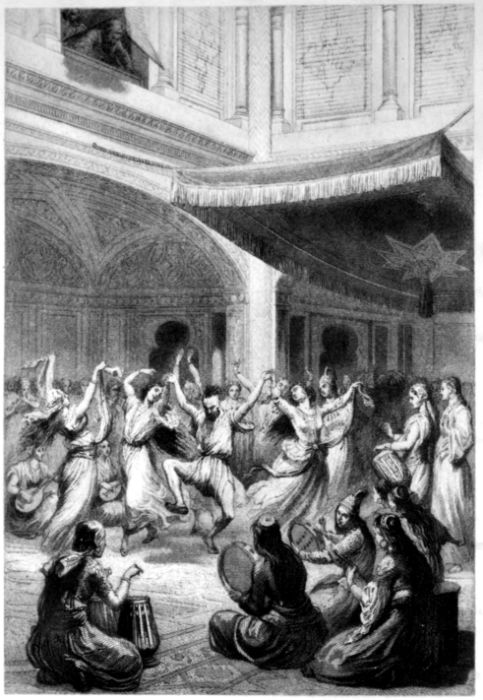

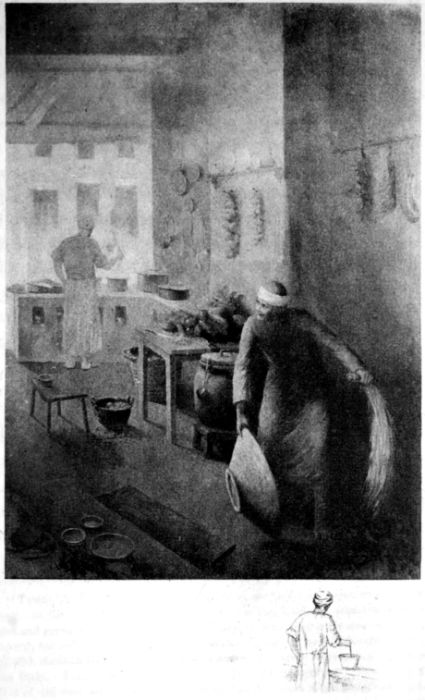
 and there is a Heb. root
 but no Arabic. In the Durrat
al-Ghawwás, however, Tilmíz, Bilkís, and similar words are Arabic in the form of
Fa’líl and Fi’líl.