The spores are white in mass, or sometimes with a faint yellowish or
lilac tinge. For analytical keys to the genera see Chapter XXIV.
The genus Amanita has both a volva and a veil; the spores are white,
and the stem is easily separable from the cap. In the young stage the
volva forms a universal veil, that is, a layer of fungus tissue which
entirely envelops the young plant. In the button stage, where this
envelope runs over the cap, it is more or less free from it, that is, it
is not "concrete" with the surface of the pileus. As the pileus expands
and the stem elongates, the volva is ruptured in different ways
according to the species. In some the volva splits at the apex and is
left as a "cup" at the base of the stem. In others it splits circularly,
that is, transversely across the middle, the lower half forming a
shallow cup with a very narrow rim, or in other cases it is closely
fitted against the stem, while the upper half remains on the cap and is
broken up into patches or warts. In still other cases the volva breaks
irregularly, and only remnants of it may be found on either the base of
the stem or on the pileus. For the various conditions one must consult
the descriptions of the species. The genus is closely related to
Lepiota, from which it is separated by the volva being separate from
the pileus. This genus contains some of the most deadly poisonous
mushrooms, and also some of the species are edible. Morgan, Jour. Mycol.
3: 25–33, describes 28 species. Peck, 33d Report N. Y. State Mus., pp.
38–49, describes 14 species. Lloyd, A Compilation of the Volvæ of the
U. S., Cincinnati, 1898, gives a brief synopsis of our species.
Amanita muscaria Linn. Poisonous.—This plant in some places is
popularly known as the fly agaric, since infusions of it are used as a
fly poison. It occurs during the summer and early autumn. It grows along
roadsides near trees, or in groves, and in woods, according to some
preferring a rather poor gravelly soil. It attains its typical form
usually under these conditions in groves or rather open woods where the
soil is poor. It is a handsome and striking plant because of the usually
brilliant coloring of the cap in contrast with the white stems and
gills, and the usually white scales on the surface. It usually ranges
from 10–15 cm. high, and the cap from 8–12 cm. broad, while the stem
is 1–1.5 cm. in thickness, or the plant may be considerably larger.
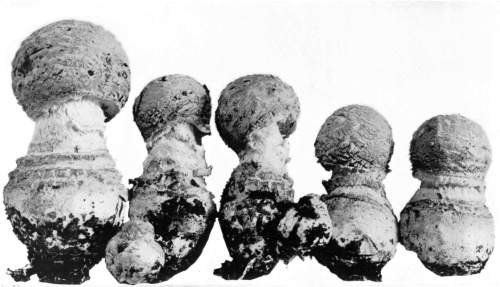
Plate 12, Figure 52.—Amanita muscaria, "buttons,"
showing different stages of rupture of the volva or universal veil, and
formation of inner veil (natural size). Copyright.
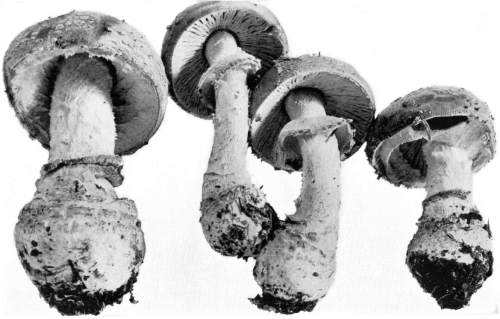
Plate 13, Figure 53.—Amanita muscaria. Further stages in
opening of plant, formation of veil and ring. Cap yellowish, or orange.
Scales on cap and at base of stem white; stem and gills white (natural
size). Copyright.
The pileus passes from convex to expanded and nearly flat in age, the
margin when mature is marked by depressed lines forming parallel
striations, and on the surface are numbers of scattered floccose or
rather compact scales, formed from the fragments of the upper part of
the volva or outer veil. These scales are usually white in color and are
quite easily removed, so that old plants are sometimes quite free from
them. The scales are sometimes yellowish in color. The color of the
pileus varies from yellow to orange, or even red, the yellow color being
more common. Late in the season the color is paler, and in old plants
also the color fades out, so that white forms are sometimes found. The
flesh is white, sometimes yellowish underneath the cuticle. The gills in
typical forms are white, in some forms accredited to this species they
are yellowish. The stem is cylindrical, hollow, or stuffed when young,
and enlarged below into a prominent bulb. It is white, covered with
loose floccose scales, or more or less lacerate or torn, and the lower
part of the stem and upper part of the bulb are marked usually by
prominent concentric scales forming interrupted rings. These are formed
by the splitting of the outer veil or volva, and form the remnants of
the volva present on the base of the stem.
The main features in the development of the plant are shown in Figs.
52–54, where a series from the button stage to the mature plant is
represented. In the youngest specimens the outline of the bulb and the
young convex or nearly globose cap are only seen, and these are covered
with the more or less floccose outer veil or volva. The fungus threads
composing this layer cease to grow, and with the expansion of the cap
and the elongation of the stem, the volva is torn into patches. The
upper and lower surface of the inner veil is attached to the edge of the
gills and to the outer surface of the stem by loose threads, which are
torn asunder as the pileus expands. Floccose scales are thus left on the
surface of the stem below the annulus, as in the left hand plant of Fig.
53. The veil remains attached longer to the gills and is first separated
from the stem. Again, as in the right hand plant, it may first be
separated from the gills when it is later ripped up from the stem.
The fly agaric is one of the well known poisonous species and is very
widely distributed in this country, as well as in other parts of the
world. In well developed forms there should be no difficulty in
distinguishing it from the common mushroom by even a novice. Nor should
there be difficulty in distinguishing it from the royal agaric, or
Cæsar's agaric (Amanita cæsarea), by one who has become reasonably
familiar with the characters and appearance of the two. But small and
depauperate specimens of the two species run so nearly together in form,
color, and surface characters, that it becomes a matter of some
difficulty for even an expert to distinguish them.
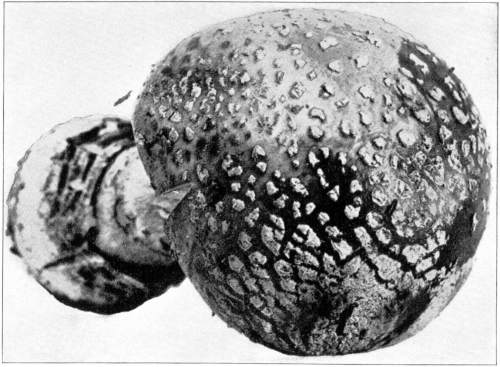
Figure 54.—Amanita muscaria. View of upper side of cap
(natural size). Colors as in Fig. 53. Copyright.
Figures 52–54 are from plants (No. 2065 C. U. herbarium) collected in
an open woods near Ithaca. For the poisonous property of the plant see
Chapter XXII.
Amanita frostiana Pk. Poisonous.—According to Dr. Peck, who published
the first description of this plant, it grows in company with Amanita
muscaria, but seems to prefer more dense woods, especially mixed or
hemlock woods, and occurs from June to October. The plant is 5–8 cm.
high, the caps 2–5 cm. broad, and the stems 3–6 mm. in thickness.
The pileus is "convex to expanded, bright orange or yellow, warty,
sometimes nearly or quite smooth, striate on the margin; lamellæ white
or tinged with yellow; stem white or yellowish, stuffed, bearing a
slight, sometimes evanescent annulus, bulbous at the base, the bulb
slightly margined by the volva; spores globose," 7.5–10 µ in
diameter. He notes that it appears like a small form of A. muscaria,
to which it was first referred as var. minor,—"The only characters
for distinguishing it are its small size and its globose spores." It is
near A. muscaria var. puella Pers.
I have several times found this plant in the Adirondack mountains, N.
Y., and Ithaca, and also at Blowing Rock, N. C. The volva is often
yellowish, so that the warts on the pileus are also yellow, and
sometimes the only remnants of the volva on the base of the stem are
yellow or orange particles. The annulus is also frequently yellow. In
our plants, which seem to be typical, the spores are nearly globose,
varying to oval, and with the minute point where the spore was attached
to the sterigma at the smaller end, the spores usually being finely
granular, 6–9 µ in diameter, and rarely varying towards short
elliptical, showing a tendency to approach the shape of the spores of
A. muscaria. The species as I have seen it is a very variable one,
large forms being difficult to separate from A. muscaria, on the one
hand, and others difficult to separate from the depauperate forms of A.
cæsarea. In the latter, however, the striæ are coarser, though the
yellow color may be present only on portions of the pileus. The spores
of A. cæsarea are from globose to oval, ovate or short elliptical, the
globose ones often agreeing in size with the spores of A. frostiana,
but they usually contain a prominent oil drop or "nucleus," often nearly
filling the spore. In some specimens of A. frostiana the spores are
quite variable, being nearly globose, ovate to elliptical, approaching
the spores of A. muscaria. These intermediate forms should not in
themselves lead one to regard all these three species as representing
variations in a single variable species. With observations in the field
I should think it possible to separate them.
Amanita phalloides Fr. Deadly Poisonous.—The Amanita phalloides and
its various forms, or closely related species, are the most dangerous of
the poisonous mushrooms. For this reason the A. phalloides is known as
the deadly agaric, or deadly amanita. The plant is very variable in
color, the forms being pure white, or yellowish, green, or olive to
umber. Variations also occur in the way in which the volva ruptures, as
well as in the surface characters of the stem, and thus it is often a
difficult matter to determine whether all these forms represent a single
variable species or whether there are several species, and if so, what
are the limits of these species. Whether these are recognized as
different forms of one species or as different species, they are all
very poisonous. The plant usually occurs in woods or along the borders
of woods. It does, however, sometimes occur in lawns. It varies from
6–20 cm. high, the cap from 3–10 cm. broad, and the stem 6–10 mm. in
thickness.
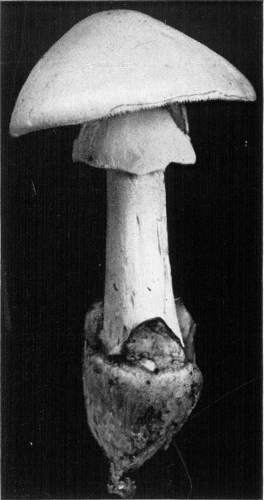
Figure 55.—Amanita phalloides, white form, showing cap,
stem, ring, and cup-like volva with a free, prominent limb (natural
size).
The pileus is fleshy, viscid or slimy when moist, smooth, that is, not
striate, orbicular to bell-shaped, convex and finally expanded, and in
old specimens more or less depressed by the elevation of the margin. The
cap is often free from any remnants of the volva, while in other cases
portions of the volva or outer veil appear on the surface of the cap in
rather broad patches, or it may be broken up into a number of smaller
ones quite evenly distributed over the surface of the cap. The presence
or absence of these scales on the cap depends entirely on the way in
which the volva ruptures. When there is a clean rupture at the apex the
pileus is free from scales, but if portions of the apex of the volva are
torn away they are apt to remain on the cap.
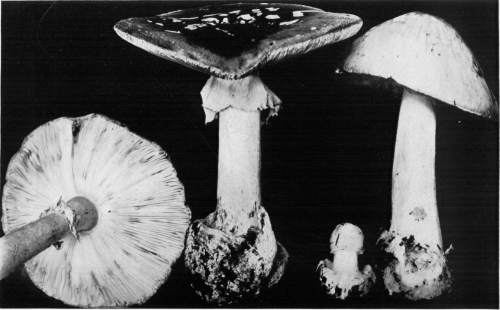
Plate 14, Figure 56.—Amanita phalloides, brownish,
umber, or olive-brown form (natural size). Caps brownish or whitish, and
streaked with brown, scales white, gills and stem white, stem slowly
turning dull brown where bruised. Copyright.
The white form is common in this country, and so is the olive or umber
form. The yellow form is rarer. Sometimes there is only a tinge of
yellow at the center of the white pileus, while in other cases a large
part of the pileus may be yellow, a deeper shade usually on the center.
The green form is probably more common in Europe than in this country.
The olive form varies considerably also in the depth of the color,
usually darker on the center and fading out to light olive or gray, or
whitish, on the margin. In other cases the entire pileus may be dark
olive or umber color. The gills in all the forms are white, and free
from the stem or only joined by a narrow line. The stem is stuffed when
young, but in age is nearly or quite hollow. It is cylindrical, 6–20
cm. long × 6–12 mm. in thickness. In the larger specimens the bulb is
quite prominent and abrupt, while in the smaller specimens it is not
always proportionally so large. The stem is usually smooth and the color
is white, except in the dark forms, when it is dingy or partakes more or
less of the color of the pileus, though much lighter in shade. There is
a tendency in these forms to a discoloration of the stem where handled
or bruised, and this should caution one in comparing such forms with the
edible A. rubescens.
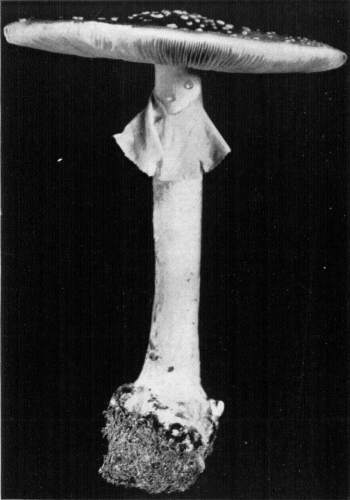
Figure 57.—Amanita phalloides, volva circumscissile, cap
scaly, limb of volva not prominent, cap dark, scales white (natural
size). Copyright.
Perhaps no part of the plant is more variable than the outer veil or
volva. Where the volva is quite thick and stout it usually splits at the
apex, and there is a prominent free limb, as shown in Fig. 55. Sometimes
thin portions of the volva are caught, and remain on the surface of the
pileus. But when the volva is thinner and of a looser texture, it splits
transversely about the middle, circumscissile, and all or a large part
of the upper half of the volva then clings to the cap, and is separated
into patches. Between this and the former condition there seem to be all
gradations. Some of these are shown in Fig. 56, which is from a
photograph of dark olive and umber forms, from plants collected in the
Blue Ridge mountains, at Blowing Rock, N. C., during September, 1899. In
the very young plant the volva split transversely (in a circumscissile
fashion) quite clearly, and the free limb is quite short and distant
from the stem on the margin of the saucer-like bulb. In the large and
fully expanded plant at the center, the volva ruptured irregularly at
the apex, and portions of the thin upper half remain as patches on the
cap while the larger part remains as the free limb, attached at the
margin of the broad saucer-shaped bulb, and collapsed up against the
base of the stem.
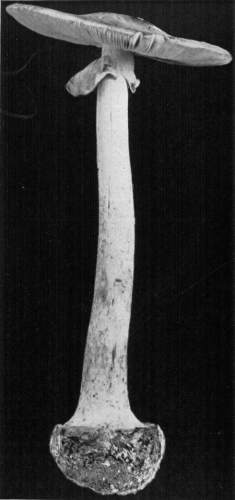
Figure 58.—Amanita phalloides, volva circumscissile,
concave bulb margined by definite short limb of volva; upper part of
volva has disappeared from cap; cap whitish, tinged with brown.
Figure 58 and the small plant in Fig. 56, both from photographs of the
sooty form of Amanita phalloides, show in a striking manner the
typical condition of the circumscissile volva margining the broad
saucer-like bulb as described for Amanita mappa. The color of A.
mappa is usually said to be straw color, but Fries even says that the
color is as in A. phalloides, "now white, now green, now yellow, now
dark brown" (Epicrisis, page 6). According to this, Fig. 58 would
represent A. mappa.
The variable condition in this one species A. phalloides, now
splitting at the apex, now tearing up irregularly, now splitting in a
definitely circumscissile manner, seems to bid defiance to any attempt
to separate the species of Amanita into groups based on the manner in
which the volva ruptures. While it seems to be quite fixed and
characteristic in certain species, it is so extremely variable in others
as to lead to the suspicion that it is responsible in some cases for the
multiplication and confusion of species. At the same time, the
occurrence of some of these forms at certain seasons of the year
suggests the desirability of prolonged and careful study of fresh
material, and the search for additional evidence of the unity of these
forms, or of their definite segregation.
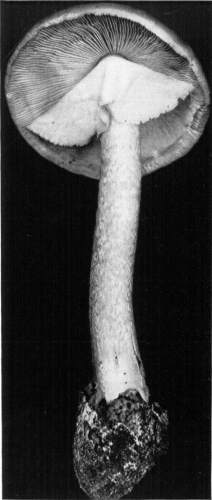
Figure 59.—Amanita verna, white (natural size).
Copyright.
Since the Amanita phalloides occurs usually in woods, or along borders
of woods, there is little danger of confounding it with edible mushrooms
collected in lawns distant from the woods, and in open fields. However,
it does occur in lawns bordering on woods, and in the summer of 1899 I
found several of the white forms of this species in a lawn distant from
the woods. This should cause beginners and those not thoroughly familiar
with the appearance of the plant to be extremely cautious against eating
mushrooms simply because they were not collected in or near the woods.
Furthermore, sometimes the white form of the deadly amanita possesses a
faint tinge of pink in the gills, which might lead the novice to mistake
it for the common mushroom. The bulb of the deadly amanita is usually
inserted quite deep in the soil or leaf mold, and specimens are often
picked leaving the very important character of the volva in the ground,
and then the plant might easily be taken for the common mushroom, or
more likely for the smooth lepiota, Lepiota naucina, which is entirely
white, the gills only in age showing a faint pink tinge. It is very
important, therefore, that, until one has such familiarity with these
plants that they are easily recognized in the absence of some of these
characters, the stem should be carefully dug from the soil. In the case
of the specimens of the deadly amanita growing in the lawn on the campus
of Cornell University, the stems were sunk to three to four inches in
the quite hard ground.
Amanita verna Bull. Deadly Poisonous.—The Amanita verna is by some
considered as only a white form of the Amanita phalloides. It is of a
pure white color, and this in addition to its very poisonous property
has led to its designation as the "destroying angel."
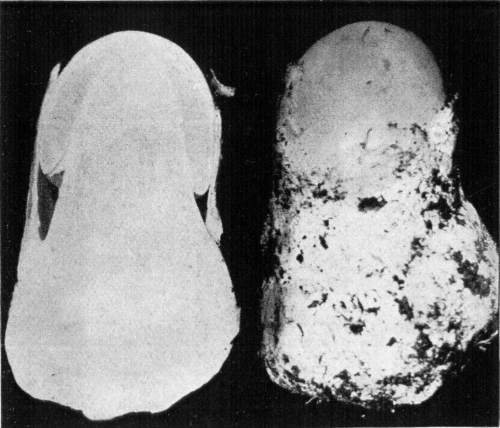
Figure 60.—Amanita verna, "buttons," cap bursting
through the volva; left hand plant in section (natural size).
Copyright.
The pileus is smooth and viscid when moist; the gills free; the stem
stuffed or hollow in age; the annulus forms a broad collar, and the
volva is split at the apex, and being quite stout, the free limb is
prominent, and it hugs more or less closely to the base of the stem.
Figure 59 represents the form of the plant which Gillet recognizes as
A. verna; the pileus convex, the annulus broad and entire, and the
stem scaly. These floccose scales are formed as a result of the
separation of the annulus from the outer layer of the stem.
The characters presented in the formation of the veil and annulus in
this species are very interesting, and sometimes present two of the
types in the formation of the veil and annulus found in the genus
Amanita. In the very young plant, in the button stage, as the young
gills lie with their edges close against the side of the stem, loose
threads extend from the edges of the gills to the outer layer of the
stem. This outer layer of the stem forms the veil, and is more or less
loosely connected with the firmer portion of the stem by loose threads.
As the pileus expands, the threads connecting the edges of the gills
with the veil are stronger than those which unite the veil with the
surface of the stem. The veil is separated from the stem then,
simultaneously, or nearly so, throughout its entire extent, and is not
ripped up from below as in Amanita velatipes.
As the pileus expands, then, the veil lies closely over the edges of the
gills until finally it is freed from them and from the margin of the
pileus. As the veil is split off from the surface of the stem, the
latter is torn into numerous floccose scales, as shown in Fig. 59.
In other cases, in addition to the primary veil which is separated from
the stem in the manner described above, there is a secondary veil formed
in exactly the same way as that described for Amanita velatipes.
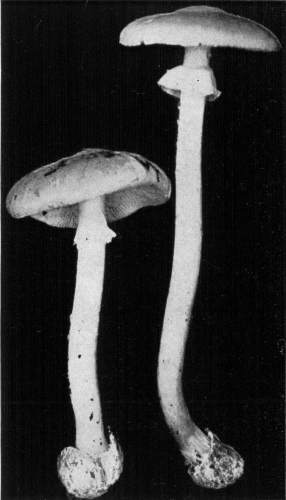
Figure 61.—Amanita verna, small form, white (natural
size). Copyright.
In such cases there are two veils, or a double veil, each attached to
the margin of the pileus, the upper one ascending over the edges of the
gills and attached above on the stem, while the lower one descends and
is attached below as it is being ripped up from a second layer of the
stem. Figures 59–61 are from plants collected at Blowing Rock, N. C.,
in September, 1899.
Amanita virosa Fr. Deadly Poisonous.—This plant also by some is
regarded as only a form of Amanita phalloides. It is a pure white
plant and the pileus is viscid as in the A. verna and A. phalloides.
The volva splits at the apex as in A. verna, but the veil is very
fragile and torn into shreds as the pileus expands, portions of it
clinging to the margin of the cap as well as to the stem, as shown in
Fig. 62. The stem is also adorned with soft floccose scales. Gillet
further states that the pileus is conic to campanulate, not becoming
convex as in A. verna and A. phalloides.
The variability presented in the character of the veil and in the shape
of the pileus suggests, as some believe, that all these are but forms of
a single variable species. On the other hand, we need a more careful and
extended field study of these variations. Doubtless different
interpretations of the specific limits by different students will lead
some to recognize several species where others would recognize but one.
Since species are not distinct creations there may be tolerably good
grounds for both of these views.
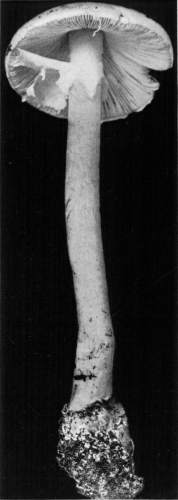
Figure 62.—Amanita virosa, white (natural size).
Copyright.
Amanita floccocephala Atkinson. Probably Poisonous.—This species occurs
in woods and groves at Ithaca during the autumn. The plants are medium
sized, 6–8 cm. high, the cap 3–6 cm. broad, and the stems 4–6 mm. in
thickness.
The pileus is hemispherical to convex, and expanded, smooth, whitish,
with a tinge of straw color, and covered with torn, thin floccose
patches of the upper half of the circumscissile volva. The gills are
white and adnexed. The spores are globose, 7–10 µ. The stem is
cylindrical or slightly tapering above, hollow or stuffed, floccose
scaly and abruptly bulbous below. The annulus is superior, that is, near
the upper end of the stem, membranaceous, thin, sometimes tearing, as in
A. virosa. The volva is circumscissile, the margin of the bulb not
being clear cut and prominent, because there is much refuse matter and
soil interwoven with the lower portion of the volva. The bulb closely
resembles those in Cooke's figure (Illustrations, 4) of A. mappa.
Figure 63 shows these characters well.
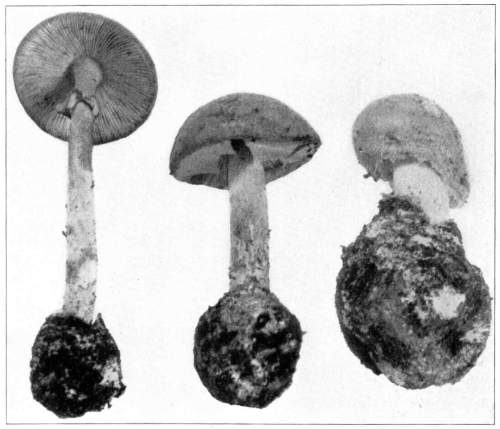
Figure 63.—Amanita floccocephala (natural size).
Copyright.
Amanita velatipes Atkinson. Properties Unknown.—This plant is very
interesting since it shows in a striking manner the peculiar way in
which the veil is formed in some of the species of Amanita. Though not
possessing brilliant colors, it is handsome in its form and in the
peculiar setting of the volva fragments on the rich brown or faint
yellow of the pileus. It has been found on several occasions during the
month of July in a beech woods on one of the old flood plains of
Six-mile creek, one of the gorges in the vicinity of Ithaca, N. Y. The
mature plant is from 15–20 cm. high, the cap from 8–10 cm. broad, and
the stem 1–1.5 cm. in thickness.
The pileus is viscid when moist, rounded, then broadly oval and convex
to expanded, striate on the margin, sometimes in old plants the margin
is elevated. It is smooth throughout, and of a soft, rich hair brown, or
umber brown color, darker in the center. Sometimes there is a decided
but dull maize yellow tinge over the larger part of the pileus, but even
then the center is often brown in color, shading into the yellow color
toward the margin; the light yellow forms in age, often thinning out to
a cream color. The flesh of the pileus is rather thin, even in the
center, and becomes very thin toward the margin, as shown in Fig. 67.
The scales on the pileus are more or less flattened, rather thin,
clearly separated from the pileus, and easily removed. They are more or
less angular, and while elongated transversely at first, become nearly
isodiametric as the pileus becomes fully expanded, passing from an
elongated form to rectangular, or sinuous in outline, the margin more or
less upturned, especially in age, when they begin to loosen and "peel"
from the surface of the cap. They are lighter in color than the pileus
and I have never observed the yellow tint in them. The gills are white,
broad at the middle, about 1 cm., and taper gradually toward each end.
The spores are usually inequilaterally oval, 8–10 × 6–7 µ, granular
when young, when mature with a large oil drop.
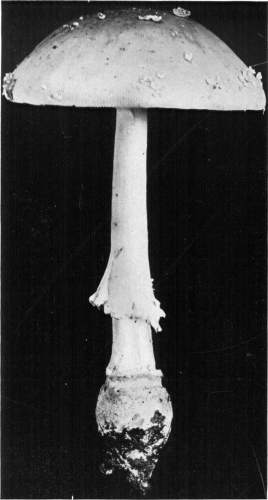
Plate 15, Figure 64.—Amanita velatipes (3/4 natural
size). Cap hair-brown, or umber-brown, sometimes with tinge of lemon
yellow, or entirely maize-yellow. Scales, gills, and stem white.
Copyright.
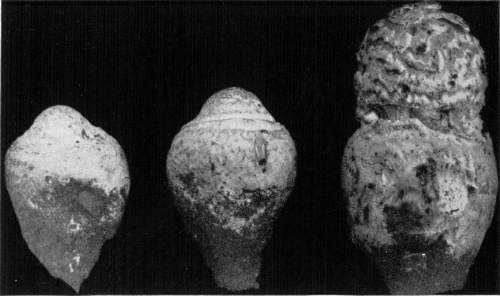
Figure 65.—Amanita velatipes. Different stages of
"buttons," in the right-hand plant the upper part of the volva
separating to form the scales (natural size). Copyright.
The stem is cylindrical, somewhat bulbous, the bulb often tapering
abruptly, as shown in Figs. 64, 66. The stem is white, smooth, or
floccose scaly where the veil has been ripped off from it. It is
hollow and stuffed with loose cottony threads, as shown in Fig. 67. The
veil is formed by the ripping up of the outer layer of the stem as the
latter elongates and as the pileus expands. When it is freed from the
margin of the cap it collapses and hangs downward as a broad collar
(Fig. 64). The annulus is inferior, its position on the stem being due
to the peculiar way in which it is formed.
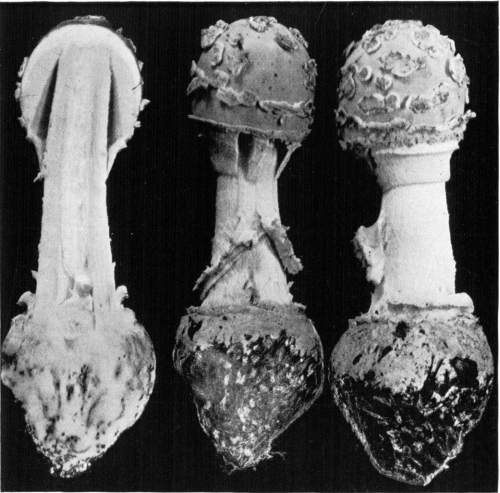
Figure 66.—Amanita velatipes. Three plants natural size,
the left-hand one sectioned, showing stuffed center of stem. Others show
how veil is ripped up from the stem. For other details see text.
Copyright.
Some of the stages of development are illustrated in Figs. 64–67. The
buttons are queer looking objects, the bulb being the most prominent
part. It tapers abruptly below, and on the upper side is the small
rounded young cap seated in the center. The volva is present as a rough
floccose layer, covering the upper part of the bulb and the young cap.
As the stem elongates and the pileus enlarges and expands, the volva is
torn into areolate patches. The lower patches, those adjoining the
margin of the cap and the upper part of the bulb, are separated in a
more or less concentric manner. One or more of them lie on the upper
part of the bulb, forming the "limb" of the "ocreate" volva. Others lie
around the margin of the pileus. Sometimes an annular one bordering the
pileus and bulb is left clinging part way up on the stem, as shown in
Fig. 66. The concentric arrangement on the pileus is sometimes shown for
a considerable time, as in Fig. 67, the elongated areas being present in
greater number at this age of the pileus. However, as the pileus expands
more, these are separated into smaller areas and their connection with
the surface of the pileus becomes less firm.
The formation of the veil and annulus can be easily followed in these
figures. The margin of the cap in the button stage is firmly connected
with the outer layer of the stem at its lower end. This probably occurs
by the intermingling growth of the threads from the lower end of the
stem and the margin of the cap, while the edges of the gills are quite
free from the stem. Now as the stem elongates and the cap expands the
veil is "ripped" up from the outer part of the stem. This is very
clearly shown in Fig. 66, especially where two strips on the stem have
become disconnected from the margin of the cap and are therefore left in
position on the outside of the stem.
This species is related to A. excelsa Fr., which is said to have a
superior ring.
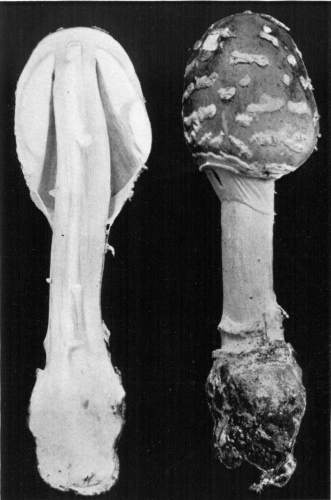
Plate 16, Figure 67.—Amanita velatipes. The right-hand
plant shows how the veil is ripped up from the stem and also shows the
transversely elongate scales on the cap. For details see text (natural
size). Copyright.
Amanita cothurnata Atkinson. Probably Poisonous.—The booted amanita,
Amanita cothurnata, I have found in two different years in the Blue
Ridge mountains at Blowing Rock, N. C., once in 1888, during the first
week of September, and again during the three first weeks in September,
1899. It occurs sparingly during the first week or so of September, and
during the middle of the month is very abundant. The species seems to be
clearly distinct from other species of Amanita, and there are certain
characters so persistent as to make it easily recognizable. It ranges in
height from 7–12 cm. and the caps are 3–7 cm. or more broad, while the
stems are 4–10 mm. in thickness. The entire plant is usually white, but
in some specimens the cap has a tinge of citron yellow, or in others
tawny olive, in the center.
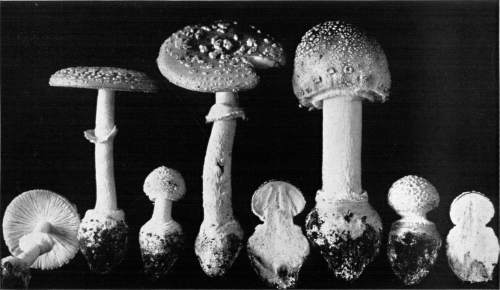
Plate 17, Figure 68.—Amanita cothurnata. Different
stages of development; for details see text. Entire plant white,
sometimes tinge of umber at center of cap, and rarely slight tinge of
lemon-yellow at center (natural size). Copyright.
The pileus is fleshy, and passes, in its development, from nearly
globose to hemispherical, convex, expanded, and when specimens are very
old sometimes the margin is elevated. It is usually white, though
specimens are found with a tinge of citron yellow in the center, or
of tawny olive in the center of other specimens. The pileus is viscid,
strongly so when moist. It is finely striate on the margin, and covered
with numerous, white, floccose scales from the upper half of the volva,
forming more or less dense patches, which may wash off in heavy rains.
The gills are rounded next the stem, and quite remote from it. The edge
of the gills is often eroded or frazzly from the torn out threads with
which they were loosely connected to the upper side of the veil in the
young or button stage. The spores are globose or nearly so, with a large
"nucleus" nearly filling the spore.
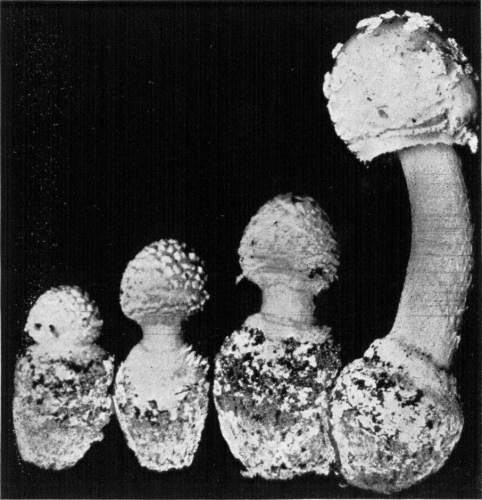
Figure 69.—Amanita cothurnata. Different stages opening
up of plant, the two center ones showing veil being ripped from stem,
but veil narrow. The right-hand illustration has been scratched
transversely, these marks not being characteristic of the plant (natural
size). Copyright.
The stem is cylindrical, even, and expanded below into quite a large
oval bulb, the stem just above the bulb being margined by a close
fitting roll of the volva, and the upper edge of this presenting the
appearance of having been sewed at the top like the rolled edge of a
garment or buskin. The surface of the stem is minutely floccose scaly or
strongly so, and decidedly hollow even from a very young stage, or
sometimes when young with loose threads in the cavity.
Figures 68–70, from plants (No. 3715, C. U. herbarium) collected at
Blowing Rock, N. C., during September, 1899, illustrate certain of the
features in the form and development of this plant.
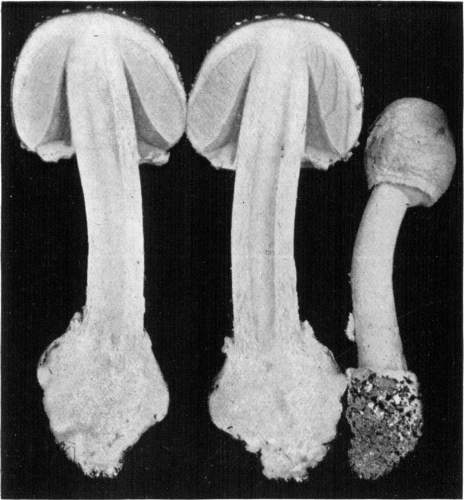
Figure 70.—Amanita cothurnata. Two plants in section
showing clearly hollow stem, veil attachment, etc. (natural size).
Copyright.
In Amanita frostiana the remains of the volva sometimes form a similar
collar, but not so stout, on the base of the stem. The variations in A.
frostiana where the stem, annulus and gills are white might suggest
that there is a close relationship between A. frostiana and A.
cothurnata, and that the latter is only a form of the former. From a
careful study of the two plants growing side by side the evidence is
convincing that the two are distinct. Amanita frostiana occurs also at
Blowing Rock, appearing earlier in the season than A. cothurnata, and
also being contemporary with it. A. frostiana is more variable, not
nearly so viscid, nor nearly so abundant, the stem is solid or stuffed,
the annulus is more frail and evolved from the stem in a different
manner. The volva does not leave such a constant and well defined roll
where it separated on the stem transversely, and the pileus is yellow or
orange. When A. cothurnata is yellowish at all it is a different tint
of yellow and then only a tinge of yellow at the center. Albino or faded
forms of A. frostiana might occur, but we would not expect them to
appear at a definite season of the year in great abundance while the
normal form, showing no intergrading specimens in the same locality,
continued to appear in the same abundance and with the same characters
as before. The dried plants of A. cothurnata are apt to become tinged
with yellow on the gills, the upper part of the stem and upper part of
the annulus during the processes of drying, but the pileus does not
change in like manner, nor do these plants show traces of yellow on
these parts when fresh. The spores are also decidedly different, though
the shape and size do not differ to any great extent. In A. frostiana
and the pale forms of the species the spores are nearly globose or oval,
rarely with a tendency to become elliptical, but the content is quite
constantly finely granular, while the spores of A. cothurnata are
perhaps more constantly globose or nearly so, but the spore is nearly
filled with a highly refractive oil globule or "nucleus." The pileus
of A. frostiana is also thinner than that of A. cothurnata. It is
nearer, in some respects, to specimens of Amanita pantherina received
from Bresadola, of Austria-Hungary.
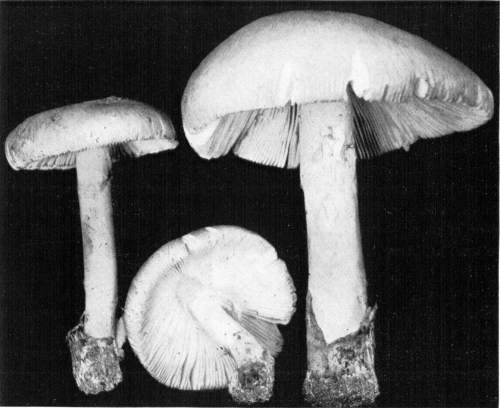
Figure 71.—Amanita spreta. The two outside plants show
the free limb of the volva lying close against the stem (natural size,
often larger). Copyright.
Amanita spreta Pk. Said to be Poisonous.—According to Peck this species
grows in open or bushy places. The specimens illustrated in Fig. 71 grew
in sandy ground by the roadside near trees in the edge of an open field
at Blowing Rock, N. C., and others were found in a grove. The plants are
10–15 cm. high, the caps 6–12 cm. broad, and the stems 8–12 mm. in
thickness. The pileus is convex to expanded, gray or light drab, and
darker on the center, or according to Dr. Peck it may be white. It is
smooth, or with only a few remnants of the volva, striate on the margin,
and 1—.5 cm. thick at the center. The gills are white, adnexed, that is
they reach the stem by their upper angle. The stem is of the same color
as the pileus, but somewhat lighter, white to light gray or light drab,
cylindrical, not bulbous, hollow or stuffed. The annulus is thin and
attached above the middle of the stem. The volva is sordid white, and
sheathes the stem with a long free limb of 3–5 lobes. It splits at the
apex, but portions sometimes cling to the surface of the pileus.
Figure 71 is from plants (No. 3707, C. U.) collected at Blowing Rock, N.
C., September, 1899.
Amanita cæsarea Scop. Edible, but use great caution.—This plant is
known as the orange amanita, royal agaric, Cæsar's agaric, etc. It is
one of the most beautiful of all the agarics, and is well distributed
over the earth. With us it is more common in the Southern States. It
occurs in the summer and early autumn in the woods. It is easily
recognized by its usually large size, yellow or orange color of the cap,
gills, stem and ring, and the prominent, white, sac-like volva at the
base of the stem. It is usually 12–20 cm. high, the cap 5–10 cm.
broad, and the stems 6–10 mm. in thickness, though it may exceed this
size, and depauperate forms are met with which are much smaller.
The pileus is ovate to bell-shaped, convex, and finally more or less
expanded, when the surface may be nearly flat or the center may be
somewhat elevated or umbonate and the margin curved downward. The
surface is smooth except at the margin, where it is prominently striate.
The color varies from orange to reddish or yellow, usually the well
developed and larger specimens have the deeper and richer colors, while
the smaller specimens have the lighter colors, and the color is usually
deeper on the center of the pileus. The gills are yellow, and free from
the stem. The stem is hollow, even in young plants, when it may be
stuffed with loose threads. It is often very floccose scaly below the
annulus. It is cylindrical, only slightly enlarged below, where it is
covered by the large, fleshy, sac-like white volva. The annulus is
membranaceous, large, and hangs like a broad collar from the upper part
of the stem. The stem and ring are orange or yellow, the depth of the
color varying more with the size of the plant than is the case with the
color of the cap. In small specimens the stem is often white, especially
in depauperate specimens are the stem and annulus white, and even the
gills are white when the volva may be so reduced as to make it difficult
to distinguish the specimens from similar specimens of the poisonous fly
agaric.
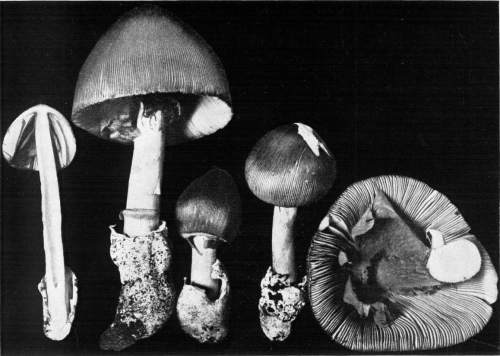
Plate 18, Figure 72.—Amanita cæsarea. Different stages
of development (2/3 natural size). Cap, stem, gills, veil orange or
yellow. Volva white. Copyright.
In the button stage the plant is ovate and the white color of the volva,
which at this time entirely surrounds the plants, presents an appearance
not unlike that of an egg. The volva splits open at the apex as the stem
elongates. The veil is often connected by loose threads with the outer
portion of the stem and as the pileus expands this is torn away, leaving
coarse floccose scales on the stem. Some of the different stages in the
opening of the plant are shown in Fig. 72. This illustration is taken
from a photograph of plants (No. 3726, C. U. herbarium) collected at
Blowing Rock, N. C., September, 1899. The plant is said to be one of the
best esculents, and has been prized as an article of food from ancient
times. Great caution should be used in distinguishing it from the fly
agaric and from other amanitas.
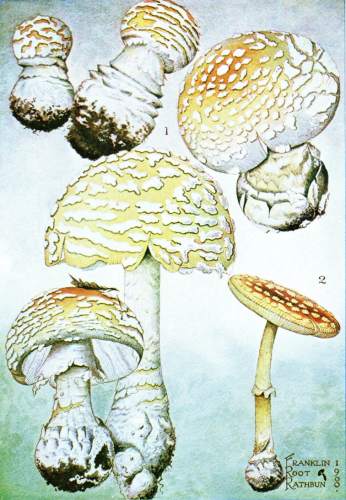
- PLATE 19.
- Fig. 1.—Amanita rubescens
- Fig. 2.—A. cæsarea.
- Copyright 1900.
Amanita rubescens Fr. Edible, but use great caution.—The reddish
amanita, Amanita rubescens, is so called because of the sordid reddish
color diffused over the entire plant, and especially because bruised
portions quickly change to a reddish color. The plant is often quite
large, from 12–20 cm. high, the cap 8–12 cm. broad and the stem 8–12
mm. in thickness, but it is sometimes much smaller. It occurs during the
latter part of the summer and in early autumn, in woods and open places.
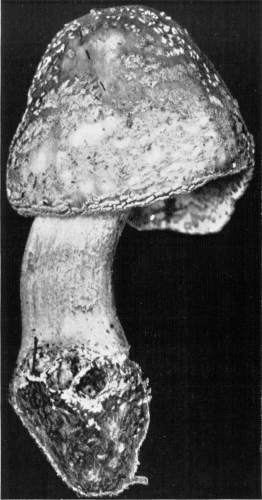
Figure 73.—Amanita rubescens. Plant partly expanded.
Dull reddish brown, stains reddish when bruised; for other details see
text (natural size). Copyright.
The pileus is oval to convex, and becoming expanded when old. It is
smooth or faintly striate on the margin, and covered with numerous
scattered, thin, floccose, grayish scales, forming remnants of the
larger part of the volva or outer veil. The color of the cap varies
correspondingly, but is always tinged more or less distinctly with pink,
red, or brownish red hues. The gills are white or whitish and free from
the stem. The stem is nearly cylindrical, tapering some above, and with
a prominent bulb which often tapers abruptly below. In addition to the
suffused dull reddish color the stem is often stained with red,
especially where handled or touched by some object. There are very few
evidences of the volva on the stem since the volva is so floccose and
torn into loose fragments, most of which remain on the surface of the
cap. Sometimes a few of these loose fragments are seen on the upper
portion of the bulb, but they are easily removed by handling or by
rains. The annulus is membranous, broad, and fragile.
Since the plant has become well known it is regarded as excellent and
wholesome for food and pleasant to the taste. In case of the larger
specimens there should be no difficulty in distinguishing it from others
by those who care to compare the descriptions closely with the fresh
specimens. But as in all cases beginners should use extreme caution in
eating plants they have not become thoroughly familiar with. Small
specimens of this species sometimes show but little of the reddish
color, and are therefore difficult to determine.
Figures 73 and 74 are from plants (No. 3727 C. U. herbarium) collected
at Blowing Rock, N. C., during September, 1899.
Amanita solitaria Bull. Edible, but use caution.—The solitary
amanita, like many other plants, is not always true to its name. While
it often occurs solitary, it does occur sometimes in groups. It is one
of the largest of the amanitas. Its large size, together with its chalky
white or grayish white color, and ragged or shaggy appearance, makes it
a striking object in the woods, or along roadsides in woods where it
grows. Frequently parts of the cap, the entire stem and the gills are
covered with a white, crumbly, floccose substance of a mealy consistency
which often sticks to the hands or other objects. The plant ranges from
15–20 cm. or more high, the cap from 8–15 cm. broad, and the stems are
1–2 cm. or more in thickness.
In form the pileus ranges from nearly globose in the button stage, to
hemispherical, convex and expanded, when quite old the margin becoming
more or less elevated. It is covered either with flaky or floccose
portions of the volva, or with more or less distinct conic white scales,
especially toward the center. The conic scales are easily rubbed off in
handling or are easily washed off by rains. Many of them are loosened
and fall because of the tension produced by the expanding pileus on the
surface of which they rest. These scales vary in size from quite small
ones, appearing like granules, to those fewer in number and larger, 3
mm. high and nearly as broad at the base. In other cases the scales are
harder and stouter and dark colored. These forms will be discussed after
the description of the other parts of the plant.
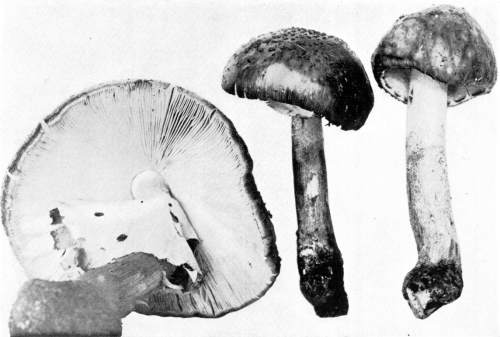
Plate 20, Figure 74.—Amanita rubescens. Under and side
view. Dull reddish brown, stains reddish where bruised (3/4 natural
size). Copyright.
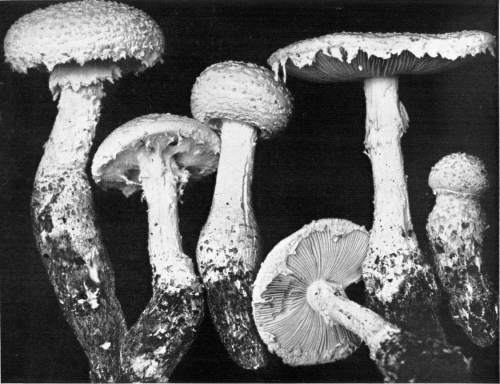
Plate 21, Figure 75.—Amanita solitaria. Entirely white,
or cap and scales sordid buff, dull brown, or grayish in some plants.
For details see text (1/2 natural size). Copyright.
The gills are free, or are only attached by the upper inner angle; the
edges are often floccose where they are torn from the slight union with
the upper surface of the veil. The stem is cylindrical, solid or stuffed
when old, enlarged usually below into a prominent bulb which then tapers
into a more or less elongated root-like process, sometimes extending
5–10 cm. in the ground below the bulb. In rare cases the bulb is not
present, but the cylindrical stem extends for a considerable distance
into the ground. The veil is a very interesting part of the plant and
the manner in which it forms and disappears as the cap expands is worth
a careful study. This is well shown in Figs. 75, 76, from photographs of
plants (No. 3731 C. U. herbarium) made at Blowing Rock, N. C., during
September, 1899.
During the latter part of August and the first three weeks of September
the plants were quite common in the mountain woods at Blowing Rock. In
certain features there was close agreement in the case of all the
specimens examined, especially in the long rooting character of the base
of the stem. The veil and annulus were also quite constant in their
characters, though sometimes a tendency was manifested to split up more
irregularly than at other times. In the character of the warts of the
pileus there was great variation, showing typical forms of Amanita
solitaria and grading into forms which might be taken for typical
Amanita strobiliformis. Especially is this so in the case of some of
my specimens (No. 3733), where the scales are pyramidal, dark brown,
surrounded by a sordid buff or grayish area, and these latter areas
separated by narrow chinks whitish in color. The scales in this specimen
are fixed quite firmly to the surface of the pileus. In other specimens
(No. 3732) these hard scales remove quite easily, while in still another
the pileus is almost smooth, even the floccose scales having been
obliterated, while a very few of the hard angular warts are still
present. In another half expanded plant (of No. 3732) the warts are
pyramidal, 4–6 mm. long at the center of the pileus and rather closely
imbricated, hard, and firmly joined to the surface of the cap. In Nos.
3733 and 3731 the spores measure 7–9 × 4–6 µ. In 3732 they are longer,
varying from 7–11 µ.
The specimens with the long hard scales suggest Amanita strobiliformis
Vittad., but the long rooting base of the stem does not agree with the
description of that plant, but does clearly agree with Amanita
solitaria Bull. A study of the variations in these plants suggests that
Amanita solitaria and strobiliformis Vittad., represent only
variations in a single species as Bulliard interpreted the species more
than a century ago. Forms of the plant are also found which suggest
that A. polypyramis B. & C., collected in North Carolina, is but one
of the variations of A. solitaria.
Figures 75, 76 show well certain stages in the development of this
plant. The conical or pyramidal warts are formed in a very young stage
of the plant by the primary separation of the outer part of the volva,
and as the pileus expands more, and the cessation of growth of the outer
veil proceeds inward, the scales become more widely separated at the
apex and broader at the base. In some cases the volva is probably
thinner than in others, and with the rapid expansion of the pileus in
wet weather the scales would be smaller, or more floccose. But with
different conditions, when it is not so wet, the plant expands less
rapidly, the surface of the pileus becomes drier, the volva layer does
not separate so readily and the fissures between the scales proceed
deeper, and sometimes probably enter the surface of the pileus, so that
the size of the warts is augmented. A similar state of things sometimes
takes place on the base of the stem at the upper margin of the bulb,
where the concentric fissures may extend to some distance in the stem,
making the scales here more prominent in some specimens than in others.
A similar variation in the character of the scales on the bulb of
Amanita muscaria is sometimes presented.
The veil is often loosely attached to the edges of the gills, and so is
stripped off from the stem quite early. Sometimes it is more strongly
adherent to the stem, or portions of it may be, when it is very
irregularly ruptured as it is peeled off from the stem, as shown in the
plant near the left side in Fig. 75. The veil is very fragile and often
tears a little distance from the margin of the cap, while the portion
attached to the stem forms the annulus. This condition is shown in the
case of three plants in Fig. 75. The plant is said to be edible.
This genus has white spores, and a volva, but the annulus and inner veil
are wanting. In other respects it agrees with Amanita. It is
considered as a sub-genus of Amanita by some.
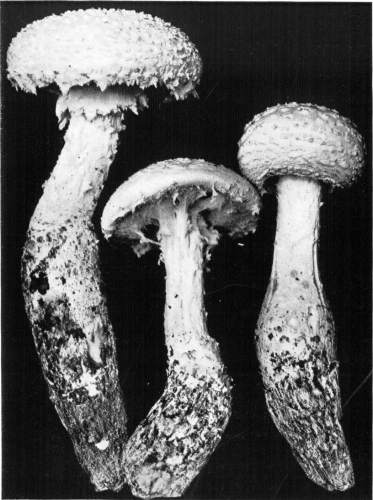
Plate 22, Figure 76.—Amanita solitaria. Three plants,
3/4 natural size. Copyright.
Amanitopsis vaginata (Bull.) Roz. Edible.—The sheathed amanitopsis, A.
vaginata, is a quite common and widely distributed plant in woods. It
is well named since the prominent volva forms a large sheath to the
cylindrical base of the stem. The plant occurs in several forms, a gray
or mouse colored form, and a brownish or fulvous form, and sometimes
nearly white. These forms are recognized by some as varieties, and by
others as species. The plants are 8–15 cm. high, the caps 3–7 cm.
broad, and the stems 5–8 mm. in thickness.
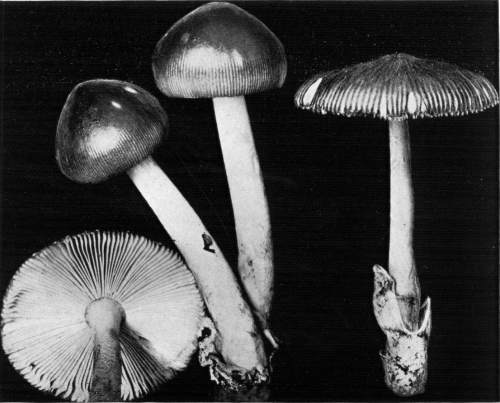
Plate 23, Figure 77.—Amanitopsis vaginata. Tawny form
(natural size). Copyright.
The pileus is from ovate to bell-shaped, then convex and expanded,
smooth, rarely with fragments of the volva on the surface. The margin is
thin and marked by deep furrows and ridges, so that it is deeply
striate, or the terms sulcate or pectinate sulcate are used to express
the character of the margin. The term pectinate sulcate is employed on
account of a series of small elevations on the ridges, giving them a
pectinate, or comb-like, appearance. The color varies from gray to mouse
color, brown, or ochraceous brown. The flesh is white. The gills are
white or nearly so, and free. The spores are globose, 7–10 µ in
diameter. The stem is cylindrical, even, or slightly tapering upward,
hollow or stuffed, not bulbous, smooth, or with mealy particles or
prominent floccose scales. These scales are formed by the separation of
the edges of the gills from the surface of the stem, to which they are
closely applied before the pileus begins to expand. Threads of mycelium
growing from the edge of the lamellæ and from the stem intermingle. When
the pileus expands these are torn asunder, or by their pull tear up the
outer surface of the stem. The volva forms a prominent sheath which is
usually quite soft and easily collapses (Fig. 77).
The entire plant is very brittle and fragile. It is considered an
excellent one for food. I often eat it raw when collecting.
Authors differ as to the number of species recognized in the plant as
described above. Secretan recognized as many as ten species. The two
prominent color forms are quite often recognized as two species, or by
others as varieties; the gray or mouse colored form as A. livida
Pers., and the tawny form as A. spadicea Pers. According to Fries and
others the livida appears earlier in the season than spadicea, and
this fact is recognized by some as entitling the two to specific rank.
Plowright (Trans. Brit. Mycol. Soc., p. 40, 1897–98) points out that in
European forms of spadicea there is a second volva inside the outer,
and in livida there are "folds or wrinkles of considerable size on the
inner surface of the volva." He thinks the two entitled to specific
rank. At Ithaca and in the mountains of North Carolina I have found both
forms appearing at the same season, and thus far have been unable to
detect the differences noted by Plowright in the volva. But I have never
found intergrading color forms, and have not yet satisfied myself as to
whether or not the two should be entitled to specific rank.
Some of the other species of Amanitopsis found in this country are A.
nivalis Grev., an entirely white plant regarded by some as only a white
form of A. vaginata. Another white plant is A. volvata Pk., which has
elliptical spores, and is striate on the margin instead of sulcate.
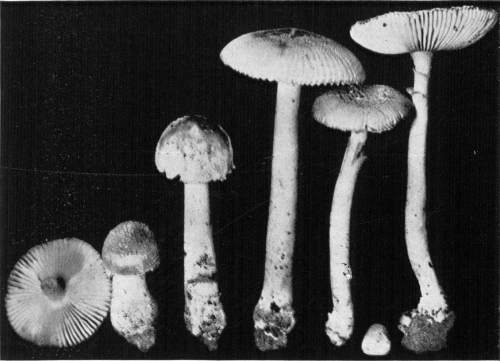
Figure 78.—Amanitopsis farinosa. Cap grayish (natural
size). Copyright.
Amanitopsis farinosa Schw.—The mealy agaric, or powdery amanita, is a
pretty little species. It was first collected and described from North
Carolina by de Schweinitz (Synop. fung. Car. No. 552, 1822), and the
specimens illustrated in Fig. 78 were collected by me at Blowing Rock,
N. C., during September, 1899. Peck has given in the 33rd Report N. Y.
State Mus., p. 49, an excellent description of the plant, though it
often exceeds somewhat the height given by him. It ranges from 5–8 or
10 cm. high, the cap from 2–3 cm. broad, and the stem 3–6 mm. in
thickness.
The pileus is from subglobose to convex and expanded, becoming nearly
plane or even depressed by the elevation of the margin in old specimens.
The color is gray or grayish brown, or mouse colored. The pileus is
thin, and deeply striate on the margin, covered with a grayish floccose,
powdery or mealy substance, the remnant of the evanescent volva. This
substance is denser at the center and is easily rubbed off. The gills
are white and free from the stem. The spores are subglobose and ovate
to elliptical, 6–7 µ long. The stem is cylindrical, even, hollow or
stuffed, whitish or gray and very slightly enlarged at the base into a
small rounded bulb which is quite constant and characteristic, and at
first is covered on its upper margin by the floccose matter from the
volva.
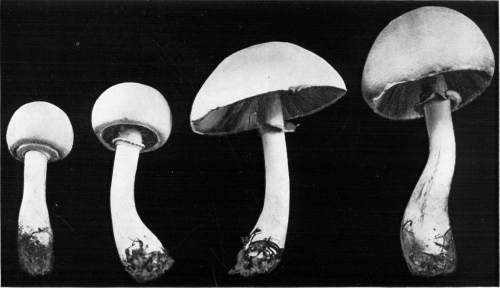
Plate 24, Figure 79.—Lepiota naucina. Entirely white
(natural size).
At Blowing Rock the plants occurred in sandy soil by roadsides or in
open woods. In habit it resembles strikingly forms of Amanitopsis
vaginata, but the volva is entirely different (Fig. 78). Although A.
vaginata was common in the same locality, I searched in vain for
intermediate forms which I thought might be found. Sometimes the
floccose matter would cling together more or less, and portions of it
remained as patches on the lower part of the stem, while depauperate
forms of A. vaginata would have a somewhat reduced volva, but in no
case did I find intermediate stages between the two kinds of volva.
The genus Lepiota lacks a volva, but the veil is present forming a
ring on the stem. The genus is closely related to Amanita, from which
it differs in the absence of the volva, or perhaps more properly
speaking in the fact that the universal veil is firmly connected
(concrete with) with the pileus, and with the base of the stem, so that
a volva is not formed. The gills are usually free from the stem, some
being simply adnexed, but in some species connected with a collar near
the stem. The stem is fleshy and is easily separable from the cap. A
number of the species are edible. Peck, 35th Report N. Y. State Mus., p.
150–164, describes 18 species. Lloyd, Mycol. Notes, November, 1898,
describes 9 species.
Lepiota naucina Fr. (Lepiota naucinoides Pk., Annularia lævis
Krombh.) Edible.—The smooth lepiota, L. naucina, grows in lawns, in
pastures and by roadsides, etc. It occurs during the latter part of
summer and during autumn, being more abundant in September and early
October. It is entirely white, or the cap is sometimes buff, and in age
the gills become dirty pink in color. It is from 8–12 cm. high, the cap
5–10 cm. broad, and the stem 8–15 mm. in thickness.
The pileus is very fleshy, nearly globose, then convex to nearly
expanded, smooth, or rarely the surface is broken into minute scales.
The gills are first white, free from the stem, and in age assume a dull
pink tinge. The spores are usually white in mass, but rarely when caught
on white paper they show a faint pink tinge. The spores are elliptical
to oval. The stem is nearly cylindrical, gradually enlarging below so
that it is clavate, nearly hollow or stuffed with loose threads.
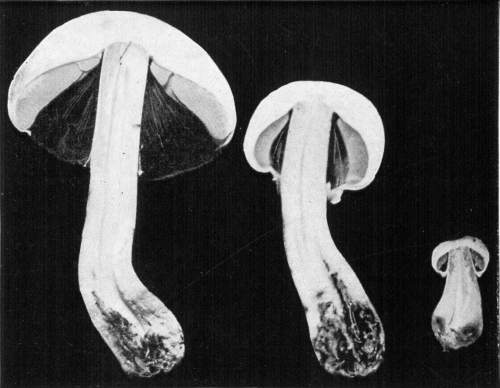
Figure 80.—Lepiota naucina.—Section of three plants,
different ages.
Since the plant occurs in the same situations as the Agaricus
campestris it might be mistaken for it, especially for white forms. But
of course no harm could come by eating it by mistake for the common
mushroom, for it is valued just as highly for food by some who have
eaten it. If one should look at the gills, however, they would not
likely mistake it for the common mushroom because the gills become pink
only when the plant is well expanded and quite old. There is much more
danger in mistaking it for the white amanitas, A. phalloides, A.
verna, or A. virosa, since the gills of these deadly plants are
white, and they do sometimes grow in lawns and other grassy places where
the smooth lepiota and the common mushroom grow. For this reason one
should study the descriptions and illustrations of these amanitas given
on preceding pages, and especially should the suggestions given there
about care in collecting plants be followed, until one is so certainly
familiar with the characters that the plants would be known "on sight."
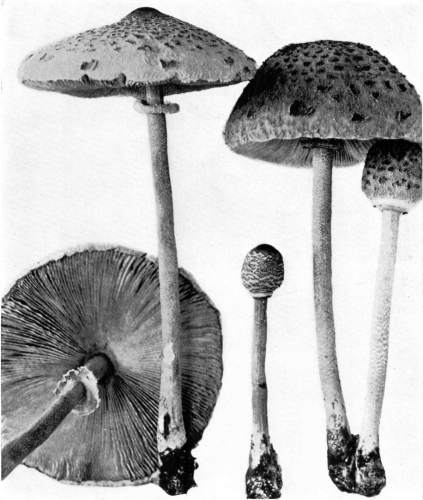
Plate 25, Figure 81.—Lepiota procera. Grayish brown to
reddish brown, gills and flesh white (3/4 natural size). Copyright.
The pink color of the gills of this lepiota has led certain students of
the fungi into mistakes of another kind. This pink color of the gills
has led some to place the plant among the rosy spored agarics in the
genus Annularia, where it was named Annularia lævis by Krombholtz
(vide Bresadola Funghi Mangerecci e velenosi, p. 29, 1899). It fits
the description of that plant exactly. The pink color of the gills, as
well as the fact that the gills turn brownish when dry, has led to a
confusion in some cases of the Lepiota naucina with the chalky agaric,
Agaricus cretaceus. The external resemblance of the plants, as shown
in various illustrations, is very striking, and in the chalky agaric the
gills remain pink very late, only becoming brown when very old.
Lepiota procera Scop. Edible.—The parasol mushroom, Lepiota procera,
grows in pastures, lawns, gardens, along roadsides, or in thin woods, or
in gardens. It is a large and handsome plant and when expanded seems not
inappropriately named. It is from 12–20 cm. or more high, the cap
expands from 5–12 cm., while the stem is 4–7 mm. in thickness. It
occurs during summer and in early autumn.
The pileus is oval, then bell-shaped, convex and nearly expanded, with
usually a more or less prominent elevation (umbo) at the center.
Sometimes it is depressed at the center. It is grayish brown or reddish
brown in color on the surface and the flesh is whitish. As the cap
expands the surface layer ceases to grow and is therefore cracked, first
narrow chinks appearing, showing white or grayish threads underneath. As
the cap becomes more expanded the brown surface is torn into scales,
which give the cap a more or less shaggy appearance except on the umbo,
where the color is more uniform. The torn surface of the pileus shows
numerous radiating fibres, and it is soft and yielding to the touch. The
gills are remote from the stem, broad and crowded. The spores are long,
elliptical, 12–17 µ long. The stem is cylindrical, hollow, or stuffed,
even, enlarged below into a prominent bulb, of the same color as the
pileus, though paler, especially above the annulus. The surface is
usually cracked into numerous small scales, the chinks between showing
the white inner portion of the stem. The ring is stout, narrow, usually
quite free from the stem, so that it can be moved up and down on the
stem, and is called a movable ring.
Figure 81 is from plants (No. 3842, C. U. herbarium) collected in a
garden at Blowing Rock, N. C., during September, 1899.
A closely related plant, Lepiota rachodes Vitt., has smaller spores,
9–12 × 7–9 µ. It is also edible, and by some considered only a variety
of L. procera. It is rare in this country, but appears about Boston in
considerable quantities "in or near greenhouses or in enriched soil out
of doors," where it has the appearance of an introduced plant (Webster,
Rhodora, 1: 226, 1899). It is a much stouter plant than L. procera,
the pileus usually depressed, much more coarsely scaly, and usually
grows in dense clusters, while L. procera usually occurs singly or
scattered, is more slender, often umbonate. L. rachodes has a veil
with a double edge, the edges more or less fringed. The veil is fixed to
the stem until the plant is quite mature, when it becomes movable. The
flesh of the plant on exposure to the air becomes a brownish orange
tint.
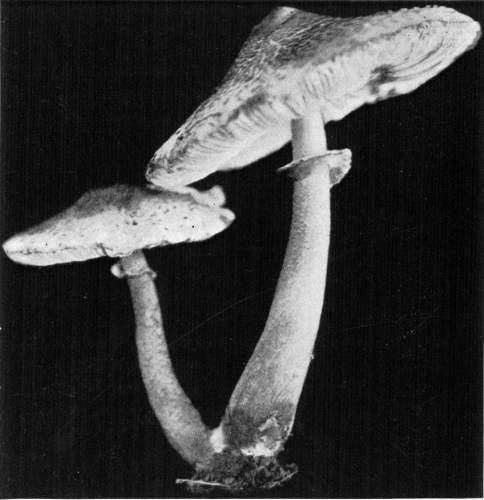
Figure 82.—Lepiota americana. Scales and center of cap
reddish or reddish brown. Entire plant turns reddish on drying (natural
size). Copyright.
Lepiota morgani Pk.—This plant occurs from Ohio, southward and west. It
grows in grassy places, especially in wet pastures. It is one of the
largest of the lepiotas, ranging from 20–40 cm. high, the cap 20–30
cm. broad, and the stem about 2 cm. in thickness. The pileus, when fully
expanded, is whitish, with large dark scales, especially toward the
center. The ring is large, sometimes movable, and the gills and spores
are greenish. Some report the plant as edible, while others say illness
results from eating it.
Lepiota americana Pk. Edible.—This plant is widely distributed in the
United States. The plants occur singly or are clustered, 6–12 cm.
high, the cap 4–10 cm. broad, and the stem 4–10 mm. in thickness. The
cap is adorned with reddish or reddish brown scales except on the
center, where the color is uniform because the surface is not broken up
into scales. The flesh is white, but changes to reddish when cut or
bruised, and the whole plant becomes reddish on drying.
Figure 82 is from plants (No. 2718, C. U. herbarium) collected at
Ithaca.
The European plant, L. badhami, also reported in this country, changes
to a brownish red. It is believed by some to be identical with L.
americana.
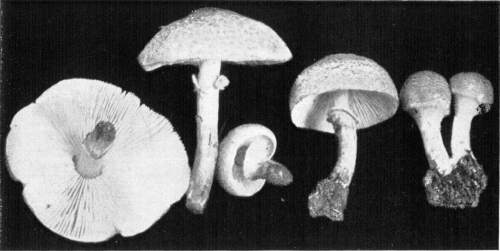
Figure 83.—Lepiota cristata. Entirely white, but scales
grayish or pinkish brown, stem often flesh color (natural size).
Copyright.
Lepiota acutesquamosa Weinm.—This is a medium or small sized plant with
a floccose pileus adorned with small, acute, erect scales, and has a
loose, hairy or wooly veil which is often torn irregularly. The erect
scales fall away from the pileus and leave little scars where they were
attached.
Lepiota cristata A. & S. Edible.—The crested lepiota, Lepiota
cristata, occurs in grassy places and borders of woods, in groves,
etc., from May to September, and is widely distributed. The plant is
small, 3–5 cm. high, the cap 1–4 cm. broad, and the stem 2–5 mm. in
thickness. It grows in clusters or is scattered.
The pileus is ovate, bell-shaped, then convex and expanded, and thin.
The surface is at first entirely dull reddish or reddish brown, but soon
cracks into numerous scales of the same color arranged in a crested
manner, more numerous between the margin and the center, and often
arranged in a concentric manner. The center of the cap often preserves
the uniform reddish brown color because the pileus at this point does
not expand so much and therefore the surface does not crack, while the
margin often becomes white because of the disappearance of the brown
covering here. The gills are free from the stem, narrow, crowded, and
close to the stem. The spores are more or less angular, elongated, more
narrowed at one end, and measure 5–8 × 3–4 µ. The stem is slender,
cylindrical, hollow, whitish, smooth. The ring is small, white, and
easily breaks up and disappears.
The characters of the plant are well shown in Fig. 83 from plants
collected at Ithaca. Lepiota angustana Britz. is identical, and
according to Morgan L. miamensis Morgan is a white form of L.
angustana.
Lepiota asperula Atkinson.—This lepiota resembles A. asper in some
respects, but it is smaller and the spores are much smaller, being very
minute. The plant is 5–8 cm. high, the pileus 2–4 cm. broad, and the
stem 4–6 mm. in thickness. It grows in leaf mould in the woods and has
been found at Ithaca, N. Y., twice during July and September, 1897.
The pileus is convex and bell-shaped, becoming nearly or quite expanded.
It is hair brown to olive brown in color. The surface is dry, made up of
interwoven threads, and is adorned with numerous small, erect, pointed
scales resembling in this respect A. asper Fr. The gills are white or
yellowish, free, but rather close to the stem, narrow, often eroded on
the edge, sometimes forked near the stem, and some of them arranged in
pairs. The spores are oblong, smooth, and very minute, measuring 5 × 2
µ. The stem is the same color as the pileus, cylindrical, hollow, with
loose threads in the cavity, enlarged into a rounded bulb below,
minutely downy to pubescent. The outer portion of the bulb is formed of
intricately interwoven threads, among which are entangled soil and humus
particles. The veil is white, silky, hairy, separating from the stem
like a dense cortina, the threads stretched both above and below as
shown in Fig. 84 from plants (No. 3157 C. U. herbarium), collected at
Ithaca.
In some specimens, as the pileus expands, the spaces between the pointed
scales are torn, thus forming quite coarse scales which are often
arranged in more or less concentric rows, showing the yellow-tinged
flesh in the cracks, and the coarse scales bearing the fine point at the
center. A layer connecting the margin of the pileus with the base of the
stem and covered with fine brown points, sometimes separates from the
edge of the cap and the base of the stem, and clings partly to the
cortina and partly to the stem in much the same way that portions of the
volva cling to the stem of certain species of Amanita, as seen in A.
velatipes (Fig. 66). Sometimes this is left on the base of the stem
and then resembles a short, free limb of a volva, and suggests a species
of Amanita. The scales, however, are concrete with the pileus, and the
species appears to show a closer relationship with Lepiota.
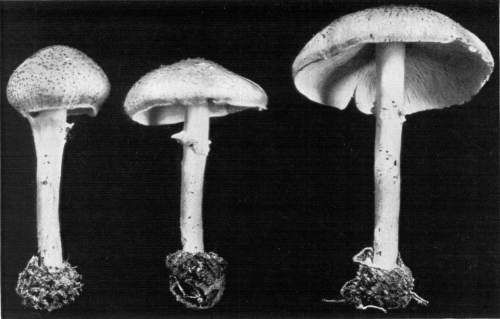
Plate 26, Figure 84.—Lepiota asperula. Cap hair-brown to
olive-brown, scales minute, pointed, gills and stem white (natural
size). Copyright.
In the genus Armillaria the inner veil which forms a ring on the stem
is present. The stem is fibrous, or the outer portion cartilaginous in
some species, and not easily separable from the substance of the pileus
(continuous with the hymenophore), and the gills are attached to the
stem, sinuate, or decurrent, spores white. Peck, 43rd Report N. Y. State
Mus., p. 40–45, describes 6 species.
Some of the species resemble very closely certain species of Amanita
or Lepiota, but can be distinguished by the firm continuity of the
substance of the stem and cap.
Armillaria mellea Vahl. Edible.—This is one of the most common of the
late summer and autumn fungi, and is widely distributed over the world.
It grows about the bases of old stumps or dead trees, or from buried
roots. Sometimes it is found attached to the living roots of trees. The
plant occurs in tufts or clusters, several to many individuals growing
together, the bases of their stems connected with a black rope-like
strand from which they arise. The entire plant is often more or less
honey colored, from which the plant gets its specific name. Its
clustered habit, the usually prominent ring on the stems, and the sharp,
blackish, erect scales which usually adorn the center of the cap, mark
it as an easy plant to determine in most cases. The colors and markings,
however, vary greatly, so that some of the forms are very puzzling. The
plant varies in height from 10–15 cm., the cap from 5–10 cm. broad,
and the stem 4–10 mm. in thickness.
The pileus is oval to convex and expanded, sometimes with a slight umbo
or elevation at the center. The color varies from honey color to nearly
white, or yellowish brown to dull reddish brown, usually darker on the
center. In typical forms the pileus is adorned with pointed dark brown,
or blackish, erect, scales especially abundant over the center, while
the margin is often free from them, but may be marked with looser
floccose, brownish, or yellowish scales. Sometimes there are no blackish
pointed scales anywhere on the cap, only loose floccose colored scales,
or in some forms the cap is entirely smooth. The margin in old specimens
is often striate. The pileus is usually dry, but Webster cites an
instance in which it was viscid in wet weather.
The gills are attached to the stem squarely (adnate) or they are
decurrent (extend downward on the stem), are white, or whitish, becoming
in age more or less dingy or stained. The spores are rounded or
elliptical, 6–9 µ. The stem is elastic, spongy within and sometimes
hollow. It is smooth or often floccose scaly below the ring, sometimes
with prominent transverse bands of a hairy substance. It is usually
whitish near the upper end, but dull brown or reddish brown below the
annulus, sometimes distinctly yellowish. The veil varies greatly also.
It may be membranaceous and thin, or quite thick, or in other cases may
be absent entirely. The ring of course varies in a corresponding manner.
As shown in Fig. 85 it is quite thick, so that it appears double on the
edge, where it broke away from the inner and outer surfaces of the
margin of the cap. It is frequently fixed to the stem, that is, not
movable, but when very thin and frail it often disappears.
The honey colored agaric is said by nearly all writers to be edible,
though some condemn it. It is not one of the best since it is of rather
tough consistency. It is a species of considerable economic importance
and interest, since it is a parasite on certain coniferous trees, and
perhaps also on certain of the broad-leaved trees. It attacks the roots
of these trees, the mycelium making its way through the outer layer, and
then it grows beneath the bark. Here it forms fan-like sheets of
mycelium which advance along both away from the tree and towards the
trunk. It disorganizes and breaks down the tissues of the root here,
providing a space for a thicker growth of the mycelium as it becomes
older. In places the mycelium forms rope-like strands, at first white in
color, but later becoming dark brown and shining. These cords or
strands, known as rhizomorphs, extend for long distances underneath
the bark of the root. They are also found growing in the hollow trunks
of trees sometimes. In time enough of the roots are injured to kill the
tree, or the roots are so weakened that heavy winds will blow the trees
over.
The fruiting plants always arise from these rhizomorphs, and by digging
carefully around the bases of the stems one can find these cords with
the stems attached, though the attachment is frail and the stems are
easily separated from the cords. Often these cords grow for years
without forming any fruit bodies. In this condition they are often found
by stripping off the bark from dead and rotting logs in the woods. These
cords were once supposed to be separate fungi, and they were known under
the name Rhizomorpha subcorticalis.
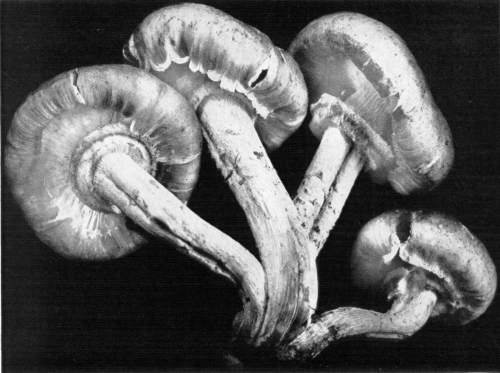
Plate 27, Figure 85.—Armillaria mellea. Showing double
ring present in some large specimens; cap honey colored, scales minute,
more numerous at center, blackish, often floccose, and sometimes wanting
(3/4 natural size, often smaller). Copyright.
Armillaria aurantia Schaeff. (Tricholoma peckii Howe) Suspected.—This
is a very pretty species and rare in the United States. The plants are
6–8 cm. high, the cap 4–7 cm. broad, and the stem 6–8 mm. in
thickness. It occurs in woods. It is known by its viscid pileus, the
orange brown or ochraceous rufus color of the pileus and stem, and the
color of the stem being confined to the superficial layer, which becomes
torn into concentric floccose scales, forming numerous minute floccose
irregular rings of color around the stem.
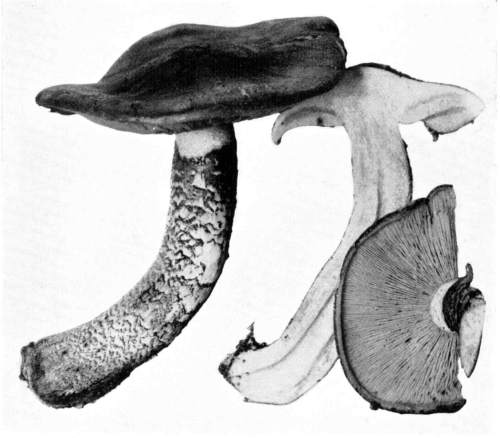
Figure 86.—Armillaria aurantia Schaeff. (=Tricholoma
peckii Howe). Cap orange-brown or ochraceous rufus, viscid; floccose
scales on stem same color (natural size). Copyright.
The pileus is convex to expanded, with an umbo, and the edge inrolled,
fleshy, thin, viscid, ochraceous rufus (in specimens collected by
myself), darker on the umbo, and minutely scaly from tufts of hairs, and
the viscid cuticle easily peeling off. The gills are narrow, crowded,
slightly adnexed, or many free, white, becoming brown discolored where
bruised, and in drying brownish or rufus. The spores are minute, globose
to ovoid, or rarely sub-elliptical when a little longer, with a
prominent oil globule usually, 3–3.5 × 3–5 µ, sometimes a little
longer when the elliptical forms are presented. The stem is straight or
ascending, even, very floccose scaly as the pileus is unrolled from it,
scales same color as the pileus, the scales running transversely, being
separated perhaps by the elongation of the stem so that numerous
floccose rings are formed, showing the white flesh of the stem between.
The upper part of the stem, that above the annulus, is white, but the
upper part floccose.
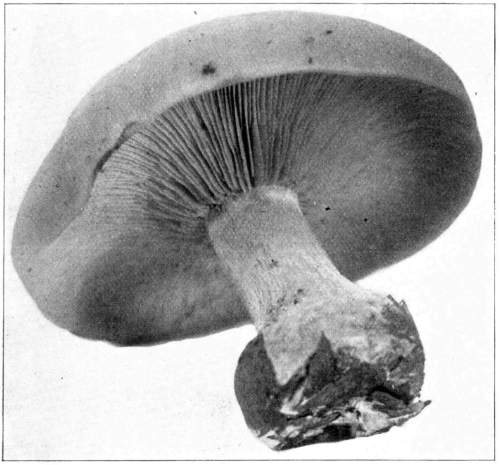
Figure 87.—Tricholoma personatum. Entire plant grayish
brown, tinged with lilac or purple, spores light ochraceous (natural
size, often larger).
This plant has been long known in Europe. There is a rather poor figure
of it in Schaeffer Table 37, and a better one in Gillet Champignons de
France, Hymenomycetes, 1, opposite page 76, but a very good one in
Bresadola Funghi Mangerecci e Velenosi, Tavel 18, 1899. A good figure is
also given by Barla, Les Champignons des Alpes—Maritimes, Pl. 19, Figs.
1–6. The plant was first reported from America in the 41st Report,
State Museum, N. Y., p. 82, 1888, under the name Tricholoma peckii
Howe, from the Catskill Mountains, N. Y. Figure 86 is from plants (No.
3991, C. U. herbarium) collected in the Blue Ridge mountains, at Blowing
Rock, N. C., during September, 1899. The European and American
description both ascribe a bitter taste to the flesh of the pileus, and
it is regarded as suspicious.
There does not seem to be a well formed annulus, the veil only being
present in a rather young stage, as the inrolled margin of the pileus is
unrolling from the surface of the stem. It seems to be more in the form
of a universal veil resembling the veil of some of the lepiotas. It
shows a relationship with Tricholoma which possesses in typical forms
a delicate veil present only in the young stage. Perhaps for this reason
it was referred by Howe to Tricholoma as an undescribed species when
it was named T. peckii. If its affinities should prove to be with
Tricholoma rather than with Armillaria, it would then be known as
Tricholoma aurantium.
In the genus Tricholoma the volva and annulus are both wanting, the
spores are white, and the gills are attached to the stem, but are more
or less strongly notched or sinuate at the stem. Sometimes the notch is
very slight. The stem is fleshy-fibrous, attached to the center of the
pileus, and is usually short and stout. In some specimens when young
there is a slight cobwebby veil which very soon disappears. The genus is
a very large one. Some species are said to be poisonous and a few are
known to be edible. Peck, 44th Report, N. Y. State Mus., pp. 38–64,
describes 46 species.
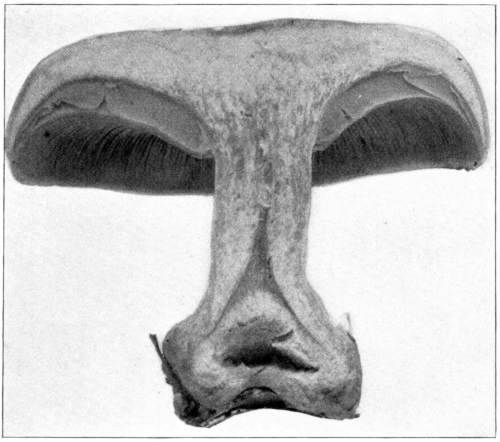
Figure 88.—Tricholoma personatum. Section (natural
size).
Tricholoma personatum Fr. Edible.—This plant occurs during the autumn
and persists up to the winter months. It grows on the ground in open
places and in woods. The stem is short, usually 3–7 cm. long × 1–2 cm.
in thickness, and the cap is from 5–10 cm. or more broad. The entire
plant often has a lilac or purple tint.
The pileus is convex, expanded, moist, smooth, grayish to brownish
tinged with lilac or purple, especially when young, fading out in age.
When young the pileus is sometimes adorned with white mealy particles,
and when old the margin may be more or less upturned and wavy. The gills
are crowded, rounded next the stem, and nearly free but close to the
stem, violet or lilac when young, changing to dull reddish brown when
old. The spores when caught in mass are dull pink or salmon color. They
measure 7–9 µ long. The stem is solid, fibrous, smooth, deep lilac when
young and retaining the lilac color longer than the pileus. Sometimes
the base is bulbous as in Fig. 87.
This plant is regarded by all writers as one of the best of the edible
fungi. Sometimes the pileus is water soaked and then the flavor is not
so fine. The position of the plant is regarded as doubtful by some
because of the more or less russety pink color of the spores when seen
in mass, and the ease with which the gills separate from the pileus,
characters which show its relationship to the genus Paxillus.
Tricholoma sejunctum Sowerb. Edible.—This plant occurs on the ground in
rather open woods during late summer and in the autumn. It is 8–12 cm.
high, the cap 5–8 cm. broad, and the stem 10–15 mm. in thickness.
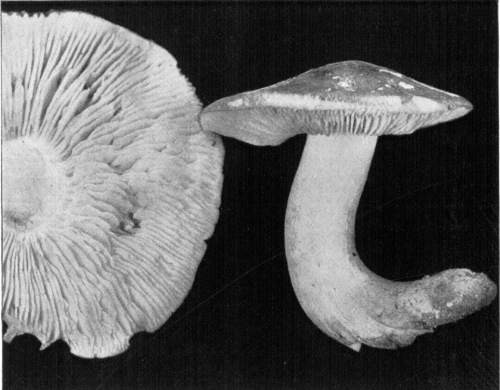
Figure 89.—Tricholoma sejunctum. Cap light yellow,
streaked with dark threads on the surface, viscid. Stem and gills white
(natural size, often larger). Copyright.
The pileus is convex to expanded, umbonate, viscid when moist, light
yellow in color and streaked with dark threads in the surface. The flesh
is white, and very fragile, differing in this respect from T.
equestre, which it resembles in general form. The gills are broad,
rather distant, broadly notched near the stem, and easily separating
from the stem. The stem is solid, smooth and shining white. Figure 89 is
from plants collected at Ithaca. It is said to be edible.
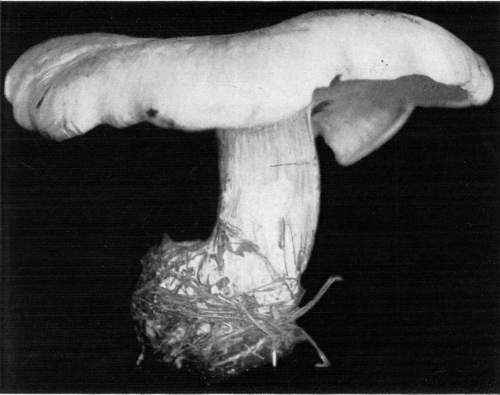
Plate 28, Figure 90.—Clitocybe candida. Entirely white
(natural size). Copyright.
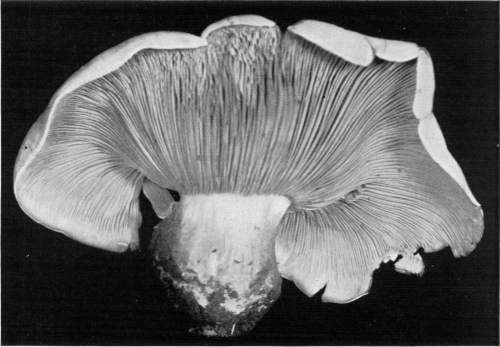
Plate 29, Figure 91.—Clitocybe candida. Under view of
nearly lateral stemmed individual (natural size). Copyright.
The volva and annulus are wanting in this genus, and the spores are
white. The stem is elastic, spongy within, the outside being elastic or
fibrous, so that the fibres hold together well when the stem is twisted
or broken, as in Tricholoma. The stem does not separate readily from
the pileus, but the rather strong fibres are continuous with the
substance of the pileus. The gills are narrowed toward the stem, joined
squarely or decurrent (running down on the stem), very rarely some of
them notched at the stem while others of the same plant are decurrent.
In one species at least (C. laccata, by some placed in the genus
Laccaria) the gills are often strongly notched or sinuate. The cap is
usually plane, depressed, or funnel-shaped, many of the species having
the latter form. The plants grow chiefly on the ground, though a number
of species occur on dead wood. The genus contains a very large number of
species. Peck describes ten species in the 23rd Report, N. Y. State
Mus., p. 76, et. seq., also 48th Report, p. 172, several species.
Morgan, Jour. Cinn. Soc. Nat. Hist. 6: 70–73, describes 12 species.
Clitocybe candida Bres. Edible.—This is one of the large species of the
genus. It occurs in late autumn in Europe. It has been found on several
occasions during late autumn at Ithaca, N. Y., on the ground in open
woods, during wet weather. It occurs in clusters, though the specimens
are usually not crowded. The stem is usually very short, 2–4 cm. long,
and 2–3 cm. in thickness, while the cap is up to 10–18 cm. broad.
The pileus is sometimes regular, but often very irregular, and produced
much more strongly on one side than on the other. It is convex, then
expanded, the margin first incurved and finally wavy and often somewhat
lobed. The color is white or light buff in age. The flesh is thick and
white. The gills are white, stout, broad, somewhat decurrent, some
adnate.
The taste is not unpleasant when raw, and when cooked it is agreeable. I
have eaten it on several occasions. Figures 90, 91 are from plants (No.
4612 C. U. herbarium) collected at Ithaca.
Clitocybe laccata Scop. Edible.—This plant is a very common and widely
distributed one, growing in woods, fields, roadsides and other waste
places. It is usually quite easily recognized from the whitish scurfy
cap, the pink or purplish gills, though the spores are white, from the
gills being either decurrent, adnate, or more or less strongly notched,
and the stem fibrous and whitish or of a pale pink color. When the
plants are mature the pale red or pink gills appear mealy from being
covered with the numerous white spores.
The pileus is thin, convex or later expanded, of a watery appearance,
nearly smooth or scurfy or slightly squamulose. The spores are rounded,
and possess spine-like processes, or are prominently roughened. In the
warty character of the spores this species differs from most of the
species of the genus Clitocybe, and some writers place it in a
different genus erected to accommodate the species of Clitocybe which
have warty or spiny spores. The species with spiny spores are few. The
genus in which this plant is placed by some is Laccaria, and then the
plant is called Laccaria laccata. There are several other species of
Clitocybe which are common and which one is apt to run across often,
especially in the woods. These are of the funnel form type, the cap
being more or less funnel-shaped. Clitocybe infundibuliformis Schaeffer
is one of these. The cap, when mature, is pale red or tan color, fading
out in age. It is 5–7 cm. high, and the cap 2–4 cm. broad. It is
considered delicious. Clitocybe cyathiformis, as its name indicates, is
similar in form, and occurs in woods. The pileus is of a darker color,
dark brown or smoky in color.
Clitocybe illudens Schw. Not Edible.—This species is distributed
through the Eastern United States and sometimes is very abundant. It
occurs from July to October about the bases of old stumps, dead trees,
or from underground roots. It is one of the large species, the cap being
15–20 cm. broad, the stem 12–20 cm. long, and 8–12 mm. in thickness.
It occurs in large clusters, several or many joined at their bases. From
the rich saffron yellow color of all parts of the plant, and especially
by its strong phosphorescence, so evident in the dark, it is an easy
plant to recognize. Because of its phosphorescence it is sometimes
called "Jack-my-lantern."
The pileus is convex, then expanded, and depressed, sometimes with a
small umbo, smooth, often irregular or eccentric from its crowded habit,
and in age the margin of the pileus is wavy. The flesh is thick at the
center and thin toward the margin. In old plants the color becomes
sordid or brownish. The gills are broad, not crowded, decurrent, some
extending for a considerable distance down on the stem while others for
a less distance. The stem is solid, firm, smooth, and tapers toward the
base.
While the plant is not a dangerously poisonous one, it has occasioned
serious cases of illness, acting as a violent emetic, and of course
should be avoided. Its phosphorescence has often been observed. Another
and much smaller plant, widely distributed in this country as well as
Europe, and belonging to another genus, is also phosphorescent. It is
Panus stipticus, a small white plant with a short lateral stem,
growing on branches, stumps, trunks, etc. When freshly developed the
phosphorescence is marked, but when the plants become old they often
fail to show it.
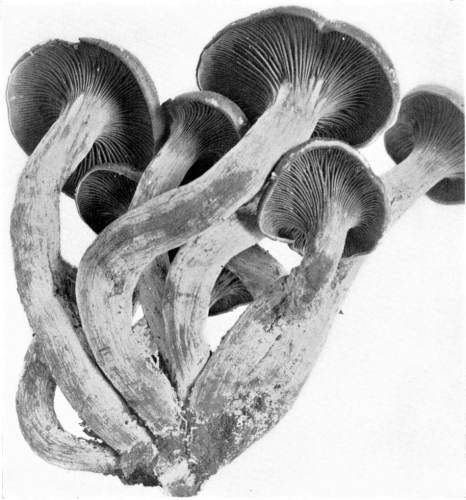
Figure 92.—Clitocybe illudens. Entire plant rich saffron
yellow, old plants become sordid brown sometimes; when fresh shows
phosphorescence at night (2/3 natural size, often much larger).
Copyright.
Clitocybe multiceps Peck. Edible.—This plant is not uncommon during
late summer and autumn. It usually grows in large tufts of 10 to 30 or
more individuals. The caps in such large clusters are often irregular
from pressure. The plants are 6–12 cm. high, the caps 5–10 cm. broad,
and the stems 8–15 mm. in thickness. The pileus is white or gray,
brownish gray or buff, smooth, dry, the flesh white. The gills are
white, crowded, narrow at each end. The spores are smooth, globose, 5–7
µ in diameter. The stems are tough, fibrous, solid, tinged with the same
color as cap. Fig. 93 is from plants (No. 5467, C. U. herbarium)
collected at Ithaca, October 14, 1900.
In the genus Collybia the annulus and volva are both wanting, the
spores are white, the gills are free or notched, or sinuate. The stem is
either entirely cartilaginous or has a cartilaginous rind, while the
central portion of the stem is fibrous, or fleshy, stuffed or fistulose.
The pileus is fleshy and when the plants are young the margin of the
pileus is incurved or inrolled, i. e., it does not lie straight against
the stem as in Mycena.
Many of the species of Collybia are quite firm and will revive
somewhat after drying when moistened, but they are not coriaceous as in
Marasmius, nor do they revive so thoroughly. It is difficult, however,
to draw the line between the two genera. Twenty-five of the New York
species of Collybia are described by Peck in the 49th Report N. Y. State
Mus., p. 32 et seq. Morgan describes twelve species in Jour. Cinn. Soc.
Nat. Hist., 6: 70–73.
Collybia radicata Rehl. Edible.—This is one of the common and widely
distributed species of the genus. It occurs on the ground in the woods
or groves or borders of woods. It is quite easily recognized by the more
or less flattened cap, the long striate stem somewhat enlarged below and
then tapering off into a long, slender root-like process in the ground.
It is from this "rooting" character that the plant gets its specific
name. It is 10–20 cm. high, the cap 3–7 cm. broad, and the stem 4–8
mm. in thickness.
The pileus is fleshy, thin, convex to nearly plane, or even with the
margin upturned in old plants, and the center sometimes umbonate. It is
smooth, viscid when moist, and often with wrinkles on the surface which
extend radially. The color varies from nearly white in some small
specimens to grayish, grayish brown or umber. The flesh is white. The
gills are white, broad, rather distant, adnexed, i. e., joined to the
stem by the upper angle. The spores are elliptical and about 15 × 10 µ.
The stem is the same color as the pileus though paler, and usually white
above, tapers gradually above, is often striate or grooved, or sometimes
only mealy. The long tapering "root" is often attached to some
underground dead root. Fig. 94 is from plants (No. 5641, C. U.
herbarium) collected at Ithaca, August, 1900.
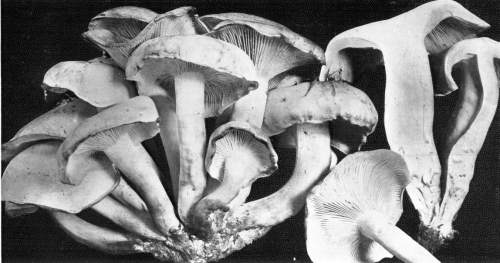
Plate 30, Figure 93.—Clitocybe multiceps. Plants white
or gray to buff or grayish brown. (Three-fourths natural size.)
Copyright.
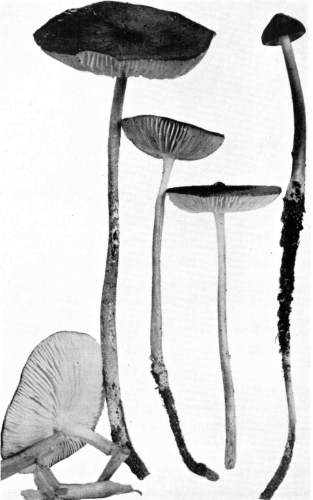
Plate 31, Fig. 94.—Collybia radicata. Caps grayish-brown
to grayish and white in some small forms. (Natural size.) Copyright.
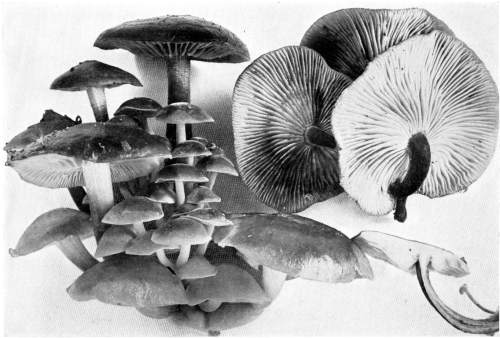
Plate 32, Fig. 95.—Collybia velutipes. Cap yellowish or
reddish yellow, viscid, gills white, stem dark brown, velvety hairy
(natural size). Copyright.
Collybia velutipes Curt. Edible.—This is very common in woods or
groves during the autumn, on dead limbs or trunks, or from dead places
in living ones. The plants are very viscid, and the stem, except in
young plants, is velvety hairy with dark hairs. Figure 95 is from plants
(No. 5430, C. U. herbarium) collected at Ithaca, October, 1900.
Collybia longipes Bull., is a closely related plant. It is much larger,
has a velvety, to hairy, stem, and a much longer root-like process to
the stem. It has been sometimes considered to be merely a variety of C.
radicata, and may be only a large form of that species. I have found a
few specimens in the Adirondack mountains, and one in the Blue Ridge
mountains, which seem to belong to this species.
Collybia platyphylla Fr. Edible.—This is a much larger and stouter
plant than Collybia radicata, though it is not so tall as the larger
specimens of that species. It occurs on rotten logs or on the ground
about rotten logs and stumps in the woods from June to September. It is
8–12 cm. high, the cap 10–15 cm. broad, and the stem about 2 cm. in
thickness.
The pileus is convex becoming expanded, plane, and even the margin
upturned in age. It is whitish, varying to grayish brown or dark brown,
the center sometimes darker than the margin, as is usual in many plants.
The surface of the pileus is often marked in radiating streaks by fine
dark hairs. The gills are white, very broad, adnexed, and usually deeply
and broadly notched next the stem. In age they are more or less broken
and cracked. The spores are white, elliptical, 7–10 × 6–7 µ.
The plant resembles somewhat certain species of Tricholoma and care
should be used in selecting it in order to avoid the suspected species
of Tricholoma.
The genus Mycena is closely related to Collybia. The plants are
usually smaller, many of them being of small size, the cap is usually
bell-shaped, rarely umbilicate, but what is a more important character
the margin of the cap in the young stage is straight as it is applied
against the stem, and not at first incurved as it is in Collybia, when
the gills and margin of the pileus lie against the stem. The stem is
cartilaginous as in Collybia, and is usually hollow or fistulose. The
gills are not decurrent, or only slightly so by a tooth-like process.
Some of the species are apt to be confused with certain species of
Omphalia in which the gills are but slightly decurrent, but in
Omphalia the pileus is umbilicate in such species, while in Mycena
it is blunt or umbonate. The spores are white. A large number of the
plants grow on leaves and wood, few on the ground. Some of those which
grow on leaves might be mistaken for species of Marasmius, but in
Marasmius the plants are of a tough consistency, and when dried will
revive again if moistened with water.
Some of the plants have distinct odors, as alkaline, or the odor of
radishes, and in collecting them notes should be made on all these
characters which usually disappear in drying. A few of the plants exude
a colored or watery juice when bruised, and should not be confounded
with species of Lactarius.
Mycena galericulata Scop. Edible.—Mycena galericulata grows on dead
logs, stumps, branches, etc., in woods. It is a very common and very
widely distributed species. It occurs from late spring to autumn. The
plants are clustered, many growing in a compact group, the hairy bases
closely joined and the stems usually ascending. The plants are from
5–12 cm. high, the caps from 1–3 cm. broad, and the slender stems 2–3
mm. in thickness.
The pileus is conic to bell-shaped, sometimes umbonate, striate to near
the center, and in color some shade of brown or gray, but variable. The
gills are decurrent by a tooth, not crowded, connected by veins over the
interspaces, white or flesh colored. The slender stems are firm, hollow,
and hairy at the base.
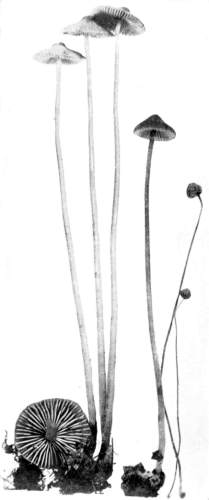
Figure 96.—Mycena polygramma, long-stemmed form growing
on ground (= M. prælonga Pk.). Cap dark brown with a leaden tint,
striate on margin; stem finely and beautifully longitudinally striate
(natural size). Copyright.
Mycena polygramma Bull.—This plant is very closely related to M.
galericulata, and has the same habit. It might be easily mistaken for
it. It is easily distinguished by its peculiar bright, shining,
longitudinally striate to sulcate stem. It usually grows on wood, but
does occur on the ground, when it often has a very long stem. In this
condition it was described by Peck in the 23rd Report, N. Y. State Mus.,
p. 81, as Mycena prælonga, from plants collected in a sphagnum moor
during the month of June. This form was also collected at Ithaca several
times during late autumn in a woods near Ithaca, in 1898. The plants are
from 12–20 cm. high, the cap 1–2 cm. broad, and the stem 2–3 mm. in
thickness.
The pileus is first nearly cylindrical, then conic, becoming bell-shaped
and finally nearly expanded, when it is umbonate. It is smooth, striate
on the margin, of a dark brown color with a leaden tint. The gills are
narrow, white, adnate and slightly decurrent on the stem by a tooth. The
very long stem is smooth, but marked with parallel grooves too fine to
show in the photograph, firm, hollow, somewhat paler than the pileus,
usually tinged with red, and hairy at the base. Figure 96 is from plants
(No. 3113 C. U. herbarium), collected in a woods near Ithaca in damp
places among leaves. A number of the specimens collected were attacked
by a parasitic mucor of the genus Spinellus. Two species, S. fusiger
(Link.) van Tiegh., and S. macrocarpus (Corda) Karst., were found,
sometimes both on the same plant. The long-stalked sporangia bristle in
all directions from the cap.
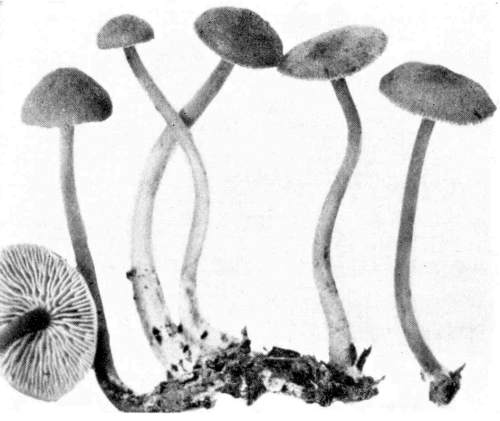
Figure 97.—Mycena pura. Entire plant rose, rose purple,
violet, or lilac. Striate on margin of pileus (natural size, often much
larger).
Mycena pura Pers.—This plant is quite common and very widely
distributed, and occurs in woods and grassy open places, during late
summer and in the autumn. The entire plant is nearly of a uniform color,
and the color varies from rose, to rose purple, violet, or lilac. Plants
from the Blue Ridge mountains of North Carolina were chiefly rose
purple, very young plants of a much deeper color (auricula purple of
Ridgeway), while those collected at Ithaca were violet. The plants vary
from 5–8 cm. high, the cap 2–3 cm. broad, and the stem 2–4 mm. stout.
The plants are scattered or somewhat clustered, sometimes occurring
singly, and again many covering a small area of ground.
The pileus is thin, conic, bell-shaped to convex and nearly expanded,
sometimes with a small umbo, smooth, and finely striate on the margin,
in age the striæ sometimes rugulose from the upturning of the margin.
Sometimes the pileus is rugose on the center. The gills vary from white
to violet, rose, etc., they are adnate to sinuate, and in age sometimes
become free by breaking away from the stem. They are broad in the
middle, connected by vein-like elevations over the surface, and
sometimes wavy and crenate on the edge, the edge of the gills sometimes
white. The spores are white, oblong, 2.5–3.5 × 6–7 µ, smooth. The
basidia are cylindrical, 20–25 × 3–4 µ, four-spored. There are a few
cystidia in the hymenium, colorless, thin walled, clavate, the portion
above the hymenium cylindrical, and 30–40 × 10–12 µ.
The stem is sometimes white when young, but later becomes of the same
color as the pileus, often a lighter shade above. It is straight, or
ascending, cylindrical, even, smooth, hollow, with a few white threads
at the base.
Sometimes on drying the pileus becomes deeper in color than when fresh.
The gills also become deeper in color in drying, though the edge remains
white if white when fresh. Figure 97 is from plants (No. 3946, C. U.
herbarium) collected at Blowing Rock, N. C., in August, 1899. The plants
are often considerably larger than shown in the figure.
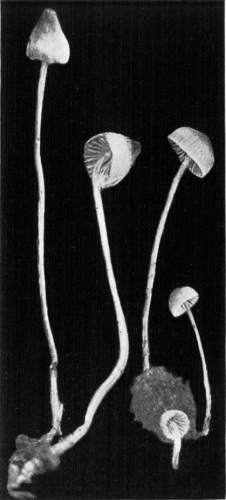
Figure 98.—Mycena epipterygia. Cap viscid, grayish,
often tinged with yellowish or reddish in age, gills white, sometimes
tinged with blue or red, stem yellowish, or same color as cap (natural
size). Copyright.
Mycena epipterygia Scop.—This pretty little species is quite readily
distinguished by the gray, conic or bell-shaped cap, the long, hollow,
slender stem, and the viscid pellicle or skin which is quite easily
peeled off from the stem or cap when moist. It grows in woods or grassy
places, or among moss, etc., on the ground or on very rotten wood. The
plants are from 5–10 cm. high, the cap 1–2 cm. broad, and the stem
about 2 mm. in thickness. It is widely distributed in Europe, America,
and other North temperate countries.
The pileus is viscid when moist, ovate to conic or campanulate, and
later more or less expanded, obtuse, the margin striate, and sometimes
minutely toothed. The usual color is grayish, but in age it often
becomes reddish. The gills are decurrent by a small tooth, and quite
variable in color, whitish, then gray, or tinged with blue or red.
The stem is very slender, flexuous, or straight, fistulose, tough, with
soft hairs at the base, usually yellowish, sometimes the same color as
the cap, and viscid like the cap when moist. Figure 98 is from plants
(No. 4547, C. U. herbarium) collected at Ithaca in August, 1899.
Mycena vulgaris Pers.—This common and pretty species is easily
recognized by its smoky or grayish color, the umbilicate pileus and very
slimy stem. It grows on decaying leaves, sticks, etc., in woods. It
occurs in clusters. The plants are small, 3–5 cm. high, the cap 4–7
mm. broad, and the stem about 1.5 mm. in thickness.
The pileus is thin, bell-shaped, then convex, and depressed at the
center, with a papilla usually in the center, finely striate on the
margin, and slightly viscid. The gills are white, thin, and finally
decurrent, so that from the form of the cap and the decurrent gills the
plant has much the appearance of an Omphalia. The stem is very viscid,
grayish in color, often rooting at the base, and with white fibrils at
the base, becoming hollow.
Figure 99 is from plants collected in woods near Ithaca, during August,
1899.
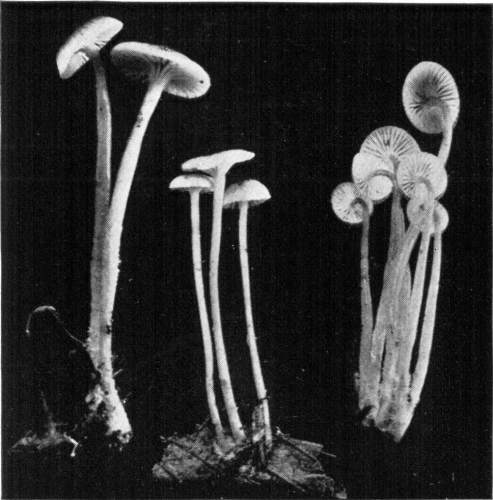
Figure 99.—Mycena vulgaris. Entirely white, center of
cap grayish, entire plant very slimy when moist (natural size).
Copyright.
Mycena acicula Schaeff.—This is one of the very small mycenas, and with
the brilliant red pileus and yellow gills and stem it makes a very
pretty object growing on leaves, twigs, or rotten wood in the forest. It
occurs during summer and autumn. It is 2–5 cm. high, the cap 2–4 mm.
broad, and the stem is thread-like.
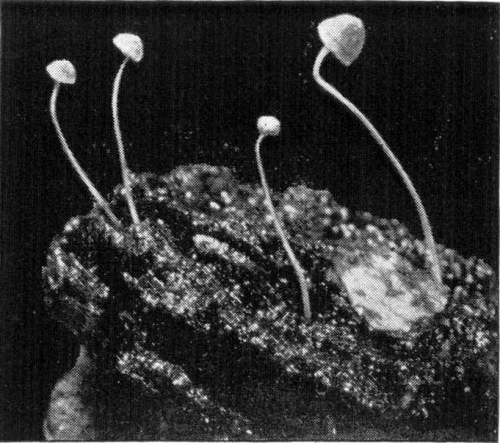
Figure 100.—Mycena acicula. Cap brilliant red, gills and
stem yellowish (natural size). Copyright.
The pileus is very thin, membranaceous, bell-shaped, then convex, when
the pointed apex appears as a small umbo. It is smooth, striate on the
margin, and of a rich vermilion or orange color. The gills are rounded
at the stem and adnexed, rather broad in the middle, distant, yellow,
the edge white, or sometimes the gills are entirely white. The stem is
very slender, with a root-like process entering the rotten wood, smooth
except the hairs on the root-like process, yellow.
Figure 100 is from plants (No. 2780, C. U. herbarium) collected in a
woods near Ithaca. It has been found here several times.
Mycena cyanothrix Atkinson.—This is a very pretty plant growing on
rotting wood in clusters, often two or three joined at the base, the
base of the stem inserted in the rotten wood for 1–2 cm., and the base
is clothed with blue, hair-like threads. The plants are 6–9 cm. high,
the cap 1–2 cm. broad, and the stem not quite 2 mm. in diameter.
The pileus is ovate to convex, viscid when young. The color is bright
blue when young, becoming pale and whitish in age, with a tendency to
fuscous on the center. The cap is smooth and the margin finely striate.
After the plants have dried the color is nearly uniform ochraceous or
tawny. The gills are close, free, narrow, white, then grayish white, the
edge finely toothed or fimbriate. The spores are globose, smooth, 6–9
µ. The stem is slender, hollow, faintly purple when young, becoming
whitish or flesh color, flexuous, or nearly straight, even, often two
united at the base into a root-like extension which enters the rotten
wood. The base of the stem is covered with deep blue mycelium which
retains its color in age, but disappears on drying after a time. Figure
101 is from plants (No. 2382, C. U. herbarium) collected at Ithaca, in
woods, June 16, 1898.
Mycena hæmatopa Pers.—This is one of the species of Mycena with a red
juice which exudes in drops where wounds occur on the plant. It is
easily recognized by its dense cespitose habit, the deep blood red
juice, the hollow stem, and the crenate or denticulate sterile margin of
the cap. Numbers of the plant occur usually in a single cluster, and
their bases are closely joined and hairy. The stems are more or less
ascending according to the position of the plant on the wood. The plants
are 5–10 cm. high, the cap is 1–2.5 cm. broad, and the stem 2–3 mm.
in thickness.
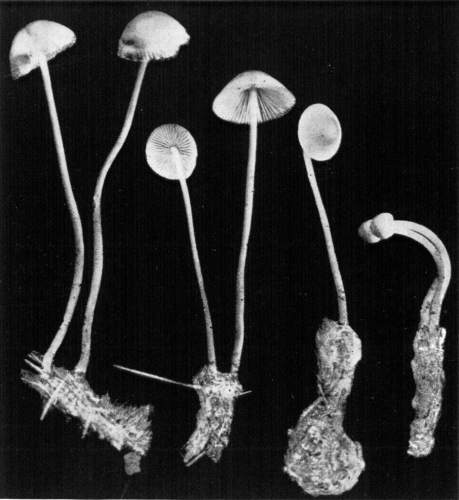
Figure 101.—Mycena cyanothrix. Cap viscid when young,
blue, becoming pale and whitish in age, and fuscous in center; gills
white; stem faintly purple when young, then flesh color or white, blue,
clothed with blue hairs at base (natural size). Copyright.
The pileus is conic, then bell-shaped, and as the margin of the cap
expands more appears umbonate, obtuse, smooth, even or somewhat striate
on the margin. The color varies from whitish to flesh color, or dull
red, and appears more or less saturated with a red juice. The thin
margin extends a short distance beyond the ends of the gills, and the
margin is then beautifully crenate. The gills are adnate, and often
extend down on the stem a short distance by a little tooth. The stem is
firm, sometimes smooth, sometimes with minute hairs, at the base with
long hairs, hollow, in color the same as that of the pileus.
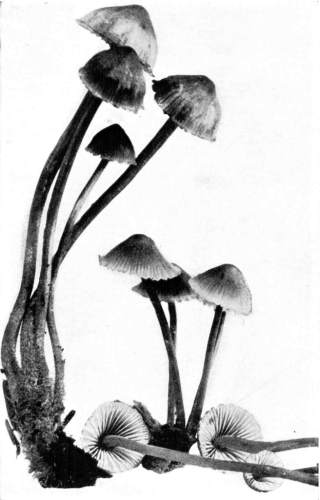
Figure 102.—Mycena hæmatopa. Dull red or flesh color, or
whitish, a dull red juice exudes where broken or cut, margin of cap
serrate with thin sterile flaps (natural size). Copyright.
The color varies somewhat, being darker in some plants than in others.
In some plants the juice is more abundant and they bleed profusely when
wounded, while in other cases there is but little of the juice,
sometimes wounds only showing a change in color to a deep red without
any free drops exuding. Figure 102 is from plants collected at Ithaca,
in August, 1899. It is widely distributed in Europe and North America.
Mycena succosa Pk., another species of Mycena with a juice, occurs on
very rotten wood in the woods. It is a small plant, dull white at first,
but soon spotted with black, and turning black in handling or where
bruised, and when dried. Wounds exude a "serum-like juice," and the
wounds soon become black. It was described by Peck under Collybia in
the 25th Report, p. 74.
The genus Omphalia is closely related to Mycena and Collybia. It
differs from these mainly in the decurrent gills. In the small species
of Mycena where the gills are slightly decurrent, the pileus is not
umbilicate as it is in corresponding species of Omphalia. In some of
the species of Omphalia the pileus is not umbilicate, but here the
gills are plainly decurrent. The stem is cartilaginous.
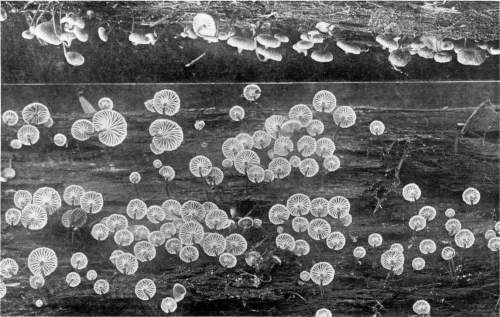
Plate 33, Figure 103.—Omphalia campanella. Watkin's
Glen, N. Y., August, 1898. Caps dull reddish-yellow. Gills yellow. Stem
brownish, hairy at base. (Natural size.) Copyright.
Omphalia campanella Batsch.—One of the most common and widely
distributed species of the genus is the little bell-omphalia, Omphalia
campanella. It occurs throughout the summer and autumn on dead or
rotten logs, stumps, branches, etc., in woods. It is often clustered,
large numbers covering a considerable surface of the decaying log. It is
1–3 cm. high, the cap 8–20 mm. broad, and the stem very slender.
The pileus is convex, umbilicate, faintly striate, dull reddish yellow,
in damp weather with a watery appearance. The gills are narrow, yellow,
connected by veins, strongly curved because of the form of the pileus,
and then being decurrent on the stem. The stem is slender, often
ascending, brownish hairy toward the base, and paler above.
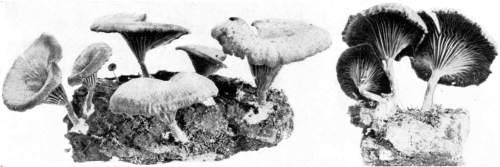
Figure 104.—Omphalia epichysium. Entire plant smoky or
dull gray in color (natural size). Copyright.
Omphalia epichysium Pers.—This plant occurs during the autumn in woods,
growing usually on much decayed wood, or sometimes apparently on the
ground. The smoky, or dull gray color of the entire plant, the depressed
or funnel-shaped pileus, and short, slender stem serve to distinguish
it. The cap is 2–4 cm. broad, the plant is 3–5 cm. high, and the stem
2–4 mm. in thickness.
The pileus is convex, becoming expanded, umbilicate or depressed at the
center or nearly funnel-shaped, smooth, smoky or gray with a saturated
watery appearance, light gray or nearly white when dry. The gills are
narrow, crowded, or a little decurrent. The slender stem is smooth,
hollow, equal. Figure 104 is from plants (No. 3373, C. U. herbarium)
collected in woods near Ithaca, N. Y., in the autumn of 1899.
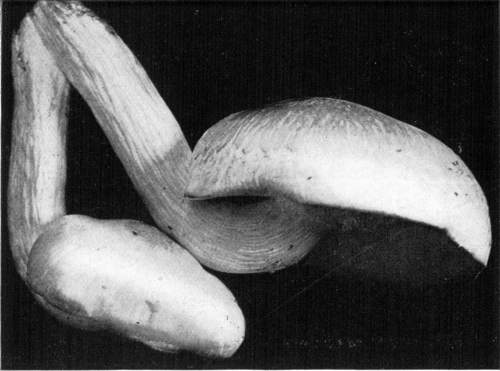
Figure 105.—Pleurotus ulmarius. Cap white, or with
shades of yellow or brown near the center (natural size). Copyright.
The genus Pleurotus is usually recognized without difficulty among the
fleshy, white-spored agarics, because of the eccentric (not quite in the
center of the pileus) or lateral stem, or by the pileus being attached
at one side in a more or less shelving position, or in some species
where the upper side of the pileus lies directly against the wood on
which the plant is growing, and is then said to be resupinate. The
gills are either decurrent (extending downward) on the stem, or in some
species they are rounded or notched at the junction with the stem. There
is no annulus, though sometimes a veil, and the genus resembles both
Tricholoma and Clitocybe, except for the position of the stem on the
pileus. In Tricholoma and Clitocybe the stem is usually attached at
the center, and the majority of the species grow on the ground, while
the species of Pleurotus are especially characterized by growing on
wood. Some species, at least, appear to grow from the ground, as in
Pleurotus petaloides, which is sometimes found growing on buried roots
or portions of decayed stumps which no longer show above ground. On the
other hand species of Clitocybe, as in C. candida (Fig. 91), often
have an eccentric stem. This presents to us one of the many difficulties
which students, especially beginners, of this group of fungi meet, and
also suggests how unsatisfactory any arrangement of genera as yet
proposed is.
Pleurotus ulmarius Bull. Edible.—The elm pleurotus is so called
because it is often found growing on dead elm branches or trunks, or
from wounds in living trees, but it is not confined to the elm. It is a
large species, easily distinguished from the oyster agaric and the other
related species by its long stem attached usually near the center of the
cap, and by the gills being rounded or notched at their inner extremity.
The cap is 5–12 cm. broad, the stem 5–10 cm. long, and 1–2 cm. in
thickness.
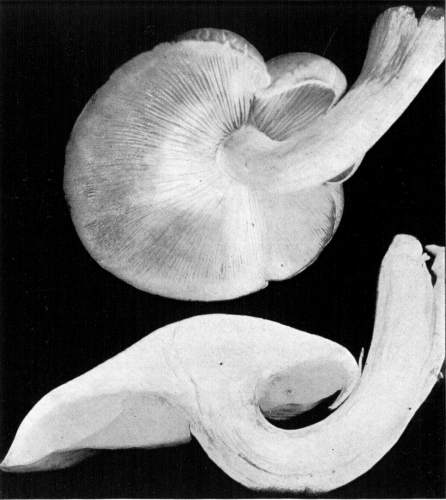
Figure 106.—Pleurotus ulmarius. Under view and section
(natural size). Copyright.
The pileus is convex, the margin incurved, then nearly expanded, smooth,
firm, white or whitish, or with shades of yellow or brown on the center,
and the flesh is white. The gills are broad, rather distant, sinuate,
white or nearly so. The spores are globose, 5–8 µ in diameter. The stem
is firm, eccentric, usually curved because of its lateral attachment on
the side of the tree, and the horizontal position of the pileus.
The elm pleurotus has been long known as an edible fungus, and is
regarded as an excellent one for food on account of its flavor and
because of its large size. It occurs abundantly during the late autumn,
and at this season of the year is usually well protected from the
attacks of insects. It occurs in the woods, or fields, more frequently
on dead trees. On shade trees which have been severely pruned, and are
nearly or quite dead, it sometimes appears at the wounds, where limbs
have been removed, in great abundance. In the plants shown in Fig. 105
the stems are strongly curved because the weight of the cap bore the
plant downward. Sometimes when the plant is growing directly on the
upper side of a branch or log, the stem may be central.
Pleurotus ostreatus Jacq. Edible.—This plant is known as the oyster
agaric, because the form of the plant sometimes suggests the outline of
an oyster shell, as is seen in Fig. 107. It grows on dead trunks and
branches, usually in crowded clusters, the caps often overlapping or
imbricated. It is large, measuring 8–20 cm. or more broad.
The pileus is elongated and attached at one side by being sessile, or it
is narrowed into a very short stem. It is broadest at the outer
extremity, where it becomes quite thin toward the margin. It is more or
less curved in outline as seen from the side, being depressed usually on
the upper side near the point of attachment, and toward the margin
convex and the margin incurved. The color is white, light gray, buff or
dark gray, often becoming yellowish on drying. The gills are white,
broad, not much crowded, and run down on the stem in long elevated lines
resembling veins, which anastomose often in a reticulate fashion. The
spores are white, oblong, 7–10 µ long. The stem when present is very
short, and often hairy at the base.
The oyster agaric has long been known as an edible mushroom, but it is
not ranked among the best, because, like most Pleuroti, it is rather
tough, especially in age. It is well to select young plants. Figure 107
is from plants (No. 2097, C. U. herbarium) collected at Ithaca, N. Y.
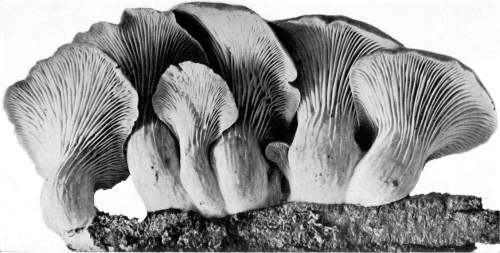
Plate 34, Figure 107.—Pleurotus ostreatus. Under view
showing decurrent and anastomosing gills on the stem. Cap white, light
gray, buff, or dark gray in color. Spores white (natural size, often
larger). Copyright.
Pleurotus sapidus Kalchb. Edible.—This plant usually grows in large
clusters from dead trunks or branches or from dead portions of living
trees. It grows on a number of different kinds of trees. The stems are
often joined at the base, but sometimes the plants are scattered over
a portion of the branch or trunk. The cap is from 5–10 cm. broad.
The plants occur from June to November.
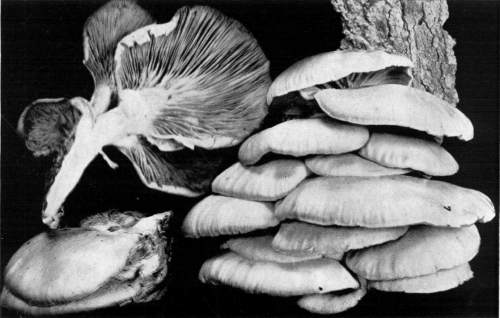
Plate 35, Figure 108.—Pleurotus sapidus. Color of cap
white, yellowish, gray, or brownish, with lilac tints sometimes. Spores
lilac tinted in mass (1/2 natural size). Copyright.
The pileus is convex, the margin incurved when young, and more or less
depressed in age, smooth, broadened toward the margin and tapering into
the short stem, which is very short in some cases and elongated in
others. Often the caps are quite irregular and the margin wavy,
especially when old. It is quite firm, but the margin splits quite
readily on being handled. The color varies greatly, white, yellowish,
gray, or brownish and lilac tints. The flesh is white. The stems are
usually attached to the pileus, at or near one edge. The gills are
white, broad, not at all crowded, and extend down on the stem as in the
oyster agaric. They are white or whitish, and as in the other related
species are sometimes cracked, due probably to the tension brought to
bear because of the expanding pileus. The spores are tinged with lilac
when seen in mass, as when caught on paper. The color seems to be
intensified after the spores have lain on the paper for a day or two.
It is very difficult to distinguish this species from the oyster agaric.
The color of the spores seems to be the only distinguishing character,
and this may not be constant. Peck suggests that it may only be a
variety of the oyster agaric. I have found the plant growing from a dead
spot on the base of a living oak tree. There was for several years a
drive near this tree, and the wheels of vehicles cut into the roots of
the tree on this side, and probably so injured it as to kill a portion
and give this fungus and another one (Polystictus pergamenus) a start,
and later they have slowly encroached on the side of the tree.
Figure 108 represents the plant (No. 3307, C. U. herbarium) from a dead
maple trunk in a woods near Ithaca, collected during the autumn of 1899.
This plant compares favorably with the oyster agaric as an edible one.
Neither of these plants preserve as well as the elm pleurotus.
Pleurotus dryinus Pers. Edible.—Pleurotus dryinus represents a
section of the genus in which the species are provided with a veil when
young, but which disappears as the pileus expands. This species has been
long known in Europe on trunks of oak, ash, willow, etc., and occurs
there from September to October. It was collected near Ithaca, N. Y., in
a beech woods along Six-mile creek, on October 24th, 1898, growing from
a decayed knothole in the trunk of a living hickory tree, and again in a
few days from a decayed stump. The pileus varies from 5–10 cm. broad,
and the lateral or eccentric stem is 2–12 cm. long by 1–2 cm. in
thickness, the length of the stem depending on the depth of the
insertion of the stem in a hollow portion of the trunk. The plant is
white or whitish, and the substance is quite firm, drying quite hard.
The pileus is convex to expanded, more or less depressed in the center,
the margin involute, and the surface at first floccose, becoming in age
floccose scaly, since the surface breaks up into triangular scales more
prominent in and near the center, smaller and inconspicuous toward the
margin. The prevailing color is white, but in age the scales become
cream color or buff (in European plants said to become fuscous). The
pileus is either definitely lateral (Fig. 109) or eccentric when the
stem is attached near the center as in Fig. 110. The gills are white,
becoming tinged with yellow in age, decurrent (running down on the stem)
in striæ for short distances, 4–5 mm. broad, not crowded. The stem is
nearly central (Fig. 110), or definitely lateral (Fig. 109), the length
varying according to conditions as stated above. It is firm, tough,
fibrous. The veil is prominent in young and medium plants, floccose,
tearing irregularly as the pileus expands.
Figure 110 is from plants (No. 2478a C. U. herbarium) growing from
knothole in living hickory tree, and Fig. 109 from plants (No. 2478b)
growing on a dead stump, near Ithaca.
According to the descriptions of P. dryinus as given by Persoon, and
as followed by Fries and most later writers, the pileus is definitely
lateral, and more or less dimidiate, while in P. corticatus Fr., the
pileus is entire and the stem rather long and eccentric. Stevenson
suggests (p. 166) that corticatus is perhaps too closely allied to
dryinus. The plants in our Fig. 110 agree in all respects with P.
corticatus, except that possibly the lamellæ do not anastomose on the
stem as they are said to in corticatus. According to the usual
descriptions corticatus is given as the larger species, while Fig. 109
of our plant, possessing the typical characters of dryinus, is the
larger. The form of the pileus, the length and position of the stem,
depends, as we know, to a large extent on the position of the plant on
the tree. When growing from the upper side, so that there is room above
for the expansion of the cap, the pileus is apt to be more regular, just
as is the case in Pleurotus ulmarius, and the stem more nearly
central. When the plant grows from a hollow place in the trunk as those
shown in Fig. 110 did, then there is an opportunity for them to grow
more or less erect, at least until they emerge from the hollow, and then
the pileus is more nearly equal in its expansion and the stem is longer.
Berkeley describes specimens of P. dryinus with long stems growing
from a hollow in an ash, and Stevenson (p. 167) reports the same
condition.
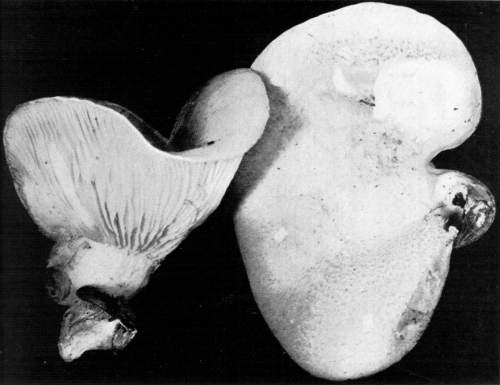
Plate 36, Figure 109.—Pleurotus dryinus. Side and upper
view. Plant entirely white, scales sometimes buff or cream colored in
age (natural size). Copyright.
Pleurotus sulfureoides Pk.—This rare species, first collected in the
Catskill Mountains 1869, and described by Peck in the 23rd Report, N. Y.
State Mus., p. 86, 1870, was found by me on two different occasions at
Ithaca, N. Y., during the autumn of 1898, on rotting logs, Ithaca Flats,
and again in Enfield Gorge, six miles from Ithaca. The plants are from
5–8 cm. high, the cap 3–5 cm. broad, and the stem 5–7 mm. in
thickness, and the entire plant is of a dull, or pale, yellow.
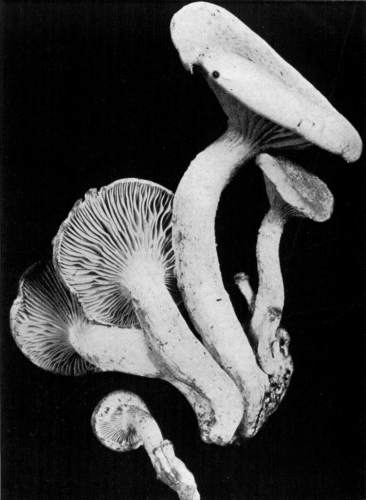
Plate 37, Figure 110.—Pleurotus dryinus, form
corticatus. Entire plant white, scales cream or buff in age sometimes.
The ruptured veil shows in the small plant below (natural size).
Copyright.
The pileus is nearly regular, fleshy, thin toward the margin, convex,
umbonate, smooth or with a few small scales. The gills are rather
crowded, broad, rounded or notched at the stem, pale yellow. The spores
are elliptical, 7–9 × 5–6 µ. The stem is ascending and curved, nearly
or quite central in some specimens in its attachment to the pileus,
whitish or yellowish, mealy or slightly tomentose at the apex.
Figure 111 is from plants (No. 2953, C. U. herbarium) on rotting log,
Ithaca Flats, October, 1898.
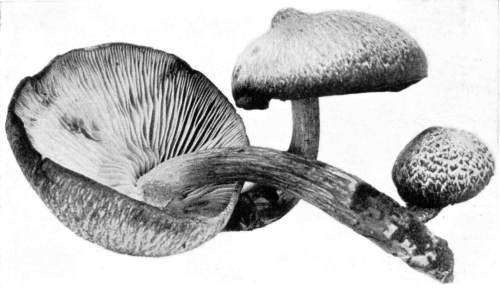
Figure 111.—Pleurotus sulfureoides. Entire plant dull or
pale yellow (natural size). Copyright.
Pleurotus petaloides Bull. Edible.—The petal-like agaric is so called
from the fancied resemblance of the plant to the petal of a flower. The
plant usually grows in a nearly upright or more or less ascending
position, or when it grows from the side of a trunk it is somewhat
shelving. It is somewhat spathulate in form, i. e., broad at the free
end and tapering downward into the short stem in a wedge-shaped manner,
and varies from 2–10 cm. long and 1–5 cm. in breadth. It grows on
fallen branches or trunks, on stumps, and often apparently from the
ground, but in reality from underground roots or buried portions of
decayed stumps, etc.
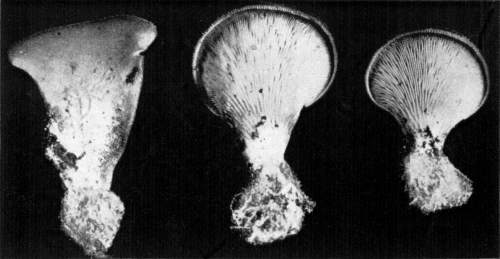
Figure 112.—Pleurotus petaloides. Color pale reddish
brown or brown, sometimes entirely white; gills white (natural size).
Copyright.
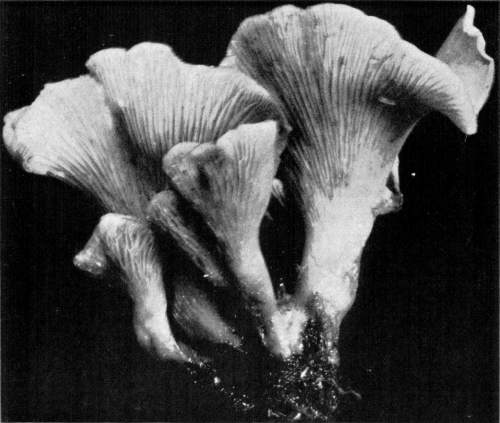
Figure 113.—Pleurotus petaloides. More irregular form
than that shown in figure 112; color same as there described (natural
size). Copyright.
The pileus varies from a regular wedge-shape to spathulate, or more or
less irregularly petaloid, or conchoid forms, the extremes of size and
form being shown in Figs. 112, 113. The margin is at first involute,
finally fully expanded, and the upper surface is nearly plane or
somewhat depressed. The color is often a pale reddish brown, or brown,
and sometimes pure white. The margin is sometimes marked with fine
striations when moist. The upper portion near the union with the stem is
sometimes tomentose, sometimes smooth. The gills are narrow, white, or
yellowish, crowded and strongly decurrent. While the plant varies
greatly in form and size, it is easily recognized by the presence of
numerous short whitish cystidia in the hymenium, which bristle over the
surface of the hymenium and under a pocket lens present a "fuzzy"
appearance to the lamellæ. They are 70–80 × 10–12 µ. The spores are
white.
Figures 112, 113 are from plants collected at Ithaca.
Pleurotus serotinus Schrad. This is an interesting plant and occurs
during the autumn on dead trunks, branches, etc., in the woods. The stem
is wanting, and the cap is shelving, dimidiate, reniform or
suborbicular. The plants occur singly or are clustered and overlapping,
about the same size and position as Claudopus nidulans, from which it
is readily told by its white gills and spores. The color varies from
dull yellow to brownish, often with shades of olive or green.
Pleurotus applicatus Batsch.—This is a pretty little species and
usually occurs on much decayed wood, lying close to the ground so that
it is usually directly on the under side of the log or branch. It does
occur, however, on the side of the log when it is more or less shelving,
because of the tendency of the pileus always to be more or less
horizontal.
Figure 114.—Pleurotus applicatus. Color gray to dark
bluish gray, or black with a bluish tinge (natural size). Copyright.
The pileus is 4–6 mm. broad, its upper surface closely applied to the
wood or bark on which it is growing when it appears directly on the
under side. The margin is sometimes free and involute. Sometimes it is
attached only by the center of the pileus. There is then often a short
process. When it grows on the side of the log it is attached laterally,
or on the upper side of one margin, while the greater portion of the
pileus is free and shelving. The surface is smooth or somewhat hairy.
The color varies from gray to dark bluish gray, or black with a bluish
tinge. The gills are thick, broad in proportion to the size of the cap,
distant, and are said by some to be paler than the pileus. In plants
collected at Ithaca, the gills are often as dark as the pileus. The
entire plant is rather tough, and revives after being dried if placed in
water, resembling in this respect Marasmius, Panus, or Trogia, and
it may be more nearly related to one of these. Figure 114 is from plants
(No. 4599, C. U. herbarium) collected at Ithaca.
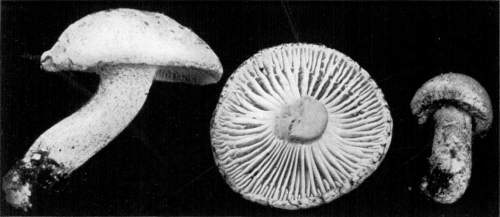
Figure 115.—Hygrophorus chrysodon. Entirely white with
golden yellow granules on cap and stem (natural size). Copyright.
The genus Hygrophorus is one which presents some difficulties in the
case of some of the species, especially to beginners, and plants need to
be studied in the fresh condition to understand the most important
character which separates it from certain of the other white-spored
agarics. The substance of the pileus is continuous with that of the
stem, that is, the stem is not easily separated from the cap at the
point of junction, but is more or less tenacious. The gills may be
adnexed, adnate, sinuate, or decurrent, but what is important they are
usually rather distant, the edge is acute or sharp, and gradually
thickened toward the junction with the cap, so that a section of the
gill is more or less triangular. This is brought about by the fact that
the substance of the cap extends downward into the gill between the
laminæ or surfaces of the gill. But the most important character for
determining the genus is the fact that the surfaces of the gills become
rather of a waxy consistency at maturity, so that they appear to be full
of a watery substance though they do not bleed, and the surface of the
gill can be rather easily removed, leaving the projecting line of the
trama. This is more marked in some species than in others. The waxy
consistency of the gills then, with the gills acute at the edge, broad
at the point of attachment to the pileus, and the gills being rather
widely separated are the important characters in determining the species
which belong to this genus. The nearest related genus is Cantharellus,
which, however, has blunt and forked gills. A number of the plants are
brilliantly colored.
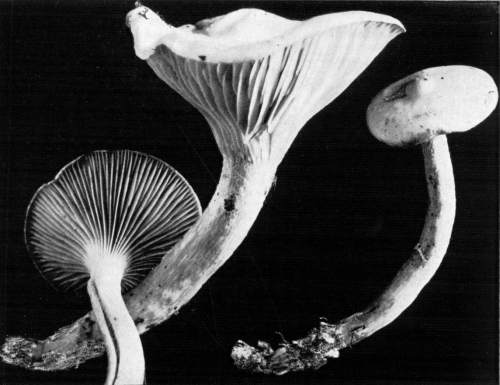
Plate 38, Figure 116.—Hygrophorus eburneus. Entirely
white, slimy (natural size). Copyright.
Hygrophorus chrysodon (Batsch.) Fries. Edible.—This plant has about the
same range as Hygrophorus eburneus, though it is said to be rare. It
is a very pretty plant and one quite easily recognised because of the
uniform white ground color of the entire plant when fresh, and the
numerous golden floccules or squamules scattered over the cap and the
stem. The name chrysodon means golden tooth, and refers to these
numerous golden flecks on the plant. A form of the plant, variety
leucodon, is said to occur in which these granules are white. The
plant is 4–7 cm. high, the cap 4–7 cm. broad, and the stem 6–10 mm.
in thickness. The plants grow on the ground in the woods, or rather open
places, during late summer and autumn.
The pileus is convex, then expanded, the margin strongly involute when
young, and unrolling as the cap expands, very viscid, so that particles
of dirt and portions of leaves, etc., cling to it in drying. The golden
or light yellow granules on the surface are rather numerous near the
margin of the pileus, but are scattered over the entire surface. On the
margin they sometimes stand in concentric rows close together. The gills
are white, distant, decurrent, 3–6 mm. broad, white, somewhat yellowish
in age and in drying, and connected by veins. The spores white, oval to
ovate, the longer ones approaching elliptical, 6–10 × 5–6 µ.
The stem is soft, spongy within, nearly equal, white, the yellowish
granules scattered over the surface, but more numerous toward the apex,
where they are often arranged in the form of a ring. When the plant is
young these yellow granules or squamules on the stem and the upper
surface of the inrolled margin of the pileus meet, forming a continuous
layer in the form of a veil, which becomes spread out in the form of
separated granules as the pileus expands, and no free collar is left on
the stem.
Figure 115 is from plants (No. 3108, C. U. herbarium) collected in
October, 1898, in woods, and by roadsides, Ithaca, N. Y.
Hygrophorus eburneus (Bulliard) Fries. Edible.—This plant is widely
distributed in Europe and America. It is entirely white, of medium size,
very viscid or glutinous, being entirely covered with a coating of
gluten, which makes it very slippery in handling. The odor is mild and
not unpleasant like that of a closely related species, H. cossus. The
plants are 6–15 cm. high, the cap is from 3–8 cm. broad, and the stem
3–8 mm. in thickness. It grows on the ground in woods, or in open
grassy places.
The pileus is fleshy, moderately thick, sometimes thin, convex to
expanded, the margin uneven or sometimes wavy, smooth, and shining. When
young the margin of the cap is incurved. The gills are strongly
decurrent, distant, with vein-like elevations near the stem. Spores
rather long, oval, 6–10 × 5–6 µ, granular. The stem varies in length,
it is spongy to stuffed within, sometimes hollow and tapers below. The
slime which envelops the plant is sometimes so abundant as to form a
veil covering the entire plant and extending across from the margin of
the cap to the stem, covering the gills. As the plant dries this
disappears, and does not leave an annulus on the stem.
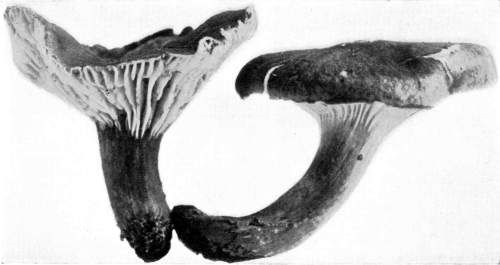
Figure 117.—Hygrophorus fuligineus. Cap and stem dull
reddish brown or smoky brown, very viscid when moist; gills white
(natural size). Copyright.
Figure 116 is from a photograph of plants (No. 2534, C. U. herbarium)
collected in Enfield Gorge near Ithaca, N. Y., Nov. 5th, 1898.
Hygrophorus fuligineus Frost. Edible.—The smoky hygrophorus was
described in the 35th Report of the N. Y. State Museum, p. 134. It is an
American plant, and was first collected at West Albany, during the month
of November. It is one of the largest species of the genus, and grows on
the ground in woods, in late autumn. The plants are 5–10 cm. high, the
cap from 3–10 cm. broad, and the stem 1–2 cm. in thickness. The large
size of the plant together with the smoky, brown, viscid cap aid in the
recognition of the plant.
The pileus is convex, becoming expanded, smooth, very viscid, dull
reddish brown or smoky brown, darker on the center; the margin of the
pileus is even in young specimens, becoming irregular in others; and in
age often elevated more or less. The gills are broad, distant, usually
decurrent, often connected by veins, white, with yellowish tinge in
drying. The spores oval to elliptical, 8–12 × 5–7 µ. The stem is
stout, sometimes ascending, equal, or enlarged in the middle, or
tapering toward the base, solid, viscid like the pileus, usually white,
sometimes tinged with the same color as pileus, somewhat yellowish
tinged in drying.
Figure 117 is from plants (No. 2546, C. U. herbarium) collected in
Enfield Gorge near Ithaca, Nov. 5, 1898.
Hygrophorus pratensis (Pers.) Fr. Edible.—This hygrophorus grows on the
ground in pastures, old fields, or in waste places, or in thin and open
woods, from mid-summer to late autumn. The plants are 3–5 cm. high, the
cap 2–5 cm. or more broad, and the stem 6–12 mm. in thickness. The cap
being thick at the center, and the stem being usually stouter at the
apex, often gives to the plant a shape like that of a top.
The pileus is hemispherical, then convex, then nearly or quite expanded,
white, or with various shades of yellow or tawny, or buff, not viscid,
often cracking in dry weather. Flesh very thick at the center, thinner
at the margin. The flesh is firm and white. The gills are stout,
distant, long decurrent, white or yellowish, and arcuate when the margin
of the pileus is incurved in the young state, then ascending as the
pileus takes the shape of an inverted cone. The gills are connected
across the interspaces by vein-like folds, or elevations. The spores are
nearly globose to ovate or nearly elliptical, white, 6–8 × 5–6 µ. The
stem is smooth, firm outside and spongy within, tapering downward.
Hygrophorus miniatus Fr. The vermilion hygrophorus is a very common
plant in the woods during the summer. The cap and stem are bright red,
sometimes vermilion. The gills are yellow and often tinged with red. The
gills are adnate or sinuate. The plant is a small one but often
abundant, and measures from 3–5 cm. high, and the cap 2–4 cm. broad.
Hygrophorus coccineus (Schaeff.) Fr., is a somewhat larger plant and
with a scarlet cap, which becomes yellowish in age, and the gills are
adnate. Hygrophorus conicus (Scop.) Fr., is another bright red plant
with a remarkable conical pileus, and the gills are annexed to free.
Hygrophorus psittacinus Fr., is a remarkably pretty plant, the cap being
from bell-shaped to expanded, umbilicate, striate, and covered with a
greenish slime. It occurs in woods and open places. The prevailing color
is yellow, tinged with green, but it varies greatly, sometimes yellow,
red, white, etc., but nearly always is marked by the presence of the
greenish slime, the color of this disappearing as the plant dries. It
occurs in pastures, open woods, etc., from mid-summer to autumn.
Hygrophorus hypothejus Fr., is another very variable plant in color as
well as in size, varying from yellow, orange, reddish, sometimes paler,
usually first grayish when covered with the olive colored slime. The
gills are decurrent, white, then yellow. It occurs in autumn.
The genus Lactarius is easily distinguished from nearly all the other
agarics by the presence of a milky or colored juice which exudes from
wounded, cut, or broken places on the fresh plant. There are a few of
the species of the genus Mycena which exude a watery or colored juice
where wounded, but these are easily told from Lactarius because of
their small size, more slender habit, and bell-shaped cap. By careful
observation of these characters it is quite an easy matter to tell
whether or not the plant at hand is a Lactarius. In addition to the
presence of this juice or milk as it is commonly termed, the entire
plant while firm is quite brittle, especially the gills. There are
groups of rounded or vesiculose cells intermingled with thread-like
cells in the substance of the cap. This latter character can only be
seen on examination with the microscope. The brittleness of the plant as
well as the presence of these groups of vesiculose cells is shared by
the genus Russula, which is at once separated from Lactarius by the
absence of a juice which exudes in drops.
In determining the species it is a very important thing to know the
taste of the juice or of the fresh plant, whether it is peppery, or
bitter, or mild, that is, tasteless. If one is careful not to swallow
any of the juice or flesh of the plant no harm results from tasting any
of the plants, provided they are not tasted too often during a short
time, beyond the unpleasant sensation resulting from tasting some of
the very "hot" kinds. It is important also to know the color of the milk
when it first exudes from wounds and if it changes color on exposure to
the air. These tests of the plant should be made of course while it is
fresh. The spores are white, globose or nearly so in all species, and
usually covered with minute spiny processes. There are a large number of
species. Peck, 38th Report, N. Y. State Mus., pp. 111–133, describes 40
American species.
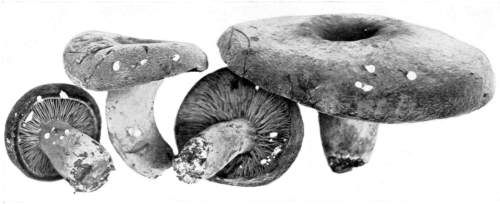
Figure 118.—Lactarius corrugis. Showing corrugated cap,
and white milk exuding. Dark tawny brown, gills orange brown (natural
size, often larger). Copyright.
Lactarius volemus Fr. Edible.—This species is by some termed the orange
brown lactarius because of its usual color. It was probably termed
Lactarius volemus because of the voluminous quantity of milk which
exudes where the plant is broken or bruised, though it is not the only
species having this character. In fresh, young plants, a mere crack or
bruise will set loose quantities of the milky juice which drops rapidly
from the plant. The plant is about the size of Lactarius deliciosus
and occurs in damp woods, where it grows in considerable abundance from
July to September, several usually growing near each other. The pileus
is convex, then expanded, often with a small elevation (umbo) at the
center, or sometimes plane, and when old a little depressed in the
center, smooth or somewhat wrinkled. The cap is dull orange or tawny,
the shade of color being lighter in some plants and darker in others.
The flesh is white and quite firm. The gills are white, often tinged
with the same color as the pileus, but much lighter; they are adnate or
slightly decurrent. The stem is usually short, but varies from 3–10 ×
1–2 cm. It is colored like the pileus, but a lighter shade.
The milk is white, abundant, mild, not unpleasant to the taste, but
sticky as it dries. This plant has also long been known as one of the
excellent mushrooms for food both in Europe and America. Peck states
that there are several plants which resemble Lactarius volemus in
color and in the milk, but that no harm could come from eating them.
There is one with a more reddish brown pileus, Lactarius rufus, found
sparingly in the woods, but which has a very peppery taste. It is said
by some to be poisonous.
Lactarius corrugis Pk. Edible.—This species occurs with Lactarius
volemus and very closely resembles it, but it is of a darker color, and
the pileus is more often marked by prominent wrinkles, from which
character the plant has derived its specific name. It is perhaps a
little stouter plant than L. volemus, and with a thicker cap. The
surface of the pileus seems to be covered with a very fine velvety
tomentum which glistens as the cap is turned in the light. The gills are
much darker than in L. volemus. The plants are usually clearly
separated on account of these characters, yet there are occasionally
light colored forms of L. corrugis which are difficult to distinguish
from dark forms of L. volemus, and this fact has aroused the suspicion
that corrugis is only a form of volemus.
The milk is very abundant and in every respect agrees with that of L.
volemus. I do not know that any one has tested L. corrugis for food.
But since it is so closely related to L. volemus I tested it during
the summer of 1899 in the North Carolina mountains. I consider it
excellent. The methods of cooking there were rather primitive. It was
sliced and fried with butter and salt. It should be well cooked, for
when not well done the partially raw taste is not pleasant. The plant
was very abundant in the woods, and for three weeks an abundance was
served twice a day for a table of twelve persons. The only disagreeable
feature about it is the sticky character of the milk, which adheres in
quantity to the hands and becomes black. This makes the preparation of
the plant for the broiler a rather unpleasant task.
Figure 118 is from plants (No. 3910, C. U. herbarium) collected in the
woods at Blowing Rock, during September, 1899. Just before the exposure
was made to get the photograph several of the plants were wounded with a
pin to cause the drops of milk to exude, as is well shown in the
illustration.
The dark color of the lamellæ in L. corrugis is due to the number of
brown cystidia or setæ, in the hymenium, which project above the surface
of the gills, and they are especially abundant on the edge of the gills.
These setæ are long fusoid, 80–120 × 10–12 µ. The variations in the
color of the gills, in some plants the gills being much darker than in
others, is due to the variations either in the number of these setæ or
to the variation in their color. Where the cystidia are fewer in number
or are lighter in color the lamellæ are lighter colored. Typical forms
of Lactarius volemus have similar setæ, but they are very pale in
color and not so abundant over the surface of the gills. In the darker
forms of L. volemus the setæ are more abundant and darker in color,
approaching those found in L. corrugis. These facts, supported by the
variation in the color of the pileus in the two species and the
variations in the rugosities of the pileus, seem to indicate that the
two species are very closely related.
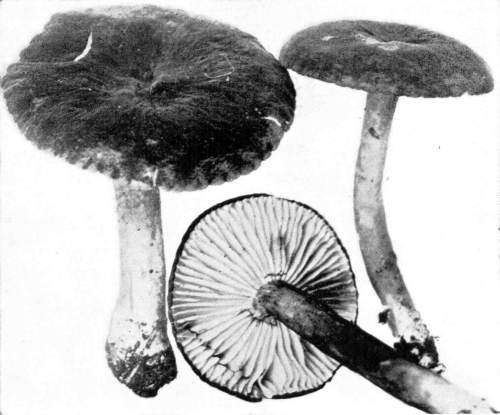
Figure 119.—Lactarius lignyotus. Cap and stem sooty, cap
wrinkled, gills white, then tinged with ochre (natural size, sometimes
larger). Copyright.
Lactarius lignyotus Fr.—This is known as the sooty lactarius and occurs
in woods along with the smoky lactarius. It is distinguished from the
latter by the dark brown color of the pileus and by the presence usually
of rugose wrinkles over the center of the cap. In size it agrees with
the smoky lactarius.
The pileus is convex, then plane, or somewhat depressed in the center,
dry, sometimes with a small umbo, dark brown or sooty (chocolate to seal
brown as given in Ridgeway's nomenclature of colors), covered with a
very fine tomentum which has the appearance of a bloom. The margin of
the cap, especially in old plants, is somewhat wavy or plicate as in
Lactarius fuliginosus. The gills are moderately crowded when young,
becoming distant in older plants, white, then cream color or yellow,
changing to reddish or salmon color where bruised. The spores are
yellowish in mass, faintly so under the microscope, globose, strongly
echinulate, 6–10 µ. The taste is mild, or sometimes slowly and slightly
acrid. The plants from North Carolina showed distinctly the change to
reddish or salmon color when the gills were bruised, and the taste was
noted as mild.
Figure 119 is from plants (No. 3864, C. U. herbarium) collected in the
Blue Ridge Mountains, at Blowing Rock, N. C., September, 1899.
Lactarius fuliginosus Fr.—The smoky or dingy lactarius occurs in woods
and open grassy places. It is widely distributed. The plants are 4–7
cm. high, the cap 3–5 cm. broad, and the stem 6–10 mm. in thickness.
The light smoky color of the cap and stem, the dull yellowish white
color of the gills, and in old plants the wavy margin of the cap make it
comparatively easy to recognize the species.
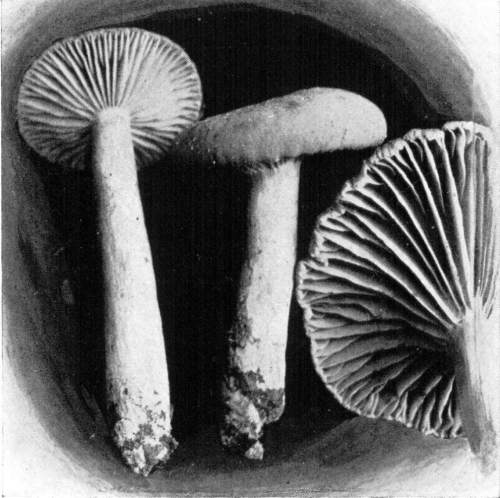
Figure 120.—Lactarius fuliginosus. Cap and stem smoky,
cap usually not wrinkled; gills white, then light ochre, distant
(natural size). Copyright.
The pileus is thin, at first firm, becoming soft, convex, then plane and
often somewhat depressed in the center, usually even, dry, the margin in
old plants crenately wavy, dull gray or smoky gray in color, with a fine
down or tomentum. The gills are adnate, distant, more so in old plants,
white, then yellowish, sometimes changing to salmon color or reddish
where bruised. The spores are yellowish in mass, faintly yellow under
the microscope, strongly echinulate or tuberculate, globose, 6–10 µ.
The stem is usually paler than the pileus, firm, stuffed. The milk is
white, slowly acrid to the taste.
Figure 120 is from plants (No. 3867, C. U. herbarium) collected at
Blowing Rock, N. C., during September, 1899.
Lactarius gerardii Pk.—This plant was described by Dr. Peck in the 26th
Report, N. Y. State Mus., p. 65, and in the 28th Rept. p. 129. According
to the descriptions it differs from Lactarius fuliginosus only in the
spores being white, the gills more distant, and the taste being
constantly mild. Since the taste in L. fuliginosus is sometimes mild,
or slowly acrid, and the lamellæ in the older plants are more distant,
the spores sometimes only tinged with yellow, there does not seem to be
a very marked difference between the two species. In fact all three of
these species, fuliginosus, lignyotus and gerardii, seem to be
very closely related. Forms of fuliginosus approach lignyotus in
color, and the pileus sometimes is rugose wrinkled, while in lignyotus
pale forms occur, and the pileus is not always rugose wrinkled. The
color of the bruised lamellæ is the same in the two last species and
sometimes the change in color is not marked.
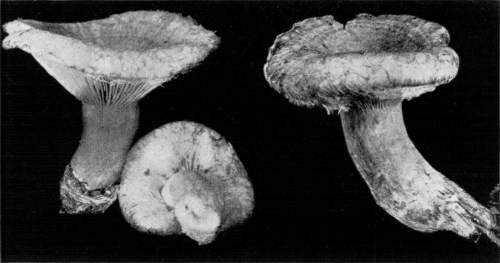
Figure 121.—Lactarius torminosus. Cap ochraceous and
pink hues, with zones of darker color, margin of cap wooly (natural
size, often much larger). Copyright.
Lactarius torminosus (Schaeff.) Fr.—This plant is widely distributed in
Europe, Asia, as well as in America. It is easily recognised by the
uneven mixture of pink and ochraceous colors, and the very hairy or
tomentose margin of the cap. The plants are 5–10 cm. high, the cap
about the same breadth, and the stem 1–2 cm. in thickness. It occurs in
woods on the ground during late summer and autumn.
The pileus is convex, depressed in the center, and the margin strongly
incurved when young, the abundant hairs on the margin forming an
apparent veil at this time which covers up the gills. The upper surface
of the pileus is smooth, or sometimes more or less covered with a
tomentum similar to that on the margin. The color is an admixture of
ochraceous and pink hues, sometimes with concentric zones of darker
shades. The gills are crowded, narrow, whitish, with a tinge of
yellowish flesh color. The stem is cylindrical, even, hollow, whitish.
The milk is white, unchangeable, acrid to the taste. Figure 121, left
hand plants, is from plants (No. 3911, C. U. herbarium) collected in the
Blue Ridge Mountains, N. C., in September, 1899, and the right hand
plant (No. 2960, C. U. herbarium) collected at Ithaca, N. Y.
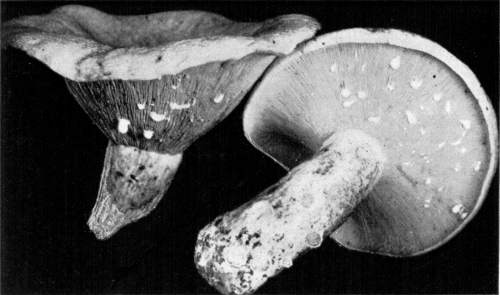
Figure 122.—Lactarius piperatus. Entirely white, milk
very peppery (natural size, often larger). Copyright.
Lactarius piperatus (Scop.) Fr.—This species is very hot and peppery to
the taste, is of medium size, entirely white, depressed at the center,
or funnel-shaped, with a short stem, and very narrow and crowded gills,
and abundant white milk. The plants are 3–7 cm. high, the cap 8–12 cm.
broad, and the stem 1–2 cm. in thickness. It grows in woods on the
ground and is quite common, sometimes very common in late summer and
autumn.
The pileus is fleshy, thick, firm, convex, umbilicate, and then
depressed in the center, becoming finally more or less funnel-shaped by
the elevation of the margin. It is white, smooth when young, in age
sometimes becoming sordid and somewhat roughened. The gills are white,
very narrow, very much crowded, and some of them forked, arcuate and
then ascending because of the funnel-shaped pileus. The spores are
smooth, oval, with a small point, 5–7 × 4–5 µ. The stem is equal or
tapering below, short, solid.
The milk is white, unchangeable, very acrid to the taste and abundant.
The plant is reported as edible. A closely related species is L.
pergamenus (Swartz) Fr., which resembles it very closely, but has a
longer, stuffed stem, and thinner, more pliant pileus, which is more
frequently irregular and eccentric, and not at first umbilicate. Figure
122 is from plants (No. 3887, C. U. herbarium) collected at Blowing
Rock, N. C., during September, 1899.
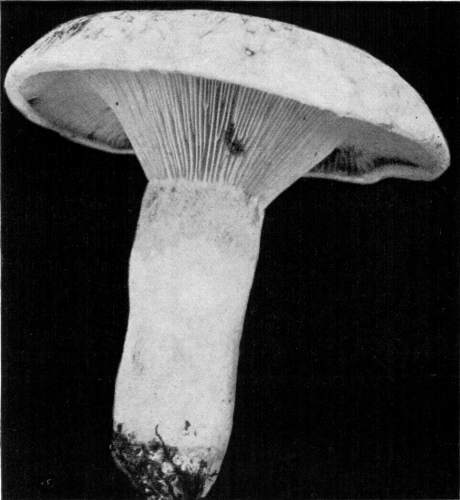
Figure 123.—Lactarius resimus. Entire plant white, in
age scales on cap dull ochraceous (natural size). Copyright.
Lactarius resimus Fr.?—This plant is very common in the woods bordering
a sphagnum moor at Malloryville, N. Y., ten miles from Ithaca, during
July to September. I have found it at this place every summer for the
past three years. It occurs also in the woods of the damp ravines in the
vicinity of Ithaca. It was also abundant in the Blue Ridge Mountains of
North Carolina, during September, 1899. The plants are large, the caps
10–15 cm. broad, the stem 5–8 cm. long, and 2–3 cm. in thickness.
The pileus is convex, umbilicate, then depressed and more or less
funnel-shaped in age, white, in the center roughened with fibrous scales
as the plant ages, the scales becoming quite stout in old plants. The
scales are tinged with dull ochraceous or are light brownish in the
older plants. The ochre colored scales are sometimes evident over the
entire cap, even in young plants. In young plants the margin is strongly
involute or inrolled, and a loose but thick veil of interwoven threads
extends from the surface of the roll to the stem. This disappears as the
margin of the cap unrolls with the expanding pileus. The margin of the
pileus is often sterile, that is, it extends beyond the ends of the
gills. The gills are white, stout, and broad, decurrent, some of them
forked near the stem. When bruised, the gills after several hours become
ochraceous brown. The spores are subglobose, minutely spiny, 8–12 µ.
The stem is solid, cylindrical, minutely tomentose, spongy within when
old.
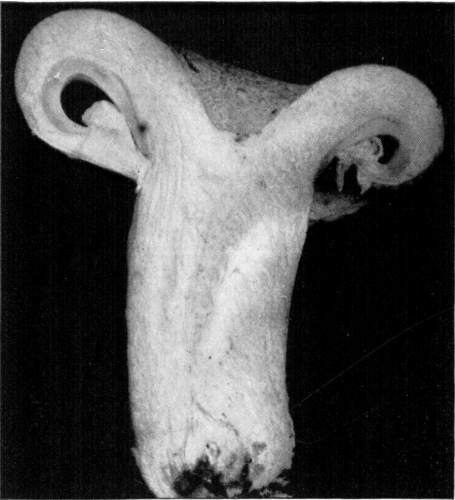
Figure 124.—Lactarius resimus. Section of young plant
showing inrolled margin of cap, and the veil (natural size). Copyright.
The taste is very acrid, and the white milk not changing to yellow.
While the milk does not change to yellow, broken portions of the plant
slowly change to flesh color, then ochraceous brown. Figures 123, 124
are from plants collected in one of the damp gorges near Ithaca, during
September, 1896. The forked gills, the strongly inrolled margin of the
cap and veil of the young plants are well shown in the illustration.
Lactarius chrysorrheus Fr.—This is a common and widely distributed
species, from small to medium size. The plants are 5–8 cm. high, the
cap 5–10 cm. broad, and the stem 1–1.5 cm. in thickness. It grows in
woods and groves during late summer and autumn.
The pileus is fleshy, of medium thickness, convex and depressed in the
center from the young condition, and as the pileus expands the margin
becomes more and more upturned and the depression deeper, so that
eventually it is more or less broadly funnel-form. The color varies from
white to flesh color, tinged with yellow sometimes in spots, and marked
usually with faint zones of brighter yellow. The zones are sometimes
very indistinct or entirely wanting. The gills are crowded, white then
yellow, where bruised becoming yellowish, then dull reddish. The stem is
equal or tapering below, hollow or stuffed, paler than the pileus,
smooth (sometimes pitted as shown in the Fig. 125).
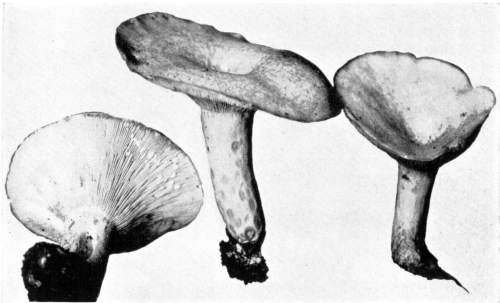
Figure 125.—Lactarius chrysorrheus. Cap white or flesh
color, often tinged with yellowish, and with darker zones (natural
size). Copyright.
The plant is acrid to the taste, the milk white changing to citron
yellow on exposure. Figure 125 is from plants (No. 3875, C. U.
herbarium) collected in the Blue Ridge Mountains at Blowing Rock, N. C.,
September, 1899. The species was quite abundant in this locality during
August and September, in chestnut groves, mixed woods, and borders of
woods.
Lactarius deliciosus (L.) Fr. Edible.—Lactarius deliciosus grows in
damp woods, is widely distributed and sometimes is quite common. It
occurs from July to October. It is one of the medium or large sized
species, being 3–10 cm. high, the cap 5–12 cm. broad, and the stem
1–2 cm. in thickness. It is easily recognized by its orange color and
the concentric zones of light and dark orange around on the pileus, and
by the orange milk which is exuded where wounded.
The pileus is first convex, then slightly depressed in the center,
becoming more expanded, and finally more or less funnel-shaped by the
elevation of the margin. It is usually more or less orange in color or
mottled with varying shades, and with concentric bands of a deeper
color. The gills are yellowish orange often with darker spots. The stem
is of the same color as the pileus but paler, sometimes with darker
spots. The flesh of the plant is white, shaded with orange. In old
plants the color fades out somewhat and becomes unevenly tinged with
green, and bruised places become green. Peck states that when fresh the
plant often has a slight acrid taste.
Being a widely distributed and not uncommon plant, and one so readily
recognized, it has long been known in the old world as well as here. All
writers on these subjects concur in recommending it for food, some
pronouncing it excellent, some the most delicious known. Its name
suggests the estimation in which it was held when christened.
Lactarius chelidonium Pk. Edible.—This pretty little Lactarius was
described by Peck in the 24th Report, N. Y. State Mus., p. 74. It is
closely allied to Lactarius deliciosus, from which it is said to
differ in its "more narrow lamellæ, differently colored milk, smaller
spores." The plant is about 5 cm. high, the cap about 5 cm. broad, and
the stem 1–1.5 cm. in thickness.
The pileus is fleshy, firm, convex and depressed in the center, smooth,
slightly viscid when moist, "of a grayish green color with blue and
yellow tints, and a few narrow zones on the margin." The gills are
crowded, narrow, some of them forked at the base, and sometimes joining
to form reticulations. The spores are yellowish. The short stem is
nearly equal, smooth, hollow, and the same color as the pileus.
The taste is mild, the milk not abundant, and of a yellowish color,
"resembling the juice of Celandine or the liquid secreted from the mouth
of grasshoppers." Wounds on the plant are first of the color of the
milk, changing on exposure to blue, and finally to green. The plant
occurs during late summer and in the autumn in woods. Peck reported it
first from Saratoga, N. Y. It has been found elsewhere in the State, and
it has probably quite a wide distribution. I found it during September,
1899, in the Blue Ridge Mountains of N. C. Figure 1, plate 39, is from
some of the water color drawings made by Mr. Franklin R. Rathbun.
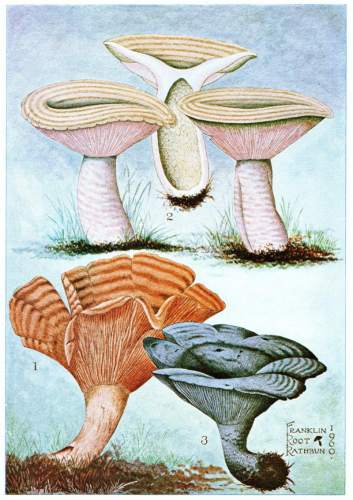
- PLATE 39.
- Fig. 1.—Lactarius deliciosus.
- Fig. 2.—L. chelidonium.
- Fig. 3.—L. indigo.
- Copyright 1900.
Lactarius indigo (Schw.) Fr.—The indigo blue lactarius is a very
striking and easily recognized plant because of the rich indigo blue
color so predominant in the entire plant. It is not very abundant, but
is widely distributed in North America. The plant is 5–7 cm. high, the
cap 5–12 cm. broad, and the stem is 1–2 cm. in thickness. The plants
occur during late summer and in the autumn.
The pileus when young is umbilicate, the margin involute, and in age the
margin becomes elevated and then the pileus is more or less
funnel-shaped. The indigo blue color is deeply seated, and the surface
of the pileus has a silvery gray appearance through which the indigo
blue color is seen. The surface is marked by concentric zones of a
darker shade. In age the color is apt to be less uniformly distributed,
it is paler, and the zones are fainter. The gills are crowded, and
when bruised, or in age, the indigo blue color changes somewhat to
greenish. The milk is dark blue.
The species of Russula are very characteristic, and the genus is
easily recognized in most cases after a little experience. In the very
brittle texture of the plants the genus resembles Lactarius, and many
of them are more brittle than the species of this genus. A section of
the pileus shows under the microscope a similar vesicular condition,
that is the grouping of large rounded cells together, with threads
between. But the species of Russula are at once separated from those
of Lactarius by the absence of a juice which exudes in drops from
bruised parts of Lactarius. While some of the species are white and
others have dull or sombre colors, many of the species of Russula have
bright, or even brilliant colors, as red, purple, violet, pink, blue,
yellow, green. In determining many of the species, however, it is
necessary to know the taste, whether mild, bitter, acrid, etc., and in
this respect the genus again resembles Lactarius. The color of the
gills as well as the color of the spores in mass should also be
determined. The genus is quite a large one, and the American species are
not well known, the genus being a difficult one. In Jour. Mycolog., 5:
58–64, 1889, the characters of the tribes of Russula with descriptions
of 25 species are quoted from Stevenson, with notes on their
distribution in N. A. by MacAdam.
Russula alutacea Fr. Edible.—This handsome Russula differs from the
others described here in the color of the gills and spores. The plant is
common and occurs in mixed woods during the summer and early autumn. It
is 5–10 cm. high, the cap 5–12 cm. broad, and the stem 1.5–2.5 cm. in
thickness.
The pileus is fleshy, oval to bell-shaped, becoming plane, and sometimes
umbilicate. It is red or blood red in color, sometimes purple, and
becoming pale in age, especially at the center. It is viscid when moist,
the margin thin and striate-tuberculate. The gills are free from the
stem, stout, broad, first white, becoming yellow, and in age ochraceous.
The gills are all of the same length, not crowded, and they are
connected by vein-like elevations over the surface. The stem is stout,
solid, even, white, portions of the stem are red, sometimes purple.
The taste is mild, and the plant is regarded as one of the very good
ones for food.
Russula lepida Fr. Edible.—This elegant Russula occurs in birch woods
or in mixed woods during late summer and autumn. It is 5–8 cm. high,
the cap 6–8 cm. broad, and the stem 1–2 cm. in thickness.
The pileus is fleshy, convex, then expanded, obtuse, not shining, deep
red, becoming pale in age, often whitish at the center, silky, in age
the surface cracking, the margin blunt and not striate. The gills are
rounded next the stem, thick, rather crowded, and sometimes forked,
white, sometimes red on the edge near the margin of the pileus. The
gills are often connected by vein-like elevations over the surface. The
stem is equal, white or rose color. The taste is mild.
Russula virescens (Schaeff.) Fr. Edible.—This plant grows on the ground
in woods or in grassy places in groves from July to September. The stem
is short, 2–7 cm. long × 1–2 cm. thick, and the cap is 5–10 cm.
broad. The plant is well known by the green color of the pileus and by
the surface of the pileus being separated into numerous, quite regular,
somewhat angular areas or patches, where the green color is more
pronounced.
The pileus is first rounded, then convex and expanded, and when old
somewhat depressed in the center. It is quite firm, dry, greenish, and
the surface with numerous angular floccose areas or patches of usually a
deeper green. Sometimes the pileus is said to be tinged with yellow. The
gills are adnate, nearly free from the stem, and crowded. The stem is
white and firm.
The greenish Russula, Russula virescens, like a number of other
plants, has long been recommended for food, both in Europe and in this
country. There are several species of Russula in which the pileus is
green, but this species is readily distinguished from them by the
greenish floccose patches on the surface of the pileus. Russula furcata
is a common species in similar situations, with forked gills, and the
cap very variable in color, sometimes reddish, purple, purple brown, or
in one form green. I know of the Russula furcata having been eaten in
rather small quantities, and while in this case no harm resulted the
taste was not agreeable.
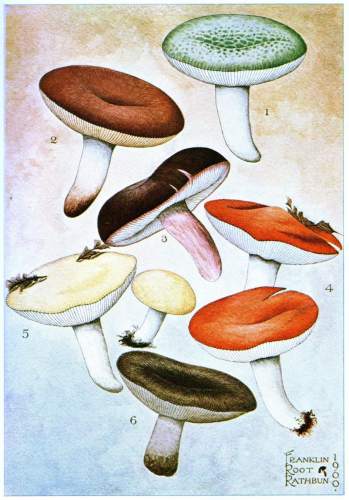
- PLATE 40.
- Fig. 1.—Russula virescens.
- Fig. 2.—R. alutacea.
- Fig. 3.—R. lepida.
- Fig. 4.—R. emetica.
- Fig. 5.—Yellow Russula.
- Fig. 6.—R. adusta.
- Copyright 1900.
Russula fragilis (Pers.) Fr.—This plant is very common in damp woods,
or during wet weather from July to September. It is a small plant and
very fragile, as its name suggests, much more so than most other
species. It is 2–4 cm. high, the cap 2–5 cm. broad, and the stem about
1 cm. in thickness.
The pileus is convex, sometimes slightly umbonate, then plane, and in
age somewhat depressed. The cuticle peels off very easily. The color is
often a bright red, or pink, sometimes purple or violet, and becomes
paler in age. It is somewhat viscid when moist, and the margin is very
thin and strongly striate and tuberculate, i. e., the ridges between the
marginal furrows are tuberculate. The gills are lightly adnexed, thin,
crowded, broad, all of the same length, white. The stem is usually
white, sometimes more or less pink colored, spongy within, becoming
hollow. The taste is very acrid.
Russula emetica Fr. Poisonous.—This Russula has a very wide
distribution and occurs on the ground in woods or open places during
summer and autumn. It is a beautiful species and very fragile. The
plants are 5–10 cm. high, the cap 5–10 cm. broad, and the stem 1–2
cm. in thickness. The pileus is oval to bell-shaped when young, becoming
plane, and in age depressed. It is smooth, shining, the margin furrowed
and tuberculate. The color is from pink or rosy when young to dark red
when older, and fading to tawny or sometimes yellowish in age. The
cuticle is easily separable as in R. fragilis, the flesh white, but
reddish just beneath the cuticle. The gills are nearly free, broad, not
crowded, white. The stem is stout, spongy within, white or reddish,
fragile when old.
The plant is very acrid to the taste and is said to be poisonous, and to
act as an emetic.
Russula adusta (Pers.) Fr.—This plant occurs on the ground in woods
during late summer and in autumn. It is 3–6 cm. high, the cap 5–15 cm.
broad, and the stem is 1–1.5 cm. in thickness.
The pileus is fleshy, firm, convex, depressed at the center, and when
old more or less funnel-shaped from the upturning of the margin, which
is at first incurved and smooth. It varies from white to gray and smoky
color. The gills are adnate, or decurrent, thin, crowded, of unequal
lengths, white, then becoming dark. The stem is colored like the pileus.
The entire plant becomes darker in drying, sometimes almost black. It is
near Russula nigricans, but is smaller, and does not have a red juice
as R. nigricans has.
From the other white-spored agarics of a fleshy consistency
Cantharellus is distinguished by the form of the gills. The gills are
generally forked, once or several times, in a dichotomous manner, though
sometimes irregularly. They are blunt on the edge, not acute as in most
of the other genera. The gills are usually narrow and in many species
look like veins, folds, or wrinkles, but in some species, as in
Cantharellus aurantiacus, they are rather thin and broad.
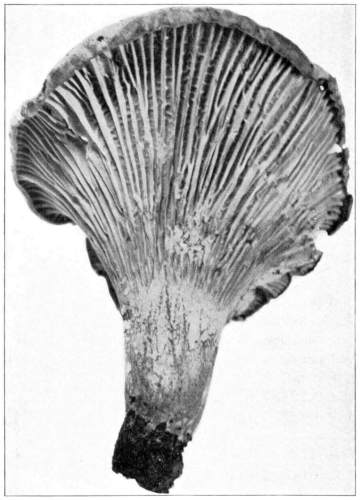
Figure 126.—Cantharellus cibarius. Under view showing
forked gills with veins connecting them. Entire plant rich chrome yellow
(natural size).
Cantharellus cibarius Fr. Edible.—This plant is known as the
chanterelle. It has a very wide distribution and has long been
regarded as one of the best of the edible mushrooms. Many of the writers
on fungi speak of it in terms of high praise. The entire plant is a
uniform rich chrome yellow. Sometimes it is symmetrical in form, but
usually it is more or less irregular and unsymmetrical in form. The
plants are 5–10 cm. high, the cap 4–8 cm. broad, and the stem short
and rather thick.
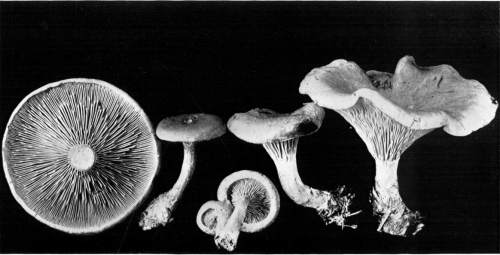
Plate 41, Figure 127.—Cantharellus aurantiacus. Color
orange yellow, and cap varies ochre, raw sienna, tawny, in different
specimens (natural size). Copyright.
The pileus is fleshy, rather thick, the margin thick and blunt and at
first inrolled. It is convex, becoming expanded or sometimes depressed
by the margin of the cap becoming elevated. The margin is often wavy or
repand, and in irregular forms it is only produced at one side, or more
at one side than at the other, or the cap is irregularly lobed. The
gills are very narrow, stout, distant, more or less sinuous, forked or
anastomosing irregularly, and because of the pileus being something like
an inverted cone the gills appear to run down on the stem. The spores
are faintly yellowish, elliptical, 7–10 µ. Figure 126 represents but a
single specimen, and this one with a nearly lateral pileus.
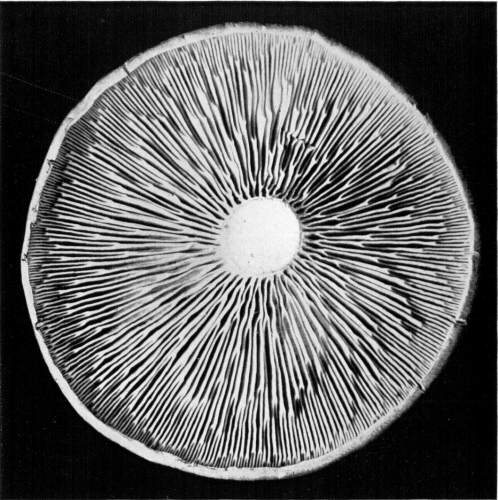
Figure 128.—Cantharellus aurantiacus, under view,
enlarged nearly twice, showing regularly forked gills.
Cantharellus aurantiacus Fr.—This orange cantharellus is very common,
and occurs on the ground or on very rotten wood, logs, branches, etc.,
from summer to very late autumn. It is widely distributed in Europe and
America. It is easily known by its dull orange or brownish pileus,
yellow gills, which are thin and regularly forked, and by the pileus
being more or less depressed or funnel-shaped. The plants are from 5–8
cm. high, the cap from 2–7 cm. broad, and the stem about 4–8 mm. in
thickness.
The pileus is fleshy, soft, flexible, convex, to expanded, or obconic,
plane or depressed, or funnel-shaped, the margin strongly inrolled when
young, in age simply incurved, the margin plane or repand and undulate.
The color varies from ochre yellow to dull orange, or orange ochraceous,
raw sienna, and tawny, in different specimens. It is often brownish at
the center. The surface of the pileus is minutely tomentose with silky
hairs, especially toward the center, and sometimes smooth toward the
margin. The flesh is 3–5 mm. at the center, and thin toward the margin.
The gills are arcuate, decurrent, thin, the edge blunt, but not so much
so as in a number of other species, crowded, regularly forked several
times, at length ascending when the pileus is elevated at the margin.
The color of the gills is orange to cadmium orange, or sometimes paler,
cadmium yellow or deep chrome. The stem is clay color to ochre yellow,
enlarged below, spongy, stuffed, fistulose, soft, fibrous, more or less
ascending at the base.
The taste is somewhat nutty, sometimes bitterish. The plants in Fig. 127
(No. 3272, C. U. herbarium) were collected near Ithaca, October 7, 1899.
In this genus the plants are tough and fleshy or membranaceous, leathery
and dry. They do not easily decay, but shrivel up in dry weather, and
revive in wet weather, or when placed in water. This is an important
character in distinguishing the genus. It is closely related to
Collybia, from which it is difficult to separate certain species. On
the other hand, it is closely related to Lentinus and Panus, both of
which are tough and pliant. In Marasmius, however, the substance of
the pileus is separate from that of the stem, while in Lentinus and
Panus it is continuous, a character rather difficult for the beginner
to understand. The species of Marasmius, however, are generally much
smaller than those of Lentinus and Panus, especially those which
grow on wood. The stem in Marasmius is in nearly all species central,
while in Lentinus and Panus it is generally more or less eccentric.
Many of the species of the genus Marasmius have an odor of garlic when
fresh. Besides the fairy ring (M. oreades) which grows on the ground,
M. rotula is a very common species on wood and leaves. It has a
slender, black, shining stem, and a brownish pileus usually with a black
spot in the depression in the center. The species are very numerous.
Peck, 23rd Report, N. Y. State Mus., p. 124–126, describes 8 species.
Morgan Jour. Cinn. Soc. Nat. Hist. 6: 189–194, describes 17 species.
Marasmius oreades Fr. Edible.—This is the well known "fairy ring"
mushroom. It grows during the summer and autumn in grassy places, as in
lawns, by roadsides, in pastures, etc. It appears most abundantly during
wet weather or following heavy rains. It is found usually in circles, or
in the arc of a circle, though few scattered plants not arranged in this
way often occur. The plants are 7–10 cm. high, the cap 2–4 cm. broad,
and the stem 3–4 mm. in thickness.
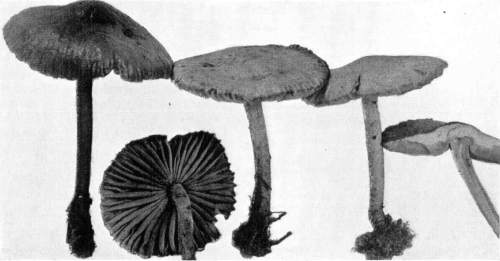
Figure 129.—Marasmius oreades. Caps buff, tawny, or
reddish.
The pileus is convex to expanded, sometimes the center elevated, fleshy,
rather thin, tough, smooth, buff color, or tawny or reddish, in age, or
in drying, paler. When moist the pileus may be striate on the margin.
The gills are broad, free or adnexed, rounded near the stem, white or
dull yellowish. The spores are elliptical, 7–8 µ long. The stem is
tough, solid, whitish.
This widely distributed fungus is much prized everywhere by those who
know it. It is not the only fungus which appears in rings, so that this
habit is not peculiar to this plant. Several different kinds are known
to appear in rings at times. The appearance of the fungus in rings is
due to the mode of growth of the mycelium or spawn in the soil.
Having started at a given spot the mycelium consumes the food material
in the soil suitable for it, and the plants for the first year appear in
a group. In the center of this spot the mycelium, having consumed all
the available food, probably dies after producing the crop of
mushrooms. But around the edge of the spot the mycelium or spawn still
exists, and at the beginning of the next season it starts into growth
and feeds on the available food in a zone surrounding the spot where it
grew the previous year. This second year, then, the plants appear in a
small ring. So in succeeding years it advances outward, the ring each
year becoming larger. Where the plants appear only in the arc of a
circle, something has happened to check or destroy the mycelium in the
remaining arc of the circle.
It has been noted by several observers that the grass in the ring
occupied by the mushrooms is often greener than that adjoining. This is
perhaps due to some stimulus exerted by the mycelium of the fungus on
the grass, or possibly the mycelium may in some way make certain foods
available for the grass which gives an additional supply to it at this
point.
Fig. 129 is from plants (No. 5503, C. U. herbarium) collected in a lawn,
October 25, 1900, Ithaca.
Illustrations of some fine large rings formed by this fungus appeared in
circular No. 13 by Mr. Coville, of the Division of Botany in the U. S.
Dept. Agr.
Marasmius cohærens (Fr.) Bres. (Mycena cohærens Fr. Collybia
lachnophylla Berk. Collybia spinulifera Pk.)—This plant grows in
dense clusters, ten to twenty individuals with their stems closely
joined below and fastened together by the abundant growth of threads
from the lower ends. From this character the name cohærens was
derived. The plants grow on the ground or on very rotten wood in woods
during late spring and in the summer. The plant is not very common in
this country, but appears to be widely distributed both in Europe and
here, having been collected in Carolina, Ohio, Vermont, New York, etc.
The plants are 12–20 cm. high, the cap 2–2.5 cm. broad, and the stem
4–7 mm. in thickness.
The pileus is fleshy, tough, convex or bell-shaped, then expanded,
sometimes umbonate, or in age sometimes the margin upturned and more or
less wavy, not viscid, but finely striate when damp, thin. The color
varies from vinaceous cinnamon to chestnut or light leather color, or
tawny, paler in age, and sometimes darker on the center. The gills are
sometimes more or less crowded, narrow, 5–6 mm. broad, adnate, but
notched, and sometimes becoming free from the stem. The color is light
leather color, brick red or bay, the color and color variations being
due to numbers of colored cystidia or spicules scattered over the
surface of the gills and on the edge. The cystidia are fulvous, fusoid,
75–90 µ long. The spores are oval, white, small, 6 × 3 µ. The stem is
long and slender, nearly cylindrical, tapering somewhat above, slightly
enlarged below, and rooting. The color is the same as that of the pileus
or dark bay brown, and shining, and seems to be due to large numbers of
spicules similar to those on the gills. The color is paler below in some
cases, or gradually darker below in others. The stems are bound together
below by numerous threads.
Figure 130 is from plants (No. 2373, C. U. herbarium) collected in woods
near Freeville, N. Y. The plants have been collected near Ithaca on
three different occasions, twice near Freeville about nine miles from
Ithaca, and once in the woods at Ithaca. It is easily distinguished by
its color and the presence of the peculiar setæ or cystidia.
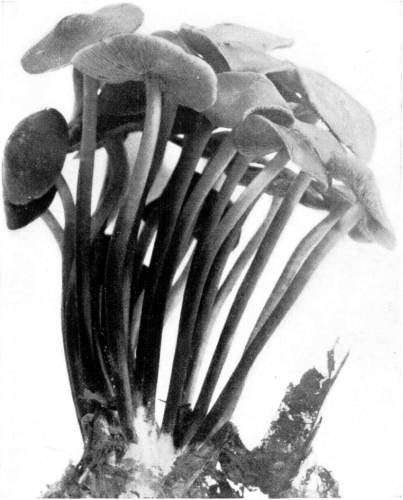
Figure 130.—Marasmius cohaerens (Fr.) Bres. (= Mycena
cohaerens Fr. = Collybia lachnophylla Berk. = C. spinulifera Pk.) Color
chestnut, light leather color, tawny or vinaceous cinnamon, darker in
center, stems dark, shining, gills leather color, or fulvous, or wine
color, brick red or bay, varying in different specimens (natural size).
Copyright.
Although the plant has been collected on several different occasions in
America, it does not seem to have been recognized under this name until
recently, save the record of it from Carolina by de Schweinitz (Synop.
fung. Car. No. 606. p. 81).
The plants of this genus are tough and pliant, becoming hard when old,
unless very watery, and when dry. The genus differs from the other tough
and pliant ones by the peculiarity of the gills, the gills being notched
or serrate on the edges. Sometimes this appearance is intensified by the
cracking of the gills in age or in drying. The nearest ally of the genus
is Panus, which is only separated from Lentinus by the edge of the
gills being plane. This does not seem a very good character on which to
separate the species of the two genera, since it is often difficult to
tell whether the gills are naturally serrate or whether they have become
so by certain tensions which exist on the lamellæ during the expansion
and drying of the pileus. Schrœter unites Panus with Lentinus
(Cohn's Krypt. Flora, Schlesien, 3, 1; 554, 1889). The plants are
usually very irregular and many of them shelving, only a few grow
upright and have regular caps.
Lentinus vulpinus Fr.—This is a large and handsome species, having a
wide distribution in Europe and in this country, but it does not seem to
be common. It grows on trunks, logs, stumps, etc., in the woods. It was
quite abundant during late summer and in the autumn on fallen logs, in a
woods near Ithaca. The caps are shelving, closely overlapping in
shingled fashion (imbricated), and joined at the narrowed base. The
surface is convex, and the margin is strongly incurved, so that each of
the individual caps is shell-shaped (conchate). The surface of the
pileus is coarsely hairy or hispid, the surface becoming more rough with
age. Many coarse hairs unite to form coarse tufts which are stouter and
nearly erect toward the base of the cap, and give the surface a
tuberculate appearance. Toward the margin of the cap these coarse hairs
are arranged in nearly parallel lines, making rows or ridges, which are
very rough. The hairs and tubercles are dark in color, being nearly
black toward the base, especially in old plants, and sometimes pale or
of a smoky hue, especially in young plants. The pileus is flesh color
when young, becoming darker when old, and the flesh is quite thin,
whitish toward the gills and darker toward the surface. The gills are
broad, nearly white, flesh color near the base, coarsely serrate,
becoming cracked in age and in drying, narrowed toward the base of the
pileus, not forked, crowded, 4–6 mm. broad. The cap and gills are tough
even when fresh. The plant has an intensely pungent taste.
Figures 131, 132 represent an upper, front, and under view of the pilei
(No. 3315, C. U. herbarium).
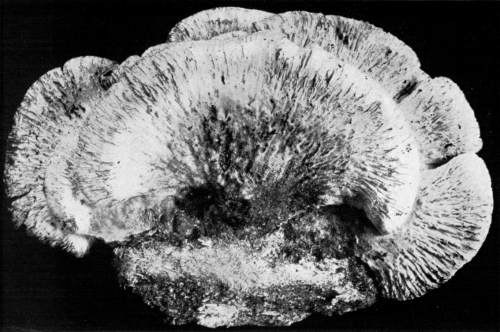
Plate 42, Figure 131.—Lentinus vulpinus. The coarse,
hairy scales are black in old plants, paler, of a smoky hue, in younger
ones (natural size). Copyright.
Lentinus lecomtei Fr., is a very common and widely distributed species
growing on wood. When it grows on the upper side of logs the pileus is
sometimes regular and funnel-shaped (cyathiform), but it is often
irregular and produced on one side, especially if it grows on the side
of the substratum. In most cases, however, there is a funnel-shaped
depression above the attachment of the stem. The pileus is tough,
reddish or reddish brown or leather color, hairy or sometimes strigose,
the margin incurved. The stem is usually short, hairy, or in age it may
become more or less smooth. The gills are narrow, crowded, the spores
small, ovate to elliptical 5–6 × 2–3 µ. According to Bresadola this is
the same as Panus rudis Fr. It resembles very closely also Panus
cyathiformis (Schaeff.) Fr., and P. strigosus B. & C.
Lentinus lepideus Fr., [L. squamosus (Schaeff.) Schroet.] is another
common and widely distributed species. It is much larger than L.
lecomtei, whitish with coarse brown scales on the cap. It is 12–20 cm.
high, and the cap is often as broad. The stem is 2–8 cm. long and 1–2
cm. in thickness. It grows on wood.
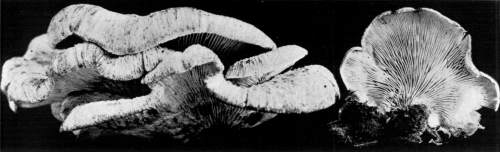
Figure 132.—Lentinus vulpinus, front and under view
(natural size). Copyright.
Lentinus stipticus (Bull.) Schroet. (Panus stipticus Bull.) is a very
small species compared with the three named above. It is, however, a
very common and widely distributed one, growing on wood, and may be
found the year around. The pileus is 1–3 cm. in diameter, whitish or
grayish, very tough, expanded in wet weather, and curled up in dry
weather. The stem is very short, and attached to one side of the cap.
When freshly developed the plant is phosphorescent.
This is a very interesting genus, but the species are very few. The
plants are tough, pliant when fresh, and dry. The gills are very
characteristic, being split along the edge and generally strongly
revolute, that is, the split edges curve around against the side of the
gill. This character can be seen sometimes with the aid of a hand lens,
but is very evident when a section of the cap and gills is made and then
examined with a microscope. The spores are white.
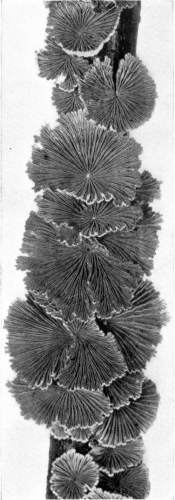
Figure 133.—Schizophyllum alneum (==S. commune). View of
under side (natural size). Copyright.
Schizophyllum alneum (L.) Schroet.—This species usually goes by the
name of Schizophyllum commune, but the earlier name is S. alneum. It
is a very common plant and is world wide in its distribution, growing on
wood, as on branches, trunks, etc. It is white, and the pileus is very
hairy or tomentose, with coarse white hairs. It is 1–3 cm. in diameter,
and the cap is sessile, either attached at one side when the cap is more
produced on one side than on the other, or it may be attached at or
near the center of the top, when the cap is more evenly developed on all
sides. It is often crenate or lobed on the margin, the larger plants
showing this character more prominently. The margin is incurved. The
gills are white, wooly, branched and extend out toward the margin of the
cap like the radiations of a fan. The gills are deeply split along the
edge, and strongly revolute. It is a very pretty plant, but one becomes
rather tired of collecting it because it is so common. It may be found
at all seasons of the year on dead sticks and branches, either in the
woods or elsewhere, if the branches are present. It is very coriaceous,
and tough. During dry weather it is much shrunken and curled up, but
during rains it expands quickly and then it is seen in its beauty.
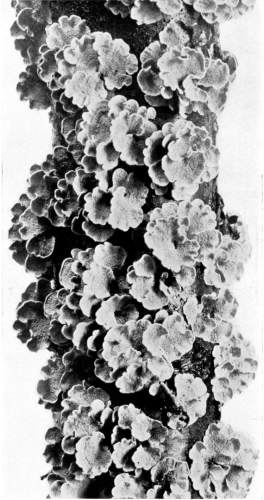
Plate 43, Figure 134.—Trogia crispa. Large cluster of
caps, view of underside (natural size). Copyright.
Figure 133 shows the plant in the expanded condition, from the under
side. The plants were growing on a hickory branch, and were dry and
shrunken when brought in the laboratory. The branch and the fungus were
placed in water for a few hours, when the fungus expanded, and was then
photographed in this condition.
This genus is characterized, according to Fries, by the gills being
channeled along the edge, but singularly the only species attributed to
the genus in Europe and in our country has not channeled gills, but only
somewhat crisped along the edges. It is usually, therefore, a difficult
matter for a beginner to determine the plant simply from this
description. The gills are furthermore narrow, irregular, and the plants
are somewhat soft and flabby when wet, but brittle and persistent when
dry, so that when moistened they revive and appear as if fresh.
Trogia crispa Fr.—This species is the principal if not only one in
Europe and America. It is widely distributed, and sometimes not very
uncommon. It occurs on trunks, branches, etc., often on the birch. The
plants are from 0.5–1 cm. broad, usually sessile. The upper surface is
whitish or reddish yellow toward the attachment, sometimes tan color,
and when young it is sometimes covered with whitish hairs. The gills are
very narrow, vein-like, irregular, interrupted or continuous, and often
more or less branched. The gills are very much crisped, hence the name,
blunt at the edge and white or bluish gray. The caps are usually much
crowded and overlapped in an imbricated fashion as shown in Fig. 134; a
photograph of a fine specimen after being moistened.