The book cover has been modified and was put on the public domain.
A number of words in this book have both hyphenated and
non-hyphenated variants. For the words with both variants present the
one used more times has been kept. It was also detected that some names
have two different spellings. That was respected as both are correct.
The musical examples that are discussed in the book can be heard by
clicking on the [Listen] tab. This is only possible in the HTML version
of the book. The scores that appear in the original book have been
included as images.
In some cases the scores that were used by the music transcriber
to generate the music files differ from the original scores. Those
differences are in part due to modifications that were made during the process
of creating the musical archives as the music transcriber added
instruments that were not indicated in the original scores. Other
modifications were made to correct obvious mistakes in the original
scores. These scores are included as png images,
and can be seen by clicking on the [PNG] tag in the HTML version of the
book.
Obvious punctuation and other printing errors have been
corrected.
STUDIES IN THE WAGNERIAN DRAMA
BY
HENRY EDWARD KREHBIEL
NEW YORK AND LONDON
HARPER & BROTHERS PUBLISHERS
1904
Copyright, 1891, by HARPER & BROTHERS. All rights reserved.
TO
JOSEPH S. TUNISON
CONTENTS.
CHAPTER I.
THE WAGNERIAN DRAMA: ITS PROTOTYPES AND ELEMENTS.
Wagner a Regenerator of the Lyric Drama.—Greek Tragedy.—Solemn
Speech and Music.—The Poet-composers
of Hellas.—The Florentine Reformers and their Invention
of the Lyric Drama.—Peri and Caccini.—Their
Declamation.—Monteverde's Orchestra.—How Wagner
Touches Hands with his Predecessors.—Poet and
Composer.—Music a Means, not an Aim in the Drama.—A
Typical Teuton, but also a Cosmopolite.—Teutonic
and Roman Ideals.—Absolute Beauty and Characteristic
Beauty.—The Ethical Idea in Wagner's Dramas.—Fundamental
Principle of his Constructive Scheme.
The Typical Phrases.—Symbols, not Labels.—Music as
a Language.—Characteristics of Some Typical Phrases.—Wotan
in Two Aspects.—Form the First Manifestation
of Law in Music and Essential to Repose.—Tonality
and the Effect of its Loss.—Phrases Delineative
and Imitative of External Characteristics.—The
Giants, the Dwarfs, the Rhine; Loge, the God of
Fire.—Prophetic Use of the Phrases.—Their Dramatic
Development.—Wagner's Orchestra and the Greek
Chorus.—Alliteration and Rhyme.—The Ethical Idea
Again.
The Legend in Outline.—A Subject that has Fascinated
Poets for over Six Centuries in Spite of Changes in
Moral Feeling.—Wagner's Variations from the Versions
of Gottfried von Strassburg, Matthew Arnold, Tennyson,
and Swinburne.—The Prelude.—Absence of Scenic
Music.—Fundamental Musical Thought of the Drama.—Its
Duality in Unity.—Longing and Suffering.—Wagner's
Exposition.—Use of the Sailor's Song and the
Sea Music.—Suffering and Chromatic Descent.—The
Love Glance and its Symbol.—Fatality and the Interval
of the Seventh.—The Heroic Phrase of Tristan.—The
Death Phrase.—Music as an Expounder of Hidden
Meanings.—The Horn Music.—The Signal.—The Love
Duet.—Dramatic Feeling Supplied by Music.—King
Marke.—Philosophy of the Drama.—Musical Mood
Pictures.—A Dying Man: an Empty Sea.—Tristan's
Longing and Death.—Swan Song of Isolde.—Passions
Purified by Music.—Mediæval Love.—Effect of Wagner's
Variations on the Morals of the Poem.—Excision
of the Second Iseult.—The Philter not a Love-potion.—Wagner's
Pure Humanity Freed from the Bonds of
Conventionality
Story of the Drama.—A Comedy Faithful to Classical
Conceptions.—Ridendo Castigat Mores.—Its Specific Purpose
is to Celebrate the Triumph of Natural Poetic
Impulse, Stimulated by Communion with Nature, over
Pedantic Formalism.—Romanticism versus Classicism.—A
Contest which Stimulates Growth.—Walther as
the Representative of Romantic Utterance.—Pedantry
Pictured in the Master-singers and Caricatured in
Beckmesser.—Sachs, the Real Hero of the Play.—An Intermediary
and Champion of Both Parties.—Form must
Adapt Itself to Spirit.—The Proposition Proved by the
Music of Sachs' First Monologue.—The Symbolism of
a Phrase Investigated.—Corrective Purpose of the Play
as it is Disclosed by the Prelude.—Sachs as a Philosopher.—The
Introduction to Act III. Expounded.—Photographic
Pictures of Nuremberg Life.—Relics of
the Master-singers.—A Master-song by the Veritable
Sachs
Beautiful and Enduring Legends are Universal Property.—Parallels
Between the Elements and Apparatus of
Mythological Tales.—The Grotto of Venus, the Garden
of Delight, Avalon, Ogygia, the Delightful Island.—Pope
Urban's Staff, the Lances of Charlemagne, Joseph's
Staff, and Aaron's Rod.—The Tarnhelm, the
Mask of Arthur, Helmet of Pluto.—The Holy Grail, the
Horn of Bran; Huon's Goblet, the Horn of Amalthea.—Invulnerability
of Achilles, Jason, and Siegfried.—The
Sword of Wotan, Arthur's Sword, Ulysses's Bow.—Siegfried's
Prototypes in Egypt, Greece, and Scandinavia.—Von
Hahn's Arische Aussetzung und Rückkehr Formel.—The
Celestial Plot in the Tragedy.—Wotan its Hero.—A
Contest Between Greed of Gain and Temporal
Power and Love.—Effect of the Curse.—Wotan's Vain
Plot.—The Force of Law.—Brünnhilde becomes the
Agent of Redemption by Becoming Simple, Loving
Woman.—The Progress of the Plot is from a State of
Sinlessness through Sin and its Awful Consequences to
Expiation.—Symbols for These Steps in "Das Rheingold."—The
Golden Age and the Instrumental Introduction.—Elemental
Music.—Erda and the Götterdämmerung.—Greek
and Teuton.—The Tragic Nature of the
Northern Mythological System.—Wotan's Effort to
Escape the Penalty of Violated Law.—A Plan Doomed
to Failure from the Start.—Wagner's Mood Pictures.—How
Nature Reflects the Discord Created by the God's
Wrong Doing.—Contrasted Pictures in Two Preludes
and First Scenes: the Peacefulness of the Golden Age,
the Storm which Buffets Siegmund.—Entrance of the
Sinister Element with Alberich and Hunding.—Agents
Created to Carry on the Contest: the Beloved Progeny
of the God, the Loveless Offspring of the Niblung.—Wotan's
Tragic Grandeur in the Moment of Despair.—Brünnhilde
the Embodiment of Wotan's Will.—The
God Destroys his Agents, but Unconscious Love Carries
on the Plot.—Siegfried.—The Forest Lad Achieves
Heroic Stature.—He Discloses that he is a Free Agent
by Shattering the Visible Symbol of the God's Power.—Wotan
Disappears for the Action and Awaits the End of
his Race.—The Miraculous in Wagner's Musical System.—The
Drink of Forgetfulness.—Brünnhilde Prizes Love
More than the Welfare of the Gods.—Outraged Love
Avenged.—The Catastrophe.—The Death March a
Hymn of Praise.—The Musical Symbol of the Ethical
Principle of the Tragedy
Wagner's Last Drama.—Paradoxical in its Appeals to the
Spectator and Student.—A Religious Play.—Blending
of Buddhistic and Christian Plots.—Socialistic Philosophy
and Asceticism.—Identification of Parsifal and
Christ.—Monkish Relic Worship.—Ethical Idea of the
Drama.—The Apparatus, the Hero, the Trial.—Mission
of the Music.—It must Reconcile Modern Thought and
Feeling and Mediæval Religion.—Imagination and
Fancy.—Suffering and Aspiration.—Original Elements
of the Grail Story.—Parsifal an Aryan Hero.—His Name
as an Index of Moral Character.—"The Great Fool
Tales."—The Holy Grail not Originally a Christian
Symbol.—Percival and Peredur.—Parsifal in Wagner's
Drama.—His Musical Symbols.—Properties of the Talisman:
Physical, it Provides Sustenance; Spiritual, it
is a Touchstone and Oracle.—Its Prototypes in Many
Lands.—The Golden Cup of Jamshid and the Joseph
of Arimathea Legend.—The Grail and Coral.—Dr. Oppert's
Theory.—Blood the Essential Element.—The
Prelude.—Amfortas.—Question and Lance.—Herzeleide.—Musical
Symbols of Suffering and Aspiration.—Wagner's
Interpretation.—Tried by Temptation.—Klingsor.—Kundry.—The
Loathly Damsel and Herodias.—Wolfram's
Married Parzival
CHAPTER I. THE WAGNERIAN DRAMA: ITS PROTOTYPES AND ELEMENTS. — I. — II. — III. — IV.
To understand the real position which Richard
Wagner occupies in the world of art, and to appreciate
the significance of the achievements which
have kept that world in a turmoil for two generations,
it is necessary to guard against a very prevalent
misconception touching him and his activities.
The world knows him as an agitator and
reformer, but it does not know as clearly as it
ought that the object for which he labored as
controversialist and composer was a reform of the
opera, not a reform of music in general. Outside
the theatre, it is true, he exerted a tremendous
influence on the development of the musical art,
but that influence he exerted only because he was
a gifted musician who stood in the line of succession
with the great ones who had widened the
boundaries of music and struck out new paths
for it—let me say Bach, Haydn, Gluck, Mozart,
Beethoven, and Schumann. As a legitimate successor
of these Kings by the grace of Genius, he
advanced the musical art indeed, but as a reformer
his activities went, not to music in its absolute
forms, but to an entirely distinct and complex art-form:
the modern opera. The term which Wagner
invented to describe what he wished to see as
the outcome of his strivings—the term which his
enemies parodied so successfully that the parody
has clung to the popular tongue and lingered in
the popular ear, in spite of all explanation—is
"The Art-work of the Future." By this "Art-work"
he meant a form of theatrical entertainment
in which poetry, music, pantomime, painting,
and the plastic arts were to co-operate on a
basis of mutual dependence—or better, perhaps,
interdependence—and common aim, the inspiring
purpose of all being dramatic expression. In the
history of music and the drama certain strongly-marked
phases are found, in which the interdependence
of the elements which Wagner consorts
in his Art-work can be traced; and if we look
at these phases a little thoughtfully, they may
help us to understand the present phase, and we
may learn not only how to appreciate what Wagner
has done, but also how to avoid the misconceptions
which so frequently stand in the way of
appreciation.
Wagner, then, was a Reformer of the Opera;
or, as I think it would better be put, a Regenerator
of the Lyric Drama. The latter definition is
to be preferred, because it presupposes the earlier
existence of an art-form similar in purpose and
elements (however dissimilar in scope and effectiveness
it may have been) to that with which
Wagner's name is identified in music's history.
The spirit which created that art-form is as old
as humanity; but the record of civilization shows
two manifestations of it so striking that even the
most cursory study ought to disclose Wagner's relationship
to them. The Greek stage-plays were
much more closely allied to the modern opera
than to the modern drama. Music was an integral
and essential element of them. So says Aristotle,
adding, "and their greatest embellishment." The
dramatic and lyrical elements were inseparable in
Greek tragedy, which had its origin in the Dithyramb,
a dance-song. The one modified the other.
The cheer, the gravity, or the horror of the action
were reflected at the same time in the music.
While there was music also in comedy, yet, as
Aristotle indicates, it was there of less importance,
probably because comedy—which was really broad
enough to meet the modern notions of farce—was
beneath the true level of music as apprehended by
the Greeks. As between the lyre and flute, the
Greeks gave a vastly greater admiration to the
former, as is indicated by a proverb quoted by
Cicero: "As they say among the Greeks, they are
flautists who cannot be citharists;" and it is significant
that stringed accompaniments were given
to the dithyrambic chorus when its purposes were
serious, and accompaniments on the aulos when
those purposes were of lighter character. Obviously
the writers of Greek tragedy were of necessity
versed in the musical art of their time.
Æschylus was not merely a poet; he was also a
musical composer. A fragment of a theoretical
book on rhythm by Aristoxenus, a fellow-pupil
with Alexander the Great of Aristotle, has been
preserved to us. It is filled with lamentations
over the decadence of dramatic music since the
good old days of Æschylus, and accuses contemporary
composers of pandering to the depraved
tastes of the public, and disregarding the noble art
of the Æschylean period. We know that Sophocles
was a practical musician. He was taught
both music and dancing by Lampros (or Lamprocles)
the dithyrambist, in his time the foremost
professor of these arts in Athens. It is on record
that he played in two of his own dramas, taking
the character of Nausikaa in the "Pluntriæ," and,
in "Thamyris," that of a singer stricken blind by
the Muses. In this latter role he so pleased the
popular fancy that, by public vote, a portrait of
him, with a cithara in his hands, was placed in the
Painted Porch—a fact which finds mention in
Athenæus. Another indication of his proficiency
as a musician is that he wrote pæans and elegies,
and a work in prose for the instruction of choral
artists. It is written that Euripides, obviously
less musician than poet, had to call in the aid of a
composer to supply the essential music for one of
his plays. Possibly this explains the fact that in
his tragedies the odes are less intimately connected
with the play than they are in the tragedies of
Æschylus. They no longer form part of the action,
and their beauty consists in their skilfulness
of form rather than in the natural union of rhythm
and music.
In the Greek tragedies the actors did not declaim
their lines as ours do; they chanted them.
The word which they used to describe what we
call dramatic declamation was emmeleia, from en
and melos, whence we get our word melody; so
that they literally spoke of their plays as being
spoken "in tune." Even the Attic orators, as well
as the later Roman, delivered their orations musically,
and, like the actors, sometimes had the help
of an accompaniment on the lyre or flute to keep
them in pitch. Cicero and Plutarch both relate an
anecdote to the effect that Caius Gracchus once
lost his pitch in the heat of an oration, and was
brought back to it by a slave with an instrument,
who was concealed behind him for that very purpose.
In the plays the chorus sang the odes
which filled the pauses between the various stages
of the action; and as they sang they kept time
with solemn dance-steps, moving from side to side
and around an altar which stood in the centre of
the space between the audience and the stage,
called then, as now, the orchestra.[A] The choric
odes were sung in unison, but, more richly than
the declamation of the actors, they were accompanied
by instruments which I believe we are justified
in assuming (though it is a debated point)
supplied a foundation of harmony for the vocal
melody. Unfortunately, none of the music composed
for these tragedies has been preserved; but
we are surely justified in believing that, in spite of
its simplicity (for simple it had to be to meet the
demands of Greek philosophy), it was beautiful,
impressive, and, in the highest degree, expressive
music. No people have ever come nearer than
those old Greeks to a correct estimate of the real
nature of music and the role that it can and ought
to be made to play in the economy of civilized life.
So convinced were they of the directness and forcefulness
of its appeal to the emotional part of man
that they refused to divorce it from poetry, and
hedged its practice about with legal restrictions,
fearful that a too one-sided cultivation of it in its
absolute state would tend to the development of
the emotions at a cost of the rational and sterner
elements on which the welfare of the individual
and the community depended. Theirs was surely
a lofty ideal: an art which charmed the senses
while it persuaded the reason was a noble art.
But it died with much else that was noble and
lovely when the Romans succeeded the Greeks as
arbiters of the civilized world. Under the Romans
the lyric drama degenerated into mere spectacular
mummery.
Thus much for the first manifestation of the
spirit which is exemplified in the Art-work of
Richard Wagner. I have laid stress upon the
Greek tragedy simply because it was the direct
inspiration of the second manifestation, out of
which the Art-work which Wagner reformed was
evolved, through steps that are easily followed by
students of modern musical history. Wherever
we turn we find the genesis of the drama to be the
same. I might have chosen the Hindu drama as
a starting-point, and found in it the same intimate
association of poetry, music, and action that characterized
Greek tragedy. Or I might have pointed
to the Chinese drama, and invited you to a
study of that association as it has existed for
thousands of years, and still exists in the theatres
of the Great Pure Kingdom.
Now for the second manifestation. Towards the
close of the sixteenth century dissatisfaction with
the inelastic artificiality of polite music took possession
of a body of scholars and musical amateurs
who were in the habit of meeting for learned discussion
in the house of Giovanni Bardi, Count
Vernio, in Florence. Their discussions led them
to formulate two aims: First, To give emotional
expressiveness to music by putting aside polyphony,
and inventing what is called the monodic
style. They wrote solos for the voice with harmonic
support for the instruments in the shape of
chords. Second, They tried to revive the Greek
tragedies, or, rather, to imitate them in new compositions,
to which they applied their monodic
music. They conceived the purpose of music to
be to heighten the expressiveness of poetry, and
held the play to be "the thing." To "Euridice,"
the first drama of the new style which was published,
the composer of the music, Jacopo Peri,
wrote a preface, in which he said that he had been
convinced by a study of the ancients that though
their dramatic declamation may not have risen to
song, it was yet musically colored. This exaltation
of speech he evidently thought had its basis
in those variations of pitch, dynamic intensity, and
vocal quality which Herbert Spencer, in his essay
on the "Origin and Function of Music," shows to
be the physiological results of variations of feeling,
all feelings being muscular stimuli. Peri made
careful observations of the inflections which mark
ordinary speech, and attempted to reproduce his
discoveries as faithfully as possible in the musical
investiture which he gave to the poet's lines.
"Soft and gentle speech he interpreted by half-spoken,
half-sung tones, on a sustained instrumental
bass; feelings of a deeper, emotional kind
by a melody with greater intervals and a lively
tempo, the accompanying instrumental harmonies
changing more frequently."[B] He bestowed the
greatest care on the rhythm of the music, making
it flow along with the rhythm of the words.
These men were as revolutionary in their day as
Wagner in ours, many times as intolerant, and, some
will say, perhaps equally visionary. They revamped
the Hellenic myths concerning the power of
music, not as containing a germ of verity wrapped
in an ample cloak of poetical symbolism, but as
very truth. What the ancient art had been they
did not know, but they did not hesitate to say
that compared with it the music of their own time
(the time of Palestrina and the Netherland School)
was a barbarism, the creation of a people whose
natural rudeness was evidenced even in their uncouth
names—Okeghem, Hobrecht, etc. They
could not reconcile counterpoint with the theories
touching the province of music laid down by
Plato; and that fact sufficed to condemn it.
Count Vernio himself published a tract stating the
purposes of the reformers. The first step in the
process of curing the evil which had come over
music, he said, should be to protect the poetical
text from the musicians who, to exploit their inventions,
tore the poetry to tatters, giving different
voices different words to sing simultaneously.
The philosophers of old—Plato in particular—had
said that the melody should follow the verses of
the poet and sweeten them. "When you compose,
therefore," said the noble amateur, "have a
care that the text remain uninjured, the words be
kept intelligible, and do not permit yourselves to
be carried off your feet by counterpoint, that
wicked swimmer, who is swept along unresistingly
by the stream, and arrives at an entirely different
landing-place than he intended to make. For, as
much as the soul is nobler than the body, so much
nobler are words than counterpoint; and as the
soul must govern the body, so counterpoint must
take its laws from poetry." Caccini, who was a
famous singing-master, and the first professional
musician to join the Florentine coterie, made many
statements in the preface to his Nuove Musiche
which Gluck and Wagner only echoed when they
came to urge their reforms. Thus he recommends
the choice of a pitch which will enable the singer
always to use his natural voice, so that expression
may be unconstrained. He advises that the singer
emancipate himself from a too strict adherence to
measure, fixing, instead, the relative value of notes
by consideration for the words to which they are
set. More striking than either of these utterances,
however, is his condemnation of the roulades which
had come into use even before the solo style had
been invented. He calls these roulades "Long
flights" (flourishes or whirlings) of the voice (lunghi
giri di voce); and says of them, literally: "They
were not invented as being necessary to good singing,
but, as I believe, to provide a certain titillation
of the ears for the benefit of such as have little
knowledge of what expressive singing means; for
if they understood this, they would unquestionably
detest these passages, since nothing is so offensive
as they to expressive singing. And it is for this
reason that I have said the lunghi giri di voce are
so ill applied. I introduce them in songs which
are less passionate, and, indeed, on long, not on
short syllables, and in closing cadences." Caccini
further advises the avoidance of artificial tones,
and the use of the natural voice in order that the
feelings may have expression. Wagner urges his
singers to leave off the affected pathos which they
are so prone to assume with the song-voice, and
to enunciate, breathe, and phrase as naturally and
unconstrainedly as they would if they were speaking
the dialogue instead of singing it. Caccini
wished the singer to emancipate himself from the
fetters of musical metre, and to consult the rhythm
of the words. In Wagner's vocal parts the aim is
to achieve through music an increased expressiveness
for the poetry, and to this end he raises it to
a kind of intensified speech, which retains as much
as possible of the distinctness of ordinary dialogue
with its emotional capacity raised to a higher
power. He desires that the melody shall spring
naturally from the poetry, but also that the poetry
shall "yearn" for musical expression. Caccini recognized
the beauty of embellished song, but restricted
the introduction of vocal flourishes to
songs which were wanting in expressiveness—in
other words, to songs intended merely to charm
the ear. Wagner (and here I should like to correct
an almost universal misconception)—Wagner
never condemned beautiful singing, even in the
Italian sense, except where it stands in the way of
truthful, dramatic utterance. But he raises the
question of nationality and tongue as one which
must first of all be considered in determining how
poetry is to be set to music. Deference must be
paid to the genius of the language employed, and
also to the vocal peculiarities of the people who are
to perform and enjoy the drama. This is really Wagner's
starting-point. He aims to be a national
dramatist. In the Italian opera the vocal adornments,
favored by the inherent softness and beauty
of the Italian language, gradually usurped the first
place, while dramatic motive, which had inspired
the invention of the opera, dropped out of sight.
For such an art there is little natural aptitude in
the German, and consequently only a modicum of
sympathy. Sung to florid tunes, German words
become worse than unintelligible; the poetry loses
its merit as speech, and the music is robbed of all
its purpose and most of its charm. Believing this,
and having already striven to restore naturalness
of expression in the spoken drama, Wagner wrote
the vocal parts of his lyric dramas so as to bring
out first the force of the poetry as such.
There is one more point of resemblance between
Wagner and the creators of the Italian lyric drama
which I must refer to briefly. It may help us out
from the sway of that prejudice which we are so
prone to feel towards an innovator, to learn that
in so many essentials Wagner has simply given
new expression to old ideas. Already, in his
"Euridice," Peri concealed his orchestra behind
the scenes; but as this device was borrowed from
the old Roman pantomimes, and was a general
custom, I lay no stress upon it. Monteverde, who
did not belong to the band of Florentine reformers,
but adopted their theories and put them into
practice with far greater skill than any of the originators
of the new style, added to the instrumental
apparatus until he had a reputation for noise with
which that of Wagner, in this respect, is no circumstance.
In his "Orfeo" he employed thirty-six
different instruments, and it has even been suspected
that he was the precursor of Wagner in the
device of characterizing his personages by relegating
to each a certain instrument or set of instruments.
But this, I am convinced, is based on a
misunderstanding. It is certain, however, that he
used his instruments in such a way as to emphasize
climaxes, holding some of them back until the arrival
of moments in the action when their sudden
entrance would have a particularly telling effect.
Where does Wagner touch hands with the first
creators of the art-form of which I have called
him the regenerator? What are the fundamental
features of his system? What were the impulses
which led him out of the beaten path of opera
composers? I will try to answer these questions
on broad lines, keeping essential principles in view
rather than trifling details.
Wagner must be associated with the Greek
tragedy-writers: First (and foremost), because he
is poet as well as musical composer. He unites
in himself the same qualifications (but with the
tremendous difference in degree brought about by
the changed conditions) as did Æschylus.
Second. Wagner sees in the drama the highest
form of art—one that unites in itself the expressive
potentiality of each of the elements employed
in it, raised to a still higher potency through the
merit of their co-operation.
Third. Wagner believes, like the Greek tragedians,
that the fittest subjects for dramatic treatment
are to be found in legends and mythologies.
Fourth. Wagner believes that the elements of
the lyric drama ought to be adapted to the peculiarities,
and to encourage the national feeling of
the people for whom it is created.
This last point is of such vast significance to
the question of the degree of appreciation which
Wagner's art ought to receive, and also to an understanding
of his attitude towards Italian music,
that I wish to emphasize it before proceeding further.
Wagner is as distinctively a German dramatist
as Æschylus was a Greek or Shakespeare an
English. In his poetry, in his music, in the moral
and physical character of his dramatic personages—in
brief, in the matter and the essence of his
dramas—the world must recognize the Teuton.
As their spirit roots in the German heart, so their
form roots in the German language. One of
Wagner's most persistent aims was to reanimate a
national art-spirit in Germany. The rest of the
world he omitted from his consideration. Those
of his dramas in which he carried out his principles
in their fulness are scarcely conceivable in
any other language than the German, and complete
or ideal appreciation of them is possible only
to persons who sympathize deeply with German
feelings. His whole system, of dramatic declamation
rests on the genius of the German tongue.
He protests against the attempt to use the bel
canto of the Italians in German opera, because the
German language is too harsh for florid music, and
German throats are not flexible enough to execute
agile and mellifluous melodies. In the structure
of his system there is everywhere discernible a
recognition of the characteristics, physiological as
well as psychological, which have always marked
Teutonic races. Look at Wagner in the conduct
of his polemical battle; in the vehemence of his
sincerity, and the rude, sledge-hammer vigor of his
manner, he is as distinctively a national type as
Luther. Aside from all other considerations, such
a man cannot conceive music to be mere "lascivious
pleasings." To the Northern mind there has
always seemed to be something vicious in the
influence of Southern art and manners. It seems
to feel instinctively that its vigor is preserved by
periodical rebellion against Roman things, and it
points as a reason and a warning example to the
physical and moral degeneracy of those Goths and
Franks who lost their rugged virtues by too long
dalliance with the Roman colonists. "Strength before
Beauty," "Truth before Convention"—these
are German ideals in art as well as in morals.[C]
It is only to recognize a truth, which Wagner
himself freely confessed, to say that arts and manners
based on such ideals do not always appear
pleasing—that, in fact, they sometimes, at first
blush, at least, appear uncouth and unamiable.
But that fact need not long give us pause. We
have simply to recognize that beauty, like everything
else so far as we are concerned, is subject to
change, and that a new order of beauty, which
may be called characteristic beauty, has come to
the fore with a claim for recognition as a fit element
in dramatic representation. Are we bound
to accept as infallible the popular maxim that no
matter what the state of affairs on the stage, the accompanying
music must delight the ear? Suppose
that a composer, utilizing the ear simply as one of
the gate-ways to the higher faculties, and aiming
to quicken the imagination and stir the emotions,
should find a means for doing this without pleasing
the ear—would his art be bad for that reason?
Was the agony on the faces of the Laocoön put
there by the sculptor for the purpose of pleasing
the eye? Does it please the eye, or does it fascinate
with a horrible fascination, and achieve the
artist's real purpose by appealing through the eye
to the imagination and emotions?
These questions are in the nature of argument
and foreign to my immediate purpose; in the way
of contrast, however, the thoughts to which they
give rise will help us to appreciate one phase of
the Teutonism which Wagner has impressed upon
his dramas which is altogether lovely. We will
look at it in both of its expositions, musical and
literary, for thus we shall learn something of his
constructive methods as well as his poetical impulses.
I refer to the ethical idea pervading those
of his dramas which, like the Greek tragedies, are
based on legendary or mythical tales. The idea
is that salvation comes to humanity through the
self-sacrificing love of woman. This idea is at the
bottom of the great poems and dramas of Germany;
it is the main-spring of "The Flying
Dutchman," "Tannhäuser," and "The Niblung's
Ring;" the chorus mysticus which ends Goethe's
"Faust" proclaims it oracularly:
"All things transitory
But as symbols are sent.
Earth's insufficiency
Here grows to event.
The Indescribable,
Here it is done.
The Woman-Soul leadeth us
Upward and on!"
In the creations of Wagner, by a singular coincidence,
this beautiful idea is born simultaneously
with the fundamental principle of his constructive
scheme—the use of melodic phrases as symbols
of the persons, passions, and principles concerned
in the play. His first drama based on a legendary
story is "The Flying Dutchman." The infinite
longing for rest of the Wandering Jew of the sea,
and the infinite pity and wondrous love of the
woman who, through sacrifice of her own life,
achieved for the wanderer surcease of suffering—these
are the two fundamental passions of the
play. The legend of the Dutchman and his doom
is told in a ballad which the heroine sings in the
second act of the opera; and this ballad, Wagner
tells us himself, he set to music first, even before
he had completed the book. It is an epitome of
the drama, ethically and musically, having two
significant musical themes corresponding to the
longing of the Dutchman and the redeeming love
of Senta. The first of these musical themes is
this:
Having invented these two phrases for use simply
in the ballad, Wagner tells us how he proceeded
with his work:
"I had merely to develop according to their respective
tendencies the various thematic germs
comprised in the ballad to have, as a matter of
course, the principal mental moods in definite thematic
shapes before me. When a mental mood
returned, its thematic expression also, as a matter
of course, was repeated, since it would have been
arbitrary and capricious to have sought another
motivo so long as the object was an intelligible
representation of the subject, and not a conglomeration
of operatic pieces." This is Wagner's account
of the genesis of the "leading motives," or,
as I think they would better be called, "typical
phrases," and it directs attention to a misconception
of their nature and purpose which is pretty
general even among the admirers of his works.
They were not invented to announce the entrance
of persons of the play on their stage; their duties
are not those of footmen or ushers. Nor are they
labels. Neither can they rightly be likened, as a
German critic has declared, to the lettered ribbons
issuing from the mouths of figures in mediæval
pictures. They stand for deeper things—for the
attributes of the play's personages; for the instruments,
spiritual as well as material, used in developing
the plot; for the fundamental passions of
the story. If they were labels, they could only
accompany the characters with which they had
been associated at the outset, and this we know is
not the case; in fact, in some very significant instances,
they enter the score long before the characters
with whom they are associated have been
heard of or their existence is surmised. They are
symbols, and hence arbitrary signs, but not more
arbitrary than words. All language is arbitrary
convention. Only the emotional elements at the
bottom of it are real, absolute, universal. It would
be just as easy to build up a language of musical
tones capable of expressing ideas as it was to build
up a language of words. In fact, though we seldom
think of it, the rudiments of such a language
exist. We are all familiar with some of them,
or we should not involuntarily associate certain
rhythms with the dance, and others with the march.
A drone-bass under an oboe melody in 6-8 time
would not suggest a pastoral; trumpets and drums,
war; French-horn harmonies, a hunting scene;
and so on. More than this, the Chinese have retained
in their language a relic of the time when
music was an integral element of all speech, not
only of solemn and artistic speech, as we see it in
the beginnings of the drama in India, Greece, and
China. The meaning of many words in the monosyllabic
Chinese language depends upon the musical
inflection given to them in utterance. In a
sense, a phrase of melody, or a chord, or a succession
of chords, of harmony, is a "bow-wow word,"
the only kind of word universally intelligible. A
great deal of music is direct in its influence upon
the emotions, but it is chiefly by association of
ideas that we recognize its expressiveness or significance.
Sometimes hearing a melody or harmony
arouses an emotion like that aroused by the
contemplation of a thing. Minor harmonies, slow
movements, dark tonal colorings, combine directly
to put a musically susceptible person in a mood
congenial to thoughts of sorrow and death; and,
inversely, the experience of sorrow, or the contemplation
of death, creates affinity for minor harmonies,
slow movements, and dark tonal colorings.
Or we recognize attributes in music possessed also
by things, and we consort the music and the things,
external attributes bringing descriptive music into
play which excites the fancy, internal attributes
calling for an exercise of the loftier faculty, imagination,
to discern their meaning. A few examples
in both classes will help to make my meaning
plain, and I begin with the second class as the
nobler of the two.
In Wagner's Niblung tragedy two of the musical
phrases associated with Wotan may be taken
as symbols of contrasted attributes of the god.
Throughout the tragedy of which he is the hero,
Wotan figures, by virtue of his supremacy among
the gods, as Lord of Valhalla, and consequently
as the manifest embodiment of law.
In music the first manifestation of law is in form.
It is impossible to conceive of a combination of
the integral elements of music—rhythm, melody,
and harmony—in a beautiful manner without
some kind of form. Form means measure, order,
symmetry. In music more than in any art it is
essential to the existence of the loftiest attribute
of beauty, which is repose—an attribute whose
divine character Ruskin proclaimed when he defined
it as "the 'I am' contradistinguished from
the 'I become;' the sign alike of the supreme
knowledge which is incapable of surprise, the supreme
power which is incapable of labor, the supreme
volition which is incapable of change."
Now what are the musical qualities of which Wagner
makes use in order to symbolize the wielder of
supreme power? Here is the phrase whose innate
nobility and beauty appear to best advantage at the
opening of the second scene in "Das Rheingold:"
The melody is built out of the intervals of the
common chord—the triad—the starting-point of
harmony, its first and most pervasive law. This
chord, too, supplies the harmonic structure. Its
instrumentation (for four tubas with peculiarly
orotund voices, specially constructed for Wagner)
is unvarying, calm, stately, majestic, dignified, reposeful.
Thus does Wagner symbolize musically
the chief deity and chief personage of his tragedy
in his character as Lord of Valhalla. But through
the operation of the curse to which he became
subject when he took the baneful ring, another
character than that of a supreme god is forced
upon Wotan. He has plotted to regain the ring,
and restore it to the original owners of the magic
gold. He has begotten a new race, the Volsungs,
to execute a purpose which, as the representative
of law, he is restrained himself from executing.
He becomes a wanderer over the face of the earth,
a mere spectator of the development of his foolish
plot. How is this new character symbolized?
Note the music which accompanies Wotan when,
disguised as the Wanderer, he enters Mime's cavern
smithy in the second scene of "Siegfried:"
The fundamental harmonies are retained. The
solemn instrumental color is held fast. The dignity
of the chord progressions is still there. What,
then, is gone? The element of repose. The harmonies
are still triads, but tonality, with its benison
of restfulness, has been sacrificed. The phrase
is in no key, or rather it is in as many keys as
there are chords. There is another beautiful instance
in which, by the same means, a deprivation
which one of the personages of the play undergoes
is made plain to the listener. Note the descending
series of chords which follows Wotan's kiss depriving
Brünnhilde of her divinity, just after he
has spoken his pathetic farewell, and just before
the orchestra begins its lullaby, in the final scene
of "Die Walküre." Here the loss of divine attributes
in the disobedient goddess is published by
absence of fixed tonality in the chords which accompany
the visible signs of her punishment.
In the last two examples we have been called
on to observe how changes in character and loss of
attributes are delineated by departure of tonality.
I will now cite a case in which not the attributes
of a personage, but the property of a thing, is the
composer's objective point. The case is a striking
one, for it is a supernatural property which is to
be brought to the notice of the listener, the power
of the Tarnhelm (the familiar cap of darkness of
folk-lore) to render its wearer invisible. The musical
symbol of this magical apparatus in the Niblung
tragedy is this:
This phrase is not often used, but whenever it occurs
in the music its mysteriousness arrests attention.
What is the source of that mysteriousness?
Nothing else than indefiniteness, vagueness of
mode. The closing harmony is an empty fifth;
we do not know whether it is major or minor,
because the determining interval is lacking. Supply
a major third and it is major, a minor third
and it is minor; in either case, however, the mystical
property of the phrase, the element which
establishes its propriety, vanishes.
There are many of these typical phrases primarily
associated with personages, whose delineation
goes to moods and moral traits. There are others
that are frankly delineative of externals. The
giants in "Das Rheingold" are the representatives
of brute force. They are heavy-witted as well as
heavy-footed, and their stupidity and clumsiness
are aptly characterized in their melody:
(Fasolt and Fafner, of gigantic stature,
armed with strong staves, enter.)
The Niblungs are the antipodes in character of
the giants—cunning, resourceful, industrious. Intellectually
they are schemers and tricksters; by
occupation they are smiths. Wagner delineates
these activities, the mental as well as the manual,
in the orchestral introduction to "Siegfried." A
descending figure (a), (two thirds at the interval of
a seventh) characterizes the brooding thoughtfulness,
the cogitation of Mime; the fact that the
dwarf is a Niblung Wagner publishes by means of
a rhythmical phrase like the pounding of hammers
(b):
Sometimes Wagner becomes frankly delineative
or descriptive, utilizing imitation of nature where
it will be effective, as in the phrases associated
with the Rhine and its denizens—the nixies whom
he calls Daughters of the Rhine. The slow undulation
of water in its depths, the flux and reflux
of the element, the ripples on its surface, the motions
of the swimmers, are all pictured to the ear
(if I may be permitted to say so) in the melodies
of the Rhine and the nixies whose home the river
is, and the changes of time and treatment to
which those melodies are subjected. The fitful,
flickering, crackling crepitation of fire furnishes a
suggestion for the phrase which is typical of Loge,
the fire-god, whether he appears in his elemental
form, as in the finale of "Die Walküre," or bodily
as the incarnation of the spirit of mischief in "Das
Rheingold:"
In describing how he proceeded in the composition
of "The Flying Dutchman," Wagner says
that when a mental mood recurred for which he
had once found thematic expression, that expression
was repeated. He speaks here only of moods,
but he extended the principle involved to the
whole apparatus of the drama—its secret impulses
as well as its external agencies. These agencies,
in their physical manifestation, moreover, are
sometimes anticipated by the appearance in the
music of the melodic phrases which typify them;
but this never happens unless they are spiritually
present in the drama. This is what I have called
the use of the themes for prophecy, and to me it
seems one of the most beautiful features of Wagner's
constructive scheme. Let me illustrate: the
sword, which is the instrument designed by Wotan
for the working-out of his plot for the return of
the baneful ring to its original owners, for itself
and as a symbol of the race of demi-gods who
were to be endowed with it; Siegfried, the hero
who is to be the vessel chosen, not by Wotan but
by fate in the prevision of Brünnhilde, to execute
the purposes of the god; Brünnhilde herself, not
as a goddess but in the character of loving woman
willing and able to make the redeeming sacrifice;
all these are prefigured in the drama by the entrance
of their typical phrases long before the
action permits their physical appearance. They
are seen by the prophetic vision of certain personages
of the play and manifested to us through
the music. Thus: the sword phrase appears in
the orchestral postlude of "Das Rheingold" at
the moment when Wotan, crossing the Rainbow-bridge
with the members of his divine household,
stops in thought and conceives the plot which is
worked out in the tragedy proper; the phrase
typical of the heroic character of Siegfried accompanies
Brünnhilde's prediction to Sieglinde that
she shall give birth to "the loftiest hero in the
world," in the drama "Die Walküre;" in giving
voice to her gratitude, Sieglinde, in turn, hails
Brünnhilde as the representative of the redeeming
principle of the tragedy, Goethe's "Ewig-Weibliche,"
by using a melody which examination
shows to be an augmentation of the melodic symbol
of Brünnhilde when she appears as mere woman
in the last drama of the trilogy.
Let this suffice as an exhibition of Wagner's
method of inventing and introducing the melodic
material out of which he weaves his fabric, while
we look at some of the principles applied in its
use. His system rests upon the development of
these themes, not according to the laws of the
symphony, but in harmony with the dramatic
spirit of the text. The orchestra is the vehicle of
this development. It is pre-eminently the expositor
of the drama. It has acquired some of the
functions of the Greek chorus, in that it takes part
in the action to publish that which is beyond the
capacity of the personages alone to utter. The
music of the instruments is the voice of the fate,
the conscience, and the will concerned in the
drama. To those who wish to listen, it unfolds,
unerringly, the thoughts, motives, and purpose of
the personages, and lays bare the mysteries of
the plot and counter-plot. As the passions and
purposes of the drama grow complex, the musical
texture, into which the themes which typify
those passions and purposes enter, grows complex
and heterogeneous. The most obvious factors in
this development are changes of mode, harmony,
rhythm, time, and orchestration. A single illustration
must here suffice. By applying the principle
of augmentation to a phrase, in the three
phases of melodic, harmonic, and instrumental
structure, Wagner illustrates the tragic growth of
Siegfried in the Niblung tragedy. When the hero
is merely a high-spirited lad, roaming through
the forest and associating with its denizens, the
phrase appears as the call which he blows upon
his hunting-horn:
When he has entered upon man's estate, has
awakened Brünnhilde from her long sleep, learned
wisdom from her teaching, donned her armor, and
is about to set out in quest of adventure, the typical
phrase which greets him has taken on this
form:
Finally, the phrase is metamorphosed into that
thrilling pæan at the climax of the Death March,
to indicate which is impossible by means of pianoforte
transcription:
From the beginning of his career Wagner wrote
his own librettos; but it is only in "Tristan und
Isolde," "Die Meistersinger," "Der Ring des Nibelungen,"
and "Parsifal" that he realized his conception
of what the poet-composer should be.
The starting-point of his reformatory ideas was
that music had usurped a place which does not
belong to it in the lyric drama. It should be a
means, and had become the aim. As an æsthetic
principle, he contended that it lies in the nature
of music to be not the end, but a medium, of
dramatic expression. He therefore reversed the
old relations of librettist and composer, and made
music, which can only address itself to the emotions
and imagination, dependent for form, spirit,
and character on the poetry, which appeals to
reason. Each art when isolated has a restricted
range of expression; but in the Wagnerian drama
each contributes a complement and helps it to
convey all its meanings and intentions without
the help of a frequently untrustworthy imagination.
In elaborating his theory, Wagner held that
as a poetical form of expression rhyme is useless
in music, because it not only implies identity of
vowel-sounds, but also of the succeeding consonants,
which are lost by the singer's need of dwelling
on the vowels. The initial consonant, however,
cannot be lost in song, because it is that
which stamps its physiognomy on the word, and
repetition creating a sort of musical cadence
which is agreeable to the ear, Wagner desired
alliteration to be substituted for rhyme in the
chief parts of his verse. From the verse-melody
thus obtained he wished the musical melody
to spring, words and music becoming lovingly
merged in each other, each sacrificing enough of
selfishness to make the union possible. To what
I have already said about the nature of the typical
phrases I wish to add this as a résumé of their
purpose: In every drama there are employed certain
dramatic and ethical principles as well as
agencies. The development of these principles
in the conduct and words of the personages, the
employment of the agencies, give us the action
and significance of the play. For these principles
and agents Wagner provides musical symbols.
The nature of the principles, the character of the
agents, explain the form and spirit of the symbols;
the symbols, in turn, sometimes help us to understand
the real nature of the things symbolized.
If we have grasped the fundamental ideas of a
drama, therefore, and appreciated the fitness of
their symbols, we shall have penetrated near to
the heart of the Art-work. But it cannot be too
forcibly urged that if we confine our study of
Wagner to the forms and names of the phrases
out of which he constructs his musical fabric, we
shall at the last have enriched our minds with a
thematic catalogue and—nothing else. We shall
remain guiltless of knowledge unless we learn
something of the nature of those phrases by noting
the attributes which lend them propriety and
fitness, and can recognize, measurably at least, the
reasons for their introduction and development.
Those attributes give character and mood to the
music constructed out of the phrases. If we are
able to feel the mood we need not care how the
phrases which produce it have been labelled. If
we do not feel the mood we may memorize the
whole thematic catalogue of Wolzogen and have
our labor for our pains. It would be better to
know nothing about the phrases and content one's
self with simple sensuous enjoyment than to spend
one's time answering the baldest of all the riddles
of Wagner's orchestra: "What am I playing
now?"
The ultimate question concerning the correctness
or effectiveness of Wagner's system of composition
must, of course, be answered along with
the question, "Does the composition, as a whole,
touch the emotions, quicken the fancy, fire the
imagination?" If it does these things, we may,
to a great extent, if we wish, get along without
the intellectual processes of reflection and comparison,
which are conditioned upon a recognition
of the themes and their uses. But if we put aside
this intellectual activity, we shall deprive ourselves,
among other things, of the pleasure which it is the
province of memory to give; and the exercise of
memory is called for by music much more urgently
than by any other art, because of its volatile
nature and the role which repetition plays in it.
Nothing could have demonstrated more perfectly
the righteousness of Wagner's claim to the title of
poet than his acceptance of the Greek theory that
the legends and myths of a people are the fittest
subjects for dramatic treatment, unless it be the
manner in which he has reshaped his material in
order to infuse it with that deep ethical principle
to which reference has several times been made.
In "The Flying Dutchman," "The Niblung's
Ring," and "Tannhäuser," the idea is practically
his creation. In the last of these three dramas
it is evolved out of the simple episode in the
parent-legend of the death of Lisaura, whose
heart broke when her knight went to kiss the
Queen of Love and Beauty. The dissolute knight
of the old story Wagner in turn metamorphoses
into a type of manhood "in its passionate desires
and ideal aspirations"—like the Faust of Goethe.
All the magnificent energy of an ideal man is
brought forward in the poet's conception, but it is
an energy which is shattered in its fluctuation between
sensual delights and ideal aspirations, respectively
typified in the Venus and the Elizabeth
of the play. Here is the contradiction against
which he was shattered as the heroes of Greek
tragedy were shattered on the rock of implacable
Fate. But the transcendent beauty of the modern
drama is lent by the ethical idea of salvation
through the love of pure woman—a salvation
touching which no one can be in doubt when
Tannhäuser sinks lifeless beside the bier of the
atoning saint, and Venus's cries of woe are swallowed
up by the pious canticle of the returning
pilgrims.
FOOTNOTES:
[A] For popular purposes there is no harm in letting this statement
stand as made. Of course the reference goes only to the Greek
theatre in its latest form, the evolution of which is indicated, perhaps,
in the comparative weakness of the bond which unites the
chorus to the action in Euripides. The orchestra was, in fact, the
centre around which all the rest, the theatron and the skēnē, were
gradually grouped. In the antique festal plays the principal feature
was the dance in a circle around the thymele, or altar of Dionysus.
It was only by a slow process that the actor came to be
thought of as anywise distinguished from his companions. As generally
in ancient art priority was indicated by height, there is here
a reason for the tragic cothurnus, which might be said to be an inexplicable
deformity on any other theory; for it was only by putting
them on stilts, so to speak, that it was possible to indicate the
participants in the dialogue as apart from the general rout of dancing
worshippers. Even in the time of the three great dramatic
writers, it seems probable, disturbing as such an idea may be to
popular impressions, that some, if not all, plays were performed
without any stage. The word skēnē (tent) points to a temporary
structure, used in the first place, perhaps, as a shrine for the symbols
and properties of the god (like the Tabernacle of the Israelites),
then as the dressing-room of the actors; it was succeeded by
the temple when the place had become consecrated to the worship
of Dionysus, then by the structures suited to a given play, and finally
by a permanent stage, which gradually encroached on the space
that had once belonged to the orchestra. These conclusions, at
least, seem to be borne out by the discoveries and arguments of
Dörpfeld.
[C] Mephist. Du weisst wohl nicht, mein Freund, wie grob du bist? Bac. Im Deutschen lügt man wenn man höflich ist.
GOETHE. "Faust," Part II., Act 2, Sc. 1.
CHAPTER II. "TRISTAN UND ISOLDE." — I. — II. — III. — IV. — V. — VI.
A vassal is sent to woo a beauteous princess for
his lord. While he is bringing her home the two,
by accident, drink a love-potion, and ever thereafter
their hearts are fettered together. In the
mid-day of delirious joy, in the midnight of deepest
woe, and through all the emotional hours between,
their thoughts are only of each other, for
each other. Meanwhile the princess has become
the vassal's queen. Then the wicked love of the
pair is discovered, and the knight is obliged to
seek safety in a foreign land. There (strange note
this to our ears) he marries another princess whose
name is like that of his love, save for the addition
"With the White Hand;" but when wounded unto
death he sends across the water for her who is
still his true love, that she come and be his healer.
The ship which is sent to bring her is to bear
white sails on its return if successful in the mission;
black, if not. Day after day the knight waits
for the coming of his love—while the lamp of his
life burns lower and lower. At length the sails
of the ship appear on the distant horizon. The
knight is now too weak himself to look. "White
or black?" he asks of his wife. "Black," replies
she, jealousy prompting the falsehood; and the
knight's heart-strings snap in twain just as his love
steps over the threshold of his chamber. Oh,
the pity of it! for with the lady is her lord, who,
having learned the story of the fateful potion, has
come to unite the lovers. Then the queen, too,
dies, and the remorseful king buries the lovers in
a common grave, from whose caressing sod spring
a rose-bush and a vine, and intertwine so curiously
that none may separate them.
Here, in its simple forms, is the tale which half
a millennium of poets have celebrated as the High
Song of Love, the canticle of all canticles which
hymn the universal passion. British bards, French
trouvères, and German Minnesinger, while they
sang of the joys and sorrows of humanity, united
in holding up Sir Tristram and La beale Isoud as
the supreme type of lovers. To-day our poets,
writing under the influence of social and moral
systems, radically different from those which surrounded
the original singers, send back the perennial
note with fervor. But the moralist shakes his
head, sinks into perplexed brooding, or launches
the thunders of his righteous wrath against the
storied lovers and their sin. We wish to study the
manner in which a great dramatic poet of our day
has presented this profoundly tragical yet universally
fascinating tale. Must we confront the problem
and seek to reconcile the paradox created by
the attitudes of poet and moralist? Or may we
put aside the phenomenon as one whose interpretation
is to be left to each individual's notions of
the True, the Beautiful, and the Good, and address
ourselves directly to a study of the drama as a
work of art regardless of its ethical phases?
Eventually, I am inclined to believe, we shall be
obliged to do the latter; but as appreciation of
what the poet-composer has done depends upon
an understanding of his purposes, and this again
upon a discovery of the elements of the legend
which seemed to him potential, we are compelled
to make at least a cursory survey of some of the
phases through which the story has gone in the
progress of time; for each poet, passing the original
metal through the fires of his imagination,
brought it forth changed in color and enriched
with new designs. In the new color and adornments
we study something of the social institutions
and moral and intellectual habits of the poet's
time, these being superimposed on the original
idea embodied in the fundamental story. In one
of the beautiful tales of Northern mythology (a
tale in which I am tempted to think a relic of the
primitive Tristram myth may one day be found)
we are told how Skirnir cunningly stole the reflection
of Frey's sunny face from the surface of
a brook, and imprisoned it in his drinking-horn
that he might pour it out into Gerd's cup, and by
its beauty win the heart of the giantess for the
lord for whom, like Tristan, he had gone a-wooing.
A legend which lives to be retold often, is like the
reflection of Frey's face in this beautiful allegory;
each poet who uses it spreads it upon a mirror
which not only reflects the original picture, but also
the environment of the relator. It will be necessary
to remember this when we attempt an inquiry
into the morals of Wagner's drama.
To readers of English literature opportunities
to acquaint themselves with the legend which is
the basis of Wagner's drama have been given by
Sir Thomas Malory, Matthew Arnold, Tennyson,
and Swinburne, to say nothing of critics and commentators.
The story is of Keltic origin, and is
supposed to have got into the mouths of the
German Minnesinger by way of France. The
most admirable as well as complete version extant
is the epic poem of Gottfried von Strassburg,
written in the thirteenth century. Sir Walter
Scott, who was deeply interested in the literary
history of the tale, in 1804 edited a metrical version
of it from a manuscript said to be the production
of Thomas the Rhymer, who lived about
a century after Gottfried, if, indeed, he lived at
all. From this manuscript Scott argued in favor
of a Welsh source for the romance instead of a
Norman, as was then generally accepted. The
author of the German epic followed a French
version, as was customary with the Minnesinger of
his period. Tennyson's share in the exposition is
exceedingly scant and wholly valueless. It is found
in the poem, "The Last Tournament," one of the
"Idyls of the King." Arnold's is much more interesting.
He treats directly of the outcome of
the tragedy in his poem "Tristram and Iseult,"
and indirectly relates nearly all that is essential
to an understanding of the story. His poem presents
the death scene of Tristram in Brittany, with
the fanciful imaginings of the dying man while
waiting for the coming of Iseult, who has been
summoned from Tintagel. The whole tale is related
by Swinburne in his "Tristram of Lyonesse."
The names of the chief personages in the romance
vary slightly in the different German and
English versions, but the variations need lead no
one astray. Wagner's Tristan is otherwise known
as Sir Tristrem and Tristram. All derive the
name from the French word triste, and find in it
a premonition of his fate. Thus Arnold:
"Son," she said, "thy name shall be of sorrow;
Tristram art thou called for my death's sake."
The poet speaks of the hero's dying mother.
So also Swinburne:
"The name his mother, dying as he was born,
Made out of sorrow in very sorrow's scorn,
And set it on him smiling in her sight,
Tristram."
Isolde is variously Iseult, Ysolt, Isoud, and
Ysonde; Brangäne is Brangwain and Brenqwain;
Kurwenal, Gouvernayle. The changes in orthographical
physiognomy are trifling and easily recognized.
It cannot be amiss to call attention to several
deviations in Wagner's drama from the legend as
it has been handed down by the poets. The
majority of these deviations will be found to be
full of significance. At the outset we are confronted
with the chief of these. In all the other
versions the love-potion is drunk by Tristan and
Isolde by mistake. In Mr. Swinburne's poem
Tristram toils at the oars,
"More mightily than any wearier three,"
and when he rests, calls for a drink,
"Saying: 'Iseult, for all dear love's labor's sake,
Give me to drink, and give me for a pledge
The touch of four lips on the beaker's edge'."
Iseult's maid, Brangwain, is asleep, and the Princess,
not wishing to awake her, herself looks for
wine and finds a curious cup hid in the maid's
bosom. She thinks its contents wine and drinks,
and hands it to Tristram to drink. It is the love-draught
prepared by Queen Iseult and intrusted
to Brangwain, to be by her sacredly guarded and
given to Mark and Iseult on their wedding night.
Mr. Arnold also has these lovers drink unwittingly
"——that spiced magic draught
Which since then forever rolls
Through their blood and binds their souls,
Working love, but working teen."
In this respect both English poets follow the
German epic of Gottfried von Strassburg. The
dramatic significance of Wagner's variation can be
reserved for discussion hereafter. Its value as intensifying
the character of Isolde is obvious at a
glance.
Tennyson omits all mention of the love-potion,
and permits us to imagine Tristram and Iseult as
a couple of ordinary sinners, the former's doctrines
on the subject being published in lines like
these:
"Free love—free field—we love but while we may;
The woods are hush'd, their music is no more:
The leaf is dead, the yearning passed away:
New leaf, new life—the days of frost are o'er:
New life, new love to suit the newer day:
New loves are sweet as those that went before;
Free love—free field—we love but while we may."
The next important variation (I do not speak
of omissions which are inevitable in throwing an
epic into dramatic form) is in the scene which follows
the discovery of the lovers by King Marke.
To discuss this in all its bearings would require
more space than I shall care to employ for the
purpose, but it is well to know it. The wronged
Marke of Wagner, some will say as many have
said, is not wronged at all since he chooses to remain
inactive, whereas the popular impulse is illustrated
in Tennyson's version, where Mark cleaves
Tristram to the brain on discovering his treachery.
But the Marke of Gottfried and the Mark of
Swinburne are scarcely more comprehensible in
their conduct than Wagner's Marke. In Gottfried's
epic, after the king has repeatedly sent the
lovers away and taken them back again, he is
finally convinced of their guilt. But before he
takes action against Tristan, the latter escapes.
In Swinburne, Tristram is taken and led towards
the chapel for trial. On the road he wrenches a
sword from Moraunt's hands, kills him and ten
knights more, leaps into the sea from a cliff, and
escapes, aided by Gouvernayle.
In his last act, Wagner has proceeded with the
utmost freedom, as in all respects he had a right
to do, since no authentic version of the close of
the legend has been preserved. Karl Simrock,
following the old English "Sir Tristrem," appended
to his translation into modern German of Gottfried's
epic the episode of Tristan's life in Brittany
with a second Isolt, called Isolt of the White
Hand. Being low with a wound received in combat,
Tristan sends for the first Isolt, cautioning
his brother-in-law (as Ægeus cautioned Theseus
in Greek story), who goes on the mission, to hoist
white sails on returning if successful, black if not.
Isolt of the White Hand, who is watching for the
return of the ship, moved by jealousy, announces
that the sails are black, and Tristan dies just as
Isolt enters the chamber. This version Swinburne
follows, but Arnold adds a beautiful touch to the
old legend by making the second Iseult tend her
husband with unflinching love and unfailing fidelity,
even while she awaits the coming of her rival.
Arnold gives Tristram and the second Iseult a
family of children; Swinburne keeps the latter a
"maiden wife." Bayard Taylor, in writing about
Gottfried's epic, almost angrily refuses to believe
that Iseult of the White Hand killed her knight
by the falsehood about the sails. Wagner saves
himself this embarrassment, and ennobles his hero
by omitting the second Isolde from the play altogether,
a proceeding which not only brings the
tale into greater sympathy with modern ideas of
love, but also serves marvellously to exalt the passion
of the lovers.
Wagner tells the story of the tragedy in three
acts. Few dramas have so little to offer in the
way of action, if by action we are to understand
incident and diversity of situation. At Bayreuth,
in the summer of 1886, Mr. Seidl characterized it
very aptly as consisting in each of its three acts
as merely preparation, expectation and meeting
of the ill-starred lovers. Yet I doubt not that
many will agree with me, that the effect of the
tragedy upon a listener is that of a play surcharged
with significant occurrence. The explanation of
this is to be found in the fact that music which
has a high degree of emotional expressiveness
makes us forget the paucity of external incident,
by diverting interest from externals to the play of
passion going on in the hearts of the personages.
This play is presented to us freed from every vestige
of spectacular integument in the instrumental
prelude to the drama. I want to lay stress on
this statement. It is the passion of the lovers to
which the composer wishes to direct our attention
at the outset, and to do this most effectively he
constructs his musical "argument of the play" out
of melodic phrases which have purely a psychological
significance. There is considerable music
of the kind that I will call scenic in the score of
"Tristan und Isolde," but none of it is introduced
in the prelude, which for that reason appeals much
more directly to the emotions and the lofty faculty
of imagination than it does to the fancy. It
is true that this makes the task of analytical study
more difficult, but for this there is compensation
in the fact that enjoyment of its beauties and
apprehension of its purposes do not require the
intellectual activity conditioned by a following of
its typical phrases through the web and woof of
the composition. This is characteristic of the entire
score of the drama. More than any other of
the dramas of Wagner, with the possible exception
of "Die Meistersinger," it shows the spontaneity
in artistic creation, without which a real
art-work cannot come into existence. Wagner
himself expressed a preference for "Tristan" over
others of his works, and based it on the solid
ground that in the composition of its score he had
proceeded without thought of his own theories;
in other words, he worked spontaneously and not
reflectively. The result is strikingly noticeable in
the fact that, though there are comparatively few
typical melodies in the score, one is much less inclined
to dissect it for the pleasure which such a
process brings than any other of his scores. The
direct, sensuous, and emotional appeal is sufficient.
Yet we know that it is a perfect and complete exemplification
of his theories.
To come back to the prelude:
An ardent longing for the unattainable; a consuming
hunger
"——which doth make
The meat it feeds on;"
a desire that cannot be quenched, yet will not
despair; finally, at the lowest ebb of the sweet
agony, the promise of an end of suffering, in self-forgetfulness,
oblivion, annihilation of individual
identity, and hence in a blending or union of identity—these,
according to Wagner's exposition and
the play itself, are the elements which are prefigured
in the instrumental introduction. What are
their musical symbols?
The fundamental theme of the drama, the kernel
of its musical development, is the phrase which
we hear at the beginning of the prelude:
Brief as this is, it illustrates one step in the melodic
development, in respect of which "Tristan
und Isolde" is Wagner's most marvellous achievement.
It is a unit, in so far as it stands for the
passion of the pair, in both its aspects of blissful
longing and infinite suffering, but it is nevertheless
already complex. It is two-voiced. One voice descends
chromatically, the other (beginning with the
third measure) ascends by similar degrees. A figure
like that used in music to indicate a crescendo,
presents a symbol of duality in unity for the eye
like that of this phrase for the ear. How simple
yet profound is the idea that all the conflicting
passions of the drama are one in origin and in
nature. Am I becoming fantastical in thinking
that Wagner purposed that this philosophical concept
should be stated in the basic material of his
music? I think not; but if there is a haunting
fear that way it may be dissipated by looking a
little further into the prelude. After a brief development
of this first musical thought by means
of repetition on various degrees of the scale and
changes of instrumental color, two new phrases
are reached. The first:
Now, let us stop to note some resemblances,
and from significant portions of the play derive a
meaning for our symbols. In this we cannot be
helped, as we sometimes are, by natural likenesses.
These melodies are not imitative or delineative
of external things; they are the result of efforts
to give expression to soul-states. At the beginning
of Scene 5, Act I., the entrance of Tristan is
proclaimed in a manner that leaves no doubt as
to the meaning of the first of the two phrases now
under investigation. The melody there appears
extended, in augmentation, as the musicians say.
It stands for the hero of the tragedy. The genesis
of the love of Tristan and Isolde must next
be studied. That love antedated the beginning
of our tragedy. Isolde relates the story of its
beginning to her maid. Disguised as a harper,
Tristan had come to Ireland to be healed of a
wound received in battle with Isolde's betrothed,
whom he had killed. Isolde nursed him, but before
he was completely restored to health she
discovered that the edge of his sword was broken,
and that a splinter of steel taken from the head
of her dead lover fitted into the nick. The slayer
of her betrothed lay before her. She raised the
sword to avenge his death, but as she was about
to strike, Tristan turned his glance upon her. He
looked not at the threatening sword, but into her
eyes, and in a moment her heart was empty of
anger. Hatred had given place to love. Note
here that while Wagner uses that silly apparatus
of mediæval romance, the philter, it is not as the
creator or provoker of love; that is born without
the aid of magic other than Nature's. "He looked
into my eyes," says Isolde, and immediately the
tender second phrase is uttered by the orchestra.
It is thus that this phrase is identified with the
glance which aroused Isolde's love.
The material which has now been marshalled is
practically all that is contained in the prelude;
but there are two modifications of the fundamental
phrase which ought to be noticed. One of
these, frequently treated responsively by the instruments
to build up a climax,
seems to depict the gradual recognition by the
lovers of the state into which the potion has
plunged them. The other is a harmonized inversion
of the same figure,
to which an added character is given by the jubilant
ascent of thirty-second notes, and which,
from several climactic portions of the drama, we
discover to be significant of the lovers' joyful defiance
of death—a sentiment which will be better
understood after the philosophy of the tragedy
has been studied.
Wagner has himself given us an exposition of
this prelude. In one of his writings, after rehearsing
the legend down to the drinking of the fateful
potion, he says:
"Now there is no end to the yearning, the longing,
the delight, and the misery of love. World,
might, fame, splendor, honor, knighthood, truth,
and friendship all vanish like a baseless dream.
Only one thing survives: desire, desire unquenchable,
and ever freshly manifested longing—thirst
and yearning. One only redemption: death, the
sinking into oblivion, the sleep from which there
is no awaking!
"The musician who chose this theme for the
prelude to his love-drama, as he felt that he was
here in the boundless realm of the very element
of music, could only have one care: how he should
set bounds to his fancy; for the exhaustion of the
theme was impossible. Thus he took once for
all this insatiable desire; in long-drawn accents it
surges up, from its first timid confession, its softest
attraction, through throbbing sighs, hope and pain,
laments and wishes, delight and torment, up to
the mightiest onslaught, the most powerful endeavor
to find the breach which shall open to the
heart the path to the ocean of the endless joy of
love. In vain! Its power spent, the heart sinks
back to thirst with desire, with desire unfulfilled,
as each fruition only brings forth seeds of fresh
desire, till, at last, in the depth of its exhaustion,
the starting eye sees the glimmering of the highest
bliss of attainment. It is the ecstasy of dying,
of the surrender of being, of the final redemption
into that wondrous realm from which we wander
farthest when we strive to take it by force. Shall
we call this Death? Is it not rather the wonder-world
of Night, out of which, so says the story,
the ivy and the vine sprang forth in tight embrace
o'er the tomb of Tristan and Isolde?"
We are on board a mediæval ship within a few
hours' voyage of Cornwall, whither Tristan, knight
and vassal, is bearing Isolde as bride of King
Marke. Isolde is an Irish princess, daughter of a
queen of like name with herself. The first scene
discloses her to be a woman of most tumultuous
passion. Hearing the cheery song of a sailor, she
bursts forth like a tempest and declares to her
maid, Brangäne, that she will never set foot on
Cornwall's shore. She deplores the degeneracy
of her mother's sorcery, which can only brew balsamic
potions instead of commanding the elements;
and she wildly invokes wind and waves to
dash the ship to pieces. Brangäne pleads to know
the cause of her mistress's disquiet—what I have
already related of the previous meeting between
the princess and King Marke's ambassador.
After telling this tale to Brangäne, Isolde sends
the maid to summon Tristan to her presence, but
the knight refuses to leave the helm until he has
brought the ship into harbor, and his squire, Kurwenal,
incensed at the tone addressed by the princess
to one who in his eyes is the greatest of heroes,
as answer to the summons sings a stave of a
popular ballad which recounts the killing of Morold
and the liberation of Cornwall by his master.
The refusal completes the desperation of Isolde.
Outraged love, injured personal and national pride
(for she imagines that he who had relieved Cornwall
from tribute to Ireland was now gratifying
his ambition by bringing her as Ireland's tribute
to Cornwall), detestation of a loveless marriage to
"Cornwall's weary king," a thousand fierce but
indefinable emotions are seething in her heart.
She resolves to die, and to drag Tristan down to
death with her. Brangäne unwittingly shows the
way. She tries to quiet her mistress's fears of the
dangers of a loveless marriage by telling her of a
magic potion brewed by the queen-mother with
which she will firmly attach Marke to his bride.
Thus innocently she takes the first step towards
precipitating the catastrophe. Isolde demands to
see the casket of magical philters, and finds that
it also contains a deadly poison. Kurwenal enters
to announce that the ship is in harbor, and Tristan
desires her to prepare for the landing. Isolde
sends back greetings and a message that before
she will permit the knight to escort her before the
king he must obtain from her forgiveness for unforgiven
guilt. Tristan obeys this second summons,
and in justification of his conduct in keeping
himself aloof during the voyage he, with great
dignity, pleads his duty towards good morals, custom,
and his king. Isolde reminds him of the
wrong done her in the slaying of her lover and her
right to the vengeance which once she had renounced.
Tristan yields the right, and offers her
his sword and breast, but Isolde replies that she
cannot appear before King Marke as the slayer of
his foremost knight, and proposes that he drink a
cup of reconciliation. Tristan sees one-half her
purpose, and chivalrously consents to pledge her
in what he knows to be poison. Isolde calls for
the cup which she had commanded Brangäne to
prepare, and when Tristan has drunk part of its
contents she wrenches it from his hand and drains
it to the bottom. Thus they meet their doom,
which is not death and surcease of sorrow, but life
and misery, for Brangäne had disobeyed her mistress
out of her love and mixed a love-potion instead
of a death draught. A moment of bewilderment,
and the two fated ones are in each other's
arms, pouring out an ecstasy of passion; then the
maids of honor robe Isolde to receive King Marke,
who is coming on board to greet his bride.
These are the dramatic contents of the first act,
whose musical investiture is now to be looked at
a little analytically. At the outset there is an example
of the skill with which Wagner employs
the charm of contrast. I have said that the music
of the prelude is not scenic—it aims at moods and
passions, not at pictures. The drama opens with
music of the other kind. As the curtain is withdrawn
we see within the tent erected for Isolde
on the deck of the ship. Hangings conceal all
else from view; but the first music which we hear
is the voice of an unseen sailor at the mast-head,
who sings to the winds that are blowing him away
from his wild Irish sweetheart. The melody has
a most insinuating charm, especially its principal
phrase:
There is something of the buoyant roll of the
ship and the freshness of sea-breezes about it. It
plunges us at once into the scenic situation, puts
us on shipboard, and helps us to share in the
pleasurable sensations of the voyage to Cornwall,
especially when, a moment later, it accompanies
and amplifies Brangäne's account of the happy
progress of the voyage. Scarcely have we surrendered
ourselves to this pleasure, however, before
Isolde's outburst of rage turns our attention
from the scenes to the personages of the play.
What was innocent delight to the singer and to
us (who are now playing sympathetically along in
the drama) has somehow loosened an emotional
tempest in the heart of the passenger most concerned
in that voyage. Suddenly, as we listen to
her imprecations, the whole past of the heroine is
revealed—she stands before us, not the inexperienced,
unconcerned princess of the other poems,
but a fully developed woman, a furious woman, a
tragic heroine ripe for destruction. It is a favorite
device of poets and musicians—of all creative artists,
indeed—to invite Nature to take part in the
play of their creations. We think a thunder-storm
the proper accompaniment of a murder, and balmy
sunshine of a wedding. Here the breezy sea-music
has provoked a storm of passion, and the composer
permits the enraged princess to lash it into a fury.
To suit her mood he invokes dark clouds to obscure
the sunshine of its tonality, sends harsh
harmonies hurtling among the simple chords that
sounded its original innocency, and stirs up a
whirlwind out of its first quiet movement. But
when, a few moments later, Isolde has checked
her wild passion, the music settles back into its
original quietude, and in time with its measured
pulsations we see the sailors pulling upon the
ship's tackle. Now it sings its "Yo-heave-ho!" as
decorously as any shanty-song.
I have referred to the duality in unity of the
fundamental idea in the music of the drama. A
study of the scene in which Isolde resolves upon
the double crime of murder and suicide will disclose
how relation in thought, emotion, and dramatic
motive is expressed by relation in musical
symbol. The symbol of longing contained in the
fundamental phrase shows ascent in chromatic degrees.
Observe, now, that in Act I., Scene 3, the
sufferings of the wounded Tristan are depicted
in a theme composed wholly of descending half-steps,
and note, too, that the closing cadence of the
short phrase which stands for the love-glance is a
downward leap of seven degrees. In this phrase,
as we first hear it, there is much tenderness and
gentle happiness; but in the glance there was the
phantom of that Life-in-Death who won Coleridge's
Ancient Mariner from the grisly skeleton
in their awful game of dice. Though we do not
suspect it, at first, that downward leap of a seventh
is an ominous symbol—the symbol of Fate,
which might have been heard under the yearning
voices of the prelude, and is now proclaimed by the
gloomy basses in the scene wherein Isolde selects
the poison from the casket of philters which her
mother had given in charge of Brangäne:
There is another phrase of tragic puissance with
which we must now get acquainted. At the first
glance which Isolde throws upon Tristan, motionless
at the helm of the ship, when the curtains are
parted to permit the maid to summon the knight
into the presence of the princess, this phrase publishes
her dreadful determination to seek revenge
for outraged love in murder and suicide. It is
the symbol of death, whose relationship to the
symbol of fate will easily be recognized:
Its ominous expressiveness, apart from instrumental
color, which cannot be reproduced on the
pianoforte, comes from the sudden and unprepared
change of key from A-flat to A.
The culminating scene in the drama is that
which brings the first act to a close—the meeting
of Tristan and Isolde, and the drinking of the
potion. In this scene the device of introducing
cheerful and exciting sailors' music to heighten
the intensity of a dramatic climax is used with peculiarly
startling effect. It produces a marvellous
illusion by the suddenness of its entrance, its sharp
interruption of the tragic music expressive of the
soul-torments of the principal personages, and the
unprepared transition from the spectacle of doomed
humanity to the joy-inspiring aspect of nature.
An almost equally noteworthy effect is the orchestral
proclamation of Tristan in his character as a
fully-developed tragic hero. Observe how, by augmenting
the simple phrase, the orchestra increases
the stature of the knight; but note also how,
though he looms up in Isolde's door-way like a
demi-god clad in steel and brass, a knight capable
of overthrowing the choicest spirits of Arthur's
Round Table, and scattering thirty of King Marke's
knights, the fateful harmonies in their chromatic
descent (which have their model in the melody of
the wounded Tristan) publish his doom with a
prophetic forcefulness that cannot be misunderstood.
There is in this scene, also, a peculiarly eloquent
example of the manner in which Wagner permits
the music to publish hidden meanings in the text.
While Brangäne, obeying her mistress's behest, is
preparing the fatal draught, the gladsome noise
of the sailors is heard from without. The ship
is entering the harbor. Tristan, who is brooding
over Isolde's demand that he drink a drink of expiation
for the slaying of Morold, suddenly arouses
himself. "Where are we?" he asks. "Near the
goal," answers Isolde. What goal does she mean?
Cornwall, the goal of the voyage? Ah, no! The
music tells us; the words are sung to the death-phrase.
Wagner's skill in plunging his listeners into the
mood essential to the proper reception of his
drama has no brighter illustration than "Tristan
und Isolde." The passionate stress and profound
melancholy which mark all that really belongs to
the story are prefigured for us in the prelude. That
story is more than nine-tenths told in the first act.
The music that is introduced to give relief to the
mind, and also to heighten the tragic effect by
means of contrast, is the music that is related to
the scene which is the theatre of the outward
action, or to the personages of the play who bear
no part in the real tragedy which, as I have already
intimated, plays on the stage of the lovers' hearts.
These comparatively inactive persons who serve
as foils are the young seaman who sings at the
mast-head, the sailors, the shepherd who enters in
the last act, and Kurwenal, the squire. Kurwenal,
rugged yet tender, amiable and picturesque, gentle
as a woman at core, shares in the bright, flowing,
rhythmically vigorous music which tells of unfettered
breezes, heaving billows, and popular pride;
while to Tristan and Isolde is given the music
made out of the few phrases which, as they unfold
themselves over and over again in an infinite variety
of combinations and with continually changing
instrumental color, bring to our consciousness in a
wonderfully vivid manner the torments which are
consuming them. In the introduction to the second
act we have another mood picture—a picture
of the longing and impatience of the lovers; but
this idea is presented with such peculiar eloquence
and beauty in the first scene that I prefer to pass
over the instrumental introduction with this bare
reference. I am not attempting a dissection of
every scene; my purpose will be attained if I can
suggest the things which best indicate the mood
in which it is well to listen, and give starting-points
to the imagination. The second act differs from
the first in that it is all but actionless. In it, however,
is presented the catastrophe of the tragedy—the
discovery of the guilt of the ill-starred lovers
by King Marke. The scene is a garden before
Queen Isolde's chamber; the time, a lovely night
in summer. A torch burns in a ring beside the
door leading from the chamber into the garden.
The King has gone a-hunting, and as the curtain
rises the tones of the hunting horns dying away
in the distance blend entrancingly with an instrumental
song from the orchestra, which seems a
musical sublimation of night and nature in their
tenderest moods. Isolde appears with Brangäne,
and pleads with her to extinguish the torch and
thus give a signal to Tristan, who is waiting in
concealment. But Brangäne suspects treachery
on the part of Melot, a knight who is jealous of
Tristan and himself enamoured of Isolde, and who
had planned the nocturnal hunt. She warns her
mistress and begs her to wait. In their dialogue
there is lovely fencing with the incident of the
vanishing sounds of the hunt like Shakespeare's
dalliance with nightingale and lark, in "Romeo
and Juliet." Beauty rests upon this scene like a
benediction. To Isolde the horns are but the
rustling of the forest leaves as they are caressed
by the wind, or the purling and laughing of the
brook. Longing has eaten up all patience, all
discretion, all fear. She extinguishes the torch in
spite of Brangäne's pleadings, and with wildly
waving scarf beckons on her hurrying lover. Beneath
the foliage they sing their love through
all the gamut of hope and despair. The text of
their duet consists largely of detached ejaculations
and verbal plays, each paraphrasing and varying
or giving a new turn to the outpouring of the
other, the whole permeated with the symbolism
of pessimistic philosophy, in which night and death
and oblivion (which have their symbols in the
music) are glorified, and day and life (which also
have their symbols) and memory are contemned.
There is transporting music in the duet, and many
evidences that in it Wagner wrote and composed
with tremendous enthusiasm, veritably with a pen
of fire. In the dialogue of this scene lies the key
of the entire philosophy of the tragedy. We
ought to know this, but we do not need to justify
it. If I were to indulge in the unnecessary luxury
of criticism, I should suggest that pessimistic philosophy
transmitted through verbal plays which
are carried far beyond the limits of reason, if not
to the verge of childishness, is not good dramatic
matter, and half an hour of it is too much. Swinburne,
who repeatedly makes use of metaphors
and thoughts which tempt one to believe that he
made a study of Wagner's drama, also attempts a
dalliance with the images of night and day which
fill so many of Wagner's pages, but with a difference,
and his Iseult, unlike the German Isolde,
checks Tristram's song wherein he asks:
"Love, is it day that makes thee thy delight,
Or thou that seest day made out of thy light?"
by calmly observing,
"I have heard men sing of love a simpler way
Than these wrought riddles made of night and day."
I have said that we ought to know something
of the philosophy of the tragedy. In Wagner's
exposition of the prelude he wishes us to observe
the "one glimmering of the highest bliss of
attainment" in the surrender of being, the "final
redemption into that wondrous realm from which
we wander farthest when we try to take it by
force." For this wondrous realm he chooses death
and night as symbols, but what he means to imply
is the Nirvana of Buddhistic philosophy, the
"final deliverance of the soul from transmigration."
Nirvana is the antithesis of Sansâra. Sansâra,
the world, means turmoil and variety, and
each new transmigration means another relapse
into the miseries of existence. The love of Tristan
and Isolde presents itself to Wagner as ceaseless
struggle and endless contradiction, and for
such a problem there is but one solution—total
oblivion. Nirvana is the only conception which
offers a happy outcome to such love; it means
quietude and identity.
The duet is rudely interrupted in its moment
of supremest ecstasy by a warning cry from
Brangäne. Kurwenal dashes in with a sword and
a shout: "Save thyself, Tristan!" King Marke,
Melot, and courtiers at his heels. Day, the symbol
of all that is fatal to their love, has dawned.
Tristan is silent, though King Marke, in a long
speech, bewails the treachery of his nephew and
friend. Much ridicule has been poured out on
this scene, which the ordinary theatre-goer finds
dramatically disappointing. There can be no
question that the popular sentiment is better expressed
by Tennyson, in the corresponding scene
in his poem, "The Last Tournament:"
"But while he bow'd to kiss the jewell'd throat,
Out of the dark, just as the lips had touch'd,
Behind him rose a shadow and a shriek—
'Mark's way,' said Mark, and clove him thro' the brain."
One need not be an advocate to say that though
Marke's sermonizing may be theatrically disappointing,
it offers in itself a complete defence of
its propriety. From the words of the heart-torn
king we learn that he had been forced into the
marriage by the disturbed state of his kingdom,
and that he had not consented to it until Tristan
(whose purpose it was to quiet the jealous anger
of the barons) had threatened to depart from Cornwall
unless the King revoked his decision to make
him his successor. Tristan's answer to the sorrowful
upbraidings of Marke is to obtain a promise
from Isolde to follow him into the "wondrous
realm of Night;" then (note this as bearing on
the ethics of the drama), seeing that Marke did not
wield the sword of retribution, he makes a feint
of attacking Melot, but permits the treacherous
friend to reach him with his sword. He falls
wounded unto death.
The dignified, reserved knight of the first act,
the impassioned lover of the second, is now a
dream-haunted, longing, despairing, dying man, lying
under a lime-tree in the yard of his ancestral
castle in Brittany, wasting his last bit of strength
in feverish fancies and ardent longings touching
Isolde. Kurwenal has sent for her. Will she come?
A shepherd tells of vain watches for the sight of
a sail by playing a mournful melody on his pipe.
What a vast expanse of empty sea is opened to
our view by the ascending passages in long-drawn
thirds! How vividly we are made to realize the
ebbing away of Tristan's vital powers!
In the music of this act, if anywhere in the creations
of Wagner, we are lifted above the necessity
of seeking significances. Even the pianoforte can
speak the language of this act. There is not one
measure in it which does not tell its story in a
manner which puts mere words to shame. Oh,
the heart-hunger of the hero! The longing! Will
she never come? The fever is consuming him,
and his heated brain breeds fancies which one moment
lift him above all memories of pain, and the
next bring him to the verge of madness. Cooling
breezes waft him again towards Ireland, whose
princess healed the wound struck by Morold, then
ripped it up again with the avenging sword with
its telltale nick. From her hands he took the
drink whose poison sears his heart. Accursed the
cup and accursed the hand that brewed it! Will
the shepherd never change his doleful strain? Ah,
Isolde, how beautiful you are! The ship, the ship!
It must be in sight! Kurwenal, have you no eyes?
Isolde's ship! A merry tune bursts from the
shepherd's pipe. It is caught up by the orchestra
and whirled away on an ocean of excited sound.
It is the ship! What flag flies at the peak? The
flag of "All's well!" Now the ship disappears behind
a cliff. There the breakers are treacherous.
Who is at the helm? Friend or foe? Melot's
accomplice? Are you, too, a traitor, Kurwenal?
Tristan's strength is unequal to the excitement
of the moment. His mind becomes dazed. He
hears Isolde's voice, and his wandering fancy transforms
it into the torch whose extinction once summoned
him to her side: "Do I hear the light?"
He staggers to his feet and tears the bandages
from his wound. "Ha, my blood, flow merrily now!
She who opened the wound is here to heal it!"
Life endures but for one embrace, one glance, one
word—"Isolde!"—which is borne to her ears by
the sadly sweet phrase, typical of the first glance
of love—the word and tones which first he had
uttered after the potion had made him forget all
but his love.
While Isolde lies mortally stricken upon Tristan's
corpse, Marke and his train arrive upon a second
ship. Brangäne has told the secret of the
love-draught, and the king has come to unite the
lovers. But his purpose is not known, and faithful
Kurwenal receives his death-blow while trying
to hold the castle against Marke's men. He dies
at Tristan's side. Isolde, unconscious of all these
happenings, sings out her broken heart and expires.
"And ere her ear might hear, her heart had heard,
Nor sought she sign for witness of the word;
But came and stood above him, newly dead,
And felt his death upon her: and her head,
Bowed, as to reach the spring that slakes all drouth;
And their four lips became one silent mouth."
The story of Tristan and Isolde, as it was sung
by the minstrel knights of the Middle Ages, is a
picture of chivalry in its palmy days. We need to
bear this in mind when we approach the ethical
side of Wagner's version. In the music of the love
duet and Isolde's death lies, perhaps, the most
powerful plea ever made for the guilty lovers. No
one will stray far from the judgment which the
future will pronounce on Wagner's creations, I imagine,
who sets down Isolde's swan's song as the
choicest flower of Wagner's creative faculty, the
culmination of his powers as a composer. I do
not believe that the purifying and ennobling capacity
of music was ever before or since demonstrated
as it is here. While listening to this tonal
beatification, it is difficult to hear the voice of reason
pronouncing the judgment of outraged law.
Yet it is right that that voice should be heard. It
is due to the poet-composer that it should be
heard. Wagner's attitude towards the old legend
differs vastly from that of the poets who preceded
him in treating it.
In the days of chivalry depicted by Gottfried
von Strassburg and the other mediæval poets who
have sung the passion of these lovers, the odor
which assails our moral sense as the odor of death
and decay was esteemed the sweetest incense that
arose from a poet's censer. Read the Wachtlieder
of the German Minnesinger. The German Wachtlied,
the Provençal alba, is the song sung by the
squire or friend watching without, warning the
lovers to separate. Brangäne's song in the second
act is such a Wachtlied. Read the decisions of
the Courts of Love, which governed the actions
of chivalrous knighthood when chivalry was at
its zenith. Again and again was it proclaimed
by these tribunals that conjugal duty shut out
the possibility of love between husband and wife.
In the economy of feudal castle life there was no
provision for women. The place was the domicile
of warriors. Daughters of the lord of the castle
were married off in childhood. Who, then,
could be the object of knightly love? The answer
is not far to seek. The service of woman
to which mediæval knighthood was devoted, the
service which is celebrated in words which we
can scarcely accept, except as wildest hyperbole,
was the service paid to another man's wife. And
the fact that the knight himself had a wife was
not a hinderance but an incentive to the service
which was the occupation of his life. Now
think for a moment on Wagner's modification of
the Tristram legend. From it he eliminates the
second Iseult. His hero cannot contract a loveless
marriage, and at one stroke one element in
the attitude of the sexes which appears strange,
unnatural, and shocking to us, is wiped from the
story.
The versions of Gottfried von Strassburg, Matthew
Arnold, Swinburne, Tennyson, and Wagner
present three points of view from which the love
of the tragic pair must be studied. With the first
three the drinking is purely accidental, and the
passion which leads to the destruction of the lovers
is something for which they are in no wise responsible.
With Tennyson there is no philter,
and the passion is all guilty. With Wagner the
love exists before the dreadful drinking, and the
potion is less a maker of uncontrollable passion
than a drink which causes the lovers to forget
duty, honor, and the respect due to the laws of
society. It is a favorite idea of Wagner's that the
hero of tragedy should be a type of humanity
freed from all the bonds of conventionality. It is
unquestionable in my mind that in his scheme we
are to accept the love-potion as merely the agency
with which Wagner struck from his hero the
shackles of convention.
Unquestionably, as Bayard Taylor argued, the
love-draught is the Fate of the Tristan drama,
and this brings into notice the significance of
Wagner's chief variation. It is an old theory, too
often overlooked now, that there must be at least
a taint of guilt in the conduct of a tragic hero in
order that the feeling of pity excited by his sufferings
may not overcome the idea of justice in the
catastrophe. This theory was plainly an outgrowth
of the deep religious purpose of the Greek
tragedy. Wagner puts antecedent and conscious
guilt at the door of both his heroic characters.
They love before the philter, and do not pay the
reverence to the passion which, in the highest
conception, it commands. Tristan is carried away
by love of power and glory before men, and himself
suggests and compels by his threats Marke's
marriage, which is a crime against the love which
he bears Isolde and she bears him. There is guilt
enough in Isolde's determination and effort to
commit murder and suicide. Thus Wagner presents
us the idea of Fate in the latest and highest
aspect that it assumed in the minds of the Greek
poets, and he arouses our pity and our horror, not
only by the sufferings of the principals, but also
by making an innocent and amiable prompting to
underlie the action which brings down the catastrophe.
It is Brangäne's love for her mistress
that persuades her to shield her from the crime of
murder and protect her life. From whatever point
of view the question is treated, it seems to me that
Wagner's variation is an improvement on the old
legend, and that the objection, which German critics
have urged, that the love of the pair is merely
a chemical product, and so, outside of human sympathy,
falls to the ground.
CHAPTER III. "DIE MEISTERSINGER VON NÜRNBERG." — I. — II. — III. — IV. — V. — VI.
Once upon a time—if I were disposed to be circumstantial
I would say in the early summer of the
year of our Lord 1560, for it was the year of Hans
Sachs' widowerhood—Veit Pogner, desiring to
honor the craft of the master-singers in Nuremberg,
to whose guild he belonged, offered a rare prize as
the reward of the victor in a singing contest to be
held on St. John's Day. Pogner was a rich silversmith
who had travelled much, who had loved the
arts of song and song-making, and whose pride had
been hurt by the discovery that the gentry and
nobility of the German nation affected to despise
the humble burgher for his too great devotion to
money-getting, unmindful of the fact, which Pogner
knew full well, that what there was of art-love
and devotion and talent was possessed and encouraged
by the common people. It was for this
reason that he resolved to stimulate a supreme effort
in the form of art which most interested him,
and the prize which he offered was nothing less
than his only child Eva in marriage, with all his
great wealth as a dowry. But Eva, dutiful in the
main if rather forward and self-willed, was little
inclined to be bestowed as a prize unless she had
the picking of the winner. The fact is, she had
lost her heart to a handsome young knight from
Franconia—in the course of a flirtation carried on
during divine service, I regret to say—and had
told him so in a somewhat impetuous manner,
scarcely consistent with modern notions on the
subject of young women's behavior. She had not
thought it necessary to take her father into her
confidence, and so the young Franconian knight,
who had come to Nuremberg to repair his fortunes,
was reduced to the extremity of entering
the Guild of master-singers, so that he might be
qualified to go into the competition on the morrow.
A trial of candidates for admission to the
guild had been announced for that very day after
divine service, and Walther von Stolzing (that was
the young knight's name) entered the lists. But,
alas! he knew nothing of the code of laws which
governed the structure of master-songs and prescribed
the thirty-two offences which must not be
committed. Nor did he count on the fact that the
adjudicator who would keep tally of his violations
of those laws would be Sixtus Beckmesser, the
town-clerk, whose longing glances were also turned
in Eva's direction—or, at least, towards her father's
gold. He went into the contest trusting to
the inspiration of his love and his memory of the
spirit which breathes through the songs of that
ardent old nature-lover, Walther von der Vogelweide,
whom the master-singers counted among
the founders of their guild, to carry him through.
When the time came for him to improvise a song
which was to determine whether or not he was fit
to be a master-singer, he sang: now pouring out an
ecstasy of feeling, and anon scorching with scornful
allusions the jealous pedant behind the judge's
curtain. In a burst of enthusiasm he rose from
the chair in which the code required the singer to
sit, and this completed his discomfiture. Hans
Sachs, who, as he used to say, was "shoemaker
and poet, too," indeed had recognized evidences
of genius in the song, and its newness of style and
indifference to ancient formula seemed to him to
weigh little as against its freshness and eloquence
and ardor. But Sachs could not prevent judgment
going against the singer. That night the
young couple resolved to elope and seek their
happiness outside the code of laws of the Master-singers,
but were interrupted by the circumstance
that Sachs, haunted by the song of the knight
whose cause he had espoused, was unable to sleep,
and had resolved to finish a pair of shoes ordered
by Beckmesser. Sachs was kindly disposed towards
the lovers, but he had a strong sense of the
duty due to parents. He saw the pair in the shadow
of a tree while he was musing on the occurrences
of the day, and suspected their purpose, as,
indeed, he well might, for Eva had changed her
head-dress for that of her maid, Magdalena. As if
without special purpose, he drew his bench to the
door, and threw a ray of light across the street,
through which they would be obliged to pass. In
another moment the malicious town-clerk appeared
on the scene with a lute. He had come to serenade
Eva, in the hope of making an impression which
would be useful to him on the morrow, for it had
been stipulated that though the winner of the prize
must be a master-singer, yet Eva was to have a
voice in the decision. While Magdalena took her
place at the window to delude Beckmesser with
the belief that his serenade was being listened
to by its object, Sachs interrupted the malicious
clown by lustily shouting a song as he cobbled at
the bench, pleading in extenuation, when Beckmesser
remonstrated with him, that he must finish
the shoes, for want of which Beckmesser had twitted
him at the meeting in St. Catherine's Church
a few hours before. Finally, having reduced the
boor to the verge of distraction, Sachs agreed to
listen to his serenade, provided he were allowed
the privilege of playing adjudicator and marking
the errors of composition by striking his lapstone.
The errors were not few, and, as you may imagine,
each critical tap threw Beckmesser into more of a
rage, until he lost his head altogether, and Sachs
beat such a tattoo on his lapstone that he had finished
his work when Beckmesser came to the end
of his song, which, we may believe, was comical
enough. And now, to complete Beckmesser's misery,
David, an apprentice of Sachs' and Magdalena's
sweetheart, thinking that the serenade had
been intended for her, began to belabor the singer
with a club; the hubbub called the neighbors
into the street, and, as many of them bore little
grudges against each other, they took occasion to
feed them all fat. A right merry brawl was in
progress when the watchman's horn was heard.
Quick as a flash the brawlers disappeared, and
when the sleepy old watchman entered the street
none of the peace disturbers was to be seen; the
old Dogberry stared about him in amazement,
rubbed his eyes, sang the monotonous chant which
told the hour and cautioned the burghers against
spooks, and walked off in the peaceful moonlight.
Next morning Walther, who had been taken in
by Sachs, sang the recital of a dream which had
enriched his sleep. It was as beautiful in the telling
as in the experience, and Sachs transcribed it,
punctuating the pauses with bits of advice which
enabled Walther easily to throw it into the form
of a master-song which would pass the muster even
of the pedantic code, though a few liberties were
taken in the matter of melody. While Sachs was
absent from his shop to don clothes meet for the
coming festivities, Beckmesser came in and found
the song, which he conveyed to his own pocket.
Sachs, returning, discovered the theft, and gave the
song to the thief, who, knowing Sachs' great talent
in composition, secured a promise from him
not to claim it as his own, and to permit him to
sing it at the contest. This suited Sachs' purposes
admirably. A few hours later all the good
people of Nuremberg were gathered on the meadow
just outside the walls, which was their customary
place of merrymaking. The guilds were there—the
cobblers and tailors and bakers and toy-makers—God
bless 'em!—with trumpeters and drummers
and pipers, and hundreds of spruce apprentices;
and the master-singers with their banner and
insignia, headed by Sachs. Beckmesser was there,
too, with the words of Walther's song whirling in a
hopeless maze in his addled pate. He tried to sing
it, but made a monstrously stupid parody, and when
the populace hooted and railed and jeered at him
for presuming to aspire to the hand of the beauteous
Eva he flew into a rage, charged the authorship
of the song which had caused his downfall on
Sachs, and left the field to his rival Walther, who,
to vindicate Sachs' statement that the song was
a good one when well sung, presently burdened the
air with its loveliness, adding, in his enthusiasm,
an improvised apostrophe to Eva and the Parnassus
of poetry. Master-singers, people—and Eva—were
agreed that the gallant knight had won the
prize, and Sachs gently compelled him, in spite of
his protest, to take the master-singer's medallion
along with the bride, and charged him never more
to affect to despise the German masters of song,
whose works shall live though the Holy Roman
Empire go up in smoke.
The story of "Die Meistersinger von Nürnberg"
furnishes more food for reflection than one might
think at first blush, and opens a channel of thought
not commonly used when Wagner is in mind. It
is a comedy, and it is easiest to think of Wagner
as a tragedian. Yet it is not the smallest of his
achievements that, more thoroughly and consistently
than any dramatist of our time, he has in his
works restored the boundary line which in the
classic world separated comedy from tragedy. In
"Tannhäuser," "Tristan und Isolde," and "The
Niblung's Ring" are found examples of the old
tragedy type. They deal with grand passions, and
their heroes are gods or god-like men who are
shattered against Fate. His only essay in the
field of comedy was made in "Die Meistersinger,"
and this is as faithful to the old conception of comedy
as the other dramas are to the classic ideals of
tragedy. It deals with the manners and follies
and vices of the common people, and exemplifies
the purpose of comedy as it was set down in one
of the truest and best definitions ever written. It
aims to chastise manners with a smile. There are
two ways of looking at "Die Meistersinger." It
can be weighted with a symbolical character, or it
can be taken as an example of pure comedy, with no
deeper significance than lies on the easily-reached
surface of its lines, action, and music. There is no
doubt that Wagner conceived it as a satire, and
it is even possible (although I can recall no direct
statement of his to that effect) that he intended to
chastise with it the spirit of conservatism and pedantry
which was for so long a time a stumbling-block
in the way of his system. Telling of his
first draft of the comedy in 1845, immediately after
the completion of "Tannhäuser," he said that he
had planned it as a satyr-play after the tragedy,
and, conceiving Hans Sachs as the last example of
the artistically productive Folk-spirit, had placed
him in opposition to the master-singer burgherdom,
to whose droll and rule-of-thumb pedantry
he gave individual expression in the character of
the adjudicator, or Merker. This statement, although
it was made nearly a generation before the
comedy was written, justifies the assumption that
it was his purpose in it to celebrate the triumph
of the natural poetic impulse, stimulated by communion
with nature, over pedantic formulas. But
a word of caution should be uttered against the
autobiographic stamp which some extremists have
wanted to impress upon it. The comedy is not
rendered more interesting or its satire more admirable
by thinking of Walther as the prototype
of Wagner himself, of Beckmesser as Wagner's
opponents, and of Hans Sachs as King Ludwig,
embodying in himself, furthermore, the symbol of
enlightened public opinion, which neither despises
rules nor is willing to be ridden by them. Such
an exposition of its symbolism lies near enough in
its broad lines, but there is danger in carrying it
through all the details of the plot. When it is
too far pushed, critics will ask in the future, as they
have asked in the past, how this can be accepted
as the satirical motive of the comedy when the hero
who triumphs over the supposed evil principle in
the drama does so, not to advance the virtue which
stands in opposition to that evil principle, but simply
to win a bride—a purpose that is purely selfish,
however amiable and commendable it may be.
Walther does, indeed, discover himself as the champion
of spontaneous, vital art, and the antagonist
of the pedantry represented by the master-singers;
but this is not until after he has learned that he
can only win the young lady by himself becoming
a member of the guild, and defeating all comers at
the tournament of song. Knowing none of the
rules, he boldly relies on the potency of the inspiration
begotten by his love, and does his best under
the circumstances; that he ultimately succeeds he
owes to the help of Sachs, and the fact that his
rival defeats himself by resorting to foul means.
Besides, to justify fully this dramatic scheme, Beckmesser
ought not to have been made the blundering
idiot and foolish knave that he appears to be
in the stage versions, but at the worst a short-sighted,
narrow-minded, and perhaps malicious
pedant. As he stands in the stage representations
Beckmesser is an ill-natured and wicked buffoon,
a caricature of a peculiarly gross kind, and only an
infinitesimally tiny corrective idea lies in the fact
that a manly young knight who loves a pretty
young woman should have saved her from falling
into such a rival's hands by marrying her himself.
He would have had the vote of the public on his
side if he had sung like a crow and Beckmesser
like Anacreon.
If we will look upon the contest symbolized in
the comedy, not as that between Wagner and his
contemporaries, but as between the two elements
in art whose opposition stimulates life, and whose
union, perfect, peaceful, mutually supplemental,
is found in every really great art-work, I think we
shall come pretty near the truth. At least, we
will have an interesting point of view from which
to study its musical and literary structure. Simply
for convenience sake let us call these two
principles Romanticism and Classicism. The terms
are a little vague, entirely arbitrary, and if we
were seeking scientific exactness we should be
obliged to condemn their use. Popularly, they
are conceived as antithetical in the critical history
of literature as well as music. It is in this sense
(with a difference) that I wish to use them.
If the history of music be looked at with a view
to discovering the spirit which animates its products
rather than observing their integument, it
will be found that from the beginning two forces
have been in operation, and by their antagonism
have done the work of progressive creation. In
the religious chant, with its restrictive clog (the
fruit of superstitious veneration and fear) we find
that manifestation of the spirit of antique music
which was chiefly instrumental in its establishment
and regulation. To that spirit tribute above
its meed is paid in the hand-books which begin the
history of modern music with the chants of the
Christian Church. The other spirit, having been
cultivated outside the church, has had fewer historians
to do it reverence. It is the free, untrammelled
impulse which rests on the law of nature
and refuses the domination of formal rule and restrictive
principle. On the love-song, war-song,
and hunting-song of early man, on the cradle-song
crooned by early woman, there rested not the
weight of superstitious fear and hope which fettered
the religious chant. They were individual
manifestations of feeling, and in them the fancy
was free to discover and use all the tonal and
rhythmical combinations which might be helpful
in giving voice to emotion. The mission of this
spirit (which I will call Romanticism to distinguish
it from the conservative, and regulative spirit
which I will call Classicism) was fulfilled, during
the artificiality and all-pervading scholasticism of
the Middle Ages, by the Minnesinger and trouvère;
and though the death of chivalry ended
that peculiar ministry, the spirit continued to live
as it had lived from the beginning, as it still lives
and will live in sæcula sæculorum, in the people's
songs and dances. When the composers of two
hundred and fifty years ago began to develop instrumental
music they found the germ of the sonata
form—the form that made Beethoven's symphonies
possible—in the homely dance tunes of
the people which till then had been looked upon
as vulgar things, wholly outside the domain of
polite art. The genius of the masters of the last
century moulded this form of plebeian ancestry
into a vessel of wonderful beauty; but by the time
this had been done the capacity of music as an
emotional language had been greatly increased,
and the same Romantic spirit which had originally
created the dance forms that they might embody
the artistic impulses of that early time, suggested
the filling of the vessel with the new contents.
When the vessel would not hold these new contents
it had to be widened. New bottles for new
wine. That is the whole mystery of what conservative
critics decry as the destruction of form
in music. It is not destruction, but change. When
you destroy form you destroy music, for the musical
essence can manifest itself only through form.
As a perfectly natural result of the development
of this beautiful and efficient vessel called the
Sonata form, a love of symmetry and order, of
correct logic and beautiful sequence, came to
dominate composers, and it is a relic of this love, a
love which we must not despise in such masters as
Haydn and Mozart, which led them to fill so many
of their compositions with repetitions of parts and
conventional passages that appear meaningless and
wearisome to us. They were written in compliance
with the demands of form.
For the purposes of our exposition of the symbolism
of Wagner's comedy, of the meaning of its
satire, we shall have to look upon classical composers
as those who developed music chiefly on
its formal side and conserved the laws which enabled
them to reach one ideal of beauty. The
Romantic composers will then be those who sought
their ideals in other regions than the formal, and
strove to give them expression irrespective—or, if
necessary, in defiance—of the conventions of law.
Romanticism will appear to us as the creative
principle, and hence we shall find it in Wagner's
comedy associated with Youth, its passions and
enthusiasms; with Love, and heedless, reckless
daring; with Spring and blooming time; with the
singing of birds and the perfume of flowers; with
assertion of the right of unfettered utterance and
denial of the wisdom or justice of reflection and
moderation.
Do not visions corresponding with these attributes
rise up out of the incidents of the play?
The lovers, with their impetuous love-making and
reckless resolve which sapient Sachs frustrates;
Walther's songs in the first act, telling of Spring
releasing Nature from her icy shackles and winning
her smiles, while sunlight and birds and meadow
flowers, and the old poet who sang the praises of
them and was named after the mead he loved,
united in teaching him the art of song; the bold
defiance of the master-singers and their code; the
rejection of the medal when it had been won.
Classicism, in turn, will appear as the regulative
and conservative principle, and its association in
the play will be with maturity of age and moderation
in thought and action; with personages in
whom the creative impulse is not an elemental
force, but a pleasure or a duty which waits upon
the judgment; also, for satirical purposes, with
a guild of handicraftsmen and tradespeople who
enforce an apprenticeship in art as they do in
trade; who think that by adherence to rule artworks
may be created as shoes are made over
a last; who are pompous in their pedantry and
amiable only in the holy simplicity of their earnestness,
their vanity, and their complacency. Such
are the associations which arise when the pictures
of the comedy are passed in hasty review;
and they have been grievously incomplete. They
have omitted the real hero of the play, the poet
who belongs to the guild and upholds its laws
while battling for the spirit represented by him
who falls under the condemnation of those very
laws. Where is Hans Sachs? Search him out.
You will find him in the midst of the combatants
fighting valiantly on both sides; representing a
principle at once creative and conservative, standing,
in the history of artistic development, for those
true geniuses who breathe the breath of life into
the body, not for the purpose of destruction, but
that the spirit may become manifest in the flesh.
It is contest which brings life. All the great
classical composers from Brahms back to Bach
have had their moments of Romantic feeling; it is
never absent from the truly creative artist; but its
most eloquent expression was reserved for our century.
You recognize it in the whole body of instrumental
music, beginning with Beethoven; you
yield to its influence when you hear the operas of
Gluck, Mozart, and Weber. The musicians whose
influence was strongest when Wagner began his
reforms were frank in their protestations of allegiance
to this conception of Romanticism: "The
Spirit builds the forms, or finds them ready-built,
and refashions them according to its needs and
desires," said Marx. "If you wish to adopt art as
a profession you cannot accustom yourself early
enough to consider the contents of an art-work as
more important and serious a matter than its
structure," said Mendelssohn, the greatest master
of form that the century has known. "That
would be a trivial art which would have only
sounds but no language or signs for the conditions
of the soul," said Schumann.
Wagner was too thorough an artist, too profound
a musician, not to recognize the value of
constructive law. He would have been false to
his principles and false to his practice had he written
a comedy for the purpose of glorifying mere
lawlessness. Had this been his purpose he would
not have told us as he has that it was Sachs whom
he intended to oppose to the spirit of pedantry
and formalism personified in Beckmesser. Sachs
has no condemnation to pronounce on the laws of
the guild of which he was the brightest ornament.
On the contrary, he upholds them even against
Walther, and persuades him to adopt them in the
composition of his prize song, just as after the victory
is won he admonishes him to give the reverence
due to the masters. What he learns from
Walther, and impresses on his colleagues, is the
need of adapting form to spirit, and the mental
conflict which brings him to this conviction is a
reflection of that creative activity which looks to
the short-sighted like destructive war, but is exemplified
in the works of the great masters as the
highest peace. We can gain an insight into the
musical structure of the comedy, and find proofs
for our contention at the same time, if we observe
Sachs under the influence of this seeming contradiction.
It is evening, and the poet has returned to his
cobbler's bench. The scent of the elder-tree, the
charm of the summer night, will not permit him
to work; they turn his thoughts to poetry; but
memories of Walther's song come over him, and
under their influence he can neither work nor compose.
There was an inexplicable charm in the
song. No rule would fit it, yet it was faultless.
It was new and strange, yet sounded old and familiar,
like the carolling of birds in May-time. To
try to imitate it would result in shame and contumely.
That he knew. Where lay the mystery?
At last he discovers it. The song was the voice
of Spring, of the heyday of the singer's life and
passion. The need of utterance brought with it
the capacity and the privilege. All this we may
learn from the words of Sachs, while the music tells
us of what is passing through his mind in the intervals
of his soliloquizing. This music is built up
out of a very short phrase, but it is the phrase
which may be set down as the chief musical symbol
of the spirit which I have called Romanticism:
To learn why this phrase should haunt the mind
of Sachs its genesis must be traced. It is found
first to enter the score of the drama (after the
prelude) to accompany a tender but urgent glance
of inquiry which Walther bestows on Eva in the
first scene between the lines of the chorale sung
by the congregation:
When the congregation breaks up, Walther, gazing
intently on Eva, from whom he had received a
look which confessed her love (accompanied by a
phrase which afterwards plays an important role
in his prize song), hurries to address her; his eagerness
is published by the orchestra in this variation
of the phrase:
A threefold augmentation of the phrase is
shown in these examples, which suffice to identify
it with one of the fundamental feelings concerned
in the play. It depicts or typifies the youthful
impetuosity of the lovers, the ardor of their passion
before it had been confessed in words. Is not its
fitness for such a mission obvious? Observe the
eagerness which the triplet injects into its rhythm,
the ebulliency expressed by the tendency of its
melody to ascend ever higher and higher in the
regions of tonality. Poetical association consorts
analogous attributes with Love and Youth and
Spring-time; and it is in the song which Walther
sings in praise of Spring and Love—his trial song
in the first act—that the phrase receives its most
eloquent treatment. Note the irrepressible enthusiasm
of its proclamation in this song (Fanget
an!); how, after a peaceful announcement, it
surges upward and ever upward in the accompaniment,
until the voice can no longer hold out against
but is borne up on it, until left by a scintillant explosion
which seems to be the only means at hand
to bring the jubilant phrase back into control.
This is the Romantic expression which haunted
the mind of Sachs when, after the stormy meeting
in St. Catherine's Church, he thought to work in
the perfumed quiet of the evening.
In broad lines the prelude to "Die Meistersinger"
not only serves to delineate the characteristic
traits of the personages concerned in the comedy,
but also exhibits Wagner's method of musical exposition,
and teaches the lesson which is at the
bottom of the satire—the lesson, namely, that it is
through the union of the two principles, which until
the close of the play appear in conflict, that a
genuine work of art is quickened. The prelude
contains the whole symbolism of the comedy in a
nutshell. In form it is unique, but in so far as it
employs only melodies drawn from the play it may
not incorrectly be classed with the medley overtures
which composers used to throw together for
ante-curtain music. It is the manner in which
Wagner has treated his melodies, and the delineative
capacity with which he has endowed them,
that render the prelude a capital exemplification
of the theory advanced by Gluck, when, in his preface
to "Alceste," he said, "I imagined that the
overture ought to prepare the audience for the
action of the piece, and serve as a kind of argument
to it." Wagner follows this precept and the example
set by Beethoven in the "Leonore" overtures,
and indicates the elements of the plot, their
progress in its development, and finally the outcome,
in his symphonic introduction. The melodies
which are its constructive material are of
two classes, broadly distinguished in external physiognomy
and emotional essence. They are presented
first consecutively, then as in conflict (first
one, then another, pushing forward for expression),
finally in harmonious and contented union.
It should always be borne in mind that no matter
how numerous the hand-books—which a witty
German critic called "musical Baedeckers"—if
one wishes to know Wagner's purpose in the use
of a typical phrase or melody, he need take no one's
word for it except Wagner's. He can turn to the
score and trace it out himself, learning its meaning
from the words and situations with which it is associated.
If this plan be followed, it will be seen
that the master-singers are throughout the comedy
characterized by two melodies,
Note that as the master-singers belonged to the
solid burghers of old Nuremberg—a little vain, as
was to be expected in the upholders of an institution
of great antiquity and glorious traditions;
staid, dignified, and complacent, as became the free
citizens of a free imperial city, whose stout walls
sheltered the best in art and science that Germany
could boast—so these two melodies are strong,
simple tunes; sequences of the intervals of the simple
diatonic scale; strongly and simply harmonized;
square-cut in rhythm; firm and dignified, if a trifle
pompous, in their stride. The three melodies belonging
to the class presented in opposition to the
spirit represented by the master-singers are disclosed
by a study of the comedy to be associated
with the passion of the young lovers, Walther and
Eva, and those influences in nature which are the
inspiration of romantic utterance—spring-time, the
birds, and flowers. They differ in every respect—melodic,
rhythmic, harmonic, as well as in treatment—from
the melodies which stand for the old
master-singers and their notions. They are chromatic;
their rhythms are less regular and more
eager (through the agency of syncopation); they
are harmonized with greater warmth, and set for
the instruments with greater passion. The first,
most surely tells us of the incipiency of the lovers'
passion, for it is the subject of the interludes between
the lines of the chorale which accompany
the flirtation in the church scene. The second,
is again concerned with the passion, showing it
in the phase of ardent longing. Another is the
melody to which Walther sings the last stanza of
his prize song. I have already quoted and described
it as the phrase to which Eva confesses
her love by a gesture of the eyes in the church
scene. Lest the significance of that telltale glance
should not be recognized, observe that both lovers
use the melody in their protestations of devotion
to each other at parting:
The fourth is the impatiently aspiring phrase
described in the analysis of Sachs' monologue.
There is another theme which is of less importance,
seemingly, in the score, but which plays a
happy part in the comedy as it is prefigured in the
prelude. It is the rhythmically strongly-marked
phrase with which the populace jeers at Beckmesser,
and effects his discomfiture in the final
scene of the play.
This little phrase it is which performs the duty
of musical satirist in the middle part of the prelude,
where the grotesque elements in the character
of Beckmesser are pictured. It is a scherzando
movement, the master-singers' march melody being
presented in diminution by the choir of wood-wind
instruments, which persist stubbornly in their fussy
cackling, in spite of the fact that the strings take
every opportunity to send some of the passionate,
pushing, pulsating love music surging through the
desiccated mass of tones. Here it is that Wagner
chastises the foolish manners of the master-singers,
as he does later in the actual representation. The
jeering phrase, started by the middle strings, eventually
cuts through the mass of tones, and when
the caricature of the broad melody, typical of the
master-singers, has been laughed out of court, the
music which exemplifies the freshness and vigor
of Youth and Spring and Love, and their right to
free and spontaneous proclamation, masters the
orchestra and conquers recognition, and even celebration,
from the representatives of conservatism
and pedantry. In the musical contest it is only
the perverted idea of Classicism which is treated
with contumely and routed; the glorification of
the triumph of Romanticism is found in the stupendously
pompous and brilliant setting given to
the master-singers' music at the end.
You see already in this prelude that Wagner
is a true comedian. He administers chastisement
with a smile (ridendo castigat mores), and chooses
for its subject only things which are temporary
aberrations from the good. What is strong and
true and pure and wholesome in the art of the
master-singers he permits to pass through his satirical
fires unscathed. Classicism in its original
sense, as the conservator of that which is highest
and best in art, he leaves unharmed, presenting her
after her trial, as Tennyson presents his Princess,
at the close of his corrective poem, when
"All
Her falser self slipt from her like a robe,
And left her woman, lovelier in her mood
Than in her mould that other, when she came
From barren deeps to conquer all with love."
The third act of the comedy is preceded by
a prelude which, rightly understood, reflects the
cobbler-poet whom I have chosen to think the
real hero of the play, in the light in which he appears
in the history of German civilization and
culture. Twice before, in the comedy, a glimpse
of him in that character had been given—in the
summer evening, after the meeting, when he could
not work because he was haunted by the memory
of Walther's song, and again when, having found
the solution of the problem raised by that song,
he drove away all the phantoms of melancholy by
his lusty cobbling song. Apparently that song is
all carelessness and contentment, but in reality it
tells of the lofty thinker and his melancholy, bred
of his contemplation of the vanities of the things
with which he finds himself surrounded.
This is the last stanza:
"O Eve, my sore complaints attend,
My needs and dire distresses,
For underfoot mankind the cobbler's work of art oppresses.
If I'd no angel knew
What 'tis to make a shoe,
I'd leave this cobbling in a trice.
But when I go to his retreat,
I leave the world beneath my feet,
Myself I view, Hans Sachs a shoemaker and song-master too!"
In the accompaniment to this stanza a phrase
appears in the orchestra (it is not in the simplified
pianoforte scores) in which, as Wagner himself
puts it, there is "the bitter cry of resignation of
the man who shows to the world a cheerful and
energetic mien." It is the solemn phrase which
gives character and color to Sachs' monologue in
the third act, when he contemplates the follies
and petty passions of humanity (Wahn! Wahn!
überall Wahn!). It symbolizes for us Sachs, the
philosopher. To appreciate the full significance
of the Nuremberg cobbler as poet and thinker, a
glance must be thrown upon a highly important
phase in the history of German culture. A new
melody had been put into that voice by the Reformation.
Luther lived to be hailed by it as
"the Nightingale of Wittenberg" in a poem whose
opening lines Wagner ingeniously uses as a tribute
to Sachs in the third act of the comedy. It is the
chorale, Wach auf! Es nahet gen dem Tag.
The Reformation had revived interest in the
old art of master-song which had sunk into decadence
under the edict of the Romish Church prohibiting
the reading of the Bible by the common
people. The greatest of the Nuremberg school
of master-singers was inspired by the new dawn,
and Luther and Melanchthon looked up from the
pages of Homer, Virgil, and Horace to listen to
the strange new melody which felt and sang with
and for the people. This character of Sachs, in
all the details that I have pointed out, is delineated
in the prelude to the third act, whose melodic
contents are thus summarized: First, the
contemplative phrase, Wahn! Wahn! next the
Lutheran chorale, Wach auf! a portion of the
cobbling song ("as if the man had turned his gaze
from his handiwork heavenwards, and was lost in
tender musing," says Wagner); then the chorale
again, with increased sonority, and eventually the
opening phrase attuned to cheerfulness and resignation.
Wagner's "Meistersinger von Nürnberg" is a
comedy, and by that token is more difficult of understanding
and appreciation by persons unfamiliar
with the German tongue, history, and social
customs than any of his tragedies. In considering
the latter, it is only the elements of expression
that need give us pause. In their essence,
being true tragedies, they are as much the property
of one race as another. This is not the case
with comedies. They do not deal with the great
fundamental passions of humanity, but with the
petty foibles and follies and vices of a people.
Being such, they vary with peoples and with times,
and their representation compels the use of historical
backgrounds, the application of local color.
"Die Meistersinger" is a capital illustration of
this principle of dramatic poetry. As a picture
of the social life of a German city three hundred
years ago its vividness and truthfulness are beyond
praise; it has no equal in operatic literature,
and few peers in the literature of the spoken drama.
It is absolutely photographic in its accuracy.
To appreciate this fact fully one must have visited
Nuremberg, gone through its museum, and turned
over the records. With such assistance it is easy
to call up in fancy such a vision of its social life in
the middle of the sixteenth century as will form a
most harmonious setting for the series of pictures
which Wagner created. It is still the quaintest
city in Germany, and full of relics of its old glory.
Of these relics, however, fewer belong to the time
of the master-singers than an investigator would
be likely to imagine. In the Germanic Museum
may be found remains of many of the old guilds
of the town, but none of the Master-singers' Guild,
except a tablet which once hung on the walls of
St. Catherine's Church and has been removed to
the museum for safe-keeping. The church, indeed,
is still in existence, but its use by the master-singers
never brought it fame until after Wagner's
comic opera had been written, and now I doubt
whether a hundred residents of Nuremberg, aside
from those who live in the immediate vicinity,
could even tell a visitor where to find it. For
more than a century it has been put to secular
uses, and nothing of the interior remains to indicate
what it looked like in the time of Hans Sachs
except the walls. All the furniture and decorations
were long ago removed, for it has been a
painters' academy, drawing-school, military hospital,
warehouse, public hall, and perhaps a dozen
other things since it ceased to be a place of public
worship. Just now it is the paint-shop of the Municipal
Theatre. It is a small, unpretentious building,
absolutely innocent of architectural beauty,
hidden away in the middle of a block of lowly
buildings used as dwellings, carpenter-shops, and
the like. I got the keys from a sort of police
supervisor of the district and inspected the interior
in 1886. The janitor knew nothing about its
history beyond his own memory, and that compassed
only a portion of its career as a sort of
municipal lumber-room. It was built in the last
half-decade of the thirteenth century, and on its
water-stained walls can be seen faint bits of the
frescos which once adorned it and were painted
in the fourteenth, fifteenth, and sixteenth centuries;
but they are ruined beyond recognition or
hope of restoration. I went to the director of
the Germanic Museum to learn what had become
of the old church furniture. He did not know.
"Have you seen the tablet of the master-singers
which we have up-stairs?" he asked.
"Yes."
"Well, that is all that we have in the way of
master-singer relics. If you have seen that and
the church, you have seen all, and will have to
compose the rest of the picture—draw on your
imagination, or hire an artist to do it for you."
The tablet is really a more interesting relic than
the church. It is a small affair of wood, with two
doors, and was painted by a Franz Hein in 1581.
On the doors are portraits of four distinguished
members of the guild. Two pictures occupy the
middle panel, the upper, with a charmingly naïve
disregard of chronology, showing King David
praying before a crucifix; the lower, a meeting of
master-singers with a singer perched in a box-like
pulpit. Over the heads of the assemblage is a representation
of the chain and medallion with which
the victor in a singing contest used to be decorated.
Sachs gave one of these ornaments to the
guild, and it was used for a hundred years. By
that time, however, it had become so worn that
Johann Christoph Wagenseil, a professor of Oriental
languages at the University of Altdorf (to
whose book, entitled De Sacri Rom. Imperii Libera
Civitate Noribergensi Commentatio, printed in
1697, we owe the greater part of our knowledge
of the art and customs of the Meistersinger), replaced
it with another. The tablet might offer
suggestions to the theatrical costumer touching
the dress of the master-singers, and also the picture
of David and his harp which ornamented their
banner; but old Nuremberg costumes are familiar
enough, and can be studied to better purpose elsewhere.
Only one feature suggests itself as worthy
of special notice. On the tablet the master-singers
all appear wearing the immense neck-ruff of the
Elizabethan period. As for the architectural settings
of the stage in the first act (which plays in
the Church of St. Catherine), so far as I know no
attempt at correctness has been made by scene-painters;
nor would it be possible to reproduce a
picture of the church and still follow Wagner's
stage directions. Evidently the poet-composer
never took the trouble to visit the Church of St.
Catherine.
WOODEN TABLET OF THE MASTERSINGERS OF NUREMBERG.
I have said that, barring the church and tablet,
there are no relics of the old guild to be found in
the Nuremberg of to-day. Until lately it was supposed
that the Municipal Library contained a
number of autographic manuscripts by Hans Sachs,
but when I asked for them, they were produced
with the statement that they were no longer looked
upon as genuine. It did not require much investigation
to convince me that the claim long
maintained that they were autographs of the cobbler-poet
rested wholly on presumption. Sachs
autographs are extremely scarce. The Royal Library
at Berlin possesses a volume of master-songs
known to be in the handwriting of Sachs (among
them is one by Beckmesser), but when I was in
the Prussian capital this treasure was in Dresden,
whither it had been sent to enable a literary
student to utilize it in the preparation of a book
on Sachs. A Berlin scholar, whom I found at
work in the Nuremberg Library gathering material
for a new biography of Sachs, informed me that
the greatest number of Sachs autographs, and they
not many, had been found in Zwickau, whither they
had been brought by some member of the Sachs
family many years ago. There are, then, no manuscript
relics of him who was the chief glory of the
Nuremberg guild in the old town. You may drink
a glass of wine at the street-corner where tradition
says the old poet cobbled and composed, but the
house is a modern one. Of his companions in the
guild I found no manuscripts in the library, and
not one of them left his mark in any way on the
town. But I did find a number of old manuscript
volumes dating back two hundred years or more,
which served to vitalize in a peculiarly interesting
manner the record which the learned old Wagenseil
left behind him, and some of the personages
of Wagner's comedy. Those who have taken the
trouble to investigate the source to which Wagner
went for the people and customs introduced in
his "Meistersinger von Nürnberg" (Wagenseil's
book) know that the names of the master-singers
who figure in the comedy once belonged to veritable
members of the Nuremberg guild. Wagenseil
mentions them as singers whose memories were
cherished in his day, and some of them were also
mentioned by an older author, whose book, devoted
chiefly to the Strassburg guild, which at
one time was even more famous than that of Nuremberg,
is referred to by Wagenseil. The book
of the Strassburg writer, singularly enough, was
known to Wagenseil only as a manuscript, and
such it remained until two or three decades ago,
when it was printed by a literary society at Stuttgart.
In Wagenseil's day it was valued so highly
that it was kept wrapped in silk, like the sacred
scrolls of the Jews, a circumstance that enabled
the pedantic Orientalist to air his learning on the
subject for many pages in his wofully discursive
but extremely interesting book. But if Wagenseil
had not given his testimony, I could now bear
witness to the fact that Conrad Nachtigal, Hans
Schwartz, Conrad Vogelgesang, Sixtus Beckmesser,
Hans Folz, Fritz Kothner, Balthasar Zorn, and
Veit Pogner once lived as well as Hans Sachs. I
have read some of their poems and copied some
of the melodies invented by them and utilized by
their successors in the guild. The volumes containing
these curiosities of literature have been in
the Municipal Library over one hundred years.
In the catalogue of the Bibliotheca Norica Williana,
printed one hundred and sixteen years ago,
they are mentioned as having been purchased from
an old master-singer. Five of them are small oblong
books of music paper, upon which some old
masters or apprentices in the art of master-song
have copied melodies which were much used at
the meetings in St. Catherine's Church. It was
the custom of the members of the guild to compose
poems to fit these melodies. In the second
scene of his opera Wagner mentions a great many
of the singular titles by which these melodies or
modes were designated. He got them from Wagenseil.
Besides these books, there are two immense
manuscript volumes, in which some industrious
old lover of the poetical art transcribed
songs which he evidently thought admirable.
They are each almost as large as Webster's Unabridged
Dictionary, and must represent months,
if not years, of labor. One is devoted wholly to
German paraphrases of Ovid's "Metamorphoses,"
set to a great variety of melodies. The author is
M. Ambrosius Metzger, who was one of the few
members of the guild who were scholars. He
wrote the poems in 1625. The other volume contains
songs by a great number of master-singers,
though Hans Sachs is the principal contributor.
The plan of the volume indicates that it was a
collection of admired poems. It begins with paraphrases
from the Pentateuch. Some early pages
are missing, the first poem preserved dealing with
the sixth chapter of Genesis. Chronological order
is maintained up to chapter twenty-eight of
the same book. Then follow songs dealing with
the Gospels and Epistles. The Book of Job is
not forgotten. Finally, there are a number of secular
poems, many recounting Æsop's fables and
anecdotes drawn from old writers. Songs of this
character were composed by the master-singers for
diversion at their informal gatherings. At the
meetings in the Church of St. Catherine only sacred
subjects were allowed. It is for this reason
that Wagner's Kothner asks Walther in the opera
whether he had chosen sacred matter (ein heil'gen
Stoff) for his trial song, which provokes the reply
from the ardent young knight that he would sing
of love, a subject sacred to him. Whether sacred
or secular, however, the form and style of the
songs are alike. Nothing could more completely
illustrate the absurdity of the fundamental theory
of the foolish old pedants that poetry might be
written by rule of thumb than the publication of
a few of the songs in this old book. The nature
of the poetical frenzy which fills them can, perhaps,
be guessed if I record the fact that the majority
of them, I think, begin with a citation of
chapter and verse, or some statement equally matter
of fact, as thus:
"The twenty-ninth chapter of Genesis records,"
or "Diogenes, the wise master," or "Strabo writes
of the customs," or "Moses, the eleventh, reports,"
or "The Lesser Book of Truth doth tell," etc.
The last of these lines is the beginning of a master-song
which has a twofold interest. In the first
place, it is a secular poem by Hans Sachs which,
to the best of my knowledge, has never been printed
or written about. In the second place, it is set
to a melody by the veritable Pogner who, in Wagner's
comedy, offers his daughter and his fortune
to the winner in the singing contest which makes
up Wagner's last act. The poem is so amusing
that I would like to give it entire in English, but
its irregularity of accent and peculiarities of rhyme
do not lend themselves willingly to translation.
Of musical accent the master-singers, who followed
the rhyming rules of those marvellously ingenious
rhymesters the Minnesinger, had not the slightest
idea. Wagner knew that. Sachs' first critical tap
on his lapstone in Beckmesser's serenade is evoked
by a blunder in accent which the veritable Sachs
would have passed unnoticed, though, being a real
poet, his sins in this respect were not as numerous
as those of his colleagues and predecessors.
I content myself, therefore, with the first Stollen,
or stanza, and its Abgesang, or burden, which the
curious student will find to be composed in strict
accordance with the rules which, in the opera,
Kothner reads from the blackboard. These Leges
Tabulaturæ, by-the-way, are almost a literal transcription
from the original laws preserved in Wagenseil's
book. The matter of the song is this: A
boor falls ill. Finding that his appetite is wholly
gone, he calls in a physician, who informs him (in
a drastic fashion) that the trouble is caused by an
accumulation of slime in the stomach. He administers
a purgative, but without result. The sickness
increases, and the boor upbraids the doctor,
who retorts that his patient will be a dead man
within an hour unless he consent to having his
stomach taken out and scoured with chalk. The
boor consents, the physician performs the operation,
cutting the man open with a pair of shears,
brushes out the offending organ with a wisp, and
hangs it on the fence to dry. What the farmer
does meanwhile is not recorded; but before the
physician could replace his stomach a raven carried
it off to the woods and ate it. In this dilemma
the physician disclosed himself as a worthy
progenitor of the modern race of surgeons. He
was terribly frightened, but didn't let any one see
it. By stealth he procured a sow's stomach, introduced
it into the farmer's body, and quickly
sewed up the aperture. The farmer got well, and
paid eight florins for the job. But heavens, what
an appetite was that which he developed! To
satisfy him now was utterly impossible, for which
reason, concludes the moralist, an insatiable eater
is nowadays said to be a hog (literally "to have a
sow's stomach"), who devours more than he produces,
as many women lament:
The Less - er Book of Truth doth tell,
How ill - ness on a boor once fell,
Taste for all food de - stroy - ing;
A - gainst all drugs it did re - bel,
His pleas - ures all al - loy - ing.......
One day there came a doc - tor wise,
Who glanced him o'er with search - ing eyes,
Found out what caused his ail - ing.
His learn - ing proof a - gainst sur - prise,
Made work like that plain sail - ing.......
"Far - mer, of all your pains... the cause,
Is slime with - in your stom - ach wide dis - tend - ing."
The far - mer heard with gap - - ing jaws,
For gnaw - ing pains in - side his paunch were rend - ing.
The tale is an old one, popular in one form or
another in the Middle Ages. A variant of it is to
be found in the Gesta Romanorum, to which extraordinary
collection of moral tales it is possible that
Sachs had reference when he spoke of the Buch
der Kleinen Wahrheit, or Lesser Book of Truth, as
I have rendered it. In the Gesta, however, the
physician substitutes a goat's eye, and subjects
his patient to an extraordinary strabismus. Hans
Sachs's variation is eminently characteristic of the
man and the people for whom he wrote.
CHAPTER IV. "DER RING DES NIBELUNGEN." — I. — II. — III. — IV. — V. — VI. — VII. — VIII.
The common error of looking upon the outward
covering of things for the things themselves
has led to the real plot of Wagner's tetralogical
drama "The Niblung's Ring" being overlooked by
the majority of persons who have written about
it. Especially has the significance of the prologue
to the tragedy failed of appreciation. I shall try
to tell what I conceive to be the true story of the
tragedy, and at least hint at the meaning which
that story had when it came into the mind of the
sagaman and myth-maker ages ago, which meaning,
moreover, Richard Wagner, unlike his modern
predecessors among the poets who have treated
the subject, apprehended and conserved.
It is a pretty solemn fact that unless this tragedy
in four parts be approached with other aims
than mere diversion, much will be found in it that
appears ridiculous to the judgment, no matter
how it affects the senses. To some it may seem
a fatal confession to say that sincere and sufficient
enjoyment of "The Niblung's Ring" is only to
be had by persons willing to let critical judgment
wait upon the imagination; yet I am willing to
make that confession, and even to augment it by
the statement that there are scenes in the tragedy
when even this unfettered faculty must needs
be as ingenuous as the "raised imagination" of
Charles Lamb at his first play, which transformed
the glistering substance on the pillars of Old Drury
into "glorified sugar-candy." Yet I do not believe
that thereby the potential beauty, impressiveness,
and significance of the tragedy are brought
into question. Is it not easy to conceive of a
mental condition which would accept such a childlike
receptivity as the only mood in which an art-work
designed to appeal to emotions which the
humdrum routine of modern life leaves untouched
ought to be approached? Wagner's "Ring des
Nibelungen" is not an idle fairy-tale, the offspring
of a mind working with fanciful material amid the
environment of the nineteenth century. It is a
tragedy Hellenic in its scope and proportions,
dealing with one of the great problems of human
existence, reflecting the operations of the quickened
mind and conscience of humanity in its impressionable
childhood.
"Das Rheingold" is the prologue to a tragedy
which has not only the dimensions, but also the
aim, of a Greek trilogy. This conception of its dignity
greatly widens the significance of its few incidents.
Of necessity? Yes. Observe the manner
in which Wagner approaches his subject. The
hero of the mediæval epic popularly called "The
Lay of the Niblung" is Siegfried; and this story
of Siegfried is mixed with considerable historical
alloy. The character of Gunther, which figures in
the story, is Gundikar, founder of the Burgundian
monarchy, who was slain by Attila, A.D. 450. Attila
himself is one of the personages of the poem, the
scene of which plays largely at Worms.
It was Wagner's aim to illustrate a profound
truth of universal bearing, and in harmony with
his belief that such truths are best taught by presenting
pictures of humanity stripped of all conventionality,
he went back to the earliest forms
of the tale which the mediæval poet wove into
the "Lay of the Niblung." By this means he
purified it of its historical dross; but also came in
contact with the creations of the myth-maker.
The period into which he moved his drama was
the period reflected by our Northern ancestors
when they were striving by an exercise of a vivid
imagination and unyielding logic to answer the
questions raised by a primitive religious instinct.
Whether we want to or not, we must look upon
"The Niblung's Ring" as a religious play which,
by means of the symbols created by the Northern
myth-maker, teaches a lesson universal and eternal
in its application.
No legend dealing with the deep passions of
human nature, and reflecting the tragic struggle
between the human and the divine, which has been
playing on the stage of the human heart since the
race began, is restricted by the circumstances of
time, place, or people. If it is really beautiful and
moving it is a bit of universal property, and in one
form or another phases of it will be found in the
mythology or folk-lore of all civilized peoples. Not
only the foundation principles of such a legend,
but even its theatre and apparatus may be discovered.
Parallels in religious mythologies will
readily occur, but perhaps not so readily parallels
in those heroic tales which reflect the national
characteristics of peoples. Yet they are not the
less numerous. The grotto of Venus, in which
Tannhäuser steeps himself with sensuality, is but
a German form of the Garden of Delight, in which
the heroes of classic antiquity met their fair enslavers.
It is Ogygia, the Delightful Island, where
Ulysses met Calypso. It is that Avalon in which
King Arthur was healed of his wounds by his fairy
sister Morgain. The staff which bursts into green
in the hands of Pope Urban in token of Tannhäuser's
forgiveness has prototypes in the lances
which, when planted in the ground by Charlemagne's
warriors, were transformed over night into
a leafy forest; in the staff which put on leaves in
the hands of Joseph wherefore the Virgin Mary
gave herself to him in marriage; in the rod of
Aaron, which, when laid up among others in the
tabernacle, "brought forth buds and bloomed blossoms
and yielded almonds." The Tarnhelm which
the cunning Mime fashions at the command of Alberich,
what else is it but the Mask of Arthur,
which had the power of rendering its wearer invisible,
or the Helmet of Pluto worn by Perseus in
his battle with the Gorgon? The Holy Grail, which
Wagner has surrounded with such a refulgent halo,
is not merely a relic of Christ's suffering and death.
Its power of supplying food and sustaining life
identifies it with an article common to the mystical
apparatus of many peoples. As Achilles was
dipped into Styx and rendered invulnerable, so
Jason was smeared with Medea's ointment, and
Siegfried became covered with a horny armor when
he bathed in the dragon's blood; and as the magic
wash was kept from Achilles's heel by the hand of
Thetis, so the falling of a leaf from a lime-tree on
the back of Siegfried caused the one unprotected
spot through which a weapon might reach his life.
The sword of Wotan, thrust into the tree so firmly
and miraculously that none but a hero worthy to
wield it and inspired by the desperation of supremest
need might draw it from its mighty sheath,
what else is it than the "fair sword" which stuck in
the marble stone in the church-yard against the
high altar, which all the barons assayed in vain
to draw forth, but which young Arthur "lightly
and fiercely" pulled out of the stone, by which
token he was recognized as rightwise king of England?
Or, going back further into story-land, who
does not see in it that bow of Ulysses which the
wicked suitors of Penelope vainly strove to bend,
but which yielded to the hero disguised as a beggar
with such ease "as a harper in tuning of his
harp draws out a string?"
Horus, Apollo, and Baldur in Egypt, Greece, and
the savage Northland have represented the highest
union of physical and moral excellencies to
millions of human beings; and when the Norse
myth-maker, exercising his imagination under the
influence of that need and longing and hope on
which Plato based his argument in proof of the
immortality of the soul, drew his picture of Ragnarök,
the Twilight of the Gods, the end of the
old regime of brute force, of gods and giants, and
the return of Baldur and his reign of peace, gentleness,
and loveliness, he felt the emotions with
which the Christian of to-day looks forward to the
second coming of Christ the Redeemer.
So striking are the parallels between the heroic
tales of the class to which the story of Siegfried
belongs, that it has been possible for Dr. J. G.
von Hahn, in his Sagwissenschaftliche Studien, to
draw up a formula according to which the families
belonging to the Aryan race have constructed
their most admired tales. This formula, he says,
exists more or less perfect in the heroic literature
of every known Aryan people. Hellenic mythology
produced no less than seven of these stories,
of which the most striking are those of Perseus,
Theseus, Œdipus, and Herakles; Roman mythological
history, one—Romulus and Remus; Teutonic
sagas, two—Wittich-Siegfried and Wolfdietrich;
Iranian mythic history, two, and Hindu mythology,
two, the most striking parallelisms occurring in the
story of Krishna. Of this story Mr. Alfred Nutt
has found eight variants in old Keltic literature,
among them the story of Perceval. According to
this formula
I. The hero is born
(a) Out of wedlock.
(b) Posthumously.
(c) Supernaturally
(d) One of twins.
II. The mother is a princess residing in her own
country.
III. The father is
(a) A god, or
(b) A hero
from afar.
IV. There are tokens and warnings of the hero's
future greatness;
V. In consequence of which he is driven from
home.
VI. Is suckled by wild beasts.
VII. Is brought up by a childless couple, or
shepherd, or widow.
VIII. Is of passionate and violent disposition.
IX. Seeks service in foreign lands.
(a) Attacks and slays monsters.
(b) Acquires supernatural knowledge through
eating a fish or other magic animal (the
dragon's heart in the case of Sigurd, his
blood in the case of Siegfried).
X. Returns to his own country, retreats, and
again returns.
XI. Overcomes his enemies, frees his mother,
seats himself on a throne.
We should accustom ourselves to look upon the
plot of "The Niblung's Ring" as more celestial
than terrestrial; the essential things of the tragedy
are those which concern Wotan, who is its
real hero. The happenings among the personages
whose conduct under varying trying circumstances
is brought to notice in the three dramas constituting
the trilogy are, in reality, but accidents. In
this respect "The Niblung's Ring" is in a different
case with Homer's Iliad which also has a
double plot, celestial and terrestrial. The cause
of the contest celebrated in the Iliad originated
on earth; the gods took part in it simply to avenge
slights which had been put upon them by one or
another of the contestants, or because they were
the special protectors of certain of those personages.
In Wagner's tragedy the contest waged by
the demi-gods, giants, dwarfs, and men, is but the
continuation of one invited by the gods. It is the
consequence of a sin committed by the chief god
and his efforts to repair it. That consequence, in
its last and chiefest estate, is the destruction of
Wotan and all his fellows; this is what it signifies
to all those concerned in it, but to us it means a
destruction followed by a new creation. Wotan
dies like a tragic hero, and his heroic offspring—the
bond connecting gods and men—die one after
another, all in consequence of his sin; but the
death of the last, being the expiatory self-sacrifice
of loving woman, removes the curse from the earth.
"Old things are passed away; behold, all things
are become new." This is the kernel of the plot
of the tragedy, the beginning of which is exhibited
in "The Rhinegold," and the outcome prefigured.
The progress is from the state of sinlessness,
through sin and its awful consequences, to
expiation. For each of these steps there are symbols
in the pictures, poetry, and music of the prologue.
The gods of our ancestors in the Northland
were created in the image of man. Originally
the feeling of religion had been satisfied by the
conception of a dynasty of gods who, if they were
made in the image of man, were at least idealized;
they had none of the passions of men, none of
their infirmities, none of their trials. When, in
later times, the impossibility of such a conception
maintaining itself became manifest, humanity
among the rugged mountains and in the deep forests
of the North dreamed of a time that was past,
before the reign of primeval sinlessness and peacefulness
had come to an end. That was the Golden
Age of the world. Wrong was unknown; the passions
which wreck men's lives and beget wrong
were unknown; it was the state of Eden before
the advent of the tempter. The silence of peace
rested upon the waters. Gold was the symbol of
radiant innocency; it was but the plaything of
the gods. As in Milton's Eden, flowers were of
all hue,
"And without thorn the rose."
"——Airs, vernal airs,
Breathing the smell of field and grove, attune
The trembling leaves, while universal Pan,
Knit with the Graces and the Hours in dance,
Led on the eternal Spring."
Put aside the prosaic frame of mind into which
the Wolzogen labels are calculated to throw one,
and look at the instrumental introduction to the
prologue as a symbol of this state of physical and
moral loveliness. Could the peacefulness and passionlessness
of primeval purity be better typified
in music? There are three aspects in which the
introduction should be viewed. It is most significant
in this study of the tragedy as a type of the
Golden Age in Northern mythology. Not until
the principle of evil enters the play (in the person
of Alberich) is the serenity of the music disturbed.
Next, it is interesting as scenic music. By ingenious
use of gauze screens, painted canvas, and
light-effects, the stage is made to seem filled with
water from floor to flies. Strange plants creep up
the side, and gnarled roots project into the water.
Below is the rocky bed of the Rhine. Above, a
faint light plays on the rippling surface. The music
has begun with a single deep tone, but gradually
it grows more animated; there is no change
in melody, but the introduction of instruments
with lighter and lighter tone-color, the introduction
and carefully graduated augmentation of a
wavy accompaniment, suggest to the ear at once
growth in the movement of the water and in the
light which shines from above. The music is now
doubly delineative. While its spirit reflects the
sinless quietude of the Golden Age of the world,
its matter depicts, first, the slow movement of the
water in its depths, then the gentle undulations of
its half-depths, finally the ripples and dartings and
flashings and eddyings of its surface.
The third aspect in which we may look at it is
as a peculiarly striking exemplification of Wagner's
theories of composition carried out to their most
logical conclusion. That theory in its extremity
would demand that nothing be said when there is
nothing to say—a self-evident proposition much
oftener honored in the breach than in the observance.
Remember that Wagner, in giving an account
of the genesis of his typical phrases cites his conduct
in "Der Fliegende Holländer," when, having found
themes to stand for the mental states described
in the ballad, he resolved to repeat its thematic
expression every time a mental mood recurred. A
necessary corollary of such a logical proceeding
would seem to be that until the play had introduced
something—a picture, a personage, an idea—there
could be no room for music. It is not necessary
to go to this extremity; but if we want to
we will find that Wagner is true to himself even
here. Only the mood of the scene is delineated
for us in the music of the introduction, and his
willingness to begin as near nothing as possible is
shown by the use at the outset of the single deep
bass tone. The whole introduction is built on
this note and its simplest harmony, the development
being accomplished by the gradual changes of
orchestration, the employment of higher octaves,
and the augmentation of the wavy accompaniment.
It was an inevitable consequence of the structure
of the Northern mythological system that the
gods should lose their primeval sinlessness. Before
the mind of the Northern myth-maker, as before
the minds of the Athenians, who erected the altar
on Mars-hill "to the Unknown God," there hovered
a dim apprehension of a First Cause of all being,
older and more puissant than the gods whom he
conceived as reigning. As Zeus and his fellows
reigned by reason of having overthrown Cronos and
the dynasty of the Titans, so Wotan and his fellows
reigned by reason of conquest and treaty.
In consequence, there was a perpetual struggle
between the sky-dwellers, the mountain-dwellers,
and the earth-dwellers—the gods, giants, and
dwarfs—for dominion. This lust for power it
was that caused the downfall of the gods. Dormant
within the radiant gold, buried in the Rhine
and guarded by the daughters of the Rhine, lay
the secret of universal dominion. In the Golden
Age no one courted it because there was no need.
But when the greed of power and gain asserted
itself, the gold was a prize to be sought after and
bought at any price. The first change in the stage
picture still leaves us the spirit of purity and innocency
undisturbed. The Rhine daughters, whose
duty it is to guard the magical gold, are careless
creatures, as well they may be, for, though warned,
they have never seen danger approach their treasure.
Floating up and down, they sing and gambol
with each other as they swim around the jagged
rock, their song being as undulating as the element
in which they live. They partake in their
nature of that element, and the melodies with
which they are associated are imitative of watery
movements.
The beginning of the end of the Golden Age
was dated by the old poets from the time when
three giantesses were admitted among the gods.
They were the Nornir, the Fates, whose deep
thoughts were given respectively to the past, present,
and future. The entrance of a stranger into
the domains of the Rhine daughters is also the
signal for the introduction of evil into the drama.
The representative of this evil principle is Alberich,
the Niblung—one of the race of dwarfs; musically
his mischievous character, his restless energy, and
his strangeness to the element in which he finds
himself is told by the orchestra in the abrupt,
jerky music to which he enters, and which accompanies
his slipping and sliding on the slimy rocks
of the river's bottom. Alberich's aims were simply
lust. To the nixies he is merely amusing.
They engage him in tormenting dalliance till he
utters an imprecation against them and shakes
his fist. He forgets his anger at his pretty tantalizers,
however, when a new spectacle falls upon
his sight. The sunlight, piercing the water, has
fallen upon the gold, which lies in the cleft of a rock
and now begins to glow. The increasing refulgence
is seen and heard simultaneously, for as the
new light floods the scene, singers and orchestra
break out into a ravishing apostrophe to the gold.
Now we reach the point where the ethical contest,
at the bottom of the entire tragedy, is first
foreshadowed. The nixies, rendered careless by
the long uselessness of their watch, prattle away
the secret that universal power would be the reward
of him who would seize the gold and fashion
it into a ring:
"The realm of the world
By him shall be won,
Who from the Rhine gold
Hath wrought the ring,
Imparting measureless might."
But the power to fashion the ring can only be
obtained by one willing to renounce the delight
and happiness of love:
"Who the delight of Love forswears,
He who derides its ravishing joys,
He alone has the magic might
To shape the gold to a ring."
The issue is joined. Here Love and contentment
in the Niblung's lot; there the prospect of
power universal and lovelessness. The dwarf does
not hesitate long. In the next scene the giants
hesitate longer, and Wotan ponders longer than
either whether the gold is worth the price demanded
for it. But the Age of Innocency is past—all
yield in turn to the lust for power, the greed
of gain, which the gold promises to satisfy. The
first step in the tragedy is taken. Alberich puts
love aside forever and curses it. Then, in spite
of the shrieks of the nixies, he seizes the gold and
dives into the depths.
The light dies out of the scene. The bright
song of the nixies runs out into minor plaints, and
the orchestra discourses mournfully of the renunciation
of love and the rape of the ring, until the
scene changes from depths of the Rhine to the
heights where Valhalla, newly built, stands in massive
strength, gleaming in the morning sun.
We have witnessed the beginning of the struggle
for dominion begun cunningly by a dwarf. Not
the race of the Niblungs, but the race of giants
had caused Wotan concern. Against them he
thought to raise an impregnable fortress, and the
cunning Loge, the representative of the evil principle
in the celestial plot, had contrived to have
the work done by two giants, to whom Wotan, at
Loge's instigation, promised the goddess Freia as
a reward, though Loge had privately assured him
that he would never be called on to meet the
obligation. The whole tale is borrowed by Wagner
from Norse mythology.
Once upon a time, so runs the old story, an
artisan came to the gods and offered to build for
them a fortress which would forever shield them
from the frost giants, if they would give him, in
payment, Freya, the goddess of youth, beauty,
and love, besides the sun and the moon. The
gods agreed, provided he would do the work alone,
and in the space of a single winter. When summer
was but three days distant the castle was so
nearly finished that the gods saw that the compact
would be kept by the strange artisan. The
imminent loss of Freya frightened the gods, and
they threatened Loge with death if he did not prevent
the completion of the work within the period
fixed. The artisan had the help of a horse named
Svadilfari, who drew the most enormous stones to
the castle at night. Loge the next night decoyed
the horse Svadilfari into the forest, so that the
usual quota of work was not done. Then the
mysterious workman appeared before the gods in
his real form as a giant, and Thor killed him with
a blow of his hammer. The Norse Freya is the
Teutonic Freia. In Wagner's poem Freia is the
reward which the giants Fafner and Fasolt expect
for having built Valhalla in a single night. Loge
had instigated the compact, and promised to relieve
Wotan of the obligation of payment. But the
giants carry Freia off and restore her only after
Wotan and Loge have given the Niblung's hoard
in exchange. To Freia, Wagner has given an attribute
which, in Scandinavian mythology, belongs
to Iduna. She is the guardian of the golden apples,
the eating of which keeps the gods young.
Iduna's apples the student of comparative mythology
will at once identify with the golden apples
which Hera received as a wedding-gift, and which
were guarded by the Hesperides and stolen by
Hercules. In the Norse story they are carried
away by a winged giant named Thiassi, and brought
back by Loge, who had tempted Iduna out of her
beautiful grove "Always Young," in order that the
giant might swoop down upon her and carry the
apples away. Wagner gives these apples to Freia
for the sake of a dramatic effect. The gods turn
wrinkled and gray so soon as the giants carry off
the goddess of youth and beauty.
Wotan has his Valhalla, but the giants demand
their reward. Loge is summoned to extricate the
god from the predicament in which his lust after
power has plunged him. The god of fire and the
restless representative of the destructive principle
appears, and thereafter he is never absent long
from the action. He pervades every scene, his
red cloak fluttering, eyes, hands, feet, body moving
synchronously with that fitful chromatic phrase
which crackles and flashes and flickers through the
orchestra whenever he takes part in the action.
He has searched through the world for a ransom
for Freia, and found but one creature who estimated
anything higher than the beauty and worth of
woman. It is Alberich who, having wrought a ring
out of the magic gold, has bent the race of Niblungs
to his will, and is now preparing to conquer
universal dominion for himself. Thus a new danger
threatens the race of gods. In this extremity
Wotan listens to the advice of Loge and decides
to possess himself of the Niblung hoard, that with
it he may purchase the release of Freia, and "make
assurance double sure." The two descend to the
abode of the dwarfs. In Nibelheim the rocky
caverns glow with the reflection of forge fires, and
the ear is saluted with the clang of hammers falling
upon anvils. Loge cunningly tempts the
dwarf to exhibit the magical properties of the
Tarnhelm (the cap of darkness), and when he assumes
the shape of a toad the gods seize and bind
him. Under the walls of Valhalla they compel
him to ransom himself with gold for the giants
and rob him of the ring. Then Alberich burdens
it with a curse, introducing into the tragedy the
poison which accomplishes the destruction of all
its heroes, and remains a bane upon the earth till
restitution is made and expiation achieved by the
self-immolation of Brünnhilde.
The first fruits of the curse follow hard upon
the heels of its utterance. The giants, ravished
by the tale of the wealth of the Niblung treasure,
exact it all as ransom for Freia. Wotan had aimed
to keep the ring as another hostage for the future—with
ring and fortress he would feel secure—but
the giants demand, the runes upon his spear contain
the pledge, and Erda warns. The ring is
grudgingly surrendered, and at once its baneful
effect is seen. The giants quarrel for its possession,
and Fafner kills Fasolt with blows of his
staff. Not till then does Wotan realize the deep
significance of the warning words of Erda. A solemn
duty, an awful task devolves upon him. Murder
as well as theft lies at his door; with the ring
a fearful curse has entered the world as a consequence
of his wrong-doing; henceforth he must
devote himself to the work of reparation. Mayhap
the wrong may be righted by a restoration of
the ring to the original owners of the gold. His
own hands are bound, but he conceives a plan, of
which the visible symbol is the magic sword. A
new race shall arise, the sword shall aid it in obtaining
the ring, and of its own will it shall return
the circlet to the element from which lust
for power wrested it. It is this creative thought
which makes him pause with his foot upon the
rainbow bridge, across which the celestial household
have passed into Valhalla. The sword
phrase flashes through the pompous music which
is the postlude of the prologue.
"Höre, höre, höre!
Alles was ist, endet.
Ein düst'rer Tag
Dämmert den Göttern.
Dir rath ich, meide den Ring!"
Thus does Erda warn Wotan. Of all the words
of the prologue they are biggest with significance
for the tragedy as a whole. They foretell the consequences
of Wotan's sin. Erda is the Vala, the
goddess of primeval wisdom, "the pantheistic
symbol of the universe, the timeless and spaceless
mother of gods and men," as Dr. Hueffer calls her.
She is the mother of the Nornir. Their phrase is
an elemental one, like that of the Rhine. Its ascending
intervals suggest growth. The antithesis
of this concept is decay, destruction. The melody
of the "Twilight of the Gods" (b), in the prediction
of Erda, appears as an inversion of the elemental
melody (a).
It is an awful consummation that is predicted
by Erda and symbolized in this descending phrase—the
destruction of a world as the outcome of
that contest which since time began has been the
basis of religions and mythologies. No civilized
people has escaped being confronted by that problem,
but all peoples have not solved it alike. In
our own religion the spectacle of its tragical consequences
has held the world in awe for nearly
nineteen hundred years. Generally in the legends
which the human imagination, fired by religious
instinct, has created to symbolize the eternal conflict,
the hero who goes to destruction is an ideal
man. Sometimes he is a god; but only the daring
imagination of the Northern myth-maker was equal
to the task of making that hero the chiefest of the
gods, and connecting his downfall with the end of
the race to which he belongs. In this awful flight
of the Northern imagination, this sublime achievement
of the Northern conscience, lies the essential
difference between the religious systems of the
classic Greeks and our savage ancestors. The
Greeks, profoundly philosophical as they were,
would yet have shrunk back appalled from such a
solution of the great problem as the Teuton provided
in his Götterdämmerung. Logic might force
them to recognize the necessity of it or something
like it, but they would not permit logic to compel
them to contemplate it. Once the stern mind of
Æschylus seemed on the point of disclosing a divine
tragedy approximate in its proportions. Prometheus,
chained to the rock on Mount Caucasus,
comforts himself in his bitter agony with thoughts
of the time when grim necessity shall force Zeus to
right his wrongs. But observe that the end of his
sufferings is not to follow as an act of retributive
justice, but is to be purchased by a compromise.
The time will come when Zeus will need his help,
for of all the gods Prometheus alone knows how
the plot will be laid and how Zeus can escape it:
"I know that Zeus is hard,
And keeps the right supremely to himself;
But then, I know, he'll be
Full pliant in his will
When he is thus crushed down.
Then calming down his mood
Of hard and bitter wrath, He'll hasten unto me,
As I to him shall haste,
For friendship and for peace."
This is the nearest approach that the Greeks
came to a parallel with the most tremendous conception
of Northern mythology. Does it strike
you as strange? It need not. Remember, the
loveliness of their country and climate kept before
the Greeks perpetually the benignant aspect
of their gods. It is true they found themselves
as little able as our ancestors later to maintain
these embodiments of a primeval conception of
idealized humanity in a state of sinlessness; but
when brought face to face with the contradictions
which followed, they extricated themselves as best
they might by the makeshift of a compromising
reconciliation, or flew to the extreme of unbelief.
The moral obliquity of the gods was recognized,
but was not permitted to throw a shadow over the
radiant ones in the Olympian court. You may
observe an illustration of this mental trait in the
unwillingness of the Greeks to call unpleasant
things by their right names. The Euxine, or
Hospitable Sea, was once righteously called by
them the Axine, or Inhospitable Sea. The dreadful
Furies, with their heads covered with writhing
snakes, after they had scourged Orestes through
the world, were given a temple and worship at
Athens as the Eumenides—the kind or good-tempered
ones. These Furies belonged to the class
of gloomy deities, which was the offspring of conscience
and the sense of moral responsibility.
They were bound to present themselves to a thinking
people, but a people who basked always in
Nature's smile were equally bound to subordinate
them to the gods of nature that were the embodiment
of cheerfulness and light. To contemplate
the latter was a delightful occupation; the former
were viewed through a veil which concealed their
hideousness.
There was nothing in the surroundings of our
ancestors to encourage such a species of indirection.
The natural powers which confronted them
oftenest were inimical. They did not live in the
sunlight of Nature's smile, but in the shadow of
her frown. The simple right to exist had daily
to be conquered. The vague apprehensions of a
sinless, an absolute and omnipotent Deity, which
flitted furtively across their minds, took deeper
and deeper root when the logic of necessity began
to taint their dynasty of gods with weakness and
crimes. But, like the Greeks, they could give such
a conception neither form, habitation, nor name.
It remained hovering in the background. As their
physical life was a ceaseless struggle with Nature
in her sternest aspects, and as the more cruel of
those aspects were connected with the phenomena
of winter, it was natural that when the conception
of overshadowing Fate had to be personified in
the process of mythological construction, the Nornir
should have been imagined as daughters of the
giants of the North—harsh, cruel, vengeful, implacable.
The terrible Fimbul winter was to precede
Ragnarök. All their training taught them to look
the actual in the face. They lived in war, and
death possessed terror only to those who could
not die in battle. Destruction was a conception
with which they were familiar; destruction was
the logical outcome of all activities. So soon as
they began to contemplate a race of gods who
were offenders against that moral law which was
the outgrowth of the primitive religious instinct,
just so soon such a people had to provide for a
catastrophe which would resolve the discord. The
Greek tragedian made Prometheus the symbol of
humanity and achieved his aim by a reconciliation
with offended Deity. The Norse myth-maker
chose the chief of the gods as his representative,
raised the issue between him and unpersonified
moral law, and compelled the god to go down to
destruction with all his race to satisfy a vast and
righteous necessity. "If," says Felix Dahn, "a
religion has become thoroughly corrupt, then, unless
the nation professing it is to be destroyed
along with its civilization, a new religion, satisfying
to the needs of the period, must either be introduced
from without—as Christianity was introduced
in the Roman world in the first centuries
of the Empire—or the existing religion must be
purified and reconstructed; as was the case with
Christianity in the sixteenth century through the
Protestant Reformation, and also, indeed, through
the very material Catholic improvements achieved
by the Tridentine Council.
"But beside these two there is a third means
of resolving the difficulty; this third was seized
upon by the Germanic consciousness. It is the
tragical remedy.
"The Germanic gods, too, placed themselves in
irreconcilable and unendurable opposition to morality;
and the Germanic conscience condemned
them every one to destruction—to death! That is
the meaning of the Götterdämmerung; it is a peerlessly
great moral deed of the Germanic race, and it
stamps Germanic mythology with its tragic character.
"Destruction because of an irreparable rupture
with established and peaceful order in Religion,
Morality, or Law, is essentially tragical.
"The Götterdämmerung a sacrifice? A stupendous
deed of morality? Aye, indeed, that it is!"[D]
We are henceforth to observe Wotan in his conduct
when brought face to face with the consequences
of his violations of moral law. That conduct
it is which reflects the real tragedy in "The
Niblung's Ring." Bound by the contract whose
runes were cut in the haft of his spear, the god
could not again possess himself of the ring, which
was now become doubly a menace. If it were again
to fall into the hands of Alberich, whom he had so
cruelly wronged, the desire for vengeance would
spur that mischievous Niblung to seize the dominion
which had been forfeited. To prevent
such a catastrophe, Wotan would beget a new
race of beings and endow them with a magic
sword. This was to be the extent of his activity
in the development of his plot. As a Volsung he
wandered through the forests with Siegmund, his
son born of woman. At an early age this son had
lost his mother and been separated from his twin-sister.
Then his father left him mysteriously to
be seasoned to his task by hardships. At the
climax of his distress, the culmination of his need,
he was to arm himself with the divine sword which
the god had thrust up to the hilt in a tree, around
which was built the hut of that very enemy of
the Volsung race, who had carried off the sister
and married her against her will. The achievement
of the sword was to be the sign of Siegmund's
fitness for the enterprise. Of his own free-will
the divinely-begotten hero was to acquire the
ring, and rid the world of the curse by restoring
it to its rightful owners. How vain a plot! The
first step in its development shatters the whole
elaborate fabric! Both of the children forfeit
their lives to outraged law; the god is compelled
to destroy the very agencies on which he had built
his hopes. The curse under whose fatal influence
he had fallen because of wrong-doing was not to
be averted by so shallow a subterfuge; but even
if such an outcome had been possible, the plan
would have split on the rock of newly offended
morality.
In this outline of the contents of "Die Walküre"
I have but hinted at its incidents, yet we
have before us a whole vast act of the Wotan
tragedy, and one, too, that is pregnant with consequences
to the tragical scheme of the myth-maker.
I do not ask that the occasional interpretations
of Wagner's music which I attempt be
accepted as literal expositions of the composer's
purposes; but we can benefit in our understanding
of the scope and progress of his tragedy by discovering
symbols for its great philosophical moments
in the musical investiture. In this view of
the case observe how appropriate is the instrumental
introduction to the first act. We have
gone beyond the hand-books in seeing a reflection
of the purity and quietude of the Golden Age in
the introduction to the prologue. Its antithesis
is presented in the introduction to the first drama
of the trilogy. Again Wagner makes nature reflect
the mental and moral states of his personages.
Again he presents a musical mood-picture.
And again the musician is invited to discover that,
in spite of the contrast between the objects of his
musical delineation, the technical means resorted
to are the same. There the peacefully undulating
major harmonies over a sustained bass note—a
pedal-point, if you will—pictured the age of sinlessness;
the harmlessness of the untainted, uncoveted
virgin gold; the gentle flux and reflux of
the element in which it was buried; the careless
innocency of its unsuspicious and playful guardians.
Here wildly flying minor harmonies under
a sustained note—again a pedal-point—picture the
storm which buffets the exhausted, unprotected
Siegmund, and impels him to seek refuge in Hunding's
hut.
If this parallel is merely fanciful, it at least invites
such an exercise of the fancy in the listeners
as will better help them to appreciate the interdependence
of the arts which Wagner consorts in
his dramas than any amount of structural dissection
and analysis. If you wish you may note that
in addition to the music which aims merely at
imitative delineation of a thunder-storm (the rushing
figure in the basses, the incessant staccato patter
of the sustained note, the attempts to suggest
flashes of lightning in short and rapid figures in
the high register of the instruments, the crashing
and rumbling of thunder, and the howling of the
wind in the chromatic passages), the music also
presents a pompous phrase with which, in the
scene of the prologue where Thor created the
rainbow bridge, the Thunderer summoned the elements
to his aid, and at the close a heavy-footed
phrase which may be identified with the weary
Siegmund.
If these two preludes be accepted as broadly
and comprehensively delineative of moods in the
theatre and personages of the play, another significant
parallel will now present itself. It was to
a phrase which has the rhythm afterwards associated
with the Niblungs in their capacity as smiths
(see Chapter I.)—the hammering rhythm—that
Alberich disclosed his wicked nature and resolve
when he shook his fist at the nixies. Observe how
the element of danger to the Volsung pair is introduced
in the first scene of the tragedy. It
enters with the sinister Hunding, who, as the unconscious
instrument of Fate and Fricka's vengeance,
brings death to Siegmund. In the music
which precedes Hunding's entrance there are only
strains of pathetic tenderness which invite sympathy
for the unhappy children of Wotan, and
which we are asked by the analyst and commentator
to associate with the compassion which they
feel for each other, and the growth of that feeling
into the more ardent emotion of love. The phrase
which ushers in Hunding is in sharp contrast; if
is gloomy in harmony and orchestration, and publishes
the evil in his heart, not only by its dark
colors, but also by employing the threatening
rhythm which Alberich used against the Rhine
daughters. The incidents which serve to complete
the first great step in the drama so far as
Wotan, the hero, is concerned, can now be hastily
reviewed. Hunding discovers his guest to be the
enemy of his race; the laws of hospitality protect
him for the night, but he must fight on the morrow.
Siegmund's need has reached its climax.
But Sieglinde, after putting Hunding to sleep
with a draught, returns to him and discloses the
mystery of the sword. Mutually they confess
their love, and discover their relationship in the
moment when the magic sword is won. A new
thought prevents that terrible discovery from
checking the progress of their passion. The race
of the Volsungs must be perpetuated. If you want
to learn how powerful an element this thought is
in the old legend from which Wagner borrowed
the episode, you must study it in the Volsunga
Saga, where it is consorted with elements which
largely atone for the features so offensive and so
much criticised in Wagner's drama. There Signy
(Wagner's Sieglinde) desiring to avenge herself
on her husband Siggeir (Hunding), who had murdered
all the race but her and Sigmund, and kept
her in loveless wedlock, tried in vain to rear a
son of sufficient hardihood to perform the deed
of vengeance. At last, fearful that the Volsungs
might become extinct, she changed semblance
with a witch-wife, and in this guise visited Sigmund
at his hiding-place in the woods. When
their son grew to manhood he and his father
avenged Signy's wrongs. But when they offered
her great honors Signy told Sigmund: "I went
into the woods to thee in witch-wife's shape, and
Sinfjötli (Siegfried) is the son of thee and me
both; and therefore has he this great hardihood
and fierceness, because he is the son of Välse's son
and Välse's daughter. For naught else have I so
wrought that King Siggeir might get his bane at
last; and merrily now will I die with the King
though I was naught merry to wed him;"[E] and
she entered the burning palace and died with the
King and his men. The motive here is the same
as in the objectionable episode in Wagner, but it
is presented more forcibly and, at the same time,
less offensively—or, at least, with less show of moral
depravity. But the sin is speedily expiated.
Fricka, the patron goddess of marriage, demands
that Siegmund shall become her victim; and
Fricka's right cannot be gainsaid by the representative
of Law. Wotan pronounces the oath
that Fricka demands. The Volsung is doomed;
the plan of the god frustrated. The first act of
the tragedy is complete; the second stage of the
development of Wotan's tragical character is entered
upon. These are the essential features of
that stage:
In despair the god surrenders his plan, invokes
the consequences of his guilty deed, and pronounces
a blessing on the inimical agency which
has been established for his punishment. He
turns his longing gaze towards that outcome of
the terrible conflict in which he became involved
because of his greed of power, which his own wisdom,
clarified by the mystic words of Erda, recognizes
as inevitable.
Unhappily for the popular understanding of the
tragedy, the scene in which this stupendously significant
phase in the celestial action of the drama
is disclosed is one that is generally sacrificed to
theatrical exigencies. It is presented in the long
address in which Wotan countermands the order
previously given for the death of Hunding, and
commands that the death-mark be placed on Siegmund.
From this recital we learn that the Valkyrior
had been born to Wotan by Erda as part
of his scheme to perpetuate his dominion. They
were to fill Valhalla with heroes against the great
battle which he knew would come. We also learn
that as Wotan had begotten a new race, in the
hope of preventing the baneful ring from falling
again into the hands of Alberich, so Alberich, in
turn, had begotten a son to labor for its return.
But as Alberich had foresworn love, he wooed a
woman with gold. Again, here in the counter-plot,
the greed of gold usurps the place sanctified
to love. Thus there are pitted against each other
the Volsungs, beloved progeny of the god, and
Hagen (whom we shall meet actively engaged in
the contest later), the loveless offspring of the
Niblung. And the demi-god it is who is doomed.
Wotan is called upon to perform his act of renunciation.
As things go in the theatre, his recital
is thought overlong and undramatic, and the
thoughtless laugh at the spectacle of a sad god.
Can we forget that it is at this supreme moment
that the god embodies that which is at once the
loftiest and the most profoundly melancholy conception
of the Germanic conscience? He recognizes
the necessity and the justice of the destruction
of his race. Listen to his words:
"Begone, then, and perish,
Thou gorgeous pomp,
Thou glittering disgrace
Of godhood's grandeur!
Asunder shall burst
The walls I built!
My work I abandon,
For one thing alone I wish— The end— The end—"
(He pauses in thought.)
"And to the end
Alb'rich attends!
Now I perceive
The secret sense
Of the Vala's 'wildering words:
'When Love's ferocious foe
In rage begetteth a son,
The night of the gods
Draws near anon.'"[F]
And now observe how the logic of Wagner's
constructive scheme marshals the symbols of the
chief things which are in Wotan's thoughts while
he contemplates past, present, and future—the
wicked cause and the terrible effect. The curse,
with death in its train, confronts him:
the ceaseless, tireless energy of the Niblung, which
will not cease till the work of destruction be complete,
pursues him with its rhythmical scourge as
the Furies pursued Orestes:
and the image of Valhalla rises in his far-seeing
mind, not as a castle in its present grandeur (see
Chapter I.), but in ruins; the rhythm of the musical
symbol is shattered; its solid, restful, simple
major harmony is destroyed:
All this because of the accursed gold (closing cadence
a).
The daughter to whom the god confides the
whole depth of his misery is of all his daughters
the dearest. She has no higher ambition than
to be the embodiment of Wotan's will. Unconsciously
to both, the god, in his divine resignation,
is merely prefiguring the sacrifice to which,
in the providence of a higher power than the Lord
of Valhalla, that daughter has been chosen. But
the god has not yet learned the full bitterness of
his cup. He loves the Volsung, and is obliged to
destroy at a blow the object of his love and the
agent of his plan. In doing this the irresistible
might of law bears down his will. That will is
known to Brünnhilde. In defiance of Wotan's
commands she attempts to shield the Volsung;
and to bring the combat between Hunding and
Siegmund to the conclusion inexorably demanded
by that law of purity which the hero unwittingly
violated, the god is himself compelled to
interfere, and to cause the sword, designed as the
symbol of the Volsung power, to be shattered on
the spear with which Wotan exercises dominion.
Love, for a second time, feels the weight of Alberich's
curse. Now the beloved daughter falls
under the condemnation of the law. But the god
is becoming unconsciously an agent in a plan of redemption,
which belongs to a loftier ethical scheme
than was possible before. Wotan is about to disappear
as an active agent from the scene. His
plot is wrecked. The representative of his will,
the object of his tenderest paternal affection, unknown
to him, but inspired wholly by a love void
of all selfishness, is about to take up the task surrendered
by the god, and carry it out to a conclusion
different from and yet like that imagined by
the god. Before the punishment is visited upon
her, the intensity of that love, turned through
sympathy towards Sieglinde, has for a moment
endowed her with prophetic powers. She hails
the hero yet unborn, and persuades Sieglinde to
save her own life for his sake. Then she accepts
her punishment. She is bereft of her divinity, put
into a magic sleep, and left by the way-side to be
the prey of the first passer-by. But the love of
the father, awakened to tenfold power by the bitterness
of his own fate and the knowledge that his
child's disobedience was but the execution of his
own will, shields her from dishonor by surrounding
her with a wall of fire, which none but a freer
hero than the god himself, and one for whom the
divine spear has no terrors, shall pass. The god's
egotism is completely broken, the reconciliation
between his offended majesty and the offender established.
The punishment of Brünnhilde is but
the chastisement of love. Can there be any doubt
of this after the musical proclamation contained in
the finale of "Die Walküre?"
I am presuming, to a great extent, upon the
reader's familiarity with the incidents of the dramas
constituting the tragedy. It is the action
which takes place where we have not been in the
habit of looking for it that I am seeking to discover.
"Siegfried," the second drama of the trilogy,
is almost wholly devoted to preparation for
the fateful outcome. To this fact is due much of
its cheerfulness of tone. It is a period of comparative
rest. The celestial plot has entered upon a
new phase, and in this drama the new combination
of characters is formed for the development
of that new phase. The ethical drama which the
play symbolizes might be described as follows:
The hero has been born and bred under circumstances
which have developed his freedom in every
direction. The representative of the evil principle
seeks to direct his heroic powers towards an
advancement of the sinister side of the counter-plot;
but in vain. By his own efforts he endows
himself with the magic sword, and in the full consciousness
of his free manhood he achieves for
himself the adventures and the happiness which
were denied to the god. He gains the ring and
tastes the delight of love.
At first Siegfried appears simply as a wild forest
lad, who has grown up with no sympathetic
acquaintance beyond the beasts and birds with
which he is wont to associate in their haunts. In
this character the composer pictures him musically
by means of the merry hunting-call which he
is supposed to blow on his horn (see Chapter I.).
Most of the music which is associated with him in
the first act of the drama, in which this horn-call
enters so largely, is markedly characteristic of the
impetuous nature of the forest lad, with his contempt
for dissimulation and his rough, straight-forward
energy. But a different side of his nature
is disclosed when, having learned the story of his
birth and acquired possession of his father's sword,
remade by himself, he becomes a part of the sylvan
picture of the second act, which lends so much
charm to the "Siegfried" drama. Here, again, is
scenic music of the kind which each of the dramas
possesses, and which has so often set us to wondering
at Wagner's marvellous faculty for juggling
with the senses—making our ears to see and our
eyes to hear. Siegfried has been brought before
the cave—where Fafner, in the form of a dragon,
is guarding the ring and the hoard—by Mime,
who has planned that the lad shall kill the dragon
and then himself fall a victim to treachery. Siegfried
throws himself on a hillock at the foot of a
tree and listens to nature's music in the forest.
And such music! Music redolent of that sweet
mystery which peopled the old poets' minds with
the whole amiable tribe of fays and dryads and
wood-nymphs. The spirit which lurks under
gnarled roots and in tangled boughs, in hollow
trees and haunted forest caves, breathes through
it. The youth is brooding over the mystery of his
childhood, and he utters his thoughts in tender
phrases, while the mellow wood-wind instruments
in the orchestra identify his thoughts with the
dead parents whom he never knew. He wonders
what his mother looked like, and pathetically asks
whether all human mothers die when their children
are born. Suddenly the sunlight begins to
flicker along the leafy canopy; a thousand indistinct
voices join in that indefinable hum, of which,
when heard in reality and not in the musician's
creation, one is at a loss to tell how much is actual
and how much the product of imagination,
both sense and fancy having been miraculously
quickened by the spirit which moves through the
trees.
At last all is vocal, and Siegfried's ear is caught
by the song of the bird to which we too have been
listening. In his longing for companionship he
wishes that he might understand and converse
with his feathered playmate. Might he not if he
were able to whistle like the bird? Now note the
naïve touch of musical humor with which Wagner,
the tragedian, enlivens the scene. Siegfried cuts
a reed growing beside a rivulet and fashions a rude
pipe out of it. He listens, and when the bird quits
singing he attempts to imitate its "wood-note
wild." But his pipe is too low in pitch and out of
tune. He cuts it shorter and raises its pitch half
a tone. Again he cuts it, with the same result;
then squeezes it impatiently, and renders it still
more "out of tune and harsh." He throws it
away, confesses his humiliation by the bird, then
reaches for his horn. With its merry call he wakes
the echoes, disturbs the sleep of the dragon, and
precipitates the combat which ends in his equipment
with Tarnhelm and ring, and his receipt of
the injunction from the bird (which now he understands
through the magic of the dragon's blood
touching his lips) to slay Mime and waken Brünnhilde
on the burning mountain.
We now catch our last glimpse of Wotan as a
personage in the play. He has not been active in
the plot since he was obliged to destroy his own
handiwork. Twice he appeared in the character
of a seemingly unconcerned spectator wandering
over the face of the earth, and once he even offered
to help Alberich recover the ring from Fafner.
He aroused the dragon and suggested that
Alberich warn him of threatened danger, and ask
the ring as a reward. His present concern is to
learn whether the danger threatening the gods
is yet to be averted. By chanting of powerful
runes he summons Erda, of ancient wisdom. But
she refuses to speak. Now he tells her that he no
longer grieves over the approaching doom of the
gods; his will, newly enlightened, has decreed that
the catastrophe shall overwhelm the gods, but also
that the world, which in his despair he had surrendered
to the hate of the Niblung, shall become instead
the heritage of the Volsung who has won the
ring. A single act remains to be done: the free-agency
of Siegfried must be tested. The youth
follows his feathered guide up the mountain to
find the promised bride. Wotan bars his way
with his spear. Siegfried hews the shaft through
the middle. On the runes cut into that shaft rested
Wotan's dominion. They were the bond by
which he governed. Its destruction symbolizes
the approaching end of the old order of things.
The musical phrase, typical of that compact, accompanies
him, in broken rhythm, as he gathers
up the pieces of the spear and departs. Prophecy
and fulfilment are indicated by the recurrence of
the phrase of Erda and her daughters, the Nornir,
and its inversion, which symbolizes the twilight of
the gods.
All the adventures of Siegfried in this part of
the drama, from the forging of the sword to the
awaking of Brünnhilde, Wagner derived in almost
the exact shape in which he presents them from
the Scandinavian legends which tell of Sigurd. In
the death-like sleep of Brünnhilde, the stream of
fire around her couch, the passage of that stream
by Siegfried, as later in the immolation of the
heroine, there are so many foreshadowings of the
mystery of the Atonement that I scarcely dare attempt
a study of it. Let me but call attention to
the fact that the fiery wall in the old legends always
denotes the funeral pyre; that it was once
customary to light the pyre with a thorn, and that
when the Eddas tell us that Odin put his child
Brynhild to sleep by pricking her in the temple
with a sleep-thorn, the meaning is that she died.
I have said a foreshadowing of the Atonement
because these things are old Aryan possessions—much
older than Christianity. The infernal river
of the Greeks, which Alkestis had to cross when
she went to the under-world on her mission of salvation,
had a Greek name (Pyriphlegethon), which
meant "fire-blazing." It was not, however, to lose
myself in such speculations that I called up the
old story, but simply to show with what fine insight
into dramatic possibilities Wagner studied
his sources. In the old Icelandic tale, some gossiping
eagles, whose language Sigurd had come
to understand by drinking of the blood of Regin
and Fafnir, told him of a maiden who slumbered
in a hall on high Hindarfiall surrounded with fire.
Thither Sigurd went, penetrated the barrier of fire,
found Brynhild, whom he thought to be a knight
until he had ripped up her coat of mail with his
sword, and awakened her. Learning the name of
her deliverer, Brynhild cried out:
In the joy of his new-found love Siegfried forgets
his mission. Brünnhilde teaches him wisdom
(recall how the ancient Teutons reverenced the
utterance of their women), and he gives her the
baneful circlet as the badge of his love. He goes
out in search of adventure, and, separated from
the protecting influence of woman's love, he falls
a victim to the wiles of Hagen, the Niblung's son.
Alberich had warned Hagen that so great was
Siegfried's love for Brünnhilde that were she to
ask it he would restore the ring to the Rhine
nixies. This must be prevented, and Hagen has
a plan ready. With a magic drink he robs Siegfried
of all memory of Brünnhilde, and the hero,
to gain a new love, puts on his Tarnhelm and rudely
drags Brünnhilde from her flame-encircled retreat.
To Wagner's skill in expressing the miraculous
in music is due the effectiveness of two scenes
highly essential to the ethical scheme of the tragedy
and very difficult to present in a dramatic
form. The music accompanying the drink alone
makes it possible to realize that the fateful change
has taken place in Siegfried. He looks into the
horn and pledges Brünnhilde:
"Were I to forget
All thou gav'st,
One lesson I'll never
Unlearn in my life.
This morning-drink,
In measureless love,
Brünnhild, I pledge to thee!"[H]
Niemann puts the horn from his lips, and we
know that a change has taken place in the man.
It is the mystical property of that weird music
that brings us this consciousness. We could not
believe it if acts or words alone were relied on to
make the publication.
Again has love been wronged. The guilt of a
tragic hero may be unconsciously committed; still
he must yield to fate. Chance puts the opportunity
in the way of Siegfried to prevent the ring
from falling into the hands of the powers inimical
to the gods; but he proudly puts it aside because
the demand of the Rhine daughters was coupled
with a threat. Brünnhilde had also spurned the
opportunity, but in her case the motive was her
great love for Siegfried, which made her prize the
ring, as its visible sign, above the welfare of the
gods. That love, misguided, causes the death of
the hero. Brünnhilde, learning of Siegfried's unconscious
treachery, gives her aid to the Niblung's
son. Only his death clears away the mystery.
Then she expiates her crime and his with
her life, and from her ashes the Rhine daughters
recover the ring.
"The ultimate question concerning the correctness
or effectiveness of Wagner's system must be
answered along with the question, Does the music
touch the emotions, quicken the fancy, fire the imagination?
If it does this we may, to a great extent,
if we wish, get along without the intellectual
process of reflection and comparison conditioned
upon a recognition of his themes and their uses.
But if we do this, we will also lose the pleasure which
it is the province of memory sometimes to give;"[I]
for a beautiful constructive use of the themes is
for reminiscence. The culminating scene of the
tragedy furnishes us an illustration of the twofold
delight which Wagner's music can give: the simply
sensuous and the sensuous intensified by intellectual
activity. I refer to the death of Siegfried.
As Siegfried, seated among Gunther's men, who
are resting from the chase, tells the story of his
life, we hear a recapitulation of the musical score
of the second and third acts of "Siegfried" the drama.
He starts up in an outburst of enthusiasm as
he reaches the account of Brünnhilde's awaking,
which is interrupted by the flight of Wotan's ravens,
who go to inform the god that the end is
nearing. He turns to look after the departing
birds, when Hagen plunges a spear into his back.
The music to which the hero, regaining his memory,
breathes out his life, is that ecstasy in tones
to which Siegfried's kiss had inspired the orchestra
in the last scene of the preceding
drama. Why is this? Because, as Siegfried's last
thoughts before taking the dreadful draught which
robbed him of his memory were of Brünnhilde, so
his first thoughts were of her when his memory
was restored. Before his dying eyes there is only
the picture of her awaking, till the last ray of
light bears to him Brünnhilde's greeting:
"Brünnhild!
Hallowed bride!
Awaken! Open thine eyes!
Who again has doomed thee
To dismal slumber?
Who binds thee in bonds of sleep?
The awakener came,
His kiss awoke thee;
Once more he broke
The bonds of his bride;
Then shared he Brünnhild's delight!
Ah! those eyes
Are open forever!
Ah! how sweet
Is her swelling breath!
Delicious destruction—
Ecstatic awe—
Brünnhild gives greeting—to me!"
This reminiscent love-music gives way to the
Death March, which, from a purely structural point
of view, is an epitome of much that is salient in
the musical investiture of the entire tetralogy, yet
in spirit is a veritable apotheosis, a marvellously
eloquent proclamation of antique grief and heroic
sorrow. This music loses nothing in being listened
to as absolute music. Never mind that in
obedience to his system of development Wagner
has passed the life of Siegfried in review in the
score. The orchestra has a nobler mission here.
It is to make a proclamation which neither singers
nor pantomimists nor stage mechanism and
pictures can make.
The hero is dead!
What does it mean to him?
Union with Brünnhilde—restoration to that
love of which he had been foully robbed.
What to his fellows in the play?
The end of a Teutonic hero of the olden kind.
He is dead; they are awed at the catastrophe
and they grieve; but their grief is mixed with
thoughts of the prowess of the dead man and
the exalted state into which he has entered.
A Valkyria has kissed his wounds, and Wotan
has made place for him at his board in Valhalla.
There, surrounded by the elect of Wotan's
wishmaidens, he is drinking mead and
singing songs of mighty sonority—Viking
songs like Ragnar Lodbrok's: "We smote
with swords."
Is there room here for modern mourning; for
shrouding crape and darkened rooms and sighs
and tears and hopeless grief? No. The proper
expression is a hymn, a pæan, a musical apotheosis;
and this is what Wagner gives us until the
funeral train enters Gutrune's house and the expression
of sorrow goes over to the deceived wife.
But what does this march mean to us who have
been trying to study the real meaning of the tragedy?
The catastrophe which is to usher in the
new era of love. Search for a musical symbol for
the redeeming principle. It cannot appear in its
fulness till the old order, changing, gives place to
the new; but still we may find it in the prevision
of a woman to whom the shadow of death gave
mystical lore. A new song was put into the
mouth of Sieglinde when Brünnhilde acclaimed
her child, yet unborn, as destined to be the loftiest
hero of earth. She poured out her gratitude
in a prophetic strain in which we may, if we wish,
hear the Valkyria celebrated as the loving, redeeming
woman of the last portion of the tragedy.
Out of that melody, and out of a phrase
in the love duet in which Brünnhilde blesses the
mother who gave birth to the glorious hero, grew
the phrase in which, in "Die Götterdämmerung,"
Brünnhilde, Valkyria no longer, is symbolized in
her new character as loving woman. But when
the flames from Siegfried's funeral pile reach Valhalla,
when by a stupendous achievement the poet-composer
recapitulates the incidents of the tragedy
in his orchestral postlude, while pompous brass
and strident basses depict the destruction of Valhalla,
the end of the old world of greed of gold
and lust of power, this melody, the symbol of redeeming
love, soars high into ethereal regions on
the wings of the violins, and its last transfigured
harmonies proclaim the advent of a new heaven
and a new earth under the dominion of love.
'Tis the "Woman's Soul" leading us "upward
and on:"
CHAPTER V. "PARSIFAL." — I. — II. — III. — IV. — V. — VI. — VII. — VIII. — IX. — X.
The last of Wagner's dramas is not only mystical
in its subject, but also in the manner in which
it confronts the critical student. In Bayreuth it
exerts a most puissant influence upon the spectator
and listener; but when one has escaped the
sweet thraldom of the representation, and reflection
takes the place of experience, there arise a
multitude of doubts touching the essential merit of
the drama. These doubts do not go to the effectiveness
of "Parsifal" as an artistic entertainment.
If they did they would arise in the course of the
representation and hinder enjoyment. Against
what, then, do they direct themselves?
An answer to this question must precede our
study of the drama.
"Parsifal" is not a drama in the ordinary acceptation
of the term; yet it is a drama in the
antique sense. It is a religious play; but, again,
not a religious play in the general sense in which
Wagner's mythological tetralogy may be said to
be a religious play; it is specifically a Christian
play. It is contemplation of it in this light which
gives the student pause. There are indications in
the records of Wagner's intellectual activity that
he wrote it to take the place of two dramas which
had occupied his mind many years before "Parsifal"
was written. The first of these dramas,
which he sketched in 1848, was a tragedy entitled
"Jesus of Nazareth;" the second, which he
planned in 1856, was entitled "The Victors," and
was based on a Hindu legend. Its hero was to
be Chaka-Munyi—the Buddha. In a manner, it
may be said, these two dramas were blended in
"Parsifal," but, strangely enough, that blending
was accomplished so as to bring into prominence
a conception of religion more in harmony with
the feeling of Buddhistic, or mediæval asceticism
than with the sentiments of modern Christianity.
Wagner's Jesus of Nazareth was a purely human
philosopher who preached the saving grace of
love, and sought to redeem his time from the
domination of conventional law—the offspring of
selfishness. His philosophy was socialism imbued
with love. Wagner's Buddha, on the other hand,
was the familiar apostle of abnegation and asceticism.
The heroism of the lovers Ananda and
Prakriti was to have been displayed in their voluntary
renunciation of the union, towards which
love impelled them. They were to accept the
teachings of the Buddha, take the vow of chastity,
and live thereafter in the holy community.
When Wagner came to write his Christian drama
he put aside his human Christ, accepted the
doctrine of the Atonement with all its mystical
elements, but endowed his hero with scarcely another
merit than that which had become the ideal
of monkish theologians under the influence of
fearful moral depravity and fanatical superstition,
as far removed from the teachings and example
of his original hero as the heavens are from the
earth. After having eloquently proclaimed the
ethical idea which is at the basis of all the really
beautiful mythologies and religions of the world,
and embodied it in "The Flying Dutchman,"
"Tannhäuser," and "The Niblung's Ring"—the
idea that salvation comes to humanity through
the redeeming love of woman—he produced a
drama in which the central idea, so far as the dramatic
spectacle is concerned, is a glorification of a
conception of sanctity which grew out of a monstrous
perversion of womanhood, and a wicked
degradation of womankind.
This, I say, is the case "so far as the dramatic
spectacle is concerned." Of course there is much
more in "Parsifal" than a celebration of the principal
feature in mediæval asceticism, but I am
speaking now of the things which fill the vision
during representation, which inspire a feeling of
awe at the time, but afterwards irritate and confound
the reflective faculty. So far as the spectacle
is concerned, the heroism of Parsifal is not
that of the Divine Being, of whom Wagner does
not hesitate to make him a symbol, but that of a
desert recluse. This contradiction of the modern
sense of propriety is accentuated by the means
resorted to by Wagner for the sake of identifying
the hero with his lofty prototype. In the third
act, scenes are borrowed from the life of Christ,
and Parsifal is made to play in them as the central
figure; Kundry anoints the feet of the knight
and dries them with her hair; Parsifal baptizes
Kundry and absolves her from sin. These acts,
and the resistance of Kundry's seductions in the
Magic Garden, make up, for the greater part, the
sum of the acts of a hero in whom the spectator
wishes to see, on the one hand, some of the attributes
of the heroes of the profoundly poetical
romances from which the subject-matter of the
drama was drawn, or, on the other, some evidences
of that nobility and that gentleness of conduct,
and that fine sanity of thought which marked the
life of Him of whom it has been said that he was
"The best of men
That e'er wore earth about him—
A soft, meek, patient, humble, tranquil spirit,
The first true gentleman that ever breathed."
These things, taken in connection with the adoration
of the Holy Grail, which makes up so much
of the action of the drama, and the worship of the
Sacred Lance, seem to us of the nineteenth century
like little else than relics of the monkish superstitions
of the early Middle Ages. Under them,
it is true, there is much deep philosophy, and the
symbolism of the drama is surcharged with meaning;
but a recognition of the paradox is necessary,
the better to appreciate the fact that the essence
of "Parsifal" lies less in what is seen on the stage
than in what the things seen stand for. To appreciate
the work at its full worth it must be accepted
for the lesson which it inculcates, and that lesson
must be accepted in the spirit of the time which
produced the materials of the drama. The ethical
idea of the drama is that it is the enlightenment
which comes through conscious pity that brings
salvation. The allusion is to the redemption of
man by the sufferings and compassionate death of
Christ; and that stupendous tragedy is the pre-figuration
of the mimic tragedy which Wagner has
constructed. The spectacle to which he invites
us, and with which he hopes to impress us and
move us to an acceptance of the lesson underlying
his drama, is the adoration of the Holy Grail,
cast in the form of a mimicry of the Last Supper,
bedizened with some of the glittering pageantry
of mediæval knighthood and romance. The trial
to which the hero is subjected is that with which
the folk-lore of all times and peoples, as well as
their monkish legends, have made us familiar: the
hero proves his fitness for his divine calling, and
accomplishes it by withstanding the temptations
which Ulysses withstood on the Delightful Island
where he met Calypso, to which Tannhäuser succumbed
in the grotto of Venus.
Though "Parsifal" endures a separation of its
poetic, scenic, and musical elements less graciously
than any other drama of its creator, it is the music
which must be relied on to bring about a reconciliation
between modern thought and feeling, and
the monkish theology and relic worship which I
have discussed. The music reflects the spirit of
that Divine Passion which is the kernel of theological
Christianity. There is extremely little music
in the score, which is descriptive of external
things—less than in any other of Wagner's works
except "Die Meistersinger." It is like that of
"Tristan und Isolde," which deals much more
with mental and psychic states than with the outward
things of nature. It is music for the imagination
rather than the fancy. In listening to it
one can be helped by bearing in mind the distinction
so beautifully made by Ruskin:
"The fancy sees the outside, and is able to give
a portrait of the outside, clear, brilliant, and full
of detail.
"The imagination sees the heart and inner nature,
and makes them felt, but is often obscure,
mysterious, and interrupted in its giving out of
outer detail.
"Fancy, as she stays at the externals, can never
feel. She is one of the hardest-hearted of the intellectual
faculties, or, rather, one of the most purely
and simply intellectual. She cannot be made
serious, no edge-tool but she will play with;
whereas the imagination is in all things the reverse.
She cannot be but serious; she sees too
far, too darkly, too solemnly, too earnestly ever
to smile. There is something in the heart of everything,
if we can reach it, that we shall not be
inclined to laugh at.
"Now observe, while as it penetrates into the
nature of things, the imagination is pre-eminently
a beholder of things as they are, it is, in its creative
function, an eminent beholder of things when
and where they are not; a seer, that is, in the
prophetic sense, calling the things that are not as
though they were; and forever delighting to dwell
on that which is not tangibly present.... Fancy
plays like a squirrel in its circular prison and is
happy; but imagination is a pilgrim on the earth,
and her home is in heaven."
The fundamental elements of the music of
"Parsifal" are suffering and aspiration. When
they are apprehended the ethical purpose of the
drama becomes plain. But not till then.
The investigations of scholars determined long
ago that the legend which is at the bottom of
Wagner's drama is formed of two portions which
were once distinct. One of these portions is concerned
with the origin and wanderings of the
Holy Grail prior to the time when it became the
object of the Quest which occupied so much of the
attention of the knights of King Arthur's Round
Table; the second portion is concerned with that
Quest. The relative age of the two portions of
the legend and the genesis of each have caused
much controversy, which has thrown a great deal
of light on mediæval civilization. We are little
concerned in that controversy, however, except so
far as it enlightens us as to the real nature of the
legend, and helps us to understand how the Grail
became the loftiest symbol of Christian faith, and
the Grail Quest the highest duty of Christian
knighthood.
Formerly it was believed that the Grail was the
product of Christian legends which had become
grafted on the Arthurian romances. Now it is asserted,
and with much show of probability, that
the Grail, like those romances, is Celtic in origin,
and became what it is represented in the legend
by being endowed with a symbolism which originally
it lacked. For our view of the case, since we
are not concerned with literary criticism, this, too,
is a matter of indifference, except so far as it helps
us to understand a proposition much broader and
more significant. The Holy Grail and the Seeker
after it are both relics of what, long before Christianity
was in existence, was a universal possession
among Aryan peoples. Each has a multitude
of prototypes among the mythological apparatus
and personages of the peoples of the Indo-European
family. To the class of popular heroes which
figure in the tales whose essential elements Von
Hahn has formulated in his Arische Aussetzung
und Rückkehr Formel (see Chapter IV.), Parsifal
belongs as well as Siegfried. A parallel between
the two might be carried through many details of
their early life and riper adventures. Both are
born to a mother, far from her home, of a father
who is dead; both are brought up in a wilderness;
both are in youth passionate and violent of disposition;
both are thrown for companionship on the
animals of the forests in which they are reared.
There are other elements held in common by the
tales of which Wagner makes no mention in his
version of the Percival legend. A significant one
is the mending of a broken sword, a talisman,
which act in the old Percival legends, as well as in
the tale of Siegfried, is the sign of the hero's election
to a high mission; but this need not now detain
us.
Wagner has been much criticized for changing
the name of his hero from Percival or Percivale,
as we know it in English literature, and Parzival,
as he found it in the greatest of all the Grail epics,
that of Wolfram von Eschenbach, to Parsifal.
Criticism of this kind is often wasted. In making
the change Wagner exercised a poet's privilege
for an obvious purpose—he made the name an
index of his hero's moral character. The suggestion
came from Görres. According to this scholar,
whose derivation has long been set aside as fanciful,
Fal in the Arabian tongue signifies "foolish,"
and Parsi "pure one." By changing the order
of the words we obtain Parsi-fal—pure, or
guileless, fool. It is thus that Kundry expounds
his name to the hero in Wagner's drama, when
she tells him the story of his birth. In Wolfram's
poem he is also called foolish because his mother
dressed him in motley when he left her, broken-hearted,
to go out into the world in search of
knighthood. The French Perceval signifies simply
one who goes "through the Valley." A Welsh
tale of at least equal antiquity with the preserved
French romances calls the hero Peredur, which has
been interpreted into "the seeker after the basin or
the dish," this signification being again in harmony
with the principal incident of the French form of
the legend, greal in old French meaning a dish.
Wolfram, under the influence of his model, claims
nothing for the name of his hero except that it
means "right through the middle," but Meyer-Markau,
who seems to have accepted the theory
that the tale is originally Keltic, strove to give
dramatic propriety to the name by pointing out
that in Welsh, Breton, and Cornish, par signifies
lad; syw, in Welsh, clad or decorated, and fall,
scantily, poorly, ill, foolishly, wretchedly. Out of
these words, then, he compounded Par-syw-fall, a
lad who is ill-clad. Plausibility, if nothing else, is
lent to this derivation by the circumstances under
which the hero's mother sent him out into the
world. In the hope that the rude treatment which
would be heaped upon him would return him to
her arms, she dressed him in fool's clothing:
"'Thorenkleider soll mein Kind
An seinem lichten Leibe tragen:
Schlägt und rauft man ihn darum,
So kommt er mir wohl wieder.'
Weh, was litt die Arme da! Nun nahm sie grobes Sacktuch her
Und schnitt ihm Hemd und Hose draus
In einem Stück, das bis zum Knie
Des nackten Beins nur reichte.
Das war als Narrenkleid bekannt.
Oben sah man eine Kappe."[J]
Interesting as this speculation is, however, we
are now concerned only with one element of it.
Whatever his name may signify, it is obvious that
Parsifal was an innocent, a simplex, a fool. It is
this trait which enables us to identify him with
his prototype in Aryan folk-lore. He is the hero
of what the English folk-lorists call "The Great
Fool Tales," and the Germans "Dümmlingsmärchen."
In the following outline of a very old
poetic narrative of the Kelts, called by students
"The Lay of the Great Fool," may be found all
that part of Parsifal's youthful history which, in
Wagner's drama, is learned either from his own
lips or those of Kundry:
Once there were two knightly brothers, of whom
one was childless while the other had two sons.
A strife breaks out between them, and the father
is slain with his sons. The wicked knight then
sends word to the widow that if she should give
birth to another son, he, too, must be put to
death. She does give birth to a son, and to save
his life sends him into the wilderness to be reared
by a kitchen wench who has a love-son. The lads
grow up strong and hardy. One day the knightly
lad runs down a deer, kills it, and of its skin
makes himself a motley suit of clothes. He slays
his foster-brother for laughing at him in his
strange dress, catches a wild horse, rides to his
uncle's palace, and though when asked his name
he can only answer "Great Fool," he is recognized.
Thus his adventures begin. He avenges
the wrongs of his mother. This Great Fool is the
original Seeker after the Grail.
Among the oldest manuscripts which contain
the Quest story there are two which make no mention
of the Holy Grail as a Christian relic or symbol.
The most interesting of these is Welsh, and
is known as the Mabinogi (i. e., the Juvenile Tale)
of "Peredur, the Son of Evrawc." It is an Arthurian
story, and the majority of its adventures are
identical with those of Percival. Its beginning is
a parallel of "The Lay of the Great Fool." The
Holy Grail of the Percival romances is replaced
by a bleeding lance, a bloody head on a salver,
and a silver dish. These talismans are brought
into the hall of a castle belonging to a lame king,
and are greeted with loud lamentations by the
assembled knights. In the French romances the
talismans are the Holy Grail and the bleeding
lance, the latter being identified, as in Sir Thomas
Malory's "Morte d'Arthur," with the spear with
which Longinus opened the side of the crucified
Christ. As Percival is condemned in these romances
for a long time to wander in fruitless search
of this castle, because having seen the wonders he
did not ask their meaning, so Peredur, in the Welsh
romance, is cursed in the Court of King Arthur for
a similar neglect. Had he asked, the lame king
would have got well of his wound, and Peredur
would have proved his fitness to avenge the death
of his cousin, who was the lame king's son, and
had been killed by the sorceresses of Gloucester.
After many trials, tallying with those of Percival
in the French romances and Parzival in Wolfram's
poem, Peredur finds the castle again (where he had
on his first visit united the pieces of a broken
sword and cut through an iron staple, as Siegfried
split the anvil), is recognized as the nephew of the
king, and avenges his cousin's death by leading
Arthur and his knights against the sorceresses of
Gloucester. There are some allusions to the Christian
religion in the old tale, but essentially it is
pagan. The bloody head and bleeding lance are
part of ancient British legendary apparatus.
A bleeding lance, says Mr. Alfred Nutt,[K] is the
bardic symbol of undying hatred of the Saxon.
Here it bled till the death of Peredur's cousin was
avenged. The bloody head was the head of that
cousin.
We find in Parsifal on his entrance only a
thoughtless, impetuous forest lad, unlearned in the
affairs of life, utterly unconscious of its conventions—in
short, another young Siegfried. He is
the hero of the "Great Fool" stories, but in the
process of Christianizing the character a new meaning
has been given to the epithet. He is a chosen
vessel for a divine deed, because he is a pure or
guileless fool. In this, though the suggestion was
derived from the old Aryan folk-tales, we are
obliged to see a new, a Christian symbolism, the
spirit of which may be found in Christ's words,
"Whosoever shall not receive the kingdom of God
as a little child shall not enter it." In Wagner's
conception of the legend it was necessary that the
hero be one as guiltless of all knowledge of sin as
he was of the necessity and nature of salvation.
Enlightenment was to come to him through compassion
or fellow-suffering, and this enlightenment
was to enable him in turn to resist temptation and
bring surcease of suffering to Amfortas, Kundry,
and the community of Grail knights. In his musical
phrase as it enters the drama with him one
may hear chiefly his youthful energy, but also a
certain innate dignity, a germ of nobility which
contains the possibility of the stupendous proclamation
which greets him on his entrance into the
Castle of the Grail in the last act. But there is
another element in the typical music of "Parsifal"
which chiefly we recognize in its bright, assertive,
militant rhythm. It is the chivalric element which
may also be noticed in the brilliant phrase with
which Lohengrin, the son of Parsifal, is greeted
by the populace in the earlier drama of Wagner's.
This kinship need not be set down as fanciful.
There are few features of Wagnerian study more
interesting than the tracing of spiritual and material
parallels between the composer's own melodies.
As a writer uses forms of expression which resemble
each other to express related ideas, so Wagner
has frequently recurred in his later works to
melodic phrases and modulations which he had
used with like intent many years before. In two
cases he made a direct quotation. Hans Sachs's
allusion to the story of Tristram and Iseult in Act
III. of "Die Meistersinger" is accompanied by
the fundamental melody of "Tristan und Isolde,"
and the swan which Parsifal kills comes fluttering
across the scene and dies to a reminiscence of the
swan harmonies in "Lohengrin."
In his character as the mystically chosen Agent
of the Grail and the instrument of salvation, Parsifal
is also typified in the music by the phrase to
which the oracular promise which appeared on the
Holy Vessel is repeated in the first scene, and again
with great solemnity in the ceremony of the Adoration
of the Grail.
Prototypes of the Quest of the Grail and of the
Quester have been found in popular tales which
have nothing to do with Christianity. Until the
talisman became a symbol of religion, the object
of the search for it was simply the performance
of a sacred duty by the hero to his family, by
avenging a death, healing the lingering illness of
a relative, or in some instances (which connect the
Grail legends with stories of the Barbarossa kind)
to bring freedom to individuals whose lives have
been miraculously and burdensomely prolonged.
The talisman itself is to be found in a multitude
of forms, from the dawn of literature down to today.
To recognize it we must study its properties
rather than its shape or material. In the
legend of the Holy Grail it is the chalice used by
Christ
"At the last sad supper with his own,"
in which afterwards his blood was caught. In
one form of the legend—that which is most familiar,
because of Tennyson's "Idyls of the King"—this
cup is carried to Great Britain by Joseph of
Arimathea and deposited at Glastonbury. In another
form, which was that adopted by Wagner,
it is given into the keeping of Titurel, who builds
a sanctuary for it on Monsalvat (the Mountain
of Salvation), where it is guarded by a body of
knights obviously organized on the model of the
Knights Templars of the Crusades. It is not always
a cup. Wolfram von Eschenbach describes
it as a jewel. But whether stone or cup (and we
shall find prototypes of both forms) its miraculous
properties are of two kinds.
The first of these properties is purely physical:
the talisman feeds its possessor; the second is
spiritual: the talisman is a touchstone, an oracle.
In the perfect form of the legend both these
properties are united, as we see in Wagner's
drama: the Grail chooses those who are to serve
it, and nourishes them miraculously. It also predicts
the coming of Parsifal. This is the case,
too, in Wolfram's poem, where the names of the
elect appear in glowing letters upon the jewel,
and its guardian knights, whom Wolfram calls
Templeisen, are fed by it, this miraculous power
being refreshed every Friday by the coming of
a dove bringing the sacred host and placing it
upon the jewel, which Wolfram calls the "Graal,"
in defiance of the etymology which makes the
word mean dish. Wolfram calls it "lapsit exillis;"
but Wolfram, though he composed the
grandest of all mediæval poems, could neither
read nor write, so his Latin has caused not a little
brain-cudgelling among the learned. A most ingenious
guess is that of Professor Martin, who
thinks lapsit exillis is a corruption of lapsi de
Cælis—that is, the stone of him who fell from
heaven. In support of this there is the poem
about the contest of the minstrels in the Wartburg,
which describes the Grail as a jewel which
fell from the crown of Lucifer when the Archangel
Michael tore it from his head. This origin
of the Grail connects it with the black stone in
the Kaaba at Mecca, which was originally white,
but has been blackened by the sins of mankind.
The legend says that it was once the angel set as a
guard over Adam. He was cast down from heaven
in the form of a stone for being derelict in duty.
The Grail's property of furnishing sustenance
is the possession of so many talismans of ancient
story that it would be a waste of space to enumerate
them all. The most striking examples
must suffice. A horn was the earliest drinking-vessel.
The horn which the nymph Amalthea
gave to Hercules, whose memory we still preserve
in those pretty toys called cornucopias—horns of
plenty—is easily recalled in this connection. The
Grail is nothing else than the Philosopher's Stone
which was to transmute all baser metals into
gold; it is the stone which Noah was commanded
to hang up in the Ark that it might give out
light; it is the goblet which Oberon gave to
Huon of Bordeaux, which in the hands of a good
man became filled with wine; it is the golden cup
which was given to Hercules by the sun-god Helios;
it is the cup of Hermes, which played a part
in the Eleusinian mysteries; it is the magic napkin
or table-cloth of Aryan fairy-lore which produced
all manner of food simply for the wishing;
it has its fellows in three of the thirteen Rarities
of Kingly Regalia which were preserved in Arthur's
Court at Caerleon, viz., the horn of Bran
the Hardy of the North—the drink that might
be desired of it would appear as soon as wished
for; the Budget or Basket of Gwyddno with the
High Crown—provision for a single person if put
into it multiplied a hundredfold; the table-cloth
(in one manuscript it is called the dish) of Rhydderch
the Scholar—whatever victuals or drink
were wished thereon were instantly obtained. It
is the stone in the serpent's tail told about in the
old Welsh story of Peredur, the virtue of which
was that it would give as much gold to the possessor
as he might desire. It is the magic ring
Draupnir of Scandinavian mythology which every
ninth night dropped eight other rings of equal
weight and fineness.
But of prototypes of this class the most striking
in its relation to the Holy Grail is found in
the legendary lore of the primitive home of the
Aryan race. Long ago the Holy Grail was the
Golden Cup of Jamshid, King of the Genii in Persia,
the power of which extended his career over
seven hundred years, and then left him to die because
he failed to look upon it for ten days. Here
we have a parallel of the legend of Joseph of Arimathea,
of whom it is said that the Jews having
thrown him into a subterranean prison after he
and Nicodemus had prepared the body of Christ
for burial, Christ appeared to him and brought
the chalice which he had used at the Last Supper,
and in which Joseph had caught the blood which
flowed from his wounds. The sight of this dish
kept Joseph alive forty-two years, until he was released
by the Emperor Vespasian, who had been
miraculously cured of leprosy in his youth by a
touch of the kerchief of Veronica with which
Christ wiped his face while on his way to Calvary.
Like Joseph of Arimathea, Wagner's Titurel lives
in his grave, being sustained by the Grail until
Amfortas refuses longer to unveil it.
The second property of the Grail, its spiritual
property, is also found in the talismans of ancient
folk-lore. It was possessed by the silver cup
which Joseph in Egypt had put into Benjamin's
sack that he might be brought back to him.
"Up, follow after the men; and when thou dost
overtake them, say unto them, Wherefore have ye
rewarded evil for good? Is not this it in which
my lord drinketh and whereby, indeed, he divineth?"[L]
There is a Hebrew legend (told in the
Clavicula Salomonis) to the effect that "the supernatural
knowledge of Solomon was recorded
in a volume which Rehoboam inclosed in an ivory
ewer and deposited in his father's tomb. On repairing
the sepulchre, some wise men of Babylon
discovered the cup, and having extracted the volume,
an angel revealed the key to its mysterious
writing to one Troes, a Greek, and hence the
stream of occult science which has so beneficially
unfolded the destinies of the West."[M] There is
a parallel story in Greek literature telling how,
warned by the Delphic oracle, Aristomenes secreted
an article while the Lacedemonians were storming
the fortress of Mount Ira. The article was to
be a talisman for the future security of the Messinians.
When, later, the talisman was exhumed
it was "found to be a brazen ewer containing a
roll of finely-beaten tin on which were inscribed
the mysteries of the great divinities."[N] The Holy
Grail is a divining-cup: it speaks oracularly, like
its prototypes. It was not only the chalice from
which Christ drank at the Last Supper, but also
the dish which discovered Judas as the future betrayer
of his master: "He that dippeth his hand
with me in the dish, the same shall betray me."[O]
The Grail romances, as we possess them, were
written within the fifty years compassing the last
quarter of the twelfth and the first quarter of the
thirteenth centuries—that is to say, while the third
and fourth crusades were in progress, and the memory
of the supposed discoveries of the sacred cup
and lance were still fresh in the minds of Europeans.
This fact furnishes ample suggestion as to
how such talismans as I have mentioned became
transformed into the relics of Christ's passion. It
was by a literary process that has always been
familiar to the world. The species of belief or
superstition which inspired the transformation is
not yet dead. If we are to believe Father Ignatius
the miracle of the Grail vision was repeated but
recently at Llanthony Abbey in Wales, where an
Episcopal monk saw the chalice shining through
the oaken doors of the cabinet which enclosed it.
That is a Christian form of the belief; evidences
of a pagan may be observed in nearly all civilized
communities almost any date. When you see a
baby cutting its teeth upon a red bit of bone, or
ivory shaped like a branch of coral and tricked out
with bells, you see a relic of an unspeakably ancient
superstition closely allied to the belief in
these miraculous talismans. When you see a baby
with a string of red coral beads around its neck
you see another. In Wagner, as in Tennyson, the
Grail shines red:
"Fainter by day, but always in the night
Blood-red, and sliding down the blacken'd marsh
Blood-red, and on the naked mountain-top
Blood-red, and in the sleeping mere below
Blood-red."
Now note this truth of vast significance: the
essential element in the Grail, whether seen as a
chalice or as a salver containing a head, is the blood.
The meaning of this need not be sought far. The
human imagination cannot be projected into the
past sufficiently far to picture the time when the
awful idea of a bloody atonement did not confront
humanity. Hence it is that in pagan mythology
blood is the symbol of creative power, as the cups,
horns, dishes, ewers, were symbols of fecundity,
abundance, and vivification. The essence of the
Grail myth is the reproductive power of the blood
of a slain god. The application which lies so near
in a study of the Christian symbolism of the Grail
cannot fail. I omit it in order to trace the evolution
of the idea in a pagan talisman whose history
the ingenuity of Dr. Gustave Oppert, a German
savant, has disclosed to us. When Perseus cut off
the head of the Medusa he placed the bleeding
member on the sward near the sea-coast. The
blood transformed the grass that it dyed into a
red stone which was found to have marvellous
healing power. This belief is expressed in the
poems descriptive of the virtues of stones which
are attributed to Orpheus. Dr. Oppert traces the
record touching the curative powers of coral into
the book of a Christian bishop of the twelfth century,
and thence into a Latin work printed in
Strassburg in 1473, in which allusions to the Orphic
songs and the Christian religion are blended. Wolfram's
alleged model, Kyot, professes to have derived
his account of the Grail from the book of a
pagan called Flegetanis, written in Arabic and deposited
at Toledo. Now, Dr. Oppert finds an Arabic
physician and philosopher of the tenth century
who describes coral as having a strengthening
and nourishing influence upon the heart, which belief
seems recognized again in a bit of mediæval
etymology which compounds the word of cor and
alere. Mediæval Latin poems express the belief
that peculiar properties of sustenance are possessed
by coral, and, finally, in a book entitled Musæum
Metallicum it is defined as a memorial of the
blood of Christ. In its physical attributes coral
and the Grail are now identical. Had Dr. Oppert
wished, he might have gone further and quoted
Pliny's remark that the Indian soothsayers and
diviners "look upon coral as an amulet endowed
with sacred properties and a sure preservative
against all dangers; hence it is that they equally
value it as an ornament and as an object of devotion."[P]
Here spiritual properties are attributed
to it; but also physical. Pliny says that calcined
coral is used as an ingredient for compositions for
the eyes; that it makes flesh (very significant this)
in cavities left by ulcers. In his day it was hung
about the necks of infants to preserve them against
danger. The Romans thought that it preserved
and fastened the teeth of children when hung
about their necks. Paracelsus prescribed coral
necklaces as preservatives "against fits, sorcery,
charms, and poison," and an old English writer
makes it disclose the presence of sickness in a
wearer by turning pale and wan. Here it is a
touchstone, and this superstition has penetrated to
the United States. In our day I have been told
by devoted mothers that coral beads strengthen
the eyes. When the present Crown-prince of Italy
was born in Naples the municipality presented the
royal babe with a coral cradle.
Thus much for the genesis of the Grail, its
Quest, and its Quester. We have seen that they
are all relics of a time antedating Christianity; but
that fact only adds interest to them, for even in
their pagan guises they show those potential attributes
which adapted them to receive the lofty
symbolism which they acquired under the influence
of Christianity.
It is in the prelude to the drama that the fundamental
elements of suffering and aspiration are
most eloquently proclaimed. The visible symbol
of suffering among the personages of the play is
Amfortas. He, too, has come into the Christianized
legend from the secular romances and folk-tales.
In the earlier forms he is simply the representative
of unsatisfied vengeance, symbolized
in the bardic emblem of the bleeding lance. In
the French romances and Wolfram's poem he is a
royal fisherman—a singular fact, which critics with
a taste for hidden meanings have sought to explain
by references to the circumstance that in
the early Church a fish was a symbol for Christ, the
letters composing its name in Greek, ICHTHYS,
being the initial letters of the brief but comprehensive
creed, Iesous Christos, Theou Yios, Soter
(Jesus Christ, God's Son, Saviour). But always,
even in the Welsh tale, he is a sufferer whose
healing depends on the asking of a question by a
predestined hero. In the Mabinogi of Peredur
and the French romances the question goes simply
to the meaning of the talismans which are
solemnly displayed. Wolfram deepens the ethical
significance of the question immeasurably by
changing it to "What ails thee, uncle?" It is the
sympathy thus manifested that brings the fisher-king's
sufferings to an end; and the failure to ask
the question on the first visit, through a too literal
interpretation of the advice given while Parzival
was receiving his education in chivalry, is
the cause of the long wanderings and many trials
which test and temper the religious nature of
Parzival. Wagner, by ignoring the question which
plays so important a role in all the other versions,
and making the healing of Amfortas depend upon
a touch of the sacred lance, has gained a theatrical
effect at the expense of a profoundly beautiful
ethical principle. He has also laid himself
open to a charge of inconsistency which, strangely
enough, seems to have escaped the attention
of his many inimical critics in Germany. The
prohibited question is the dramatic motif upon
which the story of Percival's son, Lohengrin, is
reared:
"Nie sollst du mich befragen,
Noch Wissens Sorge tragen,
Woher ich kam der Fahrt,
Noch wie mein Nam' und Art!"
The reason of the prohibition may be learned
from Wolfram von Eschenbach. The sufferings
of Amfortas having been needlessly prolonged by
Parzival's failure to ask the healing question, the
Knights of the Grail thereafter refused to permit
themselves to be questioned:
"Als die Taufe nun geschen,
Fand am Grale man geschrieben:
'Welchen Templer Gottes Hand
Fremdem Volk zum Herren gäbe,
Fragen sollt' er widerraten
Nach seinem Namen und Geschlecht,
Und dann zum Recht ihm helfen.
Wird die Frage doch gethan,
So bleibt er ihnen länger nicht.'
Weil der gute Amfortas
So lang im bittern Schemerzen lag,
Und ihn die Frage lange mied,
Ist ihnen alles Fragen leid:
All des Grales Dienstgesellen
Wolln sich nicht mehr fragen lassen."[Q]
Wagner utilized the motif in "Lohengrin," but
ignored it in "Parsifal."
The suffering of Amfortas, which came upon
him because he, the King of the Grail, fell from
the estate of bodily purity enjoined by the rules
of the order, receives more eloquent expression
than any of the other feelings which enter the
drama. In Wagner's philosophical scheme it, as
well as the tortures of conscience felt by Parsifal
when Kundry's impure kiss awakens him to consciousness
of transgression, recalls the vicarious
suffering of Christ on the Cross. In the personal
history of Parsifal, furthermore, it is associated
with the death-agonies of his mother, who died
because he left her to go in search of knighthood.
The name of this mother Wagner changes so that
it becomes a symbol of pain. It is Herzeleide—that
is, Heart's-sorrow, or Heart's-suffering, the
antithesis of our sweet English word Heart's-ease.
The phrases which give the predominant mood of
agony and pain to the music of the drama, which,
as I have already said, reflect the spirit of theological
Christianity, salvation through sacrifice, are
these:
First. The melody to which in the ceremony of
the Adoration of the Grail the sacramental formula
is pronounced: "Take ye My Body, take My
Blood, in token of our Love."
Second. The personal melody of Amfortas.
Third. The symbol of Herzeleide. Parsifal's
mother, does not enter the drama, but is only spoken
of; yet a typical phrase is allotted to her, and
is introduced for the first time under circumstances
that are profoundly poetical and pathetic. Parsifal
is being questioned by Gurnemanz. To all interrogations
save one he has the single answer, "I
do not know." Asked his name, he answers: "Once
I had many, but now I remember none." This
answer is accompanied by the Herzeleide phrase.
To find the clue to this somewhat enigmatic proceeding
resort must be had to Wagner's model
Wolfram, where it is said of the lad's mother that
"A thousand times she said tenderly:
'Bon fils, cher fils, beau fils.'"
These were the names which Parsifal once knew
but had forgotten. They are associated in his
mind with his mother, and therefore the allusion
is accompanied by the Herzeleide phrase.
Fourth. The phrase to which in the memorial
ceremony of Christ's suffering the words are sung:
"For a world that slumbered
With sorrows unnumbered
He once His own blood offered."
It is this phrase that lends such great poignancy
to the music which accompanies Parsifal and
Gurnemanz as they walk towards the Castle of
the Grail.
In the prelude suffering has its expression in the
first of these phrases, whose concluding figure in
the second part reaches an expression of agony
like the cry that rent the air of Calvary even as
the curtain of the temple was rent in twain: "Eli,
Eli, lama sabachthani?" Aspiration is proclaimed
by the symbol of the Grail itself, the familiar Amen
formula of the Dresden Court Church, an ethereal
phrase which soars ever upward towards the zenith
of tonality. The melody of Faith is marked
by lofty firmness, and derives a peculiar emphasis
from successive repetition in remote keys.
For the prelude, whose melodic material has
been thus marshalled, we have Wagner's own poetic
exposition:
"Strong and firm does Faith reveal itself, elevated
and resolute even in suffering. In answer to the
renewed promise the voice of Faith sounds softly
from dimmest heights—as though borne on the
wings of the snow-white dove—slowly descending,
embracing with ever-increasing breadth and fulness
the heart of man, filling the world and the
whole of nature with mightiest force; then, as
though stilled to rest, glancing upward again towards
the light of heaven. Then once more from
the awe of solitude arises the lament of loving
compassion, the agony, the holy sweat of the
Mount of Olives, the divine sufferings of Golgotha;
the body blanches, the blood streams forth and
glows now with the heavenly glow of blessing in
the chalice, pouring forth on all that lives and languishes
the gracious gift of Redemption through
Love. For him we are prepared, for Amfortas,
the sinful guardian of the shrine who, with fearful
rue for sin gnawing at his heart, must prostrate
himself before the chastisement of the vision of
the Grail. Shall there be redemption from the devouring
torments of his soul? Yet once again we
hear the promise and—hope!"
The first act of the drama treats of the election
of the hero, the guileless simpleton of the talismanic
oracle. In the second stage of the action
the hero is proved by temptation. All the elements
here are derived from legendary stories,
but in their combination Wagner has proceeded
with remarkable dramatic power, freedom, and ingenuity.
The apparatus is magical. Klingsor, a
pervasive personage in mediæval sorcery; Kundry,
the repulsive messenger of the Grail no longer,
but a supernaturally beautiful siren; a magic garden
and castle, and a bevy of maidens, whose office
it is to stimulate the senses by suggesting an
appeal to all of them at once (they are half human,
half floral)—these are the agencies of Parsifal's
temptation. The prototype of the scene in old
mythologies and folk-lore is a visit to a bespelled
castle where generally the hero succumbs to sensual
weakness of some kind; he eats of proffered
food and loses his speech; or he asks a question
which is tabu; or he fails to ask a question which
is commanded; or falls asleep; or fails to bring
away a talisman which has opened the castle to
him; or he falls as Tannhäuser fell. As a rule the
castle vanishes at the end of the adventure, as it
does in "Parsifal," when the hero resists Kundry's
love-spell, seizes the lance which the magician
launches against him, and with it makes the sign
of the cross and pronounces a formula of exorcism.
Often the purpose of the visit is to release
a damsel who is bespelled or imprisoned. Students
of comparative folk-lore have found the
mythological essence of the stories of this class to
lie in a visit to the underworld. Siegfried achieved
an analogous adventure when he penetrated the
wall of fire, and awakened Brünnhilde from the
spell of sleep in which she was held.
Klingsor is remotely connected with the history
of two other dramas of Wagner. In the poem
describing the Contest of Minstrelsy held in the
Wartburg which Wagner blended with the legend
of Tannhäuser, Klingsor is a magician and minstrel
of Hungary, and to him Heinrich von Effterdingen,
otherwise Tannhäuser, appeals when defeated
by Wolfram von Eschenbach, who is not
only the author of the poem "Parzival," but also
the tuneful minstrel who sings a woful ballad to
the evening star in Wagner's opera. In his epic
Wolfram makes Klingsor a nephew of the renowned
magician Virgilius of Naples.[R]
Cyriacus Spangenberg, who wrote a book on
the Art of the Master-singers in 1598, devotes
several pages to Klingsor, describing him as the
greatest master-singer of his age, who met all comers
in poetical combat and overthrew them to the
number of fifty-two. He was finally confounded
by Wolfram von Eschenbach, who discovered his
dependence on the Powers of Evil, and put both
him and his familiar, a devil called Nazian, to
shame by singing the glories of the Son of God
become Man.
"Kundry," says Mr. Alfred Nutt, "is Wagner's
greatest contribution to the legend. She is the
Herodias whom Christ, for her laughter, doomed
to wander till He come again." The manner in
which Wagner compounded this, his most striking
and original dramatic character, is the most marvellous
of his poetical achievements in the drama.
Kundry draws her elements from the Grail romances,
from Christian legends, from fairy tales,
and from the profoundest depths of the poet's imagination.
In the Welsh tale her prototype is
the hero's cousin, who is under a spell, and in accordance
with the popular tale formula appears
as a loathly damsel until her kinsman achieves
the vengeance demanded by family ties. Then
she appears in her true form as a handsome youth.
In Wolfram, Kundrie la Sorcière is only the Grail
Messenger, and as such is hideous of appearance;
the temptress of the Magic Garden is a beauteous
damsel named Orgeluse. Wagner united both attributes
in his creation. As a penitent, seeking
atonement for sin committed, she is a loathly
damsel in the service of the Grail. As a siren she
is a tool of Klingsor, to whose power she is subject
while asleep. She has innumerable prototypes
in fairy-lore, who are released from wicked
spells by the kisses of handsome princes, the fidelity
of husbands, or the granting of their wills, as
in "The Marriage of Sir Gawaine." In Wagner,
the dissolution of the spell releases her from a
double curse. The suggestion to make use of the
Herodias legend lies near enough in both the
Mabinogi of Peredur and Wolfram's epic. The
Templeisen, as Wolfram calls his Knights of the
Grail, were an order obviously patterned after the
Knights Templars, who were accused among other
things of having secretly worshipped a head which
they credited with the virtues of the talismans
that I have discussed. Their patron saint was
John the Baptist, and when the vessel of green
glass, so long and piously revered as the santo catino,
was brought back by crusaders seven hundred
years ago, it was deposited in the Chapel of
St. John at Genoa. A relic of the John the Baptist
cult has survived among the Knights Templar,
a branch of the Order of Free Masons, to
this day. That the talisman of a bloody head
upon a salver in the Welsh tale should have suggested
the Herodias legend is obvious enough.
Wagner's transformation of the legend, accomplished
for the purpose of identifying his Kundry
with Herodias, is extremely suggestive and felicitous.
According to the old tale, Herodias was in
love with the prophet of the New Dispensation.
After the dance before Herod and its awful consequences,
she secretly crept to the head upon the
salver for the purpose of covering it with tears
and kisses. At that moment a blast issued from
the dead lips which sent Herodias flying off into
space. Thus she is still driven forward, permitted
to rest only from midnight to dawn, when she sits
cowering under willow and hazel copses, and bemoans
her fate. In Wagner she becomes a Wandering
Jewess. She saw Christ staggering under
the burden of the Cross and laughed. His glance
fell upon her, and doomed her to wander ceaselessly
without the sweet refuge of tears, subject
to the powers of evil, yet longing to make atonement
by deeds of virtue. These characteristics
Wagner developed with marvellous dramatic power
in the music which he associates with her, and
which is equally wild and hysterical, whether it
picture her flying along on a horse doing errands
in the service of the Grail, or in one of those fits
of mad laughter to which the curse makes her
subject.
Yet Kundry, to proceed with Mr. Nutt, "would
find release and salvation could a man resist her
love spell. She knows this. The scene between
the unwilling temptress, whose success would but
doom her afresh, and the virgin Parsifal thus becomes
tragic in the extreme. How does this
affect Amfortas and the Grail? In this way: Parsifal
is the pure fool, knowing naught of sin or suffering.
It had been foretold of him that he should
become 'wise by fellow-suffering,' and so it proves.
The overmastering rush of desire unseals his eyes,
clears his mind. Heart-wounded by the shaft of
passion, he feels Amfortas' torture thrill through
him. The pain of the physical wound is his, but
far more, the agony of the sinner who has been
unworthy of his high trust, and who, soiled by
carnal sin, must yet daily come in contact with
the Grail, symbol of the highest purity and holiness.
The strength of the new-born knowledge
enables him to resist sensual longing, and thereby
to release both Kundry and Amfortas."
In spite of this, however, and more than this, in
spite of all the religious mysticism with which the
work can be infused by the analyst and interpreter,
I cannot but question the right of "Parsifal" to
be considered as in any sense a reflex of the religious
feeling of to-day. It is beautiful in much of
its symbolism, and it is profound; but it is too
persistently mediæval in its dramatic manifestations
to satisfy the intelligence of the nineteenth
century. The adoration of the relics of Christ's
passion, and the idea that all human virtues are
summed up in celibate chastity, were products of
an age whose theories and practices as regards sex
relationship can have no echo in modern civilization.
Wolfram von Eschenbach's married Parzival,
who clings with fond devotion to the memory
of the wife from whose arms he had to tear himself
in order to undertake the quest, and who
loses himself in tender brooding for a long time
when the sight of blood-spots on the snow suggests
to his fancy the red and white of his wife's
cheeks, seems to me to be a much more amiable
and human hero than the young ascetic of Wagner's
drama.
FOOTNOTES:
[J] Parzival, von Wolfram von Eschenbach. Dr. Gotthold Bötticher.
Berlin, 1885.
[K] Studies on the Legend of the Holy Grail. David Nutt. London,
1888.
[R] The stories concerning Virgil and his connection with the
Black Art are admirably discussed in Mr. J. S. Tunison's study,
Master Virgil, the Author of the Æneid as he seemed in the
Middle Ages. Second Edition. Robert Clarke & Co. Cincinnati,
1890.
BY ANNA ALICE CHAPIN
WONDER TALES FROM WAGNER. Told for
Young People. Illustrated. Post 8vo, Cloth, Ornamental,
$1.25.
Miss Chapin's idea of reducing to a compact and readable form
the more or less involved stories of Wagner's operas is one that
met with pronounced success in her first book, "The Story of
the Rhinegold." Although announced as "for young people," it
was received with marked favor by older lovers of Wagner, who
found in it an intelligent, consecutive, and concise guide to the
narrative covered by the Nibelungen cycle. "Wonder Tales from
Wagner" is planned upon much the same lines, and forms an invaluable
companion volume to its predecessor. Told with singular
simplicity and grace, these stories of the old gods have all the
charm of modern fairy-tales and are, moreover, of great assistance
in the study of Wagner and Wagner's operas.
THE STORY OF THE RHINEGOLD. (Der Ring
des Nibelungen.)
Told for Young People. Illustrated. Post 8vo, Cloth, Ornamental, $1.25.
The legend of the Rhinegold is both interesting and dramatic,
and it has lost nothing of either quality in the hands of Miss
Chapin. It may have been written with the hope of explaining
the music of Wagner to young folks, but we imagine that old people
will find in it a great deal of much-needed information.—N. Y.
Herald.
The stories on which Wagner founded his great operas are told
in a clear, beautiful, story-telling manner that claims and holds
the attention. The musical motif of each development of the
stories is given, and greatly adds to the value of the book.—Outlook,
N. Y.
HARPER & BROTHERS, PUBLISHERS
NEW YORK AND LONDON
Either of the above works will be sent by mail, postage prepaid,
to any part of the United States, Canada, or Mexico, on receipt of
the price.
THE BROWNING LETTERS
THE LETTERS OF ROBERT BROWNING AND
ELIZABETH BARRETT BROWNING, 1845-1846.
Illustrated with Two Contemporary Portraits of the
Writers, and Two Facsimile Letters. With a Prefatory
Note by R. BARRETT BROWNING, and Notes,
by F. G. KENYON, Explanatory of the Greek Words,
Two Volumes. Crown 8vo, Cloth, Ornamental, Deckel
Edges and Gilt Tops, $5.00; Half Morocco, $9.50.
Many good gifts have come to English literature from the two
Brownings, husband and wife, besides those poems, which are
their greatest. The gift of one's poems is the gift of one's self. But
in a fuller sense have this unique pair now given themselves by
what we can but call the gracious gift of these letters. As their
union was unique, so is this correspondence unique.... The
letters are the most opulent in various interest which have been
published for many a day.—Academy, London.
We have read these letters with great care, with growing astonishment,
with immense respect; and the final result produced
on our minds is that these volumes contain one of the most precious
contributions to literary history which our time has seen.—Saturday
Review, London.
We venture to think that no such remarkable and unbroken
series of intimate letters between two remarkable people has ever
been given to the world.... There is something extraordinarily
touching in the gradual unfolding of the romance in which two
poets play the parts of hero and heroine.—Spectator, London.
HARPER & BROTHERS, PUBLISHERS
NEW YORK AND LONDON
The above work will be sent by mail, postage prepaid, to any
part of the United States, Canada, or Mexico, on receipt of the price.

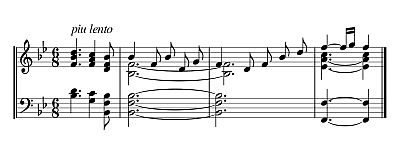
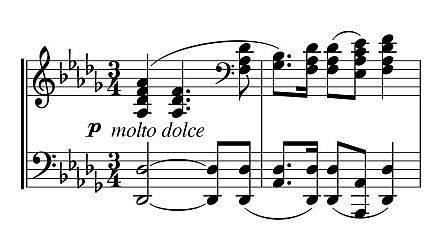
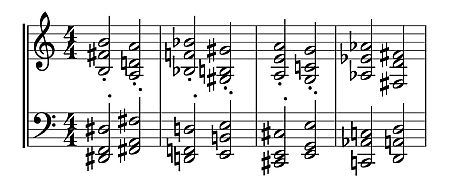
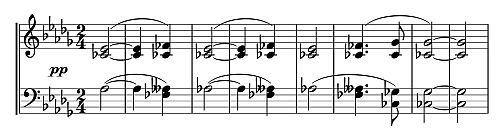
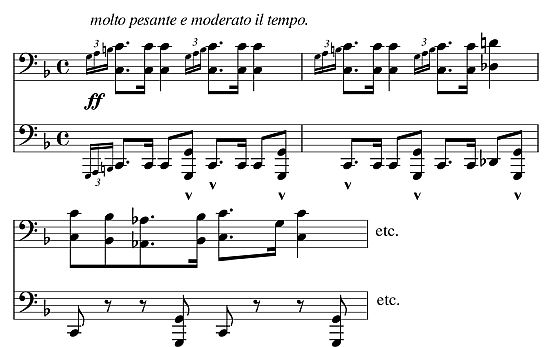
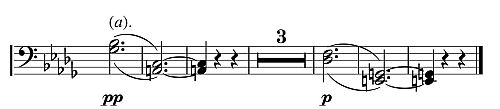
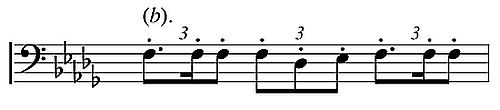
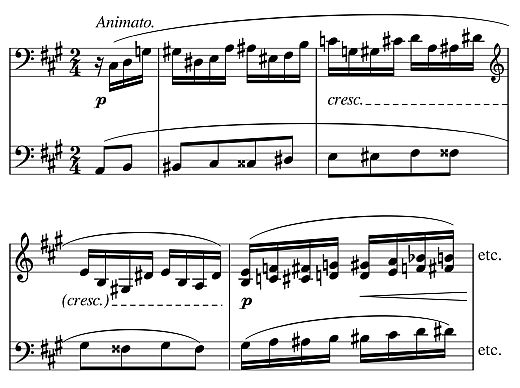
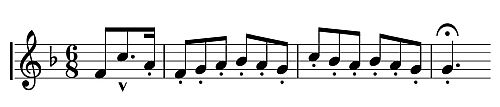
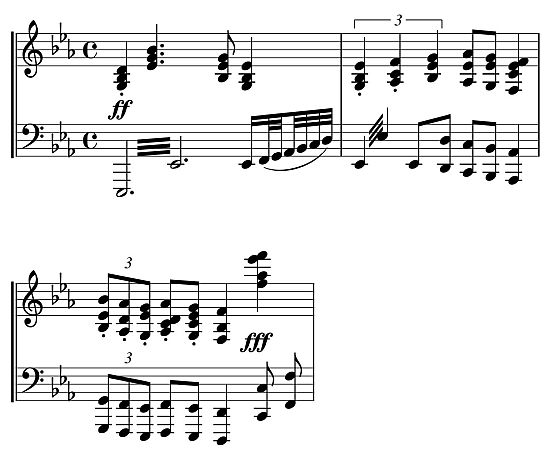
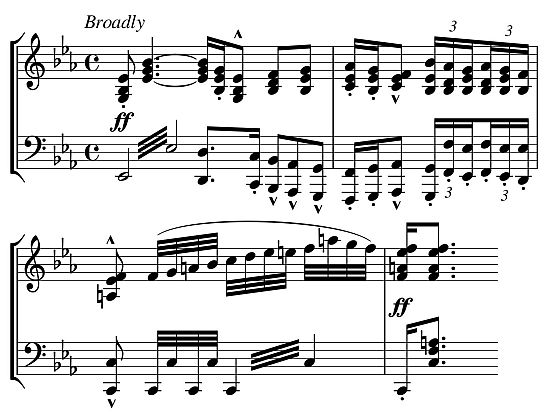
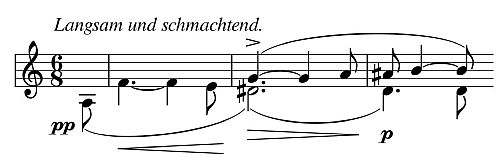
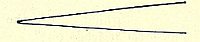
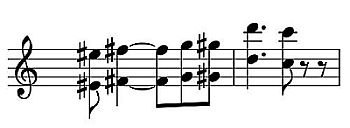
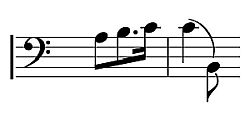

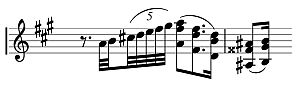
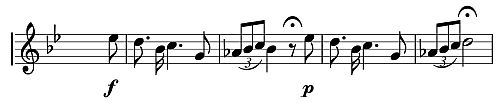
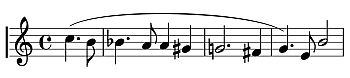
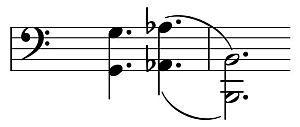
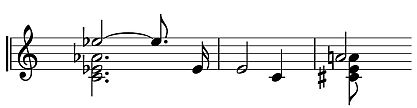
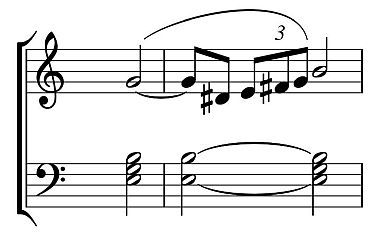
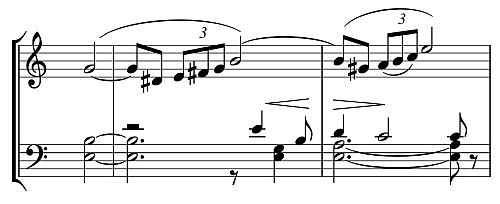
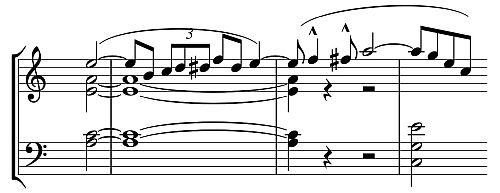
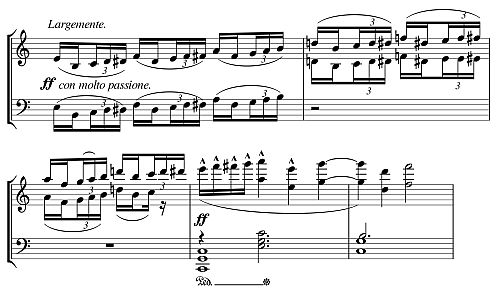


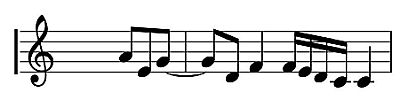
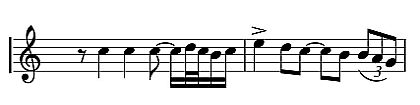


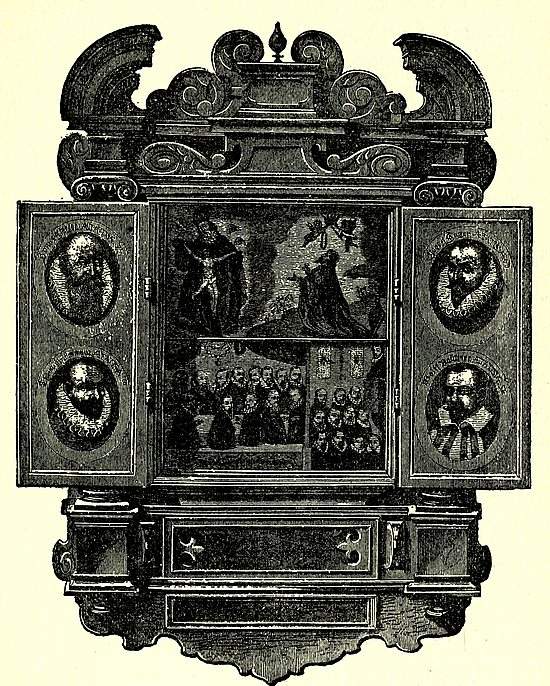
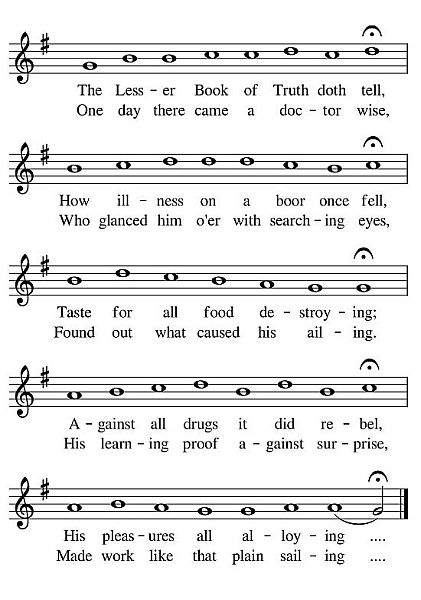
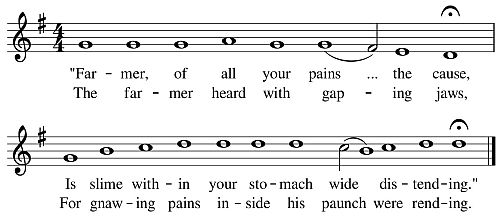

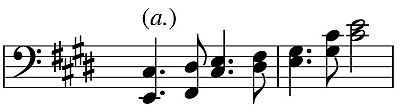
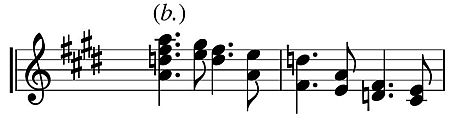
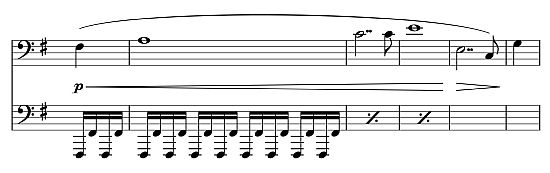
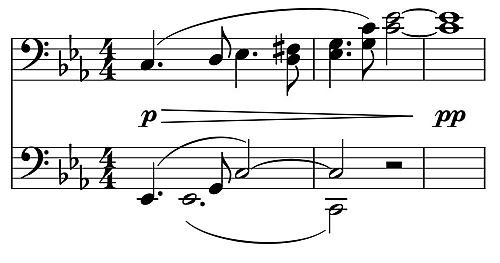
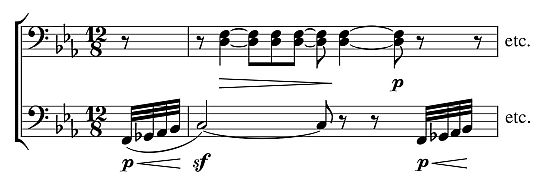
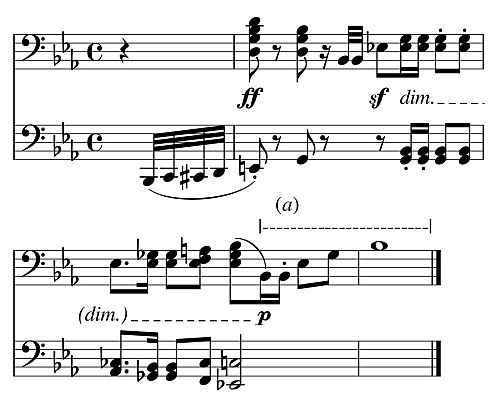
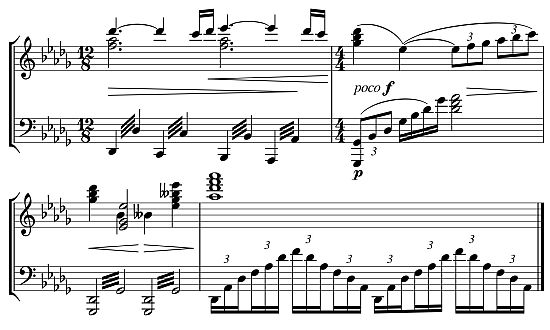
 Either of the above works will be sent by mail, postage prepaid,
to any part of the United States, Canada, or Mexico, on receipt of
the price.
 The above work will be sent by mail, postage prepaid, to any
part of the United States, Canada, or Mexico, on receipt of the price.


