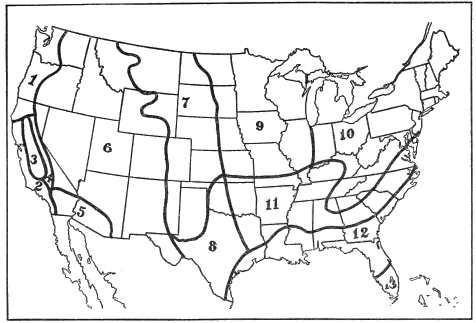
The acacias, or wattles, are a large group mostly of small trees
with showy yellow flowers. Although much used in California, many
of them are too small to make satisfactory shade trees, and because
of shallow rooting they are injurious to sidewalks. They also stump-sprout
badly. They thrive in regions 2 and 3 and in restricted
portions of regions 1 and 5.
The Australian blackwood,[6] blackwood acacia, or wattle, is a
strong, upright tree, growing to a height of 75 feet and forming a
well-shaped head. It is badly affected by citrus scale, and on this
account its planting is sometimes prohibited.
The black wattle[7] is a strong-growing round-headed tree that
reaches a height of 40 feet and has dark-green leaves.
The green wattle[8] is a rapid-growing tree, reaching a height of
60 feet and forming a round head with finely cut leaves.
The silver wattle[9] is much like the black wattle except that its
leaves and young branches are covered with a whitish down.
The ailanthus,[10] or tree of heaven, is a tall, broad, handsome tree
that is especially valuable in the heart of closely built or smoky
cities. The staminate and pistillate flowers are borne on separate
trees. Only the pistillate trees should be used, as the odor of the
blossoms of the staminate ones is very objectionable for about 10
days in late spring. These may be produced by grafting from pistillate
trees or by propagating from suckers or root cuttings from such
trees if they have not been grafted. The ailanthus may not succeed
in regions 5 and 13.
There are three kinds of ash trees that are useful for street planting.
The white ash[11] is a large oval-headed tree, reasonably satisfactory
on rich lands in regions 1, 2, 3, 4, 9, 10, 11, and 12, but it is better
adapted to suburban than urban conditions.
The green ash[12] is one of the few successful trees in regions 6, 7,
and 8 and may succeed in region 5. It grows well throughout the
remainder of the United States, but is of less value than other trees
there. It is much smaller than the white ash, with a broad round top.
The European ash[13] is a large, handsome, round-headed tree suited
to regions 1, 2, 3, and 4.
The camphor tree[14] is a large, handsome, oval-headed evergreen
that will succeed in the southern half of region 2, in regions 3, 5, and 13,
and in the warmer parts of region 12. It will endure more frost than
the orange, and where it is successfully grown it is deservedly popular.
The chinaberry,[15] sometimes known as the China tree, is a small,
round-headed, short-lived tree that will grow in regions 2, 3, 5, 8,
11, 12, and 13 and near the southern edge of region 6. It is too short
lived to be considered for planting where other trees will grow.
The umbrella tree,[16] or Texas umbrella, is a small, compact form of
the chinaberry with an umbrella-shaped top. It is useful for formal
effects, as in the parking on a wide street where taller trees are used
on the side. It will grow in regions 2, 3, 5, 8, 11, 12, and 13 and in
the southern parts of region 6.
The elms are large, handsome shade trees suitable for use over a
wide range of territory.
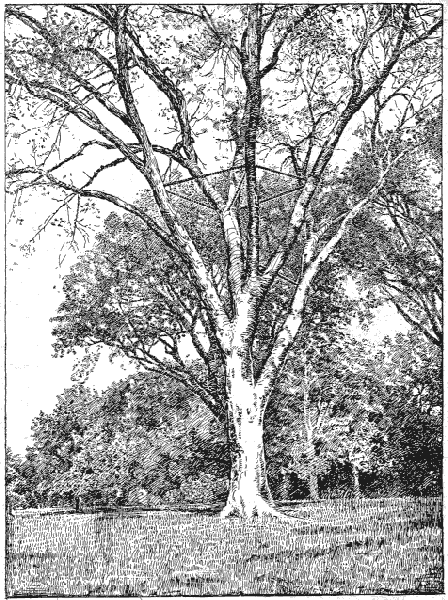
P12460HP
Fig. 18.—An American elm with crotches liable to be split by heavy winds. Note the supporting
chains.
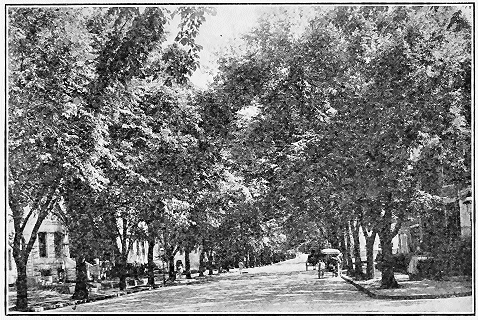
The American elm[17] sometimes called the white elm and water elm,
is one of the handsomest American shade trees. (fig. 3.) It has
been the standard street tree of New England, giving to the roadsides
and village streets the characteristic appearance which is so attractive
to summer visitors.
The American elm is tall and spreading, and where planted as near
together as is customary on streets and country roads the effect of
the mature trees is that of an arch formed by the growing together
of their spreading tops. It is of rapid growth and long lived.
This elm drops its leaves very early in the fall, but it comes into
leaf early in the spring. Because of its manner of branching it is
especially liable to be split by heavy winds. This trouble may be
lessened by selecting and planting specimens with a close, compact
habit of growth or possibly also by great care in training young trees.
Two limbs separating from one another by a very small angle, that
is, when they start to grow in nearly the same direction, make a
crotch that is liable to split. (fig. 18) Where two limbs separate
at nearly a right angle or where three or more limbs of about equal
size grow from a common point or very nearly so, the crotch is likely
to be much stronger. Careful pruning and training to provide a
proper system of branches may be especially helpful with this elm.
Because of the attacks of the elm leaf-beetle[18] and the European
elm bark louse,[19] many handsome trees have been severely damaged
or killed before communities were properly equipped for fighting
them, for with careful spraying these insects may be kept in check.
However, on account of the existence of these pests and because
they are gradually spreading to new territory, tree planters should
consider carefully whether it is advisable to plant the elm in their
localities. Where there is no danger from these insects, this elm is
one of the best of street trees. Consultation with the nearest State
agricultural experiment station or with the Entomologist of the
United States Department of Agriculture would be advisable in order
to determine this point.
The best specimens are to be found in the northern part of region
10, although the elm is being grown all over the United States and
is proving a valuable street tree even in towns and villages of regions
where the rainfall is as low as 15 inches. It is not recommended
for planting in regions 3 and 5.
The English elm[20] is a tall, oval-headed, compact, handsome tree
with leaves smaller than the American elm and which stay on much
later in the fall. In regions 1 and 2 it is at its best, in the former
equaling the American elm and in the latter excelling it. It also
thrives in regions 3 and 10 and in the eastern part of region 11.
The Huntingdon elm[21] is a comparatively round-headed European
variety.
It is a large, handsome tree with good foliage and is more compact
in growth than the American elm. It succeeds well in regions 1, 2,
3, and 4.
The wahoo, or winged elm,[22] is native to the South Atlantic and
Gulf States near the ocean. It has larger leaves than the American
elm and is not as spreading in its growth, but it succeeds well on city
streets in regions 11, 12, and 13.
There are a large number of species of Eucalyptus, many of which
can be used for street planting in regions 2, 3, and 5. Some cities
prohibit their planting because their roots are liable to penetrate
defective sewers, and in other cities they must be kept at least 70 feet
from a sewer, though even this distance may not prove permanently
effective.
The roots of any tree are liable to find their way into a defective
sewer, but the trees mentioned are especially noticeable because of
their vigorous root growth. It may be questioned whether a tree
should be condemned for this growth, as it may be better to have a
defective sewer thus revealed than to continue a menace to public
health.
Eucalypti are also being planted in southern Florida, but on account
of the moist climate there it is not to be expected that they will
succeed as well as in the other regions mentioned. They are tall,
handsome, quick-growing trees, usually bearing two kinds of leaves
at some time in their development.
The blue gum[23] is one of the best eucalypti and the one most commonly
used in California. It is tall, globular headed, handsome, and
will survive several degrees of frost, but it will not withstand the heat
of the deserts in region 5. Its roots are especially liable to invade
sewers.
The desert gum[24] is one of the trees most resistant to heat and cold,
and it makes a handsome avenue tree. It has pendent branches that
have a tendency to severe splitting with age, but with early attention
this may be overcome largely. It may prove especially valuable
for region 5.
The manna gum[25] is another Eucalyptus which withstands several
degrees of frost and makes an excellent roadside tree. Some forms
shed their bark in long bands that leave the trunks almost white.
Many people consider it a dirty tree on this account.
The red gum[26] grows with a broad head, is one of the most resistant
of the eucalypti to frost, drought, and heat, and succeeds wherever
any of these trees can be grown in regions 2, 3, or 5, but is most
useful in region 5.
The sugar gum[27] is a drought-resistant variety, but it does not
withstand cold. It is a common roadside tree in southern California,
but becomes straggling with age.
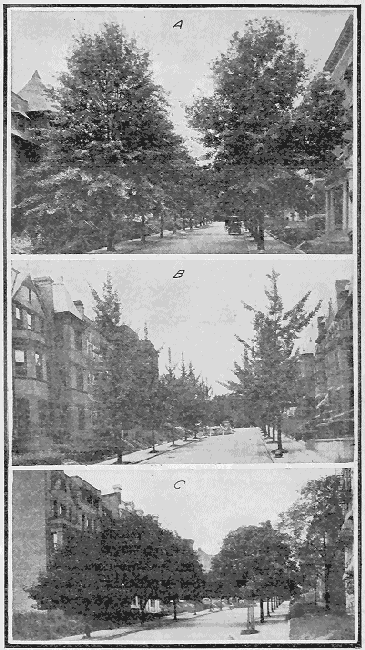
The ginkgo,[28] or maidenhair tree (fig. 4, B), is a native of Japan that
thrives in a cool climate or a hot, moist one and succeeds in regions
1, 9, 10, 11, 12, and 13. It is extremely erratic in its behavior, sometimes
growing well, sometimes practically not growing at all, but
where it succeeds it is very disease resistant, and it withstands
severe windstorms remarkably well. The leaf is peculiar in appearance,
resembling in outline a much enlarged leaflet of maidenhair
fern with a corrugated surface. The tree is conical when young, but
as it reaches maturity its top usually fills out, making a broad, almost
flat-topped, handsome tree. Only the staminate form should be
used, because the pistillate form bears fruits the flesh of which is
slippery and dangerous when it drops to the pavement, and to some
people it is somewhat poisonous to the touch. Ginkgo trees, therefore,
would need to be secured by budding or grafting from the
mature staminate form.
The hackberry,[29] or sugarberry, is especially valuable in regions
6, 7, 8, and 9, as it grows satisfactorily where there is comparatively
slight rainfall. It is also much used in region 11, but should be superseded
there by other varieties that are better. It is of moderate size
with an oblong head and of rather open growth. It is comparatively
short lived. Its leaves are much like those of the elm.
The name sugarberry comes from the sweet black berries that are
borne in the early fall. The tree is sometimes affected by a fungous
trouble known as witches'-broom. This trouble causes large numbers
of small sprouts to start from the affected portion, which gives the
infected tree an unsightly appearance. The hackberry should not
be planted where this trouble is prevalent.
The Mississippi hackberry[30] is a large, open, oblong-headed tree
with smoother leaves than the common hackberry. It is useful in
the southern part of region 6, in region 8, and to some extent in regions
11 and 12. It thrives well under the same adverse moisture conditions
as the common hackberry. The trunk and the large branches
have little wartlike projections of the bark scattered irregularly over
them. The small twigs are sometimes more or less spotted or winged
in the same way. The tree is rather larger than the common hackberry
and apparently is less subject to witches'-broom.
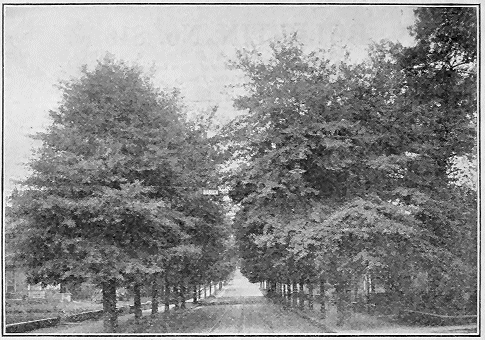
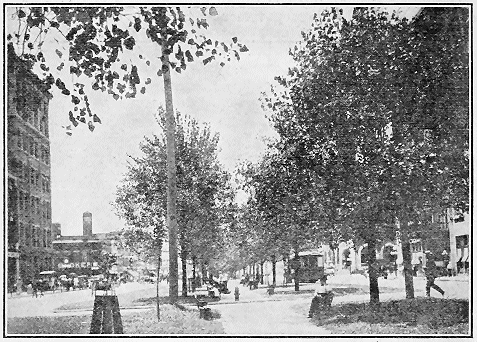
The honey locust[31] is a large, open, round-headed, fine-foliaged tree,
admitting much light through its top. (fig. 19) The common
form has stiff spines 2 to 6 inches long, or even longer. There is also
a form without spines, which is the one that should be used for street
planting. It is a useful tree in regions 1, 2, 3, 9, 10, and 11, but is
especially valuable for planting in regions 6, 7, and 8, and may
prove useful in region 5.
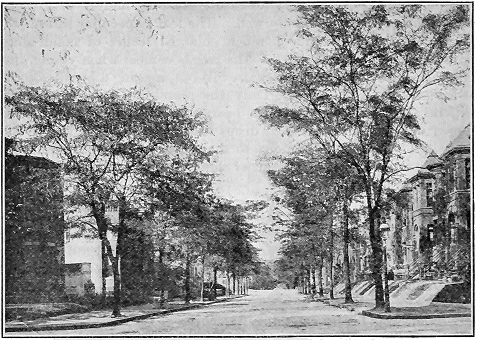
Fig. 19.—A street shaded with honey locusts, as seen in late summer. Washington, D. C.
The horse-chestnut[32] has handsome blossoms that are very showy,
and when in bloom an avenue of these trees commands attention.
It is a close relative of the buckeye, or Ohio buckeye, which is also
a handsome tree, though less desirable. It is objectionable because
it is likely to be broken by boys clubbing it for its nuts, which are
inedible, or where its leaves are affected with a midsummer blight
which makes it unsightly during the remainder of the season. It is
a medium-sized round-headed tree that does much better under
suburban than under city conditions. It thrives in regions 1, 2,
3, and 10.
The basswood,[33] or linden, is a large round-headed tree that is
excellent for roadsides in suburban locations and does well on city
streets if the conditions are not too severe. On account of the dark
upper surface and the lighter under surface of the leaves and the
sweet-scented blossoms in early summer it is much admired. It is
not as reliable as some of the other shade trees, as when young it is
sometimes attacked at the base of the trunk by a fungous growth
that kills the tree. When once established it forms handsome avenues.
It is suited to regions 1, 2, 3, 4, 7, 9, 10, and 11.
The linden,[34] or European linden, has much smaller leaves than the
American linden, or basswood, with more contrast between their
upper and lower surfaces. It is not much different in size, but is
a little more compact in growth and holds its leaves longer in the
fall. It is a useful tree for street planting in regions 1, 2, 3, 4, 9,
10, and 11.
The locust,[35] or black locust, is one of the desirable street trees in
regions 6, 7, 8, and probably in region 5, as it thrives with comparatively
little moisture. It makes a moderate-sized oval head
that bears sweet-scented white flowers in late spring or early summer.
Its greatest drawback is its liability to serious injury and disfigurement
by the locust borer,[36] but with proper care this injury can be
prevented.[37] In some parts of the East it is also subject to a leaf
miner[38] that gives its foliage a burned appearance. In region 3 it
holds its seed pods for several years and thus becomes very unsightly.
The evergreen magnolia[39] is one of the few good evergreen trees
for street planting, but it is adapted only to regions 1, 2, 3, 11, 12,
and 13. There are but few conditions that warrant the planting
of a tree having foliage as thick as this, because of the dense shade,
which is especially undesirable in winter. It grows to be a large
oval-headed tree and bears beautiful large white blossoms in late
spring or early summer.
Among the maples are some undesirable trees much used for
street planting and some that are valuable only in restricted areas
or under special conditions. The maples are not as satisfactory for
street planting as usually has been supposed, few of the species
being suitable for this purpose and these only in a limited way.
The ash-leaved maple, or box elder,[40] is native to all of the country
east of the Rocky Mountains except the regions near the South
Atlantic and Gulf coasts. It is a small, quick-growing tree that will
thrive almost anywhere, but it reaches maturity early. Because of its
early decay and of its being subject to destruction by wind, it should
not be used for street planting where other trees succeed. It would be
a good tree for interplanting
were it safe
to risk taking out
some of the trees at
the right time. The
objection to using
these trees is that
they would be so
likely to look larger
and better than the
permanent trees at
the time they should
be removed that public
opinion would
probably resent their
removal. There may
be conditions requiring
the use of this tree
in regions 6, 7, and 8,
but it should be grown
only when the other
trees suggested for
these regions will not
succeed.
The English maple[41]
is small, round-headed,
with small dark-green
leaves, useful in regions
1, 2, 3, and 4.
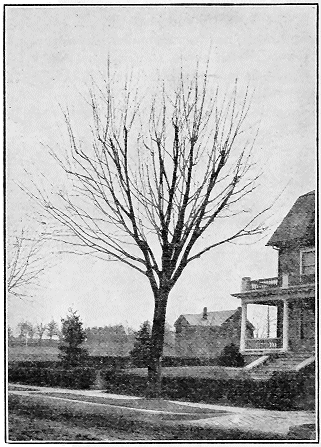
P20042HP
Fig. 20.—A Norway maple, as seen in late winter, showing its poor
shape when trimmed to a high head.
The Norway maple[42] is round-headed and eventually reaches
large size, but, as compared with most of the other maples, it is
slow growing (fig. 4, C). The persistence of its tendency to form
a low head makes it difficult to give it a high head of desirable shape
(fig. 20). It is also very thickly branched, and its foliage, being
heavy and dark-green, permits but little light to pass through. On
this account it is rather undesirable for street planting. By severe
pruning of the interior of the head this defect may be somewhat
overcome. The tree is practically disease and insect free, with the
exception of a liability to infestation by a leaf aphis[43] which produces
yellow spots on the leaves and causes them to drop prematurely;
also, the honeydew which they produce is so abundant at
times as to cover the leaves and wet the sidewalk beneath the
tree, the leaves under certain weather conditions becoming blackened
with dust accumulating and a fungus growing in the secretion,
thereby giving the tree an unsightly appearance. This aphis, however,
is not always present and does not seriously injure the tree.
The Norway maple comes into leaf later than most of the other
maples, but holds its leaves later in the fall. They usually assume
a bright yellow hue before they drop. The leaves are preceded
by an abundance of yellow-green blossoms. On account of its dense
shade and masses of fine fibrous roots it is difficult to grow grass
under this tree. Its good shape and attractive dark-green foliage
make it popular for street planting in spite of its dense, low head.
It will succeed in regions 1, 2, 3, 4, 9, 10, 11, and 12.
The Oregon maple[44] is the large-leaved maple of the northern
Pacific slope. It forms a large round head, and with its unusually
large dark-green leaves makes a very attractive street tree that
succeeds well in regions 1, 2, 3, and 4. It is valuable and worthy
of more extended cultivation on the Pacific coast.
The red maple,[45] scarlet maple, or swamp maple is one of the
most widely distributed of American trees. It is found from Canada
to the Gulf of Mexico and west to the Rocky Mountains. Its leaves
are the smallest of any of the eastern native maples, but it grows
large and the trees are usually of rather upright outline. It is
better adapted to suburban conditions than to city streets and is
one of the few trees that succeed well near the ocean. It has bright-red
blossoms before the leaves appear. The young leaves and fruits
are also red. The mature leaves begin to color early, some branches
coloring as early as the middle of July, assuming brilliant reds and
yellows and staying on later than those of the sugar maple. It is
a handsome tree that is not as much used as it deserves to be in
regions 1, 9, 10, 11, 12, and 13.
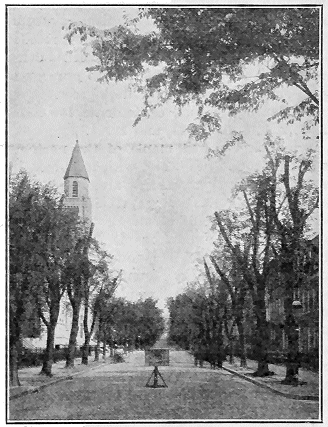
P12542HP
Fig. 21.—Silver maples severely headed back, an improper way to
treat trees, especially silver maples, except under very unusual
conditions. Washington, D. C.; midsummer.
The silver maple,[46] also called the soft maple, white maple, and
swamp maple, is probably more used for street planting through
the whole United States than any other tree, and with one exception
it is the least desirable. It is usually planted because it is a
quick-growing tree, but it is not more rapid in growth than several
other much better trees. There are three serious objections to its
use as a street tree. The first is its brittle wood, which at an early
age is easily broken by ordinary windstorms and causes it when
a comparatively young tree to become unsightly. The second is
its shallow rooting, which has a tendency to destroy pavements
and also makes it difficult to grow grass near the trees. The roots also
will grow into sewers. The third is the tendency to decay; the
tips of the limbs frequently die, leaving the whole top of the tree
bare of leaves, and the wood decays quickly, especially if the bark
is broken. For this reason it does not stand pruning as well as most
other street trees, and it probably has been pruned more ruthlessly
than any other tree,
unless it is the Carolina
poplar. It should
never be severely deheaded
or, as it is
popularly called, "dehorned"
(fig. 21), as
the stubs will practically
never heal over,
and from these cuts
decay will start, which
in a very few years will
rot the center of the
limbs and trunk and
thus destroy the tree.
Although it forms a
large round head with
an open top and its
foliage is pale green
above and almost
white beneath, making
a very delightful shade, on account
of its weaknesses it
should never be used
for street planting
where other trees can
be made to grow.
The sugar maple,[47] or hard maple, is especially adapted to gravelly
soils in regions 1, 10, and 11, the northern parts of regions 2 and 3,
and the eastern and southern parts of region 9. It is oval-headed,
large, and handsome, having red blossoms which individually are
inconspicuous but which in mass are showy early in the spring
before the leaves appear. The leaves come early, but in late summer
they begin to turn brilliant yellow and red and drop before most
other leaves. The sugar maple does not thrive under city conditions,
but is admirably adapted to suburban conditions.
Although the sycamore maple[48] is similar in appearance to the
Norway maple, it is not a satisfactory street tree in the eastern
United States. It succeeds, however, in regions 1, 2, 3, and 4.
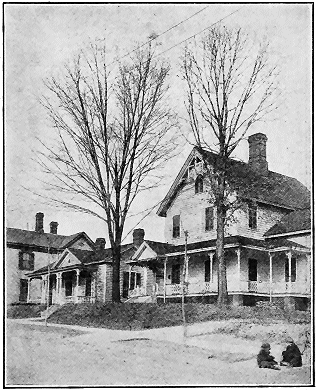
P15662HP
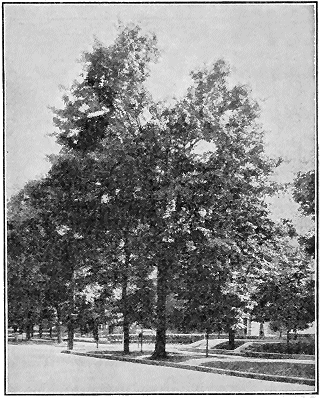
Fig. 22.—A sugar maple (on the left) and a white oak (on the right),
each 32 years old and nearly the same size.
Of the trees used for street planting the oaks are best. They
probably have not been more widely planted because of the prevalent
belief that they are slow growers and because in the North they
are rather difficult to transplant. Although some of the handsomest
species, like the white oak and live oak, are slow growers,
those suitable for street
planting are comparatively
rapid-growing.
The white oak and sugar
maple shown in figure
22 are each 32 years
old and although differing
in shape are practically
the same size,
yet the sugar maple
is considered a sufficiently
rapid-growing
tree to be planted frequently
as a street
tree, while the white
oak is seldom so used.
The oaks are hardy,
most of them are long
lived, and for the most
part they are free from
disease and insect attacks.
Some of the
southern species are
subject to attacks of
mistletoe.
The California live oak[49] is an evergreen suitable for use in region 2
and succeeds adjacent to the ocean. It is also useful in region 3
and in the western part of region 5. It is easily transplanted if
handled young, and especially so when planted from pots.
The chestnut oak[50] is a native of gravelly soils on eastern mountains
and is suitable for gravelly soils in suburban locations in
regions 9, 10, and 11. It is a large, handsome tree.
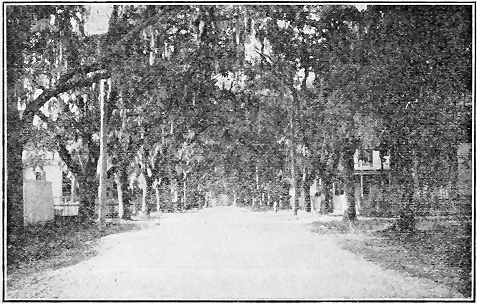
The Darlington oak[51] is a form of laurel oak especially desirable
for street planting. It is large, round-headed; the leaves are a trifle
smaller and not quite so nearly evergreen as the laurel oak. It
is found wild about Darlington, S. C., where a good form of the laurel
oak appears to have been introduced as a shade tree in the early
part of the nineteenth century. (fig. 23) Its range of usefulness
lies in regions 11 and 12.
The laurel oak[52] is a large, oval-headed tree that is not as rugged
and irregular as the live oak, but is suitable for street planting in
regions 11, 12, and 13. It has large, thick, glossy leaves, and in
the warmer regions it is almost evergreen. It is readily transplanted,
but as it is not so common in the woods as the willow oak
and the water oak, it has not been so much used as a street tree.
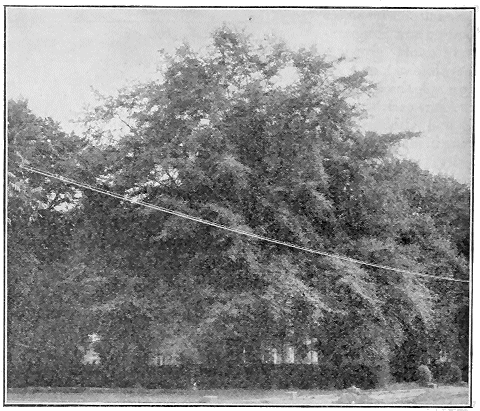
P15461HP
Fig. 23.—A Darlington oak as seen in late summer, Darlington. S. C.
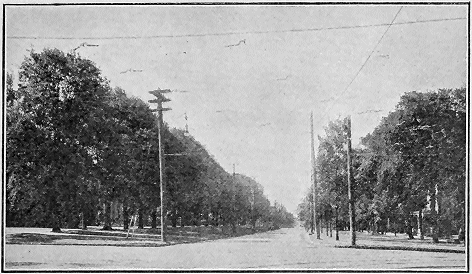
The live oak[53] (fig. 16) is probably the noblest and most majestic
of the oaks of regions 12 and 13. It is evergreen and of slow growth,
but wherever it is found, whether on streets or in public parks, it is
the pride of the people. Although an evergreen it is sufficiently
open-headed to make a good street tree. When it becomes old it is
spreading and as a rule does not form as high a head as the willow
oak and the laurel oak. Compared with other southern oaks it is
difficult to transplant. It is of sufficient merit to be used on broad
streets, and especially on boulevards, where the good of the future
as well as the present is considered.
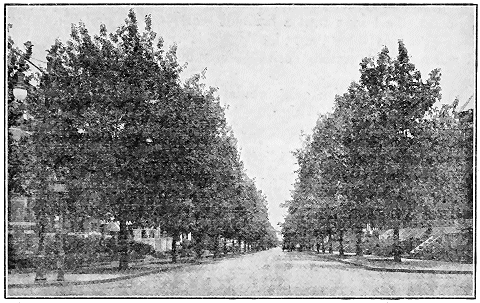
P14413HP
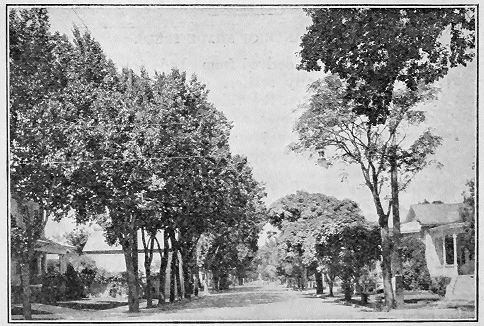
Fig. 24.—A street shaded with red oaks, Washington, D. C.; midsummer.
The burr oak,[54] or mossy-cup oak, is native in the northeastern
United States and west of the Mississippi River on the hills lying
between the river bottoms and the prairies west to the western parts
of the Dakotas and Nebraska and central Kansas and Texas. It is a
large; handsome tree that should prove satisfactory under suburban
conditions in regions 7, 8, 9, 10, and 11 and on fertile well-watered soils.
The pin oak,[55] sometimes called the swamp oak, is a tall tree, conical
when young, oval at maturity, with a drooping habit of the lower
branches. The leaves are quite finely divided and are of a bright
glossy green. The tree comes into leaf late in the spring and holds its
foliage late in the fall. One objection to the pin oak for street
planting is that on many specimens the dead leaves hang on through
the winter. It is adapted to narrower streets than the red oak, as its
habit of growth is not so spreading. On account of the tendency of
the limbs to droop, particularly as they get older, it is desirable
that a good strong leader should be developed, so that the lower
limbs may be removed from time to time as conditions require.
The pin oak thrives on wet and on heavy clay soils, as well as on a
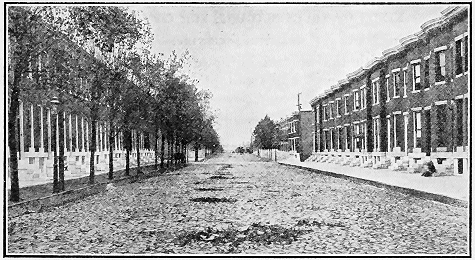
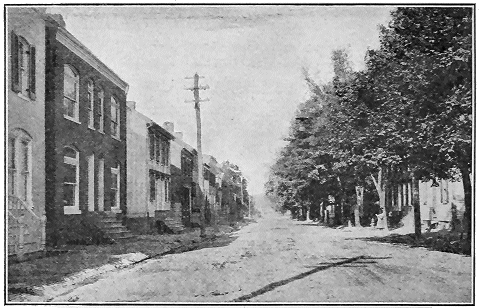
wide range of other soils. Figure 4 shows pin oaks, Norway maples,
and ginkgos 18 years old on adjacent streets, and illustrates the
rapid growth of this oak. At the time of planting these trees the pin
oaks were thought to have the poorest location. This tree is adapted
to regions 1, 2, 3, 4, 9, 10, and 11.
The red oak[56] (fig. 24) is probably the best tree for street planting
in regions 1, 9, 10, and 11 and is satisfactory in regions 6, 7, 8, and 12.
It is a large, oval, open-headed tree of rapid growth. Under good
conditions a young red oak will grow 4 feet in a single season. Like
the other oaks it is slow in coming into leaf in the spring, but holds
its foliage late in the fall. The leaves usually turn a brilliant red
before they drop. It is comparatively free from insect and fungous
attacks, and it is one of the few trees really suitable for planting close
to the ocean, as it thrives on sandy lands only a few feet above high
tide or within the reach of ocean spray.
The scarlet oak[57] is a large, open, round-headed tree. Its leaves
are more deeply divided than those of the red oak. As its name
indicates, the leaves turn a brilliant scarlet in autumn, being even
more gorgeous than the red oak. This tree is adapted for street
planting and is especially desirable for suburban conditions in regions
1, 9, and 10.
The swamp Spanish oak[58] is adapted to regions 11, 12, and 13.
It belongs to the red oak group, but is larger than the other oaks
suggested for street planting. It is well adapted to suburban locations,
but apparently it has not been tested under severe city
conditions.
The valley oak[59] is a beautiful tree for regions 2 and 3 and the more
favorable parts of region 5. When transplanted young, especially
if taken from a pot, it is easily established where there is opportunity
to water it for a few years.
The water oak[60] is frequently confused with the willow oak and
the laurel oak, as these three oaks are not distinguished from one
another except by close observers of trees. It is probably more used
than any other tree in the cities of region 12 and the adjoining portions
of region 11. It is the weed of the southern oaks and one of the
weeds of the street trees of the Southern States. It is comparatively
short lived and seems to be more subject to attacks of mistletoe and
more easily affected by windstorms than the willow oak, the Darlington
oak, and the laurel oak. The planting of this tree should be
avoided, because it is less desirable than the other oaks mentioned.
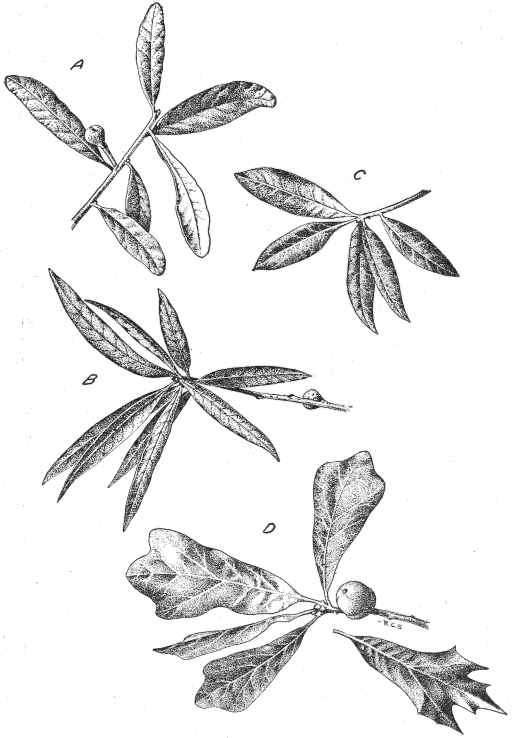
Fig. 25.—Leaves of some of the southern oaks; A, Live oak; B, willow oak; C, laurel oak; and D, water oak.
The willow oak[61] (fig. 1), sometimes erroneously called the water
oak, is one of the best of the quick-growing oaks for use in regions
11 and 12. It is frequently used with the water oak for street planting
and in the mind of the average planter is confused with it. It is,
however, a distinct tree, which can be distinguished readily from the
water oak. It is longer lived and is its equal in every other respect.
Trees of this variety which apparently have been planted about
80 years are found in excellent condition, while water oaks planted
at the same time have either entirely disappeared or are showing
marked evidences of decline. Figure 25 shows the characteristic
appearance of the leaves of these nearly related species of oaks.
That the willow oak is readily transplanted in the South when of
comparatively large size is proved by the success with which trees
12 feet high are dug from the woods and planted on the street
(fig. 26). In the extreme South this tree is nearly half evergreen.
Its foliage does not assume the bright colors of the trees of the red oak
class.
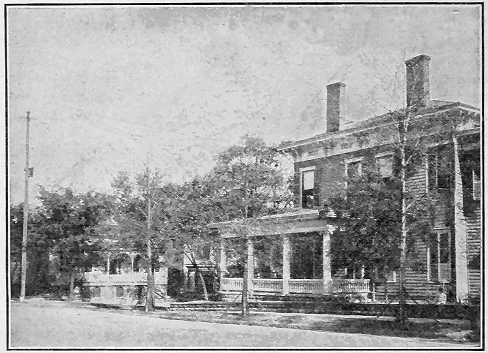
P15321HP
Fig. 26.—Recently transplanted willow oaks, showing trees taken from the woods as they appeared
near the end of the second summer. Montgomery, Ala.
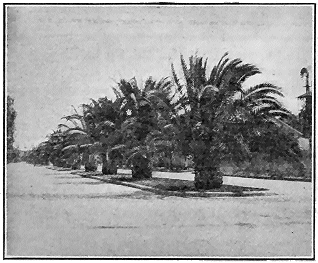
Several varieties of palms are used more or less for street planting
in regions 2, 3, 5, 12, and 13. Though sometimes effective as a
formal street decoration (fig. 27), they can hardly be considered
shade trees.
Palmettos, or sabals, abound in region 12 near the coast; succeed in
regions 3, 5, and 13; live in region 2; but are seldom grown satisfactorily
close to the Pacific coast. They can be used effectively
for formal plantings along some streets, park drives, or in liberal
central parking spaces in boulevards, but they are not useful as a
substitute for shade trees. They should have then leaves and
damaged roots cut off in transplanting and should be set about
3 feet deep in their new location.
The Carolina palmetto[63] is a native of and useful in regions 12 and
13, where it sometimes attains a height of 60 or 80 feet. It will
thrive in regions 3 and 5, but is used less there.
The Texas palmetto[64] is especially valuable for southern Texas,
where it is indigenous, and it is likely to succeed generally in regions
3, 5, and 12. It grows to a height of 40 feet and in appearance is
quite distinct from the Carolina palmetto, the leaf segments being
much broader and less drooping.[65]
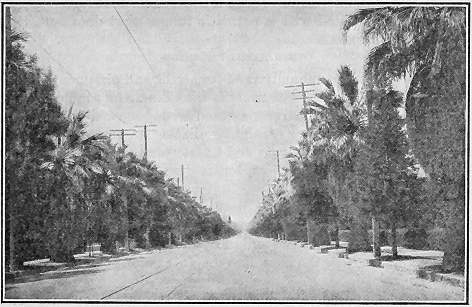
P18989HP
Fig. 27.—A formal planting on a city street. Palms with interplantings.
Redlands, Calif., in midsummer.
The Victoria palmetto[66] is another hardy species, probably a native
of Mexico, but grown for many years at Victoria, Tex. It is similar
to the native Texas species and worthy of general planting in the
same region. A feature of this species is that the persistent leaf
bases remain alive and green for many years instead of turning
yellow or brown, as in the Carolina palmetto.
Washingtonia palms are a very conspicuous feature of street and
ornamental planting in southern California. Two species are
represented, Washingtonia filifera Wendland and W. robusta Wendland.
The first is a native of the canyons and barren slopes that
surround the Coachella Valley of southern California, while the other
species probably was brought by way of the Isthmus of Panama
from the region of San Jose del Cabo, the extremity of Lower California,
in the early days of travel. The name robusta alludes to the
fact that this species grows much more rapidly in height than
W. filifera, though the trunk is more slender. Both species are
hardy and thrive well through regions 2, 3, and 5, and also in regions
12 and 13. Washingtonia robusta requires less heat than W. filifera,
but both will endure several degrees of frost. Even in California
Washingtonia robusta is distinctly preferable for localities near the
coast. In the vicinity of San Diego the leaves of Washingtonia filifera
become badly infested with a parasitic fungus that does not attack
Washingtonia robusta.
The species most commonly used for street and ornamental planting
in the California coast districts is the Chinese or windmill palm.[67]
This palm has a slender trunk clothed with brown fibers, flat fan-shaped
leaves, and rather straight radiating segments. The same
species is hardy at New Orleans and Charleston, and even at Laurens,
S. C., at an altitude of 600 feet, but it does not thrive in the sandy
soil of Florida.
The vegetable hair palm,[68] a native of Spain, Sicily, and North
Africa, is similar to the Chinese palm but smaller and more compact
and with large, sharp spines on the petioles of the leaves. When
young it suckers from the base, like the date palm, so that clusters of
it may be formed.
The Guadeloupe Island palm[69] is one of the most popular species
in southern California in the region of Santa Barbara, Los Angeles,
and San Diego. This palm is a native of Guadeloupe Island, of!
the coast of lower California, and is not known to occur elsewhere in
the wild state. It is well adapted to the cool coast climate of California,
but not to the interior valleys. It is smaller than the Washingtonia
palms, with a rather short trunk, 15 to 20 feet high, and a
dense crown of fresh green leaves.
The California blue palm,[70] formerly placed in the same genus with
the Guadeloupe Island species, is very distinct in habits as well as in
general appearance, having bluish or grayish green leaves, strongly
toothed petioles, and long, slender inflorescences. The trunk is
very robust, often 2 to 3 feet in diameter, and is said to attain a
height of 30 to 40 feet in Mexico. Several of these features are shared
with the Washingtonia palms. It also has the ability to grow in the
dry, hot interior valleys (regions 3 and 5). In Texas the blue palm
has proved hardy at San Antonio, and even as far north as Austin.
The Canary Island date palm[71] is the most popular palm for park
or street planting, being more hardy than the true date palm, larger
and more vigorous in growth, and producing no suckers from the
base of the trunk. Well-grown specimens in the California coast
districts (region 2) with trunks from 2 to 3 feet thick and immense
crowns of spreading deep-green leaves are among the most imposing
forms of plant life. Though less robust in other regions, the species
is very hardy and adapted for planting anywhere in the palm belt
(regions 3, 5, 12, and 13).
The true date palm[72] is adapted to the warmer parts of regions 3
and 5, but it is much inferior to the Canary Island species for ornamental
use because the foliage is less attractive, due to its habit of
sending out suckers from the base of the trunk.
The true coconut palm is confined to a narrow belt along the coast
of southern Florida, but other species of cocos are planted in the
coast districts of California. The species that is most prominent
in park and street plantings around San Diego, Los Angeles,
and Santa Barbara is usually known as Cocos plumosa or Cocos
romanzoffiana, and is a rather tall, slender palm with a long-jointed
trunk about 1 foot in diameter and long, spreading, feathery, deep-green
leaves. Another series is represented by Cocos yatay and
several similar species, often called Cocos australis in nursery catalogues.
They have short, thick trunks, very glaucous grayish or
bluish foliage, and fleshy edible fruits, highly flavored, somewhat
like pineapples. These gray-leaved species are very hardy. Another
coconut relative is the Chilean molasses palm,[73] which has a
massive trunk 3 or 4 feet in diameter, specimens of which are growing
at a few places in California.
The amethyst palm, a native of Australia, is commonly planted
in California. It usually appears in lists and nursery catalogues
as Seaforthia elegans or Archontophoenix alexandrae, but it is now
recognized as distinct from both of these species and has received
a new name, Loroma amethystina. It is the only pinnate-leaved
palm, except certain species of Phoenix and Cocos, that grows freely
in the open air in the coast districts of California, from Santa Barbara
to San Diego. In habit and general appearance Loroma is
more like the royal palm, though with a smaller trunk and fewer
leaves. The pinkish purple drooping inflorescence is very attractive
and develops into a large cluster of scarlet berries.
The royal palms, species of Roystonea, are perhaps the most
striking ornamental members of the whole group. They can be
grown in southern Florida and even exist in the wild state in some
of the hammocks below Miami.
The California pepper tree[74] is much used in regions 2 and 3 and in
the western part of region 5. It is a moderate-sized broad-headed
tree with fine foliage, which gives it a light, airy appearance. During
the fall and winter it is covered with scarlet berries, which in
contrast with the persistent foliage produce a pleasing effect.
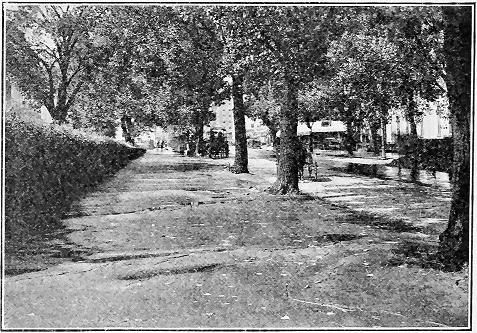
Fig. 28.—A pavement heaved by the roots of poplar trees.
Poplars are not desirable for street planting. Their wood is
brittle and easily broken by ordinary windstorms, and their roots
run near the surface and are likely to interfere with pavements, as
shown in figure 28, while those of some varieties are especially liable
to make trouble in sewers by filling them with a mass of fibrous roots
if access is once gained. Vigorous root growth is encouraged by the
moisture from a leak, and the roots ultimately find their way inside.
The southern cottonwood,[75] Carolina poplar, and the northern
cottonwood[76] are so similar in their adaptability for street planting
purposes that they will be discussed together. They are easily
propagated, easily transplanted, are quick-growing, and where they
reach maturity under normal conditions form very large oval-headed
handsome trees, but under the artificial conditions existing in cities
it is necessary to prune them quite severely when young to remove
the long vigorous growths and make the heads more compact. This
pruning stimulates more vigorous growth, which must be removed or
they will form long branches with heavy tops, that are especially
liable to be injured by windstorms. The more they are pruned the
greater the tendency to an undesirable form of growth. They begin
dropping their leaves early in the summer and lose them very early
in the autumn. Their root growth is especially vigorous, so that
they are liable to make trouble in sewers in the manner already
mentioned. It is largely on this account that many cities prohibit
the planting of these trees. Except in regions 6, 7, or 8 or in locations
where smoke and fumes in the air prevent the growing of
other trees, they should not be planted.
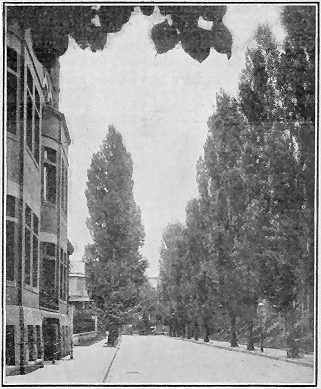
The Lombardy poplar[77] is a tall columnar tree adapted for use on
very narrow streets (fig. 14). It is short lived in many places, due
largely to the European poplar canker, but otherwise is a satisfactory
tree for these conditions in all parts of the United States. The trees
may be planted as close together as 30 feet.
None of the other poplars have much to recommend them for
street planting.
The rubber tree[78] is a large-headed handsome evergreen, suitable
for regions 3 and 5 and the southern parts of regions 2 and 13 when
the use of an evergreen tree is warranted.
The silk oak,[79] or Australian fern, is a large, handsome tree that
succeeds well in regions 2, 3, and 13; also in region 5 if provided
with a reasonable amount of moisture, as it stands drought remarkably
well. It is covered in early summer with orange-colored
flowers.
The sweet gum[80] is adapted to regions 11, 12, and 13, especially
on sandy lands. It forms an oval-headed, handsome tree with star-shaped
leaves that assume a particularly brilliant hue in the autumn.
It is better adapted to suburban conditions than to the heart of a
city. Toward the northern limits of its successful cultivation it is
difficult to transplant, while in the warmer sections of the country
it can be moved with comparative ease. It should be transplanted
only in the spring.
The sycamore[81] also called the buttonwood and buttonball tree, is
a large, open, spreading, quick-growing tree native along water-courses.
It is adapted to regions 1, 2, 3, 4, 9, 10, 11, 12, and 13
and is worth testing in regions 5, 6, 7, and 8. Its habit of shedding
its outer bark in large flakes, leaving the white new bark showing in
large patches, makes it a conspicuous tree wherever grown. The
fruits are balls 1 inch or more in diameter and are sometimes objected
to because they make dirt when falling; also the shed bark
is considered objectionable. It is such a strong-growing handsome
tree and succeeds so well under city conditions that it is being planted
more and more frequently. It will stand more pruning and shaping
than any other street tree. Without pruning it is too large for ordinary
streets unless spaced at almost double the usual planting distance,
with the trees staggered along the street instead of being
planted opposite. Its high head and open habit of growth are distinct
advantages for street planting. Its foliage, too, is a light green,
which gives an impression of airiness with the shade. It is subject
to attack by a fungus that kills the leaves while still small or partially
mutilates them, giving them an unsightly appearance. In
some places this trouble is quite serious.
The California sycamore[82] is a native of California adapted to
regions 1, 2, 3, and 4 and portions of region 5. It is similar in general
characteristics to the sycamore.
The London plane tree[83] is one of the Old World forms of sycamore.
According to Alfred Render,[84] "the true oriental plane is rare in
cultivation, the tree usually planted under this name being Platanus
acerifolia" It it more compact in habit of growth and has the
other good qualities of the sycamore. It is being more and more
used on city streets and is proving satisfactory in regions 1, 2, 3, 4,
9, 10, 11, and 12. It will probably succeed in the warmer parts of
regions 6 and 7 and also in regions 5 and 8. It is a more desirable
tree for ordinary use than the sycamore, on account of its more
compact habit and comparative freedom from disease, though it is
tender in the northernmost sections.
The tulip tree[85] is also sometimes called the tulip poplar or yellow
poplar, though the latter names are unfortunate, as the tree is not a
poplar or even closely related to the poplars. It is a large, rapid-growing
tree suitable for suburban conditions in regions 1, 2, 10, 11,
and 12. The leaves are of unusual form, the upper half appearing
to have been cut away, leaving a notch about where it would seem
the middle of the leaf should be. The color is a light green. The
roots are unusually soft and tender, and therefore the tree needs to
be transplanted quickly and with great care. Small sizes should be
planted, especially near the northern limits of growth. It should be
transplanted only in the spring. If after transplanting it the top
should die and a new vigorous shoot should put out from the root, it
would be desirable to form a new top from this shoot rather than to
transplant another tree.