LIST OF THOSE WHO HAVE WRITTEN INTRODUCTIONS TO CHAPTERS.
CHAPTER.
1.
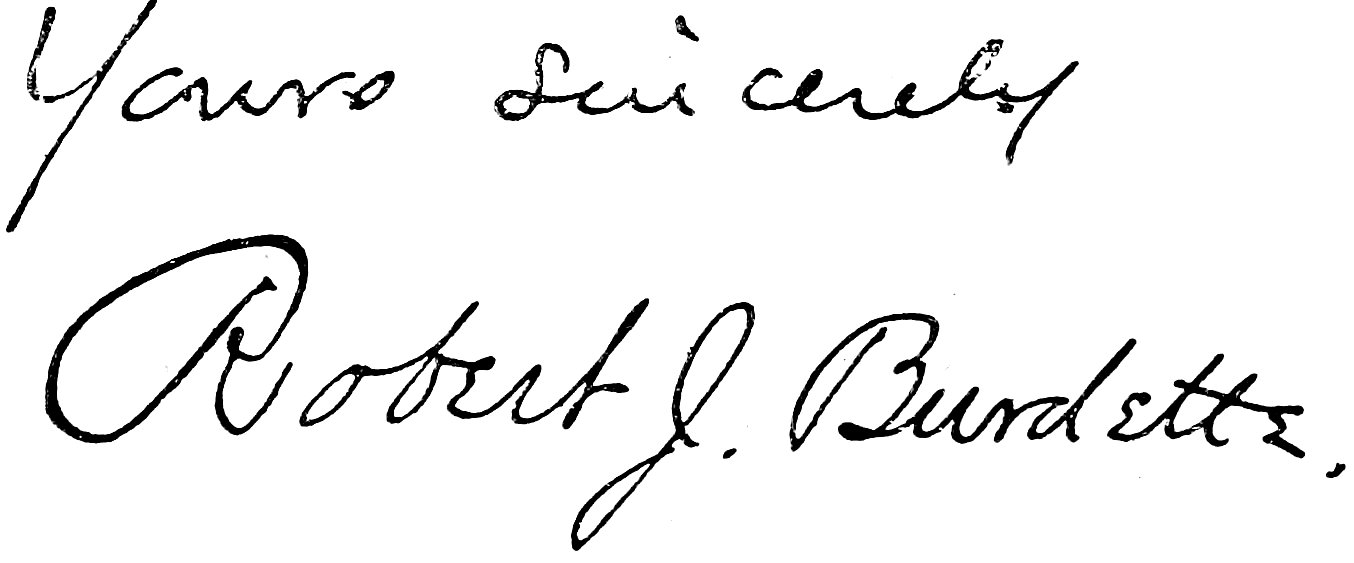
Robert J. Burdette. One of America’s moral humorists.
2.
Adolph Sutro. Former mayor of San Francisco.
3.
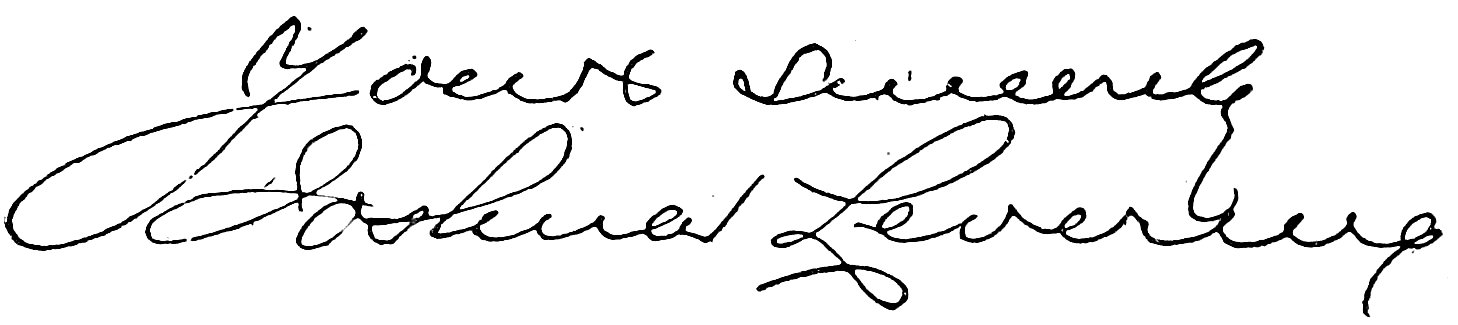
Joshua Levering. A noted Christian business man.
4.
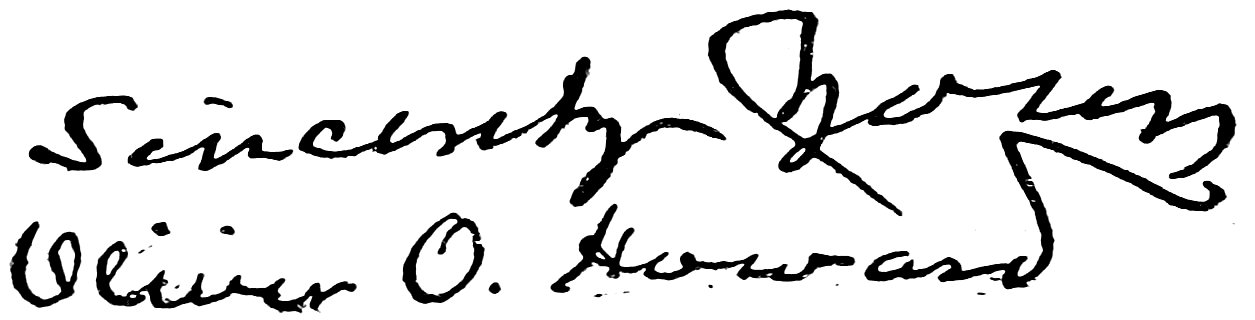
O. O. Howard. General during the Civil War.
5.
Booker T. Washington. The foremost colored educator and orator of
the day.
6.
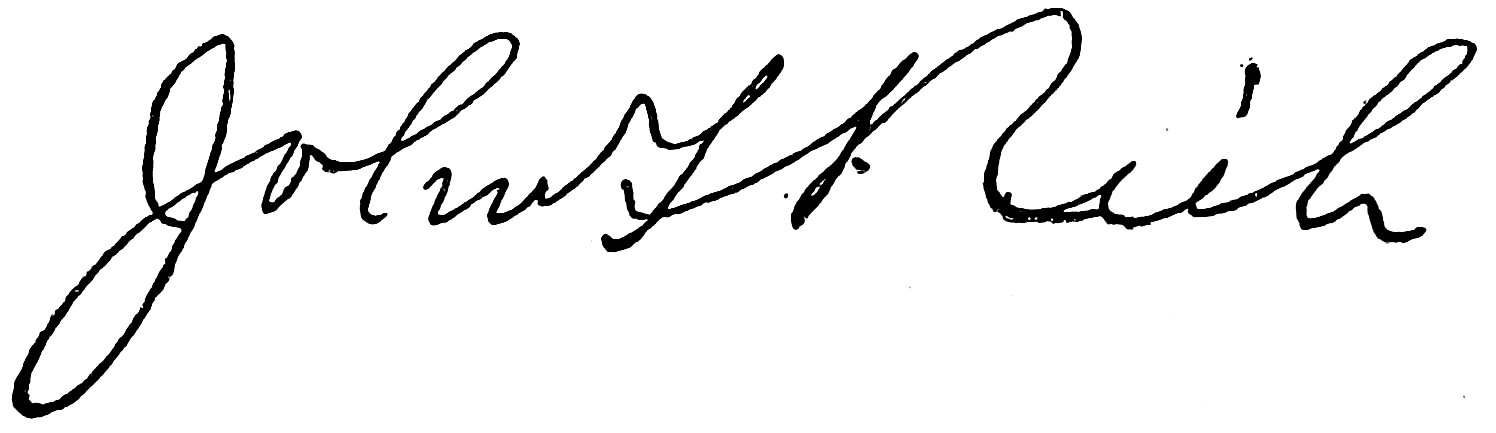
J. T. Rich. A beloved Governor of Michigan.
7.
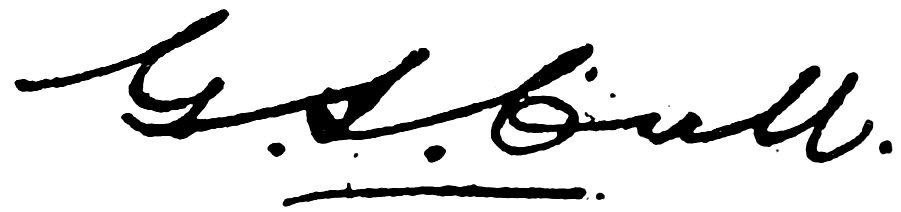
George S. Cull. The author’s instructor during boyhood.
8.
George W. Bain. Colonel in the Civil War, and a temperance orator.
9.
Asa Clark, M. D. Supt. State Insane Asylum, Stockton, California.
10.
Marshall Field. One of Chicago’s most honored and prosperous
business men.
11.
T. T. Geer. Governor of Oregon.
12.
F. W. Warren. Member of the United States Senate.
13.
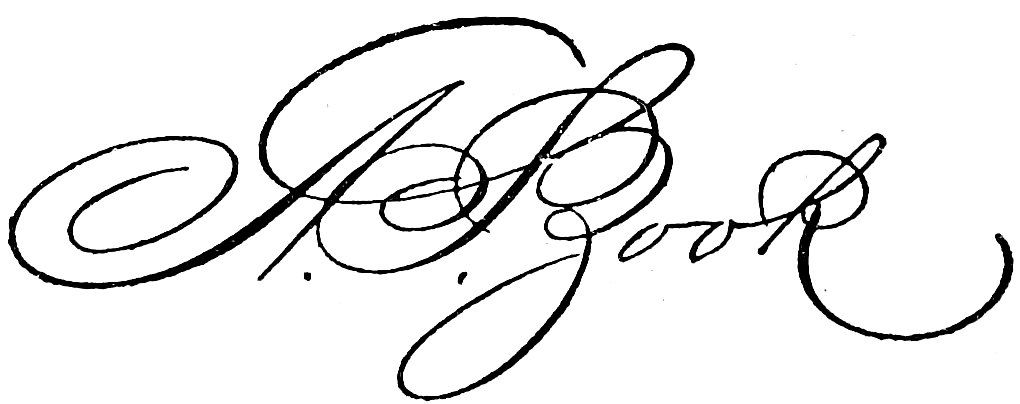
Aaron S. Zook. A widely known lawyer and lecturer.
14.
George T. Angell. President and founder of the American Humane
Educational Society.
15.
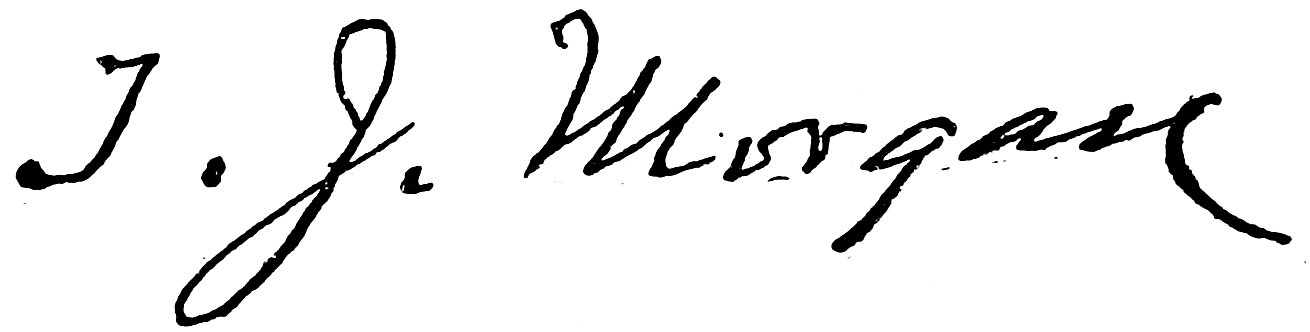
Thomas J. Morgan. General in Civil War, Commissioner of Indian
affairs under President Harrison.
16.
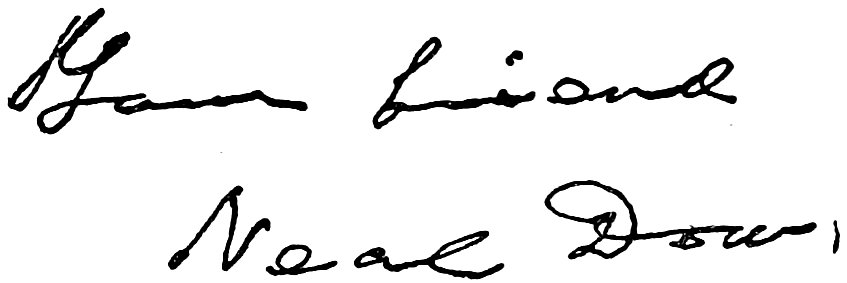
Neal Dow. Former Governor of Maine. The “Grand Old Man” of
temperance.
17.
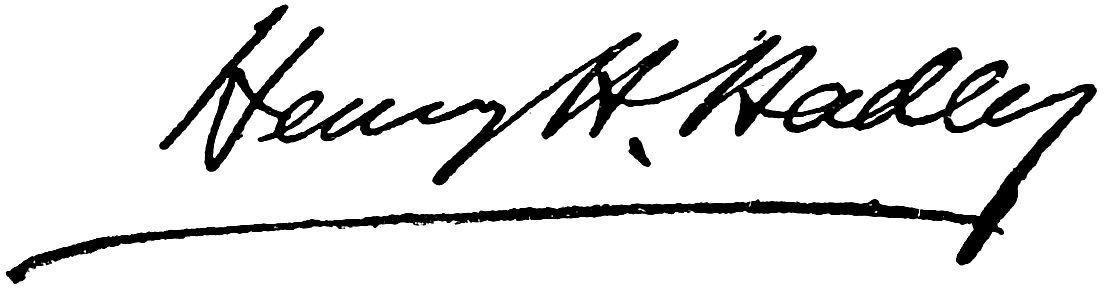
H. H. Hadley. Colonel in Civil War. General of the Inter-State
Blue Ribbon Army.
18.
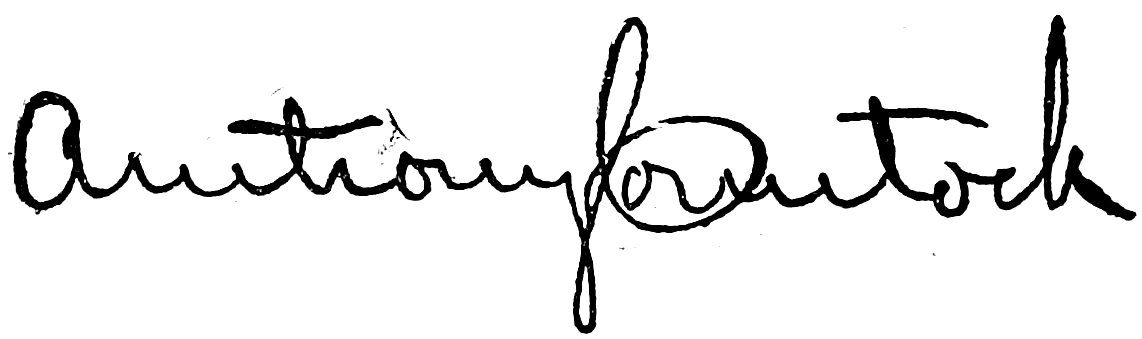
Anthony Comstock. Secretary of the New York Society for the
Suppression of Vice.
19.
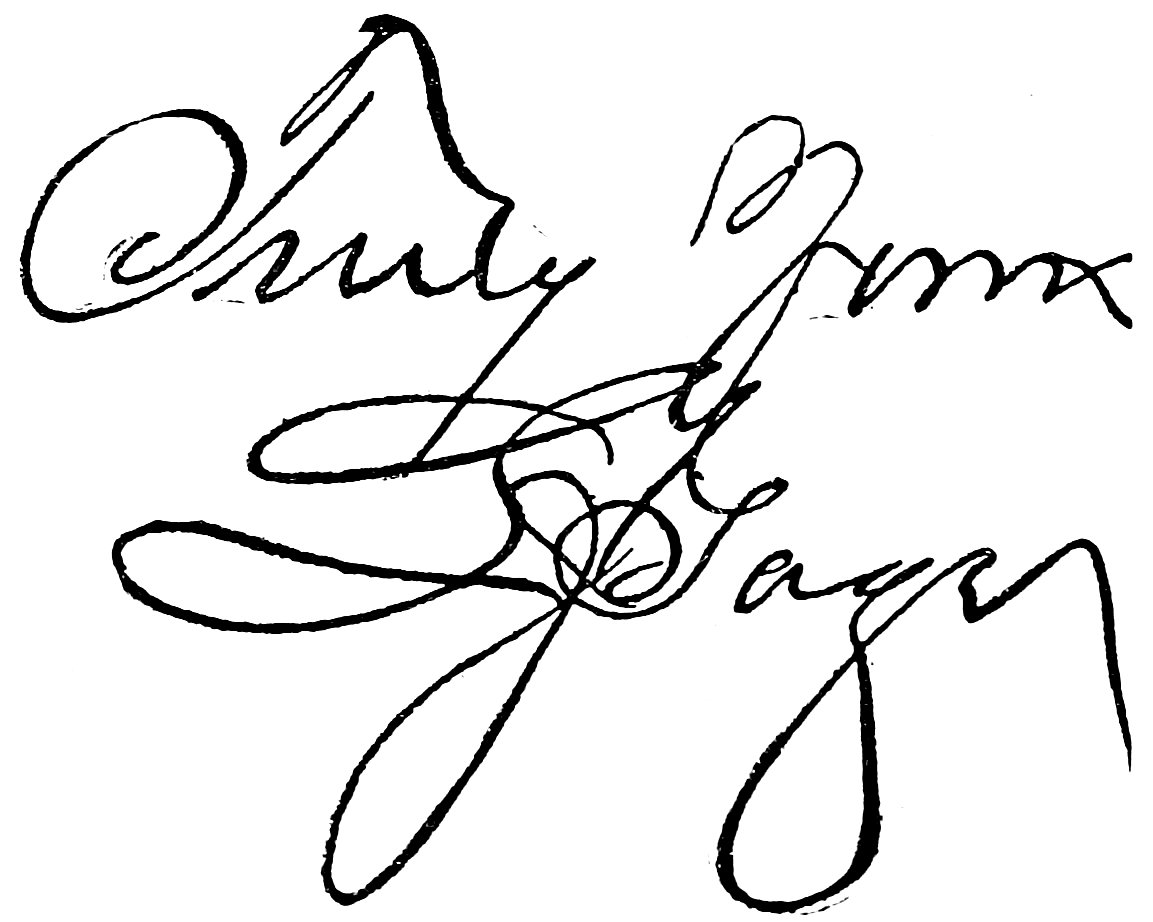
Lyman J. Gage. A prominent banker and a member of President
McKinley’s cabinet.
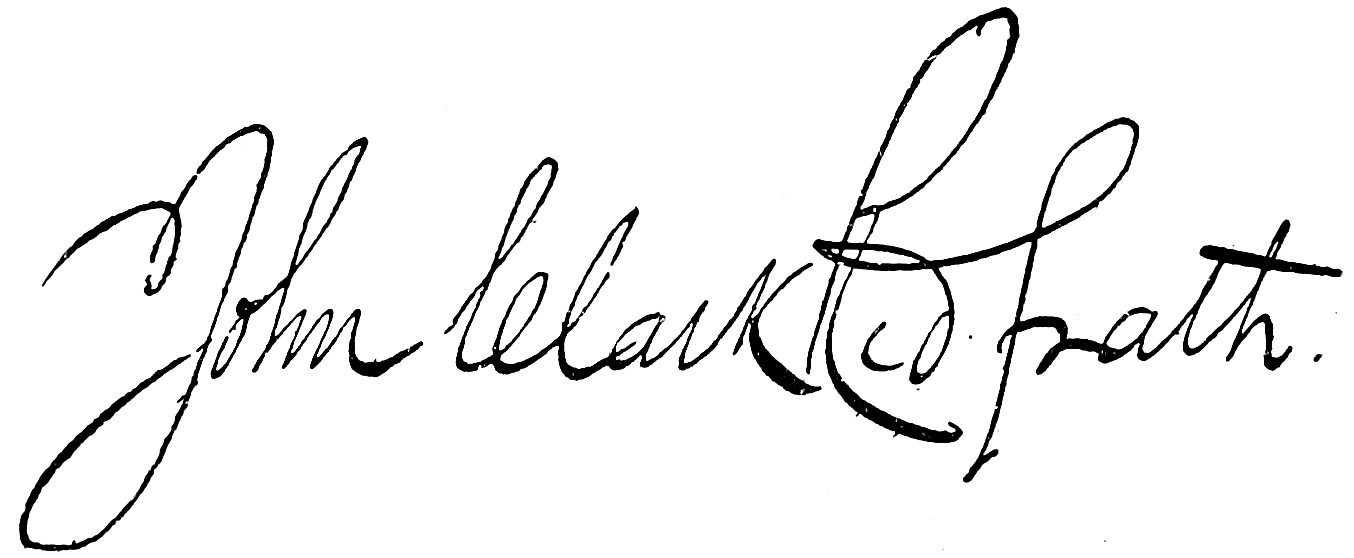
20.
John Clark Ridpath. Historian of the United States.
21.
Samuel Fallows. Bishop Reformed Episcopal Church.
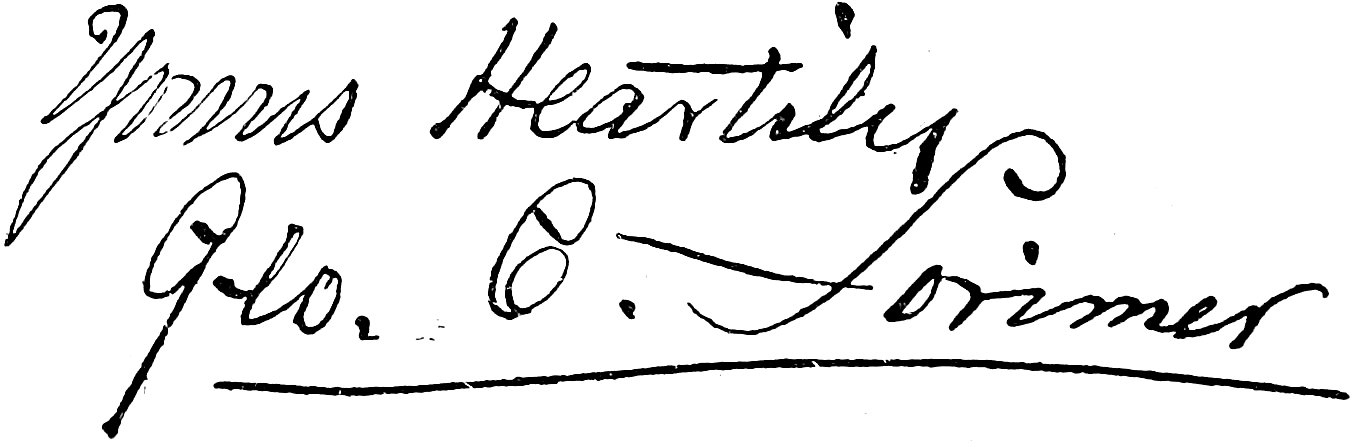
22.
George C. Lorimer. Minister, author and lecturer.
23.
James H. Brookes. An able Bible expositor and writer.
24.
Wilbur F. Crafts. A noted defender of the Lord’s Day.
25.
Wayland Hoyt. A writer and preacher of prominence.
26.
C. C. McCabe. Bishop of the M. E. Church.
27.
H. H. Warren. An eminent clergyman.
28.
Warren Randolph. A minister of prominence.
29.
H. L. Hastings. Editor and preacher.
30.
Opie Rodway. Evangelist to whom the author owes much.
PREFACE. — Success Maxims
7
Boyhood is one of the happiest periods of life.
“Ye little know,” said Robert Burns, “the ill
ye court when manhood is your wish.” Taking
a look backward Lord Byron cried, “Ah, happy
years once more, who would not be a boy?” Thomas
Moore says, in his beautiful poem: “Oft in the Stilly
Night:”
“The smiles, the tears of boyhood’s years,
The words of love then spoken;
The eyes that shone now dimmed and gone,
The cheerful hearts now broken!
“Thus in the stilly night
Ere slumber’s chain has bound me,
Sad mem’ry brings the light
Of other days around me.”
“There is no boy so poor,” said Phillips Brooks, “so
ignorant, so outcast, that I do not stand in awe before
him.” “I feel a profounder reverence for a boy than a
man,” said President Garfield. “I never meet a ragged
boy on the street without feeling that I owe him a salute,
for I know not what possibilities may be buttoned
up under his coat.” “Why, bless me! Is that the boy
who did so gallantly in those two battles?” asked President
Lincoln as a lad from the gunboat Ottawa was
introduced to him. “Why, I feel as though I should
take off my hat to him, and not he to me.”
“Get out of my way! What are you good for anyhow?”
8asked a cross man to a lad who happened to be
standing in his way. The boy replied, “They make
men out of such things as I am.” How true. That
dirty boy taken by a philanthropist in New Orleans,
only for the reason that he was an orphan, became Sir
Henry M. Stanley, who found Livingstone and opened
Africa. About fifty years ago, when New York City
sought to aid her homeless children, an agent called on
Judge John Green, of Tixston, Indiana, to inquire if he
would take a boy. Mr. Green said, “I will, if you will
bring me the raggedest, dirtiest and ugliest one of the
lot.” A boy by the name of John Brady more than
filled the bill. He was accepted, educated and became
a missionary to Alaska. So suitable a man was he for
commissioner of that unexplored land of wealth, that
President Harrison appointed him governor.
Who can value the worth of a boy? Like Moses,
Luther, or Lincoln, he might rise to bless a nation.
Boyhood is the blossom that ripens into manhood. It is
the formative period of one’s character. Said Lord
Collingwood to a young friend, “You must establish a
character before you are twenty-five that will serve you
all life.” The building of such is the greatest earthly
task, and he is the greatest man “who chooses right
with the most invincible resolution, who resists the sorest
temptation from within and without, who is most
fearless under menaces and frowns, whose reliance on
truth, on virtue, and on God, is most unfaltering.”
To aid in the growth of such is this work written.
It is hoped that it will be transformed into an epitome,
a registry of the reader’s own life—a compilation and
condensation of the best things he shall finally leave
to those who survive him. For it should
—“to one of these four ends conduce,
For wisdom, piety, delight or use.”
9Incorporated herein are the best things of many
books; the thoughts of noble men which by the power
of a just appreciation and of a retentive memory may
be made one’s own. Of those who have written introductions
to this work, some have since retired from
their official positions, and some are dead. The stories
gathered from many sources illustrate great principles,
which, if carefully heeded will conduce to a happy and
manly life; for
—“He most lives
Who thinks most, feels the noblest, acts the best.”
10
1. Have a definite aim.
2. Go straight for it.
3. Master all details.
4. Always know more than you are expected
to know.
5. Remember that difficulties are only made
to be overcome.
6. Treat failures as stepping stones to further
effort.
7. Never put your hand out farther than
you can draw it back.
8. At times be bold; always be prudent.
9. The minority often beats the majority
in the end.
12. Preserve, by all means in your power,
“a sound mind in a sound body.”
PART I Relation to Self — CHAPTER I Be Neat — INTRODUCTION TO CHAPTER I — CHAPTER I Be Neat — AMERICAN BOYS. — ASPIRING BOYS. — NEATNESS SHOWS ITSELF BY CLEANLINESS. — NEATNESS IN DRESS. — THE BOY’S RECOMMENDATION. — CHAPTER II Be Polite — INTRODUCTION TO CHAPTER II — CHAPTER II Be Polite. — DEFINITION OF POLITENESS. — POLITENESS A BADGE OF TRUE GENTILITY. — POLITENESS SHOULD BE FIRST PRACTISED AT HOME. — POLITENESS SHOULD BE ACCORDED ALL. — WHAT POLITENESS DID. — CHAPTER III Be Truthful — INTRODUCTION TO CHAPTER III — CHAPTER III Be Truthful — WHAT IS A LIE? — TELL THE TRUTH. — WHITE AND BLACK LIES. — WHAT LYING DOES. — WHAT LYING BRINGS. — TRUTHFULNESS IS THE MOST HONORABLE AND SAFE COURSE. — TRUTHFULNESS IS THE WINNING SIDE. — CHAPTER IV Be Choice of Language — INTRODUCTION TO CHAPTER IV — CHAPTER IV Be Choice of Language — IMPROPER WORDS. — AVOID PROFANITY. — AVOID BLASPHEMY. — CHAPTER V Be Ambitious — INTRODUCTION TO CHAPTER V — CHAPTER V Be Ambitious — ASPIRE HIGH. — INSTANCES OF SUCCESSFUL AMBITION. — THE SPIRIT OF DISCONTENT. — MASTER OF HIS CRAFT. — HINTS TO SUCCESSFUL AMBITION. — CHAPTER VI Be Industrious — INTRODUCTION TO CHAPTER VI — CHAPTER VI Be Industrious — INDOLENT BOYS. — MISCHIEF FOR IDLE HANDS. — “I SEE IT!” — PAST, PRESENT AND FUTURE. — CHAPTER VII Be Studious — INTRODUCTION TO CHAPTER VII — CHAPTER VII Be Studious — WHAT IT IS. — A GOOD AIM. — THE DUNCE. — HOW TO STUDY. — EYES OPEN. — USING THE MOMENTS. — PLEASURE AND PROFIT. — CHAPTER VIII Be Temperate — INTRODUCTION TO CHAPTER VIII — CHAPTER VIII Be Temperate — A GREAT STATESMAN’S DOWNFALL. — A GREAT DELUSION. — WHAT TEMPERANCE DID FOR A MAN. — BE A TOTAL ABSTAINER. — TWO SAD CASES. — CHAPTER IX Be Free of the Weed — INTRODUCTION TO CHAPTER IX — CHAPTER IX Be Free of the Weed — ORIGIN AND POISON OF TOBACCO. — HOW TOBACCO INJURES. — HOW TOBACCO IS USED. — PIPE, CIGAR AND CIGARETTE. — THE CIGARETTE. — WHY HE FAILED. — CHAPTER X Be Persevering — INTRODUCTION TO CHAPTER X — CHAPTER X Be Persevering — THE CHIEF FOREMAN. — WHAT IT MEANS. — PERSEVERANCE A NECESSITY. — PERSEVERANCE IS REWARDED IF PATIENTLY PURSUED. — BEGIN NOW.
11
13
14
By Robert J. Burdette
You can make yourself look an inch taller by neat,
well-fitting dress. You can actually make yourself
taller by an erect, manly carriage. Slovenliness
is contagious. It communicates itself
from the dress to the character. The boy who slouches
and slumps in figure and gait, is dangerously apt to
slump morally. The dust and grime on your clothes
is liable to get into your brain. The dirt under your
finger-nails is likely to work into your thoughts. Grease
spots down the front of your coat will destroy self-respect
almost as quickly as a habit of lying. Tidiness is
one of the cheapest luxuries in the world. It is also one
of the most comfortable. When you know, when you
are “dead sure” that you are just right—“perfectly
correct”—from hat to shoe-tie, the King of England
couldn’t stare you out of countenance; he couldn’t embarrass
you, and, he wouldn’t if he could.
15
A high column was to be built. The workmen
were engaged, and all went to work with a will.
In laying a corner, one brick was set a trifle out
of line. This was unnoticed, and as each course
of bricks was kept in line with those already laid, the
tower was not built exactly erect. After being carried
up about fifty feet, there was a tremendous crash. The
building had fallen, burying the men in the ruins. All
the previous work was now lost, the material wasted,
and several valuable lives sacrificed, all through the
misplacement of one brick at the start. The workman
at fault little thought what mischief he was making for
the future. It is so with the boy, building character.
He must be careful in laying the foundation. Just so
far as he governs, guards and trains himself, just so
far will he succeed or fail in the estimation of others.
Tennyson wisely wrote:
“Self-reverence, self-knowledge, self-control,
These three alone lead life to sovereign power.”
Never in the history of any people did boys have so
much in their favor to assist them in reaching the pinnacle
of success as American boys. Back of them is
an ancestry of the best blood of the leading nations
of the world, an ancestry noted for persistence, reverence,
piety and patriotism.
16The educational institutions of the land have “turned
out” thousands of young men who have beaten their
pathway upward in spite of adverse circumstances, all
of which seems to say to the boy to-day, “There’s room
at the top in whatever profession you may follow.” A
good beginning is the most necessary thing, for “it is
half the battle.” In any race a man can well afford
to miss applause at the starting-line, if he gets it at the
goal. A slow but determined start is not incompatible
with a swift conclusion. Experienced mountain-climbers
seem almost lazy, so calmly do they put one foot in
front of the other; but they stand well-breathed on the
summit, while their comrades are panting at the halfway
station. One must not swerve to the right or left,
but, setting his face toward duty, like Marcus Curtius
who rode to death in the Roman Forum, he must push
forward, with an honest ambition to reach the goal of
success. It is not always the boy of aristocratic birth,
wealthy parentage or social standing that wins the
world’s laurels, but usually those boys who are unfortunately
situated, who hew their way in the world instead
of having it laid out and smoothed for them.
One of our Presidents, when asked what was his
coat-of-arms, remembering that he had been a chopper
of wood in his youth, replied, “A pair of shirt-sleeves.”
Lord Tenterden was proud to point out to his son the
shop in which his father had shaved for a penny. A
French doctor once taunted Flechier, bishop of Nimes,
who had been a tallow-chandler in his youth, with the
meanness of his origin, to which Flechier replied, “If
you had been born in the same condition that I was,
you would still have been a maker of candles.”
Where is the boy with nobility of soul and purpose,
who, though poor, is not tidy; who, being of humble
origin, is not industrious; who, ridiculed by others, is
not kind; and who, cramped by circumstances, is not
17heroic? That boy will rise to honor and fill an important
place in life. He, like other boys of this country,
may be a star rather than a flashing meteor in the realm
of society.
From a farm to the Presidential chair seems a long
distance, but Abraham Lincoln traveled it, and left behind
him a name and reputation never to die. Andrew
Johnson began life as a tailor and subsequently rose to
be the chief officer of the nation. George Peabody
was an apprentice in a country store, and ended as a
millionaire philanthropist. Cyrus W. Field was in early
life a clerk, but the world is indebted to him for the
successful completion of the Atlantic cable. Samuel
F. B. Morse, from an artist, became the inventor of the
electric telegraph. Charles Dickens, the great novelist,
began life as a newspaper reporter. Levi P. Morton
was a clerk, John Wanamaker a messenger-boy, Lyman
J. Gage a night-watchman and James Whitcomb Riley
a wandering sign-painter. The record, instead of being
in the tens, could be increased to thousands of statesmen,
governors, generals, business and professional
men who have risen from the farm, the shop, the store,
to important offices within the nation’s gift. There is
no reason why a boy cannot make his way in the world.
He may not be President, or banker, or lawyer, but he
can fill an honorable position. He may be a master mechanic,
a model business man, a useful educator, if he
is willing to begin at the lowest round in the ladder,
namely, neatness.
Boys are men of a smaller growth, and if they fail to
cultivate self-respect, it means the blighting of manhood,
the ostracism of society, and the closing of the
gate of opportunities to success. Self-respect is a robe
with which every boy should clothe himself. It lies at
18the root of all virtues. It begets a stability of character,
is the sentinel of the soul as the eyelid of the eye, and
the corner-stone of all virtues.
There is no need in this day and country for a boy to
go around with dirty face and hands. It is injurious
to health, unbecoming and repulsive to any self-respecting
person. On the other hand from
“The body’s purity, the mind
Receives a secret, sympathetic aid.”
When Isaac Hopper, the Quaker, met a boy with
dirty face or hands, he would stop him, and inquire if
he ever studied chemistry. The boy, with a wondering
stare, would answer, “No.” “Well then, I will teach
thee how to perform a curious chemical experiment.
Go home, take a piece of soap, put it in water, and rub
briskly on thy hands and face. Thou hast no idea what
a beautiful froth it will make, and how much whiter
thy skin will be. That’s a chemical experiment; I advise
thee to try it.” There is great virtue in soap and
water vigorously applied, which doubtless gave rise to
the old adage, “Cleanliness is next to godliness,” for virtue
never dwells long with filth. An eminent man said,
“I believe there never was a person scrupulously attentive
to cleanliness who was a consummate villain.”
The singing birds are remarkable for the neatness
and cleanliness of their plumage. The gay and cheerful
animals of the fields avoid filth, and are usually of a
clean appearance. The beauty and fragrance of the
flowers owe all to this characteristic, and so also does
the boy who is bright, intelligent, moral and ambitious.
You will not find his finger nails long, but carefully
trimmed and devoid of dirt, his ears and neck will be
19spotless, and his teeth clean and white like “drops of
snow in banks of pretty pink roses.”
Self-respect will also show itself in neatness of dress.
“It has,” says Barrington, “a moral effect upon the conduct
of mankind. Let any gentleman find himself with
dirty boots, soiled neck-cloth, and a general negligence
of dress, he will, in all probability, find a corresponding
disposition by negligence of address.” To be tidy does
not mean to have costly attire. It is no mark of neatness
for a boy to deck his fingers with rings, to sport a gold-headed
cane, to wear flashy neck-wear, to have a bouquet
of flowers on the lapel of his coat, for while these
are not unbecoming in themselves, they give the impression
of that sin which overthrew the angels, pride.
Dean Swift was an enemy of extravagance in dress,
and particularly of that destructive ostentation in the
middle classes, which led them to make an appearance
above their condition in life. Of his mode of reproving
this folly in those persons for whom he had an esteem,
the following instance has been recorded:
When George Faulkner, the printer, returned from
London, where he had been soliciting subscriptions for
his edition of the Dean’s works, he went to pay his respects
to him, dressed in a lace waistcoat, a big wig and
other fopperies. Swift received him with the same ceremonies
as if he had been a stranger. “And pray, sir,”
said he, “what can be your commands with me?” “I
thought it was my duty, sir,” replied George, “to wait
on you immediately on my arrival from London.”
“Pray, sir, who are you?” “George Faulkner, the
printer, sir.” “You, George the printer! why, you are
the most impudent barefaced scoundrel of an impostor
I have ever met! George Faulkner is a plain sober
citizen, and would never trick himself out in lace and
20other fopperies. Get you gone, you rascal, I will immediately
send you to the house of correction.” Away
went George as fast as he could, and having changed
his dress he returned to the deanery, where he was received
with the greatest cordiality. “My friend
George,” said the Dean, “I am glad to see you returned
safe from London. Why, there has been an impudent
fellow just with me dressed in lace waistcoat,
and he would fain pass himself off for you, but I soon
sent him away with a flea in his ear.”
Dress is certainly an index to the mind. It shows the
spirit and internal quality of the soul, and “there cannot
be a more evident gross manifestation of a poor,
degenerate breeding, than a rude, unpolished, disordered
and slovenly outside.” The boy that does not
polish his shoes, comb his hair, brush his clothes, is in
all probability morally affected. To consider such
things matters of small importance is a grave mistake,
for they often prove to be hinges on which the doors of
opportunity swing.
Said a friend to a business man on coming into the
office, “I should like to know on what ground you selected
that boy, who had not a single recommendation.”
“You are mistaken,” said the gentleman, “he had a great
many. He wiped his feet when he came in and closed
the door after him, showing that he was careful; he
gave his seat instantly to that lame old man, showing that
he was thoughtful; he took off his cap when he came in,
and answered my questions promptly, showing that he
was gentlemanly; he waited quietly for his turn, instead
of pushing and crowding, showing that he was honorable
and orderly. When I talked to him I noticed that
his clothes were brushed, his hair in order, and when
he wrote his name, I noticed that his finger-nails were
21clean. Don’t you call those things letters of recommendation?
I do, and I would give more for what I
can tell about a boy by using my eyes ten minutes than
all the letters he can bring me.”
Be neat and clean in appearance, and not less so in
habit. At home never throw your hat in one chair and
your coat in another. Have a place for everything and
put everything in its place. In school or at work let
the same principle govern you, for “what is worth doing
is worth doing well.” The boys now wanted are
“Boys of neatness, boys of will,
Boys of muscle, brain and power,
For to cope with anything
These are wanted every hour.”
23
24
By Adolph Sutro.
Conduct is three-fourths of life.—Matthew Arnold.
Character makes the man; character and
politeness mark the perfect man. The first is
the diamond in the rough; the second the cut
stone. The former may attract the attention
of a few, the latter discloses hidden beauties and compels
the admiration of all.
The “grand old name of gentleman” can only belong
to him who unites the qualities of gentleness and manliness,
and politeness is essentially gentleness.
The exercise of politeness benefits all, chiefly him
who practises it, and this is a sure road to success.
25
William of Wickham, Bishop of Winchester,
and founder of Winchester and of New
College, Oxford, was so convinced of the
value of manners that he had the phrase
“Manners Make a Man,” inscribed in several places
upon the walls of those structures. “Good manners,”
said Emerson, “are made up of petty sacrifices.” Pleasant
expression and action, pleasing exterior and true
kindness are gentle delights which win the esteem of
others and often contribute to one’s advancement more
than real merit. Coarseness and gruffness, loose habits
and “don’t-care” manners, never fail to lock doors and
close hearts. “You had better,” wrote Chesterfield to
his son, “return a dropped fan genteelly, than give a
thousand pounds awkwardly; better refuse a favor
gracefully than grant it clumsily. All your Greek
can never advance you from secretary to envoy, or from
envoy to ambassador; but your address, your air, your
manners, if good, may.” These will give, as Emerson
says, “The mastery of palaces and fortunes wherever
one goes without the trouble of earning or owning
them.”
Cultivation of politeness is like putting the finishing
touch upon the picture, it sets one off to the best advantage.
Like a flower bed encircling the lawn, it beautifies
character. Like a lamp in a dark room, it makes
one’s presence cheerful. Nothing has greater influence,
26and as Matthew Arnold said, “It is three-fourths of life.”
As honey on the skin is a protection from the sting of
the bee, so politeness will be a safeguard from the
stings of the world. Doors will open at its knock.
Sunbeams will sparkle in its presence, and everywhere,
with everyone, it will act as a magic passport.
Politeness has been defined in various ways, but all
meet at the same point, like the spokes of a wheel which
center in the hub. “It is the art of showing, by external
signs, the internal regard we have for others.” “It is,”
said Lord Chatham, “benevolence in little things,” as
the giving others the preference in every enjoyment at
the table, walking, sitting or standing. “It is a willingness
to please and to be pleased.” “It consists in treating
others just as you love to be treated yourself.”
Henry IV, King of France, was once taken to task for
returning the salute of a poor man as he was passing
through a village. He replied, “Would you have your
king exceeded in politeness by one of his meanest subjects?”
Because Nicholas I, Czar of Russia, saw an
officer of his household treat an old beggar woman discourteously,
he summoned him to his imperial presence.
The official was quite pleased. Nicholas soon undeceived
him, and in the presence of a dozen courtiers cut
him to the quick with his indignant reproof. “Enough!”
he said, finally, “you will walk up and down that corridor
all night, and every time you turn you will say, in
a loud voice, ‘I am a puppy! I am a puppy!’”
“I treat him as well as he treats me,” said a boy to his
mother. She had just reproved him because he did not
attempt to amuse or entertain a boy friend who had
gone home. “I often go in there and he doesn’t notice
me,” said the boy. “Do you enjoy that?” asked the
27mother. “O! I don’t mind, I don’t stay long,” was the
reply. “I should call myself a very selfish person,” remarked
the mother, “if friends came to see me and I
should pay no more attention to them.” “Well, that’s
different, you’re grown up,” answered the son. “Indeed!”
replied the mother, “then you really think that
politeness and courtesy are not needed among boys?”
The boy thus pressed, said he didn’t mean exactly that.
His father, having overheard the conversation, turned
to him and said: “A boy or a man who measures his
treatment of others by their treatment of him, has no
character of his own. He will never be kind or generous.
If he is ever to be a gentleman, he will be so in
spite of the boorishness of others. If he is to be noble,
no other boy’s meanness will change his nature. Remember
this, my son, you lower yourself every time you
are guilty of an unworthy action because someone else
is. Be true to your best self, and no boy can drag you
down, nor will he want to.”
Years ago, when Queen Victoria began her reign, the
famous Lord John Russell was the minister in attendance
upon her majesty at her Scottish home. There
came late one evening a messenger—a little old man
buried in a greatcoat—to the Aboyne telegraph office,
and delivered to the clerk a message from Lord John
Russell to one of the officials of the government in
London. The message did not bear a signature. On
seeing this, the ill-mannered clerk flung it back to the
old man, and said, “Put your name to it; it’s a pity your
master doesn’t know how to send a telegram.” The
name was added and the message handed back. “Why,
you can’t write either,” cried the enraged clerk, after
vainly trying to make out the signature; “here, let me
do it for you. What’s your name?” “My name,” said
the little old man, very deliberately, “is John Russell.”
Through his impoliteness that clerk lost his position.
28
In some European countries the word gentleman
stands for a titled or wealthy man. When Sir Lawrence
Alma-Tadema was knighted a lady expressed herself
to his lordship thus: “O, dear Sir Lawrence, I
am awfully glad to hear of the honor you have received;
I suppose now that you have been knighted
you’ll give up painting pictures and live like a gentleman.”
Many are they who have this idea of gentlemanship.
But in our land the real gentleman stands
for such personal qualities as honesty, truthfulness,
gentleness and gracefulness which characterize a boy
or man. Such a gentleman subjects his appetite, refines
his taste, subdues his feelings and controls his
speech. When accidentally running against or passing
before another, it will be, “I beg your pardon.” “Please
excuse me.” When receiving a gift or extending a favor,
it will be, “I thank you.”
Some boys are not careful in their expressions.
“Sir,” said Doctor Johnson, “A man has no more right
to say a rude thing to another than to knock him down.”
A young man once accosted Zachariah Fox, a Quaker,
a rich merchant of Liverpool, with “Old chap, how do
you make all your money?” The Quaker replied, “By
dealing in an article that thou may’st deal in if thou
wilt—civility.”
Monroe was so polite that he was called “A Gentleman
of the Old School.” Henry Clay was said to make
the most engaging bow of any gentleman of his day.
Madison made it a point to touch his hat to everyone
who bowed to him, and the front part of it was always
worn threadbare in consequence of his lifting it. William
Penn’s formal but kindly politeness impressed even
the Indians with whom he dealt, so that they named
him: “The Good-Big Chief.” James Russell Lowell
29was as courteous to a beggar as to a lord, and was once
observed holding a long conversation in Italian with an
organ-grinder whom he questioned about scenes in
Italy with which both were familiar. “You should not
have returned their salute,” said the master of ceremonies,
when Clement XIV bowed to the ambassadors
who had bowed in congratulating him on his election.
“Oh, I beg your pardon,” replied Clement, “I have not
been pope long enough to forget good manners.”
A number of years ago a company of workmen was
standing before a store in Oxford street, London, looking
at some pictures. The Honorable William E.
Gladstone, who was then at the height of his popularity,
halted a moment to look at the artist’s work. One of the
workmen recognized him and stepping up, said, “Excuse
me, Mr. Gladstone, but I should like to shake
hands with you.” “Why, of course, I shall be glad to
do so,” the Premier of England responded, as he extended
his hand not only to the man who had accosted
him but also to the little group of men who stood near,
taking no notice of soiled hands or garments. Then
he directed their attention to a fine engraving in the
window, quietly pointing out not only its beauty, but
some special feature in its execution that constituted its
charm. Then raising his hat with a smile he bade the
men “Good morning,” and passed on his way up the
street. No wonder that in later years his fellow-countrymen
called him “The Grand Old Man,” “The People’s
William.” He was a gentleman, exhibiting a
lovely spirit of true friendship and absolute equality.
What one is in the home is a fair criterion as to what
he will be away from home. The manner in which a
person conducts himself in the home determines largely
his course and conduct in life. He who is polite and
30kind to his parents, considering their wishes, and heeding
their advice and counsel, paves the way to future
happiness and success. But he who spurns paternal
suggestions, speaks and acts disrespectfully, is seldom
respected and is always at a disadvantage. When
Prince Bismarck was a boy, he was rebuked by his
father for speaking of the King as Fritz. “Learn to
speak reverently of his Majesty,” said the old squire of
Varzin, “and you will grow accustomed to think of
him with veneration.” Bismarck laid the advice to
heart and from that day profited by it.
The truly polite boy is not only respectful to his
parents but also to his sisters and brothers, always returning
a pleasant “Thank you” for any kindness received
at their hands, and showing as much courtesy to
all at home as to those in the home of a neighbor. “A
beautiful form,” says an American essayist, “is better
than a beautiful face, and a beautiful behavior is better
than a beautiful form; it gives a higher pleasure
than statues or pictures; it is the finest of the fine arts,”
it gives grace to one’s bearing and enables one to look
on the bright and beautiful side of things.
Politeness is a universal debt that each boy owes to
every person. The matter of caste, sex, position and
intelligence have nothing whatever to do with it. It
should be the rule of conduct wherever and in whatever
society one may be, to practise politeness.
Charles V was renowned for his courtesy. When he
passed John Frederick, Elector of Saxony, he took off
his hat and bowed to him, though his prisoner, who had
been taken by him in battle. The poet Burns was one
day walking in the street of Edinburgh when an honest
farmer saluted him, which salute he returned, when
some one rebuked him. Mr. Burns replied that it was
31not the greatcoat, the scone bonnet or the saunders
boot-hose that he spoke to, but the man that was in
them. Daniel Webster was once walking with a friend
in Washington when a colored man passing by bowed
very low to him. Mr. Webster promptly returned as
deep an obeisance. “Do you bow in that way to a
darky?” asked his friend. “Would you have me outdone
in politeness by a negro?” replied the great statesman.
Mr. Winans, of Philadelphia, became independently
rich through his courteous manner. One day two
strangers called on him. One was a foreigner who had
visited some larger establishments in the city, but on
their coming to Mr. Winans’, a third or fourth rate factory,
he took so much pains to show all its parts and
workings, and was so patient in his explanations and
answers to their inquiries, that within a year he was
surprised by an invitation to transfer his labors to St.
Petersburg and manufacture locomotives for the Czar
of Russia, He went, accumulated a large fortune, and
ultimately received from his Russian workshops a hundred
thousand dollars a year. Investing his money in
real estate he laid the foundation of one of the largest
private fortunes in Philadelphia; and all this was the
result of civility.
It pays to cultivate politeness. To this day the Japanese
people revere the memory of General Grant.
While visiting the emperor, he was invited to cross the
imperial foot bridge near the palace at Tokyo, across
which none but the blood royal had ever trod. General
Grant accepted the invitation and walked beside the
Mikado until they reached the center of the bridge.
Then he stopped, profoundly saluted the emperor, and
said: “Your majesty, I have come so far to show you
32that I was not insensible to the honor you would do me,
but I cannot violate your traditions. Let us return the
way we came.”
Politeness serves one well. It is keener than sharpened
steel. It is more magnetic than loadstone and
worth more than jewels. At home or abroad, among
young and aged, employers or teachers, inferiors or superiors,
this glorious characteristic is a diadem from
which sparkles a jewel, which is, as Chesterfield said:
“The treatment of others just as you love to be treated
yourself.” In the words of One greater than he, it is,
“Do unto others as ye would they should do unto you.”
All other things being equal, the boy who adheres to
these mottoes is the one who succeeds. It makes him
an acceptable companion, wins friendship and creates
popularity. “Give a poor boy fine manners and accomplishments,”
said Voltaire, “and he will become the
master of fortunes and palaces, while princes stand upon
their threshold to solicit his friendship.” Charles II.
is described by Macaulay as being “the grandest rascal
and most popular man in England.” Hume in giving
the reason of this says, “He was the best bred man
alive.”
“What thou wilt,
Thou must rather enforce it with thy smile,
Than hew to it with thy sword.”
33
34
By Joshua Levering
Once to every man and nation comes the moment to decide,
In the strife of Truth with Falsehood, for the good or evil side.
—Lowell.
It is related of Cyrus, that when asked what was the
first thing he learned, he replied, “To tell the
truth.” Truthfulness is the foundation stone of
character. Without it, a life, as it is developed,
becomes more and more marred and falls short of its
highest opportunity and calling. All qualifications that
go to make up noble manhood count for naught, where
there is not a persistent adherence to truthfulness.
Therefore be true to yourself and the nobler impulses
and yearnings of your heart by always speaking the
truth, acting the truth, and living the truth.
35
While a vessel was crossing the English
Channel, a gentleman stood near the helmsman.
It was a calm pleasant evening, and
no one expected a storm. The flapping of
a sail as if the wind had suddenly shifted, caught the
ear of the officer on watch, and springing to the wheel,
he examined the compass. “You are half a point off the
course,” he sharply said to the man at the wheel. The
deviation was corrected, and the officer returned to his
post. “It must be necessary to steer very accurately,”
said the observer, “if half a point is of so much importance.”
“Ah!” remarked the officer, “a half a point, sir,
is liable to bring us directly on the rocks.” What a
lesson for every boy. The half a point deviation from
strict truthfulness strands one on the rocks of falsehood.
The shortest definition of a lie is, “The intention to
deceive.” It may not be telling an out-and-out falsehood
to conceal a crime, or to shield one’s self, but
telling it to mislead or deceive others. “The essence
of the thing,” said Dewey, “lies in the intention,” and if
the intention is to mislead, such, as Immanuel Kant
says, “is forfeiture of personal worth, a destruction of
personal integrity.” As he contends, “a lie is the
abandonment, or, as it were, the annihilation of the dignity
36of man.” It will undermine the noble instincts of
any boy and cause his character to collapse.
A story of Abraham Lincoln shows his love for truth.
It was a bright autumn evening, when Abraham, a
great awkward boy of sixteen or seventeen said to his
mother, “I’m going to the woods to-morrow. I’ve got
a good job at Laird’s and as I shall be obliged to start
by day-break, I thought there might be some chores you
wished to have done.” “You are a good boy, Abram,
always thinking of helping me,” said his step-mother.
“If I was your own mother you could not be more
kind, and God will reward you sometime. To-morrow,
I am going to wash, and I would be very thankful if
you would bring me a few buckets of water from the
spring.” Back and forth the tall boy hurried, until all
the tubs and kettles about the cabin were filled. Early
next morning, when Abraham was ready to start for
the place where the rails were to be split, his little sister
Sally said, “Can’t I go, Abram?” “Just as mother
says,” replied he, pausing to give the little girl an opportunity
to consult her mother. The mother would not
consent. No sooner had Abram started than she determined
to follow him, and at once cut across the field
intending to reach the ravine before him and give him
a genuine surprise by jumping out unannounced in the
path as he came up. She carried out her plan successfully,
and when she heard his merry whistle in the
distance she climbed upon the bank to be ready to make
the spring for his shoulders when the proper moment
arrived. But the poor child had forgotten all about the
sharp axe which he carried, and although she gained
her coveted seat on his broad shoulders, her little bare
foot received a gash from the cruel axe, which changed
her merry laugh into a bitter cry. “Why, Sally! How
37did you get here?” was all the boy could say as he
placed her tenderly on the bank and began an examination
of the wounded foot. Finding it to be a deep cut,
he gathered some broad plantain leaves which grew
near, and by their aid soon succeeded in staunching the
flow of blood. This accomplished, he tore the sleeve
from his shirt, and in his clumsy way bandaged the injured
foot. Carrying her home, he learnt the story of
her disobedience. She would have been willing to evade
the truth in order to screen herself from her mother’s
displeasure, but honest, truthful Abraham would not
permit this. “Tell the truth, Sally, no matter what the
consequences may be,” he insisted; “better suffer punishment
than lie about it. I don’t think mother will be hard
on you when she sees how sorely punished you are;
but never tell a lie to shield yourself, never.” Such
was the course taken through life by that boy who later
became the honored President of these United States.
Much is said nowadays about degrees in lying. That
is lying in a small way. There is the so-called white lie
of custom when a certain article is slightly misrepresented
to make a bargain; the white lie of courtesy when
one makes politeness the garb behind which he deceives;
the white lie of necessity, when one would evade the
truth by nodding the head, or giving a wrong impression.
Some men, and even great men, have maintained
that this is sometimes a necessity, but would it
not be a fine moral precept to say, “You must speak the
truth generally, but you may utter a falsehood when it
suits your convenience?” Who ever licensed one thus?
Justin Martyr said, “Is life at stake? We would not
live by telling a lie.” When Atillius Regulus was a
prisoner of the Carthaginians he was sent by that great
people to Rome with several ambassadors to arrange
38for peace, on the understanding that if peace-terms were
not agreed upon he was to return to prison. He took
the oath and swore to return. Arriving at Rome he
urged his countrymen to continue in war and not agree
to the exchange of prisoners. This meant to him the return
to Carthage. The senators and priests held that as
his oath had been forced from him he ought not to return.
Then came the answer from Regulus which has
made him imperishable: “Have you resolved to dishonor
me? I am not ignorant that death and tortures
are preparing for me. But what are those to the shame
of infamous action, or the wounds of a guilty mind?
Slave as I am to Carthage, I have still the spirit of a
Roman. I have sworn to return. It is my duty to return.
Let the gods take care of the rest.”
“One should never lie,” said Crispi, the great Italian
statesman. “I will not stain speech with a lie,” said
Pindar. “The genuine lie is hated by all gods and
men,” said Plato. “That man has no fair glory,” said
Theognis, “in whose heart dwells a lie, and from whose
mouth it has once issued.” A lie is never justifiable,
and to lie a little, is, as Victor Hugo remarked, “not
possible.” The person who lies tells the whole lie, lying
in the face of the fiend, and “Satan has two names,
Satan and lying.” Therefore
“Let falsehood be a stranger to thy lips;
Shame on the policy that first began
To tamper with the heart to hide its thoughts!
And doubly shame on that inglorious tongue
That sold its honesty and told a lie.”
Nothing so corrupts early simplicity, quickly destroys
the nobler instincts, and depraves the heart as
falsehood. If a boy will lie about one thing, can he
39be trusted in anything? If he is branded as a liar, what
teacher will respect him, what business man will engage
him, and what court will accept his testimony? “I
have seldom known anyone,” said Paley, “who deserted
truth in trifles, who could be trusted in matters of importance.”
Oliver Wendell Holmes said: “Sin has
many tools, but a lie is the handle which fits them all.”
It destroys confidence, establishes false relations among
men, blights the bloom of life, and saps the vital springs
of existence. It is the progenitor of all wrongs, oppressions,
cruelties and crimes, and what boy is there
who dare do it when God prohibits it?
Like begets like, thus lies beget lies. Said Owen,
“One lie must be thatched over with another, or it will
soon rain through.” Lying brings misery. It troubles
the conscience, destroys the peace of mind and makes
one suspicious of others. Because of this, Eugene
Field, when a young man, walked thirty miles to confess
to his employer and to ask forgiveness for an untruth
he had told him. Lying brings punishment, for
“lying lips are an abomination unto the Lord.” Because
of this Elisha’s servant was struck with leprosy,
Ananias and Sapphira with death, and many others have
had the seal of God’s wrath placed upon them.
One day, as Archbishop Leighton was going from
Glasgow to Dumblane, a storm of lightning and thunder
burst upon him. He was observed, when at a considerable
distance, by two men of bad character. They
had not the courage to rob him; but, wishing to extort
money from him, one said, “I will lie down by the wayside
as if I were dead, and you shall inform the archbishop
that I was killed by the lightning and beg money
of him to bury me.” When the Archbishop arrived,
the wicked wretch told the fabricated story. The
40Archbishop sympathized with the pretended survivor,
gave him money, and proceeded on his journey. But
when the man returned to his companion, he found him
really lifeless. Immediately he began to cry aloud:
“Oh, Sir! he’s dead! Oh, Sir, he’s dead!” On this the
Archbishop discovered the fraud and turning to the living
man said, “It is a dangerous thing to trifle with
the judgment of God.” How much better and safer
to speak the truth, for
“There is nothing so kingly as kindness,
And nothing so royal as truth.”
Truthfulness is the foundation of character. It is the
basis of true manhood. Its spirit pervades the closest
relation and highest intercourse, its law holds the
planets in their course, and it is the presiding principle
of every true and noble life. A greater tribute could
not be paid to anyone than “his word is as good as his
bond.” No more worthy epitaph or eloquent remark
could be uttered of Colonel Huchurin, than when a
friend, attesting the simplicity and nobility of him, said:
“He never professed the thing he intended not.” No
eulogy can surpass Xenocrates of Petrarch, who, standing
before an ecclesiastical tribunal where an oath had
been required of others, said, “As for you, Petrarch,
your word is sufficient.”
An important conference was being held in the Executive
Mansion in Washington. A caller had sent in
his card, but either the caller was unwelcome or the
time was quite unsuitable for his admission. One of
the persons turned to a servant and said, “Tell the person
who sent up the card that the President is not in.”
“No,” said General Grant, “tell him no such thing.”
Then, turning to his friends, he remarked: “I don’t lie
myself, and I don’t want any of my servants to lie for
me.”
41A “Mental Photograph” book was once presented to
Charles Kingsley in which to write. One question was
“What is your bête noire?” “A lie,” he penned. In
dedicating her delightful biography of him his wife
wrote:
“To the beloved memory
of
A righteous man
Who loved God and truth above all things.
A man of untarnished honor—
Loyal and chivalrous—gentle and strong—
Modest and humble—tender and true—
Pitiful to the weak—yearning after the erring—
Stern to all forms of wrong and oppression,
Yet most stern toward himself—
Who being angry yet sinned not.”
Truthfulness underlies all honest and faithful work,
all social confidence, all right fulfillment of relations
and self-respect. It regulates lives and improves and
elevates those it characterizes. It is one great secret
of success in business, a magnet that draws confidence
and wields a power second to none in the universe. A
poor Persian boy was about to leave his mother’s home,
to engage in business in the city. Within the lining of
his coat she sewed forty golden dinars which she had
saved during years of labor. Before the boy started
she cautioned him to beware of robbers as he went
across the desert, and as he left the home, she said:
“Fear God, and never tell a lie.” The boy started, and
toward evening saw in the distance the glittering minarets
of the great city, but between the city and himself
42he saw a cloud of dust. It came nearer. Presently
he saw that it was caused by a band of robbers. One
of them approached him, and unceremoniously inquired
what valuables he had. The boy answered with
candor: “Forty golden dinars are sewed up in my garments.”
Discrediting the boy’s story he wheeled his
horse around and rode back to his companions. Soon
another robber came and said: “Boy, what have you
got?” “Forty dinars sewed in my garments,” he answered.
The robber laughed and rode away. At last
the chief came and asked him what he had. The boy replied,
“I have already told two of your men that I have
forty dinars sewed up in my clothes.” The chief ordered
his clothes torn open, and the money was found.
He was then asked what induced him to make such a
revelation. “Because,” said the boy, “I would not be false
to my mother, whom I solemnly promised never to tell
a lie.” The robber leaned upon his spear and after reflecting
said, “Wait a moment.” He mounted his horse
and rode back to his comrades, but soon returned
dressed as a merchant. “Boy,” said he, “art thou so
mindful of thy mother, while I am insensible at my age
of that duty I owe God? Give me thy hand, that I may
swear repentance on it.” He did so, and his followers
were struck with the scene. Said he, “I am a merchant.
I have a large business house in the city. I
want you to come and live with me to teach me about
your God, and you will be rich, and your mother some
day shall come and live with us.” Then one of the robbers
turned to the chief and said, “You have been our
leader in guilt, be the same in the path of virtue.” And
taking the boy’s hand, they all promised to lead new
lives.
Boys, speak only that which is true. You may do
much good by it, although you may never lead a band
of robbers to God and honesty. But—
43“Nothing good shall ever perish,
Only the corrupt shall die;
Truth, which men and angels cherish,
Flourishes eternally.”
Good old Matthew Henry used to say, “Truth is
mighty and will prevail.” “Falsehood,” as one of the
kings of Prussia said, “sometimes does good for twenty-four
hours, but like a battle well fought, right comes
off more than conqueror.” Falsehood is always defeated.
It shrinks at detection and in due time is compelled
to confess. Truth is sure and has a firm foundation
because it is an attribute of God. And “God and
truth,” said Theodore Parker, “are always on the same
side.” Therefore
“Seize upon truth, where’er ’tis found,
Amongst your friends, amongst your foes,
On Christian or on heathen ground;
The flower’s divine where’er it grows.”
45
46
By General O. O. Howard
“Maintain your rank, vulgarity despise,
To swear is neither brave, polite nor wise;
You would not swear upon a bed of death;
Reflect—your Maker now may stop your breath.”
Anonymous.
One moonlight night I was passing near a sentinel’s
post. It was during the winter of
1861–2, in front of Alexandria, Virginia, at
Camp California. The sentinel, in some
trouble, used rough, coarse language, closing with an
oath. Approaching him, till I could see his face, think
of my astonishment to find him, instead of a burly man
of low life, a handsome boy of seventeen. I said to
him pleasantly: “How could your mother have taught
you to swear?” Dropping his head with a sudden
shame, he answered, “She didn’t, General. I learned
it here.” And indeed, it came from the influence of his
associates.
One’s language always gauges him.
47
Few things are more important and far-reaching
than the use of words. If good, they
—“have power to ’suage
The tumults of a troubled mind
And are as balm to fester’d wounds.”
If bad, they corrupt and may flourish, as Carlyle
said: “Like a hemlock forest after a thousand years.”
“Immodest words admit of no defence,
For want of decency is want of sense.”
One of the most historic structures in the world was
the Campanile, or the bell-tower of St. Mark’s Cathedral
in Venice. Not long since it fell. One aged
Lugui Vendrasco knew its danger. For ten years he
had not ceased to beg the government to allow him to
put the Campanile in better order. But his warnings
were unheeded. One Sunday morning he took his son
to see it. As the young man looked upon the crack
he said, “That’s nothing. A small crack like that can
really do no harm to such a building.” Replying, the
father said, “Son, it is not the crack. It is that of which
the crack is the effect and symbol. Our Campanile is
doomed.” The next morning it fell with an awful
crash. In like manner many a man has come tumbling
down. His character was not safe because of some
48flaw in it. Improper words prove its great defect as
the crack did the weakness of the Campanile.
Stephen Price, once Mayor of New York, and a
warm friend to boys, lost his life in a steamboat disaster.
When his body was recovered, a scrap of paper
was found in his pocket-book. It was so worn with
oft reading that the words were scarcely legible, but two
paragraphs were finally made out, one of which was:
“Good company and good conversation are the very
sinews of virtue.” In fact, these are inseparable. Conversation
is a reflex of character, and no boy can associate
with another who delights in slangy, smutty talk
without being more or less contaminated.
A very common and bad habit of some boys is the
attachment of improper words to a sentence, as if it
made it more binding. These in no sense give grace
or beauty to language. They do not round out a period
or enrich a metaphor. They define nothing, bound
nothing, measure nothing, mean nothing, accomplish
nothing, and he who uses them should be shunned.
Vulgar expressions are never in order. “They help,”
as South says, “no one’s education or manners. They
are disgusting to the refined, abominable to the good,
insulting to those with whom one associates, degrading
to the mind, unprofitable, needless and injurious
to society,” and beneath the dignity of any self-respecting
person. “Are there any ladies around?” said
a young officer to a group of others, “I’ve a splendid
story to tell.” “There are no ladies present,” said
General Ulysses S. Grant, who overheard the remark,
“but there are gentlemen here, sir, and what is not fit
for a lady to hear, is unfit for a gentleman.”
When Coleridge Patterson, the martyred bishop of
Melanesia, was a boy at Eton, he was enthusiastically
49fond of cricket, at which he was an unusually good
player. At the cricket suppers at Eton, it was the custom
to give toasts followed by songs, and these songs
were often of a very questionable sort. Before one of
these suppers, “Coley” told the captain that he would
protest against the introduction of anything that was
vulgar or indecent. His protest apparently had no effect,
for during the evening, one of the boys arose and began
to sing a song which “Coley” thought was not fit for
decent boys to hear. Whereupon, rising from his seat,
he said, “If this sort of thing continues, I shall leave
the room.” It was continued and he left. The next
day he wrote to the captain of the eleven, saying unless
he received an apology, he should withdraw from
the club. The apology was sent and Patterson remained.
By that stand he showed his character, which
won the admiration of the rest and brought about a new
state of affairs. No boy need answer another who addresses
him in unbecoming language. He might say
as Stephen A. Douglas, when denounced in the Senate
in improper language, “What no gentleman should say,
no gentleman need answer.” And as to keeping the
company of anyone who is inclined to be vulgar, there
is no law to compel it. Far better be a Coleridge Patterson
in shunning such company.
The true gentlemanly boy has a sense of honor,
scrupulously avoiding profane words as he would profane
actions. No habit is more unbecoming, useless
and contagious than swearing. It is the fool’s impulse
and the coward’s fortification. It neither helps one’s
manners nor education, and no boy with the least personal
pride will be guilty of indulging in it. Louis IX
of France punished everyone who was convicted of
swearing by searing his lips with a hot iron.
50George Washington made the following law August
3, 1776, which he caused to be read to the men
under his command: “The general is sorry to be informed
that the foolish and wicked practice of profane
cursing and swearing, a vice heretofore little known
in an American army, is growing into fashion; he
hopes the officers will, by example as well as influence,
endeavor to check it, and that both they and the men
will reflect that we can have but little hope of the blessing
of Heaven on our armies if we insult Him by our
impiety and folly; added to this, it is a vice so mean
and low, without any temptation, that every man of
sense and character detests and despises it.”
Years ago the Hon. John Finch visited an asylum in
the East and asked to see a certain professional gentleman
committed there. He had been a good and
true man, but by overwork, physical and mental, had
wrecked himself and become a raving maniac. The
superintendent of the asylum said, “You will not want
to see him again, he swears so.” As they entered the
room in which the man was locked in a “straight
jacket,” the most vulgar oaths came from his lips.
Touching the superintendent Mr. Finch said, “What
can this mean? When I knew that man he was one of
the grandest Christians, true, noble and good in every
respect; and now to hear such vile language coming
from him surprises me.” The superintendent said,
“He learned to swear when a boy. The impressions
made on his brain at that period of life when the brain
most readily receives impressions now become the governing
ones. In this asylum we can almost uniformly
tell what have been the habits, customs and abuses of
insane people when they were children. The brain at
such times receives impressions readily, the impressions
are permanent, and if they have indulged in vile
practices, or used bad language, the dethronement of
51reason and intelligent conscience will give to early impressions
and habits the control of the mind.” This
being true, how careful every boy should be, for who
wants the bad habits of youth noticeable in age?
There are many ways in which language may be improperly
used, but none more unbecoming and attended
with more serious consequences than blasphemy, or
using the name of God or Christ with disrespect. It
is a presumptuous sin against which God has declared:
“Thou shalt not take the name of the Lord thy God in
vain,” declaring with emphasis, “for the Lord will not
hold him guiltless that taketh His name in vain.”
Sometimes, as Jacob Knapp said in his autobiography,
“God steps aside from His ordinary course and
smites presumptuous sinners dead, that they may stand
as beacon lights to warn others to shun the rocks on
which they struck.” During the Black Hawk war, in
Illinois, at the time when God sent the cholera among
the people, an officer cursed God for sending the disease
into their midst. With an awful oath he opened
his mouth, and God smote him down even as the word
trembled on his lips. Such cases are rare, yet the
words, “will not hold him guiltless,” show that He forgets
not and that sometime He will hold the blasphemer
accountable.
Howard, the philanthropist, on hearing anyone use
blasphemous expressions, always buttoned up his coat.
Being asked the reason, he replied, “I always do this
when I hear men swear, as I think that anyone who
can take God’s name in vain can also steal.” Nothing
so chills one’s blood as—
52—“to hear the blest Supreme
Rudely appealed to on each trifling theme;
Therefore maintain your rank, vulgarity despise,
To blaspheme is neither brave, polite nor wise.
You would not do so upon the bed of death;
Reflect! Your Maker now could stop your breath.”
“AMEN!”
Many years ago when the Duke of Gordon was
spending the day in a Scotch village a company of soldiers
was drawn up under the window of the room in
which the duke and a party of friends were enjoying
themselves. The officer in command was inspecting
his men’s arms and clothes, and if anything displeased
him he berated the soldier with blasphemous oaths.
The duke, who abhorred such language, expressed a
wish that the inspection might soon be over. “If your
Grace desires it,” said one of the company, “I will
clear the coast of this man of oaths without noise or
bloodshed.” “Do so, and I’ll be obliged to you,” said
the duke. The gentleman stepped into the street, took
his station behind the officer and pulled off his hat. As
the officer swore, the gentleman, with the grave solemnity
of a parish clerk, said in a loud voice “Amen.”
“What do you mean?” asked the officer, hastily turning
around. “I am joining with you in prayer,” answered
the gentleman with a grave face. “I thank you, sir,”
rejoined the officer, “but I have no further need for a
clerk. Soldiers! to the right-about, march!” And he
and his soldiers departed, much to the amusement and
happiness of the duke, after teaching an important lesson
to the officer that it is wrong to call upon God to do
this or that, or to belittle others by vile epithets which
never fail to bring in due time just retribution.
My boy, the only language to use is the pure and
53refined. By-words, slang phrases, profanity and blasphemy
are only uttered by lips whose heart is bad, for
“out of the abundance of the heart the mouth speaketh.”
Let your tongue utter sound sentences, choice
words and pleasant expressions, then will they be musical
to the ears of the good, sweet to the soul of the
pious, educational to those who associate with you,
and beneficial to all. From this day put into practice
the last words of the eloquent John B. Gough. He was
lecturing in the Presbyterian Church, Frankford, Pa.,
on the night of February 19, 1886. In the course of
that lecture he said: “I have seven years in the record
of my own life when I was held in the iron grasp of
intemperance. I would give the world to blot it out,
but alas! I cannot.” Then, stepping forward, with an
impressive gesture, he added, “Young man, keep your
record—” but he was unable to finish the sentence, for
he sank insensible into a chair from which he was
never able to rise. Evidently he meant to say, “Young
man, keep your record clean.”
Do not forget that improper words have a reflex influence.
A fable is told how a bee took an offering of
honey to Jupiter, which so pleased him that he promised
to grant the bee whatever it should ask. The bee said,
“O glorious Jove, give thy servant a sting, that when
anyone approaches my hive to take the honey, I may
kill him on the spot.” Jupiter answered, “Your prayer
shall not be granted in the way you wish, but the sting
you ask for, you shall have; and when anyone comes to
take away your honey, and you sting him, the wound
shall be fatal, not to him, but to you, for your life shall
go with the sting.” So is it to this day. He that curseth
others, curseth himself. Therefore my boy, control
your tongue, and keep the door of your lips, remembering:
54“’Tis reason’s part
To govern and to guard the heart,
To lull the wayward soul to rest,
When hopes and fears distract the breast;
Reason may calm this doubtful strife,
And steer thy bark through various life.”
55
56
By Booker T. Washington
Our natures are like oil; compound us with anything,
Yet will we strive to swim to the top.
—Beaumont.
Writing of the gentleman who introduces this chapter—the
Washington of his people in industry, education and religion,
Paul Dunbar, the negro poet, says:
“A poor Virginia cabin gave the seed;
And from its dark and lowly door there came
A peer of princes in the world’s acclaim,
A master spirit for the nation’s need.
Strong, silent, purposeful beyond his kind,
The ark of rugged force on brow and lip,
Straight on he goes, nor turns to look behind,
With one idea foremost in his mind
Like the keen prow of some on-forging ship.”
I would say to every young man, no matter what
his color, to choose as early as possible a good,
clean-cut business, something that will help make
the world better, and then strive in every worthy
way to make that business the most successful of its
kind in the world. The boy who lets obstacles overcome
him will not succeed. The great thing is to succeed
in spite of discouragements.
57
Many a pen has been used against this inward
passion, declaring it a “secret poison, a gallant
madness and the mother of hypocrisy.”
The great Wolsey cried, “I charge thee, fling
away ambition.” Bowes said, “The most aspiring are
frequently the most contemptible,” but there are exceptions
to the rule. Where there is no aspiration,
there is no endeavor. It is not wrong to strain mental
and physical energies to succeed, provided it is to be
good and to do good. The ambition of Napoleon to lay
waste the town of Acre was wrong, that of Wellington
to intercept the “scourge of Europe,” right. “To be
ambitious of true honor, of the true glory and perfections
of our natures, is,” as Sir Philip Sidney said,
“the very principle and incentive of virtue.”
One of the customs of the Norsemen was that of
wearing a pickaxe crest with the motto, “Either I will
find a way or make one.” An adage of the day reads,
“Where there’s a will there’s a way.” What one wills
to do can usually be done. George Stephenson determined
to make an engine to run between Liverpool and
Manchester at the rate of twelve miles an hour. The
Quarterly Review ridiculed the idea, saying, “As well
trust one’s self to be fired off on a Congreve rocket.”
He did it, nevertheless. Prince Bismarck’s greatest
ambition was to snatch Germany from Austrian oppression
and to gather round Prussia, in a North German
58confederation, all the States whose tone of thought,
religion and interest, were in harmony with those of
Prussia. “To attain this end,” he once said, “I would
brave all dangers—exile, even the scaffold. What matters
if they hang me, provided the rope with which I
am hung binds this new Germany firmly to the Prussian
throne?” And, he did it.
There is nothing wrong in aspiring high. George
Washington proposed to carve his name higher than any
other on the Natural Bridge in Virginia, and did it.
Alfred Harmsworth, “king of the penny press,” said on
entering journalism, “I will master the business of editing
and publishing.” At twenty-one he had a little
capital, at thirty he was a millionaire, and later became
head of the largest publishing house in the world.
Emerson once said, “Hitch your wagon to a star.”
It is but a natural condition of a healthful life when
energies seek an outlet in some lofty activity. Better
endeavor if but to fail, than never try at all. “I know,”
says Morris, “how far high failure overleaps the bounds
of low successes.” The sense of such makes us capable
of a grave and holy sense of the real soberness and
meaning of life. George Eliot in writing the last words
of her most powerful book, exclaims, “It is so much less
than what I hoped for.” A great artist was once highly
praised for a beautiful painting which he had just completed.
“Ah, do not praise me!” he sadly said, “it may
be very beautiful, but I aimed at perfection.” When
Napoleon started on his campaign he was ridiculed and
nicknamed “The Little Corporal,” which cut him to the
quick, but it proved to be a goad which stirred him to
become a great general. In one of our courts a poor
carpenter was once planing a magistrate’s bench, when
an onlooker inquired, “Why are you so careful with
59such a rough piece of furniture?” “Because I wish to
make it for the time when I shall sit as judge upon it,”
was the reply. And that time came.
In 1805 there was born in London a boy of a hated
and branded people. When sixteen years of age he became
a clerk in a solicitor’s office, and, to the amusement
of his companions, he was wont to say: “I intend
to be prime minister of England.” He had no liberal
education, yet he won honors of literary skill and scholarship.
He was ambitious, and eventually won his way
to Parliament. When he attempted to deliver his first
speech, his highflown style and extravagant gestures
provoked laughter and hisses, so that he took his seat
with great mortification. In doing so, he uttered a remarkable
prophecy, “I shall sit down now, but the time
will come when you will hear me.” True to the utterance,
that time came to Benjamin Disraeli, when, in
Shakespeare’s words he could have said, “People and
senators! be not affrighted; fly not; stand still; ambition’s
debt is paid.”
Years ago a poor German boy named Schliemann
read of the siege of Troy, and made up his mind to find
the ruins of that ancient city. He procured books and
taught himself six or seven languages. He persevered
and prospered until as a merchant he made a fortune.
Every step of his study and money-making was taken
with the aim of fulfilling the vow of his boyhood. In
due time he started eastward with a company of laborers,
and for long years pursued his search. At last success
crowned his efforts. Troy was discovered and the
gold, silver and bronze articles of the Trojan king
were dug out of his palace, and placed on exhibition
at South Kensington, England.
60One day while wandering about Cincinnati a young
artist saw a sign which read, “Peter Skinner, Chairmaker.”
“Why can’t I make chairs?” he asked himself.
He straightway entered the establishment, resolved to
ask for a position. In order to get to the office, he had
to pass through the paint room, and the sight of several
busy workers prompted him to inwardly exclaim,
“Anyway I can paint chairs.” The firm wanted a hand,
and he was engaged to come the next morning to work
in the paint shop. As he wended his way back he tarried
a moment to see how the painters did their work.
That evening when he reached his room in the boarding-house,
he borrowed a brush and an old chair, and
began practising. Next morning he was on hand at
the chair factory and there continued to work for two
months at nine dollars per week. No one ever discovered
that he was not an experienced chair-painter.
During his leisure time at the boarding-house he made
pencil drawings and dropped them carelessly on the
floor so that they would attract attention. The landlord,
a colonel in the militia, possessed a strong, characteristic
face and the artist drew him in uniform, and
dropped this picture on the floor of his room. His
chief ambition was to return to portrait painting. He
thought the drawing would please the colonel, and it
did; so much so, that it led to his receiving a commission
to paint the portraits of the colonel and his family,
consisting of five members, at five dollars each. With
this work to occupy him he left the chair factory, and
soon the reputation of James H. Beard, the celebrated
portrait and animal painter, was made.
History records thousands of those who have pressed
their way upward until they were crowned with success
in spite of the distressing, discouraging, circumstantial
law of gravitation, in which poverty and uncouth
ancestry have played an important part. What
61these have done, any other boy can do, providing he
argues not
“Against heaven’s hand or will, not ’bate a jot
Of heart or hope, but still bear up and steer
Right onward.”
There is, however, a spirit of discontent manifested
by many who envy those a few rounds higher on life’s
social or business ladder, and who are determined to
surpass them at whatever cost. Such ambition is justly
foredoomed to disappointment, like Alexander’s, who
wept because there were no more worlds for him to
conquer; and like Pisistratus, to whom the Athenian
law-giver said, “Were it not for your ambition, you
would be the best citizen of Athens.”
Ambition that rises from discontent or selfishness is
false. It lacks conscience to engineer it. A boy is only
fit to go higher as he demonstrates faithfulness where
he is. A boy that simply wants to climb without endeavoring
to do well in the position he holds is, as
Beecher said, “Neither fit to be where he is, nor yet
above it; he is already too high, and should be put lower.”
“Out of the frying-pan into the fire,” though not
his motto, will doubtless be his result.
Not long ago, at Ellis Island, a large number of immigrants
were awaiting examination. Among them
was a tall Polish lad with a little black bag under his
arm. When his turn came to answer the inevitable
question, “How much money have you?” he smiled, and
frankly answered “None.” “But don’t you know you
can’t come in here if you have no money, and no friend
to speak for you? Where are you going?” asked the
62inspector. “To Fall River first. I have a friend there.
Then I shall see the whole country. You will hear of
me,” he answered. The inspector proceeded rather
sharply, “How will you get to Fall River? Where
will you eat and sleep to-night?” “I shall be all right,”
replied the lad confidently. “With this,” tapping the
black bag, “I can go anywhere.” “What is it?” The
Pole laughed, and opening the bag, took out a cornet.
It was a fine instrument, and gave evidence of loving
care. “Can you play it well?” asked the officer, kindly.
In answer the young man stepped out into an open
space, and lifting the horn to his lips, began the beautiful
intermezzo from “Cavalleria Rusticana.” At the
very first note every one in the great building stood still
and listened. The long lines of immigrants became
motionless. The forlorn waiters in the pit looked up,
and their faces became tender. Even the meanest
among them seemed to feel the charm of the pleading
notes. When the music ceased, there was a burst of applause.
Shouts of “Bravo,” “Good boy,” “Give us some
more,” came from every side. The physicians, who a
few moments before had made their hurried and not
over-gentle examination, joined in the applause. The
officer who had questioned him so sharply slapped him
on the back. The commissioner himself had come up
from his office at the sound of the horn, and asked for
particulars. When he had heard them, he turned to
the agent of the Fall River boats, and said, “Give this
lad a passage, including meals, and charge it to me.”
“I will charge it to myself,” said the agent, and he took
the young Pole by the arm and led him away. “With
this I can go anywhere,” showed not only his ambitious
spirit, but demonstrated faithfulness in the prosecution
of his studies, which now stood him in good stead and
made him master of the situation. How true, as Massinger
sang,
63“Man was marked
A friend in the creation, to himself,
And may, with fit ambition, conceive
The greatest blessings and the highest honors
Appointed for him, if he can achieve them
The right and noble way.”
Ambition, to succeed, must seize opportunity by the
forelock. “Behind she is bald; if you seize her by the
forelock, you may hold her; if suffered to escape, not
Jupiter himself can catch her again.” “Do that which
lies nearest you,” is an injunction worth obeying, and
though not the most satisfactory, may be the stepping-stone
to something higher. John D. Rockefeller, who
is computed to be worth three hundred million dollars,
earned his first money hoeing potatoes, and when thirty-five
years of age owned but a thousand dollars. When
Edison was a very poor young man, walking the streets
in search of work, he happened to step into an office
in Wall street. The telegraph recording machine was
out of order, and no one could make it work. Instead
of pleading his case in general statements, he simply
asked if he might try his hand on the balky machine.
He was permitted, and was successful. This was the
turning point in his career toward fortune. He not
only had knowledge and skill enough to make a machine
go, but he had wit enough to perceive the opportunity
just at hand. Some things are difficult to perceive because
they are close to us. But this is all the more
reason why we should look for them and with the barest
possibility seize them.
Ambition which ennobles, must do well whatever
there is to be done. Gladstone’s advice to boys was,
“Be thorough in what you do, and remember that,
though ignorance often may be innocence, pretension is
64always despicable.” President Garfield tells of a schoolmate
who established a factory for the single purpose
of making hammers, which he had brought to great
perfection, and in which he took a great pride.
The statesman said to his old friend, “By this
time you must be able to make a pretty good
hammer.” The hammer-maker, who was shipping
his wares by the thousands to all parts of the earth,
replied: “No, we do not make any pretty good hammers;
we make the best hammers that can be made.”
“I commission thee, my son,” said an aged artist, whose
eye was failing and hand trembling, “do thy best.”
The young man hesitated, thinking the duty too vast
to finish his master’s work, but the injunction “do thy
best” rang in his ears. With prayer for help and high
purpose in heart, the young man began. As he
wrought, his hand grew steady, his conception cleared,
each stroke became a master-stroke until with tearful
exultation, the aged artist gave over into the hand of
Leonardo da Vinci the task from which his own trembling
hand was dropping, which task for da Vinci meant
a world-wide reputation.
“I was invited,” said the late D. W. Richardson, “to
give an address at St. Andrew’s University, and to listen
in the evening to a lecture by another man—like myself,
an outsider. I was not personally acquainted with
this other man, but I knew that he filled an important
judicial office in Scotland, and was considered one of
the most able and learned, as well as one of the wittiest
men in that country. He chose for his subject ‘Self-Culture,’
and for an hour held us in a perfect dream of
pleasure. For my own part, I could not realize that the
hour had fled. The lecture ended at seven o’clock, and
at eight I found myself seated at dinner by the side of
the lecturer, at the house of one of the university professors.
In the course of the dinner I made some reference
65to the hall in which the exercises of the day had
been held, how good it was for sound, and what a fine
structure to look upon. ‘And did you like the way in
which the stones were laid inside?’ asked my new
friend. ‘Immensely,’ I replied, ‘the man who laid
those stones was an artist who must have thought that
his work would live through the ages.’ ‘Well, that is
pleasant to hear,’ he said, ‘for the walls are my ain
daein’.’ He had the Scottish accent when in earnest.
‘Fortunate man,’ I replied, ‘to have the means to
build so fine a place,’ for I thought, naturally enough,
that, being a rich man, he had built this hall at his own
expense, and presented it to the university. ‘Fortunate,
truly,’ he answered, ‘but not in that sense.
What I mean is, that I laid every one of those
stones with my ain hand. I was a working mason,
and the builder of the hall gave me the job
of laying the inside stone-work; and I never had a
job in my life in which I took so much pride and so
much pleasure.’
“While this man was working with his hands he was
working also with his brain. He took his degree, went
to the bar, and became a man honored throughout the
country. We applauded his brilliant lecture; but those
silent, beautiful stones before him, which echoed our
applause, must, I think, have been to him one cheer
more, and a big one.”
Be ambitious, my boy. Embrace every opportunity,
for such “is the small end of a big thing.” The small
end comes first and may be good as a handle. “My
chance has come,” said Commodore Dewey to a naval
captain with whom he dined just before leaving Washington
to assume command of the Asiatic squadron
early in 1898. “You know, Farragut did not get his
chance till he was over sixty, but he took it, and—”
something interfered with the conversation and the
66sentence was never finished in words, but the rest of it
reverberated around the world from the roar of Dewey’s
guns at Manila. Keep your eyes open. Hear, but
say little. Count the cost before you bargain. Weigh
matters before you buy, and if there is a possibility of
success, grasp it. Spare no labor, nor shrink from
danger, for in the words of Montrose,
“He either fears his fate too much
Or his deserts are small,
That dares not put it to the touch
To gain or lose it all.”
67
68
By John T. Rich
Industry—
To meditate, to plan, resolve, perform,
Which in itself is good—as surely brings
Reward of good, no matter what be done.
—Pollock.
Industry stimulates honesty,—honesty for its own sake, not because it is the best policy.
Such sweetened by courtesy, seasons our attainments with a delightful relish and portends a rich reward.
—H. D. Wilson.
Industry means success in life. Without it,
genius, ability, scholarship and good intentions
are of no avail. By industry, poverty, lack of opportunity
and the greatest obstacles in human life
may be overcome, and success in life assured.
69
“The best thing I remember,” said Chauncey
Depew to a company of young men in New
York, “was my graduation from Yale. I
made up my mind that day that I would
lead a life of scholastic ease. I thought I would read a
little, write a little, take it easy and have a good time.
I had a hard-headed father of sturdy Dutch ancestry.
He had enough money to take care of me, and I knew
it, and when he discovered that I knew it and intended
to act accordingly, it was a cold day for me. Said he,
‘You will never get a dollar from me except through
my will. From this time forth you have to make your
own way.’ Well, I found I had a hard lot of it—nobody
had a harder one—and my father stood by and
watched me tussle and fight it out. I bless him for that
to-night with all the heart and gratitude I have. If he
had taken the other course, what should I have done?
I should have been up in Peekskill to-night nursing a
stove, complaining of the men who have succeeded in
the world, and wondering by what exceptional luck
they had got on; but having my way to dig alone, I got
beyond everything my father dreamed of, but it was
done by fourteen, or sixteen, or eighteen hours’ work a
day, if necessary.”
The path to any notable achievement, whether business
or professional, is not easy. “No pains, no gains,”
is an old English proverb, which is akin to the well-known
70one, “No sweat, no sweet.” Few are the royal
roads to fame. Every house Beautiful is situated on a
hill Difficulty, the pathway to which is lion-guarded.
He who has not the hardihood to climb the one and
face the other, will never cross the threshold of the palace.
Former Chief Justice Chase used to say that when
he came to Washington, a poor boy, an uncle of his was
a member of the Cabinet. He went to him and said,
“I want to get a place under the government.” His
uncle answered, “Salmon, if you want money to buy a
pickaxe and shovel to go to work out here on the street,
I will furnish you with the money; but you shall never
have a position, under the government, with my consent.”
To that act of his uncle Chief Justice Chase
said he owed his successful career. “Your royal highness,”
said Paderewski when told that he was surely inspired,
“will be surprised when I tell you that I remember
the day when I was quite an indifferent player. I
was determined, however, to be what the world calls a
genius, and to be a genius I well knew that I must first
be a drudge, for genius and drudgery always go hand
in hand. Genius”—and Paderewski spoke excitedly—“is
three-quarters drudgery—that’s what genius is. I
at one time practiced day after day, year after year, till
I became almost insensible to sound—became a machine,
as it were. Now, ‘Paderewski is a genius,’ says
the world! Yes, but Paderewski was a drudge before
he was a genius!”
Just as the acorn goes slowly toward the oak, so does
the babe journey toward the sage. Haydn and Handel
were years before they presented the world with perfect
music. Some of the pages of Tennyson’s manuscript
have as many as fifty corrections. Only by filling barrels
with manuscripts and steadily refusing to publish,
Robert Louis Stevenson attained his exquisite style.
Millet described his career as ten years of daubing, ten
71years of despair, and ten years of liberty and success.
Of the late Professor Joseph H. Thayer of Harvard
Divinity School, it was said, “His greatness was the result,
not of native ability alone, but of life-long tireless
industry.” Addressing his students he once asked,
“Do you wish to become great? Remember it means
more hours at your desk. The greater you desire to become,
the more hours you must work.” Genius is not
only the capacity for keeping at it, but taking pains in
its accomplishments. Wellington’s military genius was
said to have been perfected by encounters with difficulties
of apparently the most overwhelming character, yet
such trained him to self-reliance, courage and the highest
discipline.
A boy once wrote to Henry Ward Beecher soliciting
his aid in securing an easy place wherein he might make
his mark. Mr. Beecher replied, “You cannot be an editor;
do not try the law; do not think of the ministry;
let alone all ships, shops and merchandise; abhor politics,
don’t practice medicine; be not a farmer nor a mechanic,
neither be a soldier nor a sailor; don’t work,
don’t study, don’t think. None of these are easy. My
son, you have come into a hard world. I know of only
one easy place in this world, and that is the grave.”
Indolence is a characteristic of some boys. Some one
wrote:
“A boy will hunt and a boy will fish,
Or play baseball all day;
But a boy won’t think and a boy won’t work,
Because he’s not built that way.”
Doubtless this is a gross exaggeration. All boys are
not “made that way,” though there are some, who, at
the thought—
72“—of an errand are as ‘tired as a hound’,
Very weary of life and of ‘tramping around’;
But if there’s a band or a circus in sight,
They’ll follow it gladly from morning till night.
If there’s work in the garden, their heads ache to split!
And their backs are so lame that they ‘can’t dig a bit’;
But mention baseball, and they’re cured very soon,
And they’ll dig for a woodchuck the whole afternoon.”
The father of Daniel and Ezekiel Webster on leaving
the home for a short time gave these boys some special
work on the farm. On his return he found the labor
unperformed, and frowning, demanded, “What have
you been doing Ezekiel?” “Nothing, sir,” was the reply.
“Well, Daniel, what have you been doing?”
“Helping Zeke, sir,” he answered. How many boys are
likewise disposed. They care not, and, if they can help
it, will not work. They are like
—“a watch that wants both hands,
As useless when it goes as when it stands.”
Idleness has been well expressed by the ancients as
“the burial of a living man.” It is “the very rust and
canker of the soul, the devil’s cushion, pillow and chief
reposal.” The boy who courts it will experience no little
personal feeling of disgust in after years. When
along in life, he will be able to say with a French beggar,
who, while undergoing a long imprisonment, tattooed
upon his right arm, “The past has deceived me,
the present torments me, the future terrifies me.” Better
heed Plato’s advice, “Prefer diligence before idleness,
unless you esteem rust above brightness, for idleness is
the hour of temptation.”
“Wanted, a well-grown boy who can make himself
generally useful. Salary moderate to start with.” This
73was the advertisement that had called together some
twenty-five boys. The merchant talked with one after
another until only two remained in the outer office.
“Come in, both of you,” called the merchant, “I can tell
you what I want and what I’m willing to pay.” Then
followed an enumeration of the services expected with
the promise of two and a half dollars a week with an increase
at the end of each six months. One of the two
boys turned on his heel and said, “That settles it! I
can’t afford to work for any such wages as that.” “I’ll
try it,” said the other, “and if I suit you six months will
soon pass. The two-fifty will pay my actual expenses,
for I live at home; then when I get to earning more I
can help more.” Five years passed. The first boy
idled away his time and went from bad to worse. At
last he stood in the prisoner’s dock awaiting trial for
forgery. What was his astonishment to behold his
former friend ranged on the side of the prosecution as
junior member of a firm of eminent lawyers. There
was no need for argument on either side, for the poor
fellow broke down at the sight of his former schoolmate,
and rising, said, “I’ll tell the truth and take my
punishment. If I’d begun as that young man did five
years ago I might have been somebody to-day, but I
was above low wages and didn’t believe in small beginnings.
Now I am a living example of what pride and
indolence can do for a boy.” Satan is sure to find mischief
for idle hands, and the only way to keep clear of
his work is to be busy at something, pay or no pay.
Industry is one of the pet laws of nature, and as Periander,
one of the Seven Wise Men of Greece, said,
“Nothing is impossible to industry.” It has conquered
our American forests, built cities as by magic, improved
prairies and valleys until they blossom like the rose,
and made our civilization rich with the arts, both liberal
and fine. Long before the Indians owned California
74the gold fields were there. Before Franklin found electricity
in the clouds, it was there. Before Marconi discovered
the unseen waves of air to carry his messages
across the sea, they were there. All that was needed
was concentration, careful thinking and earnest, persistent
effort to bring them into use.
All great men have had the gift of laboring intensely,
continually and determinedly before succeeding, many
of whom won their way against heavy odds. Arsaces,
who founded the Parthian empire, against which the
mighty hosts of Rome long contended in vain, was a
mechanic of obscure origin. Andersen, the popular
Danish author, was the son of a cobbler, and in his earlier
years worked on the bench, doing his literary work
on scraps of paper during the moments of rest from his
regular duties. Cararra began his life as a drummer boy
and driver of cattle, but subsequently rose to the
presidency of the Republic of Guatemala. Demosthenes,
the Greek orator and “prince of eloquence,” was
the son of a blacksmith. In his first attempt at public
speaking, he displayed such a weakness of voice, imperfect
articulation and awkwardness that he withdrew
from the speaker’s platform amidst the hooting and
laughter of his hearers. Giotto, one of the founders of
Italian art, was a shepherd boy whom Cimabue discovered
drawing sheep in the sand with a pointed stone,
with such accuracy that he took him as a student. Herschel
when a boy, played for balls, and while the dancers
were lounging round the room he would go out and take
a peep at the heavens through his telescope. It was
while doing this that he discovered the Georgium Sidus,
which made him famous. Samuel Richardson,
the novelist, was a poor bookseller. He sold his books
in the front part of the store, while he wrote them in the
rear. It was a hard struggle. “My own industry and
God’s providence,” said he, “have been my whole reliance.”
75Lough, the English sculptor, reached success
only through self-denial and hard work. He followed
the plough by day and modelled by night. At length
he went to London and took lodgings in an obscure
house in a back street above a grocer’s shop, and there
began his statue of Milo. While working on it he went
three months without meat. All the coal he used that
winter was a bushel and a half. When Peter Coxe
found him he was tearing up his shirt and dipping the
strips into water to keep the clay moist. At last the
statue was finished. The roof had been removed to finish
its head. His work was soon noised abroad and sculptors
took great interest in it. The Duke of Wellington
went to see it and ordered a statue, and the boy who had
struggled and suffered so much became the greatest
sculptor of England.
James Ferguson, the Scotch astronomer, was very
anxious when a boy to understand the mechanism of
watches. His father refused to allow him to play with
his watch, and so James waited until a stranger called
with a watch. “Will you be good enough to tell me
what time it is?” asked the boy. The gentleman told
him. “Would you be willing that I should look at your
watch?” continued James. “Certainly,” replied the
gentleman. The boy took the watch eagerly. After
examining it for a moment he asked, “What makes that
box go round?” “A steel spring,” replied the owner.
“How can a steel spring in a box turn it round so as to
wind up all the chain?” The gentleman explained the
process. “I don’t see through it yet,” answered the boy.
“Well, now,” said the visitor, who had become interested,
“take a long, thin piece of whale-bone, hold one
end of it fast between your thumb and forefinger, and
wind it around your finger. It will then attempt to unwind,
76and if you fix the other end of it to the inside of
a small hoop and leave it to itself it will turn the hoop
round and round and wind up a thread tied to the outside.”
“I see it! I see it!” exclaimed the boy, enthusiastically.
“Thank you, very much!” It was not long
before he had made a wooden watch, which he enclosed
in a case about the size of a teacup. Soon after this he
was set to watching sheep by night. Here he took an interest
in the stars with as great a zeal as in the watch
and ere long became noted as a great astronomer.
Boys of to-day are living in the most enlightened age,
when everything is an improvement of the past. Time
was when man lived in caves, now in mansions; when
he sailed the rivers in dug-outs of trees, now in steamers;
when he traveled overland in ox-carts, now on
steam cars; when he depended on fire or candle light to
banish darkness, now electricity; when he spun cotton
and wove it by a crude hand machine, now the spinning
jenny and power loom; when he wrote on the bark of
a tree with a sharpened iron or stick, now on the finest
paper with a typewriter; when he sent messages by
swift runners, now by telegraph. He now holds communication
with other continents by cable, brings distant
worlds near with the telescope, examines a single
hair of a fly with the microscope and harnesses the elements
of nature in his forward movement. All things
are conquered, utilized and perfected by industry. “Fortune,”
as one said, “is ever on the side of the industrious,
as winds and waves are on the side of the best
navigators.” There is no reason why any industrious
boy should not reach the pinnacle of success. To do
so will doubtless mean struggles, hard thinking, careful
planning, but the end pays for all.
77My boy, remember there is a place for you in the
world. A place honorable, useful, influential, but it
demands tireless exertion, steadfastness of purpose,
carefulness of detail to reach and hold it. To neglect is
to invite suffering in the future. “If I neglect my practice
a day,” said Malibran the singer, “I see the difference
in my execution; if for two days, my friends see
it; and if for a week, all the world knows my failure.”
Don’t wait my lad, for something to “turn up.”
“Things,” said Garfield, “don’t turn up in this world
until somebody turns them up.” While ninety-nine persons
wait for chances that never come, the one hundredth
realizing upon his irresistible strength and determination,
makes his chance. “Never mind. What is
the next thing to be done?” asked young Huxley, when
he failed to pass the medical examination on which he
thought his future depended. Looking back in after
years at his defeat, the great scientist wrote, “It does
not matter how many tumbles you have in life, so long
as you do not get dirty when you tumble. It is only
the people who have to stop and be washed who must
lose the race.”
“When I was a boy on my father’s farm in Connecticut,”
said Collis P. Huntington,—the man who had a
hundred thousand people in his employ, “I worked
hard, utilizing every moment, for there was plenty to
do. But if I had any spare time I did chores for the
neighbors. I never wanted for anything I needed! I
always got it. But many buy things they do not need.
When I went to New York in 1836 I had quite a sum
of money, the result of my savings, judicious investments,
and little tradings about the neighborhood.” He
had an aim in life, and he worked till he accomplished
it. That person who has not a definite purpose cannot
expect to succeed. Philip, King of Macedon, lost his
eye from a bowshot. When the soldiers picked up the
78shaft they perceived upon it these words, “To Philip’s
eye!” The archer had an aim that accomplished something,
and he that has not, cannot.
“It’s the boys to shape the path for men,
Boys to guide the plow and pen,
Boys to forward the task begun,
For the world’s great task is never done.
“It’s the boys who’ll work that are needed
In sanctum or office or shop,
Remembering the low lands are crowded
But there’s room for the industrious, on top.”
79
80
By George S. Cull
The boy who would be an intelligent and wise
man needs to be studious. What may now
seem irksome employment will prove a delight
in after years. Through study he will not
be a burden to himself, nor will “his society be,” as
Seneca said, “insupportable to others.”
Study whenever and wherever you can. Pliny in one
of his Letters relates how he used spare moments.
“Sometimes I hunt; but even then I carry with me a
pocket-book, that whilst my servants are busied in disposing
of nets and other matters, I may be employed in
something that may be useful to me in my studies; and
that if I miss of my game, I may at least bring home
some of my thoughts with me, and not have the mortification
of having caught nothing.”
In choosing subjects you will not have to combat
with the difficulties our forefathers met, for in these
days of cheap paper and cheap printing the whole world
of literature is open to you. But here, my lad, let me
warn you against the worthless, the pernicious trash
with which the literary market is flooded.
Study history with its descriptions of growth and decay
of nations; science with its marvels and recent revelations,
biographies of good and great men and nature
whose pages are always open to view. Study everything
which will lead you to look higher and feel nobler.
81
The impression that study is only for those who
attend school is decidedly wrong. If carried
into practice it would prove disastrous to one’s
success. There is no period in life when one
can afford to be otherwise than studious. Had Henry
Clay after learning to write by filling a box with sand
and tracing letters with a pointed stick, or had young
Daniel Webster, after plucking his pen out of the wings
of his mother’s pet goose and making ink out of the
soot scraped from the fireplace, ceased to go farther,
their names as great speakers and writers would not be
known.
John Quincy Adams was considered the most learned
man of his day. When his parents intended to keep
him in school, he plead so earnestly to leave that they
gave him his choice between two things, work on the
farm or school. John said he thought he would work
and he was therewith assigned with other help in ditching.
After working three days he became weary of his
job and coming to his father said: “Father, if you are
willing I guess I’ll go back to school.” In after life he
confessed, “If I have accomplished anything as a scholar,
I owe it to those three days’ work in the abominable
ditch.”
General Lew Wallace, according to his own words,
was a poor student in his young manhood. He grew
82tired of his college course after six weeks, and returned
home. Calling him into his office, his father
took from a pigeonhole in his desk a package of papers
neatly folded and tied with red tape. These were the
receipts for his tuition. After reading the items the
father said, “That sum represents what I have expended
to provide you with a good education. After mature
reflection I have come to the conclusion that I have
done for you, in that direction, all that can reasonably
be expected of any parent; and I have, therefore, called
you in to tell you that you have now reached an age
when you must take up the lines yourself. If you have
failed to profit by the advantages with which I have
tried so hard to surround you, the responsibility must
be yours. I shall not upbraid you for your neglect, but
rather pity you for your indifference which you have
shown to the golden opportunities you have been enabled
to enjoy through my indulgence.”
Lew left the office thinking. The next day he set
out with a determination to accomplish something for
himself. He secured employment of the County Clerk
to copy the records of the courts. For months he
worked in a dingy, half-lighted room, receiving as compensation
ten cents per hundred words. The tediousness
and regularity of the work was a splendid drill besides
teaching him the virtue of persistence as one of
the avenues of success. He had a desire to become a
lawyer, but realizing his deficiency in education he was
compelled to study evenings. “I was made to realize,”
said he, “the time I had spent with such lavish prodigality
could not be recovered, and that I must extract every
possible good out of the golden moments then flying
by all too fast.” This he did until “Ben Hur,” one of
the greatest books ever published, show how well he
did it.
83
To be studious is to be ambitious, to excel, to be
anxious for the acquisition of such knowledge as will
be beneficial. From any source it will be gathered as
the bee gathers honey from any flower. “Drink deep
or taste not the Pierian spring of knowledge,” wrote
an eminent poet. “Study chiefly,” said Lord Bacon to
Cecil, “what you can turn to good account in your future
life.” James Russell Lowell once counselled his
nephew, “A man is valuable in our day for what he
knows, and his company will be always desired by
others in exact proportion to the amount of intelligence
and instruction he brings with him.” William E. Gladstone
in counselling boys said, “Get all the knowledge
you can.” And Theodore Roosevelt declared, “Shiftlessness,
slackness, indifference to studying are all most
certain to mean inability to get on in other walks of
life.”
A boy accompanied an old hunter through the woods
in search of game. Suddenly a partridge whirred from
before their feet. The huntsman with steady nerve,
quick eye and calculating brain brought the bird down
at the first shot. “How could you aim so quickly?” the
lad inquired. “I didn’t wait till I got into the woods
to learn,” was his chaffing reply. He had done what
Stone, the author of “The Mathematical Dictionary”
did when perusing scientific works while aiding his
father, who was gardener to the Duke of Argyll, had
done; what David Livingstone did before he became
Africa’s explorer, while in the old Blantyre cotton
works with a Latin grammar on his spinning jenny;
had done, what Ezra Cornell did before he built a two-story
dwelling for his father’s family when only seventeen
years of age; had done, what Henry Clay did with
84“these off-hand efforts” as he called his speeches in the
corn field before he stirred the country with his orations,—made
careful preparation beforehand.
What one will be in manhood depends largely on
what he is in boyhood. The loftiest attainments are
nothing more than fruits of earnest study. There is no
perfection, no great excellence without great labor. “It
is the deepest soil,” said Dewey, “that yields not only
the richest fruits, but the fairest flowers; it is the most
solid body which is not only the most useful, but which
admits of the highest polish and brilliancy; it is the
strongest pinion which not only carries the greatest
burden, but which soars to the highest flight.” It is the
best education which fits a person for a responsible
position. If a man succeeds who has had no education
he does so in spite of his misfortune and not by reason
of it. Dickens owed less to education than probably any
literary man. He was not in school two years in his
whole life, but he was a genius by right divine. Few
are so richly endowed, hence “a good education is a
young man’s best capital.”
He was called the dunce. His teacher would stand
him apart from his class, for he could not or would not
learn. One day a gentleman came into the room and
seeing the lad standing, inquired the reason. “Oh, he
is good for nothing,” replied the teacher. “There’s
nothing in him. I can make nothing out of him. He
is the most stupid boy in the school.” The gentleman
was stirred to pity. Going to him, he placed his hand on
the head of the humiliated lad and said, “One of these
days, you may be a fine scholar. Don’t give up, but
try, my boy, try.” The boy’s soul was aroused. His
dormant intellect awoke. A new purpose was formed.
Clinching his teeth, he said, “I will.” From that hour
85he became ambitious and studious. He became a great
scholar, an author of a well-known commentary on the
Bible, and was beloved and honored by many. This
dunce was the celebrated Adam Clarke.
The same was true of others. Isaac Newton was
kicked by the brightest boy in the school because he
was the most ignorant, but he said, “Never mind, I’ll
repay him by beating him in my studies.” After a long
time of earnest effort he did it. Oliver Goldsmith in
his boyhood was very stupid, but he resolved to surprise
his fellow students, and this he did by writing that popular
book, the “Traveller.” Sir Walter Scott was nicknamed
the “blockhead” when a student, but he declared,
“I’ll make them change it,” and change it they did.
Through close study he attained such eminence that he
was afterward styled, “The Wizard of the North.” Sir
William Jones, the greatest scholar of Europe, was not
a bright student. He was put into a class beyond his
years, and where all the scholars had the advantage in
that they had previous instruction that had been denied
him. The teacher accused him of dullness, and all his
efforts could not raise him from the foot of the class.
He was not daunted. Procuring for himself grammars
and other elementary text books, which the rest of the
class had gone through in private terms, he devoted the
hours of play, and some of the hours of sleep, to the
mastering of them. By this he soon shot ahead of his
fellow pupils, and became the leader of the class and the
pride of Harrow School. Dean Stanley was declared
by Mr. Rawson, his schoolmaster, to be the stupidest
boy at figures who ever came under his care, save only
one, who was yet more hopeless, and was unable to
grasp simple addition and multiplication, yet Arthur
Stanley rose like a rocket at Rugby, achieved fame in
Oxford and became a blessing to mankind. The other
developed a phenomenal mastery of arithmetic. Years
86after he would make a budget speech of three hours’
length and full of figures. He is known throughout
the world as William E. Gladstone.
Boys of studious mind may achieve an education if
they desire. It may not be such as will enable them to
secure a diploma from a college, but such as will make
them successful and useful. All should strive for a
college education. It is an investment, the returns of
which in after years will be worth more and may do
more than gold. Kitto, who was one of the greatest
Biblical scholars in the world, receiving from the University
of Geissen the degree of Doctor of Divinity,
craved for the greatest knowledge of his day. Notwithstanding
his affliction of deafness he begged his
drunken father to take him from the poor-house and
let him struggle for an education. Said he, “I know
how to stop hunger. Hottentots live a long time on
nothing but gum. Sometimes when hungry they tie a
band around their bodies. Let me go. I can do as
they do. There are blackberries and nuts in the hedges,
and turnips in the fields and hay-ricks for a bed. Let
me go.” And go he did with the already mentioned
result.
Should circumstances, however, prevent a college
education, every boy should use the margins of time in
reading books and studying principles until he attains
a cultured mind. Reading is one of the great means of
education, and whether it be a blessing or curse, depends
on what is read. By reading one communes with
the mightiest and wisest minds. Great men have usually
been great readers. Abraham Lincoln and James
A. Garfield used to read and study lying flat upon the
floor before the fire. Hugh Miller, after working from
early morn to night as a stone-mason, managed to find
87time after his hours of work to read every good book
he could secure, pondering over them during the day.
In this way he became eminent as a scholar, and when
the time came in Scotland’s history that some man
should plead for her ecclesiastical freedom from State
domination, Hugh Miller stepped to the front, though
until he was thirty-three years old he was nothing more
than a studious stone-mason.
To remember what one reads is of great importance.
It is not the amount of matter read but the amount remembered.
Lord Macaulay always stopped at the foot
of each page and gave a verbal account of what he read.
Said he, “At first I had to read it three or four times
before I got my mind firmly fixed. But I compelled
myself to comply with the plan, until now, after I have
read a book once through, I can almost recite it from
beginning to end. It is a very simple habit to form
early in life, and is valuable as a means of making our
reading serve the best purpose.”
Granville Sharp was only an apprentice to a linen
draper in London. To know the exact meaning of the
Scriptures he mastered the Greek and Hebrew languages.
A poor lame and almost blind African who
had been cured by his brother’s medical skill was recognized
on the streets of the metropolis by his old
master and claimed as a slave. Granville resolved that
the negro shall never more be in bondage. But what
can he do? Slavery was then a legal right. Lord
Chief Justice Mansfield was of the opinion that a slave
did not become free by coming to England. Granville
Sharp soon decided on his course. For two years he
read and memorized law. Then came the tract from his
pen, “Injustice of Tolerating Slavery in England,”
which changed the mind of Mansfield and eventually
made the slave-trade of England illegal.
Every boy should study by concentrating his mind.
88The reason of so much ignorance is not through a lack
of educational facilities, but lack of will force and mental
force to master a subject in hand. Many a boy
commits his lessons parrot-like, with little or no disposition
to understand the whys and wherefores, while
another studies and inquires until he comprehends the
reason of all that he learns. The result is, one masters
his study, the other is mastered by his study. When Sir
Isaac Newton was asked “how he had discovered the
true system of the universe” he replied, “By continually
thinking upon it.”
Every boy should study with eyes open. The inspired
penman declared, “The wise man’s eyes are in
his head,” not in his elbows or feet, though multitudes
act as if they were. But “in his head,” just where they
ought to be. In other words, the “wise man” is a careful
observer; he possesses this faculty of comprehending
the nature and reason of things. Not that observation
alone insures success but this is one of the leading,
indispensable elements of it.
Professor Morse, who was judge of pottery at the
World’s Fair, Chicago, being asked to what he attributed
his knowledge, answered, “To the habits of close
inspection acquired in my boyhood when collecting
shells.” General Sherman explains his victorious
march to the sea by saying that during his college days
he spent a summer in Georgia. While his companions
were occupied with playing cards and foolish talk the
young soldier tramped over the hills, made a careful
map of the country and years later his expert knowledge
won the victory.
Many persons go through life without an observation
that is educative. Ten men will observe a steam engine
only to admire its novelty, one studies each valve
89and screw until he understands the principle on which it
is constructed. Ten travelers will pass through the
country without noticing special peculiarities, one observes
each tree, flower, hill, valley and river. Ten
readers will skim over a book, catching only its general
drift, one criticises style, expression and thought and is
rapt with its beauties and sensitive to its faults. These
are they who profit themselves and benefit others.
Every boy should study by utilizing the moments.
As success in business depends upon the small margin
of profit secured and retained, rather than upon the
large volume done, so success in life may depend upon
our ability to save the moments, the precious “margin”
that is left after we have done the things which are necessary
in order to discharge our duties or earn our daily
bread.
Dr. Cotton Mather would express his regret after the
departure of a visitor who had wasted his time, “I
would rather have given my visitor a handful of money
than have been kept so long out of my study.” Cæsar,
it is said, would not permit a campaign, however exacting,
to deprive him of minutes when he could write
his Commentaries. Schliemann standing in line at the
post-office and waiting for his letters when a boy, saved
the fragments of time by studying Greek from a pocket
grammar. Heine, the noted classicist of Germany,
while shelling peas with one hand for dinner, held his
book in the other. Matthew Hale’s “Contemplations”
was composed while he was traveling as circuit judge.
Henry Kirke White learnt Greek while walking to and
from a lawyer’s office. Elihu Burritt is said to have
mastered eighteen languages and twenty-two dialects
by improving the fragments of time in his blacksmith’s
shop. William E. Gladstone and Lord Lyttelton in
90their younger days always carried one of the smaller
classics in their pockets to read if they had a leisure
moment. Sir James Paget, in his youth, made tables
of Cuvier’s classifications while dressing, which he
posted in his bedroom. Cardinal Manning, when an
undergraduate at Oxford, acquired a satisfactory Italian
vocabulary during the time spent in shaving. Phillips
Brooks combined the processes of shaving and study,
and, it is said that Theodore Roosevelt carries constantly
a small volume of Plutarch or Thucydides to
read in spare moments. Fifteen minutes thus saved, or
utilized, four times a day, gives us thirty hours in a
month, the working time of about sixty days of six
hours each in a year, or about five years’ study in thirty
years’ time, and five years well used yield more fruit
than a whole lifetime squandered.
Every boy should study for the pleasure and profit
there is in it. Knowledge is power, and sometime,
somewhere, the information will come useful. When
Sherman’s troops were passing through a critical experience
during the Civil War, they captured a telegraph
line of the enemy. Hastily cutting the wire, the General
inquired if any of his men understood telegraphy.
A young officer stepped forward saying, “One vacation
I studied this art just for the pleasure of it.”
When Bishop Whipple came to Chicago to preach
he was anxious to reach the many artisans and railway
operatives. He called upon William McAlpine, the
chief engineer of the Galena Railway, and asked his
advice as to the best way of approaching the employes
of the road. “How much do you know about a steam
engine?” asked McAlpine. “Nothing.” “Then,” said
McAlpine, “read ‘Lardner’s Railway Economy’ until
you are able to ask an engineer a question about a locomotive
91and he not think you a fool.” The clergyman
had the practical sense to see the justice of that advice.
So he “read up,” and in due season went to the
round-house of the Galena Railway, where he found a
number of engineers standing by a locomotive which the
firemen were cleaning. He saw that it was a Taunton
engine with inside connections, and asked, at a venture,
“Which do you like best, inside or outside connections?”
This brought out information about steam heaters and
variable exhausts, and in half an hour he had learned
more than his book had ever taught him. When he said
good-by, he added: “Boys, where do you go to church?
I have a free church in Metropolitan Hall, where I shall
be glad to see you, and if at any time you need me, shall
be glad to go to you.” The following Sunday every
man was in church.
Years ago, when Mr. Gladstone was in active political
service, he made some public addresses during a parliamentary
recess that gave offence to the leaders of the
opposite party. They thought it necessary to discipline
him by what would be regarded as an official rebuke,
when Parliament should reassemble. He was to
be convicted of breach of courtesy and violation of constitutional
rights. In due course the reprimand was administered.
A Conservative statesman of distinction
was set up to chastise the offending lion. He rejoiced as
a strong man to run a race. A splendid audience was
present to see the thing done properly, and the Conservative
orator’s wife had taken with her a party of
friends to the House of Commons to aid in swelling the
triumph. Through a long speech Mr. Gladstone sat in
silence. He was accused of ignorance of English history
and disregard for the English Constitution, rightly
so sacred to every Englishman. After midnight he
arose to reply. For two hours he poured forth his matchless
eloquence. Not a point had escaped him. Not a
92fact or a sentiment of the arraignment had been overlooked
or misplaced. He did not indulge in invective.
He made no counter charges. He emptied out his stores
of history. He unfolded and eulogized the provisions
of the British Constitution. He left no loophole of retreat
for his adversaries. He overwhelmed them with
the fulness of his knowledge and his oratory, and routed
them most ignominiously. The noble lady and her
friends had no occasion to celebrate a triumph. Mr.
Gladstone’s victory was largely due to his marvellous
power of early study.
My boy, be studious. You will find sometime a market
for everything you know. Be patient in your studies.
If things do not seem clear, do not give up. A dull,
hazy morning often turns out a bright day. Dryden
would think for two weeks in the composition of one of
his odes. There are few things which patient labor will
not enable one to accomplish. Difficulties like spectres
melt when approached. It is not one stroke of the axe
that fells the tree, or one blow of the hammer that demolishes
the rock, but the repetition. Study everything
of advantage, but bend energy and mind mostly in the
line of your life work. Study for what it will do for
you. Study for what you can do for others, and never
give up study.
“The boy that by addition grows,
And suffers no subtraction;
Who multiplies the thing he knows,
And carries every fraction;
Who well divides his precious time,
The due proportions giving,
To secure success aloft will climb,
Interest compound receiving.”
93
94
By George W. Bain
Intoxicants are like anger, they make us strong,
Blind and impatient, and they lead us wrong;
The strength is quickly lost, we feel the error long.
Crabb.
Temperance is reason’s girdle and passion’s bridle, the
strength of the soul, and the foundation of virtue.
Jeremy Taylor.
In all the world there is not to be found an old man,
who has been a total abstainer from intoxicating
liquors through all his life, who regrets the rule
he adopted and kept. Such a man was never
heard to say: “I am sorry I did not learn to love wine,
whiskey, ale, beer or brandy when I was young.” This is
a very safe rule for young men, that has not a single exception
in all the wide world. On the other hand, how
many have said: “Drink has been my curse”? Take the
pledge, boys, keep it, and you will find it a jewel in nature,
a comfort through life, and a consolation in death.
95
One of the great curses, if not the greatest in
our land, is intemperance. It is productive of
murder, lawlessness and crime; the chief
agency in the corruption of the ballot, legislation
and administration of the law; the voracious consumer
of purity, reputation and health, and the chief architect
in establishing mad-houses, orphan asylums,
prisons and county farms. It demands and controls annually
more than a billion dollars by which bread, meat,
clothing, shoes and sugar could be purchased for the
poor, and all schools and Christian missions supported.
In silver dollars this money could be laid side by side on
the equator till it formed a band around the earth, while
the liquor it purchased would fill a canal twenty feet
wide, twenty feet deep and forty-six miles long. The
grain alone used by distilleries in the manufacture of the
destructive drink is fifty million bushels, enough to furnish
three hundred one-pound loaves of bread to each
family in the United States. No wonder that “ninety-nine
of every hundred men,” as John B. Gough said,
“are ruined morally, intellectually and religiously by
the use of drink,” and that fifty of every hundred insane
persons, seventy-five of every hundred prisoners, and
ninety-six of every hundred tramps are made thus by
this evil. Far better that every boy “touch not, taste
not.” Longfellow said:
96“It will make thy heart sore
To its very core!
Its perfume is the breath
Of the angel of death.
And the light that within it lies
Is the flash of his evil eyes.
Beware! Oh, beware!
For sickness, sorrow and care
Are all there.”
In one of the older colleges in Massachusetts years
ago, there was a boy of great promise, bearing an honored
name, and concentrating in his own intellect the
mental power of generations of ancestors. He was a
prodigy in learning. He seized a language almost by
intuition. His person was faultless; his hair like the
raven’s wing, his eye like the eagle’s. On the day of his
graduation he married a charming young lady. His
profession, the law, led him to the highest office of advocacy
in the State. He was Attorney General at an
age when most students are admitted to the bar. Suddenly,
when as yet no one knew the cause, he resigned
his high appointment, giving no reasons. He was a secret
drunkard. Too high was his sense of honor, and
the importance of his station, to intrust himself longer
with the destinies of society. As years rolled by he sunk
like a mighty ship in mid-ocean, not without many a
lurch, many a sign of righting once more to plow the
proud seas that were destined to entomb him forever.
His lovely wife left him, and, returning to her parents,
died of a broken heart. With bowed head at the grave,
he wept bitterly on the head of a dear boy she had left
behind. Friends of his, men of talent and piety, prayed
over him, and at times he would get the better of the
demon that ruled him, and again put forth his gigantic
97powers. The greatest effort he exerted during this
period was in an important case before the Supreme
Court of the United States. Marshall, the patriarch of
American judges, gazed with wonder on the barrister,
as burst after burst of eloquence and oratory followed.
George Briggs, member of Congress from Massachusetts,
seeing his splendid portrait hanging in a conspicuous
place at Washington, inquired who it was, and was
told “that is the portrait of Talcott, the brilliant genius,
the most talented man in the United States.” In his
last spasm of temperance he wrote a beautiful tract:
“The Trial and Condemnation of Alcohol.” After a
fatiguing argument before a court in the city of New
York, he was over-persuaded by a friend to take a
glass of beer. It was his last sober moment till he was
in the agonies of death. Down, down he went and never
rose to assume manliness again. As the fabled phœnix
is said to rise from the ashes of its parent, one of the
most noble and eloquent advocates of temperance
proved to be the son of this ruined genius.
It is a great delusion for boys to think it manly to
drink. Manliness implies strength and courage. A
drunkard lacks both. He might be brutal, but he is a
coward. Manliness also implies reason, and when we
consider that liquor robs one of this, a boy shows his
manliness by letting it alone and helping others do the
same. Liquor is a poison. Incorporated in it is a
deadly drug known as alcohol. Drop a little on the eye
and it destroys the sight. Sprinkle a few drops on the
leaf of a plant and it will kill it. Immerse a tadpole in it
and it ceases to live. Drink it and its action produces
weakness, and its reaction nervousness. In a word,
alcohol is the devil’s best drug and the boy’s worst
enemy. Said General Harrison, “I was one of a class
98of seventeen young men who graduated at college. The
other sixteen now fill drunkards’ graves. I owe all my
health, my happiness and prosperity to a resolution I
made when starting in life, that I would avoid strong
drink. That vow I have never broken.”
In 1812 the town of Farmington, New Hampshire,
saw a poor boy. When old enough he was bound out
to a farmer. Afterward he learned a trade. He worked
well and studied evenings. A friend took an interest
in him and encouraged him to attend and speak at a
political meeting. “How can I be anything when my
father is a drinking man?” he was wont to say. He
solemnly signed the pledge of total abstinence and began
speech-making. Soon the young men said: “Let us
send him to the Legislature.” At every step he did
his best. Finally Massachusetts sent a petition by him
to Congress. John Quincy Adams invited him to dinner.
While at dinner, Mr. Adams filled his glass, and
turning to the young man, said: “Will you drink a glass
of wine with me?” He hated to refuse, there was the
ex-President of the United States, and a company of
great men. All eyes were upon him, and so he hesitated
and grew red in the face, but finally stammered: “Excuse
me, sir, I never drink wine.” The next day the
whole account came out in the Washington papers. It
was copied all over Massachusetts, and the people said:
“Here is a man who stands by his principles. He can
be trusted. Let us promote him.” He was made Congressman
and Senator. Finally he became Vice-President
of the country. That farmer-boy was Henry Wilson.
When elected to this office, he gave his friends a dinner.
The table was set without one wine-glass upon it.
“Where are the glasses?” asked several of the guests,
99merrily. “Gentlemen,” said Mr. Wilson, “you know
my friendship and my obligation to you. Great as they
are, they are not great enough to make me forget the
rock whence I was hewn and the pit whence I was dug.
Some of you know how the curse of intemperance overshadowed
my youth. That I might escape I fled from
my early surroundings. For what I am, I am indebted
to God, to my temperance vow and to my adherence to
it. Call for what you want to eat, and if this hotel can
provide it, it shall be forthcoming; but wine and liquors
can not come to this table with my consent, because I
will not spread in the path of another the snare from
which I escaped.” At this, three rousing cheers rent
the room for the man who had the courage to stand by
his noble convictions.
It pays to be a total abstainer. “Abstinence,” said
Bishop Spalding, “is but negative, a standing aloof from
what hinders or hurts.” The tendency of drink is to
deaden the moral sensibilities. It weakens the nerves,
impairs the brain, feeds disease and at last “bites like a
serpent and stings like an adder.” On the other hand,
“temperance is a bridle of gold, and he who uses it
rightly is more like a god than a man.” Nothing is so
conducive to one’s happiness and success in life. Burdette
said, “Honor never has the delirium tremens;
glory does not wear a red nose; fame blows a horn,
but never takes one.”
There is a story told of Hannibal, the great Carthaginian,
who fought so long and so successfully against
the Romans, that when he was still a boy of nine years,
his father Hamilcar asked him if he would like to go to
the wars with him. The child was delighted at the
thought. “Then,” said his father, “you must swear that
you will, as long as you live, hate the Romans and fight
100against them.” Young Hannibal took the oath, and all
through life was the bitter enemy of Rome. He took
sides with his father and his country against the proud
foes. The boy who wishes to succeed in life must incorporate
“no liquor” in his resolutions, and under all
circumstances refuse it, choosing rather to be an advocate
of ennobling temperance.
It pays to be a total abstainer, because it is right. It
is not so much a question of dollars saved or happiness
promoted as a question of right. Said Amos Lawrence,
“Young men, base all your actions upon a sense
of right, and in so doing, never reckon the cost.” In the
army, drinking and treating were common occurrences.
One noble captain had the heroism to decline the oft-proffered
treat. An observer asked, “Do you always
reject intoxicating liquor?” “Yes.” “Do you not take
it to correct this Yazoo water?” “Never.” “You must
have belonged to the cold water army in your youth.”
“Yes, but I learned something better than that; my
mother taught me that what is right is right, and coming
to Mississippi makes no difference. It would not
be right for me to accept an invitation to drink at home,
it is no more right here; therefore I don’t drink.”
Some time after an officer met a lady who wanted to
see one who had met her boy, naming his office and
regiment. He told her of the noble examples of piety
which were found in the army and related the case of
the captain. She exclaimed, “That’s beautiful! That’s
beautiful! His mother must be proud of him.” “Yes,
she is, and you are that mother.” Amid grateful tears
she exclaimed, “Is that my boy? Is that my Will?
It’s just like him; I knew he would do so. He was a
good boy. He told me he always would be and I knew
he would.” Beautiful trust. Excellent commendation.
Would that it could be said of every boy.
It pays to be a total abstainer for the sake of those
101who suffer through intemperance. The good and wise
Governor Buckingham, of Connecticut, gave as his reason
for being a total abstainer, “If I indulge, I am not
safe. There is no degradation so low that a man will
not sink to it, and no crime so hellish that he will not
commit it, when he is drunk. But if it could be proved
conclusively to my own mind that I could drink and
never be injured, yet I could not be certain but others,
seeing me drink, might be influenced to drink also, and,
being unable to stop, pass on in the path of the drunkard.”
Were many more as considerate there would be
less drinking husbands, and less despised and taunted
children because of drunken fathers.
Who would ever think of a two-dollar bill relating a
sad story and giving a pathetic warning? Yet such a
bill was brought to the office of a Temperance Union
recently. Written in red ink a poor man told what liquor
had done for him, and what it would do for others.
Here is what it said, “Wife, children and $40,000 all
gone. I alone am responsible. All have gone down
my throat. When I was twenty-one I had a fortune.
I am now thirty-five years old. I have killed my beautiful
wife, who died of a broken heart; have murdered
my children with neglect. When this bill is gone I do
not know how I am to get my next meal. I shall die a
drunken pauper. ’Tis my last money and my history.
If this bill comes into the hands of any man who drinks,
let him take warning from my ruin.”
When Colonel Alexander Hogeland was sitting in his
room at Louisville some years ago, a lame boy knocked
at the door. Said he, “My father is to be hung to-morrow.
The Governor will not pardon him. He
killed my mother when he was drunk. He was a good
father, and we were always happy only when he drank.
102Won’t you go and talk and pray with him, and then
come to our house when his body is brought to us?”
The Colonel did as requested, and found that the demon
drink was the sole cause of that family’s ruin. The
father was hung, and when the body was taken to the
home, he was there. Six worse than orphans were
curled up on a bundle of straw and rags, crying with a
grief that would make the stoutest heart quail. The
crippled boy but fourteen years of age was the sole support
of the little family. The father’s body was
brought in by two officers. The plain board coffin was
rested upon two old chairs, and the officers hurried out
of the room and away from the terrible scene. “Come,”
said the crippled boy, “come and kiss papa’s face before
it gets cold;” and all six children kissed the face of
that father, and, smoothing the brow, sobbed in broken
accents, “Whiskey did it. Papa was good, but whiskey
did it.”
My boy, be temperate. Do your best to stop another
such scene. Sign the pledge. Talk against, work
against, and when able, vote against the liquor interests.
“Woe to the man or boy who becomes a slave to liquor,”
said General Phil. Sheridan. “I had rather see my son
die to-day than to see him carried to his mother drunk.
One of my brave soldier-boys on the field said to me
just before a battle, ‘Tell mother, if I am killed, I have
kept my promise to her. Not one drink have I ever
tasted.’ The boy was killed. I carried the message
with my own lips to the mother. She said, ‘General,
that is more glory for my boy than if he had taken a
city.’”
103
104
By Asa Clark
The influence of example is always a powerful
one. With such wide-spread habits as those
of tobacco smoking and chewing it is little
wonder why so many boys indulge. They see
only the pleasureable side of these habits; but it devolves
upon us, from our daily experience with “the ills that
flesh is heir to” to make known to you young friend the
dangers lurking in these seductive vices. We doctors
are often consulted by victims of these habits, who are
quite surprised upon stopping the use of tobacco to find
to what a degree they have become enslaved. That the
baneful effect from the use of tobacco is universally
recognized is evidenced by the fact of its prohibition in
schools and naval academies, and by the laws now in
force in several of the States and also in Germany, making
it illegal to sell tobacco to any under sixteen years of
age.
Tobacco is especially injurious to those subjected to
severe mental strain or physical training, and to such as
are engaged in delicate manual work. The symptoms
are many. Digestion is sometimes greatly impaired.
On the heart the effect is very noticeable. My advice to
boys is, not to use tobacco in any form.
105
An old monk was once walking through a forest,
with a scholar by his side. He suddenly stopped
and pointed to four plants that were close
at hand. The first was just beginning to peep
above the ground, the second had rooted itself well into
the earth, the third was a small shrub, while the fourth
was a full-sized tree. Turning to his young companion
he said: “Pull up the first.” The boy easily did so. “Now
pull up the second.” The youth obeyed, but not so
easily. “And now the third.” The boy had to put forth
all his strength, and use both arms, before he succeeded
in uprooting it. “And now,” said the master, “try your
hand upon the fourth.” But although the lad grasped
the trunk of the tree in his arms, he scarcely shook its
leaves, and found it impossible to tear its roots from the
earth. Then the wise old man explained to his scholar
the meaning of the four trials.
“This, my son, is just what happens with our bad
habits and passions. When they are young and weak,
one may, by a little watchfulness over self, easily tear
them up; but if we let them cast their roots deep down
into our souls, no human power can uproot them.
Only the almighty hand of the Creator can pluck them
out. For this reason, my boy, watch your first impulses.”
106
Tobacco-using is frequently the beginning and stepping-stone
to other vices. Many who have hesitated in
entering a saloon or gambling place have not done so in
the use of tobacco.
The origin of tobacco is shrouded in mystery. Mezen
was of the opinion that the Chinese used it from antiquity.
Dr. Lizards says it existed in Asia from early
times. Columbus in his discovery of Cuba tells how he
found the natives “carrying with them firebrands, puffing
smoke from their mouths and noses, which he supposed
to be the way they had of perfuming themselves.”
An ancient tradition relates that there was once a
Mohammedan passing along who found a viper lying in
his path, almost chilled to death. In pity the Moslem
stooped, picked up the serpent, and put it into his
bosom to warm it. After a while the viper fully revived
and became aware of its situation. He said to
the man, “I’m going to bite you.” “O, no! please
don’t,” said the man. “If I had not taken you up and
warmed you, you would even now have been chilled to
death.” The viper replied, “There has been a deadly
enmity existing between your race and mine ever since
the world began, and by Allah, I am going to bite you.”
“Very well,” said the man, “since you have sworn by
Allah I will not prevent you, but bite me here on my
hand.” He did so, and the man immediately placed the
wound to his lips and sucked the venom out and spit it
on the ground; and from the place where he spit the
poison a little plant sprang up which was—tobacco.
Though this story be not true, yet true it is that tobacco
contains a very strong poison, known as nicotine,
supposed to be “the juice of cursed Hebanon,” referred
to in Hamlet. In one pound of Kentucky and Virginia
tobacco, there is, according to Dr. Kellog, an average of
three hundred and eighty grains of this poison, which is
107estimated to kill two hundred and fifty people if applied
in its native form. “A single leaf of tobacco dipped
in hot water,” said Dr. Coles, “and laid upon the pit
of the stomach will produce a powerful effect by mere
absorption from the surface. By being applied to a
spot where the scarf skin, or external surface of the
skin is destroyed, fearful results are liable to follow, and
no man can use it without being affected by it.”
Tobacco injures physically. “No less,” said Dr.
Shaw, “than eighty diseases arise from it, and twenty-five
thousand lives perish annually from it.” A young
man asked Wendell Phillips if he should smoke, and
that statesman answered: “Certainly not. It is liable to
injure the sight, to render the nerves unsteady, to enfeeble
the will and enslave the nature to an imperious
habit likely to stand in the way of duty to be performed.”
Many professors of leading colleges have asserted
with figures to prove that boys who begin the
tobacco habit are stunted physically and never arise to
the normal bodily development.
Tobacco injures mentally. Beecher said, “A man is
what he is, not in one part, but all over.” And to have
a strong mind, one needs a strong stomach. By the use
of tobacco, the stomach is outraged and the brain becomes
narcotized, “the intellect of which,” said Prof.
Gause, “becomes duller and duller until at last it is
painful to make any intellectual effort and one sinks into
a sensuous or sensual animal, whose greatest aspiration
is to benumb the nerves and befog the intellect.”
Such assertions may be ridiculed, but as two and two
make four, they are facts. The French government
prohibits its use by students in the public schools. The
Swiss government prohibits its sale to juniors. During
the last fifty years no user of it has graduated from
108Yale, Harvard or Amherst at the head of his class.
Professor Seely, of the Iowa State Normal, said, “I
have not met a pupil who is addicted to the habit who
will go through a single day’s work and have good lessons.
I have had numbers of cases in which they have
remained in the same grade for four successive years
and then they were not ready to be advanced into the
next higher grade.” Dr. Herbert Fisk, of the Northwestern
University, Chicago, declared, “A somewhat
careful observation of facts has convinced us that students
who get low marks do so through the use of tobacco.
Last year not one of the boys who used tobacco
stood in the first rank of scholarship. This has been
the usual rule. One year, out of thirty-three pupils in
the first rank of scholarship, there was but one user of
tobacco.” Dr. Charles A. Blandchard, President of
Wheaton College, said, “Among our former students
who are now physicians, the one who has the largest
income never touched tobacco. Two are now judges
of courts in large cities, with salaries of six or seven
thousand dollars. They do not and have not for years
used tobacco. Other men, who after graduation, became
smokers, do not exhibit the same mental ability.
They are, some of them, very able men, but they suffer
in mind from the use of tobacco.”
Tobacco injures morally. It heads the list of vices.
It is the first step to bad companionship, lewd conversation
and liquor drinking. The latter and tobacco-using
are twin habits; and do you wonder at it when tobacco
is saturated with Jamaica rum; while “plug”
tobacco which is composed of licorice, sugar, cabbage,
burdock and the refuse of tobacco leaves and other
weeds, is often found nailed at the bottom of whiskey
barrels? Said Horace Greeley, “Show me a drunkard
who does not use tobacco, and I will show you a white
blackbird.” Many medical witnesses testify that tobacco
109using and drinking are kindred habits. When an
investigation was made in the State prison at Auburn,
N. Y., some years ago, out of six hundred prisoners
confined there for crimes committed when they were
under the influence of strong drink, five hundred testified
that they began their intemperance by the use of
tobacco. “In all my travels,” said John Hawkins, “I
never saw but one drunkard who did not use tobacco.”
“Pupils under the influence of the weed,” said Professor
Seely, “are not truthful, practice deception and can
not be depended upon. The worst characteristic of the
habit is a loss of personal self-respect and of personal
regard for the customs and wishes of ladies and gentlemen,
especially when among strangers.”
Tobacco is used in two ways, smoking and chewing.
Both are filthy, sickening habits, the latter being the
more disgusting. For any boy to chew is to exemplify
bad manners doubtless influenced by bad morals. A
few years ago a call was issued from London, to the
scientists of the world to assemble for the discussion of
whatever scientific subjects might be presented, every
statement to undergo rigid scrutiny. One member
said: “Tobacco is not injurious. I have chewed it for
fifty years, and my father for sixty years, without perceptible
damage. All this cry about it is nonsense.”
The chairman answered: “Step forward, sir, and let us
canvass this matter thoroughly. How much do you
chew?” “I chew regularly three quids per day, of
about this size,” cutting off three pieces from his plug.
One of these was given to a Russian and another to a
French chemist, with “please return the extract.” Then
the presiding officer said, “Will any young man unaccustomed
to the use of tobacco, chew this third quid before
the audience? Here are four pounds ($20) to
110anyone who will.” A young man stepped forward.
The audience was requested to scan his looks, cheeks,
eyes and general appearance, before he took it, and
closely watch its effects. He soon became pale from
sickness, then vomited and fainted before the assembly.
The extract from one quid was given to a powerful cat.
He flew wildly around, and died in a few minutes. The
other extract was put upon the tongue of a premium
dog, which uttered a yelp, leaped frantically, laid down
and expired.
Smoking tobacco is used in three ways, in the pipe,
cigar and cigarette. Neither adds beauty to the face or
is conducive to health. It is stated on good authority
that Senator Colfax was stricken down in the Senate
chamber as the result of excessive smoking and from
that time smoked no more. It caused the death of Emperor
Frederick through cancer of the lip, killed Henry
W. Raymond, of the New York Times, through heart
failure, and struck President Orton and General Dakin
down with paralysis of the heart. Rousseau says, “Excessive
smoking cut short the life of the poet Berat
through nervous effect.” It wielded its sceptre over
Royer Collard who died in the dawn of a most brilliant
career through his loved cigar. It produced cancer of
the throat, which ended the life of President Grant and
Robert Louis Stevenson. “Out of one hundred and
twenty-seven cancers cut from the lips of persons in a
short time,” says the Medical Times, “nearly all were
from the lips of smokers.” What a dangerous luxuriant
weed! How quaintly yet truthfully “Billy” Bray, the
Cornish miner, said: “If God intended a man to smoke,
He would have placed a chimney at the top of his head
to let the smoke out!”
Tobacco smoke is poisonous. It contains one of
111the deadliest vapors known to man, which so frequently
injures the throat. It has also a poisonous oil which
secretes itself in the stem of the pipe. Dr. Brodie says
that he applied two drops of this oil to the tongue of a
cat, which killed it in fifteen minutes. Fontana made a
small incision in the leg of a pigeon and paralyzed it
by applying a drop of this oil. The reason for so many
pale-faced, nervous men can be traced to this cause.
But supposing that smoking a pipe is not injurious, is
it not unbecoming a gentleman? Napoleon said, “It
was only fit for sluggards.” Gouverneur Morris, being
asked if gentlemen smoked in France, replied, “Gentlemen,
sir! Gentlemen smoke nowhere!” Horace
Mann when addressing the teachers of an Ohio school,
said, “The practice is unfit for a scholar or a gentleman.”
To smoke a cigar may be considered more refined
than the use of a pipe. But whoever heard of refining
a vice? Horace Greeley, when addressing a class of
young men on the subject, said, “A cigar is a little roll of
tobacco leaves with a fire at one end and a fool at the
other.” At which end should refinement begin? The
cigar is more directly injurious than the pipe because
the user inhales more of the smoke, sucks the weed, and
a greater proportion of the poisonous substance is
drawn into the mouth and filtered through the system,
causing dyspepsia, vitiated taste, congestion of the brain,
loss of memory, nervousness and many other diseases.
The worst of all, however, is the cigarette. Sometime
ago in New York, an Italian boy was brought before
a justice as a vagrant. He was charged with picking
up cigar stumps from the streets and gutters. To
prove this the policeman showed the boy’s basket, half
full of stumps, water-soaked and covered with mud.
“What do you do with these?” asked his honor. “I
112sell them to a man for ten cents a pound, to be used in
making cigarettes.” This is not all. In the analysis
of cigarettes, physicians and chemists have been surprised
to find opium, which is used to give a soothing
effect, and creates a passion for strong drink. The
wrapper warranted to be rice paper is manufactured
from filthy scrapings of rag pickers, and is so cheap that
a thousand cigarettes can be wrapped at a cost of two
cents. By the use of this dangerous thing, thousands
of boys have been mentally and morally ruined. A distinguished
French physician investigated the effect of
cigarette-smoking in thirty-eight boys between the ages
of nine and fifteen. Twenty-seven presented distinct
symptoms of nicotine poisoning. Twenty-two had
serious disorders and a marked appetite for strong
drink. Three had heart affection. Eight had very impure
blood. Twelve were subject to bleeding of the
nose. Ten had disturbed sleep and four had ulceration
of the mouth.
Several years ago Representatives Cockran, Cummings
and Stahlnecker, of New York, petitioned the
Government to suppress cigarettes by imposing an internal
revenue tax upon them. During one year they
cut clippings from the papers concerning one hundred
young men, mostly under sixteen, who died from the
effects of these murderous things, while another hundred
were consigned to insane asylums for the same
cause. Because of such harmful effects Germany has
legislated against it. France, West Point and Annapolis
have closed their doors to the boy that uses it and more
than a score of States in the Union have prohibited their
sale.
A young man who had failed by only three points in
an examination for admission to the marine corps appealed
to his representative in Congress for assistance,
113and together they went to see the Secretary of the
Navy, in the hope of securing what is known as a “re-rating”
of his papers. “How many more chances do
you want?” asked Secretary Long. “This is your third
time.” And before the young man had a chance to answer,
the Secretary continued, “How do you expect to
get along in the world when you smoke so many cigarettes?
Your clothes are saturated with their odor. Pull
off your gloves and let me see your fingers. There, see
how yellow they are!” pointing to the sides of the first
and second fingers. Before the young man found his
tongue to offer an explanation the Secretary asked if he
drank. “Only once in a while,” was his sheepish reply.
Mr. Long then invited the Congressman into his private
office, and while offering to do everything that he could
added, “I am sick of trying to make anything of these
boys that are loaded with cigarette smoke and ‘drink
once in a while.’ They are about hopeless, it seems to
me.” As they left the department building the young
man, half apologizing for his poor showing, remarked,
“Drinking, my father says, is the bane of the navy.” “I
guess it is,” replied the Congressman. “It is the bane
everywhere else, and I should think quite likely it
would be in the navy.”
My boy, let tobacco in any form alone. It is a dirty,
dangerous, expensive habit. It costs this country six
hundred and fifty million dollars annually. Worse than
the cost, however, is the injury to body, mind and soul.
Figures cannot enumerate nor scales estimate the evil it
produces. A story is told of a giant who fell in with a
company of pigmies. He roared with laughter at their
insignificant stature and their magnificent pretensions.
He ridiculed with fine scorn and sarcasm their high-sounding
threats. When he fell asleep they bound him
with innumerable threads and when he awoke he found
himself a helpless captive.
114My boy, ridicule not the contents of this chapter.
They are all important. Heed the warning cry and shun
the weed. Many a fair lad has been stunted in development,
lost to ambition, sunk to all appeals to honor
when once in its grasp; therefore let it alone. The God
that made your mouth made the weed, but He did not
make the mouth for the tobacco, nor the tobacco for the
mouth. If addicted to it, I charge you stop right now.
“To do so, is to succeed—our fight
Is waged in Heaven’s approving sight—
The smile of God is victory.”
115
116
By Marshall Field
A boy should carefully consider his natural bent
or inclination, be it business or profession. In
other words, take stock of himself and ascertain,
if possible, for what he is adapted, and endeavor
to get into that vocation with as few changes as
possible. Having entered upon it, let him pursue the
work in hand with diligence and determination to know
it thoroughly, which can only be done by close and enthusiastic
application of the powers at his command;
strive to master the details and put into it an energy directed
by strong common sense so as to make his services
of value wherever he is. Be alert, and ready to
seize opportunities when they present themselves. The
trouble with most young people is, that they do not
learn anything thoroughly, and are apt to do the work
committed to them in a careless manner; forgetting that
what is worth doing at all is worth doing well, they become
mere drones, and rely upon chance to bring them
success. There are others who want to do that for
which they are not fitted, and thus waste their lives in
what may be called misfit occupations. Far better be a
good carpenter or mechanic of any kind than a poor
business or professional man.
117
“All things come to him who waits,” is a pretty
sentiment, but practical application hews the
way. No great book was ever written at one
sitting. Edward Gibbon was twenty years
composing “The Rise and Fall of the Roman Empire,”
and Noah Webster was thirty-five years in producing
the dictionary that bears his name. No great address
was the result of a moment’s inspiration. When Dr.
Lyman Beecher was asked how long he was preparing
a certain speech which had electrified his audience, he
answered, “Forty years.” No great invention sprang
from a dream. George Stephenson was fifteen years
making improvements on his locomotive before he won
the victory of Rainhill, and when asked by a company
of young men how they might succeed, answered, “Do
as I have done; persevere.”
“Attempt the end, and never stand to doubt;
Nothing’s so hard but search will find it out.”
One of the great manufacturing firms in Glasgow,
Scotland, owes its prosperity largely to a boy whom
they engaged. The story runs that thirty years ago a
barefoot, ragged boy presented himself at the desk of
the chief partner and asked for work as an errand boy.
118“There’s a deal of running to be done, and you will
need a pair of shoes first,” said Mr. Blank. The boy,
with a grave nod, disappeared. He lived by doing odd
jobs in the market and slept under the stalls. Two
months passed before he had saved money enough to
buy the shoes. He then presented himself to Mr. Blank
and held out a package. “I have the shoes, sir,” he
quietly said. “Oh!” the proprietor remarked, “you
want a place? Not in those rags, my lad. You would
disgrace the house.”
The boy hesitated a moment and then went out without
a word. Six months passed before he returned, decently
clothed in coarse but new garments. Mr. Blank’s
interest was aroused. For the first time he looked at the
lad attentively. His thin, bloodless face showed that he
had stinted himself of food in order to buy those clothes.
On questioning him, the manufacturer found to his regret
that he could not read or write. “It is necessary
that you should do both before we could employ you in
carrying home packages,” he said. “We have no place
for you.” The lad’s face grew paler, but without a word
of complaint he left. He now found employment in a
stable and went to night school. At the end of a year
he again presented himself before Mr. Blank. “I can
read and write,” he joyfully said. “I gave him the
place,” the employer remarked, years after, “with the
conviction that in process of time he would take mine, if
he made up his mind to do it. Men rise slowly in
Scotland, but to-day he is our chief foreman.” How
true as St. Paul says in Myer’s poem:
“Let no man think that sudden in a minute
All is accomplished and the work is done;
Though with thine earliest dawn thou shouldst begin it
Scarce were it ended in thy setting sun.”
119
No word should be more prominent in any boy’s vocabulary
than perseverance. Industry is a good word,
but one may be industrious, without being persevering,
but he cannot be persevering without being industrious.
Perseverance means persistence in any design, steadiness
in pursuit, constancy in progress. It is the bending
of all energies in one direction till the thing is accomplished.
Demosthenes was a stammerer. He
would be an orator, and with pebbles in his mouth
walked the seashore articulating, until when Philip
threatened to invade Athens, he with matchless oratory
so appealed to the Athenians that they cried, “Let us
fight Philip.” Fight they did, and Greece was saved.
James Watt was poor and unlettered. He sees the lid
of the kettle rise and fall by the power of steam, and
from that day bends his mind and hand until in after
years he creates a steam engine. Gutenberg beholds the
coarse types of Lawrence Coster and declares he can do
better. After much persecution by superstitious persons,
he shuts himself up in a cell of St. Arbogast monastery
and works early and late till he has carved lead
type, made an ink roller and built a printing press.
Marcus Morton wants to be Governor of Massachusetts.
Seventeen times he runs for the position and at
last succeeds. Cyrus Field spends eleven years before
he succeeds in designing and laying the Atlantic cable.
Edison makes eighteen hundred experiments before he
discovers the proper substance for the incandescent
light, and six thousand before he solves the problem of
preparing the products of the great iron mills for the
blast furnace. The boy who expects to succeed may
have to try many times and face many opposing forces,
but as adverse winds aid the kite to fly, so difficulties
are usually blessings in disguise. To climb Alpine
peaks “will put to proof the energies of him who would
reach the summit.”
120
Nothing guarantees success like persistency; it is more
effective than brilliancy. The faculty of sticking and
hanging on when everybody else lets go is one of the
secrets of success. When Congress and the country
were excited over President Johnson’s effort to drive
Mr. Stanton from the Cabinet because he opposed the
President’s policy in the South, Charles Sumner sent
the Secretary this message, “Stanton stick.” He did so
to the benefit of the nation. The boy who expects to
make his mark in the world must be a “sticker.” He
must “keep everlastingly at it.” With determination
he must conquer opposition and annihilate obstacles.
With Pitt he must trample on so-called impossibilities.
“Impossible is not found in the dictionary of fools,” said
Napoleon, when told that the Alps stood in the way of
his conquest. “Impossible,” cried Chatham, when confined
to his room with gout, “who talks to me of impossibilities?”
Lord Anson had sent word that it was impossible
to fit out a naval expedition within a prescribed
period. “Tell him that he serves under a minister who
treads on impossibilities.” When Daniel Webster was
speaking at Bunker Hill, the crowd became so large and
pressed so near to him that he shouted: “Keep back!
Keep back!” “It is impossible,” cried some one in the
crowd. The orator looked at them a moment and then
said, “Nothing is impossible at Bunker Hill.” And few
things are impossible to persevering lads.
Tamerlane was once forced to take shelter from his
enemies in a ruined building, where he sat discouraged
for hours. His attention was at last attracted by an
ant that was carrying a grain of corn larger than itself
up a high wall. Sixty-nine times did the grain fall, but
the insect persevered, and the seventieth time it reached
the top. That sight instilled courage in the bosom of
Tamerlane. Robert Bruce, of Scotland, had a similar
121experience. On one occasion he was so harassed by the
English that he was compelled to take shelter in a barn
over night. In the morning he saw a spider climbing a
beam of the roof. Twelve times in succession did it
fall but the thirteenth time it succeeded in gaining the
top. The object lesson impressed Bruce. Rising, he
said: “This spider has taught me perseverance. I will
follow its example. Twelve times I have been beaten,
and the thirteenth time I may succeed.” He rallied his
forces, met and defeated Edward and was crowned
king.
Christopher Columbus conceived the idea that undiscovered
continents existed west of the Atlantic, and he
determined to test the truth of his theory. He had
many difficulties to contend with, such as poverty and
repeated discouragements. The Court of Portugal disappointed
him, his native city of Genoa would not render
him aid, and the city of Venice refused him. At
last he laid his cause before Ferdinand and Isabella,
King and Queen of Spain, and he was about to give
up and repair to France, when the Queen sold her jewels
to defray the expenses of the expedition. Thus assisted,
he turned his ships westward and started. On
board his vessel he had ignorance, superstition and mutiny
to contend with, and this continued until the cry
of “Land! Land!” came from the lookout at the top of
the mast; then a new world and a glorious triumph
crowned his efforts.
Great results are not accomplished in a moment.
Sowing precedes reaping. The wheat must first be
sifted and crushed in the mill before it is baked into
bread. The railroad that runs from the Atlantic to the
Pacific coast is but numerous steel rails placed one before
the other. The President in the White House, the
122general in the army, the judge on the bench, the orator
on the platform reached their positions, not by a hop-skip-and-jump
manner, but by perpetual pushing and
concentration of their energies in one direction. There
might have been times when these were side-tracked
and their procedure necessarily slow, but as soon as the
main track was clear, or as soon as they had cleared it,
they went forth with undaunted persistence realizing
as the Italian proverb reads: “Who goes slowly goes
long, and goes far,” and contentment was not theirs till
the goal was reached. To such of like determination,
in Richelieu’s words:
“Fail! Fail!
In the lexicon of youth, which Fate reserves
For a bright manhood, there is no such word as fail!”
True, many persevering persons fail as men call failure,
but it is only like the tiger’s crouch before a high
leap. Discovering the bounds through a sense of such,
life thenceforth turns all its capacities into right and
effective uses. “To change and to change for the better,
are two different things,” says an old German proverb.
Pestalozzi, the great educator, made several failures
in early life, which he made stepping stones to
success. Washington’s military career was a series of
failures. He shared in Braddock’s defeat at Fort Duquesne.
He was beaten at Long Island, driven from
New York and forced to retreat through New Jersey
and across the Delaware, when he suddenly turned like
a lion at bay, recrossed the icy stream and overwhelmed
the Hessians at Trenton. This rapid movement and
his attack at Germantown first led observers like Frederick
the Great to recognize his military genius. Peter
Cooper failed in making hats, failed as a cabinet maker,
locomotive builder and grocer, but as often as he failed
he tried and tried again until he could stand upon his
123feet alone, then crowned his victory by giving a million
dollars to help poor boys in time to come. Horace
Greeley tried three or four lines of business before he
founded the Tribune, and made it worth a million dollars.
Patrick Henry failed as merchant and farmer, but
resorting to law and politics was a brilliant success.
Stephen A. Douglas made dinner tables, bedsteads
and bureaus many a long year before he made himself a
“giant” on the floor of Congress. Abraham Lincoln
failed to make both ends meet by chopping wood, failed
to earn his salt in the galley-slave life of a Mississippi
flat-boatman; he had not even wit enough to run a
grocery, and yet he made himself the grandest character
of the nineteenth century, an emancipator of four million
slaves. General Grant failed at everything. At the
age of thirty-nine he was obscure, at forty-three his picture
hung in the homes of the grateful millions. He
first learned to tan hides, but could not sell leather
enough to buy a pair of breeches, then teamed for forty
dollars a month, then entered his father’s store at Galena,
Illinois, as clerk, and to use his own words “nor
had I any capacity to become one.” Then he enlisted
as a soldier, was the hero of Appomattox, and eventually
reached the highest position of honor this country
can give—the Presidency. When Daniel Webster was
told that his profession of law was overcrowded and
that the chances were against him, he replied, “Overcrowded?
There is always room at the top.” The condition
of affairs is still the same. No reason can be produced
why a persevering lad cannot make his way in the
world to-day as in any other day, for as the philosopher
Young declared, “Any man can do what any other man
has done.”
124“There is always a way to rise, my boy,
Always a way to advance!
Yet the road that leads to Mount Success
Does not pass by the way of Chance,
But goes through stations of Work and Strive,
Through the valley of Persevere,
And the man that succeeds, while others fail,
Must be willing to pay most dear.
“For there’s always a way to fail, my boy,
Always a way to slide,
And the men that you find at the foot of the hill
All sought for an easy ride.
So on and up, though the road be rough
And the storms come thick and fast,
There is room at the top for the man who tries,
And victory comes at last.”
My boy, be persevering. Form good resolutions.
They mean success, triumph, victory. “He who resolves
upon doing a thing, by that very resolution scales
the barriers to it, and secures its achievement. To determine
upon attainment is often attainment itself.”
Aim high and pursue the path accordingly. Let others
be indolent and indifferent, but press toward the goal of
your ambition. As Mr. Dickens’ friend would have us
understand, “It’s dogged does it.” “Eustace,” said William
Carey, the founder of modern missions, to his wife,
“if they write my life, and say I am a genius, they will
say falsely; but if they say I can plod, they will tell the
truth. Yes, Eustace, I can plod.” “Yes, sir,” said
Whitcomb Riley to one who was nearly heartbroken, because
his manuscripts were constantly returned,
“through years, through sleepless nights, through almost
hopeless days, for twenty years I tried to get into
125one magazine; back came my manuscripts eternally. I
kept on. In the twentieth year that magazine accepted
one of my articles. I was not a believer in the theory
that one man does a thing much easier than any other
man. Continuous, unflagging effort, persistence and
determination will win. Let not the man be discouraged
who has these.” “Peg away, keep pegging away,”
was Lincoln’s reply to one who wanted to know what he
intended to do concerning the cessation of the Civil
War. Plan carefully and begin planning now. When
Alexander was asked how he had been able to conquer
the world, he said, “By not delaying.” Sir Robert Peel
became a great orator and statesman by practising when
a boy before his father, repeating to the best of his ability
any address he heard. Kepler solved the laws of the
planetary system, and exposed the absurd notions of the
Ptolemic theory of axles and cranks by which the planets
were strung together; but it took him seventeen
years from the time he began until he met success, and
then he exclaimed in his enthusiasm: “Nothing holds
me! The die is cast! The book is written to be read
now or by posterity, I care not which. It may well wait
a century for a reader, since God has waited six thousand
years for an observer.”
To be wavering and dilatory is to close opportunity’s
gate and not infrequently make life unsuccessful. A
young man, the son of an old friend of Mr. Vanderbilt,
once solicited his influence in aiding him to secure
a certain very desirable clerkship in a railroad office.
Mr. Vanderbilt, who liked the young man and believed
in his ability, agreed to help him. “Be here to-morrow
morning at ten o’clock,” he said, “and I will go with you
to see the president of the road and say a good word for
you.” The next morning at twenty minutes after ten
the young man appeared in the anteroom of Mr. Vanderbilt’s
office. He was informed that Mr. Vanderbilt
126had left fifteen minutes before to attend a meeting. A
few days later he called on Mr. Vanderbilt, and said,
with a shade of annoyance in his tone: “Why, Mr.
Vanderbilt, I was here just after ten.” “But the appointment
was ten,” replied Mr. Vanderbilt. “It was
only a matter of fifteen or twenty minutes,” said the
young man. “Well,” answered Mr. Vanderbilt, “the
twenty minutes in your case have lost you the position,
for the appointment was made the very day on which
you were to have met me. Furthermore, let me tell you,
you had no right to assume that twenty minutes of my
time was of so little value that I could afford to wait
for you. Why, sir, I managed to keep two other appointments
of importance within that time.”
Be prompt. Keep in mind the words Edmond Burke
wrote on a tablet for the Marquis of Rockingham, “Remember-Resemble-Persevere.”
Judson when completing
the translation of the Bible into the Burmese language
said, “Thanks be to God, I can now say I have attained.”
Arago, the great French astronomer, tells
how he became so discouraged in the study of mathematics
that he almost resolved to abandon his efforts.
He was just about ready to give up when he happened
to notice something printed or written under the paper
binding of his book. He unfolded the leaf, and found
it was a letter from D’Alembert, which read, “Go on,
sir; go on! The difficulties you meet will resolve themselves
as you advance. Persevere, and the light will
dawn and shine with increasing clearness upon your
path.” This striking passage made an impression upon
the young mathematician’s mind which he never forgot.
It was a perpetual spur to his ambition, and came to him
just in the nick of time. He resolved then and there
that he would surmount every difficulty; that he would
become a great mathematician and ere long Fame
crowned him as one of the greatest astronomers of his
127time. Go on, my boy! There’s not a profession or
business but
—“Wants a lad who has no fear
Of steady, plodding work;
Who does not wait for luck or fate
Who scorns a task to shirk.
Who slowly, surely, digs his way
Through problems hard a score,
And still has grit and courage left
To try as many more.
Who does not wait for help to come
From fairy, witch or elf,
But laying hold on Fortune’s wheel
Turns it around himself.
Who knows that luck is but a myth
And faith is but a name;
That Plod and Push and Perseverance
At last will win the game.”
128TRIPLET MAXIMS.
Three things to do—think, live, act.
Three things to govern—temper, tongue, and conduct.
Three things to cherish—virtue, goodness and honor.
Three things to hate—cruelty, arrogance and ingratitude.
Three things to like—cordiality, goodness and cheerfulness.
Three things to delight in—beauty, frankness and
freedom.
Three things to avoid—idleness, loquacity and jesting.
Three things to cultivate—good looks, good friends
and good humor.
Three things to shun—Satan, sin and selfishness.
PART II Relation to Others — CHAPTER XI Be Dutiful — INTRODUCTION TO CHAPTER XI — CHAPTER XI Be Dutiful — TRUE TO THE LAST. — WHAT DUTY IMPLIES. — WHY A BOY SHOULD OBEY HIS PARENTS. — OBEDIENT SONS. — DID WHAT NAPOLEON COULD NOT DO. — DUTIFUL TO ALL. — CHAPTER XII Be Honest — INTRODUCTION TO CHAPTER XII — CHAPTER XII Be Honest — DISHONESTY AND ITS RESULT. — EXAMPLES OF HONESTY. — HOW HE BECAME A MILLIONAIRE. — BE EMINENT IN HONESTY. — CHAPTER XIII Be Just — INTRODUCTION TO CHAPTER XIII — CHAPTER XIII Be Just — JUSTNESS POSSIBLE AND PROFITABLE. — THE INJUSTICE OF A MOORISH KING. — TO WHOM TO BE JUST. — REWARD OF JUSTICE. — A MEMORIAL OF JUSTICE. — CHAPTER XIV Be Kind — INTRODUCTION TO CHAPTER XIV — CHAPTER XIV Be Kind — KINDNESS AND UNKINDNESS. — THE BRAVEST ARE THE TENDEREST. — DUMB ANIMALS. — “I WAS THAT BOY.” — “YOU CALLED ME BROTHER.” — ONLY A SHILLING. — CHAPTER XV Be Generous — INTRODUCTION TO CHAPTER XV — CHAPTER XV Be Generous — WHAT IT MEANS. — MEANNESS AND INJUSTICE. — LIBERALITY. — LEGEND AND FACT. — CHAPTER XVI Be Careful of Your Company — INTRODUCTION TO CHAPTER XVI — CHAPTER XVI Be Careful of Your Company — IMPOSSIBLE TO BE GOOD AND KEEP BAD COMPANY. — THE ENCHANTER AND THE YOUTH. — COMPANY NOT TO KEEP. — THE KIND OF COMPANY TO KEEP. — CHAPTER XVII Be Cautious of Baneful Amusements — INTRODUCTION TO CHAPTER XVII — CHAPTER XVII Be Cautious of Baneful Amusements — AMUSEMENTS RIGHT AND WRONG. — CARD PLAYING. — “THEY COST ME MY SON.” — THE THEATRE. — “OH! THAT THEATRE!” — THE DANCE. — BE CAREFUL. — ENJOY YOURSELF. — CHAPTER XVIII Be Chary of Bad Books — INTRODUCTION TO CHAPTER XVIII — CHAPTER XVIII Be Chary of Bad Books — GOOD BOOKS. — BAD BOOKS. — WHAT TO READ. — HOW SHALL I READ? — CHAPTER XIX Be Attentive to Details — INTRODUCTION TO CHAPTER XIX — CHAPTER XIX Be Attentive to Details — WHAT YOU DO, DO WELL. — LITTLES PRODUCE MUCH. — NEGLECT OF LITTLE THINGS. — LITTLE THINGS. — LITTLE WORDS. — LITTLE PENNIES. — LITTLE ACTS. — CHAPTER XX Be Patriotic — INTRODUCTION TO CHAPTER XX — CHAPTER XX Be Patriotic — SIZE AND BEAUTY OF THE UNITED STATES. — WHAT IS PATRIOTISM? — BOY HEROES OF THE REVOLUTION AND REBELLION. — YOUNG HOWE. — BE PATRIOTIC.
129
131
132
By T. T. Geer
Happy the boy, and happy he alone,
He, who can call to-day his own;
He who, secure within, can say
To-morrow do thy worst, for I have lived to-day.
—Dryden.
Disobedience to parents is one of the fruitful
sources from which our Reform Schools
are filled, and, afterward, as a result of which,
many young men drift into our penitentiaries.
We often find fault with our lawmakers, and sometimes
justly, but it is a comforting thought, that if all our
laws, bad as some of them may be, were obeyed at all
times by everybody, there would be no inmates of our
Reform Schools or Penitentiaries, provided there should
be no violation of parental authority, as well.
Obedience to law, parental and governmental, would
bring absolute happiness to our homes and hearts as
nearly as such a condition is possible with our earthly
surroundings. Let the boys remember this at all times,
and build on this foundation early in life a structure
that will always prove a valuable and invaluable investment.
133
In this second portion of our subject, we find that relationship
broadens. Instead of dealing only with
ourselves, we deal with others. Man is a social
being, but is only worthy of that name as he seeks
to make society happier and better by his presence.
Each day every boy is compelled to choose between two
courses of conduct, duty and disobedience. The one,
however great the cost, is accompanied by a sense of
right; the other, which demands no effort, by anguish
and peril. No boy need hesitate to be dutiful. Conscience
dictates, reason approves, and though the triumphs
of genius might be more dazzling, the chances of
good fortune more exciting, yet he who heeds the counsel
will profit thereby, daring nobly, willing strongly
and succeeding admirably.
In the Museo Brobonico, at Naples, are seen the helmet,
lance and breastplate which were used by a pagan
sentinel at Pompeii. It is thought that the soldier who
used them was on duty when Mount Vesuvius began to
rain burning lava upon the city. While others fled, he
stood by his post. Of Wellington it was said: “He
never boasted of a higher motive and perhaps never
thought of one, than duty.” Admiral Nelson while
standing on the deck of his vessel received a mortal
wound, and on being afterward assured that the conquest
was theirs, exclaimed: “Thank God, I have done
my duty,” and died. When Frederick the Great was
134about to engage in the great battle of Lutzen he ordered
all his officers to a conference at which he said: “To-morrow
I intend giving the enemy battle, and the battle
shall decide who are hereafter to be masters of Silesia.
I expect every one to do his duty. Now, if any
of you are cowards, step forward before you make
others cowardly, and you shall immediately receive your
discharge without ceremony or reproach.” As none
stepped forward he said: “I see there is none among
you who does not possess true heroism, and who will not
display it in defence of the king, the country and himself.
I will be in the front and rear, and will fly from
wing to wing; no company of my soldiers shall escape
my notice, and whomsoever I find doing his duty, upon
him will I heap honor and favor.”
“Duty” may be defined as the thing that can be done,
because it is the thing that ought to be done. To be
dutiful implies a respect and reverence for others who
are placed in authority in whatever capacity, parental,
official or governmental. “It is,” said Gladstone, “coextensive
with the action of our intelligence. It is the
shadow which cleaves to us, go where we will, and
which only leaves us when we leave the light of life.”
Fortunate the boy who is not an orphan, and blessed
is he who knows how to appreciate his parents. If
God has been kind to spare father and mother, every
boy should be good enough to respect them. Nothing
is more unbecoming than forward or contemptuous
conduct toward them. The great proverb writer, thousands
of years ago, said: “The eye that mocketh at his
father, and despiseth to obey his mother, the raven of
the valley shall pick it out, and the young eagles shall
eat it.” That is, he shall come to an untimely end.
The boy who heeds parental counsel shall be included
135in the promise of the first commandment: “Honor thy
father and thy mother, that thy days may be long upon
the land which the Lord thy God giveth thee.”
A boy should obey his parents because God commands
it. It is a law written in our natures as well as
in the Bible. General Hancock once hastily rose from
his table and exclaimed, “I left my boy on London
Bridge, and told him to wait there till I came back.”
He hastened to the spot, and there the brave boy was,
and had been for several hours! Such obedience was
the groundwork of a noble character.
Obedience to parents is an evidence of Christian
piety. It ought to be prompt, cheerful and without protest.
Such gives great pleasure to them, and no less to
the boy. When Epamimondas, one of the greatest generals
of Greece, conquered Sparta and delivered his own
country he was greatly applauded. “My joy,” said he,
“arises from my sense of that which the news of my
victory will give my father and mother.” Disobedience
produces the keenest suffering in them, which sooner
or later reacts on the boy. “A wise son heareth his
father’s instruction; but a scorner heareth not rebuke.”
“A foolish son is a grief to his father, and bitterness to
his mother.” Samuel Johnson was a disobedient lad.
His parents were poor and he had difficulties sometimes
which seemed almost insurmountable, till he passed his
fifteenth year. His father was a bookseller in Litchfield,
England. On market-days he used to carry a
package of books to the village of Uttoxeter, and sell
them from a stall in the market-place. One day he was
sick and Samuel was asked to go in his place. From
a silly pride he refused to comply. Fifty years after this
boy became the celebrated author and compiler of the
English Dictionary, and one of the most distinguished
136scholars in England, but he never forgot his unkindness
to his hard-toiling father. When he visited Uttoxeter
he determined to show his sorrow and repentance.
Going into the market-place at the time of business, he
uncovered his head and stood there for an hour in a
pouring rain, on the very spot where the book-stall
used to stand. “This,” said he, “was an act of contrition
for my disobedience to my kind father.”
A boy should obey his parents because God’s law contains
a reason: “That thy days may be long upon the
land.” Obedience is here shown to be conducive to
long life and prosperity. By it the boy learns self-control,
and a prompt submission as a principle of action.
“Such a boy in all probability will soon become a man
of like character. He will obey the laws of health. Entering
business, he will obey the laws of success, industry,
perseverance, economy and enterprise. His
powers under full control, he also will be a law-abiding
citizen in society. Such character tends to long life
and the enjoyment of the gift of God.”
When Washington was a young man he wanted to
be a sailor, and his mother gave a reluctant consent. All
things were ready. The ship lay off in the river. His
trunk was in the boat which waited to take him to it.
Going to bid his mother good-bye he found her in tears.
At once he ordered his trunk returned and sent word
to the ship that he would not go. “I will not break my
mother’s heart to gratify myself,” he said, and his
mother replied, “George, God has promised to bless
those who honor their parents and He will surely bless
you.” Did He not do it? He lived to be nearly seventy
years of age and became not only a prosperous man,
but the first President of his country. “I was sure,” said
his mother, “that George would be a great man, because
he was a good boy.”
137Coming home from the hay-field, a tired and hungry
youth was met by his father at the gate and requested
to go on an errand to the town, two miles away. His
first impulse was to refuse. A better thought came into
his mind, and he consented cheerfully. “Thank you,”
said the father; “you have always been good to me. I
was going myself, but somehow I don’t feel very
strong.” Again the father thanked his son and turned
to the house. The son hurried away, and soon returned.
As he neared the house he saw that something unusual
had occurred. The farm hands instead of being at the
barn as usual at that time of the day were standing
about the door of the house. As the son approached,
one of the men turned to him with tearful eyes and said,
“Your father is dead. He fell just as he reached the
door. The words he spoke to you were the last he uttered.”
Years passed, and that son relating this incident
said, “I have thanked God over and over again for
the last words of my father on earth, ‘You have always
been good to me.’”
A boy should obey his parents because of the happiness
and influence that come through it. A disobedient
boy can in no wise be happy, while he who loves his
parents and seeks their pleasure will have no reason to
the contrary.
In St. Stephen’s Church, Philadelphia, one Sunday a
tramp was numbered among the worshippers. His face
was seamed by the lines caused by dissipation. His
shabby clothes were in striking contrast with the handsome
attire of those in the audience. When Dr. Wood,
the blind organist, touched the keys of his instrument,
and began to play a soft, sweet melody, the man’s eyes
filled with tears and he buried his face in his hands.
During the singing of the Litany he sobbed aloud, but
when Dr. McConnell in reading the commandments
came to “Honor thy father and thy mother,” the man,
138unable to restrain himself longer, cried, “Would to God
I had done so, I would not be where I am.”
When Charles Lamb was a lad his father sent him to
the school of Christ’s Hospital. He was very unfitted to
make his way among the boys, for he was small and
delicate. There was a great dislike throughout the
school against certain articles of food; Charles was
seen to gather up the morsels left after dinner and carry
them away. Persevering in this practice two of his
school fellows determined to follow him and find out the
mystery. Charles entered a large old building in Chancery
Lane, went upstairs and knocked at one of the
doors at which an old man and woman presented themselves.
The boys went back and triumphantly told the
steward what they had discovered. He, being a just
man, investigated the matter and found that the old people
were Charles’ parents, who had been reduced to
great need. The news went from one to another. His
fellow pupils immediately fell in love with him, the
governor heard of it, and gave relief to the parents, and
presented the boy with a silver medal.
In this connection a few words are not amiss regarding
one’s duty to those in authority. Honor is becoming
those who are set over us at school or work. The
spirit of obedience is not so much in words as deeds.
Deeds show what we are, words what we claim to be.
On one occasion an English farmer saw a party of
horsemen riding over his farm. He had a field he was
particularly anxious they should not enter as the crop
was in condition to be greatly injured by the tramp of
horses. He therefore dispatched one of the young
farm hands, a lad of about thirteen years of age, to
shut the gate and on no account permit anyone to open
it. The boy went as bidden, but was scarcely at his
139post when the hunters came up and ordered the gate
opened. This the boy declined to do, stating the orders
he had received and his determination to obey them.
Neither threats nor bribes would move him. After a
while one of lofty dignity advanced and said in commanding
tones, “My boy, do you not know me? I am
the Duke of Wellington. I am not accustomed to be
disobeyed, and I command you to open the gate that my
friends and I may pass through.” The boy lifted his
cap and stood uncovered before the man whom all England
delighted to honor, and in firm tone said, “I am
sure the Duke of Wellington would not wish me to
disobey the orders of my master, who has told me to
keep this gate shut, and not suffer anyone to pass.”
Greatly surprised and pleased at this reply, the sturdy
old warrior lifted his own hat and said, “I honor the
man or boy who is faithful to his duty, and who can
neither be bribed or frightened into doing wrong. With
an army of soldiers as trustworthy as that, I could conquer
not only the French but the world.” Then handing
him a glittering sovereign, the old Duke put spurs
to his horse and galloped away with his companions,
while the boy ran off to his master shouting at the top
of his voice: “Hurrah! hurrah! I’ve done what Napoleon
could not do. I’ve kept back the Duke of Wellington!”
Society can only exist under certain regulations which
pure-minded and noble legislators have enacted, and
which everyone pronounces right. It therefore devolves
upon every boy to do his part in sustaining these laws
and to have a care for those who may have no tie binding
them to us except the common tie of humanity. His
motto should be, “Do unto others as ye would that they
should do unto you,” desiring in life and asking in
140death no epitaph greater than that of the Earl of
Shaftesbury, who, being presented with a donkey by the
coster-mongers of London said, “I ask nothing beyond
this, that with patience as great and a resignation as unmurmuring
as that of this donkey I may do my duty.”
What a phrase! “My duty.” Not my brother’s duty,
or my chum’s, but my duty. My duty to God, to parents,
to others and to myself. When once the son of the
Czar of Russia was visiting America some years ago as
a subordinate officer of the ships of the Russian fleet, a
citizen of Philadelphia, who was entertaining the admiral
in command, asked him as to the position of the
Grand Duke on board. “How is he addressed?” was
asked. “Always as ‘Lieutenant,’” was the reply. “Does
he do regular duty as an officer, on watch in his turn?”
“Certainly. There is only one difference between him
and the other officers. He is always more faithful to
duty than anyone else.”
What a tribute! What was said of this royal son, may
be said of every boy. “Let us be found doing our duty,
if this be the day of judgment,” said Colonel Davenport
in the legislative council of 1780 at Hartford. An
eclipse of the sun so darkened the room and surrounding
country that many thought it was the day of God’s
wrath. Live such a life that no matter when the judgment
comes, you may be found doing your duty, thus
meriting the eulogy conferred upon Colonel Hutchinson:
“He never professed the thing he intended not,
nor promised that he believed out of his power, nor
failed in the performance of anything that was in his
power to fulfill.” In all circumstances of life and dealings
with others
“Do noble things, not dream them all day long,
And so make life, death, and that vast forever,
One grand sweet song.”
141
142
By Francis E. Warren
To be honest, as this world goes,
Is to be one picked out of ten thousand.
—Shakespeare.
All other knowledge is hurtful to him who has not honesty
and good nature.—Montaigne.
The best that a boy or man can do is to be honest.
He will find honesty profitable; not only will
it pay in a material way, but it will bring satisfaction
with self, and will command the esteem
and admiration of all with whom he comes in contact.
Without honesty of purpose and act, there can be no
substantial or lasting success either in business or any
other undertaking in life. Be honest, in order that you
may be successful and content, as well.
143
“Honesty is the best policy” cannot be excelled
as a moral maxim. As an aphorism
it cannot be revoked. He who heeds it will
avoid wrong, but he who disregards it will
cease to do right. The word is sometimes used in a legal
sense as that which is determined and enforced by law,
sometimes in a worldly way as that which looks to public
opinion as its motive and end, but Webster defines it
“to be upright, just, fair in dealing with others, free
from trickishness and fraud; acting and having the
disposition to act at all times according to justice or correct
moral principles.” That boy who adheres to
these, is, as Pope declared, “The noblest work of God.”
That there are tricks in all trades is an acknowledged
fact, and when resorted to to secure advantage over another,
it is nothing less than theft, which is fraught
with peril and liable to bitter remorse.
“A little theft, a small deceit,
Too often leads to more;
’Tis hard at first, but tempts the feet
As through an open door.
Just as the broadest river runs
From small and distant springs,
The greatest crimes that men have done
Have grown from little things.”
144
At a general election in England, a candidate personally
unknown to the voters of a certain borough
was asked by party leaders to do his best for election.
He belonged to a good family and was a lawyer of
promise in London. His path to success was open, as
the borough belonged to his party. When he mounted
the platform to address the electors, his eyes fell upon
a board opposite, on which was scrawled with charcoal:
“Forty Pounds!” He suddenly became pale and
confused, stumbled through a short speech, and then
hurriedly left the stand.
A few days later he rose to speak in another town,
and again the mysterious words written on the wall
confronted him. Again he left the platform, and that
night retired from the contest for the seat in Parliament.
Not long after he disappeared from public life,
and retired to an English colony where he hid himself
on a ranch. It was found that the words referred to
a theft committed in his youth, which he supposed had
been forgotten, but which had clung to him all these
years. Lapse of time had not concealed it, and when
on the verge of victory, defeat through someone’s reminder
and a gnawing conscience pushed him from the
race.
Honesty is a trait of character which sets a boy off to
advantage. He has no dark shadows or corroding
memories to fear. The idea that some boys have,
“Make money, honestly if you can, but if not, make
it anyway,” is wrong. Madison C. Peters says, “Capital
is not what a man has, but what a man is.” He
who is honest will not take a pin from another, would
not represent an article to be what it is not, gives the
145equivalent for the price paid whether seen or unseen.
The boy when exhorted to steal some fruit as no one
would see him, had the right idea of honesty when he
remarked: “Yes, there would, for I should see myself,
and I don’t intend ever to see myself do a dishonest
thing.”
Abraham Lincoln, when a clerk in a grocery store,
made a mistake of a few ounces when selling tea to a
little girl. In the evening he walked between two and
three miles to rectify the mistake. When the State
officials of Illinois advocated the policy of repudiation
of a part of the public debt, Stephen A. Douglass was
carried on a mattress from his hotel to the meeting
where the repudiation was about to be adopted. He
wrote a resolution which he offered as a substitute for
the repudiation ordinance, which carried: “Resolved,
That Illinois will be honest, although she never pays a
cent.” Adam Clark when a boy worked in a linen
factory. In company with his master he was working
in the folding room, when one of the pieces was found
short of the required number of yards. “Come,” said
the merchant, “it is but a trifle. We can soon stretch
it and make out the yard.” He thereupon unrolled the
cloth, taking hold of one end of it himself, and the boy
the other. “Pull, Adam, pull,” he said, pulling with all
his might, but the boy stood still. The master said:
“Pull, Adam.” “I can’t,” replied the boy. “Why not?”
asked the master. “Because it is wrong.” A long argument
followed, in which the usages of the trade were
strongly and variously enforced, but all in vain. Upon
this the master told him that such a boy would not do
for a linen manufacturer, and would better look out
for some other employment more congenial to his own
mind. He did so, and in after years, through hard
work, became eminent as a writer and preacher.
146
Years ago, in a town of Germany, a poor boy lived in
an old house. He formed this resolution: “Honesty
in everything and with everybody.” The street in
which he lived was in the middle of the city, yet quiet
and retired. This boy was eager to make money; but,
dearly as he loved it, he loved honesty and integrity
more. When he reached manhood, he married a young
woman of sterling character. She was beautiful and
good. Their house was neat and their furniture simple.
In one of the closets was a set of old Dresden
china. Behind the china closet there was another,
which no one would ever have suspected being there.
To get to it the china had to be lifted out and the tight-fitting
panels taken apart.
One night, as they were about to retire, a faint knock
was heard at the door. The young man opened it, and
who should be there but the prince. He was invited
to enter. After the young man had stirred up the fire
and made things pretty comfortable, the prince told
his errand. He was about to leave his home in the
city, to go he did not exactly know where. He did not
care to have any person know his whereabouts. The
officers of the government were angry with him, and
he was about to leave to get out of their way. But he
had some valuable treasures which he did not wish to
carry with him; and, having heard of the integrity of
this young man, he desired to leave them in his care,
offering to pay him for his trouble. The young man
declared himself pleased to accommodate his prince.
“I have it here,” said the prince, and he drew a wide
girdle from under his vest. It was double, and was
held together by springs which could not be seen. It
was lined with soft wool, and in the wool lay the treasure,
a collection of the most precious and dazzling
stones. The young man closed the window shutter
147tight, then with his wife took down the china from the
closet, slipped aside the closely-fitting panels and secreted
the girdle in a little place under one of the
shelves. Then the panels were carefully put back, the
china put in its place and the closet doors shut. To
look at it, one would never have dreamt that there was
any treasure there more than the old china. The prince
thanked his new friends, shook their hands heartily and
started off.
Months and years passed. The couple worked early
and late. Indeed they had to, as by this time their
family had increased and their little sons would some
day need education. After a time the French made
war on the Germans. Frankfort, the city of this family,
felt it sadly. A great many people had to flee for
their lives, amongst whom were these honest folks.
The soldiers went into their house, searched and carried
off everything that was worth taking. Then the
war closed, and the people returned. Years after this
the prince came back. He had heard as a wanderer
about the different countries how many of the poor of
his city had suffered. He quietly settled down in a
country home, not far from the city, and never thought
of going after his treasures, supposing they had either
been stolen in the ransacking of the house, or that the
young man in whose care he had left them had used
them for his own wants or those of his family. He was
not thoroughly acquainted however with the character
of him to whom he had committed his treasures. One
morning while he was at breakfast he was told that a
person wished to see him on business. The man was
ordered to be conducted to his presence. Who should
it be but his old friend? The prince was as glad to see
him as he was surprised. “I came,” said the man, “to
talk with you about the treasure you left me.” “Oh,
don’t mind that at all,” interrupted the prince, “but
148come and take some breakfast with me. I pray, don’t
mention the affair. I am glad it was there to do you
good at a time when you must have needed it so much.
Sit down and let us drink this coffee and forget all
about it.”
The man took the chair which was offered him, and
as he sat down, he said: “Believe me, Prince, your
treasure is safe. The robbers went again and again to
the old china closet, and took every dish and cup away,
and, indeed, almost everything else that belonged to
us, but, thanks to God, they did not find your treasure.
When we went back to our house we found it in exactly
the same spot where you saw us place it, and there it is
now. It only awaits your order to be restored to you
as you gave it.” The prince was astonished, and said,
“Really, my friend, I scarcely believed that such virtue
was to be found anywhere. But I see now that a man’s
integrity may stand the hardest trial. You have taught
me to have a better opinion of human nature.”
A few days later the prince called at the house and
received his girdle without a stone missing. So delighted
was he that not only did he reward him liberally,
but everywhere he went he told the story. He did
not think that all the presents he could give him would
reward him sufficiently, so he wished to make him famous.
He succeeded. The world heard the tale, and
the humble man soon became the friend of princes and
nobles. His sons were educated in the same principles
of honesty and integrity, and the whole commercial
world learnt to honor his name. At this day the families
are scattered about in the greatest cities of Europe
and are able to control the wealth of nations. Their
possessions are immense. That poor boy was no other
than Rothschild, and his sons and grandsons have been
and still are the world’s greatest bankers.
149
My boy, be honest. Nothing is safer, more honorable
or right. As such it is better than might and
worth more than gold. It hurts no man, but wields an
influence that commands the admiration of man and
God.
When Longfellow was seventeen years of age he
wrote to his father: “Whether nature has given me
any capacity for knowledge or not, she has, at any rate,
given me a very strong predilection for literary pursuits,
and I am almost confident in believing that, if I
can ever rise in the world, it must be by the exercise of
my talent in the field of literature. Whatever I study
ought to be engaged in with my soul, for I will be eminent
in something.”
It is possible, practical, yea, absolutely necessary
for any boy who would be eminent in any vocation to be
first of all eminent in honesty or purpose in dealing
with himself and others. Lowell was built on the Merrimac
river. Dams and canals were constructed to
conserve the water power. At that time there was no
competent engineer in America, so a young Englishman
by the name of Francis was brought over. After
looking over the work done, he went to the directors of
the company and said, “Gentlemen, you must rebuild
Lowell and the works.” “We can’t do that,” was the
answer, “we have spent large sums and must take a
risk.” “Then, gentlemen,” said Francis, “here is my
resignation.” The directors after thinking of the awful
flood that had swept that valley years before, reconsidered
and rebuilt under the young man’s direction. One
year later a flood came and the town and works stood
the test. Honesty always does.
151
152
By A. S. Zook
“Be just,” is a mandate from the Court of Conscience.
The law of that forum is the
“Golden Rule:” “All things whatsoever
ye would that men should do unto you, do ye even so
unto them.”
If you would be just, never change the venue of
your cases from the forum of your conscience, even
though you might, outside the vicinage of conscience,
be the winner every time. Venue changes from one
civil forum to another, often brand the taker as a coward.
Frequently it happens in the business world and
in social trials, if one shies around the court of conscience
in selecting his tribunal, he may win a verdict
that will bear no scrutiny thereafter in the Court of
Error, Supreme on High!
Be just to self, unmarred by vice; just to parents as
admonished by the words: “Honor thy father and thy
mother;” just to brother and sister, and thus respect
the home that sent you forth. The animals that serve
us nobly should be treated justly. Shame and indignation
rest upon the one who harshly treats the noble
horse.
Justice rules the throttle of the heart of him who
glides along the way of life, and teaches him to render
unto man his proper dues at every station on the journey.
153
Archbishop Abbot of Canterbury when
preaching the funeral sermon of Lord Buckhurst,
did not dwell on his merits as a statesman,
or his genius as a poet, but upon his virtues
as a man in relation to the ordinary duties of life.
“How many rare things were in him,” said he, “one of
which was justice.” The first and most essential exercise
of love toward other persons is respect of their
rights. It is a virtue that will govern one’s thoughts,
engineer one’s actions, influence one’s life, and command
the universal esteem of mankind.
To be just means to deal fairly with others. It is
conformity to the principle of right, truthfulness to
promise, faithfulness to engagement and trustworthiness
in every capacity. True, it is not always done.
In business, wrong methods, short measures, false
weights are often used. In society misrepresentation
seems to hold an important part, but no boy need resort
to such measures, for he can succeed without
them.
When Athens was governed by the thirty tyrants,
Socrates was summoned to the Senate Chamber and
ordered to go with others whom they named, to seize
one Leon, a man of rank and fortune whom they determined
to slay that they might enjoy his estate. This
commission Socrates positively refused. “I will not
willingly,” said he, “assist in an unjust act.” One of
154the tyrants sharply replied, “Dost thou think, Socrates,
to talk in this high tone, and not suffer?” “Far from
it,” replied he, “I expect to suffer a thousand ills, but
none so great as to do unjustly.”
Percy tells of a Persian king who desired a little salt
to season some venison while on a hunting expedition.
One of his attendants went to a neighboring village and
took some by force. The king, suspecting the theft,
ordered that he should immediately go and pay for it,
saying: “This is a small thing in itself, but a great one
as regards me, for a king ought always to be just, because
he is an example to his subjects, and if he
swerves in trifles he will become dissolute. If I cannot
make all my subjects just in the smallest thing, I can
at least show them that it is possible for me to be so.”
Injustice in word or deed, however small, is a
crime, which may benefit the doer for a time, but which
will eventually pain him more than him to whom it is
done. “If thou hadst,” said Carlyle, “all the artillery
of the world marching at thy back in the support of
an unjust thing, it would not be a success. If the
thing is not just thou hast not succeeded.” A Moorish
king desired to purchase a piece of ground from a
woman who preferred to keep it. Thereupon the king
seized it and built upon it a pavilion. The poor woman
complained to the cadi and he promised to do all in
his power to make it right. One day, while the king
was in the field, the cadi came with an empty sack and
asked to fill it with the earth on which he was treading.
Having obtained leave he filled the sack, and then requested
the king to complete his kindness by helping
him load it on his horse. The monarch laughed, and
tried to lift it, but soon let it drop, complaining of its
great weight. “It is however,” said the cadi, “only a
155small part of the ground thou hast wrested from one
of thy subjects; how then wilt thou bear the weight of
the whole field, when thou shalt appear before the
great Judge laden with thine iniquity?” The reproof
was severe. The conscience of the king troubled him
now like a rawhide lash, and he restored the field to its
owner, together with the pavilion and the wealth it
contained.
When William the Conqueror left the shores of
France eight centuries ago, to make conquest of England,
the figure-head of the royal galley in which he
sailed, and which led the fleet, was a golden boy pointing
the way across the channel to England and to victory.
Significant the symbol! What the future will
be depends on the boys of the present, and if they point
with justness toward themselves and others, it will
mean the ushering in of a golden era.
In being just, every boy should love himself to that
extent to deal honorably with every faculty of his nature,
giving it due authority in the government of his
conduct. He should not allow his affections to be
loose, his will to run haphazard like a clock without a
pendulum, or his appetite to be always gratified, like
the voracious whirlpool of Niagara, but with self-respect
he should make them subservient to his better
nature. In his early political days, President Garfield
was urged to do some doubtful political action. He replied:
“It is impossible, I must eat and sleep and live
constantly with James A. Garfield; and I am bound to
have his good opinion of my conduct, even if I must
forfeit that of everybody else.”
“Here, sir, clean my boots,” said a British officer to
Andrew Jackson, who, when a boy of thirteen was
captured in the Revolutionary War. “I am a prisoner
156of war, sir, and I look for such treatment as I am entitled
to.” The officer flew into a rage, and, drawing
his sword, aimed a blow at the boy’s head. To ward it
off Andrew raised his arm and the sharp blade cut the
flesh to the bone. Years after when Andrew was
President of the United States he would point to it
as an evidence of the officer’s injustice to him, when
the rules of war acknowledged that he was simply exercising
justness to himself.
Every boy should also be just to others. “Do unto
others as ye would they should do unto you” is a good
motto. Following this, what a delightful world this
would be. Better wages would be given, the poor, crime
and criminals would decrease; less trickery would be
associated with business, and a better standard in measuring
one’s conduct would be used.
There once lived in Marseilles an elderly man who
was considered a miser, because he carried on a flourishing
business, yet never seemed to spend any more
than he could help. He lived alone in one room,
dressed poorly and never allowed himself any luxuries.
People pointed the finger of scorn at him on the street,
children mocked him as he passed, yet he never resented
their unkindness. At last he was missed.
Search being made, he was found dead in his room.
In his hand was a paper. It proved to be a will by
which the whole of his great fortune was given to provide
the city of Marseilles with free and pure water for
the use of all. For this object he had spared and
saved and suffered shame and abuse, that the very people
who had ill-treated him might be given this blessing
for which they suffered. He had been unjustly
criticised, because the people did not understand his
motive. How much better to speak and act justly!
Cruel words wound, cruel actions crush. They may
not be the most severe, but as a mouse can trouble an
157elephant, a gnat worry a lion, a flea disgust a giant, so
these little unjust words and works make life unpleasant
to those to whom they are done. Better employ
Maximilian’s motto, “Let justice be done though the
heavens fall,” for such will finally triumph for good.
To be just on all occasions demands concentration of
one’s moral powers, as the capture of a strong city
sometimes demands the forces both of land and sea.
It is easy to be just to a friend, but one cannot afford
to be otherwise to an enemy. Justice knows no class
or caste. Thus the Egyptians represented it as a human
form without hands or eyes, indicating that he accepted
no bribes, knew no difference between friend
or foe, was not influenced by fear or favor, but decided
every case on its merits.
During the reign of Frederick, king of Prussia, there
was near Potsdam a mill which interfered with a view
from the window of his palace. Annoyed by this inconvenience
to his favorite residence the king sent to
inquire the price for which it would be sold. “For no
price,” was the reply of the sturdy Prussian. In a moment
of anger, Frederick gave orders that the mill be
torn down. “The king may do this,” the miller quietly
remarked, folding his arms, “but there are laws in
Prussia,” and forthwith he commenced proceedings
against the monarch. The court decided that the king
must rebuild the mill, and pay besides a large sum of
money as compensation for the injury which he had
done. He was very mortified on learning this, but instead
of disdaining the order, turned to his courtiers
and said, “I am glad to find that just laws and upright
judges exist in my kingdom.” Years after, the proprietor
158of the mill, having been reduced in circumstances,
wrote to the king, stating if his majesty now
entertained a similar desire to obtain possession of the
property, it would be very agreeable to him in his
present embarrassed circumstances, to sell the mill.
The king immediately wrote the following reply:
“My dear Neighbor,—
“I cannot allow you to sell the mill. It must remain
in your possession as long as one member of your family
exists, for it belongs to the history of Prussia. I
lament, however, to hear that you are in circumstances
of embarrassment, and forthwith enclose a check large
enough to arrange your affairs. Consider me always
“Your affectionate neighbor,
“Frederick William.”
My boy, be just. You can if you will, and there is
no reason in all the varied activities and experiences of
life, why you should not.
“To thine own self be true,
And it must follow as the night the day
Thou canst not then be false to any man.”
Do not be just from a mercenary idea, for that is only
another form of injustice. But be just because it is
right, and right makes men, and men are the great
need of the hour.
“Poise then, the cause in Justice’s equal scales,
Whose beam stands sure, whose rightful cause prevails.”
159
160
By George T. Angell
Whenever a brave, kind word needs to be
said, say it; whenever a brave, kind act
needs to be done, do it. Always feed the
song birds, but spare their nests; sprinkle
ashes in icy streets, that men and horses may not fall;
put the blankets that have blown off the horses on again,
and tuck them under the harness; protect the useful
toad, and avoid treading on the useful and harmless
worm.
“Be kind to dumb creatures, nor grudge them your care;
God gave them their life, and your love they must share;
And He who the sparrow’s fall tenderly heeds,
Will lovingly look on compassionate deeds.”
In our “Band of Mercy” we have a pledge which
every boy should heed, which will make him not only
happier but better and more merciful in all the relations
of life. “I will try to be kind to all harmless,
living creatures, both human and dumb, and will try
and protect them from cruel usage.” Do this, my boy,
and you will be happy in the doing.
161
The story is related of a king who had a boy in
whom he took great delight. He gave him
beautiful rooms to live in, with rich pictures
and books, and servants to wait on him wherever
he went. He also provided teachers who were to
impart knowledge to him of things which would make
him good and great; but with all this the young prince
was unhappy. He wore a frown wherever he went, and
was always wishing for something he did not have.
At length one day a magician came to court. He saw
the scowl on the boy’s face, and said to the king, “I
can make your son happy and turn his frowns into
smiles, but you must pay me a large sum for telling
him the secret.” “All right,” said the king, “whatever
you ask I will give.” The price was agreed upon
and paid, and the magician took the boy into a private
room. He wrote something with a white substance on
a piece of paper, then gave the boy a candle, and told
him to light it, hold it under the paper, and see what
he could read. He then departed. The boy did as he
had been told and the white letters turned into a beautiful
blue. They formed these words, “Do a kindness
to some one every day.” The prince was very much
impressed with these words and undertook to put them
into practice, and this resulted in his becoming very
popular and useful in the realm.
162
Few words are greater in the English language than
kindness. It is as mighty as it is gentle. Few things
cost so little, yet benefit so much. But unkindness always
arises from a heart inclined more or less to be
cruel. Because of this the memory of Nero has been
treated with contempt for ages. When a boy, he delighted
in torturing flies by pulling off their legs, and
then watching them struggle to get away. When he
became emperor he burnt the Christians in his gardens,
and wished that all the Romans had but one neck that
he might cut off their heads at one blow. Thoreau, on
the other hand, is revered for his gentle, loving disposition.
Though an ardent naturalist he seldom if
ever inflicted death for the sake of the furtherance of
his scientific observations. About the year 1845 he
took to the woods near Walden Pond, Massachusetts,
and built a house, to the surprise of the raccoons and
squirrels. But the animals soon learned that he meant
them no harm. He would lie down on a fallen tree,
or on the edge of a rock, and at his call they would
come to him. Even the snakes would wind around
his legs, and the squirrels would hide their heads in
his waistcoat. The fish in the river knew him, and
would allow him to lift them from the water. He
could pull a woodchuck out of his hole by its tail. Rabbits
and birds paid no heed whatever to him while he
sat and watched them or plied his work by chopping
trees and raising vegetables, and when he built his
house over the nest of a woodmouse, which at first became
alarmed, it soon became so tame as to pick the
crumbs at his feet and nibble the cheese in his hand.
Some years ago, General David S. Stanley was laying
163out the route for a great railroad across the plains.
There were two thousand men, twenty-five hundred
horses and mules, and a train of two hundred and fifty
wagons heavily laden. One day the general was riding
at the head of the broad column, when suddenly
his voice rang out: “Halt!” A bird’s nest lay on the
ground directly in front of him. In another moment the
horses would have trampled on the nestlings. The
mother bird was flying about and chirping in the greatest
anxiety. But the brave general had not brought
out his army to destroy a bird’s nest. He halted a
moment, looked at the little birds and then gave the
order: “Left oblique!” Men, horses, mules and wagons
turned aside and spared the home of the helpless bird.
Years after, those who crossed the plains saw a great
bend in the trail, which was the bend made to avoid
crushing the bird’s nest.
George Stephenson, when a boy, would never rob
a bird’s nest, because, as he used to tell his companions:
“It grieves the old bird.” One day when his genius
was changing the face of the earth by the railway engine,
he went to an upper room of his house and closed
a window. It had been open a long time because of the
intense summer heat, but now the weather was becoming
cooler, and Mr. Stephenson thought it would be
well to shut it. Two or three days later he chanced to
observe a bird flying against it with all its might as if
trying to break it. His curiosity was aroused. He
went at once and opened the window and as he did so
the bird flew straight to one particular spot in the room,
where Stephenson saw a nest. The poor bird looked at
it and then fluttered to the floor, broken-hearted and
almost dead. The great man drew near. There sat
the mother bird, and under her wings four tiny ones,
all dead. Tenderly he lifted the exhausted bird from
the floor and carefully tried to revive it, but it speedily
164died. In its beak was a worm it had long struggled to
bring to its home and little ones, and as Mr. Stephenson
looked, he wept.
The brave Colonel John Sobieski thought the unwanton
killing of birds nothing short of murder.
Speaking of one of his hunting trips he said, “Sauntering
leisurely along under tall elms, I heard a bird
singing, and looking up, I saw a wee bit of a bird
perched upon a lofty limb, singing very sweetly. Without
a moment’s thought, and without the slightest idea
that I could hit so small a mark, I up and banged
away. I saw some feathers fly, and the little songster
came dropping down from branch to branch, and fell
at my feet. I stooped down and picked it up. It was
a tiny little thing, not much bigger than my thumb, of
a yellowish-green color, as beautiful as it could be.
Then, like a flash, the thought came to me, ‘What a
contemptible deed I have done. Here was one of God’s
beautiful creatures that had just as much right to existence
as I, and its life, doubtless, was as sweet to it
as mine was to me, and at that very moment that it was
singing its beautiful songs to make the world more
pleasant and glorious, I had brutally shot it to death.’ I
carefully buried it among the leaves, and then promised
myself that I would never again wantonly destroy life.
I regard this the greatest crime I ever committed.”
Sometimes boys are unkind to dumb animals, teasing
them for sport or imposing on them for gain.
Few animals show more fidelity and attachment
to us than the dog and horse. What warnings
the former gives! How faithfully he watches by day
and night! With what cheerful alacrity the “Shepherd”
goes for the cattle and the “Mastiff” protects the
165home! How many lives have been saved from a
watery grave by the “Newfoundland,” or from a snowy
one by the “St. Bernard!”
Walter Scott tells of a dog which saved his master
from being burned alive. The dog of Montargis vainly
defended his master against the enemy, but successfully
led to the discovery of the murderer. A pet spaniel
saved the life of William the Silent by scratching his
face, when asleep. A body of Alva’s Spanish troops
surprised Dutch William’s camp, and though his
guards perished, he effected his escape by mounting a
horse. In the excavation of the buried city of Herculaneum,
the skeleton of a dog was found stretched over
that of a boy twelve years of age, which he endeavored
to save from death by suffocation or fire. All that
remained to tell the story of its fidelity was a collar with
an inscription that told how on three occasions it had
saved the life of its master, once from the sea, once
from robbers, and once from wolves.
Of the horse many beautiful and pathetic stories are
related. It is said they never forget a road once traveled,
and are very loving in their attachment. During
the Peninsular war a trumpeter of French cavalry was
killed. Many days after the engagement, his body was
found, guarded by his faithful charger, which had
stayed by its dead master, protecting his body. When
found, the poor horse was in a sad condition; so great
was its grief, that even after the trumpeter had been
buried it required great persuasion to be prevailed
upon to eat.
Some animals can take their part, as many a boy,
through lacerated fingers and severe wounds and
bruises, knows. But there are many which cannot,
yet every one is entitled to and appreciates kindness.
“There is,” as Ruskin said, “a flash of strange light
through which their life looks out and up to our great
166mystery of command over them, and claiming the fellowship
of the creature, if not of the soul.”
Boys should be kind to one another. Unkind acts
are lasting as indelible ink; they are like letters written
in lemon-juice, which become legible when brought
before the fire; they stir the heart, awaken memory,
and distress the soul. A prominent lawyer who became
attorney general of Missouri relates that while in Governor
Steward’s office, a convict was brought in from
the penitentiary to receive a pardon at the Governor’s
hands. The convict was a steamboat man, with the
rough manners of his class. Looking at him the
Governor became greatly affected. Then he signed the
document which restored the man’s liberty, but before
handing it over said, “You will commit some crime, I
fear, and will soon be back in prison.” The man protested
that such a thing should never again happen.
“You will go back to the river and be a mate again, I
suppose?” asked the Governor. The man said that
was his intention. “Well, I want you to pledge me
your word that when you are mate again you will never
take a billet of wood, and drive a poor sick boy out of
his bunk to help load your boat on a stormy night.”
The man promised that he never would, and in surprise
asked the Governor why he desired such a pledge.
“Because,” answered he, “some day that boy may become
Governor, and you may want him to pardon you
for some crime. One stormy black night, many years
ago you stopped your boat on the Mississippi to take
on a load of wood. There was a boy on board working
his passage from New Orleans to St. Louis, but he became
sick and was lying in his bunk. You had enough
men to do the work, but you went to that sick boy,
drove him to the deck with blows and curses, and kept
167him toiling like a slave till the load was complete. I
was that boy. Here is your pardon. Never again be
guilty of so brutal an act.” The prisoner took the pardon,
covered his face and went out, ashamed of his conduct,
and greatly affected by the charity of one who
showed mercy when he could have had revenge.
My boy, be kind. “If a man would have friends,
he must show himself friendly.” “A little thought
and a little kindness,” said Ruskin, “are often worth
more than a great deal of money.” Of Cornelius Vanderbilt
it was said, “He was a man of the utmost kindliness,
who treated all, of whatever station, with courtesy,
and age with deference.” Julian Ralph writing of
General Wade Hampton said, “He was a gentleman;
and the qualities of mercy, kindliness and protection
to the lowly were strong in his blood.” It is kindness
in the heart, on the lips and at the finger-tips, which
wins the affection not only of beasts and birds, but also
of men, women and children.
Be kind in voice. No member has more power of
good or evil. A single word may sting like an adder,
or soothe like oil. It can thrill to action, drive to madness,
or lead to despair. It can cut the heart like sorrow,
or cheer like sunshine. Look out for your words.
Take care of the tones. It is not always so much what
one says as the manner in which it is said. Elihu
Burritt wisely remarked, “There is no one thing that
love so much needs as a sweet voice, to tell what it
means and feels. One must start in youth, and be on
the watch night and day, at work and play to get and
keep a voice that shall speak at all times the thoughts
of a kind heart.”
During the famine in Russia when thousands were
reduced to the verge of starvation, Count Tolstoi
168passed a beggar on the street corner. Stretching out
his gaunt hands, the miserable creature asked for
alms. Tolstoi felt in all his pockets for a coin to bestow
upon him. He turned his pockets inside out, but
to no purpose. His money had already been spent in
charity and he had nothing. Taking the beggar’s
hand in both of his, he said: “Do not be angry with me,
brother, I have nothing with me.” The gaunt face
lighted up, the man lifted his bloodshot eyes, his blue
lips parted in a smile. “But you called me brother;
that was a great gift,” he said. Yes, kind words, gentle
words, sympathetic words are cheap. They cost
nothing, but profit greatly. They are like oil to machinery.
They disarm anger and are a tonic to the disheartened.
Therefore
“Keep a watch on your words, my boy,
For words are wonderful things;
They are sweet like the bees’ fresh honey,
Like bees, they have terrible stings;
They can bless like the warm, glad sunshine,
And brighten the lonely life;
They can cut in the strife of anger,
Yes, cut like a two-edged knife.”
Be kind in act. Hands are deaf and dumb, but they
should be the instruments of a tender heart, having a
soft touch. Gladstone, with an empire on his shoulders,
found time to leave Parliament and carry flowers
to a little sick crossing-sweeper. A small girl selling
chestnuts arrested the attention of a young man who
gave her a shilling. Years after a poor man called upon
a rich bank director to ask for a position as messenger.
The director’s wife recognized him as he passed out.
She learned his business with her husband and said
169with earnestness, “Give him the situation.” “Why?”
he asked. The wife told the story how he had given
her the shilling. The husband was pleased to favor
his wife and that night the man received a note as he
sat by his sick wife. Opening it, he exclaimed: “Good
news, wife! We shall not starve; here is a promise of
a situation.” His wife called his attention to something
that fell upon the floor. It was a fifty pound note
folded in a paper bearing the inscription, “In grateful
remembrance of the shilling which a kind stranger bestowed
on a little girl selling chestnuts twenty years
ago.”
Be kind, my boy. There is a magic charm connected
with it. So thought William Cowper, who said he
would not trust a man who would with his foot crush
a worm. So thought the private secretary of President
Lincoln, when he found him in the Capitol grounds
trying to put a little bird back to the nest from which
it had fallen. So thought George Dana Boardman,
who could not enjoy the so-called sports of hunting
and fishing, because of the suffering they wrought upon
the innocent and helpless. Ah, my lad, just as Androcles
extracted the thorn from the lion’s paw, and
was afterwards defended by that lion, kindness seldom
goes unrecompensed. It gives satisfaction to the donor
and comfort to the donee.
“You never can tell when you do an act
Just what the result will be;
But with every deed you are sowing a seed,
Though its harvest you may not see.
Each kindly act is an acorn dropped
In God’s productive soil;
Which you may not know, yet the tree shall grow
And shelter the brows that toil.”
171
172
By Gen. Thomas J. Morgan
God blesses still the generous thought
And still the fitting word he speeds,
And truth, at His requiring taught,
He quickens into deeds.
—Whittier.
One of the noblest traits which a boy can cultivate
in his relations with his fellows is that
of generosity. He is a mean fellow who is
always thinking and planning for himself only
and seeking to get the advantage of others. A noble-hearted,
manly boy thinks of the welfare of those
around him, and is always ready to lend a hand to those
that are in need. Deeds of generosity tend to develop
a character which everybody admires. Generosity
pays; it begets self-respect; enlarges a boy’s views and
sympathies, and brings him into delightful relationship
with kindred minds. If you have anything especially
good don’t fail to share it with others who have less,
or none. Be generous.
173
During one of his wars Napoleon captured two
British sailors and confined them in a prison
in central France. The men escaped and
made their way to Boulogne on the sea coast,
without being discovered. For a long time they could
get no further. The love of home and liberty at length
grew too strong to be resisted, and they resolved to take
chances on their departure. With no other tools than
their knives the Englishmen made a boat of small
pieces of wood. It was a leaky affair when completed,
and in order to make it float they had to cover it with
some old scraps of sail. Sure of being shot if discovered,
and with every chance of being drowned if they
reached the open sea, they decided to attempt to cross
the stormy English Channel in their rickety skiff. In
the afternoon before they were to make the effort they
saw an English frigate within sight of the coast, and
hastened to launch the crazy craft and tried to reach
the vessel. Some French soldiers discovered them,
and, leaping into a boat, soon brought them back. The
captors were very much astonished at the daring of the
sailors, and soon the news of their adventure spread
throughout the camp, and the wonderful courage of the
two men was the subject of general remark. At
length the episode came to the ears of Napoleon. The
great soldier was always attracted by a bold deed, and
went to look at the boat in which the sailors had
started. After seeing it he was more impressed than
174ever, and had the Englishmen brought before him.
“Is it really true,” he said, “that you thought of crossing
the sea in this?” “Sire,” said one of them, “if you
doubt it, give us leave to go and see us depart.” “I
will,” exclaimed the emperor. “You are brave men.
I admire courage wherever I meet it. You are at liberty.
But you need not risk your lives. I will put you
aboard an English ship. When you reach London, tell
your countrymen how I admire bravery, even in an
enemy.” He gave the sailors money and saw that they
were well treated. The French officers were very much
astonished, for the captives had been condemned to
death, but Napoleon’s generosity granted their freedom,
and with it a safe conduct to their homes.
What Napoleon was in this instance every boy can be.
Generosity is a beautiful characteristic of a noble soul.
As the hands of a clock tell the hour of time, generosity
bespeaks heart-felt love and sympathy. And
“The truly generous is the truly wise;
And he who loves not others lives unblest.”
This word “generous” was once supposed to apply
to nobility of descent, but now it applies to nobility of
character. It is used in several ways, yet all fit and depend
on each other as joists fit in mortises. Some one
has defined the word as greatness of mind. Mind, that
which Seneca calls “the proper judge of man,” “that
which makes,” as Shakespeare said, “the body rich.”
But greatness of mind is much more significant. It is
like a large number before a cipher. It is, as Johnson
said: “Great in great things and elegant in little things.”
“If there is a boy in school,” says Horace Mann,
“who has a club foot, don’t let him know you ever saw
175it. If there is a boy with ragged clothes, don’t talk
about rags in his hearing. If there is a lame boy, assign
him to some part of the game that does not require
running. If there is a hungry one, give him part of
your dinner. If there is a dull one, help him to get his
lessons. If there is a bright one, be not envious of
him, for, if one boy is proud of his talents and another
is envious of them, there are two great wrongs and no
more talent than before. If a larger or stronger boy has
injured you, and is sorry for it, forgive him. All the
school will show by their countenances how much better
it is than to have a great fuss. And remember Him
who said: ‘Love your enemies,’ ‘bless them which
curse you.’”
As the North Pole is the opposite to the South Pole,
so generosity stands over against selfishness. It glories
in the right but scorns the wrong. “What can I do for
you, madam?” asked President Jackson of an early
caller at the White House. “Mr. President,” replied
the visitor, “I am a poor widow and keep a boarding-house
on E Street. Mr. H. has boarded with me
for several months, but declines to settle his account.
He receives a good salary as a clerk in the Treasury
Department, but I cannot collect any money of him.”
“Why not?” “He won’t pay it, sir.” “How much does
he owe you, madam?” “Nearly $200.” “What is his
salary?” “Almost $2,000 a year.” “That is a fair income,”
said the President, thoughtfully, “he ought to
live on that.” “He has paid me nothing for five
months, sir. I need the money and came to ask your advice
how to get it.” “He admits his indebtedness?”
“Yes, sir, but he avoids me, on pay days, and I can get
no satisfaction from him, after repeated solicitations.”
“He must pay you, madam.” “I hope he can be made
176to. I can ill afford to lose it.” “Go to him,” said Jackson,
“and get his note at thirty days for the full amount
and interest.” “His note, sir! It wouldn’t be worth a
penny.” “Get his note,” repeated the President, “and
come to me again. We shall see how much it will be
worth.” The widow withdrew. “I must have some
kind of settlement of our account to-day,” she said to
the delinquent boarder at noon, “if you cannot pay me
cash you must give me your note at thirty days for the
full amount and interest.” “Note? Certainly,” replied
the clerk, carelessly, “I’ll give you half a dozen
notes if that will do you any good. What are you going
to do with it?” he continued, as he handed her the paper,
without the slightest intention of paying it at maturity.
“Collect it,” replied the landlady, firmly. “Hope
you’ll have a good time and be successful at it,” said H.,
smiling sarcastically. “I certainly shall,” said the
widow. “This note squares our account in full. You
will please find other accommodations, Mr. H., from
to-day.” Mr. H. left as requested, and next morning
the widow called on the President a second time.
“Good morning, madam,” said he, “did you get the
note?” “Oh, yes, sir. He was very ready. But he
laughed at me for being so easily satisfied with his mere
promise to pay.” “Well, madam,” said the President,
as he took the note and wrote boldly across the back,
“Andrew Jackson,” “put this in the Washington Bank
for collection. You’ve got a good endorser, at all
events. The note will be paid at maturity. Good morning,
madam.”
In due time the landlady notified H. that his note for
$200 was due at the bank, on a certain day, but he only
smiled. “But that note will surely be paid,” said the
widow, confidently, “for I’ve got a good man’s name on
the back of it.” “Have you, indeed?” asked the clerk,
with a chuckle. “Who was fool enough to endorse my
177note for $200?” Merely out of curiosity to see who the
fool was, he called at the bank the day the note was
due. But he did not laugh when he read the endorsement.
He could not afford to let that name go to protest,
so he paid the note at once. Three days later he
received the following letter:
Treasury Department.
Washington, D. C.,
....183..
Mr. L. H.——
Sir:
Your services as clerk in the —th auditor’s office
will not be required after this date. By order of the
President.
Yours, etc.,
...............
Secretary, etc.
The word generous is now generally used for liberality.
Hon. Chester Kingsley, who has given freely of
his means to benevolent objects, tells how when a boy
he used to pray God to give him “a hand to get and a
heart to give.” Such a prayer was far-reaching. It
meant co-operation of hand and heart, a hand to be
industrious, a heart to be charitable. Here is a lesson
for every boy. Train the hand to make an honest dollar,
the heart to consecrate it to noble purpose and the
mind to learn discretion in giving.
If there is one thing that creates happiness more than
another, it is making some one else happy.
“True happiness (if understood)
Consists alone in doing good.”
So wrote the poet Thomson. “It is more blessed to give
than to receive,” said the most liberal Giver of the
178ages. One needs to give to keep the heart open, to
give without looking for returns, though such giving,
like the dove of Noah’s ark, always comes back in due
season with the olive leaf of reward.
A poor fatherless boy, according to a German legend,
had gathered in the woods a dish of strawberries. Returning
home, a venerable old man startled him by calling
out, “My lad, let me have thy full dish and thou
take my empty one.” Pity for the old man’s weakness
and helplessness overcame the boy’s reluctance to part
with his berries, and he made the exchange. Soon he
filled the empty dish and returned with it to his mother,
to whom he told the story of his adventure. “Ah,
happy are we, my child,” she exclaimed, “the dish is
pure gold.” Though simple the story, it illustrates
this profound truth, that the simplest and freest gifts
return to us in richer and more acceptable favors. Then
“Give to the world the best you have,
And the best will come back to you.”
A poor soldier one day called at the shop of a hair-dresser,
who was busy with his customers, and asked
relief, stating that he had stayed beyond his leave of
absence, and unless he could get passage on a coach,
fatigue and severe punishment awaited him. The hair-dresser
listened to his story respectfully and gave him a
guinea. “God bless you, sir!” exclaimed the soldier,
astonished at the amount, “how can I repay you? I
have nothing in the world but this,” pulling a dirty
scrap of paper from his pocket. “It is a receipt for
making blacking, and is the best that was ever seen.
Many a half guinea I have had for it from the officers,
and many bottles have I sold. May you be able to get
something for it to repay you for your kindness to a
179poor soldier.” Oddly enough, that dirty piece of paper
proved worth half a million pounds to the hair-dresser.
It was no less than the receipt for the famous Day and
Martin’s blacking, the hair-dresser being the late
wealthy Mr. Day, whose factory is one of the notable
sights of the English metropolis.
Be generous, my boy. Not in one thing, but many.
In chemical galvanism, it is the number, not the size,
of the cells, which increases the power of the battery.
In generosity, it is not the large gift, but the number of
little gifts; not the one kind word, but the many. Not
the great acts, but the continued small ones. To your
enemy manifest generosity in forgiveness; to your opponent,
tolerance; to your parents, deference; to yourself,
respect; to all, charity.
“Count that day lost whose low descending sun
Views from thy hand no worthy action done.”
181
182
By Neal Dow
Be cautious with whom you associate, and never give your
company or your confidence to persons of whose good principles
you are not certain.—Bishop Coleridge.
NO company is far preferable to bad, because we are more
apt to catch the vices of others than virtues, as disease is far
more contagious than health.—Colton.
Avoid as if struck with leprosy, anyone who is
profane, who smokes, who is untruthful, who
is unmindful of the rights and feelings of
others, and do not forget that strong drink leads directly
to all evil. Avoid it as you would a fatal disease.
183
There is a well established rule, by which one is
judged by the company he keeps. No word of
explanation need be given, for the companions
he selects and in whose circle he moves speak
louder than words. The choice of associates is a very
important one. As in a vitiated air, it is hard for a
strong constitution to escape sickness, so however firm
and settled a boy’s principles might be, there is danger
of losing them by the influence and example of corrupt
companions.
It is said to be a property of the tree-frog to acquire
the color of any object to which it adheres for a short
time. Thus if found on growing corn it is commonly a
dark green, and if found on the white oak, it has the
color peculiar to that tree. Just so is it with boys. One
usually resembles those with whom he associates and
becomes like them. Unconsciously he takes on their
image, thinks and acts like them, and is a just photograph
of them. If the companions are of high moral
standard they will prove a blessing, but if slovenly and
unclean in appearance, unbecoming in language, impolite
in action, they will be a curse. The boy who associates
with these invites an unsavory reputation; and
sooner or later, no matter what excellent qualities
he may have, will be contaminated as is silver when
kept in contact with copper.
184
In no little degree is one influenced by the speech,
manners and habits of companions. “Is example nothing?”
asks Edmund Burke. “It is everything. Example
is the school of mankind, and it will learn at no
other,” he answers. It is because of this that many lawbreakers
come from the best families through evil associations.
“May it please the Court,” said a convicted
criminal when asked if he had anything to say before
sentence of death was passed upon him, “bad company
has been my ruin. I received the blessings of good parents,
and in return promised to avoid all evil associations.
Had I kept my promise, I should have been
saved from this shame and been free from the load of
guilt that rests upon me. I, who once moved in good
society, am lost, and all through evil companions.”
Many inexperienced boys form the idea that by associating
with rough, fast lads they might influence them
to be better, or by seeing the evil effects would learn to
abhor wickedness the more. These thoughts are foolish
in the extreme, and if put into practice, deprave nine
times out of ten.
There is a poisonous reptile mentioned in “In Tropical
Africa” that has lived so long in a certain colored
gravel that it has taken on the exact color, so that a
traveler cannot distinguish the one from the other unless
the reptile moves. To come in contact with it is to
risk one’s life. So the boy who wilfully courts the
company of the bad risks the safety of his character,
for “vice,” as Pope said,
“—is a monster with such frightful mien,
As to be hated, needs but to be seen;
Yet, seen too oft, familiar with its face,
We first endure, then pity, then embrace.”
185Chemists tell us that one grain of iodine imparts
color to seven thousand grains of water. One bad boy
may do more to injure one’s character in a day than a
lifetime can remedy. Goodness and badness will associate
no more than light and darkness. A rotten
apple will corrupt a barrel of good ones, but a barrel of
good ones will not restore a rotten one. Separation
is the only safe plan.
A great magician once took a company of Bavarian
youths to a lonely place and entertained them at their
request with his incantations. He drew a circle around
them with his sword and warned them not to leave or
break over on any account. By his first incantation he
surrounded them with armed men, who dared them to
conflict, but none of them would be lured or drawn beyond
the line he had made with his sword. By the second
enchantment he surrounded them with a company
of beautiful damsels, who tried every power of attraction
they could command. One of the dancing damsels
whose beauty exceeded that of the others, advanced
to one of the young men and with her enchantments
had such an effect upon him that he entirely forgot the
restriction and stretched forth his finger beyond the
circle to receive the ring which she offered to place
upon it. At once she seized him and drew him after
her, and it was only through difficulty that he was rescued.
What an illustration! This circle is the rule
of right, the armed men pride and passion, and the
charmer a fair representative of intemperance, vice and
sensuality. The only safety for a boy is within the circle
of right. To step over its boundary is to enter the
domain of wrong. It is being enticed onto enchanted
ground where evil lurks in every flower, poison hides in
every drink and death watches beside every path. O
186my son, “If sinners entice thee, consent thou not.
Walk not in the way with them. Refrain thy foot from
their path,” and when they bid thee “cast in thy lot
among us,” have the courage to refuse.
Avoid vulgar companions. Vulgarity is like a blot
on a clean sheet of paper. Though it does not destroy
the whole sheet, it damages and discounts it to such an
extent, that it is often cast aside as worthless.
Avoid lazy companions. The “do-nothings” are usually
the “good-for-nothings.” They are of little use to
themselves or anyone else. Industrious people shun
them and the ambitious have no respect for them.
Many a man who might have been rich and honorable
has spent his last days in the penitentiary or poor-house
because the early days were spent in idleness.
Idleness is the mother of almost every crime, and he
who fellowships the idler runs the risk of being criminal.
Then
“Eschew the idle life!
Flee, flee, from doing naught;
For never was there idle brain
But bred an idle thought.”
Avoid sceptical companions. Making religion a
mockery is a bad trait in any boy and the sooner his
room is considered better than his company, the sooner
will the boy be protected from the impure and irreligious.
He who neglects the house of God, desecrates the
Sabbath and laughs at others who are inclined to be
pious is not the right kind of company to keep.
An overseer in a mill found a pin which cost the
company nearly five hundred dollars. “Was it stolen?”
asked an employe. “Was it a diamond pin?” “Oh,
187no,” answered the overseer, “it was just such a pin as
we use without stint. You see, it happened this way.
Calicoes, after they are printed, washed and dried, are
smoothed by being pressed over heated rollers. By
some mischance, a pin dropped so as to lie upon the
principal roller, and became wedged in it, the head
standing out a little from the surface. Over and over
went the roller, and round and round went the cloth,
winding at length on another roller, until the piece was
measured off. Then another piece began to be dried
and wound, and so on until a hundred pieces had been
counted. These were not examined immediately, but
removed from the machinery and laid aside. When at
length they came to be inspected, it was found that
there were holes in every piece throughout the web, and
only three-quarters of a yard apart. The pieces averaged
about forty yards, which at twelve and a half cents
a yard amounted to about five hundred dollars. Of
course the goods could not be classed as perfect, so they
were sold as remnants at about half the price they
would have brought had it not been for that hidden
pin.”
Thus it is when a boy takes for his companion one
whose language is not the most savory, who is inclined
to be lazy and sceptical, that he does himself a
moral injury which increases with the association. Evil
seed is planted in his mind, which, as Seneca said, “is
sure to spring up in future resurrection,” discounting
his reputation and damaging his character beyond repair.
No boy can be too cautious with whom he associates,
and
“Without good company, all dainties
Lose their true relish, and like painted grapes,
Are only seen, not tasted.”
188Would you acquire a good reputation? Seek the
companionship of good boys. Good begets good.
“Flowers planted by the rose smell of the rose.” “Companionship
with the wise never fails to have a most
valuable influence on the formation of character, increasing
resources, strengthening resolves, elevating
aims, and enabling one to exercise greater dexterity
and ability in his affairs, as well as more effective helpfulness
to others.” Thus Allan Cunningham when
learning the trade of a stone-mason in Nithsdale, walked
all the way to Edinburgh that he might see the face of
Sir Walter Scott as he passed along the street. Sir
Joshua Reynolds, when a lad of only ten, thrust his
hand through a crowd of people that he might touch the
Pope—the greatest living person to his mind. Fox
acknowledged very frequently his indebtedness to the
example and conversation of Edmund Burke; Tyndall
speaks of Faraday as a great energy to his life, and
later wrote, “His works excite admiration, but contact
with him warms and elevates the heart.” Carlyle said,
“Hero-worship exists, has existed, and will forever exist,
universally among mankind.” Haydn’s hero was
Sir Joshua Reynolds; Rogers the poet had his hero in
the person of Dr. Samuel Johnson; Hallam his in Tennyson;
Tennyson’s was William Ewart Gladstone,
and Henry Martyn’s was a big boy who defended him
from others who picked on him, and who assisted him
in his studies at Cambridge. Unknown to the world the
great missionary acknowledged that this boy kept and
defended him from evil associates and inspired his soul
with the love of truth and the work for which he was
called upon to sacrifice his life.
My boy, choose carefully your associates. “Seek at
the first,” as Marshall Field wrote, “to cultivate the
acquaintance of those only whose contact and influence
will kindle high purposes, as I regard the building up
189of a sterling character as one of the fundamental principles
of true success.” See to it that they are modest,
studious, truthful, moral; shunning evil places, avoiding
questionable amusements, without bad habits and
in conduct exemplary. Choose “your superiors if possible,
your equals at least, your inferiors never.” Associate
with boys who will foster your piety and who
will make you wiser and nobler. Lord Brooks so esteemed
the friendship of Sir Philip Sydney that he
chose for his epitaph: “Here lies Sir Philip Sydney’s
friend.”
“Be careful in choosing companions;
Seek only the brave and the true;
And stand by your friends when in trial,
Ne’er changing the old for the new.
And when by false friends you are tempted
To do things wrong, which you know,
With firmness, with patience and kindness,
Have courage, my boy, to say, ‘No!’”
191
192
By Henry H. Hadley
The youth who bathes in pleasure’s limpid stream
At well-judged intervals, feels all his soul
Nerved with recruited strength; but, if too oft
It chills his languid virtue.
—Mason.
My boy and my son, I advise you not to touch
a card. Don’t learn the game or watch one.
One of my companions fell dead in a gambling
house by a pistol shot from his own gun. His
name was “Ben” Miller. His partner “Froom” Featherly,
said to me, “I wish I lay there with poor Ben.
When I learned to play cards at mother’s dining room
table she never thought it would come to this. Gambling
is so fixed in my mind that I cannot stop.” Drunkenness
is insanity of the stomach, gambling is insanity
of the morals.
193
It is related that during the reign of the bluff King
Hal, there lived a knight named Sir John Giffard,
of Chillington, who possessed a beautiful leopard.
One day the animal escaped from its cage, and Sir
John and his son at once gave chase, for they knew that
the leopard would spare no human being it might meet.
At the top of a hill, a mile from his house, the worthy
knight saw the animal about to attack a woman and
child. Sir John was armed with a bow and arrow, and
rather breathless through running; his son, fearing
his shot might be too weak, shouted, “Take aim, draw
strong!” Never was surer aim taken, for Sir John
pierced the leopard’s heart, and saved the woman and
her babe. In consideration of this brave and skilful
deed, the Giffards of Chillington adopted as their crest
a leopard’s head and an archer with a bent bow, with
the motto, “Take aim, draw strong.”
This is what many good and great men have done in
regard to some amusements, the influences of which
have proved destructive to character. To enjoy oneself
is a divine right, provided such enjoyment does not
injure health, weaken morals or lead others to place a
false estimate on living.
Amusement is not an end, but a means of refreshing
the mind and replenishing the strength of the body,
194that the work of life may be easier and better done.
When it begins to be the principal thing for which one
lives, or when in pursuing it, the mental powers are enfeebled,
and health impaired, it then falls under just
condemnation.
Amusements that consume the hours of the night
which were intended for rest and sleep, thus making one
nervous, besides increasing one’s love for romance and
adventure, are wrong. Amusements which call one
away from study or duty are pernicious, just to the extent
they cause negligence or unfaithfulness. Amusements
that rouse or stimulate morbid appetites, suggest
wrong things, cause one to be discontented, lead into
bad company or expenditure beyond one’s means,
should always be avoided, for their tendency is downward
rather than upward.
Care must be taken in choosing amusements. Those
should be chosen which have some advantage beyond
merely supplying a pleasant pastime, and those avoided
which lead to bad company, drinking, horse racing,
gambling or any place where so many are allured to destruction.
Multitudes of boys have gone down morally,
socially, financially and spiritually under their blasting
influences, never to rise again. There are few amusements
so harmless, but what they may be carried into
low association and made an instrument of evil, hence
every boy should look to himself that no dishonesty,
betting or over-exertion be allowed.
Don’t play cards. “Is it possible there is harm in
cards?” you ask. “Is it wrong to shuffle a few pieces
of pictured and spotted papers in the parlor?” No,
my boy. But it is the harm which comes from them,
with no known excuse to palliate its pernicious consequences.
Card playing has a fascination connected with
195it. It seems as innocent a game as swinging the mallet
on a croquet lawn, but it is as dangerous as a revolver
in the hands of a child. It has dealt out death
and destruction by the wholesale. “It has made,” as
Dr. Withrow said, “so many noble lives base, upright
people dishonest, rich people poor, poor people painfully
impoverished, and altogether it has a dark indictment
against it in the court of heaven.”
On one of the railroads leading out of Chicago, four
men, high in position, one of them a judge, another a
lawyer, sat passing the time away with a game of euchre.
An old lady across the aisle grew restless and at
last, standing and breaking in upon their somewhat
selfish hilarity, said: “Excuse me, but is not this Judge
——?” “Yes, ma’am,” the man of the bench replied,
a little startled and ashamed to acknowledge it under
the circumstances. The old lady continued, “I thought
so, and, Judge, it was you who sentenced my boy at
Oshkosh, to State’s prison for ten years, and it was that
other man there that pleaded against him, and he died
last year, Judge, in the penitentiary, and it was cards
that led him to it. He was a good boy until he took to
playing cards and going down to the village grocery,
and at last I could do nothing with him. I know I
ought not to be talking this way to you, but, Judge, if
such as you only knew how much the young people are
influenced by what they see you do, I don’t think you
would be handling those cards as you and these gentlemen
are doing. They cost me my son.” So they have
cost thousands of parents their boys, and boys their
manliness. They have been the turnkey which has
opened the prison gate, the trap-door of the gallows,
the instrument of many a suicide, and the decoy which
has led many to eternal ruin. Therefore don’t play cards.
196
Don’t go to the theatre. “What? Is there anything
wrong in going to a theatre, and will it injure me?”
Yes. It is a pleasure so dangerous in its tendencies,
that good men for ages have denounced it. Long ago,
Aristotle the philosopher opposed it, saying, “The seeing
of comedians ought to be forbidden to young people,
until age and discipline have made them proof
against debauchery.” Theodore L. Cuyler said, “It
fascinates as the wine-cup fascinates, to draw young
men into impure associations, and to destroy everything
like healthy spiritual life.” Edwin Booth, who was one
of the greatest tragedians, remarked, “I would not be
willing for my wife and daughter to attend a play unless
I knew beforehand the character of the play and the actors.”
And, where a lady cannot go, is it fit for a young
gentleman? General Grant believed this, for he said,
“I never go where I cannot take ladies. I don’t care to
go where ladies cannot go.”
“Oh! that theatre!” said an agonized mother of a
felon son, “he was a virtuous, kind youth till the theatre
proved his ruin.” Professor Knowles states that at
a juvenile prison, it was ascertained that a large proportion
of the boys began their careers in vice by stealing
money to buy theatre tickets. A keeper of another
juvenile prison in Boston gave testimony that of
twenty young men confined for crime, seventeen confessed
that they were first tempted to steal by a desire
to purchase tickets to visit the theatre. Of fifteen young
men from the country, employed in a publishing house
in New York, thirteen within a few years were led to
destruction by the play-houses.
O, my boy, do as Bishop Vincent said when asked
by a friend if he should go to such a place of amusement,
197“Better not. Better not, because of its fascination
which hinders rather than helps; better not, because
vice is often made to look like virtue; better not, because
of its many degraded actors and patrons, whose
company one cannot afford to keep; better not, because
of the hours it consumes which could be more profitably
utilized; better not, because of vulgar expressions frequently
used; better not, better not.”
Don’t go to the dance. “Why, the Bible itself defends
this amusement,” is frequently said. “Did not the
Hebrews dance when they emerged from the Red Sea?
Did not David dance before the ark? Was not Socrates
taught it by Aspasia, and was it not held in veneration
by Plato and other philosophers?” Yes, but dancing,
my boy, was much different in Bible times than it
is to-day. It was because of deliverances from or a
victory over an enemy. No case but one is found in
the Bible where promiscuous dancing was indulged in,
and that is called “the wicked dance.” Ever since the
daughter of Herodias danced off the head of John the
Baptist, it has degenerated; and as Cicero addressed a
grave reproach to consul Gabinus for having danced,
so would the writer sound the danger trumpet with
the words: “Beware! Beware!”
When Moscow was burning, the historian tells us, a
party was dancing in the palace right over a gunpowder
magazine of which they were ignorant. The
flames came on, and Carnot said, “Let us have one
dance more,” and they shouted all through the palace,
“One dance more!” The music played, the feet
bounded, the laughter rang. But suddenly, through the
smoke and fire and thunder of the explosion, death and
eternity broke in. “One dance more” has been the ruin
of many a young man, the deathblow of many a good
198reputation, the cause of many a jealousy which ended
in crime and the murderer of many a virtue which bid
fair to distinguish the noble youth.
O, my boy, be careful of your amusements. If there
is a tendency to injure the morals, shun them as a plague.
Orange trees cannot live and bear fruit in Labrador,
neither can piety thrive amidst frivolities and liberties
which attack modesty of person and honesty of purpose.
Shun amusements if they are indulged in for
mere killing of time.
“Time is eternity,
Pregnant with all eternity can give,
Pregnant with all that makes archangels smile.
Who murders time, he crushes in the birth
A power ethereal, only not adorned!”
Murillo, a Spanish painter, left a wonderful painting
which represents a monk in his cell writing. He had
been engaged in writing his life, but before he had completed
it, death summoned him to the eternal world.
He pleaded to return, and the legend says that he was
permitted a certain period to complete his autobiography.
The famous Spanish artist seized the moment
when the monk, seated at the table, resumes his toil.
The intensity of feeling thrown into the wan, ghastly
face, and into the lips which had talked with death,
and into the eyes that had looked in on eternity, and
the tremendous energy with which he writes, all portray
to us the knowledge and the value of time: time
limited by the all-powerful command. And, as Schiller
truthfully puts it:
“The moments we forego
Eternity itself cannot retrieve.”
199Shun amusements if they have a tendency to injure
health. Health is the greatest fortune one can possess.
Without it, all joy, all comfort, all pomp is but mockery.
“Riches are useless, honor and attendants are
cumbersome, and crowns themselves are a burden,”
“for life is not to live, but to be well.” To take care of
one’s health is one of the first requirements of nature.
This cannot be accomplished by staying up late at night,
by intemperate eating and drinking, by being out in all
kinds of weather, by wilful neglect of proper clothing,
which various amusements incur.
Enjoy yourself, my boy. “To dry up the fountains of
mirth that are within, to crush out the spontaneous impulses
of merriment which are a part of our complete
life, is a crime against nature. Life will have sorrows
enough without making ourselves chronically cheerless.
The right of enjoyment is a divine right, and
should be lawfully used and enjoyed. Not only that,
but it is invigorating.” “All work and no play makes
Jack a dull boy.” Running is good exercise, the bat and
ball strengthen the arm and gauge the eye, the oar and
boat broaden the chest and make the liberated lungs beat
with life, and not a few others, if not too greatly
indulged, prove helpful rather than detrimental.
Counsel yourself when invited to join in some pleasure:
“What will this amusement do for my physical
development? Is there any gymnastic exercise connected
with it? What will it do for my intellectual enlightenment?
What will it do for the improvement of
my morals? Will it make me purer, nobler, better?
Will it increase piety, make me more useful to society,
increase my happiness and benefit my associates?” If
it will, then indulge in it, if not, discard it.
A story is told of two men who were mowing in
200company. The one in advance thought he saw a hornet’s
nest just ahead, and he cautiously paused. The
other pooh-poohed his fears and mowed right on exclaiming,
“The wicked flee when no man pursueth, but
the righteous are bold as a lion.” But pretty soon he
struck the nest and was fighting the hornets that assailed
him, whereupon the first, who also had a knack
of quoting proverbs, exclaimed, “The prudent man
foreseeth the evil and hideth himself, but the simple pass
on and are punished.” The prudent man had the best
of it as he always does. Other gifts and attainments,
however ample and varied, are negatived and neutralized
without it, therefore in all pleasures be discreet.
“It is sad
To think how few our pleasures really are;
And for the which we risk eternal good.”
And, as Pope wrote,
“Pleasures, wrong or rightly understood,
Our greatest evil, or our greatest good.”
201
202
By Anthony Comstock
In the heart of every boy is a “Chamber of Imagery.”
Practically speaking, this is Memory’s
storehouse, the “Commissary Department of
thought,” “the Hall of Entertainment.” Bad books,
foul pictures and criminal stories are used by the spirit
of evil to decorate the walls of this Chamber of Imagery.
When once there comes through the doors of this
chamber (eye and ear) either one of these influences for
evil, the looms of Imagination and Fancy (the reimaging
and reproductive faculties of the mind) are started
in motion and then the Chamber of Imagery becomes
the Hall of Entertainment. Charmed by pictures created
by Imagination and Fancy a boy soon becomes a
day-dreamer and castle-builder. Led on by these debasing
allurements he soon develops into a full-fledged
criminal. Thoughts are the aliment upon which the
mind feeds. If pure and holy, they are like fertilizing
currents flowing through the soul, enriching, ennobling
and beautifying character and life. If impure, sensational
and sensual, they are equally degrading, demoralizing
and deadly in their influence. It is as important
that Imagination and Fancy have pure material to work
with, as that a stream shall originate in a fountain free
from deadly poison. “Blessed are the pure in heart,
for they shall see God.” The heart cannot be pure if the
thoughts are defiled.
203
It is only about four hundred years since the first
book was issued from the press. Between 1450
and 1455 Gutenberg, the inventor of the printing
press, succeeded in publishing the first copy of the
Bible, but he was compelled to make the initial letters of
the chapters with the pen. As the years passed, many
improvements were made, until now, more than twenty-five
thousand books are published annually.
Books are wonderful things. They are companions
and teachers. For their authors they cost much
thought, time and expense; for the reader they are
cheap and helpful. They carry the mind fast and safe
the world over. “In the twinkling of an eye one can be
exploring with Livingstone in Africa, or campaigning
with Napoleon or Grant. One can meditate with Socrates,
conspire with Cataline, steal the Stratford deer
with Will Shakespeare, swim the Hellespont with Byron,
weigh the earth with Newton, and climb the
heavens with Herschel.”
There being such an abundance of literary works,
the question often arises, “What should a boy read?
Would it be wise to read everything that comes into
his hands?” By no means. To eat all kinds of food,
suitable or otherwise, would be sure to create disease.
There are the “scavengers” among animals, but there
should not be such among readers. To read everything
204would be most injurious. Good judgment should be
exercised in selecting the quality of books read and no
less in the quantity perused. There are books, which,
if read, would poison thought, corrupt morals and perchance
blast the prospects of the future. On the other
hand, there are books which stimulate the mind,
strengthen the morals, comfort the heart and prepare
the life for usefulness and success.
Good books are a blessing to everyone. The principles
they inculcate, the lessons they exhibit, the ideals
of life and character they portray, stamp themselves indelibly
upon the mind and habits of the reader. “Give
a man a taste for good books and the means of gratifying
it,” said Sir John Herschel, “and you can hardly
fail of making him a happy man. You place him in contact
with the best society in every period of history,
with the wisest, the wittiest, the tenderest, the bravest
and the purest characters who have adorned humanity.
You make him a denizen of all nations, a contemporary
of all ages.” “A good book,” said Milton, “is the
precious life-blood of a master spirit embalmed and
treasured up on purpose to a life beyond life.” “In the
best books,” said Dr. Channing, “great men talk to us,
with us, and give us their most precious thoughts.
Books are the voices of the distant and the dead. Books
are the true leaders, they give to all who will faithfully
use them, the society and the presence of the best and
the greatest of our race. No matter how poor I am,
no matter though the prosperity of my own time will
not enter my obscure dwelling, if learned men and
poets will enter and take up their abode under my roof,
if Milton will cross my threshold to sing to me of
Paradise, and Shakespeare open to me the world of imagination
and the workings of the human heart, and
205Franklin enrich me with his practical wisdom, I shall
not pine for want of intellectual companionship, and I
may become a cultivated man, though excluded from
what is called the best society in the place where I live.”
It was through reading Cotton Mather’s “Essays to
Do Good” that Benjamin Franklin when a boy was influenced
to be good and do good. Said he, “If I have
been a useful citizen the public owes all the advantage
of it to this little book.” William Carey was induced
to become a missionary to India by reading “Cook’s
Voyage Around the World.” Adoniram Judson became
a missionary to the East Indies by reading Buchanan’s
“Star in the East.” Richard Baxter became
a Christian and minister by reading a book called “The
Bruised Reed,” given him by a man who was staying at
his father’s home. Baxter wrote “A Call to the Unconverted,”
which influenced the life of Philip Doddridge.
Doddridge wrote, “The Rise and Progress of
Religion in the Soul,” which was the means of the conversion
of Wilberforce. Wilberforce in return secured
the abolition of slavery in the West Indies, and wrote
“A Practical View of Christianity,” which did much
to commend spiritual religion to the higher classes
of his countrymen, and which led not only Dr. Chalmers
into the truth, but Leigh Richmond to Christ.
Richmond wrote “The Dairyman’s Daughter,” which
has been published in a hundred languages and of
which over five million copies have been sold. All this
resulted from “The Bruised Reed,” written by an unknown
Puritan minister named Sibbs.
Foreign readers of Lincoln’s Gettysburg speech and
his second inaugural address, asked, “Whence got this
man his style, seeing he knows nothing of literature?”
In his boyhood Lincoln had access to four books, the
Bible, “Pilgrim’s Progress,” Burns’ Poems, and Weems’
“Life of Washington.” He so memorized many of the
206chapters of the Bible that subsequently he seldom made
a speech at the bar or on the “stump” in which he did
not quote from it. The secret of his literary beauty
and ability was his knowledge of the English Bible
and Bunyan’s “Pilgrim’s Progress,” two books which
represent the rhythm, the idiom, the majesty, and the
power of the English language.
“All Sorts and Conditions of Men,” written by Sir
Walter Besant, was the means of the erection of a
“People’s Palace” in East London. The subtitle of
the book was “An Impossible Story.” It presents
the hard life of the people of the crowded East End of
London, and tells, in the form of a novel, of the ideals
and ambitions of a young mechanic who has had a better
education than his fellows, and used it for their
advantage. Through his efforts, as related in the
book, a great central building, a “People’s Palace,”
is erected in the East End, where the social life of the
people can express itself; where they can study and
read, see fine paintings, hear good music, have their
games and athletic sports, and, in general, meet life
on a higher plane than is possible in their own unattractive
homes. To-day that “Palace” stands as an
evidence of the dreamer’s dream in which and through
which, the public gain knowledge and recreation.
Surely the influence of one good book is marvellous.
Bad books are numerous. They force themselves
upon us everywhere, tempting by their cheapness, alluring
by their colored illustrations, and injuring by
their teaching. Possibly, few agencies are working
more mental and moral havoc among boys than corrupt
books. Once allow the mind to be absorbed by
their evil influence and the feelings and passions are
driven to and fro by the whirlwind of a purposeless life.
207On one occasion a gentleman in India went into his
library and took down a book. As he did so, he felt
a slight pain in one of his fingers. He thought a pin
had been stuck by some careless person in the cover
of his book. But soon the finger began to swell, then
his arm and then his whole body, and in a few days he
died. On investigation it was found that a small serpent
had hidden itself among the books. If there is
one thing more than another that will poison the mind
with the venom of evil, it is impure literature, against
which every boy should set his heart like flint, whether
it comes in the form of a daily newspaper, a pictorial
periodical or a book. It is as deadly as a serpent.
Fichte, the noted German philosopher, was once
reading a “blood-and-thunder” story, when, in the
midst of it, he said: “Now this will never do. I get
too excited over it. I can’t study so well after, so here
goes,” and he flung the book into the river. That was
a wise act. Talmage states that the assassin of Sir
William Russell declared he got the inspiration of
his crime by reading what was then a new and popular
novel, “Jack Sheppard.” Alexis Piron, the French
poet and satirist, sought for many years to obtain a
seat among the Forty Immortals in the French Academy.
He was recognized among the poets of his day,
and was confident of his ultimate admission, when a
vile ode, written when he was a boy, was brought to
light, and he knew that the door of the Academy was
forever closed in his face. “Twenty-five years ago,”
said Rev. John James, “a lad loaned me an infamous
book. He would loan it only for fifteen minutes and
then I had to give it back, but that book has haunted me
like a spectre ever since. I have in agony of soul, on
my knees before God, prayed that He would obliterate
the memory of it, but I shall carry the damage of it
until the day of my death.” “I remember well when I
208was not more than twelve years of age,” said Dr.
Leonard, “that I was shown a book—a vile book—by
a German shoemaker. He came through the region of
country where I lived, and the pictures that were in
that book are now in my mind to-night as clearly as
when I first looked upon them. Other pictures of
beauty have faded, but somehow those have remained;
I have said I will turn that picture away from my
memory and won’t think of it again; yet, as often as I
think of that German shoemaker, that vile book stands
out again before my mind.”
Not long ago, a young man in Indiana committed
suicide. He ascribed his downfall to the influence of
“the vilest kind of novels. If good books had been
furnished me,” he said, “and no bad ones, I should
have read the good books with as great zest as I did
the bad ones. Persuade all persons over whom you
have an influence not to read novels.” Such was his
parting message to his brother. “This is not self-murder.
If thine eye offend thee pluck it out. If thy
life offend thee, give it back to Him who gave it to
thee. I ask that this cross be put on my breast in my
grave. Bury me in this holy robe.” Such was the letter
of Master Grosse, the nineteen-year-old son of an
English clergyman, who committed suicide after reading
Marie Corelli’s “Mighty Atom.” This was the
second death by self-destruction caused by reading the
book. In like manner not a few have destroyed themselves
through the false teaching of infidel books.
O the wretchedness, the misery, the sorrows that the
reading of bad books brings. Spurn them, for they are
deadly things.
“What shall I read?” may be a question asked in
this connection. Emerson said: “Never read a book
that is not a year old. Never read any but famed
209books. Read only what you like, or, in Shakespeare’s
famous phrase:
‘No profit goes where is no pleasure ta’en;
In brief, sir, study what you most affect.’”
The value of a book consists not in what it will do
for one’s amusement, but for one’s edification. Boys
are generally more easily persuaded to read fictitious
books because there is something captivating about
them. Some had better not be read, while others which
are amusing may be helpful. Abbot’s Histories,
Scribner’s “Library of Wonder,” and “Library of
Travel,” “Aesop’s Fables,” “Robinson Crusoe,” “Peasant
and Prince,” “The Tale of Two Brothers,” “Paul
and Virginia,” “The Vicar of Wakefield,” Scott’s “Tales
of a Grandfather,” the Indian tales of Fenimore
Cooper, the fascinating character stories of Dickens,
and many others, are all suitable to read. They will
stimulate the fancy, enlarge the sympathies and improve
the taste.
There are biographies of great and noble men. They
will arouse the spirit, instruct the mind and influence
the life. “The good life,” says George Herbert, “is
never out of season.” Every boy should read such
lives as Washington, Lincoln, Grant, and the lives of
great statesmen, lawyers, poets and ministers.
Nothing will give a clearer insight of the past with
its events and characters, manners and law, trades and
industries, modes of government and conditions of people
than history. A few good histories like Thalheimer’s
“Manual of Ancient History,” Macaulay’s “History
of the World,” Gibbon’s magnificent drama of the
“Decline and Fall of the Roman Empire,” and Ridpath’s
“History of the United States,” bring all the
world with its pleasures and sufferings and everything
inspired with living reality before us.
Then there is poetry. The world’s highest wisdom,
210its profoundest truths and its best philosophy appear in
poetic language. Leigh Hunt said, “It is the breath
of beauty, flowing around the spiritual world, as the
winds that wake up the flowers do about the material.”
Plato asserts that “poetry comes nearer the vital truth
than history.” Scarcely do we find a volume of impure
stanzas. “Only that is poetry which cleanses and mans
me,” wrote Emerson. Milton is said to have regarded
himself as inspired in the conception and production
of “Paradise Lost” and “Paradise Regained.” The
poet Cowper was a man with consecrated heart. His epitaph
reads: “His virtues formed the magic of his song.”
Wordsworth’s poems are medicine. Bryant interprets
nature in her loftiest thoughts and feelings. Longfellow
speaks for the holiest affections. Whittier sounds
the bugle charges against every wrong, waking the
memory of happy olden days with their attendant, familiar
faces. Holmes bubbles over with humor and
laughter. All these and many more become our best
friends and teachers. There is also the philosophical,
which every boy should grapple—Locke’s “Human
Understanding,” Porter’s “Intellectual Science,” and
Haven’s “Ancient and Modern Philosophy.” Grapple
with scientific books, such as Hugh Miller’s Geology,
Johnson’s “Chemistry of Common Life.” In fact, in the
language of Tulloch, “Whether you read history or
poetry, science or theology, or even fiction of a worthy
kind, it will prove a mental discipline and bring increase
of wisdom.”
“Read not,” says Bacon, “to contradict and confront,
nor to believe and take for granted, nor to find talk and
discourse, but to weigh and consider.” Carlyle expressed
the same thought when he said, “Pursue your
studies in the way your conscience calls honest. More
and more endeavor to do that.” Read with care, not
211with a half-mechanical glancing over the pages as we
would look over a map or listen to the instructor while
the mind is playing hide-and-seek with floating daydreams.
Read with regularity. Have a definite
time if possible, when no one will be likely to
obtrude. Select some line of knowledge both interesting
and useful, and read with the intention
of acquiring a thorough understanding of it. When
finishing a chapter, take a mental review and
if not able to give an outline of it, read it over again.
By so doing, one cultivates a retentive memory. Should
anything of importance present itself, underline it. Sir
William Hamilton underscored. Cardinal Newman
wrote in the margin of his books a statement of his own
views upon the paragraph he read. Gladstone always
read with pencil in hand, marking on the margin those
passages he wished to remember, questioning those
about which he was in doubt, and putting a cross opposite
those he disputed. In reading, use a dictionary to
aid in pronouncing and defining large or unknown
words. If possible, read aloud. It aids enunciation and
leads to a mastery of inflection. Above all, make it
your business, my boy, to extract the honey from what
you read. Read for mental sustenance. Read so as to
know how to live, speak and act, or read not at all.
An old pilot was once asked if he knew where all
the rocks were along the line of travel. There is a
world of wisdom in his answer: “I do not need to
know where all the rocks are; it is enough for me to
know where the rocks are not, and keep in the free
channel.” By reading good books one avoids those
dangers to morals which lurk in so much of the literature
of the day. By it, he becomes wiser, happier,
nobler, esteeming the words and thoughts of those
whose presence may never more be appreciated by
mortal man. Though dead, they yet speak.
213
214
By Lyman J. Gage
It has often been said that, if a man conceives the
idea of becoming eminent in learning, and cannot
toil through the million little drudgeries necessary
to carry him on, his learning will soon be
told. Or, if he undertakes to become rich, but despises
the small and gradual advances by which wealth is ordinarily
accumulated, his expectations will, of course, be
the sum of riches.
All successful men have been remarkable, not only
for general scope and vigor, but for their minute attention
to details. Attention to details has for its result
a “hitting of the mark,” a realization of our aims.
Hap-hazard methods result in confusion, disorder and
defeat.
215
To be successful a boy needs, as Arthur Helps
said, “an almost ignominious love of detail.”
To dream is not sufficient, he must learn to do,
and in doing pay special attention to every part.
A judge in Cincinnati wanted a rough fence built. When
the carpenter came he said to him, “I want this fence
mended. There are some unplaned boards, use them.
It is out of sight from the house, so you need not take
time to make a neat job. I can only pay you a dollar
and a half.” On looking at it later the judge found the
boards planed and the work finished with excellent
neatness. The judge, thinking the young man had
done it that he might claim more pay, said somewhat angrily,
“I told you this fence was to be covered with
vines. I do not care how it looks.” “I do,” said the
carpenter. “How much do you charge?” asked the
judge. “A dollar and a half,” said the man. “Why
did you spend all that labor on it, if not for the money?”
“For the job, sir.” “Nobody would have seen the poor
work on it.” “But I should have known it was there,
sir. No, I’ll only take the dollar and a half,” and he
went his way. Ten years later this carpenter was the
successful competitor for a great contract the judge had
to give, successful among a crowd of others seeking it.
“I knew,” said the judge, telling the story afterwards,
“we should have only good, genuine work from him;
I gave him the contract, and it made a rich man of
him.”
216
Whatever is worth engaging one’s interest and energies
is worth doing well. Longworth remarked, “I have
always had two things before me. Do what you undertake
thoroughly. Be faithful in all accepted trusts.”
William Grey, the celebrated Boston merchant, once
censured a mechanic for some slovenly work, whereupon
the latter, who had known Mr. Grey as a drummer
in a regiment, slurred him for it. “And so I was,”
replied Mr. Grey, “so I was. But, didn’t I drum well?”
During a debate in Congress some years ago, a member
of aristocratic birth replying to an opponent said,
“When we were boys, he used to black my boots.”
“And didn’t I black them well?” asked the other. “Yes,
I must say in justice to the gentleman that he was called
the best bootblack in town.” “Thank you, and let me
add that is why I am here. I always tried to do as well
as I could. If the member from ——, who taunts me
with my lowly origin, had begun life as a bootblack, I
fear that he would have been a bootblack still.”
It is said that the late Josiah Quincy was at one time
conversing with Daniel Webster upon the importance
of doing even the smallest things thoroughly and well,
when the great man related an incident concerning a
petty insurance case which was brought to him while a
young lawyer. The fee promised was only twenty dollars,
yet to do his client full justice, Webster found
he must journey to Boston and consult the law library.
This involved an expense of about the same amount
as his fee; but after hesitating a little, he decided to
go to Boston and consult the authorities, let the cost
be what it might. He gained the case. Years after
this, Webster was passing through the city of New
York. An important insurance case was to be tried
that day, and one of the counsel had been suddenly prostrated
by illness. Money was no object, and Webster
217was asked to name his terms and conduct the case. “It
is preposterous,” he said, “to expect me to prepare a
legal argument at a few hours’ notice.” But when they
insisted that he should look at the papers he consented.
It was his old, twenty-dollar case over again, and having
a remarkable memory, he had all the authorities in
his mind, and he took the case and won it. The court
knew he had had no time for preparation, and was astonished
at the skill with which he handled the case.
“So, you see,” said Webster, as he concluded, “I was
handsomely paid, both in fame and money, for that
journey to Boston.”
To do well anything that is to be done is a test of
power, a proof of efficiency, a criterion of character
and a sure way to promotion. Just as the usefulness
and value of a stamp depends on its ability to stick, so
concentration of interest and effort is the boy’s only secret
of success. A burning glass becomes powerful
only when focalized on one object, and a boy becomes
master of the situation only when he bends mind and
body to each detail, never yielding to doubt or discouragement.
Great achievements, massive structures, successful
inventions are composed of little things. The steam engine
is a wonderful machine, but it consists of more
than six thousand pieces of metal. The huge “chalk
cliffs of Albion” were built by insects so small as to be
only seen with the help of the microscope. The book
we admire is made up of individual letters. The river
is formed of many rivulets, and life consists not in
great but numerous little things. A great man once
wore a coat of arms which told the secret of his success.
It was a mountain at whose base was a workman
with coat off and a pickaxe in his hand, with which
218he was picking at the mountain. His motto was: “Little
by little.” The importance of little things is the only
criterion of admission to larger ones. Webster’s famous
reply to Hayne was made up largely of little reserves
which he had picked up here and there in his
reading, from studying men, and from observation.
“Great, without small, makes a bad wall,” says a Greek
proverb. Ammi the Arabian said to his son, “Bring
me the fruit of that tree.” Then he said, “Break it
open: what do you see?” “Some seeds,” the boy replied.
“Break one open; what do you see?” “Nothing,”
he answered. “Where you see nothing,” said his
father, “there dwells a mighty tree.” It’s the little
things that make up character and prepare one’s destiny.
“Neglect of little things,” said Samuel Smiles, “has
ruined many fortunes and marred the best of enterprises.”
What may be of “little consequence” may
prove to be disastrous. The ship which bore homeward
the merchant’s treasure was lost because it was allowed
to leave the port from which it sailed with a very
little hole in the bottom. “For want of a nail, the shoe
of the aide-de-camp’s horse was lost; for want of the
shoe, the horse was lost; for want of the horse, the
aide-de-camp was lost; for the enemy took and killed
him; and for the want of the aide-de-camp’s intelligence,
the army of his general was lost; all because a
little nail had not been properly fixed in the horse’s
shoe!”
When Conova was about to commence his famous
statue of the great Napoleon he detected a tiny red
line running through the upper portion of the splendid
block that at great cost had been brought from Paros.
What did he do? Work on it? No, he refused to lay
219a chisel upon it. In the early struggles of the elder
Herschel, while working out the problem of gigantic
telescopic specula, he made scores upon scores before
he got one to satisfy him. On that one he found a
scratch like a spider thread which caused him to reject
it, although he had spent weeks of toil upon it.
Moments are little things, yet upon them much of the
future depends. Important affairs, well laid plans, fortunes
and comforts are frequently sacrificed by negligence
of the moments. Lord Chesterfield, writing to
his son, said, “Every moment you now lose, is so much
character and advantage lost, as on the other hand,
every moment you now employ usefully, is so much
time wisely laid out, at prodigious interest.” Henry
Martyn won the honorable distinction of “the man who
never wasted an hour;” while the famous remark of
Horace Mann, was, “Lost, yesterday, somewhere between
sunrise and sunset, two golden hours, each set
with sixty diamond minutes. No reward offered, for
they are gone forever.”
A condemned man was being led to execution. He
had taken the life of another under circumstances of
the greatest provocation, and public sympathy was active
in his behalf. Thousands had signed petitions for
a reprieve, a favorable answer had been expected the
night before, and though it had not come, even the
sheriff felt confident that it would arrive in season.
Thus the morning passed without the appearance of
the messenger. The last moment was up. The prisoner
took his place on the drop, the cap was drawn over
his eyes, the bolt was drawn, and a lifeless body swung
revolving in the wind. Just at that moment a horseman
came into sight, galloping down hill, his steed covered
with foam. He carried a packet in his right hand,
220which he waved frantically to the crowd. He was the
express rider with the reprieve. But he had come too
late. A comparatively innocent man had died an ignominious
death because a watch had been five minutes
too slow, making its bearer behind time.
The alphabet is composed of letters. Letters constitute
words, and words framed into sentences constitute
books. Because a word is small it does not follow
it is not important. Several of the smallest in
the English language are the most important. Should
a lawyer in making a deed omit some little words he
might involve his client in litigation and perhaps subject
him to the loss of his property. Two smaller, yet
greater, words are not used than “yes” and “no.” They
are decisive and conclusive, and as such every boy
should learn to use them correctly. They are the
words of courage, moral and physical; they are chivalric,
knightly words. On occasions of supreme moment,
when destiny awaits decision, they expand to
sublime proportions. “Yes” to the right, “no” to the
wrong.
Of all words hard to say, doubtless “no” is the
hardest. Of William McKinley, Henry B. F. Macfarland
wrote, “He could say no, as positively as he could
say it pleasantly.” Some one wrote of a boy who had
stamina enough to say “no” when necessary:
“Somebody asked me to take a drink.
What did I tell him? What do you think?
I told him, ‘No!’
Somebody asked me one day to play
A game of cards; and what did I say?
I told him, ‘No!’
221Somebody laughs that I will not swear
And lie and steal, but I do not care.
I told him, ‘No!’
Somebody asked me to take a sail
On the Sabbath day; ’twas of no avail.
I told him, ‘No!’
‘If sinners entice thee, consent thou not,’
My Bible said; and so on the spot
I told him, ‘No!’”
A penny may not count for much, but one hundred
make a dollar, and a dollar saved is a dollar made.
Too many young men of the day imagine they
cannot be manly without spending freely what they
make. Careful saving and careful spending promote
success, for “wilful waste makes woful want.”
John Jacob Astor said that the saving of the first thousand
dollars cost him the hardest struggle. “It is not,”
wrote Philip Armour, “what a man earns but what he
saves that makes him rich. I deem it of the highest
importance to impress upon every young man the duty
of beginning to save from the moment he commences
to earn, be it ever so little. A habit so formed in early
life will prove of incalculable benefit to him in after
years, not only in the amount acquired, but through the
exercise of economy in small affairs he will grow in
knowledge and fitness for larger duties that may devolve
upon him.” “My advice,” said Enoch Pratt, the
Baltimore millionaire and founder of the Institute that
bears his name, “to a young man just starting in life,
is to take good care of your health, shun all bad habits,
and save at least $1 out of every $5 you earn and immediately
get that $1 out at interest. Few people have any
222idea of the rapidity with which money at interest
grows, and there is no better, safer way to get it out at
interest than to buy some small piece of real estate that
is improved and pays rent sufficient to yield a surplus
that will pay the taxes; the interest on the mortgage
you will have to give and something on the principal
each year.”
“Know when to spend and when to spare,
And when to buy, and thou shalt ne’er be bare.”
When the air balloon was first invented, someone
asked Franklin what was the use of it. He replied by
asking another question: “What is the use of a new-born
infant?” “It may become a man,” was the significant
reply. So little acts may lead to great results,
opening the door of opportunities to greater achievements.
Baron James de Rothschild once posed as a
beggar for Ary Scheffer. While the great financier,
attired in the rags of a beggar, was in his place on the
estrade, a correspondent of a French paper entered the
studio. The Baron was so perfectly disguised that he
was not recognized, and, believing that a veritable beggar
was before him, the newspaper man slipped a louis
into his hand. The pictured model took the coin and
put it into his pocket. Ten years later the correspondent
received at his residence an order on the office in
the Rue Lafitte for ten thousand francs, enclosed in the
following letter:
Sir:
One day you gave a louis to Baron Rothschild in the
studio of Ary Scheffer. He has employed it, and to-day
sends you the little capital with which you entrusted
him, together with its interest. A good action
always brings good fortune.
Baron James de Rothschild.
223My boy, the motto of this rich man is certainly true.
One cannot show the smallest kindness, render
the smallest assistance, attend to the smallest detail
without profit to himself and to others. “I
discovered the principle by the merest accident,”
said Edison to a friend who asked him how he discovered
the phonograph. “I was singing to the mouthpiece
of a telephone, when the vibrations of the voice
sent the fine steel point into my finger. That set me to
thinking. If I could record the actions of the point and
send the point over the same surface afterward, I saw
no reason why the thing would not talk. I tried the
experiment first on a strip of telegraph paper, and
found that the point made an alphabet. I shouted the
word ‘Halloa!’ and ‘Halloa!’ came in return. I determined
to make a machine that would work accurately.
That’s the whole story. The phonograph is
the result of the pricking of a finger.”
While this may seem very simple, my boy, do not
overlook the fact that Mr. Edison discovered it by paying
attention to little things. “Is it not the little
things,” asks William Matthews, “that, in the aggregate,
make up whatever is great? Is it not the countless
grains of sand that make the beach, the trees that form
the forest, the successive strata of rock that compose
the mountains, the myriads of almost imperceptible
stars that whiten the heavens with the Milky Way?
And of what is human happiness made up, but of little
things?” Of General Thomas it was said: “He was
careful in all the details of a battle.” So in home duties,
school work, business interests, yea, in everything
you have to do, do well. Resolve—
“If any little words of mine
May make a life the brighter,
If any little song of mine
May make a heart the lighter—
224God help me speak the little word,
And take my bit of singing,
And drop it in some lonely vale,
To set the echoes ringing!
“If any little love of mine
May make a life the sweeter,
If any little care of mine
May make a friend’s the fleeter,
If any little lift may ease
The burden of another,
God give me love, and care, and strength,
To help my toiling brother.”
225
226
By John Clark Ridpath
Patriotism is the first and best of the civic
virtues. It involves more than any of the rest.
It involves country, race, nation, kindred, institutions,
associations, fellowships, the kindest of
all that man creates and the best of all he hopes in this
life.
Patriotism is broad, almost universal. It is not a
mere local attachment that knows some particular
place or section, some country or State, some North or
South, some peculiar ancestral stock, but rather our
whole country, our native land to its remotest border,
our nation, great as native land, our Union over all
and our flag as our emblem.
Patriotism claims no mountain slope, no river bank,
no range of hills, no village or town or city, but rather
lifts the eye to a great continent, reclaimed from barbarism
and illumined with the light of a Christian
civilization. He who cherishes such a patriotism in his
heart and feels its inspiration in the battle of life will
have little cause to fear the onset or doubt the certain
victory.
227
For centuries nations have employed patriotic
songs to inspire courage and love of country.
France has long sung her “Marseillaise,” Norway
the “Song of the Battle Axe,” England,
“God Save the King,” but the best of all is our national
hymn:
“My country, ’tis of thee,
Sweet land of liberty,
Of thee I sing.
Land where my fathers died,
Land of the pilgrim’s pride;
From every mountain side
Let freedom ring.”
The United States is a name, a synonym for greatness,
richness and beauty. Precious memories are clustered
about it. Great names are associated with it. Its
praise is eulogized in lyric song, applauded in legislative
halls, inscribed on gorgeous banners, lisped by
juvenile tongues and honored by all nations.
In the year 1820 Sydney Smith, of England, asked the
famous questions, “In the four quarters of the globe
who reads an American book? or looks at an American
picture, or statue? What new constellations have been
discovered by the telescopes of Americans? What have
they done in mathematics? Who drinks out of American
228glasses? or eats from American plates? or wears
American coats or gowns? or sleeps in American blankets?”
If Sydney Smith had lived a half-century longer
he would have found the food-stuffs, clothing, literature,
inventions, gold and influence of “this self-adulating
race,” controlling the markets of the world more
than any other. America has invaded the business centres
of every nation, has set a pace in civilization and
evangelization that few can maintain, has become a
peace factor among the warlike people of all continents
and in most everything, as Herbert Spencer said of our
mechanical appliances, is “ahead of all nations.”
The United States is more than three times the size
of Great Britain and Ireland, France and Germany,
Italy and Austria, Spain and Portugal, Switzerland,
Denmark and Greece. Though among the youngest
of the family of nations, its territorial area exceeds that
of Rome when its empire was mightiest. Although its
population is less than that of some smaller countries,
it has an area of land more than a dozen times as large,
and in the coming future the “Bad Lands” of the Dakotas,
and the great “Columbian Plains” of Washington
will be adorned with towns and cities, and what are
now barren places will be changed into veritable Edens.
The United States is not only the largest, but it is
the most beautiful and richest country of the world.
Its mountain peaks crowned with ice-jewels are as
beautiful as those of Switzerland. Its valleys are not
exceeded by the valley of the Nile. Its shores equal
India’s coral strand. Its towering hills are stored with
an abundance of iron and copper, enough to supply the
nations of the globe. Its prairies are the granaries of
the world. Its bowels are full of oil that seems inexhaustible,
and its coal, silver and gold mines are of inestimable
229value. The inscription once drilled in the
rock on the shore of Monument Bay is now becoming
a fact because of these many things:
“The Eastern nations sink, their glory ends,
An empire rises where the sun descends.”
The United States stands unique in the history of
civil governments and has illustrated more than any
other constitutional freedom in all its beneficence,
power and grandeur. “Nowhere else has government
so ennobled man, so elevated woman, so inspired its
young men with heroism and ambition, so helped them
in their aims in life, so made citizenship glorious by
the expansion of Christian morality and intelligence,
so fostered letters, the arts and sciences, so protected
every creed, so smoothed the road of life and given to
all an equal chance for happiness and homes.” For the
first time in human annals it has by right-doing and
patriotic endeavor demonstrated that freedom, intelligence
and Christianity, are of God, and forever blest by
God.
Many men as well as boys imagine that patriotism
means fighting. This is not so. “A patriot is a person
who loves his land, honors its history, applauds its
achievements, does not minimize its motives, but says,
my heart and hand for its prosperity and perpetuity,
upholding and upbuilding.” To cultivate this spirit
every boy needs to read and study the history of this
nation, follow the Pilgrims across the briny Atlantic,
associate with them and their descendants in their
hardships, fight with them in their battles, share with
them in their victories, and then will he be thoroughly
imbued with this spirit.
230
In an old-fashioned farmhouse near the village of
Shoreham, which was opposite Fort Ticonderoga, lived
a farmer and his son by the name of Beman. It was in
the days when the fathers of their country rebelled
against English tyranny. Paul Revere had ridden with
all speed to Lexington. Sixteen patriots had been
killed or wounded by the first volley of the soldiers under
Pitcairn. The news aroused the country. Notable
men leaped to the front to do battle wherever they
could, and amongst these were Farmer Beman and his
boy. It was in the month of May, 1775, that Ethan
Allen at the head of the famous Green Mountaineers
came up through the forests to surprise and capture the
fort and its garrison known as Ticonderoga. The
expedition with which Benedict Arnold was connected
was composed of three divisions, one of which was to
capture some boats at Skenesborough and send them
down the lake to Allen and his men, who were to get
them at Shoreham. When the renowned Green Mountain
leader reached the little village during the night
not a single boat had arrived. This was a bitter disappointment,
for Allen had but eighty-three men with
him and his position was one of great hazard. It
looked like madness to assail with his small force so
armed a place as Ticonderoga, yet it was still more dangerous
to remain idle. “We can’t wait for the boats,
my boys!” exclaimed the intrepid Allen, “we must
assault the fortress.” In looking for a guide the Vermonter
found Farmer Beman, who said as soon as he
understood their mission: “Why not take my boy?
Nathan knows all about the fort. He’s been all over it
with the boys whose fathers compose the garrison. He
knows the location of every rat-hole, inside and out.”
The suggestion delighted Allen, and Nathan was called
and questioned. “I’ll go, sir,” he said at once. “I know
231the way to Delaplace’s quarters, too, if you should
want to find him.”
Delaplace was the commandant, and of course the
very person whom Allen wanted. The little party
crossed the lake in such boats as they had at hand.
Morning was near and every moment had to be put to
use. When the patriots reached the opposite shore the
commander turned to the young lad and, laying his
hand upon his shoulder, said quickly: “We are ready
now. Show us the way to the sally port.” Guided by
him, the mountaineers moved toward the fort, and,
coming suddenly upon a sentry, heard the snapping of
the fuse-lock and saw him run through a covered way
within the walls. “Quick,” cried the boy, looking up
at Allen, and the soldiers sprang after the guard and
made their way to the parade ground unopposed. The
enthusiasm of the patriots now broke forth into shouts
of victory, which, reaching the ears of the British soldiers,
caused them to spring from their pallets and
rush from the barracks, only to be made prisoners as
they appeared. Never was a surprise more complete;
thanks to Nathan Beman. When Allen had secured
most of the garrison he asked the boy to show the way
to the commander’s room, and the two were soon running
up the steps leading to it.
Bang! bang! went Allen’s sword against the colonel’s
door, and the British officer hurried out of bed
to answer the command, “Surrender this fort instantly.”
“By what authority?” inquired the astonished officer.
“In the name of the great Jehovah and the Continental
Congress!” said Allen, flourishing his sword. It so
happened that Allen and Delaplace were old acquaintances,
and the reader can imagine the latter’s astonishment
when he saw who was hammering at the door.
Of course there was nothing to do but surrender. The
garrison, numbering forty-eight, were made prisoners
232and sent to Connecticut. A fortress which had cost
Great Britain a vast amount was captured in ten
minutes by a company of undisciplined provincials.
By this daring exploit a hundred cannons and great
quantities of military stores fell into the hands of
the Americans. Amid the general rejoicings that followed
this exploit the part played by Nathan Beman
was not forgotten. His name was on every tongue,
and his services were rewarded liberally. “He lived,”
said Lossing the historian, “to see our confederacy increase
from thirteen to thirty stars,” and died at the
good age of eighty-nine years.
When the call for volunteers was made during the
Civil War, two boys, twelve and fourteen years respectively,
presented themselves and desired positions as
drummer boys. “Our infant drummers,” as General
Sherman called them, attracted much attention on dress
parade in the great camps of instruction. The little
Howes drummed well, proved hardy, never seemed
homesick, and passed through battle after battle, and
march after march, untouched by disease, unscathed
by bullet or shell. In the charge of May 19th the
younger of the two, like other musicians, with a white
handkerchief tied about the left arm to designate him
as a non-combatant, followed in the rear of the line to
assist the wounded. At the advanced position finally
held by the regiment, it was essential not to allow any
cessation in the firing, and the cartridge boxes became
rapidly depleted. Ammunition, from the difficulties of
the ground, could only be brought to the Union men by
special messengers and in such quantity as they were
able to carry about their person. Sergeant-Major
Hartsook was instructed to go back to the regimental
ordnance wagon, take command of the musicians and
233such other men as he might find detailed near the camp,
and send them to the front one by one with cartridges.
This dangerous duty was promptly and well performed.
The little drummer, by his own statement, was not
at this time with the other musicians, but in the ravine
just in the rear of the regiment, having been ordered
back from the front to be out of danger, by the colonel.
About him were several dead and wounded men. Collecting
the ammunition from their cartridge boxes, and
using his blouse for a sack, he carried this up to the
command. Flattered with much praise then received,
he started for the ordnance wagon and returned in
safety, with his small but valuable contribution. Again
he sped down and across the ravine and up the steep
opposite slope, while a hail-storm of canister and musket
balls fell around him. Suddenly he dropped, and
hearts sank, thinking his brief career ended; but he
had only tripped over some obstacle. Often he stumbled,
sometimes he fell prostrate, but was quickly up
again, and finally disappeared limping, over the summit,
and the Fifty-fifth saw him no more for several
months. As the boy sped away the last time, the colonel
shouted to him: “Bring calibre fifty-four.” General
Sherman’s letter to the War Department will tell
the rest of the story.
Headquarters Fifteenth Army Corps,
Camp on Big Black, Aug. 8th, 1863.
Hon. E. M. Stanton, Secretary of War,
Sir:
I take the liberty of asking through you that something
be done for a young lad named Orion P. Howe,
of Waukegan, Illinois, who belongs to the 55th Illinois,
but is at present from home, wounded. I think he is too
young for West Point, but would be the very thing for
a midshipman.
234When the assault at Vicksburg was at its height, on
the 19th of May, and I was in front near the road which
formed my line of attack, this young man came up to
me wounded and bleeding, with a good, healthy boy’s
cry: “General Sherman, send some cartridges to Colonel
Malmborg, the men are all out.” “What is the
matter, my boy?” “They shot me in the leg, sir, but I
can go to the hospital. Send the cartridges right
away.” Even where we stood the shot fell thick, and I
told him to go to the rear at once, I would attend to the
cartridges, and off he limped. Just before he disappeared
on the hill, he turned and called to me as loud as
he could: “Calibre 54.”
I have not seen the boy since, and his colonel gave
me his address as above, and says he is a bright, intelligent
boy, with a fair preliminary education. What arrested
my attention there, was, and what renews my
memory now, is, that one so young, carrying a musket-ball
wound through his leg, should have found his way
to me on that fatal spot, and delivered his message, not
forgetting the very important part even of the calibre
of the musket, 54, which you know is an unusual one.
I’ll warrant the boy has in him the elements of a man,
and I commend him to the government as one worthy
the fostering care of some of its national institutions.
I am, with respect, your obedient servant,
W. T. Sherman,
Major-General Commanding.
It may be, my boy, that you will never be able to
guide a regiment of soldiers as did Nathan Beman, or
carry cartridges as did young Howe, but that is no reason
why you should not be just as patriotic. That boy
who is law abiding, who opposes everything that tends
to undermine the national fabric, who decries Sabbath
235desecration, vile language, bad literature, and all vices,
is a patriot in the true sense of the word, and can be
relied upon in times of peace as well as war to do his
best for the country.
Be patriotic. Cultivate the spirit of admiration toward
the national flag. Dowered with priceless traditions
its stars and stripes speak of the sufferings of
the past, the prosperity of the present, and the glories
of the future which shall attend the onward march of
this great Republic. It is the hallowed emblem of the
world’s greatest nation, and of its most resplendent
civilization. Of Sherman it was said that he never
failed to salute the flag by taking off his hat in its
presence. That flag is the emblem of all we are and
all we expect to be.
“It floats that all the rights of men may every people bless
And God’s own kingdom walk the world in peace and righteousness.”
Be patriotic. Study the questions that have a bearing
upon the well-being of the people. In the past hundred
years, more than twenty-three million foreigners
have settled in this land. Many are God-fearing men,
but many more are entirely out of harmony with our
principles and institutions. Truly America is
“The mother with the ever open door,
The feet of many nations on her floor,
And room for all the world about her knees.”
Of the seventy million inhabitants twenty-five per
cent. are yet in gross ignorance, thirteen per cent. cannot
read the ballots they cast, and thousands of such are
annually coming to our shores, imbued with the notions,
failings and vices of their native lands. True patriotism
desires and labors not only for a free people, but
an educated one.
236To be patriotic requires candor. We must be fair in
our judgment of others who may differ from us concerning
methods of dealing with some vital questions
which are always before the nation. We do not always
see and understand alike, but we must strive to
promote and preserve the integrity of the nation. In
the opening hours of the French Revolution Mirabeau
roused the rabble of Paris, which whirled the social order
into chaos, provoking Madame Roland’s dying
words, “Oh, liberty, what crimes are done in thy
name!” We have Mirabeaus here, but as educated
lovers of our country, we must antagonize wrong, uphold
right, and defend the principles of the Declaration
of Independence.
To be patriotic in the true sense is to permeate every
question with Christianity. It was religious liberty
that became the mother of political liberty in England.
De Toqueville said, “America’s liberty considers Christianity
the guardian angel of her struggle and victory,
the cradle of her life, the Divine source of her right.”
“God and my country” is the true patriot’s cry. In
the words of the almost forgotten Oliver Ellsworth to
the Grand Jury of Savannah in 1779, “Let us rear an
empire sacred to the rights of men; and commend a
government of reason to the nations of the earth.”
PART III Relation to God — CHAPTER XXI Be a Christian — INTRODUCTION TO CHAPTER XXI — CHAPTER XXI Be a Christian — A CHRISTIAN. — HOW TO BE A CHRISTIAN. — THE TIME TO BE A CHRISTIAN. — “REMEMBER.” — REASONS FOR BEING A CHRISTIAN IN YOUTH. — CHAPTER XXII Be Prayerful — INTRODUCTION TO CHAPTER XXII — CHAPTER XXII Be Prayerful — GREAT MEN GREAT IN PRAYING. — PRAYER MAKES A BOY BRAVE. — HOW TO PRAY. — WHEN AND WHERE TO PRAY. — WHAT PRAYER WILL DO. — CHAPTER XXIII Be a Bible Student — INTRODUCTION TO CHAPTER XXIII — CHAPTER XXIII Be a Bible Student — READ THE BIBLE. — PEASANT AND BIBLE. — POINTS TO REMEMBER. — HOW TO STUDY. — WHY STUDY THE BIBLE? — “IS ALL THIS TRUE?” — CHAPTER XXIV Be a Sabbath Observer — INTRODUCTION TO CHAPTER XXIV — CHAPTER XXIV Be a Sabbath Observer — A PICTURE, TESTIMONY, FACT. — A BRAVE BOY. — GOD HALLOWED IT. — “KEEP IT HOLY.” — CHAPTER XXV Be a Church Member — INTRODUCTION TO CHAPTER XXV — CHAPTER XXV Be a Church Member — WHY BOYS DO NOT GO. — WHAT CHURCH GOING DID. — WHY ATTEND AND UNITE WITH THE CHURCH? — RESULTS OF CHURCH RELATIONSHIP. — BEE HUNTING. — CHAPTER XXVI Be a Worker for Jesus — INTRODUCTION TO CHAPTER XXVI — CHAPTER XXVI Be a Worker for Jesus — LAYING BRICKS. — THE COMMAND. — EQUIPMENT. — ONE BOY’S WORK. — THE KIND OF A WORKER. — CHAPTER XXVII Be a Witness for Jesus — INTRODUCTION TO CHAPTER XXVII — CHAPTER XXVII Be a Witness for Jesus — A BRAVE WITNESS. — HOW TO WITNESS FOR JESUS. — BEECHER AND INGERSOLL. — WHAT OTHERS SAY. — THE PROMISE. — CHAPTER XXVIII Be Loving — INTRODUCTION TO CHAPTER XXVIII — CHAPTER XXVIII Be Loving — THE LAW OF LOVE, THE RULE OF LIFE. — WHOM TO LOVE. — DID I DO MY BEST? — THE DURATION OF LOVE. — CHAPTER XXIX Be Hopeful — INTRODUCTION TO CHAPTER XXIX — CHAPTER XXIX Be Hopeful — WHAT IS HOPE? — WHAT HOPE IS LIKENED TO. — THE CERTAINTY OF THIS HOPE. — ROCKS OF SCEPTICISM. — A NOVEL EXPERIMENT. — A GRECIAN FABLE. — CHAPTER XXX Be Faithful — INTRODUCTION TO CHAPTER XXX — CHAPTER XXX Be Faithful — UNFAITHFULNESS AND ITS CAUSE. — DEAD ON THE FIELD OF HONOR. — THE PROMISE TO THE “FAITHFUL UNTO DEATH.” — THE ARAB MARTYR. — REWARD OF FAITHFULNESS. — “ My Pledge. ” — My Symphony.
237
239
240
By Samuel Fallows
“Early let me seek Thy favor;
Early let me do Thy will;
Blessed Lord, and only Savior,
With Thy love my bosom fill;
Blessed Jesus,
Thou hast loved me, love me still.”
What is it to be a Christian? It is to be born
again. What is it to be born again? The
New Testament gives the answer. He that
“believeth that Jesus is the Son of God is
born of Him.” (1 John 5:1). He “that loveth is born of
God.” (1 John 4:7). He “that doeth righteousness is
born of Him.” (1 John 2:29).
Faith, love righteousness and trust in Christ, love
for Christ, right deeds through this faith and love in
every sphere of life, deeds of justice, of mercy, of goodness,
of purity, of charity for the welfare of his fellowmen,—these
make a Christian.
Be such a Christian, my boy. Be a trusting, brave,
noble, strong, gentle, pure, loving and self-sacrificing
follower of Jesus Christ.
241
Having fairly embarked on the voyage which
ceases not till the port of eternity is reached, it
is an exhibition of good seamanship to take
one’s bearings. By the log is estimated the
progress of the vessel; by the compass, the direction the
ship is pursuing, and by the altitude of the stars the latitude
in which it is. In like manner the Moral chapters
indicate the progress boys should make; the Social, the
course they should take, and the Religious, the latitude
in which they should live. Of these the religious are
the most essential, for a boy cannot be truly religious
without being moral and social.
When the Rebellion began a young man went to his
mother and said: “Mother, may I volunteer? I argue
the matter in four plain ways. First, my country needs
me. Second, she calls me. Third, I am able to go.
Fourth, I am willing. This makes the duty very clear
to me, unless you interpose a veto, and I think you are
too good a patriot to do that.” She gave her consent,
and before he departed, she said: “You know, my son,
how much I have wished to see you a Christian. Now
I want you to look at the claims of Jesus exactly as you
have looked at those of your country, simply and honestly,
and see if those same four plain propositions will
not lead you into the service of heaven.” “I’ll think of
it, mother,” was his answer, and they parted. He did
not forget his promise. On his first Sabbath in camp
242he resolutely set himself to the fulfilment of his mother’s
request. Remembering how he had argued duty
to his country, he brought before his mind in the same
manner the subject of the divine claims upon his heart
and life. “Does Jesus want me? Does He call me?
Am I able to serve Him? Am I willing?” With an
open Bible, the first three questions were quickly answered.
At the last one he hesitated, but duty seemed
so clear that he dared not falter, and falling on his
knees he gave himself to Christ. The next letter home
announced him to be a Christian soldier.
Many names and titles are significant, but none
means so much or has so much honor attached to it as
the word “Christian.” Young said, “A Christian is the
highest style of man.” A Christian is a Christ-lover
and a Christ-worshipper, because he sees God in Christ,
and in the God-man he sees the world’s Redeemer and
his own personal Saviour. He lives in the world, but
is not of the world. While in the world he blesses it
by living a godly, upright life. His life work and influence
are a benediction to those among whom he
moves. His purpose is “not to make a living,” as Governor
Russell, of Massachusetts, used to say, “but to
make a life.” He is far more concerned about this than
about dying. Death is the least of his concerns. To
live is Christ, and because of this, his life is proof of
his profession.
To become a Christian is not a hard matter, though
to live the life of one is a battle with the world, the
flesh and Satan. It is because of the simple rules laid
down whereby one can become a Christian that many
of mature life neglect it. Were it culture, polish, or
243liberality, many more would be enrolled as Christians,
but because a change of heart, affections or living is
demanded, many cling to their ordinary life, but at the
last deplore it, earnestly pleading for forgiveness and
acceptance by Christ.
Three propositions are given in the New Testament,
which, accepted, will lead any boy to know what it is to
be a Christian. First, repentance: “Jesus came into
Galilee, preaching ... repent ye.” (Mark 1:14,
15). Repentance means such sorrow for past conduct
as leads to amendment of life. Second, confession of
sin. “If we say we have no sin, we deceive ourselves,
and the truth is not in us. If we confess our sins, He
is faithful and just to forgive us our sins, and to
cleanse us from all unrighteousness.” (1 John 1:8,
9). Third, faith in Christ to save. Paul said to the
jailer, “Believe on the Lord Jesus Christ, and thou
shalt be saved.” (Acts 16:31).
A father and son were once following a perilous
path among the Alps. In passing along they gathered
some beautiful flowers, but the boy, seeing a lovely one
waving in the breeze, thoughtlessly hurried to secure
it. His foot slipped and he rolled down an incline until
he was stopped by some tall bushes. With all his
strength he seized hold of the shrubbery and commenced
to call for help. The brush grew on the brink
of a yawning abyss. It was impossible for the father
to reach his son with his hands, but he carried a staff
on one end of which was an iron hook. The boy had
around him a leathern belt, so the father reached down
and fastened the hook in his girdle. The lad, however,
could not be drawn up without releasing his hold
on the bushes. He could not see his father, nor did he
in his fright even feel that his father held him up; he
only heard his voice: “Let go of the bushes, my son,
and I will save you.” To the boy it seemed as though
244he would thus hurry himself to destruction, but, relying
on his father’s word, he forsook his hold and was
drawn in safety to his father’s side.
That boy was saved through faith. His firm belief in
his father’s word saved him. Had he persisted in
holding on to the bushes through doubt or hesitation it
would have meant his death. To be saved, every boy
must forsake his hold on sin, yield himself to Christ’s
power and mercy, and then will he find to his joy, that
Christ saves to the uttermost. (Heb. 7:25).
Solomon said there is “a time to every purpose under
the heaven,” (Eccl. 3:1) and no purpose is greater and
no time more important than when a boy becomes a
Christian. Youth is the most important period of one’s
life. It is the time when the faculties are most susceptible,
heart tender and will pliable; the time when tastes
and biases are created, habits acquired and character
formed for future weal or woe. No other period affords
greater possibilities of long usefulness as well as
opportunities for peculiar usefulness.
A staff-officer, riding over the field of battle during
the Civil War, was attracted by a body lying under a
tree, handsomely dressed, with a fancy sword. He removed
the covering and looked into the sweetest and
handsomest face he had ever seen. It was that of a boy,
a temporary aide to some officer. In his pocket was
found a Testament in which was written “James Simmons,
N. Y. My son, ‘Remember now thy Creator in
the days of thy youth.’” (Eccl. 12:1).
That is it, youth. The best and most profitable time
for piety. Jeremiah and John the Baptist loved and
worshipped God in their youth. Josiah knew the Lord
at eight years of age. Timothy knew the Scriptures
and loved Christ from a child. Polycarp accepted Christ
245at nine, Jonathan Edwards at seven, Isaac Watts at
nine, Adam Clarke at four, William Penn at nine, Matthew
Henry at eleven, Robert Hall at twelve, Augustus
Toplady at sixteen, while Joseph Griggs not only became
a Christian very young but wrote the hymn—
“Jesus! and shall it ever be
A mortal man ashamed of Thee!”
when but ten years of age.
Some years ago the “Golden Rule” sent letters of inquiry
to prominent men of the land asking several questions,
one of which was: “At what age did you become
a Christian?” It was found on receiving the answers
that out of one hundred and forty-nine less than one
in ten became Christians later than twenty years of age;
twenty-nine were so young that they did not remember;
at least sixty-three professed Christ before they were
eighteen. Nine-tenths of all saved persons are saved
before twenty. “Why this?” you ask. Physiologists
say “the cells of the brain change as we grow old until
finally there are ruts in them.” Carlyle explains it thus:
“In younger years the whole mind is, as it were, fluid,
and capable of forming itself into any shape that the
owner of the mind pleases. The mind is in fluid state,
but it hardens up gradually to the consistency of rock
or iron, and you cannot alter the habits of the old man,
for as he began he will go on to the last.” To procrastinate
in youth is to jeopardize one’s soul in age.
“Remember now thy Creator in the days of thy
youth,” (Eccl. 12:1) is the most important exhortation
of the Old Testament. Remember is just the opposite
of forget, and the one to remember is the most exalted
and important in the universe, “thy Creator.” Remember
His Word and believe it, for the promise is: “He
246that heareth My Word and believeth on Him that sent
Me, hath everlasting life.” (John 5:24). Remember
His work and accept it, for He was made to “sin for us,
Who knew no sin; that we might be made the righteousness
of God in Him.” (2 Cor. 5:21). Remember His
love and return it, for “herein is love, not that we loved
God, but that He loved us,” (1 John 4:10) and “gave
His only begotten Son, that whosoever believeth in Him
should not perish but have everlasting life.” (John 3:16).
Remember this Creator now. Only one time is
mentioned in the Scriptures at which eternal life is
promised. Cowley sang of an “everlasting now,” but
there is no such time, and no wise boy desires that there
shall be. There is an eternity of the past, an eternity of
the future, but “now” is limited to now. “Behold, now
is the accepted time; behold, now is the day of salvation.”
(2 Cor. 6:2). And this—
“Opportunity lost, however deplored
Is eternity gone and is never restored.”
After the overthrow of the French empire by the Germans,
Prince Napoleon joined the English army, and
went among the savage tribes of South Africa. One
day while with a squad of soldiers outside the camp, he
was warned by one of the company, who said: “We
had better return. If we don’t hasten we may fall into
the hands of the enemy.” “Oh,” said the Prince, “let us
stay here ten minutes and drink our coffee.” Before
the ten minutes had passed a company of Zulus came
upon them and in the skirmish the Prince lost his life.
His mother, when informed of the facts, said, “That
was his great mistake from boyhood. He never wanted
to go to bed at night in time, nor to arise in the morning.
He was ever pleading for ten minutes more. On
this account I sometimes called him ‘Mr. Ten Minutes.’”
247The habit of delay was to him what it is to thousands
who pass the tenth, fifteenth and twentieth milestone
without accepting Christ, his ruination. Such delay
weakens the force of the will, unfits for action when opportunity
presents, robs the present and blasts the future.
“If youth,” as Ruskin said, “is essentially one of formation,
edification, instruction,” then is it the proper
time to be a Christian, for “There’s never an hour of it
but is trembling with destinies, not a moment of which,
once past, the appointed work can ever be done again, or
the neglected blow struck on cold iron.”
A boy should be a Christian for the sake of safety.
As one grows away from boyhood, he grows away from
the opportunities for salvation. He is liable to drift.
There is a point on Niagara River called “Past Redemption
Point,” where the current is too strong for human
power to battle against. Manhood and age have no
special promise like “they that seek Me early shall find
Me.” (Prov. 8:17).
A boy should be a Christian that he may be happy.
To properly remember God, to lose oneself in adoration
of Him, is to be like Him, to be “holy as He is holy,”
(1 Pet. 1:15, 16) consequently it is to be happy as He
is happy. Holiness and happiness are inseparable.
True love and true joy come together.
A boy should be a Christian to be useful. God’s
promise to Abraham was: “I will bless thee, and thou
shalt be a blessing.” (Gen. 12:2). When Joseph
dwelt in Potiphar’s house, we read: “The Lord blessed
the Egyptian’s house, for Joseph’s sake.” (Gen. 39:5).
And the boy who loves Christ will be a rich blessing in
many ways to others.
A boy should be a Christian because it is right. Right
248is better than might, and worth more than gold. “In the
matter of right,” said Martin Luther, “I will take my
stand, I yield to none.” “I’d rather be right than President,”
said Henry Clay. The only proper life to live is
the Christian life. It is sweet on earth, which makes
heaven the sweeter.
My boy, be a Christian. “All men at the head of
great movements,” said Mr. Gladstone, “are Christian
men. During the many years I was cabinet officer, I
was brought into association with sixty master minds,
and all but five were Christians.” To be a Christian is
the most satisfactory, honorable, influential course to
pursue. It gives unspeakable joy in life, peace in death,
and glory hereafter. Remember then—
God wants the boys—all kinds of boys—
To love Him, serve Him, do His will;
He wants those boys that make much noise,
And those who keep so very still.
God sent His Son to die for all,
And on the cross His blood was shed.
No boy need spurn His gracious call
Or of the “Bread of Life” be fed.
Then why not to this Christ now flee
And on His mercy cast thyself?
O hear His words: “Come unto Me,”
And answering back, “I yield myself.”
249
250
By A. C. Lorimer, D. D.
When I was a youth, I loved to climb Arthur’s
Seat early in the morning, for the purpose of
breathing the air borne to our inland home
from out the mighty seas; and so it is well
for every lad each day to seek the summit of highest
faith, that he may hold communion with God; that he
may inhale something of the atmosphere of eternal
worlds.
It is said that Daniel opened his window when he
prayed, toward Jerusalem. It was doubtless that he
might think of the hallowed city. Better far, however,
to open the windows of the soul toward heaven, not
merely that we may think of the hereafter, but that the
invisible, at the present moment, may stream into our
being.
Prayer is the soul’s voice. It is the aspiration of the
highest part of man. It is the sublime confidence, that,
though foreign, still it is within the range of possibility
to hold communion with the Creator of us all. Every
time we bend the knee before the Throne of Grace, we
declare our belief in our own God-likeness and in our
indestructible affinity for the divine. Therefore, pray,
my boy, and keep on praying; for it is the true Jacob’s
ladder that will lead you, round by round, up to the
Everlasting Throne.
251
A noble characteristic of any boy is love for
prayer. Too many consider common amusements
more important than going to some
chamber or church to commune with the loving
Saviour. They are not. The former bring transient
happiness and with it a weary frame, the latter an unexplained
peace, rest of body and soul. The former gratifies
for a time without changing selfish desires or promoting
lofty aspirations, the latter moulds into the image
of the Christ-character.
Prayer is not simply a petition or mere forms of a
vain repetition. It is a turning of the life toward God,
an opening of the soul toward heaven, a reaching out of
one’s being with desire to appropriate the Divine. It
was a shoemaker’s shop, with bench, half-worn shoes
and not a few boxes. The proprietor was an old friend
of the writer, so deaf that few could converse with him.
Visiting the village in which he lived, I called upon
him. After a chat by means of the lips, signs and paper,
he asked if I would like to hear his son play the harp.
Assenting, he called the lad, who brought a beautiful instrument.
Placing his feet on the pedals, he ran his
fingers over the wires and melodious music resounded.
When it stopped, I turned to the old man, and asked by
signs: “Did you hear it?” Shaking his head, he answered,
“Not a note.” Then stepping to the stove, he
picked up a long black poker, and putting one end between
his teeth and the other on the harp, he motioned
252the boy to play. The lad’s fingers moved as if by magic.
The room was flooded with music and passing pedestrians
stopped to listen. Suddenly the musician stopped.
I propounded the same question: “Did you hear anything?”
He laughed and answered: “All that you
heard, I heard.” How? That dirty poker was changed
into a conductor of sound. It brought harp and listener
in contact with each other. In like manner prayer
brings God and petitioner into near relation. What
one pleads, the other hears, and answering, God makes
music in the soul.
Many great men have been great in praying. Men of
the Bible, men of science, history and influence have
been firm believers in it. Charles Simeon and Joseph
Alleine spent from four to eight o’clock in the morning
waiting upon God. Wesley gave two hours a day, Luther
the first three hours. Samuel Rutherford was up
at three in the morning to give God praise. Archbishop
Leighton was so much alone with God that he seemed
to be in a perpetual meditation. Bishop Ken was so
much alone with God, that his soul was said to be God-enamored.
David Brainerd prayed hour after hour.
John Fletcher spent whole nights in prayer, John Welsh
often seven to eight hours a day. When the hour for
devotion arrived, General Gordon displayed a white
handkerchief outside his tent, and as long as it remained,
no one was allowed to disturb him. General
Stonewall Jackson’s servant used to say that when
his master got up several times during the night to pray
there was to be a battle next day. Abraham Lincoln
acknowledged that he had been driven to his knees “by
the overwhelming conviction that he had nowhere else to
go.” Gathering his pupils about him at the opening of
his school, Agassiz said, “It is becoming that we first
253of all bow in the presence of the Infinite One.” Well
might these exclaim with thousands of others: “For
this cause I bow my knees unto the Father of our Lord
Jesus Christ.” (Eph. 3:14).
During the Civil War a dozen soldiers were playing
cards one night when one exclaimed: “What on earth
was that?” Listening attentively a moment, he heard a
low, solemn voice, coming from the next tent, occupied
by several recruits, who had that day arrived in camp.
Accompanied by the others he approached the tent on
tip-toe. “Boys, he’s praying, or I’m a sinner!” he
roared out. “Three cheers for the parson!” shouted another
man of the group as the prayer ended. “You
watch things for three weeks. I’ll show you how to
take the religion out of him,” said the first speaker,
laughing. He was a large burly fellow, prominent in
mischief. The recruit was a slight, pale-faced boy.
During the next three weeks the latter was the butt of
the camp. Then several of the boys, conquered by the
lad’s gentle patience and uniform kindness, begged the
others to stop annoying him. “Oh, the little ranter is no
better than the rest of us!” answered the ringleader.
“When we get under fire, you’ll see him run. These
pious folk don’t like the smell of gunpowder. I’ve no
faith in their religion.”
In a few weeks, the regiment broke camp, marched
toward Richmond, entered the Wilderness and engaged
in that fearful battle. The company to which the young
recruit belonged had a desperate struggle. The brigade
was driven back, and when the line was formed behind
the breastworks they had built in the morning, he was
missing. When last seen, he was surrounded by enemies,
fighting desperately. At his side was the brave
fellow who had made the poor lad a constant object of
254ridicule. Both were given up as lost. Suddenly the
big man was seen tramping through the underbrush,
bearing the dead body of the boy. Reverently he laid
the corpse down, saying as he wiped the blood from his
own face: “Boys, I couldn’t leave him behind, he fought
so. I thought he deserved a decent burial.”
During a lull in the battle the men dug a shallow
grave and tenderly laid him to rest. Then, as one was
cutting the name and regiment upon a board, the big
man said, with a husky voice, “I guess you’d better put
the words ‘Praying soldier’ in somewhere. He deserves
the title, and maybe it’ll console him for our abuse.”
There was not a dry eye among those rough men as
they stuck the rudely carved board at the head of the
grave. “Well,” said one, “he was a praying Christian
soldier if ever there was one! And,” turning to the
ringleader, “he didn’t run, did he, when he smelt gunpowder?”
“Run!” answered the big man, his voice
tender with emotion. “Why, he didn’t budge an inch!
But what’s that to standing for weeks our fire like a
man, and never sending a word back! He just stood
by his flag and let us pepper him, he did; and boys, I
have made up my mind if prayer will make a man as
bold, as loving, as forgiving, as good, as it did that boy,
I’m going to resort to it. It did him good and it’ll do me
good,” and as the other fellows bent their heads he
prayed for forgiveness and salvation, at the close of
which the others said, “Amen!”
Prayer is a blessed privilege, a vital necessity, an imperative
duty, but many there are who do not know
how to pray. A mere repetition of words or reading
prayers is not prayer. Prayer may be a sigh, a tear, a
groan, a bungling utterance, “a true wish” as Phillips
Brooks used to say, “sent God-ward.” It is—
255“the soul’s sincere desire
Uttered or unexpressed.
The motive of a hidden fire
That kindles in the breast.”
Prayer should always be accompanied by thanksgiving
and confession. David said, “I will confess my
transgressions unto the Lord,” (Psalm 32:5) and
Paul exhorts, “Giving thanks always for all things unto
God and the Father in the name of our Lord Jesus
Christ.” (Eph. 5:20). Prayer should be offered in
faith. Faith is taking one at his word and thus Christ
said, “If ye ask anything in My name, I will do it.”
(John 14:14). To pray without faith, the Bible informs
us, is sin, and this is the reason why many of our
petitions are not answered. They are like those blossoms
which fall blasted to the earth. They had a certain
beauty and fragrance, but for want of some conformity
to the law of growth, they never developed
into fruit. They are, as Mrs. Stowe says, “drowsy
mutterings of unawakened souls, talking in their sleep.”
But real prayer is always answered. There may be delays
as in Daniel’s petition, or tests to strengthen faith,
as when Jesus said to Jairus, “Fear not, only believe,”
(Luke 8:50) for what Christ has promised, He will
certainly perform.
Prayer should be our vital breath. As with Paul, it
should be “without ceasing,” (Thess. 5:17) our inward
desire continually going up to God. It should be the first
exercise of the morning and the last in the evening. “It
is the first hour of the morning,” says a Chinese proverb,
“that gives color to all the others that follow.”
Louis XIV. was awakened every morning with the
words: “Arise, Monsieur, you have great things to do
to-day.” But how could they be done properly without
256God’s blessing, and how could God’s blessing be secured
without asking? When Arthur P. Stanley the
first night went to the dormitory at Eton School where
he with others had to sleep, he knelt down to say his
evening prayers. Instantly a shower of pillows and
shoes flew about him. He prayed on. “Stanley,” said
one of the boys next day, “I ought to have done as you
did. I haven’t said my prayers at night because I was
afraid of the ridicule of the boys.” It was not long before
a score of them followed his example. President
Garfield when a boy undertook with a number of students
from Williams College to climb Mount Greylock.
Their plan was to spend the night on the mount.
Seated around the campfire they sang college songs and
told stories all the evening. At bedtime Garfield took a
Testament from his pocket and said: “Boys, it is my
custom to read a chapter in the Bible and have prayer
before going to bed. Shall we have it all together?”
and though it seemed rather hard to do, Garfield did it
and all were blessed for it.
Two places are mentioned in the Scriptures where a
boy should pray. Those places are the Christian’s arsenal.
One is the secret chamber where communion is
sweet because undisturbed, the other is the church,
where in unity believers call upon God. To the devout
boy both are the “Holy of Holies” where God delights
to meet him at the “Mercy Seat.” Blessed is the place
of public prayer! Never neglect it. But the place of
secret prayer is still more blessed. Cyprian would resort
to a shady arbor where “no profane listener may
hinder my musings, and no domestic clamor drown
them.” Robert Murray McCheyne declared, “It is my
noblest and most fruitful employment.” Henry Martyn
mourned at the close of his saintly life, that he had
devoted “too much time to public works and too little
to private communion with God.” God said, “In quietness
257and in confidence shall be your strength.” (Isa.
30:15).
O, the sweetness of one hour at the feet of Jesus. It
changes dispositions, purifies character, overcomes obstacles,
imparts strength to resist temptations, yes, it
makes life worth living.
“We kneel, and all around us seems to lower;
We rise, and all, the distant and the near,
Stands forth in sunny outline, brave and clear;
We kneel, howWEAK! we rise, how full ofPOWER!”
More things are wrought by prayer than anything
else. It opens heaven’s door, commands God’s ears to
hear and hand to bestow, makes darkened clouds withdraw,
climbs—
“the ladder Jacob saw,
Gives exercise to faith and love;
Brings every blessing from above.”
Prayer has brought rain a thousand times since Elijah
prayed, softened kings’ hearts since Nehemiah won
the sympathy of Artaxerxes, shut lions’ mouths since
Daniel was cast into their den, given victory to armies
since Amalek was discomfited, liberated captives since
Peter was delivered from prison, abated storms since
Christ said to wind and wave: “Peace! be still,” (Mark
4:39) arrested hundreds of prodigals since Monica
prayed for her wicked son Augustine, restored health,
supplied food, transformed lives and revolutionized nations.
Prayer is the means that aids to keep in subjection
the sinful tendencies of human nature and though living
in the world keeps us separated from it. It is the
means to aid us in winning souls for Jesus. John Wesley
was once riding along when he saw a man kneeling
258by the wayside breaking stones. “Ah,” cried he, “I wish
I could break the hearts of some who hear me as easily
as you are breaking those stones.” The man looked up
and said, “Did you ever try to break them on your
knees?” Pleading with God should always precede
pleading with souls to come to God, and it is a question
whether anyone has ever come to God who was not earnestly
prayed for by some one.
Prayer will also make a death-bed glorious. “Yea,”
saith the Psalmist, “though I walk through the valley of
the shadow of death, I will fear no evil, for Thou art
with me, Thy rod and Thy staff they comfort me.”
(Psalm 23:4). A boy was dying at midnight. He had
just awakened from sleep. “Is it near morning?” he
asked his father. “It soon will be,” replied the parent.
“Do you think I will get well?” “I hope so,” sobbed
the father. There was a long silence, then the lad
moved restlessly on the pillow and said, “Hold me up,
father, I want to say my prayers.” Then, clasping his
hands together, he repeated: “Our Father, which art
in heaven, hallowed be Thy name, Thy kingdom come.
Thy kingdom come. I can’t remember, father! I can’t
remember!” A short time after the morning light stole
into the room. “Forever and forever,” uttered the boy
and he fell asleep in death.
O, my boy, cultivate this glorious habit of praying.
To be intimately acquainted with God cheers, inspires,
ennobles. An old man lay dying. His sons stood
around his bed to receive his parting counsel, and his
last blessing. He had fought the battle of life successfully;
and, so far as this world was concerned, had
come out crowned with honors. He had been a pillar in
the church; his seat had never been vacant, his hand
always freely opened to every call. For months he had
been laid aside by a lingering and painful illness.
“Boys,” he said, “God has been good to me. He has
259given me many friends, good children, a loving wife,
and abundant means; but what I thank Him for now
most of all is this long and painful illness. Without it my
life would have been a failure; I should have gone hence
without knowing as I should the only One worth knowing.
Boys, whatever you do or whatever you leave
undone, whether you make another cent of money or
not, take time to get acquainted with God.” That’s it.
So acquainted with Him that with simple words you can
breathe your heart’s desire. So acquainted as to talk
with Him the first thing in the morning and the last in
the evening. So acquainted as to seek His favor in
everything and to praise Him for anything.
“Implore His aid, in His decisions rest,
Secure, what’er He gives, He gives the best.”
261
262
By James H. Brookes
1. The command of our Lord: “Search the Scriptures;
for in them ye think ye have eternal life: and
they are they which testify of Me.”—John 5:39.
2. They will make a boy wise: “From a child thou
hast known the Holy Scriptures, which are able to make
thee wise unto salvation through faith which is in
Christ Jesus.”—2 Timothy 2:15.
3. They will cleanse his way: “Wherewithal shall a
young man cleanse his way? By taking heed thereto
according to Thy Word.”—Psalms 119:9.
4. They will be a lamp and a light: “Thy Word is a
lamp unto my feet and a light unto my path. The entrance
of Thy Words giveth light; it giveth understanding
to the simple.”—Psalm 119:195, 130.
5. The Bible will do more for you than father or
mother: “When thou goest, it shall lead thee: when
thou sleepest, it shall keep thee: and when thou awakest,
it shall talk with thee.”—Proverbs 6:22.
6. By the Word you are born again: “Being born
again not of corruptible seed, but of incorruptible, by
the Word of God, which liveth and abideth forever.”—1
Peter 1:23.
7. By the Word you grow: “As new-born babes, desire
the sincere milk of the Word, that ye may grow
thereby.”—1 Peter 2:2.
263
Never was there an age with so many books
as the present; books to amuse and instruct,
books of fact and fiction, but the greatest and
grandest is the Bible. “It has,” as Locke said,
“God for its author, salvation for its end, and truth
without mixture of error for its matter,—it is all pure,
all sincere; nothing too much, nothing wanting.”
The Bible is the only book in which the best literature
of thirty centuries is incorporated, the only book
which has been translated into more than three hundred
languages and printed by the hundreds of millions.
The only book which has stimulated invention, advanced
education, given stability, order and prosperity
to homes and nations, emancipated slaves, exalted virtue,
and led lost souls to a knowledge of Christ and
everlasting life.
The Bible! Bishop Foster said, “Exiled, it has
created a new kingdom and shifted the center and balance
of power. Carried away captive, it has broken
down rival altars and overthrown false gods, till the
right of way has been accorded to it by friend and foe.
Sold into bondage by false brethren, it has captured
the hearts of its masters, and ascended the throne of dominion.
Driven into sea, it has gone over dry shod,
seeing its enemies overwhelmed in the flood and itself
singing the glad song of deliverance. Burned on the
public square by the public executioner, it has risen
Phœnix-like and floated away in triumph, wearing the
264smoke of its own funeral pyre as a flag of victory.
Scourged from city to city, it has gone through the
capitals of the civilized world, leaving behind it a trail
of light attesting its divine authority. Cast into the leper’s
pest-house, it has purified the scales of contagion,
restored the soft pink skin of smiling infancy, quickened
the energies of romping youth, and recreated the sinews
of heroic manhood. Betrayed by a kiss, it has stood
erect in the calm majesty of eternity, amid the swarming
minions of its enemies. Nailed to a felon’s cross it
has illuminated the darkness by the radiance of its own
glory, and transformed the summits of sacrifice into a
throne of universal judgment. Sealed into the gloom of
a sepulcher, it has come forth with the echoing footsteps
of Almighty God, rising to dominion over all intelligences.”
The Bible! Marvelous book! It has illuminated
every darkness, broken the shackles of vicious habits,
and given inspiration along all lines of goodness. The
pictures of Raphael, the images of Milton, the allegory
of Bunyan were all drawn from it. Ruskin built his literary
productions upon it. The poets Thompson and
Johnson dipped their pens in the style of the Orientals.
Emboldened by its teaching Howard devoted his life to
the amelioration of prisoners, Wilberforce and Lincoln
to the emancipation of slaves, and the Pilgrim Fathers
forsook their native land to accept the hardships of this
untilled country, where they might worship God according
to the dictates of their conscience.
The Bible! It is the best book for boys. Not only
does it tell the story of Joseph sold into slavery by his
jealous brothers, Samuel called by God in the night,
David killing Goliath with sling and stone, Daniel cast
into the lions’ den, Christ confounding the doctors of
the law by His knowledge of the Scriptures, but it
makes one rich in things eternal. In London a poor
265man once purchased a second-hand family Bible, and
was turning over its leaves, when he found two stuck
together. His wife loosened them with hot water, and
found there six crisp five pound bank-notes, twenty-five
dollars each. He was questioning his right to keep
them, when he found these words written on one of
them: “I have had to work very hard for these, and,
having no natural heirs, I leave thee, whoever shall buy
this Holy Book, my lawful heir, June 17, 1840, South
End, Essex.” So—
“This Book unfolds Jehovah’s mind,
This voice salutes in accents kind;
This friend will all your needs supply,
This fountain send forth streams of joy.
This mine affords us boundless wealth,
This good physician gives us health.
This sun renews and warms the soul,
This sword both wounds and makes us whole;
This letter shows our sins forgiven,
This guide conducts us safe to heaven;
This charter has been sealed with blood—
This volume is the Word of God.”
The Bible, being such an excellent book, should be
read with care. There is not a condition or circumstance
in life but that some appropriate counsel is given.
“In this Book,” as Dean Stanley said to the skeptic
Ewald, “is contained all the wisdom of the world.”
George Muller formed the habit of reading it through
with diligent attention four times a year. So delighted
was Sir William Jones with it, that he wrote on the
blank leaf of his Bible: “I have regularly and attentively
perused these Holy Scriptures.”
If the Bible is good to read it is better to study. To
266study is an art and is the couplet to habitual practice.
Said a talented young man to a musician, “Tell me how
to play the sonatas of Beethoven in their true spirit.”
“You ask too much of me,” said the musician, “yet I
will do what I can. What do you play these days?”
“Nothing.” “My friend! How shall I tell you how
to play Beethoven when it is not your habit to play anything
at all? To know how to play Beethoven you
must first of all know how to play.” So with the Bible.
To know how to study it, we must first of all know how
to study. To enjoy a painting one needs more than to
glance at it. It should be looked at from every point,
the variety of shading noticed minutely, and then, taking
a step backwards, one is better able to appreciate
it, as its whole beauty stands out prominently. There
is an ingenious engraving of the first draft of the
American Constitution and the Emancipation Proclamation,
so finely shaded that at a little distance one
presents a perfect likeness of George Washington,
the other an excellent portrait of Abraham Lincoln. So
after investigating this authentic history, this library
of sixty-six of the world’s best books, the more than a
hundred pieces of its best music and double that of pictures,
one cannot fail to see standing out from all the
great Jehovah and His beloved Son, Jesus Christ.
To study the Bible was once considered a crime.
Only priests were allowed to read and interpret it.
Those who were caught searching its sacred pages
were punished by fine, imprisonment and not infrequently
death. On one occasion Joseph II. under the
assumed name of “Count of Falkenstein” was traveling
in Bohemia, and, being stopped by a rainstorm took
shelter at a village inn. During the evening some of
the peasants called at the tavern to talk with the landlord
267about a small house just outside the village, in
which they claimed dark-looking objects, carrying
lighted torches, were moving about. Superstition had
such a hold upon the peasantry that they thought the
future welfare of the little town depended upon the
utter annihilation of that cottage, together with its occupants.
Joseph, overhearing their conversation, expressed
a desire to see the place. Accordingly he proceeded
thither with his escort. On arriving, he commanded
his attendants to surround the house while he
knocked at the door. The summons was answered by
an old man who asked, “Who is it that disturbs an
honest man at so late an hour?” The Emperor replied:
“If you are honest, no harm shall befall you,
but, if not, you shall die this very night.” The old
man re-entered the room and Joseph followed and seated
himself on the stove-hearth. In the center of the
room was a table with a Bible upon it, and gathered
around were several pious-looking people who had
been engaged in divine worship. Joseph ordered the
master of the house to proceed with his devotions.
This he did, reading from the third chapter of the
Gospel of St. John: “For God so loved the world.”
After listening a little while, the ruler, with tears in his
eyes, exclaimed: “I was not aware that there were people
who still had the courage to read the Bible.” He
invited the pious father to come to Vienna and inquire
at the imperial palace for the “Count of Falkenstein.”
The good man, in company with his son, soon
after went, and found the Count to be the Emperor
himself. Joseph grasped both his hands and gave him
a scroll which contained the toleration edict, dated October
13th, 1781. He also handed him a purse of five
hundred florins with which to build a chapel. This
chapel bearing the inscription, “A present from the
Emperor,” is situated in the village of Lackenstein,
268Bohemia, while the name of Senitz is still honored as
the one who dared study the Word of God, though a
nation opposed it.
To study the Bible one needs a proper spirit. Ezra
said, “He prepared his heart to seek the law of the
Lord.” (Ezra 7:10). Heart preparation is needed to
open the covers of this Book indited by the Holy
Ghost. It is God’s Book, and should be handled by
clean fingers and a clean heart. Without doubt Ezra
prayed before he studied. “Open Thou mine eyes,” said
David, “that I may behold wondrous things out of Thy
law.” (Psalm 119:18). Every boy should speak to
God before he looks into the Bible, asking that he may
reverently and intelligently read its contents.
“Study it carefully,
Think of it prayerfully,
Deep in thy heart let its pure precepts dwell.
Slight not its history,
Ponder its mystery;
None can e’er prize it too fondly or well.”
To study the Bible one should have a special time
if possible. The early morning is doubtless the best,
for the mind is more active and receptive, and passages
then read may be considered with profit throughout
the day. However, it is a good thing to glance at
it whenever there is a spare moment. James Bonnell
made the Holy Scriptures his constant and daily study.
He read them, meditated upon them and prayed over
them. Sir John Hartop, amidst his many vocations,
kept the Bible before him night and day. If it is good
to read in the morning, and to meditate upon through
the day, it is just as good to read in the evening. The
good German expositor Bengel was seen one night
269with the open Bible upon his knees, and laying his
hand upon its sacred page, was heard to say, “Lord
Jesus, we are on the same terms that we were this morning,
now I will lie down and sleep, and Thou wilt fulfill
Thy Word in me.” Blessed confidence!
To study the Bible one might use a few helps to advantage.
Use a reference Bible. It is almost indispensable
to proper study. A concordance is necessary
to turn to any verse with celerity. A Bible dictionary
is a valuable aid to explain many things in history, antiquity,
customs and manners. A good commentary is
often a valuable requisite. It helps in the study, though
it must not be depended upon as a lame man depends
upon his crutches.
What is worth doing is certainly worth doing well.
No fitful study has ever mastered any branch of science
or art. If constant application of fundamental
principles is necessary to achieve the highest results
in scientific investigation, if the ability to make accurate
lines and curves is essential to the success of the
truest artist, if practice in five-finger exercises is a
daily necessity to the pianist, the boy who desires to be
thoroughly acquainted with the Bible must diligently
search it.
Study carefully words and verses. Frequently one
word is a nugget of pure gold. Study ideas. As there
are veins of silver and gold in the rocks, so there are
veins of truth running through the Bible. Study
history. No book deals with nations as far back and
shows their rise and fall as the Bible. Study geography.
There are rivers and mountains associated with
great events. Every land seems to have changed except
the one where the Bible was written. Egypt,
Greece and Rome have little now in common with the
270days of antiquity. Babylon and Nineveh are not. But
Palestine still remains about the same as a literal explanation
of the Bible.
Study the books. Learn the number and the names
of their authors. “Doctor,” said a convalescent, “I’m
no judge of books—don’t often read one; but I’m reading
one now that seems to me a very fine book. I
haven’t noticed yet who wrote it, and I don’t know how
you’d pronounce its title, but it’s something like I-van-hoe.”
“My friend,” said the physician, “I’d give large
gold to be in your place long enough to be reading that
book for the first time and not knowing who wrote it.”
In the Old Testament there are 39 books. In the New
Testament 27. The first five are laws and political
economy, the next twelve history, the rest poetry and
prophecy. The first four of the New Testament are
biography and gospel; Acts is history; the Epistles theology
and philosophy, and Revelation is a drama written
by John on the Isle of Patmos.
Study a whole book asking such questions, “Who
wrote it? Where was it written? In what age? What
lessons does it teach?” By seeking an answer to these
questions one cannot fail to gain valuable information
in biography, geography, and manners. Study the
teachings of the New Testament. Its numerous commands
will prompt action, its invitations inspire confidence,
its promises impart comfort and its doctrines establish
one in faith. In a word, study the Scriptures
methodically.
The question why study the Bible is of as great importance
as how. It is historically worth studying.
Without it history is incomplete. It is the only
book that spans four thousand years, revealing
the origin of the universe and man. It is personally
271worth studying. “In its pages every conceivable
condition of human experience is reflected
as in a mirror. It puts music into the speech of
the tuneless one, and rounds the periods of the unlettered
into an eloquence which no orator can rival. It
has martial odes to brace the warrior’s courage and
gainful proverbs to teach the merchant wisdom. It
can translate the doubt of the perplexed, articulate the
cry of the contrite, and fill the tongue of the joyous
with carols of thankful gladness.” Because of its
blaze of eloquence and light of truth Burke read it,
while Daniel Webster turned to it for its rhetoric and
poetry.
It is this book, my boy, which is needed as a guide
in the practical duties of life, and which makes us
“Wise unto salvation through faith which is in Christ
Jesus.” (2 Tim. 3:15). In fact, it is the only book
which presents Christ. In the Old Testament He is
seen in prophecy and symbol, in the New in history.
In the Old, He is brought to our hearts in glorious
promises; in the New, He comes to us as a living person.
He is “all and in all” (Col. 3:3), insuring
peace in this life, comforting in death and extending
happiness beyond the grave.
In the northern part of England lived a pious widow
with her seven daughters and one son. The latter
proved ungrateful for her care and became her scourge
and cross. He loved worldly company and pursued a
wayward course till becoming impoverished it was necessary
for him to go to sea. When his mother took
leave of him she gave him a New Testament, inscribed
with his name and her own and solemnly and tenderly
entreated him to keep the book and read it for her sake.
Years passed without tidings of his whereabouts. Occasionally
272when visiting the metropolis she would inquire
for the ship in which her son had sailed, but
without satisfaction. On one occasion she accidentally
met a sea captain, who informed her that the vessel had
been wrecked, and that Charles, whom he knew well,
had gone as all like him should go, to the bottom of the
sea. Pierced to the soul, the unhappy mother withdrew
and resolved in future to live in strict retirement. “I
shall go down to the grave,” she said, “mourning for
my son.” (Gen. 37:35). She moved to a seaport.
After the lapse of years a destitute sailor seeking relief
knocked at the door. She heard his tale. He had
several times been wrecked, but he had never been so
dreadfully destitute as he was some years back, when
he and a fine young gentleman were the only individuals
of a whole ship’s crew that were saved. “We were
cast upon a desert island, where, after seven days and
nights, I closed his eyes. Poor fellow, I shall never
forget it. He read day and night in a little book, which
he said his mother gave him, and which was the only
thing he saved. It was his companion every moment.
He talked of nothing but this book and his mother, and
at last he gave it to me, with many thanks for my poor
services. ‘There, Jack,’ said he, ‘take this book, keep
and read it, and may God bless you, it’s all I’ve got,’
and then he clasped my hand and died in peace.”
“Is all this true?” asked the trembling, astonished
mother. “Yes, madam, every word of it.” Then,
drawing from his ragged coat a little book, much battered
and time-worn, he held it up, exclaiming, “and
here it is.” She seized the Testament, recognized her
own handwriting and beheld the name of her son
coupled with her own on the cover. She gazed, read,
wept and rejoiced. She seemed to hear a voice which
said, “Behold, thy son liveth!” (John 4:50). Amidst
her conflicting emotions, she was ready to exclaim:
273“Lord, now lettest Thou Thy servant depart in peace,
according to Thy word, for mine eyes have seen Thy
salvation.” (Luke 2:29, 30).
If my boy, a book helps one to die, it must be an excellent
book by which to live. Make it your constant
companion and study, looking for its precepts as well
as promises, and determine to live up to every duty as
you shall discover it. On the day of Queen Elizabeth’s
coronation, a boy, skilled in athletic feats, was
dressed as an angel, with wings on his shoulders and
feet, and on the approach of the royal coach, he descended
as if from heaven, from the top of Temple Bar,
bearing an elegant Bible, expressly made for the Queen.
As he descended, the crowd exclaimed: “The Bible
Bearer!” Blessed the boy who accepts God’s call to be
a “Bible Bearer.” Said David, “Thy word have I hid
in my heart that I might not sin against Thee.” (Ps.
119:11).
“Here the tree of knowledge grows,
And yields a free repast;
Here purer sweets than nature knows,
Invite the longing taste.”
275
276
By Wilbur F. Crafts
“We are apt to think,” said Henry S. Baker,
“that a rest of twelve hours, with a sleep
of about eight fully recuperates us after a
day of hard work at physical or mental labor
or both. The microscope shows such a view to be
wrong. Even twenty-four hours is not quite enough
time, strange as it may seem. The microscope shows
that more than thirty hours, possibly thirty-three or
thirty-six, are needed to restore a cell to its proper size
and condition after severe fatigue. In other words,
man is so made that he needs a Sabbath from Saturday
evening to Monday morning of complete rest to be as
good as new. Without this he is never at his best,
physically, mentally, morally or spiritually. So we find
the fourth commandment is in the nineteenth century
echoed from the biological laboratory with tremendous
emphasis, and again we are compelled to admit that He
who spoke at Sinai must have made the brain cell and
understood its secret workings. Again is our faith
made firmer that the Old Book is not wholly manmade.”
The Sabbath was made for man, body and soul, as the
two railway tracks are made for the two wheels, and
only on the smooth track of God’s law can your life run
smoothly or safely.
277
A gentleman who had great respect for the
Sabbath was going to church. He was a peculiar
man, and would sometimes do and say
singular things. On his way he met a stranger
driving a heavily laden wagon through the town. When
opposite the wagoner, he suddenly stopped, turned
around, and, lifting up both hands as if in horror, exclaimed,
“There, there, you are going over it! There,
you have gone right over it!” The driver was frightened,
and drew up the horses in an instant, crying:
“Whoa! Whoa!” He looked under the wheels, expecting
to see the mangled remains of some innocent child,
or at least a dog, that had been crushed to death. But,
seeing nothing, he gazed at the gentleman who had so
strangely arrested his attention, and anxiously asked:
“Pray, sir, what have I gone over?” “The fourth
commandment,” was the reply. “Remember the Sabbath
day to keep it holy.” (Exod. 20:8).
This commandment God wrote on “tables of stone”
(Ex. 24:12) thousands of years ago, and not only on
stone but also in man’s nature. Sir Robert Peel once
said he never knew a man to escape failure either in
mind or in body who worked seven days in the week.
To observe it is a duty we owe to ourselves and to our
God. To neglect or disuse it is to incur God’s displeasure
and with it the ills incident thereto.
About a century ago, the National Assembly of
France, consisting mostly of infidels, abolished the Sabbath.
278It was not long, however, before a wail of distress
went up all over the land, demanding the recognition
of this “Day of Rest,” and obedience to the will of
God. It is to the credit of our legislators that they
have never suggested such a thing, yet hundreds and
even thousands of men and boys desecrate it. But—
“A Sabbath profaned
Whatever be gained
Is a certain forerunner of sorrow.”
Hogarth once painted a beautiful picture in which
he showed the first step downward of a man who suffered
capital punishment. It represented him when a
boy playing around the churchyard while the minister
was preaching. Not that all boys who do so will come
to the gallows, but all are wending their way downward
to worse offenses.
A gentleman who had charge of a prison, in which
there were more than one thousand prisoners, took
special pains to ascertain the causes of their crimes.
He said that he did not recollect a single case of capital
offense where the party had not been a Sabbath-breaker.
In many cases the prisoners assured him that Sabbath-breaking
was the first step in their downward career.
“Indeed,” said he, “nineteen out of every twenty have
neglected the Sabbath and other ordinances of religion.”
One of the most appalling crimes of the day is Sabbath desecration.
Thousands make it a day of pleasure.
On car and boat, with carriage and bicycle, excursions
are made. With bat and ball games are played.
With gun and fishing rod life is taken, all which says,
“Death to the Sabbath.” O, my boy, are you aware
what that means? It is an evil influence thrown against
75,000 Sunday-schools and 800,000 teachers to stop the
279religious instruction of 7,000,000 young people. It is an
influence arrayed against 60,000 pulpits and 60,000
trumpets calling sinners to repentance. And more
than this, it is an influence arrayed against the morality
and integrity of the nation, for, as Judge McLean of
the Supreme Court, said, “Where there is no Sabbath,
there is no Christian morality; and without this, free
institutions cannot long be maintained.”
One lovely Sunday morning some years ago, eight
young men were walking along the banks of a stream
that flows into the Potomac not far from the City of
Washington. They were going to a grove to spend the
hours of that holy day in playing cards. Each of them
carried a flask of wine in his pocket. As they were
amusing one another with idle jests the bell of a church
in a little village about two miles away began to ring.
It sounded in their ears as plainly as though it were
only on the other side of the little stream along which
they were walking. Presently one of them stopped,
and said to his friend near him, that he would go no
farther, but would return to the village and go to
church. His friends called to their companions, who
were a little ahead: “Boys! Boys! come back here.
George is getting religious. We must help him. Come
on, and let us baptize him in the water.” In a moment
they formed a circle about him. They told him
that the only way in which he could save himself from
having a cold bath was by going with them. In a calm,
quiet manner he said, “I know very well you have the
power to put me in the water and hold me there till I am
drowned; and if you choose to do so, I will make no resistance;
but listen to what I have to say, and then do as
you think best. You all know that I am two hundred
miles from home; but you do not know that my mother
280is a helpless, bed-ridden invalid. I never remember seeing
her out of bed; I am her youngest child. My father
could not afford to pay for my schooling, but our
teacher, who is a warm friend of father’s, offered to
take me without charge. He was very anxious for me
to come, but mother would not consent. The struggle
almost cost her her life. At length after many prayers
she yielded, and said I might go. The preparations
for my leaving home were soon made. My mother
never said a word to me on the subject till the morning
I was to leave. After breakfast she sent for me and
asked if everything was ready. I told her it was and
I was only waiting for the stage. At her request I
knelt down beside the bed. With her loving hands upon
my head, she prayed for me. Many nights since then
have I dreamed that whole scene. It is the happiest recollection
of my life. I believe, till the day of my death
I shall be able to repeat every word of that prayer.
When I rose, she said, ‘My precious boy, you do not
know, you never can know, the agony of a mother’s
heart in parting from her youngest child. When you
leave home you will have looked, for the last time, on
the face of her who loves you as no other mortal does
or can. Your father cannot afford the expense of your
making us visits during the two years that your studies
will occupy. I cannot possibly live as long as that. The
sands in the hour-glass of my life have nearly run out.
In the far-off strange place to which you are going there
will be no loving mother to give you counsel in time of
trouble. Seek counsel and help from God. Every
Sabbath morning, from ten to eleven o’clock, I will
spend the hour in prayer for you, wherever you may be
during this sacred hour. When you hear the church
bells ringing let your thoughts come back to the chamber
where your dying mother will be agonizing in
prayer for you. But I hear the stage coming. Kiss
281me farewell.’ Boys, I never expect to see my mother
again on earth. But, by the help of God, I mean to
meet her in heaven.”
As George stopped speaking, the tears were streaming
down his cheeks. He looked at his companions.
Their eyes were all filled with tears. In a moment the
ring which they had formed around him was opened.
He passed out and went to church. He had stood up
for the right against the wrong, with great odds against
him. They admired him for doing what they had not
the courage to do. They all followed him to church.
On their way, each of them quietly threw away his cards
and wine flask. Never again did any of those young
men play cards on the Sabbath. From that day they all
became changed men. Six of them died Christians, the
seventh, who related this story, has been for years an
earnest, active member of the church, and George became
an able, Christian lawyer.
The same is true of you, my boy. You will help or
hinder, bless or curse, encourage or discourage in proportion
as you live and act on this day. Girard, the
millionaire of Philadelphia, one Saturday ordered
all his clerks to come on the morrow to his wharf and
help unload a newly-arrived ship. One young man replied
quietly: “Mr. Girard, I can’t work on Sundays.”
“You know the rules?” “Yes, I know, I have a mother
to support, but I can’t work on Sundays.” “Well, step
up to the desk, and the cashier will settle with you.”
For three weeks the young man could find no work, but
one day a banker came to Girard to ask if he could recommend
a man for cashier in a new bank. The discharged
young man was at once named as a suitable
person. “But,” said the banker, “you dismissed him.”
“Yes, because he would not work on Sundays. A man
who would lose his place for conscience’s sake would
make a trustworthy cashier.” He was appointed. My
boy—
282“Dare to do right, dare to do right;
The world will change when you’ve won the fight.
Don’t mind a laugh, don’t mind a slight,
Dare to do right, dare to do right.”
After God made the world and all contained therein,
we read that He rested. The word “Sabbath” is the
Hebrew word meaning rest. We are to remember the
“Rest Day,” for God hallowed it and because of this
the one-seventh of our time is to witness a suspension of
buying and selling; a pause in the clatter of the workshop
and the anxiety of the desk; and a serious yielding
up of ourselves to devout thought and intelligent
worship. This day is absolutely necessary. Natural
science affirms that man and beast require a day of periodical
rest. Florists say that the most prolific plants
cease to produce beautiful flowers if they are not kept
from flowering a part of the year. Medical men declare
that keeping the Lord’s Day is of unlimited benefit, and
that man cannot and should not do without it. When
Lord Castlereagh broke down from overwork on three
hundred and sixty-five days per year, and through
insanity took his own life, Wilberforce exclaimed:
“Poor Castlereagh, this is the result of the non-observance
of the Sabbath.”
When John Quincy Adams was Minister to the
Court of Holland, he joined a society of learned men,
who met once a week for mutual improvement. Mr.
Adams, though one of the youngest members, soon became
a great favorite. On one occasion the meeting
was adjourned to Sunday evening. Mr. Adams was
not there. His fellow-members noticed and regretted
his absence. On the third Sunday evening it met, Mr.
Adams’ chair was still vacant. Many were surprised
that he who formerly was so prompt and punctual
283should thus break off. At last the meetings were returned
to a week-day evening, and lo! Mr. Adams was
in his place, brilliant and delightful as ever. The members
welcomed him back and expressed their sorrow
that press of business or the duties of his office should
so long have deprived them of his company. “It was
not business,” replied he, “you met on the Lord’s day;
that is a day devoted to religious uses by me, which
imparts unspeakable advantages from a faithful observance
of it.”
James A. Garfield, when President, showed his respect
for this day by never allowing anything to interfere
with his going to church. Like President Hayes
he would walk in order to give his coachman rest. At
the Chicago Convention at which Mr. Garfield was
nominated for the Presidency, many wanted to go on
with the balloting after midnight of Saturday. Judge
Hoar, the chairman, was pressed to ignore the Sabbath
and let the Convention proceed. He replied, “Never!
This is a Sabbath-keeping nation, and I cannot preside
over this Convention one minute after twelve
o’clock.” On that Sabbath, Garfield attended church
and heard a sermon. At dinner the conversation
turned upon the suspense of the country. One spoke
of the deadlock in business created by it; another of
the suspense in Washington, where all were awaiting
the further developments of the Convention. All said
something, and when done, Garfield remarked, quietly
but earnestly, to one sitting beside him: “Yes, this is
a day of suspense, but it is also a day of prayer, and I
have more faith in the prayers that will go up from
Christian hearts to-day than I have in all the political
tactics which will prevail at this Convention. This is
the Lord’s Day. I have great reverence for it.”
When General Grant was in Paris, the President
of the Republic, as a special token of respect, invited
284him to occupy a place on the grand stand to witness
the great racing which occurs in that country on Sunday.
It is considered a discourteous act to decline such
an invitation from the head official of the Republic.
Such a thing had never been heard of, but General
Grant in a polite note declined the honor, and said to
the French President, “It is not in accordance with
the custom of my country or with the spirit of my religion
to spend Sunday in that way.” And when Sabbath
came that great hero found his way to the American
chapel, where he was one of its quiet worshippers.
If such great men believed and obeyed the command of
God, should not every boy do the same?
My boy, keep this day which so many make a day of
social festivity or pleasure holy. Do so because God
asks you. Keep it holy by refraining from work or
pleasure. “I thank God,” said Gladstone, “for the
Sabbath with its rest for the body and soul.” Keep it
holy by attending divine worship. Learn to say with
David: “How amiable are Thy Tabernacles, O Lord
of Hosts. My soul longeth, yea, even fainteth for the
Courts of the Lord.” (Psalm 84:1, 2). “I feel,” wrote
Coleridge, “as if God had, by giving the Sabbath, given
fifty-two springs in the year.” Keep it holy by doing
good, for it is lawful to do good on the Sabbath.
It is said that a Spartan youth was holding the censer
at a sacrifice when Alexander was offering a victim.
It chanced that while he held it, a hot coal fell upon his
hand. The youth flinched not, lest by any utterance
or cry the company would be disturbed; “for,” said he,
“I am in the presence of Alexander.” So, my boy,
when tempted to neglect home meditation, the communion
of saints at the church, or the sick or needy
in their distress, do not do it, remembering you are in
285the presence of Jesus. Keep this day as a day of anticipation,
looking forward to that holy and eternal
Sabbath that remaineth for the people of God. Keep it,
honor it, love it, for it is—
—“the day that God hath blest,
The type of heaven’s eternal rest.”
287
288
By Wayland Hoyt, D. D.
When once thy foot enters the church, beware,
God is more there than thou; for thou art there
Only by His permission. Then beware;
And make thyself all reverence and fear.
—Herbert.
The boy needs the church and the church needs the boy.
Why is it that so many young men are on the downward
road? Is it because they have either greater temptations or
less power to resist them than others? Whether it be one
or both, young men need the fellowship, protection and nurture
of the church. My advice to every boy is, join the
church.
—Alvin A. Cober.
Be a church member, my boy, because Christ
commands it; because the church is on the
winning side; because it is brave and manly;
because to be a member of Christ’s church is
the highest honor. Do not wait about it. Love Christ,
confess Him by becoming one of His declared people.
Besides this, what help there is in the companionship of
the church.
289
There are in the United States about seven
hundred different kinds of lodges, chapters and
orders, but not one of them can take the place
of the church, or do the work this institution
was designed to do. The church is divine, all other organizations
man’s creation. The latter are temporary,
the former eternal.
Sometimes the word church is ill-defined. It is used
to designate a sect or a place of worship. Instead of
this, however, it is a people, and a redeemed people,
though used in this connection with people and place.
Jesus designated the church nucleus as those whom
God had given Him out of the world. The first cabinet
officers were illiterate fishermen who were taught at
the feet of Jesus, a school infinitely more important than
any college to-day. So true is this that every sceptical
antagonist, whether possessed of the learning and genius
of Voltaire, the brass and audacity of Paine, the polished
eloquence of Hume, or the wealth and dignity
of Bolingbroke, has had to bow before it and concede
that it is all-powerful. And this, because its founder
Jesus Christ is the center of attraction and the predominating
influence.
Many boys absent themselves from church. Their
excuses are without number and many of them without
sense. Burdette, the Christian humorist, asks:
290“So you are not going to church this morning, my
son? Ah, yes, I see. ‘The music is not good;’ that’s a
pity! That’s what you go to church for, is it? And
‘the pews are not comfortable.’ That’s too bad! the
Sabbath is a day of rest, and we go to church for repose.
The less we do through the week, the more rest
we clamor for on Sabbath. ‘The church is so far away;
it is too far to walk, and I detest riding in a street-car,
and they’re always crowded on the Sabbath.’ This is,
indeed, distressing! Sometimes when I think how
much farther away heaven is than the church, and that
there are no conveyances on the road of any description,
I wonder how some of us are going to get there.
And ‘the sermon is so long always.’ All these things
are, indeed, to be regretted! I would regret them
more sincerely, my boy, did I not know that you will
often squeeze into a stuffed street-car, with a hundred
other men, breathing an odor of whisky, beer and tobacco,
hang on a strap for two miles, and then pay fifty
cents for the privilege of sitting on a rough plank in the
broiling sun for two hours longer, while in the intervals
of the game a scratch band will blow discordant
thunder from a dozen misfit horns right into your ears,
and come home to talk the rest of the family into a
state of aural paralysis about the ‘dandiest’ game you
ever saw played on that ground.”
Ah, my boy, you see what staying away from church
does. It develops a habit of lying. There isn’t one man
in a hundred who could go on the witness stand and
give, under oath, the same reasons for not going to
church that he gives to his family every Sunday morning.
My son, if you didn’t think you ought to go,
you wouldn’t make any excuses for not going. No man
apologizes for doing right.
291A young man from the country went to New York
to engage in business. The first Sunday he visited the
old Wall Street church, and was invited by Robert
Lenox, the president of the Bible Society, to a seat in
his pew. The next morning he went to buy leather to
start shoe-making. When he asked for credit, the merchant
asked: “Did I not see you yesterday in Mr. Lenox’s
pew?” “I don’t know, sir; I was at church, and a
kind gentleman asked me to sit in his pew.” “Yes,
young man, that was Robert Lenox. I’ll trust anyone
that Mr. Lenox invites into his pew. You need not
trouble yourself about references. When the goods are
gone, come and get more.” “The attendance at church
that Sunday,” said this young man in after years, “was
the means of my becoming a prominent successful merchant,
and contributor to the support of God’s house.”
A humble brickmason who confessed Christ united
with His people. Rising in meeting, he stated the reason
that prompted him to this step. “I used to think,”
he said, “that I could be as good out of the church as
in it. I felt that I was moral and upright and had as
clean a character as the next man; but one day while
walking by a building under construction, I happened
to see a new but dirty brick lying in the road useless
and neglected. ‘There,’ said I to myself, ‘are you,
Henry Crane, thinking you are as good a brick out of
the church as if you were in it. But you are of no account
to anybody, and nobody cares anything for you.
You are lying around in everybody’s way, and nobody
cares to step over you; they all tread you down into the
mud as if you were a stone. If you were built into the
wall, as you ought to be, you would amount to something,
and have an honest man’s place. Then you
would be of some use.’ So I made up my mind that I
would not be like that brick any longer. That is why
I have come out on the Lord’s side and joined the Lord’s
292people, that I may be built into the wall and have a
place in the building of God.”
To attend and be a member of a church should be
considered a pleasure rather than pain, a privilege
rather than duty. Some boys go because they are compelled
by parents who are members. They laugh and
talk, instead of worshipping God. Without a blessing
they enter the sacred place, without a blessing they
leave.
The most sacred entrance to the Kremlin, in Moscow,
is called the “Redeemer Gate,” because there is hung
in it a picture of the Saviour—a picture of great sanctity.
Even the Emperor has to uncover his head as he
passes through this gate. The passage under the gate
is long, but even in a terrific snow storm every one is
compelled to uncover his head. It is said that when
Napoleon refused to take his hat off while passing before
the sacred picture, a sudden gust of wind took it
off for him. God’s House is sacred. There He manifests
Himself, having declared, “Ye shall reverence My
Sanctuary: I am the Lord.” (Lev. 19:30). And Jesus
said: “My House shall be called the House of prayer.”
(Matt. 21:13).
The blessedness derived from attending and uniting
with the church exceeds the blessedness of everything
else. God’s Word approves it. Nehemiah said, “We
will not forsake the House of our God.” (Neh. 10:39).
David said, “How amiable are Thy Tabernacles, O Lord
of Hosts! my heart longeth, yea even fainteth for the
courts of the Lord; my heart and my flesh cry out for
the living God.” (Ps. 84:42). Paul exhorts not to
forsake “the assembling of ourselves together.” (Heb.
10:25).
It is at church where God says: “There I will meet
293with thee, and I will commune with thee from above
the mercy seat.” (Ex. 25:22). It is there God provides
a spiritual feast of good things for the soul. “He
brought me,” said Solomon, “to the banqueting house
and His banner over me was love.” (Cant. 2:4). It
is here He reveals His glory: “I will glorify the House
of My glory,” (Isa. 60:7) said God. Jesus declared,
“There am I in the midst.” (Matt. 18:20). Because of
this General O. O. Howard stood the scoffs and sneers
at West Point, and said: “I gripped my Bible, shut my
teeth and went for my mother’s and Jesus’ sake.”
To unite with the church is proper and profitable. It
is one of the ways of confessing Christ. That beautiful
character, Henry Drummond, united with the church
at twelve. How interesting to read his first experience
in taking part in meeting. “In prayer,” he wrote, “I
trembled in voice and all through. Voice seemed not
my own. I had outlined the prayer during the afternoon,
but didn’t remember it.” Little by little however
he became a man who had great liberty in addressing
God and pleading with man.
Many men who live without uniting with the church
do not want to die out of it. When the great shipbuilder
John Roach was struck with a mortal illness,
he said. “I want to be received into the church.” Let
any Christian boy consider carefully that out of seven
millions of young men in this land, only two-thirds attend
church and only one-twelfth belong, and he will
say with General Grant when baptized by Bishop Newman,
“O that I might live for years, that I might show
the joys of being a consistent member of the church.”
Church relationship, my boy, creates holy desires and
aspirations, augments power for doing good, throws a
magic uplifting influence around others and extends the
kingdom of Christ on earth.
294
The results of church relationship are too numerous
to mention. To be a church member glorifies God, enlarges
influence, and leads others into the broad fields
of usefulness, where God can own and bless.
In “Darkest Africa,” a great man did a great work,
through loving and uniting with God’s people in youth.
In a little village of Scotland, stood an old church,
whose pastor had preached therein for many years.
One Sunday morning he was accosted by one of his
deacons, whose face wore a very resolute but distressed
expression. “I came early to meet you,” he said, “I
have something on my heart to say to you, Pastor.
There must be something radically wrong in your
preaching and work; there has been only one person
added to the church in a whole year, and he only a
boy.”
The old minister listened. His eyes moistened and
his thin hand trembled on his broad-headed cane. “I
feel it all,” said he, “I feel it, but God knows that I
have tried to do my duty, and I can trust Him for the
results.” “Yes, yes,” said the deacon, “but ‘by their
fruits ye shall know them.’ (Matt. 7:20). One new
member seems to me a rather slight evidence of true
faith and zeal. I don’t want to be hard; I have had this
matter on my heart and I have only done my duty in
speaking plain.” “True,” said the old man, “but ‘charity
suffereth long and is kind: beareth all things, hopeth all
things!’ (1 Cor. 13:4, 7). Ay, there you have it:
‘hopeth all things!’ I have great hopes of that one boy.
Some seed that we sow bears fruit late, but its fruit is
generally the most precious of all.”
The old minister went into the pulpit with a grieved
and heavy heart, and closed his discourse with dim and
tearful eyes. He wished that his work was done forever
and that he was at rest under the blooming trees
295in the old churchyard. He lingered in the church after
the rest were gone. He desired to be alone. The place
was sacred and inexpressibly dear to him. It had been
his spiritual home from his youth. Before this altar he
prayed over the dead forms of bygone generations, and
had welcomed the children of succeeding ones; and
now to be told that his work was no longer owned and
blessed!
No one remained, no one? “Only a boy.” He
watched the trembling man. His soul was filled with
loving sympathy. He went to him, and laid his hand
on his black gown. “Well, Robert?” said the minister.
“Do you think if I were willing to work hard for an
education, I could ever become a preacher?” “A
preacher?” “Perhaps a missionary.” There was a long
pause. Tears filled the eyes of the minister. At length
he said, “This heals each ache in my heart, Robert. I
see the divining Hand now. May God bless you, my
boy. Yes, I think you will become a preacher.”
Some few years ago there returned to London from
Africa an aged missionary. His name was spoken with
reverence. When he went into an assembly the people
rose; when he spoke in public there was a deep silence.
Princes stood uncovered before him, nobles invited
him to their homes, and on one occasion he was
presented with a sum of five thousand guineas in recognition
of his great services. He had added a province
to the church of Christ on earth; he had brought
under the gospel influence the most savage of African
chiefs; had given the translated Bible to strange tribes;
had enriched with valuable knowledge the Royal Geographical
Society, and had honored the humble place of
his birth, the old Scottish church, the United Kingdom
and the universal missionary cause.
Who was the boy? Who was the minister? The
latter is forgotten. He sleeps beneath the trees in the
296humble place of his labors, but men remember his work
because of what he was to that one boy, and what that
boy was to the world. “Only a boy that had joined the
church,” but that boy was the great missionary Robert
Moffatt. Had he neglected church and mingled with
bad company and formed bad habits, what a great work
would have been left undone, what an obscure life he
would have lived, and the name so universally known
would never have been uttered with reverence as it is
now!
Of hunting bees, one writer has said that the manner
of catching them is very ingenious. He puts a piece
of honeycomb into a box. Then he catches a bee and
covers him within the box. As soon as the fright of the
prisoner is overcome, he moves about, tastes the honey
and is satisfied. The prison becomes a home. Being
loosed, he finds his way back to the hive and in a little
time returns, bringing others with him. He has told
the secret story of his find to his former associates, and
they in turn follow him back until the bee-hunter’s box
is filled with a swarm of bees. This is God’s appointed
way of building up His church and saving the race.
He first reveals Himself to one soul, entrancing him
with His love and thrilling his soul with the joys of
salvation. This one, having tasted the sweetness of
forgiveness and the joy of hope, goes to another, narrating
his experience and discovery, and he in turn
finds another, until one by one he brings them into the
great church hive. Andrew brings Peter, (John 1:41)
Philip brings Nathaniel, (John 1:45) Joel Stratton
brings Gough, Robert Eaglen brings Spurgeon, and
you, some other boy.
O, my boy, attend church regularly. If you are not
a member, become one. Then tell the story of Jesus and
His love. Seek to bring others to church, for if the
297House of God is the Gate to Heaven, what must Heaven
be? If the songs of Zion, the gospel preached and
prayers offered are cheering and helpful, what must it
be to be in the presence of Him who is the key-note
of all songs; the sum and substance of all truth, the
way, and the life? Can you not say:
“I love Thy church, O God;
Her walls before me stand,
Dear as the apple of Thine eye,
And graven on Thy hand.
For her my tears shall fall;
For her my prayers ascend;
To her my cares and toils be given,
Till toils and cares shall end.”
299
300
By C. C. McCabe
“Forth in Thy name, O Lord, I go,
My daily labor to pursue,
Thee, only Thee, resolved to know,
In all I think, or speak, or do.”
The manifold relations that a boy sustains to society forces
him to labor in many spheres, and each has its special compensation,
but the noblest and best rewarded service is for Jesus.
Such calls into exercise the purest impulses, inspires the best
deeds, grants the truest freedom and protects against destroying
vices.
—Nevin B. Mathes.
You cannot serve a better Master. He will set
you free and keep you so. Any other service
is slavery—but His service is perfect freedom.
Work for Him. Let your life count upon the
side of Christ, and for the welfare of the world.
You cannot imagine what a glorious destiny is before
you if you give yourself and your life to Him.
301
The poet Virgil was said to have cast an enchantment
on one of the public gates of Naples.
All who passed the sculptured, smiling
face on one side prospered, but those who
passed under the frowning figure on the opposite side
were doomed from the outset to disaster. Many now
believe in such superstitious ideas, and “Chance” is
charged with the ups and downs of thousands. Common
sense and experience assure us that the one main condition
of success is work. The practical person takes
no stock in what Shakespeare calls “giddy fortune’s
fickle wheel,” but instead relies on “Heaven helps those
that help themselves.”
A dying farmer called to his bedside his three lazy
sons and said to them: “My sons, a great treasure lies
hid in the estate which I am about to leave you.”
“Where is it hid?” exclaimed the sons in a breath. “I
am about to tell you,” said the old man, “you will have
to dig for it—” His breath failed him before imparting
the weighty secret, and he died. Forthwith the sons
set to work upon the long-neglected fields. They discovered
no treasure, but they learned to work, and when
these fields were sown, and the harvest came, the yield
in consequence of the thorough tilling was prodigious.
Then was it they discovered the treasure concealed in
the estate, of which their wise old father had advised
them.
The same rule holds good in the work of Jesus.
Work is ordained by God, and should be ordained by
us for God. The establishment of the religion of
Christ in all lands, the numberless churches, the schools
302of learning and the asylums for the needy owe all to the
energy and toil of the adherents of Christ. In the Bible
Christianity is represented as a temple, but Christians
are the builders. Life is spoken of as a warfare,
but Christians are the soldiers. Work is shown to be
the divine test of greatness, but Christians are the
workers. To simply love God is not sufficient, for love
must prove itself by labor. To have faith is not enough,
for “Faith without works is dead.” (James 2:20). It
is like a fish without water and a watch without springs.
Philip might have said to Nathaniel: “I would not be
surprised if we met Jesus to-day,” but the record tells
us he “findeth Nathaniel and saith unto him, ‘We have
found Him of whom Moses in the law and the prophets
did write.’” (John 1:45). Harlan Page, pressed
with business cares and battling with ill-health, might
have said, “Well, now, I believe God will send laborers
into His vineyard,” but he went to work and led a
hundred young men into the ministry by consecrating
his personal influence to Christ.
A little over half a century ago a boy heard his pastor
say to the trustees that he would like a new brick
walk laid around the old church. They replied it was
impossible as there were no funds in the treasury. That
boy wanted to do something for his Master, so he said
to himself: “I will do what I can to lay the walk about
the church.” He went to a brickyard section of Philadelphia,
and asked one of his father’s friends to give
him a thousand brick, of another friend he asked a
like amount; and another, until he thought he had secured
a sufficient number to complete the walk. He
then asked some of the men and boys whom he knew
very well to help place them in position. They did so,
beginning on Thursday and completing the work at
half past ten o’clock Saturday night.
303This lad had a great desire to know what the pastor
would say, so he made his way very early Sunday
morning to a place where he could see his pastor and
not be seen by him. Soon after Dr. Chambers came
down the street and started to go to his study, when he
realized that his feet were standing on a new pavement.
He took off his glasses and rubbed them. Putting them
on he began to walk up and down, first on Sansom and
then on Broad Street. He made the journey two or
three times. The young man was soon walking along
after him apparently unconcerned. The pastor had
made his last trip over the walk, and turning around
saw the lad. The tears began to flow as he said, “My
son, who did this?” The young man looked up and
said, “Dr. Chambers, I helped to do it.” Then Dr.
Chambers put his hands on the young man’s shoulders
and said, “God bless you, my son, you have made your
old pastor’s heart glad. You have greatly aided me in
my church work.” That boy was John Wanamaker.
There is one reason which should prompt every boy
to work. Jesus says, “Son, go work to-day in My vineyard.”
(Matt. 21:28). He has elected boys as well
as men, and commissioned them to do His will. Note
the loving title which He uses. “Son.” Not slave, or
servant, but son, thus presenting the fact of near relationship.
Son, do what? “Work.” That’s the philosopher’s
stone which turns everything to gold, and the
key that unlocks the treasures of nature. By it the
muscles are hardened, the intellect strengthened, and
slumbering genius awakened. “Son, go work!” When?
“To-day,” thus showing it is a present need, for the
night cometh when no boy can work.
Ledyard, on being summoned before the Geographical
Society of Great Britain was told they desired him
304to visit and do certain work in Africa. After enumerating
the perils, the exposure, the hard work, they asked
when he could be ready to start. “To-morrow morning,”
was the reply. The learned men were astonished.
They thought it would take weeks and months to get
ready. But God requires even greater promptness than
Ledyard’s. He asks, “to-day.” There’s not a moment
that has not a work assigned to it, and if neglected it is
left undone forever. Like a ship at sea, with compass
gone, the boy loses his bearings. It is by the velocity
with which a ball is shot from a cannon that it is kept
from the ground. It is by a peculiar law that electricity
will keep to the wire till it reaches a break, and thus an
active Christian boy will keep at the Master’s work
until life ends. He will be a Samuel, saying: “Here
am I,” (2 Sam. 3:5) and a Paul, “What wilt Thou
have me to do?” (Acts 9:6).
God not only calls us to work, but He also has a definite
work, and equips every worker with ability to do
that work. It is not sufficient to testify of being saved
and a willingness to be used by God. No. God has
something especially for every Christian to do. As
surely as we have named the name of Jesus, so surely
have we been called to do His service,—a service that is
for each one just as definite as for any who have lived
before us. We may not be able to do what we would
like, but we can do a great deal more than we do for the
Master. It is not always—
—“the good thing we accomplish, but the better thing we plan,
Not achievement but Ideal, is the measure of the man.”
There was a boy who led thousands to Christ. He
was converted under somewhat peculiar circumstances,
and owed the beginning of his religious life largely to
305the influence exerted upon him by the silent performance
of an act of religious duty on the part of a room-mate
and fellow-apprentice. This boy’s early years
were such as to produce a very unquiet conscience, but
the claims of religion continued to assert themselves in
his soul amid all his irregularities of conduct. At last
he began to have longings for a better life. Sometimes
on a Sabbath he would go away by himself and pray.
“I wanted to be a Christian,” he said, “but knew not
how. I prayed that the Lord would raise up someone
in the house to be my guide. I am sure I was sincere
in this, and now came the turning point of my life. The
gentleman with whom I lived was in need of money, so
he took another apprentice for the sake of the premium.
This youth had been religiously educated. The apprentices
all slept in the same room. The first time this boy
lodged with us he knelt down by his bed and prayed in
silence. The thought instantly occurred to me as I
looked with surprise on the youth bending before God,
that there was the answer to my prayer. So it proved.
I became acquainted with him and with boyish simplicity
he told me the love of Jesus. It was not long before
the light of the Gospel shone in my heart.” This
boy that did his duty so silently and unconsciously is
not known to us, but the boy he led to Christ and who
became such a great soul-winner was the eloquent
Henry James.
Joel Stratton was a poor, unlettered young man, but
he led the great temperance worker John B. Gough to
Jesus. It was a kind word and a hearty handshake
that brought the white-headed, clear-brained, sweet-spirited,
silver-tongued Bishop Simpson to Christ.
Robert Eaglen is unknown but for one thing. One day
standing up in meeting he attempted to preach the gospel.
Before him was Charles Haddon Spurgeon, of
whom the great evangelist Richard Knill once said:
306“That voice will be heard by thousands.” Knill exacted
a promise from him, that when he preached in Rowland
Hill’s great chapel in London, he would announce the
hymn, “God moves in a mysterious way.” This boy
heard Eaglen give out the text, “Look unto Me, and,
be ye saved.” (Isa. 45:22). Then he caught the eye of
the speaker looking at him as he cried, “Look! Look!
Look! only look and be saved.” Through that sermon
Charles Spurgeon became a Christian. At sixteen he
preached his first sermon. At nineteen he was placed on
trial as a candidate for a pastorate. He was greeted by
an audience of two hundred persons to hear the first
sermon, but before his three months’ trial was over, the
twelve hundred sittings were all taken, and within a
year the house was enlarged. The Royal Surrey Garden
Music Hall was then engaged while a larger tabernacle
was being built. Ten and twelve thousand people
flocked to hear him. Rich and poor, lords and laborers
sat at his feet. Men said, “What a brilliant meteor.”
But he proved to be a fixed star. He wrote many books,
built orphanages until five hundred children were sheltered,
erected a college and did a vast amount of good.
Great honor is his, but how great that of Robert Eaglen
who led him to Jesus.
Mrs. Phoebe Palmer once told of a boy in England
who went to his pastor and asked him if there was
something he could do for the Lord. The pastor said,
“Why, I don’t know. I do not think you are capable
of teaching a class, and hardly old enough to be a judicious
tract distributor. I don’t know what you can do.”
“Seems to me,” said the boy, “there ought to be something
for us boys to do.” The pastor thought a moment
and then he asked, “Is your seat-mate in school
a Christian?” “No, sir, I think not.” “Then go to
work, as the Lord shall show you how, and get him
307converted. Then take another and another. I cannot
tell you exactly what to do, but if you pray, the Saviour
will show you how to get them saved.” Some months
after when Mrs. Palmer was holding meetings in that
place, this boy was lying very ill. The doctors gave
him up to die. His father went to the afternoon meeting,
and coming home, the boy roused up and asked:
“Was Ned Smith at the meeting this afternoon?”
“Yes, my son.” “Did he give his heart to the Lord Jesus
Christ?” “No, I think not.” “Oh, dear,” said the
dying boy, “I thought he would.”
The next day his father again went to the meeting.
When he came home the son asked him the same question
and expressed the same disappointment that his
friend was not converted. The third day he asked the
same question and received a different answer. “Yes,
Ned gave his heart to the Saviour this afternoon.” “I
am so glad,” was the answer. After his death, his parents
opened a little box he kept near him, and found
a piece of paper with forty boys’ names written upon it.
The first one was his seat-mate at the time when he went
to the pastor and asked for something to do for the
Lord; the last name was that of Ned Smith. Every boy
on the list was converted. He had taken them one by
one in faith and prayer, giving them books to read,
showing them texts of scripture, taking them to church
and talking to them about their sins and how Christ
would forgive them, and the whole forty had been converted
through his efforts.
There is plenty of work a boy can do for Jesus.
There are tracts to distribute, acts of love to be shown to
the sick and aged. There are boys who can be influenced
to go to Sunday-school and church. Beethoven’s
maxim was, “Not a day without a line,” and the boy’s
should be, “Every day this one thing I do, something to
308lead a soul nearer to Jesus.” Be a patient and careful
worker. “The one prudence in life,” said Ralph Waldo
Emerson, “is concentration; the one evil is dissipation.”
Paul’s exhortation to Timothy was, “Show thyself approved
unto God, a workman that needeth not to be
ashamed,” (2 Tim. 2:15), a first-class workman. To be
this demands judicious planning and careful executing.
It is not so much the amount done, but the way in which
it is done. A right motive to a right way is found in
the fact: “Thou God seest me.” (Gen. 10:13).
Hooker, speaking of Edward VI. said, “He died
young but lived long, if life be action.” John Summerfield
was but twenty-seven when he died, yet with
a frail body, he lived long enough to tell the Gospel
message to the whole English-speaking race of his
time. “So little done, so much to do,” said Cecil
Rhodes on his death-bed. Though a man of affairs
and a prodigious worker he sorrowed over the fact that
he was leaving much unaccomplished. One of Napoleon’s
dying veterans received on the battlefield the
grand cross of the “Legion of Honor” from the Emperor’s
hand and said “Now I die satisfied.” My boy,
may you be enrolled in God’s Legion of Honor. Let
nothing discomfort you. Make condition your bond
slave, grasp opportunity by the forelock and work out
destinies in sunshine and darkness, so that you may
hear the Master’s voice after the labor and battles of
life are o’er.
“Go labor on; spend and be spent
The joy to do the Father’s will;
It is the way the Master went;
Should not the servant tread it still?
Toil on, and in thy toil rejoice!
For toil comes rest, for exile home;
Soon shalt thou hear the Bridegroom’s voice,
The midnight peal: ‘Behold, I come!’”
309
310
By H. W. Warren
My family and I were in Copenhagen one Fourth
of July, so we hung our American flag out of
the window of the hotel. Up came the
United States consul, saying: “I knew there
must be some good Americans behind that flag.” How
glad we were to see one of our countrymen in a strange
land. What favors he showed us and what honors he
caused to come to us.
We belong to a better country. Let us hang out the
flag. The King of the country said: “If any man serve
Me, him will My Father honor,” (John 12:26) and
“He that shall confess Me before men, him will I confess
also before My Father which is in heaven.”
(Matt. 10:32). What is your name? Be it John,
Henry or whatever else, how pleasant to hear it confessed
in that place, that company and by that royal
King.
It is not merely there and then that our names are
confessed, but here and now: the Spirit beareth witness
in our hearts that we are the children of God.
The Holy Ghost is a witness to us now, as really as
we are witnesses for God. Mutual relations are best
relations. Abel obtained witness that he was righteous;
so may we.
311
In city courtrooms there is a certain stand known
as the “witness stand,” from which individuals
give evidence for or against the accused whose
trial is pending. Sometimes the evidence is the
means of convicting and sometimes freeing the accused.
Before giving the testimony, however, they are
required on oath to tell “the truth, the whole truth, and
nothing but the truth.”
In like manner this world is one large courtroom,
and there are many witnesses testifying daily for or
against right, truth and Christ. Every political party
is championed by witnesses who talk and vote for it.
Satan has his witnesses and they are easily distinguished.
The world has its witnesses. They run after
the follies and amusements of this life, all of which
leave an aching void. And why should not Christ, who
is pure, kind, loving and helpful have witnesses? “Ye
are My witnesses, saith the Lord.” (Isa. 43:10). To
be a true Christian is to be a witness for Jesus.
When Frederick the Great of Prussia was ridiculing
Christ and Christianity before a company of jolly nobles
and officers of the army, there was one brave general
who remained gloomily silent. It was Joachim
von Zietan, one of the ablest and bravest officers present.
Rising and shaking his gray head solemnly, he
said to the King: “Your Majesty knows well in war
312I have never feared any danger, and everywhere I have
boldly risked my life for you and for my country. But
there is One above us who is greater than all men.
He is my Saviour and Redeemer, who has died for
Your Majesty, and has dearly bought us all with His
own blood. That Holy One I can never allow to be
mocked or insulted, for on Him I repose my faith, my
comfort and my hope in life and death. In the power
of this faith your brave army has courageously fought
and conquered. If Your Majesty undermines this
faith, you undermine at the same time the welfare of
your State. I salute Your Majesty.” Frederick looked
at the man in admiration, and in the presence of the illustrious
company, apologized for what he had said.
So no boy ever stands for Jesus, but that he awakens
in the heart of those who make light of spiritual matters
a sense of honor and respect for him and his testimony.
It is not every one who says the most that does the
most good. Actions speak louder than words. Nearness
to Christ means Christ shining in the life. Seneca said
regarding the quality of life: “It is the bounty of nature
that we live, but of philosophy that we live well.”
Paul said, “I live, yet not I, but Christ liveth in me.”
(Gal. 2:20). “You may depend upon it,” says Lavatar,
“that he is a good man whose intimate friends are
good,” and no friend is so good or dear as Jesus.
Every boy should witness for Christ because wicked
men oppose the work He wrought. From the trial of
Christ to the present, there have been those who have
ridiculed His blessed atonement. They have uttered
blasphemous epithets and have advanced many arguments
to demolish the church He organized. Every
manner of persecution has been hurled against His
313people. Yet in spite of fire, sword, rack and thumbscrew
the adherents of Jesus number more than ever
before. Atheists and infidels have warred against the
Christian religion, but we are living witnesses against
them and their theories, “Their rock is not as our Rock,
even our enemies themselves being judges.” (Deut.
32:31).
Colonel Ingersoll was one day in the society of
Henry Ward Beecher and four or five gentlemen, all
of whom were prominent in the world of literature.
Several different topics were discussed with decided
brilliancy, but no allusion was made to religion. The
distinguished infidel was too polite to introduce the subject,
but one of the party finally desiring to see a tilt
between Mr. Ingersoll and Mr. Beecher made a playful
remark about Colonel Ingersoll’s idiosyncrasy, as he
termed it. The Colonel at once defended his views
with his usual apt rhetoric and eloquence. He was met
by several gentlemen in very effective repartee. Contrary
to the expectations of all Mr. Beecher remained
an abstracted listener. The gentleman who introduced
the topic with hope that Mr. Beecher would answer
Colonel Ingersoll, at last remarked, “Mr. Beecher, have
you nothing to say on this question?”
The old man slowly lifted himself from his attitude
and replied, “Nothing, in fact. If you will excuse me
for changing the conversation, I will say that while you
gentlemen were talking, my mind was bent on a most
deplorable spectacle which I witnessed to-day.” “What
was it?” at once inquired Colonel Ingersoll, who, notwithstanding
his peculiar views of the hereafter, was
noted for his kindness of heart. “Why,” said Mr.
Beecher, “as I was walking I saw a poor blind man
with crutches, slowly and carefully picking his way
through a morass of mud in the endeavor to cross
314the street. He had just reached the middle of the filth
when a big, burly ruffian rushed up to him, jerked the
crutches from under the unfortunate man and left him
sprawling and helpless in the pool of liquid dirt, which
almost engulfed him.” “What a brute he was!” said the
Colonel. “What a brute he was!” they all echoed.
“Yes,” said the old man, rising from his chair and
brushing back his long, white hair, while his eyes glittered
with his old-time fire, as he bent them on Ingersoll,
“yes, Colonel Ingersoll, and you are the man. The
human soul is lame, but Christianity gives it crutches
to enable it to pass the highway of life. It is your
teaching that knocks these crutches from under it and
leaves it a helpless and rudderless wreck in the slough
of despond. If robbing the human soul of its only support
on earth be your profession, ply it to your heart’s
content. It requires an architect to erect a building;
an incendiary may reduce it to ashes.”
The old man sat down and silence brooded over the
scene. Colonel Ingersoll found that he had a master in
his own power of illustration and said nothing. The
company took their hats and departed. Unbelief may
scoff but it cannot controvert the fact, Jesus saves to the
uttermost all who come unto Him.
A boy should witness for Christ, for as master minds
declare, His character is spotless. Christ stands the
ideal among men. The Roman centurion called Him:
“The Son of God” (Matt. 27:54); Judas, “The innocent
blood,” (Matt. 27:4); Pilate, “The Man without
fault” (Luke 23:4); Josephus, “The wise man”
and Celsus, “The miracle-working magician.” Diderot
the atheist speaking of the history calls it “The unsurpassed
story.” Napoleon declared Christ to be “The
Emperor of Love;” John Stuart Mill “The guide of
315humanity;” Renan “The greatest among the sons of
men;” Robert Owen “The irreproachable;” Theodore
Parker “The youth with God in his heart;” to which
millions add, He “is all and in all,” (Col. 10:32) “and
over all, God blessed for ever.”
A boy should witness for Christ because Christ has
promised to witness for him before His Father. “Whosoever
therefore,” said He, “shall confess Me before
men, him will I confess before My Father which is in
heaven.” (Matt. 10:32). Dr. Theodore Cuyler says
the word “confession” is a very deep and far-reaching
one. It refers to the heart, then to the lips, and then to
the daily life. Whoever would be saved must embrace
Christ in the heart; this signifies conversion. Next
we must acknowledge Him with the life; this
is what is usually styled “a profession of faith.”
Above all, those who make this open confession are expected
to honor Christ by obedience to His commandments;
this is vital Christianity. To all who honestly
make confession Christ has promised He will own as
“His brethren and chosen” in this world and in the next.
It was a drummer boy by the name of Charlie Couston
that led the great Dr. Roosvalley to Christ. After
the battle of Gettysburg this boy was so frightfully
wounded that it necessitated the amputation of an arm
and leg. When chloroform was about to be administered
he politely refused it. The doctor asked the reason.
“Doctor,” said he, “one Sunday afternoon in the
Sabbath-school when I was nine and a half years old,
I gave my heart to Christ. I have been trusting Him
ever since, and I know I can trust Him now. He is my
strength and stimulant. He will support me while you
amputate my arm and leg.” The doctor asked if he
would take a little brandy. Looking up, the lad answered,
316“Doctor, when I was about five years old my
mother knelt by my side with her arm about my neck,
and said, ‘Charlie, I am praying to Jesus that you may
never know the taste of strong drink. Your papa
died a drunkard, and I promised God, if it was His will
that you should grow up, that you should warn young
men against the bitter cup.’ I am now seventeen years
of age, but I have never tasted anything stronger than
tea or coffee; and as I am in all probability about to go
into the presence of God, would you send me there
with brandy on my stomach?”
The operation began. While cutting through the
flesh Charlie never groaned, but when the surgeon
took the saw to separate the bone, the lad took the
corner of the pillow in his mouth, and prayed: “Oh,
Jesus, blessed Jesus, stand by me now.” Five days
after this, Charlie sent for Dr. Roosvalley, to whom he
said, “Doctor, my time has come. I do not expect to
see another sunrise, but thank God I am ready to go;
before I die I desire to thank you with all my heart for
your kindness to me. Doctor, you are a Jew, you do
not believe in Jesus; will you please stand here and see
me die, trusting my Saviour to the last moment of my
life?”
The doctor remained. Taking his hand Charlie continued:
“Doctor, I love you because you are a Jew;
the best friend I have found in this world was a Jew.”
Dr. Roosvalley asked who was that. Charlie answered:
“Jesus Christ, to whom I want to introduce
you before I die, and will you promise me that what I
am about to say, you will never forget?” The surgeon
promised. “Five days ago,” said the dying boy,
“while you amputated my arm and leg, I prayed to the
Lord Jesus Christ to convert your soul.” The boy
soon died, and the words had their effect, for the surgeon
soon became a Christian.
317About eighteen months later, Dr. Roosvalley attended
a prayer meeting in Brooklyn. Among those
who gave their testimony was an elderly lady who
said, “Dear friends, this may be the last time I shall
have the privilege of testifying for Christ. My family
physician told me yesterday that my right lung is
nearly gone, and my left one is very much affected; I
have but a short time to be with you, but what is left
of me belongs to Jesus. Oh! it is a great joy to know
that I shall meet my boy with Jesus in heaven. My
son was not only a soldier for his country, but a soldier
for Christ. He was wounded at the Battle of Gettysburg,
and fell into the hands of a Jewish doctor who
amputated his arm and leg, but he died five days after
the operation. The Chaplain wrote me a letter and
sent me my boy’s Bible.” In the letter he informed me
that my Charlie said to the Jewish doctor: “Doctor, before
I die, I wish to tell you that five days ago, while
you amputated my arm and leg, I prayed to the Lord
Jesus Christ to convert your soul.” No sooner had
these words fallen from her lips, than the doctor left his
seat, crossed the room and taking her hand said, “God
bless you, my sister, your boy’s prayer was heard and
answered. I am the Jewish doctor for whom your
Charlie prayed. His Saviour is now my Saviour.”
Oh, my boy, there is no need of your living or dying
without doing what Charlie Coulston did. Someone
is waiting for your advice and invitation to come to
Christ. While a lad was showing Mr. Charles Spurgeon
to a church where he was to preach he was asked,
“Do you love your Master?” The boy stopped and
said, “Mr. Spurgeon, for years I have shown ministers
to the church, and not one has ever asked me that
question.” The result was a new life for Christ.
If my boy, you would influence others to love and
live for Christ you must do as the gifted young preacher
318Tyng exhorted his friends to do. He had met with an
accident that cut short his glorious career. When
about to die there gathered around him the young men
who had rallied at his trumpet call, and lifting his
wounded arm, he said, “Young men, I am about to die.
Stand up for Jesus.” The sentence rang out on the air
and did not cease ringing. It was printed in large capital
letters, placarded in church vestries in many denominations,
and became the rallying cry of thousands.
My boy, stand up for Jesus;
—“the strife will not be long,
This day the noise of battle,
The next the victor’s song;
To him that overcometh
A crown of life shall be;
He with the King of Glory
Shall reign eternally.”
319
320
By Warren Randolph
Love is the root of creation; God’s essence.—Longfellow.
Love! what things are wrapped up in this word. Joy is love
exulting. Peace is love in repose. Long suffering is love untiring.
Gentleness is love enduring. Temperance is love in
training. Meekness is love under discipline. Goodness is love
in action. Therefore my boy be loving, for “not to know love
is not to live.”
—C. C. Cissell.
It has been well said that the three elements of manliness
are love, principle and courage. Every boy
knows that without the two latter he cannot succeed.
But boys are too apt to think that to “be
loving” belongs to girls. Analyze a great man’s character
and you will find love is the main-spring of his
action. To be loving and lovable will give him a
stamp which will pass current the world over.
321
It is related of the Apostle John that when old and
feeble he was borne by his disciples to the House
of God, where, spreading his hands, he addressed
the people again and again: “Love one another.”
(1 John 4:7). When asked why he repeated it so
often, he answered: “Because there is nothing else,
attain that and you have enough.”
Love is the greatest thing in the world, the pivot on
which the commandments turn, the pillar of the Christian
religion and the keystone in the arch of our salvation.
It is a height without top, depth without bottom,
and length and breadth without boundary. It will not
yield to bribes or threats, cannot be burnt by fire, submerged
by billows or restrained by castle bars, but
shines in patriotism, bleeds in sacrifice and dies in
atonement.
To define love is impossible. It cannot be framed in
sentences. Language is inadequate to express the
feelings prompted by it. No philosopher can explain
its whens, whys and wherefores. No geologist can unearth
its footprints. No rhetorician can find a fit garb
to clothe it. Artists cannot sketch it, scribes cannot
pen it, nor can death destroy it.
Love is a social virtue, “the soul of life.” It is the
underlying principle of voluntary associations and is
the governing force of action. In its relation to etiquette
322it is courtesy, “Love doth not behave itself unseemly.”
(1 Cor. 13:5). Politeness has been defined as
love in trifles, courtesy as love in little things. In social
standing it is another word for a real gentleman.
“Gentleman” has been defined as a man who does
things gently, with love. In its relation to God it is
self-sacrifice. “To be great-hearted, for the love we
bear to our Master, and in imitation of Him, is ideal
Christianity, for it is the religion of Him whose life and
death were self-sacrifice.” Such love lightens the burdens
of other lives, sweetens their toils and imparts music
with every step. Such love begets love. It knows
no discouragements and what it does is done gratuitously.
To love thus is to live. Said Phillips Brooks,
“Duty makes us do things well, but love makes us do
them beautifully.”
When the noted Dr. George Shrady went on a vacation
in the mountains he left orders not to be called to
do professional work on any account. While resting in
a hammock a barefoot boy accompanied by his grandmother
came to him. “I could not keep him away,
doctor,” said the aged woman, “he heard that you were
here, that you were the greatest doctor in the whole
world. He said that you could cure him and make him
like other boys. I told him he had no money and could
not come; that you would not bother with him, but he
said he knew you would cure him. So here he is, sir.”
The doctor, moved by his simple faith, helplessness,
poverty and rags, prescribed for him. He gave him two
weeks of careful treatment, at the end of which he was
able to romp in the fields strong and well. When
Thanksgiving came, the Doctor received by express a
rude box. On opening it, he found a large turkey to
which a card was attached with the words: “Dear Doctor:
Here is a nice fat turkey for you. It’s the best I
could send. I love you for your love to me.” The
323gift and message imparted a new feature in the doctor’s
life. He saw rising above honor, riches or reputation,
love, the summum bonum, the greatest thing
in the world.
By creation and birth, we are members of one common
family, and are under obligations to feel and care
for each other. This principle is like a cord binding
heart to heart. Where it exists it proves itself by the
fruit it bears. “They do not love who do not show
their love.” Love is often blind to faults and failings.
“Love suffereth long and is kind.” (1 Cor. 13:4).
While in battle Alexander the Great received a cut in
the forehead, which left an ugly scar. Years after an
eminent artist was requested to paint his portrait, but
did not wish to show the scar. In order to make a perfect
likeness and hide the deformity, he sketched the
emperor leaning on his elbow, with his forefinger on
his brow, thus covering the defect. So love, in tone,
word, look and gesture, often “hideth a multitude
of sins.” (James 5:20).
Love God. This should be the greatest aim of life.
“God is love,” (1 John 4:8), and He commended
“His love toward us, in that, while we were yet sinners,
Christ died for us.” (Rom. 5:8). During the reign
of terror in France a young man named Loizerolles
was condemned to death. His aged father would not
allow himself to be separated from his son, but accompanied
him to prison. When the jailor a few days later
presented himself at the door and called out the names
of those who were to be executed, this aged man answered
for his son who was asleep, and was led away
to the scaffold. As that father gave his life for his son,
Jesus gave His life that every boy should have life
everlasting. For this consideration, should He not receive
our love? Should we not love Him as He demands
324“with all the heart, and with all the soul, and
with all the mind, and with all the strength?” (Mark
12:30).
Love your parents. Great is the love and many the
sacrifices made by them for a child. From early morning
till late at night they plan and labor for his welfare.
Is it any more than right that he love them in
return? To be disrespectful and ungrateful is to invite
and incur God’s displeasure, but to be loving and dutiful
is to gain heaven’s approval and increased parental
affection. Filial reverence is one of the best evidences
of a loving heart, and he who loves God loves
his parents.
Love your enemies. No counsel need be given to
love one’s friends, for friendship indicates love. To
love an enemy seems hard, but it can be done, and
nothing so changes enmity into friendship as love.
Love cannot confine itself to the bosom that cherishes
it. It must reveal itself in deeds of kindness. During
the Revolutionary War, a Dunkard leader named
Miller was grievously insulted by a man named Widman,
who was afterwards sentenced to be hung as a
British spy. Miller went a long distance to petition
Washington to spare his life. The commander-in-chief
said: “I would like to release Widman, because
he is your friend; but I cannot, even for that consideration.”
“Friend!” cried Miller, “why, he’s my worst
enemy, and therefore I want to save him.”
“Love makes excuses where she might condemn;
Reviled by those that hate her, love prays for them;
Suspicion lurks not in her artless breast.
The worst suggested, she believes the best.
Not soon provoked, however stung and teased,
And, if perhaps made angry, soon appeased.
She rather waives than will dispute her right,
And, injured, makes forgiveness her delight.”
325Love everybody. “Beloved,” said John, “if God
so loved us, we ought also to love one another.” (1
John 4:11). It is not a question of color, education
or social position, but the relationship God has made between
us. “And hath made of one blood all nations of
men, for to dwell on all the face of the earth.” (Acts
17:26). One of the hieroglyphics of Egypt represents
a child with a heart in his hand giving honey to
a bee that has no wings with which to fly from flower
to flower in quest of honey. The child represents the
humility of love, the heart cheerfulness of love, and
the giving of honey to the wingless bee the helplessness
and worthiness of the object of love. The opportunity
to exemplify love in its various forms comes
often. Go, my boy, through life scattering flowers in
everyone’s pathway. Encourage the struggling, anoint
the suffering, assist the needy, and you will break open
barred hearts, melt into moral pliability iron wills and
lead souls to Christ.
Years ago at Evanston a young man was preparing
for the ministry. He was the room-mate of the eloquent
Dr. Spencer of the Methodist Episcopal church.
He was a frail lad, but a good swimmer. It was his
delight to give exhibitions of his skill in the boisterous
lake. One night, ten miles out, a steamer with four
hundred passengers was wrecked. Next morning all
was excitement in the village. Two hundred men
volunteered for service, among them this young man.
A rope was put around his waist, that his frail body
might be recovered should he be killed by the floating
pieces of wreckage. Backward and forward he went
for six hours, helping to save human life. Through
his great familiarity with the surf he was enabled to
do more than all the rest together. Out of four hundred
passengers, only thirty came through the breakers
326alive, and of these, seventeen were saved by this
youth. Between his journeys he stood before a blazing
fire, covered with blankets. But each time an unfortunate
one came near the breakers, he threw off his
incumbrances and plunged again into the water. At
first he wore the rope around his arm, but, coming to
a piece of debris to which a drowning person was
clinging, the wreckage struck him in the face. The
crowd on shore, alarmed for his safety, commenced
pulling in the line prematurely, before he had laid hold
of the drowning person. Throwing off the rope, he
clutched the man and brought him safely ashore.
Walking up the beach, he saw a gentleman sitting in
an elegant carriage, who had evidently come to the
beach with his coachman from his suburban home, and
going to him said: “These people have almost killed me
and another accident may take my life without my
having done my work. Will you consent to manage
the rope, not allowing the people to pull until I give the
signal? If you do this, you shall have half of the
credit for anything I may be able to do.” The gentleman
consented, and for five hours managed the rope.
The last person saved that day was a man who was
coming ashore in a difficult part of the surf, where the
bank was high and precipitous. Those who came to
this part of the surf were absolutely lost, as it seemed
more than a man’s life was worth to save them. This
youth saw this man clinging to a piece of wreck while
with the other he held a bundle.
A sudden lift of the waves brought the man and the
raft into full view, and there streamed out from the
bundle a tress of hair. “Cost what it may, I will save
that man or die in the attempt,” said he, “he is trying
to save his wife.” He ran down the beach, following
the retreating wave, kept down as closely as possible
to the sand, and let the return wave pound him. When
327next seen, he was far out in the water. He swam to
the piece of raft to which the two were clinging. When
within six or eight feet of them, the man cried out:
“Save my wife! save my wife!” The brave swimmer
said: “Yes, I’ll save your wife and you also.” Fastening
his hands in their clothing at the back of their
necks, he said: “I can sustain you in the water, but
you must swim for your lives and mine. We must
push northward to get beyond this dangerous surf,
if we are to be saved at all.” To the joy of the spectators,
he came safely to shore with both unfortunates,
for whom he had so bravely imperilled his life. Into
that one day he put the struggle of his life. Finally he
collapsed and was put to bed. As his room-mate ministered
to him, he looked up and said, “Did I do my
best? Did I do my best?” Yes, he did his best as true
love always does. There is no journey too long, no
effort too hard, no suffering too intense, no sacrifice
too great for it to make. As with this youth, so may
it be with your—
“impassion’d soul;
Not as with many a mere part
Of its existence, but the whole;
The very life-breath of the heart.”
Love is eternal. All else shall fail, but “Love never
faileth.” (1 Cor. 13:8). Wendell Phillips sang of a
past golden age, and told in silvery eloquence of things
now lost. Lost the instruments for lifting the pyramidal
stones to their place. Lost the secret of annealing
glass, and Tyrian colors undimmed by centuries.
Lost the art of making the Damascus blade,
whose elasticity would permit the point and hilt to
kiss each other. Lost the ancient races of Israel, ancient
cities, ancient books, ancient languages, but love
still remains.
328So great are our mental powers that we can conceive
of the time according to scientific enumeration
and declaration when the oil wells of the world shall
cease, when all the precious metals shall have been
dug and coined, when the sun shall have burnt out,
yes, and by the transforming power of the coming
Christ, the faith of Christians shall be changed into
sight and hope blossom into fruition. Then, even then,
love shall forever exist.
Cultivate love, my boy. “Men will not bow down
to crowned power, or philosophic power, or æsthetic
power, but in the presence of a great soul filled with
vigor of inspiration and glowing with love man will
do obeisance.” Frank Bragg was only fifteen years of
age when he lay dying in Paducah hospital. He had
fought as one of Birge’s sharpshooters. As the dew
of death gathered on his brow, he said, “O, I’m going
to die, and there is no one to love me.” The nurse
told him that he had many friends and that God loved
him. “Yes,” said he, “I am not afraid to die, but I
want someone to love me.” “Frank,” said the nurse,
“I love you.” She kissed his pale forehead. “Kiss
me again,” he said, “that was given so like my sister.”
Did you ever think how many struggling hearts, sinful
hearts, disconsolate hearts are saying: “No one
loves me?” It remains with you, my boy, to sweeten
many a bitter cup, cast sunshine into many a darkened
soul, extract the thorn of anguish from many a sad
heart, and make life worth living by expressing what
John Waterhouse and David Cargill did to the cannibals
of the Fiji Islands: “My love to you.” Love in
Jesus Christ, for love is the—
“golden charm that binds
The happy souls above,
And he’s an heir of heaven that finds
His bosom glow with love.”
329
330
By H. L. Hastings
Hope leads from goal to goal,
And opens still, and opens on the soul;
Till lengthen’d on to faith, and unconfin’d,
It pours the bliss that fills up all the mind.
—Pope.
Where there is no hope, there can be no endeavor or caution.
—Johnson.
Owls hoot in the night; larks sing in the morning.
The children of darkness riot and
groan in their gloom. The children of light
have “Songs in the night,” (Job 35:10),
and “Joy cometh in the morning.” (Psalm 30:5).
God stands by those who stand by Him. If you hope
in God, your hopes will never fail. He promises us
the life that now is, and that which is to come. He
can make this life a life of gladness, and the everlasting
life a life of endless peace and pleasure.
“Now the God of hope fill you with all joy and
peace in believing that ye may abound in hope, through
the power of the Holy Ghost.” (Romans 15:13).
331
Life properly belongs to the hopeful. It has
been said that a pessimist is one who has the
choice of two evils and takes them both. A
discouraged man is defeated before he begins.
When a boy, Peter Cooper had few school privileges.
His father being a hatter, he was set to work
pulling the hair from rabbit skins to obtain material
with which to make hats. His health was poor and
though having but “half a chance,” at seventeen he
resolved to work for himself. At this time he was living
at Peekskill. Thence he went to New York, where
he apprenticed himself to a carriage-maker for five
years for board and two dollars a month. He had
neither time nor money for what the world calls pleasure,
but he had the pleasure of hope. While working
for fifty cents a week he resolved: “If ever I get rich
I will build a place where the poor boys and girls of
New York may have an education free.” He then
entered the grocery trade and made some money; then
a glue factory, where he became rich. In 1854 the object
of his hope was commenced and finished at a cost
of $800,000. “The great object that I desire to accomplish,”
said he, “by the erection of this institution
is to open the avenues of scientific knowledge to the
youth of our city and country, and so unfold the volume
of nature that the youth may see the beauties of
creation, enjoy its blessings and learn to love the Author
332from whom cometh every good and perfect gift.”
It is a source of consolation to know that, in whatever
circumstance a boy may be placed, there is, amidst
the desolate and cheerless scenes a harbinger of comfort,
a helm to keep his course in the right channel,
and a north star on which to fix his eyes, namely, hope.
Without it, the world would be desert and man the
most wretched of all God’s creatures. With it, aspiration
clings to some tangible reality as the ivy’s tendril
to the oak. There may be failures, but hope believes
in final success. It whispers, “nothing is impossible;”
smiles serenely on the struggling, sustains the
aspiring and cheers with a vivacity of assurance that
portends success. As such it lit the lantern upon the
ship of Columbus, waved the torch before Bacon as he
descended into Nature’s laboratory, supported the steps
of Newton when he wandered into the dim solitude of
unknown worlds, sprinkled the canvas of Titian with
purple lines of summer, sent Watts’ engine snorting
along the rails and Fulton’s steamboat puffing up the
Hudson.
Hope is a beautiful word. Its definition makes every
bosom bound and burn. It is called “Music to the
ear of the young;” “health to the sick;” “the birthright
of all;” “the soul’s most effective impulse,” and a “glorious
expectation.” To the warrior it is the victor’s
wreath, amulet and medal of honor. To the student
it means the bench, platform, pulpit, or some other exalted
position. To the Christian it means more. So
intimately is it associated with practical godliness that
religion is called “A hope through grace,” (2 Thess.
2:16) “a glorious hope,” “a better hope,” (Heb. 7:19)
“a blessed hope” and “a lively hope.” (1 Peter 1:3).
The Christian’s God is named the “God of Hope,”
333Jesus Christ, “Our Hope,” (1 Tim. 1:1) and His finished
work “the hope set before us in the Gospel.”
General Grant once said to a personal friend that his
habit of day-dreaming, a kind of large and persistent
hoping, had never left him. In his earlier life he had
resigned from the army and things had been going
steadily against him. He was working on a farm near
St. Louis, from which he used to carry wood to the
city for sale, and then ride back in the empty cart. It
was a favorite sort of hoping dream of his, as he
rode homeward, to think of himself with Mrs. Grant
making a tour of Europe, and of himself as an officer
in the army. Foolish enough such hoping seemed for
a poor farmer jogging homeward in the evening. But
that hope was inspiration to him, and at last the reality
of it all burst the bounds of his most daring dreaming.
Hoping thus, even in Grant’s circumstances, was vastly
better than a weak bewailing of his hard and unpromising
plight. It is a noteworthy fact that all through
the war, everyone of Grant’s utterances and dispatches
had in it this note of hope. There could not be found a
shadow of a suggestion of despair or of ultimate defeat.
Hope, to him, as to thousands, was a stimulating
factor.
Like every other good thing hope has many symbols.
Watson said: “Hope is like the cork to the net, which
keeps the soul from sinking in despair.” “It is to
man,” said Felthan, “as a bladder to a learning swimmer,
it keeps him from sinking in the bosom of the
waves and by that help he may attain the exercise.”
“Hope,” says Howe, “is the engine that moves the
world and keeps the intelligent part of it in action everywhere.”
But in the Scriptures it is symbolized as
an anchor: “Which hope we have as an anchor of the
soul.”
334When David was sad he said to himself: “Hope thou
in God.” What volumes of thought these words contain.
“Hope” and “God” and the word “thou” linking
them together. “Hope thou in God.” That boy
who places his trust in God is never hopeless. Airy
fancies may seek to allure him, treacherous vices may
endeavor to beguile him, but hope flits eternal around
the human head and breast, and hangs its rainbow on
the blackest cloud in all the chaste sparklings of an
angel from the realms of light. To give up hope is to
give up the beauty of life. It was only when Paradise
was lost that Milton makes Satan exclaim: “Then
farewell hope,” and immediately thereafter, as always
the case, he adds: “Evil, be thou my good.”
Paul said in regard to hope, “Sure and steadfast.”
Like the anchor whose flukes get fast beneath the
moveless rocks, holding the vessel to its moorings in
spite of the storm, so hope whispers these magic words
of joy, when waves of calamity and sorrow would engulf
in the vortex of despair, “sure and steadfast.”
Why? Because the cable that holds the anchor hope
is faith and the rock that holds the flukes of the anchor
is Christ, and the reason we believe it is sure, is
because the Word of God says so, for His Word is
“Yea and amen to him that believeth.” We believe
because millions have tested and proved it.
Now anchors are not so much needed in mid-ocean,
for the water is deep, the rocks far down, and the reefs
distant, so that with a storm before or behind, the
ocean craft could smile and say, “I can race as fast as
you can drive.” It is when nearing the coast that extra
care is taken and the anchor held in readiness, for
should a storm arise it might dash the ship upon the
rocks, run it upon a reef or strand it upon the shore.
335Nor is the anchor of hope so much needed in the mid-ocean
of prosperity, peace and the fulness of God’s
love as it is near the shore when we start in the Christian
life and labor.
Without this sure anchor many a boy has drifted on
the rock of scepticism. When the little “squall” of
laughter and “windy” arguments were brought to bear
against them, they forgot their promises and gradually
drifted upon this disastrous rock. No boy’s anchor is
secure who reads literature saturated with atheistical
sentiments or keeps the company of infidel characters.
Heinrich Heine the sceptic was proof of this. One
day a friend called to see him, when suffering torments
from a disease of the spine. He said: “If I could
only walk on crutches, do you know where I would
go? Straight to church.” “You jest,” the friend said.
“No, no, straight to the church,” replied the former
scoffer; “my friend, believe me, it is Heinrich Heine
who tells you. After having reflected on it for years,
and after having reconsidered and maturely weighed
what has been written on this subject by men of all
sorts, believe me, I have reached a conclusion that there
is a God who judges our conduct, and that after this
life there is another, when the good will be rewarded
and the wicked punished. There are fools, who, having
passed their lives in scepticism and mistake, and
denied God in their words and acts, have not courage
to own that they are wholly deceived. As for me,”
he said sadly and almost hopelessly, “I feel compelled
to declare that it is a cursed falsehood which long
made me blind. Only at present I see clearly; and any
man who knows me must confess that it is not because
my faculties have become weak, for never was my
mind more clear and strong than it is this moment.”
336Without this sure and steadfast anchor many boys
have drifted upon the reefs of temptation. An unanchored
ship may lie on the waters as calmly and beautifully
as in a painted picture, but almost before one realizes,
the undercurrent carries it away, and a sudden
jar, a terrible crash informs the captain it has stranded
on a reef or struck a rock. So, too, hundreds of boys
have been ruined in like manner, not by the gales of
adversity, or strong winds of persecution, but by the
undercurrents of strong temptations.
What Paul said of those who live by faith may be
said of all boys. “These were tempted.” Temptations
are with kings in their castles and peasants in the field.
“They come,” says one, “of plenty, they are born of
success and they are born of defeat.” They are not in
themselves sins, but temptations become sin when the
tempted one welcomes and yields to them. Temptations
resemble the rocks which rest their jagged sides
above the waves at low water. No vessel dare come
near them. But after a while the tide comes sweeping
into the bay and buries the rocks under a flood of
water so that the largest ships as well as the lightest
skiffs may ride in safety above their teeth of death.
We cannot hinder temptation from coming to us, but
we can refuse to heed it. How?
A story is told of a man who once asked an Eastern
king if he could tell him how to avoid temptation. The
king advised the man to take a vessel brimful of oil
and carry it through the streets of the city without
spilling a drop. “If one drop is spilt, your head shall
be cut off.” Two executioners were ordered with
drawn swords to walk behind the man, and carry out
his orders. There happened to be a fair going on in
the town, and the streets were crowded with people.
337However, the man was very careful, and he returned
to the King without having spilled one drop of oil.
Then the king asked: “Did you see anyone whilst you
were walking through the streets?” “No, I was
thinking only of the oil, I noticed nothing else.”
“Then,” said the king, “you may know how to avoid
temptation. Fix your mind firmly on God as you fixed
it on that vessel of oil.”
Thank God, this hope in Christ “is sure and steadfast.”
You may be struck “all aback,” or, as Theodore
Cuyler said, “may be stripped of many a topsail which
ambition has hoisted or many a spar of prosperity;
you may be obliged to throw out much of your lading
into the sea; but if Jesus Christ is in your soul, you
cannot suffer wreck.” The anchor “sure and steadfast”
will hold you, under every circumstance, in every
storm, and in every trial.
There is a fable told by Homer of a Grecian boy who
was pursued by a giant, whose breath was fire and in
whose hand was a huge club. Two invisible beings assisted
the pursued lad. One took his hand and lifted
him forward, the other, casting an invisible cord over
him, flew before him until his speed was doubled and
the palace gates gave shelter. This is a beautiful representation
of God’s gentle rule over us. O, my boy,
when the enemy of your soul seeks to enslave or allure
you into a trap, some invisible power will aid you
to avoid and escape him. When all appears dark and
gloomy, looking up, one sees a beautiful sky and hears
the lark break forth in song. When discouraged and
bowed down with grief he needs but listen to hear the
Saviour whispering, “Hope on, hope continually, hope
thou in God for ‘the Lord will be the hope of His people.’”
And looking up he then can say:
338“O Hope of every contrite heart!
O Joy of all the meek!
To those who ask, how kind Thou art!
How good, to those who seek!”
339
340
By Opie Rodway
I’m not ashamed to own my Lord,
Or to defend His cause;
Maintain the honor of His word,
The glory of His cross.
Watts.
Be faithful to yourself. See to it that you repent of
sin, that you forsake it, that you go to Christ
the great sin-bearer, that you get a new heart,
that you live a holy life.
Be faithful to your companions. Tell them what
they ought to be. Tell them of Jesus who alone can
save them.
Be faithful to Christ. Say: “Jesus only.” Jesus
my Lord and Master. Jesus my Saviour and Example.
Jesus, my “all in all.” If you would have an approving
Saviour and Judge, be faithful.
“Be thou faithful unto death and I will give thee a
crown of life.”
341
Life may be compared to this book in two respects.
First, it has a beginning, second, an
end. It must not be measured, however, by
the number of years one lives as we would
number the pages of this book, for “length of years
is no proper test of length of life.” But life must be
measured by what one feels, thinks and does. In the
matchless phrase of Paul: “To live is Christ.”
The exhortation of this chapter is beautifully illustrated
by many characters of the Bible and history.
Hananiah, “a faithful man;” Timothy, “faithful in
the Lord;” Tychius and Epaphras, “faithful ministers;”
Onesimus and Silvanus, “faithful brothers,”
and Antipas, “a faithful martyr.” Julius Palmer in
Queen Mary’s time, being asked to recant his faith in
Christ, said that he rather would yield his life. Latimer
said that Smithfield had long groaned for him,
but he had prayed that he might be firm in death.
When the hour of execution came, he knelt and prayed,
and, as the flames shot up about him, he cried:
“Father of heaven, receive my soul.”
In the first century lived a boy by the name of Polycarp.
He was taught by John the Apostle. After embracing
the Christian religion he studied to preach and
finally became a bishop. Persecution soon raged
against the followers of Christ and this man was arrested.
On the way to court, Irenarch, Herod and his
342father Nicetes met him. They took him into their
chariot and counseled him: “What harm is it to say
‘Lord Cæsar’ and to sacrifice and be safe?” Polycarp
replied, “I will not follow your advice,” whereupon
they thrust him from the chariot, bruising his thigh.
At the Stadium the procunsul urged him: “Swear and
I will release thee.” “Reproach Christ!” rejoined
Polycarp, “eighty and six years have I served Him,
and He has never wronged me, and how can I blaspheme
my King who hath saved me?” “Swear by the
fortune of Cæsar,” cried the procunsul. “If you still
vainly contend to make me swear by the fortune of
Cæsar,” said Polycarp, “affecting an ignorance of my
real character, hear me frankly declare what I am. I
am a Christian.” “I will have wild beasts,” cried the
procunsul, “I will expose you to them unless you repent.”
“Call them,” replied Polycarp. “I will tame
your spirit by fire, since you despise the wild beasts,
unless you repent,” said the officer. “You threaten,”
answered Polycarp, “with fire that burns for a moment,
and is then extinct, but you are ignorant of the
future judgment, and the fire of eternal punishment
reserved for the ungodly. But why delay? Do as you
please.” Saying this he was led away and burnt at
the stake, which he made memorable by one of the
most beautiful prayers ever uttered.
A Roman Emperor said to a Greek architect, “Build
me a grand coliseum, and if it suits me, I will crown
you in the presence of my people, and I will make a
great day of festival on your account.” The architect
did the work magnificently. The day for opening arrived.
In the coliseum were the emperor and the architect.
The former arose, amid the plaudits of a vast assembly,
and said, “We have gathered here to-day to
open this coliseum, and to honor the Greek architect.
It is a great day for the Roman Empire. Let this
343building be prosperous, and let honor be put on the
Greek architect. O! we must have a festival day.
Bring out those Christians and let them be put to death
at the mouth of the lions!”
The Christians were put in the center of the amphitheater.
It was to be a great celebration in their destruction.
Then the lions, hungry and three-fourths
starved, were let out of their dens in the side of the amphitheater,
and they came forth with mighty spring to
destroy and rend the Christians, and all the galleries
shouted, “Huzza! Huzza! Long live the Emperor!”
Then the Greek architect arose in one of the galleries,
and shouted until, in the vast assemblage, all heard him,
“I, too, am a Christian!”
They seized him in their fury and flung him to the
wild beasts, until his body, bleeding and dead, was
tumbled over and over again in the dust of the amphitheater.
He was “faithful unto death!”
Many boys start well in the Christian life, but in a
brief time stray away. They put their hand to the plow
but soon look back. They boil over with enthusiasm
while the interest is at white heat, but when trials and
ridicule come they follow Christ at a distance. They
renounce the world for a season, but like Demas soon
come to it again. Many who have at some time been
numbered with the saints have later, like Judas, turned
out to be betrayers.
Benedict Arnold battled nobly for the American colonies,
but he blackened his fair name beyond the power
of rehabilitation when he plotted to secure and betray
West Point. It is pathetic to read of his last hours in
London when he donned his old American uniform, put
on the insignia that Washington gave him after his
victory at Saratoga, and said: “Let me die in this old
344uniform in which I fought my battles. May God forgive
me for ever putting on any other.”
This reminds us of Esau’s remorse when he lost his
chieftainship, and the despair of Judas after selling his
Master. Infidelity to trust is an awful sin. Unfaithfulness
is inexcusable and often brings with it direst
penalty. It is a gradually increasing sin. There is first
a lack of love to God. Then, like Peter on the sea and
Elijah under the juniper tree, disbelief creeps into the
heart, earnestness is lost, unwatchfulness results, joy
vanishes and unholy living follows. In the end, unless
there is a returning to God like the prodigal son to his
father, death becomes sad and eternity awful.
Faithfulness is a beautiful and noble characteristic,
which never fails to bring respect and honor. Fame
comes only to a few, but faithfulness should actuate
the life of every boy. Latour D’Auberque was only a
private soldier who defended alone a fort in a mountain
pass against a regiment of Austrian soldiers. He
knew it was important that the Austrian army should
not pass through this mountain defile, and he hastened
to inform the garrison of their approach. When he
arrived he found the soldiers had deserted, leaving their
guns.
D’Auberque loaded rapidly and fired upon the advancing
regiment, causing fearful havoc. For one
hour he kept the Austrians at bay. Finally he raised a
flag and sounded a bugle, thus announcing the fort
would surrender if the garrison should be permitted to
carry out their arms and depart in safety. The proposition
was accepted, and D’Auberque took his arms full
of guns and marched out alone. “Where are the others?”
cried the Austrians. “There are no others,” replied
the brave grenadier. “I defended the fort alone.”
345The Austrians threw their caps in the air and shouted
“Hurrah!” They honored the man who could and
would stand alone, though many of their comrades had
fallen under his fire. When Napoleon heard of the
brave action, he offered to make him an officer, but
D’Auberque refused to accept. One day he was killed
in battle. Whenever after the roll was called, a grenadier,
by the command of Napoleon, stepped forward
and answered, “Dead on the field of honor.”
When John was banished by the cruel Domitian to
the isle of Patmos, he had a vision in which he was
commanded to write to the pastor of the church in
Smyrna concerning many things. He closed his letter
with these words: “Be thou faithful unto death, and I
will give thee a crown of life.” What a promise!
No other person ever offered such a reward with such
a condition. Faithfulness must characterize the aspirant,
not for a few days, months or years, but “unto
death.” Then there are no terrors for the Christian.
As the bee loses its power to hurt when its sting has
been removed, so death had no sting for the child of
God. It lost its power to harm when Christ died for us.
It was about three hundred and fifty years ago that a
martyrdom took place, long considered legendary, but
which was verified in 1853. An Arab baby was taken
by Spanish soldiers and brought to Oran to be sold as a
slave. The good Vicar-general, Juan Caro, bought him
and named him Geronimo. When he was eight years
of age, some Arab slaves escaped from Oran, and,
thinking to do the boy a kindness, took him with them.
For years he lived with his people as a Mahometan,
but the holy faith which through Juan Caro had been
346planted in the boy’s heart had taken firm root and
could not be destroyed. For twenty-five years he remained
with them and then ran away and returned to
the Vicar-general. “Because I wished to live henceforth
in the faith of the Divine Saviour,” he said, “I returned
to you.” Juan Caro was delighted. He received
the young Arab as a lost child.
Soon after he entered the Spanish Guard as a soldier
and after performing many brave acts received a high
military position. He married and for ten years nothing
but happiness shone into his life. He won the respect
and confidence of all. He was Juan Caro’s right
hand man, and his wife was a daughter to his adopted
father. One bright May day in 1569 news came to
Oran that a small Arab encampment was a short distance
away. The rumor did not seem important. A
handful of Spaniards could easily manage the Arabs,
at least so thought Geronimo. Taking nine soldiers he
manned a little boat and rowed out of the safe harbor
and along the blue sea past the coral fishery of Mers-el-Kebir.
Suddenly two Moorish brigantines which
had been lying in wait chased and ran them down. The
nine soldiers escaped but Geronimo, who was a marked
man, was seized and carried to Euldij Ali, the Calabrian
renegade. A great cry spread among the Arabs through
Algeria that the apostate was captured. The Moors
who knew his history made a solemn vow that they
would restore him to his old religion. For this they
sent Marabouts to convert him with arguments and
fair promises, but they returned discomfited to Euldij
Ali. Another method was now tried. Geronimo was
loaded with chains, treated with the utmost cruelty and
when faint from torture and scarcely able to speak, the
Marabouts stood around him offering him liberty,
power, honor and riches. No offer, however, made
him deny his faith, no longing for freedom made him
347forswear for one single moment his religion. Once,
after some most horrible threats, he raised his poor suffering
head, and with a voice so weak it could scarcely
be heard, he said, “They think they will make me a
Mahometan, but that they shall never do, even if they
kill me.”
For four months Euldij Ali gloated over the daily tortures
he was inflicting on Geronimo. At last the sameness
of cruelty palled upon him, and he was determined
to invent a new and more hideous revenge for the stubbornness
of his captive. One morning the desired idea
came to him. Examining the works of a fort by the
gate of Bab-el-Oned, he saw a block of beton standing
by the great stones. This block was a mould in the
shape of the immense stones, filled with a kind of concrete.
When the concrete was sufficiently hardened,
the wall was to be built with it.
Here was the height of torture. Here was the most
exquisitely painful death man might devise! The dog
of a slave should be laid in a similar mould, the liquid
plaster poured over him, and the renegade, built alive
into the wall, should be converted into stone. Calling
a mason he said: “Michel, you see this empty mould of
beton? For the present leave it. I have a mind to
make beton of that dog of Oran who refuses to come
back to the faith of Islam.”
The poor mason finished his day’s work with a sad
heart. As soon as he entered the prison where Geronimo
was a captive he informed him of Euldij Ali’s intention.
Geronimo calmly answered, “God’s holy will be
done. Let not those miserable men think they will
frighten me out of the faith of Christ by the idea of
this cruel death. May my blessed Saviour only pardon
my sins, and preserve my soul.”
The whole of that night the brave young Arab spent
in prayer and preparation for the tortures which he
348knew were awaiting him. Between two and three
o’clock the next morning a guard summoned him to the
Pasha’s presence, where stood a great multitude of
Turks and Arabs in their gorgeous robes. He was then
dragged to the gate of Bab-el-Oned, being beaten all
the way. Euldij Ali addressed him slowly and clearly.
He pointed out every detail of the fearful death, showed
him the block of beton, and then said: “Do you still refuse
to return to the faith of Islam?” “I am a Christian,
and as a Christian I will die,” was Geronimo’s answer.
“As you will,” replied the Pasha. Pointing to
the beton, he said, “Then here shall you be buried
alive.” “Do your will. Death shall not make me
abandon my faith.” The Pasha raised his hand. The
soldiers stepped forward and removed the chain from
the prisoner’s leg. His hands were bound behind his
back, his legs crossed and tied together. Then, lifting
the poor man, they laid him face downward in the
mould. A renegade Spaniard named Tamango, desiring
to show what a fervent Mahometan he was, jumped
on Geronimo’s body and broke his ribs. This act so
pleased Euldij Ali that others followed his example.
The plaster was then poured over him, and the brave
Christian was suffocated.
Three hundred years later the noble Arab’s martyrdom
was brought to light and the story verified. In the
museum of Algiers is the cast. It shows a slight figure,
a face with veins all swollen, a poor mouth closed
with a patient determined expression, hands tied, legs
swollen, even the broken ribs are distinguished. He
was “faithful unto death.”
When Petrarch was crowned at Rome, it was by the
supreme magistrate of the Republic. Twelve youths
349were arrayed in scarlet. Six representatives of the most
illustrious families, in green robes, with garlands of
flowers, witnessed the scene. When the laurel crown
was placed on his head, the magistrate said, “This is
the reward of merit.” And the people shouted, “Long
live the poet.” But you, my boy, if faithful to the end
shall be crowned in the presence of all the high dignitaries
of heaven, by King Jesus, with a crown that
fadeth not away, and a radiance that vies with the
brightness of blazing suns as they run their eternal
course.
My boy, with what better exhortation can this volume
close than, “Be faithful”? Being the architects of
your own weal or woe, be courageous like Joshua, self-reliant
like Nehemiah, obedient like Abraham, persevering
like Jacob, decisive like Moses, administrative
like Solomon, above reproach like Daniel, long suffering
like Paul, self-disciplined like David, prayerful
like Elijah, masters of passions like Joseph, bold like
Peter, self-surrendered like Noah, Godlike like Enoch,
faith-acting like Abel, and in all things, with all persons,
at all time exemplify the spirit of the Christ.
Be faithful. Faithful to your Christian profession,
faithful to your church, faithful to Christ, faithful under
all circumstances and in all places, faithful unto death.
Above the grave of his hero Homer inscribed the words,
“He was a brave man.” Above his hero Plato wrote,
“He was a wise man.” Above his hero Alcibiades said,
“He was a rich man,” but the motto for the Christian’s
tomb is that which is sculptured beneath Lincoln’s great
name and which he wished above all things history
might write of him: “He was faithful.” And that of
Rev. Henry Weston Smith, who was killed by the Indians
350while on his way from Deadwood, Dakota, to preach
at Crook City, “Faithful unto death.”
When Allen K. Capron was killed at Las Guasimas,
his father lifted the hat that covered his face, and said,
“Well done, my boy.” May others say of you, “He was
faithful,” and may Christ say to you, “Well done!”
“Here’s a hand to the boy who has courage
To do what he knows to be right.
When he falls in the way of temptation,
He has a hard battle to fight.
Who strives against self and his comrades
Will find a most powerful foe;
All honor to him if he conquers;
A cheer for the boy who says, ‘No!’
“There’s many a battle fought daily
The world knows nothing about.
There’s many a brave young soldier
Whose strength puts a legion to rout.
And he who fights sin single-handed
Is more of a hero, I say
Than he who leads soldiers to battle,
And conquers by arms in the fray.
“Be steadfast, my boy, when you’re tempted,
And do what you think to be right;
Stand firm by the colors of manhood,
And you will o’ercome in the fight.
‘The right’ be your battle-cry ever
In waging the warfare of life;
And God, who knows who are the heroes,
Will give you the strength for the strife.”
351
I WILL
Keep to the right as the law directs,
Keep from the world my friends’ defects.
Keep all my thoughts on the purest themes,
Keep from my eyes the motes and beams.
Keep true my deeds, my honor bright,
Keep firm my faith in God and right.
Keep free from every sin and stain,
Keep from the ways that bring me pain.
Keep free my tongue from words of ill,
Keep right my aim, and good my will.
Keep all my acts from passion free,
Keep strong my hope, no envy see.
Keep watchful care o’er tongue and hand.
Keep firm my feet, by justice stand.
Keep true my word, a sacred thing,
Keep from the snares the tempters bring.
Keep faith with each I call a friend,
Keep full in view the final end.
Keep firm my courage, bold and strong,
Keep up the right and down the wrong.
Keep well the words of wisdom’s school,
Keep warm by night, by day keep cool.
352
“To live content with small means, to seek elegance
rather than luxury, and refinement rather than fashion;
to be worthy, not respectable, and wealthy, not rich;
to study hard, think quietly, talk gently, act frankly, to
listen to stars and birds, to babes and sages, with open
heart; to bear all cheerfully, do all bravely, await occasions,
hurry never;—in a word, to let the spiritual,
unbidden and unconscious, grow up through the common.
This is to be my symphony.”