Abalone (the great sea-snail of the Pacific Coast).
See page 75.
Acampo (common pasture). See page 282. This
name is used here in the sense of “camp,” and was
given by the Southern Pacific Railroad years ago,
in reference to a camp of wood choppers and
Chinese which was located there.
Acolito (acolyte), is in Imperial County.
Adelante (onward, forward), now changed to
Napa Junction, is in Napa County. This place was
called Adelante in the hope that its location on
Napa River would cause it to become the principal
city of the valley.
Adobe (sun-dried brick).
Agua (water), is in very common use in referring
to springs, usually accompanied by a qualifying
adjective. See page 339. This word is usually
mispronounced by Spanish Americans.
Agua Amargosa (bitter water). See page 154.
Agua Caliente (hot water, hot spring). See
pages 76 and 259.
Agua Cayendo (falling water).
Agua Dulce (sweet water, fresh water).
Agua Fria (cold water, cold spring).
Agua Hedionda (stinking water, sulphur spring).
Aguaje del Centinela (water hole, or watering
place of the sentinel), the title of a land grant.
Agua del Medio (middle spring).
Aguajito (little water hole). Near Monterey,
in a delightful little glen, there were a number of
these springs, or water holes, where the women
were in the habit of doing the town washing,
kneeling upon the ground and washing the clothing
directly in the springs. This place was called
Los Aguajitos (the water holes), by the Spanish
residents, and “washerwoman’s canyon” by the
Americans. In the pastoral days of California,
entire families climbed into their ox-carts, made
with solid wooden wheels, and, provided with a
liberal lunch basket, made a picnic of “blue
Monday” under the green trees of Los Aguajitos
canyon. See page 339.
Agua Mansa (still water, smooth-running current).
One writer, for what reason does not
appear, defines this as “house water.” This
place is in Southern California, near Colton.
Agua Puerca (dirty or muddy water).
Agua Puerca y las Trancas (muddy water and
the bars, or stiles). This was the peculiar title
of a land grant, based, no doubt, upon some
trivial circumstance now forgotten. One writer
has translated it as “water fit for pigs and Frenchmen,”
a gratuitous insult to the French people
of which the Spaniards were not guilty. This
writer evidently mistook the word puerca (muddy
or dirty) for puerca (sow), and by some strange
twist of the imagination, seems to have taken
trancas to mean Frenchmen!
Agua Tibia (tepid or warm water, warm spring).
See page 36.
Agua de Vida (water of life).
Aguilar (the place of eagles).
Las Águilas (the eagles). Real de las Águilas
means the “camp of the eagles.”
Ahwanee (an Indian place name), popularly but
not authentically translated as “a deep or grassy
valley,” is the name of a place in Madera County.
“A-wa-ni was the name of a large village standing
directly at the foot of Yosemite Fall.”—(Powers’
Tribes of California.)
Alameda (an avenue shaded by trees, or a
cottonwood grove). This word is derived from
álamo, a poplar tree known in the West as cottonwood.
See pages 208 and 339.
Los Alamitos (the little cottonwoods). See page 76.
Álamo (cottonwood). See page 227.
Los Álamos (the cottonwoods). See page 105.
Los Álamos y Agua Caliente (the cottonwoods
and hot spring), the title of a land grant.
Alcalde (mayor, justice of the peace). This
place is in the southern part of Fresno County.
Alcatraz (pelican), see page 203.
Alessandro (Alexander). This place is in Riverside
County.
Alhambra, near Los Ángeles, was named for
the famous Alhambra of Spain. The Alhambra
was an ancient palace and fortress of the Moorish
monarchs of Granada in Southern Spain, probably
built between 1248 and 1354. The word
signifies in Arabic “the red,” and was perhaps
given to this building in allusion to the color
of the bricks of which the outer walls are constructed.
“The marvelous beauty of the architecture
of this structure has been greatly injured
by alterations, earthquakes, etc., yet it still
remains the most perfect example of Moorish art
in its final European development.”
El Alisal (alder grove).
Aliso (alder), see page 76.
Los Alisos (the alders).
Almadén (mine, mineral). See page 178.
Alta (high). See page 329.
Alto (high), is near San Francisco.
Los Altos (the heights), is about fifteen miles
from Los Gatos.
Altúras (heights). See page 259.
Alvarado (a surname). See page 227.
Alviso (a surname). See page 178.
Amador (a surname). See page 310.
Amargosa (bitter). See page 328.
American River. See page 299.
Anacapa Island. This name is Indian, but the
popular story that it means “vanishing island,
disappearing island,” is probably not authentic.
“Anacapa is a corruption of Vancouver’s Indian
name of the island, Enneeapah; the engraver
spelled it Enecapah on the chart, and subsequent
compilers have endeavored to give it a Spanish
form.”—(Geo. Davidson in United States Coast
and Geodetic Survey.)
Andrade (a surname). This place is near
Calexico.
Los Ángeles (the angels). See pages 51 and 339.
Angel Island. See page 204.
Las Ánimas (the souls). See page 65.
Año Nuevo (new year). See page 157.
Aptos is said to be an Indian name, meaning
“the meeting of two streams,” in reference to
Valencia and Aptos Creeks. As this was a
method of naming very much in vogue among
the Indians, it is likely that this is the true explanation
of Aptos.
Arena (sand). See page 259.
Las Arenas (the sands).
Punta de Arenas (sandy point), a cape on the
coast of Mendocino County.
Argüello (a surname). See page 106.
Armada (fleet, squadron). The Armada was
the name of the great fleet sent against England
by Philip II in 1588. Whether the name of this
town, situated in Riverside County, has this
origin has not been ascertained.
Las Aromitas y Agua Caliente (the little perfumes
and hot spring), title of a land grant.
Aromas (the odors, perfumes), is in San Benito
County.
Arroyo (a creek or small stream). The designation
arroyo is sometimes applied to the dry bed of
a former stream. It does not, as is sometimes
thought, refer only to a bed with steep sides, but
is applied as well to shallow streams flowing
through level country.
Arroyo de la Alameda (creek of the cottonwood
grove).
Arroyo Buenos Aires (creek of the good airs).
See page 282.
Arroyo del Burro (jackass creek).
Arroyo Chico (little creek). See page 283.
Arroyo de los Dolores (creek of the sorrows).
Dolores Creek in San Francisco was so-named
“because this was the Friday of Sorrows.”
Arroyo de los Gatos (creek of the cats—wild-cats).
Arroyo Grande (big creek). See page 127.
Arroyo Hondo (deep creek). See page 179.
Arroyo de la Laguna (creek of the lagoon).
Arroyo Medio (middle creek).
Arroyo de las Nueces y Bolbones (creek of the
walnuts and Bolbones). The meaning of Bolbones
has not been ascertained, but it may have been
the name of an Indian tribe.
Arroyo del Norte (creek of the north).
Arroyo Real de las Águilas (creek of the camp
of the eagles).
Arroyo del Rodéo (creek of the cattle round-up).
Arroyo Seco (dry creek). See page 157.
Asfalto (asphalt), incorrectly spelled asphalto,
is in southwestern Kern County.
Asunción (ascension). See pages 97 and 339.
Atascadero (bog-mire). See page 127. The
Atascadero is one of the largest ranches in the
state, comprising 22000 acres.
Avena (oats), is in Inyo County.
Avenal (a field sown with oats). See page 127.
Avenales (wild oats).
Avila (a surname), eight miles from San Luís
Obispo, was probably named for a pioneer family
of Los Ángeles.
Azusa. See page 77. This is the name of a
place in Los Ángeles County.
El Bailarín (the dancer). See page 99.
Ballena (whale). See page 39.
Bandini (a surname). See page 77.
Los Baños (the baths), is in Merced County,
thirty-five miles southwest of Merced. This place
was so-called from the creek, which has large, deep
pools of clear water that were used by the early
inhabitants as a bathing place.
Barranca (ravine).
La Barranca Colorada (the red ravine).
Barril (barrel).
Barro (clay).
Batata (sweet potato), is in Merced County, and
is so-called because it lies in the best sweet potato
growing district in California.
Baulines, see page 228.
Bella Vista (beautiful view).
Bellota (acorn), is in San Joaquín County.
Benicia (a surname). See page 223.
Berenda, probably a misspelling of berrenda
(female antelope), is in Madera County.
Berrendo (antelope). See page 40.
Berrendos (antelopes). See page 40.
Berros (water-cresses), is in San Luís Obispo
County.
Berryessa (a surname).
Blanco (white). See page 157. In early days an
American named Thomas White lived near the present
town of Blanco. His name was translated into
the Spanish form for white, blanco, by the native residents,
and the place became known by that name.
Boca (mouth), in this case refers to the mouth
of the Truckee River, in Nevada County.
La Boca de la Cañada del Pinole (the mouth of
the valley of the cereal meal). This was a land
grant, which received its peculiar name from the
fact of the Spaniards having been compelled to
live on pinole while they awaited the return of a
party with supplies from Monterey. See Pinole,
page 231.
Boca de la Playa (mouth of the beach).
Boca de Santa Mónica (mouth of Santa Mónica).
Bodega (a surname). See page 259.
Bolinas, probably a corruption of Baulines, an
Indian word. See page 228.
Bolsa (pocket), often used to mean a “shut-in
place.” See page 78.
La Bolsa (the pocket), is near Newport Beach.
Las Bolsas (the pockets).
Bolsa de Chamisal (pocket of the wild cane, or
reeds). The chamisal, sometimes incorrectly
spelled chemisal, is defined in the dictionaries as
wild cane, or reed, but in California, at least, it
is applied to a “shrub attaining a height of six
or eight feet. Its thickets are almost impassable
except by bears or similar animals, as the branches
are low and very stiff and tough. In some places
men are only able to penetrate it by crawling.”—(Mr.
Charles B. Turrill.)
Bolsa Chica (little pocket).
Bolsa de las Escorpinas (pocket of the perch.)
Bolsa Nueva y Moro Cojo (new pocket and lame
Moor). The word Moro was often used to mean
anything black, as, for instance, a lame black
horse, for which the Moro Cojo Rancho, near
Monterey, is said to have been named.
Bolsa del Pájaro (pocket of the bird).
Bolsa del Potrero, y Moro Cojo ó la Sagrada
Familia (pocket of the pasture, and the lame Moor
or the Holy Family). This is the combined name
of several land grants.
Bolsa de San Felipe (pocket of St. Philip).
Bonito (pretty). See page 228.
La Brea (the asphalt). See page 54.
El Buchón (the big craw). See page 127.
Buena Vista (good view).
Bueyes (oxen).
Los Burros (the donkeys, or jackasses), is in
San Luís Obispo County.
Cabeza (head).
Dos Cabezas (two heads).
Cabeza de Santa Rosa (head of St. Rose).
Cabezón (big head). See page 78.
Cabrillo (a surname), the name of a cape on the
coast of Mendocino County. See page 259.
Cádiz, between Needles and Barstow, was
probably named for the well-known Spanish city
of the same name. “In naming the stations on the
Southern Pacific Railroad from Mojave to Needles
going east, an alphabetical order was used, Barstow,
Cádiz, Daggett, etc., until Needles was
reached.”—(Mr. Charles B. Turrill.)
Cahto, Mendocino County, Indian, probable
meaning “lake.”
Cahuenga, near Los Ángeles, is an Indian name,
that of a former village.
Cahuilla, is said to be a corruption of the Indian
word Ka-wia. See page 78.
El Cajón (the box, or canyon). The name of
El Cajón was first given to a valley lying about
fifteen miles east of San Diego. The valley comprises
about 16,000 acres of level land entirely
surrounded by hills several hundred feet high,
thus presenting a box-like appearance that gave
rise to its name. See pages 41 and 339.
Cajón Pass is in San Bernardino County.
Calabazas (pumpkins), see page 79.
Calaveras (skulls). See page 311.
Calexico, on the border of Lower California, is
a hybrid word made up of the first part of California
and the last of Mexico. Its counterpart on the
Mexican side is Mexicali, in which the process
is reversed.
Caliente (hot). See page 282.
Caliente Creek. See page 41. This creek was
so-named because its water is warm.
California, see page 13.
Calistoga, see page 259.
Calneva and Calvada are two more hybrids,
made up of syllables from California and Nevada.
Calor, near the Oregon line, is likely to cause
confusion by its resemblance to the Spanish word
calor, (heat); this Calor is one of those composite
words to which Californians are so regrettably
addicted, and is made up of the first syllables of
California and Oregon.
Calpella was named for the chief of a village
situated just south of the present town, near Pomo,
in Mendocino County. The chief’s name was
Kalpela.
Calzona is another trap for the unwary, through
its resemblance to the Spanish word calzones
(breeches); it is one more of those border towns
bearing names made up of the syllables of two
state names, in this case, California and Arizona.
Camanche, a post town in Calaveras County,
was so-named in honor of the great Camanche,
or Comanche tribe, whose remarkable qualities
are thus described by Father Morfi in his Memorias
de Texas, a document written about the year 1778:
“The Comanche nation is composed of five thousand
fighting men, divided into five tribes, each
with a different name. They are very superior
to all the others in number of people, extent
of the territory that they occupy, modesty of
their dress, hospitality to all who visit them,
humanity towards all captives except Apaches,
and their bravery, which is remarkable even
in the women. They live by hunting and war,
and this wandering disposition is the worst
obstacle to their reduction, for it induces them to
steal. Nevertheless, they are very generous with
what they have, and so proud that one alone is
capable of facing a whole camp of enemies if he
cannot escape without witnesses to his flight.”
Both spellings are used in the original records.
Camaritas (small cabins or rooms). The application
of this name has not been ascertained. It
may refer to Indian huts seen by the Spaniards,
or may have a totally different meaning.
Camino Real (royal road, or the King’s highway).
See page 339.
Campo (a level field, a camp, the country).
See page 41.
El Campo (the field or camp), places in Marin
and San Diego Counties.
Campo de los Franceses (field or camp of the
Frenchmen).
Campo seco (dry field or camp), in Calaveras
County.
Camulos, or Kamulas. See page 105.
Cañada (valley or dale between mountains).
See page 339.
Cañada de los Alisos (valley of the alders).
Cañada del Bautismo (valley of the baptism).
See page 41.
Cañada de los Capitancillos (valley of the little
captains).
Cañada de la Carpintería (valley of the carpenter-shop).
See page 100.
Cañada de los Coches (valley of the pigs). Coche,
used in the sense of “pig”, is a Mexicanism, said
to have originated in the state of Sonora.
Cañada del Corte de Madera (valley of the wood-cutting
place).
Cañada del Hambre y las Bolsas (valley of hunger
and the pockets), a name said to have been
given to this canyon because some Spanish soldiers
nearly perished of starvation there. A bolsa is
a pocket, or shut-in place.
Cañada Larga (long valley).
Cañada de los Muertos (valley of the dead).
Cañada de los Nogales (valley of the walnut-trees).
Cañada de los Noques (valley of the tan-pits).
Cañada del Osito (valley of the little bear).
See page 127.
Cañada de los Osos y Pecho y Islay, valley of the
bears and breast (perhaps referring to Pecho
Mountain in San Luís Obispo County), and wild
cherry. Islay is said to be a California Indian
word meaning wild cherry. Islais Creek, San
Francisco, may take its name from the wild cherry.
Cañada de los Pinos (valley of the pines).
Cañada de Raymundo (valley of Raymond).
Cañada del Rincón en el Río San Lorenzo de
Santa Cruz (valley of the corner section on the
river San Lorenzo of Santa Cruz).
Cañada de Sal si Puedes (valley of “get out if
you can”). See page 109.
Cañada de San Felipe y las Ánimas (valley of
St. Philip and the souls).
Cañada Segunda (second valley).
Cañada de los Vaqueros (valley of the cow-boys).
Cañada Verde, y Arroyo de la Purísima Concepción
(green valley and creek of the immaculate
conception).
Capay, in Yolo County, is Indian, but its meaning
has not been ascertained.
Capistrano, see page 35.
El Capitán (the captain), the name of a precipice
in the Yosemite Valley.
Capitán (captain), the name of a flag station in
Santa Bárbara County. It was named for a ranch
owned by Captain Ortega, which was called Capitán,
in reference to his title.
Capitán Grande (big captain). The origin of
this name has not been ascertained.
La Carbonera (the charcoal pit).
Carnadero, a corrupt word used to mean
“butchering-place.”
Carne Humana (human flesh). See page 246.
Carneros (sheep). Carnero is especially applied
to sheep used for mutton, rather than wool.
Carpintería (carpenter-shop). See pages 100
and 339.
Carquínez. See pages 228 and 339.
Carriso (large water bunch grass or reed-grass).
See page 42.
Casa Blanca (white house). See page 79.
Casa Grande (big house). This place was so-called
by the Spanish explorers on account of an
unusually large Indian house they saw here.
They speak of finding a “large village of many
houses, and among them one extremely large.”
This place is not to be confused with the famous
Casa Grande in Arizona.
El Casco (the skull, or outside shell of anything).
See page 79. As casco also has the meaning of
potsherd, or fragment of a broken vessel, a theory
has been deduced that it was so-called because of
a resemblance between the hollow in the hills
where the place is located and a potsherd. This
is one of those extremely far-fetched theories
which are not likely to have any basis in fact.
Castac, an Indian word. The Castake was one
of several tribes occupying the country from
Buena Vista and Kern Lakes to the Sierra Nevada
and Coast Range. Castake Lake in the Tejón
Pass region derives its name from this tribe.
According to Professor A. L. Kroeber, castac means
“my eyes.”
Castroville, a composite word made up of Castro,
a surname, and the French ville (town). The
Castro family was perhaps the most numerous in
California. Its most prominent member was
General José Castro, of whom Bancroft says:
“The charges against him of mal-treatment of
settlers were unfounded. His conduct was more
honorable, dignified, and consistent than that of
Fremont, and he treated immigrants with uniform
kindness. He was not a very able man, but
energetic, popular, true to his friends, and in
public office fairly honest. An injustice has been
done him in painting him as a cowardly, incompetent
braggart. He was at one time Commandante
General of California.” The town of
Castroville, named for this prominent family,
is near Monterey.
Catalina, see page 62.
Cayeguas was named for a former Indian village
near San Buenaventura. This village was among
those mentioned in the mission archives.
The meaning of the word Cayeguas is “my
head.”—(A. L. Kroeber.)
Cayucos. See page 127.
Cazadero (hunting-place). See page 260.
Centinela (sentinel).
El Centro (the center), three miles from Imperial
and so-named because it is practically the center
of the valley. This name is recent.
Cerro (hill), near Sacramento.
Cerro Chico (little hill).
Cerro Gordo (fat, thick hill). See page 329.
Los Cerritos (the little hills), in Los Ángeles
County.
Los Cerros (the hills).
Cerro de las Posas (hill of the pools or wells).
The translation “hill of the seat” has been given
to this by one writer, apparently without any justification.
Posa, or poso, was in constant use
among the Spaniards in the sense of “pool” or
“well.”
Cerro del Venado (hill of the deer).
El Chamisal (thicket of wild cane or reed).
Chico (little). See page 282.
Chileno (Chilean, native of Chile). See page 260.
Las chimeneas (the chimneys), old volcanic
rock shaped like chimneys. This place is in San
Luís Obispo County.
Chino, a word which may mean a Chinese, or a
person with curly hair. The town of Chino, in
San Bernardino County, took its name from the
land grant called Santa Ana del Chino, but why
the grant was so-called has not been ascertained.
Chiquita (little).
Chiquito Peak (little peak), is in Fresno County.
Cholame was the name of an Indian tribe.
See page 128.
El Chorro (a gushing stream of water). This
place is in San Luís Obispo County.
Chowchilla was the name of a Yokuts tribe of
the Central Valley. See page 283.
Chualar. See page 157.
Chula Vista (pretty view). See page 42.
Ciénega (swamp), is in Los Ángeles County.
Las Ciénegas (the swamps).
Las Cienegitas (the little swamps).
Ciénega del Gabilán (the swamp of the hawk).
Ciénega de los Paicines, swamp of the Paicines
(Indian tribe).
Cima (summit), between San Bernardino and
Las Vegas.
Cimarrón (wild, unruly). The Spaniards applied
this word to plants or animals indiscriminately,
sometimes using it in reference to the wild grapes
which they found growing in such profusion in
California, sometimes in reference to wild Indians.
The writer who translated it as “lost river” must
have drawn upon his imagination for that definition.
Cisco. See page 329.
Los Coches (the pigs).
Codornices Creek (quail creek).
Cojo (lame). See page 106.
Ranchería del Cojo (village of the lame one),
so-called from a lame Indian seen there.
Coloma, a town in El Dorado County, so-named
from the Koloma tribe, a division of the Nishinam
family. It was at this place that Sutter’s Mill,
where gold was discovered in 1848, was situated,
and it is also there that the native sons erected a
monument to John W. Marshall.
Colorado (red).
Colusa, an Indian word, meaning not ascertained.
See page 265.
Concepción. See page 106.
Conejo (rabbit), is the name of several places.
See pages 79 and 339.
Conejo Peak (rabbit peak), is in Ventura
County.
Contra Costa (opposite coast). See page 229.
Cordero (literally “lamb”), but probably a
surname here.
Córdova, near Sacramento. Córdova or Córdoba
is the name of a province of the Argentine
Republic, in South America. Cattle raising is its
chief industry. The California town may have been
directly named for the city of Córdova in Mexico.
Corona (crown).
Coronado Beach, see page 29.
Corral (yard, enclosed piece of ground). See
pages 157 and 339.
Los Corralitos (the little yards).
Corral de Piedra (yard enclosed by a stone fence).
See page 158.
Corral de Tierra (earth corral). See page 158.
Cortina, a town in Colusa County. Cortina,
the Spanish word for “curtain,” is a corruption
of Kotina, the name of the chief of a former village
near the east bank of Cortina Creek.
Coso Mountains, in Inyo County, were named
for the Coso or Cosho Indians.
La Costa (the coast). See page 42.
Cosumne, a word of Indian derivation, said to
mean “fish, salmon.” See page 272. If the theory
that the suffix umne means “place of” be correct,
then it may be that the meaning of Cosumne is
“place of fish,” probably referring to salmon
fisheries.
Cotate, in Sonoma County, derived its name
from a former Indian village. Mr. George Page,
whose family have been in possession of the
Cotate ranch since 1849, states that he has never
been able to ascertain the meaning of the word.
Coyote (western wolf). See pages 42 and 179.
Los Coyotes (the wolves).
Crucero, a word having several meanings,
possibly in this case “cross-roads.”
Las Cruces (the crosses), is in Santa Bárbara
County.
Cruz (cross). Santa Cruz (holy cross). See page 153.
Cucamonga, in San Bernardino County, derived
its name from an Indian village. See page 80.
Cueros de Venado (hides of deer), the name of a
land grant.
Cuesta (hill, ridge, slope of a hill). Cuesta is the
name of the old stage road leading from Santa
Margarita to San Luís Obispo. It was so named
because the road came over the crest of the Santa
Lucía range. See page 128.
Cuyamaca. See page 42.
Cypress Point. See page 145.
Dehesa (pasture ground), is in San Diego
County.
Delgada Point (thin, or narrow point). See
page 260.
De Luz (literally “of light”), but in this case a
surname.
Del Mar (of the sea). Modern.
Del Monte (of the wood or hill). The Hotel
del Monte, near Monterey, was so called from the
grove of magnificent live-oaks in which it stands.
Modern.
Del Norte (of the north), is the name of the
county in the extreme northwestern corner of the
state.
Del Paso (of the pass).
Del Rey (of the king).
Del Río (of the river).
Del Rosa (of the rose). Unless this is a surname,
the construction is incorrect, and should be De la
Rosa.
Descanso (rest). See page 43.
Diablo (devil). See page 217.
Dolores (sorrows, pains). For Mission Dolores
See pages 194 and 339.
El Dorado (the gilded man). See page 300.
Dos (two).
Dos Cabezas (two heads).
Dos Palmas (two palms).
Dos Palos (two sticks, or trees). See page 283.
Dos Pueblos (two towns). See page 106.
Dos Valles (two valleys).
Duarte (a surname). See page 80.
Dulzura (sweetness). See page 43.
Point Duma, on the coast north of San Pedro,
was named by Vancouver for “the reverend friar
Father Francisco Duma, priest at Buena Ventura,”
as an expression of his gratitude for the
father’s courtesy in furnishing the explorers with
abundant supplies of vegetables from the mission
gardens.—(Mr. Charles B. Turrill.)
Eliseo (Elisha).
Embarcadero (landing-place). There were a
number of embarcaderos in the state, in Sonoma,
Santa Clara and other places. The street skirting
the San Francisco water front is now called the
Embarcadero, having been recently changed from
East Street.
Encanto (enchantment, charm), is in San Diego
County. Encanto “was so named on account of
its especially pleasant climate, being frostless, and
always cool in the summer, with beautiful views
of the ocean and bay and the city of San Diego.
It was named by Miss Alice Klauber.”—(W. A.
Shaules.)
Encinal (oak woods), is in Santa Clara County.
Encinal y Buena Esperanza (oak woods and good
hope), the combined name of two land grants.
Las Encinitas (the little live-oaks). See page 43.
El Encino (the live-oak). See page 211.
Ensenada (bay), used often by the Spaniards
in referring to a large, wide-open bay.
Entre Napa (between Napa), the name of a
land grant referring to the land between Napa
Creek and Napa River.
Entre Napa ó Rincón de los Carneros, combined
name of two land grants (between Napa or
corner of the sheep).
Escalón (step), is the name of a place twenty
miles from Stockton, on the Santa Fé Road.
According to Mr. Romane Moll, a resident of
Escalón, the word is used in the sense of “stepping-stone,”
and was taken from a city in Mexico,
where an important battle was fought during the
recent revolution.
Escondido (hidden). See page 43.
El Escorpión (the scorpion).
Esmeralda (emerald). See page 330.
Espada (sword). See page 102.
Esparto (a sort of tough feather grass). See
page 283.
Esperanza (hope). See page 283.
Espinosa (a surname). This place is in Monterey
County.
Espíritu Santo (holy ghost).
Esquón (a surname).
Estero (an estuary or creek into which the tide
flows at flood time).
Los Esteros (the estuaries). See page 128.
Estero Americano (American Estuary).
Estrada (a surname). This place is in Monterey
County.
Estrella (a star). See page 128.
Estudillo (a surname). Near San Leandro.
Etiwanda, in San Bernardino County, is a
transplanted Indian name, given in honor of an
Indian chief of Michigan, by Mr. George Chaffey,
founder of the California colony.
Falda (skirt, slope of a hill). In San Diego
County.
Famoso (famous), is in Kern County. The
origin of this name has not been ascertained.
Fandango Peak is in Modoc County. The
fandango is a Spanish dance. Its application in
this case has not been ascertained.
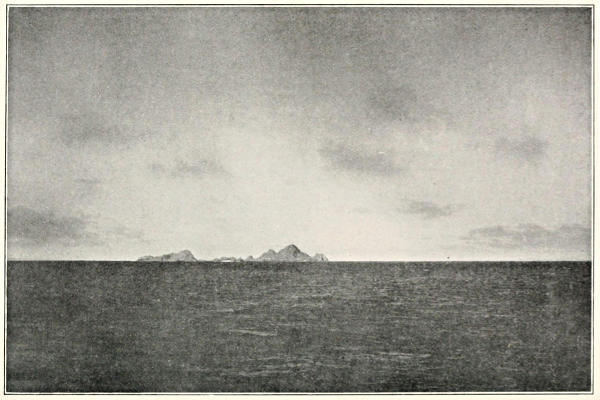
Farallones (small pointed islands in the sea).
See pages 212 and 339.
Feather River, see page 297.
Felipe (Philip).
Feliz (happy, fortunate), also a surname.
Fernández (a surname).
Fernando (Ferdinand).
Point Firmin, north of San Pedro, was named
by Vancouver for the father president of the Franciscan
Order.—(Mr. Charles B. Turrill.)
Las Flores (the flowers). See page 80.
Fortunas (fortunes). Cape Fortunas is on the
coast of Humboldt County, north of Cape Mendocino.
See page 260.
Fresno (ash tree). See page 277.
Gabilán, or Gavilán (hawk). See page 159.
Las Gallinas (the chickens), in Marin County.
A tribe called Gallinomero occupied Dry Creek
and Russian River below Healdsburg, and there
may be some connection between this name and
Las Gallinas Rancho in Marin County. Las
Gallinas may be a mere corruption of Gallinomero.
Gamboa Point, on the coast of Monterey
County. Gamboa is a surname.
García (a surname). See page 260.
Garvanza (chick-pea). See page 80.
Los Gatos (the cats). See pages 177 and 339.
Gaviota (sea gull). Probably so called from the
large number of these birds which frequent the
mouth of the little creek that flows into the sea
at this point. See page 107.
Germán (a surname of a pioneer family).
Golden Gate. See page 197.
La Goleta (the schooner). This place is said to
have been so called because a schooner was
stranded there in early days. See page 107.
Gonzales (a surname). See page 159.
Gorda (fat). See page 159.
Graciosa (graceful, witty).
Granada is twenty-seven miles from San Francisco,
on the Ocean Shore Line, and was probably
named for the province in Spain of the same name.
Granada also means pomegranate.
Las Grullas (the cranes). See page 159.
Guadalupe (a Christian name). See pages 107
and 340.
Guadalupe y Llanitos de los Corréos (Guadalupe
and the plains of the mails), combined name of
two land grants. Corréos (mails), may have
been used in reference to mails brought by messenger
to the Spaniards while they were encamped
upon these plains.
Gualala. See page 260.
Guenoc, an Indian word, meaning not ascertained.
Los Guilicos, in Sonoma County, named for a
former Indian tribe living in Napa County, near
Santa Rosa.
Guinda (fruit of the wild cherry). This place
is in Yolo County, near Woodland.
La Habra (the opening, or pass), here refers
to an opening in the hills, and is situated a short
distance southeast of Whittier, in Orange County.
Hermosa (beautiful). See page 80.
Hermosillo, probably named for the town of
Hermosillo in Mexico.
Hernández (a surname), is in San Benito County.
Hetch Hetchy. A deep valley in the Sierra.
See page 330.
Honcut, a place south of Oroville, in Butte
County, named from a tribe of Maidu Indians
who formerly lived near the mouth of Honkut
creek.
Honda (deep). Honda is in Santa Bárbara
County, and there is also La Honda, referring to
a deep canyon, in San Matéo County. The name
is incomplete in this form, and probably in its
original form was La Cañada Honda.
Hoopa. See page 261.
Hornitos (little ovens). See page 283.
Huasna, in San Luís Obispo County, received
its name from a former Indian village near Purísima
Mission in Santa Bárbara County. The
signification of the word has not been ascertained.
Hueneme, the name of a former Chumash
Indian village on the coast, a few miles south of
Saticoy, in Ventura County.
Los Huecos (the hollows).
Huerhuero Creek. Huerhuero is said to be a
corruption of güergüero, a stream of water which
makes a gurgling noise. An attempt is made to
imitate the sound by the word. Huerhuero Creek
is in San Luís Obispo County, near Paso de
Robles.
Huerta de Romualdo ó el Chorro (orchard of
Romualdo, a Christian name, or the gushing
stream). This is the combined name of two land
grants.
Huichica, the name of a land grant derived
from an Indian village called Hutchi, formerly
situated near the plaza in the town of Sonoma.
Huililic, the name of a former Indian ranchería
near Santa Bárbara. Mentioned in the mission
archives.
Hunto (eye), is the Indian name of a mountain
in the Yosemite.
Hyampom, in Trinity County, is an Indian name,
meaning not ascertained.
Iaquá, the name of a place in Humboldt County,
was a sort of familiar salutation, something like
our “hello,” with which the Indians of Humboldt
and adjacent counties greeted each other when
they met. From hearing the word so often the
whites finally adopted it as the name of this
place.
Ignacio (Ignatius).
Inaja, or Inoje, was the name of a former
Indian village near San Diego. Mentioned in the
mission archives. The meaning of the word
Inaja is “my water.”
Indio (Indian). See page 80.
Inyo. See page 327.
Isleta (small island).
Jacinto (hyacinth), also used as a Christian
name.
Jamacha was a former Indian village near San
Diego.
Jamón (ham). The application of this peculiar
name has not been ascertained, and there is always
the possibility that it is a corrupted word and has
no such meaning.
Jamul, in San Diego County, is a place name of
the Diegueño Indians.
Jarame, the name of a tribe thought to have
been natives of the region around San Antonio,
Texas.
Jesús María (Jesus Mary).
Jimeno, a surname of a pioneer family.
La Jolla. See pages 44 and 340.
Jolón. See page 159.
La Joya (the jewel). This name is comparatively
modern, and has its origin in the fact that
the residents, like those of every other California
town, thought their place the bright particular
“jewel” of the locality. La Joya Peak is in Los
Ángeles County. See pages 80 and 340.
Juan (John). Juana (Jane).
Juárez (a surname). The name of Benito
Juárez, the Mexican patriot who led the national
armies to victory against Maximilian, is one of
which every native of that country must be proud.
This man was a brilliant example of the triumph
of natural genius over tremendous obstacles.
He was of pure native blood, and had so few
advantages in his youth that at the age of twelve
he was still unable to read or write, or even to
speak the Spanish language. Yet, his ambition
once aroused, he succeeded in acquiring a collegiate
education, graduating with the degree of
Bachiller (bachelor in science or art), and later
became President of the Mexican Republic.
Among the early settlers of California is the name
of Cayetano Juárez, who was at one time an official
at Solano, and who took part in many Indian
expeditions.
La Junta (union, junction, meeting of persons
for consultation). See page 340.
Las Juntas (the junctions, or meetings).
Kawia, the name of an Indian tribe near
Fresno.
Kings County and River. See page 278.
Klamath. See page 249.
Laguna (lake or lagoon), in Sonoma and Orange
Counties. There were many lagunas in the
state. See page 80.
Laguna del Corral (lake or lagoon of the yard).
See page 44.
Point Laguna (lake or lagoon point). See
page 261.
Laguna de las Calabasas (lagoon of the pumpkins).
Calabasas in this case may be a corruption
of the name of an Indian tribe, Calahuasa. See
page 79.
Laguna de la Merced (lagoon or lake of mercy).
Lake Merced.
Laguna de los Palos Colorados (lagoon of the
redwoods).
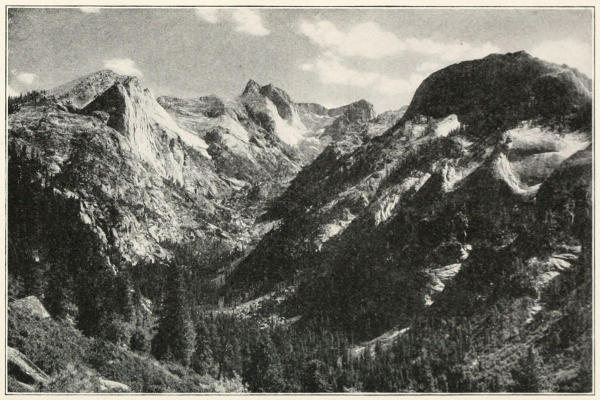
KAWEAH MOUNTAINS.
“Kaweah, or Kawia, was the name of an Indian tribe near Fresno.”
Laguna Puerca (muddy lagoon), in the San
Francisco district. This name does not mean
“Hog Lake,” as has been stated.
Laguna del Rey (lagoon of the king).
Laguna de San Antonio (lagoon of St. Anthony).
Laguna Seca (dry lagoon). See page 340.
Lagunitas (little lagoons or lakes), one in
Inyo County and one in Marin County. See
page 340.
Lancha Plana (flat-boat). See page 330.
Largo (long). This place is in Mendocino
County. The name of this station represents an
inversion of the usual order of naming, since it is
a translation into Spanish of the name of Mr. L. F.
Long, a pioneer of Mendocino County.
Laureles (laurels). See page 159.
León (lion). See page 80. This name turns out
not to be Spanish in origin, but merely the name
of an American who first had charge of the post-office
there.
Lerdo (a surname), is in Kern County.
La Liebre (the hare, or jack-rabbit).
Linda Rosa (lovely rose), is forty-eight miles
from San Bernardino.
Linda Vista (lovely view). See page 45.
Llagas (wounds, or stigmata). See page 179.
Llanada (a wide, level plain). See page 159.
Llanitos de los Corréos (plains of the mails).
Corréo was used to mean a King’s messenger,
mail or bag of letters, and it is possible that at
this point a messenger or mail carrier caught up
with the exploring party.
Llano (a flat, level field). There are places
bearing this name in Los Ángeles and Sonoma
Counties.
Llano de Buena Vista (plain of the good view).
Llano de Santa Rosa (plain of St. Rose).
Llano Seco (dry plain).
Llano de Tequisquite (plain of saltpetre). Tequisquite
is an Aztec word.
Llorones (the weepers), a name given to a place
in the vicinity of San Francisco Bay, for the reason
given in Palou’s account of the expedition to that
region in 1776, as follows: “The launch went
out again with the pilot Bautista Aguiray to
examine the arm of the sea that runs to the southeast;
they saw nothing more than two or three
Indians who made no other demonstration than
to weep, for which reason the place was called
La Ensenada de los Llorones (the bay of the
weepers).”
Lobitos (little seals), is on the Ocean Shore Line,
near San Francisco.
Lobos (wolves, also sea-wolves, or seals). See
pages 160 and 226.
Loma (hill).
Point Loma (hill point). See page 45.
Loma Linda (beautiful hill), is in San Bernardino
County.
Loma Prieta (dark hill). See page 160.
Lomas de la Purificación (hills of the purification).
Lomas de Santiago (hills of St. James).
Loma Vista (hill view), near Los Ángeles.
Modern and improper in construction. It should
be Vista de la Loma.
Lomerías Muertas (dead hills), possibly should
be Lomerías de los Muertos (hills of the dead).
Lomitas (little hills), north of San Francisco.
Lompoc, an Indian name. See page 108.
López (a surname). See page 128.
Lorenzo (Lawrence).
Lugo (a surname), that of a family of early
settlers. This place is thirty miles from San
Bernardino.
De Luz (a surname). See page 45.
Madera (wood). See page 277.
Madrone, properly spelled Madroño, a native
tree of California. See page 179.
Málaga, the name of a province in Southern
Spain celebrated for its exports of grapes, raisins,
oranges, lemons, figs and almonds. As raisins
are among the chief products of this part of
Fresno County, the town of Málaga was so named
from the Spanish province.
Manca, or Manka. To prevent the unwary
from falling into the erroneous belief that this
name is Spanish or Indian, the rather humorous
story of Manka is told here. The story goes that it
was named for a German who came there in ’67,
built a little sixteen by twenty-four foot shanty
and sold whiskey. It was his proud boast that in
the fifteen years he ran this business he never
renewed his stock. The inference may be drawn.
Manteca (lard, butter), is near Modesto. This
place was so called by the railroad company in
reference to a creamery existing there. In Spanish
America butter is called mantequilla.
Manzana (apple), is in Los Ángeles County.
Manzanita (little apple), a native shrub that
is one of the most striking objects in the California
woods. Fremont says of it: “A new and
singular shrub was very frequent to-day. It
branched out near the ground, forming a clump
eight to ten feet high, with pale green leaves of
an oval form, and the body and branches had a
naked appearance as if stripped of the bark, which
is very smooth and thin, of a chocolate color, contrasting
well with the pale green of the leaves.”
Towns in Marin, San Diego, and Tehama Counties
bear the name of Manzanita.
Powers, in his Tribes of California, describes
the method of making manzanita cider practiced
by the Indians, as follows: “After reducing the
berries to flour by pounding, they carefully remove
all the seeds and skins, then soak the flour in
water for a considerable length of time. A squaw
then heaps it up in a little mound, with a crater
in the center, into which she pours a minute
stream of water, allowing it to percolate through.
In this way she gets about a gallon an hour
of a really delicious beverage, clear, cool, clean
and richer than most California apple cider.
As the Indians always drink it up before it
has time to ferment, it is never intoxicating.”
Fremont also mentions this as a very delicious
drink that he had tasted when among the
Indians.
Manzanita Knob, in Tulare County, is near the
summit of the Sierras.
Mapache Peak (raccoon peak).
Mar (the sea).
Del Mar (of the sea).
Mare Island. See page 206.
Maricopa is the name of an Arizona tribe. The
word is said to mean “bean people,” which is
probably the correct definition.—(A. L. Kroeber.)
Marin. See page 219.
Mariposa (butterfly). See page 317.
Martínez (a surname). See page 229.
Matilija. See pages 103 and 340.
Médanos, also spelled Méganos (sand-banks, or
dunes). This place is in Contra Costa County.
Media (middle), is in Madera County.
Mendocino. See page 248.
Mendota (a surname), is in Fresno County.
Merced (mercy). See pages 276 and 340.
Mesa (table, table-land). See pages 45 and 340.
La Mesa (the table or table-land), is in San
Diego County.
Mesa Grande (big table-land). See page 46.
Mesa de Ojo de Agua (table-land of the
spring).
Mesquite (a native shrub of the locust variety).
Milpitas (little patches of corn). This word is
said to be the diminutive of milpa (a patch of
maize or corn), but in that case must have referred
to corn cultivated by Mexicans, since the California
Indians raised no cultivated crops, but
subsisted entirely on the natural products of the
land. Milpitas is a village in Santa Clara County,
which for some unexplained reason, has come to
be used as a term of derision, the “jumping off
place of creation.” It was probably the name of
a land grant.
La Mirada (the view). See page 80.
Miramar (sea-view), is the name of a post
town in San Diego County and of a summer resort
near Santa Bárbara.
Miramontes (a surname). Candelario Miramontes,
a native of Mexico, was the grantee of the
Pilarcitos Rancho in ’41.
Misión Vieja, or La Paz (old mission or the
peace). Land grant.
Misión Vieja de la Purísima (old mission of the
Immaculate Conception).
Mocho Peak, in Santa Clara County. Mocho
means “cropped, cut off.”
Modesto (modest). See page 288.
Modoc (people of the south). See page 250.
Mojave, or Mohave. Mojave, also spelled
Mohave, is an Indian tribal name of disputed
meaning. It has been stated that it comes from
hamucklihabi (three hills), but this view is positively
contradicted by scientists. In the documents
of the Spanish explorers the Mojaves are
referred to as Amajabas. The Mojave River is
remarkable in that it has no true outlet, but sinks
into the alkaline soil of the desert near the middle
of San Bernardino County.
Mokelumne. See Moquelumne.
Molino (mill, or mill-stone). See page 80.
Los Molinos (the mills, or mill-stones). See
page 80.
El Río de los Molinos (the river of the mill-stones),
now called Mill Creek, in Tehama
County. See page 80.
Mono. See page 324.
Montalvo (a surname), in Ventura County.
See page 81.
Monte (hill or wood). Monte was generally used
in the sense of “wood” or “forest” by the Spanish-Americans
of the eighteenth century.
El Monte (the hill or the wood).
Del Monte (of the wood or hill). In the case
of the Hotel del Monte, near Monterey, the name
refers to the grove of fine live-oaks in the center
of which the hotel stands.
Montecito (little hill or wood). See page 101.
Monterey (hill or wood of the king). See
page 133.
Monte Vista (mountain view). Modern and
improper in construction. It should be Vista del
Monte.
Moquelumne, or Mokelumne. See page 331.
Moreno (a surname). One of the leading members
of this numerous family was Antonio Moreno,
a native of Lower California.
Moro Cojo (lame Moor). See page 160.
Morón (hillock, mound). This place is near
Bakersfield.
Morro (a round headland, bluff). It is upon
such a rock that the well-known Morro Castle at
Havana is situated. See page 128. This place
receives its name from Morro Rock, a remarkable
round rock, 600 feet high, situated at the entrance
to the bay. The name has no reference to its
grey color, as some people imagine, but refers to
its shape—round like a head.
Mugu Point, on the coast of Ventura County.
The Mugus were a tribe of Indians. The word
mugu means “beach.”
Muñiz (a surname).
Murietta (a surname). See page 81.
Nacimiento (birth), referring in this case to the
birth of Christ. See page 128.
La Nación (the nation). See Del Rey, page 371.
Napa, formerly pronounced Napá. See page 242.
Naranjo (orange-tree), in Tulare County.
La Natividad (the nativity). See page 160.
Natoma, is a name about which the romanticists
have concocted some pleasing theories upon very
slender foundation. According to scientists it
is a tribal name, indicating direction, a favorite
method of naming among the Indians. It may
mean “north people,” or “up-stream,” or “down-stream,”
or some such term of direction. By a
severe wrench of the imagination, as has been
suggested, it may be considered that “up-stream”
would eventually lead to the mountains, and that
in the mountains there were people, among whom
there were undoubtedly girls, and in this “long-distance”
manner Mr. Joseph Redding’s definition
of Natoma as the “girl from the mountains”
might be evolved, but the imagination is likely
to suffer from such a violent strain. In the same
way, the persons who believe it to mean “clear
water” may have acquired this idea from the
simple fact that the word contains an indirect
reference to the stream in pointing out the direction
of its current. It is disappointing perhaps,
but nevertheless true, that Californian Indian
nomenclature has little of romance behind it.
The Indians usually chose names based upon
practical ideas, most often ideas of direction,
such as “north people,” “south people,” etc.
Navajo, also spelled lavajo (a pool where cattle
go to drink).
Navarro (a surname). In Mendocino County,
west of Ukiah.
Nevada (snowy). See page 293.
El Nido (the nest). See page 46. It is thought
that this place was so named because of its location
in the hills and mountains suggesting the idea
of a nest in the landscape, but there is no definite
information about it.
Los Nietos (literally “the grandchildren,” but
in this case a surname). See page 81.
Nimshew, in Butte County. This is an Indian
word, from Nimsewi (big river), a division of
Maidu Indians living on upper Butte Creek, in
Butte County, near the edge of the timber.
Nipomo, in San Luís Obispo County, is probably
Indian, but its meaning has not been ascertained.
Los Nogales (the walnut-trees).
Del Norte (of the north). See page 260.
Novato (new, beginning anything, but possibly
in this case a surname). The exact origin of the
name of this California town has not been ascertained.
The place is in Marin County and as
there was a land grant there called El Rancho de
Novato, the probabilities are that it is a surname
of some family of early settlers.
Noyo, is in Mendocino County. It was the
Indian name of a creek, not the one now bearing
the name of Noyo, but of another one in the
vicinity.
Nuestra Señora del Refugio (our lady of refuge).
Nuevo (new). In San Diego County.
Oakland was originally called Las Encinas
(the oaks), having been named by the commandante
at Monterey as a result of the report
of Lieutenant Vallejo of the great number of
those trees growing upon the spot.—(Memoirs
of the Vallejos, edited by James H. Wilkins, San
Francisco Bulletin, January, 1914.)
Océano (ocean), near San Luís Obispo.
Ojai, the name of a former Indian village in
Ventura County, popularly translated as “nest”
or “big tree,” neither of which can be looked
upon as authentic. According to Professor A. L.
Kroeber, the meaning of the word Ojai is “moon.”
Los Ojitos (little springs). See page 58.
Ojo de Agua (spring of water). See pages 59
and 340.
Ojo de Agua de Figueroa (spring of Figueroa),
the last word being a surname. The Figueroa
family were among the earliest settlers.
Ojo Caliente (hot spring).
Ojo de Agua del Coche (spring of the pig).
Olancha, in Inyo County, just below Owens
Lake, was named for the Olanches Indians of
southeastern California.
Olema. See page 230.
Oliveras (olive-trees), in San Luís Obispo
County. Olivera is also a surname.
Los Olivos (the olives). See page 108.
Olla (a round earthen pot, also a whirlpool in
a river or sea). Its application here has not
been ascertained.
Olompali, was named for a former large Moquelumnan
village in Marin County, about six miles
south of Petaluma.
Omo, in El Dorado County, is the name of a
Moquel village.
Oro Fino (fine gold), in Siskiyou County. See
page 261.
Oro Grande (large or coarse gold), forty-nine
miles north of San Bernardino. Also in Madera
County.
Oroville (gold-town). See page 288.
Oso Flaco (thin bear). In San Luís Obispo
County.
Los Osos (the bears). See page 128.
Otay, or Otai, was the name of a former Indian
village near San Diego. It may have first been
applied to the Otey or Otay land grant.
Otero (literally a “hill, or eminence,” but
probably a surname here).
Pachappa, near Riverside, Indian name, meaning
not ascertained.
Pacheco (a surname). See page 230.
Pacoima, near Los Ángeles, an Indian word,
meaning not ascertained.
Paicines, also spelled Pajines. See page 160.
Pájaro (bird). See pages 152 and 340.
Pala. See page 33.
Palmas (palms).
Dos Palmas (two palms), in Riverside County,
so called from two giant palms near a spring.
Palo, literally “stick,” was used by the Spaniards
in the sense of “tree.”
Palo Alto (high tree). See page 172.
Palo Blanco (white stick, or tree).
Palo Cedro (cedar tree), in Shasta County.
Palo Colorado (redwood tree). These trees
were first observed and named by Gaspar de
Portolá, the discoverer of San Francisco Bay.
Dos Palos (two sticks, or trees). See page 283.
Paloma (dove, pigeon).
Palo Verde (green tree).
Panamint Range. See page 332.
Panocha. See page 160.
La Panza (the paunch), in San Luís Obispo
County, so named by some hunters who placed
the paunch of a beef to catch bear. La Paleta
(shoulder-blade) and El Carnaso (loin) were put
out in other places, and the names still remain.
Las Papas (potatoes) Hill, is in the San Francisco
district. Papa (potato), is provincial and
American.
Paraíso (paradise). See page 161.
Paraje de Sánchez (place or station of Sánchez).
Pasadena (crown of the valley). See page 82.
Paskenta, in Tehama County, is Indian and
means “under the bank.”
Paso (pass).
El Paso (the pass), of the Truckee River.
El Paso Peak (the pass peak), in Kern County.
Del Paso (of the pass), near Sacramento.
Paso de Bartolo (pass of Bartolo), the last a
Christian name.
Paso de Robles (pass of the oaks). See pages 124
and 340.
Pastoría de las Borregas (pasture of the ewe-lambs).
La Patera (a place where ducks congregate).
In early days the fresh water swamps near here
abounded with ducks. La Patera is a flag station
in Santa Bárbara County.
La Paz (the peace). Probably a peace arranged
with the Indians, or it may have been named for
La Paz in Lower California.
Pecho Rock, near San Luís Obispo. The reason
for this name has not been discovered, but it may
be a reference to the shape of the rock. Pecho
means “breast.”
Pedernales (flints). See page 104.
Los Peñasquitos (the little cliffs), in San Diego
County.
Peralta (a surname), that of a pioneer family.
Peras (pears) Creek, in Los Ángeles County.
Los Perros (the dogs), possibly Indian dogs.
Pescadero Point (fishing-place point). See page
231.
Petaluma. See page 261.
Picachos Mountains, a ridge east of San Francisco
Bay. Pichacos are frequent, isolated, conical
peaks.
Picacho (top, sharp-pointed summit), is the
name of a post village in Imperial County.
Pico (a surname), ten miles from Los Ángeles.
José María Pico of Sinaloa was the founder of
this family, and its most notable member was his
son, Pío Pico, at one time governor of California.
According to Bancroft, the character of Pío Pico
was a mixture of good and bad, in which the good
predominated. “He was abused beyond his
deserts; he was a man of ordinary intelligence and
limited education; of a generous, jovial disposition,
reckless and indolent, fond of cards and women;
disposed to be fair and honorable in transactions,
but not strong enough to avoid being made the
tool of knaves. He did not run away with large
sums of money obtained by sales of missions, as
has been charged.”
Piedra (stone, rock), near Fresno.
Piedras Blancas (white rocks). See page 128.
Piedras Grandes (big rocks).
La Piedra Pintada (the painted rock). See
page 108.
Pilar (literally “pillar of stone”). Point Pilar
may have been named for Nuestra Señora del
Pilar, (Our Lady of the pillar), from a church at
Saragossa, Spain, where there is an image of the
Virgin on a marble pillar. Pilar is also a surname,
that of a pioneer family, for whom this point may
have been named.
Pilarcitos (little pillars, or little Pilar Ranch).
Pilitas (basins or water-holes in rock).
El Pinal (the pine grove), in San Joaquín County.
Pino Blanco (white pine), in Mariposa County.
Pino Grande (big pine), in El Dorado County,
near Placerville.
Pinole (parched corn ground into meal). Point
Pinole was so named because the expedition under
Lieutenant Vallejo had nothing to eat but pinole
while they waited at that spot for the return of the
cargadores with provisions from Monterey.—(Memoirs
of the Vallejos, edited by James H. Wilkins,
San Francisco Bulletin, January, 1914.)
Piñón (pine kernel, also the scrub pine, a very
picturesque tree bearing a delicious nut).
Point Pinos (point of pines). See page 148.
Tres Pinos (three pines). See page 163.
Pintado (painted, mottled).
Pinto Range (painted or mottled range). See
page 332.
El Piojo (the louse), in Monterey County, a
short distance south of Jolón.
Piru, near Camulos, the name of a former
Indian village.
Pismo. See page 128.
Pit River. See page 294.
La Pita, in San Diego County. Pita haya is the
fruit of the cactus called “prickly pear.”
Placer. See page 304.
Placerville. See page 305.
Planada (a plain, level ground), seventy-four
miles from Stockton.
Plano (a level surface), in Tulare County.
La Playa (the beach), in Santa Bárbara County.
Pleito (quarrel, lawsuit, bargain). See page 161.
Plumas (feathers). See page 297.
Las Plumas (the feathers), near Oroville.
Pomo. See page 261.
Poncho (cloak, blanket).
Poonkiny (wormwood). Poonkiny, sometimes
misspelled Pookiny, is from the Yuki Indian
language.
El Portal (the gate), the entrance to the Yosemite
Valley.
Portolá (a surname). See pages 231 and 340.
Posa (well, pool, also spelled by the Spaniards
pozo, poso). The fact that posa also has the meaning
of “passing bell for the dead” has caused some
rather ludicrous mistakes. For instance, La Posa
de los Ositos (the pool of the little bears), evidently
refers to a place where some bears were seen
drinking, and certainly would be absurd translated
as “the passing bell of the little bears.”
When used as names of places the connection
makes it quite clear that they were so called in
reference to pools of water present on the spot.
Las Positas (the little pools).
Las Positas y la Calera (the little wells, or pools,
and the lime-kiln).
Poso (pool, or well), in Kern County, and Poso
in San Luís Obispo County.
Los Posos (the pools, or wells), in Ventura
County.
La Posta (person who rides or travels post,
post-house, military post, etc.). In the case of
La Posta, 170 miles from the Mission Tule River
Agency, it probably means post-station.
Potrero (pasture, generally for horses). See
pages 46, 161 and 231.
Potrero de los Cerritos (pasture of the little
hills).
Potrero Chico (little pasture).
Potrero Grande (big pasture).
Potrero y Rincón de San Pedro de Reglado
(pasture and corner of St. Peter Regalato). St.
Peter Regalato was a Franciscan, and was “especially
distinguished for his sublime gift of
prayer.” This was the name of a land grant.
El Potrero de San Carlos (the pasture of St.
Charles).
Potrero de San Francisco (pasture of St. Francis).
This district still goes by the name of “the potrero”
in the city of San Francisco.
Potrero de San Luís Obispo (pasture of St. Louis
the Bishop).
El Potrero de Santa Clara (the pasture of St.
Clara).
Poway, in San Diego County, is an Indian place
name.
Pozo (pool, well). See page 128.
Prado (meadow), in Riverside County. See
page 82. This place was so named on account of
its resemblance to a prairie.
La Presa (dam, dike). See page 46. This place
is so called from the Sweetwater irrigation dam
located there.
Presidio (garrison, prison). See page 231.
Prieta (dark), a place north of San Francisco.
Los Prietos (the dark ones).
Providencia (providence).
Pueblo (town).
Los Dos Pueblos (the two towns). See page 106.
Puente (bridge), near Los Ángeles. See page 82.
Las Puentes (the bridges). See page 161.
El Puerto (the port), of San Diego.
Pulgas (fleas). See pages 82 and 224.
La Punta (the point), in San Diego County.
Punta Almejas (mussel point).
Punta Año Nuevo (point New Year). See page
157.
Punta Arenas (sandy point). See page 340.
Punta de la Concepción (point of the immaculate
conception).
Punta Delgada (thin or narrow point). See
page 260.
Punta Gorda (fat or thick point). See pages 108
and 260.
Punta Guijarros (pebble or boulder point).
Punta de la Laguna (point of the lagoon). See
page 261.
Punta Loma (hill point), near San Diego. See
page 45. It should be Punta de la Loma.
Punta de Pinos (point of pines). Near Monterey.
Page 148.
Punta de los Reyes (point of the kings). See
page 232.
Punta de las Ritas (point of the rites). See
page 108.
Purísima Point (point of the most pure conception).
On the Santa Bárbara Coast.
Purísima (most pure), in San Matéo County.
Point Sal (a surname). See page 108.
Point Sur (south point). See page 162.
La Quemada (the burned place), from the verb
quemar (to burn). This name refers to a custom
prevalent among the Indians of burning over large
tracts of land for the purpose of killing the under-brush
and encouraging the growth of grass, which
resulted in attracting game. The diaries of the
Spaniards refer frequently to this custom, and
speak of finding a great deal of country burned
over in this way. One writer has offered to his
astonished readers the translation of La Quemada
as “the over-full, having enough to eat.”
Quién Sabe (who knows), a familiar expression
among the Spaniards.
Quintín. See page 235.
Quinto (a surname). Simón Tadéo Quinto was
one of the members of this pioneer family.
Raimundo (Raymond).
Ramírez (a surname), near Marysville.
Ramona (a Christian name), well known as that
of the heroine of Mrs. Helen Hunt Jackson’s romance.
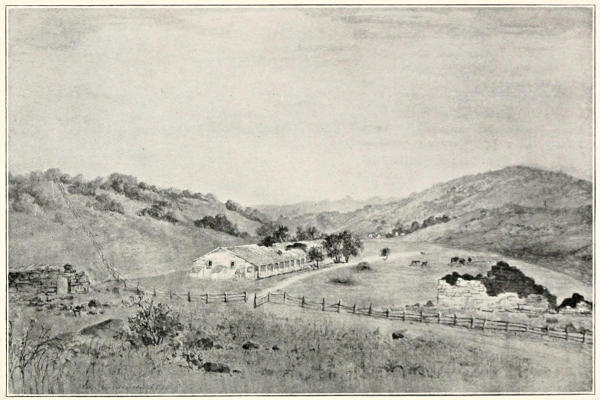
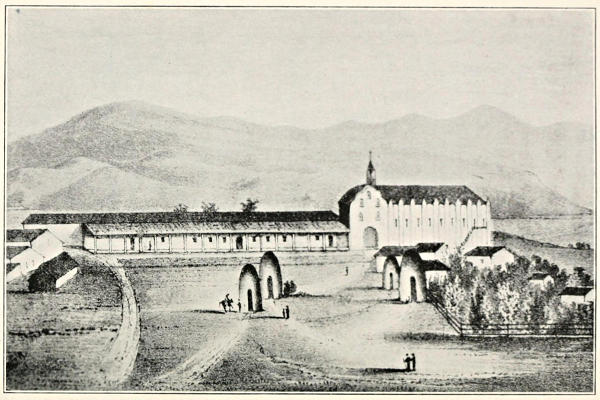
THE MISSION OF PURÍSIMA CONCEPCIÓN, FOUNDED IN 1880.
Ranchería, a word meaning “settlement,” but
generally used by the Spaniards to mean an
Indian village.
Ranchería del Baile de las Indias (village of the
dance of the Indian women). See page 100.
Ranchería del Corral (village of the yard).
Ranchería de la Espada (village of the sword).
See page 102.
Ranchería del Río Estanislao (village of the river
Stanislaus).
Ranchita de Santa Fé (little ranch of holy faith).
Rancho del Puerto (ranch of the pass).
Ratón (mouse).
Real de las Águilas (camp of the eagles).
Redondo (round). See page 82.
Refugio (refuge), is in Santa Bárbara County.
Refugio is also a Christian name.
Represa (dam), so called on account of a dam
at that point, west of the state prison at Folsom.
Del Rey (of the king), also known as El Rancho
Nacional because it was used to provide meat and
horses for the military. This ranch was in Fresno
County.
Reyes (kings). See page 232.
Ricardo (Richard), is in Kern County.
Rincón is the interior angle formed by the
junction of two walls or lines, and is one of the
terms used in the apportionment of land grants.
Rincón (corner), is in San Bernardino County.
El Rincón (the corner), is in Los Ángeles County,
and comprises rich agricultural land on either
side of the Santa Ana River.
Rinconada is the corner formed by two houses,
streets, roads, or between two mountains.
Rinconada del Arroyo de San Francisquito
(corner of the creek of little St. Francis). Land
grant.
Rincón de los Carneros (corner of the sheep).
Land grant.
Rinconada de los Gatos (corner of the cats—wild-cats).
Land grant.
Rincón de la Brea (corner of the asphalt).
Land grant.
Rincón de los Bueyes (corner of the oxen). Land
grant.
Rincón del Diablo (corner of the devil). Land
grant.
Rincón de los Esteros (corner of the estuaries).
Land grant.
Rincón Point (corner point). See page 108.
Rincón de la Puente del Monte (corner of the
bridge of the wood, or hill). Land grant.
Rincón de las Salinas (corner of the salt
marshes). Land grant.
Rincón de las Salinas y Potrero Viejo (corner
of the salt marshes and the old pasture). Land
grant.
Rincón de San Francisquito (corner of little
San Francisco). Land grant.
Rincón del Sanjón (corner of the slough).
Land grant.
Río (river).
El Río de los Berrendos (the river of the antelopes).
See page 40.
Río Grande (big river).
Río Jesús María (River Jesus Mary). Land
grant.
El Río de los Molinos (the river of the mill-stones).
See page 80.
El Río del Nido (the river of the nest), referring
to the nest of an eagle once seen in a tree on the
banks of this stream. The name is now shortened
into Río Nido, or Rionido.
El Río de Santa Clara (the river of St. Clara).
Land grant.
El Río de los Santos Reyes (the river of the holy
kings). See page 278.
Río Seco (dry river).
Río Vista (river view). See page 289. Improper
construction. It should be Vista del Río.
El Rito (the rite, ceremony).
Rivera, literally “brook, creek,” but also a
surname. The Rivera family were among the
pioneers. See page 82.
Roblar de la Miseria, (oak grove of poverty,
wretchedness). It is likely that in this grove the
Spaniards suffered from a shortage of food supplies,
and named it in memory of their sufferings.
Land grant.
Los Robles (the oaks), ten miles from Los
Ángeles.
Rodéo (cattle round-up). See pages 232 and 340.
The town of Rodéo was first laid out to maintain
a large packing-house for meat, but this was
abandoned, and it has become an oil-refining town.
Rodéo de las Aguas (gathering of the waters).
See page 82.
Del Rosa (of the rose), in San Bernardino County.
If this is not a surname it is improper in construction,
and should be De la Rosa.
Los Rosales (the rose-bushes).
Rosario (rosary), procession of persons who
recite the rosary. Also a Christian name.
Sacate (grass, hay).
Sacramento (sacrament). See page 271.
Sal, in the case of Point Sal a surname. See
page 108.
Salada (salted, salty, saline land). Near San
Francisco.
Salazar (a surname), that of a pioneer family.
Salida (exit, out-gate), village in Stanislaus
County, seven miles northwest of Modesto.
Salinas (salt-marshes). See pages 148 and 340.
Sal si Puedes (“get out if you can”). See page 109.
La Salud (health). See page 174.
San Andreas (St. Andrew). See page 333.
San Andrés (St. Andrew). See page 333.
San Anselmo (St. Anselm). See page 232.
San Antonio (St. Anthony).
San Antonio de Padua (St. Anthony of Padua).
See page 141.
San Ardo (St. Ardo), is in Monterey County.
St. Ardo, in Latin Smaragdus, was a Benedictine
monk who wrote a life of St. Benedict which is
considered reliable. He died in 843.
San Augustine (properly Agustín), born in
Numidia, was the son of Santa Mónica. “In
his youth he was so devoted to pleasure that
his mother feared the destruction of his character,”
but he became converted by the preaching
of St. Ambrose, and it is thought that the Te
Deum was composed in honor of the occasion
of his baptism. It is told of him that “while
walking on the sea-shore, lost in meditation
on his great theme, the Discourse on the Trinity,
he saw a little child bringing water and endeavoring
to fill a hole which he had dug in the sand.
Augustine asked him the motive of his labors.
The child said he intended to empty all the water
of the sea into this cavity. ‘Impossible!’ exclaimed
St. Augustine. ‘Not more impossible,’
answered the child, ‘than for thee, O Augustine,
to explain the mystery on which thou art now
meditating.’ St. Augustine is the patron of
theologians and learned men.”—(Stories of the
Saints.)
San Benito (St. Benedict). See page 161.
San Bernabé (St. Barnabas, or Barnaby). This
saint was a native of Cyprus, and a cousin of St.
Mark. “He labored with Paul at Antioch, and
tradition says he preached from the gospel of
St. Matthew, written by the Evangelist himself,
which he carried always with him, and that it
had power to heal the sick when laid upon their
bosoms. He was seized by the Jews and cruelly
martyred, while preaching in Judea.”—(Stories of
the Saints.)
San Bernardino (St. Bernardinus). See page 74.
San Bernardo (St. Bernard). There were two
saints of this name, one born in 1190 at Fontaine,
and the other in Savoy. The latter, St. Bernard
of Menthon, is famous as the founder of the St.
Bernard hospitals in the Alps, where “the monks,
assisted by their dogs, search out and care for
travelers who are lost in the passes of the mountains,
where the storms are severe, and the cold
intense.”
San Bruno (St. Bruno). See page 232.
San Buenaventura (St. Bonaventure). See
page 95.
San Carlos (St. Charles). See page 138.
San Clemente (St. Clement). See page 83.
San Diegito (little St. James).
San Diego (St. James). See page 21.
San Dimas “probably St. Dismas, is popularly
supposed to have been the good or converted
robber on the right side of Christ on Good Friday.
In places he is celebrated by the Latins on March
25. The Greeks have him on a much later date.”—(Fray
Zephyrin Engelhardt, O. F. M). San
Dimas is the name of a post-village in Los Ángeles
County.
San Domingo (St. Dominick). St. Dominick
was a Castilian of noble descent, and was the
originator of the Dominican Order of barefoot
priests, and of the use of the rosary.
Sanel, the name of a former Indian village called
variously Se-nel, Sah-nel, Sai-nel and Sanel.
“Sanel is derived from cané (sweathouse), and was
the name of a very large village situated south
of the town of Sanel, on the eastern side of Hopland
Valley.”—(Barrett, in Univ. Publ. in Arch.
and Tech.)
San Emygdio, “English or Latin St. Emygdius,
Bishop and Martyr, feast August 5. The Roman
Martyrology has this on him: ‘St. Emygdius,
Bishop and Martyr, was consecrated Bishop by
Pope St. Marcellus and sent to preach the Gospel
at Ascoli. He received the crown of Martyrdom
for confessing Christ, under Diocletian.’ He is
invoked against earthquakes.”—(Fray Zephyrin
Engelhardt).
San Felipe (St. Philip). See page 180.
San Fernando (St. Ferdinand). See page 69.
San Francisco (St. Francis). See page 185.
San Francisco de las Llagas (St. Francis of the
“stigmata”). See page 179.
San Francisquito (little St. Francis). Land
grant.
San Gabriel (St. Gabriel). See page 66.
San Gerónimo (St. Jerome). See pages 233
and 340.
San Gorgonio Mountains and Pass are in the
Coast Range in Southern California. Their patron
saint, Gorgonius, suffered martyrdom in 304 at
Nicomedia during the persecution of Diocletian.
Gorgonius, who had held a high position in the
Emperor’s household, was subjected to most
frightful torments, and was finally strangled and
his body thrown into the sea. It was, nevertheless,
secured by the Christians and was afterwards
carried to Rome.
San Gregorio (St. Gregory). See page 233.
San Ignacio (St. Ignatius). St. Ignatius Loyola
was the founder of the order of the Jesuits. “In
his youth he was a page in the court of Ferdinand
the Catholic, and later a brave and gay soldier.”
He became a permanent cripple through being
severely wounded in both legs. While confined
by these sufferings, he devoted himself to reading
the life of Christ, and was thus induced to take
up religious work. After some years of study, he
induced five men to join him in forming a community
under the title of the “Company of
Jesus,” whose especial duties are “first, preaching;
second, the guidance of souls in confession;
third, the teaching of the young.”
San Isidro, also spelled Ysidro (St. Isidore).
There were two saints bearing this name. St.
Isidore the ploughman could neither read nor
write, but performed many miracles. His master
objected to the time wasted by Isidore in prayer,
but his objections were silenced when he found,
upon entering the field one day, the plough being
drawn by two angels, while St. Isidore knelt at
his devotions. The other St. Isidore was Bishop
of Seville, and in the church in that city bearing
his name, there is a “magnificent picture which represents
him dying on the steps of the altar, having
given all his property to the poor.” See page 341.
San Jacinto (St. Hyacinth). See pages 83 and
340.
San Jacinto Viejo (St. Hyacinth the Old).
San Joaquín (St. Joachim). See pages 274 and
340.
Sanjón (deep ditch or slough). Also spelled
zanjon.
Sanjón de los Moquelumnes (Moquelumne slough).
San José (St. Joseph). See pages 168 and 340.
San José de Buenos Aires (St. Joseph of good
airs).
San José y Sur Chiquito (St. Joseph and little
south). These are the names of two creeks near
Monterey.
San Juan Bautista (St. John the Baptist).
See pages 154 and 340.
San Juan Cajón de Santa Ana (St. John canyon,
literally “box,” of St. Anne). Deep canyons
were often called cajones (boxes).
San Juan Capistrano. See page 35.
San Juan Point (St. John Point). See page 83.
San Julián (St. Julian). This seems to have
been a favorite name for saints, since there were
twelve who bore it. Only two, however, are of
special importance, St. Julian Hospitator, and
St. Julian of Rimini. The first had the fearful
misfortune to kill his own father and mother
through an error, and to make reparation, he
built a hospital on the bank of a turbulent stream
in which many persons had been drowned. “He
constantly ferried travelers over the river without
reward, and, one stormy night in winter, when it
seemed that no boat could cross the stream, he
heard a sad cry from the opposite bank. He went
over, and found a youth, who was a leper, dying
from cold and weariness. In spite of his disease
the saint carried him over, and bore him in his
arms to his own bed, and he and his wife tended
him till morning, when the leper rose up, and his
face was transformed into that of an angel, and
he said: ‘Julian, the Lord hath sent me to thee;
for thy penitence is accepted, and thy rest is near
at hand’.... St. Julian is patron saint
of ferrymen and boatmen, of travelers and of
wandering minstrels.” Little is known of St.
Julian of Rimini except that he “endured a prolonged
martyrdom with unfailing courage.”—(Stories
of the Saints.) See page 340.
San Justo (St. Justus). Little authentic is
known of this saint, except that he was the fourth
archbishop of Canterbury, and died there about
627.
San Leandro (St. Leander). See page 233.
San Lorenzo (St. Lawrence). See page 234.
San Lucas (St. Luke). See page 162.
San Luís Gonzaga (St. Louis Gonzaga). This
saint, also known as St. Aloysius, was the son of a
noble Italian lady, the Marchesa di Castiglione.
“He entered the Society of Jesus when not yet
eighteen years old, and became eminently distinguished
for his learning, piety and good works.
He died at Rome in 1591 of fever, which he contracted
while nursing the sick.”—(Stories of the
Saints.)
San Luís Obispo (St. Louis the Bishop). See
pages 117 and 340.
San Luís Rey (St. Louis the king). See page 30.
San Marcial (St. Martial) was the Bishop of
Limoges, and is especially noted for the conversions
he accomplished, in particular that of the
beautiful virgin St. Valerie, who suffered martyrdom
for her faith.
San Marcos (St. Mark). “This evangelist was a
disciple of St. Peter. He founded the church at
Alexandria, and on account of his miracles the
heathen accused him of being a magician; and at
length, while celebrating the feast of their god
Serapis, they seized St. Mark and dragged him
through the streets until he died. Then immediately
there fell a storm of hail, and a tempest of
lightning came with it which destroyed his murderers.”
His remains were removed in A. D. 815
to Venice, where the splendid cathedral of St.
Mark was erected over them. Many legends are
told of this saint, among them the story of his
having saved the city of Venice from destruction by
demons, who raised a great storm and came in a
boat for that purpose, but were driven away by St.
Mark, who went to meet them and held up a cross.
San Marino, near Los Ángeles, was named for
a saint who was born in Dalmatia in the fourth
century. He was a poor laborer and was employed
in the reconstruction of the bridge of
Rimini. His piety attracted the attention of the
Bishop of Brescia, who ordained him as a deacon.
Marino retired to Mount Titano, and gave himself
up entirely to religious practices. His cell
attracted others, and this was the origin of the
city and republic of San Marino, the smallest
republic in the world.
San Martín (St. Martin). See pages 181 and 340.
San Matéo (St. Matthew). See pages 234 and
340.
San Matéo Point (St. Matthew Point). See
page 83.
San Miguel (St. Michael). See page 123.
San Miguelito (little St. Michael).
San Nicolás (St. Nicholas). Little that is
authentic can be obtained concerning the history
of this saint, but there are numerous legends of
miracles performed by him, several of them connected
with raising children from the dead, and
similar stories. St. Nicholas is the chief patron
of Russia and of many sea-port towns, and is the
protector against robbers and violence. He is
also the patron of children and schoolboys in particular,
and of poor maidens, sailors, travelers,
and merchants.
San Onofre (St. Onophrius). See page 83.
San Pablo (St. Paul). See page 234.
San Pasqual (St. Pascal). This saint was a
Spanish peasant, born in Aragón in 1540. He was
a member of the Franciscan order, and was remarkable
for his unfailing courtesy and charity
to the poor.
San Pedro (St. Peter). See page 84.
San Pedro, Santa Margarita, y las Gallinas
(St. Peter, St. Margaret, and the chickens), combined
names of three land grants.
San Quentín (St. Quentin). See pages 235 and
341.
San Rafael (St. Raphael). See page 220.
San Ramón (St. Raymond). See page 235.
San Simeón (St. Simeon). See page 128.
Santa Ana (St. Anne). See page 59.
Santa Ana y Quién Sabe (St. Anne and “who
knows”), combined names of two land grants.
Santa Anita (St. Annie, or little St. Anne).
Santa Bárbara. See page 89.
Santa Catalina (St. Catherine). See page 62.
Santa Clara (St. Clara). See page 167.
Santa Clara del Norte (St. Clara of the north).
Santa Cruz (holy cross). See page 153.
Santa Fé (holy faith), near Los Ángeles. See
page 341.
Santa Cruz Island. See page 101.
Santa Gertrudis (St. Gertrude). St. Gertrude
the Great was a benedictine nun and mystic
writer, born in Germany in 1256. She is especially
noted for her learning and religious writings, all of
which were written in Latin. She was charitable
to the poor and had the gift of miracles.
Santa Inez, also spelled Ynez (St. Agnes). See
pages 109 and 341.
Santa Lucía (St. Lucy). See page 129.
Santa Margarita (St. Margaret). See page 129.
Santa Margarita y las Flores (St. Margaret and
the flowers), combined names of two land grants.
Santa María (St. Mary). See page 110.
Santa Mónica (St. Monica). See page 61.
Santa Paula (St. Paula). See page 113.
Santa Rita is the name of a village in Monterey
County, near Salinas. The patron saint of this
place was born at Rocca Porena in 1386 and died
in 1456. Her feast day is May 22, and she is
represented as holding roses, or roses and figs.
When but twelve years of age Santa Rita was compelled
by her parents to marry a cruel, ill-tempered
man. This man was murdered, and after
his death, his widow desired to enter the convent
at Cascia, but was at first refused admission on
account of her widowhood. She was finally
received, however, and so many miracles were
reported to have been performed at her intercession
that she was given in Spain the title of
La Santa de los Imposibles (the saint of the impossibilities).
Santa Rosa (St. Rose). See page 246.
Santa Susana (St. Susanna). This saint, who
was remarkable for her beauty and learning, was
a relative of the Emperor Diocletian, who desired
her as a wife for his adopted son Maximus. St.
Susanna, having made a vow of chastity, refused
this offer, and Diocletian, angered by her refusal,
sent an executioner to kill her in her own house.
Santa Teresa, was born at Avila in Castile,
March 28, 1515. During her earliest youth,
through reading the lives of the saints and martyrs,
she formed a desire to take up religious work.
In accordance with this desire, at the age of twenty
years, she entered the convent of Carmelites, and
chose as her life work the reforming of the order
of Mount Carmel, as well as the establishment of
a number of convents for men. It was she who
made the Carmelites go barefoot, or sandalled.
Santa Teresa had distinct literary gifts, and her
history of her life is a work of absorbing interest,
which is still read with genuine pleasure by students
of the literature of Spain. She attained a
position of such authority in that country that
Philip III chose her for its second patron saint,
ranking her next to Santiago (St. James).
Santa Ynez. See Santa Inez. See pages 109 and
341.
Santa Ysabel, also spelled Isabel (St. Isabella
of France), who founded the convent at Longchamps,
was sister to the saintly King Louis.
She was educated with her brother by their
mother, Blanche of Castile. St. Isabel dedicated
her convent to the “humility of the Blessed Virgin,”
and gave to it all her dowry. As long as the
convent existed the festival of this saint was celebrated
with great splendor. (Stories of the
Saints.)
Santiago de Santa Ana (St. James of St. Anne).
Land grant.
San Timotéo (St. Timothy). St. Timothy was
the beloved disciple of St. Paul, whom he accompanied
on many journeys. It is said that he was
Bishop of Ephesus, until at the age of eighty years
he suffered the cruel fate of being beaten to death
by pagans.
San Tomaso (St. Thomas), was a Galilean
fisherman and one of the apostles. “So great was
his incredulity that he has always been remembered
for that rather than for his other characteristics,”
and it was in this way that the familiar
expression “a doubting Thomas” arose. At the
time of the ascension of the Virgin, Thomas
refused to believe in the event, and the legend
relates that in order to convince him the Virgin
dropped her girdle to him from the heavens.
Three other saints also bear this name, St. Thomas
á Becket, the celebrated English historical character;
St. Thomas Aquinas, a grandnephew of
Frederick I and a man of great learning; and St.
Thomas the Almoner, who was so charitable that
“as a child he would take off his own clothes to
give away to children in the street.” It is related
of the last named that he wore the same hat for
twenty-six years, and that his whole life was “but
a grand series of beneficent deeds. When the
hour of his death came he had given away everything
except the pallet on which he lay, and this
was to be given to a jailer who had assisted him
in executing his benevolent designs.” There is
a remarkably beautiful picture of him by Murillo,
representing him as a child, dividing his clothing
among four ragged little ones.
San Vicente (St. Vincent). Three saints bear
this name. St. Vincent of Saragosa was martyred
during the persecution of the Christians by
Diocletian. Legend has it that his remains were
guarded by crows or ravens, and when in the year
1147 Alonzo I removed them to Lisbon, two crows
accompanied the vessel, one at the prow and one
at the stern. In pictures St. Vincent is always
represented as accompanied by a crow or raven.
St. Vincent Ferraris was born at Valencia in 1357.
He was a celebrated preacher and missionary,
and “so moved the hearts of his hearers that he
was often obliged to pause that the sobbing and
weeping might subside.” The third of this name,
St. Vincent de Paul, was the son of a Gascon
farmer, and his charities were so various and so
many as to cause his name to be revered by all,
irrespective of religious differences. He established
the Hospital La Madeleine for the Magdalens
of Paris, a foundling hospital, and numerous
other charities. In truth, the practical good done
by this man during his life makes him well worthy
of the title of “saint.”
San Ysidro. See San Isidro. See page 341.
Saticoy. See page 84.
Saucito (little alder).
Saucos (alder-trees).
Sausal (willow-grove).
Sausalito (little willow-grove). See page 218.
Sausal Redondo (round willow-grove). See
Redondo Beach, page 82.
El Segundo (the second), so called because at
that place the Standard Oil Company’s second
refinery on the Pacific Coast is located. Modern.
Sequoia, the giant tree of California, was named
for the Cherokee, Sequoyah, who invented an
alphabet for his tribe. Sequoyah, also known as
George Gist, or Guess, was the son of a white
man and a Cherokee woman of mixed blood, and
was, after all, more white man than Indian. He
had a natural genius for mechanical invention,
and, having been crippled for life in a hunting
accident, he occupied his time in devising the
alphabet, which was accepted with such enthusiasm
by his people that every Cherokee, of whatever
age, had learned to read and write in a few
months. Sequoia, although not a place name, is
given here for the interest it may have for tourists
and other persons unacquainted with the origin
of the name of the famous “big trees.”
Serena (serene). See page 113. This name is
spelled on some maps as Sereno, but is called Serena
by the people of the neighborhood.
Serra (a surname). See page 84.
Sespe, named for a former Chumash Indian
village said by Indians to have been on Sespe
Creek, in Ventura County.
Shasta. See page 251.
Sierra (saw, saw-toothed mountains). See
page 293.
Sierra Madre (mother sierra). See page 293.
Sierra Morena (brown range) is the name of a
spur of the Coast Range commencing about ten
miles south of San Francisco and running through
San Francisco County into Santa Clara County.
This mountain range, which contains some very
charming scenery, may have been so named on
account of its color, or it may be the namesake of
the Sierra Morena of Spain. The name is sometimes
spelled Moreno, and one of the possibilities
is that it was named for the pioneer Moreno family.
Sierra Nevada (snowy sierra). See page 293.
Simi, in Ventura County, is an Indian place
name.
Siskiyou. See page 256.
Sis Quoc, a town and river in Santa Bárbara
County, named from Souscoc, a former Chumash
village near the Santa Inez Mission.
Sobrante (residue, surplus), a term applied to
a piece of land left over after measuring off land
grants.
Sobrante de San Jacinto, residue of the grant
called St. Hyacinth.
Solano. See page 268.
Soledad (solitude). See page 151.
Somis, in Ventura County, is an Indian place
name.
Sonoma. See page 241.
Sonora. See page 333.
Soquel, or Souquel, was probably derived from
Usacalis, a Costanoan Indian village situated in
1819 within ten miles of the Santa Cruz Mission.
Soscol. See Suscol.
Sotoyome, a former Chumash Indian village
near Santa Inez Mission, in Santa Bárbara County.
Stanislaus. See page 275.
Suerte, a word of many meanings (luck, chance,
lot of ground). In the apportionment of land by
the Spaniards a suerte was a cultivable lot of land
granted to colonists near the pueblos and within
the four leagues assigned to the pueblo. Each
suerte consisted of two hundred varas of length
and two hundred of breadth, a vara being about
thirty-three inches. Thus one suerte is one lot
(of land), and not, as one writer has translated it,
“one chance.” Dos suertes is two lots.
Suisún. See page 269.
Suñol (a surname). See pages 236 and 341.
Sur (south). For Point Sur see page 162. In
this vicinity the scenery is remarkably picturesque.
Del Sur (of the south), is in Los Ángeles County.
Suscol was the name of a Moquelumnan tribe
who lived in a village on the east bank of Napa
River. See Soscol.
Tahoe. See page 306.
Tallac, an Indian word, meaning not ascertained.
Tamalpais. See page 213.
Tambo, South American for inn, or hotel, so
called because in early days there was a stopping
place in this vicinity for travelers crossing the
continent. Near Marysville.
Tenaya Peak, in Yosemite Valley, named for
Ten-ei-ya, chief of the Yosemite Indians.
Tasajara, the name of a resort near Monterey,
is probably a corruption of tasajera, a place where
jerked meat is hung up to cure. Tassajara in
Contra Costa County, and Tasajero creek in
Contra Costa and Alameda Counties are probably
different spellings of the same word.
Tecolote (owl).
Tehachapi. See page 289.
Tehama. See page 265.
El Tejón (the badger), is in Kern County.
Tejón Pass is badger pass.
Temécula. See page 47. Temécula is in the
southern part of Riverside County.
Temescal (sweathouse). See page 70.
Tequisquite is an Aztec word, probable meaning
saltpetre.
Tía Juana. See page 47.
Tiburón (shark). See page 220.
Tierra Seca (dry land).
Tocaloma. See page 236.
Todos Santos (all saints).
Todos Santos y San Antonio (all saints and St.
Anthony).
Tolenos, in Yolo County, is probably a misspelling
of Yolenos, from the Indian Yolo. See page
268.
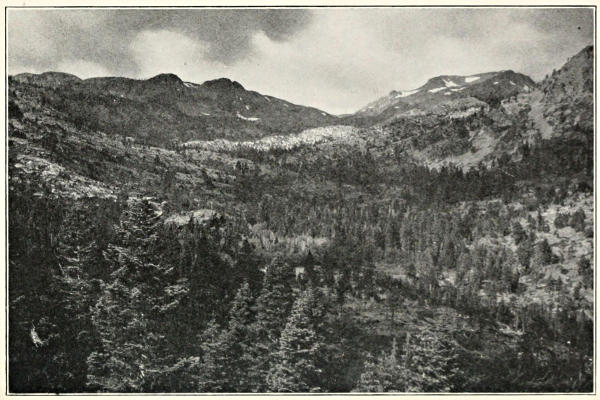
THE TALLAC TRAIL TO TAHOE.
Toluca, near Los Ángeles, is probably derived
from Tolujaa, or Tilijaes, a tribe among the
original ones at San Juan Capistrano in 1731,
although there is also a place named Toluca in
Mexico.
Tomales. See page 236.
Topo Creek (gopher creek).
Toro (bull). See pages 85 and 163.
Toros (bulls).
Tortuga (turtle, tortoise).
Trabuco (blunderbuss, a sort of wide-mouthed
gun), but it may not be used in that sense in this
case. See page 85. Trabuco Canyon is in Orange
County.
Trampa del Oso (bear trap).
Trampas (traps, snares), perhaps named in
reference to traps which were in common use
among the Indians to catch game, as well as their
human enemies. In Contra Costa County.
Tranquillón Mountain is in Santa Bárbara
County. Tranquillón is a mixture of two kinds
of grain, such as wheat and rye, called in English
“mastlin,” or “maslin.”
Tres Ojos de Agua (three springs of water).
Tres Pinos. See page 163.
Trigo (wheat), is 128 miles from Stockton.
Trinity County. See page 257.
Trinidad Bay and town. See page 257.
Triunfo (triumph), is in Los Ángeles County.
Trópico (tropical), near Los Ángeles.
Truckee. See page 305.
Tulare (place of rushes). See page 281.
Tularcitos (little rushes, little Tulare ranch).
Tulucay Rancho, near Napa State Hospital, is
derived from the Indian word tuluka (red).
Tunitas is a place near San Francisco on the
Ocean Shore Road. The tunita is a beach plant
sometimes called the “beach apple.” Tuna is
the Spanish name for the common cactus known
as “prickly pear.”
Tuolumne. See page 315.
Tustín (a surname), a place in Orange County,
near Santa Ana. Fernando Tustín was one of the
early settlers, and came to California in 1845.
Ukiah. See page 262.
Usal, in Mendocino County. This is an Indian
word, derived from yosal, or yusal, the name of
a tribe of Pomos, living on the coast from Usal
northward.
Las Uvas (the grapes). See page 163.
Vacaville. See page 289.
Valencia Peak, near San Luís Obispo. Valencia
is a surname.
Valle (valley).
Vallecito (little valley) is the name of places in
Calaveras and San Diego Counties. See page 334.
Los Vallecitos de San Marcos (the little valleys
of St. Mark).
Vallejo (a surname). See pages 236 and 341.
Valle Mar (sea valley), on the Ocean Shore,
near San Francisco. Improper construction. It
should be Valle del Mar (valley of the sea).
Valle de San Felipe (valley of St. Philip).
Dos Valles (two valleys).
Valle de San José (valley of St. Joseph).
Valle Verde (green valley). See page 85.
Valle Vista (valley view). See page 85. Improper
construction. It should be Vista del Valle
(view of the valley).
Vega, an open plain, or tract of level land. Vega
is also a surname.
Las Vegas (the meadows). Fremont refers to
the vegas of the Southern Central Valley in these
terms: “We encamped in the midst of another
very large basin, at a camping ground called Las
Vegas, a term which the Spaniards use to signify
fertile or marshy plains, in contradistinction to
llanos, which they apply to dry and sterile plains.”
Vega del Río del Pájaro (plain of the river of the
bird).
Venado (deer), is in Colusa County.
Ventura (fortune). See page 113.
Verano (summer), is west of Napa.
Verde (green), twelve miles from San Luís
Obispo.
Verdugo (a surname in this case). See page 85.
Los Vergeles (flower gardens, beautiful orchards).
Vicente Point (Point Vincent). See page 85.
Viento (wind), is in San Bernardino County.
Las Vírgenes (the virgins). See page 341.
Vista (view), in San Diego County.
Bella Vista (beautiful view).
Buena Vista (good view).
Chula Vista (charming view). See page 42.
Vista Grande (large view), is in San Matéo
County.
Monte Vista (mountain view). Improper construction.
It should be Vista del Monte (view of
the mountain).
Río Vista (river view). See page 289. Improper
construction. It should be Vista del Río (view of
the river).
Vizcaíno Cape, named for the celebrated Spanish
explorer Sebastián Vizcaíno, who touched at
various points on the California coast in the year
1602.
Volcán (volcano).
Wahtoque is an Indian word meaning “pine
nut,” the name of a place near Fresno.
Wawona, an Indian word of disputed meaning.
See page 334.
Weitchpec, near Hoopa valley, Humboldt
County. “The Weitspekan family consisted of
the Yurok tribe alone, inhabiting the lower Klamath
River and adjacent coast. The name is
adapted from Weitspekw, the name of a spring
in the village. At the site of the present post-office
of Weitchpec was one of the most populous Yurok
villages, and one of only two or three at which
both the Deerskin dance and the Jumping dance
were held.”—(A. L. Kroeber in Handbook of
American Indians.)
Las Yeguas (the mares), referring to a pasture
where mares were kept.
Yerba Buena (good herb). See page 205.
Yokohl, in Tulare County. This was the name
of a Yokuts tribe formerly living on the Kaweah
River, Tulare County.
Yolo. See page 268.
Yorba (a surname). This was the name of one
of Captain Fages’ original Catalán volunteers.
Yorba is near Los Ángeles.
Yosemite (grizzly bear). See page 321.
Yreka. See page 258.
Yuba. See page 266.
Yucaipe, in San Bernardino County, is an
Indian place name.
Zamora, probably named for the province of
the same name in the ancient kingdom of León, in
Spain. There is an old proverb about this place
which says: “No se ganó Zamora en una hora”
(Zamora was not taken in an hour), the same idea
as expressed in “Rome was not built in a day.”
Zapatero Creek (shoemaker creek).