The determining factors of long life may be
broadly divided into those included under
heredity, environment, due functional activity,
and personal habits. It is impossible to separate
these factors into watertight compartments, for
a certain amount of overlapping between them
is unavoidable.
The influence of heredity has often been
insisted upon and is perhaps the most important
factor in longevity. Out of 824 persons
between 80 and 100 years of age analysed by
Humphry, 406, or 49·4 per cent, came of long-lived
families. Numerous striking examples of
such families are on record, but a few only
need be given. Roy45 quotes the case of Dr.
Iverex, who died in 1700 at the age of 104,
his father at 112, his mother 107, and his
grandfather 130 years, and gives four other
examples of three centenarians in the same
family. Another remarkable family group was
that of Joseph Retas who died at Tarbes at
the age of 118 in 1888, and was the son of a
man aged 111 years and had a brother aged
114 years. Two centenarian twin sisters were
recorded in a village near Athlone46; centenarian
sisters and brothers are not so very exceptional.
Sir Hermann Weber47 recorded two families,
in one of which the average age of ten children
was over 90 years and in the other of eight
children nearly 90 years.
A good stock may ensure long life in the
face of adverse environment, such as town life
and alcoholism; thus Dr. John Brownlee48
showed statistically that while persons dying
at the age of 51 in the average environment
would have, had they lived in the country,
a mean life of seven years longer, this difference
was less at higher ages, and remarks that
a person who has the potentiality of living to
the age of 80 years has a force of life which
is more or less independent of environment.
Sir George Savage49 often noted that of two
aged members of the same family one was
sober the other intemperate; and a good
many centenarians have taken alcohol in
quantities that would be too much for ordinary
people.
Heredity is not an all-powerful factor, for
an individual whose family history is not
remarkable for longevity may greatly prolong
his life by carefully correcting unfavourable
hereditary tendencies. Thus the late Sir Hermann
Weber, who lived to the age of 95
as the result of practising the maxims of his
Prolongation of Life, mentions that his mother
died of cardiac failure before she was 60 and
his father at 60 from cerebral haemorrhage,
and he gives other instances of the same happy
result of wise management. Not unfrequently
husband and wife both live to an advanced
age, no doubt often as the result of favourable
environment. A photograph of a married
couple both 101 years old appears as the
frontispiece of Sir George Humphry’s book
on Old Age, and must of course be accepted;
but the same cannot be said of the frontispiece
to volume ii. of Sir John Sinclair’s Code of
Health and Longevity (1807), representing the
Hungarian husband and wife, aged respectively
172 and 164 years, who had been married
147 years.
It has been suggested that “cell-memory”
by providing experience as to the proper way
to behave at the different periods of life has
a bearing on the coming of old age; Samuel
Butler50 argued that cells without hereditary
memory of past existence at, say, 75 years,
would become puzzled and so disordered as
to die. Parkes Weber51 has modified this
view by assuming a failure of the wish to live
on the part of the nerve cells of the brain,
a want which might also be hereditary. The
possession by the cells of “the will to live”
would be an important factor in longevity
and should be obtained by individual effort
or in other words be an acquired character,
though the reverse conditions such as physical
mutilations,52 often spoken of as acquired
characters, are known not to be inherited.
In different countries and in different
individuals the cells of the body may differ
in the rate at which they live; they have,
as Sir James Paget53 said, a different “time-rate”;
in some the time-rate is rapid, for
example in the natives of hot climates where
maturity comes early and old age at a time
that seems very premature by our standard;
in others the body, sometimes the mind,
works slowly, is set at a more leisurely rate
and therefore takes longer to run its course.
In some persons this appears to be shown by
a slow pulse, a characteristic that may also
be hereditary.
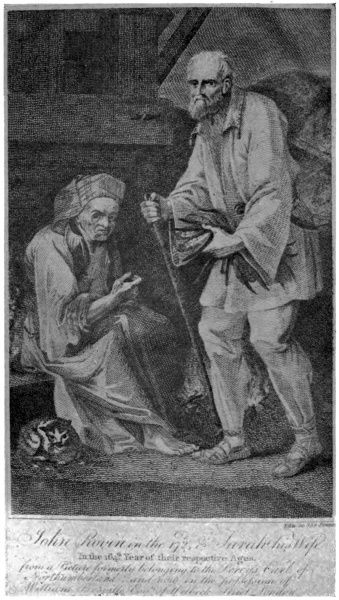
Fig. 8.—John Rovin and Sarah his wife, Hungarians,
at their reputed ages of 172 and 164 years respectively;
their married life lasted 147 years.
Of the hereditary factors most concerned
in longevity the inherent vitality of the central
nervous system is the most essential; physiological
death in man and the higher animals
is probably due to failure of the cells of the
brain, which do not multiply after birth and
are less capable of rejuvenescence than those
of the other organs. The integrity of the
cardio-vascular system is also most important;
in Sir William Osler’s54 words much depends
“on the quality of arterial tissue (vital rubber)
which the individual has inherited.” According
to Sir Clifford Allbutt55 there are two modes
of hereditary transmission of arteriosclerosis,
the direct and the indirect; the direct which
he calls decrescent or primary, consisting in
an original frailty or toxic susceptibility which
like other peculiarities may run in families;
and the indirect or hyperpietic, a secondary
event due not to inherent taint in the arterial
walls but to metabolic changes causing high
arterial pressure; it is in such families with
hereditary high blood pressure that cerebral
haemorrhage occurs in one generation after
another about the same age (65–70). In
examining people the discovery of a blood pressure
low for their age often justifies, in
the absence of any pathological condition, the
suggestion that the family is long-lived. The
frequency of cardiac hypertrophy (43 per cent
of Councilman’s cases), even though it be a
pathological condition, shows that its reserve
power is good. Death among the aged very
commonly depends on some morbid change in
the cardio-vascular system; thus at the Royal
Hospital, Chelsea, Majors R. J. C. Thompson
and R. E. Todd56 found that among 169
deaths of pensioners with an average age of
77·2 years the largest number 64, or 38 per
cent, were due to this cause; lesions of the
respiratory system, pneumonia, and bronchopneumonia,
coming next with 41 deaths, or
24 per cent, malignant disease being responsible
for 22, or 13 per cent. The nervous and
circulatory systems are intimately correlated
with each other, disorder or disease of one,
particularly of the cardio-vascular system, exerting
an evil influence on the other. In a
negative manner weakness of the digestive
system may favour longevity by preventing
the excesses which vigorous individuals may
for a time at any rate indulge in with impunity;
but as a rule the digestion of the long-lived
is good.
The first-born is significantly handicapped,
as Karl Pearson57 has shown, and more subject
to tuberculosis, insanity, and criminality. But
out of 71 centenarians analysed by Sir George
Humphry 17, or 24 per cent, were firstlings,
and 24 per cent of 824 persons between 80
and 100 were first-born. It must be remembered
that first-born are more numerous
than any others, and some of the above were
only children. The most frequent position
in the family among these 895 old people
analysed by Sir George Humphry was the
third.
The influences included under the head of
environment are numerous, and this factor
cannot be entirely separated from that of
heredity, for environment may favour and
shape hereditary characteristics. The subject
of the harmony and the want of harmony
existing between man and his surroundings is
so vast that it is possible to touch on a few only
of these aspects.
The average length of life varies in different
countries; a temperate or moderately cold
climate is conducive to a slower development
of maturity and so to a longer life than tropical
regions. The Balkans, Greece, Scandinavia,
the Pyrenees, California, and small islands are
considered favourable to longevity. A high
elevation has been regarded as an important
factor, and the great age of the monks of
Mount Athos has been thus explained, though
other influences, such as simplicity of life, may
well play a part. Switzerland, however, does
not conform to the view that a high elevation
confers long life on its inhabitants. From
observations around Dijon Noirot58 drew up a
scale showing that the elevation above the sea
and length of life rose together. National
habits have a bearing, and this may help to
explain the longevity of the Jews, who follow
the Mosaic laws of health, and why the French
appear to be more long-lived than the Germans.
The long-continued persecution and hard life
that the Jews have undergone has led to the
survival of the fittest and a hereditary factor.
The former simplicity of the Russian peasants
would also provide a reason for their reputed
longevity (one centenarian in every thousand).
In Ireland, though much depleted by migration
of young adults, the absolute number of
centenarians is very high; in 1888 there were
208 such deaths, or 43 per million living; in
the ten years 1911–20 inclusive there were
1030 centenarian deaths, or about 23 per
million living; and the Registrar-General,
Sir William J. Thompson, kindly informs me
that in 1921 there were 314 centenarians
living in a population of 4,496,000, or about
70 per million of the population. It seems
probable that this is the outcome of a simple
life. In England and Wales the number of
centenarians is both relatively and absolutely
less; in 1887 there were said to be about 2
and the 1911 census returns showed 3·6 living
centenarians per million of the population;
the return of the 1921 census is not yet available.
In the ten completed years 1910–19 there were
691 centenarian deaths, or an average of 69
annually among a population averaging about
35 millions—about two per million living.
In California there are, according to Laurent,59
300 centenarians in a population of three
millions, or 100 per million, the extremely
favourable climatic conditions accounting for
this high ratio. In the same country there is
a difference, much to the advantage of the rural
inhabitants, between the prospect of longevity
in the towns and in the sparsely populated
districts. From their open-air life agricultural
labourers provide the largest percentage of
long lives.
Improved Conditions of Life.—There is good
evidence that the average expectation of life
has improved in this country during the period
that increasing attention has been paid to
sanitation. This is shown by the tables of
the Registrar-General. For most of the following
information I am indebted to Dr. T. H. C.
Stevenson of the General Register Office,
Somerset House. In 1838–54 the expectation
of males at birth in England and Wales was
39·91 years, in 1901–10 the male and female
expectations at birth were 48·53 and 52·38
years respectively, and the latest available expectations
at birth (English Life, Table No. 8,
Supplement to the Seventy-fifth Annual Report
of the Registrar-General, Cd. 7512) are
51·6 for males and 55·35 years for females.
But the expectation is probably considerably
more now, as the death rates have fallen
appreciably since 1910–12. The Prussian
male expectation of life at birth has increased
from 35·38 years in 1867–77 to 46·43 in
1906–10;60 and the Swedish61 expectation of
life at birth from 39·5 years in males and 43·6
years in females in 1816–40 to 54·5 and 57
years respectively in 1901–10. In North
America62 there has been a fall in the death rate
in every age group in 1920 as compared with
1910.
The increased expectation of life has been
especially prominent in early and adult life.
Examination of the Registrar-General’s census
returns from 1851 to 1911 show that although
there were more persons per million living
between the ages of 55 and 75 there were less
above the age of 75 at the end than at the
beginning of this 60-years’ period. It has
been suggested that the increased survival in
the earlier period of old age is due to the
saving of life in infancy and that, as these lives
are not prolonged above the age of 75 or so,
the diminished proportion of persons living
to become octogenarians is explained (H.
Weber).
The influence of past diseases is perhaps most
conveniently considered in connexion with
environment. As infection must necessarily
impair the vitality of the cells of the body,
either temporarily or permanently, it would be
natural to expect that those who live to a
great age would show a remarkably clean bill
of health. This is often true. But it is at
first sight rather disconcerting to find that
nearly half of the 824 persons between 80 and
100 years of age analysed by Sir George
Humphry had had severe illnesses at one time
or another; many of these, however, were
acute infections. It is noticeable that 85 per
cent were free from rheumatism in the hands
(selected as a convenient test in his collective
investigation), which in the light of present
opinion that arthritis is the result of a focal
infection would appear to show that these old
people are remarkably free from chronic disease.
Long-continued infection or intoxication would
be a far more potent factor than a transient illness
in producing permanent change in the cells.
A short acute infection would cause changes
in the cells which might, like those of fatigue,
be temporary and recoverable. Saundby’s63
dictum may be accepted as fairly accurate,
exception being made for peripheral mutilations,
namely, that those only can expect to
live to extreme old age who at the age of 60
possess bodies free from disease. But critical
examination would no doubt show that focal
infections become increasingly frequent as the
years go on; this is particularly true as regards
oral sepsis; after two years’ experience of 500
pensioners at the Royal Hospital, Chelsea,
Thompson and Todd have never seen a tooth
in a healthy condition there. It is noteworthy
that dental disease seems to have become
common with the advent of civilization, as
judged by examination of ancient skulls, though
the loss of teeth is an accompaniment of the
bony changes in old age, and very old people
seldom have more than a few teeth left. On
the other hand, an acute illness is often the
apparent starting-point of old age; there may
be a long and imperfect convalescence due to
persistence of infection, or deterioration may be
due to auto- or hetero-suggestion (vide p. 48).
The influence of syphilis, whether congenital
or acquired, is one of the most important in
the prevention of healthy longevity; it not
only directly disables and kills, especially in
infancy and in the fifth decade, but it damages
the vitality of the cells thus producing degeneration
and premature senility, and favours
secondary infections.
It is clear that for the preservation of
health detection of disease in the earliest stage
is all-important, and that this can be attained
by periodic examination by a medical man;
but obvious though this may be, the average
man waits to call in a doctor until he knows
that he is ill. Timely advice as to methods
of life, food and drink, occupation, or environment
would often prevent disease and premature
death. In 1913 the Life Extension
Institute was founded in New York for such
periodic examination and report, and the Life
Assurance Companies, finding that persons so
examined showed, at any rate for some years,
a death rate lower than that anticipated, gave it
financial support.
As is well known, disuse leads to atrophy,
and biologically conditions rendering an animal’s
supply of food extremely easy and safe are
followed by atrophy of the parts no longer
necessary in a state which may thus come to
border on parasitism; in an extreme degree this
result is shown in barnacles (degenerated
crustaceans) and ascidians (degenerated vertebrates).
In man the cessation of an active life
on retirement to the country, described by
Samuel Johnson as “a kind of mental imprisonment,”
or the sudden acquisition of wealth,
often exerts a most evil influence; for if the
whole body is no longer kept in a condition
of functional activity, those parts allowed to
remain relatively idle begin to degenerate and
atrophy; loss of function means a diminished
blood supply and nutrition, and so degenerative
atrophy. According to Laurentius “nothing
hastens old age more than idleness.” James
Easton,64 who collected 1712 records of centenarians,
many of them open to criticism,
endorses Hufeland’s dictum that no idler has
ever attained to a remarkably great age; and
Sir Thomas Browne’s65 quaint injunction “Dull
not away thy days in sloathful supinity and
the tediousness of doing nothing” is old but
true wisdom.
The axiom that disuse leads to atrophy
applies perhaps even more to mental activity,
for resting and rusting of the brain slow the
pace of the whole body, whereas an alert
mind can exist in an infirm body. There is
no doubt that occupation with a strong desire
to live for the accomplishment of a definite
purpose exerts a most beneficial influence, and
there have not been wanting some, such as
Karl Marx, who have preached that old age
is in great part a matter of will. Speaking
of the circle in which Madame du Deffand
moved Lytton Strachey66 says “They refused
to grow old; they almost refused to die.
Time himself seems to have joined their circle,
to have been infected with their politeness,
and to have absolved them, to the furthest
possible point from the operation of his laws.
Voltaire, d’Argental, Moncrif, Hénault,
Madame d’Egmont, Madame du Deffand
herself all lived to be well over eighty, with
the full zest of their activities unimpaired.”
Want of this joy in life necessarily engenders
carelessness and neglect of personal hygiene, and
loss of the power to react to the environment.
As the years advance and the younger generation
come up, the suggestion that “his day
is done,” that he has had his innings, and that
it is time for him to step aside, is made to the
senior not only by his family and his juniors—hetero-suggestion—but
by himself, and he
may then, after the modern fashion, get into
the habit of repeating mentally “I am getting
older and older every day.” A slight illness
or incapacity may be magnified into a conviction
that the end is near, and as a result
of the loss of self-reliance a state of increasing
invalidism is established and becomes progressive
without any other cause. Just as a
fall, an exacerbation of rheumatic pain, a slight
operation or indisposition, necessitating rest in
bed for a short time, may be followed by a
functional loss of power in the lower extremities,
so a more general suggestion of failing powers
may lead to mental deterioration. Thus too
often a man’s last occupation is to shorten
his existence and make it miserable. Finot,67
who rather optimistically believes that man
should be able to live 150 years, regards this
poisonous auto-suggestion as one of the factors
that prevent such an achievement. Observation
of contemporaries suffering from premature
senile changes, due to pathological factors,
may no doubt stimulate this destructive form
of auto-suggestion. There is therefore a basis
for the idea68 attributed to the late Lord
Rhondda that old age was a transferable
disease, and for his avoidance, as far as possible,
of the society of the aged on account of the
risk of contagion. Association with the young
keeps one more or less of the same age, very
probably by suggestion to the unconscious, or
in Oliver Wendell Holmes’s words “While
we’ve youth in our hearts we can never grow
old.” From experience at the Royal Hospital,
Chelsea, where there are 500 pensioners,
Thompson and Todd69 are convinced of the
powerful factor of lowered mentality due to
loss of self-reliance, self-respect, and the instinct
of self-preservation in inducing premature
senility, and have been most successful in
counteracting this by antidotal suggestion conveyed
by cheerful chaff and by the avoidance
of sympathetic condolence.
In addition to the joie de vivre a happy
disposition that thinketh no evil, has no
jealous suspicions, and is free from the tendency
to worry has an important influence in keeping
the mind and body young. The power of
detachment from work and anxieties, as if the
mind were fitted with thought-tight compartments,
is a valuable asset in maintaining
vitality unimpaired; this was a trait in Gladstone
and Kitchener.
Professional men who retain their offices
as in the Church, the Civil Government, the
Bar, tend to live longer than business men who
retire to leisured ease after a strenuous struggle.
B. Yeo’s70 analysis of 42 Bishops and Deans,
49 Judges, and 188 Peers, showed that in
all three classes the average duration of life
was practically the same, namely, 72 years.
Among churchmen mention may be made of
Cardinal de Salis (110), Gregory IX. (100),
Abbé Maignon (100), Martin Routh (100),
for 63 years President of Magdalen College,
Oxford, thus surpassing the more modern
instance of Edward Atkinson, aged 96 years,
for 59 of which he was Master of Clare, but
not that of Laurence Chaderton (1536–1640)
who, after being Master of Christ’s College,
Cambridge, with great success for 38 years,
survived for 18 years and became a centenarian.
There are some remarkable examples of artists
retaining an active life to a very advanced
age, such as Titian, Giovanni Bellini, Michael
Angelo, Sidney Cooper. Politics often keep
men busy and active to an advanced age, and
the names of Palmerston, Brougham, Lyndhurst,
the octogenarian premiers Gladstone and
Clemenceau, Strathcona, Sir Charles Tupper
naturally come to one’s mind. In the legal
profession Chief Justices and Judges can
retain their seats and so keep up their vigour
long past what is regarded in some walks of
life as the retiring age. Sir Edward Coke
(82), Lord Mansfield (89), Lord Brampton
(90), Lord St. Leonards (93), and Lord
Halsbury (97), are examples in point. Within
recent years there have been two octogenarian
Lord Mayors of London, Sir Thomas Crosby
(in 1911), and Sir John James Baddeley
(1921); the first created a record by being
the first medical man to hold this office, and
Sir John Baddeley celebrated his year of
Mayoralty by bringing out a beautiful historical
account of Cripplegate.
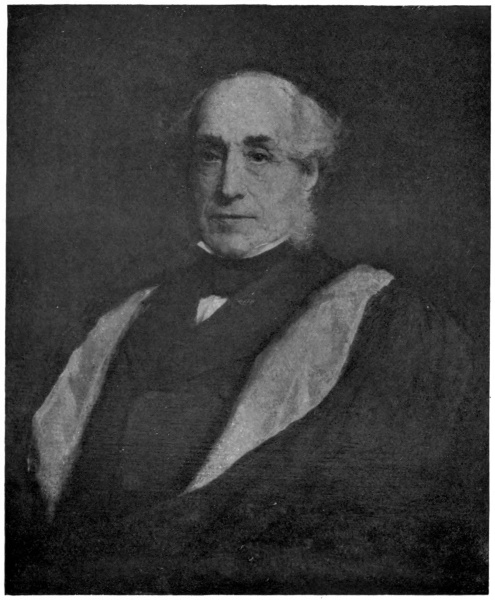
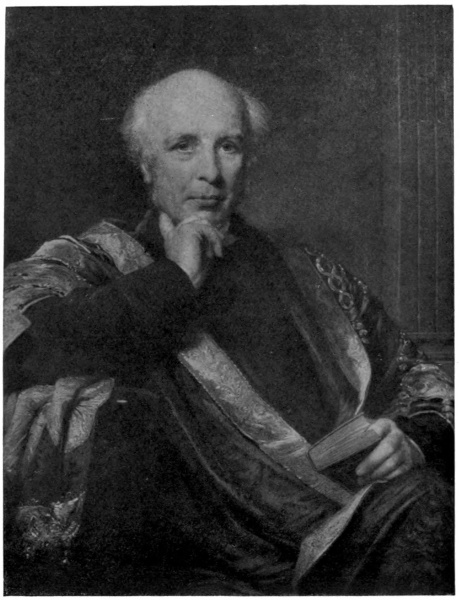
Fig. 9.—Sir Henry Alfred Pitman (1808–1908), M.D., Camb.,
F.R.C.P., Registrar of the Royal College of Physicians of London,
1858–1889.
From portrait in the Royal College of Physicians of London, painted in 1886 by
W. W. Ouless, R.A.
From the inevitable exposure to infection
and worry the medical fraternity is generally
considered to rank low in the professions as
regards longevity, but it is easy to point to
exceptions especially among those whose mental
vigour made them prominent in their own
and in one instance for all time. Hippocrates
is variously stated to have died at the ages
of 85, 90, 104, or 106 years with the words
“I leave behind me two great physicians,
temperance and frugality.”71 I have references
to 43 medical centenarians for 18 of which,
including the record of W. G. Meade, physician
at Tunbridge Wells and buried at Ware,
Herts, in November 1652, aged 148¾ years,
I am indebted to my friend Mr. R. R. James.
The only one that I knew personally was
Sir Henry Pitman, for 31 years (1858–89)
and until his 82nd year Registrar of the Royal
College of Physicians of London. Among the
others Dr. de Bossy of Paris may be mentioned
as the son of a centenarian. From analysis
of 2113 eminent medical men Drinkwater72
found that the average age was 67 years,
or considerably above the average age of the
male population over 21 years, which was
estimated at 59 years, and that 627 or nearly
a third of them all were between 71 and 80
years of age.
But the examples given of mental activity
late in life, and they could easily be multiplied,73
are exceptions to the rule that the majority
of men begin to fail in their work between
60 and 70. This no doubt is because most
septuagenarians suffer in greater or less degree
from pathological old age. In the case of the
healthy vigorous man enforced retirement at
the age of 65 or 70 is not to the advantage
of either the retiring victim or the community,
for it restricts his opportunities for production
and useful activities guided by ripe experience.
To quote examples of epoch-making work
done by men long past the age when the
majority have lost originality, initiative, and
elasticity of mind: Galileo, Newton, Charles
Darwin, Sophocles, Voltaire, Molière, Goethe,
Michael Angelo, and Titian, made original and
lasting contributions to science, literature, and
art long after fifty. Morgagni’s famous De
Sedibus et Causis Morborum, brought out when
he was 80, and the Commentaries of W.
Heberden (aged 91), published posthumously,
represent the accumulation of many years and
so cannot be fairly quoted as examples of
ability persisting into late life. Rules and
regulations must, however, be based on what
is best for the majority and hence, though
the exceptions are prominent and regrettable,
the age limit of 65 to 70 must at present be
accepted as generally advisable for otherwise
permanent appointments.
Although functional activity maintains the
tissues in a state of health, it is not an infallible
panacea for the prolongation of life; in the
first place the danger of overwork and excessive
fatigue must be borne in mind. While the
attractive suggestion that excessive functional
activity leading to extreme hypertrophy may
exhaust the vitality of the tissues and lead to
atrophy, may not be borne out by the examples
quoted in its favour, such as the occupational
neuroses and atrophy of the upper arm muscles
in hammermen and file-cutters, there is some
reason to retain a belief that this sequence of
events may occur, for example in dilatation of
the extremely hypertrophied hearts seen in
long-continued high blood pressure, renal
disease, and valvular lesions;74 but even here
the possibility of other degenerative changes,
due to toxaemia, must be borne in mind.
Further, functional activity while keeping the
cells of the body in a healthy state depends
on their structural integrity, and this in its
turn is the outcome of the modifications due
to environment, and possibly of the inborn
lease of vitality. So that although an active
life may within limits prolong life, there are
many instances in which, from extrinsic pathological
influences or inherent inadequacy, it
fails to do so, and a man becomes unequal
to the demands of his position.
All experience, medical and lay, such as
is embodied in Cornaro’s oft-quoted memoirs,
Leonardus Lessius’s Hygiasticon or the right
course of preserving life and health until extreme
old age (1613), George Cheyne’s Essay
of Health and Long Life (1724), Metchnikoff’s
orthobiosis, and the Arabian proverb of
the ninth century, quoted by Lacassagne,75
that “the greatest dangers for an old man
are a good cook and a young wife,” is in
agreement as to the immense importance of
strict moderation in indulging the appetites
for the prolongation of life. The life histories
of centenarians show that they have usually
been small eaters, especially of meat. This
is generally explained in terms of minimizing
toxaemia, and it has been said that “man does
not die, he kills himself” (Montaigne) and
more graphically, if coarsely, that “he digs
his grave with his teeth.” In some lower
forms of life, such as the planarians (Child),
partial starvation and the resulting reduction
lead to rejuvenescence and so to the inhibition
of the onset of senescence; hibernation has
somewhat the same effect, though perhaps
this might be partly explained as merely
starvation during prolonged sleep. The question
has often been raised whether partial
starvation in man has any such positive influence,
and unprofessional “cures” on these
economical lines have not been unfashionable.
It might indeed be argued that the Allen
treatment of diabetes, in which starvation is
followed by increased carbohydrate tolerance,
depends on a certain degree of rejuvenescence.
Cures consisting in purgation may act by
partial starvation as well as by obviating
toxaemia. After a period of starvation a
normal person may become heavier than before,
and his general health be improved. But in
the present state of our knowledge and in the
light of the dangers of starvation the further
investigation in man of this problem is one
that demands serious hesitation.
As to the bad influence of alcohol on
longevity there can be no reasonable doubt.
Alcohol is a protoplasmic poison causing
degenerative changes in the cells and reducing
the resistance to infection. A collective investigation
undertaken by Sir Isambard Owen76
showed that there were very few hard drinkers
among the long-lived, and Sir George Humphry
concluded that the characteristics of the aged
included temperance; among 46 centenarians
one, and among 73 men over 90 one confessed
to taking too much occasionally, and out of
298 men between 80 and 90 years of age 45,
or 15 per cent, were classified as taking much
alcohol. That such exceptions occur is explicable
by great inherent vitality. It has been
said that “wine is the milk of old people,”
but from his experience of the hygiene of the
elderly Sir Hermann Weber was not in
sympathy with this view, and he pointed out
the weakness of the popular idea that the
moderate enjoyment of alcohol was harmless;
for so-called moderate drinking is in reality often
immoderate indulgence for the individual, and
most of us must have recognized from observation
that long-continued though moderate use
of alcohol is followed by premature deterioration.
The proverb vinum lac veneris and the tendency
that alcohol has to lead to incontinence and
so to venereal infection may be borne in mind
in considering its influence on longevity. As
a medicine alcohol has its occasional use, and
though it may be a food it is an expensive one.
Smoking among centenarians was specially
investigated by Sir George Humphry, who
found that among 19 male centenarians 8
smoked much, one a little, and 10 not at all;
while out of 30 female centenarians 4 smoked
much, 2 moderately or little, and 24 not at
all. There is no doubt that with advancing
years there is commonly a relative loss of
tolerance for tobacco, so that unpleasant
symptoms ranging from cardiac extra-systoles,
through abdominal pain, to tobacco angina,
may dictate discontinuance of the habit. But
a large number of old people have smoked in
earlier life though subsequently non-smokers.
Personal tolerance to tobacco shows great
variations, and there is no doubt that well-marked
symptoms may be caused by tobacco.
But that moderate smoking diminishes the
chance of longevity has certainly not been
proved. Much discussion has taken place as
to the relation between smoking and arteriosclerosis;
it is true that in animals nicotine
in considerably larger doses than can be
absorbed by smokers, damages the arteries,
and Huchard and Lazarus were convinced
that it caused arteriosclerosis. Sir Clifford
Allbutt,77 after quoting the various opinions,
points out that if tobacco be a cause of arterial
disease, it acts very slowly, for at 45 years of
age, after a quarter of a century’s exposure,
the smoker’s arteries are not distinguishable
from those of the abstainer’s; and he mentions
the arteriosclerosis of the ancient Egyptians
and of women as incidents detracting from any
argument that tobacco is an important cause
of arterial disease.
A large proportion of the centenarians and
persons over 80 years of age collected by Sir
George Humphry obeyed the adage early to
rise and early to bed, and I well remember
that he used to lay stress on the factor of
getting up directly one woke and so denying
the flesh the luxury of further sleep. Whether
going to bed early and getting up early is more
than an index of a life otherwise spent in
accordance with the late Sir Andrew Clark’s
“laws of physiological righteousness” may be
questioned.
Bodily Conformation.—Long-lived people are
usually spare, obesity being rare, and, allowing
for some shortening due to age, of a good
average height (Humphry). It is interesting
in this connexion to quote the conclusions
arrived at by Robertson and Ray78 from comparison
of groups of long-lived and short-lived
white mice in similar conditions. The long-lived
were relatively stable, highly resistant to
external disturbing factors, displaying subnormal
variability and a more or less well-marked,
but not invariable, tendency to early
overgrowth and relative paucity of tissue
accretion in late life; while the short-lived
animals showed exactly the opposite features
with a tendency to rapid increase of tissue in
late life.
The importance of a healthy life with
plenty of fresh air, sunshine, exercise, proper
diet, and absence of worry hardly needs
insistence. Leonard Williams79 has epigrammatically
summed up the hygiene of old age
as “Fresh air, meagre fare, freedom from
care.”