It was nearly midnight of Christmas Eve on Oakland Plantation. In the
library of the great house a dim lamp burned, and here, in a big
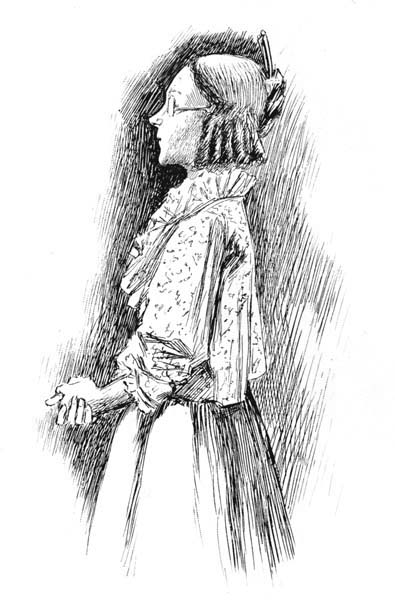
arm-chair before a waning fire, Evelyn Bruce, a fair young girl, sat
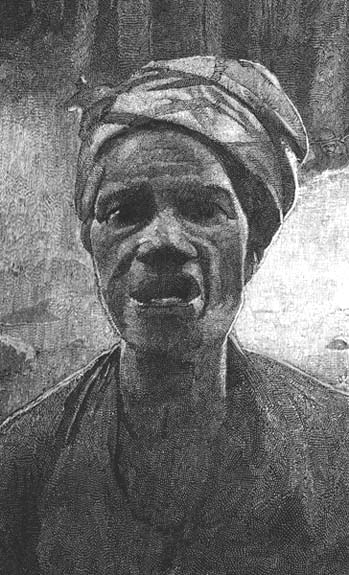
earnestly talking to a withered old black woman, who sat on the rug at
her feet.
"An' yer say de plantatiom done sol', baby, an' we boun' ter move?"
"Yes, mammy, the old place must go."
"An' is de 'Onerble Mr. Citified buyed it, baby? I know he an' ole
marster sot up all endurin' las' night a-talkin' and a-figgurin'."
"Yes. Mr. Jacobs has closed the mortgage, and owns the place now."
"An' when is we gwine, baby?"
"The sooner the better. I wish the going were over."
"An' whar'bouts is we gwine, honey?"
"We will go to the city, mammy—to New Orleans. Something tells me that
father will never be able to attend to business again, and I am going to
work—to make money."
Mammy fell backward. "W-w-w-work! Y-y-you w-w-work! Wh-wh-why, baby,
what sort o' funny, cuyus way is you a-talkin', anyhow?"
"Many refined women are earning their living in the city, mammy."
"Is you a-talkin' sense, baby, ur is yer des a-bluffin'? Is yer axed yo'
pa yit?"
"I don't think father is well, mammy. He says that whatever I suggest we
will do, and I am sure it is best. We will take a cheap little house,
father and I—"
"Y-y-you an' yo' pa! An' wh-wh-what 'bout me, baby?" Mammy would stammer
when she was excited.
"And you, mammy, of course."
"Umh! umh! umh! An' so we gwine ter trabble! An' de' Onerble Mr.
Citified done closed de morgans on us! Ef-ef I'd 'a' knowed it dis
mornin' when he was a-quizzifyin' me so sergacious, I b'lieve I'd o'
upped an' sassed 'im, I des couldn't 'a' helt in. I 'lowed he was
teckin' a mighty frien'ly intruss, axin' me do we-all's puckon-trees
bear big puckons, an'—an' ef de well keep cool all summer, an'—an'
he ax me—he ax me—"
"What else did he ask you, mammy?"
"Scuze me namin' it ter yer, baby, but he ax me who was buried in we's
graves—he did fur a fac'. Yer reckon dee gwine claim de graves in de
morgans, baby?"
Mammy had crouched again at Evelyn's feet, and her eager brown face was
now almost against her knee.
"All the land is mortgaged, mammy."
"Don't yer reck'n he mought des nachelly scuze de graves out'n de
morgans, baby, ef yer ax 'im mannerly?"
"I'm afraid not, mammy, but after a while we may have them moved."
The old bronze clock on the mantel struck twelve.
"Des listen. De ole clock a-strikin' Chris'mas-gif now. Come 'long, go
ter bed, honey. You needs a res', but I ain' gwine sleep none, 'caze all
dis heah news what you been a-tellin' me, hit's gwine ter run roun' in
my head all night, same as a buzz-saw."
And so they passed out, mammy to her pallet in Evelyn's room, while the
sleepless girl stepped to her father's chamber.
Entering on tiptoe, she stood and looked upon his face. He slept as
peacefully as a babe. The anxious look of care which he had worn for
years had passed away, and the flickering fire revealed the ghost of a
smile upon his placid face. In this it was that Evelyn read the truth.
The crisis of effort for him was past. He might follow, but he would
lead no more.
Since the beginning of the war Colonel Brace's history had been the
oft-told tale of loss and disaster, and at the opening of each year
since there had been a flaring up of hope and expenditure, then a long
summer of wavering promise, followed by an inevitable winter of
disappointment.
The old colonel was, both by inheritance and the habit of many
successful years, a man of great affairs, and when the crash came he was
too old to change. When he bought, he bought heavily. He planted for
large results. There was nothing petty about him, not even his debts.
And now the end had come.
As Evelyn stood gazing upon his handsome, placid face her eyes were
blinded with tears. Falling upon her knees at his side, she engaged for
a moment in silent prayer, consecrating herself in love to the life
which lay before her, and as she rose she kissed his forehead gently,
and passed to her own room.
On the table at her bedside lay several piles of manuscript, and as
these attracted her, she turned her chair, and fell to work sorting them
into packages, which she laid carefully away.
Evelyn had always loved to scribble, but only within the last few years
had she thought of writing for money that she should need. She had
already sent several manuscripts to editors of magazines; but somehow,
like birds too young to leave the nest, they all found their way back to
her. With each failure, however, she had become more determined to
succeed, but in the meantime—now—she must earn a living. This was
not practicable here. In the city all things were possible, and to the
city she would go. She would at first accept one of the tempting
situations offered in the daily papers, improving her leisure by
attending lectures, studying, observing, cultivating herself in every
possible way, and after a time she would try her hand again at writing.
It was nearly day when she finally went to bed, but she was up early
next morning. There was much to be considered. Many things were to be
done.
At first she consulted her father about everything, but his invariable
answer, "Just as you say, daughter," transferred all responsibility to
her.
A letter to her mother's old New Orleans friend, Madame Le Duc, briefly
set forth the circumstances, and asked Madame's aid in securing a small
house. Other letters sent in other directions arranged various matters,
and Evelyn soon found herself in the vortex of a move. She had a wise,
clear head and a steady, resolute hand, and in old mammy a most capable
servant. The old woman seemed, indeed, to forget nothing, as she bustled
about, packing, suggesting, and, spite of herself, frequently
protesting; for, if the truth must be spoken, this move to the city was
violating all the traditions of mammy's life.
"Wh-wh-wh-why, baby! Not teck de grime-stone!" she exclaimed one day, in
reply to Evelyn's protest against her packing that ponderous article.
"How is we gwine sharpen de spade an' de grubbin'-hoe ter work in the
gyard'n?"
"We sha'n't have a garden, mammy."
"No gyard'n!" Mammy sat down upon the grindstone in disgust.
"Wh-wh-wh-what sort o' a fureign no-groun' place is we gwine ter,
anyhow, baby? Honey," she continued, in a troubled voice, "co'se you
know I ain't got educatiom, an' I ain't claim knowledge; b-b-b-but
ain't you better study on it good 'fo' we goes ter dis heah new country?
Dee tells me de cidy's a owdacious place. I been heern a heap o' tales,
but I 'ain't say nothin' Is yer done prayed over it good, baby?"
"Yes, dear. I have prayed that we should do only right. What have you
heard, mammy?"
"D-d-d-de way folks talks, look like death an' terror is des a-layin'
roun' loose in de cidy. Dee tell me dat ef yer des nachelly blows out
yer light ter go ter bed, dat dis heah some'h'n' what stan' fur wick,
hit'll des keep a-sizzin' an' a-sizzin' out, des like sperityal steam;
an' hit's clair pizen!"
"That is true, mammy. But, you see, we won't blow it out. We'll know
better."
"Does yer snuff it out wid snuffers, baby, ur des fling it on de flo'
an' tromp yer foots on it?"
"Neither, mammy. The gas comes in through pipes built into the houses,
and is turned on and off with a valve, somewhat as we let water out of
the refrigerator."
"Um-hm! Well done! Of co'se! On'y, in place o' water what put out de
light, hit's in'ardly filled wid some'h'n' what favor a blaze."
"Exactly."
Mammy reflected a moment. "But de grime-stone gotter stay berhime, is
she? An' is we gwine leave all de gyard'n tools an' implemers ter de
'Onerble Mr. Citified?"
"No, mammy; none of the appurtenances of the homestead are mortgaged. We
must sell them. We need money, you know."
"What is de impertinences o' de homestid, baby? You forgits I ain't
on'erstan' book words."
"Those things intended for family use, mammy. There are the
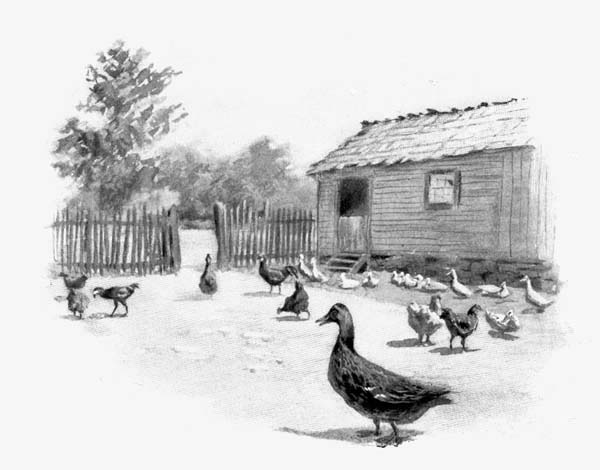
carriage-horses, the cows, the chickens—"
"Bless goodness fur dat! An' who gwine drive 'em inter de cidy fur us,
honey?"
"Oh, mammy, we must sell them all."
Mammy was almost crying. "An' what sort o' entry is we gwine meck inter
de cidy, honey—empty-handed, same as po' white trash? D-d-d-don't yer
reck'n we b-b-better teck de chickens, baby? Yo' ma thunk a heap o' dem
Brahma hens an' dem Clymoth Rockers—dee looks so courageous."
It was hard for Evelyn to refuse. Mammy loved everything on the old
place.
"Let us give up all these things now, mammy; and after a while, when I
grow rich and famous, I'll buy you all the chickens you want."
At last preparations were over. They were to start on the morrow. Mammy
had just returned from a last tour through out-buildings and gardens,
and was evidently disturbed.
"Honey," she began, throwing herself on the step at Evelyn's feet, "what
yer reck'n? Ole Muffly is a-sett'n' on fo'teen eggs, down in de
cotton-seed. W-w-we can't g'way f'm heah an' leave Muffly a-sett'n', hit
des nachelly can't be did. D-d-don't yer reck'n dee'd hol' back de
morgans a little, till Muffly git done sett'n'?"
It was the same old story. Mammy would never be ready to go.
"But our tickets are bought, mammy."
"An' like as not de 'Onerble Mr. Citified 'll shoo ole Muffly orf de
nes' an' spile de whole sett'n'. Tut! tut! tut!" And, groaning in
spirit, mammy walked off.
Evelyn had feared, for her father, the actual moment of leaving, and was
much relieved when, with his now habitual tranquillity, he smilingly
assisted both her and mammy into the sleeper. Instead of entering
himself, however, he hesitated.
"Isn't your mother coming, daughter?" he asked, looking backward.
"Or—oh, I forgot," he added, quickly. "She has gone on before, hasn't
she?"
"Yes, dear, she has gone before," Evelyn answered, hardly knowing what
she said, the chill of a new terror upon her.
What did this mean? Was it possible that she had read but half the
truth? Was her father's mind not only enfeebled, but going?
Mammy had not heard the question, and so Evelyn bore her anxiety alone,
and during the day her anxious eyes were often upon her father's face,
but he only smiled and kept silent.
They had been travelling all day, when suddenly, above the rumbling of
the train, a weak, bird-like chirp was heard, faint but distinct; and
presently it came again, a prolonged "p-e-e-p!"
Heads went up, inquiring faces peered up and down the coach, and fell
again to paper or book, when the cry came a third time, and again.
Mammy's face was a study. "'Sh—'sh—'sh! don' say nothin', baby," she
whispered, in Evelyn's ear; "but dis heah chicken in my bosom is
a-ticklin' me so I can't hardly set still."
Evelyn was absolutely speechless with surprise, as mammy continued by
snatches her whispered explanation:
"Des 'fo' we lef' I went 'n' lif' up ole Muffly ter see how de eggs was
comin' orn, an' dis heah egg was pipped out, an' de little risindenter
look like he eyed me so berseechin' I des nachelly couldn't leave 'im.
Look like he knowed he warn't righteously in de morgans, an' 'e crave
ter clair out an' trabble. I did hope speech wouldn't come ter 'im tell
we got off'n deze heah train kyars."
A halt at a station brought a momentary silence, and right here arose
again, clear and shrill, the chicken's cry.
Mammy was equal to the emergency. After glancing inquiringly up and down
the coach, she exclaimed, aloud, "Some'h'n' in dis heah kyar soun' des
like a vintrilloquer."
"That's just what it is," said an old gentleman opposite, peering around
over his spectacles. "And whoever you are, sir, you've been amusing
yourself for an hour."
Mammy's ruse had succeeded, and during the rest of the journey, although
the chicken developed duly as to vocal powers, the only question asked
by the curious was, "Who can the ventriloquist be?"
Evelyn could hardly maintain her self-control, the situation was so
utterly absurd.
"I does hope it's a pullet," mammy confided later; "but I doubts it. Hit
done struck out wid a mannish movemint a'ready. Muffly's eggs allus
hatches out sech invig'rous chickens. I gwine in the dressin'-room,
baby, an' wrop 'im up ag'in. Feel like he done kicked 'isse'f loose."
Though she made several trips to the dressing-room in the interest of
her hatchling, mammy's serene face held no betrayal of the disturbing
secret of her bosom.
At last the journey was over. The train crept with a tired motion into
the noisy depot. Then came a rattling ride over cobble-stones, granite,
and unpaved streets; a sudden halt before a low-browed cottage; a
smiling old lady stepping out to meet them; a slam of the front
door—they were at home in New Orleans.
Madame Le Duc seemed to have forgotten nothing that their comfort
required, and in many ways that the creole gentlewoman understands so
well she was affectionately and unobtrusively kind. And yet, in the life
Evelyn was seeking to enter, Madame could give her no aid. About all
these new ideas of women—ladies—going out as bread-winners, Madame
knew nothing. For twenty years she had gone only to the cathedral, the
French Market, the cemetery, and the Chapel of St. Roche. As to all this
unconventional American city above Canal Street, it was there and
spreading (like the measles and other evils); everybody said so; even
her paper, L'Abeille, referred to it in French—resentfully. She
believed in it historically; but for herself, she "never travelled,"
excepting, as she quaintly put it, in her "acquaintances"—the
French streets with which she was familiar.
The house she had selected was a typical old-fashioned French cottage,
venerable in scaling plaster and fern-tufted tile roof, but cool and
roomy within as uninviting without. A small inland garden surprised the
eye as one entered the battened gate at its side, and a dormer-window in
the roof looked out upon the rigging of ships at anchor but a
stone's-throw away.
Here, to the chamber above, Evelyn led her father. Furnishing this large
upper room with familiar objects, and pointing out the novelties of the
view from its window, she tried to interpret his new life happily for
him, and he smiled, and seemed content.
It was surprising to see how soon mammy fell into line with the changed
order of things. The French Market, with its "cuyus fureign folks an'
mixed talk," was a panorama of daily unfolding wonders to her. "But
huccome dee calls it French?" she exclaimed, one day. "I been listenin'
good, an' I hear 'em jabber, jabber, jabber all dey fanciful lingoes,
but I 'ain't heern nair one say polly fronsay, an' yit I know dats de
riverend book French." The Indian squaws in the market, sitting flat on
the ground, surrounded by their wares, she held in special contempt. "I
holds myse'f clair 'bove a Injun," she boasted. "Dee ain't look
jinnywine ter me. Dee ain't nuther white folks nur niggers, nair one.
Sett'n' deeselves up fur go-betweens, an' sellin' sech grass-greens as
we lef' berhindt us growin' in de wilderness!"
But one unfailing source of pleasure to mammy was the little chicken,
"Blink," who, she declared, "named 'isse'f Blink de day he blinked at me
so cunnin' out'n de shell. Blink 'ain't said nothin' wid 'is mouf," she
continued, eying him proudly, "'caze he know eye-speech set on a chicken
a heap better'n human words, mo' inspecial on a yo'ng half-hatched
chicken like Blink was dat day, cramped wid de egg-shell behime an' de
morgans starin' 'im in de face befo', an' not knowin' how he gwine come
out'n his trouble. He des kep' silence, an' wink all 'is argimints, an'
'e wink to the p'int, too!"
In spite of his unique entrance into the world and his precarious
journey, Blink was a vigorous young chicken, with what mammy was pleased
to call "a good proud step an' knowin' eyes."
Three months passed. The long, dull summer was approaching, and yet
Evelyn had found no regular employment. She had not been idle. Sewing
for the market folk, decorating palmetto fans and Easter eggs, which
mammy peddled in the big houses, she had earned small sums of money from
time to time. In her enforced leisure she found opportunity for study,
and her picturesque surroundings were as an open book.
Impressions of the quaint old French and Spanish city, with its motley
population, were carefully jotted down in her note-book. These first
descriptions she afterwards rewrote, discarding weakening detail,
elaborating the occasional triviality which seemed to reflect the true
local tint—a nice distinction, involving conscientious hard work. How
she longed for criticism and advice!
A year ago her father, now usually dozing in his chair while she worked,
would have been a most able and affectionate critic; but now—She
rejoiced when a day passed without his asking for her mother, and
wondering why she did not come.
And so it was that in her need of sympathy Evelyn began to read her
writings, some of which had grown into stories, to mammy. The very
exercise of reading aloud—the sound of it—was helpful. That mammy's
criticisms should have proven valuable in themselves was a surprise, but
it was even so.
"A pusson would know dat was fanciful de way hit reads orf, des like a
pusson 'magine some'h'n' what ain't so."
Such was mammy's first criticism of a story which had just come back,
returned from an editor. Evelyn had been trying to discover wherein its
weakness lay.
Mammy had caught the truth. The story was unreal. The English seemed
good, the construction fair, but—it was "fanciful."
The criticism set Evelyn to thinking. She laid aside this, and read
another manuscript aloud.
"I tell yer, honey, a-a-a pusson 'd know you had educatiom, de way you
c'n fetch in de dictionary words."
"Don't you understand them, mammy?" she asked, quickly, catching another
idea.
"Who, me? Law, baby, I don't crave ter on'erstan' all dat granjer. I des
ketches de chune, an' hit sho is got a glorified ring."
Here was a valuable hint. She must simplify her style. The tide of
popular writing was, she knew, in the other direction, but the best
writing was simple.
The suggestion sent her back to study.
And now for her own improvement she rewrote the "story of big words" in
the simplest English she could command, bidding mammy tell her if there
was one word she could not understand.
In the transition the spirit of the story was necessarily changed, but
the exercise was good. Mammy understood every word.
"But, baby," she protested, with a troubled face, "look like hit don't
stan' no mo'; all its granjer done gone. You better fix it up des like
it was befo', honey. Hit 'minds me o' some o' deze heah fine folks what
walks de streets. You know folks what 'ain't got nothin' else, dee des
nachelly 'bleege ter put on finery."
How clever mammy was! How wholesome the unconscious satire of her
criticism! This story, shorn of its grandeur, could not stand indeed. It
was weak and affected.
"You dear old mammy," exclaimed Evelyn, "you don't know how you are
helping me."
"Gord knows I wushes I could holp you, honey. I 'ain't nuver is craved
educatiom befo', but now, look like I'd like ter be king of all de
smartness, an' know all dey is in de books. I wouldn't hol' back
noth'n f'om yer, baby."
And Evelyn knew it was true.
"Look ter me, baby," mammy suggested, another night, after listening to
a highly imaginative story—"look ter me like ef—ef—ef you'd des write
down some truly truth what is ac-chilly happened, an' glorify it wid
educatiom, hit 'd des nachelly stan' in a book."
"I've been thinking of that," said Evelyn, reflectively, laying aside
her manuscript.
"How does this sound, mammy?" she asked, a week later, when, taking up
an unfinished tale, she began to read.
It was the story of their own lives, dating from the sale of the
plantation. The names, of course, were changed, excepting Blink's, and,
indeed, until he appeared upon the scene, although mammy listened
breathless, she did not recognize the characters. Blink, however, was
unmistakable, and when he announced himself from the old woman's bosom
his identity flashed upon mammy, and she tumbled over on the floor,
laughing and crying alternately. Evelyn had written from her heart, and
the story, simply told, held all the wrench of parting with old
associations, while the spirit of courage and hope, which animated her,
breathed in every line as she described their entrance upon their new
life.
"My heart was teched f'om de fus't, baby," said mammy, presently,
wiping her eyes; "b-b-b-but look heah, honey, I'd—I'd be wuss'n a
hycoprite ef I let dat noble ole black 'oman, de way you done specified
'er, stan' fur me. Y-y-yer got ter change all dat, honey. Dey warn't
nothin' on top o' dis roun' worl' what fetched me 'long wid y' all but
'cep' 'caze I des nachelly love yer, an' all dat book granjer what you
done laid on me I don' know nothin' 't all about it, an' yer got ter
teck it orf, an' write me down like I is, des a po' ole nigger wha'
done fell in wid de Gord-blessedes' white folks wha' ever lived on dis
earth, an'—an' wha' gwine foller 'em an' stay by 'em, don' keer
which-a-way dee go, so long as 'er ole han's is able ter holp 'em. Yer
got ter change all dat, honey.
"But Blink! De laws-o'-mussy! Maybe hit's 'caze I been hatched 'im an'
raised 'im, but look ter me like he ain't no disgrace ter de story, no
way. Seem like he sets orf de book. Yer ain't gwine say nothin' 'bout
Blink bein' a frizzly, is yer? 'Twouldn't do no good ter tell it on
'im."
"I didn't know it, mammy."
"Yas, indeedy. Po' Blink's feathers done taken on a secon' twis'." She
spoke, with maternal solicitude. "I d'know huccome he come dat-a-way,
'caze we 'ain't nuver is had no frizzly stock 'mongs' our chickens.
Sometimes I b'lieve Blink tumbled 'isse'f up dat-a-way tryin' ter
wriggle 'isse'f outn de morgans. I hates it mightily. Look like a
frizzly can't put on grandeur no way, don' keer how mannerly 'e hol'
'isse'f."
The progress of the new story, which mammy considered under her especial
supervision, was now her engrossing thought.
"Yer better walk straight, Blink," she would exclaim—"yer better walk
straight an' step high, 'caze yer gwine in a book, honey, 'long wid de
aristokercy!"
One day Blink walked leisurely in from the street, returning, happily
for mammy's peace of mind, before he had been missed. He raised his
wings a moment as he entered, as if pleased to get home, and mammy
exclaimed, as she burst out laughing:
"Don't you come in heah shruggin' yo' shoulders at me, Blink, an'
puttin' on no French airs. I believe Blink been out teckin' French
lessons." She took her pet into her arms. "Is you crave ter learn
fureign speech, Blinky, like de res' o' dis mixed-talkin' settlemint?
Is you 'shamed o' yo' country voice, honey, an' tryin' ter ketch a
French crow? No, he ain't," she added, putting him down at last, but
watching him fondly. "Blink know he's a Bruce. An' he know he's folks
is in tribulatiom, an' hilarity ain't become 'im—dat's huccome Blink
'ain't crowed none—ain't it, Blink?"
And Blink wisely winked his knowing eyes. That he had, indeed, never
proclaimed his roosterhood by crowing was a source of some anxiety to
mammy.
"Maybe Blink don't know he's a rooster," she confided to Evelyn one day.
"Sho 'nough, honey, he nuver is seen none! De neares' ter 'isse'f what
he knows is dat ole green polly what set in de fig-tree nex' do', an'
talk Gascon. I seed Blink 'istidday stan' an' look at' im, an' den
look down at 'isse'f, same as ter say, 'Is I a polly, or what?' An' den
'e open an' shet 'is mouf, like 'e tryin' ter twis' it, polly fashion,
an' hit won't twis', an' den 'e des shaken 'is head, an' walk orf, like
'e heavy-hearted an' mixed in 'is mind. Blink don't know what
'spornsibility lay on 'im ter keep our courage up. You heah me, Blink!
Open yo' mouf, an' crow out, like a man!"
But Blink was biding his time.
During this time, in spite of strictest economy, money was going out
faster than it came in.
"I tell yer what I been thinkin', baby," said mammy, as she and Evelyn
discussed the situation. "I think de bes' thing you can do is ter hire
me out. I can cook you alls breckfus' soon, an' go out an' make day's
work, an' come home plenty o' time ter cook de little speck o' dinner
you an' ole boss needs."
"Oh no, no! You mustn't think of it, mammy."
"But what we gwine do, baby? We des can't get out'n money. Hit
won't do!"
"Maybe I should have taken that position as lady's companion, mammy."
"An' stay 'way all nights f'om yo' pa, when you de onlies' light ter 'is
eyes? No, no, honey!"
"But it has been my only offer, and sometimes I think—"
"Hush talkin' dat-a-way, baby. Don't yer pray? An' don't yer trus' Gord?
An' ain't yer done walked de streets tell you mos' drapped down, lookin'
fur work? An' can't yer teck de hint dat de Lord done laid off yo' work
right heah in the house? You go 'long now, an' cheer up yo' pa, des
like you been doin', an' study yo' books, an' write down true joy an'
true sorrer in yo' stories, an' glorify Gord wid yo' sense, an' don't
pester yo'se'f 'bout to-day an' to-morrer, an'—an'—an' ef de gorspil
is de trufe, an'—an' ef a po' ole nigger's prayers mounts ter heaven
on de wings o' faith, Gord ain't gwine let a hair o' yo' head perish."
But mammy pondered in her heart much concerning the financial outlook,
and it was on the day after this conversation that she dressed herself
with unusual care, and, without announcing her errand, started out.
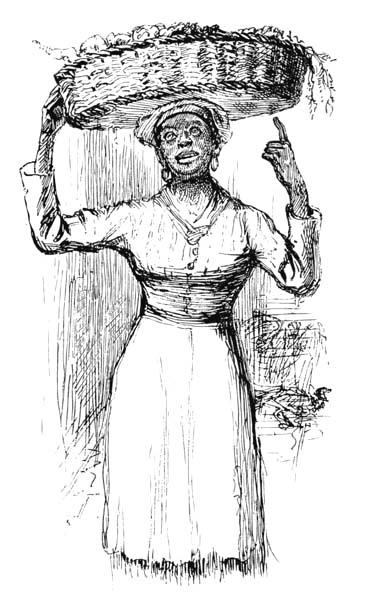
Her return soon brought its own explanation, however, for upon her old
head she bore a huge bundle of unlaundered clothing.
"What in the world!" exclaimed Evelyn; but before she could voice a
protest, mammy interrupted her.
"Nuver you mind, baby! I des waked up," she exclaimed, throwing her
bundle at the kitchen door. "I been preachin' ter you 'bout teckin'
hints, an' 'ain't been readin' my own lesson. Huccome we got dis heah
nice sunny back yard, an' dis bustin' cisternful o' rain-water? Huccome
de boa'din'-house folks at de corner keeps a-passin' an' a-passin' by
dis gate wid all dey fluted finery on, ef 'twarn't ter gimme a hint dat
dey's wealth a-layin' at de do', an' me, bline as a bat, 'ain't seen
it?"
"Oh, but, mammy, you can't take in washing. You are too old; it is too
hard. You mustn't—"
"Ef-ef-ef-ef you gits obstropulous, I-I-I gwine whup yer, sho. Y-y-yer
know how much money's a-comin' out'n dat bundle, baby? Five dollars!"
This in a stage-whisper. "An' not a speck o' dirt on nothin'; des baby
caps an' lace doin's rumpled up."
"How did you manage it, mammy?"
"Well, baby, I des put on my fluted ap'on—an' you know it's ironed
purty—an' my clair-starched neck-hankcher, an'—an' my business face,
an' I helt up my head an' walked in, an' axed good prices, an' de
ladies, dee des tooken took one good look at me, an' gimme all I'd
carry. You know washin' an' ironin' is my pleasure, baby."
It was useless to protest, and so, after a moment, Evelyn began rolling
up her sleeves.
"I am going to help you, mammy," she said, quietly but firmly; but
before she could protest, mammy had gathered her into her arms, and
carried her into her own room. Setting her down at her desk, she
exclaimed:
"Now, ef you goes ter de wash-tub, dey ain't nothin' lef fur me ter
do but 'cep'n' ter set down an' write de story, an' you know I can't
do it."
"But, mammy, I must help you."
"Is you gwine meck me whup yer, whe'r ur no, baby? Now I gwine meck a
bargain wid yer. You set down an' write, an' I gwine play de pianner
on de washboa'd, an' to-night you can read off what yer done put down,
an' ef yer done written it purty an' sweet, you can come an' turn de
flutin'-machine fur me ter-morrer. Yer gwine meck de bargain wid me,
baby?"
Evelyn was so touched that she had not voice to answer. Rising from her
seat, she put her arms around mammy's neck and kissed her old face, and
as she turned away a tear rolled down her cheek. And so the "bargain"
was sealed.
Before going to her desk Evelyn went to her father, to see that he
wanted nothing. He sat, as usual, gazing silently out of the window.
"Daughter," said he, as she entered, "are we in France?"
"No, dear," she answered, startled at the question.
"But the language I hear in the street is French; and see the
ship-masts—French flags flying. But there is the German too, and
English, and last week there was a Scandinavian. Where are we truly,
daughter? My surroundings confuse me."
"We are in New Orleans, father—in the French Quarter. Ships from almost
everywhere come to this port, you know. Let us walk out to the levee
this morning, and see the men-of-war in the river. The air will revive
you."
"Well, if your mother comes. She might come while we were away."
And so it was always. With her heart trembling within her, Evelyn went
to her desk. "Surely," she thought, "there is much need that I shall do
my best." Almost reverentially she took her pen, as she proceeded with
the true story she had begun.
"I done changed my min' 'bout dat ole 'oman wha' stan' fur me, baby,"
said mammy that night. "You leave 'er des like she is. She glorifies de
story a heap better'n my nachel self could do it. I been a-thinkin'
'bout it, an' de finer that ole 'oman ac', an' de mo' granjer yer lay
on 'er, de better yer gwine meck de book, 'caze de ole gemplum wha'
stan' fur ole marster, his times an' seasons is done past, an' he can't
do nothin' but set still an' wait, an'—an' de yo'ng missus, she ain't
fitten ter wrastle on de outskirts; she ain't nothin' but 'cep' des a
lovin' sweet saint, wid 'er face set ter a high, far mark—"
"Hush, mammy!"
"I'm a-talkin' 'bout de book, baby, an' don't you interrup' me no mo'!
An' I say ef dis ole 'oman wha' stan' fur me, ef-ef-ef she got a weak
spot in 'er, dey won't be no story to it. She de one wha' got ter
stan' by de battlemints an' hol' de fort."
"That's just what you are doing, mammy. There isn't a grain in her that
is finer than you."
"'Sh! dis ain't no time fur foolishness, baby. Yer 'ain't said nothin'
'bout yo' ma an' de ole black 'oman's baby bein' borned de same day, is
yer? An' how de ole 'oman nussed 'em bofe des like twins? An'—an' how
folks 'cused 'er o' starvin' 'er own baby on de 'count o' yo' ma bein'
puny? (But dat warn't true.) Maybe yer better leave all dat out, 'caze
hit mought spile de story."
"How could it spoil it, mammy?"
"Don't yer see, ef folks knowed dat dem white folks an' dat ole black
'oman was dat close-t, dey wouldn't be no principle in it. Dey ain't
nothin' but love in dat, an' de ole 'oman couldn't he'p 'erse'f, no
mo'n I could he'p it! No right-minded pusson is gwine ter deny dey own
heart. Yer better leave all dat out, honey. B-b-but deys some'h'n' else
wha' been lef out, wha' b'long in de book. Yer 'ain't named de way de
little mistus sot up all nights an' nussed de ole 'oman time she was
sick, an'—an'—an' de way she sew all de ole 'oman's cloze;
an'—an'—an' yer done lef' out a heap o' de purtiness an' de sweetness
o' de yo'ng mistus! Dis is a book, baby, an'—an'—yer boun' ter do
jestice!"
In this fashion the story was written.
"And what do you think I am going to do with it, mammy?" said Evelyn,
when finally, having done her very best, she was willing to call it
finished.
"Yer know some'h'n' baby? Ef-ef-ef I had de money, look like I'd buy
that story myse'f. Seem some way like I loves it. Co'se I couldn't read
it; but my min' been on it so long, seem like, ef I'd study de pages
good dee'd open up ter me. What yer gwine do wid it, baby?"
"Oh, mammy, I can hardly tell you! My heart seems in my throat when I
dare to think of it; but I'm going to try it. A New York magazine has
offered five hundred dollars for a best story—five hundred dollars!
Think, mammy, what it would do for us!"
"Dat wouldn't buy de plantatiom back, would it, baby?" Mammy had no
conception of large sums.
"We don't want it back, mammy. It would pay for moving our dear ones to
graves of their own; we should put a nice sum in bank; you shouldn't do
any more washing; and if we can write one good story, you know we can
write more. It will be only a beginning."
"An' I tell yer what I gwine do. I gwine pray over it good, des like I
been doin' f'om de start, an' ef hit's Gord's will, dem folks 'll be
moved in de sperit ter sen' 'long de money."
And so the story was sent.
After it was gone the atmosphere seemed brighter. The pending decision
was now a fixed point to which all their hopes were directed.
The very audacity of the effort seemed inspiration to more ambitious
work; and during the long summer, while in her busy hands the
fluting-machine went round and round, Evelyn's mind was full of plans
for the future.
Finally, December, with its promise of the momentous decision, was come,
and Evelyn found herself full of anxious misgivings.
What merit entitling it to special consideration had the little story?
Did it bear the impress of self-forgetful, conscientious purpose, or was
this a thing only feebly struggling into life within herself—not yet
the compelling force that indelibly stamps itself upon the earnest labor
of consecrated hands? How often in the silent hours of night did she ask
herself questions like these!
At last it was Christmas Eve again, and Saturday night. When the days
are dark, what is so depressing as an anniversary—an anniversary joyous
in its very essence? How one Christmas brings in its train
memory-pictures of those gone before!
This had been a hard day for Evelyn. Her heart felt weak within her,
and yet, realizing that she alone represented youth and hope in the
little household, and feeling need that her own courage should be
sustained, she had been more than usually merry all day. She had
clandestinely prepared little surprises for her father and mammy, and
was both amused and touched to discover the old woman secreting
mysterious little parcels which she knew were to come to her in the
morning.
"Wouldn't it be funny if, after all, I should turn out to be only a good
washerwoman, mammy?" she said, laughing, as she assisted the old woman
in pinning up a basket of laundered clothing.
"Hit'd be funnier yit ef I'd turn out inter one o' deze heah
book-writers, wouldn't it?" And mammy laughed heartily at her own joke.
"Look like I better study my a-b abs fus', let 'lone puttin' 'em back on
paper wid a pen. I tell you educatiom's a-spreadin' in dis fam'ly, sho.
Time Blink run over de sheet out a-bleachin' 'istiddy, he written a
Chinese letter all over it. Didn't you, Blink? What de matter wid Blink
anyhow, to-day?" she added, taking the last pin from her head-kerchief.
"Blink look like he nervous some way dis evenin'. He keep a-walkin'
roun', an' winkin' so slow, an' retchin' his neck out de back-do' so
cuyus. Stop a-battin' yo' eyes at me, Blink! Ef yo' got some'h'n' ter
say, say it!"
A sudden noisy rattle of the iron door-knocker—mammy trotting to the
door—the postman—a letter! It all happened in a minute.
How Evelyn's heart throbbed and her hand trembled as she opened the
envelope! "Oh, mammy!" she cried, trembling now like an aspen leaf.
"Thank God!"
"Is dee d-d-d-done sont de money, baby?" Her old face was twitching too.
But Evelyn could not answer. Nodding her head, she fell sobbing on
mammy's shoulder.
Mammy raised her apron to her eyes, and there's no telling what
"foolishness" she might have committed had it not been that suddenly,
right at her side, arose a most jubilant screech.
Blink, perched on the handle of the clothes-basket, was crowing with all
his might.
Evelyn, startled, raised her head, and laughed through her tears, while
mammy threw herself at full length upon the floor, shouting aloud.
"Tell me chickens 'ain't got secon'-sight! Blink see'd—he
see'd—Laws-o'-mussy, baby, look yonder at dat little yaller rooster
stan'in' on de fence. Dat what Blink see. Co'se it is!"