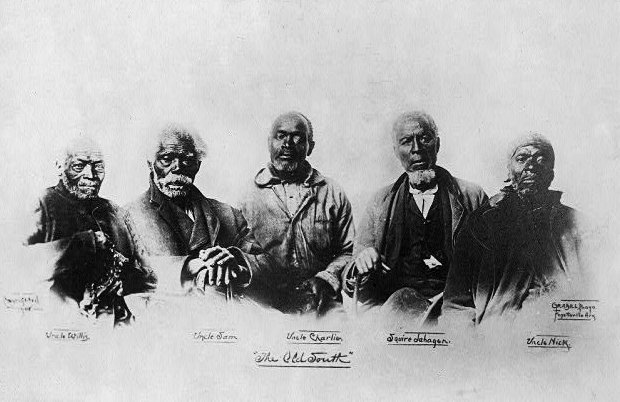
“I was born in Barnwell County, South Carolina. My parents’ name was
Jane Gadson, Aaron Gadson. My mother master was Mr. Owens. That is all I
ever knowed bout him. My father’s master was Rivers and Harley Gadson.
“They said they was to get something but they moved on. At the ending of
that war the President of the United States got killed. They wouldn’t
knowed they was free if they hadn’t made some change. I don’t know what
made them think they would get something at freedom less somebody told
them they would.
“I work at the oil mill and at sawmilling. I been farmin’ mostly since I
been here. I got kidney trouble and rheumatism till I ain’t no count. I
own a house and lot in Brinkley.”
“I was born in 1863 and am now seventy-five years old. You see,
therefore, that I know nothing experimentally and practically about
slavery.
“I was born in South Carolina in Lawrence County, and my father moved
away from the old place before I had any recollection. I remember
nothing about it. My father said his master’s name was Matthew Hunter.
“I was named for my father’s master’s brother, Dr. Bluford Gaines. My
name is Doctor Bluford Gaines. Of course, I am a doctor but my name is
Doctor.
“My father’s family moved to Arkansas, in 1882. Settled near Morrilton,
Arkansas. I myself come to Little Rock, Arkansas, in 1885, October
eighth. Worked in the homes of white families for my board and entered
Philander Smith College October 8, 1885. Continued to work with Judge
Smith of the Arkansas Supreme Court until I graduated from Philander
Smith College. After graduating I taught school and was elected
Assistant Principal of the Little Rock Negro High School in 1891. Served
three years. Accumulated sufficient money and went to Meharry Medical
College, Nashville, Tennessee. Graduated there in 1896. Practiced for
five years in the city of Little Rock. Entered permanently upon the
ministry in 1900. Was called to the Mount Pleasant Baptist Church where
I have been pastoring for thirty-nine years the first Sunday in next
May.
“The first real thing that made me switch from the medicine to the
ministry was the deep call of the ministry gave me more interest in the
Gospel than the profession of medicine furnished to me. In other words,
I discovered that I was a real preacher and not a real doctor.
“Touching slavery, the white people to whom my parents belonged were
tolerant and did not allow their slaves to be abused by patrollers and
outsiders.
“My mother’s people, however, were sold from her in very early life and
sent to Alabama. My mother’s maiden name was Harriet Smith. She came
from South Carolina too. Her old master was a Smith. My mother and
father lived on adjoining plantations and by permission of both
overseers, my father was permitted to visit her and to marry her even
before freedom. Out of regard for my father, his master bought my mother
from her master. I think my father told me that the old master called
them all together and announced that they were free at the close of the
War. Right after freedom, the first year, he remained on the farm with
the old master. After that he moved away to Greenville County, South
Carolina, and settled on a farm, with the brother-in-law of his old
master, a man named Squire Bennett. He didn’t go to war.
“There was an exodus of colored people from South Carolina beginning
about 1880, largely due to the Ku Klux or Red Shirts. They created a
reign of terror for colored people in that state. He joined the exodus
in 1882 and came to Arkansas where from reports, the outlook seemed
better for him and his family. He had no trouble with the Ku Klux in
Arkansas. He maintained himself here by farming.”
“It is my opinion that from a racial standpoint, the lines are being
drawn tighter due to the advancement of the Negro people and to the
increased prejudice of the dominant race. These lines will continue to
tighten until they somehow under God are broken. We believe that the
Christian church is slowly but surely creating a helpful sentiment that
will in time prevail among all men.
“It appears from a governmental standpoint that the nation is doomed
sooner or later to crash. Possibly a changed form of government is not
far ahead. This is due to two reasons: (1) greed, avarice, and
dishonesty on the part of public people; (2) race prejudice. We believe
that the heads of the national government have a far vision. The
policies had they been carried out in keeping with the mind of the
President, would have worked wonders in behalf of humanity generally.
But dishonesty and greed of those who had the carrying out of these
policies has destroyed their good effect and the fine intentions of the
President who created them. It looks clear that neither the Democratic
nor the Republican party will ever become sufficiently morally righteous
to establish and maintain a first-class humanitarian and unselfish
government.
“It is my opinion that the younger generation is headed in the wrong
direction both morally and spiritually. This applies to all races. And
this fact must work to the undoing of the government that must soon fall
into their hands, for no government can well exist founded upon graft,
greed, and dishonesty. It seems that the younger group are more
demoralized than the younger group were two generations ago. Thus the
danger both to church and state. Unless the church can catch a firmer
grip upon the younger group than it has, the outlook is indeed gloomy.
“We are so far away from the situation of trouble in Germany, that it is
difficult to know what it is or should be. But one thing must be
observed—that any wholesale persecution of a whole group of people must
react upon the persecutors. There could no cause arise which would
justify a governmental power to make a wholesale sweep of any great
group of people that were weak and had no alternative. That government
which settles its affairs by force and abuse shows more weakness than
the weak people which it abuses.
“We need not think that we are through with the job when we kill the
weaker man. No cause is sufficient for the destruction of seven hundred
thousand people, and no persecutor is safe from the effects of his own
persecution.”
The house at 1720 Izard is the last house in what would otherwise be
termed a “white” block. There appears to be no friction over the matter.
Note that if you were calling Dr. Gaines by his professional title and
his first name at the same time, you would say Dr. Doctor Bluford
Gaines. He has attained proficiency in three professions—teaching,
medicine, and the ministry.
Dr. Gaines is poised in his bearing and has cultured tastes and
surroundings—neat cottage, and simple but attractive furnishings.
He selects his ideas and words carefully, but dictates fluently. He
knows what he wants to say, and what he omits is as significant as what
he states.
He is the leader type—big of body, alert of mind, and dominant. It is
said that he with two other men dominated Negro affairs in Arkansas for
a considerable period of time in the past. He does not give the
impression of weakness now.
Despite his education, contacts, and comparative affluence, however, his
interview resembles the type in a number of respects—the type as I have
found it.
“I was born in Courtland, Alabama. Mother was twelve years old at the
first of the surrender.
“Grandfather was a South Carolinian. Master Harris bought him, two more,
his brothers and two sisters and his mother at one time. He was real
African. Grandma on mother’s side was dark Indian. She had white hair
nearly straight. I have some of it now. Mother was lighter. That is
where I gets my light color.
“Master Harris sold mother and grandma. Mother said she was fat, tall
strong looking girl. Master Harris let a Negro trader have grandma,
mother and her three brothers. They left grandpa. Master Harris told the
nigger traders not divide grandma from her children. He didn’t believe
in that. He was letting them go from their father. That was enough
sorrow for them to bear. That was in Alabama they was auctioned off.
Master Harris lived in Georgia. The auctioneerer held mother’s arms up,
turned her all around, made her kick, run, jump about to see how nimble
and quick she was. He said this old woman can cook. She has been a good
worker in the field. She’s a good cook. They sold her off cheap. Mother
brought a big price. They caught on to that. The man nor woman wasn’t
good to them. I forgot their names what bought them. The nigger traders
run her three brothers on to Mississippi. The youngest one died in
Mississippi. They never seen the other two or heard of them till after
freedom. They went back to Georgia. All of them went back to their old
home place.
“In Alabama at this new master’s home mother was nursing. Grandma and
another old woman was the cooks. Mother went to their little house and
told them real low she had the baby and a strange man in the house said,
‘Is that the one you goiner let me have?’ The man said, ‘Yes, he’s
goiner leave in the morning b’fore times.’
“The new master come stand around to see when they went to sleep. That
night he stood in the chimney corner. There was a little window; the
moon throwed his shadow in the room. They said, ‘I sure do like my new
master.’ Another said, ‘I sure do.’ The other one said, ‘This is the
best place I ever been they so good to us.’ Then they sung a verse and
prayed and got quiet. They heard him leave, seen his shadow go way.
Heard his house door squeak when he shut his door. Then they got up easy
and dressed, took all the clothes they had and slipped out. They walked
nearly in a run all night and two more days. They couldn’t carry much
but they had some meat and meal they took along. Their grub nearly give
out when they come to some camps. Somebody told them, ‘This is Yankee
camps.’ They give them something to eat. They worked there a while. One
day they took a notion to look about and they hadn’t gone far ’fore
Grandpa Harris grabbed grandma, then mama. They got to stay a while but
the Yankees took them to town and Master Harris come got them and took
them back. Their new master come too but he said his wife said bring the
girl back but let that old woman go. Master Harris took them both back
till freedom.
“When freedom come folks shout and knock down things so glad they was
free. Grandpa come back. Master Harris said, ‘You can have land if you
can get anything to work.’ Grandpa took his bounty he got when he left
the army and bought a pair of mules. He had to pay rent the third year
but till then he got what they called giving all that stayed a start.
“Grandma was Mariah and grandpa was Ned Harris. The two boys come back
said the baby boy died at Selma, Alabama.
“Grandpa talked about the War when I was a child. He said he was in the
Battle of Corinth, Mississippi. He said blood run shoe mouth deep in
places. He didn’t see how he ever got out alive. Grandma and mama said
they was glad to get away from the camps. They looked to be shot several
times. Colored folks is peace loving by nature. They don’t love war.
Grandpa said war was awful. My mother was named Lottie.
“One reason mother said she wanted to get away from their new master, he
have a hole dug out with a hoe and put pregnant women on their stomach.
The overseers beat their back with cowhide and them strapped down. She
said ’cause they didn’t keep up work in the field or they didn’t want to
work. She didn’t know why. They didn’t stay there very long. She didn’t
want to go back there.
“My life has never been a hard one. I have always worked. Me and my
husband run a cafe till he got drowned. Since then I have to work
harder. I wash and iron, cook wherever some one comes for me. When I was
a girl I was so much like mother—a fast, strong hand in the field, I
always had work.
“Mother said, ‘Eat the beans and greens, pot-liquor and sweet milk, make
you fat and lazy.’ That was what they put in the children’s wooden trays
in slavery. They give the men and women meat and the children the broth
and dumplings, plenty molasses. Sunday mother could cook at home in
slavery if she’d ’tend to the baby too. All the hands on Harrises place
et dinner with their family on Sunday. He was fair with his slaves.
“For the life of me I can’t see nothing wrong with the times. Only thing
I see, you can’t get credit to run crops and folks all trying to shun
farming. When I was on a farm I dearly loved it. It the place to raise
young black and white both. Town and cars ruined the country.”
Owns two houses in among white people.
“I was one hundred and one years old last Saturday (1938). I was born in
Bedford County, middle Tennessee. My parents’ names was Judy and Abraham
Gant. They had the same master. They had three boys and two girls. Our
owners was Jim Gant and Elizabeth Gant. Ma had seven children, four gals
and three boys. We called her Miss Betsy. Jim Gant owned seven hundred
acres of good land in one body and some more land summers else. My young
masters and mistresses was: Malindy, Jennie, Betsy, Mary, Jim, John,
Andy. They had twenty-five or thirty slaves I knowed. He was pretty good
to his slaves. He didn’t whoop much. Give ’em three or four licks. He
fed ’em all well. We had warm clothes in winter.
“I never seen nobody sold. My brothers and sisters was divided out. Miss
Betsy was my young mistress. I could go to see all my folks. I never
seen no hard times in my life. I had to work or be called lazy. I loved
to work. I been in the field when the sun come up and got part my
ploughing done. Go back to the house and eat and feed my mule, rest
around in the shade. Folks didn’t used to dread work so bad like they do
now. I lay down and rest in the heat of the day. They had big shade
trees for us niggers to rest under, eat under, spring water to drink.
I’d plough till smack dark I couldn’t see to get to the barn. We had
lighted knots to feed by. The feed be in the troughs and water in the
big trough in the lot ready. My supper would be hot too. It would be all
I could eat too. Yes, I’d be tired but I could sleep till next morning.
“We had big todoos along over the country. White and black could go
sometimes. Picnics and preachings mostly what I went to. Sometimes it
was to a house covering, a corn shucking, a corn shelling, or log
rolling. We went on hunts at night some.
“Sassy (saucy) Negroes got the most licks. I never was sassy. I never
got but a mighty few licks from nobody. We was slaves and that is about
all to say.
“I learned to fiddle after the fiddler on the place. Uncle Jim was the
fiddler. Andy Jackson, a white boy, raised him. He learned him to read
and write in slavery. After slavery I went to learn from a Negro man at
night. I learned a little bit. My master wouldn’t cared if we had
learned to read and write but the white folks had tuition school. Some
had a teacher hired to teach a few of them about. I could learned if I’d
had or been ’round somebody knowed something. He read to us some. He
read places in his Bible. Anything we have and ask him. We didn’t have
books and papers. I loved to play my fiddle, call figures, and tell
every one what to do. I didn’t take stock in reading and writing after
the War.
“My parents had the name of being a good set of Negroes. She was raised
by folks named Morrow and pa by folks named Strahorn. When ma was a
little gal the Morrows brought her to Tennessee. My parents both raised
in South Carolina by the Morrows and Strahorns. I was twenty years old
in the War.
“They had a big battle seven or eight miles from our homes. It started
at daylight Sunday morning and lasted till Monday evening. I think it
was Bragg and Buel. The North whooped. It was a roar and shake and we
could hear the big guns plain. It was in Hardin County close to
Savannah, Tennessee. It was times to be scared. We was all distressed.
“My master died, left her a widow.
“We farmed, made thirty or forty acres of wheat, seventy-five acres of
oats, some rye. I pulled fodder all day and take it down at night while
the dew would keep it in the bundle. Haul it up. We was divided out when
the War was on.
“Somebody killed Master Jim Gant. He was murdered in his own house. They
never did know who done it. They had two boys at home. One went
visiting. They knocked her and the boy senseless. It was at night. They
was all knocked in the head.
“Will Strahorn owned my wife. He was tolerable good to his Negroes.
Edmond Gant was a black preacher in slavery. He married us. He married
us in white folks’ yard. They come out and looked at us marry. I had to
ask my master and had to go ask for her then. Our children was to be
Strahorn by name. Will would own them ’cause my wife belong to him. My
first wife had five girls and three boys. My wife died. I left both my
two last wives. I never had no more children but them eight.
“Freedom—my young master come riding up behind us. We was going in
dragging our ploughs. He told us it was freedom. The Yankees took
everything. We went to Murray County to get my horse. I went off the
next day. The Yankees stayed in Lawrence County. The Yankees burnt Tom
Greenfield out. Tom and Jim had joining farms. They took everything he
had. Took his darkies all but two girls. He left. Jim was good and they
never went ’bout him. Jim stayed at home. I went over there. He put me
on his brother’s place.
“I come to Arkansas by train. I come to Jackson, Tennessee, then to
Forrest City, brought my famlee. My baby child is grown and married.
“The Ku Klux never bothered me. It was a mighty little I ever seen of
them.
“I never have had a hard time. I have worked hard. I been ploughing,
hoeing, cradling grain, picking cotton all my life. I love to plough and
cradle grain. I love to work.
“There is a big difference now and the way I was raised up. They used to
be whooped and made mind. They learned how to work. Now the times run
away from the people. They used to buy what they couldn’t raise in
barrels. Now they buy it in little dabs. I ain’t used to it. White folks
do as they pleases and the darkies do as they can. Everybody greedy as
he can be it seem like to me. Laziness coming on more and more every
year as they grow up. I ain’t got a lazy bone in me. I’m serving and
praising my Lord every day, getting ready to go over in the next
world.”
“I heard folks talk is all I know bout slavery. I was born in Arkansas.
My mother was Sara Jane Whitley. My father was ____ Genes. My mother
came here from Tennessee wid Henderson Sanders. I was raised on the
Duncan place. My mother raised us a heap like old times. I got fire
tongs now she had. She made ash cakes and we had plenty milk. I got her
old pot hooks too. She cooked cracklin’ bread in the winter and black
walnut bread the same way. We made palings and boards for the houses and
barns. Jes gradually we gittin’ away from all that. Times is changing so
fast.
“I heard ’em say in slavery they got ’em up fore day and they worked all
day. Some didn’t have much clothes. I can remember three men twisting
plow lines. They made plow lines.
“I vote if I have a chance, but I really don’t care bout it. I don’t
know how to keep up to vote like it ought to be.
“This young generation may change but if they don’t they air a knock
out. They do jes anyway and everyway. They don’t save and cain’t save it
look like, way we got things now. Folks don’t raise nothin’ and have to
buy so much livin’ is hard. Folks all doin fine long as the cotton is to
pick. This is two reconstructions I been through. Folks got used to
work after that other one and I guess they have to get used to work
this time till it get better. I don’t know what causes this spell of
hard times after the wars.”
“Gran’ma was Phoebe West. Mama was Jennie West. Mama was a
little girl when the Civil War come on. She told how scared her uncle
was. He didn’t want to go to war. When they would be coming if he know
it or get glimpse of the Yankee soldiers, he’d pick up my mama. She was
a baby. He’d run for a quarter of a mile to a great big tree down in the
field way back of the place off the road. He never had to go to war. Ma
said she was little but she was scared at the sight of them clothes they
wore. Mama’s and grandma’s owners lived at Vicksburg a lot of the time
but where that was at Washington County, Mississippi. They had lots of
slaves.
“Grandma was a midwife and doctored all the babies on the place. She
said they had a big room where they was and a old woman kept them. They
et milk for breakfast and buttermilk and clabber for supper. They always
had bread. For dinner they had meat boiled and one other thing like
cabbage, and the children got the pot-liquor. It was brought in a cart
and poured in wooden troughs. They had gourds to dip it out with. They
had gourds to drink their cool spring water with.
“Daylight would find the hands in the field at work. Grandma said they
had meat and bread and coffee till the war come on. They had to have a
regular meal to work on in the morning.
“Grandma said their something to eat got mighty slim in war times and
kept getting slimmer and slimmer. They had plenty sorghum all the time.
Them troughs was hewed out of a log and was washed and hung in the sun
till next mealtime. They cooked in iron pots and skillets on the fire.
Grandma worked where they put her but her main trade was seeing after
the sick on that place.
“They had a fiddler on the place and had big dances now and then.
“This young generation won’t be advised no way you can fix it. I don’t
know what in the world the folks is looking about. The folks ain’t good
as they used to be. They shoots craps and drinks and does low-down
things all the time. I ain’t got no time with the young generation.
Times gone to pieces pretty bad if you axing me.”
“Uncle Jim” Gill, an ex-slave eighty-six years of age, owns a nice two
hundred acre farm five miles north of Marvell where he has lived for the
past thirty-five years. “Uncle Jim” is an excellent citizen, prosperous
and conservative and highly respected by both white and colored. This is
molasses making time in the South and I found “Uncle Jim” busily engaged
in superintending the process of cooking the extracted juice from a
large quantity of sorghum cane. The familiar type of horse-power mill in
which the cane is crushed was in full operation, a roaring fire was
blazing in the crudely constructed furnace beneath the long pan that
contained the furiously foaming, boiling juice and that “Uncle Jim”
informed me was “nigh ’bout done” and ready to drain off into the huge
black pot that stood by the side of the furnace. The purpose of my visit
was explained and “Uncle Jim” leaving the molasses making to some
younger Negro accompanied me to the shade of a large oak tree that stood
near-by and told me the following story:
“My ole mars, he was name Tom White and my young mars what claimed me,
he was name Jeff. Young mars an’ me was just ’bout same age. Us played
together from time I fust riccolect till us left de ole home place back
in Alabama and lit out for over here in Arkansas.
“Ole mars, he owned a heap of niggers back dere where us all lived on de
big place but de lan’, it was gittin’ poor an’ red and mought near wore
out; so ole mars, he ’quired a big lot of lan’ here in Arkansas in
Phillips County, but you know it was all in de woods den ’bout fifteen
miles down de ribber from Helena and just thick wid canebrakes. So he
sont ’bout twenty famblies ober here end dats how us happened to come
’cause my pappy, he was a extra blacksmith and carpenter and ole mars
knowed he gwine to haf to hab him to ’sist in buildin’ de houses and
sich like.
“Though I was just ’bout seben year ole den, howsomeever, I ’member it
well an’ I sure did hate to leave de ole home where I was borned and I
didn’ want leave Mars Jeff either and when Mars Jeff foun’ it out ’bout
’em gwine take me he cut up awful and just went on, sayin’ I his nigger
and wasn’t gwine ’way off to Arkansas.
“Ole mars, he knowed my mammy and pappy, dey wasn’t gwine be satisfied
widout all dere chillun wid ’em, so en course I was brung on too. You
see, ole mars and he fambly, dey didn’ come and we was sont under de
oberseer what was name Jim Lynch and us come on de train to Memphis and
dat was when I got so skeered ’cause I hadn’ nebber seen no train ’fore
den an’ I just hollered an’ cried an’ went on so dat my mammy say if I
didn’ hush up she gwine give me to de paddy rollers.
“Dey put us on de steamboat at Memphis and de nex’ I ’member was us
gittin’ off at de landin’. It was in de winter time ’bout las’ of
January us git here and de han’s was put right to work clearin’ lan’ and
buildin’ cabins. It was sure rich lan’ den, boss, and dey jus’ slashed
de cane and deaden de timber and when cotton plantin’ time come de cane
was layin’ dere on de groun’ crisp dry and day sot fire to it and burned
it off clean and den planted de crops.
“Ole mars, he would come from Alabama to see ’bout de bizness two an’
three times every year and on some of dem ’casions he would bring Mars
Jeff wid him and Mars Jeff, he allus nebber failed to hab somethin’ for
me, candy and sich like, and dem times when Mars Jeff come was when we
had de fun. Us just run wild playin’ and iffen it was in de summer time
we was in de bayou swimmin’ or fishin’ continual but all dem good times
ceasted atter a while when de War come and de Yankees started all dere
debbilment. Us was Confedrits all de while, leastwise I means my mammy
an’ my pappy and me an’ all de res’ of de chillun ’cause ole mars was
and Mars Jeff would er fit ’em too and me wid him iffen we had been ole
enough.
“But de Yankees, dey didn’ know dat we was Confedrits, dey jus’ reckon
we like most all de res’ of de niggers. Us was skeered of dem Yankees
though ’cause us chillun cose didn’ know what dey was and de oberseer,
Jim Lynch, dey done tole us little uns dat a Yankee was somepin what had
one great big horn on he haid and just one eye and dat right in de
middle of he breast and, boss, I sure was s’prized when I seen a sure
’nough Yankee and see he was a man just like any er de res’ of de folks.
“De war tore up things right sharp yit an’ still it wasn’t so bad here
in Arkansas as I hear folks tell it was back in de yolder states like
Tennessee, Alabama, and Georgia. De bes’ I riccolect de Yankees come in
here ’bout July of de year and dey had a big scrap in Helena wid ’em and
us could hear de cannons fifteen miles off and den dey would make dere
trips out foragin’ for stuff, corn and sich, and dey would take all de
cotton dey could fin’, but our mens, dey would hide de cotton in de
thickets an’ canebrakes iffen dey had time or either dey would burn it
up ’fore de Yankees come if dey could. I ’member one day we had on han’
’bout hundred bales at de gin and a white man come wid orders to de
oberseer to git rid of it, so dey started to haulin’ it off to de woods
and dey hauled off ’bout fifty bales and den dey see dey wasn’t goin’ to
hab time to git de res’ to de woods and den dey commenced cuttin’ de
ties on de bales so dey could set fire to dem dat dey hadn’ hid yit and
’bout dat time here come one of Mr. Tom Casteel’s niggers just a flyin’
on a mule wid a letter to de white man. Mr. Tom Casteel, he had he place
just up de ribber from us, on de island, and when he gived de letter to
de man an de man read it, he said de Yankees is comin’ and he lit out
for de ribber where de boat was waitin’ for him and got ’way and dere
was all dat loose cotton on de groun’ and us was skeered to sit fire to
de cotton den and ’bout dat time de Yankees arive and say don’ you burn
dat cotton and dey looked all ober de place and find de bales dat was
hid in de woods and de nex’ day dey come and haul it off and dey say us
niggers can hab dat what de ties been cut on and my mammy, she set to
work and likewise de odder women what de Yankees say can had de loose
cotton and tie up all dey can in bags and atter dat us sold it to de
Yankees in Helena for a dollar a poun’ and dat was all de money us had
for a long time.
“How-some-ever us all lived good ’cause dere was heap of wild hogs an’
’possums and sich and we had hid a heap of corn and us did fine.
Sometimes de war boats, dey would pass on de ribber—dat is de Yankee
boats—and us would hide ’hind de trees and bushes and see dem pass. We
wouldn’t let dem see us though ’cause we thought dey would shoot. Heap
en heap er times sojers would come by us place. When de Yankees ud come
dey would ax my mammy, ‘Aunt Mary, is you seen any Se-cesh today?’ and
mammy, she ud say ‘Naw suh’ eben iffen she had seen some of us mens, but
when our sojers ud come and say, ‘Aunt Mary, is you seen ary Yankee
’round here recent?’ she ud allus tell dem de truf. Dey was a bunch of
us sojers, dat is de Confedrits, what used to stay ’round in de
community constant, dat we knowed, but dey allus had to be on de dodge
’cause dere was so many more Yankees dan dem.
“Some of dese men I ’member good ’cause dey was us closest neighbors and
some of dem libed on ’j’ining places. Dere was Mr. Lum Shell, Mr. Tom
Stoneham, Mr. Bob Yabee, Mr. Henry Rabb and Mr. Tom Casteel. Dem I
’member well ’cause dey come to us cabin right of’en and mammy, she ud
cook for ’em and den atter de niggers git dey freedom dey could leave de
place any time dey choose and every so of’en mammy ud go to Helena and
gin’rally she took me wid her to help tote de things she get dere. Ole
Mr. Cooledge, he had de biggest and ’bout de onliest store dat dere was
in Helena at dat time. Mr. Cooledge, he was a ole like gentleman and had
everything most in he store—boots, shoes, tobacco, medicine en so on.
Cose couldn’t no pusson go in an’ outen Helena at dat time—dat is
durin’ war days—outen dey had a pass and de Yankee sojer dat writ de
passes was named Buford en he is de one what us allus git our passes
from for to git in en out and ’twasn’t so long ’fore Mr. Buford, he git
to know my mammy right well and call her by her name. He, just like all
de white mens, knowed her as ‘Aunt Mary’, but him nor none of de Yankees
knowed dat mammy was a Confedrit and dats somepin I will tell you, boss.
“Dese sojers dat I is just named and dat was us neighbors, dey ud come
to our cabin sometimes en say, ‘Aunt Mary, we want you to go to Helena
for us and git some tobacco, and mebbe some medicine, and so on, and we
gwine write ole man Cooledge er note for you to take wid you’; and mammy,
she ud git off for town walking and ud git de note to ole man Cooledge.
Ole man Cooledge, you see, boss, he sided wid de Confedrites too but he
didn’ let on dat he did but all de Confedrit sojers ’round dar in de
county, dey knowed dey could ’pend on him and when my mammy ud take de
note in ole man Cooledge, he ud fix mammy up in some of dem big, wide
hoop skirts and hide de things ’neath de skirts dat de men sont for. Den
she and sometimes me wid her, us would light out for home and cose we
allus had our pass and dey knowed us and we easy git by de pickets and
git home wid de goods for those sojer men what sont us.
“Speakin’ from my own pussonal ’sperience, boss, de niggers was treated
good in slavery times, dat is dat was de case wid my mars’ peoples. Our
mars wouldn’t hab no mistreatment of his niggers but I’ze heered tell
dat some of de mars was pretty mean to dere niggers, but twasn’t so wid
us ’cause us had good houses and plenty somepin to eat outen de same pot
what de white folks’ victuals cooked in and de same victuals dat dey
had. You see dat ole kittle settin’ ober dar by de lasses pan right now?
Well, I is et many a meal outen dat kittle in slavery times ’cause dat
is de very same kittle dat dey used to cook us victuals in when us
belonged to ole mars, Tom White, and lived on he place down on de
ribber. It was den, boss, just same wid white men as ’tis in dis day and
time. Dere is heap of good white folks now and dere is a heap of dem
what ain’t so good. You know dat’s so, boss, don’t you?
“When de niggers been made free, de oberseer, he called all de peoples
up and he says, ‘You all is free now and you can do like you please. You
can stay on here and make de crops ur you can leave which-some-ever you
want to do.’ And wid dat de niggers, dat is most of dem, lef’ like when
you leave de lot gate open where is a big litter of shotes and dey just
hit de road and commenced to ramble. Most of ’em, dey go on to Helena
and gits dey grub from de Yankees and stay dar till de Yankees lef’.
“But us, we stay on de place and some more, dey stay too and you know,
boss, some of dem niggers what belonged to old mars and what he was so
good to, dey stole mighty nigh all de mules and rode dem off and mars,
he never git he mules back. Naw suh, dat he didn’. De war, it broke ole
mars up and atter de surrender he jus’ let he Arkansas farm go an’
never come back no more. Some of de older peoples, dey went back to
Alabama time er two and seen ole mars but I nebber did git to see him
since us was sot free. But Mars Jeff, he comed here all de way from de
home in Alabama way atter he was growed. It’s been ’bout fifty year now
since de time he was here and I sure was proud to see him, dat I was,
boss, ’cause I sure did love Mars Jeff and I loves him yit to dis day
iffen he still lives and iffen he daid which I ain’t never heered er
not, den I loves and ’spects he memory.
“Yas suh, boss, times is changed sure ’nough but like I ’splained ’bout
white folks and it’s de same wid niggers, some is good and trys to lib
right en some don’ keer and jus’ turns loose en don’ restrain demselves.
“You know, boss, dere is heaps of niggers wid white blood in ’em and dat
mess was started way back yonder I reckon ’fore I was ever borned.
Shucks, I knowed it was long afore den but it wasn’t my kine er white
folks what ’sponsible for dat, it was de low class like some of de
oberseers and den some of de yother folks like for instance de furriners
what used to come in de country and work at jobs de mars ud give ’em to
do on the places like carpentrying an’ sich. I knowed one bad case,
boss, dat happened right dere by us place and dat was de oberseer who
’sponsible for dat and he was de oberseer for a widow oman what lived in
Helena and dis white man runned de place an’ he hab he nigger oman and
she de mama of ’bout six chillun by dis man I tellin’ you ’bout, three
gals and three boys, and dem chillun nigh ’bout white and look just like
him and den he move off to some yother part of de county and he git
married dere to a white oman but he take he nigger fambly wid him just
de same and he built dem a house in de middle of de place he done bought
and he keep ’em dere eben though he done got him a white wife who he lib
wid also and, boss, since I done told you he name don’t tell I said so
’cause de chillun, dey is livin’ dere yet and some of dem is gettin’ old
deyselves now but, boss, I don’t ’spect I is tellin’ you much you don’t
already know ’bout dat bunch.”
“I have never been entirely sure of my age. I have kept it since I was
married and they called me fifteen. That was in ’66 or ’67. Anyhow, I’m
about 86, and what difference does one year make, one way or another. I
lived with master and mistress in Greenville, Mississippi. They didn’t
have children and kept me in the house with them all the time. Master
was always having a bad spell and take to his bed. It always made him
sick to hear that freedom was coming closer. He just couldn’t stand to
hear about that. I always remember the day he died. It was the fall of
Vicksburg. When he took a spell, I had to stand by the bed and scratch
his head for him, and fan him with the other hand. He said that
scratching pacified him.
“No ma’am, oh no indeedy, my father was not a slave. Can’t you tell by
me that he was white? My brother and one sister were free folks because
their white father claimed them. Brother was in college in Cincinnati
and sister was in Oberlin college. My father was Mr. McCarroll from
Ohio. He came to Mississippi to be overseer on the plantation of the
Warren family where my mother lived. My grandmother—on mother’s side,
was full blood Cherokee. She came from North Carolina. In early days my
mother and her brothers and sisters were stolen from their home in North
Carolina and taken to Mississippi and sold for slaves. You know the
Indians could follow trails better than other kind of folks, and she
tracked her children down and stayed in the south. My mother was only
part Negro; so was her brother, my uncle Tom. He seemed all Indian. You
know, the Cherokees were peaceable Indians, until you got them mad. Then
they was the fiercest fighters of any tribes.
“Wait a minute, lady. I want to tell you first why I didn’t get educated
up north like my white brother and sister. Just about time for me to be
born my papa went to see how they was getting along in school. He left
my education money with mama. He sure did want all his children
educated. I never saw my father. He died that trip. After awhile mama
married a colored man name Lee. He took my school money and put me in
the cotton patch. It was still during the war time when my white folks
moved to Arkansas; it was Desha county where they settle. Now I want to
tell you about my uncle Tom. Like I said, he was half Indian. But the
Negro part didn’t show hardly any. There was something about uncle Tom
that made both white and black be afraid of him. His master was young,
like him. He was name Tom Johnson, too.
“You see, the Warrens, what own my mother, and the Johnsons, were all
sort of one family. Mistress Warren and Mistress Johnson were sisters,
and owned everything together. The Johnsons lived in Kentucky, but came
to Arkansas to farm. Master Tom taught his slaves to read. They say
uncle Tom was the best reader, white or black, for miles. That was what
got him in trouble. Slaves was not allowed to read. They didn’t want
them to know that freedom was coming. No ma’am! Any time a crowd of
slaves gathered, overseers and bushwhackers come and chased them; broke
up the crowd. That Indian in uncle Tom made him not scared of anybody.
He had a newspaper with latest war news and gathered a crowd of slaves
to read them when peace was coming. White men say it done to get
uprising among slaves. A crowd of white gather and take uncle Tom to
jail. Twenty of them say they would beat him, each man, till they so
tired they can’t lay on one more lick. If he still alive, then they hang
him. Wasn’t that awful? Hang a man just because he could read? They had
him in jail overnight. His young master got wind of it, and went to save
his man. The Indian in uncle Tom rose. Strength—big extra strength
seemed to come to him. First man what opened that door, he leaped on him
and laid him out. No white men could stand against him in that Indian
fighting spirit. They was scared of him. He almost tore that jailhouse
down, lady. Yes he did. His young master took him that night, but next
day the white mob was after him and had him in jail. Then listen what
happened. The Yankees took Helena, and opened up the jails. Everybody so
scared they forgot all about hangings and things like that. Then uncle
Tom join the Union army; was in the 54th Regiment, U. S. volunteers
(colored) and went to Little Rock. My mama come up here. You see, so
many white folks loaned their slaves to the cessioners (Cecessionists)
to help build forts all over the state. Mama was needed to help cook.
They was building forts to protect Little Rock. Steele was coming. The
mistress was kind; she took care of me and my sister while mama was
gone.
“It was while she was in Little Rock that mama married Lee. After peace
they went back to Helena and stayed two years with old mistress. She let
them have the use of the farm tools and mules; she put up the cotton
and seed corn and food for us. She told us we could work on shares, half
and half. You see, ma’am, when slaves got free, they didn’t have nothing
but their two hands to start out with. I never heard of any master
giving a slave money or land. Most went back to farming on shares. For
many years all they got was their food. Some white folks was so mean. I
know what they told us every time when crops would be put by. They said
‘Why didn’t you work harder? Look. When the seed is paid for, and all
your food and everything, what food you had just squares the account.’
Then they take all the cotton we raise, all the hogs, corn, everything.
We was just about where we was in slave days.
“When we see we never going to make anything share cropping, mother and
I went picking. Yes ma’am, they paid pretty good; got $1.50 a hundred.
So we saved enough to take us to Little Rock. Went on a boat, I
remember, and it took a whole week to make the trip. Just think of that.
A whole week between here and Helena. I was married by then. Gillam was
a blacksmith by trade and had a good business. But in a little while he
got into politics in Little Rock. Yes, lady. If you would look over the
old records you would see where he was made the keeper of the jail. I
don’t know how many times he was elected to city council. He was the
only colored coroner Pulaski county ever had. He was in the legislature,
too. I used to dress up and go out to hear him make speeches. Wait a
minute and I will get my scrap book and show you all the things I cut
from the papers printed about him in those days....
“Even after the colored folks got put out of public office, they still
kept my husband for a policeman. It was during those days he bought this
home. Sixty-seven years we been living right in this place—I
guess—when did you say the war had its wind up? It was the only house
in a big forest. All my nine children was born right in this house. No
ma’am, I never have worked since I came here. My husband always made a
good living. I had all I could do caring for those nine children. When
the Democrats came in power, of course all colored men were let out of
office. Then my husband went back to his blacksmith trade. He was always
interested in breeding fine horses. Kept two fine stallions; one was
named ‘Judge Hill’, the other ‘Pinchback’. White folks from Kentucky,
even, used to come here to buy his colts. Race people in Texas took our
colts as fast as they got born. Only recently we heard that stock from
our stable was among the best in Texas.
“The Ku Kluxers never bothered us in the least. I think they worked
mostly out in the country. We used to hear terrible tales of how they
whipped and killed both white and black, for no reason at all. Everybody
was afraid of them and scared to go out after dark. They were a strong
organization, and secret. I’ll tell you, lady, if the rough element from
the north had stayed out of the south the trouble of reconstruction
would not happened. Yes ma’am, that’s right. You see, after great
disasters like fires and earthquakes and such, always reckless criminal
class people come in its wake to rob and pillage. It was like that in
the war days. It was that bad element of the north what made the
trouble. They tried to excite (incite) the colored against their white
friends. The white folks was still kind to them what had been their
slaves. They would have helped them get started. I know that. I always
say that if the south could of been left to adjust itself, both white
and colored would been better off.
“Now about this voting business. I guess you don’t find any colored
folks what think they get a fair deal. I don’t, either. I don’t think it
is right that any tax payer should be deprived of the right to vote.
Why, lady, even my children that pay poll tax can’t vote. One of my
daughters is a teacher in the public school. She tells me they send out
notices that if teachers don’t pay a poll tax they may lose their place.
But still they can’t use it and vote in the primary. My husband always
believed in using your voting privilege. He has been dead over 30 years.
He had been appointed on the Grand Jury; had bought a new suit of
clothes for that. He died on the day he was to go, so we used his new
suit to bury him in. I have been getting his soldier’s pension ever
since. Yes ma’am, I have not had it hard like lots of ex-slaves.
“Before you go I’d like you to look at the bedspread I knit last year.
My daughters was trying to learn to knit. This craze for knitting has
got everybody, it looks like. I heard them fussing about they could not
cast on the stitches. ‘For land’s sakes,’ I said, ‘hand me them
needles.’ So I fussed around a little, and it all came back. What’s
funny about it is, I had not knitted a stitch since I was about ten. Old
mistress used to make me knit socks for the soldiers. I remember I knit
ten pair out of coarse yarn, while she was doing a couple for the
officer out of fine wool and silk mixed. I used to knit pulse warmers,
and ‘half-handers’,—I bet you don’t know what they was. Yes, that’s
right; gloves without any fingers, ’cepting a thumb and it didn’t have
any end. I could even knit on four needles when I was little. We used to
make our needles out of bones, wire, smooth, straight sticks,—anything
that would slip the yarn. Well, let me get back to this spread. In a few
minutes it all came back. I began knitting washrags. Got faster and
faster. Didn’t need to look at the stitches. The girls are so scared
something will happen to me, they won’t let me do any work. Now I had
found something I could do. When they saw how fast I work, they say:
‘Mother, why don’t you make something worth while? Why make so many
washrags?’ So I started the bedspread. I guess it took me six months, at
odd times. I got it done in time to take to Ft. Worth to the big exhibit
of the National Federation of Colored Women’s Clubs. My daughter
was the national president that year. If you’ll believe it, this spread
took first prize. Look, here’s the blue ribbon pinned on yet. What they
thought was so wonderful was that I knit every stitch of it without
glasses. But that is not so funny, because I have never worn glasses in
my life. I guess that is some more of my Indian blood telling.
“Sometimes I have to laugh at some of these young people. I call them
young because I knew them when they were babies. But they are already
all broken down old men and women. I still feel young inside. I feel
that I have had a good life.”
“I was born near Galveston, in Texas, January 19, 1863, so they tell me.
I been in this town and been living right here at 1112 Park Street for
fifty-three years and ain’t never had no trouble with anybody.
“My grandparents were Gillespie’s. My grandma was an Indian woman. She
was stolen off the reservation—her and her daughter. The daughter was
about twelve years old and big enough to wait table. Both of them were
full blooded Cherokee Indians. My grandma married a slave, and when she
growed up, my mother married a slave; but my mother’s parents were both
Indians, and one of my father’s parents was white, so you see about
three-fourths of me is something else. My grandmother’s name before her
first marriage was Courtney and my mother’s first name was Parthenia.
“When they were stolen, they were made slaves. Nick Toliver bought ’em.
He was their first master, far as I heard ’em say. After old man Nick
Toliver died, Tom Brewer bought my mother. Toliver and Brewer were the
only two masters she had.
“After freedom came, my grandma took back her own name, Gillespie.
Grandma’s second husband was named Berry Green. She was free and in the
Indian reservation when she married Gillespie, but she was a slave when
she married Berry Green.
“After my mother came to be of age, she married a man named Willis. He
was a slave. That is why I am like I am now. If my grandma had stayed
in the nation, I never would have been a slave, and I wouldn’t need to
be beatin’ around here trying to get just bread and meat.
“After freedom, she taken her mother’s name by her free husband,
Gillespie, and she made her husband take it too. That how I got the name
of Gillespie.”
“After they were made slaves, my grandmother cooked and my mother waited
table and worked as a house girl. My grandma used to make clothes too,
and she could work on one of these big looms.”
“My mother told me that when the boys would go out to a dance, they
would tie a rope across the road to make the horses of the patrollers
stumble and give the dancers time to get away. Sometimes the horses’
legs would be broken.”
“I wants to work and can’t get work; so they ain’t no use to worry. I
used to cook. That is all I did for a living. I cooked as long as I
could get something for it. I can’t get a pension.”
“I didn’t see no log houses when I growed up. Everything was frame.”
“Right after the War, my mother stayed around the house and continued to
work for her master. I don’t know what they paid her. I can’t remember
just how they got free but I think the soldiers gave ’em the
notification. They stayed on the place till I was big enough to work. I
didn’t do no work in slave time because I wasn’t old enough.”
“One day I was stealing watermelons with some big boys and I got choked
on some seeds. The melon seeds got in my throat. I yelled for help and
the boys ran away. Old Tom Brewer made me get on my hands and jump up
and down to get the seeds out.”
“I was a small boy, might have been seven or eight years old, when I
left Galveston. We came to Bradley County, here in Arkansas. From
Bradley my mother took me to Pine Bluff. After I got big I went back to
Texas. Then I came from Texas here fifty-three years ago, and have been
living here ever since, cooking for hotels and private families.
“I never was arrested in my life. I never been in trouble. I never had a
fight. Been living in the same place ever since I first came here—right
here at 1112 Park Street. I belong to the Christian Church at Thirteenth
and Cross Streets. I quit working around the yard and the building
because they wouldn’t pay me anything. They promised to pay me, but they
wouldn’t do it.”
Gillespie has an excellent reputation, as indeed have most of the
ex-slaves in this city. He is clear and unfaltering in his memory. He is
deliberate and selects what he means to tell. He is never discourteous.
He is a little nervous and cannot be held long at a time. Indian
characteristics in him are not especially prominent, but you note them
readily after learning of his ancestry. He is brown but slightly copper
in color, and his profile has the typical Indian appearance. He is a
little taciturn, and sometimes acts on his decisions before he announces
them. I cultivated him about three weeks.
“My grandfather was named Joe Glass. His master was named Glass. I
forget the first name. My grandfather on my mother’s side was named
Smith. His old master was named Smith. The grandfather Joe was born in
Alabama. Grandfather Smith was born in North Carolina.”
“There were good masters and mean masters. Both of my old grandfathers
had good masters. I had an uncle, Anderson Fields, who had a tough
master. He was so tough that Uncle Anderson had to run away. They’d whip
him and do around, and he would run away. Then they would get the dogs
after him and they would run him until he would climb a tree to get away
from them. They would come and surround the tree and make him come down
and they would whip him till the blood ran, and sometimes they would
make the dogs bite him and he couldn’t do nothing about it. One time he
bit a dog’s foot off. They asked him why he did that and he said the dog
bit him and he bit him back. They whipped him again. They would take him
home at night and put what they called the ball and chain on him and
some of the others they called unruly to keep them from running away.
“They didn’t whip my grandfathers. Just one time they whipped
Grandfather Joe. That was because he wouldn’t give his consent for them
to whip his wife. He wouldn’t stand for it and they strapped him. He
told them to strap him and leave her be. He was a good worker and they
didn’t want to kill him, so they strapped him and let her be like he
said.”
“Both of my grandfathers said their masters used to give picnics. They
would have a certain day and they would give them all a good time and
let them enjoy themselves. They would kill a cow or some kids and hogs
and have a barbecue. They kept that up after freedom. Every nineteenth
of June, they would throw a big picnic until I got big enough to see and
know for myself. But their masters gave them theirs in slavery times.
They gave it to them once a year and it was on the nineteenth of June
then.
“Grandfather Joe said when he wanted to marry Jennie, she was under her
old master, the man that Anderson worked under. Old man Glass found that
Grandfather Joe was slipping off to old man Field’s to see Grandma
Jennie, who was on Field’s place, and old man Fields went over and told
Glass that he would either have to sell Glass to him or buy Jennie from
him. Old man Glass bought Jennie and Grandfather Joe got her.
“After old man Glass bought Jennie, he held up a broom and they would
have to jump over it backwards and then old man Glass pronounced them
man and wife.
“Grandfather Joe died when I was a boy ten years old. Grandfather Smith
died in 1921. He was eighty years old when he died. Grandfather Joe was
seventy-two years old when he died. He died somewhere along in 1898.”
“I heard them speak of the Ku Klux often. But they didn’t call them Ku
Klux; they called them whitecaps. The whitecaps used to go around at
night and get hold of colored people that had been living disorderly
and carry them out and whip them. I never heard them say that they
whipped anybody for voting. If they did, it wasn’t done in our
neighborhood.”
“Uncle Anderson said that old man Fields didn’t allow them to sing and
pray and hold meetings, and they had to slip off and slip aside and hide
around to pray. They knew what to do. People used to stick their heads
under washpots to sing and pray. Some of them went out into the brush
arbors where they could pray and shout without being disturbed.
“Grandfather Joe and Grandfather Smith both said that they had seen
slaves have that trouble. Of course, it never happened on the
plantations where they were brought up. Uncle Anderson said that they
would sometimes go off and get under the washpot and sing and pray the
best they could. When they prayed under the pot, they would make a
little hole and set the pot over it. Then they would stick their heads
under the pot and say and sing what they wanted.”
“Grandfather Joe and Grandfather Smith used to say that when a child was
born if it was a child that was fine blooded they would put it on the
block and sell it away from its parents while it was little. Both of my
grandfathers were sold away from their parents when they were small
kids. They never knew who their parents were.
“When my oldest auntie was born, my mother said she was sold about two
years before freedom. Aunt Emma was only two years old then when she was
sold. Mother never met her until she was married and had a family. They
would sell the children slaves of that sort at auction, and let them go
to the highest bidder.”
“My grandfather brought me up strictly. I don’t know what they thought
about the young people of their day, but I know what I think. I will
tell you. At first I searched myself. Kids in the time I came along had
to go by a certain rule. They had to go by it.
“We don’t see to our children doing right as our parents saw to our
doing. It would be good if we could get ourselves together and bring
these young people back where they belong. What ruined the young folks
is our lack of discipline. We send them to school but that is all, and
that is not enough. We ought to take it on ourselves to see that they
are learning as they ought to learn and what they ought to learn.
“I belong to Bethel A. M. E. Church. I married about 1919, November 16.
I have just one kid and two grand kids.”
“I was born June 1864 in Des Arc. My parents named Richard Lewis Glenn
and Pleasant Glynn. My mama died when I was small. I recollect hearing
em say the southern women oughtn’t marry the Yankee men, there was so
much difference in their lives. A few widows and girls did marry Yankee
men, very few. Southern folks jes’ hated em.
“Master Wash Glenn had a son named Boliver. He may had more. I don’t
know much about em. We stayed there after the war for a long time then
went to work for Mr. Bedford Bethels father. We worked there a long time
then went to work for Mr. Jim Erwin. My papa always farmed. I heard my
mama say she washed and sewed during slavery. There was three boys and
one girl in our famlee. I heard bout the bushwhackers and Ku Klux. I was
too young to tell bout what they did do. I never did see none dressed
up.
“I don’t fool wid votin’ much. I have voted. I don’t understand votin’
much and how they run the govermint. My time of usefulness is nearly
gone.
“The present time serves me hard. I got my leg caught in a wagon wheel
and so sprained I been cripple ever since. The rheumatiz settles in it
till I can’t sleep at night. My wife quit me. I got two boys in Chicago,
the girl and her ma in Brinkley. They sho don’t help me. I have to rent
my house. I don’t own nuthin’. I work all I’m able.
“The present generation is selfish and restless. I don’t know what goner
become of em. Times is changing too fast for me. I jess look on and
wonder what going to come on next.”
“I was born the third year after the surrender. I was born in Okolona,
Mississippi. My parents was Jane Bowen and Henry Harrison. Ma had seven
children. They lived on the Gates place at freedom. I’m the onliest one
of my kin living anywheres ’bout now. Ma never was sold but pa was.
“Parson Caruthers brought pa from Alabama. He was a good runner and when
he was little he throwd his hip outer j’int running races. Then Parson
Caruthers learnt him a trade—a shoemaker. When he was still nothing but
a lad he was sold for quite a sum of money. When emancipation come on he
could read and write and make change.
“So den he was out in the world cripple. He started teaching school. He
had been a preacher, too, durin’ slavery. He preached and taught school.
He was justice of the peace and representative for two terms from
Chickasaw County in the state legislature. I heard them talk about that
and when I started to school Mr. Suggs was the white man principal. Pa
was one teacher and there was some more teachers. He was a teacher a
long time. He was eighty odd and ma was sixty odd when she died. Both
died in Mississippi.
“My folks said Master Gates was good. I knowd my pa’s young Master
Gates. Pa said he never got a whooping. They made a right smart of money
outen his work. He said some of the boots he made brung high as twenty
dollars. Pa had a good deal of Confederate bills as I recollects. Ma
said some of them on Gates’ place got whoopings.
“When they would be at picnics and big corn shellings or shuckings
either, all Gates’ black folks was called ‘Heavy Gates’; they was fed
and treated so well. I visited back at home in Mississippi. Went to the
quarters and all nineteen years ago. I heard them still talking about
the ‘Heavy Gates’. I was one the offspring.
“Ma cooked for her old mistress years and years. Mrs. Rogers in South
Carolina give ma to Miss Rebecca, her daughter, and said, ‘Take good
care of her, you might need her.’ They come in ox wagons to Mississippi.
Ma was a little girl then when Miss Rebecca married Dr. Bowen. Ma hated
to leave Miss Rebecca Bowen ’cause in the first place she was her
half-sister. She said Master Rogers was her own pa. Her ma was a cook
and house girl ahead of her. Ma was a fine cook. Heap better than I ever
was ’cause she never lacked the stuff to fix and I come short there.
“I heard ma tell this. Wherever she lived and worked, at Dr. Bowen’s, I
reckon. The soldiers come one day and took their sharp swords from out
their belts and cut off heads of turkeys, chickens, geese, ducks,
guineas, and took a load off and left some on the ground. They picked up
the heads and what was left and made a big washpot full of dumplings.
She said the soldiers wasted so much.
“When I was young I seen a ‘style block’ at Holly Springs, Mississippi.
I was going to Tucker Lou School, ten miles from Jackson. That was way
back in the seventies. A platform was up in the air under a tree and two
stumps stood on ends for the steps. It was higher than three steps but
that is the way they got up on the platform they tole me.
“I think times are a little better. I gits a little ironing and six
dollars and commodities. The young generation is taking on funny ways. I
think they do very well morally ’cepting their liquor drinking habits.
That is worse, I think. They are advancing in learning. I think times a
little better.
“My husband had been out here. We married and I come here. I didn’t like
here a bit but now my kin is all dead and I know folks here better. I
like it now very well. He was a farmer and mill man.”
“Yes, ma’am to be sure I remembers you. I knew your father and all his
brothers. I knew your mother’s father and your grandmother, and all the
Denglers. Your grandpappy was mighty good to me. Your grandmother was
too. Many’s the day your uncle Fred followed me about while I was
hunting. I was the only one what your grandpappy would let hunt in his
garden. Yes, ma’am! If your grandmother would hear a shot across the
hill in the garden, she’d say, ‘Go over and see who it is.’ And your
grandfather would come. He’d chase them away. But if it was me, he’d go
back home and he’d tell her, ‘It’s just Joe. He’s not going to carry
away more than he can eat. Joe’ll be all right.’
“Yes, ma’am. I was born down at Magnet Cove. I belonged to Mr. Andy
Mitchell. He was a great old man, he was. Did he have a big farm and
lots of black folks? Law, miss, he didn’t have nothing but children,
just lots of little children. He rented me and my pappy and my mother to
the Sumpters right here in Hot Springs.
“I can remember Hot Springs when there wasn’t more than three houses
here. Folks used to come thru and lots of folks used to stay. But there
wasn’t more than three families lived here part of the time.
“Yes, ma’am we worked. But we had lots of fun too. Them was exciting
times. I can remember when folks got to shooting at each, other right in
the street. I run off and taken to the woods when that happened.
“No, miss, we didn’t live in Hot Springs all thru the war. When the
Federals taken Little Rock they taken us to Texas. We stayed there until
’68. Then we come back to Hot Springs.
“Yes, miss, Hot Springs was a good place to make money. Lots of rich
folks was coming to the hotels. Yes, ma’am, I made money. How’d I make
it? Well lots of ways. I used to run. I was the fastest runner what was.
Folks would bet on us, and I’d always win. Then I used to shine shoes.
Made money at it too. Lots of days I made as much as $4 or $5. Sometimes
I didn’t even stop to eat. But I was making money, and I didn’t care.
“Then there was a feller, a doctor he was. He give me a gun. I used to
like to hunt. Hunted all over these mountains[1], hunted quail and
hunted squirrel and a few times I killed deers. The man what gave me the
gun he promised me twenty five cents apiece for all the quail I could
bring him. Lots of times I came in with them by the dozen.
“I tried to save my money. Didn’t spend much. I’d bring it home to my
mother. She’d put it away for me. But if my pappy knowed I got money
he’d take it away from me and buy whiskey. You might know why, miss. He
was part Creek—yes ma’am, part Creek Indian.
“Does you remember chinquapins? They used to be all over the hill up
yonder.[1] I used to get lots of them. Sell them too. One time I chased
a deer up there[1]. Got him with a knife, didn’t have a gun. The dogs
cornered him for me. Best dog I ever had, his name was Abraham Lincoln.
He was extra good for a possom dog. Once I got a white possom in the
same place I got a deer. It was way out yonder—that place there ain’t
nothing but rocks. Yes, ma’am, Hell’s Half Acre.[2]
“Yes, miss, I has made lots of money in my time. Can’t work none now.
Wish you had got to me three years ago. That was before I had my stroke.
Can’t think of what I want to say, and can’t make my mouth say it. You
being patient with me. I got to take time to think.
“Me and my wife we gets along pretty well. We have our home, and then I
got other property.[3] We was real well off. I had $1200 in the
bank—Webb’s Bank when it failed.[4] Never got but part of my money
back.
“When I sold out my bootblack stand I bought a butcher shop. I made a
lot of money there. I had good meat and folks, black folks and white
folks came to buy from me. So you remembers my barbecue, do you? Yes,
miss, I always tried to make it good. Yes, I remembers your pappy used
to always buy from me.
“Your grandmother was a good woman. I remember when your Uncle Freddy
had been following me around all day while I was hunting—it was in your
grandpappy’s garden—his vineyard too—it was mighty big. I told Freddy
he could have a squirrel or a quail. He took the squirrel and I gave
him a couple of quail too. Went home with him and showed your
grandmother how they ought to be fixed.
“I can remember before your father lived in Hot Springs. He and his
brothers used to come thru from Polk County. They’d bring a lot of
cotton to sell. Yes, ma’am lots of folks came thru. They’d either sell
them here or go on to Little Rock. Lots of Indians—along with cotton
and skins they’d bring loadstone. Then when your pappy and his brothers
had a hardware store I bought lots of things from them. Used to be some
pretty bad men in Hot Springs—folks was mean in them days. I remember
when your father kept two men from killing each other. Wish, I wish I
could remember better. This stroke has about got me.
“Yes, miss, that was the garden. I used to sell garden truck too. Had a
bush fence around it long before a wire one. Folks used to pass up other
folks to buy truck from me. Your mother did.
“Life’s been pretty good to me. I’ve lived a long time. And I’ve done a
lot. Made a lot of money, and didn’t get beyond the third grade.[5]
Can’t cultivate the garden now. My wife does well enough to take care of
the yard. She’s a good woman, my wife is.
“So you’re going to Fayetteville to see Miss Adeline? I remember Miss
Adeline.[6] She worked for your pappy’s brother didn’t she. Yes, I
knowed her well. I liked her.
“Yes miss, I’m sort of tired. It’s hard to think. And I can’t move about
much. But I got my home and I got my wife and we’re comfortable. Thank
you.”
I left him sitting and rocking gently in a home-made hickory stationary
swing eyes half closed looking out across his yard and basking in the
warm sunshine of late afternoon.
“I was born close to Jackson, Tennessee in Madison County. My master was
Hatford Weathers. His wife’s name was Susan Weathers. They had a big
family—John, Lidy, Mattie, Polly, Betty, and Jimmy, that I recollect
and there might er been some more.
“My parents’ names was Narcissus and Jacob Goodridge. I had one brother
that was a Yankee soldier, and five sisters. One sister did live in
Texas. They all dead fur as I know. We got scattered. Some of us got
inherited fore freedom. Jake Goodridge took me along when he went to the
army to wait on him. Right there it was me an’ my brother fightin’ agin
one ’nother.
“When we come to St. Charles we come to Memphis on freight boxes—no
tops—flat cars like. There a heap more soldiers was waiting. We got on
a boat—a great big boat. There was one regiment—Indiana Cavalry, one
Kansas, one Missouri, one Illinois. All on deck was the horses. There
was 1,200 men in a regiment and four regiments, 4,800 horses and four
cannons. There was not settin’ down room on the boat. They captured my
master and sent him to prison. First they put him in a callaboose and
then they sent him on to prison and they took me to help them. They made
a waitin’ boy of me. I didn’t lack none of ’em. They cussed all the
time. I heard they paroled my master long time after the war.
“They would shoot a cannon, had a sponge on a long rod. They wipe it out
and put in another big ball, get way back and pull a rope. The cannon
fire agin. Course I was scared. I was scared to death bout two years,
that ’bout how long I was in the war. I was twelve or fourteen years
old. I recollect it as well as if it was yesterday. They never had a
battle at St. Charles while I was there. They loaded up the boat and
took us to Little Rock. They mustered out there. The Yankee soldiers
give out news of freedom. They was shouting ’round. I jes’ stood around
to see whut they goiner do next. Didn’t nobody give me nuthin’. I didn’t
know what to do. Everything going. Tents all gone, no place to go stay
and nothin’ to eat. That was the big freedom to us colored folks. That
the way white folks fightin’ do the colored folks. I got hungry and
naked and cold many a time. I had a good master and I thought he always
treated me heap better than that. I wanted to go back but I had no way.
I made it down to St. Charles in ’bout a year after the surrender. I
started farmin’. I been farmin’ ever since. In Little Rock I found a job
in a tin pin alley, pickin’ up balls. The man paid me $12 a month, next
to starvation. I think his name was Warren Rogers.
“I went to Indian Bay ’bout 1868 and farmed for Mr. Hathway, then Mr.
Duncan. Then I come up to Clarendon and been here ever since.
“One time I owned 40 acres at Holly Grove, sold it, spent the money.
“I too old, I don’t fool wid no votin’. I never did take a big stock in
sich foolishness.
“I live wid my daughter and white folks. The Welfare give me $8 a month.
We got a garden. No cow. No hog. No chickens.
“The present conditions seem pretty bad. Some do work and some don’t
work. Nobody savin’ that I sees. Takes it all to live on. I haben’t give
the present generation a thought.”
“My master was Bill Goodrum. I was born at Des Arc out in the country
close by here. My mother was a house woman and my father was overseer. I
was so little I don’t remember the war. I do remember Doc Rayburn. I
seed him and remember him all right. He was a bushwacker and a Ku Klux
they said. I don’t remember the Ku Klux. Never seed them.
“I heard my parents say they expected the government to divide up the
land and give them a start—a home and some land. They got just turned
out like you turn a hog out the pen and say go on I’m through wid you.
“I heard them set till midnight talking ’bout whut all took place during
the Civil War. The country was wild and it was a long ways between the
houses. There wasn’t many colored folks in this country till closin’ of
the war. They started bringing ’em here. Men whut needed help on the
farms.
“All my life I been cooking. I cooked at hotels and on boats. I cooked
some in restaurants. They say it was the heat caused me to go blind. I
cooked up till 1927. The last folks I cooked for was on a boat for
Heckles and Wade Sales up at Augusta, Arkansas. I done carpentry work
some when I was off of a cooking job. I never liked farmin’ much. I have
done a little of that along between times too. My main job is cooking.
“I voted along when I could see. I ain’t voted lately. I sho lacks this
President.
“I had a house and lot—this one, but I couldn’t pay taxes. We still
living in it. We got a garden. No hog, no cow. We made our home when I
cooked and my wife washed and ironed.
“I think this new generation of colored folks is awful. They can get
work if they would do it. Times is gettin’ worse. They work some if the
price suit ’em, if it don’t, they steal. They spend ’bout all they make
for shows, whiskey and I don’t know whut all.
“The Social Welfare gives me $8 a month. My wife does all the washing
and ironin’ she can get. We are doing very well.
“I don’t understand much ’bout votin’ and picking out canidates. It
don’t hurt if the women want to vote.
“Only songs I ever heard was corn songs. I don’t remember none. They
make ’em up out in the fields. Some folks good at making up songs. One I
used to hear a whole heap was ‘It goiner be a hot time in the old time
tonite.’ Another one ‘If you liker me liker I liker you. We both liker
the same.’ I don’t remember no more them songs. I used to hear ’em a
whole lots. Yes out in the fields.”
EDITOR’S NOTE: Pages 58 to 62 have been withdrawn after numbering.
“George Govan is my name, and I was born in Conway County somewheres in
December 1886—I guess it was about de seventeenth of December. We lived
there till 1911, when I come to Pope County. Both my parents was slaves
on de plantation of a Mr. Govan near Charleston, South Carolina. Dat’s
where we got our name. Folks come to Arkansas after dey was freed. No
sir, I ain’t edicated—never had de chance. Parents been dead a good
many years.
“Yas suh, my folks used to talk a heap and tell me lots of tales of
slavery days, and how de patrollers used to whip em when dey wanted to
go some place and didn’t have de demit to go. Yas suh, dey had to have a
demit to go any place outside work hours. Dey whipped my mother and
father both sometimes, and dey sure was afraid of dem patrollers. Used
to say, ‘If you don’t watch out de patrollers’ll git you.’ Dey’d catch
de slaves and tie em up to a tree or a pos’ and whip em wid buggy whips
and rawhides.
“Some of de slaves was promised land and other things when dey was
freed, and some wasn’t promised nothin’. Some got land and a span of
mules, and some didn’t get nothin’. No suh, my daddy didn’t farm none at
first after he was freed because he didn’t have no money to buy land,
but he done odd jobs here and there till he come to Arkansas seven or
eight years after the War.
“Yes, I owns my own home; been livin’ in it for ten years, since I’ve
been workin’ as janitor at dis Central Presbyterian Church. I belongs to
de Missionary Baptis’ Church, but my parents were both Methodists.
“Sure did have lots of good songs in de old days, like ‘Old Ship of
Zion’ and ‘On Jordan’s Stormy Banks.’ Used to have one that begins
‘Those that ’fuse to sing never knew my God.’ It was a purty piece; and
then there was another one about a ‘Rough, rocky road.’
“De young people today has much better opportunities than when I was a
child, and much better than dey had in slavery days, because dar ain’t
no patrollers to whip em. Most of em dese days has purty good behavior,
and I think dey’re better than in de old days.
“I has always voted regularly since I come of age—votes de Republican
ticket. Can’t read but a little, but I never had any trouble about
votin’.”
NOTE: George Govan is an intelligent Negro, fairly neat in his dress,
very tall and erect in stature. Brogue quite noticeable, and occasional
idioms that make his interview interesting and personal.
“I was seventy-four this last past fourth of July. I was born in Texas.
My mother was sent to Texas to keep from bein’ freed.
“Ad March and Spruce McCrary is the onliest white folks I remember bein’
with. I don’t know whether they was our owners or not.
“My father was sent to North Carolina and I never did see him no more.
“After freedom they brought us back here from Texas and we worked on the
McCrary plantation.
“In slavery days mama said she and my father stayed in the woods most of
the time. That’s when they was whippin’ ’em.
“My mother come from Richmond, Virginia. Petersburg was her town. She
belonged to the Wellses over there.
“After her master got his leg broke, the rest was so mean to her she run
off a couple times, so they sold her. Put her up on the tradin’
block—like goin’ to make a speech. Stripped ’em naked. The man bid ’em
off like you’d bid off oxen.
“Mama told me her missis, after her husband died, got so mean to her she
run off till her old missis sold her. They weighed ’em and stripped ’em
naked to see if they was anything wrong with ’em and how they was built
and then bid ’em off.
“Mama said she never would a been in Arkansas if they hadn’t been so
mean to her. They were too compulsive on ’em—you know, hard
taskmasters.
“After freedom Ad March went back to North Carolina and Spruce McCrary
come here to Pine Bluff.
“Fust time I moved here in town was in 1888. I stayed ten months, then I
went back to the country. I aimed to go to Fort Smith but I got to
talkin’ with my playmates and I didn’t have too much money, and I stayed
till I didn’t have enough money left to keep me till I could get a job.
So I stayed here and worked for Mrs. Freemayer till I got so I couldn’t
work. She’s the one got me on this relief.
“I went to school one session in 1886. Sam Caeser, he was a well-known
teacher. He got killed here in Pine Bluff.
“I can’t sweep and I can’t iron. I got a misery in my back. I washes my
clothes and spreads ’em out till they dry. Then I puts ’em on and
switches into church and ever’body thinks they has been ironed.
“They ain’t but one sign I believes in and that’s peckerwoods. Just as
sure as he pecks three times, somebody goin’ to move or somebody goin’
to die. Just as sure as you live somebody goin’ out.
“One time one of my grandchildren and a friend of mine was walkin’
through the woods and we missed the main road we aimed to ketch, and we
got into a den of wild hogs. I said, ‘Lord, make ’em stand still till we
get out of here.’ One of ’em was that tall and big long ears hung down
over his eyes. That was the male, you know. I reckon they couldn’t see
us and we walked as easy as we could and we got away and struck the main
road. I reckon if they could a seen us we would a been ’tacked but we
got away. I had heard how they made people take to trees, and I was
scared.
“Have you ever seen a three-legged cow? Well, I have. I looked at her
good. She was grown and had a calf.”
“I was born September 27, 1859, Clarksville, Tennessee. I don’t remember
the county. There are several Clarksvilles throughout the South. But
Clarksville, Tennessee is the first and the oldest.
“I got a chance to see troops after the Civil War was over. The soldiers
were playing, boxing, and the like. Then I remember hearing the cannons
roar—long toms they used to call ‘em. My uncle said, ’That is General
Grant opening fire on the Rebels.’
“The first clear thing I remember was when everybody was rejoicing
because they were free. The soldiers were playing and boxing and
chucking watermelons at one another. They had great long guns called
muskets. I heard ’em say that Abraham Lincoln had turned ’em loose.
Where I was at, they turned ’em loose in ’63. Lincoln was assassinated
in ’65. I heard that the morning after it was done. We was turned loose
long before then.
“I was too young to pay much attention, but they were cutting up and
clapping their hands and carrying on something terrible, and shouting,
‘Free, free, old Abraham done turned us loose.’
“I was here in them days! Heard those long toms roar! General Grant
shelling the Rebels!”
“I don’t remember much about the patrollers except that when they been
having dances, and some of them didn’t have passes, they’d get chased
and run. If they would get catched, them that didn’t have passes would
get whipped. Them that had them, they were all right.”
“They had barbecues. That’s where the barbecues started from, I reckon,
from the barbecues among the slaves.
“They would have corn shuckings. They would have a whole lot of corn to
shuck, and they would give the corn shucking and the barbecue together.
They would shuck as many as three or four hundred bushels of corn in a
night. Sometimes, they would race one another. So you know that they
must have been some shucking done.
“I don’t believe that I know of anything else. People were ignorant in
those days and didn’t have many amusements.”
“I used to be a regular miller until they laid the men off. Now I don’t
have no kind of job at all.”
“Some of the slaves went right up North. We stayed in Clarksville and
worked there for a year or two. In 1864, we went to Warren County,
Illinois. They put me in school. My people were just common laborers.
They bought themselves a nice little home.
“My mother’s name was Anna Bailis and my father’s name was Charles
Morrill. I don’t remember the names of their masters.
“I was raised by my uncle, Simon Blair. His master used to be a Bailis.
My father, so I was told, went off and left my mother. She was weak and
ailing, so my uncle took me. He took me away from her and carried me up
North with them. My father ran away before the slaves were freed. I
never found out what became of him.
“I stayed in Illinois from the time I was five or six years old up until
I was twenty-one. I left there in 1880. That is about the time when
Garfield ran for President. I was in Ohio, seen him before he was
assassinated in 1882. Garfield and Arthur ran against Hancock and
English. They beat ’em too.”
“I used to go from place to place working first one place and then
another—going down the Mississippi on boats. Monmouth, Illinois, where
I was raised—they ain’t nothing to that place. Just a dry little town!”
“The young people nowadays are all right. There is not so much ignorance
now as there was in those days. There was ignorance all over then. The
Peckerwoods wasn’t much wise either. They know nowadays though. Our race
has done well in refinement.
“I find that the Negro is more appreciated in politics in the North and
West than in the South. I don’t know whether it will grow better or not.
“I’ll tell you something else. The best of these white people down here
don’t feel so friendly toward the North.”
“I was born in South Carolina, Lancaster County, about nine miles from
Lancaster town. My father’s name was Tillman Graham and my mother’s name
was Eliza.
“I have seen my grandfathers, but I forget their names now. My father
was a farmer. My father and mother belonged to this people, that is, to
the Tillmans.
“On my father’s side, they called my people free Negroes because they
treated them so good. On my mother’s side they had to get their
education privately. When the white children would come from school, my
mother’s people would get instruction from them. My mother was a maid in
the house and it was easy for her to get training that way.”
“All I can remember is some men throwin’ us up in the air and ketchin’
us, me and my baby brother. Like to scared me to death. They had on
funny clothes. Me and my brother was out in the yard playin’. They just
grabbed us up and throwed us up and ketched us.
“My mother would tell us bout the war. She had on some old shoes—wooden
shoes. Her white folks name was Hines. That was in North Carolina. I
emigrated here when they was emigratin’ folks here. I was grown then.
“Durin’ the war I heered the shootin’ and the people clappin’ their
hands.
“My mother said they was fightin’ to free the people but I didn’t know
what freedom was. I member hearin’ em whoopin’ and hollerin’ when peace
was ’clared and talkin’ bout it.
“Yes’m I went to school some—not much. I learned a right smart to read
but not much writin’.
“We’d go up to the white folks house every Sunday evenin’ and old
mistress would learn us our catechism. We’d have to comb our heads and
clean up and go up every Sunday evenin’. She’d line us up and learn us
our catechism.
“We stayed right on there after the war. They paid my mother. I picked
cotton and nussed babies and washed dishes.
“I was married when I was twenty. Never been married but once and my
husband been dead nigh bout twenty years.”
“When I come here this town wasn’t much—sure wasn’t much. Used to have
old car pulled by mules and a colored man had that—old Wiley Jones.
He’s dead now.
“I had eleven childen. All dead but five. My boy what’s up North went to
that Spanish War. He stayed till peace was declared.
“After we come to Arkansas my husband voted every year and worked the
county roads. I guess he voted Republican.
“I can’t tell you bout the younger generation. They so fast you can’t
keep up with them. I really can’t tell you.”
“My father’s white folks were named Tal Graves. My mother was a McAdoo.
Her white folks were McAdoos. Some of them are over the river now. He’s
a great jewelryman now.
“I was born in Trenton, Tennessee. My father was born ’round in
Humboldt, Tennessee. My mother was born in Paris, Tennessee and moved
out in the country near Humboldt. He met my mother out there and married
her just a little bit before the War. He was a slave and she was too.
“He didn’t go to the War; he went to the woods. He got to chasing
’round. His young mistress married. She married a Graves. That was the
name we was freed under. She was a Shane.
“She educated my father. When she come from school, she would teach him
and just carry him right on through the course that way. That was a good
while before the War. Her father gave him to her when she married
Graves. He was a little boy and she kept him and educated him. Graves
ran a farm. I don’t know just what my father did when he was little. He
was raised up as a house boy. Very little he ever done in the field. I
don’t know what he did after he grew up and before freedom came. After
peace was declared, he taught in night school. He preached too. His
first farming was done a little after he come out here. I was about
seven years old then. That was in the year 1873.
“My mother’s full name was Adeline McAdoo. Before freedom she did
housework. She was a kind a pet with the white folks. She didn’t do much
farming. My mother and father had six children—five boys and one girl.
All born after freedom. There were three ahead of me. The oldest was
born before the War, not afterward.
“In my country where I was raised the Negroes weren’t freed until 1865.
My uncle, Jim Shane—that is the only name I ever knew him by—, he ran
away and come to this country and made money enough to come back and buy
his freedom. Just about time he got himself paid for, the War closed and
he would have been freed anyway. The money wouldn’t have done him no
good anyhow because it was all Confederate money, and when the War
closed, that wasn’t no good.
“My father ran away when the War broke out. His master wanted to carry
him to the army with him and he run off and stayed in the woods three
years. He stayed until his little mistress wrote him a letter and told
him she would set him free if he would come home. He stayed out till the
War closed. He wouldn’t take no chances on it.
“The pateroles made my father do everything but quit. They got him about
teaching night school. That was after slavery, but the pateroles still
got after you. They didn’t want him teaching the Negroes right after the
War. He had opened a night school, and he was doing well. They just kept
him in the woods then.”
“There was a bunch of Ku Klux that a colored man led. He was a fellow by
the name of Fount Howard. They would come to his house and he would call
himself showing them how to catch old people he didn’t like. He told
them how to catch my old man. I have heard my mother tell about it time
and time again. The funny part of it was there was a cornfield right
back of the kitchen. Just about dusk dark, he got up and taken a big
old horse pistol and shot out of it, and when he fired the last shot out
of it, a white man said, ‘Bring that gun here.’ Believe me he cut a road
through that field right now.
“They stayed ’round for a little while and tried to bully his people.
But the old lady stood up to them, so they finally carried her and her
children in the house and told her to tell him to come on back they
wouldn’t hurt him. And they didn’t bother him no more.
“My mother’s master told my mother that she was free. He called all the
slaves in and told them they were free as he was. I don’t think he give
them anything when they were freed. He was a kind a poor fellow. Didn’t
have but six or seven slaves. He offered to let them stay and make
crops. My father had a better job than that. Did you ever know Bishop
Lane out in Tennessee? My father and he were ordained at the same time
in the some C. M. E. Church. Then he moved to Kentucky and joined the
A. M. E. Church. My father died in 1875 and my mother in 1906.
“I have been married forty-seven years. I married on the twenty-sixth
day of December in 1889. I heard my mother and father say that they
married in slavery time and they just jumped over a broom. I don’t
belong to no church. I am off on a pension. I got a good job doin’
nothing. My pension is paid by the Railroad.
“I put up forty-four years as a brakeman and five years on ditching
trains before I went to braking. My old road master put me on the
braking. A fellow got his fingers cut off and they turned his keys over
to me and put me to braking and I went there and stayed.
“I have two children. Both of them are living—a girl and a boy. I have
had a big bunch of young people ’round me ever since I married. Raised
a couple of nephews. Then my two. All of them married. That is my
daughter’s oldest child right there. (He pointed to a pretty brownskin
girl—ed.)
“My father died when I was eight, and I was away from home railroading
most of the time and didn’t hear much about old times from my mother. So
that’s all I know.
“I have lived right here on this spot for forty-three years. About 1893
I bought this place and have lived here ever since. This was just a big
woods and weed patch then. There weren’t more than about six houses out
here this side of the Rock Island Railroad.
“I commenced voting in 1889. Cast my first ballot then. I never had any
trouble about it.”
“I was ten year old when the Civil War come on. I was born Tallapoosy
County, Alabama. I belong to Jim Gray. I recollect the paddyrollers. I
don’t recollect the Ku Klux Klan. There was twelve boys and two girls in
our family in time. I was among the older set.
“Bout all I remembers bout slavery was how hard the hands had to work.
We sho did haf to work! When we wasn’t clerin new ground and rollin pine
logs an burnin brush we was er buildin fences and shuckin an shellin
corn. Woman you don’t know nufin bout work! We cler new groun all day
den burn brush and pile logs at nite. We build fences all day and kill
hogs and shuck corn dat night. No use to say word bout bein tired. Never
heard nobody complainin. They went right on singin or whislin’. Started
out plowin and drappin corn then plantin’ cotton. Choppin’ time come on
then pullin’ fodder and layin’ by time be on. Be bout big meetin time
and bout fo that or was over everybody was dun in the cotton field till
dun cold weather. I remembers how they sho did work.
“Both my parents was field hands. They stayed on two years after the war
was over. Jim Gray raised red hogs and red corn, whooper-will peas. He
kept a whole heap of goats and a flock of sheep.
“We didn’t see no real hard times after the war. We went to Georgia to
work on Armstrongs farm. We didn’t stay there long. We went to Atlanta
and met a fellar huntin’ hands down at Sardis, Mississippi. We come on
there. Rob Richardson brought the family out here. I been here round
Biscoe 58 years when it was sho nuf swamps and woods.
“I don’t think the Ku Klux ever got after any us but I seen em, I
recken. I don’t know but mighty little. The paddyrollers is what I
dreaded. Sometime the overseer was a paddyroller. My folks didn’t go to
war. We didn’t know what the war was for till it had been going on a
year or so. The news got circulated round the North was fighting to give
the black man freedom. Some of em thought they said that so they’d
follow and get in the lines, help out. Some did go long, some didn’t
want to go get killed. Nobody never got nuthin, didn’t know much when it
was freedom. I didn’t see much difference for a year or more. We
gradually quit gettin’ provisions up at the house and had to take a
wagon and team and go buy what we had. We didn’t have near as much.
Money then like it is now, it don’t buy much. It made one difference.
You could change places and work for different men. They had overseers
just the same as they did in slavery.
“The Reconstruction time was like this. You go up to a man and tell him
you and your family want to hire fer next year on his place. He say I’m
broke, the war broke me. Move down there in the best empty house you
find. You can get your provisions furnished at certain little store in
the closest town about. You say yesser. When the crop made bout all you
got was a little money to take to give the man what run you and you
have to stay on or starve or go get somebody else let you share crop wid
them. As the time come on the black man gets to handle a little mo
silver and greenbacks than he used to. Slaves didn’t hardly ever handle
any money long as he live. He never buy nothin, he have no use for
money. White folks burried money durin the war. Some of them had a heap
of money.
“I have voted but I don’t keep up wid it no mo. It been a long time
since I voted. This is the white folks country an they goiner run it
theirselves. No usen me vote. No use the women votin as I see it. Jes
makes mo votes to count. The rich white man is goiner run the country
anyhow.
“I farmed all my life. I been here in Biscoe fifty-eight years. I worked
for Richardson, Biscoe, Peeples, Nail. I owned a home, paid $150 for it.
I made it in three years when we had good crops.
“Times are harder now than I ever seen em here. If you have a hog you
have to pen it up and buy feed. If you have a cow, when the grass die,
she is to feed. If you have chickens there ain’t no use talkin, they
starve if you don’t feed em. No money to buy em wid an no money to buy
feed for em. Times is hard. Durin the cotton boom times do fine (cotton
picking time). The young folks is happy. They ain’t got no thought of
the future. Mighty hard to make young folks think they ever get old.
Theys lookin at right now. Havin em a good time while they young.”
“I was born after de war in Alabama. Then we went to Atlanta, Georgia.
Bout the first I recollect much bout was in Atlanta. I was seventeen
years old. They was building the town back up where it had been burnt.
If you was a carpenter you could get rough work to do. My father was a
farmer and had a family; soon as he could he come with a man he met up
wid to Sardis, Mississippi. He had twelve children. Some of em born down
in Mississippi. The reason we all went to Atlanta was dis—we was workin
fer a man, white man, named Armstrom. White woman told me go do
somethin, bring in a load er wood I think it was, and my mother told me
not to do it. He and my father had a fuss an he tied my father to some
rails and whooped him. Soon as they done that we all left. They hunted
us all night long. Crowd white folks said they goiner kill us. Some
fellow come on to Atlanta and told us bout em huntin us. Thater way
folks done. It muster been bout the very closin of the war cause I heard
em say I was give to my young mistress, Sallie Gray. I don’t remember
who they say she married. I never did live wid em long fore my papa took
me.
“The first free school was in Pinola County, Mississippi. I went to it.
The teacher was a white man named George Holliday.
“I votes a Republican ticket. Miss, I don’t know nothin much bout votin,
cassionly I vote to help my side out a little. We used to elect our town
officers here in Biscoe but the white folks run it now. Professor Hardy
and Professor Walker was the postmasters (both Negroes) for a long
while. John Clay was constable and Oscar Clark magistrate (both
Negroes). One of the school board was Dr. Odom (Negro). They made pretty
fair officers.
“I was a cow herder, and a fire boy, and a farmer. When I come to Biscoe
I was a farmer. I married and had two children. My wife lef me and went
wid another fellar then she jumped in the river right down yonder and
drowned. I started workin at the sawmill and workin in the lumber. I
owns a little home and a spot of ground it on 25′ × 90′. I made it
workin fer Mr. Betzner (white farmer). I’m farmin now.
“Times is hard. You can’t get no credit. Between times that you work in
the crop it is hard to live. Used to by workin hard and long hours could
make a good livin. Wages better now, $1 to $1.75 a day. Long time ago
60¢ a day was the price. Then you could buy meat five and six cents a
pound. Now it 20¢. Flour used to be 40¢ a sack. Now it way outer sight.
The young folks don’t work hard as I used to work but they has a heap
better chance at edgercation. Some few saves a little but everything jes
so high they can’t get ahead very much. It when you get old you needs a
little laid by.”
“I was born in Virginia. Dr. Jenkins bought my mother from a man named
Norman. Brought us here on the boat. I know I was walkin’ and talkin’. I
don’t remember about the trip, but I remember they said they had to keep
me out from fallin’ in the river. I was too playified to remember
anything about it.
“Durin’ the War I was a girl six or seven years old. Big enough to nuss
my mother’s next chile, and she was walkin’ and talkin’ ’fore surrender.
“My mother was pushin’ a hundred when she died. I was her oldest chile.
Sold with her.
“Dr. Jenkins had three women and all of ’em had girls. Raised up in the
house. Dr. Jenkins said, ‘Doggone it, I want my darkies right back of my
chair.’ He never did ’buse his colored folks. He was a ’cepted
(exceptional) man—so different. I never saw the inside of the quarters.
“Dr. Jenkins’ house wasn’t far from the river. You could hear the boats
goin’ up and down all night.
“I was scared of the Yankees ’cause they always p’inted a gun at me to
see me run. They’d come in the yard and take anything they wanted, too.
“After surrender mama went and cooked for a man named Hardin.
“Hardest time I ever had was when I got grown and had to take care of my
mother and sister. Worked in the field.
“I was married out from behind a plow. Never farmed no more.
“My fust husband was a railroad man. I tried to keep up with him but he
went too fast; I couldn’t keep up. He got so bad they finally
black-balled him from the road.
“I tell you nobody knows what it is till you go through with it. I’ve
had my bitters with the sweet.
“Been married four times and I’ve buried two husbands. I just raised one
chile and now she’s dead. But I got great-grandchillun—third
generation—in Houston, Texas, but I never hear from ’em.
“I get along all right. The Welfare helps me and I try to live right.”
“Yes ma’m, I was sold from Richmond, Virginia. Dr. Jenkins bought my
mother when I was a little girl walkin’ and talkin’. Put me up on the
block and sold me too. I was bout three years old.
“Dr. Jenkins was mighty good to his hands. Say he was goin’ to raise his
little darkies up back of his chair. He thought lots of his colored
folks.
“I member seein’ the Rebels ridin’ horses, three double, down the road
time of the war. I used to run off from mama to the county band—right
where the roundhouse is now. Mama used to have to come after me. You
know I wasn’t no baby when I shed all my teeth durin’ slavery days.
“Yankee soldiers? Oh Lord—seed em by fifties and hundreds. Used to pint
the gun at me jest to hear me holler and cry. I was scared of em. They
come in and went in Dr. Jenkins’ dairy and got what they wanted. And
every morning they’d blow that bugle, bugle as long as a broom handle.
Heard em blow ‘Glory, Glory Hallelujah’. I liked to hear em blow it.
“Yankees marched all up and down the river road. They’d eat them navy
beans. I used to see where they throwed em in the fence corner. Saw so
many I don’t like em now. They called em navy beans and I called em
soldier beans.
“I member it well. I’m a person can remember. Heap a folks tell what
other folks see but I tell what I see. Don’t tell what nobody told me
and what I heard.
“I member when they had the battle in Pine Bluff. We was bout three
miles from here when they fit-up here. I member all of it.
“They started to send us to Texas and we got as far as the ravine when
they heard the Yankees wasn’t comin’ so we went back home.
“I stayed round the house with the white folks and didn’t know what
nothin’ was till after surrender. We stayed with Dr. Jenkins for a week
or two after surrender, then a man come and took my mother down in the
country. I don’t know what she was paid—she never did tell us her
business.
“I was mama’s onliest girl and she worked me day and night. Hoed and
picked cotton and sewed at night. Mama learned me to knit and I used to
crochet a lot. She sure learned me to work and I ain’t sorry.
“I worked in the field till I come out to marry a railroad man. I never
went to school but two or three months in my life directly after
freedom. My husband was a good scholar and he learned me how to read and
write. I learned my daughter how to read and write so when she started
to school they didn’t have to put her in the chart class. When she was
six years old she could put down a figger as quick as you can.
“Been married four times and they’s all dead now. Ain’t got nobody but
myself. If it wasn’t for the white folks don’t know what I’d do.
“I used to cook for Dr. Higginbotham when she had company. She couldn’t
do without old Nely. One time she sent for me to cook some hens. I
soaked em in soda water bout an hour and fried em and you couldn’t tell
em from friers.
“I’m weak in my limbs now but I believe in stirrin’. Welfare helps me
but I quilts for people. Yes’m, I stirs—if I didn’t I just couldn’t
stand it.
“This here younger generation is gone. They ain’t goin’—they’s gone.
Books ain’t done no good. I used to teach the Bible lesson once a week,
but I don’t fool with em now. Ain’t got no manners—chews gum and
whispers.
“I got great grand children lives in Houston and they don’t give me a
penny. I don’t know what I’d do if twasn’t for the Welfare.
“Used to wash and iron. I’ve ironed twenty shirts in one-half a day.”
“I don’t know how old I is, young mistress. I was here ’fore the Civil
War, young mistress. I was born in South, Alabama, young mistress. Well,
it was nigh Montgomery, Alabama, young mistress. My mama name Emily
Green. She had three children to my knowing. I don’t know no father. My
owner was Boss William Green, young mistress. His wife was Miss
Lizabuth, young mistress. They did have a big family, young mistress. To
my knowing it was: Billy, Charlie, Bunkum, Ida, Mary, Sally, Jimmy,
Buddy. I never went to school a day in my life, young mistress. When I
come on big ’nuff to work I had to help keer for mama and two girl
sisters, young mistress.
“When I come to this state, Van Vicks and Bill Bowman immigrated one
hundred head of us. They landed some of us at Helena. Our family was
landed at Phillips Bayou, young mistress.
“I was a cowboy, me and George. He was another black boy, young
mistress. We kept flies offen Boss William Green and Miss Lizabuth,
young mistress. They took naps purt nigh every day when it be the long
days (in summer), young mistress. Mama was milk woman. Boss William
Green had goats and ’bout a dozen heads of milch cows, young mistress. I
was willed to Mars Billy. He went off to war and died ’fore the War
begun, young mistress.
“Nobody run ’way from Boss William Green. He told ’em if they run off he
would whoop ’em. He didn’t have no dogs, young mistress. They be a white
man near by owned nigger hounds, young mistress. He take his hounds, go
hunt a runaway, young mistress. You would pay him, I reckon, young
mistress.
“I did get some whoopings, young mistress. They used a cow hide strap on
me, young mistress. They blistered me a right smart, young mistress.
“We didn’t have so much to eat. They give us one peck meal, four pounds
meat a week. Mama done our cooking, young mistress. We had good clothes,
warm clothes, woolen clothes, young mistress. We had a few sheep about
the place. We had a few geese ’mong the turkeys, guineas, ducks, and
chickens. They kept the peafowls for good luck, young mistress.
“Fur a fact they had a big garden, young mistress. Boss William Green
worked the garden. He made us pull the plow—four of us boys. He said
the stock would tromp down more’n they’d make, young mistress. Two of
his boys and me and George pulled his plough. We had a big garden.
“I chopped in the field, picked up chips on the clearings. I chopped
cook wood right smart, young mistress.
“When freedom come on, grandpa come after mama. Boss William Green told
her, ‘You free.’ He give her ten bushels corn, good deal of meat—back
bone and spareribs. He come one Saturday evening, young mistress. She
took ’long whatever she had at our house in the way of clothing and such
lack, young mistress. Well, grandpa was share crapping, young mistress.
“The Ku Kluckses come one night. They kept us getting ’em water to run
through something under their sheets. The water was running out on the
ground. We did see it for a fact, young mistress. We was scared not to
do that. They was getting submission over the country, young
mistress They would make you be quiet ’long the roadside,
young mistress. They would make you be quiet where you have meeting.
They would turn the pots down on the floor at the doors, young mistress.
The Ku Kluckses whooped some, tied some out to trees and left ’em. They
was rough, young mistress.
“I worked in the field all my life.
“Times is good fer me, young mistress. I live with my niece. I get
twelve dollars assistance ’cause I been sick, young mistress. I owns a
pony. All I owns, young mistress.
“I hab voted, young mistress. I’m too old to vote now, young mistress. I
reckon I voted both ways some, young mistress.
“Young folks is so strong and happy they is different from old folks,
young mistress.”
Uncle Henry Green, an ex-slave ninety years of age, is affectionately
known throughout a large part of Phillips County as “Happy Day”. This
nickname, acquired in years long past, was given him no doubt partly on
account of his remarkably happy disposition, but mainly on account of
his love for the old religious song, “Happy Day”, that Uncle Henry has
enjoyed so long to sing and the verses of which his voice still carries
out daily over the countryside each morning promptly at daybreak and
again at sundown.
Uncle Henry and his old wife, Louisa, live with Uncle Henry’s sister,
Mattie Harris, herself seventy-five years of age, on a poor forty acre
farm that Mattie owns in the Hyde Park community just off the main
highway between Walnut Corner and West Helena. Henry acts as janitor at
the Lutherian Church at Barton and the three do such farming as they are
able on the thin acres and with the few dollars that they receive each
month from the Welfare Board together with the supplies furnished them
at the Relief Office these three old folks are provided with the bare
necessities sufficient to sustain them.
Uncle Henry, his wife and sister Mattie are the most interesting of the
several ex-slave Negroes in this county whom it has been my pleasure and
good fortune to interview. As I sat with them on the porch of their old,
rambling log house the following incidents and account of their lives
were given with Uncle Henry talking and Mattie and Louisa offering
occasional explanations and corrections:
“Yes sir, Boss Man, my right name is Henry Green but eberybody, dey all
calls me ‘Happy Day’. Dat is de name whut mos’ all calls me fer so long
now dat heap of de folks, dey don’t eben know dat my name is sho nuf
Henry Green. I sho ain’t no baby, Boss Man, kase I is been here er long
time, dat I is, and near as I kin cum at hit I is ninety years old er
mo, kase Mattie sey dat de lady in de cote-house tell her dat I is
ninety-fo, en dat wuz three years er go. I is er old nigger, Boss Man,
en er bout de onliest old pusson whut is lef er round here in dis part
of de county. I means whut is sho nuf old, en what wuz born way bak in
de slabery times, way fo de peace wuz ’clared.
“Us wuz borned, dat is me en sister Mattie, er way bak dere in Souf
Alabama, down below Montgomery, in de hills, en on de big place whut our
ole marster, William Green, had, en whar de tanyard wuz. Yo see, old
marster, he runned er big tanyard wid all de res of he bizness, whar dey
tan de hides en mek de shoes en leather harness en sich lak, en den too,
marster, he raise eberything on de place. All whut he need fer de
niggers en he own fambly, lak cotton, wheat, barley, rice en plenty hogs
en cows. Iffen peace hadn’t er been ’clared en Marse Billy hadn’t er
died I wuz gwine ter be Marse Billy’s property, kase I wuz already
willed ter Marse Billy. Marse Billy wuz old Marster William Green’s
oldest son chile, en Marse Billy claimed me all de while. Marse Billy,
he went off to de War whar he tukkin sik en died in de camp, ’fore he
cud eben git in de fitin.
“Atter de War wuz ober en peace cum, my grandmammy en my grandpappy, dey
cum en got my mammy en all us chillun en tuk us wid dem ter Montgomery,
en dat wuz whar us wuz when dem two Yankee mens immigrated us here ter
Arkansas. Dey immigrated er bout er hundred head er niggers at de same
time dat us cum. My grandpappy en my grandmammy, dey didn’t belong ter
old Marster William Green. I jist don’t know whut white folks dey did
belong ter, but I knows dat dey sho cum en got my mammy en us chillun.
Old marster, he neber mine dem er leavin’ en tole ’em dat dey free, en
kin go if us want ter go, en when us left old marster gib mammy ten
bushels er corn en some hog heads en spareribs en tole her ter bring de
chillun bak er gin ’fore long kase he gwine ter gib all de chillun some
shoes at de tanyard, but us neber did go bak ter git dem shoes kase we
wuz immigrated soon atter den.
“No sir, Boss Man, we don’t know nuthin’ ’bout who our pappy wuz. Dar
wuzn’t no niggers much in slabery times whut knowed nuthin’ ’bout dey
pappys. Dey jes knowed who dey mammys is. Dats all dey knowed ’bout dat.
Us neber hab no pappy, jes er mammy whut wuz name Emily Green.
“Boss Man, yo see how black I is en kinky dat my hair is en yo can see
dat me en sister Mattie is sho pure niggers wid no brown in us. Well, yo
know one thing, Boss Man, en dis is sho whut my mammy done tole us er
heap er times, en dat is dat when I wuz born dat de granny woman runned
ter old mis en tell her ter cum en look at dat baby whut Emily done
gibed birth ter, and dat I wuz nigh ’bout white en hed straight hair en
blue eyes, en when old mis seed me dat she so mad dat she gib mammy er
good stroppin kase I born lak dat but hit warn’t long atter I born ’fore
I gits black, en old mis see den dat I er pure nigger, en den she tell
mammy dat she sorry dat she stropped her ’bout me being white en er
habin blue eyes en straight hair. No sir, Boss Man, I jes don’t know how
cum I change but dat sho is whut mammy did tell us. Sister Mattie, she
know dat.
“Yes sir, Boss Man, I kin tell you all er bout de old slabery times, en
cordin ter whut I’se thinkin’, en fer as me myself is, wid de times so
tight lak dey is now days wid me, and all de time be er stud’in’ ’bout
how ter git er long, hit wud be er heap better fer hit to be lak hit wuz
den, kase us neber hed nuthin ter worry ’bout den cept ter do dat whut
we wuz tole ter do, en all de eatin’ en de cloes wuz gib ter us. Our
marster trained us up right, fer ter do our wuk good en ter obey whut de
white folks sey en ter sho be polite to de white folks, en atter us lef
old marster den our mammy she trained us de same way, en we is always
polite, kase manners is cheap.
“All de nigger chillun in slabery time wore slips, bofe de gals en de
boys. Dere wuzn’t no breeches fer de little ones eben atter dey git old
enuf ter wuk en go ter de fiel’s, dey still wear dem slips, en dey used
ter feed us outen dem big wooden bowls whut dey mix de bread up in, wid
sometimes de pot-likker, en sometimes mostly wid de milk, en de chillun,
dey go atter dat grub en git hit all ober dey faces en dey hands en dey
slips en er bout de time dey git through eatin’ de old mis she cum out
en when dey through old mis, she hab ’em ter wash dey hands en faces
nice en clean.
“On dem Sundays dat de marster want all de niggers ter go ter church fer
de preachin’, he send dem all de order ter wash up good en clean en put
on dey clean cloes en git ready fer de preachin’, en fust ter cum up dar
whar he waitin’ ter see dat dey look good en nice en clean, en when us
git up dar ter de house lookin’ fresh en good, de marster’s folks, dey
talk lak dis ter one er nudder; dey sey: ‘Look er here at my nigger,
Henry, dat boy is lookin’ fine. He is gwine ter be er big healthy man en
er good wukker,’ en atter dey all done looked all de niggers ober dey
tell ’em ter be gwine on ter de church en dey go on en sit in de bak
behine all de white folks en hear de white man preach. Dar wuzn’t no
nigger preachers in dem days dat I ever seed.
“Now I know dat yo has heard of dem paddyrollers. Well, I tell yo, Boss
Man, dem paddyrollers, dey wuz bilious. Dey wuz de mens whut rid out on
de roads at night ter see dat all dem niggers whut wuz out en off dey
marster’s places hed er pass from dey marsters. Dem paddyrollers, dey
wud stop er nigger whut dey find out at night en sey, ‘Boy, whar yo
gwine? En is yo got yo pass?’ En de Lawd help dem niggers whut dey cotch
widout dat pass. Iffen er nigger be cotch out et night widout de pass
writ down on de paper frum he marster, en dem paddyrollers cotch him,
dat nigger sho haf ter do sum good prayin’ en pretty talkin’ er else dey
tek him ter whar dey got four stobs drove down in de groun en dey tie he
hans en feet ter dem stobs en den ware him out wid er big heaby strop.
De mostest reason dat sometimes de niggers out at night is on account
dey courtin’ some gal whut libes on some udder place. When yo see de
paddyrollers er comin’ en yo ain’t got no pass writ down on de paper en
yo don’t want ter git er stroppin, den de onliest thing fer yo ter do is
ter run en try ter git on yer marster’s place ’fore dey git yo, er try
ter dodge ’em er somepin lak dat. Iffen de paddyrollers got dem nigger
hounds wid ’em when de nigger break en run, den de onliest thing dat de
nigger kin do den is ter wuk de conjure. He kin wuk dat conjure on dem
hounds in seberal different ways. Fust, he kin put er liddle tuppentine
on he feet er in he shoe, en er lot er times dat will frow de hounds off
de track, er else, iffen he kin git er hold er some fresh dirt whar er
grabe ain’t been long dug, en rub dat on he feet, den dat is er good
conjure, en mo dan dat iffen he kin git ter catch er yearlin calf by der
tail en step in de drappins whar dat calf done runned er long wid him
er holdin’ on ter de tail, den dat is a sho conjure ter mak dem hounds
lose de track, en dat nigger kin dodge de paddyrollers.
“Lak I sey, Boss Man, ’bout de onliest thing dat de niggers in slabery
time wud lebe de place at night fer, wud be dey courtin’, en mostly den
on er Wednesday er Saturday night, so I gwine ter tell yo how dey
sometimes dodge de paddyrollers whilst dey courtin’ dere wimmens at
night. Yo see, mos’ all de wimmens, dey be er wukkin at night on dey
tasks dat dere old mis gib ’em ter do, er weavin’ er de cloth. Dese
wimmens wud be er settin’ ’roun de fire weavin’ de cloth en de nigger be
dar too er courtin’ de gal, en all ter once here cum dem paddyrollers,
some at de front door en some at de back door, en when de wimmens er
hear ’em er comin’, dey raise er loose plank in de flo whut dey done
made loose fer dis bery puppus, en de nigger he den drap right quick
down ’neath de flo twix de jists, en de wimmens den slap de plank right
bak in place on top er de man ter hide him, so iffen de paddyrollers
does come in dat dey see dat dere ain’t no man in dar. Dat wuz de way
dat de niggers used ter fool ’em heap er times.
“I ’members dem days well when de War gwine on yit I neber did see no
Yankee mens er tall, en de closest dat us eber cumbed ter see de Yankees
wuz dat time when old marster hed de horn blowed ter signal de niggers
ter git de kerrige hosses en de milk cows off ter de woods kase he had
done heard dat de Yankees wuz er cumin, but dey missed us en dem
Yankees, dey neber find old marster’s place. I seed some of our sojer
mens do, once, atter us lef old marster en go ter Montgomery wid our
grandpappy. Dese sojer mens, dey come in ter town on de train bak frum
de War whar dey been fitin fer so long, en dey happy en singin’, dey so
glad dat peace done ’clared. Hit wuz er whole train full er dem Fedrit
sojers, en dey wimmens en chilluns all dere er huggin’ en er kissin’ ’em
ginst dey git off de train en gibin ’em cakes en sich good things ter
eat.
“Yes sir, Boss Man, de niggers wuz treated good in slabery times en wuz
trained up right, ter wuk, en obey, en ter hab good manners. Our old
marster, he neber wud sell er nigger en he feed ’em good, en dey lub en
’spected him. Yo sho hed better ’spect him, en iffen yo didn’t dat strop
wud be er flyin’. All er old marster’s niggers wuz good multiplyin’
peoples. Dey sho wuz, en dey raise big famblies. Dats one thing whut er
woman hed ter be in dem days er she sho be sold quick. Iffen she ain’t
er good multiplier dey gwine ter git shut er her rail soon. Day tuk
extra pains wid dem good multiplyin’ wimmins too en neber gib dem no
heaby wuk ter do no mo dan weavin’ de cloth er sich roun de place.
“Whilst our old marster, he neber sell no niggers, de speculators, dey
hab ’em fer sale er plenty, en I has seed ’em er passin’ in de road en
er long string er gwine ter de place whar de sale gwine ter be. ’Fore
dey git ter de sale place dey roach dem niggers up good jes lak dey
roach er mule, en when dey put ’em on de block fer de white mens ter bid
de price on ’em den dey hab ’em ter cut de shines en de pidgeon wing fer
ter show off how supple dey is, so dey bring de bes’ price.
“Dey neber hed no farm bells in slabery times fer ter ring en call de
hans in en outen de fiel’s. Dey hed horns whut dey blowed early en late.
De wuk wud go on till hit so dark dat dey can’t see. Den de horn wud
blow en de niggers all cum in en git dey supper, en cook dey ash cakes
in de fire whut dey build in dey own cabins. Boss Man, is yo eber et er
ash cake? I don’t ’spects dat yo know how ter mek one er dem ash cakes.
I gwine ter tell yo how dat is done. Fust yo git yo some good home groun
meal en mix hit well wid milk er water en a liddle salt an bakin’
powder whut yo mek outen red corn cobs, den yo pat dem cakes up right
good en let ’em settle, den put ’em in de hot ashes in de fireplace en
kiver ’em up good wid some mo hot ashes en wait till dey done, en Boss
Man, yo sho is got er ash cake dat is fitten ter eat. Dats de way dat us
made ’em in slabery times en de way dat us yit meks ’em. Us didn’t know
whut white bread wuz in de old days, hardly, ’ceptin sometimes ’roun de
marster’s kitchen er nigger wud git er hold of er biscuit. All de bread
dat de slabe niggers git wud be made outen cornmeal er dem brown shorts
whut de marsters gib ’em in de rashions.
“Us wuz all well fed do in slabery times en kept in good fat condition.
Ebery once in er while de marster wud hab er cow kilt en de meat
’stributed out mongst de folks en dey cud always draw all de rashions
dat dey need.
“Dey used ter hab dem big corn shuckin’s too in de old days. De corn wud
be piled up in er pile es big es er house en all de han’s wud be
scattered out roun’ dat pile er corn shuckin’ fas’ as dey cud, en atter
dey done shucked dat pile er corn, ole marster wud hab two big hogs kilt
en cooked up in de big pots en kittles, en den dem niggers wud eat en
frolic fer de longes’, mekin music wid er hand saw en er tin pan, en er
dancin’, en laffin, en cuttin’ up, till dey tired out. Dem wuz good
days, Boss Man. I sho wish dat I cud call dem times bak ergin. De
marsters whut hed de big places en de slabe niggers, dey hardly do no
wuk er tall, kase dey rich wid niggers en lan’, en dem en dey famblies
don’t hab no wuk ter do, so de old marsters en de young marsters, dey
jes knock erbout ober de country on dey hosses, en de young misses en de
old misses, dey ride er bout in de fine kerrige wid de coachman er doin’
de drivin’. Dey hab de oberseers ter look atter de mekin er de crops,
so de bosses, dey jes sort er manage, en see dat de bizness go on de
right way.
“De marsters en de misses, dey look atter dere niggers good do en see
dat dey keep demselves clean en ’spectible, en try ter keep de disease
outen ’em. Ebery Monday mornin’ dey gib ’em all er little square, brown
bottle er bitters fer dem ter take dat week. Dat wuz dere medicine, but
iffen er nigger do git sick, den dey sent fer de doctor right er way en
hab de doctor ter ’zamine de sick one en sey, ‘Doctor, kin you do dat
nigger eny good?’ er ‘Do whut yo kin fer dat nigger, Doctor, kase he is
er valuable han’ en wuth muney.’
“I neber wuz sick none do in my life, but I jes nathally been kilt, near
’bout, one time in de gin when my head git cotched twixt de lever en de
band wheel en Uncle Dick hed ter prize de wheel up offen my head ter git
me loose, en dat jes nigh ’bout peeled all de skin offen my head. Old
marster, he gib me er good stroppin fer dat too. Dat wuz fer not
obeyin’, kase he hed done tole all us young niggers fer ter stay ’way
frum de gin house.
“I wuzn’t gwine ter be trained up ter wuk in de fiel’s, I wuz trained
ter be er pussonal servant ter de marster, en sister Mattie, she wuz
gwine ter be trained up ter be er house woman, en so wuz my old woman,
Louisa, kase her mammy wuz er house woman herself fer her white folks in
South Carolina, so I rekkin dats de reason us always thought we so much
en better ’en de ginral run er niggers.
“Yes sir, Boss Man, de niggers is easy fooled. Dey always is been dat
way, en we wuz fooled er way frum Alabama ter Arkansas by dem two Yankee
mens, Mr. Van Vleet en Mr. Bill Bowman, whut I tole yo er bout, dat
brung dat hundred head er folks de time us cum. Dey tole us dat in
Arkansas dat de hogs jes layin’ er roun already baked wid de knives en
de forks stickin’ in ’em ready fer ter be et, en dat dere wuz fritter
ponds eberywhars wid de fritters er fryin’ in dem ponds er grease, en
dat dar wuz money trees whar all yo hed ter do wuz ter pik de money
offen ’em lak pickin’ cotton offen de stalk, en us wuz sho put out when
us git here en fine dat de onliest meat ter be hed wuz dat whut wuz in
de sto, en dem fritters hed ter be fried in de pans, en dat dar warn’t
no money trees er tall. Hit warn’t long ’fore my grandpappy en my
grandmammy, dey lef ’en went bak ter Alabama, but my mammy en us
chillun, we jes stayed on right here in Phillips County whar us been
eber since, en right en dat room right dar wuz whar us old mammy died
long years er go.
“Well, Boss Man, yo done ax me en I sho gwine ter tell yo de truf. Yes
sir, I sho is voted, en I ’members de time well dat de niggers in de
cotehouse en de Red Shirts hab ter git ’em out. Dat wuz de bes’ thing
dat dey eber do when dey git de niggers outen de cotehouse en quit ’em
frum holdin’ de offices, kase er nigger not fit ter be no leader. I
neber cud wuk under no nigger. I jes nathally neber wud wuk under no
nigger. I jist voted sich er length er time, en when de Red Shirts, dey
say dat er nigger not good enuf ter vote, en dey stopped me frum votin’,
en I don’t mess wid hit no mo.
“Yes sir, Boss Man, I blebe dat de Lawd lef’ me here so long fer some
good puppose, en I sho hopes dat I kin stay here fer er heap er mo
years. I jes nathally lubes de white folks en knows dat dey is sho gwine
ter tek care of old ‘Happy Day’, en ain’t gwine ter let me git hurt.
“De young niggers in dis day sho ain’t lak de old uns. Dese here young
niggers is jes nathally de cause of all de trubble. Dey jes ain’t been
raised right en ter be polite lak de old ones, lak me, I don’t hold it
er gin yo, kase, mebbe yo pappy en yo mammy owned my pappy en my mammy
in slabery times en whupped ’em, kase I ’spects dat dey needed all de
punishment whut dey got. All de education whut I got, Boss Man, is jes
ter wuk, en obey, en ter lib right.
“I knows dat I ain’t here far many mo years, Boss Man, en I sho hopes
dat I kin git ter see some of my marsters, de Greens, ergin, ’fore I
goes. I ain’t neber been back since I lef, en I ain’t neber heard frum
none of ’em since I been in Arkansas, en I know en cose dat all de old
uns is gone by now, but I ’spects dat some of de young uns is lef yit. I
wud sho lak ter go back dar ter de old place whar de tanyard wuz, but I
neber wud hab dat much money ter pay my way on de train, en den, I don’t
rekkin dat I cud fine de way nohow. I wud git some of de white folks ter
write er letter back dar fer me iffen I know whar ter send hit, er de
name of some of my young marsters whut mebbe is dar still. Yes sir, Boss
Man, I sho hopes dat I kin see some of dem white folks ergin, en dat
some of dese days dey will fine me. Yo know I is de janitor at de church
at Walnut Corner whar de two hard roads cross, en whar all de cars cum
by. De cars, dey cum by dar frum eberywhars, en so ebery Sunday morning
atter I gits through er cleanin’ up de church, I sets down on de bench
dar close ter Mr. Gibson’s sto, whar dey sell de gasolene en de cold
drinks, en whar de cars cum by frum eberywhar, en I sets dar er lookin’
at all dem white folks er passin’ in dey cars, en sometimes dey stop fer
ter git ’em some gasolene er sumpin, en I says ter myself dat mebbe one
er my young marsters sometimes gwine ter be in one of dem cars, en gwine
ter drive up dar er lookin’ fer me. Er heap er times when de cars stop
dar will be er white gentman in de cars whut git out en see me a settin’
dar on de bench, en he sey, ‘Uncle, yo is rail old, ain’t yo?’ An den he
ax me my name en whar I borned at, en er heap er times dey buy me er
cigar. Well, Boss Man, dats how cum I sets on dat bench dar at de road
crossin’ at Walnut Corner ebery Sunday, mos’ all day, atter I gits
through er cleanin’ up de church, jes settin’ dar watchin’ dem cars cum
by en ’spectin one of dese days fer one of my young marsters ter drive
up en ter fine me er settin’ dar waitin’ fer him, en when he cum, iffen
he do, I know dat he sho gwine ter tek me back home wid him.”
“Yes’m, I can remember the Civil War and the Yankees, too. I can really
remember the Yankees and my old boss. I can’t remember everything but I
can remember certain things just as good.
“Dr. Ben Lawton was my old boss. That was in South Carolina. That was
what they called Buford County at that time.
“Had a place they called the Honey Hill Fight. I used to go up there and
pick up balls.
“I can remember the Yankees had little old mules and blue caps and the
folks was runnin’ from ’em.
“I remember old boss run off and hid from ’em—first one place and then
another.
“I remember the Yankees would grab up us little folks and put us on the
mules—just for fun you know. I can remember that just as well as if
’twas yesterday—seems like.
“They burned old boss’s place down. He had five or six plantations and I
know he come back and rebuilt after peace declared, but he didn’t live
long.
“He wasn’t a mean man. He was good to his folks. We stayed there two
years after surrender and when I come to this country, I left some of my
uncles on that same place.
“I remember a white gentlemen in South Carolina would just jump his
horse over the fence and run over the folks, white and black, cotton and
all. He was a rich man and he’d just pay ’em off and go on. He wouldn’t
put up the fence neither. He was a hunter—a sporting man.
“Me? Yes ma’am, I used to vote—the Republican ticket. We ain’t nothin’
now, we can’t vote. I never had any trouble ’bout votin’ here but in the
old country we had some trouble. The Democrats tried to keep us from
votin’. Had to have the United States soldiers to open the way. That was
when Hays and Wheeler was runnin’.
“Here in the South the colored folks is free and they’re not free. The
white folks gets it all anyway—in some places.
“But they ain’t nobody bothered me in all my life—here or there.
“I went to school some after the war. Didn’t have very much, but I
learned to read and write and ’tend to my own affairs.
“I have done farm work all my life and some public work. I got the same
ambition to work as I used to have but I can’t hold it. I start out but
I just can’t hold it.
“Just to pass my opinion of the younger generation, some of ’em
level-headed, but seems to me like they is a little rougher than they
was in my day.
“I think every one should live as an example for those coming behind.”
“I don’t know when I was born. I don’t know exactly, but I was born in
slavery time before the War began. I was big enough to wait on the table
when they was fighting. I remember when they was setting the Negroes
free. I was born in Aberdeen, Mississippi, in Monroe County. Seven miles
from the town of Aberdeen, out on the prairies, that is where I was
born.
“I figure out my age by the white woman that raised me. She sent me my
age. When they was working the roads, my road boss, I told him I was
forty-five years old and he didn’t believe it. So I sent to the white
woman that raised me from a month-old child. When I left her, I’d done
got grown. Her name was Narcissus Stephenson; she had all our ages and
she sent mine to me.
“She may be dead now. I could’ve stayed right there if she isn’t dead,
because she never did want me to come away. Right out in Arkansas, I
come,—to my sorrow. Well, I done right well till I got crippled. Got
hit by an automobile. That’s what I’m doin’ here now.”
“My father’s name was Nathan Greene. I reckon he went by that name, I
can’t swear to it. I wasn’t with him when he died. I was up in
Mississippi on the Mississippi River and didn’t get the news in time to
get there till after he was dead. He was an old soldier. When the
Yankees got down in Mississippi, they grabbed up every nigger that was
able to fight. If I’d get his furlough papers, I’d a been drawin’
pension before I did. But his brother was with him when he died and he
let the dismiss papers get lost, and nobody got nothin’. Don’t draw
nothin’ from it at all. Couldn’t find the papers when I was down there.
“I don’t know whether my father used his master’s name or his father’s
name. His father’s name was Jerry Greene, and his master’s name was
Henry Bibb. I don’t know which name he went by, but I call myself Greene
because his father’s name was Jerry Greene. No Bibb owned him at first.
Jerry Greene was born in North, Alabama in Morgan County. That’s where
he was born. Bibb bought him and brought him down to Mississippi where I
was born. Lord! Old Man Bibb owned a lot of ’em, too. My father and
grandfather were both colored but my grandfather was an old yellow man.
You know, he had to take his color after his papa. I don’t know my
great-grandfather’s name. They can’t tell nothin’ ’bout that in them
days. His papa, my grandfather’s papa, I can’t tell for sure whether he
was white or black.
“My mother’s name was Adeline Greene. Grandpa’s wife’s name was Louisa.
She was one of these kinder mixed with Indian. She lived to see a many a
year before she died. She lived to be a hundred and fifteen years of age
before she died. I knowed Grandma Louisa. Up until I was a man grown.
She was about my color with long straight hair and black (hair). Old
Lady Bibb was her mistress. She died way after freedom.
“I don’t know mama’s age. I was here in Arkansas when she died. Didn’t
know she was dead until a month after she was buried. She died in
Mississippi. Grandma, mama, and all of them died in Mississippi.
“My grandma on my mother’s side was named—I can’t remember her name,
but I knowed her. I can’t remember what the old man’s name was neither.
It’s been so long it just went from my memory. They never told me much
neither. Folks didn’t talk much to children in those days. I wouldn’t
hardly have thought of it now anyway.”
“A old log house was what I was born in,—when I come out from
Mississippi that old house was still standing. Aw, they put up houses
them days. It had one room. Didn’t have but one room,—one window, one
door,—didn’t have but one door to go in and out. I remember that well.
Didn’t have no whole parcel of doors to go in and out. Plank floors. I
wasn’t born on the dirt! I was born on planks. Our house was up off the
ground. We had a board roof. We used four foot boards. Timber was
plentiful then where they could make boards easy. Boards was cheap.
There wasn’t no such things as shingles. Didn’t have no shingle
factories.
“We didn’t have nothing but on old wooden bed. It wasn’t bought. It was
made. Made it at home. Carpenter made it. Making wooden beds was perfect
then. They’d break down every two or three years. They lasted. There was
boards holding then. Wasn’t no slats nor nothing. Nail them boards to
the post and to the sides of the house, and that was the end of it with
some people. We had a corded bed. Put them ropes through the sides and
corded them up there as tight as Dick’s hatband—and they stayed. They
made their own boards, and made their own ropes, and corded them
together, and they stayed. Chairs! Shucks! They just took boxes. They
made chairs too—took shucks and put bottoms in them. Them chairs
lasted. Them shucks go way, they’d put more there. Wish I had one of
them chairs now. We made a box and put our rations in it. Them days they
made what they called cupboards. They made anything they wanted to. When
they got free, they’d buy dishes. When they got free, boxes and
cupboards went out of style. They bought safes. There wasn’t no other
furniture. We used tin pans for dishes in slavery time. When we got
free, we bought plates.
“When them pans fell they didn’t break. They even as much as made their
own trays to make bread in. They would take a cypress tree and dig it
out and them scoundrels lasted too. Don’t see nothin’ like that now. Tin
pan is big enough to make up bread in now. In them days they made
anything. Water buckets,—they did buy them. Old master would give ’em a
pass to go get ’em. Anything they wanted, he would give ’em if he
thought it necessary. Old master would get ’em all the buckets. He was
good and he would buy what you would ask him for. They made milk
buckets. They made ’em just like they make ’em now.”
“My people were all field hands. My master had a great big farm—three
or four hundred acres. I waited table when I was a little chap and I
learned to plow before the War was over.”
“Old Man Bibb was as good and clever a man as ever you knowed. That
overseer down there, if he whipped a man Old Man Bibbs would say,
‘Here’s your money. Don’t want you beating up my niggers so they can’t
work. I don’t need you.’ He’d tell ’im quick he don’t need him and he
can git. That’s the kind of man he was. Wouldn’t let you be mobbed up.
He was a good christian man. I’ll give that to him. In the time of the
War when they was freeing slaves and I was a little old eight-year-old
kid, there was a little old Dutchman, a Tennessee man, he came out in
the country to get feed. Out there in Alabama.
“I was in Alabama then. The white woman that raised me had taken me
there. She had done married again and left me with mama awhile. While I
was little, that was. When I was about seven, she came and got me again
and carried me down in Alabama and raised me with her children. That
white woman never called me nothin’ but baby as long as she lived. You
know she cared for me just like I was one of her’s. When a person raise
a child from a month old she can’t help from loving it.
“This Dutchman come and asked me where my parents was and I told him
they was in Mississippi. He slipped me away from my folks and carried me
to Decatur and they got cut off there. He was a Yankee soldier, and old
Forrest’s army caught ’em and captured me and then carried me first
nearly to Nashville. They got in three miles of the town and couldn’t
get no closer. They ran us so we never got no res’ till we got to
Booneville, Mississippi. Then I sent word to Bibb and my uncle came up
and got me. Him and Billie Bibb, my young master. Billie Bibb was a
soldier too. He was home on a furlough. I was glad to see him because I
tell you in the army there was suffering. But I’ll tell you I’ll give
them credit, those Tennessee men took care of me just as though I was
their own. I was in a two mule wagon. I drove it. I was big enough to
drive. The ambulance man stopped in Nashville to see his folks and got a
furlough and went on home.”
“I learned how to work—work in the field. Wasn’t nothing but field
work. I learned how to hoe first. But in Alabama I learned how to plow.
I didn’t want to be no hoe man; I wanted to plow. When I went back to
Mississippi, they put me on the plow. I was just eight years old when I
learned to plow.”
“Right after freedom, I just kept on plowing. We share cropped. My mama
and I would take a crop. She’d work. We’d all work like the devil until
I got a job and went to town. She was willing to let me go. That was
when I married too.”
“All I know about freedom was Old Man Henry Bibb come out and told us we
was free. That is how I came to know it. He came out there on the farm
and said, ‘Well, you all free as I am. You can stay here if you want to
or you can go somewhere else.’ We stayed. Mama stayed there on the farm
plumb till she come to town. I don’t know how many years. I was there in
town and so she come onto town later. Moved in with the people she was
with. They gave up their place. I was nineteen years old when I left the
country. My mother gave me her consent,—to marry then, too. She came to
town a few years later.
“The slaves weren’t given nothin’ after they was freed. Nothing but what
they worked for. They got to be share croppers.”
“The Ku Klux never bothered me but they sure bothered others. Way yonder
in Mississippi directly after the surrender, they’d hated it so bad they
killed up many of them. They caught white men there and whipped them and
killed them. They killed many a nigger. They caught a white man there
and whipped him and he went on up to Washington, D. C. and came back
with a train load of soldiers. They came right down there in the south
end of our town and they carried them Ku Kluxers away by train loads
full. They cleaned out the east side of the river. The Ku Klux had been
stringing up niggers every which way. ’Twasn’t nothin’ to find a nigger
swinging up in the woods. But those soldiers come from Washington City.
If they didn’t clean ’em up, I’ll hush.
“I don’t know what become of ’em. They never did come back to Aberdeen.”
“I ain’t worked a lick in four or five years. If I lived to see August
tenth, I will be eighty-six years old. I used to follow railroading or
saw milling or farming. That is what I followed when I was able to work.
The last work I did was farming, working by the day—a dollar and a half
a day. And they cut it down and cut me down. Now they ain’t giving
nothing. If a man gets six bits a day he doing good. Harder times in
Arkansas now than I have ever seen before. If a man is able to take care
of his family now, he is doing well. They don’t give niggers nothing
now.
“The only way I live is I get a little pension. They give me eight
dollars a month and commodities. That is all I live on now. That keeps
me up, thank God. I have been getting the pension about ever since they
started. I reckon it is about two years. I have been receiving it every
month. It ain’t failed yet. They been taking care of me pretty well ever
since they started. First start it wasn’t nothin’ but rations. They give
me groceries enough to las’ me every month. I had a wife then.
“I have been a widow now four years. Four years I’ve been a widow. But
there ain’t nothin’ like a man staying in his own house. I have made out
now for four years. Right there cooking and washing for George! I didn’t
have nothing else to do. Fellow can’t tell what day the Lord will say,
‘Stop’, but as long as I am this way, I’ll keep at it.
“This soreness in my leg keeps me in bad shape. I came here to get my
leg fixed. It gets so I can’t walk without a stick. I don’t like to stay
with other folks. They’re sinners and they use me sorta sinful—speak
any sort of language. But they sure ’nough treats me nice.
“I got my leg hurt last December. Car ran into me at Wrightsville, and
knocked me down and threw me far as from here to that thing (about
fifteen feet). After they flung me down, I was flat on my back a long
while. I couldn’t move. When a fellow gets old and then gets crippled
up, it’s hard. But I’m gettin’ ’long pretty well now, ’cept that this
leg ain’t strong.”
“I was born in Carroll County, Tennessee. My mother was owned by
Houston. She said when war was declared he was at a neighbor’s house. He
jumped up and said, ‘I gonner be the first to kill a Yankee.’ They said
in a few minutes he fell back on the bed dead. My father owner was
Tillman Gregory. After freedom he stayed on sharecroppin’. From what he
said that wasn’t much better than bein’ owned. They had to work or
starve. He said they didn’t make nobody work but they didn’t keep nobody
from starvin’ if they didn’t go at it. They was proud to be free but
that didn’t ease up the working.
“My people stayed on in Tennessee a long time. When I was nineteen years
old they was making up a crowd to come here to work. Said the land was
new. I come wid them. It was a big time. We come on the Hardcash
(steamboat). I farmed and cleared land all my life. I sold wood, hauled
wood. I’ve done all kinds of form work. I get $12 from the Welfare
Association.
“The young generation is a puzzle to me. That why I stand and watch what
they do. The folks make the times. It’s a puzzle to me too.”
“I was born a slave, born in Nashville, Tennessee. I was sold twice. I
don’t recollect my mother; I was so small when I was parted from her. I
had two sisters and I recollect them. One of my sisters was sold the
same day I was sold and I recollect my other sister was named Rebecca. I
never seen her no more after I was sold. I was the youngest.
“Mother belong to Captain Walker. That was before the Civil War so I
know he wasn’t an officer in it. His daughter married a man named Mr.
Foster. Captain Walker had give me to his daughter when she married.
They lived in Nashville, Tennessee too. Mr. Foster sold me and Captain
Walker sold my sister Ann and Mr. Bill Steel Henderson at Columbia,
Tennessee bought us both and give my sister to his widowed sister for a
house girl and nurse and he kept me.
“They lived close to us and my sister stayed at our house nearly all the
time. My sister and me was sold for the some price, $100 a piece. She
could count and knew a dollar. She had some learning then. I never went
to school a day in my life.
“The first block was a big tree and stumps sawed off for steps by the
side of it. The big tree had been sawed off up high. The man cried me
off standing on the next stump step. My sister told me our mother was a
cook at Captain Walker’s. She told me my father was a Foster. It was my
understanding that he was a white man. My sister was darker than I was.
Mr. Foster sold me for a nurse. Mr. Henderson’s sister was name Mrs.
McGaha (?). My sister nursed and cooked. I nursed three children at Mr.
Henderson’s. He was good to me. I loved the children and they was crazy
about me. He sold me to Mr. Field Mathis. I nursed four children for
them. I never did know why I was sold. Mr. Henderson was heap the best.
Mr. Henderson never hit me a lick in his life.
“Mathis was cruel. He drank all the time. He got mad and stamped my
hand. I nearly lost the use of my hand. It was swollen way up and hurt
and stayed riz up till his cousin noticed it. He was a doctor. He lived
in the other end of the house—the same house. He found some bones was
broke loose in my hand (right hand). Dr. Mathis (Dr. Mathis or Dr.
Mathews who died at Forrest City, Arkansas) set his brother out about
treating little nurse thater way. Told him he oughter be ashamed of
hisself. Dr. Mathis splintered my hand and doctored it till it got well.
“Mr. Field Mathis was a merchant. They moved to Colt, Arkansas at the
beginning of the War, Dr. and Mr. Field Mathis both. We come on the
train and steamboats. It was so new to me I had a fine time but that is
all I can tell about it. Mr. Field was cross with his wife. She was
fairly good to me. I had all the cooking, washing and ironing to do
before I left there.
“After we come to Arkansas I never got to see my sister. My husband was
a good scholar. He could write. He wrote and wrote back to find my
sister and mother but they never answered my letters. I asked everybody
that come from there about my sisters and mother but never have heard a
word. I slept on a pallet on the floor nearly all my life. I had a
little bed at Mr. Henderson’s.
“I didn’t know it was freedom till one day when I was about fourteen or
fifteen years old—judging from my size and what I done. I went off to a
spring to wash. I had one pot of clothes to boil and another just out of
the pot to rub and rinse. A girl come to tell me Mrs. Field had company
and wanted me to come cook dinner. I didn’t go but I told her I would be
on and cook dinner soon as I could turn loose the washing. There was two
colored girls and a white girl could done the cooking but I was a good
cook. The girl put on the water for me to scald the chickens soon as she
went to the house. When I got there Mrs. Field Mathis had a handful of
switches corded together to beat me. I picked up the pan of boiling
water to scald the chickens in. She got scared of me, told me to put the
pan down. I didn’t do it. I didn’t aim to hurt her. I wouldn’t throwed
that boiling water on nothing. She sent to the store for her husband. He
come and I told him how it was about the clothes and three girls there
could cook without me. He got mad at her and said: ‘Mary Agnes, she is
as free as you are or I am. I’m not going to ever hurt her again and you
better not.’ That is the first I ever heard about freedom. It had been
freedom a long time. I don’t know how long then.
“I stayed on, washed out the clothes and strung them up that evening. I
ironed all the clothes and cooked the rest of the week. Mr. Field got me
a good home with some colored folks. He told me if I would go there he
never would let nobody bother me and he never would mistreat me no more.
I worked some for them but they paid me. She ought to thought a heap of
me the way I cooked and worked for her. That was my freedom. I was sold
on a platform to Mr. Mathis.
“After freedom I done field work. I never seen a Ku Klux in my life. I
cooked out some and I married. I still cooked out. I was married once
and married in a church. I have seven children living and seven dead.
“I live with my daughter and her family and I get $6 and commodities.
I’m mighty thankful for that. It helps me a whole lots.
“I recken young folks do the best they know to do. Seems like folks are
kinder hearted than they used to be. Times have changed a heap every
way. Times is harder for poor folks than the others. It is a true saying
that poor folks have hard ways and rich folks have mean ways. They are
more selfish. I always had to work hard. Both times I was sold for
$100.”
“I was born in Monroe County, Arkansas. Father come from Dallas, Texas
when a young man before he married. Him and two other men was shipped in
a box to Indian Bay. I’ve heard him and Ike Jimmerson laugh how they got
bumped and bruised, hungry and thirsty in the box. I forgot the name of
the other man in the box. They was sent on a boat and changed boats
where they got tumbled up so bad. It was in slavery or war times one.
White folks nailed them up and opened them up too I think. Father was
born in Dallas, Texas. Mother was a small woman and come from Tennessee.
Billy Boyce in Monroe County owned her. That is the most I ever heard my
folks tell about the Civil War.”
“Mother was born in Dallas, Texas. She was born into slavery. She was a
field woman. She was sold there and brought to Mississippi at about the
close of the Civil War. She was sold from her husband and two children.
She never seen them. She farmed cotton and corn in Texas. Her husband
whooped her, so she was glad to be sold. She married after the surrender
to another man in Mississippi. No, he didn’t beat her. They had
disputes. She was the mother of ten children. She lived to be 82 years
old. She went from Arkansas back to Mississippi to die.”
It would be interesting if I could find out more about why the Negroes
were sent in the box. He seemed not to know all about it. This Negro man
when young was a light mulatto. He is light for his age. He looks and
acts white. Has a spot on one eye.
“Yes maam I sho was in the Cibil War. I plowed all day and me and my
sister helped take care of the baby at night. It would cry and me
bumpin’ it. [In a straight chair, rocking.] Time I git it to the bed
where its mama was it wake up and start cryin’ all over again. I be so
sleepy. It was a puny sort o’ baby. Its papa was off at war. His name
was Jim Cowan an’ his wife Miss Margaret Brown ’fore she married him.
Miss Lucy Smith give me and my sister to them. Then she married Mr. Abe
Moore. Jim Smith was Miss Lucy’s boy. He lay outen the woods all time.
He say no needen him gittin’ shot up and killed. He say let the slaves
be free. We lived, seemed lack, on ’bout the line of York an’ Union
Counties. He lay out in the woods over in York County. Mr. Jim say all
they fightin’ ’bout was jealousy. They caught him several times but ebry
time he got away frum ’em. After they come home Mr. Jim say they never
win no war. They stole and starved out the South.
“They didn’t want the slaves talkin’ ’bout things. One time I got ruffed
up and I say I was goin’ to freedom—the wood whar Mr. Jim be—and I
recollect we was crossin’ over a railin’ fence. My ma put her hand over
my mouth like dis, and say you don’t know anything ’bout what you sain’
boy.
“I neber will forgit Mr. Neel. He was all our overseer. He say ‘Lee Good
Boy’ plows so good. He never spoke an unkind word in his life to me.
When I haf to go to his house he call me in an’ give me hot biscuits or
maybe a potato. I sure love potato [sweet potatoes]. He was a good old
Christian man. The church we all went to was made outer hand hewd
logs—great big things. My pa lived in Union County on the other side
the church.
“He lived to be 103 years old. Ma lost her mind. They both died right
here with me—a piece outer town. He was named Pompey and ma Fannie. Her
name ’foe freedom was Fannie Smith, then she took the name Guidon.
“After freedom a heap of people say they was going to name their selves
over. They named their selves big names then went roaming ’round lack
wild, huntin’ cities. They changed up so it was hard to tell who or whar
anybody was. Heap of ’em died an’ you didn’t know when you hear ’bout it
if he was your folks hardly. Some of the names was Abraham an’ some
called their selves Lincum. Any big name ’ceptin’ their master’s name.
It was the fashion. I herd ’em talking ’bout it one ebenin’ an’ my pa
say fine folks raise us an’ we goiner hold to our own names. That
settled it wid all of us.
“Ma was a sickly woman all her life. They kept her ’round the house to
help cook and sweep the yards. Not a speck of grass, not a weed growd on
her yard. She swep it ’bout two times a week. It was prutty and white.
The sand jes’ shined in the sun. Had tall trees in the yard.
“I can’t recollect ’bout my papa’s master cause I was raised at my
mama’s master’s place. He said many and many a time Joe Guidon never
had to whoop him. After he growd up he never got no whoopins a tall.
Joe Guidon learned him to plow an’ he was boss of the plow hands. His
wife was named Mariah Guidon. He say she was a mighty good easy woman
too.
“Saturday was ration day and Sunday visitin’ day. But you must have your
pass if you leave the farm an’ go over to somebody elses farm.
“When I was a boy one thing I love to do was go to stingy Tom’s still
house. His name was Tom Whiteside. He sure was stingy and the meanest
white man I ever seed. I went to the still house to beat peaches to make
brandy. It was four miles over there and I rode. We always made least
one barrel of peach brandy and one of cider. That would be vinegar
’nough by spring. ’Simmon beer was good in the cole freezin’ wether too.
We make much as we have barrels if we could get the persimmons. He had a
son name Bill Whitesides.
“Once an old slave woman lost her mind. Stingy Tom sent her to get a
Bull tongue and she chased after one of the bulls down at the lot try
in’ to catch it. She set his barn fire and burned thirteen head of
horses and mules together. Stingy Tom had the sheriff try to get her
tell what white folks put her up to do it. He knowed they all hated him
cause he jes’ so mean. The old woman never did tell but they hung her
anyhow. There was a big crowd to see it. Miss Lucy jes’ cried and cried.
She say Satan got no use for Stingy Tom he so mean. That the first
person I ever seed hung. They used to hang folks a heap. The biggest
crowds turned out to see it.
“The old woman’s son he went to the woods he so hurt cause they going to
hang his ma.
“The Missouri soldiers were worse than the Yankees. They waste an’ steal
your corn and take your horses. They brought a little girl they stole
and let Stingy Tom have her. He kept her and treated her so mean. They
thrash out wheat and put it on big heavy sheets to dry. The little girl
had to sit outen the sun an’ keep the chickens offen it. I seed him find
her ’sleep and hit hard as he could in the face wid big old brush. It
was old dogwood brush wid no leaves on it. He wouldn’t let that little
girl have no biskit on Sunday mornin’. Everybody had all the hot biskit
they could eat on Sunday mornin’. Well after freedom, long time, her
aunt heard she was down there and come an’ got her. She grow up to be a
nice woman. Them same Missouri soldiers took Henry Guidon (younger
brother of Lee Guidon) off. Stole him from the master—stole his mule.
They was so mean. They found out when they shoot, the mule so scared it
would throw Henry. They kept it up and laughed. Course it hurt Henry.
Liable to kill him. They say they making a Yankee soldier outen him that
way. One night before they got too fur gone he rode off home. They burn
whole cribs corn. Could smell it a long ways off. They was mean to
eberybody.
“I recken I do know ’bout the Ku Kluck. I knowed a man named Alfred
Owens. He seemed all right but he was a Republican. He said he was not
afraid. He run a tan yard and kept a heap of guns in a big room. They
all loaded. He married a southern woman. Her husband either died or was
killed. She had a son living wid them. The Ku Kluck was called Upper
League. They get this boy to unload all the guns (16 shooters). Then the
white men went there. The white man give up and said, ‘I ain’t got no
gun to defend myself wid. The guns all unloaded an’ I ain’t got no
powder and shot.’ But the Ku Kluck shot in the houses and shot him up
like lace work. He sold fine harness, saddles, bridles—all sorts of
leather things. The Ku Kluck shure run them outen their country. They
say they not going to have them ’round and they shure run them out, back
where they came from.
“Charles Good had a blacksmith. They [the Missouri soldiers] opened a
fence gap when they came through. They took him, tied him to a tree and
shot him in the face with little shot. He suffered there till Wednesday
when he was still living. They tied him to the tree wid his own
gallowses. They was doubled and strong. Then some of them went down
there and finished up the job beating him over the head with the guns
till he was dead. The Ku Kluck broke up every gun they could find. They
sure better not ketch a gun at the quarters of colored folks. They whoop
him and break up the gun. Ask him where he got that gun and start more
bad trouble.
“They packed a two-story jail so full of men they had orders to turn ’em
out. Then they built a high fence ’bout eight foot tall and put ’em in
it. They had lights and guards all ’round it. They kept ’em right out in
the hot sun in that pen. That’s where the Yankees put the Ku Klucks.
Then they had trials and some was sent to Albany for three years and
eight years and the like. They made glass at Albany. Them Yankees
wouldn’t let ’em have no bonds. Then the white folks told them they
needn’t settle among them. They owned all the land and wouldn’t sell
them a foot for nuthing. A heap of lawyers and doctors got in it. That
fence was iron and bob wire. The Ku Kluck killed good men, but
Republicans.
“We stayed on like we were ’cause we done put in the crop and the Ku
Kluck never did bother us. We made a prutty good crop. Then we took our
freedom. Started workin’ fer money and part of the crop.
“I married in 1871. Me and Emma went to bed. Somebody lam on the door.
Emma say ‘You run they won’t hurt me.’ I say ‘They kill me sure.’ We
stayed and opened the door. They pull the cover offen her looking. They
lifted up a cloth from over a barrel behind the bed in the corner. I say
that are a hog. He say we right from hell we ain’t seen no meat. Then
they soon gone. The moon shining so bright that night. They were lookin’
for my wife’s brother I heard ’em say. They say he done something or
another.
“Charleston was the nearest a army ever come to me but I seed a heap of
soldiers on the roads. One road was the Rock Hill road.
“One man I heard ’em talk cheap about had the guns and powder. They shot
holes in the walls. He climbed up in the fireplace chimney and stood up
there close to the brick. It was dark and they couldn’t see him. They
looked up the chimney but didn’t see him. It was a two-story chimney.
Lady if you ain’t never seen one I can’t tell you just how it was. But
they shot the house full of holes and never harmed him.
“For them what stayed on like they were Reconstruction times ’bout like
times before dat ’ceptin’ the Yankees stole out an’ tore up a scanlus
heap. They tell the black folks to do something and then come white
folks you live wid and say Ku Kluck whoop you. They say leave and white
folks say better not listen to them old Yankees. They’ll git you too fur
off to come back and you freeze. They done give you all the use they got
fer you. How they do? All sorts of ways. Some stayed at their cabins
glad to have one to live in an’ farmed on. Some runnin’ ’round beggin’,
some hunting work for money an’ nobody had no money ’ceptin’ the Yankees
and they had no homes or land and mighty little work fer you to do. No
work to live on. Some goin’ every day to the city. That winter I heard
’bout them starving and freezing by the wagon loads.
“I never heard nuthing ’bout votin’ till freedom. I don’t think I ever
voted till I come to Mississippi. I votes Republican. That’s the party
of my color and I stick to them long as they do right. I don’t dabble in
white folk’s buzness an’ that white folks votin’ is their buzness. If I
vote I go do it and go on home.
“I been plowin’ all my life and in the hot days I cuts and saws wood.
Then when I gets outer cotton pickin’ I put each boy on a load of wood
an’ we sell wood. Then we clear land till next spring. I don’t find no
time to be loafing. I never missed a year farming till I got the Brights
disease an’ it hurt me to do hard work. The last years we got $3 a cord.
Farmin’ is the best life there is when you are able.
“I come to Holly Springs in 1850, stopped to visit. I had six children
and $90 in money. We come on the train. My parents done come on from
South Carolina to Arkansas. Man say this ain’t no richer land than you
come from. I tried it seven years. I drove from there, ferried the
rivers. It took a long time. We made the best crop I ever seed in 1888.
I had eight children, my wife. I cut and hauled wood all winter. I soon
had three teams haulin’ wood to Clarendon. Some old men, [white men]
mean things! Learned one of my boys to play craps. They done it to git
his money.
“When I owned most I had six head mules and five head horses. I rented
140 acres of land. I bought this house and some other land about. The
anthrax killed nearly all my horses and mules. I got one big fine mule
yet. Its mate died. I lost my house. My son give me one room and he
paying the debt off now. It’s hard for colored folks to keep anything.
Somebody gets it frum ’em if they don’t mind.
“The present times is hard. Timber is scarce. Game is about all gone.
Prices higher. Old folks cannot work. Times is hard for younger folks
too. They go to town too much and go to shows. They going to a tent show
now. Circus coming they say. They spending too much money for
foolishness. It’s a fast time. Folks too restless. Some of the colored
folks work hard as folks ever did. They spends too much. Some folks is
lazy. Always been that way.
“I signed up to the Governmint but they ain’t give me nuthin’ ’ceptin’
powdered milk and rice what wasn’t fit to eat. It cracked up and had
black somethin’ in it. A lady said she would give me some shirts that
was her husbands. I went to get them but she wasn’t home. These heavy
shirts give me heat. They won’t give me the pension an’ I don’t know
why. It would help me buy my salts and pills and the other medicines
like Swamp Root. They won’t give it to me.”
“I was born the very day the Civil War started, April 12, 1861. I was
born in Monroe County close to Aberdeen, Mississippi. My papa was named
Dave Collins. He was born far back as 1832. He was a carriage driver.
“Mama was born same year as papa. She was a field hand and a cook. She
could plough good as any man. She was a guinea woman. She weighed
ninety-five pounds. She had fourteen children. She did that. Had six or
seven after freedom. She had one slave husband. Her owners was old
Master Wylie Collins and Mistress Jane. We come ’way from their place in
1866.
“I can recollect old Master Collins calling up all the niggers to his
house. He told them they was free. There was a crowd of them, all mixes.
Why all this took place now I don’t know. Most of the niggers took what
all they have on their heads and walked off. He told mama to move up in
the loom house, if she go off he would kill her. We moved to the loom
house till in 1866.
“One night some of the niggers what had been Collins’ slaves come and
stole all mama’s children, toted us off on their backs at night. Where
we come to cross the river, Uncle George Tunnel was the ferryman. He had
raised mama at his cabin at slavery. He took us to his white folks. We
lived with them a year and then mama moved on Bill Cropton’s place and
we lived there forty years. All the Croptons dead now.
“We come to Arkansas in 1891 close to Cotton Plant. 1898, I come to
Madison. Been here ever since.
“Grandma belong to Master Rogers where we knowed George Tunnel. Mama,
named Harriett, and Aunt Miller was sold. A man in Texas bought Aunt
Miller. We never could hear a word from her. After freedom we tried and
tried. Master Collins was mean. You couldn’t lay your hand on mama’s
back without laying it on marks where she had been beat. All his niggers
was glad to leave him. They stripped mama’s clothes down to her waist
and whooped her, beat the blood out with cowhides. Master Collins ’lowed
his niggers to steal, then his girls come take some of it to their house
to eat. Master Collins didn’t have no boys.
“Papa was a little chunky man. He’d steal flour and hogs. He could tote
a hog on his back. My papa went on off when freedom come. They was so
happy they had no sense. Mama never seen him no more. I didn’t neither.
Mama didn’t care so much about him. He was her mate give to her. I
didn’t worry ’bout him nor nobody then.
“Master Collins did give us plenty to wear and eat too. When I left
there we all worked. Mama married ag’in. We kept on farming. I farmed
all my life.
“I got a boy what works. We own our house and all this place (one-half
acre). I don’t get no help from nowhere. Seem like them what works and
tries ought to be the ones to get help and not them what don’t never pay
no taxes. Fast generation it is now. But they don’t bother me. I got a
good boy. Times is hard. Everything you have to buy is high.”
“I don’t know nuthin’ cept what I heard folks talk ’bout when I was a
child. I was born good while after that war. My folks lived in Scott
County near Jackson, Mississippi when I was little and in slavery times
too. My mother’s mistress was Miss Dolly Cruder. She was a widow and run
her own farm. I don’t remember her. She give her own children a cotton
patch apiece and give the women hands a patch about and they had to work
it at night. If the moon didn’t give light somebody had to hold a literd
(lantern) not fur from ’em so they could see to hoe and work it out. I
think she had more land then hands, what they made was to be about a
bale around for extra money. It took all the day time working in the big
field for Miss Dolly. I heard ’em say how tired they would be and then
go work out their own patches ’fore they go to bed. I don’t remember how
they said the white girls got their cotton patches worked. And that is
about all I remembers good ’nough to tell you.
“They didn’t expect nothing but freedom out the war. The first my mother
heard she was working doing something and somebody say, ‘What you
working fur don’t you know you done free?’ That the first she knowed she
was free. They just passed the word round; that’s how they heard it and
the soldiers started coming in to their families. Some of them come back
by themselves and some come riding several of them together.
“I know they didn’t give my mother nothing after the war. She washed and
ironed ’bout all her life.
“The young generation is doing better than we old folks is. If there is
any work to get they gets it in preference to us. Education is helping
some of ’em here in Brinkley. Some of the young ones gets good money.
They teaches and cooks. Times is hard for some.
“I live wid my son. Yes he own his house. I gets $8 from the relief. We
has ’bout ’nough to live on and dat is all.”
“I was born about near Holly Springs, Mississippi. My parents’ masters’
name William and Mary Ellen Jefferies. I don’t know much ’bout them. My
parents’ name Neely and Amos Hamilton. I judge that was pa’s master’s
name. They had eight children. Three of us living yet.
“I been farmin’ and workin’ ’round Clarendon ever since I was a chap. I
work ’round hotels and stores and farm too.
“I votes when we have a leader for our party. It don’t do no good. I
never seed no good come outen the colored race votin’ yet.
“Some ways times is much better, much better! Some ways they is worser.
The people is educated better’n I had a chance at.
“Work wages is a heap better. I has worked for $7 a month. Now some can
get $18 to $20 a week. But the young generation throwin’ it away. They
ain’t going to save a bit of it. The present condition is worse morally.
They used to could depend on a man. You can’t hardly depend on the
younger generation. They is so tricky. Folks going too much. I recollect
when I was a child I went to town one or two times a year. I didn’t want
all I seen there then neither. Seems lack folks spends so much money
foolishly.
“I own a home, no cow, no hog, no land. Get $10 a month from the PWA.
“I come to Arkansas to farm. It is a fine farmin’ country, Miss. My
father died and left my mother wid seven children to raise. She come on
out here to make a livin’.
“I remember when Tilden and Hendrick lost and Hayes and Wheeler was
elected. They sung songs ’bout ’em and said ‘Carve that possum nigger to
the heart.’ It done been so long since we sung them rally songs I forgot
every line of all of them. People used to sing more religious songs
seems like than they do now. They done gone wild over dancin’ ’stead of
singin’.
“I farmed for J. P. Cherry at Holly Springs from time I was eight year
old till I was twenty-one year old. That’s a long time to stay by one
man ain’t it?”
“I was born near Houston, Mississippi, in 1860. We lived about three
miles north when I can first recollect. My mistress was named Frankie
Hill and my master was Littleton Hill. I had some sisters and brothers
dead but I had four brothers and one sister that got up grown. The first
house I remembers living in was a plank house. Then we lived in a log
house wid a stick-and-dirt chimney. I was wid my old master when he died
of heart trouble. She lack to died too. We setting by de fire one night
and he held the lamp on one knee and reading out loud. It was a little
brass lamp with a handle to hook your finger in. He was a Baptist. He
had two fine horses, a big gray one and a bay horse. Joe drove him to
preaching. Miss Frankie didn’t go. He said his haid hurt when dey went
to eat dinner and he slept all the evening. He et supper and was
reading. I was looking at him. He laid his haid back and started
snoring. He had long white hair. I say ‘Miss Frankie, he is dieing.’
Cause he turned so pale. He was setting in a high back straight chair.
We got him on the bed. He could walk when we held him up. His brother
was a curious old man. He et morphine a whole heap. He lived by himself.
I run fast as my legs would take me. Soon as I told him he blowed a long
horn. They said it was a trumpet. You never seen such a crowd as come
toreckly. The hands come and the neighbors too. It being dot time er
night they knowed something was wrong. He slept awhile but he died that
night. I stayed up there wid Miss Frankie nearly all de time. It was a
mile from our cabin across the field. Joe stayed there some. He fed and
curried the horses. Nom I don’t remember no slave uprisings. They had
overseers on every farm and a paddyroll. I learned to sew looking at the
white folks and my ma showed me about cutting. There wasn’t much fit
about them. They were all tollerably loose. We played hiding behind the
trees a heap and played in the moonlight. We played tag. We picked up
scaley barks, chestnuts, and walnuts. Miss Frankie parched big pans of
goobers when it was cold or raining. Some of the white folks was mean.
Once young mistress was sick. She had malaria fever. I was sitting down
in the other room. Young master was lying on de bed in the same room. A
woman what was waiting on her brought the baby in to put a cloth on him.
He was bout two months old, little red-headed baby. He was kicking and I
got tickled at him. Young master slapped me. The blood from my nose
spouted out and I was jess def for a long time. He beat me around till
Miss Polly come in there and said ‘You quit beating that little colored
girl. You oughter be ashamed. Your wife in there nearly dead.’ ‘Yes
maam, she did die.’ I never will forgit Miss Polly. I saved one of the
young mistress little girl bout seven or eight years old. Miss Frankie
raised a little deer up grown. It would run at anybody. Didn’t belong at
the house. It got so it would run me. It started at the little girl and
I pulled her in on the porch backwards and in a long hall. Her mama show
was proud. Said the deer would paw her to death.
“I remembers everybody shouting and so glad they was free. It was a
joyful time. If they paid my folks for work I didn’t know it. We stayed
on with Miss Frankie till I was grown and her son Billy Hill took her to
Houston, Texas to live. Miss Sallie and Miss Fannie had been married a
long time. We always had a house to live in and something to eat.
“I show never did vote. I would not know nothing about it. I think the
folks is getting wiser and weaker. Some of us don’t have much as we need
and them that do have wastes it. I always lived on the farm till eight
years ago when my husband died. I wasn’t able to farm by myself. I
didn’t have no children. I come to Hazen to live wid dese here girls I
raised. (Two girls.) They show is good to me. No maam I ain’t never got
no old age pension. They won’t give it to me. We come to Arkansas in
1918. We lived down around Holly Grove. We had kin folks wrote about out
here and we wanted to change. Long as I was able I had a good living but
since I been so feeble I have to make out wid what the children bring
me. I don’t know if de times is getting any better, don’t seem lack the
people training their children a tall. They say they kaint do nothing
wid em. I allus could do something wid dem I raised. I used to look at
them and they minded me. The trouble is they ain’t learning to work and
won’t do nothing less they going to get big pay. Then they run spend it
fast as they can go for fool-bait.”