| |
Page |
| Oil-Wells in India |
6 |
| View in Oil City, Pa., after the flood, March 17, 1867 |
26 |
| Baku, Russia and Bakany Views |
14 |
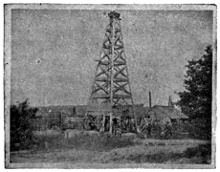
| Notable Wells on Oil Creek in 1861-2-3 |
42 |
| Map of Venango County |
59 |
| Early Operators on Oil Creek |
60 |
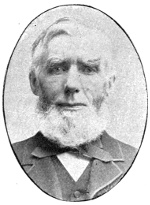
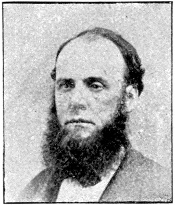
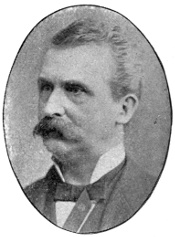
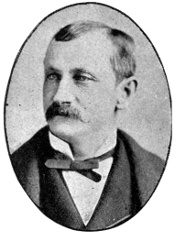
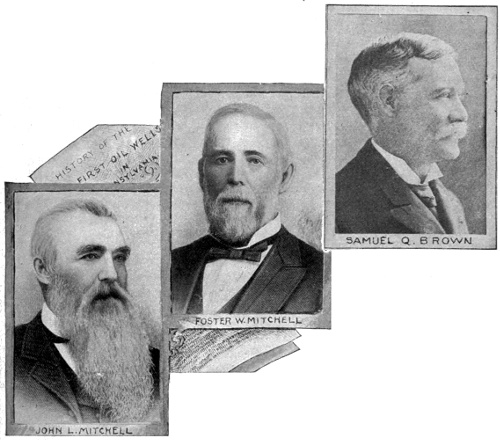
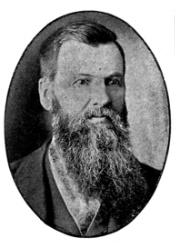
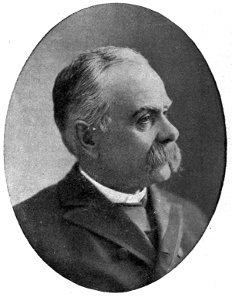
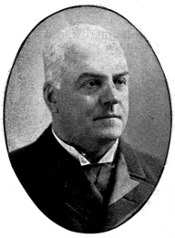
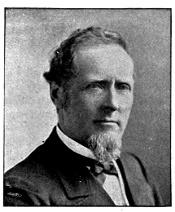
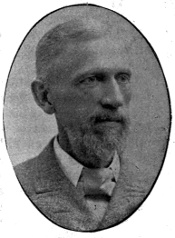
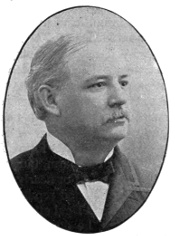
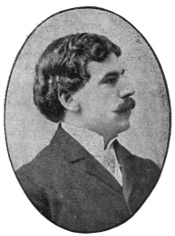
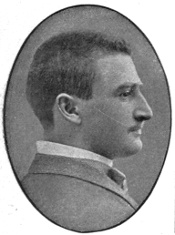
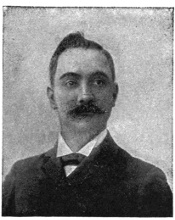
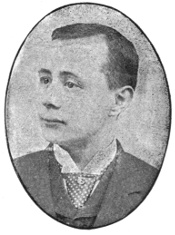
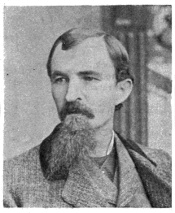
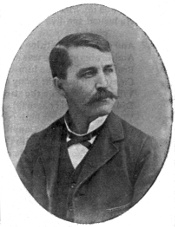
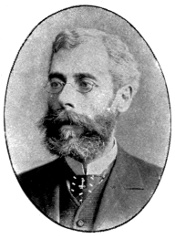
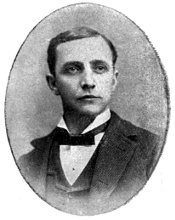
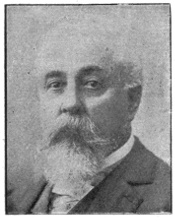
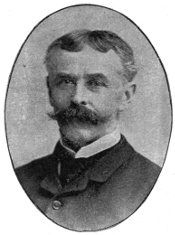
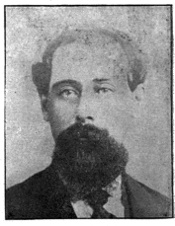
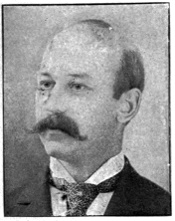
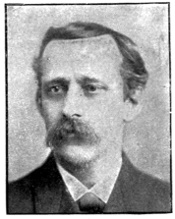
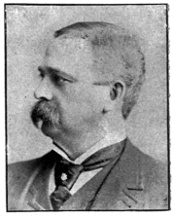
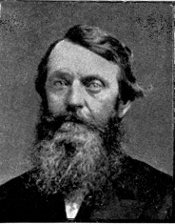
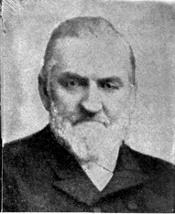
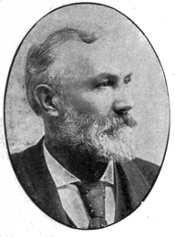
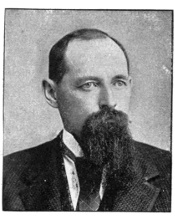
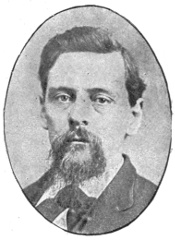
| Group Picture—Maj. W. T. Baum, Jacob Sheasley, Henry F. James, James Evans, W. R. Crawford, Daniel Grimm, Col. Jas. P. Hoover |
82 |
| Miller & Sibley’s Prospect Hill Stock Farm, Franklin, Pa. |
115 |
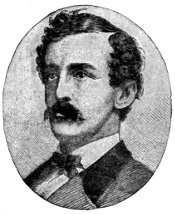
| Group Picture—John Vanausdall, G. K. Anderson, Wm. Phillips, F. S. Tarbell, F. W. Andrews, Capt. Wm. Hasson, Henry R. Rouse, John P. Zane. D. W. Kenney’s Allemagoozelum City Well No. 2 |
116 |
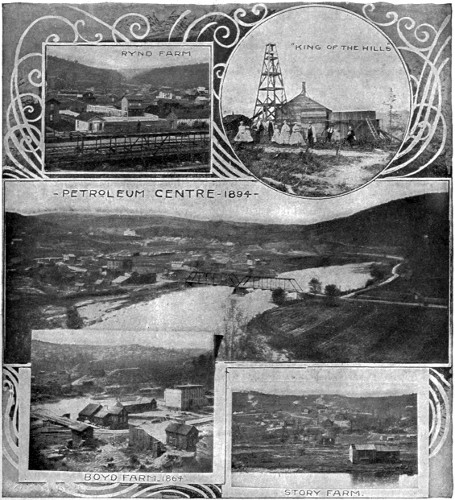
| Petroleum Centre, 1894 |
131 |
| Wells on Benninghoff Run, Venango Co., Pa., in 1866 |
156 |
| General View of Pithole in August, 1895 |
172 |
| |
Page |
| Parker Oil Exchange in 1874 |
190 |
| Up the Allegheny River |
212 |
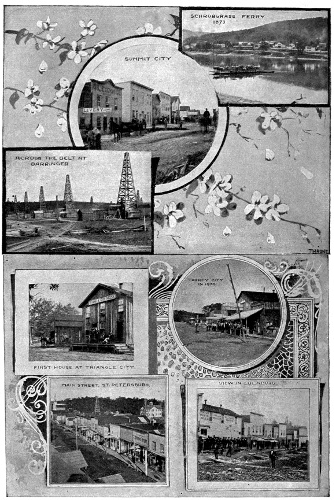
| Views at St. Petersburg, Edenburg and Other Places |
232 |
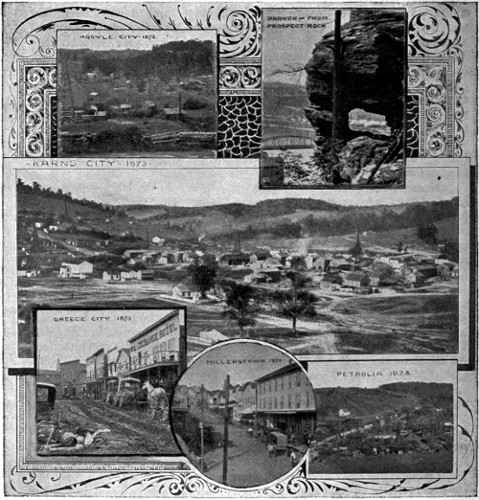
| Karns City, Greece City, Petrolia, 1873; Group of Hascal L. Taylor, Marcus Brownson and John Satterfield |
258 |
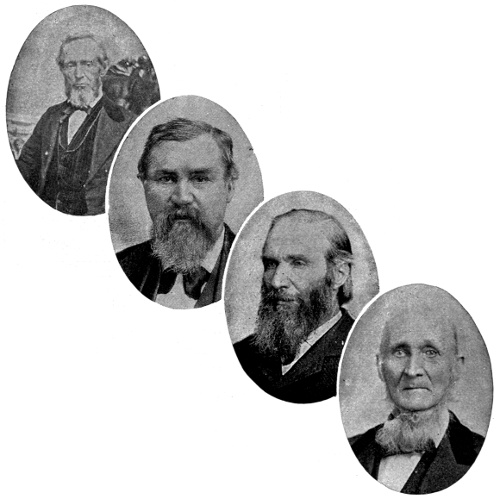
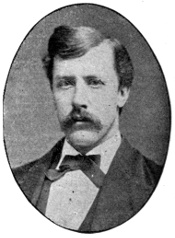
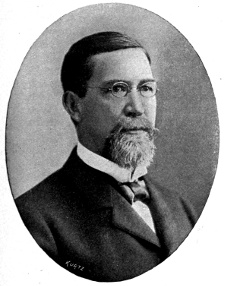
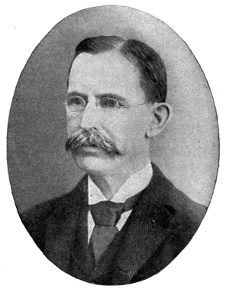
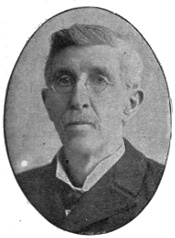
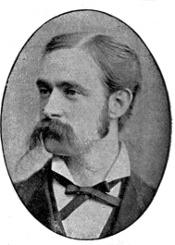
| Group Picture—Richard Jennings, S. D. Karns, George Nesbit and George Dimick |
261 |
| Armstrong Well |
281 |
| Views on the Tarr Farm, Oil Creek, in 1863-6. Refinery and Oil-Wells at Russia and Baku |
292 |
| Pond Freshet at Oil City, March, ’63 |
310 |
| A Cluster of Pioneer Editors |
344 |
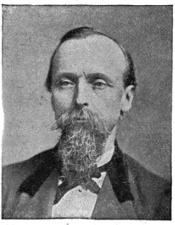
| Group Picture—F. F. Murray, Frank W. Truesdell, R. W. Criswell, James M. Place and George E. Mapes |
366 |
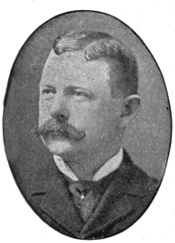
| Group Picture—Col. J. K. Haffey, D. A. Dennison, Thomas A. Kern and Charles F. Persons |
371 |
| Well Flowing Oil After Torpedoing |
382 |
| Standard Building, 26 Broadway, N.Y. |
408 |
I. THE STAR IN THE EAST. — A PETROLEUM IDYL.
1
Petroleum in Ancient Times—Known from an Early Period in the
World’s History—Mentioned in the Scriptures and by Primitive
Writers—Solomon Sustained—Stumbling Upon the Greasy Staple
in Various Lands—Incidents and Anecdotes of Different Sorts and
Sizes—Over Asia, Africa and Europe for the Stuff.
“The morning star in all its splendor was rising in the East.”—Felix Dahn.
“Alone in the increasing darkness * * * it is a beacon light.”—Disraeli.
“It were all one that I should love a bright particular star.”—Shakespeare.
“The years that are gone roll before me with their deeds.”—Ossian.
“Oil out of the flinty rock.”—Deuteronomy xxxii: 13.
“And the rock poured me out rivers of oil.”—Job xxix: 6.
“Will the Lord be pleased with * * * ten-thousands of rivers of oil?”—Micah vi: 7.
“I have myself seen pitch drawn out of the lake and from water in Zacynthus.”—Herodotus.
“The people of Agrigentum save oil in pits and burn it in lamps.”—Dioscorides.
“Can ye not discern the signs of the times?”—St. Matthew xvi: 3.

Petroleum, a name to conjure with and weave
romances around, helps out Solomon’s oft-misapplied
declaration of “No new thing under the
sun.” Possibly it filled no place in domestic
economy when the race, if the Darwinian theory
passes muster, sported as ring-tailed simians,
yet the Scriptures and primitive writers mention
the article repeatedly. Many intelligent persons,
recalling the tallow-dip and lard-oil lamp of
their youth, consider the entire petroleum-business
of very recent date, whereas its history
goes back to remotest antiquity. Naturally they
are disappointed to find it, in various aspects,
“the same thing over again.” Men and women
in the prime of life have forgotten the flickering
pine-knot, the sputtering candle or the smoky sconce hardly long enough to
associate rock-oil with “the brave days of old.” This idea of newness the
host of fresh industries created by oil-operations has tended to deepen in the
popular mind. Enjoying the brilliant glow of a modern argand-burner, double-wicked,
silk-shaded, onyx-mounted and altogether a genuine luxury, it seems
hard to realize that the actual basis of this up-to-date elegance has existed from
time immemorial. Of derricks, drilling-tools, tank-cars, refineries and pipe-lines
our ancestors were blissfully ignorant; but petroleum itself, the foundation
of the countless paraphernalia of the oil-trade of to-day, flourished “ere Noah’s
flood had space to dry.” Although used to a limited extent in crude-form for
thousands of years, it was reserved for the present age to introduce the grand
illuminant to the world generally. After sixty centuries the game of “hide-and-seek”
2between Mother Earth and her children has terminated in favor of the
latter. They have pierced nature’s internal laboratories, tapping the huge oil-tanks
wherein the products of her quiet chemistry had accumulated “in bond,”
and up came the unctuous fluid in volumes ample to fill all the lamps the
universe could manufacture and to grease every axle on this revolving planet!
The demon of darkness has been exorcised from the gloomy caverns of old to
make room for the modern angel of light. Science, the rare alchemist which
converts the tear of unpaid labor into a steam-giant that turns with tireless arm
the countless wheels of toil, lays bare the deepest recesses of the past to bring
forth treasures for the present.
The capital invested in petroleum in this country has increased from one-thousand
dollars, raised in 1859 to drill the first well in Pennsylvania, to six-hundred-millions.
It is just as easy to say six-hundred-million dollars as six-hundred-million
grains of sand, but the possibilities of such a sum of money
afford material for endless flights of the imagination. Thirty-thousand miles of
pipe-lines handle the output most expeditiously, conveying it to the seaboard at
less than teamsters used to receive for hauling it a half-mile. Ten-thousand
tank-cars have been engaged in its transportation. Seventy-five bulk-steamers
and fleets of sailing-vessels carry refined from Philadelphia and New York to the
most distant ports in Europe, Africa and Asia. “Astral Oil” and “Standard
White” have penetrated “wherever a wheel can roll or a camel’s foot be
planted.” In Pennsylvania, South-eastern Ohio and West Virginia thirty-five-million
barrels have been produced and eight-thousand wells drilled in a single
year. Add to this the results of operations in North-eastern Ohio, Indiana,
Kentucky, Tennessee, Kansas, Colorado, Wyoming and California, and it must
be acknowledged that petroleum is entitled to the chief seat in the synagogue.
Edward Bellamy may, perhaps, be imitated
profitably and pleasantly in this connection
by “Looking-Backward.”
Looking forward is the proper kink,
Smooth as skating in an icy rink,
In one’s planning how to fill a chink
At manifold times and places;
But for winning in a thoughtful think,
Past and present joining with a link
Guaranteed to wash and never shrink,
Looking backward holds four aces.
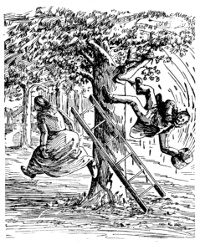
THE BAD BOY’S IDEA OF ADAM’S FALL.
Precisely how, why, when, where and by
whom petroleum was first discovered and
utilized nobody living can, and nobody dead
will, tell anxious inquirers. The information
has “gone where the woodbine twineth,” to
join the dodo, the megatherium, the ichthyosaurus
and the “lost arts” Wendell Phillips
embalmed in fadeless prose. An erratic Joe-Millerite
has traced the stuff to the Garden of Eden in a fashion akin to the
chopping logic of the Deacon’s “Wonderful One-Horse Shay.” Hear him:
“Adam had a fall?”
“Sure as death and taxes.”
“Why did he fall with such neatness and dispatch?”
“Maybe he took a spring to fall.”
“Naw! Because everything was greased for the occasion! Unquestionably
3the only lubricant on this footstool just then was the petroleum brewed in God’s
own subterranean stills. Therefore, petroleum figured in Eden, which was to
be demonstrated according to Hoyle. See?”
There is no “irrepressible conflict” between this reasoning, the version of
the Pentateuch and the idea of Peck’s Bad Boy that “Adam clumb a appul-tree
to put coal-oil onto it to kill the insecks, an’ he sawed a snaik, an’ the oil
made the tree slippy, an’ he fell bumpety-bump!” What a heap of trouble
would have been avoided if that pippin had been soaked in crude-oil, that Eve
might turn up her nose at it and give the serpent the marble heart! As Miss
Haney expresses it:
“O Eve, little Eve, if you only had guess’d
Who it was that tempted you so,
You’d have kept out of mischief, nor lost your nice home
For the sake of an apple, I know.”
Other wags attribute the longevity of antediluvian veterans to their unstinted
use of petroleum for internal and external ailments! Had medical almanacs,
patent nostrums and circus-bill testimonials been evolved at that interesting
period, the oleum-vender would have hit the bull’s-eye plump in the center.
Guess at the value of recommendations like these, with the latest accompaniment
of “before-and-after” pictures in the newspapers:
Land of Nod, April 1, B. C. 5678.—This is to certify that I keep my strength up to blacksmith
pitch by frequent applications of Petroleum Prophylactic and six big drinks of Benzine
Bitters daily. Lifting an elephant, with one hand tied behind me, is my favorite trick.
Sandow Tubal-Cain.
Mt. Ararat, July 4, B. C. 4004.—Your medicine is out of sight in our family. It relieved
papa of an overdose of fire-water, imbibed in honor of his boat distancing Dunraven’s barge on
this glorious anniversary, and cured Ham of trichina yesterday. Mamma’s pug slid off the upper
deck into the swim and was fished out in a comatose condition. A solitary whiff of your Pungent
Petroleum Pastils revived him instantly, and he was able to howl all night.
Shem & Japheth.
Somewhere in Asia, Dec. 21, B. C. 4019.—Your incomparable Petroleum Prophylactic, which
I first learned about from a college chum, is a daisy-cutter. Thanks to its superlative virtues, I
have lived to be a trifle older than the youngest ballet-girl in the “Black Crook.” I celebrated
my nine-hundred-and-sixty-ninth birth-day by walking umsteen miles before luncheon, playing
left-tackle with the Y. M. C. A. Foot-ball Team in the afternoon and witnessing “Uncle Tom’s
Cabin”—two Topsys, two Markses, two Evas, two donkeys and four Siberian Bloodhounds—in
the evening. Next morning’s paper flung this ticket to the breeze:
“For Mayor of Jeroosalum
We nominate Methoosalum.”
By sticking faithfully and fearlessly to your unrivaled elixir I expect to round out my full
thousand years and run for a second term. Refer silver-skeptics and gold-bug office-seekers to
me for particulars as to the proper treatment.
Grover Linger Longer Methuselah.
Pleasant Valley, Oct. 30, B. C. 5555.—I just want to shout “Eureka,” “Excelsior,”
“Hail Columbia,” “E Pluribus Unum,” and give three cheers for your Kill-em-off Kerosene!
Both my mothers in-law, who had bossed me seventy decades, tried a can of it on a sick fire
this morning. Their funeral is billed for four o’clock p. m. to-morrow. Send me ten gallons
more at once.
Brigham Young Lamech.
Isles of Greece.—I defy the Jersey Lighting to knock me out while your Benzine Bitters
are in the ring. “A good thing; push it along.”
Sullivan Ajax.
Leaving the realm of conjecture, it is quite certain that the “pitch” which
coated the ark and the “slime” of the builders of Babel were products of
petroleum. Genesis affirms that “the vale of Siddim was full of slime-pits”—language
too direct to be dismissed by hinting vaguely at “the mistakes of
Moses.” Deuteronomy speaks of “oil out of the flinty rock” and Micah puts
the pointed query: “Will the Lord be pleased with * * * ten thousands of
4rivers of oil?” To the three friends who condoled with him in his grievous
visitation of boils the patriarch of Uz asserted: “And the rock poured me
out rivers of oil.” Whatever his hearers might think of this apparent stretch
of fancy, Job’s forecast of the oleaginous output was singularly felicitous.
Evidently the Old-Testament writers, whose wise heads geology had not
muddled, knew a good deal about the petroleum
situation in their day.
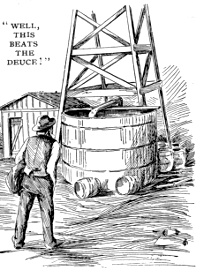
A follower of Voltaire was accustomed to
wind up his assaults on inspiration by criticising
these oily quotations unmercifully.
“Could anything be more absurd,” he would
ask, “than to talk of ‘oil from a flinty rock’
and ‘rocks pouring forth rivers of oil?’ If
anything were needed to prove the Bible a
fool-book from start to finish, such utterances
would settle the matter beyond dispute.
Rocks yielding rivers of oil cap the
climax of ridiculous nonsense! Next they’ll
want folks to believe that Jonah swallowed
the whale, hair and hide and breeches. Bah!”
Months and years passed away swiftly,
as they have a habit of doing, and the sturdy
agnostic continued arguing pluckily. At
length tidings of oil-wells flowing thousands of barrels of crude reached him
from William Penn’s broad heritage. He came, he saw and, unlike Julius Cæsar,
he surrendered unconditionally. Remarking, “This beats the deuce!” the
doubter doubted no more. He revised his opinions, humbly accepted the
gospel and professed religion, openly and above-board. Hence the petroleum-development
is entitled to the credit of one notable conversion, at least, and the
balance is on the right side of the ledger, assuming that a human soul outweighs
the terrestrial globe in the unerring scales of the Infinite.
Can they be wrong, who think the stingy soul
That grudges honest toil its scanty dole
Not worth its weight in slaty, sulphur coal?
Whether petroleum, which literally signifies “rock-oil,” be of mineral,
vegetable or animal origin matters little to the producer or consumer, who
views it from a commercial standpoint. In its natural state it is a variable
mixture of numerous liquid hydro-carbons, holding in solution paraffine and
solid bitumen, or asphaltum. The fountains of Is, on the Euphrates, were
familiar to the founders of Babylon, who secured indestructible mortar for the
walls of the city by pouring melted asphaltum between the blocks of stone.
These famous springs attracted the attention of Alexander, Trajan and Julian.
Even now asphaltum procured from them is sold in the adjacent villages. The
commodity is skimmed off the saline and sulphurous waters and solidified by
evaporation. The ancient Egyptians used another form of the same substance
in preparing mummies, probably obtaining their supplies from a spring on the
Island of Zante, described by Herodotus. It was flowing in his day, it is flowing
to-day, and a citizen of Boston owns the property. Wells drilled near the
Suez canal in 1885 found petroleum. So the gay world jogs on. Mummified
Pharaohs are burned as fuel to drive locomotives over the Sahara, while the
Zantean fount whose oil besmeared “the swathed and bandaged carcasses” is
5purchased by a Massachusetts bean-eater! Yet victims of “that tired feeling”
turn to namby-pamby novels of the Laura-Jean-Libby brand for real romance!
“For truth is strange, stranger than fiction.”
Asphaltum is found in the Dead Sea, the supposed site of Sodom and
Gomorrah, and on the surface of a chain of springs along its banks, far below
the level of the ocean. Strabo referred to this remarkable feature two thousand
years ago. The destruction of the two ill-fated cities may have been connected
with, if not caused by, vast natural stores of this inflammable petroleum. The
immense accumulations of hardened rock-oil in the center and on the banks of
the sea were oxidized into rosin-like asphalt. Pieces picked up from the
waters are frequently carved, in the convents of Jerusalem, into ornaments,
which retain an oily flavor. Aristotle, Josephus and Pliny mention similar
deposits at Albania, on the shores of the Adriatic. Dioscorides Pedanius, the
Greek historian, tells how the citizens of Agrigentum, in Sicily, burned petroleum
in rude lamps prior to the birth of Christ. For two centuries it lighted
the streets of Genoa and Parma, in northern Italy. Plutarch describes a lake
of blazing petroleum near Ecbatana. Persian wells have produced oil liberally
for ages, under the name of “naphtha,” the descendants of Cyrus, Darius
and Xerxes consuming the fluid for its light. The earliest records of China
refer to petroleum and small quantities have been found in Thibet. An oil-fountain
on one of the Ionian Islands has gushed steadily for over twenty
centuries, without once going on a strike or taking a vacation. Austria and
France likewise possess oil-springs of considerable importance. Thomas
Shirley, in 1667, tested the contents of a shallow pit in Lancashire, England,
which burned readily. Rev. John Clayton visited it and wrote in 1691:
“I saw a ditch where the water burned like brandy. Country-folk boil eggs and meat in it.”
Near Bitche, a small fort perched on the top of a peak, at the entrance of
one of the defiles of Lorraine, opening into the Vosges Mountains-a fort
which was of great embarrassment to the Prussians in their last French campaign—and
in the valley guarded by this fortress stand the chateau and village
of Walsbroun, so named from a strange spring in the forest behind it. In the
middle ages this fountain was famous. Inscriptions, ancient coins and the
relics of a Roman road attest that it had been celebrated even in earlier times.
In the sixteenth century a basin and bath for sick people existed. No record
of its abandonment has been preserved. In the last century it was rediscovered
by a medical antiquarian, who found the naphtha, or white petroleum, almost
exhausted.
Nine years ago Adolph Schreiner died in a Vienna hospital, destitute and
alone. Yet he was the only son of a man known in Galicia as “the Petroleum
King” and founder of the great industry of oil-refining. The father shared the
lot of many inventors and benefactors, increasing the world’s wealth untold
millions and poverty-stricken himself in his last days. Schreiner owned a piece
of ground near Baryslaw from which he took a black, tarry muck the peasants
used to heal wounds and grease cart-axles. He kneaded a ball from the slime,
stuck a wick into it and a red flame burned until the substance exhausted.
This was the first petroleum-lamp! Later Schreiner heard of distillation, filled
a kettle with the black earth and placed it on the fire. The ooze boiled over
and exploded, shivering the kettle and covering the zealous experimenter with
deep scars. He improved his apparatus, produced the petroleum of commerce
and sold bottles of the fluid to druggists in 1853. He drilled the first Galician
oil-well in 1856 and built a real refinery, which fire destroyed in 1866. He rebuilt
6the works on a larger scale and fire blotted them out, ruining the owner.
Gray hairs and feebleness had come, he ceased the struggle, drank to excess
and died in misery. His son, from whom much was expected, failed as a merchant
and peddled matches in Vienna from house to house, just as the aged
brother of Signor Blitz, the world-famed conjuror, is doing in Harrisburg to-day.
Dying at last in a public hospital, kindred nor friends followed the poor
outcast to a pauper’s grave. “Vanity of vanities, all is
vanity and vexation of spirit.”
Life’s page holds each man’s autograph—
Each has his time to cry or laugh,
Each reaps his share of grain or chaff,
But all at last the dregs must quaff—
The tombstone holds their epitaph.
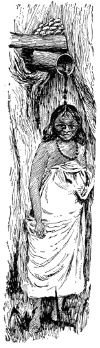
Around the volcanic isles of Cape Verde oil floats on
the water and to the south of Vesuvius rises through the
Mediterranean, exactly as when “the morning stars sang
together.” Hanover, in Germany, boasts the most northerly
of European “earth-oils.” The islands of the Ottoman
Archipelago and Syria are richly endowed with the
same product. Roumania is literally flowing with petroleum,
which oozes from the Carpathians and pollutes the
water-springs. Turkish domination has hindered the development
of the Roumanian region. Southern Australia
is blessed with bituminous shales, resembling those in
Scotland, good for sixty gallons of petroleum to the ton.
The New-Zealanders obtained a meager supply from the
hill-sides, collecting carefully the droppings from the interior
rocks, and several test-wells have resulted satisfactorily.
The unsophisticated Sumatrans, whose straw-huts
and squeaky music rendered the Javanese village at the
Columbian Exposition a tip-top novelty, stick pipes in
rocks and hills that trickle petroleum and let the liquid
drop upon their heads until their bodies are sleek and
slippery as an eel. Chauncey F. Lufkin, of Lima, Ohio,
inventor of the “Disk Powers” that make oil-wells almost
pump themselves, says it is funnier than a three-ringed
circus to watch a group of half-clad girls and
women, two-thirds of them carrying babies, taking turns
at this operation. He has traveled through the oil-fields of Sumatra, India and
Russia and his kodak has reproduced many odd scenes for the delectation of
his friends. Two companies drilling in Java propose to find out all about its
oil-resources as quickly as the tools can reach the decisive spot. Ultimately
Java coffee may be tinged with an oily flavor that will tickle the palates of consumers
and set them wondering how the new aroma escaped their notice so
persistently. Verily, “no pent-up Utica confines” petroleum within the narrow
compass of a nation or a continent. With John Wesley it may exultingly
exclaim: “The whole earth is my parish,” or echo the Shakespearean refrain:
“The world’s mine oyster.”
J. W. Stewart, of Clarion, has been in Africa drilling for oil. An English
syndicate is behind the enterprise and test-wells are to be bored in the goldfields
on the southern coast. Stewart, who returned lately, says it is amusing
7to see the monkeys climb up a derrick and watch the drillers at work. Just
how amused they will be, if the Englishmen strike a spouter that drenches the
monkeys and the derrick, each must diagram for himself until the result of
carrying the petroleum-war into Africa is decided. C. E. Seavill, since 1874
mining-and-land agent at Kimberley, in the diamond-fields of South Africa, has
organized a company with seventy-five-thousand dollars capital to operate at
Ceres, eighty miles north of Cape Town. He has leased enormous tracts of
land, which American experts pronounce likely to prove rich oil-territory, and
the first well will be drilled at a spot selected by W. W. Van Ness, of New York,
an authority on petroleum. Mr. Seavill spent years endeavoring to educate the
people up to the notion that South Africa might be good for something besides
gold and precious stones. A series of gushers in the Ceres district, big enough
to discount yellow nuggets and sparkling gems, should be the fitting reward of
his enterprise. Perhaps Heber’s missionary-hymn may yet start like this, when
the Hottentots pose as oil-operators:
From Java’s spicy mountains,
From Afric’s golden strand,
Come tales of oily fountains
Roll’d up by the third sand.
The Rangoon district of India long yielded four-hundred-thousand hogsheads
annually, the Hindoos using the oil to heal diseases, to preserve timber
and to cremate corpses. Birma has been supplied from this source for an
unknown period. The liquid, which is of a greenish-brown color and resembles
lubricating-oil in density, gathers in pits sunk twenty to ninety feet in beds
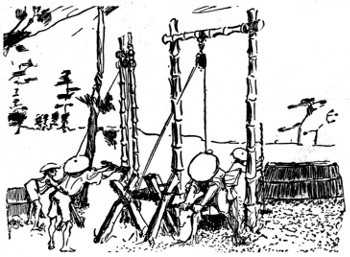
of sandy clays, overlying slates and sandstones. Clumsy pots or buckets, operated
by quaint windlasses, hoist the oil slowly to the mouth of the pits, whence
it is often carried across the country in leathern bags, borne on men’s shoulders,
or in earthern jars, packed into carts drawn by oxen. Major Michael Symes,
ambassador to the Court
of Ava in 1765, published
a narrative of his sojourn,
in which is this passage:
“We rode until two o’clock,
at which hour we reached
Yaynangheomn, or Petroleum
Creek. * * * The smell of
the oil is extremely offensive.
It was nearly dark when we
approached the pits. There
seemed to be a great many pits
within a small compass. Walking
to the nearest, we found the
aperture about four feet square
and the sides lined, as far as
we could see down, with timber.
The oil is drawn up in an
iron-pot, fastened to a rope
passed over a wooden cylinder,
which revolves on an axis supported by two upright posts. When the pot is filled, two men take
hold of the rope by the end and run down a declivity, which is cut in the ground, to a distance
equal to the depth of the well. When they reach the end of the track the pot is raised to its
proper elevation; the contents, water and oil together, are discharged into a cistern, and the
water is afterward drawn through a hole in the bottom. * * * When a pit yielded as much as
came up to the waist of a man, it was deemed tolerably productive; if it reached his neck it was
abundant, and that which reached no higher than his knee was accounted indifferent.”
Labor-saving machinery has not forged to the front to any great degree in
8the oil-fields of the East Indies. For the Burmese trade flat-boats ascend the
Irrawaddy to Rainanghong, a town inhabited almost exclusively by the potters
who make the earthen jars in which the oil is kept for this peculiar traffic.
The methods of saving and handling the greasy staple have not changed one
iota since John the Baptist wore his suit of camel’s-hair and curry-combed the
Sadducees in the Judean wilderness. Progress cuts no ice beneath the shadows
of the Himalayas, notwithstanding the missionary efforts of Xavier,
Judson, Carey, Morrison and Duff.
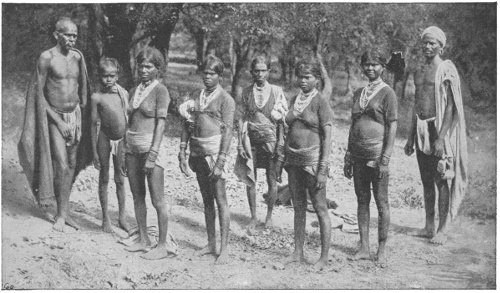
GROUP OF NATIVE OIL-OPERATORS IN INDIA DOWN FROM THE HILLS.
Petroleum in India occurs in middle or lower tertiary rock. In the Rawalpindi
district of the Panjab it is found at sixteen localities. At Gunda a well
yielded eleven gallons a day for six months, from a boring eighty feet deep,
and one two-hundred feet deep, at Makum, produced a hundred gallons an
hour. The coast of Arakan and the adjacent islands have long been famed
for mud-volcanoes caused by the eruption of hydrocarbon gases. Forty-thousand
gallons a year of petroleum have been exported by the natives from
Kyoukpyu. The oil is light and pure. In 1877 European enterprise was
attracted to this industry and in 1879 work was undertaken by the Borongo Oil-Co.
The company started on a large scale and in 1883 had twenty-four wells
in operation, ranging from five-hundred to twelve-hundred feet in depth, one
yielding for a few weeks one-thousand gallons daily. The total pumped from
ten wells during the year was a quarter-million gallons; and in 1884 the company
had to suspend payment. Large supplies of high-class petroleum might
be obtained from this region, if suitable methods of working were employed.
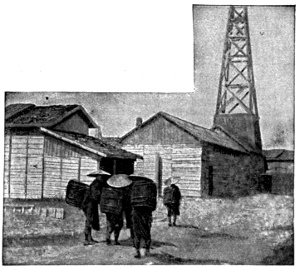
WOMEN IN JAPAN CARRYING OIL ON THEIR BACKS.
Japan also takes a position in the oleiferous procession allied to that of
the yellow dog under the band-wagon. At the base of Fuji-Yama, a mountain
of respectable altitude, the thrifty subjects of the Mikado manage a cluster of
oil-pits in the style practiced by their forefathers. The mirv holes, the creaking
apparatus and the general surroundings are second editions of the Rangoon
exhibits. Yum-Yum’s countrymen are clever students and they have much
9to learn concerning petroleum. Twenty-one years ago a Japanese nobleman
inspected the Pennsylvania oil-fields, sent thither to report to the government
all about the American system of operating the territory.
His observations, embodied in an official statement, failed to
amend the moss-grown processes of the Fuji-Yamans, who
preferred to “fight it out on the old line if it took all summer.”
Two others followed on a similar mission in 1897.
Fifty wells, from one thousand to eighteen hundred feet deep,
are producing in the Echigo
province of Japan. The
largest flowed five-hundred
barrels the first day,
declining to eight or ten,
the customary average.
The sand is white and the
oil is of two grades, one
amber of 38° gravity, the
other much darker and
of 310 gravity. The methods
of refining and transporting
are of the rudest,
women carrying the crude
from the wells on their backs as squaws in North America tote their papooses.
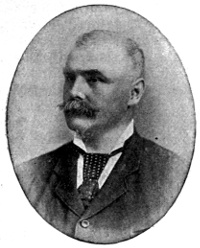
In 1874 S. G. Bayne, now president of the Seaboard Bank of New-York
City, visited these oriental regions. The hard fate of the benighted heathen
moved him to briny tears. They had never heard or read of “the annealed
steel coupling,” “the Palm link,” the tubing, casing, engines and boilers the
distinguished tourist had planted in every nook and corner of Oildom. With
the spirit of a true philanthropist, Bayne determined to “set them on a higher
plane.” His choicest Hindostanee persiflage was aired in detailing the advantages
of the Pennsylvania plan of running the petroleum-machine. Tales of
fortunes won on Oil Creek and the Allegheny
River were garnished with scintillations of Irish
wit that ought to have convulsed the listeners.
Alas! the supine Asiatics were not built that
way and the good seed fell upon barren soil.
The story and, despite the finest lacquer and
veneer embellishments, the experience were
repeated in Japan. What better could be expected
of pagans who wore skirts for full-dress,
practiced hari-kari and knew not a syllable about
Brian Boru? Their conduct was another convincing
evidence of “the stern Calvinistic doctrine”
of total depravity. The Japs voted to
stay in their venerable rut and not monkey
with the Yankee buzz-saw. “And the band
played on.”
Years afterwards two cars of drilling-tools and well-machinery were shipped
to Calcutta and a couple of complete rigs to Yeddo—“only this and nothing
more.” The genial Bayne attempted to square the account by printing his
eastern adventures and sending marked copies of translations to the Indo-Japanese
10press. Doubtless the waste-basket received what the office-cat spared
of this unusual consignment. Mr. Bayne began his prosperous career as an oilman
by striking a snug well in 1869, on Pine Creek, near Titusville. He has
written a book on Astronomy which twinkles with gobs of astral science
Copernicus, Herschell, Leverrier, Proctor or Maria Mitchell never dreamed of.
His unique advertisements have spread his fame from the Atlantic to the Pacific.
Digest these random samples of originality worthy of John J. Ingalls:
“We never make kite-track records; our speed takes in the full circle.”
“The graveyards of the enemy are the monuments of our success.”
“We never speak of our goods without glancing at the bust of George Washington which
squats on the top of our annealed steel safe; a twenty-five cent plaster cast of George lends an
atmosphere of veracity to a trade which in these days it sometimes needs.”
“Abdul Azis, the late Sultan of Morocco, bought a cheap boiler to drill a water-well. It
bu’st and he is now Abdul Azwas.”
“We will never be buried with the ‘unknown dead’—we advertise.”
“Our patent coupling is the precipitated vapor of fermented progress.”
“The intellectual and æsthetic are provided for in consanguinity to their taste.”
“Our conversational soloists never descend to orthochromatic photography in their orphean
flights; they hug the shore of plain Anglo-Saxon and scoop the doubting Thomas.”
“It will never do to shake a man because the lambrequins begin to appear on the bottom of
his pants and he wears a ‘dickey’ with a sinker.”
“The Forget-me-nots of to-day are frequently found the Has-beens of to-morrow.”
“Credit is the flower that blooms in life’s buttonhole.”
“Many a man who now gives dinner-parties in a Queen-Anne front would be nibbling his
Frankfurter in a Mary-Ann back had we not given him a helping hand at the right moment.”
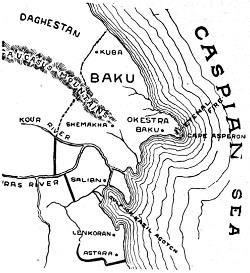
CLASSIC GROUND OF PETROLEUM.
The classic ground of Petroleum is the little peninsula of Okestra, jutting
into the Caspian Sea. Extraordinary indications of oil and gas extend over a
strip of country twenty-five miles long by a half-mile wide, in porous sandstone.
Springs of heavier petroleum flow from hills of volcanic rocks in the
vicinity. Open wells, in which the oil settles as it oozes from the rocks, are
dug sixteen to twenty feet deep. For countless generations the simple natives
dipped up the sticky fluid and carried it
great distances on their backs, to burn in
its crude state, besides sending a large
amount yearly to the Shah’s dominions.
It is a forbidding spot-rocky, desolate,
without a stream or a sign of vegetation.
The unfruitful soil is saturated with oil,
which exudes from the neighboring hills
and sometimes filters into receptacles
hewn in the rock at a prehistoric epoch.
On gala days it was part of the program
to pour the oil into the Caspian and set
it ablaze, until the sea and land and sky
appeared one unbroken mass of vivid,
lurid, roaring flame. The “pillar of fire”
which guided the wandering Israelites by
night could scarcely have presented a
grander spectacle. The sight might well convey to awe-stricken beholders intensely
realistic notions of the place of punishment Col. Ingersoll and Henry
Ward Beecher have sought by tongue and pen to abolish. “Old Nick,” however,
at last advices was still doing a wholesale business at the old stand!
Near Belegan, six miles from the chief village of the Baku district, the
grandest of these superb exhibitions was given in 1817. A column of flame,
11six-hundred yards in diameter, broke out naturally, hurling rocks for days together
and raising a mound nine-hundred feet high. The roar of steaming brine
was terrific. Oil and gas rise wherever a hole is bored. The sides of the mountain
are black with dark exudations, while a spring of white oil issues from the foot.
A clay-pipe or hollow reed, steeped in lime water and set upright in the floor of
a dwelling, serves as a sufficient gas-pipe. No wonder such a land as Baku,
where in the fissures of the earth and rock the naphtha-vapors flicker into flame,
where a boiling lake is covered with flame devoid of sensible heat, where after
the autumn showers the surrounding country seems wrapped in fire, where the
October moon lights up with an azure tint the entire west and Mount Paradise
dons a robe of fiery red, where innumerable jets envelope the plains on moonless
nights, where all the phenomena of distillation and combustion can be
studied, should have aroused the religious sentiment of oriental mystics. The
adoring Parsee and the cold-blooded chemist might worship cheek-by-jowl.
Amidst this devouring element men live and love, are born and die, plant
onions and raise sheep, as in more prosaic regions.
At the southern extremity of the peninsula oil and gas shot upward in a
huge pyramid of light. Here was “the eternal fire of Aaku,” burning two-thousand-years
as when Zoroaster reverently beheld it and flame became the
symbol of Deity to the entranced Parsees. Here the poor Gheber gathered
the fuel to feed the sacred fire which burned perpetually upon his altar. Hither
devout pilgrims journeyed even from far-off Cathay, to do homage and bear
away a few drops of the precious oil, before the wolf had suckled Romulus or
Nebuchadnezzar had been turned out to pasture. The “Eternal Fire,” unquenched
for twenty-five centuries, the digging of wells that tapped its supply of
fuel put out a generation ago. Modern greed, respecting neither ancient association
nor religious sentiment, drew too lavishly upon the bountiful stock that fed
throughout the ages the grandest flame in history. At Lourakhanel, not far
from Baku, is a temple built by the fire-worshipers. The sea in places has such
quantities of gas that it can be lighted and burned on the surface of the water
until extinguished by a strong wind. Strange destiny of petroleum, first and
last, to be the panderer of idolatry—fire-worship in the olden time, mammon-worship
in this era of the “Almighty Dollar!”
Developments from Baku to the region north of the Black Sea, seven-hundred
miles westward, have revealed vast deposits of petroleum. Hundreds
of wells have been drilled, some flowing one-hundred-thousand barrels a day!
Nobel Brothers’ No. 50, which commenced to spout in 1886, kept a stream rising
four-hundred feet into the air for seventeen months, yielding three million barrels.
This would fill a ditch five feet wide, six feet deep, and a hundred miles
long. These monsters eject tons of sand daily, which piles up in high mounds.
Stones weighing forty pounds have been thrown out. The common way of
obtaining the oil is to raise it by means of long metal-cylinders with trap-bottoms.
Pumps are impossible on account of the fine sand coming up with the
oil. These cylinders, which will hold from one to four barrels, on being raised
to the surface are discharged into pipes or ditches. Each trip of the bucket or
cylinder takes a minute-and-a-half and the well is worked day and night. The
average daily yield of a Russian well is about two-hundred barrels.
Pipe-lines, refineries and railroads have been provided and the three big
companies operating the whole field consolidated in 1893. The Rothschilds
combined with the Nobels and a prohibitory tariff prevents the importation of
foreign oils. Tank-steamers ply the Caspian Sea and the Volga, many of the
12railways use the crude-oil for fuel and the supply is practically unlimited. The
petroleum-products are carried in these steamers to a point at the mouth of the
Volga River called Davit Foot, about four-hundred miles north of Baku and
ninety miles from Astrakhan, and transferred into barges. These are towed
by small tug-boats to the various distributing points on the Volga, where
tanks have been constructed for railway-shipments. The chief distributing
point upon the Volga is Tsaritzin, but there is also tankage at Saratof, Kazan,
and Nijni-Novgorod. From these points it is distributed all over Russia in
tank-cars. Some is exported to Germany and to Austria. Russian refined
may not be as good an illuminant as the American, but it is made to burn well
enough for all purposes and emits no disagreeable odor. After taking from
crude thirty per-cent. illuminating distillate, about fifteen per-cent. is taken
from the residuum. It is called “solar oil” and the lubricating-oil distillate is
next taken off. From this distillate a very good lubricant is obtained, affected
neither by intense heat nor cold. The lubricating oil is made in Baku, but
great quantities of the distillate are shipped to England, France, Belgium and
Germany and there purified.
Russian competition was for years the chief danger that confronted American
producers. Three partial cargoes of petroleum were sent to the United
States as an experiment, netting a snug profit. Heaven favors the hustler from
Hustlerville, who hoes his own row and doesn’t squat on a stump expecting
the cow will walk up to be milked, and American oilmen are not easily downed.
They have perfected such improvements in handling, transporting, refining and
marketing their product that the major portion of Europe and Asia, outside of
the czar’s dominions, is their customer. Nailing their colors to the mast and
keeping their powder dry, the oil-interests of this glorious climate don’t propose
to quit barking until the last dog is dead!
The early Persians and Tartars burned crude-oil for light in stoneware jugs,
with a spout on one side to hold the flax-wick, that answered the purpose of
lamps. In 1851 a chemist of Polish Austria exhibited a small quantity of distilled
petroleum at the World’s Fair in London. The Austrian Emperor
rewarded this step towards refining crude-oil by making the chemist a prince.
All these things prove conclusively that petroleum is a veritable antique,
always known and prized by millions of people in Asia, Africa and Europe,
and not a mushroom upstart. Indeed, its pedigree sizes up to the most exacting
Philadelphia requirement. Mineralogists think it was quietly distilling
“underneath the ground” when the majestic fiat went forth: “Let there be
light!” Happily “age does not wither nor custom stale the infinite variety”
of its admirable qualities. Neither is it a hot-house exotic, adapted merely to
a single clime or limited to one favored section of any country. It is scattered
widely throughout the two hemispheres, its range of usefulness is extending
constantly and it is not put up in retail packages, that exhaust speedily. Alike
in the tropics and the zones, beneath cloudless Italian skies and the bleak
Russian firmament, amid the flowery vales of Cashmere and the snow-crowned
heights of the Caucasus, by the banks of the turbid Ganges and the shores of
the limpid Danube, this priceless boon has ever contributed to the comfort and
convenience of mankind.
The Star in the East was crowding into line as the full orb of day.
13
A ragged street-Arab, taken to Sunday-school by a kind teacher, heard for
the first time the story of Christ’s boundless love and sufferings. Big tears
coursed down his grimy cheeks, until he could no longer restrain his feelings.
Springing upon the seat, the excited urchin threw his tattered cap to the ceiling
and screamed “Hurrah for Jesus!” It was an honest, sincere, reverent
tribute, which the Recording Angel must have been delighted to note. In like
manner, considering its wondrous past, its glowing present and its prospective
future, men, women and children everywhere, while profoundly grateful to the
Divine Benefactor for the transcendent gift, may fittingly join in a universal
“Hurrah for Petroleum!”
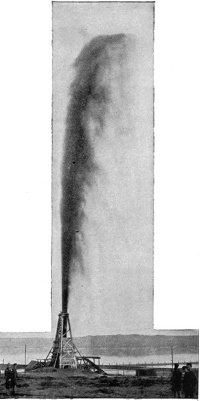
WELL AT BAKU, RUSSIA, FLOWING 50,000 BARRELS
A DAY, THROUGH A 16-INCH PIPE.
Don’t make the mistake that Petroleum,
Like the kodak, the bike, or linoleum,
Is something decidedly new;
Whereas it was known in the Garden
When Eve, in fig-leaf Dolly Varden
Gave Adam an apple to chew.
Nor deem it a human invention,
By reason of newspaper-mention
Just lately commanding attention,
Because it is Nature’s own brew.
Repeatedly named in the Bible,
Let none its antiquity libel
Or seek to explain it away.
It garnish’d Methuselah’s table,
Was used by the builders of Babel
And pilgrims from distant Cathay;
When Pharaoh and Moses were chummy
It help’d preserve many a mummy,
Still dreadfully life-like and gummy,
In Egypt’s stone-tombs from decay!
At Baku Jove’s thunderbolts fir’d it,
Devout Zoroaster admir’d it
As Deity symbol’d in flame;
Parsees from the realms of Darius,
Unweariedly earnest and pious,
Adoring and worshipping came.
It cur’d Noah’s Ham of trichina,
Greas’d babies and pig-tails in China,
Heal’d Arabs from far-off Medina—
The blind and the halt and the lame!
Herodotus saw it at Zante,
It blazed in the visions of Dante
And pyres of supine Hindostan;
The tropics and zones have rich fountains,
It bubbles ’mid snow cover’d mountains
And flows in the pits of Japan.
Confin’d to no country or nation,
A blessing to God’s whole creation
For light, heat and prime lubrication,
All hail to this grand gift to man!
14
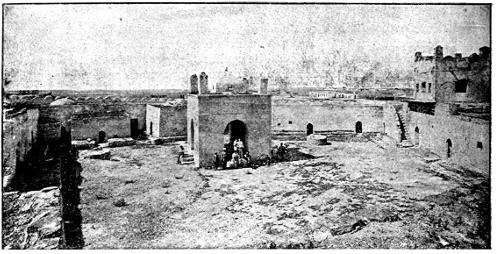
TEMPLE OF THE FIRE-WORSHIPPERS AT LOURAKHANEL, NEAR BAKU.
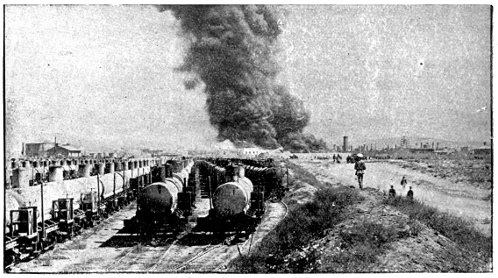
BURNING OF OIL IN THE BOGADOFF SHIPPING-YARD, RUSSIA.
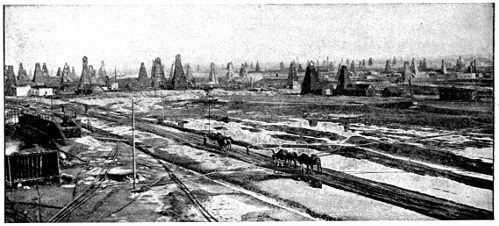
VIEW OF WELLS AT BAKANY, IN THE RUSSIAN OIL-FIELD.
II. A GLIMMER IN THE WEST. — THE BABY HAS GROWN.
15
Numerous Indications of Oil on this Continent—Lake of Asphaltum—Petroleum
Springs in New York and Pennsylvania—How History is
Manufactured—Pioneers Dipping and Utilizing the Precious Fluid—Tombstone
Literature—Pathetic Episode—Singular Strike—Geology
Tries to Explain a Knotty Point.
“Thou who wouldst see where dawned the light at last must westward go.”—Edwin Arnold.
“America is the Lord’s darling.”—Dr. Talmage.
“Thee, hid the bowering vales amidst, I call.”—Euripides.
“A Mercury is not to be carved out of every wood.”—Latin Proverb.
“Never no duck wasn’t hatched by a drake.”—Hall Caine.
“Near the Niagara is an oil-spring known to the Indians.”—De la Roche D’Allion, A. D. 1629.
“There is a fountain at the head of the Ohio, the water of which is like oil, has a taste of iron and
seems to appease pain.”—Captain de Joncaire, A. D. 1721.
“It is light bottled up for tens-of-thousands of years—light absorbed by plants and vegetables.
* * * And now, after being buried long ages, that latent light is again brought forth and
made to work for human purposes.”—Stephenson.
“It is not a farthing glim in a bedroom.”—Charles Reade.
“The west glimmers with some streaks of day.”—Shakespeare.
“Even the night shall be light about me.”—Psalms cxxxix: 11.
The Land Columbus ran against, by
anticipating Horace Greeley’s advice to
“Go West,” was not neglected in the
unstinted distribution of petroleum. It
abounds in South America, in the West
Indies, the United States and Canada.
The most extensive and phenomenal
natural fountain of petroleum ever known
is on the Island of Trinidad. Hot bitumen
has filled a basin four miles in circumference,
three-quarters of a mile from
the sea, estimated to contain the equivalent
of ten-millions of barrels of crude-oil.
The liquid boils up continually, observing
no holidays or Sundays, seething
and foaming at the center of the lake, cooling and thickening as it recedes,
and finally becoming solid asphaltum. The bubbling, hissing, steaming caldron
emits a sulphurous odor, perceptible for ten or twelve miles and decidedly
suggestive of the orthodox Hades. Humboldt in 1799 reported his
impressions of this spontaneous marvel, in producing which the puny hand of
man had no share. From it is derived the dark, tough, semi-elastic material,
first utilized in Switzerland for this purpose, which paves the streets of scores
of cities. Few stop to reflect, as they glide over the noiseless surface on
whirling bicycles or behind prancing steeds, that the smooth asphaltum
pavements and the clear “water-white” in the piano-lamp have a common
16parentage. Yet bloomers and pantaloons, twin-creations of the tailor, or
diamonds and coal, twin-links of carbon, are not related more closely.
“Even men and monkeys may be kin.”
The earliest printed reference to petroleum in America is by Joseph de la
Roche D’Allion, a Franciscan missionary who crossed the Niagara river from
Canada in 1629 and wrote of oil, in what is now New York, known to the
Indians and by them given a name signifying “plenty there.” Likely this was
the petroleum occupying cavities in fossils at Black Rock, below Buffalo, in
sufficient abundance to be an object of commerce. Concerning the celebrated
oil-spring of the Seneca Indians near Cuba, N. Y., which D’Allion may also
have seen, Prof. Benjamin Silliman in 1833 said:
“This is situated in the western part of the county of Alleghany, in the state of New York.
This county is the third from Lake Erie on the south line of the state, the counties of Cattaraugus
and Chautauqua lying west and forming the southwestern termination of the state of New York.
The spring is very near the line which divides Alleghany and Cattaraugus. * * * The country
is rather mountainous, but the road running between the ridges is very good and leads through
a cultivated region rich in soil and picturesque in scenery. Its geographical formation is the
same as that which is known to prevail in the western region; a silicious sandstone with shale,
and in some places limestone, is the immediate basis of the country. * * * The oil-spring or
fountain rises in the midst of a marshy ground. It is a muddy, dirty pool of about eighteen feet
in diameter and is nearly circular in form. There is no outlet above ground, no stream flowing
from it, and it is, of course, a stagnant water, with no other circulation than than which springs
from the changes in temperature and from the gas and petroleum that are constantly rising
through the pool.
“We are told that the odor of petroleum is perceived at a distance in approaching the
spring. This may be true in particular states of the wind, but we did not distinguish any peculiar
smell until we arrived on the edge of the fountain. Here its peculiar character became very
obvious. The water is covered with a thin layer of petroleum or mineral oil, as if coated with
dirty molasses, having a yellowish-brown color.
“They collect the petroleum by skimming it like cream from a milk-pan. For this purpose
they use a broad, flat board, made thin at one edge like a knife; it is moved flat upon and just
under the surface of the water and is soon covered by a coating of petroleum, which is so thick
and adhesive that it does not fall off, but is removed by scraping the instrument upon the lip of a
cup. It has then a very foul appearance, but it is purified by heating and straining it while hot
through flannel. It is used by the people of the vicinity for sprains and rheumatism and for sores
on their horses.”
The “muddy, dirty pool” was included in an Indian reservation, one mile
square, leased in 1860 by Allen, Bradley & Co., who drove a pipe into the bog.
At thirty feet oil began to spout to the tune of a-barrel-an-hour, a rhythm not
unpleasing to the owners of the venture. The flow continued several weeks
and then “stopped short, never to go again.” Other wells followed to a
greater depth, none of them proving sufficiently large to give the field an
orchestra-chair in the petroleum-arena.
It is told of a jolly Cuban, wearing a skull innocent of garbage as Uncle
Ned’s, who “had no wool on the top of his head in the place where the wool
ought to grow,” that he applied oil from the “dirty pool” to an ugly swelling
on the apex of his bare cranium. The treatment lasted a month, by which
time a crop of brand-new hair had begun to sprout. The welcome growth
meant business and eventually thatched the roof of the happy subject with a
luxuriant vegetation that would have turned Paderewski, Absalom, or the most
ambitious foot-ball kicker green with envy! Tittlebat Titmouse, over whose
excruciating experiences with the “Cyanochaitanthropopoion” that dyed his
locks a bright emerald readers of “Ten-Thousand a Year” have laughed
consumedly, was “not in it” compared with the transformed denizen of the
pretty village nestling amid the hills of the Empire State. Those inclined to
pronounce this a bald-headed fabrication may see for themselves the precise
17spot the mud-hole furnishing the oil occupied prior to the advent of the prosaic,
unsentimental driving-pipe.
Captain de Joncaire, a French officer in colonial days, who had charge of
military operations on the Upper Ohio and its tributaries in 1721, reported “a
fountain at the head of a branch of the Ohio, the water of which is like oil.”
Undoubtedly this was the same “fountain” referred to in the Massachusetts
Magazine for July, 1791, as follows:
“In the northern part of Pennsylvania is a creek called Oil Creek, which empties into the
Allegheny river. It issues from a spring on which floats an oil similar to that called Barbadoes
tar, and from which one may gather several gallons a day. The troops sent to guard the western
posts halted at this spring, collected some of the oil and bathed their joints with it. This gave
them great relief from the rheumatism, with which they were afflicted.”
The history of petroleum in America commences with the use the pioneer
settlers found the red-men made of it for medicine and for painting their dusky
bodies. The settlers adopted its medicinal use and retained for various affluents
of the Allegheny the Indian name of Oil Creek. Both natives and whites
collected the oil by spreading blankets on the marshy pools along the edges of
the bottom-lands at the foot of steep hill-sides or of mountain-walls that hem
in the valleys supporting coal-measures above. The remains of ancient pits on
Oil Creek-the Oil Creek ordained to become a household word—lined with
timbers and provided with notched logs for ladders, show how for generations
the aborigines had valued and stored the product. Some of these queer reservoirs,
choked with leaves and dirt accumulated during hundreds of years, bore
trees two centuries old. Many of them, circular, square, oblong and oval,
sunk in the earth fifteen to twenty feet
and strongly cribbed, have been excavated.
Their number and systematic
arrangement attest that petroleum was
saved in liberal quantities by a race
possessing in some degree the elements
of civilization. The oil has preserved
the timbers from the ravages of decay,
“to point a moral or adorn a tale,” and
they are as sound to-day as when cut
down by hands that crumbled into dust
ages ago.
Scientists worry and perspire over
“the mound-builders” and talk glibly
about “a superior race anterior to the
Indians,” while ignoring the relics of a
tribe smart enough to construct enduring
storehouses for petroleum. People
who did such work and filled such
receptacles with oil were not slouches
who would sell their souls for whiskey
and their forest-heritage for a string of
glass-beads. Did they penetrate the
rock for their supply of oil, or skim it
drop by drop from the waters of the stream? Who were they, whence came
they and whither have they vanished? Surely these are conundrums to tax the
ingenuity of imaginative solvers of perplexing riddles. Shall Macaulay’s New-Zealand
voyager, after viewing the ruins of London and flying across the Atlantic,
18gaze upon the deserted oil-wells of Venango county a thousand years
hence and wonder what strange creatures, in the dim and musty past, could
have bored post-holes so deep and so promiscuously? Rip Van Winkle was
right in his plaintive wail: “How soon are we forgotten!”
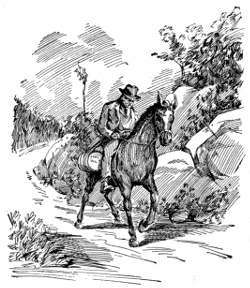
FIRST OIL “SHIPPED” TO PITTSBURG.
The renowned “spring” which may have supplied these remarkable vats
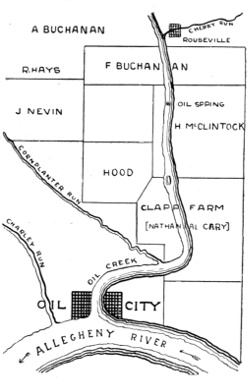
was located in the middle of Oil Creek, on the McClintock farm, three miles
above Oil City and a short distance below Rouseville. Oil would escape from
the rocks and gravel beneath the creek, appearing like air-bubbles until it
reached the surface and spread a thin film reflecting all the colors of the rainbow.
From shallow holes, dug and walled sometimes in the bed of the stream,
the oil was skimmed and husbanded jealously. The demand was limited and
the enterprise to meet it was correspondingly modest. Nathanael Cary, the first
tailor in Franklin and owner of the
tract adjoining the McClintock, peddled
it about the townships early in
the century, when the population was
sparse and every good housewife laid
by a bottle of “Seneca Oil” in case
of accident or sickness. Cary would
sling two jars or kegs across a faithful
horse, belonging to the class of Don
Quixote’s “Rosinante” and too sedate
to scare at anything short of a
knickerbockered feminine astride a
rubber-tired wheel. Mounting this
willing steed, which transported him
steadily as “Jess” carried the self-denying
physician of “Beside the
Bonnie Brier-Bush.” the tailor-peddler
went his rounds at irregular intervals.
Occasionally he took a ten-gallon
cargo to Pittsburg, riding with it eighty miles on horseback and trading
the oil for cloth and groceries. His memory should be cherished as the first
“shipper” of petroleum to “the Smoky City,” then a mere cluster of log and
frame buildings in a patch of cleared ground surrounding Fort Pitt. “Things
are different now.”
The Augusts, a family living in Cherrytree township and remembered only
by a handful of old residents, followed Cary’s example. Their stock was procured
from springs farther up Oil Creek, especially one near Titusville, which
achieved immortality as the real source of the petroleum-development that has
astounded the civilized world. They sold the oil for “a quarter-dollar a gill”
to the inhabitants of neighboring townships. The consumption was extremely
moderate, a pint usually sufficing a household for a twelvemonth. Nature’s
own remedy, it was absolutely pure and unadulterated, a panacea for “the
thousand natural shocks that flesh is heir to,” and positively refused to mix
with water. If milk and water were equally unsocial, would not many a dispenser
of the lacteal fluid train with Othello and “find his occupation gone?”
Don’t “read the answer in the stars;” let the overworked pumps in thousands
of barnyards reply!
No latter-day work on petroleum, no book, pamphlet, sketch or magazine
article of any pretensions has failed to reproduce part of a letter purporting to
19have been sent in 1750 to General Montcalm, the French commander who
perished at Quebec nine years later, by the commander of Fort Du Quesne,
now Pittsburg. A sherry-cobbler minus the sherry would have been pronounced
less insipid than any oil-publication omitting the favorite extract. It
has been quoted as throwing light upon the religious character of the Indians
and offered as evidence of their affinity with the fire-worshippers of the orient!
Official reports printed and endorsed it, ministers embodied it in missionary
sermons and it posed as infallible history. This is the paragraph:
“I would desire to assure you that this is a most delightful land. Some of the most astonishing
natural wonders have been discovered by our people. While descending the Allegheny,
fifteen leagues below the mouth of the Conewango and three above the Venango, we were invited
by the chief of the Senecas to attend a religious ceremony of his tribe. We landed and drew up
our canoes on a point where a small stream entered the river. The tribe appeared unusually
solemn. We marched up the stream about half-a-league, where the company, a band, it appeared,
had arrived some days before us. Gigantic hills begirt us on every side. The scene was really
sublime. The great chief then recited the conquests and heroism of their ancestors. The surface
of the stream was covered with a thick scum, which, upon applying a torch at a given signal,
burst into a complete conflagration. At the sight of the flames the Indians gave forth the
triumphant shout that made the hills and valleys re-echo again. Here, then, is revived the
ancient fire-worship of the East; here, then, are the Children of the Sun.”
The style of this popular composition, in its adaptation to the occasion and
circumstances, rivals Chatterton’s unsurpassed imitations of the antique. Montcalm
was a gallant soldier who lost his life fighting the English under General
Wolfe, the hero whose noble eulogy of the poet Gray—“I would rather be the
author of the ‘Elegy Written in a Country Churchyard’ than the captor of
Quebec”—should alone crown him with unfading laurels. The commander of
Fort Du Quesne also “lived and moved and had a being.” The Allegheny
River meanders as of yore, the Conewango empties into it at Warren, the
“Venango” is the French Creek which joins the Allegheny at Franklin. The
“small stream” up which they marched “about half-a-league” was Oil Creek
and the destination was the oil-spring of Joncaire and “Nat” Cary. The
“gigantic hills” have not departed, although the “thick scum” is stored in
iron tanks. But neither of the French commanders ever wrote or read or
heard of the much-quoted correspondence, for the excellent reason that it had
not been evolved during their sojourn on this mundane sphere!
Franklin, justly dubbed “The Nursery of Great Men,” gave birth to the
pretty story. Sixty-six years ago a bright young man was admitted to the bar
and opened a law-office in the attractive hamlet at the junction of the Allegheny
River and French Creek. He soon ranked high in his profession and in 1839
was appointed judge of a special district-court, created to dispose of accumulated
business in Venango, Crawford, Erie and Mercer counties. The same
year a talented divinity-student was called to the pastorate of the Presbyterian
church in Franklin. The youthful minister and the new judge became warm
friends and cultivated their rare literary tastes by writing for the village-paper,
a six-column weekly. Among others they prepared a series of fictitious
articles, based upon the early settlement of Northwestern Pennsylvania, designed
to whet the public appetite for historic and legendary lore. In one of
these sketches the alleged letter to Montcalm was included. Average readers
supposed the minute descriptions and bold narratives were rock-ribbed facts,
an opinion the authors did not care to controvert, and at length the “French
commander’s letter” began to be reprinted as actual, bona-fide, name-blown-in-the-bottle
history!
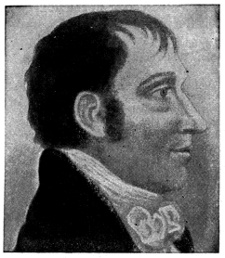
REV. NATHANIEL R. SNOWDEN.
One of the two writers who coined this interesting “fake” was Hon.
20James Thompson, the eminent jurist, who learned printing in Butler, practiced
law in Venango county, served three terms—the last as speaker—in the Legislature
and one in Congress, was district-judge six years and sat on the Supreme
bench fifteen years, five of them as chief-justice of this state. Judge Thompson
removed to Erie in 1842 and finally to Philadelphia. He married a daughter of
Rev. Nathaniel R. Snowden, first pastor of
the First Presbyterian church in Harrisburg,
in 1794-1803, and afterwards master of a
noted academy at Franklin. Mr. Snowden’s
wife was the daughter of Dr. Gustine, a survivor
of the frightful Wyoming massacre.
Their son, an eminent Franklin physician of
early times, was the father of the late Dr.
S. Gustine Snowden and of Major-General
George R. Snowden, of Philadelphia, commander
of the National-Guard of Pennsylvania.
The good minister died in Armstrong
county, descending to the grave as a
shock of wheat fully ripe for the harvest.
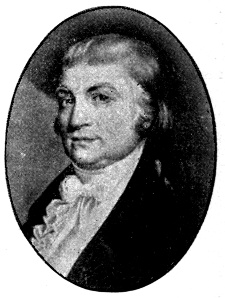
——“What is death
To him that meets it with an upright heart?
A quiet haven, where his shatter’d bark
Harbors secure till the rough storm is past,
After a passage overhung with clouds.”
Judge Thompson’s literary co-worker was the Rev. Cyrus Dickson, D. D.,
who resigned his first charge in 1848, settled in the east and gained distinction
in the pulpit and as a forcible writer. How thoroughly these kindred spirits,
now happily reunited “beyond the smiling and the weeping,” must have enjoyed
the overwhelming success of their ingenious plot and laughed at the
easy credulity which accepted every line of their
contributions as gospel-truth! They could not
fail to relish the efforts, prompted mainly by
their fanciful scene on Oil Creek, to identify as
Children of the Sun the savage braves in buckskin
and moccasins whose noblest conception
of heaven was an eternal surfeit of dog-sausage!
The Indian may be superstitious,
His tastes may be wholly pernicious;
But he bitterly spurns—can we blame him?—
The cranks who are ready to claim him
And with a white pedigree shame him.
Signs of petroleum in the Keystone State
were not confined to Oil-Creek. Ten miles
westward, in water-wells and in the bed and
near the mouth of French Creek, the indications
were numerous and unmistakable. The first
white man to turn them to account was Marcus Hulings, of Franklin, the original
Charon of Venango county. Each summer he would skim a quart or two
of “earth-oil” from a tiny pond, formed by damming a bit of the creek, the
fluid serving as a liniment and medicine. This was the small beginning of one
whose relative and namesake, two generations later, was to rank as a leading
oil-millionaire. Hulings “ferried” passengers across the unbridged stream in
21a bark-canoe and plied a keel-boat to Pittsburg, the round-trip frequently requiring
four weeks. Passengers were “few and far between,” consequently
a book-keeper and a treasurer were not engaged to take care of the receipts.
The proprietor of the canoe-ferry cleared a number of acres, raised corn and
potatoes and lived in a log-cabin, not far from the site of the brush-factory,
which stood for fifty years after his death. Probably he was buried in the north-west
corner of the old graveyard, beside his wife and son, of whom two sunken
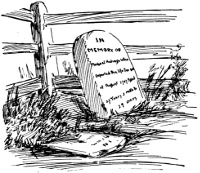
headstones record:
In
memory of
Michael Hulings who
departed this life: the 9th
of August, 1797. Aged
14 days.
Massar,
wife of
Marcus Hulings
Died
Feb. 9. 1813.
Aged 67 yrs,
2 ms and 22 ds.
The once hallowed resting-place of many worthy pioneers sadly needs the
kindly ministrations of some “Old Mortality” to replace broken slabs, restore
illegible inscriptions and brush away the obnoxious weeds. Quaint spelling
and lettering and curious epitaphs are not uncommon. Observe these examples:
In
memory of James
and Catherine Ha
nne Ho departed
this life July 3 1830
James Aged Two
years one months,
ten days CETHERIN
e Aged two months
and 14 days.
Jane consort of
David King
who departed this
life. April 14 1829
aged 31 years
O may I see thy tribes rejoic
and aid their triumphs
with my voice this all. my
Glory Lord to be joined to
thy saints and near to. thee
In memory of
Samuel Riddle, Esq.
Born Aug. 4, 1821
At Scrubgrass.
Died May 28, 1853,
At Franklin,
Venango County, Pa.
Here lies an honest lawyer,
Honored and respected living,
Lamented and mourned dead.
Trains on the Lake-Shore Railroad thunder past the lower end of the quiet
“God’s Acre,” close to the mounds of the McDowells, the Broadfoots, the Bowmans,
the Hales and other early settlers, but the peaceful repose of the dead
can be disturbed only by the blast of Gabriel’s trumpet on the resurrection
morning.
The venerable William Whitman, familiarly called “Doctor,” over whose
grave the snows of twenty-five long years have drifted, often told me how, when
a youngster, he carried water to the masons building Colonel Alexander
McDowell’s stone house, on Elk street. He hemmed in a pool on the edge of
French Creek, soaked up the greasy scum with a piece of flannel, wrung out
the cloth and filled several bottles with dark-looking oil. The masons would
swallow doses of it, rub it on their bruised hands and declare it a sovereign
internal and external remedy. In early manhood Mr. Whitman settled in
Canal township, eleven miles northwest of Franklin, cultivated a farm and
reared a large family. It was the dream of his old age to see oil taken from
his own land. In 1866 two wells were drilled on the Williams tract, across the
road from Whitman’s, with encouraging prospects. Depressed prices retarded
operations and these wells remained idle. Four years later my uncle, George
Buchanan, and myself drilled on the Whitman farm. The patriarch watched the
22progress of the work with feverish interest, spending hours daily about the rig.
A string of driving-pipe, up to that time said to be the longest—153 feet—ever
needed in an oil-well, had to be forced down. Three feet farther a vein of
sparkling water, tinged with sulphur, spouted above the pipe and it has flowed
uninterruptedly since. The heavy tools pierced the rock rapidly and the
delight of the “Doctor” was unbounded. He felt confident a paying well
would result and waited impatiently for the decisive test. A boy longing for
Christmas or his first pair of boots could
not be more keenly expectant. His fondest
wish was not to be gratified. He took sick
and died, after a very short illness, in 1870,
four days before the well was through the
sand and pumping at the rate of fifty barrels
per diem!
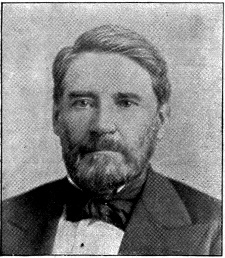
This singular well merits a brief notice.
From the first sand, not a trace of which
was met in the two wells on the other side
of the road, oil and gas arose through the
water so freely that drilling was stopped
and tubing inserted. In twenty-four hours
the well yielded fifty-eight barrels of the
blackest lubricant in America, 28° gravity,
the hue of a stack of ebony cats and with
plenty of gas to illuminate the neighborhood.
Subsiding quickly, the tubing was drawn and the hole drilled in quest
of the third sand, the rock which furnished the lighter petroleum on Oil Creek.
Eight feet were found seven-hundred feet towards the antipodes, a torpedo was
exploded, the tubing was put back and the well produced two barrels a day for
a year, divided between the sands about equally, the green and black oils coming
out of the pipe side-by-side and positively declining to merge into one.
Other wells were drilled years afterwards close by, without finding the jugular.
Mr. Whitman sleeps in the Baptist churchyard near Hannaville, the
sleep that shall have no awakening until the Judgment Day. Mr. Buchanan,
who operated at Rouseville, Scrubgrass, Franklin and Bradford, left the oil-regions
nine years ago for the Black Hills and died in South Dakota on March
twenty-eighth, 1897. He was a man of sterling attributes, nobly considerate
and unselfish. No truer, braver heart e’er beat in human breast.
“Yes, we must follow soon, will glad obey
When a few suns have rolled their cares away;
Tired with vain life, will close the weary eye—
’Tis the great birthright of mankind to die.”
Excavating for the Franklin canal in 1832, on the north bank of French
Creek, opposite “the infant industry” of Hulings forty years previously, the
workmen were annoyed by a persistent seepage of petroleum, execrating it as
a nuisance. A well dug on the flats ten years later, for water, encountered
such a glut of oil that the disgusted wielder of the spade threw up his job and
threw his besmeared clothes into the creek! When the oil-excitement invaded
the county-seat the greasy well was drilled to the customary depth and proved
hopelessly dry! At Slippery Rock, in Beaver county, oil exuded abundantly
from the sandy banks and bed of the creek, failing to pan out when wells were
put down. Something of the same sort occurred in portions of Lawrence
county and on the banks of many streams in different sections of the country.
23A geological expert endeavors to make it as clear as mud in this manner:
“‘Surface shows’ have been the fascination of many. The places of most copious escape to
the surface were regarded as the favored spots where ‘the drainage from the coal measures, in
defiance of the laws of gravity and hydro-dynamics, had obligingly deposited itself. Such
shows’ were always illusory. A great ‘surface show’ is a great waste; where nature plays the
spendthrift she retains little treasure in her coffers. The production of petroleum in quantities
of economical importance has always been from reservoirs in which nature has been hoarding it
up, instead of making a superficial and deceptive display of her wealth.”
Applying this method, the place to find petroleum is where not a symptom
of it is visible! An honest Hibernian, asked his opinion of a notorious falsifier,
answered that “he must be chock-full ov truth, fur bedad he niver lets any ov
it git out!” The above explanation is of this stripe. “Flee to the mountains
of Hepsidam” rather than attempt to bore for oil in localities having “shows”
of the very thing you are after! These dreadfully deceptive “shows” show that
the oil has got out and emptied the “reservoirs in which nature had been hoarding
it up!” This is a pretty rough joke on poor deluded nature! How could
these “surface shows” have strayed off anyhow, unless connected with reservoirs
of genuine petroleum at the outset? The first wells on Oil Creek and at
Franklin were drilled beside “surface shows” which revealed the existence of
petroleum and supplied Cary, August, McClintock and Hulings with the coveted
oil. These wells produced petroleum “in quantities of economical importance,”
demonstrating that “such shows were not always illusory.” Is nature
buncoing petroleum-seekers by hanging out a Will-o’-the-Wisp signal where
there is “little treasure in her coffers?” The failures at Slippery Rock and
divers other places resulted from the fact that the seepages had traveled considerable
distances to find breaks in the rocks that would permit of the “most
copious escape.”
Central and South America are fairly stocked with petroleum-indications.
In the early days of the Panama Railroad and during the construction of the
ill-fated canal numerous efforts were made to explore the coal-regions of the
Atlantic, in proximity to the ports of Colon and Panama. These researches led
to the discovery of bituminous shales and lignite near the port of Boca del
Toro, on the Caribbean Sea. The map of Colombia shows a great indenture
on the Atlantic Coast of the department of Cauca, formed by the Gulfo de
Uraba, or Darian del Nord. Into this gulf flow the Atrato, Arboletes, Punta de
Piedra and many small streams. Explorations on the Gulf of Uraba and its
tributaries disclosed extensive strata of “oil-rock” and “oil-springs” near the
Rio Arboletes. The largest of forty of these springs has a twelve-inch crater,
which gushes oil sufficient to fill a six-inch pipe. Near this Brobdignagian spring
is a petroleum-pond sixty feet in diameter and from three to ten feet deep.
The flow of these oil-springs deserves the attention of geologists and investors.
They lie at a distance of one to three miles from the shores of the gulf. The oil
is remarkably pure, passing through a bed of coral, which seems to act as a filter
and refiner. A proper survey of the oil-region of the Uraba would be interesting
from a scientific and an industrial standpoint. The proper development of its
possibilities might result in the control of the petroleum-market of South
America. The climate is too sultry for the display of seal sacques and fur-overcoats,
a palm-hat constituting the ordinary garb of the average citizen. This
providential dispensation eliminates dudes and tailor-made girls, stand-up collars
and bifurcated skirts from the domestic economy of the happy Isthmians.
In the canton of Santa Elena, Ecuador, embracing the entire area of country
between the hot springs of San Vicinte and the Pacific coast, petroleum is found
24in abundance. It is of a black color, its density varies, it is considered superior
to the Pennsylvania product and is entirely free from offensive odor.
Little has been done towards working these wells. The people are unacquainted
with the proper method of sinking them and no well has exceeded a few feet
in depth. Geologists think, when the strata of alumina and rock are pierced,
reservoirs will be found in the huge cavities formed by volcanic convulsions of
the Andes. Venezuela is in the same boat.
From the Chira to the Fumbes river, a desert waste one-hundred-and-eighty
miles in length and fifteen miles in width, lying along the coast between the
Pacific ocean and the Andes, the oil-field of Peru is believed to extend. For
two centuries oil has been gathered in shallow pits and stored in vats, precisely
as in Pennsylvania. The burning sun evaporated the lighter parts, leaving a
glutinous substance, which was purified and thickened to the consistency of
sealing-wax by boiling. It was shipped to southern ports in boxes and used as
glazing for the inside of Aguardiente jars. The Spanish government monopolized
the trade until 1830, when M. Lama purchased the land. In 1869 Blanchard
C. Dean and Rollin Thorne, Americans, “denounced” the mine, won a lawsuit
brought by Lama and drilled four wells two-hundred-and-thirty feet deep, a
short distance from the beach. Each well yielded six to ten barrels a day, which
deeper drilling in 1871-2 augmented largely. Frederic Prentice, the enterprising
Pennsylvania operator, secured an enormous grant in 1870, bored several wells—one
a thousand-barreler—erected a refinery, supplied the city of Lima with kerosene
and exported considerable quantities to England and Australia. The war
with Chili compelled a cessation of operations for some years. Dr. Tweddle,
who had established a refinery at Franklin, tried to revive the Peruvian fields in
1887-8. He drilled a number of wells, refined the output, enlisted New-York
capital and shipped cargoes of the product to San Francisco. Hon. Wallace L.
Hardison, who represented Clarion in the Legislature and operated at Bradford
and in California, is now exploring the Peruvian field for flowing oil-wells and
gold-nuggets. Qualified judges have no doubt that, “in the sweet-bye-and-bye,”
the oleaginous goose may hang altitudinum in Peru.
A larger percentage of the oil-product of the United States is sent abroad
than of any other except cotton, while nearly every home in the land is blessed
with petroleum’s beneficent light. America has toed the mark so grandly
that the petroleum-industry is the one circus bigger inside the canvas than on
the posters. Beginning with 1866, the exports of illuminating oils were doubled
in 1868, again in 1871, again in 1877 and again in 1891. The average exports
per week in 1894 were as much as for the entire year 1864. Not less impressive
is the marvelous reduction in the price of refined, so that it has found a welcome
everywhere. Export-oil averaged, in 1861, 61½ cents per gallon; in 1871,
23⅝ cents per gallon; in 1881, 8 cents per gallon; in 1891, 6⅞ cents per gallon;
in 1892, 6 cents per gallon; in 1894, 5⅙ cents per gallon, or one-twentieth
that in 1861. But this decrease, great as it is, does not represent the
real reduction in the price of oil, as the cost of the barrel is included in these
prices. A gallon of bulk-oil cost in 1861 not less than 58 cents; in 1894, not
more than 3½ cents, or hardly one-seventeenth. In January, 1871, the price
was 75 cents; in January, 1894, one-twenty-fifth that of thirty-three years before.
Consumers have received the benefit of constant improvements and
reductions in prices, while thirteen-hundred-million dollars have come from
abroad to this country for petroleum.
The glimmer has broadened and deepened into noon-day brightness.
25
Production and Prices of Crude Petroleum in Pennsylvania, West Virginia and
South-eastern Ohio, Quantity and Value of Oil (Refined Reduced to Crude
Equivalent) Exported from the United States, Wells Completed, and
Average Yearly Price of Refined at New York, from September
1st, 1859, to December 31st, 1896.
If needs be, petroleum may well be defiant;
The baby has grown to be earth’s greatest giant.
| |
TOTAL |
LOWEST |
HIGHEST |
YEARLY |
TOTAL |
TOTAL |
TOTAL |
REFINED |
| |
BARRELS |
MONTHLY |
AVERAGE |
WELLS |
GALLONS |
VALUE AT |
PER GAL. |
| YEARS. |
PRODUCED. |
AVERAGE PRICE. |
PRICE. |
DRILLED. |
EXPORTED. |
NEW YORK. |
NEW YORK. |
| 1859 |
1,873 |
$20 00_ |
$20 00_ |
$20 00_ |
4 |
|
|
|
| 1860 |
547,439 |
2 75_ |
19 25_ |
9 60_ |
175 |
1,300 |
$850 |
|
| 1861 |
2,119,045 |
10 |
1 00_ |
49 |
340 |
12,700 |
5,800 |
$0 61½ |
| 1862 |
3,153,183 |
10 |
2 25_ |
1 05_ |
425 |
400,000 |
146,000 |
36⅜ |
| 1863 |
2,667,543 |
2 25_ |
3 37½ |
3 15_ |
514 |
1,000,000 |
450,000 |
44¾ |
| 1864 |
2,215,150 |
4 00_ |
12 12½ |
9 87½ |
937 |
22,210,369 |
10,782,689 |
65 |
| 1865 |
2,560,200 |
4 62½ |
8 25_ |
6 59_ |
890 |
25,496,849 |
16,563,413 |
58¾ |
| 1866 |
3,385,105 |
2 12½ |
4 50_ |
3 74_ |
830 |
50,987,341 |
24,830,887 |
42½ |
| 1867 |
3,458,113 |
1 75_ |
3 55_ |
41 |
876 |
70,255,581 |
24,407,642 |
28⅜ |
| 1868 |
3,540,670 |
1 95_ |
5 12½ |
3 62½ |
1,055 |
79,456,888 |
21,810,676 |
29½ |
| 1869 |
4,186,475 |
4 95_ |
6 95_ |
5 63¾ |
1,149 |
100,636,684 |
31,127,433 |
32¾ |
| 1870 |
5,308,046 |
3 15_ |
4 52½ |
3 89_ |
1,653 |
113,735,294 |
32,668,960 |
26⅜ |
| 1871 |
5,278,072 |
3 82½ |
4 82½ |
4 34_ |
1,392 |
149,892,691 |
36,894,810 |
24¼ |
| 1872 |
6,505,774 |
3 15_ |
4 92½ |
3 64_ |
1,183 |
145,171,583 |
34,058,390 |
23⅝ |
| 1873 |
9,849,508 |
1 00_ |
2 60_ |
1 83_ |
1,263 |
187,815,187 |
42,050,756 |
17⅞ |
| 1874 |
11,102,114 |
55 |
1 90_ |
1 17_ |
1,317 |
247,806,483 |
41,245,815 |
13 |
| 1875 |
8,948,749 |
1 03_ |
1 75_ |
1 35_ |
2,398 |
221,955,308 |
30,078,568 |
13 |
| 1876 |
9,142,940 |
1 80_ |
3 81_ |
2 56¼ |
2,920 |
243,650,152 |
32,915,786 |
19⅛ |
| 1877 |
13,230,330 |
1 80_ |
3 53¼ |
2 42_ |
3,939 |
309,198,914 |
61,789,438 |
15½ |
| 1878 |
15,272,491 |
82½ |
1 65¼ |
1 19_ |
3,064 |
338,841,303 |
46,574,974 |
10¾ |
| 1879 |
19,835,903 |
67⅛ |
1 18⅛ |
85⅞ |
3,048 |
378,310,010 |
40,305,249 |
08⅛ |
| 1880 |
26,027,631 |
80 |
1 10¼ |
94½ |
4,217 |
423,964,699 |
36,208,625 |
09 |
| 1881 |
27,376,509 |
81¼ |
95½ |
85¼ |
3,880 |
397,660,262 |
40,315,609 |
08 |
| 1882 |
30,053,500 |
54½ |
1 27⅛ |
78⅝ |
3,304 |
559,954,590 |
51,232,706 |
07⅜ |
| 1883 |
23,128,389 |
92½ |
1 16⅞ |
1 06¾ |
2,847 |
505,931,622 |
44,913,079 |
08 |
| 1884 |
23,772,209 |
63¾ |
1 11¼ |
83¾ |
2,265 |
513,660,092 |
47,103,248 |
08⅛ |
| 1885 |
20,776,041 |
70⅞ |
1 05½ |
88½ |
2,761 |
574,628,180 |
50,257,747 |
08 |
| 1886 |
25,798,000 |
62⅛ |
88¾ |
71¼ |
3,478 |
577,781,752 |
50,199,844 |
07⅛ |
| 1887 |
21,478,883 |
59¼ |
80 |
66⅝ |
1,660 |
592,803,267 |
46,824,933 |
06¾ |
| 1888 |
16,488,668 |
76 |
93¾ |
87 |
1,515 |
578,351,638 |
47,042,409 |
07½ |
| 1889 |
21,487,435 |
83¼ |
1 08⅛ |
94 |
5,434 |
616,195,459 |
49,913,677 |
07⅛ |
| 1890 |
30,065,867 |
68⅞ |
1 05_ |
86½ |
6,435 |
664,491,498 |
51,403,089 |
07⅜ |
| 1891 |
35,742,152 |
59 |
77¾ |
66¾ |
3,390 |
710,124,077 |
52,026,734 |
06⅞ |
| 1892 |
33,332,306 |
52 |
64⅛ |
55⅛ |
1,954 |
715,471,979 |
44,805,992 |
06 |
| 1893 |
31,362,890 |
53½ |
78⅜ |
64 |
1,980 |
804,337,168 |
42,142,058 |
05¼ |
| 1894 |
29,597,614 |
80 |
91⅜ |
84 |
3,756 |
908,281,968 |
41,499,806 |
05⅙ |
| 1895 |
31,147,235 |
95⅝ |
1 79⅝ |
1 35¼ |
7,138 |
853,126,180 |
56,223,425 |
07⅓ |
| 1896 |
33,298,437 |
1 40_ |
1 50_ |
1 19_ |
7,811 |
927,431,959 |
62,132,432 |
06⅞ |
| Totals |
593,232,488 |
|
|
|
93,197 |
13,110,140,927 |
$6,332,963,049 |
|
| |
|
|
|
|
|
WELLS |
BARRELS |
STOCKS |
| |
|
OPERATIONS IN 1896. |
DRILLED. |
PRODUCED. |
DEC. 31. |
| Pennsylvania, West Virginia, South-eastern Ohio |
7,811 |
33,298,437 |
9,550,582 |
| North-eastern Ohio, Indiana, Kentucky, Tennessee, Kansas, |
|
|
|
| |
Colorado, Wyoming, California |
5,895 |
22,491,500 |
23,985,000 |
| |
|
|
Totals |
|
|
13,706 |
55,789,937 |
33,535,582 |
Breadstuffs and cotton, iron and coal
All have been distanc’d; oil has the pole.
26
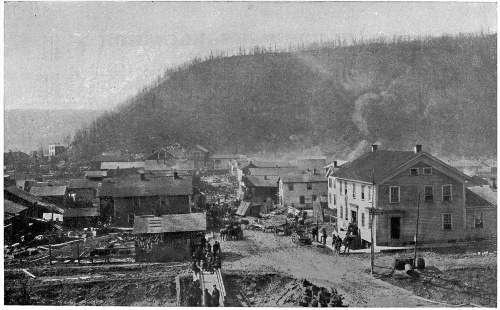
VIEW IN OIL CITY, PA., AFTER THE FLOOD, MARCH 17, 1865.
III. NEARING THE DAWN. — THEY NOTICED IT.
27
Salt-Water Helping Solve the Problem—Kier’s Important Experiments—Remarkable
Shaft at Tarentum—West Virginia and Ohio to the
Front—The Lantern Fiend—What an Old Map Showed—Kentucky
Plays Trumps—The Father of Flowing Wells—Sundry Experiences
and Observations at Various Points.
“Just now the golden-sandaled dawn.”—Sappho.
“The first dawnings open slowly, by little and little, into the full, clear light.”—Newton.
“Let there be light.”—Genesis i: 3.
“Come into the bright light beyond.”—Wilson Barrett.
“Watchman, what of the night? The morning cometh.”—Isaiah xxi: 11-12.
“The for’ard light’s shining bright and all’s well.”—Richard Harding Davis.
“A salt-well dug in 1814, to the depth of four-hundred feet, near Marietta, discharged oil periodically
at intervals of two to four days.”—Dr. Hildreth, A. D. 1819.
“Nearly all the Kanawha salt-wells contained more or less petroleum.”—Dr. Hale, A. D. 1825.
“There are numerous springs of this mineral-oil in various regions of the West and South.”—Prof.
B. Silliman, A. D. 1833.
“The morning star was turning golden-white, like cream in a violet sky.”—S. R. Crockett.
“Dawn on our darkness and lend us thine aid.”—Bishop Heber.
“As dawn and twilight meet in northern clime.”—Lowell.
“I waited underneath the dawning hills.”—Tennyson.
“She saw herself * * * cleaning the Kerosene-lamp.”—Tasma.
“Even the night shall be light about me.”—Psalms cxxxi: 11.
While cannel-coal in the western end of Pennsylvania
and other sections of the country,
bitumen and shales from the Gulf of Mexico
to Lake Huron, chapapote or mineral
pitch in Cuba and San Domingo, oozings in
Peru and Ecuador, asphaltum in Canada
and oil-springs in Columbia and a half-dozen
states of the Union from California
to New York denoted the presence of petroleum
over the greater part of this hemisphere,
wells bored for salt were leading
factors in bringing about its full development.
Scores of these wells pumped more
or less oil long before it “entered into the
mind of man” to utilize the unwelcome intruder.
Indeed, so often were brine and
petroleum found in the same geological formation that scientists ascribed to
them a kindred origin. The first borings to establish this peculiarity were on
the Kanawha River, in West Virginia, a state destined to play an important part
in oleaginous affairs. Dr. J. P. Hale, a reputable authority, claims oil caused
much annoyance in Ruffner Brothers’ salt-well, begun in 1806, bored sixty feet
with an iron-rod and two-inch chisel-bit attached by a rope to a spring-pole,
completed in 1808 and memorable as the first artesian-well on this continent.
28The fluid came from the territory once famous as the “Kanawha Salines,”
reputed to produce an unsurpassed table-salt. Before the advent of the white
man the Indians made salt from the saline springs a short distance above the
site of Charleston. There Daniel Boone had a log-cabin and George Washington,
as long ago as 1775, for military services was awarded lands containing a
“burning spring.” Fired by the tidings of the saline springs, Joseph Ruffner
sold his possessions in the Shenandoah Valley and journeyed beyond the mountains
in 1794 to establish salt-works on the Kanawha. He leased the salt-interest
to Elisha Brooks, who took brine from the shallow quicksands. Joseph Ruffner
dying, his sons, Joseph and David, acquired his lands and salt-springs and
resolved to try some better plan of procuring the brine. A section of a hollow
sycamore-tree, sunk into the quicksands, suggested the idea of wooden casing
and the wisdom of boring a little way from the spring. A piece of oak, bored
from end to end as log-pumps used to be, was set in the hole. The ingenious
brothers devised a chisel-like drill to pierce the rock, fastened it to a rope fixed
to a spring-pole and bounced the tools briskly. To shut out the weak brine
above from the strong brine beneath they put in tin-tubing, around which they
tied a leather-bag filled with flax-seed. Thus, three generations ago, Joseph
and David Ruffner, aided later by William Morris and his invention of “jars”
in drilling-tools, stumbled upon the basis of casing, seed-bagging and boring
oil-wells. All honor to the memory of these worthy pioneers, groping in the
dark to clear the road for the great petroleum-boom! Dr. Hale continues:
“Nearly all the Kanawha salt-wells have contained more or less petroleum, and some of the
deeper wells a considerable flow.flow. Many persons now think, trusting to their recollections, that
some of the wells afforded as much as twenty-five to fifty barrels per day. This was allowed to
flow over from the top of the salt-cisterns to the river, where, from its specific gravity, it spread
over a large surface, and by its beautiful iridescent hues and not very savory odor could be traced
for many miles down the stream. It was from this that the river received the nickname of ‘Old
Greasy,’ by which it was long known by Kanawha boatmenboatmen and others.”
At the mouth of Hawkinberry Run, three miles north of Fairmount, in
Marion county, a well for salt was put down in 1829 to the depth of six-hundred
feet. “A stinking substance gave great trouble,” an owner reported, “forming
three or four inches on the salt-water tank, which was four feet wide and sixteen
feet long.” They discovered the stuff would burn, dipped it off with buckets
and consumed it for fuel under the salt-pan. J. J. Burns in 1865 leased the farm,
drilled the abandoned well deeper, stuck the tools in the hole and had to quit
after penetrating sixty feet of “a fine grit oil-rock.” Mr. Burns wrote in 1871:
“The second well put down in this county was about the year 1835, on the West Fork River,
just below what is now known as the Gaston mines. The well was sunk by a Mr. Hill, of Armstrong
county, Pa., who found salt-water of the purest quality and in a great quantity, same as in
the first well. He died just after the well was finished, so nothing was done with it. About the
time this well was completed one was drilled in the Morgan settlement, just below Rivesville.
Salt-water was found with great quantities of gas. Twenty-five years since the farmers on Little
Bingamon Creek formed a company and drilled a well—I think to a depth of eight-hundred feet—in
which they claimed to have found oil in paying quantities. You can go to it to-day and get oil
out of it. The president told me he saw oil spout out of the tubing forty or fifty feet, just as they
started the pump to test it. The company got to quarreling among themselves, some of the stockholders
died and part of the stock got into the hands of minor heirs, so nothing more was done.”
Similar results attended other salt-wells in West Virginia. The first oil-speculators
were Bosworth, Wells & Co., of Marietta, Ohio, who as early as
1843 bought shipments of two to five barrels of crude from Virginians who
secured it on the Hughes River, a tributary of the Little Kanawha. This was
sold for medical purposes in Pittsburg, Baltimore, New York and Philadelphia.
Notable instances of this kind occurred on the Allegheny River, opposite
29Tarentum, twenty miles above Pittsburg, as early as 1800. Wells sunk for
brine to supply the salt-works were troubled with what the owners called “odd,
mysterious grease.” Samuel M. Kier, a Pittsburg druggist, whose father
worked some of these wells, conceived the idea of saving the “grease,” which
for years had run waste, and in 1846 he bottled it as a medicine. He knew it
had commercial and medicinal value and spared no exertions to introduce it
widely. He believed implicitly in the greenish fluid taken from his salt-wells,
at first as a healing agent and farther on as an illuminant. A bottle of the oil,
corked and labeled by Kier’s own hands, lies on my desk at this moment, in a
wrapper dingy with age and redolent of crude. A four-page circular inside
recites the good qualities of the specific in gorgeous language P. T. Barnum
himself would not have scorned to father. For example:
“Kier’s Petroleum, or Rock Oil, Celebrated for its Wonderful Curative Powers. A Natural
Remedy! Procured from a Well in Allegheny Co., Pa., Four-Hundred Feet below the Earth’s
Surface. Put up and Sold by Samuel M. Kier, 363 Liberty Street, Pittsburgh, Pa.
“The healthful balm, from Nature’s secret spring,
The bloom of health and life to man will bring;
As from her depths this magic liquid flows
To calm our sufferings and assuage our woes.
“The Petroleum has been fully tested! It was placed before the public as A Remedy of
Wonderful Efficacy. Every one not acquainted with its virtues doubted its healing qualitiesqualities.
The cry of humbug was raised against it. It had some friends—those who were cured through its
wonderful agency. Those spoke in its favor. The lame through its instrumentality were made to
walk—the blind to see. Those who had suffered for years under the torturing pains of Rheumatism,
Gout and Neuralgia were restored to health and usefulness. Several who were blind
were made to see. If you still have doubts, go and ask those who have been cured! * * * We
have the witnesses, crowds of them, who will testify in terms stronger than we can write them to
the efficacy of this remedy; cases abandoned by physicians of unquestionable celebrity have been
made to exclaim, “This Is the Most Wonderful Remedy Yet Discovered!” * * * Its
transcendent power to heal MUST and WILL become known and appreciated. * * * The Petroleum
is a Natural Remedy; it is put up as it flows from the bosom of the earth, without anything
being added to or taken from it. It gets its ingredients from the beds of substances which it
passes over in its secret channel. They are blended together in such a way as to defy all human
competition. * * * Petroleum will continue to be used and applied as a Remedy as long as man
continues to be afflicted with disease. Its discovery is a new era in medicine.”
A host of certificates of astonishing cases of curable and incurable ailments,
from blindness to colic, followed this preliminary announcement. The “remedy”
was trundled about by agents in vehicles elaborately gilt and painted with
representations of the Good Samaritan ministering to a wounded Hebrew writhing
in agony under a palm-tree. Two barrels of oil a day were sold at fifty
cents a half-pint. The expense of bottling and peddling it consumed the bulk
of the profits. Kier experimented with it for light, about 1848, burning it at his
wells and racking his fertile brain for some means to get rid of the offensive
smoke and odor. To be entirely successful the oil must have some other than
this crude form. The tireless experimenter went to Philadelphia to consult a
chemist, who advised distillation, without a hint as to the necessary apparatus.
Fitting a kettle with a cover and a worm, the first outcome of the embryo refiner’s
one-barrel still was a dark substance little superior to the crude. Learning
to manage the fires so as not to send the oil over too rapidly, by twice distilling
he produced an article the color of cider, which had a horrible smell, as
he knew nothing of the treatment with acids that has revolutionized the light of
the world and brought petroleum to the front.
Slight changes in the camphene-lamp enabled him to burn the distillate
without smoke. Improvements in the lamp, especially the addition of the
“Virna burner,” and in the quality of the fluid brought the “carbon-oil,” as it
30was usually termed, to a goodly measure of perfection. One lot of oil used in
these experiments was a purchase of three barrels in April, 1853, from Charles
Lockhart, now an officer of the Standard Oil-Company in Pittsburg. It came
from the Huff well, a mile down the river
from Tarentum. “Carbon-oil” sold readily
for a dollar-fifty per gallon and provided
a market for all the petroleum the
salt-wells in the vicinity could produce.
The day was dawning and the great light
of the nineteenth century had been foreshadowed
in the broad commonwealth
that was to send it forth on its shining
mission to all mankind.
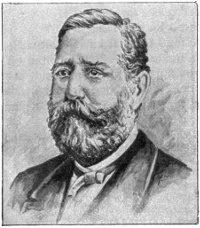
Samuel M. Kier slumbers in Allegheny
cemetery, resting in peace “after life’s fitful
fever.” He was the first to appreciate
the value of petroleum and to purify it by
ordinary refining. His product was in
brisk demand for illuminating purposes.
He invented a lamp with a four-pronged
burner, arranged to admit air and give a steady light. If he failed to reap the
highest advantage from his researches, to patent his process and to sink wells
for petroleum alone, he paved the way for others, enlarged the field of the product’s
usefulness and by his labors suggested its extensive development. Has
not he earned a monument more enduring than brass or marble?
“As in a building
Stone rests on stone, and wanting the foundation
All would be wanting, so in human life
Each action rests on the foregoing event
That made it possible, but is forgotten
And buried in the earth.”
These operations at Tarentum and Pittsburg led to an extraordinary attempt
to fathom the petroleum-basin by digging to the oil-bearing rock! Through
Kier’s experiments the crude had become worth from fifty cents to one dollar
a gallon. Among the owners of Tarentum’s salt-wells was Thomas Donnelly,
who sold his well on the Humes farm to Peterson & Irwin. The senior partner,
ex-Mayor Louis Peterson, of Allegheny, lived until recently to recount his interesting
experiences with the coming light. He thought the Donnelly well, which
produced salt-water only, if enlarged and pumped vigorously, would produce oil.
Humes received twenty-thousand dollars for his farm. The hole was reamed out
and yielded five barrels of petroleum a day. This was in 1856. A specimen
sent to Baltimore was used successfully in oiling wool at the carding-mills and
the total production was shipped to that city for eight years. Eastern capitalists
bought the farm and well in 1864, organized “The Tarentum Salt-and-Oil-Company”
and determined to dig a shaft down to the source of supply! The wells
were four-hundred to five-hundred feet deep. The officers of the company
argued that it was feasible to reach that far into the bowels of the earth with
pick and shovel and discover a monstrous cave of brine and oil! They picked
a spot twenty rods from the Donnelly well, sent to England for skilled miners
and started a shaft about eight feet square. Over two years were employed
and forty-thousand dollars spent in sinking this shaft. Heavy timbers walled
the upper portion, the hard rock below needing none. The water was pumped
31through iron-pipes, nine men formed each shift and the work progressed merrily
to the depth of four-hundred feet. Then the salt-water in the Donnelly well was
affected by the fresh-water in the shaft, losing half its strength whenever the
latter was let stand a few hours, showing their intimate connection by veins or
crevices. Mr. Peterson said of it:
“The digging of the shaft was finally abandoned in the darkest period of the war, from the
necessities of the time. A New Yorker named Ferris, and Wm. McKeown, of Pittsburg, bought
the property, shaft and all. The daring piece of engineering was neglected and finally commenced
to fill up with cinders and dirt, until at last it was level again with the surface of the
ground. You may walk over it to-day and I could point it out to you if I was up there. Dig it
out and you will find those iron pipes and timbers still there, just as they were originally put in.”
Dyed-in-the-wool Tarentumites insist that natural gas caused the suspension
of work, flowing into the shaft at such a gait that the miners refused to risk
the chances of a speedy trip to Kingdom Come by suffocation or the ignition of
the subtile vapor. This was the case with two shafts at Tidioute and Petroleum
Centre, neither of them nearly the depth of “the daring piece of engineering”
which “set the pace” for enterprises of this novel brand. The New-York
Enterprise-and-Mining-Company projected the former, intending to sink a shaft
eight feet by twelve to the third sand and tunnel the rock for petroleum by wholesale.
The shaft reached oil-producing sand at one-hundred-and-sixty feet.
The miners worked in squads, eight-hour turns. Holes had been drilled into
the rock at various angles and a lot of conglomerate brought to the surface.
Once a short delay occurred in changing squads, during which the air-pump,
employed to exhaust the gases from the pit and supply pure ozone from above,
was let stand idle. Mr. Hart was seated on a timber across the shaft when the
men were ready to go down. As was the custom, a man dropped a taper into
the opening to test the air. Natural gas had filled the shaft and it ignited from
the burning torch, causing a terrific explosion. The workmen were thrown in all
directions and lay stunned and burned. When they regained consciousnessconsciousness Hart
was nowhere to be seen and flames rose from the mouth of the pit to the tree-tops.
Hart’s body was eventually recovered from the bottom of the shaft, horribly
mangled and charred. Work was abandoned and the hole was partly filled up
and covered, none caring to pry farther into the petroleum-secrets of nature.
Were meddlers who seek to poke their noses into the secrets of other people
dealt with thus summarily, what a thinning out of the population there would be!
Peterson & Irwin’s treatment of the Donnelly well brings out clearly that
the sole object was to procure oil. This is important, in view of the claim
that the first well drilled exclusively for petroleum was put down in 1859. Practically
the two Pittsburgers anticipated this by three years, a circumstance to
remember when considering the varied events which led up to the petroleum
development.
“We do homage to the claims of the ancients and neglect those of later date.”
Charles Lockhart, still an honored resident of Pittsburg, may fairly claim
to be the oldest oil-operator in the United States. His first transaction in
petroleum was the purchase, in April of 1853, of three barrels of crude from
Isaac Huff, who brought the stuff in a skiff from a salt-well at Tarentum. Huff
sold the lot at thirty-two cents a gallon to his friend Lockhart, then connected
with a leading mercantile house, and agreed to furnish him all the well produced
during the year at the same price. The contract might seem like an elephant on
his hands, but Lockhart’s faith in the new industry was not a plant too delicate
to stand alone. Shrewd and far-seeing, the young dealer did not need a Lick
telescope with a Peate lens to discern that this “mysterious grease” must soon
32be utilized for the general benefit. Believing a grand future was about to dawn
upon petroleum, he disposed of the Huff oil and contract at a handsome profit
to Samuel M. Kier, who had a small refinery on Seventh Avenue and the old
Canal, and at once secured control of the Tarentum salt-works. From that
date to the present—1853 to 1897—a period of forty-four years, Charles Lockhart
has been an oil-producer, active in furthering the best interests of the business,
a leader in improvements to foster its growth and never lacking the pluck and
enterprise essential to the highest success.
In the fall of 1859 he formed a partnership with William Frew, William
Phillips, John Vanausdall and A. V. Kipp to lease lands and put down oil-wells
in Venango County. The five partners drilled on the Tarr Farm and the east
bank of the Allegheny River. The Crystal Palace, an old keel-boat that cost
them twenty-five dollars, horses towed to Oil City with their machinery and
provisions. Accommodations were decidedly scarce in the settlement, just
sprouting at the mouth of Oil Creek, and the boat served the workmen as a
lodging and boarding-place. They cooked their own meals, of which pork and
beans, coffee and molasses were prime constituents, washed their own clothes
and not seldom carried
flour three miles into the
country to have a farmer’s
wife bake it into digestible bread. The hardy fellows could navigate the Ohio
or the Allegheny, brave the terrors of a Chilkoot Pass, punch a hole hundreds
of feet into the rock, fry bacon to a turn and dish up a savory meal, but baking
real loaves stumped them every time. The first well—the Albion, across the
river—yielded forty barrels a day. From it, in March of 1860, the owners
shipped sixty barrels of crude, per the steamboat Venango, Captain Reynolds
commanding, the first oil boated to Pittsburg from the Pennsylvania oil-fields.
It was hauled to the store of J. McCully & Co., on Wood street, near Liberty—Lockhart
and Frew were junior members of the firm—and rolled upon the pavement.
Much excitement followed the landing of the barrels, to which thick
layers of Venago’s mud stuck wickedly. Hundreds of curious Pittsburgers
viewed the importation with extreme interest, curling their noses upwards as
the petroleum-aroma assailed them with an odor resembling liquid Limburger
rather than brut wine. Bungs were taken out to let visitors inspect the fluid,
inhale the unmixed odor and wonder what “in the name of Sam Hill” people
wanted with “the nasty stuff.” A small refinery on the Fifth-Avenue extension
of the city paid thirty-four cents a gallon for the oil. Such was the humble
33beginning of a traffic fated to outstrip coal, iron and cotton and give even breadstuffs
a stiff run for first money.
“Perfection is made up of trifles, but perfection is no trifle.”
The quintette drilled numerous wells, one of them the largest on Oil Creek,
and prospered greatly. Phillips, Vanausdall and Kipp sold out to their partners,
who organized as Lockhart & Frew. It was an ideal union of capacity and
capital, not a mismating of cut-glass aspiration with tin-cup attainment, and
its wheel of fortune did not travel with a punctured tire. The new firm shipped
extensively, built the Brilliant Refinery in 1861 and speedily stepped to the front
in handling the greasy staple. In May of 1860 Mr. Lockhart went to Europe
with samples of crude and refined-distillate to establish a market in England.
These were the first samples of crude-petroleum and its products ever carried
across the Atlantic. The mission was most successful, a large foreign demand
springing up quickly. Lockhart & Frew exerted vast influence in the petroleum-trade,
opened branch-agencies throughout the oil-regions and eventually combined
with the Standard Oil-Company. Major Frew, a man of rare sagacity and
broad ideas, died in March of 1880. He disliked ostentation, was quiet in his
tastes and habits, managed the accounts and office-work of the firm with scrupulous
exactness, was always kindly and genial, helped the needy, served as
treasurer of the Christian Commission and left a fine estate. Time has dealt
gently with Mr. Lockhart, who is young in heart and sympathy and good-fellowship.
His compliments have the juiciness of the peach, his pleasant jokes
are spiced with originality, his years sit upon him lightly and his old friends are
not forgotten. He is happy in his social and business relations, in recalling the
past and awaiting the future, in wealth gained worthily and enjoyed wisely and
in a life crowded with usefulness and blessing.
“A bough from an oak, not from a willow.”
The late Joseph Bates was closely associated with the early shippers of petroleum
on the Allegheny River. He held the confidence of Lockhart & Frew
and was esteemed everywhere for probity and enterprise. Coming to the oil-regions
in the sixties, he resided at Oil City many years and operated in different
sections of the field. With his friends he was ever jaunty, jolly and perfectly at
home. Judging by the French standard, that a man is only as old as he feels,
he had to the very end of his sixty years few juniors at Oil City, Parker, Petrolia
or Pittsburg. He was never ill-natured nor uncompanionable, whether his wells
proved unexpectedly large or disappointingly small. His sunny composition
bore no “thrilling region of thick-ribbed ice” to repel and chill those with whom
he came in contact. His steadfast friend, Samuel B. Harper, who has had
charge of the books from about the commencement of Lockhart & Frew’s partnership,
is in Mr. Lockhart’s office to-day. A record so honorable to all concerned,
with its long performance of duty and unwavering appreciation, is deserving
of special remark in these days of lightning-changes, impaired confidence
and devil-may-care recklessness generally.
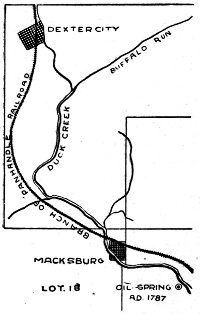
AN OLD OIL-SPRING IN OHIO.
On an old map of the United States, printed in England in 1787, the word
“petroleum” is marked twice, indicating that the “surface-shows” of oil had
attracted the notice of the earliest explorers of Southern Ohio and Northwestern
Pennsylvania a century ago. In one instance it is placed at the mouth of the
stream since famed the world over as Oil Creek, where Oil City is situated; in
the other on a stream represented as emptying into the Ohio River, close to the
site of what is now the village of Macksburg. When that section of Ohio was
first settled, various symptoms of greasiness were detected, thin films of oil
34floating on the waters of Duck Creek and its tributaries, globules rising in different
springs and seepings occurring frequently in the same manner as in Pennsylvania
and West Virginia. Thirty miles north of Marietta, on Duck Creek, a
salt-well sunk by Mr. McKee, in 1814, to the depth of four-hundred-and-seventy-five
feet, discharged “periodically, at intervals of from two to four days and
from three to six hours’ duration, thirty to sixty gallons of petroleum at each
inception.” Eighteen years afterwards the discharges were less frequent and
the yield of oil diminished to one barrel a week, finally ceasing altogether.
Once thirty or forty barrels stored in a cistern
took fire from the gas at the well having been
ignited by a workman carrying a light. The
burning oil ran into the creek, blazed to the tops
of the trees and exhibited for hours to the amazed
settlers the novelty of a rivulet on fire. Ten
miles above McConnellsville, on the Muskingum
River, results almost identical attended the boring
of salt-wells in 1819. Dr. S. P. Hildreth, of
Marietta, in an account of the region, written
that year, says of the borings for salt-water:
“They have sunk two wells more than four-hundred
feet; one of them affords a strong and pure water, but not
in great quantity; the other discharges such vast quantities
of petroleum, or as it is vulgarly called “Seneca Oil,”
and besides is subject to such tremendous explosions of
gas * * * that they make little or no salt. Nevertheless,
the petroleum affords considerable profit and is beginning
to be in demand for workshops and manufactories. It
affords a clear, brisk light, when burned in this way, and
will be a valuable article for lighting the street-lamps in
the future cities of Ohio.”
The last sentence bears the force of a prophecy. Writing about the year
1832 the same observant author directs attention to another peculiar feature:
“Since the first settlement of the regions west of the Appalachian range the hunters and
pioneers have been acquainted with this oil. Rising in a hidden and mysterious manner from
the bowels of the earth, it soon arrested their attention and acquired great value in the eyes of
the simple sons of the forest. * * * From its success in rheumatism, burns, coughs, sprains
etc., it was justly entitled to its celebrity. * * * It is also well adapted to prevent friction in
machinery, for, being free of gluten, so common to animal and vegetable oils, it preserves the
parts to which it is applied for a long time in free motion; where a heavy vertical shaft runs in a
socket it is preferable to all or any other articles. This oil rises in greater or less abundance in
most of the salt-wells and, collecting where it rises, is removed from time to time with a ladle.”
Is it not strange that, with the sources of supply thus pointed out in different
counties and states and the useful applications of petroleum fairly understood,
its real value should have remained unappreciated and unrecognized for more
than thirty years and be at last determined through experiments upon the distillation
of bituminous shales and coals? Wells sunk hundreds of feet for salt
water produced oil in abundance, yet it occurred to no one that, if bored expressly
for petroleum, it could be found in paying quantity! Hamilton McClintock,
owner of the “oil-spring” famed in history and romance, when somebody
ventured to suggest that he should dig into the rock a short distance, instead of
skimming the petroleum with a flannel-cloth, retorted hotly: “I’m no blanked
fool to dig a hole for the oil to get away through the bottom!”
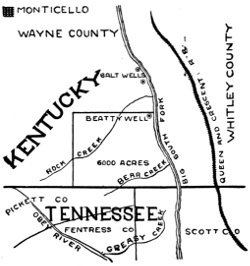
KENTUCKY’S FIRST OIL-WELL.
If West Virginia, Pennsylvania and Ohio played trumps in the exciting
game of Brine vs. Oil, Kentucky held the bowers. The home of James Harrod
and Daniel Boone, Henry Clay and George D. Prentice was noted for other
35things besides backwoods fighters, statesmanship, sparkling journalism, thoroughbred
horses, superb women and moonshine-whiskey. Off in the southeast
corner of Wayne county, near the northeast corner of a six-thousand-acre tract
of wild land, David Beatty bored a well
for salt about the year 1818. The land
extended four miles westward from the
Big South Fork of the Cumberland River,
its eastern boundary, and three miles
down the Fork from Tennessee, its
southern line. The well was located on
a strip of flat ground between the stream
and a rocky bluff, streaked with veins of
coal and limestone. Five yards from the
water a hole nine feet square was dug
ten feet to the rock and timbered. The
well, barely three inches in diameter,
was punched one-hundred-and-seventy
feet by manual labor, steam-engines not
having penetrated the trackless forests
of Wayne at that period. To the intense
disgust of the workmen a black, sticky, viscid liquid persisted in coming up
with the salt-water and a new location was chosen two miles farther down the
creek. Extra care not to drill too deep averted an influx of the disagreeable
fluid which spoiled the first venture. Salt-works were established and flourished
for years, a simon-pure oasis in the interminable wilderness.
Beatty was elected to Congress, serving his constituents faithfully and illustrating
the Mulberry-Sellers policy of “the old flag and an appropriation.” He
secured a liberal grant for a road to his property on the South Fork and constructed
a passable thoroughfare. Traces of deep cuttings, log-culverts and
blasted rocks, still discernible amid the underbrush that well-nigh hides them
from view, are convincing evidences of the magnitude and difficulty of the task.
“The rocky road to Dublin” was a mere bagatelle in comparison with this
long-deserted pathway. “Jordan is a hard road to travel,” says an old song,
and the sentiment would fit equally well in this case. At one rugged point
holes were cut in a rock as steep as the roof of a house, to afford footing for
the mules engaged in drawing salt from the works! Considering the roughness
of the country, the height of the hills, the depth of the chasms and the scanty
facilities available, Beatty’s road was quite as remarkable a feat as Bonaparte’s
passage across the Alps or Ben Butler’s “Dutch-Gap Canal.” Its spirited
projector lived and died at Monticello, the county-seat, where his descendants
resided until recently.
The abandoned well did not propose to be snuffed out unceremoniously or
to enact the role of “Leah the Forsaken.” In its bright lexicon the word fail
was not to be inserted merely because it was too fresh to participate in the
salt-trade. Far from retiring permanently, it spouted petroleum at a NancyNancy-Hanks
quickstep, filling the pit, running into the Fork and covering mile after
mile of the water with a top-dressing of oil. Somehow the floating mass caught
fire and mammoth pyrotechnics ensued. The stream blazed and boiled and
sizzled from the well to the Cumberland River, thirty-five miles northward,
calcining rocks and licking up babbling brooks on its fiery march! Trees on
its banks burned and blistered and charred to their deepest roots. Iron-pans
36at the salt-wells got red-hot, shriveled, warped, twisted and joined the junk-pile!
Was not that a sweet revenge for plucky No. 1, the well its owner “had
no use for” and devoutly wished at the bottom of the sea?
The Chicago fire “couldn’t hold a candle” to this rural conflagration, which
originated the expressive phrase of “hell with the lid off,” applied sixty years
afterwards by James Parton to the flaming furnaces at Pittsburg. Unluckily,
the region was populated so sparsely that few spectators had front seats at “the
greatest show on earth.” The deluge of oil ceased eventually, the fire following
suit. Anon the salt industry began to languish and the works were dismantled.
No more the forest-road echoed the sharp crack of the teamster’s whip or heard
his lusty oaths. The district along the South Fork was left as silent as “the
harp that once through Tara’s halls the soul of music shed,” ready to be labeled
“Ichabod,” and tradition alone preserved
the name and record of the “Beatty Well,”
the first oil-spouter in America!
To future generations tell
The story of the Beatty Well,
The father of oil-spouters!
In spite of quips and jibes and sneers
Of arrant cranks and doubters,
Whose forte is flinging wretched jeers,
It richly merits hearty cheers
From true petroleum-shouters.
Accompanied by Dr. W. G. Hunter,
and a native as guide, it was my good fortune
to visit this memorable locality in 1877. The
start was from Burksville, Cumberland county,
the doctor’s home and my headquarters
for a twelvemonth. At Albany, Clinton county,
sure-footed mules, the only animals that
could be ridden safely through the rough
country, took the place of our horses. Soon the last signs of civilization disappeared
and we plunged into the thick woods, a crooked, tortuous trail pointing
the way. Hills, rocks, ravines, fallen trees and mountain-streams by turns impeded
our progress, as we rode in Indian file for thirty miles. Birds twittered
and snakes hissed at the invasion of their solitudes. Several times the path
touched the line of Beatty’s forgotten road and once a ruined cabin, with three
grave-like mounds in a corner of the small clearing, met our gaze. The guide
explained how, twenty years before, the poor family tenanting the wretched
hovel had been poisoned by eating some kind of berries, the parents and their
only child dying alone and unattended. No human eye beheld their struggles,
no soft hand cooled the fevered brows of the sufferers whose lives went out in
that desolate waste.
“Oh God! How hard it is to die alone!”
Provisions in our saddle-bags, a clear brook and evergreen boughs supplied
us with food, drink and an open-air bed. Next morning we traversed a broad
plateau, ending abruptly at the top of a precipitous bluff a hundred feet high.
Beneath us lay a stretch of bottom-land, with the Big South Fork on its east
side and the Cumberland Mountains rearing their bold crests five miles away. In
the center of a patch of cleared ground stood a shanty, built of poles and roofed
with split slabs of oak. From an open space in one end smoke escaped freely,
showing that the place was inhabited. Tethering the mules and throwing the
37saddles upon the grass, we crawled down a slope formed by the collapse of a
portion of the bluff. A shot from my revolver—everybody carried a pistol—shattered
the atmosphere and brought the inmates to the side of the dwelling.
The father, mother, a child in arms and two boys entering their teens watched
our approach. As we drew nigh they scampered into the shanty and took refuge
under a queer structure of rails, straw and blankets that did duty as a bed for
the household! A blanket hung over the space cut for a door. Drawing this
aside, the frightened family could be seen crouching on the bare soil, for the
abode had neither door, window, floor nor chinking between the logs. It was
quite unfit to shelter a decent porker. Not a chair, table, stove, looking-glass,
bureau or any of the articles of furniture deemed necessary for modern comfort
was in sight! A bench hewn out of timber with an axe, two metal-pots, some
tin-dishes and knives and forks composed the domestic outfit! Yet it was
“home” to the squalid beings huddled in the dark, damp, musty angle
farthest from the intruders who
had dropped in upon them as
unexpectedly as a Peary meteor.
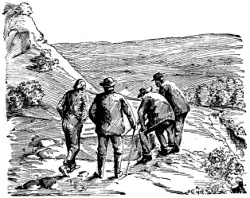
AT THE BEATTY WELL IN 1877.
Calling them to come out
and speak with us a moment,
the woman appeared, bearing
the inevitable baby. She was
truly a revelation, with unkempt
brindle-hair and sallow skin to
match. Her raiment consisted
of a single jean-garment, dirty
and tattered beyond description,
too narrow to encircle her waist
and too short to reach within a
dozen inches of her naked feet.
Compared with the flimsy toilet of “a living picture,” this costume was simplicity
itself. The poor creature smoked a cob-pipe viciously. A request to
see her husband evoked the command: “Old man, I reckon you best git out
hyer!” The “old man” heeded this summons and emerged from his hiding-place,
trembling violently. His attire was in harmony with his wife’s, threadbare
jean-pants and shirt comprising it. Head and feet were bare. His trembling
ceased the instant he saw our guide, whom he knew and greeted cordially.
Introductions followed and we asked if he could show us the way to the Beatty
Well. He answered in perfect English, with the grace of a Chesterfield: “It
will be the greatest pleasure I have known for many a day.”
A brisk walk brought us to the well. Dirt and leaves had filled the pit
nearly level, forming a depression which one might pass without special notice.
Scraping away the rubbish, blackened fragments of the timbered walls appeared.
But not a drop of oil had issued from the veteran-well for scores of years. One
man alone survived of those who had gazed upon the flow of petroleum previous
to the fire which checked the greasian tide forever. He lived ten miles
northwest and his short story was learned on the return-trip by another route.
The scattered rustics were accustomed to go to the well once or twice a year
and dip enough oil to medicate and lubricate whoever or whatever needed it.
The fluid was dark and heavy and for years rose to within a few feet of the surface.
At length the well clogged up and was almost obliterated. The dim eyes
38of the aged narrator sparkled as he recalled the big blaze, concluding with the
emphatic words: “It jes’ looked ez if the devil had hitched up the hull bottomless
pit fur a torch-light percession!”
Except the squatter on the tract of land, which Dr. Hunter and myself had
secured the winter of our visit, the nearest settler lived five miles distant! The
Cincinnati-Southern Railroad, now the Queen & Crescent route, had not crossed
the meandering Kentucky River and the country was practically inaccessible.
Men and women grew up without ever hearing of a church, a school, a
book, a newspaper, a preacher, a doctor, a wheeled vehicle or a lucifer-match!
The heathen of Bariaboola-Gha were as well informed concerning God and a future
state. They herded in miserable cabins, lived on “corn-dodgers and sow-belly,”
drank home-made whiskey and never wandered ten miles from their
own fireside. Of the great outside world, of moral obligations, of religious conviction
and of current events they were profoundly ignorant. Think of people
fifty, sixty, seventy years old, born and reared in the United States, who never
saw a loaf of wheat-bread, a wagon, a cart or a baby-carriage, to say nothing of
a plum-pudding, railway-coach, a trolley-car or a tandem-bicycle! It seems incredible,
in this advanced age and bang-up nation, that such conditions should
be possible, yet they existed in Southeastern Kentucky. And the American
eagle flaps his wings, while Americans boast of their culture and send barrels of
cold cash to buy flannel-shirts for perspiring Hottentots and goody-goody tracts
for jolly cannibals!
Small need of barbed-wire fences to shut out the cattle and chickens of
neighbors five miles apart! Their children did not quarrel and sulk and yell
“You can’t play in our yard!” Our host, who took us over the property and
told us all he knew about it, had not seen a strange face for twenty-nine weary
months! Then the neighbor five miles off had come in the vain search of a
cruse of oil from the old well to rub on an afflicted hog! Three years had
rolled by since his last expedition to the cross-roads, fourteen miles away, to
trade “coon-skins” for jeans and groceries. Could isolation be more complete?
Was Alexander Selkirk less blessed with companionship on his secluded island?
Had Coleridge’s Ancient Mariner, “on a wide, wide sea,” greater cause for an
attack of the blues?
The steel-track and the iron-horse are prime civilizers and eighteen years
have wrought a wondrous change in the section bordering upon the Cumberland
Mountains. The schoolmaster has come in with the railroad and improvement
is the prevailing order. Farmers have turned their forests into cultivated fields
and bought the latest implements. Their boys read the papers, yearn for the
city, smoke cigarettes, dabble in politics and dream of unbounded wealth.
The girls, no longer content with homespun frocks and sunbonnets, dress in
silk and velvet, wear stylish hats, devour French novels, sport high-heeled shoes
and balloon-sleeves, play Beethoven and Chopin, waltz divinely and are altogether
lovable!
An apparition muttering “I am thy father’s ghost” would not have surprised
us so much as the politeness of our half-clad, barefooted, bareheaded
pilot to the neglected well. His manners and his language were faultless. Not
a coarse word or grammatical error marred his fluent speech. At noon he
invited us to share his humble dinner, apologizing with royal dignity for the
poverty of his surroundings. “Gentlemen,” he said, “I regret that parched
corn and fat bacon are all I can offer, but I beg you to honor me with your
39presence at my table!” Remembering the cabin and its presiding divinity, we
felt obliged to decline and requested him to lunch with us. It was a positive
pleasure to see with what relish he ate the baked chicken, biscuit and good
things Mrs. Hunter had packed in our saddle-bags. After the meal we prepared
to depart. The end of a Louisville paper under the flap of my saddle attracted
the old man’s attention.
“Is that a newspaper?” he inquired.
“Yes, do you want it?”
“Oh, thank you a thousand times! It is fifteen years since I have seen a
paper and this will be such a treat!”
He seized the sheet eagerly, dropped upon the grass and glanced over the
printed page. In an instant he jumped to his feet and tears coursed down his
wrinkled cheeks.
“I did not mean to be rude,” he said earnestly, “but you cannot imagine
how my feelings mastered me, after so many years of separation from the world,
at sight of a paper from the city of my birth!”
The next moment the good-byes were uttered and we had left the hermit
of South Fork, to meet no more this side of eternity. He stood peering after
us until the woods shut us from his wistful gaze. Six years later death, the
grim detective no vigilance can elude, claimed the guardian of the Beatty Well.
His family removed to parts unknown. He rests in an unmarked grave, beneath
a spreading oak, near the murmuring stream. The lonely exile has reached
home at last!
Who on earth was this educated, courteous, gentlemanly personage, and
how did he drift into such a place? This perplexing problem beat the fifteen-puzzle,
“Pigs in Clover,” or the confusing dogma of Freewill and Predestination.
Our guide enlightened us. The old man was reared in Louisville,
graduated from college and entered an office to study law. In a bar-room row
one night a young man, with whom he had some trouble, was stabbed fatally.
Fearing he would be accused of the deed, the student fled to the woods. For
years he shunned mankind, subsisting on game and fruit and sleeping in a cave.
Every rustling leaf or snapping twig terrified him with the idea that officers were
at his heels. Ultimately he gained courage and sought the acquaintance of the
few settlers in his vicinity. Striving to forget the past, he cohabited with the
woman he called his wife, erected a shanty and brought up three children. Fire
destroyed his hut and its contents, leaving him destitute, and he located where
we met him. The fear of arrest could not be shaken off and he supposed we
had come to take him a prisoner, after twenty-five years of hiding, for a crime of
which he was innocent. This explained his retreat under the bed and violent
trembling. He carried his secret in his own bosom until 1873, when he was believed
to be dying and disclosed it to a friend, our guide, with a sealed letter
giving his true name. He recovered, the letter was handed back unopened and
the fugitive’s identity was never revealed. What an existence for a man of refinement
and collegiate training! What volumes of unwritten, unsuspected tragedies
environ us, could we but pierce the outward mask and read the tablets of
the heart!
Eight or ten years ago J. O. Marshall, a Pennsylvania oil-operator, cleaned
out the Beatty Well and drilled another a half-mile north. Neither yielded any
oil, although the second was put down nine-hundred feet. Mr. Marshall leased
a great deal of land in Wayne and adjacent counties, expecting to operate
extensively, but he died without seeing his purposes accomplished. He was a
40genial, enterprising, whole-souled fellow, whose faith in Kentucky as an oil-field
never faltered.
Dr. Hunter, my esteemed associate on many a delightful trip, was practicing
at Newcastle, Pa., when the civil war broke out. He sold his drug-store,
offered his services to the Government and was placed in charge of a medical
department, where he made a first-class record. He amputated the leg of General
James A. Beaver, subsequently Governor of Pennsylvania. At the close of
the war he settled in Cumberland county, married a prominent young lady,
built up an immense practice and acquired a competence. He served with signal
ability and credit in the Legislature and in Congress, elected time and again
in a district overwhelmingly against his party. He was chairman of the Republican
State-CommitteeState-Committee, and ought to be the successor of Blackburn in the United-States
Senate.
Seventy years ago William Morris, a practical driller, whose name oilmen
should perpetuate, invented the contrivance that culminated in “jars” for drilling-tools.
This contrivance, which enabled the Ruffners and other salt-borers
to go a thousand feet or more for brine, renders it possible to drill a mile for
oil, if ambitious operators desire to get so far towards the antipodes. The
manner in which the oil-resources of West Virginia, Ohio and Kentucky were
thrown away by the early pioneers is a surprising feature in the history of human
affairs. Fifty years before Pennsylvania oil-wells had been heard of the Kanawha
salt-seekers were drilling what to-day would be paying oil-wells. Instead
of saving the oil, which is enriching West Virginia operators now, they wasted
it and saved the salt-water. They wasted the natural gas, the best fuel of the
century, and boiled their salt-water with wood, the most expensive and least
satisfactory fuel of the valley. That is often the way humanity gropes in the
dark. The men who rushed to California drove their ox-wagons past the big
bonanzas of the Comstock lode, while the men who later went to the Comstock
went past the rich carbonates of Leadville, just as later prospectors ran over the
Cripple-Creek silver and gold-leads in the search for things farther distant and
the crowds hurrying to Alaska ignored the teeming ledges of the Black Hills.
The Kanawha salt-men scorned the oil, yet drilled the first oil-wells, and in doing
it invented the methods which have come into use throughout the entire oil-territory.
If Joseph and David Ruffner and William Morris had displayed half
the wisdom in utilizing the oil they manifested in inventing tools to find salt-water,
theirs would be the familiar names in Oildom down to the end of time.
“Fellow-citizens,” shouted a free-silver orator to a host of starving coal-miners
three months after the last Presidential inauguration, “they tell us Major
McKinley is the advance-agent of prosperity, but, if so, he seems to be a deuce
of a way ahead of the show!” In like fashion the Ruffners were a long way
ahead of the petroleum-development, but the show got there at last, heralded
by salt-wells that pointed unerringly towards the dawn.
41
Writing of several Jesuits who, about 1642, penetrated the territory of the
Eries, probablyprobably near what is now Cuba, N. Y., Charlevoix says:
“They found a thick, oily, stagnant matter which would burn like brandy.”
The map of the Missionaries Dollier and Galinèe, printed in 1670, has a
hint of the presence of petroleum in the north-western part of New York. Near
the spot which was to become the site of Cuba these words are marked:
“Fonteaine de Bitume.”
In 1700 the Earl of Bellmont, Governor of New York, thus instructed
Engineer Wolfgang W. Romer to visit the Five Nations:
“You are to go and view a well or spring which is eight miles beyond the Seneks’ farthest
castle, which they told me blazes up in a flame when a lighted coal or firebrand is put into it.
You will do well to taste the said water and * * * bring with you some of it.”
Sir William Johnson, who visited Niagara in 1767, in his journal says with
reference to the spring at Cuba:
“Arcushan came in with a quantity of curious oyl, taken at the top of the water of some
very small lake near the village he belongs to.”
David Leisberger, the Moravian Missionary, went up the Allegheny River
in 1767, established a mission near the mouth of Tionesta Creek and in 1770
removed to Butler county. His manuscript records:
“I have seen three kinds of oil-springs—such as have an outlet, such as have none and such
as rise from the bottom of the creeks. From the first water and oil flow out together, the oil impregnating
the grass and soil; in the second it gathers on the surface of the water to the depth
of the thickness of a finger; from the third it rises to the surface and flows with the current of
the creek. The Indians prefer wells without an outlet. From such they first dip the oil that has
accumulated, then stir the well and, when the water has settled, fill their kettles with fresh oil,
which they purify by boiling. It is used medicinally, as an ointment for toothache, headache,
swellings, rheumatism and sprains. Sometimes it is taken internally. It is of a brown color and
can also be used in lamps. It burns well.”
Dr. John David Schopf, a surgeon in the British service, visited Pittsburg
in 1783 and in an account of his journey remarked:
“Petroleum was found at several places up the Allegheny, particularly at a spring and a
creek, which were covered with this floating substance.”
General William Irvine, in a letter to John Dickinson, dated “Carlisle,
August 17, 1785,” tells of exploring the western part of Pennsylvania. He says:
“Oil Creek takes its name from an oily or bituminous matter being found floating on its surface.
Many cures are attributed to this oil. * * * It rises in the bed of the creek at very low
water. In a dry season I am told it is found without any mixture of water and is pure oil. It
rises when the creek is high from the bottom in small globules.”
George Henry Loskiel, in his “Geschichte der Mission der Evangelischen
Bruder unter der Indianen in Nordamerika,” published in 1789, noted:
“One of the most favorite medicines used by the Indians is Fossil-oil exuding from the
earth, commonly with water * * * This oil is of a brown color and smells like tar. * * *
They use it chiefly in external complaints. Some take it inwardly and it has not been found to
do harm. It will burn in a lamp. The Indians sometimes sell it to the white people at four
guineas a quart.”
An officer of the United States Army, who descended the Ohio River in
1811, wrote a book of travels in which he remarks:
“Not far from the mouth of the Little Beaver a spring has been found, said to rise from the
bottom of the river, from which issues an oil which is highly inflammable and is called Seneca
oil. It resembles Barbadoes tar and is used as a remedy for rheumatic pains.”
42
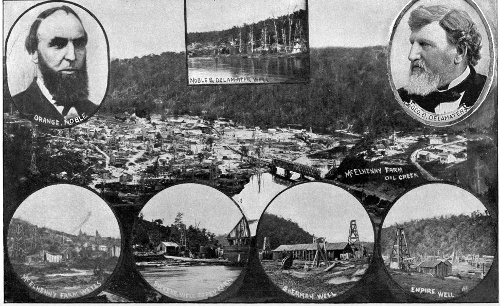
NOTABLE WELLS ON OIL CREEK IN 1861-2-3.
IV. WHERE THE BLUE-GRASS GROWS.
43
Interesting Petroleum Developments in Kentucky and Tennessee—The
Famous American Well—A Boston Company Takes Hold—Providential
Escape—Regular Mountain Vendetta—A Sunday Lynching
Party—Peculiar Phases of Piety—An Old Woman’s Welcome—Warm
Reception—Stories of Rustic Simplicity.
“He who would search for pearls must dive below.”—Dryden.
“Often do the spirits of great events stride on before the events.”—Coleridge.
“Coming events cast their shadows before.”—Thomas Campbell.
“In Cumberland county, Kentucky, a run of pure oil was struck.”—Niles’ Register, A. D. 1829.
“Indications of oil are plentiful at Chattanooga, Tennessee.”—Robert B. Roosevelt, A. D. 1863.
“Ever since the first settlement of the country oil has been gathered and used for medicinal purposes.”—Cattlesburg,
Ky., Letter, A. D. 1884.
“Everythink has changed, everythink except human natur’.”—Eugene Field.
“To all appearance it was chiefly by Accident and the grace of Nature.”—Carlyle.
Interesting and unexpected results
from borings for salt-water
in Kentucky were not exhausted
by the initial experiment on South
Fork. Special peculiarities invest
that venture with a romantic halo
essentially its own, but “there are
others.” Wayne county was not
to monopolize the petroleum-feature
of salt-wells by a large majority.
“Westward the star of empire
takes its way” affirmed Bishop
Berkeley two-hundred years
ago, with the instinct of a born
prophet, and it was so with the
petroleum-star of Kentucky, however it might be with brilliant Henri Watterson’s
“star-eyed goddess of Reform.”
The storm-center next shifted to Cumberland county, the second west of
Wayne, Clinton separating them. Hardy breadwinners, braving the hardships
and privations of pioneer-life in the backwoods, early in this century settled
much of the country along the Cumberland River. Upon one section of irregular
shape, its southern end bordered by Tennessee, the state of Davy Crockett
and Andrew Jackson, the name of the winding river intersecting it was appropriately
bestowed. A central location, between the west bank of the Cumberland
and the foot of a lordly hill, was selected for the county-seat and christened
Burksville, in honor of a respected citizen who owned the site of the embryo
hamlet. From a cross-roads tavern and blacksmith-shop the place expanded
gradually into an inviting village of one-thousand population. It has fine stores,
44good churches and schools, a brick court-house, and for years it boasted the only
college in Kentucky for the education of girls.
Burksville pursued “the even tenor of its way” slowly and surely. Forty
miles from a railroad or a telegraph-wire, its principal outlet is the river during
the season of navigation. The Cumberland retains the fashion of rising sixty to
eighty feet above its summer-level when the winter rains set in and dwindling to
a mere brooklet in the dry, hot months. Old-timers speak of “the flood of 1826”
as the greatest in the history of the community. The rampant waters overflowed
fields and streets, invaded the ground-floors of houses and did a lot of unpleasant
things, the memory of which tradition has kept green. In January of 1877 the
moist experience was repeated almost to high-water mark. Saw-logs floated
into kitchens and parlors and improvised skiffs navigated back-yards and gardens.
Seldom has the town cut a wide swath in the metropolitan press, because
it avoided gross scandals and attended strictly to home-affairs. The chief dissipation
is a trip by boat to Nashville or Point-Burnside, or a drive overland to
Glasgow, the terminus of a branch of the Louisville & Nashville Railroad.
The first great event to stir the hearts of the good people of Cumberland
county occurred in 1829. A half-mile from the mouth of Rennix Creek, a minor
stream that empties into the Cumberland two miles north of the county-town, a
well was sunk one-hundred-and-eighty feet for salt-water. Niles’ Register, published
the same year, told the tale succinctly:
“Some months since, in the act of boring for salt-water on the land of Mr. Lemuel Stockton,
situated in the county of Cumberland, Kentucky, a run of pure oil was struck, from which it is
almost incredible what quantities of the substance issued. The discharges were by floods, at
intervals of from two to five minutes, at each flow vomiting forth many barrels of pure oil. I
witnessed myself, on a shaft that stood upright by the aperture in the rock from which it issued,
marks of oil 25 or 30 feet perpendicularly above the rock. These floods continued for three or four
weeks, when they subsided to a constant stream, affording many thousand gallons per day. This
well is between a quarter and a half-mile from the bank of
the Cumberland River, on a small rill (creek) down which it
runs to the Cumberland. It was traced as far down the Cumberland
as Gallatin, in Sumner county, Tennessee, nearly a
hundred miles. For many miles it covered the whole surface
of the river and its marks are now found on the rocks on
each bank.
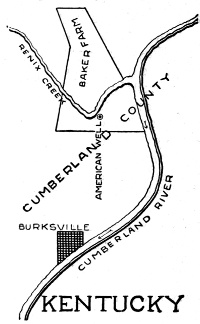
“About two miles below the point on which it touched
the river, it was set on fire by a boy, and the effect was grand
beyond description. An old gentleman who witnessed it
says he has seen several cities on fire, but that he never beheld
anything like the flames which rose from the bosom of
the Cumberland to touch the very clouds.”
This was the beginning of what was afterwards
known from the equator to the poles as the “American
Well.” The flow of oil spoiled the well for
salt and the owners quitted it in disgust, sinking
another with better success in an adjacent field.
For years it remained forsaken, an object of more
or less curiosity to travelers who passed close by
on their way to or from Burksville. It was very
near the edge of the creek, on flat ground most of
which has been washed away. Neighboring farmers dipped oil occasionally for
medicine, for axle-grease and—“tell it not in Gath, publish it not in Askelon”—to
kill vermin on swine!
Job Moses, a resident of Buffalo, N. Y., visited the locality about the year
1848. He had read of the oil-springs in New York, Pennsylvania, West Virginia
45and Ohio and he decided that the hole on Rennix Creek ought to be a prize-package.
His moderate offer for the well was accepted by the Bakers, into whose
hands the Stockton tract had come. He drilled the well to four-hundred feet
and erected a pumping-rig. The five or six barrels a day of greenish-amber
fluid, 42° gravity, he put up in half-pint bottles, labeled “American Rock Oil”
and sold at fifty cents, commending it as a specific for numberless complaints.
He reaped a harvest for several years, until trade languished and the well was
abandoned.
With the proceeds of his enterprise Moses bought a large block of land at
Limestone, N. Y., adjoining the northern boundary of McKean county, Pa., and
built a mansion big enough for a castle. He farmed extensively, raised herds of
cattle, employed legions of laborers and dispensed a bountiful hospitality. In
1862-3 he drilled three wells near his dwelling, finding a trifling amount of gas and
oil. Had he drilled deeper he would inevitably have opened up the phenomenal
Bradford field a dozen years in advance of its actual development. Wells twelve-hundred
to three-thousand feet deep had not been dreamt of in petroleum-philosophy
at that date, else Job Moses might have diverted the whole current of
oil-operations northward and postponed indefinitely the advent of the Clarion
and Butler districts! Boring a four-inch hole a few hundred feet farther would
have done it!
On what small causes great effects sometimes depend! Believing a snake-story
induced our first parents to sample “the fruit of that forbidden tree whose
mortal taste brought sin into our world and all our woe.” Ambition to be a
boss precipitated Lucifer “from the battlements of heaven to the nethermost
abyss.” A dream released Joseph from prison to be “ruler over Egypt.” The
smiles of a wanton plunged Greece into war and wiped Troy from the face of the
earth. A prod on the heel slew Achilles, a nail—driven by a woman at that—finished
Sisera and a pebble ended Goliath. The cackling of a goose saved Rome
from the barbarous hordes of Brennus. A cobweb across the mouth of the cave
secreting him preserved Mahomet from his pursuers and gave Arabia and Turkey
a new religion. The scorching of a cake in a goatherd’s hut aroused King
Alfred and restored the Saxon monarchy in England. The movements of a
spider inspired Robert Bruce to renewed exertions and secured the independence
of Scotland. An infected rag in a bundle of Asiatic goods scourged Europe
with the plague. The fall of an apple from a tree resulted in Sir Isaac Newton’s
sublime theory of gravitation. The vibrations of a tea-kettle lid suggested to
the Marquis of Worcester the first conception of the steam-engine. A woman’s
chance-remark led Eli Whitney to invent the cotton-gin. The twitching of a
frog’s muscles revealed galvanism. A diamond-necklace hastened the French
Revolution and consigned Marie Antoinette to the guillotine. Hacking a cherry-tree
with a hatchet earned George Washington greater glory than the victory of
Monmouth or the overthrow of Cornwallis. A headache helped cost Napoleon
the battle of Waterloo and change the destiny of twenty kingdoms. An affront
to an ambassador drove Germany to arms, exiled Louis Napoleon and made
France a republic. Mrs. O’Leary’s kicking cow laid Chicago in ashes and burst
up no end of insurance-companies. An alliterative phrase defeated James G.
Blaine for President of the United States. An epigram, a couplet or a line has
been known to confer immortality. A new bonnet has disrupted a sewing-society,
split a congregation and put devout members on the toboggan in their
hurry to backslide. An onion-breath has severed doting lovers, cheated parsons
of their wedding-fees and played hob with Cupid’s calculations. Statistics
46fail to disclose the awful havoc wrought in millions of homes by such observations,
on the part of thoughtless young husbands, as “this isn’t the way mother
baked,” or “mother’s coffee didn’t taste like this!”
Moses lived to produce oil from his farms and to witness, five miles south
of Limestone, the grandest petroleum-development of any age or nation. He
was built on the broad-gauge plan, physically and mentally, and “the light went
out” peacefully at last. The Kentucky well was never revived. The rig decayed
and disappeared, a timber or two lingering until carried off by the flood
in 1877.
In the autumn of 1876 Frederic Prentice, a leading operator, engaged me
to go to Kentucky to lease and purchase lands for oil-purposes. Shortly before
Christmas he wished me to meet him in New York and go from there to Boston,
to give information to parties he expected to associate with him in his Kentucky
projects. Together we journeyed to the city of culture and baked-beans and
met the gentlemen in the office of the Union-Pacific Railroad-Company. The
gathering was quite notable. Besides Mr. Prentice, who had long been prominent
in petroleum affairs, Stephen Weld, Oliver Ames, Sen., Oliver Ames,
Jun., Frederick Ames, F. Gordon Dexter and
one or two others were present. Mr. Weld
was the richest citizen of New England, his
estate at his death inventorying twenty-two
millions. The elder Oliver Ames, head of
the giant shovel-manufacturing firm of Oliver
Ames & Sons, was a brother of Oakes Ames,
the creator of the Pacific Railroads, whom the
Credit-Mobilier engulfed in its ruthless destruction
of statesmen and politicians. His
nephew and namesake was a son of Oakes
Ames and Governor of Massachusetts in 1887-8-9.
He began his career in the shovel-works,
learning the trade as an employé, and at thirty-five
had amassed a fortune of ten-millions.
He occupied the finest house in Boston, entertained
lavishly, spent immense sums for
paintings and bric-a-brac and died in October of 1895. Frederick Ames, son of
the senior Oliver, has inherited his father’s executive talent and he maintains
the family’s reputation for sagacity and the acquisition of wealth. F. Gordon
Dexter is a multi-millionaire, a power in the railroad-world and a resident of
Beacon street, the swell avenue of the Hub.
Such were the men who heard the reports concerning Kentucky. They did
not squirm and hesitate and wonder where they were at. Thirty-five minutes
after entering the room the “Boston Oil Company” was organized, the capital
was paid in, officers were elected, a lawyer had started to get the charter and
authority was given me to draw at sight for whatever cash was needed up to
one-hundred-thousand dollars! This record-breaking achievement was about
as expeditious as the Chicago grocer, who closed his store one forenoon and
pasted on the door a placard inscribed in bold characters: “At my wife’s
funeral—back in twenty minutes!”
Oliver Ames, the future governor, invited the party to lunch at the Parker
House, Boston’s noted hostelry. An hour sped quickly. My return-trip had
been arranged by way of Buffalo and the Lake-Shore Road to Franklin. The
47time to start arrived, the sleigh to take me to the depot was at the door, the
good-byes were said, the driver tucked in the robes and grasped the lines. At
that instant Oliver Ames, Sen., called: “Please come into the hotel one moment;
I want to jot down something you told us about the American Well.”
The other gentlemen looked on, the explanation was penciled rapidly, my seat
in the sleigh was resumed and Mr. Dexter jokingly said to the Jehu: “You’ll
have to hustle, or your fare will miss his train!”
Through the narrow, twisted, crowded streets the horses trotted briskly.
Rushing into the station, the train was pulling out and the ticket-examiner was
shutting the iron-gates. He refused to let me attempt to catch the rear car and
my disappointment was extreme. A train for New York and Pittsburg left in
fifteen minutes. It bore me, an unwilling passenger, safely and satisfactorily to
the “Smoky City.” There the news reached me of the frightful railway-disaster
at Ashtabula, in which P. P. Bliss and fourscore fellow-mortals, filled with fond
anticipations of New-Year reunions, perished in the icy waters ninety feet beneath
the treacherous bridge that dropped them into the yawning chasm! The
doomed train was the same that would have borne me to Ashtabula and—to
death, had not Mr. Ames detained me to make the entry in his memorandum-book!
Call it Providence, Luck, Chance, what you will, an incident of this stamp
is apt to beget “a heap of tall thinking.”
“There’s a divinity that shapes our ends.”
Returning to Burksville in January, the work of leasing went ahead merrily.
The lands around the American Well were taken at one-eighth royalty. Forty
rods northeast of the American, in a small ravine, a well was drilled eight-hundred
feet. At two-hundred feet some gas and oil appeared, but the well proved
a failure. While it was under way the gas in a deserted salt-well twenty rods
northwest of the American burst forth violently, sending frozen earth, water
and pieces of rock high into the air. The derrick at the Boston Well, rising to the
height of seventy-two feet, was a perennial
delight to the natives. Youths, boys and
old men ascended the ladder to the topmost
round to enjoy the beautiful view.
Pretty girls longed to try the experiment
and it was whispered that six of them, one
night when only the man in the moon
was peeping, performed the perilous feat.
Certain it is that a winsome teacher at the
college, who climbed the celestial stair
years ago, succeeded in the effort and
wrecked her dress on the way back to solid
ground. A dining-room girl at Petrolia,
in 1873, stood on top of a derrick, to win
a pair of shoes banteringly offered by a
jovial oilman to the first fair maiden entitled
to the prize. Lovely woman and
Banquo’s ghost will not “down!”“down!”
Three miles northeast of the American Well, at the mouth of Crocus Creek,
C. H. English drilled eight shallow wells in 1865. They were bunched closely
and one flowed nine-hundred barrels a day. Transportation was lacking, the
product could not be marketed and the promising field was deserted. Twelve
years later the Boston Oil-Company drilled in the midst of English’s cluster, to
48discover the quality of the strata, and could not exhaust the surface-water by the
most incessant pumping. The company also drilled on the Gilreath farm, across
the Cumberland from Burksville, where Captain Phelps found heavy oil in paying
quantity back in the sixties. The well produced nicely and would have paid
handsomely had a railroad or a pipe-line been within reach. A well two miles
west of the American, drilled in 1891, had plenty of sand and showed for a fifty-barreler.
Six miles south-west of Burksville, at Cloyd’s Landing, J. W. Sherman, of
Oil-Creek celebrity, drilled a well in 1865 which spouted a thousand barrels of
40° gravity oil in twenty-four hours. He loaded a barge with oil in bulk, intending
to ship it to Nashville. The ill-fated craft struck a rock in the river and
the oil floated off on its own hook. Sherman threw up the sponge and returned
to Pennsylvania. Three others on the Cloyd tract started finely, but the wonderful
excitement at Pithole was breaking out and operations elsewhere received
a cold chill. Dr. Hunter purchased the Cloyd farm and leased it in 1877 to Peter
Christie, of Petrolia, who did not operate on any of the lands he secured in
Kentucky and Tennessee. Micawber-like, Cumberland county is “waiting for
something to turn up” in the shape of facilities for handling oil. When these
are assured the music of the walking-beam will tickle the ears of expectant believers
in Kentucky as the coming oil-field.
Wayne and Cumberland had been heard from and Clinton county was the
third to have its inning. On the west bank of Otter Creek, a sparkling tributary
of Beaver Creek, a well bored for salt fifty or more years ago yielded considerable
oil. Instead of giving up the job, the owners pumped the water and oil
into a tank, over the side of which the lighter fluid was permitted to empty at its
leisure. The salt-works came to a full stop eventually and the well relapsed
into “innocuous desuetude.” L. D. Carter, of Aurora, Ill., sojourning temporarily
in Clinton for his health, saw the old well in 1864. He dipped a jugful of
oil, took it to Aurora, tested it on the Chicago, Burlington & Quincy Railroad,
found it a good lubricant and concluded to give the well a square trial. The
railroad-company agreed to buy the oil at a fair price. Carter pumped six or
eight barrels a day, hauled it in wagons over the hills to the Cumberland River
and saved money. He granted Mr. Prentice an option on the property in 1877.
The day the option expired J. O. Marshall bought the well, farm and ten-thousand
acres of leases conditionally, for a Butler operator who “didn’t have the
price,” and the deal fell through.
The well stood idle until 1892, when J. Hovey, an ex-broker from New York
and relative of a late Governor of Indiana, drilled a short distance down the
creek. The result was a strike which produced twenty-four hundred barrels of
dark, heavy, lubricating oil in fifty days. It was shut down for want of tankage
and means to transport the product to market. The Carter again yielded nicely,
as did three more wells in this neighborhood. In 1895 the Standard Oil-Company
was given a refusal of the Hovey and surrounding interests, in order to
test the territory fully and lay a pipe-line to Glasgow or Louisville, should
the production warrant the expenditure. Wells have been sunk east of the
Carter nearly to Monticello, eighteen miles off, finding gas and indications of
oil. Every true Clintonite is positive an ocean of petroleum underlies his particular
neck of woods, impatient to be relieved and burden landholders and
operators alike with excessive wealth!
A hard-headed youth, out walking with his best girl in the dog-days, told
her a fairy-story of the dire effects of ice-cream upon the feminine constitution.
49“I knew a girl,” he declared, “who ate six plates of the dreadful stuff and died
next day!” The shrewd damsel exclaimed rapturously: “Oh, wouldn’t it be
sweet to die that way? Let us begin on six plates now!” And wouldn’t it be
nice to be loaded with riches, not gained by freezing out some other fellow, by
looting a bank, by wedding an unloved bride, by grinding the poor, by manipulating
stocks, by cornering grain or by practices that make the angels weep,
but by bringing oil honestly from the bowels of the earth?
About the year 1839 a salt-well in Lincoln county, eight miles from the pretty
town of Stanford, struck a vein of oil unexpectedly. The inflammable liquid
gushed out with great force, took fire and burned furiously for weeks. The
owner was a grim joker in his way and he aptly remarked, upon viewing the
conflagration: “I reckon I’ve got a little hell of my own!” Four more wells
were drilled farther up the stream, two getting a show of oil. One was plugged
and the other, put down by the late Marcus Hulings, the wealthy Pennsylvania
operator, proved dry. Surface indications in many quarters gave rise to the
belief that oil would be found over a wide area, and in 1861 a well was bored at
Glasgow, Barren county, one-hundred-and-ten miles below Louisville. It was a
success and a hundred have followed since, most of which are producing moderately.
Col. J. C. Adams, formerly of Tidioute, Pa., was the principal operator
for twenty years. A suburban town, happily termed Oil City, is “flourishing
like a green bay-horse.” The oil, dark and ill-flavored, smelling worse than
“the thousand odors of Cologne,” is refined at Glasgow and Louisville. It can
be deodorized and converted into respectable kerosene. Sixteen miles south of
Glasgow, on Green River, four shallow wells were bored thirty years ago, one
flowing at the rate of six-hundred barrels, so that Barren county is by no means
barren of interest to the oil-fraternity.
At Bowling Green a well was sunk two-hundred feet, a few gallons of green-oil
bowling to the surface. Torpedoing was unknown, or the fate of many Kentucky
wells might have been reversed. John Jackson, of Mercer, Pa., in 1866
drilled a well in Edmonson county, twenty-five miles north-west of Glasgow.
The tools dropped through a crevice of the Mammoth Cave, but neither eyeless
fish nor slippery petroleum repaid the outlay of muscle and greenbacks. As if
to add insult to injury, the well hatched a mammoth cave that buried the tools
eight-hundred feet out of sight!
Loyal to his early training and hungry for appetizing slapjacks, Jackson once
imported a sack of the flour from Louisville and asked the obliging landlady of
his boarding-house to have buckwheat-cakes for breakfast. He was on hand in
the morning, ready to do justice to the savory dish. The “cakes” were brought
in smoking hot, baked into biscuit, heavy as lead and irredeemably unpalatable!
The sack of flour went to fatten the denizens of a neighbor’s pig-pen. Jackson
was a pioneer in the Bradford region, head of the firm of Jackson & Walker,
clever and generous. The grass and the flowers have grown on his grave for
ten years, “the insatiate archer” striking him down in the prime of vigorous
manhood.
Sandy Valley, in the north-eastern section of the state, contributed its quota
to the stock of Kentucky petroleum. From the first settlement of Boyd,
Greenup, Carter, Johnson and Lawrence counties oil had been gathered for
medical purposes by skimming it from the streams. About 1855 Cummings &
Dixon collected a half-dozen barrels from Paint Creek and treated it at their
coal-oil refinery in Cincinnati, with results similar to those attained by Kier in
Pittsburg. They continued to collect oil from Paint Creek and Oil-Spring Fork
50until the war, at times saving a hundred barrels a month. In 1861 they drilled
a well three-hundred feet on Mud Lick, a branch of Paint Creek, penetrating
shale and sandstone and getting light shows of oil and gas. Surface-oil was
found on the Big-Sandy River, from its source to its mouth, and in considerable
quantities on Paint, Blaine, Abbott, Middle, John’s and Wolf Creeks. Large
springs on Oil-Spring Fork, a feeder of Paint Creek, yielded a barrel a day. At
the mouth of the Fork, in 1860, Lyon & Co. drilled a well two-hundred feet,
tapping three veins of heavy oil and retiring
from the scene when “the late unpleasantness”
began to shake up the
country. The same year a well was
sunk one-hundred-and-seventy feet, on
the headwaters of Licking River, near
the Great Burning Spring. Gas and oil
burst out for days, but the low price of
crude and the impending conflict prevented
further work. What an innumerable
array of nice calculations this cruel
war nipped in the bud!
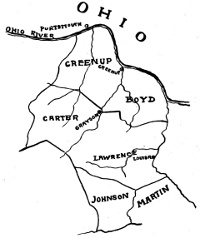
J. Hinkley bored two-hundred feet
in 1860, on Paint Creek, eight miles
above Paintville, meeting a six-inch
crevice of heavy-oil, for which there was
no demand, and the capacity of the well
was not tested. Salt-borers on a multitude
of streams had much difficulty, fifty
or sixty years ago, in getting rid of oil that
persisted in coming to the surface. These old wells have been filled with dirt,
although in some the oil works to the top and can be seen during the dry seasons.
The Paint-Creek region had a severe attack of oil-fever in 1864-5. Hundreds
of wells were drilled, boats were crowded, the hotels were thronged and
the one subject of conversation was “oil—oil—oil!” Various causes, especially
the extraordinary developments in Pennsylvania, compelled the plucky operators
to abandon the district, notwithstanding encouraging symptoms of an important
field. Indeed, so common was it to find petroleum in ten or fifteen counties of
Kentucky that land-owners ran a serious risk in selling their farms before boring
them full of holes, lest they should unawares part with prospective oil-territory
at corn-fodder prices!
Tennessee did not draw a blank in the awards of petroleum-indications.
Along Spring Creek many wells, located in 1864-5 because of “surface-shows,”
responded nobly, at a depth comparatively shallow, to the magic touch of the
drill. The product was lighter in color and gravity than the Kentucky brand.
Twelve miles above Nashville, on the Cumberland River, wells have been pumped
at a profit. Around Gallatin, Sumner county, decisive tests demonstrated the
presence of petroleum in liberal measure. On Obey Creek, Fentress county,
sufficient drilling has been done to justify the expectation of a rich district. Near
Chattanooga, on the southern border of the state, oil seepages are “too numerous
to mention.” The Lacy Well, eighteen miles south of the Beatty, drilled in
1893, is good for thirty barrels every day in the week. The oil is of superior
quality, but the cost of marketing it is too great. A dozen wells are going
down in Fentress, Overton, Scott and Putnam. Some fine day the tidal wave of
51development will sweep over the Cumberland-River region, with improved appliances
and complete equipment, and give the country a rattling “show for its
white alley!” Surely all these spouting-wells, oil-springs and greasy oozings
mean something. To quote a practical oilman, who knows both states from a
to z: “Twenty counties in Kentucky and Tennessee are sweating petroleum!”
“Jes’ nail dat mink to de stable do’—
De niggahs’ll dance when de oil-wells flo!”
Picking up a million acres of supposed oil-lands in the Blue-Grass and Volunteer
States had its serio-comic features. The ignorant squatters in remote
latitudes were suspicious of strangers, imagining them to be revenue-officers on
the trail of “moonshiners,” as makers of untaxed whisky were generally called.
More than one northern oilman narrowly escaped premature death on this conjecture.
J. A. Satterfield, the successful Butler operator, went to Kentucky in
the winter of 1877 to superintend the leasing of territory for his firm, between
which and the Prentice combination a lively scramble had been inaugurated.
Somebody thought he must be a Government agent and passed the word to the
lawless mountaineers. The second night of his stay a shower of bullets riddled
the window, two lodging in the bed in which Satterfield lay asleep! Daylight
saw him galloping to the railroad at a pace eclipsing Sheridan’s ride to Winchester,
eager to “get back to God’s
country.” “Once was enough for him”
to figure as the target of shooters who seldom
failed to score “a hit, a palpable hit.”
The grim archer didn’t miss him in 1894.
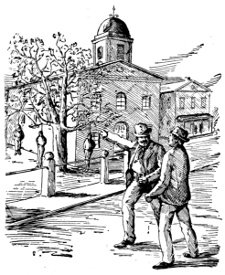
THREE DANGLING FROM A TREE.
Arriving late one Saturday at Mt.
Vernon, the county-seat of Rockcastle,
the colored waiter on Sunday morning inquired:
“Hes yo done gone an’ seen em?”
Asking what he meant, he informed me
that three men were dangling from a tree
in the court-house yard, lynched by an infuriated
mob during the night on suspicion
of horse-stealing, “the unpardonable sin”
in Kentucky. A party of citizens had started
for the cabin of a notorious outlaw, observed
skulking homeward under cover of
darkness, intending to string him up. The
desperado was alert. He fired one shot,
which killed a man and stampeded the assailants. They returned to the village,
broke into the jail, dragged out three cowering wretches and hanged them in
short metre! The bodies swung in the air all day, a significant warning to whoever
might think of “walkin’ off with a hoss critter.”
On that trip to Rockcastle county the train stopped at a wayside-station
bearing the pretentious epithet of Chicago. A tall, gaunt, unshaven, uncombed
man, with gnarled hands that appealed perpetually for soap and water, high
cheekbones, imperfect teeth and homespun-clothes of the toughest description,
stood on the platform in a pool of tobacco-juice. A rustic behind me stuck his
head through the car-window and addressed the hard-looking citizen as
“Jedge.” Honors are easy in Kentucky, where “colonels,” “majors” and
“judges” are “thick as leaves in Vallambrosa,” but the title in this instance
seemed too absurd to pass unheeded. When the train started, in reply to my
question whether the man on the platform was a real judge, his friendly acquaintance
52took the pains to say: “Wal, I can’t swar es he’s zackly, but las’
year he wuz jedge ov a chicken-fight down ter Si Mason’s an’ we calls ’im jedge
ever sence!”
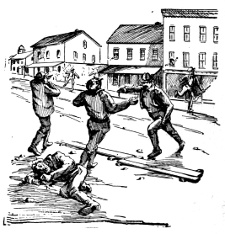
Kentucky vendettas have often figured in thrilling narratives.narratives. Business
took me to the upper end of Laurel county one week. Litigants, witnesses and
hangers-on crowded the village, for a suit of unusual interest was pending before
the “’squar.” The principals were
farmers from the hilly region, whose
fathers and grandfathers had been at
loggerheads and transmitted the quarrel
to their posterity. Blood had been
shed and hatred reigned supreme. The
important case was about to begin.
Two shots rang out so closely together
as to be almost simultaneous, followed
by a regular fusilade. Everybody ran
into the street, where four men lay
dead, a fifth was gasping his last breath
and two others had ugly wounds. The
tragedy was soon explained. The two
parties to the suit had met on their
way to the justice’s house. Both were
armed, both drew pistols and both
dropped in their tracks, one a corpse
and the second ready for the coroner in a few moments. Relatives and adherents
continued the dreadful work and five lives paid the penalty of ungovernable
passion. The dead were wrapped in horse-blankets and carted home. The
case was not called. It had been “settled out of court.”
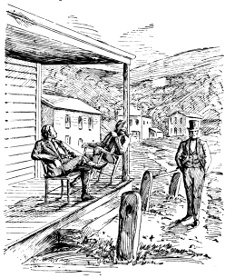
“A BIGGER MAN ’N GEN’RAL GRANT.”
The spectators of this dreadful scene manifested no uncommon concern.
“It’s what might be expected,” echoed
the local oracle; “when them mountain
fellers gets whiskey inside them they don’t
care fur nuthin’!” Within an hour of the
shooting a young man stopped me on the
street-corner, where stood a wagon containing
two bodies. “Kunnel,” he went
on to say, “I’ve h’ard es yo’s th’ man
es got our farm fur oil. Dad an’ Cousin
Bill’s ’n that ar wagon, an’ I want yo ter
giv’ me a job haulin’ wood agin yo starts
work up our way.” He mounted the vehicle
and drove off with his ghastly freight
without a quiver of emotion.
At Crab Orchard, one beautiful Sunday,
the clerk chatted with me on the
hotel-porch. A stalwart individual approached
and my companion ejaculated:
“Thar’s a bigger man ’n Gen’ral Grant!”
Next instant Col. Kennedy was added to my list of Kentucky acquaintances.
He was very affable, wished oil-operations in the neighborhood success and,
with characteristic Southern hospitality, invited me to visit him. After he left
53us the clerk, in answer to my desire to learn the basis of Kennedy’s greatness,
naively said: “Why, he’s killed eight men!”
“Some have greatness thrust upon them.”
Politics and religion were staple wares, the susceptible negroes inclining
strongly to the latter. Their spasms of piety were extremely inconvenient at
times. News of a “bush meetin’” would be circulated and swarms of darkeys
would flock to the appointed place, taking provisions for a protracted siege.
No matter if it were the middle of harvest and rain threatening, they dropped
everything and went to the meeting. “Doant ’magine dis niggah’s gwine ter
lose his ’mo’tal soul fer no load uv cow-feed” was the conclusive rejoinder of a
colored hand to his employer, who besought him to stay and finish the haying.
“In de Lawd’s gahden ebery cullud gentleman has got ter line his hoe.”
Rev. George O. Barnes, the gifted evangelist, who resigned a five-thousand-dollar
Presbyterian pastorate in Chicago to assist Moody, was reared in Kentucky
and lived near Stanford. He would traverse the country to hold revivals,
staying three to six weeks in a place. His personal magnetism, rare eloquence,
apostolic zeal, fine education, intense fervor and catholic spirit made
him a wonderful power. Converts he numbered by thousands. He preferred
Calvary to Sinai, the gentle pleadings of infinite mercy to the harsh threats of
endless torment. His daughter Marie, with the voice of a Nilsson and the face
of a Madonna, accompanied her father in his wanderings, singing gospel-hymns
in a manner that distanced Sankey and Philip Phillips. Her rendering of “Too
Late,” “Almost Persuaded,” and “Only a Step to Jesus,” electrified and
thrilled the auditors as no stage-song could have done. Raymon Moore’s
hackneyed verses had not been written, yet the boys called Miss Barnes “Sweet
Marie” and thronged to the penitent-bench. The evangelist and his daughter
tried to convert New York, but the Tammany stronghold refused to budge an
inch. They invaded England and enrolled hosts of recruits for Zion. The
Prince of Wales is said to have attended one of their meetings in the suburbs of
London. Mr. Barnes finally proposed to cure diseases by “anointing with oil
and laying on of hands.” His pink cottage became a refuge for cranks and
cripples and patients, until a mortgage on the premises was foreclosed and the
queer aggregation scattered to the winds.
Albany, the county-seat of Clinton, experienced a Barnes revival of the tip-top
order. Business with Major Brentz, the company’s attorney, landed me in
the cosy town on a bright March forenoon. Not a person was visible. Stores
were shut and comer-loungers absent. What could have happened? Halting
my team in front of the hotel, nobody appeared. Ringing the quaint, old-fashioned
bell attached to a post near the pump, a lame, bent colored man shuffled
out of the barn.
“Pow’ful glad ter see yer, Massa,” he mumbled, “a’l put up de hosses.”
“Where is the landlord?”
“Done gone ter meetin’.”
“Will dinner soon be ready?”
“Soon the folkses gits back frum meetin’.”
“All right, take good care of the horses and I’ll go over to the court-house.”court-house.”
“No good gwine dar, dey’s at the meetin’.”
It was true. Mr. Barnes was holding three services a day and the villagevillage
emptied itself to get within sound of his voice. For five weeks this kept up.
Lawyers quit their desks, merchants locked their stores, woman deserted their
houses and young and old thought only of the meetings. Hardly a sinner was
54left to work upon, even the village-editor and the disciples of Blackstone joining
the hallelujah band! No wonder Satan’s imps wailed sadly:sadly:
“And the blow almost killed father!”
An African congregation at Stanford had a preacher black as the ace of
spades and wholly illiterate, whom many whites liked to hear. “Brudders an’
sistahs, niggahs and white folks,” he closed an exhortation by saying, “dar’s no
use ’temptin’ to sneak outen de wah ’tween de good Lawd an’ de black debbil,
’cos dar’s on’y two armies in dis worl’ an’ bofe am a-fitin’ eberlastingly! So
’list en de army ob light, ef yer want ter gib ole Satan er black eye an’ not roast
fureber an’ eber in de burnin’ lake whar watah-millions on ice am nebber se’ved
for dinnah!” Could the most astute theological hair-splitter have presented the
issue more concisely and forcibly to the hearers of the sable Demosthenes?
The first and only circus that exhibited at Burksville produced an immense
sensation. It was “Bartholomew’s Equescurriculum,” with gymnastics and ring
exercises to round out the bill. Barns, shops and trees for miles bore gorgeous
posters. Nast’s cartoons, which the most ignorant voters could understand,
did more to overthrow Boss Tweed than the masterly editorials of the New-York
Times. The flaming pictures aroused the Cumberlanders, hundreds of
whom could not read, to the highest pitch of expectation. Monday was the day
set for the show. On Saturday evening country-patrons began to camp in the
woods outside the village. A couple from Overton county, Tennessee, and their
four children rode twenty-eight miles on two mules, bringing food for three days
and lodging under the trees! A Burksville character of the stripe Miss Ophelia
styled “shiftless” sold his cooking-stove for four dollars to get funds to attend!
“Alf,” the ebony-hued choreman at Alexander College, who built my fires and
blacked my shoes, was worked up to fever-heat. “Befo’ de Lawd,” he
sobbed, “dis chile’s er gone coon, ’less yer len’ er helpin’ han’! Mah wife’s
axed her mudder an’ sister ter th’ ci’cus an’ dar’s no munny ter take ’em an’
mah sister!” Giving him the currency for admission dried the mourner’s tears
and “pushed them clouds away.”
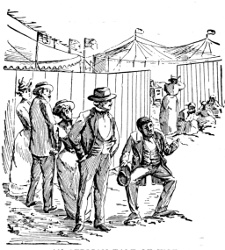
At noon on Sunday the circus arrived by boat from Nashville. Service was
in progress in one church, when an unearthly
sound startled the worshippers.
The wail of a lost soul could not be more
alarming. Simon Legree, scared out of
his boots by the mocking shriek of the
wind blowing through the bottle-neck
Cassy fixed in the garret knot-hole, had
numerous imitators. Again and again
the ozone was rent and cracked and shivered.
The congregation broke for the
door, the minister jerking out a sawed-off
benediction and retreating with the
rest. A half-mile down the river a boat
was rounding the bend. A steam-calliope,
distracting, discordant and unlovely,
belched forth a torrent of paralyzing
notes. The whole population was on the
bank by the time the boat stopped. The
crowd watched the landing of the animals and belongings of the circus with unflinching
eagerness. Few of the surging mass had seen a theatre, a circus, or
a show of any sort except the Sunday-school Christmas performance. They
55were bound to take in every detail and that Sunday was badly splintered in the
peaceful, orderly settlement.
With the earliest streak of dawn the excitement was renewed. Groups of
adults and children, of all ages and sizes and complexions, were on hand to see
the tents put up. By eleven o’clock the town was packed. A merry-go-round,
the first Burksville ever saw, raked in a bushel of nickels. The college domestics
skipped, leaving the breakfast-dishes on the table and the dinner to shift for
itself. A party of friends went with me to enjoy the fun. Beside a gap in the
fence, to let wagons into the field, sat “Alf,” the image of despair. Four
weeping females—his wife, sister, mother-in-law and sister-in-law—crouched at
his feet. As our party drew near he beckoned to us and unfolded his tale of
woe. “Dem fool-wimmin,” he exclaimed bitterly, “hes done spended de free
dollars yer guv me on de flyin’-hosses! Dey woodn’t stay off nohow an’ now
dey caint see de ci’cus! Oh, Lawd! Oh, Lawd!” The purchase of tickets
poured oil on the troubled waters. The Niobes wiped their eyes on their jean-aprons
and “Richard was himself again.” How the antics of the clowns and
the tricks of the ponies pleased the motley assemblage! Buck Fanshaw’s funeral
did not arouse half the enthusiasm in Virginia City the first circus did in
Burksville.
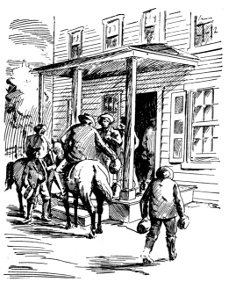
It was necessary for me to visit Williamsburg, the county-seat of Whitley,
to record a stack of leases. Somerset was then the nearest railway-point and the
trip of fifty miles on horseback required
a guide. The arrival of a Northerner
raised a regular commotion in the well-nigh
inaccessible settlement of four-hundred
population. The landlord of the
public-house slaughtered his fattest chickens
and set up a bed in the front parlor to
be sure of my comfort. The jailer’s fair
daughter, who was to be wedded that
evening, kindly sent me an invitation to
attend the nuptials. By nine o’clock at
night nearly every business-man and official
in the place had called to bid me
welcome. Before noon next day seventeen
farmers, whose lands had been
leased, rode into town to greet me and
learn when drilling would likely begin.
Each insisted upon my staying with him
a week, “or es much longer es yo kin,”
and fourteen of them brought gallon-jugs
of apple-jack, their own straight goods, for my acceptance! Such a reception
a king might envy, because it was entirely unselfish, hearty and spontaneous.
Williamsburg has got out of swaddling-clothes, the railway putting it in touch
with the balance of creation.
Thirteen miles of land, in an unbroken line, on a meandering stream, had
been tied-up, with the exception of a single farm. The owner was obdurate and
refused to lease on any terms. Often lands not regarded favorably as oil territory
were taken to secure the right-of-way for pipe-lines, as the leases conveyed
this privilege. Driving past the stubborn farmer’s homestead one afternoon, he
was chopping wood in the yard and strode to the gate to talk. His bright-eyed
56daughter of four summers endeavored to clamber into the buggy. Handing the
cute fairy in coarse jeans a new silver-dollar, fresh from the Philadelphia mint,
the father caught sight of the shining coin.
“Hev yo mo’ ov ’em ’ar dollars about yo?” he asked.
“Plenty more.”
“Make out leases fur my three farms an’ me an’ the old woman’ll sign
’em! I want three ov ’em kines, for they be th’ slickest Demmycratic money
my eyes hes sot onto sence I fit with John Morgan!”
The documents were filled up, signed, sealed and delivered in fifteen minutes.
The chain of leased lands along Fanny Creek was intact, with the “missing
link” missing at last.
The simplicity of these dwellers in the wilderness was equaled only by their
apathy to the world beyond and around them. Parents loved their children and
husbands loved their wives in a quiet, unobtrusive fashion. “She wuz a hard-workin’
woman,” moaned a middle-aged widower in Fentress county, telling
me of his deceased spouse, “an’ she allers wore a frock five year, an’ she bed
’leven chil’ren, an’ she died right in corn-shuckin’!” He was not stony-hearted,
but twenty-five years of married companionship meant to him just so many days’
work, so many cheap frocks, child-bearing, corn-cake and bacon always ready
on time. Among these people woman was a drudge, who knew nothing of
the higher relations of life. Children were huddled into the hills to track game,
to follow the plough or to drop corn over many a weary acre. Reading and
writing were unknown accomplishments. Jackson, “the great tradition of the
uninformed American mind,” and Lincoln, whose name the tumult of a mighty
struggle had rendered familiar, were the only Presidents they had ever heard of.
“Where ignorance is bliss ’tis folly to be wise” may be a sound poetical sentiment,
but it was decidedly overdone in South-eastern Kentucky and North-eastern
Tennessee so recently as the year of the Philadelphia Centennial.
Opposite the Hovey and Carter wells in Clinton county lives a portly farmer
who “is a good man and weighs two-hundred-and-fifty pounds.” He is
known far and wide as “Uncle John” and his wife, a pleasant-faced little matron,
is affectionately called “Aunt Rachel.” A log-church a mile from “Uncle
John’s” is situated on a pretty hill. There the young folks are married, the
children are baptized and the dead are buried. The “June meetin’,” when
services are held for a week, is the grand incident of the year to the people for
a score of miles. In December of 1893 Dr. Phillips, of Monticello, drove me to
the wells. We stopped at “Uncle John’s.” As we neared the house a dog
barked and the hospitable farmer came out to meet us. Behind him walked a
man who greeted the Doctor cordially. He glanced at me, recognition was
mutual and we clasped hands warmly. He was Alfred Murray, formerly connected
with the Pennsylvania-Consolidated Land-and-Petroleum-Company in
Butler and at Bradford. Fourteen years had glided away since we met and
there were many questions to ask and answer. He had been in the neighborhood
a twelvemonth, keeping tab on oil movements and indications, hoping,
longing and praying for the speedy advent of the petroleum-millenium. We
pumped the Hovey Well one hour, rambled over the hills and talked until midnight
about persons and things in Pennsylvania. Meeting in so dreary a place,
under such circumstances, was as thorough a surprise as Stanley’s discovery of
Livingstone in Darkest Africa. During our conversation regarding the roughest
portion of the county, bleak, sterile and altogether repellant, selected by a hermit
as his lonely retreat, my friend remarked: “I have heard that the poor devil
57was troubled with remorse and, as a sort of penance, vowed to live as near
Sheol as possible until he died!”
The stage that bore me from Monticello to Point Burnside on my homeward
journey stopped half-way to take up a countryman and an aged woman.
Room was found inside for the latter, a stout, motherly old creature, into whose
beaming face it did jaded mortals good to look. She said “howdy” to the
three passengers, a local trader, a farmer’s young wife and myself, sat down
solidly and fixed her gaze upon me intently. It was evident the dear soul was
fairly bursting with impatience to find out about the stranger. Not a word was
spoken until she could restrain her inquisitive impulse no longer.
“Yo don’t liv’ eroun’ these air parts?” she interrogated.
“No, madam, my home is in Pennsylvania.”
“Land sakes! Be yo one ov ’em air ile-fellers?”
“Yes.”
“Wal, I be orful glad ter see yo!” and she stretched out her hand and
shook mine vigorously. “Hope yo’re right peart, but yo’ be a long way from
home! Did yo see ’em wells over thar by Aunt Rachel’s?”
“Oh, yes, I saw the wells and stayed at Aunt Rachel’s all night.”
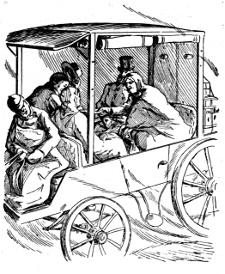
“I BE ORFUL GLAD TER SEE YO!”
“I ain’t seed Aunt Rachel for nigh a year an’ a half. My old man bed
roomatiz and we couldn’t get ter meetin’ this summer. He sez thar’s ile onto
our farm. I be seventy-four an’ him on
the ruf be my son’n-law. Yo see he
married, Jess did, my darter Sally an’
tha moved ter a place tha call Kansas.
Tha’s bin thar seventeen year an’ hes six
chil’ren. Jess he cum back las’ week
ter see his fokeses an’ he be takin’ me
ter Kansas ter see Sally an’ the babies.
I never seed ’em things Jess calls cyars,
an’ he sez tha ain’t drord by no hoss
nuther! I wuz bo’n eight mile down
hyar an’ never wuz from home more’n
eighteen mile, when we goes ter June
meetin’. But I be ter Monticeller six
times.”
Truly this was a natural specimen,
bubbling over with kindness, unspoiled
by fashion and envy and frivolity and
superficial pretense. Here was the
counterpart of Cowper’s humble heroine,
who “knew, and knew no more, her Bible true.” The wheezy stage was
brighter for her presence. She told of her family, her cows, her pigs, her spinning
and her neighbors. She lived four miles from the Cumberland River, yet
never went to see a steamboat! When we alighted at the Burnside station and
the train dashed up she looked sorely perplexed. “Jess” helped her up the
steps and the “cyars” started. The whistle screeched, daylight vanished and
the train had entered the tunnel below the depot. A fearful scream pierced the
ears of the passengers. The good woman seventy-four years old, who “never
seed ’em things” before, was terribly frightened. We tried to reassure her, but
she begged to be let off. How “Jess” managed to get her to Kansas safely
may be imagined. But what a story she would have to tell about the “cyars”
58and “Sally an’ the babies” when she returned to her quiet home after such a
trip! Bless her old heart!
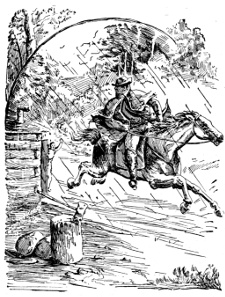
“EF YO KNOW’D COUSIN JIM.”
Although the broad hills and sweeping streams which grouped many sweet
panoramas might be dull and meaningless to the average Kentuckian of
former days, through some brains glowing visions flitted. Two miles south of
Columbia, Adair county, on the road to Burksville, a heap of stones and pieces
of rotting timber may still be seen. Fifty-five
years ago the man who owned the farm
constructed a huge wheel, loaded with
rocks of different weights on its strong
arms. Neighbors jeered and ridiculed,
just as scoffers laughed at Noah’s ark and
thought it wouldn’t be much of a shower
anyway. The hour to start the wheel arrived
and its builder stood by. A rock on
an arm of the structure slipped off and
struck him a fatal blow, felling him lifeless
to the earth! He was a victim of the
craze to solve the problem of Perpetual
Motion. Who can tell what dreams and
plans and fancies and struggles beset this
obscure genius, cut off at the moment he
anticipated a triumph? The wheel was
permitted to crumble and decay, no human
hand touching it more. The heap
of stones is a pathetic memento of a sad
tragedy. Not far from the spot Mark
Twain was born and John Fitch whittled out the rough model of the first
steamboat.
Riding in Scott county, Tennessee, at full gallop on a rainy afternoon, a
cadaverous man emerged from a miserable hut and hailed me. The dialogue
was not prolonged unduly.
“Gen’ral,” he queried, “air yo th’ oilman frum Pennsylvany?”
“Yes, what can I do for you?”
“I jes’ wanted ter ax ef yo know’d my cousin Jim!”
“Who is your cousin Jim?”
“Law, Jim Sickles!Sickles! I tho’t ez how ev’rybody know’d Jim! He went up
No’th arter th’ wah an’ ain’t cum back yit. Ef yo see ’im tell ’im yo seed me!”
A promise to look out for “Jim” satisfied the verdant backwoodsman, who
probably had never been ten miles from his shanty and deemed “up No’th” a
place about the size of a Tennessee hunting-ground!
The South-Penn and the Forest Oil-Companies, branches of the Standard,
have drilled considerably in Kentucky and Tennessee, sometimes finding oil in
regular strata and occasionally encountering irregular formations. More operating
is required to determine precisely what place to assign these pebbles on
the beach as sources of oil-production.
Fair women, pure Bourbon and men extra plucky,
No wonder blue-grass folks esteem themselves lucky—
But wait till the oil-boom gets down to Kentucky!
Let Fortune assume forms and fancies Protean,
No matter for that, there will rise a loud pæan
So long as oil gladdens the proud Tennesseean!
59
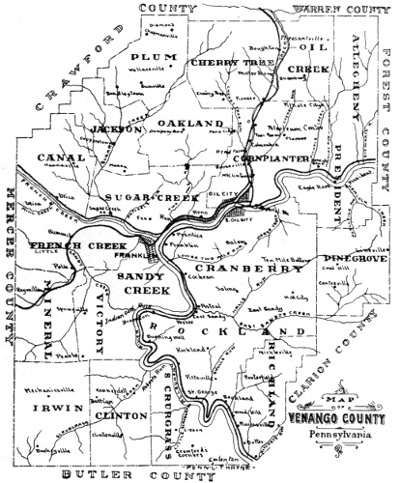
Map
of
VENANGO COUNTY
Pennsylvania
60
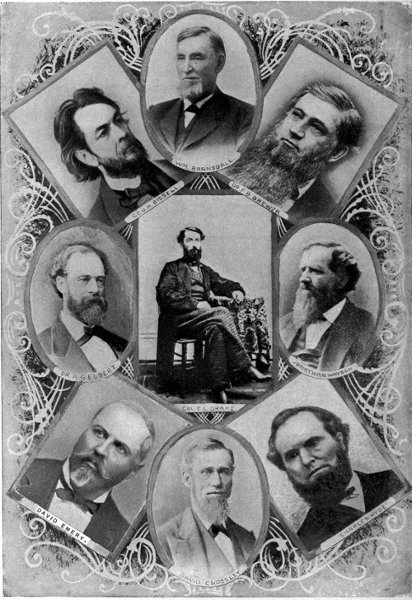
EARLY OPERATORS ON OIL CREEK.
WM. BARNSDALL.
GEO. H. BISSELL. DR. F. B. BREWER.
DR. A. G. EGBERT. JONATHAN WATSON. COL. E. L. DRAKE.
DAVID EMERY. CHARLES HYDE.
DAVID CROSSLEY.
V. A HOLE IN THE GROUND. — IN A NUTSHELL.
61
The First Well Drilled for Petroleum—The Men Who Started Oil on Its
Triumphant March—Colonel Drake’s Operations—Setting History
Right—How Titusville was Boomed and a Giant Industry Originated—Modest
Beginning of the Greatest Enterprise on Earth—Side Droppings
that throw Light on an Important Subject.
“Was it not time that Cromwell should come?”—Edwin Paxton Hood.
“He who would get at the kernel must crack the shell.”—Plautus.
“We should at least do something to show that we have lived.”—Cicero.
“I have tapped the mine.”—E. L. Drake.
“Petroleum has come to be King.”—W. D. Gunning.
“It is our mission to illuminate all creation.”—Robert Bonner.
“Tell the truth or trump, but take the trick.”—Mark Twain.
“How far that little candle throws his beams!”—Shakespeare.
“Behold how great a matter a little fire kindleth.”—St. James iii:5.
“Judge of the size of the statue of Hercules from that of the foot.”—Latin Proverb.
Nature certainly spared no effort to bring
petroleum into general notice ages before
James Young manufactured paraffine-oil in
Scotland or Samuel M. Kier fired-up his
miniature refinery at Pittsburg. North and
south, east and west the presence of the
greasy staple was manifested positively and
extensively. The hump of a dromedary,
the kick of a mule or the ruby blossom on
a toper’s nose could not be more apparent. It
bubbled in fountains, floated on rivulets, escaped
from crevices, collected in pools, blazed
on the plains, gurgled down the mountains,
clogged the ozone with vapor, smelled and
sputtered, trickled and seeped for thousands of
years in vain attempts to divert attention towards the source of this prodigal display.
Mankind accepted it as a liniment and lubricant, gulped it down, rubbed
it in, smeared it on and never thought of seeking whence it came or how much
of it might be procured. Even after salt-wells had produced the stuff none
stopped to reflect that the golden grease must be imprisoned far beneath
the earth’s surface, only awaiting release to bless the dullards callous to the
strongest hints respecting its headquarters. The dunce who heard Sydney
Smith’s side-splitting story and sat as solemn as the sphinx, because he couldn’t
see any point until the next day and then got it heels over head, was less obtuse.
Puck was right in his little pleasantry: “What fools these mortals be!”
Dr. Abraham Gesner obtained oil from coal in 1846 and in 1854 patented an
illuminator styled “Kerosene,” which the North American Kerosene Gaslight
Company of New York manufactured at its works on Long Island. The excellence
62of the new light—the smoke and odor were eliminated gradually—caused
a brisk demand that froze the marrow of the animal-oil industry. Capitalists
invested largely in Virginia, Kentucky and Missouri coal-lands, saving the expense
of transporting the “raw material” by erecting oil-works at the mines.
Exactly in the ratio that mining coal was cheaper than catching whales mineral-oil
had the advantage in competing for a market. Realizing this, men owning
fish-oil works preserved them from extinction by manufacturing the mineral-product
Young and Gesner had introduced. Thus Samuel Downer’s half-million-dollar
works near Boston and colossal plant at Portland were utilized.
Downer had expanded ideas and remarked with characteristic emphasis, in
reply to a friend who criticised him for the risk he ran in putting up an enormous
refinery at Corry, as the oil-production might exhaust: “The Almighty never
does a picayune business!” Fifty or sixty of these works were turning out oil
from bituminous shales in 1859, when the influx of petroleum compelled their
conversion into refineries to avert overwhelming loss. Maine had one, Massachusetts
five, New York five, Pennsylvania eight, Ohio twenty-five, Kentucky
six, Virginia eight, Missouri one and one was starting in McKean county, near
Kinzua village. The Carbon Oil-Company, 184 Water street, New York City,
was the chief dealer in the illuminant. The entire petroleum-traffic in 1858 was
barely eleven-hundred barrels, most of it obtained from Tarentum. A shipment
of twelve barrels to New York in November, 1857, may be considered the beginning
of the history of petroleum as an illuminator. How the baby has grown!
The price of “kerosene” or “carbon-oil,” always high, advanced to two
dollars a gallon! Nowadays people grudge ten cents a gallon for oil vastly
clearer, purer, better and safer! One good result of the high prices was an
exhaustive scrutiny by the foremost scientific authorities into all the varieties of
coal and bitumen, out of which comparisons with petroleum developed incidentally.
Belief in its identity with coal-oil prompted the investigations which finally
determined the economic value of petroleum. Professor B. Silliman, Jun., Professor
of Chemistry in Yale College, in the spring of 1855 concluded a thorough
analysis of petroleum from a “spring” on Oil Creek, nearly two miles south of
Titusville, where traces of pits cribbed with rough timber still remained and the
sticky fluid had been skimmed for two generations. In the course of his report
Professor Silliman observed:
“It is understood and represented that this product exists in great abundance on the property;
that it can be gathered wherever a well is sunk, over a great number of acres, and that it is unfailing
in its yield from year to year. The question naturally arises, Of what value is it in the arts and for
what uses can it be employed? * * * The Crude-Oil was tried as a means of illumination. For
this purpose a weighed quantity was decomposed by passing it through a wrought-iron retort
filled with carbon and ignited to redness. It produced nearly pure carburetted hydrogen gas, the
most highly illuminating of all carbon gases. In fact, the oil may be regarded as chemically
identical with illuminating gas in a liquid form. It burned with an intense flame. * * * The
light from the rectified Naphtha is pure and white, without odor, and the rate of consumption less
than half that of Camphene or Rosin-Oil. * * * Compared with Gas, the Rock-Oil gave more
light than any burner, except the costly Argand, consuming two feet of gas per hour. These
photometric experiments have given the Oil a much higher value as an illuminator than I had
dared to hope. * * * As this oil does not gum or become acid or rancid by exposure, it possesses
in that, as well as in its wonderful resistance to extreme cold, important qualities for a
lubricator. * * * It is worthy of note that my experiments prove that nearly the whole of the raw
product may be manufactured without waste, solely by one of the most simple of all chemical
processes.”
Notwithstanding these researches, which he spent five months in prosecuting,
the idea of artesian-boring for petroleum—naturally suggested by the oil in the
salines of the Muskingum, Kanawha, Cumberland and Allegheny—never occurred
63to the learned Professor of Chemistry in Yale! If he had been the Yale
football, with Hickok swatting it five-hundred pounds to the square inch, the
idea might have been pummeled into the man of crucibles and pigments! Once
more was nature frustrated in the endeavor to “bring out” a favorite child.
The faithful dog that attempted to drag a fat man by the seat of his pants to the
rescue of a drowning master, or Diogenes in his protracted quest for an honest
Athenian, had an easier task. The “spring” which furnished the material for
Silliman’s experiments was on the Willard farm, part of the lands of Brewer,
Watson & Co.—Ebenezer Brewer and James Rynd, Pittsburg, Jonathan Watson,
Rexford Pierce and Elijah Newberry, Titusville—extensive lumbermen on Oil
Creek. They ran a sawmill on an island near the east bank of the creek, at a
bend in the stream, a few rods south of the boundary-line between Venango and
Crawford counties. Close to the mill was the rusty-looking “spring” from
which the oil to burn in rude lamps, smoky and chimneyless, and to lubricate
the circular saw was derived. The following document explains the first action
retarding the care and development of the “spring.”
“Agreed this fourth day of July, A.D. 1853, with J. D. Angier, of Cherrytree Township, in
the County of Venango, Pa., that he shall repair up and keep in order the old oil-spring on land
in said Cherrytree township, or dig and make new springs, and the expenses to be deducted out
of the proceeds of the oil and the balance, if any, to be equally divided, the one-half to J. D.
Angier and the other half to Brewer, Watson & Co., for the full term of five years from this date,
if profitable.”
All parties signed this agreement, pursuant to which Angier, for many years
a resident of Titusville, dug trenches centering in a basin from which a pump
connected with the sawmill raised the water into shallow troughs that sloped to
the ground. Small skimmers, nicely adjusted to skim the oil, collected three
or four gallons a day, but the experiment did not pay and it was dropped. In
the summer of 1854 Dr. F. B. Brewer, son of the senior member of the firm
owning the mill and “spring,” visited relatives at Hanover, New Hampshire,
carrying with him a bottle of the oil as a gift to Professor Crosby, of Dartmouth
College. Shortly after George H. Bissell, a graduate of the college, practicing
law in New York with Jonathan G. Eveleth, while on a visit to Hanover called
to see Professor Crosby, who showed him the bottle of petroleum. Crosby’s
son induced Bissell to pay the expenses of a trip to inspect the “spring” and to
agree, in case of a satisfactory report, to organize a company with a capital of a
quarter-million dollars to purchase lands and erect such machinery as might be
required to collect all the oil in the vicinity.
“Great minds never limit their designs in their plans.”
Complications and misunderstandings retarded matters. Everything was
adjusted at last. Brewer, Watson & Co. conveyed in fee-simple to George H.
Bissell and Jonathan G. Eveleth one-hundred-and-five acres of land in Cherrytree
township, embracing the island at the junction of Pine Creek and Oil Creek,
on which the mill of the firm and the Angier ditches were situated. The deed
was formally executed on January first, 1855. Eveleth and Bissell gave their
own notes for the purchase-money—five-thousand dollars—less five-hundred
dollars paid in cash. The consideration mentioned in the deed was twenty-five-thousand
dollars, five times the actual sum, in order not to appear such a small
fraction of the total capital—two-hundred-and-fifty-thousand dollars—as to injure
the sale of stock. On December thirtieth, 1854, articles of incorporation of
The Pennsylvania Rock-Oil-Company were filed in New York and Albany. The
stock did not sell, owing to the prostration of the money-market and the fact
that the company had been organized in New York, by the laws of which state
64each shareholder in a joint-stock company was liable for its debts to the amount
of the par value of the stock he held. New-Haven parties agreed to subscribe
for large blocks of stock if the company were reorganized under the laws of Connecticut.
A new company was formed with a nominal capital of three-hundred-thousand
dollars, to take the name and property of the one to be dissolved and
levy an assessment to develop the island “by trenching” on a wholesale plan.
Eveleth & Bissell retained a controlling interest and Ashael Pierpont, James
M. Townsend and William A. Ives were three of the New-Haven stockholders.
Bissell visited Titusville to complete the transfer. On January sixteenth he and
his partner had given a deed, which was not recorded, to the trustees of the
original company. At Titusville he learned that lands of corporations organized
outside of Pennsylvania would be forfeited to the state. The new company
was notified of this law and to avoid trouble, on September twentieth, 1855,
Eveleth & Bissell executed a deed to Pierpont and Ives, who gave a bond for
the value of the property and leased it for ninety-nine years to a company
formed two days before under certain articles of association. It really seemed
that something definite would be done. The first oil-company in the history of
nations had been organized. Pierpont, an eminent mechanic, was sent to
examine the “spring,” with a view to improve Angier’s machinery. Silliman’s
reports had a stimulating effect and the Professor was president of the company.
But the monkey-and-parrot time was renewed. Dissensions broke out, Angier
was fired and the enterprise looked to be “as dead as Julius Cæsar,” ready to
bury “a hundred fathoms deep.”
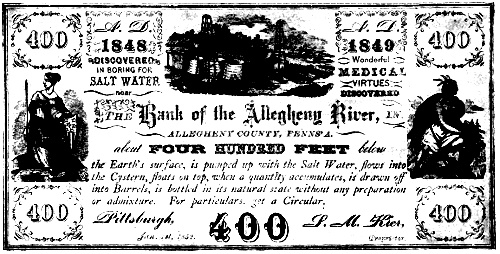
FAC-SIMILE OF LABEL ON KIER’S PETROLEUM.
One scorching day in the summer of 1856 Mr. Bissell, standing beneath the
awning of a Broadway drug-store for a moment’s shade, noticed a bottle of Kier’s
Petroleum and a queer show-bill, or label, in the window. It struck him as
rather odd that a four-hundred-dollar bill—such it appeared—should be displayed
in that manner. A second glance proved that it was an advertisement of a substance
that concerned him deeply. He stepped inside and requested permission
to scan the label. The druggist told him to “take it along.” For an instant he
gazed at the derricks and the figures—four-hundred feet! A thought flashed
upon him—bore artesian wells for oil! Artesian wells! Artesian wells! rang
65in his ears like the Trinity chimes down the street, the bells of London telling
“Dick” Whittington to return or the pibroch of the Highlanders at Lucknow.Lucknow.
The idea that meant so much was born at last. Patient nature must have felt
in the mood to turn somersaults, blow a tin-horn and dance the fandango. It
was a simple thought—merely to bore a hole in the rock—with no frills and furbelows
and fustian, but pregnant with astounding consequences. It has added
untold millions to the wealth of the country and conferred incalculable benefits
upon humanity. To-day refined petroleum lights more dwellings in America,
Europe, Asia, Africa and Australia than all other agencies combined.
To put the idea to the test was the next wrinkle. Mr. Eveleth agreed with
Bissell’s theory. Their first impulse was to bore a well themselves. Reflection
cooled their ardor, as this course would involve the loss of their practice for an
uncertainty. Mr. Havens, a Wall-street broker, whom they consulted, offered
them five-hundred dollars for a lease from the Pennsylvania Rock-Oil Company.
A contract with Havens, by the terms of which he was to pay “twelve cents a
gallon for all oil raised for fifteen years,” financial reverses prevented his carrying
out. The idea of artesian boring was too fascinating to lie dormant. Mr.
Townsend, president of the company, Silliman having resigned, employed
Edwin L. Drake, to whom in the darker days of its existence he had sold two-hundred-dollars’
worth of his own stock, to visit the property and report his
impressions. Mrs. Brewer and Mrs. Rynd had not joined in the power-of-attorney
by which the agent conveyed the Brewer-Watson lands to the company,
hence they would be entitled to dower in case the husbands died. Drake was
instructed to return by way of Pittsburg and procure their signatures. Illness
had forced him to quit work—he was conductor on the New-York & New-Haven
Railroad—for some months and the opportunity for change of air and scene was
embraced gladly. Shrewd, far-seeing Townsend, who still lives in New Haven
and has been credited with “the discovery” of petroleum, addressed legal documents
and letters to “Colonel” Drake, no doubt supposing this would enhance
the importance of his representative in the eyes of the Oil-Creek backwoodsmen.
The military title stuck to the diffident civilian whose name is interwoven with
the great events of the nineteenth century.
Stopping on his way from New Haven to
view the salt-wells at Syracuse, about the
middle of December, 1857, Colonel Drake
was trundled into Titusville—named from
Jonathan Titus—on the mail-wagon from
Erie. The villagers received him cordially.
He lodged at the American Hotel, the home-like
inn “Billy” Robinson, the first boniface,
and Major Mills, king of landlords, rendered
famous by their bountiful hospitality. The
old caravansary was torn down in 1880 to
furnish a site for the Oil Exchange. Drake
stayed a few days to transact legal business,
to examine the lands and the indications of
oil and to become familiar with the general
details. Proceeding to Pittsburg, he visited
the salt-wells at Tarentum, the picture of which on Kier’s label suggested boring
for oil, and hastened back to Connecticut to conclude a scheme of operating the
property. On December thirtieth the three New-Haven directors executed a
66lease to Edwin E. Bowditch and Edwin L. Drake, who were to pay the Pennsylvania
Rock-Oil-Company “five-and-a-half cents a gallon for the oil raised for
fifteen years.” Eight days later, at the annual meeting of the directors, the
lease was ratified, George H. Bissell and Jonathan Watson, representing two-thirds
of the stock, protesting. Thereupon the consideration was placed at
“one-eighth of all oil, salt or paint produced.” The lease was sent to Franklin
and recorded in Deed Book P, page 357. A supplemental lease, extending the
time to forty-five years on the conditions of the grant to Havens, was recorded,
and on March twenty-third, 1858, the Seneca Oil-Company was organized, with
Colonel Drake as president and owner of one-fortieth of the “stock.” No stock
was issued, for the company was in reality a partnership working under the laws
governing joint-stock associations.
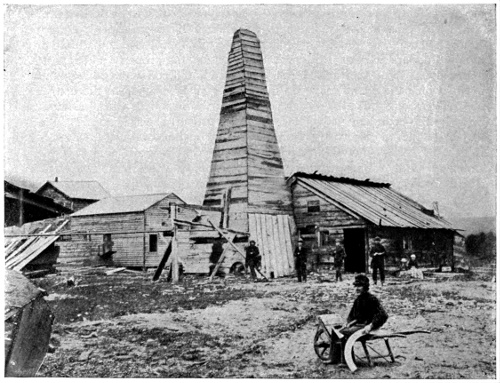
THE FIRST DRAKE WELL, ITS DRILLERS AND ITS COMPLETE RIG.
Provided with a fund of one-thousand dollars as a starter, Drake was engaged
at one-thousand dollars a year to begin operations. Early in May, 1858, he and
his family arrived in Titusville and were quartered at the American Hotel, which
boarded the Colonel, Mrs. Drake, two children and a horse for six-dollars-and-a-half
per week! Money was scarce, provisions were cheap and the quiet village
put on no extravagant airs. Not a pick or shovel was to be had in any store
short of Meadville, whither Drake was obliged to send for these useful tools!
Behold, then, “the man who was to revolutionize the light of the world,” his
mind full of a grand purpose and his pockets full of cash, snugly ensconced in
the comfortable hostelry. Surely the curtain would soon rise and the drama of
“A Petroleum-Hunt” proceed without further vexatious delays.
Drake’s first step was to repair and start up Angier’s system of trenches,
67troughs and skimmers. By the end of June he had dug a shallow well on the
island and was saving ten gallons of oil a day. He found it difficult to get a practical
“borer” to sink an artesian-well. In August he shipped two barrels of oil
to New Haven and bargained for a steam-engine to furnish power for drilling.
The engine was not furnished as agreed, the “borer” Dr. Brewer hired at Pittsburg
had another contract and operations were suspended for the winter. In
February, 1859, Drake went to Tarentum and engaged a driller to come in
March. The driller failed to materialize and Drake drove to Tarentum in a
sleigh to lasso another. F. N. Humes, who was cleaning out salt-wells for
Peterson, informed him that the tools were made by William A. Smith, whom
he might be able to secure for the job. Smith accepted the offer to manufacture
tools and bore the well. Kim Hibbard, favorably known in Franklin, was dispatched
with his team, when the tools were completed, for Smith, his two sons
and the outfit. On May twentieth the men and tools were at the spot selected
for the hole. A “pump-house” had been framed and a derrick built. A room
for “boarding the hands” almost joined the rig and the sawmill. The accompanying
illustration shows the well as it was at first, with the original derrick
enclosed to the top, the “grasshopper walking-beam,” the “boarding-house”
and part of the mill-shed. “Uncle Billy” Smith is seated on a wheelbarrow in
the foreground. His sons, James and William, are standing on either side of
the “pump-house” entrance. Back of James his two young sisters are sitting
on a board. Elbridge Lock stands to the right of the Smiths. “Uncle Billy’s”
brother is leaning on a plank at the corner of the derrick and his wife may be
discerned in the doorway of the “boarding-house.” This interesting and historic
picture has never been printed until now. The one with which the world
is acquainted depicts the second rig, with Peter Wilson, a Titusville druggist,
facing Drake. In like manner, the portrait of Colonel Drake in this volume is
from the first photograph for which he ever sat. The well and the portrait are
the work of John A. Mather, the veteran artist and Drake’s bosom-friend, who
ought to receive a pension and no end of gratitude for preserving “counterfeit
presentments” of a host of petroleum-scenes and personages that have passed
from mortal sight.
Delays and tribulations had not retreated from the field. In artesian-boring
it is necessary to drill in rock. Mrs. Glasse’s old-time cook-book gained celebrity
by starting a recipe for rabbit-pie: “First catch your hare.” The principle
applies to artesian-drilling: “First catch your rock.” The ordinary rule was
to dig a pit or well-hole to the rock and crib it with timber. The Smiths dug a
few feet, but the hole filled with water and caved-in persistently. It was a fight-to-a-finish
between three men and what Stow of Girard—he was Barnum’s hot-stuff
advance agent—wittily termed “the cussedness of inanimate things.” The
latter won and a council of war was summoned, at which Drake recommended
driving an iron-tube through the clay and quicksand to the rock. This was
effectual. Colonel Drake should have patented the process, which was his
exclusive device and decidedly valuable. The pipe was driven thirty-six feet to
hard-pan and the drill started on August fourteenth. The workmen averaged
three feet a day, resting at night and on Sundays. Indications of oil were met
as the tools pierced the rock. Everybody figured that the well would be down
to the Tarentum level in time to celebrate Christmas. The company, tired of
repeated postponements, did not deluge Drake with money. Losing speculations
and sickness had drained his own meagre savings. R. D. Fletcher, the
well-known Titusville merchant, and Peter Wilson endorsed his paper for six-hundred
68dollars to tide over the crisis. The tools pursued the downward road
with the eagerness of a sinner headed for perdition, while expectation stood on
tiptoe to watch the progress of events.
On Saturday afternoon, August twenty-eighth, 1859, the well had reached
the depth of sixty-nine feet, in a coarse sand. Smith and his sons concluded to
“lay off” until Monday morning. As they were about to quit the drill dropped
six inches into a crevice such as was common in salt-wells. Nothing was thought
of this circumstance, the tools were drawn out and all hands adjourned to Titusville.
Mr. Smith went to the well on Sunday afternoon to see if it had moved
away or been purloined during the night. Peering into the hole he saw fluid
within eight or ten feet. A piece of tin-spouting was lying outside. He plugged
one end of the spout, let it down by a string and pulled it up. Muddy water?
No! It was filled with PETROLEUM!
“The fisherman, unassisted by destiny, could not catch fish in the Tigris.”
That was the proudest hour in “Uncle Billy” Smith’s forty-seven years’
pilgrimage. Not daring to leave the spot, he ran the spout again and again,
each time bringing it to the surface full of oil. A straggler out for a stroll
approached, heard the story, sniffed the oil and bore the tidings to the village.
Darkness was setting in, but the Smith boys sprinted to the scene. When
Colonel Drake came down, bright and early next morning, they and their father
were guarding three barrels of the precious liquid. The pumping apparatus was
adjusted and by noon the well commenced producing at the rate of twenty
barrels a day! The problem of the ages was solved, the agony ended and
petroleum fairly launched upon its astonishing career.
The news flew like a Dakota cyclone. Villagers and country-folk flocked
to the wonderful well. Smith wrote to Peterson, his former employer: “Come
quick, there’s oceans of oil!” Jonathan Watson jumped on a horse and galloped
down the creek to lease the McClintock farm, where Nathanael Cary dipped oil
and a timbered crib had been constructed. Henry Potter, still a citizen of Titusville,
tied up the lands for miles along the stream, hoping to interest New York
capital. William Barnsdall secured the farm north of the Willard. George H.
Bissell, who had arranged to be posted by telegraph, bought all the Pennsylvania
Rock-Oil stock he could find and in four days was at the well. He leased farm
after farm on Oil Creek and the Allegheny River, regardless of surface-indications
or the admonition of meddling wiseacres.
The rush for property resembled the wild scramble of the children when the
Pied Piper of Hamelin blew his fatal reed. Titusville was in a whirlpool of
excitement. Buildings arose as if by magic, the hamlet became a borough and
the borough a city of fifteen-thousand inhabitants. Maxwell Titus sold lots at
two-hundred dollars, people acquired homes that doubled in value and speculation
held undisputed sway. Jonathan Titus, from whom it was named, lived to
witness the farm he cleared transformed into “The Queen City,” noted for its
tasteful residences, excellent schools, manufactories, refineries and active population.
One of his neighbors in the bush was Samuel Kerr, whose son Michael
went to Congress and served as Speaker of the House. Many enterprising men
settled in Titusville for the sake of their families. They paved the streets,
planted shade-trees, fostered local industries, promoted culture and believed in
public improvements. When Christine Nilsson enraptured sixteen-hundred
well-dressed, appreciative listeners in the Parshall Opera-House, the peerless
songstress could not refrain from saying that she never saw an audience so keen
to note the finer points of her performance and so discriminating in its applause.
69“Praise from Sir Hubert is praise indeed” and the compliment of the Swedish
Nightingale compressed a whole encyclopedia into a sentence. Titusville has
had its ups and downs, but there is no more desirable place in the State.
“Auld Ayr, wham ne’er a town surpasses.”
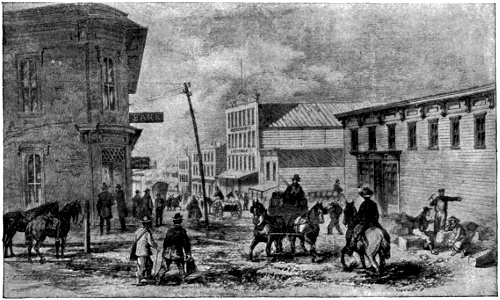
MAIN STREET, TITUSVILLE, IN 1861.
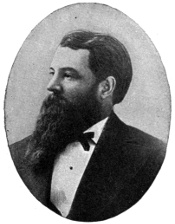
Matches are supposed to be made in Heaven and the inspiration that led to
the choice of such a site for the future city must have been derived from the
same source. Healthfulness and beauty of location attest the wisdom of the
selection. Folks don’t have to climb precipitous hills or risk life and limb
crossing railway-tracks whenever they wish to exercise their fast nags. Driving
is a favorite pastime in fine weather, the leading thoroughfares often reminding
strangers of Central Park on a coaching-day. Main, Walnut and Perry streets
are lined with trees and residences worthy of Philadelphia or Baltimore. Comfortable
homes are the crowning glory of a community and in this respect Titusville
does not require to take a back-seat. Near the lower end of Main street is
Ex-Mayor Caldwell’s elegant mansion, built by Jonathan Watson in the days of
his prosperity. Farther up are John Fertig’s, the late Marcus Brownson’s, Mrs.
David Emery’s and Mrs. A. N. Perrin’s. Franklin S. Tarbell, a former resident
of Rouseville, occupies an attractive house. Joseph Seep, who has not changed
an iota since the halcyon period of Parker and Foxburg, shows his faith in the
town by building a home that would adorn Cleveland’s aristocratic Euclid
Avenue. The host is the cordial Seep of yore, quick to make a point and not a
bit backward in helping a friend. David McKelvy, whom everybody knew in
the lower oil-fields, remodeled the Chase homestead, a symphony in red brick.
Close by is W. T. Scheide’s natty dwelling, finished in a style befitting the ex-superintendent
of the National-Transit Pipe-Lines. Byron D. Benson—he died
in 1889—nine times elected president of the Tidewater Pipe-Line-Company,
lived on the corner of Oak and Perry streets. Opposite is John L. McKinney’s
luxurious residence, a credit to the liberal owner and the city. J. C. McKinney’s
is “one of the finest.” James Parshall, W. B. Sterrett, O. D. Harrington,
70J. P. Thomas, W. W. Thompson, Charles Archbold and hundreds more erected
dwellings that belong to the palatial tribe. Dr. Roberts—he’s in the cemetery—had
a spacious place on Washington street, with the costliest stable in seventeen
counties. E. O. Emerson’s house and grounds are the admiration of
visitors. The grand fountain, velvet lawns, smooth walks, tropical plants,
profusion of flowers, mammoth conservatory and Marechal-Niel rose-bushes
bewilder the novice whose knowledge of floral affairs stops at button-hole
bouquets. George K. Anderson—dead, too—constructed this delightful retreat.
Col. J. J. Carter, whose record as a military officer, merchant, railroad-president
and oil-operator will stand inspection, has an
ideal home, purchased from John D. Archbold
and refitted throughout. It was built and furnished
extravagantly by Daniel Cady, once a
leading spirit in the business and social life of
Titusville. He was a man of imposing presence
and indomitable pluck, the confidant of Jay
Gould and “Jim” Fisk, dashing, speculative and
popular. For years whatever he touched seemed
to turn into gold and he computed his dollars by
hundreds of thousands. Days of adversity overtook
him, the splendid home was sacrificed and
he died poor. To men of the stamp of Watson,
Anderson, Abbott, Emery, Fertig and Cady
Titusville owes its real start in the direction of
greatness. Much of the froth and fume of former
days is missing, but the baser elements have been
eliminated, trade is on a solid basis and important manufactures have been established.
There are big refineries, Holly water-works, a race-track, ball-grounds,
top-notch hotels, live newspapers, inviting churches and a lovely cemetery in
which to plant good citizens when they pass in their checks. Pilgrims who
expect to find Titusville dead or dying will be as badly fooled as the lover whose
girl eloped with the other fellow.
Unluckily for himself, Colonel Drake took a narrow view of affairs. Complacently
assuming that he had “tapped the mine”—to quote his own phrase—and
that paying territory would not be found outside the company’s lease, he
pumped the well serenely, told funny stories and secured not one foot of ground!
Had he possessed a particle of the prophetic instinct, had he grasped the magnitude
of the issues at stake, had he appreciated the importance of petroleum as a
commercial product, had he been able to “see an inch beyond his nose,” he
would have gone forth that August morning and become “Master of the Oil
Country!” “The world was all before him where to choose,” he was literally
“monarch of all he surveyed,” but he didn’t move a peg! Money was not
needed, the promise of one-eighth or one-quarter royalty satisfying the easy-going
farmers, consequently he might have gathered in any quantity of land.
Friends urged him to “get into the game;” he rejected their counsel and never
realized his mistake until other wells sent prices skyward and it was everlastingly
too late for his short pole to knock the persimmons. Yet this is the man whom
numerous writers have proclaimed “the discoverer of petroleum!” Times
without number it has been said and written and printed that he was “the first
man to advise boring for oil,” that “his was the first mind to conceive the idea
of penetrating the rock in search of a larger deposit of oil than was dreamed of by
71any one,” that “he alone unlocked one of nature’s vast storehouses” and “had
visions of a revolution in light and lubrication.” Considering what Kier, Peterson,
Bissell and Watson had done years before Drake ever saw—perhaps ever
heard of—a drop of petroleum, the absurdity of these claims is “so plain that
he who runs may read.” Couple with this his incredible failure to secure lands
after the well was drilled—wholly inexcusable if he supposed oil-operations
would ever be important—and the man who thinks Colonel Drake was “the first
man with a clear conception of the future of petroleum” could swallow the fish
that swallowed Jonah!
Above all else history should be truthful and “hew to the line, let chips fall
where they may.” Mindful that “the agent is but the instrument of the principal,”
why should Colonel Drake wear the laurels in this instance? Paid a salary
to carry out Bissell’s plan of boring an artesian-well, he spent sixteen months getting
the hole down seventy feet. For a man who “had visions” and “a clear
conception” his movements were inexplicably slow. He encountered obstacles,
but salt-wells had been drilled hundreds of feet without either a steam-engine
or professional “borer.” The credit of suggesting the driving-pipe to overcome
the quicksand is justly his due. Quite as justly the credit of suggesting the
boring of the well belongs to George H. Bissell. The company hired Drake,
Drake hired Smith, Smith did the work. Back of the man who possessed the
skill to fashion the tools and sink the hole, back of the man who acted for the
company and disbursed its money, back of the company itself is the originator
of the idea these were the means employed to put into effect. Was George
Stephenson, or the foreman of the shop where the “Rocket” was built, the
inventor of the locomotive? Was Columbus, or the man whose name it bears,
the discoverer of America? In a conversation on the subject Mr. Bissell
remarked: “Let Colonel Drake enjoy the pleasure of giving the well his name;
history will set us all right.” So it will and this is a step in that direction. If
the long-talked-of monument to commemorate the advent of the petroleum-era
ever be erected, it should bear in boldest capitals the names of Samuel M. Kier
and George H. Bissell.
Edwin L. Drake, who is linked inseparably with the first oil-well in Pennsylvania,
was born on March eleventh, 1819, at Greenville, Greene county, New
York. His father, a farmer, moved to Vermont in 1825. At eighteen Edwin
left home to begin the struggle with the world. He was night-clerk of a boat
running between Buffalo and Detroit, worked one year on a farm in the Wolverine
state, clerked two years in a Michigan hotel, returned east and clerked in a
dry-goods store at New Haven, clerked and married in New York, removed to
Massachusetts, was express-agent on the Boston & Albany railroad and resigned
in 1849 to become conductor on the New-York & New-Haven. His younger
brother died in the west and his wife at New Haven, in 1854, leaving one child.
While boarding at a hotel in New Haven he met James M. Townsend, who persuaded
him to draw his savings of two-hundred dollars from the bank and buy
stock of the Pennsylvania Rock-Oil-Company, his first connection with the business
that was to make him famous. Early in 1857 he married Miss Laura Dow,
sickness in the summer compelled him to cease punching tickets and his memorable
visit to Titusville followed in December. In 1860 he was elected justice-of-the-peace,
an office worth twenty-five-hundred dollars that year, because of
the enormous number of property-transfers to prepare and acknowledge. Buying
oil on commission for Shefflin Brothers, New York, swelled his income to
five-thousand dollars for a year or two. He also bought twenty-five acres of
72land from Jonathan Watson, east of Martin street and through the center of
which Drake street now runs, for two-thousand dollars. Unable to meet the
mortgage given for part of the payment, he sold the block in 1863 to Dr. A. D.
Atkinson for twelve-thousand dollars. Forty times this sum would not have
bought it in 1867! With the profits of this transaction and his savings for five
years, in all about sixteen-thousand dollars, in the summer of 1863 Colonel
Drake left the oil-regions forever.
Entering into partnership with a Wall-street broker, he wrecked his small
fortune speculating in oil-stocks, his health broke down and he removed to Vermont.
Physicians ordered him to the seaside as the only remedy for his disease,
neuralgic affection of the spine, which threatened paralysis of the limbs and
caused intense suffering. Near Long Branch, in a cottage offered by a friend,
Mr. and Mrs. Drake drank the bitter cup to the dregs. Their funds were exhausted,
the patient needed constant attention and helpless children cried for
bread. The devoted wife and mother attempted to earn a pittance with her
needle, but could not keep the wolf of hunger from the door. Medicine for the
sick man was out of the question. All this time men in the region the Drake
well had opened to the world were piling up millions of dollars! One day in
1869, with eighty cents to pay his fare, Colonel Drake struggled into New York
to seek a place for his twelve-year-old boy. The errand was fruitless. The
distressed father was walking painfully on the street to the railway-station, to
board the train for home, when he met “Zeb” Martin of Titusville, afterwards
proprietor of the Hotel Brunswick. Mr. Martin noted his forlorn condition,
inquired as to his circumstances, learned the sad story of actual privation, procured
dinner, gave the poor fellow twenty dollars and cheered him with the
assurance that he would raise a fund for his relief. The promise was redeemed.
At a meeting in Titusville the case was stated and forty-two hundred dollars
were subscribed. The money was forwarded to Mrs. Drake, who husbanded it
carefully. The terrible recital aroused such a feeling that the Legislature, in
1873, granted Colonel Drake an annuity of fifteen-hundred dollars during his life
and his heroic wife’s. California had set a good example by giving Colonel
Sutter, the discoverer of gold in the mill-race, thirty-five-hundred dollars a year.
The late Thaddeus Stevens, “the Great Commoner,” hearing that Drake was
actually in want, prepared a bill, found among his papers after his death, intending
to present it before Congress for an appropriation of two-hundred-and-fifty-thousand
dollars for Colonel Drake. In 1870 the family removed to Bethlehem,
Pennsylvania. Years of suffering, borne with sublime resignation, closed on
the evening of November ninth, 1881, with the release of Edwin L. Drake from
this vale of tears. A faithful wife and four children survived the petroleum-pioneer.
They lived at Bethlehem until the spring of 1895 and then moved to
New England. Colonel Drake was a man of pronounced individuality, affable,
genial and kindly. He had few superiors as a story-teller, neither caroused nor
swore, and was of unblemished character. He wore a full beard, dressed well,
liked a good horse, looked every man straight in the face and his dark eyes
sparkled when he talked. Gladly he laid down the heavy burden of a checkered
life, with its afflictions and vicissitudes, for the peaceful rest of the grave.
“Since every man who lives is born to die * * *
Like pilgrims to the appointed place we tend;
The world’s an inn, and death the journey’s end.”
George H. Bissell, honorably identified with the petroleum-development
from its inception, was a New-Hampshire boy. Thrown upon his own resources
73at twelve, by the death of his father, he gained education and fortune unaided.
At school and college he supported himself by teaching and writing for magazines.
Graduating from Dartmouth College in 1845, he was professor of Greek
and Latin in Norwich University a short time, went to Washington and Cuba,
did editorial work for the New Orleans Delta and was chosen superintendent of
the public schools. Impaired health forced him to return north in 1853, when
his connection with petroleum began. From 1859 to 1863 he resided at Franklin,
Venango county, to be near his oil-interests. He operated largely on Oil Creek,
on the Allegheny river and at Franklin, where he erected a barrel-factory. He
removed to New York in 1863, established the Bissell Bank at Petroleum Centre
in 1866, developed oil-lands in Peru and was prominent in financial circles. His
wife died in 1867 and long since he followed her to the tomb. Mr. Bissell was
a brilliant, scholarly man, positive in his convictions and sure to make his influence
felt in any community. His son and daughter reside in New York.
“Pass some few years,
Thy flowering Spring, thy Summer’s ardent strength,
Thy sober Autumn fading into age,
And pale concluding Winter comes at last
And shuts the scene.”
William A. Smith, born in Butler county in 1812, at the age of twelve was
apprenticed at Freeport to learn blacksmithing. In 1827 he went to Pittsburg
and in 1842 opened a blacksmith-shop at Salina, below Tarentum. Samuel M.
Kier employed him to drill salt-wells and manufacture drilling-tools. After finishing
the Drake well, he drilled in various sections of the oil-regions, retiring
to his farm in Butler a few years prior to his death, on October twenty-third,
1890. “Uncle Billy,” as the boys affectionately called him, was no small factor
in giving to mankind the illuminator that enlightens every quarter of the globe.
The farm he owned in 1859 and on which he died proved good territory.
Dr. Francis B. Brewer was born in New Hampshire, studied medicine in
Philadelphia and practiced in Vermont. His father in 1840 purchased several
thousand acres of land on Oil Creek for lumbering, and the firm of Brewer,
Watson & Co. was promptly organized. Oil from the “spring” on the island at
the mouth of Pine Creek was sent to the young physician in 1848 and used in his
practice. He visited the locality in 1850 and was admitted to the firm. Upon
the completion of the Drake well he devoted his time to the extensive oil-operations
of the partnership for four years. In 1864 Brewer, Watson & Co. sold
the bulk of their oil-territory and the doctor, who had settled at Westfield,
Chautauqua county, N. Y., instituted the First National Bank, of which he was
chosen president. A man of solid worth and solid wealth, he has served as a
Member of Assembly and is deservedly respected for integrity and benevolence.
Jonathan Watson, whose connection with petroleum goes back to the beginning
of developments, arrived at Titusville in 1845 to manage the lumbering and
mercantile business of his firm. The hamlet contained ten families and three
stores. Deer and wild-turkeys abounded in the woods, John Robinson was
postmaster and Rev. George O. Hampson the only minister. Mr. Watson’s
views of petroleum were of the broadest and his transactions the boldest. He
hastened to secure lands when oil appeared in the Drake well. At eight o’clock
on that historic Monday morning he stood at Hamilton McClintock’s door,
resolved to buy or lease his three-hundred-acre farm. A lease was taken and
others along the stream followed during the day. Brewer, Watson & Co. operated
on a wholesale scale until 1864, after which Watson continued alone.
Riches poured upon him. He erected the finest residence in Titusville, lavished
74money on the grounds and stocked a fifty-thousand dollar conservatory with
choicest plants and flowers. A million dollars in gold he is credited with “putting
by for a rainy day.” He went miles ahead, bought huge blocks of land
and drilled scores of test-wells. In this way he barely missed opening the Bradford
field and the Bullion district years before these productive sections were
brought into line. His well on the Dalzell farm, Petroleum Centre, in 1869,
renewed interest in that quarter long after it was supposed to be sucked dry.
An Oil-City clairvoyant indicated the spot to sink the hole, promising a three-hundred-barrel
strike. Crude was six dollars a barrel and Watson readily
proffered the woman the first day’s production for her services. A check for
two-thousand dollars was her reward, as the well yielded three-hundred-and-thirty-three
barrels the first twenty-four hours. Mrs. Watson was an ardent
medium and her husband humored her by consulting the “spirits” occasionally.
She became a lecturer and removed to California long since. The tide of Watson’s
prosperity ebbed. Bad investments and dry-holes ate into his splendid
fortune. The gold-reserve was drawn upon and spent. The beautiful home
went to satisfy creditors. In old age the brave, hardy, indefatigable oil-pioneer,
who had led the way for others to acquire wealth, was stripped of his possessions.
Hope and courage remained. He operated at Warren and revived
some of the old wells around the Drake, which afforded him subsistence.
Advanced years and anxiety enfeebled the stalwart fame. His steps faltered,
and in 1893 protracted sickness closed the busy, eventful life of the man who,
more than any other, fostered and developed the petroleum-industry.
“I am as a weed
Flung from the rock, on ocean’s foam to sail
Where’er the surge may sweep, the tempest’s breath prevail.”
The Drake well declined almost imperceptibly, yielding twelve barrels a day
by the close of the year. It stood idle on Sundays and for a week in December.
Smith had a light near a tank of oil, the gas from which caught fire and burned
the entire rig. This was the first “oil-fire” in Pennsylvania, but it was destined
to have many successors. Possibly it brought back vividly to Colonel Drake
the remembrance of his childish dream, in which he and his brother had set a
heap of stubble ablaze and could not extinguish the flames. His mother interpreted
it: “My son, you have set the world on fire.”
The total output of the well in 1859 was under eighteen-hundred barrels.
One-third of the oil was sold at sixty-five cents a gallon for shipment to Pittsburg.
George M. Mowbray, the accomplished chemist, who came to Titusville
in 1860 and played a prominent part in early refining, disposed of a thousand
barrels in New York. The well produced moderately for two or three years
from the first sand, until shut down by low prices, which made it ruinous to pay
the royalty of twelve-and-a-half cents a gallon. A compromise was effected in
1860, by which the Seneca Oil-Company retained a part of the land as fee and
surrendered the lease to the Pennsylvania Rock-Oil-Company. Mr. Bissell
purchased the stock of the other shareholders in the latter company for fifty-thousand
dollars. He drilled ten wells, six of which for months yielded eighty
barrels a day, on the tract known thenceforth as the Bissell farm, selling it
eventually to the Original Petroleum-Company. The Drake was deepened to
five-hundred feet and two others, drilled beneath the roof of the sawmill in
1862, were pumped by water.
The Drake machinery was stolen or scattered piecemeal. In 1876 J. J. Ashbaugh,
of St. Petersburg, and Thomas O’Donnell, of Foxburg, conveyed the
75neglected derrick and engine-house to the Centennial at Philadelphia, believing
crowds would wish to look at the mementoes. The exhibition was a fizzle and
the lumber was carted off as rubbish. Ex-Senator Emery saved the drilling-tools
and he has them in his private museum at Bradford. They are pigmies
compared with the giants of to-day. A man could walk away with them as
readily as Samson skipped with the gates of Gaza. Sandow and Cyril Cyr done
up in a single package couldn’t do that with a modern set. The late David
Emery, a man of heart and brain, contemplated reviving the old well—the land
had come into his possession—and bottling the oil in tiny vials, the proceeds to
be applied to a Drake monument. He put up a temporary rig and pumped a
half-barrel a week. Death interrupted his generous purpose. Except that the
trees and the saw-mill have disappeared, the neighborhood of the Drake well
is substantially the same as in the days when lumbering was at its height and
the two-hundred honest denizens of Titusville slept without locking their doors.
There is nothing to suggest to strangers or travelers that the spot deserves to be
remembered. How transitory is human achievement!
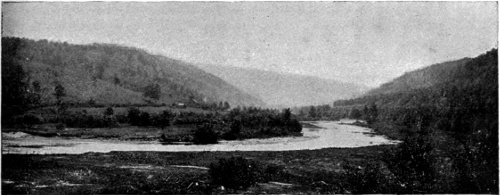
LOCATION AND SURROUNDINGS OF THE DRAKE WELL IN 1897.
William Barnsdall, Boone Meade and Henry R. Rouse started the second
well in the vicinity, on the James Parker farm, formerly the Kerr tract and now
the home of Ex-Mayor J. H. Caldwell. The location was north and within a
stone’s throw of the Drake. In November, at the depth of eighty feet, the well
was pumped three days, yielding only five barrels of oil. The outlook had an
indigo-tinge and operations ceased for a week or two. Resuming work in
December, at one-hundred-and-sixty feet indications were satisfactory. Tubing
was put in on February nineteenth, 1860, and the well responded at the rate of
fifty barrels a day! In the language of a Hoosier dialect-poet: “Things wuz
gettin’ inter-restin’!” William H. Abbott, a gentleman of wealth, reached
Titusville on February ninth and bought an interest in the Parker tract the same
month. David Crossley’s well, a short distance south of the Drake and the
third finished on Oil Creek, began pumping sixty barrels a day on March fourth.
Local dealers, overwhelmed by an “embarrassment of riches,” could not handle
such a glut of oil. Schefflin Brothers arranged to market it in New York.
Fifty-six-thousand gallons from the Barnsdall well were sold for seventeen-thousand
dollars by June first, 1860. J. D. Angier contracted to “stamp down
a hole” for Brewer, Watson & Co., in a pit fourteen feet deep, dug and cribbed
to garner oil dipped from the “spring” on the Hamilton-McClintock farm.
Piercing the rock by “hand-power” was a tedious process. December of 1860
76dawned without a symptom of greasiness in the well, from which wondrous
results were anticipated on account of the “spring.” One day’s hand-pumping
produced twelve barrels of oil and so much water that an engine was required to
pump steadily. By January twentieth, 1861, the engine was puffing and the well
producing moderately, the influx of water diminishing the yield of oil. These
four, with two getting under way on the Buchanan farm, north of the McClintock,
and one on the J. W. McClintock tract, the site of Petroleum Centre,
summed up all the wells actually begun on Oil Creek in 1859.
Three of the four were “kicked down” by the aid of spring-poles, as were
hundreds later in shallow territory. This method afforded a mode of development
to men of limited means, with heavy muscles and light purses, although
totally inadequate for deep drilling. An elastic pole of ash or hickory, twelve
to twenty feet long, was fastened at one end to work over a fulcrum. To the
other end stirrups were attached, or a tilting platform was secured by which two
or three men produced a jerking motion that drew down the pole, its elasticity
pulling it back with sufficient force, when the men slackened their hold, to raise
the tools a few inches. The principle resembled that of the treadle-board of a
sewing-machine, operating which moves the needle up and down. The tools
were swung in the driving-pipe or the “conductor”—a wooden tube eight or ten
inches square, placed endwise in a hole dug to the rock—and fixed by a rope to
the spring-pole two or three feet from the workmen. The strokes were rapid
and a sand-pump—a spout three inches in diameter, with a hinged bottom opening
inward and a valve working on a sliding-rod, somewhat in the manner of
a syringe—removed the borings mainly by sucking them into the spout as it
was drawn out quickly. Horse-power, in its general features precisely the kind
still used with threshing-machines, was the next step forward. Steam-engines,
employed for drilling at Tidioute in September of 1860, reduced labor and
expedited work. The first pole-derricks, twenty-five to thirty-five feet high,
have been superseded by structures that tower seventy-two to ninety feet.
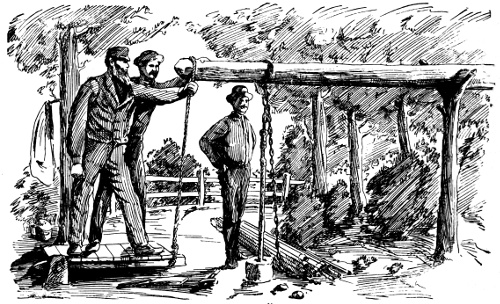
Drilling-tools, the chief novelty of which are the “jars”—a pair of sliding-bars
77moving within each other—have increased from two-hundred pounds to
three-thousand in weight. George Smith, at Rouseville, forged the first steel-lined
jars in 1866, for H. Leo Nelson, but the steel could not be welded firmly.
Nelson also adopted the “Pleasantville Rig” on the Meade lease, Rouseville, in
1866, discarding the “Grasshopper.” In the former the walking-beam is fastened
in the centre to the “samson-post,” with one end attached to the rods in
the well and the other to the band-wheel crank, exactly as in side-wheel steamboats.
George Koch, of East Sandy, Pa., patented numerous improvements
on pumping-rigs, drilling-tools and gas-rigs; for which he asked no remuneration.
Primitive wells had a bore of three or four inches, half the present size.
To exclude surface-water a “seed-bag”—a leather-bag the diameter of the hole—was
tied tightly to the tubing, filled with flax-seed and let down to the proper
depth. The top was left open and in a few hours the flax swelled so that the
space between the tubing and the walls of the well was impervious to water. Drilling
“wet holes” was slow and uncertain, as the tools were apt to break and the
chances of a paying well could not be decided until the pump exhausted the
water. It is surprising that over five-thousand wells were sunk with the rude
appliances in vogue up to 1868, when “casing”—a larger pipe inserted usually
to the top of the first sand—was introduced. This was the greatest improvement
ever devised in oil-developments and drilling has reached such perfection
that holes can be put down five-thousand feet safely and expeditiously. Devices
multiplied as experience was gained.
The tools that drilled the Barnsdall, Crossley and Watson wells were the
handiwork of Jonathan Lock, a Titusville blacksmith. Mr. Lock attained his
eighty-third year, died at Bradford in March of 1895 and was buried at Titusville,
the city in which he passed much of his active life. He was a worthy type
of the intelligent, industrious American mechanics, a class of men to whom
civilization is indebted for unnumbered comforts and conveniences. John Bryan,
who built the first steam-engine in Warren county,
started the first foundry and Machine-shop in
Oildom and organized the firm of Bryan, Dillingham
& Co., began the manufacture of drilling-tools
in Titusville in 1860.
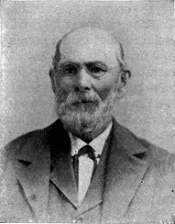
Of the partners in the second well William
Barnsdall survives. He has lived in Titusville
sixty-four years, served as mayor and operated
extensively. His son Theodore, who pumped
wells on the Parker and Weed farms, adjoining
the Barnsdall homestead, is among the largest
and wealthiest producers. Crossley’s sons rebuilt
the rig at their father’s well in 1873, drilled
the hole deeper and obtained considerable oil.
Other wells around the Drake were treated similarly,
paying a fair profit. In 1875 this spasmodic
revival of the earliest territory died out—Machinery
was removed and the derricks rotted. Jonathan Watson, in 1889,
drilled shallow wells, cleaned out several of the old ones and awakened brief
interest in the cradle of developments. Gas burning and wells pumping, thirty
years after the first strike, seemed indeed strange. Not a trace of these repeated
operations remains. The Parker and neighboring farms north-west and north
of Titusville proved disappointing, owing to the absence of the third sand,
78which a hole drilled two-thousand feet by Jonathan Watson failed to reveal.
The Parker-Farm Petroleum Company of Philadelphia bought the land in 1863
and in 1870 twelve wells were producing moderately. West and south-west the
Octave Oil-CompanyOil-Company has operated profitably for twenty years and Church Run
has produced generously. Probably two-hundred wells were sunk above Titusville,
at Hydetown, Clappville, Tryonville, Centerville, Riceville, Lincolnville
and to Oil-Creek Lake, in vain attempts to discover juicy territory.
Ex-Mayor William Barnsdall is the oldest living pioneer of Titusville. Not
only has he seen the town grow from a few houses to its present proportions,
but he is one of its most esteemed citizens. Born at Biggleswade, Bedfordshire,
England, on February sixth, 1810, he lived there until 1831, when he came to
America. In 1832 he arrived at what is known as the English Settlement, seven
miles north of Titusville. The Barnsdalls founded the settlement, Joseph, a
brother of William, clearing a farm in the wilderness that then covered the
country. Remaining in the settlement a year, in 1833 William Barnsdall came
to the hamlet of Titusville, where he has ever since resided. He established a
small shop to manufacture boots and shoes, continuing at the business until the
discovery of oil in 1859. Immediately after the completion of the Drake strike
he began drilling the second well on Oil Creek. Before this well produced oil, in
February of 1860, he sold a part interest to William H. Abbott for ten-thousand
dollars. He associated himself with Abbott and James Parker and, early in
1860, commenced the first oil-refinery on Oil Creek. It was sold to Jonathan
Watson for twenty-five-thousand dollars. From those early days to the present
Mr. Barnsdall has been identified with the production of petroleum. At the
ripe age of eighty-seven years, respected as few men are in any community and
enjoying an unusual measure of mental and physical strength, he calmly awaits
“the inevitable hour.”
Hon. David Emery, the last owner of the Drake well, was for many years a
successful oil-operator. At Pioneer he drilled a number of prime wells, following
the course of developments along Oil Creek. He organized the Octave Oil-Company
and was its chief officer. Removing to Titusville, he erected a fine
residence and took a prominent part in public affairs. His purse was ever open
to forward a good cause. Had the Republican party, of which he was an active
member, been properly alive to the interests of the Commonwealth, he would
have been Auditor-General of Pennsylvania. In all the relations and duties of
life David Emery was a model citizen. Called hence in the vigor of stalwart
manhood, multitudes of attached friends cherish his memory as that “of one
who loved his fellow-men.”
Born in England in 1818, David Crossley ran away from home and came to
America as a stowaway in 1828. He found relatives at Paterson, N.J., and
lived with them until about 1835, when he bound himself out to learn blacksmithing.
On March seventeenth, 1839, he married Jane Alston and in the
winter of 1841-2 walked from New York to Titusville, walking back in the
spring. The following autumn he brought his family to Titusville. For a few
years he tried farming, but gave it up and went back to his trade until 1859,
when he formed a partnership with William Barnsdall, William H. Abbott and
P. T. Witherop, under the firm-name of Crossley, Witherop & Co., and began
drilling the third well put down on Oil Creek. The well was completed on
March tenth, 1860, having been drilled one-hundred-and-forty feet with a spring-pole.
It produced at the rate of seventy-five barrels per day for a short time.
The next autumn the property was abandoned on account of decline in production.
79In 1865 Crossley bought out his partners and drilled the well to a depth
of five-hundred-and-fifty feet, but again abandoned it because of water. In 1872
he and his sons drilled other wells upon the same property and in a short time
had so reduced the water that the investment became a paying one. In 1873 he
and William Barnsdall and others drilled the first producing well in the Bradford
oil-field. His health failed in 1875 and he died on October eleventh, 1880,
esteemed by all for his manliness and integrity.
Z. Martin, who befriended Drake in his sad extremity, landed at Titusville
in March of 1860 and pumped the Barnsdall, Mead & Rouse well on Parker’s
flat, the first well in Crawford county that produced
oil. In 1861 he went to the Clapp farm,
above Oil City, as superintendent of the Boston
Rock-Oil-Company, only three of whose eighteen
wells were paying ventures. The Company
quitting, Martin bought and shipped crude to
Pittsburg for Brewer, Burke & Co., traveling to
the wells on horseback to secure oil for his
boats. He bought the Eagle Hotel at Titusville
in 1862, conducted it two years and sold
the building to C. V. Culver for bank-purposes.bank-purposes.
Mr. Martin resided at Titusville many years and
was widely known as the capable landlord of
the palatial Hotel Brunswick. He was the intimate
friend of Colonel Drake, Jonathan Watson,
George H. Bissell and the pioneer operators
on Oil Creek. His son, L. L. Martin, is running
the Commercial Hotel at Meadville, where the father makes his home, young
in everything but years and always pleased to greet his oil-region acquaintances.
Thus dawned the petroleum-day that could not be hidden under myriads
of bushels. The report of the Drake well traveled “from Greenland’s icy
mountains” to “India’s coral strands,” causing unlimited guessing as to the
possible outcome. Crude-petroleum was useful for various things, but a farmer
who visited the newest wonder hit a fresh lead. Begging a jug of oil, he paralyzed
Colonel Drake by observing as he strode off: “This’ll be durned good
tew spread onto buckwheat-cakes!”
Bishop Simpson once delivered his lecture on “American Progress,” in
which he did not mention petroleum, before an immense Washington audience.
President Lincoln heard it and said, as he and the eloquent speaker came out of
the hall: “Bishop, you didn’t ‘strike ile’!”
When the Barnsdall well, on the Parker farm, produced hardly any oil from
the first sand, the coming Mayor of Titusville quietly clinched the argument in
favor of drilling it deeper by remarking: “It’s a long way from the bottom of
that hole to China and I’m bound to bore for tea-leaves if we don’t get the
grease sooner!”
“De Lawd thinks heaps ob Pennsylvany,” said a colored exhorter in Pittsburg,
“fur jes’ ez whales iz gettin’ sca’ce he pints outen de way fur Kunnel
Drake ter ’scoveh petroleum!” A solemn preacher in Crawford county held a
different opinion. One day he tramped into Titusville to relieve his burdened
mind. He cornered Drake on the street and warned him to quit taking oil from
the ground. “Do you know,” he hissed, “that you’re interfering with the
Almighty Creator of the universe? God put that oil in the bowels of the earth
80to burn the world at the last day and you, poor worm of the dust, are trying to
thwart His plans!” No wonder the loud check in the Colonel’s barred pantaloons
wilted at this unexpected outburst, which Drake often recounted with
extreme gusto.
The night “Uncle Billy” Smith’s lantern ignited the tanks at the Drake
well the blaze and smoke of the first oil-fire in Pennsylvania ascended high. A
loud-mouthed professor of religion, whose piety was of the brand that needed
close watching in a horse-trade, saw the sight and scampered to the hills shouting:
“It’s the day of judgment!” How he proposed to dodge the reckoning,
had his surmise been correct, the terrified victim could not explain when his
fright subsided and friends rallied him on the scare.
The Drake well blazed the path in the wilderness that set petroleum on its
triumphant march. This nation, already the most enlightened, was to be the
most enlightening under the sun. An Atlantic of oil lay beneath its feet.
America, its young, plump sister, could laugh at lean Europe. War raged and
the old world sought to drain the republic of its gold. The United States exported
mineral-fat and kept the yellow dross at home. Petroleum was crowned
king, dethroning cotton and yielding a revenue, within four years of Drake’s
modest strike, exceeding that from coal and iron combined! Talk of California’s
gold-fever, Colorado’s silver-furore and Barney Barnato’s Caffir-mania.
American petroleum is a leading article of commerce, requiring hundreds
of vessels to transport it to distant lands. Its refined product is known all over
the civilized world. It has found its way to every part of Europe and the
remotest portions of Asia. It shines on the western prairie, burns in the homes
of New England and illumines miles of princely warehouses in the great cities
of America. Everywhere is it to be met with, in the Levant and the Orient, in
the hovel of the Russian peasant and the harem of the Turkish pasha. It is the
one article imported from the United States and sold in the bazaars of Bagdad,
the “City of the Thousand-and-One-Nights.” It lights the dwellings, the temples
and the mosques amid the ruins of Babylon and Nineveh. It is the light
of Abraham’s birthplace and of the hoary city of Damascus. It burns in the
Grotto of the Nativity at Bethlehem, in the Church of the Holy Sepulchre at
Jerusalem, on the Acropolis of Athens and the plains of Troy, in cottage and
palace along the banks of the Bosphorus, the Euphrates, the Tigris and the
Golden Horn. It has penetrated China and Japan, invaded the fastnesses of
Tartary, reached the wilds of Australia and shed its radiance over African
wastes. Pennsylvania petroleum is the true cosmopolite, omnipresent and
omnipotent in fulfilling its mission of illuminating the universe! A product of
nature that is such a controlling influence in the affairs of men may well challenge
attention to its origin, its history and its economic uses.
All this from a three-inch hole seventy feet in the ground!
A grape-seed is a small affair,
Yet, swallow’d when you sup,
In your appendix it may stick
Till doctors carve you up.
A coral-insect is not large,
Still it can build a reef
On which the biggest ship that floats
May quickly come to grief.
A hint, a word, a look, a breath
May bear envenom’d stings,
From all of which the moral learn:
Despise not little things!
81
Colonel Drake used the first driving pipe.
Adolph Schreiner, of Austria, made the first petroleum-lamp.
The first oil-well drilled by steam power was opposite Tidioute, in 1860.
Jonathan Watson put down the first deep well on Oil Creek—2,130 feet—in
1866.
William Phillips boated the first cargo of oil down the Allegheny to Pittsburg
in March, 1860.
The Chinese were the first to drill with tools attached to ropes, which they
twisted from rattan.
The Liverpool Lamp, devised by an unknown Englishman, was the first to
have a glass-chimney and do away with smoke.
The first tubing in oil-wells was manufactured at Pittsburg, with brass
screw-joints soldered on the pipe, the same as at Tarentum salt-wells.
The first steamboat reached the mouth of Oil Creek in 1828, with a load of
Pittsburgers. The first train crossed Oil Creek into Oil City on a track on the ice.
William A. Smith, who drilled the Drake well, made the first rimmer.
While enlarging a well with a bit the point broke off, after which greater
progress was noted. The accident suggested the rimmer.
The first white settler in the Pennsylvania oil-regions was John Frazier, who
built a cabin at Wenango—Franklin—in 1745, kept a gun-shop and traded with
the Indians until driven off by the French in 1753, the year of George Washington’s
visit.
Jonathan Titus located at Titusville in 1797, on land made famous by the
Drake well. In that year the first oil skimmed from Oil Creek to be marketed
was sold at Pittsburg, then a collection of log-cabins, at sixteen dollars a gallon!
Now people kick at half that many cents for the refined article.
Early well-owners found the tools and fuel, paid all expenses but labor and
paid three-dollars-and-fifty-cents per foot to the contractor, yet so many contractors
failed that a lien-law was passed. George Koch, in November of 1873,
took out a patent on fluted drills, which did away with the rimmer, reduced the
time of drilling a well from sixty days to twenty and reduced the price from
three dollars per foot to fifty cents.cents.
Sam Taft was the first to use a line to control the engine from the derrick,
at a well near McClintockville, in 1867. Henry Webber was the first to regulate
the motion of the engine from the derrick. He drilled a well near Smoky
City, on the Porter farm, in 1863, with a rod from the derrick to the throttle-valve.
He also dressed the tools, with the forge in the derrick, perhaps the
first time this was done. He drilled this well six-hundred feet with no help.
Near this well was the first plank-derrick in the oil-country.
The first derricks were of poles, twelve feet base and twenty-eight to thirty
feet high. The ladder was made by putting pins through a corner of a leg of
the derrick. The Samson-post was mortised in the ground. The band-wheel
was hung in a frame like a grindstone. A single bull-wheel, made out of about
a thousand feet of lumber, placed on the side of the derrick next to the band-wheel,
with a rope or old rubber-belt for a brake, was used. When the tools
were let down the former would burn and smoke, the latter would smell like
ancient codfish.
82
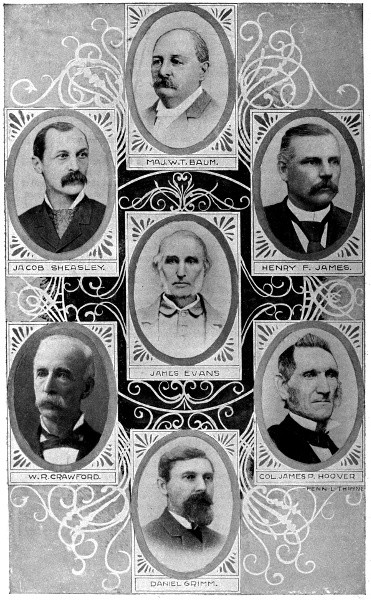
MAJ. W. T. BAUM.
JACOB SHEASLEY. HENRY F. JAMES.
JAMES EVANS.
W. R. CRAWFORD. COL. JAMES P. HOOVER
DANIEL GRIMM.
VI. THE WORLD’S LUBRICANT. — KEEPING STEP.
83
A Glance at a Pretty Settlement—Evans and His Wonderful Well—Heavy
Oil at Franklin to Grease all the Wheels in Creation—Origin
of a Popular Phrase—Operations on French Creek—Excitement
at Fever Heat—Galena and Signal Oil-Works—Rise and Progress
of a Great Industry—Crumbs Swept Up.
“The race was on, the souls of the racers were in it.”—Gen. Lew Wallace.
“Wild rumors are afloat in Jericho.”—J. L. Barlow.
“Carthage has crossed the Alps; Rome, the sea.”—Victor Hugo.
“There shall be no Alps.”—Napoleon.
“We must not hope to be mowers
Until we have first been sowers.”—Alice Cary.
“Gained the lead, and kept it, and steered his journey free.”—Will Carleton.
“A cargo of petroleum may cross the ocean in a vessel propelled by steam it has generated, acting
upon an engine it lubricates and directed by an engineer who may grease his hair, limber his
joints, and freshen his liver with the same article.”—Petrolia, A.D. 1870.
“Friction, not motion, is the great destroyer of machinery.”—Engineering Journal.
“Here was * * * a battle of Marengo to be gained.”—Balzac.
Cheap and abundant light the island-well
on Oil Creek assured the nations
sitting in darkness. If there are
“tongues in trees” and “sermons
in stones” the trickling stream of
greenish liquid murmured: “Bring
on your lamps—we can fill them!”
The second oil-well in Pennsylvania,
eighteen miles from Col. Drake’s,
changed the strain to: “Bring on
your wheels—we can grease them!”
America was to be the world’s illuminator
and lubricator—not merely
to dispel gloom and chase hobgoblins,
but to increase the power of
machinery by decreasing the impediments
to easy motion. Friction has
cost enough for extra wear and stoppages
and breakages “to buy every
darkey forty acres and a mule.” The
first coal-oil for sale in this country was manufactured at Waltham, Mass., in
1852, by Luther Atwood, who called it “Coup Oil,” from the recent coup of
Louis Napoleon. Although highly esteemed as a lubricator, its offensive odor
and poor quality would render it unmerchantable to-day. Samuel Downer’s
hydro-carbon oils in 1856 were marked improvements, yet they would cut a
sorry figure beside the unrivaled lubricant produced from the wells at Franklin,
84the county-seat of Venango. It is a coincidence that the petroleum era should
have introduced light and lubrication almost simultaneously, one on Oil Creek,
the other on French Creek, and both in a region comparatively isolated. “Misfortunes
never come singly,” said the astounded father of twins, in a paroxysm
of bewilderment; but happily blessings often come treading closely on each
other’s heels.
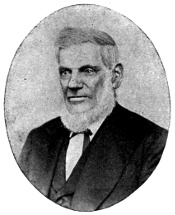
Pleasantly situated on French Creek and the Allegheny River, Franklin is
an interesting town, with a history dating from the middle of the eighteenth
century. John Frazer, a gunsmith, occupied a hut and traded with the Indians
in 1747. Four forts, one French, one British and two American, were erected
in 1754, 1760, 1787 and 1796. Captain Joncaire commanded the French forces.
George Washington, a British lieutenant, with no premonition of fathering a
great country, visited the spot in 1753. The north-west was a wilderness and
Pittsburg had not been laid out. Franklin was surveyed in 1795, created a borough
in 1829 and a city in 1869, deriving its chief importance from petroleum.
Lofty hills and winding streams are conspicuous. Spring-water is abundant,
the air is invigorating and healthfulness is proverbial. James Johnston, a negro-farmer
of Frenchcreek township, stuck it out for one-hundred-and-nine summers,
lamenting that death got around six months too soon for him to attend
the Philadelphia Centennial. Angus McKenzie, of Sugarcreek, whose strong-box
served as a bank in early days, reached one-hundred-and-eight. Mrs.
McDowell, a pioneer, was bright and nimble three years beyond the century-mark.
Galbraith McMullen, of Waterloo, touched par. John Morrison, the
first court-crier, rounded out ninety-eight. A successor, Robert Lytle, was summoned
at eighty-seven, his widow living to celebrate her ninety-fourth birthday.
David Smith succumbed at ninety-nine and
WilliamWilliam Raymond at ninety-three. Mr. Raymond
was straight as an arrow, walked smartly
and in youth was the close friend of John J.
Pearson, who began to practice law at Franklin
and was President Judge of Dauphin county
thirty-three years. J. B. Nicklin, fifty years a
respected citizen, died in 1890 at eighty-nine.
To the end he retained his mental and physical
strength, kept the accounts of the Baptist
church, was at his desk regularly and could
hit the bullseye with the crack shots of the
military company. William Hilands, county-surveyor,
was a familiar figure on the streets
at eighty-seven. Rev. Dr. Crane preached,
lectured, visited the sick and continued to
do good at eighty-six. Grandma Snyder is
eighty-eight and Benjamin May, a few miles up the Allegheny, is hardy and
hearty at ninety-one. At eighty-five “Uncle Billy” Grove, of Canal, would
hunt deer in Forest county and walk farther and faster than any man in the
township. The people who have rubbed fourscore would fill a ten-acre patch.
Of course, some get sick and die young, or the doctors would starve, heaven
would be short of youthful tenants and the theories of Malthus might have to
be tried on.
Franklin boasts the finest stone side-walks in the State. There are imposing
churches, shady parks, broad streets, cosy homes, spacious stores, first-class
85schools, fine hotels and inviting drives. For years the Baptist quartette has not
been surpassed in New York or Philadelphia. The opera-house is a gem. Three
railroads—a fourth is coming that will lop off sixty-five miles between New York
and Chicago—and electric street-cars supply rapid transit. Five substantial
banks, a half-dozen millionaires, two-dozen hundred-thousand-dollar-citizens
and multitudes of well-to-do property-holders give the place financial backbone.
Manufactures flourish, wages are liberal and many workmen own their snug
houses. Probably no town in the United States, of seven-thousand population,
has greater wealth, better society and a kindlier feeling clear through the community.
On the south bank of French Creek, at Twelfth and Otter streets, James
Evans, blacksmith, had lived twenty years. A baby when his parents settled
farther up in 1802, he removed to Franklin in 1839. His house stood near the
“spring” from which Hulings and Whitman wrung out the viscid scum. In dry
weather the well he dug seventeen feet for water smelled and tasted of petroleum.
Tidings of Drake’s success set the blacksmith thinking. Drake had
bored into the well close to the “spring” and found oil. Why not try the experiment
at Franklin? Evans was not flush of cash, but the hardware-dealer
trusted him for the iron and he hammered out rough drilling-tools. He and
his son Henry rigged a spring-pole and bounced the drill in the water-well.
At seventy-two feet a crevice was encountered. The tools dropped, breaking
off a fragment of iron, which obstinately refused to be fished out. Pumping by
hand would determine whether a prize or a blank was to be drawn in the greasian
lottery. Two men plied the pump vigorously. A stream of dark-green fluid
gushed forth at the rate of twenty-five barrels a day. It was heavy oil, about
thirty degrees gravity, free from grit and smooth as silk. The greatest lubricant
on earth had been unearthed!
Picture the pandemonium that followed. Franklin had no such convulsion
since the William B. Duncan, the first steamboat, landed one Sunday evening
in January, 1828. The villagers speeded to the well as though all the imps of
sheol were in pursuit. November court adjourned in half the number of seconds
Sut Lovingood’s nest of hornets broke up the African camp-meeting. Judge
John S. McCalmont, whose able opinions the Supreme Court liked to adopt,
decided there was ample cause for action. A doctor rushed to the scene hatless,
coatless and shoeless. Women deserted their households without fixing their
back-hair or getting inside their dress-parade toggery. Babies cried, children
screamed, dogs barked, bells rang and two horses ran away. At prayer-meeting
a ruling elder, whom the events of the day had wrought to fever-heat, raised a
hilarious snicker by imploring God to “send a shower of blessings—yea, Lord,
twenty-five barrels of blessings!” Altogether it was a red-letter forenoon, for
twenty-five barrels a day of thirty-dollar oil none felt inclined to sneeze at.
That night a limb of the law, “dressed in his best suit of clothes,” called at
the Evans domicile. Miss Anna, one of the fair daughters of the house, greeted
him at the door and said jokingly: “Dad’s struck ile!” The expression caught
the town, making a bigger hit than the well itself. It spread far and wide, was
printed everywhere and enshrined permanently in the petroleum-vernacular.
The young lady married Miles Smith, the eminent furniture-dealer, still trading
on Thirteenth street. In 1875 Mr. Smith revisited his native England, after many
years’ absence. Meeting a party of gentlemen at a friend’s house, the conversation
turned upon Pennsylvania. “May I awsk, Mr. Smith,” a Londoner inquired,
“if you hever ’eard in your ’ome about ‘dad’s stwuck ile’? I wead it
86in the papahs, doncherknow, but I fawncied it nevah weally ’appened.” Mr.
Smith had “’eard” it and the delight of the company, when he recited the circumstances
and told of marrying the girl, may be conceived. The phrase is
billed for immortality.
Sufficient oil to pay for an engine was soon pumped. Steam-power increased
the yield to seventy barrels! Franklin became the Mecca of speculators, traders,
dealers and monied men. Frederic Prentice, a leader in aggressive enterprises,
offered forty-thousand dollars for the well and lot. Evans rejected the bid and
kept the well, which declined to ten or twelve barrels within six months. The
price of oil shrank like a flannel-shirt, but the lucky disciple of Vulcan realized a
nice competence. He enjoyed his good fortune some years before journeying
to “that bourne from which no traveler e’er returns.” Mrs. Evans long survived,
dying at eighty-six. The son removed to Kansas, three daughters died and one
resides at Franklin. The old well experienced its complement of fluctuations.
Mosely & Co., of Philadelphia, leased it. It stood idle, the engine was taken
away, the rig tumbled and the hole filled up partially with dirt and wreckage.
Prices spurted and the well was hitched to a pumping-rig operating others around
it. Captain S. A. Hull ran a group of the wells on the flats and a dozen three
miles down the Allegheny. He was a man of generous impulses, finely educated
and exceedingly companionable. His death, in 1893, resulted in dismantling
most of these wells, hardly a vestige remaining to tell that the Evans and its
neighbors ever existed.
James Evans was not “left blooming alone” in the search for oily worlds
to conquer. Companies were organized while he was yanking the tools in the
well that “set ’em crazy.” The first of these—The Franklin Oil-and-Mining-Company—started
work on October fifth, twenty rods below Evans, finding oil
at two-hundred-and-forty-one feet on January twelfth, 1860. The well pumped
about one-half as much as the Evans for several months, but did not die of old
age. The forty-two shares of stock advanced ten-fold in one week, selling at a
thousand dollars each. Three or four wells were put down, the company dissolving
and members operating on their own hook. It was strongly officered,
with Arnold Plumer as president; J. P. Hoover, vice-president; Aaron W. Raymond,
secretary; James Bleakley, Robert Lamberton, R. A. Brashear, J. L.
Hanna and Thomas Hoge, executive committee. Mr. Plumer was a dominant
factor in Democratic politics, largely instrumental in the nomination of James
Buchanan for President, twice a member of Congress, twice State-Treasurer,
Canal-Commissioner and founder of the First-National Bank. At his death, in
1869, he devised his family an estate that appraised several million dollars, making
it the largest in Venango county. Judge Lamberton opened the first bank
in the oil-regions, owned hundreds of houses and in 1885 bequeathed each of
his eight children a handsome fortune. Colonel Bleakley rose by his own
exertions, keen foresight and skillful management. He invested in productive
realty, drilled scores of wells around Franklin, built iron-tanks and brick-blocks,
established a bank, held thousands of acres of lands and in 1884 left a very
large inheritance to his sons and daughters. Mr. Raymond developed the Raymilton
district—it was named from him—in which hundreds of fair wells have
rewarded Franklin operators, and at eighty-nine was exceedingly quick in his
movements. Mr. Brashear, a civil engineer and exemplary citizen, has been
in the grave twenty years. Mr. Hanna operated heavily in oil, acquired numerous
farms and erected the biggest block—it contained the first opera-house—in
the city. He is handling real-estate, but his former partner, John Duffield,
87slumbers in the cemetery. Mr. Hoge, an influential politician, elected to the
Legislature two terms and Mayor one term, has also joined the silent majority.
In February, 1860, Caldwell & Co., a block southeast of Evans, finished a
paying well at two-hundred feet. The Farmers and Mechanics’ Company, Levi
Dodd, president, drilled a medium producer at the foot of High street, on the
bank of the creek. Mr. Dodd was an old settler, originator of the first Sabbath-school
in Franklin and a ruling-elder for over fifty years. Numerous companies
and individuals pushed work in the spring. Holes were sunk in front yards,
gardens and water-wells. Derricks dotted the landscape thickly. Franklin was
the objective point of immense crowds of people.
The earliest wells were shallow, seldom exceeding
two-hundred feet. The Mammoth, near a huge walnut
tree back of the Evans lot, began flowing on May
fifteenth to the tune of a hundred barrels. This was
the first “spouter” in the district and it quadrupled
the big excitement. Four-hundred
barrels of oil were shipped to Pittsburg,
by the steamboat Venango,
on April twenty-seventh. Twenty-two
wells were drilling and twenty
producing on July first. Farms for
miles up French
Creek had been
bought at high
prices and the
noise of the drill
permeated the
summer ozone.
Four miles west
of Franklin, zig-zag
Sugar Creek
shared in the activity.
Then the
prices “came down like a thousand
of brick.” Pumping was expensive,
lands were scarce and dear, hauling
the oil to a railroad cost half its
value and hosts of small wells were
abandoned. On November first,
within the borough limits, fifteen were yielding one-hundred-and-forty
barrels. Curtz & Strain had bored
five-hundred feet in October, the deepest well in the
neighborhood, without finding additional oil-bearing
rock. The Presidential election foreboded trouble,
war-clouds loomed up and the year closed gloomily.
LEVI DODD.
COL. BLEAKLEY.
J. LINDSAY HANNA.
AARON W. RAYMOND.
The advantages of Franklin heavy-oil as a lubricant were quickly recognized.
It possessed a “body” that artificial oils could not rival. In the crude
state it withstood a cold-test twenty degrees below zero. Here is where it “had
the bulge” on alleged lubricants which solidify into a sort of liver with every
twitch of frost. The producing-area of heavy-oil is restricted to a limited section,
where the first sand is thirty to sixty feet thick and the lower sands were
entirely omitted in the original distribution of strata. For years operators
88hugged the banks of the streams and the low grounds, keeping off the hills
more willingly than General Coxey kept off the Washington grass. The famous
“Point Hill,” across French Creek from the Evans well, went begging for a purchaser.
At its southern base Mason & Lane, Cook & Co., Welsby & Smith,
Shuster, Andrews, Green and others had profitable wells, but nobody dreamed
of boring through the steep “Point” for oil. J. Lowry Dewoody offered the
lordly hill, with its forty acres of dense evergreen-brush, to Charles Miller for
fifteen-hundred dollars. He wanted the money to drill on the flats and the hill
was an elephant on his hands.
During the Columbian Exposition an aged man alighted from a western
train at the union-depot in Chicago. His rifle and his buckskin-suit indicated
the Kit-Carson brand of hunter. He gazed about him in amazement and a
crowd assembled. “Wal,” ejaculated the white-haired Nimrod, “this be Chicago,
eh? Sixty years ago I killed lots ov game right whar we stan’ an’ old man
Kinzey fell all over hisse’f to trade me a hunnerd acre ov land fur a pair ov cowhide
boots! I might hev took him up, but, consarn it, I didn’t hev the boots!”
Something of this kind would apply to Mr. Miller and the Dewoody proposition.
He had embarked in the business that was to bring him wealth and
honor, but just at that time “didn’t hev” the fifteen-hundred to spare from his
working-capital for the fun of owning a hill presumed to be worthless except
for scenery. Colonel Bleakley and Dr. A. G. Egbert bought it later at a low
figure. Operators scaled the slopes and hills and the first well on the “Point”
was of the kind to whet the appetite for more. Bleakley & Egbert pocketed a
keg of cold-cash from their wells and the royalty paid by lessees. Daniel
Grimm’s production put him in the van of Franklin oilmen. He came to the
town in 1861, had a dry-goods store in partnership with the late William A.
Horton and in 1869 drilled his first well. W. J. Mattem and Edward Rial &
Son had a rich slice. The foundation of a dozen fortunes was laid on the
“Point,” which yields a few barrels daily, although only a shadow of its former
self. From the western end of the hill thousands of tons of a peculiar shale
have been manufactured into paving-brick, the hardest and toughest in America.
A million dollars would not pay for the oil taken from the hill that found no
takers at fifteen-hundred!
Dewoody, over whose grave the storms of a dozen winters have blown, was
a singular character. He cared not a continental for style and was independent
89in speech and behavior. Bagging a term in the Legislature as a Democratic-Greenbacker,
his rugged honesty was proof against the allurements of the lobbyists,
jobbers and heelers who disgrace common decency. His most remarkable
act was a violent assault on the Tramp-Bill, a measure cruel as the laws of
Draco, which Rhoads of Carlisle contrived to pass. He paced the central aisle,
spoke in the loudest key and gesticulated fiercely. Tossing his long auburn
hair like a lion’s mane, he wound up his torrent of denunciation with terrible
emphasis: “If Jesus Christ were on earth this monstrous bill would jerk him as
a vagrant and dump him into the lock-up!”
Gradually developments crept north and east. The Galloway—its Dolly
Varden well was a daisy—Lamberton and McCalmont farms were riddled with
holes that repaid the outlay lavishly. Henry F. James drilled scores of paying
wells on these tracts. In his youth he circled the globe on whaling voyages
and learned coopering. Spending a few months at Pithole in 1865, he returned
to Venango county in 1871, superintended the Franklin Pipe-Line five years and
operated judiciously. He was active in agriculture and served three terms in
the Legislature with distinguished fidelity. He defeated measures inimical to
the oil-industry and promoted the passage of the Marshall Bill, by which pipe-lines
were permitted to buy, sell or consolidate. This sensible law relieves
pipe-lines in the older districts, where the production is very light, from the
necessity of maintaining separate equipments at a loss or ruining hundreds of
well-owners by tearing up the pipes for junk and depriving operators of transportation.
The late Casper Frank, William Painter—he was killed at his wells—Dr.
Fee, the Harpers, E. D. Yates and others extended the field into Sugarcreek
township. Elliott, Nesbett & Bell’s first well on the Snyder farm, starting
at thirty barrels and settling down to regular work at fifteen, elongated the Galloway
pool and brought adjoining lands into play. Kunkel & Newhouse, Stock
& Co., Mitchell & Parker, Crawford & Dickey, Dr. Galbraith and M. O’Connor
kept many sets of tools from rusting. The extension to the Carter and frontier-farms
developed oil of lighter gravity, but a prime lubricator. Mrs. Harold, a
Chicago lady, dreamed a certain plot, which she beheld distinctly, would yield
heavy-oil in abundance. She visited Franklin, traversed the district a mile in
advance of developed territory, saw the land of her dream, bargained for it,
drilled wells and obtained “lashin’s of oil!” Still there are bipeds in bifurcated
garments who declare woman’s “sphere” is the kitchen, with dish-washing,
sock-darning and meal-getting as her highest “rights!”
Jacob Sheasley, who came from Dauphin county in 1860 and branched into
oil in 1864, is the largest operator in the bailiwick. He drilled at Pithole, Parker,
Bradford, on all sides of Franklin and put down a hundred wells the last
two years. He enlarged the boundaries of the lubricating section by leasing
lands previously condemned and sinking test-wells in 1893-4, with gratifying
results. Rarely missing his guess on territory, he has been almost invariably
fortunate. His son, George R., has operated in Venango and Butler counties
and owns a bunch of desirable wells on Bully Hill, with his brother Charles as
partner. The father and two sons are “three of a kind” hard to beat.
A mile north of Franklin, in February of 1870, the Surprise well on Patchel
Run, a streamlet bearing the name of the earliest hat-maker, surprised everybody
by its output. It foamed and gassed and frothed excessively, filling the pipe
with oil and water. Throngs tramped the turnpike over the toilsome hill to look
at the boiling, fuming tank into which the well belched its contents. “Good for
four-hundred barrels” was the verdict. A party of us hurried from Oil Creek
90to judge for ourselves. Although the estimate was six times too great, a lease
of adjacent lands would not be bad to take. Rev. Mr. Johns, retired pastor of
the Presbyterian church at Spartansburg, Crawford county, had charge of the
property. My acquaintance with Mr. Johns devolved upon me the duty of negotiating
for the tract. He received me graciously and would be pleased to lease
twenty acres for one-half the oil and one-thousand dollars an acre bonus! Br’er
John’s exalted notions soared far too high to be entertained seriously. The
Surprise fizzled down to four or five barrels in a week and the good minister—for
twenty years he has been enjoying his treasure in heaven—never fingered a
penny from his land save the royalty of two or three small wells.
Major W. T. Baum has operated in the heavy-oil field thirty-two years, beginning
in 1864. He passed through the Pithole excitement and drilled largely
at Foster, Pleasantville, Scrubgrass, Bullion, Gas City, Clarion, Butler and Tarkiln.
His faith in Scrubgrass territory has been recompensed richly. In 1894
he sank a well on the west bank of the Allegheny, opposite Kennerdell Station,
in hope of a ten-barrel strike. It pumped one-hundred-and-fifty barrels a day
for months and it is doing fifty barrels to-day, with three more of similar caliber
to keep it company! The Major’s persevering enterprise deserves the reward
Dame Fortune is bestowing. He owns the wells and lands on Patchel Run,
which yield a pleasant revenue. Colonel J. H. Cain, Colonel L. H. Fassett and
J. W. Grant, all successful operators, have their wells in the vicinity. Modern
devices connect wells far apart, by coupling them with rods two to ten feet
above ground, so that a single engine can pump thirty or forty in shallow territory.
The downward stroke of one helps the upward stroke of the other, each
pair nearly balancing. This enables the owners of small wells to pump them at
the least expense. Heavy-oil has sold for years at three-sixty to four dollars a
barrel, consequently a quarter-barrel apiece from forty wells, handled by one
man and engine, would exceed the income from a quarter-million dollars salted
down in government bonds. It is worth traveling a long distance to stand on
the hill and watch the pumping of Baum’s, Grimm’s, Cain’s, Grant’s, Sheasley’s
and James’s wells, some of them a mile from the power that sets the strings of
connecting-rods in motion.
On Two-Mile Run, up the Allegheny two miles, W. S. McMullan drilled
several wells in 1871-2. The product was the blackest of black oils, indicating
a deposit separated from the main reservoir of the lubricating region. Subsequent
91operations demonstrated that a dry streak intervened. Captain L. L.
Ray put down fair wells near the river in 1894. Mr. McMullan resided at Rouseville
and had valuable interests on Oil Creek. He served a term in the State
Senate, reflecting honor upon himself and his constituents. A man of integrity
and capacity, he could be trusted implicitly. Fifteen years ago he removed to
Missouri to engage in lumbering. Senator McMullan, Captain WilliamWilliam Hasson,
member of Assembly, and Judge Trunkey, who presided over the court and
later graced the Supreme Bench, were three Venango-county men in public
life whom railroad-passes never swerved from the path of duty. They refused
all such favors and paid their way like gentlemen. If lawgivers and judges of
their noble impress were the rule rather than the exception—“a consummation
devoutly to be wished”—grasping corporations would not own legislatures and
“drive a coach and four” through any enactment with impunity.
George P. Smith’s tract of land between Franklin and Two-Mile Run netted
him a competence in oil and then sold for one-hundred-thousand dollars. Mr.
Smith dispenses liberally to charitable objects, assists his friends and uses his
wealth properly. He owns his money, instead of letting it own him. He has
traveled much, observed closely and profited by what he has seen and read. He
is verging on fourscore, his home is in Philadelphia and “the world will be the
better for his having lived in it.”
The production of heavy-oil in 1875 aggregated one-hundred-and-thirty-thousand
barrels. In 1877 it dropped to eighty-eight-thousand barrels and in
1878 to seventy thousand. Thirteen-hundred wells produced sixty-thousand
barrels in 1883. Taft & Payn’s pipe-line was laid in 1870 from the Egbert and
Dewoody tracts to the river, extended to Galloway in 1872 and combined with
the Franklin line in 1878. The Producers’ Pipe-Line Company began to transport
oil in 1883. J. A. Harris, who died in 1894, had the first refinery in the oil-regions
in 1860. His plant was extremely primitive. Colonel J. P. Hoover
built the first refinery of note, which burned in the autumn of 1861. Sims &
Whitney had one in 1861 and the Norfolk Oil-Works were established the same
year, below the Allegheny bridge. Samuel Spencer, of Scranton, expended
thirty-thousand dollars on the Keystone Oil-Works, near the cemetery, in 1864.
Nine refineries, most of them running the lighter oils, were operated in 1854-5,
after which the business collapsed for years. Dr. Tweddle, a Pittsburg refiner
who had suffered by fire, organized a company in 1872 to start the Eclipse
Works. At different periods many of the local operators have been interested
in refining, now the leading Franklin industry.
For some time heavy-oil was used principally in its natural state. At length
improvements of great value were devised, out of which have grown the oil-works
devoted solely to the manufacture of lubricants. Among these the most
important and successful was that adopted in 1869 by Charles Miller, of Franklin,
protected by letters-patent of the United States and since by patents covering
the complete method. Besides improvements in the method of manufacturing,
he recognized the value of lead-oxide as an ingredient in lubricating oils
and a patent was secured for the combination of whale-oil, oxide of lead and
petroleum. The Great-Northern Oil-Company, once a big organization, had
built a refinery in 1865 on the north bank of French Creek, below the Evans
Well, and leased it in 1868 to Colonel Street. In May of 1869 Mr. Miller and
John Coon purchased the Point Lookout Oil-Works, as the refinery was called,
Street retiring. The total tankage was one-thousand barrels and the daily manufacturing
capacity scarcely one-hundred. The new firm, of which R. L. Cochran
92became a member in July, pushed the business with characteristic energy, doubling
the plant and extending the trade in all directions. Mr. Cochran withdrew
in January of 1870, R. H. Austin buying his interest. The following August fire
destroyed the works, entailing severe loss. A calamity that would have disheartened
most men seemed only to imbue the partners with fresh vigor. Colonel
Henry B. Plumer, a wealthy citizen of Franklin, entered the firm and the Dale
light-oil refinery, a half-mile up the creek, was bought and remodeled throughout.
Reorganized on a solid basis as the “Galena Oil-Works,” a name destined
to gain world-wide reputation, within one month from the fire the new
establishment, its buildings and entire equipment changed and adapted to the
treatment of heavy-oil, was running to its full capacity night and day! Such
enterprise and pluck augured happily for the future and they have been rewarded
abundantly.
Orders poured in more rapidly than ever. The local demand spread to the
adjoining districts. Customers once secured were sure to stay. In addition to
the excellence of the product, there was a vim about the business and its management
that inspired confidence and won patronage. Messrs. Coon, Austin
and Plumer disposed of their interest, at a handsome figure, to the Standard Oil
Company in 1878. The Galena Oil-Works, Limited, was chartered and continued
the business, with Mr. Miller as president. Increasing demands necessitated
frequent enlargements of the works, which now occupy five acres of ground.
Every appliance that ingenuity and experience can suggest has been provided,
securing uniform grades of oil with unfailing precision.
The machinery and appurtenances are the best money and skill can supply.
The same sterling traits that distinguished the smaller firm have all along marked
the progress of the newer and larger enterprise. The standard of its products
is always strictly first-class, hence patrons are never disappointed in the quality
of any of the celebrated Galena brands of “Engine,” “Coach,” “Car,” “Machinery,”
or “Lubricating” oils. Steadfast adherence to this cardinal principle
has borne its legitimate fruit. Railway-oils are manufactured exclusively. The
daily capacity is three-thousand barrels. “Galena Oils” are used on over
ninety per cent. of the railway-mileage of the United States, Canada and Mexico.
Such patronage has never before been gained by any one establishment
and it is the result of positive merit. The Franklin district furnishes more and
better lubricating oil than all the rest of the continent and the Galena treatment
brings it to the highest measure of perfection. Reflect for a moment upon the
enormous expansion of the Galena Works and see what earnest, faithful, intelligent
effort and straightforward dealing may accomplish.
The first three railroads that tried the “Galena Oils” in 1869 have used
none other since. Could stronger proof of their excellence be desired? It was
a pleasing novelty for railway-managers to find a lubricant that would neither
freeze in winter nor dissipate in summer and they made haste to profit by the
experience. The severest tests served but to place it far beyond all competition.
At twenty degrees below zero it would not congeal, while the fiercest heat of the
tropical sun affected it hardly a particle. As the natural consequence it speedily
superseded all others on the principal railroads of the country. The axles of
the magnificent Pullman and Wagner coaches on the leading lines have their
friction reduced to the minimum by “Galena Oil.” It adds immeasurably to
the smoothness and speed of railway-travel between the Atlantic and the Pacific,
from Maine to the Isthmus, from British Columbia to Florida. Passengers detained
by a “hot box” and annoyed by the fumes of rancid grease frying in the
93trucks beneath their feet may be certain that the offending railways do not use
“Galena Oil.” The “Galena” is not constructed on that plan, but stands
alone and unapproachable as the finest lubricator of the nineteenth century.
This is a record-breaking age. The world’s record for fast time on a railroad
was again captured from the English on September eleventh, 1895. The
New-York-Central train, which left New York that morning, accomplished the
trip to Buffalo at the greatest speed for a continuous journey of any train over
any railroad in the world. The distance—four-hundred-and-thirty-six miles—was
covered in four-hundred-and-seven minutes, a rate of sixty-four-and-one-third
miles per hour. Until that feat the English record of sixty-three-and-one-fifth
miles an hour for five-hundred miles was the fastest. In other words, the
American train of four heavy cars, hauled to Albany by engine No. 999, the
famous World’s Fair locomotive, smashed the English record more than a mile
an hour, in the teeth of a stiff head-wind. Father Time, who has insisted for
many years that travelers spend at least twenty-four hours on the journey between
Chicago and New York, received a fatal shock on October twenty-fourth,
1895. Two men who left Chicago at three-thirty in the morning visited five
theatres in New York that night! A special New-York-Central train, with Vice-President
Webb and a small party of Lake-Shore officials, ran the nine-hundred-and-eighty
miles in seventeen-and-three-quarter hours, averaging sixty-five miles
an hour to Buffalo, beating all previous long-distance runs. For the first time
copies of Chicago newspapers, brought by gentlemen on the train, were seen in
New York on the day of their publication. Every axle, every journal, every
box, every wheel of both these trains, from the front of the locomotive to the
rear of the hind-coach, was lubricated with “Galena Oil.”
Later a train in Scotland, keeping step with the oatmeal-and-haggis fad
that has deluged the land with Highland-dialect tales, snatched the garland by
adding a mile or more to the Central’s achievement. The Scottish triumph was
very brief. “Ian McLaren,” Barree and Crockett might shine in literature, but
no foreign line could be permitted to fix the record for railroad-speed. Engineer
Charles H. Fahl, of the Reading system, believed American railways to be
the best on earth and backed up his opinion by solid proof. During the past
summer he ran the famous flyer between Camden and Atlantic City the entire
season on time every trip. The train, scheduled to travel the fifty-six miles in
fifty-two minutes, always started at least two minutes late, owing to the ferryboats
not connecting promptly. Yet Engineer Fahl made up this loss and
reached Atlantic City a trifle ahead of time, without missing once. The trips
averaged forty-eight minutes, or a fraction above sixty-nine miles an hour!
This was not one experimental test, but a regular run day after day the whole
season, generally with six passenger-coaches crowded from end to end. Week
in and week out the flyer sped across the sandy plains of New Jersey, with never
a skip or a break, at the pace which placed the record of Train 25, of the Atlantic-City
branch of the Reading Railroad, upon the top rung of the ladder.
This performance, unequaled in railway-history at home or abroad, brought
Engineer Fahl a commendatory letter from Vice-President Theodore Voorhees.
It was rendered possible only by the exclusive use, on locomotive and coaches
alike, of the Galena Oils, which prevented the hot-journals and excessive friction
that are fatal to speed-records.
The works are situated in the very heart of the heavy-oil district. Two
railroads, with a third in prospect, and a paved street front the spacious premises.
The main building is of brick, covering about an acre and devoted chiefly
94to the handling of oil for manufacture or in course of preparation, the repairing
and painting of barrels and the accommodation of the engines and machinery.
To the rear stands a substantial brick-structure, containing the steam-boilers, the
electric-light outfit and the huge agitators in which the oil is treated. Big pumps
next force the fluid into large vessels, where it is submitted to a variety of special
processes, which finally leave it ready for the consumer. A dozen iron-tanks,
each holding many thousand barrels, receive and store crude to supply the works
for months. As this is piped directly from the wells the largest orders are filled
with the utmost dispatch. Nothing is lacking that can ensure superiority. The
highest wages are paid and every employee is an American citizen or proposes
to become one. The men are regarded as rational, responsible beings, with
souls to save and bodies to nourish, and treated in accordance with the Golden
Rule. They are well-fed, well-housed, prosperous and contented. A strike, or
a demand for higher wages or shorter hours, is unknown in the history of this
model institution. Is it surprising that each year adds to its vast trade and
wonderful popularity? The unrivalled “Galena Oil-Works,” of Franklin, Venango
county, Pennsylvania, must be ranked among the most noteworthy representative
industries of Uncle Sam’s splendid domain.
Have you a somewhat cranky wife,
Whose temper’s apt to broil?
To ease the matrimonial strife
Just lubricate when trouble’s rife—
Pour on Galena Oil!
Has life some rusty hinge or joint
That vexes like a boil,
And always sure to disappoint?
The hindrance to success anoint
As with Galena Oil!
Does business seem to jar and creak,
Despite long years of toil,
Till wasted strength has left you weak?
Reduce the friction, so to speak—
Apply Galena Oil!
Are your affairs all run aground,
The cause of sad turmoil?
To see again “the wheels go ’wound,”
Smooth the rough spots wherever found—
Soak in Galena Oil!
The Signal Oil-Works, Franklin, manufacture Sibley’s Perfection Valve-Oil
for locomotive-cylinders and Perfection Signal-Oil. More than twenty-five years
ago Joseph C. Sibley commenced experimenting with petroleum-oils for use in
steam-cylinders under high pressure. He found that where the boiler-pressure
was not in excess of sixty pounds the proper lubrication of a steam-cylinder
with petroleum was a matter of little or no difficulty. With increase in pressure
came increase in temperature. As a result the oil vaporized and passed through
the exhaust. The destruction of steam-chests and cylinders through fatty acids
incident to tallow, or tallow and lard-oils, cost millions of dollars annually; but
it was held as a cardinal point in mechanical engineering that these were the
only proper steam-lubricants. Mr. Sibley carried on his experiments for years.
He conversed with leading superintendents-of-machinery in the United States
and with leading chemists. Almost invariably he was laughed at when asserting
his determination to produce a product of petroleum, free from fatty acids,
capable of better lubrication even than the tallow then in use. Many of his
95friends in the oil-business, who thought they understood the nature of petroleum,
expressed the deepest sympathy with Mr. Sibley’s hallucination. Amid
partial successes, interspersed with many failures, he continued the experiments.
So incredulous were chemists and superintendents-of-machinery, so fearful of
disasters to their machinery through the use of such a compound, that he had in
many instances to guarantee to assume any damages which might occur to a
locomotive through its use. He rode thousands of miles upon locomotives,
watching the use of the oil, daily doubling the distance made by engineers.
Success at last crowned his efforts and the Perfection Valve-Oil has been for
nearly twenty years the standard lubricant of valves and cylinders. To-day
there is scarcely a locomotive in the United States that does not use some preparation
of petroleum and the steam-chests and cylinders of more than three-fourths
of all in the United States are lubricated with Perfection Valve-Oil.
The results have been astounding. Destruction of steam-joints by fatty
acids from valve-lubricants is now an unknown thing. Not only this, but as a
lubricant the Perfection Valve-Oil has proved itself so much superior that,
where valve-seats required facing on an average once in sixty days, they do not
now require facing on an average once in two years. The steam-pressure carried
upon the boilers at that time rarely exceeded one-hundred-and-twenty
pounds. With the increase of pressure and the corresponding increase of temperature
it was found next to impossible to properly lubricate the valves and
cylinders to prevent cutting. The superintendent-of-machinery of a leading
American railway sent for Mr. Sibley at one time, told him that he proposed to
build passenger-locomotives carrying one-hundred-and-eighty pounds pressure
and asked if he would undertake to lubricate the valves and cylinders under
that pressure. The reply was: “Go ahead. We will guarantee perfect lubrication
to a pressure very much higher than that.” And to-day the higherhigher type of
passenger-locomotives carry one-hundred-and-eighty pounds pressure regularly.
When it was clearly demonstrated that the Perfection Valve-Oil was a success,
oil-men who had pronounced it impossible and had been backed in their
opinion by noted chemists commenced to make oils similar to it in appearance.
While many of them may have much confidence in their own product, the
highest testimonial ever paid to Perfection Valve-Oil is that no competitor
claims he has its superior. Some urge their product with the assurance that it
is the equal of Perfection Valve-Oil, thus unconsciously paying the highest tribute
possible to the latter.
The works also make Perfection Signal-Oil for use in railway-lamps and
lanterns. Since 1869 this oil has been before the public. It is in daily use in
more than three-fourths of the railway-lanterns of the United States and it is
the proud boast of Mr. Sibley that, during that time, there has never occurred
an accident which has cost either a human limb or life or the destruction of one
penny’s worth of property, through the failure of this oil to perform its work perfectly.
Making but the two products, Valve and Signal-Oils, catering to no other
than railroad-trade, studying carefully the demands of the service, keeping in
touch with the latest developments of locomotive-engineering and thoroughly
acquainted with the properties of all petroleum in Pennsylvania, the company
may well believe that, granted the possession of equal natural abilities with
competitors, under the circumstances it is entitled to lead all others in the production
of these two grades of oils for railroad-use.
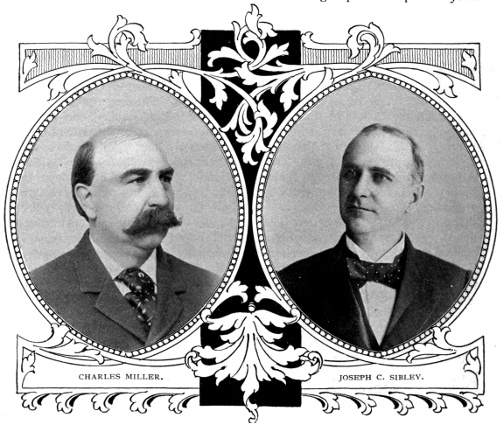
CHARLES MILLER.
JOSEPH C. SIBLEY.
Hon. Charles Miller, president of the Galena Oil-Works, and Hon. Joseph
C. Sibley, president of the Signal Oil-Works, are brothers-in-law and proprietors
96of the great stock-farms of Miller & Sibley. Mr. Miller is of Huguenot ancestry,
born in Alsace, France, in 1843. The family came to this country in 1854, settling
on a farm near Boston, Erie county, New York. At thirteen Charles clerked
one year in the village-store for thirty-five dollars and board. He clerked in
Buffalo at seventeen for one-hundred-and-seventy-five dollars, without board. In
1861 he enlisted in the New-York National Guard. In 1863 he was mustered into
the United States service and married at Springville, N. Y., to Miss Ann Adelaide
Sibley, eldest child of Dr. Joseph C. Sibley. In 1864 he commenced business
for himself, in the store in which he had first clerked, with his own savings of
two-hundred dollars and a loan of two-thousand from Dr. Sibley. In 1866 he
sold the store and removed to Franklin. Forming a partnership with John
Coon of Buffalo, the firm carried on a large dry-goods house until 1869, when a
patent for lubricating oil and a refinery were purchased and the store was closed
out at heavy loss. The refinery burned down the next year, new partners were
taken in and in 1878 the business was organized in its present form as “The
Galena Oil-Works, Limited.” The entire management was given Mr. Miller,
who had built up an immense trade and retained his interest in the works. He
deals directly with consumers. Since 1870 his business-trips have averaged five
days a week and fifty-thousand miles a year of travel. No man has a wider
acquaintance and more personal friends among railroad-officials. His journeys
cover the United States and Mexico. Wherever he may be, in New Orleans or
San Francisco, on the train or in the hotel, conferring with a Vanderbilt or the
humblest manager of an obscure road, receiving huge orders or aiding a deserving
97cause, he is always the same genial, magnetic, generous exemplar of practical
belief in “the universal fatherhood of God and the brotherhood of man.”
Major Miller is one whom money does not spoil. He is the master, not the
servant, of his wealth. He uses it to extend business, to foster enterprise, to
further philanthropy, to alleviate distress and to promote the comfort and happiness
of all about him. His benefactions keep pace with his increasing prosperity.
He is ever foremost in good deeds. He gives thousands of dollars
yearly to worthy objects, to the needy, to churches, to schools, to missions and
to advance the general welfare. In 1889 he established a free night-school for
his employés and the youth of Franklin, furnishing spacious rooms with desks
and apparatus and engaging four capable teachers. This school has trained
hundreds of young men for positions as accountants, book-keepers, stenographers
and clerks. The First Baptist church, which he assisted in organizing, is
the object of his special regard. He bore a large share of the cost of the brick-edifice,
the lecture-room and the parsonage. He and Mr. Sibley have donated
the massive pipe-organ, maintained the superb choir, paid a good part of the
pastor’s salary, erected a branch-church and supported the only services in the
Third Ward. For twenty-five years Mr. Miller has been superintendent of the
Sabbath-school, which has grown to a membership of six-hundred. His Bible-class
of three-hundred men is equalled in the state only by John Wanamaker’s,
in Philadelphia, and James McCormick’s, in Harrisburg. The instruction is
scriptural, pointed and business-like, with no taint of bigotry or sectarianism.
No matter how far away Saturday may find him, the faithful teacher never misses
the class that is “the apple of his eye,” if it be possible to reach home. Often
he has hired an engine to bring him through on Saturday night, in order to meet
the adult pupils of all denominations who flock to hear his words of wisdom and
encouragement. Alike in conversation, teaching and public-speaking he possesses
the faculty of interesting his listeners and imparting something new. He
has raised the fallen, picked poor fellows out of the gutter, rescued the perishing
and set many wanderers in the straight path. Not a few souls, “plucked as
brands from the burning,” owe their salvation to the kindly sympathy and assistance
of this earnest layman. Eternity alone will reveal the incalculable benefit
of his night-school, his Bible-class, his church-work, his charity, his personal
appeals to the erring and his unselfish life to the community and the world.
“No duty could overtask him, no need his will outrun;
Or ever our lips could ask him, his hand the work had done.”
Twice Mr. Miller served as mayor of Franklin. Repeatedly has he declined
nominations to high offices, private affairs demanding his time and attention.
He is president or director of a score of commercial and industrial companies,
with factories, mines and works in eight states. He has been president time
after time of the Northwestern Association of Pennsylvania of the Grand Army
of the Republic, Ordnance-Officer and Assistant Adjutant-General of the Second
Brigade of Pennsylvania and Commander of Mays Post. He is a leading spirit
in local enterprises. He enjoys his beautiful home and the society of his wife
and children and friends. He prizes good horses, smokes good cigars and tells
good stories. In him the wage-earner and the breadwinner have a steadfast
helper, willing to lighten their burden and to better their condition. In short,
Charles Miller is a typical American, plucky, progressive, energetic and invincible,
with a heart to feel, genius to plan and talent to execute the noblest designs.
Hon. Joseph Crocker Sibley, eldest son of Dr. Joseph Crocker Sibley, was
born at Friendship, N.Y.,N.Y., in 1850. His father’s death obliging him to give up
98a college-course for which he had prepared, in 1866 he came to Franklin to clerk
in Miller & Coon’s dry-goods store. From that time his business interests and
Mr. Miller’s were closely allied. In 1870 he married Miss Metta E. Babcock,
daughter of Simon M. Babcock, of Friendship. He was agent of the Galena
Oil-Works at Chicago for two years, losing his effects and nearly losing his life in
the terrible fire that devastated that city. His business-success may be said to
date from 1873, when he returned to Franklin. After many experiments he
produced a signal-oil superior in light, safety and cold-test to any in use. The
Signal Oil-Works were established, with Mr. Sibley as president and the proprietors
of the Galena Oil-Works, whose plant manufactured the new product,
as partners. Next he compounded a valve-oil for locomotives, free from the
bad qualities of animal-oils, which is now used on three-fourths of the railway
mileage of the United States.
Every newspaper-reader in the land has heard of the remarkable Congressional
fight of 1892 in the Erie-Crawford district. Both counties were overwhelmingly
Republican. People learned with surprise that Hon. Joseph C.
Sibley, a resident of another district, had accepted the invitation of a host of
good citizens, by whom he was selected as the only man who could lead them
to victory over the ring, to try conclusions with the nominee of the ruling party,
who had stacks of money, the entire machine, extensive social connections,
religious associations—he was a preacher—and a regular majority of five-thousand
to bank upon. Some wiseacres shook their heads gravely and predicted
disaster. Such persons understood neither the resistless force of quickened
public sentiment nor the sterling qualities of the candidate from Venango county.
Democrats, Populists and Prohibitionists endorsed Sibley. He conducted
a campaign worthy of Henry Clay. Multitudes crowded to hear and see a man
candid enough to deliver his honest opinions with the boldness of “Old Hickory.”
The masses knew of Mr. Sibley’s courage, sagacity and success in business,
but they were unprepared to find so sturdy a defender of their rights. His
manly independence, ringing denunciations of wrong, grand simplicity and incisive
logic aroused unbounded enthusiasm. The tide in favor of the fearless
advocate of fair-play for the lowliest creature no earthly power could stem.
His opponent was buried out of sight and Sibley was elected by a sweeping
majority.
Mr. Sibley’s course in Congress amply met the expectations of his most ardent
supporters. The prestige of his great victory, added to his personal magnetism
and rare geniality, at the very outset gave him a measure of influence few
members ever attain. During the extra-session he expressed his views with
characteristic vigor. A natural leader, close student and keen observer, he did
not wait for somebody to give him the cue before putting his ideas on record.
In the silver-discussion he bore a prominent part, opposing resolutely the repeal
of the Sherman act. His wonderful speech “set the ball rolling” for those who
declined to follow the administration program. The House was electrified by
Sibley’s effort. Throughout his speech of three hours he was honored with the
largest Congressional audience of the decade. Aisles, halls, galleries and corridors
were densely packed. Senators came from the other end of the Capitol
to listen to the brave Pennsylvanian who dared plead for the white metal. For
many years Mr. Sibley has been a close student of political and social economics
and he so grouped his facts as to command the undivided attention and the
highest respect of those who honestly differed from him in his conclusions. Satire,
pathos, bright wit and pungent repartee awoke in his hearers the strongest
99emotions, entrancing the bimetalists and giving their enemies a cold chill, as the
stream of eloquence flowed from lips “untrained to flatter, to dissemble or to
play the hypocrite.” Thenceforth the position of the representative of the
Twenty-sixth district was assured, despite the assaults of hireling journals and
discomfited worshippers of the golden calf.
He took advanced ground on the Chinese question, delivering a speech
replete with patriotism and common-sense. An American by birth, habit and
education, he prefers his own country to any other under the blue vault of
heaven. The American workman he would protect from pauper immigration
and refuse to put on the European or Asiatic level. He stands up for American
skill, American ingenuity, American labor and American wages. Tariff for
revenue he approves of, not a tariff to diminish revenue or to enrich one class at
the expense of all. The tiller of the soil, the mechanic, the coal-miner, the coke-burner
and the day-laborer have found him an outspoken champion of their
cause. Small wonder is it that good men and women of all creeds and parties
have abiding faith in Joseph C. Sibley and would fain bestow on him the highest
office in the nation’s gift.
Human nature is a queer medley and sometimes manifests streaks of envy
and meanness in queer ways. Mr. Sibley’s motives have been impugned, his
efforts belittled, his methods assailed and his neckties criticised by men who
could not understand his lofty character and purposes. The generous ex-Congressman
must plead guilty to the charge of wearing clothes that fit him, of
smoking decent cigars, of driving fine horses and of living comfortably. Of
course it would be cheaper to buy hand-me-down misfits, to indulge in loud-smelling
tobies, to walk or ride muleback, to curry his own horses and let his
wife do the washing instead of hiring competent helpers. But he goes right
ahead increasing his business, improving his farms, developing American trotters
and furnishing work at the highest wages to willing hands in his factories, at his
oil-wells, on his lands, in his barns and his hospitable home. He dispenses large
sums in charity. His benevolence and enterprise reach far beyond Pennsylvania.
He does not hoard up money to loan it at exorbitant rates. As a matter of fact,
from the hundreds of men he has helped pecuniarily he never accepted one
penny of interest. He has been mayor of Franklin, president of the Pennsylvania
State-Dairymen’s Association, director of the American Jersey-Cattle
Club and member of the State Board of Agriculture. He is a brilliant talker,
a profound thinker, a capital story-teller and a loyal friend. “May he live long
and prosper!”
Miller & Sibley’s Prospect-Hill Stock-Farm is one of the largest, best equipped
and most favorably known in the world. Different farms comprising the
establishment include a thousand acres of land adjacent to Franklin and a farm,
with stabling for two-hundred horses and the finest kite-track in the United
States, at Meadville. On one of these farms is the first silo built west of the
Allegheny mountains. Trotting stock, Jersey cattle, Shetland ponies and Angora
goats of the highest grades are bred. For Michael Angelo, when a calf six
weeks old, twelve-thousand-five-hundred dollars in cash were paid A. B. Darling,
proprietor of the Fifth-Avenue Hotel, New York City. Animals of the best
strain were purchased, regardless of cost. In 1886 Mr. Sibley bought from
Senator Leland Stanford, of California, for ten-thousand dollars, the four-year-old
trotting-stallion St. Bel. Seventy-five thousand were offered for him a few
weeks before the famous sire of numerous prize-winners died. Cows that have
broken all records for milk and butter, and horses that have won the biggest
100purses on the leading race-tracks of the country are the results of the liberal
policy pursued at Prospect-Hill. Charles Marvin, the prince of horsemen,
superintends the trotting department and E. H. Sibley is manager of all the
Miller & Sibley interests. Hundreds of the choicest animals are raised every
year. Prospect-Hill Farm is one of the sights of Franklin and the enterprise
represents an investment not far short of one-million dollars. Wouldn’t men
like Charles Miller and Joseph C. Sibley sweep away the cobwebs, give business
an impetus and infuse new life and new ideas into any community?
Franklin had tallied one for heavy-oil, but its resources were not exhausted.
On October seventeenth, 1859, Colonel James P. Hoover, C. M. Hoover and
Vance Stewart began to drill on the Robert-Brandon—now the Hoover—farm
of three-hundred acres, in Sandycreek township, on the west bank of the Allegheny
river, three miles south of Franklin. They found oil on December
twenty-first, the well yielding one-hundred barrels a day! This pretty Christmas
gift was another surprise. Owing to its distance from “springs” and the two
wells—Drake and Evans—already producing, the stay-in-the-rut element felt
confident that the Hoover Well would not “amount to a hill of beans.” It was
“piling Ossa on Pelion” for the well to produce, from the second sand, oil
with properties adapted to illumination and lubrication. The Drake was for
light, the Evans for grease and the Hoover combined the two in part. Where
and when was this variegated dissimilarity to cease? Perhaps its latest phase is
to come shortly. Henry F. James is beginning a well south-west of town, on the
N. B. Myers tract, between a sweet and a sour spring. Savans, scientists, beer-drinkers,
tee-totalers and oil-operators are on the ragged edge of suspense,
some hoping, some fearing, some praying that James may tap a perennial fount
of creamy ’alf-and-’alf.
Once at a drilling-well on the “Point” the tools dropped suddenly. The
driller relieved the tension on his rope and let the tools down slowly. They
descended six or eight feet! The bare thought of a crevice of such dimensions
paralyzed the knight of the temper-screw, all the more that the hole was not to
the first sand. What a lake of oil must underlie that derrick! He drew up the
tools. They were dripping amber fluid, which had a flavor quite unlike petroleum.
Did his nose deceive him? It was the aroma of beer! A lick of the
stuff confirmed the nasal diagnosis—it had the taste of beer! The alarm was
sounded and the sand-pump run down. It came up brimming over with beer!
Ten times the trip was repeated with the same result. Think of an ocean of the
delicious, foamy, appetizing German beverage! Word was sent to the owners
of the well, who ordered the tubing to be put in. They tried to figure how
many breweries the production of their well would retire. Pumping was about
to begin, in presence of a party of impatient, thirsty spectators, when an excited
Teuton, blowing and puffing, was seen approaching at a breakneck pace.
Evidently he had something on his mind. “Gott in Himmel!” he shrieked,
“you vas proke mit Grossman’s vault!” The mystery was quickly explained.
Philip Grossman, the brewer, had cut a tunnel a hundred feet into the hill-side
to store his liquid-stock in a cool place. The well chanced to be squarely over
this tunnel, the roof of which the tools pierced and stove in the head of a tun of
beer! Workmen who came for a load were astonished to discover one end of
a string of tubing dangling in the tun. It dawned upon them that the drillers
three-hundred feet above must have imagined they struck a crevice and a messenger
speeded to the well. The saddened crowd slinked off, muttering words
that would not look nice in print. The tubing was withdrawn, the hogshead
101was shoved aside, the tools were again swung and two weeks later the well was
pumping thirty barrels a day of unmistakable heavy-oil.
The Hoover strike fed the flame the Evans Well had kindled. Lands in the
neighborhood were in demand on any terms the owners might impose. From
Franklin to the new well, on both sides of the Allegheny, was the favorite
choice, on a theory that a pool connected the deposits. Leases were snapped up
at one-half royalty and a cash-bonus. Additional wells on the Hoover rivaled
No. 1, which produced gamely for four years. The tools were stuck in cleaning it
out and a new well beside it started at sixty barrels. The “Big-Emma Vein”
was really an artery to which for years “whoa, Emma!” did not apply. Bissell
& Co. and the Cameron Petroleum-Company secured control of the property, on
which fifteen wells were producing two-hundred barrels ten years from the advent
of the Hoover & Vance. Harry Smith, a city-father, is operating on the
tract and drilling paying wells at reasonable intervals. Colonel James P. Hoover
died on February fourth, 1871, aged sixty-nine. Born in Centre county, he settled
in the southern part of Clarion, was appointed by Governor Porter in 1839
Prothonotary of Venango county and removed to Franklin. The people elected
him to the same office for three years and State-Senator in 1844. The Canal-Commissioners
in 1851 appointed him collector of the tolls at Hollidaysburg,
Blair county, for five years. He filled these positions efficiently, strict adherence
to principle and a high sense of duty marking his whole career. The esteem
and confidence he enjoyed all through his useful life were attested by universal
regret at his death and the largest funeral ever
witnessed in Franklin. His estimable widow survived
Colonel Hoover twenty years, dying at the
residence of her son-in-law, Arnold Plumer, in
Minnesota. Their son, C. M. Hoover, ex-sheriff
of the county, has been interested in the street
railway. Vance Stewart, who owned a farm near
the lower river-bridge, removed to Greenville
and preceded his wife and several children, one
of them Rev. Orlando V. Stewart, to the tomb.
Another son, James Stewart, was a prominent
member of the Erie bar.
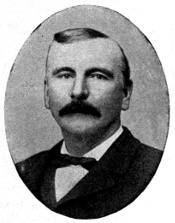
The opening months of 1860 were decidedly
lively on the Cochran Farm, in Cranberry township,
opposite the Hoover. The first well, the
Keystone, on the flats above where the station
now stands, was a second-sander of the hundred-barrel
class. The first oil sold for fourteen dollars a barrel, at which rate
land-owners and operators were not in danger of bankruptcy or the poor-house.
Fourteen-hundred dollars a day from a three-inch hole would have seemed too
preposterous for Munchausen before the Pennsylvania oil-regions demonstrated
that “truth is stranger than fiction.” The Monitor, Raymond, Williams, McCutcheon
and other wells kept the production at a satisfactory figure. Dale &
Morrow, Horton & Son, Hoover & Co., George R. Hobby, Cornelius Fulkerson
and George S. McCartney were early operators. B. E. Swan located on the farm
in May of 1865 and drilled numerous fair wells. He has operated there for thirty-two
years, sticking to the second-sand territory with a tenacity equal to the “perseverance
of the saints.” When thousands of producers, imitating the dog that
let go the bone to grasp the shadow in the water, quit their enduring small wells
102to take their chance of larger ones in costlier fields, he did not lose his head
and add another to the financial wrecks that strewed the greasian shore. Appreciating
his moral stamina, his steadfastness and ability, Mr. Swan’s friends insist
that he shall serve the public in some important office. Walter Pennell—his
father made the first car-wheels—and W. P. Smith drilled several snug wells
on the uplands, Sweet & Shaffer following with six or eight. Eighteen wells are
producing on the tract, which contains one-hundred-and-fortyone-hundred-and-forty acres and has had
only two dry-holes in its thirty-six years of active developments.
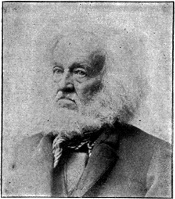
Alexander Cochran, for forty years owner of the well-known farm bearing
his name, is one of the oldest citizens of Franklin. Winning his way in the world
by sheer force of character, scrupulous integrity and a fixed determination to
succeed, he is in the highest and best sense a self-made man. Working hard in
boyhood to secure an education, he taught school, clerked in general stores,
studied law and was twice elected Prothonotary without asking one voter for his
support. In these days of button-holing, log-rolling, wire-pulling, buying and
soliciting votes this is a record to recall with pride. Marrying Miss Mary Bole—her
father removed from Lewistown to Franklin seventy-five years ago—he built
the home at “Cochran Spring” that is one of the land-marks of the town and
established a large dry-goods store. As his means permitted he bought city-lots,
put up dwelling-houses and about 1852 paid
sixteen-hundred dollars for the farm in Cranberry
township for which in 1863, after it had
yielded a fortune, he refused seven-hundred-thousand!
The farm was in two blocks. A
neighbor expostulated with him for buying
the second piece, saying it was “foolish to
waste money that way.” In 1861, when the
same neighbor wished to mortgage his land
for a loan, he naively remarked: “Well,
Aleck, I guess I was the fool, not you, in
1852.” A man of broad views, Mr. Cochran
freely grants to others the liberality of thought
he claims for himself. A hater of cant and
sham and hollow pretence, he believes less in
musty creeds than kindly deeds, more in giving
loaves than tracts to the hungry, and
takes no stock in religion that thinks only of dodging punishment in the next
world and fails to help humanity in this. In the dark days of low-priced oil and
depressed trade, he would accept neither interest from his debtors nor royalty
from the operators who had little wells on his farm. He never hounded the
sheriff on a hapless borrower, foreclosed a mortgage to grab a coveted property
or seized the chattels of a struggling victim to satisfy a shirt-tail note. There is
no shred of the Pecksniff, the Shylock or the Uriah-Heep in his anatomy. At
fourscore he is hale and hearty, rides on horseback, cultivates his garden,
attends to business, likes a good play and keeps up with the literature of the
day. The productive oil-farm is now owned by his daughters, Mrs. J. J. McLaurin,
of Harrisburg, and Mrs. George R. Sheasley, of Franklin. The proudest
eulogy he could desire is Alexander Cochran’s just desert: “The Poor Man’s
Friend.”
Down to Sandy Creek many wells were drilled from 1860 to 1865, producing
fairly at an average depth of four-hundred-and-fifty to five-hundred feet.
103These operations included the Miller, Smith and Pope farms, on the west side
of the river, and the Rice, Nicklin, Martin and Harmon, on the east side, all
second-sand territory. North of the Cochran and the Hoover work was pushed
actively. George H. Bissell and Vance Stewart bored twelve or fifteen medium
wells on the Stewart farm of two-hundred acres, which the Cameron Petroleum
Company purchased in 1865 and Joseph Dale operated for some years. It lies
below the lower bridge, opposite the Bleakley tract, from which a light production
is still derived. Above the Stewart are the Fuller and the Chambers farms,
the latter extending to the Allegheny-Valley depot. Scores of eager operators
thronged the streets of Franklin and drilled along the Allegheny. Joseph Powley
and Charles Cowgill entered the lists in the Cranberry district. Henry M.
Wilson and George Piagett veered into the township and sank a bevy of dry-holes
to vary the monotony. That was a horse on Wilson, but he got ahead of
the game by a deal that won him the nicest territory on Horse Creek. Stirling
Bonsall and Colonel Lewis—they’re dead now—were in the thickestthickest of the fray,
with Captain Goddard, Philip Montgomery, Boyd, Roberts, Foster, Brown,
Murphy and many more whom old-timers remember pleasantly. Thomas King,
whole-souled, genial “Tom”—no squarer man e’er owned a well or handled
oil-certificates—and Captain Griffith were “a good pair to draw to.” King has
“crossed over,” as have most of the kindred spirits that dispelled the gloom in
the sixties.
Colonel W. T. Pelton, nephew of Samuel J. Tilden, participated in the
scenes of that exciting period. He lived at Franklin and drilled wells on French
Creek. He was a royal entertainer, shrewd in business, finely educated and
polished in manner and address. He and his wife—a lovely and accomplished
woman—were fond of society and gained hosts of friends. They boarded at the
United-States Hotel, where Mrs. Pelton died suddenly. This affliction led Colonel
Pelton to sell his oil-properties and abandon the oil-regions. Returning to
New York, when next he came into view as the active agent of his uncle in the
secret negotiations that grew out of the election of 1876, it was with a national
fame. His death in 1880 closed a busy, promising career.
In the spring of 1864 a young man, black-haired, dark-eyed, an Apollo in
form and strikingly handsome, arrived at Franklin and engaged rooms at Mrs.
Webber’s, on Buffalo street. The stranger had money, wore good clothes and
presented a letter of introduction to Joseph H. Simonds, dealer in real-estate, oil-wells
and leases. He looked around a few days and concluded to invest in
sixty acres of the Fuller farm, Cranberry township, fronting on the Allegheny
river. The block was sliced off the north end of the farm, a short distance below
the upper bridge and the Valley station. Mr. Simonds consented to be a
partner in the transaction. The transfer was effected, the deed recorded and a
well started. It was situated on the hill, had twenty feet of second-sand and
pumped twenty barrels a day. The owner drilled two others on the bluff, the
three yielding twenty barrels for months. The ranks of the oil-producers had
received an addition in the person of—John Wilkes Booth.
The firm prospered, each of the members speculating and trading individually.
M. J. Colman, a capital fellow, was interested with one or both in
various deals. Men generally liked Booth and women admired him immensely.
His lustrous orbs, “twin-windows of the soul,” could look so sad and pensive
as to awaken the tenderest pity, or fascinate like “the glittering eye” of the
Ancient Mariner or the gaze of the basilisk. “Trilby” had not come to light, or
he might have enacted the hypnotic role of Svengali. His moods were variable
104and uncertain. At times he seemed morose and petulant, tired of everybody
and “unsocial as a clam.” Again he would court society, attend parties,
dance, recite and be “the life of the company.” He belonged to a select circle
that exchanged visits with a coterie of young folks in Oil City. A Confederate
sympathizer and an enemy of the government, his closest intimates were staunch
Republicans and loyal citizens. William J. Wallis, the veteran actor who died
in December of 1895, in a Philadelphia theater slapped him on the mouth for
calling President Lincoln a foul name. Booth’s acting, while inferior to his
brother Edwin’s, evinced much dramatic power. He controlled his voice
admirably, his movements were graceful and he spoke distinctly, as Franklinites
whom he sometimes favored with a reading can testify.
One morning in April, 1865, he left Franklin, telling Mr. Simonds he was
going east for a few days. He carried a satchel, which indicated that he did not
expect his stay to be prolonged indefinitely. His wardrobe, books and papers
remained in his room. Nothing was heard of him until the crime of the century
stilled all hearts and the wires flashed the horrible news of Abraham Lincoln’s
assassination. The excitement in Franklin, the murderer’s latest home, was
intense. Crowds gathered to learn the dread particulars and discuss Booth’s
conduct and utterances. Not a word or act previous to his departure pointed
to deliberate preparation for the frightful deed that plunged the nation in grief.
That he contemplated it before leaving Franklin the weight of evidence tended
to disprove. He made no attempt to sell any of his property, to convert his
lands and wells into cash, to settle his partnership accounts or to pack his
effects. He had money in the bank, wells bringing a good income and important
business pending. All these things went to show that, if not a sudden impulse,
the killing of Lincoln was prompted by some occurrence in Washington
that fired the passionate nature John Wilkes Booth inherited from his father.
The world is familiar with the closing chapters of the dark tragedy—the assassin’s
flight, the pursuit into Virginia, the burning barn, Sergeant Corbett’s fatal
bullet, the pathetic death-scene on the Garrett porch and the last message, just
as the dawn was breaking on the glassy eyes that opened feebly for a moment:
“Tell my mother I died for my country. I did what I thought was best.”
The wells and the land on the river were held by Booth’s heirs until 1869,
when the tract changed hands. The farm is producing no oil and the Simonds-Booth
105wells have disappeared. Had he not intended to return to Franklin,
Booth would certainly have disposed of these interests and given the proceeds
to his mother. “Joe” Simonds removed to Bradford to keep books for
Whitney & Wheeler, bankers and oil-operators, and died there years ago. He
was an expert accountant, quick, accurate and neat in his work and most
fastidious in his attire. A blot on his paper, a figure not exactly formed, a line
one hair-breath crooked, a spot on his linen or a speck of dust on his coat was
simply intolerable. He was correct in language and deportment and honorable
in his dealings. Colman continued his oil-operations, in company with W. R.
Crawford, a real-estate agency, until the eighties. He married Miss Ella Hull,
the finest vocalist Franklin ever boasted, daughter of Captain S. A. Hull, and
removed to Boston. For years paralytic trouble has confined him to his home.
He is “one of nature’s nobleman.”
“French Kate,” the woman who aided Ben Hogan at Pithole and followed
him to Babylon and Parker, was a Confederate spy and supposed to be
very friendly with J. Wilkes Booth. Besides his oil-interests at Franklin, the
slayer of Abraham Lincoln owned a share in the Homestead well at Pithole.
A favorite legend tells how, by a singular coincidence, which produced a sensation,
the well was burned on the evening of the President’s assassination. It
caught fire about the same instant the fatal bullet was fired in Ford’s Theater
and tanks of burning oil enveloped Pithole in a dense smoke when the news of
the tragedy flashed over the trembling wires. The Homestead well was not
down until Lincoln had been dead seven weeks, Pithole had no existence and
there were no blazing tanks; otherwise the legend is correct. Two weeks
before his appalling crime Booth was one of a number of passengers on the
scow doing duty as a ferry-boat across the Allegheny, after the Franklin bridge
had burned. The day was damp and the water very cold. Some inhuman
whelp threw a fine setter into the river. The poor beast swam to the rear of
the scow and Booth pulled him on board. He caressed the dog and bitterly
denounced the fellow who could treat a dumb animal so cruelly. At another
time he knocked down a cowardly ruffian for beating a horse that was unable
to pull a heavy load out of a mud-hole. He has been known to shelter stray
kittens, to buy them milk and induce his landlady to care for them until they
could be provided with a home. Truly his was a contradictory nature. He
sympathized with horses, dogs and cats, yet robbed the nation of its illustrious
chief and plunged mankind into mourning. To newsboys Booth was always
liberal, not infrequently handing a dollar for a paper and saying: “No change;
buy something useful with the money.” The first time he went to the Methodist
Sunday-school, with “Joe” Simonds, he asked and answered questions
and put a ten-dollar bill in the collection-box.
Over the hills to the interior of the townships developments spread.
Bredinsburg, Milton and Tarkiln loomed up in Cranberry, where Taylor &
Torrey, S. P. McCalmont, Jacob Sheasley, B. W. Bredin and E. W. Echols
have sugar-plums. In Sandycreek, between Franklin and Foster, Angell &
Prentice brought Bully Hill and Mount Hope to the front. The biggest well
in the package was a two-hundred barreler on Mount Hope, which created a
mount of hopes that were not fully realized. George V. Forman counted out
one-hundred-and-fifty-thousand dollars for the Mount Hope corner. The territory
lasted well and averaged fairly. Bully Hill merited its somewhat slangy
title. Dr. C. D. Galbraith, George R. Sheasley and Mattern & Son are among
its present operators. Angell and Prentice parted company, each to engage in
106opening up the Butler region. Prentice, Crawford, Barbour & Co. did not let
the grass grow under their feet. They “knew a good thing at sight” and
pumped tens-of-thousands of barrels of oil from the country south of Franklin.
The firm was notable in the seventies. Considerable drilling was done at Polk,
where the state is providing a half-million-dollar Home for Feeble-Minded
Children, and in the latitude of Utica, with about enough oil to be an aggravation.
The Shippen wells, a mile north of the county poor-house, have produced
for thirty years. West of them, on the Russell farm, the Twin wells, joined as
tightly as the derricks could be placed, pumped for years. This was the verge
of productive territory, test wells on the lands of William Sanders, William
Bean, A. Reynolds, John McKenzie, Alexander Frazier and W. Booth, clear to
Cooperstown, finding a trifle of sand and scarcely a vestige of oil. The Raymonds,
S. Ramage, John J. Doyle and Daniel Grimm had a very tidy offshoot
at Raymilton. On this wise lubricating and second-sand oils were revealed
for the benefit of mankind generally. The fly in the ointment was the clerical
crank who wrote to President Lincoln to demand that the producing of heavy-oil
be stopped peremptorily, as it had been stored in the ground to grease the
axletree of the earth in its diurnal revolution! This communication reminded
Lincoln of a “little story,” which he fired at the fellow with such effect that the
candidate for a strait-jacket was perpetually squelched.
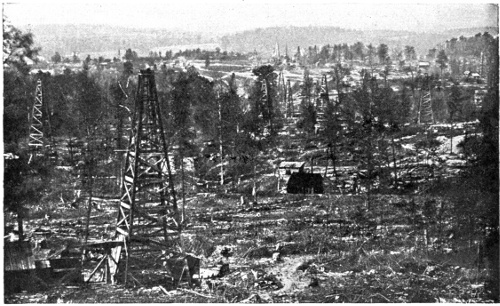
ANGELL & PRENTICE’S WELLS BELOW FRANKLIN IN 1873.
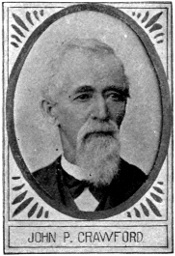
Hon. William Reid Crawford, a member of the firm of Prentice, Crawford,
Barbour & Co., lives in Franklin. His parents were early settlers in north-western
Pennsylvania. Alexander Grant, his maternal grandfather, built the first stone-house
in Lancaster county, removed to Butler county and located finally in Armstrong
county, where he died sixty-five years ago. In 1854 William R. and four
of his brothers went to California and spent some time mining gold. Upon his
return he settled on a farm in Scrubgrass township, Venango county, of which
section the Crawfords had been prominent citizens from the beginning of its history.
Removing to Franklin in 1865, Mr. Crawford engaged actively in the production
107of petroleum, operating extensively in various portions of the oil-regions
for twenty years. He acquired a high reputation for enterprise and integrity,
was twice a city-councillor, served three terms as mayor, was long president of
the school-board, was elected sheriff in 1887 and
State-Senator in 1890. Untiring fidelity to the interests
of the people and uncompromising hostility
to whatever he believed detrimental to the general
welfare distinguished his public career. Genial
and kindly to all, the friend of humanity and benefactor
of the poor, no man stands better in popular
estimation or is more deserving of confidence and
respect. His friends could not be crowded into the
Coliseum without bulging out the walls. Ebenezer
Crawford, brother of William R., died at Emlenton
in August of 1897, on his seventy-sixth birthday.
John P. Crawford, another brother, who made the
California trip in 1849, still resides in the southern
end of the county and is engaged in oil-operations.
E. G. Crawford, a nephew, twice prothonotary of
Venango and universally liked, passed away last June. His cousin, C. J.
Crawford, a first-class man anywhere and everywhere, served as register and
recorder with credit and ability. The Crawfords “are all right.”
For money may come and money may go,
But a good name stays to the end of the show.
Captain John K. Barbour, a man of imposing presence and admirable qualities,
removed to Philadelphia after the dissolution of the firm. The Standard
Oil-Company gave him charge of the right-of-way department of its pipe-line
service and he returned to Franklin. Two years ago, during a business visit to
Ohio, he died unexpectedly, to the deep regret of the entire community. S. A.
Wheeler operated largely in the Bradford field and organized the Tuna-Valley
Bank of Whitney & Wheeler. For a dozen years he has resided at Toledo, his
early home. Like Captain Barbour, “Fred,” as he was commonly called, had
an exhaustless mine of bright stories and a liberal share of the elements of popularity.
One afternoon in 1875, three days before the fire that wiped out the
town, a party of us chanced to meet at St. Joe, Butler county, then the centre of
oil-developments. An itinerating artist had his car moored opposite the drug-store.
Somebody proposed to have a group-picture. The motion carried unanimously
and a toss-up decided that L. H. Smith was to foot the bill. The photographer
brought out his camera, positions were taken on the store-platform
and the pictures were mailed an hour ahead of the blaze that destroyed most of
the buildings and compelled the artist to hustle off his car on the double-quick.
Samuel R. Reed, at the extreme right, operated in the Clarion field. He had a hardware-store
in company with the late Dr. Durrant and his home is in Franklin.
James Orr, between whom and Reed a telegraph-pole is seen, was connected
with the Central Hotel at Petrolia and later was a broker in the Producers’ Exchange
at Bradford. On the step is Thomas McLaughlin, now oil-buyer at
Lima, once captain of a talented base-ball club at Oil City and an active oil-broker.
Back of him is “Fred” Wheeler, with Captain Barbour on his right
and L. H. Smith sitting comfortably in front. Mr. Smith figured largely at Pithole,
operated satisfactorily around Petrolia and removed years ago to New
York. Cast in a giant mould, he weighs three-hundred pounds and does credit
108to the illustrious legions of Smiths. He is a millionaire and has an office over
the Seaboard Bank, at the lower end of Broadway. Joseph Seep, the king-bee
of good fellows, sits besides Smith. Pratt S. Crosby, formerly a jolly broker at
Parker and Oil City, stands behind Seep. Next him is “Tom” King, who has
“gone to the land of the leal,” J. J. McLaurin ending the row. James Amm, who
went from an Oil-city clerkship to coin a fortune at Bradford—a street bears
his name—sits on the
platform. Every man,
woman, child and baby
near Oil City knew and
admired “Jamie” Amm,
who is now enjoying his
wealth in Buffalo. Two
out of the eleven in the
group have “passed beyond
the last scene” and
the other nine are scattered
widely.
“Friend after friend departs,
Who hath not lost a friend?”
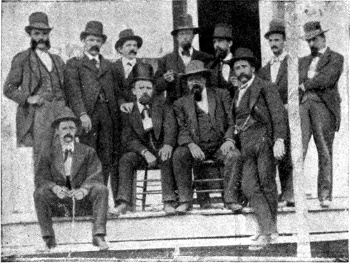
GROUP AT ST. JOE, BUTLER COUNTY, IN 1874.
Frederic Prentice, one
of the pluckiest operators
ever known in petroleum-annals,
was the
first white child born on the site of Toledo, when Indians were the neighbors
of the pioneers of Northern Ohio. His father left a fine estate, which the
son increased greatly by extensive lumbering, in which he employed three-thousand
men. Losses in the panic of 1857 retired him from the business. He
retrieved his fortune and paid his creditors their claims in full, with ten per cent.
interest, an act indicative of his sterling character. Reading in a newspaper
about the Drake well, he decided to see for himself whether the story was fast
colors. Journeying to Venango county by way of Pittsburg, he met and engaged
William Reed to accompany him. Reed had worked at the Tarentum salt-wells
and knew a thing or two about artesian-boring. The two arrived at
Franklin on the afternoon of the day Evans’s well turned the settlement topsy-turvy.
Next morning Prentice offered Evans forty-thousand dollars for a controlling
interest in the well, one-fourth down and the balance in thirty, sixty and
ninety days. Evans declining to sell, the Toledo visitor bought from Martin &
Epley an acre of ground on the north bank of French Creek, at the base of the
hill, and contracted with Reed to “kick down” a well, the third in the district.
Prentice and Reed tramped over the country for days, locating oil-deposits by
means of the witch-hazel, which the Tarentumite handled skillfully. This was
a forked stick, which it was claimed turned in the hands of the holder at spots
where oil existed. Various causes delayed the completion of the well, which at
last proved disappointingly small. Meanwhile Mr. Prentice leased the Neeley
farm, two miles up the Allegheny, in Cranberry township, and bored several
paying wells. A railroad station on the tract is named after him and R. G.
Lamberton has converted the property into a first-class stock-farm. Favorable
reports from Little Kanawha River took him to West Virginia, where he leased
and purchased immense blocks of land. Among them was the Oil-Springs tract,
on the Hughes River, from which oil had been skimmed for generations. Two
109of his wells on the Kanawha yielded six-hundred barrels a day, which had to be
stored in ponds or lakes for want of tankage. Confederate raiders burned the
wells, oil and machinery and drove off the workmen, putting an extinguisher
on operations until the Grant-Lee episode beneath the apple-tree at Appomattox.
Assuming that the general direction of profitable developments would be
north-east and south-west, Mr. Prentice surveyed a line from Venango county
through West Virginia, Kentucky and Tennessee. This idea, really the foundation
of “the belt theory,” he spent thousands of dollars to establish. Personal
investigation and careful surveys confirmed his opinion, which was based upon
observations in the Pennsylvania fields. The line run thirty years ago touched
numerous “springs” and “surface shows” and recent tests prove its remarkable
accuracy. On this theory he drilled at Mount Hope and Foster, opening a
section that has produced several-million barrels of oil. C. D. Angell applied
the principle in Clarion and Butler counties, mapping out the probable course of
the “belt” and leasing much prolific territory. His success led others to adopt
the same plan, developing a number of pools in four states, although nature’s
lines are seldom straight and the oil-bearing strata are deposited in curves and
beds at irregular intervals.
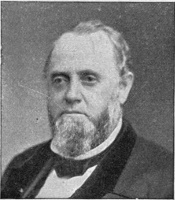
In company with W. W. Clark of New York, to whom he had traded a
portion of his West-Virginia lands, Mr. Prentice secured a quarter-interest in the
Tarr farm, on Oil Creek, shortly before the sinking of the Phillips well, and
began shipping oil to New York. They paid three dollars apiece for barrels,
four dollars a barrel for hauling to the railroad and enormous freights to the
east. The price dropping below the cost
of freights and barrels, the firm dug acres of
pits to put tanks under ground, covering
them with planks and earth to prevent evaporation.
Traces of these storage-vats remain
on the east bank of Oil Creek. Crude
fell to twenty-five cents a barrel at the wells
and the outlook was discouraging. Clark
& Prentice stopped drilling and turned their
attention to finding a market. They constructed
neat wooden packages that would
hold two cans of refined-oil, two oil-lamps
and a dozen chimneys and sent one to each
United-States Consul in Europe. Orders
soon rushed in from foreign countries,
especially Germany, France and England,
stimulating the erection of refineries and
creating a large export-trade. Clark & Summer, who also owned an interest in
the Tarr farm, built the Standard Refinery at Pittsburg and agreed to take from
Clark & Prentice one-hundred-thousand barrels of crude at a dollar a barrel, to
be delivered as required during the year. Before the delivery of the first twenty-five-thousand
barrels the price climbed to one-fifty and to six dollars before the
completion of the contract, which was carried out to the letter. The advance
continued to fourteen dollars a barrel, lasting only one day at this figure. These
were vivifying days in oleaginous circles, never to be repeated while Chronos
wields his trusty blade.
When crude reached two dollars Mr. Prentice bought the Washington-McClintock
farm, on which Petroleum Centre was afterwards located, for three-hundred-thousand
110dollars. Five New-Yorkers, one of them the president of the
Shoe and Leather Bank and another the proprietor of the Brevoort House, advanced
fifty-thousand dollars for the first payment. Within sixty days Prentice
sold three-quarters of his interest for nine-hundred-thousand dollars and organized
the Central Petroleum Oil-Company, with a capital of five-millions!
Wishing to repay the New-York loan, the Brevoort landlord desired him to retain
his share of the money and invest it as he pleased. For his ten-thousand
dollars mine host received eighty-thousand in six months, a return that leaves
government-bond syndicates and Cripple-Creek speculations out in the latitude
of Nansen’s north-pole. The company netted fifty-thousand dollars a month in
dividends for years and lessees cleared three or four millions from their operations
on the farm. Greenbacks circulated like waste-paper, Jules Verne’s fancies
were surpassed constantly by actual occurrences and everybody had money
to burn.
Prentice and his associates purchased many tracts along Oil Creek, including
the lands where Oil City stands and the Blood farm of five-hundred acres. In
the Butler district he drilled hundreds of wells and built the Relief Pipe-Line.
Organizing The Producers’ Consolidated Land-and-Petroleum-Company, with
a capital of two-and-a-half millions, he managed it efficiently and had a prominent
part in the Bradford development. Boston capitalists paid in twelve-hundred-thousand
dollars, Prentice keeping a share in his oil-properties representing
thirteen-hundred-thousand more. The company is now controlled by the
Standard, with L. B. Lockhart as superintendent. Its indefatigable founder also
organized the Boston Oil Company to operate in Kentucky and Tennessee, put
down oil-wells in Peru and gas-wells in West Virginia, produced and piped
thousands of barrels of crude daily and was a vital force in petroleum-affairs
for eighteen years. The confidence and esteem of his compatriots were attested
by his unanimous election to the presidency of the Oilmen’s League, a secret-society
formed to resist the proposed encroachments of the South-Improvement
Company. The League accomplished its mission and then quietly melted out
of existence.
Since 1877 Mr. Prentice has devoted his attention chiefly to lumbering in
West Virginia and to his brown-stone quarries at Ashland, Wisconsin. The
death of his son, Frederick A., by accidental shooting, was a sad bereavement
to the aged father. His suits to get possession of the site of Duluth, the city of
Proctor Knott’s impassioned eulogy, included in a huge grant of land deeded to
him by the Indians, were scarcely less famous than Mrs. Gaines’s protracted litigation
to recover a slice of New Orleans. The claim involved the title to property
valued at twelve-millions of dollars. From his Ashland quarries the owner
took out a monolith, designed for the Columbian Exposition in 1893, forty yards
long and ten feet square at the base. Beside this monster stone Cleopatra’s
Needle, disintegrating in Central Park, Pompey’s Pillar and the biggest blocks
in the pyramids are Tom-Thumb pigmies. At seventy-four Mr. Prentice, foremost
in energy and enterprise, retains much of his youthful vigor. Earnest and
sincere, a master of business, his word as good as gold, Frederic Prentice holds
an honored place in the ranks of representative oil-producers, “nobles of
nature’s own creating.”
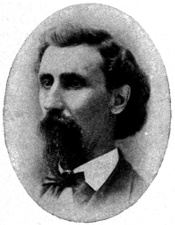
A native of Chautauqua county, N. Y., where he was born in 1826, Cyrus
D. Angell received a liberal education, served as School-Commissioner and
engaged in mercantile pursuits at Forestville. Forced through treachery and
the monetary stringency of the times to compromise with his creditors, he recovered
111his financial standing and paid every cent of his indebtedness, principal
and interest. In 1867 he came to the oil-regions with a loan of one-thousand
dollars and purchased an interest in property at Petroleum Centre that paid
handsomely. Prior to this, in connection with Buffalo capitalists, he had bought
Belle Island, in the Allegheny River at Scrubgrass,
upon which soon after his arrival he
drilled three wells that averaged one-hundred
barrels each for two years, netting the owners
over two-hundred-thousand dollars. Operations
below Franklin, in company with Frederic
Prentice, also proved highly profitable. His
observations of the course of developments
along Oil Creek and the Allegheny led Mr.
Angell to the conclusion that petroleum would
be found in “belts” or regular lines. He
adopted the theory that two “belts” existed,
one running from Petroleum Centre to Scrubgrass
and the other from St. Petersburg through
Butler county. Satisfied of the correctness of
this view, he leased or purchased all the lands
within the probable boundaries of the “belt”
from Foster to Belle Island, a distance of six miles. The result justified his
expectations, ninety per cent. of the wells yielding abundantly. With “the belt
theory,” which he followed up with equal success farther south, Mr. Angell’s
name is linked indissolubly. His researches enriched him and were of vast benefit
to the producers generally. He did much to extend the Butler region, drilling
far ahead of tested territory. The town of Angelica owed its creation to his
fortunate operations in the neighborhood, conducted on a comprehensive scale.
Reverses could not crush his manly spirit. He did a large real-estate business
at Bradford for some years, opening an office at Pittsburg when the Washington
field began to loom up. Failing health compelling him to seek relief in foreign
travel, last year he went to Mexico and Europe to recuperate. Mr. Angell
is endowed with boundless energy, fine intellectual powers and rare social acquirements.
During his career in Oildom he was an excellent sample of the
courageous, unconquerable men who have made petroleum the commercial
wonder of the world.
An old couple in Cranberry township, who eked out a scanty living on a
rocky farm near the river, sold their land for sixty-thousand dollars at the highest
pitch of the oil-excitement around Foster. This was more money than the
pair had ever before seen, much less expected to handle and own. It was paid
in bank-notes at noon and the log-house was to be vacated next day. Towards
evening the poor old woman burst into tears and insisted that her husband
should give back the money to the man that “wanted to rob them of their
home.” She was inconsolable, declaring they would be “turned out to starve,
without a roof to cover them.” The idea that sixty-thousand dollars would
buy an ideal home brought no comfort to the simple-minded creature, whose
hopes and ambitions were confined to the lowly abode that had sheltered her
for a half-century. A promise to settle near her brother in Ohio reconciled her
somewhat, but it almost broke her faithful heart to leave a spot endeared by
many tender associations. John Howard Payne, himself a homeless wanderer,
112whose song has been sung in every tongue and echoed in every soul, jingled by
innumerable hand-organs and played by the masters of music, was right:
“Be it ever so humble, there’s no place like home.”
The refusal of his wife to sign the deed conveying the property enabled a
wealthy Franklinite to gather a heap of money. The tract was rough and unproductive
and the owner proposed to accept for it the small sum offered by a
neighboring farmer, who wanted more pasture for his cattle. For the first time
in her life the wife declined to sign a paper at her husband’s request, saying she
had a notion the farm would be valuable some day. The purchaser refused to
take it subject to a dower and the land lay idle. At length oil-developments
indicated that the “belt” ran through the farm. Scores of wells yielded freely,
netting the land-owner a fortune and convincing him that womanly intuition is a
sure winner.
A citizen of Franklin, noted for his conscientiousness and liberality, was interested
in a test-well at the beginning of the Scrubgrass development. He
vowed to set aside one-fourth of his portion of the output of the well “for the
Lord,” as he expressed it. To the delight of the owners, who thought the venture
hazardous, the well showed for a hundred barrels when the tubing was put
in. On his way back from the scene the Franklin gentleman did a little figuring,
which proved that the Lord’s percentage of the oil might foot up fifty dollars
a day. This was a good deal of money for religious purposes. The maker of
the vow reflected that the Lord could get along without so much cash and he
decided to clip the one-fourth down to one-tenth, arguing that the latter was the
scripture limit. Talking it over with his wife, she advised him to stick to his
original determination and not trifle with the Lord. The husband took his own
way, as husbands are prone to do, and revisited the well next day. Something
had gone wrong with the working-valve, the tubing had to be drawn out and the
well never pumped a barrel
of oil! The disappointed
operator concluded, as he
charged two thousand dollars
to his profit-and-loss
account, that it was not the
Lord who came out at the
small end of the horn in
the transaction.
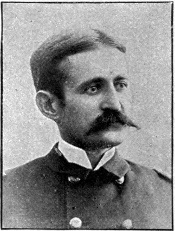
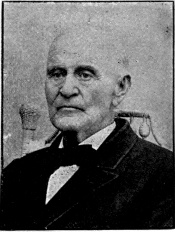
Rev. Clarence A. Adams,
the eloquent ex-pastor
of the First Baptist
Church at Franklin, is the
lucky owner of a patch of
paying territory at Raymilton. Recently he finished a well which pumped considerable
salt-water with the oil. Contrary to Cavendish and the ordinary custom,
another operator drilled very close to the boundary of the Adams lease
and torpedoed the well heavily. Instead of sucking the oil from the preacher’s
nice pumper, the new well took away most of the salt-water and doubled the
production of petroleum! Commonly it would seem rather mean to rob a Baptist
minister of water, but in this case Dr. Adams is perfectly resigned to the loss
of aqueous fluid and gain of dollar-fifty crude. A profound student of Shakespeare,
Browning and the Bible, a brilliant lecturer and master of pulpit-oratory,
may he also stand on a lofty rung of the greasian ladder and attain the goodly
113age of Franklin’s “grand old man,” Rev. Dr. Crane. This “father in Israel,”
whose death in February of 1896 the whole community mourned, left a record
of devoted service as a physician and clergyman for over sixty years that has
seldom been equaled. He healed the sick, smoothed the pillow of the dying,
relieved the distressed, reclaimed the erring,
comforted the bereaved, turned the faces of
the straying Zionward and found the passage
to the tomb “a gentle wafting to immortal
life.” Let his memory be kept green.
“Though old, he still retained
His manly sense and energy of mind.
Virtuous and wise he was, but not severe,
For he remembered that he once was young;
His kindly presence checked no decent joy.
Him e’en the dissolute admired. Can he be dead
Whose spiritual influence is upon his kind?”
The late Thomas McDonough, a loyal-hearted
son of the Emerald Isle, was also an
energetic operator in the lubricating region.
He had an abundance of rollicking wit, “the
pupil of the soul’s clear eye,” and an unfailing
supply of the drollest stories. Desiring
to lease a farm in Sandy-Creek township, supposed to be squarely “on the belt,”
he started at daybreak to interview the owner, feeling sure his mission would
succeed. An unexpected sight presented itself through the open door, as the
visitor stepped upon the porch of the dwelling. The farmer’s wife was setting
the table for breakfast and Frederic Prentice was folding a paper carefully.
McDonough realized in a twinkling that Prentice had secured the lease and his
trip was fruitless. “I am looking for John Smith” he stammered, as the farmer
invited him to enter, and beat a hasty retreat. For years his friends rallied the
Colonel on his search and would ask with becoming solemnity whether he had
discovered John Smith. The last time we met in Philadelphia this incident was
revived and the query repeated jocularly. The jovial McDonough died in 1894.
It is safe to assume that he will easily find numerous John Smiths in the land of
perpetual reunion. One day he told a story in an office on Thirteenth street,
Franklin, which tickled the hearers immensely. A full-fledged African, who
had been sweeping the back-room, broke into a tumultuous laugh. At that
moment a small boy was riding a donkey directly in front of the premises.
The jackass heard the peculiar laugh and elevated his capacious ears more
fully to take in the complete volume of sound. He must have thought the melody
familiar and believed he had stumbled upon a relative. Despite the frantic
exertions of the boy, the donkey rushed towards the building whence the boisterous
guffaw proceeded, shoved his head inside the door and launched a terrific
bray. The bystanders were convulsed at this evidence of mistaken
identity, which the jolly story-teller frequently rehearsed for the delectation of
his hosts of friends.
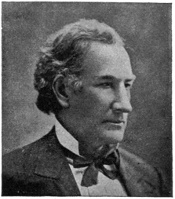
Looking over the Milton diggings one July day, Col. McDonough met an
amateur-operator who was superintending the removal of a wooden-tank from
a position beside his first and only well. A discussion started regarding the
combustibility of the thick sediment collected on the bottom of the tank. The
amateur maintained the stuff would not burn and McDonough laughingly replied,
“Well, just try it and see!” The fellow lighted a match and applied it to
114the viscid mass before McDonough could interfere, saying with a grin that he
proposed to wait patiently for the result. He didn’t have to wait “until Orcus
would freeze over and the boys play shinny on the ice.” In the ninetieth fraction
of a second the deposit blazed with intense enthusiasm, quickly enveloping
the well-rig and the surroundings in flames. Clouds of smoke filled the air,
suggesting fancies of Pittsburg or Sheol. Charred fragments of the derrick,
engine-house and tank, with an acre of blackened territory over which the burning
sediment had spread, demonstrated that the amateur’s idea had been decidedly
at fault. The experiment convinced him as searchingly as a Roentgen
ray that McDonough had the right side of the argument. “If the ‘b. s.’ had
been as green as the blamed fool, it wouldn’t have burned,” was the Colonel’s
appropriate comment.
Miss Lizzie Raymond, daughter of the pioneer who founded Raymilton
and erected the first grist-mill at Utica, has long taught the infant-class of the
Presbyterian Sunday-school at Franklin. Once the lesson was about the wise
and the foolish virgins, the good teacher explaining the subject in a style
adapted to the juvenile mind. A cute little tot, impressed by the sad plight of
the virgins who had no oil in their lamps, innocently inquired: “Miss ’Aymond,
tan’t oo tell ’em dirls to turn to our house an’ my papa ’ll div’ ’em oil
f’um his wells?” Heaven bless the children that come as sunbeams to lighten
our pathway, to teach us lessons of unselfishness and prevent the rough world
from turning our hearts as hard as the mill-stone.
Judge Trunkey, who presided over the Venango court a dozen years and
was then elected to the Supreme Bench, was hearing a case of desertion. An
Oil-City lawyer, proud of his glossy black beard, represented the forsaken wife,
a comely young woman from Petroleum Centre, who dandled a bright baby of
twenty months on her knee. Mother and baby formed a pretty picture and the
lawyer took full advantage of it in his closing appeal to the jury. At a brilliant
climax he turned to his client and said: “Let me have the child!” He was
raising it to his arms, to hold before the men in the box and describe the heinous
meanness of the wretch who could leave such beauty and innocence to
starve. The baby spoiled the fun by springing up, clutching the attorney’s
beard and screaming: “Oh, papa!” The audience fairly shrieked. Judge
Trunkey laughed until the tears flowed and it was five minutes before order
could be restored. That ended the oratory and the jury salted the defendant
handsomely. Hon. James S. Connelly, an Associate Judge, who now resides in
Philadelphia and enjoys his well-earned fortune, was also on the bench at the
moment. Judge Trunkey, one of the purest, noblest men and greatest jurists
that ever shed lustre upon Pennsylvania, passed to his reward six years ago.
In your wide peregrinations from the poles to the equator,
Should you hear some ignoramus—let out of his incubator—
Say the heavy-oil of Franklin is not earth’s best lubricator,
Do as did renown’d Tom Corwin, the great Buckeye legislator,
When a jabberwock in Congress sought to brand him as a traitor,
Just “deny the allegation and defy the allegator!”
115
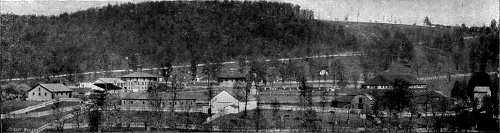
MILLER & SIBLEY’S PROSPECT-HILL STOCK FARM FRANKLIN, PA.
The Shasta was Karns City’s first well.
Missouri has two wells producing oil.
North Dakota has traces of natural-gas.
Ninety wells in Japan pump four-hundred barrels.
Elk City, in the Clarion field, once had two-thousand
population.
The Rob Roy well, at Karns City, has produced
a quarter-million barrels of oil.
Alaska-oil is cousin of asphalt-pitch, very heavy,
and thick as New-Orleans molasses in midwinter.
Wade Hampton, postmaster of Pittsburg, and
cousin of Governor Wade Hampton, organized
one of the first petroleum companies in the United
States.
General Herman Haupt, of Philadelphia, now
eighty-one years old, surveyed the route and constructed
the first pipe-line across Pennsylvania.
Robert Nevin, founder of the Pittsburg Times,
drilled a dry-hole four-hundred feet, ten miles west
of Greensburg, in 1858, a year before Drake’s successful
experiment in Oil Creek.
The Powell Oil-Company, superintended by Col.
A. C. Ferris, still a resident of New York, paid
fifty-thousand dollars in cash for the Shirk farm,
half way between Franklin and Oil City, drilled a
dry-hole and abandoned the property.
The gentle wife who seeks your faults to cover
You don’t deserve; prize naught on earth above her;
Keep step and be through life her faithful lover.
The new town of Guffey, the liveliest in Colorado,
thirty miles from Cripple Creek, is fitly named in
honor of James M. Guffey, the successful Pennsylvania
oil-producer and political leader, who has
big mining interests in that section.
The Fonner pool, Greene county, was the oil-sensation
of 1897 in Pennsylvania. The Fonner
well, struck in March, and territory around it sold
for two-hundred-thousand dollars. Elk Fork wore
the West-Virginia belt, Peru took the Hoosier
biscuit and Lucas county the Buckeye premium.
Say, boys, seein’ how fast th’ ranks iz thinnin’—
Th’ way thar droppin’ out sets my head spinnin’—
An’ knownin’ ez how death may take an innin’
An’ clean knock out our underpinnin’,
I kalkilate we oughter swar off sinnin’,
Jes’ quit fer keeps our dog-gon’ chinnin’,
Start in th’ narrer road fer a beginning’,
An’ so strike oil in Heav’n fer a sure winnin’
When up the golden-stairs we goes a-shinnin’.
When the biggest well in Indiana flowed oil fifty
feet above the derrick, at Van Buren, a local paper
noted the effect thus: “The strike has given the
town a tremendous boom. Several real-estate
offices have opened and the town-council has
raised the license for faro-banks from five dollars
a year to twelve dollars.” At this rate Van Buren
ought soon to be in the van.
116
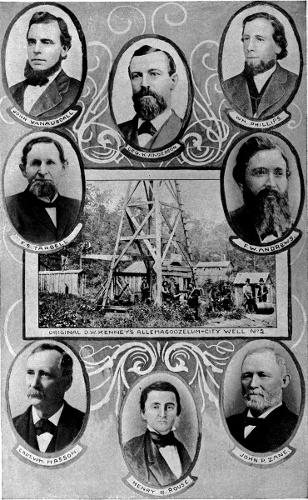
JOHN VANAUSDALL. WM. PHILLIPS.
GEO. K. ANDERSON.
F. S. TARBELL. F. W. ANDREWS.
ORIGINAL D. W. KENNEY’S ALLEMAGOOZELUM-CITY WELL No 2.
CAPT. WM. HASSON. JOHN P. ZANE.
HENRY R. ROUSE.
VII. THE VALLEY OF PETROLEUM. — A SPLASH ON OIL CREEK.
117
Wonderful Scenes on Oil Creek—Mud and Grease Galore—Rise and Fall
of Phenomenal Towns—Shaffer, Pioneer and Petroleum Centre—Fortune’s
Queer Vagaries—Wells Flowing Thousands of Barrels—Sherman,
Delamater and “Coal-Oil Johnnie”—From Penury to Riches
and Back—Recitals That Discount Fairy-Tales.
“I pity the man who can travel from Dan to Beersheba and cry, ‘’Tis all barren.’”—Sterne.
“This beginning part is not made out of anybody’s head; it’s real.”—Dickens.
“Some ships come into port that are not steered.”—Seneca.
“God has placed in his great bank—mother earth—untold wealth and many a poor man’s check
has been honored here for large amounts of oil.”—T. S. Scoville, A. D. 1861.
“Ain’t that well spittin’ oil?”—Small Boy, A. D. 1863.
“Wonderful, most wonderful, marvelous, most marvelous, are the stories told of the oil-region.
It is another California.”—John W. Forney, A. D. 1863.
“Derricks peered up behind the houses of Oil City, like dismounted steeples, and oil was pumping
in the back-yards.”—London Post, A. D. 1865.
“From this place and from this day henceforth commences a new era.”—Goethe.
“The chandelier drives off with its splendor the darkness of night.”—Henry Stanton.
“The onlookers were struck dumb with astonishment.”—Charles Kingsley.
“Either I will find a way or make one.”—Norman Proverb.
“I bid you look into the past as if it were a mirror.”—Terence.
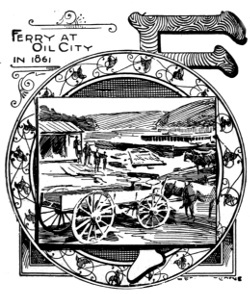
Forty-three farms of manifold shapes
and sizes lay along the stream from
the Drake well to the mouth of Oil
Creek, sixteen miles southward. For
sixty years the occupants of these
tracts had forced a bare subsistence
from the reluctant soil. “Content to
live, to propagate and die,” their requirements
and their resources were
alike scanty. They knew nothing of
the artificial necessities and extravagances
of fashionable life. To most
of them the great, busy, plodding
world was a sealed book, which they
had neither the means nor the inclination
to unclasp. The world reciprocated
by wagging in its customary
groove, blissfully unconscious of the
scattered settlers on the banks of the Allegheny’s tributary. A trip on a raft to
Pittsburg, with the privilege of walking back, was the limit of their journeyings
from the hills and rocks of Venango. Hunting, fishing and hauling saw-logs in
winter aided in replenishing the domestic larder. None imagined the unproductive
valley would become the cradle of an industry before which cotton and
118coal and iron must “hide their diminished heads.” No prophet had proclaimed
that lands on Oil Creek would sell for more than corner-lots in London or New
York. Who could have conceived that these bold cliffs and patches of clearing
would enlist ambitious mortals from every quarter of the globe in a mad race
to secure a foothold on the coveted acres? What seventh son of a seventh son
could foresee that a thousand dollars spent on the Willard farm would yield
innumerable millions? Who could predict that a tiny stream of greenish fluid,
pumped from a hole on an island too insignificant to have a name, would swell
into the vast ocean of petroleum that is the miracle of the nineteenth century?
Fortune has played many pranks, but the queerest of them all were the vagaries
incidental to the petroleum-development on Oil Creek.
The Bissell, Griffin, Conley, two Stackpole, Pott, Shreve, two Fleming,
Henderson and Jones farms, comprising the four miles between the Drake well
and the Miller tract, were not especially prolific. Traces of a hundred oil-pits,
in some of which oak-trees had grown to enormous size, are visible on the
Bissell plot of eighty acres. A large dam, used for pond-freshets, was located
on Oliver Stackpole’s farm. Two refineries of small capacity were built on the
Stackpole and Fletcher lands, where eighteen or twenty wells produced moderately.
The owner of a flowing well on the lower Fleming farm, imitating the
man who killed the goose that laid the golden eggs, sought to increase its output
by putting the tubing and seed-bagging farther down. The well resented
the interference, refusing to yield another drop and pointing the obvious moral:
“Let well enough alone!” The Miller farm of four-hundred acres, on both
sides of the creek, was purchased in 1863 from Robert Miller by the Indian
Rock-Oil Company of New York. Now a railroad-station and formerly the
principal shipping-point for oil, refineries were started, wells were drilled and
the stirring town of Meredith blossomed for a little space. The Lincoln well
turned out sixty barrels a day, the Boston fifty, the Bobtail forty, the Hemlock
thirty and others from ten to twenty-five, at an average depth of six-hundred
feet. The Barnsdall Oil-Company operated on the Miller and the Shreve farms,
drilling extensively on Hemlock Run, and George Bartlett ran the Sunshine
Oil-Works. The village, the refineries and the derricks have disappeared as
completely as Herculaneum or Sir John Franklin.
George Shaffer owned fifty acres below the Miller farm, divided by Oil
Creek into two blocks, one in Cherrytree township and the other in Allegheny.
Twenty-four wells, eight of them failures, were put down on the flats
and the abrupt hill bordering the eastern shore of the stream. Samuel Downer’s
Rangoon and three of Watson & Brewer’s were the largest, ranking in the
fifty-barrel list. In July of 1864 the Oil-Creek Railroad was finished to Shaffer
farm, which immediately became a station of great importance. From one
house and barn the place expanded in sixty days to a town of three-thousand
population. And such a town! Sixteen-hundred teams, mainly employed to
draw oil from the wells down the creek, supported the stables, boarding-houses
and hotels that sprang up in a night. Every second door opened into a bar-room.
The buildings were “balloon frames,” constructed entirely of boards,
erected in a few hours and liable to collapse on the slightest pretext. Houses
of cards would be about as comfortable and substantial. Outdo Hezekiah, by
rolling back time’s dial thirty-one years, and in fancy join the crowd headed for
Shaffer six months after the advent of the railway.
Start from Corry, “the city of stumps,” with the Downer refinery and a jumble
of houses thrown around the fields. Here the Atlantic & Great-Western,
119the Philadelphia & Erie and the Oil-Creek Railroads meet. The station will
not shelter one-half the motley assemblage bound for Oildom. “Mother Cary
is plucking her geese” and snow-flakes are dropping thickly. Speculators from
the eastern cities, westerners in quest of “a good thing,” men going to work
at the wells, capitalists and farmers, adventurers and drummers clamor for
tickets. It is the reverse of “an Adamless Eden,” for only three women are to
be seen. At last the train backs to the rickety depot and a wild struggle commences.
Scrambling for the elevated cars in New York or Chicago is a feeble
movement compared with this frantic onslaught. Courtesy and chivalry are
forgotten in the rush. Men swarm upon the steps, clog the platforms, pack the
baggage-car, thrust the women aside, stick to the cowcatcher and clamber on
the roofs of the coaches. Over the roughest track on earth, which winds and
twists and skirts the creek most of the way, the train rattles and jolts and
pitches. The conductor’s job is no sinecure, as he squeezes through the dense
mass that leaves him without sufficient elbow-room to “punch in the presence
of the passenjare.” Derricks—tall, gaunt skeletons, pickets of the advancing
army—keep solemn watch here and there, the number increasing as Titusville
comes in sight.
A hundred people get off and two-hundred manage somehow to get on.
Past the Drake well, past a forest of derricks, past steep cliffs and tortuous
ravines the engineer speeds the train. Did you ever think what a weight of
responsibility rests upon the brave fellow in the locomotive-cab, whose clear
eye looks straight along the track and whose steady hand grasps the throttle?
Should he relax his vigilance or lose his nerve one moment, scores of lives
might be the fearful penalty. A short stop at Miller Farm, a whiff of refinery-smells
and in five minutes Shaffer is reached. The board-station is on the right
hand, landings on the left form a semi-circle hundreds of feet in length, freight-cars
jam the double track and warehouses dot the bank. The flat-about thirty
rods wide-contains the mushroom-town, bristling with the undiluted essence of
petroleum-activity. Three-hundred teamsters are unloading barrels of oil from
wagons dragged by patient, abused horses and mules through miles of greasy,
clayey mud. Everything reeks with oil. It pervades the air, saturates clothes
and conversation, floats on the muddy scum and fills lungs and nostrils with its
peculiar odor. One cannot step a yard without sinking knee-deep in deceptive
mire that performs the office of a boot-jack if given “a ghost of a show.”
Christian’s Slough of Despond wasn’t a circumstance to this adhesive paste,
which engulfs unwary travelers to their trouser-pockets and begets a dreadful
craving for roads not
Almost impassable,
Scarcely jackassable.”
The trip of thirty-five miles has shaken breakfast clear down to the pilgrims’
boots. Out of the cars the hungry passengers tumble as frantically as
they had clambered in and break for the hotels and restaurants. A dollar pays
for a dinner more nearly first-class in price than in quality. The narrow hall
leading to the dining-room is crammed with men—Person’s Hotel fed four-hundred
a day—waiting their turn for vacant chairs at the tables. Bolting the meal
hurriedly, the next inquiry is how to get down the creek. There are no coupés,
no prancing steeds, no stages, no carriages for hire. The hoarse voice of a
hackman would be sweeter music than Beethoven’s “Moonlight Sonata” or
Mendelssohn’s “Wedding March.” Horseback-riding is impracticable and
120walking seems the only alternative. To wade and flounder twelve miles—Oil
City is that far off—is the dreary prospect that freezes the blood. Hark! In
strident tones a fierce-looking fellow is shouting: “Packet-boat for Oil City!
This way for the packet-boat! Packet-boat! Packet-boat!” Visions of a
pleasant jaunt in a snug cabin lure you to the landing. The “packet-boat”
proves to be an oily scow, without sail, engine, awning or chair, which horses
have drawn up the stream from Oil City. It will float back at the rate of three
miles an hour and the fare is three-fifty! The name and picture of “Pomeroy’s
Express,” the best of these nondescript Oil-Creek vessels, will bring a smile
and warm the cockles of many an old-timer’s heart!
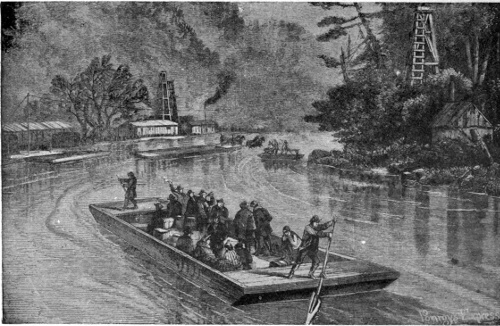
“POMEROY’S EXPRESS” BETWEEN SHAFFER AND OIL CITY.
Perhaps you decide to stay all night at Shaffer and start on foot early in
the morning. A chair in a room thick with tobacco-smoke, or a quilt in a
corner of the bar, is the best you can expect. By rare luck you may happen
to pre-empt a half-interest in a small bed, tucked with two or three more in a
closet-like apartment. Your room-mates talk of “flowing wells—five-hundred-thousand
dollars—third sand—big strike—rich in a week—thousand-dollars a
day,” until you fall asleep to dream of wells spouting seas of mud and hapless
wights wading in greenbacks to their waists. Awaking cold and unrefreshed,
your brain fuddled and your thoughts confused, you gulp a breakfast of “ham
’n eggs ’n fried potatoes ’n coffee” and prepare to strike out boldly. Encased
in rubber-boots that reach above the thighs, you choose one of the two paths—each
worse than the other—pray for sustaining grace and begin the toilsome
journey. Having seen the tips of the elephant’s ears, you mean to see the end
of his tail and be able to estimate the bulk of the animal. Night is closing in
as you round up at your destination, exhausted and mud-coated to the chin.
But you have traversed a region that has no duplicate “in heaven above, or
in the earth beneath, or in the waters under the earth,” and feel recompensed a
121thousand-fold for the fatigue and exposure. Were your years to exceed
Thomas Parr’s and Methuselah’s combined, you will never again behold such
a scene as the Oil-Creek valley presented in the days of “the middle passage”passage”
between Shaffer and Oil City. Rake it over with a fine-comb, turn on the
X-rays, dig and scrape and root and to-day you couldn’t find a particle of
Shaffer as big as a toothpick! When the railroad was extended the buildings
were torn down and carted to the next station.
Widow Sanney’s hundred-acre farm, south of the Shaffer, had three refineries
and a score of unremunerative wells. David Gregg’s two-hundred acres
on the west side of Oil Creek, followed suit with forty non-paying wells, three
that yielded oil and the Victoria and Continental refineries. The McCoy well,
the first put down below the Drake, at two-hundred feet averaged fifteen
barrels a day from March until July, 1860. Fire burning the rig, the well was
drilled to five-hundred feet and proved dry. R. P. Beatty sold his two-hundred
acres on Oil Creek and Hemlock Run to the Clinton Oil-Company of New
York, a bunch of medium wells repaying the investment. James Farrell, a
teamster, for two-hundred dollars purchased a thirty-acre bit of rough land
south of Beatty, on the east side of Oil Creek and Bull Run, the extreme
south-west corner of Allegheny—now Oil Creek—township. In the spring of
1860 Orange Noble leased sixteen acres for six hundred dollars and one-quarter
royalty. Jerking a “spring-pole” five months sank a hole one-hundred-and-thirty
feet, without a symptom of greasiness, and the well was neglected nearly
three years. The “third sand” having been found on the creek, the holders
of the Farrell lease decided to drill the old hole deeper. George B. Delamater
and L. L. Lamb were associated with Noble in the venture. They contracted
with Samuel S. Fertig, of Titusville, whose energy and reliability had gained
the good-will of operators, to drill about five-hundred feet. Fertig went to
work in April of 1863, using a ten-horse boiler and engine and agreeing to take
one-sixteenth of the working-interest as part payment. He had lots of the
push that long since placed him in the van as a successful producer, enjoying
a well-earned competence. Early in May, at
four-hundred-and-fifty feet, a “crevice” of
unusual size was encountered. Fearing to
lose his tools, the contractor shut down for
consultation with the well-owners. Noble
was at Pittsburg on a hunt for tubing, which
he ordered from Philadelphia. The well
stood idle two weeks, waiting for the tubing,
surface-water vainly trying to fill the hole.
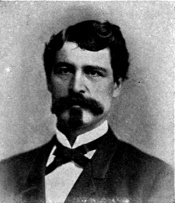
On the afternoon of May twenty-seventh,
1863, everything was ready. “Start her
slowly,” Noble shouted from the derrick to
Fertig, who stood beside the engine and
turned on the steam. The rods moved up
and down with steady stroke, bringing a
stream of fresh water, which it was hoped
a day’s pumping might exhaust. Then it
would be known whether two of the owners—Noble and Delamater—had
acted wisely on May fifteenth in rejecting one-hundred-thousand dollars for
one-half of the well. Noble went to an eating-house near by for a lunch. He
was munching a sandwich when a boy at the door bawled: “Golly! Ain’t
122that well spittin’ oil?” Turning around, he saw a column of oil and water
rising a hundred feet, enveloping the trees and the derrick in dense spray!
The gas roared, the ground fairly shook and the workmen hastened to extinguish
the fire beneath the boiler. The “Noble well,” destined to be the most
profitable ever known, had begun its dazzling career at the dizzy figure of
three-thousand barrels a day!
Crude was four dollars a barrel, rose to six, to ten, to thirteen! Compute
the receipts from the Noble well at these quotations—twelve-thousand, eighteen-thousand,
thirty-thousand, thirty-nine-thousand dollars a day! Sinbad’s fabled
Valley of Diamonds was a ten-cent side-show in comparison with the actual
realities of the valley of Oil Creek.
Soon the foaming volume filled the hollow close to the well and ran into
the creek. What was to be done? In the forcible jargon of a driller: “The
divil wuz to pay an’ no pitch hot!” For two-hundred dollars three men
crawled through the blinding shower and contrived to attach a stop-cock device
to the pipe. By sunset a seven-hundred-barrel tank was overflowing. Boatmen
down the creek, notified to come at once for all they wanted at two dollars
a barrel, by midnight took the oil directly from the well. Next morning the
stream was turned into a three-thousand-barrel tank, filling it in twenty-one
hours! Sixty-two-thousand barrels were shipped and fifteen-thousand tanked,
exclusive of leakage and waste, in thirty days. Week after week the flow
continued, declining to six-hundred barrels a day in eighteen months. The
superintendent of the Noble & Delamater Oil Company—organized in 1864
with a million capital—in February of 1865 recommended pulling out the tubing
and cleaning the well. Learning of this intention, Noble and Delamater
unloaded their stock at or above par. The tubing was drawn, the well
pumped fifteen barrels in two days, came to a full stop and was abandoned as
a dry-hole!
The production of this marvelous gusher—over seven-hundred-thousand
barrels—netted upwards of four-million dollars! One-fourth of this lordly sum
went to the children of James Farrell—he did not live to see his land developed—James,
John, Nelson and their sister, now Mrs. William B. Sterrett, of Titusville.
Noble and Delamater owned one-half the working-interest, less the sixteenth
assigned to S. S. Fertig, who bought another sixteenth from John Farrell
while drilling the well and sold both to William H. Abbott for twenty-seven-thousand
dollars. Ten persons—L. L. Lamb, Solomon and W. H. Noble, Rev.
L. Reed, James and L. H. Hall, Charles and Thomas Delamater, G. T. Churchhill
and Rollin Thompson—held almost one-quarter. Even this fractional claim
gave each a splendid income. The total outlay for the lease and well—not quite
four-thousand dollars—was repaid one-thousand times in twenty months! Is it
surprising that men plunged into speculations which completely eclipsed the
South-Sea Bubble and Law’s Mississippi-Scheme? Is it any wonder that multitudes
were eager to stake their last dollar, their health, their lives, their very
souls on the chance of such winnings?
Thirteen wells were drilled on the Farrell strip. The Craft had yielded a
hundred-thousand barrels and was doing two-hundred a day when the seed-bag
burst, flooding the well with water and driving the oil away. The Mulligan
and the Commercial did their share towards making the territory the finest
property in Oildom, with third sand on the flats and in the ravine of Bull Run
forty feet thick. Not a fragment of tanks or derricks is left to indicate that
twenty fortunes were acquired on the desolate spot, once the scene of tremendous
123activity, more coveted than Naboth’s vineyard or Jason’s Golden Fleece.
On the Caldwell farm of two-hundred acres, south of the Farrell, twenty-five
or thirty wells yielded largely. The Caldwell, finished in March of 1863, at the
north-west corner of the tract, flowed twelve-hundred barrels a day for six
weeks. Evidently deriving its supply from the same pool, the Noble well cut
this down to four-hundred barrels. A demand for one-fourth the output of the
Noble, enforced by a threat to pull the tubing and destroy the two, was settled
by paying one-hundred-and-forty-five-thousand dollars for the Caldwell well
and an acre of ground. “Growing smaller by degrees and beautifully less,”
within a month of the transfer the Caldwell quit forever, drained as dry as the
bones in Ezekiel’s vision!
Hon. Orange Noble, the son of a New-York farmer, dealt in sheep and
cattle, married in 1841 and in 1852 removed to Randolph, Crawford county, Pa.
He farmed, manufactured “shooks” and in 1855 opened a store at Townville
in partnership with George B. Delamater. The partners and L. L. Lamb
inspected the Drake well in October of 1859, secured leases on the Stackpole
and Jones farms and drilled two dry-holes. Other wells on different farms in
1860-1 resulted similarly, but the Noble compensated richly for these failures.
The firm wound up the establishment at Townville in 1863, squared petroleum-accounts,
and in 1864 Mr. Noble located at Erie. There he organized banks,
erected massive blocks, served as mayor three terms, built the first grain
elevator and contributed greatly to the prosperity of the city. Blessed with
ample wealth—the Noble well paid him eight-hundred-thousand dollars—a vigorous
constitution and the regard of his fellows, he has lived to a ripe age to
enjoy the fruits of his patient industry and remarkable success.
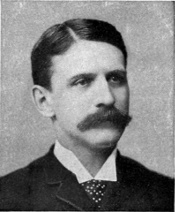
Hon. George B. Delamater, whose parents settled in Crawford county in
1822, studied law and was admitted to the Meadville bar in 1847. He published
a newspaper at Youngsville, Warren county, two years and in 1852 started in
business at Townville. Clients were not plentiful in the quiet village, where a
lawsuit was a luxury, and the young attorney found boring juries much less
remunerative than he afterwards found boring
oil-wells. Returning to Meadville in 1864, with
seven-hundred-thousand dollars and some
real-estate at his command, he built the magnificent
Delamater Block, opened a bank, promoted
many important enterprises and engaged
actively in politics. Selected to oppose
George K. Anderson—he, too, had a bar’l—for
the State Senate in 1869, Delamater carried
off the prize. It was a case of Greek meeting
Greek. Money flowed like water, Anderson
spending thirty-thousand dollars and his
opponent twenty-eight-thousand on the primaries
alone! This was the beginning of
the depletion of the Delamater fortune and
the political demoralization that scandalized
Crawford county for years. Mr. Delamater
served one term, declined to run again and Anderson succeeded him. His
son, George W., a young lawyer of ability and superior address, entered the
lists and was elected Mayor of Meadville and State-Senator. He married an
accomplished lady, occupied a brick-mansion, operated at Petrolia, practiced
124law and assisted in running the bank. Samuel B. Dick headed a faction that
opposed the Delamaters bitterly. Nominated for Governor of Pennsylvania in
1890, George W. Delamater was defeated by Robert E. Pattison. He conducted
an aggressive campaign, visiting every section of the state and winning
friends by his frank courtesy and manly bearing. Ruined by politics, unable
longer to stand the drain that had been sapping its resources, the Delamater
Bank suspended two weeks after the gubernatorial election. The brick-block,
the homes of the parents and the sons, the assets of the concern—mere drops
in the bucket—met a trifling percentage of the liabilities. Property was sacrificed,
suits were entered and dismissed, savings of depositors were swept away
and the failure entailed a host of serious losses. The senior Delamater went
to Ohio to start life anew at seventy-one. George W. located in Chicago and
quickly gathered a law-practice. That he will regain wealth and honor, pay off
every creditor and some day represent his district in Congress those who know
him best are not unwilling to believe. The fall of the Delamater family—the
beggary of the aged father—the crushing of the son’s honorable ambition—the
exile from home and friends—the suffering of innocent victims—all these illustrate
the sad reverses which, in the oil-region, have “come, not single spies,
but in battalions.”
James Bonner, son of an Ohio clergyman and book-keeper for Noble &
Delamater, lodged in the firm’s new office beside the well. Seized with typhoid
fever, his recovery was hopeless. The office caught fire, young Bonner’s
father carried him to the window, a board was placed to slide him down and
he expired in a few moments. His father, overcome by smoke, was rescued
with difficulty; his mother escaped by jumping from the second story.
James Foster owned sixty acres on the west side of Oil Creek, opposite the
Farrell and Caldwell tracts. The upper half, extending over the hill to Pioneer
Run, he sold to the Irwin Petroleum Company of Philadelphia, whose Irwin
well pumped two-hundred barrels a day. The Porter well, finished in May of
1864, flowed all summer, gradually declining from two-hundred barrels to
seventy and finally pumping twenty. Other wells and a refinery paid good
dividends. J. W. Sherman, of Cleveland, leased the lower end of the farm and
bounced the “spring-pole” in the winter of 1861-2. His wife’s money and
his own played out before the second sand was penetrated. It was impossible
to drill deeper “by hand-power.” A horse or an engine must be had to work
the tools. “Pete,” a white, angular equine, was procured for one-sixteenth
interest in the well. The task becoming too heavy for “Pete,” another sixteenth
was traded to William Avery and J. E. Steele for a small engine and
boiler. Lack of means to buy coal—an expensive article, sold only for “spot
cash”—caused a week’s delay. The owners of the well could not muster
“long green” to pay for one ton of fuel! For another sixteenth a purchaser
grudgingly surrendered eighty dollars and a shot-gun! The last dollar had
been expended when, on March sixteenth, 1862—just in season to celebrate St.
Patrick’s day—the tools punctured the third sand. A “crevice” was hit, the
tools were drawn out and in five minutes everything swam in oil. The Sherman
well was flowing two-thousand barrels a day! Borrowing the phrase of the
parrot stripped of his feathers and blown five-hundred feet by a powder-explosion,
people might well exclaim: “This beats the Old Scratch!”
To provide tankage was the first concern. Teams were dispatched for
lumber and carpenters hurried to the scene. Near the well a mudhole, between
two stumps, could not be avoided. In this one of the wagons stuck fast and
125had to be pried out, John A. Mather chanced to come along with his photograph
apparatus. The men posed an instant, the horses “looked pleasant,”
the wagon didn’t stir and he secured the artistic picture reproduced here thirty-five
years after. It is an interesting souvenir of former times—times that
deserve the best work of pen and pencil, camera and brush, “to hold them in
everlasting remembrance.”
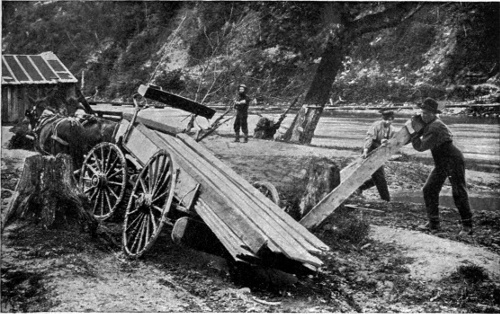
STUCK IN A MUDHOLE NEAR THE SHERMAN WELL IN 1862.
The Sherman well “whooped it up” bravely, averaging nine-hundred
barrels daily for two years and ceasing to spout in February of 1864. Pumping
restored it to seventy-five barrels, which dwindled to six or eight in 1867, when
fire consumed the rig and the veteran was abandoned. The product sold at
prices ranging from fifty cents to thirteen dollars a barrel, the total aggregating
seventeen-hundred-thousand dollars! How was that for a return? It meant
one-hundred-thousand dollars for the man who traded “Pete,” one-hundred-thousand
for the man who invested eighty dollars and a rusty gun, one-hundred-thousand
for the two men who furnished the second-hand engine, and a million—deducting
the royalty—for the man who had neither cash nor credit for a
load of coal!
None of the other fifty or sixty wells on the Foster farm, some of them
Sherman’s, was particularly noteworthy. The broad flat, the sluggish stream
and the bluffs across the creek remain as in days of yore, but the wells, the
shanties, the tanks, the machinery and the workmen have vanished. Sherman,
long hale and hearty, struck a spouter in Kentucky, operated two or three years
at Bradford and took up his abode at Warren. It was a treat to hear his vivid
descriptions of life on Oil Creek in the infancy of developments—life crowded
with transformations far surpassing the fantastic changes of “A Midsummer
Night’s Dream.” He died at Cleveland last year.
Among the teamsters who hauled oil from the Sherman well in its prime
was “Con” O’Donnell, a fun-loving, impulsive Irishman. He saved his
126earnings, secured leases for himself, owned a bevy of wells at Kane City and
operated in the Clarion field. Marrying a young lady of Ellicottville, N. Y.,
his early home, he lived some years at Foxburg and St. Petersburg. He was
the rarest of practical jokers and universally esteemed. Softening of the brain
afflicted him for years, death at last stilling as warm and kindly a heart as ever
throbbed in a manly breast. “Con” often regaled me with his droll witticisms
as we rode or drove through the Clarion district. “Peace to his ashes.”
Late in the fall of 1859, “when th’ frost wuz on th’ punkin’ an’ th’ bloom
wuz on th’ rye,” David McElhenny sold the upper and lower McElhenny farms—one-hundred-and-eighty
acres at the south-east corner of Cherrytree township—to
Captain A. B. Funk, for fifteen-hundred dollars and one-fourth of the oil.
Joining the Foster farm on the north, Oil Creek bounded the upper tract on
the east and south and Pioneer Run gurgled through the western side. Oil
Creek flowed through the northern and western sides of the lower half, which
had the Espy farm on the east, the Boyd south and the Benninghoff north and
west. McElhenny’s faith in petroleum was of the mustard-seed order and he
jumped at Hussey & McBride’s offer of twenty-thousand dollars for the royalty.
Captain Funk—he obtained the title from running steamboats lumbering on the
Youghiogheny river—in February of 1860 commenced the first well on the
lower McElhenny farm. All spring and summer the “spring-pole” bobbed
serenely, punching the hole two-hundred-and-sixty feet, with no suspicion of
oil in the first and second sands. The Captain, believing it a rank failure,
would gladly have exchanged the hole “for a yellow dog.” His son, A. P.
Funk, bought a small locomotive-boiler and an engine and resumed work
during the winter. Early in May, 1861, at four-hundred feet, a “pebble rock”—the
“third sand”—tested the temper of the center-bit. Hope, the stuff that
“springs eternal in the human breast,” took a fresh hold. It languished as the
tools bored thirty, forty, fifty feet into the “pebble” and not a drop of oil
appeared. Then something happened. Flecks of foam bubbled to the top of
the conductor, jets of water rushed out, oil and water succeeded and a huge
pillar of pure oil soared fifty yards! The Fountain well had tapped a fountain
in the rock ordained thenceforth to furnish mankind with Pennsylvania petroleum.
The first well put down to “the third sand,” and really the first on Oil
Creek that flowed from any sand, it revealed oil-possibilities before unknown
and unsuspected.
More tangible than the mythical Fountain of Youth, the Fountain well
tallied three-hundred barrels a day for fifteen months. The flow ended as
suddenly as it began. Paraffine clogged and strangled it to death, sealing the
pores and pipes effectually. A young man “taught the young idea how to
shoot” at Steam Mills, east of Titusville, where Captain Funk had lumber-mills.
A visit to the Drake and Barnsdall wells, in December of 1859, determined
the schoolmaster to have an oil-well of his own. Funk liked the
earnest, manly youth and leased him five acres of the upper McElhenny farm.
Plenty of brains, a brave heart, robust health, willing hands and thirty dollars
constituted his capital. Securing two partners, “kicking down” started in the
spring of 1860. Not a sign of oil could be detected at two-hundred feet, and
the partners departed from the field. Summer and the teacher’s humble
savings were gone. He earned more money by drilling on the Allegheny
river, four miles above Oil City. While thus engaged the Fountain well revolutionized
the business by “flowing” from a lower rock. The ex-wielder of the
birch—he had resigned the ferrule for the “spring-pole”—hastened to sink the
127deserted well to the depth of Funk’s eye-opener. The second three-hundred-barrel
gusher from the third sand, it rivaled the Fountain and arrived in time
to help 1861 crimson the glorious Fourth!
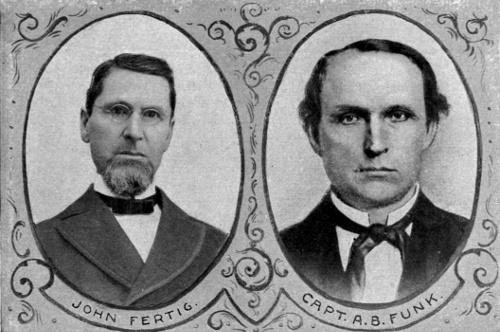
JOHN FERTIG. \CAPT. A. B. FUNK.
Hon. John Fertig, of Titusville, the plucky schoolmaster of 1859-60, has
been largely identified with oil ever since his initiation on the McElhenny lease.
The Fertig well, in which David Beatty and Michael Gorman were his partners
originally, realized him a fortune. Born in Venango county, on a farm below
Gas City, in 1837, he completed a course at Neilltown Academy and taught
school several terms. Soon after embarking in the production of oil he formed
a partnership with the late John W. Hammond, which lasted until dissolved by
death twenty years later. Fertig & Hammond operated in different sections
with great success, carried on a refinery and established a bank at Foxburg.
Mr. Fertig was Mayor of Titusville three terms, School-Controller, State Senator
and Democratic candidate for Lieutenant-Governor in 1878. He has been
vice-president of the Commercial Bank from its organization in 1882 and is
president of the Titusville Iron-Works. Head of the National Oil-Company, he
was also chief officer of the Union Oil-Company, an association of refining
companies. For three years its treasurer—1892-5—he tided the United-States
Pipe-Line Company over a financial crisis in 1893. As a pioneer producer—one
of the few survivors connected with developments for a generation—a
refiner and shipper, banker, manufacturer and business-man, John Fertig is
most distinctively a representative of the oil-country. From first to last he
has been admirably prudent and aggressive, conservative and enterprising in
shaping a career with much to cherish and little to regret.
Frederick Crocker drilled a notable well on the McElhenny, near the
Foster line, jigging the “spring-pole” in 1861 and piercing the sand at one-hundred-and-fifty
feet. He pumped the well incessantly two months, getting
clear water for his pains. Neighbors jeered, asked if he proposed to empty
128the interior of the planet into the creek and advised him to import a Baptist
colony. Crocker pegged away, remembering that “he laughs best who laughs
last.” One morning the water wore a tinge of green. The color deepened,
the gas “cut loose,” and a stream of oil shot upwards! The Crocker well
spurted for weeks at a thousand-barrel clip and was sold for sixty-five-thousand
dollars. Shutting in the flow, to prevent waste, wrought serious injury. The
well disliked the treatment, the gas sought a vent elsewhere, pumping coaxed
back the yield temporarily to fifty barrels and in the fall it yielded up the ghost.
Bennett & Hatch spent the summer of 1861 drilling on a lease adjoining the
Fountain, striking the third sand at the same depth. On September eighteenth
the well burst forth with thirty-three-hundred barrels per day! This was
“confusion worse confounded,” foreigners not wanting “the nasty stuff” and
Americans not yet aware of its real value. The addition of three-thousand
barrels a day to the supply—with big additions from other wells—knocked
prices to twenty cents, to fifteen, to ten! All the coopers in Oildom could not
make barrels as fast as the Empire well—appropriate name—could fill them.
Bradley & Son, of Cleveland, bought a month’s output for five-hundred dollars,
loading one-hundred-thousand barrels into boats under their contract! The
despairing owners, suffering from “an embarrassment of riches,” tried to cork
up the pesky thing, but the well was like Xantippe, the scolding wife of Socrates,
and would not be choked off. They built a dam around it, but the oil wouldn’t
be dammed that way. It just gorged the pond, ran over the embankment and
greased Oil Creek as no stream was ever greased before! Twenty-two-hundred
barrels was the daily average in November and twelve-hundred in March.
The torrent played April-fool by stopping without notice, seven months from
its inception. Cleaning out and pumping restored it to six-hundred barrels,
which dropped two-thirds and stopped again in 1863. An “air blower” revived
it briefly, but its vitality had fled and in another year the grand Empire
breathed its last.
These wells boomed the territory immensely. Derricks and engine-houses
studded the McElhenny farms, which operators hustled to perforate as full of
holes as a strainer. To haul machinery from the nearest railroad doubled its
cost. Pumping five to twenty barrels a day, when adjacent wells flowed more
hundreds spontaneously, lost its charm and most of the small fry were abandoned.
Everybody wanted to get close to the third-sand spouters, although
the market was glutted and crude ruinously cheap. A town—Funkville—arose
on the northern end of the upper farm, sputtered a year or two, then “folded
its tent like the Arabs and silently stole away.” A search with a microscope
would fail to unearth an atom of Funkville or the wells that created it. Fresh
strikes in 1862 kept the fever raging. Davis & Wheelock’s rattler daily poured
out fifteen-hundred barrels. The Densmore triplets, bunched on a two-acre
lease, were good for six-hundred, four-hundred and five-hundred respectively.
The Olmstead, American, Canfield, Aikens, Burtis and two Hibbard wells, of
the vintage of 1863, rated from two-hundred to five-hundred each. A band of
less account—thirty to one-hundred barrels—assisted in holding the daily
product of the McElhenny farms, from the spring of 1862 to the end of 1863,
considerably above six-thousand barrels. The mockery of fate was accentuated
by a dry-hole six rods from the Sherman and dozens of poor wells in the
bosom of the big fellows. Disposing of his timber-lands and saw-mills in 1863,
Captain Funk built a mansion and removed to Titusville. Early in 1864 he sold
his wells and oil-properties and died on August second, leaving an estate of
129two-millions. He built schools and churches, dispensed freely to the needy
and was honest to the core. Pleased with the work of a clerk, he deeded him
an interest in the last well he ever drilled, which the lucky young man sold for
one-hundred-thousand dollars.
Almost simultaneously with the Empire, in September of 1861, the Buckeye
well, on the George P. Espy farm, east of lower McElhenney, set off at a
thousand-barrel jog. It was located on a strip of level ground too narrow for
tanks, which had to be erected two-hundred feet up the hill. The pressure of
gas sufficed to force the oil into these tanks for a year. The production fell to
eighty barrels and then, tiring of a climbing job that smacked of Sisyphus and
the rolling stone, took a permanent rest. From this famous well J. T. Briggs,
manager of the Briggs and the Gillettee Oil-Companies, shipped to Europe in
1862 the first cargo of petroleum ever sent across the Atlantic. The Buckeye
Belle stood about hip-high to its consort, a dozen other wells on the Epsy produced
mildly and Northrup Brothers operated a refinery.
“Vare“Vare vos dose oil-wells now? Gone vhare dogs can’t bow-wow.”
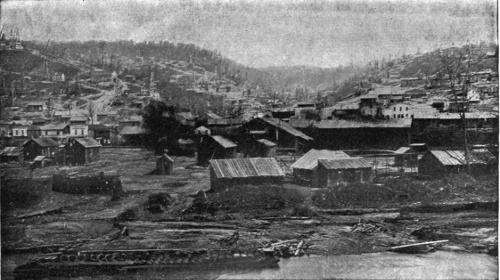
PIONEER AS IT LOOKED IN 1864-5.
Improved methods of handling and new uses for the product advanced
crude to five dollars in the spring of 1864. Operations encroached upon the
higher lands, exploding the notion that paying territory was confined to flats
bordering the streams. Pioneer Run, an affluent of Oil Creek, bisecting the
western end of the upper McElhenney and Foster farms, panned out flatteringly.
Substantial wells, yielding fifteen barrels to three-hundred lined the
ravine thickly. The town of Pioneer attracted the usual throngs. David
Emery and Lewis Emery, Frank W. Andrews and not a few leading operators
resided there for a time. The Morgan House, a rude frame of one story,
dished up meals at which to eat beef-hash was to beefashionable. Clark &
McGowen had a feed-store, offices and warehouses abounded, tanks and derricks
mixed in the mass and boats loaded oil for refineries down the creek or
the Allegheny river. The characteristic oil-town has faded from sight, only the
weather-beaten rail road-station and a forlorn iron-tank staying. John Rhodes,
130the last resident, was killed in February of 1892 by a train. He lived alone in
a small house beside the track, which he was crossing when the engine hit him,
the noisy waters in the culvert drowning the sound of the cars. Rhodes hauled
oil in the old days to Erie and Titusville, became a producer, met with reverses,
attended to some wells for a company, worked a bit of garden and felt independent
and happy.
Matthew Taylor, a Cleveland saloonist, whom the sequel showed to be no
saloonatic, took a four-hundred-dollar flyer at Pioneer, on his first visit to
Oildom. A well on the next lease elevated values and Taylor returned home
in two weeks with twenty-thousand dollars, which subsequent deals quadrupled.
A Titusville laborer—“a broth of a b’y wan year frum Oireland”—who
stuck fifty dollars into an out-of-the-way Pioneer lot, sold his claim in a
month for five-thousand. He bought a farm, sent across the water for his
colleen and “they lived happily ever after.” The driver of a contractor’s
team, assigned an interest in a drilling-well for his wages, cleaned up thirty-thousand
dollars by the transaction and went to Minnesota. Could the mellowest
melodrama unfold sweeter melodies?
“The jingle of gold is earth’s richest music.”
Although surrounded by farms unrivaled as oil-territory and sold to
Woods & Wright of New York at a fancy price, James Boyd’s seventy-five
acres in Cornplanter township, south of the lower McElhenny, dodged the
petroleum-artery. The sands were there, but so barren of oil that nine-tenths
of the forty wells did not pay one-tenth their cost. The Boyd farm was for
months the terminus of the railroad from Corry. Hotels and refineries were
built and the place had a short existence, a brief interval separating its lying-in
and its laying-out.
G. W. McClintock, in February of 1864, sold his two-hundred-acre farm,
on the west side of Oil Creek, midway between Titusville and Oil City, to the
Central Petroleum Company of New York, organized by Frederic Prentice and
George H. Bissell. This notable farm embraced the site of Petroleum Centre
and Wild-Cat Hollow, a circular ravine three-fourths of a mile long, in which
two-hundred paying wells were drilled. Brown, Catlin & Co.’s medium well,
finished in August of 1861, was the first on the McClintock tract. The company
bored a multitude of wells and granted leases only to actual operators, for
one-half royalty and a large bonus. For ten one-acre leases one-hundred-thousand
dollars cash and one-half the oil, offered by a New-York firm in 1865,
were refused. The McClintock well, drilled in 1862, figured in the thousand-barrel
class. The Coldwater, Meyer, Clark, Anderson, Fox, Swamp-Angel and
Bluff wells made splendid records. Altogether the Central Petroleum-Company
and the corps of lessees harvested at least five-millions of dollars from the
McClintock farm!
RYND FARM “KING OF THE HILLS”
PETROLEUM CENTRE-1894-
BOYD FARM-1864
STORY FARM.
Aladdin’s lamp was a miserly glim in the light of fortunes accruing from
petroleum. The product of a flowing-well in a year would buy a tract of gold-territory
in California or Australia larger than the oil-producing regions. Millions
of dollars changed hands every week. The Central Company staked off
a half-dozen streets and leased building-lots at exorbitant figures. Board-dwellings,
offices, hotels, saloons and wells mingled promiscuously. It mattered
nothing that discomfort was the rule. Poor fare, worse beds and the worst
liquors were tolerated by the hordes of people who flocked to the land of derricks.
Edward Fox, a railroad contractor who “struck the town” with eighty-thousand
dollars, felicitously baptised the bantling Petroleum Centre. The
131owners of the ground opposed a borough-organization and the town traveled
at a headlong go-as-you-please. Sharpers and prostitutes flourished, with no
fear of human or divine law, in the metropolis of rum and debauchery. Dance-houses,
beside which “Billy” McGlory’s Armory-Hall and “The.” Allen’s Mabille
in New York were Sunday-school models, nightly counted their revelers
by hundreds. In one of these dens Gus Reil, the proprietor, killed poor young
Tait, of Rouseville. Fast women and faster men caroused and gambled, cursed
and smoked, “burning the candle at both ends” in pursuit of—pleasure!
Frequently the orgies eclipsed Monte Carlo—minus some of the glitter—and
the Latin Quartier combined. Some readers may recall the night two “dead
game sports” tossed dice twelve hours for one-thousand dollars a throw! But
there was a rich leaven of first-class fellows. Kindred spirits, like “Sam”
Woods, Frank Ripley, Edward Fox and Col. Brady were not hard to discover.
Spades were trumps long years ago for Woods, who has taken his last trick
132and sleeps in an Ohio grave. Ripley is in Duluth, Fox is “out west” and
Brady is in Harrisburg. Captain Ray and A. D. Cotton had a bank that
handled barrels of money. For two or three years “The Centre”—called that
for convenient brevity—acted as a sort of safety-valve to blow off the surplus
wickedness of the oil-regions. Then “the handwriting on the wall” manifested
itself. Clarion and Butler speedily reduced the four-thousand population
to a mere remnant. The local paper died, houses were removed and the giddy
Centre became “a back number.” The sounds of revelry were hushed, flickering
lights no longer glared over painted harlots and the streets were deserted.
Bissell’s empty bank-building, three dwellings, the public school, two vacant
churches and the drygoods box used as a railway-station—scarcely enough to
cast a shadow—are the sole survivors in the ploughed field that was once bustling,
blooming, surging, foaming Petroleum Centre!
Across the creek from Petroleum Centre, on the east side of the stream,
was Alexander Davidson’s farm of thirty-eight acres. A portion of this triangular
“speck on the map” consisted of a mud-flat, a smaller portion of rising
ground and the remainder set edgewise. Dr. A. G. Egbert, a young physician
who had recently hung out his shingle at Cherrytree village, in 1860 negotiated
for the farm. Davidson died and a hitch in the title delayed the deal. Finally
Mrs. Davidson agreed to sign the deed for twenty-six-hundred dollars and one-twelfth
the oil. Charles Hyde paid the doctor this amount in 1862 for one-half
his purchase and it was termed the Hyde & Egbert farm. The Hollister
well, drilled in 1861, the first on the land, flowed strongly. Owing to the
dearness and scarcity of barrels, the oil was let run into the creek and the well
was never tested. The lessees could not afford, as their contract demanded, to
barrel the half due the land-owners, because crude was selling at twenty-five
cents and barrels at three-fifty to four dollars! A company of Jerseyites, in the
spring of 1863, drilled the Jersey well, on the south end of the property. The
Jersey—it was a Jersey Lily—flowed three-hundred barrels a day for nine
months, another well draining it early in 1864. The Maple-Shade, which cast
the majority into the shade by its performance, touched the right spot in the
third sand on August fifth, 1863. Starting at one-thousand barrels, it averaged
eight-hundred for ten months, dropped to fifty the second year and held on
until 1869. Fire on March second, 1864, burned the rig and twenty-eight tanks
of oil, but the well kept flowing just the same, netting the owners a clear profit
of fifteen-hundred-thousand dollars! “Do you notice it?” A plump million-and-a-half
from a corner of the “measly patch” poor Davidson offered in 1860
for one-thousand dollars! And the Maple Shade was only one of twenty-three
flowing wells on the despised thirty-eight acres!
Companies and individuals tugged and strained to get even the smallest
lease Hyde & Egbert would grant. The Keystone, Gettysburg, Kepler,
Eagle, Benton, Olive Branch, Laurel Hill, Bird and Potts wells, not to mention
a score of minor note, helped maintain a production that paid the holders of
the royalty eight-thousand dollars a day in 1864-5! E. B. Grandin and William
C. Hyde, partners of Charles Hyde in a store at Hydetown, A. C. Kepler and
Titus Ridgway obtained a lease of one acre on the west side of the lot, north
of the wells already down, subject to three-quarters royalty. A bit of romance
attaches to the transaction. Kepler dreamed that an Indian menaced him
with bow and arrow. A young lady, considered somewhat coquettish, handed
him a rifle and he fired at the dusky foe. The redskin vamoosed and a stream
of oil burst forth. Visiting his brother, who superintended the farm, he recognized
133the scene of his dream. The lease was secured, on the biggest royalty
ever offered. Kepler chose the location and bored the Coquette well. The
dream was a nightmare? Wait and see.
Drilling began in the spring of 1864 and the work went merrily on. Each
partner would be entitled to one-sixteenth of the oil. Hyde & Ridgway sold
their interest for ten-thousand dollars a few days before the tools reached the
sand. This interest Dr. M. C. Egbert, brother of the original purchaser of the
farm, next bought at a large advance. He had acquired one-sixth of the
property in fee and wished to own the Coquette. Grandin and Kepler declined
to sell. The well was finished and did not flow! Tubed and pumped a week,
gas checked its working and the sucker-rods were pulled. Immediately the
oil streamed high in the air! Twelve-hundred barrels a day was the gauge at
first, settling to steady business for a year at eight-hundred. A double row of
tanks lined the bank, connected by pipes to load boats in bulk. Oil was “on
the jump” and the first cargo of ten-thousand barrels brought ninety-thousand
dollars, representing ten days’ production! Three months later Grandin and
Kepler sold their one-eighth for one-hundred-and-forty-five thousand dollars,
quitting the Coquette with eighty-thousand apiece in their pockets. Kepler
was a dreamer whom Joseph might be proud to accept as a chum.

Dr. M. C. Egbert retained his share. Riches showered upon him. His
interests in the land and wells yielded him thousands of dollars a day. Once
his safe contained, by tight squeezing, eighteen-hundred-thousand dollars in
currency and a pile of government bonds! He built a comfortable house and
lived on the farm. He and his family traveled
over Europe, met shoals of titled folks and
saw all the sights. In company with John
Brown, subsequently manager of a big corporation
at Bradford and now a resident of
Chicago, he engaged in oil-shipments on an
extensive scale. To control this branch of
the trade, as the Standard Oil-Company has
since done by combinations of capital, was
too gigantic a task for the firm and failure
resulted. The brainy, courageous doctor
went to California, returned to Oildom and
operated in McKean county. He has secured
a foothold in the newer fields and lives in
Pittsburg, frank and urbane as in the palmiest
days of the Hyde & Egbert farm. If
Dame Fortune was strangely capricious on
Oil Creek, the pluck of the men with whom “the fickle jade” played whirligig
was surely admirable.
Probably no parcel of ground in America of equal size ever yielded a
larger return, in proportion to the expenditure, than the Hyde & Egbert tract.
Six weeks’ production of the Coquette or Maple Shade would drill all the wells
on the property. Charles Hyde and Dr. A. G. Egbert cleared at least three-million
dollars, the latter selling one-twelfth of the Coquette alone for a quarter-million
cash. Profits of others interested in the land and of the lessees trebled
this alluring sum. The aggregate—eight to ten millions—in silver-dollars would
load a freight-train or build a column twenty miles high! Fused into a lump
of gold, a dozen mules might well decline the task of drawing it a mile. Done
134up into a bundle of five-dollar bills, Hercules couldn’t budge the bulky package.
A “promoter” of the Mulberry-Sellers brand wanted an owner of the farm,
when the wells were at their best, to launch the whole thing into a stock-company
with five-millions capital. “Bah!” responded the gentleman, “five
millions—did you say five-millions? Don’t waste your breath talking until
you can come around with twenty-five millions!”
A native of New-York, born in 1822, Charles Hyde was fifteen when the
family settled on a farm two miles south of Titusville, now occupied by the
Octave Oil-Company. At twenty he engaged with his father and two brothers,
W. C. and E. B. Hyde, in merchandising, lumbering and the manufacture of
salts from ashes. In 1846 he assumed charge of the lumber-mills John Titus
sold the firm, originating the thrifty village of Hydetown, four miles above
Titusville. The Hydes frequently procured oil from the “springs” on Oil
Creek, selling it for medicine as early as 1840-1. From their Hydetown store
Colonel Drake obtained some tools and supplies Titusville could not furnish.
Samuel Grandin, of Tidioute, in the spring of 1860 induced Charles Hyde to
buy a tenth-interest in the Tidioute and Warren Oil-Company for one-thousand
dollars. The company’s first well, of which he heard on his way to Pittsburg
with a raft, laid the foundation of Hyde’s great fortune in petroleum. He
organized the Hydetown Oil-Company, which leased the McClintock farm,
below Rouseville, from Jonathan Watson and drilled a two-hundred-barrel well
in the summer of 1860. Mr. Hyde operated on the Clapp farm, south of
McClintock, and at different points on Oil Creek and the Allegheny River. His
gains from the Hyde & Egbert farm approximated two-millions. Starting the
Second National Bank of Titusville in 1865, he has always been its president
and chief stockholder. In 1869 he removed to Plainfield, New Jersey, cultivating
four-hundred acres of suburban land and maintaining an elegant home.
Dr. Albert G. Egbert, born in Mercer county in 1828, belonged to a family
of eminent physicians, his grandfather, father, two uncles, three brothers and
one son practicing medicine. Predicating a future for oil upon the Drake well,
his good judgment displayed itself promptly. Agreeing to purchase the Davison
farm, which his modest income at Cherrytree would not enable him to pay
for, his sale of a half-interest to Charles Hyde provided the money to meet the
entire claim. After the wonderful success of that investment the doctor located
at Franklin. He carried on oil-operations, farming and coal-mining and was
always active in advancing the general welfare. Elected to Congress against
immense odds, he served his district most capably, attending sedulously to his
official duties and doing admirable work on committees. In public and private
life he was enterprising and liberal, zealous for the right and a helpful citizen.
True to his convictions and professions, he never turned his back to friend or
foe. To the steady, masterful purpose of men like Dr. Egbert the oil-industry
owes its rapid strides and commanding position as a commercial staple. His
demise on March twenty-eighth, 1896, severs another of the links that bind the
eventful past and the important present of petroleum. Early operators on Oil
Creek are reduced to a handful of men whose heads are white with the snows
no July sun can melt.
“He has walk’d the way of nature;
The setting sun, and music at the close,
As the last taste of sweets, is sweetest last.”
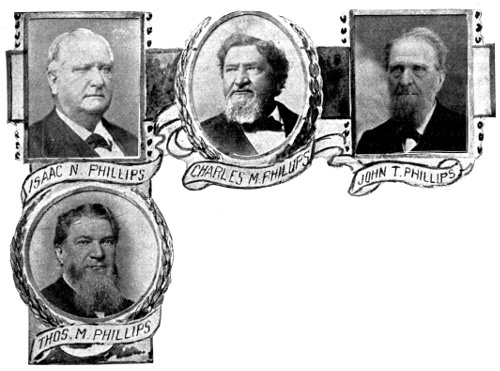
ISAAC N. PHILLIPS CHARLES M. PHILLIPS JOHN T. PHILLIPS
THOS. M. PHILLIPS
The rich pickings around Petroleum Center set many on the straight cinder-path
to prosperity. The four Phillips brothers—Isaac N., Charles M., John I.
135and Thomas M. came from Newcastle to coin
money operating a farm south of the Espy. Prolific
wells on the Niagara tract, Cherrytree Run, back
of the Benninghoff farm, added to their wealth.
They cut a wide swath in all the Pennsylvania fields.
Three of the brothers have “ascended to the hill
of frankincense and to the mountain of myrrh.”
Thomas M. was a millionaire congressman. During
the heated debates on free-silver, in 1894, he
scored the hit of the season by suggesting to convert
each barrel of Petroleum into legal-tender for a dollar and let it go at that.
Crude was selling at sixty cents, which gave the Phillips proposition a point
“sharper than a serpent’s tooth” or a Demosthenean philippic. Dr. Egbert
offered Isaac Phillips an interest in the Davidson farm in 1862. The offer
was not accepted instantly, Phillips saying he would “consider it a few days.”
Two weeks later he was ready to close the deal, but the plum had fallen into
the lap of Charles Hyde and diverted prospective millions into another channel.
George K. Anderson figured conspicuously in this latitude, his receipts for
two years exceeding five-thousand dollars a day! He built a sumptuous residence
at Titusville, sought political preferment and served a term in the State
Senate. Holding a vast block of Pacific-Railroad stock, he was the bosom
friend of the directors and trusted lieutenant of William H. Kemble, the Philadelphia
magnate whose “addition, division and silence” gave him notoriety.
He bought thousands of acres of land, plunged deeply into stocks and insured
his life for three-hundred-and-fifteen-thousand dollars, at that time the largest
risk in the country. If he sneezed or coughed the agents of the insurance-companies
grew nervous and summoned a posse of doctors to consult about the
case. Outside speculations swamped him at last. The stately mansion, piles
of bonds and scores of farms passed under the sheriff’s hammer in 1880.
Plucky and unconquerable, Anderson tried his hand in the Bradford field,
operating on Harrisburg Run. The result was discouraging and he entered an
insurance-office in New York. Five years ago he accepted a government-berth
in New Mexico. Meeting him on Broadway the week before he left
New York, his buoyant spirits seemed depressed. He spoke regretfully of
his approaching departure, yet hoped it might turn out advantageously. He
arrived at his post, sickened and died in a few days, “a stranger in a strange
land.” Relatives and loved ones were far away when he went down into the
starless night of the grave. No gentle wife or child or valued friend was there
to smooth the pillow of the dying man, to cool the fevered brow, to catch the
136last whisper, to close the glassy eyes and fold the rigid hands above the lifeless
breast. The oil-regions abound with pathetic experiences, but none surpassing
George K. Anderson’s. Wealthy beyond the dreams of avarice, the courted
politician, the confidant of presidents and statesmen, a social favorite in Washington
and Harrisburg, the owner of a home beautiful as Claude Melnotte
pictured to Pauline, he drained the cup of sorrow and misfortune. Reverses
beset him, his riches took wings, bereavements bore heavily upon him, he was
glad to secure a humble clerkship, and death ended the sad scene in a distant
territory. Does not human life contain more tears than smiles, more pain than
pleasure, more cloud than sunshine in the passage from the cradle to the tomb?
Frank W. Andrews, born in Vermont and reared in Ohio, taught school in
Missouri, hunted for gold at Pike’s Peak and landed on Oil Creek in the winter
of 1863-4. Hauling oil nine months supplied funds to operate on Cherrytree
Run. He drilled four dry holes. One on the McClintock farm and three more
on Pithole Creek followed. This was not a flattering start, but Andrews had
lots of sand and persistence. Emerging from the Pithole excitement with
limited cash and unlimited machinery, he returned to Oil Creek and operated
extensively. His first well at Pioneer flowed three-hundred barrels a day.
Fifty others at Shamburg, on the Benninghoff farm and Cherrytree Run brought
him hundreds of thousands of dollars. He was rated at three-millions in 1870.
Keeping up with the tidal wave southward, he put down two-hundred wells in
the Franklin, Clarion and Butler districts. Failures of banks and manufactories
in which he had a large stake shattered his fortune. With the loss of
money he did not lose his manliness and self-reliance. In the Bradford region
he pressed forward vigorously. Again he “plucked the flower of success” and
was fast recuperating when thrown from his horse and fatally injured. Upright,
unassuming and refined, Andrews merited the confidence and esteem of all.
The bluff overlooking Petroleum Centre from the east formed the western
side of the McCray farm. At its base, on the Hyde & Egbert plot, were several
of the finest wells in Pennsylvania, the Coquette almost touching McCray’s
line. Dr. M. C. Egbert leased part of the slope and drilled three wells. Other
parties drilled five and the eight behaved so handsomely that the owner of the
land declined an offer, in 1865, of a half-million dollars for his eighty acres. A
well on top of the hill, not deep enough to hit the sand and supposed to be dry,
postponed further operations five years. His friends distanced Jeremiah in
their lamentations that McCray had spurned the five-hundred-thousand dollars.
He may have thought of Shakespeare’s “tide in the affairs of men,” but he
sawed wood and said nothing. Jonathan Watson, advised by a clairvoyant, in
the spring of 1870 drilled a three-hundred-barrel well on the uplands of the
Dalzell farm, close to the southern boundary of the McCray. The clairvoyant’s
astonishing guess revived interest in Petroleum Centre, which for a year or two
had been on the down grade. Besieged for leases, McCray could not meet a
tithe of the demand at one-thousand dollars an acre and half the oil. Derricks
clustered thickly. Every well tapped the pool underlying fifteen acres, pumping
as if drawing from a lake of petroleum. Within four months the daily
production was three-thousand barrels. This meant nineteen-hundred barrels
for the land-owner—fifteen-hundred from royalty and four-hundred from wells
he had drilled—a regular income of nine-thousand dollars a day! Cipher it
out—nineteen-hundred barrels at four-fifty to five dollars, with eleven-hundred
barrels for the lessees—and what do you find? Fourteen-thousand dollars a
day for the last quarter of 1870 and nine months of 1871, from one-sixth of a
137farm sold in 1850 for seventeen-hundred dollars! Say, how was that for high?
James S. McCray, a farmer’s son, born in 1824 on the flats below Titusville,
at twenty-two set out for himself with two dollars in his pocket. Working
three years in a saw-mill on the Allegheny, he saved his earnings and in 1850
was able to buy a team and take up the farm decreed to enrich him beyond his
wildest fancies. He married Miss Martha G. Crooks, a willing helpmeet in
adversity and wise counsellor in prosperity. His first venture in oil, a share in
a two-acre lease at Rouseville, he sold to drill a well on the Blood farm, elbowing
his own. From this he realized seventy-thousand dollars. For his own
farm he refused a million dollars in 1871. Sharpers dogged his footsteps and
endeavored to rope him into all sorts of preposterous schemes. He told me
one project, which was expected to control the coal-trade of the region, bled
him two-hundred-and-sixty-thousand dollars! Instead of selling his oil right
along, at an average figure of nearly five dollars, he stored two-hundred-thousand
barrels in iron-tanks, to await higher prices. In my presence H. I. Beers,
of McClintockville, bid him five-thirty-five a barrelfive-thirty-five a barrel for the lot. McCray stuck
out for five-fifty. He kept the oil for years, losing thousands of barrels by
leakage and evaporation, and sold the bulk of it at one to two dollars. Had
he dealt with Beers he would have been six-hundred-thousand dollars richer!
Mr. McCray removed to Franklin in 1872 and died some years ago. He rests
in the cemetery beside his faithful wife and only daughter. The wells on his
farm drooped and withered and the famous fifteen-acre field has long been a
pasture. A robust character, strong-willed and kindly, sometimes queerly
contradictory and often misjudged, James S. McCray could adopt the words of
King Lear: “I am a man more sinned against than sinning.”
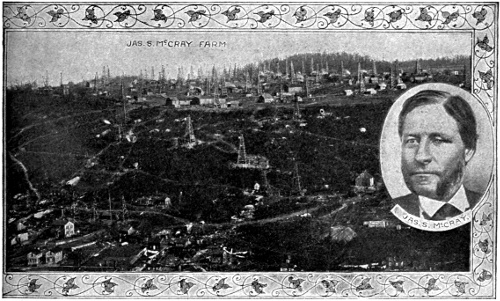
HYDE & EGBERT TRACT AND McCRAY FARM IN 1870.
JAS. S. McCRAY FARM. JAS. S. McCRAY.
The Dalzell or Hayes farm, on which the first well—fifty barrels—was
drilled in 1861, boasted the Porcupine, Rhinoceros, Ramcat, Wildcat, and a
menagerie of thirty others ranging from ten barrels to three-hundred. At the
north end of the farm, in the rear of the Maple-Shade and Jersey wells, the
Petroleum Shaft-and-Mining-Company attempted to sink a hole seven feet by
138seventeen to the third sand. The shaft was dug and blasted one-hundred feet,
at immense cost. The funds ran out, gas threatened to asphyxiate the workmen,
the big pumps could not exhaust the water and the absurd undertaking
was abandoned.
The story of the Story farm does not lack romantic ingredients. William
Story owned five-hundred acres south of the G. W. McClintock farm, Oil
Creek, the Dalzell and Tarr farms bounding his land on the east. He sold in
1859 to Ritchie, Hartje & Co., of Pittsburg, for thirty-thousand dollars.
George H. Bissell had negotiated for the property, but Mrs. Story objected to
signing the deed. Next day Bissell returned to offer the wife a sufficient inducement,
but the Pittsburg agent had been there the previous evening and
secured her signature to the Ritchie-Hartje deed by the promise of a silk dress!
Thus a twenty-dollar gown changed the ultimate ownership of millions of
dollars! The long-haired novelist, who soars into the infinite and dives into
the unfathomable, may try to imagine what the addition of a new bonnet would
have accomplished.
The seven Pittsburgers organized a stock company in 1860 to develop the
farm. By act of Legislature this was incorporated on May first, 1861, as the
Columbia Oil-Company, with a nominal capital of two-hundred-and-fifty-thousand
dollars—ten-thousand shares of twenty-five dollars each. Twenty-one-thousand
barrels of oil were produced in 1861 and ninety-thousand in 1862,
shares selling at two to ten dollars. Foreign demand for oil improved matters.
On July eighth, 1863, the first dividend of thirty per cent. was declared, followed
in August and September by two of twenty-five per cent. and in October
by one of fifty per cent. Four dividends, aggregating one-hundred-and-sixty
per cent., were declared the first six months of 1864. The capital was increased
to two-and-a-half-millions, by calling in the old stock and giving each holder of
a twenty-five-dollar share five new ones of fifty dollars apiece. Four-hundred
per cent. were paid on this capital in six years. The original stockholders
received their money back forty-three times and had ten times their first stock
to keep on drawing fat dividends! Suppose a person had bought one-hundred
shares in 1862 at two dollars, in eight years he would have been paid one-hundred-and-seven-thousand
dollars for his two hundred and have five-hundred
fifty-dollar shares on hand! From a mere speck of the Story farm the Columbia
Oil-Company in ten years produced oil that sold for ten-millions of dollars!
Wonder not that men, dazzled by such returns, blind to the failures that littered
the oily domain, clutched at the veriest phantoms in the mad craze for boundless
wealth.
Splendidly managed throughout, the policy of the Columbia Company was
to operate its lands systematically. Wells were not drilled at random over the
farm, nor were leases granted to speculators. There was no effort to make a
big showing of production and exhaust the territory in the shortest time possible.
For twenty-five years the Story farm yielded profitably. The wells, never
amazingly large, held on tenaciously. The Ladies’ well produced sixty-five-thousand
barrels, the Floral sixty-thousand, the Big Tank fifty-thousand, the
Story Centre forty-five-thousand, the Breedtown forty-thousand, the Cherry Run
fifty-five-thousand, the Titus pair one-hundred-thousand and the Perry thirty-five-thousand.
The company erected machine-shops, built houses for employés,
and the village of Columbia prospered. The Columbia Cornet Band, superbly
appointed, its thirty members in rich uniforms, its instruments the finest and its
drum-major an acrobatic revelation, could have given Gilmore’s or Sousa’s
139points in ravishing music. G. S. Bancroft superintended the wells and D. H.
Boulton, now of Franklin, assisted President D. B. Stewart, of Pittsburg, in
conducting affairs generally. The village has vanished, the cornet band is
hushed forever, the fields are the prey of weeds and underbrush and brakemen
no more call out “Columby!” A few small wells, hidden amid the hills,
produce a morsel of oil, but the farm, despoiled of sixteen-million dollars of
greasy treasure, would not bring one-fourth the price paid William Story for it
in the fall of 1859. “So passes away earthly glory” is as true to-day as when
Horace evolved the classic phrase two-thousand years ago.
“Man wants but little, nor that little long;
How soon must he resign his very dust,
Which frugal nature lent him for an hour!”
On the east side of Oil Creek, opposite the southern half of the Story farm,
James Tarr owned and occupied a triangular tract of two-hundred acres. He
was a strong-limbed, loud-voiced, stout-hearted son of toil, farming in summer
and hauling lumber in winter to support his family. Although uneducated, he
had plenty of “horse sense” and native wit. His quaint speech coined words
and terms that are entrenched firmly in the nomenclature of Oildom. Funny
stories have been told at his expense. One of these, relating to his daughter,
whom he had taken to a seminary, has appeared in hundreds of newspapers.
According to the revised version, the principal of the school expressing a fear
that the girl had not “capacity,” the fond father, profoundly ignorant of what
was meant, drew a roll of greenbacks from his pocket and exclaimed: “Damn
it, that’s nothing! Buy her one and here’s the stuff to pay for it!” The fact
that it is pure fiction may detract somewhat from the piquancy of this incident.
Tarr realized his own deficiencies from lack of schooling and spared no pains,
when the golden stream flowed his way, to educate the children dwelling in the
old home on the south end of the farm. His daughters were bright, good-looking,
intelligent girls. Scratching the barren hills for a meager corn-crop,
hunting rabbits on Sundays, rafting in the spring and fall and teaming while
snow lasted barely sufficed to keep the gaunt wolf of hunger from the door of
many a hardy Oil-Creek settler. To their credit be it said, most of the land-owners
whom petroleum enriched took care of their money. Rough diamonds,
uncut and unpolished, they possessed intrinsic worth. James Tarr was of the
number who did not lose their heads and squander their substance. The richest
of them all, he bought a delightful home near Meadville, provided every comfort
and convenience, spent his closing years enjoyably and died in 1871. “Put
yourself in his place” and, candidly, would you have done better?
For himself, George B. Delamater and L. L. Lamb, in the summer of 1860
Orange Noble leased seven acres of the Tarr farm, at the bend in Oil Creek.
Dry holes the partners “kicked down” on the Stackpole and Jones farms dampening
their ardor, they let the Tarr lease lie dormant some months. Contracting
with a Townville neighbor—N. S. Woodford—to juggle the “spring-pole,” he
cracked the first sand in June, 1861. The Crescent well—so called because the
faith of the owners was increasing—tipped the beam at five-hundred barrels.
The first well on the Tarr farm, it flowed an average of three-hundred barrels a
day for thirteen months, quitting without notice. Cleaning it out, drilling it
deeper and pumping it for weeks were of no avail. Not a drop of oil could be
extracted and the Crescent was abandoned. Crude was so low during most of
its existence—ten to twenty-five cents—that the well, although it produced one-hundred-and-twenty-thousand
barrels, did not pay the owners a dollar of profit!
140Drilling, royalty and tankage absorbed every nickel. Like the victories of
Pyrrhus, the more such strikes a fellow achieved the sooner he would be undone!
On the evening of August first, 1861, as James Tarr sat eating his supper of
fried pork and johnny-cake, Heman Janes, of Erie, entered the room. “Tarr,”
he said, “I’ll give you sixty-thousand dollars in spot cash for your farm!” Tarr
almost fell off his chair. A year before one-thousand dollars would have been
big money for the whole plantation. “I mean it,” continued the visitor; “if
you take me up I’ll close the deal right here!” Tarr “took him up” and the
deal, which included a transfer of several leases, was closed quickly. Janes
planked down the sixty-thousand and Tarr, within an hour, had stepped from
poverty to affluence. This was the first large cash transaction in oil-lands on the
creek and people promptly pronounced Janes a fool of the thirty-third degree.
An Irishman, on trial for stealing a sheep, asked by the judge whether he was
guilty or not guilty, replied: “How can I tell till I hear the ividence?” Don’t
endorse the Janes verdict “till you hear the ividence.”
A short distance below the Crescent well William Phillips, who had leased
a narrow strip the entire length of the farm, was also urging a “spring-pole”
actively. Born in Westmoreland county in 1824, he passed his boyhood on a
farm and earned his first money mining coal. Saving his hard-won wages, he
bought the keel-boat Orphan Boy and started freighting on the Ohio and Allegheny
rivers. The business proving remunerative, he drilled salt-wells at Bull
Creek and Wildcat Hollow. On his last trip from Warren to Pittsburg, in September
of 1859, he noticed a scum of oil in front of Thomas Downing’s farm,
where South Oil City now stands. The story of the Drake well was in everybody’s
mouth and it occurred to Phillips that he could increase his growing
fortune by drilling on the Downing land. At Pittsburg he consulted Charles
Lockhart, William Frew, Captain Kipp and John Vanausdall and with them
formed the partnership of Phillips, Frew & Co. Returning at once, he leased
from Downing, erected a pole-derrick and proceeded to bore a well on the water’s
edge. With no machine-shops, tools or appliances nearer than Pittsburg, a hundred-and-thirty
miles off, difficulties of all kinds retarded the work nine months.
Finally the job was completed and the Albion well, pumping forty barrels a day,
raised a commotion.
The Albion brought Phillips to the front as an oil-operator. James Tarr
readily leased him part of his farm and he began Phillips No. 1 well in the spring
of 1861. The Crescent’s unexpected success spurred him to greater efforts.
Hurrying an engine and boiler from Pittsburg, he started his second well on the
flat hugging the stream twenty rods north of the Crescent. Steam-power rushed
the tools at a boom-de-ay gait. The first sand, from which meanwhile No. 1
was rivaling the Crescent’s yield, had not a pinch of oil. The solid-silver lining
of the petroleum-cloud assumed a plated look, but Phillips heeded it not. An
expert driller, he hustled the tools and on October nineteenth, at four-hundred-and-eighty
feet, pierced the shell above the third sand. At dusk he shut down
for the night. The weather was clear and the moon shone brightly. Suddenly
a vivid flame illumined the sky. Reuben Painter’s well on the Blood farm, a
mile southward, had caught fire and blazed furiously. The rare spectacle of a
burning well attracted everybody for miles. Phillips and Janes were among
those who hastened to the fire, returning about midnight. An hour later they
were summoned from bed by a man yelling at the Ella-Yaw pitch: “The Phillips
is bu’sted and runnin’ down the creek!” People ran to the spot on the double-quick,
past the Crescent and down the bank. Gas was settling densely upon the
141flats and into the creek oil was pouring lavishly. Dreading a fire, lights were
extinguished on the adjoining tracts and needful precautions taken. For three
or four days the flow raged unhindered, then a lull occurred and tubing was inserted.
After the seed-bag swelled, a stop-cock was placed on the tubing and
thenceforth it was easy to regulate the flow. When oil was wanted the stop-cock
was opened and wooden troughs conveyed the stuff to boats drawn up the creek
by horses, the chief mode of transportation for years. The oil was forty-four
gravity and four-thousand barrels a day gushed out! In June of 1862, when
Phillips and Major Frew, with their wives and a party of friends, inspected the
well, a careful gauge showed it was doing thirty-six-hundred-and-sixty barrels!
The Phillips well held the champion-belt twenty-seven years. It produced until
1871, getting down to ten or twelve barrels and ceasing altogether the night
James Tarr expired, having yielded nearly one-million barrels! Cargoes of the
oil were sold to boatmen at five cents a barrel, thousands of barrels were wasted,
tens of thousands were stored in underground tanks and much was sold at three
to thirteen dollars.
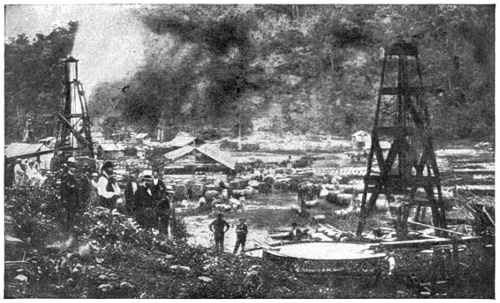
WOODFORD WELL. TARR FARM IN 1862. PHILLIPS WELL.
N. S. Woodford, Noble & Delamater’s contractor, had the foresight to lease
the ground between the Crescent and the Phillips No. 2. His three-thousand
barreler, finished in December, 1861, drew its grist from the Phillips crevice and
interfered with the mammoth gusher. When the two became pumpers neither
would give out oil unless both were worked. If one was stopped the other
pumped water. Ultimately the Phillips crowd paid Woodford a half-million for
his well and lease, a wad for which a man would ford even the atrocious Tarr-farm
mud and complacently whistle “Ta-ra-ra.” He retired to his pleasant
home, with six-hundred-thousand dollars to show for eighteen months’ operations
on Oil Creek, and never bothered any more about oil. The Woodford well
repaid its enormous cost. Lockhart and Frew bought out their partners at a
high price and put the Phillips-Woodford interests into a stock-company capitalized
at two-million dollars. The Phillips well—one result of a keen-eyed
142boatman’s observing an oily scum on the Allegheny River—enriched all concerned.
Had Phillips failed to see the speck of grease that September day,
who can tell how different oil-region history might have been? Happily for a
good many persons, the Orphan Boy was not one of the “Ships that Pass in the
Night.” What a field Oil Creek presents for the fervid fancy of a Dumas, a
Dickens, a Wilkie Collins or a Charles Reade!
Comrades in business and good-fellowship, William Phillips and John Vanausdall
removed to South Oil-City, lived neighbors and died twenty years ago.
They resembled each other in appearance and temper, in charitable impulse and
kindness to the poor. Phillips drilled dozens of wells—none of them dry—aided
Oil-City enterprises and was a member of the shipping firm of Munhall & Co.
until its dissolution in 1876. He was the first man to ship oil by steamer, the
Venango taking the first load to Pittsburg, and the first to run crude in bulk
down the creek. One son, John C. Phillips, and a married daughter live at Oil
City and two sons at Freeport.
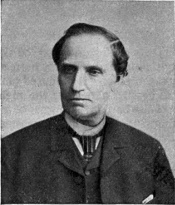
Heman Janes, of Erie, the first purchaser of the Tarr farm, from 1850 to 1861
shipped large quantities of lumber to the eastern market. Passing through
Canada in 1858, he heard oil was obtained from gum-beds in Lambton county,
south of Lake Huron, and visited the place. John Williams was dipping five
barrels a day from a hole ten feet square and twenty feet deep. The best gum-beds
spread over two-hundred acres of timbered land, which Mr. Janes bought
at nine dollars an acre, the owner selling because “the stinking oil smelled five
miles off.” Leasing four-hundred acres more, in 1860 he sold a half-interest in
both tracts for fifteen-thousand dollars and retired from lumbering to devote his
attention to oil. Large wells on his Canadian lands enabled him to sell the second
half of the property in 1865 for fifty-five-thousand dollars. In February, 1861,
he secured a thirty-day option on the J. Buchanan
farm, the site of Rouseville, and tendered
the price at the stipulated time, but the
transaction fell through. In March of that
year he went to West Virginia and leased one-thousand
acres on the Kanawha River, including
the famous “Burning Spring.” U. E.
Everett & Co. agreed to pay fifty-thousand
dollars for one-half interest in the property,
at Parkersburg, on April twelfth. All parties
met, a certified check was laid on the table
and Attorney J. B. Blair started to draw the
papers. At that moment a boy ran past,
shouting: “Fort Sumpter’s fired on!” The
gentlemen hurried out to learn the particulars.
“The cat came back,” but Everett didn’t. A
message told him to “hold off,” and he is
holding off still. Janes stayed as long as a Northerner dared and was thankful
to sell the batch of leases for seventy-five-hundred dollars. In 1862 he sued the
owners of the Phillips well for his royalty in barrels. They refused to furnish
the barrels, which were scarce and expensive, and the well was shut down for
months pending the litigation. The suit was for one-hundred-and-twelve-thousand
dollars, up to that time the largest amount ever involved in a case before
the Venango court. Edwin M. Stanton, soon to be known as the illustrious
War-Secretary, was one of the attorneys engaged by the plaintiff, for a fee of
143twenty-five-thousand dollars. A compromise was arranged for half the oil. The
first oil sold after this agreement was at three dollars a barrel, taken from the first
twelve-hundred-barrel tank ever seen in the region. A wooden tank of that size
excited more curiosity in those days than a hundred iron-ones of forty-thousand
barrels in this year of grace. Janes sold back half the farm to Tarr for forty-thousand
dollars and two-thirds of the remaining half to Clark & Sumner for
twenty-thousand, leaving him one-sixth clear of cost, the same month he bought
the tract. He first suggested casing wells to exclude the water, built the first
bulk-boat decked over—six-hundred barrels—to transport oil and was identified
with the first practicable pipe-line. Paying seventy-five-thousand dollars for the
Blackmar farm, at Pithole, he drilled three dry holes and then got rid of the land
at a snug advance. Since 1878 Mr. Janes has been interested in the Bradford
field and living at Erie. A man of forceful character and executive ability,
hearty, vigorous and companionable, he deserves the large measure of success
that rewarded him as an important factor in petroleum-affairs. In the words of
the good Scottish mother to her son: “May your lot be wi’ the rich in this
warld and wi’ the puir in the warld to come.”
The amazing output of the Phillips and Woodford wells stimulated the demand
for territory to the boiling point. Men were infinitely less eager to “read
their title clear to mansions in the skies” than to secure a title to a fragment of
the Tarr farm. Rigs huddled on the bank and in the water, for nobody thought
oil existed back in the hilly sections. Sixty yards below the Phillips spouter
J. F. Crane sank a well that responded as pleasantly as “the swinging of the
crane.” Densmore Brothers, at the lower end of the farm, drilled a seven-hundred-barreler
late in 1861. A zoological freak introduced the animal-fad, which
named the Elephant, Young Elephant, Tigress, Tiger, Lioness, Scared Cat,
Anaconda and Weasel wells. Reckless speculation held the fort unchecked.
The third sand was sixty feet thick, the territory was durable and three-hundred
walking-beams exhibited “the poetry of motion” to the music of three-four-five-six-eight-ten-dollar
oil. Mr. Janes built a commodious hotel and a town of
two-thousand population flourished. James Tarr sold his entire interest in 1865,
for gold equivalent to two-millions in currency, and removed to Crawford county.
Another million would hardly cover his royalties. Three-million dollars ahead
of the game in four years, he could afford to smile at the jibes of small-souled
retailers of witless ridicule. If “money talks,” three-millions ought to be pretty
eloquent. The churches, stores, houses, offices, wells and tanks have “gone
glimmering.” Tarr-Farm station appears no more on railroad time-tables.
Modern maps do not reveal it. Few know and fewer care who owns the place
once the apple of the oilman’s eye, now a shadowy relic not worth carting off
in a wheelbarrow!
Producers have enjoyed quite a reputation for “resolving,” and the first
meeting ever held to regulate the price of crude was at Tarr farm in 1861. The
moving spirits were Mr. Janes, General James Wadsworth and Josiah Oakes,
the latter a New-York capitalist. The idea was to raise five-hundred-thousand
dollars and buy up the territory for ten miles along Oil Creek. Wadsworth and
Oakes raised over three-hundred-thousand dollars for this purpose, when the
panic arising from the war ended the scheme. A contract was also made with
Erie parties to lay a four-inch wooden pipe-line from Tarr farm to Oil City. On
the advice of Col. Clark, of Clark & Sumner, and Sir John Hope, the eminent
London banker, it was decided to abandon the project and apply for a charter
for a pipe-line. This was done in the winter of 1861-2, Hon. Morrow B. Lowry,
144who represented the district in the State Senate, favoring the application. Hon.
M. C. Beebe, the local member of the Legislature, opposed it resolutely, because,
to quote his own words: “There are four-thousand teams hauling oil and my
constituents won’t stand this interference.” The measure failing to carry, Clark
& Hope built the Standard refinery at Pittsburg.
Resistance to the South-Improvement-Company welded the producers solidly
in 1872. The refiners organized to force a larger margin between crude and
refined. To offset this and govern the production and sale of crude, the producers
established a “union,” “agencies” and “councils.” In October of 1872
every well in the region was shut down for thirty days. The “spirit of seventy-six”
was abroad and individual losses were borne cheerfully for the general
good. This was the heroic period, which demonstrated the manly fiber of the
great body of oil-operators. E. E. Clapp, of President, and Captain William
Harson, of Oil City, were the chief officers of these remarkable organizations.
Suspensions of drilling in 1873-4-5 supplemented the memorable “thirty-day
shut-down.” At length the “union,” the “councils” and the “agencies”
wilted and dissolved. The area of productive territory widened and strong
companies became a necessity to develop it. The big fish swallowed the little
ones, hence the personal feature so pronounced in earlier years has been almost
eliminated. Many of the operators are members of the Producers’ Association,
in which Congressman Phillips, Lewis Emery, David Kirk and T. J. Vandergrift
are prime factors. Its president, Hon. J. W. Lee, practiced law at Franklin,
served twice as State-Senator and located at Pittsburg last year. He is a
cogent speaker, not averse to legal tilts and not backward flying his colors in
the face of the enemy.
South of the Story and Tarr farms, on both sides of Oil Creek, were John
Blood’s four-hundred-and-forty acres. The owner lived in an unpainted,
weatherbeaten frame house. On five acres of the flats the Ocean Petroleum-Company
had twelve flowing wells in 1861. The Maple-Tree Company’s burning
well spouted twenty-five-hundred barrels for several months, declined to
three-hundred in a year and was destroyed by fire in October of 1862. The
flames devastated twenty acres, consuming ten wells and a hundred tanks of
oil, the loss aggregating a million dollars. A sheet of fire, terribly grand and
up to that date the most extensive and destructive in Oildom, wrapped the flats
and the stream. Blood Well No. 1, flowing a thousand barrels, Blood No. 2,
flowing six hundred, and five other gushers never yielded after the conflagration,
prior to which the farm was producing more oil than the balance of the region.
Brewer & Watson, Ballard & Trax, Edward Filkins, Henry Collins, Reuben
Painter, James Burrows and J. H. Duncan were pioneer operators on the tract.
Blood sold in 1863 for five-hundred-and-sixty-thousand dollars and removed to
New York. Buying a brownstone residence on Fifth avenue, he splurged
around Gotham two or three years, quit the city for the country and died long
since. The Blood farm was notably prolific, but its glory has departed.
Stripped bare of derricks, houses, wells and tanks, naught is left save the rugged
hills and sandy banks. “It is no matter, the cat will mew, the dog will have
his day.”
Neighbors of John Blood, a raw-boned native and his wife, enjoyed an experience
not yet forgotten in New York. Selling their farm for big money, the
couple concluded to see Manhattanville and set off in high glee, arrayed in
homespun-clothes of most agonizing country-fashion. Wags on the farm advised
them to go to the Astor House and insist upon having the finest room in
145the caravansary. Arriving in New York, they were driven to the hotel, each
carrying a bundle done up in a colored handkerchief. Their rustic appearance
attracted great attention, which was increased when the man marched to the
office-counter and demanded “the best in the shebang, b’gosh.” The astounded
clerk tried to get the unwelcome guest to go elsewhere, assuring him he must
have made a mistake. The rural delegate did not propose to be bluffed by
coaxing or threats. At length the representative of petroleum wanted to know
“how much it would cost to buy the gol-darned ranche.” In despair the clerk
summoned the proprietor, who soon took in the situation. To humor the
stranger he replied that one-hundred-thousand dollars would buy the place.
The chap produced a pile of bills and tendered him the money on the spot!
Explanations followed, a parlor and bedroom were assigned the pair and for
days they were the lions of the metropolis. Hundreds of citizens and ladies
called to see the innocents who had come on their “first tower” as green and
unsophisticated as did Josiah Allen’s Wife twenty years later.
Ambrose Rynd, an Irish woolen-factor, bought five-hundred acres from the
Holland Land-Company in 1800 and built a log-cabin at the mouth of Cherrytree
Run. He attained the Nestorian age of ninety-nine. His grandson, John
Rynd, born in the log-cabin in 1815, owned three-hundred acres of the tract when
the petroleum-wave swept Oil Creek. The Blood farm was north and the Smith
east. Cherrytree and Wykle Runs rippled through the western half of the property,
which Oil Creek divided nicely. Developments in 1861 were on the eastern
half. Starting at five-hundred barrels, the Rynd well flowed until 1863. The
Crawford “saw” the Rynd and “went it one better,” lasting until June of 1864.
Six fair wells were drilled on Rynd Island, a dot at the upper part of the farm.
The Rynd-Farm Oil-Company of New York purchased the tract in 1864. John
Rynd moved to Fayette county and died in the seventies. Hume & Crawford,
Porter & Milroy, B. F. Wren, the Ozark, Favorite, Frost, Northern and a score of
companies operated vigorously. The third sand thickened and improved with
the elevation of the hills. Five refineries handled a thousand barrels of crude
per week. A snug village bloomed on the west side, the broad flat affording an
eligible site. The late John Wallace and Theodore Ladd were prominent in the
later stage of operations. Cyrus D. Rynd returned in 1881 to take charge
of the farm and served as postmaster six years. Rynd, once plump and juicy,
now lean and desiccated, resembles an orange which a boy has sucked and
thrown away the rind.
Two museum-curio wells on the Rynd farm illustrated practically Chaplain
McCabe’s “Drinking From the Same Canteen.” A dozen strokes of the
pump every hour caused the Agitator to flow ten or fifteen minutes. The pious
Sunday well, its companion, loafed six days in the week while the other worked,
flowing on the Sabbath when the Agitator pump rested from its labors. This
sort of affinity, which cost William Phillips and Noble & Delamater a mint of
money, was evinced most forcibly on the McClintock farm, west side of Oil
Creek, south of Rynd. William McClintock, original owner of the two-hundred
acres, dying in 1859, the widow remained on the farm with her grandson, John
W. Steele, whom the couple had adopted at a tender age, upon the decease of
his mother. Nearly half the farm was bottom-land, fronting the creek, on the
bank of which the first wells were sunk in 1861. The Vanslyke flowed twelve-hundred
barrels a day, declined slowly and in its third year pumped fourteen-thousand.
The Lloyd, Eastman, Little Giant, Morrison, Hayes & Merrick,
Christy, Ocean, Painter, Sterrett, Chase and sixty more each put up fifty to four-hundred
146barrels daily. Directly between the Vanslyke and Christy, a few rods
from either, New-York parties finished the Hammond well in May, 1864. Starting
to flow three-hundred barrels a day, the Hammond killed the Lloyd and
Christy and reduced the Vanslyke to a ten-barrel pumper. Its triumph was
short-lived. Early in June the New Yorkers, elated over its performance,
bought the royalty of the well and one-third acre of ground for two-hundred
thousand dollars. The end of June the tubing was drawn from the Excelsior
well, on the John McClintock farm, five-hundred yards east, flooding the Hammond
and all the wells in the vicinity. The damage was attributed to Vandergrift
& Titus’s new well a short distance down the flat, nobody imagining it came
from a hole a quarter-mile off. Retubing the Excelsior quickly restored one-half
the Hammond’s yield, which increased as the Excelsior’s lessened. An
adjustment followed, but the final pulling of the tubing from the Excelsior
drowned the affected wells permanently. Geologists and scientists reveled in
the ethics suggested by such interference, which casing wells has obviated. The
Widow-McClintock farm produced hundreds of thousands of barrels of oil and
changed hands repeatedly. For years it was owned by a man who as a boy
blacked Steele’s boots. In 1892 John Waites renovated a number of the old
wells. Pumping some and plugging others, to shut out water, surprised and
rewarded him with a yield that is bringing him a tidy fortune. The action of the
stream has washed away the ground on which the Vanslyke, the Sterrett and
several of the largest wells were located. “Out, out, brief candle!”
Mrs. McClintock, like thousands of women since, attempted one day in
March of 1863 to hurry up the kitchen-fire with kerosene. The result was her
fatal burning, death in an hour and the first funeral to the account of the treacherous
oil-can. The poor woman wore coarse clothing, worked hard and secreted
her wealth about the house. Her will, written soon after McClintock’s
exit, bequeathed everything to the adopted heir, John W. Steele, twenty years
old when his grandmother met her tragic fate. At eighteen he had married
Miss M. Moffett, daughter of a farmer in Sugarcreek township. He hauled oil
in 1861 with hired plugs until he could buy a span of stout horses. Oil-Creek
teamsters, proficient in lurid profanity, coveted his varied stock of pointed expletives.
The blonde driver, of average height and slender build, pleasing in appearance
and address, by no means the unlicked cub and ignorant boor he has
been represented, neither smoke nor drank nor gambled, but “he could say
‘damn’!” Climbing a hill with a load of oil, the end-board dropped out and five
barrels of crude wabbled over the steep bank. It was exasperating and the
spectators expected a special outburst. Steele “winked the other eye” and
remarked placidly: “Boys, it’s no use trying to do justice to this occasion.”
The shy youth, living frugally and not the type people would associate with
unprecedented antics, was to figure in song and story and be advertised more
widely than the sea-serpent or Barnum’s woolly-horse. Millions who never
heard of John Smith, Dr. Mary Walker or Baby McKee have heard and read
and talked about the one-and-only “Coal-Oil Johnnie.”
The future candidate for minstrel-gags and newspaper-space was hauling
oil when a neighbor ran to tell him of Mrs. McClintock’s death. He hastened
home. A search of the premises disclosed two-hundred-thousand dollars the
old lady had hoarded. Wm. Blackstone, appointed his guardian, restricted the
minor to a reasonable allowance. The young man’s conduct was irreproachable
until he attained his majority. His income was enormous. Mr. Blackstone paid
him three-hundred-thousand dollars in a lump and he resolved to “see some of
147the world.” He saw it, not through smoked glass either. His escapades supplied
no end of material for gossip. Many tales concerning him were exaggerations
and many pure inventions. Demure, slow-going Philadelphia he colored
a flaming vermilion. He gave away carriages after a single drive, kept open-house
in a big hotel and squandered thousands of dollars a day. Seth Slocum
was “showing him the sights” and he fell an easy victim to blacklegs and
swindlers. He ordered champagne by the dozen baskets and treated theatrical
companies to the costliest wine-suppers. Gay ballet girls at Fox’s old play-house
told spicy stories of these midnight frolics. To a negro-comedian, who
sang a song that pleased him, he handed a thousand-dollar pin. He would
walk the streets with bank-bills stuck in the buttonholes of his coat for Young
America to grab. He courted club-men and spent cash like the Count of Monte
Cristo. John Morrissey sat a night with him at cards in his Saratoga gambling-house,
cleaning him out of many thousands. Leeches bled him and sharpers
fleeced him mercilessly. He was a spendthrift, but he didn’t light cigars with
hundred-dollar bills, buy a Philadelphia hotel to give a chum nor destroy money
“for fun.” Usually somebody benefited by his extravagances.
Occasionally his prodigality assumed a sensible phase. Twenty-eight-hundred
dollars, one day’s receipts from his wells and royalty, went toward the
erection of the soldiers’ monument—a magnificent shaft of white marble—in
the Franklin park. Except Dan Rice’s five-thousand memorial at Girard, Erie
county, this was the first monument in the Union to the fallen heroes of the
civil war. Ten, twenty or fifty dollars frequently gladdened the poor who asked
for relief. He lavished fine clothes and diamonds on a minstrel-troupe, touring
the country and entertainingentertaining crowds in the oil-regions. John W. Gaylord, an
artist in burnt-cork and member of the troupe, has furnished these details:
“Yes. ‘Coal-Oil Johnnie’ was my particular friend in his palmiest days. I was his room-mate
when he cut the shines that celebrated him as the most eccentric millionaire on earth. I
was with the Skiff & Gaylord minstrels. Johnnie saw us perform in Philadelphia, got stuck on
the business and bought one-third interest in the show. His first move was to get five-thousand
dollars’ worth of woodcuts at his own expense. They were all the way from a one-sheet to a
twenty-four-sheet in size and the largest amount any concern had ever owned. The cartoon,
which attracted so much attention, of ‘Bring That Skiff Over Here,’ was in the lot. We went
on the road, did a monstrous business everywhere, turned people away and were prosperous.
“Reaching Utica, N. Y., Johnnie treated to a supper for the company, which cost one-thousand
dollars. He then conceived the idea of traveling by his own train and purchased an engine,
a sleeper and a baggage-car. Dates for two weeks were cancelled and we went junketing,
Johnnie footing the bills. At Erie we had a five-hundred-dollar supper; and so it went. It was
here that Johnnie bought his first hack. After a short ride he presented it to the driver. Our
dates being cancelled, Johnnie insisted upon indemnifying us for the loss of time. He paid all
salaries, estimated the probable business receipts upon the basis of packed houses and paid that
also to our treasurer.
“In Chicago he gave another exhibition of his eccentric traits. He leased the Academy of
Music for the season and we did a big business. Finally he proposed a benefit for Skiff & Gaylord
and sent over to rent the Crosby Opera-House, then the finest in the country. The manager sent
back the insolent reply: ‘We won’t rent our house for an infernal nigger-show.’ Johnnie got
warm in the collar. He went down to their office in Root & Cady’s music-store.
“‘What will you take for your house and sell it outright?’ he asked Mr. Root.
“‘I don’t want to sell.’
“‘I’ll give you a liberal price. Money is no object.’
“Then Johnnie pulled out a roll from his valise, counted out two-hundred-thousand dollars
and asked Root if that was an object. Mr. Root was thunderstruck. ‘If you are that kind of a
man you can have the house for the benefit free of charge.’ The benefit was the biggest success
ever known in minstrelsy. The receipts were forty-five-hundred dollars and more were turned
away than could be given admission. Next day Johnnie hunted up one of the finest carriage-horses
in the city and presented it to Mr. Root for the courtesy extended.
“Oh, Johnnie was a prince with his money. I have seen him spend as high as one hundred-thousand
148dollars in one day. That was the time he hired the Continental Hotel in Philadelphia
and wanted to buy the Girard House. He went to the Continental and politely said to the clerk:
‘Will you please tell the proprietor that J. W. Steele wishes to see him?’ ‘No, sir,’ said the
clerk; ‘the landlord is busy.’ Johnnie suggested he could make it pay the clerk to accommodate
the whim. The clerk became disdainful and Johnnie tossed a bell-boy a twenty-dollar gold-piece
with the request. The result was an interview with the landlord. Johnnie claimed he had been
ill-treated and requested the summary dismissal of the clerk. The proprietor refused and
Johnnie offered to buy the hotel. The man said he could not sell, because he was not the entire
owner. A bargain was made to lease it one day for eight-thousand dollars. The cash was paid
over and Johnnie installed as landlord. He made me bell-boy, while Slocum officiated as clerk.
The doors were thrown open and every guest in the house had his fill of wine and edibles free of
cost. A huge placard was posted in front of the hotel: ‘Open house to-day; everything free;
all are welcome!’ It was a merry lark. The whole city seemed to catch on and the house was
full. When Johnnie thought he had had fun enough he turned the hostelry over to the landlord,
who reinstated the odious clerk. Here was a howdedo. Johnnie was frantic with rage. He
went over to the Girard and tried to buy it. He arranged with the proprietor to ‘buck’ the Continental
by making the prices so low that everybody would come there. The Continental did
mighty little business so long as the arrangement lasted.
“The day of the hotel-transaction we were up on Arch street. A rain setting in, Johnnie
approached a hack in front of a fashionable store and tried to engage it to carry us up to the
Girard. The driver said it was impossible, as he had a party in the store. Johnnie tossed him a
five-hundred-dollar bill and the hackman said he would risk it. When we arrived at the hotel
Johnnie said: ‘See here, Cabby, you’re a likely fellow. How would you like to own that rig?’
The driver thought he was joking, but Johnnie handed him two-thousand dollars. A half-hour
later the delighted driver returned with the statement that the purchase had been effected.
Johnnie gave him a thousand more to buy a stable and that man to-day is the wealthiest hack-owner
in Philadelphia.”
Steele reached the end of his string and the farm was sold in 1866. When
he was flying the highest Captain J. J. Vandergrift and T. H. Williams kindly
urged him to save some of his money. He thanked them for the friendly advice,
said he had made a living by hauling oil and could do so again if necessary, but
he couldn’t rest until he had spent that fortune. He spent a million and got
the “rest.” Returning to Oildom “dead broke,” he secured the position of
baggage-master at Rouseville station. He attended to his duties punctually,
was a model of domestic virtue and a most popular, obliging official. Happily
his wife had saved something and the reunited couple got along swimmingly.
Next he opened a meat-market at Franklin, built up a nice business, sold the
shop and moved to Ashland, Nebraska. He farmed, laid up money and entered
the service of the Chicago, Burlington & Quincy Railroad some years ago
as baggage-master. His manly son, whom he educated splendidly, is telegraph-operator
at Ashland station. The father, “steady as a clock,” is industrious,
reliable and deservedly esteemed. Recently a fresh crop of stories regarding
him has been circulated, but he minds his own affairs and is not one whit puffed
up that the latest rival of Pears and Babbitt has just brought out a brand of
“Coal-Oil Johnnie Soap.”
John McClintock’s farm of two-hundred acres, east of Steele and south of
Rynd, Chase & Alden leased in September of 1859, for one-half the oil. B. R.
Alden was a naval officer, disabled from wounds received in California, and an
oil-seeker at Cuba, New York. A hundred wells rendered the farm extremely
productive. The Anderson, sunk in 1861 near the southeast corner, on Cherry
Run, flowed constantly three years, waning gradually from two-hundred barrels
to twenty. Efforts to stop the flow in 1862, when oil dropped to ten or fifteen
cents, merely imbued it with fresh vigor. Anderson thought the oil-business
had gone to the bow-wows and deemed himself lucky to get seven-thousand
dollars in the fall for the well. It earned one-hundred-thousand dollars subsequently
and then sold for sixty-thousand. The Excelsior produced fifty-thousand
barrels before the interference with the Hammond destroyed both. The
149Wheeler, Wright & Hall, Alice Lee, Jew, Deming, Haines and Taft wells were
choice specimens. William and Robert Orr’s Auburn Oil-Works and the Pennechuck
Refinery chucked six-hundred barrels a week into the stills. The McClintocks
have migrated from Venango. Some are in heaven, some in Crawford
county and some in the west. If Joseph Cooke’s conundrum—“Does Death
End All?”—be negatived, there ought to be a grand reunion when they meet
in the New Jerusalem and talk over their experiences on Oil Creek.
SAMUEL Q. BROWN
FOSTER W. MITCHELL
JOHN L. MITCHELL
Eight miles east of Titusville, at Enterprise, John L. and Foster W. Mitchell,
sons of a pioneer settler of Allegheny township, were lumbering and merchandising
in 1859. They had worked on the farm and learned blacksmithing from
their father. The report of Col. Drake’s well stirred the little hamlet. John
L. Mitchell mounted a horse and rode at a John-Gilpin gallop to lease Archibald
Buchanan’s big farm, on both sides of Oil Creek and Cherry Run. The old
man agreed to his terms, a lease was executed, the
rosy-cheeked mistress and all the pupils in the log
school-house who could write witnessed the signatures
and Mitchell rode back with the document in
his pocket. He also leased John Buchanan’s two
hundred acres, south of
Archibald Buchanan’s
three-hundred on the
same terms—one-fourth
the oil for ninety years.
Forming a partnership
with Henry R. Rouse and
Samuel Q. Brown, he
“kicked down” the first
well in 1860 to the first
sand. It pumped ten barrels
a day and was bought by A. Potter, who sank
it and another to the third sand in 1861. A three-hundred-barreler
for months, No. 1 changed hands
four times, was bought in 1865 by Gould & Stowell
and produced oil—it pumped for fifteen years—that sold for two-hundred-and-ninety-thousand
dollars! This veteran was the third or fourth producing well
in the region. The Curtis, usually considered “the first flowing-well,” in July
of 1860 spouted freely at two-hundred feet. It was not tubed and surface-water
soon mastered the flow of oil. The Brawley—sixty-thousand barrels in eight
months—Goble & Flower, Shaft and Sherman were moguls of 1861-2. Beech
& Gillett, Alfred Willoughby, Taylor & Rockwell, Shreve & Glass, Allen Wright,
Wesley Chambers—his infectious laugh could be heard five squares—and a host
of companies operated in 1861-2-3. Franklin S. Tarbell, E. M. Hukell, E. C.
150Bradley, Harmon Camp, George Long and J. T. Jones arrived later. The territory
was singularly profitable. Mitchell & Brown erected a refinery, divided the
tracts into hundreds of acre-plots for leases and laid out the town of Buchanan
Farm. Allen Wright, president of a local oil-company, in February of 1861
printed his letter-heads “Rouseville” and the name was adopted unanimously.
Rouseville grew swiftly and for a time was headquarters of the oil industry.
Churches and schools arose, good people feeling that man lives not by oil
alone any more than by bread. Dwellings extended up Cherry Run and the
slopes of Mt. Pisgah. Wells and tanks covered the flats and there were few
drones in the busy hive. If Satan found mischief for the idle only, he would have
starved in Rouseville. Stores and shops multiplied. James White fitted up an
opera-house and C. L. Stowell opened a bank. Henry Patchen conducted the
first hotel. N. W. Read enacted the role of “Petroleum V. Nasby, wich iz postmaster.”
The receipts in 1869 exceeded twenty-five-thousand dollars. Miss
Nettie Dickinson, afterwards in full charge of the money-order department at
Pittsburg and partner with Miss Annie Burke in a
flourishing Oil-City bookstore, ran the office in an
efficient style Postmaster-General Wilson would
have applauded. Yet moss-backed croakers in
pants, left over from the Pliocene period, think the
gentle sex has no business with business! The
town reached high-water mark early in the seventies,
the population grazing nine-thousand. Production
declined, new fields attracted live operators
and in 1880 the inhabitants numbered seven-hundred,
twice the present figure. Rouseville will
go down in history as an oil-town noted for progressiveness,
intelligence, crooked streets and girls
“pretty as a picture.”
You could always count on a lively rustle—
The boys knew how to get up and hustle,
And of course the girls had plenty of bustle.
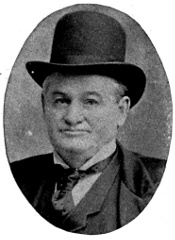
The Buchanan-Farm Oil-Company purchased Mitchell & Brown’s interest
and the Buchanan Royalty Oil-Company acquired the one-fourth held by the
land-owners. Both realized heavily, the Royalty Company paying its stock-holders—Arnold
Plumer, William Haldeman and Dr. C. E. Cooper were principals—about
a million dollars. The senior Buchanan, after receiving two or
three-hundred-thousand dollars—fifty times the sum he would ever have gained
farming—often denounced “th’ pirates that robbed an old man, buyin’ th’ farm
he could ’ave sold two year later fur two millyun!” The old man has been out
of pirate range twenty-five years and the Buchanan families are scattered.
Most of the old-time operators have handed in their final account. Poor Fred
Rockwell has mouldered into dust. Wright, Camp, Taylor, Beech, Long,
Shreve, Haldeman, Hostetter, Cooper, Col. Gibson and Frank Irwin are
“grav’d in the hollow ground.” Death claimed “Hi” Whiting in Florida and
last March stilled the cheery voice of Wesley Chambers. The earnest, pleading
tones of the Rev. R. M. Brown will be heard no more this side the walls of jasper
and the gates of pearl. Scores moved to different parts of the country. John
L. Mitchell married Miss Hattie A. Raymond and settled at Franklyn. He
organized the Exchange Bank in 1871 and was its president until ill-health
obliged him to resign. Foster W. Mitchell also located at the county-seat and
151built the Exchange Hotel. He operated extensively on Oil Creek and in the
northern districts, developed the Shaw Farm and established a bank at Rouseville,
subsequently transferring it to Oil City. He was active in politics and in
the producers’ organizations, treasurer of the Centennial Commission and an
influential force in the Oil-Exchange. David H. Mitchell likewise gained a
fortune in oil, founded a bank and died at Titusville. Samuel Q. Brown, their
relative and associate in various undertakings, was a merchant and banker at
Pleasantville. Retiring from these pursuits, he removed to Philadelphia and
then to New York to oversee the financial work of the Tidewater Pipe-Line.
He procured the charter for the first pipe-line and acquired a fortune by his
business-talent and wise management.
“Let Hercules himself do what he may,
The cat will mew, the dog will have his day.”
Born in New York in 1824, Henry R. Rouse studied law, taught school in
Warren county and engaged in lumbering and storekeeping at Enterprise. He
served in the legislatures of 1859-60, acquitting himself manfully. Promptly
catching the inspiration of the hour, he shared with William Barnsdall and
Boone Meade the honor of putting down the third oil-well in Pennsylvania.
With John L. Mitchell and Samuel Q. Brown he leased the Buchanan farm and
invested in oil-lands generally. Fabulous wealth began to reward his efforts.
Had he lived “he would have been a giant or a bankrupt in petroleum.”
Operations on the John Buchanan farm were pushed actively. Near the upper
line of the farm, on the east side of Oil Creek, at the foot of the hill, Merrick
& Co. drilled a well in 1861, eight rods from the Wadsworth. On April seventeenth,
at the depth of three-hundred feet, gas, water and oil rushed up, fairly
lifting the tools out of the hole. The evening was damp and the atmosphere
surcharged with gas. People ran with shovels to dig trenches and throw up a
bank to hold the oil, no tanks having been provided. Mr. Rouse and George
H. Dimick, his clerk and cashier, with six others, had eaten supper and were
sitting in Anthony’s Hotel discussing the fall of Fort Sumter. A laborer at the
Merrick well bounded into the room to say that a vein of oil had been struck
and barrels were wanted. All ran to the well but Dimick, who went to send
barrels. Finishing this errand, he hastened towards the well. A frightful explosion
hurled him to the earth. Smouldering coals under the Wadsworth boiler
had ignited the gas. In an instant the two wells, tanks and an acre of ground
saturated with oil were in flames, enveloping ninety or a hundred persons. Men
digging the ditch or dipping the oil wilted like leaves in a gale. Horrible shrieks
rent the air. Dense volumes of black smoke ascended. Tongues of flame
leaped hundreds of feet. One poor fellow, charred to the bone, died screaming
with agony over his supposed arrival in hell. Victims perished scarcely a step
from safety. Rouse stood near the derrick at the fatal moment. Blinded by
the first flash, he stumbled forward and fell into the marshy soil. Throwing
valuable papers and a wallet of money beyond the circuit of fire, he struggled
to his feet, groped a dozen paces and fell again. Two men dashed into the sea
of flame and dragged him forth, his flesh baked and his clothing a handful of
shreds. He was carried to a shanty and gasped through five hours of excruciating
torture. His wonderful self-possession never deserted him, no word or
act betraying his fearful suffering. Although obliged to sip water from a spoon
at every breath, he dictated a concise will, devising the bulk of his estate in trust
to improve the roads and benefit the poor of Warren county. Relatives and
intimate friends, his clerk and hired boy, the men who bore him from the broiling
152furnace and honest debtors were remembered. This dire calamity blotted
out nineteen lives and disfigured thirteen men and boys permanently. The
blazing oil was smothered with dirt the third day. Tubing was put in the well,
which flowed ten-thousand barrels in a week and then ceased. Nothing is left
to mark the scene of the sad tragedy. The Merrick, Wadsworth, Haldeman,
Clark & Banks, Trundy, Comet and Imperial wells, the tanks and the dwellings
have been obliterated. Dr. S. S. Christy—he was Oil City’s first druggist—Allen
Wright, N. F. Jones, W. B. Williams and William H. Kinter, five of the six
witnesses to Rouse’s remarkable will, are in eternity, Z. Martin alone remaining.
Warren’s greatest benefactor, the interest of the half-million dollars Rouse
bequeathed to the county has improved roads, constructed bridges and provided
a poor-house at Youngsville. Rouse was distinguished for noble traits, warm
impulses, strong attachments, energy and decision of character. He dispensed
his bounty lavishly. It was a favorite habit to pick up needy children, furnish
them with clothes and shoes and send them home with baskets of provisions.
He did not forget his days of trial and poverty. His religious views were peculiar.
While reverencing the Creator, he despised narrow creeds, deprecated
popular notions of worship and had no dread of the hereafter. To a preacher,
in the little group that watched his fading life, who desired an hour before the
end to administer consolation, he replied: “My account is made up. If I am
a debtor, it would be cowardly to ask for credit now. I do not care to discuss
the matter.” He directed that his funeral be without display, that no sermon be
preached and that he be laid beside his mother at Westfield, New York. Thus
lived and died Henry R. Rouse, of small stature and light frame, but dowered
with rare talents and heroic soul. Perhaps at the Judgment Day, when deeds
outweigh words, many a strict Pharisee may wish he could change places with
the man whose memory the poor devoutly bless. As W. A. Croffut has written
of James Baker in “The Mine at Calumet”:
“‘Perfess’? He didn’t perfess. He hed
One simple way all through—
He merely practiced an’ he sed
That that wud hev to do.
‘Under conviction’? The idee!
He never done a thing
To be convicted fer. Why, he
Wuz straighter than a string.”
Seventy-five wells were drilled on Hamilton McClintock’s four-hundred
acres in 1860-1. Here was Cary’s “oil-spring” and expectations of big wells
soared high. The best yielded from one-hundred to three-hundred barrels a
day. Low prices and the war led to the abandonment of the smaller brood.
A company bought the farm in 1864. McClintockville, a promising village on
the flat, boasted two refineries, stores, a hotel and the customary accessories, of
which the bridge over Oil Creek is the sole reminder. Near the upper boundary
of the farm the Reno Railroad crossed the valley on a giddy center-trestle and
timber abutments, not a splinter of which remains. General Burnside, the distinguished
commander, superintended the construction of this mountain-line,
designed to connect Reno and Pithole and never completed. Occasionally the
dignified general would be hailed by a soldier who had served under him. It
was amusing to behold a greasy pumper, driller or teamster step up, clap Burnside
on the shoulder, grasp his hand and exclaim: “Hello, General! Deuced
glad to see you! I was with you at Fredericksburg! Come and have a drink!”
The Clapp farm of five-hundred acres had a fair allotment of long-lived
153wells. George H. Bissell and Arnold Plumer bought the lower half, in the
closing days of 1859, from Ralph Clapp. The Cornplanter Oil Company purchased
the upper half. The Hemlock, Cuba, Cornwall—a thousand-barreler—and
Cornplanter, on the latter section, were notably productive. The Williams,
Stanton, McKee, Elizabeth and Star whooped it up on the Bissell-Plumer division.
Much of the oil in 1862-3 was from the second sand. Four refineries
flourished and the tract coined money for its owners. A mile east was the prolific
Shaw farm, which put two-hundred-thousand dollars into Foster W. Mitchell’s
purse. Graff & Hasson’s one-thousand acres, part of the land granted
Cornplanter in 1796, had a multitude of medium wells that produced year after
year. In 1818 the Indian chief, who loved fire-water dearly, sold his reservation
to William Connely, of Franklin, and William Kinnear, of Centre county, for
twenty-one-hundred-and-twenty-one dollars. Matthias Stockberger bought
Connely’s half in 1824 and, with Kinnear and Reuben Noyes, erected the Oil-Creek
furnace, a foundry, mill, warehouses and steamboat-landing at the east
side of the mouth of the stream. William and Frederick Crary acquired the
business in 1825 and ran it ten years. William and Samuel Bell bought it in
1835 and shut down the furnace in 1849. The Bell heirs sold it to Graff, Hasson
& Co. in 1856 for seven-thousand dollars. James Hasson located on the property
with his family and farmed five years. Graff & Hasson sold three-hundred
acres in 1864 to the United Petroleum Farms Association for seven-hundred-and-fifty-thousand
dollars. James Halyday settled on the east side in 1803. His
son James, the first white baby in the neighborhood, was born in 1809. The
Bannon family came in the forties, Thomas Moran built the Moran House—it
still lingers—in 1845 and died in 1857. Dr. John Nevins arrived in 1850 and in
the fall of 1852 John P. Hopewell started a general store. Hiram Gordon
opened the “Red Lion Inn,” Samuel Thomas shod horses and three or four
families occupied small habitations. And this was the place, when 1860 dawned,
that was to become the petroleum-metropolis and be known wherever men
have heard a word of “English as she is spoke.”
Cornplanter was the handle of the humble settlement, towards which a
stampede began with the first glimmer of spring. To trace the uprising of
dwellings, stores, wharves and boarding-houses would be as difficult as perpetual
motion. People huddled in shanties and lived on barges moored to the
bank. Derricks peered up behind the houses, thronged the marshy flats, congregated
on the slopes, climbed the precipitous bluffs and established a foothold
on every ledge of rock. Pumping-wells and flowing-wells scented the atmosphere
with gas and the smell of crude. Smoke from hundreds of engine-houses,
black, sooty and defiling, discolored the grass and foliage. Mud was everywhere,
deep, unlimited, universal—yellow mud from the newer territory—dark,
repulsive, oily mud around the wells—sticky, tricky, spattering mud on the
streets and in the yards. J. B. Reynolds, of Clarion county, and Calvin and
William J. McComb, of Pittsburg, opened the first store under the new order of
things in March of 1860. T. H. and William M. Williams joined the firm. They
withdrew to open the Pittsburg store next door. Robson’s hardware-store was
farther up the main street, on the east side, which ended abruptly at Cottage
Hill. William P. Baillee—he lives in Detroit—and William Janes built the first
refinery, on the same street, in 1861, a year of unexampled activity. The plant,
which attracted people from all parts of the country—Mr. Baillee called it a
“pocket-still”—was enlarged into a refinery of five stills, with an output of two-hundred
barrels of refined oil every twenty-four hours. Fire destroyed it and
154the firm built another on the flats near by. On the west side, at the foot of a
steep cliff, Dr. S. S. Christy opened a drug-store. Houses, shops, offices, hotels
and saloons hung against the side of the hill or sat loosely on heaps of earth by
the creek and river. One evening a half-dozen congenial spirits met in Williams
& Brother’s store. J. B. Reynolds, afterwards a banker, who died several years
since, thought Cornplanter ought to be discarded and a new name given the
growing town. He suggested one which was heartily approved. Liquid refreshments
were ordered and the infant was appropriately baptized Oil City.
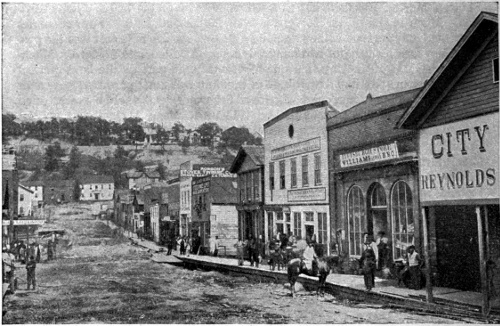
MAIN STREET, EAST SIDE OF OIL CREEK, OIL CITY, IN 1861.
Peter Graff was laid to rest years ago. The venerable James Hasson sleeps
in the Franklin cemetery. His son, Captain William Hasson, is an honored
resident of the city that owes much to his enterprise and liberality. Capable,
broad-minded and trustworthy, he has been earnest in promoting the best interests
of the community, the region and the state. A recent benefaction was his
splendid gift of a public park—forty acres—on Cottage Hill. He was the first
burgess and served with conspicuous ability in the council and the legislature.
Alike as a producer, banker, citizen, municipal officer and lawgiver, Captain
Hasson has shown himself “every inch a manly man.”
When you talk of any better town than Oil City, of any better section than
the oil-regions, of any better people than the oilmen, of any better state than
Pennsylvania, “every potato winks its eye, every cabbage shakes its head,
every beet grows red in the face, every onion gets stronger, every sheaf of grain
is shocked, every stalk of rye strokes its beard, every hill of corn pricks up its
ears, every foot of ground kicks” and every tree barks in indignant dissent.
Such was the narrow ravine, nowhere sixty rods in width, that figured so
grandly as the Valley of Petroleum.
155
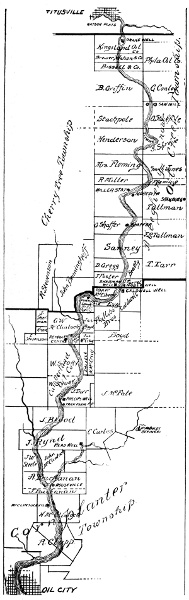
FARMS ON OIL CREEK, VENANGO COUNTY, PA., IN 1860-65.
The dark mud of Oil Creek! Unbeautiful mud,
That couldn’t and wouldn’t be nipped in the bud!
Quite irreclaimable,
Wholly untamable;
There it was, not a doubt of it,
People couldn’t keep out of it;
On all sides they found it,
So deep none dare sound it—
No way to get ’round it.
To their necks babies crept in it,
To their chins big men stept in it;
Ladies—bless the sweet martyrs!
Plung’d far over their garters;
Girls had no exemption,
Boys sank past redemption;
To their manes horses stall’d in it,
To their ear-tips mules sprawl’d in it!
It couldn’t be chain’d off,
It wouldn’t be drain’d off;
It couldn’t be tied up,
It wouldn’t be dried up;
It couldn’t be shut down,
It wouldn’t be cut down.
Riders gladly abroad would have shipp’d it,
Walkers gladly at home would have skipp’d it.
Frost bak’d it,
Heat cak’d it;
To batter wheels churned it,
To splashes rains turned it,
Bad teamsters gol-durned it!
Each snow-flake and dew-drop, each shower and flood
Just seem’d to infuse it with lots of fresh blood,
Increasing production,
Increasing the ruction,
Increasing the suction!
Ev’ry flat had its fill of it,
Ev’ry slope was a hill of it,
Ev’ry brook was a rill of it;
Ev’ry yard had three feet of it,
Ev’ry road was a sheet of it;
Ev’ry farm had a field of it,
Ev’ry town had a yield of it.
No use to glare at it,
No use to swear at it;
No use to get mad about it,
No use to feel sad about it;
No use to sit up all night scheming
Some intricate form of blaspheming;
No use in upbraiding—
You had to go wading,
Till wearied humanity,
Run out of profanity,
Found rest in insanity;
Or winged its bright way—unless dropp’d with a thud—
To the land of gold pavements and no Oil-Creek mud!
156

WELLS ON BENNINGHOFF RUN, VENANGO COUNTY, PA., IN 1866.
[From a photograph taken one hour before they were destroyed by lightning.]
VIII. PICKING RIPE CHERRIES. — OILY OOZINGS.
157
Juicy Streaks Bordering Oil Creek—Famous Benninghoff Robbery—Close
Call for a Fortune—City Set Upon a Hill—Alemagooselum
to the Front—Cherry Run’s Whirligig—Romance of the Reed
Well—Smith and McFate Farms—Pleasantville, Shamburg and Red
Hot—Experiences Not Unworthy of the Arabian Nights.
“Who can view the ripened rose, nor seek to wear it?”—Byron.
“Black’s not so black, nor white so very white.”—Canning.
“Wild and eerie is the story, but it is true as Truth.”—Hall Caine.
“No two successes ever were alike.”—Hawthorne.
“There is nothing so great as the collection of the minute.”—Vitus Auctor.
“The toad beneath the harrow knows
Exactly where each tooth-point goes.”—Kipling.
“The crop is always greater on the lands of another.”—Ovid.
“It didn’t rain, the water simply fell out of the clouds.”—Cy Warman.
“There are days when every stream is Pachlus and every man is Crœsus.”—Richard Le Gallienne.
“We shall not fail, if we stand firm.”—Abraham Lincoln.
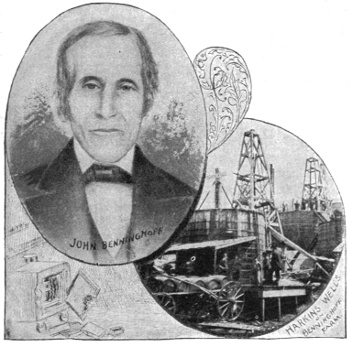
JOHN BENNINGHOFF, HARKINS WELLS ON BENNINGHOFF FARM
Rich pickings, luscious as the
clustering grapes beyond
the fox’s reach, were not
limited to the wonderful
Valley of Petroleum. Live
operators quickly learned
that big wells could
be found away from
the low banks of Oil
Creek. Anon they
climbed the hills, ascended
the ravines
and invaded the near
townships. Very naturally
the tributary
streams were favored
at first, until experience
inspired courage
and altitude failed
to be a serious
obstacle. In this way
many juicy streaks were encountered, broadening men’s ideas and the area of
profitable developments to a marvelous degree. Alaska nuggets are fly-specks
compared with the golden spoil garnered from oil-wells on scores of farms in
Allegheny, Cherrytree and Cornplanter. Tales of the petroleum-seesaw’s ups
and downs, without any “mixture rank of midnight weeds” that savor of
158“something rotten in Denmark,” need no Klondyker’s imagination, measureless
as the ice-floes of the Yukon, to awaken interest and be worthy of attention.
By the side of the romance, the pathos, the tragedy and the startling incidents
of the oil-regions thirty years ago the gold-excitements of California and
Australia and the diamond-fever of South Africa are tame and vapid. Prior
to the oil-development settlers in the back-townships lived very sparingly.
Children grew up simple-minded and untutored. The sale of a pig or a calf
or a turkey was an event looked forward to for months. Petroleum made not
a few of these rustics wealthy. Families that had never seen ten dollars suddenly
owned hundreds-of-thousands. Lawless, reckless, wicked communities
sprang up. The close of the war flooded the region with paper-currency and
bold adventurers. Leadville or Cheyenne at its zenith was a camp-meeting
compared with Pithole, Petroleum Centre or Babylon. Men and women of
every degree of decency and degradation huddled as closely as the pig-tailed
Celestials in Chinatown. Millions of dollars were lost in bogus stock-companies.
American history records no other such era of riotous extravagance.
The millionaire and the beggar of to-day might change places to-morrow.
Blind chance and consummate rascality were equally potent. Of these centers
of sin and speculation, strange transformations and wild excesses, scarcely a
trace remains. Where hosts of fortune-seekers and devotees of pleasure strove
and struggled nothing is to be seen save the bare landscape, a growth of underbrush
or a grassy field. Sodom was not blotted out more completely than Pithole,
the type of many oil-towns that have been utterly exterminated.
North and west of the lower McElhenny farm, at the bend in Oil Creek,
lay John Benninghoff’s two big blocks of land, through which Benninghoff Run
flowed southward. Pioneer Run crossed the north-east corner of the property,
the greater part of which was on the hills. Five acres on Oil Creek and the
slopes on Pioneer Run were first developed. Leases for a cash-bonus and
liberal royalty were gobbled greedily. Up Benninghoff Run and back of the
hills operations spread. For one piece of ground the owner declined tempting
offers, because he would not permit his potato-patch to be trodden down!
Some wells pumped and some flowed from twenty-five to three-hundred barrels
a day seven days in the week. William Jenkins, the Huidekoper Oil-Company,
the DeKalb Oil-Company and Edward Harkins had regular bonanzas.
The Lady Herman, which Robert Herman had the politeness to name for his
wife, was a genuine beauty. The first well ever cased and the first pump-station—it
hoisted oil to Shaffer—were on the hillside at the mouth of Benninghoff
Run. The platoon of wells in the illustration of that locality, as they
appeared in 1866, includes these and a hint of the barn beside the homestead.
The busy scene—pictured now for the first time—was photographed within an
hour of its obliteration. The artist had not finished packing his outfit when
lightning struck one of the derricks and a disastrous fire swept the hill as bare
as Old Mother Hubbard’s cupboard! Wealth deluged the thrifty land-holder,
oil converting his broad acres into a veritable Golconda. He awoke one morning
to find himself rich. He was awakened one night to find himself famous,
the newspapers devoting whole pages—under “scare-heads”—to the unpretending
farmer in the southern end of Cherry tree. “And thereby hangs a tale.”
Suspicious of banks, Benninghoff stored his money at home. Purchasing a
cheap safe, he placed it in a corner of the sitting-room and stocked it with a half-million
dollars in gold and greenbacks! Cautious friends warned him to be
careful, lest thieves might “break through and steal.” James Saeger, of Saegertown,
159a handsome, popular young fellow, who sometimes played cards, heard
of the treasure in the flimsy receptacle. “Jim” belonged to a respectable
family and had been a merchant at Meadville. Napoleon melted silver statues
of the apostles to put the precious metal in circulation and Saeger concluded to
give Benninghoff’s pile an airing. He spoke to George Miller of the ease with
which the safe could be cracked and engaged two Baltimore burglars, McDonald
and Elliott, to manage the job. Jacob Shoppert, of Saegertown, and Henry
Geiger, who worked for Benninghoff and slept in the house, were enlisted.
The deed, planned with extreme care not to miss fire, was fixed for a night
when Joseph Benninghoff, the son, was to attend a dance.
On Thursday evening, January sixteenth, 1868, Saeger, Shoppert, McDonald
and Elliott left Saegertown in a two-horse sleigh for Petroleum Centre, twenty-nine
miles distant. At midnight they knocked at Benninghoff’s door. Geiger
answered the rap and was quickly gagged, said to be as arranged previously.
John Benninghoff, his wife and daughter were bound and the experts proceeded
to open the safe. The frail structure was soon ransacked. The marauders
bundled up their booty, sampled Mrs. Benninghoff’s pies, drank a gallon of
milk and departed at their leisure, leaving the inmates of the house securely
tied. Joseph returned in an hour or two and relieved the prisoners from their
unpleasant predicament. An examination of the safe showed that two-hundred-and-sixty-five-thousand
dollars had been taken! The bulk of this was in gold.
A package of two-hundred-thousand dollars, in large bills, done up in a brown
paper, the looters passed unnoticed! The alarm was given, the wires flashed
the news everywhere and the press teemed with sensational reports. By noon
on Friday the oil-regions had been set agog and people all over the United
States were talking of “the Great Benninghoff Robbery.”
Saegar and his pals drove back and stopped at Louis Warlde’s hotel to
divide the spoils. McDonald, Elliott and Saeger took the lion’s share, Geiger
and Shoppert received smaller sums and Warlde accepted thirteen-hundred
dollars for his silence. The Baltimore toughs lingered in the neighborhood a
week and then sought the wintry climate of Canada, Saeger staying around
home. Intense excitement prevailed. Hundreds of detectives, eager to gain
reputation and the reward of ten-thousand dollars, spun theories and looked
wise. Ex-Chief-of-Police Hague, of Pittsburg, was especially alert. For three
months the search was vain. George Miller, whom McDonald wished to put
out of the road “to keep his mouth shut,” in a quarrel with Saeger over a
game of cards, blurted out: “I know about the Benninghoff robbery!” Saeger
pacified Miller with a thousand dollars, which the latter scattered quickly.
Jacob Shoppert was his boon companion and the pair spent money at a rate
that caused officers to shadow them. Shoppert visited a town on the edge of
Ohio and was arrested. Calling for a pen and paper, he wrote to Louis Warlde,
the Saegertown hotel-keeper, reproaching him for not sending money. The
jailer handed the detectives the letter, on the strength of which Warlde, who
had started a brewery in Ohio, and Miller were arrested. The three were convicted
and sentenced to a short term in the penitentiary. Geiger’s complicity
in the plot could not be proved beyond a doubt and he was acquitted. Officer
Hague captured McDonald and Elliott in Toronto, but Canadian lawyers picked
flaws in the papers and they could not be extradited. Escaping to Europe,
they were heard of no more. Saeger, who had not been suspected until after
his departure, went west and was lost sight of for many a day.
Three years later a noted cattle king of the Texas-Colorado trail entered a
160saloon in Denver to treat a party of friends. The bar-tender, Gus. Peiflee,
formerly of Meadville, recognized the customer as “Jim.” Saeger. He telegraphed
east and Chief-of-Police Rouse, of Titusville, posted off to Denver
with Joseph Benninghoff. They secured extradition-papers and arrested Saeger,
who coolly remarked:remarked: “You’ll be a devilish sight older before you see me in
Pennsylvania.” Their lawyers informed them that a hundred of Saeger’s cowboys
were in the city—reckless, lawless fellows, certain to kill whoever
attempted to take him away. Rouse and Benninghoff dropped the matter and
returned alone. Saeger is living in Texas, prosperous and respected. He is
just in his dealings, a bountiful giver, and not long ago sent five-thousand
dollars to the widow of George Miller. Perhaps he may yet turn up in Washington
as Congressman or United-States Senator. This is the story of a robbery
that attracted more attention than the first woman in bloomers.
John Benninghoff was born in Lehigh county, where his ancestorsancestors were
among the first German immigrants, on Christmas Day, 1801. His father,
Frederick Benninghoff, settled near New Berlin, Union county, in John’s boyhood.
There the son married Elizabeth Heise in 1825 and in 1828 located on a
farm near Oldtown, Clearfield county. Thence he removed to Venango county,
living close to Cherry tree village four years. In 1836 he bought a piece of land
on the south border of Cherrytree township, near what was to become Petroleum
Centre. He added to his purchase as his means permitted, until he owned
about three-hundred acres, with solid buildings and modern improvements.
He was in easy circumstances prior to the oil-developments that enriched him.
Contrary to the general opinion, the robbery did not impoverish him, as one-half
the money was untouched. His twelve children—eight boys and four girls—grew
up and eight are still living. Selling his farms in Venango, he removed
to Greenville, Mercer county, in the spring of 1868 and died in March, 1882.
At his death he had sixty-one grandchildren and fifteen great-grandchildren.
He left his family a large estate. The Benninghoff farms, so far as oil is concerned,
are utterly deserted.
West and north of Benninghoff were the farms of John and R. Stevenson.
On the former, extending south to Oil Creek, Reuben Painter, a live operator,
drilled a well in 1863. The contractor reporting it dry, Painter moved the machinery
and surrendered the lease. He and his brothers operated profitably in
Butler and McKean counties, Reuben dying at Olean in 1892. In November of
1864 the Ocean Oil-Company of Philadelphia bought John Stevenson’s lands.
The Ocean well began flowing at a six-hundred-barrel pace on September first,
1865, with the Arctic a good second. Fifty others varied from fifty to two-hundred
barrels. Thomas McCool built a refinery and the farm paid the
company about two-thousand per cent! The principal wells on both Stevenson
tracts clustered far above the flats, the derricks and buildings resembling
“a city set on a hill.” Major Mills, justly proud of his King of the Hills, an
elegant producer, delighted to visit it with his wife and two young daughters,
one of them now Mrs. John D. Archbold, of New York. Painter’s supposed
dry-hole, drilled seventeen feet deeper, gushed furiously, proving to be the best
well in the collection! Said the Ocean manager, as he watched the oily stream
ascend “higher ’n a steeple”: “A million dollars wouldn’t touch one side of
this property!” Sinking a four-inch hole seventeen feet farther would have
given Reuben Painter this splendid return two years earlier! He missed a
million dollars by only seventeen feet! A Gettysburg soldier, from whose nose
a rifle-ball shaved a piece of cuticle the size of a pin-head, wittily observed:
161“That shot came mighty near missing me!” Inverting this remark, Painter
had cause to exclaim: “That million came mighty near hitting me!”
“A miss is as good as a mile.”
Various companies bored three-hundred wells on Cherrytree Run and its
tiny branches without jarring the trade particularly. Prolific strikes on the
Niagara tract, in the rear of the Benninghoff lands, added to the wealth of
Phillips Brothers. Kane City, two miles north of Rynd, raised Cain in mild
style, “wearing like leather.” Farther back D. W. Kenney’s wells, lively as the
Kilkenny cats, stirred a current that wafted in Alemagooselum City. Its
unique name, the biggest feature of the “City,” was worked out by Kenney, a
fun-loving genius, known far and wide as “Mayor of Alemagooselum.” He and
his wells and town have long been “out of sight.” Kane City casts an attenuated
shadow.

ELLS ON THE NIAGARA TRACT, CHERRYTREE RUN.
Rev. William Elliott, who united in one package the fervor of Paul and the
snap of Ebenezer Elliott, “the Corn-Law Rhymer,” lived and preached at Rynd.
He organized a Sunday-school in Kenney’s parish, which a devout settler undertook
to superintend. At the close of the regular service on the opening day,
Mr. Elliott asked the pious ruralist to “say a few words.” The good man,
wishing to clinch the lesson—about Mary Magdalene—in the minds of the
youngsters, implored them to follow the example of “Miss Magdolin.” The
older brood tittered at this Hibernianism, the laugh swelled into a cloudburst.
Mr. Elliott nearly swallowed his pocket-handkerchief trying to shut in his smiles
and a new query was born, which had a long run. It was fired at every visitor
to the settlement. Small boys hurled it at the defenceless superintendent, who
resigned his job and broke up the school
the next Sunday. PossiblyPossibly Br’er Elliott,
when ushered into Heaven, would not
be one whit surprised to hear some white-winged
cherub from Alemagooselum
sing out: “Say, do you know Miss Mag
Dolin?”
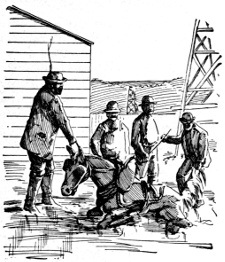
FISHING OUT THE PREACHER’S HORSE.
The scanty herbage on the tail of the
parson’s horse gave rise to endless surmises.
The animal stranded in a mud-hole
and keeled over on his side. Four
sturdy fellows tried to fish him out. In
his misguided zeal one of the rescuers,
tugging at the caudal appendage, pulled
so hard that half the hair peeled off,
leaving the denuded nag a fitting mate
for Tam O’Shanter’s tailless Meg.
A Kane-City youngster prayed
162every morning and night that a well her father was drilling would be a good one.
It was a hopeless failure, finished the day before Christmas. The result disturbed
the child exceedingly. That night, as the loving mother was preparing
her for bed, the little girl observed: “I dess it’s no use prayin’ till after Kismas,
’cos God’s so busy helpin’ Santa Claus He hasn’t time for nobody else!”
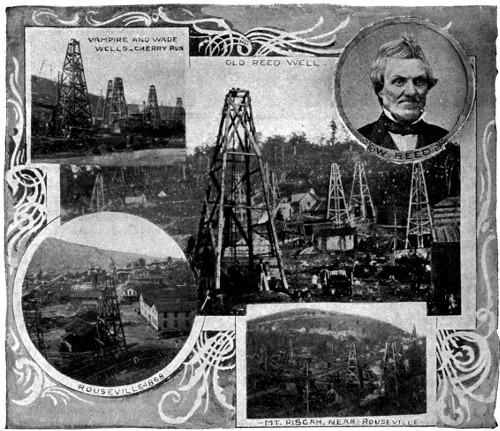
VAMPIRE AND WADE WELLS-CHERRY RUN
OLD REED WELL
W. REED
ROUSEVILLE 1868
MT. PISCAH, NEAR ROUSEVILLE
Cherry Run, once the ripest cherry in the orchard, had a satisfactory run.
A spice of romance flavored its actual realities. Not two miles up the stream
William Reed, in 1863, drilled a dry-hole six-hundred feet deep. Two miles
farther, in the vicinity of Plumer, a test well was sunk seven-hundred feet, with
no better result. Wells near the mouth of the ravine produced very lightly.
Fifty-thousand dollars would have been an extreme price for all the land from
Rouseville to Plumer, the tasteful village Henry McCalmont named in honor of
Arnold Plumer. In May of 1864 Taylor & Rockwell opened a fresh vein on the
run. At two-hundred feet their well threw oil above the derrick and flowed
sixty barrels a day regularly. Operators reversed their opinion of the territory.
To the surprise of his acquaintances, who deemed him demented, Reed started
another well four rods below his failure of the previous year. It was on the
right bank of the run, on a five-acre patch bought from John Rynd in 1861 by
Thomas Duff, who sold two acres to Robert Criswell. Reed was not over-stocked
with cash and Criswell joined forces with him to sink the second well.
I. N. Frazer took one-third interest. At the proper depth the outlook was
gloomy. The sand appeared good, but days of pumping failed to bring oil.
163On July eighteenth, 1864, the well commenced flowing three-hundred barrels a
day, holding out at this rate for months. Criswell realized thirty-thousand dollars
from his share of the oil and then sold his one-fourth interest in the land
and well for two-hundred-and-eighty-thousand to the Mingo Oil-Company. He
operated in the Butler field, lived at Monterey, removed to Ohio and died near
Cincinnati. One son, David S., a well-known producer, resides at Oil City;
another, Robert W., is on the editorial staff of a New-York daily. Frazer sold
for one-hundred-thousand dollars and next loomed up as “the discoverer of
Pithole.” Reed sold to Bishop & Bissell for two-hundred-thousand dollars,
after pocketing seventy-five-thousand from oil. Coming to Venango county
with Frederic Prentice in 1859, he drilled wells by contract, sometimes “a solid
Muldoon” and sometimes “a broken Reed.” He returned east—his birthplace—with
the proceeds of the world-famed well bearing his name. An idea haunted
him that Captain Kidd’s treasure was buried at a certain part of the Atlantic
coast. He boarded at a house on the shore and hunted land and sea for the
hidden deposit. He would dig in the sand, sail out some distance and peer into
the water. One day he went off in his skiff, a storm arose, the boat drifted
away and that was the last ever seen of William Reed. He was a liberal supporter
of the United-Presbyterian church and his nearest relatives live in the
vicinity of Pittsburg.
The Reed well put Cherry Run at the head of the procession. Within sixty
days it enriched Reed, Criswell and Frazer nearly seven-hundred-thousand dollars.
The new owners drilled three more on the same acre, getting back every
cent of their purchase-money and fifty per cent. extra for good measure. In
other words, the five-acre collection of rocks and stumps, with eleven producing
wells and one duster, harvested two-million dollars! The Mountain well
mounted high, the Phillips & Egbert was a fillip and the Wadsworth & Wynkoop
rolled out oil in wads worth a wine-coop of gold-eagles. The fever to
lease or buy a spot to plant a derrick burned fiercely. The race to gorge the
ravine with rigs and drilling appliances would shut out Edgar Saltus in his
“Pace that Kills.” Soon three-hundred wells lined the flats and lofty banks
guarding the purling streamlet. Clanking tools, wheezy engines and creaking
pumps assailed the ears. Smoke from a myriad soft-coal fires attacked the eyes.
An endless cavalcade of wagons churned the soil into vicious batter. The activities
of the Foster, McElhenny, Farrell, Davison and Tarr farms were condensed
into one surging, foaming caldron, quickening the pulse-beats and sending the
brain see-sawing.
Across the run the Curtin Oil-Company farmed out forty acres. The Baker
well, an October biscuit, flowed one-hundred barrels a day all the winter of
1864-5 and pumped six years. Water, bane of flannel-suits and uncased oil-wells,
deluged it and its neighbors. Hugh Cropsey, a New-York lawyer and last
owner of the well nearest the Baker, “ran engine,” saved a trifle, pulled up
stakes in 1869 and tried his luck at Pleasantville. Returning to Cherry Run, he
resuscitated a well on the hill and was suffocated by gas in a tank containing a
few inches of fresh crude. His heirs sold me the old well, which pumped nine
months without varying ten gallons in any week and repaid twice its cost.
Unchangeable as the laws of the Medes and Persians, its production was the
steadiest in the chronicles of grease. One Saturday evening N. P. Stone, superintendent
of the St. Nicholas Oil-Company, bought it from me at the original
price. His men took charge of it at noon on Tuesday. At five o’clock the well
quit forever, “too dead to skin!” Cleaning out, drilling deeper, casing, torpedoing
164and weeks of pumping could not persuade it to shed another drop of oil
or water. This close shave was a small by-play in a realistic drama teeming
with incidents far stranger than “The Strange Adventures of Miss Brown.”
B. H. Hulseman, president of the St. Nicholas Oil-Company, was a wealthy
leather-merchant in Philadelphia. He spent much of his time on Cherry Run,
lost heavily in speculations, entered the oil-exchange and died at Oil City.
Kind-hearted, sincere and unpretending, his good remembrance is a legacy to
cherish lovingly.
“Nothing in his life
Became him like the leaving it; he died
As one who had been studied in his death,
To throw away the dearest thing he owned,
As ’twere a careless trifle.”
Two-hundred yards above the Baker a half-dozen wells crowded upon a half-acre.
True to its title, the Vampire sucked the life-blood from its pal and produced
bounteously. The Munson, owned by the first sacrifice to nitro-glycerine,
sustained the credit of its environment. The Wade was the star-performer of
the group. James Wade, an Ohio teamster, earned money hauling oil. Concluding
to wade in, he secured a bantam lease and engaged Thomas Donnelly
to drill a well. It surpassed the Reed, flowing four-hundred barrels a day at the
start. Frank Allen, agent of a gilt-edged New-York company, rode from Oil
City to see a well described to him as “livelier than chasing a greased pig at a
county-fair.” His exalted conceptions of petroleum befitted the representative
of a company capitalized at three-millions, in which August Belmont, Russell
Sage and William B. Astor were said to be stockholders. The fuming, gassing
stream of oil suited him to a t. “I’ll give you three-hundred-thousand dollars
for it,” he said to Wade, whom the offer well-nigh paralyzed. The two men
went into the grocery close by, Wade signed a transfer of the well and Allen
handed him a New-York draft. The happiest being in the pack, Wade packed
his carpet-bag, hitched his horses to the wagon, bade the boys good-bye and
drove to Oil City to get the paper cashed. He wore greasy clothes and did not
wear the air of a millionaire. “Is Mr. Bennett in?” he asked a clerk at the bank.
“Naw; what do you want?” was the reply. “I want a draft cashed.” “Oh,
you do, eh? I guess I can cash it!” The clerk’s haughty demeanor fell below
zero upon beholding the draft. He invited Wade to be seated. Mr. Bennett,
the urbane cashier, returned in a few moments. The bank hadn’t half the currency
to meet the demand on the instant. Wade left directions to forward the
money to his home in Ohio, where he and his faithful steeds landed two days
later. He bought fine farms for his brothers and himself, invested two-hundred-thousand
dollars in government-bonds and wisely enjoyed, amid the peaceful
scenes of agricultural life, the fruits of his first and last oil-venture. Few have
been as sensible, for the petroleum-coast is encrusted with financial wrecks—vast
fortunes amassed only to be lost on the perilous sea of speculation. The
world has heard of the prizes in the lottery of oil, while the blanks—tenfold
more numerous—are glossed over by the glamour of the Sherman, Empire,
Noble, Phillips, Reed and other wells, “familiar as household words.”
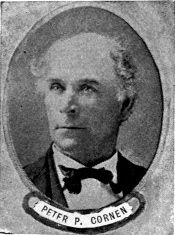
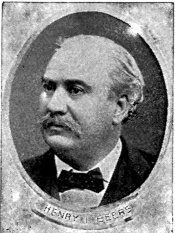
Thomas Johnson, of Oil City, held one-eighth of the Curtin interest and
Patrick Johnson had a bevy of patrician wells at the summit of the tallest hill
in the valley. The curtain has been rung down, the lights are out, the players
have dispersed and none can hint of “Too Much Johnson.” The farm of sixty
acres adjacent to the Curtin and the Criswell nook Hamilton McClintock traded
to Daniel Smith in 1858 for a yoke of oxen. Smith sold it in 1860 for five-hundred
165dollars and sank the cash in a dry-hole on Oil Creek. P. P. Cornen and
Henry I. Beers bought the farm in 1863 for twenty-five-hundred dollars, clearing
two-millions from the investment. Cornen served as State-Senator in Connecticut
and died in 1893. His sons operate
in Warren county and down the Allegheny.
Mr. Beers, who settled at
McClintockville, for thirty years has
been prominent in business and politics.
He was a California argonaut,
spent three years in San Francisco,
built the first house in that city after
the first great fire and revisited the
East to marry “the girl he left behind
him” in 1849. The Yankee well, erratic
as George Francis Train, was the
first glory of the Smith tract. The
Reed caused a rush for one-acre leases
at four-thousand-dollars bonus and half the oil. Picking up gold-dollars at
every step would have been less lucrative. The wells were stayers and Daniel
Smith was not “a Daniel come to judgment” in his estimate of the farm he
implored J. W. Sherman to buy for two-hundred-and-fifty dollars.
Cornen & Beers first leased a half-dozen plots six rods square at one-half
royalty. Two New-Englanders and Cyrus A. Cornen, son of Peter P. Cornen
and nephew of Mr. Beers, drilled the first well, the queer Yankee. Some gas
and no oil looked promising for a dry-hole, but the owners put in small tubing
and pumped a plump day. They decided to draw the tubing, seed-bag higher
and try it once more for luck. The tubing had been raised only a foot when
the well flowed “like Mount Vesuvius spilling lava.” The flow lasted five minutes,
stopped twenty, flowed five more, stopped twenty and kept up this program
regularly twenty-one months. Sixty barrels a day was the average yield
month after month, until one day the Yankee concluded to retire from active
duty. Much of its product sold at ten to thirteen dollars a barrel, enriching all
concerned. The Yankee boomed the crush for leases and was altogether a
tempting plum. The Auburn, the second well on the Smith farm, was a good
second to the Yankee, the Gromiger and Cattaraugus traveled in the one-hundred-and-fifty-barrel
class, while the Watkins toed the two-hundred mark, with
the Aazin and Fry chasing it closely.
S. S. Watkins, who died at St. Paul in the fall of 1896, was given a lot for
a grocery, with the privilege of sinking one well for half the oil. He opened
the store and sold the oil-right to Wade Brothers for twenty-five-hundred dollars.
The Wades sold one-eighth of the working-interest to the Pittsburg Petroleum-Company,
used the proceeds to drill the hole and stuck the tools in the
third sand. The lookout for a paying strike was exceedingly poor, but James
Wade held on and tubed the well above the tools. It flowed three-hundred
barrels a day and Wade sold his seven-eighths to Frank Allen, who offered the
Pittsburg Petroleum-Company seventy-five-thousand dollars for its eighth.
When the Wade declined to fifty barrels the company pulled the tubing, moved
the derrick three feet and drilled another, with no better result. Thereupon
the Wade was abandoned, after having netted the Great-Republic Oil-Company
a quarter-million dead loss. In 1864 Cornen & Beers organized the Cherry-Valley
Oil-Company, sold twelve or fifteen leases and put down all the other
166wells themselves. The partnership dissolved in 1876, Mr. Beers maintaining
the farm and Mr. Cornen dying at his Connecticut home in 1893. The Smith
rated among the best properties in the region and it still rewards its fortunate
owner with a moderate production, although merely a shadow of its former
greatness.
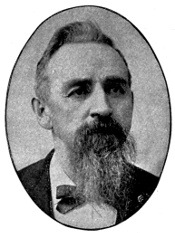
Blacklegs, thieves and murderers ran little risk of punishment in the early
days of oil-developments, unless they became unusually obstreperous and were
brought to a period with a shot-gun. Scoundrels lay in wait for victims at
every turn and stories of their misdeeds could be told by the hundred. The
McFate farm was one of the first on Cherry Run to be sold at a fancy price.
S. J. McFate, one of the brothers owning the property, two weeks after the
sale in 1862, walked down to Oil City to draw several-thousand dollars from the
bank. He displayed the money freely and left for home late at night. The
road was dark and lonely and next morning, in a clump of bushes a mile above
Oil City, his lifeless body was discovered. A ghastly wound in the head and
the absence of the money explained the tragedy and the motive. No clue to
the murderer was ever found, although squads of detectives “worked on the
case” and queer fictions regarding the mysterious assassin were printed in
many newspapers.
Queerly enough, the farms above the Smith were failures. Hundreds of
wells clear up to Plumer never paid the expense of recording the leases. The
territory was a roast for scores of stock-companies. Below Plumer a mile Bruns
& Ludovici, of New York, built the Humboldt Refinery in 1862. Money was
lavished on palatial quarters for the managers, enclosed grounds, cut-stone
walls, a pipe-line to Tarr Farm and the largest refining capacity in America.
Inconvenient location and improved methods of competitors forced the Humboldt
to retire. Part of the machinery was removed, the structures crumbled
and some of the dressed stone forms the foundations of the National Transit
Building at Oil City. Plumer, which had a grist-mill, store, blacksmith-shop
and tavern in 1840 and four-thousand population in 1866, is quiet as its briar-grown
graveyard. The Brevoort Oil-Company, Murray & Fawcett and John P.
Zane raked in shekels on Moody Run, which emptied into Cherry Run a half-mile
south-west of the Reed well. Zane, whole-souled, resolute and manly,
operated in the northern district and died at Bradford
in 1894. A “forty-niner,” he supported John
W. Geary for Mayor of San Francisco, built street-railways
and worked gold-mines in California. He
wrote on finance and petroleum, hated selfishness
and stood firmly on the platform laid down in the
beatitudes by the Man of Galilee.
“The good die first,
And they whose hearts are dry as summer-dust
Burn to the socket.”
In the winter of 1859-60 Robert Phipps, of
Clinton township, sold a horse to D. Knapp, who
owned a farm, “between Plumer and the mouth
of Oil Creek,” that extended across Cherry Run
some distance above the Smith patch. Phipps followed
up the horse-sale by paying Knapp twenty-five
dollars and one-eighth the oil for one acre of
his land. He took A. Lowry for a partner, and sent his son, Porter Phipps, and
John Haas, a German blacksmith, to “kick down” a well. Haas constructed
167a set of light tools—the augur stem was one-inch iron—lumber for a shanty and
the rig was drawn from Hood’s Mill on Pithole Creek and a forty-foot hemlock
served as a spring-pole. Drilling began in April of 1860 at the first well
on the bank of Cherry Run. Young Phipps would carry the bit or the reamer
daily on his shoulder to be dressed at a blacksmith-shop on Hamilton McClintock’s
farm. The work had continued three months, when one day the tools
struck a crevice at a hundred feet, a gurgling sound greeted the ears of the expectant
drillers and they awaited the flow. Sulphur-water, not oil, was the
outcome and the well was abandoned. Robert Phipps “exchanged mortality
for life” at a ripe old age. His parents settled in Venango county a century
ago and the Phipps family has always been noted for intelligence and progressiveness.
Porter Phipps, known everywhere as ’Squire, was reared on the farm,
had his initial tussle with oil-wells in 1860 and operated at Bullion and in Butler
county. He is Vice-president of the Monroe Oil-Company and makes Pittsburg
his headquarters.
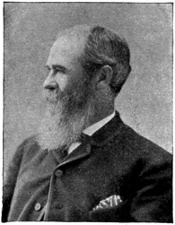
Two miles east of Miller-Farm station, on the eighty-acre tract of Oliver
Stowell, the Cherry-Run Petroleum-Company finished a well in February of
1866. It was eight-hundred feet deep, drilled through the sixth sand and
pumped one-hundred barrels a day. The company operated systematically,
using heavy tools, tall derricks and large casing. It was managed by Dr. G.
Shamburg, a man of character and ability, who
studied the strata carefully and gathered much
valuable data. The second well equalled No. 1
in productiveness and longevity, both lasting
for years. J. B. Fink’s, a July posy of two-hundred
barrels, was the third. The grand rush
began in December, 1867, the Fee and Jack-Brown
wells, on the Atkinson farm, flowing four-hundred
barrels apiece. A lively town, eligibly
located in a depression of the table-lands, was
properly named Shamburg, as a compliment to
the genial doctor. The Tallman, Goss, Atkinson
and Stowell farms whooped up the production
to three-thousand barrels. Frank W. and
W. C. Andrews, Lyman and Milton Stewart,
John W. Irvin and F. L. Backus had bought
John R. Tallman’s one-hundred acres in 1865.
Their first well began producing in September, 1867, and in 1868 they sold two-hundred-thousand
barrels of oil for nearly eight-hundred-thousand dollars! A.
H. Bronson—bright, alert, keen in business and popular in society—paid twenty-five-thousand
for the Charles Clark farm, a mile north-east. His first well—three-hundred
barrels—paid for the property and itself in sixty days. Operations
in the Shamburg pool were almost invariably profitable and handsome
fortunes were realized. A peculiarity was the presence of green and black oils,
a line on the eastern part of the Cherry-Run Company’s land defining them
sharply. Their gravity and general properties were identical and the black color
was attributed to oxide of iron in the rock. Dr. Shamburg died at Titusville and
the town he founded is taking a perpetual vacation.
Carl Wageforth, a genius well known in early days as one of the owners of
the Story farm, started a “town” in the woods two miles above Shamburg.
The “town” collapsed, Wageforth clung to his store a season and next turned
168up in Texas as the founder of a German colony. He secured a claim in the
Lone-Star State about thrice the size of Rhode Island, settled it with thrifty immigrants
from the “Faderland” and bagged a bushel of ducats. He made and
lost fortunes in oil and could no more be kept from breaking out occasionally
than measles or small-pox.
East of Petroleum Centre three miles, on the bank of a pellucid stream,
John E. McLaughlin drilled a well in 1868 that flowed fourteen-hundred barrels.
The sand was coarse, the oil dark and the magnitude of the strike a surprise
equal to the answer of the dying sinner who, asked by the minister if he wasn’t
afraid to meet an angry God, unexpectedly replied: “Not a bit; it’s the other
chap I’m afraid of!” Excepting the half-dozen mastodons on Oil Creek, the
McLaughlin was the biggest well in the business up to that date. Wide-awake
operators struck a bee-line for leases. A town was floated in two weeks, a
Pithole grocer erecting the first building and labeling the place “Cash-Up” as
a gentle hint to patrons not to let their accounts get musty with age. The
name fitted the town, which a twelvemonth sufficed to sponge off the slate.
Small wells and dry-holes ruled the roost, even those nudging “the big ’un”
missing the pay-streak. The McLaughlin—a decided freak—declined gradually
and pumped seven years, having the reservoir all to itself. Located ten rods
away in any direction, it would have been a duster and Cash-Up would not have
existed! A hundred surrounding it did not cash-up the outlay for drilling.
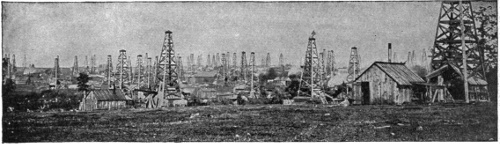
WELLS IN THE PLEASANTVILLE FIELD IN 1871.
Attracted by the quality of the soil and the beauty of the location—six-hundred
feet above the level of Oil Creek and abundantly watered—in 1820 Abraham
Lovell forsook his New York farm to settle in Allegheny township, six
miles east by south of Titusville. Aaron Benedict and Austin Merrick came
in 1821. John Brown, the first merchant, opened a store in 1833. A pottery,
tannery, ashery, store and shops formed the nucleus of a village, organized in
1850 as the borough of Pleasantville. Three wells on the outskirts of town,
bored in 1865-6, produced a trifling amount of oil. Late in the fall of 1867
Abram James, an ardent spiritualist, was driving from Pithole to Titusville with
three friends. A mile south of Pleasantville his “spirit-guide” assumed control
of Mr. James and humped him over the fence into a field on the William Porter
farm.farm. Powerless to resist, the subject was hurried to the northern end of the
field, contorted violently, jerked through a species of “couchee-couchee dance”
and pitched to the ground! He marked the spot with his finger, thrust a penny
into the dirt and fell back pale and rigid. Restored to consciousness, he told
his astonished companions it had been revealed to him that streams of oil lay
beneath and extended several miles in a certain direction. Putting no faith in
“spirits” not amenable to flasks, they listened incredulously and resumed their
169journey. James negotiated a lease, borrowed money—the “spirit-guide”
neglected to furnish cash—and planted a derrick where he had planted the
penny. On February twelfth, 1868, at eight-hundred-and-fifty feeteight-hundred-and-fifty feet, the Harmonial
Well No. 1 pumped one-hundred-and-thirty barrels!
The usual hurly-burly followed. People who voted the James adventure a
fish-story writhed and twisted to drill near the spirited Harmonial. New
strikes increased the hubbub and established the sure quality of the territory.
Scores of wells were sunk on the Porter, Brown, Tyrell, Beebe, Dunham and
other farms for miles. Prices of supplies advanced and machine-shops in the
oil-regions ran night and day to meet orders. Land sold at five-hundred to
five-thousand dollars an acre, often changing hands three or four times a day.
Interests in wells going down found willing purchasers. Strangers crowded
Pleasantville, which trebled its population and buildings during the year. It
was a second edition of Pithole, mildly subdued and divested of frothy sensationalism.
If gigantic gushers did not dazzle, dry-holes did not discourage.
If nobody cleared a million dollars at a clip, nobody cleared out to avoid creditors.
Nobody had to loaf and trust to Providence for daily bread. Providence
wasn’t running a bakery for the benefit of idlers and work was plentiful at
Pleasantville. The production reached three-thousand barrels in the summer
of 1868, dropping to fifteen-hundred in 1870. Three banks prospered and imposing
brick-blocks succeeded unsubstantial frames. Fresh pastures invited
the floating mass to Clarion, Armstrong and Butler. Small wells were abandoned,
machinery was shipped southward and the pretty village moved backward
gracefully. Pleasantville had “marched up the hill and then marched
down again.”
Abram James, a man of fine intellect, nervous temperament and lofty principle,
lived at Pleasantville a year. He located a dozen paying wells in other
sections, under the influence of his “spirit-guide.” The Harmonial was his
greatest hit, bringing him wealth and distinction. His worst break—a dry-hole
on the Clarion river eighteen-hundred feet deep—cost him six-thousand
dollars in 1874. None questioned his absolute sincerity,
although many rejected his theories of the
supernatural. Whether he is still in the flesh or has
become a spirit has not been manifested to his old
friends in Oildom.
Samuel Stewart, an old resident and prosperous
land-owner, is a leading citizen of Cherrytree
township. He operated successfully in his own
neighborhood and around Pleasantville. His acquaintance
with men and affairs is not surpassed in
Venango county. He is half-brother of Mrs. William
R. Crawford, Franklin. Lyman and Milton
Stewart, of Titusville, have not stayed in the rear.
They drilled hundreds of wells in Pennsylvania and
invested liberally in California territory. Good men
and true are the Stewarts from beginning to end.
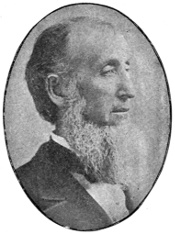
Red-Hot, in the palmy era of the Shamburg excitement a place of much
sultriness, is cold enough to chill any stray visitor who knew the mushroom at
its warmest stage. Windsor Brothers, of Oil City—they built the Windsor
Block—drilled a well in 1869 that flowed three-hundred-and-fifty barrels. Others
followed rapidly, people flocked to the newest centre of attraction and a typical
170oil-town strutted to the front. The territory lacked the staying quality, the
Butler region was about to dawn and 1871 saw Red-Hot reduced to three
houses, a half-dozen light wells and a muddy road. Lightning-rod pedlars,
book-agents and medical fakirs no longer disturb its calm serenity. Not a
scrap of the tropical town has been visible for two decades.
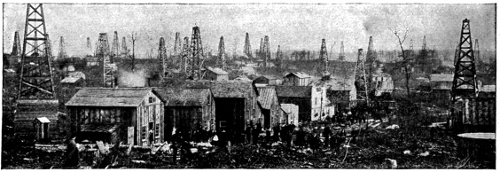
RED-HOT, A TYPICAL OIL-TOWN, IN 1870.
Tip-Top filled a short engagement. Operations around Shamburg and
Pleasantville directed attention to the Captain Lyle and neighboring farms,
midway between these points. “Ned” Pitcher’s well, drilled in 1866 on the
Snedaker farm, east of Lyle, had started at eighty barrels and pumped twenty
for two years. Pithole was booming and nobody thought of Ned’s pitcher
until 1868. Many of the wells produced fairly, but the territory soon depreciated
and the elevated town—aptly named by a poet with an eye to the eternal fitness
of things—lost its hold and glided down to nothingness. The hundred-eyed
Argus could not find a sliver that would prick a thumb or tip a top.
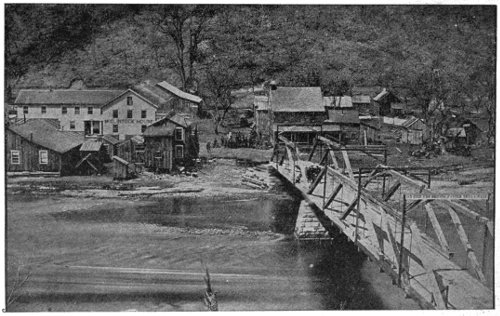
VIEW AT M’CLINTOCKVILLE IN 1862.
Picking cherries was sometimes a mixed operation in the land of grease.
171
Kerosene is often the last scene.
The ladies—God bless them!—are nothing if not consistent—at times. It
used to be a fad with Bradford wives to keep a stuffed owl in the parlor for
ornament and a stuffed club in the hall for the night-owl’s benefit.
The Oil-Creek girls are the dandy girls,
For their kiss is most intense;
They’ve got a grip like a rotary-pump
That will lift you over the fence.
The steel of a rimmer was lost in a drilling well on Cherry Run. After
fishing for it for a longtime the well-owner, becoming discouraged, offered a man
one-thousand dollars to take it out. He broomed the end of a tough block,
ran it down the well attached to the tools and in ten minutes had the steel out.
The woman who eagerly seized the oil-can
And to pour kerosene in the cook-stove began,
So that people for miles to quench the fire ran,
While she soar’d aloft like a flash in the pan,
Didn’t know it was loaded.
At a drilling well near Rouseville the tools were lowered on Monday morning
and, after running a full screw, were drawn minus the bit, with the stem-box
greatly enlarged. After fishing several days for it the drillers were greatly
surprised to find the lost bit standing in the slack-tub. The tools had been
lowered in the darkness with no bit on.
An Oil-City tramp on the pavement drear
Saw something that seem’d to shine;
He pick’d it up and gave a big cheer—
’Twas a nickel bright, the price of a beer—
And shouted “The world is mine!”
William McClain, grandfather of Senator S. J. M. McCarrell, Harrisburg,
once owned and occupied the Tarr farm, on Oil Creek. Fifty or more years
ago he sold the tract to James Tarr for a rifle and an old gray horse named
Diamond. McClain removed to Washington county and settled on a farm
which his son inherited and sold before oil was found in the neighborhood.
Like the Tarr farm on Oil Creek, the McClain farm in Washington county
proved a petroleum-bonanza to the purchasers.
Said a Shamburg young maiden: “Alas, Will,
You come every night,
And talk such a sight,
And burn so much light,
My papa declares you’re a Gas Bill!”
All kinds of engines, from one to fifty horse-power, were used on Oil Creek
in the sixties. The old “Fabers,” with direct attachment, will recall many a
broad grin. The boys called them “Long Johns.” The Wallace-engine had
hemp-packing on the piston, and the inside of the cylinder, rough as a rasp,
soon used it up and leaked steam like a sieve. The Washington-engine was
the first to come into general use. C. M. Farrar, of Farrar & Trefts, whose
boilers and engines have stood every test demanded by improvements in drilling,
made the drawing for the first locomotive-pattern boiler on a drilling well—a
wonderful stride in advance of the old-time boiler. Trefts made the castings
for the engine that pumped the Drake well and was the first man, in company
with J. Willard, to use ropes on Oil Creek in drilling. This was on the
Foster farm, near the world-famed Empire well, in 1860. Willard made the
second set of jars on the creek. Senator W. S. McMullan was a stalwart blacksmith,
who made drilling-tools noted for their enduring quality.
172
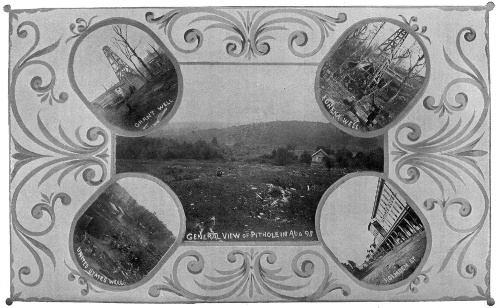
GRANT WELL EUREKA WELL
GENERAL VIEW OF PITHOLE IN AUG 95
UNITED STATES WELL HOLMDEN ST.
IX. A GOURD IN THE NIGHT. — PITHOLE REVISITED.
173
The Meteoric City that Dazzled Mankind—From Nothing to Sixteen-Thousand
Population in Three Months—First Wells and Fabulous
Prices—Noted Organizations at Pithole—A Foretaste of Hades—Excitement
and Collapse—Speculation Run Wild—Duplicity and
Disappointment—The Wild Scramble for the Almighty Dollar.
“The gourd came up in a night and perished in a night.”—Jonah, iv:10.
“The earth hath bubbles, as the water has.”—Shakespeare.
“All things rise to fall and flourish to decay.”—Sallust.
“A lively place in days of yore, but something ails it now.”—Wordsworth.
“Ah! who shall lift that wand of magic power?”—Longfellow.
“Wealth flowed from wood and stream and soil,
The rock poured forth its amber oil,
And, lo! a magic city rose.”—Marjorie Meade.
“It went up like a rocket and came down like a stick.”—Thomas Paine.
“Yet golde all is not that doth golden seeme.”—Spenser.
“Can it be that this is all remains of life.”—Bryon.
“What it is to eat forbidden fruit and find it a turnip!”—Flora Annie Steel.
“Old Rhinestein’s walls are crumbled now.”—Birch Arnold.
“For this will never hold water again.”—J. Fenimore Cooper.
“Of the vanished drama no image was there left.”—William Morris.
Pithole, “the magic city,” had little in
its antecedents to betoken the meteoric
rise and fall of the most remarkable oil-town
that ever “went up like a rocket
and came down like a stick.” The
unpoetic name of Pithole Creek was
applied to the stream which flows through
Allegheny township and bounds Cornplanter
for several miles on the east. It
empties into the Allegheny River eight
miles above Oil City and was first mentioned
by Rev. Alfred Brunson, an itinerant
Methodist minister, in his “Western
Pioneer” in 1819. Upheavals of rock left
a series of deep pits or chasms on the hills
near the mouth of the stream. From the largest of these holes a current of warm
air repels leaves or pieces of paper. Snow melts around the cavity, which is of
unknown depth, and the air is a mephitic vapor or gas. A story is told of three
hunters who, finding the snow melted on a midwinter day, determined to investigate.
One of them swore it was an entrance to the infernal regions and that he
intended to warm himself. He sat on the edge of the hole, dangled his feet over
the side, thanked the devil for the opportune heat, inhaled the gas and tumbled
back insensible. His companions dragged him away and the investigation
ended summarily. Seven miles up the creek, in the northeast corner of Cornplanter,
174Rev. Walter Holmden was a pioneer-settler. Choosing a tract of two-hundred
acres, he built a log-house on the west bank of the creek, cleared a few
acres, struggled with poverty and died in 1840. Mr. Holmden was a fervent
Baptist preacher. Thomas Holmden occupied the farm after the good old man’s
decease, with the Copelands and Blackmers and James Rooker as neighbors.
Developments had covered the farms from the Drake well to Oil City. Operators
ventured up the ravines, ascended the hills and began to take chances miles
from either side of Oil Creek. Successful wells on the Allegheny River broadened
opinions regarding the possibilities of petroleum. Nervy men invaded the
eastern portion of Cornplanter, picking up lands along Pithole Creek and its
tributaries. I. N. Frazer, fresh from his triumph on Cherry Run as joint-owner
of the Reed well, desired fresh laurels. He organized the United-States Oil-Company,
leased part of the Holmden farm for twenty years and started a well
in the fall of 1864. The primitive derrick was reared in the woods below the
Holmden home. At six-hundred feet the “sixth sand”—generally called that
at Pithole—was punctured. Ten feet farther the tools proceeded, the drillers
watching intently for signs of oil. On January seventh, 1865, the torrent broke
loose, the well flowing six-hundred-and-fifty barrels a day and ceasing finally on
November tenth. A picture of the well, showing Frazer with his back to the
tree beside his horse and a group of visitors standing around, was secured in
May. Kilgore & Keenan’s Twin wells, good for eight-hundred barrels, were
finished on January seventeenth and nineteenth. The unfathomable mud and
disastrous floods of that memorable season retarded the hegira from other sections,
only to intensify the excitement when it found vent. Duncan & Prather
bought Holmden’s land for twenty-five-thousand dollars and divided the flats
and slopes into half-acre leases. The first of May witnessed a small clearing in
the forest, with three oil-wells, one drilling-well and three houses as its sole
evidences of human handiwork.
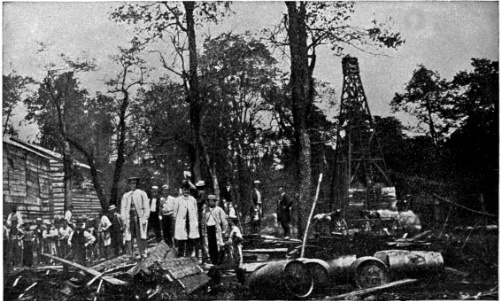
FRAZER WELL, ON HOLMDEN FARM, PITHOLE, IN MAY, 1865.
Ninety days later the world heard with unfeigned surprise of a “city” of
175sixteen-thousand inhabitants, possessing most of the conveniences and luxuries
of the largest and oldest communities! Capitalists eager to invest their greenbacks
thronged to the scene. Labor and produce commanded extravagant
figures, every farm for miles was leased or bought at fabulous rates, money circulated
like the measles and for weeks the furore surpassed the frantic ebullitions
of Wall Street on Black Friday! New strikes perpetually inflated the
mania. Speculators wandered far and wide in quest of the subterranean wealth
that promised to outrival the golden measures of California or the silver-lodes
of Nevada. The value of oil-lands was reckoned by millions. Small interests
in single wells brought hundreds-of-thousands of dollars. New York, Philadelphia,
Boston and Chicago measured purses in the insane strife for territory.
Hosts of adventurers sought the new Oil-Dorado and the stocks of countless
“petroleum-companies” were scattered broadcast over Europe and America.
An ambitious operator sold seventeen-sixteenths in one well and shares in leases
were purchased ravenously. A half-acre lease on the Holmden farm realized
bonuses of twenty-four-thousand dollars before a well was drilled on the property
and the swarm of dealers resembled the plague of locusts in Egypt in number
and persistence!
Everything favored the growth of Pithole. The close of the war had left the
country flooded with paper currency and multitudes of men thrown upon their
own resources. Hundreds of these flocked to the inviting “city,” which presented
manifold inducements to venturesome spirits, keen shysters, unscrupulous
stock-jobbers, needy laborers and dishonest tricksters. The post-office speedily
ranked third in Pennsylvania, Philadelphia and Pittsburg alone excelling it.
Seven chain-lightning clerks assisted Postmaster S. S. Hill to handle the mail.
Lines of men extending a block would await their turns for letters at the general-delivery.
It was a roystering time! Hotels, theaters, saloons, drinking-dens,
gambling-hells and questionable resorts were counted by the score. A fire-department
was organized, a daily paper established and a mayor elected.
Railways to Reno and Oleopolis were nearly completed before “the beginning of
the end” came with terrible swiftness. In November
and December the wells declined materially.
The laying of pipe-lines to Miller Farm
and Oleopolis, through which the oil was forced
to points of shipment by steam-pumps, in one
week drove fifteen-hundred teams to seek work
elsewhere. Destructive fires accelerated the
final catastrophe. The graphic pen of Dickens
would fail to give an adequate idea of this phenomenal
creation, whose career was a magnified
type of dozens of towns that suddenly arose and
as suddenly collapsed in the oil-regions of
Pennsylvania.
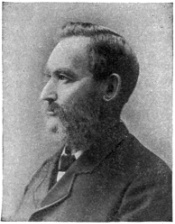
Pithole had many wells that yielded freely
for some time. The Homestead, on the Hyner
farm, finished in June of 1865, proved a gusher.
On August first the Deshler started at one-hundred
barrels; on August second the Grant, at four-hundred-and-fifty barrels; on
August twenty-eighth the Pool, at eight-hundred barrels; on September fifth
the Ogden, at one-hundred barrels, and on September fifteenth Pool & Perry’s
No. 47, at four-hundred barrels. The Frazer improved during the spring to eight-hundred
176barrels, while the Grant reached seven-hundred in September. On
November twenty-second the Eureka joined the chorus at five-hundred barrels.
The daily production of the Holmden farm exceeded five-thousand barrels for
a limited period, with a proportionate yield of seven-dollar crude from adjacent
tracts. John A. Mather, the veteran Titusville photographer, discarded his
camera to become a full-fledged oilman. He bored a well that tinctured the
suburban slope of Balltown a glowing madder. The frenzy spread. J. W.
Bonta and James A. Bates paid James Rooker two-hundred-and-eighty-thousand
dollars for his hundred-acre farm, south of the Holmden. Rooker, a hard-working
tiller of the soil, lived in a kind of rookery and earned a poor subsistence by
constant toil. He stuck to the money derived from the sale of his farm, and he
is still living at a goodly age. The Grand Dutch S well would have given Lillian
Russell new wrinkles in her delineation of the “Grand Duchess of Gerolstein.”
A neighbor refused eight-hundred-thousand dollars for his barren acres. “I
don’t keer ter hev my buckwheat tramped over,” he explained, “but you kin
hev this farm next winter fur a million!” He kept the farm, reaped his crop
and was not disturbed until death compelled him to lodge in a plot six by two.
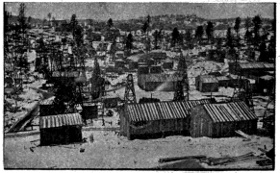
VIEW OF PITHOLE IN THE FALL OF 1865.
Bonta & Bates did not linger for “two blades of grass to grow where one
grew before.” Within two months they disposed of ninety leases for four-hundred-thousand
dollars and half the oil! They spent eighty-thousand on the
Bonta House, a sumptuous hostlery. Duncan & Prather leased building-lots at
a yearly rental of one-hundred to one-thousand dollars. First, Second and
Holmden streets bristled with activity. The Danforth House stood on a lot subleased
for fourteen-thousand dollars bonus. Sixty hotels could not accommodate
the influx of guests. Beds, sofas and chairs were luxuries for the few.
“First come, first served,” was the rule. The many had to seek the shaving-pile,
the hay-cock or the tender side of a plank. Some mingled promiscuously
in “field-beds”—rows of “shake-downs” on attic floors. Besides the Bonta
and Danforth, the United States, Chase, Tremont, Buckley, Lincoln, Sherman,
St. James, American, Northeast, Seneca, Metropolitan, Pomeroy and fifty hotels
of minor note flourished. If palaces of sin, gorgeous bar-rooms, business-houses
and places of amusement abounded, churches and schools marked the
moral sentiment. Fire wiped out the Tremont and adjoining houses in February
of 1866. Eighty buildings went up in smoke on May first and June thirteenth.
Thirty wells and twenty-thousand barrels of oil went the same road in August.
The best buildings were torn down, to bloom at Pleasantville or Oil City. The
disappearance of Pithole astonished the world no less than its marvelous growth.
The Danforth House sold for sixteen dollars, to make firewood! The railroads
177were abandoned and in 1876 only six voters remained. A ruined tenement, a
deserted church and traces of streets alone survive. Troy or Nineveh is not
more desolate.
In July of 1865 Duncan & Prather granted Henry E. Picket, George J. Sherman
and Brian Philpot, of Titusville, a thirty-day option on the Holmden farm
for one-million-three-hundred-thousand dollars. Mr. Sherman arranged to sell
the property in New York at sixteen-hundred-thousand! The wells already
down produced largely, seventy more were drilling and the annual ground-rents
footed up sixty-thousand dollars. The Ketcham forgeries tangled the funds of
the New-Yorkers and negotiations were opened with H. H. Honore, of Chicago.
After dark on the last day of the option Honore tendered the first payment—four-hundred-thousand
dollars. It was declined, on the ground that the business
day expired at sundown, and litigation ensued. A compromise resulted in
the transfer of the property to Honore. The deal involved the largest sum ever
paid in the oil regions for a single tract of land. The bubble burst so quickly
that the Chicago purchaser, like Benjamin Franklin, “paid too much for the
whistle.” Col. A. P. Duncan commanded the Fourth Cavalry Company, the
first mustered in Venango county, every member of which carried to the war a
small Bible presented by Mrs. A. G. Egbert, of Franklin. Tall, erect, of military
bearing and undoubted integrity, he lived at Oil City and died years ago.
Duncan & Prather owned one of the two banks that handled car-loads of money
in the dizziest town that ever blasted radiant hopes and shriveled portly pocket-books.
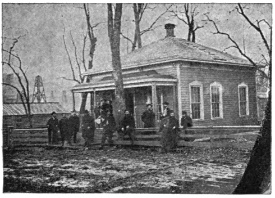
UNITED STATES OIL COMPANY'S OFFICE.
The Pithole bubble was blown at an opportune moment to catch suckers.
Hundreds of oil-companies had come into existence in 1864, hungry for territory
and grasping at anything within rifle-shot of an actual or prospective “spouter.”
The speculative tide flowed and ebbed as never before in any age or nation.
Volumes could be written of amazing transitions of fortune. Scores landed at
Pithole penniless and departed in a few months “well heeled.” Others came
with “hatfuls of money” and went away empty-handed. Thousands of stockholders
were bitten as badly as the sailor, whom the shark nipped off by the
waist-band. It was rather refreshing in its way for “country Reubens” to do
up Wall-street sharpers at their own game. Shrewd Bostonians, New-Yorkers
and Philadelphians, magnates in business and finance, were snared as readily
as hayseeds who buy green-goods and gold-bricks. There are no flies on the
smooth, glib Oily Gammon whose mouth yielded more lubricating oil than the
biggest well on French Creek. His favorite prey was a pilgrim with a bursting
wallet or the agent of an eastern petroleum-company. A well pouring forth
178three, six, eight, ten, twelve or fifteen-hundred barrels of five-dollar crude every
twenty-four hours was a spectacle to fire the blood and turn the brain of the
most sluggish beholder. “Such a well,” he might calculate, “would make me
a millionaire in one year and a Crœsus in ten.” The wariest trout would nibble
at bait so tempting. The schemer with property to sell had “the very thing he
wanted” and would “let him in on the ground-floor.” He met men who,
driving mules or jigging tools six months ago, were “oil-princes” now. Here
lay a tract, “the softest snap on top of the earth,” only a mile from the Great
Geyser, with a well “just in the sand and a splendid show.” He could have it
at a bargain-counter sacrifice—one-hundred-thousand dollars and half the oil.
The engine had given out and the owner was about to order a new one when
called home by the sudden death of his mother-in-law. Settling the old lady’s
estate required his entire attention, therefore he would consent to sell his oil-interests
“dirt-cheap” to a responsible buyer who would push developments.
The price ought to be two or three times the sum asked, but the royalty from
the big wells sure to be struck would ultimately even up matters. The tale was
plausible and the visitor would “look at the property.” He saw real sand on
the derrick-floor and everything besmeared with grease. The presence of oil
was unmistakable. Drilling ten feet into the rich rock would certainly tap the
jugular and—glorious thought!—perhaps outdo the Great Geyser itself. He
closed the deal, telegraphed for an engine—he was dying to see that stream of
oil climbing skywards—and chuckled gleefully. The keen edge of his delight
might have been dulled had he known that the well was through, not merely to,
the sand and absolutely guiltless of the taint of oil! He did not suspect that
barrels of crude and buckets of sand from other wells had been dumped into
the hole at night, that the engine had been disabled purposely and that another
innocent was soon to cut his wisdom-teeth! He found out when the well
“came in dry” that Justice Dogberry was not a greater ass and that the fool-killer’s
snickersnee was yearning for him. Possibly he might by persistent
drilling find paying wells and get back part of his money, but nine times out of
ten the investment was a total loss and the disgusted victim quit the scene with
a new interpretation of the scriptural declaration: “I was a stranger and ye
took me in.” Butler anticipated Pithole when he wrote in Hudibras:
“Make fools believe in their foreseeing
Of things before they are in being;
To swallow gudgeons ere they’re catched,
And count their chickens ere they’re hatched.”
The methods of “turning an honest penny” varied to fit the case. To
“doctor” a well by dosing it with a load of oil was tame and commonplace.
In three instances wells sold at fancy prices were connected by underground
pipes with tanks of oil at a distance. When the parties arrived to “time the
well” the secret pipe was opened. The oil ran into the tubing and pumped as
though coming direct from the sand! The deception was as perfect as the
oleomargarine the Pennsylvania State Board of Agriculture pronounced “dairy
butter of superior quality!” “Seeing is believing” and there was the oil.
They had seen it pumping a steady stream into the tank, timed it, gauged it,
smelled it. The demonstration was complete and the cash would be forked
over, a twenty-barrel well bringing a hundred-barrel price! A smart widow
near Pithole sold her farm at treble its value because of “surface indications”
she created by emptying a barrel of oil into a spring. The farm proved good
territory, much to the chagrin of the widow, who roundly abused the purchasers
179for “cheatin’ a poor lone woman!” Selling stock in companies that held
lands, or interests in wells to be drilled “near big gushers”—they might be
eight or ten miles off—was not infrequent. On the other hand, a very slight
risk often brought an immense return. Parties would pay five-hundred dollars
for the refusal of a tract of land and arrange with other parties to sink a well
for a small lease on the property. If the well succeeded, one acre would pay
the cost of the entire farm; if it failed, the holders of the option forfeited the
trifle that secured it and threw up the contract. It was risking five-hundred
dollars on the chance, not always very remote, of gaining a half-million.
Sometimes the craze to invest bordered upon the ludicrous. Sixteenths
and fractions of sixteenths in producing, non-producing, drilling, undrilled and
never-to-be-drilled wells “went like hot cakes” at two to twenty-thousand
dollars. A newcomer, in his haste to “tie onto something,” shelled out one-thousand
dollars for a share in a gusher that netted him two quarts of oil a day!
Another cheerfully paid fifteen-thousand for the sixteenth of a flowing well
which discounted the Irishman’s flea—“you put your finger on the varmint and
he wasn’t there”—by balking that night and declining ever to start again! At
a fire in 1866 water from a spring, dashed on the blaze, added fuel to the flames.
An examination showed that oil was filling the spring and water-wells in the
neighborhood. From the well in Mrs. Reichart’s yard the wooden pump
brought fifty barrels of pure oil. L. L. Hill’s well and holes dug eight or ten
feet had the same complaint. Excitement blew off at the top gauge. The
Record devoted columns to the new departure. Was the oil so impatient to
enrich Pitholians that, refusing to wait for the drill to provide an outlet, it burst
through the rocks in its eagerness to boom the district? Patches of ground
the size of a quilt sold for two, three or four-hundred dollars and rows of pits
resembling open graves decorated the slope. In a week a digger discovered
that a break in the pipe-line supplied the oil. The leak was repaired, the pits
dried up, the water-wells resumed their normal condition and the fiasco ended
ignominiously. It was a modern version of the mountain that set the country
by the ears to bring forth a mouse.
Joseph Wood, proprietor of the St. James Hotel at Paterson, N.J., died on
May thirteenth, 1896. He was a wit and story-teller of the best kind, a gallant
fighter for the Union and for a year lived at Pithole. A fortune made by operating
and speculation he lost by fire in a year. He conducted hotels at Hot
Springs, Washington, Chicago and Milwaukee and was one of the famous
Bonifaces of the United States. On his business-cards he printed these “religious
beliefs:”
“Do not keep the alabaster-boxes of your love and tenderness sealed up until your friends
are dead. Fill their lives with sweetness. Speak approving, cheering words while their ears
can hear them and while their hearts can be thrilled and made happier by them. The kind
things you mean to say when they are gone say before they go. The flowers you mean to send
to their coffins send to brighten and sweeten their homes before they leave them. If my friends
have alabaster-boxes laid away, full of fragrant perfumes of sympathy and affection, which they
intend to break over my dead body, I would rather they would bring them out in my weary and
troubled hours and open them, that I may be refreshed and cheered by them while I need them.
I would rather have a plain coffin without a flower, a funeral without a eulogy, than a life without
the sweetness of love and sympathy. Let us learn to anoint our friends beforehand for their
burial. Post-mortem kindness does not cheer the burdened spirit. Flowers on the coffin cast no
fragrance backward over the weary way.”
Let down the bars and enter the field that was once the seething, boiling
caldron called Pithole. A poplar-tree thirty feet high grows in the cellar of
the National Hotel. Stones and underbrush cover the site of the Metropolitan
180Theater and Murphy’s Varieties. This bit of sunken ground, clogged with
weeds and brambles, marks the Chase House.House. Here was Main street, where
millions of dollars changed hands daily. For years the Presbyterian church
stood forsaken, the bell in the tower silent, the pews untouched and the pulpit-Bible
lying on the preacher’s desk. John McPherson’s store and Dr. Christie’s
house were about the last buildings in the place. Not a human-being now lives
on the spot. All the old-timers moved away. All? No, a score or two quietly
sleep among the bushes and briars that run riot over the little graveyard in
which they were laid when the dead city was in the throes of a tremendous
excitement.
The rate at which towns rose was surely most terrific
Nothing to rival it from Maine to the Pacific;
The rate at which they fell has never had an equal—
Woods, city, ruin’d waste—the story and the sequel.
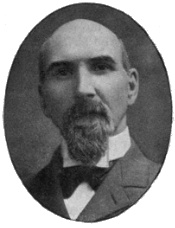
Pithole was the Mecca of a legion of operators whose history is part and parcel
of the oil-development. Phillips Brothers, giants on Oil Creek, bought farms
and drilled extensively. Frederic Prentice and W. W. Clark, who figured in
two-thirds of the largest transactions from Petroleum Centre to Franklin, held
a full hand. Frank W. Andrews, John Satterfield, J. R. Johnson, J. B. Fink,
A. J. Keenan—the first burgess—D. H. Burtis, Heman Janes, “Pap” Sheakley,
L. H. Smith and hundreds of similar caliber
were on deck. John Galloway, known in every
oil-district of Pennsylvania and West Virginia
as a tireless hustler, did not let Pithole slip past
unnoticed. He has been an operator in all the
fields since his first appearance on Oil Creek in
the fall of 1861. Sharing in the prosperity and
adversity of the oil-regions, he has never been
hoodooed or bankrupted. His word is his bond
and his promise to pay has always meant one-hundred
cents on the dollar. More largely interested
in producing than ever, he attends to
business at Pittsburg and lives at Jamestown,
happy in his deserved success, in the love of his
family and the esteem of countless friends. Mr.
Galloway’s pedestrian feats would have crowned
him with olive-wreaths at the Olympic games.
Deerfoot could hardly have kept up with him on a twenty-mile tramp to see an
important well or hit a farmer for a lease before breakfast. He’s a good one!
The Swordsman’s Club attained the highest reputation as a social organization.
One night in 1866, when Pithole was at the zenith of its fame, John Satterfield,
Seth Crittenden, Alfred W. Smiley, John McDonald, George Burchill,
George Gilmore, Pard B. Smith, L. H. Smith, W. H. Longwell and other congenial
gentlemen met for an evening’s enjoyment. The conversation turned upon
clubs. Smiley jumped to his feet and moved that “we organize a club.” All
assented heartily and the Swordman’s Club was organized there and then, with
Pard B. Smith as president and George Burchill as secretary. Elegant rooms
were fitted up, the famous motto of “R. C. T.” was adopted and the club gave
a series of most elaborate “promenade-concerts and balls” in 1866-7. Invitations
to these brilliant affairs were courted by the best people of Oildom. The
club dissolved in 1868. Its membership included four congressmen, two ex-governors
wore its badge and scores of men conspicuous in the state and nation
181had the honor of belonging to the Swordman’s. At regular meetings “the feast
of reason and the flow of soul” blended merrily with the flowing bowl. Sallies
of bright wit, spontaneous and never hanging fire, were promptly on schedule
time. Good fellowship prevailed and C. C. Leonard immortalized the club in
his side-splitting “History of Pithole.” Verily the years slip by. Long ago the
ephemeral town went back to its original pasture, long ago the facetious historian
went back to dust, long ago many a good clubman’s sword turned into
rust. Pard B. Smith runs a livery in Cleveland, Longwell is in Oil City, Smiley—he
represented Clarion county twice in the Legislature—manages the pipe-line
at Foxburg, L. H. Smith is in New York and others are scattered or dead. On
November twenty-first, 1890, the “Pioneers of Pithole”—among them a number
of Swordsmen—had a reunion and banquet at the Hotel Brunswick, Titusville.
These stanzas, composed and sung by President Smith and “Alf”
Smiley, were vociferously cheered:
“’Twas side by side, as Swordsmen true,
In Pithole long ago,
We met the boys on common ground
And gave them all a show.
In social as in business ways
Our honor was our law,
And when a brother lost his grip
He on the boys could draw.
Chorus: “We’re the boys, the same old boys,
Who were there in sixty-five;
If any Swordsman comes our way
He’ll find us still alive.
“What if grim age creeps on apace,
Our souls will ne’er grow old;
We will, as in the Pithole days,
Stand true as Swordsmen bold.
In those old days we had our fun,
But stood for honor true;
Here, warmly clasping hand-to-hand,
Our friendship we renew.”
“Spirits” inspired four good wells at Pithole. One dry hole, a mile south-east
of town, seriously depressed stock in their skill as “oil-smellers.” An
enthusiastic disciple of the Fox sisters, assured of “a big well,” drilled two-hundred
feet below the sixth sand in search of oil-bearing rock. He drilled
himself into debt and Sheriff C. S. Mark—six feet high and correspondingly
broad—whom nobody could mistake for an ethereal being, sold the outfit at
junk-prices.
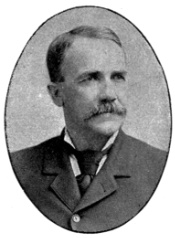
In the swish and swirl of Pithole teamsters—a man with two stout horses
could earn twenty dollars a day clear—drillers and pumpers played no mean
part. They received high wages and spent money freely. Variety-shows,
music-halls—with “pretty waiter-girls”—dance-houses, saloons, gambling-hells
and dens of vice afforded unlimited opportunities to squander cash and decency
and self-respect. Many a clever youth, flushed with the idea of “sowing his
wild oats,” sacrificed health and character on the altars of Bacchus and Venus.
Many a comely maiden, yielding to the wiles of the betrayer, rounded up in the
brothel and the potter’s field. Many a pious mother, weeping for the wayward
prodigal who was draining her life-blood, had reason to inquire: “Oh, where
is my boy to-night?” Many a husband, forgetting the trusting wife and children
at home, wandered from the straight path and tasted the forbidden fruit. Many
182a promising life was blighted, many a hopeful career blasted, many a reputation
smirched and many a fond heart broken by the pitfalls and temptations of Pithole.
Dollars were not the only stakes in the exciting game of life—good names,
family ties, bright prospects, domestic happiness and human souls were often
risked and often lost. “The half has never been told.”
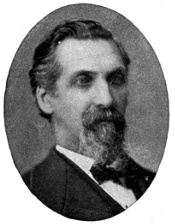
Scarcely less noted was the organization heralded far and wide as “Pithole’s
Forty Thieves.” Well-superintendents, controlling the interests of outside
companies, were important personages.
Distant stockholders, unable to understand the
difficulties and uncertainties attending developments,
blamed the superintendents for the lack
of dividends. No class of men in the country
discharged their duties more faithfully, yet
cranky investors in wildcat stocks termed them
“slick rascals,” “plunderers” and “robbers.”
Some joker suggested that once a band of Arabian
Knights—fellows who stole everything—associated
as “The Forty Thieves” and that
the libeled superintendents ought to organize a
club. The idea captured the town and “Pithole’s
Forty Thieves” became at once a tangible
reality. Merchants, producers, capitalists and
business-men hastened to enroll themselves as
members. Hon. James Sheakley, of Mercer,
was elected president. Social meetings were held regularly and guying greenhorns,
who supposed stealing to be the object of the organization, was a favorite
pastime. The practical pranks of the “Forty” were laughed at and relished
in the whole region. Nine-tenths of the members were young men, honorable
in every relation of life, to whom the organization was a genuine joke. They
enjoyed its notoriety and delighted to gull innocents who imagined they would
purloin engines, derricks, drilling-tools, saw-mills and oil-tanks. Ten years
after the band disbanded its president served in Congress and was a leading
debater on the Hayes-Tilden muddle. “Pap” Sheakley—as the boys affectionately
called him—was the embodiment of integrity, kindliness and hospitality.
He operated in the Butler field and lived at Greenville. Bereft of his
devoted wife and lovely daughters by “the fell sergeant, Death,” he sold his,
desolated home and accepted from President Cleveland the governorship of
Uncle Sam’s remotest Territory. His administration was so satisfactory that
President Harrison reappointed him. There was no squarer, truer, nobler man
in the public service than James Sheakley, Ex-Governor of Alaska.
Rev. S. D. Steadman, the first pastor at Pithole, a zealous Methodist—was
universally respected for earnestness and piety. The “forty thieves” sent
him one-hundred-and-fifty dollars at Christmas of 1866, with a letter commending
his moral teachings, his courtesy and charity. Another minister inquired
of a Swordsman what the letters of the club’s motto—“R. C. T.”—signified,
“Religious Councils Treasured” was the ready response. This raised the club
immensely in the divine’s estimation and led to a sermon in which he extolled
the jolly organization! He “took a tumble” when a deacon smilingly informed
him that the letters—a fake proposed in sport—symbolized “Rum, Cards,
Tobacco.”
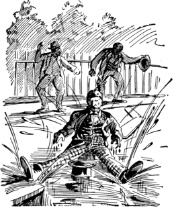
Mud was responsible for the funniest—to the spectators—mishap that ever
183convulsed a Pithole audience. A group of us stood in front of the Danforth
House at the height of the miry season. Thin mud overflowed the plank-crossing
and a grocer laid short pieces of scantling two or three feet apart for
pedestrians to step on. A flashy sport, attired in a swell suit and a shiny
beaver, was the first to take advantage of the improvised passage. Half-way
across the scantling to which he was stepping moved ahead of his foot. In
trying to recover his balance the sport careened to one side, his hat flew off and
he landed plump on his back, in mud and
water three feet deep! He disappeared
beneath the surface as completely as
though dropped into the sea, his head
emerging a moment later. Blinded,
sputtering and gasping for breath, he was
a sight for the gods and little fishes!
Mouth, eyes, nose and ears were choked
with the dreadful ooze. Two men went
to his assistance, led him to the rear of
the hotel and turned the hose on him.
His clothes were ruined, his gold watch
was never recovered and for weeks small
boys would howl: “His name is Mud!”
John Galloway, on one of his rambles
for territory, ate dinner at the humble
cabin of a poor settler. A fowl, tough,
aged and peculiar, was the principal dish.
In two weeks the tourist was that way
again. A boy of four summers played
at the door, close to which the visitor sat down. A brood of small chickens
approached the entrance. “Poo’, ittey sings,” lisped the child, “oo mus’ yun
away; here’s ’e yasty man ’at eated up oos mammy.” The good woman of
the shanty had stewed the clucking-hen to feed the unexpected guest.
A maiden of uncertain age owned a farm which various operators vainly
tried to lease. Hoping to steal a march on the others, one smooth talker called
the second time. “I have come, Miss Blank,” he began, “to make you an
offer.” He didn’t get a chance to add “for your land.” The old girl, not a
gosling who would let a prize slip, jumped from her chair, clasped him about
the neck and exclaimed: “Oh! Mr. Blank, this is so sudden, but I’m yours!”
The astounded oilman shook her off at last and explained that he already had a
wife and five children and wanted the Farm only. The clinging vine wept and
stormed, threatened a breach-of-promise suit and loaded her dead father’s
blunderbuss to be prepared for the next intruder.
W. J. Bostford, who died at Jamestown in November of 1895, operated at
Pithole in its palmy days. Business was done on a cash basis and oil-property
was paid for in money up to hundreds-of-thousands of dollars. Bostford made
a big sale and started from Pithole to deposit his money. A cross-country trip
was necessary to reach Titusville. Shortly after leaving Pithole he was attacked
by robbers, who took all the money and left him for dead upon the highway.
He was picked up alive, with a broken head and many other injuries, which he
survived thirty years.
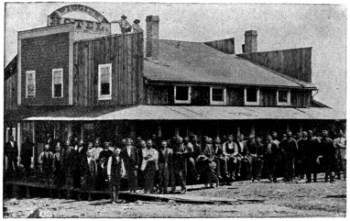
THE DINNER HOUR AT WIGGINS’S HOTEL.
The first “hotel” at Pithole—a balloon-frame rushed up in a day—bore the
pretentious title of Astor House. Before its erection pilgrims to the coming
184city took their chance of meals at the Holmden farm-house. As a guest wittily
remarked: “It was table d’hote for men and also table d’oat for horses.” The
viands were all heaped upon large dishes and everybody helped himself. The
Morey-Farm Hotel, just above Pithole, charged twenty-one dollars a week for
board, had gas-light, steam-heat, telegraph-office, barber-shop, colored waiters
and “spring-mattresses.” Its cooking rivalled the best in the large cities. At
Wiggins’s Hotel, a
three-story boarding-house
in the
Tidioute field, two-hundred
men would
often wait their turn
to get dinner. This
was a common experience
in the frontier
towns, to which
big throngs hurried
before houses could
be erected for their
accommodation.
E. H. Crittenden’s
hotel at Titusville
was the finest Oildom boasted in the sixties. Book & Frisbee’s was notable at
the height of the Parker development. A dollar for a meal or a bed, four dollars
a day or twenty-eight dollars a week, be the stay long or short, was the
invariable rate. Peter Christie’s Central Hotel, at Petrolia, was immensely
popular and a regular gold-mine for the owner. Oil City’s Petroleum House
was a model hostelry, under “Charley” Staats and “Jim” White. The Jones
House cleared Jones forty-thousand dollars in nine months. Its first guest was
a Mr. Seymour, who spent one year collecting data for a statistical work on
petroleum. His manuscripts perished in the flood of 1865. The last glimpse
my eyes beheld of Jones was at Tarport, where he was driving a dray. Bradford’s
Riddell House and St. James Hotel both sized up to the most exacting
requirements. Good hotels and good restaurants were seldom far behind the
triumphant march of the pioneers whose successes established oil-towns.
Col. Gardner, “a big man any way you take him,” was Chief-of-Police at
Pithole. He has operated at Bradford and Warren, toyed with politics and
military affairs and won the regard of troops of friends. Charles H. Duncan,
of Oil City—his youthful appearance suggests Ponce de Leon’s spring—served in
the borough-council, of which James M. Guffey, the astute Democratic leader
and successful producer, was clerk. Col. Morton arrived in August of 1865
with a carpet-bag of job-type. His first work—tickets for passage over Little
Pithole Creek—the first printing ever done at Pithole, was never paid for. The
town had shoals of trusty, generous fellows—“God’s own white boys,“ Fred
Wheeler dubbed them—whose manliness and enterprise and liberality were
always above par.
When men went crazy at Pithole and outsiders thought the oil-country was
“flowing with milk and honey” and greenbacks, a party of wags thought to put
up a little joke at the expense of a new-comer from Boston. They arranged
with the landlord for some coupon-bonds to use in the dining-room of the hotel
and to seat the youth at their table. The New-Englander was seated in due
185course. The guests talked of oil-lands, fabulous strikes and big fortunes as
ordinary affairs. Each chucked under his chin a five-twenty government-bond
as a napkin. One lay in front of the Bostonian’s plate, folded and creased like
a genuine linen-wiper. Calmly taking the “paper” from its receptacle, the
chap from The Hub wiped his brow and adjusted the valuable napkin over his
shirt-bosom. A moment later he beckoned to a servant and said: “See here,
waiter, this napkin is too small; bring me a dish of soup and a ‘ten-forty.’”
The jokers could not stand this. A laugh went around the festive board that
could have been heard at the Twin Wells and the matter was explained to the
bean-eater. He was put on the trail of “a soft snap” and went home in a
month with ten-thousand dollars. “Bring me a ten-forty” circulated for a
twelve-month in cigar-shops and bar-rooms.
Ben Hogan was one of the motley crew that swarmed to Pithole “broke.”
He taught sparring and gave exhibitions of strength at Diefenbach’s variety-hall.
He fought Jack Holliday for a purse of six-hundred dollars and defeated
him in seven rounds. Four-hundred tough men and tougher women were
present, many of them armed. Hogan was assured before the fight he would
be killed if he whipped his opponent. He was shot at by Marsh Elliott during
the mill, but escaped unhurt. Ben met Elliott soon thereafter and knocked
him out in four brief rounds, breaking his nose and using him up generally.
Next he opened a palatial sporting-house, the receipts of which often reached
a thousand dollars a day. An adventure of importance was with “Stonehouse
Jack.” This desperado and his gang had a grudge against Hogan and concocted
a scheme to kill him. Jack was to arrange a fight with Ben, during
which Hogan was to be killed by the crowd. Ben saw his enemy coming out
of a dance-house and blazed away at him, but without effect. The fusillade
scared “Stonehouse” away from Pithole and on January twenty-second, 1866,
a vigilance committee at Titusville drove the villain out of the oil-region,
threatening to hang him or any of his gang who dared return. This committee
was organized to clear out a nest of incendiaries and thugs. The vigilants
erected a gallows near the smoking embers of E. B. Chase & Co.’s general
store, fired the preceding night, and decreed the banishment of hordes of
toughs. “Stonehouse Jack” and one-hundred other men, with a number of
vile women came under this sentence. The whole party was formed in line in
front of the gallows, the “Rogue’s March” was played and the procession,
followed by a great crowd of people, proceeded to the Oil-Creek Railroad
station. The prisoners were ordered on board a special train, with a warning
that if they ever again set foot upon the soil of Titusville they would be summarily
executed. This salutary action ended organized crime in the oil-region.
North of Pithole the tide crossed into Allegheny township. Balltown, a
meadow on C. M. Ball’s farm in July, 1865, at the end of the year paraded
stores, hotels, a hundred dwellings and a thousand people. Fires in 1866
scorched it and waning production did the rest. Dawson Centre, on the Sawyer
tract, budded, frosted and perished. The Morey House, on the Copeland
farm, was the oasis in the desert, serving meals that tickled the midriff and
might cope with Delmonico’s. Farms on Little Pithole Creek were riddled
without swelling the yield of crude immoderately. Where are those oil-wells
now? Echo murmurs “where?” In all that section of Cornplanter and Allegheny
townships a derrick, an engine-house or a tank would be a novelty of
the rarest breed.
Eight miles north-east of Titusville, where Godfrey Hill drilled a dry-hole
186in 1860 and two companies drilled six later, the Colorado district finally rewarded
gritty operators. Enterprise was benefited by small wells in the vicinity.
Down Pithole Creek to its junction with the Allegheny the country was
punctured. Oleopolis straggled over the slope on the river’s bank, a pipe-line,
a railroad to Pithole and minor wells contributing to its support. The first well
tackled a vein of natural gas, which caught fire and consumed the rig. The
driller was alone, the owner of the well having gone into the shanty. In a
twinkling flames enveloped the astonished knight of the temper-screw, who
leaped from the derrick, clothes blazing and hair singed off, and headed for the
water. “Boss,” he roared in his flight, “jump into the river and say your
prayers quick! I’ve bu’sted the bung and hell’s running out.”
“Breathe through the nostrils” is good advice. People should breathe
through the nose and not use it so much for talking and singing through. Yet
every rule has exceptions. A pair of mules hauled oil from Dawson Centre in
the flush times of the excitement. The mud was practically bottomless. A
visitor was overheard telling a friend that the bodies of the mules sank out of
sight and that they were breathing through their ears, which alone projected
above the ooze. Dawson and many more departed oil-towns suggest the jingle:
“There was an old woman lived under a hill;
If she hadn’t moved she’d be there still:
But she moved!”
About St. Valentine’s Day in 1866, when the burning of the Tremont House
led to the discovery of oil in springs and wells, was a hilarious time at Pithole.
Every cellar was fairly flooded with grease. People pumped it from common
pumps, dipped it from streams, tasted it in tea, inhaled it from coffee-pots and
were afraid to carry lights at night lest the very air should cause explosion and
other unhappiness. It became a serious question what to drink. The whiskey
could not be watered—there was no water. Dirty shirts could not be washed—the
very rain was crude oil. Dirt fastened upon the damask cheeks of Pithole
damsels and found an abiding-place in the whiskers of every bronzed fortune-hunter.
Water commanded an enormous price and intoxicating beverages
were cheap, since they could scarcely be taken in the raw. The editor of the
Record, a strict temperance man, was obliged to travel fourteen miles every
morning by stone-boat to get his glass of water. Stocks of oil-companies were
the only thing in the community thoroughly watered. Tramps, hobos, wandering
vagrants and unwashed disbelievers that “cleanliness is next to Godliness”
pronounced Pithole a terrestrial paradise. They were willing to reverse
Muhlenburg’s sentiment and “live alway” in that kind of dry territory.
“You’re not fit to sit with decent people; come up here and sit along with
me!” thundered a Dawson teacher who sat at his desk hearing a recitation, as
he discovered at a glance the worst boy in school annoying his seatmate.
Charles Highberger, who had lost a leg, was elected a justice of the peace
at Pithole in 1866. Attorney Ruth, who came from Westmoreland county,
was urging the conviction of a miserable whelp when he noticed Highberger
had fallen asleep, as was his custom during long arguments. Mr. Ruth aroused
him and remarked: “I wish your honor would pay attention to the points
which I am about to make, as they have an important bearing on the case.”
Highberger opened his eyes, glared around the room and rose on his crutches
in great wrath, exclaiming: “There has been too much blamed chin-whacking
in this case; you have been talking two hours and I haven’t seen a cent of
costs. The prisoner may consider himself discharged. The court will adjourn
187to Andy Christy’s drug-store.” This was the way justice was dispensed with
in those good old days when “go as you please” was the rule at Pithole.
John G. Saxe once lectured at Pithole and was so pleased with the people
and place that he donated twenty-five dollars to the charity-fund and wrote
columns of descriptive matter to a Boston newspaper. “If I were not Alexander
I would be Diogenes,” said the Macedonian conqueror. Similarly Henry
Ward Beecher remarked, when he visited Oil City to lecture, “If I were not
pastor of Plymouth church I would be pastor of an Oil-City church.” The
train conveying Dom Pedro, Emperor of Brazil, through the oil-region stopped
at Foxburg to afford the imperial guest an opportunity to see an oil-well torpedoed.
He watched the filling of the shell with manifest interest, dropped
the weight after the torpedo had been lowered and clapped his hands when a
column of oil rose in the air. An irreverent spectator whispered: “This beats
playing pedro.”
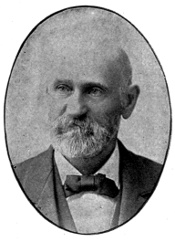
J. P. Albee, laborer, painter, carpenter, rig-builder, pumper, pipe-liner,
merchant and insurance-agent, was born in Warren county, reared on a farm in
the Wisconsin lead-mining regions, enlisted in 1861,
served three years gallantly and was discharged
because of a wound in the breast by a rifle-ball. He
struck Pithole in September of 1865, shared in the
ups and downs of the transitory excitement and was
one of the founders, if not the full-fledged father, of
Cash-Up. The brave veteran was a pioneer in
shoving ahead and demonstrating where oil was
not to be expected. He owned fourteen dry-holes
in whole or part, a number sufficient to establish
quite a record. Drifting to Butler with the tide of
developments, he engaged in various pursuits with
varying success. Hosts of friends relish his tales
of army-life and of ventures in Oildom, a knapsack
of which he has constantly on hand. The years
speed quickly, bringing many changes in their wake,
and thousands who once waded through the muddy
streets of Pithole are now treading the golden pavements of the Celestial City.
Those who linger here a while longer love to recall the times that can never be
repeated under the blue canopy.
Mud-veins in the third sand on Oil Creek and at Pithole would often stick
the tools effectually. On Bull Run three wells in one derrick were abandoned
with tools stuck in the third sand. The theory was that the mud vein was a
stratum of slate in the sand, which became softened and ran into the well when
water came in contact with it. Casing has robbed it of its terrors.
Before casing was introduced it was often difficult to tell if oil was found.
Oilmen would examine the sand, look for “soot” on the sand-pumpings and
place a lighted match to the sand-pump immediately after it was drawn from
the well, as a test for gas. If the driller was sure the drill dropped two or three
feet, with “soot” on the sand-pumpings, the show was considered worth testing.
A seed-bag was put on the tubing and the well was allowed to stand a day
or two to let the seed swell. To exhaust the water sometimes required weeks,
but when all hope of a producer was lost and the last shovel of coal was in
the boiler the oil might come. There seemed to be a virtue in that last shovel
of coal. The shoemaker who could make a good seed-bag was a big man.
188The man who tied on the seed-bag for a well that proved a good producer was
in demand. If, after oil showed itself, flax-seed was seen coming from the pipe
the well-owner’s heart could be found in his boots. The bag was burst, the
water let in and the operator’s hopes let out.
A young divine preached a sermon at Pithole, on the duty of self-consecration,
so effectively that a hearer presented him with a bundle of stock in a company
operating on the Hyner farm. The preacher sold his shares for ten-thousand
dollars and promptly retired from the pulpit to study law! Rev. S. D.
Steadman, while a master of sarcasm that would skewer a hypocrite on the
point of irony, was particularly at home in the realm of the affections and of the
ideal. In matters of the heart and soul few could with surer touch set aflow
the founts of tender pathos. He met his match occasionally. Rallying a friend
on his Calvinism, he said, “I believe Christians may fall from grace.”
“Brother Steadman,” was the quick rejoinder, “you need not argue that; the
flock you’re tending is convincing proof that the doctrine is true of your membership.”
A good deal of fun has been poked at the Georgia railroad which had cow-catchers
at the rear, to keep cattle from walking into the cars, and stopped in
the woods while the conductor went a mile for milk to replenish a crying baby’s
nursing-bottle. On my last trip to Pithole by rail there were no other passengers.
The conductor sat beside me to chat of former days and the decadence
of the town at the northern end of the line. Four miles from Oleopolis fields of
wild strawberries “wasted their sweetness on the desert air.” In reply to my
hint that the berries looked very tempting, the conductor pulled the bell-rope
and stopped the train. All hands feasted on the luscious fruit until satisfied.
Coleridge, who observed that “Doubtless the Almighty could make a finer
fruit than the wild strawberry, but doubtless He never did,” would have enjoyed
the scene. “Don’t hurry too much,” the conductor called after me at Pithole
“we can start forty minutes behind time and I’ll wait for you!” The rails were
taken up and the road abandoned in the fall, but the strawberry-picking is as
fresh as though it happened yesterday.
Long ago teamsters would start from the mines with twenty bushels of fifteen-cent
coal. By the time they reached Pithole it would swell to thirty-five
bushels of sixty-cent coal. With oil for back-loading the teamsters made
more money then than a bond-juggler with a cinch on the United-States
treasury.
A farmer’s wife near Dawson Centre, who had washed dishes for forty years,
became so tired of the monotony that, the day her husband leased the farm for
oil-purposes, she smashed every piece of crockery in the house and went out on
the woodpile and laughed a full hour. It was the first vacation of her married
life and dish-washing women will know how to sympathize with the poor soul
in her drudgery and her emancipation.
Pithole, Shamburg, Red-Hot, Tip-Top, Cash-Up, Balltown and Oleopolis
have passed into history and many of their people have gone beyond the vale of
this checkered pilgrimage, yet memories of these old times come back freighted
with thoughts of joyous days that will return no more forever.
“Better be a young June-bug than an old bird of Paradise.”
189
The following lines, first contributed by me to the Oil-City Times in 1870,
went the rounds twenty-five years ago:
Not a sound was heard, not a shrill whistle’s scream,
As our footsteps through Pithole we hurried;
Not a well was discharging an unctuous stream
Where the hopes of the oilmen lay buried!
We walk’d the dead city till far in the night—
Weeds growing where wheels once were turning—
While seeking to find by the struggling moonlight
Some symptom of gas dimly burning.
No useless regret should encumber man’s breast,
Though dry-holes and Pitholes may bound him;
So we lay like a warrior taking his rest,
Each with his big overcoat ’round him.
Few and short were the prayers we said,
We spoke not a sentence of sorrow,
But steadfastly gazed on the place that was dead
And bitterly long’d for the morrow!
We thought, as we lay on our primitive bed,
An old sand-pump reel for a pillow,
How friends, foes and strangers were heartily bled
And ruin swept on like a billow!
Lightly we slept, for we dreamt of the scamp,
And in fancy began to upbraid him,
Who swindled us out of our very last stamp—
In the grave we could gladly have laid him!
We rose half an hour in advance of the sun,
But little refreshed for retiring!
And, feeling as stiff as a son of a gun,
Set off on a hunt for some firing.
Slowly and sadly our hard-tack went down,
Then we wrote a brief sketch of our story
And struck a bee-line for Oil City’s fair town,
Leaving Pithole alone in its glory!
190
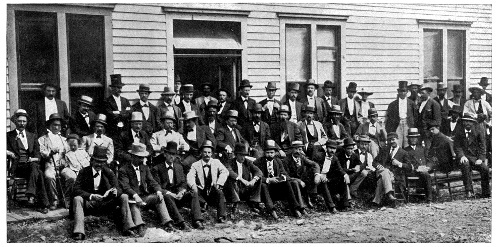
PARKER OIL EXCHANGE IN 1874.
Top Row—
J. D. Emery
Warren Gray.
—— Harris.
E. Seldon.
C. Seldon.
Nelson Cochran.
Col. Sellers.
Unknown.
Milo Marsden.
W. A. Pullman.
L. W. Waters.
Lemuel Young.
Chas. Archbold.
Unknown.
Unknown.
Harry Parker.
Hugh McKelvy.
James Green.
James McCutcheon.
J. M’Donald.
Dr. Thorn.
Unknown.
Unknown.
Middle Row—
O J. Greer.
Fullerton Parker.
Full. Parker, Jr.
James Goldsborough.
W. C. Henry.
Thos. McLaughlin.
Col. Brady.
Sam. Morrow.
Joseph Seep.
Charles Hatch.
John Barton.
R. Moorhead.
H. W. Batchelor.
—— Gephardt.
Shep. Morehead.
Lower Row—
Capt. J. T. Chalfant.
Thos. McConnell.
Weston Howland.
James Lowe.
Chas. Riddell.
Richard Conn.
Rem Offley.
Ren. Kerr.
Harry Marlin.
H. Beers.
Jas. Garrett.
Chas. W. Ball.
Walter Fleming.
Chas. J. Frazer.
X. UP THE WINDING RIVER. — THE AMEN CORNER.
191
Along the Allegheny from Oil Creek—The First Petroleum Company’s
Big Strike—Ruler of President—Fagundas, Tidioute and Triumph
Hill—The Economites—Warren and Forest—Cherry Grove’s Bombshell—Scouts
and Mystery Wells—Exciting Experiences in the Middle
Field—Draining a Juicy Section of Oildom.
“The ocean is vast and our craft is small.”—Norman Gunnison.
“Heaven sends us good meat, but the devil sends cooks.”—Garrick.
“Stay, stay thy crystal tide,
Sweet Allegheny!
I would by thee abide,
Sweet Allegheny.”—Marjorie Meade.
“Keep account of crises and transactions in this life.”—Mrs. Browning.
“Five minutes in a crisis is worth years.”—Freeman Hunt.
“It does upset a man’s calculationscalculations most confoundedly.”—Grant Allen.
“Run if you like, but try to keep your breath.”—Holmes.
“Then it was these Philistine sinners’ turn to be skeered and they broke for the brush.”—Dr. Pierson.
“And all may do what has by man been done.”—Edward Young.
“Spurr’d boldly on and dashed through thick and thin.”—Dryden.
In transforming the unfruitful,
uninteresting
Valley of Oil Creek
into the rich, attractive
Valley of Petroleum
the course of developments
was southward
from the Drake well.
Although some persons
imagined that a pool or
a strip bordering the
stream would be the
limit of successful operations,
others entertained
broader ideas and believed
the petroleum-sun
was not doomed to rise and set on Oil Creek. The Evans well at Franklin
confirmed this view. Naturally the Allegheny River was regarded with favor as
the base of further experiments. Quite as naturally the town at the junction of
the river and the creek was benefited. The Michigan Rock-Oil-Company laid
out building-lots and Oil City grew rapidly in wealth, ambition, enterprise
and population. From a half-dozen dwellings, two unbridged streams, the
remnants of an iron-furnace and a patch of cleared land on the flats it speedily
advanced to a hustling settlement of five-thousand souls, “out for the stuff”
and all eager for profit. Across the Allegheny, on the Downing and Bastian
192farms, William L. Lay laid out the village of Laytonia in 1863 and improved the
ferriage. Phillips & Vanausdall, who struck a thirty-barrel well on the Downing
farm in 1861, established a ferry above Bastian’s and started the suburbs of
Albion and Downington. In 1865 these were merged into Imperial City, which
in 1866 was united with Laytonia and Leetown to form Venango City. In 1871
the boroughs of Venango City and Oil City were incorporated as the city of
Oil City, with William M. Williams as mayor. Three passenger-bridges, one
railroad bridge and an electric street-railway connect the north and south sides
of the “Hub of Oildom.” Beautiful homes, first-class schools and churches,
spacious business-blocks, paved streets, four railroads, electric-lights, water-works,
pipe-line offices, strong banks, enormous tube-works, huge refineries,
bright newspapers, a paid fire-department, all the modern conveniences and
twelve-thousand clever people make Oil City one of the busiest and most
desirable towns in or out of Pennsylvania.
The largest of twenty-five or thirty wells drilled around Walnut Bend, six
miles up the river, in 1860-65, was rated at two-hundred barrels. Four miles
farther, two miles north-east of the mouth of Pithole Creek, John Henry settled
on the north bank of the river in 1802. Henry’s Bend perpetuates the name of
this brave pioneer, who reared a large family and died in 1858. The farm
opposite Henry’s, at the crown of the bend, Heydrick Brothers, of French Creek
township, leased in the fall of 1859. Jesse Heydrick organized the Wolverine
Oil-Company, the second ever formed to drill for petroleum. Thirty shares of
stock constituted its capital of ten-thousand-five-hundred dollars. The first
well, one-hundred-and-sixty feet deep, pumped only ten barrels a day, giving
Wolverine shares a violent chill. The second, also sunk in 1860, at three-hundred
feet flowed fifteen-hundred barrels! Beside this giant the Drake well was
a midget. The Allegheny had knocked out Oil Creek at a stroke, the production
of the Heydrick spouter doubling that of all the others in the region put
together. It was impossible to tank the oil, which was run into a piece of low
ground and formed a pond through which yawl-boats were rowed fifty rods!
By this means seven-hundred barrels a day could be saved. At last the tubing
was drawn, which decreased the yield and rendered pumping necessary.
The well flowed and pumped about one-hundred-thousand barrels, doing eighty
a day in 1864-5, when the oldest producer in Venango county. It was a celebrity
in its time and proved immensely profitable. In December of 1862 Jesse
Heydrick went to Irvine, forty miles up the river, to float down a cargo of
empty barrels. Twenty-five miles from Irvine, on the way back, the river was
frozen from bank to bank. He sawed a channel a mile, ran the barrels to the
well, filled them, loaded them in a flat-boat and arrived at Pittsburg on a cold
Saturday before Christmas. Oil was scarce, the zero-weather having prevented
shipments, and he sold at thirteen dollars a barrel. A thaw set in, the market
was deluged with crude and in four days the price dropped to two dollars!
Stock-fluctuations had no business in the game with petroleum.
Wolverine shares climbed out of sight. Mr. Heydrick bought the whole
batch, the lowest costing him four-thousand dollars and the highest fifteen-thousand.
He sold part of his holdings on the basis of fifteen-hundred-thousand
dollars for the well and farm of two-hundred acres, forty-three-thousand
times the original value of the land! Heydrick Brothers bored seventy wells
on three farms in President township, one of which cost eighteen months’ labor
and ten-thousand dollars in money and produced nine barrels of oil. They
193disposed of it, the new owner fussed with it and for five years received fifteen
barrels of oil a day.
Accidents and incidents resulting from the Wolverine operations would fill
a dime-novel. Jesse Heydrick, organizer of the company, went east with two
or three-hundred-thousand dollars, presumably to “play Jesse” with the bulls
and bears of Wall Street. He returned in a year or more destitute of cash, but
loaded with entertaining tales of adventure. He told a thrilling story of his
abduction from a New-York wharf and shipment to Cuba by a band of kidnappers,
who stole his money and treated him harshly. He endured severe hardships
and barely escaped with his life and a mine of experience. Working his
way north, he resumed surveying, prepared valuable maps of the Butler field
and was a standard authority on oil-matters in the district. For years he was
connected with a pipe-line in Ohio, returning thence to Butler, his present residence,
to engage in oil-operations. Mr. Heydrick is cultured and social, brimful
of information and interesting recitals, and not a bilious crank who thinks
the world is growing worse because he lost a fortune. A brother at Franklin
was president of the Oil-City Bank, incorporated in 1864 as a bank of issue and
forced to the wall in 1866, and served a year on the Supreme Bench. James
Heydrick was a skilled surveyor and Charles W. resided at the old homestead
on French Creek. Heydrick Brothers were “the Big Four” in developments
that brought the Allegheny-River region into the petroleum-column. It is
singular that the Heydrick well, located at random thirty-seven years ago, was
the largest ever struck on the banks of the zig-zagged, ox-bowed stream.
It set the pace to serve as an example,
But not another could come up to sample.
Eight rods square on the Heydrick tract leased for five-thousand dollars
and fifty per cent. of the oil, while the Wolverine shares attested the increasing
wealth of the oil-interest and the pitch to which oil-stocks might rise. Hussey
& McBride secured the Henry farm and obtained a large production in 1860-1.
The Walnut Tree and Orchard wells headed the list. Warren & Brother pumped
oil from Pithole to Henryville, a small town on the flats, of whose houses, hotels,
stores and shipping-platforms no scrap survives. The Commercial Oil-Company
bought the Culbertson farm, above Henry, and drilled extensively on
Muskrat and Culbertson Runs. Patrick McCrea, the first settler on the river
between Franklin and Warren, the first Allegheny ferryman north of Franklin
and the first Catholic in Venango county, migrated from Virginia in 1797 to the
wilds of North-western Pennsylvania. C. Curtiss purchased the McCrea tract of
four-hundred acres in 1861 and stocked it in the Eagle Oil-Company of Philadelphia.
Fair wells were found on the property and the town of Eagle Rock
attained the dignity of three-hundred buildings. An eagle could fly away with
all that is left of the town and the wells.
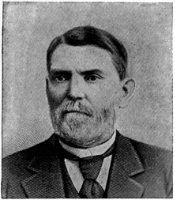
Farther along Robert Elliott, who removed from Franklin, owned one-thousand
acres on the south side of the river and built the first mill in President
township. Rev. Ralph Clapp built a blast-furnace in 1854-5, a mile from the
mouth of Hemlock Creek, at the junction of which with the Allegheny a big
hotel, a store and a shop are situated. Mr. Clapp gained distinction in the
pulpit and in business, served in the Legislature and died in 1865. His son,
Edwin E. Clapp, had a block of six-thousand acres, the biggest slice of undeveloped
territory in Oildom. Productive wells have been sunk on the river-front,
but Clapp invariably refused to sell or lease except once. To Kahle
Brothers, for the sake of his father’s friendship for their father, he leased two-hundred
194acres, on which many good wells are yielding nicely. Preferring to
keep his own lands untouched until he “got good and ready,” he operated
largely at Tidioute, he and his brother, John M. Clapp, acquiring great wealth.
He was chairman of the Producers’ Council and active in the memorable movements
of 1871-3. He built for his home the President Hotel, furnishing it with
every comfort and luxury except the one no
bachelor can possess. From him Macadam,
Talbot and Nicholson could have learned
much about road-making. At his own expense
he constructed many a mile of first-class
roads in President, grading, ditching
and leveling in a fashion to make a bicycler’s
mouth water. There was not a scintilla of
pride or affectation in his composition. It is
told that an agent of the Standard Oil-Company
appointed a time to meet him “on important
business.” The interview lasted two
minutes. “What is the business?” interrogated
Clapp. “Our company authorizes
me to offer you one-million dollars for your
lands in President and I am prepared to pay
you the money.” “Anything else?” “No.”
“Well, the land isn’t for sale; good-morning!” Off went Clapp as coolly as
though he had merely received a bid for a bushel of potatoes. Whether true or
not, the story is characteristic. As a friend to swear by, a helper of the poor, a
believer in fair-play, a prime joker and an inimitable weaver of comic yarns few
could equal, none excel, the “President of President.” He died in July, 1897.
Around Tionesta, the county-seat of Forest, numerous holes were punched.
Thomas Mills, who operated in Ohio and missed opening the SistersvilleSistersville field by
a scratch, drilled in 1861-2. The late George S. Hunter—he built Tionesta’s
first bridge and ought to have a monument for enterprise—hunted earnestly for
paying territory. Up Tionesta Creek operations extended slowly, but developments
in 1882-3 atoned for the delay. Then Forest county was “the cynosure
of all eyes,” each week springing fresh surprises. Balltown had a crop of dry-holes,
followed by wells of all grades from twenty barrels to fifteen-hundred.
At Henry’s Mills and on the Cooper lands, north-east of Balltown and running
into Warren county, spouters were decidedly in vogue. Reno No. 1 well, finished
in December of 1882, flowed twenty-eight-hundred barrels! Reno No. 2,
McCalmont Oil-Company’s No. 1, Patterson’s and the Anchor Oil-Company’s
No. 14 went over the fifteen-hundred mark. In the midst of these gushers
Melvin, Walker & Shannon’s duster indicated spotted territory, uncertain as
the verdict of a petit jury. The Forest splurge held the entire oil-trade on the
ragged edge for months. Every time one or more fellows took to the woods
to manipulate a wildcat-well oil took a tumble. Notwithstanding the magnitude
of the business, with thirty-six-million barrels of oil in stock and untold
millions of dollars invested, the report from Balltown or Cooper of a new strike
caused a bad break. Some owners of important wells worked them as “mysteries”
to “milk the trade.” Derricks were boarded tightly, armed men kept
intruders from approaching too near and information was withheld or falsified
until the gang of manipulators “worked the market.” To offset this leading
dealers employed “scouts,” whose mission was to get correct news at all
195hazards. The duties of these trusty fellows involved great labor, night watches,
incessant vigilance and sometimes personal danger. The “mystery” racket and
the introduction of “scouts” were new elements in the business, necessitated
by the peculiar tactics of a small clique whose methods were not always creditable.
The passing of the Forest field, which declined with unprecedented
rapidity, practically ended the system that had terrorized the oil-exchanges in
New York, Oil City, Bradford and Pittsburg. The collapse of the Cooper pool
was more unexpected than the striking of a gusher would be under any circumstances.
Its influence upon oil-values was ridiculously disproportionate to its
merits, just as the tail sometimes wags the dog.
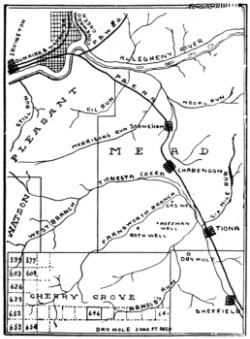
Closely allied to Balltown and Cooper in its principal features, its injurious
effects and sudden depreciation, was the field that taught the Forest lesson. On
May nineteenth, 1882, the oil-trade was paralyzed by the report of a big well in
Cherry-Grove township, Warren county, miles from previous developments.
The general condition of the region was prosperous, with an advancing market
and a favorable outlook. The new well—the famous “646”—struck the country
like a cyclone. Nobody had heard a whisper of the finding of oil in the hole
George Dimick was drilling near the
border of Warren and Forest. The
news that it was flowing twenty-five-hundred
barrels flashed over the wires
with disastrous consequences. The
excitement in the oil-exchanges, as the
price of certificates dropped thirty to
fifty per cent. in a few moments, was
indescribable. Margins and small-fry
holders were wiped out in a twinkling
and the losses aggregated millions.
It was a panic of the first water, far-reaching
and ruinous. A plunge from
one-thirty to fifty-five cents for crude
meant distress and bankruptcy to
thousands of producers and persons
carrying oil. Men comfortably off in
the morning were beggared by noon.
Other wells speedily followed “646.”
The Murphy, the Mahoopany and
scores more swelled the daily yield
to thirty-thousand barrels. Five-hundred
wells were rushed down with the utmost celerity. Big companies bought
lands at big prices and operated on a big scale. Pipe-lines were laid, iron-tanks
erected and houses reared by the hundred. Cherry Grove dwarfed the richest
portions of the region into insignificance. It bade fair to swamp the business,
to flood the world with cheap oil, to compel the abandonment of entire districts
and to crush the average operator. But if the rise of Cherry Grove was vividly
picturesque, its fall was startlingly phenomenal. One dark December morning
the workmen noticed that the Forest Oil-Company’s largest gusher had stopped
flowing. Within a week the disease had spread like an epidemic. Spouters
ceased to spout and obstinately declined to pump. The yield was counted by
dozens of barrels instead of thousands. In January one-fourth the wells were
deserted and the machinery removed. Three-hundred wells on April first
196yielded hardly two-thousand barrels, three-quarters what “646” or the Murphy
had done alone! The suddenness of the topple cast Oil Creek into the shade
and eclipsed Pithole itself. Piles of junk represented miles of pipe-lines and
acres of tanks. The Cooper fever was breaking out and, with Henry’s Mills
and Balltown, repeated in 1883 the hurrah of 1882. For eleven months the
Forest-Warren pools fretted and fumed, producing five-million barrels of oil
and having the trade by the throat. In that brief period Cherry Grove came
and went, Cooper threatened and subsided, and Balltown was bowled out.
Nine-tenths of the operators figured as heavy losers. Pennsylvania’s production
shrank from ninety-thousand barrels to sixty-thousand and a healthy reaction
set in. Petroleum-developments often presented remarkable peculiarities, but
the strangest of all was the readiness with which speculators time and again
fell a prey to the schemes of Forest-Warren jobbers, whose “picture is turned
to the wall.”

The professional “oil-scout” first became prominent at Cherry Grove. He
was neither an Indian fighter nor a Pinkerton detective, although possessing
the courage and sharpness of both. He combined a knowledge of woodcraft
and human-nature with keen discernment, acute judgment and infinite patience.
S. B. Hughes, J. C. Tennent, P. C. Boyle, J. C.
McMullen, Frank H. Taylor, Joseph Cappeau,
James Emery and J. H. Rathbun were captains
in the good work of worrying and circumventing
the “mystery” men. Hughes rendered service
that won the confidence of his employers and
brought him a competence. Never caught napping,
for one special feat he was said to have received
ten-thousand dollars. It was not uncommon
for him and his comrades to keep their
boots on a week at a stretch, to snatch a nap under
a tree or on a pile of casing, to creep on all-fours
inside the guard-lines and watch pale Luna
wink merrily and the bright stars twinkle while reclining on the damp ground
to catch the faintest sound from a mystified well. Boyle and Tennent made brilliant
plays in the campaign of 1882-3. Captain J. T. Jones, failing to get correct
information regarding “646,” lost heavily on long oil when the Cherry-Grove
gusher hypnotized the market and sent Tennent from Bradford to size up the
wells and the movements of those manipulating them. Michael Murphy, learning
that Grace & Dimick were quietly drilling a wildcat-well on lot 646, smelled a
large-sized rodent and concluded to share in the sport. For one-hundred dollars
an acre and one-eighth the usufruct Horton, Crary & Co., the Sheffield tanners,
sold him lot 619, north-east of 646. Murphy had cut his eye-teeth as an importer—John
S. Davis was his partner—of oil-barrels, an exporter of crude and
an operator at Bradford. He pushed a well on the south-west corner of his
purchase and secured lands in the vicinity. Grace & Dimick held back their
well a month to tie up lots and complete arrangements regarding the market.
Everything was managed adroitly. The trade had not a glimmer of suspicion
that a bombshell might be fired at any moment. Murphy’s rig burned down on
May fifteenth, he was in Washington trying to close a deed for another tract
and “646” was put through the sand. On June second Murphy’s No. 1, which
he guarded strictly after rebuilding the rig, flowed sixteen-hundred barrels.
His No. 2, finished on July third, flowed thirty-six-hundred barrels in twenty-four
197hours! The Mahoopany and a half-dozen others aided in the demoralization
of prices. Murphy sold eighty acres of lot 619 for fifty-thousand dollars to
the McCalmont Oil-Company. The Anchor Oil-Company’s gusher on lot 647
caught fire, without curtailing the flow, and was burning furiously as “Jim”
Tennent arrived from Bradford. The scouts had their hands full, with the
“white-sand pools” and the keenest masters of “mystery wells” to demand
their best licks.
Watching Murphy’s dry-hole on lot 633 was Tennent’s initial job. The
Whale Oil-Company’s duster on lot 648 next claimed the attention of the scouts.
It had been drilled below the sand-level and the tools left at the bottom. On
Sunday night, July ninth, 1882, Boyle, Tennent and two companions raised the
tools by hand, measured the well with a steel-line and telegraphed their principals
that it was dry. This report jumped the market on Monday morning from
forty-nine cents to sixty. The Shannon well on the Cooper tract needed constant
care and the scouts divided the labor. Tennent and Rathbun one night
sought to crawl near the well. A twig snapped off and a guard fired, the ball
grazing “Jim’s” ear. In December Boyle and W. C. Edwards drilled Grandin
No. 4 below the sand before the owners knew the rock had been reached. Its
failure surprised the trade as much as the success of “646.” Boyle actually
posted the guards to keep intruders away and they refused to let W. W. Hague,
an owner of the well, inside the line until the contractor appeared and permitted
him to pass! Boyle and Tennent did fine work north of the Cooper field. At
the Shultz well Tennent, in order to make a quick trip of a half-mile to the pipe-line
telegraph, clung to the tail of Cappeau’s horse and kept up with the animal’s
gallop. Mercury might not have endorsed that style of locomotion, but it
served the purpose and got the news to Jones ahead of everybody else. Tennent
played the market skillfully, cleared twenty-five-thousand dollars on Macksburg
lands and operated with tolerable success in McKean county. Nine years
ago he removed to his thousand-acre prairie-farm in Kansas, the land of sockless
statesman and nimble grasshoppers.
Boyle, brimful of novel resources, puzzled the “mystery” chaps by his bold
ingenuity and usually beat them at their own game. He squarely overmatched
the field-marshals of manipulation. His fertile brain originated the plan of drilling
Grandin No. 4 and other test wells. The night he went to drill the Grace
well through the sand he paid the ferryman at Dunham’s Mills not to answer any
calls until morning, thus cutting off all chance of pursuit and surprise. At the
well Boyle wrote an order to deliver the well to Tennent, signing it Pickwick,
and the drillers retired to bed! Somebody had been there before them and
poured back the sand-pumpings. At the Patterson well Boyle devised a code
of tin-horn signals that outwitted the men inside the derrick and flashed the
result to Gusher City. The number of expedients continually devised was a
marvel. Thanks to the energy and ability of these tireless scouts, of whose
midnight exploits, wild rides, hairbreadth escapes and queer adventures many
pages could be written, the effect of “mysteries” was frequently neutralized
and at length the whole system of guarded wells, bull-dogs and shot-guns was
eliminated.
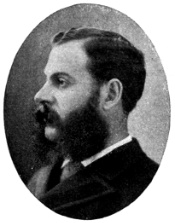
The Forest-Warren white-sand pools marked a new era in developments,
with new ideas and new methods to hoodoo speculation. Cherry Grove had
wilted from twenty-five-thousand barrels in September to three-thousand in
December, when Cooper Hill loomed above the horizon and Balltown appeared
on deck. Shallow wells had been sunk far up Tionesta Creek in 1862-3. Near
198the two dwellings, saw-mill, school-house and barn dubbed Foxburg, the stamping-ground
of deer-hunters and bark-peelers, Marcus Hulings—his name is a
synonym for successful wildcatting—in 1876 drilled a well that smacked of oil.
The derrick stood ten years and globules of grease bubbled up from the depths,
a thousand feet beneath. C. A. Shultz, a piano-tuner, taking his cue from the
Hulings well, interested Frederick Morck, a Warren jeweler, and leased the
Fox estate and contiguous lands in 1881. The Blue-Jay and two Darling wells,
small producers, created a ripple which dry-holes evaporated. They were on
Warrant 2991, Howe township, known to fame as the Cooper tract, north-west
of Foxburg. The conditions of the lease required a well at the western end of
the warrant. Cherry Grove was at its zenith, crude was flirting with the fifties
and operators considered the Blue-Jay chick a lean bird. J. Mainwaring leased
one-hundred acres from Morck & Shultz and built a rig at the head of a wild
ravine, in the sunless woodland, a half-mile from
Tionesta Creek. He lost faith and the Mainwaring
lease and rig passed to P. M. Shannon,
of Bradford. Born in Clarion county, Philip
Martin Shannon enlisted at fourteen, served
gallantly through the war, traveled as salesman
for a Pittsburg house and in 1870 cast his lot
with the oilmen at Parker. A pioneer at Millerstown
and its burgess in 1874, he filled the
office capably and in 1876 received a big majority
at the Republican primary for the legislative
nomination. The county-ring counted
him out. He drifted with the tide to Bullion,
removed to Bradford in 1879, was elected mayor
in 1885 and discharged his official duties with
excellent discretion. Temperate in habits and
upright in conduct, Mayor Shannon had been
an observer and not a participant in the nether side of oil-region life and knew
where to draw the line. He was a favorite in society, high in Masonic circles
and efficient in securing lands for firms with which he had become connected.
Pittsburg is now his home and he manages the company that is developing the
Wyoming field. Mr. Shannon is always generous and courteous. He could
give a scout “the marble heart,” lecture an offender, denounce a wrong or
decline to furnish points regarding his mystery-well in a good-natured way that
disarmed criticism. He retains his old-time geniality and prosperity has not
compelled him to buy hats three sizes larger than he wore at Parker and Millerstown
“in the days of auld lang-syne.”
A. B. Walker and T. J. Melvin joined Shannon in his Cooper venture. A
road was cut through the dense forest from the Fox farm-house up the steep
hill to the Mainwaring derrick. An engine and boiler were dragged to the spot
and Captain Haight contracted to drill the hole. Melvin and Walker, believing
the well a failure at eighteen-hundred feet, went to Cherry Grove on July twenty
fifth, 1882. Shannon stayed to urge the drill a trifle farther and it struck the
sand at one o’clock next day. He drove in two pine-plugs, sent a messenger for
his partners and filled the well with water to shut in the oil. The well wouldn’t
consent to be plugged and drowned. The stream broke loose at three o’clock,
hurling the tools and plugs into the Forest ozone. Shannon and Haight, standing
in the derrick, narrowly escaped death as the tools crashed through the
199roof and fell to the floor. More plugs, sediment and old clothes were jammed
down to conceal the true inwardness of the well, news of which was expected to
pulverize the market. Heavy flows following the expulsion of the tools led the
owners to anticipate a big strike. Outposts were established and guards, each
armed with a Winchester rifle, were changed every six hours. The wildcat-well,
eight miles from a telegraph-wire, became an entrenched camp with a half-dozen
wakeful scouts besieging the citadel. Vicksburg was not guarded more
vigilantly. If a twig cracked or an owl hooted a shower of bullets whizzed in
the direction of the noise. Through August the well was permitted to slumber,
oil that forced a passage in spite of the obstructions running into pits inside
“the dead-line.” The trade staggered under the adverse fear of the mystery.
Bradford operators formed a syndicate with the owners in lands and speculation
and sold a million barrels of crude short. When everything was ready to spring
the trap some of the parties went to drill out the plugs and usher in the market-crusher.
“We have a jack-pot to open at our pleasure” remarked one of them,
voicing the sentiment of all. None looked for anything smaller than fifteen-hundred
barrels. The four drillers were discharged and two trusted lieutenants
turned the temper-screw and dressed the bits. Ten plugs and a mass of dirt
must be cleaned out. From a distance the scouts timed every motion of the
walking-beam, gluing their eyes to field-glasses that not a symptom of a flow
might slip their eager gaze, “like stout Cortez when he stared at the Pacific
upon a peak in Darien.” Swift horses were fastened to convenient trees, saddled
and bridled for a race to the telegraph-office. A slice of bread and a can of
beans served for food. For days the drilling continued. On September fourteenth
the last splinter of the plugs was extracted, the sand was cut deeper and—the
well didn’t respond worth a cent! The faithful scouts, who had stood
manfully between the trade and the manipulators, rushed the report. It was a
bracer to the market. Bears who pinned their hopes to the Shannon well, the
pivot upon which petroleum hinged, scrambled to cover their shorts at heavy
loss. Balltown duplicated some of the Cooper experiences, mystery-wells on
Porcupine Run agitating the trade in the spring of 1883. The Cherry-Grove,
Cooper-Hill and Balltown pools yielded eight or nine-million barrels. Operations
extended to Sheffield and the cream was soon skimmed off. The middle
field had enjoyed a very lively inning.
Two miles back of Trunkeyville, on the west side of the Allegheny, Calvert,
Gilchrist & Risley drilled the Venture well in April, 1870, on the Tuttle
farm. Fisher Brothers, of Oil City, and O. D. Harrington, of Titusville, bought
the well for fifteen-thousand dollars when it touched the third sand. It was
eight-hundred feet deep, flowed three-hundred barrels and started the Fagundas
field. The day after it began flowing the Fishers, Adnah Neyhart, Grandin
Brothers and David Bently paid one-hundred-and-twenty-thousand dollars for
the Fagundas farm of one-hundred-and-sixty acres. Mrs. Fagundas, one son
and one daughter died within three months of the sale. Neyhart & Grandin
bought a half-interest in David Beatty’s farm for ninety-thousand dollars. The
Lady Burns well, on the Wilkins farm, finished in June, seconded the Venture.
A daily production of three-thousand barrels and a town of twenty-five-hundred
population followed quickly. A mile from Fagundas operations on the Hunter,
Pearson, Guild and Berry farms brought the suburb of Gillespie into being.
The territory lasted and a small yield is obtained to-day. A half-dozen houses,
the Venture derrick, Andrews & Co.’s big store and the office in which whole-souled
M. Compton—he’s in Pittsburg with the Forest Oil-Company now—labored
200as secretary of the Producers’ Council, hold the fort on the site of well-nigh-forgotten
Fagundas. William H. Calvert, who projected the Venture
well, died at Sistersville, West Virginia, on February seventeenth, 1896. He
had drilled on Oil Creek and at Pithole, operated in the southern field and was
negotiating for a block of lands near Sistersville when a clot of blood on the
brain cut short his active life.
David Beatty had drilled on Oil Creek in 1859-60 with John Fertig. He
settled on a farm in Warren county “to get away from the oil.” His farm was
smothered in oil by the Fagundas development. He removed to the pretty
town of Warren, building an elegant home on the bank of Conewango Creek.
Fortune hounded him and insisted upon heaping up his riches. John Bell drilled
a fifty-barrel well eighty rods above the mansion. Wells surrounding his lot and
in his yard emitted oil. Mr. Beatty resigned himself to the inevitable and lived
at Warren until called to his final rest some years ago. His case resembled the
heroine in Milton Nobles’s Phenix, where “the villain still pursued her.” The
boys used to relate how a negro, the first man to die at Oil City after the advent
of petroleum, was buried in a lot on the flats. Somebody wanted that precise
spot next day to drill a well and the corpse was planted on the hill-side. The
next week that particular location was selected for a well and the body was
again exhumed. To be sure of getting out of reach of the drill the friends of
the deceased boated his remains down the river to Butler county. Twelve years
later the bones were disinterred—an oil-company having leased the old graveyard—and
put in the garden of the dead man’s son, to be handy for any further
change of base that may be required.
At East Hickory the Foster well, drilled in 1863, flowed three-hundred barrels
of amber oil. Two-hundred wells were sunk in the Hickory district, which
proved as tough as Old Hickory to nineteen-twentieths of the operators. Three
Hickory Creeks—East Hickory and Little Hickory on the east and West Hickory—enter
the river within two miles. Near the mouth of West Hickory three
Scotchmen named McKinley bored a well two-hundred-and-thirty feet in 1861.
They found oil and were preparing to tube the well when the war broke out
and they abandoned the field. A well on the flats, drilled in 1865, flowed two-hundred
barrels of lubricating oil, occasioning a furore. One farm sold for a
hundred-thousand dollars and adjacent lands were snapped up eagerly.
Ninety-five years ago hardy lumbermen settled permanently in Deerfield
township, Warren county, thirty miles above the mouth of Oil Creek. Twenty
years later a few inhabitants, supported by the lumber trade, had collected near
the junction of a small stream with the Allegheny. Bold hills, grand forests,
mountain rills and the winding river, sprinkled with green islets, invested the
spot with peculiar charms. Upon the creek and hamlet the poetic Indian name
of Tidioute, signifying a cluster of islands, was fittingly bestowed. Samuel
Grandin, who located near Pleasantville, Venango county, in 1822, removed to
Tidioute in 1839. He owned large tracts of timber-lands and increased the
mercantile and lumbering operations that gave him prominence and wealth.
Mr. Grandin maintained a high character and died at a ripe age. His oldest
son, John Livingston Grandin, returned from college in 1857 and engaged in
business with his father, assuming almost entire control when the latter retired
from active pursuits. News of Col. Drake’s well reached the four-hundred
busy residents of the lumber-center in two days. Col. Robinson, of Titusville,
rehearsed the story of the wondrous event to an admiring group in Samuel
Grandin’s store. Young J. L. listened intently, saddled his horse and in an
201hour purchased thirty acres of the Campbell farm, on Gordon Run, below the
village, for three-hundred dollars. An “oil-spring” on the property was the
attraction. Next morning he contracted with H. H. Dennis, a man of mechanical
skill, to drill a well “right in the middle of the spring.” The following day
a derrick—four pieces of scantling—towered twenty feet, a spring-pole was procured,
the “spring” was dug to the rock, and the “tool” swung at the first
oil-well in Warren county and among the first in Pennsylvania. Dennis hammered
a drilling-tool from a bar of iron three feet long, flattening one end to
cut two-and-a-half inches, the diameter of the hole. In the upper end of the
drill he formed a socket, to hold an inch-bar of round iron, held by a key riveted
though and lengthened as the depth required. Two or three times a day, when
the “tool” was drawn out to sharpen the bit and clean the hole, the key had to
be cut off at each joint! With this rude outfit drilling began the first week of
September, 1859, and the last week of October the well was down one-hundred-and-thirty-four
feet. Tubing would not go into the hole and it was enlarged to
four inches. The discarded axle of a tram-car, used to carry lumber from Gordon
Run to the river, furnished iron for the reamer. Days, weeks and months
were consumed at this task. At last, when the hole had been enlarged its full
depth, the reamer was let down “to make sure the job was finished.” It stuck
fast, never saw daylight again and the well sunk with so much labor had not
one drop of oil!
Other wells in the locality fared similarly, none finding oil nearer than
Dennis Run, a half-mile distant. There scores of large wells realized fortunes
for their owners. In two years James Parshall was a half-million ahead. He
settled at Titusville and built the Parshall House—a mammoth hotel and opera-house—which
fire destroyed. The “spring” on the Campell farm is in existence
and the gravel is impregnated with petroleum, supposed to percolate
through fissures in the rocks from Dennis Run.
During the summer of 1860 developments extended across and down the
river a mile from Tidioute. The first producing well in the district, owned by
King & Ferris, of Titusville, started in the fall at three-hundred barrels and
boomed the territory amazingly. It was on the W. W. Wallace lands—five-hundred
acres below town—purchased in 1860 by the Tidioute & Warren Oil-Company,
the third in the world. Samuel Grandin, Charles Hyde and Jonathan
Watson organized it. J. L. Grandin, treasurer and manager of the company, in
eight years paid the stockholders twelve-hundred-thousand dollars dividends on
a capital of ten-thousand! He leased and sub-leased farms on both sides of the
Allegheny, drilling some dry-holes, many medium wells and a few large ones.
He shipped crude to the seaboard, built pipe-lines and iron-tanks and became
head of the great firm of Grandins & Neyhart. Elijah Bishop Grandin—named
from the father of C. E. Bishop, founder of the Oil-City Derrick—who had carried
on a store at Hydetown and operated at Petroleum Centre, resumed his
residence at Tidioute in 1867 and associated with his brother and brother-in-law,
Adnah Neyhart, in producing, buying, storing and transporting petroleum.
Mr. Neyhart and Joshua Pierce, of Philadelphia, had drilled on Cherry Run, on
Dennis Run and at Triumph and engaged largely in shipping oil to the coast.
Pierce & Neyhart—J. L. Grandin was their silent partner—dissolved in 1869.
The firm of Grandins & Neyhart, organized in 1868, was marvelously successful.
Its high standing increased confidence in the stability of financial and commercial
affairs in the oil-regions. The brothers established the Grandin Bank and
Neyhart, besides handling one-fourth of the crude produced in Pennsylvania,
202opened a commission-house in New York to sell refined, under the skilled
management of John D. Archbold, now vice-president of the Standard Oil-Company.
They and the Fisher Brothers owned the Dennis Run and Triumph
pipe-lines and piped the oil from Fagundas, where they drilled a hundred prolific
wells and were the largest operators. They bought properties in different
portions of the oil-fields, extended their pipe-lines to Titusville and erected
tankage at Parker and Miller Farm.
The death of Mr. Neyhart terminated
their connection with oil-shipments.
“There is no parley with death.”
Owning thousands of acres in Warren
and Forest counties, the Grandins
were heavily interested in developments
at Cherry Grove, Balltown and
Cooper. As those sections declined
they gradually withdrew from active
oil-operations, sold their pipe-lines
and wound up their bank. J. L.
Grandin removed to Boston and E.
B. to Washington, to embark in new
enterprises and enjoy, under most
favorable conditions, the fruits of
their prosperous career at Tidioute.
Their business for ten years has been
chiefly loaning money, farming and
lumbering in the west. They purchased seventy-two-thousand acres in the Red-River
Valley of Dakota—known the world over as “the Dalrymple Farm”—and
in 1895 harvested six-hundred-thousand bushels of wheat and oats.
They employ hundreds of men and horses, scores of ploughs and reapers and
203steam-threshers and illustrate how to farm profitably on the biggest scale.
With Hunter & Cummings, of Tidioute, and J. B. White, of Kansas City, as
partners, they organized the Missouri-Lumber-and-Mining-Company. The
company owns two-hundred-and-forty-thousand acres of timber-land in Missouri
and cut fifty-million feet of lumber last year in its vast saw-mills at Grandin,
Carter county. Far-seeing, clear-headed, of unblemished repute and liberal
culture, such men as J. L. and E. B. Grandin reflect honor upon humanity
and deserve the success an approving conscience and the popular voice commend
heartily.
Above Tidioute a number of “farmers’ wells”—shallow holes sunk by
hand and soon abandoned—flickered and collapsed. On the islands in the
river small wells were drilled, most of which the great flood of 1865 destroyed.
Opposite the town, on the Economite lands, operations began in 1860. Steam-power
was used for the first time in drilling. The wells ranged from five barrels
to eighty, at one-hundred-and-fifty feet. They belonged to the Economites,
a German society that enforced celibacy and held property in common. About
1820 the association founded the village of Harmony, Butler county, having an
exclusive colony and transacting business with outsiders through the medium
of two trustees. The members wore a plain garb and were distinguished for
morality, simplicity, industry and strict religious principles. Leaving Harmony,
they located in the Wabash Valley, lost many adherents, returned to Pennsylvania
and built the town of Economy, in Beaver county, fifteen miles below
Pittsburg. They manufactured silks and wine, mined coal and accumulated
millions of dollars. A loan to William Davidson, owner of eight-thousand
acres in Limestone township, Warren county, obliged them to foreclose the
mortgage and bid in the tract. Their notions of economy applied to the wells,
which they numbered alphabetically. The first, A well, yielded ten barrels,
B pumped fifty and C flowed seventy. The trustees, R. L. Baker and Jacob
Henrici, erected a large boarding-house for the workmen, whose speech and
manners were regulated by printed rules. Pine and oak covered the Davidson
lands, which fronted several miles on the Allegheny and stretched far back into
the township. Of late years the Economite Society has been disintegrating,
until its membership has shrunk to a dozen aged men and women. Litigation
and mismanagement have frittered away much of its property. It seems odd
that an organization holding “all things in common” should, by the perversity
of fate, own some of the nicest oil-territory in Warren, Butler and Beaver counties.
A recent strike on one of the southern farms flows sixty barrels an hour.
Natural gas lighted and heated Harmony and petroleum appears bound to stick
to the Economites until they have faded into oblivion.
Below the Economite tract numerous wells strove to impoverish the first
sand. G. I. Stowe’s, drilled in 1860, pumped eight barrels a day for six years.
The Hockenburg, named from a preacher who wrote an essay on oil, averaged
twelve barrels a day in 1861. The Enterprise Mining-and-Boring-Company of
New-York leased fifteen rods square on the Tipton farm to sink a shaft seven
feet by twelve. Bed-rock was reached at thirty feet, followed by ten feet of
shale, ten of gray sand, forty of slate and soap-rock and twenty of first sand.
The shaft, cribbed with six-inch plank to the bottom of the first sand, tightly
caulked to keep out water, was abandoned at one-hundred-and-sixty feet, a gas-explosion
killing the superintendent and wrecking the timbers. Of forty wells
on the Tipton farm in 1860-61 not a fragment remained in 1866.
Tidioute’s laurel wreath was Triumph Hill, the highest elevation in the
204neighborhood. Wells nine-hundred feet deep pierced sixty feet of oil-bearing
sand, which produced steadily for years. Grandins, Fisher Brothers, M. G.
Cushing, E. E. Clapp, John M. Clapp and other leading operators landed bounteous
pumpers. The east side of the hill was a forest of derricks, crowded like
trees in a grove. Over the summit and down the west side the sand and the
development extended. For five years Triumph was busy and prosperous,
yielding hundreds-of-thousands of barrels of oil and advancing Tidioute to a
town of five-thousand population. Five churches, the finest school-buildings in
the county, handsome houses, brick blocks, superior hotels and large stores
greeted the eye of the visitor. The Grandin Block, the first brick structure,
built of the first brick made in Deerfield township, contained an elegant opera-house.
Three banks, three planing-mills, two foundries and three machine-shops
flourished. A dozen refineries turned out merchantable kerosene.
Water-works were provided and an iron bridge spanned the river. Good
order was maintained and Tidioute—still a tidy village—played second fiddle
to no town in Oildom for intelligence, enterprise and all-round attractiveness.
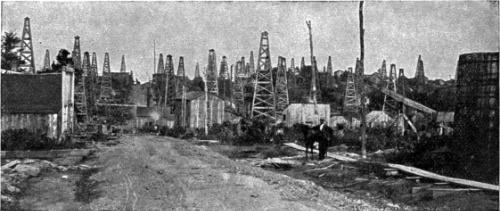
VIEW ON WEST SIDE OF TRIUMPH HILL IN 1874.
The tidal wave effervesced at intervals clear to the Colorado district.
Perched on a hill in the hemlock woods, Babylon was the rendezvous of sports,
strumpets and plug-uglies, who stole, gambled, caroused and did their best to
break all the commandments at once. Could it have spoken, what tales of
horror that board-house under the evergreen tree might recount! Hapless
wretches were driven to desperation and fitted for the infernal regions. Lust
and liquor goaded men to frenzy, resulting sometimes in homicide or suicide.
In an affray one night four men were shot, one dying in an hour and another in
six weeks. Ben. Hogan, who laughed at the feeble efforts of the township-constable
to suppress his resort, was arrested, tried for murder and acquitted on
the plea of self-defence. The shot that killed the first victim was supposed to
have been fired by “French Kate,” Hogan’s mistress. She had led the demi-monde
in Washington and led susceptible congressmen astray. Ben met her
at Pithole, where he landed in the summer of 1865 and ran a variety-show that
would make the vilest on the Bowery blush to the roots of its hair. He had
been a prize-fighter on land, a pirate at sea, a bounty-jumper and blockade-runner,
and prided himself on his title of the “Wickedest Man in the World.”
Sentenced to death for his crimes against the government, President Lincoln
pardoned him and he joined the myriad reckless spirits that sought fresh adventures
205in the Pennsylvania oil-fields. In a few months the Scripture legend—“Babylon
has fallen”—applied to the malodorous Warren town. The tiger
can “change his spots”—by moving from one spot to another—and so could
Hogan. He was of medium height, square-shouldered, stout-limbed, exceedingly
muscular and trained to use his fists. He fought Tom Allen at Omaha,
sported at Saratoga and in 1872 ran “The Floating Palace”—a boat laden with
harlots and whiskey—at Parker. The weather growing too cold and the law
too hot for comfort, he opened a den and built an opera-house at Petrolia. In
“Hogan’s Castle” many a clever young man learned the short-cut to disgrace
and perdition. Now and then a frail girl met a sad fate, but the carnival of
debauchery went on without interruption. Hogan put on airs, dressed in the
loudest style and would have been the burgess had not the election-board
counted him out! A fearless newspaper forcing him to leave Petrolia, Hogan
went east to engage in “the sawdust swindle,” returned to the oil-regions in
1875, built an opera-house at Elk City, decamped from Bullion, rooted at Tarport
and Bradford and departed by night for New York. Surfeited with revelry
and about to start for Paris to open a joint, he heard music at a hall on Broadway
and sat down to wait for the show to begin. Charles Sawyer, “the converted
soak,” appeared shortly, read a chapter from the Bible and told of his
rescue from the gutter. Ben was deeply impressed, signed the pledge at the
close of the service, agonized in his room until morning and on his knees
implored forgiveness. How surprised the angels must have been at the spectacle
of the prodigal in this attitude! After a fierce struggle, to quote his own
words, “peace filled my soul chock-full and I felt awful happy.” He claimed
to be converted and set to work earnestly to learn the alphabet, that he might
read the Scriptures and be an evangelist. He married “French Kate,” who
also professed religion, but it didn’t strike in very deep and she eloped with a
tough. Mr. Moody welcomed Hogan and advised him to traverse the country
to offset as far as possible his former misdeeds. Amid the scenes of his grossest
offenses his reception varied. High-toned Christians, who would not touch a
down-trodden wretch with a ten-foot pole, turned up their delicate noses and
refused to countenance “the low impostor.” They forgot that he sold his
jewelry and most of his clothes, lived on bread and water and endured manifold
privations to become a bearer of the gospel-message. Even ministers who proclaimed
that “the blood of Christ cleanses from all sin” doubted Hogan’s
salvation and showed him the cold shoulder in the chilliest orthodox fashion.
He stuck manfully and for eighteen years has labored zealously in the vineyard.
Judging from his struggles and triumphs, is it too much to believe that a front
seat and a golden crown are reserved for the reformed pugilist, felon, robber,
assassin of virtue and right bower of Old Nick? Unlike straddlers in politics
and piety, who want to go to Heaven on velvet-cushions and pneumatic tires,tires,
“He doesn’t stand on one foot fust,
An’ then stand on the other,
An’ on which one he feels the wust
He couldn’t tell you nuther.”
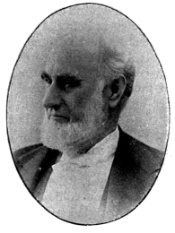
The expectation of an extension of the belt northward was not fulfilled
immediately. Wells at Irvineton, on the Brokenstraw and tributary runs, failed
to find the coveted fluid. Captain Dingley drilled two wells on Sell’s Run,
three miles east of Irvineton, in 1873, without slitting the jugular. A test well
at Warren, near the mouth of Conewango Creek, bored in 1864 and burned as
pumping was about to begin, had fair sand and a mite of oil. John Bell’s
operations in 1875 opened an amber pool up the creek that for a season crowded
206the hotels three deep with visitors. They bored dozens of wells, yet the production
never reached one-thousand barrels and in four months the patch was
cordoned by dry holes and as quiet as a cemetery. The crowds exhaled like
morning dew. Warren is a pretty town of four-thousand population, its location
and natural advantages offering rare inducements to people of refinement and
enterprise. Its site was surveyed in 1795 and the
first shipment of lumber to Pittsburg was made
in 1801. Incorporated as a borough in 1832, railroad
communication with Erie was secured in
1859, with Oil City in 1867 and with Bradford in
1881. Many of the private residences are models
of good taste. Massive brick-blocks, solvent banks,
churches, stores, high-grade schools, shaded streets
and modern conveniences evidence its substantial
prosperity. Hon. Thomas Struthers—he built sections
of the Philadelphia & Erie and the Oil-Creek
railroads and established big iron-works—donated
a splendid brick building for a library, opera-house
and post-office. His grandson, who inherited his
millions and died in February, 1896, was a mild
edition of “Coal-Oil Johnnie” in scattering money.
Lumbering, the principal industry for three generations,
enriched the community. Col. Lewis F. Watson represented the district
twice in Congress and left an estate of four-millions, amassed in lumber and oil.
He owned most of the township bearing his name. Hon. Charles W. Stone, his
successor, ranks with the foremost members of the House in ability and influence.
A Massachusetts boy, he set out in life as a teacher, came to Warren to
take charge of the academy, was county-superintendent, studied law and rose to
eminence at the bar. He was elected Lieutenant-Governor of the State, served
as Secretary of the Commonwealth and would be
Governor of Pennsylvania to-day had “the foresight
of the Republicans been as good as their
hindsight.” He has profitable oil-interests, is serving
his fourth term in Congress and may be nominated
the fifth time. Alike fortunate in his political
and professional career, his social relations, his
business connections and his personal friendships,
Charles W. Stone holds a place in public esteem
few men are privileged to attain.
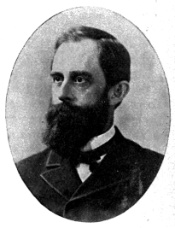
At Clarendon and Stoneham hundreds of snug
wells yielded three-thousand barrels a day from a
regular sand that did not exhaust readily. Southward
the Garfield district held on fairly and a narrow-gauge
railroad was built to Farnsworth. The
Wardwell pool, at Glade, four miles east of Warren,
fizzed after the manner of Cherry Grove, rich
in buried hopes and dissipated greenbacks. P. M. Smith and Peter Grace
drilled the first well—a sixty-barreler—close to the ferry in July of 1873. Dry-holes
and small wells alternated with provoking uncertainty until J. A. Gartland’s
twelve-hundred-barrel gusher on the Clark farm, in May of 1885, inaugurated
a panic in the market that sent crude down to fifty cents. The same day
207the Union Oil-Company finished a four-hundred-barrel spouter and May ended
with fifty-six wells producing and a score of dusters. June and July continued
the refrain, values see-sawing as reports of dry-holes or fifteen-hundred-barrel-strikes,
some of them worked as “mysteries,” bamboozled the trade. Wardwell’s
production ascended to twelve-thousand barrels and fell by the dizziest
jumps to as many hundred, the porous rock draining with the speed of a lightning-calculator.
Tiona developed a lasting deposit of superior oil. Kane has a
tempting streak, in which Thomas B. Simpson and other Oil-City parties are
interested. Gas has been found at Wilcox, Johnsonburg and Ridgway, Elk
county, taking a slick hand in the game. Kinzua, four miles north-east of Wardwell,
revealed no particular cause why the spirit of mortal ought to be proud.
Although Forest and Warren, with a slice of Elk thrown in, were demoralizing
factors in 1882-3-4, their aggregate output would only be a light luncheon for
the polar bear in McKean county.
The Tidioute belt, varying in narrowness from a few rods to a half-mile,
was one of the most satisfactory ever discovered. When lessees fully occupied
the flats Captain A. J. Thompson drilled a two-hundred-barrel well on the point,
at the junction of Dingley and Dennis Runs. Quickly the summit was scaled
and amid drilling wells, pumping wells, oil-tanks and engine-houses the town
of Triumph was created. Triumph Hill turned out as much money to the
acre as any spot in Oildom. The sand was the thickest—often ninety to one-hundred-and-ten
feet—and the purest the oil-region afforded. Some of the
wells pumped twenty years. Salt-water was too plentiful for comfort, but half-acre
plots were grabbed at one-half royalty and five-hundred dollars bonus.
Wells jammed so closely that a man could walk from Triumph to New London
and Babylon on the steam-boxes connecting them. Percy Shaw—he built the
Shaw House—had a “royal flush” on Dennis Run that netted two-hundred-thousand
dollars. From an investment of fifteen-thousand dollars E. E. and
J. M. Clapp cleared a half-million.
“Spirits” located the first well at Stoneham and Cornen Brothers’ gasser
at Clarendon furnished the key that unlocked Cherry Grove. Gas was piped
from the Cornen well to Warren and Jamestown. Walter Horton was the
moving spirit in the Sheffield field, holding interests in the Darling and Blue
Jay wells and owning forty-thousand acres of land in Forest county. McGrew
Brothers, of Pittsburg, spent many thousands seeking a pool at Garland. Grandin
& Kelly’s operations below Balltown exploded the theory that oil would
not be found on the south side of Tionesta Creek. Cherry Grove was at its
apex when, in July of 1884, with Farnsworth and Garfield boiling over, two
wells on the Thomas farm, a mile south-east of Richburg, flowed six-hundred
barrels apiece. They were among the largest in the Allegany district, but a
three-line mention in the Bradford Era was all the notice given the pair.
To the owner of a tract near “646,” who offered to sell it for fifty-thousand
dollars, a Bradford operator replied: “I would take it at your figure if I
thought my check would be paid, but I’ll take it at forty-five-thousand whether
the check is paid or not!” The check was not accepted.
Tack Brothers drilled a dry-hole twenty-six-hundred feet in Millstone township,
Elk county. Grandin & Kelly drilled four-thousand feet in Forest county
and got lots of geological information, but no oil.
Get off the train at Trunkeyville—a station-house and water-tank—and
climb up the hill towards Fagundas. After walking through the woods a mile
an opening appears. A man is plowing. The soil looks too poor to raise
208grasshoppers, yet that man during the oil-excitement refused an offer of sixty-thousand
dollars for this farm. His principal reason was that he feared a suitable
house into which to move his family could not be obtained! On a little
farther a pair of old bull-wheels, lying unused, tells that the once productive
Fagundas pool has been reached. A short distance ahead on an eminence is a
church. This is South Fagundas. No sound save the crowing of a chanticleer
from a distant farm-yard breaks the silence. The merry voices heard in the
seventies are no longer audible, the drill and pump are not at work, the dwellings,
stores and hotels have disappeared. The deserted church stands alone.
A few landmarks linger at Fagundas proper. There is one store and no place
where the weary traveler can quench his thirst. The nearest resemblance to a
drinking-place is a boy leaning over a barrel drinking rain-water while another
lad holds him by the feet. Fagundas is certainly “dry.” The stranger is
always taken to the Venture well. Its appearance differs little from that of
hundreds of other abandoned wells. The conductor and the casing have not
been removed. Robert W. Pimm, who built the rig, still lives at Fagundas.
He will be remembered by many, for he is a jovial fellow and was “one of the
boys.” The McQuade—the biggest in the field—the Bird and the Red Walking-beam
were noted wells. If Dr. Stillson were to hunt up the office where
he extracted teeth “without pain” he would find the building used as a poultry-house.
Men went to Fagundas poor and departed with sufficient wealth to live
in luxury the rest of their lives; others went wealthy and lost everything in a
vain search for the greasy fluid. Passing through what was known as Gillespie
and traversing three miles of a lonely section, covered with scrub-oak and
small pine, Triumph is reached. It is not the Triumph oil-men knew twenty-five
years ago, when it had four-thousand population, four good hotels, two
drug-stores, four hardware-stores, a half-dozen groceries and many other places
of business. No other oil-field ever held so many derricks upon the same area.
The Clapp farm has a production of twelve barrels per day. Traces of the
town are almost completely blotted out. The pilgrim traveling over the hill
would never suspect that a rousing oil-town occupied the farm on which an
industrious Swede has a crop of oats. Along Babylon hill, once dotted with
derricks thickly as trees in the forest, nothing remains to indicate the spot
where stood the ephemeral town.
“We are such stuff as dreams are made of.”
John Henderson, a tall, handsome man, came from the east during the oil-excitement
in Warren county and located at Garfield. In a fight at a gambling-house
one night George Harkness was thrown out of an upstairs-window and
his neck broken. Foul play was suspected, although the evidence implicated no
one, and the coroner’s jury returned a verdict of accidental death. Harkness
had left a young bride in Philadelphia and was out to seek his fortune. Henderson,
feeling in a degree responsible for his death, began sending anonymous
letters to the bereaved wife, each containing fifty to a hundred dollars. The
letters were first mailed every month from Garfield, then from Bradford, then
from Chicago and for three years from Montana. In 1893 she received from
the writer of these letters a request for an interview. This was granted, the
acquaintance ripened into love and the pair were married! Henderson is a
wealthy stockman in Montana. In 1867 an English vessel went to pieces in a
terrible storm on the coast of Maine. The captain and many passengers were
drowned. Among the saved were two children, the captain’s daughters. One
was adopted by a merchant of Dover, N. H. He gave her a good education,
209she grew up a beautiful woman and it was she who married George Harkness
and John Henderson.
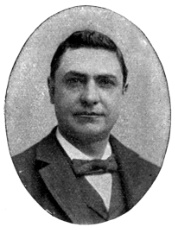
Balltown was the chief pet of T. J. Vandergrift, now head and front of the
Woodland Oil-Company, and he harvested bushels of money from the middle-field.
“Op” Vandergrift is not an apprentice in petroleum. He added to his
reputation in the middle-field leading the opposition to the mystery-dodge.
Napoleon or Grant was not a finer tactician.
His clever plans were executed without a hitch
or a Waterloo. He neither lost his temper nor
wasted his powder. The man who “fights the
devil with fire” is apt to run short of ammunition,
but Vandergrift knew the ropes, kept his
own counsel, was “cool as a cucumber” and
won in an easy canter. He is obliging, social,
manfully independent and a zealous worker in
the Producers’ Association. It is narrated that
he went to New York three years ago to close
a big deal for Ohio territory he had been asked
to sell. He named the price and was told a
sub-boss at Oil City must pass upon the matter.
“Gentlemen,” he said, “I am not going to Oil
City on any such errand. I came prepared to
transfer the property and, if you want it, I shall
be in the city until noon to-morrow to receive the money!” The cash—three-hundred-thousand
dollars—was paid at eleven o’clock. Mr. Vandergrift has
interests in Pennsylvania, Ohio, West-Virginia and Kentucky. He knows a
good horse, a good story, a good lease or a good fellow at sight and a wildcat-well
does not frighten him off the track. His home is at Jamestown and his
office at Pittsburg.
The Anchor Oil-Company’s No. 1, the first well finished near “646,” in
Warren county, flowed two-thousand barrels a day on the ground until tanks
could be provided. It burned when flowing a thousand barrels and for ten
days could not be extinguished. One man wanted to steam it to death, another
to drown it, another to squeeze its life out, another to smother it with straw,
another to dig a hole and cut off the flow, another to roll a big log over it,
another to blow out its brains with dynamite, another to blind it with carbolic
acid, another to throw up earth-works and so on until the pestered owners
wished five-hundred cranks were in the asylum at North Warren. Pipes were
finally attached in such a way as to draw off the oil and the flame died out.
The first funeral at Fagundas was a novelty. A soap-peddler, stopping at
the Rooling House one night, died of delirium-tremens. He was put into a
rough coffin and a small party set off to inter the corpse. Somebody thought
it mean to bury a fellow-creature without some signs of respect. The party
returned to the hotel with the body, a large crowd assembled in the evening,
flowers decorated the casket, services were conducted and at dead of night
two-hundred oil-men followed the friendless stranger to his grave.
This year, at a drilling well near Tiona, the workmen of Contractor Meeley
were surprised to strike oil three feet from the surface. A stream of the real
stuff flowed over the top of the derrick, scattering seven men who happened to
be standing on the floor. Fortunately no fire was about the structure, hence
a thorough soaking with seventy-cent crude was the chief damage to the crew
210and the spectators. Visions of a new sand close to the grass-roots filled the
minds of all beholders. At that rate every man, woman, boy, girl and baby
who could burrow a yard into the earth might have a paying well. The cool-headed
foreman, R. G. Thompson, decided to investigate before ordering
tankage and taking down the tools. He discovered that the derrick had been
set directly above a six-inch pipe-line, which the bit had punctured, thus letting
the oil escape under the heavy pressure of a fifty-ton pump. Word was
sent to the pump-station to shut off the flow, a new joint of pipe was put in and
drilling proceeded to the third sand without further disturbance.
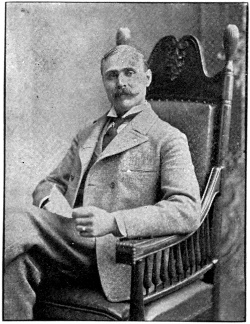
One bright day in the summer of 1873 an active youth, beardless and boyish
in appearance, dropped into Fagundas. With little cash, but no end of energy
and pluck, he soon picked up a lease. Fortune smiled upon him and he
followed the surging tide to the different
pastures as they came into line. He operated
at Bradford, Tiona, Clarendon, in
Clarion county, in Ohio and Indiana.
West Virginia has been his best hold for
some years, and the boys all know W. H.
Staley as a live oilman, who has stayed
with the procession two-dozen years.
Stories of the late E. E. Clapp’s rare
humor and rare goodness of heart might
be recited by the score. He never grew
weary helping the poor and the unfortunate.
Once a zealous Methodist minister,
whose meagre salary was not half-paid,
thought of leaving his mission from
lack of support. Clapp heard the tale
and handed the good man a sealed envelope,
telling him not to open it until he
reached home and gave it to his wife. It
contained a check for five-hundred-dollars.
Like thousands of producers, Clapp was sued by the torpedo-monopoly
for alleged infringement of the Roberts patent. Meeting Col. E. A. L. Roberts
at Titusville while the suit was pending, he was invited to go through the great
building Roberts Brothers were completing. The delegate from President
peered into the corners of the first room as though looking for something.
The Colonel’s curiosity was aroused and he inquired what the visitor meant.
“Oh,” came the quick rejoinder, “I’m only trying to find where the twenty-thousand-dollars
I’ve paid you for torpedoes may be built in these walls!” A
laugh followed and Roberts proposed to square the suit, which was done
forthwith. At a country-fair E. Harvey, the Oil-City music-dealer, played and
sang one of Gerald Massey’s sublime compositions with thrilling effect. Among
the eager listeners was E. E. Clapp, beside whom stood a farmer’s wife. The
woman shouted to Harvey: “Tech it off agin, stranger, but don’t make so
much noise yerself!” Poor Harvey—dead long ago—subsided and Clapp took
up the expression, which he often quoted at the expense of loquacious acquaintances.
Humanity lost a friend when Edwin Emmett Clapp left the
smooth roads of President to walk the golden streets of the New Jerusalem.
Up the winding river proved in not a few instances the straight path to a
handsome fortune, while some found only shoals and quicksands.
211
Better a kink in the hair than a kink in the character.
Good creeds are all right, but good deeds are the stuff that won’t shrink
in the washing.
Domestic infidelity does more harm than unbelieving infidelity and hearsay
knocks heresy galley-west as a mischief-maker.
Stick to the right with iron nerve,
Nor from the path of duty swerve,
Then your reward you will deserve.
The Baptists of Franklin offered Rev. Dr. Lorimer, the eminent Chicago
divine, a residence and eight-thousand dollars a year to become their pastor.
How was that for a church in a town of six-thousand population?
“Pray—pray—pray for—” The good minister bent down to catch the whisper
of the dying operator, whom he had asked whether he should petition the
throne of grace—“pray for five-dollar oil!”
St. Joseph’s church, Oil City, is the finest in the oil-region and has the finest
altar in the state. Father Carroll, for twenty years in charge of the parish, is a
priest whose praises all denominations carol.
You “want to be an angel?”
Well, no need to look solemn;
If you haven’t got what you desire,
Put an ad. in the want column.
The Presbyterian church at Rouseville, torn down years ago, was built, paid
for, furnished handsomely and run nine months before having a settled pastor.
Not a lottery, fair, bazaar or grab-bag scheme was resorted to in order to raise
the funds.
The Salvation Army once scored a sensational hit in the oil-regions. A
lieutenant struck a can of nitro-glycerine with his little tambourine and every
house in the settlement entertained more or less Salvation-Army soldier for a
month after the blow-up.
“Like a sawyer’s work is life—
The present makes the flaw,
And the only field for strife
Is the inch before the saw.”
“What are the wages of sin?” asked the teacher of Ah Sin, the first Chinese
laundryman at Bradford, who was an attentive member of a class in the
Sunday-school. Promptly came the answer: “Sebenty-flive cente a dozen;
no checkee, no washee!”
The first sound of a church-bell at Pithole was heard on Saturday evening,
March 24, 1866, from the Methodist-Episcopal belfry. The first church-bell at
Oil City was hung in a derrick by the side of the Methodist church, on the site
of a grocery opposite the Blizzard office. At first Sunday was not observed.
Flowing-wells flowed and owners of pumping wells pumped as usual. Work
went right along seven days in the week, even by people who believed the
highest type of church was not an engine-house, with a derrick for its tower, a
well for its Bible and a tube spouting oil for its preacher.
“If you have gentle words and looks, my friends,
To spare for me—if you have tears to shed
That I have suffered—keep them not I pray
Until I hear not, see not, being dead.”
Many people regard religion as they do small-pox; they desire to have it
as light as possible and are very careful that it does not mark them. Most people
when they perform an act of charity prefer to have it like the measles—on
the outside where it can be seen. Oil-region folks are not built that way.
212
-RICHBURG, N.Y. 1879- -TARPORT AND TUNA VALLEY-
GENERAL VIEW OF BRADFORD.
ECONOMITE WELLS OPPOSITE TIDIOUTE
A GLIMPSE OF WARREN
-BABYLON-
EXCHANGE HOTEL TIDIOUTE 1863
TIDIOUTE 1876
XI. A BEE-LINE FOR THE NORTH. — THE SEX MEN ADORE.
213
The Great Bradford Region Looms Up—Miles of First-Class Territory—Leading
Operators—John McKeown’s Millions—Many Lively Towns—Over
the New-York Border—All Aboard for Richburg—Crossing
into Canada—Shaw’s Strike—The Polar Region Plays a Strong Hand
in the Game of Tapping Nature’s Laboratory.
“Like youthful steers unyoked, they take their courses north.”—Shakespeare.
“Be sure you’re right, then go ahead.”—Davy Crockett.
“Jes foller de no’th star an’ yu’ll come out right, shuah.”—Joel Chandler Harris.
“Better a year of Bradford than a cycle of Cathay.”—L. M. Morton.
“He did it with all his heart, and prospered.”—II Chronicles xxxi: 21.
“The Temple of Fame has, you see, many departments.”—Walter Besant.
“Bid the devil take the hindmost.”—Butler.
“When Greeks joined Greeks then was the tug of war.”—Lee.
“Nature must give way to art.”—Dean Swift.
“The wise and active conquer by daring to attempt.”—Rowe.
“God helps them that help themselves.”—Franklin.
“The north breathes steadily beneath the stars.”—Shelley.
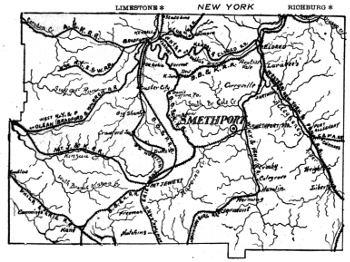
Oil Creek and its
varied branches, Pithole
and its suburbs,
Forest and Warren
had figured creditably in
oil-developments, but the
Mastodon of the North was
yet to come. “The goal
of yesterday shall be the
starting point of to-morrow”
is especially true of
oil-operations. At times
men have supposed the
limits of juicy territory had
been reached, only to be
startled by the unexpected
opening of a larger, grander
field than any that preceded it. Guessing the weather a month ahead is
child’s play in comparison with guessing where oil may be found in paying
quantity. Geology is liable to shoot wide of the mark, so that the drill is the
one indisputable test, from which there is no appeal for an injunction or a
reversal of the verdict. Years of waitingwaiting sharpened the appetite of the polar
bear for the feast to be spread in McKean county and across the New-York
border. Tempting tidbits prepared the hungry animal to digest the rich courses
that were to follow in close succession, until the whole world was cloyed and
gorged, and surfeited with petroleum. It could not hold another mouthful, and
214the surplus had to be stored in huge tanks ready for the demand certain to
come some day and empty the vast receptacles of their last drop.
“Still linger, in our northern clime,
Some remnants of the good old time.”
The United States Land-Company, holding a quarter-million acres in
McKean and adjoining counties, in 1837 sent Col. Levitt C. Little from New
Hampshire to look after its interests. He located on Tuna Creek, eight miles
from the southern border of New-York state. The Websters arrived in 1838,
journeying by canoe from Olean. Other families settled in the valley, founding
the hamlet of Littleton, which in 1858 adopted the name of Bradford and became
a borough in 1872, with Peter T. Kennedy as burgess. The vast forests were
divided into huge blocks, such as the Bingham, Borden, Clark & Babcock,
Kingsbury and Quintuple tracts. Lumber was rafted to distant points and
thousands of hardy woodmen “shantied” in rough huts each winter. They
beguiled the long evenings singing coarse songs, playing cards, imbibing the
vintage of Kentucky or New England from a black jug and telling stories so
bald the mules drooped their ears to hide their blushes. But they were open-hearted,
sternly honest, sticklers for fair-play, hard-working and admirable
forerunners of the approaching civilization. To the sturdy blows of the rugged
chopper and raftsman all classes are indebted for fuel, shelter and innumerable
comforts. Like the rafts they steered to Pittsburg and the wild beasts they
hunted, most of these brave fellows have drifted away never to return.
Six-hundred inhabitants dwelt peacefully at Bradford ten years after the
Pithole bubble had been blown and pricked. The locomotive and track of a
branch of the Erie Railroad had supplanted A. W. Newell’s rude engine, which
transported small loads to and from Carrollton. An ancient coach, weather-beaten
and worm-eaten, sufficed for the scanty passenger-traffic and the quiet
borough bade fair to stay in the old rut indefinitely. The collection of frames
labeled Tarport—a suit of tar and feathers presented to a frisky denizen begot
the name—snuggled on a muddy road a mile northward. Seven miles farther,
at Limestone, the “spirits” directed Job Moses to buy ten-thousand acres of
land. He bored a half-dozen shallow wells in 1864, getting some oil and gas.
Jonathan Watson skirmished two miles east of
Limestone, finding slight tinges of greasiness.
A mile south-west of Moses the Crosby well was
dry. Another mile south the Olmsted well, on
the Crooks farm, struck a vein of oil at nine-hundred
feet and flowed twenty barrels on July
fourteenth, 1875. The sand was poor and dry-holes
south and west augured ill for the territory.
Frederick Crocker drilled a duster early
in 1875 on the Kingsbury lands, east side of Tuna
Creek. He had grit and experience and leased
an angular piece of ground formed by a bend of
the creek for his second venture. It was part of
the Watkins farm, a mile above Tarport. A
half-mile south-west, on the Hinchey farm, the
Foster Oil-Company had sunk a twenty-barrel
well in 1872, which somehow passed unnoticed.
On September twenty-sixth, 1875, from a shale and slate at nine-hundred feet,
the Crocker well flowed one-hundred-and-seventy barrels. This opened the
215gay ball which was to transmute the Tuna Valley from its arcadian simplicity to
the intense bustle of the grandest petroleum-region the world has ever known.
The valley soon echoed and re-echoed the music of the tool-dresser and rig-builder
and the click of the drill as well as the vigorous profanity of the
imported teamster. Frederick Crocker, who drilled on Oil Creek in 1860 and
devised the valve which kept the Empire well alive, had won another victory
and the great Bradford field was born. He lived at Titusville fifteen years,
erected the home afterwards occupied by Dr. W. B. Roberts, sold his Bradford
property, operated in the Washington district and died at Idlewild on February
twenty-second, 1895. Mr. Crocker possessed real genius, decision and the
qualities which “from the nettle danger pluck the flower success.” Active to
the close of his long and useful eighty-three years, he met death calmly and
was laid to rest in the cemetery at Titusville.
Scarcely had the Crocker well tanked its initial spurt ere “the fun grew
fast and furious.” Rigs multiplied like rabbits in Australia. Train-loads of
lively delegates from every nook and cranny of Oildom crowded the streets,
overran the hotels and taxed the commissary of the village to the utmost.
Town-lots sold at New-York prices and buildings spread into the fields. At
B. C. Mitchell’s Bradford House, headquarters of the oil-fraternity, operators
and land-holders met and drillers “off tour” solaced their craving for “the
good things of this life” playing billiards and practising at the hotel-bar. Hundreds
of big contracts were closed in the second-story room where Lewis
Emery, “Judge” Johnson, Dr. Book and the advance-guard of the invading
hosts assembled. Main street blazed at night with the light of dram-shops and
the gaieties incidental to a full-fledged frontier-town. Noisy bands appealed
to lovers of varieties to patronize barnlike-theatres, strains of syren music
floated from beer-gardens, dance-halls of dubious complexion were thronged
and gambling-dens ran unmolested. The free-and-easy air of the community,
too intent chasing oil and cash to bother about morality, captivated the ordinary
stranger and gained “Bad Bradford” notoriety as a combination of Pithole
and Petroleum Centre, with a dash of Sodom and Pandemonium, condensed
into a single package. In February of 1879 a city-charter was granted
and James Broder was elected mayor. Radical reforms were not instituted
with undue haste, to jar the sensitive feelings of the incongruous masses gathered
from far and near. Their accommodating nature at last adapted itself
to a new state of affairs and accepted gracefully the restrictions imposed for the
general welfare. Checked temporarily by the Bullion spasm in 1876-7, the
influx redoubled as the lower country waned. Fires merely consumed frame-structures
to hasten the advent of costly brick-blocks. Ten churches, schools,
five banks, stores, hotels, three newspapers, street-cars, miles of residences and
fifteen-thousand of the liveliest people on earth attested the permanency of
Bradford’s boom. Narrow-gauge railroads circled the hills, traversed spider-web
trestles and brought tribute to the city from the outlying districts. The
area of oil-territory seemed interminable. It reached in every direction, until
from sixteen-thousand mouths seventy-five thousand acres poured their liquid
treasure. The daily production waltzed to one-hundred-thousand barrels!
Iron-tanks were built by the thousand to store the surplus crude. Two, three or
four-thousand-barrel gushers were lacking, but wells that yielded twenty-five to
two-hundred littered the slopes and valleys. The field was a marvel, a phenomenon,
a revelation. Bradford passed the mushroom-stage safely and was
not snuffed out when developments receded and the floaters wandered south
216in quest of fresh excitement. To-day it is a thriving railroad and manufacturing
centre, the home of ten-thousand intelligent, independent, go-ahead citizens,
proud of its past, pleased with its present and confident of its future.
To trace operations minutely would be an endless task. Crocker sold a
half-interest in his well and drilled on an adjacent farm. Gillespie, Buchanan
& Kelly came from Fagundas in 1874 and sank the two Fagundas wells—twenty
and twenty-five barrels—a half-mile west of Crocker, in the fall and winter.
Butts No. 1, a short distance north, actually flowed sixty barrels in November
of 1874. Jackson & Walker’s No. 1, on the Kennedy farm, north edge of
town, on July seventeenth, 1875, flowed twenty barrels at eleven-hundred feet.
The dark, pebbly sand, the best tapped in McKean up to that date, encouraged
the belief of better strata down the Tuna. On December first, two months
after Crocker’s strike, the yield of the Bradford district was two-hundred-and-ten
barrels. The Crocker was doing fifty, the Olmsted twenty-five, the Butts
fifteen, the Jackson & Walker twenty and all others from one to six apiece.
The oil, dark-colored and forty-five gravity, was loaded on Erie cars direct
from the wells, most of which were beside the tracks. The Union Company
finished the first pipe-line and pumped oil to Olean the last week of November.
Prentice, Barbour & Co. were laying a line through the district and 1875 closed
with everything ripe for the millenium these glimmerings foreshadowed.
Lewis Emery, richly dowered with Oil-Creek experience and the get-up-and-get
quality that forges to the front, was an early arrival at Bradford. He
secured the Quintuple tract of five-thousand acres and drilled a test well on the
Tibbets farm, three miles south of town. Its success confirmed his judgment
of the territory and began the wonderful Quintuple development. The Quintuple
rained staying wells on the lucky, plucky graduate from Pioneer, quickly
placing him in the millionaire-class. He built blocks and refineries, opened an
immense hardware-store, constructed pipe-lines, established a daily-paper,
served two terms in the Senate and opposed the Standard “tooth and toe-nail.”
Thoroughly earnest, he champions a cause with unflinching tenacity. He owns
a big ranche in Dakota, big lumber-tracts and saw-mills in Kentucky, a big
oil-production and a big share in the United-States Pipe-Line. He has traveled
over Europe, inspected the Russian oil-fields and gathered in his private
museum the rarest collection of curiosities and objects of interests in the state.
Senator Emery is a staunch friend, a fighter who “doesn’t know when he is
whipped,” liberal, progressive, fluent in conversation and firm in his convictions.
“A prince can mak’ a belted knight,
A marquis, duke and a’ that;
But an honest man’s aboon his might—
Guid faith, he maunna fa’ that.”
Hon. David Kirk sticks faithfully to Emery in his hard-sledding to array
petroleumites against the Standard. He manages the McCalmont Oil-Company,
which operated briskly in the Forest pools, at Bradford and Richburg.
Mr. Kirk is a rattling speaker, positive in his sentiments and frank in expressing
his views. He extols Pennsylvania petroleum, backs the outside pipe-lines
and is an influential leader of the Producers’ Association.
Dr. W. P. Book, who started at Plumer, ran big hotels at Parker and Millerstown
and punched a hole in the Butler field occasionally, leased nine-hundred
acres below Bradford in the summer of 1875. He bored two-hundred
wells, sold the whole bundle to Captain J. T. Jones and went to Washington
Territory with eight-hundred-thousand dollars to engage in lumbering and
banking. Captain Jones landed on Oil Creek after the war, in which he was a
217brave soldier, and drilled thirteen dry-holes at Rouseville! Repulses of this
stripe would wear out most men, but the Captain had enlisted for the campaign
and proposed to stand by his guns to the last. His fourteenth attempt—a hundred-barreler
on the Shaw farm—recouped former losses and inaugurated
thirty years of remarkable prosperity. Fortune smiled upon him in the Clarion
field. Pipe-lines, oil-wells, dealings in the exchanges, whatever he touched
turned into gold. Not handicapped by timid partners, he paddled his own
canoe and became the largest individual operator in the northern region.
Acquiring tracts that proved to be the heart of the Sistersville field, he is credited
with rejecting an offer last year of five-million dollars for his West-Virginia
and Pennsylvania properties!
From thirteen wells, good only for post-holes
if they could be dug up and retailed
by the foot, to five-millions in
cash was a pretty stretch onward and
upward. He preferred staying in the
harness to the obscurity of a mere coupon-clipper.
He lives at Buffalo, controls
his business, enjoys his money, remembers
his legions of old friends and
does not put on airs because
of marching very
near the head of the
oleaginous procession.
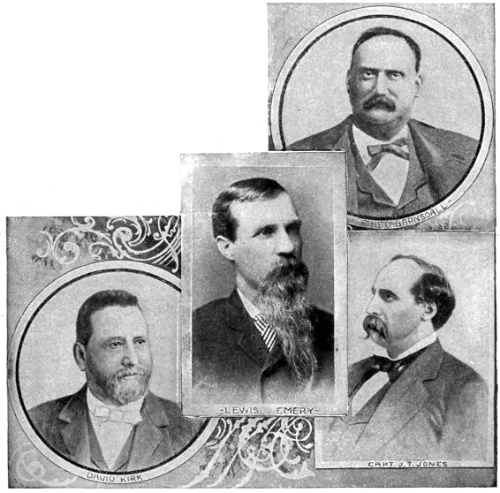
-THEO BARNSDALL-
-LEWIS EMERY-
DAVID KIRK CAPT. J. T. JONES
Theodore Barnsdall has never lagged behind since he entered the arena in
1860. He operated on Oil Creek and has been a factor in every important
district. Marcus Hulings, reasoning that a paying belt intersected it diagonally,
secured the Clark & Babcock tract of six-thousand acres on Foster Brook,
north-east of Bradford. Hundreds of fine wells verified his theory and added a
half-million to his bank-account. Sitting beside me on a train one day in 1878,
Mr. Hulings refused three-hundred-thousand dollars, offered by Marcus Brownson,
218for his interest in the property. He projected the narrow-gauge railroad
from Bradford to Olean and a bevy of oil-towns—Gillmor, Derrick City, Red
Rock and Bell’s Camp—budded and bloomed along the route. Frederic
Prentice built pipe-lines and tanks, leased a half-township, started thirty wells
in a week on the Melvin farm and organized the Producers’ Consolidated Land-and-Petroleum-Company,
big in name, in quality and in capital. The American
Oil-Company’s big operations wafted the late W. A. Pullman a million and the
presidency of the Seaboard Bank in New York, filled Joseph Seep’s stocking
and saddled a hundred-thousand dollars on James Amm. The Hazlewood Oil-Company,
guided by Bateman Goe’s prudent hand, drilled five-hundred wells
and counted its gains in columns of six figures. Robert Leckey, a first-class
man from head to foot, was a royal winner. Frederick Boden—true-blue, clear-grit,
sixteen ounces to the pound—forsook Corry to extract a stream of wealth
from the Borden lands, six miles east of Tarport. Prompt, square and manly,
he merited the good luck that rewarded him in Pennsylvania and followed him
to Ohio, where for four years he has been operating extensively. Boden’s wells
boosted the territory east and north. From its junction with the Tuna at Tarport—Kendall
is the post-office—to its source off in the hills, Kendall Creek
steamed and smoked. Tarport expanded to the proportions of a borough.
Two narrow-gaugenarrow-gauge roads linked Bradford and Eldred, Sawyer City, Rew City,
Coleville, Rixford and Duke Centre—oil-towns in all the term implies—keeping
the rails from rusting. Other narrow-gaugesnarrow-gauges diverged to Warren, Mt. Jewett
and Smethport. The Erie extended its branch south and the Rochester &
Pittsburg crossed the Kinzua gorge over the highest railway viaduct—three-hundred
feet—in this nation of tall projects and tall achievements.
Twenty-nine years ago a stout-hearted, strong-limbed, wiry youth, fresh
from the Emerald Isle, asked a man at Petroleum Centre for a job. Given a
pick and shovel, he graded a tank-bottom deftly and swiftly. He dug, pulled
tubing, drove team and earned money doing all sorts of chores. Reared in
poverty, he knew the value of a dollar and saved his pennies. To him Oildom,
with its “oil-princes”—George K. Anderson, Jonathan Watson, Dr. M. C.
Egbert, David Yanney, Sam Woods, Joel Sherman and the Phillips Brothers
were in their glory—was a golden dream. He learned to “run engine,” dress
tools, twist the temper-screw and handle drilling and pumping-wells expertly.
219Although neither a prohibitionist nor a prude, he never permitted mountain-dew,
giddy divinities in petticoats or the prevailing follies to get the better of
him in his inordinate desire for riches. Drop by drop for three years his frugal
store increased and he migrated to Parker early in the seventies. Such was
the young man who “struck his gait” in the northern end of Armstrong
county, who was to outshine the men he may have envied on Oil Creek, to
scoop the biggest prize in the petroleum-lottery and weave a halo of glittering
romance around the name of John McKeown.
Working an interest in an oil-well, he hit a paying streak and joined the
pioneers who had sinister designs on Butler county, proverbial for “buckwheat-batter”
and “soap-mines.” At Lawrenceburg, a suburb of Parker, he boarded
with a comely widow, the mother of two bouncing kids and owner of a little
cash. He married the landlady and five boys blessed the union of loyal hearts.
His wife’s money aided him to develop the Widow Nolan farm, east of the coal-bank
near Millerstown. Regardless of Weller’s advice to “beware of vidders,”
he wedded one and from another obtained the lease of a farm on which
his first well produced one-hundred-and-fifty barrels a day for a year, a fortune
in itself. This was the beginning of McKeown’s giant strides. In partnership
with William Morrisey, a stalwart fellow-countryman—dead for years—he
drilled at Greece City, Modoc and on the Cross-Belt. He held interests with
Parker & Thompson and James Goldsboro, played a lone hand at Martinsburg,
invested in the Karns Pipe-Line and avoided speculation. He agreed with
Thomas Hayes, of Fairview, in 1876, to operate in the Bradford field. Hayes
went ahead to grab a few tracts at Rixford, McKeown remaining to dispose of
his Butler properties. He sold every well and every inch of land at top figures.
No slave ever worked harder or longer hours than he had done to gain a firm
footing. No task was too difficult, no fatigue too severe, no undertaking too
hazardous to be met and overcome. Avarice steeled his heart and hardened
his muscles. Wrapped in a rubber-coat and wearing the slouch-hat everybody
recognized, he would ride his powerful bay-horse knee-deep in mud or snow at
all hours of the night. It was his ambition to be the leading oil-operator of the
world. While putting money into Baltimore blocks, bank-stocks and western
ranches, he always retained enough to gobble a slice of seductive oil-territory.
Plunging into the northern field “horse, foot and dragoons,” he bought out
Hayes, who returned to Fairview with a snug nest-egg, and captured a huge
chunk of the Bingham lands. Robert Simpson, agent of the Bingham estate,
fancied the bold, resolute son of Erin and let him pick what he wished from the
fifty-thousand acres under his care. McKeown selected many juicy tracts, on
which he drilled up a large production, sold portions at excessive prices and
cleared at least a million dollars in two or three years! As Bradford declined
he turned his gaze towards the Washington district, bought a thousand acres of
land and at the height of the excitement had ten-thousand barrels of oil a day!
His object had been attained and John McKeown was the largest oil-producer
in the universe.
Down in Washington, as in Butler and McKean, he attended personally to
his wells, hired the workmen, negotiated for all materials and managed the
smallest details. He removed his family to the county-seat and lived in a plain,
matter-of-fact way. It had been his intention to erect a forty-thousand-dollar
house and reside at Jamestown, N. Y. Ground was purchased and the foundation
laid. The local papers spoke of the acquisition he would be to the town,
one suggesting to haul him into politics and municipal improvements, and
220McKeown resented the notoriety by pulling up stakes and locating at Washington.
It often amused me to hear him denounce the papers for calling him
rich. He was more at home in a derrick than in a drawing-room. The din of
the tools boring for petroleum was sweeter to his ears than “Lohengrin” or
“The Blue Danube.” Watching oil streaming from his wells delighted his eye
more than a Corot or a Meissonier in a gilt frame. For claw-hammer coats,
tooth-pick shoes and vulgar show he had no earthly use. Democratic in his
habits and speech, he heard the poor man as patiently as the banker or the
schemer with a “soft snap.” Clothes counted for nothing in his judgment of
people. He enjoyed the hunt for riches more than the possession. In no sense
a liberal man, sometimes he thawed out to friends who got on the sunny side
of his frosty nature and wrote checks for church or charity. Hard work was
his diversion, his chief happiness. His wells and lands and income grew to
dimensions it would have strained the nerves and brains of a half-dozen men
to supervise. He had mortgaged his robust constitution by constant exposure
and the foreclosure could not always be postponed. Repeated warnings were
unheeded and the strong man broke down just when he most needed the
vitality his lavish drafts exhausted. Eminent physicians hurried from Pittsburg
and Philadelphia to his relief, but the paper had gone to protest and on
Sunday forenoon, February eighth, 1891, at the age of fifty-three, John McKeown
passed into eternity. Father Hendrich administered the last rites to
the dying man. He sank into a comatose state and his death was painless.
The remains were interred in the Catholic cemetery at Lawrenceville, in presence
of a great multitude that assembled to witness the curtain fall on the most
eventful life in the oil-regions.
One touching little tale about McKeown, which might adorn the pages of a
Sunday-school library, has drifted out of Bradford. Landing on the platform of
the dilapidated Erie-Railroad station, upon his first visit to the metropolis of
mud and oil, John McKeown, wearing his greasiest suit, asked a group of boys to
direct him to the Parker House. “I’ll tell you for a quarter,” said one. “I’ll
show you where it is for ten cents,” chimed in another. “Say, I’ll do it for five
cents,” remarked a third. “Mister,” said bright-eyed Jimmie Duffy, “I will
show you the place for nothing.” So the stranger went with Jimmie. He took
the lad to a clothing-store, arrayed him sumptuously in the best hand-me-downs
that Bradford could afford and sent the boy away with a five-dollar gold-piece.
Jimmie bought a shoeblack-outfit and began to “shine ’em up” at ten cents a
clip. His good work, cheerfulness and ready wit brought him many a quarter.
Soon he hired a number of assistants, built a “parlor,” controlled every stand in
town and at nineteen went west with seven-thousand dollars in his pockets.
Jimmie Duffie’s luck set all the Bradford urchins to lying in wait for strangers in
greasy garments lined with gold-pieces.
Estimates of McKeown’s wealth ranged from three-millions to ten. A
guess midway would probably be near the mark. When asked by Dun or
Bradstreet how he should be rated, his invariable answer was: “I pay cash for
all I get.” O. D. Bleakley, of Franklin, was appointed guardian of the sons
and Hon. J. W. Lee is Mrs. McKeown’s legal adviser. The oldest boy has
married, has received his share of the estate and is spending it freely. A
younger son was drowned in a pond at the school to which his mother sent the
bright lad. Once McKeown, desiring to have Dr. Agnew’s candid opinion at
the lowest cost, put on his poorest garb and secured a rigid examination upon
his promise to pay the great Philadelphia practitioner ten dollars “as soon as
221he could earn the money.” He thanked the doctor, returned in a business-suit,
told of the ruse he had adopted and cemented the acquaintance with a
check for one-hundred dollars. In Baltimore he posed as a hayseed at a
forced sale of property the mortgagors calculated to bid in at a fraction of its
value. He deposited a million dollars in a city-bank and appeared at the sale
in the old suit and slouched hat he had packed in his satchel for the occasion.
Stylish bidders at first ignored the seedy fellow whose winks to the auctioneer
elevated the price ten-thousand dollars a wink. One of them hinted to the
stranger that he might be bidding beyond his limit. “I guess not,” replied
John, “I pay cash for what I get.” The property was knocked down to him
for about six-hundred-thousand dollars. He requested the attorney to telephone
to the bank whether his check would be
honored. “Good for a million!” was the response.
Now his triumphs and his spoils have
shrunk to the little measure of the grave!
“Through the weary night on his couch he lay
With the life-tide ebbing fast away.
When the tide goes out from the sea-girt lands
It bears strange freight from the gleaming sands:
The white-winged ships, which long may wait
For the foaming wave and the wind that’s late;
The treasures cast on a rock-bound shore
From stranded ships that shall sail no more,
And hopes that follow the shining seas—
Oh! the ocean wide shall win all these.
But saddest of all that drift to the sea
Is the human soul to eternity,
Floating away from a silent shore,
Like a fated ship, to return no more.”
The Bradford Oil-Company—J. T. Jones, Wesley Chambers, L. G. Peck
and L. F. Freeman were the principal stockholders—owned a good share of
the land on which Greater Bradford was built and ten-thousand acres in the
northern field. The company drilled three-hundred wells in McKean and Allegany,
realized fifty-thousand dollars from city-lots and its stock rose to two-thousand
dollars a share. In 1881 Captain Jones bought out his copartners.
The Enterprise Transit-Company, managed by John Brown, achieved reputation
and currency. The McCalmont Oil-Company—organized during the Bullion
phantom by David Kirk, I. E. Dean, Tack Brothers and F. A. Dilworth—humped
itself in the middle and northern fields, sometimes paying three-hundred-thousand
dollars a year in dividends. Kirk & Dilworth founded Great
Belt City, in Butler county, cutting up a farm and selling hundreds of lots.
“Farmer” Dean, manager of the company, operated in the lower fields, lived
two years at Richburg, toured the country to preach the gospel according to
the Greenbackers and won laurels on the rostrum. Frank Tack—frank and
trustworthy—was vice-president of the New-York Oil-Exchange and his brother
is dead. The Emery Oil-Company, the Quintuple, Mitchell & Jones, Whitney
& Wheeler, Melvin and Fuller, George H. Vanvleck, George V. Forman, John
L. McKinney & Co., Isaac Willets and Peter T. Kennedy were shining lights in
the McKean-Allegany firmament. Kennedy owned the saw-mill when Bradford
was a lumber camp and his estate—he died at fifty—inventoried eleven-hundred-thousand
dollars. Hundreds of small operators left Bradford happy
as men should be with as much money as their wives could spend; other hundreds
dumped their well-earnings into the insatiable maw of speculation.
222
The Bradford field was young when Col. John J. Carter, of Titusville, paid
sixty-thousand dollars for the Whipple farm, on Kendall Creek. Friends
shook their heads over the purchase, up to that time the largest by a private
individual in the district, but the farm produced fifteen-hundred-thousand barrels
of oil and demonstrated the wisdom of the deed. Other properties were
developed by this indefatigable worker, until his production was among the
largest in the northern region and he could have sold at a price to number him
with the millionaires. Unanimously chosen president
of the Bradford, Bordell & Kinzua Railroad-Company,
he completed the line in ninety days from
the issue of the charter and in eighteen months returned
the stockholders eighty per cent. in dividends.
President Carter’s ability in handling the
property saved it to its owners, while every other
narrow-gauge in the system fell into the clutches
of receivers or sold as junk to meet court-charges
for costly litigation.
All “Old-Timers” remember the “Gentlemen’s
Furnishing-House of John J. Carter,” the
finest establishment of the kind west of New York.
Young Carter, with a splendid military record, located
at Titusville in the summer of 1865, immediately
after being mustered out of the service, and engaged
in mercantile pursuits ten years. Like other
progressive men, he took interests in the wild-cat
ventures that made Pithole, Shamburg, Petroleum Centre and Pleasantville
famous. From large holdings in Venango, Clarion and Forest he reaped a
rich harvest. One tract of four-thousand acres in Forest, purchased in 1886
and two-thirds of it yet undrilled, he expects to hand down to his children as
a proof of their father’s business-foresight. He scanned the petroleum-horizon
around Pittsburg carefully and retained his investments in the middle and
upper fields. Taylorstown and McDonald, with their rivers of oil, burst forth
with the fury of a flood and disappeared. Sistersville, in West Virginia, had
given the trade a taste of its hidden treasures from a few scattered wells.
Much salt-water, little oil and deep drilling discouraged operators. How to
produce oil at a profit, with such quantities of water to be pumped out, was the
problem. Col. Carter visited the scene, comprehended the situation, devised
his plans and bought huge blocks of the choicest territory before the oil-trade
thought Sistersville worth noticing. This bold stroke added to the value of
every well and lease in West Virginia, inspired the faltering with courage and
rewarded him magnificently. Advancing prices rendered the princely yield of
his scores of wells immensely profitable. Purchases based on fifty-cent oil—the
trade had small faith in the outcome—he sold on the basis of dollar-fifty oil.
Col. Carter is in the prime of vigorous manhood, ready to explore new fields
and surmount new obstacles. He occupies a beautiful home, has a superb
library, is a thorough scholar and a convincing speaker. His recent argument
before the Ohio Legislature, in opposition to the proposed iniquitous tax on
crude-petroleum, was a masterpiece of effective, pungent, unanswerable logic.
None who admire a brave, manly, generous character will say that his success
is undeserved.undeserved.
Five townships six miles square—Independence, Willing, Alma, Bolivar
223and Genesee, with Andover, Wellsville, Scio, Wirt and Clarksville north—form
the southern border of Allegany county, New York. The first well bored
for oil in the county—the Honeyoe—was the Wellsville & Alma Oil Company’s
duster in Independence township, drilled eighteen-hundred feet in September,
1877. Gas at five-hundred feet caught fire and burned the rig, and signs of oil
were found at one-thousand feet. The second was O. P. Taylor’s Pikeville
well, Alma township, finished in November, 1878. Taylor, the father of the
Allegany field, decided to try north of Alma, and in July of 1879 completed
the Triangle No. 1, in Scio township, the first in Allegany to produce oil. It
originated the Wellsville excitement and first
diverted public attention from Bradford. Triangle
No. 2, drilled early in 1880, pumped twelve
barrels a day. S. S. Longabaugh, of Duke Centre,
sank a dry-hole, the second well in Scio,
three miles north-east of Triangle No. 1. Operations
followed rapidly. Richburg No. 1, Wirt
township, in which Taylor enlisted three associates,
responded at a sixty barrel gait in May of
1881 to a huge charge of glycerine. Samuel
Boyle, who had struck the first big well at Sawyer
City, completed the second well at Richburg in
June, manipulated it as a “mystery” and torpedoed
it on July thirteenth. It flowed three-hundred
barrels of blue-black oil, forty-two gravity,
from fifty feet of porous sand and slate. Taylor’s
exertions and perseverance showed indomitable
will, bravery and pluck. He was a Virginian by birth, a Confederate
soldier and a cigar-manufacturer at Wellsville. It is related that while drilling
his first Triangle well the tools needed repairs and he had not money to send
them to Bradford. His Wellsville acquaintances seemed amazingly “short”
when he attempted a loan. His wife had sold her watch to procure food and
she gave him the cash. The tools were fixed, the well was completed and it
started Taylor on the road to the fortune he and his helpmeet richly earned.
The pioneer died in the fall of 1883. The record of his adventures, trials and
tribulations in opening a new oil-district would fill a volume. He was prepared
for the message: “Child of Earth, thy labors and sorrows are done.”
Eighteen lively months sufficed to define the Allegany field, which was
confined to seven-thousand acres. Twenty-nine-hundred wells were bored
and the maximum yield of the district was nineteen-thousand barrels. Richburg
and Bolivar, both old villages, quadrupled their size in three months.
Narrow-gauge railroads soon connected the new field with Olean, Friendship
and Bradford. The territory was shallow in comparison with parts of McKean,
where eighteen-hundred feet was not an uncommon depth for wells. Timber
and water were abundant, good roads presented a pleasing contrast to the
unfathomable mud of Clarion and Butler and the country was decidedly attractive.
Efforts to find an outlet to the belt failed in every instance. The climax
had been reached and a gradual decline set in. Allegany was the northern
limit of remunerative developments in the United States, which the next turn
of the wheel once more diverted southward. The McCalmont Oil-Company
and Phillips Brothers were leaders in the Richburg field. The country had
been settled by Seventh-day Baptists, whose “Sunday was on Saturday.”
224Not to offend these devout people by discriminating in favor of Sunday, operators
“whipped the devil around the stump” by drilling and pumping their
wells seven days a week!
The Chipmunk pool, a dozen miles north of Bradford, was trotted out in
1895. For a season its shallow wells promised a glut of real oil, the daily production
rising to twenty-six-hundred barrels. The area of creamy territory was
quickly defined. Captain E. H. Barnum, long an enterprising Bradford operator,
drilled a test-well near Arkwright, Chautauqua County, N.Y., in 1897. He
put twenty-five-hundred feet of six-inch and three-hundred feet of eight-inch
casing in the hole, which proved barren of oil or gas and was abandoned when
three-thousand feet deep. The Watsonville pool, south-west of Bradford,
lively drilling brought to the nine-thousand-barrel notch for a time this season.
The town of Ceres, which celebrated its one-hundredth birthday this year,
has had some peculiar experiences. Located on the state-line between New
York and Pennsylvania, the boundary has figured in many curious ways since
the pioneers erected the first log-cabin in 1797. The first squabble related to
the post-office, which was established on the south-side of the line, in Pennsylvania,
with a basket to hold the mail. By some hocus-pocus the department
permitted the office to be removed to the north-side, in New York, fifty or more
years ago. Every President from Andrew Jackson to William McKinley has
been importuned to change it back again, but the population is so nearly
divided that the question bids fair, like Tennyson’s brook, “to go on forever.”
Ceres was strictly in it as a Gretna Green. The little Methodist church, the
only one in the village, is built against the line, the porch extending into New
York. The parsonage is in the same fix. To avoid securing a license, Pennsylvania
couples had merely to step out of the parsonage to the porch and be
married in New York. Eloping couples have had some lively rides to Ceres.
For many years Justice Peabody was very popular at knot-tying. He was
aroused one midnight by a man who wanted a warrant for the arrest of a pair
of elopers. The judge was friendly to the young fellow in love. As he was
making out the papers a rap at the door interrupted him. The caller was the
young man himself. The judge stepped outside behind a stump-fence, across
the state-line, married the eloping couple and then returned to the house to
finish making out the warrant. A hotel built by a bright genius close to the
line had an addition for a barroom. The barroom extended over the line and
its sole entrance was from the Pennsylvania side. The bartender, by stepping
a foot either way from the center of the bar, could pass from one state to another.
He was arrested for illegal selling many times, but in each instance he
would swear that the whisky he sold was disposed of in the other state. One
day a Pennsylvania prisoner slipped his handcuffs when the sheriff was not
looking, jumped out of the dining-room into New York, made faces at the minion
of the law and defied arrest. For fifty years state-pride kept the people apart
on the school-question. They had a small district-school on each side of the
line in preference to a graded school, because the latter would demand a surrender
of state-pride. Four years ago the differences were patched up and a
graded-school was provided. The engine of the steam saw-mill is in Pennsylvania
and the boiler in New York. The logs enter the mill in Pennsylvania and
are sawed in New York, the boards are edged in Pennsylvania and the lumber
is piled up crosswise on the state-line. At the grist-mill the grain entered on
the New-York side, was ground in Pennsylvania and carried back into New
York by the bolting-machinery. When the oil-boom was on at Bolivar and
225Richburg two narrow-gauge railroads passed through Ceres. One station was
in New York and the other in Pennsylvania, with tracks parallel to Bolivar.
The schedules of the passenger-trains were alike and some of the fastest rides
ever taken on a narrow-gaugenarrow-gauge road resulted. Oil-developments did not hit
Ceres hard, wells around the tidy village failing to tap the greasy artery.
Possibly Nature thought the folks had enough fun over the boundary complications
to compensate for the lack of petroleum.
Canada has oil-fields of considerable importance. The largest and oldest
is in Enniskillen township, Lambton county, a dozen miles from Port Sarnia,
at the foot of Lake Huron. Black Creek, a small tributary of the Detroit
river, flows through this township and for many years its waters had been
coated with a greasy liquid the Indians sold as a specific for countless diseases.
The precious commodity was of a brown color, exceedingly odorous, unpleasant
to the taste and burned with great intensity. In 1860 several wells were
started, the projectors believing the floating oil indicated valuable deposits
within easy reach of the surface. James Williams, who had previously garnered
the stuff in pits, finished the first well that yielded oil in paying quantity.
Others followed in close succession, but months passed without the sensation
of a genuine spouter. Late in the summer of the same year that operations
commenced, John Shaw, a poor laborer, managed to get a desirable lease on
the bank of the creek. He built a cheap rig, provided a spring-pole and
“kicked down” a well, toiling all alone at his weary task until money and
credit and courage were exhausted. Ragged, hungry and barefooted, one
forenoon he was refused boots and provisions by the village-merchant, nor
would the blacksmith sharpen his drills without cash down. Reduced to the
verge of despair, he went back to his derrick with a heavy heart, ate a hard
crust for dinner and decided to leave for the United States next morning if no
signs of oil were discovered that afternoon. He let down the tools and resumed
his painful task. Twenty minutes later a rush of gas drove the tools
high in the air, followed the next instant by a column of oil that rose a hundred
feet! The roar could be heard a mile and the startled populace rushed from
the neighboring hamlet to see the unexpected marvel. Canada boasted its
first flowing-well and the tidings flew like wild-fire. Before dark hundreds of
excited spectators visited the spot. For days the oil gushed unchecked, filling
a natural basin an acre in extent, then emptying into the creek and discoloring
the waters as far down as Lake St. Clair. None knew how to regulate its
output and bring the flow under control. Thus it remained a week, when a
delegate from Pennsylvania showed the owner how to put in a seed-bag and
save the product. The first attempt succeeded and thenceforth the oil was
cared for properly. Opinions differ as to the actual production of this novel
strike, although the best judges placed it at five-thousand barrels a day for
two or three weeks! The stream flowed incessantly the full size of the hole, a
strong pressure of gas forcing it out with wonderful speed. The well produced
generously four months, when it “stopped for keeps.” Persons who
visited the well at its best will recall the surroundings. A pond of oil large
enough for a respectable regatta lay between it and Black Creek, whose greasy
banks for miles bore traces of the lavish inundation of crude. The locality
was at once interesting and high-flavored and a conspicuous feature was Shaw
himself. Radiant in a fresh suit of store-clothes, he moved about with the
complacency incident to a green ruralist who has “struck ile.”

One of the persons earliest on the ground after the well began to flow was
226the storekeeper who had refused the proprietor a pair of boots that morning.
With the cringing servility of a petty retailer he hurried to embrace Shaw, coupling
this outbreak of affection with the assurance that everything in the shop
was at his service. It is gratifying to note that Shaw had the spirit to rebuke
this puppyism. Bringing his ample foot
into violent contact with the dealer’s
most vital part, he accompanied a heavy
kick with an emphatic command to go
to the place Heber Newton and Pentecost
have ruled out. Shaw was uneducated
and fell a ready prey to sharpers
on the watch for easy victims. Cargoes
of oil shipped to England brought small
returns and his sudden wealth slipped
away in short order. Ere long the envied
possessor of the big well was obliged
to begin life anew. For a few years he
struggled along as an itinerant photographer,
traveling with a “car” and
earning a precarious substance taking
“tin-types.” Death closed the scene in
1872, the luckless pioneer expiring at
Petrolea in absolute want. Thus sadly
ended another illustration of the adverse
fortune which frequently overtakes men
whose energy and grit confer benefits
upon mankind that surely entitle them
to a better fate. Mr. Williams saved money, served in parliament and died in
the city of Hamilton years ago. He was the intimate friend of Hon. Isaac
Buchanan, the distinguished Canadian statesman, whose sons are well-known
operators at Oil City and Pittsburg.
“The stars shall fade away, the sun himself
Grow dim with age and nature sink in years;
But thou shall flourish in immortal youth.”
As might be imagined, Shaw’s venture gave rise to operations of great magnitude.
Hosts flocked to the scene in quest of lands and developments began
on an extensive scale. Among others a rig was built and a well drilled without
delay as close to the Shaw as it was possible to place the timbers. The sand
was soon reached by the aid of steam-power and once more the oil poured
forth enormously, the new strike proving little inferior to its neighbor. It was
named the Bradley, in honor of the principal owner, E. C. Bradley, afterwards
a leading operator in Pennsylvania, president of the Empire Gas-Company and
still a resident of Oildom. The yield continued large for a number of months,
then ceased entirely and both wells were abandoned. Of the hundreds in the
vicinity a good percentage paid nicely, but none rivalled the initial spouters.
The influx of restless spirits led to an “oil-town,” which for a brief space presented
a picture of activity rarely surpassed. Oil Springs, as the mushroom city
was fittingly termed, flourished amazingly. The excessive waste of oil filled
every ditch and well, rendering the water unfit for use and compelling the citizens
to quench their thirst with artificial drinks. The bulk of the oil was conveyed
to Mandaumin, Wyoming or Port Sarnia, over roads of horrible badness,
227giving employment to an army of teamsters. A sort of “mud canal”
was formed, through which the horses dragged small loads on a species of flat-boats,
while the drivers walked along the “tow-path” on either side. The
mud had the consistency of thin batter and was seldom under three feet deep.
To those who have never seen this unique system of navigation the most
graphic description would fail to convey an adequate idea of its peculiar
features. Unlike the Pennsylvania oil-fields, the petroleum-districts of Canada
are low and swampy, a circumstance that added greatly to the difficulty of moving
the greasy staple during the wet season. Ultimately roads were cut through
the soft morasses and railways were constructed, although not before Oil
Springs had seen its best days and begun a rapid descent on the down grade.
Salt-water quickly put a stop to many wells, the production declined rapidly
and the town was depopulated. Operations extended towards the north-west,
where Petrolea, which is yet a flourishing place, was established in 1864.
Bothwell, twenty-six miles south of Oil Springs, had a short career and light
production. Canadian operators were slower than the Yankees of the period
and the tireless push of the Americans who crowded to the front at the beginning
of the developments around Oil Springs was a revelation to the quiet
plodders of Enniskillen and adjacent townships. The leading refineries are at
London, fifty miles east of Wyoming and one of the most attractive cities in
the Dominion.
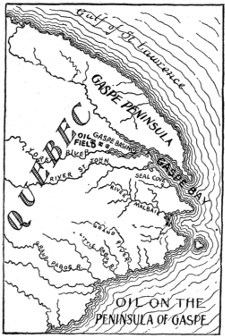
OIL ON THE
PENINSULA OF GASPE.
Petroleum has long been known to exist in considerable quantity in the
Gaspe Peninsula, at the extreme eastern end of Quebec. The Petroleum Oil-Trust,
organized by a bunch of Canadians to operate the district, put down
eight wells in 1893, finding a light green
oil. The Trust continued its borings in
1894, on the left bank of the York River,
south of the anticlinal of Tar Point.
Several of the ten wells yielded moderately,
and operations extended to the
portion of Gaspe Basin called Mississippi
Brook. One well in that section, completed
in July of 1897, flowed from a depth
of fifteen-hundred feet. Hundreds of
barrels were lost before the well could be
controlled. Its first, pumping produced
forty barrels, and two others in the vicinity
are of a similar stripe. The results thus
far are deemed sufficiently encouraging to
warrant further tests in hope of developing
an extensive field. The oil comes
from a coarse rock of sandy texture,
and in color and gravity resembles the
Pennsylvania article. The formation
around the newest strikes is nearly flat,
while the shallow wells in the section first
prospected were bored at a sharp angle, to keep in touch with the dip of the
rock, just as diamond drills follow the gold-bearing ledges in the Black Hills
of South Dakota. Crossing the continent, oil has been tapped in the gold-diggings
228of British Columbia, although in amounts too small to be important
commercially.
John Shaw, whose gusher brought the “gum-beds” of Enniskillen into
the petroleum-column, narrowly escaped anticipating Drake three years. Shaw
removed from Massachusetts to Canada in 1838, and was regarded as a visionary
schemer. In 1856 he sought to interest his neighbors in a plan to drill a well
through the rock in search of the reservoir that supplied Bear Creek with a thick
scum of oil. They hooted at the idea and proposed to send Shaw to the asylum.
This tabooed the subject and postponed the advent of petroleum until
the end of August, 1859.
Not content to crown Alaska with mountains of gold and valleys of yellow
nuggets, inventors of choice fables have invested the hyperborean region with
an exhaustless store of petroleum. In July of 1897 this paragraph, dated
Seattle, went the rounds of the press:
“What is said to be the greatest discovery ever made is reported from Alaska. Some gold-prospectors
several months ago ran across what seemed to be a lake of oil. It was fed by innumerable
springs and the surrounding mountains were full of coal. They brought supplies to
Seattle and tests proved it to be of as high grade as any ever taken out of Pennsylvania wells.
A local company was formed and experts sent up. They have returned on the steamer Topeka,
and their report has more than borne out first reports. It is stated there is enough oil and coal
in the discovery to supply the world. It is close to the ocean; in fact, the experts say that the
oil oozes out into the salt-water.”
William H. Seward’s purchase from Russia, for years ridiculed as good only
for icebergs and white-bears, may be credited with Klondyke placers and vast
bodies of gold-bearing quartz, but a “lake of oil” is too great a stretch of the
long bow. If “a lake of oil” ever existed, the lighter portions would have
evaporated and the residue would be asphaltum. The story “won’t hold
water” or oil.
A thief broke into a Bradford store and pilfered the cash-drawer. Some
months later the merchant received an unsigned letter, containing a ten-dollar
bill and this explanatory note: “I stole seventy-eight dollars from your money-drawer.
Remorse gnaws at my conscience. When remorse gnaws again I
will send you some more.”
It is not surprising that evil travels faster than good, since it takes only two
seconds to fight a duel and two months to drill an oil-well at Bradford.
“The Producers’ Consolidated Land-and-Petroleum-Company,” the formidable
title over the Bradford office of the big corporation, is apt to suggest
to observant readers the days of old long sign.
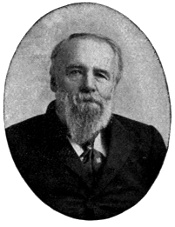
Hon. Reuben Carroll, a pioneer-operator, was born in Mercer county in
1823, went to Ohio to complete his education, settled in the Buckeye State, and
was a member of the Legislature when developments began on Oil Creek.
Solicited by friends to join them in an investment that proved fortunate, he removed
to Titusville and cast his lot with the producers. He operated extensively
in the northern fields, residing at Richburg during the Allegheny excitement.
He took an active interest in public affairs, and contributed stirring
articles on politics, finance and good government to leading journals. He opposed
Wall-street domination and vigorously upheld the rights of the masses.
Upon the decline of Richburg he located at Lily Dale, New York. As a representative
producer he was asked to become a member of the South Improvement-Company
in 1872. The offer aroused his inflexible sense of justice and
was indignantly spurned. He knew the sturdy quality and large-heartedness of
the Oil-Creek operators and did not propose to assist in their destruction. At
229seventy-four, Mr. Carroll is vigorous and well-preserved, ready to combat error
and champion truth with tongue and pen. An intelligent student of the past
and of current events, a close observer of the signs of the times and a keen
reasoner, Reuben Carroll is a fine example of the
men who are mainly responsible for the birth
and growth of the petroleum-development.
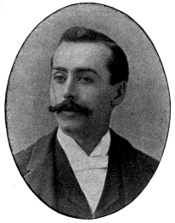
There is much uncertainty as to the youngest
soldier in the civil-war, the oldest Mason,
the man who first nominated McKinley for
President, and who struck Billie Patterson, but
none as to the youngest dealer in oil-well supplies
in the oil-region. This distinction belongs
to Ralph W. Carroll, a native of Youngstown,
Ohio, and son of Hon. Reuben Carroll. Born
in 1860, at eighteen he was at the head of a
large business at Rock City, in the Four-Mile
District, five miles south-west of Olean. Three
brothers were associated with him. The firm
was the first to open a supply-store at Richburg,
with a branch at Allentown, four miles east, and
an establishment later at Cherry Grove. In 1883 Ralph W. succeeded the firm,
his brothers retiring, and located at Bradford. In 1886 he opened offices and
warehouses at Pittsburg and in 1894 removed to New York to engage in placing
special investments. The young merchant was secretary of the Producers’ Protective
Association, organized at Richburg in 1891, and a member of the executive
committee that conducted the fight against the Roberts Torpedo-Company.
Hon. David Kirk, Asher W. Milner, J. E. Dusenbury and “Farmer” Dean
were his four associates on this important committee. Roscoe Conkling, for the
Roberts side, and General Butler, for the Producers’ Association, measured
swords in this legal warfare. Mr. Carroll has a
warm welcome for his oil-region friends, a class
of men the like of whom for geniality, sociability,
liberality and enterprise the world can never
duplicate.
The Beardsleys, Fishers, Dollophs and Fosters
were the first inhabitants in the wilds of
Northern McKean. Henry Bradford Dolloph,
whose house above Sawyer City was shattered
by a glycerine-explosion, was the first white
child who saw daylight and made infantile music
in the Tuna Valley. One of the first two houses
where Bradford stands was occupied by the
Hart family, parents and twelve children. When
the De Golias settled up the East Branch a road
had to be cut through the forest from Alton.
Hon. Lewis Emery’s No. 1, on the Tibbets
farm, the first good well up the Branch, produced oil that paid two or three
times the cost of the entire property.
The United-States Pipe-Line has overcome legal obstructions, laid its tubes
under railroads that objected to its passage to the sea and will soon pump oil
direct to refineries on the Jersey coast. Senator Emery, the sponsor of the
230line, is not the man to be bluffed by any railroad-popinjay who wants him to
get off the earth. The National-Transit Line has ample facilities to transport
all the oil in Pennsylvania to the seaboard, but Emery is a true descendant of
the proud Highlander who wouldn’t sail in Noah’s ark because “ilka McLean
has a boat o’ his ain.” He was born in New-York State, reared in Michigan,
whither the family removed in his boyhood, and learned to be a miller. Arriving
at Pioneer early in the sixties, he cut his eye-teeth as an oil-operator on
Oil Creek and had much to do with bringing the great Bradford district to the
front. He served one term in the Legislature and two in the Senate, gaining a
high reputation by his fearless opposition to jobbery and corruption.
Michael Garth, a keen-witted son of the Emerald Isle, has the easiest snap
in the northern region. Scraping together the funds to put down a well on his
rocky patch of ground near Duke Centre, he rigged a water-wheel to pump the
ten barrels of crude the strike yielded daily. Another well of similar stripe
was drilled and the faithful creek drives the wooden-wheel night and day, without
one cent of expense or one particle of attention on the part of the owner.
Garth can go fishing three days at a lick, to find the wells producing upon his
return just as when he left. Such a picnic almost compels a man to be lazy.
The Devonian Oil Company, of which Charles E. Collins is the clear-brained
president and guiding star, has operated on the wholesale plan in the
northern region and in West Virginia. In October of 1897 the Devonian, the
Watson and the Emery companies sold a part of their holdings north and
south to the West Penn, a producing wing of the Standard, for fourteen-hundred-thousand
dollars in spot cash. The largest cash sale of wells and territory on
record, this transaction was negotiated by John L. and J. C. McKinney acting
in behalf of the buyer, and Charles E. Collins and Lewis Emery representing
the sellers.
“Hell in harness!” Davy Crockett is credited with exclaiming the first
time he saw a railroad train tearing along one dark night. Could he have seen
an oil-train on the Oil-Creek Railroad, blazing from end to end and tearing
down from Brocton at sixty miles an hour, the conception would have been yet
more realistic. Engineer Brown held the throttle, which he pulled wide open
upon discovering a car of crude on fire. Mile after mile he sped on, thick
smoke and sheets of flame each moment growing denser and fiercer. At last
he reached a long siding, slackened the speed for the fireman to open the
switch and ran the doomed train off the main track. He detached the engine
and two cars, while the rest of the train fell a prey to the fiery demon. A
similar accident at Bradford, caused by a tank at the Anchor Oil-Company’s
wells overflowing upon the tracks of the Bradford & Bordell narrow-gauge,
burned two or three persons fatally. The oil caught fire as the locomotive
passed the spot and enveloped the passenger-coach in flames so quickly that
escape was cut off.
Bradford, Tarport, Limestone, Sawyer, Gillmor, Derrick, Red Rock, State
Line, Four-Mile, Duke Centre, Rexford, Bordell, Rew City, Coleville, Custer
and De Golia, with their thousands of wells, their hosts of live people, their
boundless activity, their crowded railways, their endless procession of teams
and their unlimited energy, were for the nonce the brightest galaxy of oil-towns
that ever flourished in the busy realm of petroleum. Some have vanished,
others are mere skeletons and Bradford alone retains a fair semblance of its
pristine greatness.
The bee-line for the north was fairly and squarely “on the belt.”
231
A little girl at Titusville, when she prayed to have herself and all of her
relations cared for during the night, added: “And, dear God, do try and take
good care of yourself, for if anything should happen to you we should all go to
pieces. Amen.”
A young lady at Sawyer City accepted a challenge to climb a derrick on
the Hallenback farm, stand on top and wave her handkerchief. She was to
receive a silk-dress and a ten-dollar greenback. The feat was performed in
good shape. It is probably the only instance on record where a woman had
the courage to climb an eighty-foot derrick, stand on top and wave her handkerchief
to those below. It was done and the enterprising girl gathered in the
wager.
Mrs. Sands, formerly a resident of Oil City, built the Sands Block and owned
wells on Sage Run. McGrew Brothers, of Pittsburg, struck a spouter in 1869
that boomed Sage Run a few months. A lady at Pleasantville, who had coined
money by shrewd speculations in oil-territory, purchased two-hundred acres
near the McGrew strike, while the well was drilling and nobody thought it
worth noticing. The lady was Mrs. Sands, who enacted the role of “a poor
lone widow,” anxious to secure a patch of ground to raise cabbage and garden-truck,
to get the property. She worked so skillfully upon the sensibilities of
the Philadelphians owning the land that they sold it for a trifle “to help a needy
woman!” Her first well, finished the night before the “thirty-day shut down,”
flowed five-hundred barrels each twenty-four hours. The “poor lone widow”
valued the tract at a half-million dollars and at one time was rated at six-hundred-thousand,
all “earned by her own self.” Yet weak-minded men and
strong-minded women talk of the suppressed sex!
A Franklin lady asked her husband one morning to buy five-thousand barrels
of oil on her account, saying she had an impression the price would advance
very soon. To please her he promised to comply. At dinner she inquired
about it and was told the order had been filled by an Oil-City broker.
In the afternoon the price advanced rapidly. Next morning the lady asked
hubby to have the lot sold and bring her the profits. The miserable husband
was in for it. He dared not confess his deception and the only alternative was
to pay the difference and keep mum. His sickly smile, as he drew fifteen-hundred
dollars out of the bank to hand his spouse, would have cracked a mirror
an inch thick. Solomon got a good deal of experience from his wives and that
Franklin husband began to think “a woman might know something about
business after all.”
Mrs. David Hanna, of Oil City, is not one of the women whose idea of a
good time is to go to a funeral and cry. She tried a bit of speculation in certificates
and the market went against her. She tried again and again, but the
losses exceeded the profits by a large majority. The phenomenal spurt in April
of 1895 was her opportunity. She held down a seat in the Oil-Exchange gallery
three days, sold at almost the top notch and cleared twelve-thousand dollars.
People applauded and declared the plucky little woman “had a great head.”
232
SCHRUBRASS FERRY 1873
SUMMIT CITY
ACROSS THE BELT AT BARRINGER
TURKEY CITY IN 1874
FIRST HOUSE AT TRIANGLE CITY
MAIN STREET, ST. PETERSBURG.
VIEW IN EDENBURG.
XII. DOWN THE ZIG-ZAGGED STREAM. — WHERE IGNORANCE IS BLISS.
233
Where the Allegheny Flows—Reno Contributes a Generous Mite—Scrubgrass
Has a Short Inning—Bullion Looms Up with Dusters and
Gushers—A Peep Around Emlenton—Foxburg Falls Into Line—Through
the Clarion District—St. Petersburg, Antwerp, Turkey
City and Dogtown—Edenburg Has a Hot Time—Parker on Deck.
“He left the barren-beaten thoroughfare.”—Tennyson.
“Who, grown familiar with the sky, will grope * * * among groundlings?”—Browning.
“What lavish wealth men give for trifles light and small!”—W. S Hawkins.
“How soon our new-born light attains to full-aged noon.”—Francis Quarles.
“Liberal as noontide speeds the ambient ray
And fills each crevice in the world with day.”—Lytton.
“We must take the current when it serves or lose our ventures.”—Shakespeare.
“Let us battle for elbow-room.”—James Parish Steele.
“Peter Oleum came down like a wolf on the fold.”—Byron Parodied.
“Plunged into darkness or plunged into light.”—Hester M. Poole.
“Lord love us, how we apples swim!”—Mallett.
“The best-laid schemes o’ mice and men gang aft a-gley.”—Robert Burns.
“Fortune turns everything to the advantage of her favorites.”—Rochefoucauld.
“Good, the more communicated, more abundant grows.”—Milton.
“A gorgeous sunset is coloring the whole sky.”—Julius Stinde.
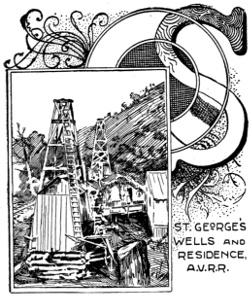
South and west of Oil Creek for many
miles the petroleum-star shed its effulgent
luster. Down the Allegheny
adventurous operators groped their
way patiently, until Clarion, Armstrong,
Butler, Washington and West
Virginia unlocked their splendid store-houses
at the bidding of the drill.
Aladdin’s wondrous lamp, Stalacta’s
wand or Ali Babi’s magic sesame was
not so grand a talisman as the tools
which from the bowels of the earth
brought forth illimitable spoil. No
need of fables to varnish the tales of
struggles and triumphs, of disappointments
and successes, of weary toil and
rich reward that have marked the oil-development
from the Drake well to
the latest strike in Tyler county. Men who go miles in advance of developments
to seek new oil-fields run big chances of failure. They understand the
risk and appreciate the cold fact that heavy loss may be entailed. But “the
game is worth the powder” in their estimation and impossibility is not the sort
of ability they swear by. “Our doubts are traitors and make us lose the good
we oft might win” is a maxim oil-operators have weighed carefully. The man
234who has faith to attempt something is a man of power, whether he hails from
Hong Kong or Boston, Johannesburg or Oil City. The man who will not
improve his opportunity, whether seeking salvation or petroleum, is a sure
loser. His stamina is as fragile as a fifty-cent shirt and will wear out quicker
than religion that is used for a cloak only. Muttering long prayers without
working to answer them is not the way to angle for souls, or fish, or oil-wells.
It demands nerve and vim and enterprise to stick thousands of dollars in a hole
ten, twenty, fifty or “a hundred miles from anywhere,” in hope of opening a
fresh vein of petroleum. Luckily men possessing these qualities have not been
lacking since the first well on Oil Creek sent forth the feeble squirt that has
grown to a mighty river. Hence prolific territory, far from being scarce, has
sometimes been too plentiful for the financial health of the average producer,
who found it hard to cipher out a profit selling dollar-crude at forty cents. As
old fields exhausted new ones were explored in every direction, those south of
the original strike presenting a very respectable figure in the oil-panorama. If
“eternal vigilance is the price of liberty,” eternal hustling is the price of oil-operations.
Maria Seidenkovitch, a
fervid Russian anarchist, who would
rather hit the Czar with a bomb than
hit a thousand-barrel well, has written:
“There is no standing still! Even as I pause
The steep path shifts and I slip back apace;
Movement was safety; by the journey’s laws
No help is given, no safe abiding-place;
No idling in the pathway, hard and slow—
I must go forward or must backward go!”
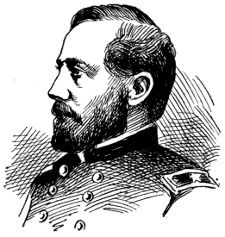
Down the Allegheny three miles,
on a gentle slope facing bold hills across
the river, is the remnant of Reno, once
a busy, attractive town. It was named
from Gen. Jesse L. Reno, who rose to
higher rank than any other of the heroes
Venango “contributed to the
death-roll of patriotism.” He spent
his boyhood at Franklin, was graduated
from West Point in the class with George B. McClellan and “Stonewall”
Jackson, served in the Mexican war, was promoted to Major-General and fell
at the battle of South Mountain in 1862. The Reno Oil-Company, organized
in 1865 as the Reno-Oil-and-Land Company, owns the village-site and twelve-hundred
acres of adjacent farms. The company and the town owed their
creation to the master-mind of Hon. C. V. Culver, to whose rare faculty for
developing grand enterprises the oil-regions offered an inviting field. Visiting
Venango county early in the sixties, a canvass of the district convinced him
that the oil-industry, then an infant beginning to creep, must attain giant proportions.
To meet the need of increased facilities for business, he conceived
the idea of a system of banks at convenient points and opened the first at
Franklin in 1861. Others were established at Oil City, Titusville and suitable
trade-centres until the combination embraced twenty banks and banking-houses,
headed by the great office of Culver, Penn & Co. in New York. All
enjoyed large patronage and were converted into corporate banks. The speculative
mania, unequaled in the history of the world, that swept over the oil-regions
in 1864-5, deluged the banks with applications for temporary loans to
235be used in purchasing lands and oil-interests. Philadelphia alone had nine-hundred
stock-companies. New York was a close second and over seven-hundred-million
dollars were capitalized—on paper—for petroleum-speculations!
The production of oil was a new and unprecedented business, subject to no
known laws and constantly overturning theories that set limits to its expansion.
There was no telling where flowing-wells, spouting thousands of dollars daily
without expense to the owners, might be encountered. Stories of sudden fortunes,
by the discovery of oil on lands otherwise valueless, pressed the button
and the glut of paper-currency did the rest.
Mr. Culver directed the management and employment of fifteen-million
dollars in the spring of 1865! People literally begged him to handle their
money, elected him to Congress and insisted that he invest their cash and
bonds. The Reno Oil-Company included men of the highest personal and
commercial standing. Preliminary tests satisfied the officers of the company
that the block of land at Reno was valuable territory. They decided to operate
it, to improve the town and build a railroad to Pithole, in order to command
the trade of Oil Creek, Cherry Run and “the Magic City.” Oil City
opposed the railroad strenuously, refusing a right-of-way and compelling the
choice of a circuitous route, with difficult grades to climb and ugly ravines to
span. At length a consolidation of competing interests was arranged, to be
formally ratified on March twenty-ninth, 1866. Meanwhile rumors affecting the
credit of the Culver banks were circulated. Disastrous floods, the close of the
war and the amazing collapse of Pithole had checked speculation and impaired
confidence in oil-values. Responsible parties wished to stock the Reno Company
at five-million dollars and Mr. Culver was in Washington completing the
railroad-negotiations which, in one week, would give him control of nearly a
million. A run on his banks was started, the strain could not be borne and on
March twenty-seventh, 1866, the failure of Culver, Penn & Co. was announced.
The assets at cost largely exceeded the liabilities of four-million dollars, but
the natural result of the suspension was to discredit everything with which the
firm had been identified. The railroad-consolidation, confessedly advantageous
to all concerned, was not confirmed and Reno stock was withheld from
the market. While the creditors generally co-operated to protect the assets and
adjust matters fairly, a few defeated measures looking to a safe deliverance.
These short-sighted individuals sacrificed properties, instituted harassing prosecutions
and precipitated a crisis that involved tremendous losses. Many a man
standing on his brother’s neck claims to be looking up far into the sky watching
for the Lord to come!
The fabric reared with infinite pains toppled, pulling down others in its
fall. The Reno, Oil-Creek & Pithole Railroad, within a mile of completion,
crumbled into ruin. The architect of the splendid plans that ten days of grace
would have carried to fruition displayed his manly fiber in the dark days of
adversity and he has been amply vindicated. Instead of yielding to despair
and “letting things take their course,” he strove to realize for the creditors
every dollar that could be saved from the wreck. Animated by a lofty motive,
for thirty years Mr. Culver has labored tirelessly to discharge the debts of the
partnership. No spirit could be braver, no life more unselfish, no line of action
more steadfastly devoted to a worthy object. He had bought property and
sought to enhance its value, but he had never gambled in stocks, never dealt
in shares on the mere hazard of a rise or gone outside the business—except to
help customers whose necessities appealed to his sympathy—with which he was
236intimately connected. Driven to the wall by stress of circumstances and general
distrust, he has actually paid off all the small claims and multitudes of
large ones against his banks. How many men, with no legal obligation to
enforce their payment, would toil for a generation to meet such demands?
Thistles do not bear figs and banana-vendors are not the only persons who
should be judged by their fruits. It is a good thing to achieve success and better
still to deserve it. Gauged by the standard of high resolve, earnest purpose
and persistent endeavor—by what he has tried to do and not by what may have
been said of him—Charles Vernon Culver can afford to accept the verdict of
his peers and of the Omniscient Judge, who “discerns the thoughts and
intents of the heart.”
“I will go on then, though the limbs may tire,
And though the path be doubtful and unseen;
Better with the last effort to expire
Than lose the toil and struggle that have been,
And have the morning strength, the upward strain,
The distance conquered in the end made vain.”
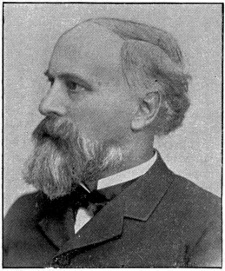
Reorganized in the interest of Culver, Penn & Co.’s creditors, the Reno
Company developed its property methodically. No. 18 well, finished in May of
1870, pumped two-hundred barrels and caused a flutter of excitement. Fifty
others, drilled in 1870-1, were so satisfactory that the stockholders might have
shouted “Keno!” The company declined to lease and very few dry-holes
were put down on the tract. Gas supplied fuel and the sand, coarse and
pebbly, produced oil of superior gravity
at five to six-hundred feet. Reno
grew, a spacious hotel was built, stores
prospered, two railroads had stations
and derricks dotted the banks of the
Allegheny. The company’s business
was conducted admirably, it reaped
liberal profits and operated in Forest
county. Its affairs are in excellent
shape and it has a neat production today.
Mr. Culver and Hon. Galusha
A. Grow have been its presidents and
Hon. J. H. Osmer is now the chief
officer. Mr. Osmer is a leader of the
Venango bar and has lived at Franklin
thirty-two years. His thorough
knowledge of law, sturdy independence,
scorn of pettifogging and skill
as a pleader gained him an immense
practice. He has been retained in
nearly all the most important cases before the court for twenty-five years and
appears frequently in the State and the United-States Supreme Courts. He
is a logical reasoner and brilliant orator, convincing juries and audiences by his
incisive arguments. He served in Congress with distinguished credit. His
two sons have adopted the legal profession and are associated with their father.
A man of positive individuality and sterling character, a friend in cloud and
sunshine, a deep thinker and entertaining talker is James H. Osmer.
Cranberry township, a regular petroleum-huckleberry, duplicated the Reno
pool at Milton, with a vigorous offshoot at Bredinsburg and nibbles lying
237around loose. Below Franklin the second-sand sandwich and Bully-Hill successes
were special features. A mile up East Sandy Creek—it separates Cranberry
and Rockland—was Gas City, on a toploftical hill twelve miles south of
Oil City. A well sunk in 1864 had heaps of gas, which caught fire and burned
seven years. E. E. Wightman and Patrick Canning drilled five good wells in
1871 and Gas City came into being. Vendergrift & Forman constructed a pipeline
and telegraph to Oil City. Gas fired the boilers, lighted the streets, heated
the dwellings and great quantities wasted. The pressure could be run up to
three-hundred pounds and utilized to run engines in place of steam, were it not
for the fine grit with the gas, which wore out the cylinders. Wells that supplied
fuel to pump themselves seemed very similar to mills that furnished their own
motive-power and grist for the hoppers. A cow that gave milk and provided
food for herself by the process could not be slicker. Gas City vaporized a
year or two and flickered out. The last jet has been extinguished and not a
glimmer of gas or symptom of wells has been visible for many years.
Fifteen of the first sixteen wells at Foster gladdened the owners by yielding
bountifully. To drill, to tube, to pump, to get done-up with a dry-hole,
“aye, there’s the rub” that tests a fellow’s mettle and changes blithe hope to
bleak despair. Foster wells were not of that complexion. They lined the
steep cliff that resembles an Alpine farm tilted on end to drain off, the derricks
standing like sentries on the watch that nobody walked away with the romantic
landscape. Lovers of the sterner moods of nature would revel in the rugged
scenery, which discounts the overpraised Hudson and must have fostered sublime
emotions in the impassive redmen. Indian-God Rock, inscribed with
untranslatable hieroglyphics, presumably tells what “Lo” thought of the surroundings.
Six miles south of the huge rock, which somebody proposed to
boat to Franklin and set in the park as an interesting memento of the aborigines,
was “the burning well.” For years the gas blazed, illuminating the hills
and keeping a plot of grass constantly fresh and green. The flood in 1865
overflowed the hole, but the gas burned just as though water were its native
element. It was the fad for sleighing parties to visit the well, dance on the
sward when snow lay a yard deep ten rods away and hold outdoor picnics in
January and February. This practically realized the fancy of the boy who
wished winter would come in summer, that he might coast on the Fourth of
July in shirt-sleeves and linen-pants. Here and there in the interior of Rockland
township morsels of oil have been unearthed and small wells are pumping
to-day.
C. D. Angell leased blocks of land from Foster to Scrubgrass in 1870-71
and jabbed them with holes that confirmed his “belt theory.” His first well—a
hundred-barreler—on Belle Island, a few rods below the station, opened the
Scrubgrass field. On the Rockland side of the river the McMillan and 99 wells
headed a list of remunerative producers. Back a quarter-mile the territory
was tricky, wells that showed for big strikes sometimes proving of little account.
A town toddled into existence. Gregory—the genial host joined the
heavenly host long ago—had a hotel at which trains stopped for meals. James
Kennerdell ran a general store and the post-office. The town was busy and
had nothing scrubby except the name. The wells retired from business, the
depot burned down, the people vanished and Kennerdell Station was established
a half-mile north. Wilson Cross continued his store at the old stand
until his death in March, 1896. Within a year paying wells have been drilled
near the station and two miles southward. On the opposite bank Major W. T.
238Baum, of Franklin, has a half-dozen along the base of the hill that net him a
princely return. A couple of miles north-west, in Victory township, Conway
Brothers, of Philadelphia, recently drilled a well forty-two hundred feet. The
last sixty feet were sand with a flavor of oil, the deepest sand and petroleum
recorded up to the present time. Careful records of the strata and temperature
were taken. Once a thermometer slipped from Mr. Conway’s hand and
tumbled to the bottom of the well, the greatest drop of the mercury in any age
or clime.
Sixty farmers combined in the fall of 1859 to drill the first well in Scrubgrass
township, on the Rhodabarger tract. They rushed it like sixty six-hundred
feet, declined to pay more assessments, kicked over the dashboard and spilled
the whole combination. The first productive well was Aaron Kepler’s, drilled
on the Russell farm in 1863, and John Crawford’s farm had the largest of the
early ventures. On the Witherup farm, at the mouth of Scrubgrass Creek,
paying wells were drilled in 1867. Considerable skirmishing was done at intervals
without startling results. The first drilling in Clinton township was on.
the Kennerdell property, two miles west of the Allegheny, the Big-Bend Oil-Company
sinking a dry-hole in 1864-5. Jonathan Watson bored two in 1871,
finding traces of oil in a thin layer of sand. The Kennerdell block of nine-hundred
acres figured as the scene of milling operations from the beginning of
the century. David Phipps—the Phipps families are still among the most
prominent in Venango county—built a grist-mill on the property in 1812, a
saw-mill and a woolen-factory, operated an iron-furnace a mile up the creek
and founded a natty village. Fire destroyed his factory and Richard Kennerdel
bought the place in 1853. He built a woolen-mill that attained national
celebrity, farmed extensively, conducted a large store and for thirty years was
a leading business-man. A handsome fortune, derived from manufacturing
and oil-wells on his lands, and the respect of all classes rewarded the enterprise,
sagacity and hospitality of this progressive citizen. The factory he
reared has been dismantled, the pretty little settlement amid the romantic
hills of Clinton is deserted and the man to whom both owed their development
rests from his labors. Mr. Kennerdell possessed boundless energy,
decision and the masterly qualities that surmount obstacles, build up a community
and round out a manly character. Cornen Brothers have a production
on the Kennerdell tract, which they purchased in 1892. During the Bullion
furore a bridge was built at Scrubgrass and a railroad to Kennerdell was constructed.
Ice carried off the bridge and the faithful old ferry holds the fort
as in the days of John A. Canan and George McCullough.
Phillips Brothers, who had operated largely on Oil Creek and in Butler
county, leased thousands of acres in Clinton and drilled a number of dry-holes.
Believing a rich pool existed in that latitude, they were not deterred by reverses
that would have stampeded operators of less experience. On August
ninth, 1876, John Taylor and Robert Cundle finished a two-hundred-barrel
spouter on the George W. Gealy farm, two miles north of Kennerdell. They
sold to Phillips Brothers, who were drilling on adjacent farms. The new strike
opened the Bullion field, toward which the current turned forthwith. H. L.
Taylor and John Satterfield, the biggest operators in Butler, visited the Gealy
well and offered a half-million dollars for the Phillips interests in Clinton. A
hundred oilmen stood watching the flow that August morning. The parties
consulted briefly and Isaac Phillips invited me to walk with him a few rods.
He said: “Taylor & Satterfield wish to take our property at five-hundred-thousand
239dollars. This is a good deal of money, but we have declined it. We
think there will be a million in this field for us if we develop it ourselves.”
They carried out this programme and the estimate was approximated closely.
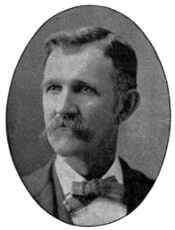
The Sutton, Simcox, Taylor, Henderson, Davis, Gealy, Newton and Berringer
farms were operated rapidly. Tack Brothers paid ten-thousand dollars
to Taylor for thirty acres and Porter Phipps leased
fifteen acres, which he sold to Emerson & Brownson,
whose first well started at seven-hundred barrels.
Phillips Brothers’ No. 3 well, on the Gealy
farm, was a four-hundred-barreler. In January,
1877, Frank Nesbit’s No. 2, Henderson farm, flowed
five-hundred barrels, and in February the Galloway
began at two-hundred. The McCalmont Oil-Company’s
Big Medicine, on the Newton Farm, tipped
the beam at one-thousand barrels on June seventh.
Mitchell & Lee’s Big Injun flowed three-thousand
barrels on June eighteenth, the biggest yield in the
district. Ten yards away a galaxy of Franklinites
drilled the driest kind of a dry-hole. In August
the McCalmont No. 31 and the Phillips No. 7
gauged a plump thousand apiece. These were the
largest wells and they exhausted speedily. The
oil from the Gealy No. 1 was hauled to Scrubgrass until connections could be
laid to the United Pipe-Lines. The Bullion field, in which a few skeleton-wells
produce a few barrels daily, extended seven miles in length and three-eighths
of a mile in width. Like the business-end of a healthy wasp, “it was
little, but—oh, my!” It swerved the tide from Bradford and ruled the petroleum-roost
eighteen months. Summit City on the Simcox farm, Berringer
City on the Berringer farm, and Dean City on the McCalmont farm flourished
during the excitement. The first house at Summit was built on December
eighth, 1876. In June of 1877 the town boasted
two-hundred buildings and fifteen-hundred population.
Abram Myers, the last resident, left in
April of 1889. All three towns have “faded
into nothingness” and of the five-hundred wells
producing at the summit of Bullion’s short-lived
prosperity not a dozen survive. Westward a
new strip was opened, the wells on several farms
yielding their owners a pleasant income. J. J.
Myers, whose home is now at Hartstown, operated
successfully in this district. George Rumsey,
an enterprising citizen, is the lucky owner
of a number of slick wells. The pretty town of
Clintonville has been largely benefited by oil-operations
in the vicinity. It is surrounded by
a fine agricultural country and possesses many desirable features as a place of
residence. Bullion had its turn and others were to follow in short meter.
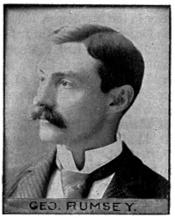
“’Tis not too late to seek a newer world,
Tho’ much is taken, much abides.”
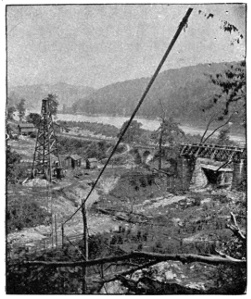
Major St. George—the kindly old man sleeps in the Franklin cemetery—had
a bunch of wells and lived in a small house close to the Allegheny-Valley
240track, near the siding in Rockland township that bears his name. At Rockland
Station a stone chimney, a landmark for many years, marked the early
abode of Hon. Elisha W. Davis, who operated at Franklin, was speaker of the
House of Representatives and the
State-Senate five terms and spent the
closing years of his active life in Philadelphia.
Emlenton, the lively town at
the south-eastern corner of Venango
county, was a thriving place prior to
the oil-development. The wells in
the vicinity were generally medium,
Ritchey Run having some of the best.
This romantic stream, south of the
town, borders Clarion county for a
mile or two from its mouth. John
Kerr, a squatter, cleared a portion of
the forest and was drowned in the
river, slipping off a flat rock two miles
below his bit of land. The site of
Emlenton was surveyed and the warrant
from the state given in 1796 to
Samuel B. Fox, great-grandfather of
the late William Logan Fox and J. M.
Fox, of Foxburg. Joseph M., son of Samuel B. Fox, settled on the land in 1827.
Andrew McCaslin owned the tract above, from about where the Valley Hotel
and the public-school now stand. He was elected sheriff in 1832 and built an
iron-furnace. As a compliment to Mrs. Fox—Miss Hanna Emlen—he named
the hamlet Emlenton. Doctor James
Growe built the third house in the settlement.
The covered wooden-bridge,
usually supposed to have been brought
over in the Mayflower, withstood floods
and ice-gorges until April of 1883. John
Keating, who had the second store,
built a furnace near St. Petersburg and
held a thousand acres of land. Oil-producers
were well represented in the
growing town, which has been the home
of Marcus Hulings, L. E. Mallory, D.
D. Moriarty, M. C. Treat and R. W.
Porterfield. James Bennett, a leader
in business, built the brick opera-house
and the flour-mills and headed the company
that built the Emlenton & Shippenville
Railroad, which ran to Edenburg
at the height of the Clarion development.
Emlenton is supplied with
natural-gas and noted for good schools,
good hotels and get-up-and-get citizens and is wide-awake in every respect.
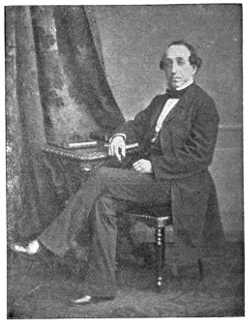
Dr. A. W. Crawford, of Emlenton, who served in the Legislature, was
appointed consul to Antwerp by President Lincoln in 1861. At the time he
241reached Antwerp a cheap illuminant was unknown on the continent. Gas was
used in the cities, but the people of Antwerp depended mainly upon rape-seed
oil. Only wealthy people could afford it and the poorer folks went to bed in the
dark. From Antwerp to Brussels the country was shrouded in gloom at night.
Not a light could be seen outside the towns, in the most populous section on
earth. A few gallons of American refined had appeared in Antwerp previous
to Dr. Crawford’s arrival. It was regarded as an object of curiosity. A leading
firm inquired about this new American product and Dr. Crawford was the
man who could give the information. He was from the very part of the country
where the new illuminant was produced. The upshot of the matter was
that Dr. Crawford put the firm in communication with American shippers,
which led to an order of forty barrels by Aug. Schmitz & Son, Antwerp dealers.
The article had tremendous prejudice to overcome, but the exporters succeeded
in finally disposing of their stock. It yielded them a net return of forty
francs. The oil won its way and from the humble beginning of forty barrels
in 1861, the following year witnessing a demand for fifteen-hundred-thousand
gallons. By 1863 it had come largely into use and since that time it has become
a staple article of commerce. Dr. Crawford served as consul at Antwerp until
1866, when he returned home and began a successful career as an oil-producer.
It was fortunate that Col. Drake chanced upon the shallowest spot in the oil-regions
where petroleum has ever been found, when he located the first well,
and equally lucky that a practical oilman represented the United States at Antwerp
in 1861. Had Drake chanced upon a dry-hole and some other man been
consul at Antwerp, oil-developments might have been retarded for years.
“Oft what seems a trifle,
A mere nothing in itself, in some nice situations
Turns the scale of Fate and rules important actions.”
It is interesting to note that in the original land-warrants to Samuel M. Fox
certain mineral-rights are reserved, although oil is not specified. A clause in
each of the documents reads:
* * * “To the use of him, the said Samuel M. Fox, his heirs and assigns forever, free and
clear of all restriction and reservation as to mines, royalties, quit-rents or otherwise, excepting
and reserving only the fifth part of all gold and silver-ore for the use of this Commonwealth, to
be delivered at the pit’s mouth free of all charges.”charges.”
The lands of Joseph M. Fox extended five miles down the Allegheny, to
the north bank of the Clarion River. He built a home a mile back of the Allegheny
and endeavored to have the county-seat established at the junction of the
two streams. The village of Foxburg, which bears the family-name and is four
miles below Emlenton, had no existence until long after his death. Contrary
to the accepted opinion, he was not a Quaker, nor do his descendants belong to
the Society of Friends or any religious denomination in particular.
The prudence and wisdom of his father’s policy left the estate in excellent
shape when its management devolved largely upon W. L. Fox. Progressive
and far-seeing, the young man possessed in eminent degree the business-qualities
needed to handle vast interests successfully. His honored mother and his
younger brother aided him in building up and constantly improving the rich
heritage. Oil-operations upon and around it added enormously to the value of
the property. Hundreds of prolific wells yielded bounteously and the town of
Foxburg blossomed into the prettiest spot on the banks of the Allegheny. The
Foxes erected a spacious school and hotel, graded the streets, put up dainty
residences and fostered the growing community most generously. A bank was
established, stores and dwellings multiplied, the best people found the surroundings
242congenial and the lawless element had no place in the attractive
settlement. The master-hand of William Logan Fox was visible everywhere.
With him to plan was to execute. He constructed the railroad that connected
Foxburg with St. Petersburg, Edenburg and Clarion. The slow hacks gave
way to the swift iron-horse that brought the interior towns into close communication
with each other and the world outside. It would be impossible to estimate
the advantage of this enterprise to the producers and the citizens of the
adjacent country.
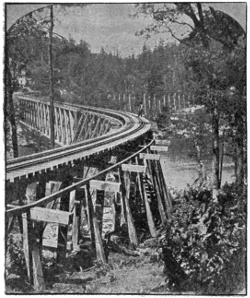
RAILROAD BRIDGE NEAR CLARION.
The narrow-gauge railroad from Foxburg to Clarion was an engineering
novelty. It zig-zagged to overcome the big hill at the start, twisted around
ravines and crossed gorges on dizzy trestles. Near Clarion was the highest
and longest bridge, a wooden structure on stilts, curved and single-tracked.
One dark night a drummer employed
by a Pittsburg house was drawn over
it safely in a buggy. The horse left
the wagon-road, got on the railroad-track,
walked across the bridge—the
ties supporting the rails were a
foot apart—and fetched up at his
stable about midnight. The drummer,
who had imbibed too freely
and was fast asleep in the vehicle,
knew nothing of the drive, which the
marks of the wheels on the approaches
and the ties revealed next
morning. The horse kept closely to
the center of the track, while the
wheels on the right were outside the
rails. Had the faithful animal veered
a foot to the right, the buggy would
have tumbled over the trestle and
there would have been a vacant
chair in commercial ranks and a
new voice in the celestial choir. That the horse did not step between the ties
and stick fast was a wonder. The trip was as perilous as the Mohammedan passage
to Paradise over a slack-wire or Blondin’s tight-rope trip across Niagara.
Mr. Fox’s busy brain conceived even greater things for the benefit of the
neighborhood. Millions of capital enabled him to carry out the ideas of his
resourceful mind. He created opportunities to invest his wealth in ways that
meant the greatest good to the greatest number. The family heartily seconded
his efforts to advance the general welfare. He built and operated the only extensive
individual pipe-line in the oil-regions. To extend the trade and influence
of Foxburg he devised new lines of railway, which would traverse a section
abounding in coal, timber and agricultural products. He outlined the plan of
an immense refinery, designed to employ a host of skilled workmen and utilize
the crude-oil derived from the wells within several miles of his home. In the
midst of these and other useful projects, in the very heyday of vigorous manhood,
just as the full fruition of his highest hopes seemed about to be grandly
realized, the end of his bright career came suddenly. His death, met in the
discharge of duty, was almost tragic in its manner and results.
In February of 1880 Conductor W. W. Gaither, of the Foxburg-Clarion
243Railroad, ejected a peddler named John Clancy from his train, near King’s
Mills, for refusing to pay his fare. Clancy shot Gaither, who died in a few days
from the wound. W. L. Fox was the president of the road and a warm personal
friend of the murdered conductor. He took charge of the pistol and
became active in bringing Clancy to punishment. Clancy was placed on trial
at Clarion. President Fox was to produce the pistol in court. Leaving home
on the early train for Clarion, he had proceeded some distance from Foxburg
when he discovered he had forgotten the pistol. He stopped the train and ran
back to get the weapon. When he returned he was almost exhausted. W. J.
McConnell, beside whom he was sitting, attempted to revive him, but he sank
into unconsciousness and expired in the car near the spot where his friend
Gaither was shot. Clancy was convicted of murder in the second degree and
sentenced to eight years in the penitentiary. His wife and twelve-year-old son
were left destitute. The boy went to work for a farmer near St. Petersburg.
A week later, it is said, he was crossing a field in which a vicious bull was feeding.
The bull attacked him, ripped his side open, tossed him from the field
into the road and the boy died in a short time. Besides these fatalities resulting
from Clancy’s crime, the business of Foxburg was seriously crippled. The
village depended mainly upon the oil-business of
the Fox estate, of which Mr. Fox, although only
twenty-nine years old, was manager. Its three-thousand
acres of oil-territory, but partially developed,
yielded forty-five-thousand barrels of crude
a month. The refinery was never built, the pipe-line
was sold and extensive development of the
property practically ceased. The pathetic death of
William Logan Fox took the distribution of a million
dollars a year from the region about Foxburg.
The stricken family erected a splendid church to
his memory, but it is seldom used. Much of its
trade and population has sought other fields and
the pretty town is merely a shadow of the past.
“The massive gates of circumstance
Are turned upon the smallest hinge,
And thus some seeming pettiest chance
Oft gives our life its after tinge.”
Fertig & Hammond drilled numerous wells on the Fox estate in 1870-71
and started a bank. Operations were pressed actively by producers from the
upper districts. Foxburg was the jumping off point for pilgrims to the Clarion
field, which Galey No. 1 well, on Grass Flats, inaugurated in August, 1871.
Others on the Flats, ranging from thirty to eighty barrels, boomed Foxburg
and speedily advanced St. Petersburg, three miles inland, from a sleepy village
of thirty houses to a busy town of three-thousand population. In September
of 1871 Marcus Hulings, whose great specialty was opening new fields, finished
a hundred-barrel well on the Ashbaugh farm, a mile beyond St. Petersburg.
The town of Antwerp was one result. The first building, erected in the spring
of 1872, in sixty days had the company of four groceries, three hotels, innumerable
saloons, telegraph-office, school-house and two-hundred dwellings.
Its general style was summed up by the victim of a poker-game in the expressive
words: “If you want a smell of brimstone before supper go to Antwerp!”
Fire in 1873 wiped it off the face of the planet.
Charles H. Cramer, now proprietor of a hotel in Pittsburg, left the Butler
field to drill the Antwerp well, in which he had a quarter-interest. James M.
244Lambing, for whom he had been drilling, jokingly remarked: “When you
return ‘broke’ from the wildcat well on the Ashbaugh farm I will have another
job for you.” It illustrates the ups and downs of the oil business in the
seventies to note that, when the well was completed, Lambing had met with
financial reverses and Cramer was in a position to give out jobs on his own
hook. Victor Gretter was one of the spectators of the oil flowing over the
derrick. The waste suggested to him the idea of the oil-saver, which he
patented. This strike reduced the price of crude a dollar a barrel. Antwerp
would have been more important but for its nearness to St. Petersburg, which
disastrous fires in 1872-3 could not prevent from ranking with the best towns of
Oildom. Stages from Foxburg were crowded until the narrow-gauge railroad
furnished improved facilities for travel. Schools, churches, hotels, newspapers,
two banks and an opera-house flourished. The Pickwick Club was a famous
social organization. The Collner, Shoup, Vensel, Palmer and Ashbaugh farms
and Grass Flats produced three-thousand barrels a day. Oil was five to six
dollars and business strode ahead like the wearer of the Seven-League Boots.
Now the erstwhile busy town is back to its pristine quietude and the farms that
produced oil have resumed the production of corn and grass.
A jolly Dutchman near St. Petersburg, who married his second wife soon
after the funeral of the first, was visited with a two-hours’ serenade in token of
disapproval. He expostulated pathetically thus: “I say, poys, you ought to
be ashamed of myself to be making all dish noise ven der vas a funeral here
purty soon not long ago.” This dispersed the party more effectually than a
bull-dog and a revolver could have done.
A girl just returned to St. Petersburg from a Boston high-school said, upon
seeing the new fire-engine at work: “Who would evah have dweamed such a
vewy diminutive looking apawatus would hold so much wattah!”
“Where are you going?” said mirth-loving Con. O’Donnell to an elderly
man in a white cravat whom he overtook on the outskirts of Antwerp and proposed
to invite to ride in his buggy. “I am going to heaven, my son. I have
been on my way for eighteen years.” “Well, good-bye, old fellow! If you
have been traveling toward heaven for eighteen years and got no nearer than
Antwerp, I will take another route.”
The course of operations extended past Keating Furnace, up and beyond
Turkey Run, a dozen miles from the mouth of the Clarion River. Good wells
on the Ritts and Neeley farms originated Richmond, a small place that fizzled
out in a year. The Irwin well, a mile farther, flowed three-hundred barrels
in September of 1872. The gas took fire and burned three men to death.
The entire ravine and contiguous slopes proved desirable territory, although
the streak rarely exceeded a mile in breadth. Turkey City, in a nice expanse
to the east of the famous Slicker farm, for months was second only to St.
Petersburg as a frontier town. It had four stages to Foxburg, a post-office,
daily mail-service and two passable hotels. George Washington, who took a
hack at a cherry-tree, might have preferred walking to the drive over the
rough, cut-up roads that led to and from Turkey City. The wells averaged
eleven-hundred feet, with excellent sand and loads of gas for fuel. Richard
Owen and Alan Cochran, of Rouseville, opened a jack-pot on the Johnson
farm, above town. Wells lasted for years and this nook of the Clarion district
could match pennies with any other in the business of producing oil.
Northward two miles was Dogtown, beautifully situated in the midst of a
rich agricultural section. The descendents of the first settlers retain their characteristics
245of their German ancestors. Frugal, honest and industrious, they
live comfortably in their narrow sphere and save their gains. The Delo farm,
another mile north, was for a time the limit of developments. True to his
instincts as a discoverer of new territory, Marcus Hulings went six miles north-east
of St. Petersburg, leased B. Delo’s farm and drilled a forty-barrel well in
the spring of 1872. Enormous quantities of gas were found in the second sand.
The oil was piped to Oil City. A half-mile east, on the Hummell farm, Salem
township, Lee & Plumer struck a hundred-barreler in July of 1872. The Hummell
farm had been occupied for sixty years by a venerable Teuton, whose
rustic son of fifty-five summers described himself as “the pishness man ov the
firm.” The new well, twelve-hundred feet deep, had twenty-eight feet of nice
sand and considerable gas. Its success bore fruit speedily in the shape of a
“town” dubbed Pickwick by Plumer, who belonged to the redoubtable Pickwick
Club at St. Petersburg. A quarter-mile ahead, on a three-cornered plot,
Triangle City bloomed. The first building was a hotel and the second a hardware
store, owned by Lavens & Evans. Charles Lavens operated largely in the
Clarion region and in the northern field, lived at Franklin several years and
removed to Bradford. He is president of the Bradford Commercial Bank and
a tip-top fellow at all times and under all circumstances. Evans may claim
recognition as the author, in the muddled days of shut-downs and suspensions
in 1872, of the world-famed platform of the Grass-Flats producers: “Resolved
that we don’t care a damn!” The three tailors of Tooley street, who issued
a manifesto as “We, the people of England,” were outclassed by Evans and
his friends. News of their action was flashed to every “council” and “union”
in the oil-country, with more stimulating effect than a whole broadside of formal
declarations. Triangle, Pickwick and Paris City have passed to the realm
of forgetfulness.
Marcus Hulings, a leader in the world of petroleum, was born near Philipsburg,
Clarion county, and began his career as a producer in 1860. For
some years he had been a contractor and builder and he turned his practical
knowledge of mechanics to good account. His earliest oil-venture was a well
on the Allegheny River above Oil City, for which he refused sixty-thousand
dollars. To be nearer the producing-fields, he removed to Emlenton and
resided there a number of years. The Hulings family had been identified with
Venango county from the first settlement, one of them establishing a ferry at
Franklin a century ago. Prior to that date the family owned and lived on
what is now Duncan’s Island, at the junction of the Susquehanna and Juniata
Rivers, fifteen miles north-west of Harrisburg. Marcus was a pathfinder in
Forest county and opened the Clarion region. He leased Clark & Babcock’s
six-thousand acres in McKean county and drilled hundreds of paying wells.
Deciding to locate at Oil City, he built an elegant home on the South Side and
bought a delightful place in Crawford county for a summer residence. His liberality,
enterprise and energy seemed inexhaustible. He donated a magnificent
hall to Allegheny College, Meadville, aided churches and schools, relieved the
poor and was active in political affairs. Besides his vast oil-interests he had
mines in Arizona and California, mills on the Pacific coast and huge lumber-tracts
in West Virginia. Self-poised and self-reliant, daring yet prudent, brave
and trustworthy, he was one of the grandest representatives of the petroleum-industry.
Neither puffed up by prosperity nor unduly cast down by adversity,
he met obstacles resolutely and accepted results manfully. My last talk with
him was at Pittsburg, where he told of his endeavor to organize a company to
246develop silver-claims in Mexico. He had grown older and weaker, but the
earnestness of youth was still his possession. His eyes sparkled and his face
lightened as he shook my hand at parting and said: “You will hear from me
soon. If this company can be organized I would not exchange my Mexican
properties for the wealth of the Astors!”
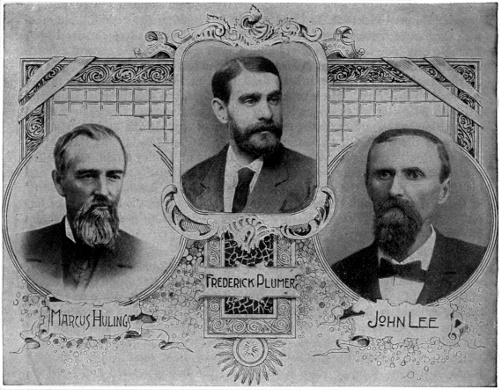
Frederick Plumer
Marcus Hulings John Lee
He died in a few weeks, his dream unfulfilled. Losses in the west had
reduced his fortune without impairing his splendid courage, hope and patience.
He united the endurance of a soldier with the skill of a commander. Marcus
Hulings deserved to enjoy a winter of old age as green as spring, as full of
blossoms as summer, as generous as autumn. His son, Hon. Willis J. Hulings,
served in the Legislature three terms. He introduced the bills prohibiting
railroad-discriminations and was a strong debater on the floor. Senator Quay
favored him for State Treasurer and attempted to stampede the convention
which nominated William Livsey. This was the beginning of the differences
between Quay and the combine which culminated in the rout of the latter and
the triumph of the Beaver statesman in 1895-6. Mr. Hulings lives at Oil City,
has a beautiful home and is colonel of the Sixteenth Regiment of the National
Guards. He practiced law in 1877-81, then devoted his attention to oil-operations,
to mining and lumbering, in which he is at present actively engaged.
John Lee drilled his first well on the Hoover farm, near Franklin, in 1860,
and he is operating to-day in Clinton and Rockland townships. He has had
his share of storm and sunshine, from dusters at Nickelville to a slice of the
Big Injun at Bullion, in the shifting panorama of oil-developments for thirty-six
247years, but his fortitude and manliness never flinched. He is no sour dyspeptic,
whose conduct depends upon what he eats for breakfast and who cannot
believe the world is O. K. if he drills a dry-hole occasionally.
Frederick C. Plumer and John Lee, partners in the Clarion and Butler
fields, were successful operators. Their wells on the Hummell farm netted
handsome returns. By a piece of clever strategy they secured the Diviner
tract, drilled a well that extended the territory two miles south of Millerstown
and sold out for ninety-thousand dollars. Plumer quit with a competence,
purchased his former hardware-store at Newcastle, took a flyer in the Bullion
district and died at Franklin, his birthplace and boyhood home, in 1879.
“Fred” was a thorough man of affairs, prompt, courteous, affable and popular.
His long sickness was borne cheerfully and he faced the end—he died at
thirty-one—without repining. His wife and daughter have joined him in the
land of deathless reunions.
“Over the river!
Sailing on waters where lotuses smile,
Passing by many a tropical isle,
Sighting savannas there mile upon mile,
Over the river!
Music forever and beauty for aye,
Sunlight unending—the sunlight and day,
Never a farewell to weep on the way,
Over the river!”
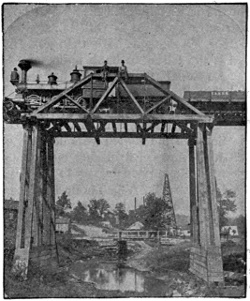
BEAVER CREEK AT JEFFERSON FURNACE.
East, north and west the area of prolific territory widened. Wells on the
Young farm started a jaunty development at Jefferson Furnace. Once the
scene of activity in iron-manufacture, the old furnace had been neglected for
three decades. Oil awakened the spot from its Rip-Van-Winkle slumber. A
narrow-gauge railroad crossed Beaver
Creek on a dizzy trestle, which
afforded an enticing view of derricks,
streams, hills, dales, cleared farms
and wooded slopes. The wells have
pumped out, the railroad has been
switched off and the stout furnace
stands again in its solitary dignity.
James M. Guffey, J. T. Jones, Wesley
Chambers and other live operators
kept branching out until Beaver
City, Mongtown, Mertina, Edenburg,
Knox, Elk City, Fern City and Jerusalem,
with Cogley as a supplement,
were the centers of a production that
aggregated ten-thousand barrels a
day. The St. Lawrence well, on the
Bowers farm, a mile north of Edenburg,
was finished in June of 1872
and directed attention to Elk township.
For two years it pumped sixty-nine
barrels a day, six days each week, the owners shutting it down on Sunday.
Previously Captain Hasson, of Oil City, and R. Richardson, then of Tarr Farm
and now of Franklin, had drilled in the vicinity. Ten dusters north of the
Bowers farm augured poorly for the St. Lawrence. It disappointed the prophets
of evil by striking a capital sand and producing with a regularity surpassed
248only by one well on Cherry Run. It was not “a lovely toy, most fiercely
sought, that lost its charm by being caught.”
The St. Lawrence jumped the northern end of the Clarion district to the
front. Hundreds of wells ushered in new towns. Knox, on the Bowers farm,
attained a post-office, a hardware store and a dozen dwellings, its proximity
to Edenburg preventing larger growth. The cross-roads collection of five housesfive houses
and a store known as Edenburg progressed immensely. John Mendenhall
and J. I. Best’s farm-houses, ’Squire Kribbs’s country-store and justice-mill,
a blacksmith-shop and three dwellings constituted the place at the date of
the St. Lawrence advent. The nearest hotel—the Berlin House—was three
miles northward. In six months the quiet village became a busy, hustling,
prosperous town of twenty-five hundred population. It had fine hotels, fine
stores, banks and people whom a destructive fire—it eliminated two-thirds of
the buildings in one night—could not “send to the bench.” When the flames
had been subdued, a crowd of sufferers gathered at two o’clock in the morning,
sang “Home, Sweet Home,” and at seven were clearing away the embers to
rebuild. Narrow-gauge railroads were built and the folks didn’t scare at the
cars. Elk City flung its antlers to the breeze two miles east. Isaac N. Patterson—he
is president of the Franklin Savings Bank and a big operator in Indiana—had
a creamy patch on the Kaiser farm. Jerusalem’s first arrival—Guffey’s
wells created it—was a Clarion delegate with a tent and a cargo of liquids.
He dealt the drink over a rough board, improvised as a counter, so briskly that
his receipts in two days footed up seven-hundred dollars. He had no license,
an officer got on the trail and the vendor decamped. He is now advance-agent
of a popular show, wears diamonds the size of walnuts and tells hosts of
oil-region stories. The Clarion field was not inflamed by enormous gushers,
but the wells averaged nicely and possessed the cardinal virtue of enduring
year after year. It is Old Sol, steady and persevering, and not the flashing
meteor, “a moment here, then gone forever,” that lights and heats the earth
and is the fellow to bank upon.
An Edenburg mother fed her year-old baby on sliced cucumbers and milk,
and then desired the prayers of the church “because the Lord took away her
darling.” “How is the baby?” anxiously inquired one lady of another at
Beaver City. “Oh, baby died last week, I thank you,” was the equivocal reply.
Some of the oilmen were liberally endowed with the devotional sentiment.
When the news of a blazing tank of oil at Mertina reached Edenburg, a jolly
operator telegraphed the fact to Oil City, with the addendum: “Everything has
gone hellward.” A half-hour later came his second dispatch: “The oil is
blazing, with big flames going heavenward.” Such a happy blending of the
infernal with the celestial is seldom witnessed in ordinary business.
The behavior of some people in a crisis is a wonderful puzzle, sometimes
funnier than a pig-circus. At the St. Petersburg fire, which sent half the town
up in smoke, an old woman rescued from the Adams House, with a bag of
money containing four-hundred dollars, was indignant that her fifty-cent spectacles
had been left to burn. A male guest stormed over the loss of his
satchel, which a servant had carried into the street, and threatened a suit for
damages. The satchel was found and opened. It had a pair of dirty socks,
two dirty collars, a comb and a toothbrush! The man with presence of mind
to throw his mother-in-law from the fourth-story window and carry a feather-pillow
down stairs was not on hand. St. Petersburg had no four-story buildings.
John Kiley and “Ed.” Callaghan headed a circle of jolly jokers at Triangle
249City and Edenburg. Hatching practical sells was their meat and drink. One
evening they employed a stranger to personate a constable from Clarion and
arrest a pipe-line clerk for the paternity of a bogus offspring. In vain the
astonished victim protested his innocence, although he acknowledged knowing
the alleged mother of the alleged kid. The minion of the law turned a deaf
ear to his prayers for release, but consented to let him go until morning upon
paying a five-dollar note. The poor fellow thought of an everlasting flight from
Oildom and was leaving the room to pack up his satchel when the “constable”
appeared with a supply of fluids. The joke was explained and the crowd
liquidated at the expense of the subject of their pleasantry. Kiley was an oilman
and operated in the northern fields. Callaghan slung lightning in the
telegraph-office. He married at Edenburg and went to Chicago. His wife
procured a divorce and married a well-known Harrisburger.
A letter from his feminine sweetness, advising him to hurry up if he wished
her not to marry his rival, so flustrated an Edenburg druggist that he imbibed
a full tumbler of Jersey lightning. An irresistible longing to lie down seized
him and he stretched himself for a nap on a lounge in a room back of the
store. John Kiley discovered the sleeping beauty, spread a sheet over him
and prepared for a little sport. He let down the blinds, hung a piece of crape
on the door and rushed out to announce that “Jim” was dead. People
flocked to learn the particulars. Entering the drug-store a placard met their
gaze: “Walk lightly, not to disturb the corpse!” They were next taken to
the door of the rear apartment, to see a pair of boots protruding from beneath
a sheet. Nobody was permitted to touch the body, on a plea that it must await
the coroner, but the friends were invited to drink to the memory of the
deceased pill-dispenser and suggest the best time for his funeral. Thus matters
continued two hours, when the “corpse” wakened up, kicked off the
sheet and walked out! His friends at first refused to recognize him, declaring
the apparition was a ghost, but finally consented to renew the acquaintance
upon condition that he “set ’em up” for the thirsty multitude.
A Clarion operator, having to spend Sunday in New York, strayed into a
fashionable church and was shown to a swell seat. Shortly after a gentleman
walked down the aisle, glared at the stranger, drew a pencil from his pocket,
wrote a moment and handed him a slip of paper inscribed, “This is my pew.”
The unabashed Clarionite didn’t bluff a little bit. He wrote and handed back
the paper: “It’s a darned nice pew. How much rent do you ante up for it?”
The New-Yorker saw the joke, sat down quietly and when the service closed
shook hands with the intruder and asked him to dinner. The acquaintance
begun so oddly ripened into a poker-game next evening, at which the oilman
won enough from the city clubman to pay ten years’ pew-rent. At parting he
remarked: “Who’s in the wrong pew now?” Then he whistled softly:
“Let me off at Buffalo!”
Clarion’s products were not confined to prize pumpkins, mammoth corn
and oil-wells. The staunch county supplied the tallest member of the National
Guard, in the person of Thomas Near, twenty-one years old, six feet eleven in
altitudinous measurement and about twice the thickness of a fence-rail. The
Clarion company was mustered in at Meadville. General Latta’s look of astonishment
as he surveyedsurveyed the latitude and longitude of the new recruit was exceedingly
comical. He rushed to Governor Hartranft and whispered, “Where
in the name of Goliath did you pick up that young Anak?” At the next
annual review Near stood at the end of the Clarion column. A staff-officer,
250noticing a man towering a foot above his comrades, spurred his horse across
the field and yelled: “Get down off that stump, you blankety-blank son of a
gun!” The tall boy did not “get down” and the enraged officer did not discover
how it was until within a rod of the line. His chagrin rivaled that of
Moses Primrose with the shagreen spectacles. Poor Near, long in inches and
short in years, was not long for this world and died in youthful manhood.
Hon. James M. Guffey, one of Pennsylvania’s most popular and successful
citizens, began his career as a producer in the Clarion district. Born and reared
on a Westmoreland farm, his business aptitude early manifested itself. In
youth he went south to fill a position under the superintendent of the Louisville
& Nashville Railroad. The practical training was put to good use by the
earnest young Pennsylvanian. Its opportunities for dash and energy to gain
rich rewards attracted him to the oil-region. Profiting by what he learned
from the experiences of others in Venango—a careful observer, he did not have
to scorch himself to find out that fire is hot—he located at St. Petersburg in
1872. Clarion was budding into prominence as a prospective oil-field. Handling
well-machinery as agent of the Gibbs & Sterrett Manufacturing Company
brought him into close relations with operators and operations in the new territory.
He improved his advantages, leased lands, secured interests in promising
farms, drilled wells and soon stepped to the front as a first-class producer.
Fortune smiled upon the plucky Westmorelander, whose tireless push and fearless
courage cool judgment and sound discretion tempered admirably. While
always ready to accept the risks incident to producing oil and developing
untried sections, he was not a reckless plunger, going ahead blindly and not
counting the cost. He decided promptly, moved forward resolutely and took
nobody’s dust. Those who endeavored to keep up with him had to “ride the
horse of Pacolet” and travel fast. He invested in pipe-lines and local enterprises,
helped every deserving cause, stood by his friends and his convictions,
251believed in progress and acted strictly on the square. Not one dollar of his
splendid winnings came to him in a manner for which he needs blush, or apologize
or be ashamed to look any man on earth straight in the face. He did not
get his money at the expense of his conscience, of his self-respect, of his generous
instincts or of his fellow-men. Of how many millionaires, in this age of
shoddy and chicanery, of jobbery and corruption, of low trickery and inordinate
desire for wealth, can this be said?
Mr. Guffey is an ardent Democrat, but sensible voters of all classes wished
him to represent them in Congress and gave him a superb send-off in the oil-portion
of the Clarion district. Unfortunately the fossils in the back-townships
prevented his nomination. The uncompromising foe of ring-rule, boss-domination
and machine-crookedness, he is a leader of the best elements of
his party and not a noisy ward-politician. His voice is potent in Democratic
councils and his name is familiar in every corner of the producing-regions.
His oil-operations have reached to Butler, Forest, Warren, McKean and Allegheny
counties. He furnished the cash that unlocked the Kinzua pool and
extended the Bradford field miles up Foster Brook. In company with John
Galey, Michael Murphy and Edward Jennings, he drilled the renowned Matthews
well and owned the juiciest slice of the phenomenal McDonald field.
He started developments in Kansas, putting down scores of wells, erecting a
refinery and giving the state of Mary Ellen Lease a product drouths cannot
blight nor grasshoppers devour. He was largely instrumental in developing
the natural-gas fields of Western Pennsylvania, Ohio and Indiana, heading the
companies that piped it into Pittsburg, Johnstown, Wheeling, Indianapolis and
hundreds of small towns. He owns thousands of acres of the famous gas-coal
lands of his native county, vast coal-tracts in West Virginia and valuable
reality in Pittsburg. He lives in a handsome house at East Liberty, brightened
by a devoted wife and four children, and dispenses a bountiful hospitality.
Quick to mature and execute his plans, he dispatches business with great celerity,
keeping in touch constantly with the details of his manifold enterprises.
He is the soul of honor in his dealings, liberal in his benefactions and always
approachable. His charm of manner, kindness of heart, keen intuition and
rare geniality draw men to him and inspire their confidence and regard. He is
a striking personality, his lithe frame, alert movements, flowing hair, luxuriant
mustache, rolling collar, streaming tie, frock-coat and broad-brimmed hat suggesting
General Custer. When at last the vital fires burn low, when his brave
heart beats weak and slow, when the evening shadows lengthen and he enters
the deepening dusk at the ending of many happy years, James M. Guffey will
have lived a life worth living for its worth to himself, to his family, to the community
and to the race.
“The grass is softer to his tread
For rest it yields unnumber’d feet;
Sweeter to him the wild rose red
Because it makes the whole world sweet.”
Wesley S. Guffey, for many years a prominent operator, resembles his
brother in enterprise, activity and the manly qualities that win respect. He
owns scores of productive wells, and the firm of Guffey & Queen ranks high in
the southern fields. He has labored zealously to secure political reform and
free Pittsburg, where he has his beautiful home and office, from the odious
thraldom of corrupt bossism. Unhappily the last legislature defeated the
efforts of good citizens in this direction. Mr. Guffey is a fluent talker, knows
lots of rich stories and reckons his friends by whole battalions. Pride and
252meanness he despises and “his word is his bond.” Another brother, John
Guffey, has been sheriff of Westmoreland county and is a leading citizen. The
Guffeys are men to trust implicitly, to tie to, to swear by and to bank upon at
all times and under all circumstances.
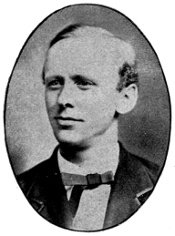
Major Henry Wetter, the embodiment of honor and energy, was the largest
operator in the Clarion district until swamped by the low price of oil. Death
overtook him while struggling against heavy odds
to recuperate his health and fortune. How sad it
is that the flower must die before the fruit can
bloom. A terrible decline in oil-values caused his
failure in 1877 and compelled Merrick & Conley’s
Edenburg bank to close.
“I falter where I firmly trod.”
Edenburg, in its prime the liveliest inland town
the Clarion district could boast, is in Beaver township,
ten miles from Foxburg and Emlenton. It
was named by. J. G. Mendenhall, who located on
a big farm and opened the Eden Inn fifty years
ago. Two farms, one two miles north and the
other a mile south-west of his home-farm, he
dubbed Jerusalem and Egypt respectively. Mendenhall
lived to see all three tracts productive oil-territory,
with a busy town occupying part of the
central tract. J. I. Best, who died in 1880, was his early neighbor and P. F.
Kribbs started a country-store opposite the Mendenhall homestead. In the
spring of 1872 Balliet & Co. drilled a duster on the Best farm. Hahn & Co.
had similar ill-luck on the Kiser farm, a mile south, following in the wake of
W. J. Brundred’s dry-hole on the Eischelman tract a month previous. The
St. Lawrence strike changed the aspect of affairs and brought the territory into
notice. Wooden buildings were hurried up, wells were rushed through the
sand, crowds thronged the streets and Edenburg became the centre of attraction.
Page Maplestone had the first hotel, to which Robert Orr quickly succeeded.
The Winebrennerians had the first church, chased closely by the
Methodists. Two banks, countless stores and shops, plenty of saloons, hundreds
of houses and hosts of operators were soon in evidence. Knox, Elk
City, Slam Bang, Wentling, Jefferson, Beaver and other suburban oil-towns put
in an appearance. Ross Haney, D. J. Wyncoop, Charles Lavens, A. J. Urquhart,
Gray Brothers, G. M. Cushing, Clark Hayes, B. F. Painter, J. D. Wolff,
G. W. Moltz, Joseph E. Zuver, James Travis, M. E. Hess, Charles Shaw and
dozens of others were familiar figures. J. M. Gifford launched the Herald,
J. Edd Leslie exploited the Spirit, Campbell Brothers loaded the Oil-Times
and Tom Whittaker fired off the malodorous Gattling Gun. Col. J. S. Brown
dealt in real-estate and wrote breezily for the Oil-City Derrick. Sam Magee,
M. M. Meredith and William Wirt Johnson practised law. Major J. B. Maitland
managed the United Pipe-Lines and Goss Brothers owned the best well
in the diggings. Narrow-gaugeNarrow-gauge railroads were built from Emlenton and Foxburg,
a borough charter was obtained and 1877 saw the town at its highest
point. Severe fires scourged it frightfully, the Butler field lured many of the
operators and Edenburg relapsed into a tidy village.
Thomas McConnell, Smith K. Campbell, W. D. Robinson and Col. J. B.
Finlay, of Kittanning, in 1860 purchased two acres of land on the west bank of
253the Allegheny, ninety rods above Tom’s Run, from Elisha Robinson. Organizing
the Foxburg Oil-Company of sixteen shares, they drilled a well four-hundred-and-sixty
feet. An obstruction delayed work a few days, the war
broke out and the well was abandoned. The same parties paid Robinson five-thousand
dollars in 1865 for one-hundred acres and sold thirty to Philadelphia
capitalists. The latter formed the Clarion and Allegheny-River Oil-Company
and sunk a well which struck oil on October tenth, the first produced in the
upper end of Armstrong county and the beginning of the Parker development.
Venango was drooping and operators sought the southern trail. The Robinson
farm was not perforated as quickly as “you could say Jack Robinson,”
the owners choosing not to cut it into small leases, but other tracts were seized
eagerly. Drilled deeper, the original Robinson well was utterly dry! Had it
been finished in 1860-1 the territory might have been condemned and the
Parker field never heard of!
John Galey’s hundred-barrel well, drilled in 1869 on the island above
Parker, relieved the monotony of commonplace strikes—twenty to fifty barrels—on
the Robinson and adjacent farms and elevated the district to the top rung
of the ladder. Parker’s Landing—a ferry and a dozen houses—named from a
pioneer settler, ambled merrily to the head of the procession. The center of
operations that stretched into Butler county and demonstrated the existence of
three greasy streaks, Parker speedily became a red-hot town of three-thousand
inhabitants. Hotels, stores, offices, banks and houses crowded the strip of
land at the base of the steep cliff, surged over the hill, absorbed the suburbs of
Lawrenceburg and Farrentown and proudly wore the title of “Parker City.”
Hosts of capital fellows made life a perpetual whirl of business and jollity.
Operators of every class and condition, men of eminent ability, indomitable
hustlers, speculators, gamblers and adventurers thronged the streets. It was
the vim and spice and vigor of Oil City, Rouseville, Petroleum Centre and Pithole
done up in a single package. A hundred of the liveliest laddies that ever
capered about a “bull-ring” traded jokes and stories and oil-certificates at the
Oil-Exchange. Two fires obliterated nine-tenths of the town, which was never
wholly rebuilt. Developments tended southward for years and the sun of
Parker set finally when Bradford’s rose in the northern sky. The bridge and
a few buildings have held on, but the banks have wound up their accounts, the
multitudes have dispersed, the residence-section of the cliff is a waste and the
glory of Parker a tradition. As the ghost of Hamlet’s father observed concerning
the bicycle academy, where beginners on wheels were plentiful: “What
a falling off was there!”
Galey leased lands, sunk wells and sold to Phillips Brothers for a million
dollars. He played a strong hand in Butler and Allegheny and removed to
Pittsburg, his present headquarters. He possessed nerve, energy and endurance
and, like the country-boy applying for a job, “wuz jam’d full ov day’s
work.” He would lend a hand to tube his wells, lay pipes, move a boiler or
twist the tools. There wasn’t a lazy bone in his anatomy. Rain, mud, storm
or darkness had no terrors for the bold rider, who bestrode a raw-boned horse
and “took Time by the forelock.” A young lady from New York, whose
father was interested with Galey in a tract of oil-land, accompanied him on
one of his visits to Millerstown. She had heard a great deal about her father’s
partner and the producers, whom she imagined to be clothed in broadcloth and
diamonds. When the stage from Brady drew up at the Central Hotel a gorgeous
chap was standing on the platform. He sported a stunning suit, a huge
254gold-chain, a diamond-pin and polished boots, the whole outfit got up regardless
of expense. “Oh, papa, I see a producer! That must be Mr. Galey,”
exclaimed the girl as this prototype of the dude met her gaze. The father
glanced at the object, recognized him as a neighboring bar-tender and spoiled
his daughter’s fanciful notion by the curt rejoinder: “That blamed fool is a
gin-slinger!” Butler had long been a sort of by-word for poverty and meanness,
the settlers going by the nickname of “Buckwheats.” This was an unjust
imputation, as the simple people were kind, honest and industrious, in these
respects presenting a decided contrast to some of the new elements in the
wake of the petroleum-development. The New-York visitor drove out in the
afternoon to meet his business-associate. A mile below the Diviner farm a
man on horseback was seen approaching. Mud covered the panting steed and
his rider. The young lady, anxious to show how much she knew about the
country, hazarded another guess. “Oh! papa,” she said earnestly, “I’m sure
that’s a Buckwheat!” The father chuckled, next moment greeted the rider
warmly and introduced him to his astonished daughter as “My partner, Mr.
Galey!” A hearty laugh followed the father’s version of the day’s incidents.
John H. Galey has been engaged in oil-operations for a generation. Coming
from Clarion county to Oil Creek in the sixties, he participated in the Pithole
excitement, drilled a test-well that broadened the Pleasantville field and
started the Parker furore with his island-strike. He is every inch a petroleum-pioneer.
To him belongs the honor of ushering in various new districts in
Pennsylvania and the oil-developments in Kansas and Texas. Well-earned
success has rewarded his persistent, indomitable energy. He owns a fat slice
of the finest silver-mine in Idaho and holds a large stake in California, Colorado
and Nova-Scotia gold-mines. Mr. Galey is thoroughly practical and companionable,
has traveled much and observed closely, nor can any excel him in
narrating reminiscences and experiences of life in the oil-regions.
255John McKeown drilled on the Farren hill and the slopes bordering the
north bank of Bear Creek. Glory Hole popped up on B. B. Campbell’s Bear-Creek
farm. Campbell-bluff, whole-souled “Ben”—is a Pittsburg capitalist,
big in body and mind, outspoken and independent. “The Campbells are
coming” could not have found a better herald. He produced largely, bought
stacks of farms, refined and piped oil and was an important factor in the Armstrong-Butler
development. At the Ursa Major well, the first on the farm,
large casing and heavy tools were first used, with gratifying results. “Charley”
Cramer juggled the temper-screw and laughed at the chaps who solemnly predicted
the joints would not stand the strain and the engine would not jerk the
tools out of the hole. The tool-dresser on Cramer’s “tower”—drilling went
on night and day, each “tower” lasting twelve hours and the men changing
at noon and midnight—was A. M. Lambing, now the learned and zealous parish-priest
at Braddock. The well, completed in June of 1871 and good for a
hundred barrels, was owned by James M. Lambing, to whom more than any
other man the world is indebted for the extension of the Butler field.
Born in Armstrong county, in 1861 young Lambing concluded to invest
some time and labor—his sole capital—in a well at the mouth of Tubb’s Run,
two miles above Tionesta. A dry-hole was the poor reward of his efforts.
Enlisting in the Eighty-third Regiment, he received disabling injuries, was discharged
honorably, returned to Forest county in 1863, superintended the Denver
Petroleum-Company, dealt in real estate and in 1866 commenced operating
at Tidioute. A vein of bad luck in 1867 exhausting his last dollar, he sold his
gold-watch and chain to pay the wages of his drillers. Facing the future
bravely, he worked by the day, contracted to bore wells at Pleasantville,
Church Run, Shamburg and Red Hot and bore up cheerfully during three
years of adversity. In the winter of 1869 he traded an engine for an interest in
a well at Parker that smelled of oil. For another interest he drilled the Wilt
& Crawford well and secured leases on Tom’s Run. His Pharos, Gipsy
Queen and Lady Mary wells enabled him to strike out boldly. In company
with his brother—John A. Lambing—C. D. Angell and B. B. Campbell, he
ventured beyond the prescribed limits to the Campbell, Morrison and Gibson
farms. He “wildcatted” farther south, at times with varying success, pointing
the way to Modoc and Millerstown. Reverses beset him temporarily, but
hope and courage and integrity remained and he recovered the lost ground.
Charitable, enterprising and sincere, no truer, squarer, manlier man than James
M. Lambing ever marched in the grand cavalcade of Pennsylvania oil-producers.
He and John A. retired from the business years ago to engage in other pursuits.
James M. settled at Corry and served so capably as mayor that the citizens
wanted to elect him for life. His noble, womanly wife, a real helpmeet always,
made his hospitable home an earthly paradise. He had an office in Pittsburg
and customers for his Ajax machinery wherever oil is produced. He died in
January, 1897. “Who can blot his name with any just reproach?”
Counselled by “spirits,” Abram James selected a block of land on Blyson
Run, twenty miles up the Clarion River, as the location of a rich petroleum-field.
His luck at Pleasantville induced numbers to believe him an infallible
oil-smeller. The test-well that was to deluge Blyson with crude was bored
eighteen-hundred feet. It had no sand or oil and the tools were stuck in the
hole! The “spirits” couldn’t have missed the mark more widely if they had
directed James to mine for gold in a snow-bank.
The Big-Injun well at Bullion, owned originally by Prentice, Wheeler &
256Crawford, was located in the center of a wheat-patch by William R. Crawford,
of Franklin, a member of the firm. His opinion carried against the choice of
his partners, who preferred a spot fifteen rods eastward, where a well drilled
later was “dry as a powder-horn.” The direction “Smiley’s Frog” might
happen to jump was less uncertain than the outcome of many a Bullion well before
the tools pierced the sand to the last foot and settled the matter positively.
On October third, 1875, the boiler at the Goss well, J. I. Best farm, exploded,
fatally injuring Alonzo Goss and instantly killing A. Wilson, the man
in charge.
The first pipe-line in Clarion County was laid in 1871, by Martin & Harms,
on lands of the Fox estate. In October of 1877 the Rev. Dr. Newman, President
Grant’s pastor in Washington, dedicated the second church the Methodists
built at Edenburg. Fire cremated the structure and seriously damaged the
third one on the site in 1879. Probably no other town of its size on the face of
the earth has suffered so repeatedly and disastrously at the hands of incendiaries
as Edenburg. The third great conflagration, on October thirteenth,
1878, destroyed two-hundred buildings and thirteen oil-wells.
Sad accidents happened before drillers learned how to manage a flowing
oil-well with casing in it. At Frank Fertig’s well, Antwerp, a man was burned
to death. The burning of the Shoup & Vensel well at Turkey City cost three
lives and led to an indignation-meeting at St. Petersburg to protest against
casing. Danger from its use was soon removed by Victor Gretter’s invention
of the oil-saver. Gretter, a small, dark-haired, dark-eyed man, lived at St.
Petersburg. He was an inventive genius and a joker of the first water. His
oil-saver doubtless saved many lives, by preventing gas and oil from escaping
when a vein was tapped and coming in contact with the tool-dresser’s fire in
the derrick.
Captain John Kissinger, a pioneer settler, died in 1880 at the age of eighty-five.
He was the father of thirty-four children, nine of whom perished by his
dwelling taking fire during the absence of the parents from home. His second
wife, who survived him ten years, weighed three-hundred pounds.
Lillian Edgarton, the plump and talented platform-speaker, was billed to
appear at Franklin. She traveled from Pittsburg by rail. A Parker broker
was a passenger on the train and wired to the oil-exchange that Josie Mansfield
was on board. The news flew and five-hundred men stood on the platform
when the train arrived. The broker jumped off and said the lady had a seat
near the center of the coach he had just left. The boys climbed on the car-platform,
opened the door and marched in single file along the aisle to get
a look at “Josie.” The conductor tore his hair in anguish that the train
would not carry such a crowd as struggled to get on, but he was dumbfounded
when the long procession began to get off. The sell was not discovered until
next morning, by which time the author of the joke had started on his summer-vacation
and could not be reached by the vigilance-committee.
Down the zig-zagged stream proved to not a few operators a pleasant
voyage to wealth and to others the direct road to disaster. Venango, Clarion
and Armstrong counties had been explored, with Butler on deck to surprise
mankind by the extent and richness of its amazing territory.
257
The first building at Triangle bore in bold letters and bad spelling a sign
labeled “Tryangle Hotel.”
“A Black Justice of the Peace” ran the off-color legend, painted by an
artist not up in punctuation, on the weather-beaten sign of ’Squire Black, at
Shippenville.
An honest Dutchman near Turkey City declined to lease his farm at one-fourth
royalty, insisting upon one-eighth as the very lowest he would accept.
He did not discover that one-eighth was not twice one-fourth until he received
his first instalment of oil, when he fired off the simple expletive, “Kreutzmillionendonnerwetter!”
A farmer rather shy on grammar, who represented Butler county in the
Legislature at the outset of developments around Petrolia, “brought down the
house” and a unanimous appropriation by his maiden-speech: “Feller citizens,
if we’uns up to Butler county wuz yu’uns down to Harrisburg we’uns
would give yu’uns what we’uns is after!”
At Oil City in 1863-4 J. B. Allen, of Michigan, a first-class chemist, had
charge of the prescription-department in Dr. Colbert and Dr. Egbert’s
drug-store. He could read Greek as readily as English, declaim in Latin by
the hour, quote from any of the classics and speak three or four modern languages.
To raise money to pay off a mortgage on his father’s farm he walked
across the Allegheny on a wire thirty feet above the water. He carried a large
flag, attached to a frame mounted on a pulley-wheel, which he shoved with
one hand, holding a balance-pole in the other. It was a feat Blondin could not
excel. Allen was decidedly eccentric and the hero of unnumbered stories.
Once a mud-bespattered horseman rushed into the store with a prescriptionprescription
that called for a deadly poison. The horseman was informed it was not safe
to fill it, but he insisted upon having it, saying it bore a prominent doctor’s
signature and there could be no mistake. Allen filled it and wrote on the
label: “Caution—If any damphool takes this prescription it will kill him as
dead as the devil!”
General Reed, of Erie, the largest vessel-owner on the lakes, represented
his district in Congress and desired a second term. The Democrats nominated
Judge Thompson and Clarion county was the pivot upon which the election
turned. The contest waxed furious. Near its close the two candidates brought
up at a big meeting in the wilds of Clarion to debate. Lumbermen and furnacemen
were out in force. Reed led off and on the homestretch told the people
how he loved them and their county. He had built the fastest craft on the
lakes and named the vessel Clarion. As the craft sailed from Buffalo to Erie,
and from Cleveland to Detroit, and from Saginaw to Mackinaw, to Oconomowoc
and Manitowoc, Oshkosh, Milwaukee and Chicago, in every port she folded her
white wings and told of the county that honored him with a seat in Congress.
The people were untutored in nautical affairs and listened with rapt attention.
As the General closed his speech the enthusiasm was unbounded. Things
looked blue for Judge Thompson. After a few moments required to get the
audience out of the seventh heaven of rapture, he stepped to the front of the
platform, leaned over it, motioned to the crowd to come up close and said:
“Citizens of Clarion, what General Reed has told you is true. He has built a
brig and a grand one. But where do you suppose he painted the proud name
of Clarion?” Turning to General Reed, he said: “Stand up here, sir, and tell
these honest people where you had the painter put the name of Clarion. You
never thought the truth would reach back here. I shall tell these people the
truth and I challenge you to deny one word of it. Yes, fellow-citizens, he painted
the proud name of Clarion under the stern of the brig—under her stern, gentlemen!”
The indignation of the people found vent in groans and curses. General
Reed sat stunned and speechless. No excuses would be accepted and the
vote of proud Clarion made Judge Thompson a Congressman.
258
PARKER—FROM PROSPECT ROCK
ARGYLE CITY-1872.
KARNS CITY-1873
GREECE CITY 1873
MILLERSTOWN 1874
PETROLIA 1873
XIII. ON THE SOUTHERN TRAIL.
259
Butler’s Rich Pastures Unfold Their Oleaginous Treasures—The
Cross-Belt Deals Trumps—Petrolia, Karns City and Millerstown—Thorn
Creek Knocks the Persimmons for a Time—McDonald Mammoths
Break All Records—Invasion of Washington—Green County
Has Some Surprises—Gleanings of More or Less Interest.
“I’m comin’ from de Souf, Susanna, do’ant yo cry.”—Negro Melody.
“Again the lurid light gleamed out.”—J. Boyle O’Reilly.
“I have never been known to miss one end of the trail.”—J. Fennimore Cooper.
“An eagle does not catch flies.”—Latin Proverb.
“Step by step one goes very far.”—French Proverb.
“The light fell like a halo upon their bent heads.”—Rev. John Watson.
“Either I will find a way or make one.”—Norman Crest.
“I stretch lame hands of faith and grope.”—Tennyson.
“We but catch at the skirts of the thing we would be.”—Owen Meredith.
“Where are frost and snow when the hawthorn blooms?”—Julius Stinde.
“The things we see are shadows of the things to be.”—Phœbe Cary.
“Oh! but a man’s reach should exceed his grasp.”—Robert Browning.
“These little things are great to little man.”—Oliver Goldsmith.
“So will a greater fame redound to thee.”—Dante.
“Every white will have its black and every sweet its sour.”—Dr. Percy.
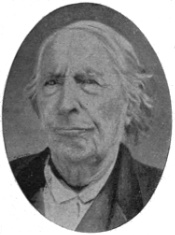
Klondyke nuggets, cold, yellow and glittering,
could not be more fascinating to lovers
of the most exciting methods of gaining
wealth than were the oil-wells that started
Parker on the highway to prosperity. All eyes
turned instinctively southward, believing the next
center of activity lay in that direction. The Israelites
scanning the horizon for a glimpse of the promised
land were less earnest and anxious. Butler,
not Canaan, was on everybody’s lips. “On to
Richmond,” the frenzied cry during the civil war,
appeared in the new dress of “On to Butler!”
For a time, just to catch breath for the supreme
movement, operators groped their way cautiously.
But Napoleon scaled the Alps and the advance-couriers
of the coming host of oilmen climbed
Farren Hill and the slopes beyond. Julius Cæsar crossed the Rubicon in days
of old, so Campbell and Lambing in 1871 crossed Bear Creek, three miles
south-west of Parker, to plant the tall derricks which signified that the invasion
of Butler by the petroleumites was about to begin and to be carried through to
a finish. With Richard each of the bold invaders might declare:
“I have set my life upon a cast,
And I will stand the hazard of the die.”
Butler, the county-seat of Butler county, was laid out in 1802 by the Cunninghams,
two brothers from Lancaster, who repose in the old cemetery. The
surveyor was David Dougall, who lived seventy-five years alone, in a shanty
260near the court-house, dying at ninety-eight. He owned a row of tumble-down
frames on the public-square, eye-sores to the community, but would not sell lest
his poor tenants might suffer by a change of proprietors! His memory of local
events was marvelous. He walked from Detroit through the forest to Butler,
following an Indian trail, and remembered when Pittsburg had only three brick-buildings.
He was agent of the McCandless family and once consented to
spend a night at the mansion of his friends in Pittsburg. To do honor to the
occasion he wore trousers made of striped bed-ticking. Fearing fire, he would
not sleep up-stairs and a bed was provided in the parlor. About midnight an
alarm sounded. Dougall jumped up, grabbed his shoes and hat and walked
home-thirty-three miles-before breakfast. He was an eccentric bachelor and
had his coffin ready for years. It was constructed of oak, grown on one of his
farms, which he willed to a friend upon condition that the legatee buried him at
the foot of a particular tree and kept a night-watchman at his grave one year.
He was the last of his race and the last survivor of the bold pioneers to whom
Butler owed its settlement.
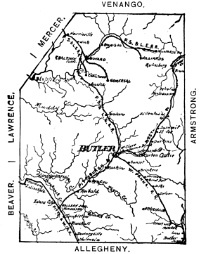
Well-known operators figured in the vicinity of Bear Creek. Joseph Overy
drilled rows of good wells, pushed south and founded the town embalmed as
St. Joe in compliment to its progenitor. Marcus Brownson—he was active in
Venango and McKean and died at Titusville—had a walkover on the Walker
farm, a mile in advance. On Donnelly’s
eleven-hundred acres, offered in 1868
for six-thousand-dollars, scores of medium
wells yielded from 1871 to 1878.
S. D. Karns drained the Morrison farm
and John McKeown hit the “sucker-rod
belt”—so called from its extreme
narrowness—near Martinsburg. Ralph
Brothers tickled the sand on the Sheakley
farm. Up the stream operations
jogged and Argyle City sprouted on the
hillside. Two miles ahead, upon the
line dividing the Jameson and Blaney
farms, Dimick, Nesbit & Co. finished
a wildcat well on April seventeenth,
1892. This was the noted Fanny Jane—gallantly
named in honor of a pretty
girl—which pumped one-hundred barrels
and gave birth to Petrolia, seven miles
south by west of Parker. George H.
Dimick, examining lands in Fairview
township, Butler county, decided that a natural basin at the junction of South
Bear Creek and Dougherty Run was oil-territory. Fifty men were raising a
barn on the Campbell farm, overlooking this basin. Proceeding to the spot,
he proposed to drill a test well if the owners of the soil would lease enough
land to warrant the undertaking. Terms were agreed upon which secured
twenty acres of the Blaney farm, sixteen of the Jameson, ten of the W. A.
Wilson, ten of the James Wilson and ten of the Graham, at one-eighth royalty.
The nearest producing wells at that date were three miles north. The
Fanny Jane stirred the blood of the oil-clans. The moving mass began to-arrive
in May and by July two-thousand people had their home at Petrolia.
261A charter was obtained and Mr. Dimick was chosen burgess at the first borough-election,
in February of 1873. The town expanded like the turnip Longfellow
said “grew and it grew and it grew all it was able.” Hotels, stores,
shops and offices lined the valley and dwellings crowned the hills. A narrow-gauge
railroad from Parker was built in 1874, extended to Karns City and
Millerstown and ultimately to Butler. Fisher Brothers paid sixty-thousand
dollars for the Blaney farm and wells multiplied in all directions. A dog-fight
or a street-scrap would gather hundreds of spectators. The Argyle Savings
Bank handled hundreds-of-thousands of dollars daily. Ben Hogan erected a
big opera-house and May Marshall was the Cora Pearl of the frail sisterhood.
R. W. Cram ran the post-office and news-room. “Steve” Harley wafted
newsy items to the newspapers. Dr. Frank H. Johnston, now of Franklin, was
the first physician. Kindred spirits met at “Sam” McBride’s drug-store and
262Peter Christie’s Central Hotel. Poor “Sam,” “Dave” Mosier, H. L. McCance
and S. S. Avery are in their graves and others have wandered nobody
knows whither. Petrolia continued the metropolis four years and then dropped
out of the game. Some straggling houses and left-over derricks alone remain
of the gayest, sprightliest, hottest, busiest town that bloomed and withered in
old Butler.
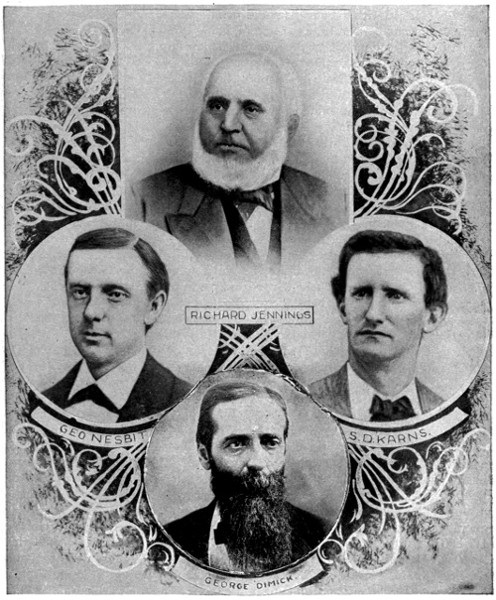
RICHARD JENNINGS
GEO NESBIT S. D. KARNS.
GEORGE DIMICK
George H. Dimick, the son of a Wisconsin farmer and sire of Petrolia, is
liberally stocked with the never-say-die qualities of the breezy Westerner. At
nineteen he taught a Milwaukee school, landed on Oil Creek in 1860 and was
appointed superintendent of the two Buchanan farms by Rouse & Mitchell.
He drilled on his own account in the spring of 1861, aided in settling the Rouse
estate, enrolled as a private in “Scott’s Nine-Hundred” and came out a captain
at the close of the war. In May of 1865 he bent his footsteps towards Pithole,
sold lands for the United States Petroleum-Company and drilled eleven
dry-holes on the McKinney farm! Interests in the Poole, Grant, Eureka and
Burchill spouters offset these losses and added thousands of dollars a week to
his wealth. Staying at Pithole too long, values had shrunk to such a degree
that he was virtually penniless at his departure from the “Magic City” in 1867.
A whaling voyage of fifteen months in the Arctic seas and a sojourn at his boyhood
home improved his health and he returned in time to share in the Pleasantville
excitement. He located at Parker’s Landing in 1871 as partner of
McKinney & Nesbit in the sale of oil-well supplies. He operated in the Parker
field, at St. Petersburg, Petrolia, Greece City and Slippery Rock. Disposing
of his properties in these localities, he and Captain Peter Grace drilled the
wildcat-well that opened Cherry Grove and paralyzed the market in 1882. He
had been active at Bradford and the middle field felt the influence of his shrewd
movements. He has kept abreast of developments in the southern districts,
sometimes getting several lengths ahead. He is now interested in West Virginia
and Kentucky. Those who know his quick perception, his executive
ability and his intense love for opening new fields would not wonder to hear of
his striking a gusher at Oshkosh or Kamtschatka. Mr. Dimick is a man of
active temperament, high character and sturdy industry, a genuine pathfinder
and tireless explorer.
An Erie boy of fifteen when he left his father’s house for the oil-region in
1862, George H. Nesbit first fired a still in a Titusville refinery and in 1863
engaged with Dinsmore Brothers at Tarr Farm. He built a small refinery at
Shaffer, sold it in 1864 and in the spring of 1865 drilled wells for himself on
Benninghoff and Cherry-Tree Runs. He spent two years at Pithole, gaining a
fortune and remaining until the collapse swallowed the bulk of his profits. He
operated at Pioneer in 1867 and a year later at Pleasantville. He and George
H. Dimick prospected in 1869 for oil-belts and fresh territory, located rich
leases on Hickory Creek and established the line of the Venture well at Fagundas.
In 1870 Nesbit moved to Parker and, in company with John L. McKinney,
sold oil-well machinery and oil-lands. McKinney & Nesbit drilled along Bear
Creek, especially on the Black and Dutchess farms, prospering greatly. The
firm ranked with the most enterprising and realized large returns from wells at
St. Petersburg and Parker. Dimick & Nesbit, with Mr. McKinney as their
associate, opened the Petrolia field in 1872. William Lardin, the contractor of
the Fanny Jane, bought McKinney’s interest in the well and leases. The three
partners were right in the swim, their first six wells at Petrolia yielding them a
thousand barrels a day. Nesbit bought the Patton farm, below town, in 1872
263for twenty-thousand dollars, selling five-eighths. Five third-sand wells ranged
from thirty to one-hundred barrels and oil ruled at three to five dollars. The
fourth-sand was found in 1873, and in January of 1874 Nesbit & Lardin struck a
thousand-barrel gusher on the Patton. The farm paid enormously and Nesbit
became an “oil-prince.” He developed hundreds of acres and displayed masterly
tact. His check was good for a half-million any day and his luck was so
remarkable that, had he fallen into the river, probably he would not have been
wet. He paid the highest wages and met his bills at sight. He entered the
oil-exchange at Parker, for a time was a high-roller and ended a bankrupt!
The desk on which he wrote his bold, round signature on checks aggregating
many hundred-thousand dollars was stored away among shocks of corn and
sheaves of oats in the weather-stained barn on the Patton farm. J. N. Ireland
bought the tract for seven-thousand dollars. Nesbit drifted about aimlessly,
heard from occasionally at Macksburg and fetching up at last in Cincinnati.
His prestige was gone, his star had waned and he never “caught on” again.
He was no sluggard in business, no dullard in society, no niggard with money,
no laggard in the petroleum-column. Surely the oil-region has furnished its
full allotment of sad romances from real life. Nesbit died July eighth, 1897.
“Time, with a face like a mystery,
And hands as busy as hands can be,
Sits at the loom with its warp outspread,
To catch in its meshes each glancing thread.
Click, click! there’s a thread of love wove in!
Click, click! and another of wrong and sin!
What a checkered thing this web will be
When we see it unrolled in eternity!”
James E. Brown, to whom Nesbit sold one-quarter of the Patton farm,
made his mark upon the industries of the state. A carpenter’s son, he started
a store on the site of Kittanning, saved money, purchased lands and at his
death in 1880 left his family four-millions. He manufactured iron at various
furnaces and owned a big block of stock in the rolling-mills at East Brady.
Samuel J. Tilden was a stockholder in the works, which employed sixteen
hundred men, turned out the first T-rails west of the Alleghenies and tottered
to their fall in 1874. Mr. Brown cleared eight-hundred-thousand dollars in
1872 by the advance in iron. He owned oil-farms in Butler county, took stock
in the Parker Bridge, the Parker & Karns City Railroad and the Karns Pipe-Line
Company and conducted a bank at Kittanning. His granddaughter,
Miss Findley, who inherited half his wealth, married Lord Linton, a British
baronet. The aged banker—he stuck it out to eighty-two—knew how to pile
up money.
Stephen Duncan Karns, who had a railroad and a town named in his honor,
was a picturesque figure in the Armstrong-Butler district. With his two uncles
he operated the first West-Virginia well, at the mouth of Burning-Spring Run,
in 1860. His experience at his father’s Tarentum salt-wells enabled him to run
engine, to sharpen tools and clean out an old salt-well to be tested for oil.
The well pumped forty barrels a day during the winter of 1860-1. Fort Sumter
was bombarded, several Kanawha operators were killed and young Karns
escaped by night in a canoe. He enlisted, served three years, led his company
at Antietam and Chancellorsville and in 1866 leased one acre at Parker’s Landing
from Fullerton Parker. His first well, starting at one barrel a day, by
months of pumping was increased to twelve barrels and earned him twenty-thousand
dollars. From the Miles Oil-Company of New York he leased a farm
264and an abandoned well a mile below Parker. He drilled the well through the
sand and it produced twenty-five barrels a day. This settled the question of
oil south of Parker. “Dunc,” as he was usually called by his friends, leased
the Farren farm, drilled on Bear Creek, secured the famous Stonehouse farm
of three-hundred acres and in 1872 enjoyed an income of five-thousand dollars
a day! A mile south of Petrolia, on the McClymonds farm, Cooper Brothers
were about to give up their first well as a hopeless duster. Karns thought the
hole not deep enough, bought the property, resumed drilling and in two days
the well was flowing one-hundred barrels! The town of Karns City blossomed
into a community of twenty-five-hundred people, with three big hotels, stores,
offices and dwellings galore. It fell a prey to the flames eventually. The
McClymonds, Riddle and J. B. Campbell farms doubled “Dunc’s” big income
for many moons. He had the second well at Greece City and for a year or
more was the largest producer in the oil-region. He built a pipe-line from
Karns City to Harrisburg to fight the United Lines, held fifty-five-thousand
dollars’ stock in the Parker Bridge and controlled the Parker & Karns-City
Railroad and the Exchange Bank.
Near Freeport, on the Allegheny River, thirty miles above Pittsburg, he
lassoed a great farm and erected a fifty-thousand-dollar mansion. Fourteen
race-horses fed in his palatial stables. Guests might bathe in champagne
and the generous host spent money royally. A good strike or a point gained
meant a general jollification. He played billiards skillfully, handled cards
expertly and wagered heavily on anything that hit his fancy. He and his wife
were in Paris during the siege. Upon his return from Europe he built the
Fredericksburg & Orange Railroad, in Virginia. The glut of crude from Butler
wells dropped the price in 1874 to forty cents. Losses of different kinds
cramped Karns and the man worth three-millions in 1872-3 was obliged to
surrender his stocks and lands and wells and begin anew! James E. Brown
secured Glen-Karns, the beautiful home below Freeport. In 1880 Karns
induced E. O. Emerson, the wealthy Titusville producer, to start a cattle-ranch
in Western Colorado. For six years he superintended the herds on the
immense plains, joining the round-ups, sleeping on the ground with the boys,
roping and branding cattle and accumulating a stock of health and muscle
which he thinks will carry him to the hundred-year mark. Emerson had
bought from Karns the Riddle farm for eleven-thousand dollars. He deepened
one well—supposed dry—to the fourth sand. It flowed six-hundred barrels
and Emerson sold the tract in sixty days for ninety-thousand dollars. Karns
returned from the west, practiced law a short while in Philadelphia and for
some years has managed a Populist paper at Pittsburg. He ran against John
Dalzell for Congress and walked at the head of the parade when General
Coxey’s “Army of the Commonweal” marched through the Smoky City. He
enjoyed making money more than handling it, was honorable in his dealings,
intensely active, comprehensive in his views and positive in his opinions. His
“yes” or “no” was given promptly. “Dunc” is of slender build and nervous
temperamenttemperament, easy in his manners, frank in his utterances and not scared
by spooks in politics or trade. He had his share of light and shade, struggle
and triumph, defeat and victory, incident and adventure in his pilgrimage.
“How chances mock,
And changes fill the cup of alteration
With divers liquors!”
Richard Jennings, over whose head the grass and flowers are growing, and
265his brother-in-law, the late Jacob L. Meldren, did much to develop the territory
east of Petrolia. Coming from England to Armstrong county a half-century
ago, they located at what is now Queenstown. Meldren bought the farm at
the head of Armstrong Run on which the noted Armstrong well was struck in
1870. It opened “the Cross-Belt,” an abnormal strip running nearly at right
angles to the main lines and remarkable for mammoth gushers. This unprecedented
“belt” upset the theories of geologists and operators. The first and
only one of its kind, it resembled the mule that “had no pride of ancestry and
no hope of posterity.” Mr. Jennings drilled on many farms and gathered a
large fortune. He was a man of character and ability, with a priceless reputation
for integrity and truthfulness. Once he sent his foreman, Daniel Evans, to
secure the Dougherty farm, on the southern edge of Petrolia, owned by two
maiden sisters. The foreman knocked at the door, engaged board for a week,
was engaged to the elder sister before the week expired and had the pleasure
of reaping a harvest of greenbacks from the property in due course. It is satisfactory
to find such enterprise abundantly recompensed. Not so lucky was
a gay and festive operator with an ancient maiden who owned a tempting patch
of land near Millerstown. He exhausted every art to get a lease, in desperation
finally hinting at matrimony. The indignant lady exploded like a ton of
dynamite, seizing a broom and compelling the bold visitor to beat an ungraceful
retreat through the window, minus his hat and gloves! Evans leased part
of the farm to his former employer, who finished the Dougherty spouter on
November twenty-second, 1873. It flowed twenty-seven-hundred barrels a day
from the fourth sand, loading Jennings with greenbacks and sending the speculative
trade into convulsions. A patriotic citizen, devoted parent and genuine
philanthropist, Richard Jennings was sincerely respected and his death was
deeply mourned. His sons inherited their father’s sagacity and manly principle.
They have operated in the McDonald field and are prominent in banking
and business at Pittsburg.
The “Cross-Belt” crossed the petroleum-horizon in dead earnest in March
of 1874. Taylor & Satterfield’s Boss well, on the James Parker farm, two
miles east of Petrolia, flowed three-thousand barrels a day! William Hartley—General
Harrison Allen defeated him for Auditor-General in 1872—organized
the Stump Island Oil-Company and drilled from the mouth of the Clarion River
six miles south, in 1866-7. He and John Galey owned the Island-King well at
Parker’s Landing and a hundred others, some of which crept well down into
Armstrong county. Richard Jennings and Jacob L. Meldren had punched
holes on Armstrong Run and around Queenstown, but the spouter in the
Parker-farm ravine was the fellow that touched the spot and hypnotized the
trade. A solid stream of oil poured into the tank as if butted through the
pipe by a hundred hydraulic-rams. The billowy mass of fluid heaved and
foamed and boiled and tried its level best to climb over the wooden walls and
unload the roof. David S. Criswell, of Oil City, had an interest in the gusher,
and Criswell City—a shop, a lunch-room and five or six dwellings—was
imprinted on Heydrick & Stevenson’s map. Stages between Petrolia and
Brady halted at the bantling town for the convenience of pilgrims to the shrine
of the Boss—a “boss” representing innumerable “bar’ls.” Wells were hurried
down at a spanking gait, to divy up the oily freshet. “The best-laid
schemes o’ mice an’ men gang aft a-gley” and the uncertainty of fourth-sand
wells was forcibly illustrated. Jennings had dry-holes on the Steele and Bedford
farms, the latter ten rods north-west of the mastodon. Taylor & Satterfield’s
266No. 2, thirty rods west, was a small affair. Dusters and light pumpers
studded the road from Criswell to Petrolia, with the Hazelwood Oil-Company’s
two-hundred-barreler a trifle north to tantalize believers in a straight “belt.”
Lines and belts and theories and former experiences amounted to little or
nothing. The only safe method was to “go it blind” and bear with exemplary
resignation whatever might turn up, be it a big gusher or a measly duster.
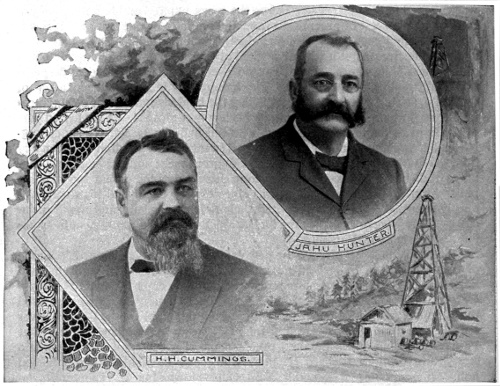
H. H. CUMMINGS. JAHU HUNTER.
The Boss weakened to eleven-hundred barrels in July and to a humble
pumper by the end of the year. Forty rods east, on the Crawford farm, Hunter
& Cummings plucked a September pippin. Their Lady Hunter, sixteen-hundred
feet deep and flowing twenty-five-hundred barrels, was a trophy to
enrapture any hunter coming from the chase. The Boss and the Lady Hunter
were the lord and lady of the manor, none of the others approaching them in
importance. Hunter & Cummings laid a pipe-line to East Brady, to load their
oil on the Allegheny-Valley Railroad. The railroad company refused to furnish
cars, urging a variety of pretexts to disguise the unfair discrimination.
The owners of the oil had a Roland for the Oliver of the officials. They
quietly gauged their output and let it run upon the ground, notifying the company
to pay for the oil. A new light dawned upon the railroaders, who discovered
they had to deal with men who knew their rights and dared maintain
them. Crawling off their high stool, they footed the bill, apologized meekly
and thenceforth took precious care Hunter & Cummings should not have reason
to complain of a car-famine. Simon Legree was not the only braggart
whom good men have been obliged to knock down to inspire with decent
respect for fair-play.
Hunter & Cummings stayed in the business, opening the “Pontius Pool,”
267east of Millerstown, and sinking many wells at Herman Station, where they
acquired a snug production. They operated on the lands of the Brady’s Bend
Iron-company, putting down the wells on the hills opposite East Brady and a
number in the Bradford region. They owned the Tidioute Savings Bank and
large tracts in North Dakota—the scene of their “bonanza farming”—and were
interested with the Grandins in the great lumber-mills at Grandin, Missouri, the
largest in the south-west. In connection with these mills they were building
railroads to develop their two-hundred-thousand acres of timber lands and
establish experimental farms. Both members of the firm were the architects of
their own fortunes, public-spirited, generous and eminently deserving of the
liberal measure of success that has attended their labors during the twenty-three
years of their association as partners.
Jahu Hunter was born on a farm two miles above Tidioute in 1830. From
seventeen to twenty-seven he lumbered and farmed, in 1857 engaged in merchandising
and in 1861 sold his store and embarked in oil. He operated moderately
five years, increasing his interests largely in 1866 and forming a partnership
with H. H. Cummings in 1873, which death ended. Mr. Hunter married
Miss Margaret R. Magee in 1860 and one son, L. L. Hunter, survives to aid in
managing his extensive business-enterprises. He occupied a delightful home
at Tidioute, was president of the Savings Bank and of the chair-factory, a Mason
of the thirty-second degree and a leader in all progressive movements. He
had lands in various states and was prospered in manifold undertakings. He
served as school-director fifteen years, contributing time and money freely in
behalf of education. He believed in bettering humanity, in relieving distress,
in befriending the poor, in helping the struggling and in building up the community.
Retired from active work, the evening of Jahu Hunter’s useful life was
serene and unclouded. As the shadows lengthened he reviewed the past with
calm content and awaited the future without apprehension. He died last March.
Captain H. H. Cummings removed from Illinois, his birthplace in 1840, to
Ohio and was graduated from Oberlin College at twenty-two. Enlisting in
July, 1862, he shared the privations and achievements of the Army of the Cumberland
until mustered out in June, 1865. Three months later he visited the
oil-regionoil-region and in January of 1866 located at Tidioute in charge of Day & Co.’s
refinery. Becoming a partner, he refined and exported oil seven years and
was interested in wells at Tidioute and Fagundas. The firm dissolving in 1873,
he joined hands with Jahu Hunter and operated extensively in the lower country.
Hunter & Cummings stood in the front rank as representative producers.
Captain Cummings is president of the Missouri Mining and Lumbering Company,
which has a paid-up capital of five-hundred-thousand dollars and saws
forty-million feet of lumber a year. L. L. Hunter is secretary, E. B. Grandin
is treasurer and Hon. J. B. White, formerly a member of the Legislature from
Warren county, is general manager. As Commander of the Grand Army of
the Republic in Pennsylvania, Judge Darte succeeding him this year, Captain
Cummings is favorably known to veterans over the entire state. He is a man
of fine attainments, broad views and noble traits—a man who sizes up to a
high ideal, who can be trusted and whose friendship “does not shrink in the
wash.”
Taylor & Satterfield began operations in the lower fields in 1870, secured
much of the finest territory in Butler and became one of the wealthiest firms in
the oil-region. Harvesters rather than sowers, their usual policy was to buy
lands tested by one or more wells and avoid the risk of wildcatting. In this
268way they acquired productive farms in every part of the district, which yielded
thousands of barrels a day when fully developed. Their transactions footed
up many millions yearly. They established banks at Petrolia and Millerstown,
employed an army of drillers and pumpers and clerks and were always ready
fora big purchase that promised fat returns. In company with Vandergrift &
Forman, John Pitcairn and Fisher Brothers, they built the Fairview Pipe-Line
from Argyle to Brady, the nucleus of the magnificent National-Transit system
of oil-transportation. Captain J. J. Vandergrift, George V. Forman and John
Pitcairn were associated with them in their gigantic producing-operations,
which in 1879 extended to the Bradford field and grew to such magnitude that
the Union Oil-Company was formed in 1881, with five-millions capital. The
Union was almost uniformly successful, owning big wells and paying big dividends.
In 1883 it paid Forman a million dollars for his separate holdings in
Allegany county, up to that date the largest individual sale in the region. All
its properties were sold to the Forest Oil-Company and the Union was dissolved,
Taylor retiring and Satterfield continuing to assist in the management
some months.
Hascal L. Taylor was first known in Oildom as a member of the firm of
Taylor & Day, Fredonia, N. Y., whose “buckboards” had a tremendous sale
in Venango, Clarion, Armstrong and Butler. He lived at Petrolia several
years, having charge of the office of Taylor & Satterfield and general oversight
of the Argyle Savings Bank. After his retirement from the oil-business
with an ample fortune he lived at Buffalo, speculated in real-estate and purchased
miles of Florida lands. He died last year, as he was arranging to erect
a fifteen-story office-block in Buffalo. Mr. Taylor was of medium height and
stout build, energetic, resourceful and notable in the busy world of petroleum.
His only son, Emory G., clerked in the bank at Petrolia, engaged in manufacturing
at Williamsport a year or two and removed to Buffalo before his father’s
death. He and his sister inherited the estate.
John Satterfield, a man of heart and brain, imposing in stature, frank in
speech and square in his dealings, was a Mercer boy. He served four years
in a regiment organized at Greenville and opened a grocery at Pithole in
1865, with James A. Waugh as partner. Selling the remnants of the grocery in
1867, he superintended wells at Tarr Farm three years and went to Parker in
1870. His work in the Butler field increased his excellent reputation for honesty
and enterprise. He married Miss Matilda Martin, of Allentown, lived
four years at Millerstown, removed to Titusville and built an elegant house on
Delaware avenue, Buffalo. When the Union Oil-Company’s accounts were
closed, the books balanced and the assets transferred to the Forest he engaged
in banking. He was vice-president of the Third National Bank of Buffalo and
president of the Fidelity Trust Company, whose new bank-building is the
boast of the Bison City. George V. Forman and Thomas L. McFarland joined
him in the Fidelity. Mr. McFarland, formerly cashier of the bank at Petrolia
and secretary of the Union Company, is exceedingly affable, capable and popular.
Failing health induced Mr. Satterfield to go on a trip designed to include
France, the Mediterranean Sea and the warmer countries of the east. With
his brother-in-law, Dr. T. J. Martin, he reached Paris, took seriously ill and
died on April sixth, 1894, in his fifty-fourth year. Besides his wife, who was
on the ocean hastening to his bedside when the end came, he left one son and
one daughter. Dr. Martin cremated the body, pursuant to the wish of the
deceased, and brought the ashes home for interment. Charitable and unostentatious,
269upright and active, all men liked and trusted “Jack” Satterfield,
whom old friends miss sadly and remember tenderly.
The sinless land some of his friends have enter’d long ago,
Some others stay a little while to struggle here below;
But, be the conflict short or long, life’s battle will be won
And lovingly he’ll welcome us when earthly toil is done.
Nor will our joy be less sincere—we’ll slap him on the back,
Clasp his brave hand and warmly say: “We’re glad to see you, Jack!”
The Forest Oil-Company, into which the Union was merged, reckons its
capital by millions, numbers its wells by thousands and is at the head of producing
companies. Its operations cover five states. The company has hundreds
of wells and farms in Pennsylvania, operates extensively in Ohio, is
developing large interests in Kansas and seems certain to place Kentucky and
Tennessee high up in the petroleum-galaxy. From its inception as a Limited
Company the management has been progressive and efficient. To meet the
increasing demands of new sections the original company was closed out and
the present one incorporated, with Captain Vandergrift as president and W. J.
Young as vice-president and general manager.
Mr. Young, who was also elected treasurer in
1890, was peculiarly fitted for his responsible
duties by long experience and executive ability.
Born and educated in Pittsburg, he entered
the employ of a leather-merchant in 1856, spent
six years in the establishment and in 1862 went
to Oil City to take charge of the forwarding
and storage business of John and William
Hanna. The Hannas owned the steamboat
Allegheny Belle No. 4 and Hanna’s wharf, the
site of the National-Transit machine-shops in
the Third Ward. Captain John Hanna dying,
John Burgess & Co. bought the firm’s storage
interests and admitted Young as a partner.
Burgess & Co. sold to Fisher Brothers, who
used the wharf and yard for shipping and appointed
Mr. Young their financial agent. How capably he filled the place
every operator on Oil Creek can attest. He and John J. Fisher, under the
name of Young & Co., bought and shipped crude-oil in bulk-barges. His
relations with the Fishers ceased in 1872 with his appointment as book-keeper
of the Oil-City Savings Bank. Elected cashier of the Oil-City Trust Company
in 1874, he was afterwards vice-president and president, holding the latter office
until 1891. John Pitcairn retiring from the firm of Vandergrift, Pitcairn & Co.,
he purchased an interest in the business. The firm of Vandergrift, Young &
Co. was organized and sold its property to the Forest Oil-Company, of which
Mr. Young was one of the incorporators and chairman. The business of the
Forest necessitated his removal to Pittsburg in 1889. He is president of the
Washington Oil-Company and the Taylorstown Natural-Gas Company and has
his offices in the Vandergrift building, on Fourth avenue. During his twenty-seven
years’ residence in Oil City he was active in promoting the welfare of the
community. In 1866 he married Miss Morrow, sister-in-law and adopted
daughter of Captain Vandergrift. Two daughters, one the wife of Lieutenant
P. E. Pierce, West Point, N. Y., and the other a young lady residing with her
parents, blessed the happy union. The hospitable home at Oil City was a
270delightful center of moral and social influence. Mr. Young represented the
First Ward nine years in Common and Select Councils and was school-director
six years. He furthered every good cause and was a helpful, honored citizen.
Now at the meridian of life, his judgment matured and his acute perceptions
quickened, young in heart and earnest in spirit, a wider sphere enlarges his
opportunities. Of W. J. Young, true and tried, faithful and competent, a loyal
friend and prudent counsellor, it can never be said: “Thou art weighed in the
balance and found wanting.”
Fairview, charmingly located two miles south-west of Petrolia, was on one
side of the greased streak. James M. Lambing’s gas-well a mile west lighted
and heated the town, but vapor-fuel and pretty scenery could not offset the
lack of oil and the dog-in-the-manger policy of greedy land-holders. Portly
Major Adams—under the sod for years—built a spacious hotel, which William
Lecky, Isaac Reineman, William Fleming and kindred spirits patronized.
A mile-and-a-half east of Fairview and as far south of Petrolia, on a branch of
Bear Creek, the Cooper well originated Karns City in June of 1872. S. D.
Karns laid down eight-thousand dollars for the supposed dry-hole on the
McClymonds farm, drilled forty feet and struck a hundred-barreler. Cooper
Brothers finished the second well—it flowed two-hundred barrels for months—on
the Saturday preceding “the thirty-day shut-down.” Tabor & Thompson
and Captain Grace had moguls on the Riddle and Story farms. Big-hearted,
open-handed “Tommy” Thompson—a whiter man ne’er drew breath—operated
profitably in Butler and McKean and was active in the movements that
made 1872-3 memorable to oil-producers. The biggest well in the bunch was
A. J. Salisbury’s five-hundred-barrel spouter on the J. B. Campbell farm, in
January of 1873. Salisbury conducted the favorite Empire House, which perished
in the noon-day blaze that extinguished two-thirds of Karns City in
December of 1874. One day he bought a wagon-load of potatoes from a verdant
native, who dumped the tubers into the cellar and was given a check for
the purchase. He gazed at the check long and earnestly, finally breaking out:
“Vot for you gives me dose paper?” Salisbury explained that it was payment
for the murphies. “Mein Gott!” ejaculated the ruralist, “you dinks me von
tarn fool to take dot papers for mein potatoes?” The proprietor strove to
enlighten the farmer, telling him to step across the street to the bank and get
his money. “I see nein monish there,” replied the innocent, looking at John
Shirley’s hardware-store, part of which a bank occupied. Discussing finance
with the rustic would be useless, so “Jack” sent the hotel-clerk for the cash
and counted it out in crisp documents bearing the serpentine autograph of
General Spinner.
Vandergrift & Forman paid ninety-thousand dollars for the McCafferty
farm, a mile south-west of Karns City. Mr. Forman closed the deal, going to
the house with a lawyer and a New-York draft. The honest granger, not familiar
with bank-drafts, would not receive anything except actual greenbacks.
The parties journeyed to the county-seat to convert the draft into legal-tenders,
which the seller of the property carried home. William McCafferty was a
thrifty tiller of the soil and cultivated his farm thoroughly. He bought a home
at Greenville, near John Benninghoff’s, put his money in Government bonds
and died in 1880. Half the farm was fine territory and repaid its cost several
times. One-twentieth of the price in 1873 would be good value to-day for the
broad acres. For John Blaney’s farm, adjoining the McCafferty, Melville,
Payne & Fleming put up fifteen-thousand dollars, bored a well and sold out to
271Vandergrift & Forman at fifty-thousand. The Rob Roy well, on the McClymonds
farm, produced forty-thousand barrels of fourth-sand oil, while a dry
hole was sunk thirty yards away. Colonel Woodward, Mattison & McDonald,
Tack & Moorhead and John Markham owned wells good for thirty to eight-hundred
barrels. A cloud of dry-holes encompassed the May Marshall, on the
Wallace farm. Haysville, on the Thomas Hays farm, had a brief run, a harvest
of small strikes and dusters nipping it off prematurely. The epitaph of the
Philadelphia baby would about fit:
“Died when young and full of promise,
Our own little darling Thomas;
We can’t have things here to please us—
He has gone to dwell with Jesus.”
Branching off a mile south of Karns City, on January thirty-first, 1873, the
first well—one-hundred and fifty barrels—was finished on the Moore & Hepler
farm of three-hundred acres. Another in February strengthened “the belt
theory,” belief in which induced C. D. Angell, John L. McKinney, Phillips
Brothers and O. K. Warren to form a company and test the tract. Their faith
was recompensed “an hundred fold” by an array of dandy wells and the unfolding
of Angelica. OperatorsOperators were feeling their way steadfastly. Two miles
south-east of Angelica, on the Simon Barnhart farm, Messimer & Backus’s wild-cat—also
a February plant—pumped eight barrels a day. Shreve & Kingsley’s,
on the Stewart farm, a mile north-east, found good sand and flowed one-hundred-and-forty
barrels, in April, 1873. The fickle tide turned in that direction
and Millerstown, a dingy, pokey hamlet on a side-elevation in Donegal township,
a half-mile south-east of the Shreve-spouter, was on everybody’s lips.
Some persons and some communities have greatness thrust upon them and
Millerstown was of this brood. The natives awakened one April morning to
find their settlement invaded by the irrepressible oilmen.
For sixty years the quiet hamlet of Barnhart’s Mills—a colony of Barnharts
settled in Donegal when the nineteenth century was in its teens—stuck contentedly
in the old rut, “the world unknowing, by the world unknown.” It
consisted chiefly of log-houses, looking sufficiently antiquated to have been
imported in William Penn’s good ship Welcome. A church, a school, a blacksmith-shop,
a grocery, a general store and a tavern had existed from time
immemorial. A grist-mill ground wheat and the name of Barnhart’s Mills was
adopted by the post-office authorities. It yielded to Millerstown and finally to
Chicora. The two-hundred villagers went to bed at dark and breakfasted by
candle-light in winter. A birth, a marriage or a funeral aroused profound
interest. At last news of oil “from Parker down” was heard occasionally.
Petrolia arose and the Millerites shivered with apprehension. Was the petroleum-wave
to submerge their peaceful homes? The Shreve well answered the
query affirmatively and the invasion was not delayed. Crowds came, properties
changed hands, old houses were razed and by July the ancient borough
was disguised as a modern oil-town. Dr. Book built a grand hotel, Taylor &
Satterfield established a bank, the United and Relief Pipe-Lines opened offices,
the best firms were represented and “on to Millerstown” was the shibboleth
of the hour. McFarland & Co.’s seventy-barrel well on the Thorn farm, a
mile north-east of town, the third in the district, fed the oily flame. Dr.
James, on R. Barnhart’s lands, finished the fourth, an eighty-barreler, in June,
a half-mile west of the Shreve & Kingsley, which Clark & Timblin bought for
twenty-thousand dollars. Wyatt, Fertig & Hammond’s mammoth flowed one-thousand
272barrels a day! Col. Wyatt was a real Virginian, chivalric, educated
and high-strung. Hon. John Fertig was a pioneer on Oil Creek and had operated
at Foxburg with John W. Hammond. The Wyatt spouted for months.
McKeown & Morissey drilled rib-ticklers on the Nolan farm. Warden &
Frew, F. Prentice, Taylor & Satterfield, Captain Grace, John Preston, Cook &
Goldsboro, Samuel P. Boyer, C. D. Angell and multitudes more scored big
hits. McKinney Brothers & Galey secured the Hemphill and Frederick farms,
on which they drilled scores of splendid wells. James M. Lambing had a
chunk near the Wyatt, with Col. Brady next door. Lee & Plumer, fresh from
their triumphs in Clarion, leased the Diviner farm, two miles south-west of Millerstown,
for two-hundred dollars an acre bonus and one-eighth royalty. Their
first well flowed fifteen-hundred barrels and they sold to Taylor & Satterfield
for ninety-thousand dollars after its production paid the bonus and the drilling.
Henry Greene drilled on the Johnson farm, two miles straight south of the village,
and P. M. Shannon’s, on the Boyle, was the lion of the eastern belt. A
dry strip divided the field into two productive lines. P. H. Burchfield opened
the Gillespie farm and Joseph Overy touched the Mead, four miles south of Millerstown,
for a two-hundred-barreler that installed St. Joe. Dr. Hunter, of Pittsburg,
monkeyed a well on the Gillespie for many weeks, inaugurating the
odious “mystery” racket. Millerstown was a peach of the most approved pattern,
holding its own bravely until Bradford overwhelmed the southern region.
A narrow-gauge railroad connected it with Parker in 1876. Fire in 1875 swept
away the central portion of the town and blotted out seven lives. Oil has
receded, the operators have departed and the town is once more a placid country
village.
The Barnhart and Hemphill farms yielded McKinney Brothers a lavish
return, the wells averaging fifty to three-hundred barrels month after month.
The two brothers, John L. and J. C., were not amateurs in oil-matters. Sons of
a well-to-do lumberman and farmer in Warren county, they learned business-methods
in boyhood and were fitted by habit and education to manage important
enterprises. Their connection with petroleum dated back to the sixties, in
the oldest districts. The knowledge stored up on Oil Creek and around Franklin
and at Pleasantville was of immense benefit in the lower fields. Organizing
the firm of McKinney Brothers in 1890, to operate at Parker, they kept pace with
the trend of developments southward. Millerstown impressed them favorably
and they paid seventy-thousand dollars for the Barnhart and two Hemphill
farms, two-hundred-and-seventy acres in the heart of the richest territory. John
Galey purchased an interest in the properties, which the partners developed
judiciously. J. C. McKinney and Galey resided at Millerstown to oversee the
numerous details of their extensive operations. In 1877, H. L. Taylor, John
Satterfield, John Pitcairn and the brothers formed the partnership known as
John L. McKinney & Co. It was controlled and managed by the McKinneys,
until the sale of its interests to the Standard Oil-Company. John L. and J. C.
McKinney sold their Ohio lands and wells in 1889 and their Pennsylvania oil-properties
in 1890, since which period they have been associated with the Standard
in one of its great producing branches, the South Penn Oil-Company. Noah
S. Clark is president of the South Penn, with headquarters at Oil City and Pittsburg.
This company has thousands of wells in Pennsylvania, Ohio and West
Virginia. The wise policy that has made the Standard the world’s foremost
corporation has nowhere been manifested more effectively than in the formation
of such companies as the Forest and the South Penn. Letting sellers of production
273share in the ownership and management of properties united in one grand
system secures the advantages of concerted action, unlimited capital, identity of
interest and combined experience. Thus men of the highest skill join hands
for the good of all, using the latest appliances, buying at wholesale for cash,
producing oil at the smallest cost and giving the public the fruits of systematic
coöperation. In this free country “the poor man’s back-yard opens into all
out-doors” and many producers, like John McKeown, Captain Jones “The.”
Barnsdall and Michael Murphy have been conspicuously successful going it
alone. Sometimes a growl is heard about monopoly, centralization and the
octave of similar phrases, just as folks grumble at the weather, the heat and
cold and think they could run the universe much better than its Creator does it.
“Oh, many a wicked smile they smole,
And many a wink they wunk;
And, oh, it is an awful thing
To think the thoughts they thunk.”
Hon. John L. McKinney’s talent for business displayed itself in youth.
“The boy’s the father to the man” and at sixteen he assumed charge of his
father’s accounts, superintending the sale of lumber and farm-products three
years. At nineteen, in the fall of 1861, he drilled his first well, a dry-hole south
of Franklin. Two leases on Oil Creek fared better and in the spring he purchased
one-third of a drilling well and lease on the John McClintock farm, near
Rouseville. The well was spring-poled three-hundred feet, horse-power put it
to four-hundred and an engine to five-hundred, at which depth it flowed six-hundred
barrels, lasting two years, lessening slowly and producing enough oil
to enrich the owners. Young McKinney worked his turn, “kicking the pole”
all summer and visiting his home in Warren county when steam was substituted
for human and equine muscle. During his absence the sand was prodded, the
golden stream responded and his partner sold out for a round sum, taking no
274note of his share! He heard of the strike and found the purchasers in full possession
upon his return. His contract had not been recorded, one day remained
to file it with the register and he saved his claim by a few hours! He bought
interests on Cherry Run that profited him two-hundred thousand dollars, in 1864
leased large tracts in Greene county and in 1865 removed to Philadelphia. He
operated on Benninghoff Run in 1866, the crash of 1867 swept away his gains
and he began again “at the top of the ground.” With his younger brother,
J. C. McKinney, he drilled at Pleasantville in 1868 and the next year located at
Parker’s Landing, operating constantly and managing an agency for the sale of
Gibbs & Sterrett machinery. Success crowded upon him in 1871 and in 1873
McKinney Brothers & Galey were the leaders in the Millerstown field. Mrs.
McKinney, a beautiful and accomplished woman, died in 1894. Mr. McKinney
built an elegant home at Titusville and he has been an influential citizen of
“the Queen City of Oildom” for twenty years. He is president of the Commercial
Bank and a heavy stockholder in local industries. He has resisted
pressing demands for his services in public office, preferring the private station,
yet participating actively in politics. John L. McKinney is earnest and manly
everywhere, steadfast in his friendships, true to his professions, liberal and
honorable always.
J. C. McKinney engaged with an engineer-corps of the Pennsylvania Railroad
Company in 1861, at the age of seventeen, to survey lines southward
from Garland, on the Philadelphia & Erie Road. The survey ending at Franklin
in 1863, he left the corps and started a lumber-yard at Oil City. His father
was a lumberman at Pittsfield, Warren county, and the youth of nineteen knew
every branch of the business thoroughly. He opened a yard at Franklin in
1864, resided there a number of years and in 1868 married Miss Agnes E.
Moore. His first well, drilled at Foster in 1865, produced moderately. In
company with C. D. Angell, he drilled on Scrubgrass Island—Mr. Angell
changed the name to Belle Island for his daughter Belle—in 1866 and at Pleasantville
in 1868 with his brother, John L. Operating for heavy-oil at Franklin
in 1869-70, he sold his wells to Egbert, Mackey & Tafft and settled at Parker’s
Landing in 1870. The firm’s operations in Butler county requiring his personal
attention, he built a house and resided at Millerstown several years. There he
worked zealously, purchasing blocks of land and drilling a legion of prolific
wells. Upon the subsidence of the Butler field he removed to Titusville, buying
and remodeling the Windsor mansion, which he made one of the finest
residences in the oil-region. He assists in managing the South Penn Oil-Company,
to which McKinney Brothers disposed of their interests in Ohio and
Pennsylvania. In the flush of healthful vigor, wealthy and respected, he enjoys
“the good the gods provide.” He keeps fast horses, handles the ribbons
skillfully, can guide a big enterprise or an untamed bicycle deftly, is companionable
and utterly devoid of affectation. To the McKinneys, men of positive
character and strict integrity, the Roman eulogy applies: “A pair of noble
brothers.”
“Plumer’s Ride to Diviner” discounted Sheridan’s Ride to Winchester in
the estimation of Millerstown hustlers. Various operators longed and prayed
for the Diviner farm of two-hundred acres, two miles south of Millerstown,
which “Ed” Bennett’s three-hundred barrel well on the Boyle farm rendered
very desirable. The old, childless couple owning it declined to lease or sell,
not wishing to move out of the old house. Lee & Plumer were on the anxious
seat with the rest of the fraternity. Plumer overheard a big operator tell his
275foreman one morning to offer three-hundred dollars an acre for the farm.
“Fred” lost not a moment. Ordering his two-twenty horse to be saddled
instantly, he galloped to the Diviner domicile in hot haste and said: “I’ll
give you two-hundred dollars an acre and one-eighth the oil for your land and
let you stay in the house!” The aged pair consulted a moment, accepted the
offer and signed an agreement to transfer the property in three days. The ink
was not dry when the foreman rode up, but “Fred” met him in the yard with
a smile that expressed the gospel-hymn: “Too late, too late, ye cannot enter
in!” The first well repaid the whole outlay in thirty days, when Taylor &
Satterfield paid ninety-thousand dollars for Lee & Plumer’s holdings, a snug
sum to rake in from a two-mile horseback-ride. With a fine sense of appreciation
the well was labeled “Plumer’s Ride to Diviner,” a board nailed to the
walking-beam bearing the protracted title in artistic capitals.
The Millerstown fire ended seven human lives, four of them at Dr. Book’s
Central Hotel. A. G. Oliver, of Kane City, was roasted in the room occupied
by me the previous night. Norah Canty, a waitress, descended the stairs,
returned for her trunk and was burned to a cinder. Nellie McCarthy jumped
from a high window to the street, fracturing both legs and sustaining injuries
that crippled her permanently. In loss of life the fire ranked next to the
dreadful tragedy of the burning-well at Rouseville.
P. M. Shannon, first burgess of Millerstown, had a fashion of saluting intimate
friends with the query: “Where are we now?” Possibly this was the
origin of the popular phrase, “Where are we at?” A zealous officer arrested
a drunken loafer one afternoon. The fellow struggled to get free and the officer
halted a wagon to haul the obstreperous
drunk to the lock-up. The prisoner
was laid on his back in the wagon
and his captor tried to hold him down.
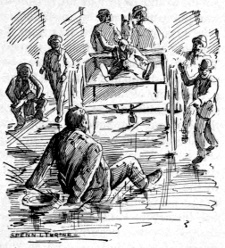
A crowd gathered and the burgess got
aboard to assist the peeler. He was
holding the feet of the law-breaker,
with his back to the end-board, at the
instant the wheels struck a plank-crossing.
The shock keeled Shannon backwards
over the end-board into the deep,
vicious mud! The spectators thought
of shedding tears at the sad plight of
their chief magistrate, who sank at full
length nearly out of sight. As he raised
his head a ragged urchin bawled out:
“Where are we now?”now?” The laugh
that ensued was a risible earthquake and
thenceforth the expression had unlimited circulation in the lower districts.
The Millerstown field produced ten-thousand barrels a day at its prime and
the temptation to enlarge the productive area even St. Anthony, had he been
an oil-operator, would have found it hard to resist. A half-mile west, at the
Brick Church, J. A. Irons punched a hole and started a hardware-store that
hatched out Irons City. St. Joe, where two-hundred lots were sold in thirty
days and a beer-jerker’s tent was the first business-stand, was the outcome of
good wells on the Now, Meade, Boyd, Neff and Graham farms, four miles
south. Three miles farther dry-holes blasted the budding hopes of Jeffersonville.
276Three miles south-west of Millerstown, on an elevated site, Buena Vista
bade fair to knock the persimmons. The territory exhausted too speedily for
comfort, other points lured the floaters, hotels and stores stood empty and a
fire sent three-fourths of the neat little town up in smoke. Two miles west the
Hope Oil-Company’s Troutman well, reported on March twenty-second, 1873,
“the biggest strike since ’sixty-five,” flowed twelve-hundred barrels. The
tools hung in the hole seven months, by which time the well had produced
ninety-six-thousand barrels. The gusher was on the Troutman farm, a patch of
rocks and stunted trees tenanted by a Frenchman. I. E. Dean, Lecky &
Reineman, Captain Grace, Captain Boyer, the Reno Oil-Company and others
jostled neck and neck in the race to drain the Ralston, Harper, Starr, Jenkins
and Troutman lands. The result was a series of spouters that aggregated nine-thousand
barrels a day. Phillips Brothers paid eighty-thousand dollars for the
Starr farm and trebled their money in a year. William K. Vandergrift’s Blackhawk
was a five-hundred barreler and dozens more swelled the production and
the excitement. The day before Husselton & Thompson’s seven-hundred barreler,
on the Gruber farm, struck the sand the boiler exploded. Two men
were standing on a tank discussing politics. They saw a ton of iron heading
directly towards them, concluded to postpone the argument and leaped from
the tank as the flying mass tore off half the roof. The Ralston farm evoluted
the embryo town of Batesville, named for the late Joseph Bates, of Oil City,
and Modoc planted its wigwams on the Starr and Sutton.
Modoc stood at the top of the class for mud. The man who found a gold-dollar
in a can of tomatoes and denounced the grocer for selling adulterated
goods would have had no reason to grumble at the mud around Modoc. It
was pure, unmixed and unstinted. The voyager who, in the spring or fall of
1873, accomplished the trip from Troutman to the frontier wells without exhausting
his stock of profanity earned a free-pass to the happy hunting-grounds.
Twenty balloon-structures were erected by May first and a red-headed dispenser
of stimulants answered to the title of “Captain Jack.” Modoc was not
a Tammany offshoot, but the government had an Indian war on hand and red-skinned
epithets prevailed. The town soon boasted three stores, four hotels,
liveries and five-hundred people. By and by the spouters wilted badly,
degenerating into pumpers. On a cold, rainy night in the autumn of 1874 fire
started in Max Elasser’s clothing-store and one-half the town was absent at
dawn next morning. Biting wind and drenching showers added to the sadness
of the dismal scene. Women and children, weeping and homeless, crouched
in the fields until daylight and shelter arrived. That was the last chapter in
the history of Modoc. The American Hotel and a few houses escaped the
flames, but the destroyed buildings were not replaced. It would puzzle a
tourist now to find an atom of Modoc or the wells that vegetated about the
Troutman whale.
Two miles south of Modoc the McClelland farm made a bold effort to outshine
the Troutman. Phillips Brothers owned the biggest wells, luscious fellows
that salt-water killed off prematurely. They paid forty-five-thousand dollars
for the Stahl & Benedict No. 1 well. The farmer leased the tract to George
Nesbit and John Preston. Nesbit placed timbers for a rig on the ground and
entrenched a force of men behind a fence. Preston’s troops scaled the fence,
dislodged the enemy, carried the timbers off the premises, built a rig and
drilled a well. Such disputes were liable to occur from the ignorance or knavery
of the natives, some of whom leased the same land to several parties. In
277one of these struggles for possession Obadiah Haymaker was shot dead at
Murraysville, near Pittsburg. Milton Weston, a Chicago millionaire, who
hired and armed the attacking party, was sent to the penitentiary for manslaughter.
Haymaker was pleasant, sociable and worthy of a better fate.
David Morrison leased ten acres of the Jamison farm, three miles below
Modoc and seven south of Petrolia, at one-fiftieth royalty. The property was
situated on Connoquinessing Creek, a tributary of Beaver River, in the bosom
of a rugged country. On August twenty-fourth, 1872, the tools pricked the
sand, gas burst forth and oil flowed furiously. The gas sought the boiler-fire
and the entire concern was speedily in a blaze. Unlike many others in the oil-region,
the Morrison well suffered no injury from the fire. It flowed three-hundred
barrels a day for a month and in October was sold to Taylor & Satterfield
for thirty-eight-thousand dollars. They cleaned out the hole, which mud
had clogged, restoring the yield to two-hundred barrels. S. D. Karns completed
the Dogleg well, the second in the field, on Christmas day, and the third
early in January, the two wells flowing seven-hundred barrels. John Preston’s
No. 1, a half-mile northward, flowed two-hundred barrels on January twelfth.
Preston was a strong-limbed, black-haired, courageous operator, who cut his
eye-teeth in the upper fields. He augmented his pile at Parker, Millerstown
and Greece City, landing at last in Washington county. He was not averse to
a hand at cards or a gamble in production. His word was never broken and
he vied with John McKeown and John Galey in untiring energy. A truer,
livelier, braver lot of men than the Butler oil-operators never stepped on God’s
green carpet. A mean tyrant might as well try to climb into heaven on a
greased pole as to keep them at the bottom of the heap.
The first new building on the Jamison farm, a frame drug-store, was erected
on September tenth. Eight-hundred people inhabited Greece City by the end
of December. Drinking dens drove a thriving trade and three hotels could not
stow away the crowds. J. H. Collins fed five-hundred a day. Theodore
Huselton established a bank and Rev. Mr. Thorne a newspaper. A post-office
was opened at New-Year. Two pipe-lines conveyed oil to Butler and Brady,
two telegraph-offices rushed messages, a church blossomed in the spring and a
branch of the West Penn Railroad was proposed. Greece City combined the
muddiness and activity of Shaffer and Funkville with the ambition of Reno.
Fifty wells were drilling in February and the surrounding farms were not permitted
to “linger longer, Lucy,” than was necessary to haul machinery and set
the walking-beam sawing the atmosphere. Joseph Post—a jolly Rousevillean,
who weighed two-hundred pounds, operated at Bradford and retired to a farm
in Ohio—tested the Whitmire farm, two miles south. An extensive water-well
was the best the farm had to offer and Boydstown, built in expectation of the oil
that never came, scampered off. The third sand was only twelve to fifteen feet
thick and the wells declined with unprecedented suddenness. The bottom
seemed to drop out of the territory in a twinkling. The town wilted like a
paper-collar in the dog-days. Houses were torn down or deserted and rigs
carted to Millerstown. In December fire licked up three-fourths of what
removals had spared, summarily ending Greece City at the fragile age of thirteen
months. “The isles of Greece, were burning Sappho loved and sung,”
may have been pretty slick, but the oil of Greece City would have burned out
Sappho in one round.
“The meanest man I ever saw,” a Butler judge remarked to a company
of friends at Collins’s Hotel, “has never appeared in my court as a defendant
278and it is lucky for him. As a matter of course he was a newspaper man—a
rascal of a reporter for the Greece City Review, printed right in this town, and
there he stands! One day he was playing seven-up with a young lady and
guess what he did? He told her that whenever she had the jack of trumps it
was a sure sign her lover was thinking of her. Then he watched her and whenever
she blushed and looked pleased he would lead a high card and catch her
jack. A man who would do that would steal a hot stove or write a libellous
joke about me.” The judge was a rare joker and the young man whom he
apostrophised for fun didn’t know a jack from a load of hay.
Parker, Martinsburg, Argyle, Petrolia, the “Cross Belt,” Karns City, Angelica,
Millerstown, St. Joe, Buena Vista, Modoc and Greece City had passed in
review. The “belt” extended fifteen miles and the Butler field acknowledged
no rival. The great Bradford district was about to distance all competitors and
leave the southern region hopelessly behind, yet operators did not desist from
their efforts to discover an outlet below Greece City and St. Joe. Two miles
west of the county-seat Phillips Brothers stumbled upon the Baldridge pool,
which produced largely. The old town of Butler, settled at the beginning of
the century and not remarkable for enterprise until the oilmen shoved it forward,
was dry territory. Eastward pools of minor note were revealed. William
K. Vandergrift, whose three-hundred-barrel well on the Pontius farm ushered
in Buena Vista’s short-lived reign, drilled at Saxonburg. Along the West-Penn
Railroad fair wells encouraged the quest. David Kirk entered Great Belt City in
the race and the country was punctured like a bicycle-tire tripping over a road
strewn with tacks pointing skyward and loaded for mischief. South of St. Joe
gas blew off and Spang & Chalfant laid a line from above Freeport to pipe the
stuff into their rolling-mills at Pittsburg. The search proceeded without big
surprises, Bradford monopolizing public interest and Butler jogging on quietly
at the rear. But the old field had plenty of ginger and was merely recovering
some of the breath expended in producing forty-million barrels of crude. “I
smell a rat,” felicitously observed Sir Boyle Roche, “and see him floating in
the air.” The free play of the drill could hardly fail to ferret out something
with the smell of petroleum in the soap-mine county, beyond the cut-off at
Greece City and Baldridge. Bradford was sliding down the mountain it had
ascended and Butler furnished the answer to the conundrum of where to look
for the next fertile spot.
Col. S. P. Armstrong, who experienced a siege of hard luck in the upper
latitudes, in 1884 leased a portion of the Marshall farm, on Thorn Creek, six
miles south-west of the town of Butler. Operators had been skirmishing
around the southern rim of the basin, looking for an annex to the Baldridge
pool. Andrew Shidemantle was drilling near the mouth of the creek, on the
north bank of which Johnson & Co.’s well, finished in May, found plenty of sand
and salt-water and a taste of oil. More than once Armstrong was pressed
for funds to pay the workmen drilling the well he began on the little stream
and he sold an interest to Boyd & Semple. A vein of oil was met on June
twenty-seventh, gas ignited the rig and for a week the well burned fiercely.
The flames were subdued finally, the well pumped and flowed one-hundred-and-fifty
barrels a day and No. 2 was started fifty rods north-east. Meanwhile
Phillips Brothers set the tools dancing on the Bartlett farm, adjoining the Marshall
on the north. They hit the sand on August twenty-ninth and the well
flowed five-hundred barrels next day. Drilling ten feet deeper jagged a veritable
reservoir of petroleum, the well flowing forty-two-hundred barrels on
279September fifteenth! At last Phillips & Vanausdall’s spouter on Oil Creek had
been eclipsed. The trade was “shaken clear out of its boots.” Glowing
promises of a healthy advance in prices were frost-bitten. Scouts had been
hovering around and their reckoning was utterly at fault. Brokers knew not
which way to turn. Crude staggered into the ditch and speculators on the
wrong side of the market went down like the Louisiana Tigers at Gettysburg.
The bull-element thought the geyser “a scratch,” quite sure not to be duplicated,
and all hands awaited impatiently the completion of Hezekiah Christie’s
venture on a twenty-five acre plot hugging the Phillips lease. The one redeeming
feature of the situation was that nobody had the temerity to remark, “I
told you so!”
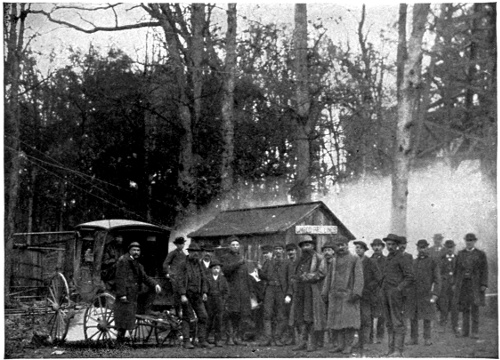
TELEGRAPH-OFFICE IN CARRIAGE, GROUP OF SCOUTS AND PHILLIPS WELL, THORN CREEK.
A telegraph office was rigged up near the Phillips well in an abandoned
carriage, one-third mile from the Christie. About it the sharp-eyed scouts
thronged night and day. On October eleventh the Christie was known to be
nearing the critical point. Excitement was at fever-heat among the group of
anxious watchers. In the afternoon some knowing-one reported that the tools
were twenty-seven feet in the sand, with no show of oil. The scouts went to
condole with Christie, who was sitting in the boiler-house, over his supposed
dry-hole. One elderly scout, whose rotundity made him “the observed of all
observers,” was especially warm in his expressions of sympathy. “That’s all
right, Ben,” said Christie, “but before night you’ll be making for the telegraph-office
to sell your oil at a gait that will make a euchre-game on your coat-tails
an easy matter.” When the scout had gone he walked into the derrick and
asked his driller how far he was in the sand. “Only twenty-two feet and we
are sure to strike oil before three o’clock. Those scouts don’t know what
280they’re talking about.” Christie went back to the boiler-house and waited. It
was an interesting scene. About the old buggy were the self-confident scouts,
many of whom had already wired their principals that the well was dry. The
intervals between the strokes of the drill appeared to be hours. At length the
well began to gas. Then came a low, rumbling sound and those about the
carriage saw a cloud-burst of oil envelop the derrick. The Christie well was
in and the biggest gusher the oil-country had ever known! The first day it did
over five-thousand barrels, seven-thousand for several days after torpedoing,
and for a month poured out a sea of oil. Christie refused one-hundred-thousand
dollars for his monster, which cast the Cherry Grove gushers completely
into the shade. Phillips No. 3, four-hundred barrels, Conners No. 1, thirty-seven-hundred,
and Phillips No. 2, twenty-five hundred, were added to the
string on October eighteenth, nineteenth and twenty-first. Crude tumbled, the
bears pranced wildly and everybody wondered if Thorn Creek had further
surprises up its sleeve. Bret Harte’s “heathen Chinee” with five aces was
less of an enigma.
All this time Colonel Armstrong, who borrowed money to build his first
derrick and buy his first boiler, was pegging away at his second well. The
sand was bored through into the slate beneath and the contractor pronounced
the well a failure. The scouts agreed with him unanimously and declared the
contractor a level-headed gentleman. The owner, who looked for something
nicer than salt-water and forty-five feet of ungreased sand, did not lose every
vestige of hope. He decided to try the persuasive powers of a torpedo. At
noon on October twenty-seventh sixty quarts of nitro-glycerine were lowered
into the hole. The usual low rumbling responded, but the expected flow did
not follow immediately. One of the scouts laughingly offered Armstrong a
cigar for the well, which the whole party declared “no good.” They broke
for the telegraph-office in the buggy to wire that the well was a duster. Prices
stiffened and the bulls breathed more freely.
The scouts changed their minds and their messages very speedily. The
rumbling increased until its roar resembled a small Niagara. A sheet of salt-water
shot out of the hole over the derrick, followed by a shower of slate,
stones and dirt. A moment later, with a preliminary cough to clear its passage,
the oil came with a mighty rush. A giant stream spurted sixty feet above
the tall derrick, dug drains in the ground and saturated everything within a
radius of five-hundred feet! The Jumbo of oil-wells had been struck. Thousands
of barrels of oil were wasted before the cap could be adjusted on the
casing. Tanks had been provided and a half-dozen pipes were needed to carry
the enormous mass of fluid. It was an inspiring sight to stand on top of the
tank and watch the tossing, heaving, foaming deluge. The first twenty-four
hours Armstrong No. 2 flowed eight-thousand-eight-hundred barrels! It
dropped to six-thousand by November first, to six-hundred by December first
and next morning stopped altogetheraltogether, having produced eighty-nine-thousand
barrels in thirty-seven days! Armstrong then divided his lease into five-acre
patches, sold them at fifteen-hundred dollars bonus and half the oil and quit
Thorn Creek in the spring a half-million ahead.
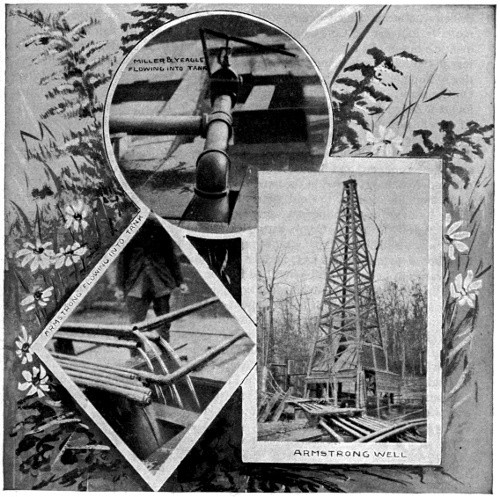
MILLER & YEAGLE FLOWING INTO TANK
ARMSTRONG FLOWING INTO TANK
ARMSTRONG WELL
Fisher Brothers were the largest operators in the field. From the Marshall
farm of three-hundred acres—worth ten dollars an acre for farming—they took
four-hundred-thousand dollars’ worth of oil. Their biggest well flowed forty-two-hundred
barrels on November fifteenth, when the total output of the field
was sixteen-thousand, its highest notch. Miller & Yeagle’s spouter put forty-five-hundred
281into the tank, sending out a stream that filled a five-inch pipe.
Thomas B. Simpson, of Oil City, joined with Thomas W. Phillips in leasing the
Kennedy farm and drilling a three-thousand-barrel well. They sold to the
Associated Producers in December for eighty-thousand dollars and Simpson, a
sensible man every day in the year, presented his wife with a Christmas check
for his half of the money. McBride and Campbell, two young drillers who had
gone to Thorn Creek in search of work, went a mile in advance of developments
and bored a well that did five-thousand barrels a day. They sold out to
the Associated Producers for ninety-thousand and six months later their big
well was classed among the small pumpers. Campbell saved what he had
made, but success did not sit well on McBride’s shoulders. After lighting his
cigars awhile with five-dollar bills he touched bottom and went back to the
drill. Hell’s Half Acre, a crumb of land owned by the Bredin heirs, emptied
sixty-thousand barrels into the tanks of the Associated Producers. The little
truck-farm of John Mangel put ninety-thousand into its owner’s pocket, although
a losing venture to the operators, producing barely a hundred-thousand barrels.
For the half-acre on which the red school-house was built, ten rods from
282the first Phillips well, the directors were offered fifty-thousand dollars. This
would have endowed every school in the township, but legal obstacles prevented
the sale and the district was the loser. By May the production declined
to seven-thousand barrels and to one-thousand by the end of 1885. The sudden
rise of the field made a score of fortunes and its sudden collapse ruined as
many more. Thorn Creek, like reform measures in the Legislature, had a brilliant
opening and an inglorious close.
The Thorn-Creek white-sanders encouraged wildcatting to an extraordinary
degree. In hope of extending the pool or disclosing a fresh one, “men
drilled who never drilled before, and those who always drilled but drilled the
more.” Johnson & Co., Campbell & McBride, Fisher Brothers and Shidemantle’s
dusters on the southern end of the gusher-farms condemned the territory
in that direction. Painter Brothers developed a small pool at Riebold Station.
Craig & Cappeau, who struck the initial spouter at Kane, and the Fisher
Oil-Company failed to open up a field in Middlesex township. Some oil was
found at Zelienople and gas at numerous points in raking over Butler county.
The country south-west of Butler, into West Virginia and Ohio, was overrun
by oil-prospectors, intent upon tying up lands and seeing that no lurking puddle
of petroleum should escape. Test wells crossed the lines into Allegheny
and Beaver counties and Shoustown, Shannopin, Mt. Nebo, Coraopolis, Undercliff
and Economy figured in the newspapers as oil-centers of more or less consequence.
Members of the old guard, fortified with a stack of blues at their
elbow to meet any contingency, shared in these proceedings. Brundred &
Marston drilled on Pine Creek, at the lower end of Armstrong county, in the
seventies, a Pittsburg company repeating the dose in 1886. At New Bethlehem
they bored two-thousand feet, finding seven-hundred feet of red-rock. This
rock varies from one to three-hundred feet on Oil Creek and geologists assert
is six-thousand feet thick at Harrisburg, diminishing as it approaches the Alleghenies.
The late W. J. Brundred, agent at Oil City of the Empire Line until
its absorption by the Pennsylvania Railroad, was a skilled oil-operator, practical
in his ideas and prompt in his methods. His son, B. F. Brundred, is president
of the Imperial Refining Company and a prosperous resident of Oil City.
Joseph H. Marston died in California, whither he had gone hoping to improve
his health, in 1880. He was an artist at Franklin in the opening years of developments
and removed to Oil City. He owned the Petroleum House and was
exceptionally genial, enterprising and popular.
“Through many a year
We shall remember, with a sad delight,
The friends forever gone from mortal sight.”
Pittsburg assumed the airs of a petroleum-metropolis. Natural-gas in the
suburbs and east of the city changed its sooty blackness to a delicate clearness
that enabled people to see the sky. Oilmen made it their headquarters and
built houses at East Liberty and Allegheny. To-day more representative producers
can be seen in Pittsburg than in Oil City, Titusville or Bradford. Within
a hundred yards of the National-Transit offices one can find Captain Vandergrift,
T. J. Vandergrift, J. M. Guffey, John Galey, Frank Queen, W. J. Young,
P. M. Shannon, Frederick Hayes, Dr. M C. Egbert, A. J. Gartland, Edward
Jennings, Captain Grace, S. D. Karns, William Fleming, C. D. Greenlee, John
N. Lambing, John Galloway, John J. Fisher, Henry Fisher, Frederick Fisher,
J. A. Buchanan, J. N. Pew, Michael Murphy, James Patterson and other veterans
in the business. These are some of the men who had the grit to open
283new fields, to risk their cash in pioneer-experiments, to cheapen transportation
and to make kerosene “the poor man’s light.” They are not youngsters any
more, but their hearts have not grown old, their heads have not swelled and
the microbe of selfishness has not soured their kindly impulses. They are of
the royal stamp that would rather tramp the cross-ties with honor than ride in
a sixteen-wheeled Pullman dishonestly.
Gas east and oil west was the rule at Pittsburg. Wildwood was the chief
sensation in 1889-90. This was the pet of W. E. Griffith, whose first well on
the Whitesell farm, twelve miles above Pittsburg, tapped the sand in March of
1890, and flowed three-hundred barrels a day. This prime send-off inaugurated
Wildwood in good style. The Bear-Creek Refining-Company drilled on the
C. J. Gibson farm, Pine Creek, in 1888, finding considerable
gas. Later Barney Forst and Max Klein
found third sand and no oil in a well two-thirds of
a mile west, on the Moon farm. John M. Patterson
went two miles south-east and drilled the
Cockscomb well, twin-link to a duster. J. M.
Guffey & Co. hit sand and a taste of oil near
Perrysville, between which and the Cockscomb
venture Gibson & Giles had encouraging indications.
Anon Griffith’s spouter touched the jugular
and opened a prolific pool. His No. 2 produced
a quarter-million barrels. Guffey & Co.’s
No. 4, Rolsehouse farm, and Bamsdall’s No. 2,
Kress farm, started at three-thousand apiece the
first twenty-four hours. About three-hundred
acres of rich territory were punctured, some of the
wells piercing the fifth sand at two-thousand feet. By the end of 1890 the district
had yielded thirteen-hundred-thousand barrels, placing it close to the top
of the white-sand column. Wildwood is situated in Allegheny county, on the
Pittsburg & Western Railroad, and W. E. Griffith is justly deemed the father
of the nobby district. He is a practical man, admirably posted regarding
sands and oils and in every respect worthy of the success that has crowned his
efforts to hold up his end of the string.
Thirty-three wells at Wildwood realized Greenlee & Forst not far from a
quarter-million dollars. Five in “the hundred-foot” field west of Butler repaid
their cost and brought them fifty-thousand dollars from the South-Penn Oil-Company.
The two lucky operators next leased and purchased eight-hundred
acres at Oakdale, Noblestown and McDonald, in Allegheny and Washington
counties, fifteen to twenty miles west of Pittsburg. The Crofton third-sand
pool was opened in February of 1888, the Groveton & Young hundred-foot in
the winter of 1889-90 and the Chartiers third-sand field in the spring of 1890.
South-west of these, on the J. J. McCurdy farm, five miles north-east of Oakdale,
Patterson & Jones drilled into the fifth sand on October seventeenth, 1890.
The well flowed nine-hundred barrels a day for four months, six months later
averaged two-hundred and by the end of 1891 had yielded a hundred-and-fifty
thousand. Others on the same and adjacent tracts started at fifty to twenty-five-hundred
barrels, Patterson & Jones alone deriving four-thousand barrels a day
from thirteen wells. In the summer of 1890 the Royal Gas-Company drilled
two wells on the McDonald estate, two miles west of McDonald Station and
ten south-west of McCurdy, finding a show of oil in the so-called “Gordon
284sand.” On the farm of Edward McDonald, west side of the borough, the company
struck oil and gas in the same rock the latter part of September. The
well stood idle two months, was bored through the fifth sand in November,
torpedoed on December twentieth and filled three tanks of oil in ten days.
The tools were run down to clean it out, stuck fast and the pioneer venture
of the McDonald region ended its career simultaneously with the ending of
1890. Thorn Creek had been a wonder and Wildwood a dandy, yet both
combined were to be dwarfed and all records smashed by the greatest white-sand
pool and the biggest gushers in America.
Geologists solemnly averred in 1883 that “the general boundaries of the
oil-region of Pennsylvania are now well established,” “we can have no reasonable
expectation that any new and extensive field will be found” and “there
are not any grounds for anticipating the discovery of new fields which will add
enough to the declining products of the old to enable the output to keep pace
with the consumption.” Notwithstanding these learned opinions, Thorn Creek
had the effrontery to “be found” in 1884, Wildwood in 1890 and the monarch
of the tribe in 1891. The men who want people to discard Genesis for their
interpretation of the rocks were as wide of the mark as the dudish Nimrod who
couldn’t hit a barn-door at thirty yards. He paralyzed his friends by announcing:
“Wal, I hit the bullseye to-day the vehwy fiwst shot!” Congratulations
were pouring in when he added: “Yaas, and the bweastly fawmeh made me
pay twenty-five dollahs fawh the bull I didn’t see when I fiwed, doncherknow!”
A raw recruit instructed the architect of his uniform to sew in an iron-plate “to
protect the most vital part.” The facetious tailor, instead of fixing the plate in
the breast of the coat, planted it in the seat of the young fellow’s breeches.
The enemy worsting his side in a skirmish, the retreating youth tried to climb
over a stone-wall. A soldier rushed to transfix him with his bayonet, which
landed on the iron-plate with the force of a battering-ram. The shock hurled
the climber safely into the field, tilted his assailant backward and broke off
the point of the cold steel! The happy hero picked himself up and exclaimed
fervently: “That tailor knew a devilish sight better’n me what’s my most vital
part!” Operators who paid no heed to scientific disquisitions, but went on
opening new fields each season, believed the drill was the one infallible test of
petroleum’s most vital part.
In May of 1891 the Royal Gas-Company finished two wells on the Robb and
Sauters tracts, south of town, across the railroad-track. The Robb proved a
twenty-barreler and the Sauters flowed one-hundred-and-sixty barrels a day
from the fifth sand. They attracted the notice of the oilmen, who had not taken
much stock in the existence of paying territory at McDonald. Three miles
north-east the Matthews well, also a May-flower, produced thirty barrels a day
from the Gordon rock. On July first it was drilled into the fifth sand, increasing
the output to eight-hundred barrels a day for two months. Further probing
the first week in September increased it to eleven-thousand barrels! Scouts
gauged it at seven-hundred barrels an hour for three hours after the agitation
ceased! It yielded four-hundred-thousand barrels of oil in four months and
was properly styled Matthews the Great. The owners were James M. Guffey,
John Galey, Edward Jennings and Michael Murphy. They built acres of tanks
and kept ten or a dozen sets of tools constantly at work. Mr. Guffey, a prime
mover in every field from Richburg to West Virginia, was largely interested in
the Oakdale Oil-Company’s eighteen-hundred acres. With Galey, Jennings
and Murphy he owned the Sturgeon, Bell and Herron farms, the first six wells
285on which yielded twenty-eight-thousand barrels a day! The mastodon oil-field
of the world had been ushered in by men whose sagacious boldness and good
judgment Bradford, Warren, Venango, Clarion and Butler had witnessed repeatedly.
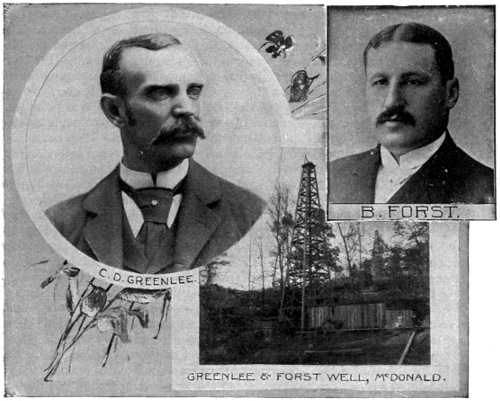
C. D. GREENLEE. B. FORST.
GREENLEE & FORST WELL, McDONALD.
C. D. Greenlee and Barney Forst, who joined forces west of Butler and at
Wildwood, in August of 1891 leased James Mevey’s two-hundred-and-fifty acres,
a short distance north-east of McDonald. Greenlee and John W. Weeks, a
surveyor who had mapped out the district and predicted it would be the “richest
field in Pennsylvania,” selected a gentle slope beside a light growth of timber
for the first well on the Mevey farm. The rig was hurried up and the tools
were hurried down. On Saturday, September twenty-sixth, the fifth sand was
cracked and oil gushed at the rate of one-hundred-and-forty barrels an hour.
The well was stirred a trifle on Monday, September twenty-eighth, with startling
effect. It put fifteen-thousand-six-hundred barrels of oil into the tanks in
twenty-four hours! The Armstrong and the Matthews had to surrender their
laurels, for Greenlee & Forst owned the largest oil-well ever struck on this
continent. On Sunday, October fourth, after slight agitation by the tools, the
mammoth poured out seven-hundred-and-fifty-barrels an hour for four hours,
a record that may, perhaps, stand until Gabriel’s horn proclaims the wind-up
of oil-geysers and all terrestrial things. The well has yielded several-hundred-thousand
barrels and is still pumping fifty. Greenlee & Forst’s production for
a time exceeded twenty-thousand barrels a day and they could have taken two
or three-million dollars for their properties. The partners did not pile on the
agony because of their good-luck. They kept their office at Pittsburg and
286Greenlee continued to live at Butler. He is a typical manager in the field, bubbling
over with push and vim. Forst had a clothing-store at Millerstown in its
busy days, waltzed around the bull-ring in the Bradford oil-exchange and
returned southward to scoop the capital prize in the petroleum-lottery.
Scurrying for territory in the Jumbo-field set in with the vigor of a thousand
football-rushes. McDonald tourists, eager to view the wondrous spouters
and hungry for any morsel of land that could be picked up, packed the Panhandle
trains. Rigs were reared on town-lots, in gardens and yards. Gaslights
glared, streams of oil flowed and the liveliest scenes of Oil Creek were
revived and emphasized. By November first two-hundred wells were drilling
and sixty rigs building. Fifty-four October strikes swelled the daily production
at the close of the month to eighty-thousand barrels! What Bradford had
taken years to accomplish McDonald achieved in ninety days! Greenlee &
Forst had thirty wells drilling and three-hundred-thousand barrels of iron-tankage.
Guffey, Galey & Jennings were on deck with fifteen or twenty. The
Fisher Oil-Company, owning one-fourth the Oakdale’s big tract and the McMichael
farm, had sixteen wells reaching for the jugular, from which the Sturgeon
and Baldwin spouters were drawing ten-thousand barrels a day. William
Guckert—he started at Foster and was active at Edenburg, Parker, Millerstown,
Bradford and Thorn Creek—and John A. Steele had two producing
largely and eight going down on the Mevey farm. J. G. Haymaker, a pioneer
from Allegany county, N. Y., to Allegheny county, Pa., and Thomas Leggett
owned one gusher, nine drilling wells and five-hundred acres of leases. Haymaker
began at Pithole, drilled in Venango and Clarion, was prominent in Butler
and in 1878 optioned blocks of land on Meek’s Creek that developed good
territory and the thriving town of Haymaker, the forerunner of the Allegheny
field. He boosted Saxonburg and Legionville and his brother, Obadiah Haymaker,
opened the Murraysville gas-field and was shot dead defending his
property against an attack by Weston’s minions. Veterans from every quarter
flocked in and new faces were to be counted by hundreds at Oakdale, Noblestown
and McDonald. The National-Transit Company laid a host of lines to
keep the tanks from overflowing and Mellon Brothers operated an independent
pipe-line. Handling such an avalanche of oil was not child’s play and it would
have been utterly impossible in the era of wagons and flat-boats on Oil Creek.
McDonald territory, if unparalleled in richness, in some respects tallied
with portions of Oil Creek and the fourth-sand division of Butler. Occasionally
a dry-hole varied the monotony of the reports and ruffled the plumage of
disappointed seekers for gushers. Even the Mevey farm trotted out dusters
forty rods from Greenlee & Forst’s record-breaker. The “belt” was not continuous
from McCurdy and dry-holes shortened it southward and narrowed it
westward, but a field so prolific required little room to build up an overwhelming
production. An engine may exert the force of a thousand horses and the
yield of the Greenlee & Forst or the Matthews in sixty days exceeded that of a
hundred average wells in a twelvemonth. The remotest likelihood of running
against such a snap was terribly fascinating to operators who had battled in the
older sections. They were not the men to let the chance slip and stay away
from McDonald. Hence the field was defined quickly and the line of march
resumed towards the southward, into Washington county and West-Virginia.
Wrinkles, gray-hairs and sometimes oil-wells come to him who has patience
to wait. Just as 1884 was expiring, the discovery of oil in a well on the Gantz
lot, a few rods from the Chartiers-Railroad depot, electrified the ancient borough
287of Washington, midway between Pittsburg and Wheeling. The whole
town gathered to see the grease spout above the derrick. Hundreds of oilmen
hurried to pick up leases and jerk the tools. For six weeks a veil of mystery
shrouded the well, which was then announced to be of small account. Eight
others had been started, but the territory was deep, the rock was often hard,
and the excited populace had to wait six months for the answer to the drill.
Traveling over Washington county in 1880, Frederick Crocker noticed its
strong geological resemblance to the upper oil-fields, which he knew intimately.
The locality was directly on a line from the northern districts to points south
that had produced oil. He organized the Niagara Oil-Company and sent
agents to secure leases. Remembering the collapse of Washington companies
in 1860-1, when wells on Dunkard Creek attracted folks to Greene county,
farmers held back their lands until public-meetings and a house-to-house canvass
satisfied them the Niagara meant business. Blocks were leased in the
northern tier of townships and in 1882 a test well was drilled on the McGuigan
farm. An immense flow of gas was encountered at twenty-two-hundred feet
and not a drop of oil. Not disheartened, the company went west three miles
and sank a well on the Buchanan farm, forty-two-hundred feet. Possibly the
hole contained oil, but it was plugged and the drillers proceeded to bore
thirty-six-hundred feet on the Rush farm, four miles south. Jumping eleven miles
north-east, they obtained gas, salt-water and feeble spurts of oil from a well on
the Scott farm. About this stage of the proceedings the People’s Light and
Heat Company was organized to supply Washington with natural-gas. From
three wells plenty of gas for the purpose was derived. A rival company drilled
a well on the Gantz lot, adjacent to the town, which at twenty-one-hundred
feet struck the vein of oil that threw the county-seat into spasms on the last
day of 1884.
The fever broke out afresh in July of 1885, by a report that the Thayer
well, on the Farley farm, a mile south-west in advance of developments, had
“come in.” This well, located in an oatfield in a deep ravine, was worked as
a mystery. Armed guards constantly kept watch and scouts reclining on the
hill-top contented themselves with an unsatisfactory peep through a field-glass.
One night a shock of oats approached within sixty feet of the derrick. The
guard fired and the propelling power immediately took to its heels and ran.
Another night, while a crowd of disinterested parties jangled with the guards,
scouts gained entrance to the derrick from the rear, but discovered no oil.
Previous to this a scout had paid a midnight visit to the well, eluded the guards,
boldly climbed to the top of the derrick and with chalk marked the crown-pulley.
With the aid of their glasses the vigilant watchers on the hill-top
counted the revolutions and calculated the length of cable needed to reach the
bottom of the well. A bolder move was to crawl under the floor of the derrick.
This was successfully accomplished by several daring fellows, one of
whom was caught in the act. He weighed two-hundred-and-forty pounds and
his frantic struggles for a comfortable resting-place led to his discovery. A
handful of cigars and a long pull at his pocket flask purchased his freedom.
The well was a failure. R. H. Thayer drilled four more good ones, one a
gusher that netted him three-thousand dollars a day for months. Other operators
crowded in and were rewarded with dusters of the most approved type.
The despondency following the failure of Thayer’s No. 1 was dispelled on
August twenty-second. The People’s Light and Heat Company’s well, on the
Gordon farm, pierced a new sand two-hundred-and-sixty feet below the Gantz
288formation, and oil commenced to scale the derrick. Again the petroleum-fever
raged. An owner of the well, at church on Sunday morning, suddenly
awakened from his slumbers and horrified pastor and congregation by yelling:
“By George! There she spouts!” The day previous he had seen the well flow
and religious thoughts had been temporarily replaced by dreams of a fortune.
This well’s best day’s record was one-hundred-and-sixty barrels. Test wells
for the new Gordon sand were sunk in all directions and the Washington field
had made a substantial beginning. The effect on the inhabitants was marked.
The price of wool no longer formed the staple of conversation, the new industry
entirely superseding it. Real-estate values shot skyward and the borough
population strode from five-thousand to seventy-five-hundred. The sturdy
Scotch-Presbyterians would not tolerate dance-houses, gambling-hells and dens
of vice in a town that for twenty years had not permitted the sale of liquor.
Time works wonders. Washington county, which fomented the Whisky Insurrection,
was transformed into a prohibition stronghold. The festive citizen
intent upon a lark had to journey to Pittsburg or Wheeling for his jag.
Col. E. H. Dyer, whom the Gantz well allured to the new district, leased
the Calvin Smith farm, three miles north-east, and started the drill. He had
twenty years’ experience and very little cash. His funds giving out, he offered
the well and lease for five-hundred dollars. Willets & Young agreed to finish
the well for two-thirds interest. They pounded the rock, drilled through the
fifth sand and hit “the fifty-foot” nearer China. In January of 1886 the well-Dyer
No. 1—flowed four-hundred barrels a day. Expecting gas or a dry-hole,
from the absence of oil in the customary sand, the owners had not erected
tanks and the stream wasted for several days. Dyer sold his remaining one-third
to Joseph W. Craig, a well-known operator in the Oil-City and Pittsburg
oil-exchanges, for seventy-five-thousand dollars. He organized the Mascot Oil-Company,
located the McGahey in another section of the field and pocketed
two-hundred-thousand dollars for his year’s work in Washington county. The
Smith proved to be the creamiest farm in the field, returning Willets, Young
and Craig six-hundred-thousand dollars. Calvin Smith was a hired man in
1876, working by the month on the farm he bought in 1883, paying a small
amount and arranging to string out the balance in fifteen annual instalments.
His one-eighth royalty fattened his bank-account in eighteen months to six
figures, an achievement creditable to the scion of the multitudinousmultitudinous Smith-family.
From the sinking of the Dyer well drilling went on recklessly. Everybody
felt confident of a great future for Washington territory. Isaac Willets, brother
of an owner of the Smith tract, paid sixty-thousand dollars for the adjoining
farm—the Munce—and spent two-hundred-thousand in wells that cleared him a
plump half-million. John McKeown the same day bought the farm of the
Munce heirs, directly north of their uncle’s, and drilled wells that yielded him
five-thousand dollars a day. He removed to Washington and died there. His
widow erected a sixty-thousand-dollar monument over his grave, something
that would never have happened if John, plain, hard-headed and unpretentious,
could have expressed his sentiments. Thayer No. 2, on the Clark farm, adjoining
the Gordon, startled the fraternity in May of 1886 by flowing two-thousand
barrels a day from the Gordon sand. It was the biggest spouter in the heap.
Lightning struck the tank and burned the gusher, the blazing oil shooting
flames a hundred feet towards the blue canopy. At night the brilliant light
illumined the country for miles, travelers pronouncing it equal to Mt. Vesuvius
in active eruption. The burning oil ran to Gordon No. 1, on lower ground,
289setting it off also. In a week the Thayer blaze was doused and the stream of
crude turned into the tanks of No. 1. Next night a tool-dresser, carrying a
lantern on his way to “midnight tower,” set fire to the gas which hung around
the tanks. The flames once more shot above the tree-tops, the tool-dresser
saved his life only by rolling into the creek, but the derrick was saved and no
damage resulted to the well.
Captain J. J. Vandergrift leased the Barre farm, south of the Smith, and
drilled a series of gushers that added materially to his great wealth. Disposing
of the Barre, he developed the Taylorstown pool and reaped a fortune.
T. J. Vandergrift leased the McManis farm, six miles south of Washington, and
located the first Taylorstown well. Taylorstown is still on duty and W. J.
Young manages the company that acquired the Vandergrift interests. South
of the Barre farm James Stewart, vendor of a cure-all salve, owned a shanty
and three acres of land worth four-hundred dollars. He leased to Joseph M.
Craig for one-fourth royalty. The one well drilled on the lot spouted two-thousand
barrels a day for weeks. It is now pumping fairly. This was salve
for Stewart and liniment for Craig, whose Washington winnings exceed a half-million.
“Mammy” Miller, an aged colored woman, lived on a small lot next
to Stewart and leased it at one-fourth royalty to a couple of local merchants.
They drilled a thousand-barrel well and “Mammy” became the most courted
negress in Pennsylvania. The Union Oil-Company took four-hundred-thousand
dollars from the Davis farm. Patrick Galligan, the contractor of the Smith
well, leased the Taylor farm and grew rich. Pew & Emerson, who have made
millions by natural-gas operations, leased the Manifold farm, west of the Smith.
The first well paid them twenty-thousand dollars a month and subsequent
strikes manifolded this a number of times. Pew & Emerson have risen by their
energy and shrewdness and can occupy a front pew in the congregation of
petroleumites.
Samuel Fergus, once county-treasurer and a man of broad mould, struck
a geyser in the Fergus annex to the main pool. He drilled on his twenty-four
acres solely to accommodate Robert Greene, pumper for Davis Brothers.
Greene had much faith and no money, but he advised Fergus to exercise the
tools at a particular spot. Fergus might have kept the whole hog and not merely
a pork-chop. He sold three-eighths and carried one-eighth for Greene, who
refused twenty-thousand dollars for it the day the well began flowing two-thousand
barrels. “Bob” Greene, like Artemas Ward’s kangaroo, was “a amoosin’
cuss!” Called to Bradford shortly after the gusher was struck, he met
an old acquaintance at the station. His friend invited Bob into the smoker to
enjoy a good cigar. He declined and in language more expressive than elegant
said: “I’ve been a ridin’ in smokers all my life. Now I’m goin’ to turn
a new leaf. I’m goin’ to take a gentleman’s car to Pittsburg and from there to
Bradford I’m goin’ to have a Pullman, if it takes a hull day’s production.” Bob
took his first ride in a Pullman accordingly. The first venture induced Fergus
to punch his patch full of holes and do a turn at wildcatting. His stalwart luck
fired the hearts of many young farmers to imitate him, in some instances successfully.
Washington has not yet gone out of the oil-business. The Cecil
pool kept the trade guessing this year, but its gushers lacked endurance and
the field no longer terrorizes the weakest lambkin in the speculative fold.
Greene county experienced its first baptism of petroleum in 1861-2-3, when
many wells were drilled on Dunkard Creek. The general result was unsatisfactory.
The idea of boring two-thousand feet for oil had not been conceived
290and the shallow holes did not reach the principal strata. Of fourth sand, fifth
sand, Gordon rock, fifty-foot rock, Trenton rock, Berea grit, corn-meal rock,
Big-Injun sand and others of the deep-down brand operators on Dunkard
Creek never dreamed. Some oil was detected and more blocks of land were
tied up in 1864-5. The credulous natives actually believed their county would
soon be shedding oil from every hill and hollow, garden and pasture-field. The
holders of the tracts—lessees for speculation only—drilled a trifle, sold interests
to any suckers wanting to bite and the promised developments fizzled. E.
M. Hukill, who started in 1868 at Rouseville, leased twenty-thousand acres in
1885 and located a well on D. L. Donley’s farm, one-third mile south-east of
the modest hamlet of Mt. Morris. Morris Run empties into Dunkard Creek
near the village. The tools were swung on March second, 1886. Fishing-jobs,
hard rock and varied hindrances impeded the work. On October twenty-first
oil spouted, two flows occurred next day and a tank was constructed. Saltwater
bothered it and the well—twenty-two-hundred feet—was not worth the
pains taken for months to work it as a mystery. Hukill drilled a couple of
dusters and the Gregg well at Willowtree was also a dry-hole at twenty-three
hundred feet. Craig & Cappeau and James M. Guffey & Co. swept over the
south-western section in an expensive search for crude. From the northern
limit of McKean to the southern border of Greene county Pennsylvania had
been ransacked. The Keystone players—Venango, Warren, Forest, Elk, McKean,
Clarion, Armstrong, Butler, Allegheny, Beaver and Washington—put up
a stiff game and the region across the Ohio was to have its innings.
In the summer of 1881 Butler capitalists drilled a well on the Smith farm,
near Baldridge, seven miles south of the county-seat. It had a nice white sand
and a smell of oil. S. Simcox, J. J. Myers and Porter Phipps leased the land
on which Renfrew now stands and put down a hole on the Hamill tract. The
well showed only a freshet of salt-water until thirty feet in the third sand, when
it flowed crude at a hundred-barrel gait. This strike, in March of 1882,
boomed the territory below Butler and ushered in Baldridge and Renfrew.
Milton Stewart and Lyman Stewart were interested with Simcox, Myers and
Phipps in the property and helped organize the Bullion Salt-Water Company.
The Cecil pool, in Washington county, furnishes its oil from the fifty-foot
sand. One well, finished in April of 1895, on a village lot, flowed thirty-three
hundred barrels in twenty-four hours. The biggest strike at Legionville,
Beaver county, was Haymaker’s seven-hundred barreler. The Shoustown or
Shannopin field, also in Beaver, sixteen miles from Pittsburg, is owned principally
by James Amm & Co. Coraopolis is a thriving oil town, fifteen miles
west of the Smoky City. For miles along the Ohio derricks are quite plentiful.
Greene county has been decidedly brisk in this year of grace and cheap petroleum.
And so the tide rolls on and “thus wags the world away.”
The southern trail, with its magnificent Butler output, its Allegheny geysers,
its sixteen-thousand barrels a day in Washington and its wonderful strikes in
Greene, was big enough to fill the bill and lap over all the edges.
291HITS AND MISSES.
A Bradford minister, when the Academy of Music burned down, shot wide
of the mark in attributing the fire to “the act of God.” Sensible Christians
resented the imputation that God would destroy a dozen houses and stores to
wipe out a variety-theater, or that He had anything to do with building up a
trade in arson and figuring as an incendiary.
He struck a match and the gas exploded;
An angel now, he knows it was loaded.
“Mariar, what book was you readin’ so late last night?” asked a stiff Presbyterian
father at Franklin. “It was a novel by Dumas the elder.” “‘Elder!’
I don’t believe it. What church was he elder on, Ish’d like to know, and writ
novels? Go and read Dr. Eaton’s Presbytery uv Erie.”
Hymn-singing is not always appropriate, or a St. Petersburg leader would
not have started “When I Can Read My Title Clear” to the minstrel-melody
of “Wait for the Wagon and We’ll All Take a Ride!” At an immersion in the
river below Tidioute, as each convert, male or female, emerged dripping from
the water, the people interjected the revivalist chorus:
“They look like men in uniform,
They look like men of war!”
Mr. Gray, of Boston, once discovered a “non-explosive illuminating gasoline.”
To show how safe the new compound was, he invited a number of
friends to his rooms, whither he had taken a barrel of the fluid, which he proceeded
to stir with a red-hot poker. As they all went through the roof he
endeavored to explain to his nearest companion that the particular fluid in the
barrel had too much benzine in it, but the gentleman said he had engagements
higher up and could not wait for the explanation. Mr. Gray continued his
ascent until he met Mr. Jones, who informed him that there was no necessity to
go higher, as everybody was coming down; so Mr. Gray started back to be
with the party. Mr. Gray’s widow offered the secret for the manufacture of the
non-explosive fluid at a reduced rate, to raise money to buy a silver-handled
coffin with a gilt plate for her departed husband.
The speech of a youth who goes courting a lass,
Unless he’s a dunce at the foot of the class,
Is sure to be season’d with natural gas.
Grant Thomas, train-dispatcher at Oil City of the Allegheny-Valley Railroad,
is one of the jolliest jokers alive. When a conductor years ago a young
lady of his acquaintance said to him: “I think that Smith girl is just too hateful;
she’s called her nasty pug after me!” “Oh,” replied the genial ticket-puncher,
in a tone meant to pour oil on the troubled waters, “that’s nothing;
half the cats in Oil City are called after me!” The girl saw the point, laughed
heartily and the angel of peace hovered over the scene.
“What’s in a name?” so Shakespeare wrote.
Well, a good deal when fellows vote,
Want a check cashed, or sign a note;
And when an oilman sinks a well,
Dry as the jokes of Digby Bell,
Dennis or Mud fits like a shell.
292
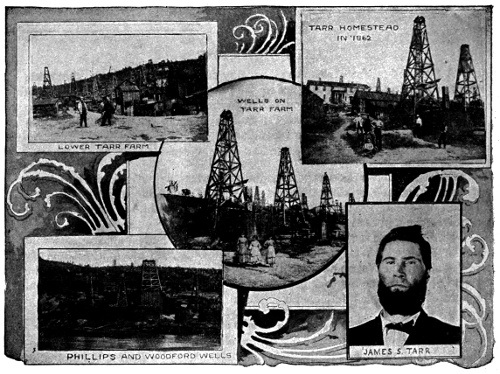
VIEWS ON THE TARR FARM, OIL CREEK, IN 1863-6.
TARR HOMESTEAD IN 1862
WELLS ON TARR FARM
LOWER TARR FARM
PHILLIPS AND WOODFORD WELLS
JAMES S. TARR
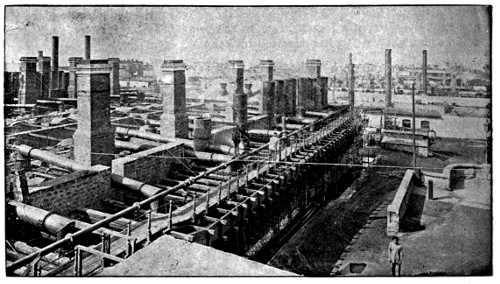
REFINERY OF THE NOBELS AT BAKU, RUSSIA.
XIV. MORE OYSTERS IN THE STEW. — SOME OF THE BOYS.
293
Ohio Calls the Turn at Mecca—Macksburg, Marietta, Lima and
Findlay Heard From—West Virginia Not Left Out—Volcano’s Early
Risers—Sistersville and Parkersburg Drop In—Hoosiers Come Out
of Their Shell—Colorado, Kansas, Wyoming, Texas and California
Help Flavor the Petroleum Tureen.
“The world’s mine oyster.”—Shakespeare.
“’Tis not too late to seek a newer world.”—Tennyson.
“To-morrow to fresh woods and pastures new.”—Milton.
“Leaving thine outgrown shell by life’s unresting sea.”—Holmes.
“I am his Highness’ dog at Kew,
Pray tell me, sir, whose dog are you?”—Pope.
“The influence of a strong spirit makes itself felt.”—Colmore.
“Nature fits all her children with something to do.”—Lowell.
“Let us, then, be up and doing;
Still achieving, still pursuing.”—Longfellow.
“An intense hour will do more than dreamy years.”—Beecher.
“If thy heart fails thee, climb not at all.”—Queen Elizabeth.
“There yet remains one effort to be made.”—Samuel Johnson.
“Do what lieth in thy power and God will assist thy good-will.”—Thomas à Kempis.
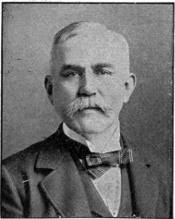
Pennsylvania was not to be the solitary
oyster in the stew, the one and only winner
in the petroleum-game. Although the
Keystone State raked in the first jack-pot
on Oil Creek with the Drake royal-flush, rival
players were billed for an early appearance.
Ohio, always ready to furnish presidents and
office-holders for the whole nation, was equally
willing to gather riches by the oleaginous route
and dealt Mecca as its initial trump in the summer
of 1860. Years before a farmer near the
quiet town in Trumbull county, digging a well
for water, found an evil-smelling liquid and
promptly filled up the hole. This supplied a
cue to J. H. Hoxie, after the news of Drake’s
experiment reached him, and he sank a shallow well close to the farmer’s
unlucky venture. Piercing a covering of dirt twenty feet and coarse sand-rock
ten feet, the tools unlocked a reservoir of dark oil, which responded to the
pump with the vehemence of a Venango spouter. Estimates of the daily yield,
much of which floated down stream, varied from one-hundred to three-hundred
barrels. Probably forty to fifty would be nearer the real figure. The oil, 26°
gravity and very dark green in color, was a superior lubricant. This new
phase of “the Ohio Idea” brought multitudes of visitors to the scene. Mecca
became the mecca of all sorts, sizes and conditions of worshippers at the
294greasian shrine. To come and see was to desire a chance in the exciting lottery.
Hoxie, elated beyond measure over the strike, traveled around the country to
magnify the field and his own connection with it. Small leases were gobbled
eagerly for a small cash-bonus and a royalty, sometimes half the oil done up in
barrels. A three-pole derrick, a spring-pole and light tools hitched to a rope
sufficed to “kick down” a well. Depths ranged from thirty feet to one-hundred.
Portable engines and boilers followed when hand-power weakened and
the wells must be pumped steadily. Rude drilling-outfits and board-shanties
went up by hundreds. Needy adventurers might secure an acre of ground and
sprout into prosperous oilmen in twenty or thirty days. The tempting bait was
snapped at greedily. Rig-builders, carpenters, teamsters, tool-dressers, laborers,
shop-keepers, saloonists and speculators crowded the busy spot in quest of
jobs, locations or easy victims. Mecca seemed too far off, so a genuine “oil-town,”
lacking none of the earmarks of such creations, was established on the
James Cowdey farm and labeled Oil Diggings. It soon sported a post-office,
which distributed stacks of mail, machine-shops, groceries and boarding-houses
galore; nor were groggeries, gambling-dens and the usual incidentals
difficult to discover.
The opening months of 1861 swelled the excitement and the population.
The bright and the dark sides were not far apart. Many who came with high
expectations in January returned disappointed in June. The field had extended
south from Power’s Corners, substantial frames enclosed numerous wells and a
refinery was erected. Yet the good quality of the oil was scantily appreciated
until most of the wells had been about exhausted. Often it went begging
vainly for purchasers in Cleveland or Buffalo. Then the price advanced,
actually reaching fifty-two dollars a barrel in 1863-4. Adulteration with cheaper
oils deteriorated the product and it dropped below a paying rate. Operators
realized in the autumn of 1861 that the territory was declining rapidly and the
wiser ones departed. Some held on a year or two longer, drilled their wells
five-hundred feet in hope of hitting other sands and quit at last. George Moral,
a one-eyed veteran of the war, has stuck to the Shaeffer farm, at the southern
end of the district, and he is still getting a morsel of oil from a nest of shallow
wells. The forest of derricks and engine-houses has disappeared. Oil Diggings
is a tradition and “Ichabod” is written over the once stirring district.
“Old Rhinestein’s walls are crumbled now.
Stern Ruin’s ploughshare drives elate full on thy bloom.”
Mix & Force were, perhaps, the most successful Mecca operators. It was
hard to extract the heavy oil from the rock by ordinary processes. Calvin
Adams, of Pittsburg, conceived the idea of sinking a shaft and drifting into the
sand, exactly as in gold-mining. He employed four men, pumped the oil and
water that seeped in and hoisted lots of rock to the surface, where steam was
used to force out the greasy fluid that saturated the sand. This novel method
paid while oil was high-priced, but was too expensive when the stuff went zero-wards.
The oil-bearing rock, known as Berea grit, lay in flat formations and
was somewhat porous. Mr. Rider removed his refinery to Oil Creek in 1862,
since which period refining has been a lost art in Trumbull county. Everybody
has heard of the resolute pioneer who, bound for Colorado by the overland
line of prairie-schooners, inscribed on his Conestoga wagon: “Pike’s
Peak or Bust!” He was distanced by a band of petroleum-seekers at Oil
Diggings. The jokers built their engine-house and belt-house parallel with the
public road and emblazoned in two-foot capitals on the derrick: “Oil, Hell or
295China!” James A. Garfield, afterwards Chief Magistrate of the United States—he
was a pilgrim to Mecca and owned an interest in the “Preachers’ Wells,”
among the best in the bundle—once quoted this legend in Congress. Paying
his respects pointedly to “Sunset” Cox, who represented an Ohio district in the
House and had failed of re-election, Garfield closed with these words:
“My friend found in the late election a decided majority against him. Evidently he is
going down, down, down until, in the language of an oil-explorer, he comes to ‘Oil, Hell
or China!’”
Garfield left Oil Diggings when the bubble burst, served term after term in
Congress, went to the White House and perished by the bullet of a vile assassin.
Cox left Ohio for New York, secured the good-will of Tammany, went back to
Congress repeatedly, died years ago and was honored with a statue in Astor
Place. Both were political leaders on opposing
sides and warm personal friends, both gained
world-wide celebrity, both were Ohioans and oil-producers,
and both retained to the last that
“chastity of honor which felt a stain like a wound.”
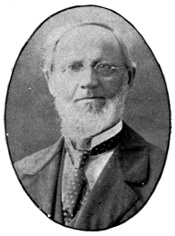
M. E. Hess, for thirty years a respected citizen
of Pennsylvania, began his oil-career at Mecca.
He came to Oil Creek in the sixties, formed a partnership
with Franklin S. Tarbell and operated
largely in various sections. He was prominent in
the Clarion field and took up his abode at Edenburg.
There, as wherever he lived, he has been
active in church-work, in building up a religious
sentiment and in furthering the best interests of the
community. He has served acceptably in the
borough-council and is now justice of the peace.
Upright in his life and character, sincere in his
friendships, kind to the poor and trustworthy everywhere, M. E. Hess deserves
the high place he has always held in popular regard. The passing years have
touched him lightly, his heart is young, he is “not slothful in business” and
he trains with the “men who can hear the Decalogue and feel no self-reproach.”
“An honest man’s the noblest work of God.”
The south-east border of Ohio next experienced the petroleum-revival.
The region about Marietta, where surface-signs of greasiness were noted a century
ago, for years enjoyed its full share of satisfactory developments. Three
or four counties have been covered satisfactorily, producing from the Big Injun
sand. The Benwood pool, in Monroe county, introduced by a big well on the
Price farm in August of 1896, has yielded liberally and is still the object of
respectful attention. Macksburg, sufficiently important in 1881 to hold the
entire oil-trade in mortal suspense for weeks, is on hand with a small output.
John Denman, of Bradford, and Thomas Mills were pioneers in the field and
did a turn in working the “mystery racket.” Hundreds assembled to watch
the torpedoing of their frontier-well, four miles east of Macksburg, kept in
abeyance a month for speculative purposes. Natives, with their wives and families,
lined the hillside to behold the novel sight. Col. John J. Carter had arranged
a system of flag-signals and stationed men to wave the news to Dexter
City, five miles away. The swiftest horse in the county was at my service, to
bear my message to the nearest telegraph-office for transmission to the New-York
Oil-Exchange. George H. Nesbit, L. E. Mallory, Denman and a dozen
296other Pennsylvania operators stood by. Hours were frittered away, until the
exchanges had closed, before the shell was lowered into the hole. The reaction
following the explosion came at last. A column of water rose mildly a few feet
in the air and—that was all! The much-vaunted well, which throttled the great
petroleum-industry three or four weeks, was practically a failure and never rose
above the five-barrel grade!
“The mountain labored and brought forth a mouse.”
A thousand barrels a day was the average yield of the south-eastern division
in 1896. George Rice’s refinery at Marietta treated the bulk of the production
at the primitive stage of developments. It was a rice-pudding for Rice,
who is a thoroughbred hustler and wastes no love upon anyone who may encroach
upon his particular preserve. He has loads of pluck and enterprise and
the staying quality that is desirable alike in oilmen and oil-territory, to say nothing
of bull-dogs and prize-fighters.
“‘Thrice is he armed who hath his quarrel just,’
And four times he who gets his work in fust.”
The great Lima field, spreading over a dozen counties in North-western
Ohio, was the star performer of the Buckeye galaxy. Centering in Allen, Hancock,
Wood and Seneca, it has grasped big slices of the bordering counties,
with a strip of Lucas for good measure. Gas-indications in Hancock, which
resulted in a large well at Findlay in 1884, set the ball rolling. Others were
drilled forthwith, one on the Kramer farm getting five barrels of oil a day.
Findlay and Bowling Green had dipped into the Trenton rock profitably, but
nobody thought a huge oil-field at all likely to be encountered. The Strawboard
Works at Lima, in Allen county, south-west of Hancock, needed more
water and the manager decided to drill for water and gas. The hole was
punched through the Trenton rock and pronounced a rank failure for gas.
The company exploded a torpedo in the barren rock on April twelfth, 1885.
To the astonishment of owners and spectators, the well sent out a stream of oil.
It was tubed and pumped fifteen barrels a day. Such was the modest beginning
of an oil-district destined to cause a greater stir than Grover Cleveland’s
boy-baby or Albert Edward’s green necktie.
There were no flies on Lima that glad day;
Great expectations had the right of way,
For the oil-boom had come, and come to stay.
It was “the old, old story.” The Queen of Sheba doubted the reports of
Solomon’s grandeur until she sized up the outfit personally and declared:
“The half has not been told.” Outsiders doubted the truth of a paying strike
at Lima, and doubted its importance after seeing the well and the contents of
the tank. The oil had a sickly tint and an odor that “smelled to heaven.”
People sniffed the dreadful aroma and proclaimed the oil good only for fuel.
A few Limans thought differently and organized the Citizens’ Gas-Company to
help play the game to a finish. Not a cloud of gas, but a forty-barrel pumper,
was the result in December. Regardless of tint or odor, outsiders and insiders
hastened to get drilling-sites. By May first, 1886, sixteen wells on town-lots
were producing nicely. George P. Waldorf and James B. Townsend, residents
of Lima, were the first to lease a farm in the neighborhood, at one-eighth royalty.
They visited Bradford, returned with David Kirk and Isaac E. Dean,
formed the Trenton-Rock Oil-Company, leased many lots and fifty-thousand
acres of land, set strings of tools boring and soon piled up a tidy production.
The year closed with two-hundred wells doing nine-thousand barrels, which the
297Buckeye Pipe-Line transported and stored. Operations extended north-east and
south-west, until thirty-thousand wells were drilled and a half-million acres of
territory opened. Findlay, Lima, Fostoria and Toledo were strictly in the
swim. The deluge of grease swelled to mammoth proportions. Iron-tanks
stored thirty-million barrels, while iron-pipes bore other millions east and west.
Refineries used what they could, Ohio oil netting a smaller percentage of kerosene
than Pennsylvania crude, and in 1889 the price crawled down to fifteen
cents. Think of it—fifteen cents for forty-two gallons of oil pumped from
twelve-hundred feet beneath the earth’s surface!
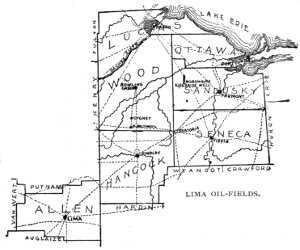
Developments covered large areas in Hancock and Wood counties, took in
a strip of Allen and Auglaize one to three miles wide, and extended south-west
to St. Mary’s, thirty miles from Lima. They reached north-east into Sandusky
and Ottawa, east into Seneca, north into
Lucas and west into Van Wert and across
the state-line into Indiana. Wood county
stood at the top of the heap, with the
rest as offshoots. Its first well, drilled
three miles north of North Baltimore by
T. J. Vandergrift & Co., cantered off in
March, 1888, at four-hundred barrels.
The second, put down three miles east a
year later by Bowling-Green tenderfeet,
rated as a fifteen-hundred barreler. Smith
& Zeigler’s, on the adjoining farm, outdid
this three to one by bowling
out five-thousand barrels
per diem. The plot
thickened very rapidly.
Gushers tumbled into line at a dizzy pace. Cygnet lots
boasted clusters of derricks that marked king-pin
strikes. Agents of the Standard bought thousands of wells and the cream of
the territory. The product fed a myriad furnace-fires in Chicago and the half-mile
battery of steam-boilers at the Columbian Exposition. In Sandusky
county, whose earliest wells, at Gibsonburg in 1888, were by no means aggressive,
T. E. Kirkbride called the turn on a six-thousand-barrel spouter in
November, 1894. Altogether the Ohio oil-region, with its eastern pool in
Trumbull county, its south-eastern branch in Washington, Monroe and Noble
and its vast deposit of gas and petroleum in the north-western section, was
a startling revelation. But all the territory was not velvet, as eight-thousand
dry-holes attest. No leopard could be more spotted. The present average
yield of the wells is under four barrels, with sixty-six cents as the average price
last year. Five-sixths of the twenty-four-million barrels Ohio produced in
1896 must be credited to the north-western colossus.
Thomas E. Kirkbride, the man that owned the well that raised the smell
that set the pace that led the race that broke the slate that it was fate that
Coxey’s state should elevate, hails from Tidioute, where his parents located in
1866. He started in oil young, operated in the Warren and Bradford fields,
caught the Ohio fever and landed at Findlay in 1890. His first ventures were
around Gibsonburg, four miles west of which, on the Jones farm, he drilled the
gusher that smashed the Lima record and fattened his bank-account six figures.
Mr. Kirkbride lives at Toledo, in a handsome home gladdened by a devoted
298wife and five children. S. M. Jones, the distinguished Mayor of Toledo, also
came from the Keystone State. He drilled in the lower oil-districts in 1868,
joined the tide for Bradford and located at Duke Centre. Thence he migrated
to Toledo, patented a sucker-rod improvement, erected a big factory, dabbled
skilfully in municipal affairs, advocated civic reforms and won the mayoralty
on the grand platform of “eight hours work a day.” Mr. Jones helped organize
the Western Oilmen’s Association, which occupies fine quarters in the heart of
the city. There Fred Boden, W. J. McCullagh, Frank Steele, C. A. Lupher
and other Keystoners often hang out to welcome old friends from Pennsylvania.
W. B. Nolan, who pumped at Oil City in 1864 and operated from Edenburg to
Bradford, has drilled five-hundred wells in Ohio for himself or by contract.
C. C. Harris, who sold to the Ohio Oil-Company in 1890 for one-hundred-thousand
dollars, has put down four-hundred. Truly the Buckeye State is no slouch
in petroleum.
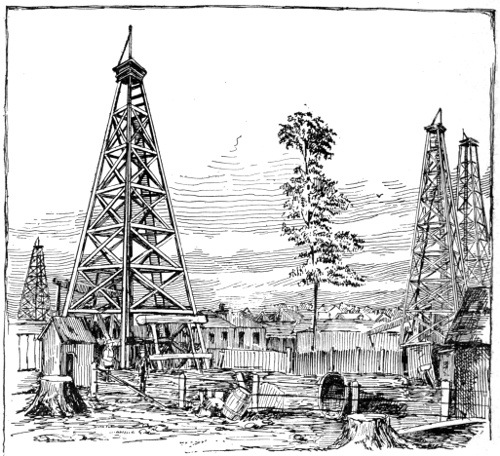
WELLS ON TOWN LOTS AT CYGNET, OHIO.
A farmer in the Black Swamp of Wood county, half-starved on corn-bread
and bad water, leased his forty-acre patch for oil-purposes. The first well,
which was sunk a hundred yards from his cabin, flowed two-thousand barrels
a day. When the spurt began the old fellow happened to be chopping wood
beside his door. He saw the mass of oil climb into the atmosphere, flung down
his axe and shouted: “Bet yer life, no more corn-dodgers an’ watered whisky
for this chicken!”
A barren streak in Mercer and Van Wert, on Ohio’s western border,
299seemed to demonstrate the folly of seeking an extension of the Lima belt in
Indiana, despite convincing symptoms of oil at Geneva. To test the matter
the Northern-Indiana Oil-Company, composed mainly of Lima operators, leased
five-thousand acres along the boundary between Adams and Jay counties and
drilled several wells in 1892. Nearly the whole range proved productive, showing
that the belt stretched westward. Portions of Wells, Blackford, Grant and
Huntingdon joined the procession in due course. Last year an important pool
was unearthed near Alexandria, Madison county, twenty-five miles south-west
of the original field, which demanded a pipe-line to Montpelier. This newest
accession is in the town of Peru, with spurs quite close to Cass county. This has
been the stellar attraction of Hoosierdom, fifty-five wells completed in October
of 1897 yielding thirty-five-hundred barrels. Roan, New Waverley and Denver
have not escaped and the drill has invaded Kokomo, twenty miles south. Peru
is the fad of the hour, the pride of the Wabash. Just clear across the state,
several wells at Terre Haute have revealed the presence of sand, gas and oil.
The average price of Indiana crude in 1896 was sixty-three cents, and five-million
barrels were produced.
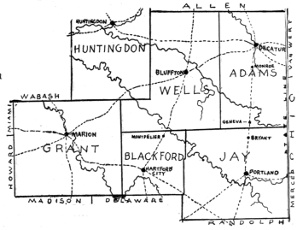
BIT OF INDIANA OIL-TERRITORY.
The Indiana oil-region is a level country, about forty miles long east and
west and three to four wide. The oil, dark green in color and thirty-six gravity,
is found in the Trenton limestone,
at a depth of a thousand feet.
Thirty to a hundred feet of driving-pipe
and three-hundred feet of
casing are needed in each well.
The main belt runs in regular
pools and may be considered
ten-barrel territory.
The aggregate production
of the field is
twelve to fifteen-thousand
barrels a day. The largest
well started at two-thousand
barrels and some
have records of five-hundred
to eight-hundred.
The great gas-field, south of the oil-belt, has boomed manufactures and contributed
vastly to the wealth of the Hoosiers.
Last May the Byram Oil-Company of Indianapolis finished the first oil-well,
within sight of the village of Dundee, ever drilled by electricity. A fifty-horse
dynamo, which runs the small motors at a dozen wells on the tract, supplied
the power. Gas is used under the boilers in the power-house, a substantial
frame-building, which shelters the central station. The entire plant cost five-thousand
dollars and the company votes it a success of the first magnitude.
Hiram Tewksbury, of Montpelier, who pays taxes on six-hundred acres of
land in Wells county, is one of the few men whom getting into a lawsuit enriched.
When the Indiana field was in its infancy he contracted to purchase
the Howard farm for some oilmen, who refused to take it off his hands and
were sustained by the Court. He sued Howard to take it back, the Supreme
Court decided against him and Tewksbury had to keep the land. It turned out
to be the bosom of an oil-pool, the cream of the district. One acre brought
300Tewksbury eleven-thousand dollars, and for months his royalty exceeded five-hundred
dollars a week.
Peru, a natty place of ten-thousand inhabitants, twelve miles east of Logansport,
is the Indiana sensation of the year. Last June a bevy of citizens drilled
a duster on the Wallace farm, two miles east. This dose of Peruvian bark spurred
them to drill on the north-west edge of town in
July. The well flowed fifteen barrels a day through
the casing, at twenty feet in the Trenton rock, increasing
ten-fold when tubed and pumped. At
once the oil craze ran riot in the wild rush for leases.
Tourists from Ohio and Pennsylvania led the long
procession of land-seekers. The Klondyke pool
east of Toledo and the Hume south of Lima were
forgotten temporarily. Scores of slick wells demolished
the theory of a mere “pocket,” which the
absence of gas and scarcity of salt-water led would-be
scientists to expect at the first blush. The good
work has crowded ahead and Peru roosts high on
the petroleum-perch in the center of the patch.
A dandy thing it is to be on top,
Provided you don’t have to take a drop
And come down with a thud, kerflop.
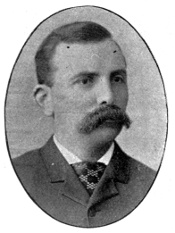
Thirteen per cent. of the five-thousand wells drilled in Benjamin Harrison’s
state are dry-holes. Montpelier has benefited largely from operations in Wells,
Blackford and Jay counties. The Sibley Oil-Company, Isaac N. Patterson, the
Rowland-Zeigler Oil-Company and other Pennsylvania firms and individuals
have been prominent in the field. Mr. Patterson lives at Franklin, is president
of the savings bank and has figured extensively
in the chief districts since Petroleum Centre and
Pithole first tinctured the horizon a flaming red.
James W. Rowland quit mercantile-life in Franklin
to conduct a bank at Emlenton and embark in the
oil-business. The success he richly merited attended
him in banking, producing and refining.
He gained a liberal fortune, returned to Franklin
and took a leading share in developing the Indiana
region. Mr. Rowland is a first-class man of affairs,
genial and generous, true to his convictions, loyal
in his friendships and always ready to further a
good cause. The Rowland-Zeigler Company sold
to the Standard recently at a price which hugged a
quarter-million dollars closely. H. C. Zeigler, who
managed and was president of the company, began
his oil-career as owner of an interest in the first two
producing wells at Raymilton, drilled in 1869. Operating at Pleasantville a short
season, the fourth-sand development attracted him to Petrolia. In 1873 he and
J. D. Ritchey and W. T. Jackson procured a charter for the Cleveland Pipe-Line,
which was sold to S. D. Karns and merged into the Karns Line. Assisting
in the management of the Karns Line until the United Lines absorbed it,
he then engaged actively in producing oil. His circuit of operations comprised
Bullion, Cogley, Thorn Creek, Cherry Grove, Bradford and Richburg. Moving
301westward, he participated in the early development of the Ohio and Indiana
fields. In company with Jacob S. Smith he established the plant that supplied
natural-gas to Chicago. His master-stroke was the organization of the Rowland-Zeigler
Company, which alone realized him a competence. Mr. Zeigler is
in his prime, hearty and vigorous, quick to relieve distress and prompt to aid
the right. None better deserves the compliment George D. Prentice paid Mark
M. Pomeroy: “He is a brick.”
John and Michael Cudahy, behind whom Philip Armour, the Swifts, Fairbanks
and Nelson Morris, the Chicago beef-magnates, are supposed to pose, in
1895 purchased a huge slice of the Indiana field, laid a pipe-line to the Windy
City and talked of building a refinery that would outshine the Standard giant at
Whiting. The brothers are sons of an Irish resident of Milwaukee, who
taught them his own trade of meat-packing. Michael Cudahy went to Chicago
to manage a branch for John Plankington, whom the Armours succeeded, and
John “came tumbling after.” John piled up millions by plunges in pork and
lard that won him the soubriquet of “Daring Jack” Cudahy, while Michael
stuck to Armour faithfully. John toppled and lost his wealth, Michael started
him afresh, he paid off a million of debts and built up another fortune. Michael,
several times a millionaire, has studied the swine as Sir John Lubbock has
studied the ant. No part of the hog is wasted under his trained system, but
thus far the Cudahys have not been able to hog the Hoosier oil-fields.
C. H. Shattuck had the first well in West Virginia drilled for oil. He came
from Michigan in the fall of 1859, secured land in Wirt county and bored one-hundred
feet by the tedious spring-pole process. The well was on the bank of
the Hughes river, from which the natives skimmed off a greasy fluid to use for
rheumatism and bruises. It was dry and Shattuck settled at Parkersburg, his
present abode. At Burning Springs a “disagreeable fluid” flooded a salt-well,
which the owner quit in disgust. General Samuel Karns, of Pennsylvania, and
his nephew, S. D. Karns, rigged it up in 1860 and pumped considerable oil.
The shallow territory was operated extensively. Ford & Hanlon bored on Oil-Spring
Run, Ritchie county, in 1861-2, finding heavy oil in paying quantities.
W. H. Moore started the phenomenal eruption at Volcano in 1863, by drilling
the first well, which produced eight-thousand barrels of lubricating oil. Sheafer
& Steen’s, the second well, was a good second and the Cornfield pumped
seven-thousand barrels of thirty-five-gravity oil in six months. William C.
Stiles and the Oil-Run Petroleum Company punched scores of wells. Volcano
perched on the lubricating pedestal for years, but it is now extinct. E. L.
Gale—he built the railroad freight-houses at Aspinwall and Panama and owned
the site of Joliet and half the land on which Milwaukee thrives—in 1854 purchased
two-thousand acres of bush twenty-five miles from Parkersburg. In
1866 the celebrated Shaw well, the first of any note on his tract, flowed one-hundred
barrels of twenty-six-degree oil. Gale sent samples to the Paris Exposition
in 1867 and received the only gold-medal awarded for natural oils.
The Shaw well kicked up a fuss, leases brought large bonuses, excitement ran
high and the “Gale Oil Field” was king of the hour. Land-grabbers annoyed
Gale, who declined a million dollars for his property. He routed the herd
and died at an advanced age, leaving his heirs ample means to weather the
severest financial gale. The war had driven northern operators from the field
and heavy-oil developments cleared the coast for the next act on the program.
Charles B. Traverneir, in the spring of 1883, on Rock Run, put down the
first deep well in West Virginia. It encountered a strong flow of oil at twenty-one-hundred
302feet and yielded for eleven years. Volcano and Parkersburg had
retired and light-oil territory was the object of the ambitious wildcatter. At
Eureka, situated in a plain contiguous to the Ohio river, Brown & Rose struck
the third sand in April, 1886, at thirteen-hundred feet. The well flowed seven-hundred
barrels of forty-four-gravity oil, similar to the Macksburg variety
and equal to the Pennsylvania article for refining. The derrick burned, with
the tools at the bottom of the well, and the yield decreased to three-hundred
barrels in May. Oilmen pronounced Eureka the coming oil-town and farmers
asked ridiculous prices for their lands. Bradford parties leased numerous
tracts and bounced the drill merrily. The third sand in West Virginia was
found in what are known as “oil breaks,” at irregular depths and sometimes
cropping out upon the surface. Eureka is still a center of activity. The surrounding
country resembles the Washington district in appearance and fertility
of the soil. In 1891 Thomas Mills, who operated at Tionesta in 1862 and at
Macksburg in 1883-4, leased a bundle of lands near Sistersville and sank a well
sixteen-hundred feet. A glut of salt-water induced him to sell out cheap. The
first important results were obtained on the Ohio side of the Ohio river, where
many wells were bored. The Polecat well, drilled in 1890, daily pumped fifty
barrels of oil and two-thousand of salt-water, bringing Sistersville forward a
peg. Eight wells produced a thousand barrels of green oil per day in May of
1892. Operating was costly and only wealthy individuals or companies could
afford to take the risks of opening such a field. Captain J. T. Jones, J. M.
Guffey, Murphy & Jennings, the Carter Oil-Company, the Devonian Oil-Company,
the Forest Oil-Company and the South-Penn have reduced the business
to an exact science and secured a large production. Sistersville, named from
the two Welles sisters, who once owned the site of the town, has been a magnet
to petroleumites for two years. Gushers worthy of Butler or Allegheny have
been let loose in Tyler, Wood, Ritchie, Marion and Doddridge. The Big
Moses, on Indian Creek, is a first-class gasser. Morgantown, Mannington and
Sistersville are as familiar names as McDonald, Millerstown or Parker. Pipe-lines
handle the product and old-timers from Bradford, Warren and Petrolia
are seen at every turn. West-Virginia is on top for the moment, with the tendency
southward and operators eagerly seeking more petroleum-worlds to conquer
in Kentucky and Tennessee.
She was a radiant Sistersville girl. She descended the stairs quietly and
laid her hand on the knob of the door, hoping to steal out stealthily in the gray
dawn. Her father stood in the porch and she was discovered. “My daughter,”
said the white-haired old gentleman, “what is that—what are those you
have on?” She hung her head and turned the door-knob uneasily back and
forth between her fingers, but did not answer. “Did you not promise me,”
the old man went on, “that if I bought you a bicycle you would not wear—that
is, you would ride in skirts?” She stepped impulsively toward him and
paused. “Yes, father,” she said, “I did and I meant it. But I didn’t know
these then. The more I saw of them the better I liked them. They improve
on acquaintance, father. They grow on one——” “My daughter,” he interrupted,
“Eve’s garments grew on her!” And so it has been with the West-Virginia
oil-field—it grows on one and the more he sees of it the better he likes it.
Long after the Ruffners’ time Tyler county, the heart of the West-Virginia
region, was a backwoods district, two generations behind the age and traveling
at an ice-wagon gait, until it caught “the glow of the light to come.” Its beginning
was small, but men who sneer at little things merely show that they
303have sat on a tack and been worsted in the fray. It has taken grit and perseverance
to bring a hundred-thousand barrels of oil a day from the bowels of
the earth in Pennsylvania, Ohio, West-Virginia and Indiana. The man who
has not a liberal stock of these qualities should steep himself in brine before
engaging in oil-operations. He will only hit the nail on the thumb and be as
badly fooled as the chump who deems he has a cinch on heaven because he
never stole sheep. Petroleum is all right and a long way from its ninth inning.
The alarmist who thinks it is playing out would have awakened Noah
with the cry of “Fire!”
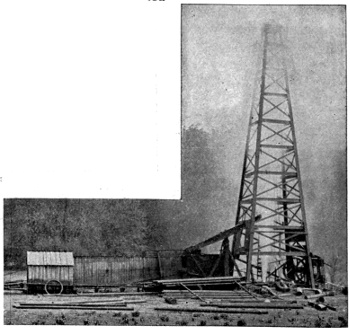
BIG MOSES GAS-WELL IN WEST VIRGINIA.
Edward H. Jennings is among the most enterprising and fortunate operators
in West Virginia. His Kanawha Oil Company has a legion of tip-top wells and
miles of approved territory. Like his deceased
father, a pioneer in Armstrong and Butler, he decides
promptly and acts vigorously. With James
M. Guffey, John H. Galey and one or two others
he owned the phenomenal Matthews well and the
richest territory at McDonald. The same gentlemen
now own the famous Trade-Dollar Mine in
Idaho, the greatest silver-mine on earth to-day,
and gold-mines in California, Colorado and Nova
Scotia that yield bountiful returns. Mr. Jennings
is president of the Columbia Bank and lives in
the beautiful East End of Pittsburg. He ranks
high in business and finance. Brainy, cultured,
energetic and courageous,
Mr. Jennings
scored his
mark through well-directed
effort and
systematic industry
Womanly intuition
is a hummer
that discounts science,
philosophy
and red-tape. Mrs. Katherine E. Reed died at Sistersville in June of 1896. Her
foresight secured fortunes for herself and many other in Tyler county. Left a
widow five years ago, with eight children and a farm that would starve goats to
death, she leased the land for oil-purposes. The test-well proving dry, Mrs.
Reed implored the men to try again at a spot she had proposed for the first
venture. The drillers were hard up, but consented to make a second trial
when the good woman agreed to board them for nothing in case no oil was
found. The well was the biggest gusher in the bundle. To-day it is producing
largely and is known oil over West Virginia as “The Big Kate.” Mrs.
Reed cleared two-hundred-thousand dollars from the sterile tract, which would
sell for as much more yet, and her children and neighbors are independent
for life.
Do any of the Pioneers on Kanawha remember “Dick” Timms’s Half-way
House? The weather-beaten sign bore the legend, in faded letters: “Rest for
the Weary. R. Timms.” The exterior was rough and unpainted, but inside
was cheery and homelike in its snugness. When travelers rode up to the door
“Uncle Dick,” in full uniform of shirt and pantaloons, barefooted and hatless,
304rough and uncouth in speech and appearance, but with a heart so big that it
made his fat body bulge and his whole face light up with a cheerful smile,
stood ready with his welcome salutation of “Howdy, howdy? ’Light; come in.”
Colorado counts confidently upon a production sufficient to give the
Centennial State a solid lodgment in the petroleum-column. Its earliest
development was a small well on the Lobach ranch, near Florence, in 1882.
Other wells yielded enough crude to warrant the erection of a refinery in 1885,
by the Arkansas-Valley Oil-Company, to which the United Oil-Company has
succeeded. The United pumps ten or twelve-hundred barrels a day from forty
wells, refining the product into illuminating oils, gasoline and lubricants of
superior quality. The Florence Oil-Company pumps a dozen wells, owns a
little refinery and holds large blocks of leased lands. The Rocky-Mountain
Oil-Company, organized in 1890, has drilled forty-five wells south of the town
of Florence, twenty-four of which yield three-hundred barrels a day. The
Eureka Company is also operating briskly. The production of the Colorado
region is nearly two-thousand barrels a day, derived from wells that average
twenty-five hundred feet in depth, too expensive for persons of slender means
to tamper with.
The lively folks who drill in Colorado
May justly be excused for some bravado,
Because their hopes are not based on a shadow.
The Salt-Creek oil-field, the first worked in Wyoming, is in the northern
part of Natrona and the southern part of Johnson county, fifty miles north of
Caspar, the terminus of the Fremont, Elkhorn & Missouri-Valley Railroad. As
known to-day the field is eighteen by thirty miles. It lies along Salt Creek
and its tributaries, which drain northward and empty into Powder River, and
is a rough country, cut by deep gulches, beneath which there are table-lands of
small extent. Vegetation is scanty and timber is found only on the highest
bluffs. In 1889 the Pennsylvania Oil-Company, composed of Pennsylvanians
and under the management of George B. McCalmont, located on Salt Creek
and drilled a well which, early in the spring of 1890, struck oil. Obstacles of
no small magnitude were met with. The oil had to be freighted fifty miles by
wagon; railroad-freights were controlled by eastern oil producers, rates that
would justify shipments seemed almost impossible, and the oil had to be
proved before it could be placed upon the market in competition with well-known
brands. In the face of these difficulties the company continued work,
and in the spring of 1894 succeeded in making arrangements to ship crude-oil.
Storage-tanks were erected at the wells and at the railroad, and a refinery is
now in operation at Caspar. The wells vary in depth from nine-hundred to
fifteen-hundred feet and three companies are operating. The oil is a valuable
lubricant. The transportation of the oil to the railroad is effected by freight-wagons
of the ordinary sort. Behind them is a fourth wagon, or the freighter’s
home, which has wide boards projecting from the sides of the wagon-box over
the wheels, making a box of unusual width covered with heavy canvas over
the ordinary wagon-bows and provided with a window in the back, a door in
front, a bed, cook-stove, table, cupboard and the necessary equipment for
keeping house. In this house on wheels the freighter passes the night, and in
breaking camp he is not bothered with his camp-outfit. This novelty has been
recently introduced by Mr. Johnson, the leading freighter for the Pennsylvania
Company. With sixteen mules he draws his four wagons with nine tons of oil,
over a very sandy road.
Wyoming oil sells high at Caspar, which is becoming a place of some consequence
305and may soon figure as the state-metropolis.
It was a fort in the days of
wild beasts and wilder Indians. Soft rock,
with a provoking tendency to cave-in, and
artesian water, impregnated with sulphur
and found just above the oil-sand, rendered
drilling a difficult task. The best
well in the bunch produces from a rock
five-hundred feet down, while the deepest
is sixteen-hundred feet and the sand is fifty
feet thick. Oil-basins on Caspar Creek,
Powder River, Salt Creek and Poison Spider
indicate the existence of petroleum over a
wide section of the state. Wells on Salt
Creek resemble those in Russia. True-blue
Wyomingites proudly anticipate the day
when their gilt-edged basin will hit the
Baku mastodons a Fitzsimmons sock-dolager
in the solar-plexus.
My! Won’t the Czar feel like the deuceovitch
When the Wyoming wells cut looseovitch
And Baku spouters must vamooseovitch?
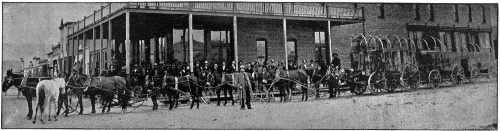
TWELVE HORSES AND THREE WAGONS FOR HAULING OIL, AT CASPAR, WYOMING, WITH “BARNEY” M’CALMONT IN THE FOREGROUND.
William M. Mills, boring for gas in 1892
near the east side of Neodesha, Wilson
county, Kansas, found sand with oil in two
wells and plugged the holes. John H.
Galey, ever awake to the importance of
prospective territory, heard the news and
proceeded to investigate. He examined the
sand and the oil—almost black in color and
of heavy gravity—thought favorably of the
country, enlisted Mills for the campaign,
leased sixty-thousand acres for himself and
James M. Guffey, located a number of wells
and prepared for extensive developments.
Guffey & Galey’s first well was rather slim.
Their second, at Thayer, fourteen miles
north-east, was also small. Their third,
twenty-five miles farther north-east, at
Humbolt, Allen county, had sand and gas
and a feeble show of oil. Similar results
forty miles south-west of Neodesha confirmed
their opinion of plenty spotted territory
to be worth testing to a finish. They
drilled twenty wells in the vicinity of Neodesha,
the majority of them fair. Several
out of eighteen put down around Thayer,
in the winter of 1893-4, rated in the medium
class. The principal production of the
Kansas field to-day—about five-hundred
barrels derived from a hundred or more
306wells—is at these two points. In all Guffey & Galey drilled one-hundred-and-forty
wells, averaging eight-hundred feet deep and half of them dry, and sold
to the Forest Oil-Company in 1895.
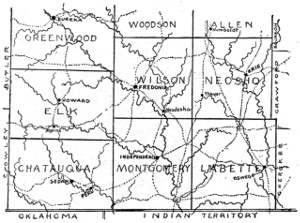
WHERE OIL IS SOUGHT IN KANSAS.
E. E. Crocker, son of the Bradford pioneer, superintended the drilling of
numerous wells for the Forest in 1896-7. Scattered over Bourbon, Crawford,
Allen, Neosho, Woodson, Elk, Wilson and Montgomery counties, two-thirds of
these ventures were dusters.
Three at Humboldt are the
farthest north that produce
any oil. The farthest south
are near Sedan and Peru,
Chautauqua county. This
embraces about seventy-five
miles north-east and south-west.
The whole district is
as uncertain as the age of the
oldest Betsey Bobbet in the
pack. Dry-holes may surround
a fair strike. The sand
runs from eight to twenty feet.
The oil is extremely dark,
twenty to thirty-five gravity,
with asphalt base, no paraffine and no sulphur. From the company’s refinery
at Neodesha, which has a capacity of one-thousand barrels, the first shipment of
kerosene was made last June. The refinery is designed to supply Kansas and
portions of Nebraska and Missouri. Most of the crude is produced so near the
refinery that pipe-lines have not been laid to transport it.
Gas is struck ninety to a hundred feet below the oil-sand, sometimes in
large quantity and occasionally at about four-hundred feet from the surface.
Low pressure and water prevent piping gas in the shallow wells long distances.
It was a Fourth of July when the vapor illuminant was first lighted at Neodesha.
Enthusiasm and patriotism drew thousands to the celebration. Jerry Simpson’s
candidacy and Peffer’s whiskers were side-tracked and forgotten. Darkness
gathered and the impatient throng waited for the torch to be applied to
the tall stand-pipes. Their cheers might be heard in Oklahoma when masses
of flame lit up the sky and bathed the town in a lurid glare.
The Guiper Oil-Company, managed by William Guiper of Oil City, the
Palmer Oil-Company and James Amm & Co. have drilled many wells that did
not bear the market a little bit. Across the Kansas border, at Eufala, Indian
Territory, the Enterprise Oil-Company bored twenty-eight-hundred feet without
finding the stuff. Two wells in Creek county had white-sand and a trifle
of amber-oil at seven-hundred and a thousand feet. The Cherokee Oil-Company
drilled ten wells that produced a moderate amount of heavy-oil from two
slates. Wisconsin parties, making deep tests on the Cherokee border, indulge
in fond hopes that “Bleeding Kansas” and the country south may shortly bleed
petroleum from a half-score rich arteries.
Five wells near Litchfield, Illinois, pump fifty gallons of lubricating-oil a
day. Two in Bates county, Missouri, dribble enough to grease wagon-axles and
farm-implements. A New-York syndicate has obtained large concessions of
land from the government and is drilling at Jalapa, Mexico, where oil was found
in shallow wells a few years ago. In Kentucky a host of small or dry wells
307have gone down since 1894. The Bobs-Bar well, the only one producing in
Tennessee, drilled in 1896, flowed fifty barrels an hour, caught fire the first
night and afterwards pumped sixty barrels a day for a season.
Believing an artesian-well would supply the community with abundant pure
water, a local company at Corsicana, Navarro county, Texas, three years ago
started the tools to pierce the “joint clay” in the south-west end of town.
Sixteen years before a well drilled nine-hundred feet failed to accomplish this
purpose and was filled up. Geologists gravely announced that water—unfit to
use at that—could not be had within thirty-five-hundred feet. The company
kept right along. At ten-hundred feet the clay ceased and twenty feet of sandy
shale, soft and bluish, followed. Oil, real petroleum, hardly inferior to the best
in Pennsylvania, flowed strongly. Doubting Thomases felt sure this unexpected
glut of oil settled the water-question in the negative and advised tubing
the well. The company cased off the oil, resumed drilling, pierced five-hundred
feet more of “joint clay,” four-hundred feet of “Dallas chalk” and another immense
layer of clay. At twenty-five hundred feet a crystal current of water
gushed forth to the rhythm of fifteen-thousand gallons an hour. The water-problem
was solved happily, the company was amply vindicated and the Corsicanans
were correspondingly jubilant. The geological freaks were confounded.
Of course, they knew more about the creation than Moses and could
upset Genesis in one round, but a six-inch hole on their own ground put them
floundering in the soup.
John H. Galey read a brief report of the water-well and visited Corsicana
“on the quiet.” He had cart-loads of experience in oil-matters and a faculty
for opening new fields. He drilled on Oil Creek in the sixties, had a hand in
the Pithole pie, broadened the Pleasantville limit, set the Parker district going,
went to the front in Butler and let no patch of creamy territory escape his
vigilant eye. In Kansas he had located and drilled the first wells—at Neodesha
and Thayer—that brought into play the only pools that have paid their way.
He spent a year in Texas picking up lands and putting down wells. As in
Kansas, his first and second wells were ten or twelve miles apart and both
touched the jugular. He sold his entire interest, four companies entered the
field and thirty wells are doing a thousand barrels a day. The first car of Corsicana
oil was shipped last July, amid the huzzas of a crowd of cheering citizens.
Senator Roger Q. Mills, the Democratic statesman, is the lucky owner of a
thousand acres of land on the outskirts of town. The property has been leased
and it bids fair to make the Senator a millionaire. Petroleum may yet be the
brightest star in the constellation of the Lone-Star State.
California is not content to have gold-mines, overgrown trees and tropical
fruits and leave petroleum out in the cold. For years developments have been
carried on, centering finally at Los Angeles. City-lots are punctured with
holes and three-hundred wells have been drilled on two-hundred acres. Samuel
M. Jones, formerly of the Pennsylvania oil-region and now president of the
Acme Sucker-Rod-Company of Toledo, leveled his kodak at the Los-Angeles
wells in 1895, securing the view printed in the cut. Hon. W. L. Hardison,
who operated in the Clarion and Bradford fields and served a couple of terms
in the Legislature, and Lyman Stewart, of Titusville, have been largely interested
in the California field for ten years. Los-Angeles wells are seven to nine-hundred
feet deep, yield six barrels to seventy-five at the start and employ six-hundred
men. The oil is used for fuel and lubrication, produces superior
asphaltum and a distillate for stove-burners and gasoline-engines. It cannot be
308refined profitably for illuminating. The Los-Angeles field, about one mile long
and six-hundred feet wide, had a small beginning. The first wells, near the
Second-Street Park, were small, only to the first sand—four-hundred feet—and
yielded poorly. The operators lacked knowledge and bunched the holes as
closely as sardines in a box. Deeper drilling revealed richer strata, from
which four-hundred wells are producing eighteen-hundred barrels a day. Railways,
electric lines and manufacturing establishments consume the bulk of the
output—equivalent to seven-hundred tons of coal daily—for fuel. The best
wells have been pumping twenty months to two years, a few starting at three-hundred
barrels for a week. Twenty-five-hundred dollars is the average cost
of a California well and the total yield of the district approximates two-million
barrels up to date.
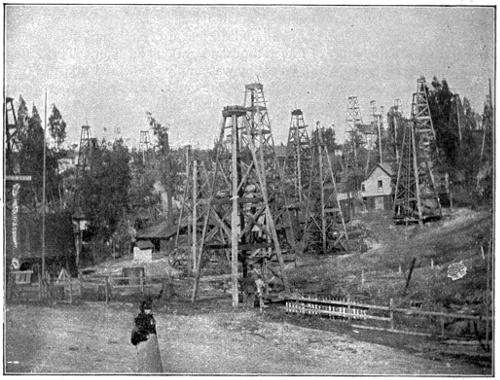
OIL-WELLS AT LOS ANGELES, CALIFORNIA.
Los Angeles is a genuine California town, with oil-wells as an extra feature.
Derricks cluster on Belmont Hill, State street, Lakeshore avenue, Second street,
and leading thoroughfares. A six-inch line conveys crude to the railroads and
car-tanks are shipped over the Southern Pacific and Santa Fé routes. At least
one of the preachers seems to be drilling “on the belt,” if a tourist’s tale of a
prayer he offered be true. Here it is:
“O, Lord! we pray that the excursion train going east this morning may not run off the
track and kill any church-members that may be on board. Thou knowest it is bad enough to
run oil-wells on Sunday, but worse to run Sunday excursions. Church-members on Sunday
excursions are not in condition to die. In addition to this, it is embarrassing to a minister to
officiate at a funeral of a member of the church who has been killed on a Sunday excursion.
Keep the train on the track and preserve it from any calamity, that all church-members among
the excursionists may have opportunity for repentance, that their sins may be forgiven. We ask
it for Christ’s sake. Amen.”
With juicy Ohio, plump West Virginia, nutritious Indiana, succulent California,
appetizing Texas and many other luscious bivalves to keep fat Pennsylvania
company, there is no lack of oysters in the stew.
309
Michael Murphy, of “mystery” fame, lives in Chester county.
William L. Lay, founder of South Oil-City, died last winter.
W. J. Welch, a respected citizen, who operated at Bullion and Bradford and
for years belonged to the Oil-City Exchange, died in 1897.
Ruel A. Watson, an active broker, as he lay gasping for breath, raised his
head, asked an attendant “What’s the market?” sank back on his pillow and
expired. “The ruling passion is strong in death.”
John Vanausdall, partner of William Phillips in the biggest well on Oil
Creek, left his home at Oil City in the morning, took ill at Petrolia and telegraphed
for his wife. She reached his bedside just as he drew his last breath.
A man may seem to be a bang-up seraph,
Yet be a proper subject for the sheriff.
John Wallace, an early oil-operator at Rouseville and merchant at Rynd,
died in 1880. Born in Great Britain, he served in the English army, participated
in the Crimean war and was one of the “Gallant Six Hundred” in the
desperate charge at Balaklava immortalized by Tennyson.
The late H. L. McCance, long secretary of the Oil-City Exchange, was the
Thomas Nast of Oildom. Two of his cartoons—“When Oil is Seventy Cents”
and “When Oil is Three Dollars”—in this volume and those exposing the
South-Improvement infamy were especially striking.
B. D. J. McKeown is probably the only millionaire ball-player in the United
States. He belongs to the Washington team, which is a member of the Pennsylvania
State-League, and has played first base with the nine the entire season.
He is a son of the late John McKeown, a keen man of affairs, a clean
fielder, heavy batter and swift base-runner.
Many a chap who thinks he’s sure of Heaven,
But in his make-up lacks the kindly leaven,
Will find Old Nick on hand with a replevin.
Col. W. H. Kinter, of Oil City, a man of kindliest impulses, genial and
whole-souled, greeting a neighbor one Sunday evening, remarked: “Goodnight,
old boy—no, make it good-bye; we may never meet again!” He retired
in excellent health and spirits. Next morning, feeling drowsy, he asked
his wife—a daughter of Hamilton McClintock—to bring him a cup of tea. She
returned in a short time to find her husband asleep in death.
The irrepressible “Sam” Blakely originated the term “shuffle,” which he
often practiced in his dealings in the oil-exchanges, and the phrase, “Boys,
don’t take off your shirts!” This expression spread far and wide and was
actually repeated by Osman Pasha—if the cablegrams told the truth—at the
battle of Plevna, when his troops wavered an instant in the face of a dreadful
rain of bullets. “Sam” also inauguratedinaugurated the custom of drinking Rhine-wine.
Once he constituted himself a committee of one to celebrate the Fourth of July
at Parker. He printed a great lot of posters, which announced a celebration
on a gorgeous scale—horse-races, climbing the greased pole, boat-races, orations,
fireworks and other attractions. These were posted about the city and
on barns and fences within a radius of ten miles. A friend asked him how his
celebration was likely to come off. “Oh,” he said, “we’re going to get all the
hayseeds in here and then we’ll give them the great kibosh.” On the glorious
day “Sam” mounted a box in front of the Columbia hose-house and delivered
an oration before four-thousand people, who pronounced it the funniest thing
they ever heard and accepted the situation good-naturedly. Some impromptu
games were got up and the day passed off pleasantly.
310
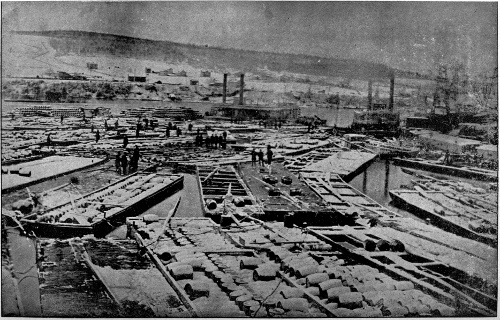
POND-FRESHET AT OIL CITY, MARCH, 1863.
XV. FROM THE WELL TO THE LAMP. — MERELY DROPPED IN.
311
Transporting Crude-Oil by Wagons and Boats—Unfathomable Mud and
Swearing Teamsters—Pond Freshets—Establishment of Pipe-Lines—National-Transit
Company and Some of its Officers—Speculation in
Certificates—Exchanges at Prominent Points—The Product That
Illumines the World at Various Stages of Progress.
“Lamps were gleaming everywhere, gleaming from huge banks of flowers.”—Wilson Barrett.
“Nature must give way to Art.”—Jonathan Swift.
“The flighty purpose never is o’ertook, unless the deed go with it.”—Shakespeare.
“My kingdom for a horse to haul my oil.”—Richard III. Revised.
“We’ll all dip oil, and we’ll all dip oil,
We’ll dip, dip, dip, and we’ll all dip oil.”—Pond-Freshet Song.
“Lines of truth run through the world of thought as pipe-lines to the sea.”—Mrs. C. A. Babcock.
“These be piping times.”—Popular Saw.
“Seneca predicted another hemisphere, but Columbus presented it.”—Collins.
“Nature begets Merit and Fortune brings it into play.”—La Rochefoucauld.
“The wise and active conquer difficulties by daring to attempt them.”—Rowe.
“Perfection is attained by slow degrees.”—Voltaire.
“One little bull on oil was I,
Bought a lot when the stuff was high,
Sold when low and it pumped me dry,
One little bull on oil.”—Oil City Blizzard.
“It is just as dangerous to speculate in kerosene as to kindle the fire with it.”—Boston Herald.
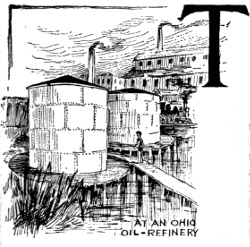
The tribulations of early operators did
not cease with drilling and tubing their
wells. Oil might flow or be pumped
readily, but it could neither transport
nor sell itself. Crude in the tank was
not always money in the purse without
a good deal of engineering. The Irishman’s
contrary pig, which he headed for Cork to drive
to Dublin, was much less trouble to raise than
to get to market. The first wells on Oil Creek
were so close to the water that the stuff could
be loaded directly into canoes or dug-outs and
floated to the mouth of the stream. This arrangement,
despite its apparent convenience, had serious
drawbacks. The creek was too low in dry
weather for navigation, except possibly by the
Mississippi craft that slipped along easily on the morning dew. To overcome
this difficulty recourse was had to artificial methods when the production increased
sufficiently to introduce flat-boats, which dispensed with barrels and
freighted the oil in bulk. The system of pond-freshets was adopted. A dam at
the saw-mill near the Drake well stored the fluid until the time agreed upon to
312open the gates and let the imprisoned waters escape. Rev. A. L. Dubbs was
appointed superintendent and shippers were assessed for the use of the water
stored in the pond. Usually two-hundred to eight-hundred boats—boats of all
shapes and sizes, from square-keeled barges, divided into compartments by
cross-partitions, to slim-pointed guipers—were pulled up the stream by horses
once or twice a week to be filled at the wells and await the rushing waters.
Expert rivermen, accustomed to dodging snags and rocks in inland streams,
managed the fleet. These skilled pilots assumed the responsibility of delivering
the oil to the larger boats at Oil City, for conveyance to Pittsburg, at one-hundred
to two-hundred dollars per trip.
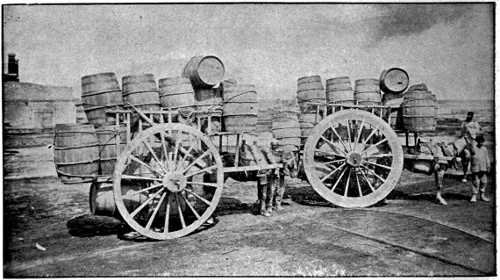
HOW OIL IS TRANSPORTED IN RUSSIA—HAULING EMPTY BARRELS.
At the appointed moment the flood-gates were opened and the water rushed
forth, increasing the depth of the creek two or three feet. The boatmen stood
by their lines, to cast loose when the current was precisely right. Sound judgment
was required. The loaded boat, if let go too soon, ran the risk of grounding
in the first shallow-place, to be battered into kindling-wood by those coming
after. Such accidents occurred frequently, resulting in a general jam and loss
of vessels and cargoes. The scene was more exciting than a three-ringed circus.
Property and life were imperiled, boats were ground to fragments, thousands
of barrels of oil were spilled and the tangle seemed inextricable. Men,
women and children lined the banks of the stream for miles, intently watching
the spectacle. Persons of all nationalities, kindreds and conditions vociferated
in their diversified jargon, producing a confusion of tongues that outbabeled
Babel three to one. Men of wealth and refinement, bespattered and besmeared
with crude—their trousers tucked into boots reaching above the knee, and most
likely wearing at the same time a nobby necktie—might be seen boarding the
boats with the agility of a cat and the courage of warriors, shouting, managing,
directing and leading in the perilous work of safe exit. Sunday creeds were
forgotten and the third commandment, constantly snapped in twain, gave emphasis
to the crashing hulks and barrels. A pillar of the Presbyterian church,
313seeing his barge unmanned, ran screaming at the top of his voice: “Where in
sheol is Parker?” This so amused his good brethren that they used it as a
by-word for months.
The cry of “Pond Freshet” would bring the entire population of Oil City
to witness the arrival of the boats. Sometimes the tidal wave would force them
on a sand-bar in the Allegheny, smashing and crushing them like egg-shells.
Oil from overturned or demolished boats belonged to whoever chose to dip it
up. More than one solid citizen got his start on fortune’s road by dipping oil in
this way. If the voyage ended safely the oil was transferred from the guipers—fifty
barrels each—and small boats to larger ones for shipment to Pittsburg.
William Phillips, joint-owner of the biggest well on Oil Creek, was the first man
to take a cargo of crude in bulk to the Smoky City. The pond-freshet was a
great institution in its day, with romantic features that would enrapture an
artist and tickle lovers of sensation to the fifth rib. One night the lantern of a
careless workman set fire to the oil in one of the boats. Others caught and
were cut loose to drift down the river, floating up against a pier and burning the
bridge at Franklin. Running the “rapids” on the St. Lawrence river or the
“Long Sault” on the Ottawa was not half so thrilling and hair-raising as a fleet
of oil-boats in a crush at the mouth of Oil Creek.
The fleet of creek and river-boats engaged in this novel traffic numbered
two-thousand craft. The “guiper,” scow-shaped and holding twenty-five to
fifty barrels, was the smallest. The “French Creekers” held ten to twelve-hundred
barrels and were arranged to carry oil in bulk or barrels. At first the
crude was run into open boats, which a slight motion of the water would sometimes
capsize and spill the cargo into the stream. When prices ruled low oil
was shipped in bulk; when high, shippers used barrels to lessen the danger of
loss. Thousands of empty barrels, lashed together like logs in a raft, were
floated from Olean. The rate from the more distant wells to Oil City was one-dollar
a barrel. From Oil City to Pittsburg it varied from twenty-five cents to
three dollars, according to the weather, the stage of water or the activity of the
demand. Each pond-freshet cost two or three-hundred dollars, paid to the
mill-owners for storing the water and the use of their dams. Twice a week—Wednesday
and Saturday—was the average at the busy season. The flood of
petroleum from flowing-wells in 1862 exceeded the facilities for storing, transporting,
refining and burning the oil, which dropped to ten cents a barrel during
the summer. Thousands of barrels ran into Oil Creek. Pittsburg was the
chief market for crude, which was transferred at Oil City to the larger boats.
The steamer-fleet of tow-boats—it exceeded twenty—brought the empties back
to Oil City. The “Echo,” Captain Ezekiel Gordon; the “Allegheny Belle
No. 4,” Captain John Hanna; the “Leclaire,” Captain Kelly; the “Ida Rees,”
Captain Rees, and the “Venango” were favorite passenger-steamers. The trip
from Pittsburg—one-hundred-and-thirty-three miles—generally required thirty
to thirty-six hours. Mattresses on the cabin-floor served as beds for thirty or
forty male passengers, who did not undress and rose early that the tables might
be set for breakfast. The same tables were utilized between meals and in the
evening for poker-games. The busiest man on the boat was the bar-tender
and the clerk was the most important. He carried letters and money for leading
oil-shippers. It was not uncommon for Alfred Russell, of the “Echo,” John
Thompson, of the “Belle No. 4,” and Ruse Russ, of the “Venango,” to walk
into Hanna’s or Abrams’s warehouse-office with large packages of money for
John J. Fisher, William Lecky, John Mawhinney, William Thompson and
314others who bought oil. No receipts were given or taken and, notwithstanding
the apparent looseness in doing business, no package was ever lost or stolen.
The boats usually landed at the lower part of the eddy to put off passengers
wishing to stop at the Moran and Parker Hotels. At Hanna & Co.’s and
Abrams & Co.’s landing, where the northern approach of the suspension bridge
now is, they put off the remaining passengers, freight and empty oil-barrels.
Many a Christian-looking man was heard to swear as he left the gang-plank of
the boat and struck the mud, tough and greasy and deep. He would soon
tumble to the situation, roll up his trousers and “pull for the shore.”
Horses and mules dragged the empty boats up Oil Creek, a terrible task in
cold weather. Slush or ice and floating oil shaved the hair off the poor animals
as if done with a razor. The treatment of the patient creatures—thousands
were literally murdered—was frightful and few survived. For them the plea of
inability availed nothing. They were worked until they dropped dead. The
finest mule, ears very long, coat shiny, tail vehement, eye mischievous, heels
vigorous and bray distinct and melodious, quickly succumbed to the freezing
water and harsh usage. As a single trip realized more than would buy another
the brutal driver scarcely felt the financial loss. A story is told of a boatman
who started in the morning for the wells to bring down a load of oil.
Returning in the evening, he learned that he had been drafted into the army.
Before retiring to bed he had hired a substitute for one-thousand dollars, the
proceeds of his journey of eleven miles and back. William Haldeman hauled
a man over the coals for beating his exhausted horse, told him to buy another
and handed him five-hundred dollars for eight horses to haul a boat to the
gushers at Funkville.
Pond-freshets were holidays in Oil City sufficiently memorable to go gliding
down the ages with the biggest kind of chalk-mark. Young and old flocked
to see the boats slip into the Allegheny, lodge on the gravel-bar, strike the pier
of the bridge or anchor in Moran’s Eddy. Hundreds of boatmen, drillers,
pumpers and operators would be on board. Once the river had only a foot of
water at Scrubgrass Ripple and large boats could not get to or from Pittsburg.
A ship-carpenter came from New York to Titusville and spent his last dollar in
lumber for six boxes sixteen feet square and twelve inches deep. He covered
them with inch-boards and divided them into small compartments, to prevent
the oil from running from one end to the other and swamping the vessel. This
principle was applied to oil-boats thereafter and extended to bulk-barges and
bulk-steamships. The ingenious carpenter floated his strange arks down to
the Blood farm and bargained with Henry Balliott to fill them on credit. He
performed the voyage safely, returned in due course, paid Balliott, built more
boxes and went home in four months with a snug fortune. His ship had come
in. Railroads and pipe-lines have relegated pond-freshets, oil-boats and Allegheny
steamers to the rear, but they were interesting features of the petroleum-development
in early days and should not be utterly forgotten.
To haul oil from inland wells to shipping-points required thousands of
horses. This service originated the wagon-train of the oil-country, which at its
best consisted of six-thousand two-horse teams and wagons. No such transport-service
was ever before seen outside of an army on a march. General
M. H. Avery, a renowned cavalry-commander during the war, organized a
regular army-train at Pithole. Travelers in the oil-regions seldom lost sight of
these endless trains of wagons bearing their greasy freight to the nearest railroad
or shipping-point. Five to seven barrels—a barrel of oil weighed three-hundred-and-sixty
315pounds—taxed the strength of the stoutest teams. The
mud was practically bottomless. Horses sank to their breasts and wagons far
above their axles. Oil dripping from innumerable barrels mixed with the dirt
to keep the mass a perpetual paste, which destroyed the capillary glands and
the hair of the animals. Many horses and mules had not a hair below the eyes.
A long caravan of these hairless beasts gave a spectral aspect to the landscape.
History records none other such roads. Houses within a quarter-mile
of the roadside were plastered with mud to the eaves. Many a horse fell
into the batter and was left to smother. If a wagon broke the load was dumped
into the mud-canal, or set on the bank to be taken by whoever thought it worth
the labor of stealing. Teamsters would pull down fences and drive through
fields whenever possible, until the valley of Oil Creek was an unfathomable
quagmire. Think of the bone and sinew expended in moving a thousand barrels
of oil six or eight miles under such conditions. Two-thirds of the work
had to be done in the fall and winter, when the elements spared no effort to
increase the discomfort and difficulty of navigation by boat or wagon. To haul
oil a half-dozen miles cost three to five dollars a barrel at certain periods of the
year. Thousands of barrels were drawn to Shaw’s Landing, near Meadville,
and thousands to Garland Station and Union City, on the Philadelphia & Erie
Railroad. The hauling of a few hundred barrels not infrequently consumed so
much time that the shipper, in the rapid fluctuations of the market, would not
realize enough to pay the wagon-freight. A buyer once paid ten-thousand dollars
for one-thousand barrels at Clapp farm, above Oil City, and four-thousand
for teaming it to Franklin, to be shipped by the Atlantic & Great Western Railroad
to New York. Even after a plank-road had been built from Titusville to
Pithole, cutting down the teaming one-half or more, the cost of laying down a
barrel of crude in New York was excessive. In January of 1866 it figured as
follows:
| Government tax |
$1 00 |
| Barrel |
3 25 |
| Teaming from Pithole to Titusville |
1 25 |
| Freight from Titusville to New York |
3 65 |
| Cooperage and platform expenses |
1 00 |
| Leakage |
25 |
| Total |
~$10 40~ |
The Oil Creek teamster, rubber-booted to the waist and flannel-shirted to
the chin, was a picturesque character. He was skilled in profanity and the
savage use of the whip. A week’s earnings—ten, twenty and thirty dollars a
day—he would spend in revelry on Saturday night. Careless of the present
and heedless of the future, he took life as it came and wasted no time worrying
over consequences. If one horse died he bought another. He regulated his
charges by the depth and consistency of the mud and the wear and tear of
morality and live-stock. Eventually he followed the flat-boat and barge and
guiper to oblivion, railroads and pipe-lines supplanting him as a carrier of oil.
Some of the best operators in the region adopted teaming temporarily, to get
a start. They saved their money for interests in leases or drilling-wells and
not a few went to the front as successful producers. The free-and-easy, devil-may-care
teamster of yore, brimful of oil and tobacco and not averse to
whiskey, is a tradition, remembered only by men whose polls are frosting with
silver threads that do not stop at sixteen to one.
Wharves, warehouses and landings crowded Oil City from the mouth of
Oil Creek to the Moran House. Barrels filled the warehouse-yards, awaiting
316their turn to be hauled or boated to the wells, filled with crude and returned
for shipment. Loaded and empty boats were coming and going continually.
Firms and individuals shipped thousands of barrels daily, employing a regiment
of men and stacks of cash. William M. Lecky, still a respected citizen of
Oil City, hustled for R. D. Cochran & Co., whose “Tiber” was a favorite tow-boat.
Parker & Thompson, Fisher Brothers, Mawhinney Brothers and John
Munhall & Co. were strong concerns. Their agents scoured the producing
farms to buy oil at the wells and arrange for its delivery. Prices fluctuated
enormously. Crude bought in September of 1862 at thirty cents a barrel sold
in December at eleven dollars. John B. Smithman, Munhall’s buyer, walked
up the creek one morning to buy what he could at three dollars. A dispatch at
Rouseville told him to pay four, if necessary to secure what the firm desired.
At Tarr Farm another message quoted five dollars. By the time he reached
Petroleum Centre the price had reached six dollars and his last purchases that
afternoon were at seven-fifty. Business was done on honor and every agreement
was fulfilled to the letter, whether the price rose or fell. Lecky, Thomas
B. Simpson, W. J. Young and Isaac M. Sowers—he was the second mayor of
Oil City—clerked in these shipping-offices, which proved admirable training-schools
for ambitious youths. William Porterfield and T. Preston Miller
tramped over Oil Creek and Cherry Run for the Fishers. Col. A. J. Greenfield,
Bradley & Whiting and I. S. Gibson bought at Rouseville and R. Richardson at
Tarr Farm. “Pres” Miller, “Hi” Whiting and “Ike” Gibson—square, manly
and honorable—are treading the golden-streets. John Mawhinney—big in soul
and body, true to the core and upright in every fiber—has voyaged to the haven
of rest. William Parker is president of the Oil City Savings Bank and Thompson
returned east years ago. John Munhall settled near Philadelphia and William
Haldeman removed to Cleveland. The iron-horse and the pipe-line revolutionized
the methods of handling crude and retired the shippers, most of
whom have shipped across the sea of time into the ocean of eternity.
Fisher Brothers have a long and enviable record as shippers and producers
of oil, “staying the distance” and keeping the pole in the hottest race. Men
have come and men have retreated in the mad whirl of speculation and wild
rush for the bottom of the sand, but they have gone on steadily for a generation
and are to-day abreast of the situation. Whether a district etched its name
on the Rainbow of Fame or mocked the dreams of the oil-seeker, they did not
lose their heads or their credit. John J. Fisher went to Oil City in 1862 and
Fisher Brothers began shipping oil by the river to Pittsburg in 1863, succeeding
John Burgess & Co. The three brothers divided their forces, to give each department
personal supervision, John J. managing the buying and shipping at
Oil City and Frederick and Henry receiving and disposing of the cargoes at
Pittsburg. Competent men bought crude at the wells and handled it in the
yards and on the boats. The firm owned a fleet of bulk-boats and tow-boats
and acres of barrels. Each barrel was branded with a huge F on either head.
The “Big F”—widely known as Oil Creek or the Drake well—was the trademark
of fair play and spot cash. When railroads were built the Fishers discarded
boats and used more barrels than before. When wooden-tanks—a car
held two—were introduced they adopted them and let the barrels slide. When
pipe-lines were laid they purchased certificate-oil and continued to be large
shippers until seaboard lines suspended the older systems of freighting crude
by water or rail, in barrels or in tanks. From the beginning to the end of the
shipping-trade Fisher Brothers were in the van.
317Next devoting their attention entirely to the production of oil and gas, with
the Grandins and Adnah Neyhart they invested heavily at Fagundas and laid
the first pipe-line at Tidioute. They operated below Franklin and were pioneers
at Petrolia. Organizing the Fisher Oil-Company, they drilled in all the
Butler pools and held large interests at McDonald and Washington. At present
they are operating in Pennsylvania, Ohio and West Virginia, the Fisher
ranking with the foremost companies in extent and solidity. The brothers
have their headquarters in the Germania Building, Pittsburg, and juicy wells in
a dozen counties. Time has dealt kindly with all three, as well as with Daniel
Fisher, ex-mayor of Oil City. They have loads of experience and capital and
too much energy to think of adjusting their halo for retirement from active
work. True men in all the relations of life, Fisher Brothers worthily represent
the splendid industry they have had no mean part in making the greatest and
grandest of any age or nation. To natural shrewdness and the quick perception
that comes from contact with the activities of the world they joined business-ability
that would have proved successful in whatever career they undertook
to map out.
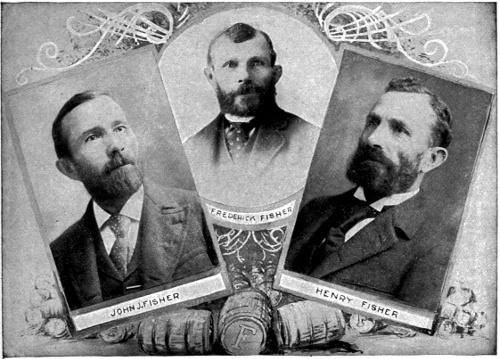
FREDERICK FISHER
JOHN J. FISHER HENRY FISHER
The first suggestion of improvement in transportation was made in 1860, at
Parkersburg, W. Va., by General Karns to C. L. Wheeler, now of Bradford.
An old salt-well Karns had resurrected at Burning Springs pumped oil freely
and he conceived the plan of a six-inch line of pipe to Parkersburg to run the
product by gravity. The war interfered and the project was not carried out.
At a meeting at Tarr Farm, in November of 1861, Heman Janes broached the
idea of laying a line of four-inch wooden-pipes to Oil City, to obviate the risk,
expense and uncertainty of transporting oil by boats or wagons. He proposed
to bury the pipe in a trench along the bank of the creek and let the oil gravitate
318to its destination. A contract for the entire work was drawn with James
Reed, of Erie. Col. Clark, of Clark & Sumner, grasped the vast possibilities
the method might involve and advised applying to the Legislature for a general
pipe-line charter. Reed’s contract was not signed and a bill was introduced in
1862 to authorize the construction of a pipe-line from Oil Creek to Kittanning.
The opposition of four-thousand teamsters engaged in hauling oil defeated the
bill and the first effort to organize a pipe-line company.
J. L. Hutchings, a Jersey genius, came to the oil-country in the spring of
1862 with a rotary-pump he had patented. To show its adaptation to the oil-business
he laid a string of tubing from Tarr Farm to the Humboldt Refinery,
below Plumer. He set his pump working and sent a stream of crude over the
hills to the refinery. The pipe was of poor quality, the joints leaked and a
good deal of oil fell by the wayside, yet the experiment showed that the idea
was feasible. Although eminent engineers declared friction would be fatal, the
result proved that distance and grade were not insurmountable. Eminent engineers
had declared the locomotive would not run on smooth rails and that a
cow on the track would disrupt George Stephenson’s whole system of travel,
hence their dictum regarding pipe-lines had little weight. Dr. Dionysius
Lardner nearly burst a flue laughing at the absurdity of a vessel without sails
crossing the ocean and wrote a treatise to demonstrate its impossibility, but the
saucy Sirius steamed over the herring-pond all the same. The rotary-pump at
Tarr Farm confounded the scientists who worshipped theory and believed friction
would knock out steam and pipe and American ingenuity and keep oil-operators
forever subject to mud and pond-freshets. The two-inch line to the
Humboldt Refinery planted the seed that was to become a great tree. Nobody
saw this more plainly than the teamsters, who proceeded to tear up the pipe
and warn producers to quit monkeying with new-fangled methods of transportation.
That settled the first pipe-line and left the rampant teamsters, modern
imitators of “Demetrius the silversmith,” the upper dog in the fight.
Hutchings—the boys called him “Hutch”—had pump and pipe-line on
the brain and would not be suppressed. He put down a line in 1863 from the
big Sherman well to the terminus of the railroad at Miller Farm. The pipes
were cast-iron, connected by lead-sockets and laid in a shallow ditch. The
jarring of the pump loosened the joints and three-fourths of the oil started at the
well failed to reach the tanks, two miles north. The teamsters were not in
business solely for their health and they tore up the line to be sure it would not
cut off any of their revenue. Hutchings persisted in his endeavors until debts
overwhelmed him and he died penniless and disappointed. The ill-starred
inventor, who lived a trifle ahead of the times, deserves a bronze statue on a
shaft of imperishable granite.
The Legislature granted a pipe-line charter in 1864 to the Western Transportation
Company, which laid a line from the Noble & DelamaterDelamater well to
Shaffer. The cast-iron pipe, five inches in diameter, was laid on a regular
grade in the mode of a water-pipe. The lead points leaked like a fifty-cent
umbrella, just as the Hutchings line had done, and the attempt to improve
transportation was abandoned.
Samuel Van Syckle, a Jerseyite of inventive bent, arrived at Titusville in
the fall of 1864. The problem of oil-transportation, rendered especially important
by the opening of the Pithole field, soon engrossed his attention. In
August of 1865 he completed a two-inch line from Pithole to Miller Farm. Mr.
Wood and Henry Ohlen, of New York, held an interest and the First National
319Bank of Titusville loaned the money to forward the project. J. N. Wheeler
screwed the first joints together. Two pump-stations, a mile west of Pithole
and at Cherry Run, at first helped force the oil through the pipe, which was
buried two feet under ground “to be out of the way of the farmer’s plow.”
Eight-hundred barrels a day could be run and the frantic teamsters talked of
resorting to violence to cripple so formidable a rival. The pipeage was one dollar
a barrel, at which rate the Pithole and Miller Farm Pipe-Line ought to have
been a bonanza. Van Syckle traded heavily in oil and commanded plenty of
capital. A. W. Smiley managed the line and bought oil for Van Syckle, who
conducted this branch of business in his son’s name. Smiley’s largest transaction
was a purchase of one-hundred-thousand barrels, at five dollars a barrel,
from the United-States Petroleum Company, in one lot. Young Van Syckle
spent money as the whim struck him. If Smiley refused his demand for a hundred
or a thousand dollars, the fly youth would refuse to sign drafts and threaten
to stop the whole concern. There was nothing to do in such cases but imitate
Colonel Scott’s coon and “come down.” The Culver failure in May of 1866
compelled the First National Bank to press its claim against the line, which
passed into the hands of Jonathan Watson. J. T. Briggs and George S. Stewart
operated it for the bank and Watson until William H. Abbott and Henry
Harley purchased the entire equipment.
Reverses beset Van Syckle, who induced George S. and Milton Stewart to
erect a big refinery at Titusville to test his pet theory of “continuous distillation.”
Failure, tedious litigation and heavy loss resulted. Van Syckle’s mind
teemed with new schemes and new devices for refining. He possessed the
rare faculty of finding friends willing to listen to his plans and back him with
cash. Some of his ideas were valuable and they are in use to-day. Mismanagement
swamped the enterprises he created and Van Syckle finally removed
to Buffalo, where his checkered life closed peacefully on March second, 1894.
While often unsuccessful financially, earnest men like Samuel Van Syckle
benefit mankind. The oil-business is much better for the fertile brain and perseverance
of the man whose pipe-line was the first to deliver oil to a railroad.
His example stimulated other men combining keen perception and executive
ability, who could sift the wheat from the chaff and discard the useless and
impracticable.
In the fall of 1865 Henry Harley began a pipe-line from Benninghoff Run
to Shaffer, the terminus of the Oil-Creek Railroad. Teamsters cut the pipes,
burned the tanks and retarded the work seriously. An armed patrol arrested
twenty of the ring-leaders, dispersed the mob and quelled the riot. The line—two-inch
tubing of extra weight—handled oil expeditiously, a pump at Benninghoff
forcing six to eight-hundred barrels a day into the tanks at Shaffer.
The system was a public improvement, personal interest had to yield and
four-hundred teams left the region the week Harley’s line pumped its first oil.
Abbott and Harley owned an interest in the Pithole line and secured control by
purchasing Jonathan Watson’s claim, to run it in connection with the Benninghoff
line. They organized the firm of Abbott & Harley and operated both
lines several months. At Miller Farm they constructed iron-tanks and loading-racks,
which enabled two men to load a train of oil-cars in a few hours. Avery
& Hedden laid a line from Shamburg to Miller Farm, establishing a station on
the highest point of the Tallman farm and running the oil to the railroad by
gravity. Abbott & Harley supplemented this with a branch from the Pithole
line at the crossing of Cherry Run. Crude was a good price, operators prospered
320and Miller Farm became a busy place. Railroads extended to the
region and pipe-lines pumped oil directly from the wells to the cars or refineries.
In the fall of 1867 Abbott & Harley acquired control of the Western Transportation
Company, the only one empowered by the Legislature to pipe oil to
railway-stations. Under its charter they combined the Western and their own
two lines as the Allegheny Transportation Company. The first board of directors,
elected in January of 1869, consisted of Henry Harley, president; W. H.
Abbott, secretary; Jay Gould, J. P. Harley and Joshua Douglass. T. W. Larsen
was appointed treasurer and William Warmcastle—genial, capable “Billy”
Warmcastle—general superintendent. Jay Gould purchased a majority of the
stock in 1868 and appointed Mr. Harley general oil-agent of the Atlantic &
Great Western and Erie Railroads. In 1871 the Commonwealth Oil and Pipe
Company was organized in the interest of the Oil-Creek Railroad. Harley
contrived to effect a combination and reorganize the Allegheny and the Commonwealth
as the Pennsylvania Transportation Company, with a capital of
nearly two-million dollars and five-hundred miles of pipes to Tidioute, Triumph,
Irvineton, Oil City, Shamburg, Pleasantville and Titusville, centering at Miller
Farm. Among the stock-holders were Jay Gould, Thomas A. Scott, William
H. Kemble, Mrs. James Fisk and George K. Anderson. The new enterprise
absorbed a swarm of small lines and was considered the acme of pipe-line
achievement.
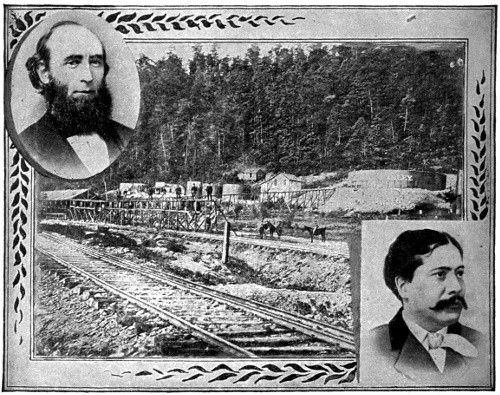
W. H. ABBOTT. PIPE-LINE AT MILLER FARM IN 1866. HENRY HARLEY.
William Hawkins Abbott was a Connecticut boy, an Ohio merchant at
twenty-five and a visitor to the Drake well in February of 1860. He remained
321two days, paid ten-thousand dollars for three one-eighth interests in farms below
the town and two days after William Barnsdall struck a fifty-barrel well on
one of the properties. He located at Titusville, established a market for crude
in New York, shipped extensively and in the fall of 1860, with James Parker
and William Barnsdall as partners, began the erection of the first complete
refinery in the oil-region. To convey the boilers and stills from Oil City,
whither they were shipped from Pittsburg by water, was a task greater than the
labors of Hercules. The first car-load of coal ever seen in Titusville Mr.
Abbott laid down in the fall of 1862. He opened a coal-yard and superintended
the refinery. Oil fluctuated at a rate calculated to make refiners bald-headed.
In January of 1861 Abbott paid ten dollars a barrel for crude and one-twenty-five
in March. In October of 1862 Howe & Nyce stored five-hundred barrels
of crude on the first railroad-platform at Titusville, selling it to Abbott at two-sixty
a barrel, packages included. In January of 1863 Abbott sold the oil from
the same platform for fourteen dollars and in March the same lot—it had never
been moved—brought eight dollars. Thirty days later Abbott bought it again
at three dollars a barrel and refined it. He was interested in the Noble well,
bought a large share in the Pithole and Miller Farm Pipe-Line and in 1866
formed a partnership with Henry Harley. He contributed largely to the Titusville
and Pithole plank-road and all local enterprises likely to benefit the community.
His generosity was comprehensive and discerning. He donated a
chapel to the Episcopal congregation, projected the Union & Titusville Railroad
and was a most exemplary, public-spirited citizen. To give bountifully
was his delight. He bore financial disaster heroically and labored incessantly
to save others from loss. At seventy-two he is patient and helpful to those
about him, his daily life illustrating his real worth and illumining the pathway
of his declining years.
Born in Ohio in 1839 and graduated from the Rensselaer Polytechnic Institute
as a civil-engineer in 1858, Henry Harley supervised the construction of the
Hoosac Tunnel until the war and settled at Pittsburg in 1862 as active partner
of Richardson, Harley & Co. The firm had a large petroleum commission-house
and Harley removed to Philadelphia in 1863 to manage its principal
branch. He purchased large tracts in West Virginia which did not meet his
expectations, withdrew from the commission-firm and in the latter part of 1865
built his first pipe-line. He was the confidential friend of Jay Gould and James
Fisk, whose support placed him in a position to organize the Pennsylvania
Transportation Company. For years Harley swam on the topmost wave and
was a high-roller of the loftiest stripe. Henry Villard was not more magnetic.
He told good stories, dealt out good cigars, knew champagne from seltzer and
had no trace of the miser in his intercourse with the world. He lived at Titusville
in regal style and made “the grand tour of Europe” in 1872. He was on
intimate terms with railroad magnates, big politicians and Napoleons of finance.
The Pipe-Line Company got into deep waters, prosecutions and legal entanglements
crippled it and Henry Harley tumbled with the fabric his genius had
reared. He drifted to New York, was a familiar figure around Chautauqua
several seasons and died in 1892. His widow lives in New York and his
brother George, a popular member of the Oil-City Oil-Exchange, died last year.
In November of 1865 the Oil City & Pithole Railroad Company began a
railroad between the two towns, pushing the work with such energy that the
first train from Pithole to Oil City was run on March tenth, 1866. Vandergrift
& Forman equipped the Star Tank-Line to carry oil in tank-cars and laid the
322Star Pipe-Line from West Pithole to Pithole to connect with the railroad. An
unequivocal success from the start, this pipe-line has been regarded as the real
beginning of the present system of oil-transportation. The lower oil-country
enlarged the field for pipe-line stations. Lines multiplied in Venango, Clarion,
Armstrong and Butler. Some of these were controlled by Vandergrift & Forman,
who brought the business to a high standard of perfection. Each district
had one or more lines running to the nearest railroad. The Pennsylvania
Transportation Company secured a charter in 1875 to construct a line to the
seaboard. Nothing was done except to build more lines in the oil-region. The
number grew continually. Clarion had a half-dozen, the Antwerp heading the
list. Parker had a brood of small-fry and Butler was net-worked. It was the
fashion to talk of trunk-lines, call public meetings, subscribe for stock and—let
the project die. Dr. Hostetter, the Pittsburg millionaire of “Bitters” fame,
built the Conduit Line from Millerstown to the city of smoke and soot. The
Karns, the Relief and others ran to Harrisville. Every fellow wanted a finger
in the pipe-line pot-pie. A war of competition arose, rates were cut, business
was done at heavy loss and the weaker concerns went to the wall. The companies
issued certificates or receipts, instead of paying cash for crude received
by their lines. When the producer ran oil into the storage-tanks of some companies
he was not certain the certificates given him in return would have any
value next day. He must either use the lines or leave the oil in the ground.
The necessity of combining the badly-managed competitive companies into a
solid organization was urgent. The Union Pipe-Line Company acquired a
number of lines and operated its system in connection with the Empire Line.
Under the act of 1874 Vandergrift & Forman organized the United Pipe-Lines,
into which numerous local lines were merged. The first grand step had been
taken in the direction of settling the question of oil-transportation for all time.
The advantages of the consolidation quickly commended the new order of
things to the public. The United Lines erected hundreds of iron-tanks for
storage and connected with every producing-well. Needless pipes and pumps
and stations were removed to be utilized as required. The best appliances
were adopted, improving the service and diminishing its cost. Uniform rates
were established and every detail was systematized. Captain Vandergrift,
president of the United Lines, was ably assisted in each department. Daniel
O’Day, a potent force in pipe-line affairs, developed the system to an exact
science. He learned the shipping-business from the very rudiments in the great
Empire Line. His thorough knowledge, industry and practical talent were of
incalculable value to the United Lines. He possessed in full measure the qualities
adapted especially to the expansion and improvement of the giant enterprise.
He had the skill to plan wisely and the ability to execute promptly.
His sagacity and experience foresaw the magnificent future of the system and
he laid the foundations of the United Lines broad and deep. To-day Daniel
O’Day is a master-spirit of the pipe-line world, a millionaire and vice-president
of the National Transit Company, which transports nine-tenths of the oil produced
in the United States. He has risen by personal desert, without favoritism
or partiality. His elevation has not subtracted one whit from the manly
character that gained him innumerable friends in the oil-region.
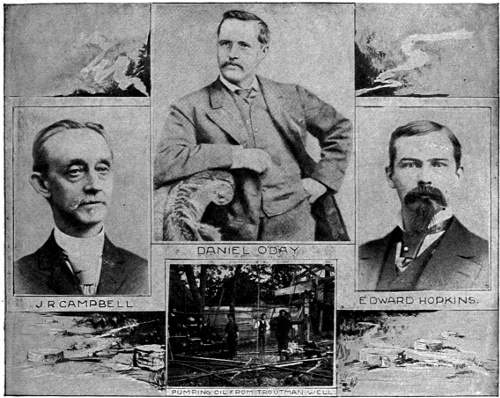
DANIEL O’DAY
J R CAMPBELL EDWARD HOPKINS.
PUMPING OIL FROM TROUTMAN WELL.
Edward Hopkins, first manager of the United Pipe-Lines, was an efficient
officer and died young. John R. Campbell has been treasurer from the incorporation
of the lines in 1877. Born in Massachusetts and graduated from Rev.
Samuel Aaron’s celebrated school at Norristown, he served his apprenticeship
323in the Baldwin Locomotive Works and manufactured printing-inks in Philadelphia,
with William L. and Charles H. Lay as partners. In March of 1865
he visited the oil-region and in August removed to Oil City. He acquired oil-interests,
published the Register and was treasurer for the receiver of the Oil
City & Pithole Railroad Company. In 1867 he became book-keeper for Vandergrift
& Lay, afterwards for Captain Vandergrift and later for Vandergrift &
Forman, who appointed him treasurer of their pipe-lines in 1868. He retained
the position in the United Lines and he is still treasurer of that division of the
National Transit Company. To Mr. Campbell is largely due the accurate and
comprehensive system of pipe-line accounts now universally adopted. He
aided in devising negotiable oil-certificates, reliable as government bonds and
convertible into cash at any moment. He enjoys to the fullest extent the confidence
and esteem of his associates and is treasurer of a dozen large corporations.
He was president term after term of the Ivy Club, one of the finest
social organizations in Pennsylvania, and a liberal promoter of important enterprises.
His abiding faith in Oil City he manifests by investing in manufactures
and furthering public improvements. Active, helpful and popular in business,
in society and in the church, no eulogy could add to the high estimation in
which John R. Campbell is held wherever known.
The enormous production of the Bradford field, the increased distances and
the construction of lines to the sea presented new and difficult problems. A
natural increase in size led to a demand for pipe of better quality, for heavier
fittings and improved machinery. The largest line prior to Bradford’s advent
was a four-inch pipe from the Butler field to Pittsburg, in 1875. Excepting this
324and three-inch lines to Raymilton and Oil City, none of the main lines exceeded
twelve miles in length. Many were gravity-lines and others used small tubing
and light pumps. The greater quantities and longer distances in the northern
district—the oil also congealed at a higher temperature and was harder to
handle than the product of the lower fields—required greater power, larger
pipes and increased facilities. The first six-inch line was laid from Tarport to
Carrollton in the spring of 1879. Two four-inch lines had preceded it and a
four-inch line from Tarport to Kane was completed the same season, five six-inch
lines following later. The first long-distance line, a five-inch pipe from
Hilliards—near Petrolia—to Cleveland, was completed in the summer of 1879.
Trunk-lines to the eastern coast were begun in 1879-80. The trunk-line to
Philadelphia starts at Colegrove, McKean county, and extends two-hundred-and-thirty-five
miles—six-inch pipe—with a five-inch branch of sixty-six miles
from Millway to Baltimore. Starting at Olean, two six-inch lines were paralleled
to Saddle River, N.J. They separated there, one connecting with the refineries
at Bayonne and the other going under the North and East Rivers to Hunter’s
Point, on Long Island. The New-York line is double under the Hudson—one
pipe inside another, with tight-fitting sleeve-joints. The ends of the jacket-pipe
were separated twelve inches to permit the enclosed pipe to be screwed
home. The sleeve was then pushed over the gap and the space between the
pipes filled with melted lead. The line is held in place by two sets of heavy
chains, parallel with and about twenty feet from the pipe, one on each side.
At intervals of three-hundred feet a guide-chain connects the pipe with the
lateral chains and beyond each of these connections an anchor, weighing over
a ton, keeps the whole in place. The completion of this part of the line was
an engineering triumph not much inferior to the laying of Cyrus W. Field’s
Atlantic Cable.
The United Pipe-Lines Association moved forward steadily, avoiding the
pitfalls that had wrecked other systems. It bought or combined the Oil-City,
Antwerp, Union, Karns, Grant, Conduit, Relief, Pennsylvania, Clarion and
McKean divisions of the American-Transfer, Prentice, Olean, Union Oil-Company’s
at Clarendon, McCalmont at Cherry Grove and smaller lines, covering
the oil-region from Allegany to Butler. The United owned three-thousand
miles of lines, thirty-five-million barrels of iron-tankage and one-hundred-and-eighteen
local pump-stations. Even these extraordinary resources were strained
by the overflowing demand. Bradford was the Oliver Twist of the region,
continually crying for “More!” Ohio and West Virginia entered the race and
required facilities for handling an amazing amount of oil. To meet any contingency
and secure the advantages of consolidation in the states producing
oil the National-Transit Company increased its capital to thirty-two-million
dollars. The company held the original charter granted to the Pennsylvania
Company under the act of 1870. In 1880 it absorbed the American-Transfer
Company, an extensive concern. On April first, 1884, it acquired the plant
and business of the United Lines, thus ranking with the most powerful corporations
in the land.
Men entirely familiar with the minutest details of oil-transportation and
storage guided the National Transit. Captain Vandergrift was influential in
the management until his retirement from active duty in 1892. President C. A.
Griscom was succeeded by Benjamin Brewster and he by H. H. Rogers, the
present official head of the company. John Bushnell was secretary, Daniel
O’Day general manager, and James R. Snow general superintendent. Skillful,
325practical and keenly alive to the necessities of the oil-region, they were
not kid-gloved idlers whose chief aim was to draw fat salaries. Mr. Rogers
made his mark on Oil Creek in pioneer times as a forceful, intelligent, progressive
business-man. He had brains, earnestness, integrity and industry and
rose by positive merit to the presidency of the greatest transportation-company
of the age. He is a first-class citizen, a liberal patron of education and
an apostle of good roads. He endows schools and colleges, abounds in kindly
deeds and does not forget his experiences in Oildom. Daniel O’Day—clever
and capable, “whom not to know is to argue one’s self unknown”—who has
not heard of the plucky, invincible vice-president of the National Transit
Company? Everybody admires the genial, resolute son of Erin whose clear
head, willing hands, strong individuality and sterling qualities have raised him
to a position Grover Cleveland might covet. James R. Snow invented a pump
so perfect that oil would fairly flow up hill for a chance to pass through the
machine. From their Broadway offices Rogers, O’Day and Snow direct by telephone
and telegraph the movements of regiments of employés in Pennsylvania,
Ohio, West Virginia and Indiana. They are in direct communication with
every office of the company, every purchasing-agency, every pump-station on
the trunk-lines and every oil-producing section of four states. No army Napoleon,
Wellington or Grant commanded was better officered, better disciplined,
better equipped and better managed than the grand army of National-Transit
pipe-men. If “poets are born, not made,” what shall be said of the wide-awake
solvers of the problem of rapid transit for oil—the pipe-liners who, combining
the maximum of efficiency with the minimum of cost, have placed a
great staple within reach of the lowliest dwellers beneath the Stars and Stripes?
Candidly, is “the best in the shop” too good for them?
No man has contributed more to the development of the oil-industry, alike
as a producer, refiner and transporter, than Captain J. J. Vandergrift. His
active connection with petroleum goes back to pioneer operations, widening
and expanding constantly. By his energy, perseverance, uprightness and masterly
traits of character he attained prominence in all branches of the oil-business.
His wonderful success was not due to any caprice of fortune, but to stability
of purpose, patient application and honorable methods. Vigor and decision
supplemented the keen foresight that discovered the amazing possibilities
of petroleum as an article of universal utility. He believed in the future of oil
and shaped his course in accordance with the broadest ideas. Allied with
George V. Forman, clear-headed, quick to plan and execute, the firm took a
leading part in producing and carrying oil. Vandergrift & Forman constructed
the Star Pipe-Line and equipped trains of tank-cars to convey crude from Pithole
to Oil City. They drilled hosts of wells in Butler county and built the Fairview
Pipe-Line, which finally crystallized with numerous others into the United
Pipe-Lines Association and the gigantic National-Transit Company. The firm
of H. L. Taylor & Co., of which they were members, originated the Union Oil-Company.
Vandergrift & Forman, Vandergrift, Pitcairn & Co. and Vandergrift,
Young & Co. consolidated as the Forest Oil-Company, which holds the
foremost place in the production of oil. Mr. Forman operated in Allegany and
McKean, developing large tracts of territory on the Bingham and Barse lands.
He resided at Olean and established the finest stock-farm in the Empire State.
Removing to Buffalo to engage in banking, he organized the Fidelity Trust-Company
and erected for its use a palatial structure in the heart of the city.
Under his presidency the Fidelity is a power in the world of finance. Shrewd,
326prompt and far-seeing, George V. Forman is richly dowered with the qualities
of business-leadership. His influence in the oil-country was not limited to one
corner or district or locality. He has enjoyed the pleasure of making money
and the greater pleasure of giving liberally. He is “a man who thinks it out,
then goes and does it.”
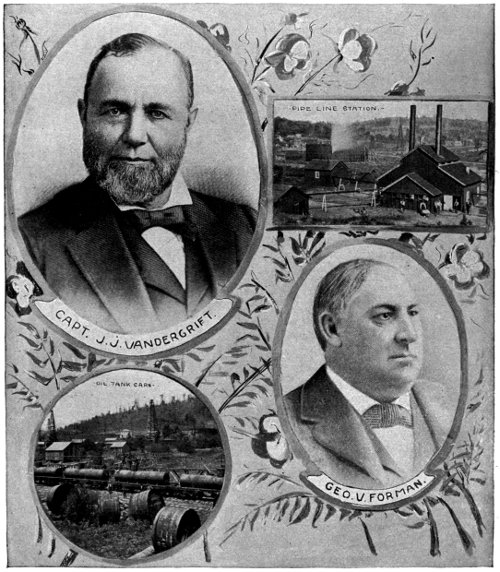
PIPE LINE STATION.
CAPT. J. J. VANDERGRIFT.
OIL TANK CARS.
GEO. V. FORMAN.
Born at Pittsburg in 1827, at fifteen Jacob Jay Vandergrift chose the pathway
that naturally opened before him and entered the steamboat-service, then
the chief medium of intercommunication between his native city and the west.
In ten years he rose from cabin-boy to captain. He introduced the method of
towing coal-barges that has since been employed in the river-traffic. The
innovation attracted wide attention and gave a great impetus to mining in the
Pittsburg coal-fields. Captain Vandergrift was steamboating on the Ohio
when the war broke out and owned the staunch Red Fox, which the government
chartered and lost near Cairo. He transported oil down the Allegheny,
327was concerned in West-Virginia wells—the Confederates destroyed them—and
removed to Oil City in 1863 to oversee his shipping-business, with Daniel Bushnell
as his first partner in producing oil. He organized the firms out of which
grew the Union, the Forest, the Washington Oil-Company and the United Oil
and Gas Trust. He was president of the Forest and the Washington and a
leading promoter of the Anchor Oil-Company. The success of these great
companies was owing largely to his peculiar ability as an organizer and manager
of important enterprises. Other individuals and corporations produced
oil profitably, but to Vandergrift & Forman the marvelous advance in modes
of transportation is mainly attributable. They piped and railroaded oil from
Pithole, extended their lines through the different fields, devised many improvements,
perfected the methods of handling the product and developed the
system that has eliminated jaded horses, wooden-barrels, mud-scows, slow
freights and the thousand inconveniences of early transportation. Captain
Vandergrift’s sturdy integrity and wise forethought planned the open, clear-cut
manner in which his pipe-lines conducted business. Throughout their entire
existence he was president of the United Pipe-Lines and of the United Division
of the National-Transit after the consolidation in 1884. Their splendid record
is an unqualified tribute to his business-skill and rare sagacity. He found the
region hampered by an expensive, tedious method of moving oil and left it a
transportation-system that serves the industry as no other on earth is served.
He substituted the steam-pump for the wearied mule, the iron-artery for the
roads of bottomless mire and the huge cistern of boiler-plate for the portable
tank of wooden staves that leaked at every pore. To Oil City he was a munificent
benefactor. He projected the Imperial Refinery, with a capacity of fifteen-thousand
barrels a week, by the sale of which he became a stockholder and
officer of the Standard Oil-Company. He aided in establishing the Boiler-Works,
the Barrel-Works, river-bridges, manufactories, churches and public
improvements. He paid his workmen the highest wages, befriended the humble
toiler and assisted every worthy object. The poor blessed his beneficent
hand and all classes revered the modest citizen whose unostentatious deeds of
kindness no party, race, color or creed could for one moment restrict.
Very naturally, one thus interested in a special product and its industries
must be identified with its finance. Captain Vandergrift founded the Oil-City
Trust-Company, one of the leading banking institutions of the state, and was
prominent in organizing the Oil-Exchange, the Seaboard-National Bank of
New York and the Argyle Savings-Bank at Petrolia. Removing to Pittsburg
in 1881, he founded the Keystone Bank and the Pittsburg Trust-Company—nine-hundred-thousand
dollars paid-up capital and four-millions deposits—and
was unanimously elected president of both. He provided spacious quarters
for the Oil-Exchange and established it on a sound basis. He erected the massive
Vandergrift Building on Fourth avenue, in which the National-Transit
Company, the Forest, the South-Penn, the Pennsylvania, the Woodland and
other oil-companies are commodiously housed. The owner occupies a suite
of offices on the second floor and the Pittsburg Trust-Company has its bank on
the ground floor of the granite structure. He also erected the Conestoga
Building, which has seven-hundred elegant offices, and the Imperial Power-Building,
with factory-construction and the latest electric-motors throughout.
In 1882 he organized the Pennsylvania Tube-Works—eight-hundred-thousand
dollars capital—to manufacture all kinds of wrought-iron pipe. The output
was so excellent that the capital was increased to two-millions and the plant
328doubled. The works turn out pipe from one-eighth inch to twenty-eight inches,
the smallest and largest sizes in the world. The Apollo Steel-Company, which
he also capitalized in 1885 at three-hundred-thousand dollars, has likewise
trebled its plant and enlarged its capital to two-millions. The Penn Fuel-Company,
the Bridgewater Gas Company, the Natural-Gas Company of West
Virginia, the Chartiers Natural-Gas Company, the United Oil and Gas Trust,
the Toledo Natural-Gas Company, the Fort-Pitt Natural-Gas Company and a
number more were incorporated by Captain Vandergrift. They represent
many millions of capital and have performed inestimable service in developing
the fuel that proved a veritable philosopher’s stone to the iron-industries
of Western-Pennsylvania. As in petroleum, from the days of spring-poles and
bulk-barges and pond-freshets down through all the changes of the most remarkable
industrial development the world has ever seen, so Captain Vandergrift
has been a pioneer, a guide and a leader in natural-gas. His hand has
never been off the helm, nor has he ever grudged an atom of the energy bestowed
upon the cherished pursuits of his busy life.
Forty miles north-east of Pittsburg, on a beautiful bend of the Kiskiminetas
River, the new town of Vandergrift has been laid out, under the direction of
Frederick Law Olmsted. It is located on a plot one mile square, two miles
below Apollo, the gentle slope overlooking the valley and the river for leagues.
Its residents will have within easy reach of simple thrift what luxurious people
enjoy in large cities at great expense. They will have clean air and water and
breathing-room, green leaves and flowers and grass, paved streets and sewers
and electricity, parks and walks and drives, shade-trees and lawns and pleasant
homes, for Vandergrift will be the model town of Pennsylvania. The company
is paying sixty-thousand dollars a month at Apollo in wages and the big works
at Vandergrift will employ thrice as many men. At first the bulk of the town
will be the habitations of those employed by and associated with the company.
After a little others will note its advantages and desire to share them. Provision
will be made this year for an immediate population of several thousand,
with the means of living comfortably, families owning their homes and controlling
their own pursuits. The town is not to be a fad, a hobby, or a visionary
Utopia, but a good place for men to live in, for the founder to use his
money, for the world to look at and learn from. These banks and business-blocks,
pipe-lines and refineries, mills and factories and the town that bears his
name are enduring monuments to the enterprise and wisdom of a man who
recognizes the responsibilities of wealth in his investments, in his works of
philanthropy and in his gifts to the children of misfortune.
Captain Vandergrift’s home in Allegheny City is a center of good cheer
and genial hospitality. The host is the same kindly, companionable gentleman
by his own hearth, in his office or on the street. He casts the lead of memory
into the stream of the past and talks entertainingly of the old days on the Ohio,
the Allegheny and Oil Creek. He is never too much engaged to welcome a
comrade of his early years. He has not lost touch with men or the spirit of
sympathy with the struggling and unsuccessful. His trials and vicissitudes,
equally with his triumphs and successes, have strengthened his moral fiber, his
manly courage and his nobility of character. Doubtful plans and purposes
have had no place in his policy. Strict honesty and fairness have governed his
conduct and respected the rights and privileges of his fellows. He has been
quick to discover and reward talent, to grasp the details and possibilities of
business and to mature plans for any emergency. Money has not shriveled his
329soul and narrowed him to the prayer of selfishness: “Give me this day my
daily bread.” He prefers straightforwardness to a pedigree running back to
the Mayflower. He realizes that golden opportunities for good are not traveling
by a time-table and that men will not journey this way again to repair
omissions and rectify mistakes. He knows that he who does right will be right
and feel right. He does not lay aside his sense of justice, his love of fair-play,
his earnest convictions and his desire to benefit mankind with his Sunday
clothes. He believes that principle which is not exercised every day will not
keep sweet a week. The story of J. J. Vandergrift’s life and labor is told
wherever the flame of natural-gas glows in the white heat of a furnace or the
gleam of an oil-lamp brightens a happy home.
Somehow we all feel sure, boys, that when the game is o’er—
When the last inning’s play’d, boys, this side the other shore—
We’ll hear the Umpire say, boys: “The Captain’s made a score.”
Few persons have any conception of the labor and capital involved in storing
and transporting petroleum. Only those familiar with the early methods
can appreciate fully the convenience and economy of the pipe-line system. It
puts the producer in direct communication with the carrier and a market at all
seasons, regardless of high or low water, rain or storm, mud or dust. The
tanks at his wells are connected with the pipe-line by one or more of the two-inch
feeders that spider-web the producing-country. Small pumps force the
crude, when the location of the well prevents running it by gravity, from these
tanks into a receiving-tank of the line, whence it can be piped into the trunk-lines
or a storage-tank as desired. The producer who wishes his oil run notifies
the nearest office or agent of the company—usually this requires about two
minutes by wire—a gauger measures the feet and inches of fluid in the tank,
opens the stop-cock, turns the stream into the line and, presto, change! the
job is done. The gauger measures the oil left at the bottom of the tank, gives
the producer a receipt for the difference between the two gauges and reports
the result to the central station of that section of the field. There tables of
the measurements of every tank in the locality are at hand, properly labeled
and numbered. The right table shows at a glance the amount of oil in barrels
corresponding to the feet and inches the gauger reports having run and the
producer is credited accordingly, just like a depositor in a bank. These reports
are summed up at a certain hour and the company learns precisely how much
oil has been received each day. By a similar process the shipments are recorded
and the exact quantity in the custody of the company is known at the
close of the day’s business. Runs and shipments are published daily and a
monthly synopsis is posted, in compliance with the laws of Pennsylvania. The
producer can leave his oil in the line, subject to a slight charge for storage after
thirty days, or sell it immediately. He can take certificates or acceptances of
one thousand barrels each, payable on demand in crude-oil at any shipping-point
in the oil-region. These certificates, good as gold and negotiable as certified
checks, the holder can use as collateral to borrow money, sell at sight or
stow away if he looks for an advance in prices. It is not Hobson’s choice with
him. In an hour from the time of notifying the office his oil may be run, the
amount figured up, the sale made and the currency in the owner’s pocket. He
has not tugged and perspired loading it in wagons or on cars, worn out his
patience and his team and his profanity driving it through an ocean of mud, or
risked the chances of a jam and a wreck ferrying it on the bosom of a pond-freshet.
Nor has he put up one penny for the service of the pipe-line, which
330collects twenty cents a barrel when the oil is delivered to the purchaser. The
company is not a holder of oil on its own account, except what it necessarily
keeps to offset evaporation and sediment, acting merely as a common-carrier
between the producer and the refiner. The system is the perfection of simplicity,
accuracy and cheapness.
Pipe-lines are the natural outgrowth of the petroleum-business, which
could no more get along without them than could the commerce of the world
without railroads and steamships. The movement of a thousand barrels of
crude in early times was a task of great magnitude, costly, time-consuming and
perplexing. Sometimes barrels were not to be had, the water was too shallow
for boating or the mud too deep for teaming. Often a big well wasted half its
product and gorged transportation, harassing the soul and depleting the purse
of the luckless owner. Fancy attempting to handle a hundred-thousand barrels
a day with the primitive appliances! Whew! You might as well try to
cart off Niagara in kegs. Butler and McKean rushed wells by the hundred
every week, swelling the production extravagantly. The supply was enormously
in excess of the demand. Operators wouldn’t stop drilling and the
surplus oil had to be cared for in some way. The United Lines and the National-Transit
Company spent millions of dollars to provide adequate facilities.
Not only was the vast output to be taken from the wells, but a large percentage
must be stored. To pipe a hundred-and-forty-thousand barrels a day was a
grand achievement, even without the burden of husbanding much of the stuff
for weeks, months and years. A wilderness of iron-tanks—thirty to forty thousand
barrels each—went up at Olean, Oil City, Raymilton, Parker and distributing
points. Stocks increased and tanks multiplied until forty-million barrels
were piled up! Think of the mountains of pipe, the acres of iron-plates, the
legions of workmen and the stacks of cash all this required. Six pipes were
laid to New York and the Tidewater Company built a six-inch line to New Jersey.
The trunk-lines of the National-Transit alone are five-thousand miles in
length, besides which the Tidewater and the United-States pipe oil eastward.
Fifty-thousand barrels of crude a day flow through these underground arteries
to the refineries at Hunter’s Point, Bayonne and Philadelphia. Other thousands
are piped to Baltimore, Buffalo, Cleveland, Pittsburg and refineries in the
oil-region. The pipe used in transporting crude would girdle the earth twice
and leave a long string for extra-measure. Truly “these be piping times.”
McDonald gushers poured out their floods, but the National-Transit and
Mellon Lines were on deck with pumps and pipes that snatched the contents of
the tanks and whirled them to the sea. John McKeown’s leviathan at Washington
electrified the neighborhood by starting at three-hundred barrels an
hour, with only three small tanks to hold the product. It filled the first in forty
minutes. Superintendent Glenn Braden set up a pump in thirty minutes more
that would empty the tank in a half-hour. All night it was nip and tuck between
the spouter and the pump, big Goliath and puny David. The pump
won, the oil was safe in the line and not a drop spilled! West-Virginia’s geysers
burst forth and the Southern Trunk-Line—three-hundred miles of eight-inch
and six-inch pipe—linked Morgantown to Philadelphia. Lima tried to
drown Ohio in crude and an eight-inch line quietly dumped the deluge into
Chicago. Part of it fired the half-mile row of boilers at the Columbian Exposition,
with not a cinder, a speck of ashes or a whiff of smoke to dim the lustrous
flame of fuel-oil. Indiana, the home of some pretty big statesmen, some
pretty big oil-territory and “the Hoosier Schoolmaster,” had a surfeit of crude
331which the pipe-lines bore to the huge refinery at Whiting, to Cleveland and the
Windy City. Thus the development of new fields, remote from railroads, has
been rendered possible.
Trunk-lines require pipe of extra weight, manufactured expressly for the
purpose from wrought-iron, lap-welded, cut into lengths of eighteen feet and
tested to a pressure of two-thousand pounds to the square inch. Pumping-stations,
supplied with powerful machinery, are located at suitable points,
generally twenty-five to thirty miles apart. The stations on the National-Transit
trunk-lines usually comprise a boiler-house forty feet square, built of
brick and roofed with corrugated iron, lighted by electricity and containing
seven or eight tubular boilers of eighty to one-hundred horse-power. For
greater safety from fire the immense pumps are in a separate brick-building.
The largest pumps are triple-expansion crank and fly-wheel engines, the invention
of John S. Klein, superintendent of the company’s machine-shops at Oil
City. Each of these giants can force twenty-five-thousand barrels of oil a day
through three six-inch pipes from one station to the next. A low-duty engine
is run when the main-pump is stopped for repairs or any cause. At each station
two or more storage-tanks—thirty to thirty-five thousand barrels apiece—are
provided. One receives the oil from the preceding station while the pump
is emptying the other into the receiver at the station beyond. The movement
is incessant. Night and day, never tiring and never resting, the iron-arteries
throb and pulsate with the greasy liquid that rushes swiftly a yard beneath the
surface, duplicate machinery obviating the necessity of delay or interruption.
Five or six boilers are fired at once and two are held in reserve, in case of
accident. Loops are laid around some of the stations, that a pump may send
the oil two or three times the average distance and the total disability of a station
not blockade the line. When lofty hills are surmounted the pressure on
the pump reaches twelve to fifteen-hundred pounds. Independent telegraph-lines
connect the stations with one another and the main-offices. The engineers
handle the key and click messages expertly. The lines are patrolled
regularly to detect leaks, although the system of checking from tank to tank
makes it impossible for a serious break to pass unnoticed. To clear the incrustations
of paraffine, especially in cold weather, a scraper or “go-devil”
is sent through the pipes. The best of these instruments—a spindle with a ball-and-socket-joint
near its center to follow the bends of the pipe, fitted with steel-blades
set radially and kept in position by three arms in front and rear—was
devised by Mr. Klein. Oblique vanes, put in motion by the running oil, rotate
the spindle and the blades scrape the pipe as the “go-devil” is propelled
forward. A catch-box is placed at the end of each division and the queer
traveler can be closely timed. The great battery of boilers, the huge engine-pumps—one
on the Lima-Chicago line weighs a hundred tons—the electric-plants
and the intricate maze of steam-pipes and water-pipes suggest the machinery
of an ocean-steamship.
If the railroad is “the missionary of punctuality,” as Robert Burdette concisely
expresses it, surely the pipe-line is the messenger of efficiency. With
wondrous speed and unfailing certainty it conveys crude-oil from the wells to the
refineries in or out of the region, climbing hills, descending ravines, fathoming
rivers and traversing plains and forests. Methods of refining have kept pace
with progress in transportation. The smoky, dangerous, inconvenient kettle-still
of the pioneer on Oil Creek has given place to the mammoth refinery of
to-day, with its labor-saving appliances, its hundreds of skilled employés and
332its improved processes. Instead of the ill-smelling, sputtering, explosive mixture
of earlier years, the world now receives the water-white kerosene that
burns as steadily and safely as a wax-taper. Seventy tank-vessels carry it over
the seas to Europe, Asia and Africa. It is delivered at your house in neat cans,
or the grocer will sell it by the pint, quart, gallon or barrel. The light is pure
as heaven’s own sunshine, grateful to the eye and beautifying to the home. No
other substance approaches petroleum in the number and utility of its products.
Long years of patient research and experiment have extracted from it one-hundred-and-fifty
articles of value in art, science, mechanics and domestic economy.
It supplies healing-salves, ointments, cosmetics, soaps, dainty toilet-accessories
and—oh, girly Vassar girls—chewing-gum! Refuse tar and scum are converted
into lamp-black and coarse lubricants. Scarcely a particle of it goes to waste.
Noxious gases and poisonous acids no longer pollute the air and the streams
around refineries, offending human nostrils and killing helpless fish. The amazing
vastness of its development is equalled only by the marvelous variety of
petroleum’s commercial uses.
At every stage of its journey from the hole in the ground to the abode of
the purchaser of kerosene, oil is handled with a view to the best results. The
pipe-line relieves the producer from worry and fatigue and a large outlay, furnishing
him prompt service and a cash market at his own door every business-day
in the year. It enables the refiner to fill the consumer’s lamp at a trifling
margin above the price of crude. For seventy cents a barrel—less than half it
cost formerly to haul it a mile—the line collects oil from the wells, pumps it into
the trunk-lines and delivers it in New York. Contrast this charge with the
four, five, eight or ten dollars exacted in the days of boats and wagons, barrels
and tank-cars and endeavor to figure the saving to the public wrought by the
pipe-lines, to say nothing of greater convenience and expedition. The existing
transportation-system may be a monopoly, but the country is hungry for more
monopolies of the same sort. If it be monopoly to bring order out of chaos,
to build one strong enterprise from a dozen weaklings, to consolidate into a
grand corporation a score of feeble lines and reduce freight-rates seventy-five
to ninety-five per cent., the National-Transit Company is the rankest monopoly
of the century. It practices the kind of monopoly that converts a row of tottering
shanties into a stately business-block. It is guilty of furnishing storage solid
as the Rock of Gibraltar to the men who drilled oil down to forty cents a barrel
and tiding them over the period of excessive production. This is the brand
of monopoly that keeps industry alive, that supplies foreign nations with an
American product and benefits humanity. If Van Syckle, Abbott and Harley
were plucky and courageous in braving the wrath of four-thousand teamsters,
how much more brain and brawn, muscle and money, dollars and sense were
needed to lay trunk-lines that sent ten-thousand tank-cars to the junk-pile and
diminished the revenues of railroads millions of dollars annually! The owners
of these lines have grown rich, as they ought to do, because for every dollar of
their winnings they have saved producers and consumers of petroleum ten.
Pipe-line certificates afforded an excellent medium for speculation. The
commodity they represented was subject to fluctuations of five to fifty per cent.,
which made it particularly fascinating to speculators in stocks. Oil-exchanges
were established at Oil City, Titusville, Parker, Bradford, Pittsburg, New York,
Philadelphia and elsewhere. In a single year the clearances exceeded eleven-billion
barrels. Bulls and bears reveled in excitement and brokers had customers
from every quarter of the country. The forerunner of these institutions
333was “the Curbstone Exchange” at Oil City in 1870. The bulk of the buying
and selling was done in front of Lockhart, Frew & Co.’s office, Centre street,
near the railroad track. Producers, dealers and spectators would congregate
on the sidewalk, discuss the situation, tell stories and buy or sell oil. The group
in the illustration includes a number of well-known citizens. Most of them
have left Oil City and not a few have gone from earth. Acquaintances will recognize
Dr. Knox, John Mawhinney, James Mawhinney, John D. Archbold, Dr.
Baldwin, A. H. Bronson, P. H. Judd, L. D. Kellogg, A. E. Fay, George Porter,
Edward Higbee, William M. Williams, John W. Austin, J. M. Butters, Joseph
Bates, George W. Parker, William H. Porterfield, Charles W. Frazer, Edward
Simmons, Samuel H. Lamberton, James H. Magee, Isaac Lloyd and William
Elliott. Charles Lockhart and William Frew were pioneer refiners at Pittsburg
and heavy buyers of crude at Oil City. William G. Warden entered into partnership
with them and established the great Atlantic Refinery at Point Breeze.
In 1874 the refineries controlled by Warden, Frew & Co. consolidated with the
Standard Oil-Company of Ohio, forming the nucleus of the Standard Oil-Trust.
Mr. Warden built the Gladstone, the first large apartment-house in
Philadelphia, and died in April of 1895. He married a daughter of Daniel
Bushnell and was one of the most enterprising and charitable citizens of Pennsylvania.
His surviving contemporaries are old in reminiscences of Oil Creek
and the days when pipe-lines and oil-certificates were unguessed probabilities.
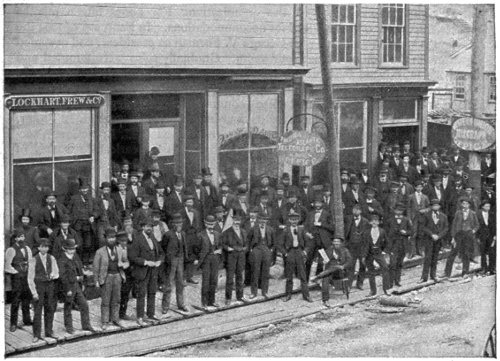
OIL CITY “CURBSTONE EXCHANGE” IN 1870.
Trades were made in offices, at wells, on streets, anywhere and everywhere.
Purchasers for Pittsburg, Baltimore and Philadelphia refiners started
brokerage in 1868, on a commission of ten cents a barrel from buyers and five
from sellers. The Farmers’ Railroad, completed to Oil City in 1867, brought
334so many operators to town that a car was assigned them, in which they bought
and sold “spot,” “regular” and “future oil.” There were no certificates,
no written obligations, no margins to bind a bargain, but everything was done
on honor and no man’s word was broken. “Spot oil” was to be moved and
paid for at once, “regular” allowed the buyer ten days to put the oil on the
cars and “future” was taken as agreed upon mutually. Large lots frequently
changed hands in this passenger-car, really the first oil-exchange. The business
increased, an exchange on wheels had manifest disadvantages and in
December of 1869 it was decided to effect a permanent organization. Officers
were elected and a room was rented on Centre street. It removed to the
Sands Block in 1871, to the Opera-House Block in January of 1872 and to a
temporary shed next the Empire-Line office in the fall, when South-Improvement
complications dissolved the organization. For about fifteen months
hotels, streets, or offices sufficed for accommodations. In February of 1864 the
exchange was reorganized, with George V. Forman as president, and occupied
quarters in the Collins House four years. Gradually rules were adopted and
methods introduced that brought about the system afterwards in vogue. In
April of 1878 the formal opening of the splendid Oil-Exchange Building took
place. The structure contained offices, committee-rooms, telegraph-lines, reading-rooms
and all conveniences for its four-hundred members. H. L. Foster,
now of Chicago, was president term after term. The late H. L. McCance, secretary
for years, was a first-class artist, with a skill for caricature worthy of
Thomas Nast. Some of the most striking cartoons pertaining to oil were the
work of his ready pencil. F. W. Mitchell & Co. inaugurated the advancing
of money on certificates, their bank’s transactions in this line ranging from one
to four-million dollars a day. The application of the clearing-house system in
1882 simplified the routine and facilitated deliveries. The volume of business
was immense, the clearances often amounting to ten or fifteen-million barrels a
day. Only the New York and the San Francisco stock-exchanges surpassed it.
If speculation were piety, everybody who inhaled the air of Oil City would
have been saved and the devil might have put up his shutters. During rapid
fluctuations the galleries would be packed with men and women who had
“taken a flyer” and watched the antics of the bulls and bears intently. Fortunes
were gained and lost. Many a “lamb” was shorn and many a “duck”
lamed. It was a raging fever, a delirium of excitement, compressing years of
ordinary anxiety and haste into a week. Now the exchange is deserted and
speculative trade in oil is dead. Part of the big building is a clothier’s store
and offices are rented for sleeping-apartments. Myer Lowentritt, Stewart
Simpson, “Eddie” Selden, Samuel Justus and a half-dozen others are seen
occasionally, but days pass without a solitary transaction, the surging crowds
have vanished and activity is a dream of bygone years.
Parker had a lively oil-exchange when the Armstrong and Butler fields
were at their height. The most prominent men in speculative trade lived in
the town or were represented in the exchange. Thomas B. Simpson was a
large operator. George Darr was agent of Daniel Goettel, who once engineered
the greatest bull-movement in the history of oil and was supposed to
have “cornered” the market. Charles Ball and Henry Loomis earned sixty-thousand
dollars brokerage a year and died within a month of each other.
Trade slackened and expired. The boys shifted to Bradford and Pittsburg
and a constable sold the building to satisfy Mrs. W. H. Spain’s claim for
ground-rent! The five-thousand-dollar library and the costly pictures, dust-covered
335and neglected, sold for a trifle and went to South Oil City. A jollier,
bigger-hearted crowd of fellows than the members of the Parker Exchange
never played a practical joke or helped a poor sufferer out of “a deuce of a fix.”
The Bradford Oil-Exchange started on January first, 1883, with five-hundred
members and a forty-thousand-dollar building. Five-hundred others,
with Hon. David Kirk as president, organized the Producers’ Petroleum-Exchange
and erected a spacious brick-block, occupying it on January second,
1884. Both exchanges whooped it up briskly, both have subsided and the
buildings are stores and offices. Titusville’s handsome exchange, on the site
of the American Hotel, has gone the same road. Captain Vandergrift built
the Pittsburg Oil-Exchange, the finest of them all, fitting it up superbly. A
bank and offices have succeeded the festive dealers in crude. From the Mining-Stock
Exchange, the Miscellaneous Security Board and several more of
similar types the New-York Consolidated Stock and Petroleum Exchange
developed a huge concern, with twenty-four-hundred members and a lordly
building—erected in 1887—on Broadway and Exchange Place. The membership
was the largest in the country, with the exception of the Produce Exchange,
and the business in oil at times exceeded the transactions of the Stock
Exchange. Seats sold as high as three-thousand dollars. Charles G. Wilson
has been president since the organization of the Petroleum and Stock Board,
which absorbed the National Petroleum Exchange—L. H. Smith was its president—and
in 1885 adopted the elongated name that has burdened it eleven
years. Oil is not mentioned once a week, because the stocks have declined to a
skeleton and the certificates represent scarcely a half-million barrels. Philadelphia
had an exchange of lesser degree
and a score of oil-region towns sharpened
their appetite for speculation by establishing
branch-concerns and bucket-shops.
The almost entire disappearance of the
speculative trade is not the least remarkable
feature of the petroleum-development.

Since the elimination of exchanges producers
generally sell their oil in the shape
of credit-balances. For their convenience
the Standard Oil-Company has established
purchasing-agencies throughout the region.
The quantity of crude to the credit of the
seller on the pipe-line books is ascertained
from the National-Transit office, a check is
given and all the trouble the producer has
is to draw his money from the bank. It is
handier than a pocket in a shirt, easier than rolling off a log in a mill-pond,
and the happy “victim of monopoly” goes on his way rejoicing after the manner
of Philip’s converted eunuch. If he reside at a distance, be sojourning at
Squedunk or in London, traveling with the Czar or showing the Prince of
Wales a good time, a message to the agency will deliver his oil to Harry Lewis
and the cash to his own order in a twinkling. The whole chain of purchasing-agencies
is managed by Joseph Seep, whose headquarters are at Oil City. The
Standard has the knack of selecting A-1 men for responsible positions—men
who are not misfits, square pegs in round holes or small potatoes in the hill.
Among the capable thousands who represent the great corporation none is better
336adapted to his important place than the head of the purchasing-agencies.
He has the tact, the experience, the knowledge of human-nature and the
strength of character the position demands. For twenty-five years he has purchased
crude for the company, up Oil Creek, at Oil City and down the Allegheny.
You may not belong to his church or his party, you may differ from
him on silver and woman-suffrage, you may even call the Standard an “octopus”—Col.
J. A. Vera first did this at a meeting near St. Petersburg in 1874—and
wish to turn its picture to the wall, but you like “Joe” Seep for his candor,
his manliness, his admirable blending of suavity and firmness. He hails from
the succulent blue-grass of Kentucky, combines Southern ease and Northern
vigor, lives at Titusville and enjoys his wealth. It would strain Chicago’s convention-hall
to hold his legions of friends. His heart and his purse are alike
generous. He produces oil, buys oil, ships oil and “pays the freight” on
three-fourths of the oil handled in Oildom. He and George Lewis and Harry
Lewis—“match ’em if you can”—have bought enough oil to fill a sea on which
the navies of the world might race and leave room for the Yale crew that crew
too soon. Seep and the Lewises are the gilt-edged stripe of men who don’t
drop banana-skins on the sidewalk to trip up a neighbor or squirm with envy
because somebody else has a streak of good-luck. When Seep’s last shipment
has been made, the account is closed and the Recording Angel’s ledger shows
his big credit-balance, St. Peter will “throw the gates wide open,” bid him
welcome and never think of springing the old gag: “Not for Joseph, not for
Joe!”
Sudden shifts in the market brought queer experiences in the days of wild
oil-speculation, enriching some dabblers and impoverishing others. Stories of
gains and losses were printed in newspapers, repeated in Europe and exaggerated
at home and abroad. A bull-clique at Bradford, acting upon “tips from
the inside,” dropped four-hundred-thousand dollars in six months. An Oil-City
producer cleared three-hundred-thousand one spring, loaded for a further
rise and was bankrupted by the frightful collapse Cherry Grove ushered in. A
Warren minister risked three-thousand dollars, the savings of his lifetime,
which vanished in a style that must have taught him not to lay up treasures on
earth. A Pittsburg cashier margined his own and his grandmother’s hundred-thousand
dollars. The money went into the whirlpool and the old lady went
to the poor-house. A young Warrenite put up five-hundred dollars to margin
a block of certificates, kept doubling as the price advanced and quit fifty-thousand
ahead. He looked about for a chance to invest, but the craze had seized
him and he hazarded his pile in oil. Cherry Grove swept away his fortune in a
day. A Bradford hotel-keeper’s first plunge netted him a hundred dollars one
forenoon. He thought that beat attending bar and haunted the Producers’
Exchange persistently. He mortgaged his property in hope of calling the turn,
but the sheriff raked in the pot and the poor landlord was glad to drive a beer-wagon.
Such instances could be multiplied indefinitely. Hundreds of producers
lost in the maelstrom all the earnings of their wells, while the small
losers would be like the crowd John beheld in his vision on Patmos, “a great
company whom no man can number.” Wages of drivers, pumpers, drillers,
laborers and servant-girls were swallowed in the quicksands of the treacherous
sea.
Of course there were many winners and many happy strokes of fortune.
In 1876 Peter Swenk, of Ithaca, N. Y., purchased through a Parker broker ten-thousand
barrels at two dollars and left orders to buy five-thousand more
337should the market break to one-seventy-five. Returning home, he was taken
violently ill and the market suddenly fell forty cents, five cents below his margins.
The day was stormy and Swenk could obtain no reports except from Oil
City, where the break was eight cents greater than at Parker. The storm saved
Swenk, although he did not know it for months, by crippling the wires and
shutting off communication between Oil City and Parker the last hour of business.
Concluding the margins were exhausted and the broker had sold the oil
to save himself, Swenk went west to start anew. Weeks after his departure
his Ithaca friends received urgent telegrams from the broker at Parker. They
forwarded the messages, which informed him that, as the market stood, he was
worth nineteen-thousand dollars and would be wise to sell. Swenk wired to
close the whole matter and started for Parker. The market jumped another
peg just before the order to sell arrived and Swenk received twenty-two-thousand
dollars profits. He paid the broker double commission, returned home
and bought a splendid farm. The faithful broker who managed this singular
deal is now virtually a pauper at Bradford and a slave of rum. Last time we
met he staggered up to me, his eyes bleared and his clothing in tatters, pressed
my hand and said: “Gimme ten cents; I’m dying for a drink!”
A big spurt in April of 1895 temporarily revived interest in oil-speculations.
Again the exchange at Oil City was thronged. Exciting scenes of former years
were renewed as the price climbed ten cents a clip. It was refreshing after the
long stagnation to see the pool once more stirred to its depths. From one-ten
on April fourth the price strode to two-eighty on April seventeenth. Certificates
were scarce and credit-balances were snapped up eagerly. A few big
winnings resulted, then the reaction set in, the spasm subsided and matters
resumed their customary quietude. Connected with this phenomenal episode
the papers in May told this breezy tale of “Bailey’s Jag Investment:”
“C. J. Bailey, of Parkersburg, drew seventy-five-hundred dollars out of the Commercial
Bank of Wheeling as the earnings of a three-hundred-dollar investment, made involuntarily and
unknowingly. Bailey is a traveling salesman. A little less than a month ago he made a trip
through the West-Virginia oil-fields. At Sistersville he got in with a crowd of oil-men, with
the result that next day he had a big head, a very poor recollection of what had happened and
was three-hundred dollars short, according to his memorandum-book. He wisely decided that
the less publicity he gave his loss the better it would be and kept still. On Friday he was coming
to Wheeling on the Ohio River Railroad, when a stranger approached him with:
“‘You are J. C. Bailey, I believe.’I believe.’
“‘Yes,’ replied Bailey.
“‘Well, you will find seven-thousand-five-hundred dollars to your credit in the Commercial
Bank at Wheeling,’ replied the stranger. ‘I put it there day before yesterday and was about to
advertise for you.’you.’
“Bunco was the first thought of Bailey; but as the stranger did not ask for any show of money
and talked all right, he asked for an explanation. It turned out that the stranger was one of
the men with whom Bailey had been out in Sistersville. He was also secretary and treasurer of
an oil-company, which had struck a rich well in the back-country pool two weeks before. Bailey,
while irresponsible, had put three-hundred dollars into the company’s capital-stock, on the
advice of his friends. Meantime the well had been drilled, coming in a gusher of three-thousand
barrels a day, one-tenth of which belonged to Bailey on his three-hundred-dollar investment.
Bailey came to Wheeling, went to the bank and found the money awaiting him. He drew
five-thousand dollars to send to his wife. Bailey’s good fortune is not over yet, for the well is a
good producer and the company holds large leases, on which several more good wells are sure
to be drilled.”
What of the brokers and speculators? They are scattered like chaff. A
thousand have “gone and left no sign.” President Foster, of the Oil City Exchange,
an accomplished musician, traveler and orator, is a Chicagoan. John
Mawhinney, John S. Rich—the fire at Rouseville’s burning-well nearly destroyed
his sight—H. L. McCance, George Cornwall, Wesley Chambers, Dr. Cooper,
338A. D. Cotton, T. B. Porteous, Isaac Reineman, I. S. Gibson, Charles J. Fraser,
W. K. Vandergrift, B. W. Vandergrift, B. F. Hulseman, Charles Haines, Michael
Geary, Patrick Tiernan, “Shep” Moorhead, Melville, McCutcheon, Fullerton
Parker, George Harley, Marcus Brownson and a host of other familiar figures
will nevermore be seen in any earthly exchange. “Jimmy” Lowe—he
was a telegrapher at first—Arthur Lewis, M. K. Bettis, George Thumm, I. M.
Sowers and a dozen more drifted to Chicago. “Dick” Conn, “Sam” Blakeley,
Wade Hampton, “Rod” Collins, Major Evans, Col. Preston and Charles W.
Owston are residents of New York. “Tom” McLaughlin buys oil for the
Standard at Lima. “Ajax” Kline is dissecting the Tennessee field for the Forest
Oil-Company. “Cal” Payne is Oil-City manager of the Standard’s gas-interests.
“Tom” Blackwell is in Seep’s purchasing-agency. John J. Fisher is
flourishing at Pittsburg. “Charley” Goodwin holds the fort at Kane. Daniel
Goettel and W. S. McMullan are running a large lumber-plant in Missouri.
O. C. Sherman is a Baptist preacher and Jacob Goettel fills a Methodist pulpit.
Frank Ripley and “Fin” Frisbee are heavy-weights in Duluth real-estate. C.
P. Stevenson, the leading Bradford broker, dwells at his ease on a plantation in
North Carolina. B. F. Blackmarr lives at Meadville and “Billy” Nicholas is a
citizen of Minneapolis. Some are in California, some in Alaska, some in Florida,
some in Europe and two or three in India. Go whither you may, it will be a
cold day if you don’t stumble across somebody who belonged to an oil-exchange
or had a cousin whose husband’s brother-in-law knew a man who was
acquainted with another man who once saw a man who met an oil-broker. It
is sad to think how the capital fellows who juggled certificates at Oil City,
Parker and Bradford have thinned out and the pall of obliteration has been
spread over the exchanges.
“So fallen! So lost! the light withdrawn
Which once they wore,
The glory of their past has gone
Forevermore!”
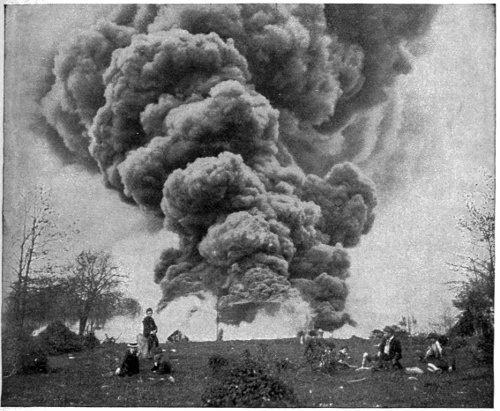
FIRST STEEL OIL-TANK STRUCK BY LIGHTNING, AT TITUSVILLE, JUNE 11, 1880.
A pretty girl might as well expect to escape admiring glances as petroleum
to escape a fire occasionally. “Uncle Billy” Smith’s lantern ignited the first
tank at the Drake well and a long procession has followed in its smoky trail.
The lantern-fiend has been a prolific cause of oil-conflagrations, boiling-over
refinery-stills have not been slack in this particular, the cigarette with a fool at
one end and a spark at the other has done something in the same line, but
lightning is the champion tank-destroyer. The result of an electric-bolt and a
tank of inflammable oil engaging in a debate may be imagined. At first tanks
were covered loosely with boards or wooden roofs. The gas formed a vapor
which attracted lightning and kept up a large production of fires each season.
One vicious stroke cremated sixty tanks of oil at the Atlantic Refinery in 1883.
In July and August of 1880, a quarter-million barrels of McKean crude went up
by the lightning-route. On June eleventh, 1880, a flash collided with the first
steel-tank on which lightning had ever experimented and set the oil blazing.
The tank was on a hill-side three-hundred feet from the west bank of Oil Creek,
at Titusville. Several houses and the Acme Refinery, located between it and
the stream, were consumed. While the burning oil flowed down the hill a sheet
of solid flame covered ten acres. Bursting tanks, exploding stills and burning
oils were an unpleasant premonitionpremonition of the red-hot hereafter prepared for the
wicked. The fire raged three days with the fury of the furnace heated sevenfold
to give Shadrack, Meshach and Abed-nego a roast. The Titusville Battery
checked it somewhat by cannonading the tanks with solid shot, which made
339holes that let the oil run into the creek. This plan was tried successfully in
Butler and McKean. The old log-house that sheltered the generations of Campbells
on the site of Petrolia met its fate by the firing of Taylor & Satterfield’s
twenty-thousand-barrel tank on the hill above, which fell a prey to lightning.
Three tanks opposite the mouth of Bear Creek, below Parker, stood together
and burned together, the one singed by Jupiter’s shaft setting off its mates. The
scene at night was of the grandest, multitudes gathering to watch the huge
waves of flame and dense clouds of smoke. As the oil burned down—just as
it would consume in a lamp—the tank-plates would collapse and the blazing
crude would overflow. Thousands of barrels would pour into the Allegheny,
covering the water for a mile with flame and painting a picture beside which a
volcanic eruption resembled the pyrotechnics of a lucifer-match. Many tanks
were burned prior to the use of close iron-roofs, which confine the gas and do
not offer special inducements to “the artillery of heaven” to score a hit. Of
late years such fires have been rarities. All oil in the pipe-line to which the
burned tank belonged was assessed to meet the amount lost. This was known
as General Average, as unwelcome in oil as General Apathy in politics,
General Depression in business, General Dislike in society or General Weyler
in Cuba.
George B. Harris, a pioneer refiner, died at Franklin in January of 1892,
aged sixty years. A member of the firm of Sims & Co., he built the first or
second refinery in Venango county, near the lower end of Franklin. He prospered
340for years, but reverses swept away his fortune and he was poor when
death closed the scene.
A party of young men from New England started a refinery on Oil Creek
in the sixties. Their industry, correct habits and attention to business attracted
favorable notice. Mr. Trefts, of machinery fame, one day observed to a friend:
“You mark my words; some day these young men will be rich and their names
shall be a power in the land. I know it will be so from their industry and good
habits.” This assertion was prophetic. The young man at the head of that
modest firm of young men was H. H. Rogers, now president of the National-Transit
Company. Speaking of his election as supervisor of streets and highways
at Fair Haven, a New-York paper indulged in this facetious pleasantry
regarding Mr. Rogers:
“The people of Fair Haven have done well. No man in New York or Massachusetts has
had more experience with bad roads than Mr. Rogers, or has met with more success in subduing
them. When he first engaged in the petroleum-business on Oil Creek the highways there were
rarely navigable for anything on wheels, but were open to navigation by flat-boats most of the
year. There was something in the mud of the oil-country at that time which was sure death to
the capillary glands. Hairless horses and mules were in the height of fashion. When Mr.
Rogers arrived on the strange scene, poling his way up to the hotel on a sawlog, he was at once
chosen road-supervisor. In a neat speech, which is still extant, Mr. Rogers thanked the oil-citizens
for the confidence reposed in him and then went to work. In the first place, he refined the
mud of the highways, taking from it all the merchantable petroleum and converting the residue
into stove-polish of an excellent quality. In the next place, he constructed pipe-lines, through
which the oil was conveyed, thus keeping it out of the middle of the road, and to-day there is a
boulevard along Oil Creek that is hardly surpassed by the Appian Way. Horses are again covered
with hair and happiness sits smiling at every hearthstone. The people of Fair Haven have
a superintendent of streets to whom they can point with pride.”
Dr. J. W. James, of Brady’s Bend, who drilled some of the first wells
around Oil City and was largely interested in the Armstrong and Bradford
fields, in 1858 had a plant near Freeport for extracting coal-oil from shale. At
a cost of twelve cents a gallon it produced crude-petroleum, which the company
refined partially and sold at a dollar to one-twenty-five. The oil obtained
from the rocks by drilling and that distilled from the shale were the same chemically.
Dr. James read medicine with Dr. F. J. Alter, who constructed a telegraph
Morse journeyed from the east to see before perfecting his own device.
Dr. Alter’s line extended only from the house about the small yard and back to
his study. Full of enthusiasm over its first performance, he cried out to his
student, young James: “I believe I could make this thing work a distance of
six miles!” Bell’s first telephone—a cord stretched between two apple-trees
in an orchard at Brantford, Canada—was equally simple and its results have
been scarcely less important.
John J. Fisher bought the first thousand barrels of oil in the new exchange
at Oil City, on April twenty-third, 1878. Probably the largest purchase was by
George Lewis, who took from a syndicate of brokers a block of two-hundred-thousand
barrels. The first offer was fifty-thousand, increasing ten-thousand
until it quadrupled, with the object of having Lewis cry: “Hold! Enough!”
Lewis wasn’t to be bluffed and he merely nodded at each addition to the lot
until the other fellow weakened, the crowd watching the pair breathlessly.
“Sam” Blakeley, the most eccentric genius in the aggregation, once bid at
Parker for a million barrels. Nobody had that quantity to sell and he advanced
the bid five cents above the quotations. There was not a response and he
offered a million barrels five cents below the ruling price, toying with the
market an hour as if it were a foot-ball. He played for big stakes, but none
knew who backed him. Coming to Oil City, he reported the market for the
341Derrick and cut up lots of shines. One morning he looked glum, oil had
tumbled and “Sam” hired an engine to whirl him to Corry. By nightfall he
landed in Canada and his oil was sold to square his account in the clearing-house.
An hour after his flight William Brough came up from Franklin to take
the oil and carry “Sam” over the drop. In the afternoon a sudden rise set in,
which would have left Blakeley twenty-thousand dollars profit had he stayed at
his post! That was the time “Sam” didn’t do “the great kibosh,” as he
phrased it. For years he has been hanging around New York. He was one
of the boys distinguished as high-rollers and extinguished before the shuffle
ended.
Telegraph-operators and messenger-boys at the oil-exchanges learned to
note the movements of leading speculators and profit thereby. Some of them,
with more hope of gain than fear of loss, beginning in a small way by risking
a few dollars in margins, coined money and entered the ring on their own account.
“Jimmy” Lowe, one of the biggest brokers at Parker and Oil City,
slung lightning for the Western-Union when the Oil-City Exchange needed the
services of twenty operators and scores of messenger-boys. Among the latter
was “Jim” Keene, the Franklin broker. He and John Bleakley often received
fifty cents or a dollar for delivering a message to “Johnnie” Steele, who
stopped at the Jones House and flew high during his visits to Oil City. Steele
and Seth Slocum would dash through the mud on their black chargers, dressed
in the loudest style and sporting big diamonds. These halcyon times have
passed away and the oil-exchanges have departed. “The glories of our
mortal state are shadows.”
In January of 1894 the Producers’ and Refiners’ Oil-Company erected an
iron-tank on the hill south-east of Titusville. Lightning destroyed the tank and
its contents in May. The second tank was built on the spot in October and on
June twelfth, 1895, lightning struck a tree beside it. The burning tree fired
the gas and the tank and oil perished. The site is still vacant, the company
deciding not to give the electric fluid a chance for a third strike.
George W. N. Yost, who died in New York last year, was once the largest
oil-buyer and shipper in the region. He lived at Titusville and removed to
Corry, where he built the Climax Mower and Reaper Works, a church, a handsome
residence and blocks of dwellings. Patents of different kinds recouped
losses in manufacturing. With Mr. Densmore, of Meadville, he brought out the
caligraph. Yost sold to his partner and developed the Yost Typewriter, organized
the American Writing-Machine Company and fitted up the shops at Bridgeport,
Connecticut, used to manufacture Sharp’s rifles during the border-troubles
in Kansas. Mr. Yost was a man of striking personality and unflagging energy.
He became a strong spiritualist and believed a medium, to whom he submitted
completely, put him in communication with his dead relatives and recorded
their thoughts on his typewriter.
The men of the oil-region have ever been noted for their commercial honor.
It passed into a proverb—“honor of oil.“ The spirit of the saying, “his word
is as good as his bond,” has always been lived up to more closely in Oildom
than in any other section of the country. The force of business-obligation ran
high in the exchanges and among the early dealers in crude. Transactions
involving hundreds-of-thousands of dollars occurred every day, without a written
bond or a scrap of paper save a pencil-entry in a memorandum-book.
Certificates were borrowed and loaned in this way and the idea of shirking a
verbal contract was never thought of. The celerity with which property thus
342passed from man to man was one of the striking features of business in the
bustling world of petroleum. And the record is something to be proud of in
these days of embezzlements, defalcations, breaches of trust and commercial
deviltry generally.
The average tank-steamer carries about two-million gallons of oil in bulk
across the Atlantic. In addition to this fleet of steamers, scores of sailing vessels,
under charter of the Orient, France, Italy and foreign countries, load
cases and barrels of refined-oil for transport to European ports. American
wooden-ships are chartered sometimes to convey oil to Japan. Thus Russian
competition is met through the instrumentality of pipe-lines to the coast and
transportation by water to points many thousand miles away from the wells that
produced the oil.
The production of crude-petroleum in the United States in 1895, according
to the statistics compiled for the Geological Survey by Joseph D. Weeks, was
fifty-three-million barrels, valued at fifty-eight-million dollars. For 1894 the
figures were fifty-million barrels and thirty-five-million dollars respectively.
All districts except West Virginia and New York shared in the increase. The
total production from the striking of the Drake well in 1859 to the end of 1895
was seven-hundred-and-ten-million barrels. Five-hundred-and-seventeen-million
barrels of this enormous aggregate represent the yield of the Pennsylvania
and New-York oil-fields. Who says petroleum isn’t a big thing?
At Pittsburg you can easily gather a little group of men, such as Charles
Lockhart and Captain Vandergrift, who recall the time when the Tarentum petroleum
was termed “a mysterious grease.” They had a hand in handling it
when the oil had no commercial name. They watched Samuel M. Kier’s efforts
to give it a commercial name and a marketable value. They saw it run to waste
at first, they remember paying a dollar a gallon for it and can tell all about
Drake’s visit to Tarentum. They hold their breath when they think of the gold
that changed hands in Venango county after “Uncle Billy” Smith bored the
seventy-foot hole below Titusville, of the wonderful spread of operations and
the dazzling progress of the commodity once despised. They noted the flow
of petroleum toward Europe—how forty casks were sent to France in 1860 as a
curiosity and thirty-nine-hundred in 1863 as a commercial venture. They have
seen this “mysterious grease,” that used to flow into the Pennsylvania Canal,
light the world from the Pyramids of Egypt to the salons of Paris, from the
shores of Palestine to the Chinese Wall. They have seen the four salt-and-oil
wells at Tarentum and the solitary oil-well at Titusville multiplied into a
hundred-thousand holes drilled for petroleum and a production almost beyond
calculation. Do the gentlemen composing this little group occupy a position
dramatic in the marvelous events they review? Is petroleum freighted with
interest and a touch of romance at every step of its passage from the well to
the lamp?
343
To big oil-wells a man may be a claimant,
From the sand-rock take in enormous payment,
Yet all he gets on earth is food and raiment.
The good well is the humble bee
With honey on its wings;
The dry-hole is the bumble-bee
That buzzes loud and stings.
Oilmen who run in debt, despite their rapid talk,
Not very often come out faster than a walk.
Uneasy lies the face that wears a frown;
No wonder, at the rate crude-oil goes down.
“What are your favorite books?” the gushing damsel cried;
“Bank-books and pocket-books,” the oilman quick replied.
Idle gossip? Oh, no, that isn’t right,
For gossip keeps on working day and night,
Beating a flowing oil-well out of sight.
The driller mutter’d, as he stagger’d with unsteady gait,
“There is no evil mixture here, I took my whisky straight.”
Of all uncertain kinds of biz
An oilman’s most uncertain is;
To-day, perhaps, his anguish’d soul
Laments because of a dry-hole;
He tries again, and who can tell
But he may strike a flowing-well?
Sound money? Yes indeed; no oilman has a doubt
The coin that jingles is the “soundest” money out.
Who with himself is satisfied
Wants little here below;
He has a small excuse for pride,
For if the third-sand once he tried
He might find a poor show.
The fabric of the clothing may not wear a little bit,
But the clothier’s fabrications will outlast Berea grit.
“Pay as you go.” We will, for all the oilmen know
All men must pay the debt of nature as they go.
The gusher and the duster
May be on one town-plot,
Angels and devils muster
Upon the self-same lot,
And sobs and smiles may cluster
Like flies on one bald spot.
Rare goodness and tough badness
May come from the same shank,
Twin-links of grief and gladness
Be issued by one bank,
For tears of joy and sadness
Still flow from the same tank.
“A rolling stone gathers no moss,” for trying junctures
May some wildcatters fit;
But then it is the rolling wheel that gathers punctures,
Which makes the old saw nit.
Be not a spouting well that keeps an endless flow;
It isn’t always wise to tell all that you know,
But all you tell be mighty sure it’s truly so.
“Young Luckyboy made fifty-thousand plunks
From one small can of crude,”
The oilman said, while silence lay in chunks;
“I pray don’t think me rude”—
A list’ner spoke—“It strikes me you’re a man
Must practice on the lyre.”
The oilman smil’d: “His rich aunt used the can
To hurry up the fire!”
He put the glycerine to thaw, the water was too hot,
The stuff let go; it was the man, and not the well, was shot.
“No!” said the oilman’s daughter, when young Dudelet sought her hand,
“You may have lots of money, but you haven’t got the sand.”
Why are proof-readers needed, those careless printers’ terrors?
Because our first impressions are often full of errors.
344
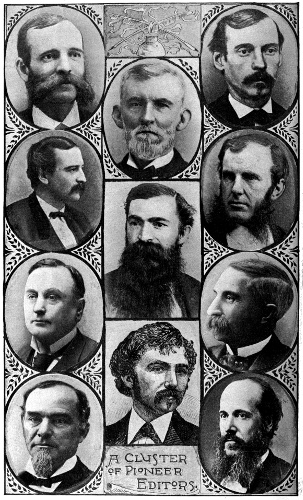
A CLUSTER OF PIONEER EDITORS.
COL. LEE M. MORTON.
W. H. LONGWELL.
WARREN C. PLUMER.
COL. J. T. HENRY.
WALTER R. JOHNS.
MAJOR W. W. BLOSS.
J. H. BOWMAN.
L. H. METCALFE.
C. E. BISHOP.
HENRY C. BLOSS.
COL. M. N. ALLEN.
XVI. THE LITERARY GUILD. — THE WOMAN’S EDITION. — THE GIRL AND THE EDITOR.
345
Clever Journalists Who Have Catered to People of the Oil-Regions—Newspapers
and the Men Who Made Them—Cultured Writers, Poets
and Authors—Notable Characters Portrayed Briefly—Short
Extracts from Many Sources—A Bright Galaxy of Talented Thinkers—Words
and Phrases that Will Enrich the Language for all Time.
“And a small drop of ink * * * makes thousands, perhaps millions, think.”—Byron.
“Literature is the immortality of speech.”—Wilmott.
“News, the manna of a day.”—Green.
“They whom truth and wisdom lead can gather honey from a word.”—Cooper.
“Thoughts that breathe and words that burn.”—Gray.
“Reading maketh a full man.”—Bacon.
“The pen is mightier than the sword.”—Lytton.
“Every worthy citizen reads a newspaper and owns the paper he reads.”—Beecher.
“His verse is lusty as a trooper’s oath.”—Viscount Valrose.
“Thus men ascend to the stars.”—Virgil.
“Hath thy toil o’er books consumed the midnight-oil?”—Gay.
“Books are * * * the only men that speak aloud for future times to hear.”—Mrs. Browning.
“Four hostile newspapers are more to be feared than a thousand bayonets.”—Napoleon.
“He was the interpreter of Nature, dipping his pen into Mind.”—Suidas.
Thirty-seven years have had their
entrances and their exits since Col.
Drake’s little operation on Oil Creek
played ducks and drakes with lard-oil
lamps and tallow-dips. That seventy-foot
hole on the flats below Titusville gave
mankind a queer variety of things besides
the best light on “this grain of sand and
tears we call the earth.” With the illuminating
blessing enough wickedness and
jollity were mixed up to knock out Sodom
and Gomorrah in one round. The festive
boys who painted the early oil-towns red are
getting gray and wrinkled, yet they smile
clear down to their boots as they think of
Petroleum Centre, Pithole, Babylon, or
any other of the rapid places which shed
a lurid glare along in the sixties. The smile is not so much on account of flowing
wells and six-dollar crude as because of the rollicking scenes which carmined
the pioneer-period of Petroleum. These were the palmy days of unfathomable
mud, swearing teamsters, big barrels, high prices, abundant cash and easy
morals, when men left their religion and dress-suits “away out in the United
States.” The air was redolent of oil and smoke and naughtiness, but there
was no lack of hearty kindness and the sort of charity that makes the angels
346want to flap their wings and give “three cheers and a tiger.” Even as the city
destroyed by fire from heaven boasted one righteous person in the shape of
Lot, whose wife was turned into a pillar of salt for being too fresh, so the busy
Oil-Dorado had a host of capital fellows, true as steel, bright as a dollar and
“quicker’n greas’d lightnin’!” Braver, better, nobler, squarer men never doffed
a tile to a pretty girl or elevated a heavy boot to the coat-tails of a scoundrel.
About the well, on the streets, in stores and offices could be found gallant
souls attracted from the ends of the world by glowing pictures—real oil-paintings—of
huge fortunes gained in a twinkling. Ministers, lawyers, doctors, merchants,
soldiers, professors, farmers, mechanics and members of every industry
were neither few nor far between in the exciting scramble for “the root of all evil.”
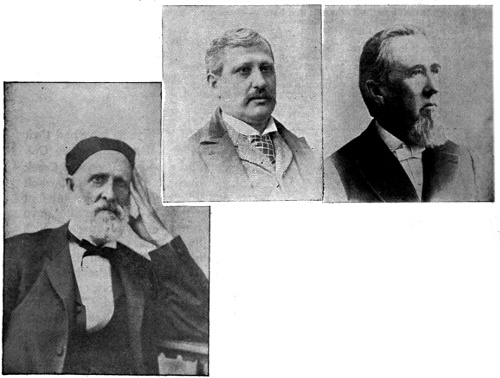
WILL S. WHITAKER. ROBERT LACY COCHRAN.
ALBERT PAWLING WHITAKER.
To keep matters straight and slake the thirst for current literature newspapers
were absolutely necessary. Going back to 1859, the eventful year that
brought petroleum to the front, Venango county had three weeklies. The oldest
of these was the Spectator, established at Franklin in 1849, by Albert P. Whitaker.
At the goodly age of seventy-eight he wielded a vigorous pen and died
in February, 1897. A zealous disciple of Izaak Walton and Thomas Jefferson,
he could hook a fish or
indite a pungent editorial
with equal dexterity. He
was an encyclopedia of
political lore and racy
stories. His Spectator was no idle spectator
of passing incidents. In 1851 Col. James
Bleakley, subsequently a prosperous producer
and banker, secured an interest,
selling it in 1853 to R. L. Cochran, who
soon became sole proprietor and published
the paper seven years. Mr. Cochran took
an active part in politics and agriculture and
exerted wide influence. A keen, incisive
writer and entertaining talker, with the
courage of his convictions and the good of
the public at heart, his sterling qualities
inspired confidence and respect. Probably no man in Northwestern Pennsylvania
had a stronger personal following. The Spectator flourished like a
prize sunflower under his tactful management. It printed the first “oil
report,” giving a list of wells drilling and rigs up or building in the spring of
1860. Desiring to engage in banking, R. L. Cochran sold the paper to A. P.
Whitaker, its founder, and C. C. Cochran. The latter retiring in 1861, Whitaker
347played a lone hand three years, when the two Cochrans again purchased the
establishment. A. P. Whitaker and his son, John H., a first-class printer, bought
it back in 1866 and ran the concern four years. Then the elder Whitaker once
more dropped out, returning in 1876 and resuming entire control a year later,
which closed the shuttlecock-changes of ownership that had been in vogue for
twenty-five years. Will S. Whitaker, an accomplished typo and twice the
nominee of his party for mayor, had long assisted his father in conducting the
staunch exponent of unadulterated Democracy. Col. Bleakley passed away
in 1884, leaving a fine estate as a monument of his successful career. He built
the Bleakley Block, founded the International Bank, served as City Councilman
and was partner in 1842-4 of John W. Shugert in the publication of the
Democratic Arch, noted for aggressiveness and sarcasm. John H. Whitaker
died in Tennessee years ago. R. L. Cochran was killed in June, 1893, on his
farm in Sugarcreek Township, by the accidental discharge of a gun. The paper
began regular “oil-reports” in 1862, prepared by Charles C. Duffield, now of
Pittsburg, who would go up the Allegheny to Warren and float down in a skiff,
stopping at the wells. P. J. Donahoe is the present editor and proprietor.
Charles Pitt Ramsdell, a school-teacher from Rockland Township, started
the American Citizen at Franklin in 1855. Sent to the Legislature in 1858, he
sold the healthy chick to William Burgwin and Floyd C. Ramsdell, removed to
Delaware and settled in Virginia a few years before his lamented death from
wounds inflicted by an enraged bull. J. H. Smith acquired Ramsdell’s interest
in 1861. The new partners made a strong team in journalistic harness for three
years, selling in 1864 to Nelson B. Smiley. He changed the title to Venango
Citizen. Mr. Burgwin reposes in the Franklin cemetery. Mr. Smith carries on
the book-trade, his congenial pursuit for three decades, and is a regular contributor
to the religious press. Alexander McDowell entered into partnership with
Smiley, buying the entire “lock, stock and barrel” in 1867. His former associate
studied law, practiced with great credit and died at Bradford. Major
McDowell, now a banker at Sharon—the number of Venango editors who blossomed
into financiers ought to stimulate ambitious quill-drivers—was a daisy
in the newspaper-lay. His liberality and geniality won hosts of warm friends.
He tried his hand at politics and was chosen Congressman-at-Large in 1892,
with Galusha A. Grow as running-mate, and Clerk of the House in 1895. A
prime joker, he bears the blame—if it be blameable to have done so—of introducing
348Pittsburg stogies to guileless members of Congress for the fun of seeing
the victims cut pigeon-wings doing a sea-sick act. Col. J. W. H. Reisinger
purchased the outfit in 1869, guiding the helm skilfully fifteen months. April
first—the day had no special significance in this case—1870, E. W. Smiley, the
present owner and cousin of Nelson B., succeeded Reisinger. The Colonel
located at Meadville, where he has labored ably in the journalistic field for a
quarter-century. Mr. Smiley steered his craft adroitly, usually “bobbing up
serenely” on the winning side. He is a shrewd Republican worker and for
twenty years has filled a Senate-clerkship efficiently. What he doesn’t know
about the inside movements of state and local politics could be jumped through
the eye of a needle. His right-bower in running the Citizen-Press—the hyphenated
name was flung to the breeze in 1884—is his son, J. Howard Smiley, a rising
young journalist. The paper toes the mark handsomely, has loads of advertising
and does yeoman service for its party. The Daily Citizen, the first daily
in Oildom, expired on the last day of 1862, after a brief existence of ten issues.
A fit epitaph might be Wordsworth’s couplet:
“Since it was so quickly done for,
Wonder what it was begun for.”
Later newspaper ventures at Franklin were refreshingly plentiful. In January,
1876, Hon. S. P. McCalmont launched The Independent Press upon the
stormy sea of journalism. It was a trenchant, outspoken, call-a-spade-a-spade
advocate of the Prohibition cause, striking resolutely at whoever and whatever
opposed its temperance platform. Mr. McCalmont wrote the editorials, which
bristled with sharp, merciless, unsparing excoriations of the rum-traffic and its
aiders and abettors. The paper was worthy of its name and its spirited owner.
Neither truckled for favors, cringed for patronage or ever learned to “crook the
pregnant hinges of the knee where thrift may follow fawning.” Beginning life
a poor boy, S. P. McCalmont toiled on a farm, taught school, devoured books,
read law and served in the Legislature. For nearly fifty years he has enjoyed a
fine practice which brought him well-earned reputation and fortune. Ranking
with the foremost lawyers of the state in legal attainments and professional success,
he does his own thinking, declines to
accept his opinions at second-hand and is a
first-rate sample of the industrious, energetic,
self-reliant American. By way of recreation he
works a half-dozen farms, a hundred oil-wells,
a big refinery and a coal-mine or two. James
R. Patterson, Miss Sue Beatty and Will. S.
Whitaker held positions on the Press. Mr.
Patterson is farming near Franklin and Mr.
Whitaker managed the Spectator. Miss Beatty,
a young lady of rare culture, was admitted to
the bar recently.
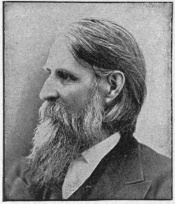
The Independent Press-Association bought
the Press in 1879. This influential body comprised
twelve stockholders, Hon. William R.
Crawford, Hon. C. W. Gilfillan, Hon. John
M. Dickey, Hon. Charles Miller, Hon. Joseph C. Sibley, Hon. S. P. McCalmont,
Hon. Charles W. Mackey, James W. Osborne, W. D. Rider, E. W. Echols, B. W.
Bredin and Isaac Reineman, whom a facetious neighbor happily termed “the
twelve apostles, limited.” They enlarged the sheet to a nine-column folio,
349discarded the bourgeoisbourgeois skirt with long-primer trimmings for a tempting dress of
minion and nonpareil and engaged J. J. McLaurin as editor. H. May Irwin, the
second editor under the new administration, filled the bill capably until the Press
and the Citizen buried the hatchet and blended into one. Mr. Irwin is not
excelled as an architect of graceful, felicitous paragraphs on all sorts of subjects,
“from grave to gay, from lively to severe.” He possesses in eminent degree
the enviable faculty of saying the right thing in the right way, tersely, pointedly
and attractively. The Press was a model of neatness, newsiness and thorough
editing, with a taste for puns and plays on words that added zest to its columns.
James B. Borland’s Evening News appeared in February, 1878, as an amateur-daily
about six by nine inches. The small seed quickly grew to a lusty
plant. James B. Muse became a partner, enlargements were necessary, and
to-day the News is a seven-column folio, covering the home-field and deservedly
popular. Muse retired in 1880, H. May Irwin buying his share and editing the
wide-awake paper in capital style. Every Evening, a creditable venture by
Frank Truesdell, E. E. Barrackman and A. G. McElhenny, bloomed every
evening from July, 1878, to the following March. H. B. Kantner, a versatile
specimen, hatched out the Morning Star, Franklin’s only morning daily, in
1880. It shone several months and then set forever and ever. Kantner drifted
to Colorado. The Herald, the Penny Press and Pencil and Shears wriggled a
brief space and “fell by the wayside.” Samuel P. Brigham, an aspiring young
lawyer, edited the one-cent Press and stirred up a hornet’s nest by fiercely assailing
the water-works system and raising Hail Columbia generally. He is at
the head of a newspaper in the Silver State.
The third weekly Venango boasted in 1859 was the Allegheny-Valley Echo,
published at Emlenton by Peter O. Conver, a most erratic, picturesque genius.
Learning the printing-trade in Franklin, the anti-slavery agitation attracted
him to Kansas in 1852. He established a paper at Topeka, which intensified the
excitement a man of Conver’s temperament was not calculated to allay, and
it soon climbed the golden stair. Other experiments shared the same fate,
going to the dogs in short metre. Conver roamed around the wild, woolly west
several years, returned to Venango county and perpetrated the Echo in the fall
of 1858. At intervals a week passed without any issue, which the next number
would attribute to the sudden departure of the “jour,” the non-arrival of white
350paper, or the absence of the irrepressible Peter on a convivial lark. Sparkling
witticisms and “gems of purest ray” frequently adorned the pages of the sheet,
although sometimes transgressing the rules of propriety. It was the editor’s
habit to set up his articles without a manuscript. He would go to the case and
put his thoughts into type just as they emanated from his fertile brain. Poetry,
humor, satire, invective, comedy, pathos, sentiment and philosophy bunched
their hits in a medley of clean-cut originality not even “John Phœnix” could
emulate. The printer-editor had a fund of anecdotes and adventures picked up
during his wanderings and an off-hand magnetism that insured his popularity.
His generosity was limited only by his pocket-book. Altogether he was a
bundle of strange contradictions, “whose like we shall not look upon again,”
big-hearted, impatient of denial, heedless of consequences, indifferent to praise
or blame, sincere in his friendships and with not an atom of sham or hypocrisy
in his manly fiber. He enlisted in the Fourth Pennsylvania Cavalry when the
war broke out, serving gallantly to the close of the struggle at Appomattox.
R. F. Blair, who had taken the Echo in 1861, disposed of it in 1863 to J. W.
Smullin, by whom the materials were removed to Oil City. Walter L. Porter’s
Rising Sun, W. R. Johns’ Messenger, Needle & Crowley’s Register, P. McDowell’s
News, Col. Sam. Young’s Telegraph, Hulings & Moriarty’s Times
and Gouchler Brothers’ Critic in turn flitted across the Emlenton horizon.
E. H. Cubbison exploited the Home News in 1885 and it is still holding the fort.
Getting back from the war safe and sound, Conver pitched his tent at
Tionesta in 1866 and generated the Forest Press. Its peculiar motto—“The
first and only paper printed in Forest county and about the only paper of the
kind printed anywhere”—indicated the novel stripe of this unique weekly.
The crowning feature was its department of “Splinters,” which included the
weird creations of the owner’s vivid fancy. The Press, after running smoothly
a dozen years, did not long survive its eccentric, gifted proprietor, who answered
the final roll-call in the spring of 1878, meeting death unflinchingly. He
wrote a short will and asked Samuel D. Irwin, his trusted adviser, to prepare
his obituary, “sense first, nonsense afterwards.” The Bee, which Col. Reisinger
hived in 1867, sipped honey a season and flew away. J. B. Muse’s Vindicator
and Jacob Wenk’s Republican occupy the field. Mrs. Conver left Tionesta and
died in the west. Hosts of old friends who knew and understood Peter O.
Conver will be glad to see his characteristic portrait, from a photograph
351treasured by Judge Proper, and “a nosegay of culled flowers” from his
inimitable Press, “rugged as a jog over a stubble-field:”
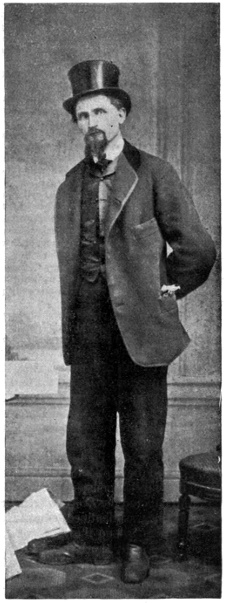
“That marble slab has arrived at last. Our own beautiful slab, with its polished surface,
was manufactured expressly to our order, on which to impose the forms of the Forest Press,
a fit emblem and unmistakable evidence of the
almost unparalleled success of an enterprise
started in the very hell of the season and circumstances
on a one-horse load of old, good-for-nothing,
worn-out, rotten and “bottled”
material, taken in payment, etc., and a will to
succeed. After we shall have fulfilled our mission
through the Press and have done with the
things of earth, that same slab can be used by
the weeping “devils” on which to dance a
good-bye to us and our sins, after which they
may inscribe with burning charcoal on its polished
surface, in letters of transient darkness:
‘Here
lies
Pete.
The
old
cuss
is
dead.’
“Our mother was a Christian, the best
friend we had, and the name of her truant son—your
servant—was the last she uttered. We
are not a Christian, but when convinced we
should be we will be. Never intend to marry
or die, if we can help it. In brief, we are a white
Indian.”
“A promissory-note is tuning the fiddle
before the performance.”
“A man suffering from dyspepsia sees
nothing bright in the noonday-sun. Another
with a rusty liver looks upon a flower-garden
as so many weeds. Another with nerves at
angles sees nothing lovely in the most beautiful
woman. Another with a disordered stomach
can utter no word not tinged with acid and
fire.”
“Smiles are among the cheapest and yet
richest luxuries of life. We do not mean the
mere retraction of the lips and the exhibition of
two rows of masticators—mastiffs, hyenas and
the like amiabilities are proficient in that. We
do not mean the cold, formal smile of politeness,
that plays over the features like moonlight on a
glacier—automatons and villains can do that,
but we mean the real, genial smile that breaks
right out of the heart, like a sunbeam out of a
cloud, and lights up the whole face and shines
straight into another heart that loves it or
needs it.”
“Ravishingly rich and gorgeous is our surrounding
scenery smiling down upon us in all
the dying glory of these autumn days, like the summery landscape in childhood’s dreams, impressed
on the heart but not described; like the soul-beam of a good old person passing away. View all
the grand and beautiful scenes of earth with the aid of imagination’s pencil if you please, and
them come to Tionesta in October and behold the masterpiece. It is the finishing touch of beauty
from the Master Hand, imparting joy and faith and hope and resignation to the heart of man,
which no human pen or pencil may copy and combinations of words have not been discovered to
describe; in fact, we have almost come to the conclusion that he who attempts it is a presuming
352fool, because there’s no language in the dictionary or even invented by the poet to that effect.
But if we only live till the sun shines to-morrow, on such another day as this, we’ll dig our potatoes,
from which patch we can obtain mountain views on every hand alongside of which the Rocky
Mountains would appear overgrown and unnatural and Alpine scenery worn-out.”
“The first great damper that threw cold water on the Fourth of July was, perhaps, the agitation
of the temperance question; then the Sunday-school celebrations gave a mortal blow to its
ancient prestige and glory, until now, alas! it has been entirely eclipsed. Bantlings of the third
generation are soaring aloft in place of the old gray bird, niggers dancing jubas over the heads of
their imperial masters and, great heavens! the very whiskey that we drink at $3 to $7 a gallon in
mortal jeopardy. But, seriously speaking, we are in favor of every one following the bent of his
or her own inclination in celebrating things. Next week will be our usual occasion for getting
full, unless we should accompany a very beautiful young lady hunting, in either of which events
the Press may also have a celebration of its own and not appear in public on any stage.”
“Lieut. Samuel D. Irwin is a rare, original genius, a companion of our boyhood, whose life
has been lively and stirring as our own in some respects. He is also a candidate for District
Attorney.”
“Some people don’t care much whether things go endwise or otherwise.”
“Next to a feast upon a seventeen-year-old pair of sweet lips, under grapevines, by moon-light,
is a foray upon a platter of beans, after fishing for suckers all day.”
“One of the greatest bores in the world is he who will persistently gabble about himself when
you want to talk about yourself.”
“Pay your debts and shame the devil for an old scoundrel.”
“Bright and fair as a Miss in her teens is this beautiful March morning. All nature laughs
with gladness. Forest feels glad, the streams sing a glad song in their swim to the sea, Tionesta
is glad and the big greyhound Charley Holmes sent Major Hulings wags his sharp tail in token
of the gladness and gratitude he cannot otherwise express. He is a gentlemanly, well-bred, $500
purp and got to have his meals regularly.”
“Do unto other men as you would have them do unto you and you wouldn’t have money
enough in two weeks to hire a shirt washed.”
“Many a preacher complains of empty pews when they are really not emptier than the
pulpit.”
“The man who can please everybody hasn’t got sense enough to displease anybody.”
“To be good and happy kick up your heels and holler Hallelujah!”
“Rev. Brown will preach everybody to hell on the Tubb’s Run Flats, Lord willing, next
Sunday, between meals.”
On the twelfth of January, 1862, Walter R. Johns, who struck the territory
four weeks previously, issued the initial number of the Oil-City Weekly Register,
the first newspaper devoted especially to the petroleum-industry, which it upheld
tenaciously for five years. The modest outfit, purchased second-hand at
Monongahela City, was shipped to Pittsburg by boat, to Kittanning by rail and
to its destination by wagons. The editor, publisher, proprietor and compositor—Mr.
Johns outdid Pooh-Bah by combining these offices in his own person—accompanied
the expedition to aid in extricating the wagons from mud-holes in
which they stuck persistently. In 1866 he retired in favor of Henry A. Dow &
Co., who fathered the Daily Register and soon found the cake dough. Farther
on Mr. Johns was identified, editorially or in a proprietary way, with the semi-weekly
Petrolian and the Evening Register, the Parker Transcript, the Emlenton
Messenger, the Lebanon Republican, the Clarion Republican-Gazette
and the Foxburg Gazette. Writing with great readiness and heartily in touch
with his profession, he took to literary work as a duck takes to water. He and
the late Andrew Cone prepared all the petroleum-statistics available in 1862,
which, with the gatherings of the years intervening, were published in 1869,
under the expressive title of “Petrolia.” From Clarion, his home for some
years, Mr. Johns returned to Oil City, doing valuable work for the Derrick and
the Blizzard. For seven years he has been employed by the National-Transit
Company to compile newspaper-clippings and magazine-articles and arrange
records of different kinds from every quarter of the oil-regions. The duty is
congenial and he fits the place “like der paper mit der wall.” Mr. Johns is a
353son of Louisiana and a hero of two wars. During the Mexican trouble he fought
under Zachary Taylor and Winfield Scott, was at the battles of Monterey and
Buena Vista and participated in the march from Puebla to the City of Mexico.
He served under General Grant in the “late unpleasantness.” The death of his
estimable wife several years ago was a terrible blow to the Nestor of petroleum
journalism, who has gained distinction as printer, editor, author and soldier.
“Age sits with decent grace upon his visage
And worthily becomes his silver locks;
He bears the marks of many years well spent,
Of virtue, truth well tried and wise experience.”
With the plant of the defunct Emlenton Echo, which he had bought from
R. F. Blair and boated to Oil City, J. W. Smullin propelled the Monitor in 1863.
O. H. Jackson, a sort of perambulatory printing-office, and C. P. Ramsdell
figured in the ownership at different times. Jackson let go in the fall of 1864
and Jacob Weyand bossed the ranch until it was absorbed by the Venango Republican,
the first out-and-out political newspaper in the settlement. Smullin
farmed in Cranberry township, dispensed justice as “’Squire” and died in 1894.
Of Jackson’s whereabouts nothing is known. He flaunted the Sand-Pump at
Oil City, the Bulletin at Rouseville, the Gaslight at Pleasantville and ephemeral
sheets at other points. The outfits of the Register, Petrolian, Republican and
Monitor were consolidated in December, 1867, by Andrew Cone and Dr. F. F.
Davis, into the weekly Times. The paper was well managed, well edited and
well sustained. A syndicate of politicians bought it in 1870, to boom C. W.
Gilfillan, of Franklin, for Congress, and George B. Delamater, of Meadville, for
State-Senator in the Crawford district. A morning daily was tacked on. L. H.
Metcalfe, who lost a leg at Gettysburg, had editorial charge. Thomas H. Morrison,
of Pleasantville, officiated as manager, W. C. Plumer presided as foreman
and A. E. Fay acted as local news-hustler. The daily died with the close of the
campaign, a fire that destroyed the establishment hurrying the dissolution.
Metcalfe went back to Meadville and was elected county-treasurer. Whole-souled,
earnest and trustworthy, he made and retained friends, wrote effectively
and “served his day and generation” as a good man should. The grass and
the flowers have bloomed above his head for nineteen years. Morrison entered
politics, put in a term faithfully as county-treasurer, studied law, practiced at
Smethport and was elected judge of the McKean-Potter district.
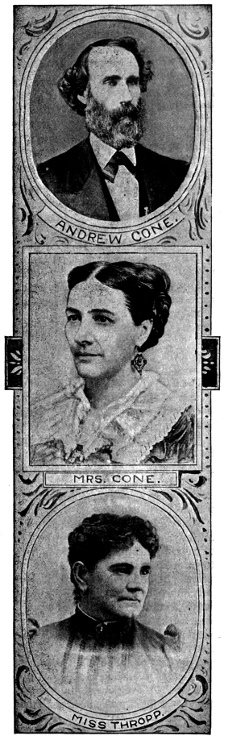
ANDREW CONE.
MRS. CONE.
MISS THROPP.
Hon. Andrew Cone, to whose bounteous purse and willing pen the Venango
Republican and the Oil-City Times owed their continuance, was of Puritan
descent, nephew of the founder of Oberlin College, born in 1822, reared on a
New-York farm and married to a Maryland lady. His parents dying, he removed
to Michigan, lost his first and second wives by death, and in 1862 settled
at Oil City to superintend the United Petroleum-Farms Association’s sale of
building-lots. He named various Oil-City streets, helped build the first Baptist
church and labored for temperance and local improvements. In 1868 he married
Miss Mary Eloisa Thropp, of Valley Forge, a cultured linguist and writer.
Her brother, Joseph E. Thropp, owns the iron-works at Everett and is married
to the late Colonel Thomas A. Scott’s eldest daughter. Her two sisters, Mrs.
George Porter and Miss Amelia Thropp, also reside at Oil City and are gifted
writers. Mr. Cone and W. R. Johns collected the data of “Petrolia,” a perfect
treasury of facts concerning oil, which the Appletons published in 1869. Governor
Hartranft appointed Mr. Cone to represent the oil-regions at the Vienna
Exposition in 1873. He served four years with great fidelity as consul in Brazil
354and died in New York on November
seventh, 1880, as one to whom “Well
done, good and faithful servant,” is
spoken through all the centuries. Mrs.
Cone’s “Wild Flowers of Valley Forge”
will give an idea of the exquisite work
of the Thropp sisters, who are esteemed
for their poetic talents and unselfishness:
Blest be the flowers that freely blow
In this neglected spot,
Anemone with leaves of snow
And blue Forget-me-not.
God’s laurels weave their classic wreath,
Their pale pink blossoms wave
O’er lowly mounds, where rest beneath
Our martyrs in their grave.
In white and gold the daisies shine
All o’er encampment hill;
There wild-rose and the Columbine
Lift glistening banners still.
Here plumy ferns, an emerald fringe,
Adorn our stream’s bright way;
And soft grass whence the violet springs,
With fragrant flowers of May.
Oh, there’s a spell around these blooms
Owned by no rarer flowers;
They blossomed on our soldiers’ tombs
And they shall bloom on ours.
To us, as to our sires, their tone
Breathes forth the same glad strain,
“We spring to life when winter’s gone,
And ye shall rise again.”
Uncultured ’round our path they grow,
Smile up before our tread
To cheer, as they did long ago
Our noble-hearted dead.
Arbutus in the sheltering wood
Sighs, “Here he came to pray,”
And Pansies whisper, “Thus we stood
When heroes passed away.”
Thus every wild-flower’s simple leaf
Breathes in my native vale,
To conscious hearts, some record brief,
Some true and touching tale.
Wealth’s gay parterre in glory stands:—
I own their foreign claims,
Those gorgeous flowers from other lands,
Rare plants with wondrous names.
Ye blossomed in our martyr’s field
Beneath the warm spring’s sun,
Sprung from the turf where lowly kneeled
Our matchless Washington.
Ye in our childhood’s garden grew,
Our sainted mother’s bowers;
My grateful heart beats high to you,
My own wild valley-flowers!
The collapse of the syndicate Times
terminated experimental dailies in Oil
355City. Mr. Gilfillan, F. W. Mitchell, P. R. Gray and other stockholders sold the
good-will and smoking ruins to Sheriff H. H. Herpst, who revived the weekly
with Dr. Davis at the bellows. It was rather weakly, notwithstanding the doctor’s
excellent doses of leaded pellets. Advertisers seemed a trifle shy and columns
of blank space, by no means nutritious pabulum, were not infrequent.
Everybody favored a newer, grander, bolder stride forward. The borough and
suburbs had attained the dignity of a city, an oil-exchange had been organized,
railroads were coming in and a paper of metropolitan scope was urgently demanded.
Usually men adapted to a particular niche turn up and the traditional
“long-felt want” is not likely to remain unfilled.
Coleman E. Bishop and W. H. Longwell landed in Oil City one summer
afternoon to “view the landscape o’er,” as good Dr. Watts phrased it. They
had heard the Macedonian cry and decided to size up the situation. Bishop
achieved greatness at Jamestown, N. Y., where he edited the Journal, by attacking
Commander Cushing, the naval officer who sank the Confederate ram
Merrimac, and kicking him down stairs when the indignant marine invaded the
sanctum to “horsewhip the editor and pitch him out of the window.” Longwell,
a brave soldier and sharp man of affairs, had learned the ropes at Pithole
and Petroleum Centre. A deal was soon closed, material ordered and a building
on Seneca street rented, Herpst keeping an interest as silent partner.
The Oil-City Derrick, ordained to become “the organ of oil,” was born
on the thirteenth of September, 1871. The name was an inspiration, sprung by
Bishop as a surprise, instead of the hackneyed Times, which had been agreed
upon by the three proprietors. To embody its most conspicuous emblem in
the head of a newspaper designed to represent the oil-trade suggested itself to
the alert editor. He consulted only his foreman, Charles E. White, long the
brilliant editor of the Tidioute News, who had come with him from Jamestown
and approved of the drawing from which the famous design of a derrick spouting
newspapers was engraved. It was a go from the start. People were roused
from their slumber by strong-lunged newsboys shouting, “Derrick, ere’s yer
Derrick, Derrick!” Their first impulse was to wonder if they had left any derricks
out all night, exposed to thieves and marauders, and somebody was bringing
them home. The new sheet was scanned eagerly. It had departments of
“Spray,” “Lying Around Loose” and “Pick-ups,” teeming with catchy,
piquant, invigorating items. Its advocacy of the producers’ cause boomed the
paper tremendously. A bitter fight with the Allegheny Valley Railroad increased
its circulation and prestige. Bishop’s individuality permeated every
page and column. He had the sand to continue the railroad war, but a threat
to remove the shops from Oil City weakened his partners and they bought him
out in 1873. From the “Hub of Oildom” he went to Buffalo to edit the Express.
Thence he went to Bradford, embarked in oil-operations on Kendall Creek and
enlivened the Chautauqua Herald, Rev. Theodore Flood’s bonanza, one summer.
Invited to New York in 1880, he managed the Merchants’ Review and
edited Judge until it changed owners in 1885. Leaving the metropolis, he wandered
to Dakota and freshened the Rapid-City Republican. Returning east, he
furnished Washington correspondence to various papers. Locomotor-ataxia
disabled him and he died in 1896. Mrs. Bishop is a popular teacher of the
Delsarte system and has published a book on the subject. Miss Bishop is a
talented lecturer. It is not disparaging the galaxy of oil-region journalists to
say that C. E. Bishop, the gamest, keenest, raciest member of the fraternity,
might be termed a bishop in the congregation of men who have shaped public
356opinion in the domain of grease. No matter how difficult or delicate the theme,
from pre-natal influence to monopoly, from heredity to fishing, from biology to
pumpkins, he treated it tersely and charmingly. A thoroughbred from top to
toe, his was a Damascus blade and “none but himself can be his parallel.”
Captain Longwell—the title was awarded for gallantry in many a hard battle—attended
to the business-end with decided success. Buying Herpst’s claim,
he conducted the whole concern four years and sold out at a steep figure in
1877. He raked in wealth producing and speculating, quitting well-heeled financially.
A native of Adams county, he was educated at Gettysburg and learned
printing in the office of the Chambersburg Repository and Whig, then published
by Col. Alexander K. McClure, now the world-famed editor of the Philadelphia
Times. His mother was a descendant of James Wilson, a signer of the Declaration
of Independence. Herpst opened a wall-paper store, removed later to
Jamestown and died there in 1884. Square, honest and “straight as a string,”
he merited the regard of his fellows. Charles H. Morse, the first city-editor,
had the snap to corral news at sight and present it toothsomely. Who that
knew him in his beardless youth imagined Charley would “get religion” and
adorn the pulpit? He entered the ministry and for over twenty years has been
pastor of a Baptist church at Mercer. Were he to serve up to his hearers some
of the funny experiences he encountered as a reporter, he would discount
Talmage’s recitals of the slums and Dr. Parkhurst’s leap-frog exploits in the
Tenderloin! Archie Frazer wrote the market-report, ten or twelve lines at first
and a plump column or more ultimately. In November of 1872 it was my luck
to engage with the Derrick and inaugurate the role of traveling correspondent.
Venango and Warren, with Clarion, Armstrong and Butler budding into prominence,
covered the oil-fields. Bradford loomed up in the autumn of 1875,
extending my mission from the northern line of McKean county to the southern
boundary of Butler before the close of the term of five years. These breezy
days were crowded with bustle and excitement, adventure and incident. Over
the signature of “J. J. M.”—possibly remembered by old-timers—fate appointed
me to chronicle a multitude of events that played an important part in petroleum-annals.
The system of “monthly reports” was arranged methodically, the
producing sections were visited regularly and my acquaintance embraced every
oil-farm and nearly every oil-operator in the rushing, hustling, get-up-and-get
world of petroleum.
Orion Clemens, a brother of “Mark Twain,” worked on the Derrick a few
weeks in 1873. The exact opposite of “Mark,” his forte was the pathetic. He
could write up the death of an insect or a reptile so feelingly that sensitive folks
would shed gallons of tears in the wood-shed over the harrowing details. He
fairly reveled in the gloomy, somber, tragic element of life. Daily contributions
taxed him too severely, as he composed slowly, and his resignation caused no
surprise. Frank H. Taylor, a young graduate from the Tidioute Journal, succeeded
Bishop, vacating the chair to undertake the field-work. Frank can afford
to “point with pride” to his career as editor and compiler of statistics. His
“Handbook” is an unquestioned authority on petroleum. Once he resigned
to float the Call, a sprightly Sunday folio, which glistened from the spring of
1877 to October of 1878. “Puts and Calls,” the humorous column, had to
answer for bursting off tons of vest-buttons. Taylor acquired money and fame
as a journalist, was president of select-council, called the turn as a producer
and saved a snug competence. During a term of Congress he was Hon. J. C.
Sibley’s secretary, a position demanding remarkable tact and industry. Now
357he is leasing lands, drilling wells and looking after the oil-properties of Sibley
& Co. in Indiana. Oil City is his home and he is as busy as a boy clubbing
chestnuts or a Brooklynite dodging the trolley-cars at thirty miles an hour.
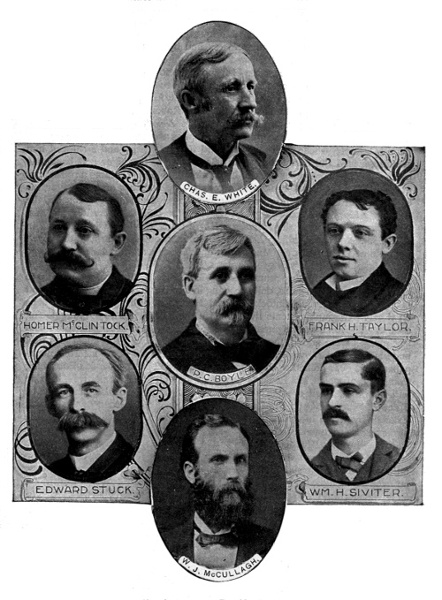
CHAS. E. WHITE.
HOMER McCLINTOCK. FRANK H. TAYLOR.
P. C. BOYLE.
EDWARD STUCK. WM. H. SIVITER.
W. J. McCULLAGH.
Robert W. Criswell, who has forged to the front by his mirth-provoking
sketches, followed Taylor as editor in 1877.
He fertilized the “Stray-sand,” parodied Shakespeare
and developed “Grandfather Lickshingle,”
giving the Derrick national celebrity. He
stepped down when the shuffle occurred in 1877
and went to the Cincinnati Enquirer. W. J.
McCullagh and Frank W. Bowen were on deck
at about the same time. McCullagh held the field
department up to its elevated standard and
Bowen ground out first-class local and editorial.
Col. Edward Stuck, who came from York in 1879
to supervise the Bradford Era, ran the machine in
1880-2, displaying much ability in the face of manifold
hindrances. William Brough and J. M. Bonham
of Franklin, gentlemen of high literary attainments, wishing to have a paper of
their own, induced Mr. Stuck to leave Bradford, with a view to resurrect the
Sunday Call. The project was not carried out and he assumed charge of the
358Derrick, with gratifying results. His training was acquired on the York Democratic
Press, his father’s weekly, which Col. Stuck now conducts in connection
with the Daily Age, established by him after his sojourn in Oil City. He was
appointed State Librarian during Governor Pattison’s first term and elected
Register of Wills of York county in 1889, in recognition of his excellent journalistic
services. William H. Siviter, straight from college, was next in order.
His polished, scholarly writings were relished by educated people. He paragraphed
for the Pittsburg Chronicle-Telegraph and for some years has contributed
to the comic weeklies. He is responsible for the “High-School Girl,”
with her Bostonese flavor and highfalutin speech. McCullagh became an
operator in the Bradford region, drilled extensively in Ohio, laid by considerable
boodle and chose Toledo as his residence. Robert Simpson, who began as
“printer’s devil” in 1872, remained with the Derrick as a writer until the
Blizzard blew into town, excepting brief respites at Emlenton and Bradford.
P. C. Boyle, whose dash and skill and tireless energy had advanced him
steadily, leased the establishment in 1885. He had the vigor and backbone
needed to bring the paper back to its pristine strength. By turns a roustabout
at Pithole in 1866, a driller, a scout, a reporter, a publisher and an editor, his
experience in the oil-country was extensive and invaluable. He published the
Laborer’s Voice at Martinsburg in 1877-8, reported for the Derrick and Titusville
Herald in 1879, for the Petroleum World in 1880 and the Olean Herald in
1881, conducted the Richburg Echo in 1881-2 and scouted all through the developments
at Cherry Grove, Macksburg and Thorn Creek in 1882-5. George
Dillingham, who had “a nose for news,” and J. N. Perrine, gilt-edged and
yard-wide in the counting-room, assisted Mr. Boyle in tuning the paper up to
high G. The outside fields, daily growing in number and importance, were put
in charge of Homer McClintock, the real Homer of oil-reporters. He fattens
on timely paragraphs, scents live items in the air and lets no juicy happening
escape. The force was augmented as occasion arose, type-setting machines and
fast presses were added, the job-office was supplied with the latest and best
materials and the Derrick is to-day one of the finest, brightest, smartest newspapers
that ever edified a community.community. It is owned by the Derrick Publishing
Company, of which Mr. Boyle is president and H. McClintock, J. N. Perrine
and Alfred L. Snell are the active members. Mr. Boyle also managed the
Toledo Commercial and the Bradford Era. He is “the Dean of the Fourth
Estate” by virtue of eminent services and seniority. Like the lightning, he
never needs strike twice in the same spot, because the job is finished at a single
lick when he goes “loaded for b’ar.”
John B. Smithman, a wealthy operator, to whom Oil City owes its street-railways
and a bridge spanning the Allegheny, in 1880 equipped the Telegraph,
an evening sunflower, with Philip C. Welch at its head. Isaac N. Pratt, later
an advance-agent for Ezra Kendall, had a finger in the pie. The paper was as
fetching as a rural maiden in a brand-new calico gown, but two dailies were too
rich for the blood of the population and the Telegraph wilted at a tender age.
Welch tapped a vein of rich humor in the Philadelphia Call by originating
“Accidentally Overheard,” a feature that captured the bakery. It bubbled
with actual wit, fragrant as sweet clover and wholesome as morning dew, not
revamped and twisted and warmed over. Charles A. Dana, no mean judge of
literary merit, recognized the value of the Welch rarebits and secured them for
the New York Sun at a fixed rate for each, big or little, long or short, large or
small. Anon Dana offered him a salary few bank-presidents would refuse and
359Welch moved to Gotham. The Sun that “shines for all” fairly glittered and
dazzled. Welch’s “Tailor-Made Girl” hit the popular taste and was published
in elegant form by the Scribners. Disease preyed upon him, compelling an
operation similar to General Grant’s. Half the tongue was cut off, affecting his
utterance seriously. Weeks and months of patient suffering ended at last in
release from earthly pain and sorrow. Mrs. Welch, a noble helpmeet, lives in
Brooklyn and is to be credited with the clever, dainty “From Her Point of View,”
which irradiates the Sunday issues of the New York Times. Upon the grave
of Philip C. Welch old friends would lay a wreath and drop a sympathetic tear.
“Alas, Poor Yorick!
I knew him, Horatio;
A fellow of infinite jest,
Of most excellent fancy.”
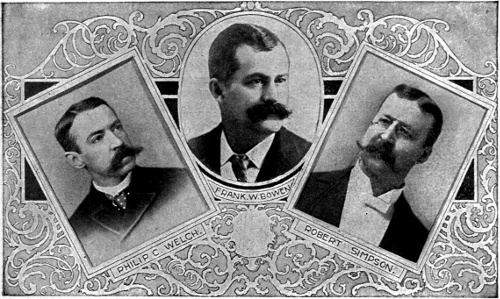
FRANK. W. BOWEN.
PHILIP C. WELCH. ROBERT SIMPSON.
Frank W. Bowen, a diamond of the first water, H. G. McKnight, the lightning
type-slinger, and B. F. Gates, a dandy printer, swarmed from the Derrick
hive and raised the wind to blow an evening Blizzard in 1882. They bought
the Telegraph stuff and the Richburg Echo press, had brains and pluck in
abundance and went in to win. The significant motto—“It blows on whom it
pleases and for others’ snuff ne’er sneezes”—attested the independence of the
free-playing zephyr. Gentle as the summer breezes when dealing with the good,
the true and the beautiful, it swept everything before it when a wrong was to be
righted, a sleek rascal unmasked or a monopoly toppled over. Bowen’s “Little
Blizzards” had a laugh in every line. If they stung transgressors by their sharp
thrusts, the author didn’t lie awake nights trying to load up with mean things.
His humor was spontaneous and easy as rolling off a log. Now his friends and
admirers—their name is Legion—propose to waft him into the Legislature, a clear
case of the office seeking the man. It goes without saying that the Blizzard
was an instant success. It was no fault of the fond parents that they were built
that way and couldn’t compel people not to want their exhilarating paper.
Place its neat make-up to McKnight’s account. Gates flocked by himself to
360usher in the Venango Democrat, which the gods loved so well that it passed
through the golden gates in four weeks. Robert Simpson, jocularly styled its
“horse editor,” was a Blizzard trump-card until 1886. He then filled consecutive
engagements as exchange-editor, news-editor, night-editor, assistant managing-editor
and legislative correspondent of the Pittsburg Dispatch. Again he
edited the Derrick nine months in 1889. Returning to Pittsburg as political-reporter
of the Commercial-Gazette, he was promoted to legislative-correspondent
and lastly to managing-editor, a position of much responsibility.
The Reno Times, an eight-column folio that ranked with the foremost
weeklies in the State, was started in 1865 and expired in May of 1866. A department
was assigned each kind of news, the matter was classified and set in
minion and nonpareil, oil-operations were noted fully and local affairs received
due attention. Samuel B. Page, the editor, understood how to glean from exchanges
and correspondence. George E. Beardsley, whose parish lay along Oil
Creek, about Pithole and the Allegheny River from Franklin to Tidioute, a
section thirty miles by seventy, managed the oil-columns admirably. E. W.
Mercer kept the books, collected the bills and had general supervision. W. C.
Plumer, J. Diffenbach and Edward Fairchilds stuck type and the average
edition exceeded ten-thousand copies.
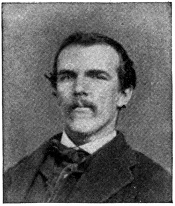
Pithole, the most kaleidoscopic oil-town that ever stranded human lives and
bank-accounts, gave birth to the Daily Record on the twenty-fifth of September,
1865. It was a five-column folio, crammed with news piping-hot and sold at five
cents a copy, or thirty cents a week. Morton, Spare & Co. were the publishers.
Col. L. M. Morton—he earned his shoulder-straps in the civil war—edited the
Record, winning laurels by his wise discernment. He was a manly character,
incapable of deceit, a brilliant writer and conversationalist, the soul of honor
and courtesy, “a knight without fear and without reproach.” He served as
postmaster at Milton and spent his closing years as
night-editor of the Bradford Era, dying at his post,
loved and esteemed by thousands of friends. W. H.
Longwell, another brave defender of the Union,
bought out Spare in May, 1886. Charles C. Wicker
and W. C. Plumer were taken into the firm shortly
after. In May of 1868, Pithole having crawled into
a hole, Longwell changed the base of operations to
Petroleum Centre, then at the zenith of its meteoric
flight. He sold the paper in 1871 to Wicker, who
held on until formidable rivals in Oil City and Titusville
forced the Record to quit. Generous to a fault
and faithful to those who shared his confidence,
Wicker left the decaying town in 1873, was foreman of the Titusville Courier,
worked as a compositor at Bradford and died there years ago. He was never
satisfied to accept ill-luck without emphatic dissent. He always wore a blue-flannel
shirt, a fashion he adopted in the army, and was eccentric in attire.
Charles C. Leonard was “a bright, particular star” in the days of the Pithole
Record, to which, over the signature of “Crocus,” he contributed side-splitting
sketches of ludicrous phases of oil-region life. These felicitous word-paintings,
with additions and revisions, he published in a volume that had a prodigious sale.
He was an Ohioan, born in 1845, and a soldier at sixteen. Arriving at Pithole
in 1865, he saw that wonderful place grow from a dozen shanties to a city of fifteen-thousand
at a pace distancing Jonah’s gourd or Jack-the-Giant-Killer’s
361bean-stalk. In the fall of 1867 he came to the Titusville Herald, remaining five
years. After short terms with the Cleveland Leader and St. Louis Globe, he
returned to Titusville to write for the Evening Press. He went back to St.
Louis and died at Cleveland on the twelfth of March 1874, wounds received in
battle hastening his demise. He was a natural wit, whose keen jokes had the
aroma of Attic salt. Mrs. Leonard removed to Detroit, her home at present.
One of Charlie’s favorite creations was “The Sheet-Iron Cat,” written for the
Cleveland Leader. It passed the rounds of the newspapers and was printed in
the Scientific American. The sell took immensely, lots of persons sending
letters asking the cost of the “cats” and where they could be procured! The
article, which revives many a pleasant memory of “auld lang-syne,” follows:
“A young mechanic in this city, whose friends and acquaintances have heretofore supposed
there was “nothing to him,” has at last achieved a triumph that will place him at once among
the noblest benefactors of mankind. His name will be handed down to posterity with those of
the inventors of the “steam-man,” the patent churn and other contrivances of a labor-saving or
comfort-inducing character. His invention, which occurred to him when trying to sleep at
night in the sky-parlor of his cheap boarding-house, with the feline demons of mid-night clattering
over the roof outside, is nothing more than a patent sheet-iron cat with cylindrical attachment,
steel-claws and teeth, the whole arrangement being covered with cat-skins, which give it a natural
appearance and preserve the clock-work and intricate machinery with which the old thing is
made to work. Among the other peculiarities of this ingenious invention are the tail and voice.
The former is hollow and supplied by a bellows (concealed within the body) with compressed air
at momentary intervals, which causes the appendage to be elevated and distended to three times
its natural size, giving to the metallic cat a most warlike and belligerent appearance. By the aid
of the same bellows and a tremolo-stop arrangement, the cat is made to emit the most fearful
caterwauls and “spitting” that ever awakened a baby, made the head of the family swear in his
dreams, or caused a shower of boots, washbowls and other missiles of midnight wrath to cleave
the sky.
“Such is the invention. The method of using and the result is as follows: Winding up the
patent Thomas-cat, the owner adjusts him upon the house-top or in the back-yard and awaits
events. Soon is heard the tocsin of cat-like war in the shape of every known sound that the
tribe are capable of producing, only in a key much louder than any live cat could perform in.
Every cat within a circle of a half-mile hears the familiar sounds and accepts the challenge, frequently
fifty or one hundred appearing simultaneously upon the battle-ground, ready to buckle in.
The swelling tail invites combat and they attack old “Ironsides,” who no sooner feels the
weight of a paw upon his hide than a spring is touched off, his paws revolve in all directions
with lightning rapidity and the adversaries within six feet of him are torn to shreds! Fresh
battalions come to the scratch only to meet a like fate, and in the morning several bushels of
hair, fiddle-strings and toe-nails is all that are seen, while the owner proceeds to wind the iron
cat up and set him again.
“But a few pleasant evenings are needed to clean out a common-sized country town of its
sleep-disturbers. We understand the inventor will make a proposition next week to the common
council to depopulate the city of cats for a moderate sum. We do not intend to endorse any
invention or article unless we know that it will perform all that it is claimed to do, and therefore
we have not been so explicit in our description as we might have been; but the principle is a
good one, and we hope to see every house in the city surmounted with a sheet-iron cat as soon as
they are offered for sale, which will be about April the first, the inventor and patentee informs us.”
J. H. Bowman and Richard Linn sent forth the Petroleum Monthly at Oil
City in October, 1870. Their purpose was to treat the oil-industry from a scientific
stand and present statistics and biographies in magazine-style. The Monthly,
which lasted a year, was ably edited and supplied matter of permanent value.
Bowman, a fascinating writer and agreeable companion, went westward and the
snows of twenty winters have drifted over his grave. Linn aided in compiling a
history of petroleum, spent some years in the east and meandered to Australia.
Pleasantville evolved the Evening News in 1888 and the semi-monthly Commercial-Record.
The former has sought “the dark realms of everlasting shade,”
to keep company with J. L. Rohr’s Cooperstown News, Tom Whitaker’s Gatling
Gun, the Oil-City Critic, the Franklin Oil-Region, the Petroleum-Centre
362Era and a score of unwept sacrifices on the altar of Venango journalism.
James Tyson, a hardware merchant at Rouseville, in 1872 issued the Pennsylvanian,
a superior weekly, which subsided with the waning town. He migrated
to California, living in San Francisco until last year, when he located in Philadelphia.
At the age of seventy-nine his faculties are unimpaired and he stands
erect. He is an earnest member of the Pennsylvania Historical Society and
compiler of a “Life of Washington and the Signers of the Declaration of
Independence.”Independence.” This timely and interesting work, published in two handsome volumes
in 1895, is dedicated to the public schools of the nation. It fitly crowns
the literary labors of the revered author, who is “only waiting till the shadows
are a little longer drawn.”
Titusville enjoys the honor of harboring the first petroleum-daily that
weathered the storm and stayed in the ring. June, 1865, heralded the Morning
Herald of W. W. and Henry C. Bloss, which possessed the entire field and
prospered accordingly. Col. J. H. Cogswell joined the partnership in 1866.
Major W. W. Bloss, the elder of the two brothers, was a fluent writer, and made
his mark in journalism. Mastering the details of “the art preservative” at
Rochester, N. Y., in 1857 he started a short-lived journal in Kansas, retraced
his footsteps to his native heath in 1859, was badly wounded at Antietam,
beamed upon Titusville in the spring of 1865 and bought the Petroleum Reporter,
a moribund weekly. Quitting the Herald, in 1873, he unfurled the banner
of the Evening Press, which did not live to cut its eye-teeth. His next
attempt, a tasteful weekly, traveled the road to oblivion. The Major once
more headed for Kansas, served in the Legislature and wended his way to
Chicago, whence he crossed “to the other side” in the prime of matured manhood.
Harry C. Bloss stuck to the Herald “through evil and through good
report,” steadfastly upholding Titusville and dipping his eagle feather in vitriol
when necessary to squelch “a foeman worthy of his steel.” He died—the
ranks are thinning out sadly—four years ago and his son, upon whom the mantle
of his father has descended, is keeping the paper in the van. Col. Cogswell,
who dropped out to accept the postmastership, enacting the role of “Nasby” a
couple of terms, for years has been in the office of the Tidewater Pipe-Line.
Among the Herald force were C. C. Leonard, John Ponton and A. E. Fay. Ponton
turned his peculiar talent for invention to electrical pursuits and the giddy telephone.
363He narrowly missed heading off Prof. Bell in stumbling upon the “hello”
machine. Fay forsook the Herald for the Oil-City Times, did a turn on the Titusville
Courier and hied him to Arizona. He ran a mining-paper, sat in the Legislature,
incubated a chicken-nursery that would have dumbfounded Rutherford
B. Hayes, farmed a bit and harvested a crop of shekels.
The Titusville Courier, sprung in 1870 to oppose the Herald, was edited by
Col. J. T. Henry, an accomplished journalist from Olean, N. Y. In 1871 he
bought the Sunday News, formerly A. L. Chapman’s Long-Roll, transferring it
in 1872 to W. W. Bloss, who changed it to the Evening Press. Col. Henry in
1873 published “Early and Later History of Petroleum,” a large volume, replete
with information, biographies and portraits. The author speculated profitably
in oil, lived at Olean, wrote as the impulse prompted and died at Jamestown
in May, 1878. A tear is due the memory of a kingly, chivalrous man, who
reflected luster upon his profession and was not fully appreciated until he had
reached the haven of eternal rest. To him Littleton’s tribute applies:
“He wrote not a line which dying he would blot.”
Warren C. Plumer guided the Courier after Col. Henry’s retirement. He
was no tyro in slinging his quill. Born in Maine in 1835, at fourteen he entered
a printing-office, ten years later edited a paper, served three years in the war, set
type on the Reno Times in 1865 and was editor-journeyman of the Pithole Record
in the fall of 1866. His “Dedbete” contributions were a striking feature of the
Record, of which he became joint-owner with Longwell and Wicker in 1867,
when Burgess of Pithole, and editor-in-chief upon its removal to Petroleum Centre
in 1868. Selling out in 1869, Wicker and Plumer lighted a Weekly Star at Titusville
that quickly set to rise no more. Plumer was foreman of the Oil City Times
in 1870-1 and connected with the Tidioute Journal in 1872, when offered the
editorship of the Courier. Elected to the Legislature on the Democratic ticket
in 1874, he was defeated for a second term and for Congress as the Greenbackers’
candidate in 1878. For a time his political notions were as facile as his
Faber and he trained with whatever party chanced to have a vacancy. From
1879 to 1881 he controlled the Meadville Vindicator, a soft-money weekly,
winding up the latter year on the Richburg Echo. In Dakota, his next stamping-ground,
he edited Republican papers at Fargo, Bismarck, Aberdeen and Casselton.
He stumped several states for Blaine with an eye to an appointment that
would have swelled his bank-account to the dimensions of a plumber’s. “The
Plumed Knight” failed to connect and the plum did not fall into the lap of his
eloquent supporter. President Harrison in 1891 appointed him Receiver of the
Minot District Land-office, North Dakota, which he resigned last year. As an
orator Col. W. C. Plumer—they call him “Colonel” in the Dakotas—trots in the
class with Robert G. Ingersoll, Thomas B. Reed and William McKinley and is
denominated the “Silver Tongue of the North-west.” At the Republican
National Conventions in 1884-8 he was unanimously pronounced the finest off-hand
speaker in the crowd. He is a finished lecturer and unrivaled story-teller,
loves the choicest books, reads the Bible diligently, sticks to his friends and
delights to recount his experiences in the Pennsylvania oil-regions.
M. N. Allen, an original stockholder and its last guardian, purchased the
Courier in 1874. Even his acknowledged skill could not put it on a paying basis
and the paper, unsurpassed in quality and appearance, succumbed to the inevitable.
Mr. Allen followed Col. Cogswell as postmaster, a proper tribute to his
rugged Democracy. Hale and hearty, although “over the summit of life,” time
has dealt kindly with him and his deft pen has lost none of its vigor. He is
364editing the Advance Guard, the outgrowth of Roger Sherman’s departed
American Citizen, as an intellectual pastime. F. A. Tozer, the champion “fat
take,” five-feet-four-inches high and four-feet-five-inches around, graduated from
the Courier, wafted the St. Petersburg Crude-Local up the flume and was chief-cook
of the East-Brady Times. His reports were newsy and palatable. He
travels for a Pittsburg house and would pay extra fare if passengers were carried
by weight. The East-Brady Review “sees” the Times and “goes it one better.”
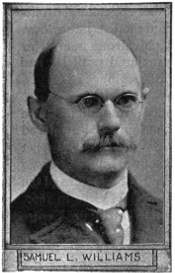
Graham & Hoag’s Sunday News-Letter arose from the tomb of the Evening
Press and the Sunday-News. J. W. Graham, now of the Herald, piloted the
trim vessel skillfully. A stock-company of producers, thinking a daily in the
family would be “a thing of beauty” and “a joy forever,”
bought the News-Letter and the Courier equipment
in 1879, to start the Petroleum World. James M.
Place, a pusher from Pusherville, had solicited the
bulk of the subscriptions to the stock and was entrusted
with the management. R. W. Criswell edited the
paper splendidly. Captain M. H. Butler, who put
heaps of ginger into his spicy effusions, and John P.
Zane, whose hobby was finance—both have gone the
journey that has no return trip—embellished its columns
with thoughtful, digestible brain-food. Oil-news,
readable locals, dispatches, jaunty selections and bang-up
neatness were never lacking. But competition was
fierce and the World had a hard row to hoe. A committee
of stockholders soon took charge. Place, sleepless,
indomitable and with the energy of a steam-hammer,
opened a big store at Richburg and drove a rattling trade. Setting out to
paddle his own canoe as a Corry newsboy at ten, he had run a newsroom at Fagundas,
a bookstore and the post-office at St. Petersburg, a branch store at
Edenburg, large stores at Bradford and Bolivar and won laurels as the greatest
newspaper circulator in the petroleum-diggings. At Harrisburg and Reading he
swung papers and the Globe in New York. He is now in Washington. S. L.
Williams, unexcelled as a sprightly writer, and Hon. George E. Mapes, equally
competent in the Legislature and the editorial chair, kept the World booming
until “patience ceased to be a virtue” and the daily ceased to be a sheet. About
half the material went to the Oil City Blizzard and the rest went to print the
Sunday World Frank W. Truesdell had determined to originate. The late Hon.
A. N. Perrin, ex-Mayor of Titusville, possessing “ample means and ample
generosity,” backed the project. Truesdell finished his trade as printer in Cleveland
and worked at Youngstown and Franklin, settling at Titusville in 1880 to
manage the World jobbing-room. He was a young man of fine ability and scrupulous
integrity. His partnership with Perrin ended in 1887 by his purchase
of the entire business. He sold a half-interest in the paper in 1893 and
death claimed him in October of 1894. Measured by his thirty-seven years,
Frank Willard Truesdell’s life was short; measured by his good deeds, his
worthy enterprises, his lofty sentiments and kindly acts, it was longer than that
of many who pass the Psalmist’s three-score-and-ten. Mrs. Truesdell and her
little daughter live in Titusville. F. F. Murray, associated with Walter Izant
and W. R. Herbert in the general details, edits the Sunday World, which is as
frisky as a spring-colt. Born at Buffalo in 1860, Murray was reared in Venango
county, whither his father was drawn by the oil-excitement. Correspondence
365for local papers naturally bore him into the journalistic swim. He whooped it
up six years for the Blizzard. A regular hummer, he is at home whether flaying
monopolists, taking a ruffian’s scalp, praising a pretty girl, writing a tearful
obituary, dissecting a suspicioussuspicious job or reeling off a natty poem. “The Old
Tramp-Printer,” a recent effort, is a fair sample of his quality:
“Here’s a rhyme to the old tramp-printer, who as long as he lives will roam,
Whose ‘card’ is his principal treasure and where night overtakes him home;
Whose shoes are run over and twisty, whose garments are shiny and thin,
And who takes a bunk in the basement when the pressman lets him in.
“It is true there are some of the trampers that only the Angel of Death,
When he touches them with his sickle, can cure of the ‘spirituous breath’;
That some by their fellow-trampers are shunned as unwholesome scamps,
And that some are just aimless, homeless, restless, typographical tramps.
“But the most of them surely are worthy of something akin to praise,
And have drifted down to the present out of wholesomer, happier days;
And when, though his looks be as seedy as ever a mortal wore,
Will you find the old tramper minus his marvelous fund of lore?
“What paper hasn’t he worked on? Whose manuscript hasn’t he set?
What story worthy remembrance was he ever known to forget?
What topics rise for discussion, in science, letters or art,
That the genuine old tramp-printer cannot grapple and play his part?
“It is true you will sometimes see him when the hue that adorns his nose
Outrivals the crimson flushes which the peony flaunts at the rose;
It is true that much grime he gathers in the course of each trip he takes,
Inasmuch as he boards all freight-trains between the Gulf and the Lakes.
“Yet his knowledge grows more abundant than many much-titled men’s,
Who travel as scholarly tourists and are classed with the upper-tens;
And few are the contributions these scholarly ones have penned
That the seediest, shabbiest tramper couldn’t readily cut and mend.
“He has little in life to bind him to one place more than the rest,
For his hopes in the past lie buried with the ones that he loved the best;
He has little to hope from Fortune and has little to fear from Fate,
And little his dreams are troubled over the public’s love or hate.
“So a rhyme to the old tramp-printer—to the hopes he has cherished and wept,
To the loves and the old home-voices that still in his heart are kept;
A rhyme to the old tramp-printer, whose garments are shiny and thin,
And who takes a bunk in the basement when the pressman lets him in.”
Mr. Mapes gravitated to Philadelphia to write for Colonel McClure’s Times.
His are the appetizing paragraphs that burnish the editorial page by their subtile
essence. He is a familiar figure at party conventions, which his intimate knowledge
of state-politics enables him to gauge accurately. He abhors trickery and
chicanery, deals his hardest blows in exposing corrupt methods, believes taxpayers
and voters have rights contractors and bosses are bound to respect and
is a stickler for honest government. Williams also strayed to the Quaker City
as paragrapher for the Press, making a phenomenal hit. James G. Blaine complimented
Charles Emory Smith upon these tart, peppery nuggets, saying: “I
invariably read the Press paragraphs before looking at any other paper.” This
pleasant tribute added ten dollars a week to Sam’s salary, yet he tired of
Philadelphia years ago and glided back to his old home in “the Messer Diocese.”
He is now connected with the New York Mail and Express, whose readers can
hardly find words to express their satisfaction with the spice he injects into
Elliot Shepherd’s trusty expositor of Republicanism.
His pointed squibs and his cranium bare
Are as much alike as steps in a stair—
One grows no moss and the other no hair.
R. W. Criswell holds an honorable place among the men who have made
366oil-region newspapers known abroad and influential at home. He was born in
Clarion county and educated in Cincinnati. His sketches, signed “Chris,”
introduced him to the public through the medium of the Oil-City Derrick, the
East Brady Independent and the Fairview Independent, Colonel Samuel Young’s
twin offspring. Retiring from Young’s employ at Fairview, he was next heard
of as traveling correspondent of the Cincinnati Enquirer. His editorship of the
Derrick in 1877 clinched his fame as a Simon-pure humorist, thirty-six inches
to the yard and one-hundred cents to the dollar. The ShakespearianShakespearian parodies
and Lickshingle stories, lustrous as the Kohinoor, waltzed the merry round
of the American press and were published in two taking books—“The New
Shakespeare” and “Grandfather Lickshingle.” After his departure from the
Petroleum World Criswell renewed his relations with the Enquirer as managing-editor.
He was John R. McLean’s trusty lieutenant and held the great western
daily on the topmost rung of the ladder. The New-York Graphic, the pathfinder
of illustrated dailies, needed him and he accepted its flattering offer.
The Cincinnati Sun was about to shine on the just and the unjust and he
returned to Porkopolis. Colonel John Cockrell coaxed him back to Manhattanville
to reconstruct the funny-streak of the overflowing New-York World.
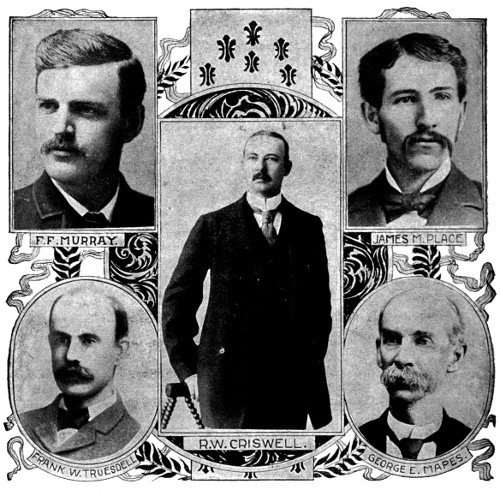
F. F. MURRAY. JAMES M. PLACE.
R. W. CRISWELL.
FRANK W. TRUESDELL. GEORGE E. MAPES.
367
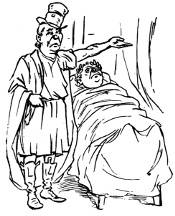
When the Colonel and Joseph Pulitzer disagreed—they “never spoke as they
passed by”—he went with Cockrell to the Commercial Advertiser, for which he
has done some of the brightest work in the newspaper-kingdom. He now edits
Truth. “Mark Anthony’s Oration Over Cæsar,” from “The Comic Shakespeare,”
will dispel the gloom and indicate the rare brand of Criswell’s vintage:
“Friends, Romans, countrymen! lend me your ears;
I will return them next Saturday. I come
To bury Cæsar because the times are hard
And his folks can’t afford to hire an undertaker.
The evil that men do lives after them,
In the shape of progeny, who reap
The benefit of their life insurance.
So let it be with the deceased.
Brutus hath told you that Cæsar was ambitious,
What does Brutus know about it?
It is none of his funeral.
But that it isn’t is no fault of the undersigned.
Here under leave of you I come to
Make a speech at Cæsar’s funeral.
He was my friend, faithful and just to me;
He loaned me five dollars once when I was in a pinch,
And signed my petition for a post-office.
And Brutus says he was ambitious.
Brutus should chase himself around the block.
Cæsar hath brought many captives home to Rome
Who broke rock on the streets until their ransoms
Did the general coffers fill.
When that the poor hath cried, Cæsar hath wept,
Because it didn’t cost anything
And made him solid with the masses. [Cheers.
Ambition should be made of sterner stuff.
Yet Brutus says he was ambitious.
Brutus is a liar, and I can prove it.
You all did see that on the Lupercal
I thrice presented him a kingly crown,
Which he did thrice refuse, because it did not fit him quite.
Was this ambition? Yet Brutus says he was ambitious.
Brutus is not only the biggest liar in this country
But is a politician of the deepest dye. [Applause.
If you have tears prepare to shed them now.
You all do know this ulster. [Laughter.
I remember the first time ever Cæsar put it on;
It was on a summer’s evening in his tent,
With the thermometer registering ninety degrees in the shade;
But it was an ulster to be proud of,
And it cost him $3 at Marcalus Swartzheimer’s,
Corner of Broad and Ferry streets, sign of the red flag.
Old Swartz wanted $40 for it,
But finally came down to $3, because it was Cæsar!
Look! in this place ran Casca’s dagger through;
Through this the son of a gun of a Brutus stabbed,
And when he plucked his cursed steel away,
Good gracious, how the blood of Cæsar followed it!
[Cheers, and cries of “Give us something on the Wilson bill!” “Hit him again;” etc.]
I came not, friends, to steal away your hearts;
I am no thief as Brutus is.
Brutus has a monopoly in all that business,
And if he had his deserts, he would be
In the State prison and don’t you forget it.
Kind friends, sweet friends, I do not wish to stir you up
To such a sudden flood of mutiny,
And, as it looks like rain,
The pallbearers will please place the body in the wheelbarrow
And we will proceed to bury Cæsar,
Not to praise him.”
Edwin C. Bell, a son of the Pine-Tree state, landed at Petroleum Centre in
1866, spent 1869 in the west, returned to Oil Creek in 1870 and for three years
punched down oil-wells. In 1874 he started a job-printery at Pioneer, using a
press he built from iron-scraps and an oak-rail and learning the trade without
an instructor. That fall he transplanted his kit to Titusville and continued in
the jobbing-line fourteen years. Early in 1878 he published the Leader, a
368weekly that petered out in two months. Mr. Bell in 1882 flew the flag of the
Republic, a campaign-oracle of the Greenbackers and supporter of Thomas A.
Armstrong for governor. The Republic, like the Argus, the Observer and
others of that ilk, didn’t attain old age. Bell’s first grists—stories and sketches—went
into the Courier hopper in 1872, supplemented from 1878 to 1882 by bundles
of live matter in the Meadville Vindicator and the Richburg Echo. He
edited the Republican at Casselton, N. D., in 1882-3, and during the nine years
following his return to Titusville sent a news-letter almost daily to the Oil-City
Blizzard. He has long contributed to the Sunday World and in 1888-9 was
its assistant-editor. In 1892 he began a history of the Pennsylvania oil-regions,
instalments of which the Derrick printed, and he hopes to finish the task on a
comprehensive scale befitting the subject.
Warren has been blessed with two weeklies, the Ledger and the Mail, for
two generations. Ephraim Cowan founded the Mail in 1848 and owned it until
his death in 1894. Three dailies vigilantly watch each other and guard the
pretty town. At Tidioute the Journal, inaugurated by J. B. Close in 1867,
jogged along seven years. George A. Needle and Frank H. Taylor were the
owners. Needle, whose sharp lance could prick the fiends of the opposition
like a needle, followed the tide to Parker and boosted the Daily, which shortly
plunged into perpetual night. Its chief contributor was Stephen W. Harley, who
furnished rich budgets of Petrolia odds and ends over the name of “Keno.”
“Steve” was kindly, obliging, congenial and well-liked. Six summers have
come and gone since he was laid beneath the sod. Clark Wilson removed the
Oilman’s Journal to Smethport and the Phœnix is in undisputed possession of
the Parker territory, with the youngest editor—son of G. A. Needle—in the
State guiding it capably. In October of 1874 the Warren-County News was
moved from Youngsville to Tidioute. C. E. White, who took charge in December,
bought the plant in 1875 and he has been in the harness continuously
since. Mr. White is among the best all-round newspaper-men in the country.
He was born at Newburg in 1842, boyhooded at Binghampton, learned his trade
at Elmira, served the Jamestown Journal six years, spent a year with the Oil-City
Derrick and went to Tidioute in 1872 to manage the Journal’s job-department.
His record as a citizen, soldier, printer and editor is solid nonpareil.
Clarion county did not escape the frantic rush to stick a paper in every
369mushroom-town. F. H. Barclay inflicted the Record on the long-suffering St.
Petersburgers, mooring his bark in California when the paper turned up its
toes. Tozer’s Crude-Local,
which never sported
a crude-local or editorial,
the Fern-City Illuminator,
brighter in name than in
real substance, the Clarion
Banner, a species of rag
on the bush, the Edenburg
National Record and
several more slid off the
perch with a dull thud, fatal
as Humpty Dumpty’s
irretrievable tumble.
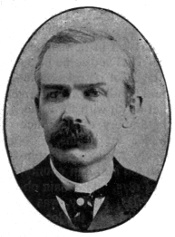
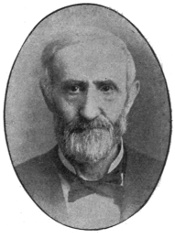
Frank A. Herr’s Record
has long kept up a good
record at Petrolia. Colonel
Young and the three
papers he propagated in Butler county, with a half-dozen elsewhere, have mouldered
into dust. He was intensely earnest and industrious, able to maintain
his end of a discussion and seldom unwilling to dare opponents knock the chip
off his stout shoulder. Rev. W. A. Thorne attempted to reform the race with
his Greece-City Review, hauling the traps to Millerstown upon the depletion of
the frontier-town. His path was strewn with thorns, mankind resenting his
review of everybody and everything. Ex-Postmaster Rattigan braces up the
unterrified with his sturdy Chicora Herald, which he has conducted successfully
for twenty years. St. Joe’s bantam, never distinguished for its strength,
crowed mildly and dropped from the roost. The county-seat is fully stocked
with political organs, the Citizen, the Eagle and the Herald coaching their respective
parties. J. H. Negley & Son are not negligent in their conduct of the
Citizen. The Eagle is the proud bird of Thomas H. Robertson, a trained
writer and journalist, now Superintendent of Public-Printing in Harrisburg. The
Herald was for many years the pet of Jacob Zeigler, to whom all Butlerites took
off their hats. “Uncle Jake” was the soul of the social circle, a treasury of wit
and wisdom, an exhaustless reservoir of pat stories, a mine of practical knowledge
and a welcome guest in every corner of Pennsylvania. His soubriquet of
“Uncle” fastened upon him in a curious way. At the funeral of a youthful acquaintance
the distracted mother, as her boy was consigned to the grave, in a
frenzy of grief laid her head upon young Zeigler’s breast and exclaimed: “Oh,
were you ever a stricken mother?” “No, madam,” was the cool reply, “but
I expect to be an uncle before sundown to-morrow.” Bystanders noted the
strange incident and thenceforth the “Uncle” stuck like a fly-blister. His parents
are buried in the Harrisburg cemetery, near Joseph Jefferson’s father, and
whenever he visited the capital he strewed their resting-place with flowers.
Who can doubt that the filial son, in whom mingled the strength of a man and
the tenderness of a woman, found his loved ones not far away when he entered
the pearly gates? Truly “this was the noblest Roman of them all.”
Another honored resident of Butler was Samuel P. Irvin, author of “The
Oil-Bubble,” a pamphlet abounding with delicious satire and bits of personal
experience. It was printed in 1868 and produced a sensation. Enjoying very
370few advantages in his boyhood, Mr. Irvin was emphatically a self-made man.
Born in a backwoods-township seventy years ago, his schooling was limited and
he toiled “down on the farm.” Like Lincoln, Garfield, Simon Cameron and
many other country-boys, he rose to distinction by his own exertions. He read
assiduously, studied law and stood well at the bar.
His literary bent found expression in newspaper-articles
of very high grade. He lived some years
at Franklin in the earlier stages of petroleum-developments,
drilling wells and handling oil-properties
on commission. He met death with fortitude,
“like one who wraps the drapery of his couch
about him and lies down to pleasant dreams.”
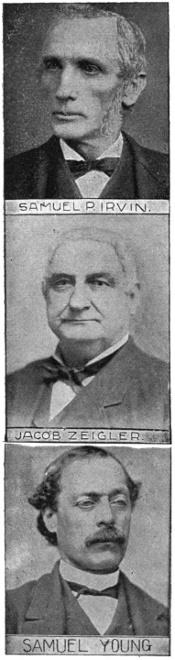
SAMUEL P. IRVIN.
JACOB ZEIGLER.
SAMUEL YOUNG.
The Bradford semi-weekly New Era, harbinger
of the new era dawning upon McKean county,
saw daylight in the spring of 1875. The main object
of its founder, Colonel J. H. Haffey, was to
invite attention to the possibilities of the locality
as a prospective oil-field. Colonel Haffey was a
man of varied talents—public speaker, writer,
soldier, surveyor, promoter of oil-enterprises, rail-roader
and expounder of the gospel. Irish by
birth, he came to America at fourteen, lived three
years in Canada, was licensed to preach and in
1851, at the age of twenty-one, accepted a call to
the Baptist church at Bradford, then Littleton.
Marrying Diantha, youngest daughter of Nathan
De Golier, in December of 1852, a year later he
quit the pulpit, sensibly concluding that the Lord
had not called him to starve his family. As surveyor
and geologist, he was employed to prospect
for coal and iron in McKean and adjacent counties.
In 1858-9 he had charge of a gang of men grading
the Erie railroad to Buttsville. The first man in
Bradford township to enlist in 1861, he raised a
force for Colonel Kane’s famous “Bucktails,”
shared in the fighting around Richmond and was
honorably discharged with the rank of major.
Governor Hartranft appointed him a member of
his staff and the title of colonel resulted. He sold
his Bradford home in 1877 and removed to Beverly,
N.J., where his active, helpful career ended in
November, 1881.
Ferrin & Weber, of Salamanca, publishers of
the Cattaraugas Republican, in 1876 bought the
New Era from Col. Haffey and placed it in charge
of Charles F. Persons. He had been in their
establishment at Little Valley two years. For nine
or ten months he washed rollers, fed presses, carried wood and did the varied
chores allotted to the “printer’s devil.” His aptitude impressed his employers,
who sent him first to Salamanca and then to Bradford, an important post for a
youth of twenty-two. Hoping to be an editor some day, he had corresponded
371for neighboring papers from boyhood on his father’s farm, a practice he maintained
during his apprenticeship. A few months after reaching Bradford he and
the Salamanca firm established the Daily Era, with the names of Ferrin, Weber
& Persons at the mast-head. Very soon Persons bought out his partners and
conducted the paper alone. His ability and energy had full play. The Era
met the demands of the eager, restless crowds that thronged the streets of
Bradford and scoured the hills in quest of territory. Its news was concise and
fresh, its oil-reports were not doctored for speculative ends, it had opinions and
presented them tersely. Persons sold to W. H. Longwell and W. F. Jordan
early in 1879 and in the fall bought the Olean Democrat. The nobby New-York
town was feeling the stimulus of oil-operations and he started the Daily Herald,
enhancing his wallet and well-won reputation. The American Press-Association,
which furnishes plate-matter to thousands of newspapers, secured him in 1888
as Local Manager of its New-York office. Two years ago he was promoted to
General Eastern-Manager and in 1894 was elected Secretary, Assistant General-Manager
and one of the five directors. Mr. Persons occupies a snug home in
Brooklyn, with his wife and two little daughters. He is a live representative of
the go-ahead, enterprising, sagacious, executive American.
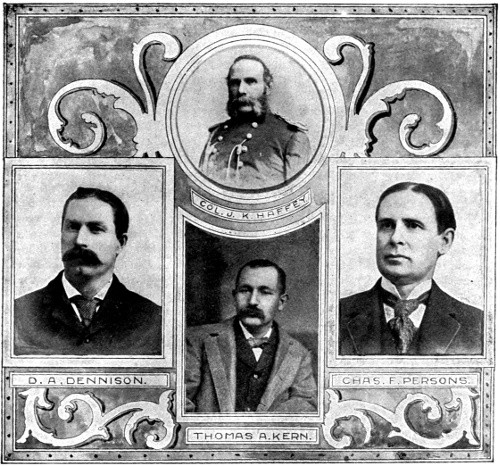
COL. J. H. HAFFEY.
D. A. DENNISON. CHAS. F. PERSONS.
THOMAS A. KERN.
Longwell & Jordan also bought the Breeze—it first breathed the oil-laden
air of Bradford in 1878 and was edited by David Armstrong, “organizer” of the
372producers in one of their movements to “get together”—and consolidated it
with the Era. Col. Edward Stuck, of York, worked the combination successfully
some months. Colonel Leander M. Morton was night-editor until his lamented
death. Thomas A. Kern attended to the field, preparing the “monthly reports”
and posting readers on oil-developments in his bailiwick. Years have flown
since poor “Tom,” young and enthusiastic, and J. K. Graham, exact and upright,
responded to the message that brooks no excuse or postponement. “Musing on
companions gone, we doubly feel ourselves alone.” Bradshaw, McMullen and
others scattered. Jordan, whose first work for papers was done at Petrolia in
1873, died in Harrisburg in 1897. P. C. Boyle secured the Era and infused into
it much of his own prompt, courageous spirit. David A. Dennison has for years
been its efficient editor. His parents removed from Connecticut to a farm south
of Titusville when he was a baby. At thirteen David wrote a batch of items,
which it tickled him to see in print, without a thought of one day blossoming
into a full-fledged “literary feller.” Not caring to be a tiller of the soil, he
juggled the hammer and lathe in machine-shops to the music of “the Anvil
Chorus.” A short season on the boards convinced him that he was not commissioned
to elevate the stage and wrest the scepter from Edwin Booth, Lawrence
Barrett, John McCullough or Alexander Salvini. He whisked to a Bradford
shop to strike the iron while it was hot, writing smart descriptions of oil-region
scenes for outside papers as a side-issue for several years. A series of his
articles on gas-monopoly, in the Elmira Telegram, brought reduced rates to
consumers and pleasant notoriety to the ironworker, who had proved himself a
blacksmith with the sledge and no “blacksmith” with the quill. His name was
neither Dennis nor Mud, and the Daily Oil News, McMullen & Bradshaw’s
game-fowl, wanted him forthwith. The salary was not alluring and in the Indian-summer
days of 1886 he cast in his lot with the Era. Promotion chased him
persistently. From reporter he was boosted to city-editor and in 1894 to the
editorial management, a flawless selection. He has tussled with all sorts of
topics, constructed tales of woe in jingling verse and even tempted fate by firing
off a drama, which has not yet run the gamut of publicity. Dennison has been
offered good sits in metropolitan offices, but he likes Bradford and clings to the
Era. He married Miss Katharine Grady in 1883 and three boys gladden the
home of the exultant D. A. D. “May his shadow never grow less.”
E. W. Butler started the Bradford Sunday News on April first, 1879, with
Joseph Moorhead as editor. Mr. Moorhead grew up on a farm near Newcastle,
served in the army as captain in Matthew Stanley Quay’s regiment,
landed at Petroleum Centre in 1869, worked about oil-wells five years, taught
school at St. Petersburg in 1874-5, published a short-lived fraternal paper at
Newcastle in 1870, aided in editing the Millerstown Review and in 1878 filled a
position on the Bradford Era. He edited the Sunday News one year, helped
launch a similar sheet at Minneapolis, returned to Bradford in 1880, resumed
his position a few months and resigned to edit the Sunday-Mail. Early in 1885
he settled in Kansas, farming there five years and coming back to Pennsylvania
in 1890. Since that time he has lived in Pittsburg and been connected with
various dailies of the sooty city. His vigor and experience are manifested in
his writings, which always go direct to the spot. At sixty-two the veteran
unites the activity of buoyant youth with the wisdom of robust age. Butler
reeled off the Buffalo Sunday-News in 1880, the sharpest, quickest, breeziest
afternoon-paper in the Bison City, and in 1885 sold his Bradford bantling to
Philip H. Lindeman, Era book-keeper and manager. Lindeman navigated
373against wind and tide until the News ran ashore in 1894, the “Commodore”
himself ending life’s voyage in June of 1897.
A number of producers agreeing to stand sponsors for the bills, McMullen
& Bradshaw floated the Daily News in 1886. Its backers grew tired of emptying
their pockets and the bright venture gave up the ghost. Eben Brewer’s
Evening Star tinted the sky under its founder’s artistic touch. He sold to
Andrew Carr, who found the load unbearable and shoved it upon Rufus B.
Stone, brother of Congressman Charles W. Stone. Mr. Stone, an able lawyer,
was Chancellor of Mississippi in the reconstruction-days. The reconstructed
legislature lopped off his salary and he located at Bradford to practice law. He
owned the Star several years, writing most of the political editorials that carried
weight and gave the paper high standing. H. F. Barber, a man of fine intellect
and noble purpose, dropped the Smethport Miner, relieved Stone and honed the
Star a few years, assisted at times by George Allen’s clever stroke. Protracted
sickness, during which he showed “how sublime it is to suffer and be strong,”
at last “withered the garlands on his brow.” He is dead, but “his speaking
dust has more of life than half its breathing moulds.” Allen slid to Buffalo to
polish up a railroad-periodical. “Judge” Johnson—in 1875 he landed at Bradford,
served a term in the Legislature and another as postmaster, operated in
oil and died three years ago—controlled the Star after Barber, whose widow
still retains an interest in the paper. Ex-Senator Emery fitted out the Daily
Record, which seeks to trail the standard of the Standard in the dust and ticket
independent producers, refiners and pipe-liners to a petroleum-Utopia. “Ed.”
Jones, the adept who toed the chalk-mark on the Harrisburg Call, whirled the
emery-wheel so expertly that the Record has never approached Davy Jones’s
locker. It is snappy and full of fight as a shillaleh at Donnybrook Fair. Carr’s
Sunday-Mail, freighted with a car of delicate morsels, barked up the wrong
tree and went to the bow-wows. Carr rolled down to Pittsburg to sell buggies,
bagging a cargo of ducats. “Tom” L. Wilson—he’s as humorous as they
make ’em—got out three numbers of Sunday Morning, a four-page blanket in
size and a ten-course banquet in contents. Col. Ege shut it down for publishing
a rank extract from Walt Whitman’s “Blades o’ Grass” and boomed the
Evening-Times, which expired in infancy. Ege was a banker who hankered to
be State-Treasurer, banked upon newspaper-support, went into bankruptcy,
374received an appointment in the Philadelphia Mint and traveled westward when
Cleveland shuffled the pack for a new deal. Wilson wrote for the oil-region
press, handled the Reading branch of a Harrisburg paper, edited the Washington
Review—Sistersville has a sisterly Review now—and rounded up in Buffalo.
The Post, Bradford’s latest Sunday experiment, owes its good looks and good
matter to Edward F. McIntyre and George O. Sloan.
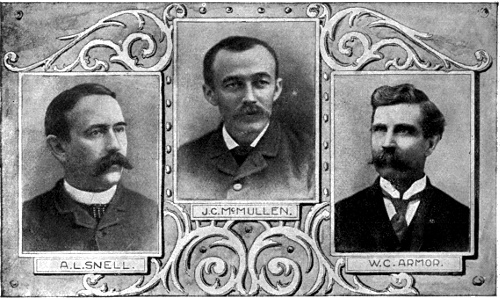
J.C. McMULLEN.
A.L. SNELL. W.C. ARMOR.
One evening in 1877 a young stranger walked into the St. Petersburg post-office,
bought a package of stationery at the book-counter and told J. M. Place
he was looking for a situation. Place hired him as a clerk. He had come from
the homestead farm in Orange county, N. Y., to Cornell University, worked his
way and graduated in civil-engineering. Marshall Swartzwelder lectured at
St. Petersburg on temperance and Place’s clerk sat up all night to report the
masterpiece for the Derrick. It was his first production in print, a voluntary act
on his part, and the article attracted most favorable notice. Its author was at
once offered a position on the Derrick. He came in contact with oil-statistics
and his real genius asserted itself. His painstaking, conscientious reports were
accepted as strictly reliable. He would trudge over the hills, wade through
miles of mud and ford swollen streams to ascertain the precise status of an
important well, rather than approximate it from hearsay. This care and thoroughness
gave the highest value to the statistical work of Justus C. McMullen.
In 1879 he went to Bradford and worked on the Breeze, the Era and the Star,
always with the same devotion that was a ruling maxim of his life. In 1883 he
scouted in Warren and Forest counties and became part owner of the Petroleum
Age. Alfred L. Snell and Major W. C. Armor were associated with him in this
admirable monthly, of which he became sole proprietor on the first of December,
1887. A. C. Crum, now on the editorial staff of the Pittsburg Dispatch, contributed
many a newsy crumb to the Age. A newsboy at Pickwick hailed me in
front of his stand one cool morning and asked—not in a Pickwickian sense—if
it would be worth while to get somebody to send locals to the Derrick. “Why
375not do it yourself?” was my answer. He tried and he succeeded. His work
expanded and improved and he adopted journalism permanently. He catered
for Oil City and Bradford papers, spun yarns for Pittsburg dailies and was a
legislative correspondent several sessions. Snell, a statistical hummer and hard-to-beat
purveyor of news, hangs his manuscript on the Derrick hook. Armor
sponsored a historic book and laid off his armor to second Dr. Egle in the State
Library. He has a book-store in Harrisburg and a museum that distances the
“Old Curiosity Shop.” McMullen established and edited the Daily Oil-News
in 1886. He died of pleurisy, contracted from exposure in collecting oil-data, on
January thirty-first, 1888, cut off at thirty-seven. The Petroleum Age did not
stay long behind its unswerving projector. Justus C. McMullen is enshrined in
the affections of the people. An unrelenting foe of oppression, he had a warm
heart for the poor and pursued his own path of right through thorns or flowers.
He married Miss Cora, daughter of Col. L. M. Morton, who lives in Bradford
and has one little girl. A brave, grand, exalted spirit passed from earth when
J. C. McMullen’s light was quenched.
“On the sands of life
Sorrow treads heavily and leaves a print
Time cannot wash away.”
Parker has been called “the graveyard of newspapers,” yet G. A. Needle
has run his popular Phœnix twenty-three years, accumulating sufficient wealth
to own a book-store and oil-wells and let the paper canter along under charge
of his son, the youngest editor in Pennsylvania.
The Washington Reporter, established in 1892 as a daily and semi-weekly,
owes its abundant success largely to the wide-awake editor, William Christman.
His practical knowledge and ready pen keeps the Reporter right in the swim.
Fulton Phillips in 1888 launched the Outlook at
McDonald, then merely a flag-station on the Panhandle
Railway, with no great outlook in prospect.
His editorials are essentially independent and vigorous,
the man dominating the paper. It is Fulton
Phillips, rather than the paper, who is read and
quoted by the thousands of Outlook readers. He
was born within a mile of McDonald and the boom
following oil-operations did not catch the tall editor—he
is considerably above six feet—napping. The
Outlook was the first to put a reporter in the field
and write up the wells in picturesque style. Phillips
served through the war, taught school at Pittsburg,
ran a paper at Canonsburg, drifted westward, did
editorial work in Missouri and California and returned
to start the only failure in his pilgrimage, a
temperance-organ at Washington. It went the way of former temperance-sheets
in the local-option town where they take theirs in jugs. In other portions of
the oil-world journalism holds up its end creditably, newspapers and developments
marching neck and neck on their grand errand of enlightenment. The
Sistersville Review and Parkersburg Sentinel do the West-Virginia field proud,
the Toledo Journal is always primed with Ohio oil-news, nor is there a spot in
which oil plays trump that literature does not hold a royal flush. Intelligence
and petroleum are a good pair to tie to, to bet on and to rake in the jack-pot.
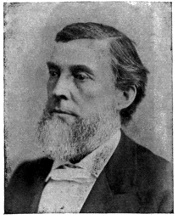
REV. S. J. M. EATON, D.D.
The Rev. S. J. M. Eaton—his name is ever spoken with reverence—thirty-three
376years pastor of the Presbyterian church at Franklin, filled a large place in
the literary guild. He loved especially to delve into old books and papers and
letters pertaining to the pioneers of Northwestern Pennsylvania. His faithful
labors in this neglected nook unearthed a troop
of traditions and facts which “the world will
not willingly let die.” For the “History of
Venango County” he furnished a number of
leading chapters. His published works include
“Petroleum,” an epitome of oil-affairs down
to 1866, “Lakeside,” a tale based upon his
father’s ministerial experiences in the wilds of
Erie county, biographies of eminent divines,
sketches of the Erie Presbytery, pamphlets and
sermons. “The Holy City” and “Palestine,”
embodying his observations in the orient, were
issued as text-books by the Chautauqua Circle.
Dr. Eaton was my near neighbor for years and
hours in his well-stocked library, enriched by
his “affluence of discursive talk,” are recalled
with deep satisfaction. On the sixteenth of
July, 1889, while walking along the street, he raised his hands suddenly and
fell to the pavement, struck down by heart-failure. “He was not, for God
took him” to wear the victor’s crown. Farewell, “until the day dawn and the
shadows flee away.”
In the Franklin office of the Galena Oil-Works are three successful weavers
of rich textures in the literary loom—Dr. Frank H. Johnston, E. H. Sibley and
Samuel H. Gray. Dr. Johnston was born in Canal township, reared on a farm,
severely wounded in battling for the Union, studied medicine, practiced at
Cochranton and in 1872 located at Petrolia. There “he first essayed to write”
for the Oil-City Derrick. From the very outset his articles were up to concert-pitch.
Abandoning medicine for letters, he acquired a thorough knowledge of
stenography, read the choicest books and wrote in his best vein for the press.
He represented the Derrick as its Franklin correspondent with credit to himself
and the paper. For sixteen years he has been connected with the Galena Oil-Works
as secretary of Hon. Charles Miller, a place demanding the superior
qualifications with which the doctor is unstintingly endowed.
Edwin Henry Sibley, born at Bath, N. Y., in 1857, is a brother of Hon.
Joseph C. Sibley and has resided in Franklin twenty-three years. He was
graduated from Cornell University in 1880. For several years he has been
treasurer of the Galena Oil-Works and manager of Miller & Sibley’s famous
Prospect-Hill Stock-Farm, positions of responsibility to which his personal
address, his training and his business-methods adapt him pre-eminently. Three
years in succession he has been unanimously elected President of the Pennsylvania
Jersey-Cattle Club. He has been active and efficient in promoting the
laudable work of the University Extension Society. Under guise of “Polybius
Crusoe Smith, Sage of Cranberry Cross-Roads”—the Smiths are big folks since
the by-play of Pocahontas—he contributes to Puck and other well-known publications
humorous articles and short, quaint, pithy sayings. These display a
keen insight into human nature and rare gift of happy, accurate expression. One
of his recent effusions—an address welcoming the delegates to an agricultural
convention—is a bit of burlesque that deserves to rank with Artemus Ward’s
377brightest efforts or the richest paragraphs in the Biglow Papers. A few buds
plucked at random from the flowery mead will serve to illustrate the high-class
stamp of Mr. Sibley’s work in the field his genius adorns. They are literary
nosegays from his terse observations as a philosophic “looker-on in Vienna:”
“The wife that manages her husband is a genius, the one that bosses him is a tartar, the one
that fights him is a fool, while the one that does none of them is now as much out of fashion as her
grandmother’s wedding-gown.”
“The pygmies of Africa are
such by nature, but elsewhere
they are produced artificially
by a diet of petty and envious
thoughts.”
“‘Truth is mighty and will
prevail,’ but Error generally
has the better of it till the
seventy-seventh round.”
“One of the greatest evils
that humanity has to contend
with is that so many icebergs
have floated down from the
North Pole and persist in passing
themselves off for men.”
“Former lovers in making
out their title-deeds of the
heart to their successors always
reserve at least a narrow pathway
across a corner.”
“Wise men and fools have
foolish thoughts; fools tell
them, wise men keep them to
themselves.”
“Parents that haven’t time
to correct their children when
they are small have time to
weep over them when they are
grown.”
“Affectation (alias of Deceitfulness)
has three picked
cronies from whom she is seldom
separated. Their names
are False Pride, Weakmindedness
and Bad Temper.”
“If one has too much vitality
in his brains he can get
rid of it by taking them out
and boiling them. If he finds
this too much bother, he can
accomplish the same result by
swallowing a few doses of a
decoction of faith-cure, spook-lore
and hypnotismhypnotism.”
“For peace of mind and
length of days, put this inscription above the doorway of workshop and home: Troubles that
will not be worth worrying over seven years hence are not worth worrying over now.”
“The ancient Israelites once worshiped a golden calf, but the modern Americans would worship
a golden polecat if they couldn’t get the gold in any other form to worship.”
“The young man who starts out in life with character and brains and energy as his outfit
will distance the one whose sole capital is the money his father left him.”
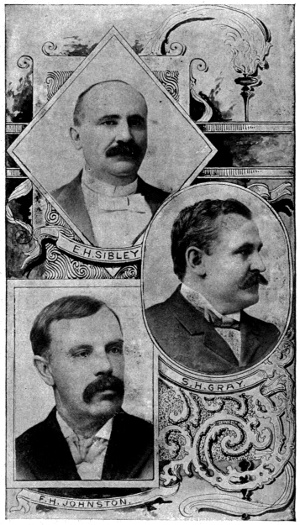
E. H. SIBLEY.
S. H. GRAY.
F. H. JOHNSTON.
Samuel H. Gray carries under his hat plenty of the gray-matter that makes
bright writers and bright wooers of the Muses. He has been court stenographer
of Venango county and holds a confidential position with the firm of Miller
378& Sibley, applying his spare moments to newspaper-writing. His pictures of
petroleum-traits and incidents are finished word-paintings, with “light and
shade and color properly disposed.” Like Silas Wegg, he “drops into poetry”
in a friendly way. Such papers as the New-York Truth strive for his emanations,
which savor of Bret Harte and “hold the mirror up to nature” in oleaginous
circles. Judge of this “By the Order of the Lord,” founded on an actual occurrence
in Scrubgrass township:
“It was back, if I remember, in the year of sixty-five,
When we formed a part and parcel of that rushin’, busy hive
That extended from Oil City up the crooked crick until
It reached its other endin’ in the town of Titusville;
When every rock an’ hillside was included in a lease,
An’ everyone was huntin’ fer the fortune-makin’ grease;
When a poor man pushed and elbowed ’gainst the oily millionaire,
An’ ‘the devil take the hindmost’ seemed the all-pervadin’ prayer.
“
An’An’ we hed formed a pardnership, jest Tom an’ Jim an’ me,
That was properly recorded as the ‘Tough and Hungry Three,’
An’ hed gone an’ leased a portion of some hard an’ rocky soil
That we thought looked like the cover of a fountain filled with oil.
An’ we set the drill a’goin’ on its long an’ greasy quest,
That meant so much or little to the capital possessed.
Our money was all in the well, in Providence our trust,
An’ we waited for a fortune, or to liquidate an’ bu’st.
“An’ while the drill was chuggin’ at its hard an’ rocky way
We three would hold a meetin’ at a certain time each day,
The ‘resolves’ an’ the ‘whereases’ that the secretary took
Were properly recorded ’twixt the covers of a book.
An’ we passed a resolution by a vote unanimous
Thet if Providence would condescend to sorter favor us,
An’ assist the operations on the ‘Tough and Hungry’ lease,
We would give to Him a quarter of the total flow of grease.
“Next day the drill broke through into a very oily sand
An’ Providence remembered us with strong, unsparin’ hand;
The oil came out with steady flow an’ loaded up the tanks,
An’ the Lord was due rewarded by a solid vote of thanks.
A resolution then came up thet caused the vote to split,
A sort of an amendment, readin’ somethin’ like, to wit—
‘Whereas, a tenth is all the Lord was ever known to crave,
Resolved we give it to Him; but resolved the rest we save.’
“I fit that resolution, an’ I fit it tooth an’ nail,
Spoke of dangers such proceedin’s was most likely to entail;
But two votes were in its favor, an’ two votes it only took
Fer to have it due recorded in the resolution-book.
Next day the oil stopped flowin’ an’ it never flowed no more,
An’ the ‘Tough and Hungry’ combine was a’ feelin’ blue an’ sore.
But they nailed upon the derrick this notice, on a board,
‘This well has stopped proceedin’s, by the order of the Lord.’”
The late Rev. Harry L. Yewens, rector of St. John’s church, was an accomplished
writer and contributed many timely articles to the press. Rev. Dr.
Fradenburg, formerly of Oil City and Franklin, has published seven scholarly
volumes on religious subjects of vital interest.
The Bolivar Breeze, seven years old, under the able management of J. P.
Herrick is one of the most readable sheets published in any section of the country.
Editor Herrick is a philosopher and wit, who looks on the bright side of
life and, better still, helps others to do likewise.
P. A. Rattigan, the very-much-alive perpetrator of the Millerstown Herald,
once received an article entitled “Why Do I Live?” It was written on both
379sides of the sheet of foolscap, whereupon P. Anthony in next issue printed this
conclusive answer: “You live because you sent your dog-goned rot by mail instead
of bringing it in person.”
Melville J. Kerr, a Franklin boy, son of the senior proprietor of the marble-works,
is a popular writer of facetiæ and society small-talk. Possibly “a rose
by any other name would smell as sweet,” but his cognomen of “Joe Ker” is
known to thousands of smiling readers who never
heard of Melville. The aspiring youth, believing
in the advantages of a big city, journeyed to New
York to look for an opportunity that might want a
party about his size and style. Unlike Jacob for
Rachel, Penelope for Ulysses, the zealots who
prayed for Ingersoll’s conversion or the Governor
of South Carolina for the Governor of North Carolina
to “fill ’em up again,” he didn’t wait long. A
soap-mogul liked the ambitious, sprightly young
man, introduced him to the swell set and booked
him as editor of The Club. Kerr’s refined humor
popped and effervesced with more “bead” than
ever. He hobnobbed with millionaires, delighted
Ward McAlister and married a lovely girl. Blood
will tell as surely as a gossip or a tale-bearer. He
is now editing The Yellow Kid, a semi-monthly crowded with good things, and
raking in wealth at a Klondyke-gait from his newest book, “The World Over,”
a graphic and geographic burlesque that is fated to be read the world over.
And this is how the “Joe Ker” is the winning card in one oil-region instance.
Last year a compact “Life of Napoleon Bonaparte,” in harmony with the age
of steam and electricity that won’t winnow a bushel of chaff for a grain of wheat,
which had run through the winter and spring of 1894-5 in McClure’s Magazine,
was published in book-form. Napoleonic ground had been so plowed and
harrowed and raked and scraped and sifted by Hugo, Scott, Abbott, Hazlitt,
Bourrienne, Madame Junot and a host of smaller fry that it seemed idle to expect
anything new concerning the arbiter of Europe. Yet the beauty and freshness
and acumen of this “Life” surprised and captivated its myriad readers, whose
pleasure it increased to learn that the book was the production of a young
woman. The authoress is Miss Ida M., daughter of Franklin S. Tarbell, a
wealthy oil-operator. Her childhood was spent at Rouseville, where her parents
lived prior to occupying their present home at Titusville. The romantic surroundings
were calculated to awaken glowing fancies in the acute mind of the
little girl. After graduating from Allegheny College, Meadville, she taught in
the seminary at Poland, O., assisted to edit The Chautauquan at Meadville
and spent three years in Europe gathering materials for articles on the dark
days of Robespierre, Danton, Marat and Marie Antoinette. She wrote for
Scribners’, McClure’s and the New-England Magazine, adding to her fame by
an exhaustive study of Abraham Lincoln’s youth. Scribners’ will soon publish
her biography of Madame Roland, the heroine of the French Revolution. Her
success thus early in her career gives fruitful promise of a resplendent future for
the vivacious, winsome biographer of the “Little Corporal.”
While many names and terms and phrases peculiar to oil-operations are
unintelligible to the tenderfoot as “the confusion of tongues” at Babel, others
will be valuable additions to the language. “He has the sand” aptly describes
380a gritty, invincible character. The fortunate adventurer “strikes oil,” the
pompous strutter is “a big gasser,” foolish anger is “pumping roily” and fruitless
enterprise is “boring in dry territory.” Misdirected effort is “off the
belt,” failure “stops the drill,” a lucky investment “hits the jugular,” a hindrance
“sticks the tools” and an abandoned effort “plugs the well.” A man
or well that keeps at it is “a stayer,” one that doesn’t pan out is “a duster,” one
that cuts loose is “a gusher” or “a spouter.” Fair promise means “a good
show,” the owner of pipe-line certificates “has a bundle,” fleeced speculators
are “shorn lambs”—not limited to Oildom by a large majority—and the ruined
operator “shuts ’er down.” In a moment of inspiration John P. Zane created
“the noble producer,” Lewis F. Emery invented “the downtrodden refiner”
and Samuel P. Irvin exploited “the Great Invisible Oil-Company.” Some of
these epigrammatic phrases deserve to go thundering down the ages with
Grant’s “let us have peace,” Cleveland’s “pernicious activity,” and “a sucker
is born every minute.”
Nor is the jargon of places and various appliances devoid of interest to the
student of letters. Oil City, Petroleum Centre, Oleopolis, Petrolia, Greece City—first
spelled G-r-e-a-s-e—Gas City, Derrick City and Oil Springs were named with
direct reference to the slippery commodity. From prominent operators came
Funkville, Shamburg, Tarr Farm, Rouseville, McClintockville, Fagundas, Prentice,
Cochran, Karns City, Angelica, Criswell City, Gillmor, Duke Centre and
Dean City. Noted men or early settlers were remembered in Titusville, Shaffer,
Plumer, Trunkeyville, Warren, Irvineton, McKean, De Golier, Custer City,
Garfield, Franklin, Reno, Foster, Cooperstown, Kennerdell, Milton, Foxburg,
Pickwick, Parker, Troutman, Butler, Washington, Mannington and Morgantown.
Emlenton commemorates Mrs. Emlon Fox. St. Joe recalls Joseph Oberly, a
pioneer-operator in that portion of Butler county. Standoff City kept green a
contractor who wished to “stand-off” his men’s wages until he finished a well.
A deep hole or pit on the bank of the creek, from which air rushed, suggested
Pithole. Tip-Top, near Pleasantville, signified its elevated site. Cornplanter,
the township in which Oil City is situated, bears the name of the stalwart chief—six
feet high and one hundred years old—to whom the land was ceded for friendly
services to the government and the white settlers. This grand old warrior died
in 1836 and the Legislature erected a monument over his grave, on the Indian
reservation near Kinzua. Venango, Tionesta, Conewago, Allegheny, Modoc
and Kanawha smack of the copper-hued savage once monarch of the whole
plantation. Red-Hot, Hardscrabble, Bullion, Babylon, St. Petersburg, Fairview,
Antwerp, Dogtown, Turkey City and Triangle are sufficiently obvious. SistersvilleSistersville,
the centre of activity in West Virginia, is blamed upon twin-islets in the
river. Alemagooselum is a medley as uncertain in its origin as the ingredients
of boarding-house hash. Diagrams are needed to convey a reasonable notion
of “clamps,” “seed-bags,” “jars,” “reamers,” “sockets,” “centre-bits,”
“mud-veins,” “tea-heads,” “conductors,” “Samson-posts,” “bull-wheels,”
“band-wheels,” “walking-beams,” “grasshoppers,” “sucker-rods,” “temper-screws,”
“pole-tools,” “casing,” “tubing,” “working-barrels,” “standing-valves,”
“check-valves,” “force-pumps,” “loading-racks,” “well-shooters,”
“royalty,” “puts,” “calls,” “margins,” “carrying-rates,” “spot,” “regular,”
“pipage,” “storage,” and the thousand-and-one things that make up the past
and present of the lingo of petroleum.
The Literary Guild is not the smallest frog in the petroleum-pool.
381
To raise twenty-five-hundred dollars for an annex to the hospital, the ladies
of Oil City, on February twelfth, 1896, issued the “Woman’s Edition” of the
Derrick. It was a splendid literary and financial success, realizing nearly five-thousand
dollars. This apt poem graced the editorial page:
Oh! sad was her brow and wild was her mien,
Her expression the blankest that ever was seen;
She was pained, she was hurt at the plain requisition:
“We expect you to write for the Woman’s Edition.”
Her babies wept sadly, her husband looked blue,
Her house was disordered, each room in a stew;
Do you ask me to tell why this sad exhibition?
She was trying to write for the Woman’s Edition.
Oh, what should she write? she had nothing to say;
She pondered and thought all the long weary day;
The question of woman, her life and her mission,
Must all be touched up in the Woman’s Edition.
But what could she do—oh, how could she write?
She could bake, she could brew from morning to night;
She had even been known to get up a petition:
But now she must write for “The Woman’s Edition.”
She felt that she must; her sisters all did it,
Would she fall behind? The saints all forbid it!
If the rest of her life should be spent in contrition,
She felt she must write for the Woman’s Edition.
She did it, she wrote it, now read it and ponder;
She treated a subject a little beyond her,
But that was much better than total omission
Of her name from the list on the Woman’s Edition.
Now her home is restored, her husband has smiled,
But, alas! that pleased look on his face was beguiled
By her cheerful assent to his simple condition:
That she’ll not write again for a Woman’s Edition.
D. A. Denison, the lively editor of the Bradford Era, is rarely vanquished
in any sort of encounter. A “sweet-girl graduate” wrote a story and wanted
him to print it. Thinking to let her down gently, he remarked: “Your romance
suits me splendidly, but it has trivial faults. For instance, you describe
the heroine’s canary as drinking water by ‘lapping it up eagerly with her
tongue.’ Isn’t that a peculiar way for a canary to drink water?” “Your criticism
surprises me,” said the blushing girl in a pained voice. “Still, if you
think your readers would prefer it, perhaps it would be better to let the canary
drink water with a teaspoon.” Dennison wilted like an ice-cream in July,
promised to publish the story and the girl walked away mistress of the situation.
382
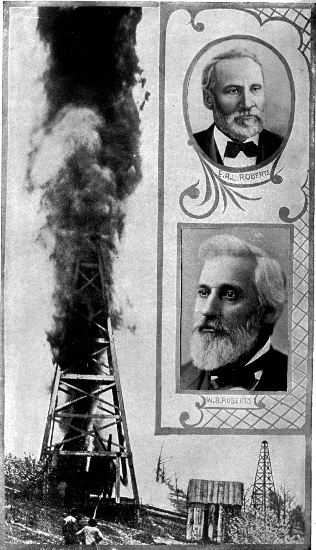
WELL FLOWING OIL AFTER TORPEDOING.
E. A. L. ROBERTS
W. B. ROBERTS
XVII. NITRO-GLYCERINE IN THIS. — GRAINS OF THIRD SAND.
383
Explosives as Aids to the Production of Oil—The Roberts Torpedo Monopoly
and Its Leaders—Unprecedented Litigation—Moonlighters
at Work—Fatalities from the Deadly Compound—Portraits and
Sketches of Victims—Men Blown to Fragments—Strange Escapes—The
Loaded Porker—Stories to Accept or Reject as Impulse Prompts.
“There is no distinguished Genius altogether exempt from some infusion of Madness.”—Aristotle.
“Genius must be born and never can be taught.”—Dryden.
“Labor with what zeal we will, something still remains undone.”—Longfellow.
“Come, bright improvement, on the car of Time.”—Campbell.
“Revenge, at first though sweet, bitter ere long, back on itself recoils.”—Milton.
“Only these fragments and nothing more!
Can naught to our arms the lost restore?”—Anonymous.
“Death itself is less painful when it comes upon us unawares.”—Pascal.
“Dead? did you say he was dead? or is it only my brain?
He went away an hour ago; will he never come again?”—Tamar Kermode.
“There is no armor against fate.”—Shirley.
“Dreadful is their doom * * * like yonder blasted bough by thunder riven.”—Beattie.
“By forms unseen their dirge is sung.”—Collins.
“Death, a necessary evil, will come when it will come.”—Shakespeare.
“Where is the reed on which I leant?”—Tennyson.
“To-morrow is with God alone.
And man hath but to-day.”—Whittier.
“Who so shall telle a tale after a man moste reherse everich word.”—Chaucer.
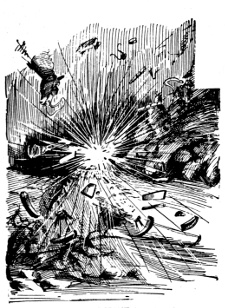
When in 1846 a patient European
chemist hit upon a new compound
by mixing fuming nitric-acid,
sulphuric-acid and glycerine
in certain proportions, he
didn’t know it was loaded. Glycerine
is a harmless substance and its very
name signifies sweetness. Combining
it with the two acids changed the three
ingredients materially. The action of
the acids caused the glycerine to lose
hydrogen and take up nitrogen and
oxygen. The product, which the discoverer
baptized Nitro-Glycerine, appeared
meek and innocent as Mary’s
little lamb and was readily mistaken
for lard-oil. It burned in lamps, consuming
quietly and emitting a gentle
light. But concussion proved the oily-looking
liquid to be a terrible explosive,
more powerful than gun-cotton, gunpowder or dynamite. For twenty
years it was not applied to any useful purpose in the arts. Strangely enough,
384it was first put up as a homœopathic remedy for headache, because a few drops
rubbed on any portion of the body pained the head acutely. James G. Blaine
was given doses of it on his death-bed. An energetic poison, fatalities resulted
from imbibing it for whisky, which it resembles in taste. After a time
attention was directed unexpectedly to its explosive qualities. A small consignment,
sent to this country as a specimen, accidentally exploded in a New-York
street. This set the newspapers and the public talking about it and wondering
what caused the stuff to go off. Investigation solved the mystery and
revealed the latent power of the compound, which had previously figured only
as a rare chemical in a half-score foreign laboratories. Miners and contractors
gradually learned its value for blasting masses of rock. Five pounds, placed
in a stone-jar and suspended against the iron-side of the steamer Scotland, sunk
off Sandy Hook, cut a fissure twelve feet long in the vessel. A steamship at
Aspinwall was torn to atoms and people stood in mortal terror of the destructive
agent. Girls threw away the glycerine prescribed for chapped lips, lest it
should burst up and distribute them piecemeal over the next county. Their
cotton-padding or charcoal-dentifrice was as dangerous as the glycerine alone,
which is an excellent application for the skin. A flame or a spark would not
explode Nitro-Glycerine readily, but the chap who struck it a hard rap might
as well avoid trouble among his heirs by having had his will written and a
cigar-box ordered to hold such fragments as his weeping relatives could pick
from the surrounding district. Such was the introduction to mankind of a compound
that was to fill a niche in connection with the production of petroleum.
Paraffine is the unrelenting foe of oil-wells. It clogged and choked some
of the largest wells on Oil Creek and diminished the yield of others in every
quarter of the field. It incrusts the veins of the rock and the pipes, just as lime
in the water coats the tubes of a steam-boiler or the inside of a tea-kettle. How
to overcome its ill effects was a question as serious as the extermination of the
potato-bug or the army-worm. Operators steamed their wells, often with good
results, the hot vapor melting the paraffine, and drenched them with benzine
to accomplish the same object. A genius patented a liquid that would boil and
fizz and discourage all the paraffine it touched, cleaning the tubing and the
seams in the sand much as caustic-soda scours the waste-pipe of a sink or closet.
These methods were very limited in their scope, the steam condensing, the benzine
mixing with the oil and the burning fluid cooling off before penetrating the
crevices in the strata any considerable distance. Exploding powder in holes
drilled at the bottom of water-wells had increased the quantity of fluid or
opened new veins and the idea of trying the experiment in oil-wells suggested
itself to various operators. In 1860 Henry H. Dennis, who drilled and stuck
the tools in the first well at Tidioute, procured three feet of two-inch copper-pipe,
plugged one end, filled it with rifle-powder, inserted a fuse-cord and exploded
the charge in presence of six men. The hole was full of water, oil and
bits of rock were blown into the air and “the smell of oil was so much stronger
that people coming up the hollow noticed it.” The same year John F. Harper
endeavored to explode five pounds of powder in A. W. Raymond’s well, at
Franklin. The tin-case holding the powder collapsed under the pressure of the
water and the fuse had gone out. William Reed assisted Raymond and W.
Ayers Brashear, who had expected James Barry—he put up the first telegraph-line
between Pittsburg and Franklin—to fire the charge by electricity. Reed
developed the idea and invented the “Reed Torpedo,” which he used in a
number of wells. A large crowd in 1866 witnessed the torpedoing of John C.
385Ford’s well, on the Widow Fleming farm, four miles south of Titusville. Five
pounds of powder in an earthen bottle, attached to a string of gas-pipe, were
exploded at two-hundred-and-fifty feet by dropping a red-hot iron through the
pipe. The shock threw the water out of the hole, threw out the pipe with
such force as to knock down the walking-beam and samson-post, agitated the
water in Oil Creek and “sent out oil.” Tubing was put in, the old horse
worked the pump until tired out and the result encouraged Ford to buy machinery
to keep the well going constantly. This was the first successful torpedoing
of an oil-well! The Watson well, near by, was similarly treated by Harper,
who had brought four bottles of the powder from Franklin and was devoting
his time to “blasting wells.” For his services at the Ford well he received
twenty dollars. Harper, William Skinner and a man named Potter formed a
partnership for this purpose. They torpedoed the Adams well, on the Stackpole
farm, below the Fleming, putting the powder in a glass-bottle. The territory
was dry and no oil followed the explosion. In the fall of 1860 they shot
Gideon B. Walker’s well at Tidioute. Five torpedoes were exploded in 1860
at Franklin, Tidioute and on Oil Creek. Business was disturbed over the
grave political outlook, oil was becoming too plentiful, the price was merely
nominal and the torpedo-industry languished.
William F. Kingsbury advertised in 1860 that he would “put blasts in oil-wells
to increase their production.” He torpedoed a well in 1861 on the island
at Tidioute, using a can of powder and a fuse, which ignited perfectly. Mark
Wilson and L. G. Merrill lectured on electricity in 1860-61, traveling over the
country and exhibiting the principle of “Colt’s Submarine Battery,” by which
“the rock at any distance beneath the surface of the earth may be rent asunder,
thereby enabling the oil to flow to the well.” Frederick Crocker in 1864 arranged
a torpedo to be dropped into a well and fired by a pistol-cartridge inserted
in the bottom of the tin-shell. About thirty torpedoes were exploded
from 1860 to 1865, all of them in wells filled with water, which served as tamping.
Erastus Jones, James K. Jones and David Card exploded them in wells at
Liverpool, Ohio. Joseph Chandler handled two or three at Pioneer and
George Koch fired one of his own construction in May of 1864. Mr. Beardslee—he
struck a vein of water by drilling a hole five feet and exploding a case of
powder at the bottom of a well in 1844, near Rochester, N. Y.—came to the oil-region
and put in a score of shots in 1865. As long ago as 1808 the yield of
water in a well at Fort Regent was doubled by drilling a small hole and firing
a quantity of powder. A flowing-well on the lease beside the Crocker stopped
when the latter was torpedoed and was rigged for pumping. It pumped “black
powder-water,” showing that the torpedo had opened an underground connection
between the two wells, the effects of the explosion reaching from the
Crocker to its neighbor. William Reed made a can strong enough to resist the
pressure of the water, let it down the Criswell well on Cherry Run in 1863,
failed to discharge it by electricity and exploded it by sliding a hollow weight
down a string to strike a percussion-cap.
Notwithstanding these facts, which demonstrated that the yield of oil and
water had been increased by exploding powder hundreds of feet under water,
in November of 1864 Col. E. A. L. Roberts applied for a patent for “a process
of increasing the productiveness of oil-wells by causing an explosion of gunpowder
or its equivalent at or near the oil-bearing point, in connection with superincumbent
fluid-tamping.” He claimed that the action of a shell at Fredericksburg
in 1862, which exploded in a mill-race, suggested to him the idea of
386bombarding oil-wells. However this may be—it has been said he was not at
Fredericksburg at the date specified in his papers—the Colonel furnished no
drawings and presented no application for Letters Patent for over two years.
He constructed six of his torpedoes and arrived with them at Titusville in January
of 1865. Captain Mills permitted him to test his process in the Ladies’
well, near Titusville, on January twenty-first. Two torpedoes were exploded
and the well flowed oil and paraffine. Reed, Harper and three or four others
filed applications for patents and commenced proceedings for interference.
The suits dragged two years, were decided in favor of Roberts and he secured
the patent that was to become a grievous monopoly.
A company was organized in New York to construct torpedoes and carry
on the business extensively. Operators were rather sceptical as to the advantages
of the Roberts method, fearing the missiles would shatter the rock and
destroy the wells. The Woodin well, a dry-hole on the Blood farm, received
two injections and pumped eighty barrels a day in December of 1866. During
1867 the demand increased largely and many suits for infringements were entered.
Roberts seemed to have the courts on his side and he obtained injunctions
against the Reed Torpedo-Company and James Dickey for alleged
infringements. Justices Strong and McKennan decided against Dickey in 1871.
Producers subscribed fifty-thousand dollars to break down the Roberts patent
and confidently expected a favorable issue. Judge Grier, of Philadelphia,
mulcted the Reed Company in heavy damages. Nickerson and Hamar, ingenious,
clever fellows, fared similarly. Roberts substituted Nitro-Glycerine for
gunpowder and established a manufactory of the explosive near Titusville.
The torpedo-war became general, determined and uncompromising. The monopoly
charged exorbitant prices—two-hundred dollars for a medium shot—and
an army of “moonlighters”—nervy men who put in torpedoes at night—sprang
into existence. The “moonlighters” effected great improvements and
first used the “go-devil drop-weight” in the Butler field in 1876. The Roberts
crowd hired a legion of spies to report operators who patronized the nocturnal
well-shooters. The country swarmed with these emissaries. You couldn’t
spit in the street or near a well after dark without danger of hitting one of the
crew. Unexampled litigation followed. About two-thousand prosecutions
were threatened and most of them begun against producers accused of violating
the law by engaging “moonlighters.” The array of counsel was most
imposing. It included Bakewell & Christy, of Pittsburg, and George Harding,
of Philadelphia, for the torpedo-company. Kellar & Blake, of New York, and
General Benjamin F. Butler were retained by a number of defendants. Most
of the individual suits were settled, the annoyance of trying them in Pittsburg,
fees of lawyers and enormous costs inducing the operators to make such terms
as they could. By this means the coffers of the company were filled to overflowing
and the Roberts Brothers rolled up millions of dollars.
The late H. Bucher Swope, the brilliant district-attorney of Pittsburg, was
especially active in behalf of Roberts. The bitter feeling engendered by convictions
deemed unjust, awards of excessive damages and numerous imprisonments
found expression in pointed newspaper paragraphs. Col. Roberts preserved
in scrap-books every item regarding his business-methods, himself and
his associates. One poetical squib, written by me and printed in the Oil-City
Times, incensed him to the highest pitch and was quoted by Mr. Swope in an
argument before Judge McKennan. The old Judge bristled with fury. Evidently
he regretted that it was beyond his power to sentence somebody to the
387penitentiary for daring hint that law was not always justice. He had not
traveled quite so far on the tyrannical road as some later wearers of the ermine,
who, “dressed in a little brief authority, play such fantastic tricks before high
heaven as make the angels weep” and consign workingmen to limbo for presuming
to present the demands of organized labor to employers! It is not
Eugene V. Debs or the mouthing anarchist, but the overbearing corporation-tool
on the bench, who is guilty of “contempt of court.”
The Roberts patent re-issued in June of 1873, perpetuating the burdensome
load upon oil-producers. In November of 1876 suit was brought in the Circuit
Court against Peter Schreiber, of Oil City, charged with infringing the Roberts
process. Schreiber’s torpedo duplicated the unpatented Crocker cartridge and
Roberts wanted his scalp. The case was contested keenly four years, coming
up for final argument in May of 1879. Henry Baldwin and James C. Boyce, of
Oil City, and Hon. J. H. Osmer, of Franklin, were the defendant’s attorneys.
Mr. Boyce collected a mass of testimony that seemed overwhelming. He spent
years working up a masterly defense. By unimpeachable witnesses he proved
that explosives had been used in water-wells and oil-wells, substantially in the
manner patented by Roberts, years before the holder of the patent had been
heard of as a torpedoist. But his masterly efforts were wasted upon Justices
Strong and McKennan. They had sustained the monopoly in the previous suits
and apparently would not reverse themselves, no matter how convincing the
reasons. Mr. Schreiber, wearied by the law’s interminable delays and thirty-thousand
dollars of expenditure, decided not to suffer the further annoyance of
appealing to the United-States Supreme Court. The great body of producers,
disgusted with the courts and despairing of fair-play, did not care to provide the
funds to carry the case to the highest tribunal and lock it up for years awaiting
a hearing. The flood of light thrown upon it by Boyce’s researches had the
effect of preventing an extension of the patent and reducing the price of torpedoes,
thus benefiting the oil-region greatly. Mr. Boyce is now practicing his
profession in Pittsburg. He resided at Oil City for years and was noted for his
bright wit, his incisive logic, his profound interest in education and his social
accomplishments.
Col. Edward A. L. Roberts died at Titusville on Friday morning, March
twenty-fifth, 1881, after a short illness. His demise was quite unexpected, as
he continued in ordinary health until Tuesday night. Then he was seized with
intermittent fever, which rapidly gained ground until it proved fatal. A moment
before dissolution he asked Dr. Freeman, who was with him, for a glass
of water. Drinking it and staring intently at the doctor, his eyes filled with
tears and he said, “I am gone.” Pressing back upon the pillow, he expired
almost instantly. Col. Roberts was born at Moreau, Saratoga county, New
York, in 1829. At seventeen he enlisted as a private, served with commendable
bravery in the Mexican war and was honorably discharged after a service
of two years. Returning to his native place, he entered an academy
and passed several years acquiring a higher education. Subsequently he entered
the dental office of his brother at Poughkeepsie, N. Y. Still later he
removed to the city and with his brother, W. B. Roberts, engaged in the manufacture
of dental material. For his improvements in dental science and articles
he was awarded several gold-medals by the American Institute. He patented
various inventions that have been of great service and are now in general use.
In the oil-region he was best known as the owner of the torpedo-patent bearing
his name. He came to Titusville in January of 1865 and the same month
388exploded two shells in the Ladies’ well, increasing its yield largely. From
that time to the present the use of torpedoes has continued. The litigation
over the patent and infringements attracted widespread attention. The last
week of his life Col. Roberts said he had expended a quarter-million dollars in
torpedo-litigation. He was responsible for more lawsuits than any other man
in the United States. A man of many eccentricities and strong feelings, he was
always liberal and enterprising. He left a large fortune and one of the most
profitable monopolies in the State. In 1869 he married Mrs. Chase, separated
from her in 1877 and lived at the Brunswick Hotel. His widow and two children
survived him. Col. Roberts did much to build up Titusville and his
funeral was the largest the town has ever witnessed. He sleeps in the pretty
cemetery and a peculiar monument, emblematic of the torpedo, marks the
burial-plot.
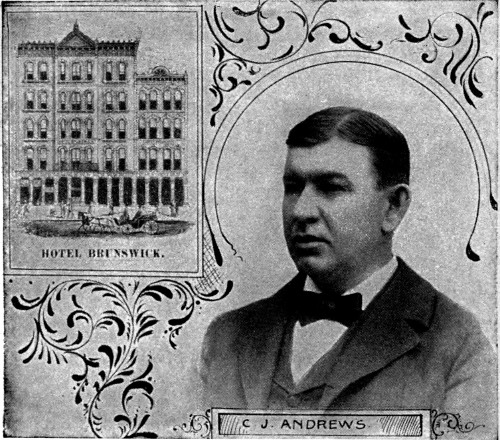
HOTEL BRUNSWICK.
C. J. ANDREWS
On the palatial Hotel Brunswick, which he built and nurtured as the apple
of his eye, Col. Roberts lavished part of his wealth. He decorated and furnished
it gorgeously from cellar to roof. The appointments were luxurious
throughout. If the landlords he engaged could not meet expenses, the Colonel
paid the deficiency ungrudgingly and sawed wood. Finally the house was
conducted in business-style and paid handsomely. For years it has been run
by Charles J. Andrews,
who was born
with a talent for hotel-keeping.
“Charlie”
is well-known in
every nook and corner
of Pennsylvania
as a “jolly good fellow,”
keen politician
and all-round thoroughbred.
He has
the rare faculty of
winning friends and
of engineering bills
through the Legislature.
He is head of
the Liquor League,
a tireless worker, a
masterly joker and
brimming over with
pat-stories that do
not strike back. He operates in oil and base-ball as a diversion, is a familiar
figure in Philadelphia and Harrisburg and popular everywhere.
Dr. Walter B. Roberts, partner of his brother in the torpedo-company,
clerked in an Albany bank, taught district-school, studied medicine and rose to
eminence in dentistry. Visiting Nicaragua in 1853, he established a firm to
ship deer-skins and cattle-hides to the United States and built up a large trade
with Central America. Resuming his practice, he and E. A. L. Roberts
opened dental-rooms in New York. His brother enlisted and upon returning
from the war assigned the Doctor a half-interest in a torpedo for oil-wells he
desired to patent. In 1865 Dr. Roberts organized the Roberts Torpedo-Company,
was chosen its secretary in 1866 and its president in 1867. He visited
389Europe in 1867 and removed to Titusville in 1868, residing there until his death.
In 1872 he was elected mayor, but his intense longing for a seat in Congress
was never gratified. The oil-producers, whom the vexatious torpedo-suits
made hot under the collar, opposed him resolutely. He had succeeded in his
profession and his business and his crowning ambition was to go to Washington.
The arrow of political disappointment pricked his temper at times, although
to the last he supported the Republican party zealously. Dr. Roberts
was a man of marked characteristics, tall, stoutly built and vigorous mentally.
He did much to advance the interests of his adopted city and was respected for
his courage, his earnestness and his benevolence to the poor.
Hon. William H. Andrews managed the campaign of Dr. Roberts, who
fancied the adroitness, pluck and push of the coming leader and used his influence
to elect him chairman of the Crawford-County Republican Committee.
He performed the duties so capably that he served four terms, was secretary of
the State Committee in 1887-8 and its chairman in 1890-1. Mr. Andrews was
born in Warren county and at an early age entered upon a mercantile career.
He established large dry-goods stores at Titusville, Franklin and Meadville,
introduced modern ideas and did a tremendous
business. He advertised by the page, ran excursion-trains
at suitable periods and sold his
wares at prices to attract multitudes of customers.
Nobody ever heard of dull trade or
hard times at any of the Andrews stores. Removing
to Cincinnati, he opened the biggest
store in the city and forced local merchants to
crawl out of the old rut and hustle. But the
aroma of petroleum, the motion of the walking-beam,
the dash and spirit of oil-region life were
lacking in Porkopolis and Andrews returned to
Titusville. He engaged in politics with the ardor
he had displayed in trade. His skill as an
organizer saved the Congressional district from
the Greenbackers and won him the chairmanship
of the Republican State-Committee. He
served two terms in the Legislature and was elected to the Senate in 1894.
He is chairman of the senatorial committee appointed last session to “Lexow”
Philadelphia and Pittsburg. His brother, W. R. Andrews, edited the Meadville
Tribune and was secretary of the State Committee. Another, Charles J.
Andrews, was proprietor of the Hotel Brunswick and an active politician.
Senator Andrews rarely wastes his breath on long-winded speeches, wisely
preferring to do effective work in committee. No member of the House or
Senate is more influential, more ready to oblige his friends, more sought for
favors and surer of carrying through a bill. He enjoys the confidence of Senator
Quay and his next promotion may be to the United-States Senate as successor
of Matthew S. himself. Mr. Andrews lives at Allegheny, has oil-wells
on Church Run and a big farm in the suburbs of Titusville, is prominent in
local industries and a representative citizen.
Gradually the quantity of explosive in a torpedo was increased, in order to
shatter a wider area of oil-bearing rock. A hundred quarts of Nitro-Glycerine
have been used for a single shot. In such instances it is lowered into the well
in cans, one resting upon another at the bottom of the hole until the desired
390amount is in place. A cap is adjusted to the top of the last can, the cord that
lowered the Nitro-Glycerine is pulled up, a weight is dropped upon the cap and
an explosion equal to the force of a ton of gunpowder ensues. In a few seconds
a shower of water, oil, mud and pebbles ascends, saturating the derrick
and pelting broken stones in every direction. Frank H. Taylor graphically describes
a scene at Thorn Creek:
“On October twenty-seventh, 1884, those who stood at the brick school-house and telegraph-offices
in the Thorn Creek district and saw the Semple, Boyd & Armstrong No. 2 torpedoed, gazed
upon the grandest scene ever witnessed in Oildom. When the shot took effect and the barren rock,
as if smitten by the rod of Moses, poured forth its torrent of oil, it was such a magnificent and awful
spectacle that no painter’s brush or poet’s pen could do it justice. Men familiar with the wonderful
sights of the oil-country were struck dumb with astonishment, as they beheld the mighty
display of Nature’s forces. There was no sudden reaction after the torpedo was exploded. A
column of water rose eight or ten feet and fell back again, some time elapsed before the force of
the explosion emptied the hole and the burnt glycerine, mud and sand rushed up in the derrick in
a black stream. The blackness gradually changed to yellow; then, with a mighty roar, the gas
burst forth with a deafening noise, like the thunderbolt set free. For a moment the cloud of gas
hid the derrick from sight and then, as this cleared away, a solid golden column half-a-foot in
diameter shot from the derrick-floor eighty feet through the air, till it broke in fragments on the
crown-pulley and fell in a shower of yellow rain for rods around. For over an hour that grand
column of oil, rushing swifter than any torrent and straight as a mountain pine, united derrick-floor
and top. In a few moments the ground around the derrick was covered inches deep with
petroleum. The branches of the oak-trees were like huge yellow plumes and a stream as large as
a man’s body ran down the hill to the road. It filled the space beneath the small bridge and,
continuing down the hill through the woods beyond, spread out upon the flats where the Johnson
well is. In two hours these flats were covered with a flood of oil. The hill-side was as if a
yellow freshet had passed over it. Heavy clouds of gas, almost obscuring the derrick, hung low
in the woods, and still that mighty rush continued. Some of those who witnessed it estimated
the well to be flowing five-hundred barrels per hour. Dams were built across the stream, that its
production might be estimated; the dams overflowed and were swept away before they could be
completed. People living along Thorn Creek packed up their household-goods and fled to the
hill-sides. The pump-station, a mile-and-a-half down the creek, had to extinguish its fires that
night on account of gas. All fires around the district were put out. It was literally a flood of oil.
It was estimated that the production was ten-thousand barrels the first twenty-four hours. The
foreman, endeavoring to get the tools into the well, was overcome by the gas and fell under the
bull-wheels. He was rescued immediately and medical aid summonedsummoned. He remained unconsciousunconscious
two hours, but subsequently recovered fully. Several men volunteered to undertake the job of
shutting in the largest well ever struck in the oil-region. The packer for the oil-saver was tied
on the bull-wheel shaft, the tools were placed over the hole and run in. But the pressure of the
solid stream of oil against it prevented its going lower, even with the suspended weight of the
two-thousand-pound tools. One-thousand pounds additional weight were added before the cap
was fitted and the well closed. A casing-connection and tubing-lines connected the well with a
tank.”
Had the owners not torpedoed this well, which they believed to be dry, its
value would never have been known. Its conceded failure would have chilled
ambitious operators who held adjoining leases and changed the entire history
of Thorn Creek.
Torpedoing wells is a hazardous business. A professional well-shooter
must have nerves of iron, be temperate in his habits and keenly alive to the fact
that a careless movement or a misstep may send him flying into space. James
Sanders, a veteran employé of the Roberts Company, fired six-thousand torpedoes
without the slightest accident and lived for years after his well-earned
retirement. Nitro-Glycerine literally tears its victims into shreds. It is quick
as lightning and can’t be dodged. The first fatality from its use in the oil-regions
befell William Munson, in the summer of 1867, at Reno. He operated on
Cherry Run, owning wells near the famous Reed and Wade. He was one
of the earliest producers to use torpedoes and manufactured them under the
Reed patent. A small building at the bend of the Allegheny below Reno
391served as his workshop and storehouse. For months the new industry went
along quietly, its projector prospering as the result of his enterprise. Entering
the building one morning in August, he was seen no more. How it occurred
none could tell, but a frightful explosion shivered the building, tore a hole in
the ground and annihilated Munson. Houses trembled to their foundations,
dishes were thrown from the shelves, windows
were shattered and about Oil City the horrible
shock drove people frantically into the streets.
Not a trace of Munson’s premises remained,
while fragments of flesh and bone strewn over
acres of ground too plainly revealed the dreadful
fate of the proprietor. The mangled bits
were carefully gathered up, put in a small box
and sent to his former home in New York for
interment. The tragedy aroused profound sympathy.
Mentally, morally and physically William
Munson was a fine specimen of manhood,
thoroughly upright and trustworthy. He lived
at Franklin and belonged to the Methodist
church. His widow and two daughters survived
the fond husband and father. Mrs. Munson first
moved to California, then returned eastward
and she is now practicing medicine at Toledo, the home of her daughters, the
younger of whom married Frank Gleason.
The sensation produced by the first fatality had not entirely subsided when
the second victim was added to a list that has since lengthened appallingly. To
ensure comparativecomparative safety the deadly stuff was kept in magazines located in isolated
places. In 1867 the Roberts Company built one of these receptacles two
miles from Titusville, in the side of a hill excavated for the purpose. Thither
Patrick Brophy, who had charge, went as usual one fine morning in July of 1868.
An hour later a terrific explosion burst upon the surrounding country with indescribable
violence. Horses and people on the streets of Titusville were thrown
down, chimneys tumbled, windows dropped into atoms and for a time the panic
was fearful. Then the thought suggested itself that the glycerine-magazine had
blown up. At once thousands started for the spot. The site had been converted
into a huge chasm, with tons of dirt scattered far and wide. Branches
of trees were lopped off as though cut by a knife and hardly a particle could
be found of what had so recently been a sentient being, instinct with life and
feeling and fondly anticipating a happy career. The unfortunate youth bore an
excellent character for sobriety and carefulness. He was a young Irishman,
had been a brakeman on the Farmers’ Railroad and visited the magazine frequently
to make experiments.
On Church Run, two miles back of Titusville, Colonel Davison established
a torpedo-manufactory in 1868. A few months passed safely and then the tragedy
came. With three workmen—Henry Todd, A. D. Griffin and William Bills—Colonel
Davison went to the factory, as was his practice, one morning in September.
A torpedo must have burst in course of filling, causing sad destruction.
The building was knocked into splinters, burying the occupants beneath
the ruins. All around the customary evidences of havoc were presented, although
the sheltered position of the factory prevented much damage to Titusville.
The mangled bodies of his companions were extricated from the wreck.
392while Colonel Davison still breathed. He did not regain consciousness and
death closed the chapter during the afternoon. This dismal event produced a
deep impression, the extinction of four lives investing it with peculiar interest to
the people of Oildom, many of whom knew the victims and sincerely lamented
their mournful exit.
Dr. Fowler, the seventh victim, met his doom at Franklin in 1869. He had
erected a magazine on the hill above the Allegheny Valley depot, in which large
quantities of explosives were stored. With his brother Charles the Doctor
started for the storehouse one forenoon. At the river-bridge a friend detained
Charles for a few moments in conversation, the Doctor proceeding alone. What
happened prior to the shock will not be revealed until all secrets are laid bare,
but before Charles reached the magazine a tremendous explosion launched his
brother into eternity. A spectator first noticed the boards of the building flying
through space, followed in a moment by a report that made the earth quiver.
The nearest properties were wrecked and the jar was felt miles away. Careful
search for the remains of the poor Doctor resulted in a small lot of broken
bones and pieces of flesh, which were buried in the Franklin cemetery. It was
supposed that the catastrophe originated from the Doctor’s boots coming in contact
with some glycerine that may have leaked upon the floor. This is as plausible
a reason as can be assigned for a tragedy that brought grief to many loving
hearts. The Doctor was a genial, kindly gentleman and his cruel fate was universally
deplored.
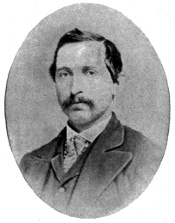
William A. Thompson, of Franklin, left home on Tuesday morning, August
thirteenth, 1870, carrying in his buggy a torpedo to be exploded in a well
on the Foster farm. John Quinn rode with him. At the farm he received two
old torpedoes, which had been there five or six weeks, having failed to explode,
to return to the factory. Quinn came up the
river by rail. Thompson stopped at Samuel
Graham’s, Bully Hill, got an apple and lighted
a cigar. On leaving he said: “Good-bye,
Sam, perhaps you’ll never see me again!”
Five minutes later an explosion was heard on
the Bully-Hill road, a mile from where Dr.
Fowler had met his doom. Graham and others
hurried to the spot. The body of Thompson,
horribly mutilated, was lying fifty feet
from the road, the left arm severed above the
elbow and missing. The horse and the fore-wheels
of the buggy were found a hundred
yards off, the wounded animal struggling that
distance before he fell. The body and hind-wheels
of the vehicle were in splinters. One
tire hung on a tree and a boot on another.
The main charge of the torpedo had entered the victim’s left side above the hip
and the face was scarcely disfigured. Mr. Thompson was widely known and
esteemed for his social qualities and high character. He was born in Clearfield
county, came to Franklin in 1853, married in 1855 and met his shocking fate at
the age of thirty-nine. His widow and a daughter live at Franklin.
Thus far the losses of human life were occasioned by the explosion of great
quantities of the messengers of death. The next instance demonstrated the
amazing strength of Nitro-Glycerine in small parcels, a few drops ending the
393existence of a vigorous man at Scrubgrass, Venango county, in the summer of
1870. R. W. Redfield, agent of a torpedo-company, hid a can of glycerine in
the bushes, expecting to return and use it the following day. While picking
berries Mrs. George Fetterman saw the can and handed it to her husband.
Thinking it was lard-oil, which Nitro-GlycerineNitro-Glycerine in its fluid state resembles closely,
Fetterman poured some into a vessel and sent it to his wells. It was used as a
lubricant for several days. Noticing a heated journal one morning, Fetterman
put a little of the supposed oil on the axle, with the engine in rapid motion. A
furious explosion ensued, tearing the engine-house into splinters and partially
stunning three men at work in the derrick. Poor Fetterman was found shockingly
mangled, with one arm torn off and his head crushed into jelly. The
mystery was not solved for hours, when it occurred to a neighbor to test the
contents of the oil-can. Putting one drop on an anvil, he struck it a heavy blow
and was hurled to the earth by the force of the concussion. The can was a
common oiler, holding a half-pint, and probably not a dozen drops had touched
the journal before the explosion took place. Fetterman was a man of remarkable
physical power, weighing two-hundred-and-thirty pounds and looking the
picture of health and vigor. Yet a quarter-spoonful of nitro-glycerine sufficed
to usher him into the hereafter under circumstances particularly distressing.
In the fall a young man lost his life almost as singularly as Fetterman. He
attended a well at Shamburg, seven miles south of Titusville. The well was
torpedoed on a cold day. To thaw the glycerine a tub was filled with hot
water, into which the cans were put. When sufficiently thawed they were taken
out, the glycerine was poured into the shell and the torpedoing was done satisfactorily.
The tubing was replaced in the well and the young pumper went to
turn on the steam to start the engine, carrying a pair of tongs with him. He
threw the tongs into the tub of water. In an instant the engine-house was
demolished by a fierce explosion. The luckless youth was killed and his body
mangled. A small amount of glycerine must have leaked from the cans while
they were thawing, as the result of which a soul was hurried into the presence
of its Maker with alarming suddenness.
In August of 1871 Charles Clarke started towards Enterprise, a small village
in Warren county, ten miles east of Titusville, with a lot of glycerine in a
vehicle drawn by one horse. The trip was destined never to be accomplished.
By the side of a high hill a piece of very rough road had to be traveled. There
the charge exploded. Likely some of the liquid had leaked over the buggy
and springs and been too much jolted. The concussion was awful. Pieces of
the woodwork and tires were carried hundreds of yards. Half of one wheel
lodged near the top of a large tree and for many rods the forest was stripped of
its foliage and branches. Part of the face, with the mustache and four teeth
adhering, was the largest portion of the driver recovered from the debris. The
horse was disemboweled and to numerous trees lots of flesh and clothing were
sticking. From the ghastly spectacle the beholders turned away shuddering.
The handful of remains was buried reverently at Titusville, crowds of people
uniting in the last tribute of respect to “Charlie,” whose youth and intelligence
had made him a general favorite.
A case similar to Thompson’s followed a few weeks after, near Rouseville.
Descending a steep hill on his way from torpedoing a well on the Shaw farm,
William Pine was sent out of the world unwarned. He had a torpedo-shell and
some cans of glycerine in a light wagon drawn by two horses. No doubt, the
extreme roughness of the road exploded the dangerous freight. The body of
394the driver was distributed in minute fragments over two acres and the buggy
was destroyed, but the horses escaped with slight injury, probably because the
force of the shock passed above them as they were going down the hill. Pine
had a premonition of impending disaster. When leaving home he kissed his
wife affectionately and told her he intended, should he return safely, to quit the
torpedo-business forever next day. He was an industrious, competent young
man, deserving of a better fate.
In October of the same year Charles Palmer was blown to pieces at the
Roberts magazine, near Titusville, where Brophy died two years before. With
Captain West, agent of the company, he was removing cans of glycerine from
a wagon to the magazine. He handled the cans so recklessly that West warned
him to be more careful. He made thirteen trips from the wagon and entered
the magazine for the fourteenth time. Next instant the magazine disappeared
in a cloud of dust and smoke, leaving hardly a trace of man or material. West
happened to be beside the wagon and escaped unhurt. The horses galloped
furiously through Titusville, the cans not taken out bounding around in the
wagon. Why they did not explode is a mystery. Had they done so the city
would have been leveled and thousands of lives lost. Palmer paid dearly for
his carelessness, which was characteristic of the rollicking, light-hearted fellow
whose existence terminated so shockingly.
This thrilling adventure decided Captain West, who lived at Oil City, to
engage in pursuits more congenial to himself and agreeable to his devoted family.
He was finely educated, past the meridian and streaks of gray tinged his
dark hair and beard. In November he torpedoed a well for me on Cherry Run.
The shell stuck, together we drew it up, the Captain adjusted the cap and it was
then lowered and exploded successfully. At parting he shook my hand warmly
and remarked: “This is the last torpedo I shall put in for you. My engagement
with the company will end next week. Good-bye. Come and see me in
Oil City.” Three days later he went to shoot a well at Reno, saying to his wife
at starting: “This will wind up my work for the company.” Such proved to be
the fact, although in a manner very different from what the speaker imagined.
The shell was lowered into the well, but failed to explode and the Captain concluded
to draw it up and examine the priming. Near the surface it exploded,
instantly killing West, who was guiding the line attached to the torpedo. He
was hurled into the air, striking the walking-beam and falling upon the derrick-floor
a bruised and bleeding corpse. He had, indeed, put in his last torpedo.
The main force of the explosion was spent in the well, otherwise the body and
the derrick would have been blown to atoms. A tear from an old friend, as he
recounts the tragic close of an honorable career, is due the memory of a man
whose sterling qualities were universally admired.
Early in 1873 two young lives paid the penalty at Scrubgrass. On a bright
February morning “Doc” Wright, the torpedo-agent, stopped at the station to
send a despatch. The message sent, he invited the telegraph-operator, George
Wolfe, to ride with him to the magazine, a mile up the river. The two set out in
high spirits, two dogs following the sleigh. Hardly ten minutes elapsed when a
dreadful report terrified the settlement. From the magazine on the river-bank
a light smoke ascended. Two rods away stood the trembling horse, one eye
torn from its socket and his side lacerated. Beside him one dog lay lifeless.
Fragments of the cutter and the harness were strewn around promiscuously.
Through the bushes a clean lane was cut and a large chestnut-tree uprooted.
A deep gap alone remained of the magazine and scarcely a particle of the two
395men could be found. Dozens of splintered trees across the Allegheny indicated
alike the force and general direction of the concussion. A boot containing part
of a human foot was picked up fifty rods from the spot. Wright’s gold-watch,
flattened and twisted, was fished out of the Allegheny, two-hundred yards down
the stream, in May. The remains, which two cigar-boxes would have held, were
interred close by. A marble shaft marks the grave, which Col. William Phillips,
then president of the Allegheny-Valley Railroad, enclosed with a neat iron-railing.
It is very near the railway-track and the bank of the river, a short distance
above Kennerdell Station. The disaster was supposed to have resulted from
Wright’s using a hatchet to loosen a can of glycerine from the ice that held it
fast. A pet spaniel, which had a habit of rubbing against his legs and trying to
jump into his arms, accompanied him from his boarding-house. The animal
may have diverted his attention momentarily, causing him to miss the ice and
strike the can. The horse lived for years, not much the worse except for the
loss of one eye. Wright and Wolfe were lively and jocular and their sad fate
was deeply regretted. Many a telegram George Wolfe sent for me when Scrubgrass
was at full tide.
One morning in April of 1873 Dennis Run, a half-mile from Tidioute, experienced
a fierce explosion, which vibrated buildings, upset dishes and broke
windows long distances off. It occurred at a frame structure on the side of a
hill, occupied by Andrew Dalrymple as a dwelling and engine-house. He was
a “moonlighter,” putting in torpedoes at night to avoid detection by the Roberts
spotters, and was probably filling a shell at the moment of the explosion.
It knocked the tenement into toothpicks and killed Dalrymple, jamming his
head and the upper portion of the trunk against an adjacent engine-house, the
roof of which was smeared with blood and particles of flesh. One arm lay in
the small creek four-hundred feet away, but not a vestige of the lower half of
the body could be discovered. A feeble cry from the ruins of the building surprised
the first persons to reach the place. Two feet beneath the rubbish a
child twenty months old was found unhurt. Farther search revealed Mrs.
Dalrymple, badly mangled and unconscious. She lingered two hours. The
little orphan, too young to understand the calamity that deprived her of both
parents, was adopted by a wealthy resident of Tidioute and grew to be a beautiful
girl. Thousands viewed the sad spectacle and followed the double funeral
to the cemetery. It has been my fortune to witness many sights of this description,
but none comprised more distressing elements than the sudden summons
of the doomed husband and wife. Mrs. Dalrymple was the only woman in the
oil-region whom Nitro-Glycerine slaughtered.
Is there a sixth sense, an indefinable impression that prompts an action
without an apparent reason? At Petrolia one forenoon something impelled me
to go to Tidioute, a hundred miles north, and spend the night. Rising from
breakfast at the Empire House next morning, a loud report, as though a battery
of boilers had burst, hurried me to the street. Ten minutes later found
me gazing upon the Dalrymple horror. Was the cause of the impulse that
started me from Petrolia explained? An hour sufficed to help rescue the child
from the debris, inspect the wreck, glean full particulars and board the train for
Irvineton. Writing the account for the Oil-City Derrick at my leisure, Postmaster
Evans was on hand with a report of the inquest when the evening-train
reached Tidioute. The Tidioute Journal didn’t like the Derrick a little bit
and the sight of a young man running from its office towards the train, with
copies of the paper—not dry from the press—attracted my attention. Mr.
396Evans said two Titusville reporters had come over during the day. A newspaper-man
clearly relishes a “scoop” and it struck me at once that the Journal
was rushing the first sheets of its edition to the Titusville delegates. Squeezing
through the jam, A. E. Fay, of the Courier, and “Charlie” Morse, of the
Herald, were pocketing the copies handed them by the Journal youth. Fay
laughed out loud and said: “Well, boys, I guess the Derrick’s left this time!”
A pat on the shoulder and my hint to “guess again” fairly paralyzed the trio.
The conductor shouted “all aboard” and the train moved off. Dropping into
the seat in front of Fay, his annoyance could not be concealed. It relieved him
to hear me tell of coming through from the north and ask why such a crowd
had gathered at Tidioute. He told a fairy-story of a ball-game and his own
and Morse’s visit to meet a friend! A wish for a glance at the Tidioute paper
he parried by answering: “It’s yesterday’s issue!” Fay was a good fellow
and his clumsy falsifying would have shamed Ananias. Keeping him on the
rack was rare sport. Clearly he believed me ignorant of the torpedo-accident.
The moment to undeceive him arrived. A big roll of manuscript held before
his eyes, with a “scare-head” and minute details of the tragedy, prefaced the
query: “Do you still think the Derrick is badly left?” Many friends have
asked me: “In your travels through the oil-region what was the funniest
thing you ever saw?” Here is the answer: The dazed look of Fay as he
beheld that manuscript, turned red and white, clenched his fists, gritted his
teeth and hissed, “Damn you!”
John Osborne, a youth well-known and well-liked, in July of 1874 drove a
buckboard loaded with glycerine down Bear-Creek Valley, two miles below
Parker. The cargo let go at a rough piece of road in a woody ravine, scattering
Osborne, the horse and the vehicle over acres of tree-tops. The concussion
was felt three miles. Venango, Crawford, Warren and Armstrong counties
had furnished nearly a score of sacrifices and Butler was to supply the next.
Alonzo Taylor, young and unmarried, went in the summer of 1875 to torpedo
a well at Troutman. The drop-weight failed to explode the percussion-cap
and Taylor drew up the shell, a process that had cost Captain West his life and
was always risky. He got it out safely and bore the torpedo to a hill to examine
the priming. An instant later a frightful explosion stunned the neighborhood.
Taylor was not mangled beyond recognition, as the charge was giant-powder
instead of Nitro-Glycerine. Nor was the damage to surrounding objects
very great, owing to the tendency of the powder to expend its strength
downward. This was the only torpedo-fatality of the year, the number of casualties
having induced greater caution in handling explosives.
One of the first persons to reach the spot and gather the remains of William
Pine was his friend James Barnum, who died in the same manner at St.
Petersburg eighteen months later. Barnum was the Roberts agent in Clarion
county. On February twenty-third, 1876, he drove to Edenburg for three-hundred
pounds of glycerine, to store in the magazine a mile from St. Petersburg.
A fearful concussion, which the writer can never forget, broke hundreds of
windows and rocked houses to their foundations at six o’clock that evening.
To the magazine, on a slope sheltered by trees, people hastened. A huge
iron-safe, imbedded in a cave dug into the hill, was the repository of the explosives.
Barnum had tied his team to a small tree and must have been taking
the cans from the wagon to the safe. A yawning cavity indicated the site of
the magazine. Both horses lay dead and disemboweled. The biggest piece
of the luckless agent would not weigh two pounds. One of his ears was found
397next morning a half-mile away. The few remnants were collected in a box
and buried at Franklin. A wife and several children mourned poor “Jim,”
who was a lively, active young man and had often been warned not to be so
careless with the deadly stuff. Mrs. Barnum heard the explosion, uttered a
piercing shriek and ran wildly from her house towards the magazine, sure her
husband had been killed.
W. H. Harper, who received a patent for improvements in torpedoes, went
to his doom at Keating’s Furnace, two miles from St. Petersburg, in July of
1876. Drawing an unexploded shell from a well, precisely as West and Taylor
had done, he stooped down to examine the priming. The contents exploded
and drove pieces of the tin-shell deep into his flesh and through his body.
How he survived nine days was a wonder to all who saw the dreadful wounds
of the unlucky inventor.
McKean county supplied the next instance. Repeated attempts were
made to rob a large magazine on the Curtis farm, two miles south of Bradford.
Incredible as it may seem, the key-hole of the ponderous iron-safe in the hillside
was several times stuffed with Nitro-Glycerine and a long fuse and a slow
match applied to burst the door. None of these foolhardy attempts succeeding,
on the night of September fifteenth, 1877, A. V. Pulser, J. B. Burkholder,
Andrew P. Higgins and Charles S. Page, two of them “moonlighters,” it is
supposed tried pounding the lock with a hammer. At any rate, they exploded
the magazine and were blown to fragments, with all the gruesome accompaniments
incident to such catastrophes. That men would imperil their lives to
loot a safe of Nitro-Glycerine in the dark beats the old story of the thief who
essayed to steal a red-hot stove. In this case retribution was swift and terrible,
but a magazine at St. Petersburg was broken open and plundered successfully.
Seventeen days later J. T. Smith, of Titusville, who had charge of a magazine
on Bolivar Run, four miles from Bradford, lost his life experimenting with
glycerine. Col. E. A. L. Roberts and his nephew, Owen Roberts, stood fifty
yards from the magazine as Smith was thrown into the air and frightfully mangled.
They escaped with slight bruises, a lively shaking up and a hair-raising
fright.
The summer of 1878 was a busy season in the northern field. Foster-Brook
Valley was at the hey-day of activity, with hundreds of wells drilling and well-shooters
very much in evidence. Among the most expert men in the employ
of the Roberts Company was J. Bartlett, of Bradford. He went to Red Rock,
an ephemeral oil-town six miles north-east of Bradford, to torpedo a well in rear
of the McClure House, the principal hostelry. Although Bartlett’s recklessness
was the source of uneasiness, he had never met with an accident and was
considered extremely fortunate. It was a rule to explode the cans that had
held the glycerine before pouring it into the shell. Bartlett torpedoed the well,
piled wood around the empty cans and set it on fire. He and a party of friends
waited at the hotel for the cans to explode. The fire had burned low and Bartlett
proceeded to investigate. He lifted a can and turned it over, to see if it
contained any glycerine. The act was followed by an explosion that shook
every house in the town and shattered numberless windows. Bartlett’s companions
were knocked senseless and the shooter was blown one-hundred feet.
When picked up by several men, who hurried to the scene, he presented a horrible
sight. His clothing was torn to ribbons and his body riddled by pieces of
tin. The right arm was off close to the shoulder and the right leg was a pulp.
He was removed to a boarding-house and died in great agony three hours after.
398Stories of hapless “moonlighters” scattered to the four winds of heaven
were recounted frequently. Their business, done largely under cover of
darkness, was exceptionally dangerous. The “moonlighter” did not haul his
load in a wagon openly by daylight. He would place two ten-quart cans of
glycerine in a meal-sack, sling the bag over his shoulder and walk to the scene
of his intended operations, generally at night. One evening in the spring of
1879 a “moonlighter” named Reed appeared at Red Rock, somewhat intoxicated
and bearing two cans of glycerine in a bag. He handled the bag in a
style that struck terror to the hearts of all onlookers, many of whom remembered
poor Bartlett. It was unsafe to wrest it from him by force and the Red-Rockers
heaved a sigh of relief when he started to climb the hill leading to
Summit City. Scores watched him, expecting an accident. At a rough spot
Reed stumbled and the cans fell to the ground. A terrific explosion shook the
surrounding country. A deep hole, ten feet in diameter, was blown in the
earth and houses in the vicinity were badly shaken. The explosion occurred
directly under a tree. When an attempt was made to gather up Reed’s remains
the greater portion of the body was in the tree, scraps of flesh of various
sizes hanging from its branches. The concussion passed above Red Rock,
hence the damage to property was small. Reed was dispersed over an acre of
brush, a fearful illustration of the incompatibility of whisky and Nitro-Glycerine.
W. O. Gotham, John Fowler and Harry French went to their usual work
at Gotham’s Nitro-Glycerine factory, near Petrolia, on the morning of October
twenty-seventh, 1878. An explosion during the forenoon tore Fowler to shreds,
mutilated French shockingly and landed Gotham’s dead body in the stream
with hardly a sign of injury. Petrolia never witnessed a sadder funeral-procession
than the long one that followed the unfortunate three to the tomb. Gotham
had a family and was widely known; the others were strangers, far from home
and loved ones.
On February twentieth, 1880, James Feeney and Leonard Tackett started
in a sleigh with six cans under the seat to torpedo a well at Tram Hollow,
eight miles east by north of Bradford. The sleigh slipped into a rut on a rough
side-hill and capsized. The glycerine exploded, throwing Tackett high in the
air and mangling him considerably. Feeney lay flat in the rut, the violence of
the shock passing over him and covering him with snow and fence-rails. His
face was scorched and his hearing destroyed, but he managed to crawl out, the
first man who ever emerged alive from the jaws of a Nitro-Glycerine eruption.
He is still a resident of Bradford. A dwelling close to the scene was wrecked,
the falling timbers seriously injuring two of the inmates.
At two o’clock on the morning of December twenty-third, 1880, a powerful
concussion startled the people of Bradford from their slumbers, caused by a
glycerine-explosion just below the city-limits. Alvin Magee was standing over
the deadly compound, which had been put in a tub of hot water to thaw. Usually
the subtle stuff is stored in a cold place, to congeal or freeze until needed.
Magee and the derrick were blown into space, only a few bits of flesh and bone
and splintered wood remaining. His two companions were in the engine-house
and got off with severe bruises and permanent deafness. Two men
named Cushing and Leasure were killed the same way in January, at a well
near Limestone. Cushing came to see the torpedo put into the well and was
standing near the engine-house, into which Leasure had just gone, when the
accident occurred. The glycerine was in hot water to thaw and a jet of steam
turned on, with the effect of sending it off prematurely. Cushing’s body did
399not show a mark, his death probably resulting from concussion, while Leasure
was torn to fragments.
E. M. Pearsall, of Oil City, died on July fourteenth, 1880, from the effect of
burns a few hours before. In company with two other men he went to torpedo
one of his wells on the Clapp farm. The tubing had been drawn out and a
large amount of benzine poured into the hole. The torpedo was exploded,
when the gas and benzine took fire and enveloped the men and rig in flames.
The clothes of Pearsall, who was nearest to the derrick, caught fire and burned
from his body. His limbs, face and breast were a fearful sight. His intense
suffering he bore like a hero, made a will and calmly awaited death, which
came to his relief at nine o’clock in the evening. Pearsall was dark-haired,
dark-eyed, slender, wiry and fearless.
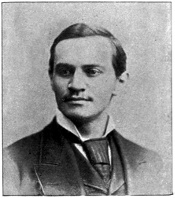
J. Plumer Mitchell—we called him “Plum”—worked for me on the Independent
Press at Franklin in 1879-80. Everybody liked the bright, genial,
capable young man who set type, read proof, wrote locals, solicited advertisements
and won golden opinions. He married and was the proud father of two
winsome children. Meeting me on the
street one day shortly after quitting the
Press, we chatted briefly.
“I am through with sticking type,”
he said.
“What are you driving at now?”
“Torpedoing wells. I started on Monday.”
“Well, be sure you get good pay, for
it’s risky business, and don’t furnish a thrilling
paragraph for the obituary-column.”
“I shall do my best to steer clear of
that. Good-bye.”
That was our last meeting. He met
the fate that overtook West, Taylor and
Harper, shooting a well at Galloway. The
shattered frame rests in the cemetery and
the widow and fatherless daughters of the lamented dead reside at Franklin.
Poor “Plum!”
T. A. McClain, an employé of the Roberts Company, was hauling two-hundred
quarts of glycerine in a sleigh from Davis Switch to Kinzua Junction,
on February fourteenth, 1881. The horses frightened and ran off. The sleigh
is supposed to have struck a stump and the cargo exploded. Hardly a trace of
McClain could be found and a bit of the steel-shoeing was the only part of the
sleigh recovered. Obliteration more complete it would be difficult to imagine.
The most destructive sacrifice of life followed on September seventh.
Charles Rust, a Bradford shooter, drove to Sawyer City to torpedo a well on
the Jane Schoonover farm. It is alleged that Rust had domestic trouble,
wearied of life and told his wife when leaving that morning he would never
return. A small crowd assembled to witness the operation. William Bunton,
owner of several adjacent wells, Charles Crouse, known as “Big Charlie the
Moonlighter,” James Thrasher, tool-dresser, and Rust were on the derrick-floor.
Rust filled the first shell, fixed the firing-head and struck the cap two sharp
blows with his left hand. There was a blinding flash, then a deafening report.
Dust, smoke and missiles filled the air. The derrick was demolished and pieces
400of board flew hundreds of yards with the force of cannon-balls. One hit Crouse
in the center of the forehead and passed through the skull. His face was terribly
lacerated and the clothing stripped off his body. Bunton and Thrasher were not
mangled beyond recognition, while Rust was thrown a hundred yards. His
legs were missing, the face was battered out of the semblance of humanity and
not a vestige of clothing was left on the mutilated trunk. Frederick Slatterly,
a lad on his way to school, was hit by a piece of the derrick, which ripped his
abdomen and caused death in three hours. Three boys walking behind young
Slatterly were thrown down and hurt slightly. Mr. Bunton gasped when picked
up and lived five minutes. He was an estimable citizen, an elder in the Presbyterian
church, intelligent and broad-minded. Thrasher and Crouse were industrious
workmen. Edward Wilson, a gauger, standing ten rods away, was perforated
by slivers and pieces of tin, his injuries confining him to bed several
months. Thomas Buton and John Sisley were at the side of the derrick, within
six feet of Rust, yet escaped with trifling injuries. The tragedy produced a sensation,
all the more fearful from the belief of some who witnessed it that Rust
intended to commit suicide and in compassing his own death killed four innocent
victims.
The Roberts magazine on the Hatfield farm, two miles south of Bradford,
blew up on the night of October thirteenth, 1881. Nobody doubted it was the
work of “moonlighters” attempting to steal the glycerine. Traces of blood
and minute portions of flesh on the stones and ties indicated that two persons
at least were engaged in the job. Who they were none ever learned.
John McCleary, a Roberts shooter, had a remarkable escape on December
twenty-seventh, 1881. While filling the shell at a well near Haymaker, in the
lower oil-field, the well flowed and McCleary left the derrick. The column of
oil threw down the shell and the glycerine exploded promptly, wrecking the
derrick and tossing the fleeing man violently to the ground. He rose to his feet
as four cans on the derrick-floor cut loose. McCleary was borne fifty feet
through the air, jagged splinters of tin and wood pierced his back and sides and
he fell stunned and bleeding. He was not injured fatally. Like Feeney, Buton
and Sisley, he survives to tell of his close call. Less fortunate was Henry W.
McHenry, who had torpedoed hundreds of wells and was blown to atoms near
Simpson Station, in the southern end of the Bradford region, on February fifth,
1883. His fate resembled West’s, Taylor’s, Harper’s and Mitchell’s.
In the summer of 1884 Lark Easton went to torpedo a well at Coleville,
seven miles southeast of Bradford. He tied his team in the woods, carried
some cans of glycerine to the well and left four in the wagon. A storm blew
down a tree, which fell on the wagon and exploded the glycerine, demolishing
the vehicle and killing one horse. It was a lucky escape, if not much of a lark,
for Easton.
A peculiar case was that of “Doc” Haggerty, a teamster employed to haul
Nitro-Glycerine to the magazine near Pleasantville. In December of 1888 he
took fourteen-hundred pounds on his wagon and was seen at the magazine
twenty minutes before a furious explosion occurred. Pieces of the horses and
wagon were found, but not an atom of Haggerty. He had disappeared as completely
as Elijah in the chariot of fire. An insurance-company, in which he
held a five-thousand-dollar policy, resisted payment on the ground that, as no
remains of the alleged dead man could be produced, he might be alive!
Some pretexts for declining to pay a policy are pretty mean, but this certainly
capped the climax. Experts believed the heat generated by the explosion was
401sufficient to cremate the body instantaneously, bones, clothes, boots and all.
James Woods and William Medeller, two experienced shooters, were ushered
into eternity on December tenth, 1889, by the explosion of the Humes
Torpedo-Company’s magazine at Bean Hollow, two miles south of Butler.
They had gone for glycerine and that was the end of their mortal pilgrimage.
Six years later, on December fourth, 1895, at the same place and in the same
way, George Bester and Lewis Black lost their lives. Bester was blown to
atoms and only a few threads of his clothing could be picked up. The lower
part of Black’s face, the trunk and right arm remained together, while other
portions of the body were strewn around. The left arm was in a tree three-hundred
yards distant. Huge holes marked the site of the two Humes magazines,
a hundred feet apart. The mangled horse lay between them, every
bone in his carcass broken and the harness cut off clean. The buggy was in
fragments, with one tire wrapped five times about a small tree. Not a board
stayed on the boiler-house and the boiler was moved twenty feet and dismantled.
The factory, two-hundred feet from the magazines, was utterly wrecked.
The young men left Butler early in the morning, Black going for company.
The supposition is that Bester was removing some of the cans from the shelf,
intending to take them out, and that he dropped one of them. About seven-hundred
pounds of glycerine were stored in one of the magazines and a less
amount in the other. George Bester was twenty-eight and had a wife and two
small children. He was industrious, steady and one of the best shooters in
the business. Black was twenty and lived with his parents. The concussion
jarred every house in Butler, broke windows and loosened plaster in the McKean
school-building, causing a panic among the children.
W. N. Downing’s death, on January second, 1891, at the Victor Oil-Company’s
well, in the Archer’s Forks oil-field, near Wheeling, West Virginia, was
very singular. The glycerine used to torpedo the well the previous day had
been thawed in a barrel of warm water. Next day two of the owners drove
out to see the well and talk with Downing, who was foreman of the company.
On their way back to Wheeling they heard an explosion, conjectured the boiler
had burst and returned to the lease. Mr. Downing’s body lay near where the
barrel of water had stood. The barrel had vanished and a large hole occupied
its place. The victim’s head was cut off on a line with the eyes. The only
explanation of the accident was that the glycerine had leaked into the barrel
and a sudden jar had caused the stuff to explode. Beside the well, in the
fence-corner, were twelve cans of glycerine not exploded. Downing lived at
Siverlyville, above Oil City, whither his remains were brought for interment.
Letting a torpedo down a well at Bradford in September of 1877, a flow of
oil jerked it out, hurled the shell against the tools, which were hanging in the
derrick, and set off the nitro on the double quick. The shooter jumped and ran
at the first symptoms of trouble, the derrick was sliced in the middle and set on
fire. The rig burned and strenuous exertions alone saved neighboring wells.
The fire was a novelty in the career of the explosive.
Occasionally Nitro-Glycerine goes off by spontaneous combustion without
apparent provocation. On December fifth, 1881, two of the employés noticed a
thin smoke rising from the top row of cans in the Roberts magazine at Kinzua
Junction. They retreated, came back and removed eighty cans, observed the
smoke increasing in density and volume and decided to watch further proceedings
from a safe distance. Twelve-hundred quarts exploded with such vigor
that the earth jarred for miles and a big hole was ploughed in the rock. In November
402of 1885 the Rock Glycerine-Company’s factory on Minard Run, four
miles south of Bradford, was wrecked for the fourth time. O. Wood and A.
Brown were running the mixture into “the drowning tank,” to divest it of the
acid. The process generates much heat and acid escaping from a leak in the
tank fired the wood-work. Wood and Brown and a carpenter in the building,
knowing their deliverance depended upon their speed, took French leave.
Samuel Barber, a teamster, was unloading a drum of acid in front of the building
and joined the fugitives in their flight. The glycerine obligingly waited
until the four men reached a safe spot and then reduced the factory to kindling-wood.
Barber’s horses and wagon were not hurt mortally, the animals bleeding
a little from the nose. Next evening Tucker’s factory at Corwin Centre, six
miles north-east of Bradford, followed suit. Griffin Rathburn, who was making
a run of the fluids, fled for his life as the mass emitted a flame. He saved himself,
but the factory and a thousand pounds of the explosive went on an aërial
excursion.
In November, 1896, at Pine Fork, West Virginia, William Conn drove a
two-horse wagon to the magazine for glycerine to shoot a well. While Conn
was inside two men drove up with two horses. That moment the magazine
exploded with a report heard ten miles off. Only a piece of a man’s foot was
ever found. Thus three human beings, two wagons and four horses were
extinguished utterly.
On December twenty-third, 1896, a half-ton of glycerine blew up near
Montpelier, Indiana. Two men and two teams were the victims. The forest
was mowed down for hundreds of feet. Oak-trees three feet in diameter were
cut off like mullein-stalks. A steel-tire from one wagon was coiled tightly
around a small tree. One of the shooters was John Hickok, a giant in stature.
He was unusually cheerful that morning. He kissed his wife and daughter
good-bye and said, in answer to the query if he would be home to dinner,
“You know, Jennie, we are never sure of coming back.”
By the explosion of a magazine at Shannopin, eighteen miles from Pittsburg,
in January, 1897, two men and two girls were killed, one man was injured,
buildings were shattered and part of the public-school was demolished. The
concussion broke windows at Economy and Coraopolis and was felt thirty miles
distant.
On February twenty-fifth, 1897, a similar accident at the magazine three
miles west of Steubenville, Ohio, blew Louis Crary and Eugene Ralston into
bits too small to be gathered up. Both were in the frame building containing
the iron-safe that held the explosive when the whole thing went into the air.
At Celina, on April second, Cornelius O’Donnell and John Baird perished, one
finger alone remaining to prove they had ever existed.
Near Wellsville, New York, on March third, three tons of the stuff let go,
probably from spontaneous combustion, leaving a yawning chasm where the
magazine of the Rock Glycerine-Company had been erected. Nobody was
near enough to be hurt. Next day John Pike and Lewis Washabaugh met their
fate at Orchard Park. Washabaugh went to the magazine to examine its contents
and the explosion occurred as he opened the door, tearing him to pieces.
Pike, who stood a hundred yards away, was killed instantly. On March twenty-second,
at the Farren farm, two miles from Wellsville, six-hundred quarts of
the compound sent Henry H. Youngs to his death. His young wife heard the
warning note and ran bareheaded through the deep mud to the scene. Doctor
Clark and Thomas Myers were driving posts five hundred feet from the magazine
403when Youngs drove past for his load. Myers wanted to leave the spot,
fearing an accident, but Clark laughed at him and they continued working. At
nine o’clock Myers stood upon a saw-horse mauling away at a post. Suddenly
he was thrown over and over, performing several somersaults. He soon
realized that the terrible explosion he feared had taken place. With bloody
face, bruised body and a limping gait he arose. Smoke ascended over the site
of the magazine. Man and horses and wagon were gone. Clark was slowly
rolling himself over the ground and groaning from an injury in the region of the
stomach. Both men gasped for breath. Scraps of clothing and shreds of
flesh were all that could be picked up.
C. N. Brown, manager of a torpedo-company, lost his life on April first
while shooting a well near Evans City, in Butler county. He had placed part
of the charge in the hole and was filling another shell on the derrick-floor.
Face and limbs were blown to the four winds, a portion of skull dropping in the
field. Brown was an expert shooter and a can probably slipped from his hands to
the floor so forcibly as to explode. He expected to quit the business that week.
Within sight of Marietta, Ohio, on August third, a wagon loaded with nitro-glycerine
dropped into a chuck hole in the road, setting off the cargo. The
driver, John McCleary, and the horses were scattered far and wide. Half of a
hoof was the largest fragment left of man or beast. Thomas Martin, working
on the road a hundred yards away, was hit by a piece of the wagon and died
instantly. John Williams, riding a horse three-hundred yards beyond Martin,
was pitched from his saddle and painfully bruised.
Samuel Barber torpedoed George Grant’s well, in the middle of the town
of Cygnet, on September seventh. A heavy flow of gas and a stream of oil
followed. The gas caught fire from the boiler, a hundred yards back, filling the
air with a sheet of solid flame. Men, women and children were burned badly
in trying to escape. Barber, clad in oily clothing that burned furiously, ran
until he fell and was burned fatally. A store and office were consumed and
the multitude supposed all danger had passed. Forty quarts of the explosive
had not been taken from the derrick. The terrific explosion killed five men
outright, three others expired in a few hours, nine houses were wrecked and
every pane of glass in town was broken. Eight months previously two men
were killed at Cygnet by the explosion of a magazine.
Warren VanBuren, of Bolivar, a noted shooter, has exploded three-thousand
torpedoes in oil-wells and is still in the business. Three years ago two
of his brothers worked with him. One of them tripped on a gas-pipe and fell,
while carrying a can of nitro-glycerine to his wagon, with the usual result. All
that could be found of his body was placed in a cigar-box. The other brother
retired from the business next day, bought a fruit-farm, returned to the oil-country
lately and he is again pursuing his old vocation.
John Jeffersey, an Indian pilot, died at Tionesta in 1894. One dark night
he plunged into the Allegheny, near Brady’s Bend, to grasp a skiff loaded with
cans of glycerine that brushed past his raft. Jacob Barry and Richard Spooner
jumped from the skiff as it touched the raft, believing an explosion inevitable,
and sank beneath the waters. As “Indian John” caught the boat he
yelled: “Me got it him! Me run it him and tie!” He guided the craft
through the pitchy darkness and anchored it safely. Had it drifted down the
river a sad accident might have been the sequel. Happily Americanite, quite
as powerful and much safer, is displacing nitro-glycerine.
Andrew Dalrymple, who perished at Tidioute, was at his brother’s well
404ten minutes before the fatal explosion and said to the pumper: “I have five-hundred
dollars in my trousers and next week I’m going west to settle on a
farm.” Man and wife and money were blotted out ruthlessly and the trip
west was a trip into eternity instead.
Frequently loads of explosives are hauled through the streets of towns in
the oil-regions, despite stringent ordinances and lynx-eyed policemen. Once
a well-known handler of glycerine was arrested and taken before the mayor of
Oil City. He denied violating the law by carrying the stuff in his buggy. An
officer bore a can at arm’s length and laid it tenderly on the floor. “Now, you
won’t deny it?” interrogated the mayor. “No,” replied the prisoner, “there
seems to be a lot of it.” Then he hit the can a vicious kick, sending it against
the wall with a thud. The spectators fled and the mayor tried to climb through
the back-window. The can didn’t explode, the agent put it to his lips, took a
hearty quaff and remarked: “Mr. Mayor, try a nip; you’ll find this whisky
goes right to the ticklish spot!”
Men in Ohio, West Virginia and Indiana have added to the dismal roll of
those who, leaving home happy and buoyant in the morning, ere the sun set
were dispersed over acres of territory. Yet all experiences with the dread
compound have not been serious, for at intervals a comic incident brightens the
page. Robert L. Wilson, a blacksmith on Cherry Run in 1869-70, was a first-class
tool-manufacturer. Joining the Butler tide, he opened a shop at Modoc.
A fellow of giant-build entered one day, bragged of his muscle as well as his
stuttering tongue would permit and wanted work. Something about the fellow
displeased Wilson, who was of medium size and thin as Job’s turkey, and
he decided to have a little fun at the stranger’s expense. He asked the burly
visitor whether he could strike the anvil a heavier blow than any other man in
the shop. The chap responded yes and Wilson agreed to hire him if he proved
his claim good. Wilson poured two or three drops of what looked like lard-oil
on the anvil and the big ’un braced himself to bring down the sledge-hammer
with the force of a pile-driver. He struck the exact spot. The sledge
soared through the roof and the giant was pitched against the side of the building
hard enough to knock off a half-dozen boards. When he extracted himself
from the mess and regained breath he blurted out: “I t-t-told you I co-cou-could
hi-hi-hit a he-he-hell of a b-bl-blow!” “Right,” said Wilson, “you can
beat any of us; be on hand to-morrow morning to begin work.” The man
worked faithfully and did not discover for months that the stuff on the anvil
was Nitro-Glycerine.
The farm-house of Albert Jones, three miles from Auburn, Illinois, was
demolished on a Sunday afternoon in November of 1885. Jones had procured
some Nitro-Glycerine to remove stumps and set the can on the floor of the dining-room.
After dinner the family visited a neighbor, locking up the house.
About three o’clock a thundering detonation alarmed the Auburnites, who
couldn’t understand the cause of the rumpus. A messenger from the country
enlightened them. The Jones domicile had been wrecked mysteriously and
the family must have perished. Excited people soon arrived and the Joneses
put in an appearance. The house and furniture were scattered in tiny tidbits
over an area of five-hundred yards. Half the original height of the four walls
was standing, with a saw-tooth and splintered fringe all around the irregular top
of the oblong. Two beds were found several hundred yards apart, in the road
in front of the house. A sewing-machine was buried head-first in the flower-garden.
Wearing-apparel and household-articles were strewn about the place.
405While Mr. Jones and a circle of friends were viewing the wreck and wondering
how the Nitro-Glycerine exploded a faint cry was heard. A search resulted in
finding the family-cat in the branches of a tree fifty feet from the dwelling. It
was surmised the cat caused the disaster by pushing from the table some article
sufficiently heavy to explode the glycerine on the floor. The New York Sun’s
famous grimalkin should have retired to a back-fence and begun his final caterwauling
over the superior performance of the Illinois feline. Jones and his
friends unanimously endorsed the verdict: “It was the cat.”
The first statement coupling a hog and Nitro-Glycerine in one package was
written by me in December of 1869, at Rouseville, and printed in the Oil-City
Times. The item went the rounds of the press in America and Europe, many
papers giving due credit and many localizing the narrative to palm it off as
original. One of the latter was “Brick” Pomeroy’s La Crosse Democrat,
which laid the scene in that neck of woods. The tale has often been resurrected
and it was reported in a New-Orleans paper last month. The original
version of “The Loaded Porker” read thus:
“Rouseville furnishes the latest unpatented novelty in connection with Nitro-Glycerine. A
torpedo-man had taken a small parcel of the dangerous compound from the magazine and on his
return dropped into an engine-house a few minutes, leaving the vessel beside the door. A rampant
hog, in search of a rare Christmas dinner, discovered the tempting package and unceremoniously
devoured the entire contents, just finishing the last atom as the torpedoist emerged from
the building! Now everybody gives the greedy animal the widest latitude. It has full possession
of the whole sidewalk whenever disposed to promenade. All the dogs in town have been
placed in solitary confinement, for fear they might chase the loaded porker against a post. No
one is sufficiently reckless to kick the critter, lest it should unexpectedly explode and send the
town and its total belongings to everlasting smash! The matter is really becoming serious and
how to dispose safely of a gormandizing swine that has imbibed two quarts of infernal glycerine
is the grand conundrum of the hour. When he is killed and ground up into sausage and head-cheese
a new terror will be added to the long list that boarding-houses possess already.”
Charles Foster, of the High-Explosive Company, had an adventure in
March of 1896 that he would not repeat for a hatful of diamonds. He loaded
five-hundred quarts of glycerine at the magazine near Kane City. On Rynd
Hill the horses slipped and one fell. The driver jumped from his seat to hold
the animal’s head that it might not struggle. He cut the other horse free from
the harness, as the road skirted a precipice and the frightened beast’s rearing
and plunging would almost certainly dump the wagon and outfit over the steep
bank. Nobody was in sight, the driver had no chance to block the wheels and
the wagon started down the hill backward. The vehicle, with its load of condensed
destruction, kept the road a few yards and pitched over the hill, turning
somersaults in its descent. It brought up standing on the tongue in a heap
of stones. The covers were torn off the wagon and the cans of the explosive
were widely scattered. Seven in one bunch were picked up ten yards below
the road. A three-cornered hole had been jammed in the bottom of one of
the eight-quart cans and the contents were escaping. Darkness came on before
the glycerine could be removed to a place of safety. Foster secured a
rig and drove home, after arranging to have the stuff taken to the factory next
morning. How the explosive, although congealed, stood the shock of going
over the hill and scattering about without soaring skyward is one of the unfathomed
mysteries of the Nitro-Glycerine business.
A Polish resident of South Oil City carried home what he took to be an
empty tomato-can. His wife chanced to upset it from a shelf in the kitchen.
A few drops of glycerine must have adhered to the tin. The can burst with
fearful violence, blowing out one side of the kitchen, destroying the woman’s
406eyes and nearly blinding her little daughter. A woman at Rouseville poured
glycerine, mistaking it for lard-oil, into a frying-pan on the stove, just as her
husband came into the kitchen. He snatched up the pan and landed it in a
snow-bank so quickly the stuff didn’t burst the combination. The wife started
to scold him, but fainted when he explained the situation.
The wonderful explosion at Hell-Gate in 1876, when General Newton fired
two-hundred tons of dynamite and cleared a channel into New-York harbor
for the largest steamships, brought to the front the men who always tell of
something that beats the record. A group sat discussing Newton’s achievement
at the Collins House, Oil City, as a Southerner with a military title entered.
Catching the drift of the argument he said:
“Talk about sending rocks and water up in the air! I knew a case that
knocked the socks clear off this little ripple at New York!”
“Tell us all about it, Colonel,” the party chorused.
“You see I used to live down in Tennessee. One day I met a farmer
driving a mule that looked as innocent as a cherub. The farmer had a whip
with a brad in the end of it. Just as I came up he gave the mule a prod.
Next moment he was gone. It almost took my breath away to see a chap
snuffed out so quick. The mule merely ducked his head and struck out behind.
A crash, a cloud of splinters and the mule and I were alone, with not
a trace of farmer or wagon in sight. Next day the papers had accounts of
a shower of flesh over in Kentucky and I was the only person who could explain
the phenomenon. No, gentlemen, the dynamite and Nitro-Glycerine at
Hell-Gate couldn’t hold a candle to that Tennessee mule!”
The silence that followed this tale was as dense as a London fog and might
have been cut with a cheese-knife. It was finally broken by a Derrick writer,
who was a newspaper man and not easily taken down, extending an invitation
to the crowd to drink to the health of Eli Perkins’s and Joe Mulhatten’s
greatest rival.
William A. Meyers, whom every man and woman at Bradford knew and
admired, handled tons of explosives and shot hundreds of wells. He had escapes
that would stand a porcupine’s quills on end. To head off a lot of fellows
who asked him for the thousandth time concerning one notable adventure, he
concocted a new version of the affair. “It was a close call,” he said, “and no
mistake. In the magazine I got some glycerine on my boots. Soon after coming
out I stamped my heel on a stone and the first thing I knew I was sailing
heavenward. When I alighted I struck squarely on my other heel and began
a second ascension. Somehow I came down without much injury, except a
bruised feeling that wore off in a week or two. You see the glycerine stuck
to my boot-heels and when it hit a hard substance it went off quicker than Old
Nick could singe a kiln-dried sinner. What’ll you take, boys?”
So the darkest chapter in petroleum history, a flood of litigation, a mass
of deception, a black wave of treachery and a red streak of human blood, must
be charged to the account of Nitro-Glycerine.
407
Many expressions coined in or about the oil-regions condense a page
into a line. Not a few have the force of a catapult and the directness of a rifle-ball.
Some may be quoted:
“A fat bank-account won’t fatten a lean soul.”—Charles Miller.
“The poorest man I know of is the man who has nothing but money.”—John D. Rockefeller.
“Don’t size up a man by the size of his wad.”—Peter O. Conver.
“Never be the mere echo of any man on God’s green earth.”—David Kirk.
“Take nobody’s dust in oil or politics.”—James M. Guffey.
“What’s oil to a man when his wife’s a widow.”—Edwin E. Clapp.
“Dad’s struck ile.”—Miss Anna Evans.
“The Standard is the octopus of the century.”—Col. J. A. Vera.
“It’s monopoly when you won’t divide with the other fellow.”—John D. Archbold.
“The Standard would swallow us without chewing.”—Samuel P. Boyer.
“Give us public officials who dare own their own souls.”—Lewis Emery.
“The man who won’t demand his rights should crawl off the earth.”—M. H. Butler.
“He’s only a corporation-convenience.”—James W. Lee.
“A railroad-pass is the price of some legislators.”—W. S. McMullan.
“I believe in a man who can say no at the right time.”—James H. Osmer.
“A sneer can kill more tender plants than a hard freeze.”—Edwin H. Sibley.
“Grease, grace and greenbacks are the boss combination.”—John P. Zane.
“Where are we now?”—Philip M. Shannon.
“Piety that won’t march all week isn’t worth parading on Sunday.”—Rev. Fred. Evans.
“A jimson-weed has more fragrance than some folks’ religion.”—Rev. John McCoy.
“The scythe of Time gathers no rust.”—Rev. N. S. McFetridge.
“Faith may see the fruit, but works knock the persimmons.”—Rev. J. Hawkins.
“Train your boy as carefully as your fifty-dollar pup.”—Frank W. Bowen.
“Who is the father of that child?”—Oil-City Derrick.
“Other curses are trifles compared with the curses that follow falling prices.”—J. C. Sibley.
“Hit the calamity-howler in the solar plexus.”—Patrick C. Boyle.
“Good character? A man doesn’t need a character to sell whisky.”—S. P. McCalmont.
“He thinks himself a little tin-godelmitey on wheels.”—Coleman E. Bishop.
“Just to be contrary he’d have a chill in Hades.”—David A. Dennison.
“That fellow’s so cold-blooded he sweats ice-water.”—John H. Galey.
“Think out your plan, then go and do it.”—Charles V. Culver.
“I pay for what I get.”—John McKeown.
“This Court will not be made a thumbscrew to squeeze any debtor.”—Judge Trunkey.
“A good many injunctions ought to be enjoined.”—Judge Taylor.
“We may safely assume that the Almighty knows all about it.”—James S. Myers.
“A flea may upset a mastiff.”—Stephen D. Karns.
“The city-water is as dirty as the dirty pool of politics.”—Samuel P. Brigham.
“Haven’t the producers played the fool long enough?”—George H. Nesbit.
“Tracts and missionaries are poor feed for the heathen.”—Alexander Cochran.
“Money is good only as it enables men to do good.”—J. J. Vandergrift.
“It takes dry-holes to test an operator’s moral fiber.”—Joseph T. Jones.
“I have tapped the mine.”—Edwin L. Drake.
“Give us dollar-oil and Klondyke can go to the devil.”—Chorus of Operators.
“That duffer is the ugliest bristle on the monopoly-hog.”—Peter Grace.
“I think more of my ‘belt-theory’ than of a thousand-barrel well.”—Cyrus D. Angell.
“First stop the drill, then you may pray for higher prices.”—T. T. Thompson.
“A cat in hell without claws is less helpless than the producers.”—Clarion Oilmen.
“Seventy-cent oil is a mustard-plaster that draws out all our vitality.”— Michael Murphy.
“The world is all right; it’s your liver that’s wrong.”—Roger Sherman.
“He washed his face and the disguise was perfect.”—Samuel L. Williams.
“I feel sorry for the poor fellow fifty-dollars; how sorry are you?”—Wesley Chambers.
“Hell is running over with souls lost for lack of sympathy on earth.”—Rev. J. Hart.
“Cigarettes and corsets kill off a good many fools.”—Albert P. Whitaker.
“Giving is a luxury no man can afford to miss.”—Dr. Albert G. Egbert.
“Lord, preserve our pastor, which is sailin’ on the ragin’ sea.”—Elder at Franklin.
“The best preparation for a good death is a good life.”—Rev. Thomas Carroll.
“Let me pipe the oil and I don’t care who drills the wells.”—Henry Harley.
“One well in the sand beats a hundred geological guesses.”—Wesley S. Guffey.
“Oil is the sap that keeps the tree of commerce in bloom.”—Marcus Hulings.
“Producers and oil-wells should have plenty of sand.”—Frederic Prentice.
“He hasn’t half the backbone of a printer’s towel.”—M. N. Allen.
“His ideas have the vigor of a mule’s hind legs.”—Robert L. Cochran.
“Damn a man who won’t stand up for a square deal.”—Robert B. Allen.
“He’s too big a mullet-head to say damn.”—John A. Steele.
“God has no use for the man a dry-hole knocks out.”—Daniel Cady.
“His good deeds are so far apart they die of loneliness.”—Charles Collins.
“He’s more kinds of a blamed fool than a whole lunatic asylum.”—David Armstrong.
“Too often the mean man is the man of means.”—Stephen W. Harley.
“If all Christians were like some Christians the church would be a rubbish-heap.”—Rev.
Edwin T. Brown.
408
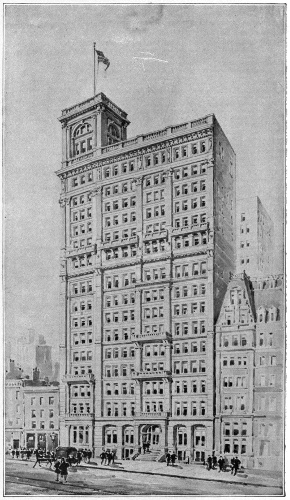
STANDARD BUILDING, 26 BROADWAY, NEW YORK.
XVIII. THE STANDARD OIL-COMPANY.
409
Growth of a Great Corporation—Misunderstood and Misrepresented—Improvements
in Treating and Transporting Petroleum—Why Many
Refineries Collapsed—Real Meaning of the Trust—What a Combination
of Brains and Capital has Accomplished—Men Who Built Up
a Vast Enterprise that has no Equal in the World.
“Speak of me as I am; nothing extenuate,
Nor set down aught in malice.”—Shakespeare.
“Not to know me argues yourself unknown.”—Milton.
“The keen spirit seizes the prompt occasion.”—Hannah Moore.
“Genius is the faculty of growth.”—Coleridge.
“Success affords the means of securing additional success.”—Stanislaus.
“Fortune, success, position, are never gained but by determinedly, bravely striking,
growing, living to a thing.”—Townsend.
“The goal of yesterday will be the starting-point of to-morrow.”—Voltaire.
“Where the judgment is weak the prejudice is strong.”—Kate O’Hara.
“Amongst the sons of men how few are known
Who dare to be just to merit not their own.”—Churchill.
“Censure is the tax a man pays to the public for being eminent.”—Dean Swift.
“As though a rose should shut and be a bud again.”—John Keats.
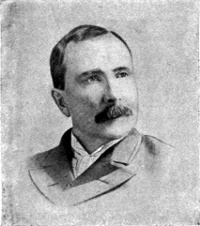
Compared with a petroleum-sketch
which did not touch upon the Standard
Oil-Company, in different respects
the greatest corporation the
world has ever known, Hamlet with
“the melancholy Dane” left out would be
a masterpiece of completeness. Perhaps
no business-organization in this or any
other country has been more misrepresented
and misunderstood. To many well-meaning
persons, who would not willfully
harbor an unjust thought, it has suggested
all that is vicious, grasping and oppressive
in commercial affairs. They picture it as
a cruel monster, wearing horns and cloven-hoofs
and a forked-tail, grown rich and fat
devouring the weak and the innocent. Its motives have been impugned, its
methods condemned and its actions traduced. If a man in Oildom drilled a
dry-hole, backed the wrong horse, lost at poker, dropped money speculating,
stubbed his toe, ran an unprofitable refinery, missed a train or couldn’t maintain
champagne-style on a lager-beer income, it was the fashion for him to pose
as the victim of a gang of conspirators and curse the Standard as vigorously
and vociferously as the fish-wife hurled invectives at Daniel O’Connell.
Some folks display most wonderful agility
In their attempts to shift responsibility.
The reasons for this are as numerous as the sands of the sea. It is no new
thing to shove upon other shoulders the burden that belongs properly to our
own. In their fiery zeal to convict somebody people have been known to bark
410up the wrong tree, to charge the innocent with all sorts of offences and to get
off their base entirely. Such people and such methods did not die out with the
passing of the Salem witch-burners. The Standard was made the scape-goat
of the evil deeds alleged to have been contemplated by the unsavory South-Improvement
Company. That odious combine, which included a number of
railroad-officials, oil-operators and refiners, disbanded without producing, refining,
buying, selling or transporting a gallon of petroleum. “Politics makes
strange bedfellows” and so does business. Among subscribers for South-Improvement
stock were certain holders of Standard stock and also their bitterest
opponents; among those most active in giving the job its death-blow
were prominent members of the Standard Oil-Company. The projected spoliation
died “unwept, unhonored and unsung,” but it was not a Standard scheme.
Envy is frequently the penalty of success. Whoever fails in any pursuit
likes to blame somebody else for his misfortune. This trick is as old as the
race. Adam started it in Eden, Eve tried to ring in the serpent and their posterity
take good care not to let the game get rusty from disuse! Its aggregation
of capital renders the Standard, in the opinion of those who have “fallen outside
the breastworks,” directly responsible for their inability to keep up with
the procession. Sympathizers with them deem this “confirmation strong as
proof of Holy Writ” that the Standard is an unconscionable monopoly, fostered
by crushing out competition. Such reasoning forgets that enterprise, energy,
experience and capital are usually trump-cards. It forgets that “the race
is to the swift,” the battle is to the mighty and that “Heaven is on the side with
the heaviest artillery.” Carried to its logical conclusion, it means that improved
methods, labor-saving appliances and new processes count for nothing.
It means that the snail can travel with the antelope, that the locomotive must
wait for the stage-coach, that the fittest shall not survive. In short, it is the
double-distilled essence of absurdity.
Any advance in methods of business necessarily injures the poorest competitor.
Is this a reason why advances should be held back? If so, the public
could derive no benefit from competition. The fact that a man with meagre
resources labors under a serious disadvantage is not an excuse for preventing
stronger parties from entering the field. The grand mistake is in confounding
combination with monopoly. By combination small capital can compete successfully
with large capital. Every partnership or corporation is a combination,
without which undertakings beyond individual reach would never be accomplished.
Trunk railroads would not be built, unity of action would be destroyed,
mankind would segregate as savages and the trade of the world would
stagnate. Combinations should be regulated, not abolished. Rightful competition
is not a fierce strife between persons to undersell each other, that the one
enduring the longest may afterwards sell higher, but that which furnishes the
public with the best products at the least cost. This is not done by selling
below cost, but by diminishing in every way possible the cost of producing,
manufacturing and transporting. The competition which does this, be it by an
individual, a firm, a corporation, a trust or a combination, is a public benefactor.
This kind of competition uses the best tools, discards the sickle for the
cradle and the cradle for the reaper, abandons the flail for the threshing-machine
and adopts the newest ideas wherever and whenever expenses can be
lessened. To this end unrestricted combination and unrestricted competition
must go hand-in-hand. A small profit on a large volume of business is better
for the consumer than a large profit on a small business. The man who sells a
411million dollars’ worth of goods a year, at a profit of five per cent., will become
rich, while he who sells only ten-thousand dollars’ worth can get a bare living.
If the builder of a business of one-hundred-thousand dollars deserve praise,
why should the builder of a business of millions be censured? Business that
grows greater than people’s limited notions should not for that cause be fettered
or suppressed. When business ceases to be local and has the world for
its market, capital must be supplied to meet the increasing demand and combination
is as essential as fresh air. Thus large establishments take the place of
small ones and men acting in concert achieve what they would never attempt
separately. The more perfect the power of association the greater the power
of production and the larger the proportion of the product which falls to the
laborer’s share. The magnitude of combinations must correspond with the
magnitude of the business to be done, in order to secure the highest skill, to
employ the latest devices, to pay the best wages, to invent new appliances, to
improve facilities and to give the public a cheaper and finer product. This is
as natural and legitimate as for water to run down hill or the fleet greyhound
to distance the slow tortoise.
How has the Standard affected the consumer of petroleum-products? What
has it done for the people who use illuminating oils? Has it advanced the price
and impaired the quality? The early distillations of petroleum were unsatisfactory
and often dangerous. The first refineries were exceedingly primitive and
their processes simple. Much of the crude was wasted in refining, a business
not financially successful as a rule until 1872, notwithstanding the high prices
obtained. Methods of manufacture and transportation were expensive and
inadequate. The product was of poor quality, emitting smoke and unpleasant
odor and liable to explode on the slightest provocation. In 1870 a few persons,
who had previously been partners in a refinery at Cleveland, organized the
Standard Oil-Company of Ohio, with a capital of one-million dollars, increased
subsequently to three-and-a-half millions. For years the history of refining had
been mainly one of disaster and bankruptcy. A Standard Oil-Company had
been organized at Pittsburg by other persons and was doing a large trade.
The Cleveland Standard Refinery, the Pittsburg Standard Refinery, the Atlantic
Refining Company of Philadelphia and Charles Pratt & Co. of New York were
extensive concerns. Because of the hazardous nature and peculiar conditions
of the refining industry, the need of improved methods and the manifold advantages
of combination, they entered into an alliance for their mutual benefit.
Refineries in the oil-regions had combined before, hence the association of these
interests was not a novelty. The cost of transportationtransportation and packages had been
important factors in crippling the industry. Crude was barreled at the wells and
hauled in wagons to the railroads prior to the system of transporting it by pipes
laid under ground. Railroad-rates were excessive and irregular. Refiners
who combined and could throw a large volume of business to any particular
road secured favorable rates. The rebate-system was universal, not confined
to oil alone, and possibly this fact had much to do with the combination of
refiners afterwards known as the Standard Oil-Company.
Very naturally the Standard endeavored to secure the lowest transportation-rates.
Quite as naturally railroad-managers, in their eagerness to secure
the traffic, vied with each other in offering inducements to large shippers of
petroleum. The Standard furnished, loaded and unloaded its own tank-cars,
thereby eliminating barrels and materially cheapening the freight-service. This
reduction of expense reduced the price of refined in the east to a figure which
412greatly increased the demand and gave oil-operations a healthy stimulus. Still
more important was the introduction of improvements in refining, which yielded
a larger percentage of illuminating-oil and converted the residue into merchantable
products. Chemical and mechanical experts, employed by the combined
companies to conduct experiments in this direction, aided in devising processes
which revolutionized refining. The highest quality of burning-oil was obtained
and nearly every particle of crude was utilized. Substances of commercial
value took the place of the waste that formerly emptied into the streams, polluting
the waters and the atmosphere. In this way the cost was so lessened
that kerosene became the light of the nations. Consumers, whose dime now
will buy as much as a dollar would before the “octopus” was heard of, are
correspondingly happy.
Since consumers have fared so well, how about refiners outside the Standard?
That smaller concerns were unable to compete with the Standard under
such circumstances was no reason why the public should be deprived of the
advantages resulting from concentration of capital and effort. Many of these,
realizing that small capital is restricted to poor methods and dear production,
either sold to the Standard or entered the combination. In not a few cases
wide-awake refiners took stock for part of the price of their properties and engaged
with the company, adding their talents and experience to the common
fund for the benefit of all concerned. Others, not strong enough to have their
cars and provide all the latest improvements, made such changes as they could
afford to meet the requirements of the local trade, letting the larger ones attend
to distant markets. Some continued right along and they are still on deck as
independent refiners, always a respectable factor in the trade and never more
active than to-day. Those who would neither improve, nor sell, nor combine,
sitting down placidly and believing they would be bought out later on their
own terms, were soon left far behind, as they deserved to be. Let it be said
positively that the Standard, in negotiating for the purchase or combination of
refineries, treated the owners liberally and sought to keep the best men in the
business. A number who put up works to sell at exorbitantexorbitant prices, failing in
their design, howled about “monopoly” and “freezing out” and tried to pass
as martyrs. It is true hundreds of inferior refineries have been dismantled, not
because they were frozen out by a crushing monopoly, but because they lacked
requisite facilities. The refineries in vogue when the Standard was organized
could not stay in business a week, if resurrected and revived. A team of pack-mules
might as well try to compete with the New York Central Railroad as
these early refineries to meet the requirements of the petroleum-trade at its
present stage of perfection. They were “frozen out” just as stage-coaches
were “frozen out” by the iron-horse or the sailing-vessel of our grandfathers’
time by the ocean-liner that crosses the Atlantic in six days. Every labor-saving
invention and improvement in machinery throws worthy persons out of
employment, but inventions and improvements do not stop for any such cause.
Business is a question of profit and convenience, not a matter of sentiment.
The manufacturer who, by an improved process, can save a fraction of a cent
on the yard or pound or gallon of his output has an enormous advantage.
Must he be deprived of it because other manufacturers cannot produce their
wares as cheaply? Refining petroleum is no exception to the ordinary rule
and a transformation in its methods and results was as inevitable as human
progress and the changes of the seasons.
Over-production is justly chargeable with the low price of crude that
413wafted many producers into bankruptcy. Regardless of the inexorable laws
of supply and demand, operators drilled in Bradford and Butler until forty-million
barrels were above ground and the price fell to forty cents. Time and
again the wisest producers sought to stem the tide by stopping the drill, which
started with renewed energy after each brief respite. With the stocks bearing
the market the dropping of crude to a price that meant ruin to owners of small
wells was as certain as death and taxes. Gold-dollars would be as cheap as
pebbles if they were as plentiful. Forty-million barrels of diamonds stored in
South Africa would bring the glistening gems to the level of glass-beads. The
Standard, through the National-Transit Company, erected thousands of tanks
to husband the enormous surplus, which the world could not consume and
would not have on any terms. Hosts of operators were kept out of the sheriff’s
grasp by this provision for their relief, using their certificates as collateral during
the period of extreme depression. The richest districts were drained at length,
consumption increased and production declined, stocks were reduced and prices
advanced. Then a number of oil-operators, foremost among whom were some
of the men whom the Standard had carried over the grave crisis, thought the
National-Transit was making too much money storing crude and tried to secure
legislation that was hardly a shade removed from confiscation. The legislature
refused to pass the bills, the company voluntarily reduced its charges and the
agitation subsided. Thousands of producers sold or entered large companies,
into whose hands a good share of the development has fallen, mainly because
of the great expense of operating in deep territory and the wisdom of dividing
the risk attendant upon seeking new fields. Operators who had to retire were
“frozen out” by excessive drilling, nothing more and nothing less!
The highest efficiency in all fields of economical endeavor is obtained by
the greatest degree of organization and specialization of effort. To attack
large concerns as monopolies, simply because they represent millions of dollars
under a single management, is as stupid and unjust as the narrow antagonism
of ill-balanced capitalists to organized labor. If organized capital means better
methods, greater facilities and improved processes, organized labor means
better wages, greater recognition and improved industrial conditions. Hence
both deserve to be encouraged and both should work in harmony. The
Standard Oil-Company established agencies in different states for the sale of its
products. As the business grew it organized corporations under the laws of
these states, to carry on the industry under corporate agencies. Manufactories
were located at the seaboard for the export-trade. It was easier and cheaper
to pipe crude to the coast than to refine it at the sources of supply and ship the
varied products. Thus the refining of export-oil was done at the seaboard, just
as iron is manufactured at Pittsburg instead of at the ore-beds on Lake
Superior. The company aimed to open markets for petroleum by reducing
the cost of its transportation and manufacture and bettering its quality. It
manufactured its own barrels, cans, paints, acids, glue and other materials,
effecting a vast saving. On January second, 1882, the forty persons then associated
in the Standard owned the entire capital of fifteen corporations and a part
of the stock of a number of others. Nine of these forty controlled a majority
of the stocks so held, and it was agreed on that date that all the stocks of the
corporations should be placed in the hands of these nine as trustees. The trustees
issued certificates showing the extent of each block of stock so surrendered,
and agreed to conduct the business of the several corporations for the best
interests of all concerned. This was the inception of the Standard Oil-Trust,
414the most abused and least understood business-organization in the history of
the race.
The Standard Trust, which demagogues lay awake nights coining language
to denounce, did not unite competing corporations. The corporations were
contributory agencies to the same business, the stock owned by the individuals
who had built up and carried on the business and held the voting power. These
individuals had combined not to repress business, but to extend it legitimately,
by allying various branches and various corporations. The organization of
the Trust was designed to facilitate the business of these corporations by uniting
them under the managementmanagement of one Board of Trustees. This object was business-like
and laudable. It had no taint of a scheme to “corner” a necessity of
life and elevate the price at the expense of the masses. On the contrary, it was
calculated to enlarge the demand and supply it at the minimum of profit. For
ten years the Standard Trust continued in existence, dissolving finally in 1892.
During this term its stockholders increased from forty to two thousand. Many
of the most skillful refiners and experienced producers joined the combination
and were retained to manage their properties. Each corporation was managed
as though independent of every other in the Trust, except that the rivalry to
show the best record stimulated them to constant improvement. Whatever
economy one devised was adopted by all. The business was most systematic
and admirably managed in every detail, running as harmoniously as the different
parts of a watch. Clerks, agents and employés who could save a few
hundred dollars purchased Trust Certificates and thus became interested in the
business and gains. If it is desirable to multiply the number who enjoy the
profits of production, how can it be done better than through ownership of
stock in industrial associations? The problem of co-operation and profit-sharing
can be solved in this way. The Standard Trust was a real object-lesson in
economics, which illustrated in the fullest measure the benefits of an association
in business that affected consumers and producers of a great staple alike
favorably.
Misrepresentation is as hard to eradicate as the Canada thistle or the
English sparrow. Once fairly set going, it travels rapidly. “A lie will travel
seven leagues while Truth is pulling on its boots.” The Standard is the target
at which invidious terms and bitter invective have been hurled remorselessly,
often through downright ignorance. Although reputable editors might be misled,
in the hurry and strain of daily journalism, to give currency to deliberate
falsehoods against corporations or capitalists, reasonable fairness might be
expected from the author of a pretentious book. Henry D. Lloyd, of Chicago,
last year published “Wealth Against Commonwealth,” an elaborate work,
which is devoted mainly to an assault upon the Standard Oil-Company. The
book, notable for its distortion of facts and suppression of all points in favor of
the corporation it assails, caters to the worst elements of socialism. The author
views everything through anti-combination glasses and, like the child with the
bogie-man, sees the monopoly-spook in every successful aggregation of capital.
He confounds the South-Improvement Company with the Standard and charges
to the latter all the offenses supposed to lie at the door of the organization that
died at its birth. One thrilling story is cited to show that the Standard robbed
a poor widow. The narrative is well calculated to arouse public resentment
and encourage a lynching-bee. It has been repeated times without number.
Within the past month two Harrisburg ministers have referred to it as a startling
evidence of the unscrupulous tyranny of the Standard millionaires. To
415make the case imposing Mr. Lloyd informs mankind that the husband of this
widow had been “a prominent member of the Presbyterian church, president
of a Young Men’s Christian Association and active in all religious and benevolent
enterprises.” After his death she continued the business until she was
finally coerced into selling it to the Trust at a ruinously low price—a mere fraction
of its actual value. Mr. Lloyd states her hopeless despair as follows:
“Indignant with these thoughts and the massacred troop of hopes and ambitions that her
brave heart had given birth to, she threw the letter—a letter she had received from the Standard
regarding the sale of her property—into the fire, where it curled up into flames like those from
which a Dives once begged for a drop of water. She never reappeared in the world of business,
where she had found no chivalry to help a woman save her home, her husband’s life-work
and her children.”
Is this harrowing statement true? The widow continued the business four
years after her husband’s death. Competition increased, prices tumbled, the
margin of profit was constantly narrowing, new appliances simplified refining-processes
and the widow’s plant was no longer adapted to the business.
She sold for sixty-thousand dollars, the Standard paying twice the sum for
which a refinery better suited to the purpose could be constructed. Foolish
friends afterwards told her she had sold too low and the widow wrote a severe
letter to the president of the Standard. The company had bought the property
to oblige her and at once offered it back. She declined to take it, or sixty-thousand
dollars in Standard stock, evidently realizing that the refinery had lost
its profit-earning capacity and that even the new management might not be able
to make it pay. This will serve to illustrate the unfairness of “Wealth Against
Commonwealth,” which has been widely quoted because of its presumed reliability
and the high standing of the publishers. Yet this story of imaginary
wrong has been worked into speeches, sermons and editorials of the fiercest
type! In its treatment of the widow the Standard was truly magnanimous.
Few business-men would consent to undo a transaction and have their labor
for naught, simply because the other party had become dissatisfied. Possibly
Mr. Lloyd would not be as generous if there was any profit in the transaction.
If the Standard cut prices to ruin the widow and other competitors, would not
oil have gone up again when they were disposed of? No such upward movement
occurred. The widow disappeared. Many small refineries disappeared.
Monopoly railroad-contracts, if such ever existed, have disappeared, but the
price of refined-oil has been falling steadily for twenty years, declining from an
average of nineteen cents a gallon in 1876 to five cents in 1895. The potent
fact in this connection is that the Standard has continued to make profits with
the declining price of oil. This conclusively demonstrates that the decline was
due to economic improvements in the productive methods and not to a malicious
cut to ruin a widow or anybody else, as Mr. Lloyd assumes. Otherwise
a profit accompanying the fall in price would have been impossible and the
Standard would have been sold out by the sheriff long years ago.
All the dealers in slander from Lloyd down to the chronic kicker who has
attempted to make money by annoying the Standard have played the Rice case
as a trump-card. According to their version, Mr. Rice was an angelic Vermonter,
whose success inspired the Standard with devilish enmity and it determined
to compass his ruin. Rice had operated at Pithole and at Macksburg
and owned a small refinery at Marietta. It was alleged that the Cleveland &
Marietta Railroad discriminated against him, doubling his freight-charge and
giving the Standard a drawback on all the oil that went over the road. This
was an iniquitous arrangement, entered into by the receiver of the road and
416cancelled by the Standard whenever a report of what was done reached New
York. Mr. Rice had paid two-hundred-and-fifty dollars wrongfully, the money
was at once refunded and Mr. Rice did not harass the company into buying his
twenty-thousand dollar refinery for half a million. This will serve as an example
of the dishonest misstatements that had wrought lots of good people up to white
heat. The sins of the trusts may be very scarlet and very numerous, but economic
literature should not pollute the sources of information and the foundations
of public opinion.
An oft-repeated story is that the Standard owes its success to railway-discriminations.
In proof of this the testimony of A. J. Cassatt is quoted. The
testimony, published in a congressional investigation-report, shows that granting
rebates was then the custom of railway-companies. Largely the same
rebates were granted to all who shipped over the railways. Special to the
Standard was payment of a joint freight-rate over pipe-line and railroad. A
large rebate was given for one summer to all shippers by rail to equalize low
rates by canal, of which many shippers took advantage. The only discriminatory
rebate received by the Standard was ten per cent. for equalizing its large
shipments over three trunk-lines, shipping exclusively by rail, even when water-rates
were cheaper, furnishing terminal facilities and exempting the roads from
loss by fire or accident. Courts in England and this country have very properly
held that railways have the right to carry for less rates under such circumstances.
Many wise men are of the same opinion. Subsequently it was developed that,
while the short-lived agreement existed, the Standard’s strongest competitors
were getting lower rates of freight than it was paying! Why do the Lloyd
brand of critics ignore this pointed fact?
Another favorite story is that some officers of the Standard were convicted
of burning a rival refinery. As all know who ever took the trouble to investigate,
they were indicted for conspiracy to injure a rival. The counts in the
indictment embraced the enticing away of an employé, the bringing of suits to
prevent infringement of patents and the serious charge of inciting an employé
to burn the works. When all the evidence on the part of the State was in, the
court directed the discharge of every person connected with the Standard.Standard.
There was not a scintilla of evidence against them. Two of the indicted persons
were convicted of conspiracy, but they were not connected with the Standard,Standard,
and never owned a share of Standard stock. The majority of the jurymen made
affidavits that they found the convicted persons guilty only of enticing away an
employé. The employé thus enticed had first been enticed from the works of
the convicted parties and induced to reveal the secret processes by which a
valuable lubricating-oil was manufactured. The best citizens of Rochester
certified that the men convicted were men of unimpeachable honor, while the
men who testified against them were quite the reverse. The whole affair was a
wicked plot to blacken the character of men who stood and who still stand as
high as any in Rochester. The court, satisfied of their innocence of any grave
offence, inflicted merely a nominal fine.
Many of the attacks in a well-known work by a leading socialist against the
Standard are made up of court-cases. The accusations are copied, the moving
speeches of plaintiffs’ attorneys are printed; but all else is omitted, except that
the case was decided in favor of the Standard. The inference is left to be
drawn, or the charge is made openly, that the court was corrupt. Had the
evidence of both sides been given, there would be no more room for such an
inference than for a pretty maiden’s small brother in the parlor when her best
417young man is about to pop the momentous question. The rustic divine, weak
in his spelling and strong in his opposition to the feminine style of coiling the
hair in a huge knot, had better grounds for declaring the Scripture endorsed
his view of the fashion. Reading the familiar passage, “let him that is on the
housetop not come down to take anything out of his house,” he based his terrific
sermon on this dismembered clause of the verse: “Top not, come down.”
One instance may be noted briefly. A Pennsylvania office-holder, whose
unworthy motives an investigation exposed, charged that the Standard had
defrauded the State of millions of taxes. The case was ably tried before an
upright judge and the allegation found to be utterly baseless. Then the judge
was charged with corruption. The case was taken to the highest court of the
State, which affirmed the decision of the court below. At once the Supreme
Court and the Attorney-General, who conducted the case for the State with signal
ability, were accused of rank corruption. Perhaps the greatest surprise is that
they were not charged with an attempt to get even with Moses by breaking all
the commandments at one lick. An investigation committee, appointed by the
Legislature, went fully into all the facts and allegations and reported that the
case had been ably and fairly tried and correctly decided. It only remained to
charge the legislative committee with corruption, which was done with great
promptitude and emphasis. Yet every lawyer knows that the case of Pennsylvania
against the Standard Oil-Company is a leading case on the subject of taxation
of foreign corporations, establishing correct principles which, since its
decision, the Supreme Court of the United States has affirmed.
In another case a respectable old man conceived the idea that he had
solved the problem of continuous distillation of oil, an invention which would
very much cheapen the product and be worth millions to refiners. The Standard
aided him in his experiments until convinced they were unsuccessful. He
became crazed on the subject and brought suit, alleging he had been prevented
from demonstrating his discovery. The case was tried and the baseless suit
dismissed, with as little injury to the poor man’s feelings as possible. This
incident figures in histories written to fire the popular heart in the war against
wealth, accompanied by pictures of a soulless corporation and an insane old
man, calculated to draw hot tears and inflame public indignation to a dangerous
pitch. Of course the readers are supposed to infer that the court was
corrupted and justice grossly outraged. And so the changes are rung along the
whole line; but the Standard, regardless of malevolent assaults and villainous
distortions of facts, goes right on with its business of furnishing the world with
the best light in the universe.
Russian competition, the extent and danger of which most people do not
begin to appreciate, was met and overcome by sheer tenacity and superior generalship.
The advantages of capable, courageous, intelligent concentration of
the varied branches of a great industry were never manifested more strongly.
Deprived of the invincible bulwark the Standard offered, the oil-producers of
Pennsylvania, New York, West Virginia, Ohio and Indiana would have been
utterly helpless. The Muscovite bear would have gobbled the trade of Europe
and Asia, driving American oil from the foreign markets. Local consumption
would not have exhausted two-thirds of the production, stocks of crude would
have piled up and the price would have fallen proportionately. Instead of ranking
with the busiest, happiest and most prosperous quarters of the universe, as
they are to-day, the oil-regions of five states would have been irretrievably
ruined, dragging down thousands of the brightest, manliest, cleverest fellows
418on God’s footstool! Instead of bringing a vast amount of gold from England,
France and Germany for petroleum produced on American soil, refined by American
workmen paid American wages and exported by an American company in
American vessels, the trade would have been killed, the cash would have stayed
across the waters and the country at large would have suffered incalculably!
These are things to think of when some cheap agitator, with a private axe to
grind, a mean spite to gratify or a selfish object to attain, raises a howl about
monopoly and insists that the entire creation should “damn the Standard!”
When the history of this wonderful century is written it will tell how an
American boy, born in New York sixty years ago, clerked in a country-store,
kept a set of books, started a small oil-refinery at Cleveland and at forty
was the head of the greatest business in the world. This is, in outline, the
story of John D. Rockefeller’s successful career. Yesterday, as it were, a
youth with nothing but integrity, industry and ambition for capital—a pretty
good outfit, too—to-day he is one of the half-dozen richest men in Europe or
America. Better than all else, integrity that is part and parcel of his moral
nature, industry that finds life too fruitful to waste it idly and ambition to excel
in good deeds as well as in business are his rich possession still. Gathering the
largest fortune ever accumulated in twenty-five years has not blunted his fine
sensibilities, dwarfed his intellectual growth, stifled his religious convictions or
absorbed his whole being. Increasing wealth brought with it a deep sense of
increasing responsibility and he is honored not so much for his millions as for
the use he makes of them. Even in an age unrivalled for money-getting and
money-giving, Mr. Rockefeller’s keen foresight, executive ability and wise liberality
have been notably conspicuous. His faith in the future of petroleum and
his desire to benefit humanity he has shown by his works. Believing in the
power of united effort to develop an infant-industry, his genius devised the
system of practical co-operation that developed into the Standard Oil-Trust,
against which prejudice and ignorance have directed their fiercest fire. Believing
in education, his magnificent endowment of Chicago University—eight to
ten-million dollars—ranks him with the foremost contributors to the foundation
of a seat of learning since schools and colleges began. Believing in fresh air
for the masses, he donated Cleveland a public park and a million to equip it
superbly. Believing in spiritual progress, he builds churches, helps weak congregations
and aids in spreading the gospel everywhere. Believing in the
claims of the poor, his charities amount to hundreds-of-thousands of dollars
yearly, not to encourage pauperism and dependence, but to relieve genuine distress,
diminish human suffering and put struggling men and women in the way
to improve their condition. He has differed from nearly all other eminent public
benefactors by giving freely, quietly and modestly during his active life,
without seeking the popular applause his munificence could easily obtain.
Mr. Rockefeller is a strict Baptist, a regular attendant at church and prayer-meeting,
a teacher in the Sunday-school and a staunch advocate of aggressive
Christianity. His advancement to commanding wealth has not changed his
ideas of duty and personal obligation. He realizes that the man who lives for
himself alone is always little, no matter how big his bank-account. He and
his family walk to service or ride in a street-car, with none of the trappings
befitting the worship of Mammon rather than the glory of God. Earnest, positive
and vigorous in his religion as in his business, he takes no stock in the
dealer who has not stamina or the profession of faith that is too destitute of
backbone to have a denominational preference. The president of the Standard
419Oil-Company impresses all who meet him with the idea of a forceful,
decisive character. He looks people in the face, his eyes sparkle in conversation
and he relishes a bright story or a clever narration. You feel that he can
read you at a glance and that deception and evasion in his presence would be
utterly futile. The flatterer and sycophant would make as little headway with
him as the bunco-steerer or the green-goods vendor. His estimate of men is
rarely at fault and to this quality some measure of the Standard’s success must
be attributed. As if by instinct, its chief officer picked out men adapted to
special lines of work—men who would not be misfits—and secured them for his
company. The capacity and fidelity of the Standard corps are proverbial.
Whenever Mr. Rockefeller wishes to enjoy a breathing-spell at his country-seat
up the Hudson or on his Ohio farm, he leaves the business with perfect confidence,
because his lieutenants are competent and trustworthy and the machine
will run along smoothly under their watchful care. He has not accumulated
his money by wrecking property, but by building up, by persistent improvement
and by rigidly adhering to the policy of furnishing the best articles at the lowest
price. Fair-minded people are beginning to understand something of the service
rendered the public by the man who stands at the head of the petroleum-industry
and more than any other is the founder of its commerce. He has
invested in factories, railroads and mines, giving thousands employment,
developing the resources of the country and adding to the wealth of the nation.
He is human, therefore he sometimes errs; he is fallible, therefore he makes
mistakes, but the world is learning that John D. Rockefeller has no superior in
business and that the Standard Oil-Company is not an organized conspiracy to
plunder producers or consumers of petroleum. It is time to dismiss the idea
that ability to build up and maintain a large business is discreditable, that marvellous
success is blameworthy and that business-achievements imply dishonesty.
William Rockefeller, who resembles his brother in business skill, is a
leader in Standard affairs and has his office in the Broadway building. He
was a member of the first Board of Trustees and bore a prominent part in
organizing and developing the Oil-Trust. He is largely interested in railroads,
belongs to the best clubs, likes good horses and contributes liberally to
worthy objects. The Standard folks don’t lock up their money, loan it on
mortgages at extravagant rates, spend it in Europe or try to get a gold squeeze
on the government. They employ it in manufactures, in railways, in commerce
and in enterprises that promote the general welfare.
From the days of the little refinery in Cleveland, the germ of the Standard,
Henry M. Flagler and John D. Rockefeller have been closely associated in oil.
Samuel Andrews, a practical refiner and for some time their partner, retired
from the firm with a million dollars as his share of the business. The organization
of the Standard Oil-Company of Cleveland was the first step towards
the greater Standard Oil-Company of which all the world knows something.
Its growth surprised even the projectors of the combination, who “builded
better than they knew.” Mr. Flagler devotes his time largely to beneficent
uses of his great wealth. He recognizes the duty of the possessor of property
to keep it from waste, to render it productive and to increase it by proper
methods. A vast tract of Florida swamp, yielding only malaria and shakesshakes,
he has converted into a region suited to human-beings, producing cotton, sugar
and tropical fruits and affording comfortable subsistence to thousands of provident
settlers. He has transformed St. Augustine from a faded antiquity into
420a modern town, with the magnificent Ponce de Leon Hotel, paved streets, elegant
churches, public halls, and all conveniences, provided by this generous
benefactor at a cost of many millions. He has constructed new railroads,
improved lines built previously, opened interior counties to thrifty emigrants
and performed a work of incalculable advantage to the New South. He and
his family attend the West Presbyterian Church, of which the Rev. John R.
Paxton, formerly of Harrisburg, was pastor until 1894. Mr. Flagler is of average
height, slight build and erect figure. His hair is white, but time has not
dealt harshly with the liberal citizen whose career presents so much to praise
and emulate.
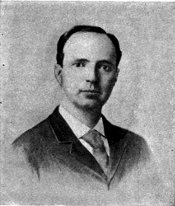
John D. Archbold, vice-president of the Standard Oil-Company and its
youngest trustee during the entire existence of the Oil-Trust, has been actively
connected with petroleum from his youth. No man is better known and better
liked personally in the oil-regions. From
his father, a zealous Methodist minister, and
his good mother, one of the noble women to
whom this country owes an infinite debt of
gratitude, he inherited the qualities of head
and heart that achieved success and gained
multitudes of friends. A mere lad when the
reports of golden opportunities attracted
him from Ohio to the land of petroleum, he
first engaged as a shipping-clerk for a Titusville
refinery. His promptness, accuracy,
and pleasant address won him favor and
promotion. He soon learned the whole art
of refining and his active mind discovered
remedies for a number of defects. Adnah
Neyhart induced him to take charge of his
warehouse in New York City for the sale of
refined-oil. His energy and rare tact increased the trade of the establishment
steadily. Mr. Rockefeller met the bright young man and offered him a responsible
position with the Standard. He was made president of the Acme Refining
Company, then among the largest in the United States. He improved the
quality of its products and was entrusted with the negotiations that brought
many refiners into the combination. He had resided at Titusville, where he
married the daughter of Major Mills, and was the principal representative of
the Standard in the producing section. When the Trust was organized he
removed to New York and supervised especially the refining-interest of the
united corporations. His splendid executive talent, keen perception, tireless
energy and honorable manliness were simply invaluable. Mr. Archbold is
popular in society, has an ideal home, represents the Standard in the directory
of different companies and merits the high esteem ungrudingly bestowed by
his associates in business and his acquaintances everywhere.
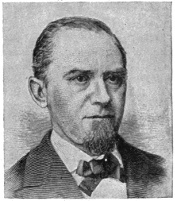
The personal traits and business-successes of Charles Pratt, an original
member of the Standard Trust, were typical of American civilization. The son
of poor parents in Massachusetts, where he was born in 1830, necessity compelled
him to leave home at the early age of ten and seek work on a farm. He
toiled three years for his board and a short term at school each winter. For
his board and clothes he next worked in a Boston grocery. His first dollar in
money, of which he always spoke with pride as having been made at the work-bench,
421he earned while learning the machinist-trade at Newton, in his native
state. With the savings of his first year in the machine-shop he entered an
academy, studying diligently twelve months and subsisting on a dollar a week.
Then he entered a Boston paints-and-oil
store, devoting his leisure hours to study and
self-improvement. Coming to New York in
1851, he clerked in Appleton’s publishing-house
and later in a paint-store. In 1854 he
joined C. T. Reynolds and F. W. Devoe in a
paints-and-oil establishment. Petroleum refining
became important and the partners
separated in 1867, Reynolds controlling the
paints-department and Charles Pratt & Co.
conducting the oil-branch of the business.
The success of the latter firm as oil-refiners
was extraordinary. Astral-oil was in demand
everywhere. The works at Brooklyn,
continuous and surprising as was their expansion,
found it difficult to keep pace with
the consumption. The firm entered into
the association with the Cleveland, Pittsburg and Philadelphia companies that
culminated in the Standard Oil-Trust, Mr. Pratt holding the relation of president
of the Charles-Pratt Manufacturing Company. He lived in Brooklyn and
died suddenly at sixty-three, an attack of heart-disease that prostrated him in
his New-York office proving fatal in three hours. For thirty years he devoted
much of his time to the philanthropies with which his name will be perpetually
identified. He built and equipped Pratt Institute, a school of manual arts, at a
cost of two-million dollars. He spent a half-million to erect the Astral Apartment
Buildings, the revenue of which is secured to the Institute as part of its
endowment. He devoted a half-million to the Adelphia Academy and a quarter-million
towards the new edifice of Emanuel Baptist Church, of which he
was a devout, generous member. His home-life was marked by gentleness
and affection and he left his family an estate of fifteen to twenty-millions.
Charles Pratt was a man of few words, alert, positive and unassuming, sometimes
blunt in business, but always courteous, trustworthy and deservedly
esteemed for liberality and energy.
Jabez A. Bostwick, a member of the Standard Trust from its inception,
was born in New York State, spent his babyhood in Ohio, whither the family
moved when he was ten years old, and died at sixty-two. His business-education
began as clerk in a bank at Covington, Ky. There he first came into public
notice as a cotton-broker, removing to New York in 1864 to conduct the
same business on a larger scale. He secured interests in territory and oil-wells
at Franklin in 1860, organized the firm of J. A. Bostwick & Co. and engaged
extensively in refining. The firm prospered, bought immense quantities of
crude and increased its refining capacity extensively. Mr. Bostwick was active
in forming the Standard Oil-Trust and was its first treasurer. He severed his
connection with his oil-partner, W. H. Tilford, who also entered the Standard
Oil-Company. Seven years before his death he retired from the oil-business to
accept the presidency of the New York & New England Railroad. He held the
position six years and was succeeded by Austin Corbin. Injuries during a fire
at his country-seat in Mamaroneck caused his death. The fire started in Frederick
422A. Constable’s stables, in rear of Mr. Bostwick’s. Unknown to his coachman,
who was pushing behind it, Mr. Bostwick seized the whiffletrees of a carriage.
Suddenly the vehicle swerved and the owner was violently jammed
against the side of the stable. The coachman saw his peril and pulled the carriage
back. Mr. Bostwick reeled forward, his face white with pain and sank
moaning upon a buckboard. “Don’t leave me, Mr. Williams,” he whispered
to his son’s tutor, “I fear I am badly hurt.” The sufferer was carried to the
house, became unconscious and died in ten minutes, surrounded by members
of his household and his neighbors. In 1866 Mr. Bostwick married a daughter
of Ford Smith, a retired Cincinnati merchant, who removed to New York during
the war. They had a son and two daughters. The daughters married and
were in Europe when their father met his tragic fate. The widow and children
inherited an estate of twelve millions. Mr. Bostwick was liberal with his
wealth, giving largely without ostentation. Forrest College, in North Carolina,
and the Fifth Avenue Baptist Church of New York were special recipients of his
bounty, while his private benefactions amounted to many thousands yearly.
He was strict almost to sternness in his dealings, preferring justice to sentiment
in business.
These were the six trustees of the Standard Oil-Trust as first constituted of
whom the world has heard and read most. Many of the two-thousand stock-holders
of the Standard Oil-Company are widely known. Benjamin Brewster,
president of the National-Transit Company, retired with an ample fortune. His
successor, H. H. Rogers, the present head of the pipe-line system, is noted
alike for business-sagacity and sensible benefactions. The great structure at
No. 26 Broadway, the largest office-building in New York occupied by one
concern, is the Standard headquarters. Each floor has one or more departments,
managed by competent men and all under supervision of the company’s
chief officials. From the basement, with its massive vaults and steam-heating
plant, to the roof every inch is utilized by hundreds of book-keepers, accountants,
stenographers, telegraphers, clerks and heads of divisions. Everything
moves with the utmost precision and smoothness. President Rockefeller has
his private offices on the eighth floor, next the spacious room in which the
Executive Committee meets every day at noon for consultation. Mr. Flagler,
Mr. Archbold and Mr. Rogers are located conveniently. The substantial character
of the building and the business-like aspect of the departments impress
visitors most favorably. There is an utter absence of gingerbread and cheap
ornamentation, of confusion and perplexing hurry. The very air, the clicking
of the telegraph-instruments, the noiseless motion of the elevators and the
prompt dispatch of business indicate solidity, intelligence and perfect system.
From that building the movements of a force of employés, numbering twice
the United States army and scattered over both hemispheres, are directed.
The sails of the Standard fleet whiten every sea, its products are marketed
wherever men have learned the value of artificial light and its name is a universal
synonym for the highest development of commercial enterprise in any
age or country.
Business-men recall with a shudder the frightful stringency in 1893. All over
the land industries drooped and withered and died. Raw material, even wool
itself, had no market. Commerce languished, wages dwindled, railroads collapsed,
factories suspended, and myriads of workmen lost their jobs. Merchants
cut down expenses to the lowest notch, loans were called in at a terrible sacrifice,
debts were compromised at ten to fifty cents on the dollar, the present was
423dark and the future gloomy. The balance of trade was heavily against the
United States. Government securities tumbled and a steady drain of gold to
Europe set in. The efforts of Congress, the Treasury Department and syndicates
of bankers to stem the tide of disaster were on a par with Mrs. Partington’s
attempt to sweep back the ocean with a sixpenny-broom. Amid the general
demoralization, when the nation seemed hastening to positive ruin, one splendid
enterprise alone extended its business, multiplied its resources and was largely
instrumental in restoring public confidence.
The Standard Oil-Company, unrivalled in its equipment of brains and skill
and capital, not merely breasted the storm successfully, but did more than all
other agencies combined to avert widespread bankruptcy. Through the sagacity
and foresight of this great corporation crude oil advanced fifty per cent., thereby
doubling and trebling the prosperity of the producing sections, without a corresponding
rise in refined. By this wise policy, which only men of nerve and genius
could have carried out, home consumers were not taxed to benefit the oil-regions
and the exports of petroleum-products swelled enormously. As the result,
while the American demand increased constantly, millions upon millions of
dollars flowed in from abroad, materially diminishing the European drainage of
the yellow metal from this side of the Atlantic. The salutary, far-reaching effects
of such management, by reviving faith and stimulating the flagging energies
of the country, exerted an influence upon the common welfare words and figures
cannot estimate. Petroleum preserved the thread of golden traffic with foreign
nations.
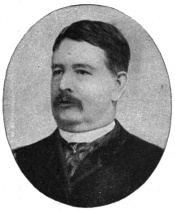
Hon. Samuel C.T. Dodd, one of the ablest lawyers Pennsylvania has produced,
is general solicitor of the Standard and resides in New York. His father,
the venerable Levi Dodd, established the first Sunday-school and was president
of the second company that bored for oil at Franklin, the birthplace of
his son in 1836. Young Samuel learned printing, graduated from Jefferson
College in 1857, studied law with James K. Kerr and was admitted to the Venango
Bar in August of 1859. His brilliant talents, conscientious application
and legal acquirements quickly won him a leading place among the successful
jurists of the state. During a practice of
nearly twenty-two years in the courts of the
district and commonwealth he stood in the
front rank of his profession. He served with
credit in the Constitutional Convention of
1873, framing some of its most important provisions.
He traveled abroad and wrote descriptions
of foreign lands so charming they
might have come from Washington Irving
and N. P. Willis. His selection by the Standard
Oil-Trust in 1881 as its general solicitor
was a marked recognition of his superior abilities.
The position, one of the most prominent
and responsible to which a lawyer can
attain, demanded exceptional qualifications.
How capably it has been filled the records of
all legal matters concerning the Standard
abundantly demonstrate. Mr. Dodd’s profound knowledge of corporation-law,
eminent sense of justice, forensic skill, rare tact and clear brain have steered
the great company safely and honorably through many suits involving grave
424questions of right and millions of money. The papers he prepared organizing
the Standard Trust have been the models for all such documents since they
left his desk. Terse logic, sound reasoning, pointed analysis and apposite expression
distinguish his legal opinions and arguments, combining the vigor of a
Damascus blade with the beauty of an epic. He is a delightful conversationalist,
sincere friend and prudent counsellor, kindly, affable and thoroughlythoroughly upright.
His home, brightened by a loving wife and devoted family, is singularly
happy. Amid the cares and anxieties incident to professional life he has cultivated
his fine literary-taste, writing magazine-articles and wooing the muses
at intervals of leisure only too far apart. He has the honor of writing the first
poem on petroleum that ever appeared in print. It was a rich parody on Byron’s
“Isles of Greece” and was published in the spring of 1860, as follows:
The land of Grease! the land of Grease!
Where burning Oil is loved and sung;
Where flourish arts of sale and lease,
Where Rouseville rose and Tarville sprung;
Eternal summer gilds them not,
But oil-wells render dear each spot.
The ceaseless tap, tap of the tools,
The engine’s puff, the pump’s dull squeak,
The horsemen splashing through the pools
Of greasy mud along the Creek,
Are sounds which cannot be suppress’d
In these dear Ile-lands of the Bless’d.
Deep in the vale of Cherry Run
The Humboldt Works I went to see,
And sitting there an oil-cask on
I found that Grease was not yet free;
For busily a dirty carl
Was branding “bonded” on each barrel.
I sat upon the rocky brow
Which o’erlooks Franklin—far-famed town;
A hundred derricks stood below
And many a well of great renown;
I counted them at break of day,
And when the sun set where were they?
They were still there. But where art thou,
My dry-hole? On the river-shore
The engine stands all idle now,
The heavy auger beats no more;
And must a well of so great cost
Be given up and wholly lost?
’Tis awful when you bore a well
Down in the earth six-hundred feet,
To find that not a single smell
Comes up your anxious nose to greet;
For what is left the bored one here?
For Grease a wish; for Grease a tear!
Must I but wish for wells more bless’d?
Must I but weep? No, I must toil!
Earth, render back from out thy breast
A remnant of thy odorous oil!
If not three-hundred, grant but three
Precious barrels a day to me.
What! silent still? and silent all?
Ah no! the rushing of the gas
Sounds like a distant torrent’s fall
And answers, bore ahead, you ass,
A few feet more; you miss the stuff
Because you don’t go deep enough!
In vain! in vain! Pull up the tools!
Fill high the cup with lager-beer!
Leave oil-wells to the crazy fools
Who from the East are flocking here.
See at the first sight of the can
How hurries each red-shirted man!
Fill high the cup with lager-beer!
The maidens in their promenade
Towards my lease their footsteps steer
To see if yet my fortune’s made;
But sneers their pretty faces spoil
To find I have not yet struck oil.
Place me in Oil Creek’s rocky dell,
Though mud be deep and prices high;
There let me bore another well
And find petroleum or die.
No more I’ll work this dry-hole here;
Dash down that cup of lager-beer.
One of those few and rare occasions upon which John D. Rockefeller is
prevailed upon to address an audience was last March in New York, at a social
gathering of the Young Men’s Bible Class of the Fifth-Avenue Baptist-Church.
Much that he said was extremely interesting. In laying down many excellent
precepts he brought forth several lessons from the experiences of his early life.
By references to his first ledger, as he called it, which was nothing more than a
small paper-covered memorandum-book, he explained how he managed to save
425money even on a small salary. The little book contained the first items of his
receipts and expenditures when he first began to earn money. To judge from
the care with which he handled this reminder of his early struggles, Mr. Rockefeller
was in earnest when he intimated that it would require a fortune to purchase
it. His address, purely informal and conversational, was warmly applauded
by his hearers and commended by the press. Its practical wisdom and
the light it throws upon the early life of a most successful man entitle it to careful
preservation. Mr. Rockefeller said, as reported by the New-York Tribune:
Let me say that it gives me a great deal of pleasure to be here to-night. Although I cannot
make you a speech, I have brought with me to show you young men a little book—a book, I think,
which may interest you. It is the first ledger I kept. I was trained in business affairs and how
to keep a ledger. The practice of keeping a little personal ledger by young men just starting in
business and earning money and requiring to learn its value is, I think, a good one. In the first
struggle to get a footing—and if you feel as I did I am sorry for you, although I would not be
without the memory of that struggle—I kept my accounts in this book, also some memoranda of
little incidents that seemed to me important. In after-years I found that book and brought it to
New York. It is more than forty-two years since I wrote what it contains. I call it Ledger A,
and now I place the greatest value upon it. I have thought that it would be a little help to
some of you young men to read one or two extracts from this ledger. [Mr. Rockefeller then
produced from his pocket, carefully enveloped in paper-wrapping, the ledger to which he referred,
and continued his remarks]:
When I found this book recently I thought it had no cover, because it had writing upon its
back. I had utilized the cover to write upon. In those days I was economical, even with paper.
When I read it through it brought to my mind remembrances of the care with which I used to
record my little items of receipts and disbursements, matters which many of you young men are
rather careless over. I believe it is a religious duty to get all the money you can fairly and
honestly; to keep all you can and to give away all you can. I think that is a problem that you
are all familiar with. I have told you before what pleasure this little book gives me. I dare not let
you read it through, because my children, who have read it, say that I did not spell tooth-brush
correctly. [Laughter.] But you know we have made great progress in our spelling and I suppose
some changes have taken place since those days. [Renewed laughter.] I have not seen
this book for twenty-five years. It does not look like a modern ledger, does it? But you could
not get that book from me for all the modern ledgers in New York, nor for all that they would
bring. It almost brings tears to my eyes when I read over this little book, and it fills me with a
sense of gratitude that I cannot express. It shows largely what I received and what I paid out
during my first years of business. It shows that from September twenty-sixth, 1855, until January
first, 1856, I received $50. Out of that I paid my washerwoman and the lady I boarded with, and
saved a little money to put away. I am not ashamed to read it over to you.
Among other things I find that I gave a cent to the Sunday-school every Sunday. That is
not a very large sum, is it? But that was all the money I had to give for that particular object.
I was also giving to several other religious objects. What I could afford to give I gave regularly,
as I was taught to do, and it has been a pleasure to me all my life to do so.
I had a large increase in my revenue the next year. It went up to $25 a month. I began to
be a capitalist and, had I regarded myself then as we regard capitalists now, I ought to have felt
like a criminal because I had so much money. But we had no trusts or monopolies then.
[Laughter.] I paid my own bills and always had a little something to give away, and the happiness
of saving some. In fact, I am not so independent now as I was then. It is true I could not
secure the most fashionable cut of clothing. I remember I bought mine then of a Jew.
[Laughter.] He sold me clothing cheap, clothing such as I could pay for, and it was a great deal
better than buying clothing that I could not pay for. I did not make any obligations I could not
meet. I lived within my means, and my advice to you young men is to do just the same.
Dr. Faunce has just told you that all young men who come to this church are welcome and
are never asked to whom they belong or where they came from. But there is just one question
I would like to ask. I would like to know how many of you come from the city and how many
come from the country. (Mr. Rockerfeller asked, as a personal favor, if all those present in the
room who came from the country would raise their right hand. Fully three-quarters of the
number did so.) Now, what a story that tells!
To my mind there is something unfortunate in being born in a city. You have not had the
struggles in the city that we have had who were reared in the country. Don’t you notice how
the men from the country keep crowding you out here—you who have wealthy fathers? These
young men from the country are turning things around and are taking your city. We men from
the country are willing to do more work. We were prepared by our experience to do hard work.
426I remember a little time ago I was in the country and saw a carpenter placing mineral-wool under
the roof of a city servant’s bedroom, so that the man should not feel the heat of the summer or
hear the patter of the rain-drops on the roof. I could not at the time help recalling the experience
of my boyhood, when I slept under a roof. While I could not see the shingles, I remember
I could peep through the cracks in them. It was pretty hot in the summer up there, too, I can
tell you. But I think I was better for all that sort of experience, for having been reared in the
country in that sturdy, practical way, and my heart is sometimes full of sadness as I contemplate
the condition of the number of young fellows in this city whom I happen to know well.
They are in the embarrassing position that their fathers have great sums of money, and those
boys have not a ghost of a chance to compete with you who come from the country and who want
to do something in the world. You are in training now to shortly take the places of those young
men. I suppose you cannot realize how many eyes are upon you and how great is the increasing
interest that is taken in you. You may not think that, when you are lonely and find it difficult
to get a footing. But it is true that, in a place like this, true interest is taken in you. When I
left the school-house I came into a place similar to this, where I associated with people whom it
was good to know. Nothing better could have happened to me.
I spoke just now of the struggle for success. What is success? Is it money? Some of you
have all the money you need to provide for your wants. Who is the poorest man in the world?
I tell you, the poorest man I know of is the man who has nothing but money—nothing else in
the world upon which to devote his ambition and thought. That is the sort of man I consider to
be the poorest in the world. Money is good if you know how to use it.
Now, let me leave this little word of counsel for you. Keep a little ledger, as I did. Write
down in it what you receive, and do not be ashamed to write down what you pay away. See
that you pay it away in such a manner that your father or mother may look over your book and
see just what you did with your money. It will help you to save money, and that you ought to
do. When I spoke of a poor man with money I spoke against the poverty of that man who has
no affection for anything else, or thought for anything else but money. That kind of a man does
not help his own character, nor does he build up the character of another.
Before I leave you I will read a few items from my ledger. I find in looking over it that I
was saving money all this time, and in the course of a few years I had saved $1,000. Now, as to
some of my expenses. I see that from November twenty-fourth, 1855, to April, 1856, I paid for
clothing $9.09. I see also, here, another item which I am inclined to think is extravagant,
because I remember I used to wear mittens. The item is a pair of fur-gloves, for which I paid
$2.50. In the same period, I find I gave away $5.58. In one month I gave to foreign-missions ten
cents; to the mite-society thirty cents, and there is also a contribution to the Five-Points Mission.
I was not living then in New York, but I suppose I felt that it was in need of help, so I
sent up twelve cents to the mission. Then to the venerable teacher of my class I gave thirty-five
cents to make him a present. To the poor people of the church I gave ten cents at this time.
In January and February following I gave ten cents more and a further ten cents to the foreign-missions.
Those contributions, small as they were, brought me into direct contact with philanthropic
work, and with the beneficial work and aims of religious institutions, and I have been
helped thereby greatly all my life. It is a mistake for a man who wishes for happiness and to
help others to wait until he has a fortune before giving to deserving objects. [Great applause.]
And this exemplary citizen, who in his youth and poverty formed the habit
of systematic benevolence, who befriends the poor, who dispenses charity with
a bountiful hand, who helps young men better their condition, who gives millions
for education and religion, who believes in the justice of God and the
rights of man, who has woven the raveled skeins of a weakened industry into
the world’s grandest business-enterprise, assassins of character picture as a
cold-blooded oppressor, a base conspirator, a “devourer of widows’ houses,”
an abettor of larceny and instigator of arson! “Oh, Shame! where is thy blush?”
Although the Standard pays the highest wages in the world and has never
had a serious strike in its grand army of forty-thousand men, not one cent of a
reduction was ordered during the panic. No works stopped and no employés
were turned adrift to beg or starve. On the contrary, improvements and additions
were made continually, the force of workmen was augmented, cash was
paid for everything bought, no claims remained unsettled and nobody had to
wait an hour for money justly due. These are points for the toiling masses,
whom prejudice against big corporations sometimes misleads, to understand
and consider before accepting the creed that wealth and dishonor are synonymous,
that each is the creature of the other and both are twin-links of the same
sausage.
The Oil-City Blizzard, itself as
lively as a glycerine-explosion, in a
spasm of dynamite-enthusiasm loaded
up and fired off this eccentricity:
Pat Magnew was a shooter bold,
Who handled glycerine;
And though he had no printing-shop
He ran a magazine.
And while he had a level head,
And business plenty found,
’Most ev’ry job he undertook
He ran into the ground.
He never claimed expert to be,
But what he did was right,
And when he shot a well, you see,
He did it “out of sight.”
He seemed to like his daily toil,
Its dangers did not fear;
He’d help his patrons to find oil,
And then he’d disappear.
Sometimes he shot wells with a squib,
When at the proper level;
Sometimes when he had been to church,
He shot with a go-devil.
He always had a great tin-shell
Beside him on the seat,
Had horses good and drove like—well,
No moss grew on their feet.
And when he drove along the road,
And that was every day,
Wise people all, who knew his load,
Gave him the right of way.
His wife once said: “I greatly fear
That you will yet be blown
To atoms, if you don’t, my dear,
Let well enough alone.”
“Some day there’ll be a thunder-sound;
And scattered far and near,
O’er hill and dale and all around,
Will be my husband dear.”
Replied Magnew: “I call to mind—
His words are nowise sickly—
That Billy Shakespeare once remarked:
‘’Twere well it were done quickly.’
“And I’ll be blown,” continued Pat,
“If I didn’t want it known,
That I’d rather be by dynamite
Than by a woman blown.”
THE OLD YEAR DONE IN OIL.
Old Year! transported by fast freight,
With neither drawback nor rebate,
How odd it seems to quote thee “late!”
Old Year! since thou wert struck, alas!
What surface shows have men let pass—
They promised oil and yielded gas!
Old Year! test-wells of crude that smelt,
But had no sand like snows would melt.
Few always drill straight on the belt!
Old Year! thy option has expired,
Certificates have been retired
And royalty in full required.
Old Year! thy territory’s played,
Pipage and storage-charges paid,
Tanks emptied and delivery made.
Old Year! a twelvemonth pump’d thee dry,
Now tools and cable are laid by,
Engine and derrick idle lie.
Old Year! developments are o’er,
The paraffine has clogg’d each pore
And thou shalt operate no more.
Old Year! lease out and rig in dust,
Time on thy boiler, left to rust,
Writes the producer’s motto: “Bu’st!”
And when it comes our turn to be
Immediate shipment o’er life’s sea,
Old Year! we’ll put a call for thee!
When the Oil-City Derrick had its
circus with the Allegheny-Valley Railroad
it fell to my lot to write up most
of the incidents of the conflict. Occasionally
a bit of doggerel like this hit
the popular fancy:
Moses had a great big dog,
His hair was black as jet,
And everywhere that Moses went
That pup was sure to get.
One day, upon the Valley Road
When Moses went to ride,
The faithful canine follow’d close
And sat down by his side.
But when the train to Scrubgrass got
The daily wreck occurr’d,
The cars cavorted down the bank
Without one warning word.
Sad was that hapless puppy’s fate—
So mangled, burn’d and drown’d,
Not a bologna could be made
From all the fragments found!
428
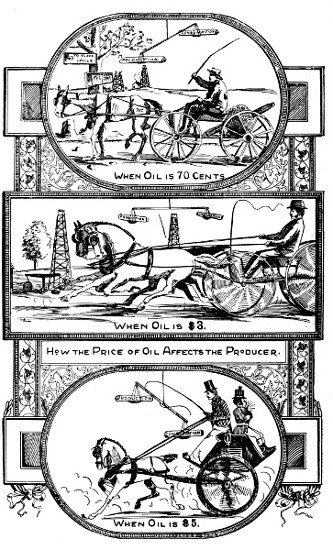
How the Price of Oil Affects the Producer.
When Oil is 70 Cents.
When Oil is $3.
When Oil is $5.
XIX. JUST ODDS AND ENDS.
429
How Natural-Gas Played Its Part—Fire and Water Much in Evidence—Changes
in Methods and Appliances—Deserted Towns—Peculiar Coincidences
and Fatalities—Railroad Episodes—Reminiscences of Bygone
Scenes—Practical Jokers—Sad Tragedies—Lights and Shadows Intermingle
and the Curtain Falls Forever.
“Variety’s the very spice of life.”—Cowper.
“Fuss and feather, wind and weather, varied items strung together.”—Oil City Derrick.
“Laugh when we must, be candid when we can.”—Pope.
“‘A picker-up of unconsidered trifles’
From many sources facts and fancies rifles.”—Anonymous.
“Every house should have a rag-bag and a general storeroom.”—Miss Parloa.
“A little nonsense now and then is relished by the wisest men.”—Holmes.
“Let days pass on, nor count how many swell
The episode of life’s hack chronicle.”—Lytton.
“Fond memory brings the light of other days around me.”—Anonymous.
“Close up his eyes and draw the curtain close.”—Shakespeare.
“Fare thee well! and if forever, still forever fare thee well.”—Byron.
Hard coal and dry wood as good fuel may pass,
But can’t hold a candle to natural gas.—Original.
“Half light, half shadow, let my spirit sleep.”—Tennyson.
“Side by side may we stand at the same little door when all’s done.”—Owen Meredith.
Natural-gas, the cleanest, slickest, handiest fuel
that ever warmed a heart or a tenement, is the right
bower of crude-petroleum. It is the one and only
fuel that mines, transports and feeds itself, without
digging every spoonful, screening lumps, carting,
freighting and shoveling into the stove or furnace.
Getting it does not imperil the limbs and lives of
poor miners—the most overworked and underpaid
class in Pennsylvania—in the damp and darkness of
death-traps hundreds of feet beneath the surface of
the ground. You drill a hole to the vital spot, lay
a pipe from the well to the home or factory, turn a
stop-cock to let out the vapor, touch off a match
and there it is—the brightest, cleanest, steadiest,
hottest fire on earth. Not a speck of dust, not an
atom of smoke, not a particle of cinder, not a taint of sulphur, not a bit of ashes
vexes your soul or tries your temper. There is no carrying of coal, no dumping
of choked grates, no waiting for kindling to catch or green wood to burn,
no scolding about sulky fires, no postponement of heat because the wind blows
in the wrong direction. Blue Monday is robbed of all its terrors, the labor of
housekeeping is lightened and husbands no longer object to starting the fire on
cold mornings. A nice blaze may be let burn all night in winter and kept on
tap in summer only when needed. It is lighted or extinguished as readily as
430the gas-jet in the parlor. It melts iron, fuses glass, illumines mills and streets,
broils steaks to perfection and does away with many a fruitful source of family-broils.
It saves wear and tear of muscle and disposition, lessens the production
of domestic quarrels, adds to the pleasure and satisfaction of living and
carries the spring-time of existence into the autumn of old age. Set in a dainty
metal frame, with background of asbestos and mantel above, its glow is cheerful
as the hickory-fire in the hearth. It gives us the ingle-nook modernized
and improved, the chimney-corner brought down to date. It glides through
eighty-thousand miles of pipes in Pennsylvania, Ohio, West Virginia, Indiana
and New York and employs a hundred-million dollars to supply it to people
within reach of the bounteous reservoirs the kindly earth has treasured all
through the centuries. If it be not a blessing to humanity, the fault lies with
the folks and not with the stuff. The man who spouts gas is a nuisance, but
the well that spouts gas is something to prize, to utilize and be thankful for.
Visitors to the oil-region or towns near enough to enjoy the luxury, beholding
the beauty and adaptability of natural-gas, may be pardoned for breaking the
tenth commandment and coveting the fuel that is Nature’s legal-tender for the
comfort and convenience of mankind.
The pretty town of Fredonia, in New York state, three miles from Lake
Erie and forty-five south-west of Buffalo, enjoys the distinction of first using
natural-gas for illuminating purposes. It is a beautiful place, famous for fine
roads, fine scenery and fine vineyards. Canodonay Creek, a small but rapid
stream, passes through it to the lake. Opinions vary as to the exact date when
the gas was utilized, some authorities making it 1821, others 1824 and a few
1829. The best information fixes it at 1824, when workmen, in tearing down an
old mill, observed bubbles on the water that proved to be inflammable. The
hint was not lost. A company bored a hole one-inch-and-a-half in diameter
into the limestone-rock. The gas left its regular channel, climbed the hole,
lighted a new mill and was piped to a hundred houses in the village at a cost
of one-fifty a year for each. The flame was large and strong and for years
Fredonia was the only town in America lighted by “nature-gas.” A gasometer
was constructed, which collected eighty-eight cubic feet in twelve hours.
The inhabitants didn’t keep late hours. A mile nearer Lake Erie many gas-bubbles
gamboled on the stream. Efforts to convey the gas to the light-house
at Dunkirk failed, as it was only half the weight of air and would not descend
the difference in elevation.
A light-house at Erie was lighted by natural-gas in 1831, “the Burning
Spring,” a sheet of water through which the vapor bubbled, furnishing the
supply. A tower erected over the spring held the gas that accumulated during
the day and wooden-pipes conveyed it at night to the light-house.
Dr. Charles Oesterlin, a young German physician, sixty years ago unpacked
his pill-boxes and hung out his little sign at Findlay, in Northwestern
Ohio. He was an expert geologist and mineralogist, but the flat Black Swamp
afforded poor opportunities to study the rocks underlying the limestone. The
young physician detected the odor of sulphuretted hydrogen in the town and
along the banks of the Blanchard River. It puzzled him to guess the source of
the odor. He spoke to the farmers, who smelled the stuff, knew nothing and
cared less about its origin or properties. The Doctor searched for a sulphur-spring.
In October of 1836 the solution came. A farmer was digging a well
three miles from town. A spring was tapped and the water “boiled,” as the
diggers expressed it. Debating what to do, they were called to supper, returned
431after dark and lighted a torch to examine the well. Holding the torch
over the well an explosion startled them and a flame ascended that lasted for
days. Nobody was seriously hurt, but all thought the devil had a finger in the
pie. Dr. Oesterlin connected the incident with the odor and it confirmed his
theory of a gas that would burn and might serve as fuel. At a stone-quarry he
made a cone of mud over a fissure, covered it with a bucket and applied a
light. When the Doctor picked himself up in an adjoining corn-field the
bucket was still sailing north towards Toledo. Daniel Foster, another Findlay
farmer, dug a well in 1838. Gas issued from the hole before water was seen.
Foster had a practical mind. He inverted a copper-kettle over the hole, rigged
a wooden pump-stock beneath the kettle, plastered around it with clay, joined
more pump-stocks together, stuck an old gun-barrel in the end of the last one,
lighted the gas in his kitchen and by means of the flame boiled water, roasted
coffee and illumined the apartment. Then Dr. Oesterlin declared Findlay was
right over a vast caldron of gas. People laughed at him, adhered to tallow-dips
and positively refused to swallow such a dose. Petroleum-developments
in Pennsylvania fortified his faith and he sought to interest the public in a
company to “bore a hole twenty inches across.” Sinners in Noah’s day were
less impervious. Business-men scoffed and declined to subscribe for stock.
He tried again in 1864 and 1867 with the same result. A company was organized
to manufacture coal-gas. He talked of the absurdity of making gas at
Findlay as equal to setting up a manufactory of air or water. It was no use.
At last the triumph of natural-gas in Pennsylvania was manifested too strongly
for the obtuse Findlayites to ignore it. In 1884 the Doctor managed to enlist
four-thousand dollars of capital and start a well in a grove a mile east of town,
where the odor was pungent and gas flowing through a tile-pipe he planted
in the ground burned for weeks. He watched the progress of the work with
feverish anxiety. The hopes of fifty long years were to be grandly realized or
dashed forever. Sleepless nights succeeded restless days as the veteran’s
heart-beats kept time with the rhythmic churning of the drill. At five, six and
seven-hundred feet morsels of gas quickened the expectations of success. At
eleven-hundred feet, in the Trenton limestone, on November tenth, 1884, gas
burst forth with terrific force. The well was drilled sixteen-hundred feet and
encountered salt-water. It was plugged below the gas-vein, the gas was
lighted, an immense flame shot up and for months a quarter-million feet a day
burned in the open air. Findlay grew from five-thousand to fifteen-thousand
population and manufacturing flourished. Dr. Oesterlin, slight of frame, infirm
with age, his thin locks and beard white as snow, had waited fifty years
for his vindication. It came when he had reached four-score, full, complete and
overwhelming. He bore his honors meekly, lived to round out eighty-two and
nowhere is it recorded that he even once yielded to the temptation of remarking:
“I told you so!”
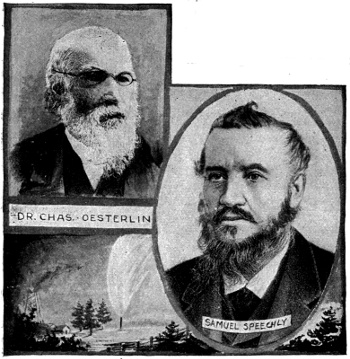
DR. CHAS. OESTERLIN SAMUEL SPEECHLY
Gas was used as fuel at pumping-wells on Oil Creek in 1862. It was first
collected in “gas-barrels,” one pipe leading from the well to the receptacle and
another from the barrel to the boiler. Many fires originated from the flame,
when the pressure of gas was small, running back to the barrel and exploding
it. A pumper at Rouseville, seated on a gas-barrel at such a moment, went
skyward and may be ascending yet, as he never returned for his week’s wages.
D. G. Stillwell, better known as “Buffalo Joe,” drilled a gasser in 1867 at Oil
City, on the site of the Greenfield Lumber-Company’s office. He piped the
gas to several houses, but the danger from constant changes of pressure led to
432its abandonment. This is the first authentic record of the use of “the essence
of Sheol” for cooking food and heating dwellings. In 1883 the Oil-City Fuel-Supply
Company laid a six-inch gas-line to wells at McPherson’s Corners, Pinegrove
township, eight miles distant. The gas was produced from the second
and third sands, at a depth of nine to ten-hundred feet and a pressure not exceeding
two-hundred pounds to the square inch. In 1885 the late Samuel
Speechly started a well on his farm near McPherson’s, intending to drill three-thousand
feet in search of the Bradford sand.
Oil-bearing strata dip twenty feet to the mile
southward and Speechly believed the northern
rocks existed far beneath the ordinary third-sand
in Venango county. On April thirteenth, at nineteen-hundred
feet,
the drill penetrated
what has since been
called the “Speechly
sand,” the most
extraordinary and
valuable fuel-sand
as yet discovered.
In this sand at three
feet pressurepressure of gas
became entirely too
great to keep jerking
the tools. The
gas company leased
the well and turned
it into the line without
being able to
gauge it on account
of the high volume.
Speechly commenced a second well and the company, having previously laid
a new ten-inch line to Oil City, constructed branches to Franklin and Titusville.
The second well proved to be the largest to the present time, excepting the Big
Moses in West Virginia. For a time it could not be controlled. The roar of
the escaping gas could be heard for miles. Eventually it was tubed and the
pressure was six-hundred pounds. Many wells in other fields have had greater
pressure, but the large volume of the Speechly well made it a wonder. One
day all the other wells connected with the main-line were discontinued from the
line temporarily and the Jumbo turned in. The flow was sufficient to supply
Oil City, Titusville and Franklin with all the gas required. Hundreds of wells
have been drilled to the Speechly sand and the field now reaches from the
southern part of Rockland township, Venango county, to Tionesta township,
Forest county. It is about thirty miles long, with an average width of three
miles, while the sand ranges in thickness from fifty to one-hundred feet. The
pressure gradually diminishes. It requires constant drilling to keep up the
supply, the Oil-City Company alone having about four-hundred wells.
Samuel Speechly died on Sunday night, January ninth, 1893, aged sixty-one,
at his home in the gas-district bearing his name. His life was notably eventful,
adventurous and fortunate. Born in England in 1832, at fourteen he began to
learn locomotive-building and marine-engineering at Newcastle-on-Tyne. At
433twenty Robert Stephenson & Co. sent him to China to join a steamer engaged
in the opium-trade. In 1855 he entered the service of the Chinese government
to suppress piracy on the coast, and in 1857 started at Hong Kong the first engineering-business
in the vast empire ruled by the pig-tailed Brother of the Sun.
He visited America in 1872 and lived in Philadelphia. Wanting plenty of room,
he went to Northwestern Pennsylvania, resided a year in Cranberry township,
concluded to stay and settled on what subsequently became the famous Speechly
farm. The well he drilled in 1885 had neither oil nor gas in the usual formations.
Veteran operators advised him to abandon it, but Speechly entertained
a notion of his own and the world knows the sequel. He was married in China
in 1864 to Miss Margaret Galbraith, who survives him, with two daughters,
Emily, born in China, and Adelaide, born in America. His widow and children
occupy the old home on the farm.
Bishop Potter, stopping at Narrowsburg in 1854, noticed jets of gas exuding
from the bank of the Delaware river at Dingman’s Ferry, forty miles above
Easton, and published an article on the subject. A company in 1860 bored
three wells, but the result was not encouraging, as politicians are the most gaseous
bodies Northampton county has produced for thirty years. A gas-well at
Erie attracted considerable attention in 1860 and was followed by a number
more, which from a shallow depth yielded fuel to run several factories. East
Liverpool, Ohio, put the product to practical use early in the seventies as a substitute
for coal. The first well, drilled in 1860, caught fire and destroyed the
rig. Geologists say natural-gas is the disembodied spirits of plants that grew
in the sunshine of ages long before the foundations of the buried coal-measures
were laid, so long ago shut up and forsaken by the light-hearted sun that it is a
wonder they hadn’t forgotten their former affinity. But they hadn’t. They
rushed out to the devouring kiss of their old flame at the first tap of the drill
on their prison-house, like a foolish girl at the return of a fickle lover. They
found Old Sol flirting with their younger sister, playing sweet to a lot of new
vegetation. Before they had time to form a sewing-circle and resolve that all
the male sex are horrid, they took fire with indignation at his fickleness and the
tool-dresser’s forge and burst with a tremendous explosion. The fire was
quenched and gas poured out of the pioneer-well fifteen years. Street-lamps
were left burning all day, which was cheaper than to bother putting them out,
and East Liverpool prospered as a hive of the pottery-industry. The celebrated
well at East Sandy, Venango county, which gave birth to Gas City in 1869,
burned a year with a roar audible three miles. Becoming partially exhausted,
the fire was put out and the product was used for fuel at numerous wells. The
famous Newton well, on the A. H. Nelson farm, was struck in May of 1872 and
piped in August to Titusville, five miles south west. Its half-million cubic-feet
per day supplied three-hundred firms and families with light and fuel. Henry
Hinckley and A. R. Williams organized the company, one of the very first in
Pennsylvania to utilize natural-gas on an extensive scale. The same year gas
from the Lambing well was piped to Fairview and Petrolia. The Waugh well
at Millerstown and the Berlin at Thompson’s Corners, Butler county, were the
next big gassers. The great Delamater No. 2, near St. Joe, finished in 1874,
for months was the biggest gas-well in the world. Its output was conveyed to
the rolling-mills at Sharpsburg. The first gas-well in Butler county is credited
to John Criswell, of Newcastle, who drilled for salt-water in 1840 near Centreville,
struck a vein of the vapor at seven-hundred feet and fired it to heat his
evaporating-pans.
434At Leechburg and Apollo natural-gas has been used in puddling-furnaces
since 1872. It will supply the huge mills at Vandergrift, the model town that is
to be the county-seat of Vandergrift county, which the next Legislature will set
off from Armstrong, Westmoreland and contiguous districts. It was the fuel
of the cutlery-works at Beaver Falls from 1876 until the wells ceased producing
in 1884. In 1875 Spang & Chalfant piped it from Butler to their mills in the
suburbs of Pittsburg. Though Pittsburgers knew of its value in the oil-region
for twenty years, they regarded it as a freak and not calculated to affect their
interests favorably. Iron manufactured by its means was of superior quality,
owing to the absence of sulphur and the intensity of the heat. In 1877 the Haymaker
well opened the Murraysville gas-field, but that immense storehouse of
potential energy lay dormant until Pew & Emerson piped the product to Pittsburg.
In June of 1884 George Westinghouse, inventor of the air-brake and of
various electric-appliances, struck a gas-well near his residence in Pittsburg.
From that date the development was enormous. Wells producing from two to
twenty-million cubic-feet a day were in order. The Philadelphia Company—Westinghouse
was its president—alone tied up forty-thousand acres of gas-territory,
drilled hundreds of wells and laid thousands of miles of pipes. Hon.
James M. Guffey headed big corporations that supplied Wheeling, a portion of
Pittsburg and dozens of smaller towns. The coal displacement in Pittsburg
equaled thirty-thousand tons daily. Twenty and twenty-four-inch mains intersected
the city. Iron, brass, steel and metal-working establishments consumed
it. Glass-factories turned out by its aid plate-glass such as mankind had never
seen before. The flaming breath of the new demon transformed the appearance
and revolutionized the iron-manufacture of the Birmingham of America.
The Smoky City was a misnomer. Soot and dirt and smoke and cinders disappeared.
People washed their faces, men wore “biled shirts” and girls
dressed in white. The touch of a fairy-wand could not have made a more resplendent
change. Think of green grass, emerald hues, clear sunlight and
clean walls in Pittsburg! At first timid folks feared to introduce it, because the
pressure could not be regulated. All this has been remedied. The roaring,
hissing monster that almost bursts the gauge at the well is tamed and subjugated
to the meekness of a dove by valves and gasometers, which can reduce the
pressure to a single ounce. Queer, isn’t it, that Pittsburg should be metamorphosed
by natural-gas—the fires of hell as it were—into a city of delightful
homes, an industrial paradise?
Gas-wells of high pressure were found in Ohio by thousands, as though
striving to vie with the oil-wells which, beginning at Mecca in 1860 and ending
at Lima, stocked up twenty-million barrels of crude. Over three-hundred companies
were chartered in a year to supply every town from Cincinnati to Ashtabula.
Natural-gas raged and blistered and for a term was the genuine “Ohio
idea.” For thirty years wells at New Cumberland, West Virginia, have
furnished fuel to burn brick. The same state has the biggest gassers in existence
and lines to important cities are projected. If “the mountain won’t come
to Mohammed, Mohammed must go to the mountain.” Indiana has gas and
oil in four counties, with Gas City as headquarters and lots of fuel for houses
and factories in Indianapolis and the chief cities. The Hoosiers have carried
out the principle of Edward Eggleston’s Mrs. Means: “When you’re a-gittin’
git plenty, I say.” Illinois had a morsel of oil and gas in wells at Litchfield.
Kentucky and Tennessee are blessed with “a genteel competence” and Kansas
has not escaped. Michigan has gas-wells at Port Huron and St. Paul once
435boasted a company capitalized at a half-million. Buffalo inhaled its first whiff
of natural-gas, piped from wells in McKean county, on December first, 1886.
Youngstown was initiated next day, from wells in Venango. A Mormon company
bored wells at Salt Lake, but polygamy was not supplanted by any odor
more unsavory. In Canada gas is abundant and Robert Ferguson, now a well-to-do
farmer near Port Sarnia, first turned it into an engine-cylinder as a joke
on the engineer at the pump-station in Enniskillen township. Steam was low,
the engineer was absent, Ferguson cut the pipe leading from the boiler, connected
it with one from a gas-well near-by, opened the throttle and, to his astonishment,
found the pressure greater than steam. Natural-gas, a gift worthy
of the immortal gods, worthy of the admiration of Vulcan, worthy of the praise
of poets and historians, the agent of progress and saver of labor, is not a trifle
to be brushed off like a fly or dismissed with a contemptuous sneer.
Pittsburg iron-works and rolling-mills received natural-gas at about two-thirds
the cost of coal. The coal needed to produce a ton of metal cost three
dollars, the gas that did the same service cost one-ninety. Besides this important
saving, the expense of handling the fuel, hauling away cinders and waiting
for furnaces to heat or cool was avoided. Gas-heat was uniform, stronger,
more satisfactory, could be regulated to any temperature, turned on at full head
or shut off instantly. Thus Pittsburg possessed advantages that boomed its
manufactories immensely and obliged many competitors less favored to retire.
In this way the anomaly of freezing out men by the use of greater, cheaper
heat was presented.
On March seventeenth, 1886, at Pittsburg, Milton Fisher, of Columbus, was
the first person to be incinerated in a natural-gas crematory. In fifty minutes
the body was reduced to a handful of white powder. The friends of the deceased
pronounced the operation a success, but Fisher was not in shape to express
his opinion.
A singular accident occurred near Hickory, Washington county, on the
night of December fourth, 1886. Alfred Crocker, an employé of the Chartiers
Gas-Company, had been at the tanks on the McKnight farm and was going toward
the well. The connecting-pipe between the well and tank burst with terrible
force, striking Crocker on the left leg, blowing the foot and ankle completely
off and injuring him about the body. The explosion hurled the large
gas-tank a hundred feet. The young man died next morning.
The steam tow-boat Iron City once grounded near the head of Herr’s Island,
above Pittsburg. The stern swung around and caught on a pipe conveying
natural-gas across the Allegheny river. In trying to back the vessel off the
pipe broke, the escaping gas filled the hold and caught fire from the furnace.
An explosion split the boat from stem to stern, blew off the deck and blew the
crew into the river. The boat burned to the water’s edge.
Near Halsey, in the Kane field, James Bowser was standing on a gas-tank,
while a workman was endeavoring to dislodge an obstruction in the pipe leading
from the well. The removal of the obstruction caused the pent-up gas to rush
into the tank with such force that the receptacle exploded, hurling Bowser high
in the air. He alighted directly in front of the heavy volume of gas escaping
through the broken pipe. Before he could be rescued he was denuded of all
clothing, except one boot. His clothing was torn off by the force of the gas
and his injuries were serious.
Workmen laying pipe to connect with the main at Grapeville were badly
flustered one frosty morning. By mistake the gas was turned on, rushing from
436the open end with great force. It ploughed up the earth and pebbles and
ignited, the flinty stones producing a spark that set the whole thing in a blaze.
Gas-wells yield liberally at Grapeville, supplying the glass-works at Jeannette
and houses at Johnstown, the farthest point east to which the vapor-fuel has
been piped.
J. S. Booker, an Ohio man, claimed to spot gas. His particular virtue lay
in the muscles at the back of the neck, which rise up and irritate him in the
presence of natural-gas. This is ahead of rheumatism as a rain-indicator.
Booker’s own story is that an attack of asthma left him in a sensitive state, so
that when he passes over a vein of gas the electricity runs through his legs, up
his spine and knots the muscles of the neck. The story deserves credit for its
rare simplicity. With the whole realm of fiction at his command, Booker
chose only a few simple details and was content to pass current as a sort of
human witch-hazel.
At Economy, where a hundred stand-pipes for natural-gas illuminate the
streets, bugs and fruit-vermin were slaughtered wholesale. In the mornings
there would be a fine carpet of bugs around every post. Chickens and turkeys
would have a feast and a foot-race from the roosts to see which would get to
the already-cooked breakfast first. The trees came out in bloom earlier and
healthier than formerly, because the vermin were destroyed and the frosts kept
from settling by the gas-lights, which burn constantly. As a promoter of vegetation
natural-gas beats General Pleasanton’s blue-glass out of sight.
Samuel Randall, the Democratic statesman, visited the gas-wells at Murraysville
with Hon. J. M. Guffey. From a safe distance the visitor threw a
Roman candle at a huge column of vapor, which blazed quicker than a church-scandal,
to Mr. Randall’s great delight. President and Mrs. Cleveland were
afforded a similar treat by Mr. Guffey. The chivalrous host chartered a train
and had a big well fired for the distinguished visitors. The lady of the White
House was in ecstacies and the President evidently thought the novel exhibition
knocked duck-shooting silly. Could a mind-reader have X-rayed his
thinking-department it would likely have assumed this form: “Mr. Guffey,
you have a tremendous body of gas here, but I have Congress on my hands!”
Eli Perkins lectured at St. Petersburg one night and next day rode with
me through part of the district. He wanted points regarding natural-gas
and smilingly jotted down a lot of Munchausenisms current in the oil-region.
A week later he sent me a marked copy of the New-York Sun, with columns
of delicious romance concerning gas-wells. Eli was no slouch at drawing the
long-bow, but he fairly surpassed himself, Jules Verne and Rider Haggard on
this occasion. His vivid stories of tools hurled by gas a thousand feet, of
derricks lifted up bodily, of men tossed to the clouds and picturesque adventures
generally were marvels of smooth, easy, fascinating exaggeration. Perhaps
“if you see it in the Sun it’s so,” but not when Eli Perkins is the
chronicler and natural-gas the subject.
“The Fredonia Gas-Light and Water-Works Company,” which obtained a
special charter in 1856, was undoubtedly the first natural-gas company in the
world. Its object was, “by boring down through the slate-rock and sinking
wells to a sufficient depth to penetrate the manufactories of nature, and thus
collect from her laboratories the natural-gas and purify it, to furnish the citizens
with good cheap light.” The tiny stream of gas first utilized at the mill yielded
its mite forty years. When Lafayette remained a night at Fredonia in 1824,
on his triumphal visit to the United States, “the village-inn was lighted with
437gas that came from the ground.” The illustrious Frenchman saw nothing in
his travels that interested and delighted him more than this novel illumination.
Col. J. A. Barrett, for many years a citizen of Illinois and law-partner of
Abraham Lincoln, in 1886 removed to a tract of five-thousand acres on Tug
Fork, near the quiet hamlet of Warfield. Gas issued from the soil and tradition
says George Washington fired the subtle vapor at Burning Spring while
surveying in West Virginia before the Revolution. Captain A. Allen, who
pioneered the oil-business on Little Kanawha, leased the tract from Col. Barrett
and struck a vast reservoir of gas at two-thousand feet.
John G. Saxe once lectured at Pithole and was so pleased with the people
and place that he donated twenty-five dollars to the charity-fund and wrote
columns of descriptive matter to a Boston newspaper. “If I were not Alexander
I would be Diogenes,” said the Macedonian conqueror. Similarly Henry
Ward Beecher remarked, when he visited Oil City to lecture, “If I were not
pastor of Plymouth church I would be pastor of an Oil-City church.” The
train conveying Dom Pedro, Emperor of Brazil, through the oil-regions stopped
at Foxburg to afford the imperial guest an opportunity to see an oil-well torpedoed.
He watched the filling of the shell with manifest interest, dropped
the weight after the torpedo had been lowered and clapped his hands when a
column of oil rose in the air. An irreverent spectator whispered: “This beats
playing pedro.”
Daniel Fisher, ex-mayor of Oil City and chief of the fire-department,
donned a new suit one day when oil-tanks abounded in the Third Ward. Hearing
a cry of distress, he mounted a tank and saw a man lying on the bottom, in
a foot of thick oil. He dropped through the hatchway, pulled up the victim
of gas and with great difficulty dragged him up the small ladder into the fresh
air. Of course, the new clothes were spoiled beyond hope of redemption.
The man revived, said his name was Green, that he earned a living by cleaning
out tank-bottoms and was thus employed when overcome by gas. Next
day Fisher met Green, who thanked him again for saving his life, borrowed
ten dollars and never repaid the loan or offered to set up a new suit of clothes.
“Brudders an’ sistern,” ejaculated a colored preacher, “ef we knowed
how much de good Lawd knows about us it wud skeer us mos’ to deff.” A
Franklin preacher once seemed to forget that the Lord was posted concerning
earthly affairs, as he prayed thirty-six minutes at the exercises on Memorial
Day. The sun beat down upon the bare heads of the assembled multitude,
but the divine prayed right along from Plymouth Rock to the close of the war.
Col. J. S. Myers, the veteran lawyer, presided. Great drops of perspiration
rolled down his face, but he was like the henpecked husband who couldn’t get
away and had to grin and bear it. He summed up the situation in a sentence:
“I think ministers ought to take it for granted that the Almighty knows
enough American history to get along nicely without having it prayed at Him
by the hour!”
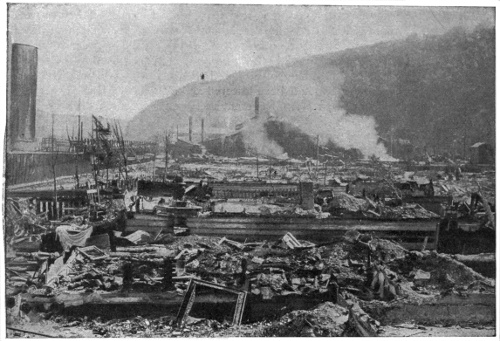
SCENE AT OIL CITY AFTER THE DISASTER ON JUNE 5, 1892.
Fire and water have scourged the oil-regions sorely. A flood in March of
1865 submerged Oil City, floated off hundreds of oil-tanks and small buildings
and did damage estimated at four-millions of dollars. Fire in May of 1866
wiped out half the town, the loss footing up a million dollars. The most appalling
disaster occurred on Sunday, June fifth, 1892. Heavy rains raised Oil
Creek to such a height that mill-dams at Spartansburg and Riceville gave way,
precipitating a vast mass of water upon Titusville during Saturday night. With
a roar like thunder it struck the town. Sleepers were awakened by the resistless
438tide and drowned. Refineries and tanks of oil caught fire and covered acres of
the watery waste with flames. Helpless men, women and children tottered and
tumbled and disappeared, the death-roll exceeding fifty. The two elements
seemed to strive which could work the greater destruction. Above Oil City a
huge tank of benzine was undermined and upset on Friday morning. The
combustible stuff floated on the creek, which had risen four feet over the floors
of houses on the flats. The boiler-fire at a well near the Lake-Shore tunnel
ignited the cloud of benzine. An explosion followed such as mortal eyes and
ears have seldom seen and heard. The report shook the city to its foundations.
A solid sheet of flame rose hundreds of feet and enveloped the flats in its fatal
embrace. Houses charred and blazed at its deadly touch and fifty persons perished
horribly. The sickening scene reminded me of the Johnstown carnage in
1889, with its miles of flooded ruins and dreadful blaze at the railroad-bridge.
Whole families were blotted out. Edwin Mills, his wife and their five children
died together. Heroic rescues and marvelous escapes were frequent. John
Halladay Gordon saved forty people in his boat, rowing it amid the angry
flames and swirling waters at imminent risk. The recital of brave deeds and
thrilling experiences would fill a volume. That memorable Sunday was the
saddest day Oil City and Titusville ever witnessed. The awful grandeur of the
spectacle at both places has had no parallel.
Sweeping into the yards of a refinery at the upper end of Titusville, the water
tore open a tank containing five-thousand gallons of gasoline. Farther down
an oil-tank and a gasoline-tank were rent in twain. Water covered the streets
and shut people in their houses. The gas-works and the electric-plant were
submerged and the city was in darkness. At midnight a curious mist lay thick
and dense and white for a few feet above the water. It was the gasoline vapor,
a cartridge a half-mile long, a quarter-mile wide and two yards thick, with a
439coating of oil beneath, waiting to be fired. One arm of the mist reached into the
open furnaces of the Crescent Works and touched the live coals on the grate.
There was a flash as if the heavens had been split asunder. Then the explosion
came and death and havoc reigned. And the horror was repeated at Oil City,
until people wondered if the Day of Judgment could be more terrifying. The
infinite pity and sadness of it all!
The burning of the Acme Refinery at Titusville, on June eleventh, 1886,
entailed a loss of six-hundred-thousand dollars. It caught from a tank lightning
had struck. By great efforts the railroad-bridge and the Octave Refinery
were saved. The fire raged three days and nights, and the departments from
Warren, Corry and OilOil City were called to render assistance. Hardly a town
in the oil-regions has been unharmed by fire or flood, while many have been
ravaged by both.
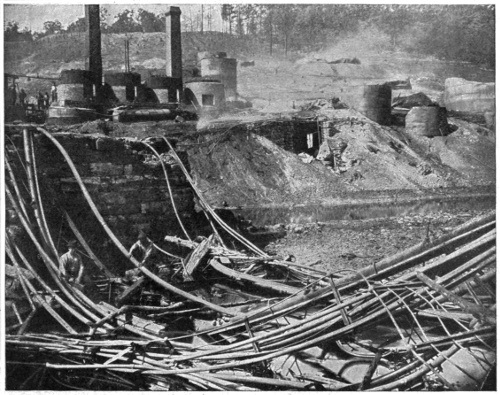
RUINS OF THE ACME REFINERY, TITUSVILLE, AFTER THE FIRE ON JUNE 1, 1880.
The fire that desolated St. Petersburg started in Fred Hepp’s beer-saloon.
Hepp had a sign representing a man attempting to lift a schooner of lager as
big as himself and remarking, “Oxcuse me ov you bleese.” The fire “oxcused”
him from further exertion. Two destructive conflagrations almost
eliminated Parker from the face of the earth. Karns City experienced three
fiery visitations. In 1874 sixty-four buildings in the heart of town went up in
smoke. Sixteen followed in September, 1876, the post-office and two largest
stores figuring in the list. On March fifth, 1877, Mrs. F. E. Bateman, three
children and a guest perished in the Bateman House. Bateman, one son and
one guest were caught in the flames and burned fatally, dying in a few hours.
440Burning coals adhering to a chunk of a bursting boiler, on Cherry Run, near the
Reed well, plunged into a tank of oil and started a frightful blaze. Acres of
the valley, covered with derricks and tanks, flamed with the fury of a veritable
hell. Men fled to the hills and no life was lost. A train of blazing tank-cars on
the Allegheny-Valley Railroad, below Foster station, interrupted travel for many
hours. The passenger-train from Pittsburg stopped and the passengers walked
up the track to see the huge blaze. Thomas Bennett, the engineer, went a
short distance ahead, when an iron-tank exploded with fearful violence, one
piece striking Bennett in the breast and killing him instantly. David Ker was
conductor of the train poor Bennett did not live to guide to its destination.
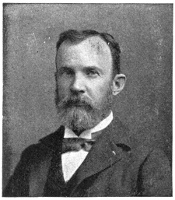
Thomas Martindale, who leads the retail-grocery trade, brought with him
to Philadelphia twenty years ago the vim and energy that gained him fame and
fortune in the oil-region. He clerked for years in a Boston dry-goods store,
quit Massachusetts for Pennsylvania and landed at Oil City in 1869. He took
the first job that offered—grubbing out a road to his wells for John S. Rich—used
eyes and brain and soon knew how to “run engine.” Buying an interest
in a grocery, his “Checkered Store” became noted for excellent wares and low
prices. The “Blue Store,” larger and better,
followed and was in turn succeeded by the
“Mammoth.” Martindale sold to Steffee &
Co., moved to Philadelphia and opened the first
California store. It was a revelation to the
citizens to get fruits and wines straight from the
Pacific coast and they patronized him liberally.
Partners were taken in, whom the head of the
firm imbued with something of his own energy
and magnetism. Active in politics and trade,
wide-awake and public-spirited, many Philadelphians
contend that the next mayor of the
Quaker City shall spell his name Thomas Martindale.
He is a trenchant writer and has published
“Sport Royal,” an admirable work descriptive
of hunting adventures in which he participated.
The live merchant who caught the inspiration of
five-dollar oil is sixteen ounces to the pound every time and every place.
“Never quarrel with a preacher or an editor,” said Henry Clay, “for the
one can slap you from the pulpit and the other hit you in his paper without
your getting a chance to strike back.” Col. William Phillips, president of the
Allegheny-Valley Railroad, violated the Kentucky statesman’s wise maxim by
making war on the Oil-City Derrick. He was building the Low-Grade division,
from Red Bank to Emporium, and the main-line suffered. The track was
neglected, decayed ties and broken rails were common and accidents occurred
too frequently for comfort. The winter and spring of 1873 were fruitful of disaster.
At Rockland an oil-train ran over the steep bank into the river, upsetting
the passenger-coach at the rear. The oil caught fire, several passengers
were burned to death and others were terribly injured. The railroad officials,
acting under orders from headquarters, refused to give information to the crowd
of frantic people who besieged the office at Oil City to learn the fate of friends
on the train. To the last moment they denied that anything serious had happened,
although passengers able to walk to Rockland Station telegraphed brief
particulars. At last a train bearing some of the injured reached Oil City. Next
441morning the Derrick gave full details and criticised the management of the
road severely for the bad condition of the track and the stupid attempt to withhold
information. The heading of the article—“Hell Afloat”—enraged Col.
Phillips. He and Superintendent J. J. Lawrence prepared a circular to the conductors,
instructing them “to take up pass of C. E. Bishop or J. J. McLaurin
whenever presented, collect full fare, prohibit newsboys from selling the Oil-City
Derrick on the trains, not allow the paper to be carried except in the mails
or as express-matter, and to report to the General Superintendent.” Conductor
Wench, a pleasant, genial fellow, on my next trip from Parker looked perplexed
as he greeted me. He hesitated, walked past, returned in a few moments
and asked to see my pass. The document was produced, he drew a
letter from his pocket and showed it to me. It was the order signed by Phillips
and Lawrence. “That’s clear enough, here’s your fare,” was my rejoinder.
It was agreed at the office to say nothing for a day or two. Doubtless Phillips
and Lawrence thought the paper had been scared and would send a flag of
truce. A big wreck afforded the opportunity to open hostilities. For months
the war raged. The paper had a regular heading—“Another Accident on the
Valley of the Shadow Road”—which was printed every morning. Accidents
multiplied and travel sought other lines. Phillips threatened to remove the
shops from South Oil City, his partners wished Bishop to let up, he refused and
they bought his interest. Peace was proclaimed, the road was put into decent
order and the Pennsylvania Railroad eventually secured it. The fight had no
end of comical features. It worried Col. Phillips exceedingly and spread the
reputation of the Derrick over the continent. The cruel war is over and Col.
Phillips and Col. Lawrence journeyed to the tomb long years ago.
“Jim” Collins—he ought to be manager—is about the only one of the
early conductors on the Allegheny-Valley Railroad still in the traces. His
record of twenty-seven years shows capable, faithful attention to duty and care
for the comfort and safety of passengers that has gained him the highest popularity.
Superintendent “Tom” King, now vice-president of the Baltimore &
Ohio, is among the foremost railroad-officials of the United States. His brother
was crushed to death by the cars. Wench, the Taylors, Reynolds and Bonar
have been off the road many years. Long trains of crude are also missing,
some towns along the route have disappeared and the crowds of operators who
formerly thronged the line between Parker and Oil City have vanished from
the scene. David Kerr, whom Collins succeeded, went to Arkansas. John
McGinnes, one of the bravest engineers who ever pulled a throttle, headed the
railroad-strikers in 1877 and died six years ago. “Jim” Bonnar is in Chicago,
Grant Thomas is train-dispatcher and “Dick” Reynolds superintends a Baltimore
road. The Allegheny-Valley, extended to Oil-City in the winter of 1867-8,
is different from what it was when the superintendent walked over the entire
track every day and the president applied formally to the directors for authority
to purchase a new lock for his desk.
The first railroad to enter Oil City was the Atlantic & Great Western, now
of the Erie system, in 1866. Its first train crossed the mouth of Oil Creek on a
track laid upon the ice. “Billy” Stevens and John Babcock were early conductors.
Stevens went to Maine and Babcock died several years ago at Meadville,
soon after completing a term as mayor of the city. The Farmers’ Railroad
was finished in 1867, the Allegheny Valley in 1868 and the Lake-Shore in
1870. A short railroad up Sage Run conveyed coal from the Cranberry mines.
On August fourth, 1882, the engineer—Frank Wright—lost control of a train on
442the down grade, one of the steepest in the state. He reversed the engine to
the last notch and jumped, sustaining injuries that caused his death in four days.
For two miles the track was torn up and coal-cars were smashed to splinters by
running into a train of freight-cars at McAlevy’s Mills. Six men were killed
outright and five died from their injuries next day.
The popular auditor of the New York Central, W. F. McCullough, was an
Oil-City boy. His brother, James McCullough, is traveling-auditor of the New
York, New Haven & Hartford; another brother, E. M. McCullough, is traveling
bill-agent for the U. S. Steamship-Railway Company. They are sons of the
late Dr. T. C. McCullough, who died at Oil City in 1896.
Hon. Thomas Struthers, of Warren, who died in 1892 at the age of eighty-nine,
donated the town a public-library building that cost ninety-thousand
dollars. He aided in constructing the Pennsylvania Railroad, built sections of
the Philadelphia & Erie and Oil-Creek Railroads and the first railroad in California.
He was the first manager of the Oil-Creek road. Frank Thomson,
the capable president of the Pennsylvania Railroad, was also superintendent
of the Oil-Creek. C. J. Hepburn, now residing in Harrisburg and permanently
disabled as the result of an accident, held the same position for years. He was
a thorough railroader, esteemed alike by the employés and the public for his
efficient performance of duty. The old-time Oil-Creek conductors were lock-switch,
steel-track and rock-ballast clear through. Gleason, postmaster at Corry
a term or two, runs the Mansion House at Titusville. “Bill” Miller is on the
Pacific coast. Mack Dobbins died at St. Louis and “By” Taylor has made
his last trip. Barber lives at Buffalo. “Mike” Silk, who yanked oil-trains
from Cherry Run, is a wealthy citizen of Warren. Selden Stone and “Pap”
Richards are still on deck, the last of a coterie of as white railroad-men as ever
punched pasteboard “in the presence of the passenjare.”
“We live in deeds, not years; in thoughts, not breaths;
In feelings, not in figures on a dial.”
Few railroaders are so widely and favorably known as A. B. Youngson.
For twenty-three years he was locomotive-engineer on the Atlantic road.
Every man, woman and child on the Franklin branch, between Meadville and
Oil City, knew and liked the clever, competent man who sat in the cab and
never neglected his duty. Seven years ago Mr. Youngson was appointed
443Assistant Grand Chief of the Brotherhood of Locomotive Engineers, a position
his experience and geniality adapt him admirably to fill. His brother, J. J.
Youngson, has been connected with the Atlantic road—now called the New
York, Philadelphia & Ohio—for thirty years as superintendent of the water-works
department of the system. A. G. Post, a veteran ever to be found at
his post, is deservedly popular as a conductor. Peter Bowen, the trusty roadmaster,
who used to keep the track in apple-pie order, years ago traveled the
track “across the divide.” From President Thomas down to the humblest
laborer the “Nypano” officials and employés are not excelled in efficiency,
courtesy and manliness.
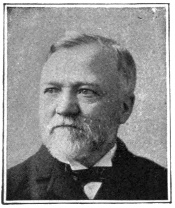
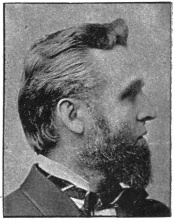
Andrew Carnegie, the colossus of the iron-trade, was a stockholder of the
Columbia Oil-Company, which operated the Storey farm, on Oil Creek. The
money he obtained from this source enabled him to gain control of the Braddock
Steel-Works. Starting in life as a telegraph messenger-boy, he soon learned to
manipulate the key expertly and was placed in charge of the railroad-office at
Atlantic, Ohio. Thomas A. Scott, then superintendent of the Pittsburg Division
of the Pennsylvania Railroad, engaged him as his clerk and operator. Scott
established his headquarters at Altoona and promoted
young Carnegie to the chief-clerkship.
His shrewdness
and fidelity won favor and
advancement. He was appointed
superintendent of the
Pittsburg Division, and in 1864
selected David McCargo as
his assistant. McCargo, who
had been operator in the
Commercial Telegraph office,
superintended the Pennsylvania-Railroad
telegraph-service.
Robert Pitcairn, first
an operator at Hollidaysburg, was transferred to Altoona, went thence to Fort
Wayne with J. N. DuBarry, afterwards vice-president of the “Pennsy,” and
returned about 1870 to succeed Carnegie on the Pittsburg Division. He is now
one of the highest officials of the Pennsylvania and lives in Pittsburg. Mr.
McCargo became General Superintendent of the Pacific & Atlantic Lines in
4441868. In 1875 he was appointed General Superintendent of the Allegheny
Valley Railroad. This responsible position he has held twenty-two years,
greatly to the advantage of the road and the satisfaction of the public. Carnegie
invested in oil and sleeping-car stock and enjoyed Col. Scott’s confidence. The
railroad-king died and his clever clerk eventually controlled the steel plant ten
miles east of Pittsburg. Now Andrew Carnegie bosses the steel-industry, owns
the largest steel-plants in the world, manufactures massive armor-plate for war-ships—blow-holes
blew holes in its reputation “once upon a time”—and has
acquired forty or fifty-millions by the sweat of his workmen’s brows. He has
parks and castles in Scotland, spends much of his time and cash abroad, coaches
with princes and nobles and lets H. C. Frick fricasee the toilers at Braddock
and Homestead. The Homestead riots, precipitated by a ruffianly horde of
Pinkerton thugs, aroused a storm of indignation which defeated Benjamin
Harrison for the presidency and elected Grover Cleveland on the issue of
tariff-reform. Mr. Carnegie writes soul-stirring magazine articles on the duties
of capital to labor and has established numerous public-libraries. He is stoutly
built and exceedingly healthy. His enormous fortune may yet endow some
magnificent charity.
“Oh! it is excellent to have a giant’s strength,
But it is tyrannous to use it like a giant.”
You may meet them at Oshkosh or Kalamazoo, in New York or Washington,
around Chicago or San Francisco, about New Orleans or Mexico, but not
a few men conspicuously successful in finance, manufactures, literature or politics
have been mixed up with oil some time in their career. Commodore
Vanderbilt, Jay Gould, James Fisk, Thomas A. Scott, John A. Garrett and A.
J. Cassatt profited largely from their oil-interests. Mr. Cassatt, superintending
the Warren & Franklin Railroad, acquired the knowledge of oil-affairs he
turned to account in shaping the transportation-policy of the Pennsylvania
Railroad. Besides the colossal gains of the Standard Oil-Company, petroleum
won for such men as Captain J. J. Vandergrift, J. T. Jones, J. M. Guffey, John
McKeown, John Galey, J. J. Carter, Charles Miller, Frederic Prentice, S. P.
McCalmont, William Hasson, George V. Forman, Thomas W. Phillips, John
Satterfield, H. L. Taylor, John Pitcairn, Theodore Barnsdall, E. O. Emerson,
Dr. Roberts, George K. Anderson, Jonathan Watson, Hunter & Cummings,
Greenlee & Forst, the Grandins, the Mitchells, the Fishers, the McKinneys,
the Plumers, the Lambertons and a host of others from one to ten-millions
apiece. Certainly coal, cotton or iron, or all three combined, can show no
such list. Oil augmented the fortunes of Stephen Weld, Oliver Ames and F.
Gordon Dexter, the largest in New England. It put big money into the pockets
of Andrew Carnegie, William H. Kemble and Dr. Hostetter. To it the
great tube-works, employing thousands of men, and multitudes of manufacturing-plants
owe their existence and prosperity. Some of the brightest newspaper-writers
in New York, Philadelphia and Chicago learned force and directness
amid the exciting scenes of Oildom. Several are authors of repute and
contributors to magazines. Grover Cleveland, while mayor of Buffalo, imbibed
business-wisdom and notions of sturdy independence from his acquaintance
with Bradford oil-operators. Governor Curtin was a large stockholder
in oil-companies on Cherry Run and Governor Beaver may claim kin with the
fraternity as the owner of oil-wells in Forest county. No member of Congress
for a generation made a better record than J. H. Osmer, Dr. Egbert, J. C. Sibley,
C. W. Stone and Thomas W. Phillips. Galusha A. Grow was president
445of the Reno Oil-Company. Mr. Sibley was tendered the second place on the
Democratic ticket at Chicago and could have been nominated for president,
instead of William J. Bryan, but for the stupid hostility of a Pennsylvania boss.
More capable, influential members than W. S. McMullan, Lewis Emery, J. W.
Lee, W. R. Crawford, William H. Andrews, Captain Hasson, Willis J. Hulings,
Henry F. James and John L. Mattox never sat in the State Senate or the Legislature.
And so it goes in every part of the country, in every profession, in
every branch of industry and in every business requiring vigor and enterprise.
Michael Geary, whose death last year was a severe blow to Oil City, forcibly
illustrated what energy and industry may accomplish. He was a first-class
boiler-maker and machinist, self-reliant, stout-hearted and strong mentally
and physically. In 1876 he started the Oil-City Boiler-Works in a small
building, Daniel O’Day and B. W. Vandergrift furnishing the money and taking
an interest in the business. O’Day and Geary became sole owners in 1882.
The plant was enlarged, the tube-mills were added, acres of buildings dotted
the flats and a thousand men were employed. Engines, tanks, stills, tubing,
casing and boilers of every description were manufactured. The machinery
comprised the latest and fullest equipment. The business grew amazingly.
Joseph Seep was admitted to partnership and branch-offices were established
in New York, Chicago, Pittsburg and at various points in the oil-producing
states. The firm led the world as tank-builders, actually constructing one-third
the total iron-tankage in the United States. Mr. Geary bought and remodeled
the Arlington Hotel, fostered local enterprises and was a most progressive
citizen. He died in the vigor of manhood. The splendid industries he
reared and the high place he held in public esteem are his enduring monument.
“He had kept
The whiteness of his soul, and thus men o’er him wept.”
Since Christmas day of 1873, when they struck their first well at Millerstown,
Showalter Brothers have been leading operators in the Butler field. Hon.
Joseph B. Showalter, who has managed the firm’sfirm’s affairs wisely, was born in
Fayette County, taught school at sixteen, relinquished
teaching for medicine, and was graduated
in 1884 from the Baltimore College of Physicians
and Surgeons. In 1886 he was elected to the
legislature and to the state-senate two years later,
making an excellent record in both bodies. Butler
county nominated him for Congress, but Lawrence
and Mercer combined in favor of J. J. Davidson.
Dr. Showalter is a substantial citizen, in close touch
with the people and worthy of the confidence reposed
in him. Hon. M. L. Lockwood, for seven
years a resident of Butler, represented Clarion
county twice in the legislature and introduced the
Free-Pipe Bill. Robert Lockwood, the founder of
the family in America, came from England with
Winthrop in 1630. Mr. Lockwood began oil-operations
on Cherry Run in 1865, opposed the South-Improvement
rascality zealously and was a member of the Producers’ Committee
that secured the passage by Congress of the Interstate-Commerce Bill.
He is largely interested in oil and manages a hundred wells for Tait & Patterson.
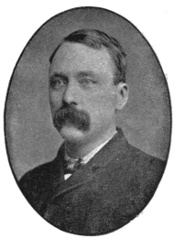
In the days of oil-shipments by boat and teaming, before the advent of
446pipe-lines, Watson, Densmore & Co. handled large quantities of crude in
barrels, hauling it from the wells to the nearest railroad-station. Daniel T.
Watson, senior member of the firm, was born in Maine in 1806, learned
harness-making, conducted a profitable store in New Hampshire and came to
Oil Creek with James Densmore early in the sixties. He bought the oil and
managed the shipping-business of the firm, which employed scores of teams to
haul crude from wells at Shamburg and boat it from wells on the banks of Oil-Creek
to the loading-tanks at Miller Farm. When the
railroad reached Boyd Farm the firm opened a branch
office at Pioneer and shipped east most of the oil produced
on Bull, Pioneer and Benninghoff Runs, in the
“blue cars” Watson, Densmore & Co. were the first
to introduce. Clinton Rouderbush, afterwards well
known in the exchanges, represented the firm in New
York. Pipe lines ending primitive modes of transportation,
Mr. Watson operated largely in the Pleasantville
field, in connection with Benson & McKelvy,
Lewis Emery and Samuel Q. Brown. He lived two
years on the Morrison farm, removed to Minnesota in
1873 and died at Lakeland on July first, 1894. Mr.
Watson was prominent in his day and did much to put
oil-shipping on a solid basis.basis.
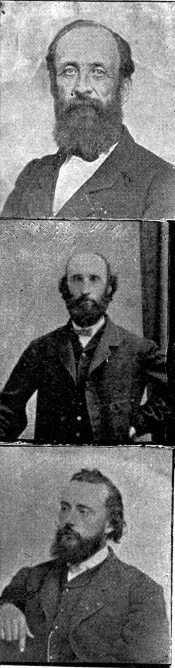
DANIEL T. WATSON.
JOEL DENSMORE.
WILLIAM DENSMORE.
The Densmores lived on Woodcock Creek, twenty
miles from Titusville, when the Drake well startled
the quiet community. The father and his son Amos
visited the well and soon contrived a metal-shoe to fix
to a wooden-pipe to cheapen drilling. Emmett Densmore
traversed the oil-region to sell the shoes, often
walking forty miles a day. Jonathan Watson leased him land on the flats below
Titusville, Amos had good credit and the pair put down a dry-hole with a
spring-pole. They leased a piece of ground from James Tarr and drilled the
Elephant well, so named from the “monster tank”—twenty-five hundred
barrels—Amos constructed from pine-planks to hold the great flow of oil. The
Elephant yielded hundreds of barrels daily and the other brothers—James,
William and Joel—were invited to come into the partnership. Amos was given
to invention and he made bulk-boats, the first tanks for storing crude and the
447first wooden-tanks—forty to fifty barrels each—for platform-cars. With Daniel
T. Watson they shipped extensively until pipe-lines retired barrels, pond-freshets
and bulk-boats permanently. The brothers sank many wells and acquired
wealth. Amos, James and Joel have passed over to the better land. Amos
and George W. N. Yost, once the largest oil-shipper, perfected the famous
Densmore Type-Writer. James bought out the Remington Type-Writer.
London is Emmett’s home and he has attained prominence as a physician.
His wife, Dr. Helen Densmore, assists in his practice and has written a book in
behalf of Mrs. Maybrick, whose imprisonment has aroused so much sympathy.
William Densmore owns a big flour-mill and the Central Market at Erie. The
Densmores possessed energy, genius and manliness that merited the success
which rewarded their efforts in various lines of human activity.
These early shipping-times developed many men of exceptional ability and
character. T. Preston Miller was long a familiar figure on Oil Creek and at
Franklin, as buyer for the Burkes and later for Fisher Brothers. “Pres” was
generous, popular and most accommodating in his dealings. The snows of a
dozen winters have blown over his grave in the Franklin cemetery. The late
Isaac Reineman was another of Oil City’s trustworthy pioneers. He bought
oil, operated in the lower districts with William M. Leckey, served three terms
as prothonotary and died in January, 1893, from the effects of slipping on the
icy porch the night before Christmas. He had charge of Captain Vandergrift’s
oil properties in Washington county and, with Charles Ford, held blocks of
land in West Virginia. Ford was found dead in bed last year. John B. Smithman,
who came to the Creek to buy oil for John Munhall & Co., has been
enriched by his operations in Venango county and the northern fields. He
built a beautiful home in Oil City and overcame stacks of obstacles to give the
town a street railway. He has provided a delightful park four miles down the
Allegheny, built a steel bridge across the river and positively refused to be
ruled off the track by any opposing element. “People do not kick a corpse.”
Progression is the unchanging watchword of the petroleum-industry. The
three-pole derrick of yore has given place to the plank-giant that soars eighty
or ninety feet. The spring-pole is a shadowy memory. The first drilling-tools
weighed ninety-eight pounds; a modern set weighs two tons. Instead of
spending weeks to “kick down” a well a hundred feet, a thousand feet can be
448bored between Monday morning and Saturday night. Ten-horse portable
engines and boilers are well-nigh forgotten. The first iron-pipe for tubing wells,
butt-weld ready to burst on the slightest provocation, was manufactured in
Massachusetts and sold for one dollar per foot.
Now lap-weld tubing of the best material brings a
dime a foot. So it is in methods of transportation
and refining. Bulk-boats, leaky barrels and long
hauls through fathomless mud are superseded by
pipe-lines, which pump oil from the wells to New
York, Philadelphia, Baltimore, Cleveland and
Chicago. The rickety stills and dangerous devices
of former times have yielded to the splendid refineries
that utilize every vestige of crude and furnish
two-hundred merchantable commodities. For
much of this important advance in tools, appliances
and machinery the great Oil-Well Supply-Company
is directly responsible. From small beginnings it
has grown to dazzling proportions. It is the only
concern on earth with the facilities and capacity to
manufacture everything needed to drill and operate
oil-wells and artesian-wells and equip refineries. Its nine enormous plants
at convenient points employ thousands of skilled workmen and acres of the
latest machinery. They turn out every conceivable requisite in steel, iron,
brass or wood, from engines and complete rigs to the smallest fittings. John
Eaton, the founder and president of the company, may fairly claim to be the
father of the well-supply trade. His connection with it dates back to 1861
and has continued ever since. He started business for himself in 1867 and the
next year took up his abode in the oil-region. In 1869 he and E. H. Cole formed
the partnership of Eaton & Cole, which the Eaton, Cole & Burnham Company
of New York succeeded. Several rival firms organized the Oil-Well Supply
Company, Limited, in 1878, with Mr. Eaton at its head.
The present corporation succeeded the Limited Company
in 1891. Mr. Eaton’s enterprise and experience
are invaluable to the company. All new inventions
adapted to wells or refineries are examined carefully
and the most valuable purchased. Branch-offices and
factories have kept pace with the spread of oil-developments.
The Company’s wares find a market in every
civilized land. Vice-President Kenton Chickering,
first-class clear through, manages the large establishment
at Oil City. Pittsburg is now Mr. Eaton’s home.
He is genial and courteous always, prompt and sagacious
in business, broad in his ideas and true to his
convictions, and his Oil-Well Supply-Company is something to be proud of.
George Koch, a native of Venango county and relative of the celebrated
Dr. Koch of Germany, is a well-known inventor and writer. He began oil-operations
in 1865, in 1873 formed a partnership with his brother and Dr. Knight,
in 1880 organized the firm of Koch Brothers—William A., J. H. and George
Koch—and was nominated three times for the legislature. He took an active
part in the Producers’ Council, edited the Fern-City Illuminator and published
a book of “Stray Thoughts.” He invented a torpedo for oil-wells, improved
449drilling-tools and well-appliances, patented a system of “Sectional Iron Tanks,”
a “Rubber-Packing,” “Movable Store-Shelving” and other useful devices.
Mr. Koch has just rounded the half-century mark, he lives in East Sandy and
no man has done more to simplify the methods of sinking and operating wells.
Col. L. H. Fassett is one of the honored veterans of the late war and a
veteran operator in heavy oil. For nearly thirty years he has been a leader in
the Franklin district, operating successfully and enjoying the esteem of all
classes. He has a delightful home, is active in
furthering good objects and doesn’t worry a particle
when oil happens to drop a peg.
Twelve miles south-east of Pittsburg, on the
Bedell farm, near West Elizabeth, the Forest Oil-Company
is drilling the deepest well on the continent.
It is down fifty-five-hundred feet, considerably
more than a mile, and will be put to six-thousand
at least. Geologists and scientists are
much interested inin the strata and the temperatures
at different depths. This is the deepest well ever
attempted to be sunk with a cable, the one near
Reibuck, Eastern Silesia, having been bored about
seven-thousand feet with rotating diamond core-drills.
T. S. Kinsey and his two sons, of Wellsburg,
drilled a dry-hole forty-five-hundred feet in
1891, on Boggs’ Run, West Virginia, near Wheeling,
for a local company. Think how progress has been marching on since
Drake’s seventy-foot gopher-hole to render the Forest’s achievement possible!
Surely petroleum-life is as full of promise as a bill-collector’s.
Hon. Thomas W. Phillips, the wealthy oil-producer, who declined to serve
a third term in Congress, labored zealously to secure legislation that would settle
differences between employers and employés by arbitration. He offered to
pay a quarter-million dollars to meet the expense of a thorough Congressional
inquiry into the condition of labor, with a view to the presentation of an authoritative
report and the adoption of measures calculated to prevent strikes and
promote friendly relations. When the suspension of drilling in the oil-region
deprived thousands of work for some months, Mr. Phillips was especially active
in effecting arrangements by which they received the profits upon two-million
barrels of crude set apart for their benefit. The Standard Oil-Company, always
considerate to labor, heartily furthered the plan, which the rise in oil rendered
a signal success. This was the first time in the history of any business that
liberal provision was made for workmen thrown out of employment by the
stoppage of operations. What a contrast to the grinding and squeezing and
shooting of miners and coke-workers by “coal-barons” and “iron-kings!”
When you come to size them up the oil-men don’t have to shrink into a hole to
avoid close scrutiny. They pay their bills, are just to honest toil, generous to
the poor and manly from top to toe. They may not relish rheumatism, but this
doesn’t compel them to hate the poor fellow it afflicts. As Tiny Tim observed:
“God bless us every one!”
“Ivry gintleman will soon go horseback on his own taykittle” was the
inspired exclamation of an Irish baronet upon beholding the initial trip of the
first locomotive. Vast improvements in the application of power have been
effected since Stephenson’s grand triumph, nowhere more satisfactorily than in
450the oil-regions. Producers who remember the primitive methods in vogue
along Oil Creek can best appreciate the wonderful progress made during three
decades. The tedious process of drilling wet-holes with light tools has gone
where the woodbine twineth. Casing has retired the seed-bag permanently, and
from the polish-rod to the working-barrel not the smallest detail remains unimproved.
Having a portable engine and boiler at each well has given place to
the cheaper plan of coupling a host of wells together, two men thus doing the
work that once required twenty or thirty. Pipe-lines have superseded greasy
barrels and swearing teamsters, and even tank-cars are following the flat-boats of
pioneer times to oblivion. In short, labor-saving systems have revolutionized the
business so completely that the fathers of the early styles would utterly fail to recognize
their offspring in the petroleum-development as conducted now-a-days.
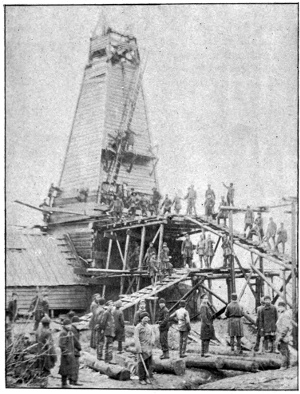
ROUSTABOUTS PREPARING TO CLEAN OUT A RUSSIAN OIL-WELL.
C. L. Wheeler, one of the earliest buyers of crude on Oil Creek in 1860
and first President of the Bradford Oil-Exchange, recently went to his eternal
reward. Orion Clemens,
brother of Mark
Twain and once a
writer for the Oil-City
Derrick, died lately.
Truly, the boys are
“crossing the divide”
at a rate it grieves the
survivors to note.
The fine illustrations
of oil-scenes in Russia
are from the collection
of photographs gathered
by John Eaton,
President of the Oil-Well
Supply Company,
during his visits to the
dominions of the Czar.
“Long may he wave!”
Crude sixty-five,
Well, sakes alive!
You seek rich spoil?
Don’t bore for oil.
’Mid Klondyke snow
You have more show
To score a hit
And save a bit.
Six-thousand wells
drilled and ninety-six-thousand
barrels of production
per day represent
oil-operations in
Pennsylvania in 1897. To this enormous output Ohio and Indiana added fifty-three-thousand
barrels a day and thirty-six-hundred wells.
To the indefatigable zeal and liberality of Rev. Thomas Carroll, for twenty-five
years in charge of the parish, Oil City owes the erection of the finest church
in Northwestern Pennsylvania. The beautiful edifice fitly crowns the summit
of Cottage Hill. Its two lofty spires point heavenward and its altar is a marvel
of exquisite taste and finish. An elegant parsonage stands on the adjacent lot,
451with the parochial school across the street. It is proposed to rebuild the
schools, to supply a large hall and a convent and to provide every convenience
for the various societies connected with the grand congregation. This idea is
rendered possible by the splendid offer of Father Carroll to pay one-half the
entire cost himself. The good work he has done for temperance, education,
morality and religion cannot be estimated. He is distinguished by his catholic
spirit, his broad charity, his unwearied philanthropy and his unswerving devotion
to the right. No man has made a deeper, nobler impress upon any community
in the oil-regions than the beloved pastor of St. Joseph’s. “Late may
he return to Heaven!”
“Each man makes his own stature, builds himself;
Virtue alone outbuilds the Pyramids;
Her monuments shall last when Egypt’s fall.”
A host of changes, some pleasing and more unutterably sad, have the swift
seasons brought. The scene of active operations has shifted often. The great
Bradford region and the rich fields around Pittsburg and Butler have had their
innings. Parker, Petrolia, St. Petersburg, Millerstown and Greece City have
followed Plumer, Shaffer, Pioneer, Red-Hot and Oleopolis to the limbo of forsaken
things. Petroleum Centre is a memory only. Rouseville is reduced to a
skeleton. Not a trace of Antwerp, or Pickwick, or Triangle is left. Enterprise
resembles Goldsmith’s “Deserted Village,” or Ossian’s “Balaclutha.” Tip-Top,
Modoc, Troutman, Turkey City, St. Joe, Shamburg, Edenburg and Buena
Vista have had their rise and fall. Fagundas has vanished. Pleasantville fails
to draw an army of adventurous seekers for oleaginous wealth. Tidioute is an
echo of the past and scores of minor towns have disappeared completely. For
forms and faces once familiar one looks in vain. Where are the plucky operators
who for a half-score years made Oil Creek the briskest, gayest, liveliest spot in
America? Thousands are browsing in pastures elsewhere, while other thousands
have crossed the bridgeless river which flows into the ocean of eternity.
Alas for sentiment! Nero proves to have been a humanitarian, a good
man who was merely a bad fiddler. Henry the Eighth turns out to be a model
husband, rather unfortunate in the loss of wives, but sweetly indulgent and
only a trifle given to fall in love with pretty girls. William Tell had no son and
shot no arrow at an apple on young Tell’s head. Now Charlotte Temple is a
myth, the creation of an English novelist, with her name cut on a flat tombstone
in Trinity Churchyard over a grave which originally bore a metal-plate supposed
to commemorate a man! At this rate some historic sharp in the future
may demonstrate that the oil-men were a race of green-tinted people governed
by King Petroleum. Colonel Drake may be pronounced a figure of the imagination,
the Standard a fiction, the South-Improvement Company a nightmare
and the Producers’ Association a dream. Then some inquisitive antiquarian
may come across a copy of “Sketches in Crude-Oil” stored in a forgotten
corner of the Congressional library, and set them all right and keep the
world running in the correct groove with regard to the grand industry of the
nineteenth century.
“I stood upon Achilles’ tomb
And heard Troy doubted: time will doubt of Rome.”
A dry-joke tickles and a dry-hole scrunches. It’s a poor mule won’t work
both ways, a poor spouter that can’t keep its owner from going up the spout, a
poor boil in the pot that isn’t better than a boil on the neck, a poor chestnut on
the tree that doesn’t beat a chestnut at a minstrel show and a poor seed that
produces no root or herb or grain or fruit or flower. “Who made you?” the
452Sunday-school teacher asked a ragged urchin. “Made me? Well, God made
me a foot long and I growed the rest!” And so the early operators on Oil
Creek made the oil-development “a foot long” and it “growed the rest.” The
tiny seed is a vigorous plant, the puling babe a lusty giant. Amid lights and
shadows, clouds and sunshine, successes and failures, struggles and triumphs,
starless nights and radiant days, petroleum has moved ahead steadily. Growth,
“creation by law,” is ever going on in the healthy plant, the tree, the animal,
the mind, the universe. We must go forward if the acorn is to become an oak,
the infant a mature man, the feeble industry a sturdy development. Progress
implies more of involution than of evolution, just as the oak contains much
that was not in the acorn, and the oil-business in 1898 possesses elements unknown
in 1859. Not to advance is to go backward in religion, in nature and in
trade. “An absentee God, sitting idle ever since the first Sabbath, on the outside
of the universe, and seeing it go,” is not a correct idea of the All-Wise
Being, working actively in every point of space and moment of time. Stagnation
means decay in the natural world and death in oil-affairs. The man who
sits in the pasture waiting for the cow to come and be milked will never skim
off the cream. The man who wants to figure as an oil-operator must bounce
the drill and tap the sand and give the stuff a chance to get into the tanks.
Still a youngster in years, the petroleum-colt has distanced the old nags. The
sucker-rod is the pole that knocks the persimmons. The oil-well is the fountain
of universal illumination. The walking-beam is the real balance of trade
and of power. The derrick is the badge of enlightenment. Petroleum is the
bright star that shines for all mankind and doesn’t propose to be snuffed out or
shoved off the grass. Its past is known, its present may be estimated, but
what Canute dare fence in its future and say: “Thus far shalt thou come and
no farther?”
If there be friendly readers, as they reckon up the score,
Who find these random “Sketches” not a burden and a bore
Too heavy for digestion and too light for solemn lore—
Who find a grain of pleasure has been added to their store
By some glad reminiscence of the palmy days of yore,
Or tender recollection of the old friends gone before—
Who find some things to cherish and but little to deplore—
Good-bye, our voyage ended, we must anchor on the shore.
The last line has been written, all the labor now is o’er,
The task has had sweet relish from the surface to the core;
The sand-rock is exhausted, for the oil has drain’d each pore,
The derrick stands neglected and we cease to tread its floor;
My feet are on the threshold and my hands are on the door—
The pen falls from my fingers, to be taken up no more.
To—
my neighbor and friend for many years,
a man of large heart and earnest purpose
——Hon. Charles Miller——
Franklin. Pa.,
whose sterling qualities have achieved the
highest [success] in life and won the confidence
and esteem of his fellows, this Volume is
——Respectfully Dedicated.
The hyphenation of compound words can be variable. Where the hyphen
occurs on a line or page break, it is retained or removed based on
the most commonly used form.
Errors deemed most likely to be the printer’s have been corrected, and
are noted here. The references are to the page and line in the original.
The following issues should be noted, along with the resolutions.
| 21.14 |
27 years, 1 mo[n]th & 14 days. |
Added. |
| 28.24 |
a considerable flow[.] |
Added. |
| 28.29 |
Kanawha boatmen[t] and others. |
Removed. |
| 29.21 |
healing qualitie[s]. |
Restored. |
| 31.30 |
When they regained con[s]ciousness |
Added. |
| 35.44 |
at a Na[u/n]cy-Hanks quickstep |
Inverted. |
| 40.11 |
State-Committe[e] |
Added. |
| 41.2 |
proba[b]ly near what is now Cuba, N. Y. |
Added. |
| 47.45 |
Lovely woman and Banquo’s ghost will not “down![’/”] |
Replaced. |
| 52.4 |
in thrilling narratives[.] |
Added. |
| 53.45 |
over to the court-house.[’/”] |
Replaced. |
| 53.47 |
and the vill[i]age emptied itself |
Removed. |
| 54.2 |
No wonder Satan’s imps wailed sadly:[”] |
Removed. |
| 58.35 |
“Law, Jim Sickles![”] I tho’t |
Removed. |
| 65.2 |
the Highlanders at Lucknow[.] |
Restored. |
| 78.3 |
West and south-west the Octave Oil[-]Company has operated |
Replaced. |
| 79.18 |
sold the building to C. V. Culver for bank-purposes[.] |
Restored |
| 81.34 |
per foot to fifty cents[.] |
Added. |
| 84.26 |
Will[l]iam Raymond |
Removed. |
| 91.6 |
Captain Willia[n/m] Hasson |
Replaced. |
| 95.25 |
the h[f/i]gher type of passenger-locomotives |
Replaced. |
| 97.52 |
born at Friendship, N.Y[,,/.,] in 1850. |
Replaced. |
| 102.7 |
one-hundred-and forty[ /-]acres |
Replaced. |
| 103.14 |
were in the thic[h/k]est of the fray |
Replaced. |
| 119.39 |
[“]Wholly unclassable, |
Added. |
| 121.3 |
the days of “the middle passage[’/”] |
Replaced. |
| 129.16 |
[“]Vare vos dose oil-wells now? |
Added. |
| 137.16 |
five-thir[f/t]y-five a barrel[l] |
Replaced/Removed. |
| 147.25 |
touring the country and entertain[in]ing crowds |
Removed. |
| 160.5 |
who coolly remarked[;/:] |
Replaced. |
| 160.13 |
where his ancest[e/o]rs |
Replaced. |
| 161.26 |
Possib[l]y Br’er Elliott |
Added. |
| 168.33 |
the William Porter farm[,/.] |
Replaced. |
| 169.3 |
at eight-hundred-and-fifty[-/ ]feet, the Harmonial Well No. 1 |
Replaced. |
| 180.2 |
marks the Chase House[,/.] |
Replaced. |
| 191.15 |
It does upset a man’s cal[c]ulations |
Added. |
| 194.29 |
missed opening the Sister[s]ville field |
Added. |
| 205.41 |
velvet-cushions and pneumatic tires[./,] |
Replaced. |
| 213.39 |
Years of wa[i]ting sharpened the appetite |
Added. |
| 218.18 |
Two narrow-g[ua/au]ge railroads |
Transposed |
| 218.20 |
Other narrow-g[ua/au]ges diverged to Warren |
Transposed |
| 222.50 |
will say that his success is undeserved[.] |
Added. |
| 225.4 |
rides ever taken on a narrow-g[ua/au]ge road resulted. |
Transposed. |
| 241.34 |
at the pit’s mouth free of all charges.[”] |
Added. |
| 248.6 |
The cross-roads collection of five[-/ ]houses |
Replaced. |
| 249.49 |
as he sur[y/v]eyed the latitude and longitude |
Replaced. |
| 252.46 |
Narrow-g[ua/au]ge railroads were built |
Transposed |
| 257.25 |
rushed into the store with a p[er/re]scription |
Transposed. |
| 264.44 |
slender build and nervous temperam[o/e]nt, |
Replaced. |
| 267.33 |
he visited the o[li/il]-region |
Transposed. |
| 271.19 |
Operat[e/o]rs were feeling |
Replaced. |
| 275.41 |
are we now?[’/”] |
Replaced. |
| 280.42 |
and next morning stopped al[r/t]ogether |
Replaced. |
| 288.34 |
scion of the mult[it]udinous Smith-family. |
Added. |
| 309.43 |
“Sam” also ina[u]gurated the custom |
Added. |
| 318.42 |
from the Noble & Del[e/a]mater well |
Replaced. |
| 337.36 |
“‘You are J. C. Bailey, I believe.’[”] |
Removed. |
| 337.40 |
advertise for you.’[”] |
Removed |
| 338.49 |
an unpleasant pr[o/e]monition of the red-hot hereafter |
Replaced. |
| 349.1 |
discarded the b[o]urgeois skirt |
Added. |
| 358.32 |
that ever edified a community[,/.] |
Replaced. |
| 362.8 |
“Life of Washington and the Signers of the Declaration of Independence.[”] |
Added. |
| 365.4 |
dissecting a su[s]picious job |
Added. |
| 366.8 |
The Shake[s]pearian parodies |
Added. |
| 377.51 |
and hy[p]notism.” |
Added. |
| 378.15 |
An[’] we hed formed a pardnership |
Added. |
| 380.38 |
Sister[s]ville, the centre of activity in West Virginia, |
Added. |
| 390.36a |
and medical aid summon[e]d. |
Added. |
| 390.36b |
He remained uncon[s]cious two hours |
Added. |
| 391.27 |
To ensure co[n/m]parative safety |
Replaced. |
| 393.5 |
which Nit[r]o-Glycerine in its fluid state resembles closely, |
Added. |
| 414.11 |
under the manag[e]ment of one Board of Trustees |
Added. |
| 411.38 |
The cost of transpor[t]ation |
Added. |
| 412.31 |
to sell at ex[h]orbitant prices |
Removed. |
| 416.32 |
connected with the Standard[.] |
Added. |
| 416.34 |
not connected with the Standard[./,] and never owned |
Replaced. |
| 419.47 |
yielding only malaria and [shakes] |
sic: snakes? |
| 424.6 |
kindly, affable and thoroug[h]ly upright. |
Added. |
| 432.22 |
In this sand at three feet[ ]pressure of gas |
sic: the? |
| 439.11 |
Corry and [C/O]il City were called |
Replaced. |
| 445.30 |
who has managed the firm[’]s affairs wisely |
Added. |
| 446.22 |
on a solid basis[.] |
Added. |
| 449.17 |
scientists are much interested [l/i]n the strata |
Replaced. |