SIXTEEN YEARS IN SIBERIA SOME EXPERIENCES OF A RUSSIAN REVOLUTIONIST
Transcriber’s Note:
Footnotes have been collected at the end of the text, and are
linked for ease of reference.
The position of each full-page illustration has been changed
to fall upon a paragraph break.
Minor errors, attributable to the printer, have been corrected. Please
see the transcriber’s note at the end of this text
for details regarding the handling of any textual issues encountered
during its preparation.
The cover image has been created, based on title page information, and
is added to the public domain.
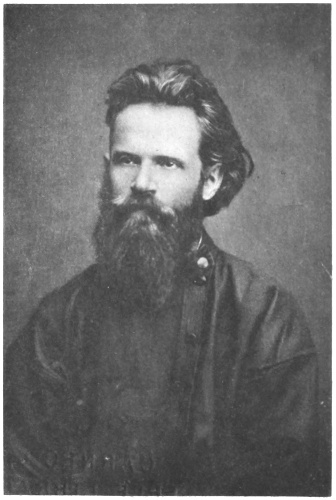
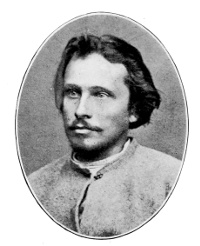
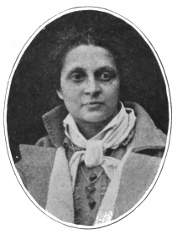
Leo. Deutsch.
SIXTEEN YEARS IN SIBERIA
SOME EXPERIENCES OF A
RUSSIAN REVOLUTIONIST
First Edition
October, 1903
Reprinted
December, 1903
Reprinted
February, 1904
I
BY LEO DEUTSCH
TRANSLATED BY HELEN CHISHOLM
WITH ILLUSTRATIONS
THIRD IMPRESSION
NEW YORK
E. P. DUTTON & CO.
1904
Printed in Great Britain
TRANSLATOR’S PREFACE
v
The author of the following narrative is a leader in
the Russian revolutionary movement. The German
transliteration of his name is given here as being the form
he himself uses in Western Europe; but he is called
“Deuc” in the English version of Stepniak’s Underground
Russia, which was translated from the Italian, retaining
the Italian transliteration of names. A more exact
rendering of the Russian would be Deitch, the “ei” pronounced
somewhat as in the English word “rein.”
George Kennan’s valuable work, Siberia and the Exile
System, the fruit of investigations carried on under circumstances
of much difficulty and even danger, has made its
many English and American readers acquainted with the
true conditions of life among Russian political prisoners
and exiles. The story given in the present volume of the
painful and tragic events that took place in the political
prisons at Kara after Mr. Kennan had left the Russian
Empire was written to him by, among others, a friend
resident in Kara at the time, whose letter he published in
his book. In it are also to be found additional particulars
concerning the earlier or later history of many persons
whose names occur in the following pages; and it thus
throws an interesting light on Mr. Deutsch’s story, which
is told so quietly, with such an absence of sensationalism,
that it is sometimes necessary to read between the lines in
order to grasp fully the terrible realities of the situation.
viIt may, perhaps, be useful to readers unfamiliar with the
history of the Russian revolutionary movement if I give
here a rough sketch of its development, and of its position
at the present time.
From the first consolidation of the Empire under the
Tsars in the latter half of the sixteenth century, Russian
despotism has consistently regarded with apprehension
and disfavour all manifestation of independent thought
among its subjects. There has never been a time when
those bold enough to indulge in it, even in what English
people would consider a very mild form, were not liable to
persecution, and this traditional attitude of repression and
coercion had the inevitable result. Even early in the
eighteenth century secret societies had come into being,
but these were mostly of the various religious sects or of
the Freemasons. When they began to assume a political
character they were at first confined entirely to the upper
classes, and took the form of revolts organised among the
military, the last and most important being that of the
Decabrists (or Decembrists), who attempted to overthrow
the monarchy on the occasion of Nicholas I.’s accession in
1825.
Liberal views were to a certain extent fostered by
Alexander I. (1801-1825), who at one time openly talked
of granting a Constitution. Russians who visited Western
Europe, officers in the Napoleonic campaigns, and others,
had “brought France into Russia,” had made the French
language fashionable, and thus had opened a way for the
importation of new philosophical, scientific, and political
literature, eagerly appreciated by the developing acuteness
of the Russian mind. Literary influence, even the purely
romantic, has throughout ranged itself on the side of
liberty, Pushkin heading the poets and Gogol the novelists.
Indeed, one may safely say that up to the present day
viinearly every Russian author of any note has been implicated—some
to a greater, some to a less degree--in
the revolutionary movement, and has suffered for the
cause.
Alexander I. in his later years, and his successor
Nicholas I., fell back on a reactionary policy. Even
Freemasonry was prohibited, mere literary societies of the
early forties were considered seditious, and their members
were punished with imprisonment and death. There now
sprang up political secret societies, whose dream was of a
federal republic, or at least of a constitutional monarchy.
The accession of Alexander II. in 1855 strengthened
the hopes of the reformers. The study of political and
social questions became the fashion; while professors,
students, and the “intellectuals” of the upper and middle
classes warmly engaged in the “underground” movement.
With this period are associated such names as those of
Herzen, Bakounin, and Tchernishevsky, whose writings
were the inspiration of the party, and even influenced for
a time the Tsar himself. But the emancipation of the
serfs, on February 19th, 1861, bitterly disappointed those
who had hoped great things of the new monarch, and who
saw from the way in which this and other liberal measures
were emasculated by officials, to whom the drafting of
them was entrusted by the Tsar, how futile it was to
expect any effective reform as a grace from an autocrat.
The reform movement, now definitely socialistic, speedily
took on a revolutionary character, and culminated in the
active sympathy and support given to the Polish revolt
of 1863.
Alexander II. resorted to the old coercive methods; all
attempts to voice the aspirations and needs of the people,
or even the academic discussion of political questions,
were met with the savage punishments of martial law,
viiiimprisonment, exile, death. In face of a new enactment,
which had professed to give fair trial to all accused
persons, special courts were set up to try political
offenders; and the practice of banishment by “administrative
methods” (i.e. without any trial at all) was instituted.
A time of enforced quiet followed, when the leaders of
the movement were either dead, imprisoned, or had fled
into voluntary exile abroad; but it served as a time of
self-education and study for the younger generation, at
home or in foreign Universities, and in the early seventies
the revival came. Our author here takes up the story
with his account of the Propagandist movement, which
was peaceful, except in so far as it aimed at stirring up
the peasants to demand reform; for, in the absence of
any constitutional methods for expressing their desires,
this could only be effected by organised uprisings. He
describes how this movement developed into terrorism
under the system of “white terror” exercised by the
Government, and how, after the assassination of Alexander
II., the strong hand of despotism succeeded in
checking, until a few years ago, the passionate struggle
for liberty.
A new monarch and a new century have altered little
the essential features of the situation, so far as relations
between government and governed are concerned. Every
day we have examples of the time-honoured policy, in
the dragooning of Russia proper; the attempted Russification
of Finland; and the deliberate fostering by the
Government of anti-Semitism, with the covert design
of counteracting the revolutionary activity of Jewish
Socialists, discrediting their labour movement in the eyes
of the Russian proletariat, and also distracting the latter
from organisation on their own account.
ixBut a significant change is at work to-day among the
people. The peasants and working-classes in town and
country, formerly the despair of those who strove to
arouse in them political consciousness, are being awakened
by the inevitable development of industry to a sense of
their duties and their rights. A genuine labour movement
has arisen, which, in face of the intolerance of the
authorities, has naturally taken on a political character,
and affiliated itself to the successors of the older revolutionary
societies.
The words “anarchist” and “nihilist,” so commonly
associated with the Russian revolutionists, are complete
misnomers to-day (as, indeed, they always have been,
except in the case of a few isolated individuals). The
movement is now carried on chiefly by two organisations:
the “Revolutionary Socialists,” and the party to which
our author belongs, and helped to found, the “Social
Democratic” Labour Party; associated with the latter
being the powerfully organised social-democratic “General
Jewish Labour Union of Lithuania, Poland, and Russia,”
usually known as the “Bund.” Of these the Revolutionary
Socialists alone still adhere to the practice of
terrorism in a modified form, and even they have always
proclaimed their intention of abandoning it directly “constitutional”
methods are allowed to them. The aim of
the revolutionists is to replace the present autocratic
government by a social republic, under which the various
races now grouped within the empire shall each have
scope to develop its national individuality. Groups are
actively at work in widely distant localities, even Siberia
furnishing her contingent, while Poland and Finland have
various revolutionary organisations of their own.
The Government’s policy at present is to exile to Siberia
without trial, or intern in some place distant from home,
xall persons known or even suspected to be interesting
themselves in the movement. This is effected principally
through the instrumentality of the gendarmerie, which
was instituted by Nicholas I. as a sort of spy system,
primarily intended to unearth official abuses and report
upon them directly to the Tsar. It soon, however, became
imbued with the prevailing spirit of the bureaucracy; its
members shut their eyes to the official corruption everywhere
prevalent, and they have since confined their
attention to unearthing “political” delinquencies. The
force has at least one representative in every town of any
size, and it has a vaguely defined roving commission to
watch and arrest all persons who appear to be suspicious
characters; these may be kept in imprisonment for an
indefinite time, or may be exiled “by administrative
methods.” It has become an adjunct to the ordinary
police, although quite independent of them, and is
generally employed in all matters of secrecy.[1] Travellers
from Western Europe who observe too closely the life
and conditions of the country are liable to arrest in this
way. Sir Donald Mackenzie Wallace and Mr. Kennan,
among others, had this experience.
The mere existence of such a force may help to explain
the discomfort of even the ordinary peaceful Russian
citizen under the present system of government; and
he is further incommoded by the presence in every house
of a police-spy. For the dvornik or concierge, though paid
by the inmates of the house, is appointed subject to the
approval of the police, and is responsible to them. He
keeps the keys, and is bound to deliver them up to the
police whenever they may take it into their heads to
require a domiciliary search. As an instance of the petty
tyranny that occurs I may mention that the possession of
xia hectograph (or any such appliance for multiplying
MSS.) needs a special permission from the police.
The police have power to break up any gathering in a
private house where more than seven guests are assembled;
this is frequently done, even on such ordinary occasions as
a wedding or funeral, if many students or such-like “untrustworthy”
people are of the party. When a town or
district is under martial law—an everyday state of things
in Russia—the above number is still further reduced;
indeed, it is quite common for the police to prohibit all
gatherings.
Readings at entertainments for the poor got up by
philanthropic people may only be given from books
licensed by the police for the purpose (and mostly very
dull); the catalogues of lending libraries may contain
only such books as are definitely permitted, many being
excluded that are not forbidden to private persons—though
the latter, again, are by no means free to choose
their reading, many authors being entirely prohibited
within the empire; and whole columns of newspapers,
including foreign ones that have come through the post,
are blacked out by order of the censor. Private debating
societies’ meetings or lectures, however innocent, are practically
impossible to all who are not in the best odour
with the authorities, except under the strictest precautions
against discovery—such as closing of shutters, disguise
of preparations, and a warning to guests not to arrive
simultaneously.
It is evident what opportunity all this gives to officials
“on the make” for demonstrating their zeal, and it accounts
for the fact that every year hundreds of persons not accused
of any definite offence are removed from their homes.
Nearly everyone has friends and relations so banished, and
the result of such systematic interference with private
xiiliberty is that almost everyone in Russia, outside official
circles, is more or less in league against the bureaucratic
government. The countenance, and even financial support,
afforded to the revolutionists, not only by sympathisers in
free countries, but by the general public at home, is one
great source of their strength. They are willingly assisted
in evading arrest and in escaping from prison or from
exile; and prohibited literature (printed abroad, or secretly
in Russia itself) is circulated and sold throughout the
country in immense quantities—not only leaflets by the
thousand, but reviews, some elaborately illustrated, and
even books of a more solid character. The Russian
original of the present work will presumably soon be
on the “illegal” market.
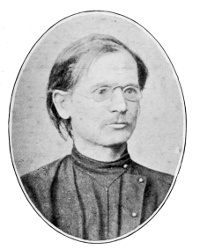
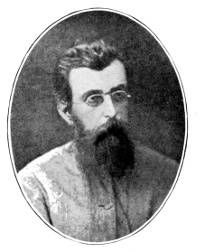
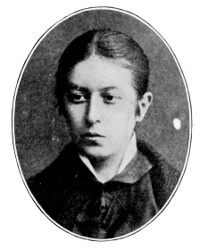
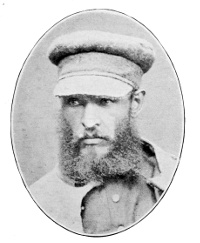
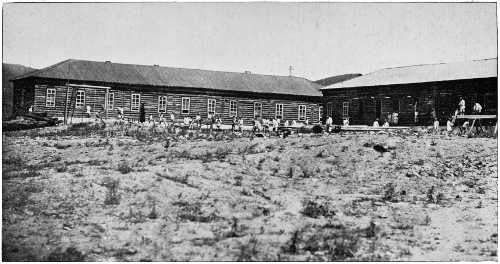
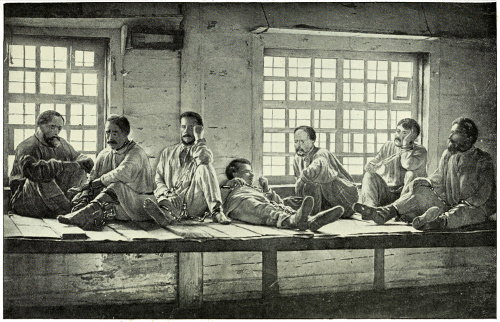
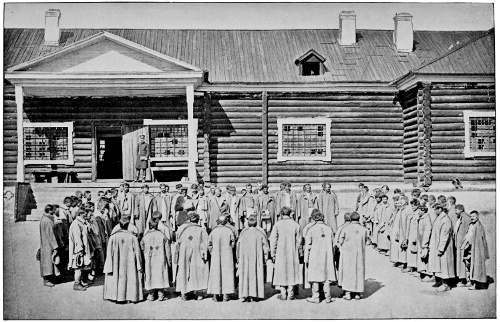
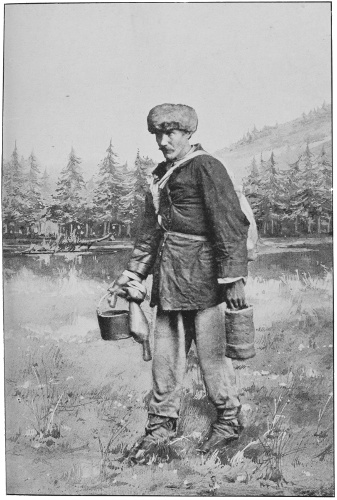
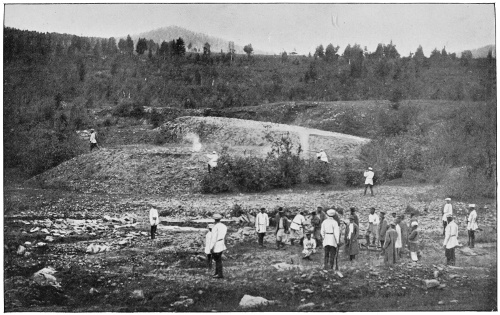
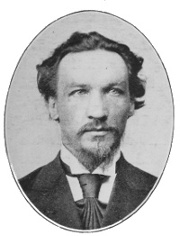
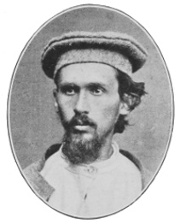
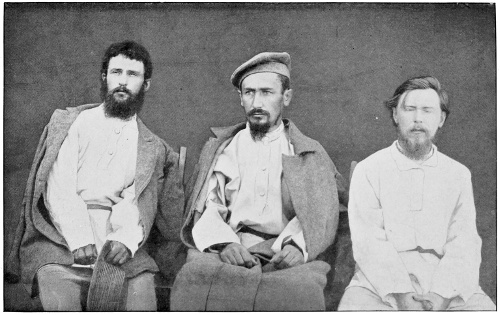
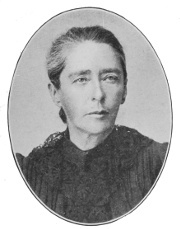
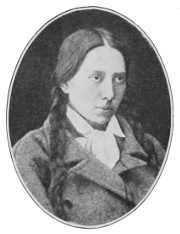
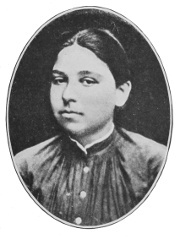
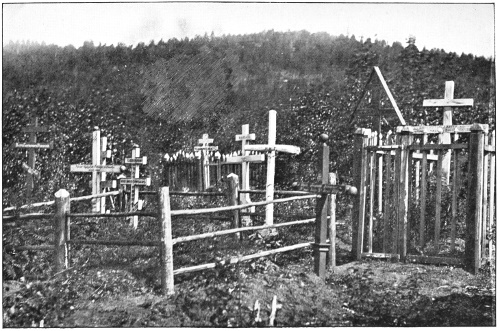
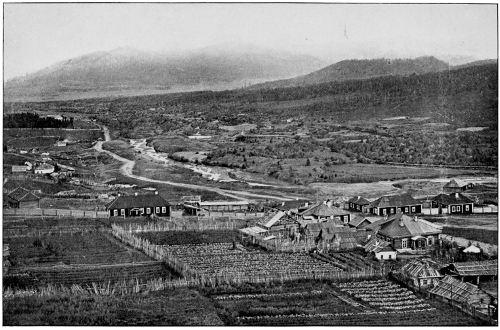
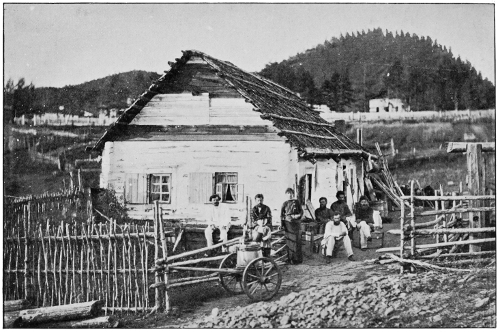
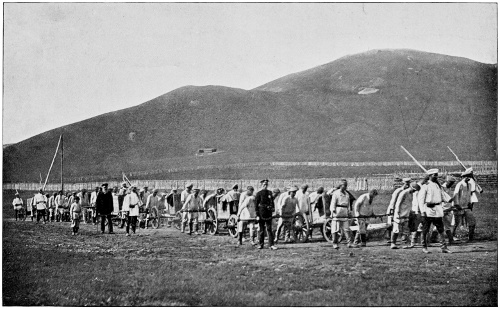
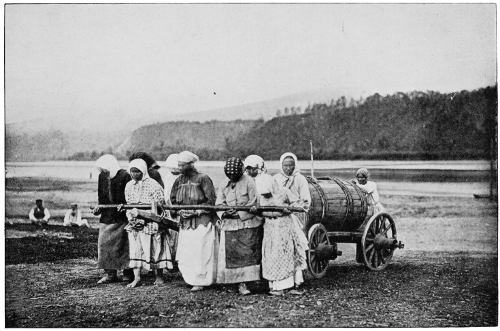
The illustrations are reproductions of photographs taken
from life.
The chief of police at Irkutsk—Meeting with exiled comrades—From Irkutsk to Kara—Stolen fetters—A dubious kind of Decabrist—Another contest—Arrival at our journey’s end
CHAPTER I JOURNEY TO GERMANY—IMPRISONMENT IN FREIBURG—EPISODES FROM THE PAST OF THE REVOLUTIONARY MOVEMENT
In the beginning of March, 1884, I travelled from
Zurich, through Basel, to Freiburg in Baden. The
object of my journey was to smuggle over the frontier
a quantity of Russian socialistic literature, printed in
Switzerland, in order that it might then be distributed
by secret channels throughout Russia, where of course
it was prohibited. In Germany a special law against the
Social-Democratic movement was then in force. The
Sozialdemokrat was published in Zurich, and had to be
smuggled over the German frontier, where the watch was
very keen, rendering most difficult the despatch to Russia
of Russian, Polish, and other revolutionary literature
printed in Switzerland. Before the enactment of the
special law in August, 1878, the procedure had been
simple. At that time the publications were sent by post
to some town in Germany near the Russian border, and
thence, by one way or another, despatched to Russia.
Later, however, it became necessary to convey them as
travellers’ luggage across the German frontier, in order
to get them through the custom-house, after which they
could be forwarded to some German town nearer the
2Russian border. It was on this transport business that
I was engaged.
My luggage consisted of two large boxes, half-filled
with literature, and their upper parts packed with linen
and other wearing apparel, that the Customs officers might
not be suspicious. In one trunk I had men’s clothes,
in the other women’s, supposed to belong to my (non-existent)
wife; and for this reason there really was a lady
present at the Customs examination in Basel,—the wife of
my friend Axelrod from Zurich. She offered to take further
charge of the transport, thinking she would run less risk
than I if the police became suspicious. As, however, the
examination of the luggage went off quite smoothly, I declined
the offer, hardly thinking any further trouble probable.
Besides Frau Axelrod a Basel Socialist was with me
at the station. He had advised me how to carry out my
perilous mission, for he was experienced in such business,
having managed many transports of forbidden literature.
Only a few days before, accompanied by a Polish acquaintance
of mine, Yablonski, he had been to Freiburg,
whence they had despatched some Polish literature. He
now recommended to me a cheap hotel in Freiburg, close
to the station; and in good spirits I climbed into a third-class
carriage. It was a Sunday, and the carriage was
filled with people in gay holiday mood. Songs were sung,
and unrestrained chatter filled the air. The guard was
pompous and overbearing, as often happened then on
German lines; I do not know if it is so still. When he
saw that I was smoking, he told me very rudely, with
a great show of official zeal, that this was not a smoking
carriage. I answered politely that I had not been aware
of it, and at once threw away my cigarette. He insisted
peremptorily, however, that I must change carriages. “A
bad omen,” thought I, and still recall the sensation. I was
out of temper, and felt irritated and uncomfortable. The
weather, too, grew overcast, and a cold drizzle set in,
which worked on my nerves.
3The train moved off, and before I had got over my
grumbling humour we were at Freiburg. It was between
seven and eight in the evening. Landed on the platform,
I looked out the porter of the Freiburger Hof, and gave
him my luggage-check. He noticed at once that it showed
the unusual weight of my boxes, and expressed his surprise
thereat. To quiet any suspicion I told him at once
unconcernedly that I was a student, and intended to study
at Freiburg University, and that it was my books which
made the trunks so heavy. The hotel was soon reached,
and a room engaged, after which I betook myself to the
restaurant for supper. As I passed by the buffet I saw
the porter whispering earnestly with another man, apparently
the landlord. Directly I had finished my meal the
waiter brought me the visitors’ book; and as I had a
Russian passport, lent me by a friend at the time of my
flight from Russia, I at once signed myself in my friend’s
name, “Alexander Bulìgin, of Moscow.” I then ordered
writing materials and went to my room, but had barely
shut the door behind me when there came a knock. At
my “Come in!” there appeared, instead of a servant with
writing things, as I had expected, a policeman, accompanied
by a gentleman in civil dress. “I am an officer of
the secret police,” said the latter; “allow me to examine
your trunks.” Instantly I thought, “As Freiburg is so
near the Swiss frontier, the police (to whom the porter
must have announced the arrival of a young man with
unusually heavy luggage), may think I have contraband
goods; or they may take me for an anarchist, and suspect
me of conveying dynamite.” I tried, therefore, to look as
harmless as possible, although I felt that things were
awkward. Busied with the unlocking of my boxes, I let
fall the remark that one of them contained the belongings
of my wife, whom I expected shortly. No sooner, however,
had the men begun to turn over my things, than
I saw that my guess as to their search for contraband was
incorrect; the detective was on the look-out for neither
4contraband nor dynamite, but for books, and he immediately
began to examine mine. I then concluded he was
looking for German Social-Democratic literature; and I
was astonished when, at sight of a little book bound in
red, my gentleman cried triumphantly, “Ah, here we are!”
It was the Calendar of the Naròdnaia Vòlya,[2] a book
that had come out about a year before this, and was
openly sold by German booksellers.
“I must now have you searched,” said the police agent.
Besides a notebook, a letter, and a pocket-book containing
several hundred-mark notes, there were in my
pockets a dozen numbers of the Zurich Sozialdemokrat,
which I had brought with me to send to a Russian friend
in Germany.
“Here at least is something that we can read!” said the
detective in a satisfied tone; “now, I arrest you!”
“Why? What for?” asked I, much astonished.
“That you will soon find out; come along!” was the
answer.
The procedure of the police agent was extraordinary in
every way: no attempt was made to fulfil the legal enactments
for the protection of personal safety; the domiciliary
search was instituted without legal warrant; there were no
witnesses. I insisted on the officer’s counting over in my
presence the money in my pocket-book, which they had
confiscated, though of course that was not much guarantee
for the security of my property.
As I was descending the steps of the hotel, a prisoner
between my two guardian angels, a young lady carrying a
small travelling-bag met us. The detective asked me
if this were my wife, and, notwithstanding my reply in the
negative, tried to seize hold of her. She evidently thought
she had to do with some Don Juan, and fled screaming
into the street; whereupon the detective ordered the
5policeman to lead me on, and himself followed the unknown
lady.
The policeman now tried to take me by the arm, and
so conduct me through the streets, but I hotly resisted
such treatment, declaring that I had committed no crime,
and that he had no possible justification for putting me in
such a position.
We arrived at last at the House of Detention. Here
I was searched again, and for the first time since my
arrest was questioned by an official as to my personal
identity.
My detective soon appeared, bringing the lady, who,
weeping bitterly, protested her absolute innocence, and
indignantly demanded the explanation of such an insult.
Coming on the top of all my own experiences since my
arrival in Freiburg this scene put me into a state of fury.
“What is all this?” cried I to the police officer. “How
can you take upon yourself to insult this lady? I repeat
again that I do not know her; she is not my wife, and
I have never set eyes on her in my life before.”
“Well, we shall see about that. It is my business. It
is no affair of yours whom we arrest,” declared he; and
I thought to myself, “This is a nice state of things! We
might as well be in Russia.”
I was then told to follow a warder, who took me up to
the first floor. The lock of a cell-door turned, grating,
and I found myself installed in the Grand-Ducal prison of
Baden.
When the warder had withdrawn with his lantern
absolute silence reigned, and the chamber was perfectly
dark. Lights were not allowed here either in the cells or
passages. I took my bearings as well as I could, groping
along the walls, and, having found a bed, I lay down fully
dressed as I was. My mind was in a state of chaos; I
could follow no clear train of thought, nor form any
conclusions about what had occurred. The sense of
fate weighed me down; my strength seemed broken.
6Sinister dreams left me no peace all night, and consequently
I awoke from slumber in a dazed condition, not
knowing where I was or what had happened to me.
When at last with an effort I realised my position, despair
seized on me. Extradition to Russia stared me in the
face; I could not banish the fear of it. True, at that time
there was no extradition treaty between Germany and
Russia which applied to political refugees.[3] But I had
special reasons for fearing that I might be treated exceptionally;
and that the significance of my position may
be clear to the reader, I must now give some details of
my earlier career.
In 1874, just ten years before the events described
above, as a youth of nineteen I had joined the “Propagandist
movement,”[4] which at that time engrossed a great
number of young students throughout Russia. Like most
of the young Propagandists, I was led to this chiefly by
sympathy with the sufferings and endurance of the people.
According to our views, it was the sacred duty of every
reasonable and upright human being who really loved his
country to devote all his powers to the object of freeing
the people from the economic oppression, the slavery, the
barbarism, to which they were subjected. The young
generation, always most prone to pity the misfortunes
of others, could not remain indifferent to the miserable
situation of the newly enfranchised serfs. An entire
social revolution in Russia appeared to the Propagandists
the sole means of altering the existing wretched material
conditions, and of removing the heavy burden on the people;
following, therefore, the teaching of the Socialists of Western
Europe, they set before themselves as their ultimate object
the abolition of private property and the collective ownership
7of the means of production. The Propagandists felt
entirely convinced that the people would instantly embrace
their ideas and aims and join them at the first
appeal. This belief was an inspiration to them, and
spurred them to unlimited self-sacrifice for the idea that
possessed them. These youths and girls renounced without
hesitation their previous social position and the assured
future that the existing order of things offered them;
without further ado they left the educational institutions
where they were studying, recklessly broke all family ties,
and threw their personal fate into the balance, in order to
live entirely for the idea, to sacrifice themselves without
stint for the idea, to make every faculty and possibility
serve in the sacred cause of the people’s deliverance.
Any personal sacrifice seemed to these young enthusiasts
scarcely worth speaking of when the great cause was in
question. The common ideal, the common aim, and the
enthusiasm of each individual drew the Propagandists
together into one great family, linked by all the ties of
affection and mutual dependence. Fraternal relations of
the most affectionate intimacy grew up among all these
young people; a complete altruism governed their actions,
and each was prepared for any sacrifice on behalf of
another. Only in great historical moments, in the time
of the early Christian martyrdoms, and the founding of
religious sects, have proselytes manifested such personal
devotion, such exalted feeling.[5]
In this elect band, however, there were found (as has
happened in every such movement) individuals not
capable of this unselfish fervour; there were among
them some paltry spirits, and even some who proved
traitors. Certainly the number of these latter was infinitesimally
small; but the history of revolutionary
movements shows sufficiently that hundreds of the most
8able secret or public agents of a government can never
do a tithe of the harm to a secret society that can be
effected by a single traitor in its own ranks. In this
manner did treachery become pregnant with evil results
for the Propagandists, and it gave to the movement a character
it might otherwise never have developed. Early in
the year 1874 the young revolutionists, men and women,
went out “among the people,” according to the plan
they had formed; they distributed themselves among
the villages, where they lived and dressed like peasants,
carrying on an active Socialist propaganda. But scarcely
had they begun operations when treachery made itself
apparent; two or three of the initiated denounced the
organisation, and delivered over hundreds of their comrades
to the authorities. Searches and arrests took place
without number; the police pounced on “guilty” and
innocent alike, and all the prisons in Russia were soon
filled to overflowing. In this one year more than a
thousand persons were seized. Many of them suffered
long years of imprisonment under the most horrible conditions,
some committed suicide, others lost their reason,
and in many cases long terms of incarceration resulted in
illness and premature death. Under these circumstances
the reader can conceive the bitter hatred kindled in the
ranks of the Socialists against the traitors who had
sacrificed so many lives. The knowledge of the victims’
terrible sufferings would naturally incite their friends to
avenge them; inevitably, too, the thought would arise
of punishing treachery, in order to put a stop by intimidation
to the trade of the informer. But the
Propagandists were in the highest degree men of peace,
and it was not easy for them to harbour thoughts of
violence. When such ideas were first mooted, they long
remained only subjects of discussion.
Not till the summer of 1876 did the first attempt to put
the terrorist theory into practice take place. The circumstances
were as follows. The members of a revolutionary
9group well known at the time—the Kiëv Buntari[6]—had
assembled at Elisavetgrad. I belonged to this organisation.
Many of the members were “illegals,”[7] and for
some time past the gendarmerie had been making captures
among them, acting on the information of a traitor named
Gorinòvitch. This Gorinòvitch had been imprisoned in
1874, and being in the greatest danger had saved himself
by telling everything he knew about the Russian Socialists.
His revelations had injured many; yet, as in numerous
other cases, not a hair of this renegade’s head would
have been touched, if he had kept clear of revolutionary
circles. But about two years after his release from prison
he tried again to insinuate himself among us, and he
managed to get into the confidence of some inexperienced
young people, who of course had no notion of the part he
had formerly played. From them he learned that the
Kiëv Society had assembled at Elisavetgrad; he came
there at once, and sought to find out what the persons
he had before betrayed were doing. We recognised him,
however, and it soon became evident to us that he was
playing the spy, and preparing some fresh treachery.
So I and one other comrade resolved to put an end to
his life.
Our determination could not be carried into effect in
Elisavetgrad itself, or it might have resulted in giving
the police a clue for the discovery of our organisation.
We therefore asked Gorinòvitch if he would go with
us to Odessa to find the persons he was in search of,
and he agreed. There in a lonely spot we attempted
to execute our mission, and left Gorinòvitch lying, as we
thought, dead, with a paper fastened on his breast bearing
10the inscription, “So perish all traitors!” But he was only
severely injured, was found by the police, and survived
to give information concerning his attempted assassination.
Searches and arrests followed in due course, and although
at the time I succeeded in avoiding capture, in the autumn
of the following year I was arrested, together with other
comrades, on account of the famous Tchigirìn case.[8]
I was imprisoned in Kiëv, but in the beginning of
1878 I escaped[9] in company with Stefanòvitch and
Bohanòvsky.
Those who were concerned in the attempt against
Gorinòvitch were prosecuted for the first time in November,
1879, at a period when both the “red” and the
“white” terrorism[10] had blazed up. After a series of
attempts against different representatives of the Government,
the revolutionists had concentrated their entire
strength on the endeavour to assassinate Alexander II.
The Government combated the terrorist movement by
means of special enactments, martial law, and death
penalties, to which large numbers of people were sentenced
who were perfectly innocent of complicity in the above
deeds. On November 19th, some days before the
beginning of the Gorinòvitch case (and after the accused
had been acquainted with the facts alleged against them,
11for which they were only liable to comparatively light
sentences), the Terrorists blew up a train on the Moscow
line, believing the Tsar to be in it. In consequence of this
the Government determined to revenge themselves upon
the accused in the Gorinòvitch case. Of these only one
had been directly implicated, and as all had been imprisoned
two or three years already before the beginning
of the terrorist agitation, they could under no circumstances
be supposed answerable for that agitation. In
spite of this it was decided to “make an example” by
inflicting a heavy sentence. Three of the accused,—Drebyasghin,
Malinka, and Maidansky—were condemned
to death by hanging, and were executed on December 3rd;
two—Kostyurin and Yankovski—were sentenced to penal
servitude; and the traitors Krayev and Kuritzin were set
free. If I had been in the power of these judges my fate
would have been sealed. However, early in the year 1880
I effected my escape from Russia, and I had been living
in Switzerland up to the time of my going to Freiburg as
previously described. From all this it will be clear with
what feelings I contemplated the possibility of extradition
to Russia.
CHAPTER II THE CAUSE OF MY ARREST—PROFESSOR THUN—MY DEFENCE—PLANS OF ESCAPE—MY LEGAL ADVISER
12
In Germany, as a constitutional state, the law requires
that no one shall be imprisoned for more than four-and-twenty
hours without a magistrate’s order. As a
foreigner, however, this was not held to apply to me; and
it was only after two days that I was brought before a
magistrate.
After he had asked me the usual questions as to name,
position, and antecedents, he informed me that being a
foreigner whose identity could not be immediately established,
I must remain in prison. He added that, of course,
I could appeal against this decision, but that I should find
it useless to do so. And, in fact, the appeal that I did
make was rejected.
So after this examination I was as wise as ever regarding
the cause of my arrest. Again, I began turning over
and over my various conjectures. Uncertainty is always
an unpleasant condition, and most prisoners have to endure
it; but in my case uncertainty racked me with the most
dreadful apprehensions. After three days that seemed
endless, I was again taken before the magistrate. When
the ordinary questions had been answered he asked me
if I knew the reason of my arrest. On my reply in the
negative he gave me the following explanation:—
Some days before my arrival from Basel two men had
come from the same place, (my acquaintance, the Swiss
Socialist, and the Pole Yablonski). They also had put up
13at the Freiburger Hof; they also had brought boxes filled
with books. They had despatched those books to a man
in Breslau, who had just been imprisoned under the law
against Socialists; and in connection with his arrest
the police had confiscated the parcel, in which were discovered
Polish socialistic pamphlets prohibited in Germany.
The senders having given the address of the Freiburger
Hof, the pamphlets had been sent back to Freiburg, as
a preliminary to the search for the persons who had
despatched them. Orders were given at the hotel to
inform the police if they or any other suspicious characters
should arrive from Switzerland. Thus it was that the
hotel porter, learning that I had books in my trunk, had,
after consultation with the landlord, given information
which led to the appearance of the police. The detective
had found among my books the duplicate of one in the
Breslau parcel—the Calendar of the Naròdnaia Vòlya;
and when he also discovered copies of the Sozialdemokrat,
things were suspicious enough to warrant my
arrest. The charge against me, therefore, was that in
conjunction with other persons I was guilty of distributing
prohibited Polish literature in Germany.
On hearing this, it was easy for me to reply to the
charge that there was nothing in Polish among my books,
nor any single book which had been prohibited in Germany;
and as to the copies of the Sozialdemokrat, their possession
was no offence. The question resolved itself simply into
this: Whether I was in conspiracy with certain persons,
and whether I had not in any case been circulating forbidden
literature. Chance alone had led to my capture.
“If you had not gone to the Freiburger Hof nobody
would have thought of arresting you,” said Herr Leiblen,
the magistrate.
My spirits rose on hearing this. I said to myself, “All
is not lost yet. Perhaps everything will go off smoothly,
and I shall soon be set free, if only the Russian Government
is kept out of the game.” That was the thought
14which occupied me while the magistrate was writing out
the protocol. He then said, pointing to a gentleman who
sat at a table somewhat apart, “That is the interpreter
who is assisting us in your case, a professor of our
University.”
During my examination I had once or twice looked
round at this gentleman. He seemed known to me, and
his presence caused me involuntary uneasiness.
“You can speak Russian with the Herr Professor,” concluded
Herr Leiblen, as he left the room to fetch some
document.
“Do you not recognise me?” said the interpreter,
turning round.
“Professor Thun!” cried I in great astonishment.
“What! am I so much altered that you didn’t know me
before?“ he asked, and did not wait for my answer, but
continued without pause, “How can I help you?”
“Do you know who I really am?” I asked, without
replying, and a cold shudder ran through me.
“Yes; I know your true name. But there is no need
for alarm. You have turned quite pale!”
His recognition had indeed given me no small fright.
I had come to know Professor Thun about a year and a
half before this time in Basel, whither I had then betaken
myself in order that, being there at some distance from
the colony of Russian refugees, I might be freer from
interruptions to my studies than when surrounded by
friends and acquaintances. I had matriculated in the
Basel University, and was attending Professor Thun’s
lectures on political economy and statistics. Karl Moor,
a leader of the Basel working-men, had introduced me
personally to the professor, who supposed me to be simply
a Russian student, not knowing me by my real name, but
under the assumed one of Nicholas Kridner. He invited
me to call on him, and confided to me his plan of writing a
history of the revolutionary movement in Russia. Of this
plan I had already heard, and it was partly this that had
15attracted me to Basel. Professor Thun was a Rhinelander,
had studied at Dorpat, and had then passed some years in
the interior of Russia. He spoke Russian fluently, and
was pretty well up in Russian affairs. When he found, in
conversation with me, that I was not unacquainted with
the Russian revolutionary movement, he suggested that I
should help him in his work, to which of course I gladly
assented; and thus it happened that we became rather
intimate. In this way I learned Professor Thun’s views
regarding the Terrorists and their deeds. He condemned
them ruthlessly; according to his convictions, it was the
duty of all European governments to refuse such persons
the right of asylum, and to deliver them over as ordinary
criminals to the Russian authorities. In particular I had
a lively recollection of the following occurrence. Professor
Thun had given a lecture in the Basel “Freisinniges
Verein,” before a large audience, on “Two Episodes in the
Russian Revolutionary Movement.” These two episodes
were the attempted assassination of Alexander II. and the
Tchigirìn case. In speaking of the latter he related how
Stefanòvitch, Bohanòvsky, and I had escaped from the
fortress of Kiëv;[11] and he closed with the remark that these
criminals were living in foreign parts, and had “unfortunately”
not yet been captured. I had an opportunity
afterwards of speaking to him on the subject, and gathered
the impression that if he knew my real name Professor
Thun would not only break off all connection with me,
but under certain circumstances would even perhaps assist
in my “capture.” This led me to reduce my personal
relations with him to a minimum, and besides I shortly
afterwards left Basel.
Now here I was standing, a prisoner, before this man,
and he knew who I really was! My feelings may be
imagined.
“How do you know my name?” I asked, trembling
with excitement.
16“Your friend, Karl Moor, told me it in confidence after
you had left Basel.”
“And although you know who I am you offer me your
help?” asked I in surprise.
“Yes. Only tell me how to help you, and I will do
what I can.”
I could scarcely grasp it, but one look in his eyes
convinced me that I might trust him; it was that intuitive
confidence that, once given, is unbounded.
“Thank you,” said I. “Well, if I do not succeed in
getting out of prison by lawful means, I shall try to escape.
Would you stand by me then?”
“Certainly,” said he simply and earnestly.
I still could hardly believe my ears. This German
professor, whom I had heard publicly express his regret
that the minions of Tsarism had not yet caught me—in
other words, that I was not hanging on the gallows—this
same man now offered me help to fly from a German
prison! He gave me, however, undeniable proof of his
sincerity. As translator he was in possession of all books,
letters, etc., taken from me; he now produced my notebook,
and advised me to tear out and destroy pages on
which he had noticed addresses entered that might
prejudice my cause. Of course, I immediately acted on
his suggestion.
I then proposed to him that he should go to Basel
without delay, tell my friend Axelrod what had occurred,
instruct him what steps he could take to obtain my
release by legal means, and finally, arrange with him
some way of effecting my escape should the danger of
extradition to Russia arise.
This task Professor Thun fulfilled to the letter; and
during my imprisonment in Freiburg he did me many
kind offices, running serious risk of thereby compromising
his own position. He arranged secret meetings in
Freiburg Cathedral with my friends, who had come in
haste on the chance of being useful to me. He was also
17the medium of both verbal and written communication
between me and my comrades.
Having the right of free access to me, as the authorities
placed full confidence in an illustrious professor, he often
had me called into the translator’s office, where we could
chat undisturbed. In these conversations I saw how
much he had taken my affairs to heart. He went so far
as to offer his house as a refuge if I were obliged to
attempt an escape. Sometimes he joked about the part
he was playing:—“Look at me, now,” he would say,
laughing; “I, a German professor of dignity and position,
have become a Russian conspirator; and this peaceful
town of Freiburg is the scene of a plot!” Through his
relations with the magistrate he knew how my case was
going on, and of course he kept me posted up.
At the first hearing of my case I made the following
statement:—I was a Russian student, and had come
abroad in pursuit of my studies. I had married here, and
had one child. Hitherto I had lived in Switzerland, but
now I wished to remain in Freiburg, whither my wife, now
in Zurich, was to follow me. I lived partly by literary
work, partly on private means. In Switzerland I had
attended the University as “hospitant” (an occasional
student at lectures).[12] As for my political opinions, when
I left Russia they were still somewhat undecided; but the
influence of German literature had led me to join the
Social Democrats, and I had determined to assist, as far as
I could, in the propagating of their views in my own
country.[13] When, for various reasons, I had determined to
18live in Germany, I had brought with me the publications
found in my possession, meaning to sell them eventually
to the country people. They were not prohibited in
Germany, and their possession was in no possible sense
an infringement of German law. “And now,” I concluded,
“in a free German town, in Frei-Burg, I have been
arrested with no legal justification, without any of the
prescribed formalities, I am subjected to all manner of
indignities, and clapped into gaol like a common malefactor.
As if that were not enough, the police, with no
shadow of excuse, seized upon and arrested a lady of this
town as if she were a pickpocket or disturber of the peace.
I may well ask, What difference is there between this constitutional
state of the German Empire and the absolute
despotism of Russia? No one could have been worse
treated, even in Russia!”
These words seemed to make some impression on the
magistrate. He walked up and down excitedly, while he
dictated my statement to the clerk, assured me repeatedly
of his sympathy, and asserted his keen disapproval of the
way in which the police had behaved towards me and the
young lady. At one point he muttered, “Still, as Othello
says, ‘The handkerchief, the handkerchief!’” Herr
Leiblen appeared to be quite on my side, and Professor
Thun told me later that he had declared the matter
seemed to him harmless enough; in his opinion here was
a perfectly innocent person being kept shut up in prison,
and he hoped I should soon be set free. I had therefore a
well-grounded hope of obtaining my release in due course;
nevertheless doubts continued to arise, and thoughts of
escape still haunted me. With some slight help from
outside it would probably have been by no means difficult
during these first days of my imprisonment.
One day, while I was still in this state of suspense
betwixt hope and fear, I was called into the visitors'
room. I expected to find Professor Thun there, and was
surprised at being confronted by a man perfectly unknown
19to me. He introduced himself by name (I cannot recollect
it now), and informed me that he was a lawyer,
who had been engaged by my friends to undertake my
defence. He announced himself as a comrade, a member
of the Social-Democratic party, and invited me to be quite
open with him, as my friends had already told him everything
concerning my past career. “You think of attempting
to escape?” he asked in a whisper; and when I
assented he continued quickly, “That would be a most
fatal mistake. I have just seen the minutes of your case;
the affair is going splendidly for you. I have no doubt
you will soon be set at liberty. Why should you risk
the dangers of a flight? If the attempt were to fail you
would be in an infinitely worse position than now. I
have been talking to the magistrate; he is convinced there
is nothing of any significance against you. As soon as
inquiries in Switzerland have elicited a satisfactory reply
regarding your identity you will be released.”
“But,” I interposed, “supposing a simultaneous inquiry
is set on foot in Russia?”
“There is no ground whatever for such a proceeding,”
replied the lawyer, “and if it were contemplated we
should get to know it somehow. Germany is not Russia.
With us legal proceedings are not secret. On the contrary,
the law provides that your trial shall be held in
public, and all documents relative to the case are without
delay submitted to me as your counsel. In such documents
mention would be made if an understanding with
the Russian authorities were suggested. In our conduct
of such cases it is absolutely out of the question that such
a weighty complication should be kept private.”
“Yes,” I interrupted, “but how can you be sure that the
police executive will not put the political and administrative
authorities in communication with Russia?”
“The Government and the police would never combine
in an affair of law without some announcement. You
were arrested because there were grounds for supposing
20you in relation with persons who had made themselves
liable to prosecution by German law. If you are set free—as
neither I nor the magistrate have the slightest
doubt that you will be—you will be discharged unconditionally.
There is nothing now to wait for but the
establishment of your identity in Switzerland. You may
rely on this. As a German lawyer I know all our legal
methods; you, on the other hand, judge from Russian
conditions, which are altogether different.”
An inner voice said to me that the consistency of
German law was not so entirely to be trusted; but I had
no rational ground for demur, as German affairs of the
kind were perfectly strange to me. And an attempt to
escape, although it might have been easily managed in the
first instance, became more risky as time went on. Though
not quite abandoning the idea, these considerations led
me to set it aside for the moment, till we had some proof
of collaboration between the Russian and German Governments.
Apparently such a step could not be hidden from
me; and I had the well-known and influential Professor
Thun on my side, who was on the best of terms with the
authorities both of town and state. News must reach me
through him if anything fresh were planned.
CHAPTER III UNCERTAINTY—PRISON LIFE—THE PUBLIC PROSECUTOR—A CHANGE OF CELLS
21
For some time longer I had to remain in the prison
of Freiburg, vacillating between the expectation of
speedy release and the dread of extradition. Every day
I changed my mood a dozen, nay, a hundred times; and
this everlasting alternation had a most depressing effect.
The days dragged on, and seemed endless, although I
tried to occupy myself by every possible device. I was
well supplied with books—my comrades and Professor
Thun saw to that—and I was accommodated with writing
materials. So I read much, and tried to put on paper my
thoughts, impressions, and recollections.
But it was not only uncertainty as to my own fate that
worked on my spirits: anxiety about my friends, and
about the further development of our “League for the
Emancipation of Labour” troubled me. Our organisation
was only in its infancy; we were but a small band, and our
means scanty. In coming to Germany for the despatch of
our first output over the Russian border, I had planned at
the same time to arrange for future transport. On this
account I had many duties to discharge, regarding not
only money matters, but organisation. I had also left
behind me in Switzerland much business that called for
my return as soon as possible. All my comrades had
their hands full; time was precious to them all. And
now not only was I sitting here in prison, condemned
to inaction, but all the other members of our League were
22occupied with my affairs, and waiting about to see how
they could help me. The consciousness of this check to
our work, and of being its involuntary cause, oppressed
me, and raised my impatience to the highest pitch.
My state can easily be pictured if one imagines a man
who has an important and urgent affair to manage, and
who suddenly breaks his leg, so that instead of pressing
on to the goal he must lie inert on a sick-bed. But in
that pitiable state he would be preoccupied with his
physical suffering; and I, being free from pain, was given
over entirely to worry and distress of mind.
The conditions of prison life left much to be desired.
At first, particularly, I found them hard to bear, till by
degrees I accustomed myself to German regulations. As
I have already said, the cells were not lighted at night,
and there was nothing for a prisoner to do but to sleep
away the long hours of darkness, if he could. I afterwards
learned that light was denied for fear of fire, and on the
same ground smoking was forbidden. What there was
to burn I could not imagine; for, except the doors, the
window-frames, and the floors, there was no wood, the
building being of massive stone.[14]
The irksomeness of the long evenings without light, and
the prohibition of smoking, must for many people be not
only a discomfort, but a hard penance. Yet there should
have been no question of punishment in this prison, as
only accused persons awaiting trial were detained there.
The behaviour of the prison officials towards the
prisoners was anything but tender. For instance, this is
what took place on one of my first days. Exercise in
the prison yard was taken by all the inmates of one
corridor at the same time. We were trotted round in a
23continual goose-step, always a certain number of paces
distant each one from the other. One felt like a horse
being led round the riding-school by a rope. I found that
many prisoners regarded it as a humiliation, and preferred
to forego the chance of fresh air. One day during this
walk the military guard was being changed in the prison
yard. The formalities of German drill were new to me,
and involuntarily I stopped a moment to look, thus upsetting
our beautiful order by not keeping at the correct
distance between my preceder and follower; besides, perhaps
I also dropped out of line an inch or so. Suddenly
I felt someone seize me by the shoulder, abusing me
violently. I scarcely knew what was happening till I
found myself being raged at by the warder in my cell,
whither he had whisked me off. The man was like one
possessed, and threatened to deprive me of exercise if I
behaved as I had done. At first I could not understand
what frightful misdemeanour I had committed. When it
dawned on me that all this was because of my momentary
pause, it was my turn to show temper. I asked the man
how he dared treat me so, informed him that prisoner
though I was I would not permit anyone to knock me
about or abuse me, and said that if such a harmless infringement
of discipline was looked on as an offence
against German prison rules, it was his plain duty to
have warned me of the fact, and so on. This had its
effect; the man’s bearing instantly became milder, and
thenceforward our intercourse was on the most peaceful
footing.
The prison rations were quite insufficient; there was
never enough to satisfy a full-grown man. If I remember
rightly, they consisted of a pound and a half of rye bread
daily, and twice in the day a little soup or gruel. Meat
was only allowed twice a week in the first month, and
that in microscopic portions. Even the gaolers admitted
that unless a prisoner had means for providing himself
with extra food, he would never get enough to eat.
24The cells on the first floor, one of which I first inhabited,
were roomy, bright, and clean. For furniture they were
provided with a table, a stool, and a bed, the latter having
a mattress, straw pillow, and woollen covering. In one
corner of the room stood the stove, heated from the
corridor and surrounded by an iron grating intended to
prevent escape by the chimney. On the wall hung a copy
of the regulations, whereby prisoners were informed of the
various penalties for the slightest departure from the rules.
All these rules were framed to spare the staff trouble, and
to make the business of looking after the inmates as
simple as possible. The interest of the inmates was not
considered; they were not treated like people unconvicted
of crime, but rather as malefactors deserving punishment,
which the prison staff on their own responsibility had
to see carried out in their own way. I will give an
instance.
One day I was conducted from my cell to a corridor on
the ground-floor, where a number of prisoners were already
ranged along the wall, evidently awaiting something.
I was directed to a place. I wanted to know what was
happening; and after I had asked several times in vain,
the gaoler told me that the Catholic priest had come, and
wished to speak to all the prisoners, who would be taken
to him one by one in order. I said that I was a Socialist
and had nothing to do with Catholic or any other priests.
I therefore begged to be taken back to my cell. This
seemed to strike the man as irresistibly comic, and he
burst into an ironic laugh.
“What you want or don’t want is all the same to us.
He wants to see you, and so you will be taken to him.”
The warders who stood by were immensely tickled.
They joked about the Russian barbarian who came to
a German prison and expected to have his own opinions
taken into account. So before the priest I went, but our
conversation was of the shortest. To his question about
my religion I answered that I was a Social Democrat, and
25belonged to no Church. Whereupon he looked at me
compassionately and dismissed me.
Another disagreeable feature of life in this prison was
the system of espionage. Often, when I was buried in my
book or writing, a warder would suddenly appear. He
would creep along on tiptoe to open the door noiselessly
and spy round, probably designing to catch me
if I were looking out of the window—a diversion strictly
forbidden by the rules. Not only here, but in other
German prisons that I have seen, the extravagant care
with which the prisoners and their things were inspected
was perfectly ridiculous. For instance, a dozen oranges
sent me by my friends aroused the suspicions of the
warders, and they conscientiously cut up every single
orange into quarters to see if there were anything inside!
So far as I know, even Russian gendarmes have never
given one credit for contriving a hiding-place in an uncut
orange or apple. The good people, however, do not
achieve their purpose, in spite of all their cleverness. The
“kassiber,”[15] or written message to or from prisoners, passes
under their very noses. Nor had I ever any difficulty in
getting forbidden articles conveyed into any German
prison.
As I have said, the numerous petty formalities made me
very impatient at first, but I accustomed myself at last
more or less to German prison methods, and the officials
dropped their over-zealous harshness towards me, and
became more confidential. The fact that I was a foreigner,
a Russian, rather interested them, as probably they had
never even seen one before. And then, however incorruptible
a German official may be, the possession of
worldly resources cannot fail to influence him. The staff
knew that I was in command of money. The chief
inspector, a man named Roth, boarded me; and they
knew I had everything that could mitigate the hardness
of my lot, that my friends, in fact, supplied me with all
26sorts of little comforts and luxuries. This seemed to impress
the prison staff, and I also was for ever telling them I should
certainly be released very soon. I really almost believed
it, and they seemed to do so, too—at any rate, for a time.
The staff consisted of three men—two warders and the
chief inspector, who was also the governor of the gaol.
All three often came to chat with me; they asked me
questions about Russia, and on their side related much
about German matters—prisons, laws, and other things in
which they were interested. They all impressed me as
being perfectly contented with their situations; indeed,
their wages were comparatively high—up to 2,000 marks
(£100) and more a year, if I am not mistaken. The
warder with whom I had had the tiff recounted above
paid me many visits. He, like the other two, had been
a soldier, and was therefore imbued with notions of strict
military discipline, which is the watchword throughout
German prisons. Though in outward appearance hard
and even forbidding, he was really a good-natured
creature. Of his own initiative he asked me to let him
have the remains of my meals, to take to a neighbouring
prisoner who was poor and often went hungry through
being unable to afford extra food. Of course I gladly consented.
This warder was a big, powerfully-built man, aged
about thirty, who had taken his present situation because
he did not like his original trade—that of a joiner. Like
most German workmen, he had only been to a Volksschule
(public elementary school), but the instruction given there
is far better than in similar schools in my own country;
and in comparison with our workmen of like standing, he
might be considered a highly intellectual person. We
talked over all sorts of things—politics among the rest—and
he told me he was a supporter of the existing Government—the
National Liberals, I think. My own attainments
caused him great admiration, especially my knowledge
of French and German, as well as of my own
mother-tongue.
27The way they dealt with my money was a little odd.
As I have said, the money in my pocket-book was taken
possession of at the time of my arrest. Some days later
the inspector presented me with an account of expenditure.
It appeared that the police had been most generous on
my behalf. A day’s use of the room at the hotel, which
I had barely seen, was paid for, and four or five marks
in addition as “compensation for disturbance.” Furthermore,
as the good people had not been able to open
my second box, although they had the key, they had
paid a locksmith (very liberally too) to open it. Naturally
I made no objection to the bill, but I felt somewhat amused
at having to pay for the “disturbance” of my arrest, and
the breaking open of my own trunk!
Soon after my imprisonment I was taken to a photographer’s
and photographed. I did not like this at all,
as I feared that my portrait might be sent to Russia and
recognised; but I could not make any protest, lest my
reasons should be suspected. The photograph was needed
for the inquiry in Switzerland, that by means of it I might
be identified as Bulìgin. The Swiss authorities certified
that it did represent Bulìgin, with whose passport I always
travelled; so that part of the inquiry was got through
safely. Also, the proofs I adduced of my not being
implicated in the doings of Yablonski and his friend
were accepted, and it was agreed that I had neither
circulated forbidden literature nor had had any in my
possession. Weeks passed away before these formalities
were accomplished, and at last, nearly two months after
my arrest, the magistrate informed me that he should
close the affair in a few days, and that he himself was
satisfied there were no grounds for my prosecution. The
decision lay with the Public Prosecutor,[16] who might concur
28in this, and so release me at once; or he might after
all think fit to take the matter into court. In the latter
event, however, the judge would most probably uphold
the finding of the magistrate; and even if against all
expectation a prosecution should be set up and a penalty
enforced, the sentence would be such as my term of imprisonment
here would be held to fulfil. In any case
I might be certain my release was now only a question
of days. It seemed absurd to distrust this forecast, and
it is but natural to expect what one ardently desires;
so I began to feel easy.
Some days after I was again sent for to the visitors’
room, where I found Frau Axelrod and a grey-haired
gentleman, the Public Prosecutor, Von Berg. In stern
tones he informed us that we were at liberty to converse,
but only in German; at the first Russian word he would
separate us. This precaution, and the whole behaviour
of the grim old gentleman, did not quite bear out the
idea of speedy release for me; and knowing him to be
acquainted with the magistrate’s views, I wondered what
his reasons were, but I was not apprehensive. Frau
Axelrod and I did not find much to say to each other
under this supervision, and our interview was brief.
I remember the next few days very well. On the
morrow the inspector, Roth, came and told me, in a most
cheerful and friendly way, that I must change over into
a cell on the ground-floor, as the one in which I was had
to be renovated. He was quite apologetic, regretting that
the other cell would not be so comfortable for me. This
change did not please me at all. My plans of escape
had all been based on the situation of my cell, and its
being on the first floor would have been no impediment.
One of my friends had hired a room in the opposite
house, towards which the window of my cell looked, so
that at a pinch we could communicate by prearranged
signals. Besides these reasons of business, so to speak,
on other grounds I was sorry to quit my now familiar
29quarters. My associations with these four walls were not
all unpleasant, and looking out of the window had been
my greatest distraction. On market days many lively
scenes were enacted between buyers and sellers—peasants
of the district. Sometimes military exercises took place
in the square, and the unfamiliar drill interested me. But
above all I loved to climb up to the window in the
evenings to watch the children, who, when twilight came
on, always romped about the square, playing all sorts
of games. Their merry laughter and shouting took
me back to my home in South Russia and my own
childish days.
All this came to an end with my change of lodging.
My new cell was dark, less roomy, and the window looked
into the yard. This latter circumstance made escape well-nigh
impossible. I comforted myself with the thought
that the idea of flight was needless, and tried to reckon
how many days were likely to elapse before my release.
I argued that my transfer to another cell was probably
in view of my departure, or else a mere chance, necessary
for the reason given me by the warder. But my friends
took it quite otherwise when they saw me no more at
the window, and thought I must be already on my way
to Russia!
CHAPTER IV THE VISIT OF “MY WIFE”—MORE PLANS OF ESCAPE—THE PUBLIC PROSECUTOR SHOWS HIS HAND—PREPARATIONS FOR A JOURNEY
30
On one of the following days I was told there was
someone to see me. No sooner had I crossed the
threshold of the visitors’ room than a young lady threw
herself, laughing and weeping, into my arms. It was
Frau Bulìgin. As I was in prison under her husband’s
name, she had now come to play the part of my wife; and
so well did she play it as even to soften the heart of the
Public Prosecutor, who witnessed this moving scene of
meeting between such a young and loving pair. He left
us alone for a moment, and only when the first emotional
greetings were over did he warn us that we must speak
German; but his tone was less stern and dry than at my
first encounter with him, when Frau Axelrod was there.
Frau Bulìgin had at once whispered to me that I must
somehow contrive that we should speak Russian, as she
had important things to talk about. I therefore begged
Herr von Berg to let us speak in our own language.
“I cannot,” he said shortly; “you both seem able to
speak German quite well enough to understand one
another.”
“You must allow,” said I, “that however well a man
speaks a foreign tongue, when he meets his wife after
weeks of imprisonment and in circumstances like mine,
he wants to speak freely. We cannot talk of family
affairs in German. But,” I continued, “if you insist about
31this, though I cannot understand by what law nor for
what reason, could you not let Professor Thun be present
as he would understand all we said in Russian?”
After some further demur he at last relented so far as to
say that though he would not request Professor Thun’s
attendance himself, not being in any way bound to do so,
yet if the professor chose to do us such a favour, we might
then be permitted to speak Russian. Of course I would
not betray my relations with Professor Thun, so I carefully
inquired his address, that my wife might take him a
message.
“Your wife shall be given it in my office,” said Herr
von Berg. So he and Frau Bulìgin departed, and I was
taken back to my cell.
After a short interval I was sent for again, and found
Professor Thun with the others. I had not seen him for
some time, as he had been away for his Easter holidays;
besides, his official duties as translator had come to an end,
and my case being now in the hands of the Public Prosecutor,
he had not the same freedom of access to me.
Frau Bulìgin told me that she had hurried hither because
of the great anxiety felt about me by my comrades.
Russian spies were closely watching all my friends and
acquaintances in Geneva; showing my photograph (which
of course strongly resembled that sent from Freiburg by
the police), and asking where I was. From this my
friends concluded that the Russian Government was
already on my track; they feared that if my imprisonment
lasted much longer my real identity would certainly
be discovered, and they therefore begged me to try and
effect my escape. We talked over every chance, and tried
to work out a plan, Professor Thun taking the warmest
interest, and making many suggestions. But, as I said
before, absolutely no plans were feasible from the cell
I was in now; and I will not trouble to describe those we
discussed, except to repeat that Professor Thun played an
important part in them all, even undertaking to provide
32me with a key to the outer door of the prison. The
personal risk he was willing to accept, or even court, was
great; yet this was the man who had at one time avowed
his desire of handing me over to Russian justice! After
eighteen years it is scarcely comprehensible to me, spite
of my lively recollection of his kindness and sympathy.
The Public Prosecutor, Von Berg, who remained in the
room during all this confabulation, played rather a comical
part. Of course, he understood not a word, as we spoke
Russian; but whenever we laughed he smiled indulgently,
as if amused at us. I cannot imagine what would have
been the feelings of this painfully correct and stern old
gentleman if he had known the chief cause of our merriment,
which was simply that we had to concoct the report
of our conversation with which Professor Thun was subsequently
to regale his worship.
When we had finished our consultations, which lasted
rather a long time, Frau Bulìgin took a very tender farewell
of me. She thanked Von Berg for having allowed us
to speak Russian, and asked him how soon he thought
I should be released. I think he told her that he believed
the case would be concluded in a few days, mentioning
the date. In any case, he added, if I were set free I
should be handed over to the police to be conducted over
whatever frontier was convenient—the Swiss, he supposed,
being the nearest.
I held fast to the hope that it really would be so, and
tried to stifle the doubts that persisted in rising. It was
certainly pleasanter to dream of prospective freedom, than
to brood over the consequences of extradition to Russia,
or even of being set over the Russian border. The sight
of Frau Bulìgin had aroused keen longings for liberty;
fancy painted joyful pictures, my thoughts dwelt on my
friends and my work. Mentally I lived through many
scenes of welcome, and saw our circle setting to work with
redoubled energy at our “League for the Emancipation
of Labour.” I planned out to the smallest detail how I
33would make up for my enforced idleness. I lived only in
the future, and looked on the dreary present as if it were
a long-vanished past, a disagreeable episode that I and
mine could talk over as far behind us.
“To-day the order for my release will be made out.”
I remember how I awoke on a certain May morning
with this thought in my mind, and instantly began to
conjecture in what manner the announcement would be
made to me.
“You are to go to the Public Prosecutor,” said the
warder, breaking in on my visions.
“It is for my formal discharge,” was my first thought;
“the man is keeping his word. Strange that the judge has
been so quick in pronouncing his decision; it is still quite
early,” I meditated, as I went along the corridor.
In the office sat Herr von Berg at a table; beside him
was a young clerk, and the table was covered with bundles
of documents.
“To-day, as you are aware,” said the Public Prosecutor,
turning to me, “judgment was to be given on your case.
Before I inform you of the verdict, I must again have
your assurance that your name is Bulìgin, and your home
Moscow.”
“Certainly. I am Bulìgin, of Moscow,” I answered.
“Read the document relating to that point,” said the
Public Prosecutor to the clerk. The latter read aloud
in dry, business-like tones a communication, apparently
emanating from some Moscow official, stating curtly that
there was no person of the name of Bulìgin answering
to the description given.[17]
“What have you to say to this?” asked Herr von Berg
coldly.
I felt that the blood had left my cheeks, and that my
knees were trembling; but I pulled myself together at
34once, and began to defend myself, speaking rapidly, warmly,
and earnestly.
I saw my critical situation, and felt the ground slipping
from under my feet. My fear of communications with
the Russian Government was justified, and it was now
a fight for life. I had so often dreaded this eventuality,
that my plan of defence was prepared.
“Listen!” I cried. “I declare to you that I am Bulìgin;
but I confess that I do not come from Moscow, and that
the other particulars I gave you about myself were false.
This amount of deception was forced upon me, foreseeing
as I did the course that might be taken by the authorities
here, and knowing too well what Russian methods are.
You do not know those methods, and I must explain.
It often happens that people are denounced to the gendarmerie
for having a prohibited book in their possession.
Not only are they themselves arrested, but everyone who
has consorted with them is liable to arrest, and anyone
whose address is found in their rooms. Their houses are
watched, and everyone who visits them is seized. Whole
families are persecuted in this way, and think themselves
lucky if they get off at last after untold annoyance.
Quite innocent people are often in prison for months.
When I came from democratic Switzerland to constitutional
Germany, with no intention of contravening
German law, little did I expect to meet with an experience
which shows me that, at any rate as regards
foreigners, there is not much to choose between Germany
and Russia in some of their dealings. I find to my cost
that without any legal formalities the police may arrest
and imprison whom they choose; that they can make
a domiciliary search without a warrant, and may treat
a harmless traveller as if he were a criminal. I was kept
in gaol for two days without being brought before a
magistrate; I saw a young lady seized in the street and
brought to the prison, just as if in Russia. What ground
had I for trusting the magistrate’s assurance that there
35would only be an ordinary judicial inquiry? I took it for
granted that the police, as with us in Russia, could override
the administrators of the law, and that the police
would be in correspondence with the Russian authorities.
This document proves that I was right.
“Well, then, if I had given the true facts about myself,
the police, as is evident, would have handed them on to
their Russian confrères, who, of course, when they heard
I had been arrested here because I had two boxes of
books forbidden in Russia, (though not in Germany,)
would have started their usual game in the town whence
I really come. My people would have been subjected
to annoyance; my brothers and sisters, who share my
views, would perhaps have been found possessed of
forbidden literature, and clapped into gaol along with
many others. Russia is not a constitutional country, and
therefore I was obliged to guard myself by suppressing
particulars here that might have been used against my
friends there.”
“You assert, then,” said the Public Prosecutor scornfully,
“that you are Bulìgin, but that you do not come from
Moscow; and you refuse to give the name of your native
place?”
“Yes, I refuse for the reasons I have stated.”
“Read the next report,” said Herr von Berg, and the
clerk read aloud:—
“The prisoner now in the State prison of Freiburg,
calling himself Bulìgin, is in reality Leo Deutsch, who in
May, 1876, attempted—in conjunction with Jakob
Stefanòvitch—to murder Nicholas Gorinòvitch. Therefore
the Government of His Majesty the Emperor of
Russia, through their representative in the dominions
of His Highness the Grand Duke of Baden, demand the
extradition of both the aforesaid persons. And at the
same time His Majesty’s Government consider themselves
bound to draw the attention of the German authorities to
the fact that the aforesaid Leo Deutsch has several times
36already broken out of prison, and should therefore be
most jealously watched, both during his incarceration and
while being transported to Russia.”
I have transcribed this document almost literally, for
though nearly two decades have passed since that
moment, it seems present to me this day. “It’s all up
with me,“ I thought, and torturing visions rose before me.
“What reply have you to make?” I heard the dry
question of the Public Prosecutor, and saw his malicious
smile of triumph.
With a tremendous effort I collected myself.
“What I have just heard read,” I said as calmly as I
could, “scarcely surprises me. It bears out all I have
been told as to the methods of the Russian Government.
Their game is clear. When they want to get hold of a
harmless Russian Socialist who has been arrested in a
constitutional country they will not allow that he is the
person he claims to be, but give him the name of someone
implicated in a serious crime. This is nothing new. For
example, Rumania was induced in this way to deliver up
a certain Katz, who was then immediately exiled to
Siberia by ‘administrative methods,’ as is said in Russia,
that is, without any judicial process. Evidently they are
doing just the same in my case. The best proof of this
lies in this document itself. You see there that the
Government not only demands the extradition of Deutsch,
but also of Stefanòvitch, although the latter was long ago
arrested in Russia and sent to penal servitude in the
Siberian mines, and although his complicity in the attempt
against Gorinòvitch never came into question at his trial.
It is plain that the extradition of Stefanòvitch is asked
for in order that on the next opportunity some peaceful
Socialist may be claimed as being he. What I am telling
you would be confirmed by Professor Thun, who not only
is acquainted with Russian ways, but has particularly
studied our revolutionary movement.”
This ended the interview. When I was back in my cell,
37and could collect my thoughts, I felt completely crushed.
My extradition seemed certain, and escape my only hope.
But that this hope was futile I quickly discovered.
Following the Russian Government’s warning as to my
having often broken out of prison before (as a matter
of fact I had done so twice),[18] a special warder was now
posted at my door, with instructions not to stir from the
spot, and to watch my every movement. The other
warders also were told to keep an eye on me, and—what
had never happened before—the chief inspector, Roth,
had been present at the interview described above.
Soon after midday I was again taken before the Public
Prosecutor. This time he seemed more graciously inclined,
and treated me with as near an approach to
geniality as could be expected from such an arid man
of law. He informed me that Professor Thun had endorsed
my description of Russian judicial proceedings;
and he then continued, “It is possible that an injustice is
being done you in ascribing to you the crime spoken of in
the communication of the Russian Government, and I am
prepared to assist you in defending yourself. You must
understand that in Germany it is no part of a Public
Prosecutor’s duties to pass sentence, but he has to get at
the truth, and to discharge persons who are unjustly
accused. Give me any particulars that would tend to
exonerate you, and I will do what I can for you.”
This change in the behaviour of the Public Prosecutor
was evidently owing to Professor Thun’s influence. I
knew quite well that there was not much left to hope for
now, but I saw I should try to make use of Herr von
Berg’s more favourable attitude to gain a little time. If
my extradition could be delayed I might yet find some
opportunity of escape. So I gratefully accepted the
Public Prosecutor’s offer, and begged him to let me have
an opportunity of consultation with my lawyer and the
official translator, as I myself had no acquaintance with
38the forms of German law. Meanwhile, I said, I could
tell him at once how I hoped to prove I was not Deutsch;
I had reason to believe that he was in London, and if my
friends there could find him, he would no doubt be quite
willing to give his testimony in my behalf. (I was hoping,
with the help of Professor Thun, to arrange that one of
the Russian refugees in London should play the part
of Deutsch, i.e. of myself.)
Herr von Berg informed me that the granting of this
request lay with the Minister of Justice, to whom he
would apply; and with this our interview terminated.
Events now took on a lively pace. Before this I had
sometimes had weeks to wait between the acts of my
drama, and had often longed for the next hearing, that I
might at least know what was going on. Now, however,
things went faster than I cared for. The next day I was
again called before the Public Prosecutor. This time, with
Herr von Berg, his clerk, and inspector Roth, who stood
sentinel at the door, I found a man, strange to me,
dressed in the uniform of a Russian officer of justice, with
a glittering order in his buttonhole.
“Good morning, Deutsch! Don’t you know me?” asked
the unknown in Russian, with an agreeable smile. “I am
the Deputy Public Prosecutor in the Petersburg Court of
Appeal. My name is Bogdanòvitch, and you must remember
me, for I was Deputy Public Prosecutor in Kiëv
when you were a prisoner there.”
“I have never been in prison at Kiëv; and I have not
the pleasure of knowing you,” I answered quietly. And
indeed I had never set eyes on the gentleman before.
“There is no doubt about it, he is Deutsch,” said
Bogdanòvitch, turning to his German colleagues.
“And I declare that I am not,” said I.
“We prefer to believe Herr von Bogdanòvitch,” said
Herr von Berg. “You shall go back to Russia.”
“Then this is what you are doing,” cried I, “you are
39giving the Russian Government another opportunity of
banishing an innocent man to Siberia.”
“We never send innocent people to Siberia,” said
Bogdanòvitch promptly.
“You not only send them to Siberia, but to the scaffold,”
I cried. “You say that you belonged to the staff of the
Kiëv law courts; then you must have heard of the judicial
murder of an innocent boy, the student Rozòvsky, which
took place there. Perhaps you were concerned in the case.
He was hanged, in spite of the fact that the judge himself
allowed his only offence to lie in the possession of a
proclamation, the authors of which he refused to name.”[19]
“Rozòvsky was not executed solely on that account,”
said Bogdanòvitch, smiling at the Public Prosecutor,
“but because he belonged to the Socialist party.”
“You see!” I cried, turning to Herr von Berg, “in
Germany members of the Socialist party sit in the
Reichstag, and take part in your legislation; but according
to the views of a Russian law-officer, and of the Russian
Government, mere suspicion of being a Socialist, let alone
proof, is enough to send one to the gallows!”
The two gentlemen could not easily answer this, and
on the German lawyer it seemed to make a distinct impression.
I saw, however, that the self-important Herr
von Berg found the presence of the Deputy Public
Prosecutor from the Petersburg Appeal Courts rather
imposing. From time to time his glance rested on the
glittering order worn by the official; in addressing the
Russian his voice took on an affability hitherto strange to
it; and his painful efforts to pronounce the difficult name
correctly were really comic. Apparently in order to show
off his own importance and zeal to the stranger, he
remarked to me severely—
“I see that you are not backward in finding excuses,
and for this reason are trying to paint the Government
of your country in the most lurid colours. But whatever
40you may think of it, it is to that Government you must be
surrendered, and I am convinced you will be treated in
Russia with all legal equity.”
“Oh, certainly, certainly!” Bogdanòvitch hastened to
assure him.
I was led back to my cell, and what I suffered in mind
during the next few days I need not describe; the reader
can well imagine it. It was clear to me that all hope of
release was gone; yet I could not resign myself to the
thought, and my brain was always busy with plans of
rescue. I counted on the time that must necessarily be
absorbed in making out the terms of my extradition, and
concocted a long letter of conspiracy to my friends, hoping
to forward it through Professor Thun. Two or three days
went by before I could get it finished; and meanwhile I
was again called before the Public Prosecutor, although
the day was Sunday. Evidently things were being
hurried on.
“The Government have decided to deliver you up to
Russia,” he began, “but on this condition: that you shall
be brought before a regular tribunal, and only prosecuted
on the count of the Gorinòvitch case.[20] Your request
for an interview with your lawyer and the interpreter is
refused.”
After he had read me the decision of the Baden Government,
Herr von Berg informed me that I was to start for
Russia that very day. As I left him I remarked that
I should certainly be sent before a special court and
judged by martial law.
“That is quite impossible,” was his rejoinder; “it would
be a contravention of the treaty and contrary to international
law.”
Once alone in my cell, I began preparations for my
41journey. These were not so simple as might be supposed.
Notwithstanding the excessive care with which everything
sent me by my friends was inspected, I had become
possessed of an English file for cutting through iron
gratings, a pair of scissors to cut my hair and beard in
case of need, and also money in German and Russian
banknotes. I had to dispose of these things somehow.
The file I decided to part with, as it was now hardly likely
to be of any use, and would be hard to conceal; so I broke
it in two and threw it down the waste-pipe of the closet.
The other things I managed to secrete in such a manner
that I should be able to avail myself of them if I had
occasion on the journey. The warder at the cell-door
never let me out of his sight; yet I managed to hide them
in my clothes so that there was a chance of their escaping
the searchers. All this was like the drowning man’s clutch
at a straw. I did not deceive myself as to the strict
watch to which I should be subjected, and the futility
of any hope of speedy rescue. But in such circumstances
even useless precautions serve at least to distract one’s
thoughts, and my thoughts were not of the pleasantest.
I knew what was before me, and pictured my future.
Long, long years of prison! It was almost more bearable
to think of death than of that living grave.
“Of what use would my life be?” I asked myself; and
the answer was devoid of consolation.
CHAPTER V THE JOURNEY TO RUSSIA—IN THE CATTLE-TRUCK—THE FRANKFORT AND BERLIN PRISONS—THE FRONTIER-STATION—THROUGH WARSAW TO PETERSBURG
42
When evening came I was sent off in a closed
carriage, accompanied by two policemen in plain
clothes, who had been enjoined to use all possible vigilance.
The carriage was stopped at a branch of the railway line
some distance from the station, and here my companions
and I were put into an ordinary cattle-truck. As this
truck was brought into the station, where it was attached
to a passenger train, I observed an unusual commotion on
the platform, and my guards, who noticed it too, whispered
together excitedly. From chance words that I caught
I gathered that an arrest was being made, and wondered
if it could have anything to do with me. Years afterwards
I learned that it was indeed two of my comrades who were
seized on the platform at Freiburg, they having hoped
to travel by my train and be at hand to assist me if I could
attempt an escape. But this was another fiasco. My two
friends were kept some days in prison in Freiburg, and
then sent back to Switzerland.
Towards morning we arrived at Frankfurt-am-Main,
where for some reason or other I was again put in prison.
The governor of this gaol made a great show of kindness
and consideration towards me, but had his own reasons
for such tactics, as will subsequently appear. When I asked
if I might write a post card to my friends in Switzerland,
he assured me most obligingly that it should be forwarded
43at once, and furnished me with writing materials. (Later
I found that he had handed over the card to my guards,
who sent it to the Russian authorities; but, of course, it
only contained a few words of greeting.)
The cell to which he conducted me was very comfortable,
and looked out on a lively street; but he posted two
policemen in the room to keep watch over me. He then
provided me with an excellent luncheon—or at least it
seemed very good to me, as during the last day or two excitement
had kept me from eating. Seeing that the journey
threatened to be tedious, I wanted to get some books, and
the obliging governor offered to buy them for me at a
second-hand shop, where they would be cheap. I remember
choosing a few German and French classics, which he
procured for me at what I thought a reasonable price.
Finally, he invited me to go for a walk in the yard
with him.
As soon as we were alone he began giving me a very
prolix account of all his experiences, and then suddenly
asked me point-blank if I were not really the famous
Degàiev.[21]
I could not help laughing heartily: the assiduous friendliness
of this worthy, who, as a matter of fact, was always
looking out for his own advancement, appeared now in
44quite a new light. Apart from the fact that (as I heard
afterwards from the policemen in my cell) he drew a
considerable profit, not only from my food, but even on
the books he got me, he also had his eye on the reward
he would receive if he could induce me to confess to
being Degàiev. The Russian Government had put a price
of 10,000 roubles on that man’s head, and his name was in
every European newspaper.
I stayed in this prison until nightfall, when I was
fetched away by three policemen in plain clothes. Every
time that my guards were changed I was searched, but
nothing was found. Before starting on our journey, the
Frankfort police put chains on me, not heavy or thick,
and quite inconspicuous, as they were attached under my
clothes; but they hindered any quick movement, and of
course made running impossible. I protested vehemently
against this indignity; but they declared they had received
special instructions, and had no choice in the
matter, so I had to submit. Even this was not their final
precaution. When we passed on to the railway platform,
one man, a giant in stature, took me by the arm in a
friendly way; another went a few steps in front, and the
third came a little behind, so that we must have appeared
to the uninitiated like a trio of boon companions. We
installed ourselves in a carriage among the ordinary
travellers, and it probably never dawned on any of them
that they were sitting cheek by jowl with a fettered
prisoner. I could not help thinking of the proverb used
by our Russian peasants to describe German ingenuity:—“The
Germans are too clever for anything; they’ve even
invented apes!” I must say that my guardians behaved
very civilly to me, although with formal strictness. So far
as their orders permitted, they showed me many little
kindnesses. In the Begleitschein with which I was given
into their custody I was entered as “the so-called Bulìgin,”
and by this name I went until I was handed over to the
Russians.
45There was no thinking of escape on this journey. My
escort never let me out of their sight for a second, never
stirred from my side, and watched my slightest movements.
They did not enter into conversation with me, nor had I
any inclination to gossip with them. I felt heavy at heart,
enervated, and exhausted. My mind seemed dormant,
nothing attracted my attention during the whole journey;
I seemed to hear and see nothing that went on around
me, but to lie wrapped in a dreary apathy. “What must
be must be,” I said to myself, if a thought of the future
arose. Reaction had set in after the painful excitement of
the last days in Freiburg.
The following day we arrived in Berlin, where I was
at once taken to prison. Which prison it was I do not
know, but I remember what a gloomy impression it produced
upon me. The dark cell, (into which no direct light
could penetrate owing to the high wall opposite the
window,) and the sour-faced warders, who never seemed to
look one straight in the eyes, forced on me the thought that
people who were compelled to inhabit this place for long
were much to be pitied. I have made acquaintance with
many prisons, both in Russia and Western Europe, but
never felt so thoroughly despondent as in this Berlin gaol.
Everything seemed intended to make one feel: “You are
in Berlin, the capital of military Prussia, where inflexible
rule and iron discipline are the watchwords applying to the
smallest detail.”
The policemen who had brought me from Frankfort
never left me alone even in my prison cell, keeping watch
over me by turns. And I must say that I was glad of
this. Their company was not exactly enlivening, but
the presence of another human being mitigated the
dreariness of the prison atmosphere. Fortunately I was
not detained here long, and I was truly thankful when
evening came, and I was once more on my travels,
attended by the same escort. Next morning we were
in Russia.
46The frontier station where I was to be delivered over to
the Russian authorities is called Granitza, a place where
three empires meet—Germany, Austria, and Russia. As
I was to be taken straight on to Petersburg, this was a very
roundabout way to have come, and I suppose it must have
been chosen from fear of a rescue being attempted at the
frontier. This is the more likely, as shortly before the
Polish Socialist, Stanislas Mendelssohn, had—aided by his
friends—escaped from the Prussian police at another
frontier station (Alexandrovo, I think), just as his surrender
to the Russians was to be effected. He got safe
through to Switzerland.
I remember my sensations well. It was a lovely May
morning, and the sunshine gave me renewed strength.
I had scarcely descended from the train with my German
guards, when I was surrounded by a crowd of Russian
gendarmes.
“Good morning, Deutsch! good morning, sir! Here
you are at last! We have been expecting you for ever so
long!” were their greetings. I saw round me the fresh,
smiling faces of young Russian peasant lads, surmounting
the hated dark blue uniform. Their free, familiar bearing
made me smile back at them as if old friends were welcoming
me.
“How do you know me?” I asked them, as we went
towards the gendarmes’ quarters.
“Oh, of course we know you; we’ve heard such a lot
about you!” cried several. “Will you come and have
some tea at once, or brush the dust off first?” they asked,
and vied with each other in doing the agreeable and
making me at home. It was a curious contrast to the
manners of my German guards. The Russians were frank
and simple; there was something of even friendly confidence
in their behaviour. To the German police I was
a dangerous criminal, who went about under false names.
They had their orders, and followed them rigidly, not
troubling themselves with anything beyond that, hoping
47thereby to gain a reward (as I gathered from their whispered
talk when they supposed me asleep). To the
Russian gendarmes,[22] who never have anything to do with
common criminals, I was a “political offender,” a “State
prisoner” (as we call it), whose name they had heard so
often that they looked on me quite as an old acquaintance.acquaintance.
I had not been in Russia for four years, and the first
persons I met from whom I heard my mother tongue were
gendarmes. The reader will be able to understand my
mingled feelings. Any uninitiated person glancing into
the room where I sat before the steaming samovar, refreshing
myself with tea, and gossiping with the gendarmes
standing round, might have thought we were a party
of old friends enjoying a cosy chat.
“Well, what’s it like in foreign parts?—not so nice as
here, eh?” asked the lads; and I related how in “foreign
parts” it was ever so much nicer than at home, in many
ways. But that they would not allow to be possible, and
we disputed about it, till at last everyone present, ten
or twelve men, were all talking at once. When this topic
was exhausted I asked what was the news at home, what
was happening? They then described excitedly how all
Russia had just been celebrating the majority of the heir-apparent,
the present Tsar.
The German police having fulfilled their commission
and handed me over with bag and baggage, had departed,
probably somewhat disappointed, for no reward had been
given them—in Granitza, at least. After some hours an
officer of the gendarmerie appeared, and commanded
some of the men to be ready to escort me, as I was to
go on by the next train. I saw that he gave over to one
of them the money that had been taken from me by the
German police. Unobserved, I immediately drew out the
Russian money I had concealed about me, and then
handed it to the officer, for I feared it might be discovered
if I were carefully searched. He was greatly
48surprised, and asked if I had never been searched in
Germany. He then ordered me to be searched again,
which was done with every care; but all the same, the
rest of my German money and the scissors were not
found.
Three gendarmes accompanied me on the journey to
Petersburg. In Warsaw, where we arrived during the
night, a colonel of gendarmerie was awaiting me. Like
most of his kind, he was very polite and ready to
converse.
“You were concerned in the Tchigirìn case?” he began;
and when I assented, he continued confidentially, “Ah,
that was a long while ago. Wasn’t it at the time of the
Polish rising? Well, then, you will have the benefit of
the coronation amnesty; they won’t have much against
you.”
At the time of the Polish insurrection, in 1863, I was
only eight years old. This is an illustration of how much
many of the officers of gendarmerie know about the
political trials which are supposed to be their own special
business. This friendly sympathy did not prevent him,
of course, from giving my escort the strictest orders about
my treatment, as I could hear when seated in the carriage.
“Be sure you don’t fall asleep!” he whispered. The
gendarmes, however, did not allow this to trouble their
minds much, but continued to treat me in a very easy-going
fashion, and did not manifest any fear of my
running away.
When we arrived in Petersburg a captain of gendarmerie
met us, and took me at once in a closed carriage to the
Fortress of Peter and Paul.
FORTRESS OF PETER AND PAUL, ST. PETERSBURG
To face page 48
CHAPTER VI THE FORTRESS OF PETER AND PAUL—THE PUBLIC PROSECUTOR AS COMPATRIOT—A HARD-HEARTED DOCTOR—A FLEETING ACQUAINTANCE
49
A strange feeling came over me when I saw that
I was being conveyed to this prison, used by the
Government of the Tsars for political offenders only; a
place never spoken of in Russia without a shudder.
I approached it with dark forebodings, but these gave
place to interest. I knew well that a cruel severity ruled
in this place, but I could not help being curious to experience
it personally. The reality fully answered to my
expectations.
I was taken at once to a room where the governor
of the prison, Colonel Lesnik of the gendarmerie, ordered
me to strip to the skin. A couple of gendarmes examined
me carefully, and then gave me, instead of my own clothes,
prison under-linen, a striped cotton gown, such as is worn
in hospitals, and a pair of slippers. My own clothes and
other things were taken away. I was then shut up in
a cell on the ground floor.
Everything goes on here in utter silence; not a word
is heard, the stillness is intense. No one could imagine
that men lived here year after year; it felt like a house
of the dead. Only the chimes of the clock broke upon
the ear, sounding out every quarter of an hour the national
hymn, “How glorious is our Lord in Zion!”
The cell was large, but dark, as the window was high
up in the wall. It was cold, despite the May weather,
50for the sunshine never entered here, and the walls were
damp. Besides the iron bedstead with its straw mattress,
pillow, and thin woollen covering, there were an iron table
and a stool, both chained to the wall, and the customary
evil-smelling tub. Even at three o’clock in the afternoon
darkness reigned, although at this season Petersburg
enjoys its “bright nights,” when it never gets really dark.
Reading was not to be thought of. Above everything
I was sensible of the extreme cold, partly due to the
situation of the cell, but chiefly to the insufficiency of
my clothing. To warm myself I marched up and down
from one corner to the other till I was tired; but hardly
had I sat down a minute than I began to freeze again
all over. Even in bed I felt the same penetrating cold, for
the blanket was very thin.
My rations consisted of about two pounds of black
bread, and for dinner at midday two dishes, which were
not bad, but insufficient in quantity—always half cold,
moreover, as all the food had to be brought a long way.
As an unconvicted prisoner I could have provided myself
with better accommodation at my own expense; but
that was impossible at first, because the gendarmes who
brought me had given over my luggage and my money
to the officer of gendarmerie, and he had delivered it to
the Central Department of the State Police. The worst
of this was that it meant the loss of my spectacles, and
therefore I could not read, another privilege to which
I had a right, as an unconvicted prisoner. This made
the days, and the nights too, seem interminable. I did
everything I could think of to occupy myself. I tried
arithmetical problems, of course in my head, for writing
materials were not allowed; I related my own history
as an exercise of memory; and at last I hit on the plan
of “publishing” a newspaper. When I had got through
washing and dressing in the morning, I ate a piece of
bread, and then “read my paper.” First came a leading
article on some question of the day, then the summary
51of news, gossip of the town, notes, etc. After some
days, of course, my “copy” began to run short, and the
contents of my journal became very uninteresting. The
reading of it could not occupy the whole day, and I was
often, too, kept awake at night by the cold; so I filled
in my time by running up and down, up and down, like
a beast in its cage.
Outdoor exercise brought little relief from the eternal
solitude; it was only taken every other day, and lasted
a very short while. The time allowed was but a quarter
of an hour, including dressing and undressing, my own
clothes being brought to me for these occasions. My
walks took place in a yard enclosed with high walls, where
no one was to be seen but gendarmes and sentries. The
slightest attempt to converse with them was forbidden, or
even that they should answer the simplest question. If
one asked anything they stared straight in one’s face and
were dumb.
After some days, however, an occupation provided
itself; I became aware of a gentle knocking, perceptible
at a slight distance from the wall. When I was in prison
before I had learned to use this means of communication
with my fellow-captives, and the alphabetical code at once
came back to me.[23]
It is difficult to describe my joy when I heard the
familiar sounds, and supposed they must be addressed to
myself, but I was soon undeceived. I began to knock back,
52but found out at once that the signals were not meant for
me; two friends were having conversation, and they
would not answer my attempts to introduce myself. This
knocking was strictly forbidden, and they hesitated to
admit an unknown person to their company, fearing to be
entrapped, and deprived of further intercourse. I was
obliged to content myself with making out what these two
said to each other in their short conversations, but it was
only stereotyped, often-recurring phrases: “Good morning,”
“How have you slept?” “What are you doing?”
and the answers: “Well,” “Drinking tea,” etc. I envied
them the exchange of such insignificant speeches. I never
discovered whether they were two men or two women, or
a man and a woman.
I do not know how long it was before I underwent my
first examination, it must have been about eight or ten
days. Until then, from the first moment I arrived in Russia,
I had not officially been even asked my name. Like a box
or parcel coming from abroad, I had been passed on from
hand to hand with my official form of consignment, no
one caring to learn who I was. The gendarmes appeared
to know that I had taken the name of Bulìgin, being
in reality Deutsch; but they had no idea with what I was
charged, and did not seem interested to find out. Besides,
in the Fortress of Peter and Paul names were not necessary—were
even useless—for one was never spoken to, intercourse
was carried on by gestures only.
One morning my clothes were brought me, as I supposed
for the customary walk, but I was led into a room where
at a table covered with a blue cloth sat three men dressed
like functionaries of the law. I was given a chair, and
one of them informed me he was the examining magistrate
“in specially grave cases” at the Petersburg law
courts. His own name was Olshàninov, and he introduced
one of his companions as the Public Prosecutor, Mouraviev;[24]
the name of the third he did not tell me.
53Then began the hearing of the case. To the usual
questions concerning name, etc., I answered the truth. I
knew I had nothing now either to lose or to gain. I told
the whole story of the assault on Gorinòvitch, of course
not giving the name of any other person concerned, and
not attempting to excuse myself in the least. I knew
I could injure no one now by telling the whole affair, for
all who were in any way connected with it had been
sentenced five years back; and as to myself, it could
make no difference, for by the terms of the extradition
treaty between Russia and Baden the conditions of my
prosecution were strictly laid down. In the interests of
historical accuracy I considered it right that this episode
in our movement should be correctly described.
During the hearing, which was conducted by the magistrate,
the official whose name had not been mentioned
addressed several questions to me. I did not recognise
him at first, but later it appeared that I had known him at
Kiëv, where—in 1877—he took part in my trial. His
name was Kotliarèvsky; he was then Deputy Public
Prosecutor in Kiëv, and now filled the same post at the
Petersburg Appeal Courts, where he had to conduct the
political cases in particular. It will thus be seen that this
was the real owner of the position which Bogdanòvitch
had falsely claimed when pretending to identify me at
Freiburg. Although Kotliarèvsky was in very bad odour
with the revolutionists, and had been shot at by Ossìnsky
in 1878, I was in a way glad to meet him in this gloomy
place, for, at any rate, his face was a familiar one. And
he behaved in a very friendly way to me. We were soon
deep in conversation, recounting our respective experiences
since we had last met. That we might not disturb the
magistrate, who was making out the protocol, we sat a
little apart, and chatted quite comfortably. Kotliarèvsky
remarked that I had altered very much; “and not only
in outward appearance, I mean,” he said, “your whole
character seems to me changed.” That might well be.
54Kotliarèvsky was noted for keen observation, and this
faculty was very useful to him in his peculiar sphere.
“Do you remember what a hot-headed young fellow
you were? How you once nearly threw an ink-bottle at
my head?”
I remembered the incident perfectly, and saw why he
referred to it. When I was at Kiëv I was in a high state
of nervous excitability, and in consequence was often
hasty and irritable. Partly because of this, and partly
because I was a member of the “Buntari,” in whose programme
was included a continual warfare against all
recognised authorities, Kotliarèvsky and I once came to
loggerheads. The point of dispute was the signing of a
protocol, which I absolutely refused to do. In a towering
passion I seized the ink-bottle, and was quite ready to
hurl it at him had he persisted in trying to force me; but
he saw my intention, and keeping quite composed, called
the warder and whispered something to him. Seeing the
man hasten away, I thought he had gone for the guard to
put me in confinement. Great was my surprise and joy,
therefore, when after a few minutes the door opened, and
my friend Stefanòvitch[25] appeared on the threshold. It
was a delight to us both, for although in the same prison,
we had not hitherto been allowed to meet.
“Will you kindly pacify your comrade?” said Kotliarèvsky,
turning to Stefanòvitch. “His nerves seem a
little overstrained.”
I learned thus to appreciate the adroitness of this man,
and thanked him now for his considerate treatment of me
on that occasion, which seemed to gratify him.
In the course of our conversation I expressed my
surprise that although I had been surrendered by Germany
as an ordinary criminal, only to be proceeded against as
such, they had brought me to the Fortress of Peter and
Paul, which everyone knows is reserved for “politicals.”
“Neither do I understand,” I added, “why I have been
55brought to Petersburg, when the deed for which I am to
answer was committed in Odessa, and according to law
the trial should take place there.”
Kotliarèvsky gave me no answer on this point, but he
promised to see about my being allowed to provide myself
with more comforts from my own purse, and said he would
speak to Plehve,[26] the chief of the Central Department of
the State Police.
Shortly after this Colonel Lesnik gave me a more
comfortable cell on the first floor, and henceforward he
treated me somewhat better. Two days later he told me
that my money and luggage had arrived from the police
department, so I could now purchase food and tobacco.
I congratulated myself even more on getting my spectacles
again; but it seemed that for this I must have an order
from the prison doctor, and he was sent to see me. He
was an elderly man of between sixty and seventy, and had
the rank of a general officer. He was well known to be
of a very harsh and unpleasant disposition, and soon gave
me a proof of his quality. He turned up my eyelids,
fixed me with a forbidding glare, and declared off-hand
that my eyes were perfectly normal and that I did not
need glasses. In reality qualified oculists have diagnosed
a rather unusual abnormality in my vision, and since my
eighteenth year I have been obliged to use spectacles for
reading.
This dictum of the prison doctor upset me cruelly; I
felt so desperate that I could scarcely control myself, but
was ready to weep and to curse.
“I beg you to consider again,” I cried. “You are quite
mistaken; I really cannot read without glasses. Think
what you are doing; you are condemning me to a hideous
torture, in robbing me of the only distraction allowed
here.”
Nothing was of any avail; the man remained immovable,
repeating obstinately, “You do not need glasses,” and
56therewith took his departure. I clenched my fists, a prey
to impotent wrath, and nearly broke down altogether.
But what was I to do? I had to bear it; and it is hard
to say what a man cannot put up with. But to this
moment I cannot think of that doctor without my blood
boiling. The only consolation left me was my cigarette,
and it became a friend and comforter in my loneliness.
To a captive smoking not merely gives pleasure, but takes
from him the sense of utter desolation.
The days passed on in miserable inactivity. Then one
morning a sound fell upon my ears, someone was knocking
again, and in my immediate neighbourhood, as it seemed.
Was it for me? I replied at once with the familiar signal.
It was for me; what joy! Now I should know what
comrades lay here, and should be able to exchange
thoughts with a human being.
“Who are you?” “In what case are you concerned?”
were the questions I deciphered. I seized my comb, the
only hard movable object to be found in my prison cell,
and tapped the answer. My interlocutor expressed his
surprise and asked, “How did you come here?” To my
question, “Who are you?” the answer was “Kobiliànsky.”
I was no less surprised to “meet” him here (if so one may
express it). We had not previously known one another
personally, but I knew that in 1880 he had been condemned
to penal servitude for life, on account of his
participation in various terrorist affairs, and had long ago
been deported to the Siberian mines on the Kara. How
came he, then, to be in the Fortress of Peter and Paul? I
burned with impatience to learn his adventures, but he was
just as anxious to hear mine, and I had to give way to him.
Scarcely, however, had I told him as shortly as possible
how I had been arrested in Germany and given up to
Russia, when I was interrupted by a voice, “So you are
knocking?”
I sprang up and looked round. Before me stood
Colonel Lesnik, accompanied by some gendarmes. The
57door had been noiselessly opened; I had been observed,
and caught in the act; there was no getting out of it.
“I give you fair warning, if you attempt such a thing
again, you will be put back on the ground-floor, and
deprived of tobacco and of exercise.” Thereupon he
departed, and I felt like a naughty schoolboy, found out
and disgraced. Moreover, I had to give up hope of
learning why Kobiliànsky had been brought back from
Siberia.[27]
Shortly after this event, one day my clothes were
brought to me at an unusual hour. I supposed there was
going to be another hearing of my case; but no, apparently
I was to be taken right away. My luggage was
brought, and the captain of the gendarmerie appeared,
the same who had escorted me hither from the station.
“Where are we going—to Odessa?” The officer gave
me no answer.
“Evidently we are going to the station,” I thought,
when the captain and I were seated in a droschky. It
was just the transition hour on a “bright night,” when one
hardly knows whether it is evening twilight or dawn. The
weather was perfect, and I felt my spirits rise at the prospect
of the journey to Odessa. But alas! the carriage
took another turning, it was not going to the station, and
we were soon in the courtyard of a huge stone prison. It
was the House of Detention for prisoners under examination.
CHAPTER VII CHANGED CONDITIONS—A FRUSTRATED PLAN—THE MINISTER’S VISIT—A SECRET OF STATE—MY LITERARY NEIGHBOUR
58
When the officer of gendarmerie handed me over
to the governor of the gaol, he pointed with his
finger to a sentence in my charge-sheet, whereupon the
governor looked at me sharply. It was clear his attention
was being drawn to the warning of my former escapes,
and the need for strict surveillance.
I saw from the first that prison rules were less strict here.
My belongings, after examination, were brought into my
cell. As soon as I could look them over, I sought for the
hidden money and scissors, and behold, there they were!
The careful scrutiny, both at the fortress and here, had
been no more successful in detecting them than had previous
examinations. The scissors I again concealed; but
I wanted to change the German notes, so as to have at any
rate part of my money available, and that was not a very
simple matter. I began to observe the warders carefully;
there were three of them on my corridor. The man who
had searched my luggage seemed to me the most promising,
and I determined to bribe him. When he came on
duty I took the money out of its hiding-place, and called
him into my cell.
“What do you want?” he asked, coming in and shutting
the door behind him.
“Did you search my luggage properly when I arrived
here?”
59“Yes, of course; is anything wrong?” he asked, quite
alarmed.
“Oh, nothing much!” I said soothingly. “Only, I had
better tell you that you don’t know how to search. Look
here! you never found these!” and I held the bank-notes
under his nose.
“Impossible!” he cried; “where were they hidden?”
“Well, that is my secret,” said I. “But listen! It is
German money, and if changed would come to about fifty
roubles.[28] Take it, and when you are off duty go to a
money-changer—there are several on the Nevsky Prospekt—and
get it changed for Russian money. Half shall be
yours, and half mine. Is that agreed?”
“All right. I’ll see to it,” he said, and went off with
the money.
“He bites,” I thought to myself; and at once began
building castles in the air. I knew from experience that
the great thing was to establish communication with the
outer world, and this we revolutionists had often effected
by bribing warders to take letters into and out of prison.
In Kiëv and the south we called such warders “carrier-pigeons.”
When I saw how easily this one fell in with my
proposal, I immediately began to plan out further steps.
“After a few days,” I said to myself, “we will try him
with a letter for the post; and next I shall send him
to someone I know with a commission. When once
things are in train, who knows? something may come
of it.”
It was in the morning that I had given the warder my
money, and I was in great excitement all day. Several
times he looked through the peephole in my door, smiled
and nodded at me, and of course I replied in similar
fashion. Towards evening he came into my cell again,
and laid my notes down on the table. “Take them back,”
he said; “I am afraid of getting into trouble. See here;
a little while ago one of the others had two watches given
60him, and they were found on him, and he was dismissed.
You see, I’ve a good place here, and get twenty-five roubles[29]
a month. I shouldn’t get so much again in a hurry. No,
I’m afraid; take it back!”
Of course I did not press him, for I knew that without
courage he would never make a “carrier-pigeon.” I saw
no chance now of changing the notes secretly, so I told him
to take them to the governor, that they might be added to
the rest of my money.
“Tell him you found them in searching my luggage.”
“No, no, that won’t do. There would be no end of a
fuss because I hadn’t given them up directly. I’d rather
tell the truth, and say you had just given them to me.”
Thus did my visions end in smoke. The money was
taken charge of, and no further inquiry made.
Soon after this my books were brought to me, and I
could also use the prison library. After being for so long
prevented from reading, this was a great boon; and as
writing materials were also allowed me, I was altogether
far better off here than in the Fortress of Peter and Paul.
Still, the little cell with its stone floor became a perfect
oven in the heat of summer, most unpleasantly stuffy and
dusty; and the food was inferior both in quantity and
quality. But the walks were what was most disagreeable.
Imagine a huge circle, divided into sections by partitions
running from centre to circumference. In these cattle-pens
we were allowed to disport ourselves singly, carefully
watched all the while by warders stationed on a raised
platform at the centre of the circle, commanding all the
“cattle-pens”; so that the prisoners had no chance of
communicating with each other. One could see nothing
but the wooden partitions, the back of the prison buildings,
and a narrow strip of sky; but every day we had to
breathe the air here for three-quarters of an hour, which
seemed an endless time for such “recreation.”
In comparison with the uncanny stillness of the fortress,
61things here seemed full of life and bustle. The windows
of the corridor looked into the street, and its noises could
be heard in the cells—the rumbling of carriages, the cries
of street-hawkers, or the dulcet music of an organ-grinder.
One felt so near freedom that the burden of prison life was
the heavier.
One day I heard unusually lively sounds in the corridor—scrubbing,
sweeping, and a general tidying-up. Some
important visit seemed to be expected, and I soon learned
that the Minister of Justice, Nabòkov, was coming to
inspect the prison. Shortly after, he appeared in my cell,
accompanied by a numerous suite; and when my name
was pronounced, he greeted me and said—
“I have read your deposition, and was much pleased
with its frankness. I hope you will speak out in the same
way before the court.”
I replied that, as I have already said, it was my object
to state the exact historical truth.
He went, but came back again, and put one or two
unimportant questions to me, looking, however, as though
there were something else he would have liked to say. He
bent forward a little in speaking, and held his hand to his
ear. His whole bearing was simple and unaffected.
Kotliarèvsky was among the suite. He remained behind
a moment, and told me he wanted to speak to me when
the minister had gone. Some time after I was taken to
him in a room that served as the prison schoolroom.
“I am not here on business,” said he, “but I should like
to have a chat with you about old times.”
So we sat down on a school-form and talked. Following
a remark of mine, Kotliarèvsky touched on the question
I had raised before as to the reason for my confinement in
the Fortress of Peter and Paul.
“Why, you see, there were very important interests
of State to consider,” he said. “It was like this: if you
were brought before an ordinary tribunal and only prosecuted
on the Gorinòvitch count, you might be merely
62condemned to seven or eight years in Siberia; and that
would not be agreeable in high quarters.” He accented
the last words.
“But they cannot try me otherwise,” I cried. “Germany
only extradited me on that stipulation.”
“Well, that remains to be seen,” said he. “We are
at present on very good terms with Bismarck, and he
would not mind at all giving us this little proof of his
friendship. Or, if necessary, it could easily be made out
that you had committed some offence after your extradition.
Which reminds me—the Germans have sent us on
all the notes that you made in Freiburg gaol.”
I was utterly astonished. I remembered that from sheer
ennui I had now and then written down odds and ends
of notes, plans, etc., while I was at Freiburg, but I could
not conceive how those scraps could have come into the
hands of the Russian Government, for I had destroyed all
my manuscripts before leaving. I could only suppose that
when I was out of my cell for exercise some single sheets
might have been abstracted. Even then it seemed impossible
that they could afford any foundation for a fresh
accusation sufficient to set aside the extradition treaty with
Germany. But Kotliarèvsky reassured me on that head.
“Oh, never fear! they would soon manage that. Nothing
would be easier than to get Germany’s consent, and then
they would sentence you according to your deserts.
People who have had far less against them than you—Malìnka,
Drebyàsgin, Maidànsky—have long ago been
executed. And you—you broke out of prison just when
you were at last to be brought up for judgment in the
Gorinòvitch case. Then for quite eight years you were
engaged in conspiracies; and then you were the instigator,
along with Stefanòvitch, of the Tchigirìn affair, and so on,
and so on. That all this should only let you in for a few
years’ hard labour did not at all suit the views of Government.
So when you were extradited a special council was
held in high circles. Of course, I was not there. I am
63not numbered among the elect; but this is what I have
been told. At first they were all unanimous in declaring
that a modification of the extradition treaty must be
arranged, so that you might be brought before a special
tribunal. Then, as you can easily imagine, they would
have made short work with you! But one of these great
personages had a qualm, and he urged, ‘Germany might
fall in with our views. Well and good! But is that really
a good precedent? They have caught Deutsch for us
now. To-morrow a still more important capture might be
made in some other country, and then it might be hard for
us to get an extradition. The Press would make a
hubbub; they would say, Russia never respects treaties,
and would point to the case of Deutsch as an example.’
This consideration influenced the majority, and it was
consequently resolved to proceed against you in the
Gorinòvitch case only. This is why you were put into
the Fortress of Peter and Paul until a decision was
arrived at.”
It is quite possible that Kotliarèvsky betrayed this secret
of state to me with the object of loosening my tongue; but
perhaps he really had no afterthought, and told tales out
of school just for the joke of it.
In the further course of our conversation he touched
on many subjects, among others on political prosecutions
in Russia. I remarked to him how often perfectly harmless
persons were condemned to fearful punishments.
“What would you have?” he replied. “When trees are
felled there must be chips. As the ancient Romans said:
‘Summum jus, summa injuria.’ Personally I do not
approve of capital punishment at all. I say to myself
that in a great state political offences are inevitable. With
a population of many millions there must always be a few
thousand malcontents, and, of course, examples must be
made of any disturbers of the peace. But a strong
Government ought to be able to render them innocuous
without resorting to the death penalty.”
64In pursuance of this theme, he then asked me, to all
appearance casually, how many Terrorists in my opinion
there might be in Russia. I answered that I knew nothing
at all about it, for I myself did not now belong to the
Terrorists, but to the Social-Democratic party.
“Oh yes,” he said, “but as a ‘friendly power’ you
must be able to judge as to the strength of the terrorist
organisation. I think myself their numbers must be very
small now.”
In point of fact there were indeed very few active
Terrorists left in Russia. I did not, however, wish to
strengthen Kotliarèvsky’s opinion about the “friendly
powers,” so told him that according to my estimate
there could be only a few thousand, not more.
“How can you make that out?” he asked. “It is quite
impossible; I reckon at most some hundreds. They have
been imprisoned in crowds just lately.”
I persisted in my opinion, and therewith we separated.
At this time, i.e. in the summer of 1881, there were in
this House of Detention a number of prisoners accused
of different political offences. One of these so-called
offences, on account of which numberless persons had
been sent to prison in Petersburg, Moscow, and many
smaller towns, or even in Siberia, was what Kotliarèvsky
called “the old clothes case.” He gave me the following
account of this highly important affair of state. In some
domiciliary visit the police had found a note containing
the names of persons who were assisting the political
prisoners by providing them with clothes and other
necessaries. Thereupon a number of these persons were
arrested; and he told me that an imposing case was
being trumped up against this “secret society,” under the
name of the “Red Cross League of the Naròdnaia Vòlya.”
(Of course, Kotliarèvsky did not mind giving a sly hit
at the gendarmerie, with whom the police officials have
many little tiffs, each often putting a spoke in the other’s
wheel.)
65A pretty conspiracy indeed—for providing prisoners
with old clothes! I shall hereafter always allude to this
case as the “old clothes affair,” and hope to show by it
some of the little peculiarities of “administrative methods”
in Russia. These “administrative methods” are sometimes
extremely unpleasant for those treated by them.
The gendarmerie can imprison people, and exile them
to Siberia or the outlying provinces without trial, all by
“administrative methods.”
Besides those implicated in the “old clothes affair,”
there were at this time in the gaol many prisoners involved
in other cases, among them several well-known literary
men—Protopòpov, Krivènko, Stanyukòvitch, and Erthel.
The first-named was my neighbour, and we were soon
knocking to one another, though not without some misunderstanding
at the outset. Directly I told him my
name he left off replying to my taps, I could not imagine
why. Several days passed. I could hear him going up
and down in his cell, could catch his voice when he spoke
to the warder, but he left all my signals unanswered;
so concluding that he was afraid of being caught (though
the officials of this prison did not seem to make much
fuss over the knocking), I left off in despair. After
a little, however, he began again. “Why do you hide
your name from me?” he asked. I replied that I had
told him my name at the very beginning, and repeated it;
upon which he hastened to apologise: “I took you for
a spy; for I could not make out what you said, and
thought you seemed to be knocking confusedly on purpose,
so that I might not decipher the name.”
We now conversed together freely. Our names were
well known to each other, and we had many common
friends. Of course, we were very anxious to know one
another by sight, and we accomplished this in the following
manner. From the windows of our cells, which were
on the fifth floor, we could see into the “cattle-pens”;
and though we were all supposed to take our exercise
66at the same time, we arranged together that each should
manage to get out of it on different days, and that he
who remained in his cell should recognise the other by
a preconcerted signal. The next thing was to know one
another’s voice, and this also we succeeded in effecting.
We knew that in this prison, “politicals,” in the “Case
of the 193,” not only spoke together, but even conveyed
small objects to one another, by means of the water-closet
pipes. The sanitary system here was so arranged that
on all the six storeys each pair of cells was in communication,
not only with one another, but also with those
immediately above and below. Thus twelve prisoners
could arrange together that they should simultaneously
let the water run, so making a space in the pipes that
acted as a speaking-tube; and if one spoke into the
opening the voice could be heard perfectly in the connected
cells, while the running water prevented any
inconvenient odour. In this fashion we instituted a club
of twelve members.
CHAPTER VIII FRESH FEARS—THE COLONEL OF GENDARMERIE—INQUIRY INTO THE CASE OF GENERAL MEZENTZEV’S MURDER—MEETING WITH BOGDANOVITCH—DEPARTURE
67
During my imprisonment in the Petersburg House
of Detention my spirits were altogether more cheerful
than they had been since my first arrest. At Freiburg
I had been in a chronic state of excitement and unrest,
longing for the freedom that seemed so near. In the
Fortress of Peter and Paul I had been downcast and
despairing. Now I had reached a condition of equanimity
and indifference.
“Hard labour in the Siberian mines,” I thought to myself.
“What does it matter whether it be for ten years or
fifteen? It is much the same to me.” My future was done
for, my life gone. It is hard for a man to reconcile himself
to such a thought, particularly when he feels physically
sound and healthy, but one does somehow get accustomed
to it. At times there will arise sudden hopes, dreams of
unexpected luck, of happiness in a distant future; and
then wild visions chase one another in dazzling pictures
through one’s brain. But I had lived through too many
bitter self-deceptions of the kind when I was at Freiburg;
and I was only annoyed with myself when I found my
fancy dallying with them, and tried to extinguish them at
once. “Nonsense!” I cried to myself; “if anything, the
only unexpected turn Fate will do you will be some bad
trick.” And I steadfastly made up my mind to the worst.
68Weeks had gone by since my change of prisons, and
during that time I had not been once up for examination.
I did not know in the least how my affair was going.
“Perhaps in ‘high circles’ they’ve taken a new departure,
and invented some other means of treating me as a
political criminal. Why am I not brought before the
court? Why do they not send me to Odessa? Something
must be happening.” I had begun to fidget in
this way occasionally, when one July morning, as I came
back from my walk feeling rather cheerful, the warder said
to me, “Make yourself ready; they have come to fetch
you!” A hired droschky awaited me at the door, and
I and a gendarme got into it. From him I could learn
nothing as to our destination, and although this uncertainty
did not last long, it made me feel uncomfortably nervous.
After about half an hour the carriage stopped in the courtyard
of a large building. I was taken into a small cell
with a tiny window, whose panes were of thick ribbed
glass. As I was pacing up and down here I noticed an
officer at the peephole in the door observing me closely.
“May I come in?” he asked, hesitatingly opening the
peephole window.
“A strange question! I am at your disposal, not you
at mine,” said I. The door opened, and smiling apologetically,
a young man in the uniform of a colonel of
gendarmerie stepped in.
“Allow me to introduce myself”—he bowed and clicked
his spurs together—“Colonel Ivànov.”
“I do not understand,” said I. “Will you please tell
me where I am, and why I have been brought here?”
“This is the office of the gendarmerie headquarters; you
have been brought here for examination, and will soon be
taken before the Public Prosecutor. I only wanted to
have a chat with you, and revive some old memories.
We have many common acquaintances.”
“But how do you know me?” I asked, surprised.
“Oh, excuse me,” he cried, smiling, “there is hardly
69an intelligent person in all Russia who does not know you
by name.”
The young gentleman appeared to class himself among
the “intellectuals”—that set in Russian Society which
just at this time was protesting against the reactionary
tendency and making its influence felt in some of the best
Russian journals. In the language of that section of
the Press it was customary to designate the revolutionists
by the harmless title of “intellectuals.”
“Oh, we have many common acquaintances,” the colonel
resumed. “I knew all your comrades—Malinka, Drebyàsghin,
Maidànsky. I was formerly adjutant of gendarmerie
at Odessa, and made acquaintance with them there.
They were really delightful people.”
Now I understood why this man was a colonel already,
notwithstanding his youth. The big political cases during
the end of the seventies and beginning of the eighties
had given many officers of gendarmerie and of the law
grand opportunities for self-advancement. The lives and
freedom of the “politicals” were the merchandise by
which they founded their fortunes. This gentleman had
no doubt played no insignificant part in condemning to
penal servitude or to death those comrades of mine on
whom he was now lavishing his compliments. Perhaps he
had been the originator of the happy thought by which
the traitor Kùritzin was induced to sacrifice so many
victims.[30]
My interview with this engaging young man was not
exactly to my mind, and I was glad to be called away. I
was taken to a comfortably furnished apartment, where
Kotliarèvsky was seated in an armchair before a large
table, looking over some papers.
70“I have some documents here that concern you,” he
said, and began to read aloud:—
“In the beginning of August, 1878, the widow of the
murdered Baron Gèhkin, adjutant in the gendarmerie,
observed in the neighbourhood of General Mèzentzev’s
house two young men who were apparently watching for
the General.” The document went on to state that the
Baroness had recognised one of these young men to be
myself; and on the following day she had seen them
again on the watch, her cousin Baron Berg being with
her at the time. Then followed a paper in which Baron
Berg corroborated the lady’s evidence. There was a time,
1878-9, when a good many people delighted in romancing
about me, and persisted in ascribing to me a prominent
rôle in events taking place in the most widely separated
parts of Russia. These imaginings even found their way
into the press, and I was often surprised to read in the
papers accounts of my varied exploits; I seemed to be a
perfect Stenka Rasìn![31]
I remember, for example, that on May 25th, 1878, when
I was still in prison at Kiëv, a rich lady of that place was
murdered, evidently by thieves. Baron Gèhkin was shot
on the following night, May 26th; and on the night after
that, May 27th, I and two comrades escaped from prison.
I soon saw in the newspapers that, according to the
opinion of many astute persons, the author of both these
murders could be none other than myself!
The evidence as to my being concerned in the death of
General Mèzentzev was in the same way complete nonsense.
When Kotliarèvsky had read me the documents,
he asked me what I had to say about them.
“It appears that the Government has not given up the
attempt to implicate me in affairs not specified in the
extradition treaty,” I said; “I shall therefore refuse to
answer questions relating to any outside matter.”
71“Well, if you refuse to give evidence, we will leave it
alone,” said Kotliarèvsky, with perfect composure, and he
clapped the papers together again. “Besides, I may as
well tell you that I attach no importance to the testimony
of these good people. So far as I can make out, you had
already gone abroad when Mèzentzev was murdered?”
I assented. He seemed, nevertheless, to want to draw
me out on this subject; but as I did not assist his
endeavours in that direction he began to chat about indifferent
matters, asking me questions as to our Socialist
propaganda and our views. When, however, I quoted
from some of our writings, he confessed that they were
quite unknown to him.
While we were talking, Bogdanòvitch came in from a
neighbouring room. My readers will remember him as the
gentleman who had been by way of identifying me at
Freiburg. He greeted me, and sat down at the table.
We met without any sign of ill-feeling or recollection of
the sharp passage-at-arms we had had together.
“I wish you would tell me,” I said to him, “as it is
now a thing of the past, when did you see me in Kiëv?
I have no remembrance of you.”
He replied, laughing, that he had seen me once in
prison; but I saw at once that he was bluffing. Evidently
he had recognised me at Freiburg merely from Kotliarèvsky’s
description. I was curious to know when exactly
the Baden authorities had found out with whom they
were dealing; and when I asked him this, Bogdanòvitch
replied, “They knew some weeks before the extradition
that you could not be Bulìgin, and then you were put
under stricter supervision, with a guard before the prison.
About ten days before my arrival they were informed
that you were Deutsch.”[32]
72It was now clear to me why I had been moved into
a different cell, and also why Herr von Berg had forbidden
me to speak Russian with my visitors.
As I was going away, to be taken back to the House of
Detention, I asked Kotliarèvsky whether I should soon be
brought before a fully qualified tribunal. He could give
me no decided answer, and himself seemed surprised at
my being kept in Petersburg so long.
This was the last time I saw Kotliarèvsky. I learned
afterwards in Siberia, from comrades arriving there, that
though he had dealt fairly by me, his conduct of some
political trials had been considered altogether too mean;
it not only drew down on him the bitter hatred of the
accused, but was too much even for his superiors, and he
was withdrawn from the cases. About three years ago
he was President of the Courts at Vilna; where he is now
(1902) I do not know.
This interview convinced me still further that the
Government would not be content to restrict themselves
to prosecuting me in the Gorinòvitch case. Every morning
I awoke wondering what would happen next; but
day after day went by without anything fresh. July came,
then August, and I was still waiting in my cell. One day
towards the end of August gendarmes again came for me,
and I was ordered to prepare for a journey; it had at last
been decided to send me to Odessa. While the carriage
conveyed me through the streets I sadly took leave of
my beloved Petersburg, which I could never hope to see
again.
CHAPTER IX A RAY OF HOPE—AN UNHEARD-OF RÉGIME—THE HUNGER-STRIKE—OUR CLUB—A SECRET ALLY
73
My removal to Odessa went off without any noteworthy
incident. The change of scene, the railway
journey, the sight of people, their doings, their speech, all
had a reviving effect on me; but the company of three
gendarmes did not allow me to forget for an instant that
I was a prisoner on my way to judgment. The idea of
escape, however, never left me, and once at least circumstances
seemed favourable. It was night; we were already
nearing Odessa. I had been dozing, and when I awoke
I saw that all three gendarmes were fast asleep. My heart
began to thump wildly, and my plan was made in an
instant: to get my scissors out of their hiding-place, cut
off my beard, stride over the sleeping gendarmes, step out
on to the footboard of the train, and jump off. But as this
flashed through my mind, one gendarme opened his eyes,
waked the others by shaking them violently, and scolded
them with a most self-righteous air for not keeping guard.
I feigned sleep, and the scene was over.
In Odessa a prison van with barred windows awaited
me. I was taken at first to a prison for political offenders,
under the rule of the gendarmerie. While my belongings
were being searched, the scissors suddenly fell on the floor,
to the no small astonishment of the warder, a former
gendarme.
“Nice order they keep in Petersburg! Prisoners are
allowed to have scissors there!” he exclaimed. He
74imagined I had brought them openly in my luggage, and
of course I left him in his pride at being cleverer than his
colleagues in the capital.
In this prison conditions were very much like those in
the Fortress of Peter and Paul: rather large, dark cells,
tolerably good food, the same strict, formal bearing of the
gendarmes, and the same all-pervading silence. In order
at once to draw attention to the stipulations of the extradition
treaty, I expressed my astonishment at being again
put into a prison for “politicals.” Whether on account of
this protest or because of an order from Petersburg I do
not know, but after a few days I was removed to the
prison for ordinary criminals.
It was evening, an evening that I shall never forget.
They put me into a cell, and when the door closed behind
me I could at first see nothing, the cell was so dark, and
only the feeble rays of a lamp shone through a little window
in the door. When my eyes had begun to accustom themselves
to the dimness I set to work to take stock of my
quarters. The cell was circular, and contained no bed,
chair, nor table; only the customary wooden tub, a water-bucket,
also of wood, and some straw on the floor—nothing
else. I was much surprised, and thought there must have
been some mistake. I went to the door, and saw through
the peephole that two armed soldiers were on guard, while
on a bench close by sat a gendarme and a policeman. I
had been in many prisons, but this state of things was new
to me.
“Look here! What is all this? Where are the bedstead
and mattress?” I asked, sticking my head through the
little window.
“Don’t know,” said the gendarme briefly.
“Then call the governor!”
He did not stir, but after a while the deputy-governor
appeared.
“Will you tell me what this means?” I said, indicating
the state of the cell.
75“I know nothing about it,” replied he. “We have
simply followed instructions. You must apply to the
Deputy Public Prosecutor, who will be here to-morrow.”
I felt horribly cast down. “What shall I do if they
refuse to improve things?” I thought, sitting down in the
straw with my head in my hands. Soon fatigue overpowered
me, and I lay down; but hardly had I gone to
sleep when I sprang up broad awake—mice were scratching
and burrowing in the straw! I paced up and down the
tiny cell, feeling how stifling the atmosphere was. The
tub stank vilely; the space outside where the four watchers
were was small, and only used-up air penetrated thence
into the cell. I wished I could effect some ventilation, but
the window was high up and could not be opened. I
awaited the day with impatience, hoping I should at least
be able to breathe some fresh air. Wearily the hours
dragged along; sometimes I had to lie down for a
moment’s rest, but only to spring up again because of the
mice. At last day dawned.
“Take me to the air!” I cried to the gendarme, who
seemed here to act as warder.
“I have no orders to do so,” was his reply.
Towards midday the Deputy Public Prosecutor arrived.
I explained to him the horrible conditions to which I had
been subjected, and demanded redress.
He listened to me, but assured me he could do nothing
whatever.
“But tell me what hinders you from giving me a
bedstead?”
“You could climb up to the window and try to escape.”
“Excuse me,” said I, “do consider what you say. Four
men are watching me; even if I stood on the bed I could
not reach the window without their seeing me. This is the
fifth floor, and a sentry goes backwards and forwards
below the window; if I could pass him I should next
have to climb over a wall as high as a house, on the
further side of which another sentry is posted! Surely
76you must see,” I urged, “that under these circumstances
any attempt at flight is out of the question.”
“Who can tell? You have often got away before.”
“Only twice,” I corrected.
“Well, that’s quite enough,” said he. “I can’t do anything
for you.” And he went away.
I had already made up my mind what to do now. On
no account would I put up with this treatment, but would
maintain a passive resistance.
The gendarme brought my food in a wooden vessel
and placed it on the floor.
“Take it away! I shall not eat anything,” I said.
He took it up again and withdrew in silence.
This was repeated every day at meal-times. The hours
dragged on. I could get no fresh air, could not read, as
they would give me no books, could not even sleep for
the mice. I did not feel any great craving for food, but
drank water continually. In mind I suffered frightfully,
not that I felt any anger against these people, but I was
irritated beyond measure at the utter senselessness of such
treatment.
“You will have time enough,” I apostrophised the staff,
“to poison life for me after I am once sentenced; but for
the present I am only on trial.”
For three days I went without food, and nobody
seemed to trouble themselves about it, though, of course,
the attendants knew what was going on. On the afternoon
of the fourth day I was taken to the office. Unwashed
(I had purposely abstained from washing ever
since my arrival), my clothes covered with dust and bits
of straw, I appeared before the Public Prosecutor of
Odessa and the examining magistrate. They informed
me they were there for the preliminary inquiry into my
case, and would take my evidence. I told them I was
in no condition to answer questions, and set forth my
grievances, saying that I intended to starve myself as a
protest.
77“Oh, you refuse to take your food? Well, then, we
shall have to feed you by artificial means.”[33]
As I knew what he meant, I replied promptly, “Try it,
then! But I warn you that if you do, I know of a way
to bring on sickness and diarrhœa, and it will simply
hasten my end.” Of course, I did not know anything
of the kind, but thought this piece of bluff might ward
off the fulfilment of the Prosecutor’s threat.
He looked sharply at me, and threw a meaning glance
at the magistrate, as if to say, “The devil only knows
what this fellow mayn’t be up to! He’s an old hand, and
knows all the tricks of the trade.”
For a moment they were both silent. I saw that my
words had taken effect, and began to dilate on their folly
in treating me as they were doing.
“You must allow,” I said, “that all this is scarcely
reasonable. The Government treats with Germany for
my extradition, an important official travels to Baden on
that account, you make no end of a fuss before the eyes
of all Europe; and when, after setting all this machinery
of the State to work, you have at last got hold of me, you
can’t bring the accused to justice, because you have driven
him to commit suicide! And all on account of such mere
trifles to you as a bed and a few other necessaries! You
must see how out of proportion the whole thing is.”
“Well, I’ll go and see for myself how they have provided
for you,” said the Public Prosecutor, and went off.
When he returned he seemed in some excitement:
“Well, it’s perfectly true,” he exclaimed, “they have used
you shamefully! I assure you it is no fault of mine.
Three persons have united against you—the colonel of
the gendarmerie, the governor of the town, who controls
the police, and the commandant of the military garrison.
78Before your transference to this prison they all three
came here, settled all the arrangements, gave their orders,
and sent subordinates from their own departments to keep
guard over you. Unfortunately I cannot overrule these
arrangements on my own responsibility, but I will apply
personally to the authorities concerned; and all I can
do in the meantime is privately to advise the governor
of the gaol to consult your wishes as far as possible.”
Thereupon the governor was called in, and the Public
Prosecutor repeated this to him in my presence. We
then concluded a sort of compromise. A proper bed was
brought into my cell for the night, my books were given
to me, and a table and writing-things for the daytime.
All these things had to be taken away again if any officials
were coming round who might report the matter. That
I might get a little fresh air the governor arranged for
me to take exercise in an outer courtyard where the
other prisoners could not see me. Upon these conditions
I consented not to prolong my “hunger-strike,” and that
evening I partook of some food. It was only when I
began to eat that I realised how fearfully hungry I was.
I could have devoured an ox; but knowing that in such
cases care is advisable, I put a curb on my appetite.
During the two following days I felt very seedy, as though
I had had a bad illness, and my attendants treated me
rather like a convalescent; the governor and the deputy-governor
inquired frequently after my health; even the
gruff gendarme made himself agreeable, and went to the
kitchen to buy me food and simple dainties.
The morning after this I went for exercise, accompanied
by my four guardians. The yard set apart for me was
a space between the prison building and the surrounding
wall. The soldiers posted themselves at a little distance
from each other, standing at attention, while I strolled
up and down the space between them, closely attended
by the gendarme and the policeman. It was heavenly
weather, the clear, mild autumn of the South. As my
79guardians seemed equally to appreciate the spell of
freedom after the narrow, close corridor, our walks lasted
longer and longer. I attempted on these occasions to
get into more friendly relations with the gendarme, who,
besides being stiffened by severe discipline, was naturally
of a gloomy, morose turn of mind. When we were walking
up and down, especially if the policeman were temporarily
absent, I tried to engage him in conversation, and asked
him questions on indifferent subjects. This man had been
selected from among many others as the most trusty,
zealous, and incorruptible. I must explain that as he
had no substitute during his watch over me (which lasted
two or three months), he was supposed to be never off
duty, but to spend his entire time in the corridor outside
my door, to eat there, and to sleep there as well as
he could. To my knowledge he never once changed
his clothes! The policeman, on the other hand, only
remained twenty-four hours at a time on duty, being
then relieved by another member of his force; and the
two soldiers were changed every two hours, from the
regular military guard which is attached to every Russian
prison.
As I was saying, I tried to get the gendarme to talk to
me during my exercise, and after a while I found out his
weak side, and that even he had not a heart of stone. He
had an enormous family; and it was very grievous to him
that as he had received strict orders not to take his eyes
off me for a second, he could never get away to visit his
home. He at last contrived to move the governor to stand
by him, and let him off for an hour now and then, without
his superiors knowing of it. These secret visits of the
gendarme to his wife and children led to a tacit understanding
between him and me, and brought us more
together. He could not help letting out complaints now
and then about the severe discipline that kept him away
from his family; and as I listened with much sympathy,
he presently began to talk about the service, and his hard
80work. He related to me how he had helped to get hold of
Socialists in various ways.
“My chief once ordered me,” he said, “to keep an eye
privately on one of the specialist ladies” (unfamiliar words
were rather a stumbling-block to him, and socialist was
always specialist in his vocabulary). “Oh, she was a oner!
Clever and cute, and could lead us all by the nose. Vera
Figner[34] was her name. A real beauty she was, and must
have been well brought up, and associated generally with
the officers’ families. Well, I dressed up in private clothes
and followed her secretly wherever she went. If she took a
carriage, I got into a droschky and went after her. If she
went into a house, I took down the address, and asked the
concierge who it was the fair lady had visited; so I got to
know pretty well who her friends were. I followed her
like this for three days. Suddenly she disappeared; I
couldn’t find her anywhere; she might have sunk into
the ground. I tell you I did feel a fool! They say she
went to Khàrkov, and that in the end she was caught.”[35]
This zealous gendarme, who had dogged the footsteps
of the “specialists” with such zest, became in the end
quite confidential with me, especially when I told him I
would give him this and that little thing as souvenirs
when my fate was finally decided. From him I learned
the details about the watch that was being kept over me.
He confided to me, among other things, that the governor
of the town, the commandant of the garrison, and the
colonel of the gendarmerie had come to look at me during
the first days of my imprisonment here; had spied at me
through the peephole without my being aware of it, and
had strictly ordered that I was not to be told.
By degrees the days grew shorter, and I did not know
how to pass the time during the long evenings, for I had
81no light. Often I ran up and down in my cell for hours
together, till I was tired out. Sometimes I would station
myself at the door, and listen to the conversation of my
attendants. The policemen were the most entertaining;
they relieved one another every twenty-four hours, and as
it was only a few of the most trustworthy men in the force
who took turns in this watch over me, I soon got to know
them all. It was from them that the gendarme and I—almost
equally prisoners—heard all the news, the gossip
of the town, and so forth. Occasionally one of them would
smuggle in a newspaper, which would then be read aloud
in the select little club we formed. I would stick my hand
with the paper in it through the peephole, so as to get
some light, press my face against the opening, and read
aloud to the others. The two soldiers would stand at ease
beside the door, listening eagerly, while a few steps further
off the policeman and the gendarme sat on their bench.
If we had no newspaper, nor any special subject for talk,
the policemen would tell tales of witches, demons, or the
devil, to which the honourable members of the “club”
listened with perhaps almost greater interest than to my
political readings and disquisitions.
In this way I learned from time to time what was
going on in the world, despite the attempts of three
high functionaries to prevent (as the governor of the
gaol phrased it) even a fly getting into my cell. Moreover,
I managed besides to get news that is not to be
found in Russian journals, namely, accounts of events
in revolutionary Russia. A man filling a rather high
official position, a well-wisher to our cause, helped me
to this. I owe much to him; but as I do not know
whether he be still living or not, I dare not give his name,
nor particulars of my relations with him, for fear of harm
ensuing to himself. It is our rule never to speak fully
about noble deeds done on behalf of revolutionists or the
revolutionary movement unless the doers are either dead
or in exile. I can only say that through this friend I was
82able to send letters to my comrades, and that he kept me
informed of all that might interest me in external events.
I learned, among other things, that the well-known revolutionists
then living in exile in Paris—Peter Lavrov, Lopàtin,
and Tihomìrov—had held a council upon the conduct of
Degàiev[36]—then also in Paris—and had come to the conclusion
that though certainly, in assisting to “remove”
Soudyèhkin, Degàiev had rendered a service to the revolutionary
cause, yet that he must refrain unconditionally
from any further participation in our movement, and from
associating in any way with revolutionists. I learned also
that a young girl of twenty, Maria Kalyùshnaya,[37] had
attempted to shoot Colonel Katànsky of the gendarmerie
in his own house, but had not been successful. About
a fortnight before my removal to Odessa she had been
tried before a court-martial; and as she was not of age,
had “only” been sentenced to twenty years’ penal servitude
in Siberia.
CHAPTER X A BRAVE OFFICER—MY MILITARY SERVICE—THE TRIAL—FURTHER EXAMINATIONS
83
On one of the first days of my imprisonment in
Odessa I had a small passage-at-arms. I was
pacing my cell, when I suddenly heard voices raised
outside the door. I went and looked through the peephole.
It was the officer of the day on his rounds of
inspection, and he seemed to be questioning one of the
soldiers about his duties. I was going to draw back again,
when the words, “Get away from there, you scoundrel!”
struck my ears; and only after a moment did I realise
they were addressed to me. I was extremely surprised,
for the officers generally behaved quite politely to the
“politicals.”
I instantly withdrew from the door without a word, but
I resolved to teach this gentleman a lesson in manners.
So that evening, when the deputy-governor paid his usual
visit to my cell, accompanied by the officer, without
appearing to notice the latter I asked if prisoners were
forbidden to look through the peephole.
“No, of course not,” said the deputy-governor. “How
could anyone prevent you?”
“Then, will you please tell me if a prisoner should be
abused by an officer for doing so?”
“Certainly not.”
I then related what had occurred, and requested the
official to give me particulars in writing next morning
84as to this officer’s name and position, so that I should
know how to state my complaint about him.
Next day my gendarme told me this promising young
lieutenant had been round more than once during the
night, telling him and the policeman what they were to
say if there were any inquiry. Evidently the young
fellow was in some trepidation, as he had thus humbled
himself before his inferiors. I felt rather sorry for him,
and thinking he had a sufficient warning, I took no further
steps in the matter.
My case, meanwhile, was running its course. About
the middle of September the examining magistrate read
me the document that was the outcome of his labours.
According to paragraph so-and-so of the statute-book, it
set forth, he must hand me over to the Prosecutor of the
Military Court. I at once entered a protest, calling
attention to the extradition treaty, which enjoined my
being tried by the ordinary civil law, not by any special
tribunal. Whereupon the magistrate showed me a paper,
in which the Minister of Justice informed him that after
the conclusion of the examination he must act according
to such and such a paragraph, which enacted that crimes
committed by any person belonging to the army must be
dealt with by a court-martial.
“When the crime of which you are accused was committed,”
said the magistrate, “you were serving in the
army.”
This makes another retrospective digression necessary,
that I may tell the reader something about my youth and
my brief military career.
Led by the spirit of the times and my own convictions,
I had donned peasant’s dress and gone “among the
people,” to return home in the autumn of 1875 disenchanted
and discouraged after my propagandist efforts.
Like many youths of those days, I was filled with impetuous
85longings. I wanted to use my young strength, and
yearned after great deeds; but what I should begin upon
I hardly knew.
When I returned from my campaign I found very few
of my old companions in Kiëv. Some were in prison,
others were scattered to the four winds. It was just at
this time that insurrections had broken out in Bosnia and
Herzegovina. Numbers of young men, among whom were
many Socialists, had joined the volunteer corps, and I
found a very warlike spirit abroad. The fight for freedom
on the heights of the Balkans was the topic of the day.
A youth of twenty was naturally carried away by this
tide; and I was preparing to go off to the war and fight
in the struggle to release an oppressed people from the
Turkish yoke, but I was too late, the waves were
retreating. Volunteers wrote from the scene of action
letters that were only disheartening. The situation was
of such a nature that young people—for the most part
not inured to the hardships of guerrilla warfare—were not
only useless, but an encumbrance to the fighters; and our
friends advised that no more such should be sent out. So
I had to give up my project.
However, I had got the war fever, and was altogether
at a loose end; so I resolved to serve my time in the
Russian Army as a volunteer, although it was a year
sooner than was necessary. Doubtless I was moved to
this partly by the consideration that as a soldier I should
have opportunities of continuing my propagandist work,
and also by the thought that military training might be
of use to me hereafter.
According to the then existing regulations I had only
six months to serve as a volunteer of the second class.
Thus it came about that in the end of October, 1875,
I became a private soldier in the 130th regiment of
infantry at Kiëv. But it also happened that only four
months later I had to leave the service, as I will now
explain. One of my friends, a student named Semen
86Luryè, implicated in the “Case of the 193,”[38] was at this
time imprisoned at Kiëv. The all-powerful adjutant of
gendarmerie, Baron Gèhkin, had borrowed large sums
of money from the parents of Luryè, and thanks to this
circumstance the prisoner was allowed opportunities for
escaping. I rendered him some assistance in his flight,
and suspicion falling upon me, my dwelling was searched
by the gendarmes. My arrest seemed imminent; and
being a soldier, I should have been brought before a court-martial,
which in those days of heavy sentences would
have sealed my fate, so I went into hiding until the
intentions of the gendarmerie should become clear. In
a few days it was evident that Baron Gèhkin (who might
come in for a good deal of blame, as he had allowed the
fugitive many favours) would be sure to hush the thing
up, so far as possible. It therefore seemed my simplest
plan to report myself again on duty, when I should be
punished for five days’ absence without leave, but at worst
not very severely. Things, however, turned out differently.
My regiment belonged to the 33rd division, at the head
of which was Vannòvsky, later Minister of War, and subsequently
of Education. He hated the volunteers; and
I, who by no means took kindly to subordination and
discipline, was not in his good books. As ill-luck would
have it, just at the time of my absence the General had
ordered up my battalion of volunteers; so when I now
reported myself I was taken straight to him, and he sent
me off at once to headquarters for trial. I was accused
of desertion; and over and above that I had brought
upon myself a charge of insulting an officer on duty,
because I had objected to being called “thou” and roughly
handled by the officer on guard. The affair looked rather
bad for me, and flight seemed the only remedy. I succeeded
in making good my escape with the help of two
87of my comrades, who brought me civilian’s clothes into
the bath-house. I dressed myself in them, and passed the
sentry at the door unrecognised. This was in February,
1876, from which time until the autumn of 1877 I was
free, but an “illegal,” as I have already said. In the
autumn of 1877 I was again arrested, as related in
chapter i., and in the following spring I once more
escaped.
To return to my present narrative. I made two protests
against the magistrate’s decision to send me before a court-martial:
one directed to the president of the Military
Court in Odessa, and one to Nabòkov, the Minister of
Justice. I called Bogdanòvitch to witness that the
Government of Baden had only surrendered me on condition
that I should be brought before an ordinary court,
and tried by civil, not martial law. If a military court
were to try me for desertion and insulting an officer, that
would be against the conditions of the treaty, which laid
down that I should only be answerable on the Gorinòvitch
count.
As was to be foreseen, my petitions were set aside
without further parley; and soon after, my indictment,
signed by the Public Prosecutor of the Courts-martial,
was put before me. This indictment left me in no doubt
as to what kind of trial I was to have. Certainly the
facts relating to the assault on Gorinòvitch were given;
but nothing whatever was said as to the motives, nor as
to the circumstances that led to it. Of course, the prosecutor
had not failed to make use of the most stringent
articles in the Russian Criminal Code. The heaviest
punishment authorised therein (for parricide and such-like
crimes) is penal servitude for life, and it was the very
article dealing with that sentence which was cited in my
case. According to the law this penalty is capable of
various degrees of mitigation under certain extenuating
circumstances: e.g. it may be reduced to twenty years’
88penal servitude when the victim of the assault survives,
even though against the intention of his assailant; and
further, the term of years is to be shortened by a third
if the perpetrator be under age at the date of the crime.
In accordance with this, the Public Prosecutor asked for
thirteen years and four months as my sentence, that being
the maximum penalty to which I could be liable under
the terms of the extradition treaty. Even then, the proclamation
made at the time of Alexander III.’s accession
might come into consideration; by it judges were authorised
to remit the punishments for any crime committed before
the date of the proclamation. In my case there was no
hope of this permission being used; and I looked upon
this whole travesty of justice as a formality which had
to be gone through, but otherwise of no significance. I
therefore declined the assistance of the advocate assigned
to me (some candidate for a military post), and prepared
to endure the unpleasant ordeal as best I could.
The day of the trial came. A great van with barred
windows rumbled into the prison yard. I was put into it,
a sergeant of police took his seat beside me, and the door
was fastened outside with a mighty padlock. The gendarme
who had been so long my companion in captivity
mounted the box; a company of infantry escorted us, and
the cortège was finally surrounded by Cossacks on horseback.
The Chief of Police led the van, and a commissary
of police formed the rearguard. It might have been
supposed that at least a dozen robber chiefs, each with his
horde of banditti, were being transported through the
town. As we passed along the streets this unusual procession
aroused the attention of the public, and I saw
people crowding to the windows. Meanwhile I chatted
quietly with the police-sergeant. It seemed that he had
been on duty in Kiëv twenty years before, and knew my
family.
“Who would have thought that little Deutsch I often
used to see would ever come to this!” said he, and began
89following up old recollections, talking of my father and
our house. My thoughts flew back over the years, and
scenes of my childhood rose before me.
The court was filled with a carefully selected “public,”
consisting of officers and their womenfolk, people connected
with the law, and other representatives of the
official world. The examination of the witnesses produced
nothing of any interest. Most of those originally called
were either dead or had disappeared, and those few who
did attend made inconclusive statements, their memories
being vague after the lapse of eight years—some, indeed,
refused to answer on that account. The principal witness,
Gorinòvitch himself, for some reason did not appear, but
his deposition was read. I on my side took little part in
the proceedings, and had renounced my right to call
witnesses for the defence. But I was moved and excited;
the large audience, mostly hostile, that gazed on me
worked on my feelings. I sought for a familiar face, but
saw nobody I knew except the Public Prosecutor of the
Civil Courts, who had conducted my examination in
prison.
After the hearing of witnesses the Military Prosecutor
took up his parable. His speech was a verbal reiteration
of the formal indictment which I had already seen. All
my interest was to hear what motives he would assign.
As he could impute to me neither “selfish ends” nor
“personal hatred,” he gave “revenge” as the reason of
the assault; but of course he had to abstain carefully from
suggesting any motive for this “revenge,” as he dared not
mention the word “political.” The order to keep dark at
all costs the political character of the case led to perfectly
irreconcilable accounts of what happened. The Public
Prosecutor informed the court that I had been arrested in
1877, and had made such and such admissions in the
course of examination, but that I had subsequently “withdrawn”
from justice. He dared not say that I had escaped
from prison at Kiëv; and it was still funnier when he had
90to explain that I had “withdrawn” from my military
service.
I began my defence by the declaration that I had no
desire to plead for any mitigation of sentence, as was
proved by my not denying that I had fully intended to
kill Gorinòvitch, though there was no proof of this save
my own avowal.[39] I was ready to face the consequences,
and my only wish was that the story should be truthfully
told, that things might appear in their true light. With
that in view I would put clearly before the court the
reasons why my comrades and I had come to the resolution
of putting Gorinòvitch to death. Scarcely, however,
had I uttered the words, “We had formed a ‘circle’ in
Elisavetgrad,” than the presiding general, Grodèkov, interrupted
me with the observation that under the conditions
of the trial I must refrain from any allusion to
political offences.
Of course, under such terms a true exposition of the
real character of the affair could not possibly be made, the
events could not even be narrated with any coherence.
For instance, when I began again, “While Gorinòvitch
was in prison in Kiëv,” the president stopped me instantly,
and said that was out of order; and though I then carefully
avoided mentioning names of persons or places, or
any political occurrence, I was continually interrupted by
the president, and threatened with being silenced altogether
or removed from court. I really did not see how to put
things so as to make out the simplest statement; and I
soon concluded this so-called speech of defence, in which
I was not allowed to defend myself, and scarcely to speak.
Even then the Military Prosecutor carried the comedy so
far as to wax indignant over my “contradictory statements.”
I answered him briefly, and declined to make
any concluding remarks.
The deliberation of the court was very short, and the
91sentence was of course in accordance with the Public
Prosecutor’s demand—thirteen years and four months’
penal servitude.
I was then escorted back to prison; and although I had
always expected this sentence, I felt in a certain sense
relieved as if a weight had fallen from my shoulders.
Everything was now settled once for all. Uncertainty, as
I have said, is a prisoner’s hardest trial; and I had only
now to wonder whither I should be sent. As I had been
tried as an ordinary criminal, I might be despatched to
Kara, in Siberia, where were old friends and acquaintances
of mine, and where the prison life was comparatively
bearable. Or they could send me to the island of
Saghalien, where—as all Russia knows—the conditions are
horrible. But what frightened me most of all was the
thought that the Government (who by having to stick
more or less to the extradition treaty had been prevented
from sentencing me to such a severe punishment as they
would have liked) might still find some excuse for
aggravating my penalty, and send me to be buried alive in
the Schlüsselburg fortress. The building of that prison
had just been finished, and everyone was saying that as it
was intended for the most dangerous of the “politicals,” a
murderously cruel régime was to be enforced there.
A week after the trial the president of the court-martial
came to inform me officially of the sentence. I was taken
into the office, where General Grodèkov had entrenched
himself behind a wide table, so that he was well separated
from me; but even so he commanded the sentries to stand
between us with fixed bayonets, and seemed terribly
apprehensive of what I might do to him. I was much
amused, and my guards were very contemptuous, as I
gathered from their subsequent comments while I was
being taken back to my cell. Indeed, I have never seen
any civilian take so many precautions when speaking with
a convict as this seasoned warrior thought necessary.
Although the proceedings against me were concluded, I
92still had to undergo further examinations, but in the
character of a witness. First there appeared one day a
captain of gendarmerie, accompanied by the Public
Prosecutor. He addressed the following question to me:—
“A letter was found in your cell at Freiburg; it contained
an address. You were to arrange for the despatch
of books from this address. Can you tell me what the
books were, and who was the writer of the letter? And
remember,” he continued, “that through our possession of
this address a number of persons in Vilna have been
arrested. If you will tell us who was the actual writer, the
others will be set at liberty.”
I knew this trick well enough, and replied calmly—
“You seem to think it not dishonourable to reveal the
names of one’s correspondents. I cannot agree with you.”
The young man looked embarrassed, and hastily brought
our interview to an end.
It was true that the authorities in Baden had consented
to give up all my papers to the Russian Government; an
excess of zeal they might well have spared, for in consequence
many absolutely innocent people were molested
by the secret police. I myself was to blame, having unfortunately
omitted to destroy this address when I was
sorting my papers with Professor Thun.
Another time I was called up by an examining magistrate,
who showed me a letter from the Ministry of Justice,
instructing him to examine me concerning some events
connected with the murder of General Mezentzev. He
read me the deposition of a certain Goldenberg; according
to which I had met Goldenberg one day in the horse-market
of Kharkov, and had mentioned to him that it
was S. Kravtchìnsky[40] who had stabbed the chief of
gendarmerie.
I did indeed recollect walking in the horse-market with
Goldenberg, and that he had told me how he himself had
93in that very place killed the governor of Kharkov, Prince
Kropotkin. Whether I had said anything about the part
played by Kravtchìnsky in the assault on Mezentzev I
could not remember. The thought shot through my mind
that Kravtchìnsky had perhaps been captured abroad like
myself, and that the Russian Government were wanting
to get him extradited too. The statement of Goldenberg,
which only repeated the words of another, was not sufficient
evidence for that, and they desired my testimony in
addition. I therefore did not refuse to speak on this occasion,
but made a statement tending to counteract that of
Goldenberg. I told them I had certainly talked to
Goldenberg about the assassination; but that I had merely
mentioned rumours which ascribed the deed sometimes to
me, sometimes to Kravtchìnsky. Fortunately my alarm
was unnecessary: Kravtchìnsky was already in London
and out of danger.
CHAPTER XI THE VISIT OF THE MINISTER—I AM TURNED INTO A CONVICT—THE PRISON AT KIËV
94
Shortly after my trial a feverish anxiety set in at
the Odessa prison: the Minister of Justice was
expected. Of course, everything except the straw and the
tub was taken out of my cell; and one day the great man
appeared, attended by an imposing suite—the governor of
the town among the rest. As soon as Nabòkov saw me
he greeted me by name, which seemed to excite the
governor’s interest in no small degree.
“Your Excellency is pleased to recognise Deutsch?”
“Oh yes; we have met in Petersburg,” answered
Nabòkov in an agreeable tone, as if recalling a meeting in
some elegant drawing-room instead of in a prison. He
then turned to me, to tell me that he had received my
petition, and had “reported to His Majesty”; but the
Tsar had pronounced that as a former member of the
army I must go before a court-martial, and therefore that
had been the only course. The manner in which I was
lodged seemed to strike the minister unpleasantly, for he
looked round my cell, and asked if I were properly treated
and had no complaints to make. I now learned that my
transference to Moscow was decided on; that I was to
winter there, and remain until the journey to Siberia was
possible.
The way in which the minister had spoken to me seemed
to have made a powerful impression on the prison authorities;
for scarcely had “His Excellency” left the place
95than the governor hastened to my cell, and took me to
one much more comfortable, where were a good bed, a
table, and a chair.
“A report has been made to His Majesty himself about
you!” I was therefore a person of consequence, and
the governor’s official soul was troubled. I was offered
books from a lending library, and was henceforth treated
with marked civility. Of course, I knew that this alteration
really proceeded from orders given by the three functionaries
spoken of in a previous chapter, who had been the
cause of my former ill-treatment. This is a striking
example of the arbitrary way in which prisoners are used.
I had not much longer to enjoy these marks of favour.
A fortnight later I was informed that a party of convicts
would start for Moscow that evening. I was to accompany
them, and accordingly must assume the convict
garb. After eighteen years I think of that day with a
shudder.
First of all, I was taken into a room where was stored
everything necessary to the equipment of a convict under
sentence. On the floor lay piles of chains; and clothes,
boots, etc., were heaped on shelves. From among them
some were selected that were supposed to fit me; and
I was then conducted to a second room. Here the right
side of my head was shaved, and the hair on the left side
cut short. I had seen people in the prison who had been
treated in this fashion, and the sight had always made
a painful impression on me, as indeed it does on everyone.
But when I saw my own face in the glass a cold shudder
ran down my spine, and I experienced a sensation of
personal degradation to something less than human.
I thought of the days—in Russia not so long ago—when
criminals were branded with hot irons.
A convict was waiting ready to fasten on my fetters.
I was placed on a stool, and had to put my foot on an
anvil. The blacksmith fitted an iron ring round each
ankle, and welded it together. Every stroke of the
96hammer made my heart sink, as I realised that a new
existence was beginning for me.
The mental depression into which I now fell was soon
accompanied by physical discomfort. The fetters at first
caused me intolerable pain in walking, and even disturbed
my sleep. It also requires considerable practice before
one can easily manage to dress and undress. The heavy
chains—about 13 lbs. in weight—are not only an encumbrance,
but are very painful, as they chafe the skin round
the ankles; and the leather lining is but little protection
to those unaccustomed to these adornments. Another
great torment is the continual clinking of the chains. It
is indescribably irritating to the nervous, and reminds the
prisoner at every turn that he is a pariah among his kind,
“deprived of all rights.”
The transformation is completed by the peculiar convict
dress, consisting—besides the coarse linen underclothing—of
a grey gown made of special material, and a pair
of trousers. Prisoners condemned to hard labour wear
a square piece of yellow cloth sewn on their gowns. The
feet are clad in leathern slippers nicknamed “cats.” All
these articles of clothing are inconvenient, heavy, and
ill-fitting.
I hardly knew myself when I looked in the glass and
beheld a fully attired convict. The thought possessed me—“For
long years you will have to go about in that
hideous disguise.” Even the gendarme regarded me with
compassion.
“What won’t they do to a man?” he said. And I could
only try to comfort myself by thinking how many unpleasant
things one gets used to, and that time might
perhaps accustom one even to this.
My own clothes I gave away to the warders, and any
possessions of value—watch, ring, cigarette-case—I sent
by post to relations. I kept only my books. I had been
given a bag in which to keep a change of linen; and into
it I also put a few volumes of Shakespeare, Goethe, Heine,
97Molière, and Rousseau, thus completing my preparations
for travelling.
PRISONERS MARCHING THROUGH THE STREETS OF ODESSA
To face page 96
Evening came. The officer in command of the convoy
appeared in the prison courtyard with his men and took
the party in charge. I was conducted to the office. A
statyehny spìsok[41] is prepared for each individual convict, in
which his name and place of exile are entered, and also
a list of the exciseable things he takes with him. In the
statyehny spìsok of each political prisoner his photograph
is pasted, and in mine there were two.
The officer carefully went through all these dossiers.
We were then arranged in processional order. The soldiers
surrounded us; the officer lifted his cap and crossed himself.
“A pleasant journey! Good-bye!” called out the prison
officials.
“Thanks. Good-bye!” cried the officer. He then gave
the signal to start, and off we marched at a slow pace
to the station.
On account of the conditions attached by the Grand
Duke of Baden to my extradition, I had till now been
treated sometimes as an ordinary criminal, sometimes as
a “political”; but from the moment I joined this convoy
I was treated frankly as a “political.”[42] This being so, I
was not placed among the ordinary criminals when we
reached the train, but was put in the compartment reserved
for the escort. Here there was a fair amount of room, and
one could be pretty comfortable, while the others were
packed like herrings in a barrel; but, on the other hand,
the society of the soldiers was not very enlivening, as
they dared not exchange a word with me in presence
of the officer.
98After four-and-twenty hours we arrived at Kiëv, where
we were to have a day’s rest. We got out of the train,
were formed up in procession, encircled by the soldiers, and
marched by a roundabout way through the suburbs to the
prison.
A strange emotion possessed me, when, after years of
wandering both in Russia and abroad, I once again passed
through the streets of my native town. I had not been
here since I had fled from prison in 1878, six years before;
and now I returned in chains, with the ominous yellow
diamond on my back, a convict doomed to years of exile.
“Get on, get on! Mind what you’re about!” I heard a
rough voice say, and felt a poke in my back from the butt-end
of a rifle.
“This is the beginning,” I thought, and pictured all the
humiliation and suffering that lay before me. However,
the officer had remarked the incident, and coming up,
reprimanded the soldier who had hustled me.
When we came to the prison gate the convicts were told
off one by one like sheep, and let through the door in
turn. I was taken straight to the office. Here everything
was altered, and everywhere faces were strange to me.
Fat old Captain Kovàlsky was gone, and the rest of the
staff had been changed too.
“It was from this prison you escaped?” asked a haughty-looking
man in uniform, the new governor, Simàshko. I
assented.
“Ah, you managed that very cunningly!” said he,
laughing.
In reality the thing had been very simple. One of my
comrades, named Frolènko, had provided himself with
a false passport, and had got employment in the prison;
one night he took Stefanòvitch, Bohanòvsky and me away
disguised as warders.[43]
99After the usual formalities I was led away to my cell,
and as I passed along the corridors I noticed that structural
alterations had been made everywhere. The cell in which
I was installed was unusually large, and was almost filled
up by the wooden bedshelves; apparently it was generally
used for a large number of prisoners temporarily confined
there, and had now been assigned for my sole occupation,
so that I might not be left among the other convicts.
The prison of Kiëv has an interesting history in connexion
with the “politicals.” Many episodes—not always
entirely tragic—in the revolutionary movement have taken
place there; indeed, in that respect scarcely any other
Russian prison except the Fortress of Peter and Paul can
equal it. Above all, it has been the scene of frequent
escapes. Besides us Tchigirìners, in the same year the
student Isbìtsky and an Englishman named Beverley
100attempted an escape. They had scooped out a tunnel
under the wall, and were actually already free, when a
sentinel espied them and fired. The Englishman fell dead,
and Isbìtsky was caught. Four years later another student,
named Basil Ivànov, escaped with the help of the officer in
command of the guard, a certain Tìhonov, a member of
the Naròdnaia Vòlya. Shortly before my arrival, Vladìmir
Bìtshkov also disappeared from Kiëv prison in a
very mysterious way, and so far as I know a certain
much-esteemed authority has to this day not solved the
riddle of that, and is probably still racking his brains
over it. Finally, in August, 1902, eleven “very important”
prisoners escaped from Kiëv, nine of them having
been arrested early in the year, and two the year before.
These prisoners were allowed to take exercise every
evening in the prison courtyard, in presence of only one
warder. They and their friends knew that one of the
surrounding outer walls, beyond which were fields, was
unguarded on the outside. They were provided secretly
with an iron anchor weighing twenty pounds, and with an
improvised ladder made of strips of sheets. At a given
moment some of the prisoners muffled and gagged the
guard, and tied him up before he could give the alarm. In
the meantime others formed themselves into a living
pyramid, and thus managed to fix their anchor to the top
of the prison wall, so that they could fasten to it their
ladder for ascending and a rope for descending on the
other side. That after they were actually free they could
manage to hide in the town, and afterwards all get away
safely, was due to the sympathy of the general public,
many members of which not only helped the fugitives by
deed, but also subscribed together a considerable sum to
assist the escape. It is noteworthy that from first to last
in this affair no one was killed or hurt, nor a drop of blood
shed.
But these prison walls have also witnessed sadder scenes.
Many revolutionists have passed their last hours within
101them, waiting to be led to the scaffold. Still greater is
the number of those who have left this place to tread the
path to exile and the Siberian prisons. Only the Fortress
of Peter and Paul, the gaol at Odessa, and perhaps the
Warsaw citadel, can for memories like these compare with
the prison of Kiëv. Here too, more than anywhere else,
have conflicts taken place between the imprisoned revolutionists
and the authorities. The tradition as to these
occurrences remains unbroken; every “political” cherishes
the memory of the “old times”—i.e. the exceptionally
stormy years 1877-9. The young generation speaks of
them as the “heroic ages”; and not only the prison staff,
but even the ordinary criminals (who are employed here
in the domestic labour of the place), relate stories of them.
The authorities have never succeeded in uprooting the
independent spirit that flourishes within these precincts,
and the door had hardly closed behind me when I had
a proof of it.
“The ‘politicals’ beg that you will be so kind as to
write down your name, in what case you are implicated,
and where you were sentenced,” I heard a voice at the
door say. I stepped nearer, and saw it proceeded from
one of the ordinary criminals, who was speaking through
the peephole. When I answered that I had nothing on
which to write, he instantly produced a pencil and a bit of
paper, and poked them through to me.
I stated shortly who I was, and begged my comrades to
let me know in return who and how many they were, and
concerned in what cases. The same man came back
almost immediately with a reply, which ended with the
words: “You will soon hear particulars verbally from our
ladies.”
And sure enough I soon heard a woman’s voice bidding
me climb up to the window. I did so; but as I then
found that there was no way of opening it, I wasted
no time, simply proceeding to smash two panes of the
double windows. Outside stood two ladies, wives of
102political prisoners, by name Paraskovya Shebalina[44] and
Vitolda Rechnyèvskaia. They were taking exercise in the
courtyard of the women’s quarters, and my window being
close to the wall separating the two yards, we could easily
communicate. I thus heard full details about the imprisoned
“politicals,” who were not few in number, as a
trial had just taken place in the Kiëv courts, at which
twelve persons had been sentenced: four of them, including
Shebalìn, to penal servitude, and his wife to exile, on the
sole ground that in their house type had been discovered
with which a pamphlet was to be secretly printed. We
were, however, suddenly interrupted in our talk by the
appearance of the assistant governor.
“What’s all this? You’ve broken the window?”
“Yes,” said I; “why haven’t you proper fastenings, so
that they could be opened?”
“Well, you will suffer for it; you will be frozen with
cold to-night.” And in fact there was a sharp November
frost. He then turned to the two ladies, and bade them
go away, as it was entirely against rules to wait about at
the door. Here, however, he met his match; for the two
turned on him, requesting him to be off himself, and not
disturb us. Paraskovya Shebalina especially was most
energetic in her treatment of him. She was a lively and
charming young lady, whom the atmosphere of a prison
had rendered so nervously excitable that the mere sight of
an official would send her into a passion, which led to
endless contests.
Vitolda Rechnyèvskaia shared the captivity of her
husband. They were a very young couple, married only a
few days before their arrest. Thaddeus Rechnyèvsky[45] was
twenty-one years of age; he had just left the school of
jurisprudence in Petersburg University when he was
103arrested, and was now (1884) under examination as to his
association with the Polish Socialist “proletarian” party,
whose members were prosecuted at Warsaw in 1885.
Besides the above mentioned, who were either condemned
to banishment or still under examination, there
were in the prison a number of people who were to be
exiled by “administrative methods.” There had been
riots in Kiëv University shortly before this, in consequence
of which the University was closed, and many of the
students were imprisoned.
New facts and impressions crowded upon me, and it was
late before I lay down. I threw over the plank-bed the
sheepskin that had been given me, and covered myself
with my great-coat. The night was frightfully cold, and
the wind whistled through the broken window. I put my
bag under my head, but the French and German classics
it contained did not make a very comfortable pillow, and
it was long ere I slept. Suddenly I was awakened by a
terrific hullabaloo. I ran to the door, and called to the
warder to know what was happening. After some time
he turned up, and I learned that the criminals in the next
room had been having a tussle; one of them had hidden
away a few roubles, and the others having seen it, had tried
to murder and rob him. He had succeeded in keeping
them at bay and calling for help.
“That’s the way that lot always go on!” remarked the
warder composedly, and returned to his post and his nap.
There were no further consequences of the scrimmage;
with an “I’ll teach you!” the warder had separated the
combatants, and the thing was at an end. He never even
reported the occurrence, it was such an everyday event.
Next morning the governor came hurrying to me, and
said that the colonel of gendarmerie was coming to visit
me. This was Novìtsky; I did not know him personally,
but many amusing stories were told about him in our
circles. He arrived, accompanied by his adjutant, put the
usual question—“Have you any complaint to make?”—and
104then began to chat. It was pure curiosity that had
brought him. I remember he wanted to know if, when
abroad, I had come across Debagòrio-Makriyèvitch, who
had been imprisoned at Kiëv in 1879 and condemned to
penal servitude; but on his way to Siberia had “swopped”
with one of the ordinary criminals, and so escaped. When
I said I had seen him in Switzerland, Novìtsky overwhelmed
me with questions: “Now tell me, how is
Vladimir Kàrpovitch? What is he doing over there?”
One would have thought Makriyèvitch was at least one
of his relations; he spoke of him familiarly by his Christian
name and his father’s name.[46] Like Colonel Ivànov in
Petersburg, who had known my old companions, he too
went off into praises of them; though all the while he
was doing what he could to bring two of Makriyèvitch’s
comrades to the scaffold.[47] They are easy-going people,
these ornaments of officialdom!
CHAPTER XII NEW ACQUAINTANCES—THE GIRL—CONSPIRATORS OF ROMNY—ARRIVAL IN MOSCOW—COMPANIONS IN DESTINY—A LIBERAL-MINDED GOVERNOR
105
Next morning I was taken to the office, where
arrangements were being made for the continuation
of our journey. When formalities were over the governor
said to me that I had better go into the next room: “You
will find company there—comrades of yours who are to
travel to Moscow with you.”
In my conversation with the two ladies they had told
me that two exiles, banished by “administrative methods,”
Vladimir Malyòvany and Anna Ptshèlkina, were to travel
with me; and I was very glad to make acquaintance with
my future companions. I had known Malyòvany by name
for some time past. He had once been secretary to the
Town Council of Odessa, had been exiled to Siberia by
“administrative methods” in the end of the seventies,
after some years had made his escape, and was now being
sent back to Siberia again for five years.[48]
When I entered the room I found there two well-dressed
young ladies, a middle-aged gentleman with a black beard,
and an officer in full uniform. One of the ladies stood
close by the door, and I held out my hand to greet her;
but she drew back and stared at me, looking surprised and
rather alarmed. Evidently she took me for some bold
criminal! Smiling, I gave my name; and the girl instantly
106grasped my hand, and shook it warmly with
many apologies. She was Anna Ptshèlkina’s sister, come
to say farewell to the exile. “I really am afraid of you!”
she said, with a friendly glance, smiling rather shamefacedly.
The black-bearded man was Malyòvany. The other
lady, with a delicate-looking but sympathetic and expressive
face, was Anna Ptshèlkina, who was being sent
to Western Siberia for three years. The officer was
Captain Vòlkov, commanding our convoy. We exiles
were naturally friends directly, and at once engaged in
eager conversation. With my shaven head, clattering
fetters, and convict’s dress, I contrasted oddly with the
others, who looked civilised and respectable. In the faces
of the two sisters, especially in that of the younger,
I plainly read the most romantic interest in my fate.
Probably she now for the first time beheld a Socialist,
stamped outwardly as a criminal and deprived of all civil
rights, going forth to a gloomy future. She begged me,
if there were any special thing I would like to have, to
write it down; and handed me a pencil and paper that
she might keep my note as a reminder. I wrote down
the titles of some mathematical text-books, and she
promised to send them; but she either forgot all about
it, or lost my elegant autograph—at all events, the books
never arrived.
Malyòvany and Anna Ptshèlkina were then taken in a
carriage to the station, while I—though also invited to
drive—preferred to go on foot. So I marched with the
rest of the party, rattling my chains, along the streets of
my native town. When, and under what circumstances,
should I see it again?
We were taken straight to the railway carriage engaged
for us by the organisers of the convoy, while a compartment
was reserved for the officer. We settled ourselves
comfortably, and the train started. I now asked my companions
the reason of their banishment, and learned from
107them that—as in many other instances described to me
by people who had similarly been exiled to Siberia by
“administrative methods”—they had simply been accused
by the police of being neblàgonadyèshny, i.e. untrustworthy.
This word has become classical in Russian police affairs,
and has a conveniently vague signification. Literally it
means “of whom nothing good can be expected.” A
young man or a girl associates with So-and-so, reads such
and such books; this is enough to awaken suspicion that
the said young man or girl is “untrustworthy.” The police
or the gendarmerie pay a domiciliary visit, find a suspicious
letter or a prohibited book, and then the course
of events is certain: arrest, imprisonment, Siberia. It
may be scarcely credible that people languish for years in
prison, without any pretence of legal procedure against
them, simply by decree of an officer of gendarmerie; and
that at the good pleasure of these officers—most of them
fabulously ignorant men—people are banished to the wilds
of Siberia. Even those familiar with Russian affairs are
often shocked and staggered by some fresh case of this
kind.
As we were nearing a large station the officer informed
us that we should be joined here by some more political
exiles; and when the train came to a standstill, two quite
young girls—at the most eighteen to twenty years of age—and
two youths were brought into our carriage. We
three who came from Kiëv were by no means aged; but
we might almost have been called old folks by these
children. We received the new-comers cordially, and of
course begged for their story, which was as follows.
In the district of Poltava the chief town is a small place
called Romny, and in this little town there is a girls’ school.
Two or three of the scholars hit upon the idea of lending
one another books, and making notes on them—not books
that were in any way forbidden, but that were accessible
to all. Soon a few young men joined them; and thus a
small reading society was formed, such as might help to
108pass away the long winter evenings in the dull little provincial
town. As these young people had no idea that
they were committing any offence, they naturally never
dreamt of keeping their proceedings secret. But the eye
of the law is sleepless! The officer commanding the
gendarmerie in that place saw and triumphed. For years
he had been vegetating in this obscure corner of the empire,
and had never unearthed the least little conspiracy, nor
brought to light a secret society; now was his chance.
He could at last make manifest his burning zeal, his devotion
to his country and his Tsar; and recognition by his
superiors, perhaps an order or promotion, shone before
him. One night the gendarmerie paid domiciliary visits to
the dwellings of the young ladies of the school. Certainly
nothing suspicious was found, but the frightened girls
“confessed” that they had “held meetings,” and that they
read books in a “society.” This was enough for the brave
sergeant; here were grounds for the State to take action
against the “secret society of Romny.” The girls and
their friends were arrested and imprisoned; a report was
sent to Petersburg about the discovery of a secret society,
in which such and such persons had taken part, and discussed
“social questions” together; the officer was of
opinion that these evildoers should be sent to Siberia;—and
the thing was done.
When these boys and girls told me their simple tale and
explained the nature of their “crimes,” unflattering as was
my opinion of legal proceedings in Russia, I could hardly
believe that there was nothing more behind this. Only
when I became more closely acquainted with these “conspirators
of Romny” and other “criminals” of their class,
was I convinced that no suggestion of fancy is too slight
and unsubstantial to be formulated as a ground for prosecution
and banishment of the most harmless people by
the gendarmerie, the secret police, and the other guardians
of public safety in Russia.
After having been imprisoned for a considerable time,
109these young people were now being exiled to Siberia for
three years; but as travelling on the Siberian rivers can
only begin in the month of May, they were to pass the
winter with us in the Moscow Central Prison for exiles;
in other words, they must remain for another six or eight
months under lock and key.
“Doesn’t this sound like the Inquisition of the Middle
Ages?” we said to one another, talking over this specimen
of “administrative exile.” The officer of the convoy heard
us, and there arose a lively discussion, in which, of course,
he combated our views on Russian politics. A witness for
the crown was soon forthcoming. During our halt at some
big station (probably Tula or Oriel) Anna Ptshèlkina
opened the barred window to get some air; and a young
peasant of about twenty-two or twenty-three who was
passing, stopped and stared at the young lady, and cried
jeeringly, with a mischievous grimace, “Aha! so you’re
caught, are you? Now you’ve really got something to
grumble at!” We all burst out laughing. How simple
was this peasant lad’s view of political difficulties!
“Caught,” “grumble”—the situation was as clear as daylight
to his philosophy, and left nothing to be explained.
But indeed millions of people, from peasants to the highest
dignitaries, make use of the same logic; witness the choice
expression of the Public Prosecutor Kotliarèvsky—“Where
trees are felled there must be chips.” Everything can be
summed up and accounted for in this classically simple
way; and our officer could add nothing more.
When a few Russians get together, however, their
gloomy disquisitions on the terrible state of things
prevailing in our country are always varied by enlivening
interludes of jokes and harmless chatter, funny stories and
witticisms. Malyòvany was in this respect inexhaustible.
Like most natives of Little Russia, he had a rich vein of
humour, and was a born raconteur. No wonder, then, that
from the corner in which the soldiers had established us,
there frequently issued sounds of irrepressible mirth.
110The journey from Kiëv to Moscow took forty-eight
hours, but at last we arrived at our goal. I again chose to
walk to the prison; Anna Ptshèlkina, Malyòvany, and
the Romny youths followed my example, while the girl-conspirators
elected to drive. One of them, named
Serbinova, was rather delicate; and the other, Melnikova,
clung to her friend with such tender affection that she
would not be separated from her for a moment.
It was a lovely winter morning; there was a sharp frost,
and the houses and streets of Moscow were white with
newly fallen snow. Our fetters rang clearly in the frosty
air, and under our feet the snow crackled, as in a long line
we marched away to the gaol. We passed by many of
those churches and chapels in which “White Moscow” is
so rich; and here most of the convicts uncovered their
heads and crossed themselves. On the other hand, there
were many streets and market-squares which reminded us
“politicals” of historic events that had taken place there,
which had much in common with our own experiences.
Here the Tsars had brought their enemies to execution.
There the suspects had been publicly flogged. And
now appears “Butirki,” as the populace nicknamed the
Central Prison for exiles about to be deported. It is a
mighty stone building, and looks like a gigantic well; a
great wall, with a tower at each of the four corners, encloses
it. The main building is reserved for ordinary criminals,
who are to be transported to Siberia, and contains accommodation
for many thousands. In the high towers are
lodged the various classes of “politicals.” Those condemned
to penal servitude are confined in the Pugatchev
tower, which takes its name from the celebrated adversary
of Catherine II.; that Pugatchev who wanted to “shake
Moscow to its foundations,” and was made a show of in an
iron cage, till the Tsaritsa sent him to the scaffold. In the
north tower were the “administrative” exiles; in the third,
or chapel tower, those still under examination; in the
fourth the women belonging to all the different categories.
“BUTIRKI,” THE CENTRAL PRISON AT MOSCOW
To face page 110
111I was well informed as to the conditions prevailing in
this giant prison, from which thousands—if not tens of
thousands—of persons of all sorts and conditions are
despatched yearly into exile. The reports were not
exactly unfavourable, but when we arrived at the door
and entered the gloomy edifice, a painful feeling seized
on me. Since my arrest in Freiburg—that is, during at
least eight months—I had come to know three German
and six Russian prisons, and in each there was a different
régime. However careless one may be of one’s material
comfort, one cannot help experiencing an uncomfortable
sensation when entering a new place of confinement;
knowing that one may be denied the most elementary
necessaries, and may perhaps have once more to begin
a bitter fight about one’s right to exercise, books, a table,
or a bedstead.
In the spacious office there awaited us a man of about
sixty, with a long white beard, and spectacles on his nose,
dressed in a well-worn military coat with officer’s epaulettes.
This was Captain Maltchèvsky, one of the prison
governors, specially charged with the supervision of the
political prisoners. After we ourselves and our luggage
had been searched in the usual way, we were led off to our
respective quarters.
I was first taken through a long, narrow court terminating
in a doorway. Here the warder rang a bell;
another warder appeared, and conducted us through
another narrow court, and up an iron spiral staircase till
we reached the third floor. We came to a halt on a
dimly lighted landing scarcely a yard and a half wide,
with five doors round it. One of these was opened, and
I found myself in my cell. A rapid glance showed me
that it was not exactly luxurious; it was an irregular
triangle in shape, so tiny that one could scarcely take
three steps across it, and very little light came through
the narrow window. However, it contained a bed and
other usual furniture.
112“And here I shall have to live for six long months,”
I thought sadly.
“Good day! Who are you?” said a voice close at
hand. It turned out that two prisoners were my neighbours,
condemned like me to penal servitude in Siberia.
They were concerned in the “trial of the fourteen,” or
“Vera Figner Case,” as we usually called it, and had
been sentenced at the same time as myself. We introduced
ourselves to one another, and talked through the
peepholes in our doors, which did not seem at all to
disturb the warder, who was on the landing. He soon
after took us out for an airing in the little court I had
passed through, which was enclosed within high walls;
and as he left us alone here, we could talk as much as we
liked to the tune of our clanking fetters while we walked
up and down.
I now for the first time saw other political convicts like
myself, “deprived of all civil rights” and condemned to
penal servitude. It was a strange sight. I noted their
youthful but worn faces; both of them wore spectacles,
and on their heads were round caps with no brims. With
their yellow sheepskins and rattling chains my comrades
gave one the impression that they could not be real
convicts, but were just dressed up for the part—so great
was the contrast between their refined faces and behaviour
and this uncouth disguise.
They were about my own age—twenty-nine or thirty.
The elder, Athanasius Spandoni-Bosmàndshi, was sentenced
to fifteen years’ penal servitude; the younger, Vladimir
Tchuikòv, to twenty.
Neither of them looked as if he had ever been strong,
and both seemed to have suffered much in health during
their long imprisonment in the Fortress of Peter and
Paul. With their pale, thin faces they looked as if they
had just come through a severe illness. But this obvious
lack of health had been an advantage to them, as on
account of it they had escaped incarceration at Schlüsselburg,C
113to which place their comrades sentenced in the same
case had all been sent.
TCHUIKOV
SPANDONI
VERA FIGNER
STEFANOVITCH
MIRSKY
To face page 112
We had not known one another while free; but as we
had belonged to the same society, and had worked for the
same ends, we met in prison like old comrades. During
the first few days our subjects of conversation seemed
inexhaustible. We talked during our walks, and also in
our cells, where only a small space separated us, so that
by speaking through the peepholes we could hear one
another perfectly well. My apprehensions on entering
this prison were soon quieted; for though the cells were
certainly uncomfortable, we gladly put up with that in
view of the other ameliorating circumstances.
On one of the first evenings I was sent for to the office,
where the old captain awaited me. My comrades had
described him to me as very good-natured and obliging,
always ready to forward the wishes of the “politicals”
whenever possible. He invited me to sit down, and said
he wanted to talk quite frankly with me, to which I replied
that I should be very glad if he would do so.
“You want to get away,” he said; “don’t deny it.
I know it very well. But I think it right to warn you
plainly that any such attempt can only harm yourself and
your comrades. We don’t want anyone to suffer needlessly
here; we do our best to lighten the fate of the
prisoners. If there is anything you want, you have only
to set it down in black and white” (this I found later
was a pet expression of the old man’s); “we will send
your request to the Governor of Moscow, and he always
does what he can to please the prisoners, as far as the law
allows him.”
Neither before nor since have I ever met an official who
spoke so candidly, and his manner inspired confidence.
The old man seemed to understand the people with whom
he had to deal. He had evidently heard of my two former
escapes, and in his diplomatic way hoped to deter me from
similar attempts by speaking to me straightforwardly and
114convincing me of his own goodwill. This pleased me, and
I said to him forthwith that of course every prisoner condemned
to penal servitude in Siberia must have a very
distinct wish to escape; but that so far as I could see such
an idea was quite hopeless in this prison, and I had no
intention of making any attempt of the kind. This answer
seemed to satisfy the old captain, and we separated with
the conviction that we should get on rather well together.
CHAPTER XIII THE TRIAL OF THE FOURTEEN—RECOLLECTIONS OF VERA FIGNER—NUMEROUS IMPRISONMENTS—“AGENTS PROVOCATEURS”
115
When I told the old governor that I was engaged
on no plan of escape, I spoke the simple truth.
After my establishment in this prison I felt too much
wearied out to think of any such matter. Beyond everything
else I wanted rest, to recover myself after the frightful
tension of the last months. Naturally the desire for
freedom did not leave me; no human being in my circumstances
could entirely abandon the thought of it. But it
remained for the time being in the background of my
consciousness; I felt I had not the energy to strive
seriously for its fulfilment.
Time at first passed peacefully and quietly; I read a
good deal, and talked with my new friends. What they
had to tell was in part new to me, and very interesting.
I had known nothing at all about the particulars of their
trial. It remains to this day an isolated case, in which
nearly all the accused were military or naval officers. Two
of them, the naval lieutenant Baron von Stromberg and
Lieutenant Rogachev, were executed.[49] What most interested
me, however, and will most interest others, was to
hear about the heroine of this case, the celebrated Vera
116Figner.[50] At that time her name was in everyone’s mouth,
and for long she was the most popular personage in revolutionary
circles. All the young people worshipped her;
and the stories that were told of her talent for organisation,
her astonishing powers of invention, her wonderful
perseverance, untiring energy, and boundless readiness for
self-sacrifice, testified fully to the part she had played in
our movement. The dignified and unselfish conduct of
this exceptional woman impressed even the members of
the court-martial that tried her.
I had come to know Vera Figner personally in Petersburg,
during the year 1877, at a time when she had already
adopted the idea of going “among the people.” Twenty-two
years of age, slender and of striking beauty, she was
even then a noteworthy figure among the other prominent
women Socialists. Like so many other girls, she had thrown
heart and soul into the cause of the Russian peasants, and
was ready and willing to sacrifice everything to serve the
people.
In the summer of 1879 I again came repeatedly in contact
with her. While two years before she had impressed
me as a very young propagandist, ready to accept without
question the views of her comrades, she had now formed
her own independent and keenly logical powers of judgment.
As I have previously said, this was a time of hot
discussion as to our future programme. Some held the
opinion that the whole strength of our party should be
concentrated on the terrorist struggle to overthrow the
existing machinery of State by attempting the lives of the
Tsar and the lesser representatives of despotism. Others
contended that revolutionary propaganda ought still to be
tried and carried further than hitherto; that revolutionists
should work among the people, colonise the villages, and
instruct the peasants in the manner of the organisation
Zemlyà i Vòlya (Land and Freedom). Vera Figner was
one of the most strenuous supporters of the former view.
117I remember well, how once, when our whole circle had
met together at Lesnoye, a summer resort near Petersburg,
we were arguing hotly with her as to how propaganda
among the peasantry might be made to yield the most
fruitful results. She had just returned from a small village
on the Volga, where she had been living as a peasant, for
purposes of propaganda. The impressions she had received
there had stirred her deeply, and she described in graphic
language the fathomless misery and poverty, the hopeless
ignorance of the provincial working classes. The conclusion
she drew from it all was that under existing
conditions there was no way of helping these people.
“Show me any such way; show me how under present
circumstances I can serve the peasants, and I am ready
to go back to the villages at once,” she said. And her
whole manner left no doubt of her absolute sincerity and
readiness to keep her word. But her experience had been
that of many others who had idealised “the people,” and
also their own power of stirring them; and we were none of
us prepared with any definite counsel that could deter her
from the new path she had determined to tread—simply
because she could see no other leading to the desired end.
When I went to Odessa in the late autumn of the same
year I found Vera Figner there. In conjunction with
Kibàltchitch, Frolènko,[51] Kolotkèvitch, and Zlatopòlsky
she was busy with preparations for an attempt on the life
of Alexander II., who was about to return to Petersburg
from Livadia. The dynamite was stored in her house;
she had now put aside all doubt, and devoted herself with
her whole soul to terrorist activity.[52]
She belonged to the Russian aristocracy; her grandfather
had won a name for himself in the guerrillaguerrilla warfare
against Napoleon’s invasion. Inflexible determination
118and tireless perseverance were her most prominent qualities;
she was never contented with a single task, even
the most enthralling, but would carry on work in all sorts
of different directions simultaneously. While engaged in
making ready for this attempt on the Tsar’s life she was at
the same time organising revolutionary societies among
the youth of the country, doing propaganda work in the
higher ranks of society, and helping us in Odessa with a
secret newspaper that we were starting for South Russia.
But Vera Figner was still only in the developing stage
of her strength and capacities. She was already highly esteemed
by all who came near her, winning their sympathy
and confidence; yet even her greatest friends could hardly
suspect the depth of character possessed by this radiantly
beautiful girl. It was fully shown in 1882, when nearly
all her comrades of the Naròdnaia Vòlya were in prison,
and the few who had escaped capture had fled into foreign
countries; she resolutely declined to entertain the idea
of flight, though the danger of arrest menaced her at
every turn. In 1883 she fell a victim to the treachery of
Degàiev,[53] and was sentenced to death; but “by favour”
this was altered to lifelong penal servitude, and she was
immured in the living grave of the Schlüsselburg fortress,
where she still is (1902).
To return to my comrades in the Moscow prison,
Spandoni and Tchuikòv; besides their own narratives of
their past experiences I could also avail myself of their
formal indictments, which they had with them. The chief
characteristic of these documents was their entire failure to
show any grounds for the exceptionally heavy sentences
inflicted. I will set down here what the Public Prosecutor
had to say against these two companions of my captivity.
“Athanasius Spandoni was connected with a secret
printing press discovered in Odessa in the house of the
married couple Degàiev.” Thus began the indictment,
119and it went on to state that he had refused to make any
confession, but that his membership of the secret society
Naròdnaia Vòlya was sworn to by Mme. Degàiev, who
also stated that he had twice visited her house. That was
absolutely all. Two visits to a secret printing office were
punished with fifteen years’ penal servitude!
The “crime” of Tchuikòv was scarcely more serious.
His indictment ran as follows:—
“When Vera Figner was arrested in Kharkov, the
authorities in that place advised us that Vladimir Tchuikòv,
among others, had been in correspondence with her.
His house being searched, there were found (1) implements
for setting up type, (2) implements for making false passports,
(3) prussic acid and morphia, (4) various seditious
writings (some printed, some in manuscript), (5) a list giving
the names of different political criminals, (6) lists for the
collection of subscriptions to the Naròdnaia Vòlya. Tchuikòv
has acknowledged that he agrees with the principles
of the Naròdnaia Vòlya.” And on these grounds he was
condemned to twenty years’ penal servitude.
The charge brought against the rest of the accused
in this case, the naval and military officers, were of a
similar description; and for these “crimes” they were all
condemned to death, the sentence being actually carried
out as regards two of their number.
For a time we three were the only inmates of the
Pugatchev tower, but we were expecting other companions.
In about a fortnight after my advent the condemned
in the already mentioned Shebalìn case were
to arrive from Kiëv—four sentenced to penal servitude
and four to exile, among the latter two women. We
awaited their coming with the greatest interest, but when
the party arrived only two were brought to our tower, the
exiles Makàr Vasìliev and Peter Dashkièvitch. Paraskovya
Shebalina and a young girl, Barbara Shtchulèpnikòva,
also condemned to exile, were of course taken to the
120women’s quarters; but the four other men had quite unexpectedly
been sent off to Schlüsselburg, as the outcome
of a conflict with the prison authorities, of which I will
give some particulars.
I have already tried to give some idea of what all
convicts must suffer when their fetters are first put on and
their heads shaved. Until the time of which I write it had
been customary (and still is, in the case of anyone belonging
to the “privileged classes”) to defer the performance
of this barbarous ceremony until arrival in Siberia at
the town of Tiumen. But it occurred to the officials that
the condemned in the Shebalìn case (i.e. Shebalìn, Pankràtov,
Karanlov, and Borisòvitch) should be fettered and
shaved before their transfer to Moscow. This was hotly
resented by the victims themselves, and all the other
“politicals” in the Kiëv prison joined in their protest.
The authorities then employed force to carry out their
intention, and thereupon the prisoners “demonstrated” in
the usual fashion, that is, by breaking windows, destroying
furniture, etc. The occurrence was reported to Petersburg,
and thence the order was at once received to send our four
comrades to Schlüsselburg. What that meant I have
already indicated: burial alive in a state of perpetual
martyrdom. Most of the unhappy victims die in a few
years, others lose their reason, and many purposely offer
violence to the officials in order to win for themselves
a speedy execution. It is easy, then, to imagine our
feelings on receiving this news about our comrades,
especially as there were some among them at whose door
no accusation of any consequence could be laid. Karanlov,
for instance, had only been sentenced to four years’ penal
servitude, the court-martial having found it impossible
to inflict a heavier punishment. He had thereupon married,
as his wife would by law be permitted to follow him to
Siberia; and his imprisonment in Schlüsselburg meant
utter separation for them, as he would not even be allowed
to write to her.
121The case of the Shebalìns was even more sad. The
young wife had scarcely parted from her husband when
her child—an unweaned infant, whom she had with her in
prison—fell ill and died. She herself succumbed to her
grief, and late in the autumn died in the Moscow prison.
Soon after these arrivals there came fresh batches of
“politicals,” until the great prison was full to overflowing.
The Lopàtin case contributed many. Hermann Lopàtin
is one of the best-known figures in our Russian revolutionary
movement. In 1884 he had returned from abroad (whither
he had earlier been obliged to flee), in order to resuscitate
the organisation of the Naròdnaia Vòlya, all the active members
of which were in prison in consequence of Degàiev’s
treachery. Lopàtin had almost to begin at the beginning
again in reorganising that terrorist society, and travelled
for this purpose all over Russia, establishing fresh connections
everywhere. As he could not depend on his
memory he had to write down the names of members,
with notes as to their capacity for usefulness, and he kept
the bit of paper with this list on it always about his person,
meaning to destroy it if in any danger. Unfortunately,
this proved impossible, for one day he was seized in the
street by the secret police and overpowered before he
could manage to swallow the compromising document,
though he had actually got it into his mouth. All whose
names were on his list were, of course, arrested, and imprisonments
were made all over Russia. The numerous
persons who were sent to the central prison in Moscow in
consequence of Lopàtin’s capture were for the most part
scarcely out of boyhood, and their guilt entirely consisted
in their being named in Lopàtin’s list.
One case that especially moved me was that of Rubìnok,
a young student from Moscow University, aged only
nineteen, highly gifted, and developed intellectually far
beyond his years. He was condemned to three years’
exile in Eastern Siberia, and was eventually sent to one
122of the most forsaken corners of the earth—in the province
of Yakutsk, beyond the arctic circle. While there he was
somehow or other set upon by the half-savage natives and
nearly killed, in consequence of which violent treatment he
lost his reason and became permanently insane.
There was much said in our prison (and throughout
Moscow, too) about the fate of another young student of
the Peter Rasoumòvsky Academy. His name was Kovalièv;
he had been arrested on some trifling count, and
confined in the police prison. A certain officer of the
guard, Belino-Bshezòvsky, was also there, under examination
for some criminal offence. This representative of our
gilded youth entered into league with the gendarmerie to
take advantage of the young student’s inexperience; and
they planned no less than the concoction of a false attempt
at assassination. The officer pretended to Kovalièv that
he himself belonged to the revolutionists, and tempted the
boy with the suggestion of killing the Public Prosecutor
of the Moscow Courts (the present Minister of Justice,
Mouravièv). The unwary youth fell into the trap, and the
agent provocateur furnished him with a loaded revolver;
then, when Kovalièv was to be examined by the Public
Prosecutor, he was suddenly seized on his way to the
office by the gendarmes (instructed, of course, by Belino-Bshezòvsky),
searched, and the weapon found on him.
He was at once charged with being caught in an attempt
to murder the Public Prosecutor. In his despair he tried
to commit suicide, but was prevented. The provocative
rôle played by the gendarmerie was here too flagrant to be
concealed, and the representations of the victim’s father
were successful in rescuing him from their clutches. An
order was sent from Petersburg to hush up the affair.
Rumours were current everywhere that Mouravièv had
been privy to the action of the gendarmerie, his attempted
assassination being designed to fix public notice upon him
and bring him to the front. But I have no means of
knowing how far there was any foundation for this report.
CHAPTER XIV A NOT INCORRUPTIBLE INSPECTOR—BROKEN FETTERS—RESISTANCE TO THE SHAVING PROCESS—VISITORS IN THE PRISON
123
In this Moscow prison we “politicals” had frequent
opportunities of intercourse, and we soon managed to
get news of the outer world. This was partly through our
discovery that one of the inspectors was accessible to
bribes. This man—we will call him Smirnòv—was about
five-and-twenty, his family an impoverished branch of the
smaller rural nobility. His sister was the mistress of a
personage of some importance, and he owed his situation
as prison inspector to her influence. Reckless, daring, and
up to all sorts of dodges, he was ready for any adventure,
and would not even have recoiled from committing a crime
if it had seemed likely to be profitable to him. Scarcely
able to read and write, he had an almost superstitious
reverence for anything like education, and that made him
anxious to ingratiate himself with us “politicals.” He was
doubly delighted at being useful to us: first, because it
flattered his vanity, and secondly, because we were very
willing to reward his services with coin of the realm. He
had a special affection for me, and often came to my cell
for a gossip about all sorts of things. Of his own accord
he suggested that he might help me to escape; but I
turned every plan over and over, and could see none
likely of success.
“Just listen, though,” he said once; “we can work it out
like this: I can disguise you as a lamplighter or a stove-cleaner,
124and take you out of the prison with me, and then
we can go abroad together.”
This might indeed have been managed, but there was
much to be said against it; above all, the feeling of
solidarity with my comrades prevented me from wishing
to escape alone. The other two, my neighbours, had
severer sentences than mine to undergo, and I could not
have borne to leave them behind. We should have needed
a considerable sum of money, which I had not at command;
and then, besides, I should have had this man on
my hands for the rest of our lives. All this led me to
decline his offer.
Meanwhile, my companions had a plan of their own for
breaking through the wall and so getting free, and although
they had kept their preparations carefully secret, Smirnòv
got an inkling of them.
“Do you think I don’t know your comrades want to
get out?” he said to me one day. “Only tell them to
manage so that I don’t get into trouble. I shan’t betray
them.”
I promised him he should not be let in for anything,
and told my comrades; but they very soon saw their plan
was not feasible, and gave it up. We had no reason to fear
that this man would tell tales of us, he was too much in
our hands; but on one occasion I forced him to give
information to the authorities, as I will now relate.
It had come to our knowledge that the ordinary
criminals in this prison managed to disembarrass themselves
of their fetters, not only at night, but through the
day, and that this was winked at by the officials. I
therefore resolved to follow their example, and get rid of
my chains, but openly, not in secret.
“Smirnòv,” I said, “bring me a hammer and a nail.”
“What do you want them for?”
“You shall see directly.”
He did as I told him; I stepped on to the iron landing,
and in his presence broke the rivets of my fetters.
125“What are you doing?” cried Smirnòv. “I shall have to
pay for that!”
“Not a bit. Go at once and tell the governor I have
broken my fetters.”
“But I can’t go and denounce you!”
“Don’t be silly,” said I; “do as I say.”
He went, protesting and shaking his head, and soon
after called me to go before the governor. I fastened up
my chains with twine in place of the rivets, and followed
him.
“What’s all this?” cried the old man in great excitement.
“You’ve broken your fetters? You are trying to
make your escape?”
And he raised his hands in horror at this shocking
discovery.
“On the contrary,” replied I. “If I were in your place
I should feel reassured about that, if a prisoner broke his
chains openly.”
“I don’t know what you mean,” said the governor;
“this is a serious business.”
“If I were contemplating flight,” continued I, “I should
not break my fetters in the presence of the inspector, but
should carefully keep quiet about it. I merely wanted to
get rid of a perfectly unnecessary inconvenience, that
worries me day and night.”
“That’s all very well,” observed the governor, “but you
can’t expect me to give you permission to take them off
as you please in this fashion!”
“You needn’t give me permission,” I returned. “You
need only behave as if you know nothing about the
matter, and consider everything to be ‘in good order,’ as
you say in your reports.”
“That’s a nice suggestion!” said the old governor,
amused and half relenting. “But what do you suppose
my superiors would think of it?”
“Unless you tell them, I don’t see that they will ever
have cause to think about it,” I replied. “It will never
126occur to the Governor of Moscow to examine whether my
chains are fastened with rivets or with string.”
“Then if an inspection is made you will be wearing
your fetters?” he asked, laughing.
“Of course! You see, I’ve come to you in full dress,”
and I pointed to my tied-up chains.
We parted quite amicably; and I took it that informal
permission not to wear our fetters had been conceded.
It was not so easy to get dispensation from having our
heads shaved; yet that we also achieved. According to
rule, half the head should have been shaved every month;
and there was no getting out of this save by a downright
refusal to submit. This we accordingly made; and the
barber reported it to the governor, who sent for us to come
to him singly.
“What do you want me to do now?” said the good-humoured
old man to me.
“Simply to report to the Governor of Moscow that such
and such prisoners refuse to let their heads be shaved, and
declare that they will offer determined resistance if forced.
We have nothing against you,” I continued, “but this is
our only way of appealing publicly against barbarous
and humiliating usage.”
Whether he transmitted our protest I do not know; but
anyhow, we were not again asked to undergo this degrading
process until the end of our stay in this prison.
Russian prison regulations provide that prisoners belonging
to the different categories shall be treated
differently: the “administrative exiles” less severely than
those banished to Siberia after a regular trial; and the
latter again somewhat better than those condemned to
penal servitude. But by the end of a month or two we
had so contrived that this gradation was no longer
apparent. We hard-labour prisoners only differed from
the other “politicals” in having to wear the convict dress,
and in not being allowed—as they were—to see our ladies,
127who were imprisoned in their own special tower. These
interviews were only permitted to them when those who
wished to meet were related, married, or betrothed to each
other. But this was soon arranged. Various couples had
an understanding on the subject, and addressed simultaneous
petitions to the Governor of Moscow, asking to be
allowed interviews with each other, as they were betrothed.
In most cases this was a purely fictitious engagement, as
the staff very well knew, and was only designed to vary
the monotony of prison life; but not seldom the pretence
led to a veritable attachment, as may easily be imagined.
These were mostly young people of from eighteen to
eight-and-twenty, and the nature of their surroundings
shed a romantic glamour over their intercourse. The
young pair met in the office of the prison, a dreary
apartment with grated windows; and every word was
listened to by an official. Prison life lent a poetical
and spiritualised expression to their features, and there
was much to awaken mutual interest and compassion.
Sometimes this affection remained purely platonic; but in
some cases an actual wedding was the upshot. Of course,
in the latter event the young couple received the hearty
sympathy of all their comrades, who also had personal
reasons for rejoicing. The ceremony always took place
in the prison chapel, and was a great occasion which
pleasantly varied our dull existence.
Prisoners were allowed at intervals to receive visitors
from outside. These also must be near relations, and often
other friends and acquaintances gave themselves out as
betrothed to such and such a prisoner in order to be
allowed entry. It occasionally happened in this way that
an awkward situation came about, if a young man or a
girl appeared to be betrothed to two or more different
people; but the solution was generally a satisfactory one
in the end.
These visits were received in the office to which we had
first been introduced, but the room on these occasions
128took on a very different appearance. The old captain sat
in his place busy with his ledgers. By the door stood the
inspector in full uniform, with revolver and cartridge-bag
at his waist and his long sabre at his side; and round the
walls would be grouped the prisoners with their visitors.
The dim light falling through the grated windows shone
on many a characteristic scene. All classes and ages
were represented—young and old, men, women, and even
children. Here would be a doctor or lawyer accompanied
by his wife talking to their brother, a banished student.
There an old peasant-woman, who had made the long
journey by the Volga from some distant province to bid
good-bye to her favourite son, would tell him the village
news or bitterly lament her difficulty in living now he had
been taken from her. Close by, the scions of a noble race—Prince
Volhònsky and his princess—would be chatting
with Malyòvany, his uncle; or Senator Shtshulèpnikov
would sermonise his young daughter for having allowed
herself to be drawn into the revolutionary movement,
whereby she had now to suffer the penalty of exile to
Siberia. All around would be the babble of voices—condolences,
arguments, gossip, even jokes. One woman
would furtively wipe away a tear as she bowed a grief-stricken
head; while another would break into uncontrollable
sobbing, because the sight of some beloved face now
pale and haggard from long confinement and anxiety had
robbed her of self-command. As everywhere else throughout
the world, laughter and weeping, hope and despair,
went side by side; only here in prison emotion is more
openly avowed, ceremony more easily dispensed with, and
franker expression given to the feelings. Those who here
sought out their friends or relatives speedily got acquainted
with one another and with all the prisoners whom they
were accustomed to see. Among the “politicals,” as
Socialists, there are no distinctions of rank or privilege; and
the prison atmosphere soon exercised its levelling influence
on all, and bound together members of every class with
129the common tie of sorrow and sympathy. Once only was
the rule broken, and the announcement of a visitor’s name
and position fixed all eyes upon him.
A grey-headed man in the garb of the Russian lower
middle-class—a long kaftan and broad girdle—had entered
the room.
“Whom do you want?” asked the captain, looking up
from his books.
“I should like to speak to a person whom you have
here in the prison. Làzarev is his name,” replied the
stranger.
“Have you a permit?”
“Certainly, certainly; here it is,” said the man in the
kaftan, and held out the paper.
The captain settled his glasses and read. Suddenly up
he jumped as if he had had a blow, and began to stammer
out a thousand apologies. “Pray sit down, Count! I
really did not recognise you!” And then to the inspector,
“Hi, Ivànov!” he cried, “ tell them to send Làzarev. The
Count wants to see him.”
The whole prison seemed waked up. Bells were rung,
and people ran about calling out: “ Làzarev! Send
Làzarev! Count Leo Tolstoi has come to see him!”
Yegor Làzarev, a peasant by birth, a very intelligent
and well-educated man, was from Count Tolstoi’s district.
He was to be sent to Eastern Siberia by administrative
order for a term of three years, simply because he, being
a lawyer, had defended his poorer neighbours of the village
in various cases of exaction by officials.
CHAPTER XV POLITICAL CONDITION OF RUSSIA AND THE REVOLUTIONARY PARTY—OUR LITTLE SOCIETY—FÊTE DAYS—PROHIBITED VISITS-A LECTURE ON MANNERS
130
At the time of which I am writing the reactionary
policy of the new Tsar was already clearly indicated.
Four years had passed since the accession of Alexander III.,
and signs of his domestic policy were visible in frequent
death-sentences, favouring of Anti-Semitism (which had
sprung up in various towns in south-west Russia), the
appointment of the universally detested Count Dmitri
Tolstoi as Minister of the Interior, the institution of new
regulations at the Universities, not only for students, but
for professors, and so on. In spite of all this there were
still some incurable optimists who hoped this might prove
but a brief transition period, soon to be followed by radical
reforms; they even anticipated the granting of a Constitution
to the country. I remember well how various
educated people-lawyers, physicians, etc.—would, when
conversing with us, make hopeful prophecies: “You’ll see,
in five years we shall have the Constitution.”
Undoubtedly many of the younger revolutionists shared
these hopes; if not all, at any rate the majority believed
that sooner or later the Terrorists would “remove”
Alexander III., as they had his father, and that then,
as a matter of course, “the Constitution must come.”
Some were so firmly convinced of this that when I
ventured to express a doubt, bets were often offered me
as to how few years would elapse before the great event
131came to pass. “Before we have reached our place of
exile Alexander III. will be gone,” declared many young
people.
This self-deception had one advantage in helping them
to bear their fate and keep up their courage; but these
castles in the air were doomed to a speedy destruction.
As I have said already, the Naròdnaia Vòlya was nearing
its collapse, and the Terrorists were now scarcely any real
menace to the Government. The original trusted leaders
of the society were either dead or languishing in prison,
and their successors showed none of the capacity needed
to carry on a conspiracy of that sort; while, on the other
hand, the police had learnt much, knew better how to
spread their nets, and left the young conspirators no time
to develop their powers. The untried and unskilfully
managed societies were run to earth before they could
undertake anything definite, and the unity and interdependence
that characterised the original band of members
disappeared.
In 1884 various fractions of the society came to life
again. There was the Young Naròdnaia Vòlya, whose
members carried on a sort of minor terrorism; that is to
say, they directed their daggers and bombs against the
lesser officials, governors of gaols, agrarian and industrial
employers, etc., holding that there should be an immediate
forcible answer made to every act of tyranny by constituted
authorities against the workers. There were the
“Bombists,” who swore by dynamite as the sole and
only remedy; the “Militarists,” who thought a conspiracy
within the army the best hope. Finally a group entirely
new to Russia made its appearance—the Social Democrats,
among whom I was numbered.
In our prison at Moscow all these different views had
their adherents, and naturally the liveliest discussions took
place, though their course was always fairly peaceful.
Notwithstanding all our differences of opinion, we formed
together a sort of big family, in which there was absolutely
132no distinction of high or low, rich or poor. All were
equal, all shared alike.
The prison food was beneath criticism; even the most
robust at their hungriest could scarcely swallow a spoonful
of the repulsive malodorous broth in wooden bowls
brought to our cells at midday. This is explained by
the fact that the sum originally provided by Government
for our maintenance was extremely small; and on
its way through to us a great part of it found its
way into the bottomless pockets of officials great and
small, among whom there is an organised system of
general peculation. The big cauldrons used for cooking
the food of several thousand prisoners were filled up
with the worst materials that were procurable; and we
“politicals,” after a very few specimens of it, decided
to feed at our own expense. So we founded a commissariat
union, and elected as chief, to whose care
our domestic economy should be entrusted, Làzarev, the
peasant-lawyer, whom Tolstoi had visited. All the money
that we had at command—either what had been given in
keeping to the prison authorities on our arrival or what
was sent us by friends and relations—was handed over
to our chief of commissariat, and he had to arrange our
dietary so that all should share alike. In the morning
we had tea, milk, and bread ad libitum. For dinner at
midday we had a meal—generally of two courses—prepared
from the provisions in our larder by one of the
ordinary criminals hired by us as cook. In the evening
there was tea and bread again. Nobody could say that
our table was exactly luxurious; but then our means
were extremely limited. Our poor housekeeper had often
to rack his brains over the problem of making both ends
meet; and he at last hit on the expedient of buying
horse-flesh for us. Beef was cheap enough—ten kopecks
(about 2½d.) a pound, if I remember rightly; but horseflesh
came to only about half that price, and we agreed
to try it. It proved quite eatable, if somewhat tough and
133tasteless; but two or three among us were dainty, and
declared that the meat gave them indigestion, and they
could not stand it. As the rest of us believed this to be
pure imagination, and simply the result of prejudice, our
“chief” determined to use a little art. He suggested that
he might buy beef for these “invalids”; but he really just
had some of the horse-flesh cooked up a little differently
from the rest, and set it before them. The result was
excellent; our epicures much relished their “beefsteak,”
and declared it made them feel sick to see us eating horse;
while we had some trouble in keeping our faces straight!
This lasted the whole time of our stay in Moscow, and not
one of our gourmands ever once complained of indigestion
again! When afterwards we let out that for months they
had eaten and enjoyed horse-flesh, of course they were
furious, and asserted—to the common amusement of the
others—that they had always thought the meat had a
queer taste.
Besides our own friends there were many people personally
unknown to us who cared for our material needs, I
mean the members of the “Red Cross of the Revolution,”
of which mention has been made in an earlier chapter
as the “old clothes society.” These were chiefly women,
who undertook with much zeal the small but very
charitable and indispensable task of providing for the
political prisoners and exiles. Many a one, left deserted
in the world, had reason to value the unselfish activity of
these good Samaritans. Often enough have I seen the
grateful emotion of some lonely soul, when the strange
hand of a kind woman—one of the society’s members—bestowed
on him cheerfully some useful and hardly spared
article. Our little company in the prison of Moscow
seems to have come off particularly well in this way.
Long before the commencement of the journey to Siberia
our benefactresses warned us to let them have a list of
what we should be needing for our travels. When it is
134remembered that we were over fifty persons, and that
before many of us lay a journey of more than half a year,
it is evident how much opportunity there was for the
thoughtful and minute care of these noble women. There
were hundreds of little things wanted that gave them not
only time and trouble, but personal inconvenience to
procure; and their self-sacrificing exertions to lighten the
lot of the captives were infinitely touching.
Easter and Christmas are special feast days in Russia.
The Russian revolutionists have definitely renounced all
religious creeds, and there are many among them who in
any case would have nothing to do with the Orthodox
Russian Church—Jews, Germans, Poles, etc. Nevertheless,
those in prison or in places of banishment always take
part whenever possible in the common festivals of the
people; and these days of rejoicing are doubly welcomed
when they come to break the dreary routine of prison-life.
Relations, friends, and the Red Cross ladies send food
and even dainties to the prisons, and the inmates hold
high revel. In the Moscow prison we had a specially
merry time on Easter Eve. We had petitioned the
Governor of Moscow for leave to pass the night before
Easter together, according to Russian custom. This was
conceded; and we all, including the women, assembled in
the quarters of the “administratives,” where the rooms are
large, because the prisoners are there grouped together,
not confined in single cells. All manner of good things
had been sent us—Easter cakes, eggs, hams, poultry, and
all that is customary, including some bottles of light wine
and beer—so that our Easter table was a magnificent
sight.[54] Under the superintendence of the old governor
and his staff we spent the evening and half the night in a
merry fashion not often witnessed in a prison. Songs
135were sung, there were jokes and laughter; finally a
harmonica appeared, and the young people began to
dance. Yet, despite so much hearty and unfeigned cheerfulness,
not one of us could forget our real condition;
indeed, the very sight of gaiety brought to the minds of
many of us remembrance of home, where our dear ones
were at this moment celebrating the feast-day, though
with many sad thoughts of the absent.
For us hard-labour men this was the first chance we had
had of getting to know our women fellow-prisoners. The
“administratives” met them not only in visiting hours, but
in the courtyard, although the latter was supposed to be
against rules. Those condemned to hard labour, on the
contrary, were not admitted to the visitors’ room. After
this Easter festival, however, even we “deprived of all
rights” managed to break through the regulations. Under
the pretext that we had some business in the office we
had ourselves conducted across the big yard, and the
warder left us at the door, supposing we should go straight
on down the corridor. Instead of that we raced across the
courtyard to the door of the women’s quarters. The
flustered warder came tearing after us, calling us back;
but we had reached our goal, our ladies were at their door,
and we could exchange a few friendly words with them.
Of course, this was only a defiant frolic; we took pleasure
in trampling on the hated prison rules, and the authorities
saw nothing very wicked in it. The prohibition of
meeting had no sense in it whatever, as in a few weeks’
time all the “politicals” were to travel in company together
to Siberia. In this, as in many other cases, we
were unnecessarily thwarted, simply because in paragraph
so-and-so of the regulations this or that is forbidden.
These regulations are not nearly so strictly kept as
regards the ordinary criminals, who are often allowed to
wander all about a Russian prison without supervision, and
manage to get admitted even to the women’s quarters.
Moreover, it not infrequently happens that a criminal who
136has money at his disposal is allowed by the warders and
overseers to be out all night in the town, where he amuses
himself or goes about his own business. So far as the
treatment of prisoners goes, we “politicals” are only too
glad to be put on the footing of “common criminals”;
which but seldom happens to us, however. Yet in one
respect the “politicals” have an advantage—I mean in the
demeanour of the prison staff towards them. Every
official, high or low, knows well that he cannot go beyond
a certain point with them, and that he must behave with
courtesy. This unwritten law arose from the fact that for
generations the “politicals” belonged exclusively to the
educated and privileged classes, and also from their proud
conviction that they have only acted according to the
dictates of reason and conscience, which upholds them in
the firm feeling of innocence, and makes them fiercely
jealous for the preservation of both their own self-respect
and their dignity in the eyes of others. If any official
ventures to ignore this sentiment he may count on energetic
protest, and in such cases the prison is often the
scene of a bitter conflict that may lead to tragic results.
As a slight example I may relate the following incident.
A certain great personage had come from Petersburg—Galkin
Vrassky, the head of the controlling department
for all Russian prisons. His position demanded the
deepest awe and subservience from all minor officials, and
he himself was fully conscious of his power and bore himself
accordingly. He was a Privy Counsellor and extremely
pompous. Before his promised visit to our prison
we had heard that it was this gentleman’s custom not
to uncover his head when entering the cells, but to keep
his hat on all the time. We instantly agreed together that
if he behaved so here, the first of us whose cell he visited
should teach him a lesson in manners.
Galkin Vrassky came, attended by an imposing suite,
and accompanied by—among others—Prince Galitzin, the
Vice-Governor of Moscow. He began his rounds with
137our Pugatchev Tower, and went first to the cell of Peter
Dashkièvitch. Dashkièvitch had been a theological
student; he was a man of very calm but unyielding
temperament, and permeated to an uncommon degree
with the instinct of justice and fairness. It was now
incumbent on him to beard this haughty official, who had
scarcely begun the stereotyped question—“Have you any
complaints to make?”—when Dashkièvitch interrupted
him, saying quietly: “It is very impolite of you, sir, to
enter my apartment without removing your hat.”
Galkin Vrassky reddened to the roots of his hair,
turned on his heel and left the cell, the whole company
following him in silence.
“In what case was he condemned?” we heard him ask,
as he stood on the landing.
“In the Kiëv trial,” someone answered.
“Aha, one of those fellows who made trouble in the
prison over there!” he said in a satisfied tone.
He visited the rest of us, holding his hat in his hand
most politely, but he did not forget to revenge himself
on Dashkièvitch after his own fashion.
Dashkièvitch’s sentence had been “banishment to the
less distant provinces of Siberia,” a fairly mild punishment;
but Vrassky now ordered his transportation to the
furthest wilds of the country, and he was sent to Tunka,
on the borders of Mongolia.
CHAPTER XVI PREPARATIONS FOR OUR TRAVELS—THE BOAT JOURNEY BY THE VOLGA AND THE KAMA—EKATERINBURG—ON THE TROIKA—“TO EUROPE, TO ASIA”
138
The spring of 1885 came, and we began to make
ready for our long journey. At the outset arose the
very important question, what luggage could we take?
The rules prescribed that those “deprived of all rights”
should not have more than 25 lbs. in weight. The
equipment provided by Government weighed that by itself;
so that all our own belongings would have to be abandoned,
including books, of course. This would have been
a severe loss, for in Moscow our private library had grown
considerably. Count Tolstoi had given us an edition of
his collected works in twelve volumes, and also a History
of Russia in twenty-nine volumes. Happily, however, the
authorities decided that only the gross weight of the
luggage should be counted for the whole detachment of
exiles; so that as the “administratives” were allowed
5 pood (about 180 lbs.) apiece, and many of them had but
few possessions, we managed to get our books in.
As everything we possessed had been through the hands
of the officials, of course there was no forbidden literature
in our library; nevertheless we were told to submit it
all anew to inspection, and in the course of this the appointed
censor had opportunities for exhibiting to our
delighted gaze his special qualifications for the post. He
was a high official, and had graduated in jurisprudence at
139Petersburg. Our friend Rubìnok turned to him with the
question whether he might take Karl Marx’s Capital with
him.
“Why, how can you take somebody else’s capital with
you?” asked our censor in a surprised tone.
“It is my own,” said Rubìnok, not comprehending.
“Well, if it is your own, of course you can take it,” was
the reply, “only you must hand it over to the officer
commanding the convoy, who takes charge of all money.”
We, who saw the joke, had great difficulty in repressing
our mirth at the idea of Rubìnok’s running off with the
apparently unknown Karl Marx’s property!
When the time of departure drew nigh the idea was
mooted of giving some substantial testimonial to the
worthy old Captain Maltchèvsky, our governor. He
learned with pleasure of the project, but begged us not to
spend on him any of the little money we possessed, as
we should need it on our long journey. I forget whether
in the end any present was actually bought or not. At
all events, the old gentleman was a great exception among
his kind. I have only known one other instance of
“politicals” desiring to testify their gratitude to a prison
governor in such a manner. Yet an event happened at
the last moment which changed our hitherto friendly
feeling for Captain Maltchèvsky into resentment and dislike.
During the whole eight months of our sojourn in
Moscow we had been on a perfectly amicable footing with
the prison staff. Our independent proceeding in discarding
our fetters and our revolt against head-shaving had been
silently condoned at the time; but it was just these two
points that led to a rupture of relations on the day of our
departure. We were informed that we must now submit
to the head-shaving and chain-riveting processes, because
the officer who was to command our convoy insisted on it.
We roundly refused to comply; and the “administratives,”
140who were themselves exempt from the proceeding, declared
their intention of supporting us in our resolve.
The hour for mustering the party arrived. We determined
to keep together, and on no account to go singly
into the office for our enrolment. The staff saw at once
that any attempt to use force would lead to a row; so
they resolved to outwit us. We were given to understand
that the idea of subjecting us to the barbarous proceeding
had been thought better of, and we were committed to the
charge of the convoy officer. The party was almost ready
to start, when we three “hard-labour men” were suddenly
told that if we liked we could get a medical certificate
from the doctor to excuse us from travelling on foot when
we reached Siberia, as those condemned to penal servitude
were supposed to do. We said we were quite willing to be
examined for this purpose; but scarcely were we separated
from our companions than a party of warders hidden
behind the door surrounded us. We saw immediately that
we had fallen into a trap, and determined to resist to our
utmost. We kept close together, and struck out with feet
and fists when the warders advanced on us; but, of course,
we were ultimately overpowered by their superior numbers.
We were dragged away and each held forcibly down on
a bench while the barber shaved the half of our heads and
the blacksmith riveted on our fetters. Captain Maltchèvsky
stood by the while and gave the orders. This
performance of his was enough to alter our sentiments
towards him, and our parting was distinctly cool.
Our journey began on a beautiful morning in the middle
of May when spring had just made its appearance in
Moscow. The sunshine was bright and warm, and the
scent of spring was in the air. Our mood was by no
means in consonance with this aspect of outward things;
but most of us elected to go on foot to the station.
Our procession must have been an odd sight. Convicts
with fettered feet and grey prison garb marched along
141beside other men and women in ordinary clothes. Most
of us were quite young; few had reached middle-age.
Of the twelve women in our party three were voluntarily
accompanying their husbands to Siberia.
The last violent scene had depressed us all, and we
traversed in silence the quieter streets of Moscow, where
the few passers-by paused to look at us, and here and
there faces stared from the windows. The station, which
we reached after a short tramp, had been cleared of people;
only some gendarmes, prison officials, and porters were on
the platform. Police were keeping guard all round, and
nobody who had not a special order was allowed through
to the train reserved for us. When we “politicals” were
established in the places assigned to us, a few persons—relations
of the prisoners—arrived to say good-bye. The
gendarmes would not let them come near to the carriages,
and we had to shout our farewell greetings.
“Good-bye! Good luck! Don’t forget us!” sounded
from the barred windows.
“Keep up your courage! We’ll meet again soon!”
came back the response.
“Let us sing something together,” called out somebody.
We had formed a choral society in prison, and now started
a song of Little Russia—“The Ferryman.” Slowly the
train was set in motion, and as we glided away the affecting
strains of the beautiful melody accompanied us. Many
could not restrain their tears, and sobs were heard which
the rattle of the train soon drowned. With faces pressed
against the bars of the windows we gazed back at Moscow
as long as it could be seen. Then came the outskirts,
and then our eyes were refreshed by the sight of broad
meadows.
When we halted at the next station there were a good
many people on the platform—peasants and workmen.
Many of them came up to the carriage windows unhindered,
and seemed to be offering things to us.
“Here, take it, in the Virgin’s name!” said a voice close
142by me. I looked out, and was aware of an old peasant
woman who held out a kopeck[55] to me.
“I don’t need it, mother; give it to someone who does,”
I said; and felt my heart warm towards this kindly old
woman of the people.
“Take it, take it, my dear!” she insisted.
“Well, as a remembrance, then.” I agreed; and I kept
the little copper coin for a long time before I eventually
lost it.
A whole chain of recollections was started in my mind
by this occurrence, and I sank deep in thought. The
further we went from Moscow, the sadder became my
spirits; I felt as if I were leaving behind me there a host
of friends I should never see again. I did not want to
talk to anyone, but gazed silently out of the window. The
line ran through a factory district; the stations were
crowded, and along the railway banks we saw many
groups of workpeople. Men and women in brightly
coloured cotton garments stopped and called out after
the train, making expressive gestures. Whether they
knew us for exiles on our way to Siberia and meant to
send us a message of sympathy I cannot tell. Perhaps it
is the custom in that countryside, whence many prisoners
are transported, to express in this way that feeling of compassion
towards the “children of misfortune”[56] so common
among the Russian people.
On the following morning we arrived at Nijni Novgorod,
whence we were to journey by boat to Perm, by the Volga
and its tributary the Kama. Our party attracted much
attention both at the station and on the way to the quay.
The married and betrothed couples walked in front, arm
in arm, and the rest of us followed, the escort surrounding
us all. Two large cabins, one for the men and one for the
women, were assigned to us on the big barge, which was
143taken in tow by a river steamer. Here we were rather
comfortably lodged, and we were all in common allowed
free access to the roomy deck, which was enclosed by iron
netting at the sides and overhead. Food we provided for
ourselves, and on that head had nothing to complain of,
thanks to the kindness of our friends and to the provident
care of Làzarev, our elected chief or stàrosta.
The voyage lasted some days; the weather was uninterruptedly
fine; and we sat on deck from early morning till
late evening, revelling in the charming scenes which passed
before our eyes, on this giant among European rivers and
on its tributary stream. Especially lovely was it towards
sunset, when our choir, which boasted some exceptionally
fine voices, would sing our favourite songs. As one sat,
with head supported against the iron netting, and eyes
following the shining ripples lit by exquisite fairy-like tints,
the impression made on one by those beautiful sad songs
was never to be forgotten. Gradually the colour would
fade from the sky, and the stars shine down from a cloudless
heaven, to be mirrored in the glassy surface of the
great river; and everything around me—the river, the
stars, the songs—would recall to my mind another royal
stream, the mighty Dnieper, by whose banks my childhood
had been spent.
“What are you thinking of? Why are you so sad?”
on one such evening a young “administrative” asked me.
She was a girl of about twenty, with whom I had become
acquainted during the journey. We were soon engaged in
intimate and friendly talk. She could understand my mood,
and sympathised heartily. She was an unusually interesting
creature of peculiar and, some might say, eccentric character,
but of keen intelligence. She told me how she had
come to adopt the principles of Socialism, and what kind
of life she had quitted to join the revolutionary movement.
Like so many others at that time, she had been possessed
by the longing to do something for the people—the
144peasants. Where and how to begin she did not know, and
she could find no one to advise her. She tried to discover
some way for herself, and read everything she could get
hold of that bore on the subject. At last, against her
parents’ wishes, she left her home in South Russia for
Petersburg, where she hoped to find someone who could
help her. In the course of her quest, and before she had
arrived at any definite solution of the problems that perplexed
her, she was arrested, and was now being sent to
Siberia for three years’ banishment. Like hundreds of
others, this noble-hearted girl had expended her strength
and sacrificed her happiness to no purpose, without benefit
to others, without attaining her own peace of mind; a
victim to the cramping and illiberal political conditions
that reign in our native land. She died by her own hand
in Siberia some time after this.
From Perm we were taken by rail to Ekaterinburg,
where we arrived after a wearisome day’s journey. Here
we spent the night; and next day our party, consisting
entirely of “politicals” with their escort, was to drive to
Tiumen, the first town within the borders of Siberia. The
construction of the Siberian railway was only just being
begun, and the journey—now very simple—was then
attended by all manner of difficulties.
At the outset we had a disagreement with the authorities
that might have had serious consequences. A number of
troïkas[57] had been provided for the transportation of ourselves,
our escort, and the luggage; in each of them four
prisoners and two soldiers were to go, which, with the
driver, made seven persons. The younger members of our
party thought this too many, and appealed to the officer,
Captain Volkov, who had accompanied us from Moscow
(and with whom I had previously travelled from Kiëv), to
arrange that only three of us and two soldiers should go in
145each carriage, or, if he preferred, four of us and only one
soldier. As there were not enough carriages for this
arrangement the captain refused the request; and our
young Hotspurs flatly swore that they would not get in.
In other words, they would oblige the soldiers to use force
with them, and that would naturally lead to a battle, the
results of which might be very unpleasant. The ispravnik[58]
appeared, and declared that he could not hire any more
carriages, as this number had been specially ordered by his
chief. There was much arguing up and down, during
which several of the young men and two of the women
got very angry. We elders, on the contrary, thought the
matter not sufficiently important to warrant a conflict
which might well result in the despatch of the “administratives”
to distant stations for increased periods of exile,
and of ourselves perhaps to Schlüsselburg.
“I beg you to get into the carriages,” urged Volkov;
and the ispravnik joined in his persuasions.
“No, we will not. Use force if you like!” cried voices
from our midst.
“We shall have to report you as refusing to obey
orders.”
“Do as you please!” was the answer.
It is absolutely against the rules of our societies not to
stand by each other in all dealings with the authorities,
whatever the occasion. Despite the fact that the majority
among us saw no ground for persisting in this revolt, we
were at the mercy of the hot-headed youngsters, and the
situation was becoming strained. A struggle seemed
inevitable; but some of us had the happy idea of trying
the practical experiment of fitting ourselves into one of
the vehicles, to see whether the official arrangement were
feasible or not. The trial was made, and it turned out
that with a little goodwill it was quite possible to find
room for seven persons in each troïka. In face of this
simple fact, the malcontents could hardly maintain their
146attitude; so with a little further grumbling and delay they
gave in. We had not gone far before each carriage was
lightened of one passenger; the soldiers preferred to ride
on the baggage-waggons, and only one was left to guard
each four prisoners; so we were more comfortable, and
everything was peaceably settled.
During the voyage on the Volga and Kama we had
fallen into various groups of friends, who now naturally
wished to keep together during the land journey. The
idea suggested itself of giving our ladies the right to
choose their cavaliers, and this plan found favour with the
majority; but there were one or two who objected to any
sort of “woman’s privileges,” and even some others who
disliked travelling in female society, and declared themselves
hors de concours. These latter incorrigible mysogynists
were, as may be supposed, the youngest among us.
This travelling by troïka has, as is well known, a special
charm of its own. It can scarcely be called driving; one
flies and rushes along at a most exhilarating pace. On
that side of the Ural Mountains spring was only just
beginning; everything was budding and sprouting, and
the air was full of song and other happy sounds of
young life.
We flew along great stretches of the highway, raising
enormous clouds of whirling dust. Our drivers cheered
on their horses with cries and whistling, continually urging
them to yet greater speed. At first we sat by fours in the
carriages, generally two men and two women; but soon
we changed places at every halt, and then five or six
people might be seen in one carriage, while only two
would be left in another. Here there would be chatter,
joking, and songs; there, earnest quiet talk not to be
overheard by the guards—words of far-reaching import
being perhaps spoken in those whispered conferences.
The intimate life in prison had brought many into close
relations that had been strengthened during the long
journey by rail and boat; and the drive together now
147gave fresh opportunities for bringing the fellow-sufferers
nearer to one another.
SIBERIAN HALTING-STATION (ÉTAPE)
To face page 146
Every day we left two stages behind us, each from fifty
to sixty versts (about thirty-three to forty English miles),
on which the horses were often only changed once, the
change being made with lightning rapidity, as the fresh
steeds were generally waiting ready harnessed for our
hurrying procession. While the drivers were occupied
over this business we usually made a hasty meal, buying
provisions from the market-women waiting in the yard
of the posting-station—hard-boiled eggs, milk, bread, etc.
The halting-station (étape) for the night we generally
reached early, long before twilight set in. Here the first
thing was to prepare our meal—dinner and supper in one;
that was the task of the stàrosta and some volunteer
assistants. Afterwards we stayed out in the open air as
long as possible. Songs were sung in chorus; groups and
couples wandered about in confidential talk; or sometimes
we held formal debates, of a very animated description.
On one of the earliest days of our journey we made our
first halt in the open, far from any posting-station. We
all got out and stood before a boundary post; it was that
one so often described, of such sad renown, which bears
in engraved letters the two words, “Europe,” “Asia.”
It was now the beginning of June. A year and three
months had gone by since my arrest in Freiburg, and
I had now crossed the border between two continents.
The sight of this landmark, passed by thousands driven
into exile, brought thronging many gloomy thoughts. I
had passed fifteen months in German and Russian gaols.
“How many years have I now to linger in a Siberian
prison?” I asked myself. “Shall I ever see this signpost
again on a return journey? or shall I find my grave
over yonder in Siberia?”
CHAPTER XVII IN TIUMEN—PARTING—ON THE SIBERIAN RIVERS—A STARTLING PROPOSAL
148
The town of Tiumen was at that time noted for the
disputes that were continually arising between the
political exiles and the authorities. We dreaded lest our
party might be obliged to sustain a battle of this sort,
the causes of which were known to us of old from the
letters of various comrades; so we had intended to
arrange together betimes how we should behave under
given circumstances, what we must insist on, and in what
manner we should conduct our dealings with the powers
above us. But it was so difficult to get any orderly discussion
during the journey, that after all we reached
Tiumen without having made any definite plan of action.
Tiumen was then the place whence exiles took their
several ways according to their ultimate destination. Our
party was to separate here, some going south-west, others
north-east. Among the latter were the hard-labour
prisoners, the judicially banished exiles, and some of the
“administratives.” Except us convicts none knew to what
town or village they were bound; they did not even know
whether they were to go north or south from Tiumen.
Now, the difference in climate which this might mean,
even if between places in the same province of Siberia
could be greater than between Norway and Italy. The
anxiety of the “administratives” in awaiting a decision
can be imagined, as so much depended for them on the
direction in which they were to be taken.
149At the very gates of the prison we were within an ace of
a squabble with the officials; they wanted to take our
ladies to a female prison far away from ours. We opposed
this, because such a separation would have upset all our
feeding arrangements, besides being otherwise very unwelcome
to us all, and the officials finally yielded to our
representations.
We were only to remain for a few days in Tiumen, so
our chief subject for anxiety was soon settled; most of the
“administratives” were bound for the Steppes Government,
and would be sent to the southern part of the
province of Tobolsk—a relatively pleasant neighbourhood.
But we were informed at the same time that they would
travel by way of the etàppuy, or convoy-stations, which
would be by no means pleasant. To be taken by that
route, i.e. by land, means a journey of some weeks under
most uncomfortable conditions, and with all manner of
hardships that can perfectly well be avoided by the adoption
of the route by water, on either barge or steamboat.
The choice of this wearisome route has been a frequent
source of trouble with the parties of “politicals.” The
officials, therefore, were quite accustomed to protests on
the subject; but either on grounds of convenience, or for
some other reason not vouchsafed to us, they stuck to
their proposed arrangement. Our friends who were to go
southward resolved to keep up all possible opposition, and
we all agreed to support what we considered their perfectly
reasonable attitude. We held heated consultations,
and ultimately it was decided to send a telegram to the
governor of the province, petitioning him that the journey
of the “administratives” should be made by boat.
The appointed day of departure arrived, and the “administratives”
were sent for to go singly into the office,
but we others would not allow them to leave the prison.
If the staff had resorted to force there would undoubtedly
have been a serious struggle, but all passed off quietly, as
they gave in for the time being; only, however, to lay
150a trap for us later. Instead of answering our telegram by
another, the governor appeared in person (of course, he
may merely have come over by chance from Tobolsk) and
examined into the affair. He then declared himself quite
willing that our comrades should travel by boat, according
to our request; and this promise, given by the highest
available authority, was sufficient for us, our minds were
forthwith at rest. But unfortunately, as will appear hereafter,
the highest authority had simply lied to us.
Soon after this the parting came; those of us going
northward from Tobolsk and those bound for Eastern
Siberia received orders to make ready for the start. There
was a good deal to do, as a journey of some months was
in question; also our common housekeeping had to be
wound up, the money and provisions divided among the
different parties according to their respective needs and
the distance they had to travel. Besides this, small sums
were set apart for any “administratives” or other exiles
who were unprovided with means, for use in emergency
on their first arrival at their destinations.
The parting was no light matter to us. During the next
few days small groups and isolated couples would be seen
wandering up and down the prison yard, deep in endless
and engrossing talk. Most of us had first become acquainted
in the Moscow prison or during the journey; but
apart from the more intimate friendships that had been
formed among us, we had all been drawn very near to
each other in the course of our half-year’s sojourn under
the same roof. Of course, in view of the separation many
resolutions were made of keeping up friendships, and of
never forgetting one another, whatever happened. Sad,
sad, that external circumstances should too often prove
stronger than the firmest resolutions, and even than the
heart’s desire! After two or three years, with thousands
of miles between, and every possible hindrance put in the
way of correspondence, friends are gradually lost sight of,
and the thought of them even passes from the mind.
151With how many of those comrades did I share the hope of
one day meeting again! Eighteen years have passed
since then, and I have only seen one of them again.
As to the subsequent lot of our “administratives,” we
learned later that, the party being a large one, the officials
had declared themselves unable to carry out the arrangement
expressly promised by the governor; and as our
comrades refused to go voluntarily by the land route, they
were dragged forcibly by soldiers from the prison and
packed into the carriages. Much rough usage ensued, but
without any really serious result. We had been quieted
by lies, because so long as we were all together the
authorities had not dared to try conclusions with us by
force.
The detachment to which I belonged, which was to
travel north-eastwards, consisted of five-and-twenty persons:
four condemned to penal servitude—Tchuikòv,
Spandoni, Maria Kalyùshnaya, and myself; four judicially
exiled—Vasìliev, Dashkièvitch, and two ladies (Tchemodànova
and Shtchulèpnikòva); the rest all banished by
administrative order—some to the north of Tobolsk
Government, some to Eastern Siberia—among these latter
being Malyòvany, Rubìnok, and our chief of commissariat,
Làzarev, who still fulfilled his old functions, our “housekeeping”
arrangements continuing as before.
From Tiumen we had to go by boat to Tomsk, our
route being as follows: down the Tura, on whose banks
Tiumen is situated, to its junction with the Tobol; by the
latter as far as the Irtisch, by which to the Obi; and then
up stream to the Tomi, on which Tomsk stands. This
made a voyage of about 3,000 versts (about 2,000 miles),
lasting at least fifteen days. As on the Volga, we were
installed in the two cabins of a prisoners’ barge, and a
steamboat took our floating gaol in tow. This journey
afforded little of interest. Although we were in mid-June
there were as yet no signs of spring. Sometimes we passed
masses of drifting ice; the nights were extremely cold,
152and the sunshine gave no great heat by day. The rivers
were in flood, and everything looked dead and deserted;
for miles round we could often discover no trace of human
existence. The deathly stillness, the absence of any sign
of growth at this awakening season of the year, the piercing
cold, ever increasing as we got further north—all this had
an uncanny and depressing effect. “Men and women live
in these primeval forests and swamps (tundra),” I thought,
with a shiver, and I pictured to myself how, after many
years of prison had robbed me of strength and vitality,
I should be given the “right” of residing in a similar, or
perhaps a drearier locality; even then not enjoying the
liberty possessed by the unfortunate natives—Samoyedes
and Ostiaks—who wander about these eternal woods and
steppes.
Our boat occasionally came to anchor, either to get wood
for fuel, or at the two or three halting-stations provided.
The Ostiaks would then come on board, paddling up in
their wretched boats (yaliks) made of bark, and would
offer fish for barter. They hardly seemed to understand
the use of money, for when asked the price of a fish, they
would only answer with the one word “roup,” meaning
“rouble,” and would then gratefully accept a copper coin
though a piece of bread or a little tobacco would elicit
much more joy. These people had a most pitiable appearance,
and were treated with the utmost contempt by our
boatmen and the soldiers, who usually addressed them all
as “Vanka” (Johnny), which they accepted quite calmly.
Sometimes we saw their huts in the distance, cone-shaped
structures, the framework made of branches, the walls of
birch-bark or reindeer skins.
Except the capital town of Tobolsk, situated at the
junction of the Tobol with the great Irtisch, throughout
the length of some thousand versts we only passed two
inhabited places dignified with the name of towns—Surgut
and Narim. Here, and at Berèsov, on the northern coast
of the continent, some of our “administratives” were to
153take up their abode. We parted from them at Tobolsk.
The conditions of life in some of these places of exile may
be guessed at from our glimpses of them. A “town” of
this sort consists of some dozen wooden huts, the inhabitants
of which are usually a mixed race, Russian and native.
These people make out a livelihood with difficulty, subsisting
almost exclusively on fish. An educated man must
find existence in such a place unspeakably miserable; yet
the Russian Government sends even minors here. I know
a young girl who at the age of seventeen was exiled to
Berèsov, and had to languish there for twelve years.
Fortunately, none of the women in our company were
destined for these waste places of the earth.
When we began to go up the Obi there was scarcely
any change of scene, but ever the same hopeless wastes.
Our little company had much diminished; our choir was
disbanded; and life on the barge was quiet and monotonous
as we slowly glided on to Tomsk.
This town, which counts as one of the liveliest in
Siberia, only harboured at this time a very small number
of political exiles. When we arrived, two of them came
at once on to our barge, burning with curiosity to see who
we were, and to have news from home; and they unexpectedly
found acquaintances among our party. One
young lady I had known six years before; she stared at
me now, and would scarcely believe that the shorn convict
was the same man she had known under such different
circumstances. “You are so changed, so changed!” she
kept saying thoughtfully.
The local prison authorities took us into their custody
on the barge, when our identity had been established by a
careful comparison of our appearance with the photographs
in our record-books. We were then marched through the
town to the prison. On the way two young girls, scarcely
over school-age, suddenly broke through our escort of
soldiers, and rushed upon us. The surprised soldiers tried
to catch hold of the intruders and send them off, but that
154was not so easy. The girls ran like squirrels through our
midst, announced themselves as the two sisters P., gave
each of us a hasty kiss, and paid no attention to the calls of
the officers and soldiers. Not till they had attained their
end did they quit our ranks, and then they walked beside
the procession, keeping us company to the prison gates.
We stayed a week in Tomsk, and during that time made
acquaintance with all the exiles there, as they were allowed
to visit us in the prison. This prison in which we were
lodged was composed of a few wooden buildings and some
barracks. Every room was filled to overflowing, for there
were about a thousand prisoners of all classes, but mostly
criminals—young and old together. Like ourselves (for
we were left fairly free here), they spent the whole day
in the spacious yard. Until now we “politicals” had been
entirely separate from the ordinary criminals, but henceforward
the convoy was composed of both classes, and
I now learned to know the criminal world from personal
observation.
One day as I strolled about the yard one of these men
spoke to me. He was a powerful-looking fellow of about
thirty, red-haired, and with well-marked features. He was
evidently a dandy among the convicts. Beneath the long
grey coat, which he wore thrown loosely over his shoulders,
could be seen a white linen shirt adorned at the throat
with a gay tie; round his waist was wound a brightly
coloured scarf, and to this his chains were cunningly
attached, so that they made no noise whatever in walking.
The leather protections beneath the ankle-rings were
artistically fastened to look like the tops of his boots.
A round cap pushed carelessly back on the side of his
head was the crowning touch to his elegance, which the
moustache, curling upward, finally completed. Everything
denoted an aristocrat of criminal society.
“How many years have you got?” he asked after a
polite greeting. And on my reply he continued, “And
you mean to stay it out?”
155“I can hardly do otherwise,” I said.
“That depends. If you like, we can arrange a ‘swop.’”[59]
I understood what he meant. In 1879 some political
exiles—Vladimir Debagòrio-Makrièvitch, Paul Orlov, and
V. Isbitsky—exchanged identities with three ordinary
criminals, and got away. When this had become known,
however, the authorities had at once taken stringent
precautions against a repetition of the affair. The papers
of political prisoners were most carefully made out and
photographs attached; they were sent by special convoy
if moved from one place to another; and besides this,
each one was confided to the personal charge of one of
the soldiers. But when I set all this before the man he
was not in the least abashed.
“Nonsense! We can do it in spite of all their paraphernalia!”
I knew already from books and from the tales of comrades
that a peculiar organisation exists among the
convicted criminals in Siberia, the principle of which is in
a manner oligarchic. A small band of the more strong-willed
and energetic gaol-birds governs the rest. They
are called the “Ivans”; they decide all matters relating to
their “party,” both in prison and en route, and institute
their own rules quite independently of the recognised
156authorities. The rank and file yield them slavish obedience,
however unjust and terrible their orders may be. I saw at
once that I had one of these tyrants before me.
“I don’t see how it could be done,” said I; and indeed,
the difficulties appeared to me quite insurmountable.
“Do you see that brook?” said the “Ivan.” “Well, in
the course of every year one or two corpses are found
in that brook. We arrange a ‘swop’; one of us changes
with you, and the chief person concerned disappears down
there. Do you understand?”
I could not quite see what he meant, and was horror-struck
when he explained his plan, which was as follows:—I
was to make the exchange before the warders got to
know us “politicals” individually, and the man with whom
I exchanged must be as like me as possible. Of course,
when the “politicals” were to be sent on, their identity
would first be inquired into; but then it would only appear
that Deutsch was missing. To accomplish this the “Ivan”
would simply murder his companion who had taken my
place, and throw his corpse into the stream. I should
not be found; or if my unfortunate substitute’s body
eventually came to light, it would be taken for granted
that it was mine, and that I had committed suicide or
been murdered. I myself, in the meantime, should be
sent to the dead man’s destination as an ordinary criminal,
and could afterwards escape thence—not a difficult matter
for that class of prisoner. For perpetrating this villainy
the man only asked a mere trifle—twenty or thirty roubles—which
blood-money he would have had to share with
quite a number of accomplices. He assured me that
such enterprises were by no means uncommon, and always
succeeded.
I listened to him with the fascination of horror and
astonishment. He treated the subject with perfect calm
and indifference, as if discussing the simplest piece of
business in the world, and seemed to find my rejection
of his proposal most incomprehensible. Afterwards, when
157I had come to know the country better, I realised that
this was a typical example of the manners and customs
of the ordinary criminals, and nothing out of the common.
As I have said, henceforward we were to have these gentry
for travelling companions, and it may be imagined what
that meant.
Another batch of our comrades took leave of us at
Tomsk, and we were now only fourteen in number, including
Maria Kalyùshnaya, Barbara Shtchulèpnikòva, and
Liubov Tchemodànova. We learned that the authorities
proposed to separate these ladies from us here, and send
them on for the remainder of their journey with a party
of married convicts of the ordinary class. As, however,
we heard from those who knew that in such a party,
surrounded by the unruly band of criminals, they would
have endless disagreeables and hardships to put up with,
we sent a petition to Petersburg, with the consent of the
governor, and obtained permission for our women comrades
to remain in our detachment.
CHAPTER XVIII BY WAY OF THE CONVOY-STATIONS—A CLUMSY OFFICER—THE VAGABOND—A MAN-HUNT
158
The real hardships of the journey now began for the
“politicals.” From Moscow to Tomsk, over three
thousand miles, the conditions of travelling had been more
or less European; but henceforward we were to go entirely
by road, crawling from one halting-station to another by
short stages. In the terrible Siberian cold, in the glowing
heat of summer, in all weathers, without regard to the
fitness or unfitness of the road, parties of a hundred
prisoners are despatched from Tomsk regularly on fixed
days of the week, parties which consist alternately of
men only, and of families—men, women, and children.
The day’s march is a stage of from sixteen to twenty
miles, and every third day is a rest. At this tortoise-like
pace—on an average about thirteen miles a day—the long
wandering lasts for many weeks and months, under the
most wretched conditions of life.
In the damp rooms of the convoy-stations, the air of
which is loaded with every evil odour imaginable, the
convicts lie squeezed together on the bare boards of the
two sloping wooden shelves, one above the other, which do
duty for bed-places. These invariably swarm with myriads
of parasites; sleep is probably impossible for half the
night, and early in the morning the prisoners are driven
forth to begin afresh the weary march. Long before sunrise
the criminal contingent will be standing drawn up in
the yard, to wait there in the cold until the roll is called,
159and at last the signal to start is given. At the head of
the procession march the older criminals, seasoned rascals
most of them, the “Ivans.” The majority of them have
trodden this path more than once already, and know
every brook and copse on the way. They go at a quick
pace, in serried ranks, and easily do their four miles an
hour, or even more. Behind them the other criminals
straggle painfully along in irregular groups separated by
long stretches of road. Then come carts with the sick and
exhausted and the baggage; and lastly, the “politicals”
in the rear, two or three together in each one-horse cart,
under the charge of their special escort.
IN A SIBERIAN PRISON
To face page 158
This strange procession extends itself along the road for
about three-quarters of a mile, and raises clouds of dust,
from which we in the rearguard have most to suffer. To
add to our woes there is the special scourge of those
regions, the Siberian midge. Swarms of those terrible
little creatures kept us company, not only attacking our
hands and faces, and getting into mouth, nose, ears, and
eyes, but inserting themselves beneath our clothing, and
inflicting tortures of irritation. The only—and even these
inefficient—means of protection are nets of horsehair,
with which we had taken care to provide ourselves.
After the first ten miles or so there is a halt in some
woodland clearing, or by a spring or stream. The criminals
here break their fast, usually only on dry bread, and
perhaps some of them have not even that. Their feeding
is managed in this way: each man receives daily five to
twelve kopecks,[60] according to the locality through which
they are passing (where prices depend on the result of the
last harvest), and also according to the “rank” of the
prisoner, for even here there are class distinctions and
privileges. This allowance is only under the most favourable
circumstances sufficient to satisfy hunger; it covers, at
a pinch, the cost of bread, tea, and a few vegetables. But
gambling is so deeply rooted a passion among the criminal
160prisoners that they will stake their last coin, and he who
loses everything has to go hungry. His only resource then
is to beg; and whenever we passed through a village some
of the most destitute always went begging, under the
soldiers’ supervision. They would station themselves
before a hut and start a pitiful song, when the Siberian
women would throw out pieces of bread to them. Travellers,
too, whom we met would give them alms, and these gifts
were shared among the whole party, for the criminals too
had their artèl, or union.
After the short rest the party would set out again in the
same marching order, and try to reach the halting-station
before the noonday heat began. As soon as they arrived
at the station the advance party would crowd round the
door, ready to rush in directly it was opened; and then
would begin the battle for the best sleeping-places, the
weaker being thrust aside or trampled down by the
stronger. At our first sight of this mad fighting and
struggling among some hundred men in a narrow space
we thought they would kill each other, but generally the
wild tumult of blows, kicks, and curses did not result in
anything serious. Of course the “Ivans” came off triumphant,
having secured the best places for themselves, while
the old and weak had to be content with the worst
corners. The crowding, dirt, stench, and noise made these
prisons veritable hells on earth.
The halting-stations were usually tumbledown, one-storied
buildings made of rough-hewn tree-trunks, and
were divided inside by passages into two, three, or four
rooms. Near this prison building would be a house for
the officer in command and another for the soldiers, the
whole enclosed by a stockade of posts about fifteen feet
high, closely fitted together, and pointed at their upper
ends. There are two classes of halting-stations:—larger
ones, where the days of rest are spent, and where an officer
is always in residence, and smaller ones, which are only
used as lodging for one night.
ROLL-CALL OF PRISONERS AT A HALTING-STATION
To face page 160
161When the question of places had been settled the
prisoners would all come out into the yard. Here there
were generally market-women with their wares outspread,
and a regular bargaining would ensue. Of course, the
convicts were always ready to cheat the women and steal
from them, and the latter would then raise loud cries
of lamentation; as, however, in such cases the convicts all
stuck together like one man, no inquiry could ever elicit
any evidence in favour of the complainants.
Washing and cooking also went on in the yard, a big
fire being kindled in the middle of it; and no one ever
thought of danger to the wooden buildings and stockade.
The “politicals” were given a separate room; and our
first task on arrival was always to screen off a part with
sheets and rugs to make a place for our ladies. The
position of these poor women, obliged to camp out in
such close proximity to us men, was in many ways very
uncomfortable, especially as soldiers were often quartered
with us; but we did our best to spare them any unpleasantness
that could be avoided.
For some of our party the greatest hardship of our long
journey was the early rising; they needed sleep beyond
everything, and from force of habit could not get it early
in the night. As the ordinary criminals liked early hours—and
the earlier the better—there were often disputes
between us on the subject. We usually arranged the
evening before with the officer of the convoy, and also
with the headman of the ordinary convicts, and appointed
six a.m. as the hour for starting; but once we had a
regular battle on this point. We “politicals” seldom
made use of the courtyard until the criminals were shut
up for the night; there was no room for us till then, and
it was therefore only toward nightfall that we could get
out into the open air. One evening, however, some of us
were in the yard, when the officer came up and ordered us
to go inside. We were exceedingly surprised at this piece
of gratuitous interference, and asked what it meant.
162“Make haste, and be off, or I shall order the start to be
made at four o’clock to-morrow morning,” said the officer.
“But you have just agreed that we shall start at six,”
said we.
“Well, and now I say that we shall start at four.”
“We shall stick to the original arrangement, and won’t
stir before six,” we returned.
“We shall see about that!” was the rejoinder; and off
he went.
Evidently we should have a tussle, but we were
unanimous in our resolve not to give in to any such
arbitrary proceeding.
Next morning the watch awakened us while it was still
dark, and said the officer had given orders that we must
be moving. We paid no attention to this. The ordinary
convicts had been already called out, and were in the yard
ready for the start, when at four o’clock the sergeant came
and repeated the order. Some of us then dressed, but the
others remained lying on the plank beds. Meanwhile the
convicts began to grumble at being kept freezing in the
cold; they cursed and threatened, and made a great to-do
outside our windows. The officer himself now appeared,
accompanied by one of the soldiers, and again repeated
his order to start. We did not stir, and he called to his
people—
“Drive them out with the butt-ends of your rifles!”
This would now most certainly have become a serious
affair if the soldiers had obeyed at once, for we were
prepared to defend ourselves. Fortunately they hesitated
a moment, and that saved us.
“What are you doing?” cried some of us. “Do you
want to have bloodshed? That would not be pleasant for
you. You have broken your promise, and in no case are
we obliged to begin the march so early; the instructions
only say that a party must reach its destination before
sunset.”
At this moment the sergeant came up in haste.
163“Captain,” said he, “the convicts are in rebellion; they
want to break in here.”
“Let us get at them!” we heard them shouting outside;
“we’ll soon make them show their legs!”
“There you are!” we cried to the officer. “You have
brought this on yourself. It is your fault for having
inflamed those men against us.”
The man lost his presence of mind in face of this
danger; and, scared out of his wits, instead of giving
orders, appealed to us for counsel.
“In God’s name, what’s to be done?”
We advised him to let the fellows start off at once,
under command of the sergeant, so as to get them out of
the way.
“At six o’clock we will be ready, and will go after
them; but we won’t start a minute sooner.”
He went off somewhat humbled, and gave the order as
we had suggested. We drank our tea very peacefully, and
got ready at our leisure. From time to time the orderly
appeared, and asked if we would start; but we always
looked at the time and said it was only so many minutes to
six. Punctually on the stroke of the hour we got up and
set off after the rest of the convoy.
This occurrence had the effect of winning us the respect
and sympathy of most of the convicts. Our firmness and
decision pleased them and impressed them. They were
surprised that such a handful of us—fourteen men and
women—should have successfully resisted the domineering
of an officer, who had at his command a hundred soldiers
and their own contingent into the bargain.
Friendly relations were established between our two
divisions, and throughout our journey we never came into
collision. One only of the convicts had a grudge against
us, and took every opportunity of evincing his dislike. He
was an old hand, had repeatedly escaped from prison, and
was now being transported as a criminal of “unknown
antecedents.” He was evidently from the working-classes,
164but was distinguished by keen reasoning powers, and had
read an astonishing amount. Reading seemed to be his
master passion, but the works of reactionary authors exclusively
had fallen into his hands—Katkov, Meshtchèrsky,
etc.—and his views were according. He had formed really
remarkable opinions on politics in general, and Socialism
in particular. He was genuinely convinced that the
revolutionists had killed Alexander II. solely because he
had emancipated the serfs! He accused us before all the
other convicts of being either discontented aristocrats or
their paid agents. After this, several of us entered into
discussion with him, and tried to convert him. By degrees
our arguments began to take effect; he begged us to
lend him books, and sought our society whenever possible.
I had many talks with him, and tried to get him to tell me
about his past and his wandering life; but I never succeeded
in learning who and what he really was. He
remained to the end the “Ivan of unknown antecedents,”
as he was called in his record-book. Yet he would readily
tell us tales of his vagabondage. I asked him on one
occasion how he managed to get through to European
Russia when he escaped from Siberia.
“Oh, where’s the difficulty?” he replied. “The chief
thing is to have the Urals behind your back; then you get
a train or a steamboat, and stop wherever you like. I
would go in that way to Kharkov, or Kiëv, or Odessa,
or Rostov, hire a room, and live quite comfortably. I was
always respectably dressed; my passport was all right
(that we see to ourselves), and so nobody bothered about
me. The one thing I cared about was to subscribe to
a library and get books. I’ve read all sorts of good
things—Gaboriau, Paul de Kock, Ponson du Terrail, and
lots more beside. At midday I would dine at a restaurant,
and go to the theatre in the evening sometimes.”
“That sounds very nice. But where did you get the
money for all that?” I inquired, with interest.
Of earning a living in the ordinary sense there was
165evidently no question here. One would suppose the
gentleman to have been living on private means.
ESCAPED CONVICT-TRAMP (BRODYAGA)
To face page 164
“Money? Oh, I took whatever there was to take!”
“Well, tell me just what that means,” I asked him.
And he thereupon explained his theory of life.
“Above everything, it’s my motto that ‘Self’s the man.’
I don’t hold with joint-stock business in our way of life.
Thieves make bad partners, you know. You run the
chance of being murdered or split on at every turn; so
I always work on my own hook.”
He then related how he “worked” at burglary, pocket-picking,
or petty thefts, each as occasion served.
“Of course,” he observed, “sometimes you have a bit
of bad luck and get caught. Then off you go to Siberia,
and have to begin all over again. I expect I shall go
on all my life ringing the changes on Europe and Asia,”
he concluded, with perfect composure.
I realised from the narrations of this man and other
criminals the astonishing numbers belonging to this vagabond
class. It is generally recruited from the ranks of
those condemned to transportation for the less serious
offences; but some among its members have been sentenced
to penal servitude, and have then “swopped.” As
soon as the sun of spring shines out, not one of them
remains at his place of exile; they all manage to get away
and make for European Russia. They usually choose
byways and tracks known only to themselves through the
taigà or primeval forest, but occasionally they wander
quite calmly along the great Moscow high road—until the
completion of the railway the only regular way of transit
between Eastern Siberia and Europe. We ourselves often
met these tramps on the road, travelling in couples or in
quite considerable bands. They came along in their
prison clothes, a bundle and a small kettle on their backs;
always skirting the edge of the forest, so as to vanish
within its recesses if need be. At sight of our party they
would stop for a chat with the convicts, among whom they
166often found old acquaintances. The officers and soldiers
seemed not to trouble their heads about them in the
slightest degree.
“Where are you off to?” the officer of our convoy once
asked, when some tramps saluted him, cap in hand.
“Your Excellency knows; we’re going to the Government’s
lodgings,” the rogues replied, grinning.
“Oh, get along with you, then, in God’s name!” the
officer laughed; and then told us that he had escorted this
very lot into exile a few months back.
“Government lodgings” was the recognised euphemism
for prison, and it was perfectly true that most of these
vagabonds would find their way back there soon enough;
by autumn hardly a man of them would be still at large.
Meanwhile they begged their way along. The Siberian
natives were liberal in almsgiving; partly from obedience
to their religion, which enjoins charitable deeds, but not a
little from fear, as, if refused, these tramps are not slow in
revenging themselves. In many places there was a regular
custom of putting out food on the window-sill at night—a
bowl of thickened milk, a piece of bread, or some curd-cheese.
The peasants would even leave open the door of
the bath-house (generally placed at a little distance from
the other houses), that the wanderers might find shelter.
They were admitted very unwillingly to the dwelling-houses,
from a not unjustifiable mistrust of their conduct;
and that reminds me of the following episode.
One day as we were on the march a criminal told
me that he had known Tchernishevsky.[61] This naturally
excited my interest, and I asked him how and where he
had met that great martyr to our cause. He told me that
he had once before been exiled, and sent to Viluisk, in
Yakutsk. Tchernishevsky was there at the same time;
167they were let out of prison together, and interned in the
same town. The man could tell me nothing except some
details of the way in which Tchernishevsky had passed his
time in exile; but that was enough to make my heart
warm towards him. It seemed to me that a criminal who
had known personally one of the noblest men in Russia
must have something in him a little different from the rest.
When he had told me all he could of Tchernishevsky,
I asked him how he himself came to be going back into
exile.
“I got sick of that cursed hole, Viluisk,” he said, “and
got away with some other tramps. We’d been a few days
on the road when one stormy night we came to a village.
It was pouring in torrents, and we could find nobody who
would let us in, till at last an old man opened the door of
his hut. We begged him in God’s name to give us shelter.
“‘Well,’ he said, ‘will you promise to leave us old folks
in peace?’
“‘What do you take us for, grandfather?’ said we.
‘Have pity on us!’
“So he let us in, and the old woman gave us something
to eat, and they allowed us to lie on the stove by turns.
Well, they went to sleep, and we just did for them, and
went off with everything that could be of any use to us.
We didn’t get far: the peasants came after us and caught
us; and then there was the usual game—trial and sentence
to penal servitude. But on the way here I made a ‘swop,’
and now I’m going into exile as ‘of unknown antecedents.’”
On their side, however, the people of Siberia are often
guilty of great brutality towards the convict-tramps,
sometimes shooting them down like beasts of the chase
simply in order to steal their clothes, boots, and the products
of their begging. I have been told, for instance,
by people whose evidence is to be trusted, that the following
is a typical instance.
A tramp had hired himself out to a peasant for the
168winter. When spring laid the road open, he received the
whole sum due to him, and took his departure. His wages
amounted to the veriest trifle, for the peasants drive hard
bargains with the poor rascals; but his master grudged
parting with even this miserable pittance, and after his
departure took his gun and went on the chase. Siberians
are keen huntsmen and dead shots; they are as much at
home in the forest as the wild animals. This man soon
got on the convict’s trail, caught him up, shot him down
ruthlessly, and left the body to the beasts of prey, while
he went home with the spoils.
Throughout our journey we constantly heard tales of
unrecognised corpses found, and shocking crimes never
unravelled. Siberia was then a wild, forsaken land, untraversed
by roads save for the one great Moscow highway.
The government of the country districts, entirely in the
hands of the police, was corrupt from top to bottom.
What wonder if events that chill one’s blood with horror
take place there without exciting more than a passing
comment? The life of a human being is not valued
highly in itself anywhere throughout the Tsar’s dominions;
but in Siberia it counts for absolutely nothing, as my own
eyes often testified. Even now, when distinct progress has
been made in many respects, and the administration of
justice greatly reformed (since 1897), this state of things
is little changed.
CHAPTER XIX THE FOREST—UNSUCCESSFUL ATTEMPTS AT ESCAPE—THE PEOPLE WE MET—THE CRIMINAL WORLD—THE CONVOY OFFICERS
169
Our journey was for the most part accomplished
during the Siberian summer. The forest, through
which the highway runs for thousands of versts, is then in
fullest beauty; and from the many different species of
trees is wafted an indescribably delicious perfume. Countless
birds flit among the branches, and fill the air with
song. Life seems everywhere the more ebullient for its
long winter sleep, and throughout all nature the tide of
energy is at its highest. A riot of joy was visible everywhere,
and we alone seemed to strike a discordant note,
as we wandered on towards the prison that awaited us.
Yet even we felt born anew; our open-air life worked
wonders, following on our long imprisonment. Many who
had left Moscow weak and ill became robust in health
during the journey.
The Moscow high-road is, as I have said, the only means
of transit, nevertheless it is kept in an incredibly bad condition.
It has never been properly made, and during the
damp weather of early spring, or after a downpour in
summer, vehicles are often axle-deep in mud. Along the
road, at intervals of fifteen to twenty versts, there are
villages, or sometimes small towns. To the north and
south no traces of human dwellings are to be found; the
eternal forest extends for thousands of versts, and only a
170few nomad tribes of half-savage hunters or herdsmen
roam through its depths. Whilst our party rested, or even
during the march, we “politicals” would often leave the
road, and accompanied by a guard would dive into the
woods to gather flowers and berries. A strange feeling
would steal over one. A dozen steps into the thicket, and
one is absolutely alone, not a soul to be seen. One dreams
of being free and one’s own master; but the rattle of
fetters, or the glitter of a bayonet brings back grim reality,
and soon we are recalled by the soldiers, for the party must
not be kept waiting.
The officers make no difficulty about these little excursions,
although they are forbidden by the regulations. At
first this surprised me; but I soon saw it was simply
because everyone was convinced that escape was quite
impracticable. For although at first sight it may appear
an easy thing to hide in the undergrowth and get away,
as a matter of fact very few “politicals” have ever even
attempted it, and only one—Dzvonkyèvitch—when actually
on the march. He had been condemned to penal servitude
for life, and ran away from his escort into the forest; but
the soldiers caught and frightfully maltreated him. If the
officers had not come up he would have been murdered
out of hand. He was taken half dead to the hospital in
Krasnoyarsk, where—thanks to his strong constitution—he
recovered from his severe wounds, though he will bear
traces of them for the rest of his life. This had taken
place just a year before our arrival at Krasnoyarsk.
Several attempts have also been made to escape from
the halting-stations, but with no greater success. It must
be remembered that Siberia is so sparsely populated that
every traveller on the road is an object of universal
attention, and the authorities are therefore soon made
aware of the whereabouts of a runaway, if he be a
“political” whom they are anxious to capture. Besides,
the fugitives are often forced to come in of themselves.
They do not know the paths through the forest, so
171familiar to the ordinary criminals, but wander helplessly
about, and are thankful at last if they chance to hit the
high-road once more, and—half famished—seek the
nearest village. In such cases the peasants are eager to
assist the authorities and thereby earn a reward; and as
soon as they discover a political runaway they unfailingly
deliver him up to the police.
AN ATTEMPT AT ESCAPE
To face page 170
Up to the present time the Russian Government has
been amply justified in regarding Siberia as one vast
prison, whose natural conditions offer more insuperable
obstacles to escape than do iron bars, high walls, or any
number of guards. But this is only to the “politicals,” to
whom the forest ways are strange. The criminals, as I
have said, are quite at home in the wild woods; and it is
easily conceivable that to many of us the thought has
occurred of making common cause with these people, and
escaping in their company. Such attempts, however, have
more than once had a fatal ending. The rascals are
always ready to murder for the sake of gain; a
“political’s” money, and even his clothes, are quite
sufficient bait. In this manner it is supposed that
Ladislas Isbitsky came by his death in the year 1880.
He had successfully negotiated a “swop,” had escaped as
an ordinary criminal—and then disappeared for ever,
probably murdered by the tramps to whose guidance he
had entrusted himself.
Another instance of this kind was related to me by a
political exile, who, when himself a fugitive in company
with some convict-tramps, chanced to overhear them
planning to murder him in his sleep. For weeks he was
obliged to feign sleep at night while really remaining
awake—a terrible task, as may readily be imagined.
These criminals do not, indeed, even trust one another
when on the road; and it is said that when two of them
have to enter a narrow path, there will be a sharp dispute
as to who is to go first, the one in front never feeling safe
from an attack in the rear by the companion of his march.
172Other dangers also lie in wait for the wanderer. Our
comrade Vlastòpoulo, sentenced to penal servitude for life,
narrowly escaped being devoured by a bear, during his
flight in company with Kòziriov (another revolutionist
condemned to penal servitude). He described to me how
the bear came so suddenly upon them that they had no
time to fly, and could only back against a tree, supposing
their last hour had come. Bruin, however, must have had
a full meal, for he trotted quietly by, apparently without
noticing them! These two fugitives suffered terribly from
hunger and thirst during their wanderings through the
woods.
Although we had had no personal experience of these
various dangers, most of us were so well aware of them
that no plan of escape during the journey entered into our
calculations; but two of our comrades could not resist the
temptation to weave schemes of the kind. These were
Maria Kalyùshnaya and the student Yordan—the former
condemned to twenty years’ penal servitude, and the latter
“administratively” exiled to Eastern Siberia for five years.
They were both young, barely twenty, and their longing
for freedom was overpowering. None of their projects of
flight were practicable, however, and they did not attempt
to carry them into execution. Both these young creatures
died in prison; Maria Kalyùshnaya’s story, which I shall
have to relate further on, being a specially sad one.
We had many opportunities, during our long march,
of becoming acquainted with the people whose dwellings
are beside the great highway. A certain air of comfort
and well-being was often visible about them, and some
of the larger settlements had the pleasant appearance of
a Russian provincial town. Roomy, well-built houses,
occasionally of more than one story, decorated with
carving and provided with tidy hedges and gates, lined
the road sometimes for several versts. Curtains and
flower-pots showed in the windows; the rooms were often
carpeted and furnished comfortably, sometimes even exhibiting
173the luxury of Austrian bentwood furniture. The
cattle, so far as we could see, were finer and better kept
than is usual among the Russian peasantry.
This well-to-do appearance was only in part to be
ascribed to the productiveness of the husbandry in these
regions. Trade and the conduct of traffic were the principal
resources of the inhabitants; for this road was the
only means of communication by land between Europe
and the northern parts of Asia. Caravans in lengthy
processions, sometimes in such numbers that the road was
practically blocked, travelled along the great highway; and
the country people found employment in the transport of
both goods and passengers. The regular posting-stations
were often unequal to the demands made upon them,
and travellers—merchants especially—were obliged to hire
private vehicles and pay dearly for them. Besides these
legitimate industries, the inhabitants had another extremely
lucrative source of gain. Many villages had won for themselves
an evil name in this connection, and were known as
“thieves’ towns,” because no caravan ever passed through
them without paying toll of its wares; sometimes a chest
of tea would be stolen, sometimes a horse, and so on. It
was asserted that in some of these places the inhabitants
made raids on travellers by night, and lived by highway
robbery. It is characteristic of the country that this
reputation lowered no man in public estimation. Anyone
was received in “good society” if he were rich, no matter
whether he were well known to have robberies by the score
upon his conscience; he might, indeed, even be asked to
fill the most honourable offices—such as churchwarden,
mayor, or head of the commune. Later, when I was
living in a Siberian town as an exile released from prison
under police surveillance, I was frequently told by trustworthy
persons, with every detail, how such and such
a citizen, universally respected and esteemed, had made
his fortune by cheating and robbery, or even by downright
murder. There were numbers of people whose past
174could not bear inspection; and many of them, even after
becoming possessed of wealth in superfluity, could not
quite give up their old practices. It so fell out, for
example, at the end of the eighties, that General Barabash
the military governor of Tchita (the capital of the Transbaikalian
Government), gave a banquet, to which all the
notabilities of the place were invited, and that the highly
respectable merchant and mayor Alexèiev broke off in
the middle of the feasting and went straight from table
to waylay the passing night-mail. This worthy citizen,
with one of his friends, galloped after the mail-coach,
murdered the driver, seriously wounded the guard, seized
the bag containing the registered letters, and made off.
The guard, however, whom they had left for dead, was
rescued; and as an unusually energetic magistrate took
the matter in hand, the whole story came out, and could
not be hushed up in the customary manner. The case was
brought before a court-martial, and the highway robbers
were condemned to death.
These colonies by the great road had had very diverse
origins, and were sharply differentiated from each other
in character. There were more or less pure Russian
villages, neighboured by barbaric Buriat settlements; and
there were also villages inhabited exclusively by members
of various sects, exiled from Russia and forcibly established
there as a punishment for their daring to fall away
from the Orthodox State religion. Those that I found
specially interesting were the villages of the so-called
Subòtniki (Sabbatarians). The members of this sect are
Russian by nationality, yet their religion is the Mosaic
in its strictest form.
It was curious in the extreme to find these typical
representatives of the Slav race considering themselves
Jews by virtue of their religion, and still stranger to
hear them boasting of the prerogatives of their Israelitish
faith. In their manner of life and occupations they differ
in no way from ordinary Russian peasants; although in
175decency and prosperity their villages are far above those
of their Christian neighbours.
Those of our criminal contingent who had travelled this
way more than once already were well acquainted with
the manners and customs of the Siberian people; many
of them were veritable mines of information, and could
relate tales of uncommon interest. In their narrations
the Siberians usually figured in an unfavourable light;
for the criminals hate them from the bottom of their
hearts, and ascribe all kinds of evil qualities to them,
being, one and all, firmly persuaded that although their
own standard of conduct is by no means exalted, they
are infinitely higher in the moral scale than the Siberians.
“Heaven knows we are rascals through and through,
good-for-nothings, and all that; but that lot are far and
away worse,” was their dictum. They showered on the
Siberians all sorts of contemptuous names, which were
quite incomprehensible to us, but seemed to provoke
their recipients terribly. This mutual antipathy probably
arose from the fact of the parties knowing one another
only too well, and from the injuries inflicted by each on
the other during past generations.
We came into such close contact with the world of crime
during our travels that we could soon recognise what
Lombroso calls “the criminal type.” On the whole, the
criminals made a more favourable impression on me than
I had expected. Certainly there was much about them
unpleasant, and even repulsive; but this was, I think,
less due to their character as a class than to the special
influence of the “Ivans”—a quite peculiar type, who
imparted their tone more or less to all the others. With
the exception of these leaders, and of a small number of
the worst criminals, who had not succeeded in “swopping,”
the majority consisted of very average men of the working
class, with the good and bad qualities of their order. Their
leading characteristics were dumb acquiescence in their lot
and a shy dread of anyone who would attempt to better it.
176They were for the most part just as good-natured and
ready to help one another as is commonly the case with
workers of the lower classes. Among the ordinary prisoners,
too, were to be found many individuals who could in no
sense be ranked as criminals. Russian village communes
have the power of rejecting from their midst members
whom they consider undesirable; and these outcasts can
then be sent to settle in Siberia, without any judicial
sentence, but simply by the desire of a majority in their
commune. Moreover, this verdict of the commune is often
delivered without any real majority being convinced as to
the unfitness of the offending member; the clerk to the
commune and two or three of the richer peasants and
usurers (Kulaki) can easily manage to get rid of a poor
wretch who does not happen to please them. It would be
impossible to calculate how many crying injustices are
thus perpetrated on the destitute and helpless among the
peasantry. The victims of such barbarous and arbitrary
proceedings who were among our party, had many sad
stories to tell, which only corroborated what I myself had
seen going on in country districts. With one or two
exceptions, the exiles belonging to this category were quite
average specimens of the Russian peasant.
There were also included among these ordinary prisoners
members of various religious sects, exiled on that account,
and they were very far removed from the criminal type.
These sectarians are admitted, by all who know Siberia
best, to form the steadiest and the most industrious
element of the population. The sectarians in our party of
ordinary prisoners always avoided any participation in the
fights, quarrels, and rowdyism of the others, and tried not
to fall out either with the leaders of the convict band, on
the one hand, nor with the authorities on the other. It
was their custom to accept humbly all insults and injuries
inflicted on them as trials sent them by God.
Those prisoners who had minor punishments to undergo,
and who had least on their conscience, were for the
177most part timid, submissive, even broken-spirited. Among
them were the unfortunate wretches whom I have described
as gambling away their food-money for whole
weeks together. They then literally starved, or sold
themselves into the hands of the “swop” organisation for
a beggarly sum. They were treated with utter contempt
by the other criminals, and among them went by the name
of “biscuits,” a rather descriptive title for these pale, dried-up,
emaciated creatures. These “biscuits” were the
pariahs of their society, and all the dirtiest and most
disagreeable work—cleaning out of privies, etc.—fell to
their share as a matter of course. They seemed to have
lost all power of will; and gambling—the source of all
their sufferings—was the only thing they cared for. They
were always ready to steal anything that came in their
way, except from the “Ivans,” which would have had dire
results for themselves if discovered, probably a murderous
thrashing. I only knew one case of that kind, when a
poor young fellow stole a piece of bread from one of the
“Ivans,” and the artèl at once decided that he should
be punished exemplarily, “because he had stolen from
his own people.”
I have spoken before of this artèl, an extremely interesting
institution which has existed among criminals from
time immemorial. It is based on stringent and unalterable
rules, the chief of which is that each individual must yield
implicit obedience to the will of the whole artèl. All
members are supposed to have, de jure, equal rights in the
organisation; but, de facto, the confirmed criminals, the
old experienced rogues and vagabonds, are the preponderating
element, and it is the “Ivans” that govern the rest
ruthlessly in their own proper interest. It is their will that
passes for the will of the whole body. Without the sanction
of the artèl no agreement between individuals has any
force; only with its consent can any “swop” be carried
out, and thus a portion of the price always goes into the
common exchequer. Once the sanction of the artèl is given
178there is no holding back; a criminal who refused to fulfil
his “swop” when he had agreed to it and received his pay
would have the whole combined artèl against him. But
such a case never occurs; and fear of the artèl’s vengeance
is too great for any treachery by its members. The lawful
authorities would have no power to shield such a traitor,
and could not get him out of the clutches of the organisation;
for if he were moved to another prison the artèl
there would take on the feud and mete out vengeance to
him, the leaders invariably finding means to communicate
with each other. In one respect the solidarity of the artèl
is especially strong: it is represented in all dealings with
the authorities by its stàrosta or head-man, elected by the
prisoners themselves from among their own ranks. This
is a post of honour, and is naturally always obtained by an
experienced and crafty rogue. He makes all arrangements
concerning his constituents, receives their food-money,
and sees to its distribution. His authority over the common
herd is limitless; but he is directly dependent on
the leaders—the “Ivans”—who have carried through his
election, and would be powerless without their support, so
that he has to keep on good terms with them. The office
of stàrosta has its pecuniary advantages, and it often
happens that candidates for the post pay a considerable
sum for the votes of the powerful “Ivans.”
A less important, but equally profitable post is that of
the storekeeper, who trades with the other prisoners in tea,
sugar, tobacco, and other things of the kind, and—secretly—in
spirits and playing-cards. This privilege is granted
by the artèl for a fixed time to one of the candidates for
the office, who pays for it a certain sum into the common
chest. The chief profits accrue from the illicit sale of spirits
and hiring out of playing-cards. At night, as soon as the
ordinary prisoners were shut in, and often even by day, they
might be seen squatting together in groups to indulge in
a game of chance. They would gamble away not only
their meagre food-allowance, but clothes, linen, boots, the
179property of the State; for which they were of course
accountable, and for the loss of which—if discovered—they
were liable to severe punishment. Half naked, save
for some miserable rags, the condition of the wretched
“biscuits” in bad weather was pitiable indeed; and when
the cold days of autumn came on they could be seen
shivering from head to foot, running instead of walking
when on the march, to try and keep warm. It was hard
to understand how these men could endure the hunger and
cold they brought on themselves. We attempted to relieve
them, but could do very little; as, firstly, our own means
were very limited; and, secondly, they staked everything
we gave them, at the first opportunity, despite the most
solemn promises. There was always an eager crowd
around any players, following the game with as much
excitement as the principals themselves could manifest;
and occasionally a lucky winner would share some of his
gains with his starving comrades. It was the custom, too,
for the storekeeper to treat the whole company when his
term of office expired; that was a feast-day for the
hungry, and you might hear them say: “To-day we’ll eat
our fill; the storekeeper pays”!
The officers of the escort on principle never interfered
with the affairs of the artèl, the prisoners themselves
managing to keep order so as to avoid any occasion for
such interference or coercion. It was certainly remarkable
that this crowd of people, many of whom were hardened
robbers and murderers, should have been so easy to rule;
for the numbers of the escort were relatively small. No
prisoner attempted to escape, that being strictly forbidden
by their rules during the journey for fear of reprisals by
the authorities against the artèl. There were squabbles
and scuffles, but never anything that necessitated the interference
of the soldiery; and though doubtless there was an
inordinate amount of drinking (for spirits were always to
be had), no drunkard was allowed to carry on any brawling
under the eye of the officer. The others saw to that.
180There was a tacit understanding between the artèl and the
officer; the latter knew that if the prisoners were allowed
a free hand in certain matters he could count on them to
keep order among themselves, and never to cause him any
trouble. He therefore looked the other way when regulations
were disregarded, as, for instance, in the matter
of fetters, which were always merely tied together, not
riveted; so that though worn on the march they could be
taken off at night—which was of course against rules.
Among all the different convoy officers (and there were
forty stationed on the route between Tomsk and Kara—men
of very varied types), not one made any exception to
this rule. I have never observed any abuse of their power
in regard to the prisoners, nor that they were particularly
rude and rough in dealing with them; still less that they
ever attempted to mulct them of their food-money or other
allowances. On the other hand, it often happens that these
officers are prosecuted for shortcomings of this kind in
connection with their subordinates, and even for direct
peculation. It must be remembered that the halting-stations
are established in the wilderness, far removed from
the reach of the central authorities, military and civil. It
is easy, therefore, for a commanding officer to abuse his
position. Most of them get but a scanty education in the
lower military schools, and are then sent out into the
Siberian wilds, where many are naturally led to give
the rein to their worst qualities. The majority of them
know no pleasure but debauchery, and when drunk commit
all kinds of excesses, gamble away the excise-money,
maltreat their inferiors, and so on.
There were a few officers with a taste for economy, and
they were less inclined to excess, but the soldiers were
scarcely better off under their rule—perhaps worse—than
under that of the rakes and drunkards; for these able
financiers established such a thorough control of ways and
means in their department that their unfortunate men
were not only mercilessly fleeced, but made to do all sorts
181of work in house and field in order to save paying for
labour. However, this class was not a large one.
To us “politicals” most of the officers behaved with
formal correctness, and tried to avoid any conflicts. But
apart from their general attitude, there were numerous
petty details—slight enough in themselves, but of great
importance to us on such a long journey—that were sometimes
subjects of dispute; for instance, the hour of starting
in the early morning, as I have already mentioned; and
we had discussions with various officers about other things,
such as keeping the wooden tub in our room all night,
which we declined to do, as it poisoned the air, and also
on account of the ladies who had to share the room with
us. If the officer were ill-tempered or obstinate, trifles
like these might be the occasion of insults and bullying on
his side that would lead to revolt and violence on ours;
and then a court-martial with its cruel verdict loomed
before us. Fortunately, things never went so far as that,—thanks
partly to our having in our midst a few older
and wiser heads, who exercised a calming influence over
the rest, besides three men who had had considerable
experience of intercourse with the authorities, as they were
going to Siberia for the second time, having previously
been “administratively” exiled—Malyòvany, Spandoni,
and Tchuikòv. We owed much also to the exertions and
tactful counsel of our head-man, Làzarev.
It happened sometimes that we came across officers who
were ready to show us many small kindnesses—lending us
newspapers and paying attention to our comfort in any
way possible to them. On one or two occasions we had
unexpected bits of good fortune. An officer, recognising
a school-friend in one of our comrades—Snigiriòv, a
veterinary surgeon—was much moved at the meeting, and
during the two days of his accompanying us did all he
could to help us. Another officer announced himself as
a sympathiser with Socialism. He had mixed in revolutionary
circles, and made no secret of his views, being
182in entire agreement with us. He told us he read a good
deal of forbidden literature, and we discussed many
political problems with him. Naturally it was a pleasant
surprise to find a man of kindred opinions among the
instruments of despotism.
The polite behaviour of most officers towards us may
possibly have been due to an amusingly mistaken notion,
of which by chance we discovered symptoms. On entering
one of the halting-stations we found in the room to
which we were shown a plainly dressed man with handcuffs
on his wrists. He turned out to be a political exile
named Stephen Agàpov,[62] a factory hand, who was now
being removed from Eastern to Western Siberia as a
mitigation of his punishment, in accordance with the
coronation manifesto of 1883. His wife, a Siberian
peasant, accompanied him. Agàpov explained to us that
when our party was expected the officer had ordered him
to quit that room, because a party of “politicals” was
coming, composed entirely of counts and princes, and that
these noble personages would never put up with having
a common workman in the room with them. Agàpov and
his wife thought this no reason why they should be turned
out of the room intended for political prisoners like themselves,
and they refused to obey, which led to a violent
scene, and Agàpov was put in irons. Worse still, the
irate officer had another punishment in store for him.
The pair had with them all their belongings—the fruits
of hard work in Eastern Siberia—making a weight of
luggage beyond what was permitted by the regulations.
The officer immediately ordered everything above the
prescribed weight to be sold by auction to the people
of the place—a pure piece of malice, as even the ordinary
exiles were always allowed excess luggage, and still more
those who were benefiting by the act of grace.
183This tyrannical performance incensed us highly, and our
good head-man went at once to the officer with an appeal
for the release of our comrade from his fetters, which was
granted without much ado. The comic part of the affair
was that we ourselves should figure as princes and counts!
In reality there was not one among us of such rank, but
the legend had probably arisen from the addresses of
letters sent by members of our party to Prince Volhònsky,
Count Leo Tolstoi, and other well-known people of title.
The affair had further consequences for the poor Agàpovs,
as the officer reported them for disobedience, violence, etc.,
and they were sent to one of those “towns” to the north of
Tobolsk that I have previously described—a far worse
locality than that from which they were being brought as
an act of clemency.
CHAPTER XX FROM KRASNOYARSK TO IRKUTSK—MISUNDERSTANDINGS AND DISPUTES—THE WOMEN IN IRKUTSK PRISON
184
The distance from Tomsk to Krasnoyarsk is about
five hundred versts, and took us a full month to
accomplish—twenty days on the march and ten days of
rest between the stages. In Krasnoyarsk we were to wait
a week, the ordinary prisoners being taken to the deportation
prison and we ourselves lodged in the town gaol. On
arriving there we were struck by the orderliness of the
arrangements. The spacious new building was freshly
whitewashed, and the whole place spotlessly clean; there
was light and air in abundance, and there were no bars to
the windows. We might have imagined that we had been
brought to a decent hotel; I have certainly never seen
another prison like it in either Siberia or Russia. When we
entered the corridor, however, the air of comfort was somewhat
lessened by inscriptions on the cell doors—“For
murder”; “For robbery”; “For theft,” etc. The governor,
a pleasant-looking man, came up and ordered briefly and
decisively that we should be placed in separate cells, and
each according to his special class—convicts, exiles, and
“administratives”—as that was the rule of the place. This
did not suit us at all, and we explained to him the upset it
would mean to our feeding arrangements; besides which,
as during our two months’ journey we had clubbed all our
luggage together, it would be very awkward to change all
that at a moment’s notice. Moreover, we told him, we did
185not wish to be treated in any different way from that
prescribed by the regulations; that we were on transport,
and therefore not supposed to conform to the rules of the
place, which only applied to prisoners on remand or under
sentence there. It had nothing to do with us, we said,
that we had not been taken to the deportation prison
where we belonged; and—to sum the matter up—we
intended to do here as everywhere else, i.e. we should
divide into groups convenient to ourselves in the different
rooms, and might be locked up by night, but not by day,
as set forth in our instructions.
The governor was much put about at receiving this
answer, and declared he could on no account permit such
an infringement of his regulations; but we refused to be
lodged separately, and remained firmly planted in the
corridor, bag and baggage. The chief of police was now
sent for: a perfect Falstaff, and—as it turned out—a very
ignorant fellow. He likewise pronounced that we must
conform to the regulations; to which we made our former
reply, claiming our rights. As we were reasoning with
him, one of the ladies happened to mention the word
“goumànnost” (humanity), and—like the postmaster in
Gogol’s immortal comedy, who did not know whether
“mauvais ton” might not mean something worse than
“rascal”—so this good man became uneasy as to whether
the unfamiliar word might not contain some offence, and
demanded an explanation, with which—repressing our
amusement—we furnished him. In the end this functionary
decided that a still higher power must be referred
to—the governor of the district; meanwhile there next
successively appeared the colonel of the gendarmerie and
the public prosecutor, to whom we again explained our
position. They could find nothing to say against our
representations, and after the discussion had lasted a long
time—we camping out in the passage all the while, unable
to unpack or prepare a meal (although we had eaten
nothing since early morning and were fearfully hungry)—at
186last the good people agreed that, pending the arrival of
the governor’s decision, we should make our own arrangements.
Next day as we sat at dinner the chief of police appeared
in full parade uniform, with his helmet on.
“Gentlemen, I am to inform you of the governor’s
decision,” he began ceremoniously, when our head-man
interrupted him with the request that he would uncover
his head.
“Gentlemen, you see I am in parade uniform, and the
helmet is part of it; I cannot take it off,” he stammered,
doubtful if this were not some new form of insult.
“We do not care what sort of uniform it is,” answered
Làzarev, with imperturbable calm, “when you come into
our room you will have the kindness to remove your head-covering.”
“Now this is too much. I cannot, I really cannot take
off my helmet,” he declared, growing warm.
“Do as you please; but in that case we will not listen
to the decision of the governor,” said Làzarev.
The poor man looked from one to another, hesitated,
and finally bared his worthy head and imparted to us the
formal decision: the governor granted our desire.
I wonder how many officials have had to learn this
elementary lesson in politeness from us.
In Krasnoyarsk our party was diminished to eleven in
number. The veterinary surgeon Snigiriòv and the student
Korniènko were to remain in the government of Yenisei,
and we had to leave Spandoni behind in the prison, as he
was ill.
We were two months on the journey from Krasnoyarsk
to Irkutsk, a thousand versts. In that whole distance
there is only one town, Nijni-Udînsk; and even this
scarcely deserves the title. Here we met comrades—a
married couple named Novakòvsky—also on their way to
Eastern Siberia. I had known Novakòvsky in Kiëv; he
187had taken part in the 1876 demonstration in the Kazan
Square in Petersburg, and had been banished to Siberia.
After the coronation manifesto in 1883, he was moved
from Balagansk, in the government of Irkutsk, to
Minuisinsk, in the government of Yenisei; but now he
and his wife were being sent out to the East, on the
following account. For some reason or other Novakòvsky
had fallen out with the ispravnik[63] of Minuisinsk. Another
of the political exiles had occasion to apply to the
ispravnik for something; the latter, mistaking him for
Novakòvsky, received him with the grossest incivility, and
when he discovered his error, apologised by explaining the
mistake he had made. The thing was talked about, and
came to the ears of Novakòvsky and of his wife, who had
voluntarily followed him into banishment. For some days
the exiles consulted together what should be done, but
before they had decided to take any steps, Novakòvsky’s
wife took the matter into her own hands; she went into
the office and gave the ispravnik a box on the ear, with
the words—“That’s for my husband!” She was had up
for trial, and sentenced by the court to deportation into
Eastern Siberia, whither her husband was now accompanying
her by his own desire.
Later I learned to know and esteem Novakòvsky’s wife.
She was a clever, courageous woman, of lively and resolute
disposition. I believe that both she and her husband died
in Siberia.
Our journey now proceeded much as heretofore, only in
course of time the regulations were less and less strictly
observed. We left off our fetters altogether, without any
comment being made, and were never bothered about
head-shaving.
I looked forward with impatience to arriving at Irkutsk
prison, where I hoped to meet a friend of early days—Maria
Kovalèvskaya. We had become acquainted in 1875,
188belonged to the same section of the Buntari, and—as was
then customary among all the revolutionists—said “thee”
and “thou” to one another. Maria Kovalèvskaya[64] was
one of the most remarkable women in the movement; she
was the daughter of a man of property named Vorontsov,
and had married Kovalèvsky, a tutor in a military gymnasium.
In the early sixties she joined the revolutionary
movement, left her husband and little daughter, and
devoted herself to the work of the party. She was small
of stature and had something of the gipsy in her looks;
was lively and energetic in manner, keen of wit, ready and
logical in speech. She distinguished herself at all
theoretical discussions, always penetrating to the kernel of
the question in hand, and bringing life and point into the
debate, without ever becoming personal or hurting anyone’s
feelings. She was esteemed very highly; and people who
were quite opposed to the Socialists fully appreciated her
exceptional gifts. In any other country she would have
played a distinguished part; in Russia she was condemned
to fourteen years and ten months’ penal servitude, because
she was found in a house where some revolutionists made
armed resistance to the gendarmerie.[65] By her courageous
bearing during trial and in prison, as also later in Kara,
Maria Kovalèvskaya became one of the best-known
characters in revolutionary circles. In the prison, where
she was witness of the shameless unfairness and bad faith
of officials at every turn, her irrepressible energy found
vent in upholding and defending the prisoners. Whether
the matter were really serious, or a comparative trifle,
whether the offence was committed by a functionary of
high position or by the meanest underling, her determination
knew no compromise; she made her protest
regardless of consequence to herself, would not rest till she
189had gained her end, and would rather have died than have
given in. She always stood firmly for the tactics of the
Buntari, i.e. to use the strongest and most radical measures
for enforcing a protest against official oppression. If there
were any discussion on this head her advice was always to
annoy the staff actively, to break windows, furniture, etc.
It was only her strong sense of comradeship that could
induce her to bow to the will of the majority and adopt
more passive means, such as hunger-strikes or boycotting
officials. She had fought out a whole series of such
conflicts, and one of them—a dispute at Kara—had led to
her being removed, with three female comrades, to Irkutsk.
No sooner, however, were they there than a contest arose
with the head of the police; and the four women in consequence
refused food, fasting so long (ten or eleven days, I
believe,) that the prison doctor became apprehensive of the
result, and the pressure of public opinion being brought
to bear on the governor of the district, he granted the
requests of the women “politicals.”
At last, towards the middle of September, we arrived at
Irkutsk, the capital of Siberia, and were taken to the local
prison—celebrated like that of Kiëv for many escapes of
political prisoners.[66]
190We men were given a room in common, and the ladies
were shown to another. The moment we were shut in
I flew to the window, climbed up, and called the name
of Maria Kovalèvskaya, for we had soon found out that
her cell was over ours. She answered at once, and we
talked together far into the night. In our walks we had
subsequently many opportunities of meeting during our
eight days’ stay here. The long years of separation had
in no way impaired our intimacy. On the contrary, from
the first moment of meeting, our mutual sympathy found
expression without the need of many words, and we
understood each other as old friends do. The sufferings
she had undergone moved me to the deepest compassion.
The hunger-strike of which I have spoken had taken place
only a short time before our advent, and she bore terrible
traces of its effect, looking as if but newly risen from the
grave, though her spirit was unbroken. It was still the
same enthusiastic, untameable, combative nature I had
known so well. Even the officials could not withstand the
fascination of her personality, but yielded respect to her
strong sense of right and her inflexibility of purpose,
as I soon observed. We had each, naturally, much to
relate; and I marvelled that she could have retained such
elasticity of mind, that the range of her quick intellect
should have in no wise contracted, that despite all she had
gone through she could laugh and jest as ever. Everything
that was going on in the distant lands of freedom
interested her keenly; she never wearied of questioning
me about the state of public life in Western Europe and in
Russia, and she soon managed to find out in what each of
us could best instruct her. I, for instance, spent two or
three evenings in describing to her the working-men’s
organisations in Western Europe, and giving her my own
impressions of life abroad. It was characteristic of her
that she was able to appreciate the peculiar social conditions
of other countries, although there was so much
that was unsympathetic to her as a Russian. She was
191especially indignant about my treatment in German
prisons.
In her own views she still adhered to the policy of the
Buntari, and this could hardly have been otherwise. Her
past life entirely belonged to the period when their views
and those of the Naròdniki governed the whole revolutionary
movement, and there could be no question of
criticism. The simple programme of “stirring up the
people to uprisings and rebellions against the existing
régime, in accordance with varying local circumstances,”
was in consonance with her fiery temperament, impatient
of all restraint.
Her three friends were also interesting characters, and
I soon had opportunities of talking to them and hearing
the story of their connection with the movement. First
came the young Sophia Bogomòletz;[67] her maiden name
had been Prìsyetskaya, and she was the daughter of a rich
landed proprietor in the government of Poltava. She had
attended a higher grade school for girls, and later the
medical course in Petersburg; had married a physician,
and then—like Maria Kovalèvskaya—had left her husband
and child to devote herself entirely to revolutionary work.
In 1880 she was arrested as a member of the South
Russian Workmen’s Union and sentenced to ten years’
penal servitude. She attempted to escape,[68] but was recaptured,
and was then given five years more, which was
again increased by a year in consequence of a dispute with
an official. Besides this she was placed in the category of
“on probation” prisoners, which means, as I shall explain
later,[69] that the term of actual confinement in prison is
lengthened. She, too, was by nature an advocate of
revolt, and throughout her imprisonment kept up a
constant feud with the officials. She went even farther
than her friend Kovalèvskaya, for while the latter only
fought against injustice and tyranny, Sophia Bogomòletz
looked on all prison officials as her natural enemies, and
192held even the smallest compromises, such as most prisoners
are obliged more or less to give in to, as unprincipled and
inadmissible; for example, she looked upon the medical
examination of prisoners as a personal insult. She was
influenced by no considerations of health, and was always
prepared to risk her own life, if she judged there was any
reason for doing so. The staff simply trembled before
her, for they knew that their only means of extorting
submission—the fear of punishment—was here of no
avail.
The story of the third member of this little band was as
follows. In the spring of 1879 the sum of 1,500,000 roubles
was stolen from the offices of the Finance Department in
Kherson, the depredators having broken in through the
wall of the adjoining house. On the same day the police
arrested a woman driving through the town in a country
cart with some suspicious-looking sacks. The woman was
identified as Elena Ròssikova, wife of a landed proprietor
in the neighbourhood, and the sacks contained a million
roubles. With her another lady was also arrested; and in
consequence of the latter’s confession the rest of the money
was found, with the exception of some 10,000 roubles. It
turned out that this wild undertaking had been organised
by Elena Ròssikova, who had planned to rob the imperial
purse, with the intention of applying the money to revolutionary
purposes. She and some other persons implicated
were tried before a court-martial, and she, as the ringleader,
was sentenced to penal servitude for life. She, too, waged
unceasing war against the whole staff of the prison, and
was daunted by nothing when a “protest” was in question.
The fourth of these women “politicals” was Maria
Kutitònskaya. She had been a pupil in a girls’ school in
Odessa, and while still very young had joined the revolutionists.
In 1879 she was arrested as a comrade of
Lisogùb[70] and Tchubàrov, was condemned to four years’
193penal servitude, and sent to Kara. At the expiration of
her sentence she was interned in the town of Aksha in
Transbaikalia; but she was soon back in prison. The
authorities had ill-treated the male prisoners in Kara (as to
which I shall speak later); and Kutitònskaya resolved to
take vengeance on the chief offender in the matter, the
governor of the province, Ilyashèvitch by name. She
fired a pistol at him, but missed. The court-martial condemned
her to death, but this was altered to lifelong
penal servitude.
Beautiful and distinguished-looking, with fair hair, and
gentle, winning manners, Maria Kutitònskaya won hearts
by the score. While she was under trial for the attempted
assassination of the Siberian potentate she was subjected
to the most cruel and inhuman treatment; thrown into a
damp, gloomy dungeon, and allowed only bread and
water. Help came to her from the ordinary convicts, who
had seen her in the prison, and worshipped her; they
brought her food at great risk to themselves, and did her
various other services. These criminals had changed her
name a little to suit themselves, and always called her
“Cupidonskaya”; having thus unconsciously hit on a
charming pet-name for the beautiful woman. But for
their assistance she might not have survived her treatment
at that time; as it was, her long imprisonment undermined
her health, and she became a victim of lung trouble, to
which she succumbed in 1887.
CHAPTER XXI THE CHIEF OF POLICE AT IRKUTSK—MEETING WITH EXILED COMRADES—FROM IRKUTSK TO KARA—STOLEN FETTERS—A DUBIOUS KIND OF DECABRIST—ANOTHER CONTEST—ARRIVAL AT OUR JOURNEY’S END
194
The detailed narrative of all that these women had
gone through impressed us greatly; for their sufferings
had been severe, and often caused by the most paltry
tyranny. The wonder was that they had ever been able
to hold out. Our indignation against the chief of police,
under whose auspices this sort of thing had gone on, was
naturally roused to such a pitch that we longed for an
opportunity to testify our abhorrence of his conduct. This
opportunity was soon forthcoming. A higher official from
Petersburg, who was inspecting Siberian prisons, came one
day with his suite into our cells, and the chief of police
was in attendance. The moment he entered, Làzarev,
our head-man, went up to him, (in accordance with a predetermined
agreement of our party,) and said in loud and
distinct tones—
“We are astonished at your impudence in daring to
appear before our eyes, after having by your treatment
forced our women comrades into a terrible hunger-strike.”
The whole company of our visitors hastily took their
departure, to the tune of our comments and ejaculations,
which contained nothing flattering to the evildoer! No
195untoward results followed our action, and the ladies
heartily rejoiced at this humiliation of their torturer.
From these four we heard much about the conditions
of life in Kara, our appointed destination; as also from
another comrade now in Irkutsk, who could give us his
personal experience of the prison there. This was Ferdinand
Lustig—formerly an artillery officer, and afterwards
a student at the Petersburg Technological Institute—who
had been sentenced in 1882, in the case of Suhanov
and Mihaïlov, to four years’ penal servitude. He had now
ended his term in Kara, and was going to be interned
elsewhere, under police supervision. What he told us was
not comforting: the régime was severe, and the governor
of the political prison—a captain of gendarmerie, named
Nikolin—of the worst repute.
Four of us only were to travel eastward together: Maria
Kalyùshnaya, Tchuikòv, Làzarev, and myself. The other
seven were to be sent to various places in the government
of Irkutsk; and the nineteen-year-old Rubinok, whose
sad case I have already described, was to go northward to
the deserts of Yakutsk.
At the end of September we started, in company with
a party of ordinary prisoners. We had now before us
a journey of some twelve hundred versts (eight hundred
miles), which would take at least two months. Winter
in Siberia begins much earlier than in other places of the
same latitude, even in European Russia, and therefore we
had to expect many hardships. In two days the last
steamboat was to start for Listvinitchnaya, across Lake
Baikal, and if we missed that we should have to winter
in Irkutsk.
The tempestuous Baikal treated us kindly on the whole,
though usually the autumnal storms are a real danger to
voyagers on its waters. It is often asserted that the
scenery of its shores rivals that of the Swiss mountain
lakes; and without myself instituting any comparison,
196I can vouch for it that the impression those magnificent
hills made on me was unforgettable.
We had to pass a night at the landing-station on the
opposite shore—Mysovaya; and we had been already
shut into our prison, when the grating of the lock again
sounded, and the warder brought in a young lady, who
came straight towards me.
“Sonia!” I cried, in joyful surprise, as I recognised in
her Sophia Ivànova, a dear friend whom I had not seen
for six years. Like Sophia Perovskaya, Vera Figner, and
other prominent women of the terrorist organisation, she
had joined the new party of the Naròdnaia Vòlya in the
autumn of 1879, when the society of Zemlyà i Vòlya
(Land and Liberty) was dissolved. It was just during
that transition period that I became acquainted with her
and with other Terrorists; and shortly after, in January,
1880, she was arrested in Petersburg, where she had been
assisting at the secret printing-press whence issued the
organ of the party, named like it, Naròdnaia Vòlya (The
People’s Will). At the time of the arrest an armed
resistance was made, in which Sophia Ivànova took an
active part, for which she was condemned to four years’
“katorga.”[71] This sentence having been fulfilled, she was
now being sent for internment into the government of
Irkutsk.
We were both heartily rejoiced at seeing one another
again, but our meeting could be only a brief one; the
steamboat was to start almost directly on its return
journey, and Sonia could not miss it. We hurriedly exchanged
news of ourselves and of our common friends;
then came our parting, and I have never seen her since.
To the best of my knowledge she is still living in Siberia.
Soon after this we arrived at Verkhny-Udinsk, where—as
in most Siberian towns—the prison was filled to overflowing,
and no room could be found for us “politicals.”
197The sergeant (in Transbaikalia the convoys of prisoners
are always commanded by a sergeant, instead of by a
commissioned officer, as on the previous part of the
journey) took us on to the police-station. As, however,
it was late the place was all deserted, and no official
could be found, which disturbed the sergeant no whit;
he simply left us there by ourselves in the office, with
unbolted windows and doors, and went his way. We also
were free to go or stay as we pleased, and were rather
surprised at his calm way of solving the difficulty. But
the man knew what he was about. It was true enough
that we could walk off without anyone being the wiser;
but what then? It was, indeed, always easy to escape
from prison here; but it was well-nigh impossible to get
any further. Elizabeth Kovàlskaya had twice escaped
from prison in Irkutsk (once disguised as a warder), but
on both occasions she was caught before she had left the
town; and if she had found concealment impossible in
a relatively big place like Irkutsk, with all the allies and
money she had at command, the case must certainly
have been hopeless for us, strangers, in a little hole like
Verkhny-Udinsk. Still, it was a curious feeling at the
time, as I well remember, to know oneself free and under
no kind of observation, and yet to be so helpless. We
finished by waxing restive and miserable over the trap
we were in.
In this place we met another comrade on his way from
Kara, going off to be interned elsewhere. This was
Steblin-Kamensky,[72] whom his wife voluntarily accompanied.
They had been too late for the steamer, and were
now obliged to wait in Verkhny-Udinsk till the way again
became open—three or four months probably. During
that time he was at liberty to go about in the place as he
pleased, and naturally we spent together the two days of
198our sojourn here, Kamensky telling us all he could of life
in Kara. He was a brilliant talker, and described with an
inexhaustible flow of humour the doings of our comrades
in every particular. True, our laughter over his stories
was mingled with much sorrow and indignation, for what
he related was often sad enough. He told us of the bitter
hardships inflicted on our comrades by an inhuman gaoler,
and he described Captain Nikolin, in command over the
penal settlement for “politicals” at Kara, as a malicious,
ill-natured man, continually devising petty humiliations for
the prisoners.
These various comrades, from whose personal knowledges
we had information about Kara, all made the same
impression upon us. They bore the stamp of their long
imprisonment; their voices were muffled in tone; anxiety,
deep and constant, was painted on their faces; the hair of
nearly all, despite their youth—hardly any had reached
thirty—was prematurely grey. But discouraged and
broken-spirited they were not; or at least with one or two
exceptions only. Very few of them could regard the
future with any hopeful feelings for themselves personally.
Long years of exile lay before them, doomed as they were
to vegetate in some forsaken corner of Siberia, victims to
all sorts of hardships, far from friends and civilisation.
To many it seemed questionable whether their future lot
might not be more dreary than prison life itself. Yet even
the semblance of freedom attracted them—a doubtful
freedom certainly, for the exiles, or “colonists” as they
are called, are subject to a thousand and one restrictions
at every turn.
I met one only who looked forward with a steadfast
confidence in the bright side of things, and this notwithstanding
the fact that he was bound for the worst part of
Siberia—the government of Yakutsk. Ivan Kashintsev[73]199was then only twenty-five, and full of youth and high
spirits; he declared to me, on the occasion of our meeting
at one of the halting-stations (we already knew each other),
that he meant to escape at all hazards. This, in fact, he
accomplished later, and he is now living abroad.
Before those who were released from prison, to live in
exile under police supervision, reached their appointed
destinations, they had at that time many difficulties and
delays to encounter. We ourselves went at a snail’s pace
on our way to Kara, but prisoners coming thence progressed
far more slowly. They had to wait at nearly
every halting-station until some convoy on the homeward
journey could pick them up and take them on for a certain
part of the way, and sometimes they were kept in this
manner nearly a week at a station. On an average they
barely made five versts a day, and when the distance they
had to travel was some hundreds or even thousands of
versts, the journey might take months to perform.
At each meeting with comrades on the return journey
from Kara, I could not help thinking of my own future,
and saying to myself, “What will you feel like when after
long years you tread this path again? Or, indeed, will
you ever tread it?”
One day I found I had sustained an odd loss: someone
had made off with a bag in which I kept some of my
belongings, the chief item among them being my fetters!
I had to make the somewhat curious confession to the
commanding officer that, instead of wearing my chains,
I had allowed them to be stolen; and I was rather surprised
that, while commiserating me on account of my
personal losses, he did not seem at all agitated about the
loss of the Government’s property.
“What am I to do without my fetters?” I asked him,
when I saw that the absence of this important detail in the
attire of a convict left him unmoved.
200“Well, of course we must get some for you somehow,”
opined the officer. “Just wait a moment; there ought to
be things of the kind lying about somewhere.” And he
gave the sergeant orders to look in the lumber-room, where
a new pair of fetters was discovered.
“Take care you don’t lose these!” said the officer, as I
packed them among my luggage.
This is a specimen of the indulgent, almost fatherly
demeanour which our guardians more and more assumed
towards us as we got further east.
We were by this time in the thick of the Siberian winter
and its severities. We had passed the Yablonovoi mountain
ridges, and were nearing Tchita, the capital of Transbaikalia.
At the last station before our arrival there we
observed a great bustle going on among the ordinary
prisoners; the sergeant and the soldiers were occupied
with them all night, continually going in and out in a
quite unusual manner. We racked our brains to imagine
what could be on foot; but the riddle was only solved next
day, as will be seen further.
Although the distance from Tchita was considerable for
one day’s march,—about forty versts (twenty-six miles), I
think,—we started very late on the following morning; but
after about twenty versts’ march we came to a lonely farmhouse,
standing all by itself on the high-road. We had
heard from our comrades who had been in Kara that an
old man lived here who gave himself out as a Decabrist.[74]
Our party halted in the courtyard, we “politicals” were
shown into a room, and the master of the house presently
paid us a visit. He introduced himself by the name of
Karovàiev; and was a vivacious old gentleman, of eminently
respectable appearance. According to his account
of himself he had been an ensign in the Guards, had taken
part in the revolt of the Decabrists, and had been exiled to
Siberia; he claimed to be eighty years of age, but did not
201look more than sixty-five. He made himself very agreeable,
and was most anxious to show us hospitality, declining
to take any money from us. Meanwhile in the next room
and the corridor things were very lively; there seemed to
be a sort of combined market and feast going on, soldiers
and convicts eating, drinking, and hobnobbing together like
boon companions.
It was already dark when we arrived at the gates of the
prison in Tchita, where we had at once to engage in a
struggle with the governor: first, because he received the
ordinary prisoners first, leaving us to wait; and next,
because he gave us a room which was absolutely unfit for
us to spend the night in. Only after we had made a great
fuss, and threatened him with complaints, did he give us
proper accommodation.
Next day, when the party was mustered for departure,
it became apparent that the ordinary prisoners had hardly
any clothes! Their things had vanished, and they were
literally half naked. A light was now cast on the events
of the preceding night, when there had been such a
carousal at the house of the Decabrist. That respectable
and hospitable old gentleman was evidently in league
with the escort, and had provided the convicts with vodka
and other delicacies, in exchange for their clothing, which
no doubt he had obtained at a bargain. That the transaction
might not be discovered before our arrival in Tchita,
the soldiers saw to it that it should be as late as possible
before we got in, so that the inspection should be gone
through hurriedly, and the absence of the clothes not
perceived.
In short, the respectable Karovàiev had not established
himself in that lonely spot for nothing. The jollification
of the unlucky criminals had evil consequences for themselves.
In proportion as their clothing and other State
property were deficient they were treated to the soundest
of thrashings; and only when that had been administered
did they receive a fresh outfit.
202In Tchita we had to part from our good stàrosta Làzarev,
who was to be interned here. We three others determined
to secure for ourselves a thorough rest in this place; for
we had been six weeks on the march from Irkutsk, and
were thoroughly tired out. We felt in no hurry to go on;
a prison awaited us, while on the journey we had at least
a certain amount of freedom and variety. Moreover, we
knew that there were a number of our comrades interned
at Tchita, and we should be able to see something of them;
while apparently all intercourse with the outer world would
cease for us after this stage, where we must make our last
adieux before the prison doors closed on us. We therefore
reported ourselves sick, and easily got the prison
doctor’s consent to our breaking the journey here; which
meant that we should be picked up by the next convoy in
about a fortnight’s time. Our comrades paid us frequent
visits; that is, they came to the prison gate when we were
in the courtyard. The most interesting news they gave
us concerned the travels of the American writer, George
Kennan, who had just arrived in Tchita on his return
journey from Kara; and our friends were full of praise for
that excellent man.
During the last days of November we started again, this
time in company with a so-called “family party” of
ordinary prisoners—women and children as well as men
going forward to prison and exile. There had not been
much snow that winter, and instead of sledges two-wheeled
carts were our means of transport, travelling in which was
a positive martyrdom. The cold became more intense
every day, and tried us severely, although we wore every
warm garment we possessed, so that we moved with the
greatest difficulty. The only way to keep warm was to
march beside the carts, and one can imagine the sufferings
of the unfortunate children who were accompanying their
parents into this inhospitable desert. One longed for the
next halting-station and for possibilities of warming oneself,
which even there were not always all that could be
203desired. The halting-stations had sometimes not been
heated for a good while, and the ordinary prisoners had
first to chop wood with their numb and frozen hands; even
then there was not always sufficient fuel. The stoves, too,
were often out of order, and smoked so badly that to stay
in the room was a misery. It happened repeatedly that
we three “politicals” were accommodated in a peasant’s
hut, and sometimes the whole party had to be quartered
in like manner. We were always glad when this happened,
for the wretchedest cabin seemed comfortable in comparison
with even the best étape. How often we wished
we could be by ourselves in a hut of this kind during the
rest of our imprisonment!
I have said that relations between prisoners and escort
were now very easy-going; strict discipline was no longer
the watchword on either side. This had its disadvantages,
the soldiers being often very rough with the ordinary
prisoners. One day, as we were marching to Nertchinsk,
I saw a soldier behaving very brutally to a poor feeble
old convict, knocking him about with his rifle-butt for
climbing on to one of the carts, and apparently only because
the soldier had meant to ride on it himself. I intervened,
and called to the sergeant in command that I
should report him for not keeping his men in order. Next
day, as we went through the town on our way to the prison,
I stepped into a sausage shop to buy some provisions,
when the soldier whose party I had left called after me,
“Where are you going? What do you want?” I let
him shout, and concluded my purchases. I then saw
that the sergeant had driven on and disappeared, but
I only thought that he had taken some short cut to the
prison and would meet us there, and I was much surprised
when the governor of the gaol received me
with the information that the sergeant had reported me
for insulting the guard and leaving the ranks without
permission. I suppose he wished to forestall the complaint
204I had threatened him with, about which I had quite
forgotten, and I now turned the tables on him by making
it in due form. The upshot was that the sergeant apologised
to me in the presence of witnesses, and we were
respectively pleased to withdraw our complaints!
At Nertchinsk, Tchuikòv and I were taken to the men’s
prison, and Maria Kalyùshnaya was given a separate cell.
I shall never in my life forget the picture that prison
presented. From the dimly-lighted corridor one could see
into the various rooms, where the prisoners were already
lying down, as it was late. Packed closely side by side
they lay not only on the wooden bed-places (which were
two wide shelves running along the walls one above
the other), but all about the floor; there was literally not
an inch of vacant space. Most of the men were clad in
shirt and trousers, but many had only trousers on, and lay
uncovered on the filthy floor. The throng was so dense,
that in order to get to the “privileged” room we had
actually to step on the bodies of the sleepers. The stench
was pestilential, the wooden tubs filled with excrement
were everywhere about, and as they were leaky their
contents had been trodden over the whole floor. Although
most of the men were asleep, here and there groups of
excited card-players squatted on the floor or the bed-places,
and throughout the whole place there was a
deafening babel of sounds. The general effect was most
gruesome, a circle of the Dantean Inferno was the only
possible comparison.
The “privileged” room was also full of people, and we
found there some comrades from Kara—Tchekondze and
Zuckermann. They were lying close together on the
crowded floor, and we with difficulty found a vacant spot,
so that we could lie down near our friends. Zuckermann
was known to me: he was a compositor, who in the middle
of the sixties had trudged on foot from Berlin into
Switzerland, where I subsequently had made his acquaintance.
He had gone to Russia later, and had worked at
205the secret printing-press of the Naròdnaia Vòlya, where
he was arrested at the same time as Sophia Ivànova.
I had been told by comrades how heroically he had
behaved during the trial. In order to shield the others he
had taken all blame on his own shoulders, declared that it
was he who had fired the first shot in resistance to the
gendarmerie, and so on. He had been condemned to
eight years’ “katorga” and sent to Kara, where he had
become the darling of the whole prison. Always sunny-tempered,
full of wit and fun, he spread good humour
everywhere; moreover, he was unselfishness personified,
ever ready to help others at his own expense, one of those
people who are called “too good for this world.” Even as
we lay on the floor in that horrible place he told stories
and jested, drawing the most glowing imaginary pictures
of his future life in Yakutsk, whither he was being sent
for internment. The reality, unhappily, turned out widely
different from his sanguine prophecies. Poor merry
Zuckermann could not hold out against the hardships
and loneliness of his place of exile, and he put an end
to his own life.
Tchekondze I had not met before, but we had many
common friends. He came from Gruzia, and had graduated
in the Petersburg college for artillery officers. With other
Caucasians he had then participated in the Propagandist
movement, had been arrested in 1875, and sentenced
in the “Trial of the fifty” to banishment; but he had
escaped from Siberia, and had been recaptured and condemned
to three years’ penal servitude. He was now
going into exile in Yakutsk. He impressed one as a strong-willed,
careful, practical man, who would never be at a loss,
but would find a sphere of usefulness under any circumstances;
and so indeed he proved in his after life. The
privations he suffered during long years of exile undermined
his health, however. When sent to Western Siberia
in the early nineties he fell seriously ill and died in Kurgan,
on the threshold of Europe, in 1897.
206At last, on the morning of December 24th, 1885, we
arrived at Ust-Kara, a little village wherein is situated the
prison for ordinary convicts and the prison for women
“politicals.” Here we had to part from Maria Kalyùshnaya,
and I saw her that morning for the last time.
Tchuikòv and I had fifteen versts more to travel to Nizhnaya
Kara, where was the prison for male “politicals”; and we
had to wait till next day for the commandant, who received
in charge both ourselves and the ordinary criminals. Our
luggage was put into a cart; and accompanied by a guard,
we marched off, having previously donned our fetters in
due form.
It was a frightfully cold day, and despite the chains and
our heavy clothing, we stepped out briskly as though we
were in a hurry to get under lock and key. We knew
that this was our last tramp in the open, that for many
long years there would be only a trot round the prison-yard
for us, and our thoughts dwelt dismally on the
prospect.
“There is your prison,” said one of the soldiers, and
pointed out, a little way ahead, a stockade made of tall
posts set side by side.
Suddenly there appeared coming towards us a group of
people—two women, a Cossack, and a man in civilian
dress. “Victor!” I cried, recognising the latter as we
approached nearer. It was my old friend Victor Kostyùrin,
whom I had not seen for nine years.[75] He was
now being removed from prison to his place of internment.
After hasty greetings he introduced me to the two ladies
who accompanied him—Natalia Armfeld and Raissa
Prybylyèva, both “colonists” in Kara. Kennan has given
Natalia Armfeld’s story in his book,[76] and I will only
mention here that in 1879 she (with Maria Kovalèvskaya)
was implicated in armed resistance to the gendarmerie,
207and sentenced to fourteen years and ten months’ penal
servitude. Raissa Prybylyèva had been a member of the
Naròdnaia Vòlya, and had been sentenced in 1883 to four
years’ “katorga.”
Victor and I had, of course, much to say to each other,
but our time was short, for our guards naturally did not
see the fun of remaining longer than necessary in the
freezing cold of the open field, and a few brief sentences
were all we could exchange.
“A Frenchman would have had a lot to say about this,”
I said: “we two friends meeting on the threshold of a
prison, one going in, the other coming out.”
“Ah yes!” cried one of the ladies. “We shall all meet
in Petersburg at the triumph of the Russian revolution.”
For her, at least, that hope was vain. Natalia Armfeld
died at Kara in 1887, and Raissa Prybylyèva (who married
afterwards the exile Tiutchev) is also no longer among
the living. Kostyùrin still lives in Tobolsk; but since
that day our paths have never again crossed.
Tchuikòv and I were now taken to the guard-room,
which was close to the prison. Our arrival was notified;
and soon there appeared, accompanied by some of the
gendarmes, the governor of the prison, an officer of
Cossacks named Bolshakov, a man who had been described
to us by our comrades as respectable and humane.
We and our luggage were carefully searched. Of our
clothes only our warm under-garments were left in our
possession; everything else was to be taken to the wardrobe-room,
except certain articles which were reserved that
208Commandant Nikolin might decide whether we should be
permitted to retain possession of them.
“You need not put the fetters on again,” said the
captain of the guard, Golubtsòv. “They are not necessary
here.”
It was evening before we were ready to be taken on by
the gendarmes to the prison—the goal of my long wanderings.
Since my arrest in Freiburg twenty-two months had
elapsed; I had travelled about 12,000 versts (nearly 8,000
miles), and I had visited more than a hundred different
prisons.
“Guard, there!” cried our escort. A bolt flew back with
a crash, and we stepped across the threshold.
MARTINOVSKY
STARINKYEVITCH
SUNDELEVITCH
ZLATOPOLSKY
PRYBYLYEV
YEMELYANOV
To face page 208
CHAPTER XXII FIRST DAYS AT KARA—FRIENDS OLD AND NEW
209
We entered a long, dimly-lighted corridor. Close to
the door stood a man in convict dress beside a
mighty chest. “Good day, Martinòvsky!” said I; for
although I had never seen him before, I knew from our
comrades’ descriptions that he, being stàrosta, remained
on duty from early morning till late evening by this big
chest, which was the prisoners’ larder. He looked a little
surprised at the greeting, but on our announcing our
names a pleasant smile lighted up his grave features, and
he shook hands with us warmly.
“Deutsch goes to No. 2 and Tchuikòv to No. 4!” The
gendarme’s announcement interrupted us. A door was
opened, and I stepped into my room. It was a large
apartment; a long table and benches stood in the middle;
round three walls ran the bed-shelves; there was a huge
stove, and three great windows admitted plenty of light.
My new companions welcomed me warmly. There
were fifteen men in the room, two of them—Sundelèvitch
and Paul Orlov—being already known to me from of old.
The first question to be settled was where my sleeping-place
should be, and it was decided that I should lie next
to Sundelèvitch, which meant that Starinkyèvitch, whose
place this had been, must find room elsewhere. I found
later that it was a great sacrifice this comrade had made
for me, for Starinkyèvitch was thereby separated from his
friend Martinòvsky. In a room where so many men lived
constantly crowded together, the only possibility of close
210intercourse and the sharing of intimate thoughts between
two friends was when they lay side by side on the bed-shelf,
and it was only subsequently that I found out what
significance this had in our situation.
When we arrived, supper was already over, but we were
given each a glass of tea with a tiny scrap of sugar, and a
piece of black bread. I was overwhelmed with questions,
and was made to tell all about my arrest, my adventures,
and what was going on in Russia. We chattered, joked, and
laughed as only the young can, for except Berezniàk and
Dzvonkyèvitch, who were forty and forty-five respectively,
we were all between the ages of twenty-four and
thirty. I had an odd feeling, as if after a long absence
I found myself once more in an intimate family circle.
Time flew, and it was late at night before I lay down
to sleep, spreading on the wooden boards of the bed-shelf
a little mattress that I had brought with me. My journey
from Moscow had lasted seven months; I was sick of
moving about, and now experienced a real feeling of comfort
at the idea of having come to anchor for years.
I had been rejoicing much beforehand at the prospect
of meeting in Kara my old friend Jacob Stefanòvitch,[78]211from whom I had last parted four years ago, in Switzerland.
He had then returned to Russia, had been arrested
in February, 1882, convicted in the “Case of the Seventeen,”
and sentenced to eight years’ “katorga.” He had
been two years in Kara before my arrival. As he was
lodged in another room I could only pay him a flying
visit that evening, for soon after our entrance the rounds
were made and the doors all locked for the night. Next
morning, as soon as the rounds had been made and the
roll-call got over, I called to the gendarmes through the
peephole in our door, and made them take me to No. 1
room, where Stefanòvitch was. During the daytime we
were permitted to go from one room to another—a
privilege obtained by the “politicals” only after a long,
hard fight, although in the criminals’ prison the doors of
the rooms had never been kept locked by day.
In No. 1 there were also sixteen men, that being the
complete number; and now that we had arrived every
room was full. After greeting the comrades here and
chatting with my friend, I visited all the other rooms.
Of course, the advent of a new-comer is a great event in
the prison, and is generally expected beforehand, for notwithstanding
all official precaution, a good deal of intelligence
from without finds its way through the walls. The
arrival is awaited with the greatest impatience, as may be
imagined; and for a few days the monotony of the life is
enlivened by the new-comer’s tidings of the world in
general and of the revolutionary movement in particular.
Not only had I much to tell, but I was much interested
in learning the views of my comrades, though all that I
212heard was not entirely to my liking. I recollect a conversation
I had with an old acquaintance, Volòshenko,[79] who
passed for a very intelligent man. He had been arrested
at Kiëv in 1879, and sentenced to ten years’ penal servitude,
afterwards increased by eleven years more in consequence
of an attempted escape. When I spoke of the new tendencies
in the Russian revolutionary movement, and mentioned
that a Socialist group had been formed calling itself
the “League for the Emancipation of Labour,” and professing
the Marxian views held by the German Social
Democrats, Volòshenko seemed highly amused.
“Social Democrats in Russia! That’s a comical idea!
Who are these people?”
“You see one of them before you,” I replied.
Volòshenko and many others in the room stared in
blank astonishment. Had I announced myself a follower
of the prophet Mahomet they could scarcely have been
more surprised. The ideas of Karl Marx were at that time
but little known in Russia. It was indeed thought one’s
duty to read the first volume of Das Kapital, which had
appeared in a Russian translation, and it was usual to find
educated people in European Russia recognising Marx’s
services to the science of political economy; but in Kara
they had not progressed even so far. As to the philosophical
basis of Marx’s theory of Socialism practically
nothing was known; nevertheless it was rejected, partly
owing to the influence of Eugene Dühring, partly to
that of the Russian author N. Mihailovsky, and finally on
account of a dictum of so-called “sane common sense”
that Marx’s ideas were quite inapplicable to Russia. This
last was Volòshenko’s contention, fortified, however, by no
personal knowledge of Marx’s writings.
I was in a position to give more than verbal tidings of
the new tendency. We had succeeded, despite all official
scrutiny, in smuggling various prohibited writings into the
prison, and among them the first publication of our group,
213Plehànov’s Socialism and the Political Struggle. For a
long time no forbidden literature had penetrated to Kara;
the excitement was great, and the new material for
thought was seized on with avidity. I was very anxious
to discover Sundelèvitch’s attitude towards this problem,
for in the old days, when we were nearly all Terrorists, he
was considered as more or less of a Social Democrat—at
any rate, he had been known to approve of the German
development on those lines, so far as that country was
concerned. We had been acquainted in 1878, when he
had in charge the transport of forbidden literature for the
Zemlyà i Vòlya (Land and Liberty) group; and he had
made use of his special experience in such illegal traffic
to get Stefanòvitch and myself safely across the frontier
after our flight from Kiëv prison. At that time we had
had many hot discussions with Sundelèvitch over the
methods of conducting our struggle in Russia; for I was
then a decided opponent of the Social Democrats, and as a
Terrorist and “Naròdnik” (i.e. member of the party whose
object it was to organise revolts among the peasants) held
the peaceful tactics of German Socialists to be utterly
ineffectual—naturally, therefore, I would have all the more
scouted the idea of introducing them into Russia. Sundelèvitch,
on the contrary, did not believe in “the People,”
and thought agitation among the Russian working-classes
quite futile. In his opinion the first thing to do was to
fight for political freedom; and then, as soon as that was
obtained, to resort to the constitutional methods of the
German Social-Democratic party. Consequently, he did
not join the terrorist party till it began its political activity
in 1878; and he was one of the first to enunciate the idea
that its methods were only temporarily adopted because
they offered the sole possible means in Russia of overthrowing
the existing political order. He was one of the
most energetic in organising terrorist conspiracies, and the
party owed much to his help in carrying through their
active work; he was invaluable in striking out the most
214effective and practical suggestions. He was arrested quite
by chance in a public library in Petersburg during the
autumn of 1879, and was prosecuted in the “Case of the
Sixteen,” when Kviatkòvsky and Pressnyàkov were sentenced
to death, and he himself to lifelong penal
servitude.
I had been thinking much about our former arguments,
for I had since been converted to the views Sundelèvitch
then advocated, and I now hoped to find a kindred spirit
in him. Even on purely personal grounds I desired it;
for when a man is convinced of the rightness of his own
plan of action, it must be irksome to live for years with
others who, while sharing his principles, differ entirely as
to the best means of carrying them out; and this is
especially so when what one holds most sacred is in
question, no matter how tolerant one may be. I earnestly
hoped I should not be alone in my views, and I could have
asked for no better friend than Sundelèvitch, who was
incomparable as a comrade—one of the finest natures I
have ever known, unselfish, trustworthy, judicious.
As I now lay beside him during the long evenings we
talked of our common friends still in freedom and fighting
for the cause, of the victims of that fight who had died the
death of heroes or were languishing in Schlüsselburg; but
instinctively I shrank at first from touching on theoretical
subjects, dreading that we might be out of sympathy, for
I soon heard that he was no longer of his old way of
thinking. Like many others during their first years of
imprisonment, Sundelèvitch experienced a reaction; he
absolutely threw over the Marxian doctrine, and would
not admit the economic teaching of Das Kapital to be
sound. In time we fought many a tough battle on this
head, my friend declaring that for Germans Social Democracy
might do, but that such ideas would never effect
anything in Russia.
With my other friend, Stefanòvitch, I had less opportunity
for conversation, as we inhabited different rooms;
215but to him also my opinions came unexpectedly, and
seemed strange and incomprehensible. When we had
parted four years back we had been quite at one, and he
had remained, as he was then, half Naròdnik, half Terrorist;
while I, having thoroughly assimilated the new ideas, had,
with some other companions, founded the Social Democratic
organisation, Tchòrny Peredyèl (Redivision of the
Land). He learned this now for the first time, and could
not tell off-hand how he should regard it; but being unusually
thoughtful and far-seeing, he appreciated the importance
of the change that had come over the opinions
of his comrades in the struggle. He grasped the trend of
the new doctrine, and tried to comprehend it fully. It was
clear to him that through our organisation a way was
being laid in Russia for a perfectly new outlook on the
world; he doubted whether it would find favour in our
country, but was far from meeting the idea with enmity or
contempt, as the shallower minds among the revolutionists
did both then and later.
This common life of so many young people in the
prison had led to the development of a peculiar jargon.
Each room had its nickname: the first was “the Sanhedrin,”
the second “the nobles’ room,” the third “Yakutsk,” and
the fourth “Volost,” i.e. “the commune.” These names
had their origin in the dim and distant past, and I never
discovered what had given rise to them.
The inmates of the “nobles’ room,” in which I was
located, were all clever, well-educated young men, full
of life and vigour; each in a way represented a different
type, and some had a really remarkable force of character.
Among these latter I would especially class Nicholas
Yatzèvitch, who was the son of a priest in Poltava.
When a seventeen-year-old student in the Veterinary
College at Kharkov he was arrested for attempting to
rescue Alexei Medvediev[80] from prison, was tried, and
sentenced to fifteen years’ “katorga.” He had escaped
216(as I have said before) from the Irkutsk prison, had been
recaptured, and condemned to another fourteen years’ penal
servitude. He was barely nineteen when brought to Kara,
where he gained the goodwill of everyone by his admirable
qualities. Modest even to bashfulness, silent and
reserved, he yet exercised over his companions a quite
wonderful influence. His thirst for knowledge was without
limit; he studied various subjects with unflagging industry
while in prison, especially natural science, philosophy, and
literature, besides learning several languages. He found
time, too, for manual work, at which he proved himself
very quick and adroit. He was on friendly terms with
every one of his comrades in prison without exception,
always affectionate and ready to help. No wonder he
gained the esteem of all, and was willingly looked up
to as an authority, despite his youth (he was but five-and-twenty
when I first went to Kara); whether the question
were one of household affairs or an abstruse theoretical
problem, his opinion was sure to find favour with the
majority. The bent of his mind was towards metaphysics,
and in philosophy as well as social science he gave himself
out as an eclectic; he shared the opinions of Dühring
and the Neo-Kantians, and in political economy was a
follower of Carey, Bastian, and similar bourgeois theorists.
Of course, therefore, he counted among the opponents of
Marxism.
Of very different character were the two bosom friends
Martinòvsky and Starinkyèvitch, usually called “the two
Vanitchki,” though really only one of them answered to
the name of Ivan. Starinkyèvitch was another favourite
of our little society, invariably good-tempered and full
of fun. His jokes, bon-mots, and nonsense would often
send us all into fits of laughter, when his own hearty
ringing laugh was sure to dominate all the others. He
too was talented, but not steady and persevering like
Yatzèvitch. He was one of those fortunate beings who
are able to get the gist of a passage with one rapid
217glance; but he squandered his gifts, attempting everything,
and doing nothing thoroughly. He was almost
girlishly tender, clinging, and confiding by nature; but
could on occasion become passionate and violent. Moscow
was his birthplace, and he was sent straight from the
University in 1881, when a mere boyish student, to twenty
years’ imprisonment, simply because he refused to say
from whom he had received a manifesto that was found
in his possession. He was an enthusiastic member of the
Naròdnaia Vòlya.
They say that two friends are generally of opposite
temperaments, and the two Vanitchki certainly bore out
that theory. While Starinkyèvitch was gay and lighthearted,
Martinòvsky was grave, sedate, almost morose.
He seldom smiled, and I can never remember hearing him
laugh. He was a man of iron will, commanding and even
despotic in character. I cannot imagine his ever being
brought to yield a hair’s-breadth on any subject; on the
contrary, he seemed always to contrive to bring others
round to the fulfilment of his wishes. He was without
doubt an extremely gifted and capable man, who might
have made his mark as a leader in public affairs if he had
had the chance. He was above all things practical; yet
could immerse himself on occasion in theoretical problems,
and was one of the first in the prison to take up the study
of Marxism. He too came from Moscow, and like his
friend Starinkyèvitch, had been condemned to twenty years’
imprisonment. Martinòvsky had been sentenced, in the
same case as Sundelèvitch, Kviatkòvsky, and others, to
fourteen years’ “katorga,” and an attempted escape
brought him an addition of another six years. His having
been chosen stàrosta (head-man) by his comrades proves
the complete trust they placed in him, and he was in every
way a model representative of our interests.
The following story concerns another of my fellow-prisoners
at Kara. On the 25th December, 1879, General
Drenteln was driving in his carriage through the streets
218of Petersburg. He had just been appointed chief of
gendarmerie, in succession to General Mezentzev, (killed
by the revolutionists; see pp. 92 and 263,) and was also
the head of the notorious “third section.”[81] Suddenly a
man riding a beautiful thorough-bred stopped the carriage
and fired several shots at the General through the window,
none of the bullets hitting their mark. The rider made
off, the General cried to the coachman to follow him, and
a wild chase began. The people in the streets understood
nothing about what had occurred, and saw with amazement
this strange race between the General’s carriage and
a magnificently mounted horseman. More than once the
latter seemed on the point of being brought to bay, but
always escaped down some side street, closely followed by the
General’s fast trotters. At last the rider made a dash, left
his pursuers behind, and was in hot flight, when his horse
stumbled and fell. The fugitive did not lose his presence
of mind, however; beckoning to a policeman, he said:
“My good man, this horse is hurt; just look after it for
me while I go and fetch the groom.” The policeman
obediently took the bridle, and the horseman vanished
round the corner, cut through a passage, called a droschky,
and was seen no more. General Drenteln foamed with
rage when he found the horse in such safe keeping, but the
rider gone. The police were set to work, and easily discovered
the steed to be a racehorse named “Lady,” which
had been hired from a riding-school by a student named
Mirsky,[82] already under police observation. Mirsky was by
this time no longer to be found in Petersburg; he had
escaped to South Russia. Several months later, however,
he met his fate at Taganrock, while under the roof of a
friend and comrade named Tarhov, a lieutenant in the
artillery. Another officer, having suspicions about Tarhov’s
guest, put the police on the scent, and the house was surrounded.
219Mirsky, unwilling to surrender without a struggle,
fired several revolver-shots at the police, and tried to break
through their cordon. He was overpowered, however; was
made prisoner, and in 1880 was brought before a court-martial,
together with Tarhov, the poet A. Olchin, and
some others. That was a time when even people not
actually implicated in terrorist attempts were condemned
to death off-hand by the courts-martial, and no one doubted
that Mirsky—whose assault upon the chief of gendarmerie
was undisputed—would be executed. Only he himself
seemed to think otherwise. I remember how, shortly
before the trial, somebody who had visited him in prison
came to us and said that Mirsky wanted us to send him
black clothes and a white tie, to wear when he went before
the court. We were all very much surprised, and laughed
rather mournfully over his odd whim. It was the first
time it had occurred to any revolutionist to trouble himself
about what sort of coat he should put on to face his judges.
But of course we provided him with the means of shining
for the last time in public; the papers remarked that “the
chief defendant presented a very gentlemanly appearance,”
and his speech of defence was reported with approval in
various foreign journals. He was condemned to death;
and although this sentence was commuted to one of penal
servitude for life, he very narrowly escaped suffering the
full rigour of the law. Had the attempt—planned for
that very day—to kill Alexander II. at the station in
Alexandrovskaia been successful, or had the trial taken
place two days later, after the 19th November, when the
Tsar’s train was blown up at Moscow,—all would have
been over for Mirsky. As it was, however, he escaped
with his life, and was confined in the famous Alexei-Ravelin
tower of the Fortress of Peter and Paul, where at
that time the most important “politicals” were imprisoned.
Four years later he was brought to Kara, and he was one
of my companions in the “nobles’ room.”
Instead of a slender, aristocratic youth, as Mirsky was
220described at the time of his trial, I knew him as a robust,
somewhat undersized but well-built man, of about twenty-seven.
And he had changed in more than outward appearance;
he was no longer the hot-headed boy, ready for any
rash deed, but a serious man who had been through much
and had thought deeply. Keen-witted and well educated,
he had formed his own conclusions as to social conditions
in Russia and their development in the future. The teaching
of Marx was unknown to him, but he had attained
a similar standpoint by following out his own reasoning.
He was particularly sceptical concerning the views then
prevalent among Russian revolutionists, according to
which a purely Russian programme should be based on
the organisation of the artèls (workmen’s unions), and on
the already existing system of the joint ownership of land
by the village communes; a programme which must differ
essentially from that of Socialists in all other civilised
countries. He did not believe that anything further could
be built on these remnants of patriarchal institutions. He
was of opinion that the complete overthrow of the existing
political régime was the first thing to be aimed at in
Russia, but he was convinced that terrorist tactics would
never entirely bring this about; and he expected equally
little from any uprising of the working classes, since the
mass of the people were sunk in apathetic resignation and
hopelessness. Yet still the question tortured him—how
should this task be approached?—and he was of all the
prisoners in Kara the best prepared for the philosophical
arguments of a Marxist.
Mirsky had been a medical student; but during his
imprisonment he took up the study of jurisprudence, and
was credited with such a thorough knowledge of legal
affairs that his judgments were more trusted than those of
some graduate lawyers who were among us. Mirsky was
of Polish extraction; but having been brought up in
Russia he was in every respect a thoroughly Russian
Socialist.
CHAPTER XXIII THE ORGANISATION OF OUR COMMON LIFE—THE “SIRIUSES”—WAGERS
221
On my arrival at the Kara prison I found in existence
there an extremely elaborate organisation regulating
the prisoners’ daily life, a system that the course of time
had evolved and tested. The fundamental principle of the
arrangement was equality of rights and duties; the inmates
of the prison forming for all domestic purposes a
commune or artèl, although the needs and wishes of
individuals were taken into account as far as possible.
It was free to anyone to enter this artèl or to remain
outside, and whichever they did, material conditions—in
the way of food, etc.—were the same for all.[83] The Government
provided a certain quantity of food per day for each
prisoner—about 3¼ lbs. of bread, nearly 6 oz. of meat, a
few ounces of meal, and some salt. Friends of prisoners
were permitted to furnish them with the means of obtaining
extra provisions, and some of us, though, indeed, only
a few, received such contributions regularly, this money as
well as the governmental allowances becoming the common
property of the artèl. The money was distributed as
follows: part was set aside to supplement the food-rations,
especially for buying more meat (this was called in our
lingo “provisioning the stock-pot”); another portion was
reserved for what was called common expenses—assistance
to those who were leaving the prison and going to their
222appointed place of exile, subscriptions to such newspapers
as we were allowed, postage, etc.; and a third part was
divided equally among all for pocket-money. This last
was spent according to the fancy of each individual,
usually on tea, tobacco, fish, butter, and such things as
were considered “secondary necessaries,” though sometimes
these were sacrificed and the money saved up for
months, or even for a year or more, in order to buy a book
or some special luxury. Our funds were very scanty;
during my whole time in Kara there was never more than
three or four kopecks[84] per man per day for the “stock-pot,”
and the pocket-money for each never amounted to
more than a rouble[85] a month, often much less. In consequence
of the primitive means of transport everything
imported into Siberia cost three times as much as in
Europe—a pound of sugar, for instance, cost thirty-five
to forty kopecks—and the prisoners had to deny themselves
many of the smallest comforts of material existence.
Most of us used only brick-tea, i.e. tea of the
commonest kind, and drank it without sugar; others
thought even that a luxury, and drank hot water; while
those who used sugar had to make one lump do for the
whole day—that is, for three meals.
Actual money was never given us, everything was on
paper only. All remittances were received by the commandant,
who kept us informed of the amount he had
in hand. Then we would order various articles, which
would be given to our stàrosta to keep in the common
chest, and whenever he gave anything out he made an
entry in his account-book. At the end of each month the
accounts were made up, each man being told whether
he had overdrawn his pocket-money and so must start
the next month with a minus of so many kopecks, or
whether he had saved and was credited with a plus. The
former would try to make good their deficit during the
223following month; but there were some who—with the
best will in the world—could never make their expenditure
and income balance, and were always in default, thus
acquiring the nickname of “minuses,” while the thrifty
were called “pluses.” No shame was attached to the
being a “minus,” though it was scarcely a title of honour,
and no one cared for the position. The “minuses”
always aspired to get straight at any rate at Christmas
or Easter, when pocket-money was generally increased by
an influx of gifts, but it sometimes occurred that someone
found it impossible to get his head above water, and it
was then the custom that at one of our festivals—at
Christmas, or on the commemoration of some revolutionary
red-letter day—the stàrosta or someone should
suggest the “whitewashing” of the bankrupt by wiping
off his debt to the artèl. This proposal was always accepted
by the majority, only the “minus” himself protesting,
or refusing to consent.
Every morning the stàrosta presented himself with his
order-book at the doors of the different rooms, and asked
what was wanted. One would order a “sou’s” worth[86]
of sugar, another a “brick” of tea, and so on. These
orders were entered, to be later transferred to the account-book,
and soon afterwards the stàrosta would bring the
articles and give them to us through the peephole. The
stàrosta also received from the steward for distribution
all things that were due to us in the way of clothing,
linen, and so forth, and he was our representative in all
our dealings with the commandant. The election of the
stàrosta was by ballot, and for a term of six months.
The person elected was, of course, free to decline the post,
and this occasionally happened, as, though an honourable
224office, it was one which entailed trouble and responsibility,
and sometimes even a degree of unpleasantness.
Not only the stàrosta, but any member of the artèl
might make proposals for changes in our arrangements,
such proposals being written down, considered by the
inmates of the different rooms, and then voted for or
against in writing. It was the stàrosta’s business to collect
the votes and to announce the results through the peepholes.
Proposals of this kind were often most excitedly
discussed, parties being formed to support or oppose
them; and occasionally a subject would develop into a
“cabinet crisis,” though the moving or rejecting of votes
of confidence in the “government” (for we had a whole
ministry, other officers being necessary besides the stàrosta)
was not customary.
All work within the prison precincts we shared among
us; but such services as made it necessary to go outside the
yard (carrying wood and water, sanitary cleansing, etc.)
were performed by ordinary criminals, whom we tipped,
although not in any way obliged to do so. Our own
duties were of two kinds: work for the community—such
as cooking, cleaning the rooms, attending to the steam
baths; and private work—washing clothes, mending, etc.
Everyone except the weak or ill had to take his share
in the former. The cooking was undertaken by groups
of five men, each group serving for a week at a time.
There were eight or nine such groups in all, the choice
of belonging to any particular group being left free without
regard to rooms. Each group had its head cook, his
assistant, a cook for the invalids, and two helpers. The
work was not light, and was in no way attractive; it began
between six and seven in the morning, and was not usually
over before five in the evening, by which hour one would
be thoroughly tired out; and when the end of the week
came it was delightful to think of idling for a time. On
the other hand, the labour was a welcome relief to the
monotony of our lives, and the kitchen was a meeting-place
225for the inhabitants of different rooms, forming a sort
of clubhouse for those engaged in the cooking. Even
when the work was hardest we had merry times there,
discussing news, gossiping, and joking, the work itself often
serving as a basis for fun and all sorts of nonsense. The
head cook would give a raw hand some ridiculous job;
one, for instance, would be set to pick potatoes out of
the pot with a fork; another ordered to stand by a hole
in the wall with a big stick and to knock on the head any
blackbeetles that might make their appearance. I myself
was given the task of chopping up millet-seed with a large
knife, and other such absurdities would be invented.
Our cooks had to manage with very scanty materials.
Vegetables frequently ran short, thus making it most
difficult to vary the bill of fare. At the time of my
arrival there were no potatoes to be had, and at midday,
from motives of economy, only broth was provided, from
which the meat had been taken to be served up separately
for supper. When I sat down to dinner on my first day in
Kara I was prepared for a frugal meal, having heard
beforehand how poor the dietary was in this prison; but
when I had spooned up the meagre soup without any
accompaniment but bread and realised that this was my
whole dinner, I felt somewhat downcast. I rose from table
as hungry as I had sat down; and it was a long while
before I could accustom myself to this sort of nourishment.
Our culinary skill was chiefly displayed in the way of
serving up the soup-meat at a subsequent meal. It was
generally minced and heated up with some vegetables.
The dish most favoured by the majority was meat cut into
small pieces and mixed with groats; this was called
“Everyone-likes-it,” and it was the pride of the cooks
to decorate our menu with this original name at least twice
a week. The greedy ones among us used to spy around
the kitchen, and never failed to spread the joyful tidings:
“They’re making ‘Everyone-likes-it’ to-day!” The cooks
generally put their best foot forward on Saturday, when
226their week of office expired. For years it had been the
custom to have an extra dish on that day, a piròg or sort
of pie made of flour, rice, and mince. The cooks used to
save up scraps of meat for it all through the week, and
sometimes the piròg would attain such dimensions that
we could not dispose of it at one sitting, and a remainder
would be left over for Sunday’s breakfast. On the whole
our food was insufficient, not very nutritious, and still less
appetising. Bread only had we at discretion, as the
rations given out by the steward were so large that some
was always left over. Only those who had no stomach for
a quantity of dry bread need go hungry. But we hardly
ever had our fill except on great feast days, when not only
was our pocket-money augmented, but an extra allowance
of food was given. The cooks would then indulge us
with various dainties and luxuries; roast meat would come
to table, or cutlets, and white bread. Praise must not be
denied to our cooks; there were among them virtuosi,
whose handiwork was quite artistic—worthy, as we expressed
it, “of better houses.”
Invalid diet was not provided specially; the cooks had
to arrange for that as best they could, and make it as
varied as was compatible with economy. During my time
there was no severe illness, and special diet was only
needed for those who were delicate or who suffered from
some chronic ailment. The question who was to be given
invalid fare was decided by Prybylyev[87]—one of our number
who acted as our medical adviser, and who showed much
skill in that capacity, though at home he had only been
a veterinary surgeon. His fame in the art of healing
became widespread, and afterwards when he was living
out of prison he was consulted by many people, though
there were three qualified physicians in the neighbourhood.
The helpers in the kitchen generally either knew nothing
whatever of the culinary art or else preferred rough work.
I fulfilled both conditions, and never made anything of
actual cooking; my duties consisted in carrying water,
227chopping wood, taking water and charcoal for the samovar
to the different rooms, apportioning the food in the wooden
bowls out of which we ate, washing up, attending to the
stoves, and cleaning the kitchen. Everybody working in
the kitchen got rather larger portions of food than the
others: that was an ancient custom.
Besides the head-man, who had charge of our larder, a
special “bread-dispenser” was appointed, whose office it
was to cut up the loaves and divide them among the
different rooms; he had also to collect all scraps and
crumbs that were left, and send them on to our comrades
in the penal settlement,[88] where they were used to feed a
horse and a couple of cows which belonged to the artèl.
The “poultry-keeper” was another of our officials. We
kept in the yard a number of fowls which we cherished
most carefully, and they were a great amusement to us,
especially when a brood of chickens appeared or when the
young cockerels showed fight.
Two other comrades were “bath-keepers”; had to see
to the cleaning of the steam-bath, etc., and—like all our
“officials”—were excused from kitchen work.
Finally, there was the very important post of librarian,
which ranked next to that of stàrosta, and, like it, was
decided by ballot, while the other dignitaries generally
chose their own offices. In the course of years our library
had attained quite imposing dimensions; it was composed
partly of books brought by the inmates, partly of those
sent to us as gifts. Nearly all branches of knowledge were
represented in it, but particularly history, mathematics, and
natural science; there were also books in almost every
European language, including the classics. Two enormous
cupboards in the corridor contained this treasure, but the
greater part of it was usually in the hands of eager readers.
The custodian had to look after the binding and mending
228of the books, in which he found many willing helpers. The
tools and materials used were of the most primitive description;
we had no pasteboard, for instance, and had to
contrive some by pasting paper together. My travelling
companion, Tchuikov, proved a first-rate librarian, not
only invariably remembering what books each person had
borrowed, but being always able to tell the whereabouts of
any particular article or treatise in our files of newspapers.
He was to the last always re-elected librarian.
Housework in the rooms was likewise done by strict
rule; according to our turns we had to be on duty twice a
day, seeing to the stoves, carrying the unsavoury wooden
tubs in and out at night and in the morning, and so on.
Our rooms were kept scrupulously clean and neat, and
every fortnight there was a tremendous thorough cleaning;
the boards were scrubbed with hot water, beds aired, tables
and benches washed in the yard. We were very particular
about proper ventilation, and observed all hygienic precautions
most carefully; each man used the steam-bath
once a week, and each washed his own clothes—not one of
our easiest jobs.
Remembering that most of us were students fresh from
the universities, or at any rate had hitherto had little practical
acquaintance with domestic labour, and taking into
account external circumstances generally and the scanty
supply of materials, I think we might fairly pride ourselves
on the practical and efficient organisation of our household
affairs. Of course our system was liable to modification
in details if necessary, but the principles on which it was
based were fixed and unchangeable.
That our life must have had much in it irksome in the
extreme and hard to bear is only too evident; living in
such constant and close intimacy for years with the same
set of people must necessarily lead to all kinds of petty
rubs and differences; all the more because the forced
inactivity was such a strain to the nerves of many. These
were evils not in our power entirely to avert.
229In the middle of each room hung a lamp with a dark
shade—lamps that we had ourselves provided. Our table
was narrow and long, so that a number of persons necessarily
sat where the light was very poor, insufficient for
work of any kind; and this, of course, was a misfortune
for everyone, as those condemned to idleness disturbed
the more advantageously placed who wanted to study.
Even had there not been this drawback, serious concentration
of mind would have been difficult in a small room
wherein were congregated sixteen men of very different
temperaments and inclinations. The needful quiet could
rarely be obtained, for it would have been impossible to
enforce silence during the long winter evenings; on the
contrary, when one sat down to work at night tongues
were loosened, and there began a constant hubbub of
chatter and laughter. Anyone who was really bent on
earnest study had to devise a special plan: he became
what we called a “Sirius.” This meant that as soon as it
became dusk he went to bed till midnight, and then, while
the rest were asleep, got up and worked till dawn, when
Sirius rises above the horizon; after which he lay down
for another two hours’ rest. It needed an overwhelming
desire for learning and considerable powers of endurance
to become a “Sirius”; it was difficult to rest when the
comrades were chattering and making a noise all around
one, and when one had at last managed to get off to sleep,
it seemed immediately time to wake up again. The dividing
of the night’s rest is not an easy thing to stand; in
spite of my efforts I could never accustom myself to it;
yet there were some among us—though not many—who
were numbered among the “Siriuses” all the time I was at
Kara. Yatzèvitch, and two others of whom I shall have
more to say, Kalyushny and Adrian Mihailov, kept to this
mode of life during that whole period.
I must mention one custom that had taken root in the
prison, into which I was very soon initiated. We were
230in the middle of a lively conversation one morning, just
after my arrival, when M., one of the comrades, turned
to me with the question—
“What do you say, Deutsch; will the Tsar soon be
made an end of?”
“Oh no,” I replied, “I don’t think he’ll be killed. The
man will probably end his days peacefully in his bed.”
My answer met with violent opposition, everyone assuring
me that Alexander III. must meet his father’s fate.
At that time nearly all revolutionists had still a firm
belief in the indestructible power of the Naròdnaia Vòlya,
and saw in terrorism the only practicable means of fighting
Russian absolutism. To me, on the contrary, things showed
themselves in quite a different light. I had taken part in
the revolutionary organisation when the terrorist idea was
in its infancy, had witnessed its development until finally
it reigned alone and absorbed all the fighting energy
of the party, had known personally Terrorists both great
and small, and I had now come to the conclusion that
the Naròdnaia Vòlya had outlived its time. The tide of
feeling that had fostered the growth of this party had
reached its height in 1881; while after, and in consequence
of, the assassination of Alexander II. it had ebbed rapidly
away. As I have explained before, all the leading Terrorists
were then removed from the sphere of action, and the
younger ones who tried to replace them had no chance
of proving and tempering their own powers. Both in
Russia and abroad I had seen how the earlier enthusiasm
had given way to a fatal scepticism; men had lost faith,
even though many would not have allowed that it was
so. It was clear to me that a reaction had set in, to last
for many years.
When I now gave expression to these views, M. asked
suddenly—
“Will you back that opinion?”
“What does that mean?” I asked.
“Well, we simply mean by that, will you take a bet
231on it? I declare that the Tsar will be killed; you maintain
the contrary. I offer you a wager that the Tsar will
be killed by the revolutionists within a certain time.”
“Very well, I accept.”
“Shall we say five years—till December 15th, 1890?”
“All right; what is the stake?”
This was not so easy to settle. Bets of this sort, I then
learned, were quite the fashion, and were made on every
kind of occasion—sometimes as the result of a serious
argument, sometimes about a mere trifle; but there was
rarely a controversy that did not terminate with the
question, “Will you back that opinion?” If the other
party tried to make excuses, there would be a chorus from
the bystanders of “He shirks it!” and the reputation
of a “shirker” was not a flattering one. The stake was
usually some small matter, perhaps a little tea or tobacco,
varying according to the importance of the subject in
dispute. A “sou’s worth” of sugar was a common offer;
but if the loser undertook to brew tea for the whole room
that was considered a high stake, and the result was
awaited with interest. Although these bets were more or
less of a joke, they had also a more serious side. There
are people who will dispute about every imaginable thing,
and make the wildest assertions simply for the sake of
arguing; and it must be confessed that after such heedless
talkers had lost a few wagers they were more inclined
to hold their tongues occasionally, though neither the
chance of losses nor of earning the nickname of “shirker”
could quite restrain some of our number from arguing
in the air.
My wager with M. was duly recorded, and it was agreed
that the loser should provide cakes for all the inhabitants
of the “nobles’ room.” This was a very high stake,
costing several roubles, and the loser risked being without
pocket-money for “secondary necessaries” during several
months; but the question being one that might not be
decided for a long while, the stake had to be considerable
232to sustain interest. Time proved me right. At the end
of 1890 M. had lost his bet, and wished to pay his debt
of honour; but I refused to allow him to do so, on the
ground that circumstances had changed, and the former
inmates of the “nobles’ room” would no longer be able
to partake of the feast, many having by that time left the
prison. M. would not hear of it at first, but ended by
giving in.
PRISONERS GOLD-WASHING AT KARA
To face page 232
CHAPTER XXIV SOME DETAILS OF THE PRISON’S HISTORY—THE “TOM-CAT”—THE “SANHEDRIN’S ROOM”—MY FIRST SIBERIAN SPRING
233
In conversation with those who had been imprisoned at
Kara for some time one often heard the expressions:
“That was before the May days,” or, “That happened
after the 11th of May.” This mode of reckoning time
had become current among us; everybody knew the story
of the “May days,” which had been an epoch in the
prison life of Kara, just as the “February days” had been
a turning-point in French history. All that lay behind
the “May days” was a sort of golden age, and after
them came a time of storm and stress, years of gloom
and misery. I will briefly narrate the story of these
events.
The Kara prison for political offenders dates from the
year 1880. Before that time “politicals” were not confined
in a special gaol, but in one among a great number
of such prisons in this penal district, where along the
River Kara are many gold-washing settlements, the private
property of the Tsar—or “property of His Majesty’s
Cabinet,” as it is officially termed. The “politicals,” like
the ordinary prisoners, had to wash gold for the Lord of
All the Russias; but the work was not hard, and they
rather enjoyed it. It was at any rate pleasanter and more
wholesome to work for a few hours in the fresh air than to
vegetate in prison. At that time the “politicals” enjoyed
234the same privileges as the ordinary convicts; e.g. they had
better rations than were subsequently given them, they
might correspond with their relations, and at the expiration
of their appointed sentences they were allowed
to settle in the “free colony” outside the prison. The
“politicals” were not dissatisfied with this state of things;
but in December, 1880, the then Minister of the Interior,
Count Loris Melikov, ordered that they should no longer
be allowed in the penal colony. Shortly after this was
made known one of the prisoners, a graduate of the
Petersburg University, named Semyanovsky, took his own
life, leaving a letter to his father, in which he declared that
the idea of being permanently shut up in prison had driven
him to commit suicide.
This cruel decree came at a time when the political
movement was particularly strong, and we were believed
to be on the eve of a great upheaval; news of revolutionary
doings, though much delayed, reached the ears of the
prisoners in distant Kara, and naturally made the yearning
for liberty more fervent than ever. Some of those who
still had a long term of punishment to suffer resolved on
flight; but not till May, 1882, was it found possible to
execute their plans, and the work at the mines to which
they were daily led furnished them with the opportunity.
It was arranged that two men were to escape each night;
and by common consent the first to go was Myshkin,[89] a
well-known revolutionist, who chose as his companion one
of the most able of his comrades, a working-man named
Nicholas Hrùstchov.[90] These two got away successfully,
and to conceal their disappearance their comrades made
dummies which they laid in their places on the bed-shelves
when the roll was called. Galkin-Vrassky, the head of the
235Prisons Department, was just at that time visiting the
prisons of Kara, accompanied by the Governor, Iliashèvitch;
but nothing was discovered, though the fugitives were
already well on their eastern journey, nearing the shore of
the Pacific. After a few days a second couple escaped in
the same manner, and as successfully, and then a third pair.
But as the last man of a fourth pair was making off, the
sentry fired and alarmed the watch; the shot missed, but
the absence of eight prisoners was discovered. That was
on May 11th, 1882; Galkin-Vrassky and Iliashèvitch were
still in Kara, and the presence of their chiefs fired the local
authorities to special exertions in following up the fugitives;
six were soon captured,[91] only the first two remaining at
large.
Reprisals were at once taken against the other political
prisoners; some were conveyed in small parties to different
prisons, and treated with terrible severity on the way; the
Kara prison was rebuilt, the large common rooms being
each converted into three cells so small that one could
scarcely turn round in them; while within a special enclosure
a building was erected with narrow cells for solitary
confinement, wherein some of the revolutionists were incarcerated.
All books and other possessions were taken from
the “politicals”; they were allowed no food except that
provided by the State; and were subjected to so many
hardships and privations that they unanimously resolved
to put an end to their lives by refusing to eat; and only
when they were at death’s door were some concessions
made by the authorities.
Myshkin and Hrùstchov were for some time lucky in
evading detection. They got as far as Vladivostock, and
were in the act of seeking safety on board a foreign vessel
when they were recognised as the long-sought fugitives,
and captured. All sacrifices had been vain, and the
236prisoners of the mighty Tsar were once more secured in
the Kara prison, which had meanwhile undergone further
changes. The “politicals” were separated from the
ordinary convicts, and the male and female divisions of
the political prison placed under the control of the
gendarmerie. Koros, a staff officer of gendarmes, was
sent from Petersburg and installed as commandant; and
a number of inferior officers of gendarmerie were made
warders. The whole system was at the same time
completely altered; the workshops were removed, and the
prisoners forced to remain idle; they were not allowed to
leave the precincts of the gaol, and correspondence with
their friends was forbidden. Moreover, as has been said
elsewhere, thirteen of their number were despatched to the
Fortress of Peter and Paul and thence to Schlüsselburg,
where now (1902) only one of them survives.
During the four years that had elapsed since the “May
days” there had been four changes of commandant.
One of these gentlemen had been superseded and sent to
Yakutsk for appropriating to his own private uses one
thousand roubles of money sent to the prisoners. Each
change of commandant meant some modification of
arrangements, and thus by degrees various small improvements
were made, among others the breaking down of the
partition walls in the rooms; while, in consequence of an
appeal made by a prisoner’s influential relations, the Loris
Melikov order was finally annulled, and “politicals” were
once more allowed to reside in the penal colony when
their proportion of years in prison was past. The legal
regulations concerning the latter privilege were as follows:
in the fulfilment of all hard-labour (or “katorga”) sentences
the first one or two years—according to the length
of the sentence—are called “probation time”; the remaining
years are called “time of alleviation,” and in them
every ten months count as a year. In this way, for
example, my thirteen years and four months became
eleven years and five months; and being sentenced on
237October 12th, 1884, I should finish my term in February,
1896. The entire “probation time” and two or three
years of the “time of alleviation” must be spent in prison;
but after that the law provided that the prisoner should be
allowed to reside in the “colony,” under police supervision,
instead of within the prison walls. Such partially freed
prisoners might take up their abode in some house assigned
to them, or built by themselves; but they were subject to
the rules and regulations laid down for the convicts residing
there, ordinary and political alike. It was a great matter
to be no longer cooped up day and night in a common
room of the prison; the “politicals”—people of culture
and refinement—appreciated this particularly, and the
withdrawal of the privilege had been a terrible deprivation.
The greater, therefore, was the rejoicing when, two
years after the “May days,” the new commandant, Captain
Burlei, who had succeeded the thief Manayev, informed
the captives in the political prison of Kara that some time
previously a resolution of the senate had rescinded the
adverse decree. The dishonest Manayev had suppressed
the document proclaiming this, that he might the more
easily continue to conceal his malpractices. Captain Burlei
immediately proposed to the governor of the district that
steps should be taken forthwith for the release from prison
and internment in the “colony” of all those who had
become entitled to that right. Before this could be
arranged, however, the humane commandant was replaced
by Nikolin, who would only allow the new rules to come
into force under certain restrictions. The senate had made
their decision; the law was there, and must be complied
with; but by “administrative methods” he continued to
limit its operations.
Captain Nikolin was a malicious, small-minded man,
always on the look-out for ways of annoying the prisoners;
and now, on the pretence that he had not a strong enough
force of gendarmes to supervise the “colony,” he asked
that instead of releasing all who were entitled to the
238privilege, only fifteen persons at a time should be set free.
His excuse was groundless, for under the circumstances
the same force of gendarmes could have equally well controlled
the greater or smaller number of “colonists”; but of
course the wish of the commandant was acceded to, and it
thus came about that those who should have obtained the
right of living outside the prison had often to wait years
until there was a vacancy, and even then there might be a
dozen candidates for it, from among whom Nikolin arbitrarily
selected a recipient of the favour. Of course this curtailment
of their rights earned Nikolin the ardent dislike of
the prisoners; and his conduct was such as continually to
aggravate that sentiment anew.
I had an opportunity of seeing this man soon after
being placed under his charge. He often came into the
prison—into the corridor, that is, for he never entered the
rooms. He might have been nearly fifty-five, rather big, with
an imposing “corporation”; his broad round face, cunning
little eyes, and bristling moustache, gave him the look of a
fat, spiteful old tom-cat, and he was always designated
by that nickname. The expression of his eyes was
particularly catlike; he looked as if just ready to pounce
on a victim and stick his claws into it. He always spoke
in a low voice, this “tom-cat”; but he chattered unceasingly,
and kept smacking his lips all the time, his
expression being always peevish and discontented. When
he visited the prison he generally remained for some time
standing by our stàrosta, who would be busy beside his
big chest; and Nikolin would talk away, quite regardless
whether his conversation were agreeable to the listener
or not. During these endless monologues he would brag
and boast in the most inflated way. Could we have
accepted his own account of his exploits, he would by
this time have been at least a general. He had begun his
career during the sixties under Mouravièv, the oppressor
of Vilna, and he would recount the inestimable services
he had rendered at that epoch. Yet he was still only a
239captain! Possibly an excess of zeal had spoiled his
prospects; at any rate, he used to relate the following
story of what had happened to him in Kara. He had
once addressed a communication to the governor of the
province, asking this highly important question: “When
the floor of a room was being scrubbed, and the prisoners
were consequently turned out into the corridor, should the
warder take them into another room or not?”
“Imagine!” the “tom-cat” would cry. “The answer
I received was this: ‘Arrange the matter for yourself according
to Paragraph 13 of the instructions.’” Now the
instructions only contained twelve paragraphs, but the
irony of the rejoinder never struck Nikolin, and he continued
to fuss on every occasion over any sort of trifle.
He seemed, too, to think that his position as commandant
of the political prisoners did not give him enough scope
for grumbling, but poked his nose into everything that
went on in the district of Kara. Once, indeed, he did
actually succeed in discovering a series of thefts from the
coffers of the State. There was a certain Major Pohùlov,
governor of the ordinary convicts’ prison (with whom
Mr. Kennan stayed during his visit to Kara). One fine
day a storehouse under his charge, supposed to contain
some thousands of poods of grain for the prisoners’ use,
was burnt down. Now grain stored in great heaps does
not burn away, but simply gets roasted; yet on this
occasion there was no trace of it to be found, the gallant
major having had a little deal with the purveyor, and then,
with the help of his subordinates, having arranged that
the warehouse should be burnt down in the nick of time.
Probably this transaction would have remained in the
dark, like many others of the kind, had not our “tom-cat”
taken the matter up and by his denunciations forced the
Government to appoint a commission of inquiry on which
he himself served.
He then revealed the full range of his talents, and
brought to the light of day a whole system of robbery and
240fraud. The “hospitable gentleman,” as Kennan described
Major Pohùlov (and indeed so he was), had had more than
one device for enriching himself at the State’s expense.
For instance, hundreds of prisoners figured on his list who
had long since either been released or had escaped, and for
these “ghosts” he had regularly charged his books with
clothing and food allowances, whilst he and the purveyor
had fraternally shared the money between them. This man
was dismissed from his office, but was never brought to
justice, as he had influential friends who shielded him.
Although my comrades in the “nobles’ room” were
most sympathetic companions to me, I had a great wish
to be transferred to the room inhabited by my friend
Stefanòvitch, and permission for this had to be asked
of the “tom-cat.” He at first refused it, on the excuse
that he must get the governor’s sanction; but I heard
in a roundabout way that he pretended to fear lest if
Stefanòvitch and I got together we might manage to
escape. This was arrant nonsense, as since the gendarmes
had had charge of the prison there had been no faintest
possibility of escaping from it; but the “tom-cat” had to
find some pretext or other for tormenting us. A few
weeks later he finally gave his consent, and I became my
friend’s “chum” in the “Sanhedrin room.”
The whole aspect of life in this apartment differed
materially from that in the “nobles’ room.” A good many
of the inmates were artisans, and some of the others had
a turn for manual work, in consequence of which the room
had quite the look of a workshop. The possession of tools
was forbidden, but they had them notwithstanding, though
nothing of the kind was ever to be seen when an inspection
took place. These inspections, though minute, were “superficial,”
as the gendarmerie expressed it; that is, we were
never personally searched, so we simply put our tools in
our pockets when the inspection began.
Some of our workmen were past masters in their craft.
241Hrùstchov, a hero of the “May days,” was one of these,
and another proficient was the locksmith Bubnovsky.
With scraps of iron, old nails, and such-like he made a tiny
lathe that could go into his pocket. With this little lathe
he fashioned all the parts of a clock, and, though he had
never been a watchmaker, produced a most artistic timepiece,
that later found place in a Siberian museum. Almost
all kinds of handiwork were carried on in our workshop,
many of them having been learned entirely from books.
Patience and endurance—lessons taught by prison life—had
fruitful results when applied to such ends; and the
theoretical studies that were undertaken, one comrade
learning from another, also profited by those qualities.
Knowledge was eagerly sought after in this room, and the
quondam students helped the working-men. Yatzèvitch
and Zlatopòlsky came there every day to give instruction
in mathematics and natural science; Fomitchov occupied
the chair of Russian languages, and so on. On this account
our room was sometimes called “the Academy.”
Among the workmen a certain Karl Ivanein interested
me much. By birth a Finn, but thoroughly Russified, his
passion was for the finer branches of literature, and in
these he was very well read. He was an enthusiastic
adherent of Tolstoi’s teaching, and any hostile criticism
of that sage stung his proselyte to eager defence. His
was a highly gifted but eccentric character: soon after I
became acquainted with him he was released from prison
and sent to live in the penal settlement, where in a very
little while he committed suicide.
Fomin and Fomitchov were noted among the other
students in our room for their determined industry. Fomin
I had known in Switzerland, where he had lived for some
time as a refugee. He had been an officer of infantry;
was arrested for making propaganda among the soldiers,
and imprisoned in Vilna, but escaped by the help of a
comrade. He could not long endure to remain abroad,
and returned to Russia, where he managed to conceal himself
242for a time, but was arrested in 1882 in Petersburg and
condemned to twenty years’ penal servitude. While in
Kara he occupied himself with the study of natural
science, particularly mineralogy.
Of Fomitchov I had heard much, as a very active revolutionist,
but had never met him before. The son of a poor
sacristan, he had studied in Odessa, where in 1877 he was
arrested, and charged before a court-martial with making
propaganda among soldiers; but even under martial law
it was found impossible to convict him, and he was set free
amid the applause of the onlookers, who gave both him
and his counsel a perfect ovation. Soon afterwards, however,
he was again imprisoned, and was condemned together
with Lisogùb, Tchubàrov, and others, his sentence
being penal servitude for life. In consequence of his
attempted escape while on the journey, which I have
already mentioned,[92] he was chained to the wheelbarrow[93]
for a year. He busied himself with historical studies,
more especially in Russian history, and had read a great
deal on that subject; but unfortunately our library was
one-sided in this branch, and only provided him with
voluminous and rather out-of-date works, such as those
of Schlosser, Weber, Mommsen, Soloviev, and Kostomarov.
It may have been partly owing to the bias of
these guides, partly to some odd twist in his own mind,
but anyhow our friend Fomitchov—a clever and extremely
painstaking student, an excellent comrade, and a man of
strong character generally—came to adopt most extraordinary
views for a political prisoner. He was not only
an ardent patriot and Russsophil; but also—which seemed
especially incomprehensible—an extreme monarchist, and
a passionate upholder of the Romanov dynasty! A
political offender, a convict for life, yet a fanatic for
243Russian absolutism: a strange combination, truly! If a
man holding such opinions had petitioned for pardon it
would have seemed only logical; not one of us would
have seen anything dishonourable in his taking such a step,
but Fomitchov abstained from doing so. He persisted in the
curious view that it was his duty to abide his fate and wear
out his life in a Siberian prison, as expiation of his rebellion
against the Tsar, of whose wise policy for the government
of his subjects Fomitchov had now not the slightest doubt.
It might have been confidently asserted that among all the
courtiers and dignitaries surrounding him, Alexander III.
had no more loyal and devoted adherent than this political
convict in Kara prison. The most unjust and cruel ukase
of the Tsar’s Government found in Fomitchov a defender
who could always discover therein some salutary principle
intended to promote the welfare of the people. That
people he loved beyond everything, even to the sacrificing
of his own life, if need were; and therefore was he compelled
to be for ever attempting the theoretical reconciliation
of governmental Tsarism with the people’s good. Any
attack on the Tsar incensed him to such a degree that he
would often break off all intercourse with anyone who
made His Majesty the object of hostile comment. Many
of us seriously doubted if the man could rightly be considered
sane.
Naturally Fomitchov stood alone in this exaggeration of
royalist enthusiasm, but as a Russophil he found many
sympathisers. A certain number among us were firmly
persuaded that Russian social and domestic conditions
were far superior to those of Western Europe, and disputes
about this supposed Russian perfection were endless; they
were the occasion of many a wager, and not infrequently
caused serious estrangements between friends, or—as our
double-Dutch expressed it—“climatic disturbances.” This
strange belief in the superiority of backward Russia was
a ruling craze of the time in our country. The entire
progressive press was Russophil in that sense; and the
244tendency had manifested itself even in Socialist literature,
in the passionate insistence that, Russian conditions being
perfectly different from those of any other country, the
revolutionary struggle must proceed on essentially distinct
lines. I must confess that I was often pained to hear men
suffering for their convictions giving vent to opinions so
strongly resembling the arguments of hardened reactionaries.
One of the most strenuous advocates of these views in
our room was a man who—strange to say—bore the reputation
of being among the ablest in the prison. Nicholas
Posen had been a village school-teacher who had taken no
specially active part in the revolutionary movement, but
had chanced to participate in armed resistance to the
gendarmerie at Kiëv, and had been brought to trial in
consequence, together with Maria Kovalèvskaya and others.
He had been condemned to fourteen years and ten months’
“katorga,” subsequently increased by another fourteen
years, for an attempt to escape from prison in Irkutsk.
He was well educated and intelligent, but he had no political
convictions worth mentioning. He had a passion for
argument, and would discuss anything and everything by
the hour, always ready to prove any given proposition, and
seizing any pretext for a debate—a philosophical problem,
or any everyday trifle. Serious study was not his forte,
and his everlasting chatter disturbed others at their work;
hardly had his eyes opened in the morning before his
tongue was set in motion, and it never rested all day
long.
A favourite theme with him was speculation about the
day’s food: “What do you think we shall have for supper
to-night?” he would ask, buttonholing somebody; “I am
sure they are making ‘everyone-likes-it.’” “Perhaps;
but perhaps it is mince and groats,” his interlocutor might
say, just to please him by falling in with his humour.
Then Posen’s tongue would be loosened, and he would
prove his important point beyond question, giving all his
245reasons; he would dilate on it for half an hour, and would
wind up with, “Will you back your opinion?”
“All right, we’ll have something on it; what shall it be?”
“Three matches!” cries Posen; everyone laughs; and
he himself seems thoroughly pleased with his joke. He
had at bottom a vain and petty spirit, and showed later
that he could come to any compromise with the authorities
in order to satisfy his own small desires.
Deficiency and poverty of nourishment soon affected
my health, although I had all my life hitherto been
thoroughly robust. After a few months I felt a weakness
in the legs, and could no longer hold myself upright; then
black and blue patches made their appearance on the skin
of my legs, my gums began to suppurate, and my teeth
became loose. I betook myself to our medical adviser,
Prybylyev.
“Hullo, my friend, you have got a beautiful attack of
scurvy!” said he; “you’ve been quick about it.” He
ordered me invalid diet, and I was given a daily cutlet
with plenty of garlic. I was not the only one to suffer in
this way from the insufficient feeding; next spring a
number of us were victims to the same disease, and,
strangely enough, it was always the strongest and
healthiest who succumbed. Improved diet and the skillskill
of our good Prybylyev soon tided me over the worst;
after a while I could walk once more without crutches, my
gums healed, and soon I could dispense with invalid food.
For a long time, however, I felt the after-effects of my
illness.
I have a keen recollection of my first spring in Kara. I
was overcome by an indescribable yearning and longing
that made the burden of the aimless, senseless life within
prison walls lie like a leaden weight on my spirits, in face
of the new life of nature springing up so freely all around.
Even reading, almost the sole occupation I could invent
for myself outside the daily work, was impossible. The
246letters danced before my eyes; no sense of what I had
read remained in my mind; memory failed me; and my
fancy alone worked untiringly. In any case mental exertion
under the conditions of prison life has but little result
in proportion to the time and energy expended; the
physical state of the prisoner reacts on his mind, dulling
his faculties and weakening his resolution. But in the
spring-time, when every living thing revives and asserts
itself in action, it is hardly possible to resist distraction
from merely mental labour.
Our prison lay in the trough of a valley between ranges
of hills, and from the yard these hills could be seen by
us. There was very scanty vegetation on those Siberian
heights; yet in spring they appeared to us like a distant
Paradise that beckoned irresistibly. Close by we had only
the well-trodden courtyard, where not even a blade of
grass peeped forth, the black weather-stained wooden walls
of the prison buildings, and the tall posts of the stockade;
our eyes dwelt on the farther prospect, and we pictured to
ourselves the delight of treading on soft turf under the
shade of trees.
We petitioned our “tom-cat” for leave to plant a garden
in the yard; there was space enough, the work would have
been beneficial, and then we might have had vegetables
for our table, the deficiency in which particular had been
so detrimental to our health. The “tom-cat” roundly
refused. “We should need spades,” he said, “and they
might be used to dig a hole whereby to get away.” So,
again, when one of us was sent some flower-seeds and
sowed them in a wooden box, the box was taken away
by Nikolin’s orders: the earth in it might have served to
conceal some contraband article. Such needless tyrannies
embittered us still more against the detested commandant.
However peaceably we might otherwise have been inclined,
our hatred of this man might well have blazed out at any
opportunity; he himself probably guessed as much, for he
became more and more mistrustful, at last never entering
247our prison. He felt that he had made enemies all round
him, and sat lonely in his own house, or squabbled with his
cook, afraid to show himself outside. It may be a matter
of surprise that one of his many enemies did not find a
way to put an end to him, that being a not unusual course
of events in Kara; but finally he could endure such a
life no longer, and applied to be transferred elsewhere. In
the spring of 1887 his application was granted, and he
departed, accompanied by the anathemas of the entire
population of Kara.
CHAPTER XXV HUMOURS AND PASTIMES OF PRISON LIFE—TWO NEW COMMANDANTS—THE “HOSPITAL”—THE PARTICIPATORS IN ARMED RESISTANCE
248
Our life was one of dismal uniformity. Day after
day, month after month, went past and left no trace
in remembrance. One day was exactly like another, and
all alike seemed endless. Whole years elapsed, and from
each three hundred and sixty-five days there could not be
singled out one on which any event had occurred worthy
of recollection. In vain one racks one’s brain trying
to arouse a memory of that monotonous past. When
we arose in the morning we knew exactly what the day
would bring; indeed, one knew beforehand what the next
day and the next week and month would contain. One
knew the manners, customs, inclinations of every comrade
in misfortune, could tell what each would be likely to say
or do on any given occasion, and sometimes one would
long to run away and hide, and never see their faces again.
But there is no running away; every minute of the year
you are obliged to endure the company of those others, and
to burden them with your own; there is not a moment
in which you can be alone, not a corner in the common
room to which you can withdraw for real privacy.
To all this is added the rigour of the prison routine:
the roll-call morning and evening, the periodical inspections,
the shaving of heads that takes place with painful
regularity, the constant presence of the gendarmes. The
249strain at times becomes insupportable, and the nerves are
so shattered that the creaking of the great lock in the
frequent opening and shutting of the door affects one
almost to madness. Many of us became irritable to an
extent incomprehensible to a normally sound person, and
with some of us (though not with many) this would at
times lead to loss of temper and quarrelling over the
veriest nothings. It thus once happened that two friends,
both intelligent and well-educated men of mature years, fell
out with one another literally about an egg-shell, which
occasioned a dispute that led to a break between them.
This can only be conceivable if one realises that even
people who love each other tenderly might find it difficult
to endure such close and uninterrupted intercourse. What,
then, must have been our situation, locked up together,
forced to inflict unwillingly on each other a companionship
which there was no alternative but to accept?
We had, however, our small joys and alleviations. The
most welcome event was the arrival of the post, which in
winter came every ten days, in summer every week. I
can hardly depict the intense eagerness with which many
of us awaited the post days, counting the hours till the
mail might be expected to reach the prison. Some would
stand for hours by the stockade, watching to see the
commandant start on his drive to the post-office, which
was some versts distant; then they would impatiently
await his return, not omitting to let their comrades know
the result of their observations. The post brought us
letters, newspapers, books, money, and occasionally a
parcel—a present, a token of affection. All this made
indeed a break in the dull routine of daily existence, and
not one could remain an uninterested spectator. On the
arrival of money depended our common exchequer, and
the amount of our private pocket-money; newspapers and
reviews brought the news for which we thirsted passionately,
especially the tidings of political events. They were
eagerly seized on, and their reading at once furnished
250subjects of talk and discussion, although those years were
times of thorough reaction, not only in Russia, but in
Western Europe, so that what we read was nearly always
disheartening, causing us to lay the paper down depressed
in spirits.
Moreover, only the most conservative, uninteresting
papers were permitted us, with the sole exception of
the well-known review Vèstnik Evropuy (The European
Messenger), which for some unknown reason was allowed
to pass. Some of our newspaper readers studied the
whole publication from beginning to end, and remembered
every little detail. Many of us, however, were chiefly
interested in the arrival of home letters, the source of so
much joy and of so much sorrow. Constant anxiety about
our dear ones was caused by the long interval between the
despatch and the receipt of correspondence, which was
often six weeks or two months on the way, and when the
roads were impassable, as is often the case in Siberia for
months together, the posts were even longer delayed.
All letters received by us were first read by the commandant,
and subjected to a strict censure; they were
also tested with a solution of chlorate of iron, to see
whether any entries had been made in them with invisible
chemical ink. But what was most cruel was that we were
not permitted to answer on our own account; we might
only send a post card in the name of the commandant,
acknowledging the receipt of a letter or other communication,
and giving the briefest information as to health,
somewhat in this fashion: “Your son (brother, nephew)
is well. The money (or whatever it was) sent to him by
you has been received, and he begs you to send him
the following—--” This is signed by the commandant,
but as the card is written by the prisoner himself, his
correspondents may be assured from his handwriting that
he is alive and is in possession of their missives, nothing
further. Under such conditions correspondence is often
a torture to both parties, yet those who could have
251even this much intercourse with home were envied by the
lonely ones who never expected letters at all. There was
more than one such among us, and how often when the
letters were distributed would one or other of them say
sorrowfully, “If only someone would send me a line!” It
is terrible to think of being thousands of miles from home
in the solitudes of Siberia, and not to know of a single
soul who may sometimes remember one’s existence; yet,
as I say, some of our comrades at Kara were in this
forlorn situation. How great was the rejoicing if one of
these outcasts unexpectedly received a letter from some
relation, or some friend of former days! The lucky one
would order tea, and perhaps even cakes for the whole
room to celebrate the occasion; the letter itself would
become a much-talked-of treasure, and the most interesting
portions would be read aloud to intimate friends.
Treating one’s room-mates was also customary if one
had had any specially good news from home. The contents
of such a letter would be immediately imparted to all the
other rooms, and sometimes extracts containing tidings of
universal interest would be circulated. Certainly the commandants,
and the “tom-cat” particularly, took every
means for suppressing such tidings, blotting out in our
letters everything outside the narrow circle of personal
matters; but we had always ways and means of obtaining
intelligence of political and other events that it concerned
us to know about. The inventiveness shown by some of
our party in devising this was sometimes astonishing;
moreover, we occasionally managed to get delivered to us
through the commandant literature strictly prohibited in
Russia. He, of course, was enjoined to examine most
carefully every book and parcel that arrived; but we contrived
to supplement the officially prescribed channels of
correspondence, either by inducing some corruptible member
of the prison staff to assist us, or by some other device.
Intercourse with the women’s prison, which was strictly
forbidden, was also effected by means of this “secret post,”
252and it likewise enabled us to communicate with the exiles
in different parts of Siberia.
Our official postal transactions were always effected
through our stàrosta, the commandant telling him what
money had been received and for whom, and he informing
the prisoners. The librarian had charge of all printed
matter sent to us, and the order in which each new book
or newspaper should be passed round was arranged most
exactly beforehand. If anyone had a present—linen, boots,
or anything of that kind—it was open to him to keep it
for himself or to hand it over to the stàrosta. In the latter
case everyone was made aware that such and such things
were to be had; whoever wanted them might announce
the fact, and the award was decided by lot. If the gift
consisted of eatables, it was at once given to the stàrosta,
who divided it among the rooms. In each room there was
a “general divider”—one whose office it was to divide with
scrupulous exactitude among all the inmates every portion
of food and every tit-bit that fell to their share—a task
which frequently called for the exhibition of much talent
and artistic judgment. This post of “divider” was usually
held by somebody of a mathematical turn, and he officiated
as carver at meals, serving out each person’s due portion
with careful impartiality.
This striving after equality in every particular developed
into a passion with some of our number, till it became
actually painful to them to receive any little gift that could
not be shared, and they would feel obliged to apologise
for it to all their comrades; very rarely did anyone who
received a present wish selfishly to keep it entirely to himself.
A few were so scrupulous that they did not consider
it right, in asking for new books from home, to consult
merely their own individual taste, but made the others
draw up a list of books that they wished for; and that
perfect equality might govern the transaction, the sum of
money set aside for the purchase was divided among the
whole number of prisoners, so that each one could choose
253books to the value of the amount allotted to him. In this
way everybody would be catered for—the lover of belles
lettres as well as the student of abstruse scientific or philosophical
subjects.
Ranking next to the mails as a source of enjoyment
must be reckoned the bath-house. Especially after a week
of hard and dirty kitchen work, the vapour-bath and clean
linen were a real luxury, and when one came from the
bath-room, extended one’s tired limbs on the bed-shelf,
and let one’s thoughts wander idly as one sipped hot tea,
a feeling of such physical well-being would pervade one as
to cause all disagreeables to be forgotten for the moment.
Although the freshly donned under-linen was anything but
fine, and not very artistically washed and got up, being apt
to scratch a sensitive skin; although the grey prison-clothes
were neither convenient nor beautiful—still one
revelled in the sensation of comfort and relaxation, and if
it happened also to be mail-day, delight was complete.
“Well, I hope you’re enjoying yourself, you epicurean!”
someone would cry, knowing full well himself the pleasure
of such an hour.
Chess was a favourite pastime, and we had some
champion players among us, especially Yatzèvitch and
Zoubrtchitsky, who, besides having had much practice,
had studied the game scientifically. Sometimes we had
chess tournaments, with all the rigour of the game, and
prizes were given—of course, consisting of tea or some
other of our small luxuries. On such occasions the whole
prison took the liveliest interest in the combat; the final
“mate” being announced in all the rooms, and the play
exhaustively criticised.
Music was also cultivated. Our choir had an extensive
repertory, in which the melancholy moods of Little Russia
were contrasted with the dramatic Great Russian folk-songs.
It included operatic choruses, and, of course, the
revolutionary songs so dear to us all—the Marseillaise and
many others. After Commandant Nikolin had departed,
254and we were less harried and thwarted, one of our geniuses
constructed a violin, upon which various gifted friends
practised with great assiduity: not—it must be confessed—exactly
to the edification of the rest of us who had
perforce to listen. Posen and one or two others tortured
the ears of their comrades further by truly terrible musical
performances on ordinary hair-combs.
Another way of passing time was to invent riddles and
act charades, which was especially fashionable in our
“Sanhedrin.” And when some new-comers brought with
them a few packs of cards, the game of whist—then just
coming into vogue in Russia—so carried away some of
our party that they were at it literally day and night. On
the whole, however, card-playing did not find much favour
among us.
Physical exercise would have been most welcome to
many of us, but as long as the “tom-cat” ruled the
roast it was possible only in a very restricted measure; all
he would consent to was that in winter we should make a
sledge-track in a part of the yard where the ground sloped
slightly, and we there disported ourselves on little sledges
made by ourselves.
YARD OF KARA PRISON FOR “POLITICALS”
YARD OF KARA PRISON FOR “POLITICALS”
To face page 254
One of Nikolin’s successors saw no objection to our
laying out a garden, and during the next spring we were
extremely busy over this. Some of our number, great
lovers of nature, exhibited quite passionate energy in this
pursuit; they worked at their beds with most industrious
care, watered, manured, and weeded untiringly, and tended
each plant as though it were a beloved child. All sorts
of different plants and flowers were cultivated. I myself
had a special affection for sunflowers, which reminded me
of my South Russian home; wherever possible I sowed
their seeds, and in summer my fosterlings shot up
magnificently, their thick stems standing erect along our
“boulevard,” as we called the path by the stockade,
whence, by looking through the chinks, we could see
the road and the commandant’s house. When the tall
255plants hung down their heads, it seemed as though they
looked down on us poor captives and wondered at the
cruelty of man to man. “So many young men wasting
their best years, half their lives, here in prison, only because
they strove for the welfare of their country as they
understood it!” And when the sunflowers straightened
themselves and held aloft their golden crowns, they might
be saying, “Do not lose courage, poor convicts! The time
will come when you too with proudly lifted heads shall
return to your beloved home.”
Nikolin’s successor, Captain Yakovlov, exerted himself
to mitigate the severity of our prison régime, which the
“tom-cat” had administered so tyrannically. He seemed
to be a compassionate and humane man, who—while keeping
to the prescribed regulations—was not concerned to
aggravate our hard lot by superfluous restrictions and
unnecessary harshness. Perhaps his conduct was partly
influenced by the knowledge that he was only filling the
position temporarily, as a stop-gap for Colonel Masyukov
of the gendarmerie, who was shortly to be sent from
Petersburg; probably also he wanted to have as little
squabbling with us as possible. He belonged to a class
of men to be found in great numbers both in Russia and
in Siberia, who have one overwhelming weakness—love
of drink. His devotion to the bottle was most assiduous,
and he often had evidently had more than was good for
him; but for all that, we breathed more freely under
his rule, and regarded with anxiety the advent of the new
commandant.
After a six months’ interval Colonel Masyukov entered
upon his office, in the winter of 1877, and made his first
round of the prison, accompanied by Yakovlov. He was
a man of short stature, with grey hair and moustache,
very quick in his movements, despite his fifty years; he
spoke in an unpleasant falsetto voice, and looked rather
like a plucked chicken. His whole appearance betokened
256a weak and characterless disposition, as unluckily proved
to be the case, both to his own and our misfortune. Intellectually
limited, but good-tempered enough, Masyukov
was quite unlike one’s idea of a staff officer of gendarmerie;
indeed, he was in no way cut out for such a service,
and knew this himself better than anyone. He had only
joined the gendarmerie as a result of unforeseen circumstances.
Son of a country gentleman, he had been for
a time an officer in the Guards, afterwards returning to
his estate, where he gave himself up to riotous living.
The good dinners he gave were probably the reason of
his being elected Marshal of Nobility for his district, and
his subsequent dissipation led eventually to the ruin of his
finances. To re-establish himself in some measure, and
also, it was said, to discharge his debts of honour, he was
obliged again to enter the service of the State, and he
became an officer of gendarmes, induced by the higher
pay given in that branch of the service, as compared
with others of like standing, especially for those employed
in the distant parts of Siberia. The Commandant of
Kara was paid four to five thousand roubles per annum,
with house, servants, horses, fuel, etc. As a late officer
in the Guards and Marshal of Nobility, Masyukov was
soon made colonel, and appointed to the vacant post at
Kara. He himself declared afterwards that he had come
with the honest intention of doing his best to better our
lot; but hell is proverbially paved with good resolutions,
and the political prisoners suffered more under this well-meaning
bon vivant than under many a thorough-paced
tyrant. But I will not anticipate.
During the early days of Masyukov’s rule we were able
to rejoice in more than one concession. Besides the granting
of our petition for a garden, the doors of our rooms
were now hardly ever locked by day, and within the
stockade surrounding the prison yard we could wander
about as we pleased. In Nikolin’s time one of the rooms
had always been empty, and for some reason or other
257he had refused to let us use it; now we were allowed
possession of it, and also of the wing containing single
cells, during the summer months. We thus had more
space, and anyone who wished for solitude could be alone
for a few hours at a time; our musicians, too, with their
instruments of torture, could be sent where they disturbed
no one.
Another relief was that the rule against the possession
of tools was less strictly interpreted, and we were no longer
obliged to conceal any work we had in hand. A vice and
some other tools were procured, and our arts and crafts
flourished exceedingly. Even an amateur photographer
was discovered among us, and with the help of our carpenters
set up a regular studio; but I cannot say that his
performances were at all remarkable.
Masyukov did his best to meet our views, and fulfilled
our requests whenever possible. Among other things he
agreed that we might settle as we liked in what room
each of us should live; so Stefanòvitch and I at once
made use of this permission. Our two and a half years’
abode in the “Sanhedrin” had been very irksome to us
both, and when the “great migration” caused by the
above-mentioned expansion of our territory took place, we
transferred ourselves into the room called the “Commune,”
or sometimes “the hospital.” It was more comfortable
than the other rooms in one or two particulars; it contained
proper bedsteads, for instance, and besides the big
table there were also little tables, one between each pair
of beds.
It was, as a rule, unusual for the inmates of a room
voluntarily to change their abode; we called the feeling
about this “room-patriotism.” Such patriots were very
keen about their own room, which was, of course, always
“the best”; they never left their room-mates in the lurch,
were proud of the success of any of them, and sorrowed
over their griefs. The inmates of the “Commune” seemed
the least possessed by this esprit de corps, perhaps because
258most of them were among those nomads who had already
changed rooms more than once. Here, too, in contradistinction
to the habits of the other rooms, each man
was much occupied with his own affairs; we isolated ourselves
more, and rarely held common debates or jollifications;
most of us immersed ourselves in serious study,
and on that account less noise and merriment went on
among us.
One of the most interesting of our new room-mates,
and an original altogether, was Leo Zlatopòlsky,[94] to whom
I must devote a few words. He had studied in the Petersburg
Technological Institute, had been concerned in the
“Trial of the Twenty” in 1882, and sentenced to twenty
years’ penal servitude. He had never himself been an active
revolutionist, but as he was proficient in mathematical and
mechanical knowledge, he had helped the Terrorists in
purely technical matters. Even as a student he had been
looked on as an inventive genius, and in prison inventions
became a mania with him. For a long time he was
busy with the project of a circular town, wherein everything
was to be run by electricity; and even plants were
to be cultivated by that means, for the light and heat
of the sun were much too simple affairs to satisfy our inventor.
He had a scheme for a flying-machine that should
not only carry us all up into aërial heights, but should also
be unaffected by the velocity of our Mother Earth’s proper
motion. Then he evolved his own theory of values; and
beside all these high matters he would also occupy himself
with the most prosaic and humble affairs, such as new
methods of doing the washing, boiling potatoes, or making
shoes. He elaborated a new theory of heating dwellings,
invented new card games; in short, in every department
of life, he was prepared to upset the existing condition of
things and build it all up anew in some hitherto undreamt-of
fashion. His beautiful plans, however, all suffered from
one small disqualification: they were never practicable in
259real life. That, of course, he would never allow, declaring
his inventions to be perfect and beyond criticism; but this
did not prevent him from throwing one after another aside
to pursue some fresh idea with equal energy. Not unnaturally
he soon became the butt of everyone’s jokes, and
most absurd stories were told about him. He was really a
very capable and learned man; but there was just something
wanting to make him a genius. Perhaps we were
right in setting him down, as we did, among Lombroso’s
“matoids.”
DULEMBA, KOHN, RECHNYEVSKY, LURI, MANKOVSKY
To face page 258
During the first three years of my stay in Kara the
number of prisoners in our prison remained practically
constant; a few were allowed to settle in the penal colony,
but their places were soon taken by new-comers. Besides
Spandoni—left behind at Krasnoyarsk, as I have related—who
rejoined us at Kara in the spring of 1886, five comrades
arrived in the autumn of the same year. They had been
condemned in the “Case of the Proletariat,” in Warsaw:
Dulemba, a workman, to thirteen years’ “katorga”; Kohn,
a student, eight years; Luri, an officer of engineers, condemned
to death, but reprieved and sentenced to twenty
years’ penal servitude; Mankòvsky, a workman, sixteen
years; Rechnyèvsky, a graduate of the College of Jurisprudence
in Petersburg, fourteen years.[95] The year after
came Pashkòvsky, who in March, 1887, was condemned,
(as a participator in the attempt upon Alexander III.,) to
ten years’ “katorga”; and the peasant Ozovsky, sentenced
to six years. In the course of 1888 arrived Peter Yakubòvitch
and Souhomlìn,[96] sentenced respectively to eighteen
and fifteen years’ penal servitude, both in the Lopàtin case.
In the course of time participators in nearly every
political trial of the period—from the famous Netshaëv
case in 1871 to that of Lopàtin and Sigida in 1887—were
260numbered among the “politicals” in the two Kara prisons,
that for men and that for women; and as, of course, the
various comrades talked much of the events in which they
themselves had been concerned, Kara furnished a sort of
living chronicle of the revolutionary movement, and was
perhaps the only place where one could study the history
of Russian Socialism from the testimony of personal experience.
None of us, however, ever thought of committing
to paper the material that was here available; and it is
much to be doubted whether there is now anyone left in a
position to do so. Much that would be extremely interesting
is probably destined to remain buried in oblivion.
During my term of imprisonment none of those implicated
in the first-mentioned Netshaëv trial (which belonged
to the “Propagandist” phase of our movement, in 1870,)
were still in Kara. They had all been released from prison
and sent into exile, and I saw nothing of them; but of
course I had known personally many of these revolutionists
of earlier days when they were still in freedom.
I shared the captivity of several who were sentenced in
the various political trials towards the end of the seventies,
these having been mostly concerned in deeds of violence,
from armed resistance to the police to attempts on the
life of the Tsar. The chief combatants in that terrorist
campaign had for the most part ended their days on the
scaffold, or were buried alive within the grim walls of
Schlüsselburg or in the Alexei-Ravelin wing of the
Fortress of Peter and Paul. I had been acquainted with
most of them, both men and women, before their fate
overtook them, and I could set down much that I learned
from these comrades in the terrorist struggle; but my
reminiscences already threaten to assume formidable
dimensions, and I will only briefly mention some of the
most remarkable of such incidents.
LURI, SOUHOMLIN, AND RECHNYEVSKY, IN PRISON DRESS
To face page 260
Voynoràlsky and Kovàlik were two prominent actors in
the Propagandist movement, both of whom had been
justices of the peace. In May, 1876, when imprisoned in
261the examination-prison in Petersburg, assisted by comrades
outside they made an attempt to escape. They
succeeded in getting out of their cell and climbing down a
rope-ladder from one of the corridor windows; but an
official who happened to be driving past the prison,
thinking they were ordinary criminals, gave the alarm,
and they were caught. They were sentenced to terms of
penal servitude in the “Trial of the 193”; but again an
attempt was made to rescue them, a plan being made to
enable them to escape while being transported to the
Khàrkov prison, where the prisoners considered most
dangerous were then confined. This was in July, 1878.
A number of armed men, two of them mounted, stopped
the prison-van in which Voynoràlsky and Kovàlik were
being conveyed; one of the gendarmes guarding it was
shot, and the attempt might have been successful had not
the horses taken fright and stampeded, which led to the
recapture of the prisoners. Voynoràlsky and Kovàlik
spent many years of confinement in European Russia,
and were then sent, in company with many other
revolutionists, to Kara, where they finished their term of
imprisonment, subsequently being exiled in Yakutsk.
Most of their companions found graves in the wilds of
Siberia, but Voynoràlsky and Kovàlik survived their hour
of release; in the winter of 1898-1899 they returned to
European Russia, where Voynoràlsky died soon afterwards
in his own home.
The attempted rescue just described had further consequences.
The evening after, one of the riders who had
stopped the prison-van was arrested at Khàrkov station;
this was Alexei Medvèdiev, also called Fomin. He
managed subsequently to escape from Khàrkov gaol with
a number of ordinary criminals, by burrowing under a
wall. As, however, outside help failed them, there was
nothing for it but to hide in a wood near by, where they
were soon recaptured. The comrades then resolved to try
and rescue Medvèdiev, and arranged the following plan.
262Two young men, Berezniàk and Rashko, disguised themselves
as gendarmes, and brought to the prison a forged
order that Medvèdiev should be handed over to them and
taken for examination to the office of the gendarmerie.
But either in consequence (as the two asserted) of
treachery, or else because the prison staff saw something
suspicious about the supposed gendarmes, they were
arrested on the spot. Yatzevitch was arrested at the
same time, he being on the watch outside, ready to assist
the flight of the others; and soon afterwards Yefremov
and some others involved in the affair were also captured.
In the subsequent trial Yefremov was condemned to death,
but the sentence was commuted to penal servitude for life,
and Berezniàk had a like penalty; these two and Yatzevitch
were sent at once to Kara. Medvèdiev was treated
differently: he was condemned to death and the sentence
modified to lifelong penal servitude; but as attempts to
rescue him were dreaded he was kept closely guarded in
first one, then another West Siberian prison, was then
taken to the Alexei-Ravelin in Petersburg, and was only
brought to Kara in 1884. He was a man of consummate
bravery, who literally despised danger, and was always
ready to embark on the most perilous adventure. He
had been a postillion, and had only received a scanty
education at an elementary school; but by his own
exertions while in prison he had gained quite a respectable
amount of knowledge. He was particularly clever
with his fingers, and performed some really astonishing
feats. While imprisoned in Petersburg he secretly
modelled a statuette in bread, which, when it was eventually
discovered by the gendarmes, evoked great admiration
from the commandant of the fortress and other
officials, so marvellously was it executed. Thanks partly
to this achievement, he was afterwards granted a special
order modifying his sentence of lifelong “katorga” to a
term of twenty years, upon which he was sent to Kara.
There he became an adept in various handicrafts; he was
263an excellent tailor, shoemaker, engraver, and sculptor;
and afterwards, when he was living “free” in exile, he
became a watchmaker and goldsmith. Unfortunately soon
after he left the prison he fell a victim to alcoholism, to
which he had an inherited predisposition; all attempts at
reclaiming him were vain, and in a few years he was
beyond hope.
Just about the time of the attempted rescue at Khàrkov
the revolutionists in Petersburg were put into a state
of frightful excitement by other events. A number of
those condemned in the “Case of the 193” were awaiting,
in the Peter and Paul fortress, their transportation to
Siberia; and in consequence of the vexatious and cruel
treatment to which they were subjected, they had recourse
to a hunger-strike, which, as most of them had already
suffered years of imprisonment while still on remand,
might easily have proved fatal to their enfeebled constitutions.
After the strike had lasted some days, the society
Zemlyà i Vòlya (Land and Liberty) became aware of
what was going on, and one of its members, Kravtchinsky,[97]
a former lieutenant in the artillery, declared at once that
he would avenge his comrades by killing General Mèzentzev,
the chief of gendarmerie, the man who was chiefly responsible
for the persecution of the “politicals.” This deed he
wished to undertake single-handed and openly without
troubling about safety for himself, like Vera Zassoùlitch, who
on January 24th, 1878, had fired at General Trepòv, Governor
of Petersburg.[98] Many of Kravtchinsky’s comrades—myself
among the number—opposed his resolve. Mèzentzev
was not worth such a sacrifice, and we insisted that if the
attempt were made it should be in such a manner as to
make possible the escape of the perpetrator. To this end
General Mèzentzev’s doings were carefully observed that
we might ascertain his hours of coming and going; and
close to his dwelling a carriage was constantly stationed
264with the famous trotter Barbar, who had already saved
one life—that of Prince Peter Kropotkin in his escape
from the prison hospital in 1876. One day in August,
1878, Mèzentzev was stabbed in one of the busiest streets
of Petersburg, and, thanks to the speed of Barbar,
Kravtchinsky and his companion Barannikov got away
safely. Subsequently a great number of persons were
arrested on account of this deed, among others, Adrian
Mihaïlov, who was accused of acting as coachman. He
was sentenced to twenty years’ “katorga,” and was for
some time my room-mate at Kara.
Adrian Mihaïlov was another very talented member
of our company. He had a thirst for knowledge, and
a really remarkable memory. He had been a medical
student, knew a great deal of natural science, and had
dipped into various other branches of learning. We called
him “the living encyclopædia,” and it was popularly
supposed that there was hardly a question he could not
answer. He could always give the date of any historical
event, seemed to remember everything he read, and easily
made himself at home in the most difficult subjects. He
was resolute, inflexible, and energetic; and his mental
superiority gave him an immense influence over his
companions.
Finally, I must mention Yemelyànov,[99] one of those
concerned in the assassination of Alexander II. As is
well known, the Tsar was killed by a bomb thrown under
his carriage by Grỳnevitsky.[100] Besides that youth and
Russakov, who was brought to the scaffold, Yemelyànov
was also directly accessory to the deed. He was standing
close by when the explosion took place, with another bomb
in readiness, but did not need to make use of it, seeing
that the Tsar had already met his fate. He was arrested
soon after, and with ten others was condemned to death in
the “Trial of the Twenty.” The death-sentence was, however,
265only carried out in the case of Suhànov, an officer
of marines, that of the others being commuted to penal
servitude for life. Yemelyànov and his companions were
imprisoned in the Fortress of Peter and Paul. He was to
have been sent to Schlüsselburg when the new fortress
there was completed, but owing to his being seized by
serious illness this was not done, and instead he was sent
to Kara in 1884. He was the son of a sacristan of the
Orthodox Church, had attended a school of handicraft,
and had later been sent at the State’s expense to Paris,
where he sang as a chorister in the chapel of the Russian
Embassy. When a youth of twenty he had returned to
Russia, and associated himself with the Terrorists. He
possessed considerable intelligence, and had gradually
acquired a fair amount of information, self-taught. When
I became acquainted with him he was a disillusioned
sceptic, and spoke ironically of revolutionary ideas. Like
Fomitchov and one or two others, he had become an
admirer of Russian imperialism, and he reaped the reward
of his opinions; but of that later.
CHAPTER XXVI THE WOMEN’S PRISON
266
I come now to the most tragic time of my imprisonment
and the saddest of my recollections, a series
of events in connection with our unhappy fellow-sufferers
in the women’s prison. We were always well instructed
as to how our ladies were faring, for in spite of all the
measures taken to prevent it, letters continually passed
between us. Concerning the subject of the following
narrative I also learned many additional details later from
some of our women comrades.
When I first came to Kara ten women “politicals”
were imprisoned there, one of whom—Lèbedieva—died
soon after my arrival. The most remarkable among those
remaining was Sophia Löschern von Herzfeld. She was
the daughter of a general, and her relations belonged to
the Court circles in Petersburg. She joined the Propagandist
movement in the early sixties, and lived among
the peasants, dressed like one of themselves, trying to
diffuse the ideas of “peaceful” Socialism, if I may so call
it. She was arrested, endured four years’ imprisonment
while still under examination, and was at last banished
to Siberia in the “Case of the 193.” The efforts of one of
her relatives, a lady in the Tsaritsa’s household, procured
her pardon, and in 1878 she was released from prison,
at which time I made her acquaintance in Petersburg.
But she was not allowed to enjoy her liberty for long;
a year later she was arrested in Kiëv, and resisted capture
267“with weapons in her hand.” She was brought before a
court-martial, together with Ossìnsky and Voloshenko;
she and Ossìnsky were condemned to death, and he paid
the full penalty of the law, but in her case “by favour”
the sentence was commuted to penal servitude for life,
and she was deported to Kara in 1879. Sophia Löschern
von Herzfeld was modest and even shy in manner, giving
the impression of an extremely reserved character. She
suffered a longer term of imprisonment than any other
participant in the revolutionary movement of the early
seventies.
ANNA KORBA
ELIZABETH KOVALSKAYA
NADYESHDA SIGIDA
MARIA KOVALEVSKAYA
NADYESHDA SMIRNITSKAYA
SOPHIA BOGOMOLETZ
To face page 266
Her friend Anna Korba[101] I had also known in Petersburg
in 1879; she had then just returned from the seat of
war in Turkey, where she had been nursing the wounded.
She belonged to a German family named Meinhardt,
naturalised in Russia, numerous members of which had
filled high official positions, and she herself married a
foreigner. She had been extremely active in philanthropic
work, and was adored by the people of the provincial
town where she lived; but she learned by bitter experience
how futile, under the existing political conditions, were all
attempts to effect even the smallest reforms by merely
quiet educative means, and she joined the terrorist society
Naròdnaia Vòlya in the beginning of the eighties. It was
just then that the desperate struggle of that party against
the Tsar’s despotic government had reached its height.
Anna Korba saw her friends and comrades arrested by
the dozen, sent to the scaffold, or buried alive in prison.
The “white terror” raged. In 1882 the chief of the secret
police, Soudyèhkin, had succeeded in capturing most of
the Terrorists who still remained at large after the assault
on Alexander II., and Anna Korba took up the task of
continuing the struggle in company with the last remnants
of the fighters. A secret laboratory for the manufacture
of dynamite bombs was set up in Petersburg; this was
discovered by Soudyèhkin, and in June, 1882, Anna Korba
268was arrested, together with Gratchènsky, the officer Butzèvitch,
and the married couple Prybylyev. Next spring
she was tried with sixteen others, and sentenced to twenty
years’ penal servitude.
Anna Korba was a highly educated woman, in character
courageous, even-tempered, and persevering. She holds
the same views to-day as when she first threw herself
into the fight, and this unswerving faith in her cause
impresses with respect even people who cannot share her
opinions.
Before I proceed to describe the other inmates of the
women’s prison, I must digress for a moment to relate an incident
which in its time caused great excitement among the
newspaper-reading public. Towards the end of February,
1881, the police of Petersburg had their suspicions directed
to a certain cheesemonger’s shop in that city, where something
illegal was supposed to be going forward. A search-party,
one member of which was an engineer of the
pioneer corps, was sent to investigate, but discovered
nothing of any consequence. The next day came the
assassination of the Tsar, and three days after that the
cheese-shop was suddenly deserted by its occupants, among
whom had been a married couple calling themselves
Kòbozev—peasants from the interior of Russia, according
to their perfectly regular papers. The police now made a
more effectual search, and found that a subterranean
passage had been made from the cheese-shop to the
Màlaya Sadòvaya, a street through which the Tsar often
passed. This tunnel had been meant to serve as a
mine for blowing up the Tsar’s carriage in case the bombs
had failed to do their work. It is easy to imagine what
must have been the feelings of the two revolutionists who
passed under the name of Kòbozev when the police made
their first visit to the shop; the underground passage had
then just been completed, and the cases and barrels,
supposed to contain cheese, were filled with the earth that
had been dug out. Had the police but lifted the straw
269matting that covered them, the whole plot, like many
others before, might have been doomed to failure.
The humble peasant-woman who had served in that
shop was Anna Yakìmova. She was the daughter of a
priest, and had been a village schoolmistress. Like so
many others, she had gone “among the people,” and
had been one of the accused in the “Case of the
193”; she was acquitted, but was nevertheless sent by
administrative order to a forlorn spot in the north of
Russia, whence in 1879 she escaped and came to Petersburg,
where I made her acquaintance. Subsequently she
joined the Naròdnaia Vòlya, and took an active part in a
series of attempts against the life of the Tsar. She had
helped Zhelyàbov and others in 1879 to undermine the
station at Alexandròvskaya, through which the Tsar was
expected to pass. After many escapes she was eventually
arrested, and condemned to death in the “Trial of the
Twenty”; but her sentence was commuted, she was imprisoned
in the Fortress of Peter and Paul, and sent to
Kara in 1884. I need hardly say that Anna Yakìmova
was a person of strong-willed and determined character;
all the women who took part in our movement of the
seventies were of one type in that respect, and eminently
so Praskòvya Ivanòvskaya and Nadyèshda Smirnitskaya,
(both sentenced in 1883,) who, with Yakìmova, formed a
little group by themselves in the Kara prison. They had
been friends of old, shared the same opinions, and were
similar in tastes and temperament.
Besides these, Elizabeth Kovàlskaya,[102] Sophia Bogomòletz,[102]
and Elena Rossikòva,[103] all of whom were brought to
Kara in 1885, and Maria Kalyùshnaya—who, it will be
remembered, had travelled thither with Tchuikòv and myself—completed
the number of our women “politicals.”
These inmates of the women’s prison constituted in a
certain sense the élite of our band; for while in the men’s
prison a great number were mere boys whose opinions
270were scarcely formed, and who only languished in Siberia
because of senseless persecutions under martial law, the
women were without exception tried and convinced adherents
of the revolutionary movement, whose sentiments
and ideas were fixed once and for all. In Russia alone
has the historical development of events induced so great
a number of women belonging to the upper classes of
society to leave the circles in which they were born, in
order to aid in freeing a nation from political slavery.
Conditions of life in the women’s prison were on the
whole a little better than in ours. Above all, each had a
cell to herself—small, dark, and damp, it is true, but this
spared them the most irksome of our trials, that absence
of quiet which made our existence so hard to bear. They
could enjoy companionship if they so desired, as a large
common room was also provided for them, and the doors
of the cells were left open by day; but whenever they
pleased they could isolate themselves. They were better
provided with material comforts than we were, for they
received more money from their relations; and they could
even occasionally contribute to our exchequer. Then, of
course, they had not to submit to the barbarous process of
head-shaving; they might wear their ordinary clothes, and
the staff generally abstained from teasing them with petty
restrictions. But the peculiar characteristics of these
women, their whole mode of thought, their inflexibility of
purpose,—which under such conditions inevitably develops
into contrariety of temper,—led to a series of conflicts
between themselves as well as with the authorities. There
was no unity of principle among them in their attitude
towards the prison rules. Whilst Sophia Bogomòletz,
Maria Kovalèvskaya, and Elena Rossikova regarded it as
a part of their political programme, to which they conscientiously
adhered, that they should maintain a continual
feud with the staff about any and every possible circumstance,
the others held that conflicts should not be needlessly
provoked. These differences of opinion caused
271frequent friction, and personal relations between the
prisoners were occasionally somewhat strained.
In the spring of 1887 Maria Kovalèvskaya was brought
from Irkutsk to Kara. She arrived just at a time when
the disputes in the women’s prison had become unbearable;
and shortly afterwards Sophia Löschern von Herzfeld,
Anna Korba, Anna Yakimova, and Paraskova
Ivanòvskaya petitioned the commandant to separate
them from the others, their request being granted. At
the same time, in consequence of some squabble with the
staff, Sophia Bogomoletz and Elena Rossikòva were removed
to another prison; there were, therefore, for some
time only four women in the prison at Ust-Kara—Kovàlskaya,
Kovalèvskaya, Kalyùshnaya, and Smirnitskaya.
Early in 1888 the Governor-General, Baron Korf, came
to visit the prisons of Kara. When he arrived with his
suite at the women’s prison Elizabeth Kovàlskaya was
sitting on a bench out in the open air, and as the Governor-General
came up to her she remained quietly seated,
vouchsafing him not a glance. He addressed her harshly,
saying that in his presence she ought to stand up, that
he was the highest official in the district.
“I did not elect you to that position,” replied Kovàlskaya
calmly, and remained as before.
The functionary was beside himself with rage, and
informed the commandant that he would send written
instructions how to deal with this refractory prisoner; so
shortly afterwards there came an order to send Kovàlskaya
to the central prison in Verkhny-Udinsk, “because
by her unruly behaviour she had a demoralising influence
on the other prisoners in Ust-Kara.”
Kovàlskaya’s friends asserted that she had purposely
provoked the conflict in order to effect her removal to
another prison, so hateful had the sojourn in Kara become
to her. The Governor-General’s order would therefore
have been most welcome to her; but the stupid,
272cowardly commandant Masyukov supposed otherwise,
and took it into his head that she and her companions
would offer resistance. He thereupon came to the idiotic
and inhuman decision that the delinquent should be conveyed
away secretly. Early one morning, while the
prisoners still slept, gendarmes accompanied by ordinary
convicts burst into her cell, seized on the sleeping
Kovàlskaya, and dragged her, clad only in her nightdress,
to the office, where she was ordered to dress and make
ready to start for her new place of confinement. Naturally
the unfortunate lady screamed when aroused so
rudely from her sleep, and the other prisoners waking
up sprang from their beds and were witnesses of the
inexplicable and insulting treatment to which their comrade
was subjected. They could imagine nothing else but
that a common assault on her honour was meditated, and
their fury against the commandant knew no bounds.
For a long time only uncertain rumours about these
events reached our ears, for our secret post was not
working regularly at the time. We were first supplied
with exact tidings through Golubtsòv, the sergeant of the
guard, in a very unusual way. This honest fellow,
Golubtsòv, who could hardly read and write, was a very
important personage in our prison. He was a remarkably
sensible, clever, and tactful man; his relations with the
“politicals” during a long course of years and under
different commandants had taught him a great deal, and
he thoroughly understood our way of looking at things.
He was thus enabled to avoid rubs and disputes, and we
were always on the best of terms with him; this strengthened
his position, and with his good sense and tact gave
him the upper hand over the stupid and inexperienced
Masyukov. The wise sergeant, in fact, was the presiding
genius of the place, and ruled the commandant completely.
When the Governor-General’s order arrived, and Masyukov
in his foolish shortsightedness evolved his plan of
273carrying off Elizabeth Kovàlskaya, Golubtsòv warned him
what would be the consequences; but for once no heed
was paid to his advice, and it was only when the women
prisoners started a hunger-strike as a protest against their
comrade’s treatment that the commandant sought counsel
from his subordinate. Golubtsòv advised him to lay the
matter before the “politicals” in the men’s prison, and
ask us to intervene. This was the more natural and
reasonable, because one of our number, Kalyùshny, had a
wife and a sister among the strikers. He had been a
student in the University of Khàrkov, was an intelligent,
high-spirited young man, a charming companion, and a
great favourite among us. He was a Terrorist, had been
sentenced in 1888 to fifteen years’ “katorga,” and with
him his wife, Nadyèshda Smirnitskaya. Maria Kalyùshnaya,
my companion on the journey to Kara, was his
sister, and both these ladies had witnessed the alarming
scene which had led to the desperate protest they were
now making. These facts suggested to the wise sergeant
his plan, and he advised Masyukov to appoint Kalyùshny
as intermediary in the affair. Masyukov was sensible
enough to agree; he had Kalyùshny brought to his
house, and told him straightforwardly all that had taken
place, ending with the information that Kalyùshny’s wife,
his sister, and Maria Kovalèvskaya, had been refusing
food for several days. He then begged Kalyùshny to go
to Ust-Kara, pacify the women, and induce them to give
up their hunger-strike, promising beforehand that he would
do anything in reason to give them satisfaction. Kalyùshny
said to us afterwards that he was sure the unlucky commandant
really regretted his conduct in the affair.
Kalyùshny told Masyukov he must consult his comrades
before undertaking the mission, and asked that we might
be allowed to take counsel together. This was agreed to,
and we all met to consider and discuss the circumstances—a
thing that had not been heard of in Kara since the
prison had been put under the gendarmerie. The tidings
274given us by the unhappy husband and brother regarding
the hunger-strike of the women moved us deeply. When
he ceased speaking a stillness as of death reigned over our
gathering, and then the usually silent Yatzèvitch began
the debate. Without much discussion we decided that
another delegate must accompany Kalyùshny, and that
they should try to prevail on the women to desist from
their protest, assuring them that we should ourselves now
take over the arrangement of the business with Masyukov.
To the commandant we declared that he must apologise
to the three ladies.
It was arranged that our two delegates should be taken
to the women’s prison, fifteen versts (about ten miles)
distant, accompanied by gendarmes, though all this was
entirely against the regulations.
When they returned from their mission, and we had
assembled to hear the result, they told us that the famishing
women absolutely refused to be contented with an
apology from the commandant. They all three declared
that they would only desist from their protest if Masyukov
were withdrawn from Kara.
The majority of us—myself among the number—saw at
once that this was an impossible demand. The reactionary
Government, with Count Dmitri Tolstoi at its head, would
never recall the commandant, even if all the “politicals”
in Siberia starved themselves to death; but we thought
we might perhaps find a way out of the difficulty if we
could induce the commandant to ask of his own accord to
be transferred elsewhere on some pretext or other. To
this the commandant on his side, and the ladies on theirs,
consented; but the latter insisted positively that if Masyukov
had not taken his departure within a certain fixed
period of some months, they would again refuse food and
persist in their protest to the bitter end.
This, as might readily be foreseen, meant merely a postponement
of the question. But I must return for the
present to our own affairs in the men’s prison.
CHAPTER XXVII THE “COLONISTS”—FURTHER EVENTS IN THE WOMEN’S PRISON—THE HUNGER-STRIKES—THE YAKUTSK MASSACRE
275
The summer of 1888 brought troubles also to us in
the men’s prison, though they had nothing to do
with the grievances of the women.
Among the inmates of the “hospital” room was Vlastòpoulo,
formerly an officer in the army, condemned in 1879
to fifteen years’ “katorga,” this sentence having been
subsequently increased to the life-term, in punishment for
an attempt at escape. He was a man of many gifts and
well equipped with varied information, firm in character,
very proud and ambitious; and he was held by us to be
unalterably fixed in his terrorist principles. His comrades
placed great confidence in him, and esteemed him highly,
as they testified by twice electing him stàrosta.
In the spring of this year (1888) Vlastòpoulo’s roommates,
of whom I was one, noticed that he was becoming
short-tempered, peevish, and restless. About this time we
were visited by an official of the Imperial Police Department—one
Russìnov by name, a privy councillor. Tours
of inspection were often made by high officials from
Petersburg, and had for their real object the inciting
of political prisoners to “repentance,” and the urging
them to sue for pardon. These efforts were sometimes
successful. Weak-minded people were occasionally found
who would sing, “Pater, peccavi”; but it is worthy of note
276that such instances never occurred among the women
“politicals.”
On this occasion we were unaware that Councillor
Russìnov had made proposals of recantation to any repentant
souls among us; but one morning, shortly after
his departure, Vlastòpoulo left the prison in the company
of gendarmes, handing to one of the comrades as he
passed through the door a note, which when read aloud,
left us all perfectly thunderstruck. Vlastòpoulo informed
us that he had lost all faith in the justice of the revolutionary
struggle, and had therefore resolved to “cast
himself at the foot of the throne,” as he expressed it, i.e.
to petition the Tsar for pardon.
No previous occurrence of the kind had been at all like
this, and the impression on us was overwhelming. Vlastòpoulo
was, as I have said, a most prominent person in our
ranks, and his example might well be followed by others,
especially considering the frame of mind in which many
of the prisoners were known to be.
This was, as I have explained, a time of thorough-going
reaction in Russia. Sufficient news penetrated the walls
of our prison to convince us that there was at the moment
no hope whatever of any definite immediate success in the
revolutionary movement; and the fact of this being so
necessarily caused much brooding over gloomy and even
desperate thoughts, to which in prison one is but too
prone. If some among us were already troubled by
feelings of disillusion and doubts of the validity of our
ideal, a further piece of news which arrived at this juncture—totally
unexpected and at first incredible—would
naturally only serve to heighten dismay. The rumour
reached us that Leo Tihomìrov, one of the best-known
leaders of the Naròdnaia Vòlya, had become a renegade.
This man, whom chance alone had saved from death on
the scaffold, had fled from Russia in 1882; and it proved
to be true that in 1887 he had written the pamphlet,
Why I Ceased to be a Revolutionist, in which he forswore
277his former convictions, and by which he gained the Tsar’s
pardon. He received permission to return to Russia, and
henceforth devoted his pen to the service of the existing
Government, of which he is to this day a supporter.
This instance of apostasy—unique in the history of the
Russian revolutionary movement—made the deepest impression
throughout all Russia. “If such a man as
Tihomìrov has become a monarchist, and acknowledges
the absolute power of the Tsar, why then I, poor sinner,
can be a revolutionist only through a misunderstanding,”
I heard one of the foremost among us say; and, in fact,
he himself soon afterwards sent in a petition for pardon.
Our worst fears were realised. Nine men in all followed
the example of Vlastòpoulo; among the number Yemelyànov,
who had held a bomb in readiness to throw at
Alexander II., and Posen, whose monarchist infatuation I
have already mentioned. Of course, all this had a most
overwhelming and depressing effect upon us.
The authorities always took care that anyone who had
petitioned for pardon should at once be removed from our
midst and interned outside the prison until orders arrived
from Petersburg. Naturally we ourselves instantly broke
off all relations with such a person, which often occasioned
very affecting scenes. The action of sending in a petition
of the kind we termed “asking to be sent to the colony”;
and to this day the word “colonist” has a sinister sound
in Siberia, bearing the implication of “renegade.”
Meanwhile the fight in the women’s prison was not at
an end, but raged more fiercely than ever. Four other
women who had been brought to Ust-Kara joined in the
protest of Elizabeth Kovàlskaya’s three friends. The
authorities did not seem inclined to move Masyukov; and
the truce having expired, the women resolved to carry out
their threat, and again began a hunger-strike. When we
learned this, we decided that we too must associate ourselves
with them in their protest, and we refused to take
food, declaring that we did so to show our solidarity with
278our women comrades, though in our own opinion the commandant’s
apology had been a sufficient atonement for his
offence.
Our prison now presented an unwonted appearance; all
work was suspended, the chest that served as our larder
remained closed, the kitchen stood empty, and about the
yard wandered the prisoners, who for days ate nothing,
but in whom no signs of yielding could be discerned; it
was easier for us to starve than to eat, while we knew that
our women comrades were suffering the pangs of hunger.
We made no announcement of our proceedings to the
commandant, and he also preserved silence until the third
day, when he sent for our stárosta to know why we were
on strike. When our reasons were given him he asked
the stárosta to inform us, as well as the women, that he
really was soon to leave the place; he had just sent in an
application to be relieved of his post, and had received a
favourable answer. In proof of this he showed a telegram
relating to the matter.
We succeeded in persuading the women to give in for
the time and to take nourishment, they having now fasted
for eight days; but they would not entirely forego their
protest against Masyukov, only modifying it so far as
simply to “boycott” him. Ever since the abduction of
Elizabeth Kovàlskaya the commandant had been afraid of
appearing in their sight; but now they determined to
break off even indirect communication with him. This
decision cost them perhaps the heaviest sacrifice they
could have made: it meant that they refused to accept
their mails, which had always to pass through the hands
of the commandant, so that they received neither money
nor letters. Consequently they were forced to subsist on
the prison rations alone, all communication with their
friends was stopped, and all tidings of the outer world that
they could have obtained from newspapers were lost to
them. The natural result was that in a very short time
the poor women began to suffer greatly, both physically
279and mentally, and that some of them were well-nigh driven
to despair. The commandant was obliged to send back
whence they came all letters addressed to the women
prisoners. The alarm of their relations and friends at
getting no news and receiving back their own letters unopened
may well be imagined; and the knowledge of the
suffering thus caused to their dear ones was an added
misery for the captives.
She who suffered most in this terrible ordeal was
Nadyèshda Sigida, one of the latest arrivals in Ust-Kara.
I never knew her personally, but from all I heard of her
from her friends she must have been a very sensitive
young creature, gentle, affectionate, and attracted by all
that is good and beautiful. She was deeply attached to
her family, who lived in Taganrock, a small town in South
Russia. Before her marriage she had been a teacher in a
school, and her whole heart had been in her profession;
she had taken but little direct part in the revolutionary
movement, and had been condemned to eight years’ penal
servitude because a secret printing-press and some bombs
had been found in the house inhabited by herself and her
husband. The latter had been condemned to death, the
sentence being afterwards commuted to penal servitude
for life, and he had died on his way to the island of
Saghalien. Fate had dealt hardly with the poor woman:
she herself had been unjustly sentenced, she had lost a
beloved husband, and she had arrived at the Siberian
prison at a juncture when she was obliged to take part—almost
involuntarily—in the drama I am now describing.
The stoppage of all communication with home must have
been especially cruel to her; her longing for her mother,
brothers, and sisters made her nearly desperate, as she
pictured their feelings on receiving back their unopened
letters to her.
There seemed no way out of this terrible impasse. A
year had gone by since Kovàlskaya’s departure, and
Masyukov was still commandant. The women, in a state
280of desperation, declared at last that they could bear the
position of affairs no longer, and would put an end to it,
cost what it might. They consulted together, and again
resolved to fast, so they set up a hunger-strike for the
third time.
“Will it be any good?” Sigida asked herself. The
authorities seemed determined not to yield; the hunger-strike
had led to nothing hitherto, and would probably
once again prove a fruitless undertaking; would it not be
better that one victim should pay for all? Better that one
alone should suffer, than that all should sacrifice themselves.
Sigida resolved to save her companions.
One day she told the gendarme on duty that she wished
for an interview with the commandant, and asked to be
taken to him. Masyukov saw nothing out of the way in
this request, and ordered Sigida to be brought to his office.
Some of us were witnesses that day of a strange scene,
which could be followed by looking through the crevices
in the stockade surrounding our yard. A carriage brought
a young lady, attended by two gendarmes, to the commandant’s
house; she entered, and shortly after the
commandant, in a state of great excitement, jumped out
of the window into the yard bareheaded, and ran away.
The young lady soon appeared in front of the house, and
spoke with evident earnestness and decision to the gendarmes;
after which she began talking quietly with a
warder’s children, and caressing them. All this seemed
most enigmatical; we gathered little save that the young
lady had insisted on having a telegram despatched. But
the solution soon followed. We learned that when Sigida
came face to face with the commandant she struck him a
blow, saying, “That is for you as commandant!” and our
hero, despite the presence of the gendarmes, took to his
heels and fled, leaping out of the window as we had seen.
Sigida, afraid that Masyukov would try to hush up the
affair, had thereupon demanded that the occurrence should
be telegraphed at once to the proper authorities. She was
281counting on the usual procedure in such a case; an officer
receiving a personal injury from one of his charges being
generally removed from the place where such a thing had
happened, and the offender sentenced to death. Her calculations
as to these probable results of her action proved
false, however; the poor lady had offered her sacrifice in
vain.
I must here pause to speak of other events, which,
though not directly bearing on these struggles at Kara,
yet greatly influenced the minds of those concerned in
them. The year of which I speak, 1889, will never be
forgotten by those who were then in Siberia. The news of
the sanguinary scenes that took place in Yakutsk was told
to the whole civilised world, and everywhere aroused horror
at the cruelty of the Tsar’s Government; yet probably
but few of my readers will recollect the particulars.
There were at that time interned in Yakutsk some young
men and girls who were to be deported still further northward,
“by administrative methods,” to those wretched
forlorn hamlets that figure on the map of Siberia as
Verkhny-Kolymsk, Nijni-Kolymsk, Verchoyansk, and so
on. Among these young people, who of course belonged
to the student class, there were boys and girls under age, to
whose charge even Russian law could lay no crime.
The Vice-Governor, Ostàshkin, who was then in command
of the province of Yakutsk, had given orders that these
exiles should be conveyed to their appointed destinations
in a manner that would have rendered the hardships of the
journey quite unnecessarily severe; and when the young
people learned this they made representations to the
authorities, pointing out the danger that threatened them
of perishing by cold and hunger on the way. They were
told to come together to talk matters over, and they
accordingly assembled in a dwelling-house to await the
arrival of the chief of police; instead of whom, however,
came an order to betake themselves at once to the police
office. They now felt convinced that they were to be
282deported at once, without time for protest, and they refused
to obey; whereupon there arrived immediately a troop of
soldiers commanded by an officer, and a frightful scene
began that beggars all description. The soldiers clubbed
the exiles with the butts of their rifles, stabbed at them
with bayonets, and fired on the defenceless assembly. Six
corpses were left on the spot, among them that of a
pregnant woman, and many were severely wounded. The
wounded and injured—numbering twenty-seven—were
then thrust into prison; and a court-martial was opened,
wherein three persons were condemned to death and
executed in Yakutsk, and nineteen were sentenced to
penal servitude for life. That is briefly the history of the
“Massacre of Yakutsk.”[104]
We in Kara received the news of these horrors just when
our own situation was becoming critical. Sympathy with
the innocent victims and anger against their oppressors
were mingled with apprehensions for ourselves; for we
naturally thought, “If the Government can treat so barbarously
harmless people who are not convicts, what may
be done to us, ‘deprived’ as we are ‘of all rights,’ convicts
in a prison whence tidings need never penetrate to the
outer world?”
After events justified these fears.
CHAPTER XXVIII OUR CELEBRATION OF THE CENTENARY OF THE FRENCH REVOLUTION—SERGIUS BOBOHOV—THE END OF THE TRAGEDY
283
Among my recollections of the year 1889, one pleasant
memory remains to me—how we commemorated the
hundredth anniversary of the storming of the Bastille.
While the French nation, amid fervent rejoicings, celebrated
the centenary of their great Revolution, a handful of
convicts, imprisoned by the Russian despot in a barren
wilderness of the Far East, took their share in the festival.
Ours was truly but a modest ceremonial—no banquet, no
toasts, no speeches. Tea and a cake provided at the
common expense were all that we could afford; and our
banqueting hall was the prison-yard, whither all the tables
from our cells were carried for a public feast. There we
sat, and thought of the great triumph of the Revolution,
and of its heroes—the spiritual heroes of the civilised world.
“Will the day ever come when the people will demolish
our Bastilles—the Fortress of Peter and Paul, Schlüsselburg,
the Citadel of Warsaw, and all the other gaols in
which Tsarism imprisons its foes?” we asked ourselves;
“and will any of us be still alive then?”
“The battle for freedom will have been fought and won
by the beginning of the twentieth century,” our optimists
averred.
“Who knows if it will ever take place?” said the sceptics.
284The subject was argued over and discussed up and
down. Many who then were full of hope now rest in
their graves; others languish to this day in Siberian
deserts.
I return to the sorrowful events that were then happening
in Kara. After Sigida’s assault upon the commandant
the women began their hunger-strike, their third and most
terrible. They adhered resolutely to their decision; Masyukov
must go, if it cost them their lives. For sixteen
days they abstained from food. Sigida, it was asserted,
remained fasting for twenty-two days, and when the prison
doctor reported that he could not answer for her life, the
Governor sent an order that she was to be fed artificially.
Whether the doctor carried out that instruction I do not
know. A rumour came to us during those dreadful days
that he had had a scene with Maria Kovalèvskaya: he
went—it was said—into her cell one day, when she was
lying on her bed, exhausted by hunger; and she, supposing
he had come to administer nourishment to her forcibly,
struck him in the face. The doctor, a rather humane kind
of man, seems to have looked on this simply as the act of
an invalid not properly responsible for her actions; he
told her she was doing him an injustice,—that he was not
going to touch her,—whereupon she begged his pardon.
He said to his friends afterwards that he had never seen a
woman with such strength of character, so spirited and
eloquent as she.
When it became evident that these women, who were
already at death’s door, would never give in, the higher
authorities consented to the following compromise:
Masyukov could not be removed, lest it should be said
that the prisoners had forced such a step on them, but
the Governor should arrange that Sigida, Kalyùshnaya,
Kovalèvskaya, and Smirnitskaya should no longer be
under the commandant, but should be removed to the
female criminals’ prison, and treated in future as ordinary
convicts. Our comrades agreed to this, and ceased their
285hunger-strike. But the martyrdom of the unhappy women
was not yet accomplished, worse sufferings still were in
store for them.
In the second half of October Masyukov, who had kept
in the background since Sigida’s encounter with him,
entered our prison one day surrounded (as had never
before been the case) by a guard of armed soldiers. The
man looked thoroughly shaken and upset; he sheltered
himself behind the soldiers, and told us to come and
listen to an order from the Governor-General. When
we had all assembled in the corridor he read aloud with
trembling voice a document saying that in consequence
of the disturbances among the political prisoners in Kara
the Governor-General warned us that on any repetition
of such occurrences the most stringent measures would
be taken against us, and that recourse would even be had
to corporal punishment.
Now the “politicals” had had much to bear, but had
never been legally liable to personal chastisement; the
mere threat was held by many as an insult only to be
wiped out with blood, and this view was voiced by Sergius
Bobohov. I have not hitherto mentioned this excellent
man; for the part that he played, and that gives him a
place in the annals of the Russian revolutionary movement,
only began with this challenge from the Siberian
satrap.
Sergius Bobohov was born in the Volga district. He
had studied in the Petersburg veterinary college, and had
been expelled towards the end of the sixties for taking
part in a riot of the students directed against Professor
Zion, an affair that made a good deal of stir at the
time. He was subsequently banished by “administrative
methods” to the government of Archangel, and in 1878
attempted unsuccessfully to escape. When he was recaptured
he fired a revolver-shot in the air, hoping that
this would cause him to be brought to trial, and that
so he might have an opportunity of denouncing the arbitrariness
286of the so-called “administrative methods.” For
this shot he was sentenced to twenty years’ “katorga,”
and brought to Kara in 1879.
During the nearly thirty years of my intercourse with
Russian revolutionists I have met many remarkable men,
but none that lived on a higher moral plane than Bobohov.
Genuine sincerity, seriousness of purpose, and boundless
devotion to his ideal were his leading characteristics.
He was the most modest of men, but when the honour of
a revolutionist was at stake, or if it were a question of
duty, he would undergo a transformation and become
a fiery and inspired prophet. There was never the
slightest contradiction between his words and his deeds,
he was the most logical and consistent of men, and it was
no wonder if he won universal respect and esteem in
Kara, even though everyone did not share his opinions.
Bobohov was but a youth when I entered the prison,
and the ideas that he had imbibed were the then prevalent,
rather anarchistical views of the Buntari, to which
he remained faithful all his life. Imprisonment and exile
are apt to exercise a conservative influence on the mind;
the opinions with which one enters prison tend to become
stereotyped. Bobohov was well read, and interested himself
keenly in all questions of social politics; but it
happened with him as with many other intelligent men
among us—he gathered from every book he read only
what tended to strengthen anew the opinions he already
held. He took great interest in the Social-Democratic
theory, for instance, but his way of thinking prevented
him from properly grasping its argument, and he was
continually combating those who were attracted by it.
He and I were never room-mates, but when walking in
the yard I used to have endless discussions with him
on this subject, and he always showed himself an exemplary
debater, attentive, restrained, never ill-tempered
or personal.
Bobohov took the threat of flogging more keenly to
287heart than any of the others. His idea, which he at once
did his best to promulgate, was that we should immediately
send a telegram to the Minister of the Interior,
declaring that if the threat of the Governor-General were
not withdrawn we would all commit suicide; and he
further demanded of us that if the minister had not
yielded within a certain time, we should each in our turn,
to be decided by lot, take measures to put an end to our
lives.
I had an opportunity one day of speaking to him about
this proposal, and I tried to convince him of its impracticability,
especially arguing against his impossible notion
of casting lots, which would make suicide cease to be a
voluntary act, as those who had at first agreed might feel
in honour bound to cast away their lives, even if when
the time came they had changed their minds. Moreover,
I reasoned, if we were to announce such an intention to the
authorities, they would at once take steps to prevent its
being carried out.
Bobohov passionately disputed my arguments. “I cling
to life as much as any other man,” he said. “If I am
ready to face death as a means of protest, it would only be
if I could reckon on others to follow my example. Without
casting lots—that is, without making it a duty—there
would be no sense in the undertaking; the others might
draw back after I had taken my life, and my sacrifice
would have been in vain, for the effect on the Government
would be lacking.”
The impression I gathered from the whole of this conversation
with Bobohov was that life was really dear to
him, and that he would not commit suicide, so that my
worst fears were quieted. But his fate and that of some
others of our comrades was already sealed.
Rumours reached us directly after this that, by order
of the Governor-General, Nadyèshda Sigida was to be
subjected to corporal punishment for assaulting the commandant.
We took this rumour as quite improbable. In
288all the history of our movement there had been no single
instance of a woman being punished in such a manner;
and among the men even, Bogolyùbov alone (sentenced to
fifteen years’ “katorga” on account of the demonstration
in the Kazan Square of December, 1876) had suffered this
indignity. And since, to avenge him, Vera Zassoùlitch
had fired at and wounded Trèpov, and had been acquitted
by a jury, in all the twelve years that had elapsed no
attempt had ever again been made to inflict corporal
chastisement on a political prisoner. Certainly it had been
repeatedly threatened in cases of attempted escape; but
the threat had never been carried out, only lengthened
terms of imprisonment imposed. It seemed therefore impossible
to believe that such treatment of a woman should
be meditated. On the other hand, in view of the Yakutsk
tragedy, the victims in which had been mere boys and
girls, we could not but fear that the Government of the
“peace-loving Tsar” would shrink from no barbarity.
Terrible days followed for us, but our uncertainty was
not of long duration. In the beginning of November we
learned that the Governor-General’s order had actually
been executed.
I find it hardly possible to describe our state of mind.
It was not depression that we felt, but deep agitation
and gloomy resolution. Externally we strove to preserve
calm, lest the gendarmes should become suspicious.
We soon heard that Sigida had died immediately after
the infliction of the punishment. Some reports said that
she had succumbed to a nervous seizure; others that she
had poisoned herself. And at the same time we were
informed that Kovalèvskaya, Kalyùshnaya, and Smirnitskaya
had taken poison, and had died in the prison
infirmary.
On hearing these tidings many of our number silently
resolved, without any discussion or consultation, to follow
the example of the women. They got poison from outside,
and determined to take it after roll-call one evening. No
289one asked now who was going to join in the act, but each
man who had made up his mind to it possessed himself
of a portion of the opium that lay on the table in every
room.
Bobohov, during these days, had appeared calm, serious,
and taciturn as ever, behaving as though nothing unusual
lay before him. Kalyùshny, too, seemed long ago to have
taken an unalterable decision. This decision had brought
them together, and the two were now close friends.
Seventeen men—seventeen out of the nine-and-thirty
that made up our number—had resolved to put an end to
their lives. On the appointed day, after the evening
rounds, singing was heard in the “Yakutsk room,” where
were Bobohov and Kalyùshny and the greater number
of the others who had also determined to die, though
there were some in every room—two in ours. This singing
was the signal to them all. Those who were to die then
took leave of their comrades and swallowed the poison.
Shortly after, they began to feel ill, with headache and
great weariness, and they lay down on their beds to sleep,
not expecting to wake again.
I had taken no poison, but when this general suicide
began it seemed as though it would be easier to kill
oneself than to witness the deed. How strong and deep
was the impression made on me may be gathered from
the fact that late in the night I began to suffer from severe
headache and general uneasiness, and the doctor said
afterwards that I had exhibited all the symptoms of
poisoning.
However, our comrades had not effected their purpose.
The opium was bad—either old or adulterated—and was
not deadly; the unhappy men awoke next morning in
great pain and distress. But the frustration of their
design did not in most cases weaken their resolution.
Three only abandoned the attempt; the others determined
to take a more potent drug—morphia.
Next evening the farewell scenes were repeated. The
290nerves of the survivors were still further tortured; our
position was indeed cruel. The morphia also proved bad;
most of those who had swallowed it were very ill, but
eventually recovered. Bobohov and Kalyùshny, however,
having each taken a treble dose, speedily became unconscious.
In the night Bobohov awakened yet once again.
He heard Kalyùshny’s throat rattle, and tried to rouse
him, embracing him, covering his face with kisses. When
he saw that his friend would never wake more, he seized a
whole handful of opium, swallowed it, and lying down
beside Kalyùshny, closed his eyes for ever.
When the inspector and the gendarmes made their
rounds the next morning, they found the two insensible.
The doctor was fetched, and pronounced that the death-agony
had already begun; Kalyùshny expired that
evening, Bobohov not until the following morning. The
corpses were removed to the mortuary, and were subsequently
buried side by side with those of the four dead
women.
GRAVEYARD OF POLITICAL PRISONERS AT KARA
To face page 290
CHAPTER XXIX DISQUIETING REPORTS—VISIT OF THE GOVERNOR-GENERAL—RELEASE FROM PRISON
291
The suicide of our two comrades brought visits from
various officials to the prison; first came the Public
Prosecutor, then the Colonel of Gendarmerie, finally the
Governor of the district. We, however, absolutely declined
to enter into conversation with them, not even answering
direct questions; and they left without eliciting a syllable
from any of us.
No special measures were taken; everything remained
as of old. Only we ourselves were as though transformed
by the tragic events that had taken place; a heavy weight
seemed to oppress us, our songs were hushed, jesting was
at an end, we had forgotten how to laugh; games too
were stopped, even chess found no devotee. Most of us
still suffered acutely from shaken nerves.
So passed the winter of 1889-1890. The silence of the
higher authorities was a bad sign, and we felt certain that
in one way or another reprisals would be taken for the
past events in Kara. The order rendering us liable to the
punishment of flogging still held good, spite of the six
martyrs who had gone to their death. Some of our
number were terribly agitated about this during the early
part of the year, and again two of our comrades determined
to take their own lives in order to demonstrate to the
Government that the political prisoners had not abandoned
their protest against the threat. But the rest of us
292persuaded them to forego their intention until the commandant
(Masyukov still held this post) should have made
some reply to our demands. This reply was to the effect
that fresh orders had been received whereby corporal
punishment for women was entirely done away with; and
men were only liable to it if they did not belong to the
privileged classes, and had not been educated in a gymnasium.
The sacrifices had been in so far vain that the
system remained; but it could be reckoned on with
comparative certainty that the authorities would not again
resort to such measures. So far as we were concerned we
were now aware that the rules for our treatment were in
any case about to be changed, and as a matter of fact this
was soon the case.
For some years a report had been current that a new
prison was to be built at Akatoui—a place distant some
three-hundred versts from Kara,—and that the Kara
prisoners would all be transported thither. It was also
rumoured that in this new prison a system was to be
instituted such as had never hitherto obtained in Russia.
Meanwhile our numbers had been gradually diminishing.
A good many of my companions had in course of time
been allowed to leave, and were living in the penal settlement;
and the number of those who had begged for
pardon, and who in consequence had been liberated as
“colonists,” was not small. Among others my friend
Jacob Stefanòvitch should have been released in the spring
of 1890, when his term in prison ended; but he preferred
to remain with us until the question of our removal to
Akatoui was settled, and found various pretexts for getting
his release deferred.
During the last year we had had no new arrivals from
Russia; because since the end of the eighties the Government
had brought no revolutionists to trial, so that no
sentences of penal servitude had been passed. Instead, a
system had been introduced of sending political offenders
for many years of banishment to Siberia, or to the island
293of Saghalien, by “administrative methods.” By the summer
of 1890 most of us who still remained in our prison
were already formally entitled to leave for the penal
settlement, and were only unjustly detained because the
number of political settlers there was limited to fifteen.
I myself should have obtained release in the course of that
year, but I had never expected that this would really be.
From my first arrival in Kara I had resigned myself to the
thought of spending my entire term of punishment in the
prison; in my dreams of the future I never thought about
the penal settlement, but only looked forward to the distant
date when, at the expiration of my sentence, I should be
allowed to live somewhere as a Siberian exile.[105] That life
was depicted for me in anything but rosy colours by
the letters of comrades; neverthelessnevertheless I awaited with
impatience the far-off day of release. Like the hero of
Dostoiëvsky’s Memoirs from the Dead-house, I often
counted up how many years, months, weeks, hours, I had
still to spend in prison. How wearily the time passed!
The fewer grew the remaining years, the slower went the
days, and freedom seemed further off than ever.
Prison life had affected me considerably in the course of
time. My nerves were shattered, and I felt as though
borne down by a heavy burden; my brain worked with
difficulty, and my general condition was one of apathy
and lassitude. The future looked black to me; I was sick
of life.
In August, 1890, reports assumed a more definite form,
and we learned with certainty that we were shortly to be
294taken to Akatoui. This news excited us much, and plans
for our arrangements in the new prison became the chief
subject of conversation. It seemed incredible to us that
the cruelty of the Government could go so far as to increase
the hardships of prisoners who for the most part
had already been ten years or more in captivity, and had
suffered so much; yet we heard that the régime at Akatoui
was to be unusually severe.
One day we learned that the Governor-General had come
to Kara. We were ordered to assemble in the yard, and
Baron Korf soon made his appearance, followed by a
large suite, and guarded by gendarmes and soldiers. He
informed us that an order had been sent from Petersburg
for our removal to Akatoui. The regulations of the new
prison provided that political convicts should henceforward
be in exactly the same position as the ordinary criminals:
we should share rooms with them, be fed in the same way.
“In short,” concluded the Governor-General, “in no
respect will any difference be made between the two
classes of prisoners, and these instructions will be carried
out to the letter.”
The sentences flowed smoothly from his lips, yet Baron
Korf did not look altogether pleased with his mission.
Upon us his words had a crushing effect; our fears were
confirmed and worse, for no one had dreamt of our being
placed on the footing of ordinary criminals. Above all,
this meant that we should be liable to flogging, as they
were.
We stood for a time speechless; partly because we were
staggered by what we had heard, and partly because we
had no desire to enter into conversation with the man who
had degraded himself by ordering the corporal chastisement
of a woman. To the repeated question whether we had
anything to say, no answer was given; but Baron Korf was
apparently very anxious to get into discussion with us, and
the situation became rather uncomfortable. At last, as the
Governor-General was preparing to leave, Mirsky suddenly
295broke the silence. With formal politeness he inquired how
the words “in every respect like the ordinary criminals”
were to be construed, and laid stress on the fact that
ordinary convicts were allowed to enter the penal settlement
without any limitation of their numbers. Visibly
gratified that at last he was addressed, Baron Korf hastened
to explain that in this particular also there would henceforward
be no difference made between the two classes.
An animated conversation now ensued between him and
Mirsky, in which Yakubòvitch soon joined. With excited
gestures the latter began declaring that they might treat
us in all other respects like criminals, but we would never
endure it if one of us were flogged.
The Governor-General attempted to restore peace: we
ought not to be alarmed, he said; none of us had hitherto
been punished in that way, and he hoped it might never
happen in the future.
I had not intended to take part in the conversation, but
when I heard those words, involuntarily I cried out, “And
Sigida? A woman!”
This was a subject full of the most ominous possibilities.
Baron Korf began speaking eagerly; he had apparently
been waiting for the chance of such an allusion, and he
seemed to feel a need of justifying himself.
“What were we to do?” he cried. “Must we be insulted,
and keep silence? It was not we who first resorted
to personal violence.”
“You could have tried her,” I answered; “but you had
no right to torture her.”
The Governor-General stammered out a few sentences,
the drift of which was that past events were irretrievable,
and that he could not be held responsible for what had
occurred in Kara.
It was a painful episode, and when Baron Korf had
gone we returned to our cells in deep depression, feeling
insulted and humiliated by the decision that we had just
heard.
296The day was to bring yet another excitement. The
head warder, a certain Pohorukov, made the rounds as
usual, accompanied by some gendarmes, and called the roll
in the various rooms. I was in the corridor, meaning to
go into my room along with the gendarmes; and Fomitchov
also was in the corridor, standing by the door of his
room. As one of the gendarmes was unlocking that door
I suddenly saw something hurtle through the air, the
sound of a frightful blow followed, and the head warder
fell to the ground. The gendarmes instantly fled in panic,
leaving the man lying unconscious on the floor; but I ran
after them, calling to them not to be frightened, that they
must come and help their injured companion. It was,
however, some time before they could be persuaded to
return.
I ought to mention here that Golubtsòv, the clever and
tactful captain of the guard, of whom I spoke before, no
longer held that post. When our hunger-strikes began he
got himself transferred to the section for ordinary criminals,
for he saw that the dispute with Masyukov was certain
to cause trouble. The new captain of the guard was a
stupid, cowardly fellow. When he at last recovered from
his fright I managed to induce him to unlock the door
of the room where Prybylyev, our physician, was, and the
latter then had the wounded man carried into our
“hospital” room, where he administered first aid. The
head warder had received a severe blow on the head from
some hard object, he was still unconscious, and it was
difficult to know at first whether the wound was dangerous
or not.
As the commandant was away in attendance on the
Governor-General and would not return till next day, and
as the head warder was hors de combat, we prisoners had
to take command, the gendarmes, who had quite lost their
heads, obeying our orders without hesitation. The first
thing was to get the injured man conveyed to his own
house, and Prybylyev had him carried thither on the bed
297as he was. Then something must be done with Fomitchov,
who himself insisted on being removed from among us; so
we made the captain of the guard install him in one of the
single cells in the adjacent building.
Fomitchov’s act seemed absolutely inexplicable, the head
warder being a quite insignificant, ordinary kind of person,
about whom we had never troubled ourselves; and the
only explanation that suggested itself to us was that,
excited by the news we had just heard, Fomitchov must
have suddenly lost his reason. For, being, as I have
related, an eccentric devoted to monarchism, Fomitchov
was the last person from whom such an attack on an
official could have been expected, and the theory of madness
seemed the more likely, as he had on one or two
former occasions shown a tendency to paroxysms of rage.
We were mistaken, however; next day he himself gave us
the following elucidation of his motives.
Some months before, when Fomitchov was in the prison
hospital, where Pohorukov was then steward, he had been
witness of a shocking scene. Some ordinary criminals
had been cleaning out the yard, and the steward, declaring
that the work had not been done thoroughly enough,
at once ordered the men to be flogged. The punishment
was instantly administered, right under the window of
Fomitchov’s cell. Indignation and disgust had naturally
been kindled in Fomitchov’s bosom, and abhorrence of the
man who could perpetrate such a barbarity; but it would
hardly have occurred to him to attack Pohorukov without
further cause. Now, however, when the Governor-General
had just declared that we were to be put on an equal
footing with the ordinary criminals as regards flogging,
Fomitchov remembered how people could be subjected
to that barbarous punishment by any stupid official for
the merest trifle; he wished, therefore, he said, to avenge
the deed he had witnessed, and at the same time to show
what would be our proceedings if anyone ever attempted
to apply such treatment to us.
298Naturally we feared that the Governor-General might
suppose Fomitchov’s assault to have been an act resolved
on by us all, and committed with our sanction, in which
case reprisals could not fail to be made; we lived, therefore,
for several days in a state of excited expectancy.
The doctor, meanwhile, pronounced Fomitchov to be
suffering from a passing disturbance of mind, caused by
learning of the new decree; fortunately, too, the injured
man’s wound proved not to be mortal, and he recovered,
only losing the hearing of one ear. The Governor-General
was, I suppose, relieved to find that no more serious
consequences had followed his announcement of the new
order, and that may have made him take a lenient view
of the case. Fomitchov was eventually placed under
observation in the prison hospital, and his term of imprisonment
was lengthened by two years as the penalty
of his offence.
From the statement made by the Governor-General in
response to Mirsky, we might conclude that none of us
who had become entitled to leave prison for the penal
settlement (that is, not less than twenty men) would be
taken to Akatoui, and that therefore we should escape
the severe régime there; but I personally could not
believe that the hour of my release from prison was so
near. My old experience at Freiburg had taught me
how easily hopes may be falsified, and I repelled with
energy every alluring vision, preferring rather to paint
gloomy pictures of a future in prison among the criminal
horde; and although the news soon reached us that
we were indeed to be liberated—that a list had already
been prepared of those persons who were entitled to
leave—I could not trust myself to credit it. One day,
however, quite unexpectedly, three of our number were
released from prison—Luri, Rechnyevsky, and Souhòmlin,
whose wives had followed them to Kara. Shortly after,
Masyukov, accompanied by his newly appointed successor,
Tominin, appeared one day in our prison, and informed
299us that seventeen others were to be liberated, my name
figuring in the list.[106]
We packed up our belongings and took leave of our
comrades, who were to go to Akatoui the next day; and
the thought that our friends had before them such an
increase of hardships damped our pleasure in attaining the
long-desired semi-freedom. Beforehand we had pictured
quite otherwise the joy of release and the scene of farewell.
Now that the hour had struck it was hardly joy that I felt;
on the contrary, I seemed almost to be quitting a home
that had become dear to me. Not with heads uplifted,
but sad and depressed, we bent our steps towards the door.
The bolt flew back, and a larger company of men than had
ever been seen to do so before on such an occasion left
the prison for good. A trammelled and partial liberty lay
before us; still, liberty it was.
CHAPTER XXX NIZHNAYA-KARA—NEW LIFE—STOLEN GOLD
300
Nizhnaya-Kara, where the penal settlement
was situated, had an appearance quite peculiar to
itself. The dwelling-houses were at some minutes’ distance
from the prison, on a hill-slope descending to the banks of
the River Kara, whose bed contains gold-dust and in
summer becomes almost completely dry. The place had
nothing of the Russian village about it, either in the style
of its buildings or its inhabitants. The latter were mostly
convicts, both men and women; besides whom there were
a few peasants, descendants of former convicts, or of the
crown colonists who had been settled here as drudges in
the gold-workings. Then there was an infantry battalion
of Cossacks stationed here for the purpose of keeping
guard over the prison; and finally there were numerous
prison officials and Cossack officers.
The mixed nature of the population was evidenced by
the variety of their dwellings. Ordinary criminals who
were unmarried lived in barracks, where the Cossacks also
were housed; the officers and prison officials inhabited neat
little houses belonging to the State; and the “politicals”
and married criminals lived in wretched tumbledown
hovels. Besides the classes already enumerated, there
were three tradesmen in Kara, each of whom kept a
small general shop.
THE PENAL SETTLEMENT, KARA
To face page 300
At first we had great difficulty in finding accommodation;
for of course it was not possible at once to run up
301habitations for twenty men, all let out of prison at the
same time, and we were obliged to put up with lodgings
where a number of persons were crowded into each single
room. In other ways too there was much inconvenience
and discomfort during those early days of freedom; but
on the whole our change was distinctly for the better.
Merely to have got rid of the detested turnkeys was a joy;
we rejoiced also at being free from the barbarous head-shaving,
and we might once more wear our own clothes.
We were permitted to take up some handicraft, but the
exercise of the so-called “liberal professions” was forbidden
us. The regulations as to our correspondence were also
less severe; we could write letters to our relations, and a
number of newspapers that were prohibited in prison were
allowed here. But above all, we might now go about
freely at all hours, and wander in the neighbourhood of
the village to our heart’s content.
On our exit from prison we were placed under the
supervision of the staff controlling the ordinary convicts,
and shortly after the gendarmerie disappeared from Kara
for good. Every morning a prison inspector made the
rounds of the settlement with his book, which we had
to sign, so that the authorities might be satisfied that
none of us were missing. We were not allowed to go
beyond ten versts from the village without a special
permission from the superintendent—that same Pohorukov
whom Fomitchov had assailed.
Our material condition was considerably more comfortable
now than it had been in prison. Besides the means
of livelihood that had hitherto been available—rations
from the State and money sent from home—many of us
could now earn something by private exertion. We still
preserved our organisation as when in prison, with certain
modifications rendered necessary by our new circumstances;
we still formed an artèl and elected a stàrosta to
arrange the details of our common life. Of course, our
domestic economy had considerably extended its sphere;
302we had now much to think of that had not entered into
our consideration before.
Autumn brought a good deal of heavy labour for all
able-bodied men. Trees had to be felled and carted to
serve as winter fuel, and then the wood had to be chopped
small for use. In the winter the hay needed for our
cattle had to be brought in, for we possessed six cows and
four horses. In the spring we looked after our gardens,
and in the summer we made hay in the meadows.
Cooking was still managed in common, groups of us
carrying it out in turn. There was always plenty for all
hands to do, and the work was often very hard. I myself
found the labour of the winter season extremely severe.
It meant rising at three or four o’clock in the morning
to harness the horses—a task difficult and disagreeable
enough always in the Siberian cold, and a perfect misery
in the small hours of the morning—and then driving
the sledge ten or twelve versts, loading it with hay, and
finishing our job so as to return home by nightfall. Two
of us at a time had to load and fetch home four great
waggon-loads of hay. Naturally we were very clumsy
over the unaccustomed labour, and it happened often
enough that ropes would break and the hay get scattered,
or that the horses would stray away. In our heavy sheepskins
and felt boots we had each as much as we could
manage in conducting two heavy waggons on the homeward
journey; and despite the extreme cold we used
often to be bathed in perspiration.
Yet the hard physical work had a charm of its own.
It gave one a quite peculiar sensation to be driving along
in the dark over the smooth, white surface of the snow, on
and on into the depths of the forest. The profoundest
silence reigned everywhere, broken by the crackling of the
snow under the horses’ hoofs and the runners of the sledge,
and sometimes by the distant howling of a wolf. Myriads
of stars sparkled in the firmament, and not a trace of
man’s existence was anywhere to be seen. But the cruel
303cold, increasing in severity towards dawn, would soon
drive away all poetical ideas. The frost penetrated our
sheepskins, and we felt as if we were being pricked all
over our bodies with sharp needles. Often the brandy
in our flasks would freeze, and although we took all
possible precautions, the glass would split and the spirit be
left in a frozen lump.
COTTAGE SHARED BY “POLITICALS” IN THE KARA PENAL SETTLEMENT
To face page 302
These expeditions, fortunately, were not of very frequent
occurrence, the turn of each man coming only about three
or four times in the course of the winter. The fetching of
wood, on the other hand, was continually necessary; but
although this, too, entailed considerable exertion, it was
not nearly so serious an undertaking.
After a spell of hard work it used to feel luxury indeed
to be back in one’s own house. The little peasant hut in
which I dwelt seemed a perfect palace, and I thought it
most comfortable; though any spoilt child of civilisation
would have seen much to be improved in it. Nearly a
third of its space was taken up by a great Russian stove,
which unfortunately often smoked; doors and windows
shut very imperfectly; and in both floor and walls there
were great cracks, through which the wind whistled everlastingly,
despite my continual efforts to stop them up.
But all these were petty details that could not detract
from the charm of having a “home” of one’s own. Only
those who have themselves undergone the martyrdom
of never being alone for an instant, and of feeling always
conscious that the eyes of others are upon one’s every
action, can properly realise that charm. To have the
enjoyment of that independent solitude it was worth while
putting up with a number of small inconveniences that
might to a certain extent have been avoided by a ménage-à-deux.
It was only an occasional pair of bosom friends
who chose to live in that fashion. Most of us much
preferred to undertake singly the duties of housekeeping—stoking
the stove, carrying water, cleaning, etc.
My hut, which, when I took possession of it, was in
304a state of extreme disrepair, was the property of the
State. With my own hands I mended it up as well as
I could. It stood a little apart from the other dwellings,
at the end of the village, on the slope of a hill, and close
to the little cemetery. At first I used to feel some
anxiety over the insecurity of the door; a push from
without was sufficient to open it, and this was hardly
agreeable when one knew that round about dwelt all sorts
of criminals—some very queer customers among them.
However, I soon found that I had no cause to fear anything
from these people; and when I returned home late
at night by lonely ways and bypaths, I felt as safe as
in the best-policed town.
One of the most notorious criminals in the settlement
was a man named Lissenko. It was reported of him that
in one of his robberies he had killed a whole family—men,
women, and children. He was about sixty when I first
knew him, and still had the strength of a giant. He
struck me as being crafty, cunning, and reckless, but not
a malicious kind of fellow, and he was extremely pious
withal. No one who knew him personally could easily
believe him to have murdered innocent children. I was
curious to learn from himself how much truth there was in
the reports that were current concerning him, and I found
an opportunity one day of questioning him on the subject.
“Yes, of course it’s true,” said he. “What about it?”
“But how could you have the heart to kill a child?” a
friend of mine asked him.
“Oh, I cried all the time I was doing it, but still I killed
them,” was the answer. “It was just God’s will. If He had
not willed it I should not have been able to commit the
murder; I should have been struck down myself. So it
was really God who made me do it.”
My friend (from whom Lissenko seemed to stand a
good deal) then asked—
“Well, and would you murder me, if you met me in a
safe place?”
305“If I knew you had a lot of money about you I should
certainly wring your neck,” said the man, with cheerful
frankness. “But there! one doesn’t kill without some
good reason!”
Lissenko was at that time carrying on a very risky
illegal trade: he was a receiver of “stolen gold,” and
smuggled spirits. I must explain that gold could be found
in considerable quantities in the neighbourhood and worked
with the greatest ease. Equipped with a shovel and a
wooden vessel for washing, men and women repaired to
the River Kara and other neighbouring streams, and could
without difficulty get gold-dust to the value of one or two
roubles in a single day. Though strictly prohibited by the
Government, this private search for gold is practised
almost openly. Those who do not themselves look for
gold yet traffic in it; and practically the entire population,
except the political prisoners, is engaged in the illicit trade.
Nobody—one or two really honest officials perhaps excepted—makes
any scruple about infringing the law; thousands
make their livelihood in this way, and many even grow
rich. I knew whole families, some members of which went
off as regularly every day on the quest as though it were
the most lawful affair in the world. No one—not even
officials—found anything to protest against in this breaking
of the law; on the contrary, everyone in the place, except
those few persons whose interests were concerned on the
other side, looked upon it as quite natural that the gold-seekers
should make the most of their labour, and take
the treasure that the soil offered. No attention was paid to
the arbitrary decree which declared that treasure to be the
Tsar’s private property—or, as it was officially expressed,
“the property of His Majesty’s Cabinet”; and notwithstanding
the heavy expense incurred by the responsible
authorities to protect the gold-fields of the district,
far more gold is obtained by unlawful than by lawful
means. The receivers of the stolen treasure, and other
middlemen, can always find a way to convey their merchandise
306over the border into China, where it fetches a
far higher price than that given by “the Cabinet of His
Majesty.”
Meanwhile all authorities agree that the illicit gold-finders
have conferred immeasurable benefit on the country.
They are the true pioneers, who, wandering about the
“Taiga” or virgin forests in all directions, seeking deposits
of precious metals, are to be thanked for the discovery of
numberless gold-fields—among them some of the most
prolific of all. Certainly little enough profit falls to the
share of the pirates themselves; most of them remain
poor and needy all their lives, hardly earning their daily
bread; and many of them become slaves of the middlemen.
It would take me too long to describe further the
lives and doings of these gold pirates; suffice it to say
that they inhabit a curiously interesting little world of
their own—a state within the state—with its own strictly
administered laws and peculiar customs.
CHAPTER XXXI THE TOUR OF THE HEIR-APPARENT THROUGH SIBERIA—OUR LIFE IN THE PENAL SETTLEMENT—AN INCENSED OFFICIAL
307
Time passed by much faster in the settlement than
in the prison. Busy with the necessary work for
establishing our little community, we scarcely noticed the
passing of autumn and winter. I can never forget the
spring of 1891—the first I enjoyed after the long years of
imprisonment; moreover, that spring brought quite unexpected
hopes of favours soon to be granted us. A
report reached us that the Tsar Alexander III. had
decided to issue a manifesto to celebrate the treading of
Siberian soil by the Heir-Apparent. This manifesto, it
was said, would bring pardon to all convicts, and not even
the “politicals” were to be excluded. The official telegram
about this—obscurely worded though it was—could
not fail to awaken in us hopes of at any rate increased
liberty. If the news were correct, it was to be concluded
that many of us would shortly be treated as “exiles,” and
no longer as convicts. This would improve our situation
in a greater or lesser degree according to the locality
whither we should be banished. “Politicals” are generally
sent to the province of Yakutsk, where conditions of life
are in many respects no better than in the settlement
at Kara. It must be remembered that Yakutsk is a very
sparsely populated province, and lies further from the
civilised world than the Transbaikalian province in which
308Kara is situated. The climate is worse than that of Kara,
the winter longer; and in other ways, too, our comrades
there were worse off than we. Their post arrived less
often than ours, and in many parts of the Yakutsk government
“luxuries,” such as tea, sugar, and petroleum, are
often not to be procured at all. Even stale black bread is
sometimes a rarity, costing twelve to fifteen roubles the
pood,[107] and is regarded as a delicacy only to be set before
an honoured guest. The chief, if not the exclusive, food
of the natives consists of fish and meat. The dwellings,
too, are worse than the wooden huts of Kara, being simply
“yurtas,” i.e. tent-shaped hovels such as the natives live
in, built of rough logs, the interstices between which are
filled up with earth and turf. Yet most of us were ready
to go to these inhospitable regions, for there was always
the chance, when once one was numbered in the category
of “exiles,” that in time one might be sent to a more
advantageous district. Above all, there was greater freedom;
for though a place of residence is appointed for
each exile, yet they may travel about in the surrounding
country for considerable distances. There are more opportunities,
too, of seeing people; new additions are always
being made to the numbers of the “administrative” exiles
in every province, and from them one learns what is going
on at home; while, on the other hand, nobody fresh was
sent to the penal settlement at Kara during the whole
time that I was there. Finally, the exiles in Yakutsk had
the prospect of yet another step in advance—they might
gain permission to enrol themselves in the peasant class,
and in that way win even greater facility of movement
within the borders of Siberia. Things do not move very
fast, and even if all goes well this favour may only be
obtained after ten years’ exile; but one learns patience
in Siberia, and many a one will let his thoughts dwell on
that distant future: “Ten years! then perhaps there will
309be a manifesto; and in fifteen or twenty years may come
the great event—return to one’s home!”
KARA PRISONERS AT WORK
To face page 308
I confess that I myself indulged in such hopes, though I
knew but too well how deceptive these “favours” of the
Tsar might be. To the Coronation manifesto there had
been attached numberless limitations and exceptions, and
it was not to be expected that this time the pardon of
which we had been hearing rumours would be extended
to everyone. “But who knows? They have let me out
of prison at last; perhaps now I shall be made an exile,
unlikely though it seems!” Hope and fear alternated,
and optimism gained the upper hand.
While in the Petersburg government-offices the question
had to be settled as to carrying out the proclamation—who
was to benefit by it, and who must be excluded from
its operation—the authorities in Siberia had another care
upon them: how to avert all danger from the path of the
Heir-Apparent, as he journeyed through a land where
dwelt so many embittered victims of Tsarism. The
gentlemen of the official world solved this problem eventually
in a simple fashion: all along the Prince’s route we
(busy with our hopes of freedom!) were to be locked up
for the time being; and though Kara was a good fifty
versts distant from the high-road by which the journey
of state was made, we were shut up in prison the day
before the Cesarèvitch[108] passed, and only set free again a
day after he had got safely through our neighbourhood.
For long afterwards we awaited with the greatest excitement
the advent of the post every week or ten days,
always hoping that some decision as to the scope of the
manifesto would arrive. But government departments
take their time; those who amused themselves with
thoughts of the Tsar’s grace had still to endure uncertainty
as best they could. A whole year elapsed before
we received the long-expected news, and then it was disappointing
310enough; nearly half the inhabitants of the
Kara penal settlement were excepted from the operation
of the manifesto, the rest had but a very short curtailment
of their sentences. I was among those who got nothing
at all, and was obliged to reconcile myself to the thought
of another four years in Kara. It was bitter to have one’s
hopes thus destroyed.
It was the more bitter that our first joy over release from
prison had soon worn off, and life in the settlement had
now become almost as irksome as the life in prison had
been. Our days seemed as monotonous and empty as
ever; and while in prison one had been constrained to
accept the unalleviated barrenness of life, here in the
settlement one felt the tug of the chain at every turn, and
chafed at it. There we had known from the first that all
reasonable and profitable activity was denied us, that we
were condemned to an uninteresting and aimless existence;
and under such conditions one’s mental alertness becomes
dulled—almost atrophied. In the settlement, on the contrary,
it was quite otherwise; here we were in the midst of
life again, the state of lethargy that had reigned in the
prison passed away; and although the pulse of life could
hardly be said to beat high, yet we could see people exerting
themselves, undertaking enterprises, pursuing their
various interests, fighting with difficulties and dangers. We
ourselves the while were restricted to the work of our
narrow household economy; work which naturally could
not satisfy our aspirations. Most of us yearned to set our
powers to work—to do something that should call forth all
our energies and capabilities, not merely to chop wood and
make hay. But in this forsaken spot, and hemmed in as
we were by all manner of restrictions, we could find no
congenial outlet for our activities. To all appearance we
were now at liberty to undertake many things that had
been forbidden in prison; but this appearance was mainly
illusory. It was just this contradiction between our apparent
rights and our actual possibilities that galled us
311and weighed heavy on our spirits, making us sometimes
inclined to think we would almost rather return to prison,
if thereby we might escape from this torment of inactivity.
We found it irksome in the extreme to have to take
enormous pains and waste much time over mere trifles—the
details of our primitive household management—which,
under the difficult conditions of our life, made exorbitant
demands upon us. Especially at first, when we were new
to it all, it often happened that for weeks at a time one
could never take up a book or a newspaper, and for
educated, intellectual men that was naturally very wearisome.
The only interesting mental occupation open to us
was to observe the lives of the dwellers in this strange
place; as already mentioned, they were an oddly mixed
lot, and we had plenty of opportunity for studying them.
FEMALE CRIMINALS AT KARA DRAWING WATER-CART
To face page 310
I have often been in the criminal prison of Kara, and
witnessed there the life of the convicts in their cells and in
the workshops, as they went about their various occupations.
The employment of convict labour in the gold-washing
had been abandoned by that time, having been
found too costly; and the convicts were occupied with so-called
“domestic work.” Among other things they were
used in transport, to take the place of beasts of burden;
and the spectacle of men—even of women—harnessed to
heavy carts, and moving painfully along like oxen in a
yoke, was altogether revolting.
About a year after our establishment in the settlement,
convict labour in Kara was entirely given up;
the convicts were taken away, some to serve in the
construction of the Siberian railway, (then just begun,)
some to the island of Saghalien or to other penitentiaries.
With the convicts departed their guards, the
Cossacks, and other officials; our settlement was well-nigh
depopulated, and life became more monotonous than ever.
However, one advantage ensued for us: we could use the
abandoned dwellings of the officials, and so lived more
comfortably henceforward. We were on the best of terms
312with the few inhabitants who were left; we taught their
children, assisted them with our counsel when we could,
and gave them medical and legal advice. To these people
a “political” seemed a compendium of learning, and they
applied to us on every kind of occasion. Now it was strictly
forbidden us to engage in any work that could interfere
with that of practitioners of the “liberal professions”; by
law we were not allowed to teach or to give medical
aid; yet, circumstanced as we were, the officials themselves
were not above calling for our help, notwithstanding
the infringement of the law. Of course, therefore, they
could not very well bring us to account for our dealings
with civilians. Only on one occasion did this kind of
thing lead to any unpleasantness, and I will briefly relate
that occurrence.
A peasant from a neighbouring village came and laid
the following case before us. One day the newly appointed
prìstav (commissioner of police) had appeared at his house
with the stàrosta of the village and other officials, and
without giving any reason had instituted a domiciliary
search. In the larder they had found some poods of ship’s
biscuit, tea, tobacco, candles, and other stores, all of which
the prìstav had confiscated out of hand, on the pretext
that the peasant could only have such quantities of these
things in his possession in order to exchange them for
“pirated gold,” and that he was therefore a convicted receiver
of stolen goods. Then when the peasant had attended
at the house of the prìstav in compliance with the
latter’s orders, he was informed by the official that he must
pay him fifty roubles before he could have his property
back. This claim appeared to the peasant quite unconscionable,
and on the advice of a neighbour he had come to
beg me to draw up for him a petition against his extortionate
oppressor. The peasant told me a long story: how he
needed all the articles in question for his own consumption;
he procured them in winter, when the transport was
easier, and used them in the summer for his workpeople, of
313whom he employed a great number. This was evidently
all humbug; it was perfectly obvious that the good man
was really a receiver of “stolen gold.” On the other hand,
it was as clear as daylight that the official had been guilty
of an offence, having tried to use the peasant’s infringement
of the law as a means of extorting backsheesh for himself.
I had already heard that this newly appointed satrap was
grinding the faces of the whole population in this province—a
district as large as many a German state, over which
he was irresponsible master—and was diligently using his
position to fill his own pockets. Nearly every night he
paid surprise visits to the houses of the inhabitants, took
possession of whatever fell into his hands, and then put it
to ransom at a high price. At the same time he bullied
the simple people in the good old fashion of official Russia,
raging at them like a Berserker. His favourite speech was,
“You fellows shall learn that I’m your Tsar and your
God!”
The notion of teaching this functionary a lesson rather
attracted me; but I did not want to play the hedge-lawyer,
so I advised the peasant to find someone else to undertake
the affair, as I knew there were officials whose business it
was to write out appeals and complaints. He told me
that they had refused to help him, as they were afraid of
the prìstav. So I finally decided there was nothing for it
but to do as he asked; and that I should not appear to be
denouncing the man secretly I added at the end of the
document (though I knew I had no legal right to draw up
petitions for other people)—“Written and signed for the
illiterate petitioner by the political exile Leo Deutsch.”
By signing my own name I meant to show that it was far
from my desire to make anonymous denunciations; and
also I calculated that this circumstance would oblige the
authorities to attend to the matter. The peasant was
much pleased, thanked me warmly, and wanted to tip me
a rouble for my trouble, which of course I declined.
For several months nothing was heard of the business;
314then one day the dessyàtnik[109] came to me and called on
me to go to the office, as the prìstav wished to speak to
me. This order was quite irregular, as we “politicals”
were only answerable to our own superintendent, not to
the police. I therefore answered the dessyàtnik very
shortly—
“Go and tell your prìstav that I am not at his beck and
call, and that if he has anything to say he can come
to me.”
I made the man repeat my words till he had them
correctly, and impressed upon him that he must tell the
official exactly what I had said, which he did most conscientiously.
The wrath of the “Tsar and God” may be
imagined at receiving this answer in the presence of all the
officials of the commune and a number of the peasantry.
As I was subsequently informed, he stormed and raged
like one possessed, and finally ordered that I should be put
in irons and brought before him. Despite his categorical
command the people hesitated to obey, and not till some
hours later did the communal officers come to my house,
and beg me, with all manner of apologies, to accompany
them. I explained to them that the prìstav had no legal
rights over me, and that it would be far more in order for
him to communicate with me through the superintendent
of the penal settlement. This contented the ambassadors,
who returned and informed the prìstav that he had no
jurisdiction over me. The day after I learned from our
superintendent that all the prìstav had wanted was to tell
me about a communication he had received in consequence
of the complaint I had drawn up—a circumstance, therefore,
that had nothing whatever to do with me. The
whole affair fizzled out in the end; but when I left Kara
some years later the peasant had not yet received back his
goods, which still lay under the official seal in charge of
the prìstav, and for aught I know they may lie there to
this day.
AGED ORDINARY PRISONERS AT KARA
To face page 314
315For me personally the affair had no evil consequences.
After the lapse of some months a document was sent me
by the Governor, wherein I was warned that I was not
permitted to draw up complaints for the inhabitants. Of
course, if our relations with the peasant population had not
been so cordial, the business might have led to trouble;
but as it was, the authorities did not care to risk causing
an agitation among the peasants by harsh measures
towards us.
CHAPTER XXXII THE DEATH OF THE TSAR—NEW MANIFESTOES—THE CENSUS
316
“Do you know that the Tsar is very ill? They say
the doctors are doubtful of his recovery.” A well-known
official addressed me one day in these words.
The unexpected news surprised me very much. It had
been a general belief that Alexander III., of whose herculean
strength many stories were current, would attain a
great age, and so be able to carry on his reactionary policy
for many years to come; and now suddenly there shone
a ray of hope, for even in Russia it is usual to expect
much of a new ruler.
In November, 1894, came tidings of the Tsar’s death;
and soon afterwards two manifestoes were announced—one
for the marriage of Nicholas II., and one for his coronation.
This time I was not excluded. By the provisions
of the first manifesto the entire term of my punishment
was shortened by a third, i.e. by four years and some
months; but this “grace” came when I had altogether
only ten more months of convict life before me! By the
second manifesto the time I had to wait before I could
pass from the category of exile to that of simple peasant
was altered from ten to four years. When I was told
of the first manifesto I was also informed that I should
have to go to Yakutsk as an exile: but eventually, in
consequence of various circumstances, I did not avail
myself of either proclamation. Private reasons occasioned
317my preferring to remain in Kara; so I did not go into
exile at all, but remained where I was as a convict, having
obtained the Governor’s permission to do so.
One cold December day in 1896 I suddenly heard the
sound of sleigh-bells, and a sledge stopped before my
house. The door opened, and a man entered wrapped in
sheepskin and dohà.[110]
When he had emerged from his furs I recognised our
starshinà,[111] an important functionary known and feared
far and near. His wisdom and firmness had secured for
this representative of the peasants’ self-government aa
universal respect far above his social position. He was
strong-minded and independent, and was said to be a very
adroit and energetic man, but also hard, and morally not
quite above reproach. He lived about thirty versts from
my abode, and had only visited me on one former occasion.
I therefore concluded that only some important reason
could have induced him to come so far in the bitter cold.
According to Siberian custom, he did not at once begin
upon his business; but after he had drunk some glasses
of hot tea and eaten something, he laid the case before me
as follows:—
The Government had issued orders that a census of the
whole population should be taken on an appointed day
throughout the whole immense empire. For this purpose
there would be required a large number of capable persons
such as in Russia it was not very easy to find, and still less
so in Siberia. The local authorities were hard put to it on
this account, and the census superintendent of the district
had consulted with his subordinates how to solve the
problem. When affairs at Kara and the neighbouring
villages came to be discussed, our starshinà had declared
that he would only undertake the business on one condition,
318namely, that I should help him. I was the only
fit person; without me the thing would be impossible.
The census superintendent had nothing to say against my
participation in the work, and even the prìstav (against
whom I had drawn up the complaint) could make no
objection, though he himself was to take an active part in
the proceedings. He had, in fact, to superintend the
taking of the census in his own district, and if I were
to assist I should be directly responsible to him.
The starshinà explained all this to me, and asked
if I would consent. I agreed immediately; for the work
involved would be a welcome relief to the monotony
of my life, and was for a useful end. One circumstance
only made me a little anxious—association with the prìstav
might be awkward. However, the starshinà assured me
that the man heartily regretted that old affair, would
gladly have it forgotten, and bore me no grudge. One
other obstacle—the difficulty of obtaining permission from
the superintendent of the convict settlement—the starshinà
himself undertook to remove.
The business was soon arranged, and I—the “political
criminal”—was suddenly clothed with official dignity.
I was to take the census in a village about fifteen versts
away, with a large population of about a thousand souls;
and I was then to enumerate the people of another village
in conjunction with the pope.[112]
It was very interesting to look up these peculiar people
in their own homes and to make personal acquaintance
with them. Of course, there were many comical episodes
and absurd misunderstandings; and on the other hand,
I had glimpses of very sad—even tragic—circumstances.
My trouble was so far rewarded that the inhabitants
expressed their gratitude to me in various ways, and the
officials seemed to be impressed by my promptitude.
I had accomplished my task some little time previously
when one day in January, 1897, the starshinà paid me
319another visit. The good man had again something to ask
me. It was prescribed by the instructions that the head
of every census-area should finally call together a certain
number of the persons who had undertaken the work
of enumeration in his district—one from each commune—to
correct the results and draw up a general report.
The head of our district was, as I have said, my old
opponent the prìstav; and I now learned that that gentleman
was particularly desirous to persuade me, through
the mediation of the starshinà, to represent our commune—the
Shilkìnskaya Vòiost—at the committee of census-takers
for his district.
The proposal had much to attract me. For more than
eleven years I had never left Kara, and I knew only the
adjacent villages. Now I was offered the chance of travelling
a distance of some hundreds of versts, and that in a
province which, as I was aware, contained much that was
of great interest. The work of drawing up the general
report likewise interested me. The only objection was
association with a man I had come against in such an
unpleasant way; but the eloquence of the starshinà again
prevailed over my doubts, and I agreed to undertake the
task. Permission for me to leave my place of internment
was at once given, and I set off on my journey.
Of course I travelled at the State’s expense. I received
a pass from the Governor, which entitled me to requisition
horses for my use wherever I went, and to lodge in the
zèmskaya kvàrtira, or official residences;[113] in short, I was
for the time being an official travelling on Government
business.
A journey of the kind in a Siberian winter is no trifling
matter. I was clad in furs, a dohà over all the rest, and so
wrapped up in a fur rug that I could hardly move in the
320sledge. The road ran for the most of the way through a
practically uninhabited part of the province, a hilly, thickly
wooded country, and the horses had hard work to get the
sledge along. Every thirty or forty versts we came to a
halting-station, where the horses were changed. When I
arrived everyone was always most subservient and polite,
giving me such a reception as befitted a very important
official, which was sometimes extremely funny. At the
first station where I was to spend the night, the elder of
the village displayed a perfect fever of official zeal. I
arrived late in the evening, and had at once sought my
bed, when the man came to me, much disturbed.
“Has your Excellency any orders for me?”
I begged him to see that horses were ready for my start
next morning; but that did not seem to satisfy him. He
said that my gracious commands should be obeyed, and
still insisted on decorating me with a title. When I explained
to him who I really was, he admitted “certainly
that was another thing”; but orders he was determined to
have, notwithstanding, and asked if he should not fetch
the census-takers of the village to wait on me. I naturally
did not wish to disturb them in the middle of the night,
which he could not understand at all. The people of other
villages also astonished me by the fervour of their attentions;
and I could not quite comprehend it, until I learned
that our masterful prìstav had travelled by the same route
a few days before, and had spurred up his subordinates
with injunctions to receive the “Censor of Shilkinskaya”
(as I was entitled) with all honour, and to fulfil his orders
most carefully.
As I approached the goal of my journey I met at the
stations other census-takers, also on their way to the conference.
Among these people a rumour was current that
the head of our district had found the lists submitted to
him unsatisfactory, and that the whole business would have
to be done over again. Of course my colleagues were
rather troubled over this, for such an undertaking might
321easily cost them several days’ work, and they had left
pressing affairs behind them. Besides, the census-takers
received but very scanty remuneration for their exertions—a
few roubles only; or, if they preferred it, a medal
which the Government had had struck for the purpose.
After two days I arrived at the Stanitsa Aigùnskaya,
where the conference was to be held. I had been wondering
all this while how my meeting with the prìstav would
go off, and he, too, seemed to have had the same anxiety;
for I had scarcely awakened next morning when a Cossack
came to the zèmskaya kvàrtira, where I and the other
census-takers had slept, and announced that the prìstav
wished to speak to the Censor of Shilkinskaya. I told
the man to say I would come as soon as I could, made a
leisurely toilet, and had my breakfast. But in a short time
appeared a fat man of about fifty, in the uniform of a
police official, who introduced himself as “Head-of-the-census-district-of-so-and-so
Bìbikov”—my prìstav, in fact.
I on my side announced myself as “Census-taker Deutsch,”
and we chatted together most peaceably, as if we had
never fallen out in our lives. The tormented man at once
poured out his troubles to me. He could not manage his
task at all, and confessed that he could not make head or
tail of the divers instructions, orders, and circulars of the
various authorities; neither did he know how to proceed
with the examination of lists and drawing up of the report
for his district. And then there were thirty census-takers
worrying him, some of whom had come a whole week’s
journey from their homes; naturally they wanted to get
back, and they were pressing him to release them, but he
could not accede to their wishes, as all the lists seemed to
him inadequate. His moving tale ended with a petition
that I would stand by him; he knew how well I had
managed things in my division, and I was the only man
who could help him to bring this difficult task to a satisfactory
conclusion. Several of the other census-takers,
too, urged me to take the thing in hand; and as I was
322interested to see how the work had been started from the
beginning, and what a superintendent like the prìstav was
expected to do, after some hesitation I consented, for
which my quondam enemy thanked me effusively.
When we entered the official building the office was full
of people. These were the census-takers, among whom
were all kinds of persons—clerks, medical men, schoolmasters,
and a great many Cossacks. Directly they saw
the prìstav they crowded round him, begging him to try
and finish up with them.
“Just look at them!” said the prìstav; “that’s how it
goes on every day. It’s enough to drive one mad!”
I made them give me the papers, and tried to master
their contents. As I had already guessed, the business
was not really so difficult and puzzling as it had appeared
to the poor police official; but it was work that did not
come within his scope, and he had no notion how to tackle
it. At the end of a few hours I had things in train, and
could show him what he had to do.
The presence of the census-takers proved to be unnecessary,
and they were able to go home next day, for
which they were extremely grateful; but I myself had
to remain a whole fortnight in the place. There was in
fact a great deal of writing to do, and the prìstav and I
were hard at it from morning to night. He was always
politeness itself to me, and no one who witnessed his
charming behaviour now could have believed that he had
once given orders to put me in irons. But of course that
episode was never alluded to.
CHAPTER XXXIII A PREHISTORIC MONUMENT—MY DEPARTURE FROM KARA—LIFE IN STRETYENSK—MY TRANSFERENCE TO BLAGOVESTSHENSK—THE MASSACRES OF JULY, 1900
323
During my sojourn in Kara I took part in an expedition,
the object of which was to discover the
whereabouts of a curious relic of ancient times. One of
our comrades, Kuznetsov by name, who by reason of his
archæological researches was rather a noted personality in
Siberia, had written to me on this subject. According
to the testimony of various people, there was in the neighbourhood
of Kara a monumental stone covered with
ancient characters inscribed in some red colouring matter.
This had been mentioned long before in the proceedings
of the Geographical Society of Irkutsk, but had never
been described in detail; and Kuznetsov—who himself
lived at a considerable distance from Kara—was anxious
that I should search for it and copy the inscription.
I gladly undertook the mission, and early one spring
day I set out on the quest, accompanied by two friends,
following the meagre clue we had been able to obtain.
We only knew in a general way the direction and distance
of our object, which was supposed to be near the banks of
the River Bitshoug, about thirty-five versts away. There
was no road, and we were obliged to go on foot across
a very boggy bit of country, leading the horse which
carried our provisions and other necessaries.
324We started at dawn, reached the river towards evening,
and there camped out for the night. During the next
few days we explored the locality, but in vain, and we
were at last obliged to return from our fruitless errand. I
then made further inquiries about the stone among the
inhabitants of the place, many of whom were hunters, and
therefore well acquainted with the surrounding country,
and I promised a reward to anyone who could guide me
to it; but it was not until nearly two years later that
I heard a report of how two peasants from a neighbouring
village had seen something of the kind. This rumour
proved correct; and a gold-digger of my acquaintance
undertook to guide me to the object of my search, making
the expedition by sledge, as it was then winter.
The monument with the red inscription turned out to
be not far from the spot where I and my friends had
previously looked for it, but the dense forest undergrowth
had hidden it from us. It dates undoubtedly from a very
early period, and consists of a smooth perpendicular
surface hewn in the rock, whereon curious signs and
characters are drawn.
We made a careful sketch of the monument, and a
photographer who happened to visit Kara subsequently
took separate photographs of the whole stone and of the
coloured characters. These I sent to Kuznetsov, with a
detailed description, but I have never heard whether the
meaning of the inscription has been deciphered.
When, in consequence of the imperial manifesto, I
passed from the category of convict into that of exile, the
change only affected my circumstances in that it deprived me
of the right to an allowance from the State. Henceforward
I was thrown entirely on my own resources, and the task
of supporting myself was no light one. The population of
Kara diminished steadily, and among others the family
whose children I had taught for several years removed from
the place. It was absolutely impossible to find any other
325remunerative occupation; my relations at home were
sending me no money, and my affairs got into a very
unsatisfactory state. I had a host of debts, and could
expect assistance from no one.
THE COSSACK VILLAGE OF STRETYENSK
To face page 324
Just then began the work in connection with the construction
of the railway in the Stanitsa of Stretyensk,
some hundred versts distant from Kara. I decided to
migrate thither; and, the Governor having given me the
necessary permission, I left Kara on the 20th of May,
1897.
The Stanitsa of Stretyensk, situated on the banks of the
large and navigable River Shilka, was at that time the
scene of much activity. The population had increased to
between four and five thousand; there were some good
shops and several business firms. The ordinary inhabitants,
besides the Cossacks, were chiefly Jews; but the railway
works had brought all kinds of people to the place—officials,
clerks, contractors, etc.—so that Stretyensk had
taken on more the appearance of a thriving town than
of a mere Cossack village.
I soon found a post, and a comparatively good one,
on the railway; my duties being to draw up the various
orders, advices, and circulars, and to copy them out. But
the yearning for a fuller life possessed me here even more
than at Kara, partly induced by the more bustling life
of the busy little place, partly by the total absence of any
congenial society. In Kara I had had comrades with
whom I could converse on every kind of topic; but in
Stretyensk, though I knew nearly everybody at least by
name, there was no single person to whom I could talk
about anything beyond the most everyday matters. The
principal, and almost the only, subject of conversation was
money. The flow of capital into the country on account
of the new railway had aroused in the inhabitants an
almost incredible greed and a feverish desire of becoming
rich. There were numbers of people who recoiled at
nothing in the pursuit of this aim—cheating, dishonesty,
326even downright theft, were all in the order of the day;
and the irresponsibility and arbitrariness of officials which
prevails throughout Russia, and especially in Siberia,
greatly assisted in undermining the morals of the population.
Many large fortunes were made in an extraordinarily
short time.
The only relaxations from this constant working and
striving after riches were drinking and card-playing. Not
only was there no library in the Stanitsa, but there was
not even a school for the children of those who were not
Cossacks, i.e. a greater part of the inhabitants. When I of
necessity entered into the society of the place I felt myself
in a world entirely strange to me, and utterly uncongenial.
It was hardly possible for any, even intelligent, young
man to escape being driven to drinking or gambling in
such an atmosphere.
It is true that here I had the advantage of more freedom
of movement than in Kara, and that I could go further
afield. During the two years of my stay in Stretyensk I
frequently made long excursions in different directions;
and on these expeditions I became more closely acquainted
with local conditions, and learned to understand the life
of Siberia much better than would be possible from any
amount of mere reading up the subject.
In the spring of 1899, while travelling, I met with a
comrade of my own way of thinking, who had been exiled
by “administrative methods.” It was the first time I had
met a Social Democrat newly come from Russia, and my
delight may be easily imagined. We talked nearly all
through the night, and I learned for the first time from
him how great had been the expansion of our movement
among the working classes during the last ten years, and
how quickly the idea of Social Democracy had taken root
in Russia. I was especially impressed by his account of
its development among the Jewish workers in the western
provinces.
Under the influence of the feelings aroused by this
327intelligence, my longing to return home sprang up with
redoubled strength. This thought had been kept in the
background during the last few years; but now it forced
itself upon me with urgent insistence. What were the
possibilities of the case? This question was hard to answer
with any certainty. I had now been fourteen years in
Siberia, and it was fifteen years since my arrest in
Freiburg; in accordance with the terms of the last
imperial manifesto, by which I was to benefit, I might go
home after another seven years,[114] and this term might
conceivably be further shortened by some fortunate concatenation
of circumstances. Once more to see European
Russia, where I had not been as a free man for twenty
years, was the most fervent wish of my heart; yet what
warrant had I for supposing I should be still alive in
another seven years? or that, being alive, I should actually
be granted the privilege of returning to Russia? Life in
Siberia became each year more irksome to me. I found
it well-nigh impossible to remain in Stretyensk, and I
determined to go further east, to the comparatively large
town of Blagovèstshensk. After exerting myself for some
time to obtain permission to do this, I at last succeeded,
and in the autumn of 1899 I quitted Stretyensk.
I found myself much better off at Blagovèstshensk; I
soon got employment on one of the two local newspapers,
and the work was far more interesting than that to which
I had hitherto been condemned. The society here, also,
was much more agreeable, for the town contained many
cultivated people, and also several comrades in our movement,
political exiles like myself. The town possessed
schools, a public library, a theatre, a telephone service—in
short, so far as outward civilisation went, Blagovèstshensk
stood in no way behind European towns of the same size,
and was even in some ways more advanced. During the
last few years the place has attained an unenviable
notoriety from the occurrences there at the time of the
328war with China in 1900. I thus became an involuntary
witness of that terrible series of events of which the
Russian Government gave such a lying version to the
world. In the interests of truth I will here relate the
particulars from my own experience as an eye-witness of
much that occurred.[115]
First of all let me give some details about Blagovèstshensk.
It is the chief, and was formerly the only town in
the Amur province, which covers a considerably larger
area than many a European state. Blagovèstshensk is
situated on the flat left bank of the Amur river, which for
a long distance forms the boundary between Russia and
China; before the war it contained 38,000 inhabitants.
Most of the houses are of wood, and there are no
fortifications.
On the right bank of the river, exactly opposite the
town, was the Chinese village of Saghalien.[116] There was
constant intercourse between the dwellers on either bank,
carried on in summer by means of boats and junks, in
winter over the ice; for the Chinese and Manchurians
were the chief purveyors of supplies to the inhabitants of
Blagovèstshensk, especially of meat and vegetables. Until
the spring of 1900 relations between the two settlements
had been uniformly peaceful; but after the murder in
Pekin of the German ambassador, von Ketteler, and the
decision of the Russian Government, on January 24th, to
mobilise the Siberian army, constraint and tension began
to make themselves felt. On the Chinese side of the river
military exercises took place every evening; the beating of
the tattoo sounded, and the firing of cannon was heard,
which had never been known to happen before. To the
inquiries of the Russian authorities as to the meaning of
all this, the Chinese answered that a small detachment of
329soldiers had been quartered there for the summer. This
reply entirely satisfied the administrators of Blagovèstshensk,
but not the inhabitants; many of them opined
that the Chinese were not having gun-practice for nothing,
and telescopes further showed that earthworks were being
constructed in the neighbourhood of Saghalien. The
representations of people who had observed this only
elicited from the Russian military governor of the Amur
province—General N. R. Gribsky—the assurance that
these were trifles, and need disquiet no one.
BLAGOVÈSTSHENSK
To face page 328
Meanwhile there were but few soldiers in Blagovèstshensk—two
or three regiments of infantry, a regiment of
Cossacks, and a brigade of artillery—and by order of
the Governor-General Grodekov even these were almost
all withdrawn on July 11th and sent down the Amur
to Habarovsk, while only one company of soldiers, a
hundred Cossacks, and two guns (one of which proved later
to be totally useless) were left behind in the town. Besides
these there were about two thousand reservists, who had
been called out in accordance with the mobilisation order;
but in view of the entire lack of arms and ammunition,
these reservists were of little use, and certainly could not
count as any efficient protection to the town.
The departure of the military, for which many steamers
and barges were needed, took place with much ceremony,
and was watched by an immense crowd of people. This
could not fail to be observed by the Chinese inhabitants
of Saghalien, who were thus made aware that the Russian
town was left almost defenceless.
Further down the river, about thirty versts from Blagovèstshensk,
is the little Chinese town of Aigùn. When
the Russian soldiery came to this place on July 12th, the
Chinese allowed the boats to pass without hindrance until
all but the last steamer had gone by, and then opened fire
upon this last boat, which contained the ammunition,
forcing it to return to Blagovèstshensk. The news of this
attack spread through the town on the evening of the next
330day, and aroused great uneasiness among the inhabitants,
even the administration at last becoming alarmed. By
order of General Gribsky, the military governor, a meeting
of the Town Council was called for the morning of the
14th, and this conference was attended, not only by all
the town councillors, but by many of the more important
residents, by various officials, directors of the bank, etc.,
and I myself was present as the correspondent of a local
paper.
Colonel Orfenov spoke in the name of the military
governor; and after he had explained to the assembly how
scanty were the means of defence available to the military
authorities, he proposed that he himself should undertake
the organisation of affairs. Though it had been known that
after the departure of the troops there could not be many
soldiers left in the town, nobody had supposed that their
number was as small as now appeared from Colonel
Orfenov’s account. His frank statement made a great
impression on his audience, and alarmed them considerably.
Many turned pale or showed other signs of emotion, and
the voices of the councillors, whose speeches followed,
trembled with excitement. After a short discussion it was
decided to call for volunteers. The town was at once
divided into military districts, and a chief with two assistants
appointed for each. Thereupon some members of
the Council repaired to the military governor to inform
him of their decision and to consult with him upon the
situation.
As I was afterwards informed by one of those who
spoke then with General Gribsky, he thanked the town’s
representatives for their readiness to undertake the duties
of defence, and tried to quiet their apprehensions of danger
from the Chinese. When asked if he did not think it
necessary to take steps with regard to those Chinese who
dwelt in great numbers in Blagovèstshensk itself and its
neighbourhood, he declared that in his opinion any such
special measures would be unnecessary and inadvisable, as
331war had not been declared between Russia and China.
The General further informed the deputation that he had
already been approached by representatives of the Chinese
in the town, with the question whether it would not be
better for Chinese subjects to withdraw betimes from
Russian territory. Whereupon (and this was his own
account of the matter) he had told the delegates to inform
their compatriots that they might remain where they were
without anxiety, as they were on the soil of the great
Russian Empire, whose Government would never allow
peaceful foreigners to be molested. Finally, the governor
stated to our representatives that he himself, with the
remaining detachment of soldiers and the hundred Cossacks,
would go on the following day to Aigùn, in order
to free that place from the Boxers, to occupy it, and so to
ensure free passage on the Amur for Russian vessels.
This latter plan, however, was never carried out; for the
active hostility of the Chinese towards the people of
Blagovèstshensk manifested itself earlier than anyone had
expected.
On that very same afternoon, when a great number
of people of all classes had assembled at the municipal
buildings to enrol themselves as volunteers, the noise
of gunshots suddenly resounded from the Chinese shore;
and from the windows of the town-hall, where I was
myself, we saw people hurrying in crowds from the shore,
crying, “The Chinese are firing! the Chinese are attacking
us!”
The volunteers in the town-hall believed, when they
heard these cries, that the Chinese were attacking the
utterly defenceless town, and an indescribable panic ensued;
some rushed into the street, others hurried to the
armoury of the hall (where, as everyone knew, some
hundred old guns were stored), crying, “Arms! give us
arms!” The number of these weapons was of course
insufficient to arm all the volunteers, and many, chiefly
the poorer people, then rushed to the shops—which, as it
332was Sunday, were closed—broke in, and possessed themselves
by force of any weapons they could lay their hands
on. The entire community was overcome with terror.
Numbers of the inhabitants packed up their valuables and
fled from the town on foot or on horseback; or took refuge
with friends who lived at a greater distance from the river
and in stone houses, which could afford better protection
from shot or shell. The idea that the Chinese might
crowd into the defenceless town, set it on fire, and practise
all manner of horrible cruelties on the inhabitants, drove
many people into a state of positive desperation.
It would in truth have cost a disciplined army of small
proportions but little trouble to destroy Blagovèstshensk
in a few hours, but luckily for its citizens the Chinese were
very bad marksmen; most of their shells never reached
the town, but fell into the Amur, or else they failed
to explode. Thanks to this there were only between fifteen
and twenty of the townspeople killed and wounded during
the whole bombardment.
On the second day of the siege Blagovèstshensk presented
a forlorn appearance—shops closed; windows and
doors fast shut; no horses and hardly any foot-passengers
in the streets, people who had ventured out keeping close
to the walls, and hurrying over the crossings for fear of
stray bullets; all business at a standstill.
We had already organised a garrison of volunteers. All
along the river bank, for a distance of several versts,
shelters were dug out hastily and by night, in which
volunteers of all ages and classes were posted to observe
the Chinese on the opposite shore and so render a surprise
almost impossible. Many people, however, saw danger in
quite another direction, namely, from the Chinese quarter
of the town itself. Here dwelt Chinese and Manchurians
in considerable numbers—merchants, tradesmen, day-labourers—whose
work had been most useful to the whole
community. Industrious in the extreme, and modest in
their requirements, these Chinese subjects had never given
333the smallest cause for complaint; honesty and conscientiousness
were their leading attributes, and in many
shops and commercial houses, and also in private dwellings,
entire trust was reposed in them as employees. By
many Russian families with whom the young Chinese
were in domestic service they were looked on as friends;
often they were taught the Russian language, which they
would study with the greatest diligence. But by the
lower and less cultivated classes of the Russian population
the Chinese had never been regarded with favour; they
were looked upon as foreigners who obstinately refused to
amalgamate with the Russians, for the Chinese never,
with the rarest exceptions, alter their customs or their
outlook on life. The workmen saw in them dangerous
competitors, for it is well known that before the Chinese
came to the Amur wages were higher, (though, on the
other hand, after the war, when cheap Chinese labour disappeared,
many articles that had been within the means
of the poorer classes became prohibitively dear).
From these causes, and also from sheer brutality—for
coarse and cruel elements are to be found in every nation—it
happened that even in peaceful times the Chinese
were often maltreated by Russians when they met in the
streets, hustled or knocked about, or their pigtails pulled.
Some more flagrant instances of oppression of the humble,
timid Chinaman even found their way into the columns of
the local press; and there were further instances of this sort
after the mobilisation order, when numbers of reservists,
called in from their employments in the country districts,
filled the streets, and would often (especially when drunk)
fall on any Chinese they encountered, beat them unmercifully,
and call after them, “It’s your fault, you dogs,
that we’re taken from our work and our families and sent
to our deaths!” In the eyes of the ordinary European
the Chinese were not human beings, but “cattle,” “beasts”;
and the state of things engendered by this feeling had
caused the military governor to issue a proclamation,
334threatening with punishment those who molested peaceful
Chinese subjects.
Trusting in the assurances of the highest local authority,
the Chinese and Manchurians of Blagovèstshensk and its
environs, to the number of several thousand souls, had
remained on the spot. They were soon bitterly to rue
having done so. Even on the 14th of July, when firing
from the Chinese shore was in progress, and the frightened
crowd was in panic-stricken flight, one could see how as
they ran they would turn upon and maltreat any unlucky
Chinaman who happened to be in the way. Chinese and
Manchurians fled through the town in a most pitiable
condition, seeking some safe corner in which to hide; and
on the evening of the same day cases were reported of
their being murdered in the open street. Persons whose
word could be trusted asserted that the police officials
themselves had advised citizens to kill any Chinese abroad
in the town that evening; for many feared that those on
Russian territory might come to the assistance of their
compatriots by setting fire to the town. It was also
supposed that there might be supporters of the Boxers in
the town, and to this fear had been due the first suggestions
of its being advisable to take measures with regard to the
native population. The more temperate and reflecting
thought it would be sufficient if those Chinese for whom
Russian citizens would be surety—and of these there would
be many—were left to the care of their European protectors,
and if the rest were assembled together in one
place and put under proper supervision. But it turned
out that the local authorities were of a different opinion.
On the second day after the commencement of the
bombardment Cossacks both mounted and on foot might
be seen, together with police, going round to every house
and inquiring whether there were any Chinese inmates. If
asked what was wanted with them, they replied that all
Chinese in the town were to be brought together and placed
under the charge of the police. Suspecting that nothing
335good was intended, many people sought to conceal the
Chinese who were with them, hiding them in cellars and
attics; but often the neighbours informed the police of
this, and then the Cossacks would insist, with threats and
even with drawn swords, on their being delivered up.
This process of arresting the Chinese lasted over several
days.
I can hardly describe the consternation of these unhappy
people when told they must go to the police office. Hastily
collecting their belongings, they followed the Cossacks with
faces of unspeakable dismay; and when taking leave of
their European friends they gave them their money and
goods to take care of, in many cases begging them to
discharge some debt, or even giving them the free disposition
of their effects—perhaps houses and shops full of
valuable property. Foreseeing their tragic fate, many
asked on the way, “Will they behead us?”
They were not mistaken in their fears. Murder in cold
blood awaited them; and only during the Middle Ages, at
the time of the Inquisition and the persecution of heretics,
Jews, and Moors in Spain, have such inhuman proceedings
as now followed been equalled.
Some versts above Blagovèstshensk, on the left bank of
the Amur, there is a Cossack settlement. Thither before
sunrise several thousand Chinese, among them old men,
cripples, invalids, women, and children, were driven by the
Cossacks and police. Those who for sickness or fatigue
could not get so far were stabbed on the road by the
Cossacks. One man, a representative of the great Chinese
firm Li-Wa-Chan, refused to proceed, demanding to be
taken to the governor, who had promised the Chinese
delegates safety for all who remained on Russian soil; but
for answer the Cossacks killed him then and there. The
deputy-prìstav, Shabanov, was present, and uttered no
word of protest against this iniquitous deed.
When the miserable Chinese had been driven down to
the shore of the Amur, they were commanded to go into
336the water. Means there were none for reaching the
opposite Chinese shore; the river at this point is more
than half a verst (about one-third of a mile) in width, and
flows with a strong current. One can picture what terror
seized on the poor creatures at the water’s edge. Falling
on their knees, with hands raised to heaven, or even
crossing themselves, they implored to be spared such a
death. Many vowed to become Christians and to be
naturalised as Russian subjects. But the only response
vouchsafed to their prayers by the merciless fulfillers of
official orders were bayonet-thrusts, and blows with the
butt-end of rifles or with swords, to drive them into the
river-depths; any who still continued to resist were simply
murdered on the spot.
Persons who by chance were eye-witnesses of this
wholesale drowning and massacring, which proceeded on
several successive days before the rising of the sun, tell of
frightful and heartrending scenes. One Manchurian family
that was driven into the water consisted of father, mother,
and two little children. The parents each took a child,
and tried to swim across the Amur, but all were soon
sucked down by the current. In another family there was
one child; the mother besought the murderers and the
bystanders at least to take the little one and spare its life,
but no one would do so. She then left it on the bank and
herself entered the water, but after a few steps returned,
seized her child, and carrying it went back into the river,
then again returned and laid down her precious burden.
Here the Cossacks intervened to end her vacillations,
stabbing both parent and child. The tortures of this
wretched mother and of all the victims thus driven to
their death can be imagined by everyone not dead to all
human feeling. Even the above-mentioned police officer,
Shabanov, declared that he could not remain to the end
of this scene of horror.
ON THE AMUR NEAR BLAGOVESTSHENSK—THE SCENE OF THE MASSACRE
To face page 336
But very few of that immense multitude, and those only
the strongest swimmers, succeeded in getting anywhere near
337the Chinese shore; yet even of these but a small number
survived. When the Cossacks saw that they were likely
to save themselves they sent a few well-planted shots after
them; and Chinese marksmen, too, posted in trenches on
the opposite side, fired on the swimmers—either because
they took them for Russians, or because they considered as
enemies all Chinese who had remained in a Russian
province after, as was asserted, a proposal had been made
to them that they should return to their homes long before
the beginning of hostilities.
When, on July 17th, great numbers of corpses became
visible floating down the Amur it was clear to everyone
in Blagovèstshensk that these peaceful unarmed Chinese
inhabitants of the town, whom the governor himself had
advised not to return to China, but to trust in his promise
of protection, had been done to death. Scarcely two days
after the guarantee had been given, General Gribsky had
faithlessly broken his word, by giving the verbal order
to “send back the Chinese subjects to China.”
Indignation and horror filled the minds of all right-thinking
people when they learned in what manner that
order had been carried out. The dreadful story was told
with tears and shuddering; many longed to protest, and
express their burning wrath at the barbarous treatment of
the poor harmless Chinese workpeople, but how was that
possible in Russia? Besides, on the 17th itself, Blagovèstshensk
and the entire province of the Amur had been
put under martial law; consequently anyone who dared
to protest would have been instantly dragged before
a court-martial. Some of those who compassionated
the Chinese tried at least to prevent the continuance of
the reign of terror. A few instances occurred where
people who had managed to conceal Chinese servants or
guests in their houses, went to the local authorities with
urgent petitions that they might be allowed to offer
personal surety for these survivors of the massacre; and
some who had exceptional influence succeeded in saving
338one or two. But such cases were rare, and nearly all who
were preserved in this way had to remain in custody of
the police throughout the siege.
The rich young merchant Yun-Tcha-San (a man with
a European education, speaking both Russian and French)
succeeded in escaping in this manner, by heavily bribing
the officials; but he is reported to have said that had
he known what frightful humiliations he would be subjected
to, he would rather have perished in the river.
A lady well known in the town, Madame Makeyeva,
went to the governor, with whom she was personally
acquainted, to beg that her young Chinese servant, who
had been five years in her house, might remain with her.
This servant had been of the greatest value to the family;
if anyone were ill he nursed and tended them, watching
by their bedside day and night. But when General
Gribsky found that it was for a Chinese Madame Makeyeva
was entreating, he cried, “A Chinaman!” and drawing
his hand across his throat, added, “That’s how we
shall treat them all.” And when Madame Makeyeva
persisted in her entreaties, explaining further that the man
in question had long wished to become a Christian, the
governor merely answered, “I do not issue orders for
either the imprisonment or the release of these people, it
has nothing to do with me”; following up this with the
declaration of his intention (which he subsequently carried
out) to lay the whole blame of the drowning and slaughtering
on the shoulders of his subordinates, Batarèvitch,
prefect of police, and Captain Volkovinsky.
The same lady had a similar reception from the highest
spiritual authority of the place, the Bishop of the Orthodox
Church. When Madame Makeyeva begged him on her
knees to baptise her Chinese servant, this apostle of Christian
love told her drily that she should not intercede for Chinamen,
that it was not right to have them about one; finally
recommending her to go to the civil authorities, whose
business it was. The worldly power sent her to the
339spiritual, and the latter back to the former; but after much
difficulty she actually succeeded in gaining her end. Few
were so persevering in their efforts as she; I only found a
very few instances of Chinese being successfully interceded
for by their Russian employers, although I made very careful
and exhaustive inquiries on the subject. The Chinese
and Manchurians of the native quarter found no such
advocates, and they were all drowned or otherwise murdered
without exception.
Apologists for the massacre were found even among
people of culture, who argued that even had there not been
the danger that the Chinese would set the town on fire, we
were not called on to strengthen our enemies by sending
their compatriots to reinforce them, or to waste our own
provisions by keeping them under guard and so having to
feed them. As to the former excuse, the natives could
have been rendered perfectly harmless by being massed
together in one place; and as for the latter, the Chinese
had ample provision for their extremely modest needs in
their own shops, which after their death were plundered by
Cossacks, police, and others.
In the attempt to justify their brutal action a false report
was spread by the police that arms, gunpowder, and even
dynamite were found in the Chinese shops and houses;
and though this was never confirmed in any way, many
persons were only too ready to believe it. As a matter of
fact, the possibilities of loot, as well as the repudiation of
debts owed to Chinese creditors, played a large part in
causing both the massacre and the justifying of it. When
the Chinese were arrested the Cossacks and police took
their money and ransacked their dwellings; and not only
the lower but the higher officials enriched themselves considerably
by this means, the booty that this or that police
officer or member of the local administration had obtained
for his share being discussed quite openly. Many debtors
of the Chinese profited by the terrible end of their unfortunate
creditors, as it is not customary for Chinese
340business men to keep written memoranda; their methods
are based upon personal trust, and their own honesty is
proverbial. If in any instances such memoranda did
exist, care was taken that they should disappear, in case
any claim should afterwards be made by heirs possibly
existing in China; while on the other hand Russian
creditors of the Chinese repaid themselves a hundredfold,
with the connivance of the police. It would take too
long to relate all the examples of the wholesale looting
that was carried on by “respectable” merchants and
others; but one or two typical instances may be recorded.
A rich landowner, proprietor of a large steam-mill,
Buyanov by name, of whom some Chinese had hired a
warehouse for their goods, when the owners of the property
stored there had been drowned, put up a wooden hoarding
between the warehouse and the next house to it, in order
that he might possess himself of the dead men’s property
unobserved by inquisitive eyes. Another man of property,
also named Buyanov, and a cousin of the above, made a
subterranean passage from his own dwelling to the shop of
a Chinaman who had lived with him, and conveyed the
property of the deceased to his own premises. And a
tradesman named Prikastshikov simply had the wares of a
Chinaman who had hired a shop from him carried on
waggons through by-streets to his own shop in a different
part of the town, having made use of a duplicate key
which was in his possession. These two last cases came
before the courts in Blagovèstshensk, and the perpetrators
of the thefts were punished; but the great majority of
these instances of plunder were never revealed, chiefly
because the police and the authorities were themselves
interested in shielding the guilty. After the drowning of
the Chinese it was decided that the police should take
charge of their property till legal heirship should be
established, and this proved a source of much profit to the
police officials, as may be guessed when the character of
our police is taken into account, together with the fact that
341in the Chinese quarter were some hundreds of shops and
warehouses containing valuables worth many millions.
After the war the police authorities in a few cases surrendered
property (for a substantial consideration, of
course, sometimes amounting nearly to the value of the
goods themselves,) to Chinese who proved themselves to
be the owners, having fortunately survived, or their legitimate
representatives; but it depended entirely upon the
ransom offered whether the police would recognise or
reject such claims, not upon any legal formalities. The
calm way in which high officials appropriated property
left in their charge was exemplified by the case of the
deputy-prìstav Shabanov, surprised by a gentleman, (a
justice of the peace who had been appointed guardian of
a Chinese property,) as he was in the act of removing
several cartloads of the goods in question from the place
where they were stored. Although this aroused considerable
comment, and even came before the courts, the trial was
without result, and Shabanov was not even removed from
his position as deputy-prìstav.
During several successive days the bodies of the murdered
Chinese went floating down the Amur in such masses as
made counting them difficult, and covering a considerable
expanse of the river. Yet at first no mention was made
of this in the two local newspapers, nor was there any
allusion to the fate of the Chinese inhabitants of the town.
Only on the fourth or fifth day after the holocaust did an
article appear in The Amur Province, expressing indignation
at the cruel and gruesome affair. This article was
copied in Petersburg journals, and thus the civilised
world for the first time learned how these thousands of
helpless people had been done to death. The other organ
of Blagovèstshensk, The Amur Gazette, confined itself to
the meagre announcement that “the Chinese residing on
Russian territory had been sent away, a suggestion having
been made to them that they should cross to the other
342side of the river.” Grodekov, the governor-general of the
province, informed the authorities in Petersburg that “the
Chinese throw their dead and wounded into the river, and
forty such corpses have been counted.” Thus is history
written!
With much the same amount of veracity various officials
sent reports of the hostilities between the Russians and
the Chinese. They told of battles that had never taken
place, of countless Chinese hosts, which they pretended
had been annihilated, when in reality only women and
children had been seen, and so forth. In the Amur
province, for example, much amusement was caused by
the report sent from Colonel Kanonovitch stating that in
the so-called “Pyàtaia Pad” he had overcome an immense
army of Chinese, for which exploit he received a decoration.
It soon transpired that in the place mentioned
Kanonovitch had only encountered two Japanese women!
But to return to Blagovèstshensk. There is no doubt
that the drowning of the Chinese took place not only with
the foreknowledgeforeknowledge, but by the express order—though
possibly only verbal—of General Gribsky, military governor
of the town. To avert suspicion of the fact, however, and
in order to have a justification of himself ready if need
should arise, he issued a proclamation some days after the
massacre, saying that “reports had reached” him “of the
rough handling and even murder of unarmed Chinese in
and about the town.” “These crimes,” he proceeded,
“have been committed by inhabitants of the town, peasants
of the villages around, or Cossacks; and although these
deeds were provoked by the treachery of the Chinese, who
had first commenced hostilities against the Russians, any
further instances of violence towards unarmed persons will
be punished severely.” But, together with this proclamation,
after the taking of Saghalien by the Russians, General
Gribsky issued another, in which—as head of the Cossack
forces—he ordered the Cossacks to go across to the
Chinese shore and there “annihilate all the Chinese bands.”
343In other words, he told the Cossacks to massacre the helpless
Chinese who were left in the place after the flight
of the troops; for when once Saghalien had fallen, no
armed bands were left on the right bank of the Amur.
General Gribsky carried his hypocrisy so far as to
appoint a commission to inquire into “the cases of violence
towards peaceful Chinese.” But as this commission would
have had to report that the drowning and murder of peaceful
Chinese had been carried out under his own instructions,
naturally its findings could not be published. So, after
the lapse of several months, General Gribsky declared that
from the report made to him by the commission it was
evident that the cause of the unfortunate events which
had occurred had been a want of unity among the officials
to whom he had entrusted the arrangement of affairs.
This declaration repeats almost word for word the pronouncement
of the present Tsar, Nicholas II., after the
death of thousands on the plain of Hodinsky at the time
of his coronation; the cause of which the Tsar also found
to have been a lack of unity in the arrangements. General
Gribsky evidently wished to suggest that if on an occasion
of holiday-making, wholesale deaths had occurred in this
way, nobody could really be held responsible for the
killing of Chinese during the bombardment of Blagovèstshensk.
And nobody was ever brought to book; General
Gribsky and all his subordinates remained on at Blagovèstshensk
in their divers positions.
It came to light eventually that various authorities
throughout the province had sent direct written instructions
to put the Chinese to death; and that killing the unfortunate
people singly and wholesale had been carried
out in many villages by the peasants, and in Cossack
settlements by the Cossacks. Several officials won notoriety
by their instructions to their subordinates on this head—Volkovinsky
(the colonel of Cossacks), Captain Tusslukov,
and the stanovoi prìstav (commissary of rural police)
Volkov, among others.
344Obedient to the will of their superiors, the Russian
peasants and Cossacks armed themselves as they could,
and began the work of destruction. I cannot undertake
to describe what went on in the Manchurian territory
on the Seya—a strip of land not far from Blagovèstshensk,
the inhabitants of which, though living on Russian
soil, were Chinese subjects and (by a diplomatic arrangement)
paid taxes to China. Enough to say that altogether
sixty-eight villages were burnt to the ground, that of
their inhabitants, some were drowned, some barbarously
murdered, that property was looted, and cattle were
driven off by the Russians. In perpetrating these and
other brutalities—either on their own initiative or following
out instructions—our peasants thoroughly believed that
they were fulfilling their duty as loyal subjects. “That
is how we ought to serve our Tsar and country,” one
stalwart hero concluded his narrative. Persons who in
time of peace were merciful even to dumb animals were
changed by those days of horror into stark barbarians.
Here is an example: In one Russian village an old Chinaman
had lived for years in the service of a shepherd, and
all the peasants were most friendly with him. The report
reached them that “all Chinese must be killed.” They
therefore called a village council and consulted as to what
should be done with the one Chinaman in the place; and
although everyone agreed that he was a good and honest
old man, it was decided that he must be put to death.
When the people with whom he lived broke the news to
him he humbly submitted to the decree, only begging that
they would accompany him to the place where he was
to die.
“I am a lonely old man,” he said. “I have neither
kith nor kin. Do you replace my family and go with me
to the grave, as is the custom of my people.”
The shepherd and his wife acceded to his request, and
went with him to the outskirts of the village, where the
peasants then slew the unresisting old man.
345After a fortnight or so of these massacres, when the
thirst for blood began to be appeased, and the authorities
ceased to spur the people on to deeds of violence, they
began to collect together and bring into the town the few
Chinese who remained alive, half-dead with hunger and
mad with terror. These poor wretches, scarcely able to
move for exhaustion, and those of the Chinese townspeople
who for one reason or another had been allowed to survive—some
few dozen persons—were all that remained of the
many thousand Chinese who had dwelt in Blagovèstshensk
and the neighbourhood.
It was not difficult to foresee what character the war
would assume when our soldiers and Cossacks passed over
into Chinese territory. Scarcely had they crossed the
Amur on August 3rd and taken possession of Saghalien
(from which place the inhabitants had fled betimes to the
interior of the country), when they set everything on fire.
During the two following nights the flames illuminated the
river for a long distance; and in place of a prosperous
community which supplied Blagovèstshenk with foodstuffs
at very moderate rates, nothing was to be seen on
the Chinese bank but blackened posts and crumbling
ruins.
The entry of our army into Manchuria was not merely
signalised by flaming dwellings; nothing and nobody was
spared. Women, children, and the aged were pitilessly
slaughtered, young girls violated and then slain. Such
were the deeds of our “heroes,” as General Grodekov in his
despatches called these warriors, for whose “brave deeds”
he “could not find words to express his admiration”!
But even some of his officers themselves told with a
shudder of the bloodthirsty instincts developed by these
“heroes” in a war against unarmed men, women, and
children on Chinese soil. A rich and thickly-populated
land was reduced in a few months to a barren desert,
where charred ruins were visible here and there, and
corpses were left to the wolves and vultures.
346When indignation is expressed at these atrocities it is
customary to meet with the excuse, “Read the accounts of
the cruelties practised by Germans, French, and English in
China. If more civilised races behave so, what can be
expected from us less cultivated Russians?” It is hard
to answer this. The white races did indeed prove during
that terrible war with “barbaric China,” as they contemptuously
say, the full worth of their boasted civilisation.
On the threshold of the twentieth century average Europeans
showed themselves scarcely less barbarous than the
hordes of Tamerlane and Tchengis-Khan.
All this shocking achievement of Russian officialdom,
either directly or indirectly authorised, of course went
unpunished. But no! I must let the exact truth have its
way. General Gribsky held a judicial inquiry into the
conduct of his subordinates (who had carried out his own
orders), and the Russian newspapers shortly afterwards
informed their readers that “the chief of police in Blagovèstshensk
had been sentenced to three months’ imprisonment”—for
the drowning, shooting, or stabbing of from
ten to fifteen thousand helpless and inoffensive Chinese!
CHAPTER XXXIV MY FLIGHT FROM SIBERIA—THE END OF MY JOURNEY ROUND THE WORLD—MY FRIEND AXELROD AGAIN—CONCLUSION
347
The terrible events that had happened in the town,
and the death of our unhappy fellow-citizens, could
not but leave an indelible impression on many people’s
minds, my own included. Blagovèstshensk had become so
detestable to us that many left the place as soon as things
were quiet again. Unfortunately I could not follow their
example at once; but I determined on the first opportunity
to transfer myself to the Far East, in which I had long been
interested. I intended to settle in the busy commercial
town of Vladivostock, and there patiently await the time
when I might be free to return home. Before that time
could arrive five or six years had still to pass; but the
nearer the time came, the more irrepressible grew the desire
to quit Siberia, and the thought of flight recurred again
and again. Nevertheless doubts also arose whether it were
worth while to jeopardise the freedom, however limited,
that I had won by my sixteen years of prison and exile.
If my attempt failed, I should have rendered myself
liable to all the rigour of the law; and I was no longer of
an age to bear suffering and privations as in youth, for I
was now well past my fortieth year.
Thus did I hesitate backward and forward until the
spring of 1901, when various personal reasons made me
come to a definite decision, which resulted in my burning
348the bridge behind me, as the saying goes. I resolved to
escape as soon as the Amur was open for travelling
again.
Circumstances favoured my project; a kind friend who
had a large connection throughout the country promised
his aid, and the following plan seemed the easiest of
execution. I was to leave Blagovèstshensk unobserved,
going first to Habarovsk and thence to Vladivostock,
where I must take my passage on a foreign vessel bound
for Japan; and this I succeeded in carrying through, with
the help of the friend above mentioned.
It need hardly be said that I cannot give all the details
of my flight from Siberia, where I was under strict police
supervision; for I must not compromise those who assisted
me. As I went on board the steamboat that was leaving
for Habarovsk, (of course, taking no luggage with me,)
there suddenly appeared the deputy-prìstav to whose district
I belonged. Of course, at the first moment I thought my
plans had been discovered, and I was not a little alarmed;
but I was soon satisfied that the official had merely come
to take leave of some friends who were travelling by the
same boat. It evidently never entered his head that I was
taking my departure from Blagovèstshensk under the very
nose of the police; I suppose he thought that, like himself,
I had come to say farewell to some friend, (which was
quite permissible,) and I managed that he should lose
sight of me, so that he might imagine I had gone home.
I found there were people of my acquaintance on board
who belonged to the place; but they apparently never
once thought that I was leaving Siberia for good; and in
conversation with them I let it appear that I was travelling
on some official commission. Our boat was a tug, and
therefore went very slowly; it stopped at every village on
the way, and took five days to reach Habarovsk. Here
came my most perilous moment, as on leaving the steamer
everyone had to show their passes, and of course I had
none. I avoided this difficulty by staying on the boat for
349the night; and next morning I betook myself to the
house of a friend, who came on board and fetched me.
I spent the day with him, and we devoted it to seeing
the town.
I had every intention of seeing as much as possible,
during my journey eastwards, of this country—hitherto
unknown to me—which was developing with such extraordinary
rapidity, especially since the construction of the
railway by the Ussur. Villages were springing up like
mushrooms, and soon became towns of a considerable size.
Habarovsk itself had developed from the insignificant
hamlet of Habàrovka into an important town which is
now the residence of the Governor-General of the Amur
province. It is situated at the junction of the Amur with
the Ussur, and stands in a most picturesque position on a
steep and lofty cliff around whose base flow the two mighty
rivers. But this chief town of a vast and fertile country
is itself like nothing but a great barrack; nearly all
the houses have the appearance of official buildings, and
one meets soldiers in the streets at every turn. As in
most Russian towns, there is no look of comfort; the
streets are unpaved and very dusty, and are dimly lighted
at night by oil lamps standing at a respectful distance from
each other. I found the town museum, however, by no
means ill-equipped.
Faithful to my intention of learning all I could about
the country, I gladly accepted the invitation of a friend,
near whose place of abode I must pass, and went to visit
him at Nikolsk-Ussurìsk. This place had only within
the year attained to the dignity of being called a town,
and, like many others in the province, it swarmed with
soldiers; which was explained by the fact that the
slaughtering of Chinese was not yet entirely at an end,
and, as was supposed, preparations were also being made
for war with Japan. As the district lies in close proximity
to China, Korea, and Japan, and is the probable theatre of
future warlike operations, the Russian Government is
350apparently taking its measures in good time, and by
drafting in large numbers of soldiers is converting the
province into a sort of military camp.
After a stay of four-and-twenty hours at Nikolsk-Ussurìsk
I went on to Vladivostock, a very pretty seaport
of some thirty thousand inhabitants, for which—not
without good grounds—a brilliant future is prophesied.
Its situation is charming, and in its public arrangements it
is already far in advance, not only of most Siberian towns,
but also of many in European Russia. Here I stayed
three days before I could arrange for my passage on a
foreign vessel, but at length all was ready, and my last
night in Siberia arrived. I slept but little. The thought
that next morning I was to bid farewell to all that time
had made so familiar to me mingled with my fears for
the successful achievement of my escape. So often in my
life had some small chance cruelly frustrated all my
plans that I naturally trembled now for the result of the
present adventure. I had no desire to find myself suddenly
bound for the icy regions of Yakutsk instead of for the
lands of freedom, and I prepared beforehand for every
possibility.
All went well, however, and next morning I boarded
a ship that was going to Japan. Yet, when the boat
weighed anchor and danger no longer threatened me, a
strange feeling of sadness came over me, as though I were
parting, not from the land of prison and exile, but from a
dear home. Thus can custom attach a man even to chains
and bondage. But I felt that it was not only from use
and wont that I was parting; I was not merely leaving
Siberia, but Russia—and perhaps for ever.
It was a dismal day, the sky was covered with heavy
clouds, and rain flowed in torrents. Our steamer rolled
violently, and many of the passengers were seasick; but,
though I had hardly ever been on the sea before, I remained
immune, and rejoiced thereat, as I had another
351long voyage before me. We soon began to skirt the coast
of the Korean peninsula, and entered two harbours, those
of Gensan and Fusan, remaining four-and-twenty hours in
each. I went on shore with some other passengers to see
the towns, which in many respects resemble those of
Japan—the same style of building, the same apparent
superfluity of shops and booths. The Japanese appear to
be the ruling spirits there, and the efforts of Russia to
oust them do not seem likely to be crowned with success;
nor in my opinion are they justified, for Japan has every
right to exercise her civilising influence on Korea.
I also visited a Korean village in the neighbourhood
of Gensan, and was astonished at its primitive character.
It consisted of one very narrow street bordered by straw-thatched
wooden huts, which had neither windows nor
doors, the latter being replaced by loose boards. The
whole population evidently lived principally in the street,
carrying on all occupations there—cooking, eating, and so
forth.
Five days after our departure from Vladivostock the
steamer dropped anchor in the harbour of Nagasaki. As
soon as the health regulations had been complied with
I got into one of the little boats that had crowded alongside
and went to an hotel close to the sea. Compared
with Russian inns it seemed to me cheap, clean, and
comfortable; and the Japanese servants spoke a little
broken Russian.
In Nagasaki I had to decide how I would pursue my
journey. I might go by the Suez Canal to one of the
ports of Western Europe, and that was the shortest and
cheapest route; but I had a great wish to see something
of North America while the opportunity offered, and thus
to complete the journey round the world that had been
begun so much against my will. I inquired about the
next boat for San Francisco, and found it would not leave
for nine or ten days, but I resolved to employ the interval
in seeing the neighbourhood.
352Nagasaki is a rather large town of over one hundred
thousand inhabitants, and lies scattered picturesquely over
the hills that surround a fine bay. Most of the streets,
especially in the Japanese quarter, are too narrow for
horse traffic to be possible through them; horses are, therefore,
replaced by men, who with their little two-wheeled
carriages (jinrikisha) play the part of cab horses, and are
called kurnei. There are so many of them that they
literally stand before every house, and crowd in front of
the hotels and big shops. They surround any stranger in
the street, bidding against each other for his custom, and
each trying to win his favour, chattering in broken Russian
or English. For the modest sum of ten sen (about 2½d.)
the course, or twenty sen the hour, the kurnei will take his
“fare ” with marvellous swiftness up hill and down dale;
and it not seldom happens that though the perspiration
may be streaming from the brow of the kurnei, the
“civilised” European in his little carriage may be seen
laying a stick or an umbrella across his shoulders to urge
him onward. The poor fellow who thus turns himself into
a beast of burden must give almost half of his hardly
earned day’s wage to the proprietor of the jinrikisha, and
must also pay something to the State for the licence
authorising him to support himself in this laborious way.
His living, however, is cheap enough, his food consisting of
rice and an inferior kind of fish.
Most of the houses in Nagasaki are two-storied wooden
buildings, the ground-floor being used as a shop, inn, or
workshop. It was a puzzle to me where all these innumerable
shops could find customers, and how they
managed to exist. In my rambles I often saw a whole
row of shops without a single purchaser, and if one entered
he was instantly surrounded as though a customer were the
rarest of guests.
The houses in the Japanese quarter are built in a
wonderfully light and airy fashion, as if just run up hastily
for summer quarters. Throughout the town there reigns
353the most perfect order; the streets are excellently paved,
and the portion before each house is kept clean and
watered by the occupier. There is never the least dust,
and the air is singularly mild and pure. One feels how
each breath dilates and strengthens the lungs, and it is
not to be wondered at that many Russians and English
use Nagasaki as a health-resort.
The European quarter, along the quay, is full of hotels
and restaurants, banks, and other houses of business.
Here the streets are somewhat wider, and the houses
more solidly built, with the lower stories of brick, while
many of them have verandas and front gardens. Life in
Nagasaki is wonderfully cheap, but it is also a trifle
monotonous, particularly for a stranger not conversant
with the language. There is little in the way of “sights”—two
or three temples of Buddha, with gigantic pictures
of Sakia-Mouni, a commercial institute with samples of
native goods, and the well-known tea-houses; that is all the
visitor is invited to inspect. But the neighbourhood is
extremely beautiful, and at every step one is forced to
admire the industry of the Japanese, who leave no inch
of soil untilled; except the very tops of the rocky hills,
all is carefully cultivated. And yet, notwithstanding this
heavy labour that the Japanese expends upon his land, his
existence seems to have something of the ethereal and
fairylike; and many things in his wonderful country contribute
to produce an impression of unreality, as if they
were happening not in actual life, but on the screen of a
cinematograph.
The “progress” that Japan has made during the latter
half of the nineteenth century is doubtless very striking;
but it seems to me overestimated by many Europeans
and also by the Japanese themselves. Only a very small
part of the population has been affected by Western civilisation—a
thin layer of the upper classes in the coast
towns. The rest of the people are scarcely touched by it;
not only beliefs and customs, but the whole mode of living
354remains the same, both in town and country, as it has
been from time immemorial. The primitive nature of the
Japanese character reveals itself in the transparent honesty
everywhere prevalent. No house or shop is shut up for
the night; nobody touches what does not belong to him;
and lost property when found is immediately restored to
the owner. But in the seaports where European culture
already makes its influence felt, it may be feared that
the Japanese will soon adopt new ideas of “honour.”
I left Nagasaki on board the huge Pacific steamer China,
belonging to an American company. The two days that
the boat stopped at Yokohama I spent in visiting that
town and the capital Tokio, which is reached in about
twenty minutes by rail; but there is no need to give my
superficial impressions of such well-known places.
During the first five days of the voyage I could talk
with none of my fellow-passengers, as I spoke no English,
and I found this very wearisome; but at Yokohama we
were joined by a Frenchman, a German, and a Japanese
who spoke a little German, and we four formed an interesting
little international society, the members of which
still keep in touch with one another.
On the sixteenth day we reached Honolulu, where our
boat was to wait four-and-twenty hours. I had already
heard when I was in Blagovèstshensk that a good friend
of mine, Dr. N. Russel, was living on one of the Hawaiian
islands; so I determined to find out whether he was in
Honolulu, and if so to pay him a visit during the boat’s
stay here. With the help of my French travelling-companion
I managed to find out, though only towards
evening, that my friend lived on the island of Hawaii,
but that he happened just then to be in Honolulu.
However, as when I found the house where he was staying
he was not at home, I left a note telling him that an
old comrade of his, who was travelling from Siberia to
Western Europe, would like to see him, begging him
to come on board the China next morning and to ask
355for “the Russian.” I purposely signed my name very
indistinctly, for I wanted to see if he would recognise me,
as it was fully twenty years since we had met.
While I was on deck next day I saw a grey-haired
gentleman in a white coat come on board. I went towards
him at once, (though he bore no resemblance to my
comrade of old days,) and when I found that he was
seeking “the Russian” I called him by his name, and
asked if he knew who I was. He looked at me for some
time, but could not recognise me, so much had I altered
since we had been together; and at last I had to tell him
my name.
“Deutsch! is it you? How did you come here?” he
cried, as he embraced me. I told him in a few words the
story of my escape, and that I was on my way to Europe.
“And you’re going on this very day? No, we can’t
allow that! You must stay with me. We’ll stay here for
a day or two, and then you must come back to the farm
with me!”
His invitation was so cordial that I should have accepted
it immediately could I have afforded to forfeit the value of
my ticket from Honolulu to San Francisco, about fifty
dollars; but when Dr. Russel understood my difficulty he
cried—
“Nonsense! That shan’t prevent you. If you lose
your money I shall pay the difference myself.” And after
some discussion I yielded to his insistence, and went on
shore with him.
I found that Dr. Russel was not only practising as a
physician in Hawaii, but that he was a member of the
Senate, and was at present in Honolulu to attend the
session of that legislative body; consequently I remained
there for several days, and had full time to admire the
lovely town. I then went back with my friend to the
island of Hawaii, where his wife awaited us, and there
spent a month; during which time I learned from the
Russels and their friends, and also from books, a great deal
356about both the present and past history of these wonderful
islands. The lives of the natives exhibit much that is
curious, and also much that is tragic; but I must not
dilate on all that I saw. I will only mention the fact that
the Hawaiians are dying out with almost inconceivable
rapidity. Of the strong, healthy race, who when Cook
discovered the islands numbered four hundred thousand
souls, after the lapse of not quite a hundred years only
about twenty thousand are left, and this remnant afflicted
with various diseases that were unknown previous to the
arrival of Europeans.
My stay with the Russels gave me much pleasure; we
made expeditions to various parts of the island, to see the
volcano Kilauea, the sugar plantations, the native villages,
and so on; and we were never tired of congratulating
ourselves on the turn of fortune that had brought us
together on this island of the Pacific. At last, towards the
end of July, after a delightful visit, I set out on my travels
once more, this time in a sailing-ship. We were twenty-six
days on the journey to San Francisco; though the
weather was generally fine, I became heartily tired of
the voyage, and was very glad when on the evening of
August 25th we arrived in the harbour of San Francisco.
Dr. Russel had given me introductions to friends of his,
and with their help I made myself at home in the
Californian capital. After ten days’ rest there I went on
to Chicago, and so to New York.
In Chicago I was received, through a letter of introduction,
by two Polish Socialists, immigrants who were living
there. They welcomed me very kindly, but unfortunately
my ticket did not allow of my remaining with them more
than two days. President McKinley had been assassinated
on the very day before my arrival in Chicago; people had
quite lost their heads, and turned upon peaceable Socialists,
accusing them of anarchism. My friends therefore advised
me to be careful in travelling, and not to use my own
name; so I selected a pseudonym and travelled incognito.
357In New York another comrade, Dr. Ingermann, received
me, and I stayed in his house four weeks; after which I
embarked in the English steamship Satrapia for Liverpool.
I pass over my voyage, a stay of two weeks in London,
and the same in Paris, as containing nothing worthy of
note. Everywhere on the Continent I met with old comrades,
many of whom had changed much during the long
years of our separation. Some could not recognise me at
all, others only with difficulty; all regarded me as one
come from another world.
From Paris I went to Zurich. This was the final point
of my six months’ journey from Blagovèstshensk, and
here dwelt my old friends the Axelrods,[117] from whom I had
parted seventeen and a half years before. After a journey
round the world of not quite the usual type, I returned to
them again on November 5th, 1901.
“Look! he hasn’t changed a bit,” cried Axelrod, as he
pointed me out to his wife at the station. But it was only
at the first moment of meeting that it seemed so to him.
For over a year now I have been living again in freedom,
going about from one town to another. During that time
I have learned to feel at home in more than one European
country; but it may be readily believed that what is
passing in my native land interests me beyond everything
else. Eighteen years make but a brief span in the life of
a nation; yet during that period a transformation has
come over Russia that must meet the eyes of even a
superficial observer. At the time of my arrest at Freiburg,
in 1884, there were but a few groups of revolutionists, and
they were recruited chiefly from the young student classes,
who rebelled against existing social and political conditions.
And, as I have explained, owing to the methods
of wholesale executions and arrests adopted by the
Government, these organisations dwindled and almost
358entirely disappeared; so that from the end of the eighties
thorough-going reaction was triumphant for a time. Of
late years, however, it has been quite otherwise. The
publications issued by our secret press and distributed
throughout the length and breadth of the Russian Empire,
calling on the people to rise against the existing despotism,
number above one hundred thousand, and they meet with
energetic response among the population of large towns
and factory districts. Workmen collect in great crowds in
the streets along with the students, and by means of
monster demonstrations they voice their demand for
political freedom and the abolition of autocratic government.
The Tsar and his ministers endeavour by the most
cruel and severe measures to quench the torch that has
been kindled in the land: the greater part of Russia has
been placed under martial law; the prisons can hardly
contain the numbers of their captives; those who protest
against such a régime are sent to Siberia by the trainload.
But nothing can stem the tide of the movement; it will
rise higher and higher, embracing ever wider circles of the
people, and the hour is not far off when autocracy will be
laid low, as it was in Western Europe so many generations
ago. My flight from Siberia has taken place at a moment
in our history which is full of hope for the future.
In Western Europe also great changes have taken place
during the last two decades, though none, perhaps, so
significant as in Russia. In Germany the special laws
against Social Democrats have been repealed; and this
has not only made a great difference to our party, but has
altered the internal life of the nation in a striking manner.
In one respect, however, Germany has made no advance:
she is still ready to lend her aid to Russian despotism.
Just in the same manner as I was arrested and delivered
over to the Russian Government eighteen years ago,
though guilty of no offence against German law, so a
compatriot of mine has suffered a like fate even while
I have been writing this memoir. The Russian student
359Kalayev was arrested in Mysolowitz (1902) without any
warrant, and handed over to the Russian gendarmerie;
since which he has not been heard of. The Prussian
police have in no way altered their methods during the
years that have flown; but to the credit of the German
people I must admit, that with the exception of official
journals, the entire press was most indignant over this
complaisance of the German Government towards the
Russian.
2. Naròdnaia Vòlya: literally, “the People’s Will,” the name of the chief
revolutionary party in Russia at the time with which the narrative is now
dealing, and also of its secretly printed newspaper.—Trans.
3. This treaty was only concluded in the autumn of 1885.
4. Organised by the revolutionists for teaching the principles of Socialism,
and awakening the desire for liberty; for which purpose was instituted the
policy of “going among the people,” i.e. living among the peasants like one
of themselves,—Trans.
5. The reader who is interested in this period of the Russian revolution will
find much information in the work of Professor Thun, Geschichte der revolutionären
Bewegung in Russland, and in Stepniak’s Underground Russia.
6. Bunt means both “uprising” and “revolt”; the name of the society
might be translated “Agitators of Kiëv.” Its object was to stir up and
organise risings among the peasantry.—Trans.
7. In the language of the Russian revolutionaries those are called
“illegals” who have for any reason already become suspected by the
authorities, and who therefore must conceal their identity under fictitious
names.
8. At the time of the emancipation of the serfs the peasants in the Tchigirìn
district of the province of Kiëv did not wish to divide into private property
the land allotted to them, but to hold it in common, as was done in the north
of Russia. In 1875 the Government took the harshest measures against them:
arrests, executions, and persecutions of every kind; but the peasants held firm.
The revolutionists, among others Stefanòvitch, Bohanòvsky, and myself,
resolved accordingly to organise a rising among the Tchigirìn peasantry. Our
plans failed, we ourselves were arrested, and the Tchigirìn trial instituted.
See also Thun’s Geschichte der revolutionären Bewegung in Russland, and
Stepniak’s Underground Russia.
10. “White” terrorism was that practised by the Government for the intimidation
of the revolutionists—wholesale arrests, banishment, imprisonment,
death penalties, etc. “Red” terrorism was the answer of the revolutionists,—war
waged against the Government and its representatives with pistol, knife,
and bomb, also with the object of intimidation.—Trans.
12. These particulars were necessary, because they applied to Bulìgin, the
friend from whom I had borrowed a passport for this journey, and whose
name I always used when travelling. He really did live at Zurich with his
wife and child, and attended the University there.
13. This corresponded pretty nearly with fact. About a year previously,
in 1883, Plehànov, Vera Zassoùlitch, Axelrod, and I had founded the Social-Democratic
organisation—“The League for the Emancipation of Labour”;
the object of which was to spread the doctrines of Marx in Russia, by means
of translations and original writings. Some of the papers in my box were of
this description, the first fruits of our literary activity, which had just been
printed by our private press established for the purpose.
14. During my stay in Siberia, later, this fear of fire in the German prison
was often brought to my mind. Thousands of prisoners, condemned to exile
or to penal servitude, are there confined in wooden barracks, serving alike as
prisons and as halting-places for convoys of exiles on the march. These
buildings are always lighted, and the prisoners smoke quite calmly, without
anyone thinking of danger from fire.
16. This term is the nearest English equivalent to the German Staatsanwalt,
a functionary attached to every court of law. A corresponding official exists
in Russia, with a colleague, the Public Advocate, who undertakes the defence
of any prisoner unable or unwilling to employ a counsel of his own.—Trans.
17. This was true. The passport was forged, and my comrade who travelled
with it bore another name in Russia.
20. The object of the treaty was to ensure the trial of the case in the ordinary
criminal courts. The Russian Government’s practice, in dealing with
“politicals,” was to subject them to martial law, and so obtain heavier
sentences; e.g. capital punishment, which is not inflicted at all under the
Russian civil code.—Trans.
21. Degàiev, a captain of artillery, was a prominent member of the “Naròdnaia
Vòlya.” Arrested and imprisoned in the beginning of 1880, he soon
turned informer, and betrayed many of his former comrades. By this he not
only gained his liberty, but also won the confidence of the notorious persecutor
of revolutionists, Colonel Soudyèhkin, commander of the Petersburg
Ochrana (a body of secret police). Pangs ofof conscience, or fear of the
vengeance of the revolutionists, caused him to make a full confession to them
in 1883, and as amends for his treachery he offered to stand by them in an
attempt to assassinate Soudyèhkin. The latter was difficult to entrap, being
extraordinarily clever and wary; owing to which qualities he had done more
harm to the revolutionists than anybody else. Degàiev’s proposal was
accepted; and in the winter of 1883 he managed to decoy Soudyèhkin, under
pretext of important business, into his house, where two revolutionists were
lying in wait, and shot Soudyèhkin down. They were both caught, condemned
to penal servitude for life, and imprisoned in the Schlüsselburg
fortress. Degàiev escaped to foreign parts, and afterwards disappeared.
23. The letters of the alphabet being arranged in certain groups, e.g.:—
a b c d e f
g h i k l m
n o p r s t
u v w x y z,
words are made up by knocking so many times on the wall for each letter.
First the horizontal line in which the letter stands is counted, and then its
number in the line. For example, to make the word “you” one would
knock as follows: four taps, a short pause, five taps, a longer pause; three
taps, a short pause, two taps, longer pause; four taps, short pause, one tap.
The taps are not only heard in the neighbouring cell, but sometimes in
far-distant ones if they have a common wall.
27. I learned the following particulars later. In May, 1882, some of the
political prisoners at Kara escaped. They were soon recaptured, and
horribly severe measures were then set on foot in their prison. It was
resolved to send away the “most dangerous element.” Thirteen men were
chosen, on any kind of pretext, only four of them having been concerned in
the escape, and they were all despatched to the Fortress of Peter and Paul,
and afterwards to Schlüsselburg, the special prison for politicals. There the
harshest régime prevails, and no one who enters is ever set free again.
Kobiliànsky shared this fate, although he had not been one of those who had
broken loose from prison. Nearly all these unhappy men met their death in
Schlüsselburg: among them Butzìnsky, Gèhlis, I. Ivànov, Kobiliànsky,
Shturkòvsky, and Shtchedrin. Only one survives (1902)—Michael Popov.
30. Kùritzin was arrested in consequence of the attempt upon Gorinòvitch,
and turned traitor unknown to his former comrades. He was shut up in
a cell with the other prisoners, so that he might spy upon them; and through
his information some of them were sent to the mines in Siberia, and many
others delivered into the clutches of the law. I believe that he himself is now
practising somewhere as a veterinary surgeon.
31. A noted Cossack chieftain of the seventeenth century, who has become a
hero of Russian popular romance.—Trans.
32. While these pages are in the press comes the news (May, 1903) ofof
Bogdanòvitch’s assassination. Having risen to be Governor of Ufa, he had
suppressed in a very brutal manner a strike at Zlatoust. Shortly afterwards
he was shot in a public park, and his assailants escaped.—Trans.
33. Not long before this some political prisoners had got up a “hunger-strike”
as a protest against unjust treatment; and the authorities becoming
alarmed at their condition of weakness, the prison doctor, Dr. Rosen, had
forcibly administered nourishment by means of the enema.
35. Vera Figner was arrested in Khàrkov during February, 1883, the
informer Merkúlov having pointed her out in the street to the police. I
shall have more to say about her later (see chap. xiii.).
38. One of the monster trials of revolutionists undertaken by the Russian
Government at that period. More than 1,000 persons were implicated
in it.—Trans.
39. Grave bodily injury without intent to kill was only punishable with four
or five years’ hard labour, to be diminished by one-third in the case of minors.
40. Well known to English readers by his assumed name of Stepniak. See
later, chap. xxv.—Trans.
42. The Russian Government has a twofold reason for making this careful distinction
between ordinary and political prisoners after conviction. Firstly, in
order that the supervision of the latter shall be stricter, and that they may be
prevented from influencing the ordinary prisoners; and secondly, because the
“politicals” were originally only recruited from the upper and privileged
classes, and the tradition remains.
43. The story of this escape has been told by Professor Thun, in his history of
the Russian revolutionary movement (Geschichte der revolutionären Bewegung
in Russland), and also by Stepniak (Underground Russia: Two
Escapes), who had it from Bohanòvsky; but the readers of the present
volume may like to have it repeated with more detail than our author has
thought fit to give.
When Stefanòvitch, Deutsch, and Bohanòvsky were imprisoned at Kiëv,
Frolènko contrived to obtain work in the prison as a sort of odd man under
the name of Michael. He gradually rose to be warder, first in the criminal
and then in the “political” department, where, in spite of a feigned protest
made by his three friends (who did not wish to appear on good terms with
him), he was appointed to their corridor. They lost no time in fixing a night
for their escape together; and having obtained two suits of private clothes
and a warder’s dress for the prisoners to put on, he let them out of their cells
at midnight. As they were creeping along the dark passages one of them
stumbled against something, at which he grasped to save himself from
falling. Instantly a deafening noise woke the echoes, he had clutched the
rope of the alarm bell! “Michael” hastened off to explain to the staff that
he had accidentally caught at the rope, and luckily this sufficed to satisfy
everyone. As soon as all was quiet again he collected his companions from
the corners where they had hidden, and all proceeded safely to the entrance,
where the key was handed to “Michael” without a question. They stepped
out of the prison almost into the arms of an officer; but he proved to be their
comrade Ossìnsky, who had been organising the affair, and who now conducted
them to the river, where a boat with provisions was ready for them.
They travelled up the Dnieper for a week, concealing themselves in the long
rushes of the bank if a steamer came in sight; and they finally reached
Kremutshy, where Ossìnsky furnished them with passports and money.
“Michael” was for long supposed by the Kiëv prison officials to have been
made away with by the escaping prisoners.—Trans.
44. Surnames in Russian take the feminine termination when used for a
woman. It will be noticed below that the husbands of these two ladies are
called Shebalìn and Rechnyèvsky.—Trans.
46. It should be remembered that in private intercourse Russians do not use
their family names, but the Christian name combined with the Christian
name of the father, e.g. Vladimir Kàrpovitch—Vladimir, son of Kàrpo, the
same man’s family name being Debagòrio-Makriyèvitch.
47. Antònov and Brantner, besides Ossìnsky and some of the others whose
names I have mentioned above.
48. This sentence was renewed later, and in 1892 he died in hospital at
Tomsk.
49. The following were condemned to death, but the sentence was afterwards
changed to penal servitude for life: Captains Aschenbrenner and
Pohitònov, Second Lieutenant Alex. Tihonòvitch, Ensign Ivan Yuvatchov.
And besides these, Vera Figner and Ludmilla Wolkenstein.
52. Kibàltchitch was executed for participation in the attempt against
Alexander II. in March, 1881. The others mentioned here were all condemned
to penal servitude for life and imprisoned in Schlüsselburg, where
Kolotkèvitch and Zlatopòlsky died. Frolènko is still alive (1902).
54. In Russia it is the custom at Easter in every house to spread a large
table with cold dishes of all descriptions, and the master of the house invites
every visitor to partake of the feast, which they are bound to do, eating and
drinking standing. This “Easter table” is kept going throughout the
festival time.—Trans.
56. By this name the common people throughout Russia and Siberia designate
all prisoners.
57. Carriages with three horses harnessed abreast in a peculiar manner, the
two outside facing somewhat outwards. The middle horse is trained to trot
very fast, and the two outside ones to canter.—Trans.
59. A “swop” is carried out in the following way. A convict under heavy
sentence—of so many years’ penal servitude, e.g.—takes an opportunity
of exchanging personalities, so to speak, with one of the ordinary
criminals who is simply being deported. A member of this class will undertake
the business for a ridiculously small compensation. Then at the first
station whence the exiles are to be despatched to their separate destination the
supposed exile escapes, to wander about in Siberia, and, if lucky, find his
way back to European Russia. The other who has taken his place reveals
after a time his true character, and confesses that he exchanged with So-and-so
at such and such a place. The matter is investigated, and the culprit
receives a hundred lashes and a year’s hard labour. It is generally the very
lowest class of criminals who offer themselves as merchandise in these cases—wretched
outcasts, who only receive a trifle—a few roubles, perhaps—as their
share of the reward. The organisers of the traffic, the leaders of their artèl
(union), see to it that when once a prisoner undertakes a “swop” he sticks
to his part. If he dare attempt to betray them he is simply murdered.
61. This celebrated scholar and political writer, though not an active member
of the revolutionary party, was arrested in 1866 and condemned to penal
servitude. During his imprisonment in the Fortress of Peter and Paul he
wrote his famous novel, What Should We Do? which had such a great
influence on the youth of his time.—Trans.
62. Agàpov was sentenced in the case of fifty Propagandists, in 1887, to
three years and eight months’ penal servitude. In 1880 he was released
from prison and interned as a “colonist” in Eastern Siberia.
65. In this trial, of February, 1879, when the defendants were convicted of
resisting arrest with arms in their hands, two men—Antònov and Brantner—were
executed, the other ten condemned to long terms of penal servitude.
66. In February, 1880, eight “politicals” condemned to penal servitude
escaped from Irkutsk prison by breaking through the walls: Berezniàk
(known also by the name of Tishtchenko), Volòshenko, Ivàntchenko, Alexander
Kalyùshny, Nicholas Posen, Popko, Fomitchòv, and Yatsèvitch.
They were all recaptured and their sentences increased, Berezniàk and
Fomitchòv being chained to the wheelbarrow.
Another escape was that of two women, Sophia Bogomòletz and Elizabeth
Kovàlskaya, and they also were both recaptured after four weeks, but
E. Kovàlskaya again escaped and was again recaptured. There were executed
in this prison: Lyòchky, for unintentionally killing a warder, and Nyèüstroyev,
a teacher in a gymnasium, for striking the Governor-General Anùtchin when
the latter was visiting the prison. Shtchedrin, sentenced to life-long penal
servitude, was condemned to death for striking the governor’s adjutant, but
his sentence was reduced, and he was chained to the wheelbarrow. Later
Shtchedrin was sent to Schlüsselburg, still chained to the barrow, and there
he went mad and died.
70. This revolutionist was very rich; but lived in extreme poverty, that he
might devote all his fortune to the cause. He was condemned to death in
1879 solely for that reason, as he had carefully abstained—contrary to his
own most ardent inclinations—from giving any active help in the movement
for fear of compromising himself and thus forfeiting the wealth which was
practically supporting the party. See Stepniak’s Underground Russia.—Trans.
72. In 1879 he had been condemned, at the same time as Maria Kovalèvskaya,
to ten years’ “katorga,” for armed resistance to the police. He afterwards
committed suicide in Irkutsk.
73. He was sentenced to ten years’ “katorga” in 1881 for taking part in the
South Russian Workmen’s Union, and in consequence of the Coronation
manifesto a third of this sentence was remitted.
74. The participators in the revolt of December, 1825, on the occasion of
Nicholas I.’s accession, were so called.
75. He had been sentenced in 1879 to ten years’ “katorga,” on account
of the assault on Gorinòvitch (see page 11).
76. Siberia and the Exile System, by George Kennan.
77. Everyone will see the dramatic element in this situation if it is remembered
that this friend had been tried and condemned on account of that attempt to
kill the spy Gorinòvitch, in which Deutsch had been the chief actor; and that
now the one had just finished his term of imprisonment, while the other was
commencing his.—Trans.
78. See portrait, p. 112. Stefanòvitch was one of the most prominent of the
Terrorists, who, helped chiefly by Deutsch and Bohanòvsky, succeeded in instructing
and organising several thousands of peasants, and was on the point
of heading their insurrection when he was arrested in 1877. Stefanòvitch,
Deutsch, and Bohanòvsky were imprisoned at Kiëv, and their escape thence
has been related (note, p. 98). Stepniak describes Stefanòvitch (see Underground
Russia, Jacob Stefanovic, and Two Escapes) as of very strong and
original character, extremely reserved, speaking rarely, and, though a man of
action, very cautious and practical. He was the son of a village priest, and
kept up constant intercourse with his old father, even when it was most dangerous
for him to do so, at a time when whole cities would be thrown into a
ferment if his presence in them were suspected. His personal appearance
Stepniak describes thus: “He was of middle height, and somewhat slender,
hollow-chested, and with narrow shoulders. Physically, he must have been
very weak. I never saw an uglier man. He had the face of a negro, or rather
of a Tartar, prominent cheek-bones, a large mouth, and a flat nose. But it
was an attractive ugliness. Intelligence shone forth from his grey eyes. His
smile had something of the malign and of the subtly sportive, like the
character of the Ukrainian race to which he belongs. When he mentioned
some clever trick played off upon the police he laughed most heartily, and
showed his teeth, which were very fine and white as ivory. His entire
countenance, with his wrinkled forehead and his cold, firm look, expressed a
resolution and at the same time a self-command which nothing could disturb.
I observed that in speaking he did not use the slightest gesture.” Stefanòvitch
has now (1903) been over twenty years in Siberia. It was expected that in May
this year he would be liberated so far as to be permitted to reside in some outlying
province of European Russia, but this hope has not been realised.—Trans.
81. The secret police, which was then under the chief of gendarmerie, though
it has since been constituted a separate department, controlling vast sums of
money.
86. This simply meant a kopeck’s worth; the expression had originated
in the wish to disguise from the gendarme who was always on guard in the
corridor the extremely small amount of such an order, but naturally in the
course of time the gendarmes had come to understand our argot thoroughly, so
that there was no longer any real deception.
88. This penal settlement was at a short distance from the prison, in the
village of Kara, and here—as will be explained more fully later—the convicts,
both ordinary and political, were allowed to reside under strict rules and
surveillance after their term of actual imprisonment was over.—Trans.
89. Sentenced in 1873 to ten years’ penal servitude, in the “Case of the 193,”
for armed resistance in an attempted rescue of Tchernishevsky from Viluisk
in Yakutsk. Myshkin also received a further fifteen years, because at the
burial of a comrade, Dmohovsky, he delivered a funeral oration in the prison
chapel.
90. Sentenced in the Popov trial in Kiëv to fifteen years’ penal servitude.
91. Moses Dihovsky, fifteen years’ penal servitude; Levtchenko, fifteen;
Andreas Balamutz, twenty; Kratzenovsky, Yurhovsky, and Minyukov, all
for life.
93. This punishment consists in fastening a wheelbarrow by chains to the
prisoner so that he is obliged to push it about with him wherever he goes;
and even when he wishes to sleep he must contrive to hoist it into such a
position as will render lying down possible.—Trans.
104. The Yakutsk massacre has lately (April, 1903) been recalled to public
memory by the arrest of the Russian revolutionist, Michael Gotz, in Italy, and
the attempt of the Russian Government—fortunately frustrated—to obtain
his extradition. Gotz was one of the youthful exiles at Yakutsk, and was
severely wounded, but survived to be court-martialled and condemned to
penal servitude in the mines for life. He and his comrades were subsequently
amnestied, chiefly in consequence of the notoriety given to the affair by an
account of it published by the Times with indignant comments, which caused
such feeling both at home and abroad that even the Russian Government was
affected.—Trans.
105. English readers might suppose that, on the expiration of their sentences,
political convicts would be set free unconditionally. But this is not the case.
According to the Russian Penal Code, Art. 25, “The results of the sentence
to hard labour are: the abolition of all family and property rights; and, at
the expiration of the sentence, settlement in Siberia for life.” In practice,
however, “politicals” (especially those having influential friends) are occasionally,
after the lapse of years, allowed to return to European Russia.
There they must live under police supervision; and though they may choose
their place of abode, it must be a town; but not the capital nor any of the
more important or manufacturing towns.—Trans.
106. Among the others to be released with me were Martinovsky, Prybylyev,
Mirsky, Starinkièvitch, Zlatopòlsky, Mihaïlov, Fomin, and Kohn; all of
whom have figured already in my narrative. Stefanòvitch also was of the
party, but was only destined to remain with us for two months, after which
he was sent to be interned in Yakutsk. He has spent the thirteen years
since we parted in various places of Siberian exile.
107. About 8½d. to 10½d. the English pound, a pood being equal to 36.1127 lbs.
avoirdupois, and a rouble to about 2s. 1d.—Trans.
108. A familiar form of transliteration is employed here, but more correct
would be Tsesarèvitch.—Trans.
109. A village constable appointed by the inhabitants of the commune.—Trans.
110. A kind of cloak with fur both inside and out.
111. The elder or chief of the commune, as the stàrosta is of the village.—Trans.
113. In every Siberian village a house is kept up by the inhabitants, at local
expense, for the accommodation of any officials who may be passing through.
Zèmskaya kvàrtira literally means “provincial quarters,” or “communal
quarters.”—Trans.
115. The remainder of this chapter appeared, with a few further details, in
Die Neue Zeit, February, 1902. Extracts from the article were quoted at the
time in many Continental and some English journals.—Trans.
116. Not to be confused with the island of Saghalien.—Trans.
Errors deemed most likely to be the printer’s have been corrected, and
are noted here. The references are to the page and line in the original.
A three number reference refers to the line within a note on that page,
or, if the page is prefixed with ‘i’, refers to the column and line
in the index pages.
The translator employed accented vowels on Russian words and names to
assist with pronunciation, but occasionally omitted them. They have been
made consistent here, erring on the side of including them, to aid in
searches.
Where names as given in the Index disagree with those in the text itself,
the text is assumed to be correct. The use of a grave accent, to indicate
emphasis, is imperfectly followed. The name ‘Kravtchinsky’ appears on
pp. 263-264, as well as in the Index. But ‘Kravtchìnsky’ appears elsewhere
and is assumed to be intended by the translator.
Minor punctuation lapses in the Index, especially, have been corrected with
no further notice.