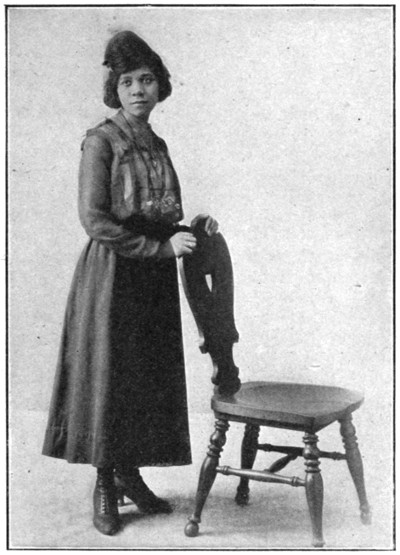
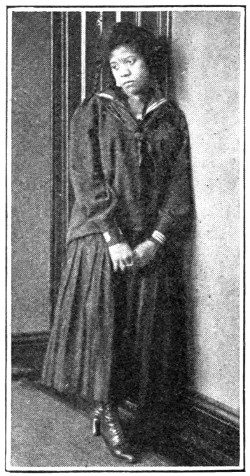
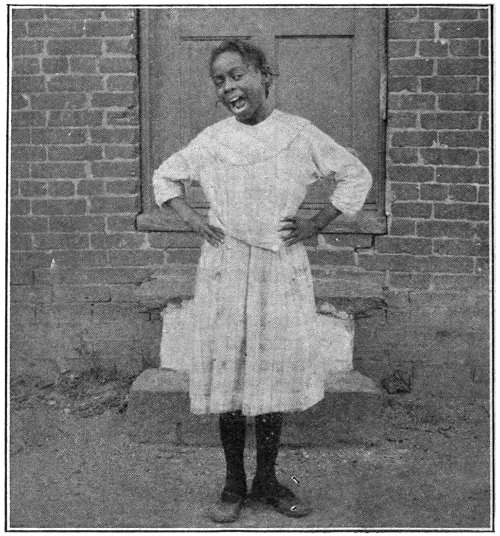
There was no doubt about it,—of all the little
colored boys and girls who went to the Peabody
school, Margaret was the dullest. Her teacher
said so, her friends said so, her parents were of
the same opinion, and if asked herself, Margaret
would undoubtedly have frankly acknowledged
that her undisputed and proper place was at the
foot of the class. Her brother Charles, who was
one year younger than she, had proudly graduated
from the fifth grade and was making rapid
progress in the sixth. He did not spend one-half
the time studying that Margaret did, and yet when
it came time for recitations, he would stand up
and recite in a manner that warmed his teacher’s
heart and made him the envy of most all of his
schoolmates.
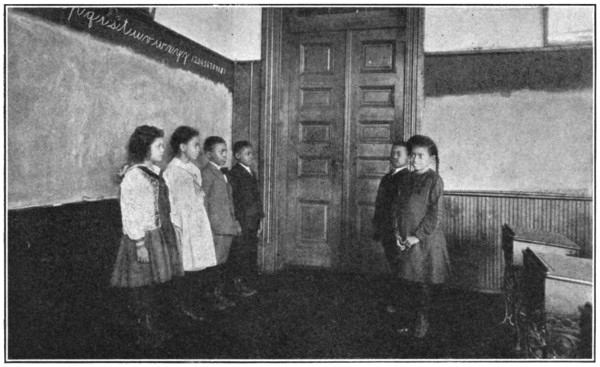
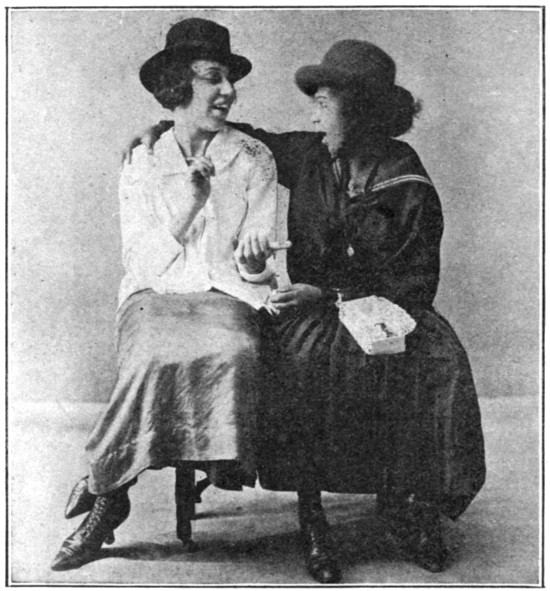
An Exciting Moment.
If Margaret was backward in her studies, little
Mable Green certainly was not. Arithmetic, geography,
writing, reading, she excelled in all of them.
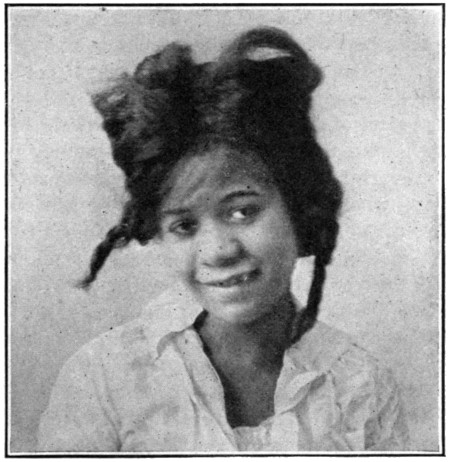
She was a very bright little colored girl and a
very good looking one, too. Mable knew this just
as well as all of the boys and girls did,—she was
not exactly foolish and vain, but she had been so
praised and petted by her school friends and
teachers that she was inclined to be a little conceited,
what we all would call “stuck up.” Once
a month a prize was given for the scholar who
stood highest in certain studies, and Mable had
twice been the successful pupil,—she had two
highly prized silver medals to show for her skill.
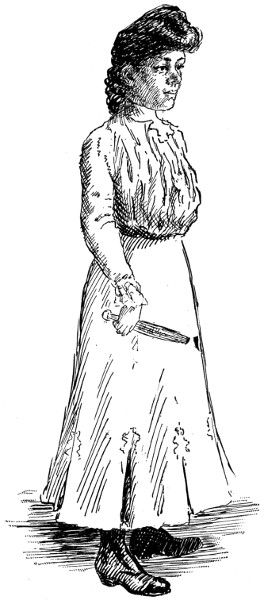
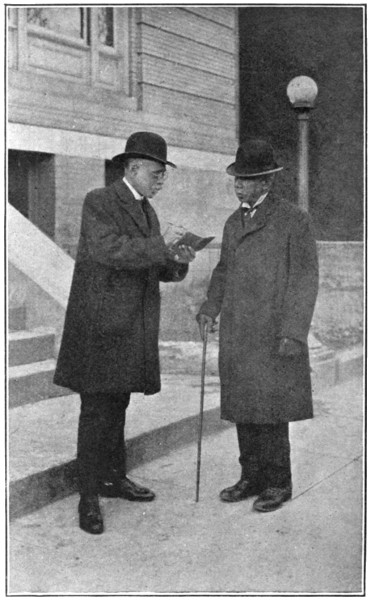
Now one of the members of the school board
was a farmer about forty years of age, kind-hearted,
but a little old-fashioned. He believed
in boys and girls knowing how to read and write
and spell correctly, but he did not care for what
he called the “new-fangled” ideas of some of the
other members of the board. He was very much
opposed to a course in music and elocution that
was being considered by the school board, and
did not hesitate to let every one know how he felt
about it. Now he knew Mable and liked her—he
was very much interested in the way in which she
stood at the head of her classes and wanted to do
something to encourage her in sticking to the
old-fashioned forms of education. He thought
over this for a long time, and finally decided to
hold a spelling match. Now you all probably
know what a spelling match is. Two sides are
chosen who stand up on opposite sides of the
room, and the teacher give out words, commencing
at the head of the row,—any one who misses a
word has to sit down, and the last one to stand
up wins the prize for his side, also is pronounced
the best speller and gets the personal prize.
The board all thought this a fine scheme, and so
it was decided to hold the spelling match on
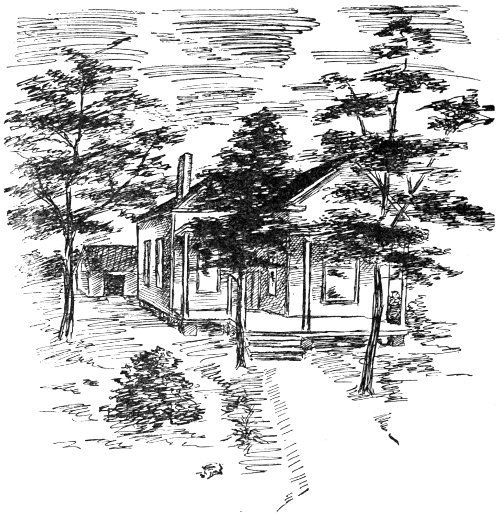
Thanksgiving evening at the schoolhouse. The
teacher was to pronounce the words, while the
members of the board were to give her lists of
words from which to choose.
“What are you going to give for a prize, Mr.
Edwards?” asked the teacher.
“Well, I thought I would give twenty dollars,”
replied the man. “Yes, I rather plan to give a
bright twenty-dollar gold piece.”
The news spread like wild fire. Never had there
been such excitement. This was a small fortune,
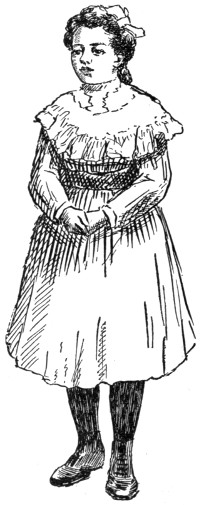
and Mable’s mother pinned a bright red bow in
her hair, and put on her prettiest frock,—Mable
had already considered the prize as won,—in fact,
she had planned just how she would spend it,—she
was a good speller and felt confident that she
could win.
The night arrived, bright and crisp November
weather, with a bright moon overhead,—the little
schoolhouse was packed. It was decided that all
children in the fifth, sixth and seventh grades
would be allowed to compete. Now, Margaret had
been in a highly excited state ever since hearing of
the contest—strange to say, she was a good
speller. It has often been said, and quite correctly,
too, that spelling is a gift,—that some people
spell correctly quite naturally, while no amount
of study or practice can make a good speller out
of any one who was born with a head that ached
and throbbed at the mere thought of spelling.
She had never had fifty cents of her own in her
whole life—twenty dollars in gold—it did not
seem possible that there could be that much
money in the whole world.
Sides were chosen and Margaret was almost
hidden by fat Reggie Andrews, who stood next to
her. Mable was right across the room from her,
and smiled in a somewhat scornful manner at the
girl she thought was a “dummy.”
The teacher began to pronounce the words and
you could have almost heard a pin drop; the first
few times around but few scholars dropped out,
Reggie going down the third time on “mucilage.”
Margaret gave a sigh of relief—Reggie had made
her very nervous.
Nothing happened that amounted to much until
the teacher began to give out words containing
“ie” and “ei.” Now these words are very difficult
unless a speller knows the rule—“ie” is almost
always used except after the letter “c,”—following
this letter “c,” it is always “ei.” Margaret
had learned this rule in the second grade,
and these words had no terror for her—she was
gaining confidence now and the audience began to
sit up and take notice. Soon but five were left
standing,—three on Margaret’s side and only
Mable and one little colored boy on the other. It
seemed for a time that these five would have to
divide the prize,—word after word was spelled
and no one missed—the audience was hanging
spellbound on every syllable, and the dignified
members of the board were trying to act naturally,
although in reality, greatly wrought up.
“Exhaustible,” suddenly said the teacher.
There was a moment’s hesitation, and then Ann
Houston, on Margaret’s side glibly said:
“E-x-a-u-s-t-i-b-l-e.”
“Wrong; be seated,” and with much sniffling
and rubbing her eyes, Ann walked sorrowfully to
her seat.
The boy on Mable’s side shuffled his feet, looked
up, down and around the room, and finally blurted
out:
“E-x-h-a-u-s-t-a-b-l-e.”
“Wrong!” and Bobbie joined Ann in sorrowful
silence.
Rose Holcomb, the one remaining girl on Margaret’s
side, had become rattled—she rolled her
eyes wildly up and down and then guessed,—she
made a very bad guess.
“E-c-h-o-s-t-i-b-l-e!” and Rose was also counted
out and took her seat, tossing her head and looking
indifferently around.
It was now Mable’s turn, and she had sufficient
intelligence to have profited by the experience of
Ann and Bobbie—had the word been pronounced
to her first, she would probably have misspelled
it, but now she spelled it out firmly and confidently,
letter for letter, without a hitch.
Now Mable faced Margaret for the final test—both
were greatly excited, but their nervousness
had passed—it was now that Margaret’s natural
ability came to her aid. Word after word she
spelled, and the crowd watched her in amazement.
Here was the supposedly dull and backward pupil,
the recognized “foot of the class,” standing up
gallantly to the last against Mable, the favorite, to
whom everybody had conceded the prize as already
won.
The largest cities in America, in South America
and Europe, proper names, animals,—the words
became more and more difficult. Finally, the
names of flowers were given—Mable had studied
botany and was familiar with flowers—Margaret
was now relying on her natural ability and nerve—all
things come to an end, and at last the teacher
pronounced the name of the flower—
“F-U-C-H-S-I-A.”
Now it is a fact that there is probably no more
tricky word in the English language than this—it
all depends upon where to place the letter “s.”
Mable knew what fuchsias were,—knew all about
the different parts, the petals, the stem,—she had
spelled the word correctly many times, but, alas,
she was a trifle hasty and exclaimed:
“F-U-S-C-H-I-A.”
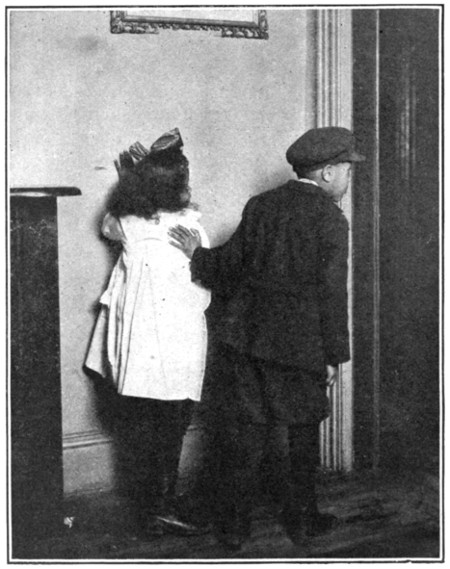
“Wrong!”—Mable burst into tears,—and with
loud sobs ran to her seat and threw herself down,
her face buried in her arms.
All eyes were now on Margaret. She was
strongly tempted to spell this commencing “ph”—it
seemed correct, but something told her that
Mable had been almost right. Almost, but not
quite! Mable’s dramatic finish had given her time
to think for a moment, and when the word was
once more pronounced she was ready—without
hesitation she spelled slowly and distinctly:
“F-U-C-H-S-I-A.”
“Correct,—Margaret, you have won the prize.”
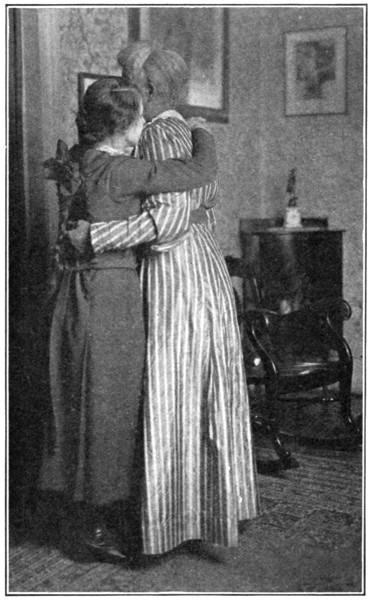
Margaret’s knees almost gave way under her—surely
she must be dreaming—it could not possibly
be herself to whom the committeeman was
advancing with a light blue plush case—every one
was clapping their hands, and the boys had so
forgotten themselves as to whistle through their
fingers and noisily stamp their feet.
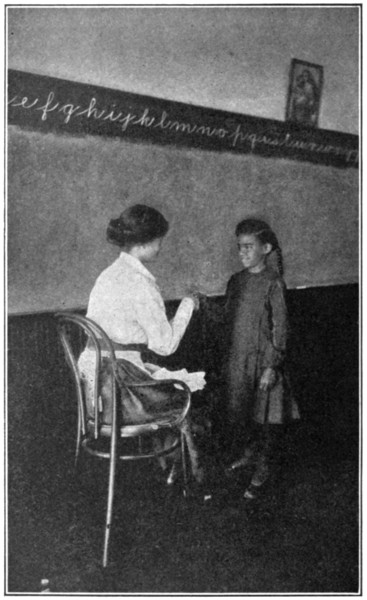
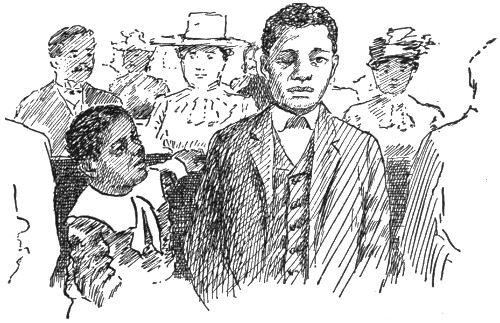
“Margaret, You Have Won the Prize.”
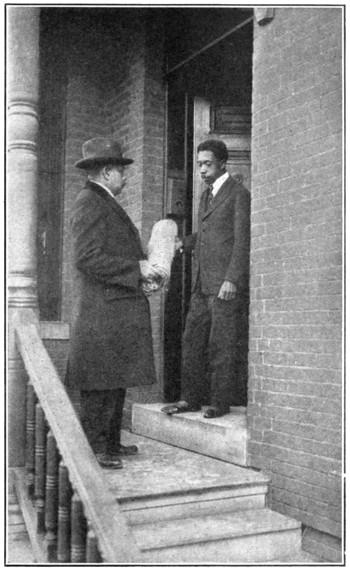
“It gives me great pleasure,” said Mr. Edwards,
“to give this twenty-dollar gold piece to
Margaret Hawkins, and to pronounce her the best
speller in the school.”
Poor Mable cried herself to sleep that night, but
it was a good lesson for her—it taught her to be
more considerate of others, and that there were
something at which she could be beaten.
Every one treated Margaret with increased respect,
and her success was also good for her—she
began to improve in her other studies, and as
she gained in confidence, gradually became, if not
one of the best, at least a very good scholar.
Mr. Edwards says his next prize will be given
for the best all-around pupil at the close of the
term—and Mable is once more looking forward
with hope.