"You were not in this part of the country
when New York was in an uproar
for two days over the escape
of one of my lions," said the Proprietor
to the Stranger as they joined the Press
Agent. "I suppose that ninety per cent.
of the people who remember it think that
it was all a fake, but I can assure you that
I put in the most strenuous forty-eight
hours of my career while he was loose, and
it pretty nearly decided me to give up the
show business. It was my first experience at
running an independent show, and after
great persuasion I had induced my father to
let me bring some boxing kangaroos, two
young lions and Wallace, a fine big brute
about fifteen years old, from our English
establishment to the States. Wallace was
already a famous—or infamous—lion in
England, where he had the score of three
trainers to his credit. He had received the
name of 'The Mankiller' over there, and
they were rather relieved to have me get him
out of the country.
"His last victim was a Frenchman, one
of the best-known trainers in the business,
and he went into the cage to subdue Wallace
on a wager. He won, and a remarkable performance
it was, but I won't take the time
to tell you about that now. He made just
one little mistake: his vanity got the better
of him when he turned his back on the lion to
bow to the audience after remaining in the
cage for ten minutes. As I said, he won
the bet, and it about paid the funeral expenses
of what was left of him. After that
the only man who could go near Wallace
was a half-breed American Indian from up
near Cape Cod; Broncho Boccacio, he called
himself. I don't know what the other half
of him was, and I don't remember how he
happened to be with our English show, but
all sorts and conditions of men drift into the
animal training business. At any rate, he
was the only man who could do anything
with Wallace, and that wasn't much. He
would get into the cage and chase him
around a bit and then jump out quick—always
backward after seeing what happened
to the Frenchman. I brought him along to
take especial charge of the brute. It took
a couple of days to get the animals through
the customs, and in the meantime I cast
about for quarters and finally rented a stable
on Eighteenth Street to keep them in until
I should secure an engagement." He took
a pencil from his pocket and drew a plan on
the white table top.
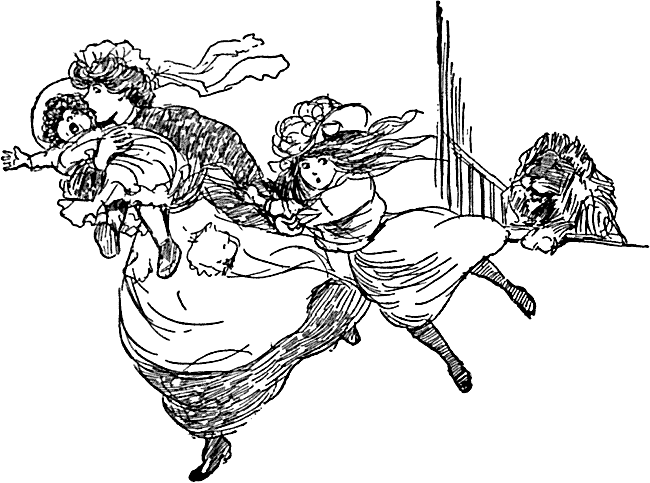
"There was a loose lion downstairs and a nurse and two children in the loft."
"The stable was arranged in this way:
here in the front was the carriage house with
these narrow stairs at the side leading up to
the loft. On each side of the door was a window
facing on the street, and back of the
carriage room was the stable proper—two
stalls and a loose-box. On one side of the
stable was a saloon and on the other a carpenter
shop, so I didn't expect much complaint
from my neighbors, as my men patronized
one, while I ordered the carpenter
to build a traveling cage for Wallace which
would slide on wheels, as our English cages
were too heavy to handle in a country where
labor is as high as it is here. I moved the
lions up to the stable to let them rest a bit
after the voyage and started to look for an
engagement. It was a hard row to hoe, as
I was not known in this country, and the best
I could do was a booking at a dime museum
for a month, and I had to take a lowish price
at that, but I ordered a big nine sheet poster
and trusted to luck to make more out of
them later.
"The lions were in three cages in the
stable, and in one of the stalls I had a trotting
horse which had been purchased for my
brother in England, and which I kept there
until I should have an opportunity to ship it
to the other side. The kangaroos were in
the loft, and a couple of days after they
were all settled my two little girls came over
from the hotel with me one morning and
went up there with the nurse to play with
them while I went into the carpenter shop
next door to settle for the new cage, which
had just been delivered. Broncho, as soon
as he struck his native soil, had discovered
a camp of other Indians on the Bowery and
spent most of his time in their encampment,
leaving a Cockney Englishman in charge of
the lions and the horse. I intended to wait
until he arrived before shifting Wallace to
the new cage, but the Englishman thought
he would show his cleverness and attempted
to do it alone without waiting for us. He
threw a piece of meat into the new cage and
then rolled it up to the old one, and when the
doors were opposite each other he opened
them. Of course Wallace made a spring for
the meat in the new cage, but he struck the
edge of the door, and as the Cockney had
neglected to block the wheels the cage rolled
away and the keeper gave a yell and bolted
for the stairs. There was a loose lion downstairs—and
a bad one at that—and the nurse
and two children in the loft.
"The first I knew of it was from the
nurse, who had grabbed the children and
stood with them in the door which had been
used to pass the hay in, yelling 'Fire!' and
'Murder!' but I knew that there was hell to
pay as soon as I reached the street, by the
sound which came from the stable. We got
a ladder from the carpenter shop and hustled
the nurse and children down to the
street, and then I went up to the loft, while
the nurse and the Cockney held the small
door from the stable to the street, which
could not be fastened from the outside until
the carpenter spiked some plank over it.
"A look into the stable convinced me that
I did not want to go down the stairs, for
with one blow Wallace had converted a thousand-dollar
trotting horse into two dollars'
worth of lion meat, and he was crouched on
the body, which he had dragged from the
stall, clawing at its throat and drinking the
blood. The place looked like a shambles, and
the growls which came from Wallace as the
other lions threw themselves against the bars
of their cages in their efforts to get out and
join in the feast were redoubled when he
caught sight of my head through the trap-door.
I slammed it down and drew the kangaroo
cage on top of it and then went down
to the street to see that the windows and
doors were securely boarded up. A great
crowd was gathering and I was afraid that
the police would shoot the brute, for I saw
the possibilities of an advertisement which
would more than pay for the expensive meal
which Wallace was making from the trotting
horse.
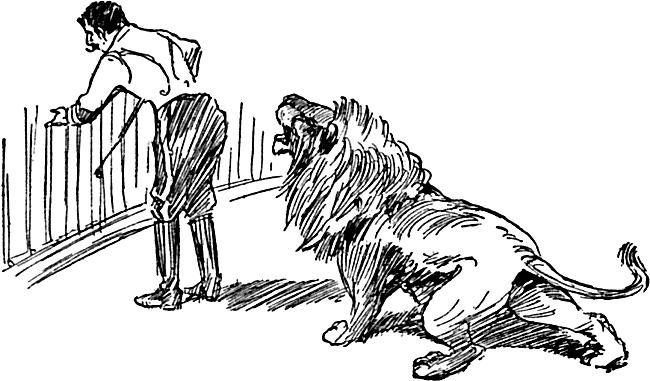
"His vanity got the better of him when he turned his back on the lion, to bow to the audience."
"Just as I reached the street, Broncho
strolled up. As I said, he was a queer-looking
guy; his skin was copper-colored and he
had piercing black eyes and long, fuzzy
black hair which fell down to his shoulders.
His nose was hooked and something about
his face always reminded me of a bird of
prey. He was only a half-breed, but when
I told him what had occurred he was all Indian
and he drew a long knife and started
for the Cockney, who gave only one look at
the expression on Broncho's face and then
started for Harlem, touching only the high
spots until he was quite out of sight. Broncho
didn't chase him; he just looked after
him with a smile on his face, glad to see him
disappear, as there had been more or less bad
blood between them for a long time. Then
he came to me and laughed at the idea of
danger and offered to go into the stable and
put Wallace back in the cage. I knew that
it would be impossible until the lion had
gorged himself on horse meat, and now that
the damage was done I was in no hurry to
allay the excitement until the police and reporters
arrived. We didn't have to wait
long, for the crowd had grown until the
street was blocked, and, of course, the reporters
asked more than a thousand questions.
When I had worked the sensation up
pretty well I consented to let Broncho take
his training rod and go down, and I went
with him carrying a club and a pitchfork.
Things commenced to happen right away,
for Wallace didn't wait for the call of time,
but sailed right into us, and when I saw that
he was getting the better of Broncho I made
a bluff at going back to the carcass of the
horse. Wallace bounded back to protect it
and crouched on it, snarling viciously, but
the delay gave me a chance to help Broncho
up the stairway. There was not enough of
his trousers left to wad a gun, and while I
was bandaging up a deep claw wound in his
thigh that advertisement seemed less and less
important to me, and I would have given a
good deal to have Wallace safely behind the
bars of his cage again. He was contracted
for four weeks anyway, and it takes a pretty
big sensation to be remembered for more
than thirty days in New York.
"Well, we fussed about all day, trying to
figure out some way to get the beggar back
in his cage, and I got an earache listening to
advice from people who had never seen a
lion, but who considered themselves experts.
At sunset Wallace still held the fort and the
streets were blocked in all directions, for the
afternoon papers were out with extras with
scare-heads. The boards over the windows
made the interior of the stable so dark that
no one could see into it, but the roars which
came from it gave the spectators all the
thrills they were entitled to and caused a
stampede every few minutes. We tried to
drive Wallace into the cage with a stream of
water from the fire plug, but he only shook
his head and growled at it, so we gave it up
and waited for daylight. There were about
forty policemen and a crowd of reporters
about the place all night, and I was getting
nervous for fear some fool would shoot the
lion, whose value was increasing every minute,
so I kept awake and did a heap of
thinking.
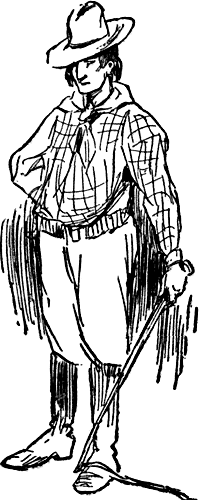
"Broncho was only a half-breed."
"I knew that Wallace would fight for his
'kill' as long as any of the meat was left, so
we rigged up a tackle to try and draw the
carcass out. We were all ready at daylight
and the crowd was bigger than ever. Say,
if you want to count the idle people in New
York just get up a free show at any hour
of the day or night and they will all come.
There must have been over a thousand loafing
about the street all night. We were just
getting ready to make a try for the horse
when the idlers outside gave a cheer, and I
saw an express wagon loaded with nets and
ropes and all sorts of animal catching stuff
drive up. Tody Hamilton, Barnum's press
agent, had caught on to the possibilities of
an advertisement, and sent to the winter
quarters at Bridgeport for some of their
animal men to come down and capture a
loose lion. They supposed it was in Central
Park, and when they found it was in a
stable the job looked easy to them. One of
them, a man named McDonald, had been
with our English show, and when he heard
that it was Wallace they were to tackle his
enthusiasm seemed to melt. He told the
others a few anecdotes of the lion, and two
of them went to find the Cockney, I guess,
for we never saw them again.
"We managed to throw a slip noose
around the carcass from the stairs, and when
we passed the end of the rope out of the
window there must have been five hundred
men pulling on it from the way that horse's
body slid across the floor. The four of us
stood around the trap-door to beat Wallace
back, and when he realized that he was losing
his prey it kept us busy.
"Say, a dead horse seems to have more
legs than a centipede when you try to drag
it through a narrow space, and they all stick
out in different directions. Of course, this
one stuck and then there was more trouble,
for when I took an axe to dismember it, a
cop threatened to arrest me for cutting up a
horse in the city limits. It took three hours
to satisfy the red-tape requirements and get
a permit from the Board of Health, and
then I had a long, sickening job, for we had
to haul up what was left of the poor beast
in fragments, and all the time Wallace was
snapping at them or rushing at us. We
gave him several nasty cracks over the snout,
the only place where a lion seems to be sensitive
to pain, but it only made him uglier
than ever and I knew that there was a pretty
fight ahead of us. It was a case of 'Perdicaris
alive or Raisouli dead' with me, for the
police were getting impatient, and I knew
they would shoot him if we did not get him
caged before night.
"We drew lots to see who should be the
first to go down, and I think that McDonald
stacked the straws, for Broncho won—or
lost—I was second, the other Barnum man
third and McDonald last; but he made good
after we got down there, and it was what
the President would have called a 'crowded
hour.' If Wallace hadn't been full of horse
meat, which made him a trifle slow, I think
he would have chased the bunch of us out,
and as it was he gave us all we wanted to do.
We used blank cartridges, Roman candles,
training rods and whips, and I learned afterward
that the crowd outside thought we were
all being torn to pieces, but we finally conquered
and it was a singed and battered lion
which jumped back into the den and gave
me a chance to slam the door. The noise of
the clicking lock sounded good to me, and I
went up the stairs with a lighter heart, in
spite of tattered clothes and a scratched hand
and bruised body. I knew that I had a small
fortune in the beast, but I nearly cried when
I went into the saloon to freshen up, and the
first thing I saw was the poster with the
announcement that Wallace would be shown
at the dime museum. I knew that it would
make the reporters, who had been writing
columns of space, suspect that it was all a
fake and prearranged. The manager was
afraid that I would renege on my contract
after all the free advertising, but he didn't
know me.
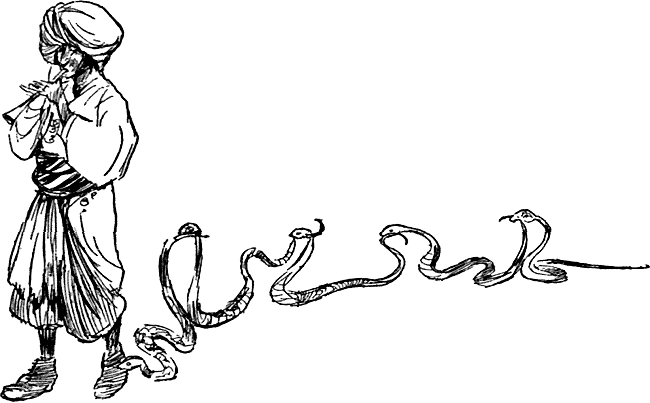
"We didn't have any regular snake charmer, but Merritt made himself up for a Hindoo fakir."
"Sure enough, the reporters came for me
in a body while I was still tired and dirty
from the fight and worn out with anxiety
and loss of sleep. They accused me of having
put up a job on them, but I guess the
sight of my condition convinced them of my
sincerity, for only one paper even hinted at
any crookedness, and that proved the best
advertisement in the whole business.
"It was the Sun which came out in an
article about Wallace, saying that he was
toothless and decrepit from old age, and
that there had never been the slightest danger
from him. If the reporter who wrote it
had gone into the stable with us, I don't
think he would have written the article. I
did my own announcing in those days and I
always started off with the announcement,
'Ladies and gentlemen! If you see it in the
Sun, it's so, and the Sun says that Wallace
is played out and toothless from old age.'
Then I would make a move to the front of
the cage, and Wallace, who had a special
hatred for me, would spring at the bars and
show as pretty a set of fangs as you would
wish to see and I was always sure of a laugh.
"Well, I showed Wallace in New York
and other cities for thirty straight weeks
and got back the value of that trotter a good
many times over," continued the Proprietor
as he rose from the table. "His name is one
to conjure with, even yet, and nearly every
lion which is exhibited in the side shows at
the county fairs is billed as 'Wallace, the
Untamable!' The original Wallace is still
alive and at our English breeding establishment."
He said good-night and left the
table, the Press Agent looking regretfully
after him.
"That's just like the boss," he complained
as he watched the retreating figure. "He
takes the center of the stage until he has told
his story, and when my turn comes to get in
the limelight he does the disappearing act.
That was a pretty good story, but talking of
escapes, I can tell you about an escape that
is worth talking about. It happened when
a guy named Merritt and myself were running
a snake show next to a camp meeting
down on the Jersey coast. We didn't have
any regular snake charmer, but we bought
a lot of wrigglers from a dealer down on
the Bowery and Merritt made himself up
for a Hindoo fakir. He would get into
the cage with them and those snakes would
wrap themselves about him from his head
to his toes and it was an awe-inspiring sight.
He taught them to stand up on their tails
and dance while he played on a tin whistle
and to do other pretty little tricks, but the
great and original stunt was what he called
the 'Interminable Snake,' when one would
grab the biggest snake's tail in his mouth,
another would fasten onto him, and so on
until the whole blame lot looked like one big
serpent. Say, those snakes got so stuck
on that game that they would do it for
sport without the word of command. Whenever
one started to move around the cage
another would grab his tail, and the first
thing you knew the whole bunch was going
around in a string and the sight of it
was enough to make a man swear off for a
year.
"We were doing a fine business until a
temperance lecturer set up a show a little
way off, and that cut into us so that there
was nothing much doing. The crowd would
walk right past the entrance to our 'Highly
Moral and Instructive Exhibition,' and go
on to listen to the temperance guy telling
them about the evils of drink, as illustrated
by the horrible living examples which he had
upon the platform. You see that was a free
show, while ours cost a quarter—and cheap
at the price.
"One afternoon after I had cracked my
voice trying to draw the crowd without
landing one of 'em, Merritt comes to me,
and as we saw the crowd pouring in to the
temperance show, we looked at each other
and shook our heads in sorrow.
"'Jim,' says Merritt, 'that guy down
there has got you skinned to death on the
ballyhoo, and it's up to you to go over there
and get next to the attraction and see if we
can't cop it out for our show. I hate to ask
it of you,' says he, 'knowing your views on
the temperance question, but business is
business and this ain't no time for sentiment.'
It went against the grain, but I
knew it must be done, so I went down to the
lecture. I wasn't wise to the game, but I
was anxious not to miss a trick, so I went
right up to the front, and the first thing I
knew I was seated on the mourners' bench,
right under the platform. As soon as the
lecturer came on I piped him for a guy that
used to pull teeth on the Bowery with a
brass band accompaniment and a gasoline
torch, and I remembered that at that time
he could punish more booze than any man
I ever knew. He had the gift of gab all
right, and he had picked up a couple of
panhandlers for horrible examples and they
looked the part. If either one of them had
ever drawn a sober breath in twenty years
he should have sued his face for libel, and
they looked as if they had been towed behind
a trolley car from the Battery to Fort
George.
"Well, the ex-jaw carpenter cut loose in
good form, and he soon had every one
worked up, telling the horrible things which
alcohol did to your interior lining, and giving
a description of the menagerie which a
man sees when he has the jim-jams, which
would have done credit to the boss lecturer
in there." He pointed with his thumb to
the Arena, and the alert waiter, taking it
for a signal, refilled the glasses.
"He did it so well that he sort of had me
going, and I was beginning to think that
possibly I was taking a trifle too much,"
continued the Press Agent, as he sampled
the fresh drink. "I was giving the matter
serious thought, when my attention was attracted
by one of the panhandlers who was
nudging his partner.
"'Bill,' says he, 'tell the old man to put
on full steam ahead, for I'm backsliding
and need encouragement. I'm afraid I've
got 'em again. Look there!' Bill looks
down the aisle and gets uneasy, too.
"'Hank,' says he, 'I've got 'em, likewise,
only that ain't my usual kind of snake, coz
he ain't got no plug hat with a red flannel
band on it; but it's me for the bromide and
the simple life.'
"'It's this damn Jersey whiskey that's
changed 'em,' answers Bill. 'Mine always
has gorillas ridin' 'em.' Well, I looked
around and I would have been scared myself
if I hadn't recognized our own bunch of
snakes, each one of 'em with the tail of the
snake in front of him in his mouth. Old
'Limber Larry'—we called him that on account
of his habit of going to sleep curled
up in a true lover's knot—was in the lead,
and behind him came about half a mile of
snakes.
"They were festooning themselves up the
aisle, coming slow, because there were a
couple of them which could not move very
fast, and when the gait got too lively they
used to bite their leaders' tails. Old Larry
was raising his head and looking around
every few feet, and just when the lecturer
had reached the most thrilling part of his
'Ten Nights in a Barroom' spiel he caught
Larry's eye and the meeting adjourned,
sine die, right there. You couldn't see him
for dust as he broke for the nearest 'speakeasy,'
and the two panhandlers were hanging
on to his coat tails.
"Just then Merritt comes in looking worried,
for he had gone to sleep and let 'em get
away from him, but when he sees 'em he
takes his tin whistle out of his pocket and
goes back to the show, tooting it like a
blasted Pied Piper, the snakes following
along as meek as Mary's little lamb, and
most of the audience goes with him at a
quarter per."
"Did business improve?" asked the
Stranger.
"Improve? Why, my boy, after we put
that temperance show out of business we
just turned 'em away for three months.
Not only did we do a good business, but the
hotel people put us on the free list at the
bar, because Merritt used to take 'em down
in 'Interminable Snake' formation for a dip
in the ocean every morning, and the hotel
press agent wrote it up as the daily appearance
of the gigantic sea serpent."
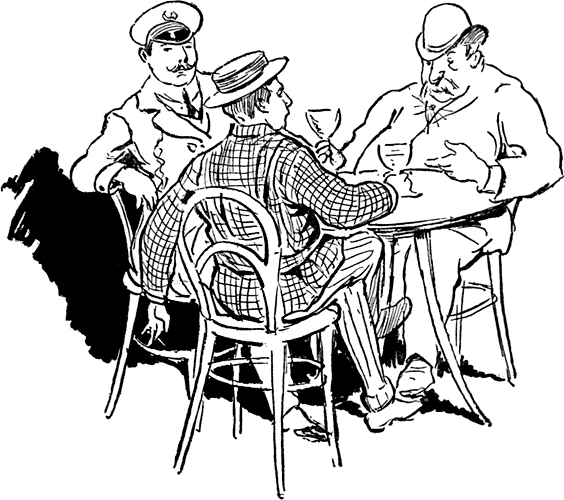 The table in front of the Arena.
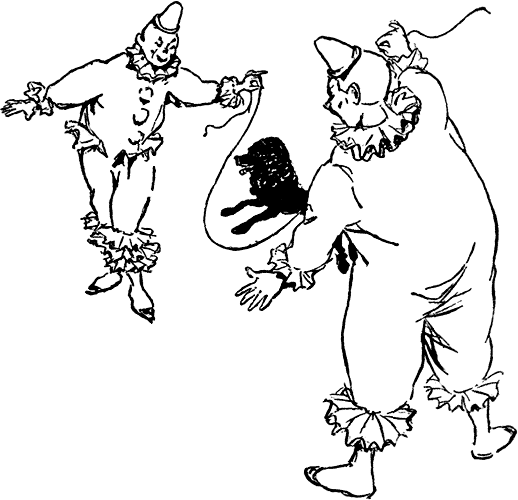 Two French clowns and a performing dog.
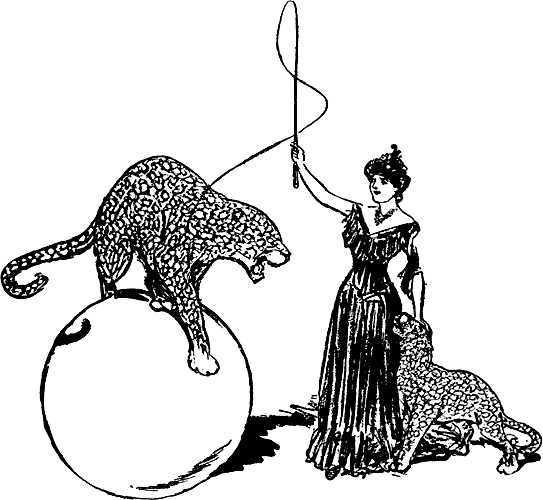 "Things which Nature never intended them to do."
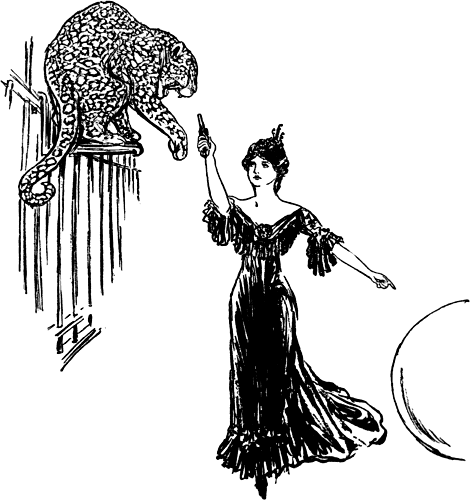 "Blank cartridges fired in his face."
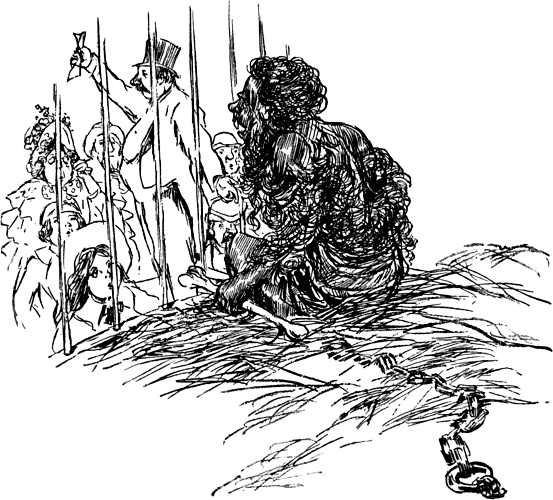 "Five hundred dollars to any
one who will enter the cage."
"Five hundred dollars to any
one who will enter the cage."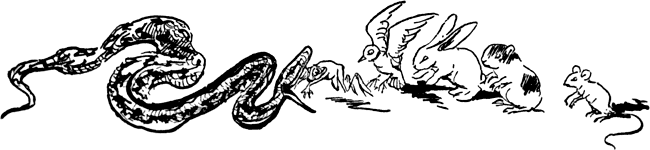 "A constant procession of small animals moving down his throat."
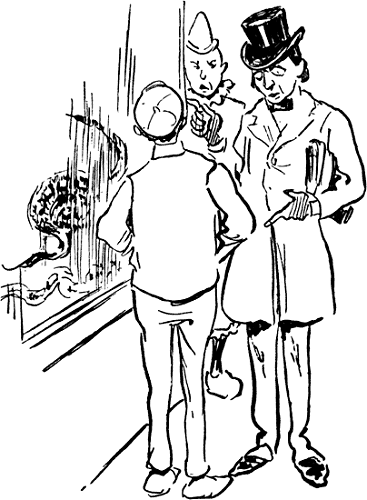 "The wise guy."
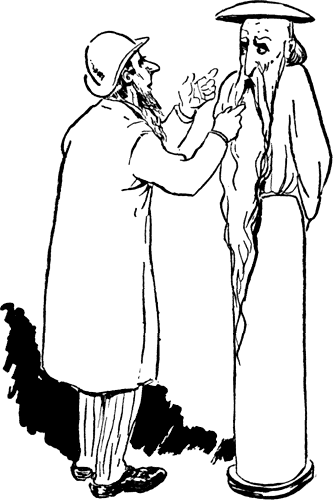 Noah listens to the tale of a Johnstown flood survivor.
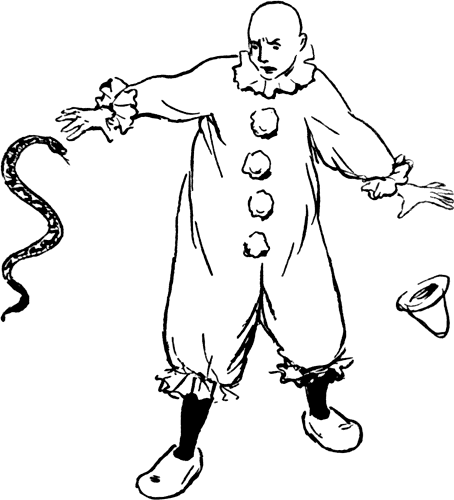 "Just two little red dots on the back of his hand."
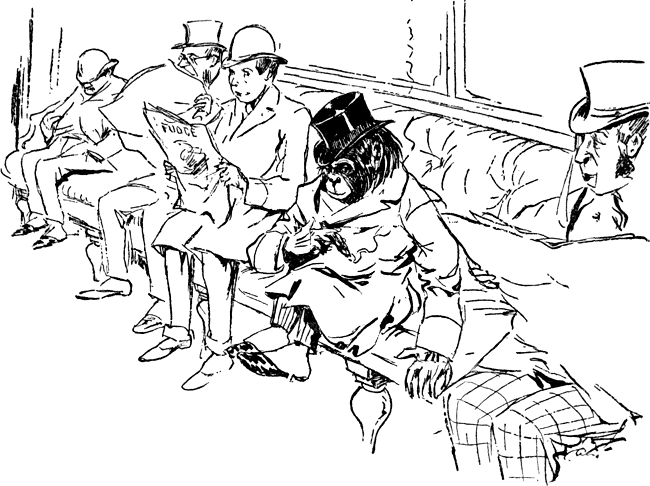 "He smoked his cigar in the lobby like any other guest."
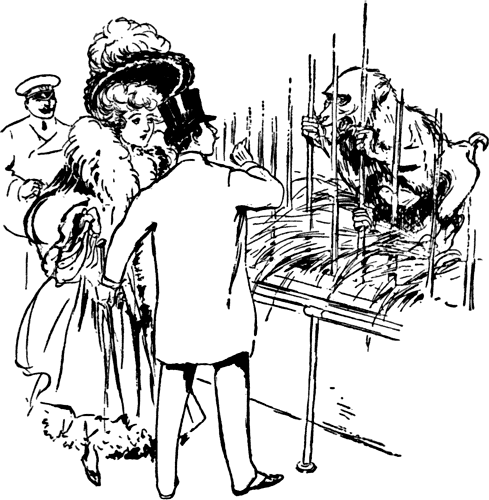 "Jocko, giving a howl of rage, danced madly up and down."
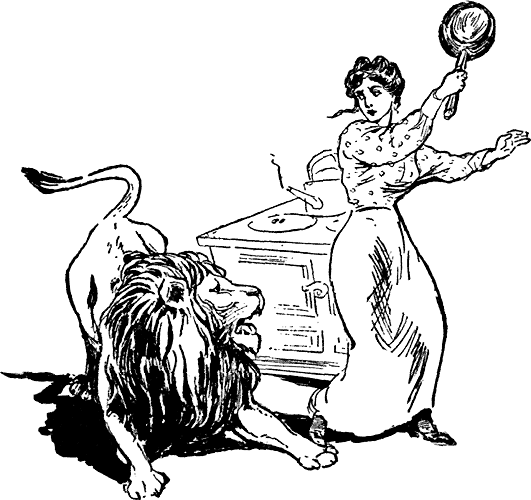 "All of his savage instincts were aroused."
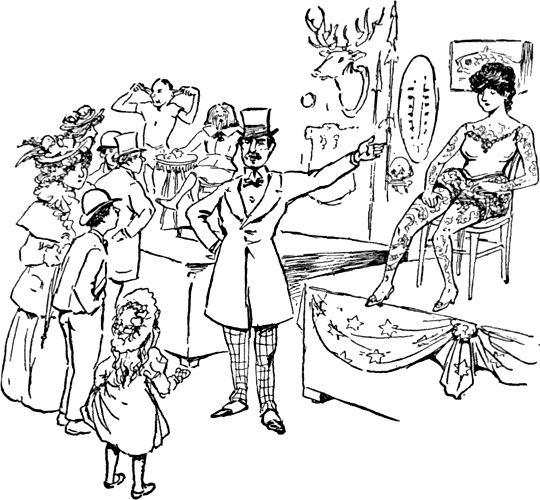 "A 'Tattooed Lady,' and she's all covered with picters."
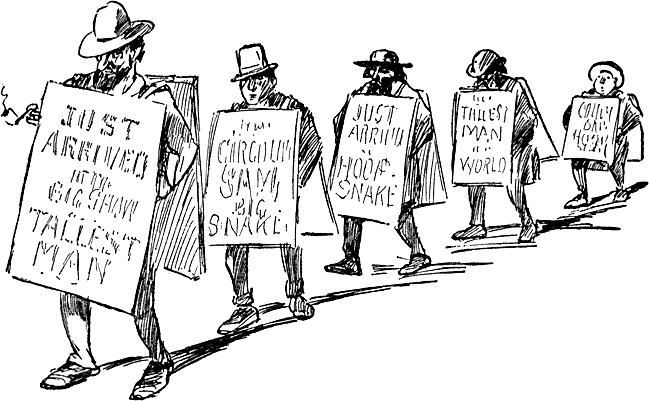 "A procession of sandwich men."
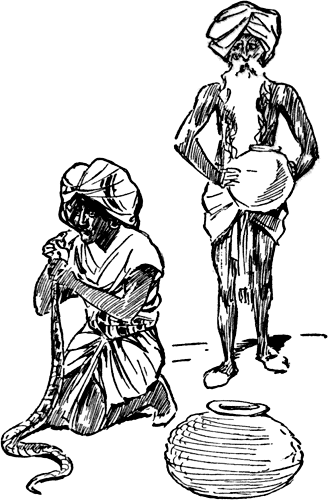 "Brought the head of the cobra close to his face."
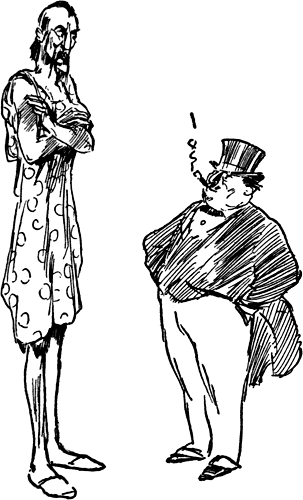 "You're a blame fine figure of a fat man."
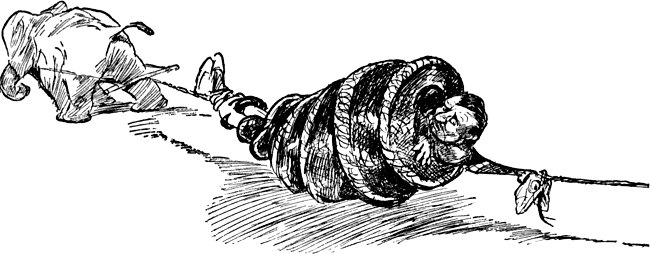 "Jake was having the time of his life, and the harder the elephants pulled the tighter he squeezed the Signor."
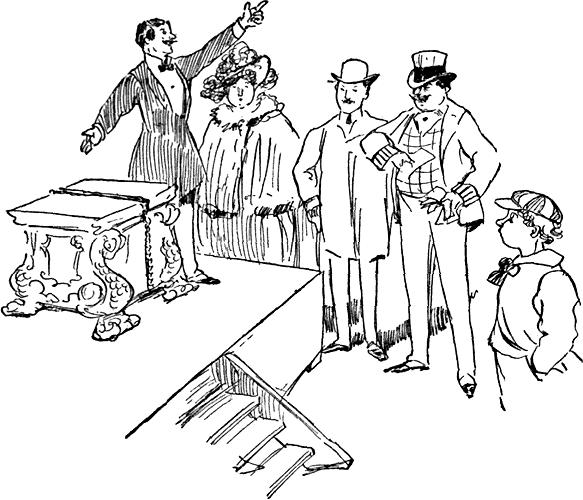 "Now, if you'll kindly give me your attention."
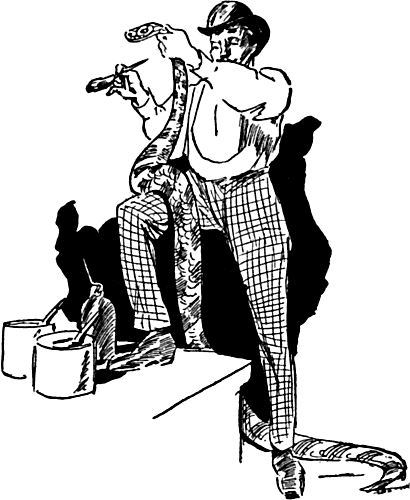 "Looked like the pennant of a man-o'-war."
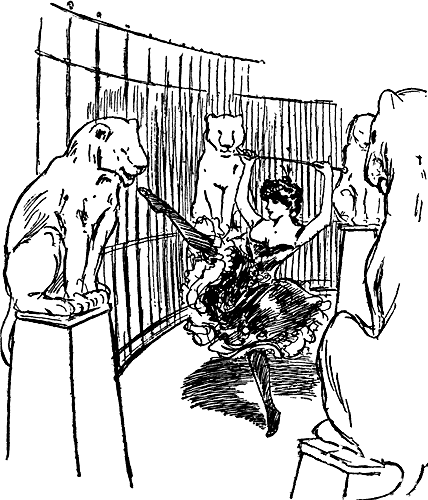 "Kicking over their heads and into their very mouths."
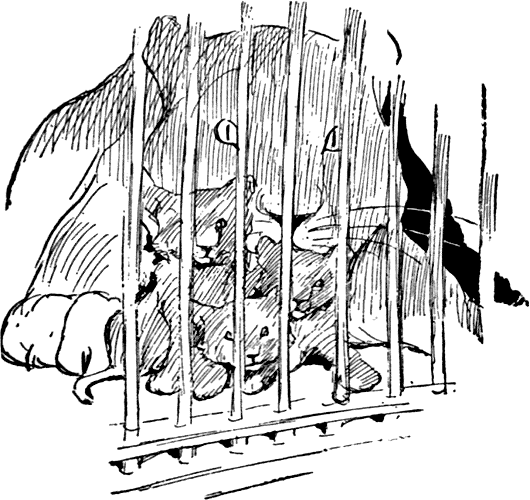 Grace snarled over the cubs.
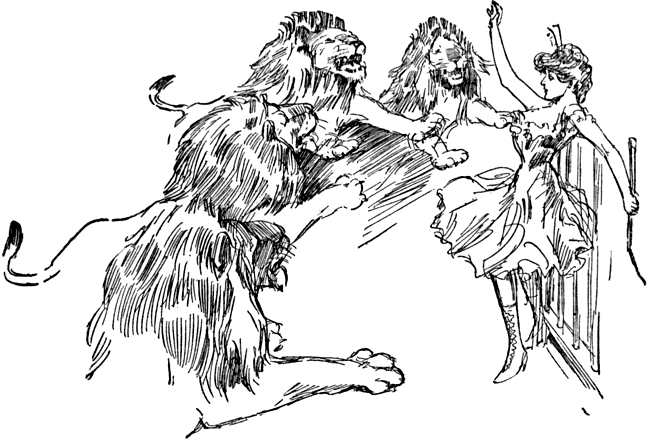 "Every one of the great beasts jumped for her."
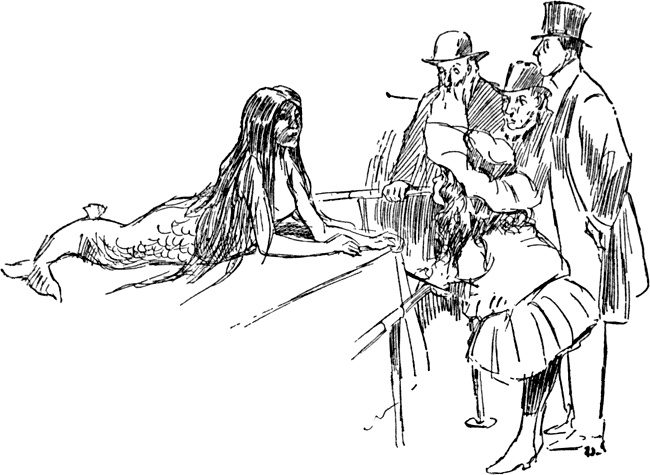 "Jim," says Merritt, ... "there is a great advantage in having a squaw for the top part of that there fish."
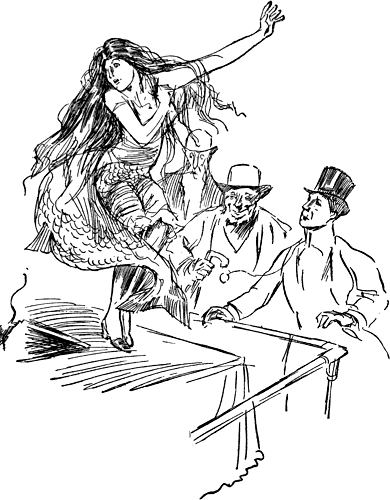 "A howl of terror from the platform."
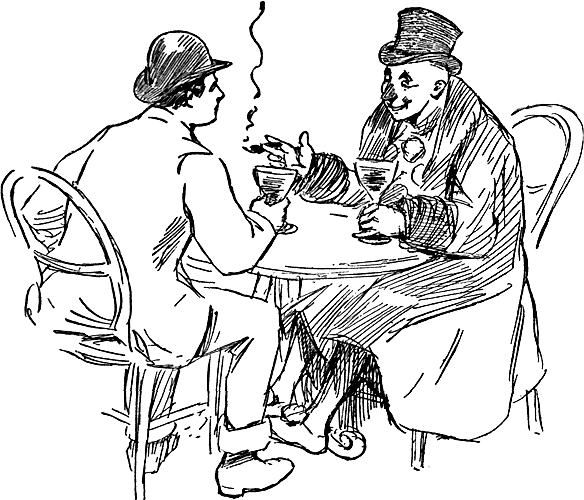 "Sam Watson confessed the whole thing."
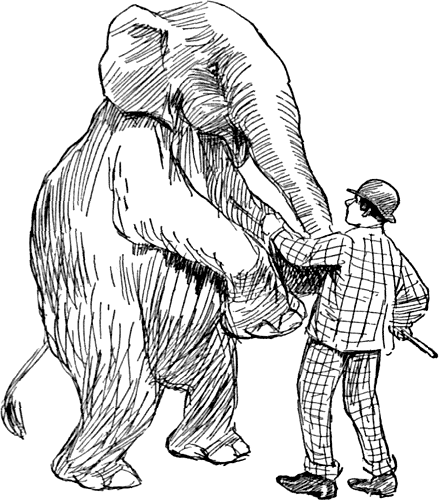 "Walking upon its hind legs,
 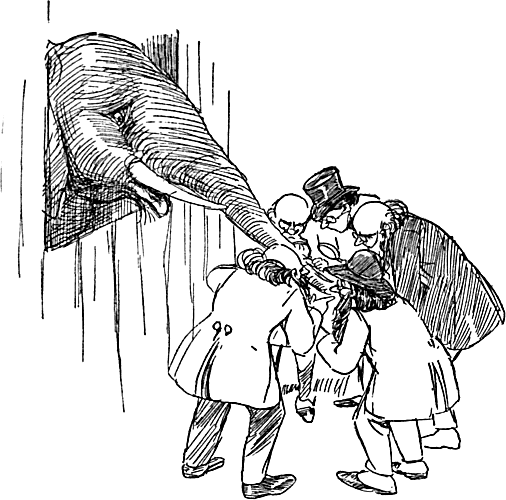 "Forepaugh had eminent scientists examine the beast."
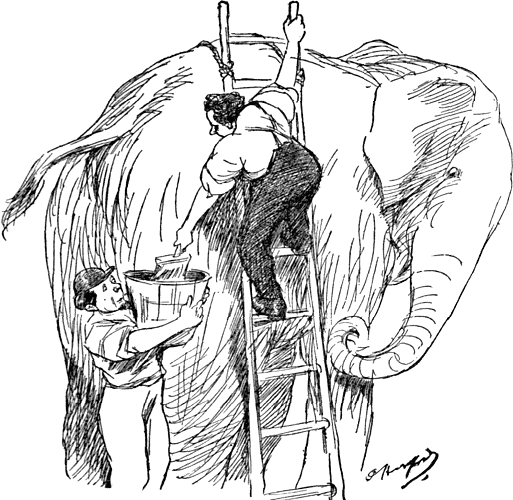 "Then Sam and his groom, Telford, proceeded to get busy."
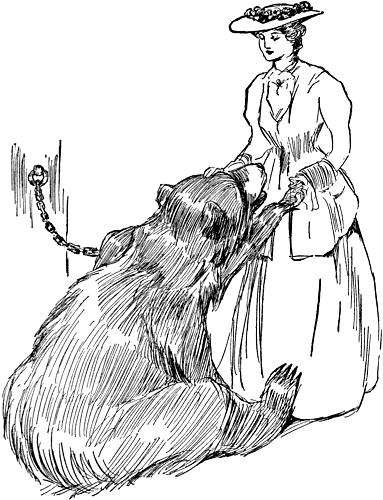 "There seems to be a sympathy between them."
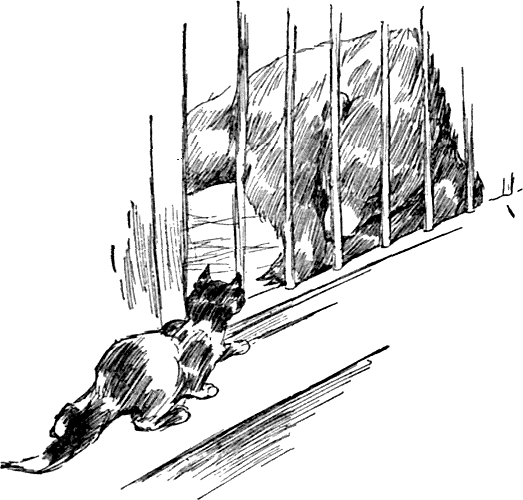 "Tramp was slowly drawing nearer to the cage."
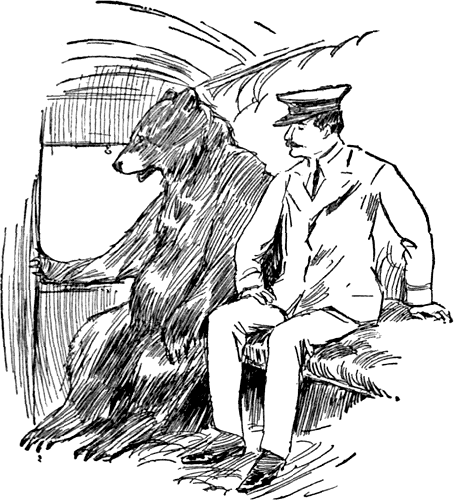 "The bear sat comfortably on the seat beside me."
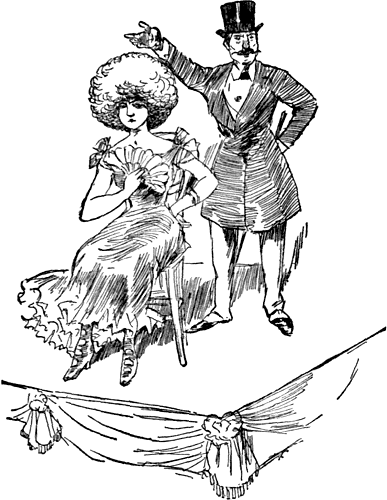 "He made sheep's eyes and threw a chest."
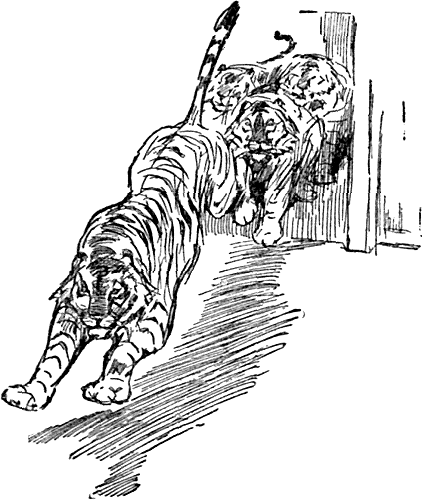 "The first tiger bounded through the door."
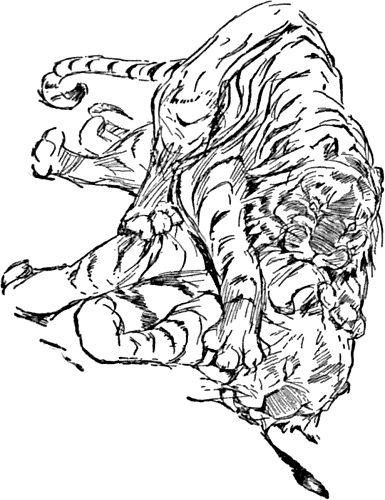 "Depew was still crouched on the body of his victim."
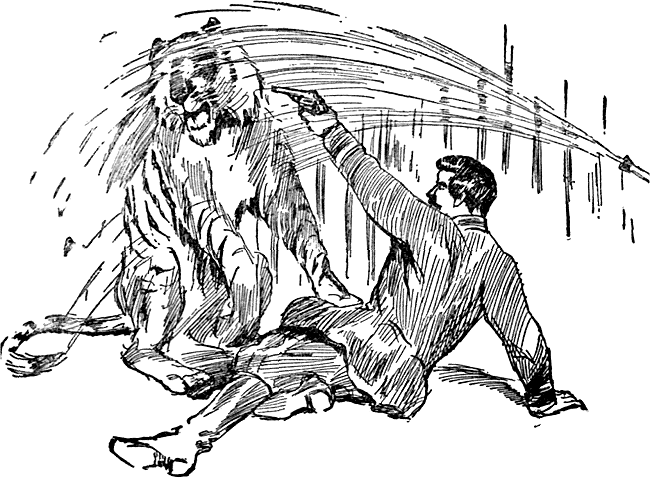 "Depew, coughing and choking, drew back."
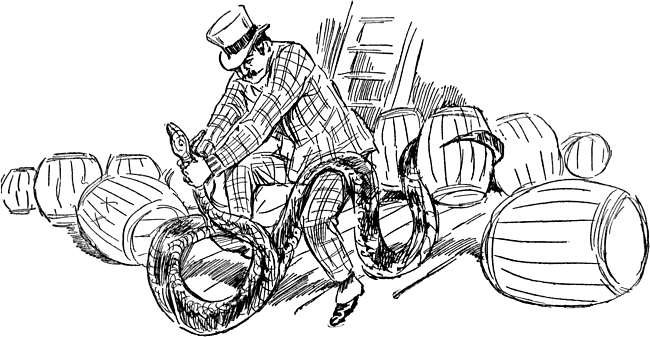 "Merritt was quick enough to get a strangle hold around the snake's neck."