A corporal in the Belgian army was mobilized when the
war broke out, and was in action continuously in the retreat
from Liège, in the siege of Antwerp, and finally on the Yser
until October 27, 1914, when the explosion of large shells
rendered him unconscious. He recovered consciousness only
in hospital at Calais. Though he was able to see and hear
well, he was dazed and remembered nothing of what had
happened. In fact, he did not understand what was said to
him.
In a week’s time, his memory and intelligence returned,
save for periodic attacks in which he was dazed. From the
very beginning he had been quite unable to move his legs, and
at first the arms were weak. He had a series of attacks of
violent struggling in November and December, 1914, which
the corporal himself called fainting attacks, claiming that
he did not move his legs in the attacks but only his arms.
In fact, he claimed that he could move neither head, body,
nor legs, but only the arms. He said, “Sometimes I try
hard and set my teeth, but I do not know how to move my
head and my legs; I try but they do not move.” Sphincter
control was maintained. Although he could see, when he
attempted to read, everything went black.
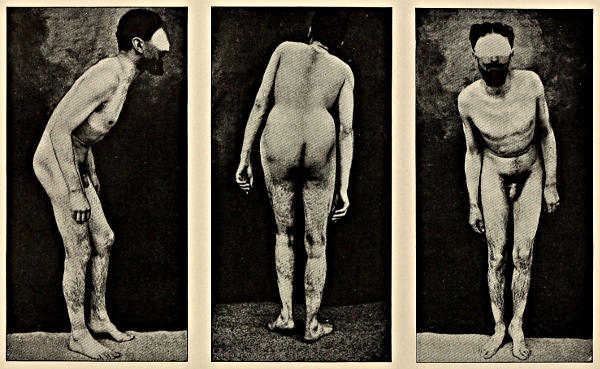
He was finally admitted to the National Hospital for the
Paralyzed and Epileptic on July 8, 1915, on the service of
Major Walshe. He was thin and wasted. He was firmly
convinced, according to the notes of Major Walshe, that he
was seriously paralyzed. He said he could not lift his head;
when his body was lifted, his head fell back, or rather perhaps
was definitely thrown back, lolling about alarmingly. However
as he lay in bed he frequently lifted his head unconsciously
and placed his hands under it. When asked to lift
his head, the sternomastoids were strongly contracted, but
at the same time the neck extensors also, so that the head was
stiffly and strongly held in an extended position. Despite
the patient’s statement that he could not move the trunk
muscles, he could turn over readily in bed, and when trying
to move the head the trunk was fixed in a strong opisthotonos,
and the abdominal walls were rigid. When requested to
move his legs, he made no movement whatever, though
during head movements the legs were strongly fixed in extension.
On passive movements, there was no active muscular
resistance. There was an indefinite blunting of all
kinds of sensations. Reflexes were normal.
Major Walshe worked hard with the patient, inducing him
first to lift his head from the pillow, and finally to move the
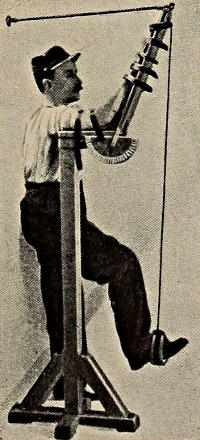
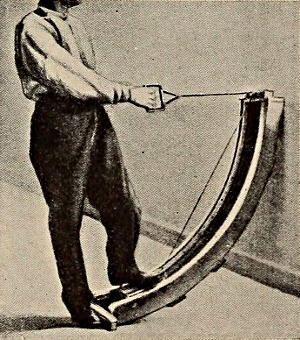
legs. In three weeks’ time, the corporal could just sit up,
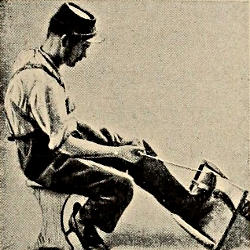
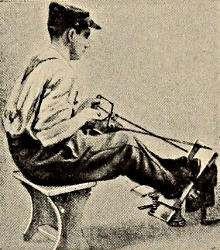
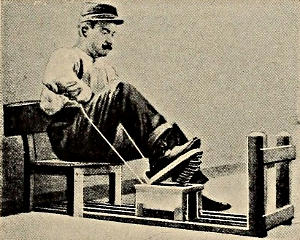
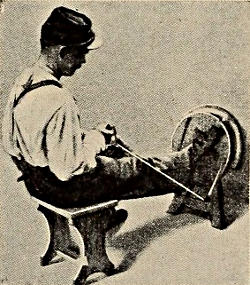
and at the end of another month, he was able to stand in the
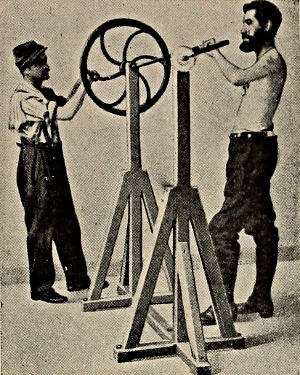
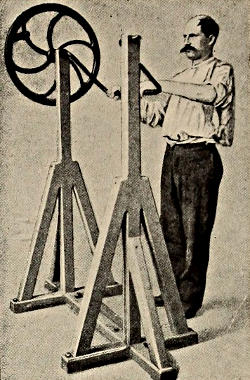
walking machine. At the end of a third month, he was
walking upon crutches, and at the end of another, he could
walk upon two sticks with his feet wide apart, moving as if
glued to the floor. To quote Batten, “The corporal will
eventually get well but not, I think, before the end of the
war.”
The history of the term Shell-shock will repeat that of
Railway Spine in the last century; the term will fall into
disuse when the cases subsumed thereunder get their exact
medical diagnoses—which, statistically speaking, will prove
to be as a rule psychoneuroses, either hysteria (pithiatism),
neurasthenia (nervous exhaustion, “prostration”), or psychasthenia
(obsessive neurosis).
In the post-bellum and reconstruction period the physician
will need to guard against regarding all cases called Shell-shock
as really neuroses, merely on the ground that Shell-shock
is probably neurosis. Laymen will in the reconstruction
period succumb to the lure of the 100 per cent and gossip about
cures and failures in the same loose manner that is but too
familiar in discussions of Lourdes, Christian Science, the
Emmanuel Movement. It will be worth while to preserve
a certain generality and comprehensiveness for the term
Shell-shock, which will stand to medicine as the term weeds
stands to botany.
Would that the medical profession understood neuroses at
their true value! Only too frequent is the impression on the
part of the profession that imaginary symptoms are by the
same token non-existent! I have even heard a physician well-trained
in somatic lines say that Shell-shock did not exist because
Shell-shock was nothing but neurosis, and neuroses were
characterized by imaginary symptoms,—accordingly neuroses,
being imaginary, do not exist! All of which reminds us
that many of the profession were entirely skeptical when
Charcot made his original observations. Some men here in
America felt that, whereas hysteria might occur in Paris, it
did not occur to any extent in America. The Shell-shock
data of this war will abundantly prove to the profession the
existence of the neuroses, and I feel that physicians will have
to brush up their ontology to the extent of conceding that
a symptom may be in a sense imaginary and yet not in any sense
non-existent.
Confining ourselves now to the delimitation problem,
what are the major groups of mental diseases that might
come in question?
I shall enumerate these. We think of mental diseases as
I, syphilitic; II, hypophrenic (that is, feeble-minded in some
of its phases, including even slight degrees of subnormality
not entitled to be called feeble-minded in the ordinary sense);
III, epileptic; IV, alcoholic (or due perhaps to some drug or
poison); V, encephalopathic (in the sense of some focal brain
disease); VI, symptomatic (in the sense of some somatic
disease); VII, senile (or presenile). The seven groups so far
enumerated, I believe, the general profession is pretty well
equipped to consider, at least roughly to diagnosticate and
to handle with due respect to the interests of the patient and
of the community. I am bound to say that some of my colleagues
would not go so far as to the competence of physicians
in general in these fields, and one is aware that a plenty
of mistakes have occurred even in these groups through the
bad judgment of practitioners. Nevertheless, I hold to the
conception that our profession is reasonably well equipped to
handle these greater groups, having in mind all the while the
appropriate temporary calling-in of the specialist. But
there are two more groups, in addition to these seven, in
which I am not so sure that the general profession knows as
much as it should. I refer to VIII, the schizophrenic group,
commonly known as the dementia praecox group; and IX,
the cyclothymic group, sometimes termed the manic-depressive
group. It is the victims of the diseases that constitute
these latter groups that ought unconditionally to be
excluded with few exceptions from the army; and it is the
study of these conditions which ought to be carried out as a
part of every man’s post-graduate training, not merely for his
work on draft boards, but for his work in civilian and reconstruction
practice. There is another group of, X, psychoneuroses,
with which the profession regards itself as familiar,
and with which it doubtless is familiar, in what might be
called blooming examples of hysteria, neurasthenia, and psychasthenia.
But the nub of the situation lies in the fact that
the diagnosis of instances which are not such blooming examples
is difficult, and hence it was that I qualified my statement
as to the competence of the practitioner in this tenth
group. It is, of course, the tenth group, of psychoneuroses,
into which the majority of the Shell-shock cases fall.
For the government was theoretically able to learn at the
start (within a small margin of error by means of the serum
test) whether the man was syphilitic. If a one-eyed man loses
his remaining eye in an industrial accident in civil life, his
damages are often fixed at damages for total blindness; for
the industrial firm should not have employed a one-eyed man
in an industry dangerous to eyes. The principle cannot differ
with a man hired in a spirochete-bearing state: The company
has hired a man who may under traumatic conditions
become an incompetent neurosyphilitic, and should pay
damages accordingly when the aggravation begins.
Often such infection may be due to a tragical form of
“negligence.” But, as pointed out in a work on Neurosyphilis,
1917, I believe that any form of licensing system,
official or virtual, which would permit the purchase of syphilis
in or near military zones, abolishes the argument of “negligence.”
A man acquiring syphilis under the connivance of
government ought to stand as well as a syphilitic hired by the
government, when it shall come to the question of compensation
for incapacity. Yet, it may be argued, the man
might have remained continent after all. The point is left
to the mercy of jurists.
To sum up the part played by syphilopsychoses and syphiloneuroses
in the war, we find, that
Another man who had never been epileptic (though his
sisters had been) was wounded four times, was never worried
by shell fire, got somewhat depressed after the death of his
father and five brothers in the service, but did not become
epileptic until finally he was blown up and buried three
times in one day, and it was a whole month later when he
became epileptic, although treatment by rest and bromides
apparently resolved the affair.
Other cases seem to show that war experiences can bring
out epilepsy, although in most instances it would appear that
there was an epileptic or otherwise neuropathic heredity in
these cases.
Under the war conditions, it might be thought that these
somatic disorders yielding the so-called symptomatic mental
diseases would be frequently found.
Aside from these rarities in puzzling diagnosis, we find more
commonly in the literature evidence of
One author claims rapid cures of hyperthyroidism by the
relatively simple process of hypnosis. Perhaps this is not
too unlikely in view of the still obscure relations between
mind and hormones. A little more surprising, perhaps, is the
assertion met with that psoriasis is sometimes a Shell-shock
phenomenon.
The literature clearly shows, however, that, as in most
special problems, the internist is still in demand. I recall
how one internist was misled on the witness stand into stating
that he was a “general specialist.” This is what we would
all need to be, were we to solve the problems of Shell-shock
in the time allotted to us by the war.
The somatic group of psychoses, sometimes termed symptomatic,
is illustrated in 29 cases (Cases 118-146), and comprises
cases ranging all the way from rabic phenomena to
those of hyperthyroidism. Possibly the first two cases
(Cases 118 and 119) might better be placed among the encephalopsychoses.
Case 118, one of rabies, was that of a
farmer without history of having been bitten by a dog, who
eventually came to autopsy and received the Pasteur Institute
diagnosis of rabies. A diagnosis of angina was at
first made. When the symptoms became more serious and
masseter spasm developed, a question of tetanus arose. Later
the diagnosis of meningitis was suggested. At this point, the
symptoms became predominantly psychotic.
It is doubtful whether shell-shock and burial had anything
to do with the appearance ten days later of lipomata, which
proved to be the initial phenomenon in a pronounced Dercum’s
disease. (Case 141).
Note that in this epicrisis I have designedly not followed
the order of presentation of the text materials. The process
of diagnosis per exclusionem in ordine which I find most
serviceable in civilian psychopathic hospital practice is the
elimination of possibilities in the order presented in Chart 1
or in Paragraph 10 of this epicrisis. Because this book will
find its greatest use in peace times as a kind of illustrative
commentary on the peace material that presents itself in
general practice or in psychopathic hospital voluntary,
temporary-care, and out-patient practice, I chose to arrange
the delimiting material according to the order of the practical
key devised for civilian practice. We may now profitably
change our order of consideration and consider whether
Below I shall still permit myself some general words concerning
the other more easily excluded groups because of the
light which feeble-mindedness, alcoholism, schizophrenia,
cyclothymia, and even old age can theoretically throw on the
nature of Shell-shock.
A herpes or the graying-out of hair overnight can suggest
organic changes. A case may combine lost knee-jerks (suggesting
organic disease) with urinary retention (suggesting
functional disorder).
To sum up concerning the small group of psychoneuroses
presented in the section on Psychoses Incidental in the War,
we are dealing with cases in which the phenomena are either
continuous with ante-bellum phenomena, or are of such a
nature that they might well have been brought out by other
factors than those of war. These cases by the design of their
choice throw little or no light upon the relation of physical
shell-shock or its equivalent to the psychoneuroses, though
in a few instances the factor of shell explosion is not entirely
to be excluded, and in one instance (Case 170) a hallucination
may be regarded as a virtual equivalent of an emotional shock
of great compelling power.
The fact that a soldier may get war dreams though he has
never been in the fighting zone and never by any chance observed
the circumstance of war, or the fact that a man can
become mute on the second day after a shell explosion because
the night before he had dreamed of some hysterically
mute patients in his ward—these facts again, although they
argue a psychogenic origin for the phenomena of so-called
“Shell-shock,” do not at all mean that actual physical explosion
in other cases may not be tremendously important.
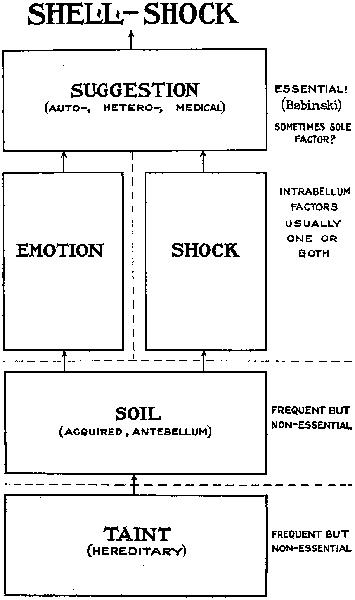
We may more correctly express the situation, pathologically
speaking, in the following categories (see chart, page 870):
Whoever wins the great war from the military point of
view, there can be no doubt as to what writers contributed
most from the war data concerning the doctrine of hysteria,
especially concerning the theoretical delimitation of hysteria
from other forms of functional nervous disease: There can
be no other answer than that, in theoretical neurology at least,
the French have already won the war, if only by means of
the remarkable concept set up by Babinski of the so-called
physiopathic (that is, non-neuropathic and non-psychopathic).
But how has this splitting of functional neuroses into
psychopathic and physiopathic been rendered certain? By
the tremendous modern sharpening of differential diagnosis
dating from, e.g., the discovery of the Babinski reflex. This
brings us to the brink of considerations concerning the
differential diagnostic problem.
First it may be well to regard the whole problem in the
light of those mental diseases that we slid over when we were
delimiting Shell-shock as against syphilis, epilepsy and
somatic disease.
The possible relations of Shell-shock to feeble-mindedness
are of some interest. We know that Shell-shock picks out
certain nervous and mental weaklings and indeed that one
author claims as high a percentage as 74 for war neuroses
having a hereditary or acquired neuropathic basis. How far
does feeble-mindedness itself count among these supposedly
susceptible nervous and mental weaklings? Is a feeble-minded
person especially in condition for Shell-shock?
There are rumors of experiments to show that if in an
aquarium containing some jelly fish alongside bony fishes,
you explode a substance, the jelly fish ride through unscathed
whereas the bony fishes are killed by the shock. The jelly
fish presumably had too simple an organization.
There is something to be said for the idea that in man also
the higher and more complex specimens are more susceptible
to Shell-shock, that is, to the neuroses of war, than are the
lower and more simple combatants. Some statistics indicate
that officers, who are in the main of a higher and more complex
organization than the private soldiers, are much more
susceptible than are private soldiers to the neuroses of war.
Doubtless we shall not be able to verify these statistics until
long after the war and, so far as I know, no very inclusive
statistics have been presented.
On the whole, I judge from the case history literature that
the feeble-minded, unless they be of that very high level
sometimes called subnormal, are not particularly susceptible
to the neuroses. It is obvious that idiots and, for the most
part, imbeciles, do not get into military service. As for
what the English term the feeble-minded or what we in
America are now terming morons, it may well be that our
draft boards do not always exclude. High French authorities
have specifically determined in certain instances that
the high-grade feeble-minded would be perfectly suitable for
certain branches of the service. There is the case, for example,
of a sandwich man of Paris who somehow got into
the French army and was being perpetually sent to look for
the squad’s umbrella and the key to the drill ground, but
sang and swung his gun with joy as he went to the front, and
apparently did very well there. This man had been a state
ward and, as you know, well-trained state wards are frequently
exceedingly good at elementary forms of drill.
Then there is another case of an obvious imbecile who was
quite without any idea of military rank and often got punished
for treating his superiors like his comrades and was the
butt of his section, but on the firing-line remained cool, careless
of danger—a magnificent example to his comrades—at
last surrounded and taken prisoner. Here the story might
have ended and the folly of enlisting imbeciles in the army
might have seemed perfectly plain, except that our imbecile
forthwith escaped from the Germans, swam the Meuse and
got back to his regiment!
Here then are cases in which the slight degree of hypophrenia—it
seems unwise to give it the opprobrious title
“feeble-mindedness”—would have been entirely inconsistent
with the development of Shell-shock. Such men are,
perhaps, too simple to develop neuroses. On the other hand,
it would appear that certain of the slight degrees of hypophrenia,
such as we might find in so-called subnormal or
stupid persons, would prove capable of “catching Shell-shock”
as it were, and then find themselves entirely incapable of
rationalizing the situation. In short, there may be a group of
psychic weaklings, just complex enough to fall into the zone
of potential neurotics, but just simple enough to render the
processes of rationalization (or what one author terms autognosis)
and of psychotherapy in general entirely unavailing.
After the war we may be confronted with a number of
persons with their edges dulled by the war experiences. One
has met even brave officers who, after months of furlough,
still maintain that they will never get back to their normal
will and initiative. Whether these hypoboulic persons have
not been reduced to subnormality so as to resemble the
slighter degrees of hypophrenia or feeble-mindedness can
hardly be determined now. They will form important problems
in mental reconstruction, for with the best will in the
world, the occupation-therapeutist with all her technic, may
be unable to force or coax the will of such hypoboulics into
proper action. Nor will the ordinary environment of home
and neighborhood turn the trick properly. Expert social
work in adjustment, both of the returned soldier to his environment
and of the environment to the returned soldier,
may be necessary. I speak of this problem here not because
these persons are hypophrenic or feeble-minded in the ordinary
sense, but we must constantly bear in mind our experience
in the teaching of hypophrenics (both in the schools for
the feeble-minded and in the community) when we are facing
problems of mental reconstruction.
It must be that the exigencies of the war have prevented
full reports of alcoholic cases; or perhaps they are regarded as
of such every-day occurrence as not to demand case reports.
The alcohol and drug group is represented by 17 cases (Cases
86-102).
That the causes of dementia præcox, still unknown as they
are, lodge more in the interior of the body or in special individual
reactions of the victim’s mind, seems to be shown by
the phenomena of this war, since there seems to be no great
number of dementia præcox cases therein produced. To be
sure, some schizophrenic subjects do get into the service, and
sometimes their delusions and hallucinations get their content
and coloring from the war. Thus a Russian, wounded in the
army, developed delusions concerning currents running from
his arm to the German lines and felt that he was, so to say,
the Jonah of the Russian front, as he could determine shell
fire to the spot where he was by the arm currents.
Now and then a case shows a scientifically beautiful admixture
of ordinary dementia præcox phenomena with the
effects of shell wound or shock. A picturesque case from the
standpoint of German psychiatric diagnosis is one of a soldier
who boxed the ear of a kindly sister who tried to steer him
from a room where the examination of another patient, a
woman, was going on. On the whole, the eminent German
psychiatrist who examined him felt that the case was really
one of psychopathic constitution, as he had shown somewhat
similar irascibility on a slight occasion before. However,
much to the astonishment of all, the patient developed further
symptoms. His ego got terribly swollen. At last he was
fain to utter a denunciation of the entire Junkertum and of
the Kaiser: he said in fact that he was an Inhabitant of the
World and not of Prussia merely. Over here we allow such
persons to edit newspapers and write books with impunity,
but the eminent German psychiatrist, before mentioned, was
constrained to alter his diagnosis of this cosmopolite from
psychopathic constitution to dementia praecox!
On account of the somewhat close resemblance between the
phenomenon of manic-depressive psychosis and what we
ordinarily feel ourselves—a logical situation reflecting merely
the fact that the phenomena of over-activity (mania) and
of under-activity (depression) are merely quantitative variations
from the normal—it might be supposed that the war
life and its shock and strain would start up the cyclothymias
in some numbers. Why should not a shell explosion start up
a mania or throw a man into a depression? In point of fact
the literature somehow does not agree with this presupposition.
Some years ago in Massachusetts a brief investigation was
made of the assigned causes of the successive attacks in a
great number of cyclothymic (manic-depressive) cases, and it
was found that each successive attack progressively had less
of the physical in the previous history. Something like 45%
of all the first attacks had a pretty obvious cause in the
soma, such as a kidney disease, a heart disease, a puerperal
condition and the like, but the second attacks failed to show
even 20% of such obvious somatic causes, and the third
attacks even less than 10%, and so on.
Now war conditions and even the shell explosions themselves
have apparently not set up any such conditions as
those of mania or of depression. Most of the instances of
cyclothymia are instances of men who are cyclothymic before
they enter the army. These experiences, when after the
war we can sift them all out, may allow us to form better ideas
as to the etiology of many of the psychoses, and the great war
may thus prove a gigantic experimental reagent which will aid
in solving some of the major problems of mental hygiene.
To sum up concerning the cyclothymias: War stress seems
to have had singularly little effect in the production of fresh
attacks, and so far as we are aware, no effect in starting up a
manic-depressive diathesis, unless Case 167,—that of the
naval officer who distinguished himself in land battles,—looks
in that direction. It is, of course, to be conceded that
hypomania might readily be overlooked under war conditions,
and that suicidal melancholias, belonging in this group, might
be interpreted as natural war-made depressions. Very possibly,
therefore, this result (running to the effect that the
cyclothymic forms of mental disease are rare in military life)
may need revision.
We found ourselves looking on the Shell-shock neuroses as,
like other functional neuroses, in a sense mental diseases.
Perhaps we would better say (to get rid of all suspicion of
medicolegal “insanity”) that the Shell-shock neuroses seemed
to us in some sense psychopathic. But, though the Shell-shock
neuroses looked psychopathic and were presumably
more functional than organic in nature, it was a curious thing
that, practically speaking, the Shell-shock neuroses proved to
be farther away from the more functional of the psychoses
than from certain organic psychosis.
But why should the Shell-shock neuroses seem so “organic”?
Partly, it is probable, because the term “organic”
is too often used to mean “subcortical.” In another diagram
the truer relations are depicted, with four classes of
phenomena (Chart 18).
In the orderly diagnosis of mental disease, from the standpoint
of the major orders or groups, we ordinarily come at
this point to the focal brain diseases. In analyzing the neuro-psychiatric
problem of a so-called Shell-shocker, it is, of
course, our bounden duty to exclude syphilis. Even though
the percentage of syphilitic victims of Shell-shock is not high,
yet these cases promise so much from treatment that they
deserve to get their diagnosis as early as possible, and the
English workers who have worked most in the syphilitic
field insist upon this point.
We next proceed, as above indicated, to the elimination of
hypophrenia with all the various grades of feeble-mindedness.
Thirdly, we try to exclude the various forms of epilepsy;
and fourthly, the effects of alcohol, drugs and poisons.
In ordinary civilian practice, such as that at the Psychopathic
Hospital, the orderly elimination for diagnostic purposes
of the great groups of the syphilitic, hypophrenic
(feeble-minded), epileptic and alcoholic, leaves us with cases
in which there either is or is not important evidence of organic
nervous-system disease, such as that shown in cases
with heightened intracranial pressure or in cases with asymmetry
of reflexes and other forms of parareflexia. In military
practice these logical questions of prior elimination of
syphilis, feeble-mindedness, epilepsy, and alcoholism must go
a-glimmering at first, unless their signs are so obvious as to
permit diagnosis by inspection.
It is not only at the casualty clearing stations and along
the lines of communication that the difficulties in telling
Shell-shock in the neurotic sense from traumatic psychosis
and the effects of focal brain lesions are found, since the literature
amply shows that diagnostic problems remain open for
weeks or months in the various institutions of the interior,
to which all the belligerents have been forced to send their
cases.
The chances are, if we should collect all our civilian cases
of Railway Spine and of industrial accident with traumatic
neuroses, we should be able to prove this same strange relation
between slight wound in a particular part of the body
and the local determination of hysterical symptoms to that
region. Of course, the determination follows no known laws
of nerve distribution to skin or muscles, and the effect is
apparently a psychopathic or, at all events, a dynamic process
without clear relations to the accepted landmarks.
I do not mean to suggest, that aside from the hurry of war,
the differential diagnoses here are more difficult than those
in civilian practice; but the difficulties are at least as great
as those that have faced the civilian practitioner. What
needs emphasis is that just because we have concluded that
the statistical majority of the cases of so-called Shell-shock
belongs in the division of the neuroses, we should not feel
too cock-sure that a given case of alleged Shell-shock appearing
in the war zone or behind it is necessarily a case of neurosis.
After the early “period of election” for psychotherapy
in the war zone has passed, there can be no excuse except
general war conditions for not according to every case of
alleged Shell-shock a complete neuropsychiatric examination,
having due regard to the ideas of Babinski concerning medical
suggestion of new increments and appendices to the original
hysteria, developed in battle or shortly thereafter.
We have, however, been able to find in the literature good
instances of puzzling diagnosis in which such conditions are
in evidence as acute meningitis of various forms, hydrophobia,
tetanus, and the like.
Especially in the diagnosis against Shell-shock hysterias
we may need to think of the abnormal forms of tetanus, to
which an entire book in the Collection Horizon has been devoted.
The differential diagnostic tables here draw up distinctions
between local tetanus, involving, let us say, the contracture
of one arm, as against a hysterical monoplegia.
The physical event, shell-shock, has likewise caused focal
irritative and destructive brain disease, spinal cord disease,
peripheral nerve disease; and many well-recognized species
of the so-called “organic” diseases of the nervous system
have been produced. Shell-shock “organic” diseases have
proved as difficult to tell from all sorts of Shell-shock “functional”
diseases as ever have been the organic and functional
analogues of these diseases in peace practice.
The physical event, shell-shock, then, as the common man
might say, affects body, brain, and mind in a great number of
familiar ways; and these familiar ways remain as plain or
as blind as the neuropathology and the psychopathology of
today leave them. If thunderstorms and earthquakes got
suddenly more frequent, we should have numbers of “lightning
neuroses” and “earthquake hysterias,” neither of
which would render the physics and chemistry of the psychoneuroses
immediately a whit clearer.
When the common man speaks of some one as suffering
from lightning stroke or earthquake, he is entitled to be met
halfway by his hearer, who readily understands that the
victim is suffering some sort of transient or permanent effects
of the stroke or quake. In a like common sense should the
term shell-shock be taken. Stroke, quake, or shock, each
physical event is recognized as a factor in the situation. An
event has become a factor. A condition for which the noun
“shell-shock” was descriptive, in the present tense of some
event, has passed into history; and the adjective “shell-shock”
is now explanatory of the past cause, or one of the
past causes, of a new situation. Shell-shock, the physical
event, takes part in a great number of pathological events
and as such lapses from noun to adjective.
Shell-shock, the pathological event, we conclude, is a variety
or a species, hardly a genus or an order of mental or nervous
diseases. If we can keep in mind the obvious distinction
between shell-shock, the physical event, and Shell-shock, the
pathological event, we shall save ourselves much trouble.
And if we can apply the ordinary criteria for the differentiation
of the great groups (or orders) and the lesser groups (or genera)
of mental and nervous disease to the given concrete case, we
shall not go far wrong therapeutically in any case of so-called
Shell-shock. For Shell-shock, the pathological event,
becomes a humble variety or species of disease whose therapeutic
indications are in larger part those of higher and comparatively
well-recognized genera of disease, e.g., hysteria,
neurasthenia, psychasthenia.
A shock is not a smash, a crush, a breach. A shock literally
shakes. The shaken thing stays, for a time at least.
Shaken up or down, the victim of shock is not at first thought
of as done for. The spirit of the language is against the
thought of shock as destruction or even as permanent irritation.
Shock ought to be a “functional” rather than an
“organic” thing, as medicine bandies these terms about.
Shell-shock or Surgical Shock, it is all one to the logic of shock,
which is thought of as a physical or chemical disturbance of
mechanisms and arrangements that are, or ought to be readjustable.
The one character which the late Professor Royce
told me (in conversation) he could find in the term “functional”
was the idea “reversible.” Shock is or ought to be,
as a pathological event, reversible.
If this thought is in the backs of our minds as we think of
Shell-shock, it can readily be seen why the “organic,” that is,
non-reversible diseases, do not take kindly to the term Shell-shock.
Shell-shock, the pathological event, prefers to be an
item in the pathology of function. Can we further specify?
The pathology of function, neuropsychically taken, considers
such great groups as the psychoneuroses; (so far as we know)
the cyclothymias; some of the symptomatic psychoses;
a portion of the alcohol and drug group; some of the epilepsies;
perhaps the dementia præcox group; not to mention
various unresolved psychopathias. The psychoneuroses are
the group most innocent of every “organic” taint: the
machinery is assumed to be most normal in them and presumably
the effects of disorder most reversible.
Shall we not therefore accept the psychoneuroses as the
group in which to place those pathological happenings called
Shell-shock? It will do no harm to make this choice if we
do it humbly in the spirit of acknowledgment that we know
next to nothing about the psychoneuroses. The psychoneuroses
should fall on their knees to Shell-shock rather than
that Shell-shock make obeisance to the psychoneuroses. For
what is a psychoneurosis? It is a functional disease of the
nervous system in which the mind plays an important part—it
is also probably much else. But the “much else” is as
likely to be found in Shell-shock as anywhere else during these
particular years.
The neuroses of war have this in common with the neuroses
of peace—that they need to be distinguished from all other
nervous and mental diseases. One cannot be a specialist in
Shell-shock unless one is a neuropsychiatric specialist; even
the neuropsychiatrist has much to learn from the internist,
the orthopedist, the neurosurgeon, as well as from the psychologist.
Throughout the treatment section are scattered instances
in which, not a cure, but merely a modification or even a
persistence of symptoms was the outcome. It is useful to
bear in mind, while reading cases in the etiological and diagnostic
sections, these main divisions of treatment into what
might be called (1) spontaneous, (2) rapid (or “miraculous”)
and (3) slow or reëducative.
After thirty months’ experience in the psychiatric centers
of two armies, Damaye suggested an organization of psychiatric
centers in two parts,—First, a service draining
patients from the firing line, rapidly give them first care and
evacuate them, in charge of special attendants, to: Second, a
psychiatric or neurological center in the communication zone
(étapes) without danger of bombardment and at a distance
from the guns. The more serious cases will then be evacuated,
thirdly, into the interior from these centers along communication
lines. But most will have gotten well at the front.
Specialists for consultation should be available, including
ophthalmologists, otologists, laryngologists and electrical
specialists. The tests over, the patient should be examined
as it were, in a free state and his habits and character noted.
Hypnosis may be tried but it should not be prolonged.
Psychic contagion is to be avoided especially in the case of
subjects with epileptoid crises.
It would be well to establish for the cases regarded as susceptible
to psychotherapy, reëducation centers like those for
the re-adaptation of the tuberculous. The improved tuberculous
are sent to health centers under the Ministry of the
Interior for three months at the maximum and emerge much
better able to support the exigencies of life. According to
Duprat, there ought to be psychotherapy centers which should
not in any sense recall asylums for the insane. Set in the
country but not far from the city, managed by the psychological
physicians and “médecins psychologues, plus éducateurs
que médecins.” The personnel should consist of students
going into psychiatry and of teachers whose pedagogical
practice ought to enable them to second the efforts of the
psychiatrists. In this way we might avoid the perpetuation
of some of the psychopathies of war.
Compare the work of Clovis Vincent, Yealland, Kaufmann.
Emotion compels attention, and to such a degree in some
cases that the memories and attendant fears and anxieties
cannot be expelled. Hallucinations and delusions may then
develop. The patient is largely incapable of reasoning about
his status; he lacks “insight into the nature and mode of
origin of his mental illness. This insight can be provided by
explaining to him in plain language the mechanism of simple
mental processes, by enabling him to understand that every
incident is accompanied by its own special emotional state,
and that this emotional state can be re-awakened by the revival
of the incident in memory.” The patient and the
physician now “begin to realize that they have some ground
in common.… The mystery of the illness will be swept
away and the physician will be able to … show him how
he can educate himself to regain that which was lost.”
“The patient can be induced to face the trouble.” “The
excessive emotional tone will thus be stripped away and the
patient will thus become able to appreciate the real value of
the incident.” “The reëducation must vary with each
case in order to overcome the difficulties connected with the
specific cause which has been discovered.”
Rows’ work has been done at the Red Cross Hospital at
Maghull, and several of the Maghull cases have been reported
in Elliot Smith and T. H. Pear’s book on Shell-shock. A
somewhat similar point of view has been maintained by
Wm. Brown, who has suggested the neat term autognosis for
psychoanalysis. W. A. Turner speaks of the Maghull point
of view as one of modified psychoanalysis.
Women nurses care for the patients. A system of control
and of progressive rewards has been installed, being a sort of
metric evaluation of the process of cure. As the cure proceeds
the patient’s lot is progressively mitigated, or if he gets
worse the regime is clamped down. Suppose a man a victim
of paralysis of leg—the height to which he can lift his
leg is measured in centimeters daily as well as the time during
which he can hold the leg in air; or, the progress of an ankle,
or of the forearm or the arm in a case of arm contracture,
is measured. The grade obtained by our scholar in psychotherapy
is inscribed upon a slate. Finally, walks, concerts,
visits and eventually permission to go out into the town are
granted.
On the basis of the findings of such a study, first, the regimental
surgeon through lectures and clinical demonstrations
would be instructed systematically in the symptoms and
pathology of the disease and the methods of psychotherapy
for its prevention.
Second, soldiers, including officers, could then, in units of
say 100, in turn be instructed in the nature of the disease
through lectures by regimental surgeons. Shell-shock, they
should be told, is a form of hysteria caused by mental factors.
The work of the instruction should be done in France in the
atmosphere of the war, wherein would be formed an attitude
of healthy mental preparedness instead of an attitude of fear
and mystery. Has mental hygiene this great scope? Is
morale merely education?
These references were collected in the main by Sergeant Norman Fenton
both before and after his entering the army, in connection with preparations
for the work of one of the Neuropsychiatric Training Schools (that at Boston),
established by the Division of Neurology and Psychiatry of the Surgeon-General’s
Office, U. S. Army. The work, through the year 1917, at least, is not a
mere vernis de bibliographe, but is based on a first-hand search through journals
available in the Boston Medical Library and the New York Academy of Medicine
(to whose officers thanks are due for very special privileges accorded).
After Sergeant Fenton’s departure for service in the war neurosis hospital, 117,
American E. F., France, the work was finished by the writer in considerable
haste by skimming the current indexes and gathering the more prominent titles
for 1918 (some for 1919). The titles, be it noted, go beyond the scope of the
case-material in the body of the book and cover also a variety of reconstructional,
reëducational, clinical-neurological, neurosurgical, and other topics bearing indirectly
on neuropsychiatry. These auxiliary subjects are by no means completely
covered, but it was thought the titles might help other inquirers. Under
the war conditions numerous errors have no doubt crept into the references,
which errors we hope will not, by reason of the short space of time covered by
the bibliography, prove particularly misleading. The auxiliary topics can be
referred to in the Index under page-numbers after the word “Bib.”
E. E. S.
Abadie. La neuro-psychiatrie d’urgence aux armées. Presse Méd., Par., 1915,
v. 23, p. 46.
Abrahams, Adolphe. A case of hysterical paraplegia. Lancet, Lond., 1915,
v. ii, p. 178.
Abrahams, A. “Soldier’s Heart.” Lancet, Lond., 1917, i, 442.
Absence of neuroses in war. N. York M. J., 1916, v. 103, p. 1178.
Ackerley, R. Treatment by physical methods of mental disabilities induced by
the war. Proc. Roy. Soc. Med., Lond., 1917-1918, v. 10 (sect. Balneol.),
pp. 37-38.
Aconi, A. Le nevrosi di cuore e la guerra. Riforma med., Napoli, 1916, v. 32,
pp. 501-505.
Addinsell, A. W. Head injuries in war. Brit. Med. Jour., 1916, ii, 99.
Adler, H. M. The broader psychiatry and the war. Mental Hyg., Concord,
N. H., 1917, v. 1, pp. 364-370.
Adrian, E. D. and Yealland, L. R. The treatment of some common war neuroses.
Lancet, Lond., 1917, i, 667.
Adrian and Yealland. The treatment of some common war neuroses. Lancet,
Lond., 1917, i, pp. 867-872.
After care of nerve injuries. Rev. of War Surg. & Med., 1918, i, no. 3, 49.
Agostini, C. Sulla utilizazione degli epilettici in zona di guerra. Gior. di med.
mil., Roma, 1918, lxvi, 24-33.
Agnus, A. Le cloquement de la balle et de l’obus. Rev. Scient., Paris, 1915, li,
pp. 358-363.
Agudo Avilla, A. La guerra y las enfermedades mentales. Prensa med.
argentina, Buenos Aires, 1916-1917, v. 3, pp. 129-131.
Aimé, Henri. De la variété et de l’évolution des troubles nerveux et psychiques
d’origine commotionnelle pendant la guerre. Presse Méd., Par.,
1917, v. 25, pp. 113-114.
Aimé, H. et Perrin, E. Considerations sur un cas d’épilepsie partielle guérie
après extraction du projectile intra-cérébral. Progrès Méd., Par., 1916,
v. 3, pp. 187-189.
Aitkin, D. M. Orthopaedic methods in military surgery. Lancet, Lond., 1917,
v. 1, pp. 10-16.
Albert-Weil, E. Physiothérapie et blessés de guerre. Paris Méd., 1914-1915,
(Part. Méd.), v. 15, p. 405.
Alberti, A. I servizi psichiatrici di guerra. Riv. ospedal., Roma, 1917, v. 7,
pp. 233-245.
Alienée arrosé des passants avec de l’esprit de sel. Ann. méd.-psychol., Par.,
1914-1915, v. 6, p. 524.
Allbutt, T. C. Investigation of the significance of disorders and diseases of the
heart in soldiers. Brit. Med. Jour., 1917, ii, 139.
Alquier, L. Sur les troubles nerveux par engorgements lymphatiques. Rev.
neurol., Par., 1917, v. 24, pp. 8-13.
Alquier, Paul and Tanton, J. L’appareillage dans les fractures de guerre.
Collection Horizon, Masson et Cie, Paris, 1916; also trans. Engl. in Military
Medical Manuals, Univ. Lond. Press, and in Medical and Surgical Therapy,
D. Appleton, N. Y.
Alt, Konrad. Psychische Störungen im Kriege. (D. Oester. Sanat., Wien, 1915,
v. 12, p. 2). Aerztl. Central Ztschr., Wien, 1915, also v. 10, pp. 1-2; and
1915, v. 9, p. 2.
Alt, Konrad. Im Deutschen Heere während des Krieges aufgetretende psychische
Störungen und ihre Behandlung. Ztschr. f. ärztl. Fortbild., Jena,
1915, No. 11, pp. 331-333.
Alt, Konrad. Ueber die Kur- u. Badefürsorge f. nervenkranken Krieger, mit
besonderer Berücksichtigung der sogen. Kriegsneurotiker. Wien. Klin.
Wchnschr. Nr. 18, 1918.
Alter, W. Zur Erkenntnis abwegger und krankhafter Geisteszustände bei
Schulrekruten. Psychiat.-neurol. Wchnschr., Halle a. S., 1914-1915, v. 16,
pp. 327-330; 339-341; 351-356.
Amar, Jules. Le moteur humain. Dunod et Piénat, Paris, 1914.
Amar, J. Principes de rééducation professionnelle. Compt. rend. acad. d. sc.,
Par., 1915, v. 160, pp. 559-562.
Amar, J. La rééducation des blessés et mutilés de la guerre. Rev. scient., 1915,
v. 53, pp. 363-367.
Amar, J. La rééducation professionnelle des blessés et des mutilés de la guerre.
J. de physiol. et de path. gen., 1915, p. 820; p. 837; p. 855.
Amar, J. Technique d’éducation sensitive pour amputés et aveugles. Compt.
rend. Acad. d. sc., Par., 1916, v. 163, pp. 335-338.
Amar, J. Organization of vocational training for war cripples. Am. J. Care
Cripples, N. Y., 1916, v. 3, pp. 176-183, 12 pl.
Amar, J. La rééducation professionnelle des mutilés de guerre. Paris, 1917,
P. Renouard, 33 p., 8o.
Amélie, A. C. L. Contribution à l’étude des complications cardiovasculaires
mentales de la méningite cérébrospinal de l’adulte. Thèses de Paris, 1915-1916,
v. 13.
Amenitski, D. A. The insane at the front. Sovrem. Psikhiat., Mosk., 1915,
v. 9, pp. 325-333.
Ancherson, Maria. (Psychosis following gunshot wound of the brain.) Ugeskr.
f. Laeger, Kbenh., 1917, v. 79, pp. 1039-1046.
Anderson, H. M. and Noel, H. L. C. Case of shrapnel injury to right parietal
cortex, showing paresis of left lower extremity, together with cortical sensory
loss and thalamic over-response. Lancet, Lon., 1916, i, 79.
André-Thomas. Discussion de la conduite à tenir vis-à-vis des blessures du
crâne—par P. Marie. Rev. neurol., Par., 1916, v. 29, p. 473.
André-Thomas. Le tonus du poignet dans la paralysie du nerf cubital. Paris
méd., 1917, No. 49, pp. 473-476.
Angelucci, A. La protezione degli occhi dei soldati e la rieducazione dei ciechi
di guerra. Arch. di ottal., Napoli, 1916, v. 23, pp. 177-205.
Anglade. Discussion de la conduite à tenir vis-à-vis des blessures du crâne—par
P. Marie. Rev. neurol., Par., 1916, v. 29, p. 471.
Ankle-jerk. Brit. M. J., Lond., 1917, i, p. 556.
Anton, G. Über psychische Folgen von Kopfverletzungen mit und ohne Gehirnerschütterung.
Psychiat.-neurol. Wchnschr., Halle a. S., 1914-1915, v. 16,
pp. 365-370.
Anton, G. Geistige Wechselwirkung im menschlichen Verkehr und Psychologie
der Masse. Neurol. Centralbl., 37, Nr. 12, 1918.
Antonini, G. (Mental symptoms of returning disabled soldiers.) Pensiero
med., Milano, 1915, v. 5, No. 50.
À propos d’alcoolisme. J. de méd. et chir. prat., Par., 1916, v. 87, pp. 149-153.
Arinstein, L. S. (Neuropathological observations on those suffering from wind
contusion.) Psikhiat. Gaz., Petrogr., 1915, v. 2, pp. 85-88.
Arinstein, L. S. (Hysteria and organic troubles of commotional origin.) Novoye
v. Med., Petrog., 1915, v. 9, No. 9 and 10.
Arinstein, L. S. (War and psychiatry.) Russk. Vrach, Petrogr., 1916, v. 15,
p. 950.
Armstrong-Jones, R. Psychology of fear. Effects of panic fear in wartime.
Hospital, Lon., 1917, lxi, 493.
Armstrong-Jones, R. Relation of alcohol to mental states, particularly in regard
to the war. Practitioner, 1918, c, 201.
Armstrong-Jones, R. Mental states and the war; in particular the psychological
effect of fear. St. Barth. Hosp. J., Lond., 1916-1917, v. 24, pp. 95-103.
Arnoux. La mort par décompression. La Nature, 18 Dec., 1915.
Ascarelli, A. Una nuova forma di autolesione (noduli sclerotici sottocutanei da
iniezione di sostanze inassorbibili). Policlin., Roma, 1917, xxiv, sez. prat.,
1407-1410.
Aschaffenburg, G. Über das Zusammenvorkommen organischer und nicht
organischer Nervenstörungen. Neurol. Central bl., Leipz., 1915, v. 34,
pp. 926-928.
Aschaffenburg, G. Winke zur Beurteilung von nerven- und psychisch-nervösen
Erkrankungen. München. Med. Wchnschr., 1915, v. 622, pp. 931-932.
Aschaffenburg, G. Lokalisierte und allgemeine Ausfallserscheinungen nach
Hirnverletzung. Die Methode zur Feststellung und ihre Bedeutung für
die soziale Brauchbarkeit der Geschädigten. Berl. klin. Wchnschr., 1916,
v. 53, p. 127.
Ash, Edwin Lancelot. Nerves in war-time. Lond., 1914, Mills and Boon.
126 p., 8o.
Astvatsturoff, M. L. (Critique of the study of reflex epilepsy, based on observations
on wounded.) Psikhiat. Gaz., Petrogr., 1916, v. 3, pp. 185-190.
Athanassio-Benisty, Mme. Formes cliniques des nerfs. Paris, 1917, Masson
and Cie, 12o; also transl. Engl. in Medical and Surgical Therapy, D. Appleton,
1918; and in Military Med. Manuals, Univ. Lond. Press, 1918.[14]
Aubaret. L’héméralopie des tranchées. Bull. Acad, de méd., Par., 1917, v. 77,
p. 552.
Aubertin. Les tachycardies de guerre. Presse méd., 24 Jan., 1918.
Audibert, Victor. La simulation dans l’armée. Paris méd., 1916, v. 19, pp.
103-106.
Auer, E. M. Phenomena resultant upon fatigue and shock of the central nervous
system observed at the front in France. Med. Rec., N. Y., 1916, v. 89,
pp. 641-644.
Auer, E. M. Some of the nervous and mental conditions arising in the present
war. Mental Hyg., Concord, N. H., 1917, i. 383-388.
Auerbach, F. Der Nachweis der Simulation von Schwerhörigkeit mittels einfacher
Gehörprüfung. Deutsche med. Wchnschr., 1916, v. 52, pp. 1600-1601.
Auerbach, F. Zur Erkennung der Simulation von Schwerhörigkeit und Taubheit.
Deutsche mil. ärztl. Ztschr., Berl., 1917, 46, 412-17.
Axenfeld, T. Hemianopische Gesichtsfeldstörungen nach Schädelschüssen.
Klin. Monatsbl. Augenh., Stuttg., 1915, n. F., v. 20, pp. 126-143.
Axhausen. Die Behandlung der Schädelschüsse. Die Behandlung von Kriegsverletzungen
und Kriegskrankheiten in den Heimatlazaretten. Erster Teil,
p. 128. Jena, Fischer, 1915.
Babcock, H. L. Bárány tests as applied to aviators. Bos. M. and S. J., 1917,
clxxvii, 840.
Babinoff, Y. K. (Characteristics of diseases of the nervous system during the
present war.) Mosk. Vrech., Petrogr., 1915, pp. 503-514.
Babinski, J. De la paralysie radiale due à la compression du nerf par des béquilles
(Association organo-hystérique.) Rev. neurol., 1914-15, v. 22, pp.
408-409.
Babinski, J. Lésion spinale par éclatement d’obus à proximité sans blessure
ni contusion. Rev. neurol., Par., 1914-15, v. 22, pp. 581-583.
Babinski, J. Les caractères des troubles moteurs (paralysies, contractures, etc.),
dits “fonctionnels” et la conduite à tenir à leur égard. Rev. neurol., Par.,
1916, v. 23, pp. 404; 521-534.
Babinski, J. Réformes, incapacités, gratifications dans les névroses. Rev.
neurol., Par., 1916, v. 23, pp. 753-756.
Babinski, J. Discussion de la conduite à tenir vis-à-vis des blessures du crâne—par
P. Marie. Rev. neurol., Par., 1916, v. 29, p. 464.
Babinski, J. et Froment, J. Contributions à l’étude des troubles nerveux d’ordre
réflexe. Examen pendant l’anesthésie chloroformique. Rev. neurol., Par.,
1914-15, v. 22, pp. 925-933.
Babinski, J. et Froment, J. Sur une forme de contracture organique d’origine périphérique
et sans exaggération des réflexes. Rev. neurol., Par., 1914-15,
v. 222, p. 1276.
Babinski, J. et Froment, J. Les modifications des réflexes tendineux pendant
le sommeil chloroformique et leur valeur en sémiologie. Lyon Méd., 1915,
v. 124, pp. 347-361. Also, Bull. Acad, de Méd., Par., 1915, v. 74, pp.
439-452.
Babinski, J. and Froment, J. Hysteria or Pithiatism and Reflex Nervous Disorders.
Military Medical Manuals, Univ. of London Press, 1918.
Babinski, J. and Froment, J. Service de neurologie militarisé de la Pitié.
Rev. neurol., Par., 1916, v. 23, pp. 638-645.
Babinski, J. et Froment, J. Troubles nerveux d’ordre réflexe ou syndrome
d’immobilisation. Rev. neurol., Par., 1916, v. 29, pp. 914-918.
Babinski, J. et Froment, J. Abolition du réflexe cutané plantaire, anesthésie,
associées à des troubles vaso moteurs et à l’hypothermie d’ordre réflexe.
Rev. neurol., Par., 1916, v. 29, pp. 918-921.
Babinski, J. et Froment, J. Paralysie et hypotonie réflexes avec surexcitabilité
mécanique, voltaique et faradique des muscles. Bull. Acad, de méd., Par.,
1916, p. 40.
Babinski, J. et Froment, J. Contractures et paralysies traumatiques d’ordre
réflexe. Presse méd., Par., 1916, v. 24, pp. 81-83.
Babinski, J. et Froment, J. Troubles physiopathiques d’ordre réflexe. Association
avec l’hysterie. Evolution de mesures médico-militaires. Presse Méd.,
Par., 1917, v. 25, pp. 385-386.
Babinski, J. et Froment, J. Hystérie, pithiatisme et troubles nerveux d’ordre
réflexe en neurologie de guerre. Paris, 1916, Masson and Cie., 12o; also transl.
Engl. in Medical and Surgical Therapy, D. Appleton, 1918, and in Military
Med. Manuals, Univ. London Press, 1917.
Babinski, J. et Froment, J. A propos de la communication de Roussy et Boisseau
sur le pronostic et le traitement des troubles physiopathiques. Rev. neurol.,
Par., 1917, v. 24, pp. 527-537.
Babinski, J., Froment, J., et Heitz, J. Des troubles vasomoteurs et thermiques
dans les paralysies et les contractures d’ordre réflexe. Ann. de Méd., Par.,
1916, v. 3, pp. 461-497.
Babonneix et Célos. Deux cas de goitre exophtalmique survenus à la suite
d’une commotion nerveuse. Bull. et mém. Soc. méd. d. hôp. de Par., 1917,
v. 33, pp. 738-739.
Babonneix, L. et David, H. Traumatismes cérébraux et syphilis. Rev. neurol.,
Par., 1917, v. 23, pp. 277-281.
Babonneix et David. Monoplégie hystérique de membre supérieur gauche
durant depuis deux ans et guéri en deux jours par la suggestion. J. de méd.
et de chir. prat., Par., 1917, v. 88, Oct. 10.
Bailey, Pearce. Neuropsychiatry and the mobilization. N. Y. Med. Jour.,
1918, cvii, 794.
Bailey, Pearce. The care of disabled returned soldiers. Pacific M. J., San
Francisco, 1917, lx, 608-615.
Bailey, Pearce. The care of disabled returned soldiers. Mental Hyg., Concord,
N. H., 1917, v. 1, pp. 345-353.
Bailey, Pearce. Psychiatry and the army. Harper’s monthly mag., 1917, v.
135, pp. 251-257.
Bailey, Pearce. War and mental diseases. Am. Jour. Pub. Health, 1918,
viii, 1.
Baldi, Felice. Le subconscient dans la génèse des phénomènes traumato-névrosiques.
Contribution à la connaissance de la névrose traumatique. Annali
di Neurologia, an XXXII, fasc. 4, pp. 147-178, 1914.
Ballard, E. Fryer. An epitome of mental disorders. 1917, Blakiston, pp.
145-165.
Ballet, Gilbert. Oedème blanc associé aux contractures d’origine psychique.
Rev. neurol., Par., 1914-15, v. 222, pp. 705-707.
Ballet, G. Bourdonnements et sifflements d’oreille dus à un trouble du représentation
mentale. Rev. neurol., Par., 1914-15, v. 222, pp. 707-708.
Ballet, G. Syndrome de Brown-Séquard par suite de commotion par éclatement
d’obus, sans plaie extérieure (hématomyélie vraisemblable). Rev. neurol.,
Par., 1914-15, v. 222, pp. 768-769.
Ballet, G. Note sur la relation des tremblements et des états émotionnels.
Rev. neurol., Par. 1914-15, v. 221, pp. 934-936.
Ballet, G. L’insomnie à crises intermittentes. Presse méd. Par., 1916, v. 24,
pp. 73-74.
Ballet, G. Persistance des contractures d’origine psychique pendant le sommeil.
Société de Neurol. 29 juillet 1915.
Ballet, G. et Rogues de Fursac, J. Les psychoses “commotionnelles.” Paris
méd., 1916, v. 19, pp. 2-8.
Ballet, Sicard, Dejerine, etc. Examens où l’on peut suspecter simulation chez
les “blessés nerveux.” Rev. neurol., Par., 1914-15, v. 22, pp. 1245-1247.
Bannard, W. The mechanics of convalescence: methods of hastening the cure
of German wounded soldiers. Scient. Am., N. Y., 1915, v. 112, p. 404.
Barat, L. Une fugue confusionnelle en temps de guerre. J. de psychol., norm.
et path., Par., 1914, v. 2, pp. 455-463.
Barker, L. F. War and the nervous system. J. Nerv. and Ment. Dis., N. Y.,
1916, v. 44, pp. 1-10.
Barr, J., Sir. The “Soldier’s Heart” and its relation to thyroidism. Brit.
Med. Jour., 1916, i, 544.
Barron, Netterville. Physical training with especial reference to the training of
convalescents. J. Roy. Army Med. Corps, Lond., 1916, v. 27, pp. 460-476.
Barth, E. Ueber organische und funktionelle Kehlkopfstörungen bei Kriegsverletzungen.
Berl. klin. Wchschr., 1916, No. 5, pp. 120-121.
Basset, A. Plaies des nerfs des membres par projectiles de guerre. Rev. de
Chir., 1916, li, 609.
Batten, F. E. Some functional nervous affections produced by the war. Quart.
J. Med., Oxford, 1915-1916, ii, pp. 13-38.
Batten, F. E. Two cases of post-central injury of cortex shown for the purpose
of eliciting evidence on—(i) the appreciation of vibration, (ii) Recovery,
(iii) Segmental Representation of the Cortex. Proc. Roy. Soc. Med., Lond.,
1915-16, v. 9 (neurol. sect.), pp. 67-68.
Baudisson and Marie (A.). Sur la spondylothérapie des troubles asthéniques et
vasomoteurs post-traumatiques ou commotionnels. Comp. rend. Acad. d.
sc., Par., 1917, clxv, 479.
Bauer, J. Kombinationen organischer mit funktionellen Nervenstörungen.
Neurol. Centralbl., Leipz., 1915, v. 34, pp. 175-176.
Bauer, J. Einige Bemerkungen über die Beurteilung und Behandlung der
Kriegsneurosen. Wien. klin. Wchschr., 1916, v. 29, pp. 951-953.
Bauer, J. Der Báránysche Zeigeversuch und andere zerebellare Symptome bei
traumatischen Neurosen. Wien. klin. Wchschr., 1916, v. 29, pp. 1136-1144.
Baumel, J. La ponction lombaire dans les commotions nerveuses et les traumatismes
du crâne par projectiles de guerre. Lyon chirurg., 1915, v. 12,
pp. 271-292.
Baumel, J. et Lardennois, G. Diplégie faciale. N. iconog. de la Salpêtrière,
Par., 1916-17, No. 4, pp. 272-381.
Bayliss, Wm. M. Intravenous injection in wound shock. Longmans, Green
& Co., 1918.
Bayliss, W. M. On the origin of electro-currents led off from the human
body, especially in relation to “Nerve-leaks.” Proc. Roy. Soc. Med.,
Lond., 1917 (sect. of electro-therap.), v. 10, No. 7, p. 11.
Beaton, T. Some Observations on Mental Conditions among a Ship’s Company
in War-time. J. Roy. Nav. M. Serv., Lond., 1916, No. 1; pp. 447-452.
Beauchant, R. Morichau. Le signe de l’atrophie musculaire et de l’hyperesthésie
profonde dans la tuberculose fibreuse du sommet. Paris Méd., 1916
(Part. Méd.), v. 19, pp. 589-592.
Bechterew, W. M. (War and psychoses.) Novoye v. Med., Petrogr., 1915, v.
9, No. 7, No. 8.
Beck, O. Das Romberg-Phänomen bei traumatischer Neurose (Schrapnellneurose).
Monatschr f. Ohrenhk., Berl. u. Wien., 1915, v. 49, pp. 209-210.
Becker, Wern. H. Kriegspsychosen. Psychiat.-neurol. Wchschr., 1914-15, v.
16, pp. 295-298.
Belenki. Les symptomes sensitifs dans les sections anatomiques et physiologiques
des nerfs périphériques. Presse Méd. Feb. 17, 1916.
Bellin et Vernet. Sur une forme nouvelle de syndrome bulbaire inférieur avec
ataxie du larynx. Bull. et mém. Soc. méd. d’. hôp. de Par., 1917, v. 33,
pp. 83-89.
Benassi, G. Malattie vere e malattie simulate in rapporto al servizio militaire.
Quaderni di med. leg., Milano, 1917, i. 196; 217-252.
Benedikt. Der Epileptiker bei der Musterung. Wien. klin. Wchschr., 1915,
v. 28, pp. 592-593.
Benedikt. Der Epileptiker bei der Musterung. Med. klin., Berl. u. Wien.,
1915, v. 22, p. 762.
Benisty-Athanassio. Clinical Forms of Nerve Lesions. Military Medical
Manuals, Univ. of London Press, 1918.
Benisty-Athanassio. The Treatment and Repair of Nerve Lesions. Military
Medical Manuals, Univ. of London Press, 1918.
Benisty-Athanassio. Traitement et restoration de lésions des nerfs. Collection
Horizon, Masson et Cie, Paris, 1917.
Bennati, Nando. La etiologia determinante nella nevrosi traumatica di guerra.
Rev. sper. di freniat., Reggio-Emilia, 1916, v. 42, pp. 49-84.
Bennett, Wm. L. Psychasthenia. J. Roy Army Med. Corps, Lond., 1917, v.
28, p. 614.
Benon, R. Au sujet des névroses traumatiques, Réunion de la IIe armée 17 juillet,
1915.
Benon, R. Les maladies mentales et nerveuses et la guerre. Rev. neurol.,
Par., 1916, 4. 23, pp. 210-215.
Benon, R. Les maladies mentales et nerveuses et la pratique des réformes No. 1.
Rev. neurol., Par., 1917, v. 24, pp. 306-309.
Benon, R. La guerre et les pensions pour maladies mentales et nerveuse. Rev.
neurol., Par., 1916, v. 24, pp. 320-323.
Bérard. Alcoolisme et anesthésie. Lyon Méd., 1917, v. 126, pp. 282-285.
Bergonzoli, G. Stati ansiosi nelle malattie mentali. Voghers: Art Grafiche,
1915, pp. 186.
Berlung, Richard. Organische Erkrankungen mit hysterische Pseudodemenz.
Monatschr. f. Psychiat. u. Neurol., Berl., 1916, v. 39, No. 5; p. 268.
Bernhard, L. I. Business organization of the workshops connected with the
Royal Orthopedic Reserve Hospital at Nürnberg. Am. J. Care Cripples,
N. Y., 1917, v. 4, pp. 197-200.
Bernheim. Le courage. Rev. gén. de clin. et de thérap., Par., 1915, v. 29,
pp. 495-498.
Bernheim. Amaurose simulée et amaurose psychique. Simulation et autosuggestion.
Rev. gén. de clin. et de thérap., Par., 1916, v. 30, pp. 609-610.
Bernheim. Psychonévroses, psychothérapie. Rev. gén. de clin. et de thérap.,
Par., 1916, v. 30, pp. 739-741.
Bernheim. Psychonévroses rebelles. Procédés divers associés à la suggestion.
Rev. gén. de clin. et de thérap., Par., 1916, v. 30, pp. 820-823.
Bernheim. Névroses, psychonévroses, hystérie. Progrès méd., Par., 1917, v.
43, pp. 355-357.
Bernheim. Y-a-t-il des aphasies sensorielles?—Surdité et cécité verbales. Rev.
gén. de clin. et de thérap., Par., 1917, v. 31, pp. 518-520.
Berruyer. Un cas de surdi-mutité simulée datant de cinq mois. Caducée, Par.,
1916, v. 16, pp. 129-130.
Berruyer. Surdité de guerre. Rééducation de l’ouïe. Caducée, Par., 1917, v.
17, pp. 17-21; also pp. 1-3.
Berruyer. Un cas de surdi-mutité simulée datant de cinq mois. J. de Méd. de
Par., 1917, v. 36, p. 34.
Bertein et Nimmer. Les premières heures du blessé de guerre du trou d’obus au
poste de secours. Collection Horizon, Masson et Cie., 1918.
Besson. Au sujet des névroses traumatiques. Rev. gén. de clin. et de thérap.,
Par., 1915, v. 29, p. 527.
Besson. Au sujet des névroses traumatiques. Presse Méd., Par., 1915, v. 23,
p. 316.
Best, F. Über Nachtblindheit im Felde. München Med. Wchschr., 1915, v.
622, pp. 1121-1124.
Beutenmüller. Über Nachtblindheit im Felde. München med. Wchnschr.,
1915, v. 622, p. 1207.
Beyer, Ernest. Über die Bedeutung der Rentenhöhe bei der Entstehung der
Rentenneurose. Aerztl. Sachverst. Ztg., 1915, v. 21, pp. 242-244.
Bianchi, V. Le nevrosi nell’ esercito in rapporto alla guerra. Med. e chir. d.
med. prat., Napoli, 1917, v. 1, No. 5, pp. 1-16.
Bianchi, V. Le nevrosi nell’ esercito in rapporto alla guerra. Ann. di. nevrol.,
Napoli, 1917, v. 34, pp. 1-20.
Bianchi, V. Neuropsichiatria di guerra. Ann. di nevrol., Napoli, 1917, v. 34,
pp. 21-38.
Bickel, Heinrich. Zur pathogenese der im Krieg auftretenden psychischen
Störungen. Neurol. Centralbl., Leipz., 1915, v. 34, pp. 117-121.
Bielschowsky, A. Sehstörungen im Kriege ohne objektiven Augenbefund, München
med. Wchnschr., 1914, v. 61, pp. 2443-2445.
Bielschowsky, A. Die Forderung des akademischen Blindenbildungswesens im
Kriege. Stuttgart, Enke, 1917.
Bikhovski, S. (Diagnosis of epilepsy in the clinic and in army medical practice.)
Psikhiat. Gaz., Petrogr., 1916, v. 3, pp. 300-306.
Bilancioni, G. Di un metodo sicuro per svelare la simulazione della sordita
bilaterale. Arch. ital. di otol. (etc.), Torino, 1916, xxvii, 516-524. Also:
Policlin, Roma, 1917, xxiv, sez. prat., 743-745.
Bing, Robert. Pathogenese, Prophylaxe und Begutachtung psychoneurotischer
Unfallfolgen. Deutsche med. Wchnschr., Berl. u. Leipz., 1915, v. 412,
pp. 903.
Binswanger, Otto. Kriegsneurologische Krankenvorstellungen. München med.
Wchnschr., 1915, v. 631, p. 1651.
Binswanger, Otto. Hystero-somatische Krankheitsserscheinungen bei der
Kriegshysterie. Monatschr. f. Psychiat. u. Neurol., Berl., 1915, v. 38, pp.
1-60.
Binswanger, Otto. Über Kommotionspsychosen und Verwandtes. Cor. Bl. f.
Schweiz. Aerzte., 1917, v. 47, pp. 1401-1412.
Bird, Charles. From home to the charge; a psychological study of the soldier.
Am. J. Psychol., 1917, v. 28, pp. 315-348.
Birkett. Special discussion on warfare injuries and neuroses. Proc. Roy. Soc.
Med., Lond., 1917, v. 10 (sec. Otol.), p. 90.
Birnbaum, Karl. Geistesstörungen im Kriege. Umschau, 1914, No. 43.
Birnbaum, Karl. Kriegsneurosen und psychosen auf Grund der gegenwärtigen
Kriegsbeobachtungen. Ztschr. f. d. ges. neurol. u. psychiat., Berl. u. Leipz.,
1914-1915, v. 11 (Ref.), pp. 321-369.
Birch-Hirschfeld. Ueber Nachtblindheit im Kriege. Deutsche med. Wchnschr.,
Leipz. u. Berl., 1916, v. 42, p. 1306.
Bittorf, A. Zur Behandlung der nach Granatexplosionen auftretenden Neurosen.
Med. klin., Berl. u. Wien, 1915, v. 112, pp. 897-898.
Bittorf, A. Zur Behandlung der nach Granatexplosionen auftretenden Neurosen.
München med. Woch., 1915, v. 62, pp. 1029-1031.
Black. Treatment by physical methods of mental disabilities induced by the
war. Proc. Roy. Soc. Med., Lond., 1917-1918, v. 10 (sect. Balneol.), pp.
24-30.
Blanc, Jean. La dysthyroïdie, facteur de névroses. Le réflexe oculocardiaque
régulateur de l’opotherapie thyroïdienne. Progrès méd., Par., 1917, No. 12,
pp. 95-98.
Blässig. Funktionelle Stimmbandlähmung. München med. Wchnschr., 1915,
v. 62, p. 835.
Blin and Kernéis. Un cas de paralysie générale spinale antérieure. Caducée,
Par., 1916, v. 16, pp. 111-113.
Blum, E. De la simulation: Étude des qualités que doit posséder le médecin
militaire expert. Gaz. hebd. d. sc. méd. de Bordeaux, 1916, 27 août, pp. 124-125,
also 1916, 10 Sept., pp. 129-132.
Blum, E. De la simulation “La carotte.” J. de méd. de Bordeaux, 1915-16, v.
45, pp. 274-280.
Blum, E. and Dimier, G. De la simulation; ses causes, son traitement. Gaz.
hebd. d. sc. méd. d. Bordeaux, 1916, xxxvii, 76; 84; 93.
Blum, E. La dissimulation. Gaz. hebd. d. sc. med. de Bordeaux, 1917, v. 38,
pp. 57-61, and pp. 67-68.
Blumenau, L. V. (Organization of medical aid to neurotic soldiers at the front.)
Psikhiat. Gaz., Petrogr., 1915, v. 2, p. 5.
Boeckel, J. À quels accidents tardifs sont exposés les blessés du crâne? Bull. et
mém. Soc. de chir. de Par., 1916, v. 42, pp. 1575-1593.
Boeckel, J. Les blessures du crâne. Lyon chir., 1916, 13, pp. 903-911.
Boisseau, J. Quelques exemples de différents modes de suggestion déterminant
des accidents hystériques. Presse méd., Par., 1915, v. 23, pp. 47-48.
Bonhoeffer, K. Die Dienstbeschädigungsfrage in der Psychopathologie. Die
militärärztliche Sachsverständigentätigkeit auf dem Gebiete des Ersatzwesens
und der militärischen Versorgung. Erste Teil, pp. 86-115. Jena,
Fischer, 1917.
Bonhoeffer, K. Psychiatrisches zum Kriege. Monatschr. f. Psychiat. un Neurol.,
Berl., 1914, v. 36, pp. 435-448.
Bonhoeffer, K. Psychiatrie und Krieg. Deutsche med. Wchnschr., 1914, v. 40,
pp. 1777-1779.
Bonhoeffer, K. Die Dienstbeschädigungsfrage in der Psychopathologie. Mil.
ärtzl. Sachvest-Tatigk., Jena, 1917, i, 86-114.
Bonhoeffer, K. Ueber Fälle von hysterischer Granatexplosionslahmung. Berl.
klin. Wchnschr., 1915, lii, 166-168.
Bonhoeffer, K. Über die Abnahme des Alkoholismus während des Krieges.
Monatschr. f. Psychiat. u. Neurolog., 1917, 41, 382-5.
Bonhoeffer, K. Die Differentialdiagnose der Hysterie und psychopathischen
Konstitution gegenüber der Hebephrenie im Felde. Med. Klin., Berl. u.
Wien, 1915, v. 11, pp. 877-881.
Bonhoeffer, K. Erfahrungen über Epilepsie und Verwandtes im Feldzüge.
Monatschr. f. Psychiat. u. Neurol., Berl., 1915, v. 38, p. 61.
Bonhoeffer, K. Hysterischer Granatexplosionslähmung. Berl. klin. Wchnschr.,
1915, v. 521, pp. 166-168.
Bonhoeffer, K. Über meningeale Scheincysten am Rückenmark. Berl. klin.
Wchnschr., 1915, v. 522, pp. 1015-1018.
Bonhoeffer, K. Psychiatrisches zum Krieg. Ztschr. f. Ärtzl. Fortbild., Jena,
1915, c. 12, pp. 1-9.
Bonhoeffer, K. Fälle von sogenannter Granatexplosionslähmung. Neurol. Centralbl.,
Leipz., 1915, v. 34, pp. 73-74.
Bonhoeffer, K. Die Bedeutung der Kriegsbeschädigungen in der Psychopathologie
unter besonderer Berücksichtigung der D.-B.-Frage. Med. Klin.,
Berl., 1916, v. 12, pp. 1301; also Deutsche med. Wchnschr., Berl. u. Leipz.,
1916, v. 42, pp. 1466.
Bonhoeffer, K. Erfahrungen aus dem Kriege über die Aetiologie psychopathischer
Zustände. München med. Wchnschr., 1916, v. 63, pp. 1557-1558.
Bonhoeffer, K. Fälle von hysterischer Granatexplosionslähmung. Arch. f.
Psychiat., Berl., 1916, v. 56, pp. 701-702.
Bonhomme. Un cas de puérilisme mental post commotionnel. Ann. méd.
psychol., Par., 1917, v. 73, pp. 384-390.
Bonhomme et Nordmann. Caractères essentiels de la commotion cérébrospinale.
Progrès méd., Par., 1916, pp. 194-196.
Bonhomme et Nordmann. Caractères essentiels de la commotion cérébrospinale.
Ann. méd. psychol., Par., 1916-17, v. 7, pp. 530-540.
Bonhomme et Nordmann. Note sur deux cas de déments précoces à l’armée.
Ann. méd. psychol., Par., 1916-17, v. 7, pp. 546-549.
Bonhomme et Nordmann. Un cas d’hallucinose. Ann. méd. psychol., Par.,
1916-17, v. 7, pp. 549-554.
Bonnier, P. L’état de guerre et les pannes nerveuses. Compt. rend. Soc. de
Biol., Par., 1916, v. 75, pp. 216-218; Presse méd., Par., 1916, v. 24, p. 140.
Bonnier, P. Discussion de la conduite à tenir vis-à-vis des blessures du crâne—par
P. Marie. Rev. neurol., Par., 1916, v. 29, pp. 5-6.
Bonnus, G. La radiothérapie dans les affections spasmodiques de la moelle par
blessures de guerre. Paris méd., 1916, (Part. Méd.), v. 19, pp. 32-35.
Bonnus, Chartier et Rose. Résultats de la radiothérapie dans les traumatisme
cranio-cérébraux. Lyon méd., 1917, v. 126, pp. 233-234.
Bonola, F. La sindrome commozionale da scoppio di projettile. Bull. d. sc. med.
di Bologna, 1917, 9. s., v. 282-288. Also: Gazz. med. lomb., Milano, 1917,
lxxiv, 189-192.
Bonola, F. I disturbi psico-nervosi dei combattenti. Quaderni di psichiat.,
Genova, 1917, v. 4, pp. 141-156.
Bonola, F. Contributo allo studio delle psiconevrosi di guerra. Gior. di med. mil.,
Roma, 1915, lxiii, 837-841.
Bonola, F. (Psychoneuroses of War. A case of psychic deafness.) Gior. di
med., Mil., 1915, v. 63 (Nov.).
Borchard, A. Spätapoplexien nach Gehirnschüssen und Schadelplastiken.
Centralbl. f. Chir., Leipz., 1917, 44, 650.
Bordier, H., et Gérard, M. Ce que peut donner la radiothérapie dans les lésions
nerveuses par blessures de guerre. Presse méd., Par., 1917, v. 25, pp. 453-455.
Borishpolski, Ye. S. (Role of the motor area of the brain cortex in the development
of epileptic attacks, based on observations on wounded.) Psikhiat.
Gaz., Petrogr., 1916, v. 3, p. 119.
Borne. De la rééducation et de la réadaptation au travail des blessés et des
mutilés de la guerre. Rev. d’hyg., Par., 1915, v. 37, p. 81; p. 159.
Borne. De l’assistance et de la réadaptation des malades de la guerre. Rev.
d’hyg., Par., 1915, v. 37, pp. 833-849.
Borne. De la réadaptation et de la rééducation au travail des blessés et des
mutilés de la guerre. Paris méd., 1915-16, v. 17, pp. 293-298.
Borovikoff, I. V. (Prisoners and those under test for insanity, and insane, in the
psychiatric ward of the Riga military hospital.) Voyenno-Med. J., St.
Petersb., 1914, ccxxxix, med.-spec. pt., 221-240.
Boschi, G. La neuropsychiatrie et la guerre. Rev. neurol., Par., 1917, v. 24,
p. 474.
Boschi, G. L’assistenza feminile nei reparti maschili dei manicomi durante la
guerra. Atti Accad. d. sc. med. e nat. di Ferrara (1914-15), 1915-16, lxxxix,
No. 2, 3-7.
Boschi, G. (Provision for the Care of War Neuroses and Psychoses in France.)
Gior. di med., Mil., 1917, v. 65, Nov. 30.
Bossi, P. Il padiglione di meccanoterapia F. Ponti. Osp. Maggiore, Milano,
1916, 2 s., v. 4, pp. 144-153.
Bostroem, A. Zur Psychologie u. Klinik der psychogenen Hörstörungen. Ztschr.
f. d. ges. Neurol. u. Psychiat., 40, 1918.
Bott, E. A. Rehabilitation of wounded Canadian soldiers. Mod. Hosp., 1917,
ix, 365.
Boucherot, F. M. A. Maladies mentales dans l’armée en temps de guerre. Thèses
de Paris., 1915-16, No. 37, v. 2.
Bouquet, Henri. La rééducation des mutilés de la guerre. Bull. gén. de thérap.,
Par., 1916, v. 85, pp. 156-181; pp. 193-213.
Bouquet. Deux cas de tétanos localisé tardif. Bull. gén. de thérap., Par., 1916,
v. 168, pp. 814-817.
Bourgeois, H. and Sourdille. Otites et surdités de guerre. Collection Horizon,
Masson et Cie., Paris, 1917.
Bourgeois, H. and Sourdille. War Otitis and War Deafness. Military Medical
Manuals, Univ. of London Press, 1918.
Bourgeois, A. Traumatismes graves de l’oeil par blessures de guerre dans lésions
immédiatement apparentes. Arch. d’ophth., Par., 1914-15, v. 34, pp. 766-769.
Bourillon. Comment rééduquer nos invalides de la guerre: l’assistance aux estropiés
et aux inutilés en Danemark, Suède, et Norvège. Collection Horizon,
Masson et Cie, 1916.
Bourillon. Functional readaptation and professional reëducation of the disabled
victims of the war. Amer. Jour. Care for Crip., 1916, iii, 23.
Bourillon. The vocational re-education of disabled soldiers. Mil. Hosp. Com.
Canada, Spec. Bull., Ottawa, 1916, pp. 77-89.
Boven. Discussion de la conduite à tenir vis-à-vis des blessures du crâne—par
P. Marie. Rev. neurol., Par., 1916, v. 29, pp. 4-5.
Boveri, P. Di alcune questioni medico-legali in rapporto alla guerra; le nevrosi.
Riv. crit. in materia di infortuni (etc.), Roma, 1916, v. 5, pp. 33-35.
Brackenbury, H. B. Discharged disabled soldiers and sailors. Brit. M. J.,
Lond., 1917, v. 2, p. 437.
Braquehaye. Section du nerf médian droit. Suture immédiate du nerf. Retour
partiel des fonctions. Reunion med. de la VI armée, Nov.-Dec. 1915.
Brasch. Herzneurosen mit Hauthyperästhesie. Med. klin., Berl. u. Wien., 1915,
v. 111, pp. 627.
Braunschweig. Kurze Mitteilungen über die epidemische Hemeralopie im Felde.
Med. Klin., Berl. u. Wien., 1915, v. 111, pp. 313-314.
Bresler. Schädel- und Gehirnverletzungen (Bib.) C. Marhold, Halle, 1917.
Briand, Marcel. Les toxicomanes et la mobilisation. Presse méd., Par., 1914,
v. 22, pp. 751-752.
Briand, Marcel. Les fugueurs à l’armée. Soc. de méd. lég. de France, Bull.,
Par., 1915, v. 12, pp. 42-63.
Briand, Marcel. Les comitiaux à l’armée. Soc. de méd. lég. de France, Bull.,
Par., 1915, v. 12, pp. 196-202.
Briand, Marcel. Discussion de la conduite à tenir vis-à-vis des blessures du
crâne—par P. Marie. Rev. neurol., Par., 1916, v. 29, p. 470.
Briand, Marcel. Troubles organiques d’origine fonctionnelle chez les militaires
commotionnés. Ann. méd.-psychol., Par., 1917, v. 73, pp. 577-582.
Briand, Marcel et Delmas. Sur la liquidation des indemnités aux militaires
“persévérateurs” atteints de troubles fonctionnels hystériques. Soc. méd.
lég. de France, Par., 1917, v. 14, pp. 223-233.
Briand et Haury. Rôle de la complicité dans la simulation ou la provocation des
maladies. Soc. de méd. lég. de France, Bull., Par., 1916, v. 13, pp. 51-59.
Briand et Kalt. Maladies simulées et maladies provoquées dans l’armée. Soc.
de méd. lég. de France, Bull., Par., 1917, v. 14, pp. 42-48.
Briand, Marcel et Philippe, Jean. L’audi-mutité rebelle, d’origine émotionelle.
Progrès Méd., Par., 1916, No. 17, pp. 145-148.
Brickley, C. W. Treatment by physical methods of mental disabilities induced
by the war. Proc. Roy. Soc. Med., Lond., 1917-1918, v. 10 (sect. Balneol.),
pp. 36-37.
Briggs, L. V. A plea for more psychiatrists and neurologists for war service.
Proc. Alienists and Neurol. Am., Chicago, 1917, v. 6, p. 31.
Broca, Aug. Troubles locomoteurs consécutifs aux plaies de guerre. Collection
Horizon, Masson et Cie, Paris, 1918.
Broca, A. et Ducsoquet. La prothèse des amputés en chirurgie de guerre. 1917,
Paris, Masson and Cie.
Brock, A. J. The war neurasthenic. Lancet, Lon., 1918, i, 436.
Brock, L. G. Reëducation of the disabled. Amer. Jour. Care for Crip., 1917,
iv, 19.
Brocq. Influence de la guerre sur les affections cutanées. Bull. méd., 1916, No. 3.
Brodman, K. Zur Neurologie der Stirnhirnschüsse. München med. Wchnschr.,
1915, v. 622, p. 1120.
Brousses, J. Une mécanothérapie de fortune à l’hôpital complémentaire No. 31
de Toulouse. Arch. de méd. et pharm. mil., Par., 1914-15, v. 64, pp. 177-185.
Brovchinski, A. V. (Case of nervous symptom complex due to wind contusion.)
Psikhiat. Gaz., Petrogr., 1916, pp. 237-240.
Brovchinski, A. V. (Paraplegia in atmospheric contusion.) Psikhiat. Gaz.,
Petrogr., 1916, v. 3, pp. 394-398.
Brown, H. E. Head, abdominal and joint injuries; notes on cases. Lancet,
Lon., 1916, i, 1082.
Brown, Mabel W. and Williams, Frankwood E. Neuropsychiatry and the War,
1918.
Brown, Mabel W. and Williams, F. E. Neuropsychiatry and the War; a bibliography
with abstracts. Mental Hyg., Concord, N. H., 1917, v. 1, pp. 409-474.
Brown, William. Shell shock without visible signs of injury. Proc. Roy. Soc.
Med., Lond., 1915-1916 (sect. Psychiat.), pp. 301-32.
Bruce, Ninian. The Treatment of Functional Blindness and Functional Loss of
Voice. Rev. Neurol. and Psychiat., Edinb., 1916, v. 14, pp. 195-198.
Brunig, F. Ueber grosse lufthaltige Gehirncyste nach Schussverletzung. Bruns’
Kriegschir. Hefte d. Beitr. z. klin. Chir., Tübing., 1917, 107, 432.
Bruns, L. Kriegsneurologische Beobachtungen und Betrachtungen. Neurol.
Centralbl., Leipz., 1915, v. 34, pp. 12-15.
Bucky. Diathermia in den Lazaretten. Deut. Med. Woch., 1915, xli, 467.
Bulletins. Federal Board for Vocational Education. Nos. 1-10, 1917-1918.
Washington Government Printing Office.
Bunnemann. Zur traumatische Neurose im Kriege. Neurol. Centralbl., Leipz.,
1915, v. 34, pp. 888-898.
Bunnemann. Die Neurosenfrage und das biologische Grundgesetz. Neurol.
Centralbl., Leipz., 1916, v. 35, pp. 178-187.
Bunse, P. Die reaktiven Dämmerzustände u. verwandte Störungen in ihrer
Bedeutung als Kriegspsychosen. Ztschr. f. d. ges. Neurol. u. Psych., 40, 1918.
Burke, Noel H. M. Electrotherapy in Military Hospitals. Arch. Radial. and
Elec., Lond., 1917, Oct., pp. 130-135.
Burniston, Hugh S. Notes on a successful case of treatment by suggestion. J.
Roy. Nav. M. Serv., Lond., 1917, v. 3, pp. 116-117.
Burton-Fanning, F. W. Neurasthenia in soldiers of the home forces. Lancet,
Lond., 1917, v. 1, pp. 907-911.
Burton-Fanning, F. W. Neurasthenia in soldiers of the home forces. Lancet,
Lon., 1917, i, 907.
Bury, J. S. Distant effects of rifle bullets, with special reference to the spinal
cord. Brit. Med. Jour., 1916, ii, 212.
Busacchi, A. Edemi pseudo-traumatici della man. Bull. d. sc. med. di Bologna,
1917, 9. s., v. 345-355.
Buscaino, V. M. and Coppola, A. Disturbi mentale in tempo di guerra. Riv. di
patol. nerv., Firenze, 1916, v. 21, pp. 1-103; also pp. 135-182.
Buschan, Georg. Über Kriegspsychosen. Med. Klin., Berl. u. Wien, 1914, v.
102, pp. 1588-1591.
Butenko, A. A. (The War and Mental Diseases in Women.) Obozr. Psikhiat.,
Neurol. (etc.), Petrogr., 1914-1915, v. 19, pp. 521-542.
Butt, A. P. Destruction of the spinal cord by molecular vibration. Surg.,
Gynec. and Obst., Chicago, 1915, xx, 486.
Buttersack. Zur Casuistik der Kriegsneurosen. Med. Cor.-Bl. d. würtemb.
ärztl. Landesver., Stuttg., 1916, v. 86, pp. 1-5.
Buzzard, E. Farquhar. “Warfare on the Brain.” Lancet, Lond., 1916, ii, pp.
1095-1099.
Call, Annie P. Nerves and the war. 1918.
Calot, F. Orthopédie de guerre; appareil pour fractures, etc. Paris, 1916, A.
Maloine et fils, p. 100, 8o.
Cadenat, F. M. Le pronostic des fractures du crâne par projectiles. Paris méd.,
1915 (Part. Méd.), v. 17, pp. 437-44.
Campbell, A. W. Remarks on some neuroses and psychoses in war. M. J.
Australia, Sydney, 1916, i, pp. 319-323.
Campbell, Harry. War neuroses. Practitioner, Lond., 1916, v. 96, pp. 501-509.
Camus, J. L’évaluation des incapacités fonctionnelles. Paris méd., 1916-17,
(Part. Méd.), v. 21, pp. 289-297.
Camus, J. Le corps de rééducation physique du Grand-palais. (Dépot de physiothérapie).
Arch. de méd. et pharm., mil., Par., 1916, v. 65, pp. 365-410.
Camus, J. Les sourds, leur placement, leurs intérèts economiques et sociaux.
Presse méd., Par., 1917, v. 25, pp. 309.
Camus, J. La rééducation des aveugles de guerre. Presse méd., Par., 1917, v.
25, p. 309.
Camus, J. Placement et rééducation des grands infirmes par lésions des centres
nerveux. Paris méd., 1917, No. 27, pp. 1-5.
Camus, J. et Nepper. Recherches sur les réactions psychomotrices et émotives
des anciens trépanés. Rev. neurol., Par., 1916, v. 29, pp. 923-924.
Capelle, W. Über Prognose und Therapie der Schädelchüsse. München. Med.
Wchnschr., 1917, 64, Nr. 8.
Capgras, Juquelier et Bonhomme. La confusion mentale de guerre. J. de méd.
de Bordeaux, 1917, v. 88, pp. 164-165. Rev. Progrès méd., Par., 1917, v.
43, p. 355.
Cardgill, L. V. Recent work on ophthalmology. Practitioner, Lond., 1916, v.
97, p. 44.
Carle, M. Vocational schools for war cripples in France. Amer. Jour., Care
for Crip., 1917, v, 165.
Carle, M. Les écoles professionnelles de blessés à Lyon. Par., 1915, p. 132, 8o.
Carlill, Hildred. The diagnostic importance of ankle-jerk. J. Roy. Nav. Med.
Serv., Lond., 1916, ii, pp. 180-190.
Carlill, Hildred. Korsakow’s psychosis in association with malaria. Lancet,
Lond., 1917, i, v. 192, pp. 648-650.
Carlill, Fildes and Baker. A report on cases of syphilis of the central nervous
system observed in the Neurological Department of Royal Naval Hospital,
Haslar, during twelve months. J. Roy. Nav. Med. Serv., Lond., 1917, v. 3,
pp. 397-427.
Cas remarquable de protection crânienne par le casque. Lyon méd., 1916, v.
125, pp. 259-261.
Case of Emotional Mutism. Brit. M. J., Lond., 1916, i, p. 769.
Cases of neurasthenia and mental shock. Mod. Hosp., St. Louis, 1917, ix, 368.
Caspari, J. Klinische Beiträge zur Differentialdiagnose zwischen Epilepsie und
Hysterie aus den Erfahrungen des gegenwärtigen Krieges. Inaug-Dissert.,
Berlin, 1916.
Cassirer. Demonstration eines Falles von Erythromelalgie. Berl. klin. Wchnschr.,
1915, v. 421, p. 168.
Cassirer. Demonstration von Verwundeten mit erfolgreicher Nervennaht.
Neurol. Centralbl., Leipz., 1915, v. 34, pp. 284-287.
Cassirer. Über Kombination funktioneller und organischer Symptome bei
Kriegsverletzungen. Ztschr. f. d. ges. Neurol. Psychiat., Berl. u. Leipz.,
1916, v. 30, p. 229.
Castex, André. Surdités de guerre. Bull. acad. de méd., Par., 1915, v. 74, pp.
547-548.
Castex, André. La rééducation des sourds de guerre. (Présentation de militaires
rééduqués.) Bull. Acad, de méd., Par., 1917, v. 77, p. 817.
Catalepsie “post mortem.” Caducée, Par., 1916, v. 16, p. 101.
Cathelin, F. Classifications des troubles sphinctériens avec les blessures ou commotions
de la région lombo-sacrée. Paris méd., 1917, No. 42, pp. 319-323.
Catola, G. Neuropatologia di guerra; le ferite dei nervi periferici. Riv. di
patol. nerv., Firenze, 1915, v. 20, pp. 533-554.
Catola, G. A proposito di alcune sindromi nervose funzionali di guerra con considerazioni
in rapporti alla simulazione nelle sue varie forme. Riv. di patol.
nerv., Firenze, 1916, v. 21, pp. 662-675.
Cestan. Discussion de la conduite à tenir vis-à-vis des blessures du crâne—par
P. Marie. Rev. neurol., Par., 1916, v. 29, pp. 465-466.
Cestan; Descomps, Paul; et Sauvage, Roger. Les troubles de l’équilibre dans les
commotions crâniennes. Paris méd., 1916 (Part. Méd.), v. 19, pp. 518-525.
Cestan, R.; Descomps, Paul; Euzière, J. Les empreintes digitales dans les
lésions nerveuses du membre supérieur. Leur application au diagnostic des
névrites traumatiques. Presse méd., Par., 1916, v. 24, pp. 258-262.
Cestan, Descomps, P., et al. “La marche sous courant galvanique” chez les
commotionnés et les traumatismes du crâne. Bull. et mém. Soc. méd.
d’hôp. de Par., 1916, v. 32, pp. 1730-1747.
Cestan, Descomps P., Euzière, J. et Sauvage, R. Troubles de la sensibilité
d’origine corticale à disposition pseudo-radiculaire en épilepsie Jacksonnienne.
Rev. neurol., Par., 1917, v. 24, pp. 235-242.
Cestan, Descomps, P., et Sauvage, R. Sur une nouvelle méthode d’exploration
du sens de l’orientation et de l’équilibre chez les traumatismes du crâne. La
sensibilisation à l’épreuve de Babinski-Weill. (Rev. Neurol., Par., 1917, p.
368) Bull. et mém. Soc. méd. d’hôp. de Par., 1916, v. 32, pp. 1381-1403.
Chalier, A. et Chalier, J. Des phlegmons provoqués chez les soldats. Rev.
internat. de méd. et de chir., Par., 1914-16, v. 25, pp. 277-281.
Chalier, A. and Glénard, R. Grandes blessures de guerre. Rev. de Chir., 1916,
li, 210.
Chamberlin, J. W. Injuries in modern warfare. Boston M. and S. J., 1917, i,
p. 113; also p. 116.
Chapin, F. Stuart. The training school of psychiatric social work at Smith
College. IV. A scientific basis for training social workers. Mental Hygiene,
II, October, 1918.
Charon, R. Psychopathologie de guerre. Progrès méd., Par., 1914, v. 30, pp.
425-428.
Charon, R. et Halberstadt, G. Puérilisme mental au cours d’une psychose postcommotionnelle.
Rev. neurol., Par., 1916, v. 24, pp. 316-319.
Charon, R. et Halberstadt, G. Les troubles psychiques des commotionnés.
Paris méd., 1917, No. 27, pp. 23-32.
Charpentier, R. Un cas de puérilisme mental au cours des opérations de guerre.
Rev. neurol., Par., 1917, v. 24, pp. 296-306.
Chartier, M. Un cas de paralysie hystérique persistant chez un sujet en danger
de mort par immersion. Rev. neurol., Par., 1914-15, v. 222, pp. 1241-1245.
Chatelin and de Martel. Blessures du crâne et du cerveau. (Collection Horizon),
Paris, 1917.
Chatelin, C. and De Martel, T. Wounds of the Skull and Brain. Military
Medical Manuals, Univ. of London Press, 1918.
Chauvin, H. et Heiser. À propos d’un cas de tétanos monoplégique. Rev.
neurol., Par., 1917, v. 24, p. 445.
Chavanne, F. Les sourds, leur placement, leurs intérêts économiques et sociaux.
Presse méd., Par., 1917, v. 25, p. 309.
Chavigny, P. Étude médico-légale sur les mutilations volontaires par coup de
feu. Soc. de méd. légal de France, Bull., Par., 1915, v. 12, pp. 209-222.
Chavigny, P. Les réformes et l’aptitude au service militaire. Soc. de méd. lég.
de France, Bull., Par., 1915, v. 12, pp. 253-260.
Chavigny, P. Phlegmons provoqués par injection sous-cutanée d’essence de
térébenthine, de pétrole ou d’essence de pétrole. Soc. de méd. lég. de France,
Bull., Par., 1915, v. 12, pp. 274-284.
Chavigny, P. Psychiatrie et médecine légale aux armées. Paris méd., 1915,
(part. méd.), v. 17, pp. 184-189.
Chavigny, P. À propos des mutilations volontaires doit-on le dire? Paris méd.,
1915 (part. méd.), v. 17, pp. 384-387.
Chavigny, P. Psychiatrie des armées. Paris méd., 1915 (part. méd.) v. 17, pp.
415-423.
Chavigny, P. Étude médico-légale sur les mutilations volontaires par coup de
feu. Ann. d’hyg., Par., 1915, v. 24, pp. 5-21.
Chavigny, P. Psychiatrie aux armées. Thérapeutique et médecine légale.
Paris méd., 1916 (part. méd.), v. 19, pp. 8-13.
Chavigny, P. Les maladies méconnues. Anesthésies et analgésies hystériques.
Paris méd., 1916 (part. méd.), v. 19, pp. 214-215.
Chavigny, P. Maladies provoquées ou simulées en temps de guerre. Paris méd.,
1916 (part. méd.), v. 21, pp. 150-153.
Chavigny, P. Les explosions des champs de bataille. Ann. d’hyg., Par., 1916,
v. 25, pp. 5-25.
Chavigny, P. La complicité dans la simulation et la provocation des maladies.
Soc. de méd. lég. de France, Bull., Par., 1916, v. 13, pp. 74-76.
Chavigny, P. Présentation d’un blessé atteint de monoplégie hystérique. Presse
méd., Par., 1917, v. 25, p. 193.
Chavigny, P. Un fugueur pendant la guerre. Presse méd., Par., 1917, No. 31,
P 326.
Chavigny, P. Un cas de dipsomanie. Presse méd., Par., 1917, v. 25, p. 502.
Chavigny, P. Les maladies rares et le diagnostic de la simulation. Un cas de
“tic de la marche.” Caducée, Par., 1917, v. 17, pp. 45-49.
Chavigny et Laurens. Un fugueur pendant la guerre. Rev. neurol., Par., 1917,
v. 24, p. 486.
Chavigny et Spillman, L. Un cas de hystéro-traumatisme revu 15 ans après les
accidents initiaux. Paris méd., 1916 (part. méd.) v. 19, pp. 525-527.
Chevallier. Installation et résultats du service de rééducation physique et
massage au cantonnement de Villetaneuse occupé par le Ne régiment de
Zouaves. Arch, de méd. et pharm. mil., Par., 1916, v. 65, pp. 411-433.
Chevallier, Paul. Traitement pratique de la blennorragie chez l’homme. Presse
méd., Par., 1917, v. 25, pp. 573-574.
Chevalier-Lavaure. A propos de la réforme des militaires aliénés. Montpel.
méd., 1916, n.s., v. 39, pp. 418-427.
Chevassu, M. Les traumatismes cranio-cérébraux dans la zone de l’avant.
Montpel. méd., 1916, v. 39, p. 29.
Cheyrou. Réactions immédiates observées à la suite d’éclatements à proximité
de projectiles de guerre. Caducée. Par., 1917, xvii, 31-33.
Chiari, H. Zur Pathogenese der Meningitis bei Schussverletzungen des Gehirns.
Münch. med. Wchnschr., 1915, v. 621, pp. 596-598.
Chiray. Centre neurologique de la 10e région (Rennes). Rev. neurol., Par.,
1916, v. 23, pp. 672-686.
Chiray. Discussion de la conduite à tenir vis-à-vis des blessures du crâne—par
P. Marie. Rev. neurol., Par., 1916, v. 29, p. 472.
Chiray, J., Bourguignon, G. et Dagnan-Bouvert. Interprétation des discordances
entre les réactions électriques et les signes cliniques, dans les lésions nerveuses
périphériques. Paris méd., 1916 (part. méd.) v. 21, pp. 220-224.
Cimbal. Psychosen und Psychoneurosen im IX. Armeekorps seit der Mobilmachung.
Berl. klin. Wchnschr., 1915, v. 52, p. 304.
Cimbal. Die seelischen und nervosen Erkrankungen, seit der Mobilmachung.
Neurol. Centralbl., Leipz., 1915, v. 34, pp. 411-415.
Clarke, C. K. Psychiatric treatment. Mil. Hosp. Com. Canada, Spec. Bull.,
Ottawa, 1916, p. 101.
Clark, D. A. Treatment by physical methods of mental disabilities induced by the
war. Proc. Roy. Soc. Med., Lond., 1917-18, v. 10 (sect. Balneol.), pp. 12-18.
Clark, E. Eyesight and the war. Med. Press and Circ., Lond., 1916, ii, pp.
72-74. Also: Nature, Lond., 1916, v. 96, pp. 552-555.
Clark, E. Clinical lecture on eyesight and the war. Med. Press and Circ., Lond.,
1916, v. 102, p. 72.
Clarke, J. Mitchel. Some neuroses of the war. Bristol. M. Chir. J., 1916, v. 34,
p. 130. Rev. J. Nerv. and Ment. Dis., N. Y., 1917, i, p. 119.
Claude, Henri. Les états névropathiques (Rev. neurol., Par., 1914-15), v. 222,
p. 1162.
Claude, H. L’organisation et le fonctionnement des centres neurologiques
régionaux. Paris méd., 1915 (part. méd.), v. 17, pp. 61-65.
Claude, H. Discussion de accidents nerveux par la déflagration des explosifs.
Rev. neurol., Par., 1916, v. 23, pp. 587-590.
Claude, H. Discussion de la conduite à tenir vis-à-vis des blessures du crâne—par
P. Marie. Rev. neurol., Par., 1916, v. 29, pp. 460-462.
Claude, H. Discussion de Vincent. Rev. neurol., Par., 1916, v. 29, p. 587.
Claude, H. De l’évolution des incapacités dans les attitudes vicieuses sans rapport
avec des lésions organiques appréciables. Paris Medical, octobre 1916.
Claude, H. War neurology; traumatic lesions of nerves by projectiles. Med.
Press, and Circ., Lond., 1916, v. 102, p. 72, and p. 469.
Claude, H. L’évaluation des incapacités dans les attitudes vicieuses sans rapport
avec des lésions organiques appréciables. Paris méd., 1916-17, v. 21, pp.
300-305.
Claude, H. L’anesthésie régionale associée aux méthodes psychophysiothérapiques
dans le traitement des attitudes vicieuses et des tremblements des
membres inférieurs d’ordre fonctionnel. Bull. et. Soc. méd. d’hôp. de Par.,
1917, v. 33, pp. 424-430.
Claude et Chauvet. Sémiologie réelle des sections totales des nerfs mixtes périphériques.
Paris, 1901.
Claude, H., Dide, M., et Lejonne, P. Psychoses hystéro-émotives de la guerre.
Paris méd., 1916, v. 21, pp. 181-185.
Claude, Henri, et Lhermitte, J. Étude clinique et anatomo-pathologique de la
commotion médullaire directe par projectiles de guerre. Ann. de méd., Par.,
1914-15, v. 2, pp. 479-506.
Claude, Henri, et Lhermitte, J. Le tétanos fruste à évolution lente et incubation
prolongée. Étude des réactions électriques. Presse méd., 1915, 14 oct., p.
406.
Claude, Henri, et Lhermitte, J. Les réflexes tendineux et cutanés, les mouvements
de défense et d’automatisme dans la section totale de la moelle d’après
une observation anatomo-clinique. Ann. de méd., Par., 1916, v. 3, pp.
407-430.
Claude, Henri, et Lhermitte, J. Les paraplégies cérébello-spasmodiques et
ataxo-cérébello-spasmodiques consécutives aux lésions bilatérales des lobules
paracentraux par projectiles de guerre. Soc. méd. d’hôp. de Par., 1916,
26 mai.
Claude, Henri, et Lhermitte, J. La glycosurie dans les lésions traumatiques du
cerveau. Soc. méd. d. hôp. de Par., 1916, 26 mai.
Claude, Henri, et Lhermitte, J. Les contractures du tétanos tardif à évolution
prolongée et leur diagnostic avec les contractures organiques ou “fonctionnelles.”
Progrès méd., Par., 1916, pp. 185-187.
Claude, Henri, et Lhermitte, J. Troubles médullaires dans les commotions
directes mais à distance de la colonne vertébrale. Paris méd., 1917, No. 27,
pp. 11-14.
Claude, H., et Lhermitte, J. Formes cliniques de la commotion de la moelle
cervicale par projectiles de guerre. Rev. de méd. Par., 1916, 35, 535-554.
Claude, Henri, et Lhermitte, J. Le syndrome infundibulaire dans un cas de
tumeur du troisième ventricule. Presse méd., Par., 1917, v. 25, pp. 417-418.
Claude, H., et Lhermitte, J. Les modifications dynamogéniques des centres
nerveux inférieurs dans les paralysies ou dans les contractures fonctionnels.
Presse méd., 1918, No. 1.
Claude, Henri, et Porak, R. De la décalcification osseuse dans les paralysies des
membres organiques ou névropathiques. Paris méd., 1915, v. 17 (part. méd.),
pp. 321-328.
Claude, Henri, et Porak, R. Les troubles de la motilité dans les psychonévroses
du type hystérique. Progrès méd., Par., 1914-15, v. 23, p. 486 and p. 512.
Rev. Paris méd., 1915, v. 17 (part. méd.), p. 540.
Claude, Henri, et Lhermitte, J. et Loyes, Mlle. M. Étude histologique d’un cas
de commotion médullaire par éclatement d’obus. Bull. et mém. Soc. méd.
d’hôp. de Par., 1915, v. 39, pp. 680-687.
Claude, Henri, Lhermitte, J., et Vigouroux, A. Délire mystique chez un blessé
de l’encéphale. Ann. méd.-psychol., Par., 1917, v. 73, pp. 560-568.
Claude, Henri, Loyes, Mlle. M., et Lhermitte, J. Étude clinique et anatomique
de la commotion médullaire par éclatement d’obus. Rev. Paris Méd., 1915,
v. 17 (part. méd.), p. 370.
Claude, Vigouroux, et Dumas. Étude anatomique de cent cas de lésions traumatiques
des nerfs des membres. Presse Méd., March 4, 1915.
Clerici, A. Disturbi psichici nei soldati combattenti. Riv. di. psicol. applic.,
Bologna, 1915, v. 11, pp. 112-117.
Clinical aspects of hemilesions of the cord. N. Y. Med. Jour., 1917, cvi, 1189.
Clunet, Jean. Les effets immédiats de l’émotion sur le système nerveux, en
dehors de toute commotion. Rev. neurol., Par., 1917, v. 24, pp. 48-51.
Cluzet. Paralysie du plexus brachial avec troubles trophiques de la main, sans
blessure ni contusion apparente, provoquée par l’explosion d’un obus.
Lyon méd., 1916, v. 125, p. 20.
Cohn, Toby. (Discussing Lewandowsky)—“Kriegsverletzungen des Nervensystems.”
Deutsche med. Wchnschr., Berl. u. Leipz., 1915, v. 41, p. 89 and
p. 149.
Cohn, Toby. Zur Frage der psychogenen Komponente bei Motilitätdefekten
infolge von Schussverletzungen. Neurol. Zbl., Leipz., 1916, v. 35, No. 6.
Cohn, Toby, Kron, H., and Hansemann, etc. Ueber Kriegsverletzungen des
Nervensystems. Discussion before Referat of Lewandowsky. Berl. klin.
Wchnschr., 1915, v. 521, pp. 88-91.
Colella, R. Arteriosclerosi e neurosi posttraumatiche. Gazz. med. sicil. Catania,
1916, xix, 121-128.
Colin, H. De l’envoi en congé de convalescence des alienés militaires guéris et
fortunés en cas de refus du certificat d’hébergement. Soc. de méd. lég. de
France, Bull., Par., 1916, v. 13, pp. 136-146.
Colin, H. et Lautier, J. De la valeur émotionnelle des maladies vénériennes dans
l’étiologie et l’évolution des psychoses. Ann. méd.-psychol., Par., 1917, v.
73, pp. 357-373.
Colin, H., Lautier, et Magnac. Les imbéciles à l’armée. Ann. méd.-psychol.,
Par., 1916-17, v. 7, pp. 540-546.
Collie, Sir John. Fraudulent and neurasthenic cases. Tr. Med.-Leg. Soc.,
Lond., 1914-15, v. 12, pp. 25-67.
Collie, Sir John. Fraudulent and neurasthenic cases. J. Roy. Army Med.
Corps, Lond., 1915, v. 24, pp. 653-682; also Practitioner, Lond., 1915, v. 44,
pp. 653-682.
Collie, Sir John. Fraud and skin eruptions. Lancet, Lond., 1916, ii, pp. 1007-1010.
Collie, Sir John. Neurasthenia; what it costs the State. J. Roy. Army Med.
Corps, Lond., 1916, v. 26, pp. 525-544.
Collie, Sir John. Tests for simulated defective vision or for blindness of one eye.
J. Roy. Army Med. Corps, Lond., 1916, v. 26, pp. 800-812.
Collie, Sir John. Jaundice and malingering. Birmingh. M. Rev., 1916, v. 80,
pp. 93-94.
Collie, Sir John. Malingering: examination of the upper extremities. J. Roy.
Army Med. Corps, Lond., 1916, v. 27, pp. 85-91.
Collie, Sir John. Malingering and feigned sickness. 2nd. ed., 1917.
Collie, Sir John. La simulazione dei dolori di schiena. Gazz. med. lomb.,
Milano, 1917, xxiv, 129-132.
Collie, Sir John. Treatment by physical methods of mental disabilities induced
by the war. Proc. Roy. Soc. Med., Lond., 1917-18 (sect. Balneol.), v. 10,
pp. 21-24.
Collie, Sir John. The management of neurasthenia and allied disorders contracted
in the Army. With report of remarks made by Lt. Col. Aldren Turner.
“Recalled to Life,” 1917, Sept., No. 2, pp. 234-250.
Collier, James. Shell shock without visible signs of injury. Proc. Roy. Soc.
Med., 1915-16, v. 9 (sect. Psychiat.), pp. 34-35.
Collier, James. Gunshot wounds and injuries of the spinal cord. Lancet,
Lond., 1916, i, pp. 711-716. Also Tr. M. Soc., Lond., 1915-16, v. 39, pp.
227-256.
Collins, J. and Craig, C. B. Injuries to spinal cord produced by modern warfare.
J. Nerv. and Ment. Dis., N. Y., 1916, v. 44, pp. 527-528.
Colmers, F. Ueber Schädelschüsse. Deutsche med. Wchnschr., 1917, 43,
741.
Cololian. La mécanothérapie de guerre avec les appareils de fortune. Arch. de
méd. et pharm. mil., Par., 1914-15, v. 64, pp. 155-176; also pp. 658-695.
Commotion des centres nerveux par explosion. Lyon méd., 1916, v. 125, pp.
181-182.
Commotionnés vrais. Caducée, Par., 1916, v. 16, p. 172.
Condorelli-Francaviglia, M. Congiuntivite catarrhale acuta in un militare,
provocata mediante l’uso di semi di ricino. Policlin., Roma, 1917, xxiv, sez.
prat., 735-739.
Conférence interalliée pour l’étude de la rééducation professionelle et des
questions qui intéressent les invalides de la guerre. Grand-Palais, Paris,
May 8-12, 1917. Proc. Roy. Soc. Méd., Lond., 1917-1918 (Sect. Balneul.
and Climatol.), v. 10, pp. 81-95.
Cone, S. M. Pathological findings in nerves in following war injuries; preliminary
report. Brit. Med. Jour., 1917, ii, 615.
Cone, Sydney M. Some of the results of work on the pathology of peripheral
nerve injuries. Amer. Jour. Orthop. Surg., 1918, xvi, 319.
Cone, Sydney M. Surgical pathology of the peripheral nerves. Brit. Jour. of
Surg., 1918, vi, 524.
Congrès interallié de rééducation des mutilés. Presse méd. Par., 1917, v. 25,
pp. 301-303.
Consiglio, P. Studii di psichiatria militare. Riv. sper. di freniat., Reggio-Emilia,
1912, v. 38, p. 370; 1913, v. 39, p. 792; 1914, v. 40, p. 881; 1915, v.
41, p. 35.
Consiglio, P. Delle psicosi e delle nevrosi e specialmente della criminalità in guerra.
Ann. di med., nav., Roma, 1915, ii, pp. 408-417.
Consiglio, P. Psicosi, nevrosi e criminalita nell’ ambiente militare in tempo di
pace. Ann. di med., nav., Roma, 1915, ii, pp. 418-422.
Consiglio, P. Nevrosi e psicosi in guerra. (Nota 2) Gior. di med. mil., Roma,
1915, v. 63, pp. 665-703.
Consiglio, P. Studien über Militär-psychiatrie und Kriminologie. Ztschr. f. d.
Ges. Neurol. u. Psychiat., Berl. u. Leipz., 1915, v. 128, pp. 384-444.
Consiglio, P. Psicosi nevrosi e criminalita nei militari in guerra. Arch. di
antrop. crim., etc., Torino, 1916, v. 8, pp. 258-268.
Consiglio, P. L’Anomalie de carattere dei militari in guerra. Riv. sper. di
freniat., Reggio-Emilia, 1916, v. 42, pp. 131-172.
Consiglio, P. Disturbi nervosi e mentale nei militari in guerre. Gior. di méd.
mil., 1917, v. 65, pp. 607-616.
Cooper, George. Contractures and allied disorders: their cause and treatment.
Brit. M. J., Lond., 1917, i, pp. 109-114.
Cooper, P. R. (Discussion of Milligan’s paper.) Brit. M. J., Lond., 1916, ii, p. 73;
also p. 201.
Cooper, J. W. A. Use of alcohol on the battlefield and elsewhere. Lancet, Lon.,
1914, ii, 1168.
Cooper, P. R. Treatment of “shell shock,” Brit. M. J., Lond., 1916, ii, 201.
Cordier, Charles Albert. Les états psychasthéniques frustes et la guerre. Thèse
de Lyon, 1916. Rev. neurol., Par., 1917, v. 22, p. 471.
Core, Donald E. The “Instinct-distortion,” or “war neurosis.” Bos. M. and
S. J., 1918, clxxix, 448.
Core, Donald E. “Instinct-distortion,” or “war-neurosis.” Lancet, Lon.,
1918, ii, 168.
Cornet. L’auto-mutilation. Rev. gén. de clin. et de thérap., Par., 1915, v. 29,
pp. 649-653; and pp. 683-686.
Costello, C. A. Principal defects found in persons examined for service in the
United States Navy. Amer. Jour. Pub. Health, 1917, vii, 489.
Cottet, J. Troubles objectifs de la sensibilité cutanée dans les gelures des pieds:
l’acrotrophodynie paresthésique des tranchées. Paris méd., 1917, No. 11,
pp. 222-27.
Cottet, J. Syndrome d’aéro-paresthésie a frigore et gelures des pieds. Presse
méd., Par., 1917, v. 25, pp. 517-518.
Courtois, Suffit M. et Giroux, R. Les formes anormales du tétanos. 1916,
Paris, Masson et Cie.
Craig, C. B. Injuries to the peripheral nerves produced by modern warfare.
Am. Jour. Med. Jour., 1916, clii, 368.
Craig, Maurice. Psychological medicine. 1917, 3rd ed., Blakiston, pp. 300-311.
Crile, G. W. The Kinetic Drive. W. B. Saunders, 1916.
Crile, G. W. A mechanistic view of war and peace. Macmillan, 1916.
Crile, G. W. Man: An adaptive mechanism. Macmillan, 1916.
Crile, G. W. Notes on Base Hospital No. 4, U. S. A., on Active Service. J.
Am. M. Asso., Chicago, 1917, v. lxix, p. 206.
Crile, G. W. The Fallacy of the German State Philosophy. Doubleday,
Page, 1918.
Crinon, J. Les éclopés psychiques. (Méd. légale.) Caducée, Par., 1916, v. 16,
pp. 115-116.
Crinon, J. Les centres psychiatriques de l’avant. Progrès méd., Par., 1917, v. 43,
pp. 364-365.
Cristiani, A. Note practiche (psichiatriche militari). Riv. ital. di neuropat.
(etc.), Catania, 1917. x 265-272.
Crouzon, O. Cécité temporaire provoquée par l’éclatement d’obus à proximité.
Bull. et mém. soc. d’hôp. de Par., 1915, v. 39.
Crouzon, O. Les pseudo-maux de Pott au conseil de révision. La spondylite
traumatique. Bull. et mém. soc. méd. de Par., 1915, v. 39, pp. 111-113.
Crouzon, O. Hémorrhagies naso-pharyngiennes profuse et répétées après commotion
par éclatement d’obus chez un sujet atteint d’hypertension artérielle.
Bull. et mém. Soc. méd. d’hôp. de Par., 1916, 3. s. xl, 1376-1378.
Crouzon, O. De la valeur de l’hypotension artérielle comme signe objectif de la
psychasthénie. Bull. et mém. soc. méd. d’hôp. de Par., 1915, v. 39, pp.
234-237.
Cruchet, R. Calmettes et Bertrand. Épilepsie Jacksonienne grave. Trépanation
et application de sac herniaire. Cessation des crises. Disparition des
troubles subjectifs. Rev. neurol., Par., 1917, v. 24, pp. 510-511.
Cruchet, R. Calmettes et Bertrand. Fracture du crâne méconnue. Commotion
cérébrale. Crises d’hystéro-epilepsie avec état obsenant. Trépanation
tardive. Guérison. Rev. neurol., Par., 1917, v. 24, pp. 511-513.
Culpin, M. Practical hints on functional disorders. Brit. M. J., Lond., ii, pp.
548-549.
Cumberbatch, E. P. A criticism on the reaction testing of muscles and the
interpretation of the results with reference to electrical examination of
nerve injury in war. Proc. Roy. Soc. Med., Lond., 1915-16, v. 9 (Electro.-therap.
sect.), pp. 23-38.
Curschmann. Bemerkungen zur Behandlung hysterischer Stimmstörungen.
München med. Wohnschr., 1916, v. 63, pp. 1644-1645.
Cutler, E. C. Neurological surgery in a war hospital. Boston M. and S. J.,
1916, v. 174, pp. 305-309.
Cygielstrejch, Adam. La psychologie de la panique pendant le guerre. Ann.
med.-psychol., Par., 1916-17, v. 7, pp. 172-192.
D’Abundo, G. Alterazioni nel sistema nervoso centrale consecutive a particolari
commozioni traumatiche. Riv. ital. di neuropat., Catania, 1916, v. 9,
pp. 145-171.
D’Abundo, G. Considerazioni cliniche sui traumi di guerra a capo. Riv. ital.
di neuropat. psichiatr., ed elettroter., 1917, v. 10, 357-76.
D’Abundo, G. Reparto neuropatologico militarizzato della clinica delle malattie
nervose e mentale della R. Universita di Catania. Riv. ital. di neuropat.,
Catania, 1917, v. 10, pp. 22-24.
Dacco, E. Autolesioni cutanee nei militari. Gior. ital. d. mal. ven., Milano,
1917, lii, 340, 370.
Dal Collo, M. E. Contributo casuistico alle dermatosi simulate di guerra. Quaderni
di med. leg., Milano, 1917, i, 24-29.
Damaye, H. Organisation et fonctionnement d’un service de neuropsychiatrie,
d’armée. Presse méd., Par., 1916, v. 24, p. 24.
Damaye, H. Étude sur les affections mentales et neuropathiques occasionnées
par les commotions de la guerre. Progrès méd., Par., 1917, 3. s., xxxii, 441-443.
Damaye, H. Organisation des centres psychiatriques. Caducée, Par., 1917,
v. 126, p. 147.
Damaye, H. Considérations cliniques sur les commotions de la guerre. Progrès
méd., Par., 1917, 3. s., xxxii, 332-334.
Damaye, H. Aperçu général sur les fonctions d’un service de psychiatrie
d’armée. Progrès méd., Par., 1917, v. 43, pp. 362-364.
Dames de la Croix-Rouge et la simulation. Caducée, Par., 1916, v. 16, p. 94.
Darkshevich, L. O. (Nomenclature of disturbances in the region of the nervous
system, following traumatism.) Russk. Vrach., Petrogr., 1916, v. 15, p.
97.
Daude. Contribution a l’étude de la psychopathologie de guerre. Fonctionnement
d’un centre psychiatrique de l’avant. Thèse de Bordeaux, 1916.
Daussant. L’assistance aux invalides et mutilés de la guerre (appareillage,
rééducation professionelle, placement). Arch. de méd. et pharm. mil.,
Par., 1916, v. 65, pp. 733-759.
Davidenkoff, S. N. (Acute psychoses in time of war.) Psikhiat. Gaz., Petrogr.,
1915, v. 2, pp. 321-325.
Davidenkoff, S. N. (Dysarthria and mutism following wind contusions.)
Psikhiat. Gaz., Petrogr., 1916, v. 3, pp. 190-194.
Davidenkoff, S. N. Acute traumatic psychoses; retroanterograde amnesia
after traumatism of the skull. Ibid., 341-347.
Davidenkoff, S. N. (Case of hysterical psychosis developed during battle.)
Psikhiat. Gaz., Petrogr., 1916, v. 3, pp. 211-213.
Davidenkoff, S. N. (Nature of speech disturbances in the contused.) Sovrem.
Psikhiat., Mosk., 1916, v. 10, pp. 292-373.
Davidson, J. M. and Lockhart-Mummery, P. Fragment of shell embedded in
the internal popliteal nerve: illustrating the value of accurate localization.
Lancet, Lon., 1917, i, 719.
Dawson, G. H. A case of shell concussion: treatment by general anaesthesia.
Lancet, Lond., 1916, i, p. 463.
De Boer, J. Desertie en vagabondage. Mill.-geneesk. Tijdschr., Haarlem,
1917, v. 21, pp. 149-167.
De Brun, H. L’amnésie paludienne, Presse méd., Par., 1917, v. 25, pp. 625-627.
Dedor, V. P. (Skull-brain wounds, according to the data of the evacuational
hospital No. 88.) Russk. Vrach., Petrogr., 1917, v. 17, pp. 429-431, and
pp. 450-454.
DeFleury, Maurice. Un moyen de délassement pour les troupes en marche.
Bull. de Acad, de méd., Par., 1914, v. 72, pp. 442-443.
Dejerine, J. Deux cas de paraplégie fonctionnelle d’origine émotive observée
chez des militaires. Rev. neurol., Paris, 1915.
Dejerine, J. Sur l’abolition de réflexe cutané plantaire dans certains cas de
paralysies fonctionnelles, accompagnées d’anesthésie (hystéro-traumatisme).
Rev. neurol., Paris, 1914-15, v. 221, pp. 521-529.
Dejerine, J. Deux cas de paralysie fonctionnelle d’origine émotive observés
chez les militaires. Rev. neurol., Par., 1914-15, v. 222, pp. 421-424.
Dejerine et Gascuel. Tachycardie d’origine émotive permanente. Rev. neurol.,
Par., 1914-15, v. 222, pp. 211-214.
Dejerine, J. et Gauckler, E. Le traitement par l’isolement et la psychothérapie
des militaires atteints de troubles fonctionnels du système nerveux.
Presse méd., Par., 1915, v. 23, pp. 521-522.
Dejerine, Marie, Babinski, Claude, Léri, Sollier, Sicard. Travaux des centres
neurologiques. Rev. neurol., Par., 1915, p. 1136.
Dejerine et Mouzon. Deux cas de syndrôme sensitif cortical. Rev. neurol., Par.,
1914-15, v. 222, p. 388.
Dejerine et Mouzon. Les lésions des gros troncs nerveux par projectiles de
guerre. Les différents syndrômes cliniques et les indications opératoires,
Presse méd., May 10, July 8, Aug. 30, 1915.
Dejerine et Mouzon. Un nouveau type de syndrôme sensitif cortical dans un
cas de monoplégie corticale dissociée. Rev. neurol., Par., 1914-15, v. 222,
pp. 1265-1273.
Dejerine et Mouzon. Le diagnostic de l’interruption complète des gros troncs
nerveux de membres. Presse méd., Par., 1916, v. 24, pp. 97-101.
Dejerine, M. and Mme. and Mouzon. Troubles trophiques articulaires analogues
à ceux du rhumatisme subaigu et semblant consécutif à un tiraillement
des racines des plexus brachiaux chez un soldat atteint de paraplégie
traumatique. Rev. neurol., Paris, 1915.
Dejerine et Schwartz. Déformations articulaires analogues à celles du rhumatisme
chronique, avec troubles trophiques, cutanées et hyperidrose relevant
d’une lésion irritative du nerf médian. Rev. neurol., Paris, 1915.
De la Motte. Demonstration zweier forensischer Fälle. Neurol. Centralbl.,
Leipz., 1915, v. 34, pp. 590-591.
De Lapersonne. La rééducation des aveugles de guerre. Presse méd., Par.,
1917, v. 25, p. 309.
Del Greco, Francesco. Gli ansioso emotivi. Riv. ital. di neuropat. (Psichiat.
ed elettro.) Catania, 1917, v. 10, pp. 169-183.
Delherm, L. Note sur les contractures et les paralysies traumatiques d’ordre
réflexe. J. de radiol. et d’électrol., Par., 1916, v. 2, pp. 292-300.
Delherm, L. Le traitement des phénomènes hystériques par la rééducation
intensive d’après Cl. Vincent. J. de radiol. et d’électrol., Par., 1917, v. 2,
pp. 531-532.
Delherm and Py. De l’importance de bien différencier les manifestations organiques
et les manifestations psychiques chez les blessés de guerre. J. de
radiol. d’électrol., Par., 1914-15, i, 625-628.
Delinquent children and the war. Brit. M. J., Lond., 1917, i, p. 231.
Délire raisonnant d’invention. Ann. méd.-psychol., Par., 1917, v. 73, pp. 589-594.
De Lisi, L. Ricerche sperimentali sulle alterazioni nervose centrali degli annuali
sottoposti a commozione cerebrale. Riv. sper. di freniat., Reggio-Emilia,
1915, v. 41, pp. 249-312.
Delorme, Edmond. Sur la fréquence des troubles des organes des sens, et en
particulier de la vision, dans les blessures de la tête par les projectiles. Bull.
Acad, de méd., Par., 1915, v. 73, p. 397.
DeMartel, T. Blessures du crâne. Collection Horizon, Masson et Cie, Paris,
1917.
De Massary, E., et Du Souich, P. Syndrôme choréiforme hystérique et paralysie
générale incipiens. Rev. neurol., Par., 1917, v. 24, pp. 219-221.
De Massary, E., et Tockmann. Un cas de paludisme avec réaction meningée
violente simulant la méningite cérébrospinale. Bull. et mem. Soc. méd.
d’hôp. de Paris, 1917, 3 ser. 41, 1195-9.
Deny, G. La neuropsychopathologie française pendant une année de guerre
(août 1914-août 1915). Encéphale, Par., 1914-15, ii, pp. 153-174.
Deny, G. Sur trois cas d’hystéro-traumatisme (monoplégie brachiale, contracture
dorso-lumbaire, météorisme). Rev. neurol., Par., 1914-15, v. 221,
pp. 559-560.
De Paeuw, Leon. The Vocational Reëducation of Maimed Soldiers. Princeton
Univ. Press, 1918.
De Parrel, G. Surdité de guerre et méthode orale. Rev. de laryngol., etc.,
Par., 1911, v. 1, pp. 401-425.
De Sanctis, S. L’isterismo di guerra. Riv. ospedal., Roma., 1917, vii, 405-409.
De Sandro, D. Il mutismo funzionale da scoppo di granata e quello degli isterici;
loro cura con l’eterizzazione. Riv. di patol. nerv., Firenze, 1917, v. 22,
pp. 9-31.
Deschamps, Albert. Un symptôme fonctionnel de la fatigue. L’inversion de
la sensation de fatigue. Rev. gén. de clin. et de thérap., Par., 1916, v. 30,
pp. 262-264.
Déserteur ambulatoire. Ann. méd. psychol., Par., 1914-15, p. 527.
Descoust, Paul. Attitudes vicieuses du pied d’origine névropathique dans les
traumatismes du membre inférieur. Presse méd., Par., 1917, v. 25, pp.
330-331.
Desplates, R., and Buquet, A. Oblitération des artères des membres et troubles
circulatoires des nerfs. L’ischémie nerveuse des blessés de guerre. Rev. de
méd., Par., 1916, 25, 578-619 (Published in February, 1918).
Dessoir, M. Kriegspsychologische Betrachtungen. Leipz., 1916, S. Hirzel,
47 p. 8o.
De Tarnowsky, George. Military Surgery of the Advanced Zone. No. 7, Medical
Manual War Series. Lea and Febiger.
Detecting the pretense of deafness; tests adopted in France to reveal the tricks
of slackers. Scient. Am. Suppl., N. Y., 1917, lxxxiii, 372.
Devaux et Logue. Les délires guerriers dans la fièvre typhoide. Presse méd.,
Par., 1915, v. 23, pp. 363-364.
Devaux et Logue. Les anxieux. 1917, Paris, Masson et Cie., pp. 283-300.
Dide, W. et Lhermitte, J. La diplégie brachiale spasmodique consécutive aux
blessures par coup de feu de la région cervicale. Progrès méd., Par., 1917,
No. 1, pp. 1-3.
Diederich-Schwalbe. Discussion, Everth, E. Von der Stelle des Soldats im
Felde. Rev. in Deutsche med. Wchnschr., Berl. u. Leipz., 1915, v. 412,
p. 1351.
Die behauptete Zunahme geistiger Erkrankungen bei Beginn des Krieges in der
Zivilvölkerung Deutschlands. Psychiat.-neurol. Wchnschr., Halle a. S.,
1915-16, v. 17, No. 29-30, 131-132.
Di Pietro, S. Pneumotorace curativo o pneumotorace practicato a scopo di
simulazione per esenzione dal servisio militare. Ann. di clin. med., Palermo,
1916, vii, 43-63.
Discussion of Functional Cases. Proc. Roy. Soc. Med. Lond., 1914-15, v. 8,
(sect. laryngol.), pp. 117-120.
Discussion on Shell Shock. Lancet, Lond., 1916, i, p. 306.
Discussion on the treatment by physical methods of mental disabilities induced
by the war. Proc. Roy. Soc. Med., Lond., 1917-18, v. 10 (sect. Balneol.),
pp. 1-44.
Discussion sur les troubles nerveux dits fonctionnels observés pendant la guerre.
Rev. neurol., Par., 1914, xxii, 447-452.
Disordered action of the heart among soldiers. Jour. Lab. and Clin. Med., 1917,
iii, 134.
Disqué. Behandlung der Kriegsneurosen durch Hypnose, Wachsuggestion und
suggestive elektrische Anwendungen. Therapie der Gegenwart, May, 1918.
Dölger, R. Hysterische Erkrankungen des inneren Ohres neben allgem. Hysterie
nach Granatenschlag u. Verschüssung. Münch. med. Wchnschr., nr. 16,
1918.
D’Oelsnitz. L’adaptation organique des territoriaux à la guerre actuelle. Bull.
et mém. soc. méd. d’hôp. de Par., 1915-16, v. 40, pp. 1935-44.
D’Oelsnitz, M. et Boisseau, J. Note sur les résultats des recherches oscillo-métriques
pratiquées dans 100 cas de mains figées et 27 cas de pieds bots
psychonévrosiques. Bull. et mém. soc. méd. d’hôp. de Par., 1917, v. 33,
pp. 1147-1149.
Donald-Smith, Helen. War distress and war help; short catalogue of the leading
war help societies. Lond. 1917, John Murray, 38 p. 16o.
Donath, J. Beiträge zu den Kriegsverletzungen und Erkrankungen des Nervensystems.
Wien. klin. Wchnschr., 1915, v. 28, pp. 725-730, and pp. 763-766.
Donath, J. Schwere Polyneuritis rheumatica der Plexus brachiales bei einem
Kriegsteilnehmer. Wien. klin. Wchnschr., Nr. 41, S. 1291.
Droiin. Plaie du crâne par éclat d’obus. Epilepsie Jacksonnienne et hémiparésie.
Cranioplastie par transplant cartilagineux. Résultats. Jour. de
méd. de Bordeaux, 1915-16, v. 45, pp. 241-242.
Drouot, E. Pour les sourds de la guerre; rééducation auditive, lecture sur les
lèvres, orthophonie. Rev. scient., Par., 1915, i, pp. 363-367.
Drug Habit and Mobilization in France. Lancet, Lond., 1915, i, p. 161.
Dub. Heilung psychogenen Taubheit und Stummheit. Deutsche med.
Wchnschr., Berl. u. Leipz., 1916, No. 52, pp. 1601-1602.
Dubois, Laumonier, Bouquet, Fiessinger, Pardel. Sur l’angoisse de guerre.
Bull. gén. de thérap., Par., 1915-16, v. 168, pp. 821-828.
Duco, A. and Blum, E. Guide pratique du médecin dans les expertises médico-légales
militaires. Collection Horizon, Masson et Cie, Paris, 1917.
Ducoste. Les contractures dans les lésions nerveuses périphériques. Compt.
rend. Soc. de biol., Par., 1915, No. 14, p. 435.
Ducroquet. L’ankylose tibio-tarsienne et les troubles fonctionnels consécutifs.
Presse méd., Par., 1917, v. 25, pp. 561-564.
Ducroquet. Les troubles fonctionnels dans les raideurs et les ankyloses douloureuses
de l’articulation tibio-tarsienne. Presse méd., Par., 1917, v. 25,
pp. 597-599.
Dufour, Henri. De l’origine infectieuse de certaines hémiplégies par hémorrhagie
et ramollissement cérébral. Rev. neurol., Par., 1917, v. 24, pp. 505-507.
Dufour, Henri, et Livy. Neurasthénie avec troubles de la nutrition décelée par
l’examen du sang. Presse méd., Par., 1917, v. 25, p. 323.
Duken, John. Ueber zwei Fälle von intrakranieller Pneumatocele nach Schussverletzung.
Münch. med. Wchnschr., 1915, v. 621, pp. 598-599.
Dumas. Sur les accidents nerveux determinés par la déflagration de fortes
charges d’explosifs. Rev. neurol., Par., 1916, v. 29, pp. 593-595.
Dumas, R. Libération des nerfs et recupération fonctionnelle. Bulletins et
Memoires de la Soc. de chirurgie de Paris, Feb. 8, 1916.
Dumas, G. et Aimé, H. Les troubles mentaux et nerveux dans les armées
Austro-Allemandes. J. de psychol. norm. et path., Par., 1915, v. 2, pp.
329-347.
Dumas, G. and Delmas. Les confusions mentales d’origine commotionnelle
chez les blessés. Arch. de méd. et pharm. mil., Par., 1917, lxvii, 69-77.
Dumesnil, Marius A. Délires de guerre. Thèses de Paris, 1915-16, v. 5, No. 62.
Dumesnil, Marius A. Délires de guerre. (Review.) Ann. d’hyg., Par., 1916,
v. 26, p. 183.
Dumolard, Rebierre et Quellien. Inhibition, variabilité, instabilité des réflexes
tendineux. Rev. neurol., Par., 1916, v. 23, pp. 139-142.
Dumolard, Rebierre et Quellien. Réflexes tendineux variables. Seule manifestation
clinique objective d’un état asthénique grave. Paris méd., 1916,
v. 21 (part. méd.), pp. 286-288.
Dumoz, A. G. The simulation of disease; drugs, chemicals, and septic materials
used therefor. Pub. Health Rep., Wash., 1917, xxxii, 1887-1892.
Dunlap, Knight. Psychologic observations and methods. Jour. A. M. A.,
1918, lxxi, 1392.
Dunn, Naughton. Treatment of lesions of the musculo-spiral nerve in military
surgery. Amer. Jour. Orthop. Surg., 1918, xvi, 258.
Duplant, A. G. Blessure du crâne datant de vingt mois. Abcès du cerveau à
méningocoques. Meningite cérébrospinale. Presse méd., Par., v. 24, p. 366.
Dupont, J. et Troisier, Jean. Plaie perforante du crâne dans la région occipitale.
Polyurie, dysphagie, tachycardie et zona cervical. Guérison. Bull.
et mém. Soc. méd. d’hôp. de Par., 1915, v. 39, pp. 21-28.
Dupouy, Roger. Notes statistiques et cliniques sur les troubles neuro-psychiques
dans l’armée en temps de guerre. Ann. méd.-psychol., Par., 1914-15, v. 6,
pp. 444-451.
Dupouy, R. Note sur les commotions cérébro-médullaires par l’explosion d’obus
sans blessure extérieure. Bull. et mém. Soc. méd. d’hôp. de Par., 1915,
v. 39, pp. 926-930.
Dupouy, R. Commotion cérébro-médullaire par éclatement rapproché. Presse
méd., Par., 1916, v. 24, p. 52.
Dupouy et Bosc. Troubles cérébro-médullaires par explosion de mine. Presse
méd., Par., 1915, v. 23, p. 330.
Duprat, G. L. La psychothérapie en temps de guerre. Progrès méd., Par.,
1917, No. 13, also No. 15, pp. 123-125.
Duprat, G. L. Rôle des complexus idéo-affectifs et de l’onirisme dans les syndrômes
émotionnels. Progrès méd., Par., 1917, v. 43, pp. 357-360.
Dupré. The emotions and the war. War Med., 1918, ii, 31.
Dupré, E. Recherches sur les symptômes homolatéraux dans les perforations
du crâne et de l’encéphale par projectiles de guerre. Presse méd., Par.,
1916, v. 24, p. 174.
Dupré, E. Réformes, incapacités, gratifications dans les états psychopathiques
de guerre. Rev. neurol., Par., 1916, v. 23, pp. 790-799.
Dupré, E. Discussion de la conduite à tenir vis-à-vis des blessures du crâne—par
P. Marie. Rev. neurol., Par., 1916, v. 29, p. 471.
Dupré et Grimbert. La psychonévrose émotive constitutionelle et acquise.
Rev. neurol., Par., 1917, v. 24, pp. 45-48.
Dupré, E., et LeFur. Paraplégie spasmodique par traumatisme du vertex.
Rev. neurol., Par., 1914-15, v. 222, p. 406.
Dupré et Rist. Hémiplégie hystérique chez un cuirassier. Rev. neurol., Par.,
1914-15, v. 22, p. 200.
DuRoselle et Oberthür. Sur les accidents nerveux déterminés par la déflagration
de fortes charges d’explosifs. Rev. neurol., Par., 1916, v. 23, pp. 598-605.
Duroux, E. and Couvreur, E. Résultats éloignés expérimentaux et cliniques des
sutures nerveuses. Rev. de Chir., 1917, liii, 401.
Dutheillet De Lamothe, G. Étude sur les troubles laryngés moteurs dans le
paludisme. Thèses de Paris, 1916-17, Nr. 87.
Dutton, A. S. Beards in warfare. Med. Press and Circ., Lond., 1915, v. 100,
p. 520.
Duvernay, L. Contractures post-traumatiques en chirurgie de guerre. Paris
méd., 1915, v. 17 (part. méd.), pp. 429-437.
Dyakonoff, P. P. (Cases of self-inflicted injury to avoid military service.)
Vestnik Obshtsh. Hig., Sudeb. i Prakt. Med., Petrogr., 1916, v. 52, pp. 1080-1082.
Eager, E. War psychoses occurring in cases with a definite history of shell shock.
Brit. Med. Jour., 1918, i, 422.
Ebel, S. Einige Bemerkungen über physikalische Therapie der Kriegskrankheiten.
Ztschr. f. Phys. u. Diätet. Therapie, Leipzig. 1915, v. 19, pp. 182-190.
Ebers, E. M. Functional Reëducation and Vocational Training of Soldiers disabled
in War. Canad. M. Ass. J., 1917, No. 3, pp. 193-200.
Edel. Psycho-analytische Behandlung der Hysterie im Lazarett. Psychiat.-neurol.
Wchnschr., Halle a. S., 1916, v. 17, No. 2. Rev. Aerztl. Rundschau,
München, 1916, v. 26, pp. 128-130.
Edel, K. Krieg und Geisteskranken. Neurol. Centralbl., Leipz., 1915, v. 34,
pp. 590.
Edel, M. Neurosen und Psychosen. Deutsche med. Wchnschr., 1915, v. 411,
p. 30.
Eder, M. D. The psychopathology of the war neuroses, Lancet, Lond., 1916;
ii, pp. 264-268.
Eder, M. D. War Shock. Philadelphia, Blakiston Son & Co. and Wm. Heinemann,
1917.
Effects of high explosives. Jour. A. M. A., 1917, lxviii, 1182.
Effect (The) of the war upon psychiatry in England. Lancet, Lond., 1917, ii, 352.
Ehrmann. Notiz über die Herztätigkeit während Granatfeuers. Ztschr. f.
Phys. u. Diätet. Therap., Leipz., 1915, v. 19, p. 52.
Elliott, T. R. Transient paraplegia from shell explosions. Brit. M. J., Lond.,
1914, ii, pp. 1005-1006.
Emerson, E. B. Mental states responsible for malingering. Med. Press, Lond.,
1917, n. s., civ, 433-436.
Emslie, Isabel. The war and psychiatry. Edinb. M. J., 1915, v. 14, p. 359.
Engelen. Beurteilung der Persuasion (Unter Bezugnahme auf die Kriegsneurosen
und Unfallsneurosen). Aerztl. sachv. Ztg., Berl., 1915, v. 2, pp. 157-163,
and pp. 171-175.
Engelen and Rangette. Nachweis von Simulation durch das Assoziations-Experiment.
Aerztl. Sachverst.-Ztg., Berl., 1916, v. 22, pp. 37-40.
Epstein, L. (The war and psychoses.) Gyógyászat, Budapest, 1915, v. 55,
pp. 40-43.
Erben, S. Ueber die motorischen Reizerscheinungen bei Kriegsteilnehmern.
Wien. klin. Wchnschr., 1916, v. 29, pp. 1129-1134.
Erving, William G. Orthopedic treatment of nerve lesions. Amer. Jour.
Orth. Surg., 1918, xvi, 346.
Escat, E. Epreuve des diapasons unisonnants appliquée, au diagnostic de la
surdité unilatérale simulée. Presse Méd., Par., 1916, v. 24, pp. 562-563.
Eschbach, H. et Lacaze, H. Méningite cérébrospinale débutant par des troubles
mentaux. Bull. et mém. Soc. Méd. d’Hôp. de Par., 1915, v. 39, pp. 1024-1029.
Estève. La nostalgie des militaires. Gaz. méd. de Par., 1916, v. 87, pp. 122-123.
États anxieux. Rev. gén. de clin. et de thérap., Par., 1916, v. 30, pp. 89-90.
Eugène, V. Paralysie radiale par section complète du nerf, avec perte de substance
de 3 centimetres suture; guérison avec recuperation des fonctions
motrices du nerf. Lyon Méd., 1916, v. 125, pp. 192-194.
Evans, J. J. Organic Lesions from Shell Concussion. Brit. M. J., Lond., 1915,
ii, pp. 848.
Evans, Jameson. The Peripheral Lesions of Shell Concussion. Brit. M. J.,
Lond., 1916, i, pp. 721.
Everidge, John. Mental symptoms complicating a case of acute tetanus during
treatment by carbolic injections. Brit. M. J., Lond., 1916, i, pp. 443-444.
Everth, E. Von der Seele des Soldaten im Felde. Jena, 1915. Rev.-Deutsche
Med. Wchnschr., Berl. u. Leipz., 1915, v. 412, p. 1351.
Farrar, Clarence B. Neuroses among returned soldiers; types and indications.
Bos. M. & S. J., 1918, clxxix, 583, 615.
Farrar, C. B. War and neurosis, with some observations of the Canadian Expeditionary
Force. Am. J. Insan., Balt., 1917, v. 73, pp. 693-719.
Farrar, C. B. The problem of mental disease in the Canadian Army. Mental
Hyg., Concord, N. H., 1917, v. 1, pp. 389-391.
Farrar, Clarence B. War neuroses and psychoses. Amer. Jour. Med. Sc., 1918,
clv, 425.
Fauntleroy. Military organization and equipment in the present war. U.
States Nav. M. Bull., Wash., 1916, v. 10, pp. 34-61.
Faure, J. L. Sur les tumeurs provoquées par l’huile camphorée. Bull. et mém.
Soc. de chir. de Par., 1917, n. s., xliii, 525.
Faure, Maurice. La rééducation motrice des blessés et infirmes de la guerre.
Bull. gén. de Thérap., Par., 1916, v. 168, pp. 40-46.
Fauser, A. Über dysglanduläre Psychosen. Deutsche med. Wchnschr., Berl.
u. Leipz., 1916, No. 2, pp. 47-49.
Fazio, F. La cura del mutismo psicoisterico dei militari combattenti. Med.
prat., Napoli, 1916, v. 1, pp. 371-373.
Fearnsides. Wassermann reaction in shell shock. Proc. Roy. Soc. Med.,
London., (Sec. of Neurol.), 1915-16, v. 9, pp. 39-41.
Feilchenfeld, Hugo. Ein objektives Symptom zur Prüfung der Nachtblindheit.
Berl. Klin. Wchnschr., 1916, No. 44, pp. 1195-1196.
Feilchenfeld und Bauer. Kriegsblinden Fürsorge. Deutsche med. Wchnschr.,
Leipz. u. Berl., 1916, v. 42, pp. 1324.
Feiling, Anthony. Loss of personality from shell shock. Lancet, Lond., 1915,
ii, pp. 63.
Fellner, B. Fall von echter Katatonie (Mähren). Wien. med. Wchnschr., 1915,
No. 30, pp. 1155.
Felzmann. (War psychoses). J. Neuropath. i. Psikhiat., Korsakova, Mosk.,
1915, v. 15, No. 4.
Fenwick, P. C. C. Entero-spasm following shell shock. Practitioner, Lond.,
1917, s. xviii, 391.
Fernández Sanz. Contribución á la psiquiatria de la guerra; comentarios al
determinismo causal y á la sintomatología de la psicosis de origen belico.
Rev. clin. de Madrid, 1915, v. 13, pp. 121-131.
Fernet, Charles. De la surdité et de son traitement par l’activité fonctionelle.
J. de Méd. et de chir., 1915, v. 86, Apr.
Fernet, Charles. De la gymnastique oculaire et de son application à l’éducation
de la vue et au traitement de la myopie et de la presbyopie. J. de Méd. et
chir. prst., Par., 1916, v. 87, pp. 153-157.
Ferrand, J. Réflexions médicochirurgicales sur la pratique neurologique en
temps de guerre. J. de radiol. et d’électrol., Par., 1914-15, i, pp. 629-639.
Ferrand, Jean. Aphasie avec hémiplegie gauche par ligature de la carotide
primitive droite. Paris Méd., 1916 (Part. Méd.), v. 19, pp. 537-540.
Ferrand, J. Y-a-t-il des hystéro-traumatismes différents en temps de paix et
en temps de guerre? Rev. de méd., Par., 1916, v. 35, pp. 239-275; and pp.
293-313.
Ferrand, Jean. Y-a-t-il des hystéro-traumatismes différents en temps de paix
et en temps de guerre? Rev. de méd., mai-juin, 1917, Rev. Progrès méd.,
Par., 1917, v. 43, pp. 356-357.
Ferrand, Jean. Hystéro-traumatismes avec syndrôme dit “physiopathique”
guéri par la rééducation. Progrès méd., Par., 1917, No. 10, pp. 81-83.
Ferrand, Jean. De l’unité clinique et pathogénique de tous les hystéro-traumatismes.
Paris méd., 1917, No. 24, pp. 509-512.
Ferrannini, L. La rieducazione professionale degli invalidi della guerra. Riforma,
med., Napoli, 1917, v. 33, pp. 347-349.
Ferrie, Jean L. Contribution à l’étude des voyages pathologiques chez les
alienés militaires. Thèses de Paris, 1915, v. 5.
Feuillade. Sur les accidents nerveux determinés par la déflagration de fortes
charges d’explosifs. Rev. neurol. Par., 1916, v. 29, pp. 591-592.
Fiessinger, Ch. Le rôle psychologique du vin. Bull. Acad. de méd., Par., No. 8,
fer. 1916. Paris Méd., 1916 (Part. Méd.), v. 19, p. 210.
Fiessinger, Noel. Choc emotionnel par explosion d’obus de gros calibre. Rev.
gén. de clin. et de thérap., 1915, v. 29, pp. 99-100.
Fiessinger, Noel. Emotional Shock. Med. Press and Circ., Lond., 1915, v. 99,
p. 563.
Fischer, H. Six months of war surgery in a base hospital in Germany. Am. J.
Surg., N. Y., 1917, v. 31, pp. 4-10.
Fischer, H. Gunshot injuries of the peripheral nerves and their treatment.
Ann. of Surg., 1917, lxv, 56.
Fischer, M. Die Erwerbsfürsorge für Kriegsinvalide an unseren Heil- und Pflegeanstalten.
Psych.-neurol. Wchnschr., Halle a. S., 1915, v. 16, p. 420.
Flesch, J. Ueber sogen. funktionelle Nervenerkrankungen. Psychiatr.-neurol.
Wchnschr., 20, 1918-9.
de Flines, E. W. Doofheid, simulatie en dissimulatie. Mil.-geneesk. Tijdschr.,
Haarlem, 1917, xxi, 124-133.
Flusser, E. Über Psychosen beim Kriegstyphus. Wien. med. Wchnschr., 1915,
v. 65, No. 297.
Foix, Ch. Contribution à l’étude de l’apraxie idéo-motrice, de son anatomie
pathologique et de ses rapports avec les syndrômes qui ordinairement l’accompagnent.
Rev. neurol., Par., 1916, v. 29, p. 283.
Folgezustände. Über durch der Krieg bedrohte Folgezustände am Nervensystem.
Berl. klin. Wchnschr., 1915, v. 42, p. 277.
Forgues. Maladies simulées. Caducée, Par., 1915, v. 15, pp. 132-133.
Forster. Der Krieg und die traumatischen Neurosen. Monatschr. f. Psychiat. u.
Neurol., Berl., 1915, v. 37, pp. 72-75.
Forster, Frederick C. Management of neurasthenia, psychasthenia, shell-shock,
and allied conditions. Practitioner, 1918, c. 85.
Forsyth, David. Functional nervous disease and the shock of battle: a study of
the so-called traumatic neuroses arising in connection with the war. Lancet,
Lond., 1915, ii, pp. 1399. (See also Mercier, Lancet, Lond., 1916, i,
P. 154.)
Fortineau, Louis. Quelques cas de délire onirique observés au cours de la fièvre
typhoïde. Presse Méd., Par., 1915, v. 23, p. 225.
Foucault, Prof. Expériences sur la fatigue mentale. Rev. phil., Par., 1915, v.
79. pp. 505-526.
Fox, R. Fortescue. Model hydrotherapeutic installation for soldiers with ground
plan. J. Roy. Army Med. Corps, Lond., 1916, v. 26, pp. 660-664. Also,
The “sedative pool bath”—Lancet, Lond., 1916, v. ii, p. 302.
Fox, R. Fortescue. Physical remedies for disabled soldiers. Lond., 1917, Bailliere,
p. 287, 8o.
Frank. Krieg und ärztliche Sachverständigentätigkeit. Ärztl. Sachverst. Ztg.,
Berl., 1914, No. 23, pp. 434-436.
Fraser, J. S. War Injuries of the Ear. Edinb. M. J., 1917, p. 107.
Fraser, J. S. and John. The Morbid Anatomy of War Injuries of the Ear.
Proc. Roy. Soc. Med., Lond., 1917-18, v. 10 (see Otol.), pp. 56-90.
French wounded from some early actions. Brit. M. J., Lond., 1914, ii, p. 853-854.
Frenkel, H. L’héméralopie chez les mobilisés de l’intérieur. Arch. d’opht., Par.,
1917, v. 35, pp. 577-579.
Freud, Sigmund. Zeitgemässes über Krieg und Tod. Imago, Leipz. and Wien.,
1915, v. 4, pp. 1-21.
Frey, Hugo and Selye, Hugo. Beiträge zur Chirurgie der Schussverletzungen
des Gehirns. Wien. klin. Wchnschr., 1915, v. 28, pp. 722-724.
Friedländer, A. Nerven- und Geisteskrankheiten im Felde und im Lazarett.
Wiesb., 1914 (J. J. Bergmann), p. 39, 8o.
Friedländer, R. Julius. Zerebellare Symptomenkomplexe nach Kriegsverletzungen.
Neurol. Centralbl., Leipz., 1915, v. 34, p. 813.
Friedmann. Zur Auffassung die gehäuftigten kleinen Anfälle. Monatschr. f.
Psychiat. u. Neurol., Berl., 1915, v. 38, p. 76.
Fröderström, H. (Neurological impressions (May, 1916) from a travel report to
the chief of the naval medical department.) Tidskr. i mil. Hälsov., Stockholm,
1917, v. 42, pp. 137-149.
Froment, J. Paraplégie par déflagration d’obus. Rev. neurol., Par., 1914, v. 22,
pp. 754-755, and pp. 1205-1214.
Froment, J. Du pronostic de l’aphasie traumatique consécutive aux plaies du
crâne par armes à feu. Lyon chirurg., 1916, v. 13, pp. 434-447.
Froment. La préhension dans les paralysies du nerf cubital et le signe du pouce.
Presse méd., Oct. 21, 1915.
Fuchs, W. Mobilmachungspsychosen. Aerztl. Sachverst.-Ztg., Berl., 1915,
xxi, 25-29.
Functional cardiac disorders in soldiers. J. Am. M. Ass., Chicago, 1917, v. 69,
p. 202.
Furbush, Edith M. Mental disease, suicides and homicides in the United States
Army and Navy, 1897-1915, prepared from the Annual Reports of the
Surgeons-General. Mental Hyg., Concord, N. H., 1917, i, 406-408.
Further Extension of Second Eastern General Hospital, Brighton. Brit. M. J.,
Lond., 1915, i, p. 908.
Gaillard. Tachypnée hystérique chez un militaire. Bulletins de la Société
Médicale des Hôpitaux de Paris, 30 décembre 1915.
Garbo. A propos du choc gazeux causé par l’explosion des obus. Wien. Klin.
Woch., No. 4, 1915.
Garrod, A. E. War heart, which calls for treatment by complete rest. Lancet,
Lon., 1917, i, 985.
Garton, W. Shell shock and its treatment by cerebrospinal galvanism. Brit.
Med. Jour., 1916, ii, 584.
Garton, Wilfrid. Shell shock and its treatment by cerebrospinal galvanism.
Brit. M. J., 1916, v. ii, pp. 584-586.
Gaté, J. et M. Dechosal. Méningite cérébro-spinale à pseudoméningocoque.
Lyon Méd., 1916, v. 125, pp. 349-352.
Gaucher et Renée Klein. Le psoriasis émotif et traumatique. Paris méd., 1916,
(Part. Méd.), v. 18, pp. 428-430.
Gaupp, R. Granatkontusion. Bruns. Beitr. 96 H. 3. Rev. Deutsche med.
Wchnschr., 1915, v. 412, pp. 811-812.
Gaupp, R. Hysterie und Kriegsdienst. Münch. med. Wchnschr., 1915, v. 62,
pp. 361-363.
Gaupp, R. Ungewöhnliche Formen der Hysterie bei Soldaten. Münch. med.
Wchnschr., 1915, v. 33, p. 1119.
Gaupp, R. Ungewöhnliche Formen der Hysterie bei Soldaten. Psychiat.
Neurol. Wchnschr., Halle a. S., 1915-16, v. 17, p. 256.
Gaupp, R. Die Granatkontusion. Beitr. z. klin. Chir., Tübing., 1915, v. 96B,
pp. 277-294.
Gaupp, R. Die Granatkontusion. Centralbl. f. Chir., Leipz., 1915, v. 421, pp.
429-430.
Gaupp, R. Die Diensbrauchbarkeit der Epileptiker und Psychopathen. Die
militärärztliche Sachsverständigentatigkeit auf dem Gebiete des Ersatzwesens
und der militärischen Versorgung. Erste Teil., pp. 115-139. Jean
Fischer, 1917.
Gautrelet, J. Les bases scientifiques de l’éducation professionnelle des mutilés.
Bull. Acad, de Méd., Par., 1915, v. 73, pp. 663-668.
Geigel. Nervöses Herz und Herzneurosen. Münch. Med. Wchnschr., 1917, No.
1, pp. 30-32.
Gennerich, W. Die Ursachen von Tabes und Paralyse. Monatschr. f. Psychiat.
u. Neurol., Berl., 1916, v. 39, No. 6, p. 341.
Gerhardt. Uber Herzstörungen im Kriege. Münch. med. Wchnschr., 1915,
v. 342, p. 1174.
Gerhardt. Hysterische Paraplegie. Münch. med. Wchnschr., 1915, v. 342, pp.
1763.
Gerstmann. Hemianopie durch Contrecoup nach Schussverletzung. Klin. therap.
Wchnschr., Wien. u. Berl., 1916, v. 332, p. 29.
Gerver, A. V. (A study of statistics of mental diseases in the army in time of
war.) Psikhiat. Gaz., Petrogr., 1916, v. 3, pp. 158-165.
Gerver, A. V. (Mental diseases in the theatre of war.) Russk. Vrach., Petrogr.,
1915, v. 14, p. 793; p. 817; p. 841.
Gerver, A. V. (Traumatic neuroses among soldiers). Russk. Vrach., Petrogr.,
1915, v. 14, pp. 937-944; and pp. 967-972.
Gerver, A. V. (Neurasthenia and influence of the war on its symptomatology.)
Russk. Vrach., Petrogr., 1916, v. 15, p. 220; p. 241.
Giachetti, C. I caratteri e la guerra. Riv. di psicol., Bologna, 1916, v. 12,
pp. 301-316.
Giannelli, A. Le malattie mentali e nervosi in guerra. Riv. ospedal., Roma,
1915, v. 5, pp. 322-331.
Giannuli, F. Le syndrome Korsakoff et la commotion cérébrale. Rivista sperimentale
di Freniatria, vol. XL, fasc. 2, 30 juin 1914.
Gibt es eine “Kriegspsychose?” Psychiat. Neurol. Wchnschr., Halle a. S.,
1914-1915, v. 6, pp. 356-357.
Gilbreth, F. B. The problem of the crippled soldier; how to put him on the
payroll. Scient. Am. Suppl., N. Y., 1917, v. 83, p. 260.
Gilbreth, F. B. and Gilbreth, Lillian M. The conservation of the world’s teeth;
a new occupation for crippled soldiers. Trained nurse (etc.), N. Y., 1917,
v. 59, pp. 5-11.
Gilchrist, Norman S. Analysis of causes of breakdown in flying: with notes
on the nervous mechanism of the flying man. (Ref. lost.)
Gilles, André. Étude sur certains cas de neurasthénie. Ann. méd.-psychol.,
Par., 1916, 1917; v. 73, pp. 209-229; and pp. 333-364.
Gilles, André. L’hystérie et la guerre troubles fonctionnels par commotion.
Leur traitement par le torpillage. Ann. méd. psychol., Par., 1917, v. 73,
pp. 207-227.
Gillet, H. et Boyé, G. Les insuffisants cardiaques. Paris méd., 1916, v. 21,
pp. 30-33.
Gilyarovski, V. A. (The war and the care of the insane in time of peace.)
Sovrem. Psikhiat., Mosk., 1915, v. 9, pp. 287-297.
Gilyarovski, V. A. (Nature of alterations in the neuropsychic sphere after war
contusions.) Sovrem. Psikhiat., Mosk., 1916, v. 10, pp. 403-433.
Ginestous, E. L’indice visuel d’aptitude au service militaire. Arch. de méd. et
pharm. mil., Par., 1914-15, v. 64, pp. 718-24.
Ginestous, Etienne. Blépharospasme tonique hystéro-traumatique. Gaz. méd.
de Par., 1915, v. 14, pp. 61-62.
Ginestous, E. L’armée française perd 20,000 astigmates. Caducée, Par., 1915,
v. 15, p. 99.
Ginestous, E. Hémianopsie en quadrant. Progrès méd., Par., 1916, v. 31,
pp. 3-4.
Gino, S. and Stefano, B. Mutismo isterico consecutivo a scoppio di granata in
sogetto istero-epilettico. Gazz. d. osp., Milano, 1917, v. 38, pp. 308-310.
Giroux. Hémiplégie consécutive à une intoxication par les gaz asphyxiants.
Rev. Paris méd., 1916. (Part. Méd.), v. 21, p. 436.
Glaser, W. Diphtheriebazillen als Meningitiserregen. München. med.
Wchnschr., 1917, 64, 856-57.
Glieboff, D. A. (Malingering by recruits.) Sibirsk. Vrach., Tomsk, 1915, i, 4, 49,
62.
Goddard, H. H. The place of intelligence in modern warfare. U. S. Nav. M.
Bull., Wash., 1917, v. 9, pp. 283-289.
Goetjes. Ueber Gehirnverletzungen durch Granatsplitter. Münch. med.
Wchnschr., 1915, v. 62, pp. 897-898.
Goissard, Liébault. Les aphones pendant la guerre. Archiv. de Méd. et de
Pha. Mil., 1916, v. 66, No. 1 or No. 3; p. 169.
Golant, R. Ya. (Neurotic symptoms in soldiers). Obozr. Psikhiat., Nevrol.,
Petrogr., 1916, v. 20, pp. 63-66.
Goldscheider. Zur Frage der traumatischen Neurose. Deutsche med. Wchnschr.,
Berl. u. Leipz., 1916, v. 42, No. 46.
Goldsmith. Special Discussion on Warfare Injuries and Neuroses. Proc. Roy.
Soc. Med., Lond., 1917, v. 10 (sec. Octol.), pp. 119-122.
Goldstein, K. Die militärische Sachsverständigentatigkeit auf dem Gebiete
des Ersatzwesens und der militärischen Versorgung bei de Hirnverletzungen.
Erste Teil, pp. 194-232. Jena, Fischer, 1917.
Goldstein. Beobachtungen an Schussverletzungen des Gehirns und Rückenmarks.
Deutsche med. Wchnschr., Berl. u. Leipz., 1915, v. 41, pp. 215-217.
Goldstein. Die Suggestionstherapie der funktionellen neurosen im Feldlazarett.
Therapie der Gegenwart, Sept., 1917.
Goldthwaite, J. E. The place of orthopedic surgery in war. Am. J. Orthop.
Surg., Bost., 1917, v. 15, pp. 679-686.
Gonda, Viktor. Rasche Heilung der Symptome der im Kriege entstandenen
traumatischen Neurosen. Wien. klin. Wchnschr., 1916, v. 29, No. 30.
Goodwin, T. H. No. 2, Notes for Army Medical War Officers. Medical Manual
War Series. Lea and Febiger, 1917.
Gordon, W., Sunderland, S. (et al). Physical treatment for disabled soldiers.
Lancet, Lond., 1917, v. 1, p. 348.
Goria, C. Alcune considerazioni attomo al mutismo psichico nei militari alla
sua genesi emozionale e commozionale. Riform. med., Napoli, 1916, v. 32,
pp. 725 and 756.
Gosset, H. Contribution à l’étude expérimentale du contrôle auditif. Progrès
méd., Par., 1916, No. 1, pp. 21-22.
Gosset, H. Traitement des impotences consécutives aux blessures de guerre
par la rééducation psycho-motrice. Progrès Méd., Par., 1916, No. 3,
pp. 35-38.
Gosset, H. La rééducation de l’appareil locomoteur. Progrès Méd., Par.,
1916, No. 3, pp. 65-70.
Gosset, H. Expériences relatives au contrôle auditif. Progrès Méd., Par., 1917,
No. 2, pp. 9-10.
Gouget, A. La bradycardie de fatigue. Bull. Acad. de Méd., Par., 1915, v. 74,
pp. 810-812.
Gouget. Un cas de neuro-fibromatose. Presse Méd., 1916, v. 24, p. 309.
Gougerot, H. and Charpentier, Albert. Paralysies réflexes troubles trophiques
réflexes consécutifs aux blessures des extrémités. Ann. de méd., Par.,
1916, v. 3, pp. 269-297.
Grace, J. J. A note on the electrical treatment of disabilities due to wounds.
Brit. M. J., Lond., 1915, ii, p. 812.
Gradenigo, G. Esagerazione e simulazione della sordita nei militari. Arch.
ital. di otol. Torino, 1916, v. 27, pp. 139-147.
Gradenigo. Mutismo, afonia, sordita nei militari: di origine psichica, de cause
organiche: simulazioni e criteri differenziedi obiettive. Riv. di patol. nerv.
Firenze, 1917 (March).
Graham, W. War and the incidence of insanity. Med. Officer, Lond., 1916,
v. 16, p. 453.
Granjux. La faillite de l’instruction sur l’aptitude physique au service militaire.
J. de méd. et chir. prat., Par., 1915, v. 86, pp. 849-853.
Granjux. De la nécessité des services de psychiatrie et de médecine légale aux
armées. Caducée. Par., 1916, xvi, 43-45.
Granjux. Les conditions dans lesquelles seront pratiquées les expertises en
matière d’accidents du travail dont seront victimes les mutilés de la guerre.
Soc. méd. lég. de France, Bull., Par., 1917, v. 14, pp. 221-222.
Grant, Dundas. Mutism, stammering, psychical deafness. Proc. Roy. Soc.
Med., Lond., 1915-16, v. 9 (sect. Psychiat.), pp. 37-38.
Grant, D. Special discussion on warfare injuries and neuroses. Proc. Roy.
Soc. Med., Lond., 1917, v. 10 (sec. Otol.), pp. 93-96.
Grasset. Clinical lectures on the psychoneuroses of war. (2 papers). Med.
Press and Circ., Lond., 1915, i, v. 99, pp. 560-563; and pp. 586-587.
Grasset. Le traitement des psychonévroses de guerre. Presse méd., Par.,
1915, v. 23, pp. 105-108; and p. 425.
Grasset. Les psychonévroses de guerre. Presse médicale, 1 avril, 1915.
Grasset. Les névroses et psychonévroses de guerre; conduite à tenir à leur
égard. Rev. neurol., Par., 1916, xxiii, 767-774. (Discussion) 774-788.
Grasset. Les symptômes atypiques à développement tardif dans les traumatismes
crânio-cérébraux. Montpel. méd., 1916, v. 39, p. 19.
Grasset. Les maladies de guerre du système nerveux et les conseils de réforme.
Presse méd. Par., 1916, v. 24, pp. 1-2.
Grasset. Les grandes types cliniques des psychonévroses de guerre. Rev.
neurol. Par. 1917, v. 24, p. 471.
Grasset. Les grandes types cliniques de psychonévroses de guerre. Montpel.
méd., 1917, n. s., v. 39, pp. 607-628.
Grasset et Maurice Villaret. À propos de pronostic tardif des traumatismes
crânio-cérébraux. Rev. neurol., Par., 1916, v. 29, pp. 833-834.
Gray, H. M. W. Gunshot wounds of the head. Brit. Med. Jour., 1916, i, 261.
Green, Edith M. N. Blood pressure and surface temperature in 110 cases of
shell shock. Lancet, Lond., 1917, ii, pp. 456-457.
Greenlees, T. D. The war; impressions, neuro- and psychological. Med.
Press and Circ., Lond., 1916, n. s., v. 101, pp. 101-103; also Caledon.,
M. J., Glasg., 1915-16, No. 10, pp. 183-187.
Gregor. Granatenkontusion mit ausgedehntem amnestichen Defekt. Münch.
med. Wchnschr., 1915, v. 622, p. 1055.
Grenier de Cardenal, Legrand, Benoit. Trois nouveaux cas de rage chez
l’homme. Presse méd., Par., 1917, v. 25, pp. 564-566.
Griffith, A. D. Injuries of the eye and orbit. Lancet, Lon., 1916, i, 1245.
Grivot, M. Appareil auditif et traumatismes de guerre. Paris méd., 1915, v. 17,
pp. 359-365.
Grober. Die Krankheiten der Kreislauforgane und der Krieg. Munch. med.
Wchnschr., 1914, ii, v. 61, pp. 2388-2390.
Gross, C. Nervöse Kriegsdienstschädigungen. Wien klin. Wchnschr., 1916,
xxix, 1577.
Grünbaum, F. Hysterie und Kriegsdienstbeschädigung. Deutsche med.
Wchnschr., Berl. u. Leipz., 1916, v. 42, pp. 1452-1453.
Grünwald. Schussverletzungen der pneumatischen Schädelhöhlen. München
med. Wchnschr. 1915, v. 621, pp. 823-825.
Grutzhaendler-Indelson. Troubles sensitivo-moteurs hystérotraumatiques observés
a l’occasion de la guerre 1914-1915. Thèse de Paris, 1915.
Gudden. Beginnende Behandlung psychischer Erkrankungen im Felde. München
med. Wchnschr., 1915, v. 62, pp. 1730.
Guépin, A. Dix cas de chirurgie cérébrale. Caducée, Par., 1916, v. 16, pp.
74-77.
Guerre et les éclopés psychiques. Ann. d’Hyg., Par., 1917, v. 25, pp. 252-254.
Guilbert, Charles and Maucurier, G. Guide de rééducation physique en groupe.
Méthode de gymnastique rééducative pour les blessés militaires. Par., 1916,
J. B. Baillière et fils. 128 pp., 12o.
Guild, S. R. War deafness and its prevention; a critical review. J. Lab. and
Clin. M., St. Louis, 1916-17, v. 2, pp. 849-861.
Guillain, G. Un cas de contractures généralisées avec symptômes méningés consécutive
à l’éclatement d’un projectile sans plaie extérieure. Presse Méd.,
Par., 1915, v. 23, p. 181.
Guillain, G. Les crises épileptiques consécutives à l’explosion des projectiles
sans plaie extérieure. Presse méd., Par., 1915, v. 23, pp. 181.
Guillain, G. Sur un cas de mutisme consécutif à l’éclatement d’un projectile.
Presse Méd., Par., 1915, v. 23, p. 182.
Guillain, G. Un cas de tremblement pseudo-parkinsonien consécutif à l’éclatement
d’un projectile sans plaie extérieure. Presse Méd., Par., 1915, v. 23,
p. 182.
Guillain, G. Les syndrômes paralytiques consécutifs à l’éclatement des projectiles
sans plaie extérieure. Presse méd. Par., 1915, v. 23, pp. 225-226.
Guillain, G. Le syndrôme cérébelleux à type de sclérose en placques consécutif
à l’éclatement des projectiles sans plaie extérieure. Presse méd., Par.,
1915, v. 23, p. 226.
Guillain, G. Sur un état de stupeur avec catatonie, hypothermie, bradycardie
et hypopnée consécutif à l’éclatement d’un projectile sans plaie extérieure.
Presse méd., Par., 1915, v. 23, p. 226.
Guillain, G. Les névrites irradiantes et les contractures et paralysies traumatiques
d’ordre réflexe. Soc. méd. des Hôpitaux, 26 mai 1916.
Guillain, G. Sur un syndrôme choréiforme consécutif à l’éclatement d’un projectile
sans plaie extérieure. Presse méd., Par., 1915, v. 23, p. 225.
Guillain, G. Hémiplegie organique consécutive à un éclatement d’obus sans
plaie extérieure. Presse méd., Par., 1915, v. 23, p. 429.
Guillain, G. Influence sur le système nerveux des éclatements d’obus de gros
calibre. Rev. gén. de clin. et de theráp., Par., 1915, v. 29, p. 736.
Guillain, G. Sur les accidents nerveux déterminés par la déflagration de fortes
charges d’explosifs. Rev. neurol. Par., 1916, v. 29, pp. 576-577.
Guillain, G. Un syndrôme consécutif à l’éclatement des gros projectiles sans
plaie extérieure. Arch. de méd. et pharm. mil., Par., 1916-17. lxvi, 542.
Guillain, G. et Barré, A. Inversion du réflexe achilléen et du réflexe médio-plantaire
dans un cas de lésion du nerf sciatique poplité interne. Presse
méd., Par., 1917, v. 25, p. 448.
Guillain et Barré. Hémorragie méningée consécutive à une commotion par
éclatement d’obus sans plaie extérieure. Méningite à pneumocoques mortelle
secondaire. Bull. et mém. soc. méd. d’hôp. de Par., 1917, v. 33, pp.
898-900.
Guillain and Barré. Les troubles sphinctériens transitoires dans les commotions
par éclatement de gros projectiles sans plaies extérieures. Bull. et mém.
soc. méd. d’hôp. de Par., 1917, v. 22, pp. 1114-1118.
Guillain and Barré. Les troubles des réactions pupillaires dans les commotions
par éclatement de gros projectiles sans plaie extérieure. Bull. Acad. de
méd., Par., 1917, v. 78, pp. 158-159.
Guillain et Barré. Troubles pyramidaux organiques consécutifs à l’éclatement
d’un projectile sans plaie extérieure. Soc. méd. d’hôp. Par., 1916, 26
mai.
Guillain et Barré. Soc. méd. d’hôp. Par., 1916, 21 janvier.
Guillain et Barré. Soc. méd. d’hôp. Par., 1916, 7 avril.
Guillain et Barré. Les contractures ischémiques. Réunion Méd. de la VI
armée, Jan. 12, 1916.
Guillain. Les névrites irradiantes et les contractures et paralysies traumatiques
d’ordre réflexe. Soc. Méd. des Hôpitaux, May 26, 1916.
Guillain et Barré. Forme clinique de la névrite ascendante. Presse méd. 3 avril
1916.
Guillain and Barré. (Lesions with external wounds.) Bull. et mem. soc. méd.
hôp. d Par., 1916, v. 40, p. 834.
Guillain and Barré. Deux cas d’astasie-abasie avec troubles du nerf vestibulaire
chez les syphilitiques anciens. Ann. de méd. Par., v. 3, 1916, pp. 431-436.
Guillain and Barré. A propos d’un cas d’astasie-abasie trépidante. Presse
méd., Par., 1916, v. 24, pp. 119-120.
Guillain and Barré. Apoplexie tardive consécutive à une commotion par
éclatement d’obus sans plaie extérieure. Ibid., 1473-74.
Guillain et Barré. Hémiplégies par blessures de guerre. Diagnostic topographique
du siège des lésions. Presse méd., Par., 1916, v. 24, pp. 121-122.
Guillain et Barré. Syndrôme d’avellis bilatéral, manifestation de syphilis
nerveuse. Presse méd., Par., 1916, v. 24, p. 150.
Guillain et Barré. Deux cas d’hémiplégie organique consécutifs à la déflagration
de fortes charges d’explosifs, sans plaie extérieure. Paris méd., 1916
(Part. Méd.), v. 21, p. 420.
Guillain Barré and Strohl. Étude graphique des réflexes tendineux abolis à
l’examen clinique dans un cas de commotion par éclatement d’obus sans
plaie extérieure. Bull. et mém. Soc. méd. d’hôp. de Par., 1917, 3. s, xii,
313-315.
Gumpertz. Beiträge z. Kenntniss d. Nervenschädigungen des Kriegs. Aus dem
Kriegslazarett. Berl., J. Goldschmidt.
Gunson, E. B. Cardiac symptoms following dysentery among soldiers. Lancet,
Lon., ii, 146.
Gutzmann, H. Stimm- und Sprachstörungen im Kriege und ihre Behandlung.
Berl. klin. Wchnschr., 1916, v. 53, pp. 154-158.
Haas. Sur quelques blessures oculaires occasionnées par les engins à forte
charge d’explosif. Presse méd., Par., 1916, v. 24, p. 52.
Haberer, H. v. Beitrag zu den Schädelverletzungen im Kriege. Wien. klin.
Wchnschr., 1914, v. 27, pp. 1590-1593.
Hadfield, J. A. Influence of hypnotic suggestion on inflammatory conditions.
Lancet, Lond., 1917, v. ii, p. 678.
Haddon, John. Shell-shock: its cause and proper treatment by diet. Domin.
Med. Mon., 1918, i, 33.
Haddon, J. Shell shock; its cause and proper treatment by diet. Med. Press.
Lond., 1917, n. s., civ, 409-411.
Hagedorn. Abnorme Selbstbeschädigungen. Deutsche Zeitschr. f. Chir.,
Leipz., 1916, v. 137, pp. 1-46.
Hahn. Kriegspsychosen. Med. Klin. Berl. u. Wien., 1915, v. 3, pp. 114-115.
Hahn. Uber Kriegspsychosen. München med., Wchnschr., 1915, v. 621, p.
268.
Hakkebusch, V. M. (What is caused by wind contusion: neurosis, or organic
injury of the nervous system.) Sovrem, Psikhiat., Mosk., 1915, v. 9, pp.
389-405.
Hakkebusch, V. M. (Nervous diseases in connection with wind contusion.)
Sovrem. Psikhiat., Mosk., 1916, v. 10, pp. 226-249.
Halipré, A. Test de guérison de la paralysie radiale (signe des fléchisseurs)
Rev. neurol., Par., 1917, v. 24, pp. 87-89.
Hamburger, Franz. Uber simulierte und aggravierte Bronchitis. Militärarzt
Wien. med. Wchnschr., 1915, v. 49, No. 35.
Hamilton, Allan McLane. Tests for the perception efficiency of recruits. Med.
Rec., N. Y., 1918, v. 93, pp. 285-286.
Hamilton, Allan McLane. Psychopathology of the war. Med. Rec., N. Y.,
1915, v. 87, p. 110.
Hammesfahr. Vorstellung zweier Patienten mit Gehirnschüssen. (Abstract.)
Deutsche med. Wchnschr., 1915, Berl. u. Leipz., v. 41, p. 575.
Hammond, T. E. Involvement of the external and internal popliteal nerves in
lesions of the sciatic nerve. Brit. Med. Jour., 1918, i, 397.
Harford, C. F. Visual neuroses of miners in their relation to military service.
Brit. M. J., Lond., 1916, i, pp. 340-342.
Harris, W. Abnormal median and ulnar nerve-supply in the hand. Lancet,
London, 1917, ii, 710.
Harris, Wilfred. Nerve Injuries and Shock. 1915, London, Henry Frowde.
Harris, Wilfred. Shell shock without visible signs of injury. Proc. Roy. Soc.
Med., 1915-16 (Sec. Psychiat.), pp. 33-34.
Harrower, H. R. Shell shock and the internal secretions; with suggestions as
to treatment. Prescriber, Edinb., 1916, x, 203-209.
Harwood, T. E. Nature and treatment of concussion. Lancet, Lond., 1916,
i, p. 551.
Harwood, T. E. Shell shock. Lancet, Lond., 1916, i, 698.
Harwood, T. E. Three cases illustrating the functional consequences of head
injuries. Lancet, Lond., 1916, ii, v. 191, p. 431.
Harwood, T. E. Functional conditions in head injuries. J. Roy. Army Med.
Corps, Lond., 1917, v. 28, pp. 699-707.
Harzbecker. Ueber die Aetiologie der Granatkontusionsverletzungen. Deutsche
med. Wchnschr., Berl., u. Leipz., 1914, v. 402, p. 1985.
Hauptmann, A. Kriegsneurosen und traumatische Neurose. Monatschr. f.
Psychiat. u. Neurol., Berl., 1916, v. 38, pp. 20-32.
Haury. Un dément précoce engagé volontaire. Rev. de méd., Par., 1914-15,
v. 24, pp. 591-593.
Haury. Un cas de “folie minime” chez un débile. Presse Méd., Par., 1915,
v. 23, p. 429.
Haury. Un autre déserteur pathologique. Presse Méd., 1915, v. 23, p. 429.
Haury. Les retentissements psycho-organiques de la vie de guerre. Presse
Méd., Par., 1915, v. 23, pp. 458-459.
Haury. De l’utilisation des indisciplinés en temps de guerre. Ann. méd.
psychol., Par., 1916-17, v. 7, pp. 525-530.
Hayward, E. Beitrag zur Klinik der Schädelschüsse, nach den Erfahrungen
im Heimatlazarett. Berl. klin. Wchnschr., 1915, v. 52, pp. 1186-1200; and
pp. 1212-1218.
Hecht, V. Leitfaden den physikalisch-therapeutischer Nachbehandlung Kriegsverwundeten.
W. Braumüller, Wien. u. Leipz., 1916. Rev. Deutsch. med.
Wchnschr., 1916, No. 39, p. 1207.
Heilig and Sick, P. Uber Schussverletzungen des Gehirns. München med.
Wchnschr., 1915, v. 621, pp. 172-173.
Heimanovich, A. I. (Public psychiatric hospitals and the war.) Kharkov.
M. J., 1915, v. 20, pp. 371-376.
Heimanovich, A. I. (Mental diseases of war time.) Kharkov. M. J., 1915,
v. 20, pp. 377-395.
Heimanovich, A. I. (Institutes of functional reëstablishment.) Kharkov. M. J.,
1916, v. 22, pp. 243-252.
Heitz, Jean. Cinq cas de paraplégie organique consécutive à des éclatements
d’obus sans plaie extérieure. Paris Méd. (Part. Méd.), 1915, v. 17, pp.
78-85.
Helys, M. The reëducation and placement of war cripples. Am. J. Care
Cripples, N. Y., 1917, v. 4, pp. 168-178.
Helys, M. Reëducation and placement of war cripples. Amer. Jour., Care
for Crip., 1917, iv, 168.
Henderson, D. K. A case of pathological lying occurring in a soldier. Rev.
Neurol. and Psychiat., Edinb., 1917, v. 15, pp. 223-232.
Henderson, Yandell and Seibert, E. G. Organization and objects of the Medical
Research Board, Air Service, U. S. Army. Jour. A. M. A., 1918, lxxi,
1398.
Hertz, A. F. (See also Hurst.) Paresis and involuntary movements following
commotion produced by the bursting of a large shell. Proc. Roy. Soc.,
Méd., Lond., (sec. Neurol.), 1914-15, v. 8, pp. 83-84.
Hertz, A. F. Nerves and the War. Guy’s Hosp. Gaz., Lond., 1915, v. 29,
pp. 169-173; and pp. 335-339.
Hertz, A. F. Concussion Blindness. Lancet, 1916, i, p. 15.
Hertz, A. F. Medical diseases of the war. Lond., 1917, G. Arnold, pp. 151, 8o.
Hertz, A. F. and Ormond, A. W. The treatment of concussion blindness.
Lancet, Lond., 1916, i, 15-17.
Hesnard, A. Le traitement local et la radiothérapie locale des blessures des troncs
nerveux. Arch. d’électric. méd., Bordeaux, 1916, v. 26, pp. 5-9.
Hesnard, A. Note sur la radiothérapie des blessures des troncs nerveux. Paris
méd., 1916 (Par. Méd), v. 19, p. 302.
Hesnard, A. Un nouvel élément de la réaction de dégénérescence—l’hyperexcitabilité
galvanotonique des muscles. Par. méd., 1917, No. 46, pp.
410-415.
Hesnard, A. Un cas d’hémiplégie glosso-pharyngo-cervico-laryngée par syndrôme
des quatres dernières paires crâniennes. Arch. de méd. et pharm.
nav., Par., 1917, v. 103, pp. 370-377.
Hesnard, A. Un cas de psychose post-onirique chez un aliéné militaire. Caducée,
Par., 1914, xiv, 202.
Hesse, W. Ueber Spättetanus, chronischen Tetanus und Tetanusrezidiv.
Deutsches Archiv. f. klin. Med., Leipz., 1917, 124, p. 284.
Hewat, A. Fergus. Clinical cases from Medical Division, Royal Victoria Hospital,
Netley. Edinb. M. J., 1917, v. 18, pp. 210-215.
Hezel. Eine im Felde vorkommende Beschäftigungsneuritis. Neurol. Centralbl.,
37, Nr. 15, 1918.
Hill, David Spence. Valid uses of psychology in the rehabilitation of war
victims. Mental Hygiene, II, October, 1918.
Hill, L. Death from high explosives without wounds. Brit. M. J., Lond., 1917,
v. 1, p. 665.
Hine, M. L. The recovery of fields of vision in concussion injuries of the
occipital cortex. Brit. J. Ophth., Lond., 1918, v. 2, pp. 12-25.
Hinsdale, G. Hydrotherapeutics in the war. N. Y. Med. Jour., 1917, cvi,
893.
Hirschfeld, Arthur. Die hydrotherapeutische Behandlung der im Kriege erworbene
Neurasthenie und Hysterie. Zerb. f. Phys. u. Diätet., Ther., Leipz.,
1915, v. 19, pp. 59-62.
Hirtz, E. J. Le traitement des impotences fonctionnelles consecutives aux
blessures de guerre. Presse Méd., Par., 1915, v. 23, pp. 139-141.
His, W. Ermüdungsherzen im Felde. Med. Klin. Berl. u. Wien., 1915, v. ii1,
pp. 293-298.
Hoch, August. Recommendations for the observation of mental disorders
incident to the War. Psychiat. Bull. Utica, 1917, v. 2, No. 3, pp. 377-385.
Hoche. Krieg und Seelenleben, 1915, Speyer and Kaerner, Freiburg.
Hoche. Die Versorgung der funktionellen Kriegsneurosen. Münch. med.
Wchnschr., 1916, v. 63, p. 1782.
Holland, C. T. Two years’ experience of war radiography in a base hospital.
Amer. Jour. Elec. and Radiol., 1917, xxvi, 448.
Hollande, Lepeytre et Gate, J. Simulation d’albuminurie par injection intravésicale
d’ovalbumine. Lyon méd., 1916, v. 125, pp. 194-196.
Hollande et Marchand. A propos d’un cas de maladie de Derkum. Lyon med.,
1917, v. 126, pp. 362-365.
Holmes. G. and Lister, W. T. Disturbances of vision from cerebral lesions,
with special reference to the cortical representation of the macula. Proc.
Roy. Soc. Med., Lond., 1915-16, v. 9 (sec. Ophth.), pp. 57-96.
Holmes, Gordon and Smith, S. Case of bilateral motor apraxia with disturbance
of visual orientation. Jr. Roy. Army Med. Corps, Lond., 1917, i, pp.
78-91.
Horder, Thomas J. Cerebro-spinal fever. Lond., 1915, Henry Frowde.
Horn, P. Zur Begutachtung nervöser Unfallfolgen. München. méd. Wchnschr.,
1915, v. 62, pp. 1745-48.
Horn, P. Zur Nützbarmachung erhaltener und wiedergewonnener Arbeitskraft
bei Unfallsneurosen. Aerztl. sachverst. Ztg., Berl., 1915, v. 21, pp. 253-257;
and pp. 279-282.
Horn, P. Uber Sonnenstich mit organische Symptomen. Zentralbl. Nervenk.
u. Psychiat., Coblenz. u. Leipz., 1915, v. 51, No. 4. Berl. Klin, Wchnschr.
1916, i, No. 2, p. 44.
Horn, P. Zur Aetiologie und klinischen Stellung der Unfall- und Kriegsneurosen.
Neurol. Zentralbl. Leipz., 1917, v. 36, No. 3, and No. 7.
Horsfall, W. N. Malingering in the services. Med. J. Australia, Sydney, 1916,
iii, 54.
Horsley, Sir Victor. Address on gun-shot wounds of the head; Lancet, Lond.,
1915, i, pp. 359-362.
Horstmann. Zur traumatischen Neurose. Arztl. Sachverst. Ztg., Berl., 1914,
v. 22, Nov. 5; Rev. Psychiat. neurol. Wchnschr., Halle, a. S., 1914-15; v. 16;
p. 346.
Horstmann. Traumatische Neurose. Arztl. Centr. Ztg., v. 27, p. 53,
also p. 76.
Hotz. Über Kriegsverletzen des Nervensystems. München med Wchnschr.,
1914, No. 45, pp. 2219-2221; and pp. 2264-2266.
Hotz. Über Kriegsverletzungen des Nervensystems. Zentralbl. f. Chir., Leipz.,
1915, v. 421, pp. 6-7.
Hoven. Les maladies mentales et la guerre. Presse Méd., 1917, v. 53, p. 559.
How to Avoid Damage to Auditory Apparatus by Explosions. Monde méd.,
1918, v. 28, pp. 61-63.
Howard, W. L. Psychology of War. N. Y. M. J., 1915, v. 101, p. 15.
Howland, G. W. Neurosis in returned soldiers. Med. Fortnightly, St. Louis,
1917, v. 49, pp. 97-100.
Howland, G. W. The neuroses of returned soldiers. Am. Med., Burlington,
Vt., 1917, v. 23, pp. 313-319.
Hrdlicka, Ales. Suggestions relating to the new National Army by the Anthropology
Committee of the National Research Council. (Wash., 1917),
p. 4, 8o.
Hunt, J. R. Exhaustion pseudoparesis; a fatigue syndrome simulating early
paresis, developing under intensive military training. Jour. A. M. A., lxx, 11.
Huntington, P. W. The present and proposed Roentgenologic Service of the
United States Army. Am. J. Roentgenol., Detroit, 1917, v. 4, pp. 597-601.
Hurst, A. F. (See also Hertz.) Nerves and the war. Guy’s Hosp. Gaz., 1915,
v. 29, pp. 169-173.
Hurst, A. F. Case of deaf-mutism followed by partial amnesia. Guy’s Hosp.
Gaz., Lond., 1916, v. 30, p. 279; also pp. 410-412.
Hurst, A. F. Medical diseases of the war. Lond., 1917, Arnold, p. 151, 8o.
Hurst, A. F. Observations on the etiology and treatment of war neuroses.
Brit. M. J., Lond., 1917, ii, pp. 409-414.
Hurst, A. F. (Nervous Affections.)
Hurst, A. F. War epilepsy. Guy’s Hosp. Gaz., Lond., 1917, pp. 209-213.
Hurst, A. F. Classification of war neuroses. Guy’s Hosp. Gaz., Lond., 1917,
xxi, 109. Also: Alienist and Neurol., St. Louis, 1917, xxxviii, 458.
Hurst, A. F. Etiology and treatment of war neuroses. Brit. Med. Jour., 1917,
ii, 409.
Hurst, A. F. Psycho-analysis and war neuroses. Guy’s Hosp. Gaz., Lond.,
1917, pp. 308-309.
Hurst, A. F. Syphilis of the nervous system in soldiers. Guy’s Hosp. Gaz.,
Lond., 1917, pp. 365-368.
Hurst, A. F. Warfare injuries and neuroses. Proc. Roy. Soc. Med., Lond.,
1917-18, v. 10 (sec. otol.), pp. 115-118.
Hurst, Arthur F. Medical diseases of the war; a record of personal experiences.
Hospital, Lon., 1918, lxv, 9.
Hurst, A. F. and Peters, E. A. The pathology, diagnosis and treatment of
absolute hysterical deafness in soldiers. Lancet, Lond., 1917, v. ii, pp.
517-519.
Hurst, A. F. and Peters, E. A. Pathology, diagnosis, and treatment of absolute
hysterical deafness in soldiers. Lancet, Lon., 1917, ii, 517.
Hurst, A. F. and Peters, E. A. Nerve-shattered soldiers and their treatment;
Dr. Lumsden’s excellent scheme. Hospital, Lon., 1917, lxii, 487.
Hurst, A. F. and Syms, J. L. M. Rapid cure of hysterical symptoms in soldiers.
Lancet, Lon., 1918, ii, 139.
Hutt, C. W. Education of the left hand of disabled sailors and soldiers. Lancet,
Lond., 1917, v. 1, pp. 642-646.
Hutt, C. W. The future of the disabled soldier. Wm. Wood, 1917.
Hypertension des névroses tachycardiques. Rev. gén. de clin. et de thérap.,
Par., 1916, v. 30, pp. 185-186.
Hyslop, T. B. The psychology of warfare. West Lond., M. J., 1917, v. 22,
pp. 2-12.
Imbert, Léon. Accidents du travail et blessures de guerre. Une nouvelle loi.
Presse Méd., Par., 1917, v. 25, pp. 591-592.
Imbert, Léon, et Réal, Pierre. La constriction des machoires, par blessure de
guerre. Presse méd., Par., 1916, v. 24, pp. 372-373.
Imboden, K. Das Neurosenproblem im Lichte der Kriegsneurologie. Cor. Bl.
f. Schweiz. Aerzte., 1917, No. 34, pp. 1098-1109.
Isolation and Psychotherapy for soldiers suffering from functional disturbances
of the nervous system. Monde méd., Par., 1917, v. 27, pp. 113-115.
Isserlin. Kriegspsychiatrische Erfahrungen. Berlin. klin. Wchnschr., 1916,
v. 53, p. 295.
Jackson, J. A. A report of the clinical and pathological findings in a case of
hystero-epilepsia and hystero-epileptoid. Alienist and Neurol., St. Louis,
1915, xxxvi, 231-235.
Jacob, O. Tumeurs consécutives à l’injection d’huile camphorée preparée avec
de l’huile de vaseline. Compt. rend. Soc. de biol., Par., 1917, lxxx, 371, 487.
Jacobson, L. Krieg und Nervensystem. Therap. d. Gegenw., Berl., 1915, v. 56,
pp. 22-29.
Jacobson, L. Krieg und Nervensystem. Med. Klin., Berl. u. Wien., 1915, v. 111,
p. 110.
Jacquetty, G., Bergonié, J. Le travail agricole médicalement prescrit et surveillé
comme traitement des séquelles de blessures de guerre. Arch. d’elec.
méd. et physiothérap., Par., 1917, No. 148, pp. 297-317.
Jahrmärker. Ueber psychische u. nervöse Störungen bei Kriegern. München
med. Wchnschr., 1915, No. 33, p. 1118.
Jarrett, Mary C. The Training School of Psychiatric Social Work at Smith
College. V. An Emergency Course in a New Branch of Social Work. Mental
Hygiene, II, October, 1918.
Jeanselme et Huet. Syndrome jacksonien de nature hystérotraumatique. Rev.
neurol., Par., 1914-15, v. 222, pp. 723-726.
Jeanselme et Huet. Myotonie acquise. Rev. neurol., Par., 1916, v. 29. pp.
414-418.
Jelliffe, Smith Ely. Nervous and mental disturbances of influenza. N. Y. Med.
Jour., 1918, cviii, 725, 755, 807.
Jelliffe, S. E. War (The) and the nervous system. I. Peripheral nerve injuries.
N. Y. Med. Jour., 1917, cvi, 17.
Jellinek, S. Zur militärärztlichen Konstatierung der Epilepsie. Wien. klin.
Wchnschr., 1915, v. 28, pp. 1021-1025.
Jellinek, S. Zur militärärztlichen Konstatierung der Kriegsneurosen. Wien.
klin. Wchnschr., 1916, v. 29, pp. 189-193.
Jendrassik, E. Einige Bemerkungen zur Kriegsneurose. Neurol. Centralbl.,
Leipz., 1916, v. 35, No. 12.
Jendrassik. E. Zur Discussion über die Neurosenfrage. Theorie der Hysterie
und der Neurasthenie. Neurol. Centralbl., Leipz., 1917, 36, 962.
Jessop, Walter, H. H. Discussion on ophthalmic injuries in warfare. Tr.
Ophth. Soc. U. Kingdom, Lond., 1914-15, v. 35, pp. 1-68.
Jessop, Walter H. Shell shock without visible signs of injury. Proc. Roy.
Soc. Med., Lond., 1915-16, v. 9 (sec. Psychiat.), p. 36.
Jobson, T. B. Normal gun-deafness. Lancet, Lon., 1917, ii, 566.
Johnstone, E. K. Shell Shock; notes. Mil. Surg., 1918, xlii, 531.
Jolly. Uber die Dienstfähigkeit und Rentenfrage bei nervenkranken Soldaten.
München med. Wchnschr., 1915, v. 34, pp. 1714-1719.
Jolly, Ph. Arbeitstherapie für nervenkranken Soldaten. Deutsche med.
Wchnschr., 1916, v. 42, p. 1514.
Jolly, P. Uber Kriegsneurosen. Arch. f. Psychiat., Berl., 1916, v. 56, pp.
385-444.
Joltrain, E. Camptocormie et paraplégie consécutives à un ensevelissement par
éclatement d’obus. Presse méd., Par., 1917, v. 25, pp. 194-195.
Joltrain, E. Camptocormie et paraplégie consécutives à un ensevelissement par
éclatement d’obus; considerations sur l’action due choc émotif. Bull. et
mém. soc. méd. d’hôp. de Par., 1917, v. 41, pp. 431-436.
Jones, A. B. and Llewellyn, J. L. Malingering, or the Simulation of Disease.
Lond., 1917, Wm. Heinemann.
Jones, I. H. Ear (The) and aviation. Jour. M. M. A., 1917, lxix, 1607.
Jones, Robert. Notes on Military Orthopedics. Cassell and Co., 1917.
Jones, Robert. Orthopedic surgery in its relation to the war. Amer. Jour.
Care for Crip., 1917, vi, 119.
Jones, Robert. The Psychology of Fear and the Effects of Panic Fear in War
Times. J. Ment. Sc., Lond., 1917, v. 63, pp. 346-389.
Jones, Robert. Notes on military orthopaedics. Lond., N. Y., etc., 1917,
Cassell and Co., p. 132, 8o.
Jones, Robert. The orthopaedic outlook in Military Surgery. Brit. M. J.,
Lond., 1918, i, pp. 41-45.
Jones, W. E. Case of Shell Shock. M. J. Australia, Sydney, 1916, v. 1, pp.
203-204.
Jones-Phillipson, C. E. Special Discussion on Warfare Injuries and Neuroses.
Proc. Roy. Soc. Med., Lond., 1917, v. 10 (sec. Otol.), pp. 96-110.
Jörger, J. Mobilmachung als krankheitsauslösendes Trauma bei Dementia
Praecox. Cor.-Bl. f. Schweiz., Aerzte, 1914, v. 442, No. 50, pp. 1553-1570.
Joseph, E. Einige Erfahrungen über Schädelschüsse, besonders über die Bedeutung
des Röntgenbildes für die Schädelchirurgie. Münch. Med. Woch.,
1915, lxii, 1197.
Joubert, Camille. Note sur un cas de paraplégie organique consécutive à la
déflagration d’un obus de gros calibre sans plaie extérieure. Paris méd.,
1915 (Part. Méd.), v. 17, pp. 444-446.
Jourdan. Un cas d’oedème provoqué du membre inférieur. Montpel. méd.,
1916, xxxix, 446-449.
Jourdan and Sicard. Étude macroscopique et microscopique des lésions des
nerfs par blessure de guerre. Presse méd., July 29, 1915.
Jourdran, Maurice-Louise-Marie. Crises nerveuses chez les blessés de guerre
crâniocérébraux. (Épilepsie généralisée, hystérie, hystéro-épilepsie). Bordeaux,
1917, 88 pp., 8, + No. 1.
Jourdran et Marchand, L. De la rage chez l’homme. Presse Méd., Par., 1917,
v. 25, pp. 371-373.
Juliusburger, O. Zur Kenntnis der Kriegsneurosen. Monatschr. f. Psychiat. u.
Neurol., Berl., 1915, v. 38, pp. 305-318.
Jumentié. Discussion de la conduite à tenir vis-à-vis des blessures du crâne—par
P. Marie. Rev. neurol., Par., 1916, v. 29, p. 463.
Jumentié. Contraction neuro-musculaire et réflexes tendineux dans certains
états d’impotence dits fonctionnels et à caractères psychonévrosiques.
Étude par la méthode graphique. Rev. neurol., Par., 1916, No. 6, p. 960.
Jumentié. Deux cas d’hémiatrophie linguale associée à d’autres paralysies des
nerfs crâniens et rachidiens chez des commotionnés. Montpel. med., 1917,
xxxix, 1006-1009.
Juquelier, P. Un cas complexe d’appréciation de la résponsabilité pénale chez
un épileptique. J. de méd. de Par., 1917, v. 36, pp. 47-48.
Juquelier, P., et Quellien, P. Épilepsie larvée par traumatisme de guerre (commotion
cérébrale). Ann. méd. psychol. Par., 1917, v. 73, pp. 536-546.
Kafka, V. Fortschritte der für die Psychiatrie wichtigen biologischen, insbesondere
serologischen Forschungsgebiete. Jahresb. f. Ärztl. Fortbild.,
München, 1915, v. 5, pp. 51-54.
Kafka. Schreckneurose. (Ärztl. Verein Hamburg, 26, Jan., 1915.) München.
med. Wchnschr., 1915, v. 62, p. 198.
Kahne, Max. Über die Anwendung der physikalischen Heilmethoden bei
Kriegskrankheiten. Wien. med. Wchnschr., 1914, v. 64, pp. 540-547.
Kahne, Max. Vorschläge zur Organisation der spezialärztlichen Dienstleistung
in Kriegszeiten. Wien. klin. Wchnschr., 1914, ii, pp. 1262-1263.
Kahne, Max. Über Hyperthyreoidismus vom Standpunkte der Kriegsmedizin.
Wien. klin. Wchnschr., 1915, v. 281, pp. 148-153.
Kalhof. Operierte Schädelschüsse. Ther. Monatschr., Berl., 1915, v. 29, pp.
450-453.
Kalt. Rapport sur les maladies simulées et les maladies provoquées. Clin.
Ophth., Par., 1916, v. 21, pp. 500-504.
Karplus, I. P. Ueber Erkrankungen nach Granatexplosionen. Wien. klin.
Wchnschr., 1915, v. 28, pp. 145-148.
Karplus, I. P. Ueber eine ungewöhnliche zerebrale Erkrankung nach Schrapnellverletzung.
Neurol. Centralbl., Leipz., 1915, v. 34, pp. 456-462.
Kashtshenko, P. P. (Statistics of the movement of insane soldiers, according
to data obtained by an inquiry.) Psikhiat. Gaz., Petrogr., 1915, v. 2, pp.
199-203.
Kashtshenko, P. P. (History of development of measures for the care of insane
soldiers and those participating in military events.) Psikhiat. Gaz., Petrogr.,
1916, v. 3, pp. 151-156.
Kashtshenko, P. P. (À propos of M. B. Krol’s article, “Statistics of the movement
of insane soldiers, etc.”) Ibid., 1916, iii, 22, 43.
Kashtshenko, P. P. (Certain data concerning insane warriors, prepared by the
combined Statistico-Psychiatrical Bureau of the Unions of Zemstvos and
Municipalities.) Psikhiat. Gaz., Petrogr., 1916, v. 3, pp. 353-377.
Kastan, Max. Forensisch-psychiatrische Beobachtungen an Angehörigendes
Feldheeres. Deutsche med. Wchnschr., Berl. u. Leipz., 1915, v. 41, pp.
734-737.
Kastan, Max. Die strafbaren Handlungen psychischkranker Angehöriger des
Feldheeres. Archiv. f. Psychiat., Berl., 1916, pp. 573-631.
Kaufmann, Fritz. Die planmässige Heilung komplizierter psychogener Bewegungsstörungen
bei Soldaten in einer Sitzung. Münch. med. Wchnschr.,
1916, v. 631, pp. 802-804.
Keiper, G. F. Pretended blindness and deafness and their detection. J. Indiana
M. Ass., Fort Wayne, 1917, x, 422-426.
Keith, John R. Vasodilators in the treatment of hysterical aphonia. Brit.
M. J., Lond., 1915, i, p. 847.
Kennedy, F. Clinical observations on shell shock. Med. Rec., N. Y., 1916,
v. 89, p. 388.
Kennedy, Foster. Nature of nervousness in soldiers. Jour. A. M. A., 1918, lxxi,
17.
Kenyon, E. L. The stammerer and army service. J. Am. M. Ass., Chicago,
1917, v. 69, p. 664.
Khoroshko, V. K. (Psychiatric impressions and observations in the regions of
the active army.) Psikhiat. Gaz., Petrogr., 1915, v. 2, pp. 377-383.
Khoroshko, V. K. (Mental disturbances following physical and mental shock
in the war; traumatic psychoses in the active army.) Psikhiat. Gaz.,
Petrogr., 1916, v. 3, pp. 3-10.
Khoroshko, V. K. (Organization of aid to warriors with wounded or diseased
nervous system.) Psikhiat. Gaz., Petrogr., 1916, v. 3, pp. 398-401.
Kidner, E. B. The vocational reëducation of the disabled soldier. Am. Med.,
Burlington, Vt., 1917, v. 23, pp. 405-408.
Kinberg, O. (Psychoneuroses in soldiers at the front.) Hygiea, Stockholm,
1916, v. 78, pp. 97-126.
Kindlmann. Entlarvung von Taubheit und Schwerhörigkeit Simulierenden.
Wien. klin. Wchnschr., 1915, v. 28, p. 1069.
Kirmsze, M. Geistesschwäche als Helden. Ztschr. f. d. Behndl., Schwachsinn.
u. Epilept., Dresd., 1915, No. 9, pp. 134-141.
Kleist. Schreckpsychosen. Neurol. Centralbl., 37, Nr. 16, 1918.
Kluge, O. Hysterische Seh- und Hröstörungen bei Soldaten; (Inaug. Dissert.,
Berl., 1914). Rev. Neurol. Centralbl., Leipz., 1915, v. 34, p. 735.
Knapp, Paul. Kriegschädigungen der Sehorgane. Cor.-Bl. f. Schweizer Aerztl.,
1916, Nr. 38, pp. 1185-1201.
Koblylinsky, M. La psichiatria e la guerra. Quaderni di psichiat., Genova,
1914, i, pp. 337-341.
Kofler. Fall von hysterischer Gehstörung nach Schussverletzung des Unterschenkels.
Wien. med. Wchnschr., 1915, No. 1, p. 39.
Kouindjy, P. Le massage méthodique chez les blessés de guerre. Presse méd.,
Par., 1914, v. 22, pp. 610-611.
Kouindjy, P. La rééducation chez les blessés de la guerre et le rôle de la suppléance.
Bull. Acad. de méd., Par., 1915, 3 s., v. 74, pp. 105-108.
Kouindjy, P. La rééducation des mouvements chez les blessés de guerre. Paris
méd., 1915-16, v. 17, pp. 298-302.
Kouindjy, P. La kinésithérapie de guerre. Paris, 1916, A. Maloine and Fils.
Krebs. Ohrbeschädigungen im Felde. Münch. med. Wchnschr., 1915, v. 62,
pp. 347-349.
Kreuser, D. Zur Frage der Kriegspsychosen. Allg. Ztschr. Psychiat., 74, 1918.
Krieg und Wahnsinn. Psychiat. Neurol. Wchnschr., Halle a. S., 1914-15, v. 16,
p. 298.
Krol, M. B. (Statistics of the movement of insane soldiers; Apropos of P. B.
Kashtshenko’s article: “Statistics of the movement of insane soldiers, etc.,”)
Psikhiat. Gaz., Petrogr., 1915, v. 2, pp. 287-291.
Krüche, A. Zur medico-mechanischen Nachbehandlung der verwundeten
Krieger. Aerztl. Centralbl. Ztg., Wien., 1915, v. 27, pp. 43-45.
Krückmann, E. Ueber Kriegsblindenfürsorge. Deutsche med. Wchnschr.,
Leipz. u. Berl., 1915, v. 41, p. 725; p. 763; p. 788.
Krüll. M. Die Strafrechtliche Begutachtung der Soldaten im Felde. Berl.
klin. Wchnschr., Nr. 24, 1918.
Kuehn, A. Ueber functionelle Erkrankungen des Nervensystems bei Kriegsteilnehmern.
Ztschr. f. Med. Beamte, Berl., 1917, 30, 497.
Laborderie, J. La mécanothérapie dans les formations sanitaires. Rev. gén.
de clin. et de thérap., Par., 1915, v. 29, p. 327.
Lagrange. Des désordres oculaires médiats ou indirects par les armes à feu.
Bull. Acad. de méd., Par., 1915, v. 73, pp. 591-601.
Lagrange, Félix. Les fractures de l’orbite. Paris, 1917, Masson and Cie.
Lahy, J. M. Sur la psycho-physiologie du soldat mitrailleur. Compt. rend.
Acad. d. sc., Par., 1916, v. 163, pp. 33-35.
Laignel-Lavastine. Diagnosis and treatment of war psychoneuroses, especially
with reference to cases of convulsions and asthenia. War Med.,
1918, ii, 44.
Laignel-Lavastine. Rapport sur le centre neurologique de la Ire région. Rev.
neurol., Par., 1914-15, v. 222, p. 1165.
Laignel-Lavastine. Discussion de la conduite à tenir vis-à-vis des blessures
du crâne—par P. Marie. Rev. neurol., Par., 1916, v. 29, p. 472.
Laignel-Lavastine. Sur les accidents nerveux determinés par la déflagration de
fortes charges d’explosifs. Rev. neurol. Par., 1916, v. 29, pp. 595-596.
Laignel-Lavastine. Sur la relative fréquence des cas de peur invincible, chez les
combattants. Ann. med.-psychol., Par., 1917, v. 73, pp. 380-384.
Laignel-Lavastine. Centre des psychonévroses du gouvernement militaire de
Paris. Rev. neurol., Par., 1916, xxiii, 649-656.
Laignel-Lavastine et Ballet, V. “Pseudo-ptosis hystérique” avec synergie
fonctionnelle oculo-palpébrale. Rev. neurol., Par., 1916, v. 29, pp. 179-181.
Laignel-Lavastine et Ballet, Victor. Maniérisme puéril post-confusionnel. Ann.
méd.-psychol., Par., 1917, v. 23, pp. 232-240.
Laignel-Lavastine et Courbon, Paul. Camptodactylie, causalgie et inversion
du reflexe tricipital par lesion de la VII paire cervicle. Rev. neurol., Par.,
1916, v. 29, pp. 927-932.
Laignel-Lavastine et Courbon, Paul. Amaurose par éclatement d’obus avec
meningite syphilitique. (Présentation de malade.) Rev. neurol., Par.,
1916, v. 24, pp. 402-405.
Laignel-Lavastine et Courbon, Paul. Les déviations de la colonne vertébrale:
le Campto-Rachis. Rev. gén. de pathol. de guerre, Par., 1916, No. 1, pp.
1-18.
Laignel-Lavastine et Courbon, Paul. Les troubles de la marche consécutives
aux émotions et commotions de la guerre. Paris méd., 1916, v. 21, pp.
194-203.
Laignel-Lavastine et Courbon, P. Stéréotypies de la marche, de l’attitude et
de la mimique avec représentation mentale professionnelle de l’ouie consécutives
aux émotions du champ de bataille. Ann. méd.-psychol., Par.,
1916-17, v. 7, pp. 498-505.
Laignel-Lavastine et Courbon, P. De la simulation des troubles fonctionnels
du système nerveux par les débiles mentaux. Ann. méd.-psychol., Par.,
1916-17, v. 7, pp. 512-519.
Laignel-Lavastine et Courbon, P. Trois dysbasies différentes consécutives à
des blessures de la région du tenseur du fascia lata (Essai de physiologie
pathologique neuro-musculaire). Rev. neurol., Par., 1917, v. 24, pp. 221-224.
Laignel-Lavastine et Courbon, P. Syndrôme sympathique cervical oculaire de
paralysie avec hémianidrose cervico-faciale et aphonie hystérique par blessure
cervicale droite. Rev. neurol., Par., 1917, v. 24, p. 509.
Laignel-Lavastine et Courbon, P. Féminisme post-ourlien (microrchidie et gynécomastie
consécutives à une orchite double). Presse méd., Par., 1917, v.
25, p. 492.
Laignel-Lavastine et Courbon, P. Essai sur l’insincérité chez les accidentés de
la guerre. Paris méd., 1917, No. 27, pp. 14-19.
Laignel-Lavastine et Courbon, P. Prophylaxie et traitement de l’insincérité
chez les accidentés de la guerre. Paris méd., 1917, No. 46, pp. 407-410.
Laignel-Lavastine et Courbon, P. Syndrôme psychasthénique consécutif aux
émotions de guerre. Ann. méd.-psychol., Par., 1917, v. 73, pp. 391-403.
Laignel-Lavastine et Courbon, P. États seconds cataleptiformes post-confusionnels
par émotion-choc de guerre. Ann. méd.-psychol., Par., 1917, v. 73,
pp. 411-422.
Laignel-Lavastine et Courbon, P. Psychasthénie acquise. Ann. méd.-psychol.,
Par., 1917, v. 73, pp. 582-588.
Laignel-Lavastine et Fay, H. M. Psychogénèse d’une crise hystérique. Ann.
méd.-psychol., Par., 1917, v. 73, pp. 422-425.
Landau. Le principe de l’isolement psychique dans le traitement des troubles
nerveux fonctionnels. Presse méd., Par., 1916, v. 25, p. 312.
Landau. Le principe de l’isolement psychique dans le traitement des “troubles
nerveux fonctionnels” de guerre. Bull. Acad. de méd. de Par., 20 juin
1917, v. 31, p. 236, No. 23.
Lande, P. et Marguery, F. Contribution à l’étude expérimentale de l’ictère
simulé picrique. J. de méd. de Bordeaux, 1917, v. 88, pp. 277-280.
Landolt, Marc. Les troubles de la vision nocturne chez les soldats. Arch.
d’ophth., Par., 1917, v. 35, pp. 580-605.
Lannois (avec M. Chavanne). Des surdités totales par éclatement d’obus.
Bull. Acad. de Méd., Par., 1915, v. 73, pp. 105-108.
Lannois et Chavanne. Des surdités totales par éclatement d’obus. J. méd.
et de chir., 1915, v. 86.
Lannois et Chavanne, F. Le pronostic des surdités de guerre (d’après 1000 cas).
Rev. Paris, méd. (Part. méd.), v. 19, p. 36.
Lannois, M. et Chavanne, F. Le pronostic des surdités de guerre (d’après
1000 cas.). Lyon méd., 1916, v. 125, pp. 35-40.
Lannois et Chavanne, F. La surdité de guerre bilatérale totale. Rééducation
auditive ou lecture sur les lèvres? Lyon méd., 1916, v. 125, pp. 479-487.
Lannois et Chavanne. Rééducation auditive ou lecture sur les lèvres dans la
surdité bilatorale totale. J. d. méd. Par., 1917, pp. 114-115.
Laquerrière, A. Notes sur l’électro-diagnostic de guerre. J. de radiol. et
d’électrol., Par., 1916, v. 2, pp. 19-30.
Laquerrière, A. L’électricité dans la rééducation des troubles névropathiques
des blessés de guerre. J. de radiol. et d’électrol., Par., 1917, v. 2, pp. 459-467.
Laquerrière et Peyre. La physiothérapie préventive dans les blessures de
guerre. J. de méd. et de chir., 1915, v. 86. June.
Larat et Billiard. L’électrothérapie pendant la rééducation professionnelle.
Arch. d’élect. méd. et de physiothérap., Par., 1917, No. 418, pp. 335-336.
Larat, J. et Billiard, A. Électricité médicale et rééducation professionnelle.
Paris méd., 1917, No. 43, pp. 344-347.
Larat, J. et Lehmann, P. Traitement électrique simplifié des accidents
nerveux consécutifs aux blessures de guerre. Presse méd., Par., 1915, v.
23, pp. 35-37.
Lattes, L. I semi-alienati in medicina legale militare e il concetto di pericolosità.
Riv. di méd. leg., Pisa, 1917, vii, iv, 49.
Laudenheimer. Die Anamnese der sogenannten Kriegspsychoneurosen.
München. med. Wchnschr., 1915, v. 62, pp. 1302-1304.
Laurent, O. Accidents nerveux produits à distance par les projectiles de guerre.
Compt. rend. acad. d. sc., Par., 1914, v. 158, pp. 1211-1213.
Lautier-Jean, H. M. A. Contribution à l’étude des maladies mentales dans
l’armée. Peut-on utiliser les imbéciles? Thèses de Paris, 1915-1916,
v. 8.
Lautier, J. Médecine mentale de guerre. Presse méd., 1917, v. 25, p. 492.
Lautier. J. Un cas de délire mystique chez un Musulman. Ann. méd.-psychol.,
Par., 1917, v. 73, pp. 404-411.
Lattes, Leone, e Goria, Carlo. Alcune considerazioni attorno alle psiconeurosi
d’origine bellica. Arch. di antrop. crim. (etc.), Torino, 1917, v. 38, pp.
97-117.
Laval, E. Des abcès par injection de pétrole. Bull. et mém. Soc. de chir. de
Par., 1915, n. s., xli, 2378-2382. Also: Bull. méd., Par., 1916, xxx, 94-96.
Lawson, A. Blinded sailors and soldiers; remarks on the training at St. Dunstan’s.
Lancet, Lond., 1917, v. 1, p. 223.
Lawson, A. How blinded soldiers are cared for. Hospital, Lon., lxi, 319.
Lawson, A. Making the unfit into serviceable recruits. Hospital, Lon., lix,
390.
Lebar. Sur un cas de canitie rapide. Bull. et mém. soc. méd. d’hôp. de Par.,
1915, v. 39, pp. 439-443.
Lebar. Sur l’oedème hystérique. Bull. et mém. soc. méd. d’hôp. de Par., 1915,
v. 39, pp. 757-760.
L’école de rééducation professionelle et les œuvres d’assistance pour les mutilés
à Bordeaux. J. de méd. de Bordeaux, 1915-1916, v. 45, pp. 139-141.
LeClerc et Tixier. Un cas de paralysie totale du plexus brachial droit compliquée
de paraplégie spasmodique produite par le même-projectile. Lyon méd.,
1916, v. 125, pp. 196-199.
Le Damany, P. La paralysie du facial supérieur dans l’hémiplégie cérébrale.
Presse méd. Par., 1917, v. 25, pp. 1-3.
Le Dantec. Rééducation et auto-rééducation des blessés de guerre. J. de
méd. de Bordeaux, 1917, v. 88, pp. 219-224.
Ledoux-Lebard, R., Chabaneix, Dessane. L’importance des variations du squelette
dans le diagnostic radiologique des blessures de guerre. J. de radiol. et
électrol., 1914-15, v. 1, pp. 689-693.
Lee, John R. A case of gunshot wound of the head with a piece of shrapnel in
the brain; value of the use of an electric magnet and x-ray screen for removal.
J. Roy. Army Med. Corps, London, 1916, v. 26, pp. 105-106.
Leeson, C. The war and juvenile delinquency. Pub. for Howard Ass. of
Lond., by P. S. King and Son, Ltd., 1917. (1 s. net.)
Le Fur, René. Abcès du cerveau (lobe temporal), consécutif à une plaie par éclat
d’obus en avant de l’oreille. Paris Chirur., 1916, v. 8, pp. 276-278.
Legros. L’électrothérapie de guerre. Paris, 1916, A. Maloine et fils.
Legueu, F. Battlefield urology; urinary and vesical psychoses in the fighting
line. Med. Press and Circ., Lond., 1915, n. s., v. 100, p. 11.
Legueu, F. De l’incontinence d’urine et des psychoses vésicales chez les combattants.
Bull. Acad. de Méd., Par., 1915, v. 73, pp. 314-315.
Leitner, P. Wien. klin. Wchnschr., 1917, 30, 1327-28.
Lelong, Marcel. Quelques formes de la fatigue à l’avant. Paris méd., 1917,
No. 3, pp. 66-68.
Lemon, Felix. Functional cases. Discussion. Proc. Roy. Soc. Med., Lond.,
1914-15 (Sect. Laryncol.), v. 8, p. 117.
Lenoir, R. Contribution à l’étude des phénomènes psychologiques et physiologiques
observés pendant la narcose. Rev. neurol., 1914-15, v. 2211, p. 1310.
Lents, A. (The war and hysterical stigmata.) Psikhiat. Gaz., Petrogr., 1915,
v. 2, pp. 152-155.
Lenz. La guerre et les stigmates hystériques. Gazette psychiatrique (russe),
1915.
Lépine, Jean. Troubles mentaux de guerre. Collection Horizon, Masson et
Cie, Paris, 1918.
Lépine, Jean. Commotions nerveuses à la suite d’explosions. Rev. Paris méd.
(Part. méd.), 1916, v. 21, p. 67.
Lépine, J. Discussion de la conduite à tenir vis-à-vis des blessures du crâne—par
P. Marie. Rev. neurol., Par., 1916, v. 29, p. 473.
Lépine, J. Centre de psychiatrie de la 14e région. (Lyon). Rev. neurol., Par.,
1916, xxiii, 698-701.
Lépine, J. La commotion des centres nerveux par explosion. Bull. acad. de
méd. de Par., 1916, v. 75, pp. 9-11.
Lépine J. La commotion des centres nerveux par explosion. Lyon méd., 1916,
v. 125, pp. 181-182.
Lépine, J. Réformes, incapacités, gratifications dans les psychoses. Ibid.,
803-809.
Lépine J. Troubles mentaux de guerre. Les solutions militaires. Presse méd.,
Par., 1917, v. 25, pp. 659-663.
Leplat, Georges. Note sur un cas de troubles oculaires produits à distance par
une explosion. Arch. méd. Belges, Brux., 1917, v. 47, pp. 412-415.
Leppmann. Psychiatrische und nervenärztliche Sachverständigentatigkeit im
Krieg. Deutsche med. Wchnschr., Berl. u. Leipz., 1915, v. 41, p. 209.
Lerda, G. Contributo alla conoscenza delle suppurazioni da benzina. Gior.
di med. mil., Roma, 1916, lxiv, 586-590.
Lereboullet. Spasmes consécutifs à la paralysie faciale. Rev. gén. de clin. et
de thérap., Par., 1917, v. 31, p. 294.
Lereboullet, P. et Mouzon, J. Hallucinations de la vue et crises jacksoniennes
dans un cas de lésion du cortex visuel. Paris méd., 1917, No. 27, pp.
19-23.
Leredu. Réponse du ministre de la guerre au sujet de l’envoi en convalescence
des aliénés militaires guéris et fortunes en cas de refus par leur famille
de les recevoir. Soc. de méd. Lég. de France, Bull. Par., 1916, v. 13, pp.
179-180.
Léri, André. Commotions et Émotions de guerre. Collection Horizon, Masson
et Cie, Paris, 1917.
Léri, André. Sur les pseudo-commotions ou contusions médullaires d’origine
fonctionelle. Rev. neurol., Par., 1914-15, v. 222, pp. 433-436.
Léri, A. L’électrisation directe des troncs nerveux au cours des interventions
pour blessures des nerfs, ses données pratiques. Paris méd., 1915 (Part.
Méd.), v. 17, pp. 134-138.
Léri, A. Hémorragie de la couche optique par commotion pure. Hémiplégie
avec hémianesthésie à type cérébral. Soc. méd. d’hôp., Par., 26 mai,
1916.
Léri, A. Hémorragie de l’épicone médullaire par commotion (éclatement
d’obus à proximité). Rev. neurol., Par., 1916, v. 23, pp. 133-135.
Léri, A. Discussion de la conduite à tenir vis-à-vis des blessures du crâne—par
P. Marie. Rev. neurol., Par., 1916, v. 29, pp. 466-469.
Léri, A. Sur les accidents nerveux determinés par la deflagration de fortes
charges d’explosifs. Rev. neurol. Par., 1916, v. 29, pp. 586-587.
Léri, A. Réformes, incapacités, gratifications, dans les névroses de guerre.
Rev. neurol., Par., 1916, xxiii, pp. 763-766.
Léri, A. A propos de l’hystérie. Sur un cas d’hémianesthesie organique presque
pure. Paris méd., 1916 (Part méd.), v. 19, pp. 531-534.
Léri, A. Les commotions des centres nerveux par éclatement d’obus. Rev. gén.
de. path. de guerre, 1916, No. 2, pp. 169-212.
Léri, A. Épilepsie jacksonienne par “vent d’obus” (hémorragie corticale probable).
Presse méd., Par., 1916, v. 24, p. 96.
Léri, A. Traumatisme du crâne; hémiparésie droite, grosse hémiatrophie post-hémiplégique
avec hémiatrophie linguale homolatérale; syndrôme protubérantiel
probable. Rev. neurol., Par., 1917, v. 24, pp. 561-563.
Léri, A. Procédé bi-photographique pour mesurer l’évolution progressive ou
régressive des paralysies et pour étudier les mouvements des membres.
Rev. neurol., Par., 1917, v. 24, pp. 563-564.
Léri, A. Émotions et commotions de guerre. Collection Horizon, Masson et
Cie, 1918.
Léri, A. and Dagnan-Bouvert. Soc. de Neurol. May 6, 1915. Rev. Neurol.,
July, 1915.
Léri, Froment et Mahar. Atrophie musculaire et déflagration d’obus sans traumatisme
apparent. Rev. neurol., 1914-15, v. 222, p. 754.
Léri, A. et Roger, Édouard. Sur la pathogénie de certains oedèmes soi-disant
traumatiques. Rev. neurol., Par., 1914-15, v. 222, pp. 756-759.
Léri, A. et Roger, É. Sur quelques variétés de contractures post-traumatiques
et sur leur traitement. Bull. et mém. soc. méd. d’hôp. de Par., 1915, v. 39,
pp. 885-8941.
Léri, A. et Schaeffer, H. Hématobulbie par commotion; survie; syndrôme
bulbaire complexe. Soc. méd. d’hôp., Par., 1916, 26 mai.
Léri et Schaeffer. Hémorragies du nevraxe par commotion. Presse méd., Par.,
1916, v. 24, p. 351.
Léri, A. et Schaeffer. Un cas de lésion bulbo-médullaire par commotion due à
un éclatement d’obus hématobulbie probable survie avec syndrôme bulbaire
complexe. Rev. neurol., Par., 1917, v. 24, pp. 1-8.
Lériche, René. De la causalgia envisagée comme une névrite du sympathique et
de son traitement par la dénudation et l’ablation des plexus nerveux péri-artériels.
Soc. de Neurol., 6 janvier 1916.
Lériche, R. Des lésions cérébrales et médullaires produites par l’explosion à
faible distance des obus de gros calibre. Lyon chirurg., 1915, v. 12, pp. 343-350.
Lériche, R. Des petites plaies du crâne par éclates d’obus et de bombes sans
pénétration du projectile et des lésions nerveuses que les accompagnent.
Lyon chirurg., 1915, v. 12, pp. 293-342.
Lériche, R. De la sympathectomie péri-artérielle et de ses résultats. Presse
méd., Par., 1917, v. 25, pp. 513-515.
Lermoyez, Marcel. La surdité de guerre. Presse méd., Par., 1915, v. 23, pp.
57-59.
Leroy. Sur les accidents nerveux determinés par la déflagration de fortes
charges d’explosifs. Rev. neurol. Par., 1916, v. 29, pp. 595-597.
Lesieur et Peuret, A. L’insomnie nerveuse dite essentielle et son traitement
médicamenteux. Caducée, Par., 1917, v. 17, p. 96; Bull. méd., Par., 1917,
v. 31, pp. 12-13.
Lesions of peripheral nerves resulting from war injuries: Pathology and treatment.
Brit. Med. Jour., 1918, i, 379, 408.
Lévy, L. Note sur les renseignements cytologiques donnés par la ponction
lombaire au cours de l’évolution des blessures du crâne. Lyon chirurg.,
1916, v. 13, pp. 428-433.
Lévy, R. Ueber die Resultate der Kaufmann’schen Behandlung. Münch. med.
Wchnschr., 1917, v. 64, No. 6.
Lévy-Valensi, J. Notes sur quelques faits cliniques. Presse méd., 1915, v. 23,
pp. 179-181.
Levy-Bing et Gerbay. Epilepsia syphilitica. Ann. d. mal. vén., Par., 1917,
12, 265-8.
Lewandowsky, M. Die Kriegsverletzungen des Nervensystems. Berl. klin.
Wchnschr., 1914, v. 51, pp. 1929-1934.
Lewandowsky, M. Ueber Kriegsverletzungen des Nervensystems. 1. Gehirnschüsse.
2. Rückenmarksverletzungen. 4. Hysterie. Neurol. Centralbl.,
Leipz., 1915, v. 34, pp. 47-48.
Lewandowsky, M. Kriegsverletzungen des Nervensystems. Deutsche med.
Wchnschr., Berl. u. Leipz., 1915, v. 41, pp. 29.
Lewandowsky, M. Erfahrungen über die Behandlung nervenverletzter und
nervenkranker Soldaten. Deutsche med. Wchnschr., Berl. u. Leipz., 1915,
v. 41, pp. 1565-1567.
Lewandowsky, M. Familiäre Kältelähmung. Berl. klin. Wchnschr., 1916,
No. 5, pp. 120.
Lewandowsky, M. Ein Fall von Rindenepilepsie und Rindenschwäche. Aerztl.
Sachvert. Ztg., Berl., 1916, No. 3. Rev. Berl. klin. Wchnschr., 1916, No. 12,
p. 316.
Lewis, E. R. Influence of altitude on the hearing and the motion-sensing apparatus
of the ear. Jour. A. M. A., 1918, lxxi, 1398.
Lewis, Thomas. Observations upon Prognosis: “Irritable heart of soldiers.”
Lancet, Lond., 1918, i, pp. 181-183.
Lewis, Thomas. Tolerance of physical exertion, as shown by soldiers suffering
from so-called “irritable heart.” Brit. Med. Jour., 1918, i, 363.
Lewitus. Ein seltener Simulationsfall. Wien. med. Wchnschr., 1915, No. 24,
p. 925.
Lhermitte, J. Hémiplégie secondaire aux blessures du crâne. Rev. neurol.,
Par., 1916, v. 24, pp. 807-813.
Liébault, G. Les troubles de la parole et les commotions de guerre. Rev. gén.
de path. de guerre, 1916, No. 3, pp. 245-269.
Liebers, M. Zur Behandlung der Zitterneurosen nach Granatschock. Neurol.
Centralbl., Leipz., 1916, v. 35, No. 21.
Liebl. Ein charakteristisches künstlich erzeugtes Geschwür. Wien. klin.
Wchnschr., 1916, xxix, 1305.
Liepmann, H. Psychiatrisches aus dem Russ.-Jap. Feldzug. Deutsche med.
Wchnschr., Berl. u. Leipz., 1914, v. 40, pp. 1823.
Liepmann, H. Zur Fragestellung in dem Streit über die traumatische Neurose.
Neurol. Centralbl., Leipz., 1916, v. 35, No. 6.
Loeper, M. et Carlotti, J. Pustule maligné des paupières a guérison rapide.
Progrès méd., Par., 1916, No. 3, pp. 17-19.
Loeper, M. and Verpy, G. Les troubles vasculaires et hématiqués de la commotion.
Compt. rend. Soc. de biol., Par., 1916, lxxix, pp. 831-833.
Loeper, M. et Verpy, G. La répercussion glandulaire et humorale des commotions.
Progrès méd., Par., 1916, v. 21, pp. 202-205.
Logre, M. Début de paralysie générale avec tabes par des crises de poltronnerie
avec incontinence d’urine. Presse méd., Par., 1917, v. 25, p. 395.
Lollet. Discussion de la conduite à tenir vis-à-vis des blessures du crâne—par
P. Marie. Rev. neurol., Par., 1916, v. 29, p. 470.
Lombard et Baldenweck. Traitement de quelques cas de mutité hystérotraumatique
par le procédé de la suppression de contrôle auditif de la voix
(méthode de Lombard). Presse méd., Par., 1915, v. 23, p. 338.
London War Hospitals. Boston M. and S. J., 1917, i, pp. 222-223.
Long, E. Radiculite lombo-sacrée (sciatique radiculaire) d’origine syphilitique.
Rev. neurol. Par., 1916, v. 29, pp. 298-300.
Loreta, U. Per l’applicazione di esami psicologici nell’ esercito. Policlin.,
Roma, 1915, c. 17, sez. prat., pp. 1298-1300.
Lortat-Jacob. Le syndrôme des éboulés. Rev. neurol. Par., 1914-15, v. 222,
pp. 1173.
Lortat-Jacob. Discussion de la conduite à tenir vis-à-vis des blessures du
crâne—par P. Marie. Rev. neurol., Par., 1916, v. 29, p. 470.
Lortat-Jacob. Sur les accidents nerveux déterminés par la déflagration de
fortes charges d’explosifs. Rev. neurol. Par., 1916, v. 29, pp. 590-591.
Lortat-Jacob et Buvat, J. B. Sur un procédé de guérison des sourds-muets par
commotion. Bull. et mém. de soc. méd. d’hôp. de Par., 1916, pp. 169-176;
Rev. Paris méd., 1916 (Part. méd.), v. 19, p. 226.
Lortat-Jacob et Sézary. Synesthésialgie et blessure du sciatique. Rev. neurol.,
1914-15, v. 222, pp. 1277-1278.
Lortat-Jacob et Sézary. Maladie de Thomsen. Rev. neurol., Par., 1916, v. 23,
pp. 15-18.
Lortat-Jacob et Oppenheim, R. Hémiplegie post-scarlatineuse. Progrès méd.,
Par., 1916, pp. 213-215.
Lortat, Jacob et Oppenheim, R. et Tournay, A. Topographie des modifications
de la sensibilité au cours des troubles physiopathiques; constitution d’un
syndrôme radiculo-sympathique réflexe. Progrès méd., Par., 1917, No. 10,
pp. 77-81.
Love, K. Hearing in the Army. J. Roy. Army Med. Corps, Lond., 1915, v. 27,
pp. 652-654.
Löwenfeld. Über den französischen Nationalcharakter und seine Auswüchse
im gegenwärtigen Kriege (Psychopathia gallica). Allgem. Zeitschr. f.
Psychiat., Wiesbaden, 1914.
Löwenstein, Kurt. Zerebellare Symptomenkomplexe nach Kriegsverletzungen.
Neurol. Centralbl., Leipz., 1915, v. 34, pp. 626-637.
Löwenstein, Sally. Zur traumatischen Entstehung chronischer Rückenmarksleiden.
Neurol. Centralbl., 37, Nr. 16, 1918.
Löwy, Max. Neurologische und psychiatrische Mitteilungen aus dem Kriege.
Monatschr. f. Psychiat. und Neurol., Berl., 1915, v. 37, pp. 380-388.
Löwy, Julius. Über die Beeinflussung von Erkrankungen des Nervensystem
durch den Apparat von Bergonié. Ztschr. f. Phys. u. Diätet. Therap.,
Leipz., 1915, No. 9, pp. 272-276.
Lumière, Auguste et Astier. Cerebral troubles in tetanus. Monde Méd., Par.,
1917, v. 27, pp. 101-105.
Lumsden, T. The psychology of malingering and functional neuroses in peace
and war. Lancet, Lond., 1916, ii, pp. 860-862. Rev. Boston M. and S. J.,
1916, ii, p. 8.
Lumsden, T. Treatment of war neuroses. Lancet, Lond., 1917, ii, p. 804.
Lumsden, T. Shell Shock. (A letter.) Lancet, Lond., 1917, i, p. 34.
Lumsden’s scheme for treatment of nerve-shattered soldiers. Hospital, Lond.,
1917, v. 61, pp. 487-488.
Lust, F. Kriegsneurosen und Kriegsgefangene. Münch, med. Wchnschr.,
1916, v. 63, p. 1829.
Lyonnet. Un cas de paraplégie d’origine cérébrale. Lyon méd., 1915, v. 124,
pp. 362-363.
Lyle, H. H. M. Physiological treatment of bullet and shell wounds of the peripheral
nerve trunks. S. G. O., 1916, xxii, 127.
Lyristritski, V. V. (Psychical symptoms, difficult to simulate). Psikhiat. Gaz.,
Petrogr., 1915, v. 2, pp. 121-124.
MacAuliffe, Léon. Evolution de l’état commotionnel chez les blessés du crâne
trépanés. Paris méd., 1917, No. 47, pp. 421-424.
MacCurdy, John T. The Psychology of War. Wm. Heinemann, 1917.
MacCurdy, John T. War Neuroses. Cambridge Univ. Press, 1918.
MacCurdy, John T. War neuroses. Psychiat. Bull., Utica, 1917, v. 2, No. 3,
pp. 243-254.
Macdonald, W. M. Contractions of the hand after wounds of the upper limb.
Brit. M. J., Lond., 1916, ii, pp. 209-212.
MacDonald, W. M. Tinel’s sign in peripheral nerve lesions. Brit. Med. Jour.,
1918, ii, 6.
Mackenzie, W. C. Military orthopaedic hospitals. Brit. M. J., Lond., 1917,
v. 1, pp. 669-678.
MacKenzie, Kenneth A. J. Repair of large gaps in peripheral nerves by neuroplasty.
Surg. Gynecol. and Obstet., 1918, xxvii, 355.
MacLeod, Kenneth. Dreaming. Med. Press and Circ., Lond., 1916, v. 102,
pp. 98-100.
MacMahon, Cortlandt. Shell shock, stammering and other affections of voice
and speech. J. Roy. Army Med. Corps, Lond., 1917, v. 39, pp. 192-201.
Madelung. Kriegsärztliche Erfahrungen im England und Frankreich. Münch.
med. Wchnschr., v. 621, pp. 283-284.
v. Maiendorf. Über Kriegsneurosen. Wien. klin. Wchnschr., 1915, v. 381, pp.
79-80.
Mairet, A. et Durante, G. Contribution à l’étude expérimentale du syndrôme
commotionnel. Rev. neurol., Par., 1917, v. 24, pp. 456-466.
Mairet, A. et Durante, G. Étude expérimentale du syndrôme commotionnel.
Presse méd., Par., 1917, v. 25, p. 478.
Mairet et Piéron. Les troubles de mémoire d’origine commotionnelle. J. de
psychol. norm, et path., Par., 1915, v. No. 2, pp. 300-328.
Mairet et Piéron. Accès épileptiques determinés par une irritation nerveuse
périphérique. Rev. Paris méd., 1916 (Part méd.), v. 19, p. 178.
Mairet et Piéron. De la differenciation des symptômes “commotionnels” et des
symptômes “atypiques” dans les traumatismes cranio-cérébraux. Montpel.
méd., 1916, v. 39, p. 174.
Mairet et Piéron. De quelques problèmes posés par la neuropsychiatrie de
guerre au point de vue des réformes. Montpel. méd., 1916, v. 39, pp. 387-402.
Mairet, A. et Piéron, H. Syndrôme épileptique par irritation nerveuse périphérique
ou “Epilepsie de Brown-Séquard.” Bull. acad. de méd., Par.,
1916, v. 75, pp. 80-90.
Mairet, A. et Piéron, H. De quelques problèmes posés par la neuropsychiatrie
de guerre au point de vue des réformes. Paralysies générales, crises d’épilepsie
apparues ou aggravées, accès de somnambulisme, accidents après
vaccination antityphoidique. Rev. neurol., Par., 1917, v. 24, pp. 89-98.
Mairet et Piéron. Le syndrôme émotionnel. Sa différenciation du syndrôme
commotionnel. Rev. neurol., Par., 1917, v. 24, pp. 474-475.
Mairet, A. and Piéron, H. Le syndrôme commotionnel. Ibid., p. 345.
Mairet, A. et Piéron, H. Le syndrôme émotionnel; sa différenciation du syndrôme
commotionnel. Montpel. méd., 1917, v. 39, pp. 581-599.
Mairet, A. et Piéron, H. Le syndrôme emotionnel: sa différenciation du syndrôme
commotionnel. Ann. méd.-psychol., 1917, v. 73, pp. 183-206.
Mairet, A. et Piéron, H. et Mme. Bouzansky. De l’existence d’un “syndrôme
commotionnel” dans les traumatismes de guerre. Bull. de acad. de méd.,
Par., 1915, v. 73, pp. 654-661.
Mairet, Piéron et Bouzansky. Des variations du “syndrôme commotionnel,”
suivant la nature des traumatismes, et de son unité. Bull. de l’acad. de
méd., Par., 1915, v. 73, pp. 690-700.
Mairet, Piéron et Bouzansky. Le “syndrome commotionnel” au point de vue
du mécanisme pathogénique et de l’évolution. Bull. de acad. de méd., Par.,
1915. v. 73, pp. 710-716.
Mahomet. Treatment by physical methods of mental disabilities induced by
the war. Proc. Roy. Soc. Med., Lond., 1917-18, v. 10, (sect. Balneol.), p. 42.
Maitland, T. J. Accumulated fatigue in warfare. (2nd int. rep., Brit. Ass.
Comm.) Lancet, Lond., 1916, ii, pp. 955-956.
Malingering in the French Army. Brit. M. J., Lond., 1916, i, p. 64.
Malingering. Brit. M. J., Lond., 1917, ii, p. 117.
Malingering in the army. Monde méd., Paris, 1916. Eng. ed., xxvi, p. 147.
Mallet, R. À propos de quelques psychopathes. Presse méd., Par., 1915, v. 23,
p. 390.
Mallet, R. Troubles psychiques et hallucinations chez le combattant. Progrès
méd., Par., 1916, No. 3, p. 16.
Mallet, R. Troubles psychiques et hallucinations chez le combattant. Rev.
Paris méd., 1916 (Part, méd.), v. 19, p. 96.
Mallet, R. Troubles d’origine émotive chez le combattant. Presse méd., Par.,
1916, v. 24, p. 95.
Mallet, R. La confusion mentale chez le combattant. Presse méd., Par., 1916,
v. 24, pp. 294-295.
Mallet, R. Fugues des dégénérés. Presse méd., Par., v. 24, 1916, p. 493.
Mallet, R. Discussion de Vincent. Rev. neurol. Par., Nos. 4-5, p. 597.
Mallet, R. Fugues et délires aigus. Rev. neurol., 1917, v. 24, p. 486.
Mallet, R. États du fatigue. Presse méd., Par., 1917, v. 25, p. 325.
Mallet, R. États confusionnels et anxieux chez le combattant. Ann. méd.
psychol., Par., 1917, v. 73, pp. 27-35.
Mallet, R. Fugue et délire. Contribution à l’étude des troubles psychiques de
la guerre. Ann. méd. psychol., Par., 1917, v. 73, pp. 330-343.
Mally and Corpechot. Monomyoplégies traumatiques; étude sur un groupe de
lésions du système nerveux périphérique causées par les projectiles modernes.
Rev. de Chir., 1917, lii, 281.
Mann, G. Die traumatischen Neurosen, ihre Entstehungsweise und klinischen
Formen bei Kriegsverletzten. Deutsche med. Wchnschr., Leipz. u. Berl.,
1916, v. 42, p. 1563.
Mann, G. Neue Gesichtspunkte und Methoden zur Behandlung der Kriegsneurosen.
Med. Klin., Berl., 1916, v. 12, p. 1270.
Mann, L. Über Polyneuritis als Begleiterscheinung nervöser Erschöpfungszustände
im Kriege. Neurol. Centralbl., Leipz., 1915, v. 34, pp. 150-152.
Mann, L. Über Granatexplosionsstörungen. Med. Klin., Berl. u. Wien., 1915,
v. 11, pp. 963-964.
Mann, L. Neue Methoden und Gesichtspunkte zur Behandlung der Kriegsneurosen.
Berl. klin. Wchnschr., 1916, No. 50, pp. 1333-1338.
Mann, L. Die traumatischen Neurosen, ihre klinischen Formen und ihr Entstehungsmodus
bei Kriegsverletzungen. Berl. klin. Wchnschr., 1916, v. 53,
No. 37, and No. 38.
Mann, L. Zur Frage der traumatischen Neurosen. Wien. klin. Wchnschr.,
1916, xxix, 1651.
Mann, Lillienstein, etc. Discussion; Neurosen nach Kriegsverletzungen. Berl.
klin. therap. Wchnschr., Wien u. Berl., 1916, v. 49-50, pp. 486-496.
Mannell, J. D. Reëducation in walking. Hospital, Lon., 1917, lxi, 383.
Marage. Les sourds-muets de guerre. Académie des Sciences, 25 avril 1915.
Marage. Rééducation auditive des surdités consécutives à des blessures de
guerre. Vigot frères, 1915.
Marage. Contribution à l’étude des hypo-acousies consécutives à des blessures
de guerre. Compt. rend. acad. d. sc., Par., 1915, v. 161, pp. 148-150.
Marage. Traitement des hypo-acousies consécutives à des blessures de guerre.
Compt. rend. acad. d. sc., Par., 1915, v. 161, pp. 319-322.
Marage. Les sourds-mutités vraies et simulées consécutives à des blessures de
guerre. Compt. rend. acad. d. sc., Par., 1916, v. 162, pp. 651-654.
Marage, M. Classement des soldats sourds d’àprès leur degré d’audition.
Compt. rend. acad. d. sc., Par., 1916, v. 162, pp. 801-804.
Marage. Douze mois de rééducation auditive dans l’armée; résultats de 250 cas.
Bull. acad. de méd., Par., 1916, v. 76, pp. 318-320.
Marage. La rééducation des surdités consécutives à des blessures de guerre.
Bull. gén. psychol., Par., 1916, v. 15, pp. 5-21.
Marage. Traitement de la surdité par commotion. Paris méd., 1916, (Part.
méd.), v. 21, p. 419.
Marburg. Zur Frage der Beurteilung traumatischer Neurosen im Kriege. Wien.
klin. Wchnschr., 1916, v. 29, pp. 281-282.
Marburg, O. Nervöse Folgezustände von kriegerischen Ereignissen. Militärarzt,
Wien, 1914, xlviii, pp. 402-404.
Marchal, R. Les lésions des nerfs périphériques. Arch. méd. belges., Paris,
1917, 70, 44.
Marchand, L. Des troubles mentaux dans les blessures pénétrantes du crâne.
Ann. méd. psychol., Par., 1916-17, v. 7, pp. 192-208.
Marchand, L. Des paraplégies hystériques consécutives aux polyneurites diphtériques.
Bull. et mém. Soc. méd. hôp. de Paris, 1917, 3 ser. 41, pp. 248-53.
Maresch. Über Schädelschüsse. Wien. klin. Wchnschr., 1915, v. 28, pp. 1208-1231.
Marguliés, A. Nervenerkrankungen im Kriege. Prag. med. Wchnschr., 1915,
v. 40, pp. 299-301.
Marie, Pierre. A propos d’un prisonnier de guerre simulateur. Rev. neurol.,
Par., 1914-1915, v. 221, p. 492.
Marie, P. Sur la fréquence relative des amélioration dans les cas de quadriplégie
par traumatisme médullaire, due à une blessure de guerre. Bull.
acad. de méd., Par., 1915, v. 73, pp. 675-678.
Marie, P. La conduite à tenir vis-à-vis des blessés du crâne. Rev. neurol., Par.,
1916, v. 29, pp. 453-457.
Marie, P. Tétanos tardif localisé à type abdominothoracique. Paris méd.,
1916, v. 21, pp. 49-51.
Marie, P. et Benisty, A. Troubles nerveux purement fonctionnels consécutifs
à des blessures de guerre. Rev. neurol., Par., 1914-15, v. 221, pp. 424-425.
Marie et Benisty. Remarques cliniques sur quelques cas de lésions de la moelle
cervicale par plaies de guerre. Rev. Paris méd., (Part. méd.), v. 17, p. 178.
Marie et Benisty. Du retour de la contractilité faradique avant le rétablissement
de la motilité volontaire dans les muscles paralysés, à la suite des lésions des
nerfs périphériques. Soc. de Neurol. de Paris, 1915. Revue Neurol., May-June
1915, and July 1915.
Marie and Benisty. Individualité clinique des nerfs périphériques. Soc. de
Neurol. March 15, 1915. Revue neurol., May-June 1915.
Marie and Benisty. Une forme douloureuse des lésions de nerf médian par plaie
de guerre. Académie de Méd., Mar. 16, 1915.
Marie, P. et Chatelin. Un cas d’hématomyélie par éclatement d’obus à distance.
Rev. neurol., Par., 1914-15, v. 222, p. 777.
Marie, P. et Chatelin. Notes sur une variété de troubles de la parole (scansion)
observée dans les blessures de la région frontale. Rev. neurol., Par., 1917,
v. 24, pp. 135-136.
Marie, P., Chatelin et Patrikios. Paralysie générale progressive développée chez
un jeune soldat pendant la guerre. Rev. neurol., Par., 1917, v. 24, p. 38.
Marie, P., Dejerine, Ballet, G., Thomas, A., Dupré, Babinski, J., Meige, H.
Discussion sur les troubles nerveux, dits fonctionnels, observés pendant la
guerre. Rev. neurol., Par., 1914-15, v. 221, pp. 447-452.
Marie, P. et Foix. Sur une forme spéciale de parésie paratonique des muscles
moteurs de la main. Soc. méd. d’hôp., 1916, 10 février.
Marie et Foix. Les syncinésies des hémiplégiques étude séméiologique et classification.
Rev. neurol., Par., 1916, v. 23, pp. 2-27.
Marie et Foix. Influence du froid et des troubles vasomoteurs sur les réactions
électriques. Rev. neurol., Par., 1916, v. 29, pp. 921-923.
Marie et Foix. Indications opératoires fournies par l’examen histologique des
nerfs lésés par plaies de guerre. Presse Méd., Jan. 31, 1916.
Marie et Meige. Appareils pour blessés nerveux. Académie de Médecine,
1915.
Marie, Meige, et Gosset. Les localisations motrices dans les nerfs périphériques.
Académie de Médecine, Dec. 28, 1915.
Marie, P. et Foix. Les aphasies de guerre. Rev. neurol., Par., 1917, v. 24, pp.
53-87.
Marie, P. et Mlle. G. Lévy. Un cas d’hémiplégie organique par commotion sans
blessure. Rev. neurol., Par., 1917, v. 24, pp. 44-45.
Marie, P., Meige, H., et Béhague, P. Necessité d’un examen neurologique des
plicatures dorsaux (camptocormiques). Rev. neurol., Par., 1917, v. 24, pp.
129-130.
Marriage, H. J. Special discussion on warfare injuries and neuroses. Proc.
Roy. Soc. Med., Lond., 1917, v. 10, (sect. Otol.), pp. 47-56.
Marshall, W. H. Shell shock. J. Mich. M. Soc., Detroit, 1917, Sept., pp.
396-399.
Martinet, Alfred. Guerre et névroses cardiaques. Presse méd., Par., 1915, v.
23, pp. 433-435.
Martyn, King. Treatment by physical methods of mental disabilities induced by
the war. Proc. Roy. Soc. Med., Lond., 1917-18, v. 10, (sect. Balneol.),
pp. 19-21.
Marx, S. Über funktionelle Stimm- und Sprachstörungen und ihre Behandlung.
München med. Wchnschr., 1916, No. 42, pp. 1502-1503.
Massachusetts committee for the State Care and Treatment of Soldiers Suffering
from Nervous and Mental Diseases (letter). Bos. M. & S. J., 1917, clxxvi,
922.
Mathieu, Albert. Cause psychique de vomissements excessifs après la chloroformisation
et après la gastro-entérostomie. Presse méd., Par., 1917, v. 25,
pp. 197.
Matiri, A. I disturbi mentali nella sclerosi laterale amiotrofica. Riv. crit. di
clin. med., Firenze, 1916, v. 17, pp. 197, 209, 221, 233.
Mauclaire, Pl. Troubles moteurs d’origine psychiques chez les blessés militaires.
Bull. et mém. soc. de chir. de Par., 1914, v. 40, p. 1290.
Mauclaire, Pl. Commotion cérébrale intense avec mutisme et surdité psychiques.
Bull. et mém. soc. de chir. de Par., 1916, v. 421, pp. 140-141.
Maude, A. Influenza and purulent bronchitis. Lancet, Lon., 1918, ii, 324.
Mayendorf. Über pathologische Zitterformen zur Kriegszeit. Münch. med.
Wchnschr., 1916, v. 63, p. 323.
Mayer, A. G. On the non-existence of nervous shell-shock in fishes and marine
invertebrates. Proc. Nat. Acad. Sc., Balt., 1917, iii, p. 597.
Mayer, C. Behandlung gekommenen Fälle von Kriegsverletzungen. Wien.
med. Wchnschr., 1915, v. 65, p. 37.
Mayer, C. Kriegsneurologische Erfahrungen. Med. Klin., Berl. u. Wien., 1915,
v. 112, pp. 1017-1022.
Mayer, Leo. Autoplastic nerve transplantation in the repair of gunshot injuries.
Surg. Gynecol. and Obstet., 1918, xxvii, 530.
Mayer, L. Organization and aims of the Orthopedic Reconstruction Hospital.
Amer. Jour., Care for Crip., 1917, 78.
Maynard. Syndrôme psychique atypique chez les blessés cranio-cérébraux.
Montpel. méd., 1916, v. 39, pp. 65-69.
Mayo-Robson, A. W. Treatment of paraplegia from gunshot or other injuries
of the spinal cord. Brit. Med. Jour., 1917, ii, 853.
McArdle, J. S. Joint troubles arising from nervous diseases. Practitioner,
Lond., 1915, v. 95, pp. 174-180.
McClure, J. Campbell. The manipulation bath. Proc. Roy. Soc. Med., Lond.,
1917, v. 10, No. 9 (Sect. of B. and Climatology), pp. 70-78.
McClure, J. C. Gastric atony and war neurasthenia. Lancet, Lond., 1917, ii.
600-602.
McDougall, W. Shell shock without visible signs of injury. Proc. Roy. Soc.
Med., Lond., 1915-16, v. 9 (Sect. Psychiat.), pp. 25-26.
McDowall, Colin. Functional gastric disturbances in the soldier. J. Ment. Sc.,
Lond., 1917, v. 63, pp. 76-88.
McDowall, Colin. Functional gastric disturbances in the soldier. Lancet,
Lond., 1916, ii, pp. 944-45.
McEllroy, W. S. Acidosis in shock. Jour. A. M. A., 1918, lxx, 846.
McKellar, H. R. Malingering. Mil. Surgeon, Wash., 1916, xxxix, 293-299.
McKenzie, R. Tait. Functional reëducation of the wounded. N. Y. Med.
Jour., 1918, cviii, 683.
McKenzie, R. Tait. Reclaiming the Maimed. Macmillan, 1918.
McKenzie, R. Tait. Treatment of convalescent soldiers by physical means,
Brit. M. J., Lond., 1916, ii, pp. 215-218; also Proc. Roy. Soc. Med., Lond.,
1915-16, v. 9 (Surg. Sect.), pp. 31-70.
McLaughlin, J. Loss of speech and shell shock. Lancet, Lond., 1916, i, 212.
McMurtrie, Douglas C. The Disabled Soldier. Macmillan, 1919.
McMurtrie, D. C. Industrial training for war cripples. Illustrations of educational
work in France and Germany. Am. J. Care Cripples, N. J., 1917,
v. 4, p. 16.
McMurtrie, D. C. Reëducating German war cripples at Düsseldorf. Bos.
M. & S. J., 1918, clxxviii, 182.
McWalter, J. C. A note on commotio cerebri, or shell shock. Med. Press and
Circ., Lond., 1916, v. 101, pp. 332-333.
McWalter, J. C. An experiment in enforced continence. Med. Press and Circ.,
Lond., 1916, v. 102, pp. 363-364.
Meakins, J. C. and Gunson, E. B. Occurrence of hyperalgesia in the “irritable
heart of soldiers.” Heart, 1917, vi, 343.
Medea, E. Malattie nervose e malattie mentali in rapporto alla guerra. Osp.
maggiore, Milano, 1915, 2 s., v. 3, pp. 399-408.
Medea, E. Neurologia di Guerra. Atti. d. Soc. lomb. di sc. Med. e Biol.,
Milano, 1915-16, v. 5, pp. 49-60.
Médication hypnotique par le dial. Progrès Méd., Par., 1916, v. 31, p. 56.
Médecin tiré par un aliéné qu’il soignait. Ann. Méd.-psychol., Par., 1916-17,
p. 567.
Meige, Henri. De certaines boîteries observées chez les “blessés nerveux.”
Rev. neurol., Par., 1914-15, v. 22, pp. 939-947.
Meige, H. Contractions convulsives des muscles peauciers du crâne à la suite
d’une déflagration (Tic ou Spasme?) Rev. neurol., Par., 1916, v. 23, pp.
107-109.
Meige, H. Les tremblements consécutifs aux explosions. Rev. neurol., Par.,
1916, Nos. 4-5, p. 592.
Meige, H. Torticolis convulsif survenu chez un blessé du crâne hémiplégique et
jacksonien. Rev. neurol., Par., 1916, v. 23, pp. 571-574.
Meige, H. Réformes, incapacités, gratifications dans les tremblements, les tics
et les spasmes. Rev. neurol., Par., 1916, v. 23, pp. 758-763.
Meige, H. Torticolis convulsif survenu chez un blessé du crâne hémiplégique et
jacksonien. Rev. neurol., Par., 1916. v. 24, pp. 571-574.
Meige, H. Tremblement, tressaillement, trémophobie consécutifs aux explosions.
Rev. neurol., Par., 1916, v. 29, pp. 140-158.
Meige, H. Les tremblements consécutifs aux explosions (tremblement, tressaillement,
trémophobie). Rev. neurol., Par., 1916, v. 29, pp. 201-209.
Meige, H. Sur les accidents nerveux déterminés par la déflagration de fortes
charges d’explosifs. Rev. neurol., Par., 1916, v. 29, pp. 592-593.
Meige, H. Appareil pour redresser les griffes cubitales (Appareil Gillot). Rev.
neurol., Par., 1917, v. 24, pp. 264-265.
Meige et Mme. Athanassio Benisty. De l’importance des lésions vasculaires
associées aux lésions des nerfs périphériques dans les plaies de guerre. Bull.
et mém. soc. méd. d’hôp. de Par., 1915, v. 39, pp. 208-211.
Meige et Benisty. Les formes douloureuses des blessures des nerfs. Soc. de
Neurol., July 1, 1915.
Meige et Benisty. Les signes cliniques des lésions de l’appareil sympathique et
de l’appareil vasculaire dans les blessures des membres. Presse méd., Par.,
1916, v. 24, pp. 153-156.
Meige, H., Benisty, A., et Lévy, G. Impotence de tous les mouvements de la
main et des doigts, avec intégrité des réactions électriques (main figée).
Rev. neurol., Par., 1914-15, v. 22, pp. 1273-1276.
Meige, Maré, T., etc. Discussion sur la camptocormie. Rev. neurol., Par.,
1914-15, v. 222, p. 1250.
Melocchi, F. Importanza dei centri fisiatrici di rieducazione funzionale per gli
invalidi di guerra. Pensiero med., Milano, 1917, v. 7, p. 282.
Mendel, Kurt. Psychiatrisches und Neurologisches aus dem Felde. Neurol.
Centralbl., Leipz., 1915, No. 1, p. 2. Rev. Med. Klin., Berl. u. Wien., 1915,
v. 111, p. 575.
Mendelssohn, Maurice. Deux cas de paraplégie de nature organique suivis de
guérison. Rev. neurol., Par., 1916, v. 29, pp. 190-193.
Mental and nervous cases in the war. Alb. Med. Ann., 1917, xxxviii, 328.
Mental disabilities for war service. Lancet, Lond., 1916, v. 191, p. 234.
Mentality (fortitude) of Wounded. Brit. M. J., Lond., 1915, i. p. 980.
Menzel. Mobilisierung in ursächlichem Zusammenhange stehenden Neurosen
der oberen Luftwege, beziehungsweise des Ohres vor Militärärzt. Wien. med.
Wchnschr., 1915, No. 4, p. 163.
Menzel. Symptom des sogenannten labyrinthören Spontan-nystagmus. Militärärzt.
Wien. med. Wchnschr., 1915, v. 65, p. 235.
Mériel. Deux cas de tétanos partiel. Soc. chir., 2 Feb., 1916.
Merklen, P. Sur les déterminations psychiques des paratyphoides. Rev. Paris
méd., 1916 (Part. méd.), v. 19, p. 96.
Merklen. Sur les déterminations psychiques des paratyphoides. Paris méd.,
1916, (Part. Méd.), v. 21, pp. 64-66.
Merklen. Sur les déterminations psychiques des paratyphoides. Presse méd.,
Par., 1916, v. 24, p. 6.
Merklen. Note sur l’hypothermie chez les militaires. Bull. et mém. soc. méd.
d’hôp. de Par., 1917, v. 33, pp. 1008-1010.
Merle und Schaidler. Ausbildung und Berufstätigkeit der Kriegsblinden.
Deutsche med. Wchnschr., Leipz. u. Berl., 1916, v. 42, p. 468.
Mesnard. Tétanos monoplégique. Marseille méd., Par., 1917, pp. 363-365.
Metcalfe, F. A Red Cross “Plattsburg”; the U. S. Army Ambulance Corps’
Camp at Allentown, Pa. Red Cross Mag., Wash., 1917, v. 12, pp. 430-436.
Meyer, E. Psychosen und Neurosen in der Armee während des Krieges. Deutsche
med. Wchnschr., Berl. u. Leipz., 1914, v. 402, pp. 2085-2088.
Meyer, E. Ueber die Frage der Dienstbeschädigung bei den Psychosen. München.
med. Wchnschr., 1916, lxiii, 1558.
Meyer, E. Der Einfluss des Krieges, insbesondere des Kriegsausbruch auf schon
bestehende Psychosen. Archiv. f. Psych., Berl., 1915, v. 55, pp. 353-364.
Meyer, E. Functionelle Nervenstörungen bei Kriegsteilnehmen nebst Bemerkungen
zur traumatischen Neurose. Deutsche med. Wchnschr., Leipz. u.
Berl., 1915, v. 41, pp. 1509-1511.
Meyer, E. Beitrag zur Kenntnis des Einflusses kriegerischer Ereignisse auf die
Entstehung geistiger Störungen in der Zivilbevölkerung und zu der physischen
Infektion. Ibid., lvi, 247-279.
Meyer, E. Zwei Soldaten mit psychogenen Störungen. Berl. klin. Wchnschr.,
1915, v. 521, p. 94.
Meyer, E. Die Frage der Laminektomie von neurologischen Standpunkt. Berl.
klin. Wchnschr., 1915, v. 521, pp. 282-283.
med. Wchnschr., 1916, No. 44, p. 1558.
Meyer, E. Bemerkungen zu der Differentialdiagnose der Psychosen. Reaktionen
mit besonderer Berücksichtigung der im Kriege beobachteten psychischen
Störungen. Archiv. f. Psychiat., 1916, v. 56, pp. 244-246.
Meyer, E. Kriegshysterie. Deutsche med. Wchnschr., Leipz. u. Berl., 1916, v.
42, pp. 69-71.
Meyer, E. Funktionelle Nervenstörungen bei Kriegsteilnehmern nebst Bemerkungen
zur traumatischen Neurose. Med. Klin., Berl., 1916, v. 12, p. 26.
Meyer, E. Krankheitsanlagen und Krankheitsursachen im Gebiete der Psychosen
und Neurosen. Berl. klin. Wchnschr., 1917, No. 3, Rev. Cor. bl. f.
Schweize Arztr., 1917, No. 19, p. 620.
Meyer, E. Ueber die Frage der Dienstbeschädigung bei den Psychosen. Arch. f.
Psychiat., Berl., 1917, 57, 208-220.
Meyer, E. und Frida Reichmann. Über nervose Folgezustände nach Granatexplosionen.
Arch. f. Psychiat., Berl., 1916, v. 56, No. 3.
Mézie, A. Troubles réflexes et insuffisance cérébrale. Gazette hebdomadaire
des Sciences médicales de Bordeaux, 23 Sept. 1916.
Michon, E. Impotence fonctionnelle du muscle trapèze à la suite d’une plaie par
balle de la région sus-claviculaire. Bull. et mém. soc. de chir. de Par., 1915,
v. 41, pp. 652-655.
Midelton, W. J. Nerves and the war. Med. Times, Lond., 1914, v. 42, pp. 726,
742, 758, 776, 786, 802, 835.
Mignard. Syndrôme psychique atopique chez les blessés crânio-cérébraux
(Observé quelques mois après la blessure). Montpel. méd., 1916, v. 39,
p. 65.
Mignard. Quelques considérations sur la résponsabilité des blessés crânio-cérébraux.
Montpel. méd., 1916, v. 39, p. 127.
Mignot, Roger. L’évolution de la paralysie générale chez les officiers combattants.
Presse méd., Par., 1917, v. 25, pp. 487-488.
Milian, G. Battle hypnosis. Med. Press and Circ., Lond., 1915, n.s., c, 486-488.
Milian, G. Les aliénés dans l’armée. Paris méd., 1914-15, v. 15, (Part. méd.),
p. 458.
Milian, G. L’hypnose des batailles. Paris méd., v. 15, 1914-15, pp. 265-270.
Milian, G. Désertion ou fugue. Paris méd., (Part. méd.), 1915, v. 17, pp.
11-13.
Milian, G. Les éruptions provoquées. Paris méd., 1917, xxi, 343-351.
Milian, G. La fête au camp. Paris Méd., 1915, (Part. méd.), 1915, v. 17,
pp. 11-13.
Military mental cases. Med. officer, Lond., 1915, v. 14, p. 150.
Military orthopaedics and the American unit. Brit. M. J., Lond., 1917, v. 1,
p. 772.
Military Orthopedic Surgery. No. 4, Medical Manual War Series. Lea and
Febiger, 1918.
Military psychiatry. Bos. M. and S. J., 1918, clxxviii, 98.
Milligan, E. T. C. Medical Experiences in the War Zone. M. J. Australia,
Sydney, 1917, v. 1, pp. 201-203.
Milligan, E. T. C. Method of treatment of “shell shock.” Brit. Med. Jour.,
1916, ii, 73.
Milligan, E. C. Treatment of Shell Shock. J. Roy. Army Med. Corps, Lond.,
1917, v. 28, pp. 272-273.
Milligan, W. Functional Cases. Discussion. Proc. Roy. Soc. Med., Lond.,
1914-1915, (sect. laryngol.), v. 8, p. 118.
Milligan, W. Treatment of “Functional aphonia” in Soldiers from the Front.
J. Laryngol., Lond., 1916, v. 31, pp. 299-300.
Milligan, W. Treatment of Shell Shock. Brit. M. J., Lond., 1916, ii, p. 73;
also ii, p. 242.
Milligan and Westmacott. Warfare injuries and neuroses. J. Laryngol., 1915,
v. 30, p. 297.
Mills, A. E. Some nerve injuries seen on active service. M. J. Australia,
Sydney, 1917, v. 4, pp. 73-75.
Mills, Lloyd. Projectile Wounds of the Head. J. Am. M. Ass., Chicago, 1915,
v. 65, pp. 1424-1427.
Mingazzini, G. Sindromi nervose organiche consecutive a lesioni (da proiettili)
del cervello. Policlin., Roma, 1916 (sez. med.), v. 23, p. 409.
Mingazzini, G. Neurologia di guerra (ferite da proiettile del cervello e midollo
spinale). Policlinico, Roma, sez. prat., 1917, v. 24, pp. 22-23.
Mingazzini, G. Osservazioni cliniche sulle lesioni del cervello e del midollo
spinale da proiettili di guerra. Policlin., Roma, 1917, v. 24 (sez. med.), pp.
121, 178, 189.
Mirallié, M. Paralysies réflexes. Rev. gén. de path. de guerre, Par., 1916, No. 1,
pp. 19-35.
Mirc, J. Folies de guerre chez les civils. Caducée, Par., 1916, v. 16, p. 141.
Mirc, J. Folies de guerre chez les civils. J. de méd. de Par., 1917, v. 36,
p. 12.
Misch, W. Ueber Hemiplegie bei Diphtherie. Neurol. Centralbl., Leipz., 1916,
v. 35, No. 22.
Mizie, A. Troubles réflexes et insuffisance cérébralles. Gaz. hebd. d. sc. méd.,
Par., 1916, v. 2, pp. 141-142.
Mohr, F. Behandlung nervöser und depressiver Zustandsbilder bei Kriegsteilnehmer.
n. Aerztl. Centralbl. Ztg., 1915, Wien, v. 32, p. 134.
Mohr, F. Zur Entstehung, Vorhersage und Behandlung nervöser und depressiver
Zustandsbilder bei Kriegsteilnehmern. Med. Klin., Berl., 1915, xi,
920.
Mohr, F. Grundsätzliches zur Kriegsneurosenfrage. Med. Klin. Berl. u. Wien,
1916, v. 12, pp. 89-93. Rev. Aerztl. Rundschau, 1916, v. 26, pp. 40-41.
Mohr, F. Behandlung der Kriegsneurosen. Therap. Monatschr., Berl., 1916,
v. 30, No. 3.
Molhaut, M. Les troubles moteurs d’ordre réflexe. Arch. méd., Belges, Brux.,
1917, v. 47, pp. 910-927.
Moll, A. Ueber psychopathologische Erfahrungen vom westlichen Kriegsschauplatz.
Berl. klin. Wchnschr., 1915, iii, 95.
Moll, A. Kriegsärztlicher Abend, Berlin, Jan. 12, 1915. Psychiat.-Neurolog.
Wchnschr., Halle, a. s., 1914-15, v. 16, p. 402.
Moll, A. Psychopathologische Erfahrungen vom westlichen Kriegsschauplatz.
Med. Klin., Berl. u. Wien, 1915, v. 111, p. 710.
Moll, A. Psychopathologische Erfahrungen vom westlichen Kriegsschauplatz.
Ztschr. f. ärtzl. Fortbild., 1915, No. 10, pp. 305-310; also No. 9, pp. 261-266.
Moll, A. Psychopathologische Erfahrungen im Kriege. Aerzt. Central. Zeit.,
Wien, 1915, v. 27, p. 139.
Moll, A. Psychopathologische Erfahrungen auf dem westlichen Kriegsschauplatz.
Berl. klin. Wchsnchr., 1915, No. 4, p. 95.
Mollison, W. M. Cases of deafness as a result of the war. Guy’s Hosp. Gaz.,
Lond., 1916, Feb., pp. 69-71.
Monbrun, A. Les hémianopsies en quadrant et le centre cortical de la vision.
Presse méd., Par., 1917, v. 25, pp. 607-609.
Monier-Vinard. Troubles physiopathiques médullaires post-tétaniques et latents
décélés par l’anesthésie chloroformique. Rev. neurol. Par., 1917, v. 24, pp.
568-572.
Montier. Discussion de la conduite à tenir vis-à-vis des blessures du crâne—par
P. Marie. Rev. neurol., Par., 1916, v. 29, p. 469.
Moravensic, von E. C. Die Rolle des Krieges im der Aetiologie nervöser insbesonders
psychische Störungen. Neurol. Centralbl., Leipz., 1915, v. 34, p. 637.
Moravskaya, V. Ye. and Moravskaya, Yu. A. (The “Kokhanuvka” institution
for the insane and the war). Psikhiat. Gaz., Petrogr., 1916, v. 3, pp. 311-333.
Morax, V. Notes cliniques et statistiques sur l’ophtalmie sympathique aux
armées. Ann. d’ocul., Par., 1917, v. 144, pp. 706-722.
Morchen. Traumatische Neurosen und Kriegsgefangene. München. med.
Wchnschr., 1916, v. 64, No. 32.
Morestin. Mutisme hystérique à l’occasion d’une blessure de la langue. J. de
méd. et de chir., 1915, Jan., v. 86.
Morestin. Un cas de mutisme hystérique à l’occasion d’une blessure de la
langue. Bull. et mém. soc. de chir. de Par., 1915, v. 41, pp. 98-100.
Morhardt, P. E. Cure de soleil et chirurgie de guerre. Paris méd., 1915-16,
v. 17, pp. 315-317.
Moricand, I. Note sur un cas de paralysie radiale bilatérale par compression,
due à l’usage prolongé des béquilles chez un soldat atteint de monoplégie
crurale hystérique. Société de Neurol., 1915.
Morcelli, Arturo. (Psychiatry of War.) Boll. d. r. Accad. med. di Genova,
1916, v. 31, p. 65.
Morselli, A. Sui fenomeni fisio-patologici da emozione massime in rapporto
alla neurologia di guerra. Quaderni di psichiat., Genova, 1916, v. 3, pp.
206-214.
Morselli, A. Sugli stati confusionali psichici da guerra. Quaderna di psichiat.,
Genova, 1917, iv, 45-52.
Morselli, A. Sopra le sindromi emotive di guerra. Rev. di patol. nerv., Firenze,
1917, v. 22, pp. 329-336.
Mosny, E. La rééducation professionelle et la réadaptation au travail. Ann.
d’Hyg., Par., 1915, v. 23, pp. 317-339.
Mosquet, P. et Schwartz, Anselme. The immediate treatment of head injuries
from projectiles. J. Roy. Army Med. Corps, Lond., 1916, v. 26,
pp. 278-283.
Mott, F. W. The microscopic examination of the brains of two men dead of
commotio cerebri (shell shock) without visible external injury, Ibid., 612-615,
1 pl.
Mott, F. W. Psychic mechanism of the voice in relation to the emotions.
Brit. M. J. Lond., 1915, ii, pp. 845-847.
Mott, F. W. Discussion on shell shock without visible signs of injury. Proc.
Roy. Soc. Med. Lond., 1915-16, v. 9 (sec. psychiat. and neurol.), pp. 1-44.
Mott, F. W. The effects of high explosives upon the central nervous system.
Tr. M. Soc. Lond., 1915-16, xxxix, 157-226, 11 pl. Also Lancet, Lond.,
1916, i, 331, 545.
Mott, F. W. The Lettsomian lectures on the effects of high explosives upon
the central nervous system. Lancet, Lond., 1916, i, v. 190, pp. 331-338,
pp. 441-449, pp. 545-553; also Tr. Med. Soc. Lond., 1915-16, v. 39, pp.
157-226.
Mott, F. W. Mental hygiene in shell shock. J. M. Sc., Lond., 1917, v. 63,
pp. 467-488.
Mott, F. W. 1. On war psychoneurosis. 2. The psychology of soldiers’
dreams. Lancet, Lond., 1918, i, pp. 169-177.
Mott, F. W. Punctiform hemorrhages of the brain in gas poisoning. Brit. Med.
Jour., 1917, i, 637.
Mott, F. W. The Chadwick Lectures on mental hygiene and shell shock during
and after the war. Brit. M. J., Lond., 1917, ii, 39-42.
Mott, F. W. War psychoneurosis. Lancet, Lon., 1918, i, 127, 177.
Mougeot, A. and Duverger. Bradycardie et réflexe oculocardiaque dans les
traumatismes oculaires, crâniens, encéphaliques. Presse méd., Par., 1917,
v. 25, pp. 730-732.
Moure, E. J. Paralysies faciales de la guerre. Presse méd., Par., 1916, v. 24,
pp. 161-164.
Moure et Pietri. L’organe de l’audition pendant la guerre. Arch. de méd. et
de pharm. mil., Par., 1916, v. 65, pp. 809-837; and 1916, v. 66, pp. 167-186.
Mouriquand. Sur quelques maladies simulées. Vomissements pseudoporracés.
Lyon méd., 1917, v. 126, pp. 276-278.
Moutier, François. Recherches sur les troubles labyrinthiques chez les commotionnés
et blessés du crâne. Rev. neurol., Par., 1916, v. 23, pp. 9-15.
Moynihan, Berkley. On injuries to the peripheral nerves and their treatment.
Brit. M. J., 1917, ii, pp. 571-574.
Moynihan, Berkley. Injuries to the peripheral nerves and their treatment. Brit.
Med. Jour., 1917, ii, 571.
Muenzer, Arthur. Die Psyche des Verwundeten. Berl. klin. Wchnschr., 1915,
v. 52, pp. 234-235.
Muirhead, I. B. Shock and the soldier. Lancet, Lond., 1916, i, p. 1021.
Müller. Typhuspsychose. Deutsche med. Wchnschr., 1915, Berl. u. Leipz.,
v. 41, pp. 331-332.
Myerhof, M. Night-blindness as a war disease. Am. J. Ophth., St. Louis,
1916, p. 139.
Myers, Charles S. Contributions to the study of shell shock. Lancet, Lon.,
1916, ii, 461.
Myers, Charles S. Shell shock. Three cases of loss of memory, vision, smell
and taste. Lancet, Lond., 1915, i, pp. 316-320.
Myers, Charles S. Shell shock. An account of certain cases treated by
hypnosis. Lancet, Lond., 1916, i, pp. 65-69; also J. Roy. Army Med.
Corps, Lond., 1916, v. 26, pp. 642-655.
Myers, Charles S. Shell shock. Certain disorders of cutaneous sensibility.
Lancet, Lond., 1916, i, pp. 608; also J. Roy. Army Med. Corps, Lond.,
1916, v. 26, pp. 782-797.
Myers, Charles S. Shell shock. Certain disorders of speech,—their causation
and their relation to malingering. Lancet, Lond., 1916, ii, pp. 461-467;
also J. Roy. Army Med. Corps, Lond., 1916, v. 27, pp. 561-582.
Naccarati, Sante. Medical organization of the Italian army; the neuropsychiatric
service. Jour. A. M. A., 1918, lxxi, 1477.
Nägeli, O. Ueber die Entschädigung der Kriegsneurosen. Med. Cor.-Bl. d.
würtemb. ärztl. Landesver., Stuttg., 1916, v. 86, No. 5.
Nägeli, O. Zur Frage der traumatischen Kriegsneurosen im besonderer Berucksichtigung
der Oppenheim’schen Auffassungen. Neurol. Centralbl., Leipz.,
1916, v. 35, No. 12.
Nägeli, O. Schlussfolgerungen für die Art der Abfindung der Kriegsneurosen.
Ztschr. f. ärztl. Fortbldg., Nr. 8, 1918.
Nageotte, J. Le processus de la cicatrisation des nerfs. Rev. Neurol., July, 1915.
Nash, E. H. Education of the left hand of disabled sailors and soldiers. Lancet,
Lond., 1917, v. 1, p. 964.
Natalelli and Roger, H. Erythèmes de la face provoqués pour simuler un érysipèle.
Arch. de méd. et pharm. mil., Par., 1916-17, lxvi, 547.
Naville, F. Le traitement et la guérison des psychonévroses de guerre invétérés
à l’hôpital Saint-André de Salins. Corr.-Bl. f. Schweizer Aerzte, Nr. 25,
1918.
Necessité de créer des établissements spéciaux destinés aux invalides nerveux.
Rev. neurol. Par., 1916, v. 23, pp. 593-594.
Necessité des services de psychiatrie et de médecine légale aux armées. Caducée,
Par., 1916, v. 16, pp. 43-45.
Necessité de traiter les plicatures vertébrales (camptocormies) dans les centres
neurologiques. Rev. Neurol. Par., 1917, v. 24, p. 137.
Negro, C. Annotazione di neurologia di guerra. Gior. d. r. Accad. di med. di
Torino, 1916, v. 22, pp. 377-389.
Neiding, M. N. (Nervous phenomena accompanying poisoning by asphyxiating
gases). Russk. Vrach., Petrogr., 1917, v. 16, p. 397.
Neilson, W. A. The Training School of Psychiatric Social Work at Smith College.
I. Educational Significance of the Course. Mental Hygiene, II, October,
1918.
Nepper et Vallée. Recherches comparatives sur les impotences fonctionnelles
dues aux lésions osseuses et articulaires (ankyloses et résections) du membre
supérieur. Paris méd., 1916 (Part. méd.), v. 21, pp. 86-92.
Néri, V. Moyen pour découvrir la simulation de la sciatique. Presse méd., Par.,
1917, v. 25, p. 64.
Néri, V. Les petits signes électriques de la sciatique. Presse méd., Par., 1917,
v. 25, pp. 466-468.
Nervöse Disposition. Med. Cor. Bl. d. Württemb. ärztl. Landesver., Stuttg.,
1916, v. 86, p. 42.
Nervous and mental disease among soldiers. N. Y. Med. Jour., 1917, cvi, 1043.
Nervous temperament in war. Brit. Med. Jour., 1918, i, 649.
Netter, F. L’épilepsie généralisée consécutive aux traumatismes de guerre crânio-cérébraux.
Thèses de Paris. 1917-8, No. 9.
Neumann, E. Psychologische Beobachtungen im Felde. Neurol. Centralbl.,
1914, v. 33, pp. 1243-1245.
Neurasthenia and shell shock. Lancet, Lond., 1916, i, p. 627.
Neurologie de Guerre. Presse Méd., Par., 1917, v. 25, pp. 217-221.
Neutra, W. Einige Bemerkungen über die Beurteilung und Behandlung der
Kriegsneurosen. Wien. klin. Wchnschr., 1916, v. 29, p. 1253.
Neutra, W. Wien. klin. Wchnschr., 1917, 30, 1198-9.
Névrite irradiante et paralysies ou contractures d’ordre réflexe. Rev. gén. de
clin. et de thérap., Par., 1916, v. 30, pp. 457-460.
Nicolai, George F. Biology of War. Century Co., 1918.
Niessl von Mayendorf. Ueber pathologische Zitterformen zur Kriegszeit.
Münch. med. Wchnschr., 1916, v. 63, p. 323.
Nikitina-Pakhorzkaya, T. P. (Case of choreo-athetosis of war-traumatic origin).
J. Nevropat. i Psikhiat.… Korsakova, Mosk., 1915-16, v. 15, pp. 436-444.
Nissl. Ueber den Stand der Hysterielehre mit besonderer Berücksichtigung der
Kriegserfahrungen. Berl. klin. Wchnschr., 1916, v. 53, p. 232.
Noehte. Nystagmus bei Verletzungen des Fusses der II. Stirnhirnwindung.
Deut. Med. Woch., 1915, xli, 1217.
Nöica, (de Bucarest.) Sur la contracture dans les paraplégies spasmodiques.
Rev. neurol., Par., 1916, v. 23, pp. 257-263.
Nonne, M. Soll man wieder “traumatische Neurose” bei Kriegsverletzten
diagnostizieren? Med. Klin., Berl. u. Wien, 1915, v. 112, pp. 849-854; also
pp. 948-949.
Nonne, M. Zur therapeutischen Verwendung der Hypnose bei Fällen von Kriegshysterie.
Med. Klin., Berl. u. Wien, 1915, v. 112, pp. 1391-1396.
Nonne, M. Fälle von Kriegsverwundeten. Neurol. Centralbl., 1915, v. 34,
pp. 41-46.
Nonne, M. Demonstration von Nervenkriegsverletzungen. Neurol. Centralbl.,
Leipz., 1915, v. 34, pp. 317-321.
Nonne, M. Ueber Neurosen und Hysterie bei Soldaten. Neurol. Centralbl.,
Leipz., 1915, v. 34, pp. 408-409.
Nonne, M. Kriegsverletzungen. Ztschr. f. d. ges. Neurol. u. Psychiat., Berl. u.
Leipz., 1914-15, v. 11, pp. 198-200.
Nonne, M. Ueber Polyneuritis gemischter Nerven bei neurasthenischen Kriegsteilnehmern.
Deutsche Ztschr. f. Nervenh., Leipz., 1915, v. 53, pp. 464-469.
Nonne, M. Hysterie bei Soldaten. Ztschr. f. d. ges. Neurol. u. Psychiat., Berl.
u. Leipz., 1914-15, v. 11, pp. 421-422.
Nonne, M. Zur therapeutischen Werth der Hypnose bei Fällen im Kriegshysterie.
München. med. Wchnschr., 1915, v. 62, p. 1579.
Nonne, M. Nervenverletzungen und Erkrankungen im Kriege. (Abstract).
Deutsche med. Wchnschr., Berl., u. Leipz., 1915, v. 41, pp. 573-574.
Nonne, M. Nervenkriegsverletzungen. Deutsche med. Wchnschr., Berl. u.
Leipz., 1915, v. 41, p. 695.
Nonne, M. Hypnose bei Kriegshysterie. Deutsche med. Wchnschr., Berl. u.
Leipz., 1915, v. 412, pp. 1587-1588.
Nordman, Charles. Psychose post-typhique chez un adulte avec évolution
probable vers la démence précoce. Ann. méd.-psychol., Par., 1916-17, v. 7,
pp. 493-498.
Nordmann et Bonhomme. De l’utilisation des indisciplinés en temps de guerre.
Ann. méd. psychol., Par., 1916-17, v. 32, pp. 490-493; also pp. 519-524.
Norman, Hubert J. Some neuroses of the war. Rev. of Clark., J. Ment. Sc.,
Lond., 1917, v. 63, pp. 119-121.
Notes on British military medical arrangements; work in the restoration and
reëducation of disabled soldiers; treatment of cases of heart disease; military
orthopedic hospitals. Mod. Hosp., St. Louis, 1917, v. 9, p. 293.
Notes on hydrological treatment for wounded soldiers and sailors; with a list
of the British spas and health resorts and the disorders which they benefit.
Lond., 1915, Adlard and Son, 20, p. 9.
Nouvelle Jeanne d’Arc. Ann. méd. psychol., Par., 1914-1915, p. 422.
Nuthall, A. W. Three cases of gunshot wound of the superior longitudinal sinus.
J. Roy. Army Med. Corps, Lond., 1916, v. 26, pp. 235-240.
Nunneley, P. P. Treatment by physical methods of mental disabilities induced
by the war. Proc. Roy. Soc. Med., Lond., 1917-18, v. 10 (Sect. Balneol.),
pp. 30-34.
Nyns, Adrien. La rééducation professionnelle d’après les variétés d’impotence.
Paris méd., 1916, v. 21, pp. 493-496.
Obendorf, C. P. Traumatic hysteria. N. Y. Med. Jour., 1917, cvi, 874.
Oloff. Bemerkenswerte Fälle von Verwundung des Sehorgans. Deutsche med.
Wchnschr., Berl. u. Leipz., 1915, v. 412, pp. 1190-1192.
O’Malley, J. F. Functional aphonia. Proc. Roy. Soc. Med., Lond., 1914-15,
v. 8 (Sect. Laryng.), p. 116.
O’Malley, J. F. Warfare neuroses of the throat and ear. Lancet, Lond., 1916,
i, 1080.
Ombredanne, L. and Ledoux-Lebard, R. Localisation et extraction des projectiles.
1917, Paris, Masson et Cie.
Oppenheim, H. Zur Kriegsneurologie. Berl. klin. Wchnschr., 1914, No. 48,
pp. 1853-1856.
Oppenheim, H. Krankendemonstrationen zur Kriegsneurologie. Discussion
Rothmann-Cohn, Toby. Berl. klin. Wchnschr., 1915, v. 421, p. 168.
Oppenheim, H. Der Krieg und die traumatischen Neurosen. Berl. klin.
Wchnschr., 1915, v. 52, pp. 257-261.
Oppenheim, H. Kriegsneurosen. Med. Klin., Berl. u. Wien. 1915, v. 11, p.
147.
Oppenheim, H. Bemerkung zu dem Aufsatze Nonnes: Soll man wieder traumatische
Neurose bei Kriegsverletzten diagnostizieren? Med. Klin., Berl.
u. Wien, 1915, v. 112, pp. 920-921.
Oppenheim, H. Ueber Hemiplegia spinalis mit homolateraler Hemianästhesie.
Neurol. Centralbl., Leipz., 1915, v. 34, pp. 49-51.
Oppenheim, H. Zur traumatischen Neurosen im Kriege. Neurol. Centralbl.,
Leipz., 1915, v. 34, pp. 514-518.
Oppenheim, H. Die Neurosen nach Kriegsverletzungen. Neurol. Centralbl.,
Leipz., 1915, v. 34, pp. 810-813.
Oppenheim, H. Der Krieg und die traumatischen Neurosen. 1915, Berlin, A.
Herschwald.
Oppenheim, H. Ueber Kriegsverletzungen des peripheren und zentralen Nervensystems.
Ztschr. f. ärztl. Fortbild., Jena, 1915, No. 4, pp. 97-106.
Oppenheim, H. (Discussion of Lewandowsky) Ueber Kriegsverletzungen des
Nervensystems. Deutsche med. Wchnschr., 1915, v. 411, p. 89.
Oppenheim, H. (Further discussion) Ueber die traumatischen Neurosen.
Neurol. Centralbl., Leipz., 1916, v. 35, No. 13.
Oppenheim, H. “Alloparalgie.” Neurol. Centralbl., Leipz., 1916, No. 21.
Rev. Berl. klin. Wchnschr., 1916, No. 48, p. 1302.
Oppenheim, H. Zur Frage der traumatischen Neurosen. Deutsche med.
Wchnschr., Leipz. u. Berl., 1916, v. 42, pp. 1567-1570.
Oppenheim, H. Die Neurosen infolge von Kriegsverletzungen. 1916, Berlin,
S. Karger.
Oppenheim, H. (Aussprache zum Vortrag von Singer: Zitterer im Felde.)
Neurol. Centralbl., 37, Nr. 12, 1918.
Oppenheim, Nonne, Gaupp, etc. Neurosen nach Kriegsschädigungen. Münch.
med. Wchnschr., 1916, No. 45, p. 1594.
Oppenheim, R. L’amnésie traumatique chez les blessés. Progrès méd., Par.,
1917, 3. s., xxxii, 189, 199.
Oppenheim, R. Le pouls, la tension artérielle et le réflexe oculocardiaque dans
les suites éloignées des traumatismes crâniens. Progrès méd., Par., 1917,
No. 7, pp. 53-55.
Oppenheim, R. et Hallez, G. L. La diplégie faciale traumatique. Paris méd.,
1917, v. 23, pp. 136-139.
Organic lesions in shell shock. Bos. Med. and Surg. Jour., 1918, 24.
Organisation des asiles publics d’aliénés de la Seine après la guerre. Progrès
méd., Par., 1917, v. 32, p. 366.
Ormond, A. W. Short notes on 30 cases of blinded soldiers during the present
war. Guy’s Hos. Gaz., Lond., 1915, May 22.
Ormond, A. W. Treatment of “concussion blindness.” Guy’s Hos. Gaz.,
Lond., 1915, v. 30, pp. 99-101.
Ormond, A. W. Treatment of “concussion blindness.” J. Roy. Army Med.
Corps, Lond., 1916, v. 26, pp. 43-49.
Orth. Simulation. Dementia Praecox. Deutsche med. Wchnschr., 1915, v.
412, p. 936.
Osier, Sir William. Science and war. 1915, Oxford, Clarendon Press, 40
p., 8o.
Osnos. (Case of nervous and mental disease during the war.) Nevropat. i
Psikhiat., Korsakova, Mosk., 1915-16, v. 15, p. 143.
Oudet, L. Deux épreuves pratiques pour dépister les simulateurs de surdité.
Presse méd., Par., 1917, xxv, annexes, 515.
Overbeck-Wright, A. W. A case of malingering. Indian M. Gaz., Calcutta,
1915, v. 50, p. 334.
Overbeek, H. J. Psychoses in war and wounds of the nervous system. Mil.-geneesk
Tijdschr., Haarlem, 1915, xix, 209-216.
Overbeek, H. J. Mobilisatie-neurosen en Psychosen. Nedrl. Tijdschr. v.
Geneesk., Amst., 1917, v. 1, pp. 1617-1620.
Pachantoni, D. Paralysies multiples des nerfs crâniens par “vent d’obus.”
Rev. méd. de la Suisse Rom., Genève, 1917, v. 37, pp. 226-229.
Pactet, M. La réforme des paralytiques généraux. J. de méd. de Bordeaux,
1917, v. 88, pp. 163-164.
Pactet et Bonhomme. Deux observations de peur invincible chez des combattants.
Ann. méd. psychol., Par., 1917, v. 73, pp. 375-380.
Padovani, E. Note e osservazioni dalle zone di guerra. Rassegna di studi
psichiat., Siena, 1915, v. 5, pp. 342-346.
Pangon, J. et Gate, J. Accidents syphilitiques et dermatoses simulés. Lyon
méd., 1916, v. 125, pp. 216-219.
Pansky. Contribution à l’étude de la psychonévrose consécutive à la contusion
et aux incidents des combats. Nouvelles médicales de Minsk, No. 3, 1915.
Pansky. Contribution à la connaissance des névroses de contusion compliquées
par des lésions organiques du système nerveux. Gazette médicale russe,
No. 9, 1915.
Parhon, C. J. et Vasiliu, Mme. Eug. Troubles sensitifs et moteurs (tremblement
à type parkinsonien; phénomènes paralytiques) à topographie surtout
cubitale, du côté droit, à la suite d’une lésion crânienne dans la région
pariétale gauche. Rev. Neurol., Par., 1917, v. 24, pp. 156-162.
Parkinson. An inquiry into the cardiac disabilities in soldiers on active service.
Lancet, Lond., 1916, ii, pp. 133-138.
Parkinson, J. Digitalis in soldiers with cardiac symptoms and a frequent
pulse. Heart, 1917, vi, 321.
Parkinson, J. and Drury, A. N. P-R interval before and after exercise in cases
of “soldier’s heart.” Heart, 1917, vi, 337.
Parkinson, J. Pulse rate on standing and on slight exertion in healthy men
and in cases of “soldier’s heart.”
Parkinson, J. and Koefod, H. Immediate effect of cigarette smoking on healthy
men and on cases of “soldier’s heart.” Lancet, Lon., 1917, ii, 232.
Paris. Aliénation mentale et état de guerre, leurs rapports. Société de médecine
de Nancy, 1915.
Pariset. Le massage chirurgical, méthode d’enseignement rapide à l’usage des
infirmiers militaires. Presse méd., Par., 1915, v. 23, pp. 97-100.
Parsons, J. H. The psychology of traumatic amblyopia following explosions
of shell. Proc. Roy. Soc. Med., Lond., 1914-15, v. 8, (neurol. sect.), pp.
55-68; also Lancet, Lond., 1915, i, p. 697.
Pascha, Wieting. Leitsätze der funktionellen Nachbehandlung kriegschirurgischer
Schäden. Samml. klin. Vortr. n. F., Leipz., 1915, pp. 123-165.
Pastini, C. Commozione dei centri nervosi da esplosione violenta a breve
distanza. (Influenza del delore finio sullo stato psichico). Riv. di patol.
neu., Firenze, 1916, v. 21, pp. 433-438.
Paton, Stewart. Mobilizing the brains of the nation. Mental Hyg., Concord,
N. H., v. 1, pp. 334-344.
Paton, Stewart. Effects of low oxygen pressure on the personality of the aviator.
Jour. A. M. A., 1918, lxxi, 1399.
Paton, Stewart, MacLake, William, Hamilton, Arthur S. Personality Studies
and the Personal Equation of the Aviator. Mental Hygiene, II, October,
1918.
Paul, B. Beobachtungen über Nachtblindheit im Felde. München med.
Wchnschr., 1915, v. 62, pp. 1548-1550.
Paul, B. Zur Therapie der Nachtblindheit. Rev. München med. Wchnschr.,
1915, v. 622, p. 1707.
Paulian, Démétre. Hémiparaplégie fonctionnelle gauche avec troubles de la
sensibilité et abolition du réflexe cutané plantaire. Rev. neurol., Par.,
1914-15, v. 222, pp. 431-433.
Paulian. Sur quelques cas d’hémiplégie cérébelleuse. Rev. neurol., Par., 1916,
v. 23, pp. 18-20.
Payne, Charles R. and Jelliffe, S. E. War neuroses and psychoneuroses. Jour.
Nerv. and Ment. Dis., 1918, xlviii, 246, 325.
Pegler, L. H. Case of nervous or functional aphonia. Proc. Roy. Soc. Med.,
Lond., 1915-16, v. 9 (sec. Laryngol.), pp. 118-120.
Pelissier, A. et Borel, P. Hémiplégie spinale avec troubles de la sensibilité
homolatéraux. Rev. neurol., Par., 1914-15, v. 222, pp. 125-127.
Pellacani, Giuseppe. Sulla nosografia di alcune neuropatie caratterizzati da
sindromi accessuali epilettoidi. Riv. di patol. nerv., Firenze, 1917, v. 22,
pp. 131-172.
Pelz. Ueber hysterische Aphonen. (Arch. f. Psych., 1916, v. 57, No. 2, pp.
445-465.) Rev. Berl. klin. Wchnschr., 1916, No. 6, p. 434.
Pemberton, Hugh S. The psychology of traumatic amblyopia following the
explosion of shells. Lancet, Lond., 1915, i, p. 967.
Penhallow, Dunlap P. Mutism and deafness due to emotional shock and etherization.
Boston M. and S. J., 1916, 174, p. 1311.
Penhallow, Dunlap P. Military surgery. 1916, London, Henry Frowde, pp.
367-398.
Pensions for Mentally Incapacitated. Brit. M. J., Lond., 1915, i, p. 820.
Perls, W. Beitrag zur Symptomatologie und Therapie der Schädelschüsse (Nach
Beobachtungen in den Heimatlazaretten). Bruns’ Kriegschir. Hefte d.
Beitr. z. Klin. Chir., Tübing, 1917, 105, 435.
Peterson, Joseph and David, Quentin J. The psychology of handling men in
the army. Perine Book Co., 1918.
Pfersdorff. Ueber paranoide Erkrankungen im Felde. Neurol. Centralbl. Nr.
16, 1918.
Pflugradt, R. Ueber Schädeldefekte. Ein Beitrag zur Behandlung der Schädelschüsse
in den Heimatlazaretten. Bruns’ Kriegschir. Hefte d.
Pförringer. Psychische Erkrankungen nach Typhus (Abstract). Deutsche med.
Wchnschr., Berl. u. Leipz., 1915, v. 41, p. 331.
Phocas, D. Accident produit par l’éboulement. Bull. et mém. Soc. de chir.
de Par., 1916, v. 42, pp. 2839-2840.
Phocas, et Gutman, R. A. L’hémiplégie pleurale traumatique. Bull. et mém.
Soc. méd. d’hôp. de Par., 1915, v. 39, pp. 329-335.
Physical qualities of aviators. Jour. A. M. A., 1918, lxiv, 37.
Physical tests for airmen are novel and exciting. N. Y. Med. Jour., 1918,
cviii, 690.
Physical treatment for disabled soldiers. Lancet, Lond., 1916, i, pp. 691-694.
Pick, A. Der Krieg und die Reservekräfte des Nervenssystem. Samml. zwangl.
Abhandl. a. d. Geb. d. Nerv. u. Geisteskr., Halle a. S., 1916, v. 11, No. 5,
pp. 1-27.
Pick, W. (Simulation of venereal disease.) Med. Klin., Berl. u. Wien, 1917,
No. 6, pp. 148-151. Rev. J. Roy. Nav. M. Serv., Lond., 1917, Oct., pp.
497-498.
Piéron, Henri. “Hyperesthésie” signifie toujours “Hyperalgésie.” Rev.
neurol., Par., 1914-15, v. 221, pp. 947-951.
Pierre-Robin, Dr. Mécanothérapie fonctionnelle. J. de méd. et de chir. prat.,
Par., 1916, v. 87, pp. 309-320.
Pighini, G. Il servizio neuro-psichiatrico nella zona di guerra. Ann. di manic.
prov. di Perugia (1915), 1917, v. 9, pp. 49-55.
Pighini, G. Contributo alla clinica e patogenesi delle psiconeurosi emotive
osservate al fronte. Riv. sper. di freniat., Reggio-Emilia, 1916-17, xiii,
298-343.
Pilca, A. Zur Aetiologie und Behandlung der progressiven Analyse nebst
einigen kriegspsychiatrischen Erfahrungen. Wien. klin. Wchnschr., 1915,
v. 28, p. 633.
Piotrowski. Traumatische Neurosen. Neurol. Centralbl., Leipz., 1915, v. 34,
pp. 591-592.
Pitres, A. Discussion de la conduite à tenir vis-à-vis des blessures du crâne—par
P. Marie. Rev. neurol., Par., 1916, v. 29, pp. 470-471.
Pitres, A. Étude sur les principales causes d’erreurs de diagnostic dans les
paralysies des membres consécutives aux blessures des nerfs. J. de méd.
de Bordeaux, 1917, v. 88, pp. 239-247.
Pitres, A. La valeur des signes cliniques permettant de reconnaître dans les
blessures des nerfs périphériques: A. La section complète du nerf; B. La
restauration fonctionnelle. Soc. de Neurol. April 6, 1916. Revue Neurol.
April-May, 1916.
Pitres, A. Sur les processus histologiques qui president à la cicatrisation et à la
restauration fonctionnelle des nerfs traumatisés. Journ. de Méd. de Bordeaux,
Dec., 1915.
Pitres, A. et Marchand, L. Quelques observations de syndrômes commotionnels
simulant des affections organiques du système nerveux central (méningite,
paralysie générale, lésions cérébelleuses, sclérose en plaques, tabes).
Rev. neurol., Par., 1916, v. 23, pp. 298-311.
Placido, C. Delinquenza militaire in pace ed in guerra. Ann. di manic. prov.
di Perugia (1915), 1917, v. pp. 25-47.
Plantier. Une application médicale de l’esperanto comme moyen de rééducation
psychique. Paris méd. (Part. paraméd.), 1916, v. 22, pp. 195-197.
Podiapolsky. Application de la suggestion hypnotique dans la pratique des
hôpitaux militaires. (Jour. de neurop. et psychiat. de S. S., Korsakoff,
1916, fasc. 2), Rev. neurol., Par., 1917, v. 24, pp. 477-478.
Podiapolsky, P. P. La suggestion hypnotique à l’hôpital de camp. Paris méd.,
1917, No. 34, pp. 165-170.
Podmaniczky, B. T. von. Die Lumbalpunktion als therapeutische Hilfsmittel bei
gewissen Formen der Kriegshysterie. Wien. klin. Wchnschr. 1916, xxix,
1396.
Podmaniczky, T. Einige interessante Fälle von Kriegsneurosen. Pest. med.-chir.
Presse, Budapest, 1915, v. 51, p. 81.
Podmaniczky. Die Lumbalpunktion als therapeutische Hilfsmittel bei gewissen
Formen von Kriegshysterie. Wien. klin. Wchnschr., 1916, v. 29, No. 44,
p. 1396.
Pollosson et Collet. Epilepsie partielle continue d’origine traumatique. Trépanation.
Guérison. Rev. neurol., Par., 1914-15, v. 222, pp. 291-295.
Popoff, N. F. (Rare case of self injury to avoid military service). Voyenno Med.
J., Petrogr., 1915, v. 242, med. spec. pt., pp. 288-292.
Poppelreuter, Walter. Psychische Ausfallserscheinungen nach Hirnverletzungen.
Aertzl. Centralbl. Zeit., 1915, v. 27, p. 152. Also München. med.
Wchnschr., 1915, v. 62, pp. 489-491.
Porak, René. Nouveaux signes physiologiques des psychonévroses de guerre.
Compt. rend. Soc. de biol., Par., 1916, v. 792, pp. 630-634.
Porot, A. Les bases de l’expertise mentale dans les bataillons d’Afrique et les
groupes spéciaux en temps de guerre. Rev. neurol., Par., 1916, v. 23, pp.
24-27.
Porot, A. Les bases de l’expertise mentale dans les bataillons d’Afrique et des
groupes spéciaux en temps de guerre. (Aptitude au service et responsabilité).
Caducée, Par., 1916, v. 16, pp. 85-87.
Porot, A. Sur les accidents nerveux déterminés par la déflagration de fortes
charges d’explosifs. Rev. neurol., Par., 1916, v. 29, pp. 603-605.
Porot and Gutmann, R. A. Centre neurologique de la 19e région (Alger). Rev.
neurol., Par., 1916, v. 23, pp. 726-733.
Porot et Gutmann. Les psychoses du paludisme. Paris méd., 1917, 7, 518-22.
Porter, W. T. and Emerson, E. Wound shock and the vasomotor center. Bos.
M. and S. J., 1918, clxxix, 275.
Porter, William Townsend. Shock at the Front. Atlantic Monthly Press, 1918.
Porter, W. T. Shock at the front. Boston M. and S. J., 1916, v. 175, pp. 854-858.
Porter, William T. Traumatic shock. Bos. M. & S. J., 1918, clxxviii, 657.
Porter, W. T. Further observations on shock at the front. Boston M. and S. J.,
1917, v. 177, pp. 327-328.
Previously insane recruit. N. York M. J., 1916, v. 104, p. 857.
Pribram, B. O. Erfolge und Misserfolge bei der operativen Behandlung der
Schädelschüsse, besonders der Durchschüsse. Wien. klin. Wchnschr., 1915,
v. 28, pp. 1025-1028.
Priest, E. Massage in the after-treatment of the wounded. Lancet, Lond.,
1915, ii, p. 1052.
Prince, Morton. Prevention of so-called shell shock. J. Am. M. Ass., Chicago,
1917, v. 69, pp. 726-727.
Privat, J. La mécanothérapie de guerre. Bull. Acad. de méd., Par., 1915, v. 73,
pp. 411-416. Also Rev. gén. de clin. et de thérap., Par., 1915, v. 29, pp. 219,
234, 250, 266.
Privat, J. La méchanothérapie de guerre. 1915, Paris, A. Maloine.
Problem, (The) of the insane sailor and soldier. Lancet, Lond., 1917, ii, 612.
Proctor, A. P. Three cases of concussion aphasia: treatment by general anesthesia.
Lancet, Lond., 1915, ii, p. 977.
Prozoroff, L. A. (Organization of aid to insane soldiers). Psikhiat. Gaz., Petrogr.,
1915, v. 2, p. 167.
Prusenko, A. I. (Conditions of nervous and insane soldiers in the Caucasian
front). Psikhiat., Mosk., 1915, v. 9, pp. 291-293.
Pruvost, L. P. Les débiles mentaux à la guerre. Leur utilisation. Thèses de
Paris, 1915-16, v. 10, No. 23.
Psyche und Kriegserfahrungen. Discussion von Bonhoeffer, Meyer. Berl. klin.
Wchnschr., 1916, v. 532, pp. 1206-1207.
Psychiatrie und Krieg. Psychiat. neurol. Wchnschr. Halle a. S., 1914-1915,
v. 16, pp. 284-285.
Psychological Examining in the Army. Amer. Jour. Med. Sc., 1918, clv, 128.
Purser, F. C. Shell shock. Report of Section of Medicine of the Royal Academy
of Medicine in Ireland. Brit. M. J., 1917, ii, p. 81.
Purser, F. C. Shell shock. Dublin J. M. Sc., 1917, v. 144, p. 206.
Quaet-Faslem. Die allgemeine nervöse Erschöpfung. Psychiat.-neurol.
Wochnsch., 19, 1917-8.
Quidot, L. Deux épreuves pratiques pour dépister les simulateurs de surdité.
Presse méd., Par., 1917, v. 25, p. 515.
Rablossky. (War hysteria, traumatic neuroses). Wien. klin. Wchnschr., 1916,
v. 29, p. 1616.
Radcliffe, Frank. Hydrotherapy as an agent in the treatment of convalescents.
Brit. M. J., Lond., 1916, ii, p. 554.
Raether, M. Neurosen-Heilungen nach der “Kaufmann-Methode.” Arch. f.
Psychiat., Berl., 1917, 57, 489-518.
Raether, M. Ueber psychogene “Ischias-Rheumatismus” und “Wirbelsäulenerkrankungen.”
Arch. f. Psychiat., Berl., 1917, 57, 772-791.
Raeuber. Die Beschäftigung und Arbeitverwendung der Kriegsbeschädigten auf
Grund eigener Erfahrung. Ztschr. f. Med. Beamte, Berl., 1917, 30, 441.
Raffaele, R. Considerazioni su una centuria di casi di patomimia cutanea
(durante un anno dell’attuale campagna, 1915-16). Gior. ital. d. mal. ven.,
Milano, 1916, li, 415-420.
Raffegeau, du Vésinet. Note sur un cas de séton du crâne par balle de mitrailleuse.
Ann. méd.-psychol., Par., 1917, v. 73, pp. 101-104.
Raimann, E. Ein Fall von “Kriegspsychose.” Wien. klin. Wchnschr., 1916, v.
29, pp. 42-47.
Ramond et De la Grandière. Troubles de la sensibilité au cours de la diphthérie.
L’hystérie diphthérique. Presse méd., Par., 1916, v. 24, p. 523.
Ramsay, A. M., Grant, Dundas, Whale, H. L., West, C. E. Injuries of eyes, nose,
throat and ears. London, 1915, Oxford Press, 160 pp., 12o.
Rautenberg, H. Wert der Abderhaldenschen Dialysieverfahrens für die Kriegspsychiatrie.
Deutsche Mil. arztl. Ztschr., Berl., 1917, 46, 417-23.
Raujard, L. Les surdités par obusite. Bull. Acad. de méd. de Par., 1916, v. 75,
pp. 195-198.
Ravaut, Paul. Les hémorragies internes produites par le choc vibratoire de l’explosif.
Presse méd., Par., 1915, v. 23, p. 114.
Ravaut, Paul. Les blessures indirectes du système nerveux déterminés par le
“vent de l’explosif.” Presse méd., Par., 1915, v. 23, pp. 313-315.
Ravaut, Paul. Étude sur quelques manifestations nerveuses déterminés par le
“vent de l’explosif.” Bull. Acad. de méd., Par., 1915, v. 73, pp. 717-720.
Ravaut, P. et Reniac. Intoxication par les gaz asphyxiants; Diphthérie secondaire
méconnue; Paralysie diphthérique généralisée avec réaction méningee.
Bull. et mém. Soc. méd. des hôp. de Paris, 1917, 3 ser., 41, 1190-2.
Rawling, L. Bathe. Surgery of the head. 1915, London, Henry Frowde.
Rawling, L. Bathe. Surgery of the Head. Oxford War Primers, 1915.
Raynal, Albert J. L. La rééducation motrice chez les blessés de guerre. Thèses
de la Faculté de Paris, 1915-16, v. 11.
Raynaud. Contracture hystérique du membre supérieur droit avec oedème.
Réunion médicale VI armée, 4 août, 1915, et Presse méd., 1915.
Raynier. Les états dépressifs et les états mélancoliques chez les militaires pendant
la guerre. J. de méd. et de chir., 1915, Feb., v. 86.
Raymond, Victor. Les déséquilibrés mentaux dans l’armée. Ann. d’hyg., Par.,
1914, v. 22, pp. 305-330.
Rebierre, Paul. Un centre psychiatrique d’armée. Arch. de méd. et pharm.
mil., Par., 1916, v. 65, pp. 434-454.
Rebierre. Discussion de la conduite à tenir vis-à-vis des blessures du crâne—par
P. Marie. Rev. neurol., Par., 1916, v. 29, p. 473.
Rebierre. Sur les accidents nerveux determinés par la déflagration de fortes
charges d’explosifs. Rev. neurol.. Par., 1916, v. 29, pp. 597-598.
Reconstruction hospitals and orthopedic surgery. Science, N. Y. and Lancaster,
Pa., 1917, n. s., v. 46, p. 305.
Reconstruction Hospitals. Boston M. and S. J., 1917, i, p. 744.
Recherche de l’acide picrique dans les urines et dans les viscères. Soc. de méd.
lég. de France, Bull., Par., 1916, v. 12, pp. 42-47.
Redlich, Emil. Einige allgemeine Bemerkungen über den Krieg und unser
Nervensystem. Med. Klin., Berl. u. Wien, 1915, v. 111, pp. 467-473.
Redlich, Emil. Bemerkungen zur Aetiologie der Epilepsie mit besonderer
Berücksichtigung der Frage einer “Kriegsepilepsie.” Wien. med. Wchnschr.,
Nr. 17, 1918.
Rééducation fonctionnelle et rééducation professionnelle des blessés. (A symposium
study), 1917, Paris, J. B. Baillière et Fils.
Reeve, E. F. The treatment of functional contracture by fatigue. Lancet,
Lond., 1917, ii, pp. 419-421.
Reformatski, N. N. (Care and evacuation of insane soldiers to the rear of the
armies of the northwestern front). Russk. Vrach., Petrogr., 1915, v. 14,
pp. 677-679.
Reformatski, N. N. (Care and evacuation of insane soldiers from the active
armies in the northwestern region). Russk. Vrach., Petrogr., 1916, v. 15,
pp. 230-234.
Reformatski, N. N. (Organization at the rear for the care and evacuation of
insane soldiers in the northwestern front). Sovrem. Psikhiat., Mosk., 1915,
v. 9, pp. 194-198.
Reformatski, N. N. (Care and evacuation of insane warriors of the active army
of the northwestern region). Sovrem. Psikhiat., Mosk., 1916, v. 10, pp. 118-128.
Also Psikhiat. Gaz., Petrogr., 1916, v. 3, pp. 165-175.
Régis, E. Les troubles psychiques et neuro-psychiques de la guerre. Presse
méd., Par., 1915, v. 23, pp. 177-179.
Régis, E. Psychic and neuro-psychic affections in war. Boston M. and S. J.,
1916, v. 174, pp. 784-792.
Régis, E. Les aliénés militaires internés du centre psychiatrique de Bordeaux.
Statistique et commentaires. Caducée, Par., 1916, v. 16, pp. 55-59.
Régis et Hesnard. Un cas d’aphonie hystérique d’origine émotive. Le rôle
pathogéne des émotions oniriques. Journal de Psychologie, mai-juin 1913.
Regnier, P. Organisation scientifique de la rééducation professionnelle des
mutilés. Rev. scient., Par., 1916, v. 2, pp. 458-460.
Regnier, P. De la rééducation fonctionnelle des blessés. Rev. de chir., Par.,
1916, 4. 35, pp. 668-696.
Renaux, Jules. États confusionnels consécutifs aux commotions des batailles.
(Thèse, Paris, 1915), Presse méd., Par., 1916, v. 24, p. 184.
Renon, Louis. L’angoisse de guerre et son traitement. Bull. gén. de thérap.,
Par., 1915-16, v. 1681, pp. 785-791; also pp. 821-827.
Renon, Louis. L’angoisse de guerre et son traitement. Rev. gén. de clin. et
de thérap., Par., 1916, v. 30, pp. 41-43.
Repkewitz. Ueber die Simulation und Uebertreibung. Neurol. Centralbl., 37,
Nr. 12, 1918.
Report of Dr. Henry Carre. Glasgow District Mental Hospital, Brit. M. J.,
Lond., 1916, i, p. 148.
Report. War Disablement Committee. Use of Remedial Baths in connection
with other physical methods in the treatment of disabled soldiers. Proc.
Roy. Soc. Med., Lond., 1917-18, v. 10 (sec. Balneol.), pp. 78-80.
Resch, H. Geisteskrankheiten und Krieg. Allg. Ztschr. f. Psychiat., Berl.,
1915, v. 72, No. 2 and No. 3, pp. 121-133.
Responsabilité des oeuvres de rééeducation des mutilés de guerre au point de vue
des accidents. Ann. d’Hyg., Par., 1917, v. 25, pp. 190-192.
Revault d’Allones, G. Le signe achilléen sensitif des affections du nerf sciatique.
Press méd., Par., 1917, v. 25, pp. 351-352.
Richet, Ch. “Anesthésie” en dictionnaire de physiologie. Lyon méd., 1915,
v. 124, p. 347.
Richet, Ch. Le courage. Rev. sc., Par., 1916, ii, pp. 385-391.
Richet, Ch. Les évènements psychiques de la guerre. Un appel de M. Charles
Richet aux soldats; avez-vous des pressentiments? Ann. d. sc. psych.,
Par., 1916, xxvi, 185-192.
Riddoch, George. Dissociation of visual perceptions due to occipital injuries
with especial reference to appreciation of movement. Brain, Lond., 1917,
v. 40, pp. 15-57.
Riddoch, George. On the relative perceptions of movement and a stationary
object in certain visual disturbances due to occipital injuries. Proc. Roy.
Soc. Med., Lond., 1917, v. 10, No. 3 (Sect. Neurol.), p. 13.
Riebeth. Ueber Neurasthenie bei Kriegsteilnehmern. Psychiat.-neurol.
Wchnschr., Halle a. S., 1915-16, v. 17, p. 71.
Rietschel, H. Die Kriegsenuresis. Münch. med. Wchnschr., Nr. 26,
1918.
Riggall, Robert M. The treatment of neurasthenia by hypnotism. J. Roy.
Nav. M. Serv., Lond., 1917, v. 3, pp. 190-194.
Rimbaud, L. À propos de la méthode de traitement des psychonévroses dite
“du torpillage.” Marseille méd., 1916, v. 53, pp. 33-41.
Rimbaud, L. Le traitement des psychonévroses de guerre et des troubles nerveux
dits “réflexes.” Marseille med., 1917, v. 54, pp. 817-829.
Rimbaud, L. Les réflexes de percussion plantaire; leur valeur diagnostique.
Presse méd., Par., 1917, v. 25, pp. 539-540.
Rippon, T. S. Essential characteristics of successful and unsuccessful aviators.
Lancet, Lon., 1918, ii, 411.
Rivers, W. H. R. A case of claustrophobia. Lancet, Lond., 1917, v. 2, pp.
237-240.
Rivers, W. H. R. Freud’s psychology of the unconscious. (Evidence afforded
by the war.) Lancet, Lon., 1917, i, 912.
Rivers, W. H. R. Repression of war experience. Proc., Roy. Soc. of Med.,
Lon., 1918, xi (Sec. of Psychiatry), 1.
Rivers, W. H. R. The repression of war experience. Lancet, Lond., 1918, i,
pp. 173-177.
Rivers, W. H. R. War neurosis and military training. Mental Hygiene, II,
October, 1918.
Roberts, John B. War surgery of the face. 1919.
Robertson, George M. War and alcohol as exciting factors in the onset of insanity.
Med. Officer, Lond., 1915, v. 14, pp. 283-284.
Robin, Pierre. Méthode de prothèse fonctionelle. Caducée, Par., 1916, v. 16,
pp. 35-40.
Roches, H. Louis. Extraction magnétique des projectiles intracérébraux.
J. de Radiol. et d. electrol. Par., 1916, v. 2, pp. 165-172.
Rochtein, I. D. Contribution à l’étude des soi-disant contusions de guerre et
de leur traitement. Médecin russe pratique, No. 24, 1915.
Roemheld, L. Ueber homolaterale Hemiplegien nach Kopfverletzungen.
München med. Wchnschr., 1915, v. 621, pp. 600-601.
Roeper, E. Zur Prognose der Hirnschüsse. (Aus dem Marinelazarett Hamburg.)
Münch. med. Wchnschr., 1917, 64. Feldartzl. Beil. 4 (Abstract in
Centralbl. f. Chir., Leipz., 1917, 44, 1036).
Roger, H. Simulation des oreillons. Rev. gén. de clin. et de thérap., Par.,
1916, xxx, 80.
Roger, H. Le choc nerveux. Presse méd., Par., 1916, v. 24, pp. 513-516.
Roger, H. Les pseudo-érysipèles de la face provoqués. Marseille méd., 1916-17,
liii, 785-800.
Roger, H. Deux cas de tétanos localisé post-sérique. Marseille méd., 1917,
v. 54, pp. 353-363.
Rogues de Fursac, J. Un cas d’émotivité morbide chez un militaire. Rev.
neurol., Par., 1914-15, v. 221, pp. 774-776.
Rôle de l’auto-intoxication dans la fatigue. Presse Méd., Par., 1917, v. 25,
pp. 142-143 (or 102-103).
Romer, F. Mechano-therapy at the Corydon War Hospital. J. Roy. Army
Med. Corps, Lond., 1917, v. 28, pp. 578-585.
Roncoroni, L. Quattro casi di mutismo di guerra. Boll. d. Soc. med. in Parma,
1915, v. 8, pp. 114-117.
Röper. Das Hamburger Marine-Lazarett. Neurol. Centralbl., Leipz., 1915,
v. 34, 505-506.
Röper. Funktionelle Neurosen bei Kriegsnehmern. Deutsche mil.-ärtzl.
Ztschr., Berl., 1915, Nos. 9-10, p. 752.
Roquette. Sur l’installation et le fonctionnement de l’hôpital-dépôt de convalescence
Faucher. Arch. de méd. et pharm. mil., Par., 1914-15, v. 64, pp.
206-232.
Ross, T. A. Prevention of relapse of hysterical manifestations. Lancet, Lon.,
1918, ii, 516.
Rosenbach. (Psychoses of war time.) Russk. Vrach., Petrogr., 1915, v. 14.
Rosanoff, A. J. First psychiatric experiences at the National Army Cantonment
at Camp Upton, Long Island, N. Y. Med. Rec., N. Y., 1917, xcii,
877.
Rosanoff-Saloff, Mme. Considérations générales sur la camptocormie. N.
Iconog. de la Salpêtrière, Par., 1916-17, v. 28, pp. 28-33.
Rose, Felix. Le signe de fessier dans la névralgie sciatique. Presse méd.,
Par., 1917, v. 25, p. 319.
Rose et Villandre. Cranioplastie cartilagineuse faite après trépanation pour épilepsie
Jacksonienne. Lyon méd., 1916, v. 125, p. 348.
Rosenfeld. Ueber Kriegsneurosen, ihre Prognose und Behandlung. Arch. f.
Psychiat., Berl., 1917, 57, 221-244.
Roth, E. Kriegsgefahr und Psyche. Aertztl. Sachverst.-Ztg., Berl., 1915, v. 21,
pp. 1-3.
Rothacker, A. Einige Fälle von Hyperthyroidismus, darunter drei von akuten
Basedow bei Kriegsteilnehmern zur Stutze der neurogenen Entstehung
dieser Krankheit. Münch. med. Wchnschr., 1916, No. 3, pp. 99-101.
Rothmann, Max. Ueber isolierte Thermanalgesie eines Beines nach Schussverletzung
des obersten Brustmarks. Neurol. Centralbl., Leipz., 1915, v. 34,
pp. 153-157.
Rothmann, M. Zur Beseitigung psychogener Bewegungstörungen bei Soldaten
in einer Sitzung. München med. Wchnschr., 1916, v. 64, No. 35.
Rottenstein. Les phlegmons provoqués. Marseille méd., 1916-17, lii, 801-807.
Rouge, C. Influence de la guerre actuelle: (1) Sur le mouvement de la population
de l’asile de Limoux du 2 août 1914 au 31 décembre 1915; (2) Sur
les psychoses des aliénés internés pendant la même époque. Ann. méd.-psychol.,
Par., 1916, v. 7, p. 425.
Roussy, G. Accidents nerveux produits à distance par éclatement d’obus.
Rev. neurol., Par., 1914-15, v. 222, pp. 216-217.
Roussy, G. Boisseau, J. and d’Oelnitz, M. Emotions de guerre. Collection
Horizon, Masson et Cie, Paris, 1918.
Roussy, Gustave. Complications of wounds of the spinal cord. War Med.,
Surg. and Hygiene, 1918, i, 602.
Roussy, G. Psycho-neurological disturbances affecting the limbs, observed
during the war. War Med., 1918, ii, 37.
Roussy, G. Surdité-mutité par éclatement d’obus chez trois Zouaves compagnons
d’armes. Rev. neurol., Par., 1914-15, v. 222, pp. 394-396.
Roussy, G. À propos de quelques troubles nerveux observés à l’occasion de la
guerre (hystérie, hystérie-traumatisme, simulation). Rev. neurol., Par.,
1914-15, v. 222, pp. 425-430. Also Presse méd., Par., 1915, v. 23, pp.
115-117.
Roussy, G. Troubles nerveux psychiques de guerre. Presse méd., Par., 1915,
v. 23, p. 141.
Roussy, G. Discussion de la conduite à tenir vis-à-vis des blessures du crâne—par
P. Marie. Rev. neurol., Par., 1916, v. 29, p. 472.
Roussy, G. Sur la fréquence des complications pleuro-pulmonaires et leur rôle
comme facteur de gravité chez les grands blessés nerveux. Bull. Acad. de
méd., Par., 1916, v. 75, p. 722-725. Also Presse méd., Par., 1916, v. 24,
p. 266.
Roussy, G. Un cas de tumeur de lobe frontal pris cliniquement pour une méningite
tuberculeuse. Presse méd., Par., 1916, v. 24, p. 47.
Roussy, G. Des complications pleuro-pulmonaires comme facteur de gravité
chez les blessés du crâne et de la moelle par plaie de guerre. Presse méd.,
Par., 1916, v. 24, p. 47.
Roussy, G. Un cas de paraplégie hystérique datant de 21 mois avec gros
troubles vaso-moteurs thermiques et sécrétoires des extrémités inférieures.
Rev. neurol., Par., 1917, v. 24, pp. 253-256.
Roussy et Boisseau. Fausse commotion cérébrale. Bégaiement hystérique.
Presse méd., Par., 1915, v. 23, p. 391.
Roussy et Boisseau. Les sinistroses de guerre. Accidents nerveux par éclatement
d’obus à distance. Presse méd., Par., 1915, v. 23, pp. 452-453.
Roussy et Boisseau. Discussion des accidents nerveux par la déflagration explosifs.
Rev. neurol., Par., 1916, v. 23, pp. 577-586.
Roussy et Boisseau. Un centre de neurologie et de psychiatrie d’armée. Paris
méd., 1916 (Part. méd.), v. 19, pp. 14-20.
Roussy et Boisseau. Les accidents nerveux déterminés par la déflagration des
explosifs. Paris méd., 1916-17, v. 21, pp. 185-191.
Roussy et Boisseau. Sur le pronostic et le traitement des troubles nerveux dits
réflexes. Rev. neurol., Par., 1917, v. 24, pp. 516-527.
Roussy et Boisseau. Deux cas de soi-disante commotion labyrinthique par
éclatement d’obus à distance. Presse méd., Par., 1917, v. 25, p. 323.
Roussy et Boisseau. Pronostic et traitement des troubles nerveux dits réflexes.
Presse méd., Par., 1917, v. 25, p. 374.
Roussy et Boisseau. Deux cas de pseudo-commotion labyrinthique par éclatement
d’obus à distance (commotion labyrinthique persévérée simulée ou
suggestionnée). Bull. et. mém. soc. méd. d’hôp. de Par., 1917, v. 33, pp.
671-676.
Roussy, Boisseau et Cornil, L. Pseudo-tympanites abdominales hystériques; les
catiémophrénoses. Bull. et mém. Soc. méd. d’hôp. de Par., 1917, v. 41, pp.
665-670.
Roussy, Boisseau et d’Oelsnitz. La station neurologique de Salins (Jéna) après
trois mois de fonctionnement (Projections de films cinématographiques).
Bull. et mém. Soc. méd. d’hôp. de Par., 1917, v. 33, pp. 643-644.
Roussy, Boisseau et d’Oelsnitz. Sur l’influence du facteur psychique dans la
guérison des psychonévroses de guerre. Presse méd., Par., 1917, v. 25, pp.
413-414. Also Rev. neurol., Par., 1917, v. 24, pp. 545-553.
Roussy, Boisseau et d’Oelsnitz. Traitement des psychonévroses de guerre.
Collection Horizon, Masson et Cie, 1918.
Roussy, Cornil et Leroux. Les manœuvres d’élongation du nerf dans le diagnostic
des sciatiques. Presse méd., Par., 1917, v. 25, pp. 506-508.
Roussy, G., Lhermitte, J. The psychonevroses of war. Military Medical
Manuals, Univ. of London Press, 1918.
Roussy, G. and Lhermitte, J. Blessures de la moelle et la queue de cheval. Collection
Horizon, Masson et Cie, Paris, 1917.
Roussy, G. and Lhermitte, J. Psychonévroses de guerre. Collection Horizon,
Masson et Cie, Paris, 1917.
Roussy et Lhermitte. Les psychonévroses de guerre. Ann. de méd., Par., 1916,
v. 3, pp. 525-563; also pp. 619-665.
Roussy et Lhermitte, J. La forme hémiplégique de la commotion directe de la
moelle cervicale avec lésion de la XIe paire crânienne. Ann. de méd., Par.,
1917, v. 4, pp. 458-469.
Roussy et Ichlonski. Mouvements syncinésiques très prononcés chez un hémiplégique
organique par blessure de guerre. Rev. neurol., Par., 1914-15, v.
222, pp. 492-494.
Routier. Notes à propos d’un certain nombre de cas de tétanos anormal. Bull.
Acad. de méd., Par., 1915, v. 74, pp. 515-516; also pp. 600-611.
Rows, R. G. Mental conditions following strain and nervous shock. Brit. M. J.,
Lond., 1916, i, pp. 441-443.
Rucker. Le service d’isolement et de psychothérapie à la Salpêtrière pour le
traitement des militaires atteints de troubles fonctionnels du système nerveux.
J. de méd. et de chir. prat., Par., 1916, v. 87, pp. 90-94.
Rusca, Franchino. Experimentelle Untersuchungen über die traumatischen
Druckwirkung der Explosionen. Deutsche Ztschr. f. Chir., 1914-15, v. 132,
pp. 315-374.
Russel, Colin K. A study of certain psychogenetic conditions among soldiers.
Canad. Med. Ass. J., Montreal, 1917, v. 7, No. 8, pp. 704-720.
Ryan, E. A case of shell shock. Canad. Prac. and Rev., Toronto, 1916, v. 41,
pp. 507-510. Also Canad. Med. Ass. J., Montreal, 1915, v. 6, pp. 1095-1099.
S. (C.) Le service d’isolement et de psychothérapie à la Salpêtrière pour le traitement
des militaires atteints de troubles fonctionnels du système nerveux.
J. de méd. et de chir. prat., 1916, lxxxvii, 90-94.
S. (C.) Les blessures indirectes du système nerveux déterminées par le vent de
l’explosif. J. de méd. et chir. prat., Par., 1916, lxxxvii, 436.
Saaler, B. Ueber nervöse und psychische Krankheiten in ihren Beziehungen zum
Kriegsdienst. Berl. klin. Wchnschr., 1916, liii, 1389.
Sabrazis. Simulation de méningite cérébro-spinale par les accidents nerveux du
1914, dans deux cas guérison. Gaz. hebd. d. sc. med. de Bordeaux, 1917, v.
38, pp. 134-135.
Sainsbury, H. Treatment of neuritis, with special reference to sciatica. Lancet,
Lon., 1917, i, 911.
Salmon, Thomas W. Care and treatment of mental diseases of war neuroses
(“shell shock”) in the British Army. Nat. Com. Ment. Hyg., 1917.
Salmon, T. W. Outline of American plans for dealing with war neuroses. War
Med., 1918, ii, 34.
Salmon, Thomas W. The care and treatment of mental diseases and war neuroses
(“shell shock”) in the British Army. Ment. Hyg., Concord, N. H., 1917,
v. 1, pp. 509-547.
Salmon, Thomas W. The use of institutions for the insane as military hospitals.
Ment. Hyg., Concord, N. H., 1917, v. 7, pp. 806-812.
Salmon, Thomas W. Recommendations for the treatment of mental and nervous
diseases in the United States Army. Psychiat. Bull., Utica, 1917, v. 2, No.
3, pp. 355-376.
Samuel. Neurologische Beobachtungen bei den Truppen. Berl. klin. Wchnschr.
1915, v. 521, pp. 140-141.
Sandberg. Zwei Fälle von traumatischer Hysterie nach Granatsplitterverletzung.
Zentralbl. f. Chir., Leipz., 1915, v. 421, pp. 221-222.
Sandoz, F. Le mécanothérapie des raideurs articulaires consécutifs aux blessures
de guerre. Paris méd., 1914-15 (Part. méd.), v. 15, p. 408.
Sänger. Ueber die durch den Krieg bedingten Folgezustände im Nervensystem.
Deutsche med. Wchnschr., Berl. u. Leipz., 1915, ii, p. 815. Also Berl. klin.
Wchnschr., 1915, v. 421, p. 277, and Neurol. Centralbl., Leipz., 1915, v. 34,
pp. 364-366.
Sänger and Cimbal. Nervöse Erkrankungen im Kriege. Deutsche med.
Wchnschr., Leipz. u. Berl., 1915, v. 41, p. 902; also 933-935.
Sarbó, A. v. Ueber den sogennanten Nervenschock nach Granat- und Schrapnell-explosionen.
Wien. klin. Wchnschr., 1915, v. 28, pp. 86-91. Also Psychiat.-Neurol.
Wchnschr., Halle a. S., 1914-15, v. 16, pp. 429-431, and
München. med. Wchnschr., 1915, v. 621, p. 230.
Sarbó, A. Ueber die durch Granat- und Schrapnell-explosionen entstandenen
Zustandsbilder.
Ibid., 608-616.
Sarbó, A. v. (Nerve shock following grenade and shrapnel explosions). Orvosi
hetil., Budapest, 1915, v. 59, pp. 45-48.
Sarbó, A. v. Durch Schrapnel- und Granatexplosion herbeigeführter sogenannter
Nervenschock. Pest. med. chir. Presse, Budapest, 1915, v. 51, p. 21.
Sargeant, P. and Holmes. Report of the later results of gunshot wounds of the
head. J. Roy. Army Med. Corps, Lond., 1916, v. 57, pp. 300-311.
Sauer, W. Enuresis und Hypnose im Felde. München med. Wchnschr., 1916,
v. 63, pp. 102-103.
Savage, George H. Mental disabilities for war service. J. Ment. Sc., Lond.,
1916, ii, p. 42; also v. 62, pp. 653-657.
Savage, George H., Sir. Mental war cripples. Practitioner, 1918, c. 1.
Savariaud. À propos des phlegmons provoqués par les injections de pétrole.
Bull. et mém. Soc. de chir. de Par., 1915, n. s., xli, 2364.
Sawdon. Treatment by physical methods of mental disabilities induced by the
war. Proc. Roy. Soc. Med., Lond., 1917-18, v. 10 (sect. Balneol.), pp.
42-44.
Sayer, Ettie. The organization of electrotherapy in military hospitals. Proc.
Roy. Soc. Med., Lond., 1915-16, v. 9 (Electro-therap. sect.), p. 39.
Scarisbrick, W. Cardiac diseases in soldiers and recruits. Brit. Med. Jour.,
1917, i, 254.
Schermers, D. Oorlogsneurosen en Psychosen. Med. Weekbl., Amst., 1916-17,
v. 23, pp. 109-112.
Schier, A. R. A further study of mental tests in the examination of recruits.
U. S. Nav. M. Bull., Wash., 1917, v. 9, pp. 325-333.
Schiffbauer, H. E. Operative treatment of gunshot injuries to the peripheral
nerves. S. G. O., 1916, xxii, 133.
Schlachter, J. Psychogener Stridor bei Soldaten. Ztschr. f. Ohrenheilh., 77,
1918.
Schlayer. Vorschläge zur Versorgung der funktionellen Neurosen. München med.
Wchnschr., 1916, No. 46, pp. 1645-1646.
Schlayer. Die Versorgung der funktionellen Kriegsneurosen. München med.
Wchnschr., 1917, No. 1, p. 39.
Schlendler, L. Schädelverletzungen. Bruns’ kriegschir. Hefte d. Beitr. z.
klin. Chir., Tübing., 1916, 103, 500.
Schlesinger, H. Fall von hochgradiger retrograder Amnesie nach Gehirnverletzung.
Wien. med. Wchnschr., 1915, No. 49, p. 1815.
Schlesinger, H. Hochgradige retrograde Amnesie nach Gehirnverletzung.
Wien. klin. Wchnschr., 1915, xxviii, 1329.
Schlesinger, H. Epilepsie und Anfall Temperaturerhöhungen. Klin, therap.
Wchnschr., Wien u. Berl., 1916, v. 332, p. 29.
Schmidt, G. B. Chirurgische Behandlung der Kriegsverletzungen peripherischer
Nerven. Deutsche med. Wchnschr., Berl. u. Leipz., 1915, v. 412, pp. 1263-1264.
Schmidt, W. Die psychischen und nervösen Folgezustände nach Granatexplosionen
und Minenverschüttungen. Ztschr. f. d. ges. Neurol. u. Psychiat.,
Berl. u. Leipz., 1915, v. 29, pp. 514-542.
Schneider, E. Zur Klinik und Prognose der Kriegsneurosen. Wien. klin. Wchnschr.,
1916, v. 29, pp. 1295-1303.
Scholtz, W. Funktionelle Sprachlähmung im Felde. Med. Klin., Berl., 1915,
v. 111, pp. 1423-1424.
Schröder, P. Traumatische Psychosen. Monatschr. f. Psychiat. u. Neurol.,
Berl., 1915, No. 4, pp. 193-201.
Schüller, A. Pulsus paradoxus respiratorius. Klin. therap. Wchnschr., Wien
u. Berl., 1916, v. 32, pp. 28-29.
Schüller, A. Hypertrichose bei Ischiadicusläsionen. Wiener med. Wchnschr.,
Nr. 46, 1917.
Schultz, J. H. Einige Bemerkungen über Feindschaftsgefühle im Felde. Neurol.
Centralbl., Leipz., 1915, v. 34, pp. 373-378.
Schultz, J. H. Wege und Ziele der Psychotherapie. Therap. Monatschr.
Berl., 1915, No. 8, pp. 443-450.
Schultz, J. H. Fünf neurologisch bemerkungswerte Hirnschüsse. Monatschr.
f. Psychiat. u. Neurol., 1916, v. 39, No. 6, p. 319.
Schultz, J. H. and Meyer, Robert. Zur klinischen Analyse der Granatschockwirkung.
Med. Klin., Berl. u. Wien, 1916, v. 12, pp. 230-233.
Schultze, Otto. Ueber die Kaufmanns’sche Behandlung hysterischen Bewegungsstörungen.
Münch. med. Wchnschr., 1916, No. 38, pp. 1349-1353.
Schuster. Kriegsneurologische Demonstrationen. Neurol. Centralbl., Leipz.,
1915, v. 34, pp. 1914-1916.
Schuster. Crampusneurose. Neurol. Centralbl., Leipz., 1915, v. 34, p. 72.
Schuster. Entstehen der traumatischen Neurosen oder Psychosen? Neurol.
Centralbl., Leipz., 1916, v. 35, No. 12.
Schuster. Kriegsneurologische Demonstrationen. Berl. klin. Wchnschr., 1916,
No. 1, pp. 24-25.
Schuster, Bonhoeffer, Oppenheim. Diskussion—Zerebellare Symptomen-Komplexe
nach Kriegsverletzungen. Neurol. Centralbl., Leipz., 1915, v. 34,
pp. 664-666.
Schuster. Der Mechanismus der hysterischen Skoliose. Neurol. Centralbl.,
Leipz., 37, Nr. 18, 1918.
Sebileau, Pierre. Monoplégie du membre inférieur, conséquence d’un coup de
feu de la cuisse sans blessure apparente de l’appareil d’innervation. Bull.
et mém. Soc. de chir. de Par., 1914-15, v. 40, pp. 1175-1177.
Seelert, H. Ueber Neurosen nach Unfällen mit besonderer Berücksichtigung
von Erfahrungen im Kriege. Monatschr. f. Psychiat. u. Neurol., Berl.,
195, v. 38, pp. 328-340.
Seelert, H. Differentialdiagnose der Hysterie und des progressiven Torsionspasmus.
Arch. f. Psychiat., Berl., 1918, v. 56, pp. 684-688.
Seeuwen, H. J. Heart and active service. Lancet, Lon., 1916, ii, 432.
Seeuwen, H. J. Treatment of the wounded by means of electricity. Arch. of
Radiol. and Electrotherap., 1917, xxii, 136.
Segaloff, T. E. Contribution à l’étude des lésions organiques et fonctionnelles
dans les contusions par éclatements d’obus. Psychiatrie contemporaine
russe, 1015; Revue Neurol. 1914-15, II, p. 1081-1082.
Segaloff, T. E. Nature of contusions caused by artillery fire. Morbus decompressionis.
Sovrem. Psikhiat., Mosk., 1915, ix, 103, 263, 405.
Segaloff, T. E. (de Moscou.) Contribution à la connaissance de la nature
des contusions par les obus actuels. Psychiatrie contemp. russe, 1915.
Self-mutilation by soldiers. Brit. M. J., Lond., 1915, i, p. 899.
Sencert, L. Rupture des deux poumons par le “vent du boulet.” Bull. et mém.
Soc. de chir. de Par., 1915, v. 41, pp. 79-82.
Sensory phenomena in head injuries. Brit. M. J., Lond., 1915, i, p. 738.
Seppilli, G. Guerra e psicopatie. Gazz. med. d. Marche, Ancona, 1915, v. 23,
No. 6, p. 3.
Seppilli, G. I disturbi mentali nei militari in rapporto alla guerra. Riv. ital.
di neuropat. etc., Catania, 1917, v. 10, pp. 105-114; also pp. 137-141.
Sereysky, M. J. (A contribution to the problem of poisoning by German
asphyxiating gas: Their influence in the nervous psychic condition of the
asphyxiated.) Russk. Vrach., Petrogr., 1917, v. 16, p. 401.
Sérieux, P. et Laignel-Lavastine. Sur utilité de mesures spéciales pour les
anormaux psychiques constitutionnels en temps de guerre. Bull. méd., Par.,
1917, v. 31, pp. 11-12.
Serog. Zwei Fälle von krankhafter Selbstbesichtigung der Simulation. Med.
Klin., Berl., 1916, xii, 1100-1102.
Serre, Biron and Brette. Tentative de fraude au moyen de l’ovoalbumine (simulation
de l’albuminurie). Arch. de méd. et pharm. mil., Par., 1917, lxviii,
935-939.
Service d’isolement et de psychothérapie à la Salpêtrière pour le traitement des
militaires atteints de troubles fonctionnels du système nerveux. J. de
méd. et chir. prat., Par., 1916, v. 87, pp. 90-94.
Sforza, N. Le sindromi nervose di commozione da scoppio de granata. Med.
nuova, Roma, 1916, v. 7, pp. 6-10.
Sgobbo, F. P. La röntgenologia causa di turbamento psichico nei militari, ed
utile mezzo per la diagnosi di alcuni male simulati. Radiol. med., Torino,
1916, v. 3, pp. 313-317.
Shaikevich, M. O. (Neuro-mental disease in time of war and its prevention.)
Sibirsk. Vrach., Tomsk, 1915, v. 2, pp. 35-39.
Shairp, L. V. The reëducation of disabled soldiers. Am. J. Care Cripples,
N. Y., 1917, v. 4, pp. 201-211.
Shangengberg, E. (War injuries affecting the voice and speech.) Hygiea,
Stockholm, 1917, v. 79, p. 49.
Sheehan, R. Malingering in mental disease. U. S. Nav. M. Bull., Wash.,
1916, x, 646-653.
Shell explosions and the special senses. Lancet, Lond., 1915, i, p. 663.
Shell shock and neurasthenia. Lancet, Lond., 1916, i, p. 627.
Shell shock. Am. med., Burlington, Vt., 1917, v. 23, pp. 606-607.
Shell shock among troops. Bos. M. and S. J., 1918, clxxviii, 133.
Shell shock patients in air raids. Brit. M. J., Lond., 1918, i, p. 90.
Shufflebotham, Frank. The effects of military training upon lead workers.
Brit. M. J., Lond., 1915, i, p. 672.
Shumkoff, G. E. (Number of the insane in the war.) Psikhiat. Gaz., Petrogr.,
1915, v. 2, pp. 363-366.
Shumkoff, G. E. (Rapid psychiatric aid in the war.) Psikhiat. Gaz., Petrograd,
1916, v. 3, pp. 281-288.
Shuttleworth, G. War and insanity. J. Ment. Sc., Lond., 1916, v. 62.
Sicard, J. A. Blessures de guerre. Traitement de certaines algies et acrocontractures
rebelles par l’alcoolisation nerveuse locale. Soc. méd. des Hôpitaux,
17 decembre 1915.
Sicard. Simulateurs de création et simulateurs de fixation. Simulateurs sourds-muets.
Paris méd., 1915, v. 17 (Part. méd.), pp. 423-428.
Sicard. Traitement de la névrite douloureuse du médian par l’alcoolisation
tronculaire sus-lésionnelle. Soc. Méd. de Hôp., July 9, 1915; Traitement
de certaines algies et acrocontractures rebelles par l’alcoolisation nerveuse
locale. Ibid., Dec. 17, 1915.
Sicard. Traitement des névrites douloureuses de guerre causalgies par l’alcoolisation
nerveuse locale. Presse méd., juin, 1916.
Sicard. Examen du liquide céphalo-rachidien au cours des commotions par
“vent d’explosif.” Paris méd., 1915, v. 17, p. 556.
Sicard. Plicatures vertébrales par “vent d’obus.” Spondyloses et attitudes
vertébrales antalgiques. Examen du liquide céphalo-rachidien. Soc. méd.
des Hôpitaux, 9 juillet, 1915.
Sicard. Spondylites par obusite ou vent d’obus. Attitudes vertébrales antalgiques.
Bull. et mém. Soc. méd. d. hôp. de Paris, 1915, v. 39, p. 582.
Sicard. À propos du procès-verbal et de la communication de MM. Souques,
Mégévand et Donet sur l’examen du liquide céphalo-rachidien (séance
du 29 octobre, 1915) au cours des commotions par vent d’explosif. Bull.
et mém. Soc. méd. d. hôp. de Par., 1915, x. s. xxxix, 1034.
Sicard. L’alcoolisation tronculaire au cours des acromyonties rebelles du membre
supérieur. Paris méd., 1916, v. 19, 509-512.
Sicard. Discussion de la conduite à tenir vis-à-vis des blessures du crâne—par
P. Marie. Rev. Neurol. Paris, 1916, v. 29, p. 462.
Sicard et Cantaloube. Les oedèmes de striction. Soc. méd. des Hôpitaux,
26 mai 1916.
Sicard et Cantaloube. Les réflexes musculaires du pied et de la main (myo-diagnostic
mécanique). Presse méd., Par., 1916, v. 24, pp. 145-147.
Sicard et Cantaloube. Réflexes musculaires pédo-dorsaux. Leur valeur diagnostique
et pronostique. Soc. de Neurol. 3 février 1916.
Sicard, J. A., Roger, H. and Rimbaud, L. Syncinésie d’effort; réactions syncinétiques
par choc du liquide rachidien sur le faisceau pyramidal dégéneré.
Ibid., 1917, 3. s, xli, 619-622.
Siciliano. Les tropho-névroses traumatiques. Rivista critica di clinica medica,
Nos. 19, 20 et 21.
Signorelli e Buscaino. Bradicardia e riflesso oculo-cardiaco nella dissenteria
amoebica. Riv. di patol. nerv. e ment., 1917, 22, 487-90.
Siege, Max. Typhuspsychosen im Felde. Neurol. Centralbl., Leipz., 1915, v. 34,
pp. 291-296.
Silberstein, Adolf. Kriegsenvalidenfürsorge und staatliche Unfallfürsorge.
Würzb. Abhandl. a. d. Gesamt.-geb. d. prakt. Med., 1915, v. 15, pp.
119-130, and pp. 135-148.
Silberstein. The Royal Orthopedic Reserve Hospital at Nürnberg, Germany.
Am. J. Cripples, N. Y., 1917, v. 4, pp. 188-191.
Silex, P. Neue Wege in der Kriegsblindfürsorge. 2 Aufl., Berl., 1916, S. Karger,
8o.
Silver, D. The function of orthopedic surgery in the present war. Am. J.
Orthop. Surg., Bost., 1917, v. 15, pp. 509-511.
Similarity of War Neuroses to Accident Neuroses. Brit. M. J., Lond., 1915,
i, p. 1072.
Simple method of detecting simulated deafness. Lancet, Lond., 1917, ii, 369.
Singer, Kurt. Wesen und Bedeutung der Kriegspsychosen. Berl. klin. Wchnschr.,
1915, v. 52, pp. 177-180.
Sklyar, N. I. (The war and mental diseases). Sovrem. Psikhiat., Mosk., 1916,
v. 10, p. 98, p. 157, p. 453.
Small, C. P. Equilibrium tests for aviation recruits. Jour. A. M. A., 1917,
lxix, 1078.
Smirkoff, D. Deux cas graves de névrose traumatique par contusion, guéris par
la suggestion hypnotique. Jour. de neurop. et psychiat. de S. S. Korsakoff,
1916, fasc. 2, also Rev. neurol., Par., 1917, v. 24, p. 477.
Smith, G. E. Shock and the soldier. Lancet, Lond., 1916, i, pp. 813-817, and
pp. 853-857.
Smith, G. E. and Pear, T. H. Shell shock and its lessons. Nature, Lond., 1917,
v. 100, pp. 64-66.
Smith, G. E. and Pear, T. H. Shell shock and its lessons. 1917, Manchester,
University Press.
Smith, Percy. War and insanity. J. Ment. Sc., Lond., 1916, v. 62, pp. 815-817.
Smith, Percy. Civilian mental disease in wartime. Proc. Roy. Soc. Med.,
Lond., 1916, v. 10, pp. 1-20.
Smyly, C. P. Shell shock. Dublin, J. M. Sc., 1917, v. 142, pp. 247-256.
Sogenannten funktionellen Nervenerkrankungen der Kriegsteilnehmer. Jahresb.
f. ärztl. Fortbild, München, 1915, v. 6, pp. 26-27.
Soldats aveugles masseurs. Caducée, Par., 1917, v. 11, p. 12.
Soldat mendiant. Ann. méd. psychol., Par., 1914-1915, v. 6, p. 527.
Sollier, P. Discussion de la conduite à tenir vis-à-vis des blessures du crâne—par
P. Marie. Rev. neurol., Par., 1916, v. 29, pp. 63-64. Also p. 473.
Sollier. Sur les accidents nerveux déterminés par la déflagration de fortes
charges d’explosifs. Rev. neurol., Par., 1916, v. 29, pp. 575-576.
Sollier. Troubles trophiques osseux dans un cas d’hémiplégie hystérique. Lyon
méd., 1916, v. 125, pp. 20-21.
Sollier. Impotence fonctionnelle d’origine nerveuse chez les blessés de guerre.
Bull. Acad. de méd., Par., 1914, v. 72, pp. 346-347.
Sollier. Trois cas d’hémiplégie hystérique consécutive à des lésions craniocérébrales.
Lyon méd., 1915, v. 124, p. 334.
Sollier. La neurologie de guerre: Décisions prises aux trois réunions des chefs
des centres neurologiques. Lyon méd., 1916, v. 125, p. 339.
Sollier. Un cas de canitie par commotion et émotion. Lyon méd., 1916, v. 125,
p. 329.
Sollier. Persistance des troubles fonctionnelles pendant le sommeil. Rev.
neurol., Par., 1914-15, v. 222, p. 1240.
Sollier. Sur l’abolition du réflexe cutané plantaire dans les paralysies ou contractures
fonctionnelles. Rev. neurol., Par., 1914-15, v. 222, pp. 1280-1283.
Sollier. Du diagnostic clinique de l’exagération et de la persévérance des
troubles nerveux fonctionnelles. Presse méd., Par., 1915, v. 23, pp. 505-507.
Sollier. Statistique des cas de névrose dus à la guerre. Bull. Acad. de méd.,
Par., 1915, v. 73, pp. 682-684.
Sollier. Diagnostic des contractures hystéro-traumatiques et des rétractions.
Lyon méd., 1917, v. 126, pp. 93-96.
Sollier. Mécanothérapie et rééducation motrice au point de vue psycho-physiologique
et moral. Paris méd., 1917, No. 38, pp. 246-249.
Sollier et Chartier. La commotion par explosifs et ses conséquences sur le
système nerveux. Paris méd., 1915, v. 17, pp. 406-414.
Sollier and Jousset, Xavier. Névrites nitro-phénolées. Lyon méd., 1917, v.
126, pp. 187-192.
Somen, H. La pratique du massage. Paris méd., 1915, v. 17, pp. 97-103.
Somen, H. Memento de mécanothérapie. Paris, 1916, J. B. Ballière et fils,
96 p., 8o.
Sommer, R. Krieg und Seelenleben—Einfluss des Krieges auf das normale
Seelenleben. Wien. med. Wchnschr., 1915, No. 40, p. 1481.
Soulié, A. Les nerfs. In Poirier, tome iii, fasc. 3.
Souttar, H. S. Some points in nerve injuries. Brit. M. J., Lond., 1917, ii, pp.
817-820.
Soukhanoff, S. A. De la conviction délirante d’être prisonnier de guerre; contribution
à l’étude des troubles mentaux provoqués par la guerre actuelle.
Ann. méd.-psychol., Par., 1914-15. v. 6, pp. 549-557.
Soukhanoff, S. A. Des psychonévroses traumatiques de guerre. Assemblée
scientifique des médecins de l’hôpital de Notre-Dame-des-Affligés pour les
alienés et de l’asile Novoznamenskaia, à Petrograd, avril 1915.
Soukhanoff, S. A. Psychopathy in time of war. Russk. Vrach., Petrogr., 1915,
xiv, 800-804.
Soukhanoff, S. A. (Present condition of science concerning traumatic neurosis,
questions of its study and treatment from the viewpoint of military medicine.)
Voyenno-Med. J. Petrogr., 1916, ccxlv, med.-spec., 241-272.
Soukhanoff, S. A. (Psychoneuroses of war time.) Russk. Vrach., Petrogr., 1915,
xiv, 437-442.
Soukhanoff, S. A. Psychopathies de guerre. Assemblée scientifique de l’hôpital
de Notre-Dame-des-Affligés et de l’asile psychiatrique Novoznamenskaia,
7 août, 1915.
Soukhanoff, S. A. Symptômes nerveux accompagnant l’abasourdissement par
l’explosion des obus. Gazette médicale russe, 1915.
Soukhanoff, S. A. (Psychoneuroses of wartime). Russk. Vrach., Petrogr., 1915,
v. 14, pp. 437-442, pp. 800-804, pp. 841-843.
Soukhanoff, S. A. (Influence of wind contusion on the central nervous system.)
Russk. Vrach., Petrogr., 1915, v. 14, pp. 1010-1013.
Soukhanoff, S. A. (Data on the question of psychoses in time of war). Psikhiat.
Gaz., Petrogr., 1915, v. 2, pp. 160, 165, 204, 271.
Soukhanoff, S. A. (Present condition of science concerning traumatic neurosis,
questions of its study and treatment from the viewpoint of military medicine).
Voyenno-Med. J., Petrogr., 1916, v. 245, med.-spec. pt., pp. 241-272.
Soulshow, H. Sur la névrose traumatique avec lésion du labyrinthe. Gaz.
méd. russe, No. 35, 1915.
Souques, A. Monoplégies hystéro-traumatiques chez les soldats. Rev. neurol.,
1914-15, v. 222, pp. 403-405.
Souques, A. Contractures ou pseudo-contractures hystéro-traumatiques. Rev.
neurol., Par., 1914-15, v. 222, pp. 430-431.
Souques, A. A propos des contractures hystéro-traumatiques. Rev. neurol.,
Par., 1914-15, v. 222, p. 437.
Souques, A. Discussion de la conduite à tenir vis-à-vis des blessures du crâne—par
P. Marie. Rev. neurol., Par., 1916, v. 29, p. 471.
Souques, A. Sur les accidents nerveux déterminés par la déflagration de fortes
charges d’explosifs. Discussion de Vincent. Rev. neurol., Par., 1916, v. 29,
pp. 585-586.
Souques, A. (Synaesthesialgia in certain forms of painful neuritis: its treatment
by rubber gloves.) Soc. de Neurol., May 6, 1915. Rev. Neurol., July, 1915.
Souques, A. Aréflexie généralisée chez un blessé du crâne. Rev. neurol., Par.,
1917, v. 33, pp. 33-34.
Souques, A. et Mégévand, J. Un cas de camptocormie ancienne traitée et
guérie par l’électrothérapie persuasive. Rev. neurol., Par., 1917, v. 24,
pp. 142-143.
Souques, Mégévand et Donnet, V. Importance de l’analyse précoce du liquide
céphalo-rachidien pour le diagnostic des syndrômes cérébromédullaires dûs
au “vent de l’explosif.” Bull. et mém. soc. d’hôp. de Par., 1915, v. 39, pp.
917-926.
Souques et Rosanoff-Saloff, Mme. La camptocormie. Rev. neurol., Par., 1914,
15, v. 221, pp. 937-939.
Southard, E. E. Shell Shock and After. (Shattuck Lecture.) Bos. M. & S. J.,
1918, clxxix, 73.
Southard, E. E. The Training School of Psychiatric Social Work at Smith
College. II. A Lay Reaction to Psychiatry. Mental Hygiene, II, October,
1918.
Southard, E. E. and Solomon, H. C. Neurosyphilis. Boston, 1917, pp. 398-425.
Souttar, H. S. Points arising in nerve injuries. Brit. Med. Jour., 1917, ii, 817.
Spaulding, Edith R. The Training School of Psychiatric Social Work at Smith
College. III. The Course in Social Psychiatry. Mental Hygiene, II, October,
1918.
Specht. Zur Psychopathologie der Fahnenflucht. Münch. med. Wchnschr.,
1915, 4. 621, p. 267.
Spielmeyer, W. Zur Behandlung “traumatischer” Epilepsie. Münch. med.
Wchnschr., 1915, v. 62, pp. 342-344.
Spielmeyer, W. Zur Behandlung “traumatischer Epilepsie” nach Hirnschüssverletzung.
Med. Klin., Berl. u. Wien, v. 111, p. 344.
Spillmann. Travaux du centre neurologique de Nancy. Rev. neurol., Par.,
1914-15, v. 22, p. 1191.
Spillman. Psychoses et psychonévroses de guerre. Société de Méd. de Nancy,
1915.
Squire, J. Edward. Medical Hints. Oxford War Primers, 1915.
Stasser, M. La rééducation professionnelle de mutilés de guerre. Arch. méd.
Belges, 1917, v. 47, pp. 236-241.
Stankovic, R. Ueber tödlich verlaufende Tetanie. Wien. Klin. Wchnschr.,
1917, 30, 1107-8.
St. Clair-Thomson, W. Functional cases. Discussion. Proc. Roy. Soc. Med.,
Lond., 1914-15 (sect. Laryngol.), v. 8, pp. 118-119.
Stearns, A. W. The psychiatric examination of recruits. J. Am. M. A., Chicago,
1918, v. 70, pp. 229-231.
Steiner. Neurologie und Psychiatrie im Kriegslazarett. Ztschr. f. d. ges.
Neurol. u. Psychiat., Berl., 1915, v. 30, pp. 305-318.
Stelzner, H. Aktuelle Massensuggestionen. Arch. f. Psychiat., Berl., 1914-15,
v. 55, No. 2, pp. 365-388.
Sterz. Neuritis im Gebiete des Plexus lumbo-sacralis und hysterische Abasie
nach Typhus. Deutsche med. Wchnschr., Berl. u. Wien, 1915, v. 111, p. 331.
Stevenson, W. F. A note on “wind contusions” in war. Brit. M. J., Lond.,
1915, ii, p. 338.
Stevenson, W. F. Note on the cause of death due to high explosive shells in
unwounded men. Ibid., 450.
Stewart, Purves. Diagnoses of nervous diseases (War neurology). 1916, E. B.
Treat Co., New York.
Stewart, P. and Evans, Arthur. Nerve injuries and treatment. 1916, Oxford
Univ. Press.
Steyerthal. Die Hysterie im Kriege. Neurol. Centralbl., 37, Nr. 16, 1918.
Stiefler, G. Ein Fall von genuinen Narkolepsie. Neurol. Centralbl., 37, Nr. 11,
1918.
Stier, E. Dienstbeschädigung und Rentenversorgung bei Psychopathen. Die
militärärztliche Sachsverständigentätigkeit auf dem Gebiete des Ersatzwesens
und der militärischen Versorgung. Erste Teil., pp. 140-174, Jena,
Fischer, 1917.
Stier, E. Wie kann der Entstehung von Kriegsneurosen bei der Feldarmee vorgebeugt
werden? Deutsche mil. ärztl. Ztschr., Berl., 1918, 47, 60-72.
Stier, E. Zur militärischen Beurteilung nervöser Krankheitzustände, speziell
der Epilepsie. Deutsche med. Wchnschr., Leipz. u. Berl., 1916, v. 42, pp.
1153 and 1190-1196.
Stiles, Harold J. Operative treatment of nerve injuries. Amer. Jour. Orthop.
Surg., 1918, xvi, 351.
Stivers, C. G. Testing the aviation candidate. So. Calif. Prac., 1917, xxxii,
169.
Stookey, Byron. Gunshot wounds of the peripheral nerves. Surg. Gynec. and
Obst., Chic., 1916, v. 23, pp. 639-656.
Stookey, B. Gunshot wounds of peripheral nerves. S. G. O., 1916, xxiii, 639.
Stookey, B. Surgical considerations of peripheral nerve injuries. Surg. Gynecol.
and Obstet., 1918, xxvii, 362.
Stopford, John S. B. So-called functional symptoms in organic nerve injuries.
Lancet, Lon., 1918, i, 795.
Stopford, John S. B. Pathological diagnosis in gunshot injuries of peripheral
nerves. Lancet, Lon., 1918, ii, 445.
Stopford, John, S. B. Trophic disturbances in gunshot injuries of peripheral
nerves. Lancet, Lon., 1918, i, 465.
Strain of War on the Nervous System. Hospital, Lond., 1917, v. 61, pp.
415-416.
Strain of war on the nervous system. Hospital, Lon., 1917, lxii, 415.
Stransky, E. Einiges zur Psychiatrie und zur Psychologie im Kriege. Wien.
med. Wchnschr., 1915, lxv., 1025-1030.
Strasser, Charlot. Ueber Unfall und Militärneurosen. Cor.-Bl. f. Schwerze
Aerzt., 1917, No. 9, pp. 257-274.
Strauss, H. Die Balneotherapie als Heilfactor bei Kriegsverletzungen und
Erkrankungen. Med. Klin., Berl. u. Wien, 1915, v. 111, p. 659, also Ztschr.
f. ärtzl. Fortbild., Jena, 1915, v. 12, pp. 581-586.
Strümpell, A. Ueber Wesen und Entstehung der hysterischen Krankheiterscheinungen.
Deutsche Ztschr. f. Nervenh., Leipz., 1916, v. 55, No. 1-3.
Sudden turning grey of the hair. Lancet, Lond., 1915, ii, p. 613.
Symonds, C. P. Some diseases which have become common among soldiers in
this country. II. Hysteria. Guy’s Hosp. Gaz., Lond., 1916, xxx, 444-448.
Syms, J. L. M. Hysterics as seen at a base hospital. Practitioner, 1918, ci,
90.
Syndrômes nerveux provoqués par l’éclatement des gros projectiles de guerre.
Rev. gén. de clin. et de thérap., Par., 1915, v. 29, pp. 379-380.
Syring. Zur Behandlung der Schädelschüsse im Felde. München med. Wchnschr.,
1915, v. 621, pp. 592-593.
Szasz, Pest T. Ueber funktionelle Hörstörungen. Wien. klin. Wchnschr., 1915,
v. 622, p. 117, also pp. 818-819.
Sztanojevits, L. Neurologisches während des Feldzunges. Med. Klin., Berl. u.
Wien, 1915, v. 112, pp. 1155-1156.
Tanflyeff, P. I. Paraffin tumors, produced with a view of avoiding military service.
Prakt. Vrach., S.-Peterb., 1914, xiii, 105, 120.
Taylor, J. Madison. Types of men as observed among recruits. Bos. M. &
S. J., 1918, clxxix, 646.
Terrien, T. De quelques troubles visuels consécutives à l’éclatement des obus.
Arch. d’ophth., Par., 1914-15. v. 34, pp. 633-650.
Terrien, F. Remarques sur la rééducation des aveugles. Paris méd., 1916, v. 21,
pp. 490-493.
Tests for alleged deafness in exemption claims. N. Y. Med. Jour., 1917, cvi,
324.
Tests for the Detection of Malingering. Lancet, Lond., 1916, ii, pp. 80-81.
Terrien, F. et Vinsonneau. Hémianopsies d’origine corticale. Paris méd., 1916
(Part. méd.), v. 19, pp. 527-531.
Thibierge, G. La syphilis et l’armée. Paris, 1917, Masson et Cie.
Thibierge, G. Syphilis and the Army. Military Medical Manuals, Univ. of
London Press, 1918.
Thiemann, H. Schädelschüsse. Münch. med. Wchnschr., 1915, v. 621, pp.
593-595.
Thoma. Neurosen nach Kriegsverletzungen. Wien. klin. Wchnschr., 1916,
xxix, 1412, 1509, 1541, 1574.
Thomas, A. Hypertonie musculaire dans la paralysie radiale en voie d’amélioration.
Sensations cutanées dans le domaine du nerf radial, provoquées par
la pression de muscles qui reçoivent leur innervation du même nerf. Egarement
des cylindraxes regénérés, destinés à la peau dans les nerfs musculaires.
Soc. de Neurol., July 29, 1915. Revue Neurol., Aug.-Sept., 1915.
Thomas, A. La sensibilité douloureuse de la peau à la piqûre et au pincement
dans la période de restauration des nerfs sectionnés après suture ou greffe.
Soc. de Neur., Feb. 3, 1916. Revue Neurol., Feb., 1916.
Thomas, A. (Multiple paralyses of the cranial nerves.) Soc. de Neurol., July 1,
1915.
Thomas, André. Topoparesthésies cicatricielles: examen des troncs nerveux et
des cicatrices dans les blessures des nerfs. Paris méd., 1916 (Part. méd.), v.
19, pp. 535-537.
Thomas, André. Hypermyotonie ou contracture secondaire dans les paralysies
des nerfs périphériques par blessure de guerre. Paris méd., 1916, v. 21, pp.
203-209.
Thomas, André et Ceillier, H. Hémianesthésie cérébrale par blessure de guerre.
Rev. neurol., Par., 1917, v. 24, pp. 34-38.
Thomas, E. Troubles cardiaques et service militaire. Rev. méd. de la Suisse,
Rom., Genève, 1917, v. 37, pp. 270-283.
Thomas, J. J. Types of neurological cases seen at a base hospital. J. Nerv. and
Ment. Dis., N. Y., 1916, v. 44, pp. 495-502.
Thomas, J. Lynn. Peripheral shock and its central effects. Brit. M. J., Lond.,
1916, ii, pp. 44-45.
Thomas, J. L. Death from high explosives without wounds. Brit. M. J., Lond.,
1917, v. 1, p. 599.
Thomson, Campbell. Shell shock without visible signs of injury. Proc. Roy.
Soc. Med., Lond., 1915-16, v. 9 (Neurol. sect.), pp. 36-37.
Thomson, D. G. A descriptive record of the conversion of a county asylum into
a war hospital for sick and wounded soldiers in 1915. J. Ment. Sc., Lond.,
1916, v. 62, pp. 109-135.
Thorne, Bezly. Treatment by physical methods of mental disabilities induced
by the war. Proc. Roy. Soc. Med., Lond., 1917-18, v. 10 (sect. Balneol.),
pp. 39-41.
Thorne, W. B. The soldier’s heart. Practitioner, 1916, xcvi, 551.
Three Cases of Head Injury. Guy’s Hosp. Gaz. Lond., 1916, v. 30, pp. 297-299.
Tilley, Herbert. Two cases of functional aphonia following bursting of a shell in
close proximity. Proc. Roy. Soc. Med., Lond., 1915-16, v. 8 (Laryngol.
sect.), p. 155.
Timofieyeff, A. V. (Where do soldiers in the active army become insane?)
Psikhiat. Gaz., Petrogr., 1915, v. 2, p. 261.
Timofieyeff, A. V. (Statistics of mental diseases in the active army in the present
campaign.) Psikhiat. Gaz., Petrogr., 1915, v. 2, p. 341.
Timofieyeff, S. L. (Contractures of the fingers and toes in those who injure
themselves to avoid military service.) Voyenno. Med. J., Petrogr., 1915, v.
242, pued. spec. pt., pp. 27-42.
Timofieyeff, S. L. (Self inflicted injuries and malingering among recruits under
observation; according to data of the Kiyev military hospital for 1911.)
Voyenno. Med. J., Petrogr., 1915, v. 243, pp. 591-630.
Tinel, J. Les Blessures des Nerfs. Collection Horizon, Masson et Cie, Paris,
1917 (also trans. Engl., Phila.).
Tinel. Le signe du “fourmillement” dans les lésions des nerfs. Presse méd.,
Oct. 7, 1915.
Tinel, J. Un cas de nystagmus fonctionnel. Rev. neurol., Par., 1914-15, v. 221,
pp. 490-492.
Tinel, J. Paralysie fonctionnelle par stupeur musculaire. Rev. neurol., 1917,
v. 24, pp. 500-501.
Tobias, E. Ergebnisse der bisherigen Kriegserfahrungen auf dem Gebiete des
Nervensystems. Deutsche med. Wchnschr., Leipz. u. Berl., 1916, v. 62,
p. 139.
Todd, J. L. The retraining of disabled men. Am. Med., Burlington, Vt., 1917,
v. 23, pp. 380-384.
Tombleson, J. B. A series of military cases treated by hypnosis. Lancet, Lond.,
1916, ii, pp. 709-710.
Tombleson, J. B. An account of twenty cases treated by hypnotic suggestion.
J. Roy. Army Med. Corps, Lond., 1917, v. 29, pp. 340-346.
Tompkins, E. Stammering in connection with military service. Amer. Jour.
Pub. Health, 1917, vii, 638.
Tooth, Howard H. Neurasthenia and psychasthenia. J. Roy. Army Med.
Corps, Lond., 1917, v. 28, pp. 329-345.
Townsend, R. O. Two cases for comment. (I) Malingering or true neurosis.
(II) Malingering or hysteria. Practitioner, Lond., 1917, xcix, 88-91.
Traitement de l’anorexie mentale. J. de méd. et chir. prat., Par., 1916, v. 87,
pp. 94-96.
Treatment of peripheral nerve injuries. Rev. of War Surg. & Med., 1918, i, No. 3,
40.
Treatment of Shell Shock. N. Y. Med. Jour., 1917, cvi, 1142.
Treatment of War Psychoses. Med. Press and Circ., Lond., 1916; pp. 507-508.
Trombetta, E. Gli epilettici in zona di guerra. Gior. d. med. mil., Roma, 1918,
lxvi, 54-58.
Trombetta, E. Gli inabili alle fatiche di guerra. Gior. di med. mil., Roma, 1917,
lxv, 427-436.
Trömner. Einen Fall von lokaler traumatischer Hysterie. Neurol. Centralbl.,
Leipz., 1915, p. 415.
Trömner. Brown-Séquard-Lähmung durch Nackenschuss ohne Wirbelverletzung.
Neurol. Centralbl., Leipz., 1915, p. 416.
Trömner. (a) Lokale traumatische Hysterie. (b) Schuss durch den Hals. (c)
Brown-Séquard-Lähmung durch Nackenschuss ohne Wirbelverletzung.
(Abstract) Deutsche med. Wchnschr., Berl. u. Leipz., 1915, v. 41, pp. 901-902.
Trömner. (a) Nachweis der Entartungsreaktion. (b) Mittlere Arm-Plexuslähmung.
(c) Blutdruck- und Pulsanomalien bei organischen Nervenleiden.
(d) Halsschüsse. (Abstract) Deutsche med. Wchnschr., Berl. u. Leipz.,
1915, v. 41, p. 1021.
Trotter, Robert H. Observations upon the condition known as D. A. H. Lancet,
Lon., 1918, l, 371.
Troubles d’origine émotive chez le combattant. Progrès méd., Par., 1916, v. 31,
p. 48.
Truc, H. L’héméralopie dans l’armée. Montpel. méd., 1916, v. 39, pp. 269-273.
Truelle, V., et Bouderlique, Mlle. Etat dépressif consécutif à une émotion de
guerre. Ann. méd. psychol., Par., 1917, v. 73, pp. 595-602.
Tsimken. (Experimental psychology in the nature of an objective means in the
diagnosis of malingering.) Psikhiat. Gaz., Petrogr., 1915, v. 1, pp. 240-242.
Tsiplyayeff, P. I. (Simulation of fever, and measuring of the temperature in
cadets.) Vestnik Obshtsh. Hig., Sudeb. i Prakt. Med., Petrogr., 1916, lii,
1277-1284.
Tubby, A. H. Cases of nerve concussion due to bullet and shell wounds. Brit.
M. J., Lond., 1915, i, pp. 57-59.
Tubby, A. H. Bullet wounds affecting the motor fibers of the external popliteal
nerve. Brit. M. J., Lond., 1915, i. p. 333.
Tuke, Seymour. War and insanity. J. Ment. Sc., Lond., 1916, v. 62, pp. 818-819.
Tullidge, E. K. Shock neuroses et psychoses in present war. Penn. M. J.,
Athens, 1916, v. 19, pp. 778-782.
Tulloch, A. B. Shell shock. Lancet, Lond., 1915, ii, p. 575.
Tumiati, C. La guérison rapide du mutisme de guerre par la méthode de Lombard.
Rev. neurol., Par., 1917, v. 24, p. 475.
Turck, Fenton, B. Wound and shell shock and their cure. N. Y. Med. Jour.,
1918, cvii, 901.
Türk, N. Ueber psychische Störungen bei Verschütteten nach ihrer Belebung.
Wien. klin. Wchnschr., 1917, v. 29, pp. 910-913.
Turlais. Vent d’obus. Arch. méd. d’Angers, 1915, xix, 113-117.
Turner, W. A. Nervous and mental shock; arrangements for the care of cases
coming from overseas. Lancet, Lon., 1916, i, 1073.
Turner, W. A. Remarks on cases of nervous and mental shock observed in the
base hospitals in France. Brit. M. J., Lond., 1915, i, 833-835. Also
J. Roy. Army Med. Corps, Lond., 1915, xxiv, 343-352.
Turner, W. A. Cases of nervous and mental shock. Brit. M. J., London, 1915,
i, pp. 833-835.
Turner, W. A. Arrangements for the care of cases of nervous and mental shock
coming from overseas. J. Roy. Army Med. Corps, Lond., 1916, v. 271,
pp. 619-626; also Lancet, Lond., 1916, i, pp. 1073-1075.
Turner, W. A. Remarks made on paper of Sir John Collie, “The management
of neurasthenia and allied disorders contracted in the Army.” “Recalled
to Life,” 1917, Sept., No. 2, pp. 251-252.
Turrell, W. J. Electric treatment of trench foot and frost-bite. Pract., Lond.,
1916, v. 96, pp. 52-61.
Turrell, W. J. Electrotherapy at a base hospital. Lancet, Lond., 1915, i, pp.
229-231.
Turrell, Sibley, et al. Discussion of electrical treatment of wounds. Proc.
Roy. Soc. Med., Lond., 1914-15 (Electro-therap. sect.), pp. 35-52.
Turrell, W. J. The electrical treatment of the wounded. Lancet, Lond., 1916,
ii, pp. 1005-1008; also Am. J. Electrotherap. and Radiol., N. Y., 1917, v. 35,
215-221.
Uhthoff, W. Ueber Kriegsblinde und Kriegsblinden-Fürsorge. Berl. klin.
Wchnschr., 1916, v. 53, pp. 78-81.
Uhthoff. Augenärztliche Erfahrungen und Betrachtungen über Kriegsblinde.
Deutsche med. Wchnschr., Leipz. u. Berl., 1916, v. 42, p. 1468.
U. S. War Dept., Surgeon General’s Office. War surgery of the nervous system;
a digest of the important medical journals and books published during
the European War. Wash., 1917, Gov. Print. Off., 360 p., 8o.
Urbantschitsch, E. Rasche Heilung der Symptome der im Kriege entstandenen
traumatischen Neurose. Wien. klin. Wchnschr., 1916, xxix, 1051.
Urstein, M. S. (Mental diseases caused by the war, and mental disturbances
caused by wounds of the brain.) Russk. Vrach., Petrogr., 1916, xv, 246-249.
Utilisation des indisciplinés en temps de guerre. Progrès Méd., Par., 1916,
No. 3, pp. 70-72.
Vachet, Pierre. Les troubles mentaux consécutifs au shock des explosifs modernes.
Thèses de Paris, 1915-16, No. 15.
Valobra, I. Sui disturbi nervosi detti di natura riflessa in neurologia di guerra.
Policlin., Roma, 1917, xxiv, sez. med., 349-370.
Van Schevensteen, A. Considerations sur les conjonctivites provoquées. Clin.
opht., Par., 1916, v. 21, pp. 595-603.
Vaquez, H. and Donzelot, E. L’aptitude fonctionnelle cardiaque du soldat.
Ann. de méd., Par., 1917, v. 4, pp. 377-390.
Veale, Rawdon A. Some cases of so-called functional paresis arising out of the
war and their treatment. J. Roy. Army Med. Corps, Lond., 1917, v. 29,
pp. 607-614.
Verdelet, Louis. Un cas de lésion nerveuse traumatique. Caducée, Par.,
1916, v. 16, p. 118.
Verger, Henri. Abandon de poste en présence de l’ennemi dans une fugue
épileptique. Jour. de méd. de Bordeaux, 1915-16, v. 45, pp. 63-65.
Verger, H. La notion de consolidation dans les névroses traumatiques des
sinistrés du travail et des blessés de guerre. Progrès méd., Par., 1916,
v. 31, pp. 118-122.
Verger, H. et Penaud, R. Les hémiplégies tardives consécutives aux blessures
de la région cervicale. Rev. neurol., Par., 1917, v. 24, pp. 281-288.
Viets, Henry. Shell shock. J. Am. M. Ass., Chicago, 1917, v. 69, pp. 1779-1786.
Viets, Henry. London war hospitals. Boston M. and S. J., 1917, v. 176, p.
222.
Villaret, Maurice. Au sujet des séquelles nerveuses des traumatismes crânio-cérébraux
de la guerre (une statistique de 250 cas). Bull. Acad. de méd.,
Par., 1916, v. 76, p. 420.
Villaret, Maurice. Vingt-cinq cas d’astéréognosie reliquat de blessures crânio-cérébrales?
Presse méd., Par., 1916, v. 241, p. 56.
Villaret, Maurice. Discussion de la conduite à tenir vis-à-vis des blessures du
crâne—par P. Marie. Rev. neurol., Par., 1916, v. 29, pp. 458-460; also
p. 473.
Villaret, Maurice. Propositions de réforme, les évaluations d’invalidité et les
décisions concernant les militaires atteints de lésions ou troubles du système
nerveux. Montpel. méd., 1916, v. 39, pp. 372-386.
Villaret, Maurice et Faure-Beaulieu, M. Les anesthésies corticales à topographie
atypique dans les traumatismes crâniens. Paris méd., 1916, v. 19,
pp. 514-518.
Villaret, Maurice et Faure-Beaulieu, M. L’épilepsie tardive consécutive aux
traumatismes de guerre crânio-cérébraux. Montpel. méd., 1916, v. 39,
p. 61.
Villaret, Maurice et Faure-Beaulieu, M. L’évolution des traumatismes de
guerre crânio-cérébraux. Rev. neurol., Par., 1916, v. 24, pp. 832-833.
Villaret, Maurice et Faure-Beaulieu, M. Les troubles nerveux tardifs consécutifs
aux traumatismes crânio-cérébraux de guerre. Rev. gén. de path. de
guerre, 1916, No. 3, pp. 213-245.
Villaret, Maurice et Faure-Beaulieu, M. Le signe de la flexion du gros orteil
par percussion du tendon achilléen. Presse méd., Par., 1917, v. 25, 531-532.
Villaret, Maurice et Rives, A. L’hémianopsie en quadrant, reliquat isolé de
certaines blessures crânio-cérébrales. Bull. et. mém. Soc. méd. d’hôp. de
Par., 1915, v. 39, pp. 1234-1237.
Villaret, Maurice et Rives, A. L’hémianopsie bilatérale homonyme en quadrant
seul reliquat de blessures graves du lobe occipital. Paris méd., 1916,
v. 19 (part. méd.), pp. 20-23.
Villaret, Maurice et Mignard, M. Le syndrôme psychique résiduel des traumatismes
crânio-cérébraux de la guerre. Paris méd., 1916, (part. méd.),
v. 21, pp. 209-214.
Vilvandre, G. Radiography in gunshot wounds of the skull. Arch. of Radiol.
and Elec., 1916, 306.
Vilvandre, G. and Morgan, J. D. Movements of foreign bodies in the brain.
Arch. of Radiol. and Elec., 1916, xxi, 22.
Vinaj, G. S. La terapia fisica in tempo di guerra. Idrol. e climat., Firenze, 1917,
v. 28, pp. 30-45.
Vincent, Armand et Wilhelm, André. Un cas curieux de blessure du crâne par
éclat d’obus. Paris méd., 1915 (part. méd.) v. 17, pp. 118-119.
Vincent, Cl. Du pronostic des troubles nerveux d’ordre réflexe. Persistance ou
augmentation des troubles vasomoteurs et de l’amyotrophie malgré une
mobilisation active et prolongée du membre malade. Soc. de Neurol.,
Nov. 1916.
Vincent, Cl. Note sur le traitement de certaines troubles fonctionnels. Rev.
neurol., Par., 1916, v. 23, pp. 102-104.
Vincent, Cl. Au sujet de l’hystérie et de la simulation. Rev. neurol., 1916,
v. 23, pp. 104-107.
Vincent, Cl. Discussion de la conduite à tenir vis-à-vis des blessures du crâne
par P. Marie. Rev. neurol., Par., 1916, v. 29, pp. 471-472.
Vincent, Cl. Quelques rectifications à l’article de M. Rimbaud; Sur le traitement
des psychonévroses de guerre. Marseille méd., 1916-17, liii, 936-940.
Vincent, Cl. La rééducation intensive des hystériques invétérés. Bull. et mém.
Soc. méd., d’ hôp. de Par., 1916, 21 juillet.
Vincent, Cl. Sur les accidents nerveux déterminés par la déflagration de fortes
charges d’explosifs. Rev. neurol., Par., 1916, v. 29, pp. 573-574.
Vincent, Cl. Le traitement des phénomènes hystériques par la “rééducation
intensive.” Arch. de méd. électr., Bordeaux, 1916, v. 24, pp. 405-416.
Vincent, Cl. Variations du réflexe achilléen chez certaines hommes atteints de
troubles physiopathiques des membres inférieurs. Rev. neurol., Par., 1917,
v. 24, pp. 224-231.
Vincent, Cl. Sur le traitement et le pronostic des phénomènes physiopathiques.
Rev. neurol., Par., 1917, v. 24, pp. 537-544.
Vincent, W. Use of asylums as military hospitals. J. Ment. Sc., Lond., 1916,
v. 62, pp. 174-178.
Viruboff, M. A. (Psychoses and psychoneuroses of the war.) Psikhiat. Gaz.,
Petrogr., 1915, v. 2, pp. 70-72.
Viruboff, M. A. (Organization of aid to insane soldiers.) Psikhiat. Gaz.,
Petrogr., 1915, v. 2, pp. 168-171.
Viruboff, M. A. (Necessity for constructing hospitals for soldiers suffering
from psychoneuroses.) Psikhiat. Gaz., Petrogr., 1916, v. 3, p. 194.
Viruboff, M. A. (Organization of the care of insane warriors.) Sovrem.
Psikhiat., Mosk., 1916, v. 10, pp. 19-27.
Viry, H. L’instinct génésique et la guerre actuelle. Rev. gén. de clin. et de
thérap., Par., 1916, v. 30, pp. 355-357.
Vitaut, L. Un cas d’œdème de striction. Rev. gén. de clin. et de thérap., Par.,
1916, xxx, 551.
Vlasoff, Y. P. Cases of artificial phlegmons caused by injections of kerosene.
Voyenno-Med. J., Petrogr., 1915, ccxlii, med.-spec. pt., 63-73.
Vlasto, Michael. Two cases of functional aphonia. J. Roy. Nav. M. Serv.,
Lond., 1917, v. 3, pp. 113-115.
Vogt, H. Die Kriegsneurosen (in: Handbuch der Therapie der Nervenkrankheiten,
Jena, Gustav Fischer, 1916).
Vogt, H. Die Neurosen im Kriege (in: Die Kriegsbeschädigungen des Nervensystems,
Wiesbaden, Bergmann, 1917).
Von Eberts, E. M. Functional re-education and vocational training of soldiers
disabled in war. Canad. M. Ass. J., Toronto, 1917, v. 7, pp. 193-200.
Vorschläge zur Abfindung der Kriegsneurosen auf Grund dieser Erfahrungen.
Med. Cor.-Bl. d. Württemb. ärztl. Landesver. Stuttg., 1916, v. 86, p. 42.
Voskresenski, M. K. (Brief annual review of the activity of the psychiatric
organization of the Russian Society of the Red Cross at the armies of the
southwestern front.) Russk. Vrach., Petrogr., v. 15, pp. 12-16.
Voss, G. Zur Frage der Simulation bei Soldaten. Deutsche med. Wchnschr.,
Berl. u. Leipz., 1916, No. 48, pp. 1476-1477.
Vvedenski, I. N. (Cases of wartime psychoses in children.) Sovrem. Psikhiat.,
Mosk., 1916, v. 10, pp. 1-8.
Wagener. Arbeitstherapie und Rentenabschätzung bei Kriegsneurotiker. Neurol.
Centralbl., 37, Nr. 16, 1918.
Wagner. Ueberblick über die in der Heil- und Pflegeanstalt Giessen behandelten
nerven und geisteskranken Soldaten. München med. Wchnschr.,
1916, No. 15, pp. 548-550.
Wagner, v. Jauregg. Nervöse Störungen nach eine oberflächliche Verletzung am
Rücken durch Schrapnellschuss. Wien. klin. Wchnschr., 1915, v. 28, p. 190.
Wallace, Cuthbert C. Traumatic shock. Report of fourth session of Research
Soc. of American Red Cross in France. Med. Bull., 1918, i, 417.
Wallace, W. Methods of examining the vision of recruits and soldiers with
special reference to assumed and real defects. J. Roy. Army Med. Corps,
Lond., 1916, v. 26, pp. 471-489.
Waller, A. D. Galvanometric observation of the emotivity of a normal subject
(English) during the German air raid of Whit-Sunday, May 19, 1918. Lancet,
Lon., 1918, I, 916.
Walther, Ch. Traumatisme de la région scapulaire. Décollement de l’omoplate.
Paralysie totale du membre supérieur d’origine psychique. Bull.
et mém. soc. de chir. de Par., 1914, v. 40, pp. 1380-1382.
War and Incidence of Insanity. Med. Officer, Lond., 1917, v. 16, Oct. 6.
War and the Incidence of Insanity. Pub. Health J., Toronto, 1917, v. 8, p. 30.
War and Insanity. Med. Officer, Lond., 1916, v. 15, p. 43.
War and Insanity. Hospital, Lond., 1917, v. 60, p. 5.
War and Mental Hospitals. Med. Officer, Lond., 1916, v. 15, p. 108.
War and Nervous Breakdowns. Lancet, 1915, i, pp. 189-190.
War and the Nervous System. M. J. Australia, Sydney, 1916, v. 1, p. 205.
War and Neuroses. J. Am. M. A., Chicago, 1917, v. 67, pp. 647-648.
War and Other Causes of Insanity. Brit. M. J., Lond., 1917, i, p. 301 (also
1917, i, p. 310).
War and Psychoanalysis. N. York M. J., 1916, v. 104, p. 1251.
War neuroses and psychoses. Mil. Surgeon, Wash., 1916, v. 38, pp. 320, 428,
545.
War Surgery of the Nervous System. Pub. Office Surgeon General, 1917.
Watson-Williams, P. Functional cases. Discussion. Proc. Roy. Soc. Med.,
Lond., 1914-15 (sect. Laryngol.), v. 8, p. 119.
Weber, L. W. Ueber Granatkontusion (Gaupp). Neurol. Centralbl., 1915,
v. 34, p. 780.
Weber, L. W. Zur Entstehung der Unfallsneurosen. München med. Wchnschr.,
1915, v. 62, p. 400.
Weber, F. Parkes. Aspects of death and correlated aspects of life in art, epigram,
and poetry. 3rd ed., London, 1918.
Weekers, L. L’héméralopie chez les soldats. Arch. d’opht., Par., 1916, v. 35,
pp. 73-88.
Weekers, L. Night Blindness (hemeralopia). Med. Press and Circ., Lond.,
1916, v. 102, pp. 386-387.
Weichbrodt, R. Einige Bemerkungen zur Behandlung d. Kriegsneurotikern.
Monatschr. f. Psych. u. Neurol., 43, 1918.
Weil, Gaupp, Weintrand, Sänger, Lilienstein. Diskussion über Kriegserfahrungen.
Neurol. Centralbl., Leipz., 1915, v. 34, pp. 956-960.
Welch, W. H. Medical problems of the war. Johns Hopkins Hosp. Bull.,
Balt., 1917, Apr., p. 156.
Wessman, R. Die Beurteilung von Augensymptomen bei Hysterischen.
Abhandl. a. d. Geb. d. Augenh., Halle a. S., 1916, v. 10, No. 1/2 also Cor.
Bl. f. Schweize Aerzte, 1917, No. 6, p. 191.
West, C. E. Special discussion on warfare injuries and neuroses. Proc. Roy.
Soc. Med., Lond., 1917, v. 10 (sec. Otol.), pp. 92-93.
Westphal, A. Hysterischen beziehungsweise psychogenen Hör- und Sprachstörungen
bei Soldaten. Med. Klin., Berl. u. Wien, 1915, v. 112, p. 1303.
Westphal, A. Ueber Augensymptome in einem Falle von traumatischer Hysterie
(mit Krankenvorstellung). (Abstract) Deutsche med. Wchnschr., Berl. u.
Leipz., 1915, v. 41, p. 1202.
Westphal, A. (a) Hysterische Taubstummheit bei Kriegsteilnehmern. (b)
Hörstummheit. Deutsche med. Wchnschr., Leipz. u. Berl., 1915, v. 412,
pp. 1560-1561.
Westphal, A. und Hübner, A. H. Ueber nervöse und psychische Erkrankungen
im Kriege. Med. Klin., Berl. u. Leipz., 1915, v. 111, pp. 381-383; also
pp. 413-417.
Wexberg, Erwin. Indirekte Gehirnverletzung durch Schädelschuss. Wien.
klin. Wchnschr., 1916, v. 29, pp. 418-419.
Weyert. Militär-psychiatrische Beobachtungen und Erfahrungen. Samml.
zwangl. Abhandl. u. d. Geb. d. Nerv. u. Geistesk., Halle a. S., 1915, v. 11,
No. 2 to No. 4, pp. 1-145.
Weygandt, W. Versorgung der Neurosen und Psychosen im Felde. Med.
Klin., Berl. u. Wien, v. 102, pp. 1503-1505.
Weygandt, W. Psychosen. Berl. klin. Wchnschr., 1914, v. 512, p. 1949.
Weygandt, W. Geisteskrankheiten im Kriege. München med. Wchnschr.,
1914, ii, v. 61, pp. 2109-2112.
Weygandt, W. Kriegspsychiatrische Begutachtungen. München. med.
Wchnschr., 1915, v. 622, pp. 1257-1259; also Neurol. Centralbl. Leipz.,
1915, v. 34, pp. 925-926.
Weygandt, W. Kriegspsychosen. Neurol. Centralbl., Leipz., 1915, v. 34, pp. 43-44.
Weygandt, W. Psychische Erkrankungen bei Soldaten. Deutsche med.
Wchnschr., Leipz. u. Berl., 1915, xli, 540, 694.
Weygandt, W. Psychose auf Grund von Hirntrauma. Deutsche med.
Wchnschr., Leipz. u. Berl., 1915, v. 41, p. 1354.
Weygandt, W. Kriegspsychiatrische Begutachtungen. Med. Klin., Berl. u.
Wien, 1915, v. 112, p. 1084.
Weygandt, W. Psychosen. Berl. klin. Wchnschr., 1915, v. 521, p. 224.
Weygandt, W. Kriegseinflüsse und Psychiatrie. Jahresk. ärtzl. Fortbild.,
München, 1915, v. 5, pp. 15-50.
Weygandt, W. Kriegspsychiatrische Begutachtungen. Psychiat.-neurol.
Wchnschr., Halle a. S., 1915-16, v. 17, pp. 215-217.
Weygandt, W. Die Geisteskrankheiten im Kriege (in Die Kriegsbeschädigungen
des Nervensystems. Wiesbaden, Bergmann, 1917).
Whale, H. L. Functional aphonia. Proc. Roy. Soc. Med., Lond., 1914-15,
(Laryngol. sec.), v. 8, p. 117.
White, Ernest W. Shell shock and neurasthenia in the hospitals in the western
command; observations. Brit. Med. Jour., 1918, i, 421.
White, J. Renfrew. The extent and nature of the sensory loss in musculospiral
paresis. J. Roy. Army Med. Corps, Lond., 1916, pp. 340-353.
White, R. P. Effects of dinitrobenzine and other nitrosubstitution products of
the aromatic series on the workmen employed in the manufacture of high
explosives. (See Oliver’s “Dangerous Trades,” p. 475.)
White, S. E. Nerve-strain and war. Lancet, Lond., 1915, ii, 1317.
White, W. A. The state hospital and the war. Mental Hyg., Concord, N. H.,
1917, i, 377-382.
Wicart. Les mutilations de l’ouïe par les détonations. Comment elles guérrissent.
Presse méd., Par., 1917, v. 25, p. 8.
Wideroe, S. (Shell shock.) Norsk. Tidsskr. i mil., Hälsov., Kristiania, 1917,
v. 21, pp. 77-90.
Wiener, E. Hitzschlag und Sonnenstich. Wien. med. Wchnschr., 1915, v. 28,
pp. 721-722.
Wietfeldt. Avitaminose als Ursache der Nachtblindheit im Felde. München
med. Wchnschr., 1915, v. 622, p. 1743.
Wietung. Leitsätze der funktionellen Nachbehandlung kriegschirurgischer
Schäden. Leipz., 1915, 43 p., 8o.
Williams, Frankwood E. and Brown, Mabel W. Neuropsychiatry and the war,
a bibliography with abstracts. Ment. Hyg., Concord, N. H., 1917, v. 1,
pp. 409-474.
Williamson, R. T. Remarks on the treatment of neurasthenia and psychasthenia
following shell shock. Brit. M. J., Lond., 1917, ii, 713-715.
Williamson, R. T. Treatment of neurasthenia following shell shock. Brit.
M. J., Lond., ii, pp. 713-715.
Wilmanns. Dienstbrauchbarkeit der Psychopathen. München med. Wchnschr.
1916, No. 44, p. 1558.
Wilson, Gordon. Special discussion on warfare injuries and neuroses. Proc.
Roy. Soc. Med., Lond., 1917, v. 10 (sec. Otol.), pp. 91-92.
Wilson, J. G. Effects of high explosives on the ear. Brit. Med. Jour., 1917, i,
353.
Wilson, J. G. Further report on the effects of high explosives on the ear. Brit.
Med. Jour., 1917, i, 578.
Wiltshire. A contribution to the etiology of shell shock. Lancet, Lond., 1916,
i, 1207-1212.
Wind of the Cannon Ball. Monde méd., Par., 1915, v. 25, pp. 214-217.
Wiszwianski. Demonstration von Kriegsneurosen und Neuralgien besonders
Ischias. Fortsche. d. Med., Berl. u. Leipz., 1915-16, v. 2, p. 24.
Witry. Le centre neurologique et psychiatrique de la forteresse de Metz en 1914.
Ann. méd. psychol., Par., 1916-17, v. 73, pp. 96-101.
Wittermann, E. Kriegspsychiatrische Erfahrungen aus der Front. Wien. klin.
Wchnschr., 1916, v. 29, p. 1315.
Wittermann, E. Kriegspsychiatrische Erfahrungen aus der Front. Münch.
med. Wchnschr., 1915, v. 62, pp. 1164-1166; also, Neurol. Centralbl., Leipz.,
1915, v. 34, p. 928.
Wohlwill. Aphasische Störungen infolge von Kopfschüssen. (Abstract) Deutsche
med. Wchnschr., Berl. u. Leipz., 1915, v. 41, p. 1603.
Wohlwill. Demonstration: 3 Patienten mit aphasischen Störungen infolge
von Kopfschüssen. Berl. klin. Wchnschr., 1915, v. 511, pp. 168-169.
Wohlwill. Sprachstörung nach Schussverletzung. Neurol. Centralbl., Leipz.,
1915, v. 34, p. 46.
Woitachewsky. Contribution à l’étude de l’hystéro-traumatisme. Rev. Neurol.,
Par., 1917, v. 24, p. 476.
Wolff. Erhebliche Sprachstörung nach Schussverletzung am Kopf. Deutsche
med. Wchnschr., Berl. u. Leipz., 1916, No. 3, p. 92.
Wolfsohn, Julian M. The predisposing factors of war psychoneuroses. Lancet,
Lond., 1918, i, pp. 177-180; also J. Am. M. A., Chicago, 1918, v. 70, pp.
303-308.
Wollenberg, R. Lazarettbeschäftigung und Militärnervenheilstätte. Deut.
Med. Woch., 1915, xli, 757.
Wollenberg. Psychisch-nervöse Störungen im Kriegszeiten. Deutsche med.
Wchnschr., Berl. u. Leipz., 1914, v. 102, p. 1927.
Wollenberg. Nervöse Erkrankungen bei Kriegsteilnehmern. München med.
Wchnschr., 1914, No. 44, pp. 2181-2183.
Wollenberg, R. Ueber die Wirkungen der Granatschütterung. Neurol. Centralbl.,
Leipz., 1915, v. 34, pp. 922-924.
Wollenberg, R. Lazarettbeschäftigung und Militärnervenheilstätte. Deutsche
med. Wchnschr., Berl. u. Leipz., 1915, v. 41, pp. 757-760.
Wollenberg, R. Weitere Erfahrungen mit der Heilbeschäftigung nervenkranker
Soldaten. Deutsche med. Wchnschr., Leipz. u. Berl., 1916, v. 42, pp. 6-7.
Wollenberg, R. Zur Lehre von den traumatischen Neurosen. Kriegsärztliche
Erfahrungen. Beitr. z. klin. Chir., Tübing., 1916, ci (Kriegschir. Hefte V),
343-357.
Wollenberg. Zur Vorgeschichte du Kriegsneurotiker. Neurol. Centralbl., 37,
Nr. 16, 1918.
Work in France and Germany (for the care of disabled soldiers). Recalled to
Life, Lond., 1917, pp. 180-186, 3 pl.
Wright, Almroth E. (Sir) and Colebrook, Leonard. Acidosis of shock and suspended
circulation. Lancet, Lon., 1918, i, 763.
Wright, H. P. Suggestions for a further classification of cases of so-called shell
shock. Canad. M. Ass. J., Toronto, 1917, v. 7, pp. 629-635.
Wyroubow, N. A. (Traumatic Psychoneuroses.) Moscow, 1915.
Wyroubow, N. A. (Contribution à l’étude des psychoses et des psychonévroses,
observées à la suite de la guerre.) Gaz. (russe) Psychiat. 1915, No. 5. (Rev.
neurol., Par., 1917, v. 24, p. 468.)
Wyroubow, N. A. Les altérations de la voix et de la parole dans la psychose ou
psychonévrose par contusion. Rev. neurol., Par., 1916, v. 24, pp. 312-316.
Yealland, Lewis R. Hysterical Disorders of Warfare. Macmillan, 1918.
Yegiazaroff, I. N. (Psycho- and neuropathological observations on the wounded
and contused in the present war; mutism and deaf-mutism in wounded and
contused; demonstration in four cases.) Trudi, Protok. Imp. Kavkazsk.
Med. Obsh., Tiflis, 1914-15, v. 51, pp. 81-83.
Yerkes, R. M. The relation of psychology to military activities. Mental Hyg.,
Concord, N. H., i, pp. 371-376.
Yerkes, R. M. Psychology and national service. Psychol. Bull., Princeton,
N. J., and Lancaster, Pa., 1917, v. 14, pp. 259-263; also Science, N. Y., and
Lancaster, Pa., 1917, v. 46, pp. 101-103.
Yurman, N. A. (Neurasthenic psychoses in time of war). Psikhiat. Gaz.,
Petrogr., 1915, v. 2, pp. 139-142.
Zade, M. Ueber Blendungserscheinungen im Felde. München med. Wchnschr.,
1915, v. 62, pp. 1514-1515.
Zadek, J. Lähmungen nach Typhus. Deutsche med. Wchnschr., Berl. u.
Leipz., 1915, v. 412, pp. 1033-1034.
Zakharschenko, M. A. Un nouveau syndrôme dans les contusions aériennes.
Gaz. (russe) Psychiat., 1915, No. 4. Rev. neurol., Par., 1917, v. 24, p. 468.
Zakharschenko, M. A. (New symptom in wind contusion). Psikhiat. Gaz.,
Petrogr., 1915, v. 2, pp. 56-59.
Zakharschenko, M. A. (The clinical picture of disturbances of speech in those
suffering from contusion, in connection with the question of air contusions).
Psikhiat. Gaz., Petrogr., 1916, v. 3, pp. 369-372.
Zalkind, A. B. (Nervous diseases of war time). Psikhiat. Gaz., Petrogr., 1916,
v. 3, pp. 76-78.
Zange, Johannes. Ueber hysterische (psychogene) Funktionsstörungen des
nervosen Ohrapparats im Kriege. München med. Wchnschr., 1915, v. 622,
pp. 957-961.
Zange, Johannes. Hysterische Hörstörungen im Kriege. Deutsche med.
Wchnschr., Berl. u. Leipz., 1915, v. 412, p. 843.
Zange, Johannes. Die organischen Schädigungen des nervösen Ohrapparates im
Kriege. Deutsche med. Wchnschr., Berl. u. Leipz., 1915, v. 412, p. 994.
Zangger. Welche medizinischen Erfahrungen bei Katastrophen können im
heutiger Kriege verwertet werden? Cor. Bl. f. Schweiz. Aerzte, 1915, v. 45,
pp. 190-191.
Zangger, H. Zur Frage der traumatischen Neurose. Zentralbl. f. Gewerbehyg.,
Berl., 1916, v. 4, p. 10; pp. 25-32.
Zanietowski, J. Die moderne Elektromedizin in der Kriegstherapie. Wien. klin.
Wchnschr., 1915, v. 28, p. 805, p. 810, p. 838.
Zimmern, A. Quels enseignements nous fournit la réaction de dégénérescence
dans les blessures des nerfs. Presse méd., April 15, 1915.
Zimmern, A. et Logre, B. Sur le réflexe galvano-psychique. Rev. neurol., Par.,
1917, v. 24, pp. 565-567; also Jour. de Radiol. et d’Electrol., v. 2, No. 10,
1917, juillet-août, p. 610.
Zimmern, A. et Logre, B. Sur le réflexe galvano-psychique. Presse méd., Par.,
1917, v. 25, p. 414.
Zimmern et Perol. Electrodiagnostie de guerre. Collection Horizon, Masson et
Cie, 1917.
Zoroastroff, A. V. (Malingering with a view to avoiding military service).
Voyenno-Med. J., Petrogr., 1915, v. 243, pp. 473-475.
Zuccari, G. Alcuni casi di psicosi da guerra. Riv. di psicol., Bologna, 1916,
v. 12, pp. 129-140.
Zunahme geistiger Erkrankungen, Die behauptete, bei Beginn des Kriegs in der
Zivilbevölkern Deutschlands (Ergebnis einer Umfrage). Psychiat.-neurol.
Wchnschr., Halle, 1915, v. 17, pp. 167-170.